A set of translated resources for school social workers to obtain parental consent for school-based counseling services.
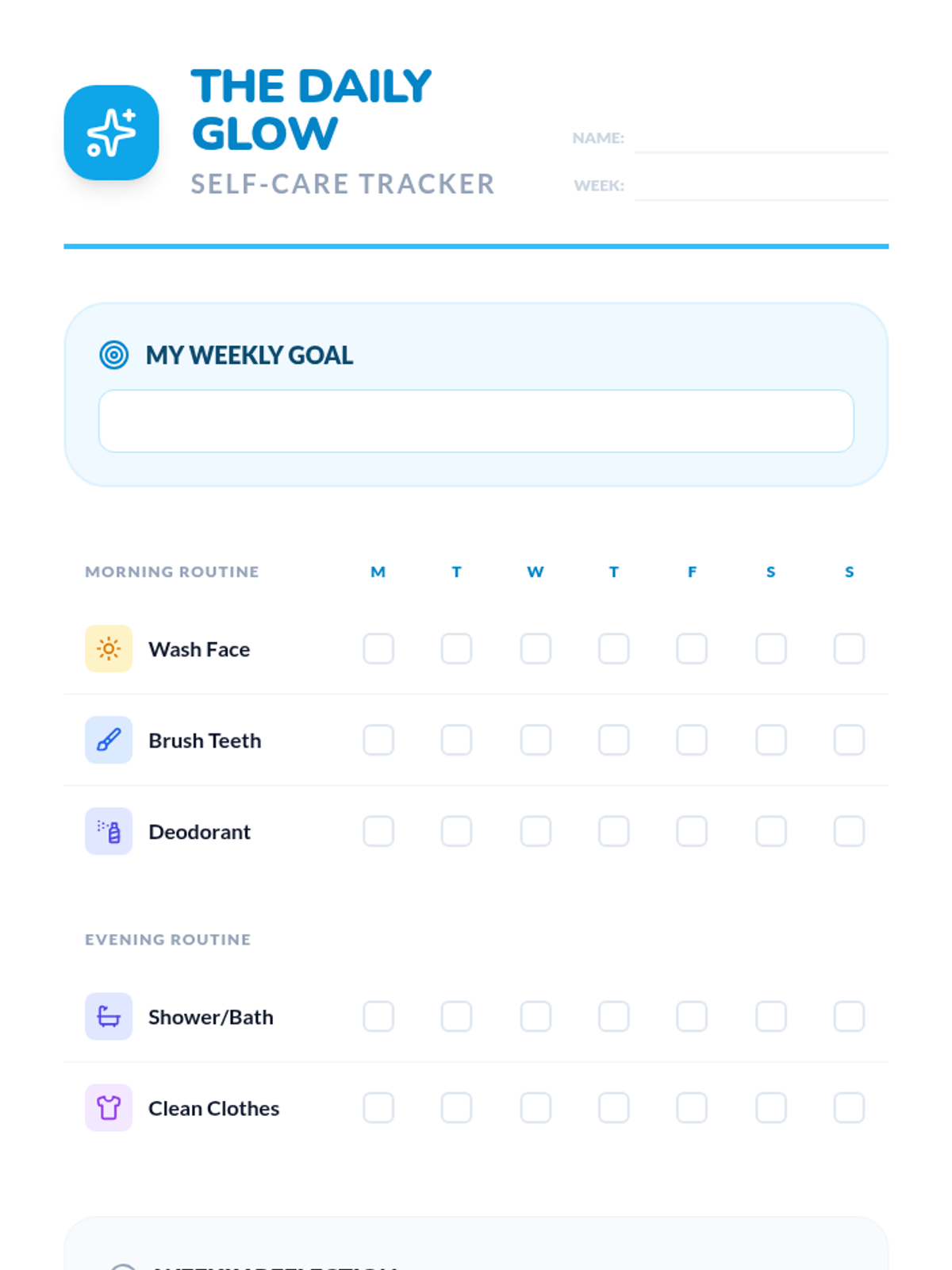
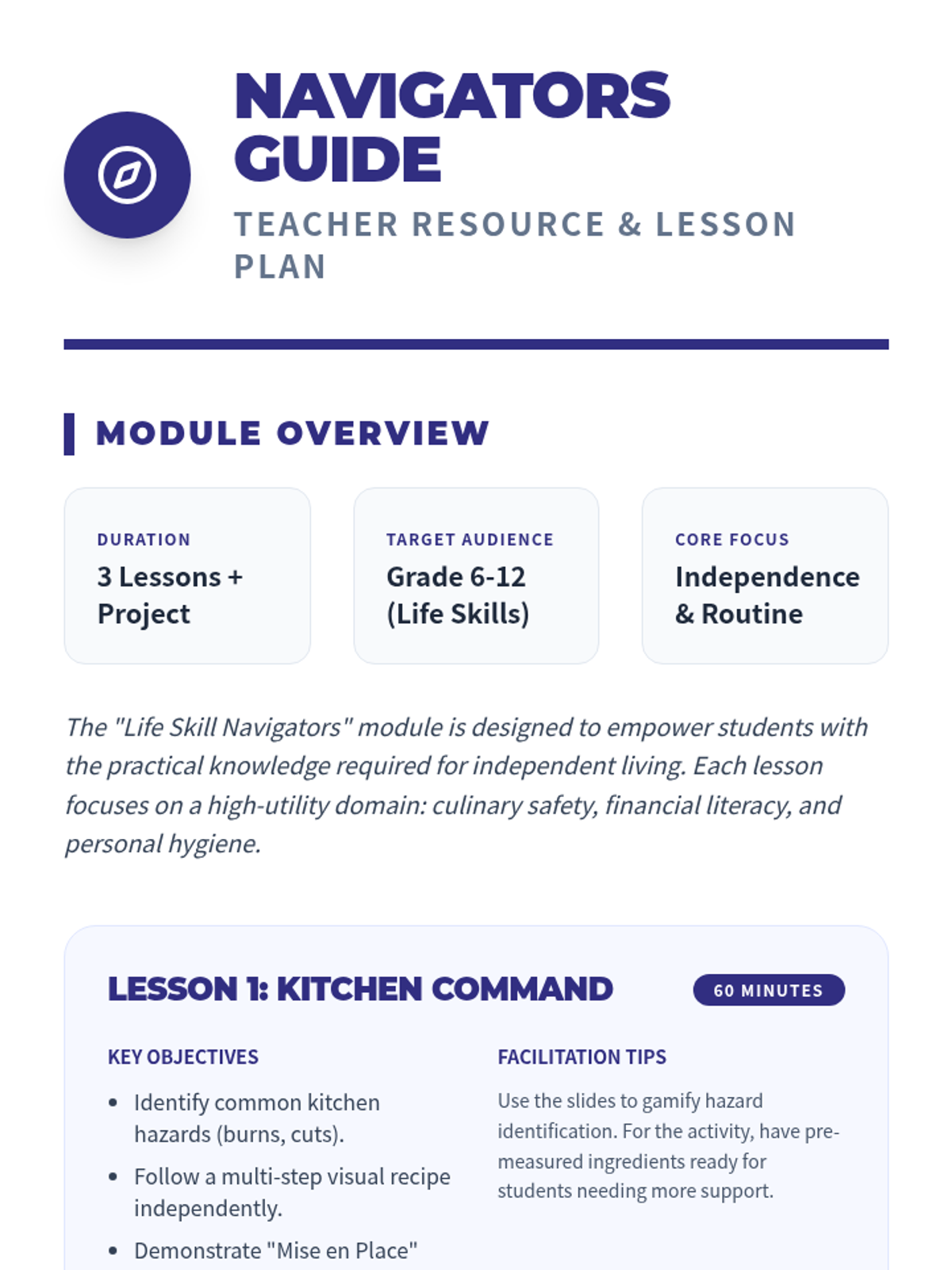
Establishing consistent personal care routines. Students explore the importance of grooming, hygiene, and self-care for health and social confidence.
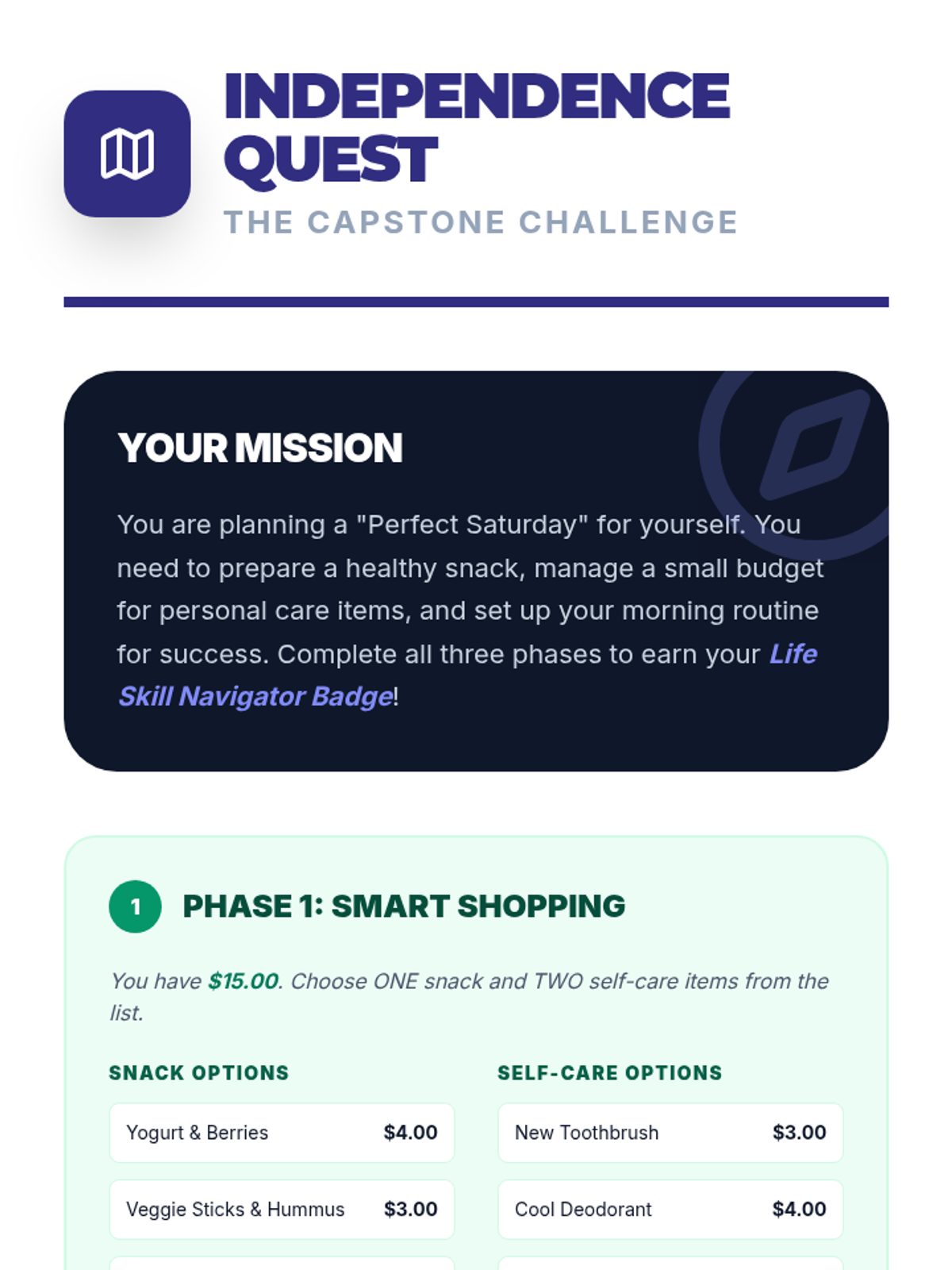
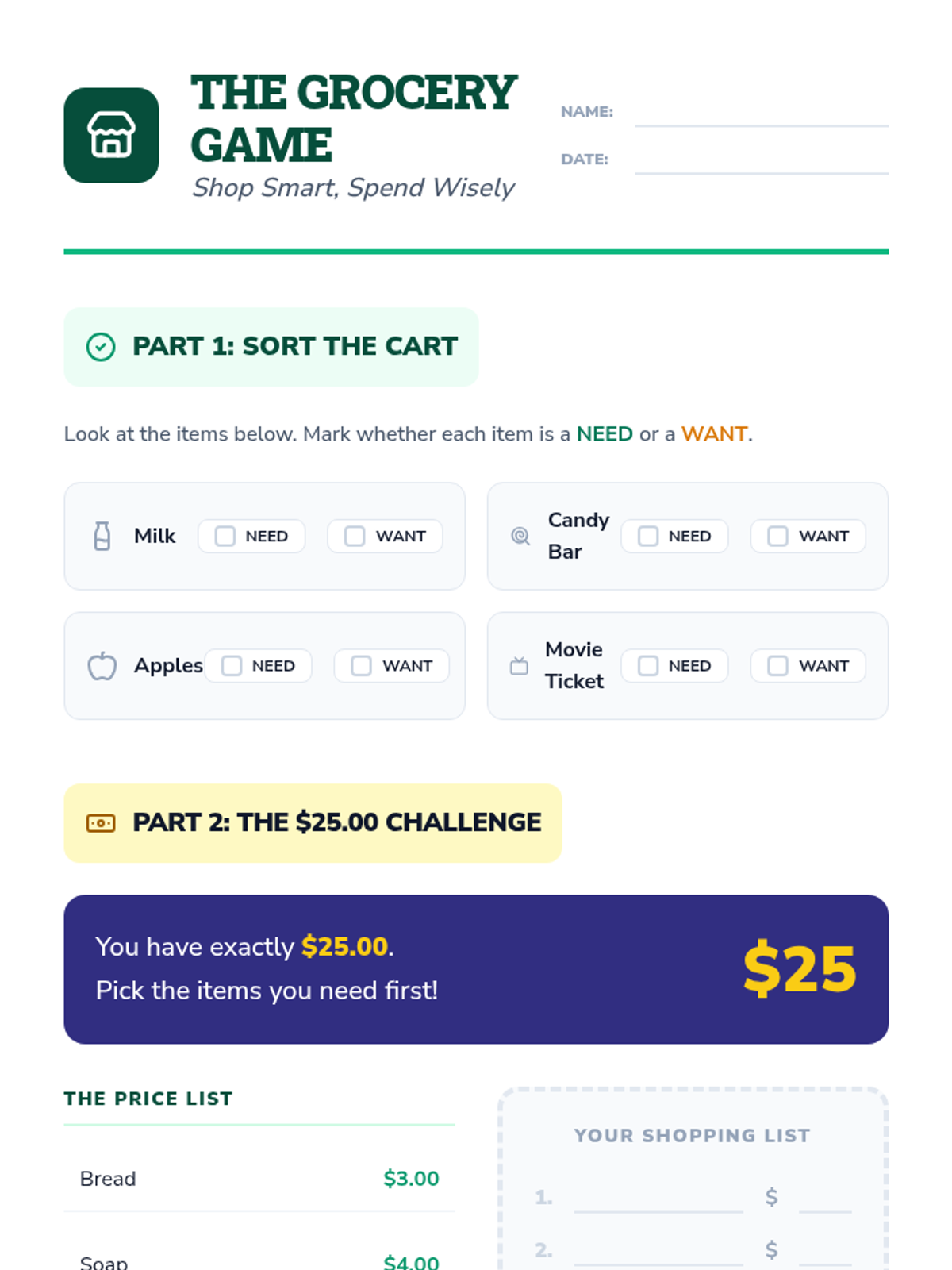
Navigating the world of currency and cost. Students practice tracking expenses, understanding needs versus wants, and planning a basic budget for personal items.
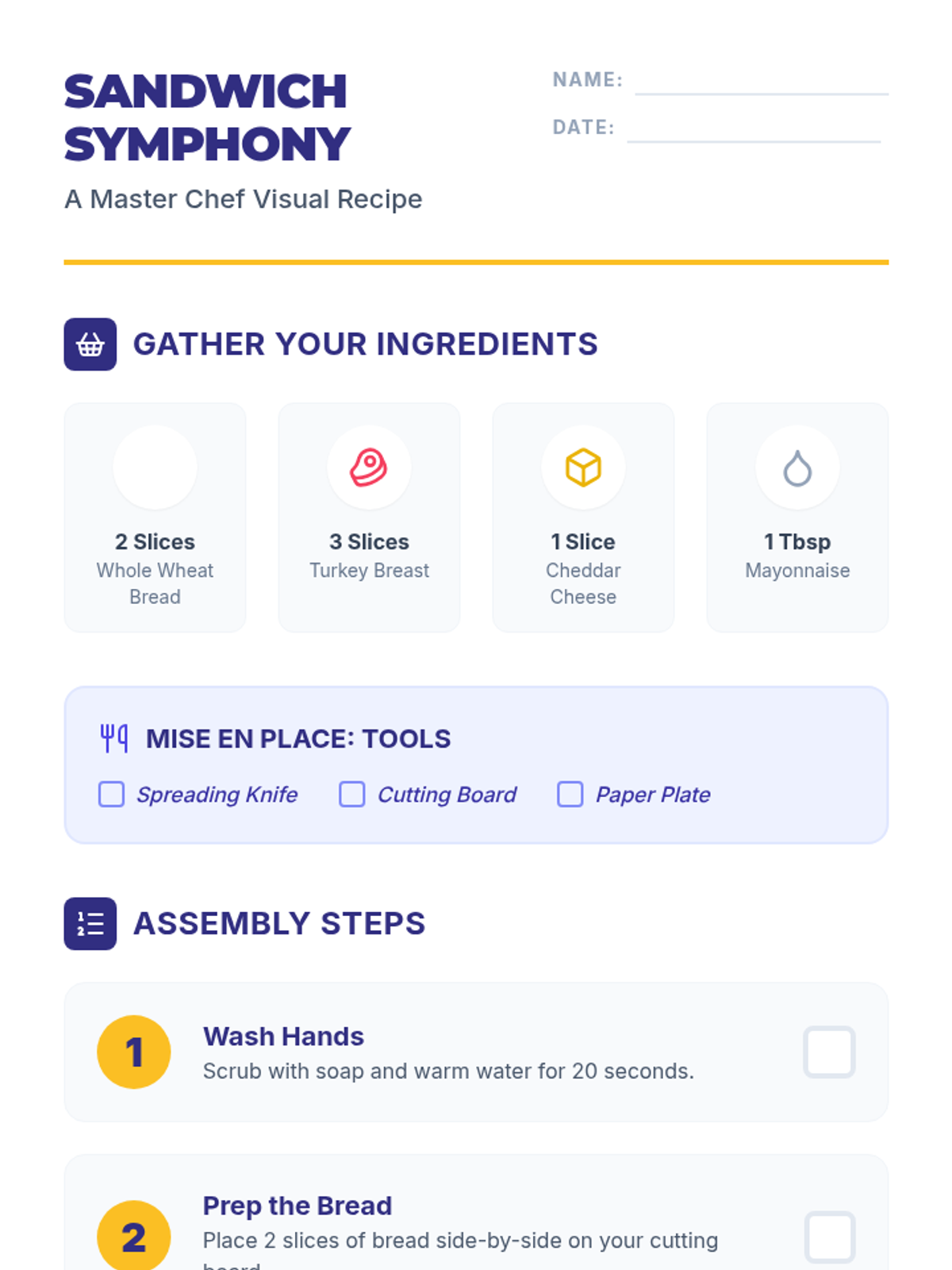
Mastering the art of safe kitchen navigation and simple meal assembly. Students learn to identify hazards and follow visual recipes to create basic snacks and meals.
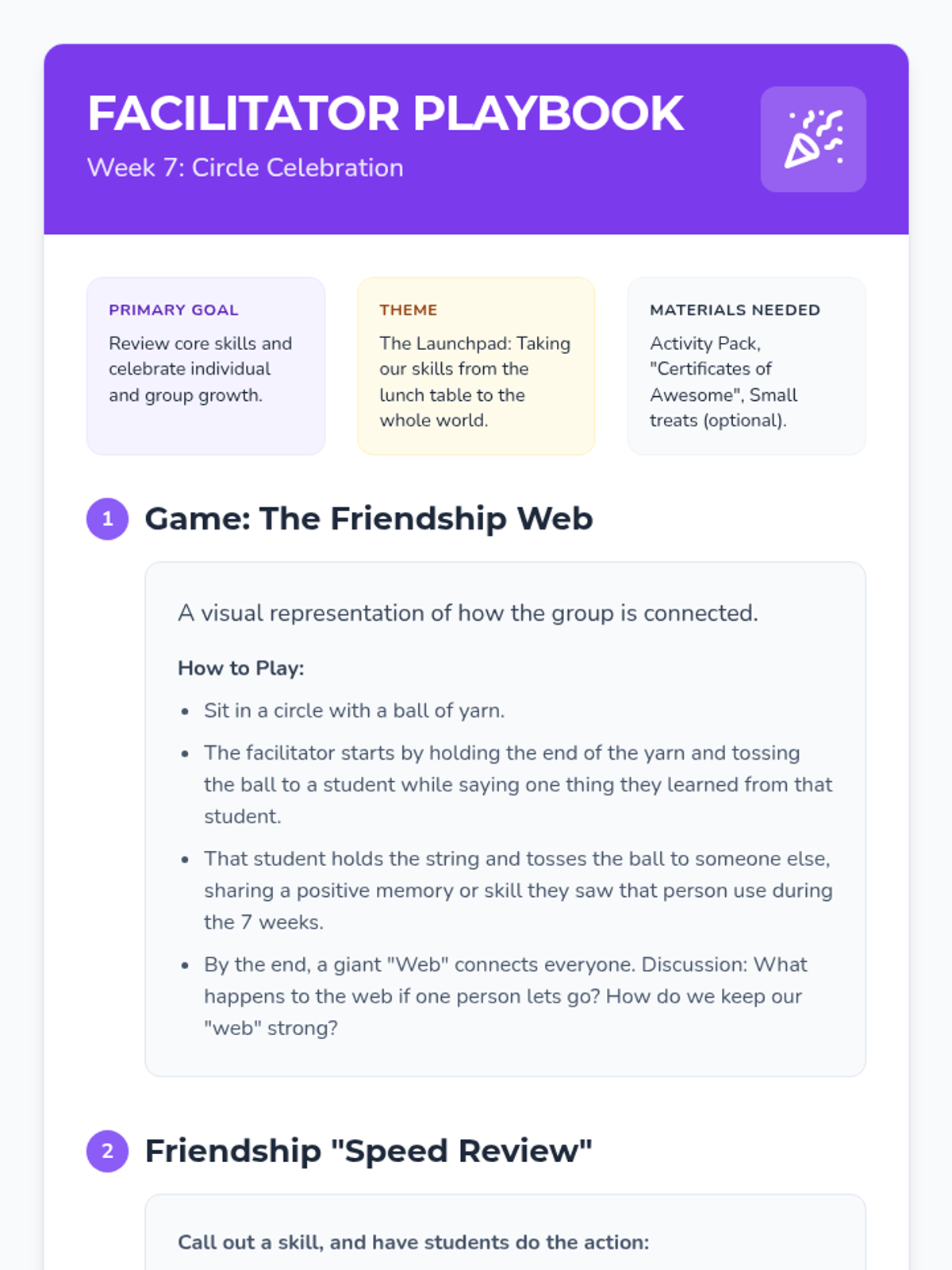
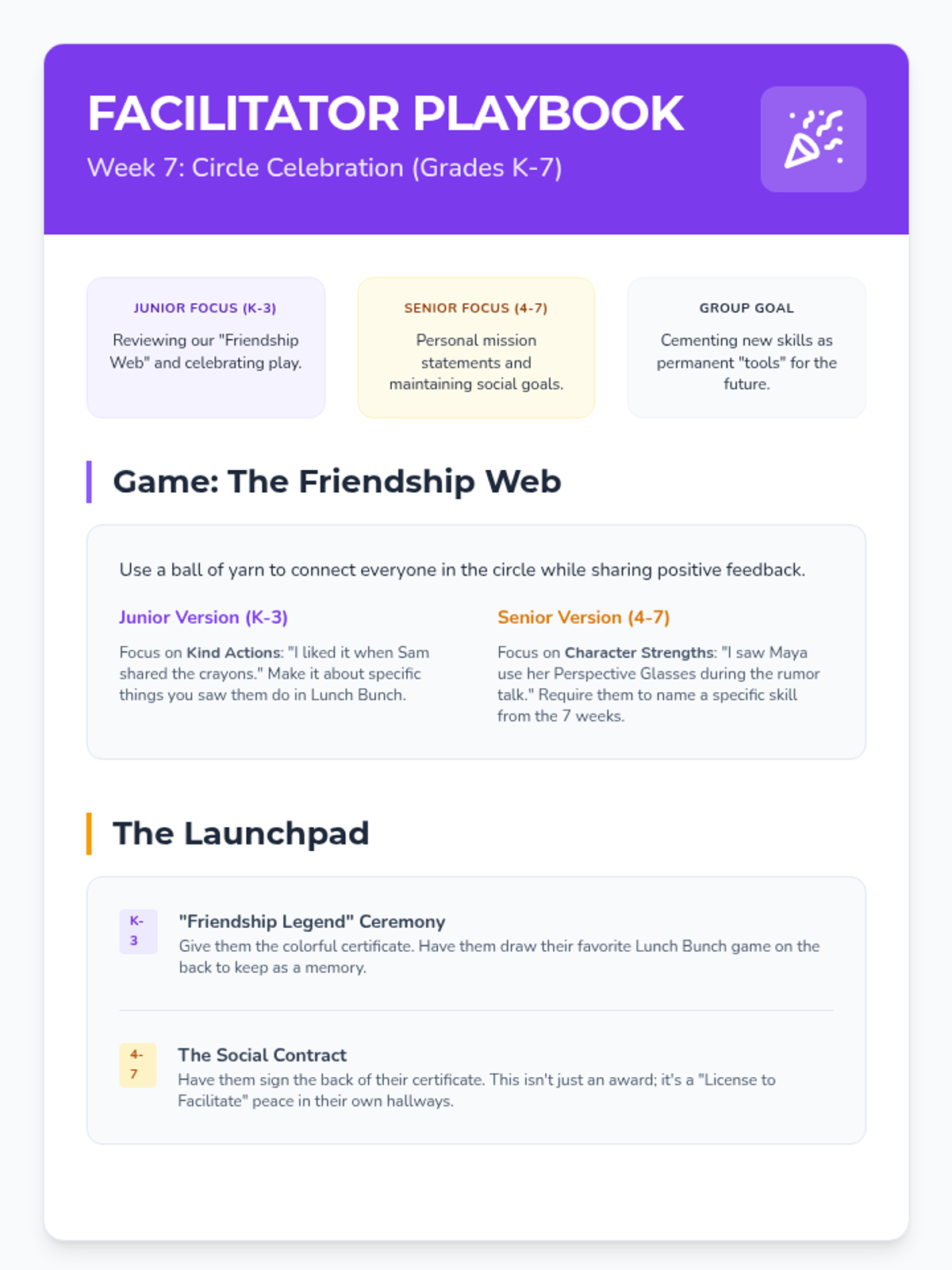
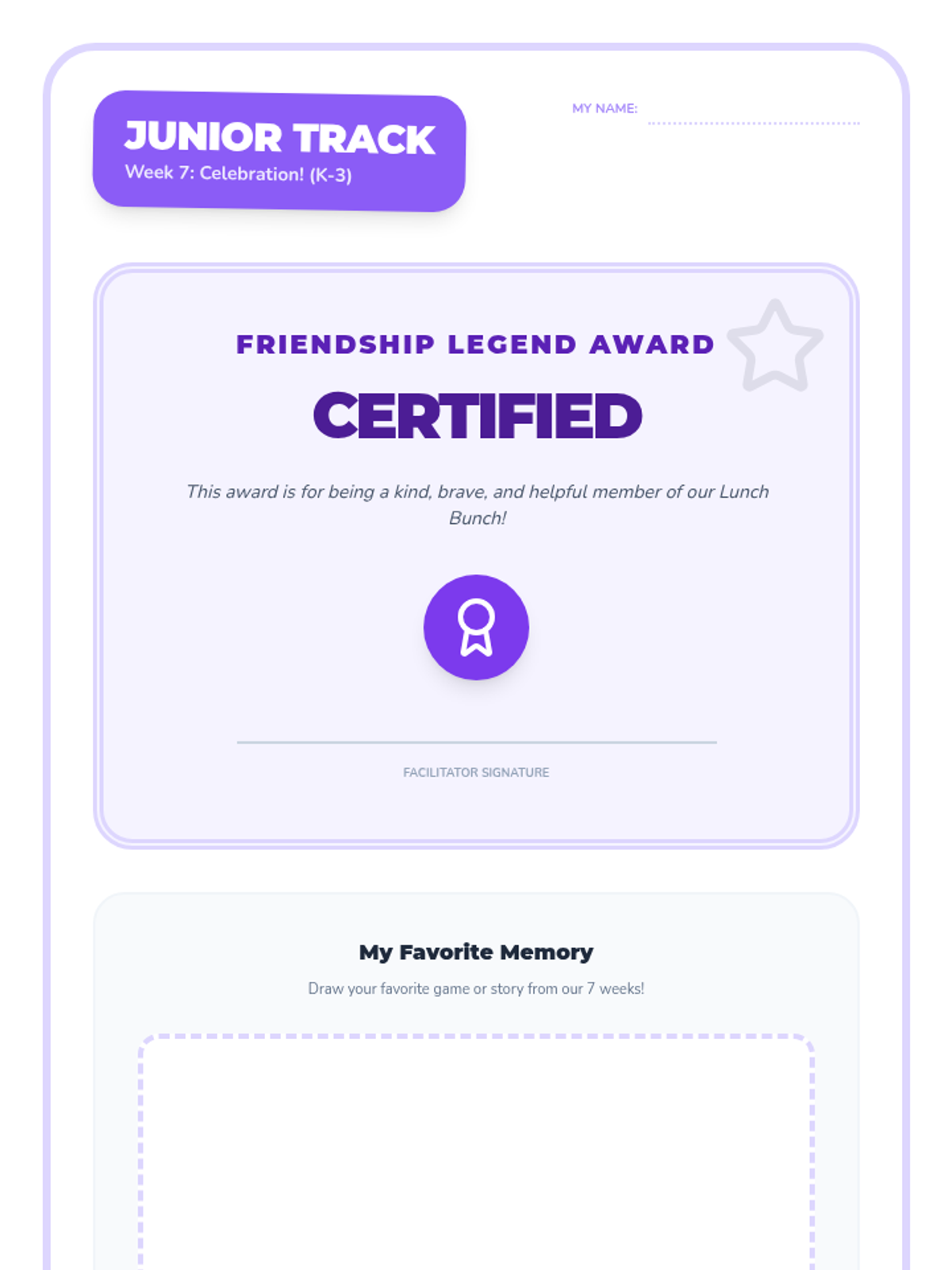
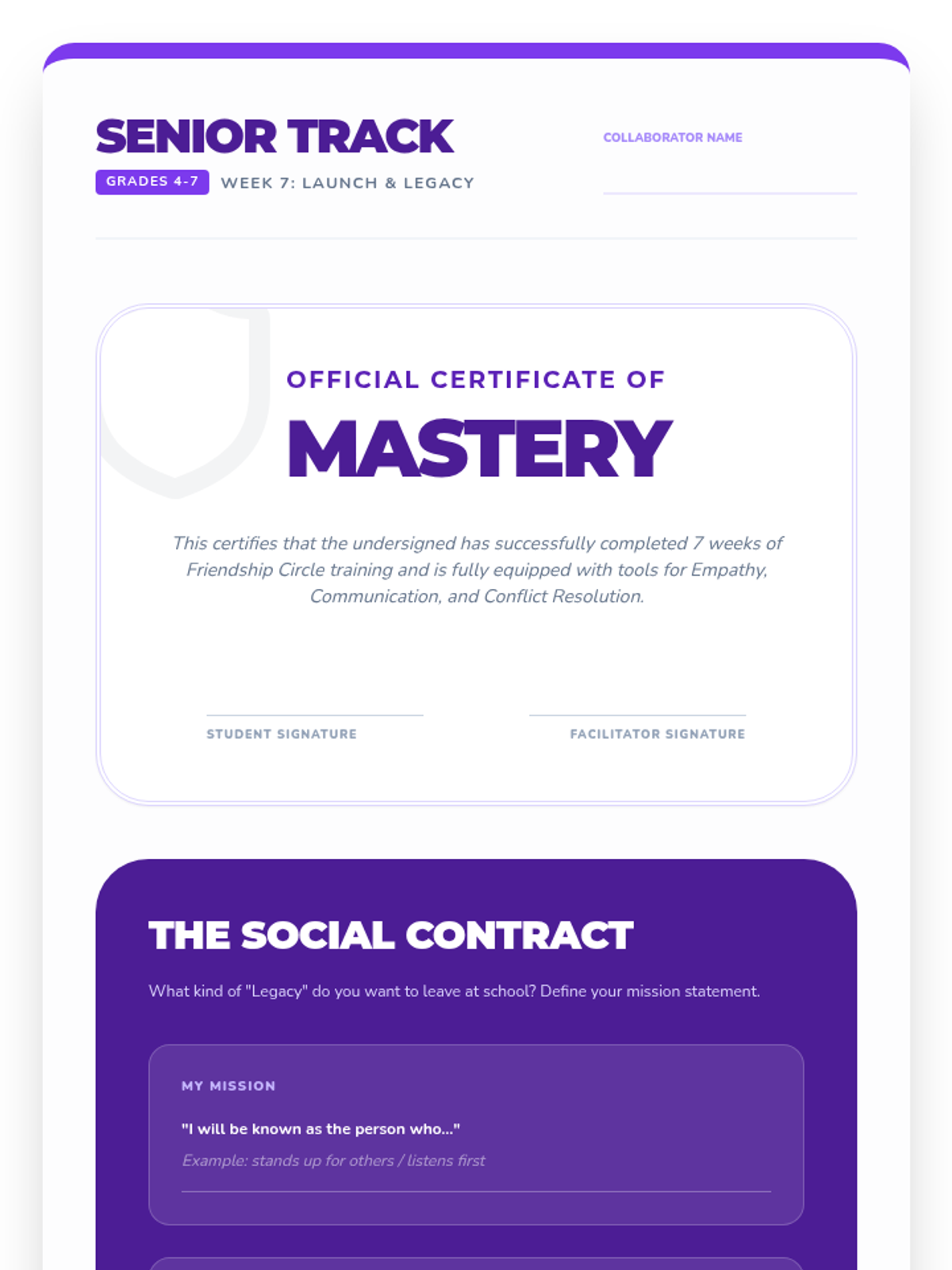
A final session to celebrate the group's growth, review key skills, and look forward to maintaining healthy friendships outside the lunch bunch.
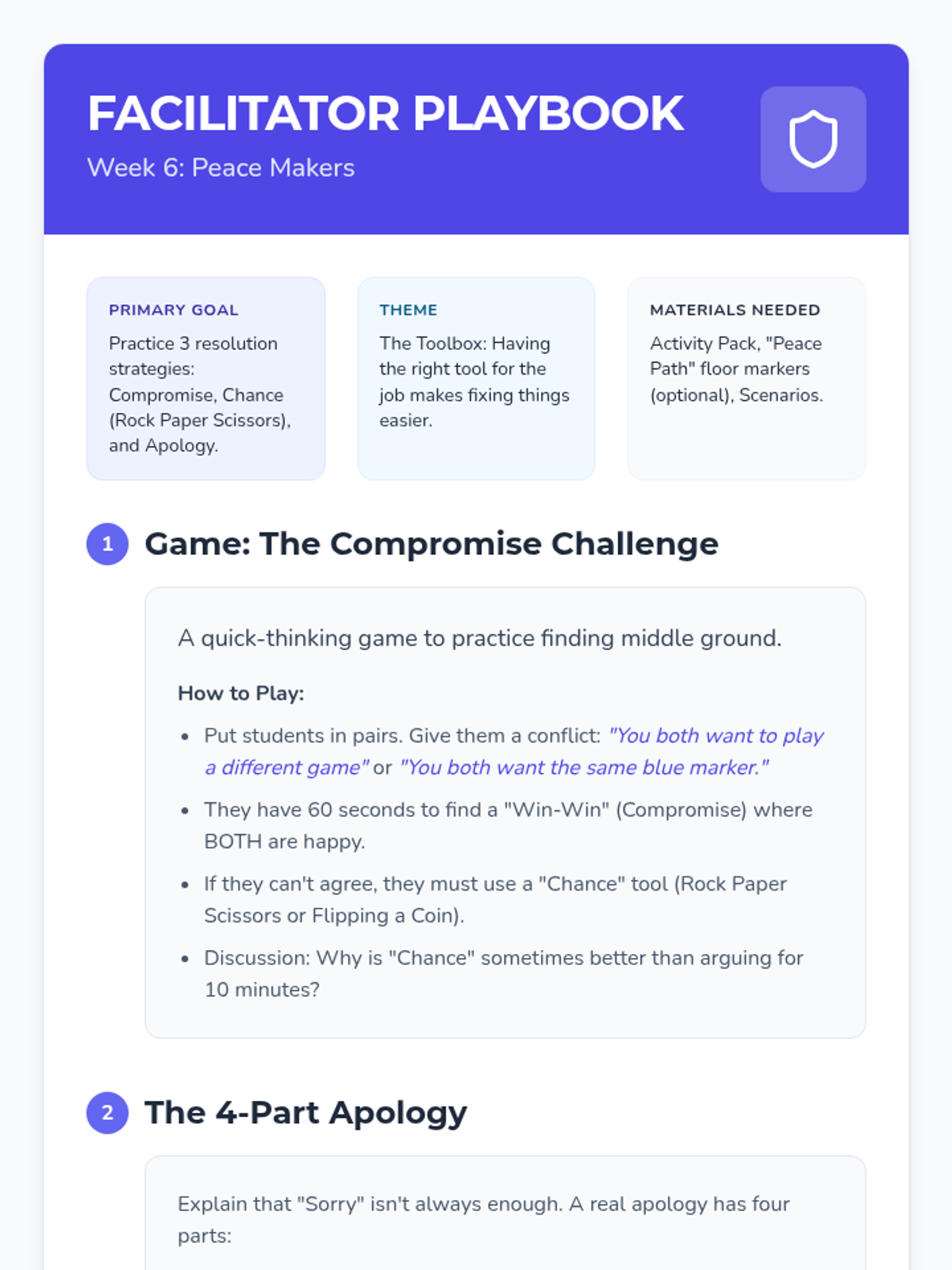
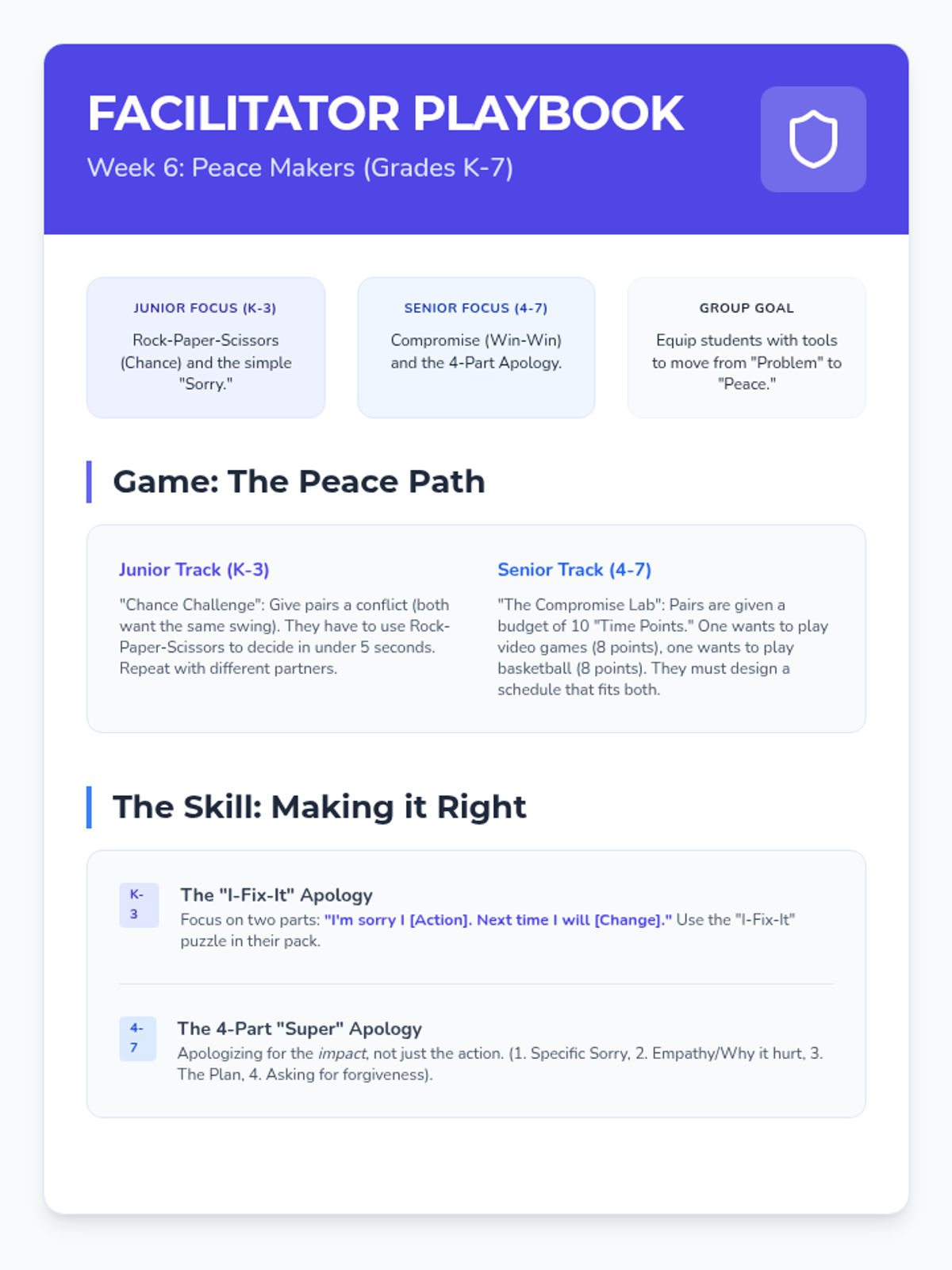
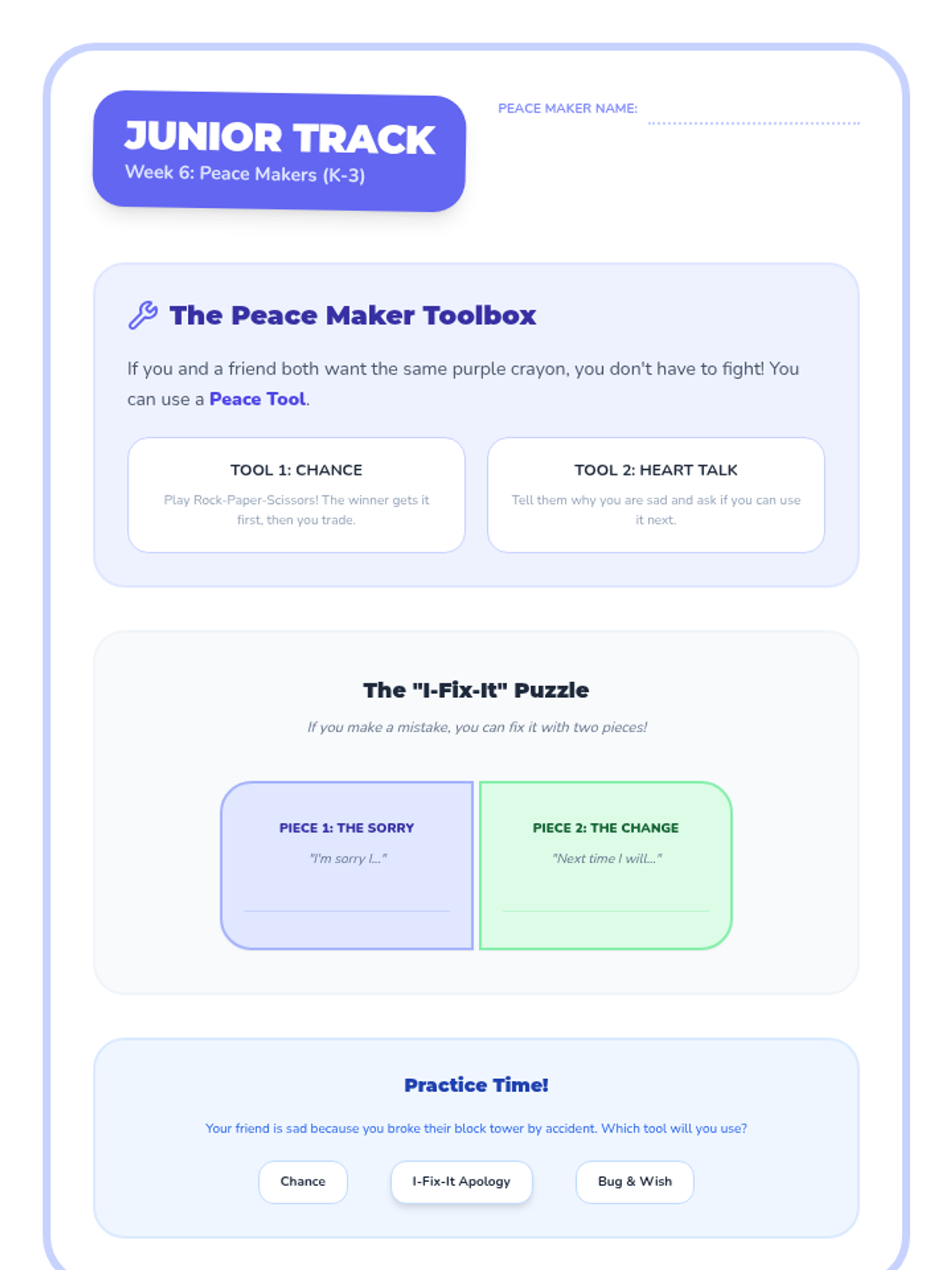
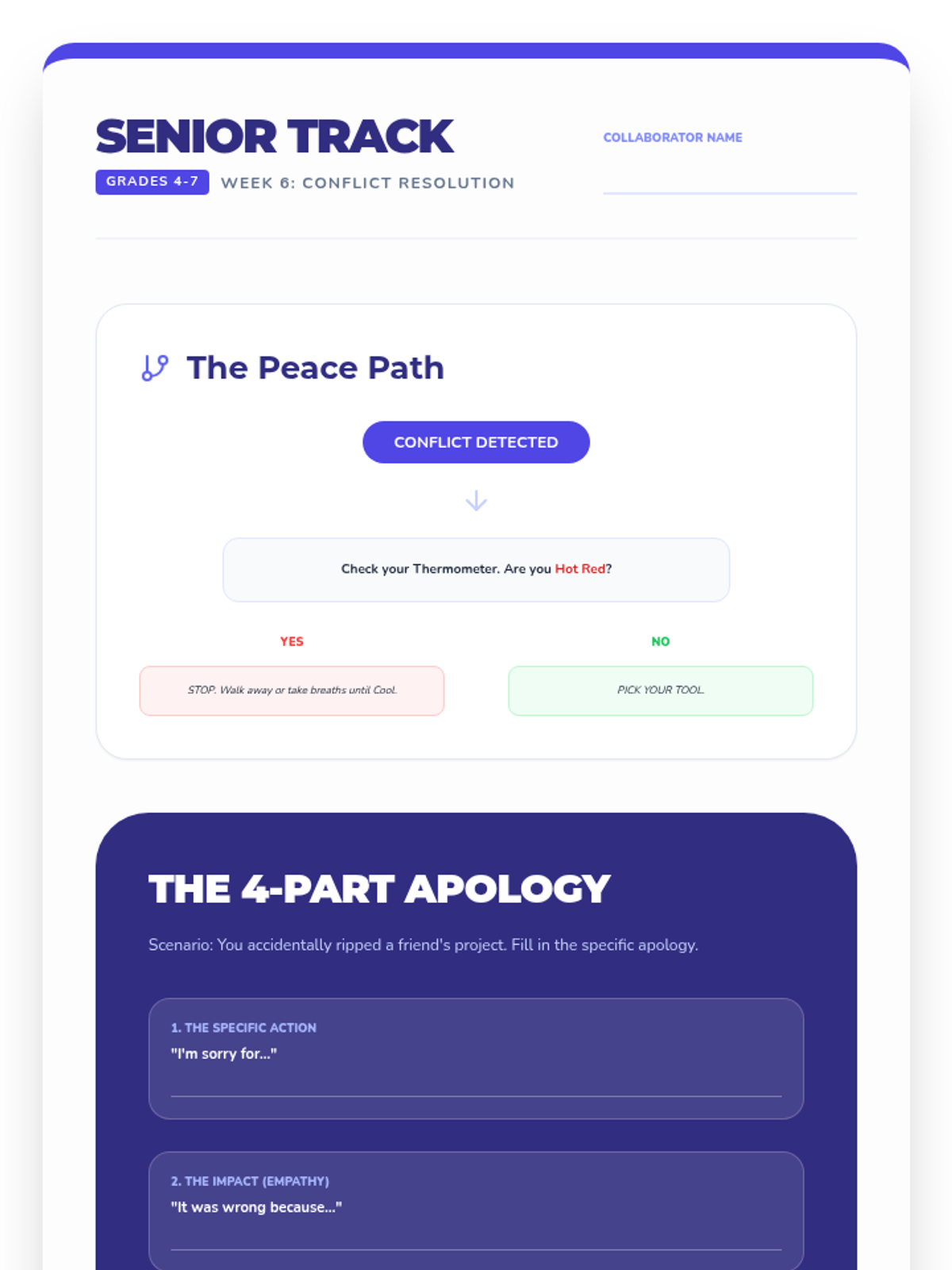
Provides practical tools for resolving disagreements, including compromise, apologies, and problem-solving 'win-win' scenarios.
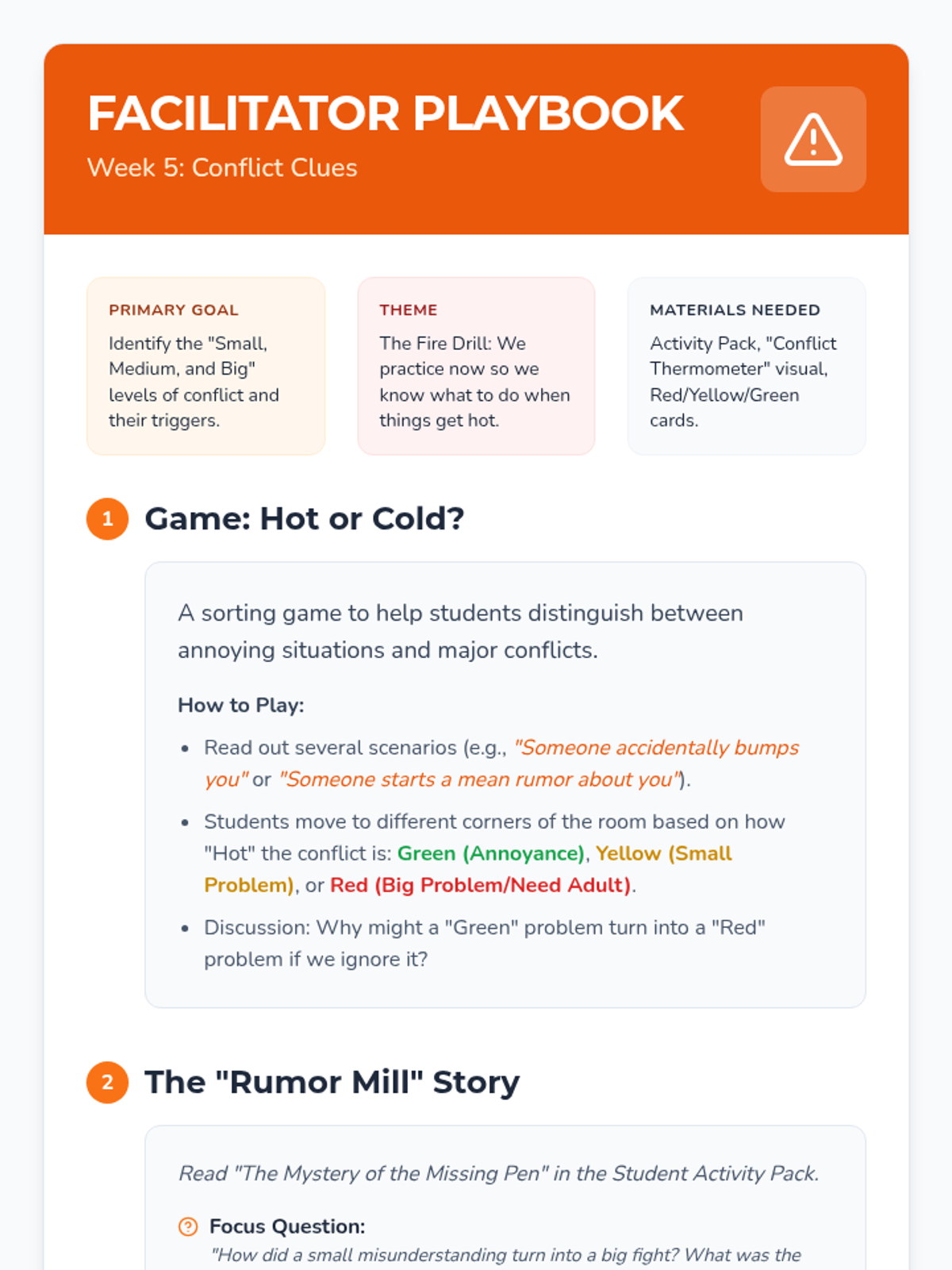
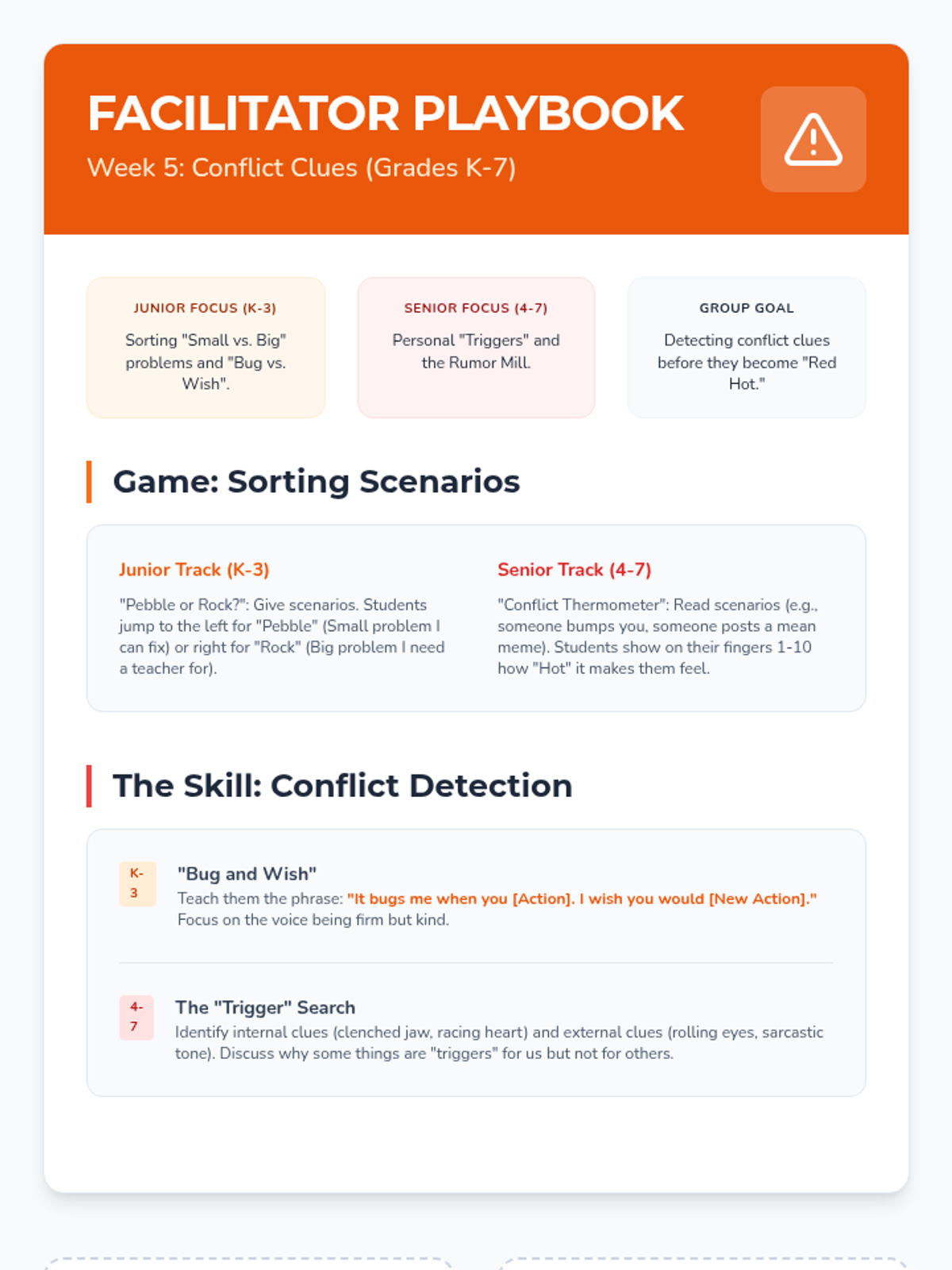
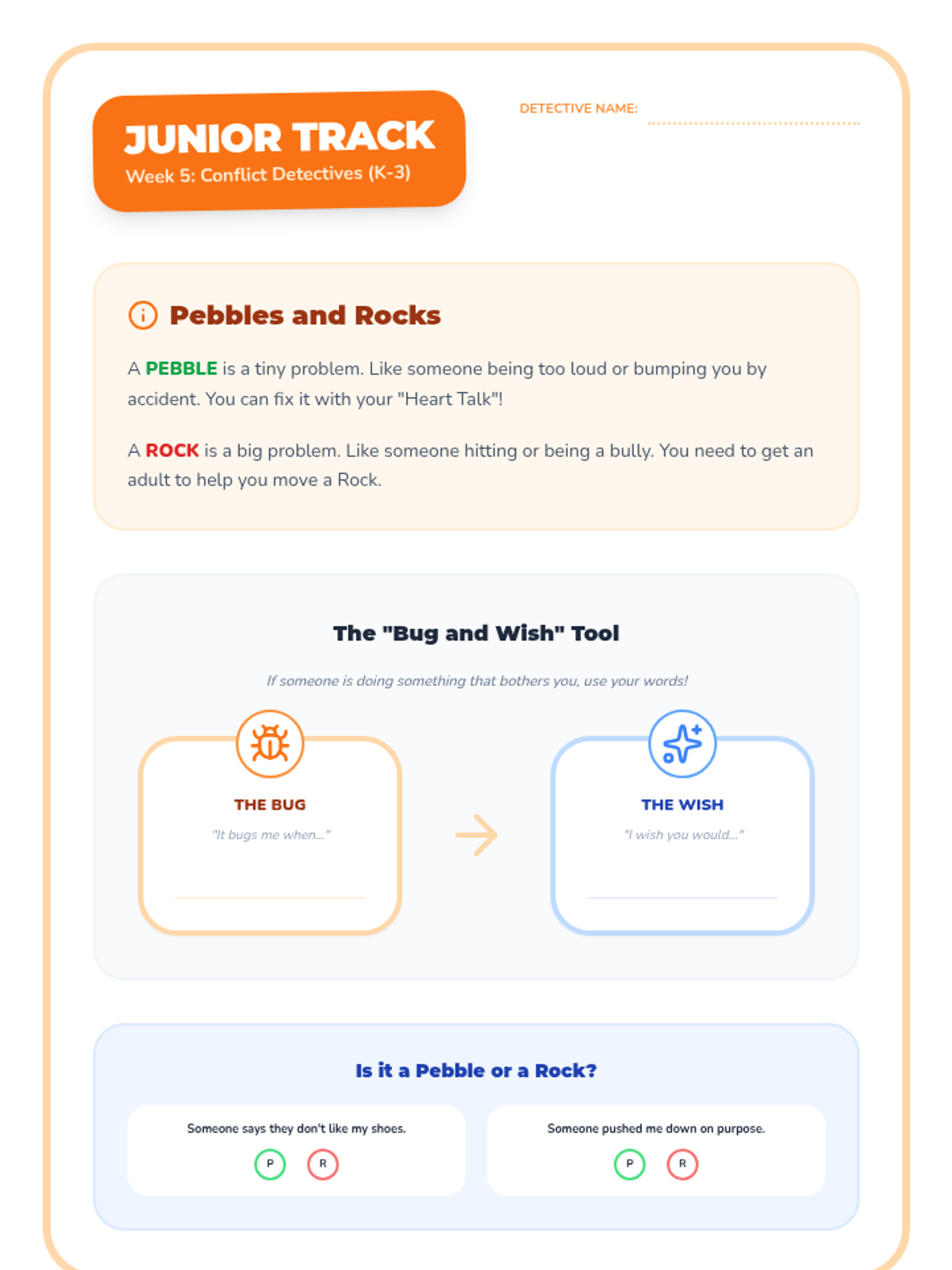
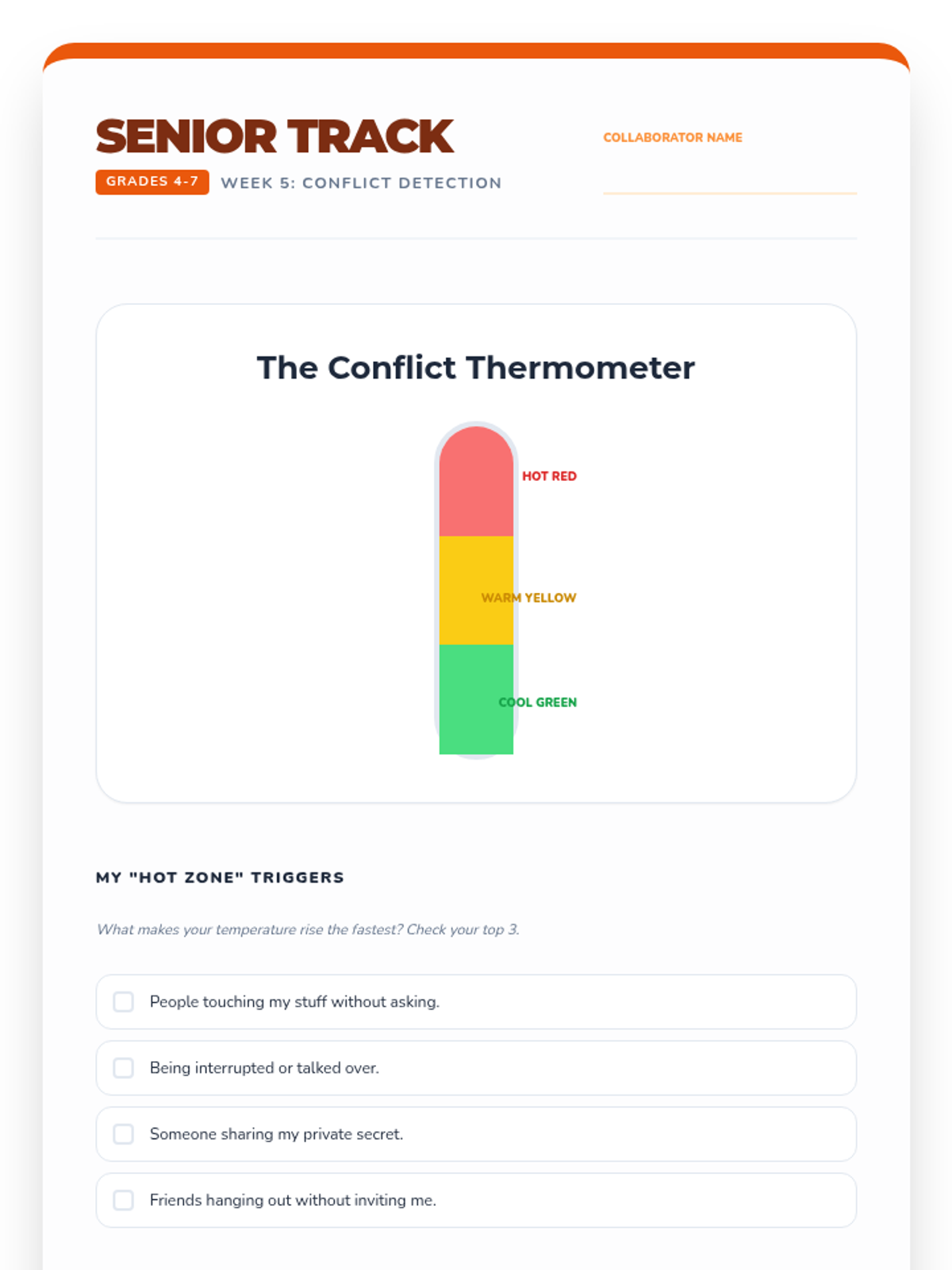
Introduces the concept of conflict as a natural part of relationships and helps students identify common triggers and 'early warning signs' of a disagreement.
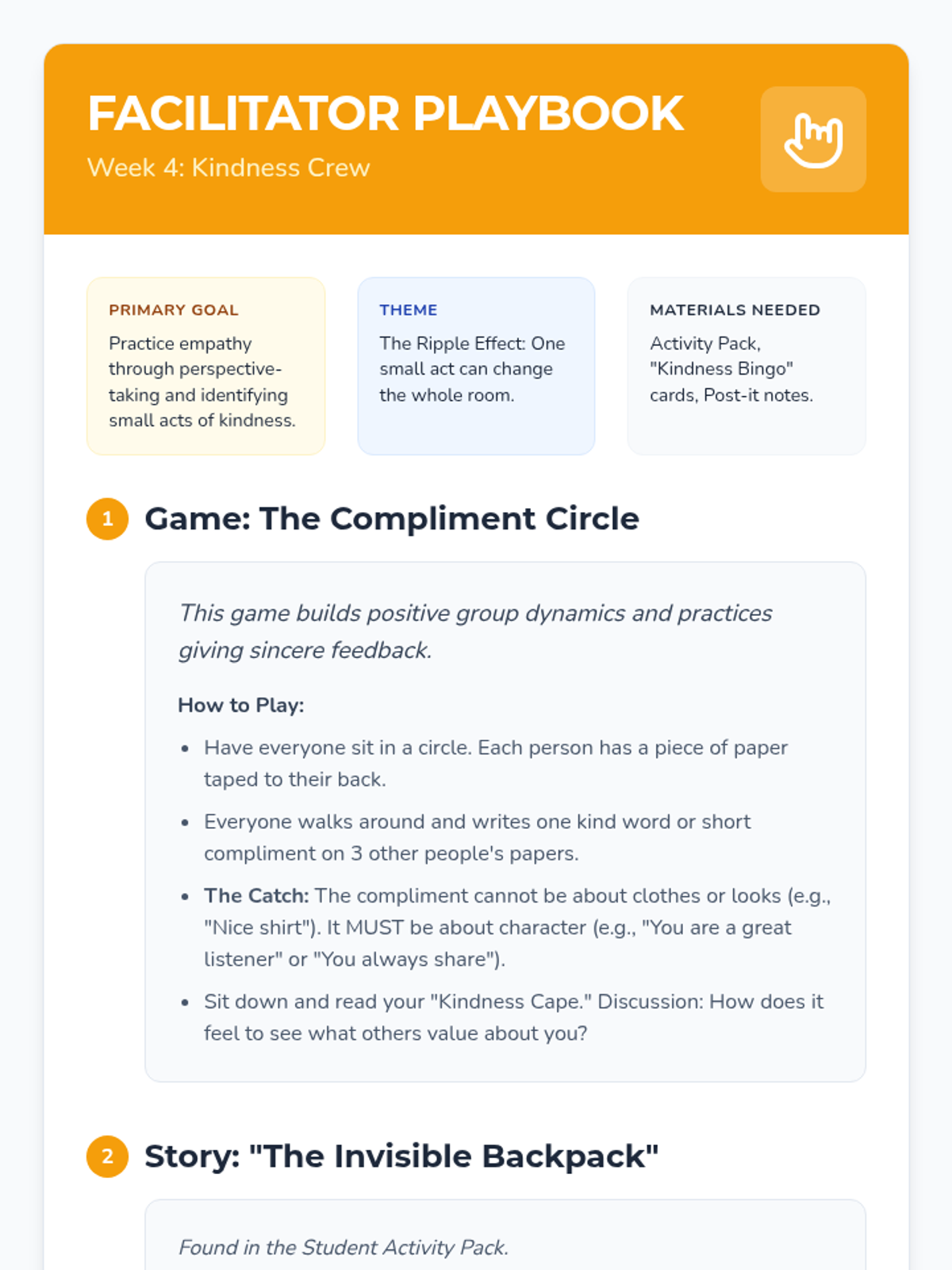
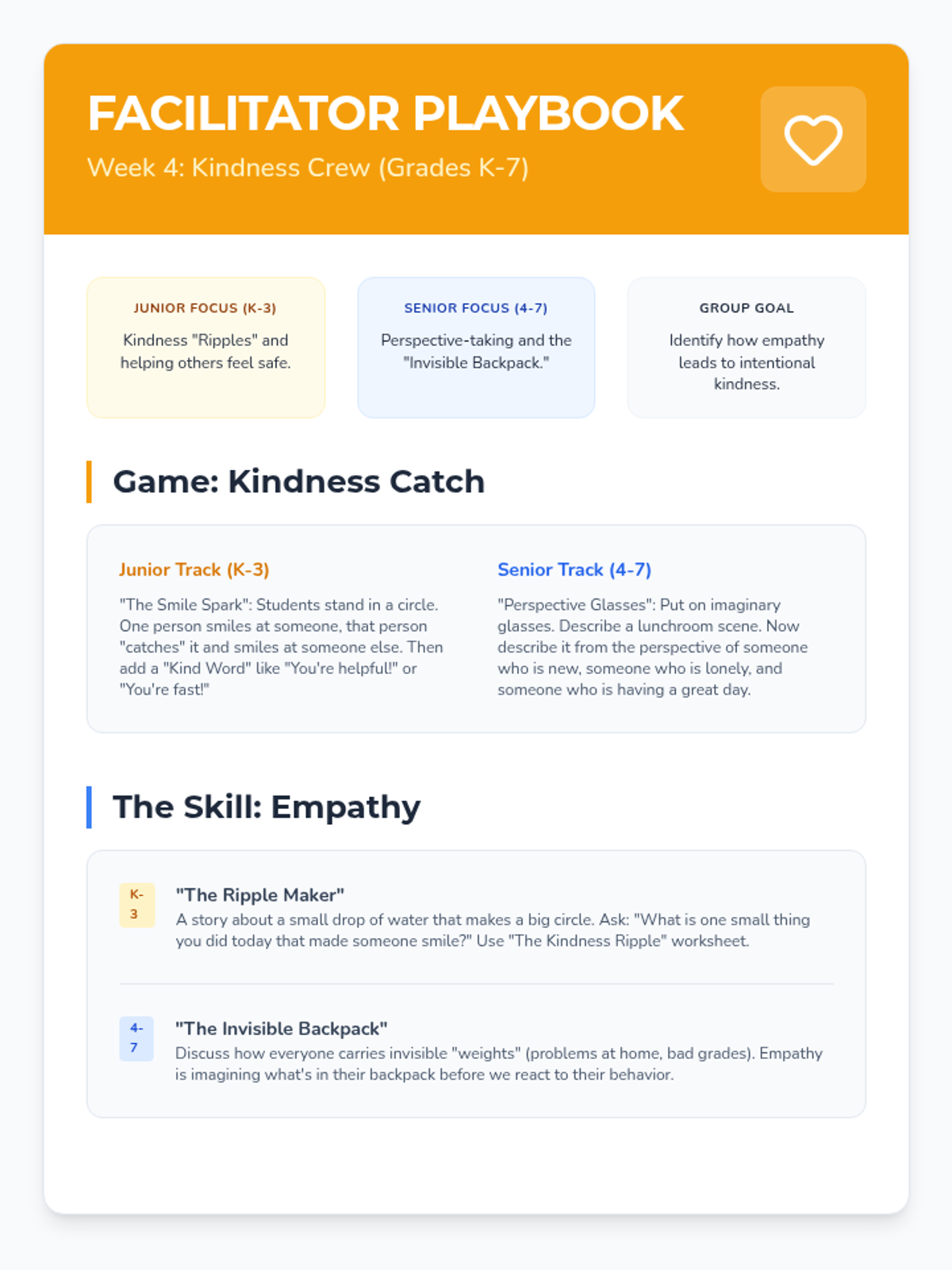
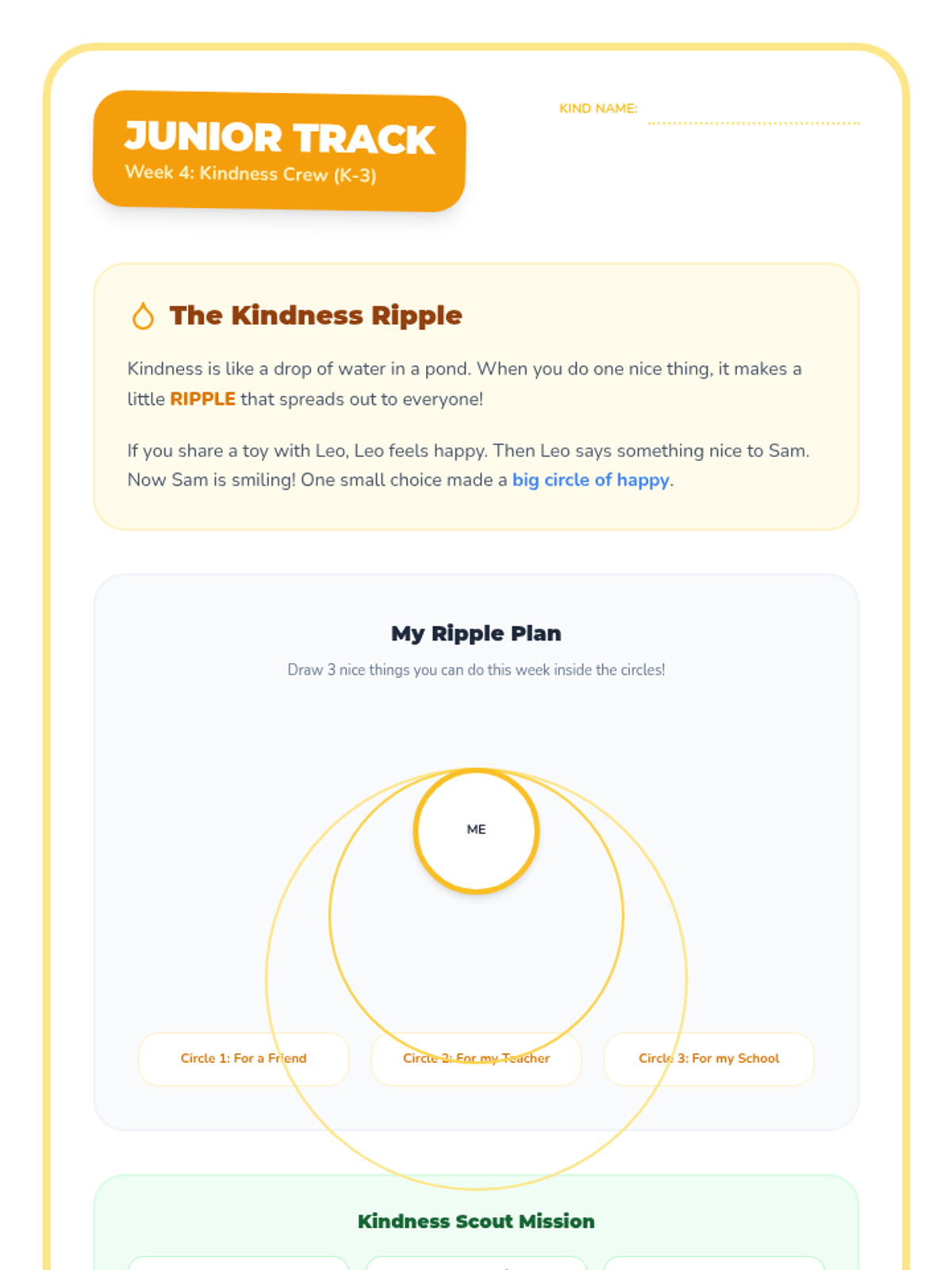
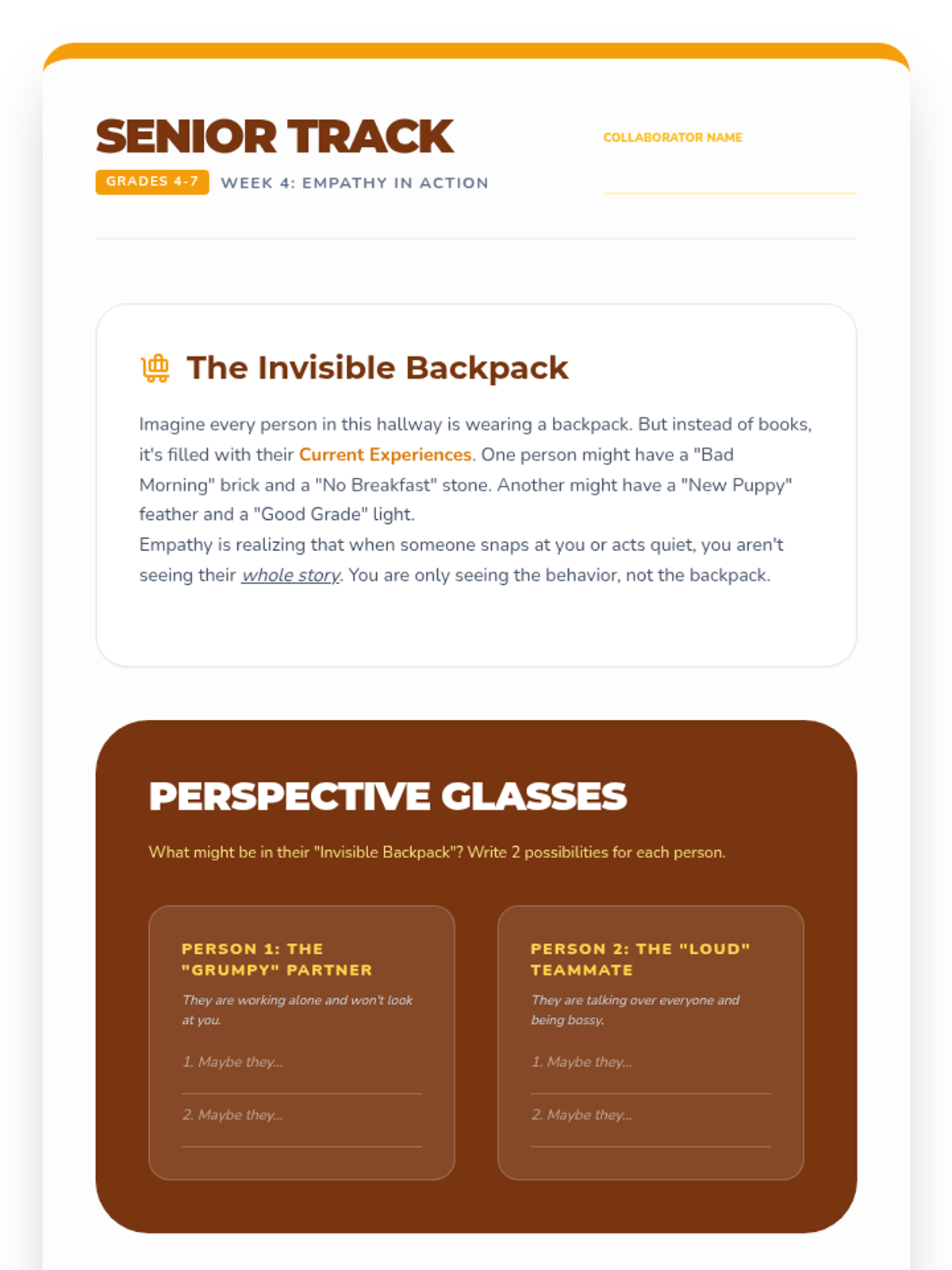
Explores empathy and kindness as the 'glue' of friendship, with activities centered on perspective-taking and supportive actions.
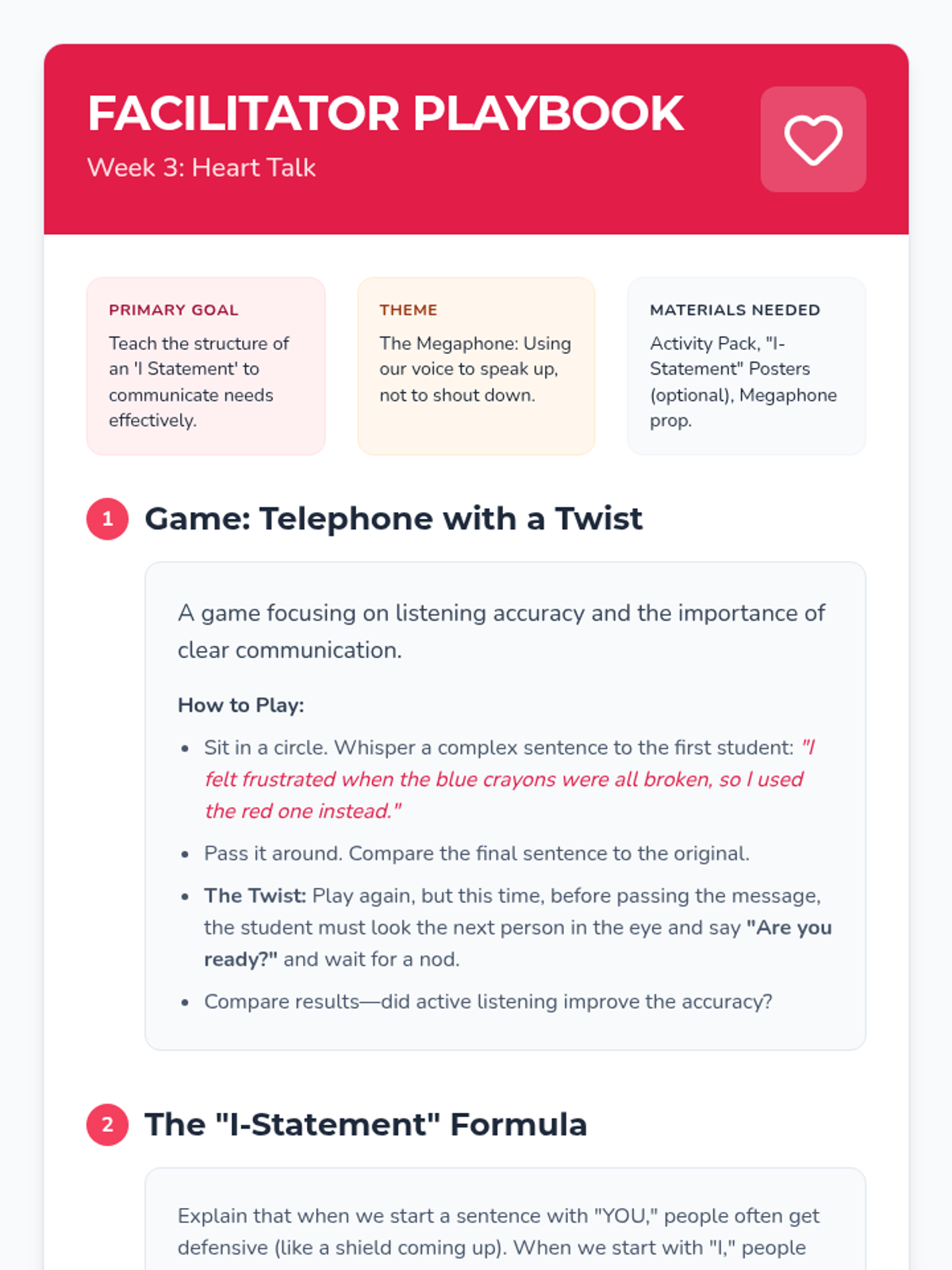
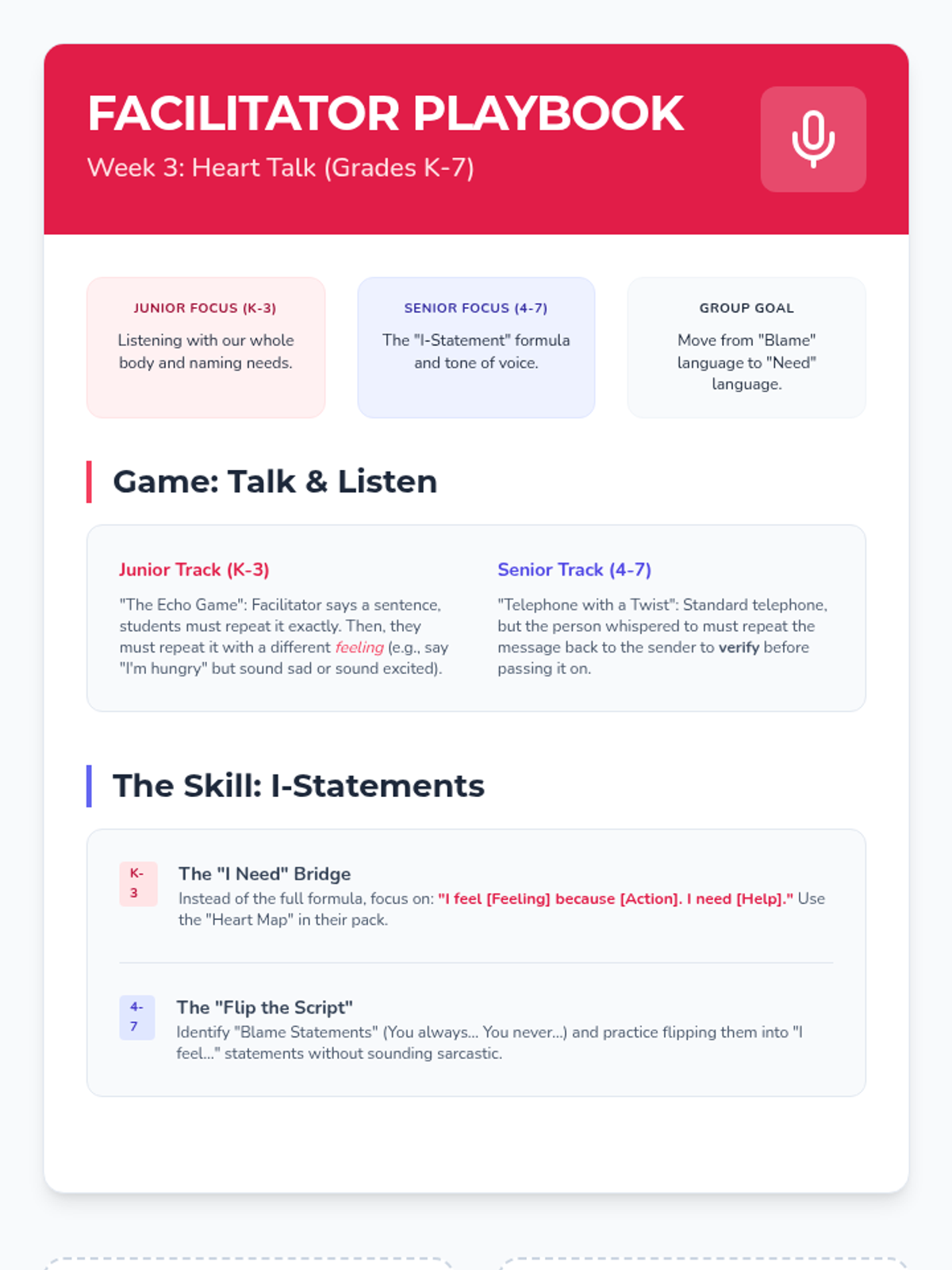
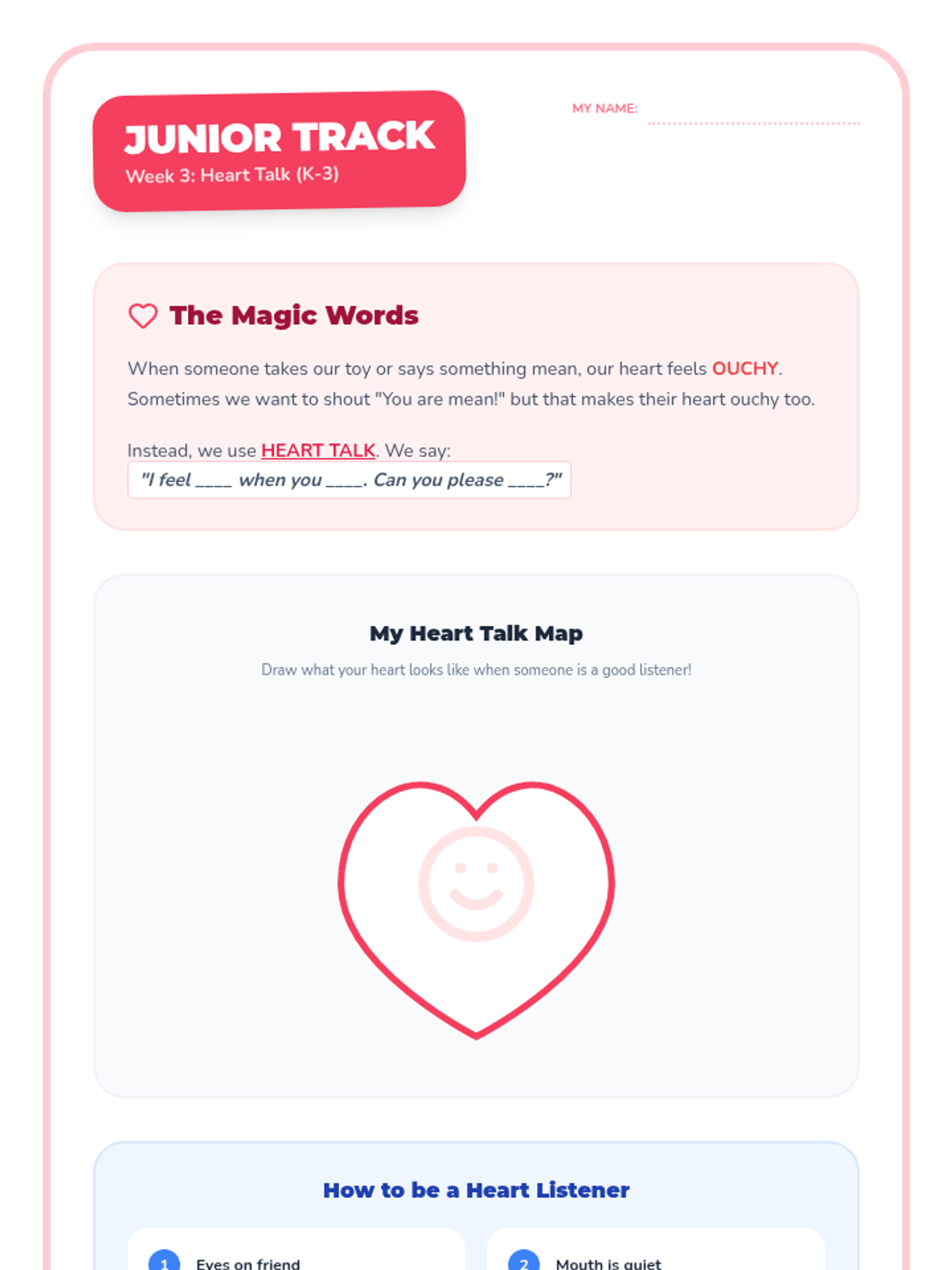
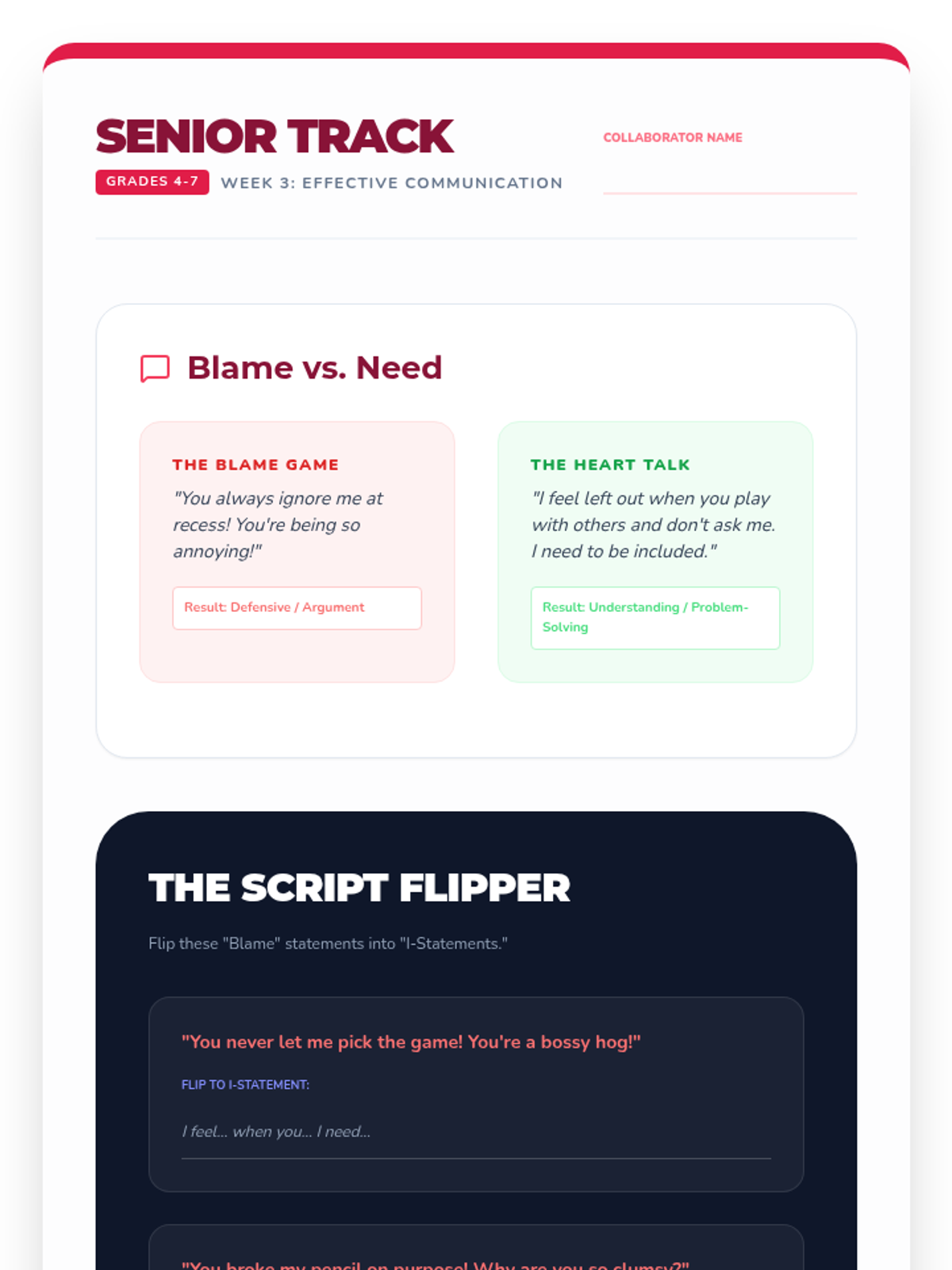
Focuses on healthy ways to express feelings, specifically using 'I' statements and active listening to communicate needs without blame.
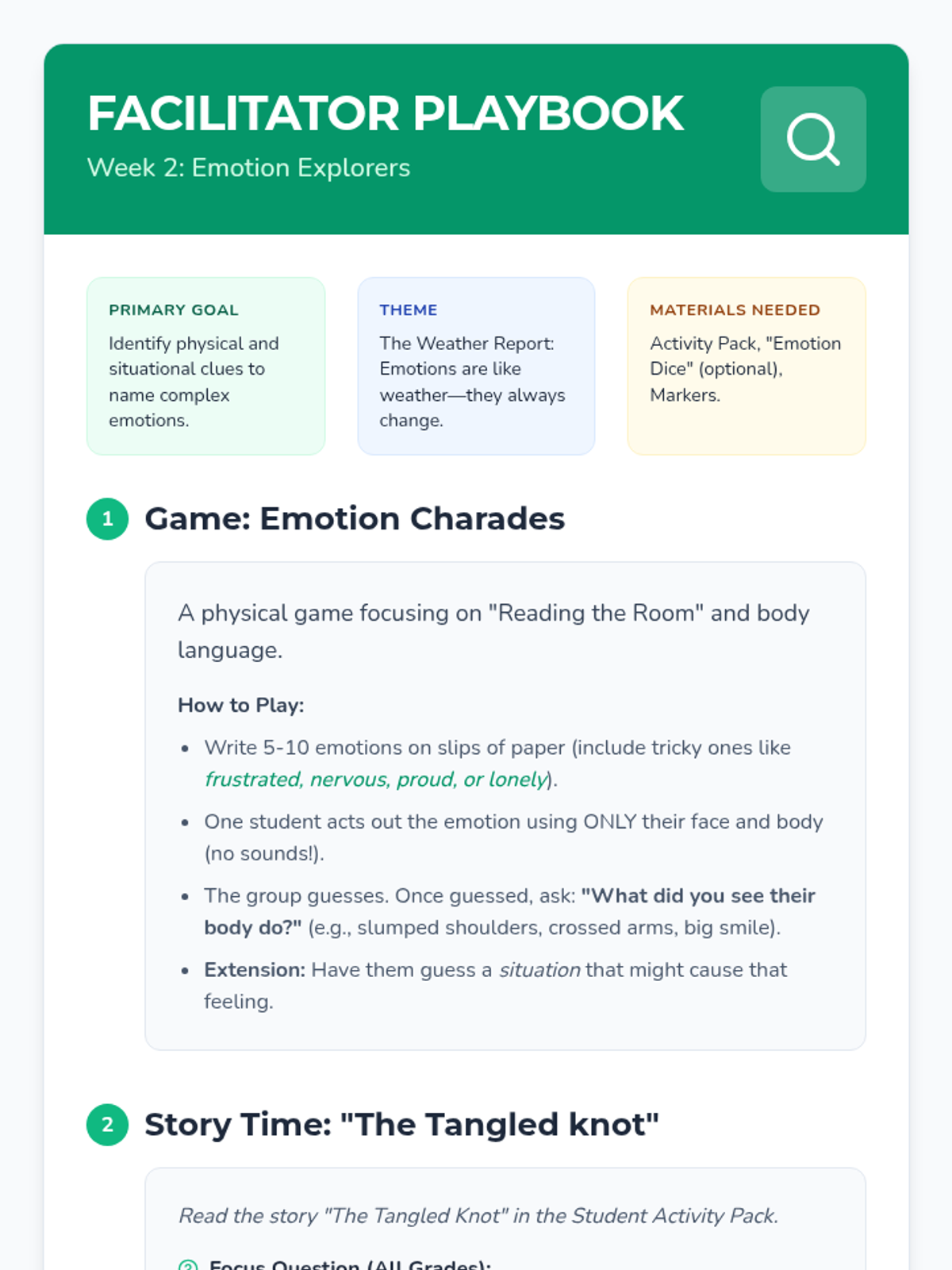
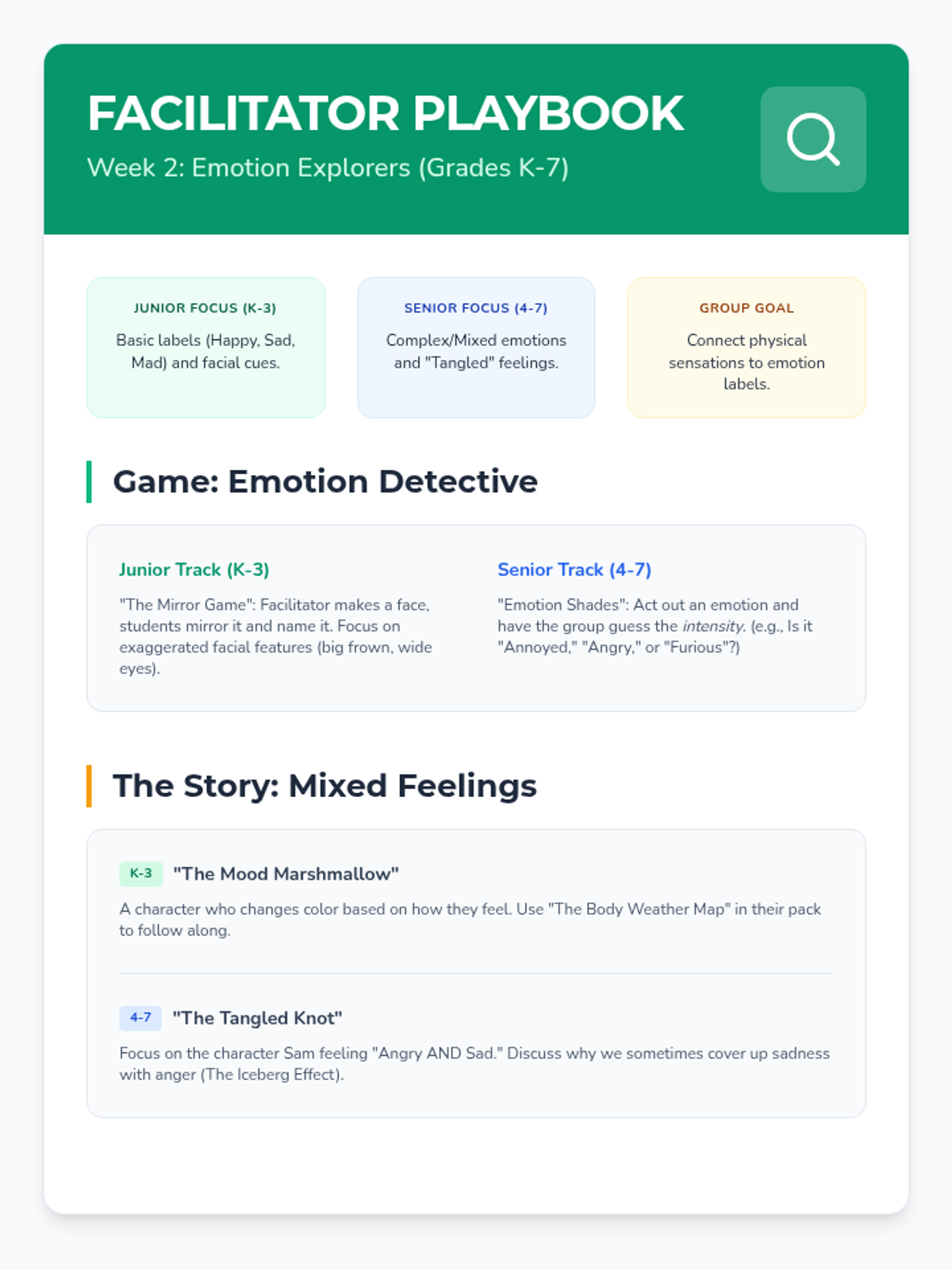
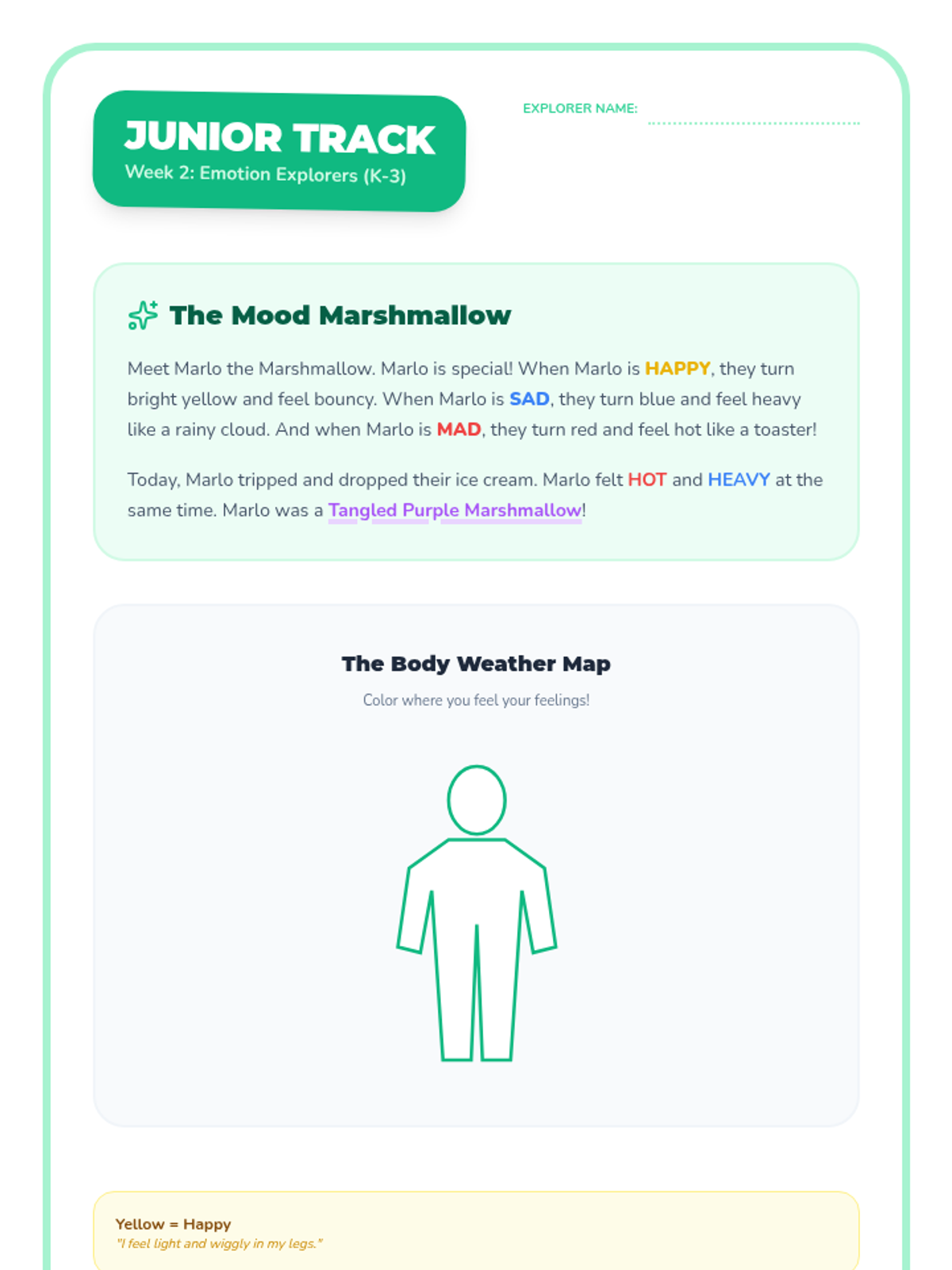
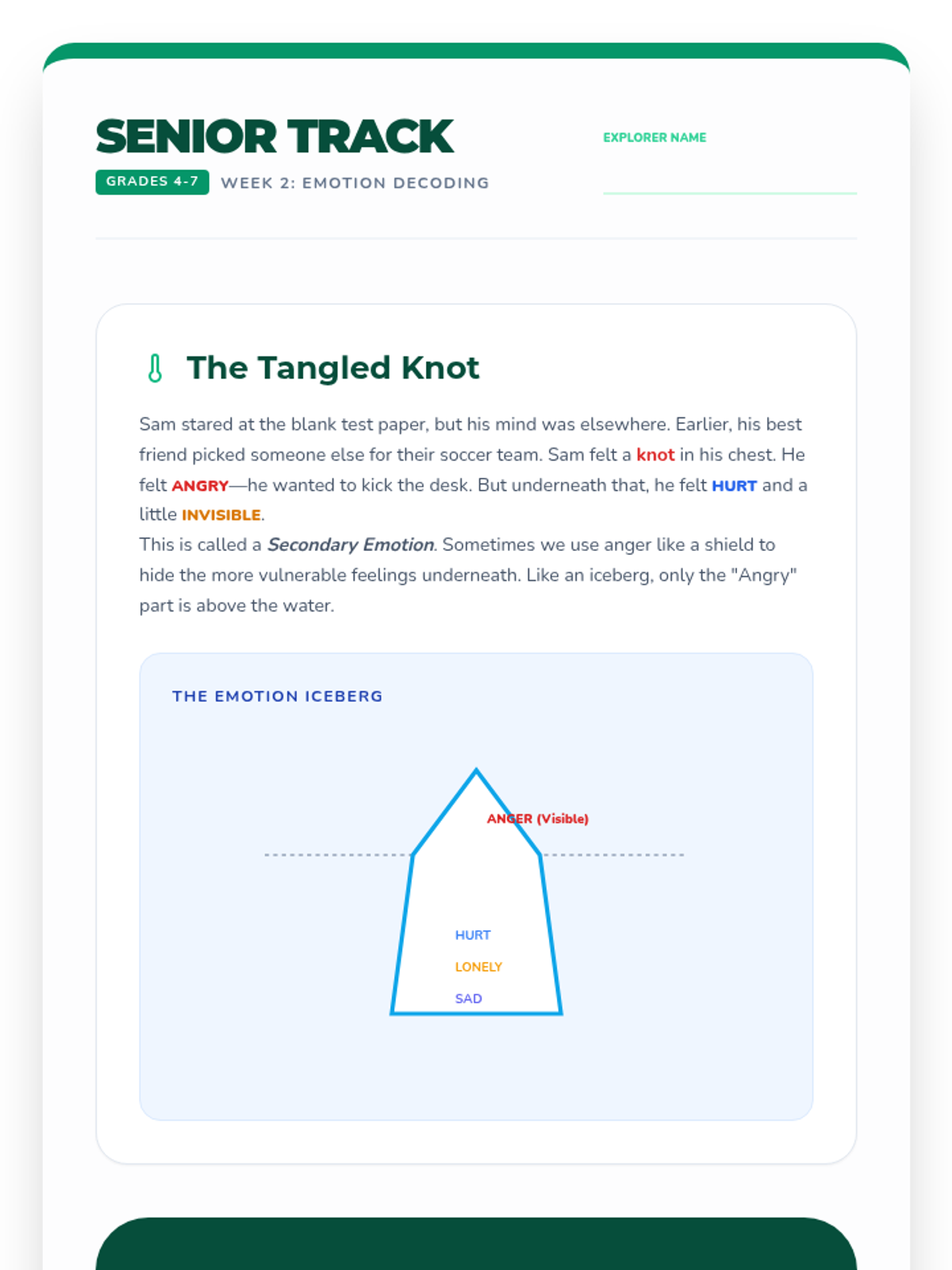
Helps students identify basic and complex emotions in themselves and others, using visual aids and storytelling to build an emotional vocabulary.
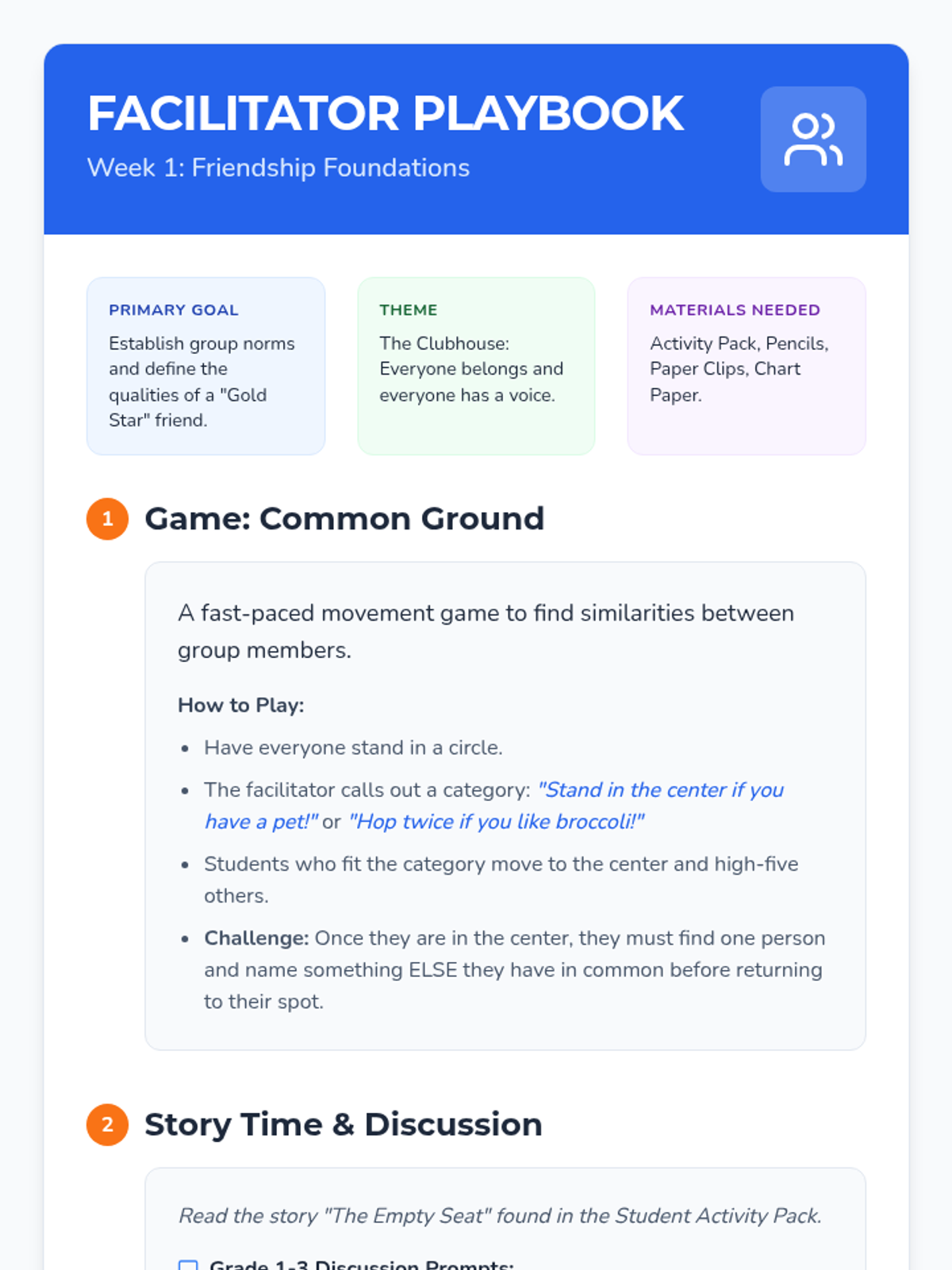
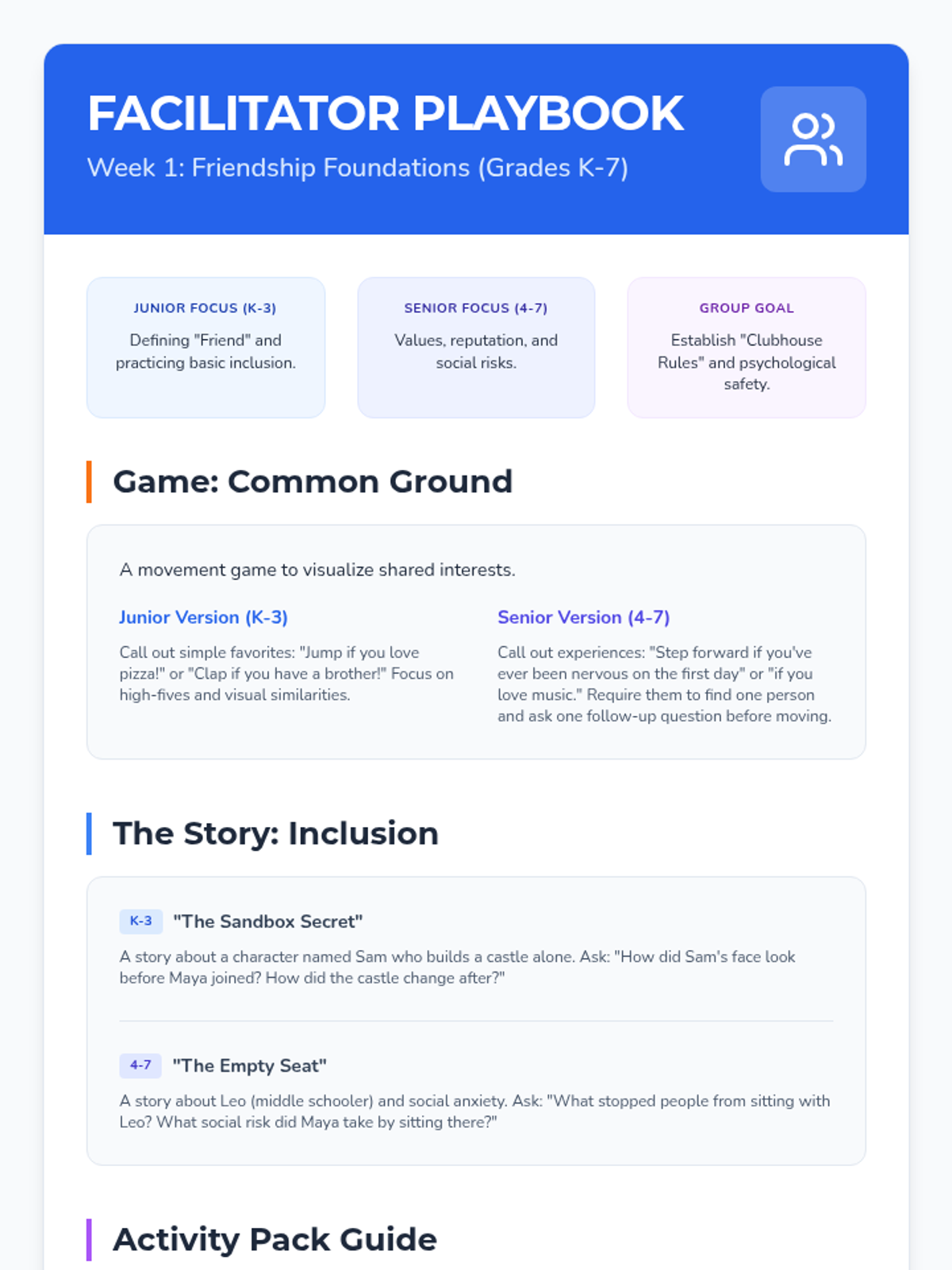
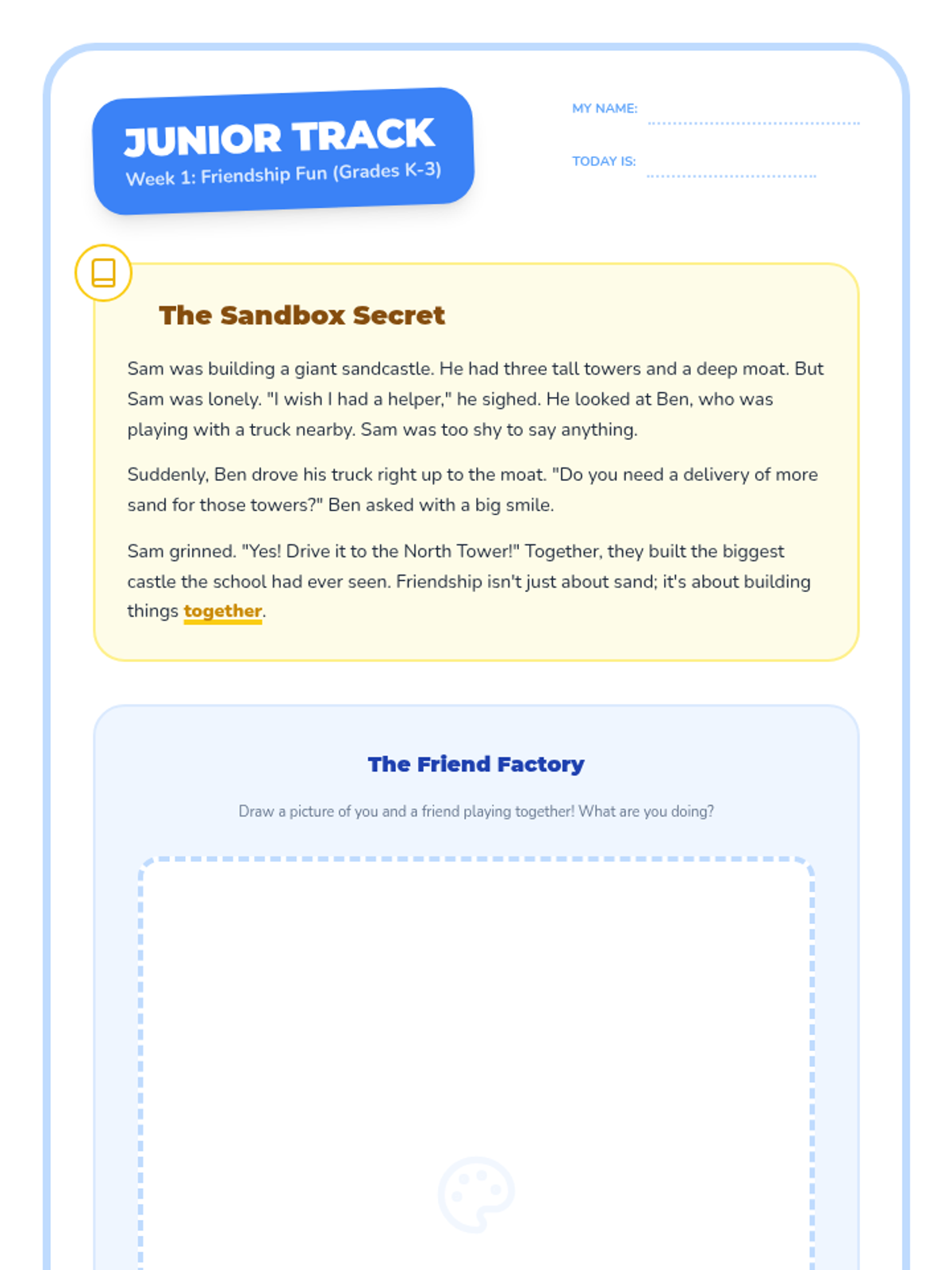
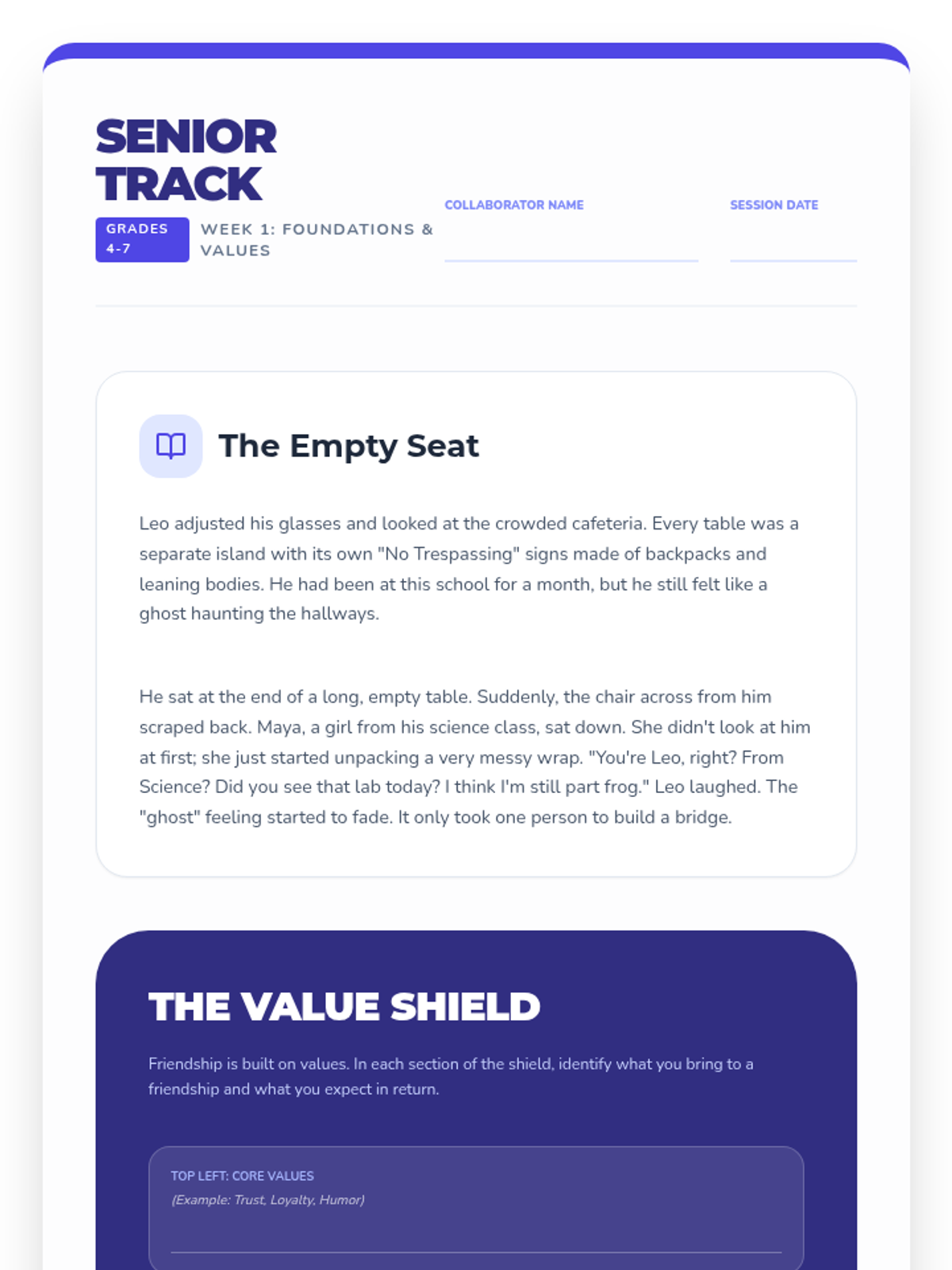
Focuses on building the group's foundation by defining what friendship means and identifying the qualities of a good friend through icebreaker games and personal reflection.
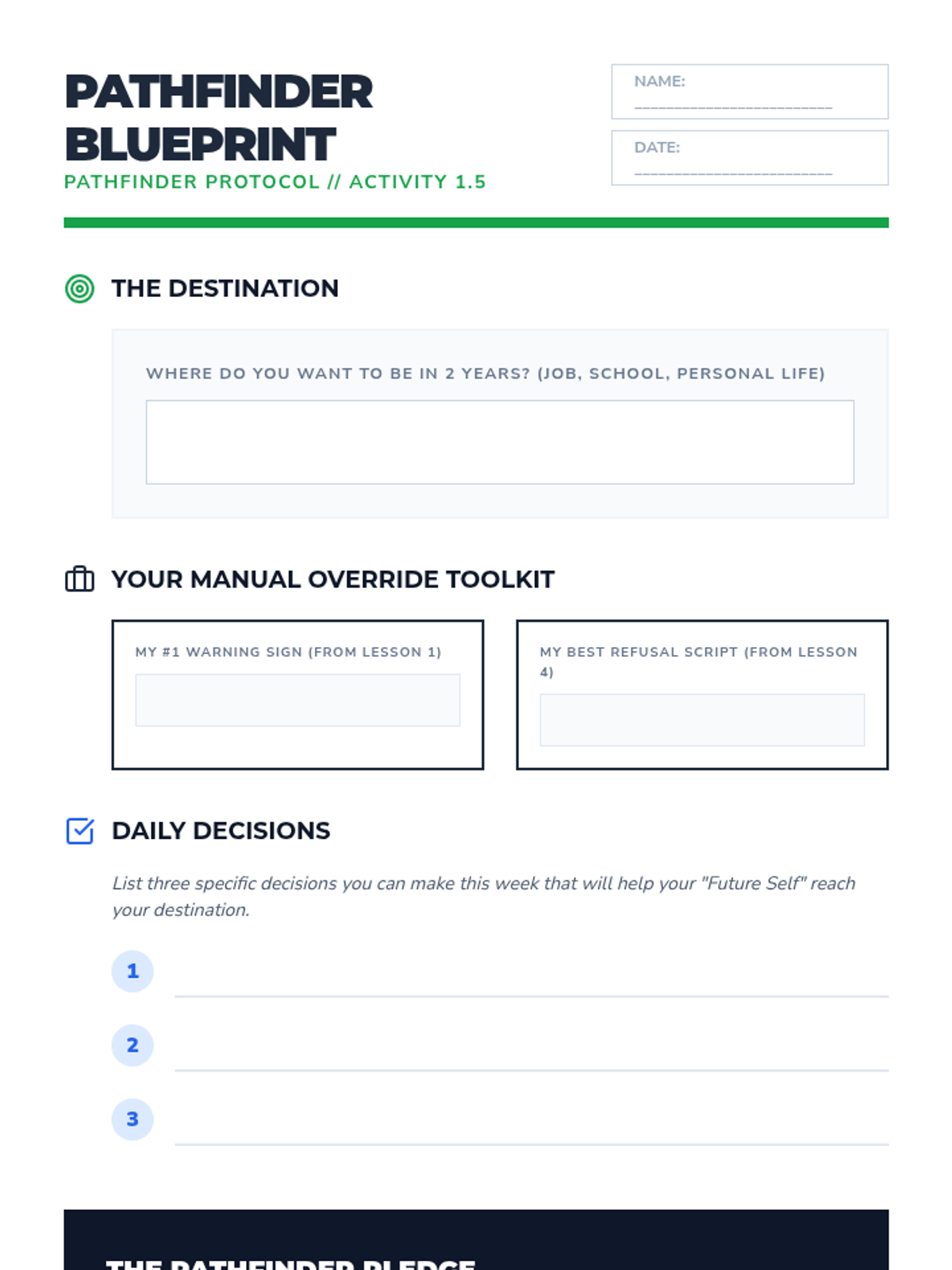
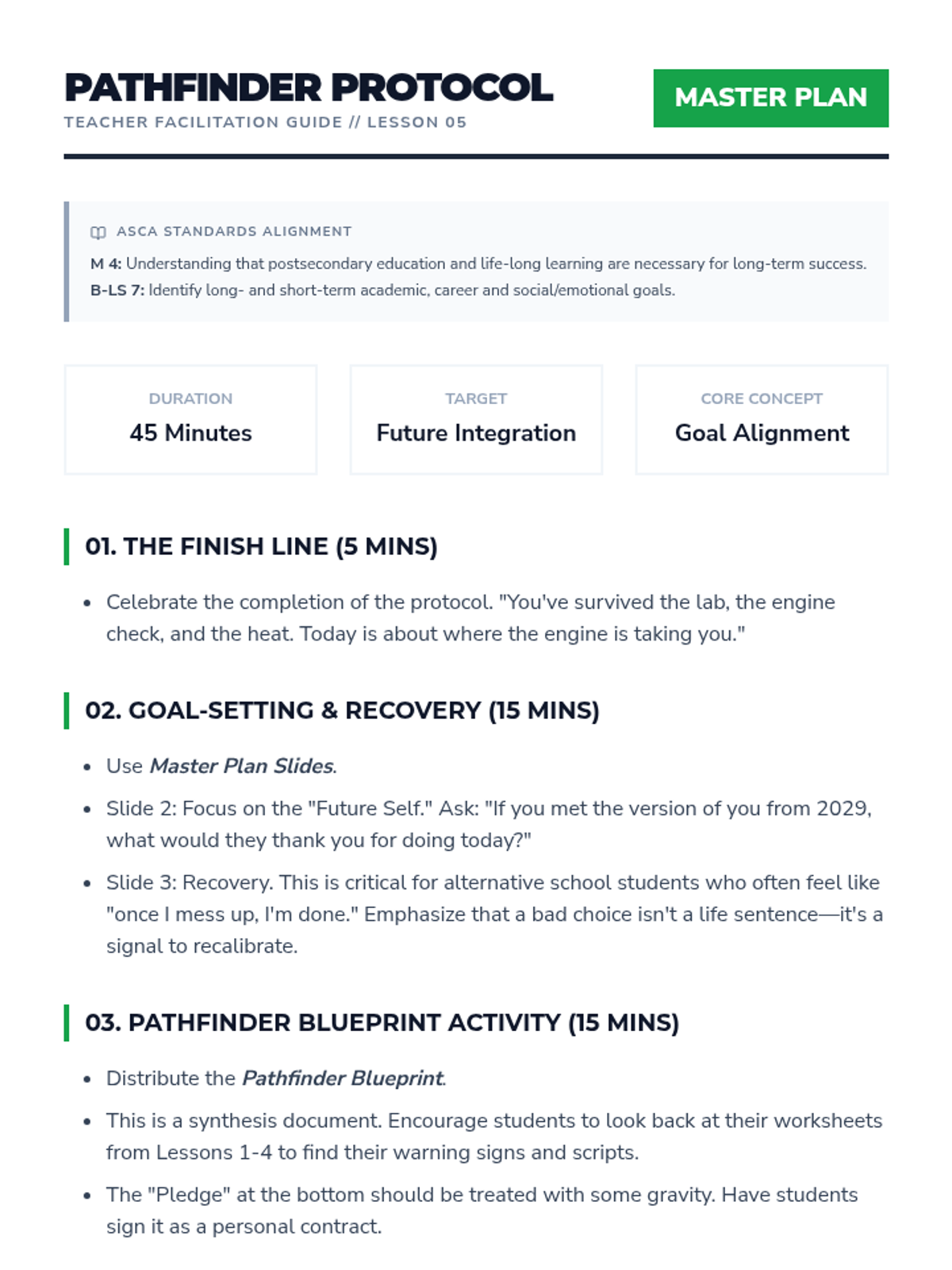
Synthesizes previous lessons into a personal action plan. Students connect daily choices to their desired future selves and learn strategies for recovering and taking responsibility after a poor decision.
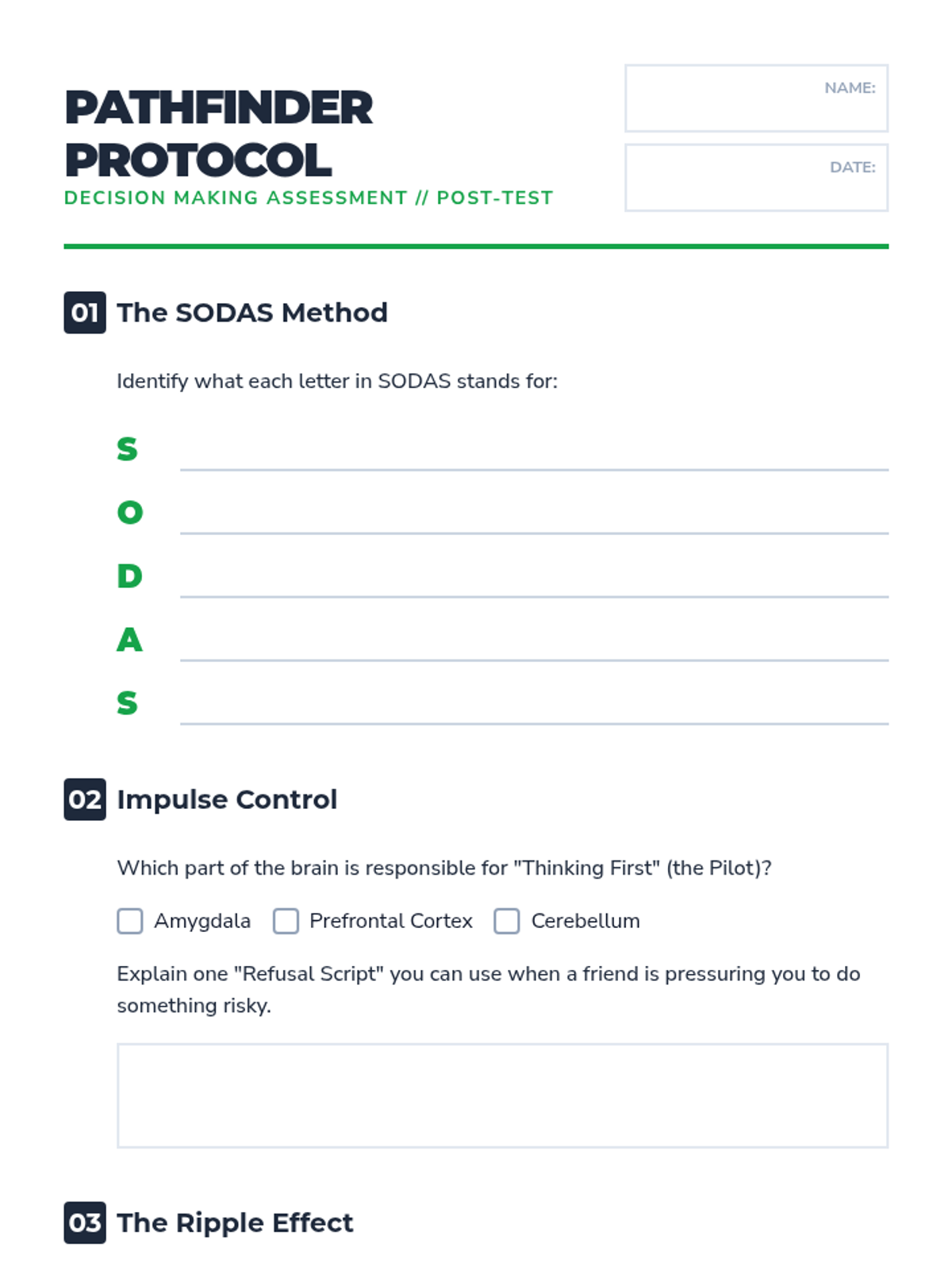
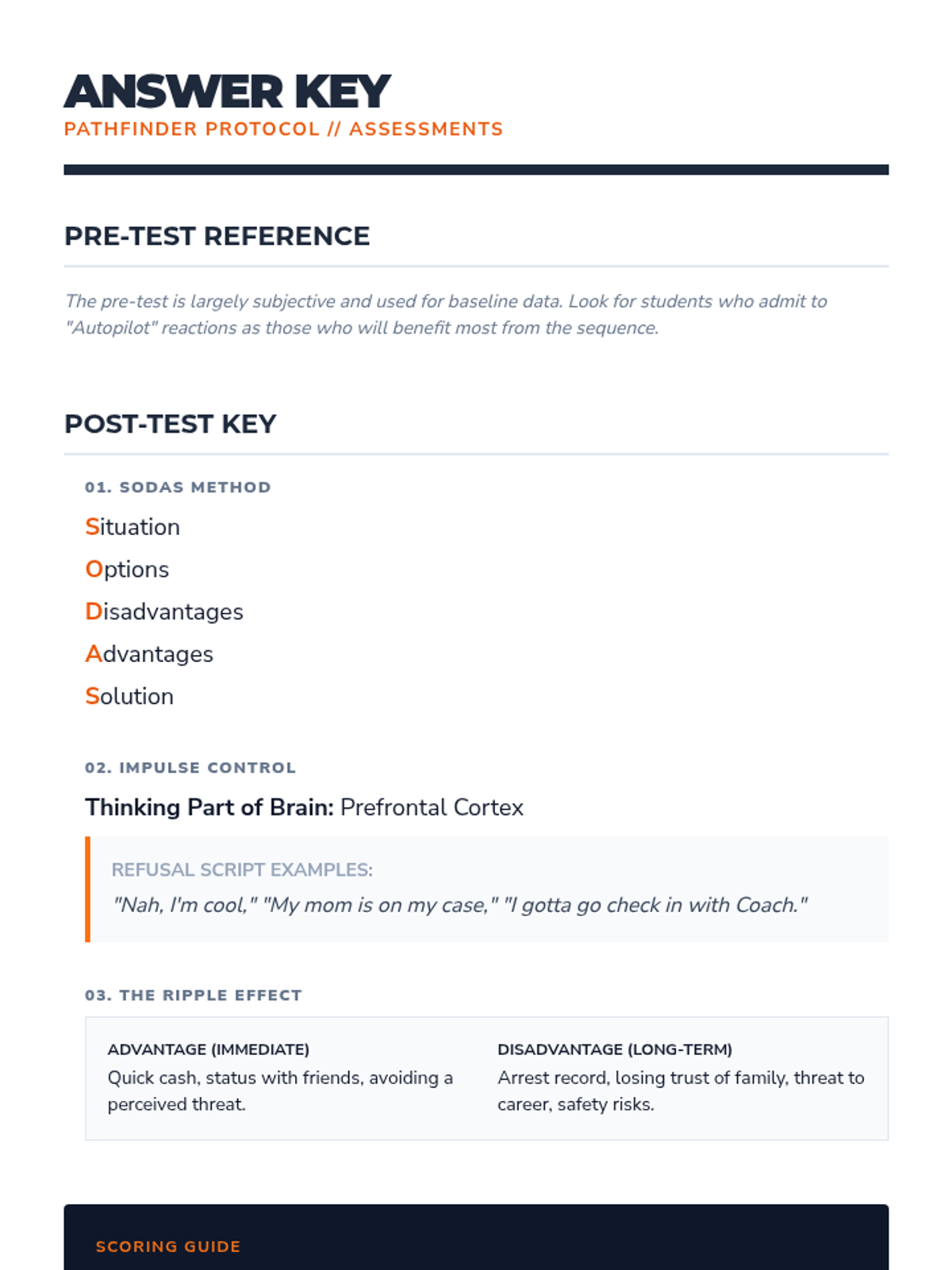
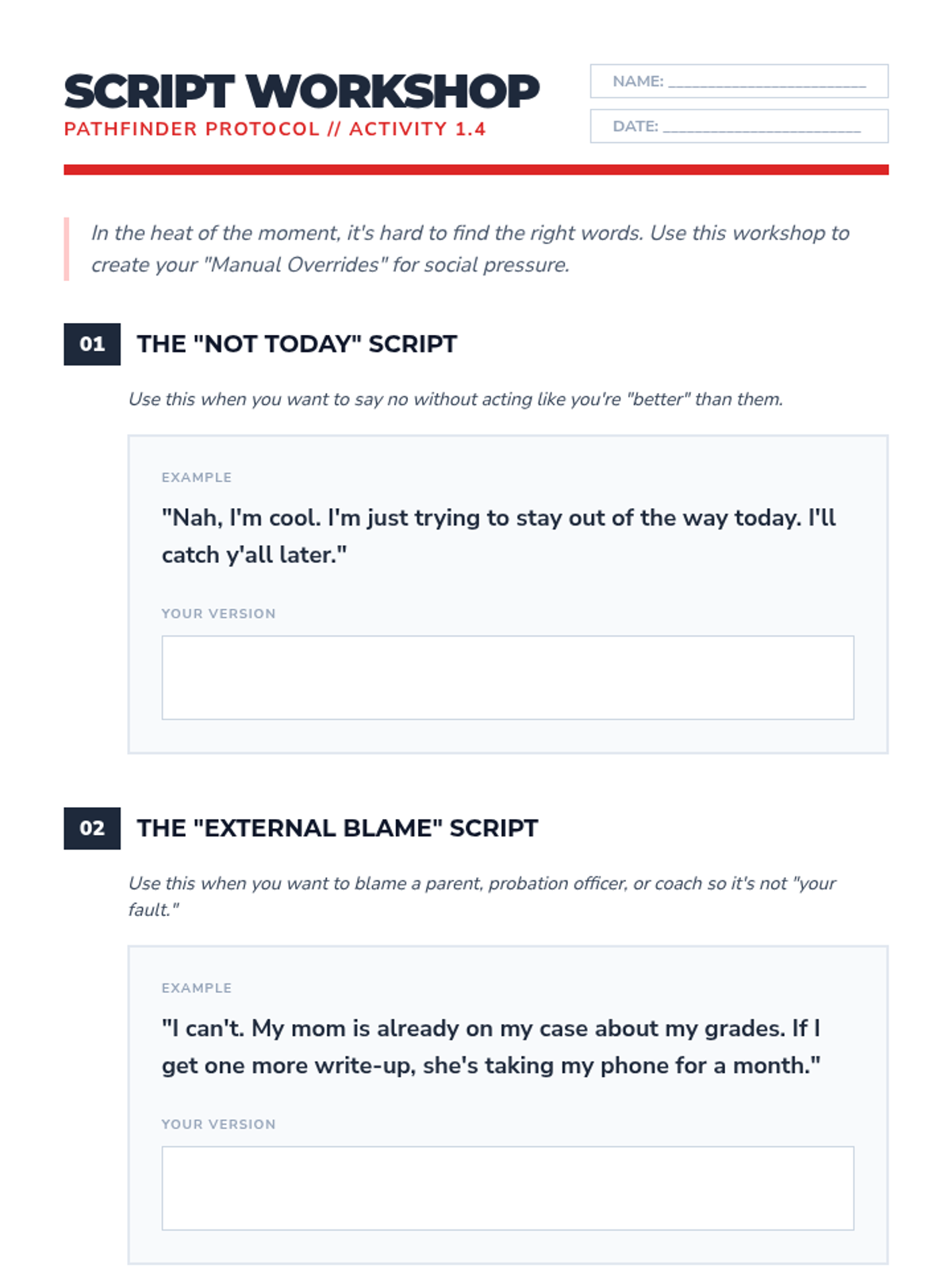
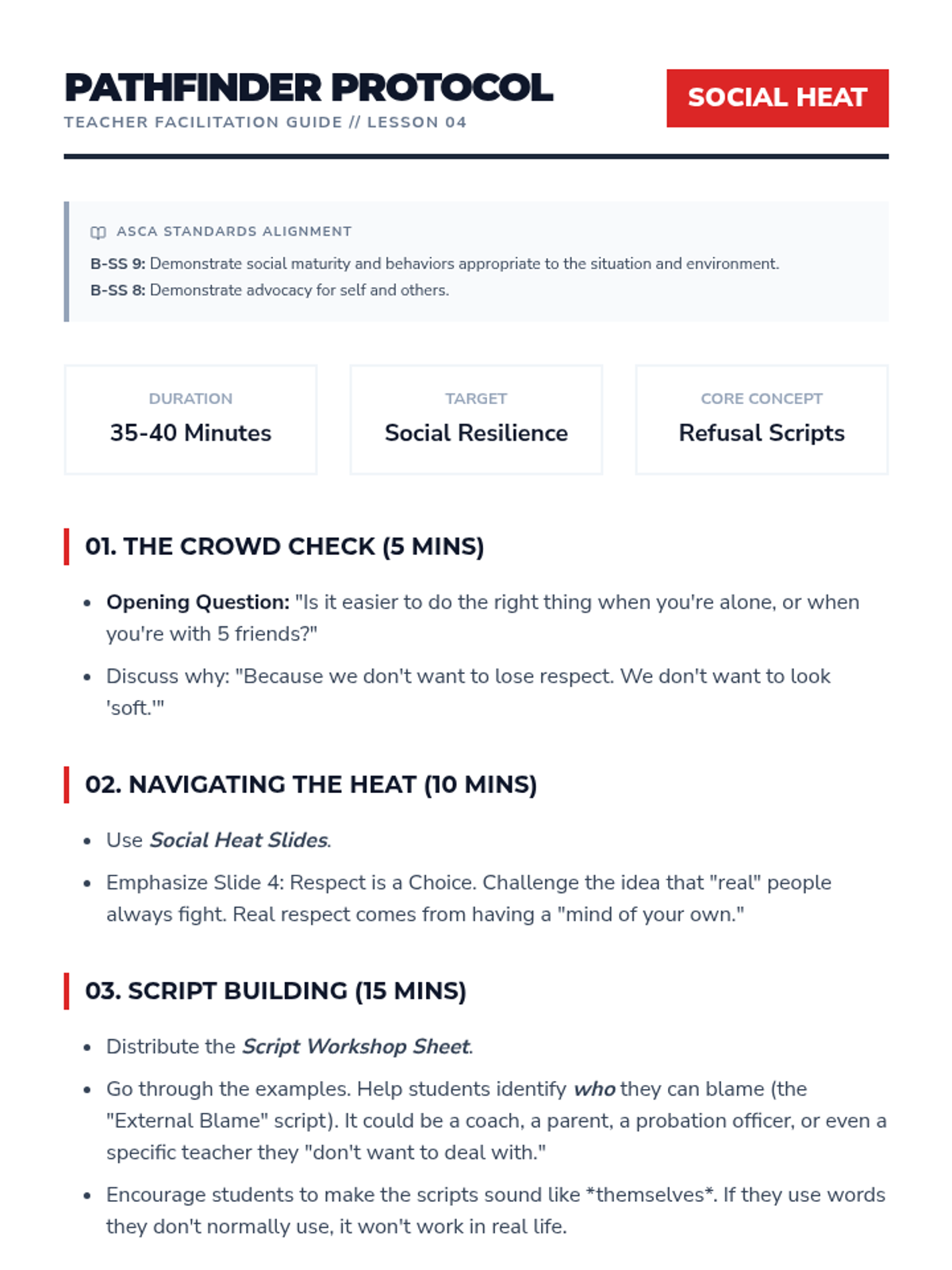
Addresses the social dimension of decision-making, focusing on peer influence, reputation, and setting boundaries. Students develop 'refusal scripts' to navigate high-pressure social situations without losing face.
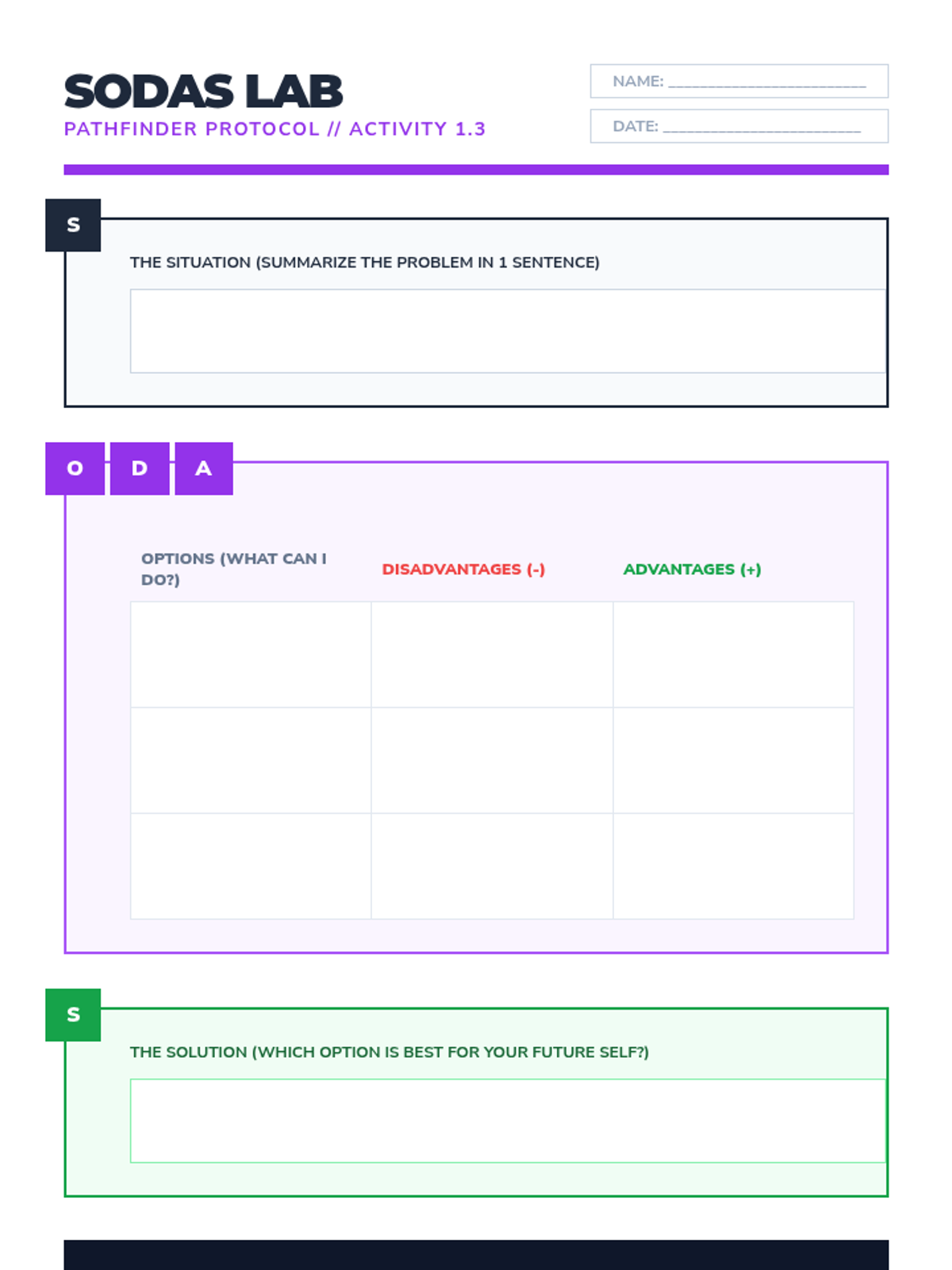
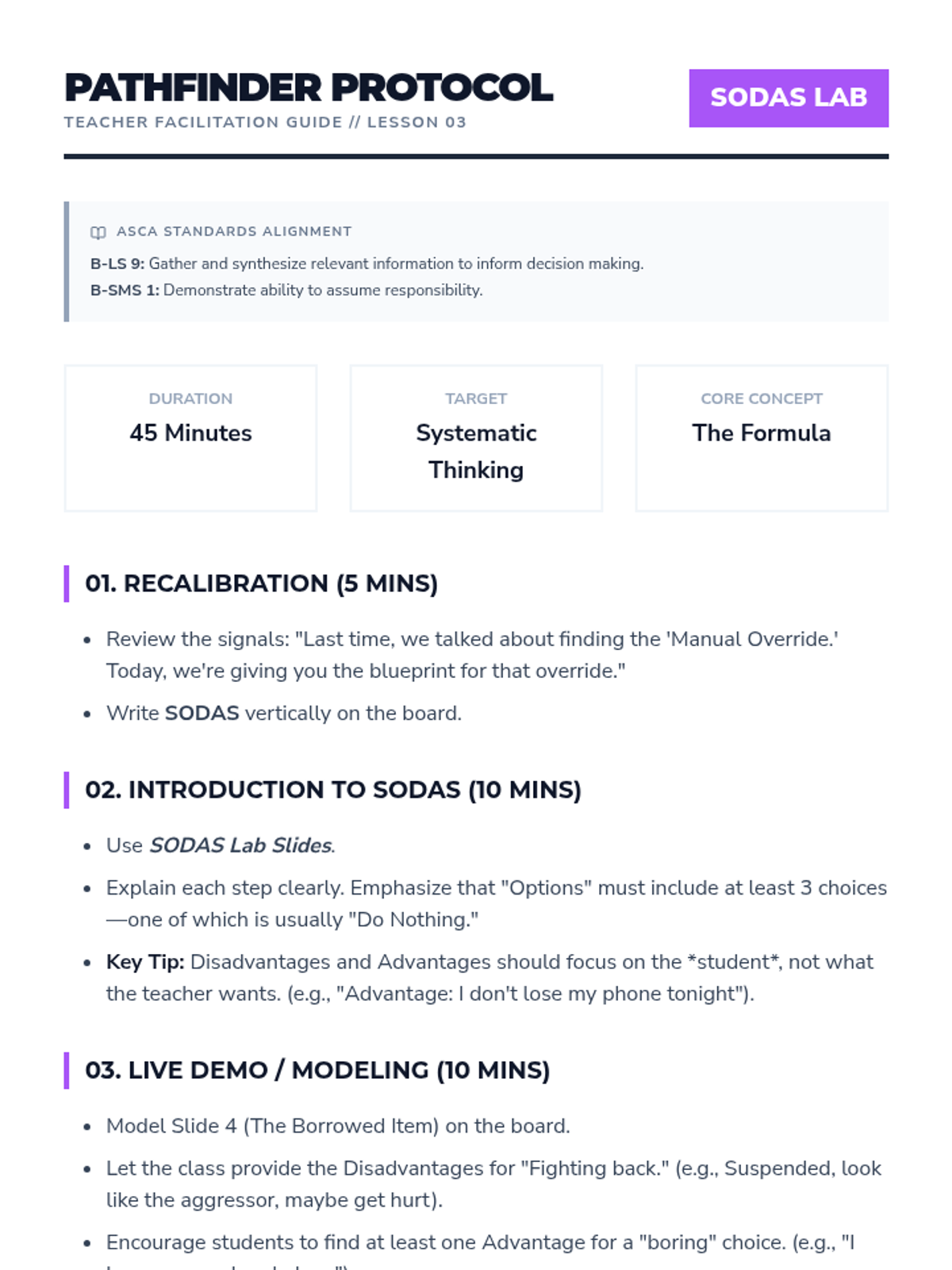
Introduces and applies the SODAS (Situation, Options, Disadvantages, Advantages, Solution) framework. Students use this concrete tool to break down complex social and personal dilemmas into manageable parts.
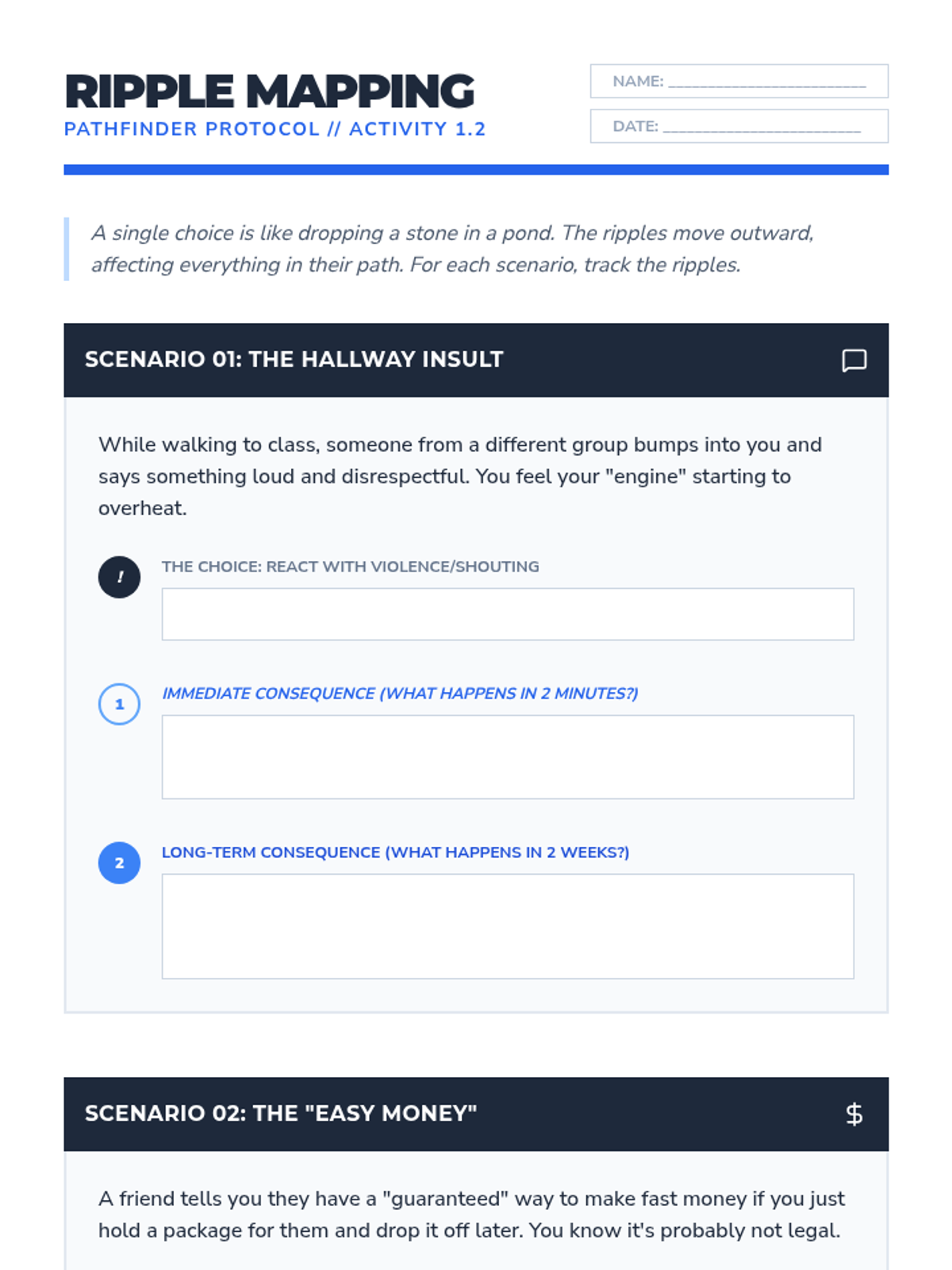
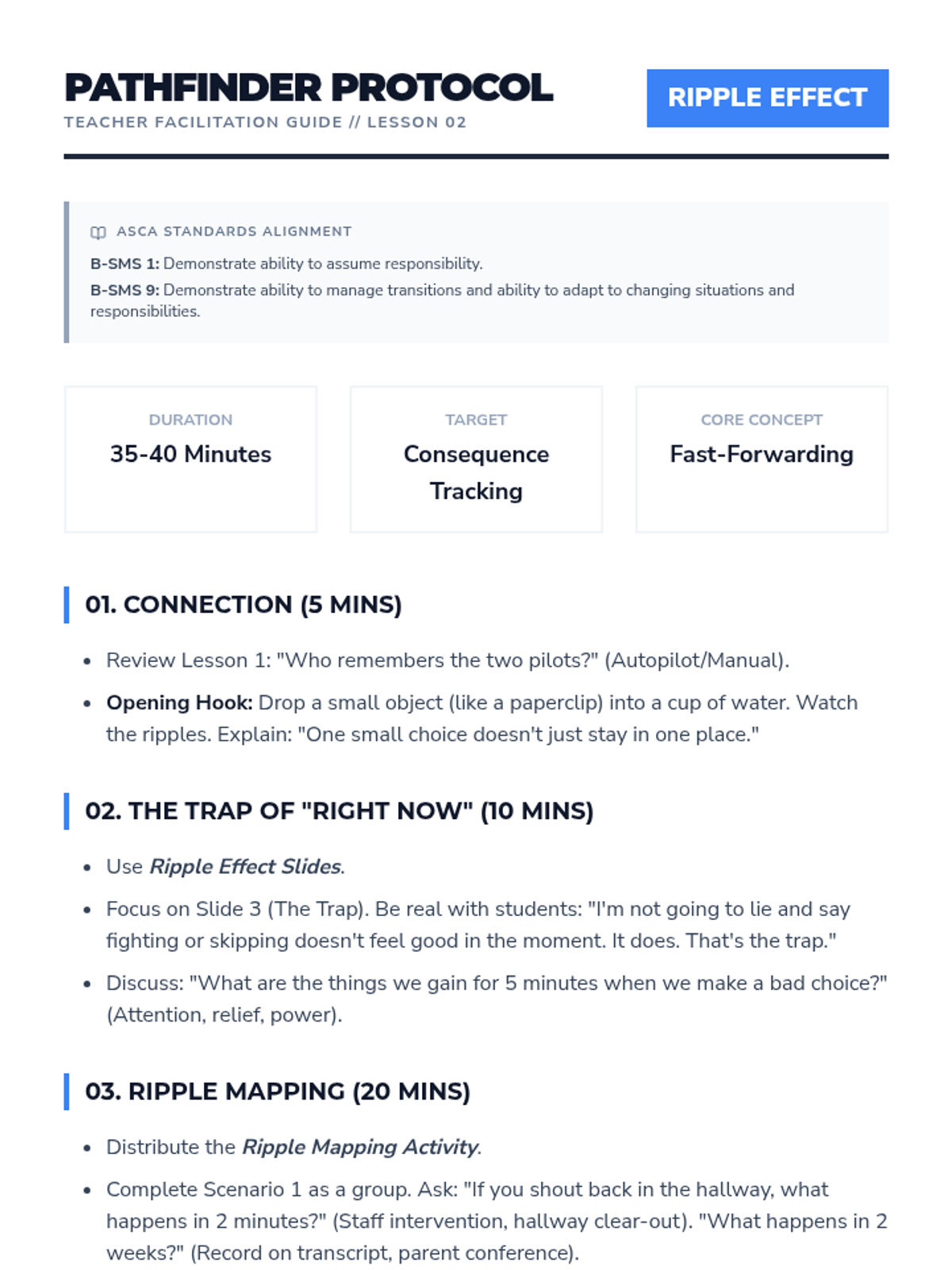
Explores the concept of consequences, specifically the difference between immediate gratification and long-term impact. Students practice 'fast-forwarding' their lives to see the ripple effects of their choices.
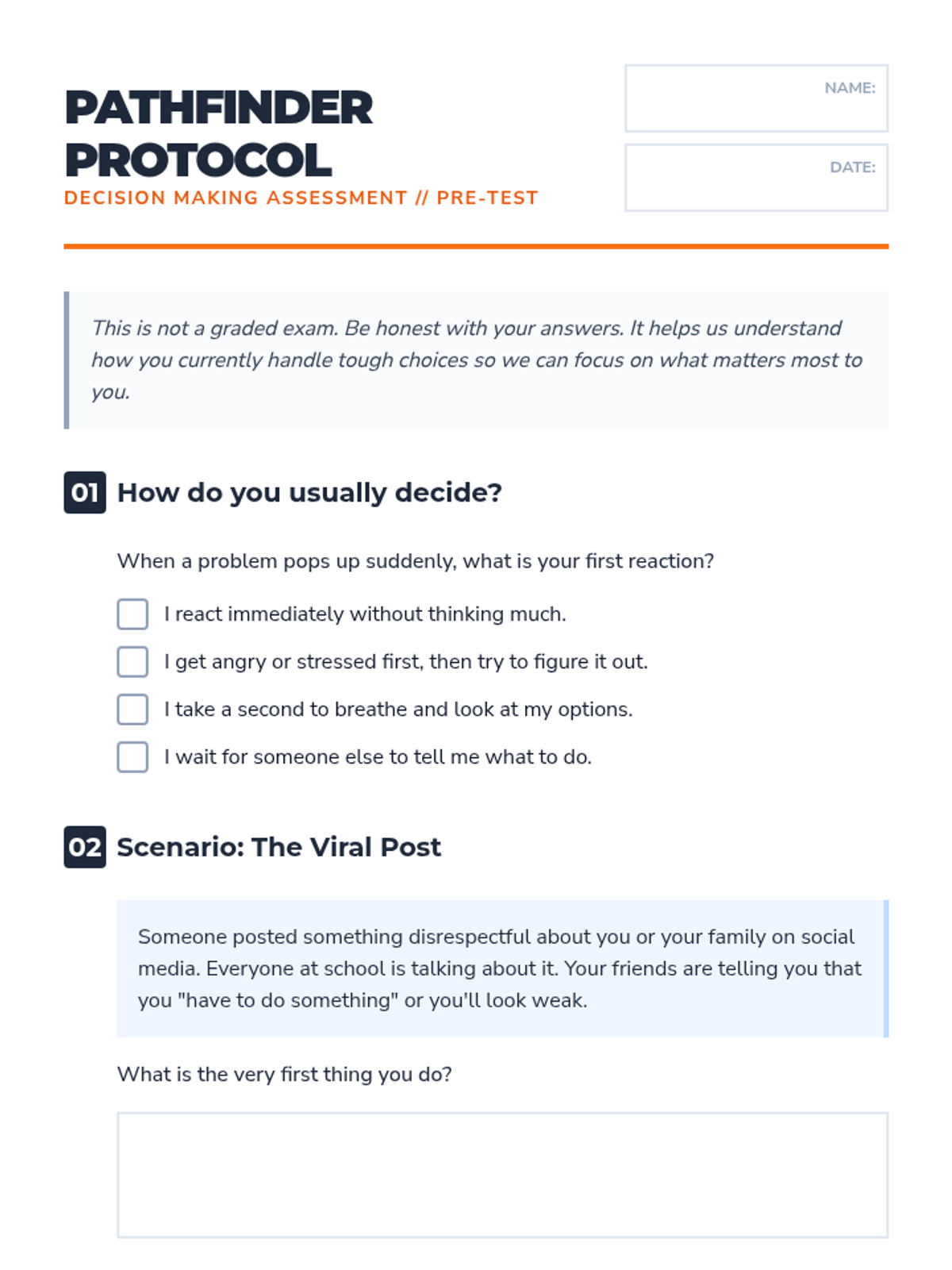
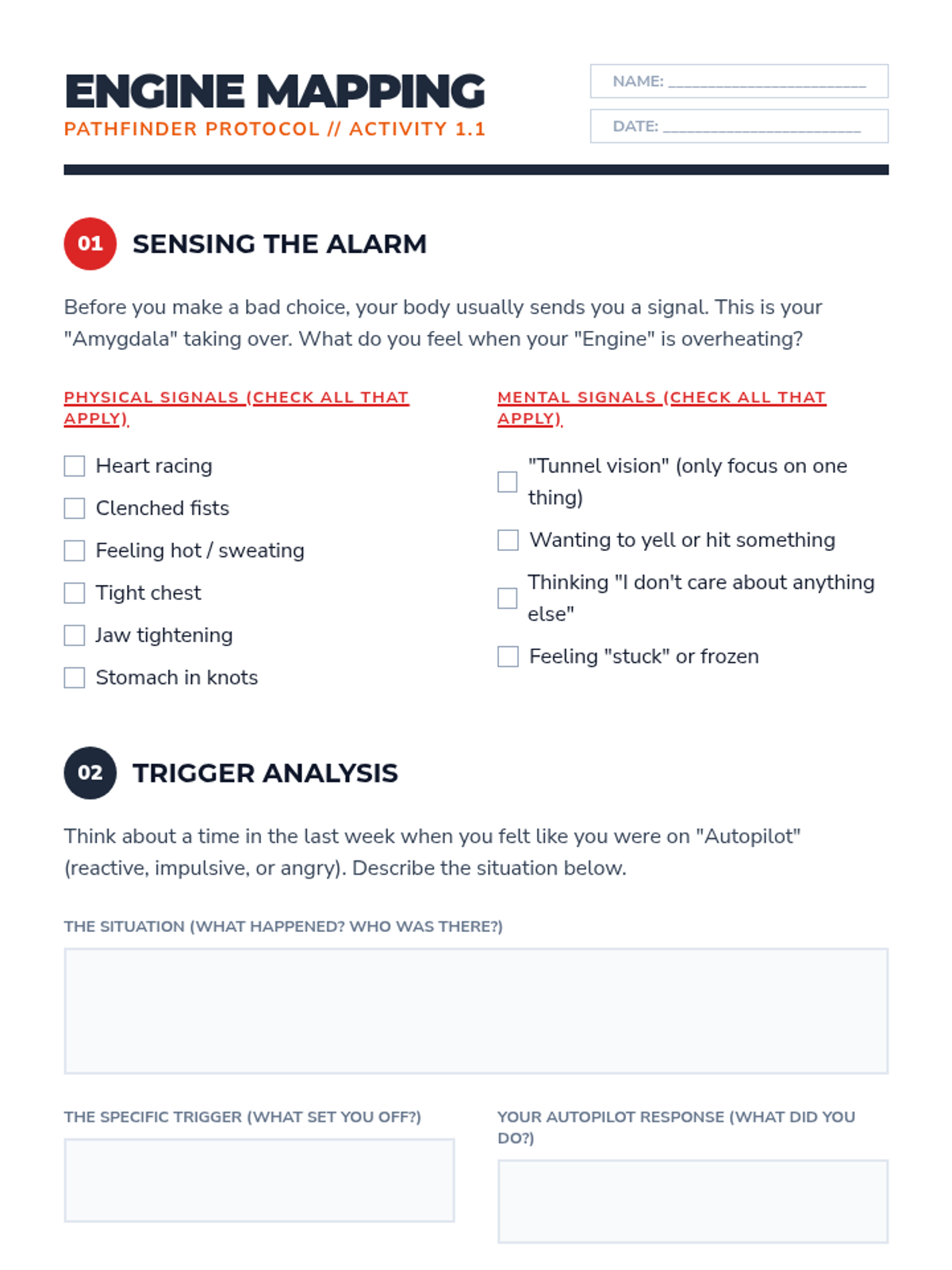
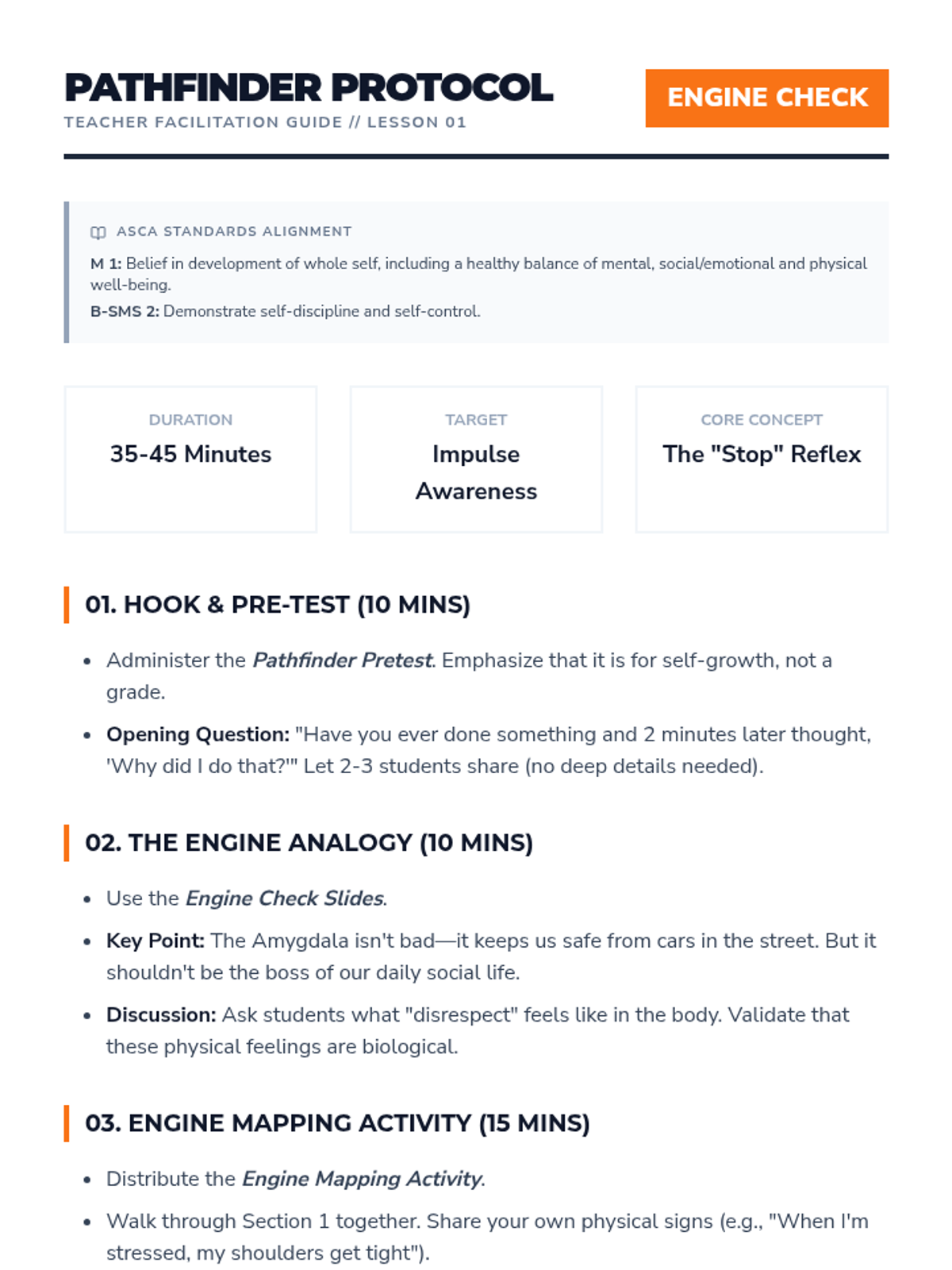
Focuses on the internal mechanics of choice, distinguishing between reactive 'autopilot' responses and intentional 'pilot' decisions. Students learn to identify their personal triggers and the physiological signs of an impulse.
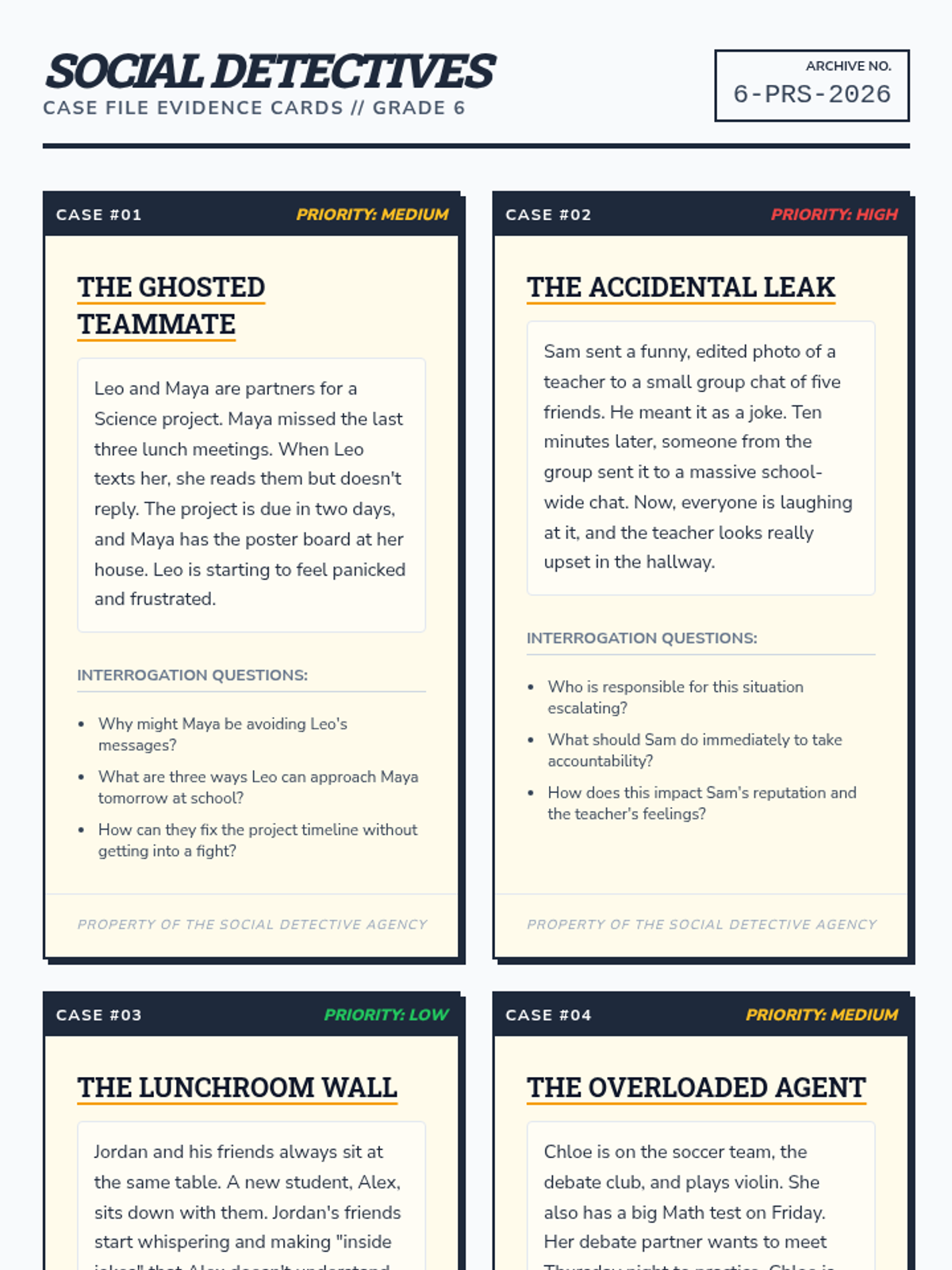
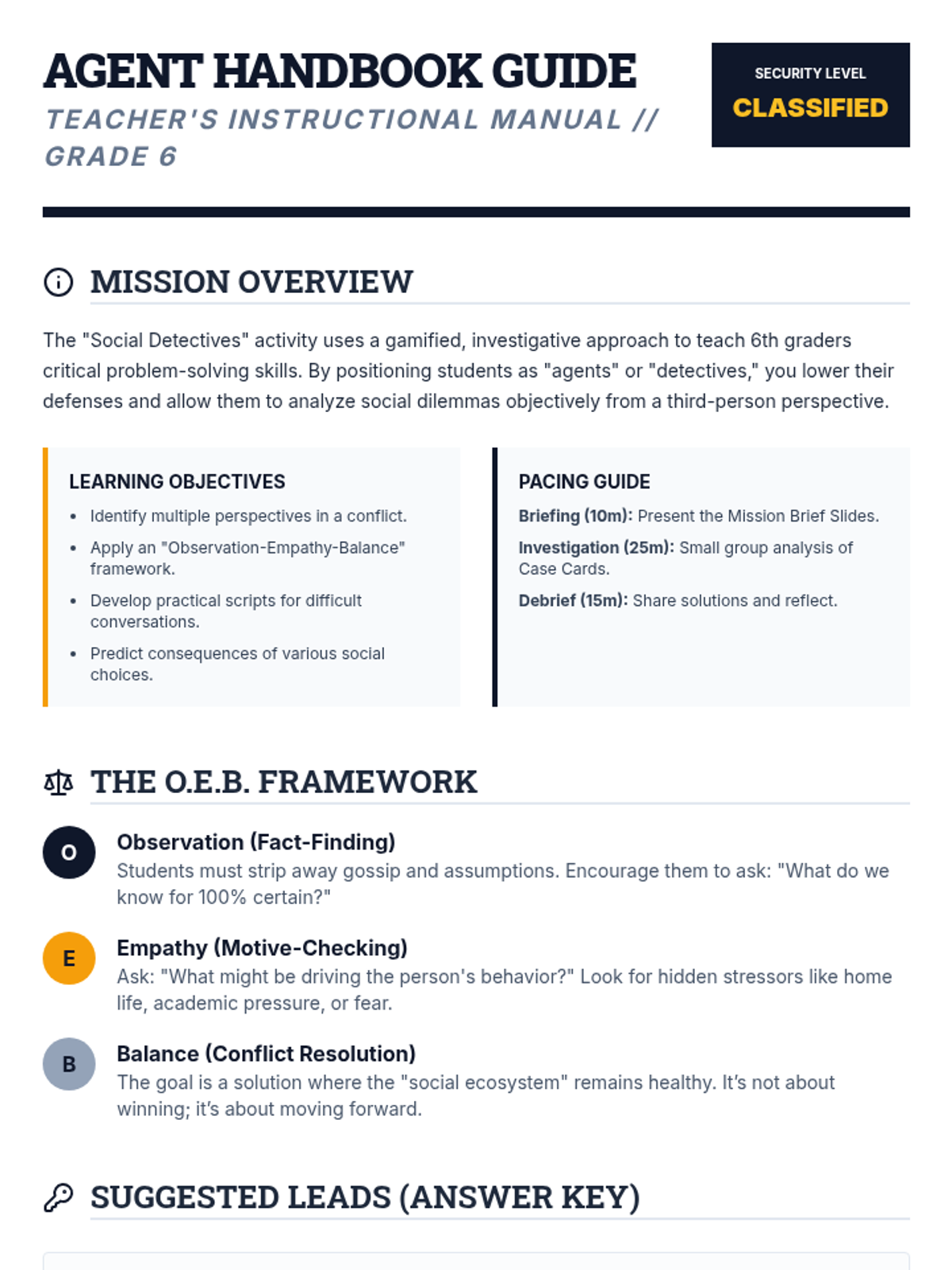
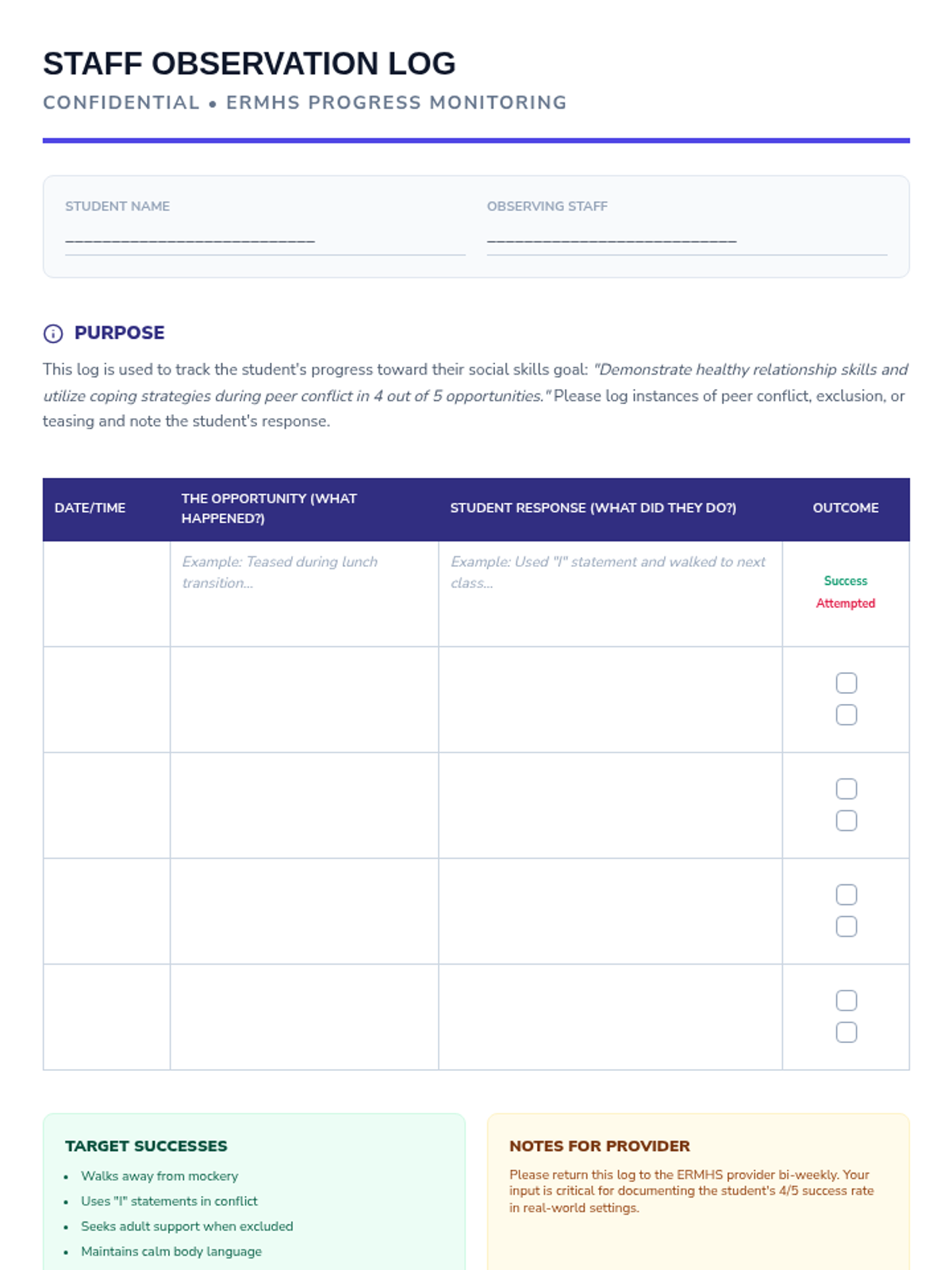
A series of problem-solving scenarios designed for 6th graders to navigate social, academic, and ethical challenges through the lens of a private investigator agency. Students analyze case studies and develop practical solutions for common middle school dilemmas.
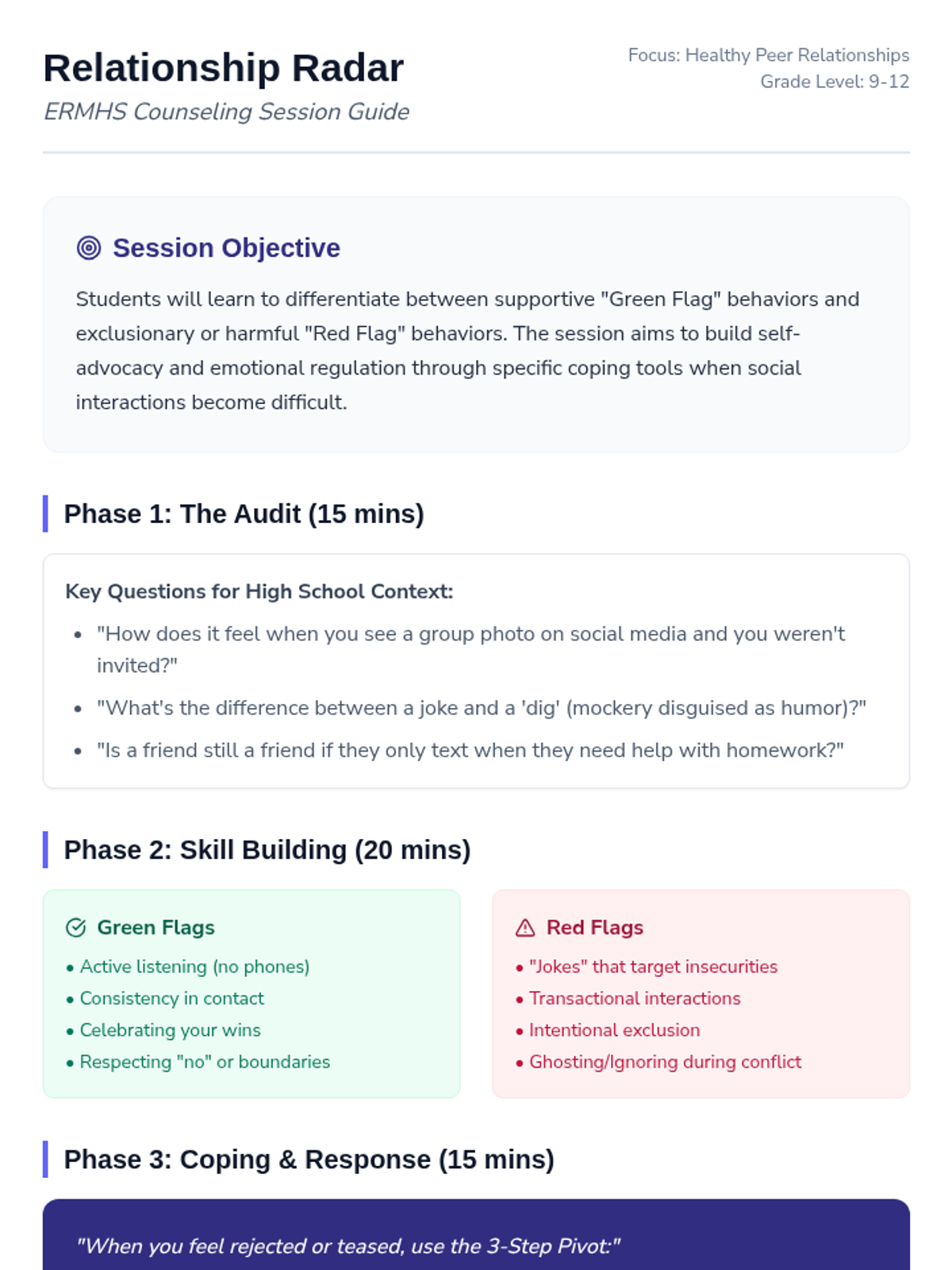
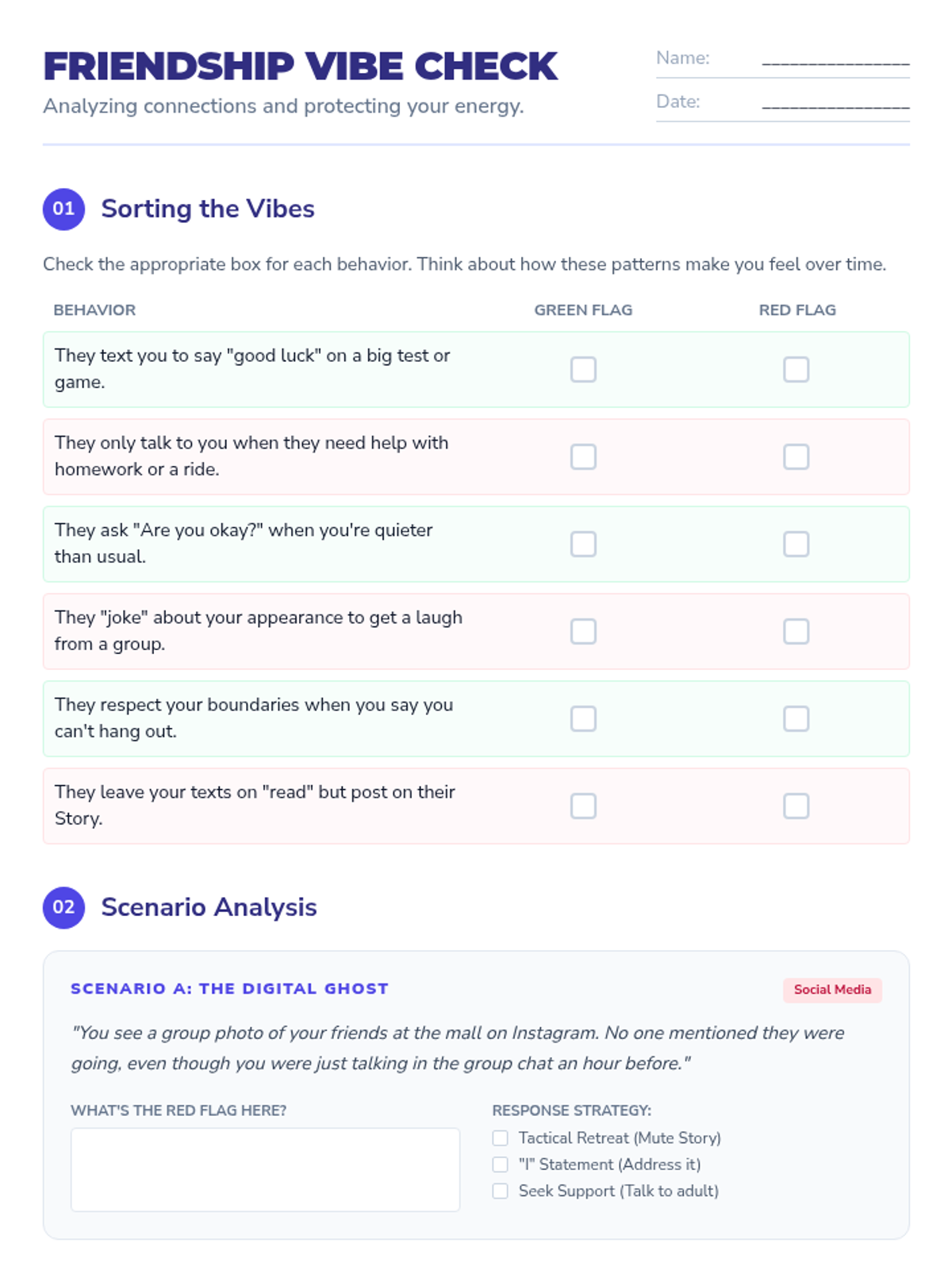
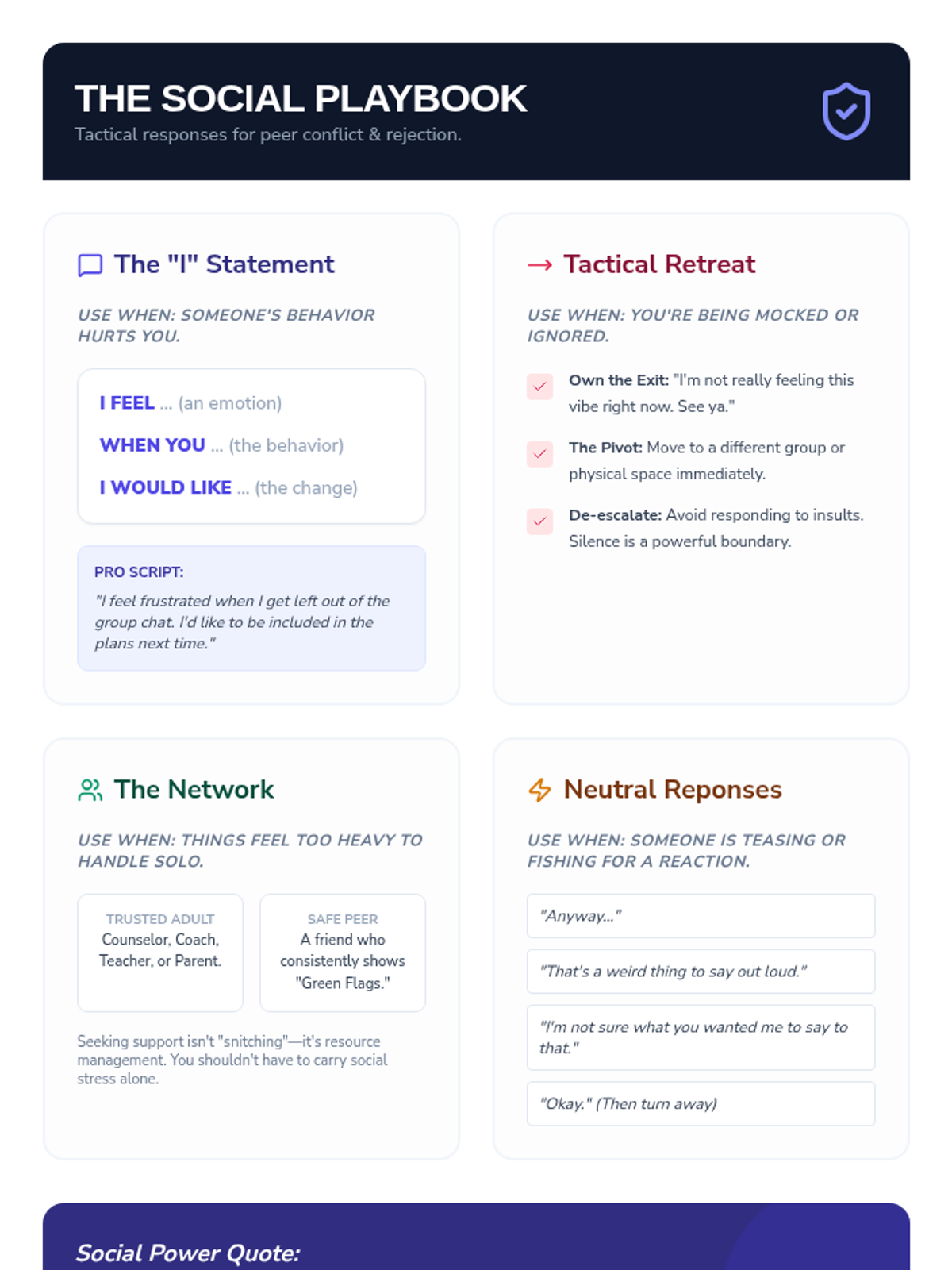
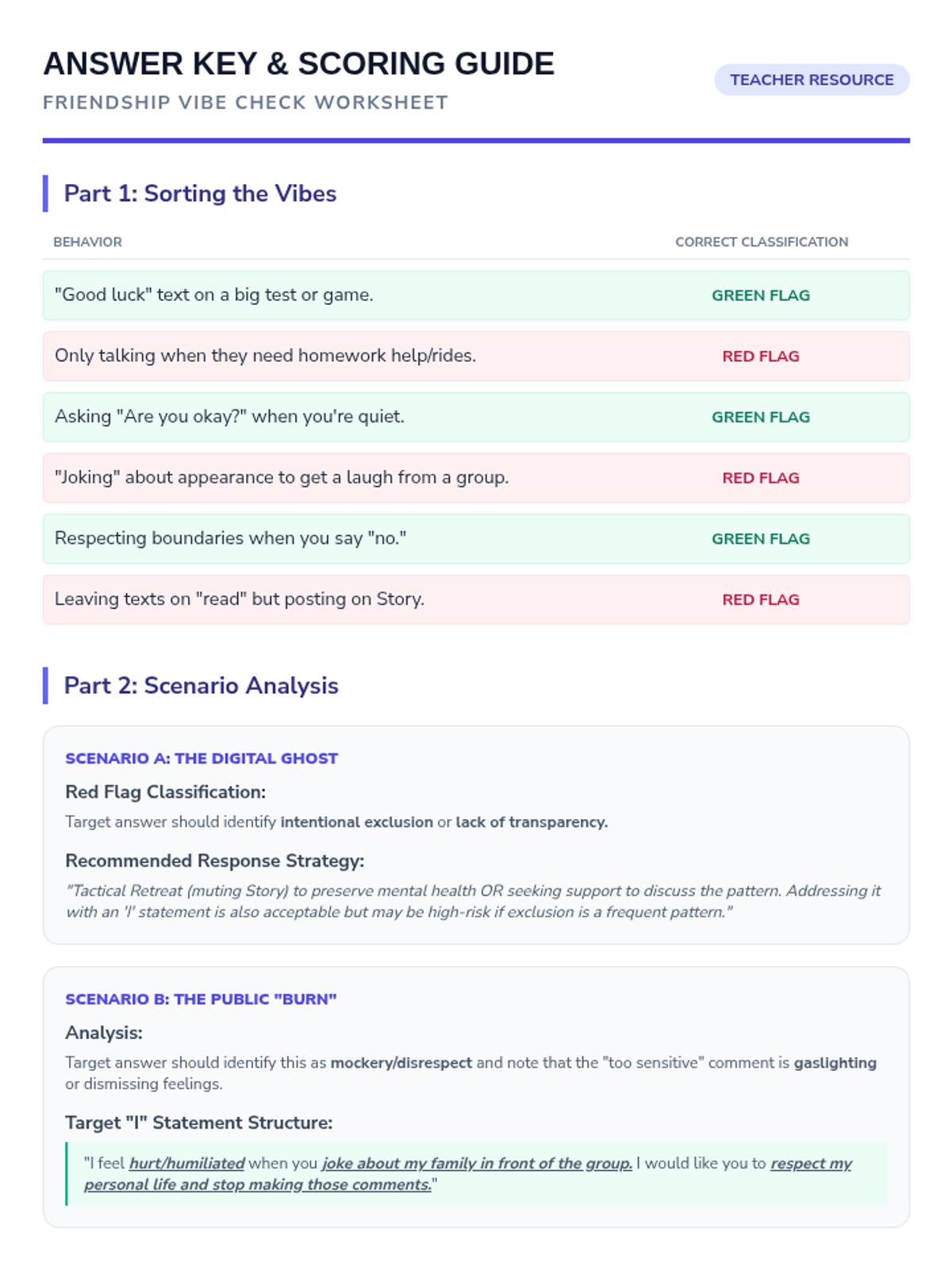
A counseling lesson focused on identifying healthy friendship 'green flags' and recognizing social 'red flags,' equipped with coping strategies for navigating peer rejection and conflict in a high school setting.
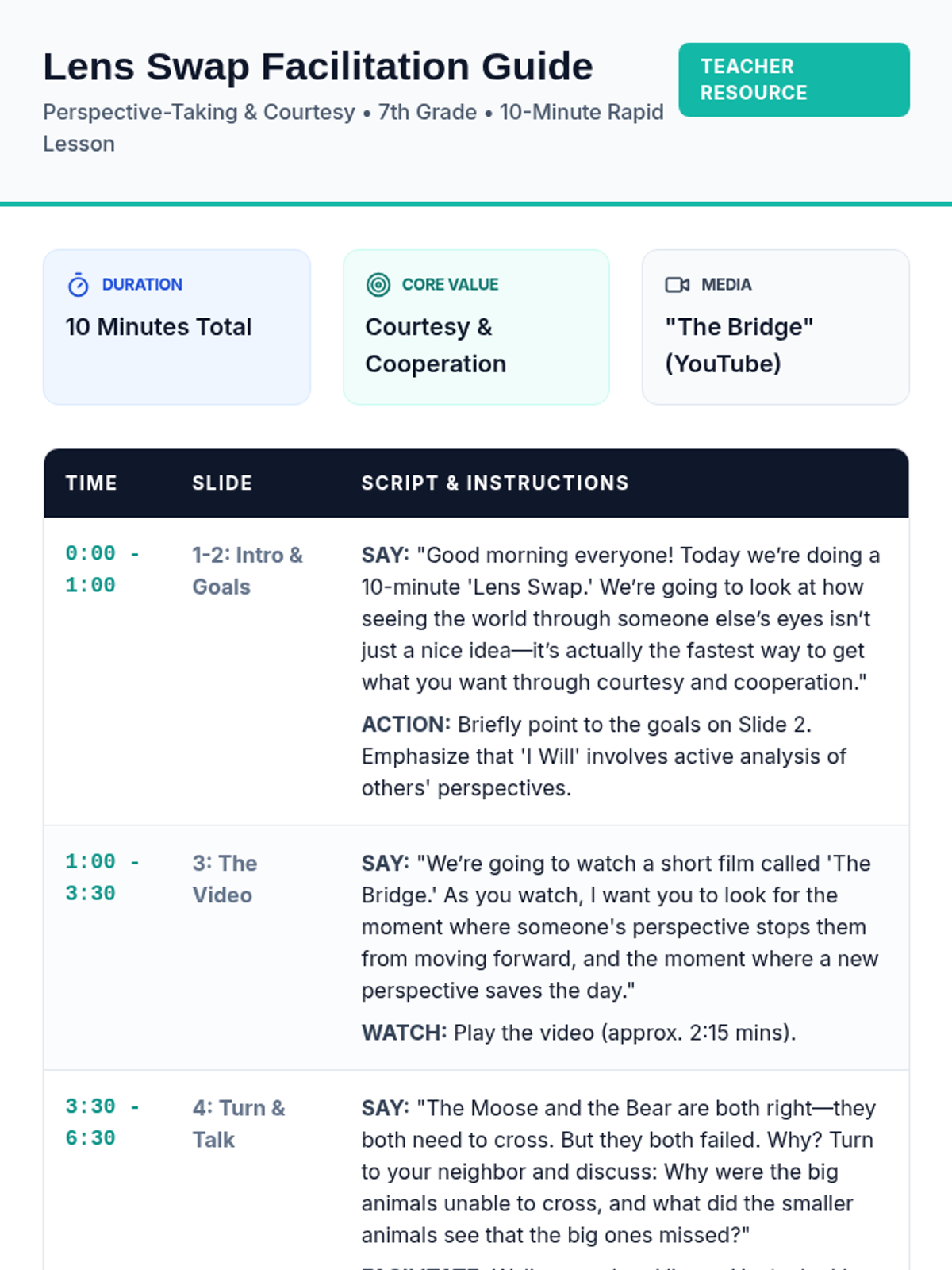
A fast-paced, 10-minute exploration of perspective-taking using the 'Bridge' short film to teach 7th graders how seeing other viewpoints leads to courtesy and cooperation.
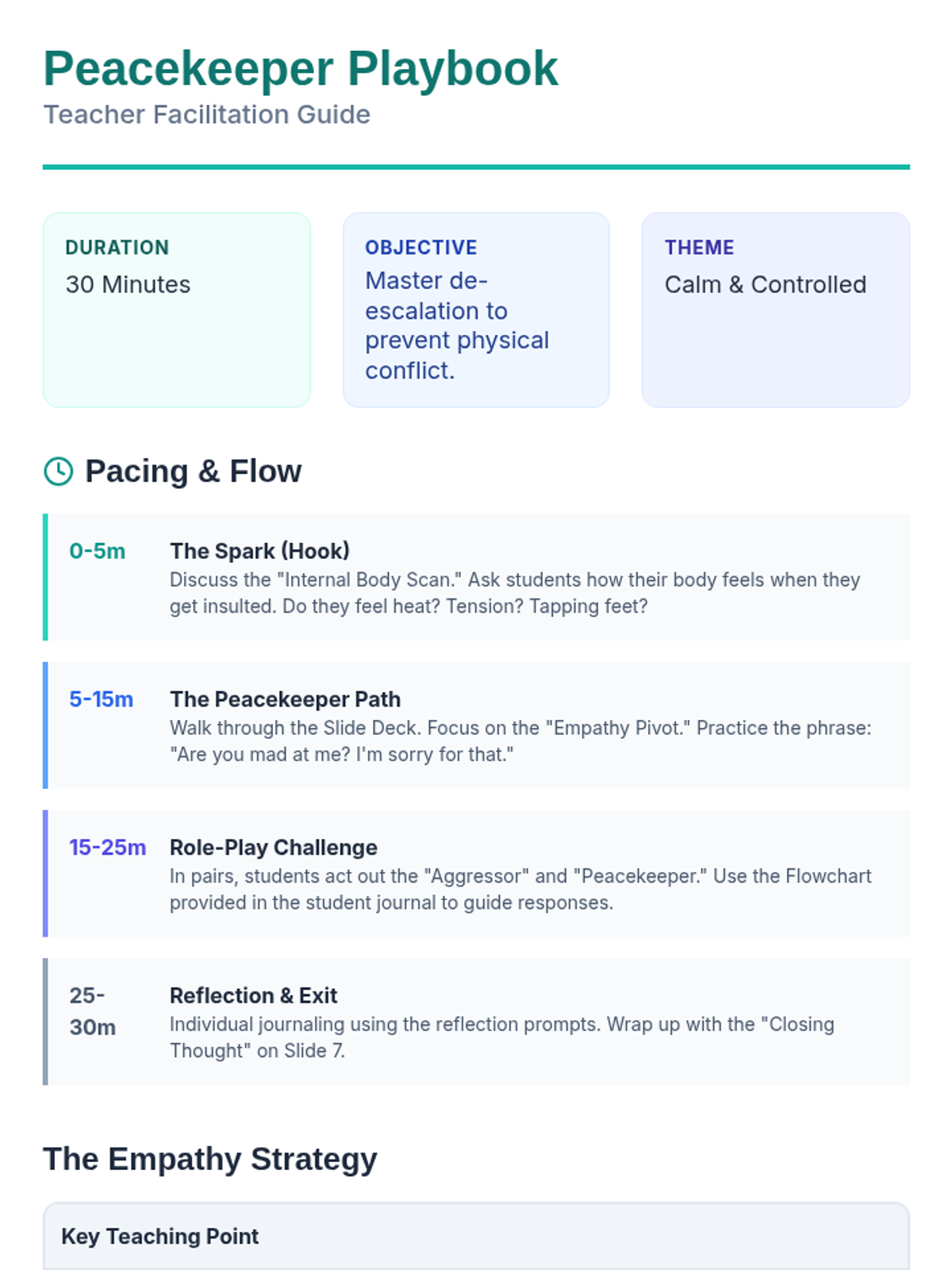
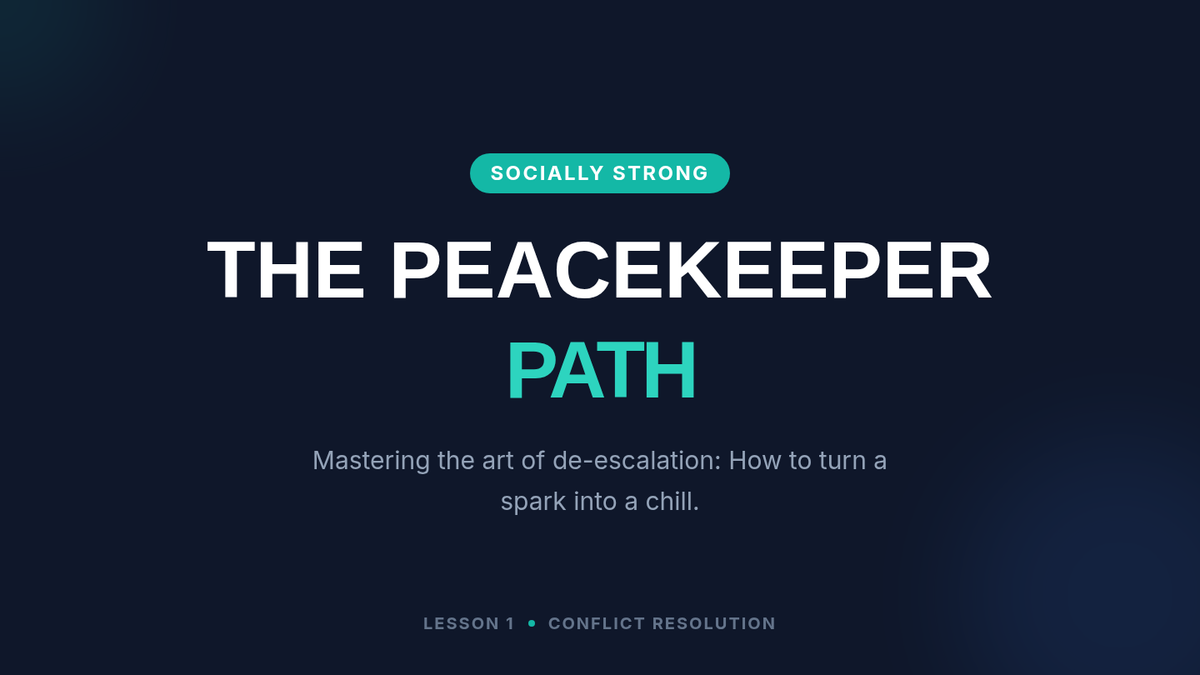
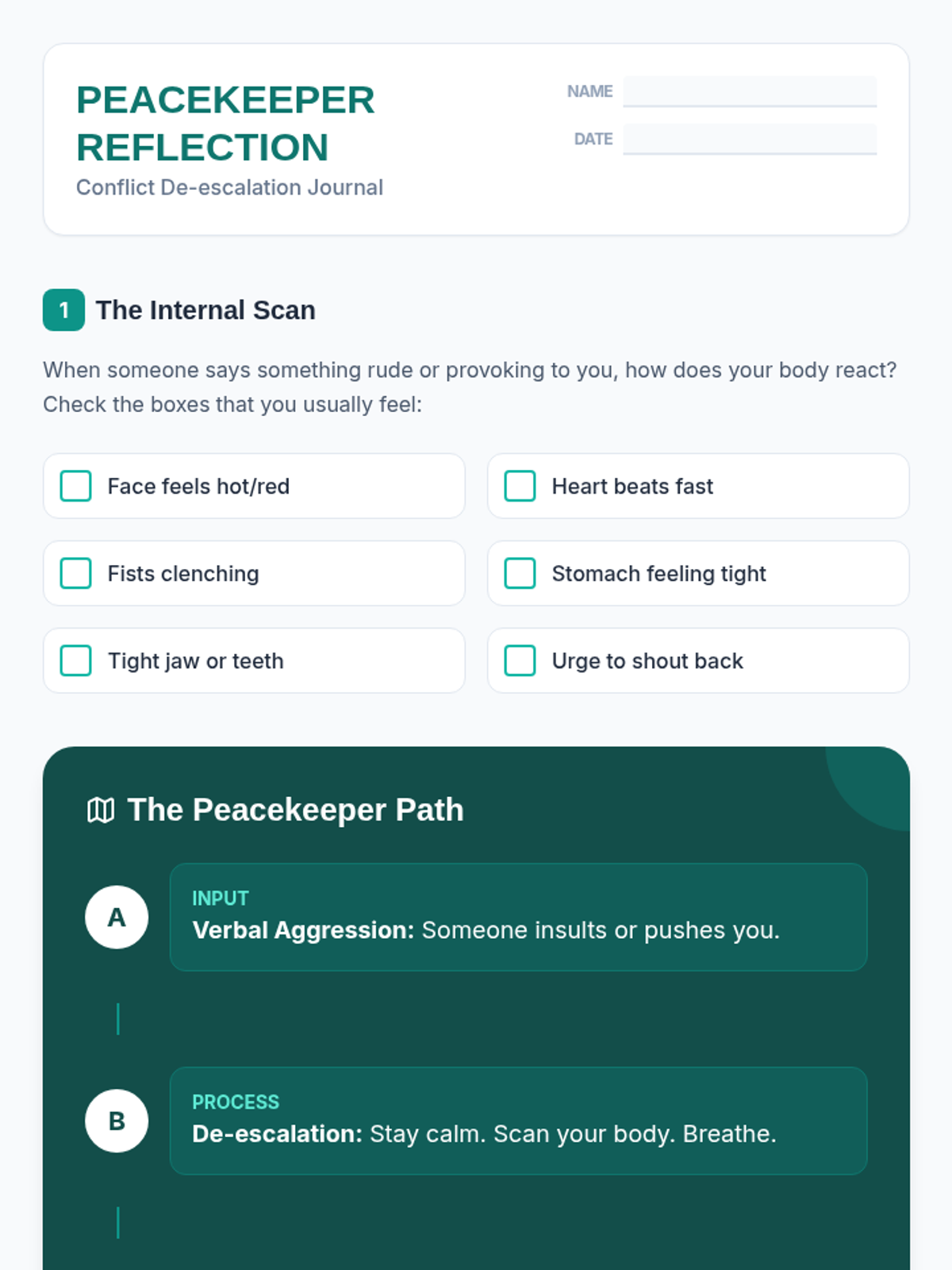
A lesson focused on de-escalating verbal aggression to prevent physical fights, featuring a slide deck, a visual flowchart, and reflection activities.
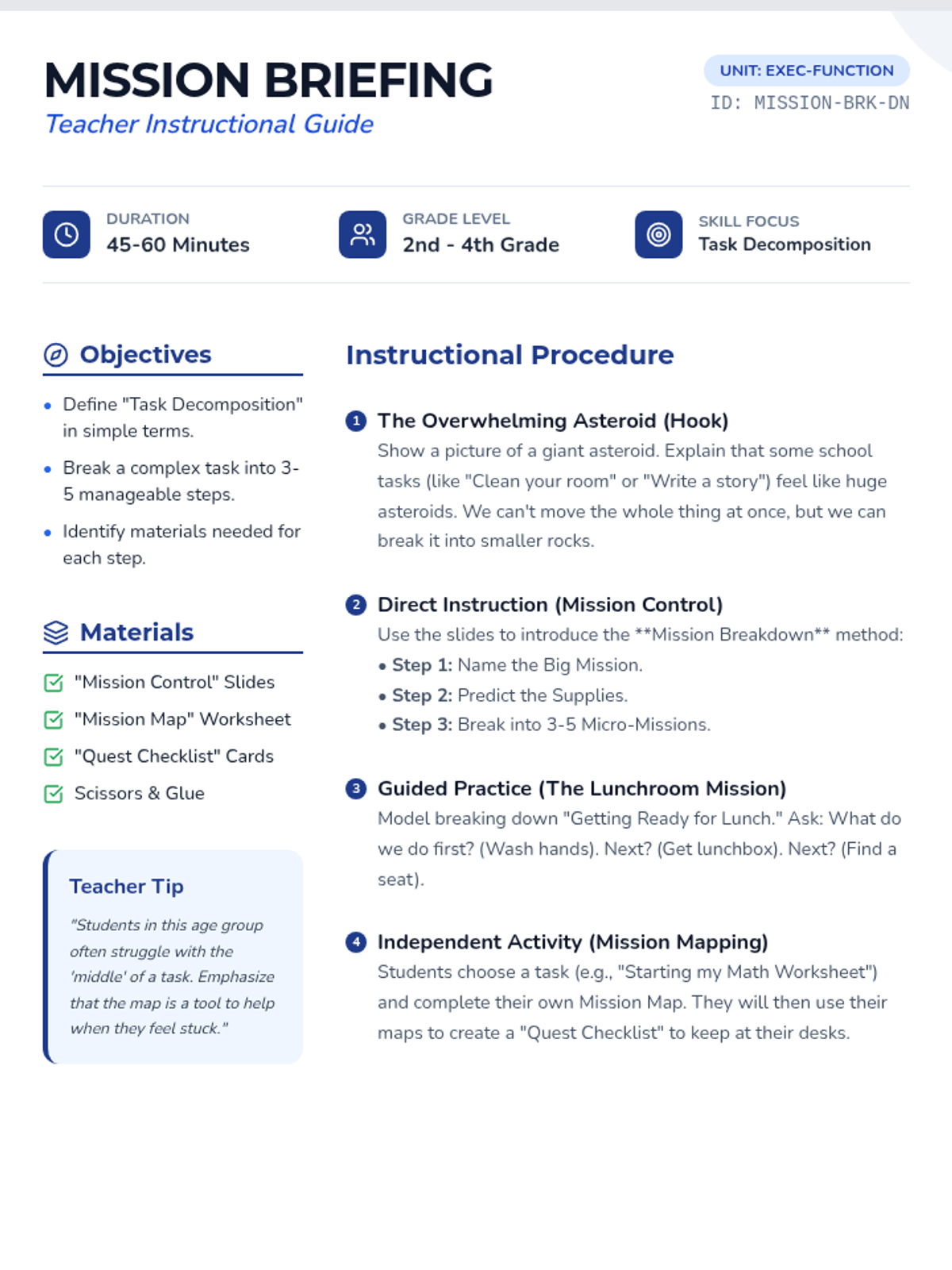
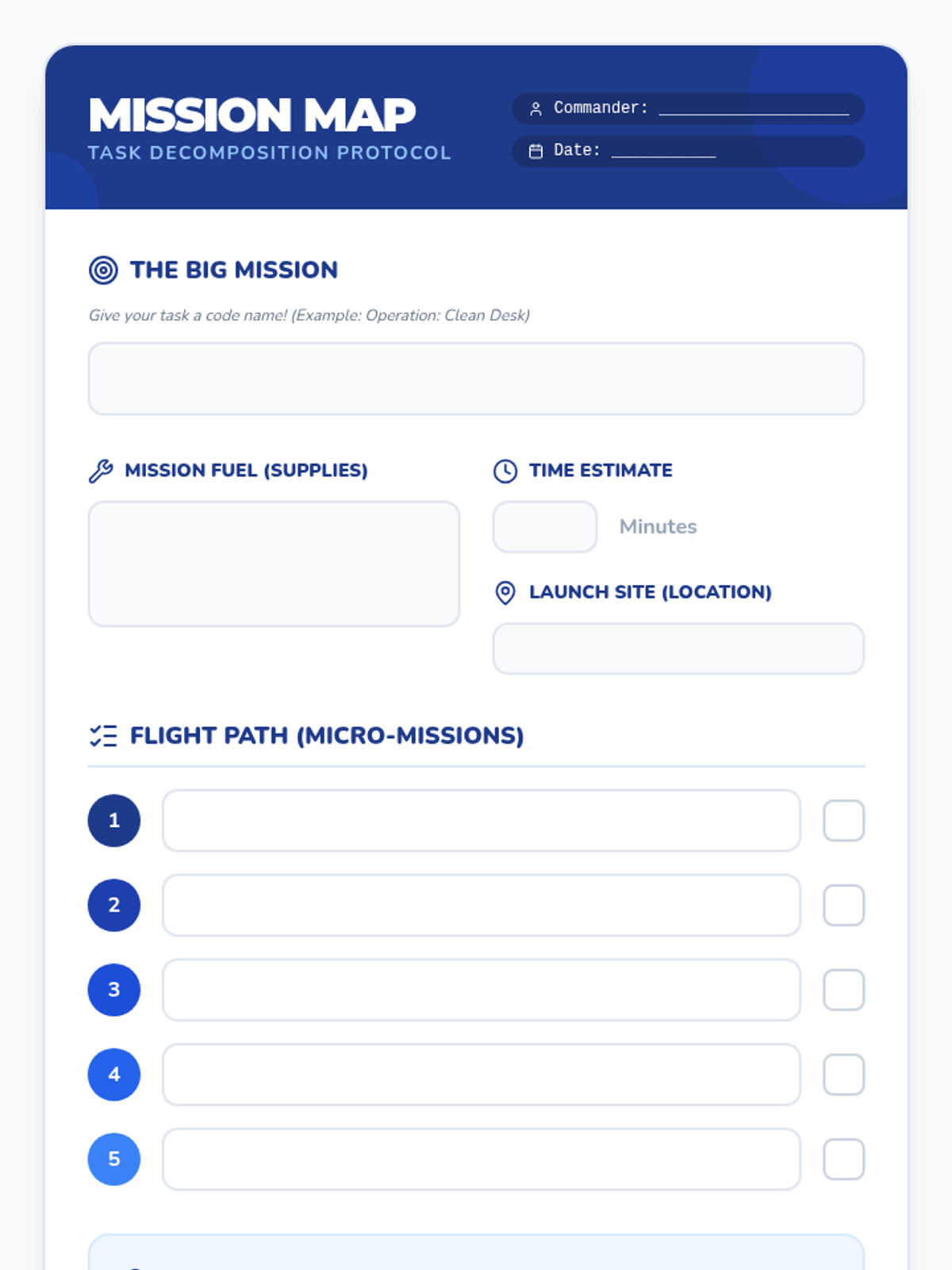
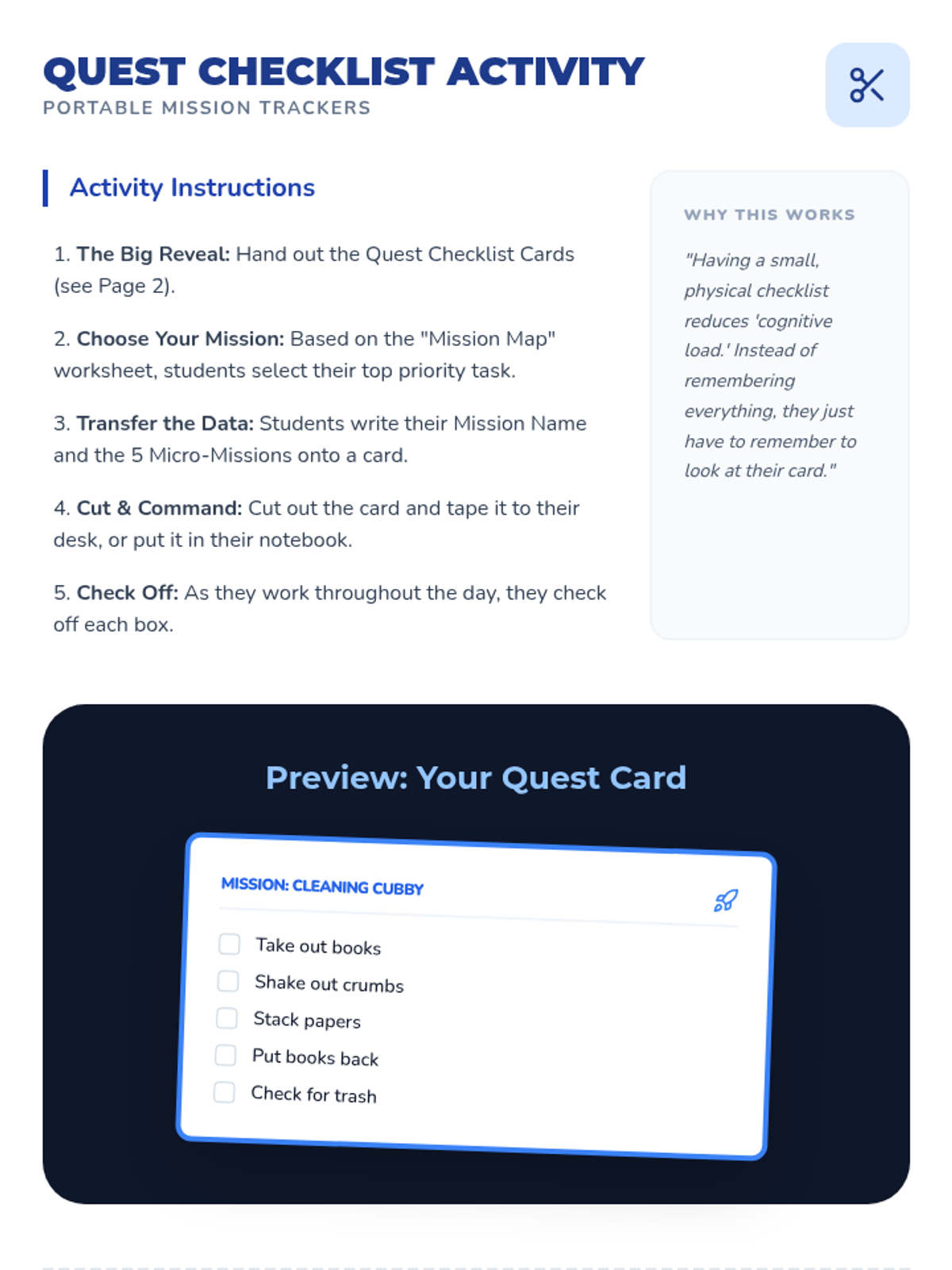
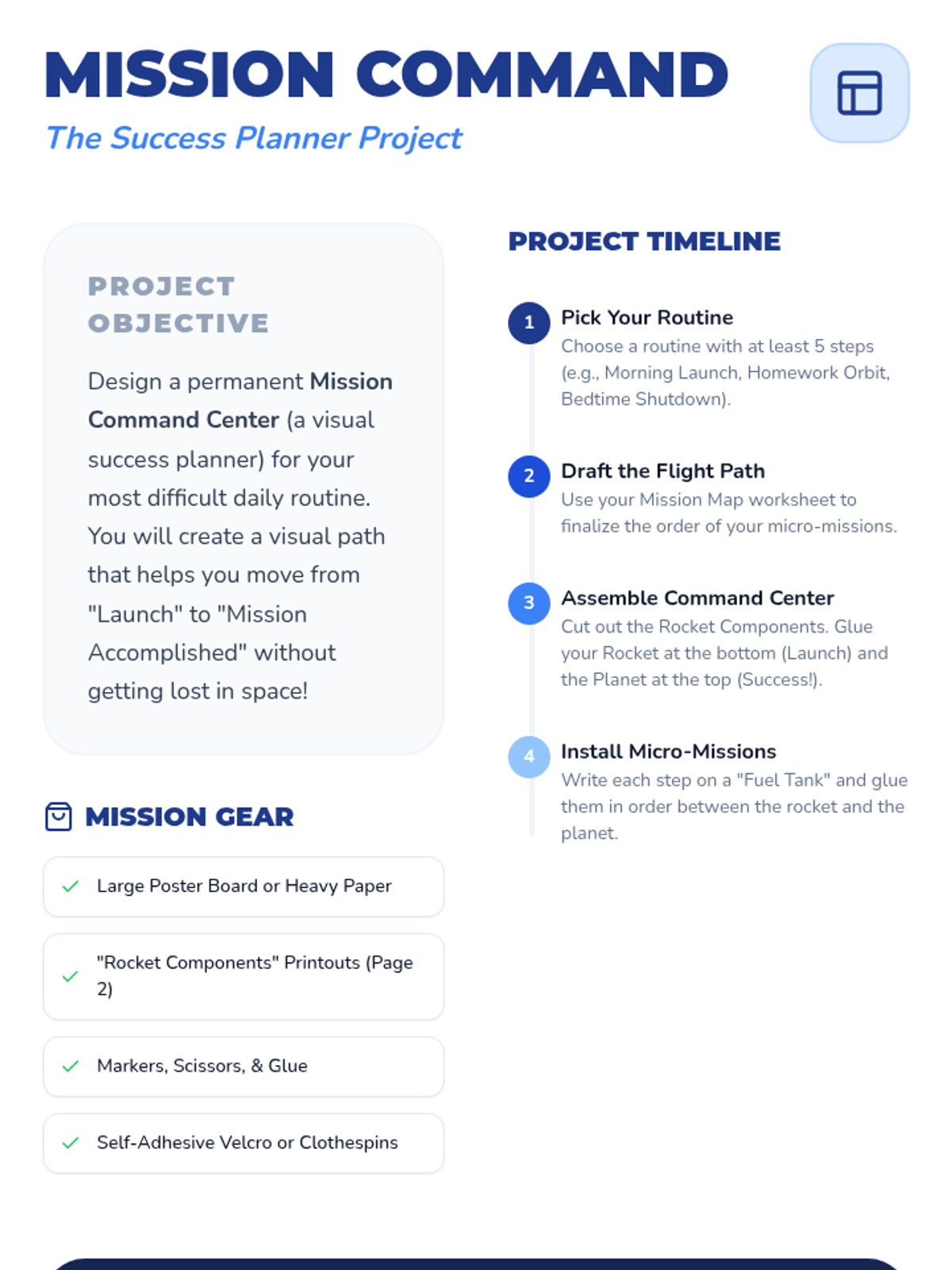
A lesson for 2nd-4th graders focused on executive functioning skills. Students learn to dismantle overwhelming tasks into bite-sized steps, predict needs, and track progress using a space-themed mission framework.
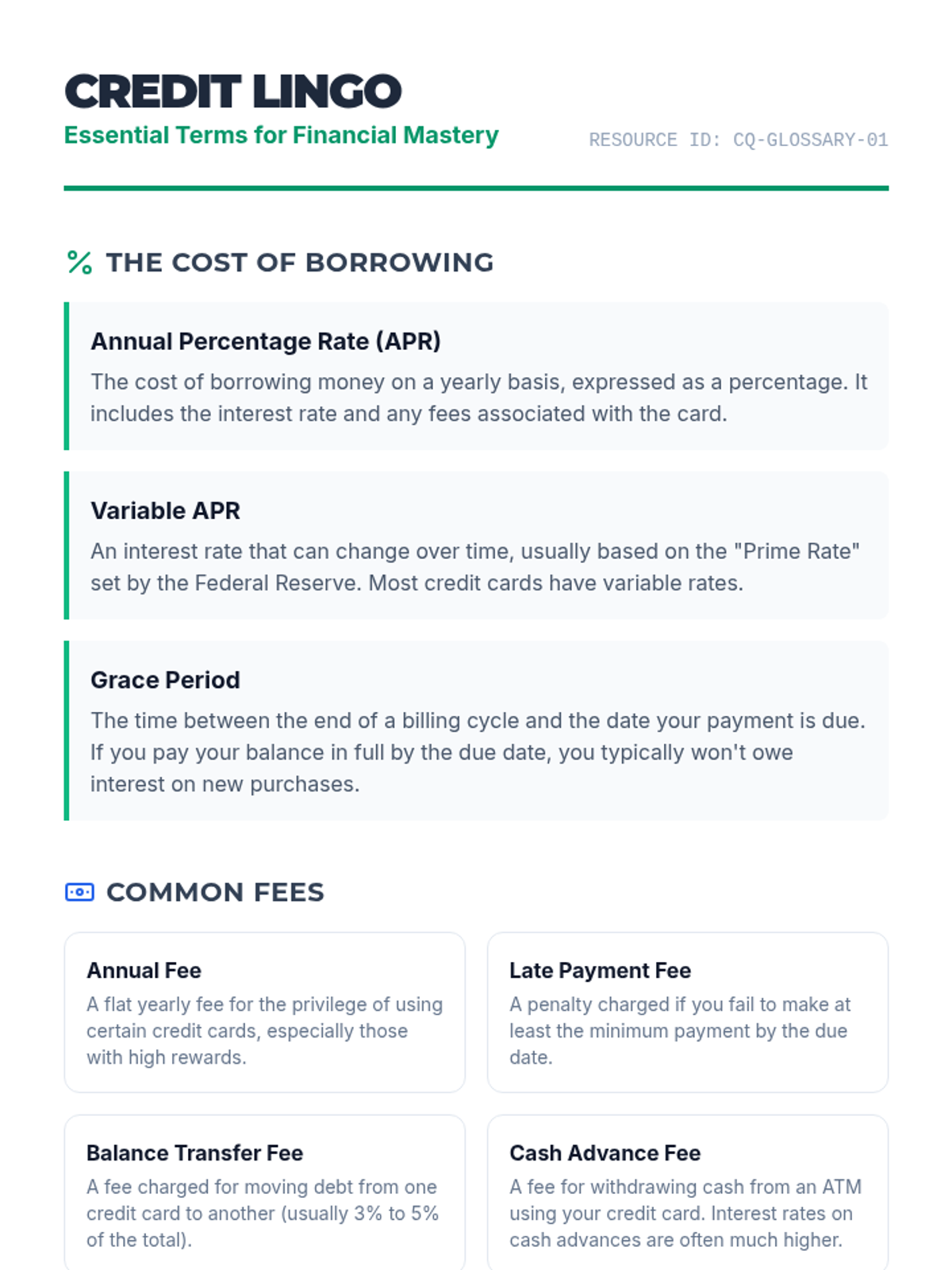
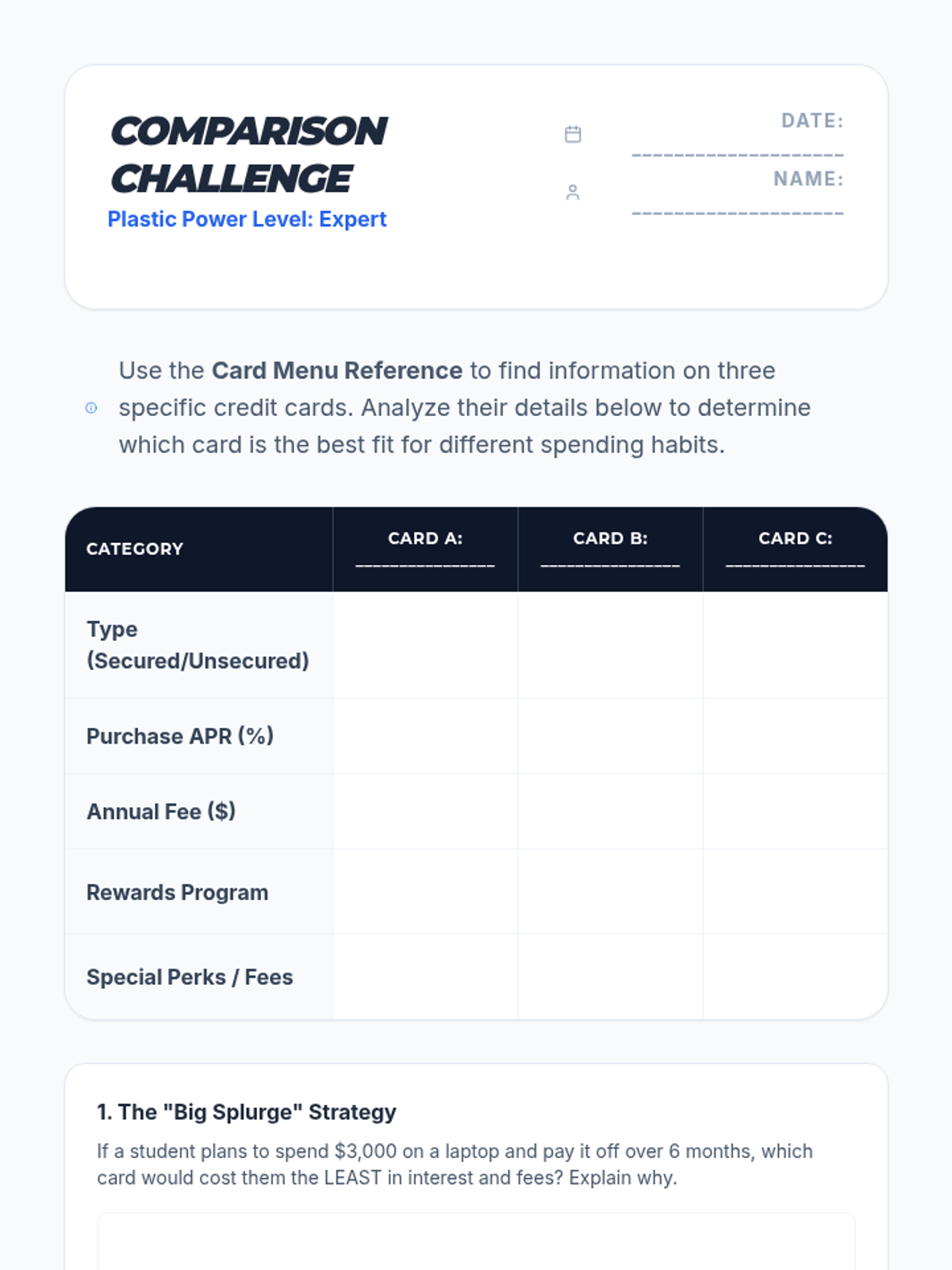
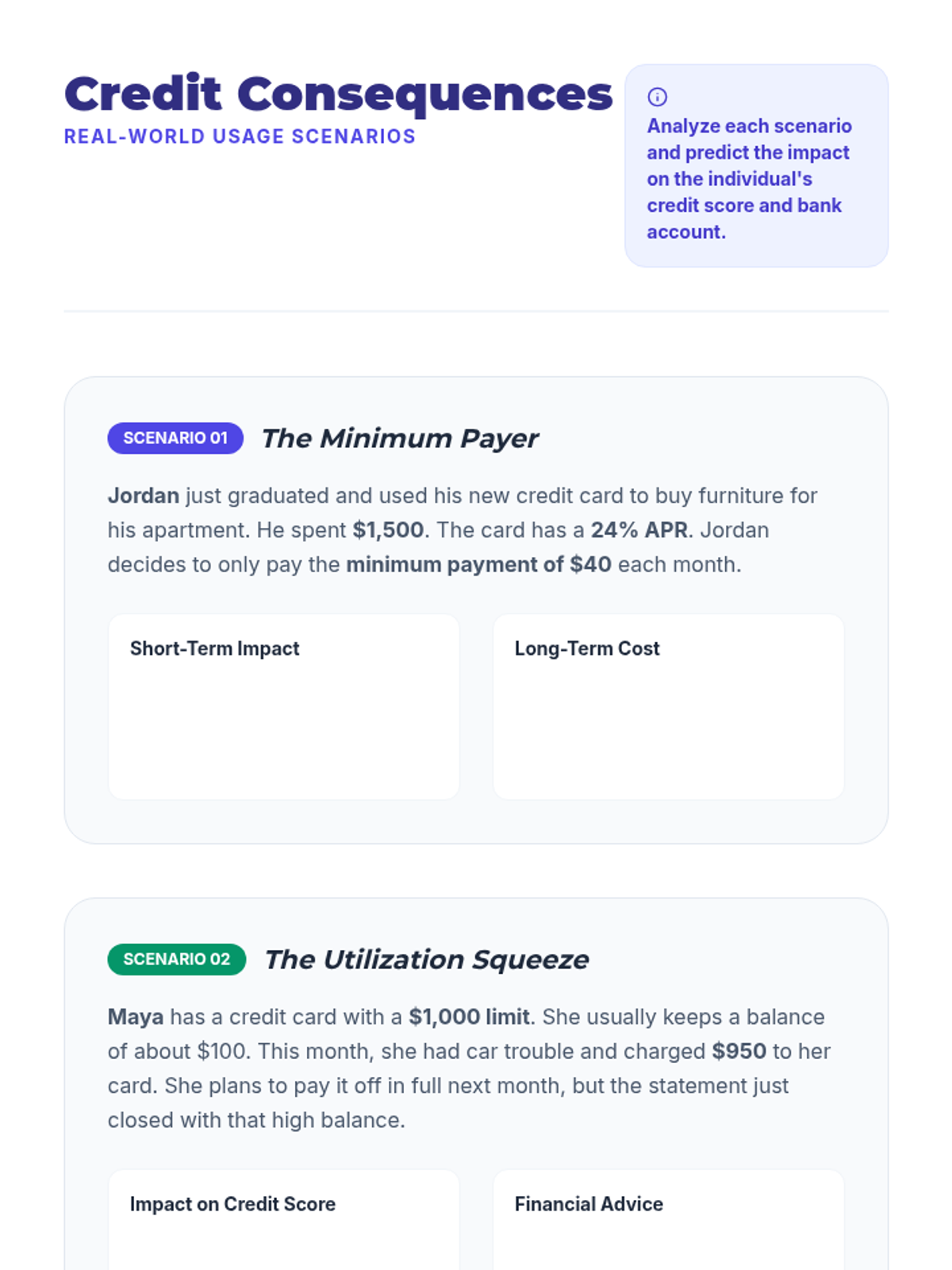
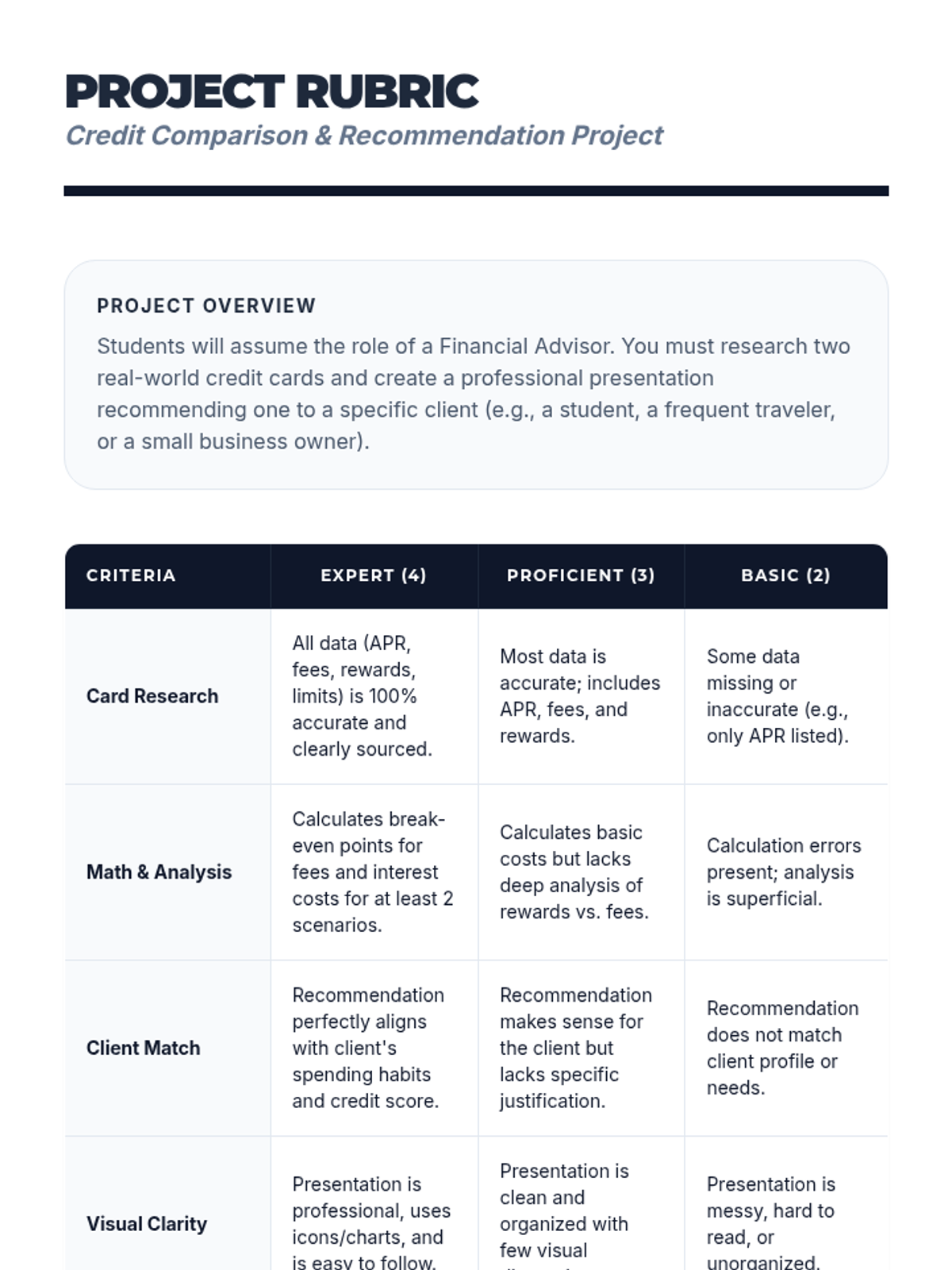
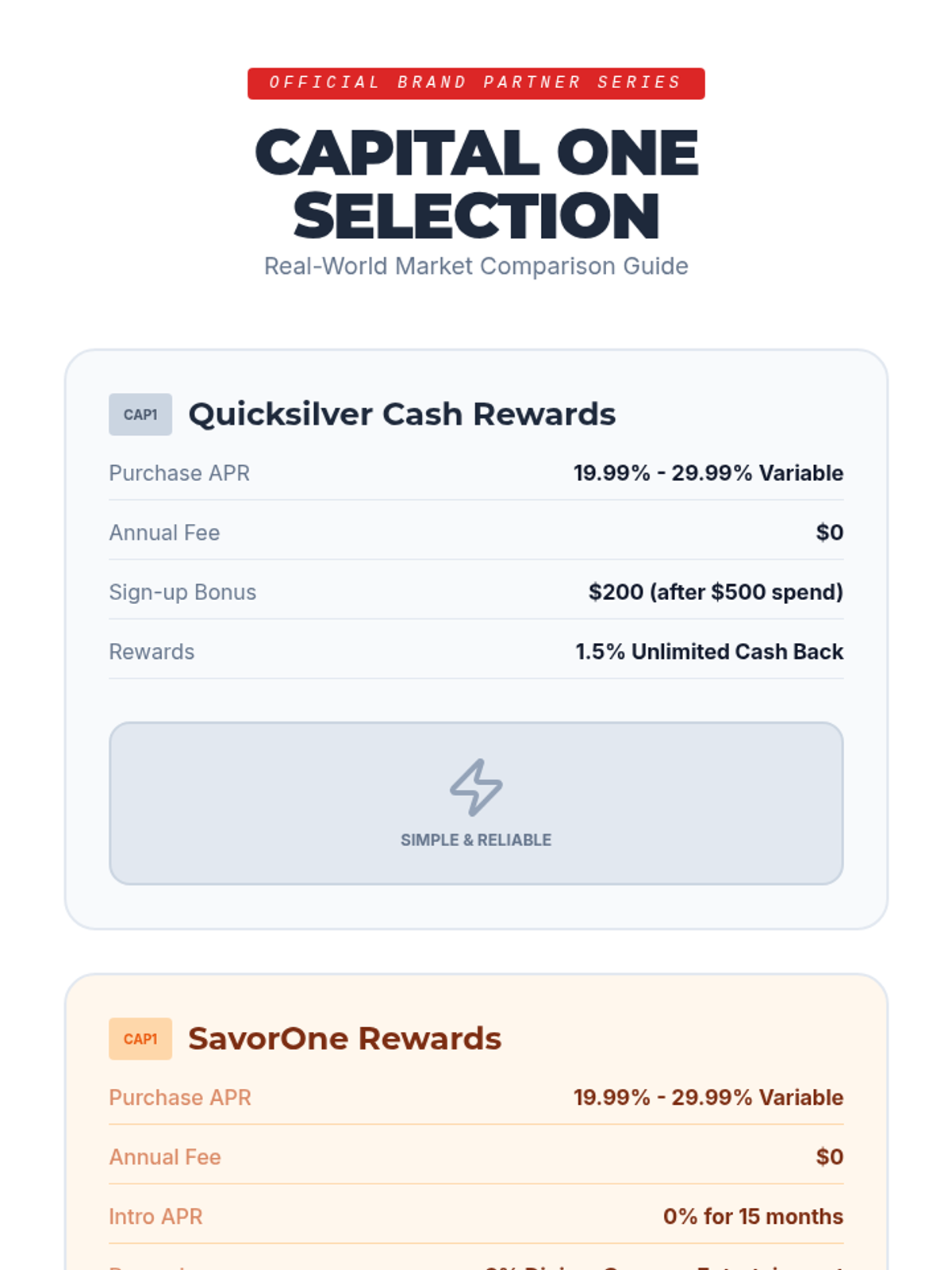
Students will learn to evaluate and compare different credit card options, understand the implications of card terms, and practice responsible credit management through scenarios and research.
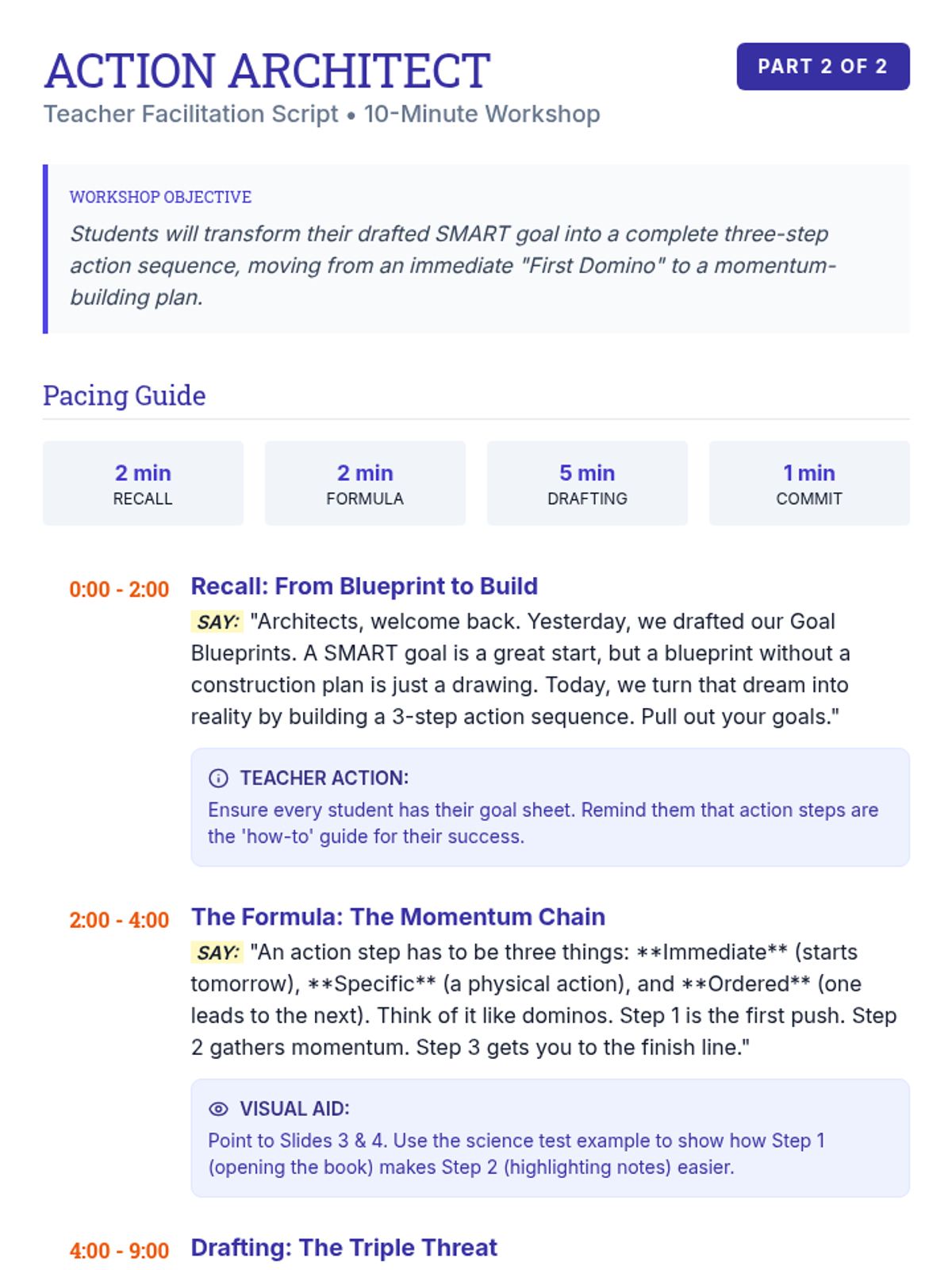
A 10-minute follow-up session where students break down their SMART goal into three concrete, manageable action steps.
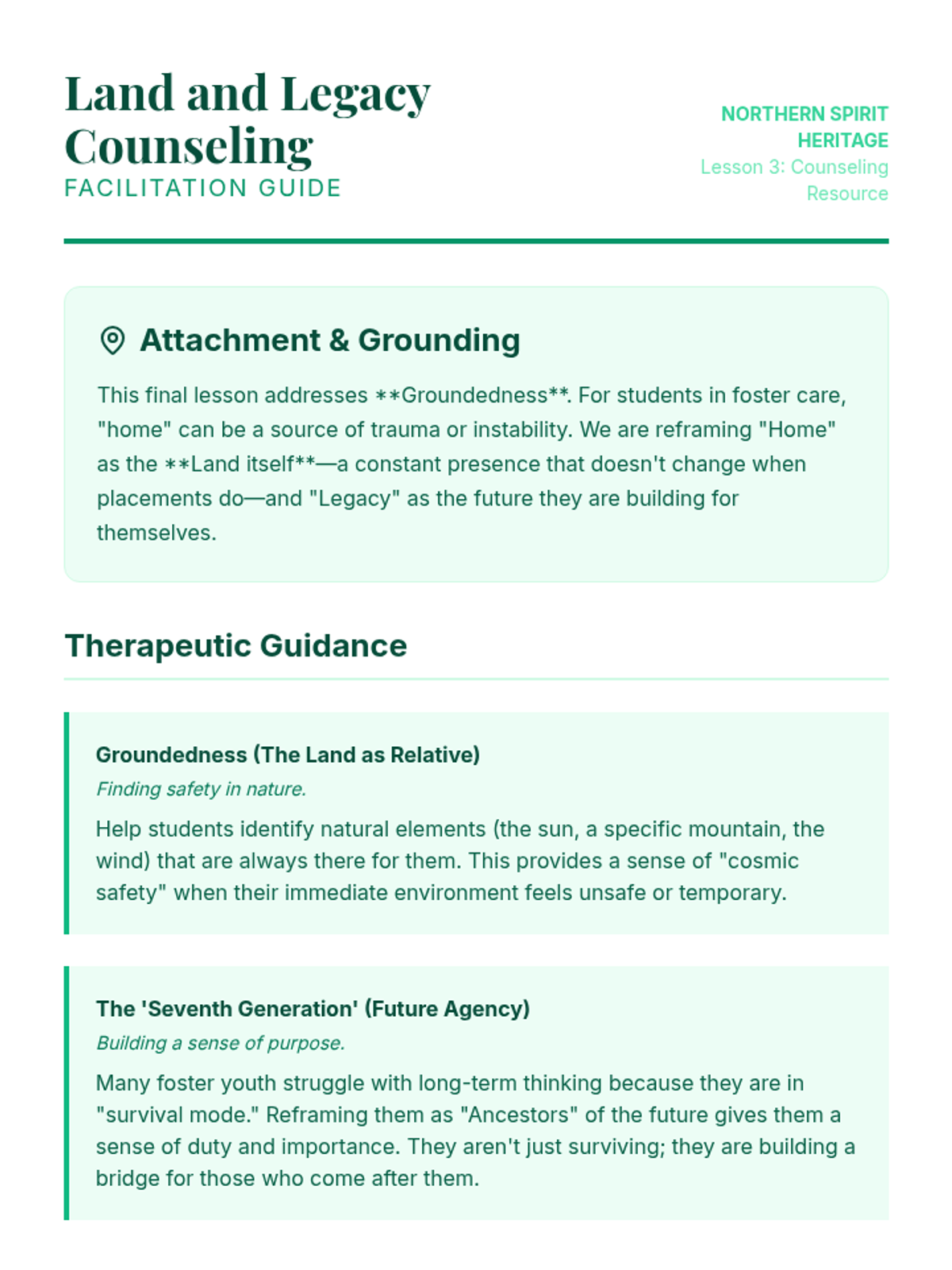
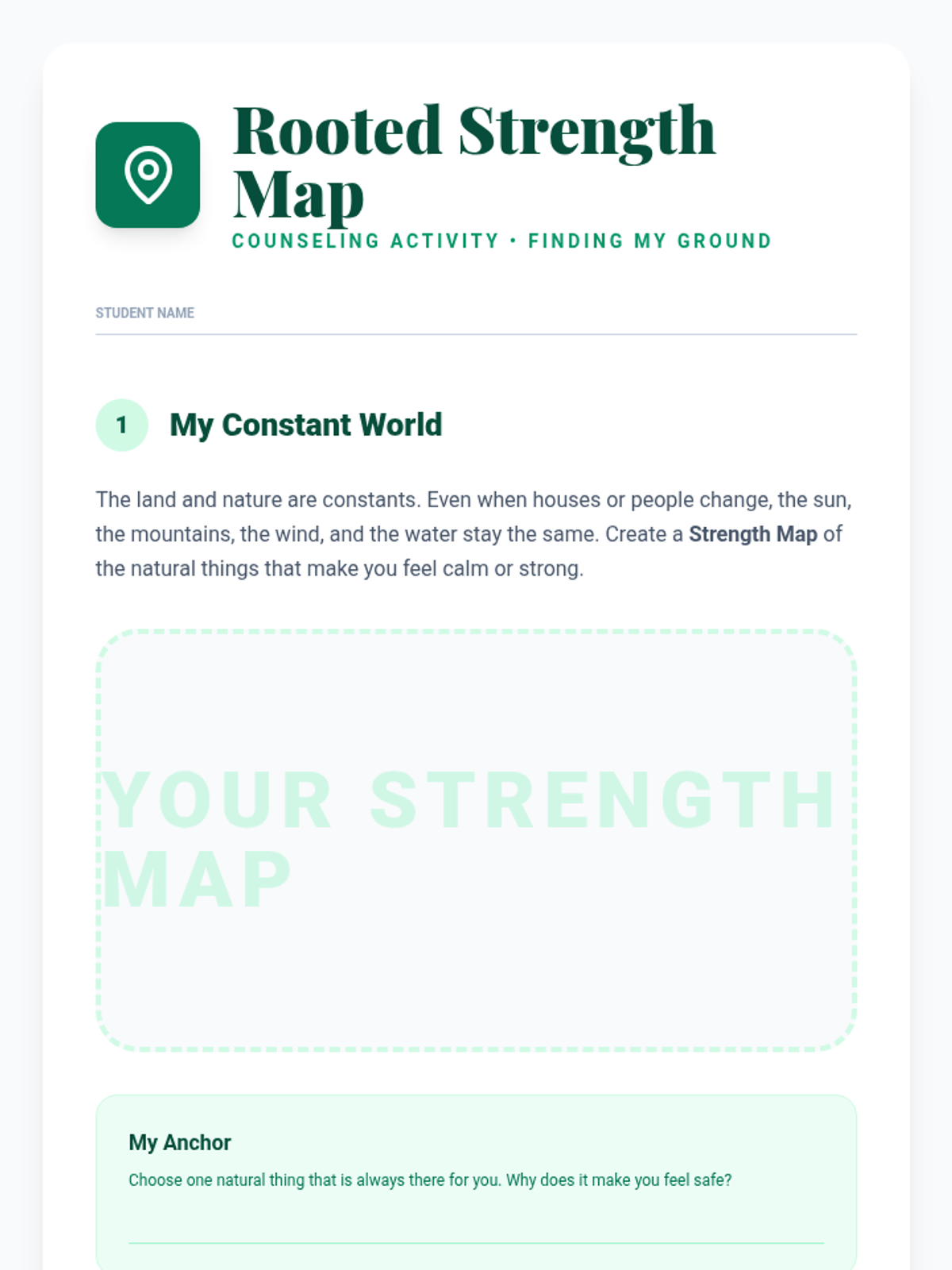
Examines the vital relationship between Native Alaskan peoples and their lands, focusing on stewardship, subsistence, and the history of land rights as a source of communal strength.
Explores the power of oral tradition and artistic expression as tools for preserving history and communal strength.
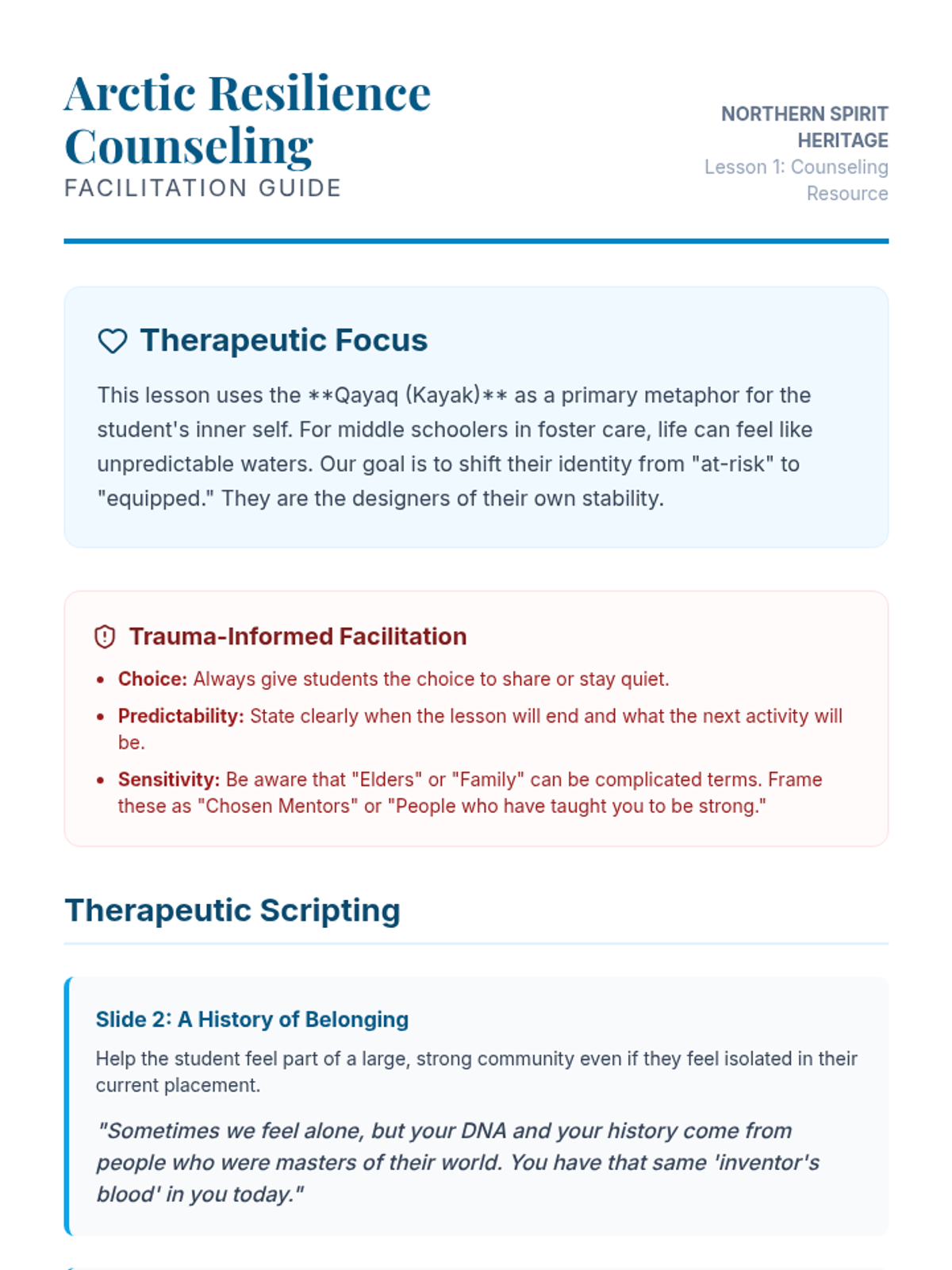
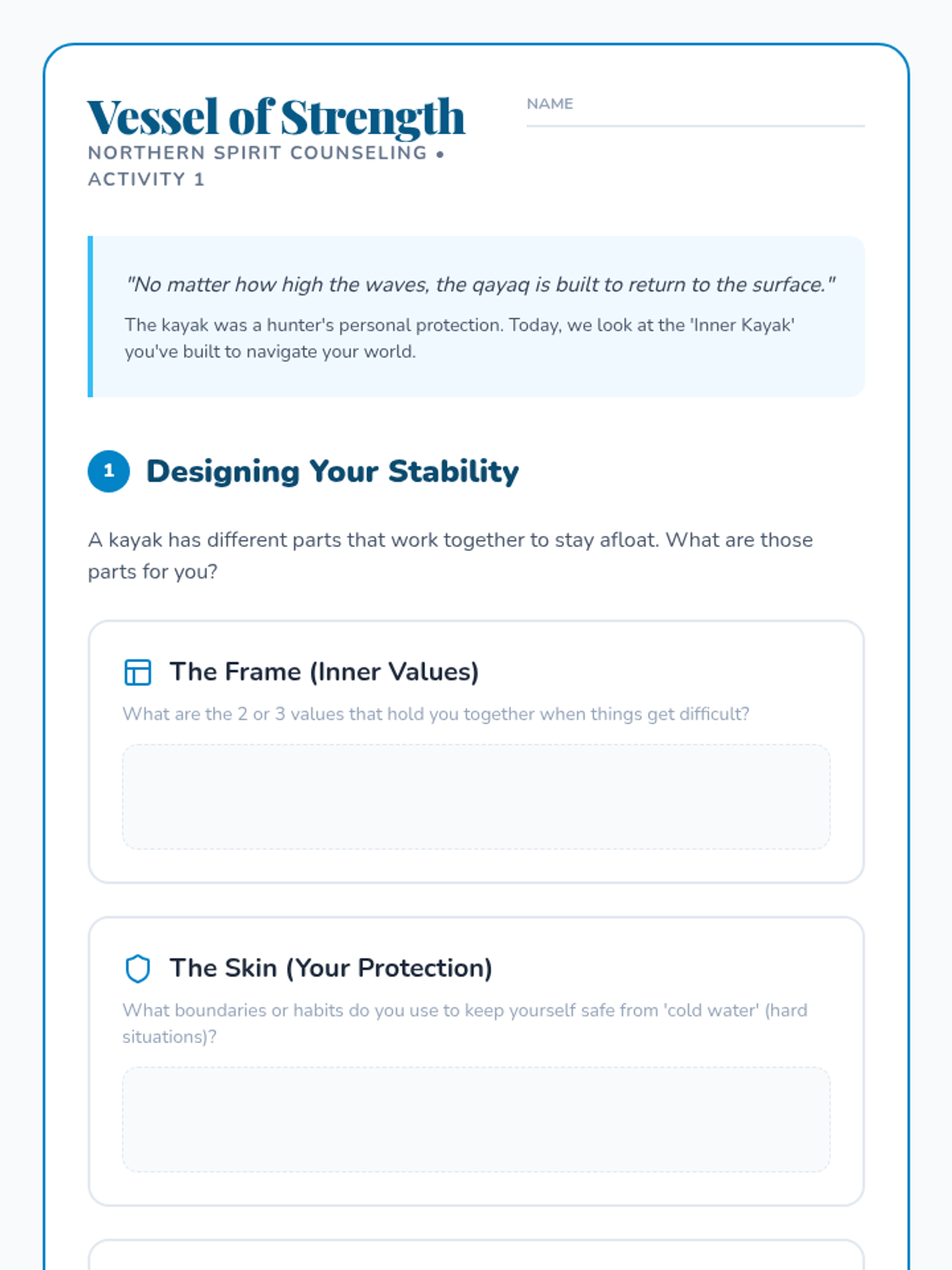
Explores the ingenuity of traditional tools like the qayaq (kayak) as a metaphor for personal stability and navigating life's transitions with resilience.
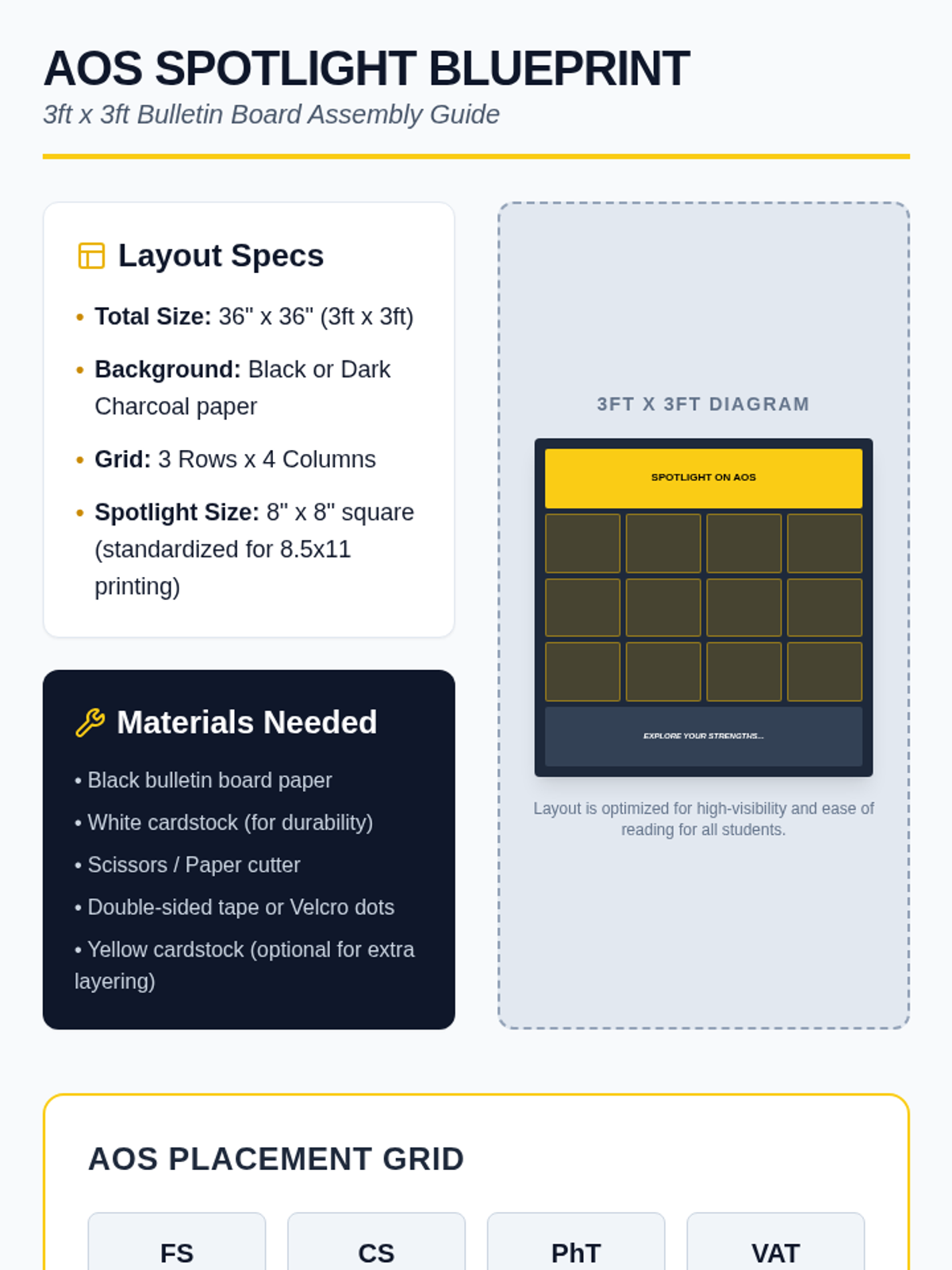
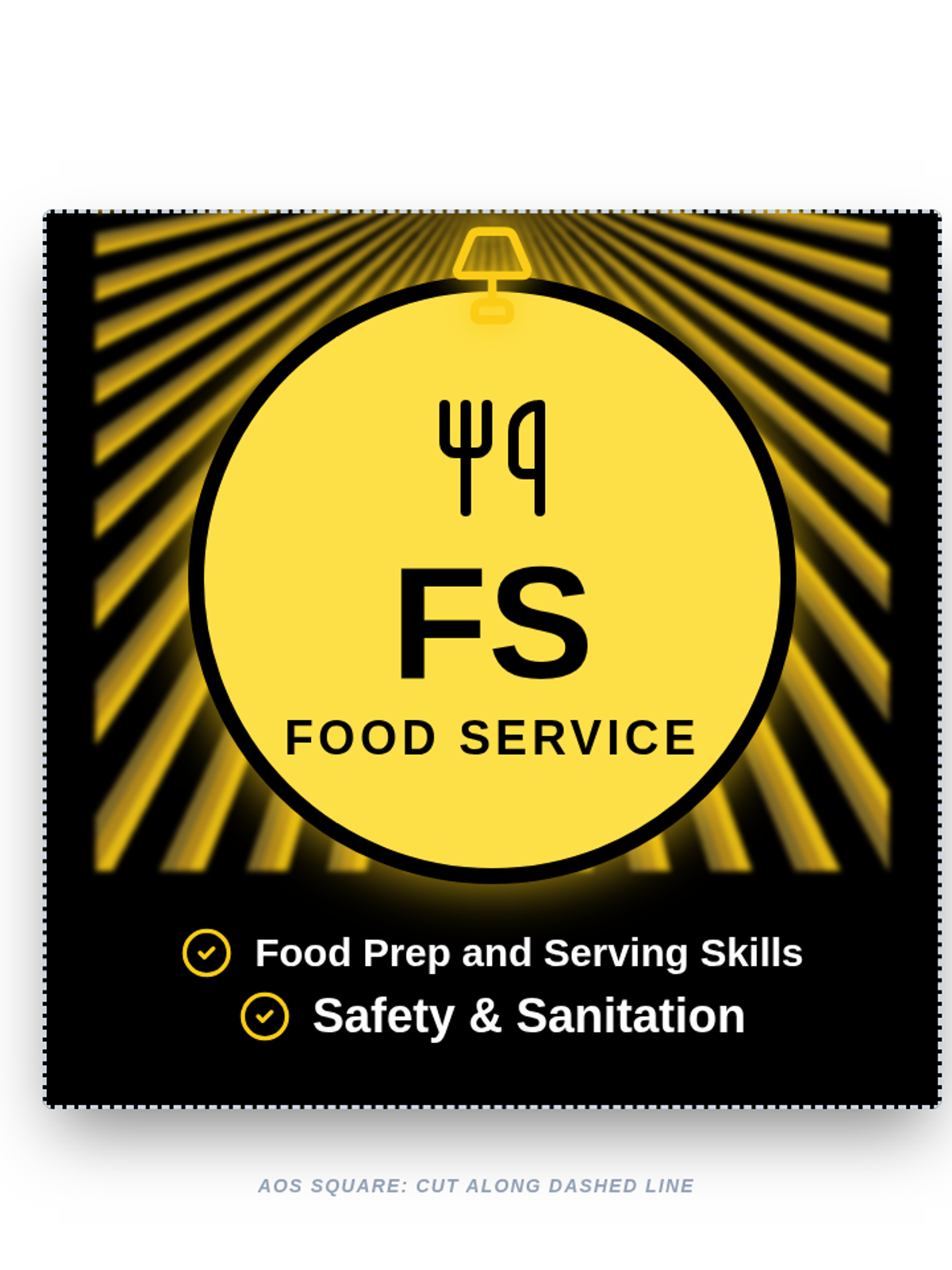
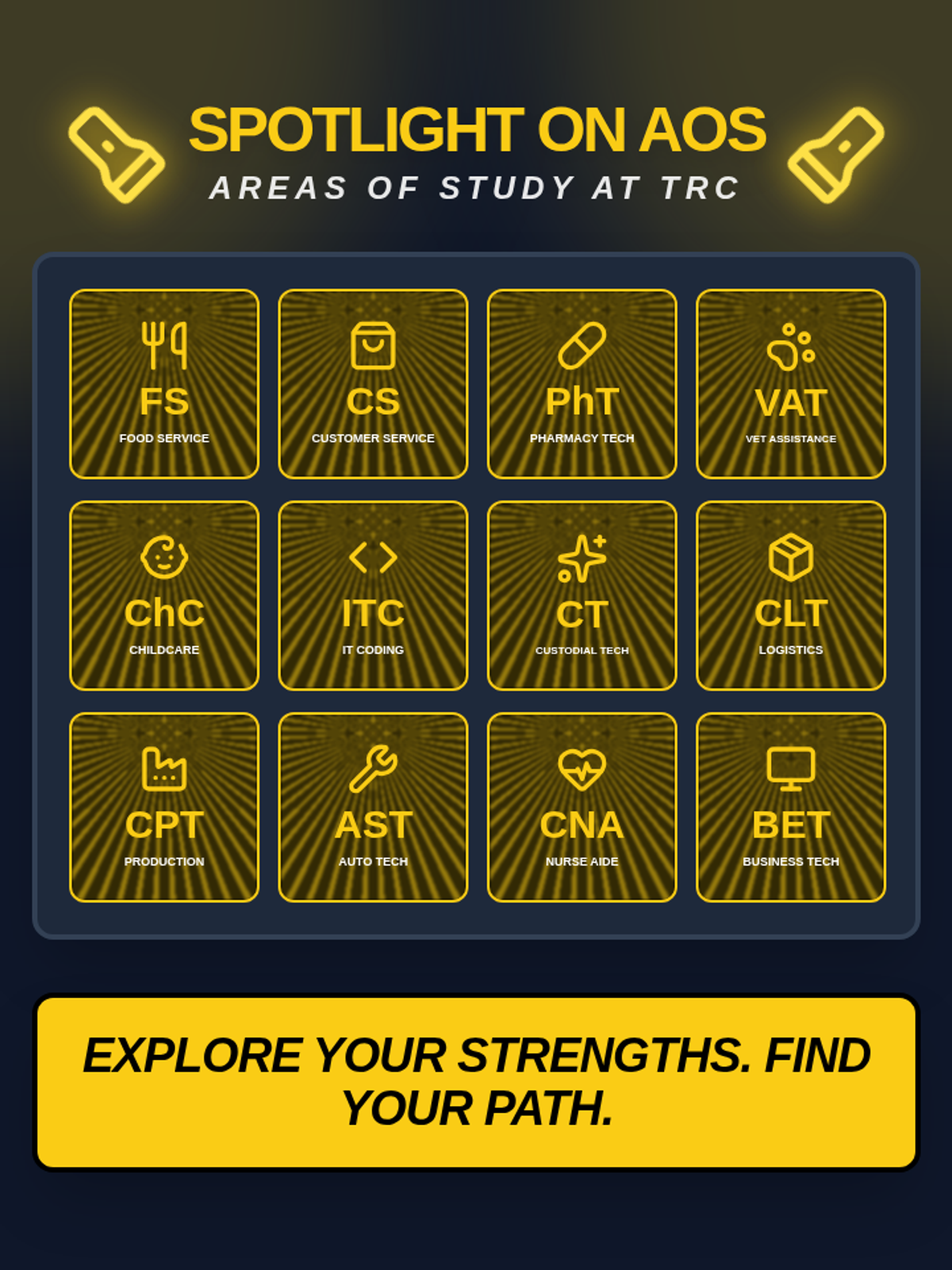
A comprehensive set of visual materials to create a high-contrast, student-friendly bulletin board showcasing twelve Areas of Study (AOS). Includes a layout blueprint, printable spotlight squares, and header/footer banners designed for maximum readability.
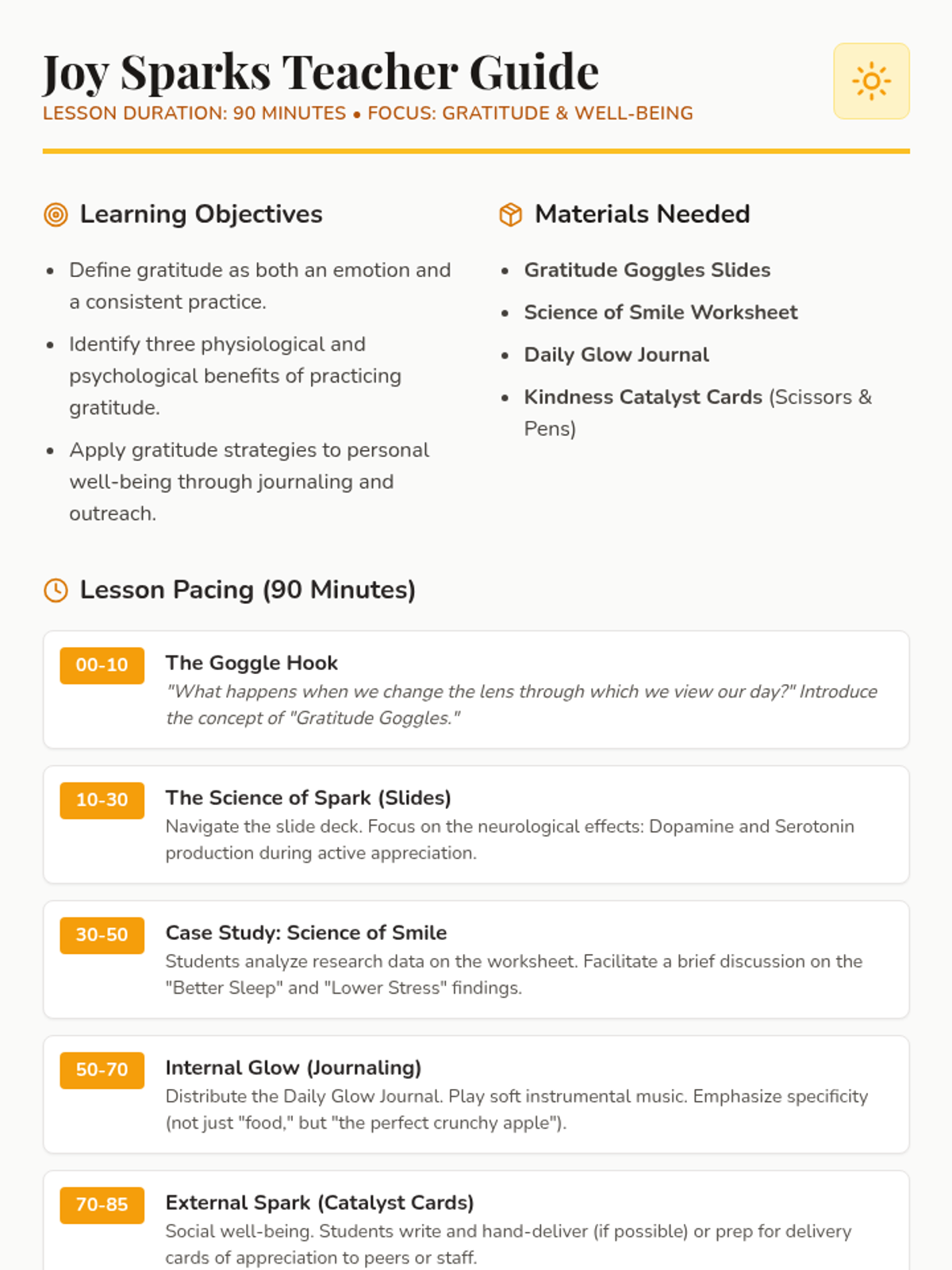
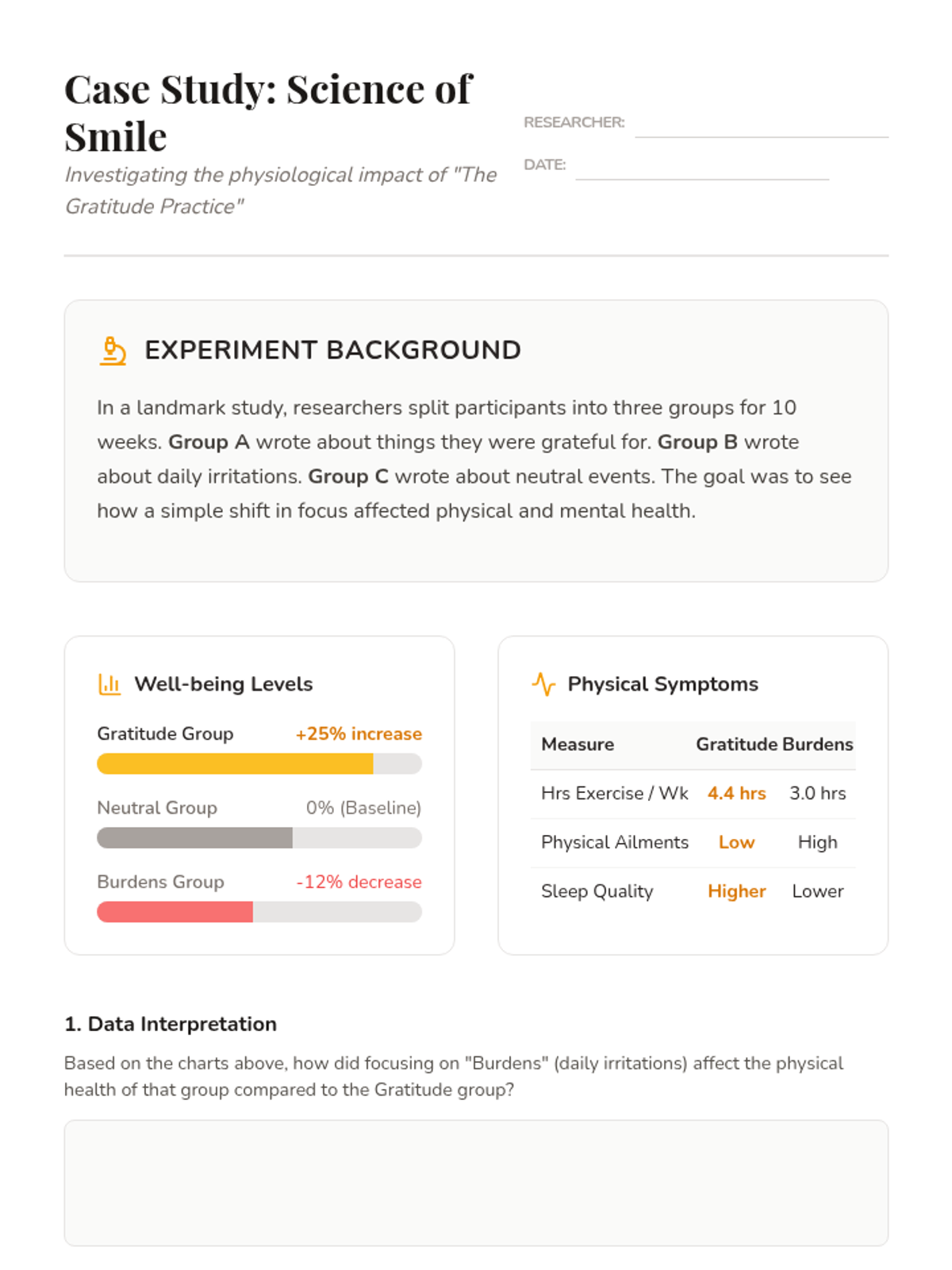
A 90-minute exploration into the science and practice of gratitude, focusing on how shifting perspective can tangibly improve mental and physical well-being.
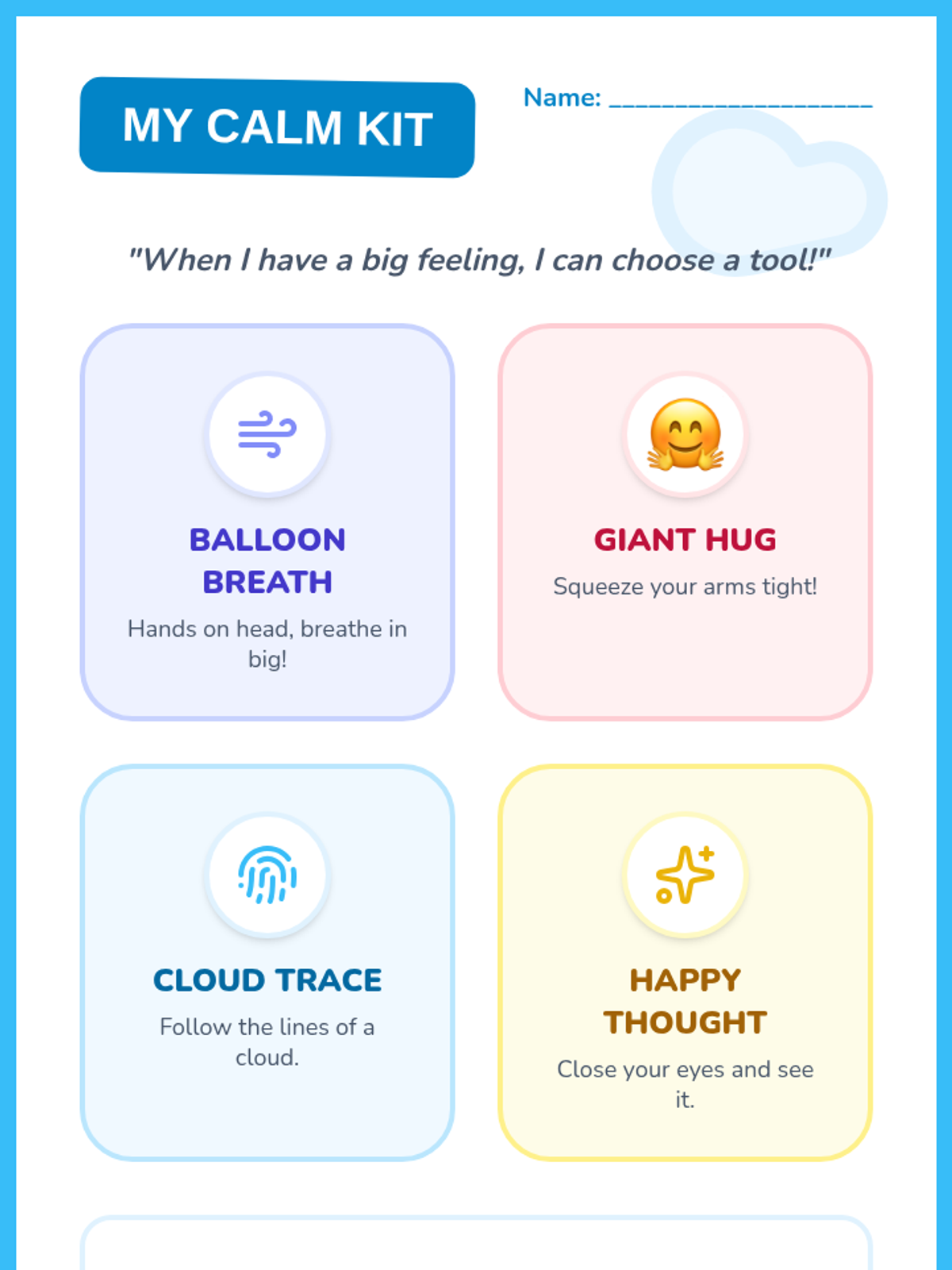
Introduce simple, visual emotional regulation tools and coping strategies through an interactive virtual session focused on finding 'calm'.
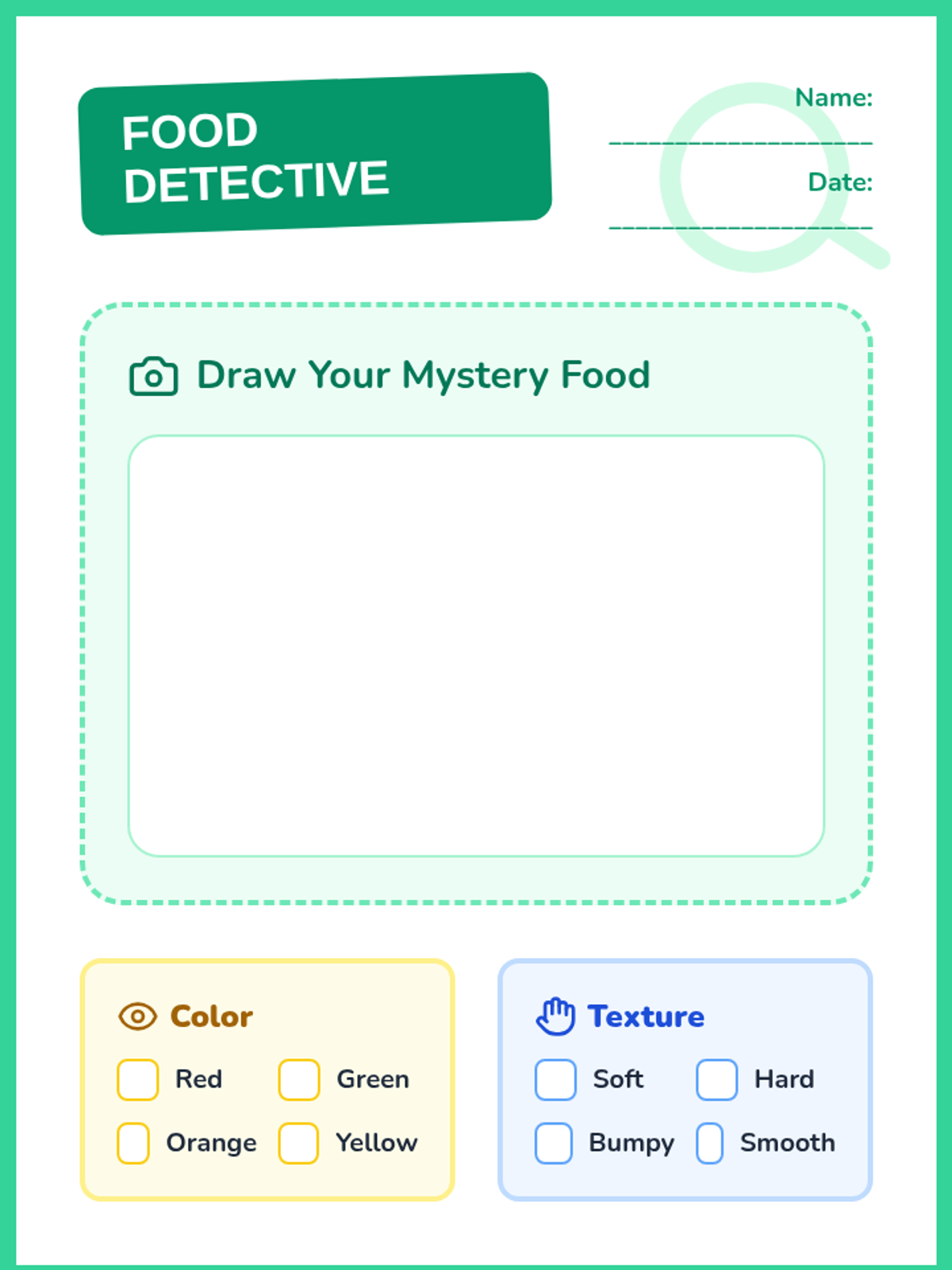
Engage toddlers in a sensory-focused virtual exploration of foods using a "Food Detective" theme to reduce pressure and encourage curiosity.
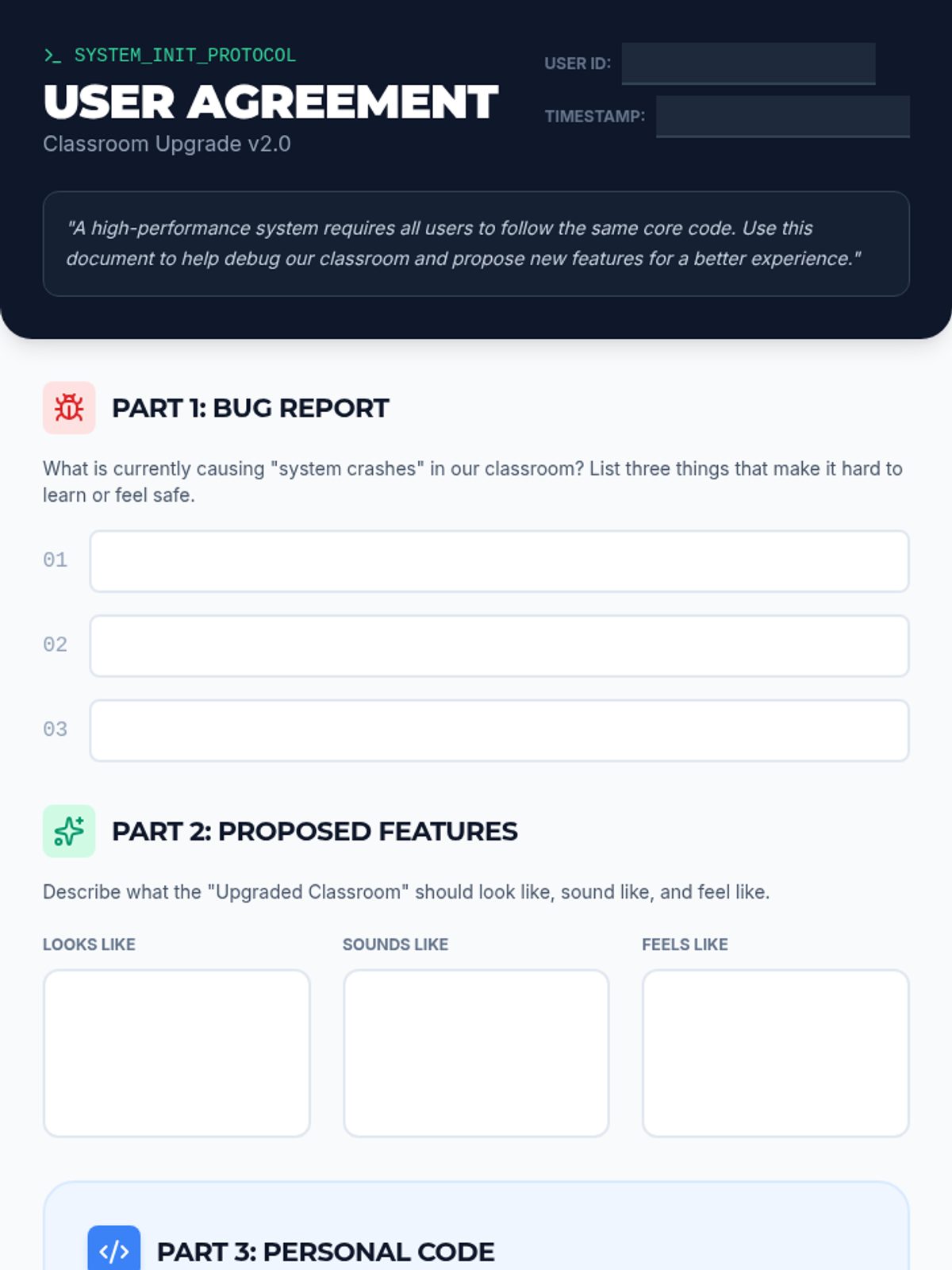
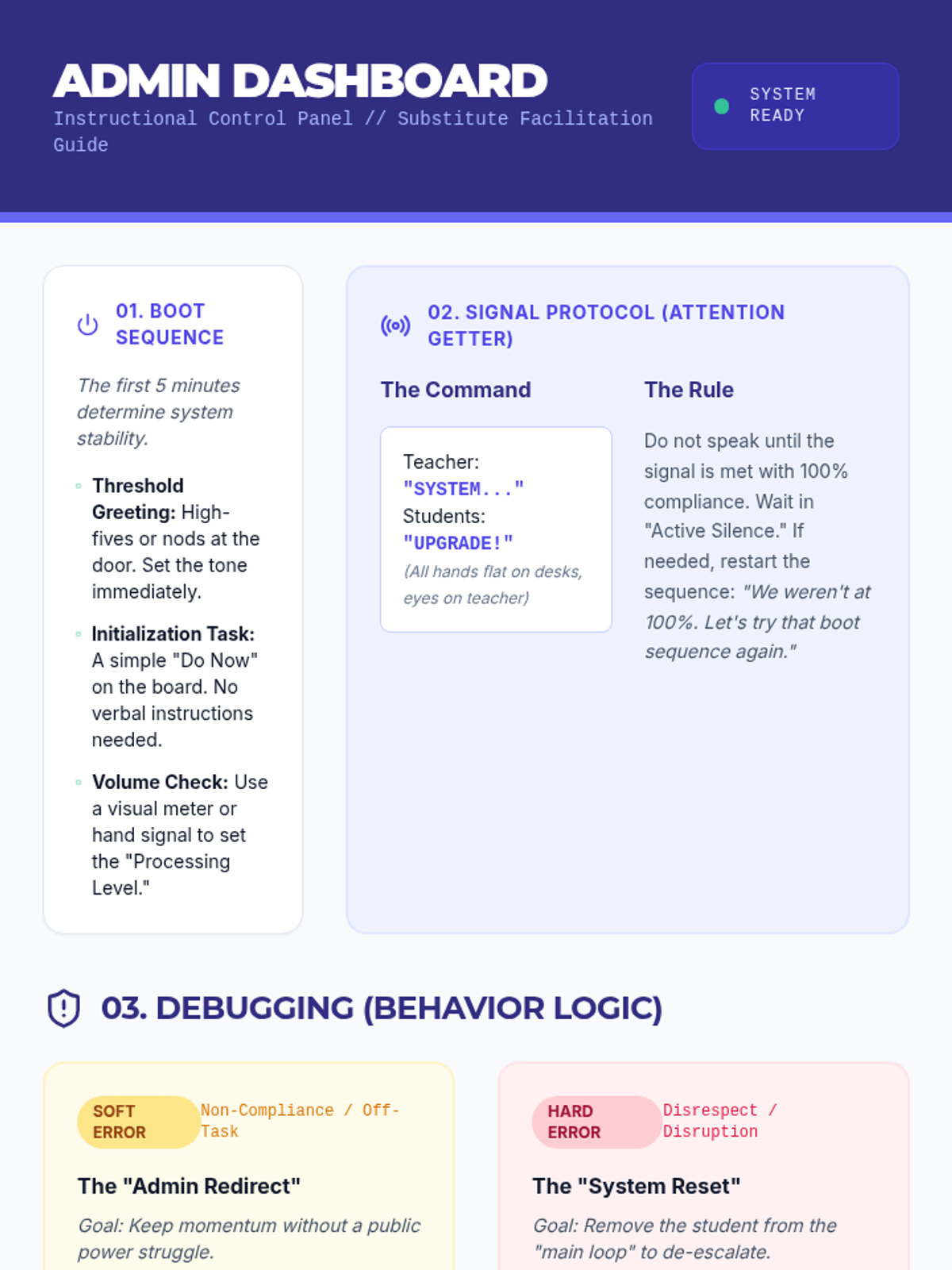
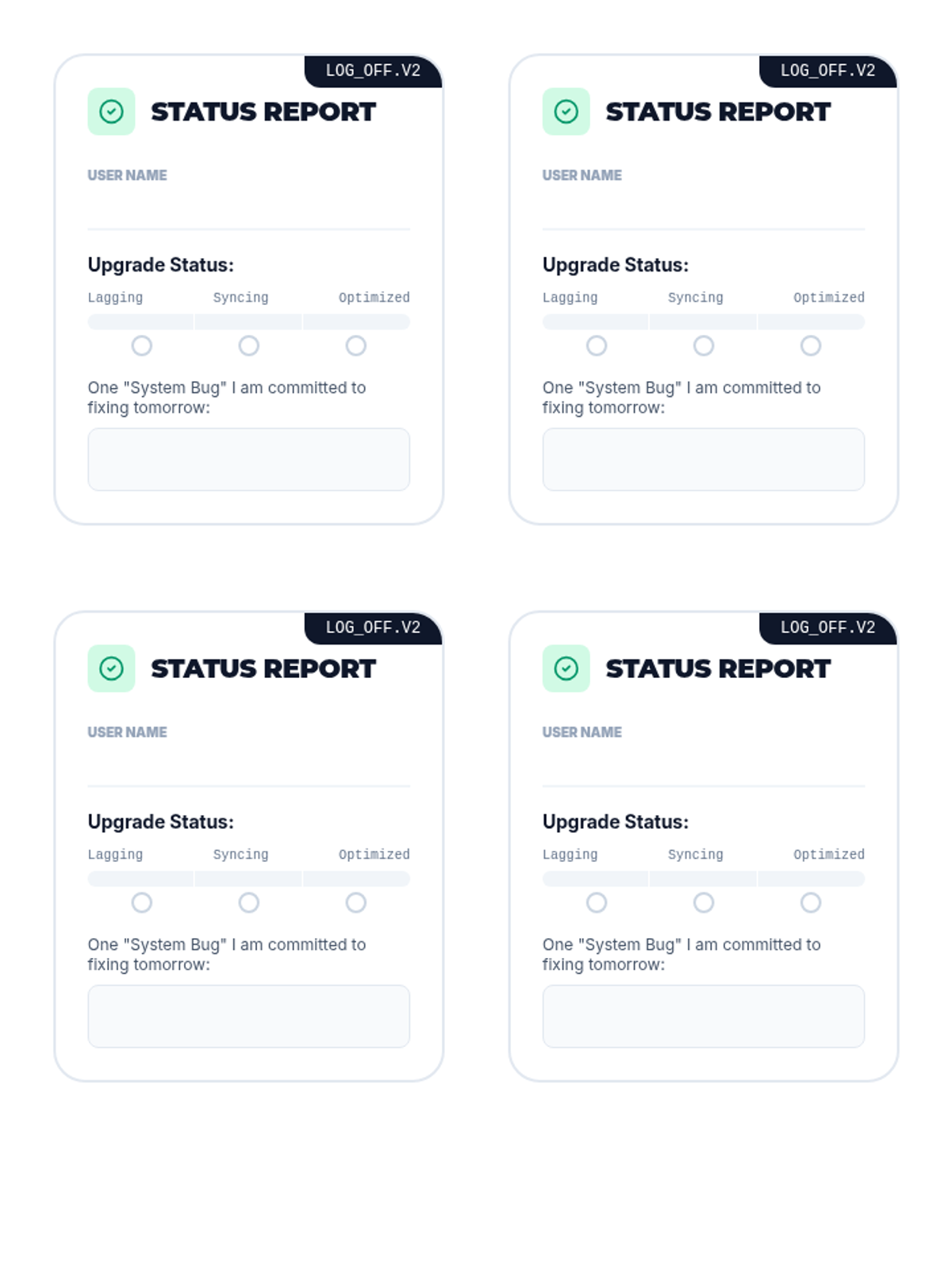
A comprehensive 'classroom reset' lesson designed to help a substitute and their students build a positive culture through the metaphor of a system upgrade. Students collaborate to define norms and understand their role in the classroom community.
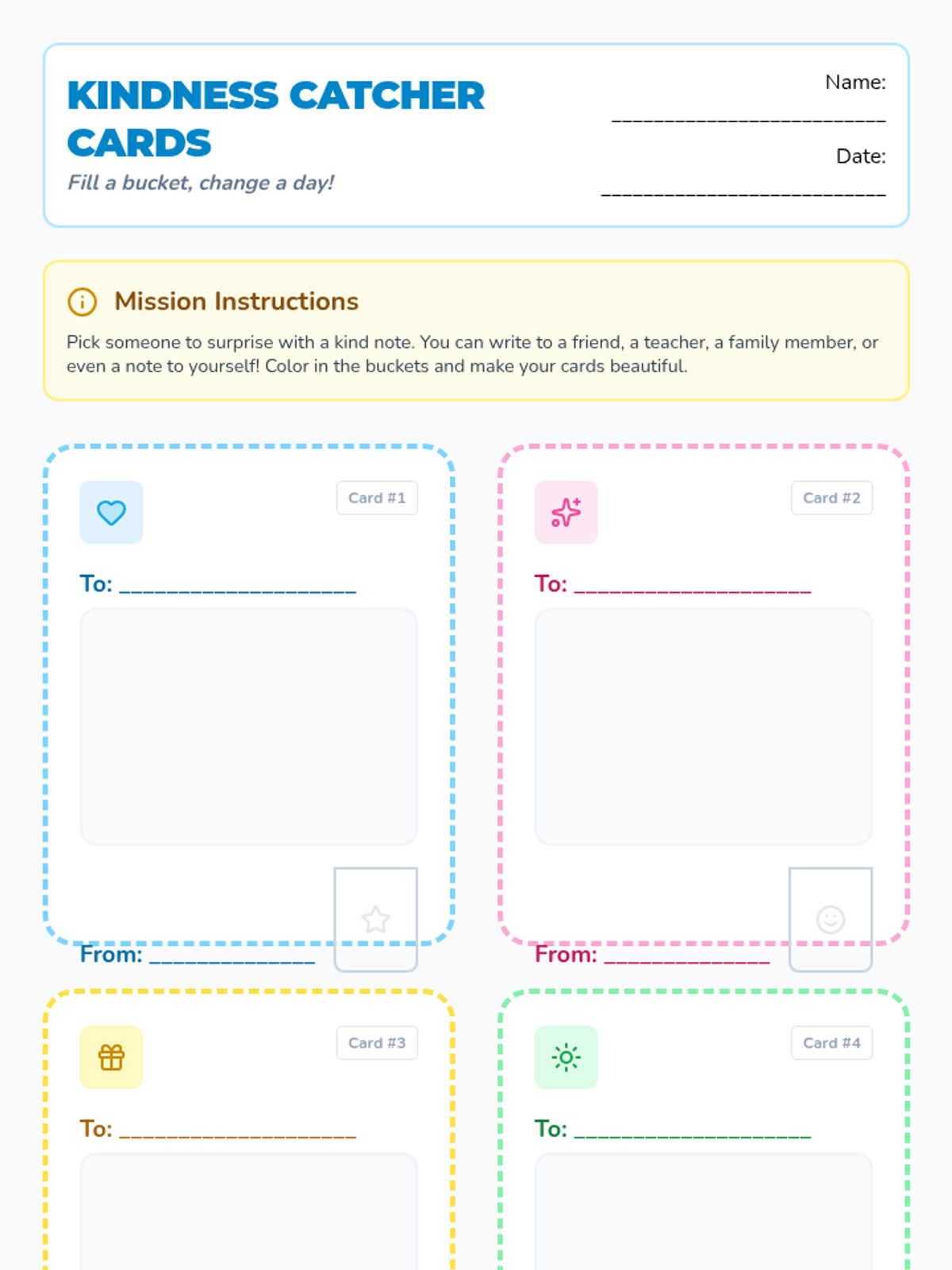
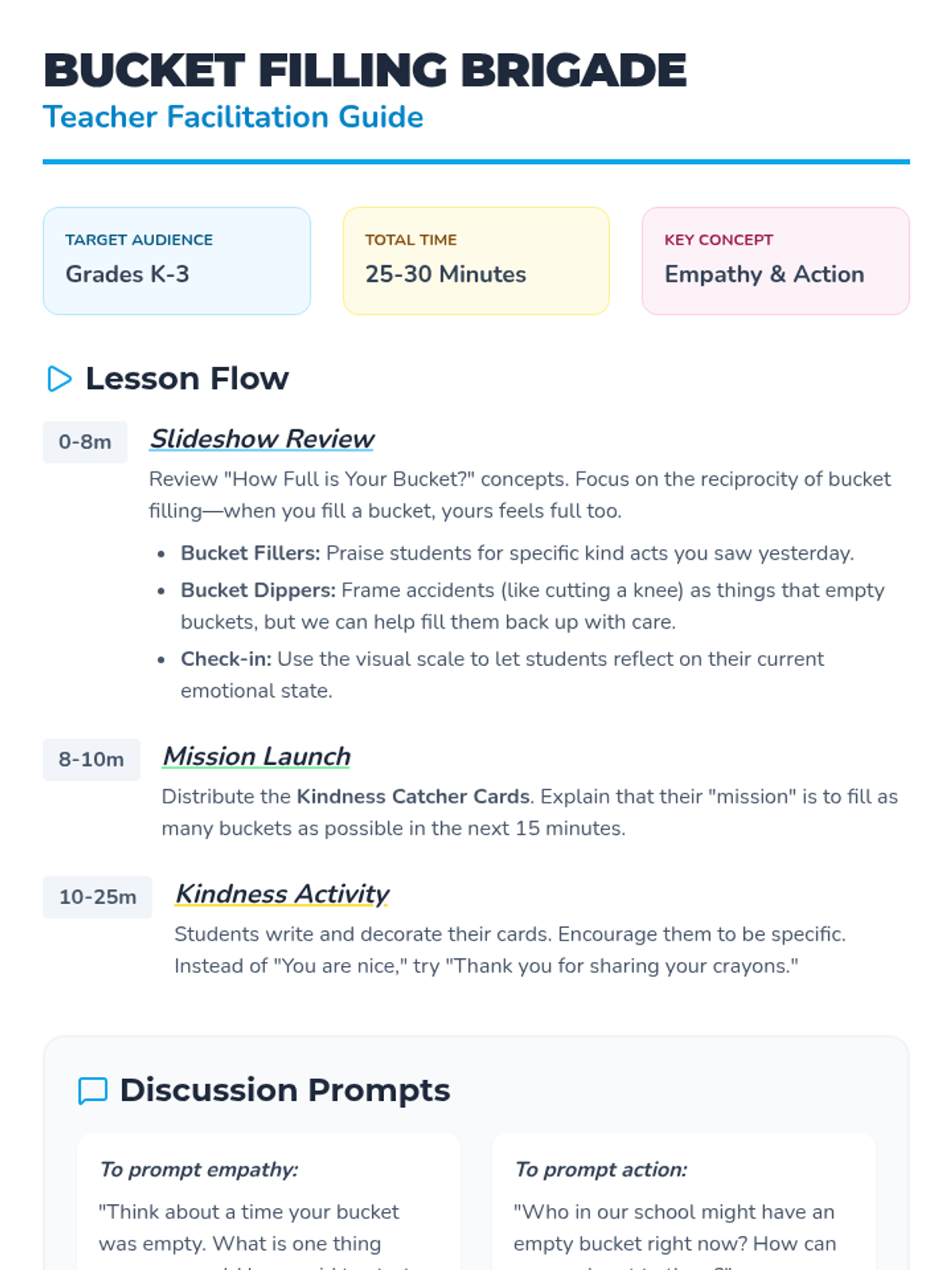
A social-emotional learning lesson focused on the 'bucket filling' concept, reviewing how actions affect others' emotions and engaging students in a 15-minute kindness activity.