A lesson for 2nd-4th graders focused on executive functioning skills. Students learn to dismantle overwhelming tasks into bite-sized steps, predict needs, and track progress using a space-themed mission framework.
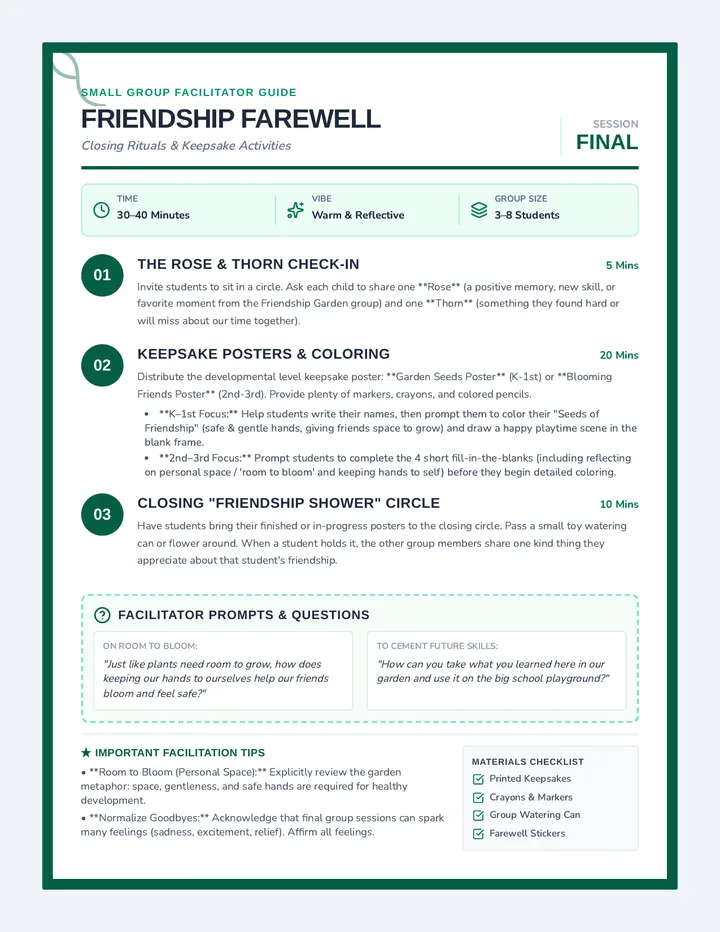
A final session to celebrate the group's growth, review key skills, and look forward to maintaining healthy friendships outside the lunch bunch.
Provides practical tools for resolving disagreements, including compromise, apologies, and problem-solving 'win-win' scenarios.
Introduces the concept of conflict as a natural part of relationships and helps students identify common triggers and 'early warning signs' of a disagreement.
Explores empathy and kindness as the 'glue' of friendship, with activities centered on perspective-taking and supportive actions.
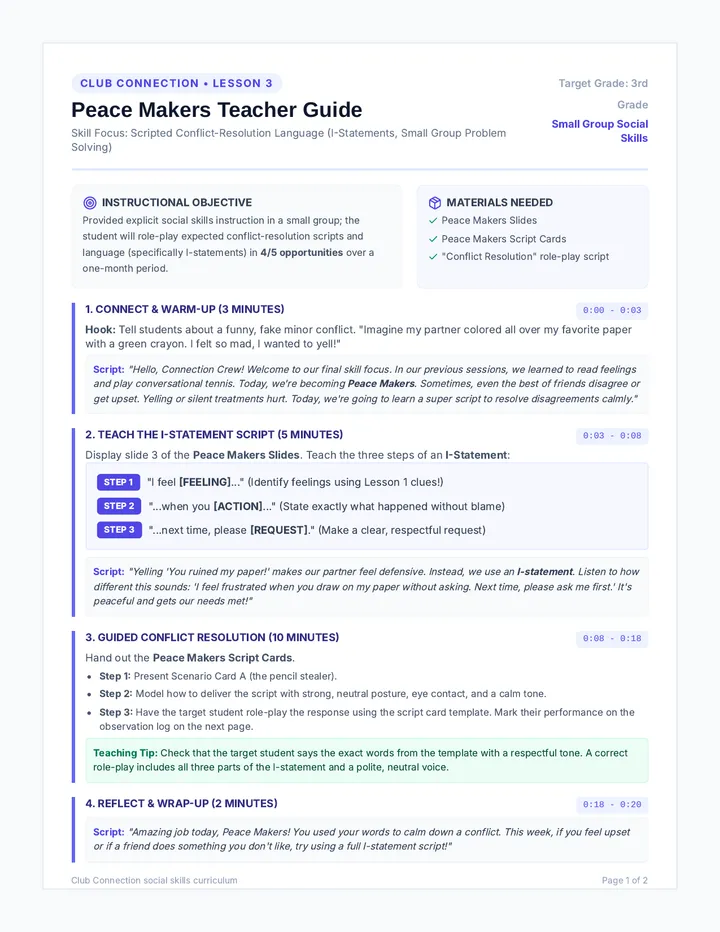
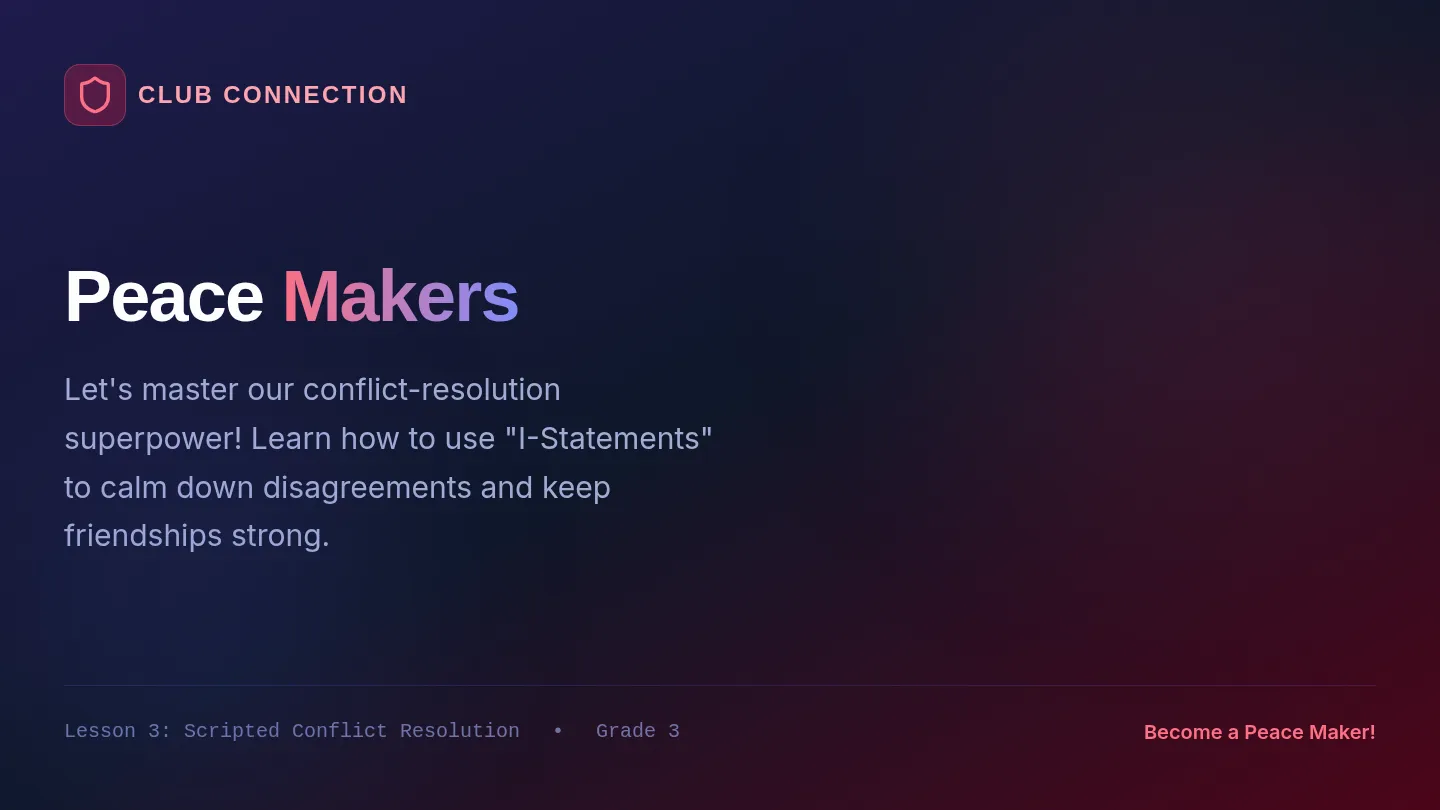
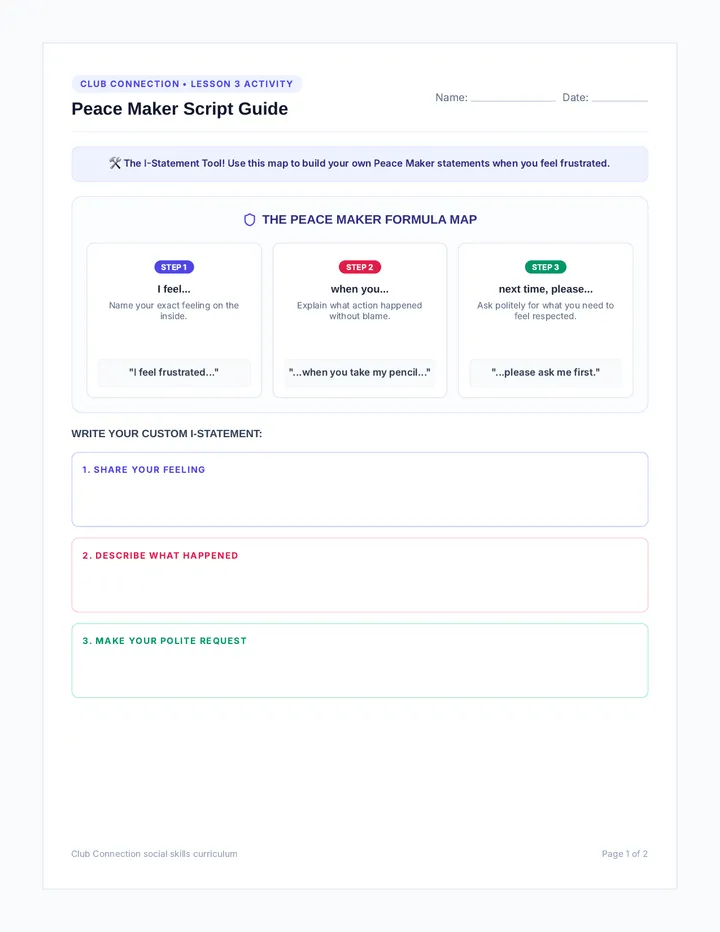
Focuses on healthy ways to express feelings, specifically using 'I' statements and active listening to communicate needs without blame.
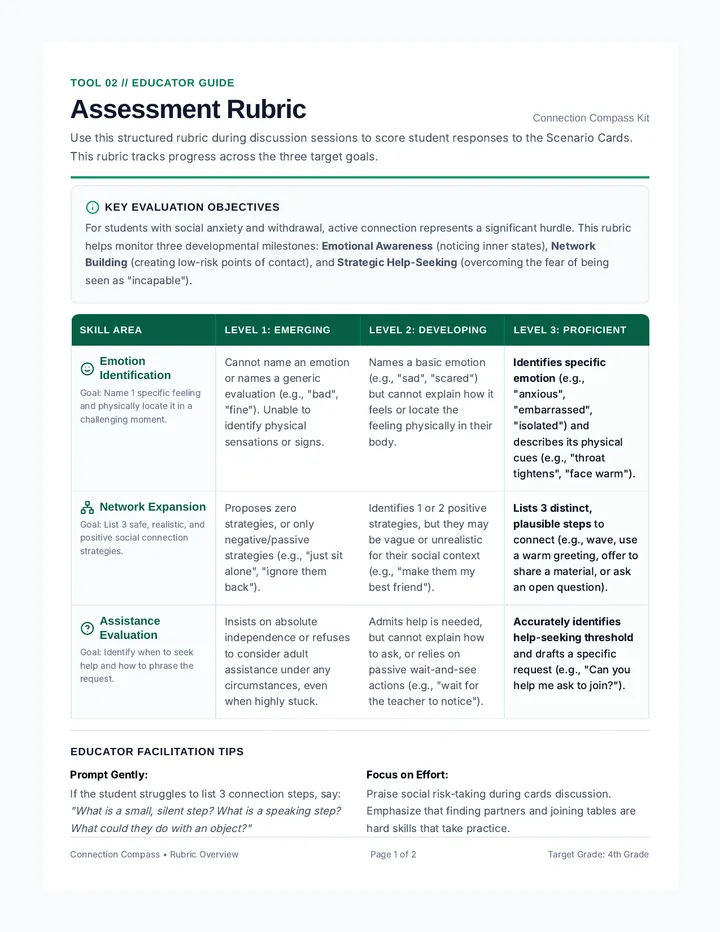
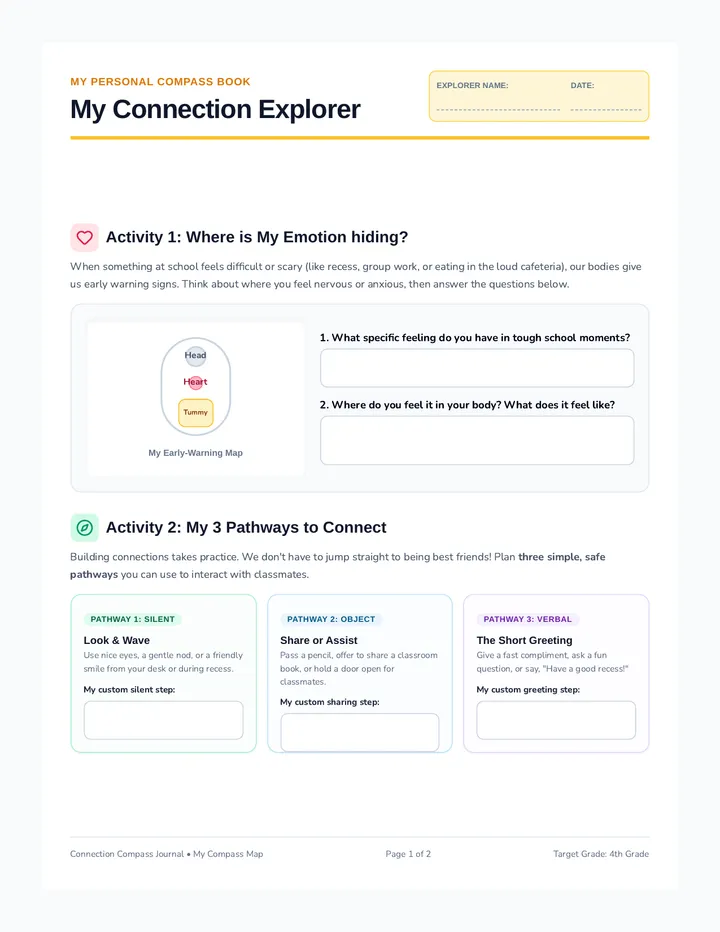
Helps students identify basic and complex emotions in themselves and others, using visual aids and storytelling to build an emotional vocabulary.
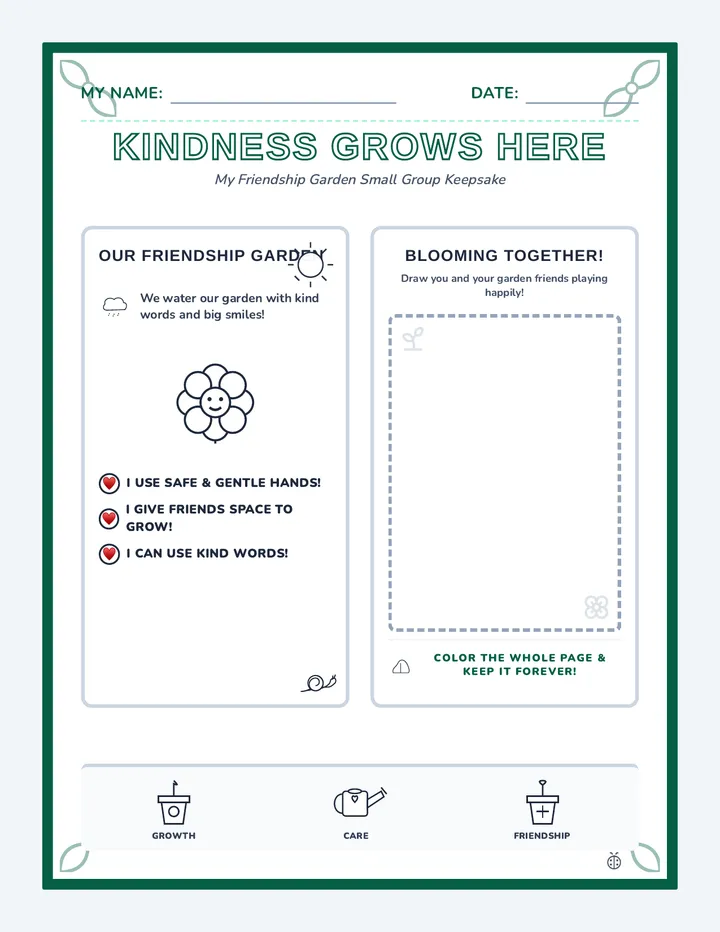
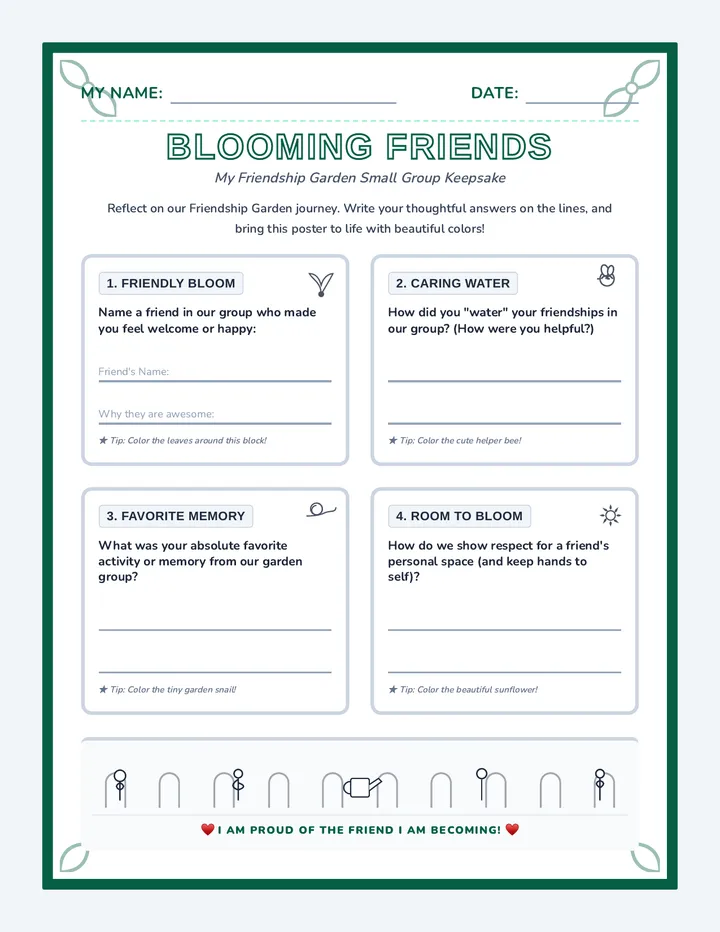
Focuses on building the group's foundation by defining what friendship means and identifying the qualities of a good friend through icebreaker games and personal reflection.
A lesson focused on de-escalating verbal aggression to prevent physical fights, featuring a slide deck, a visual flowchart, and reflection activities.
A comprehensive 'classroom reset' lesson designed to help a substitute and their students build a positive culture through the metaphor of a system upgrade. Students collaborate to define norms and understand their role in the classroom community.
A social-emotional learning lesson focused on the 'bucket filling' concept, reviewing how actions affect others' emotions and engaging students in a 15-minute kindness activity.
A peer-mentoring activity focused on identifying strong emotions and practicing healthy coping strategies through discussion and role-play.
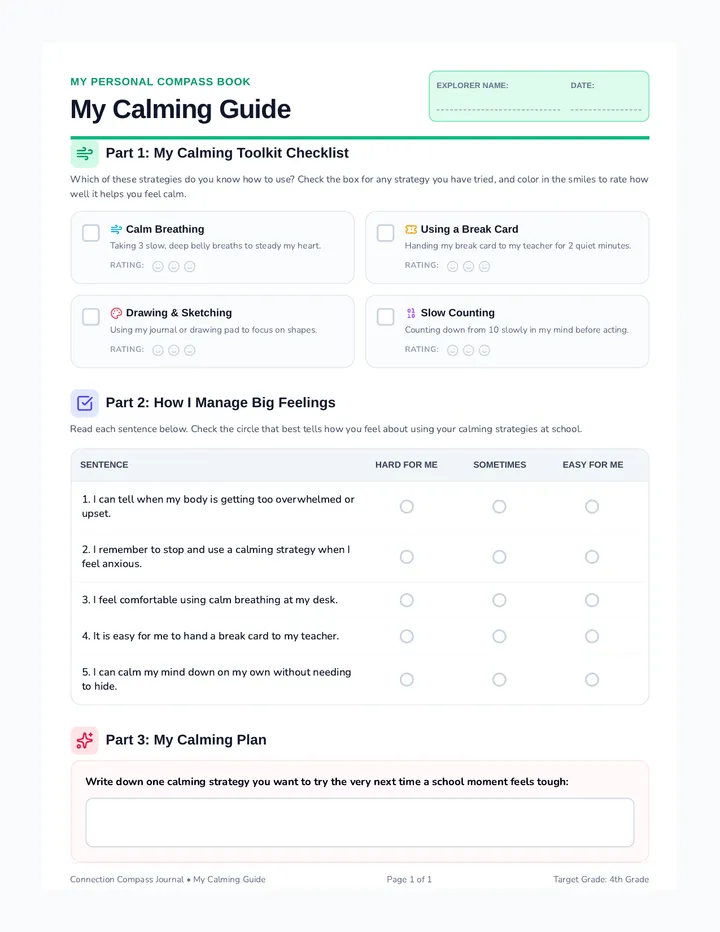
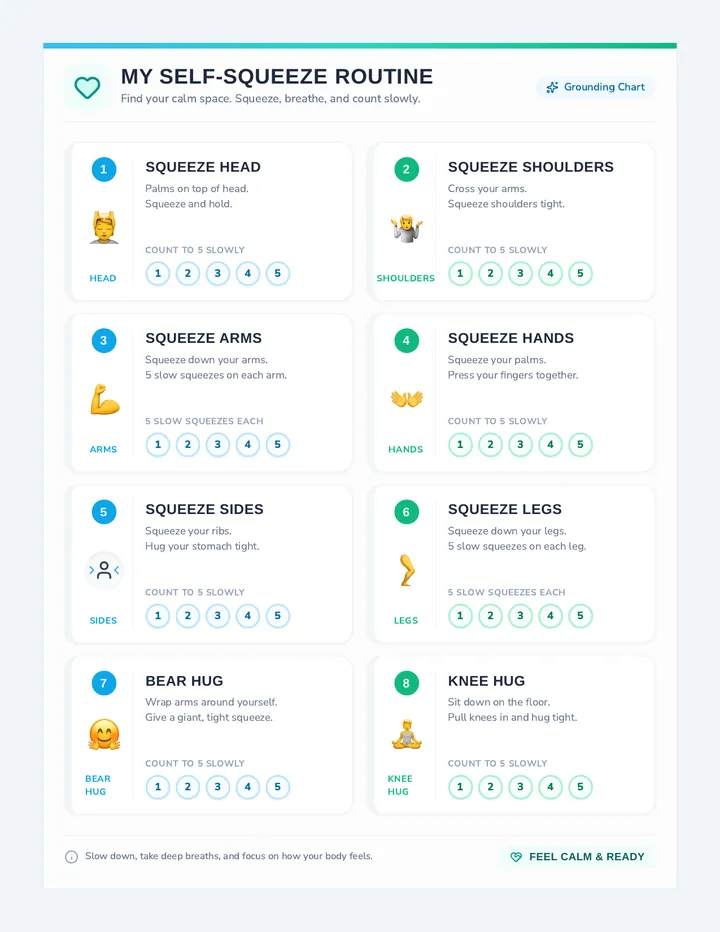
A collection of tools and strategies to help students regulate their emotions and find their center during moments of stress or frustration.
A 30-minute introductory lesson on Social Emotional Learning (SEL) focused on self-regulation and empathy using the 'Emotional Engine' metaphor. Includes a presentation, discussion guide, quiz, and answer key.
A 30-minute interactive lesson designed to help students understand cheerfulness as a choice and learn practical ways to radiate positivity to others.
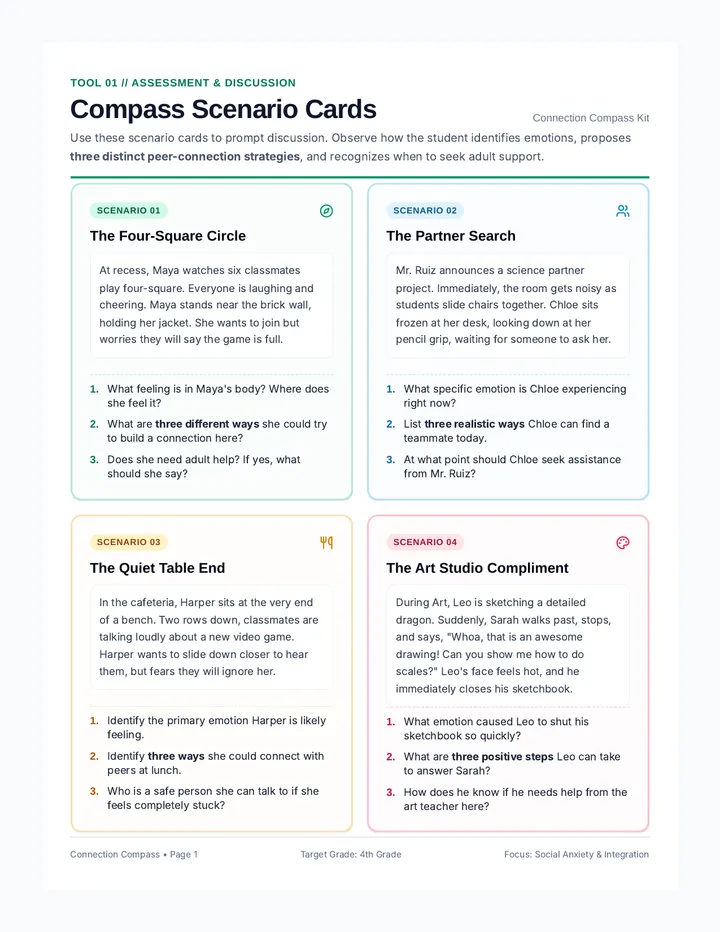
A small-group social-emotional learning lesson focused on the 'Three-Step Invite' method for building connections and starting friendships through role-play.
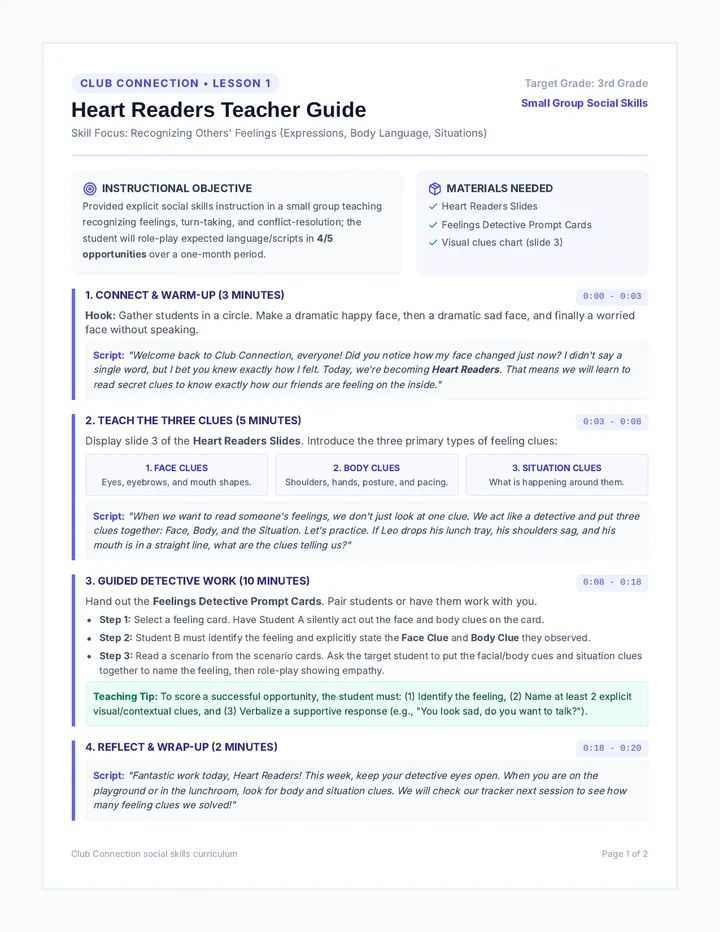
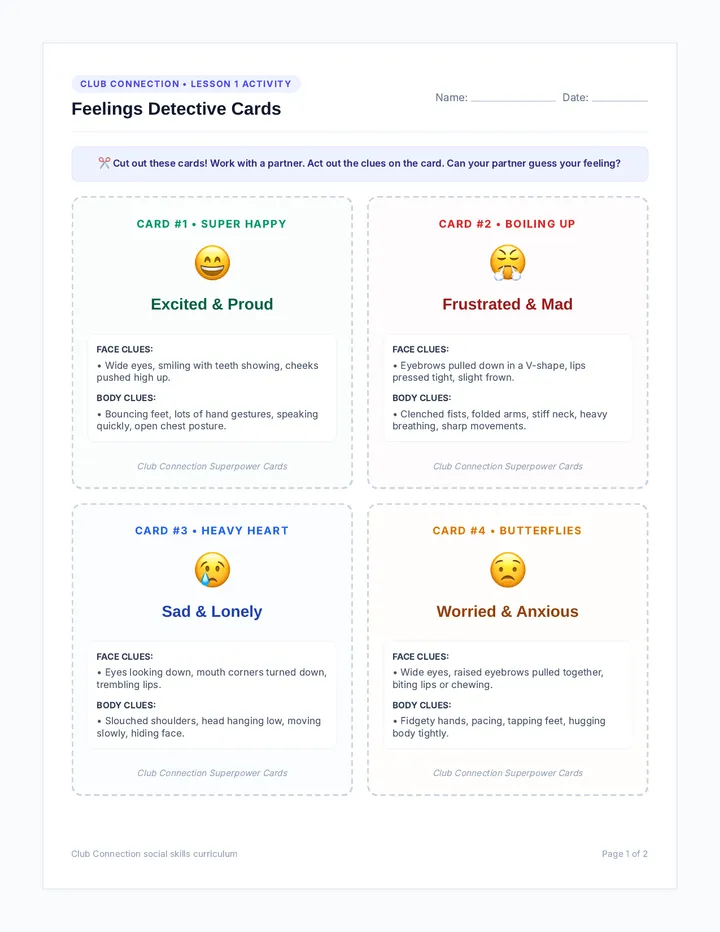
An introductory lesson where students act as 'Heart Detectives' to identify physical and facial cues associated with different feelings.
A lesson designed to help 2nd-grade students understand the difference between emergencies that require immediate speaking and classroom moments that require raising a hand.
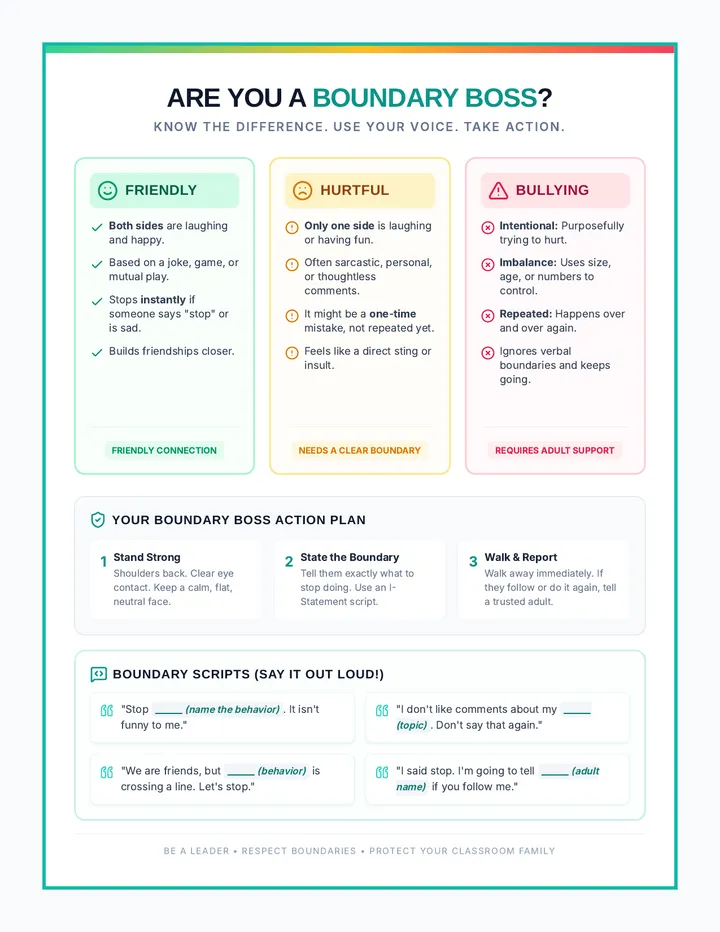
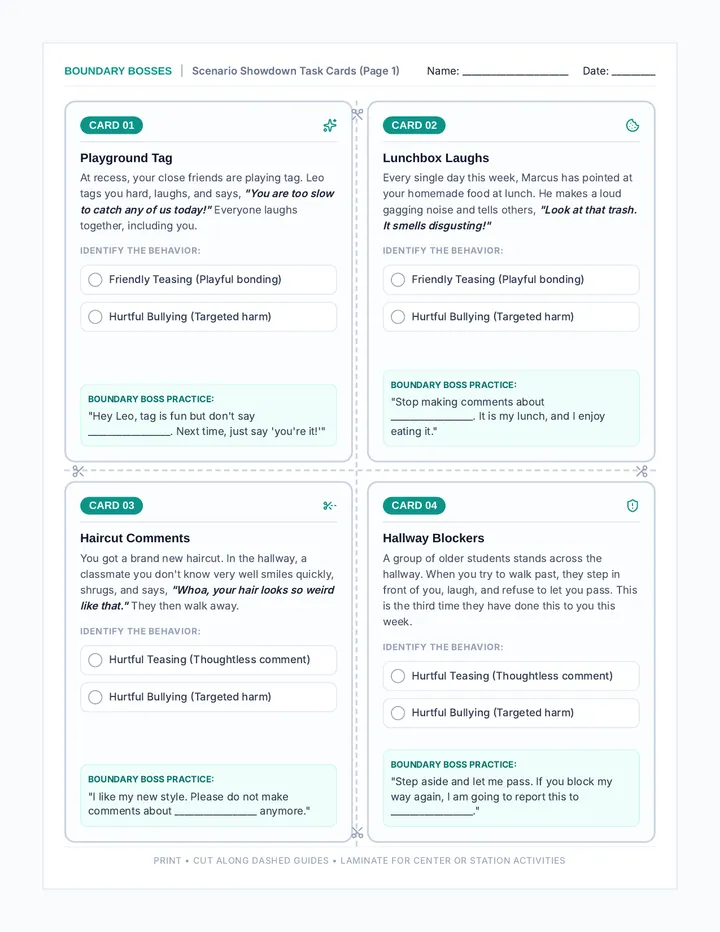
A lesson focused on helping third-grade girls identify healthy and unhealthy friendship traits, with a specific focus on communication, peer pressure, and boundaries.
A high-energy lesson that transforms daily routines into 'superpowers.' Students learn the mechanics of habit formation and design a personal plan for self-management and school success.
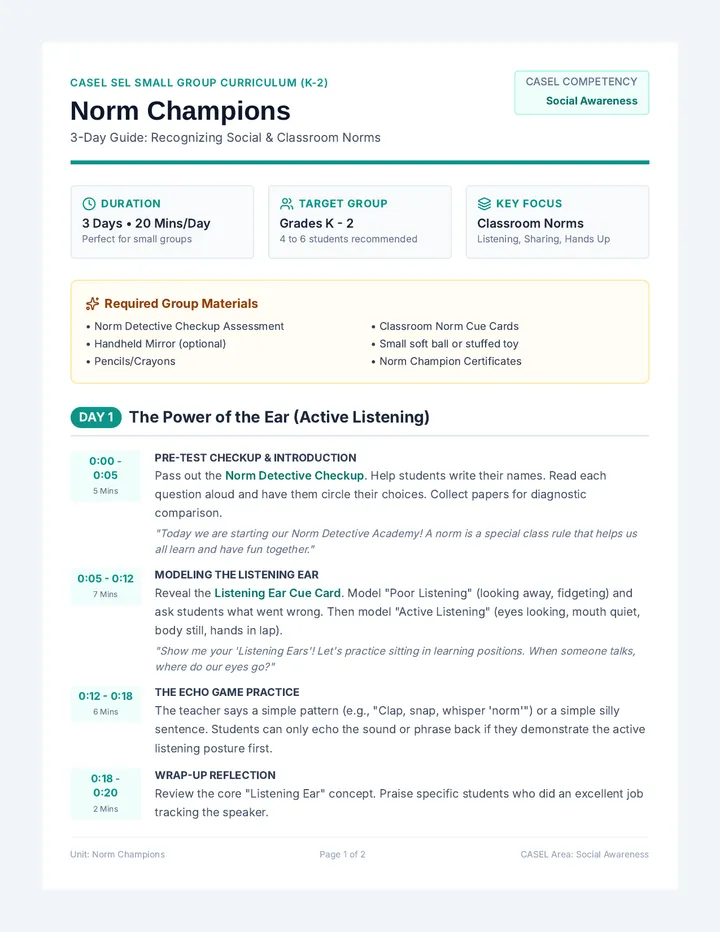
A multi-sensory lesson for 2nd-4th graders to explore their five senses, identify personal sensory preferences, and learn self-regulation strategies through a playful 'field guide' approach.
A set of interactive worksheets and activities designed for 2nd graders to share their personalities and experiences through the lens of emotional awareness. Students will map out their 'inner weather,' identify what makes them feel various emotions, and practice recognizing feelings in themselves and others.
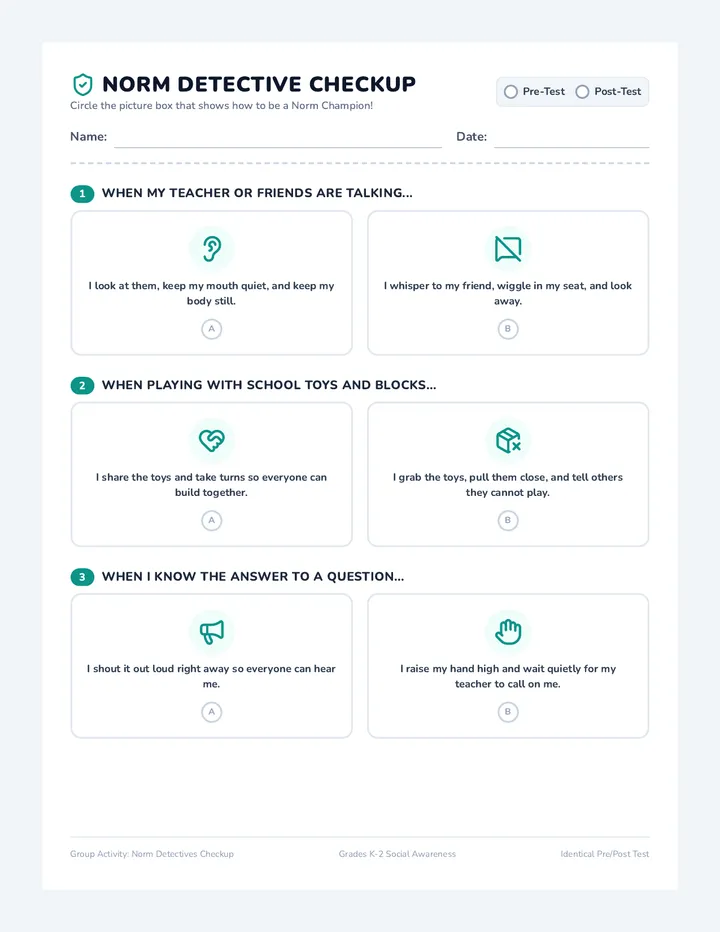
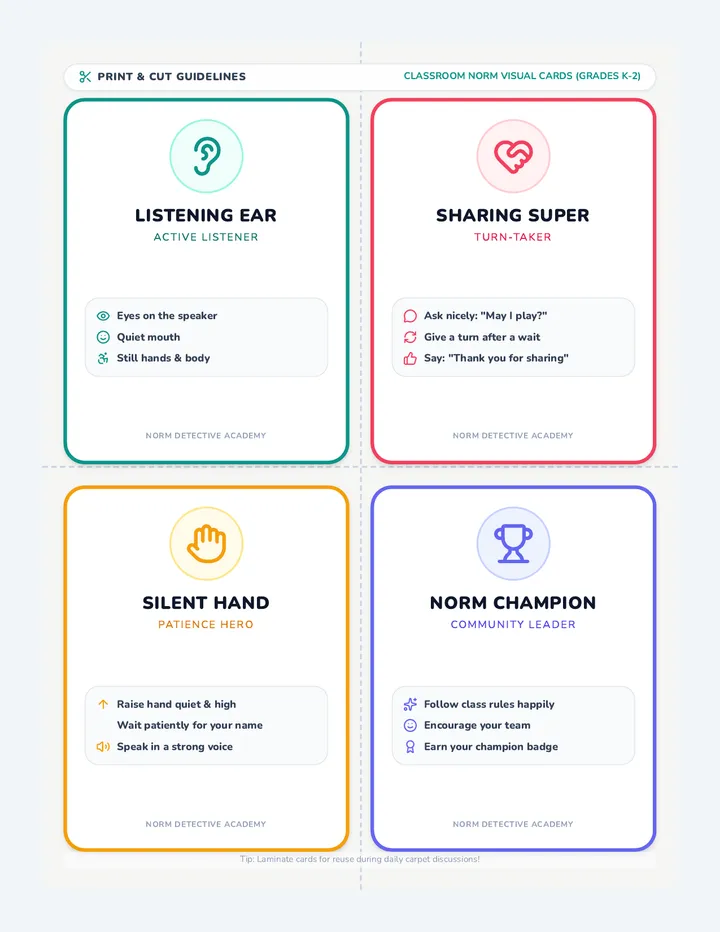
A high-energy, hands-on lesson designed for 4th and 5th graders to master active listening through gamified scenarios, detective-themed organizers, and center-based task cards. Students take on the roles of special agents to practice focus, empathy, and detail-oriented listening.
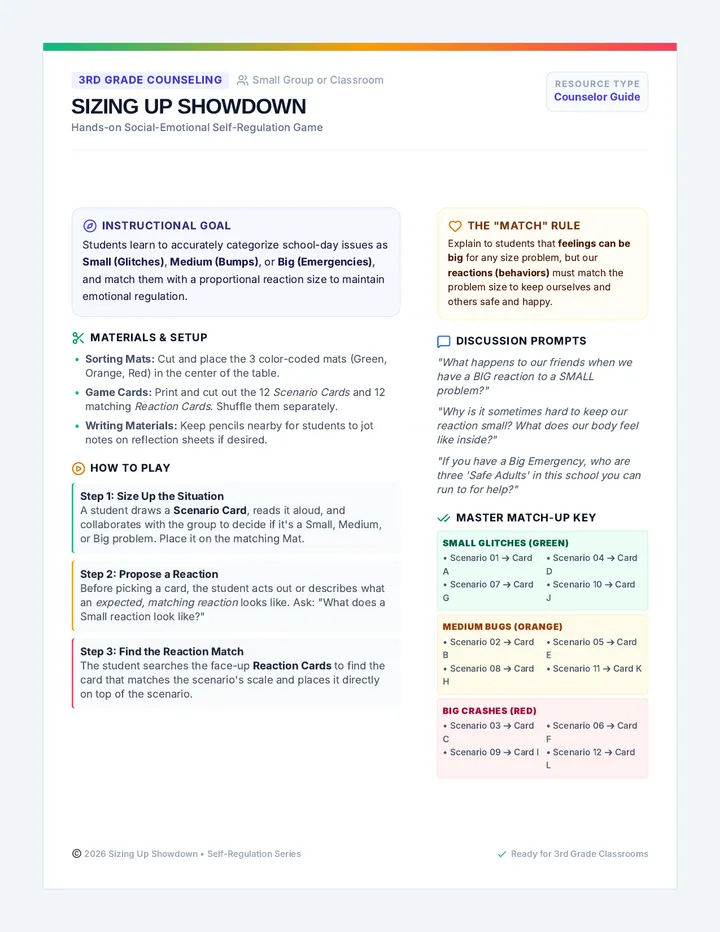
This lesson helps students identify their core values and understand how these beliefs guide their decisions and actions. Through a nautical-themed exploration, students will map out their personal 'inner compass' to navigate life's choices with integrity.