A hands-on transition workshop helping rising middle schoolers navigate their feelings, identify future activities, and set friendship goals through a interactive 'Suitcase' craft.
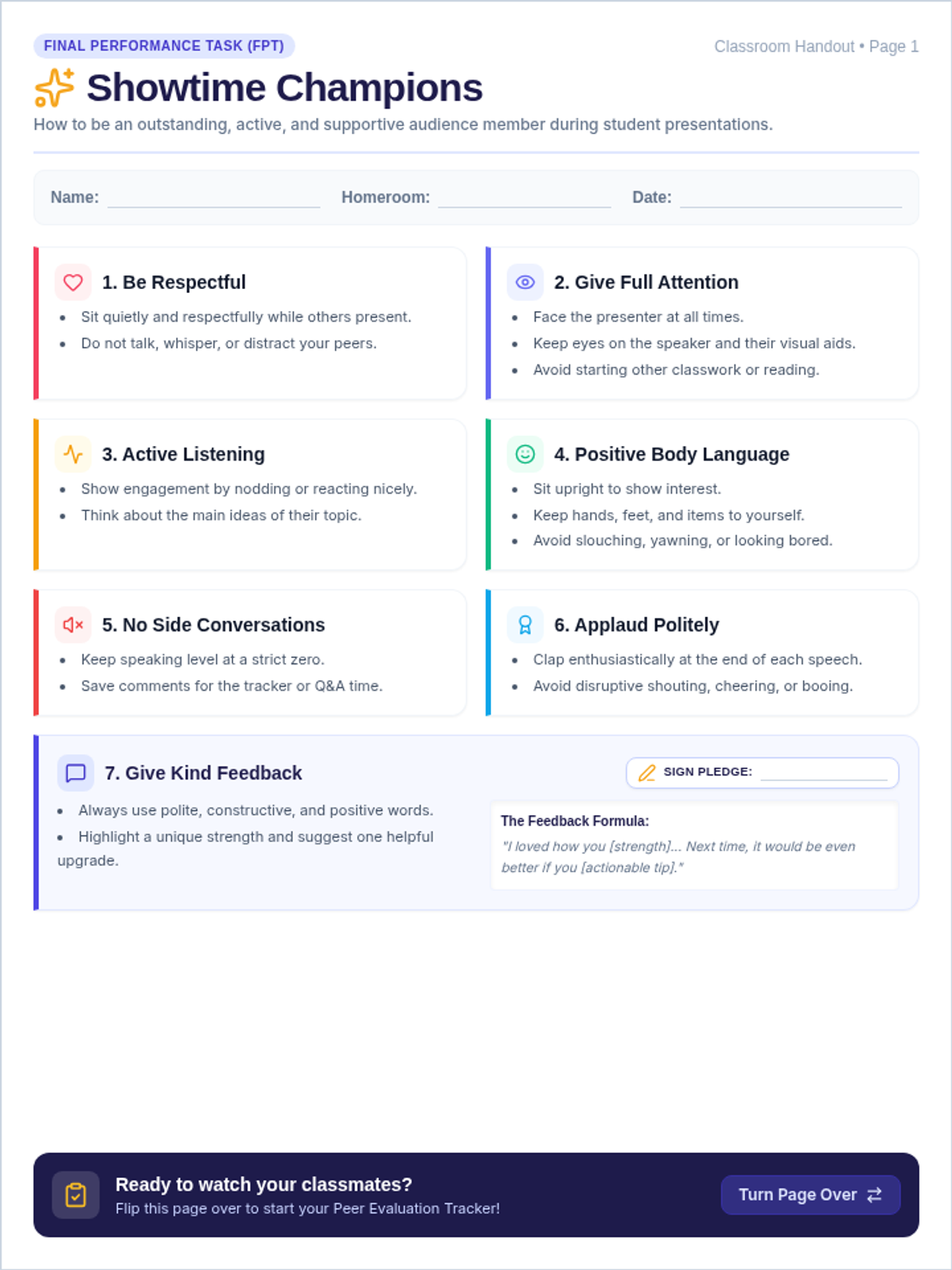
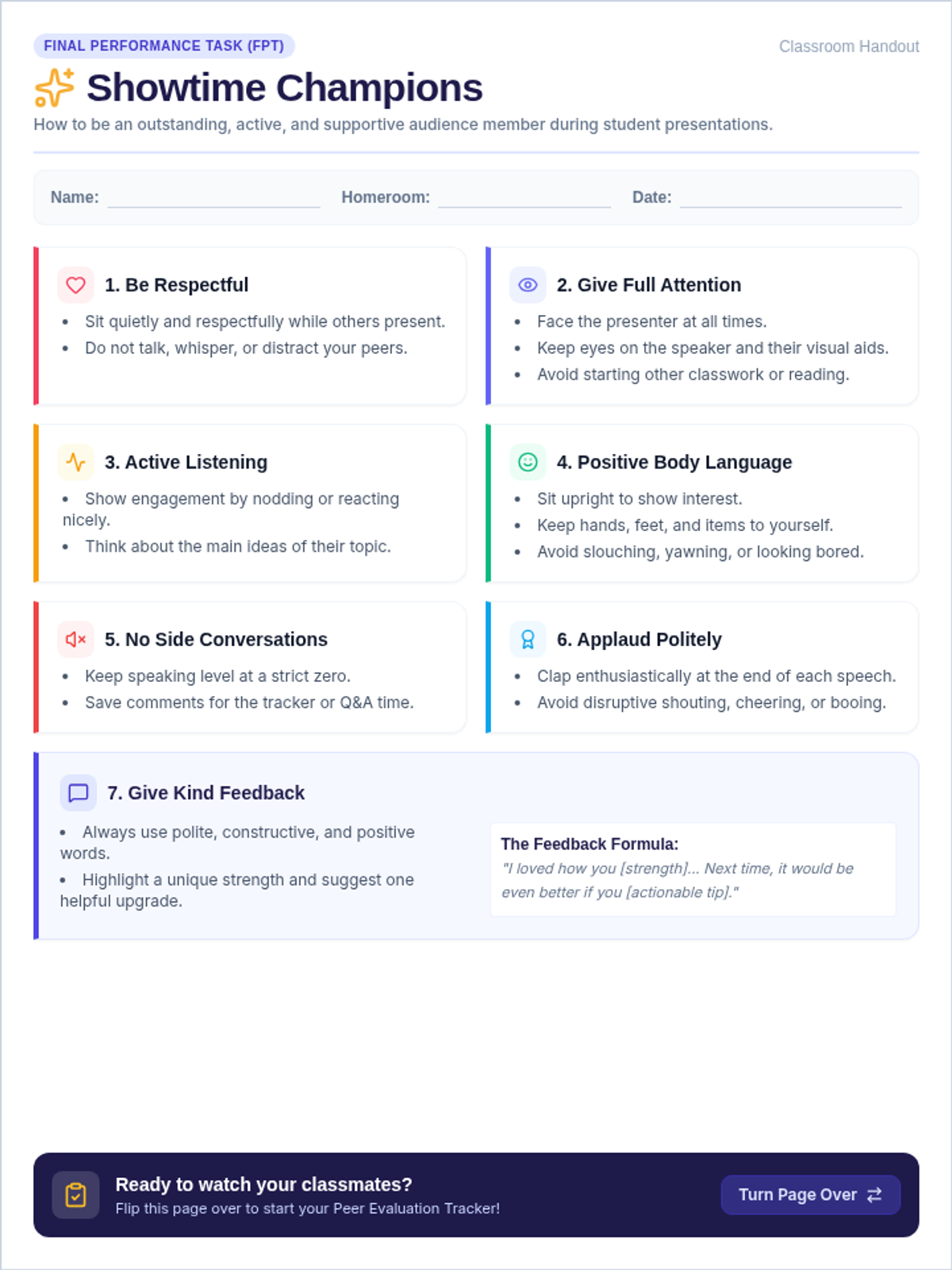
A complete toolkit for students to master the art of being an active, respectful, and constructive audience member during peer presentations. Includes audience expectations and an interactive presentation tracker.
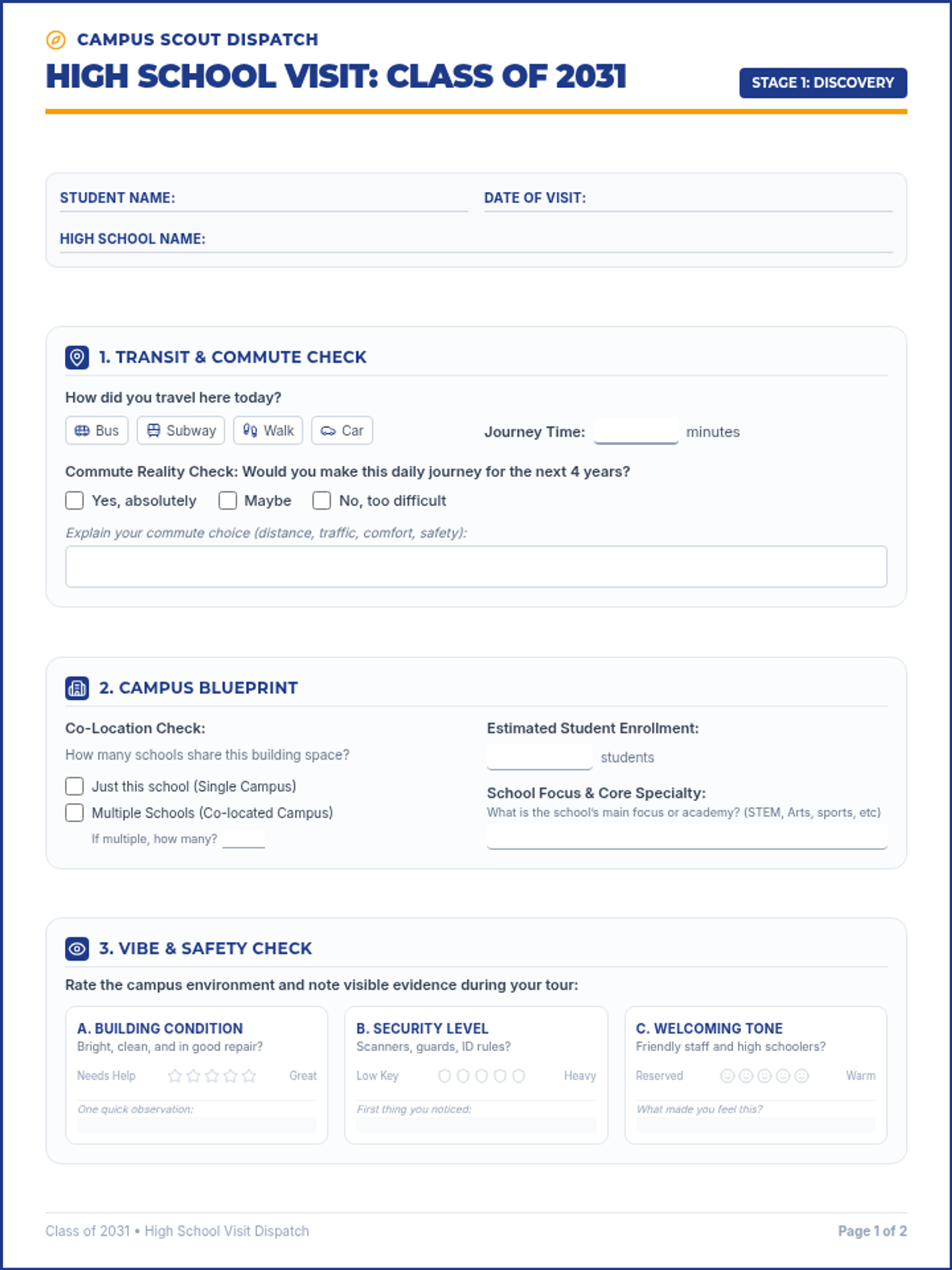
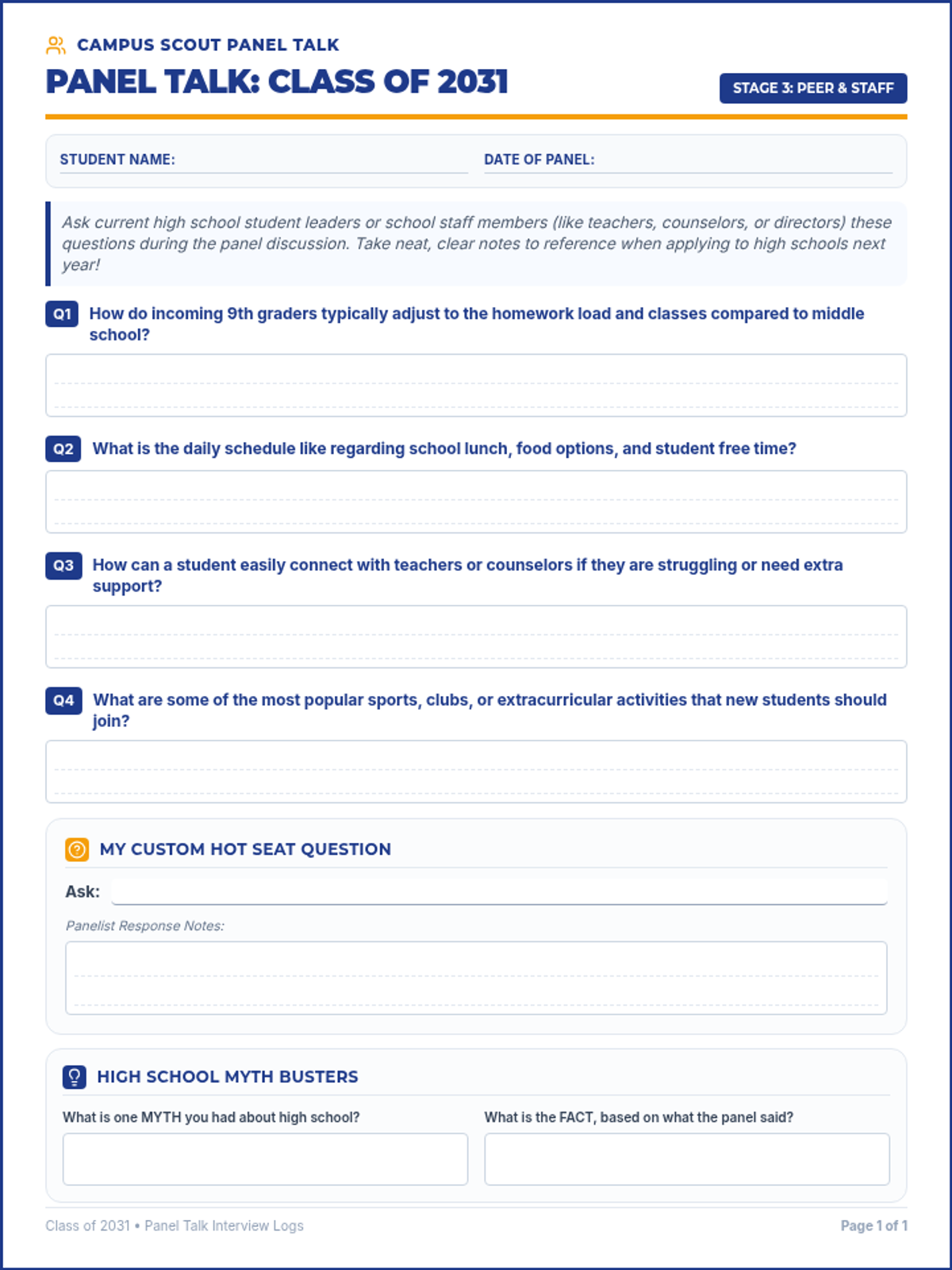
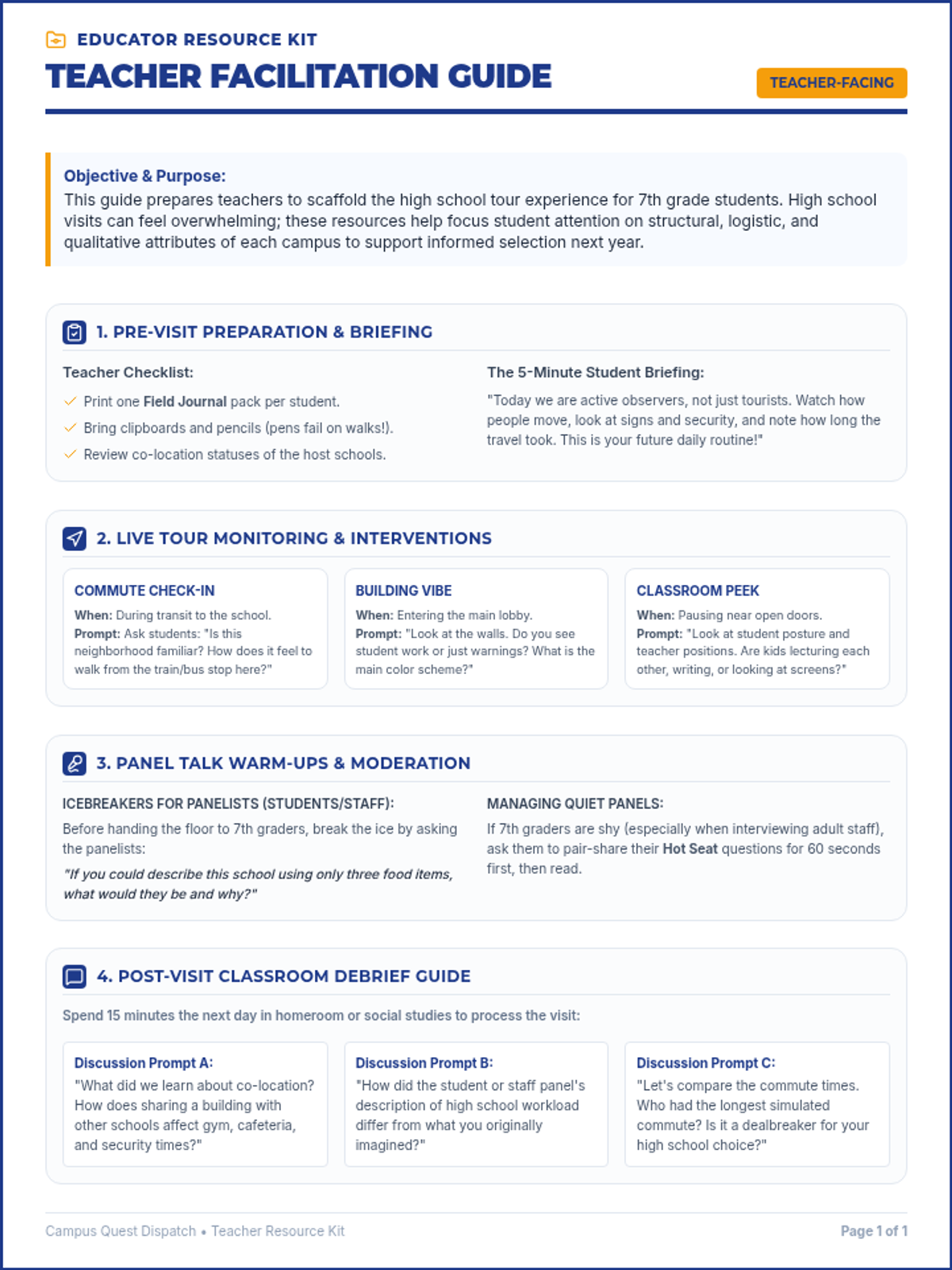
A comprehensive preparation and reflection kit for 7th graders embarking on high school visits. It includes a field observation guide, a student-panel interview sheet, and a teacher facilitation guide.
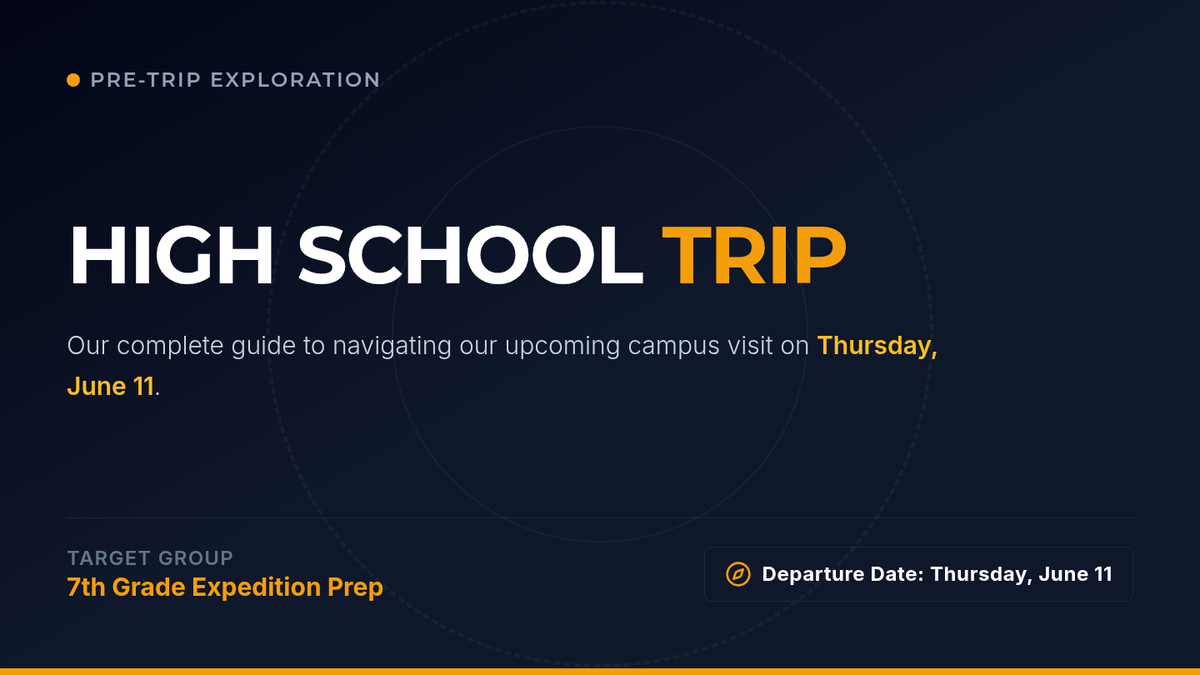
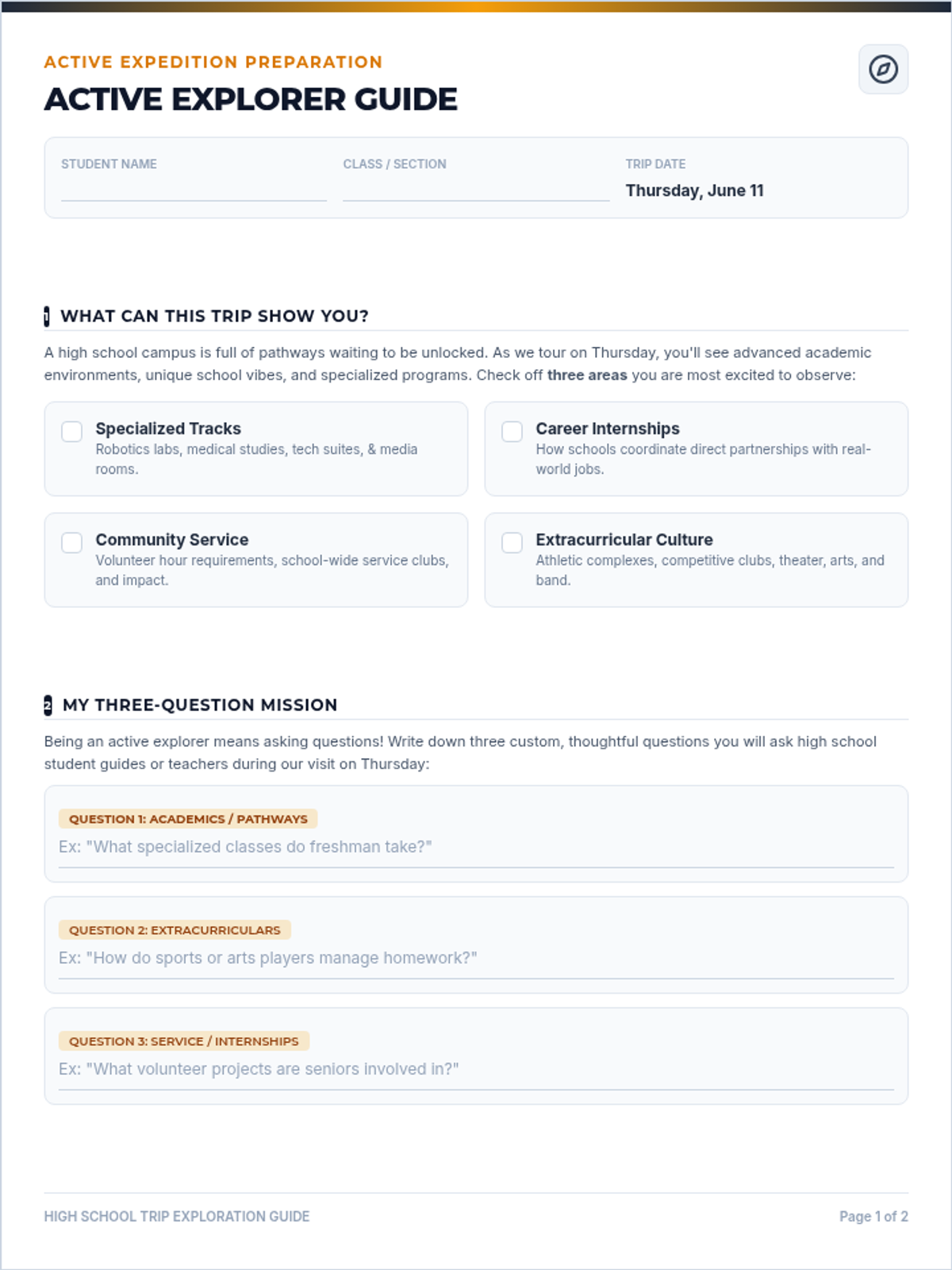
A pre-trip preparation lesson for 7th graders preparing for their upcoming high school visit, focusing on travel logistics, rules of conduct, and academic/extracurricular exploration.
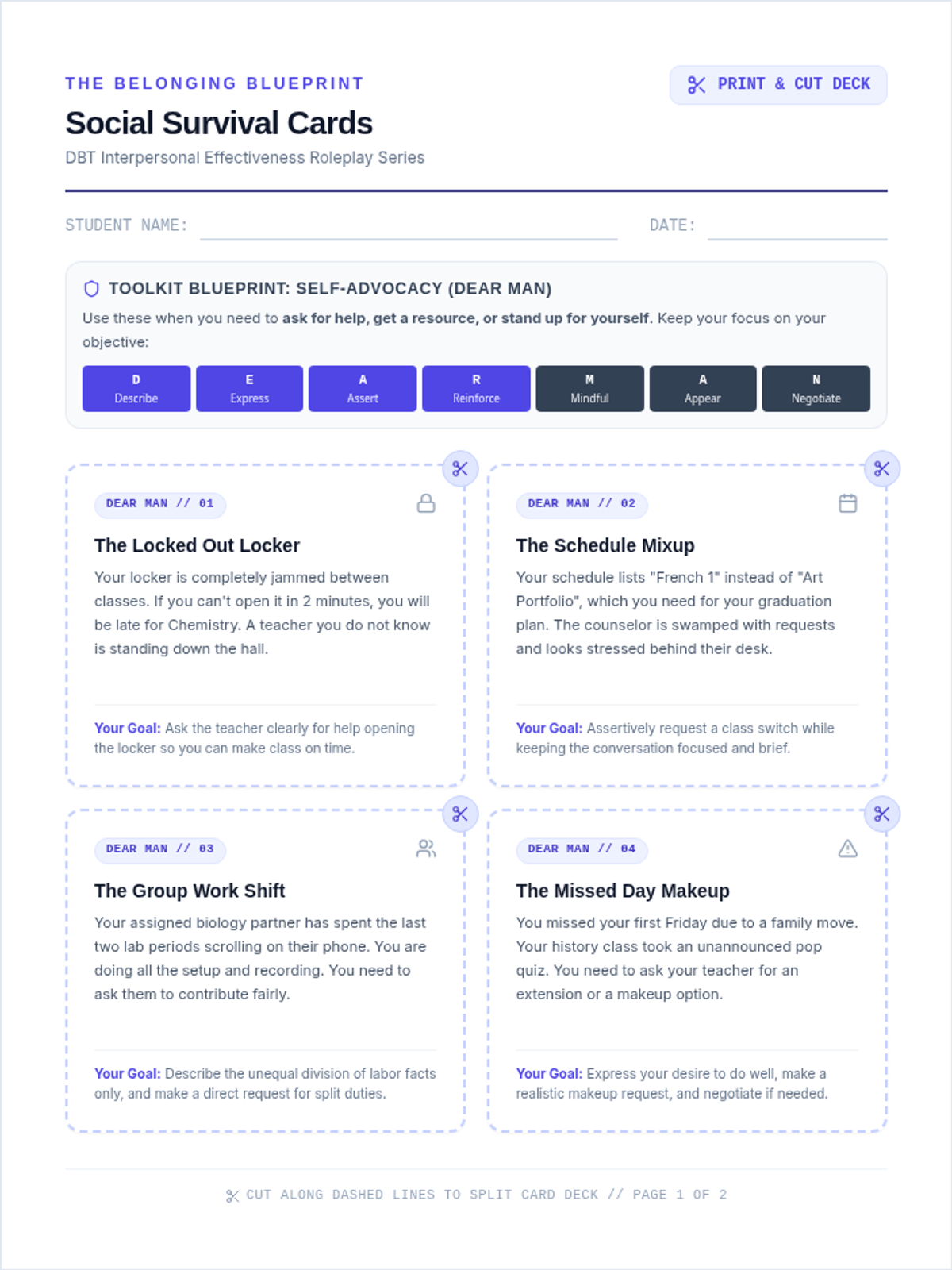
A DBT-informed lesson designed to help students navigate interpersonal connections at a new school. This lesson introduces and practices the DEAR MAN strategy for clear self-advocacy and the GIVE skillset for building warm, authentic relationships.
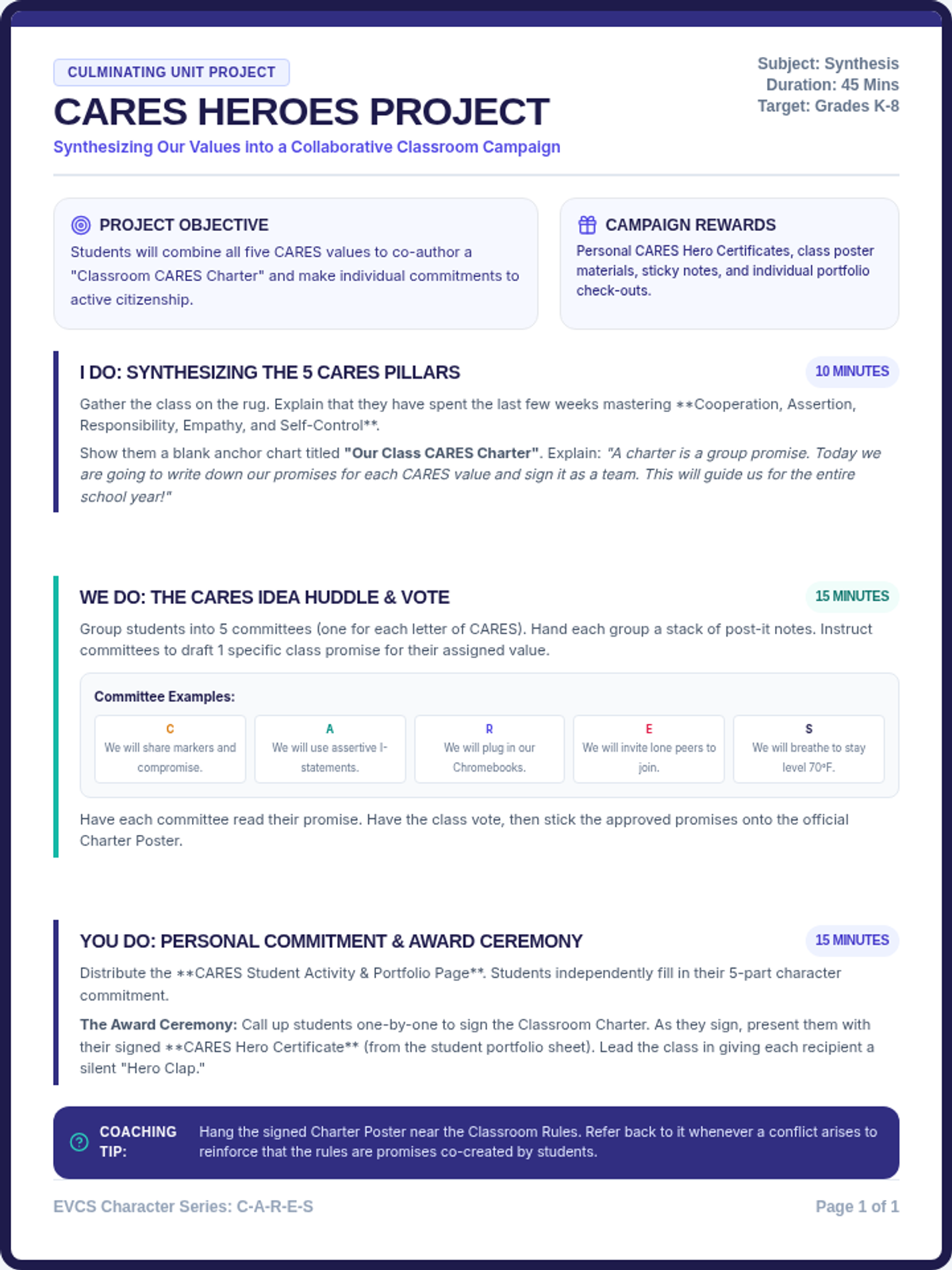
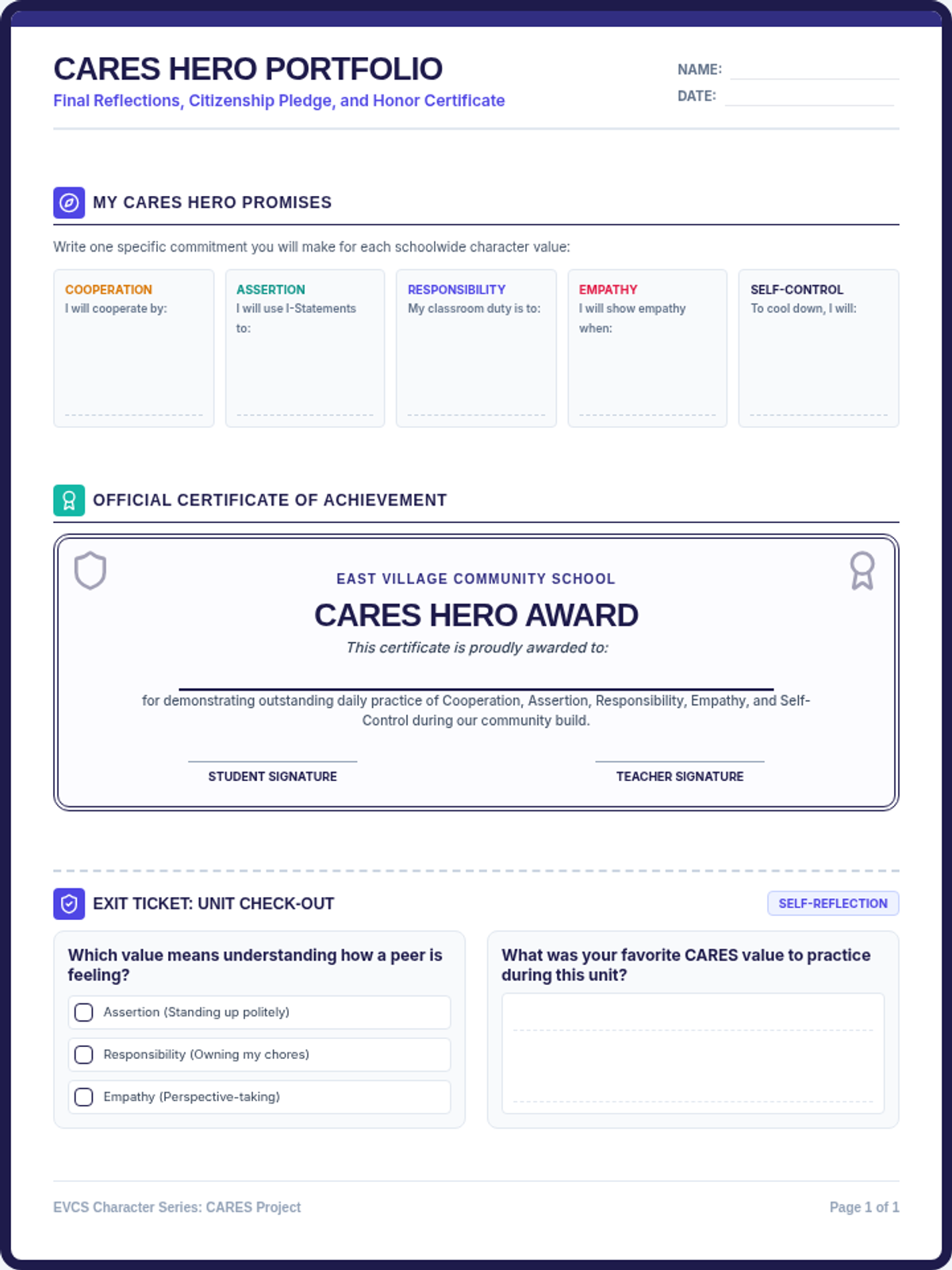
A culminating reflection and community project lesson where students synthesize all five CARES values. Students create a class pledge, award certificates, and design a community action project to show their learning.
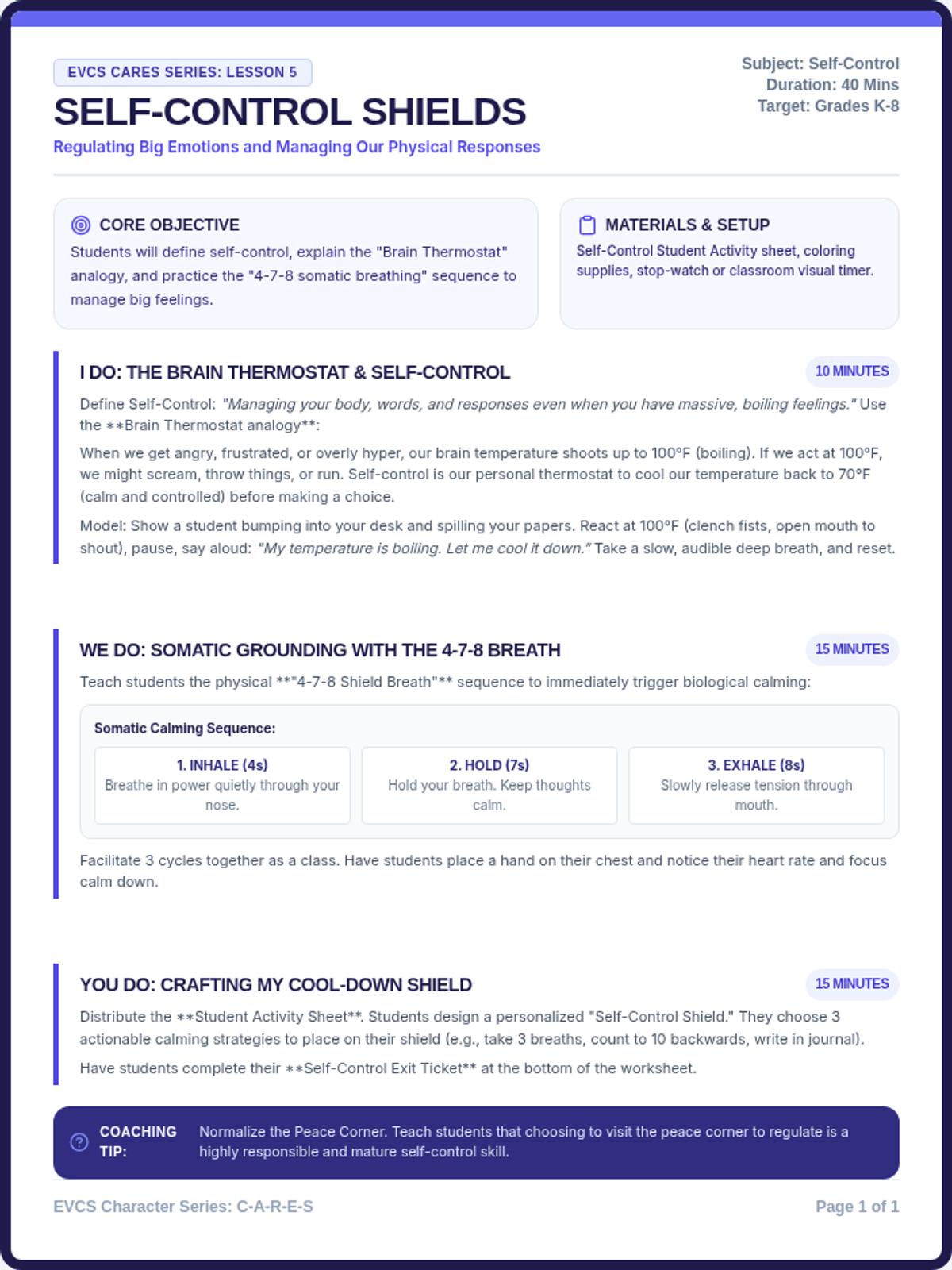
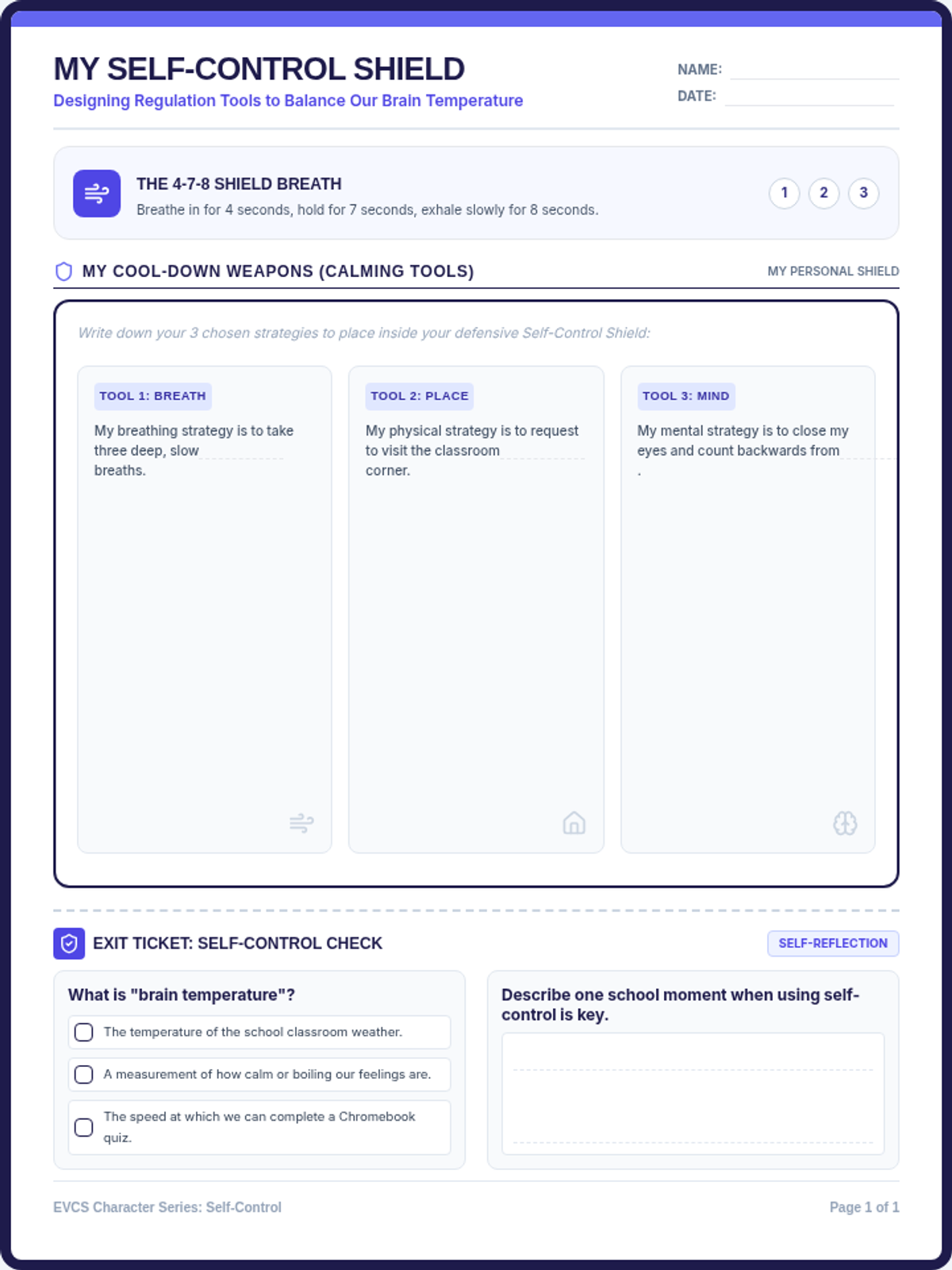
A social-emotional learning lesson centered on self-control, emotional regulation, and mindfulness. Students practice somatic grounding and cool-down techniques to manage big emotions in real-time.
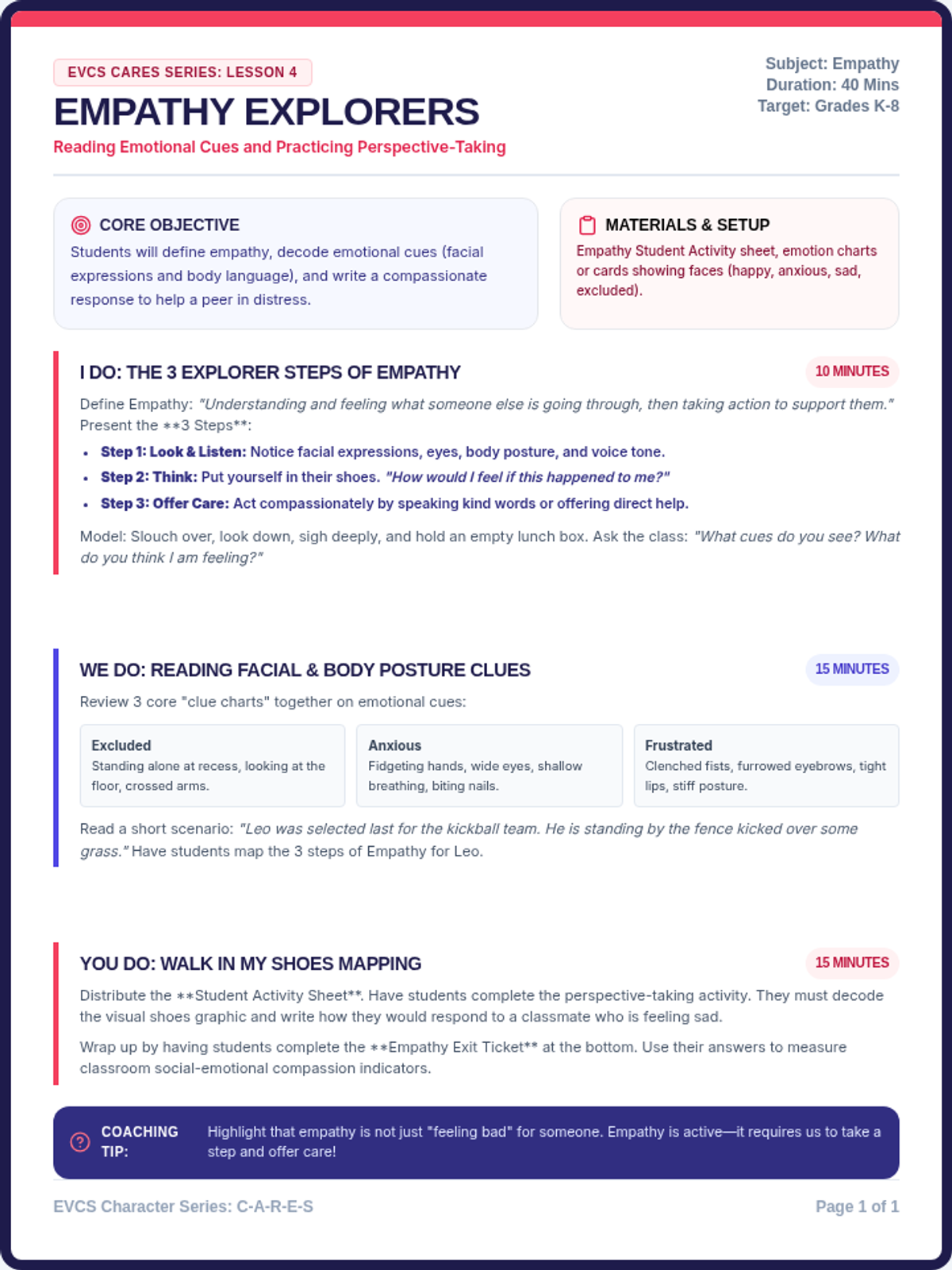
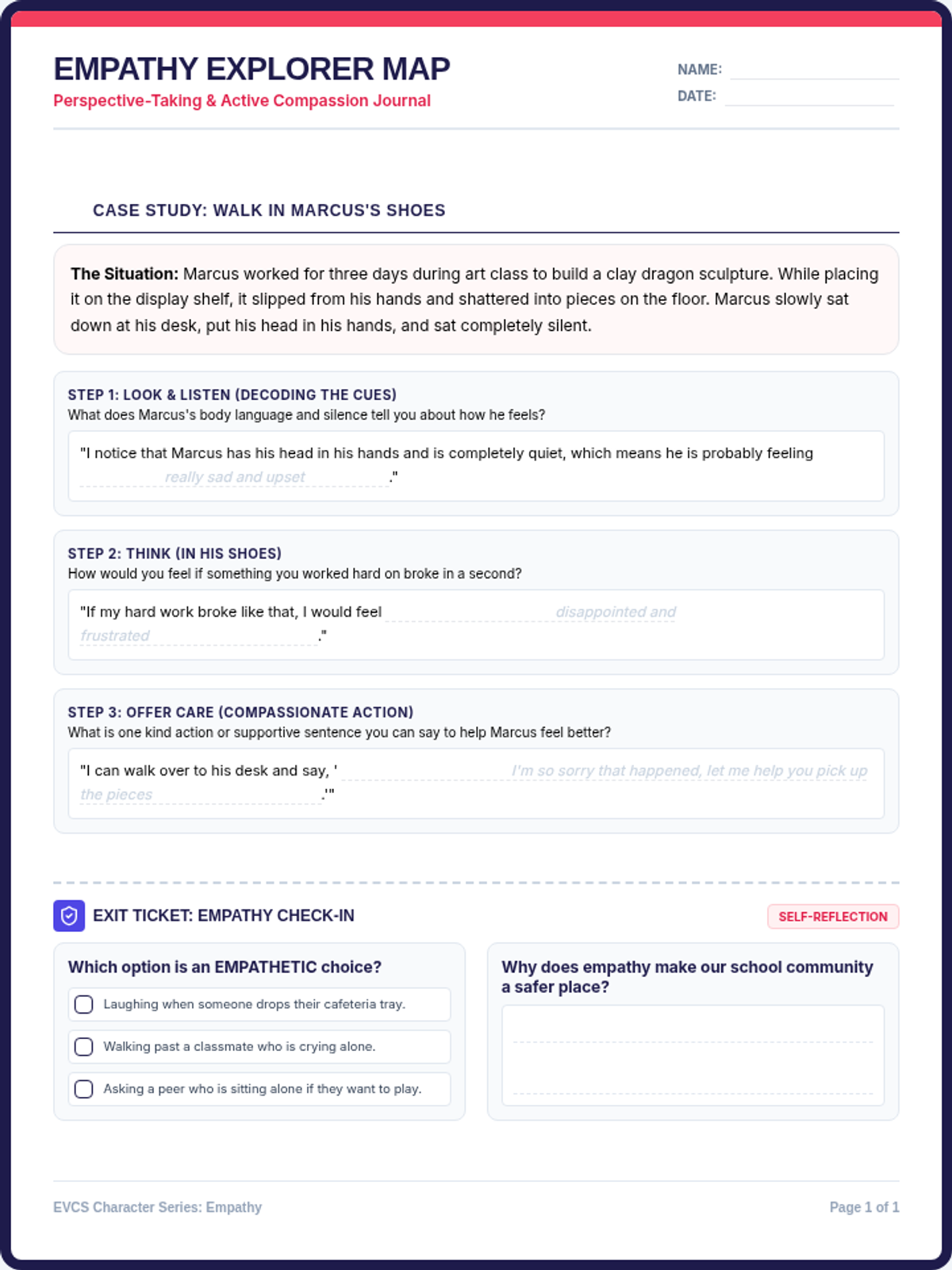
A social-emotional learning lesson on empathy, active compassion, and perspective-taking. Students learn to recognize emotional cues in others and practice walking in someone else's shoes to solve social dilemmas.
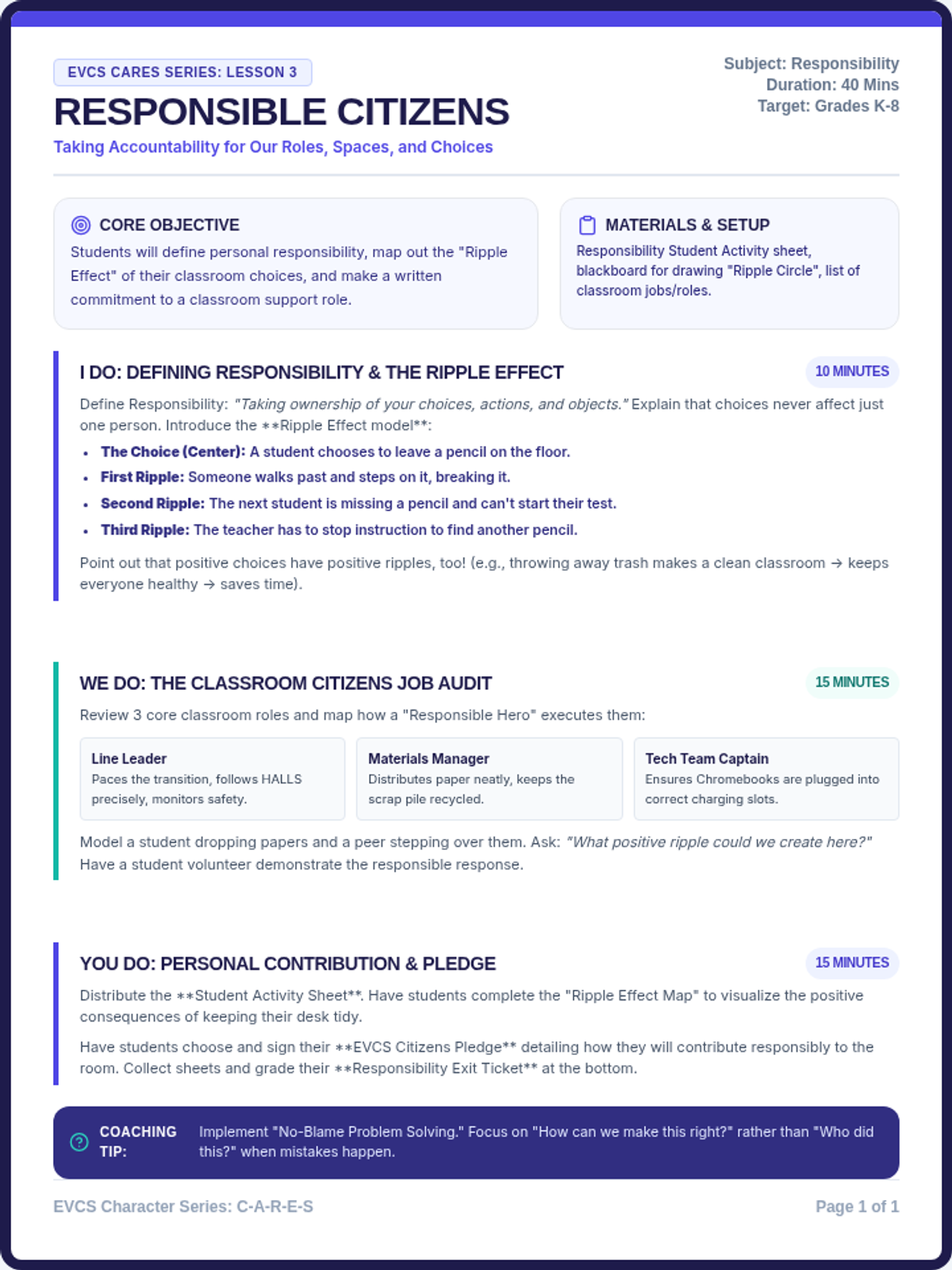
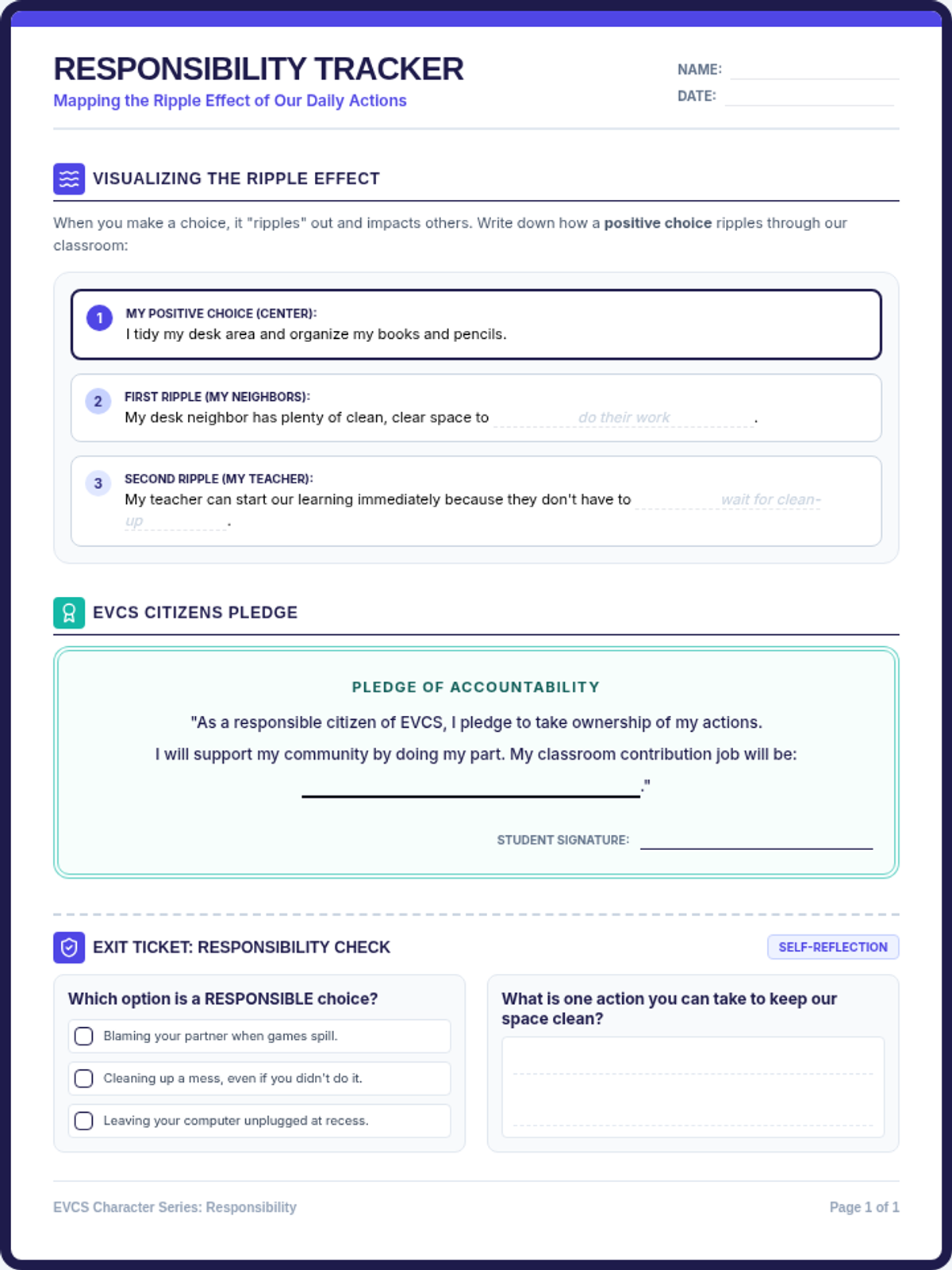
A social-emotional learning lesson teaching personal accountability, civic responsibility, and classroom roles. Students identify how their individual choices affect the safety and success of the whole community.
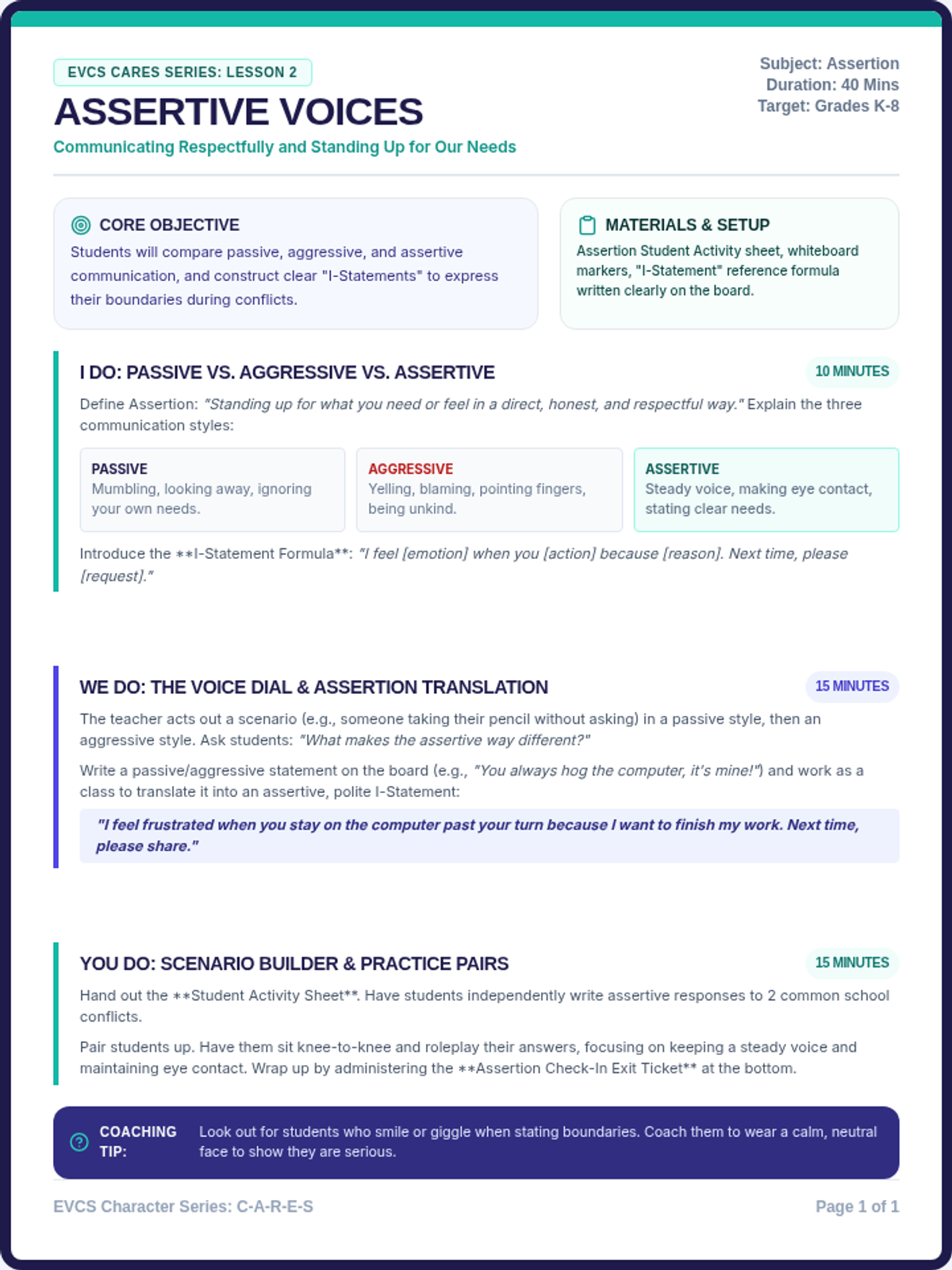
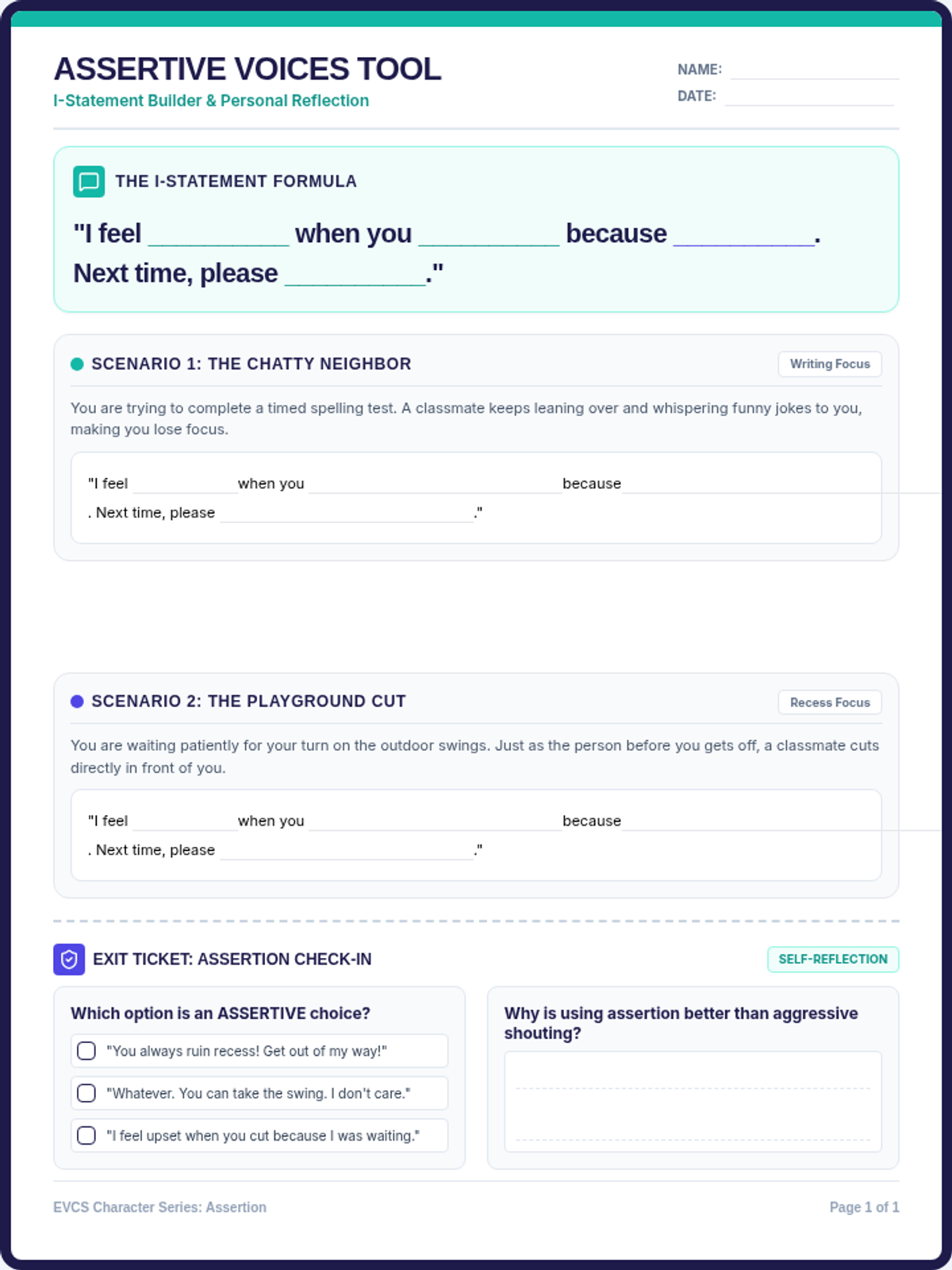
A social-emotional learning lesson focused on assertive communication, active listening, and setting respectful boundaries. Students practice using "I-Statements" to express their needs and opinions respectfully.
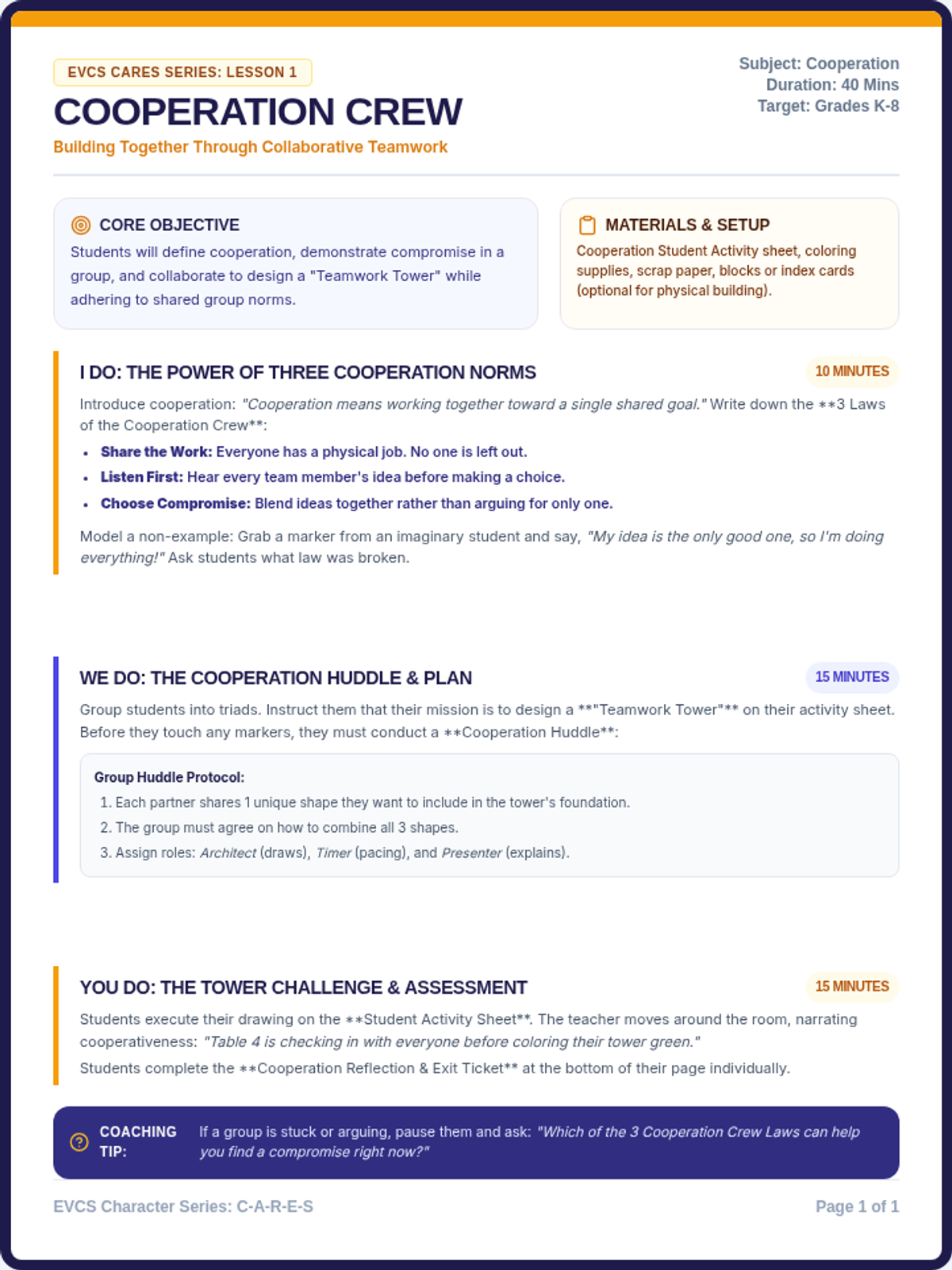
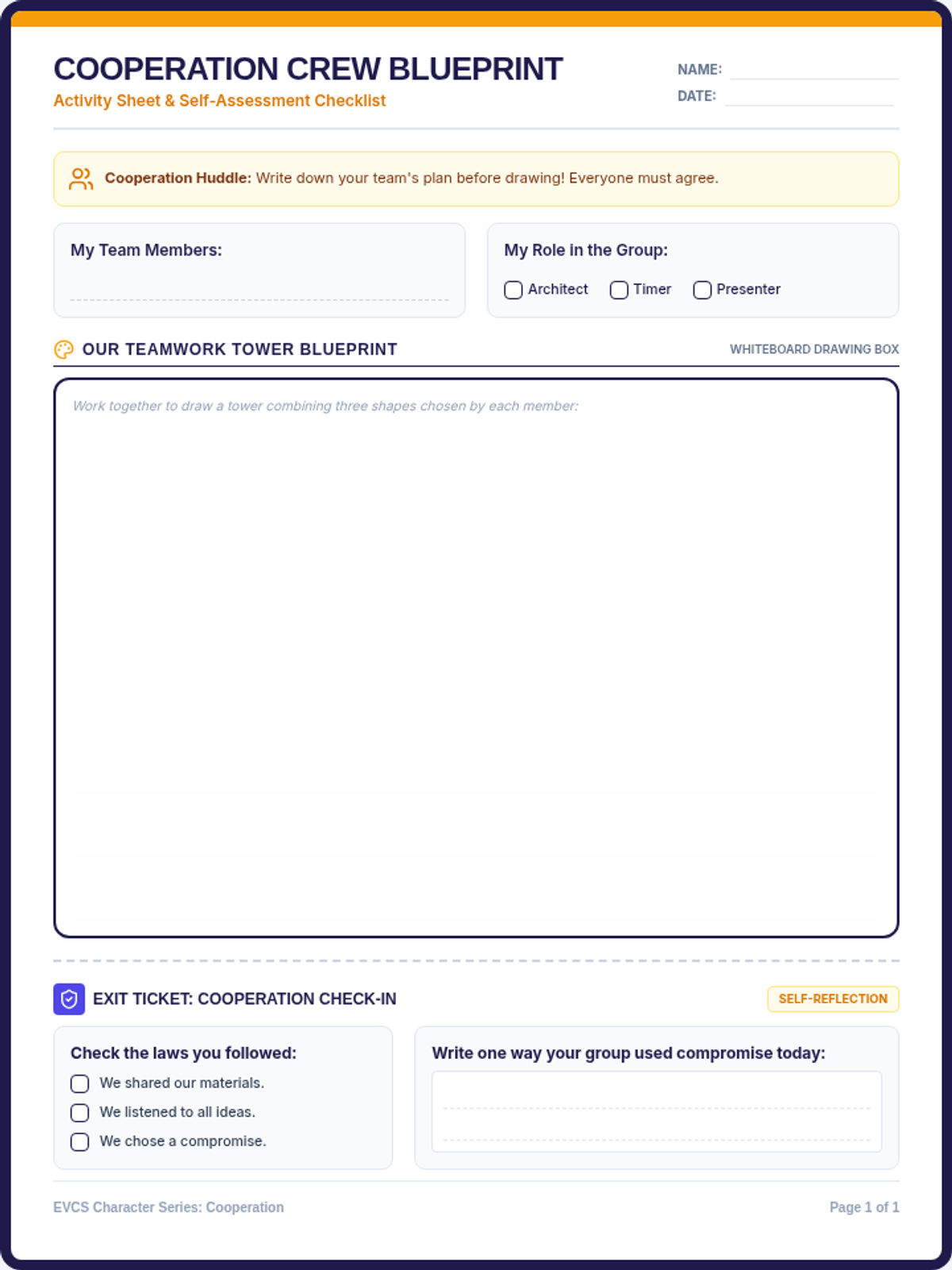
A social-emotional learning lesson focusing on cooperation, collaborative problem solving, and group agreement. Students explore how to share ideas, compromise, and build together as a team.
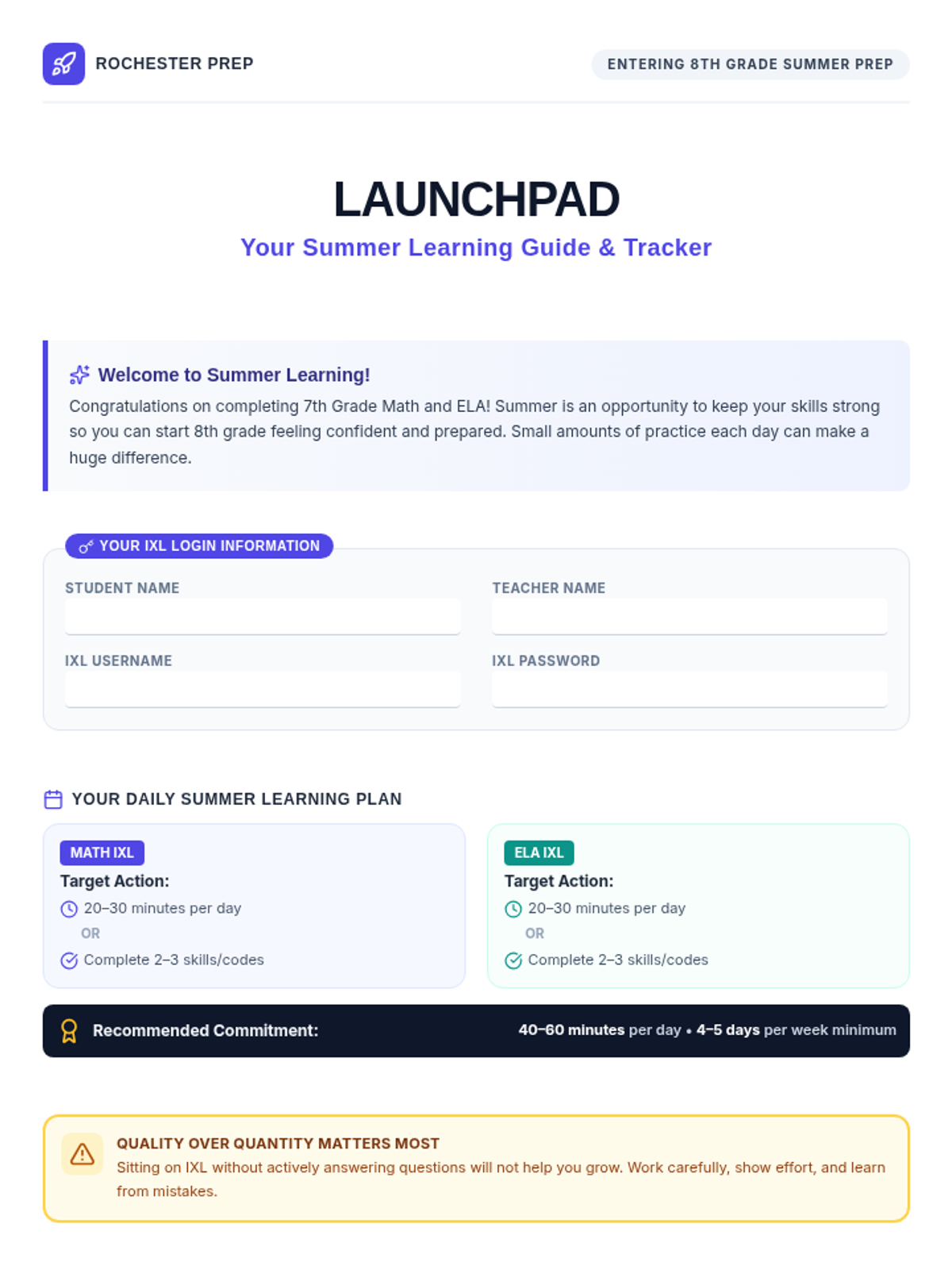
A summer onboarding lesson plan and checklist designed to prepare rising 8th-grade students for academic success through structured practice.
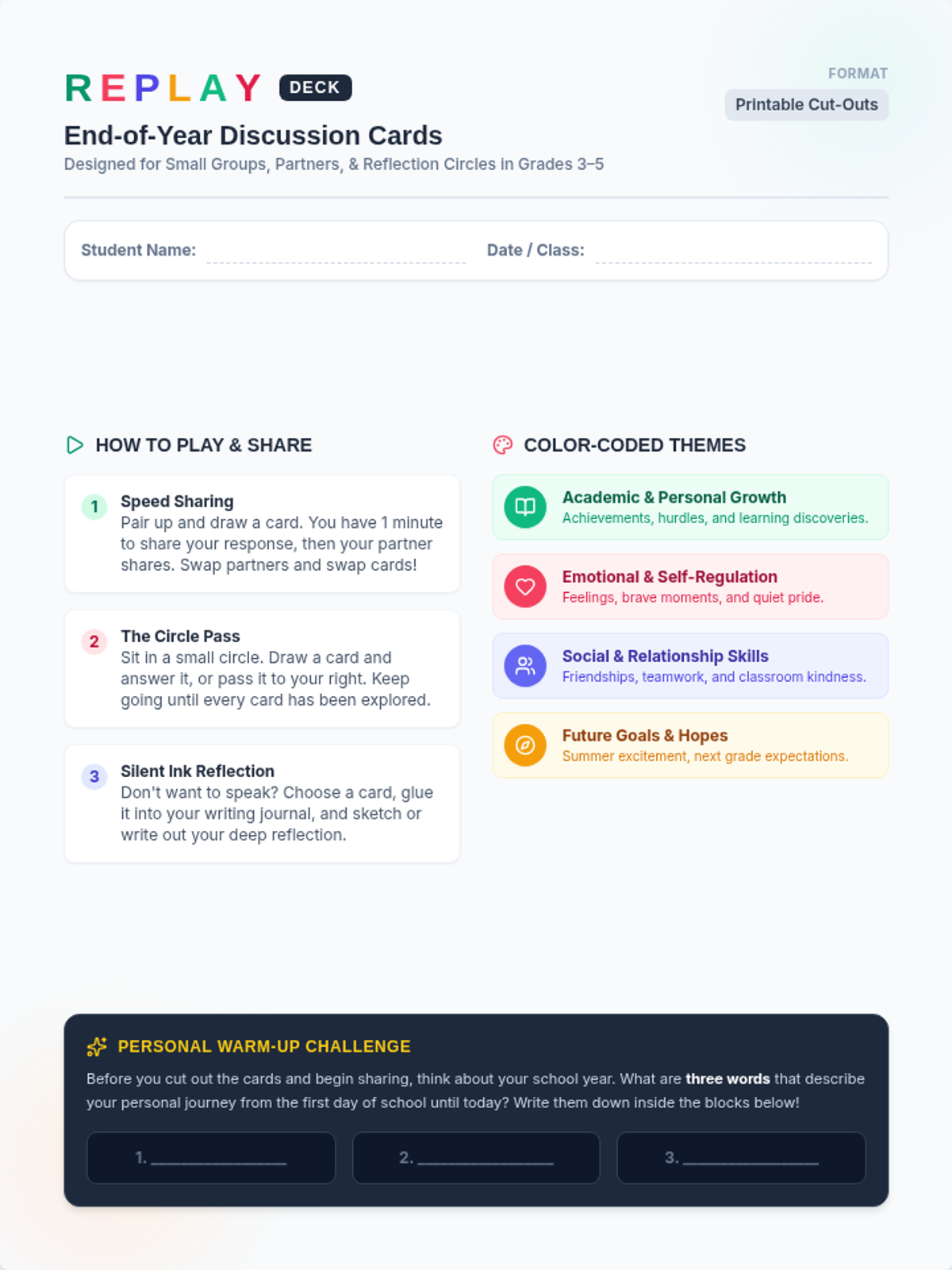
A reflection-focused lesson designed to help third, fourth, and fifth-grade students celebrate their academic, emotional, and social growth over the past year while setting hopeful goals for the future.
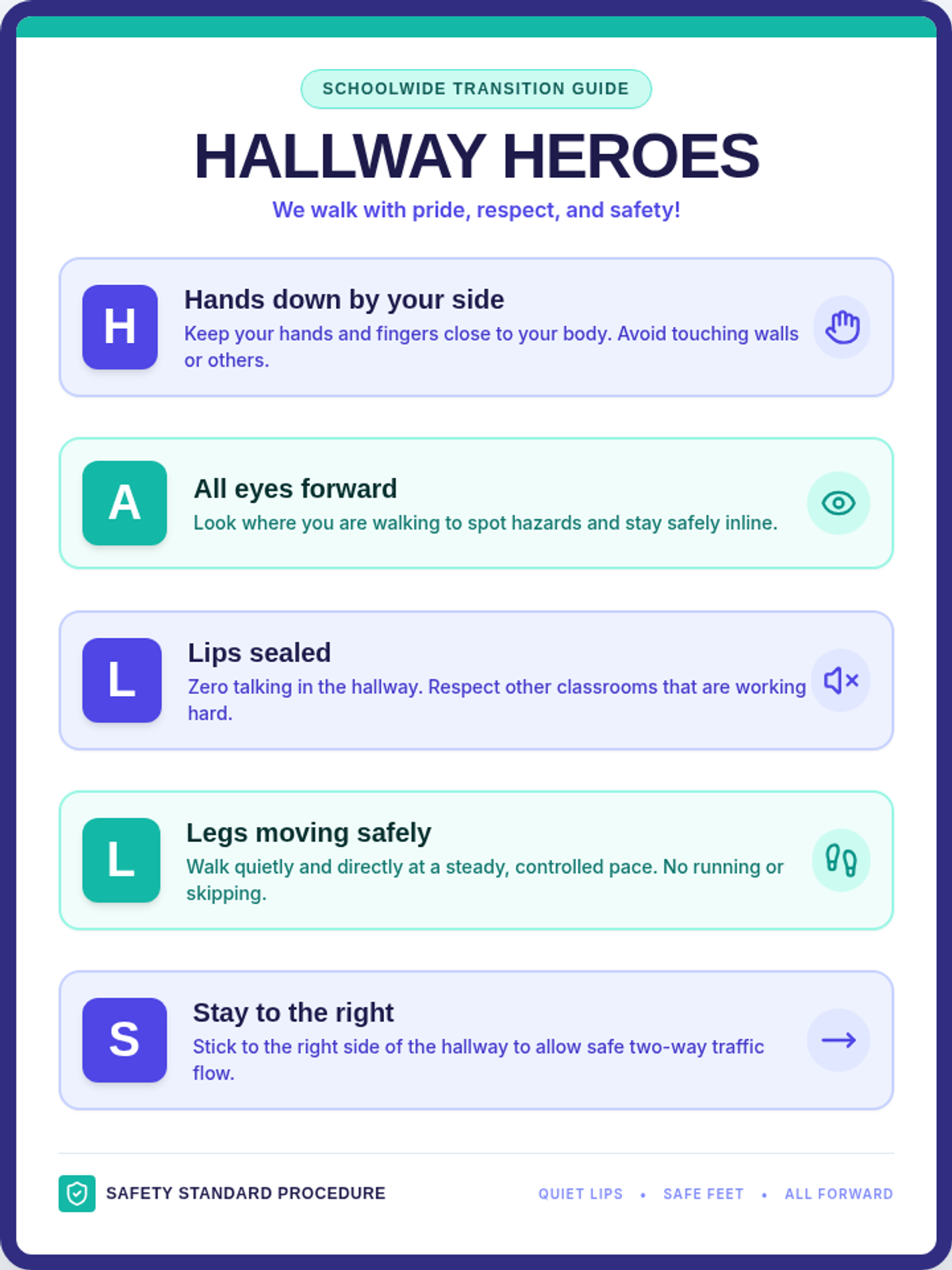
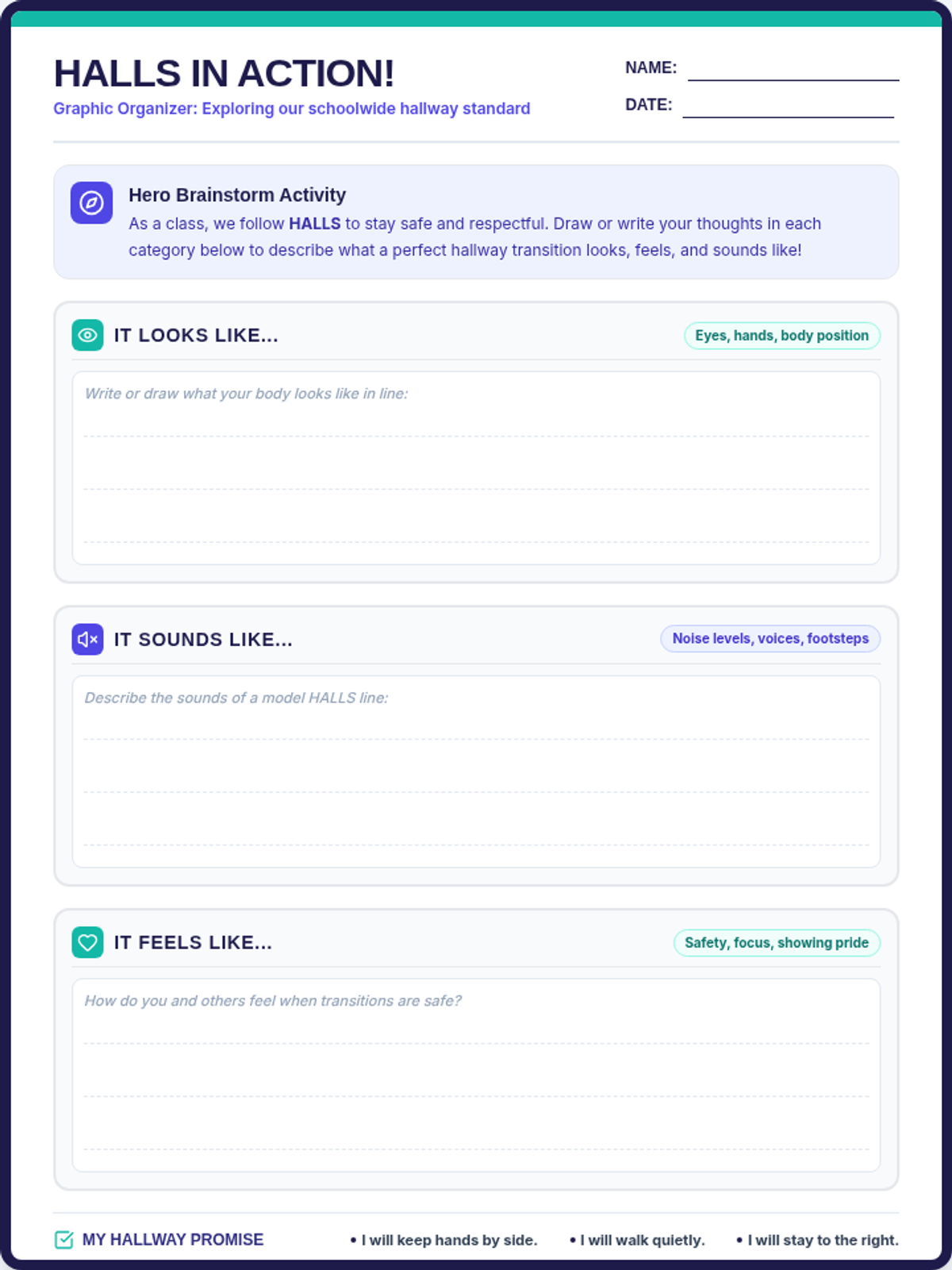
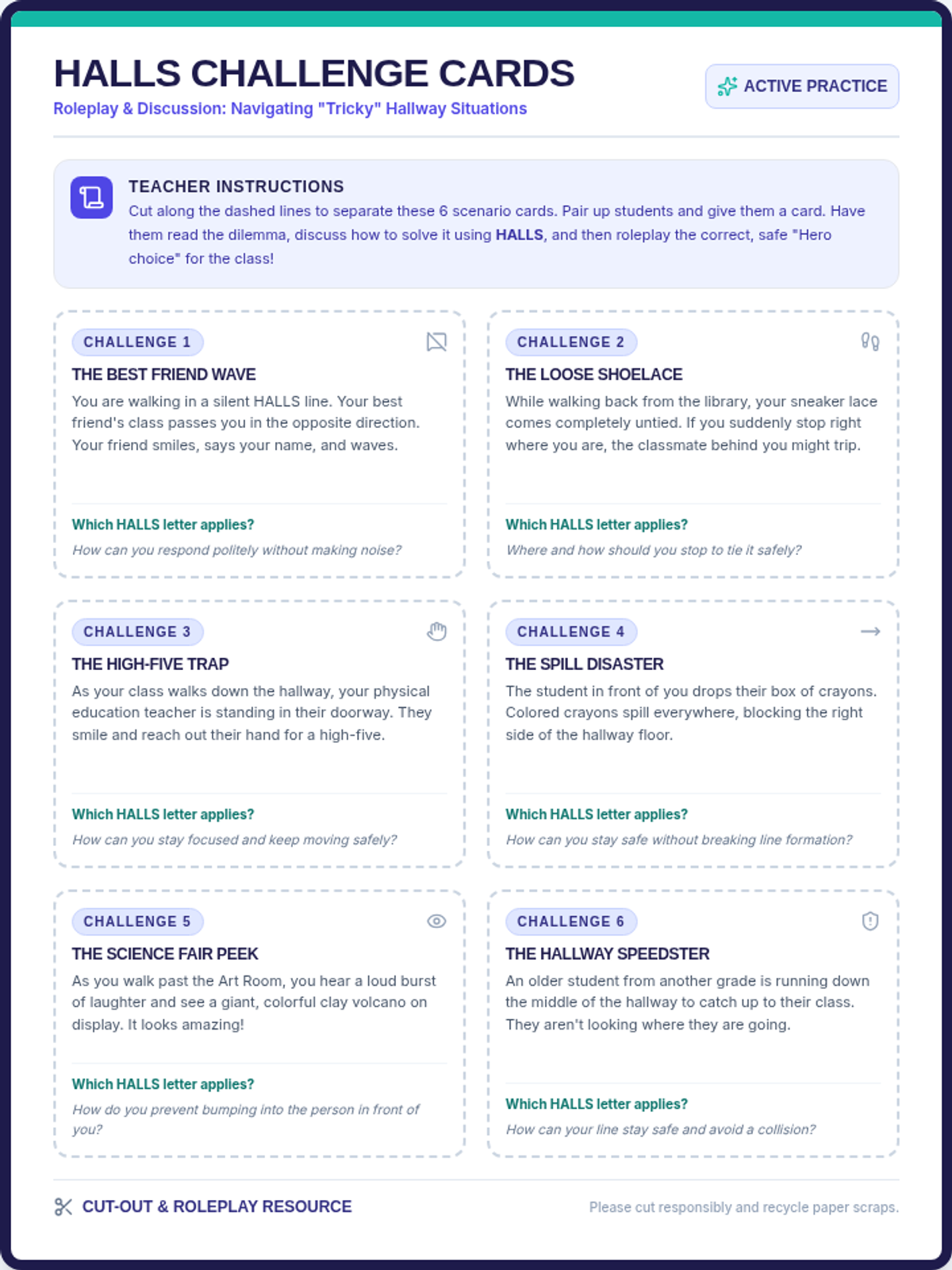
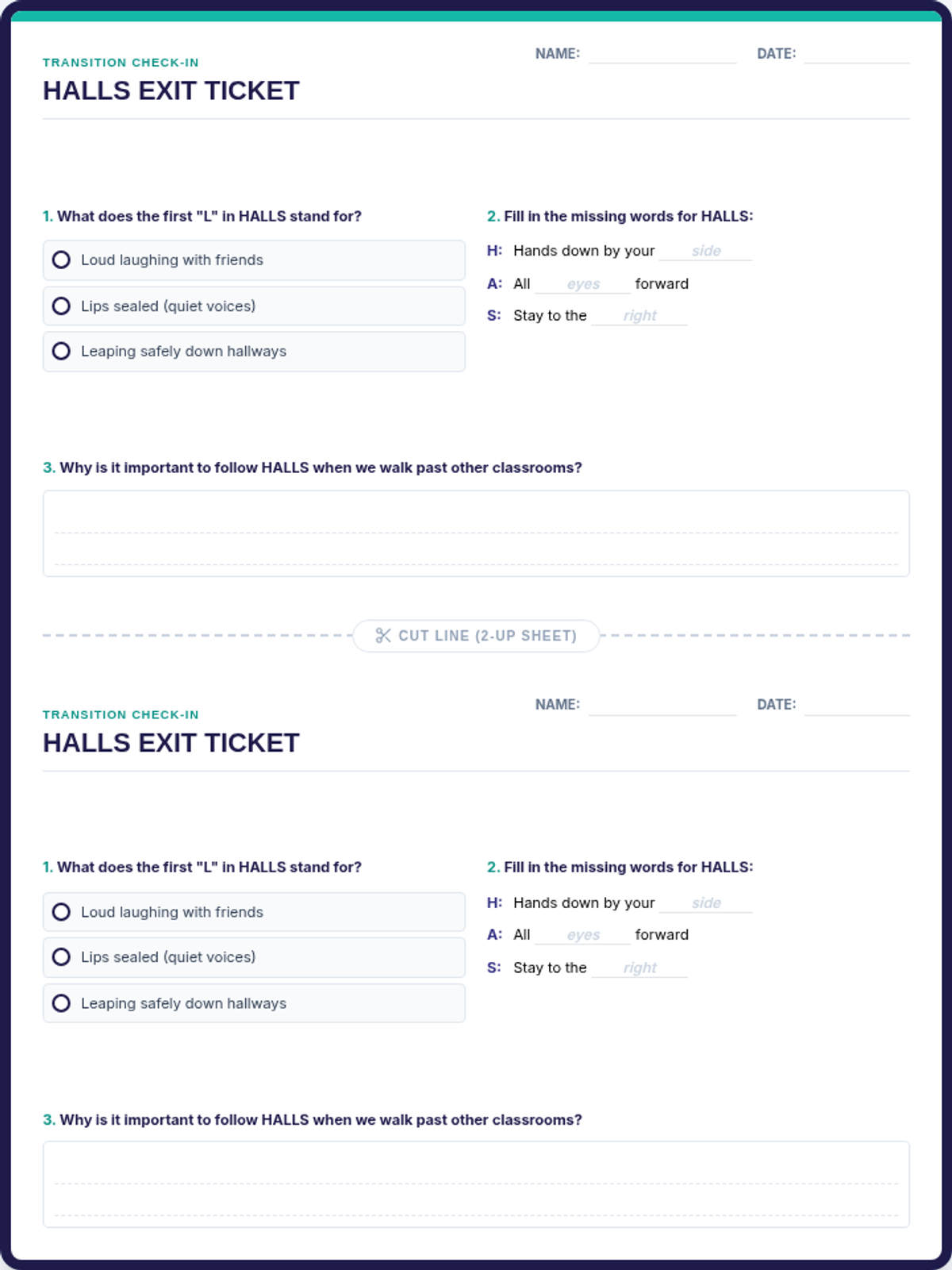
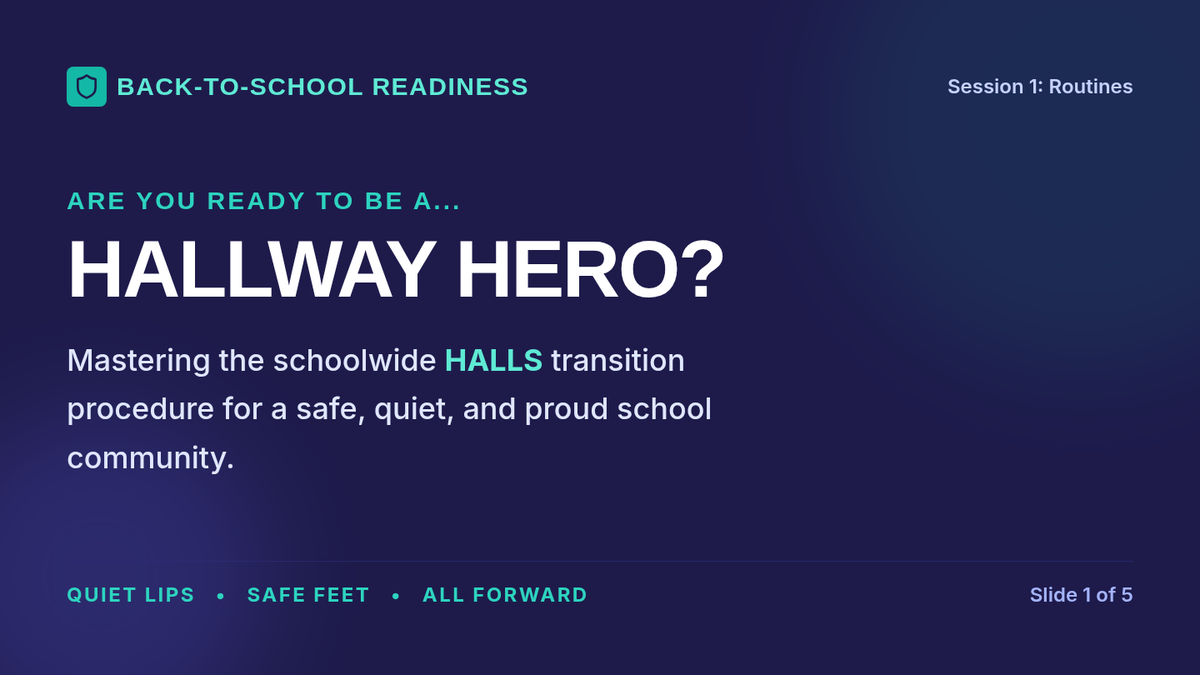
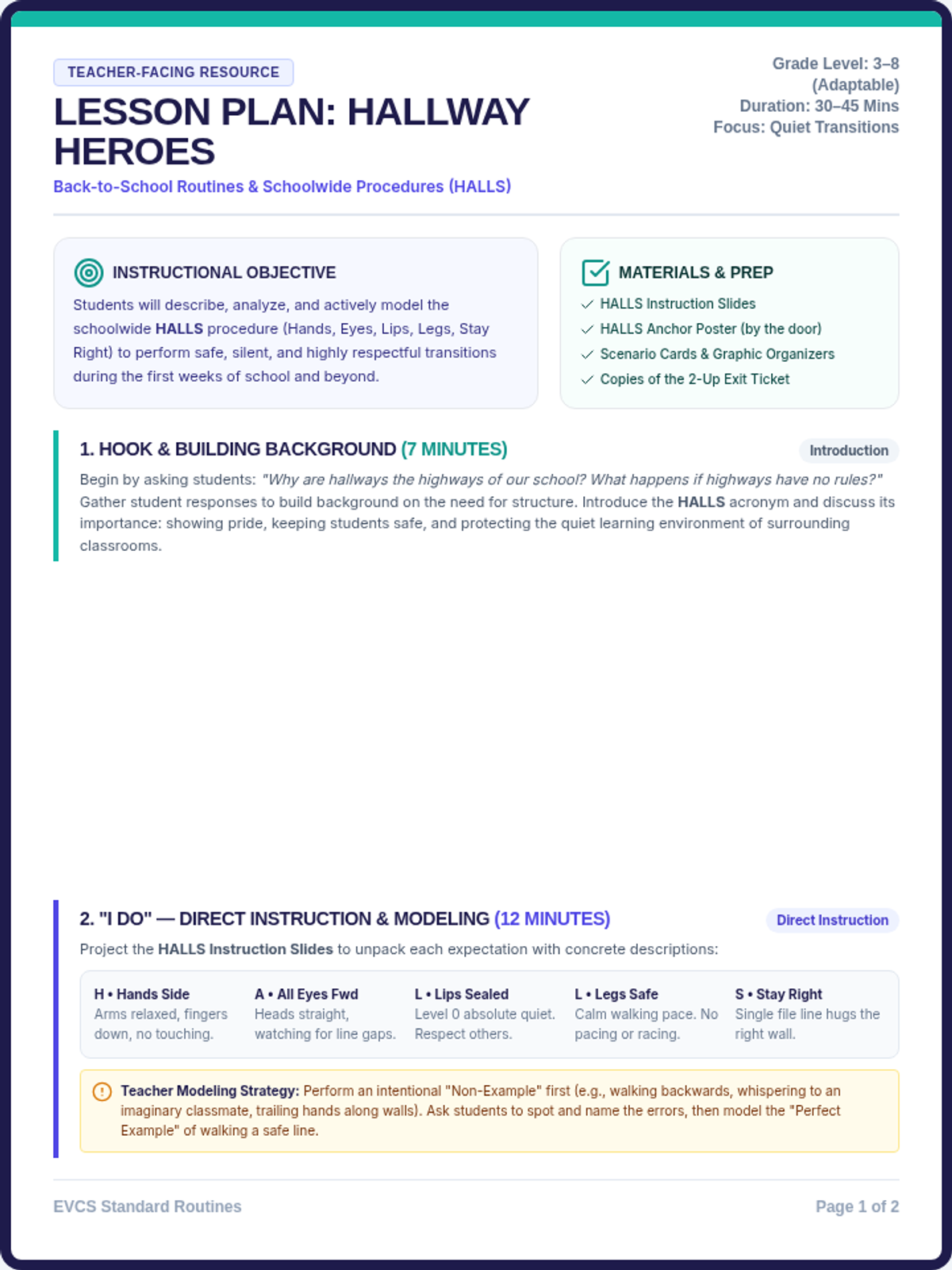
A beginning-of-the-year lesson teaching students the schoolwide HALLS procedure for safe and respectful hallway transitions. This lesson covers explicit teacher modeling, interactive student roleplay, and self-assessment of the HALLS expectations.
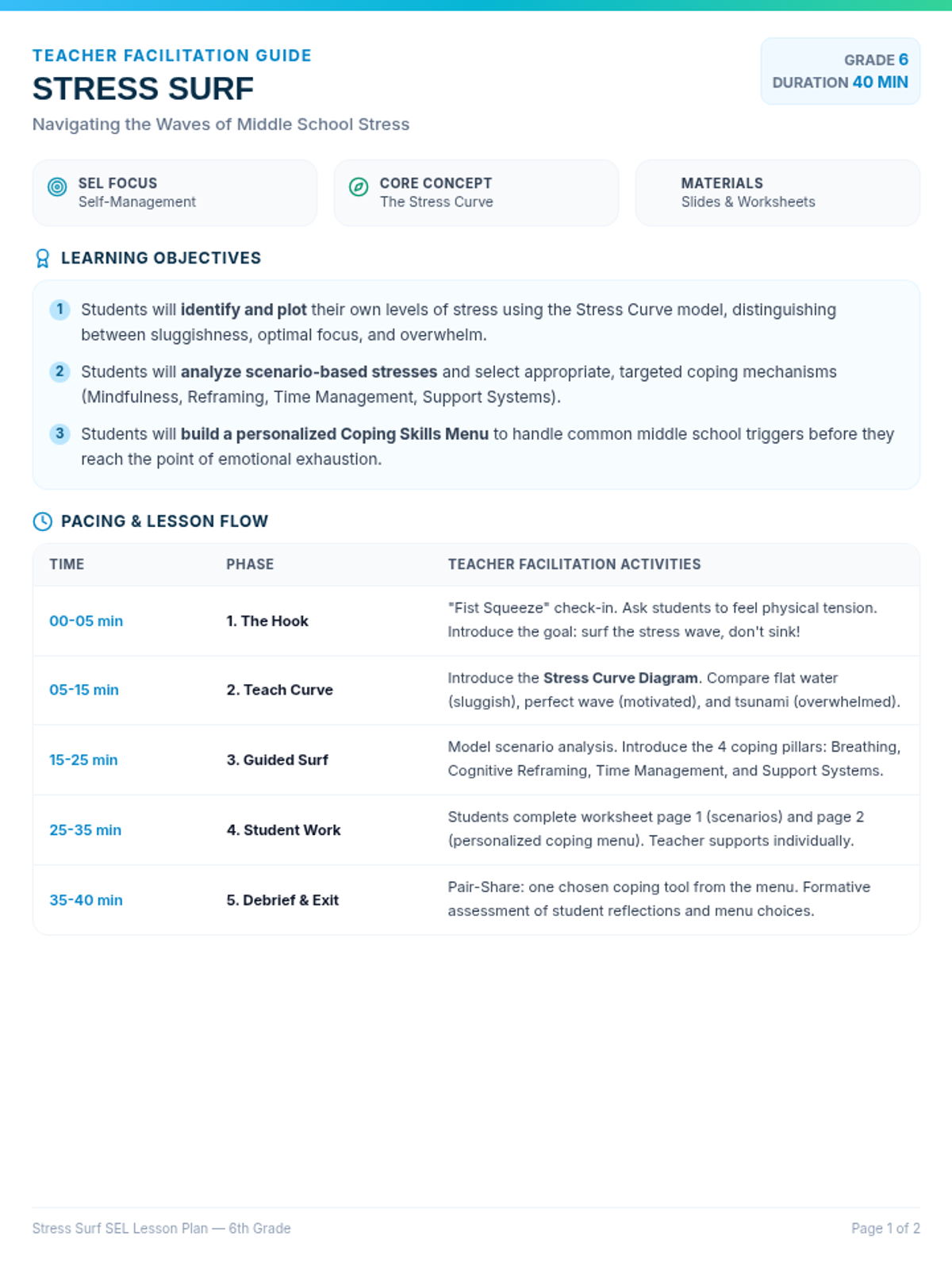
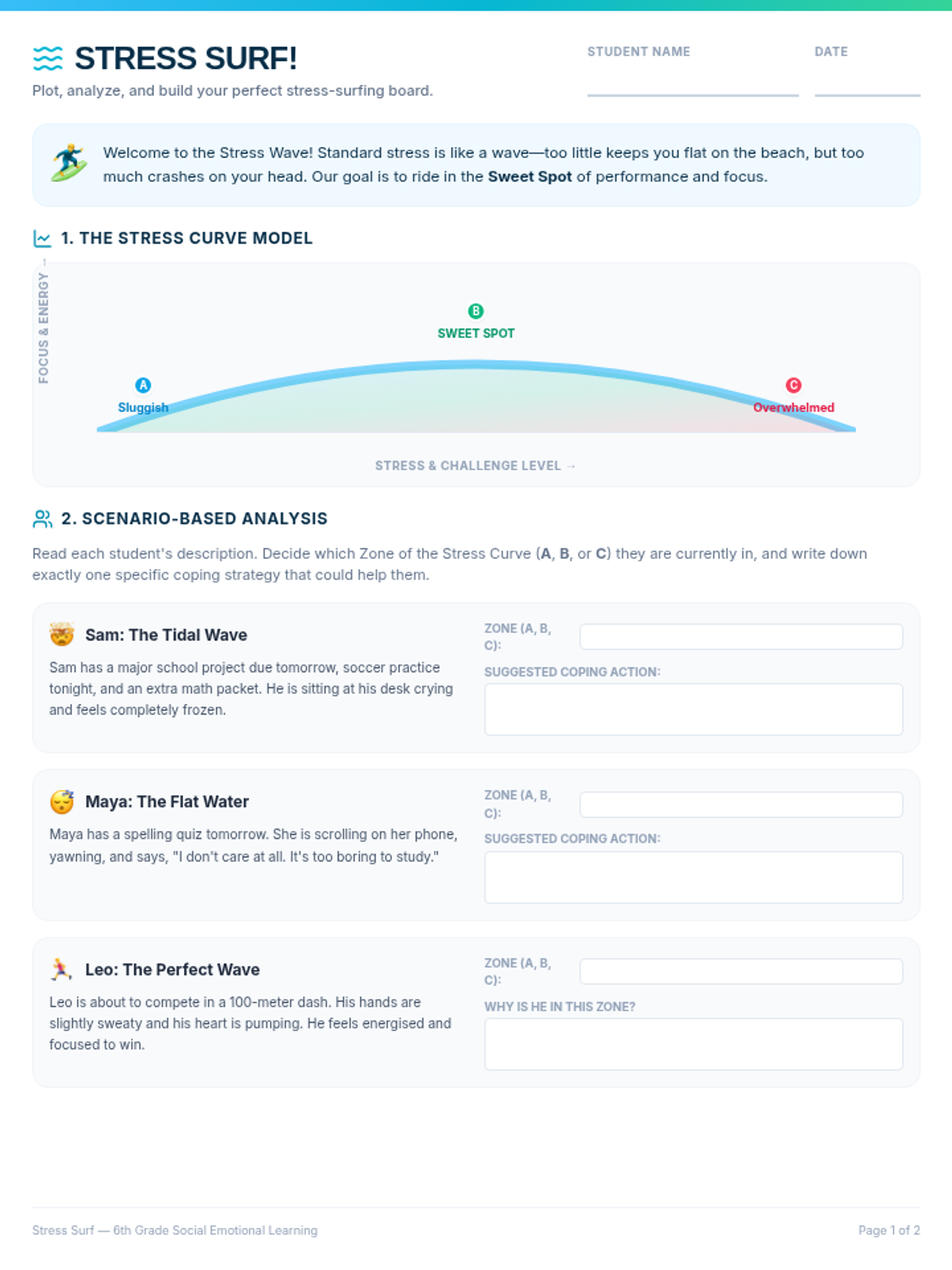
A 40-minute SEL lesson for 6th graders to understand the Yerkes-Dodson Stress Curve, identifying the 'sweet spot' of positive stress (eustress) versus overwhelm, and building a personalized coping toolkit.
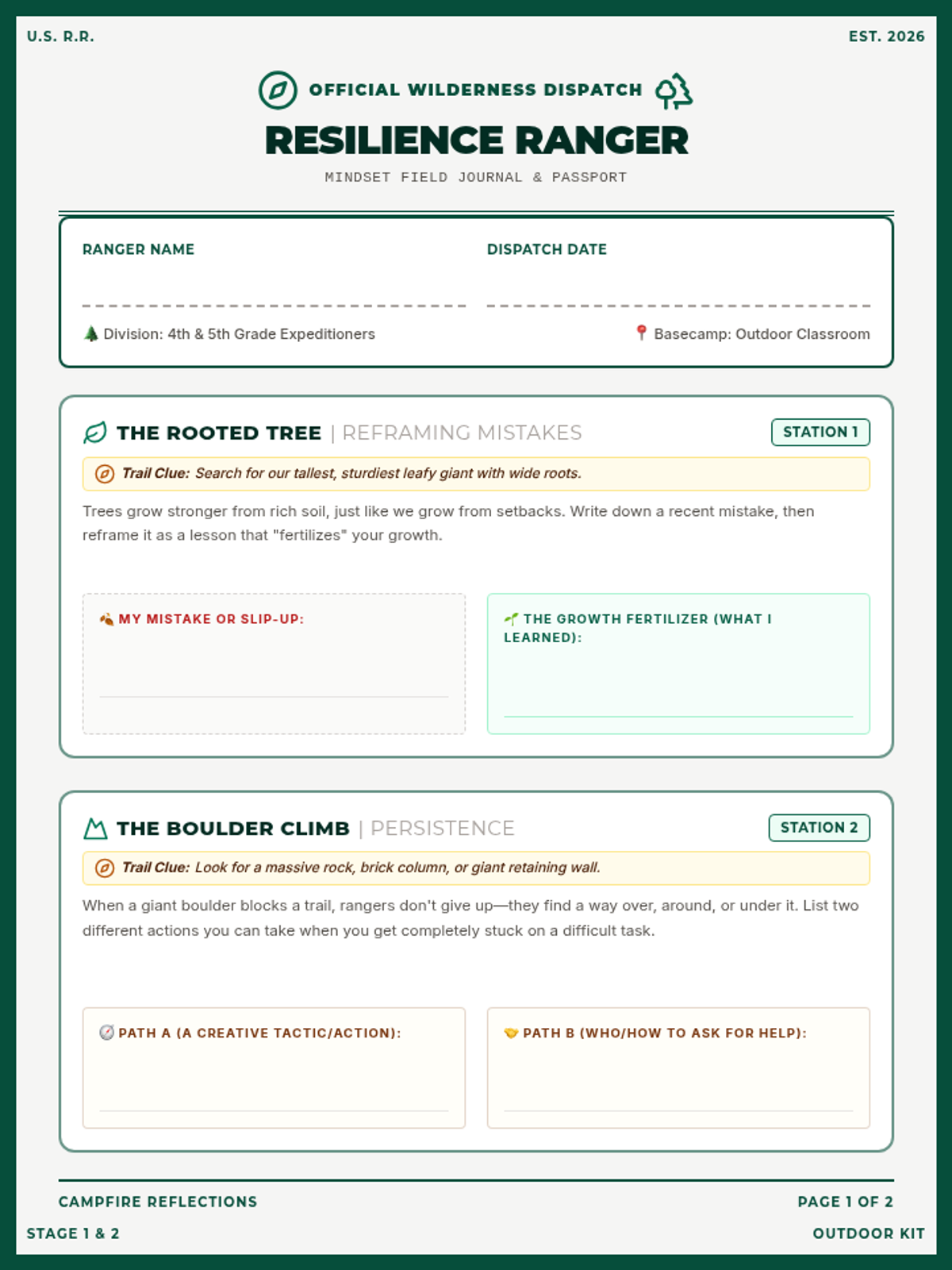
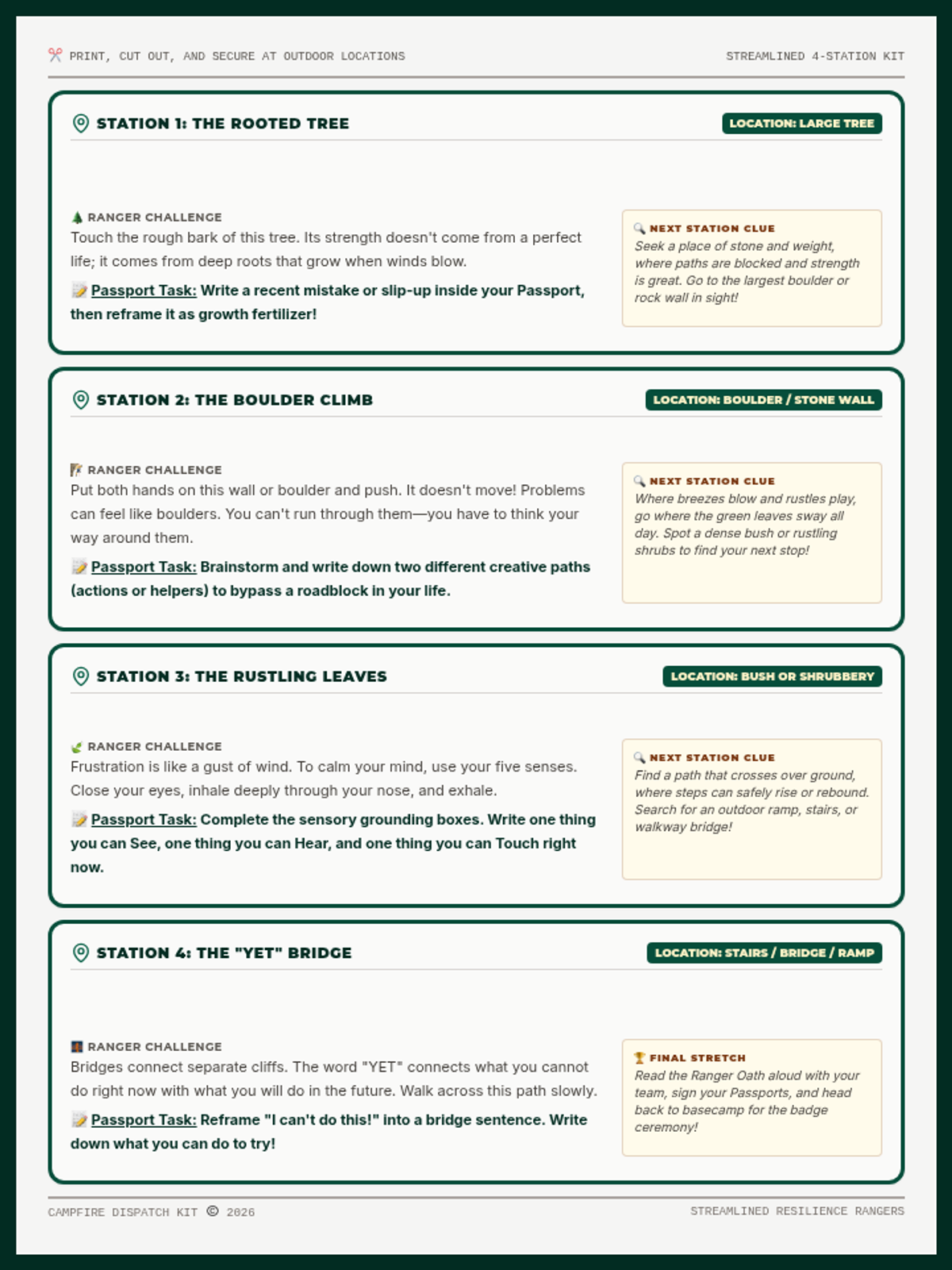
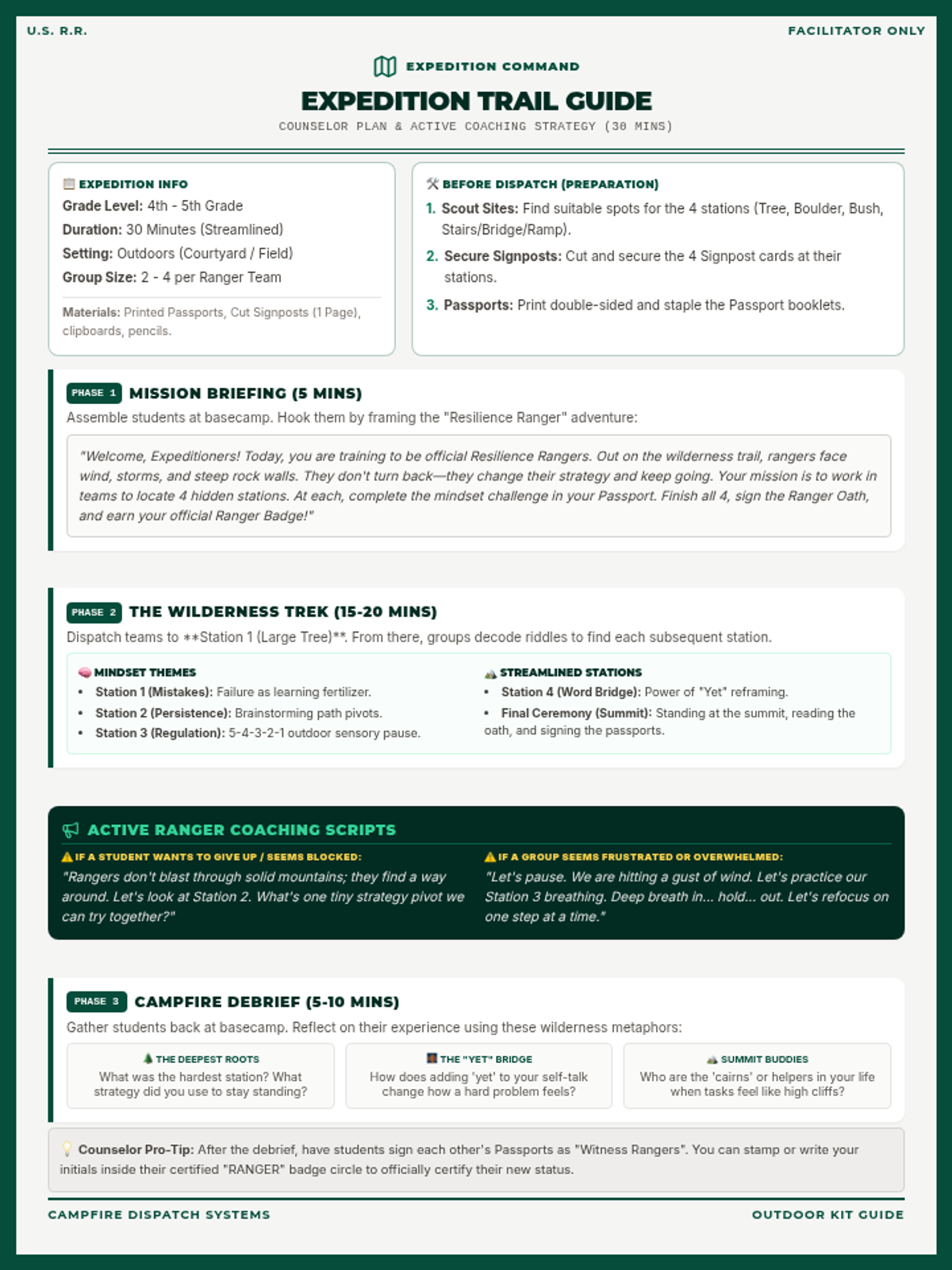
An interactive, outdoor growth mindset scavenger hunt for 4th and 5th graders. Students take on the role of Resilience Rangers, navigating outdoor trail stations to tackle challenges, practice emotional regulation, reframe mistakes, and build persistent mental habits.
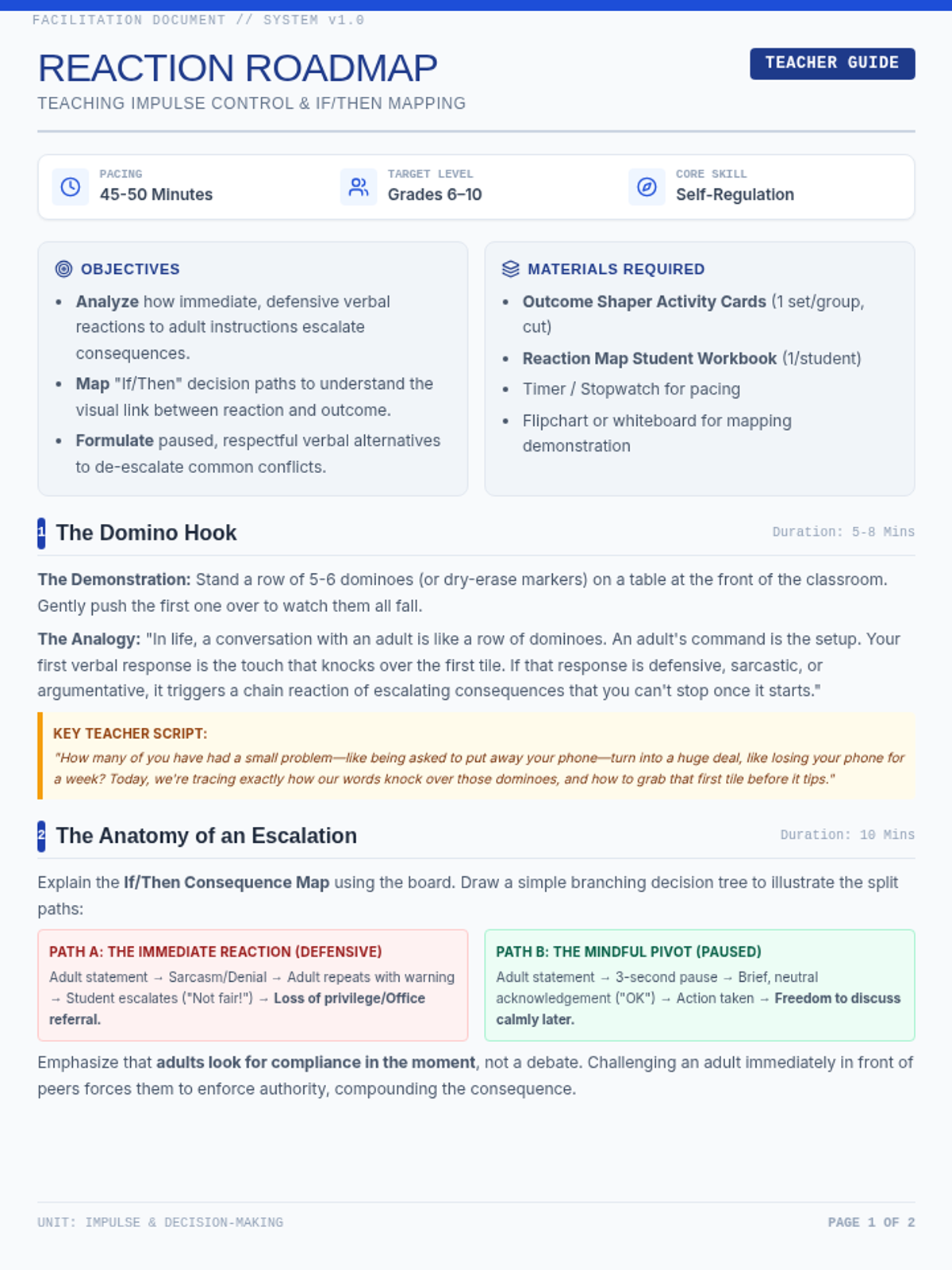
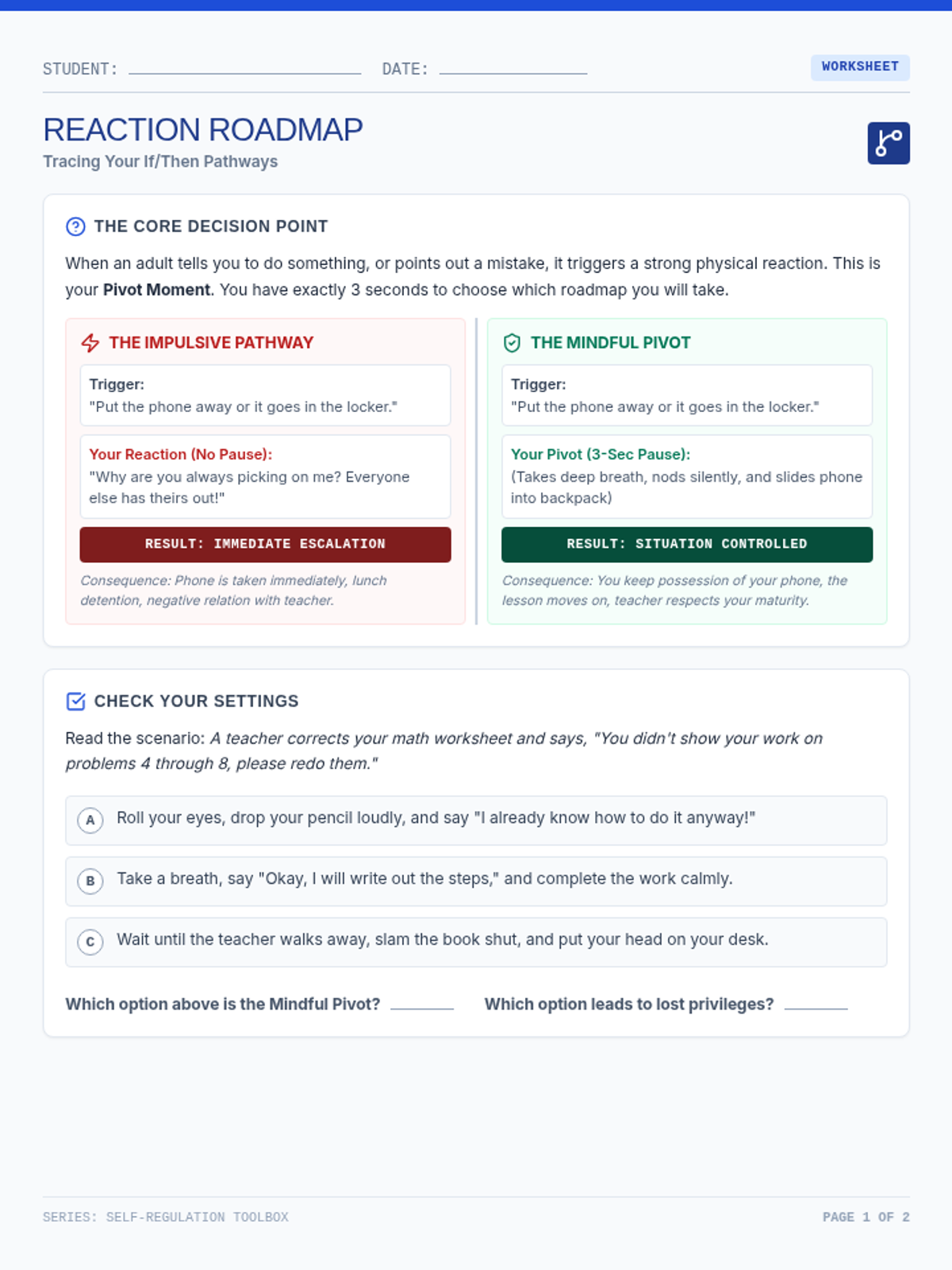
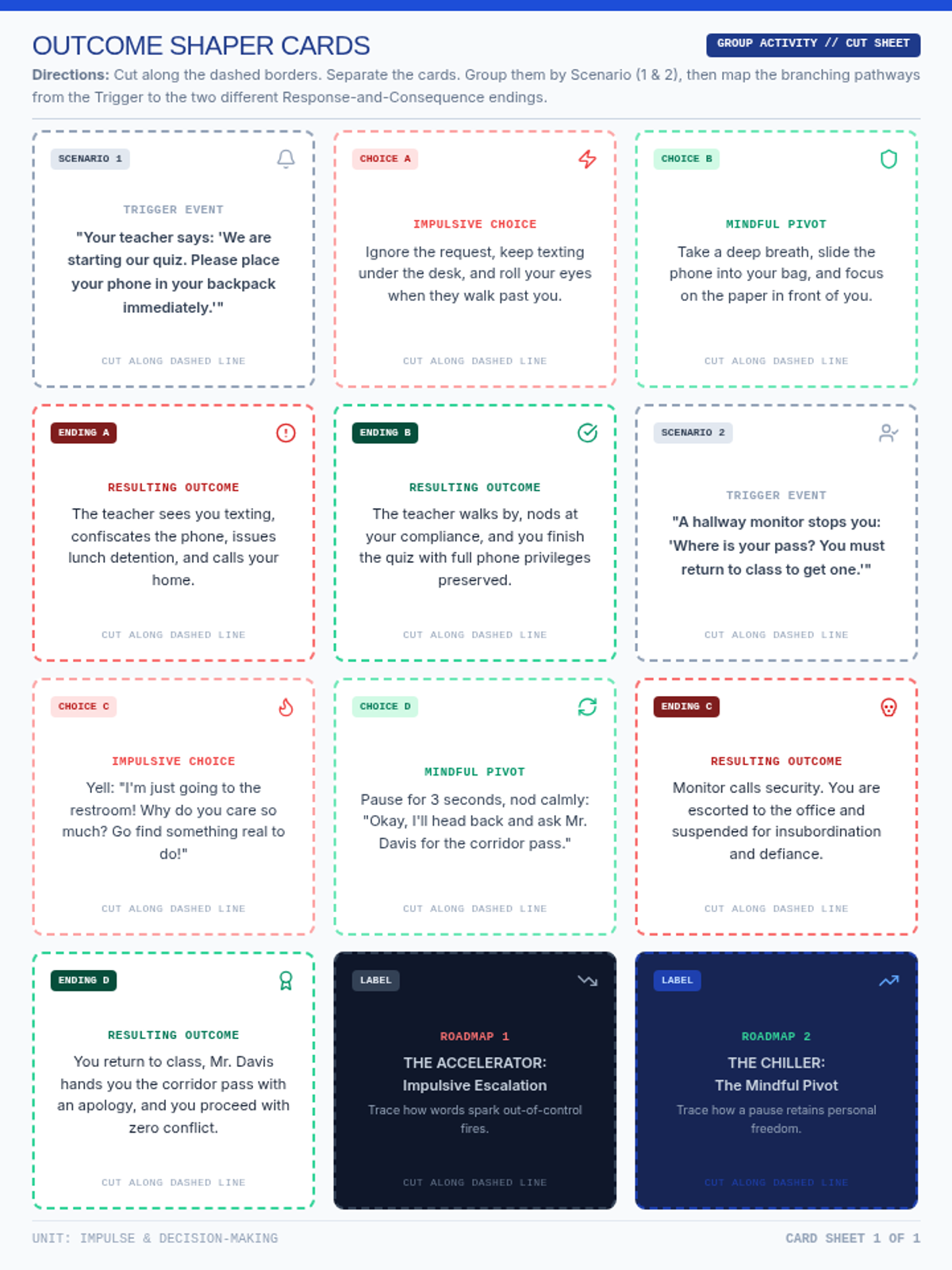
A social-emotional learning lesson focusing on mindfulness and impulse control when interacting with adults, using "If/Then" mapping to trace how impulsive verbal reactions escalate consequences.
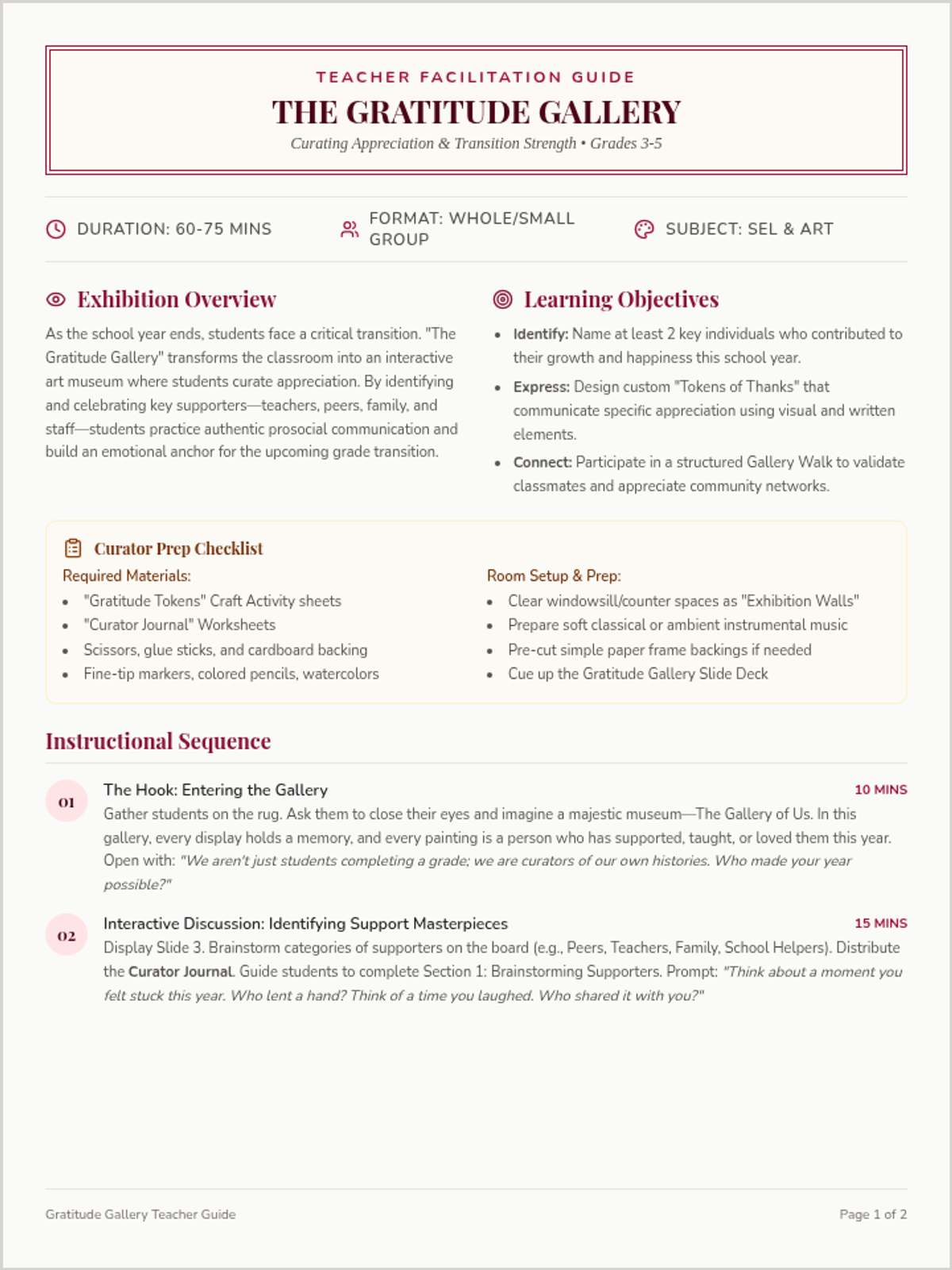
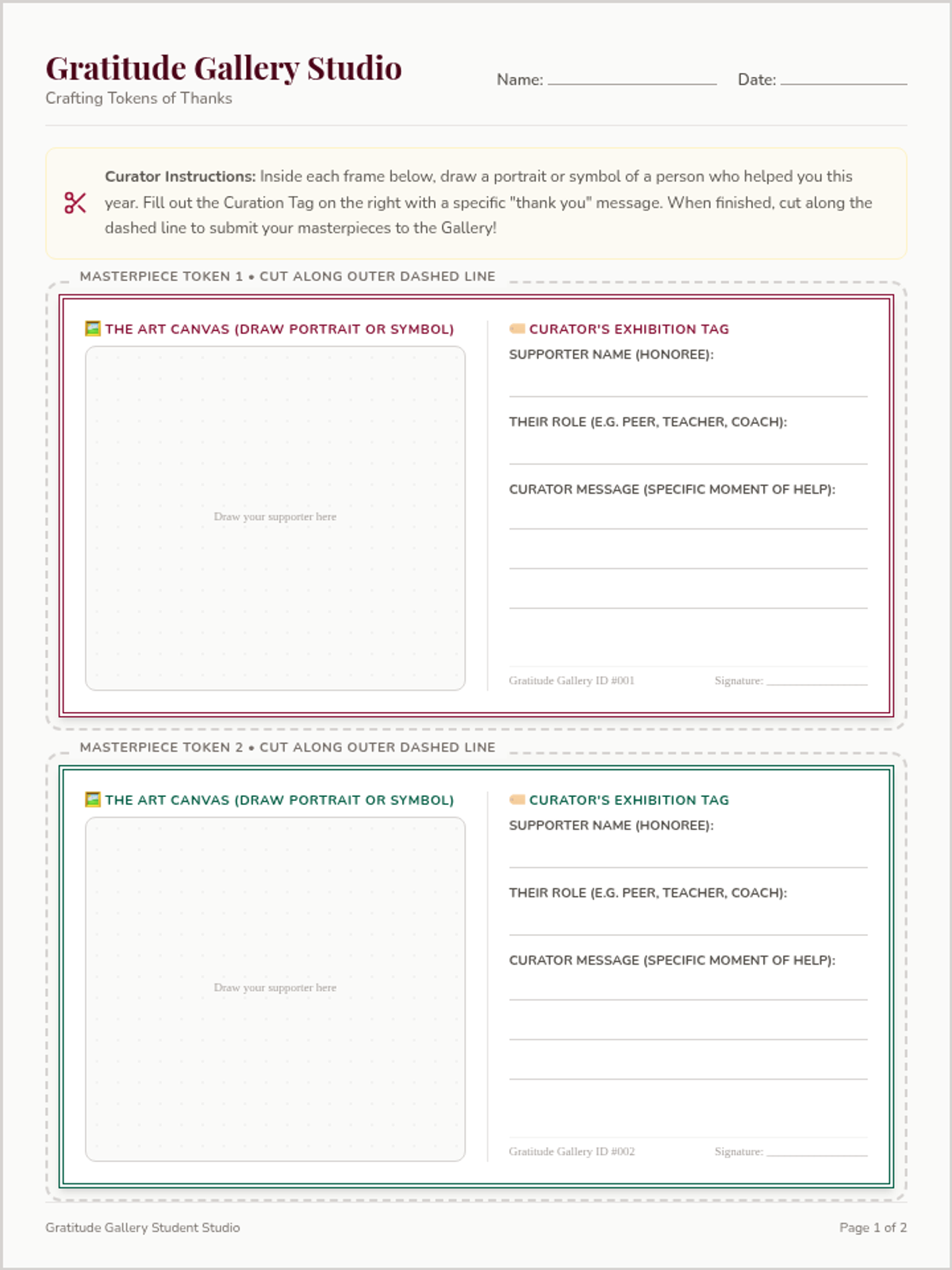
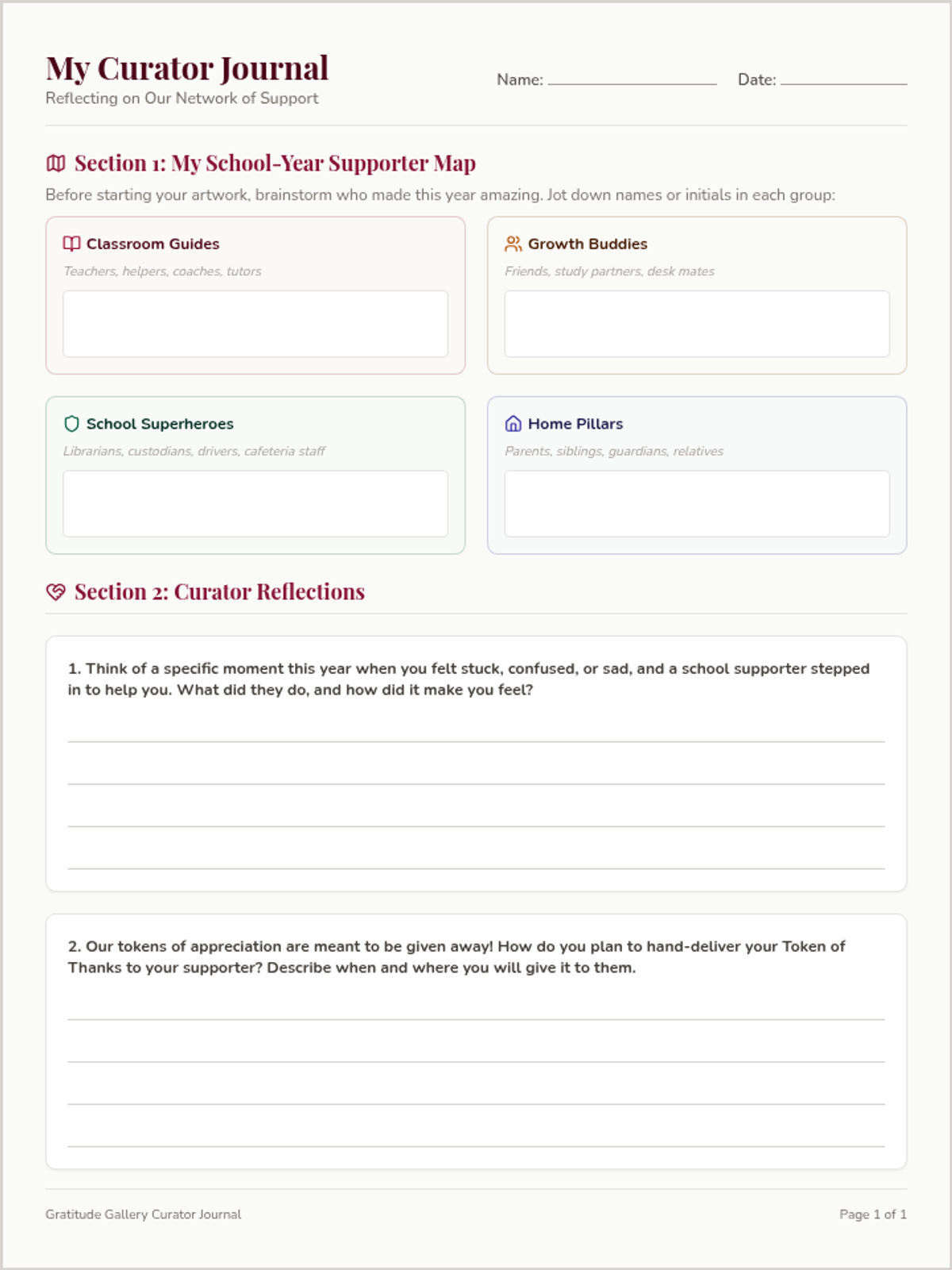
A lesson focusing on the power of expressing appreciation to build a positive community. 3rd-5th grade students reflect on school-year supporters and create physical 'tokens of thanks' to display in a classroom gallery walk, facilitating a positive transition to the next grade.
An operational guide and student handbook for West Lee Middle School Pride, providing comprehensive rules, procedures, and logistical information for families and students.
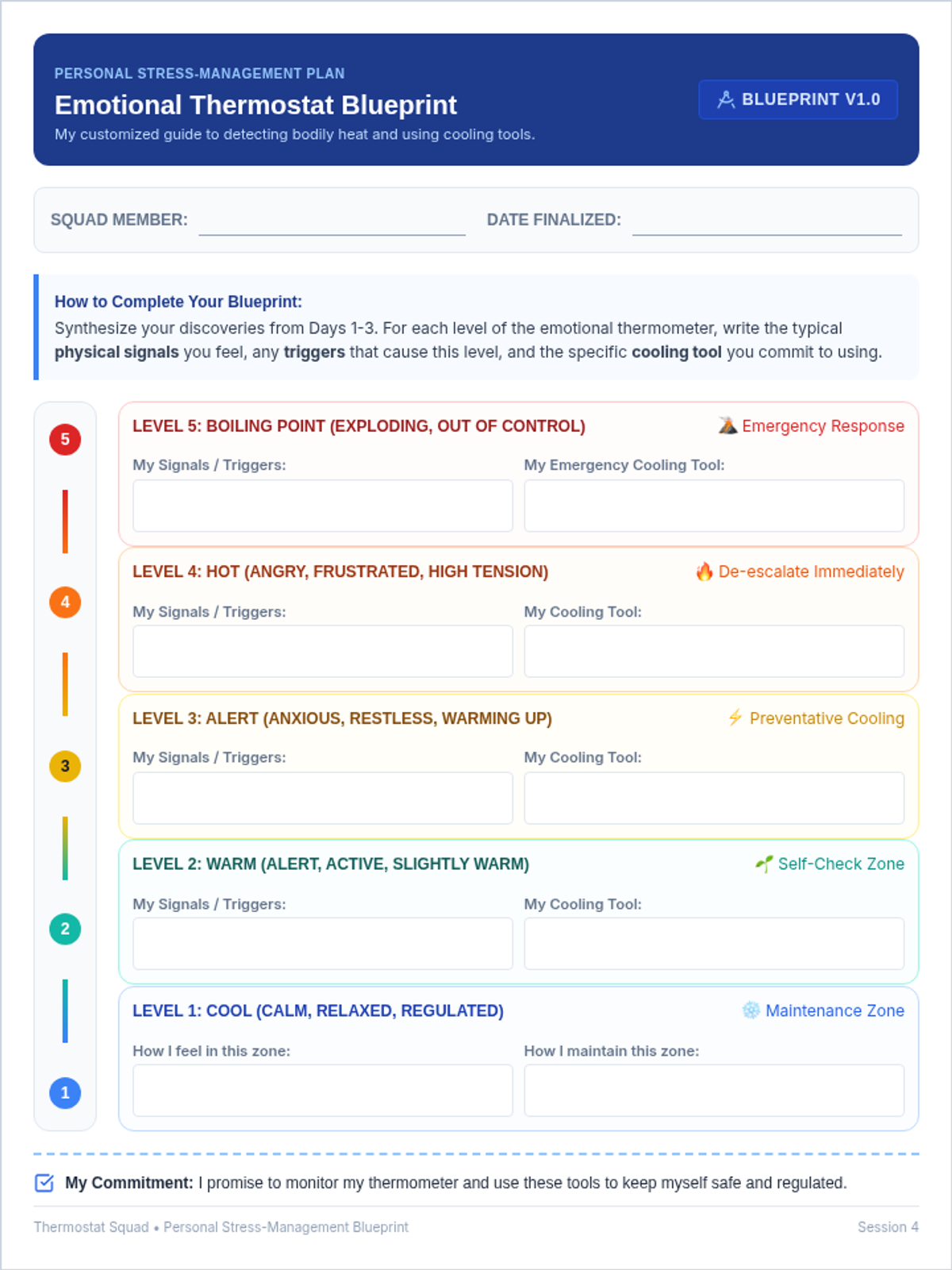
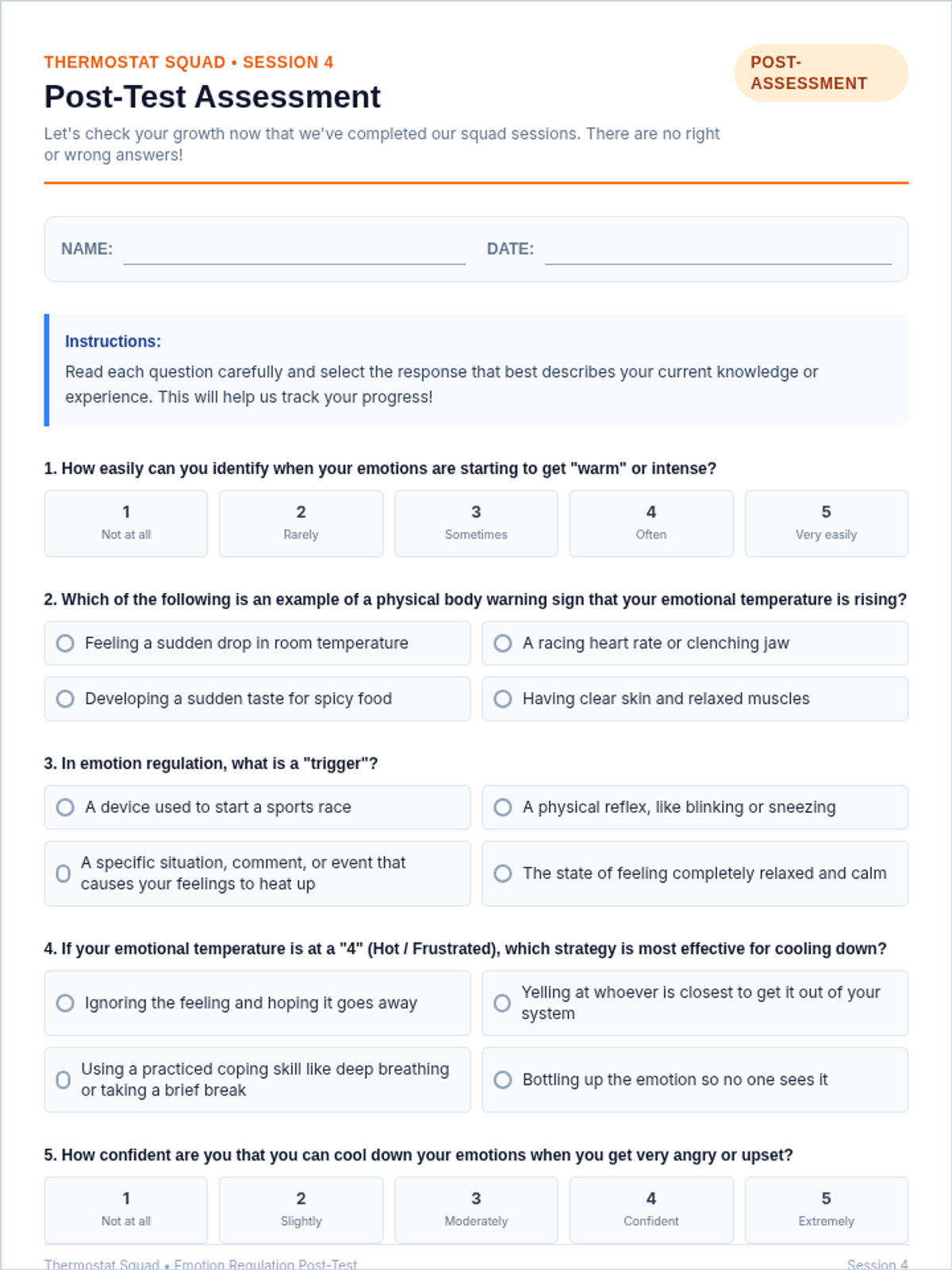
Day 4 guides students in assembling their personalized Stress-Management Blueprint, practicing high-temperature cooling tools, and completing the identical post-test.
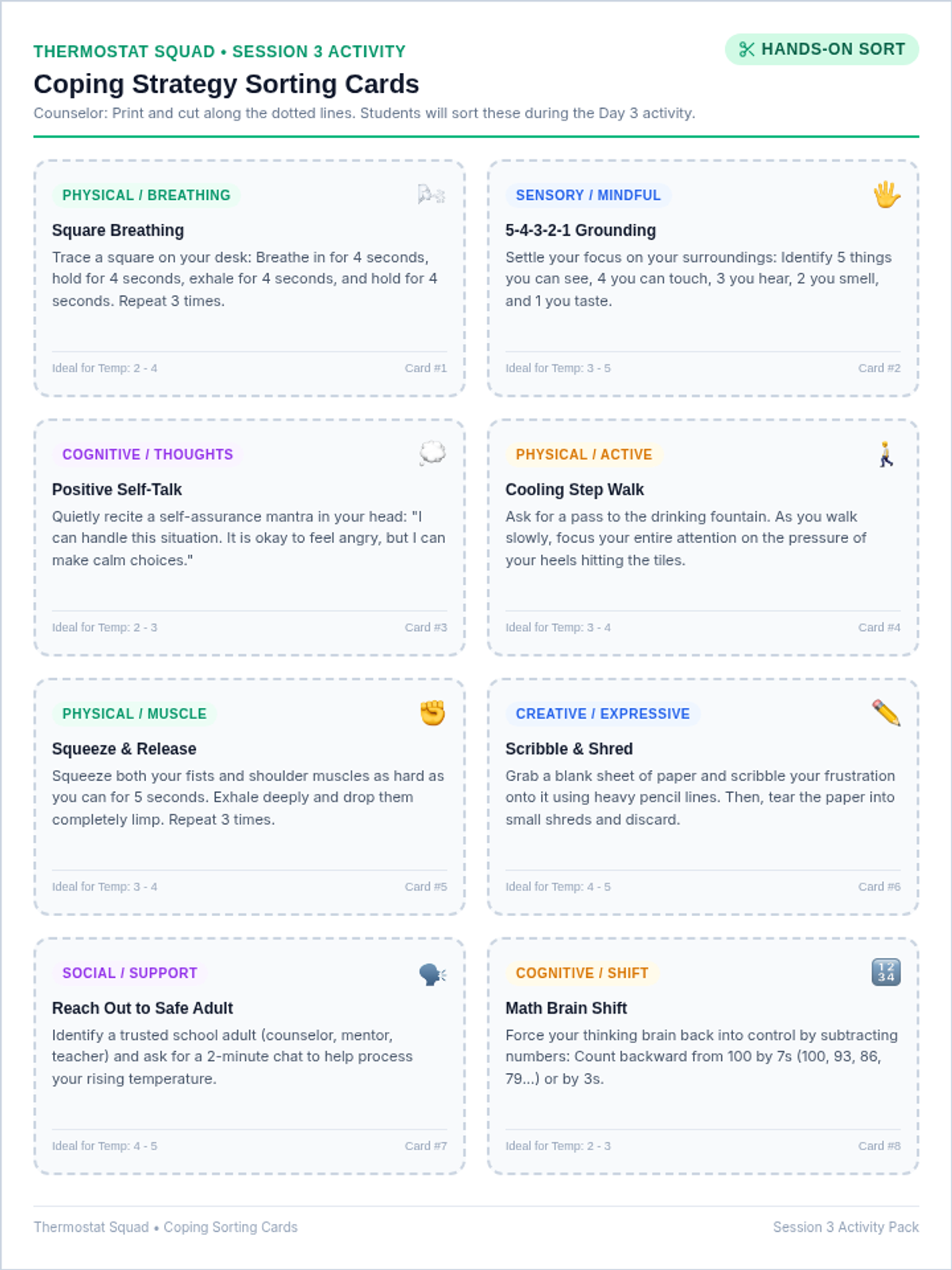
Day 3 teaches students how to match specific coping strategies (cooling tools) to their current temperature zones, with hands-on sorting and practice.
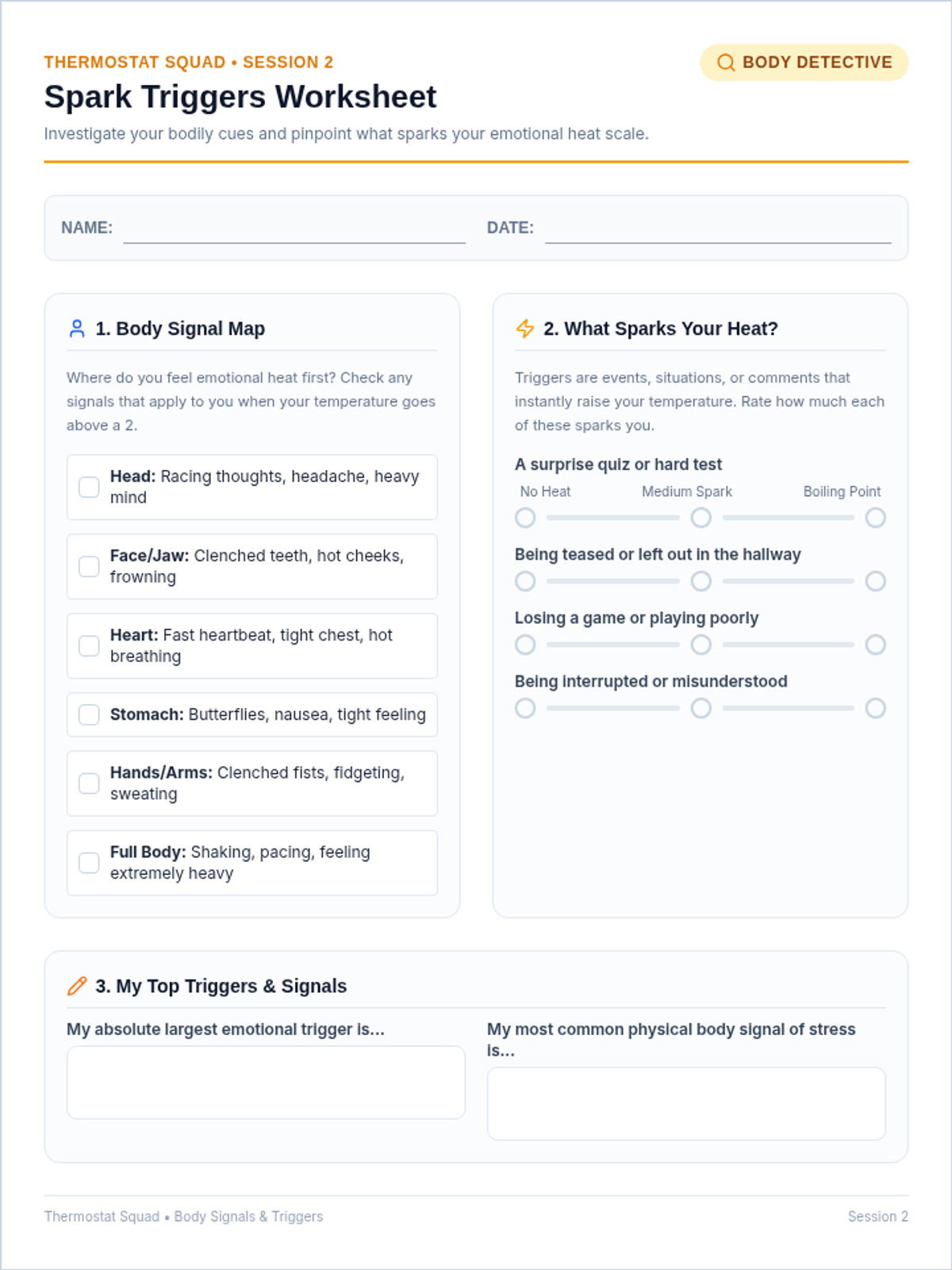
Day 2 guides students in mapping their physical body cues (heart rate, muscle tension, breath) and identifying specific situational triggers that elevate their emotional temperature.