Students study the Forgetting Curve and implement the Leitner System for spaced repetition. They build a sustainable study habit that prioritizes difficult material over mastered content.
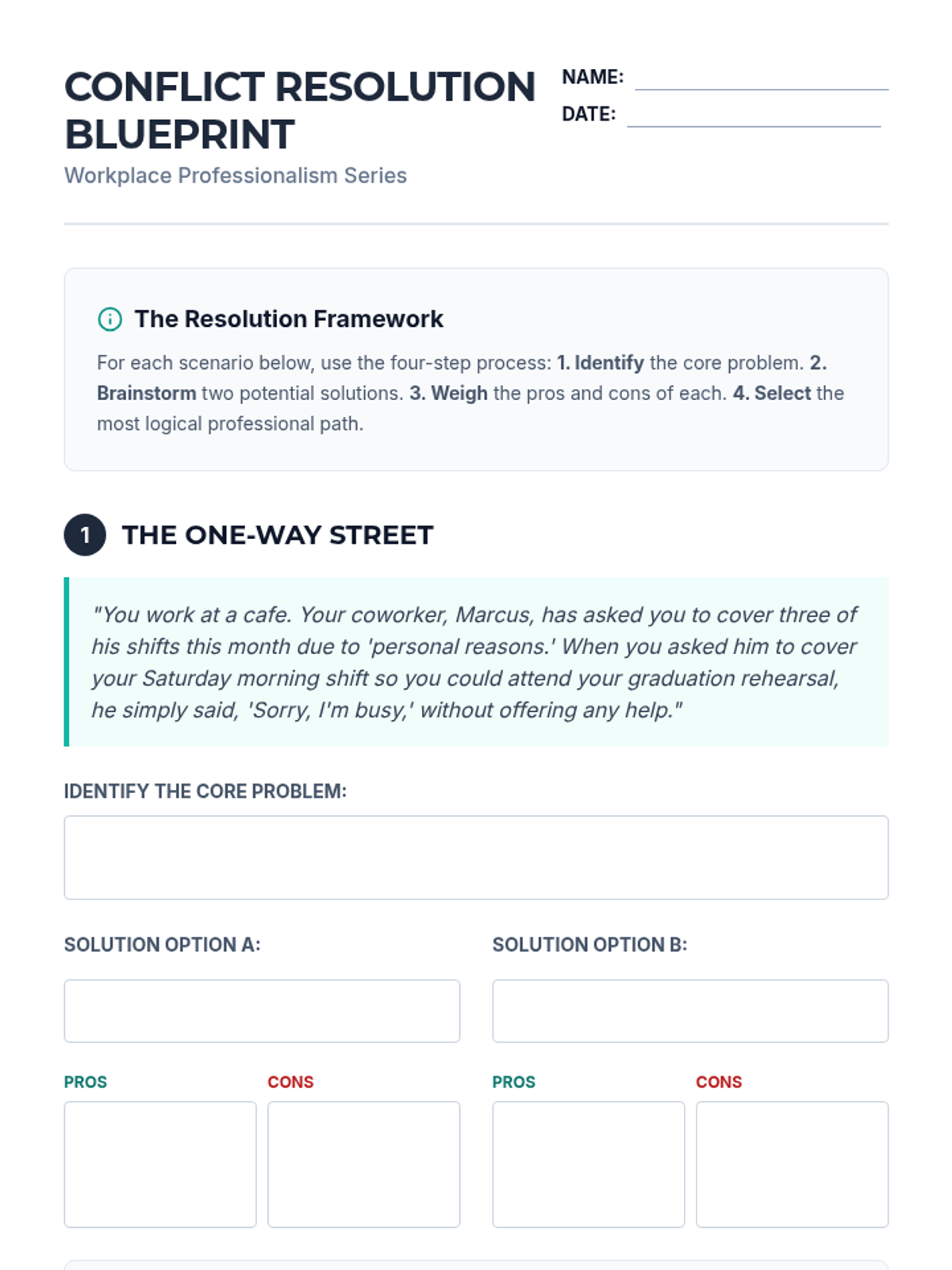
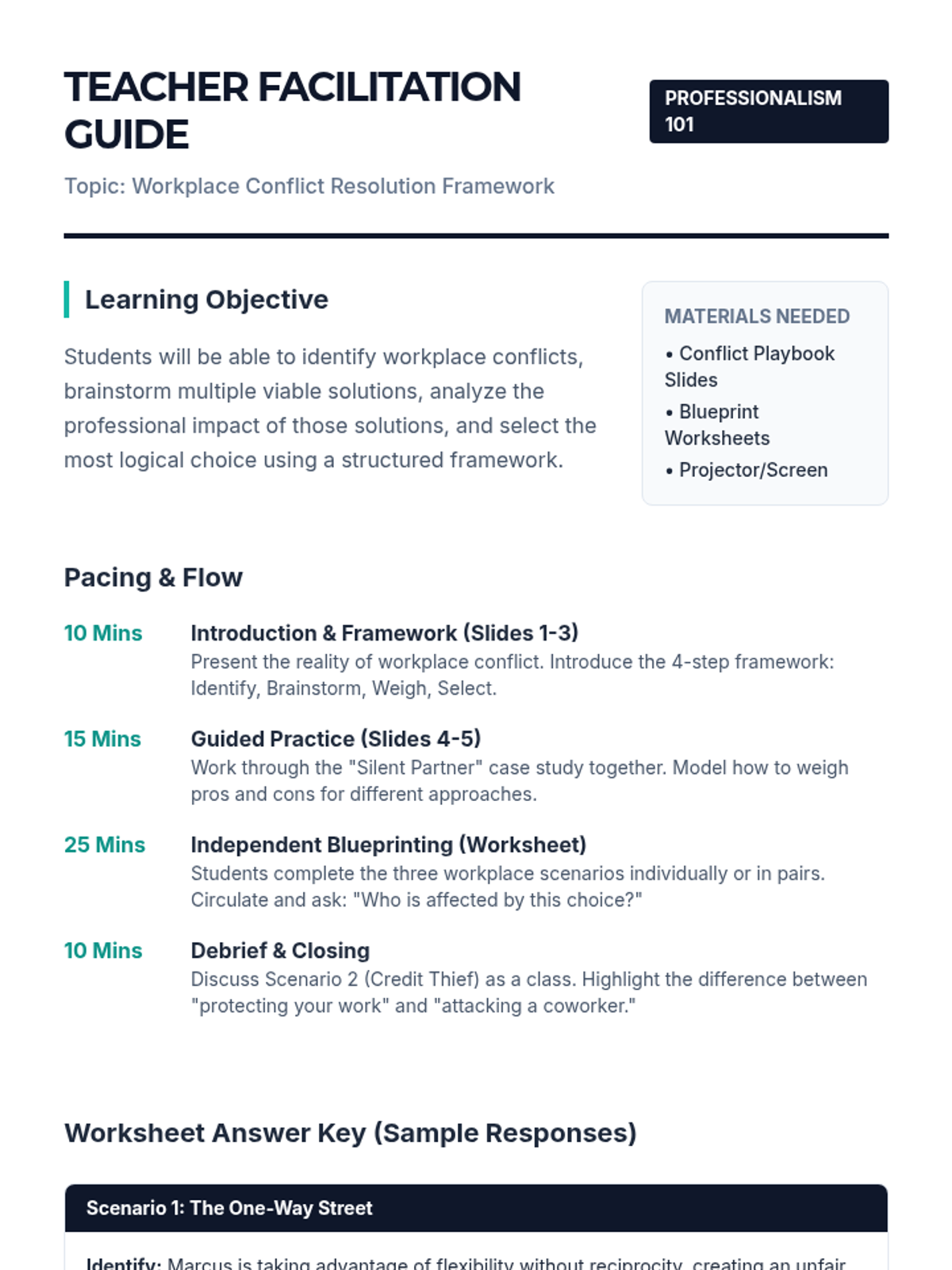
A lesson for high school students on identifying and resolving professional workplace conflicts using a structured decision-making framework. Students analyze realistic scenarios, evaluate multiple solutions, and select the most effective path forward.
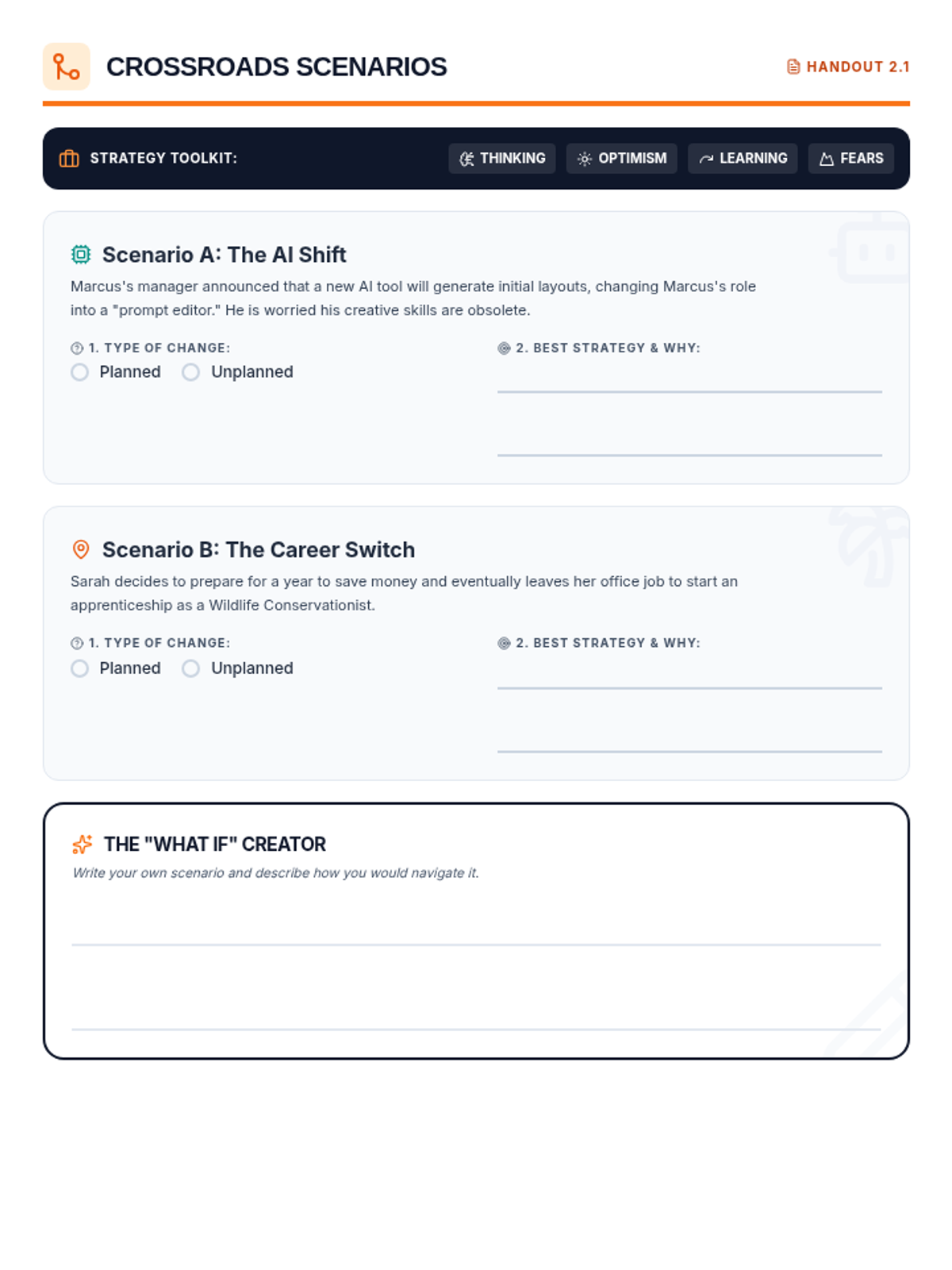
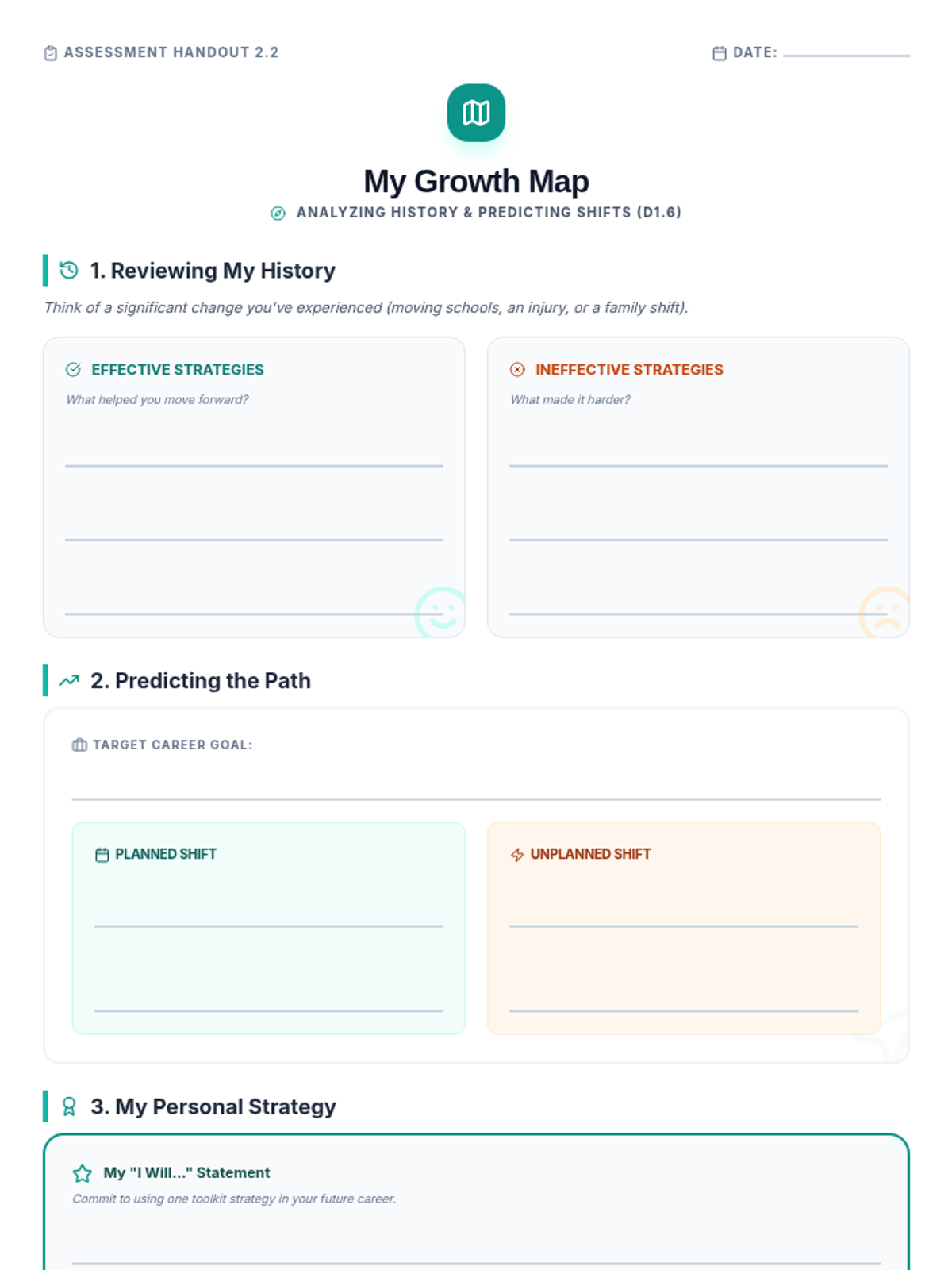
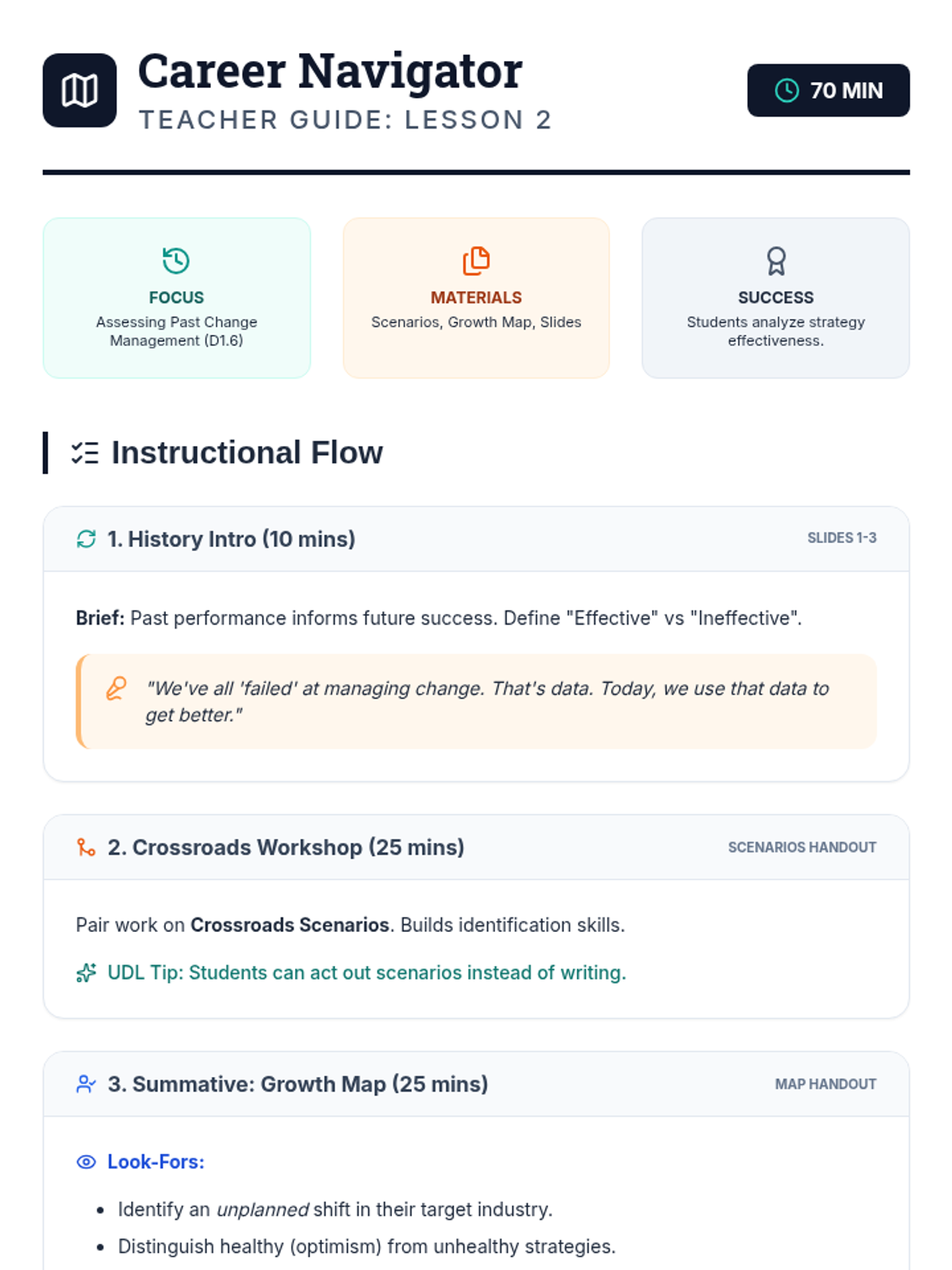
Students analyze past experiences with change to assess their own management strategies and apply resilience tools to real-world career scenarios.
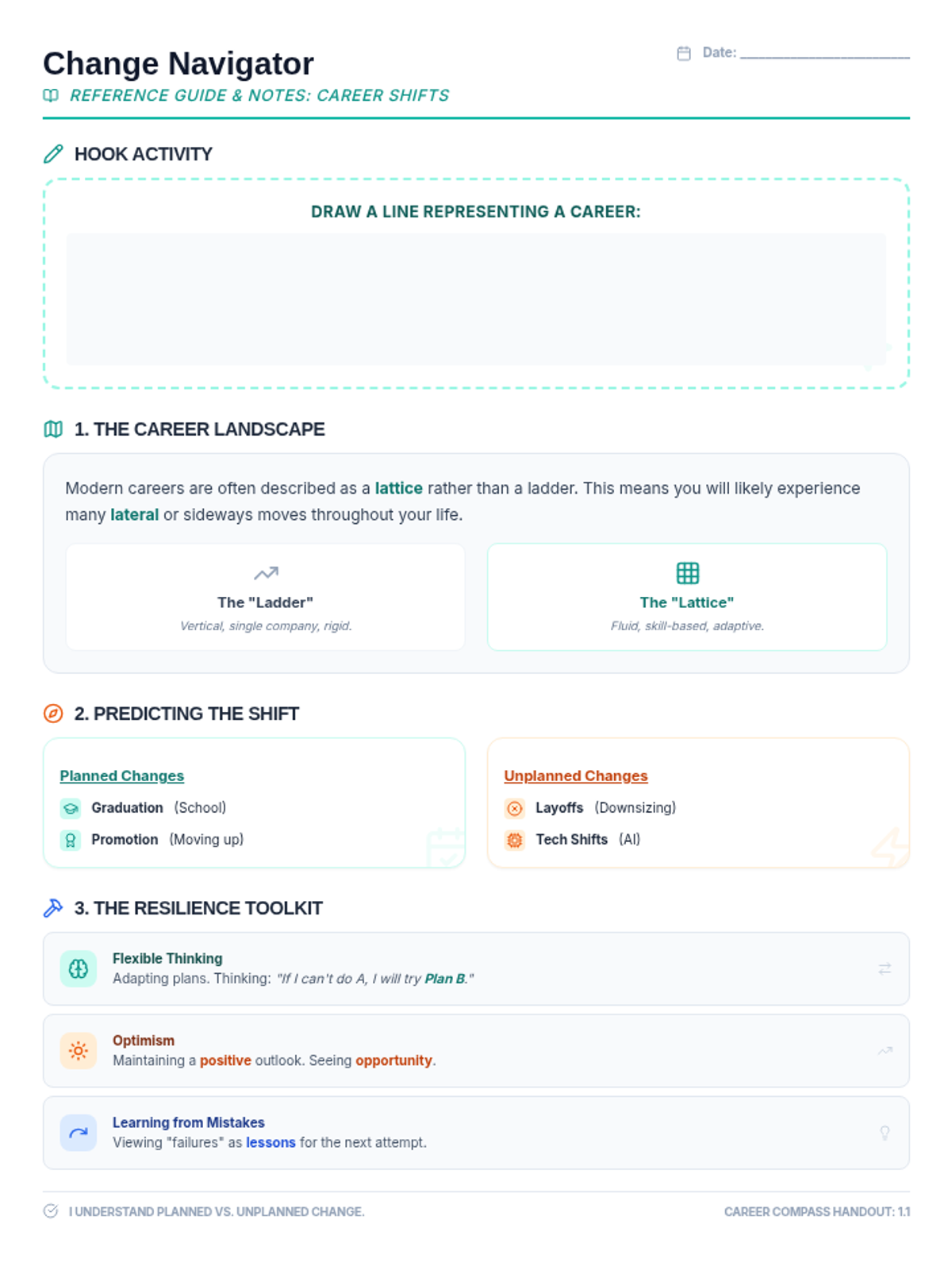
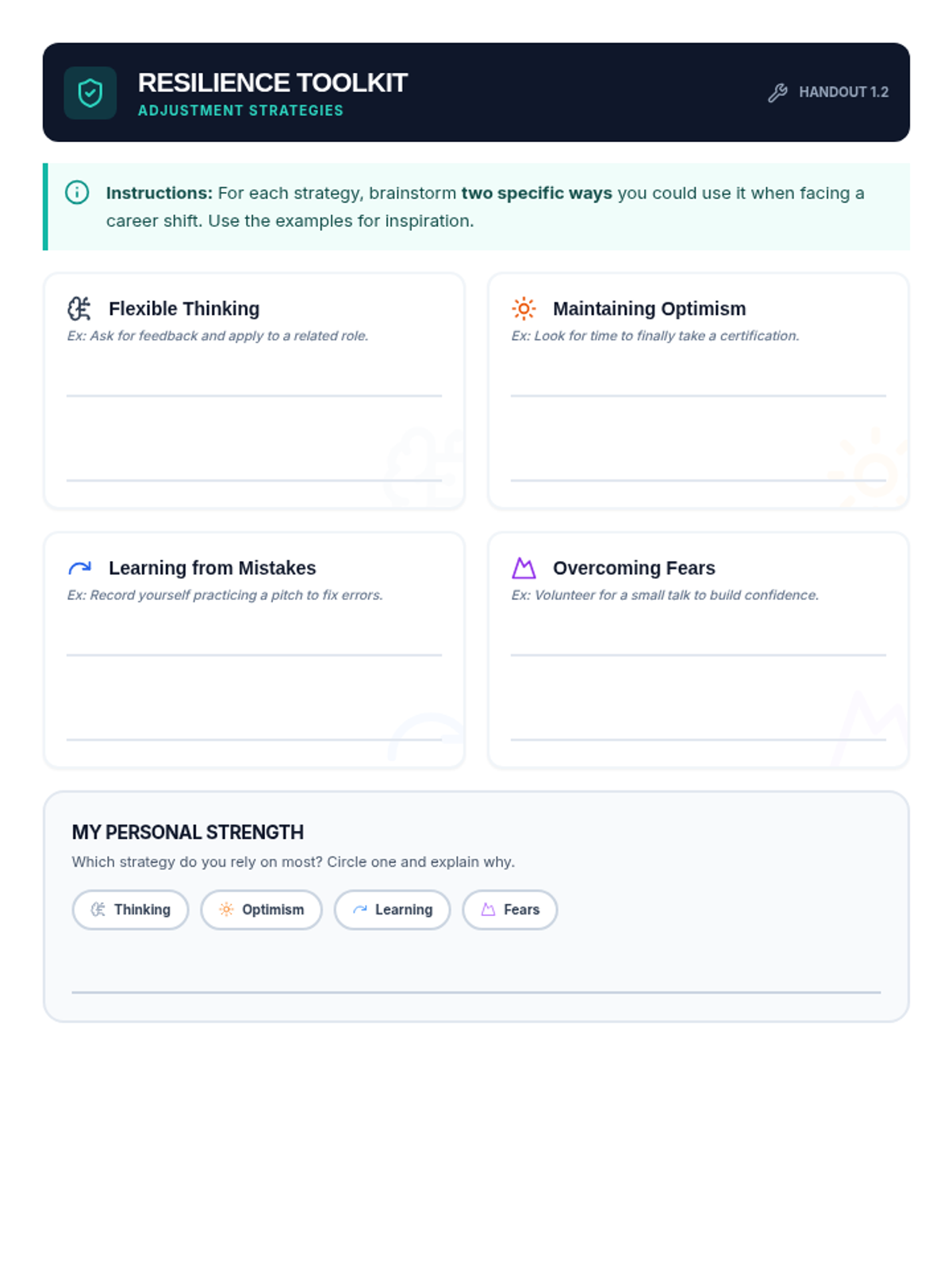
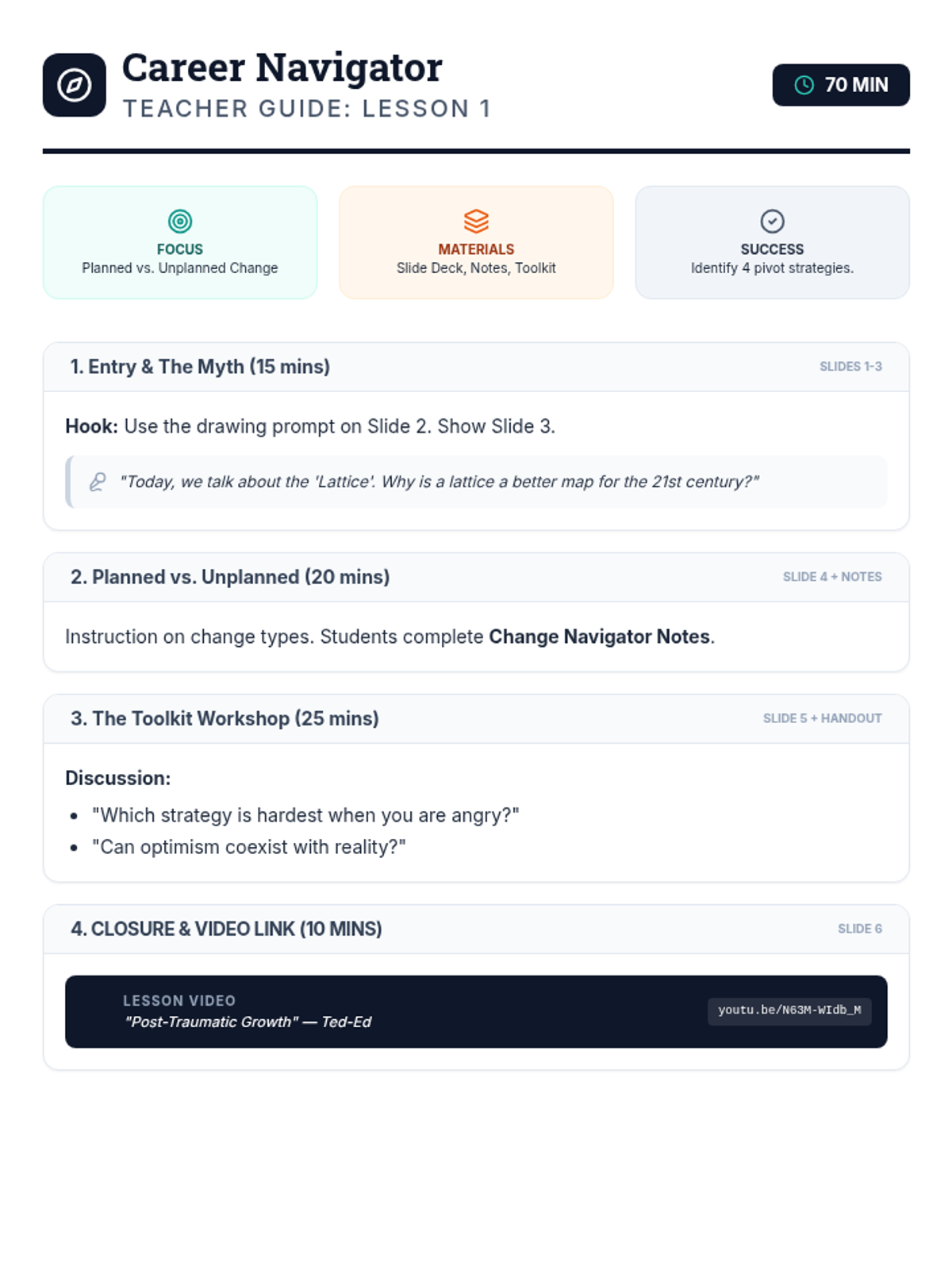
Students explore the nature of planned and unplanned career changes and identify key resilience strategies (flexible thinking, optimism, learning from mistakes) using visual-heavy guided notes.
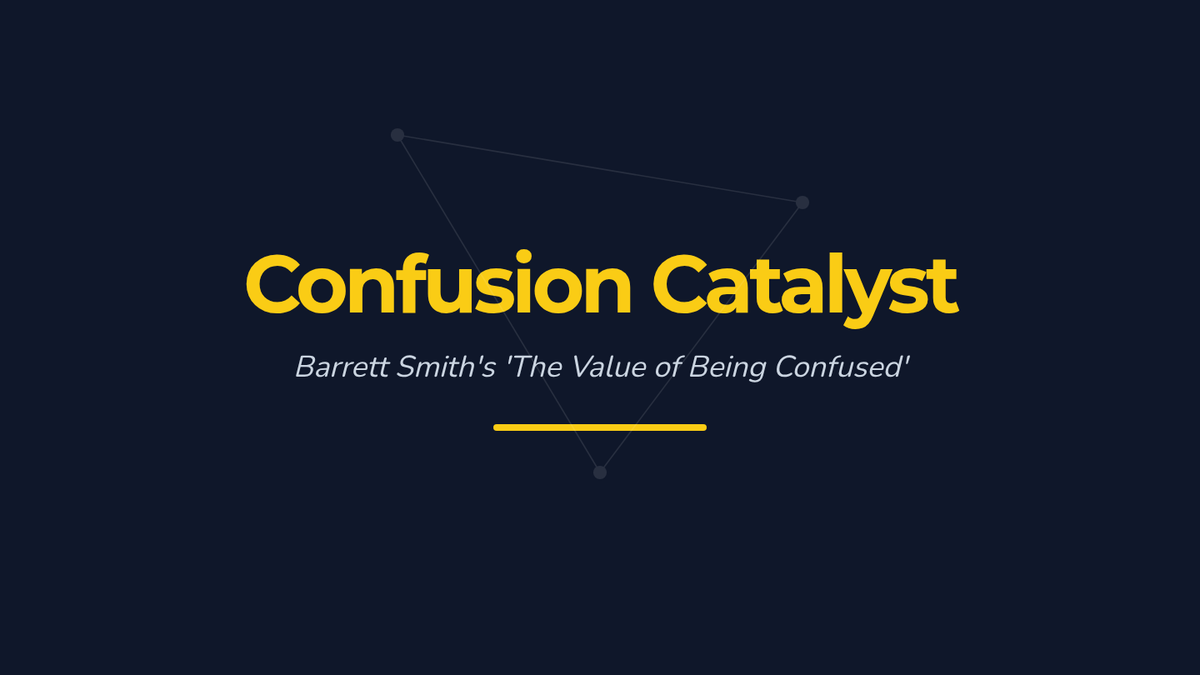
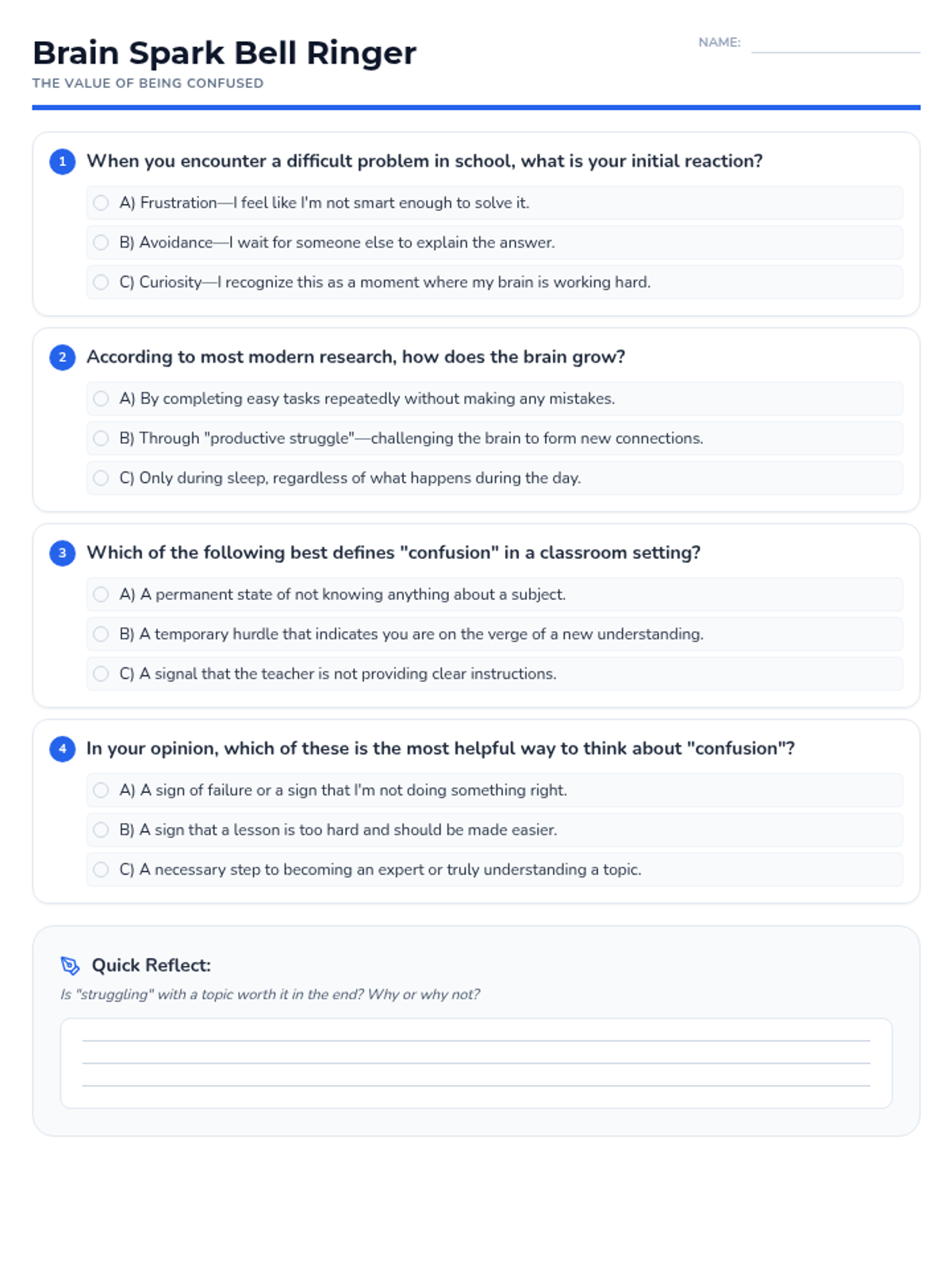
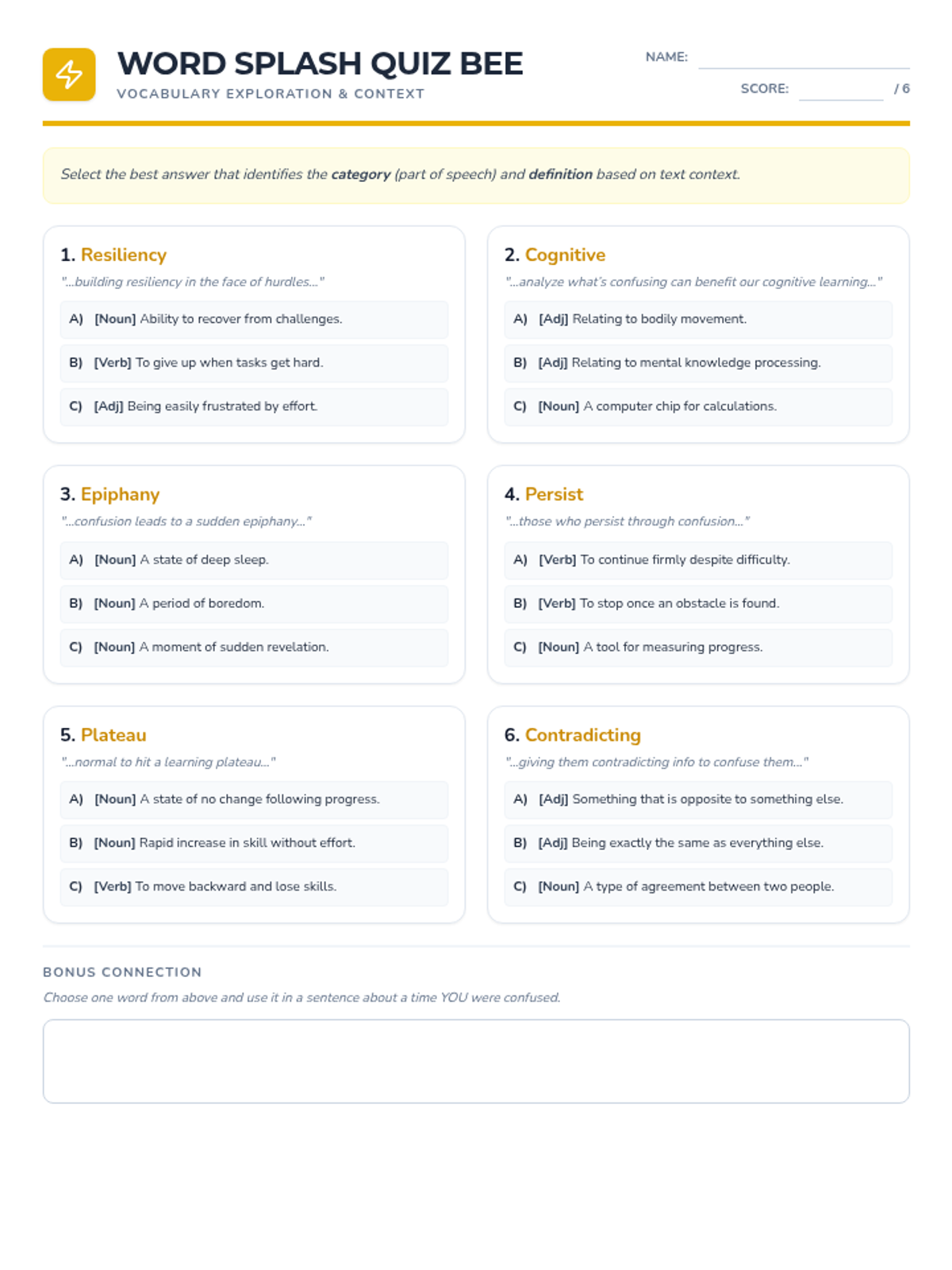
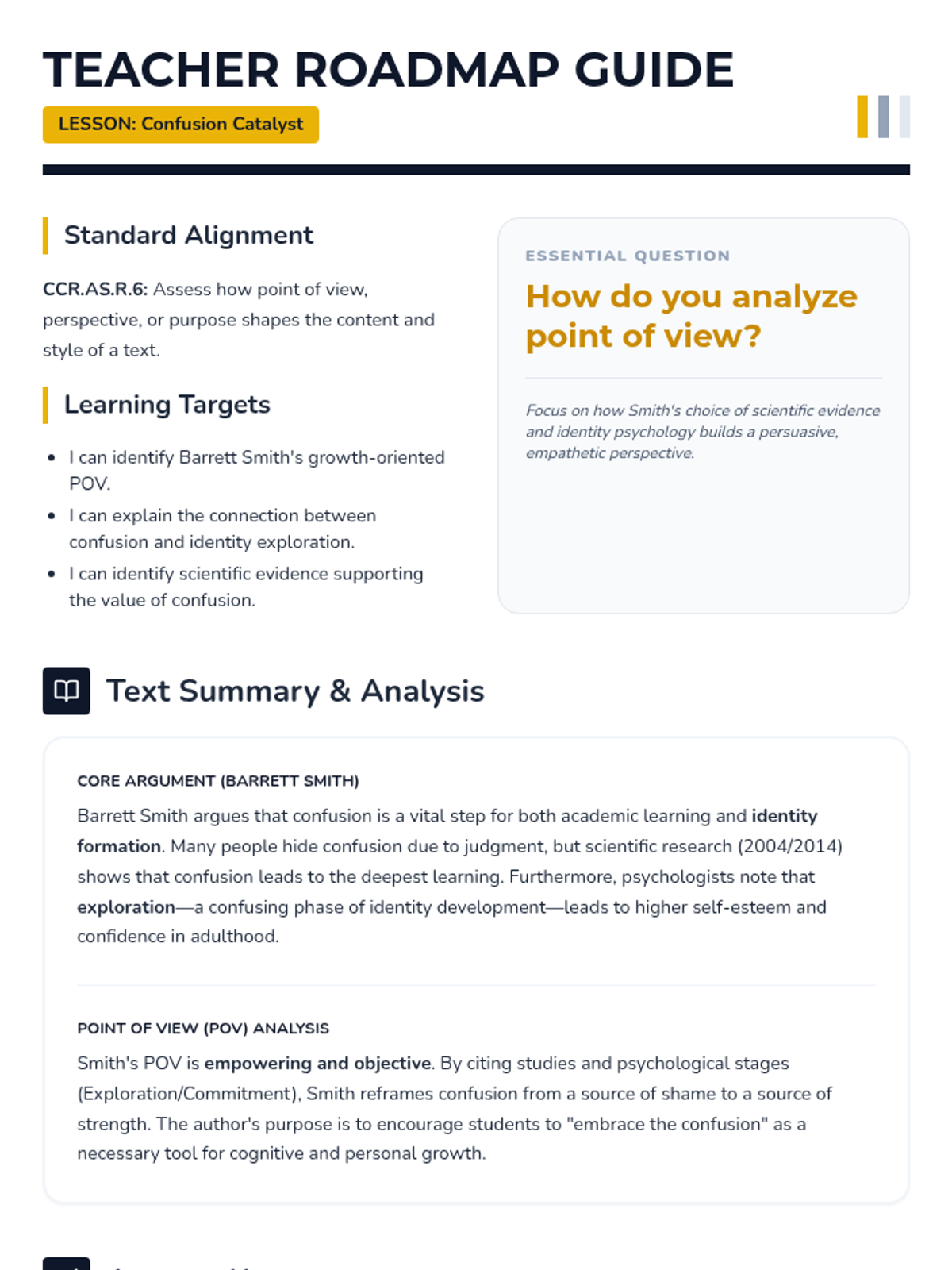
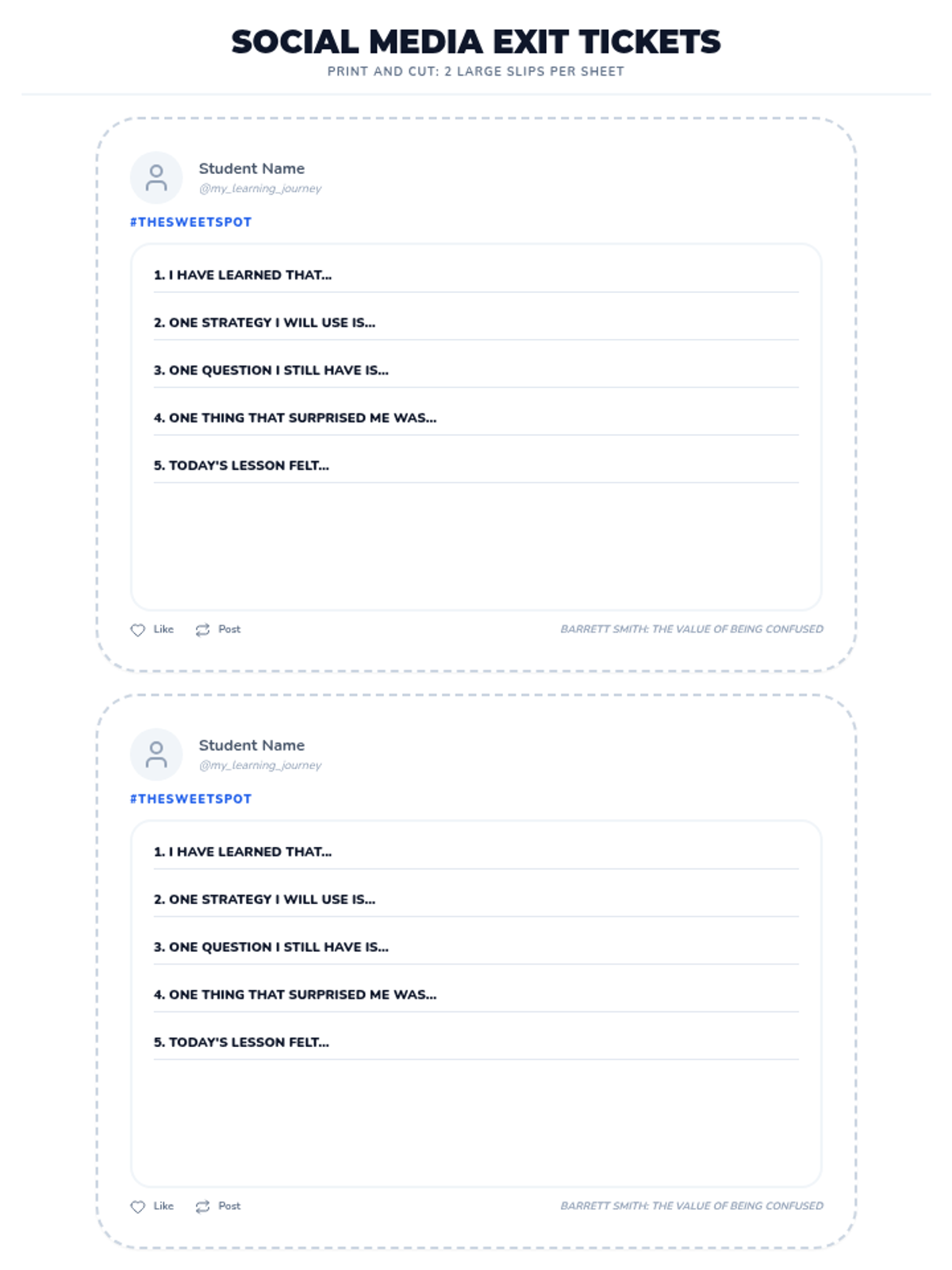
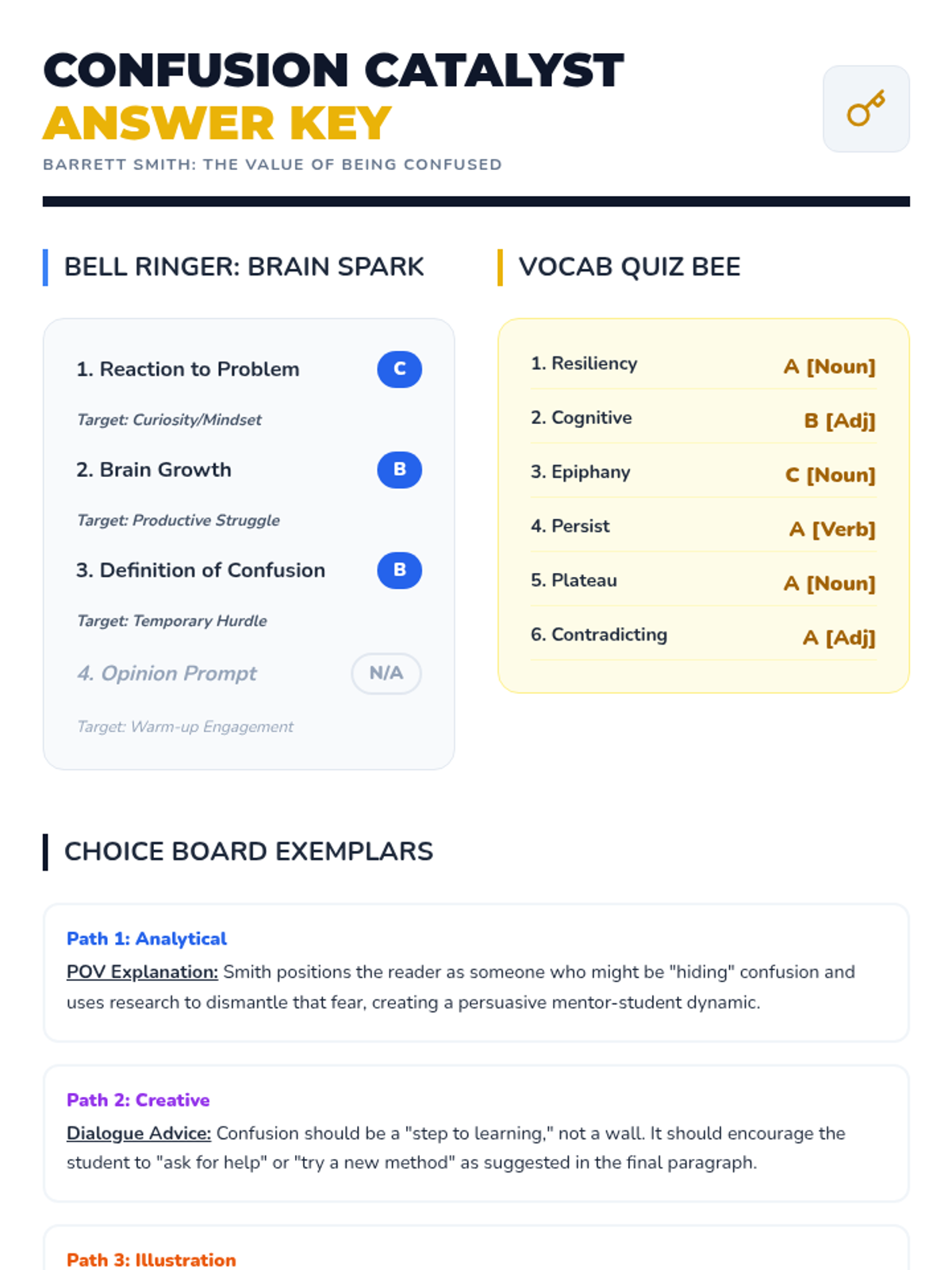
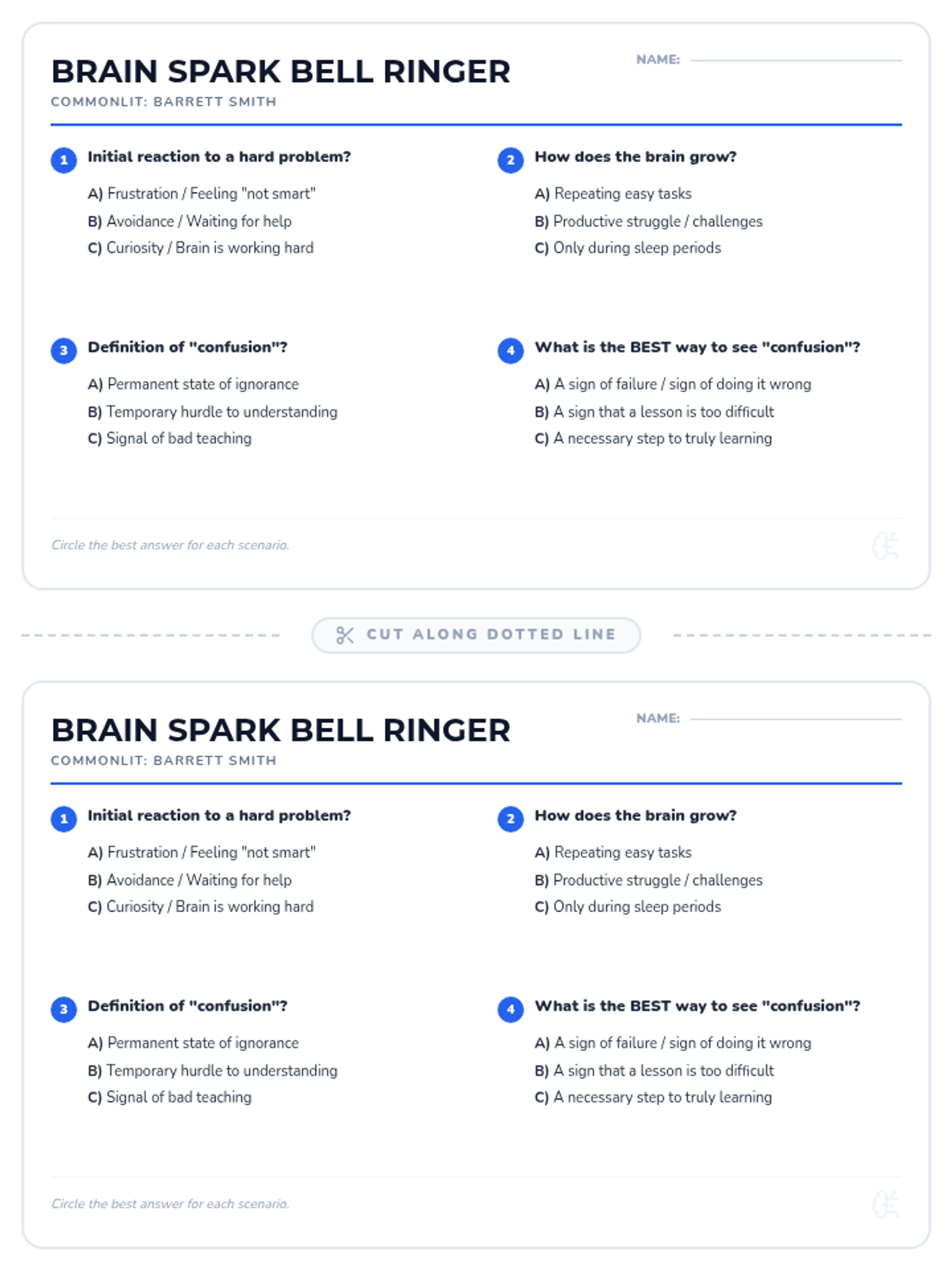
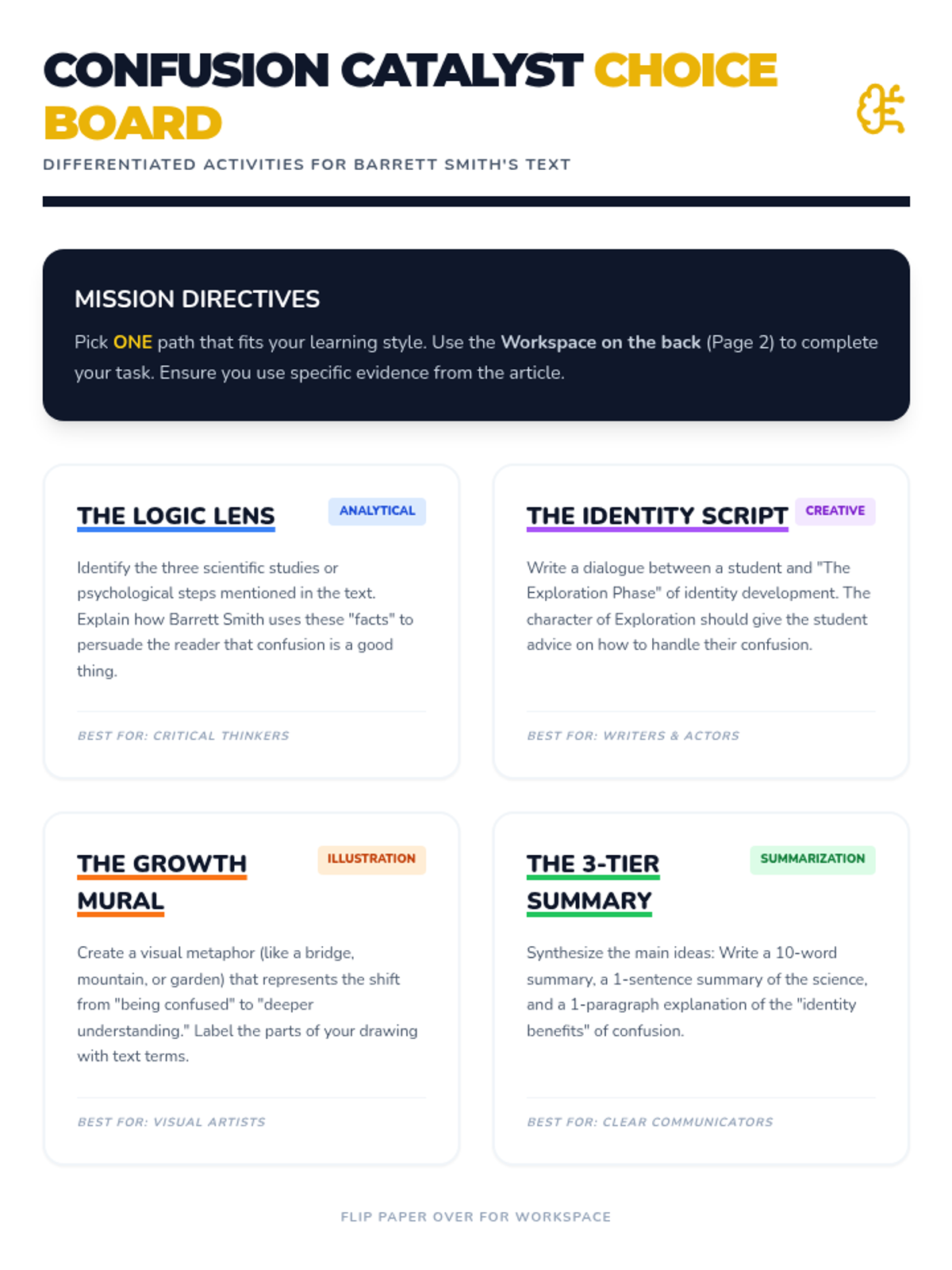
An analysis of Kimberly Tyson's 'The Value of Being Confused' focusing on how the author uses perspective to reframe confusion as a learning tool. Includes vocabulary development, collaborative discussion, and creative choice-based assessment.
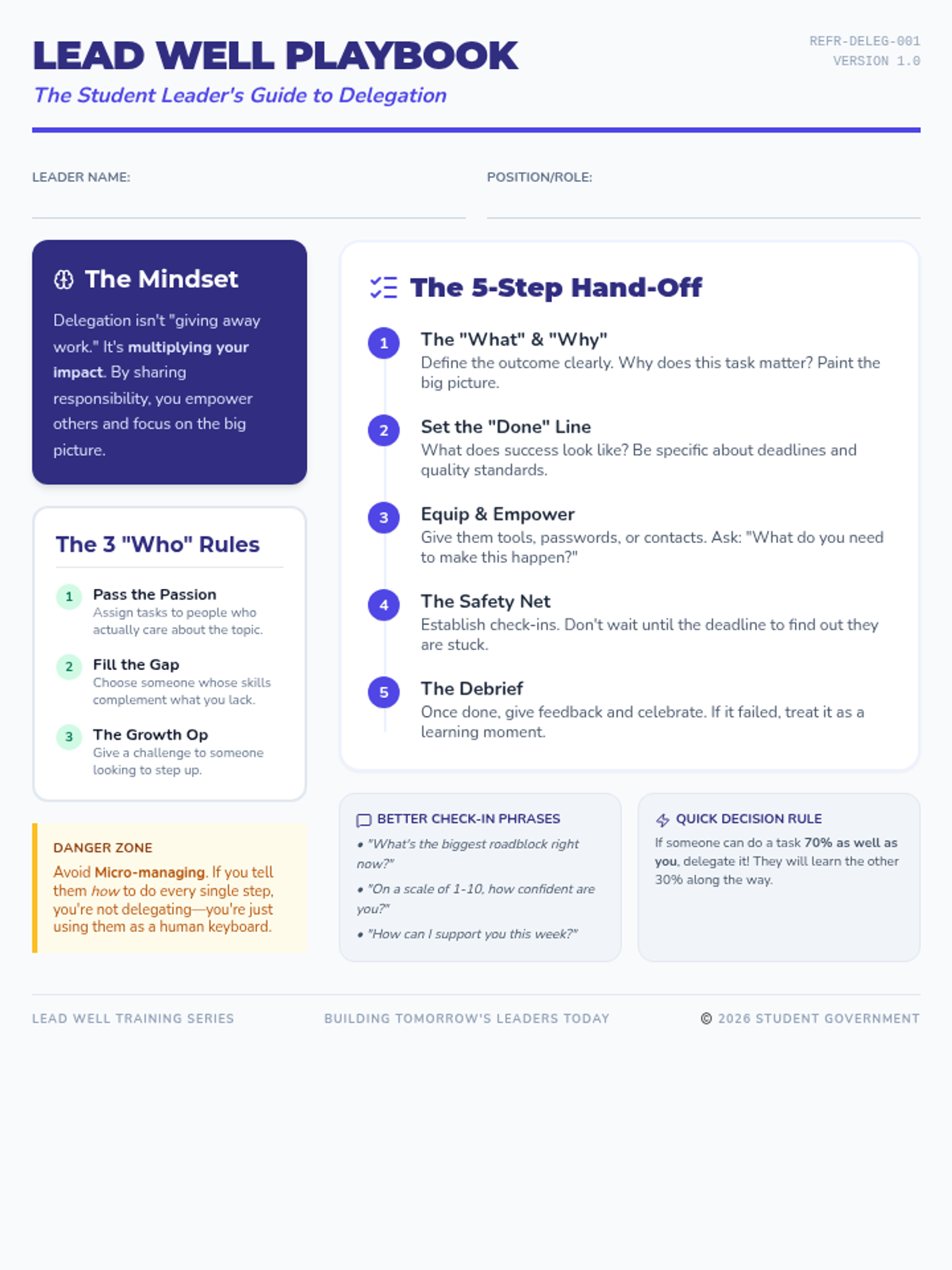
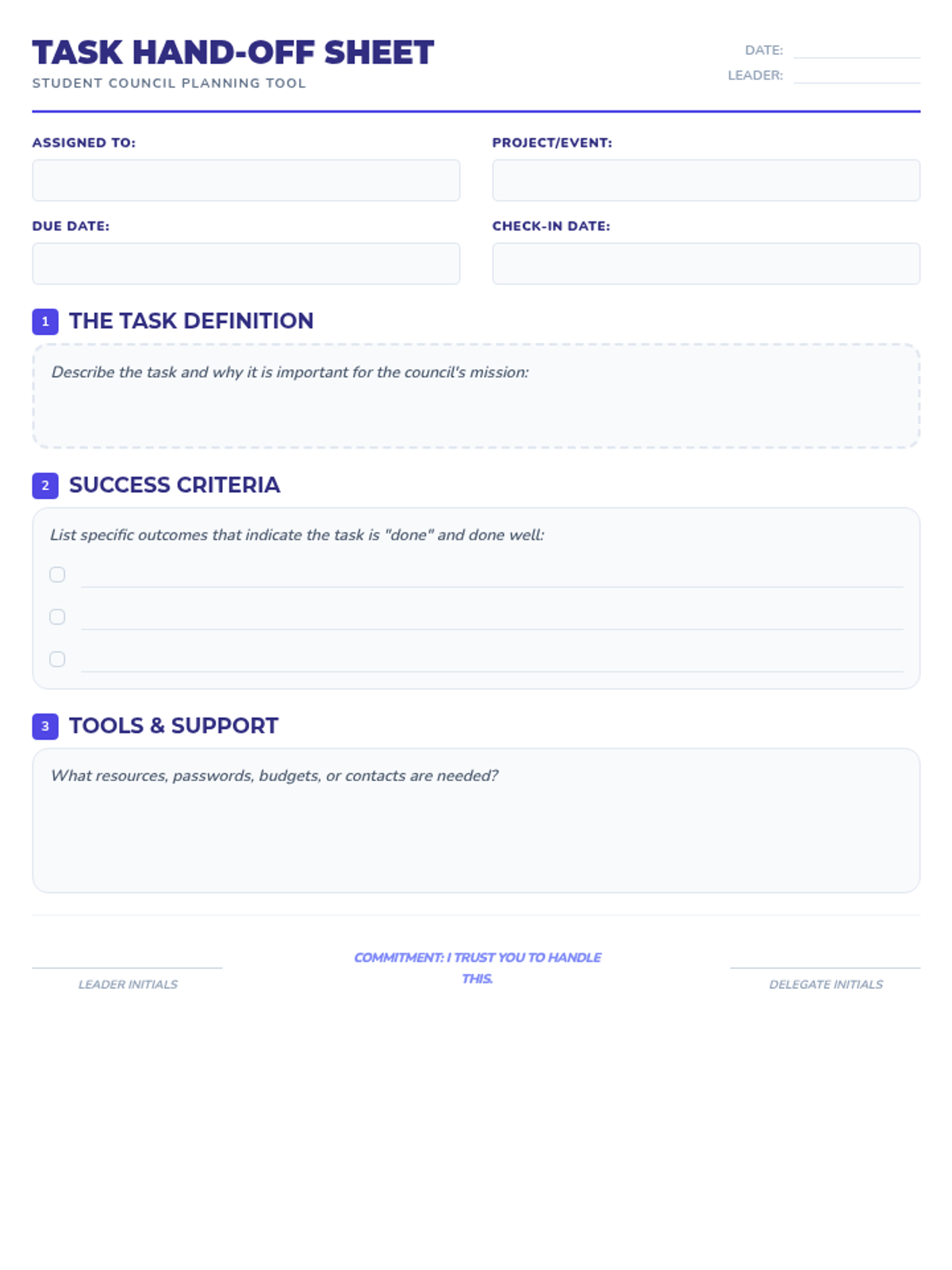
A comprehensive lesson for high school student leaders on the art of delegation, focusing on building trust, matching strengths, and clear communication.
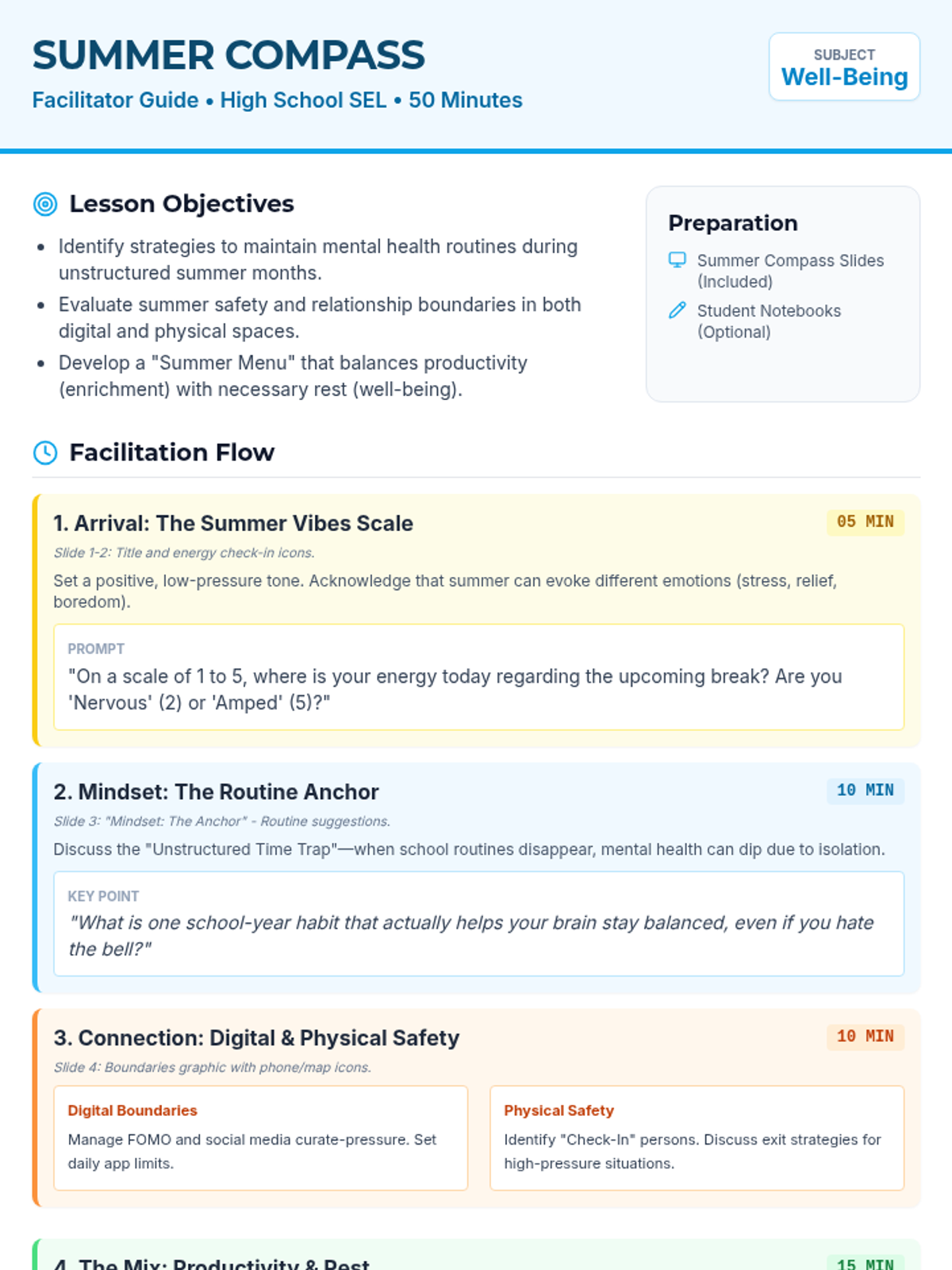
A 50-minute small group SEL lesson for high schoolers focused on navigating summer break with a focus on mental health, safety, and a healthy balance of productivity and rest.
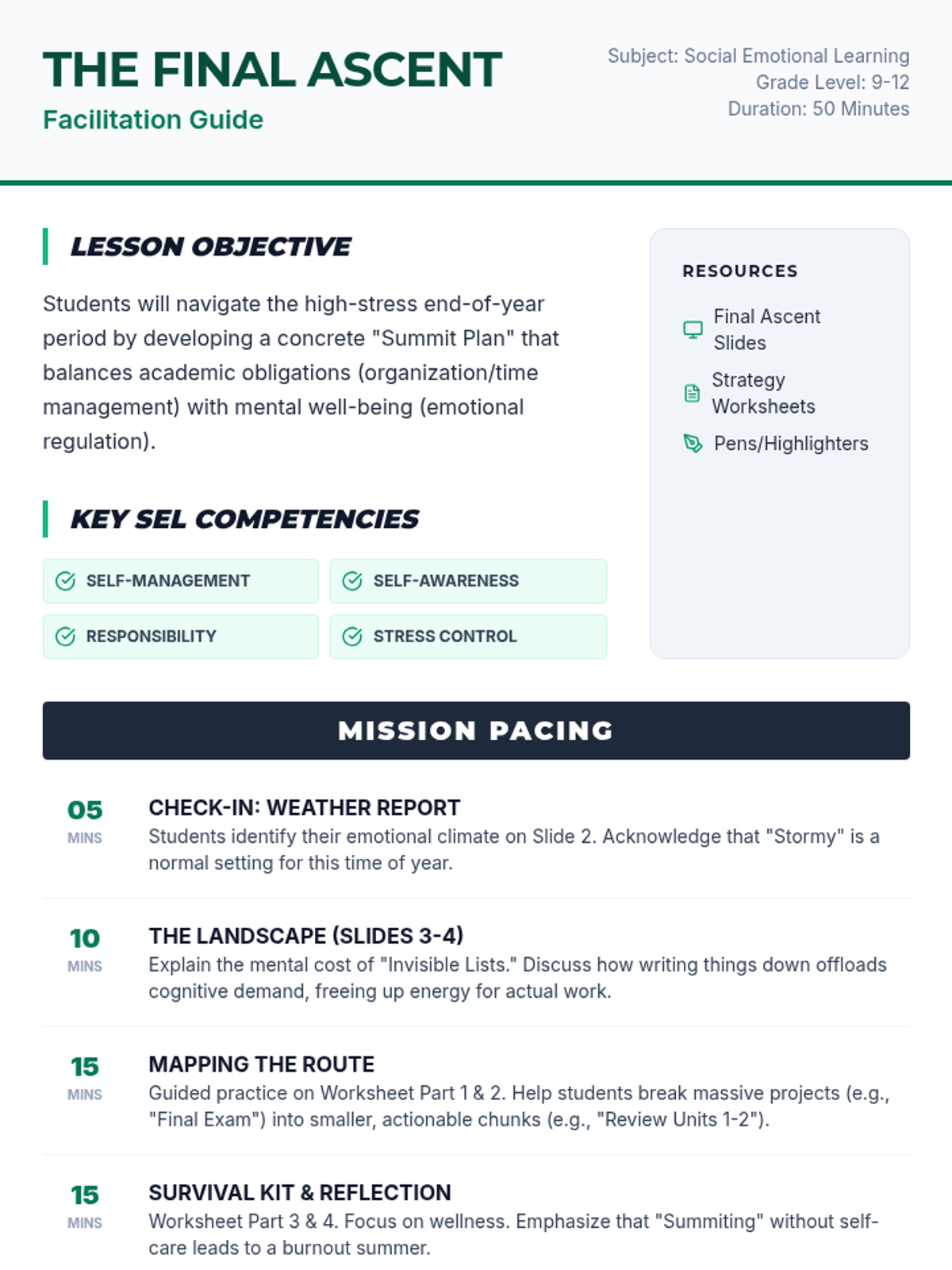
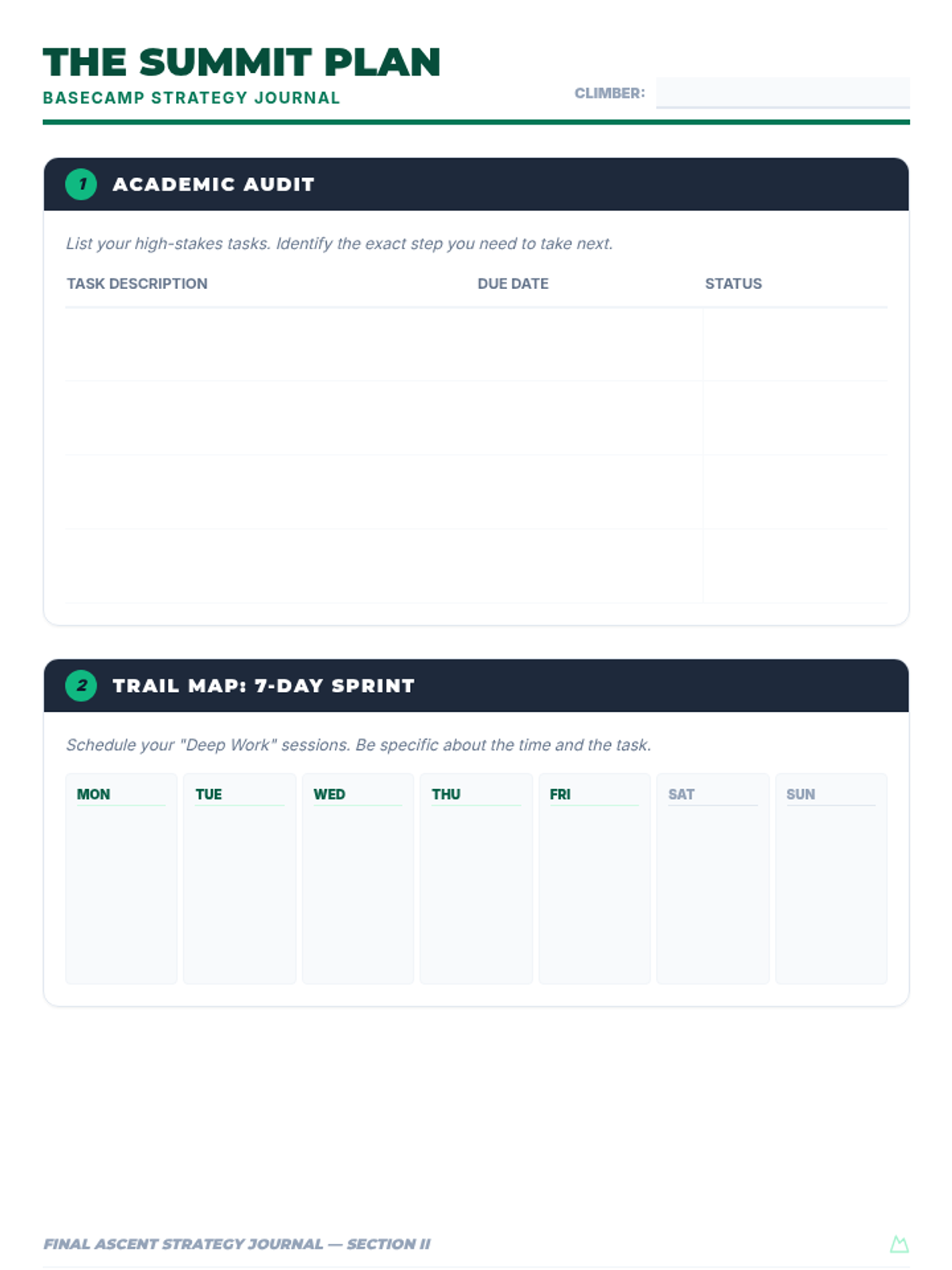
A 50-minute SEL lesson for high schoolers focused on finishing the school year with resilience, organization, and wellness. Students will create a tactical plan for their remaining academics while prioritizing mental health and reflection.
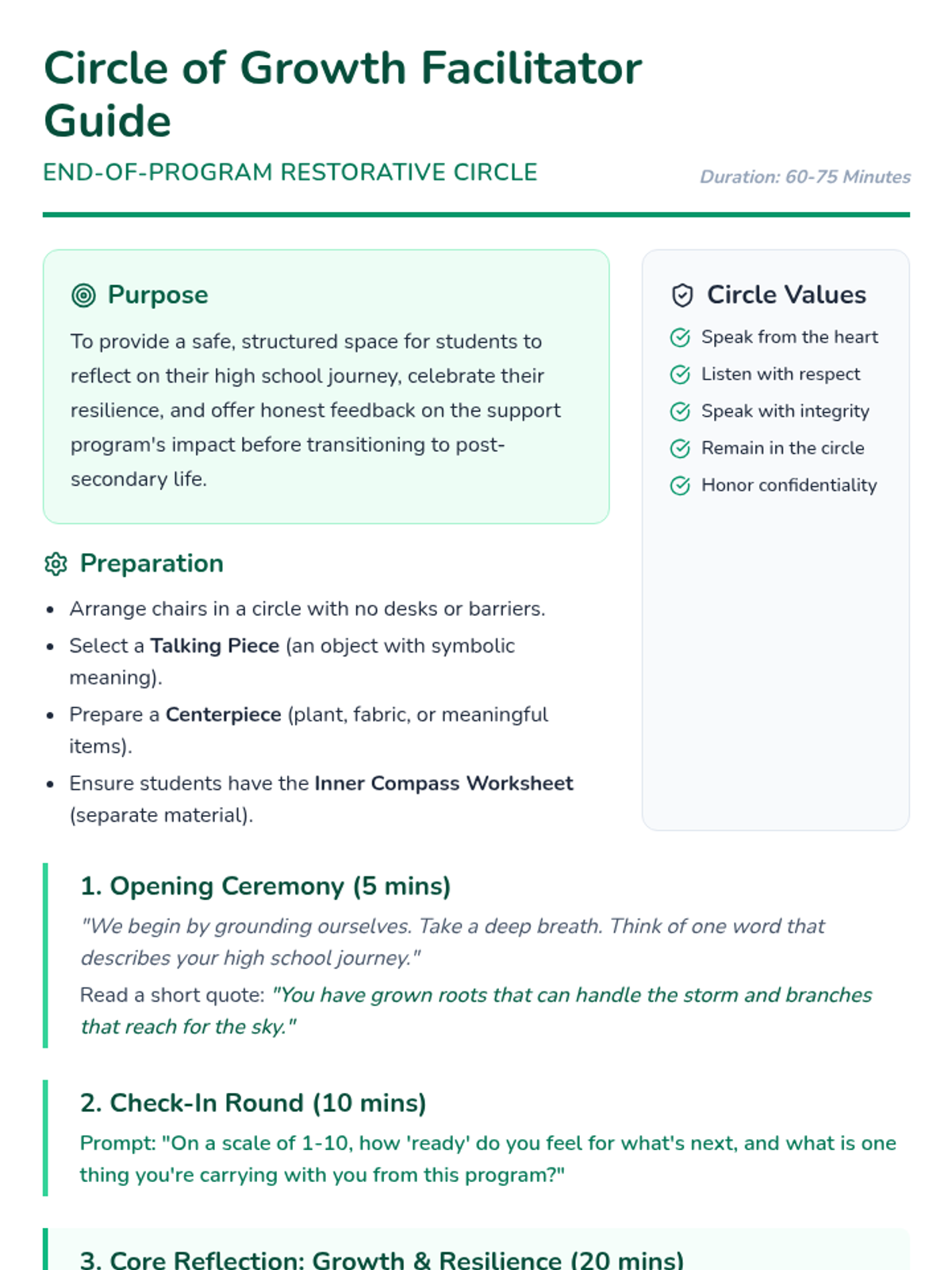
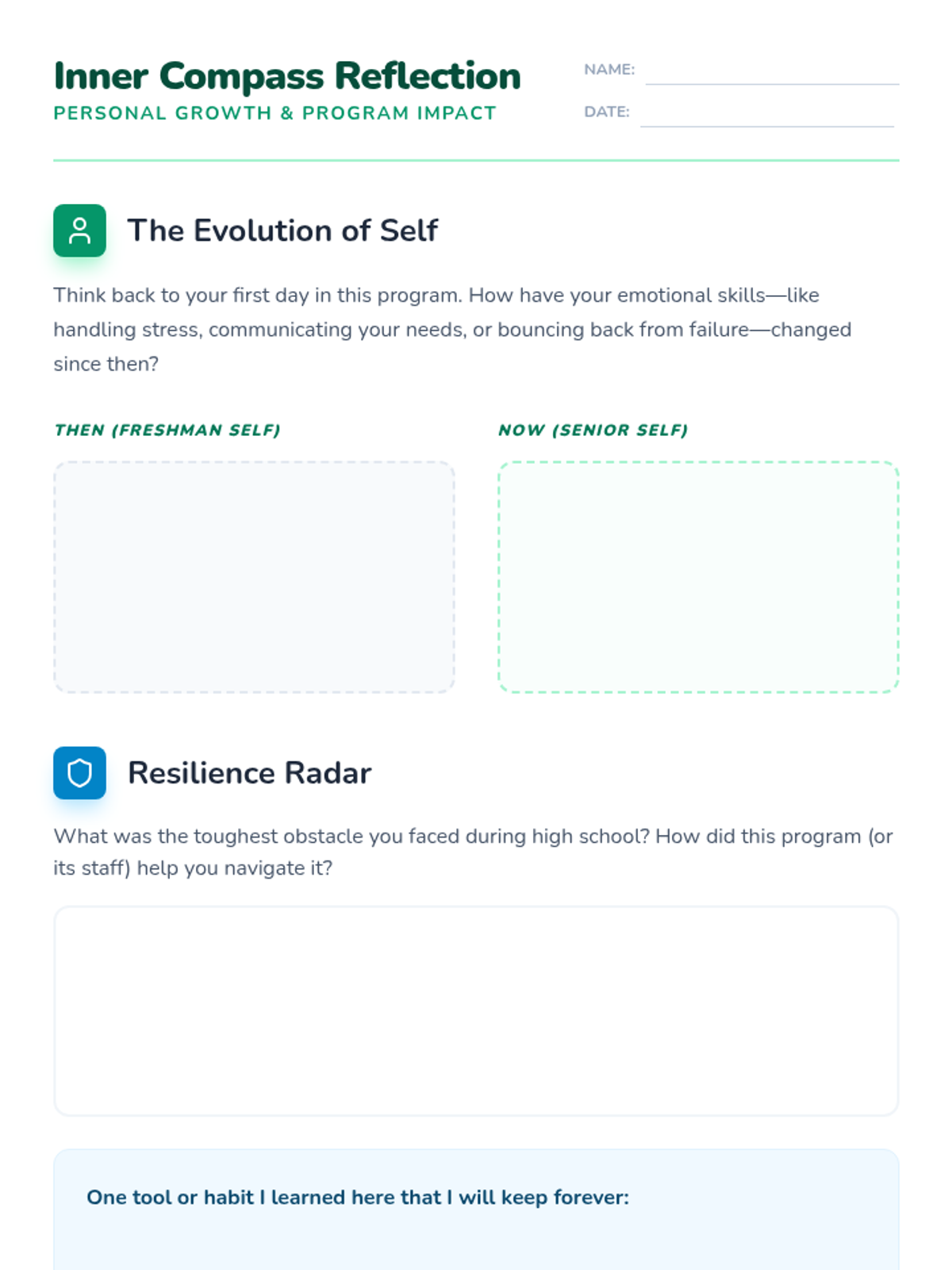
A structured restorative circle and individual reflection session focused on identifying social-emotional growth, resilience, and program effectiveness.
A collaborative "Pairs Compare" activity where students work in teams of four to share keywords, locate evidence, and synthesize final answers on index cards.
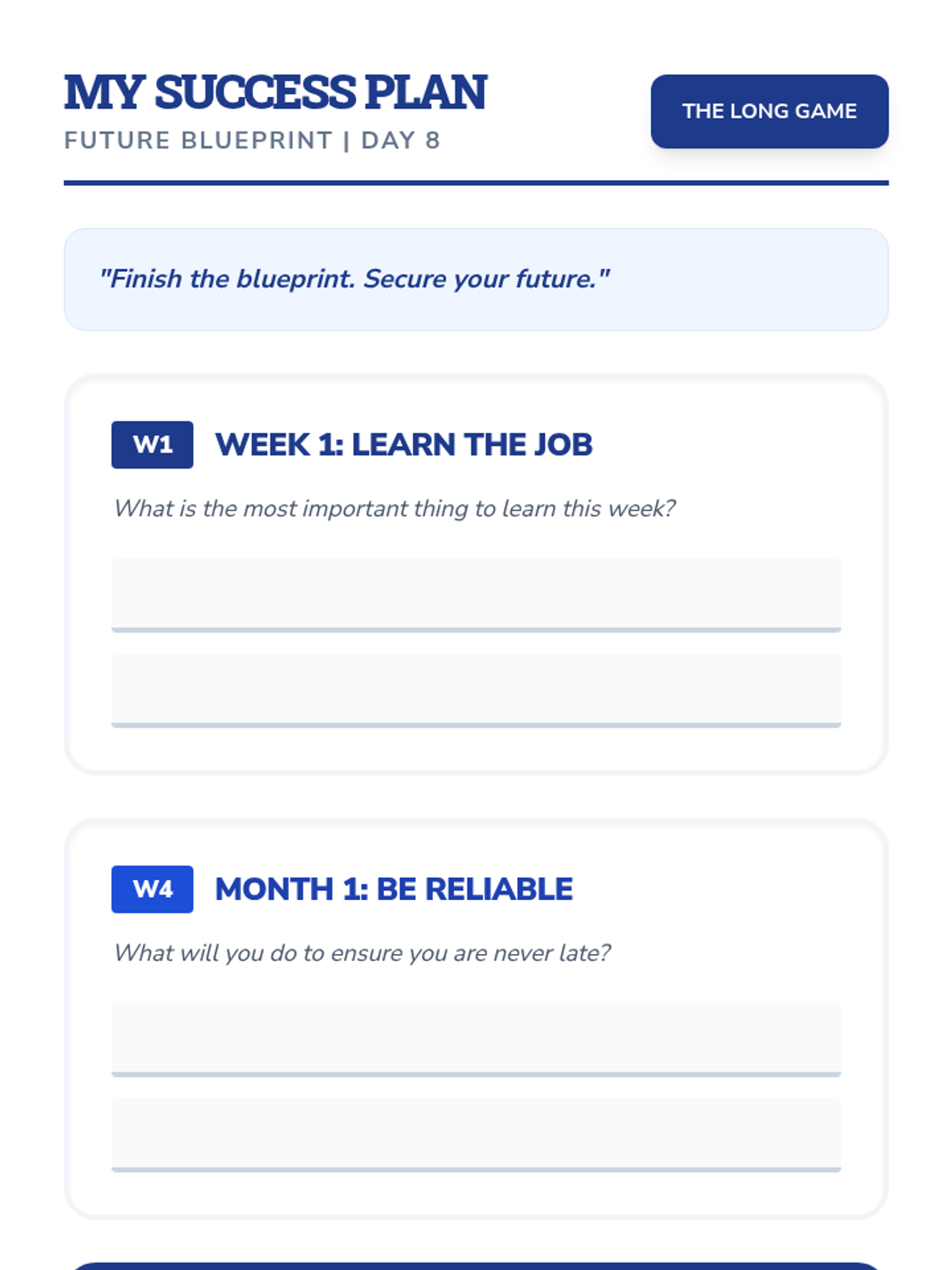
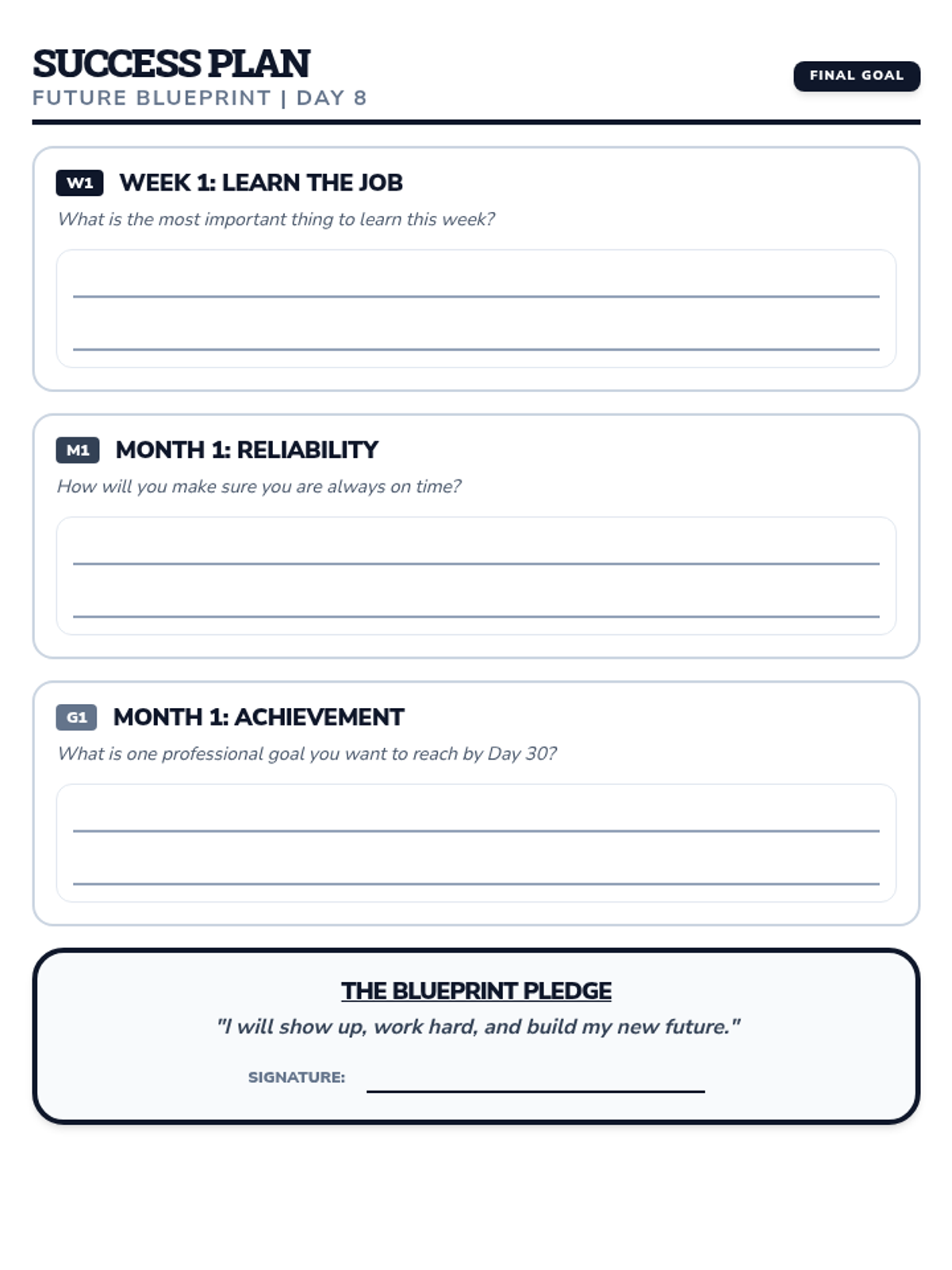
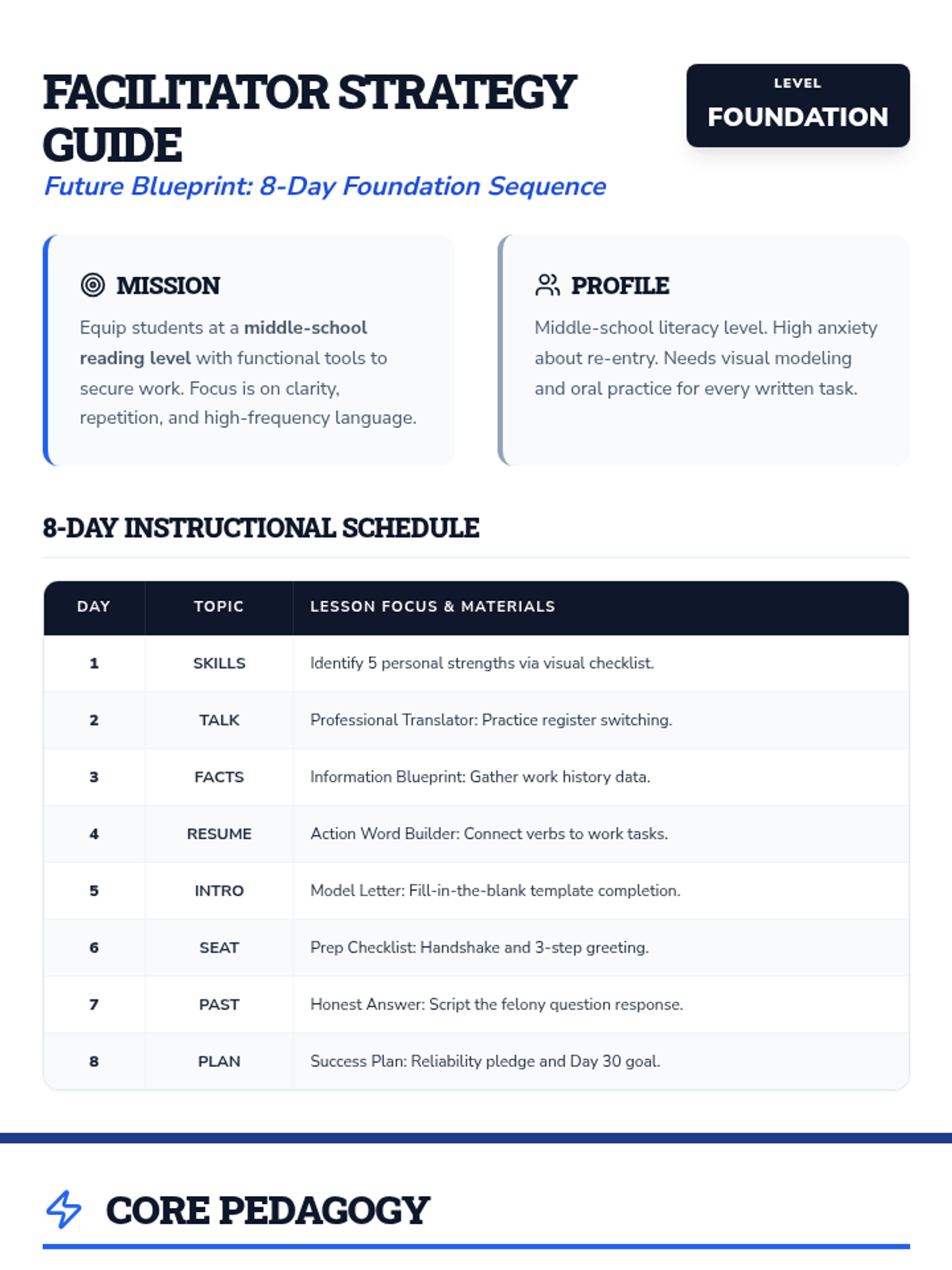
Job search strategies, staying employed, and long-term career planning. Final review and preparation for the 'working world'.
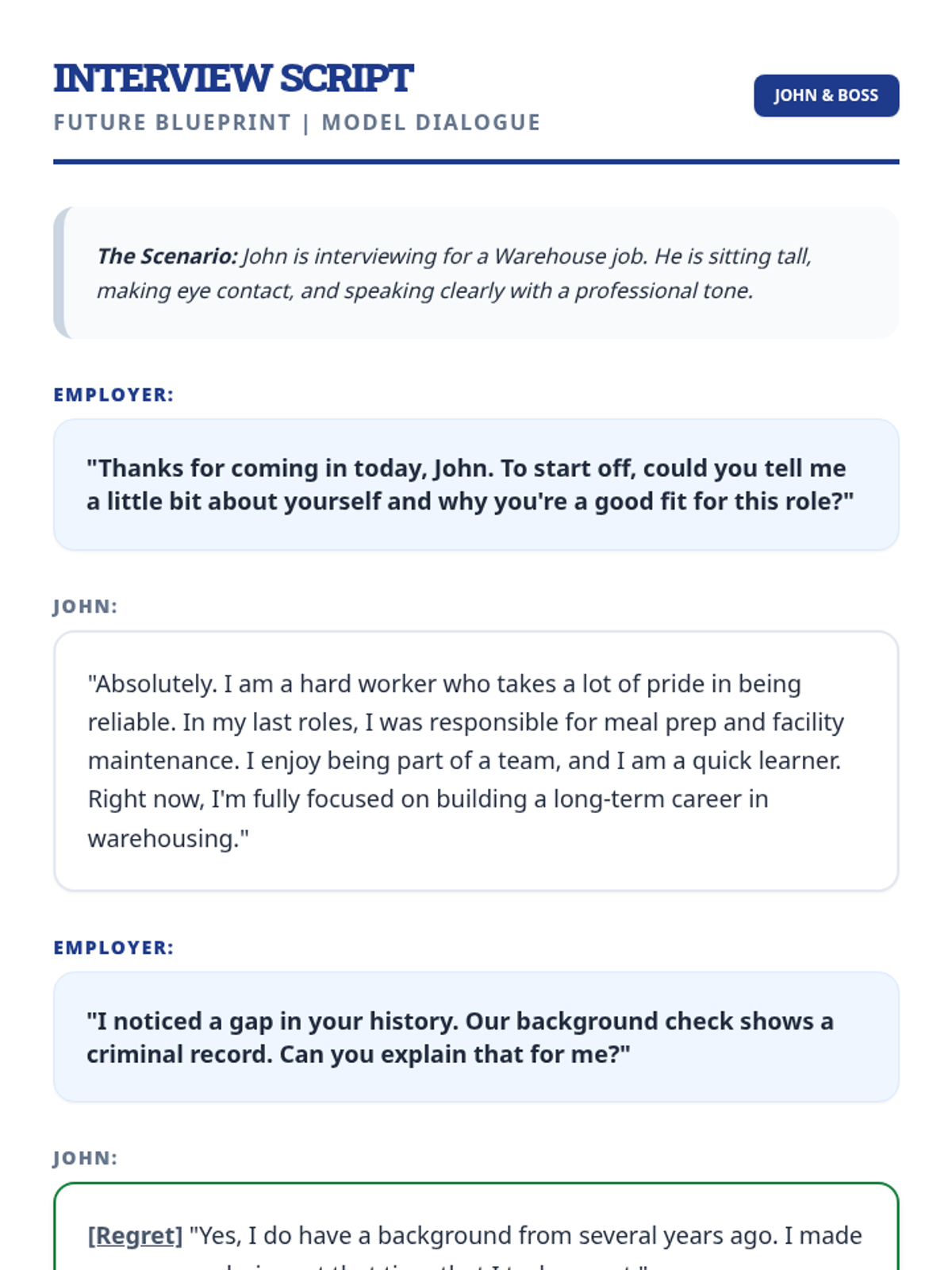
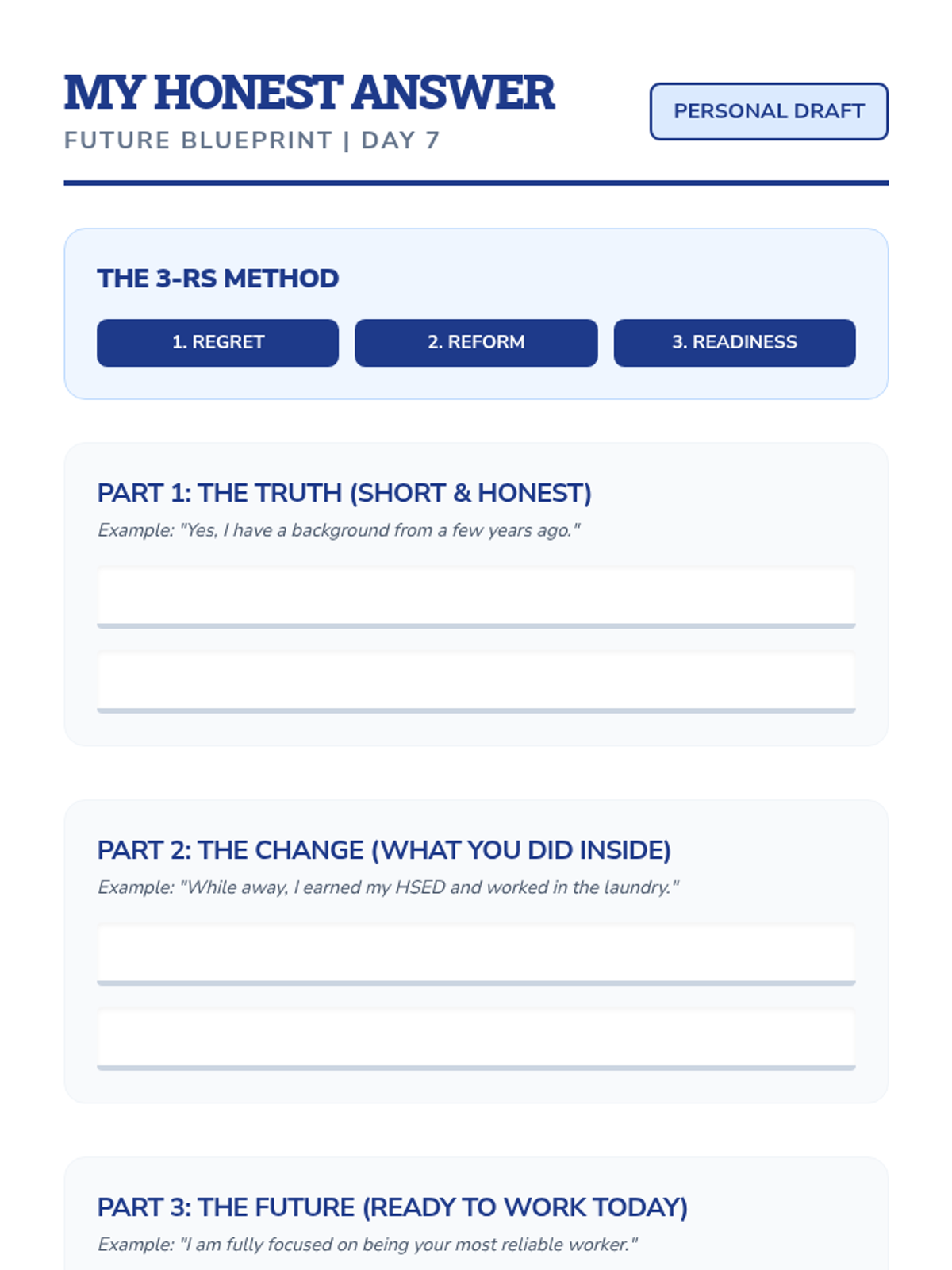
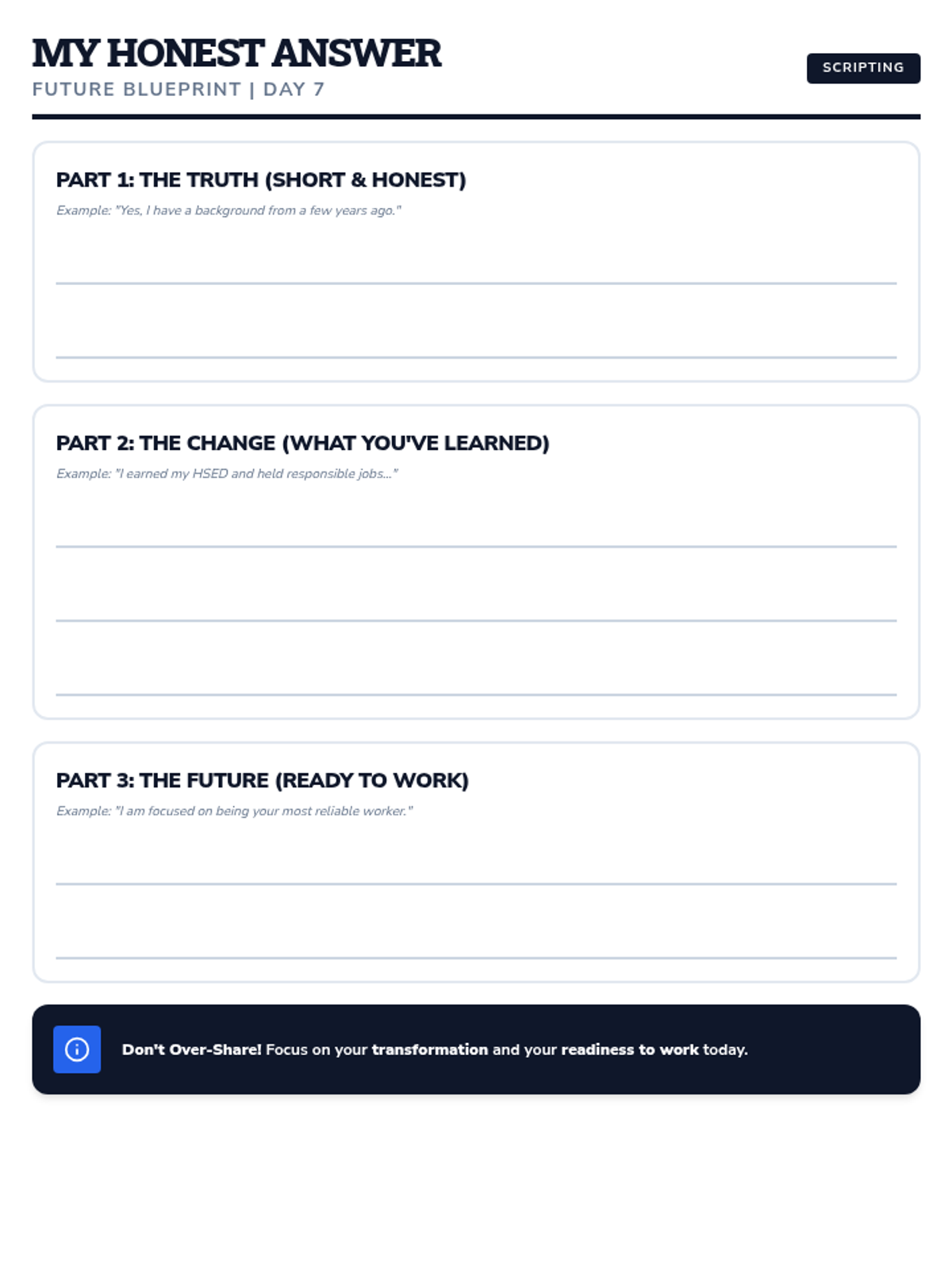
Specific strategies for addressing incarceration and background checks. Uses the 'Regret, Reform, Readiness' framework.
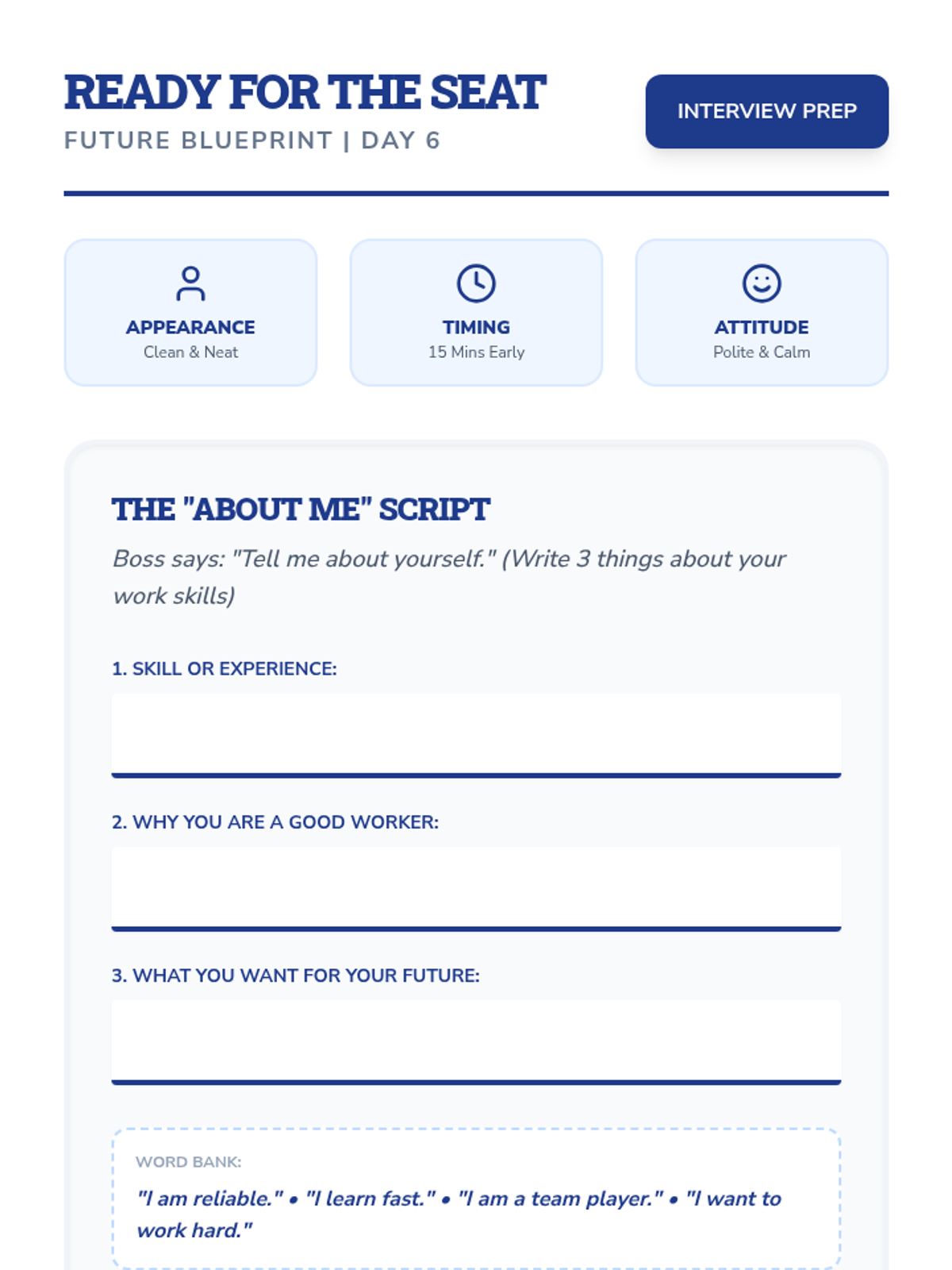
Preparation for the interview process. Focuses on preparation, appearance, and the first five minutes of the encounter.
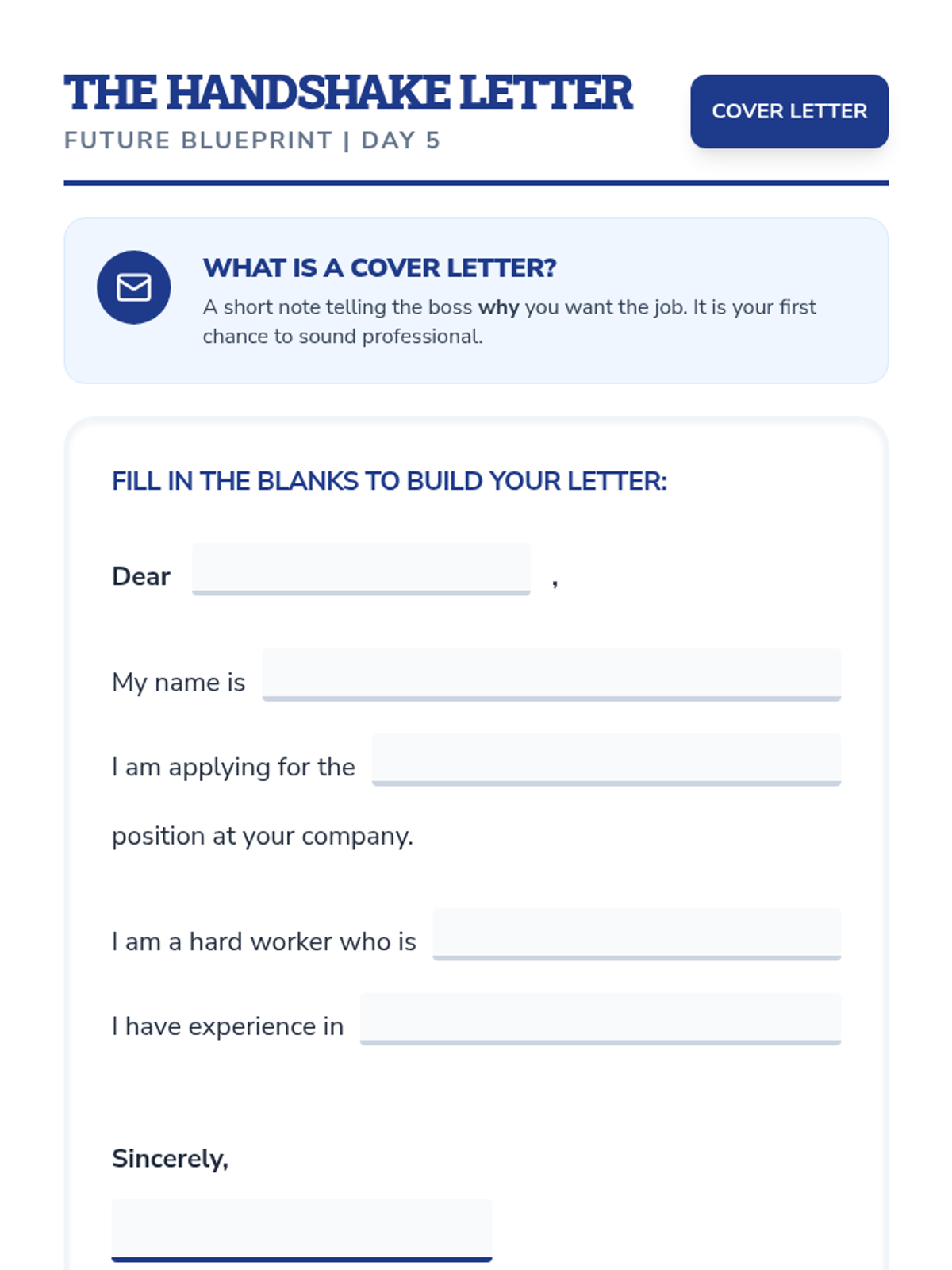
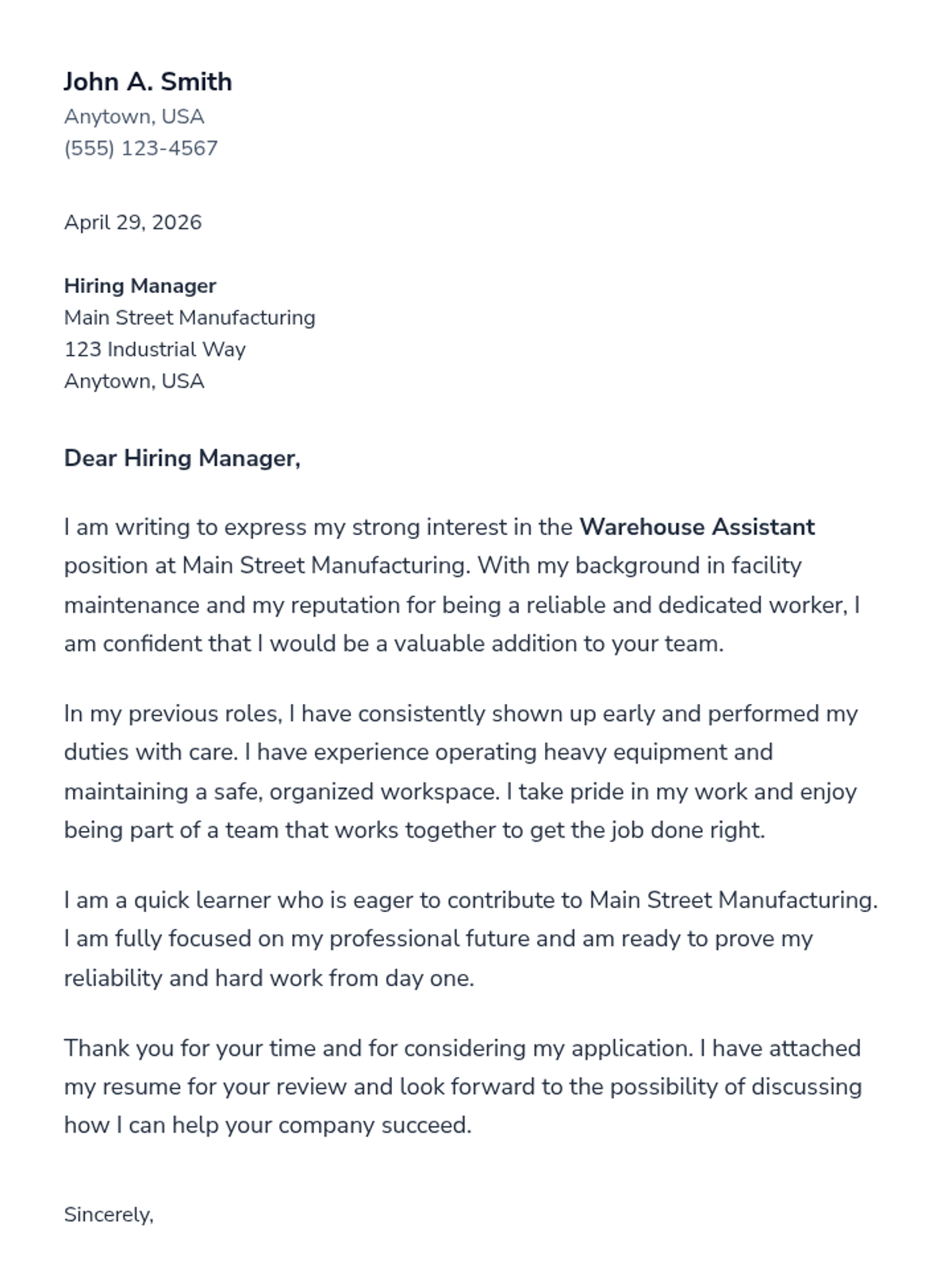
Demystifying the cover letter. Students learn how to introduce themselves to an employer and explain their interest in a role.
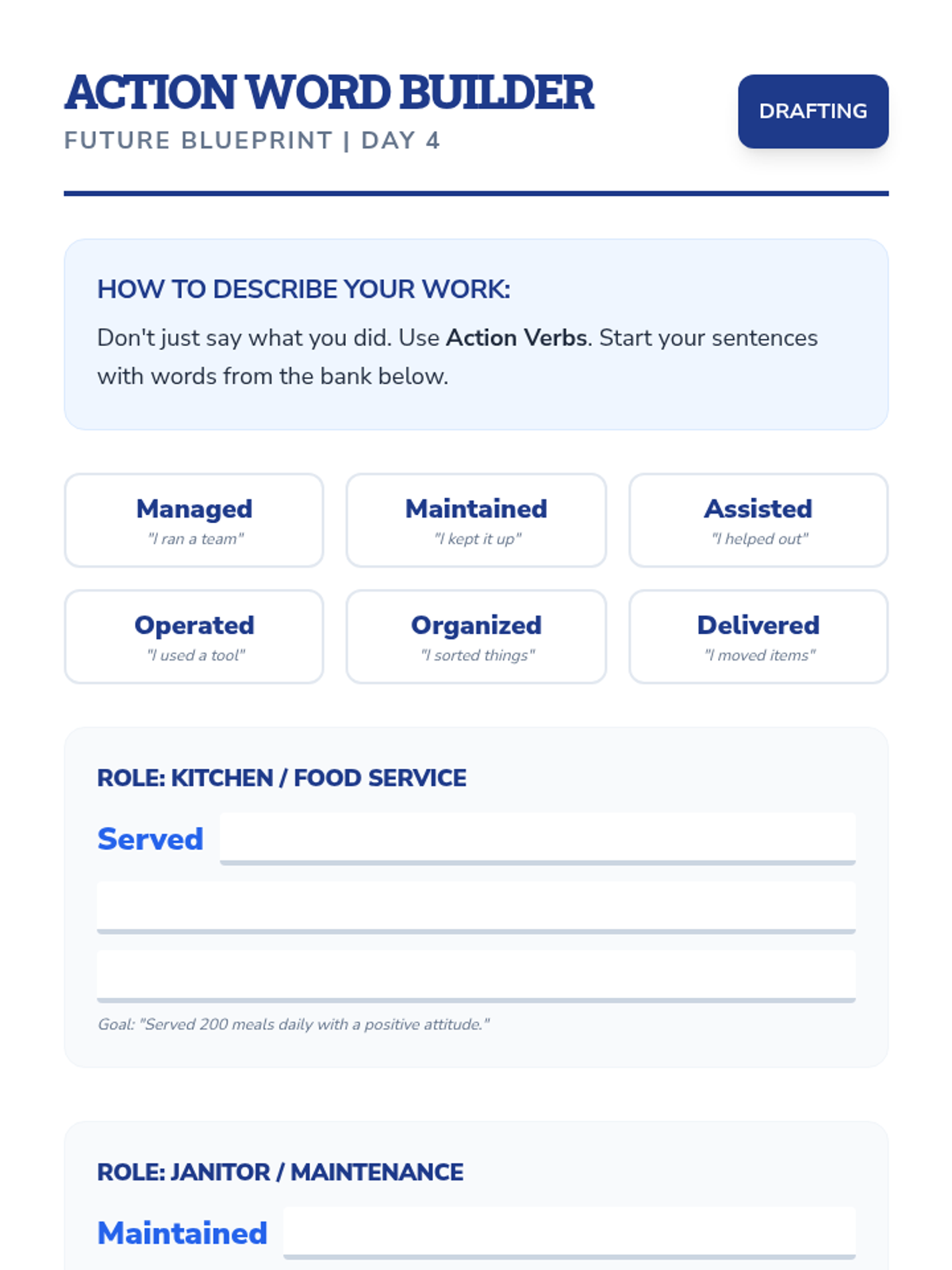
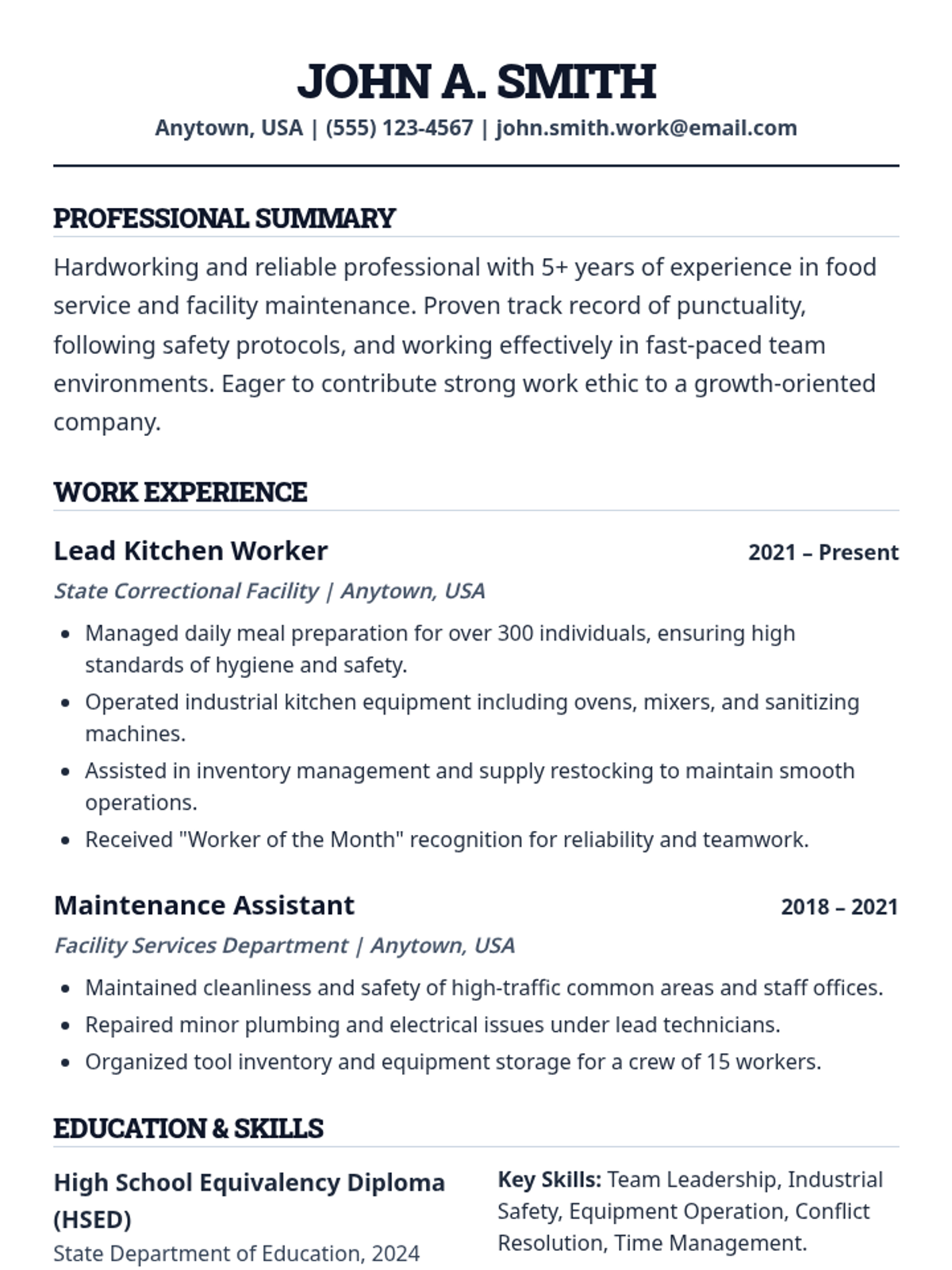
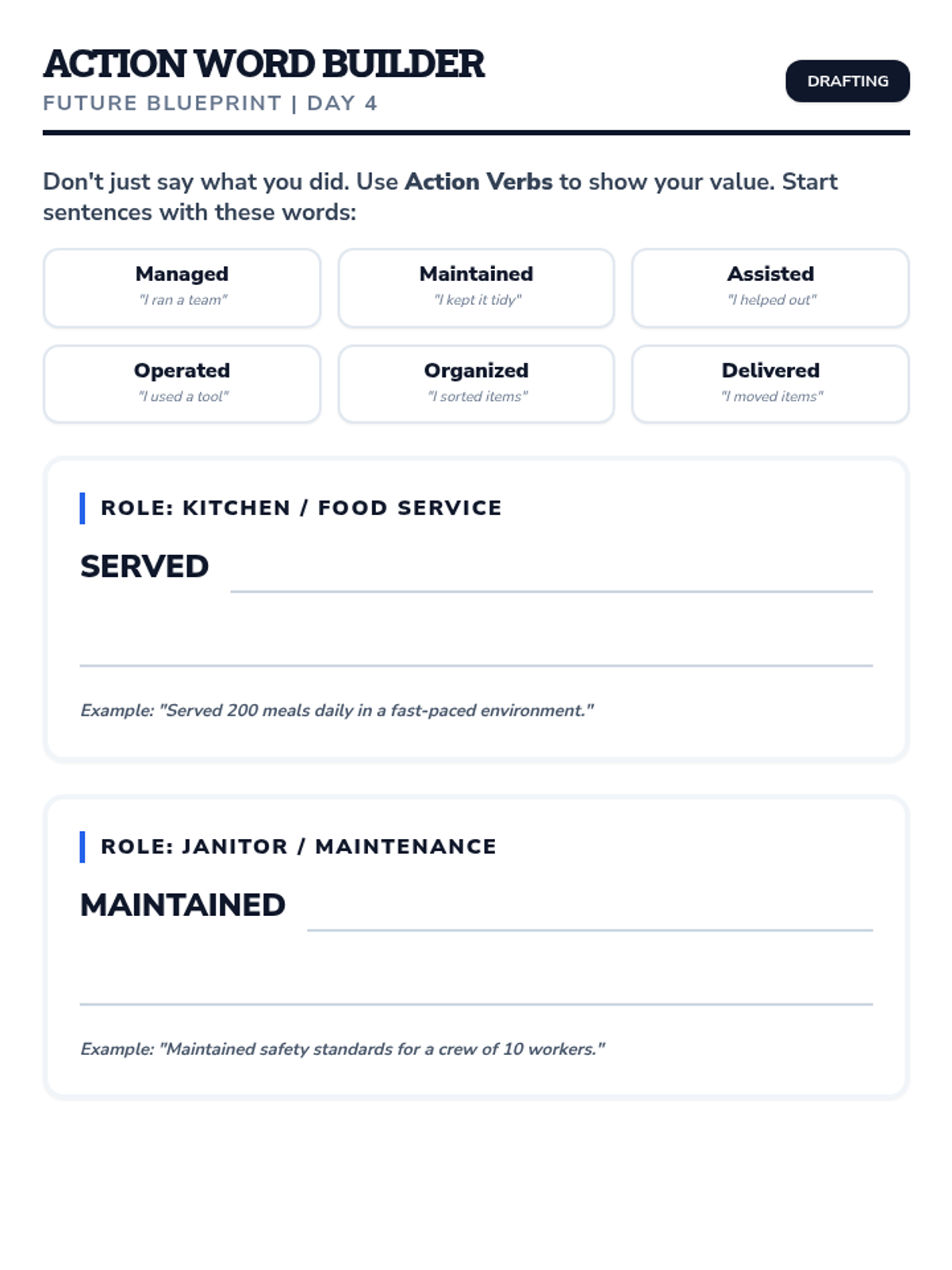
Guided drafting of the resume. Focuses on using action verbs and structuring work history to highlight strengths.
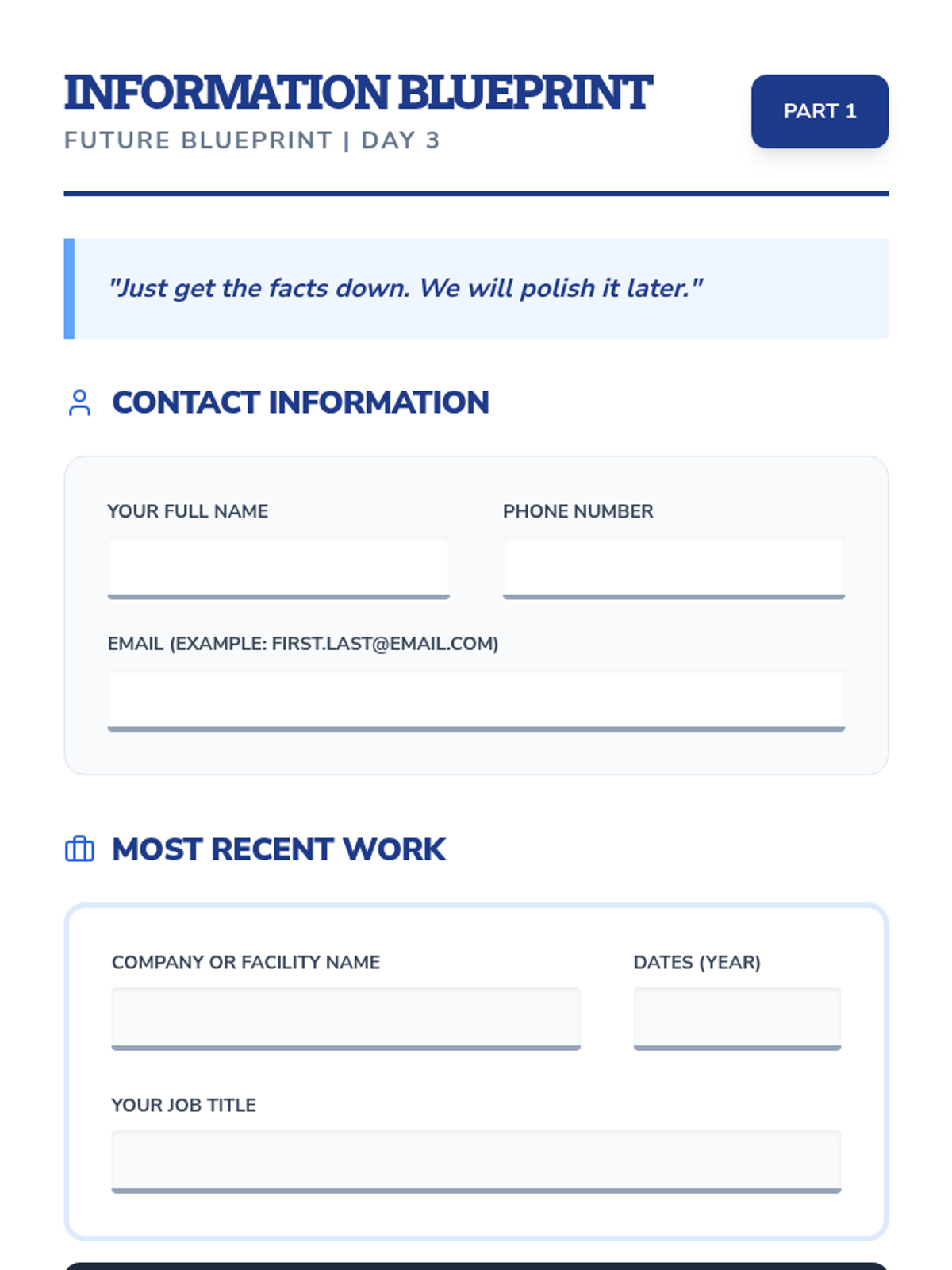
Introduction to resume components. Students begin gathering the necessary information for their professional documents in a simplified format.
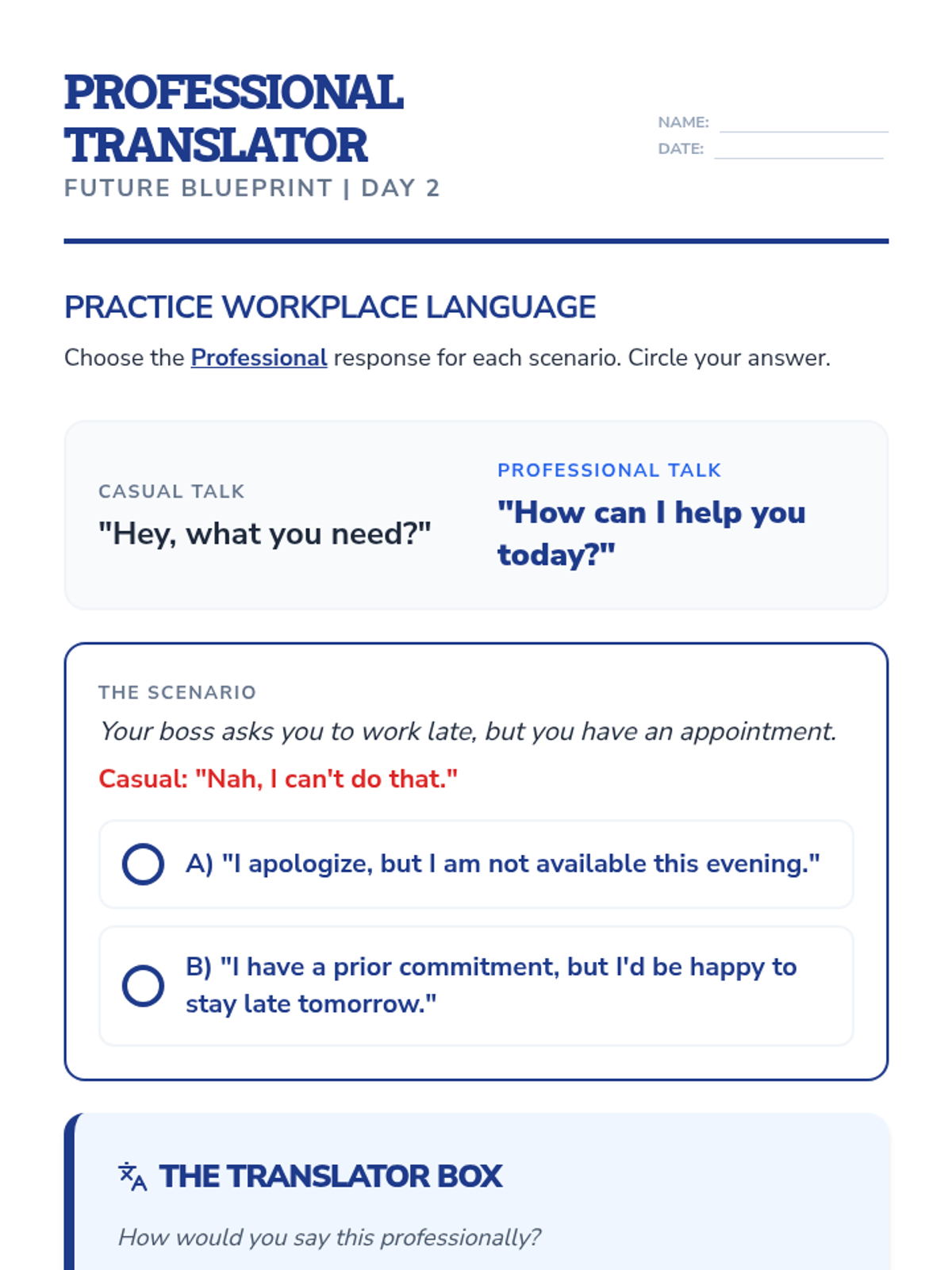
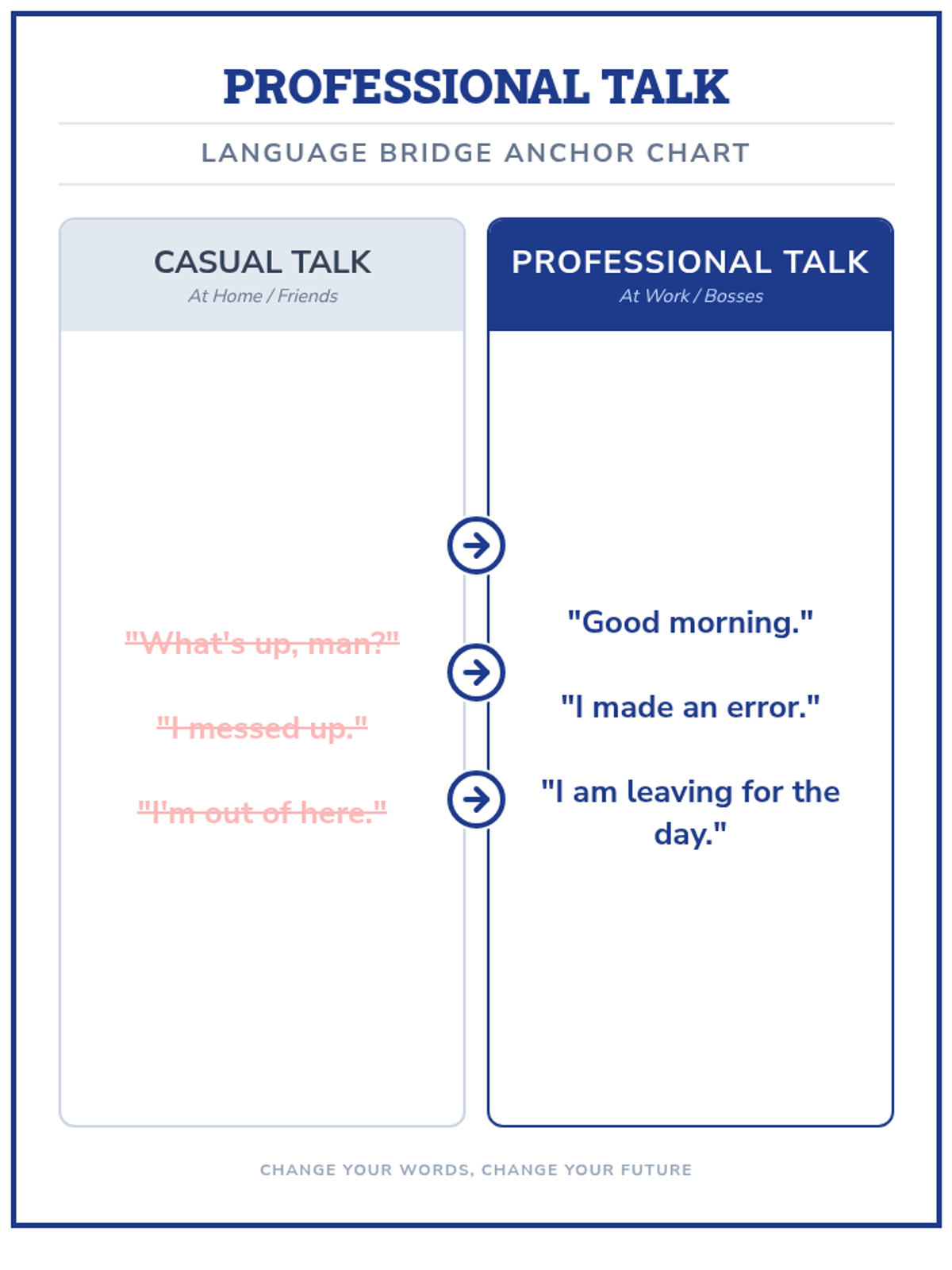
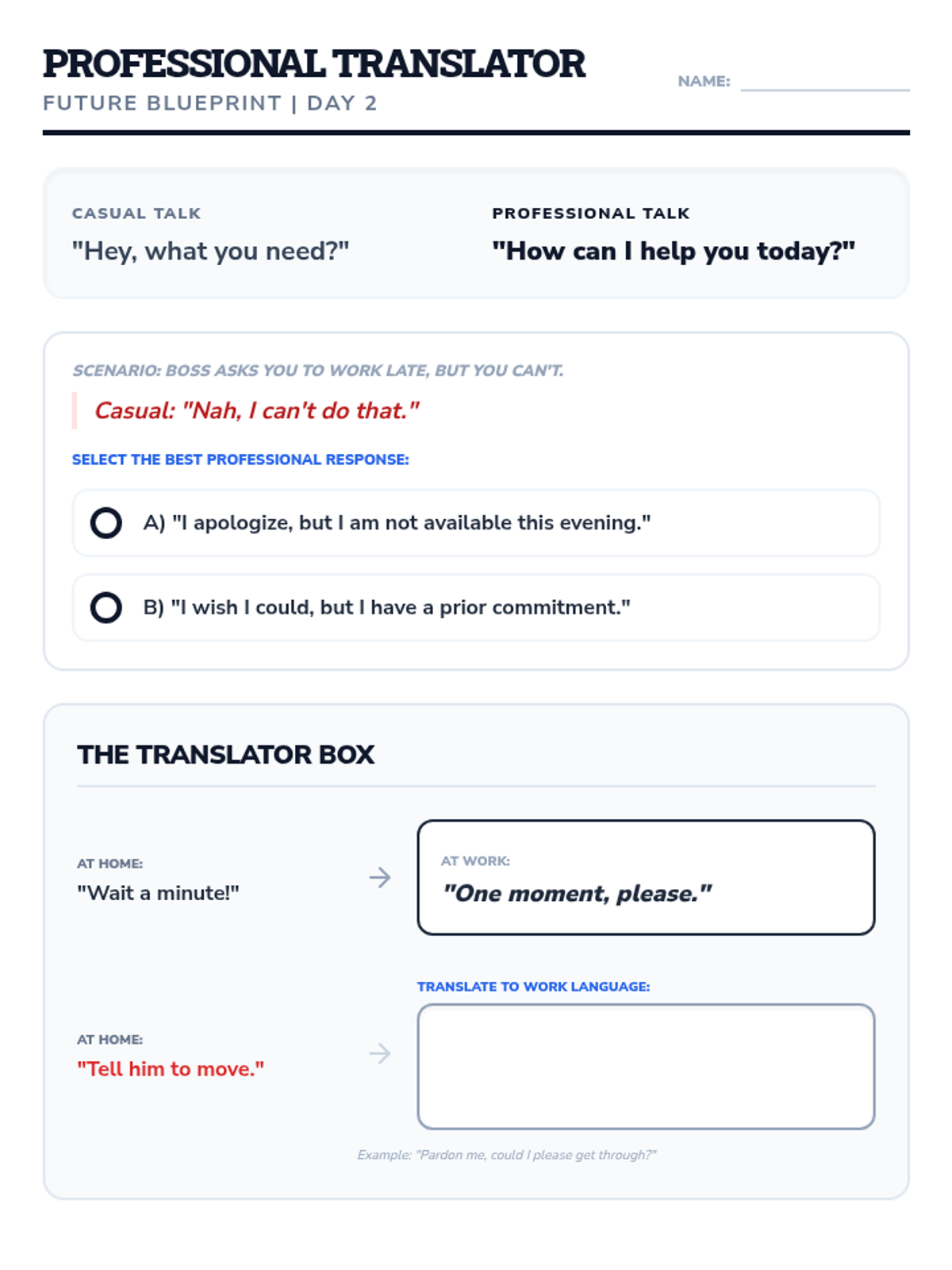
Covers soft skills, professional vocabulary, and non-verbal communication. Practice shifting from casual to professional language.
Focuses on identifying transferable skills and setting professional goals. Helps students recognize the value of their experiences in a professional context.
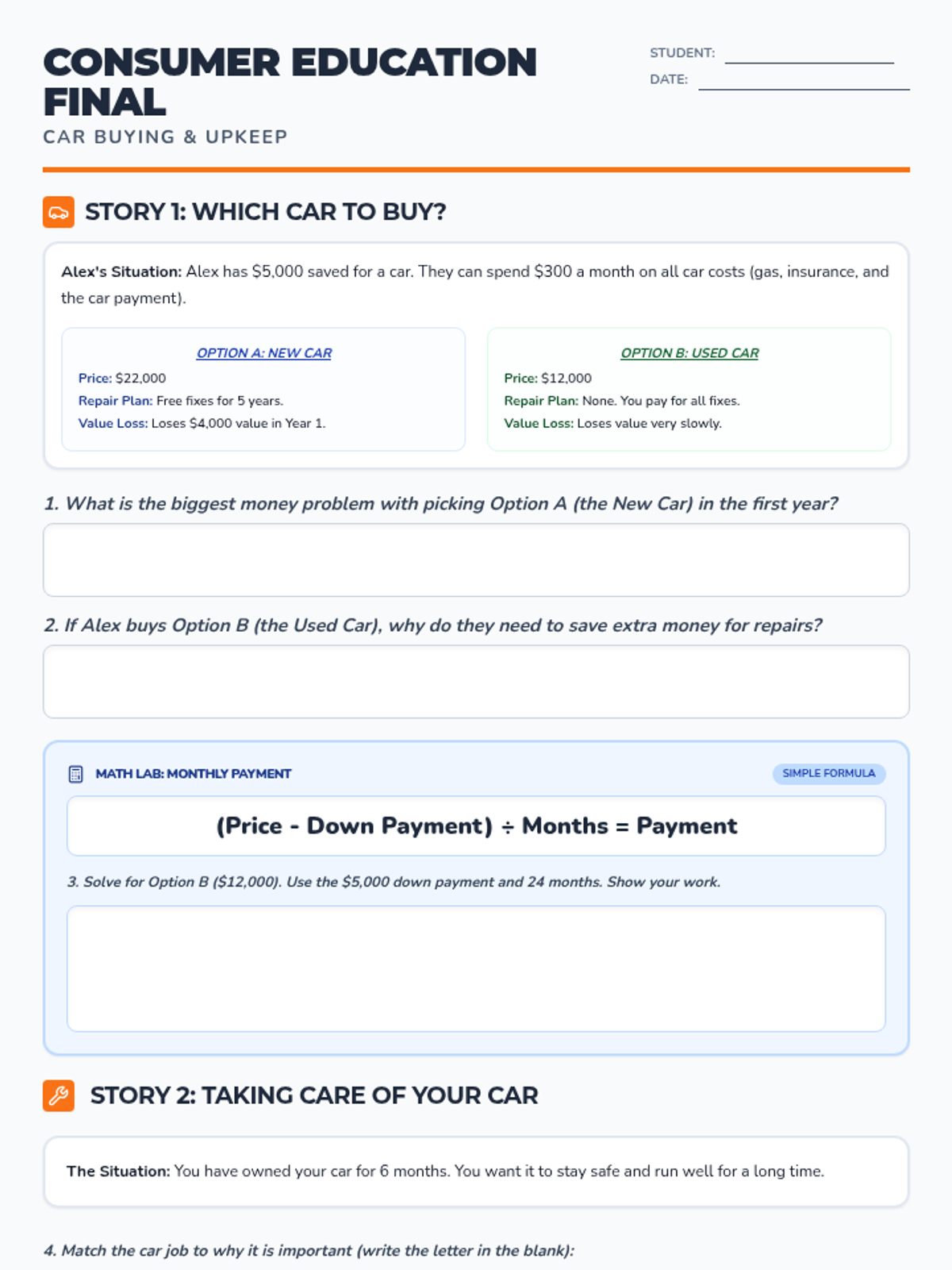
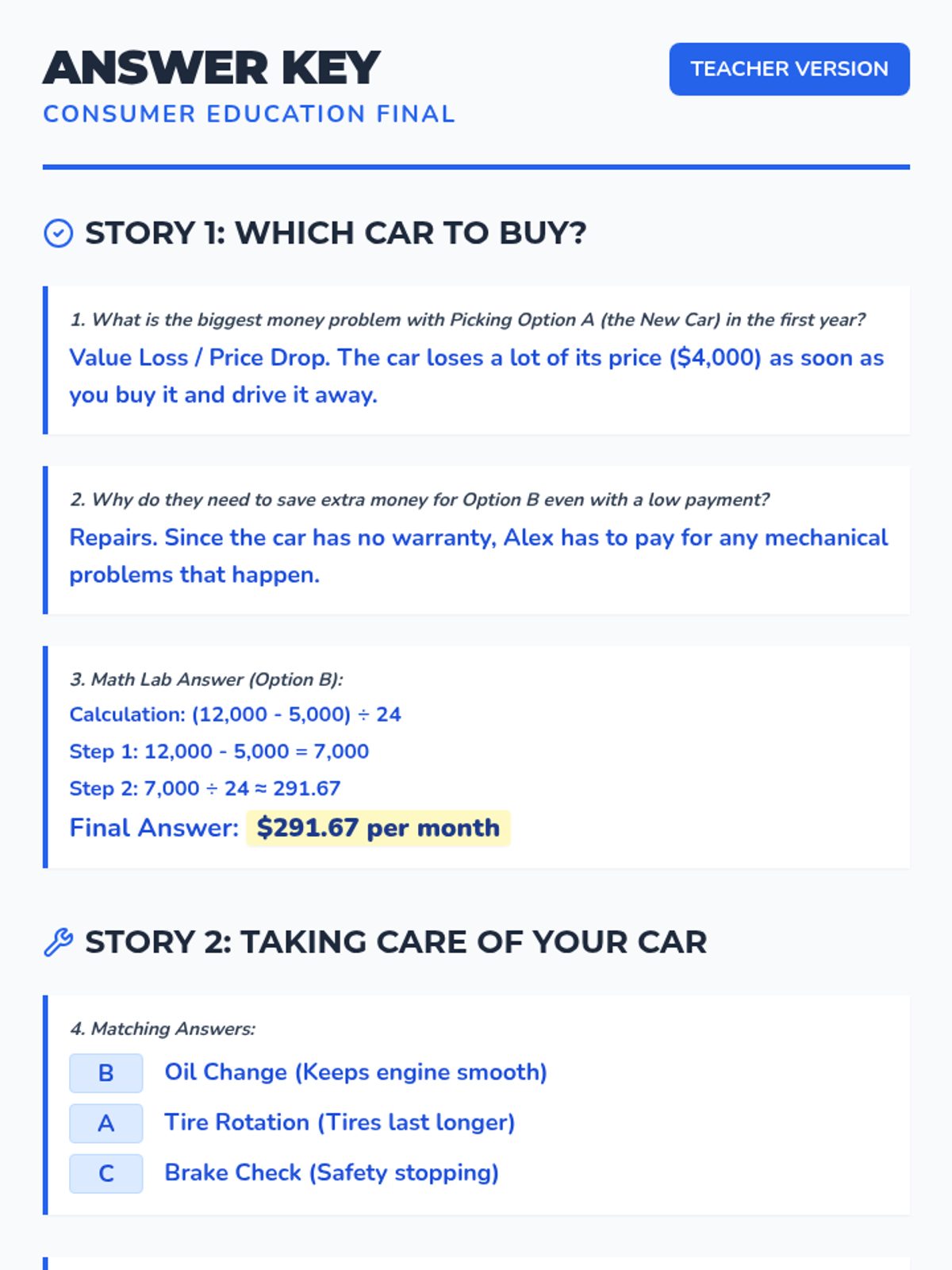
A scenario-based final assessment focusing on the practical decisions involved in purchasing and maintaining a vehicle, designed for a life skills consumer education course.
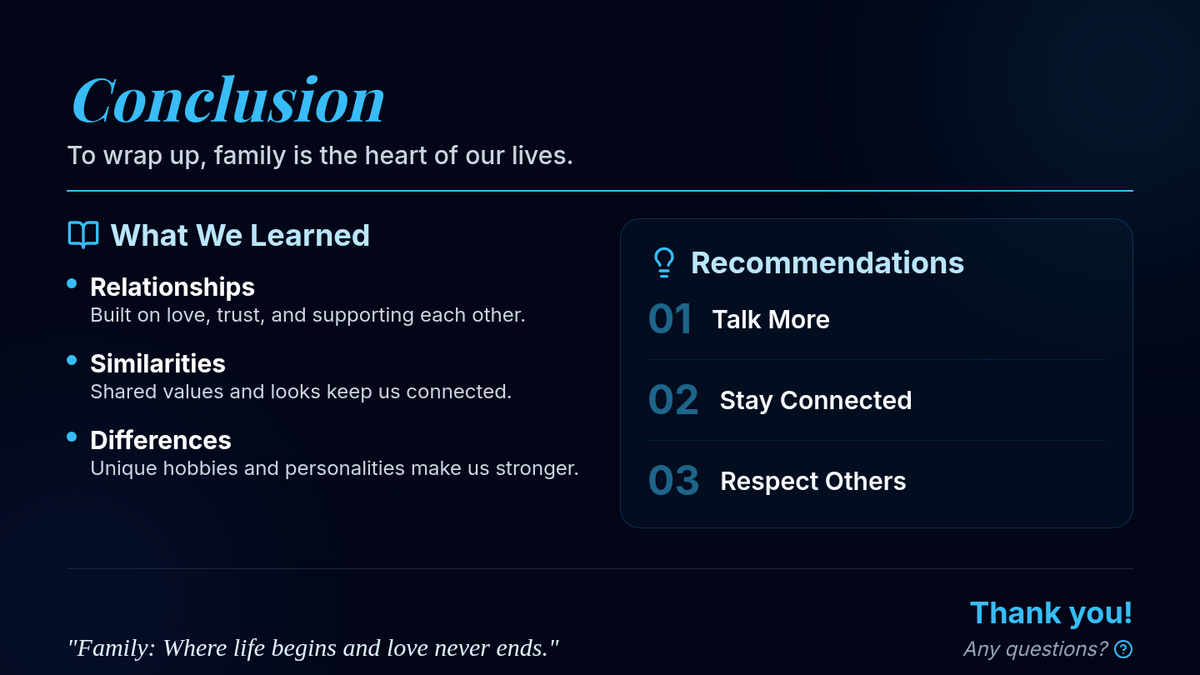
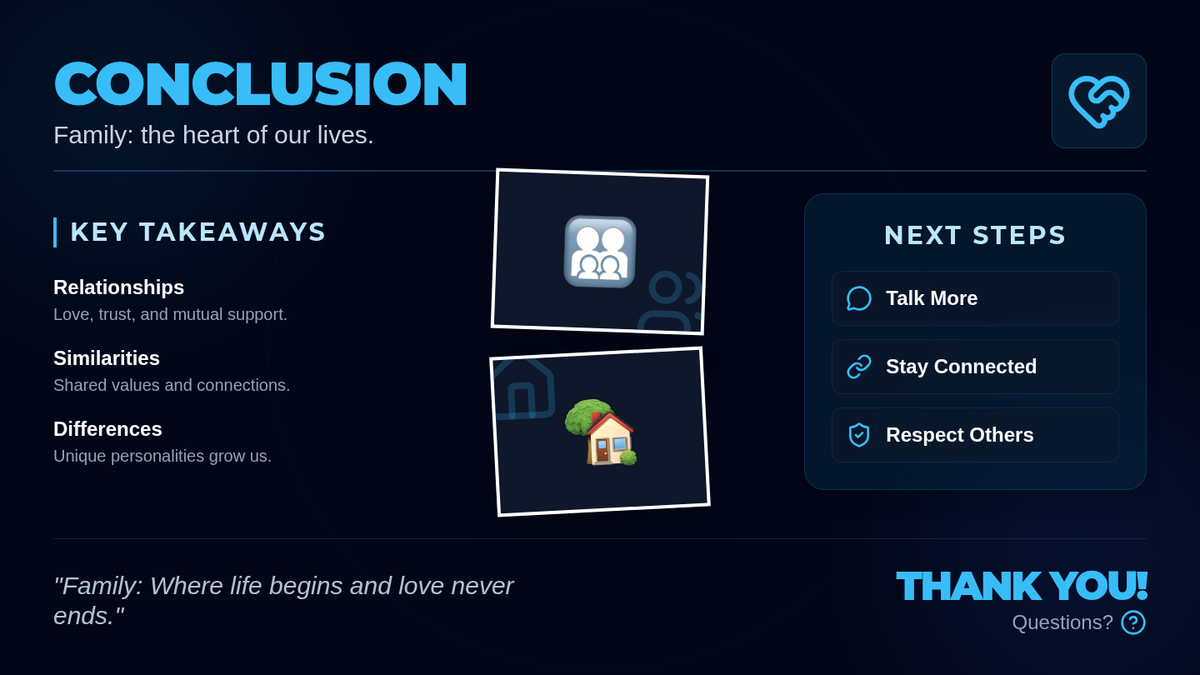
A concluding lesson on the importance of family, focusing on relationships, similarities, and differences.
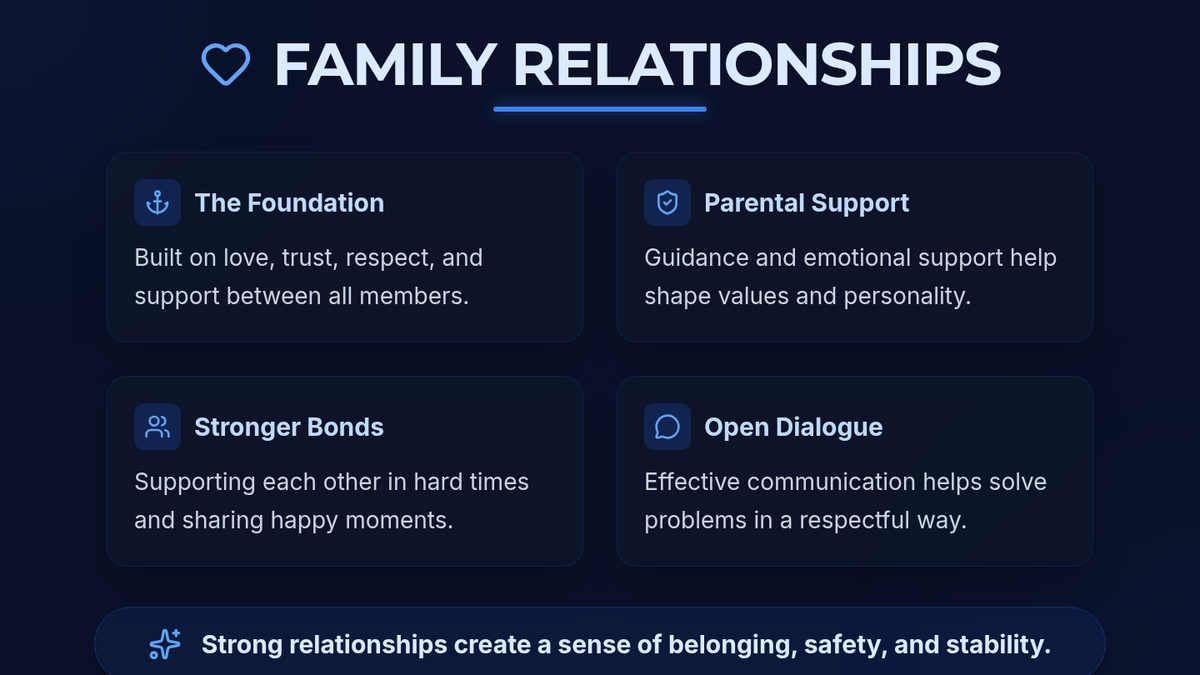
A lesson exploring the importance of family relationships, the roles of parents, and how communication strengthens bonds.
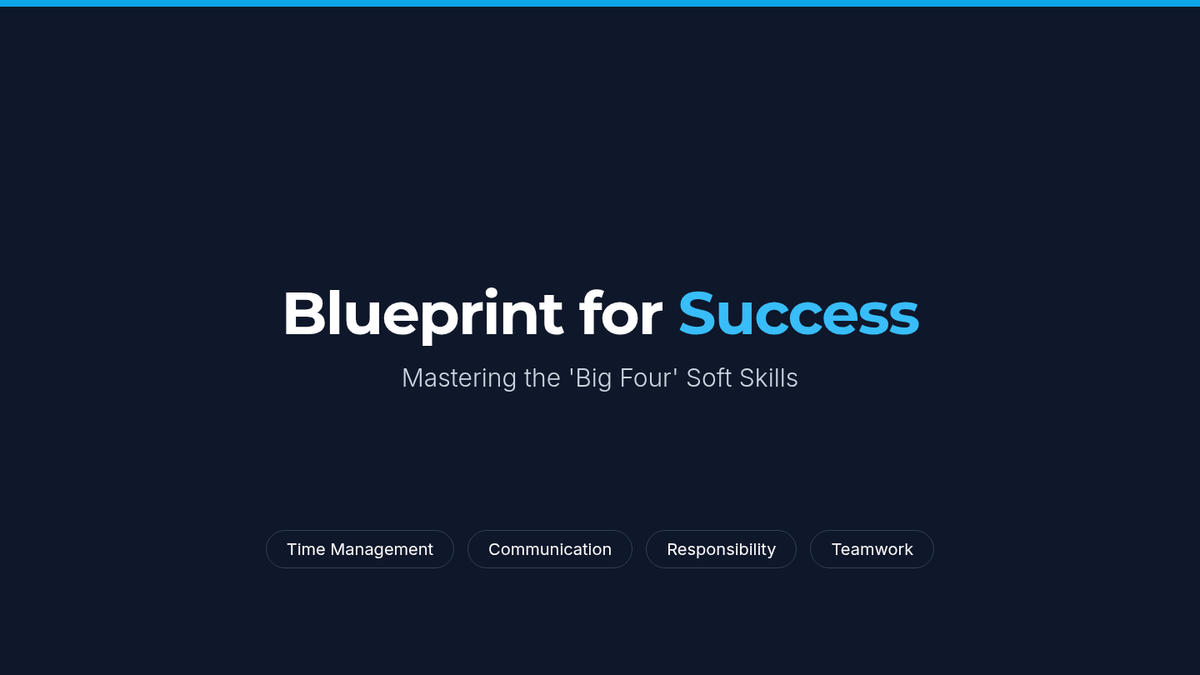
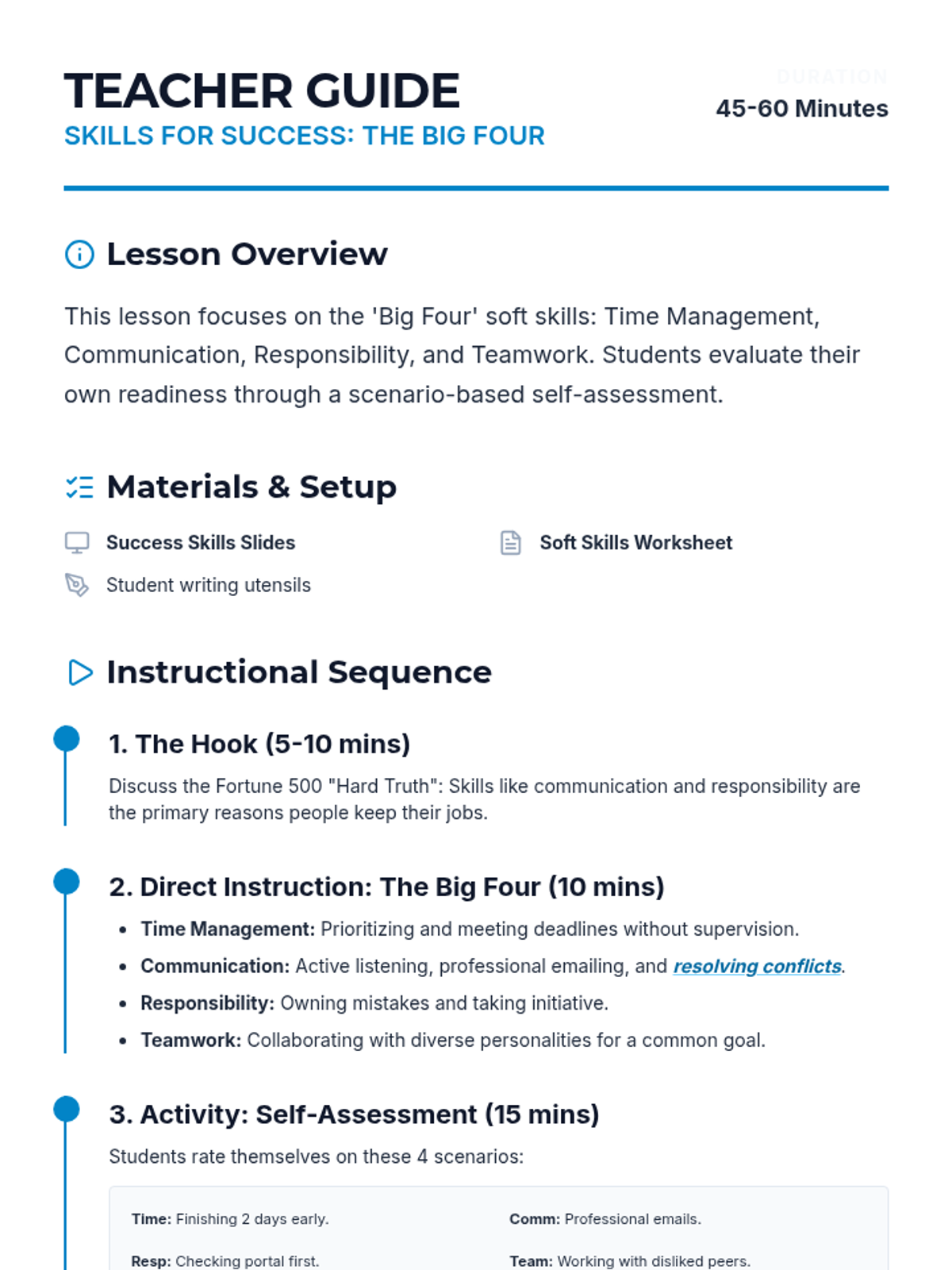
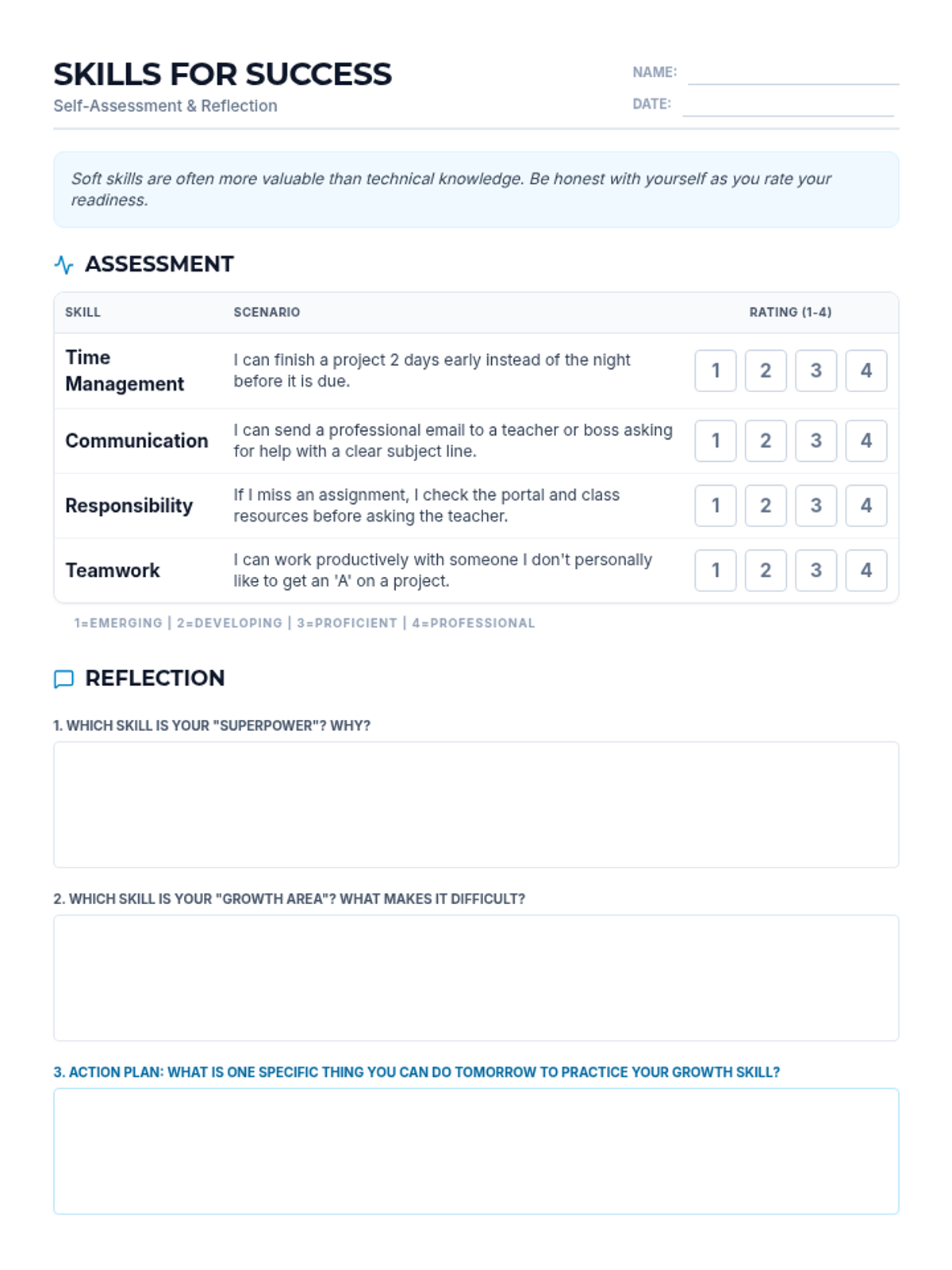
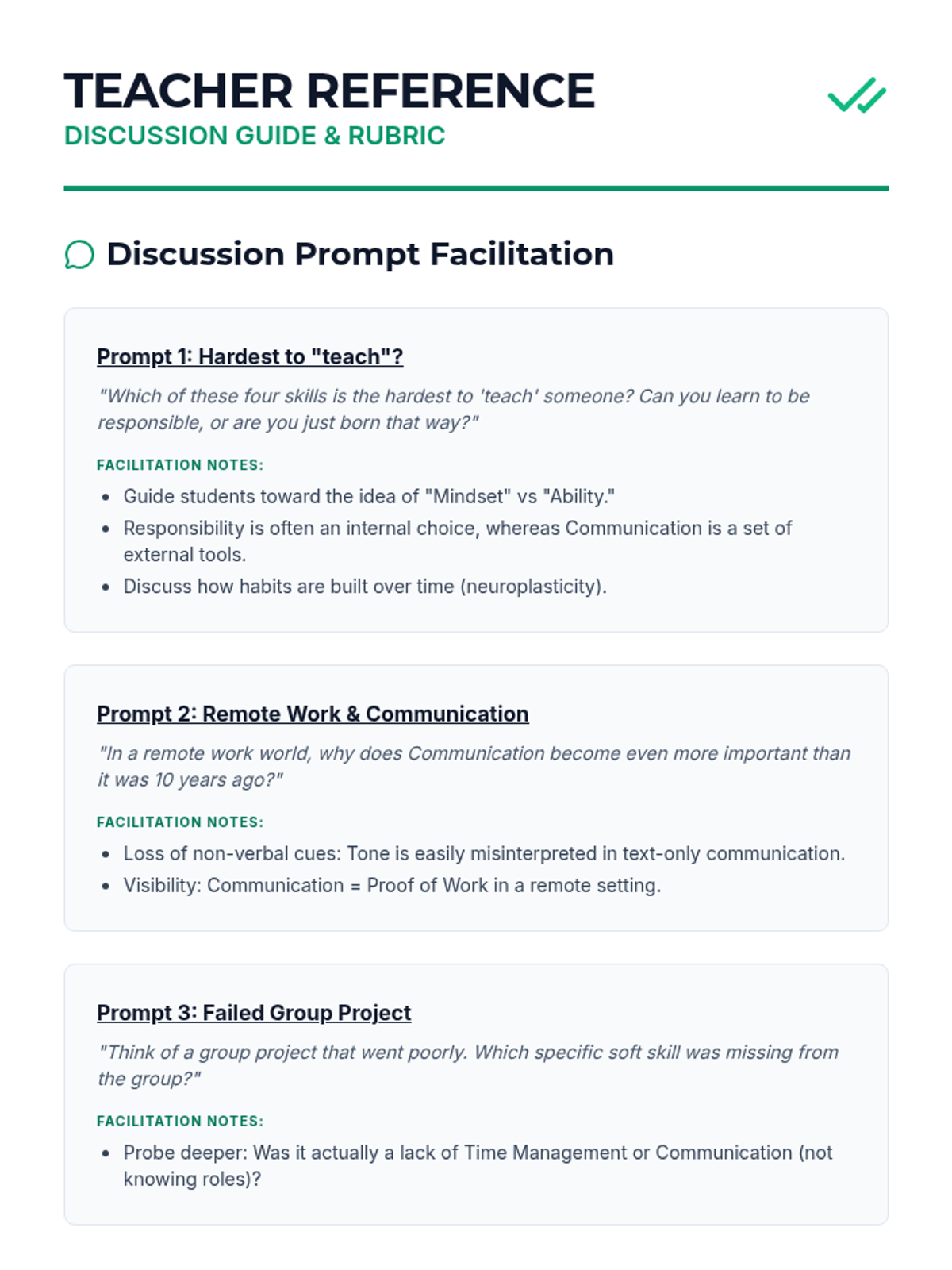
A lesson focused on the 'Big Four' soft skills: Time Management, Communication, Responsibility, and Teamwork. Students evaluate their own readiness through a scenario-based self-assessment and reflective discussion.
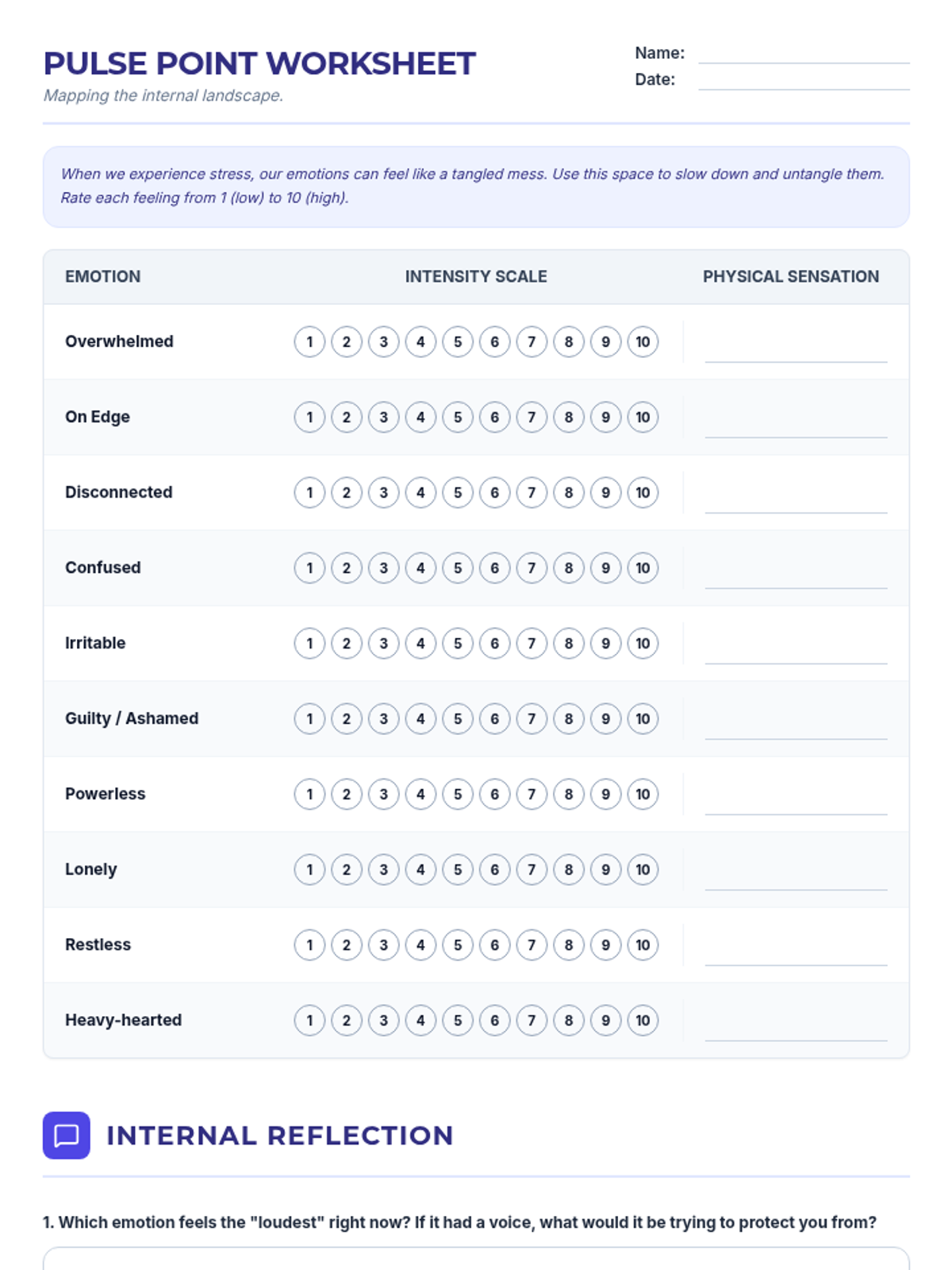
A supportive toolkit designed for teenagers to identify and scale complex emotions following stressful or traumatic events, focusing on the mind-body connection and emotional literacy.
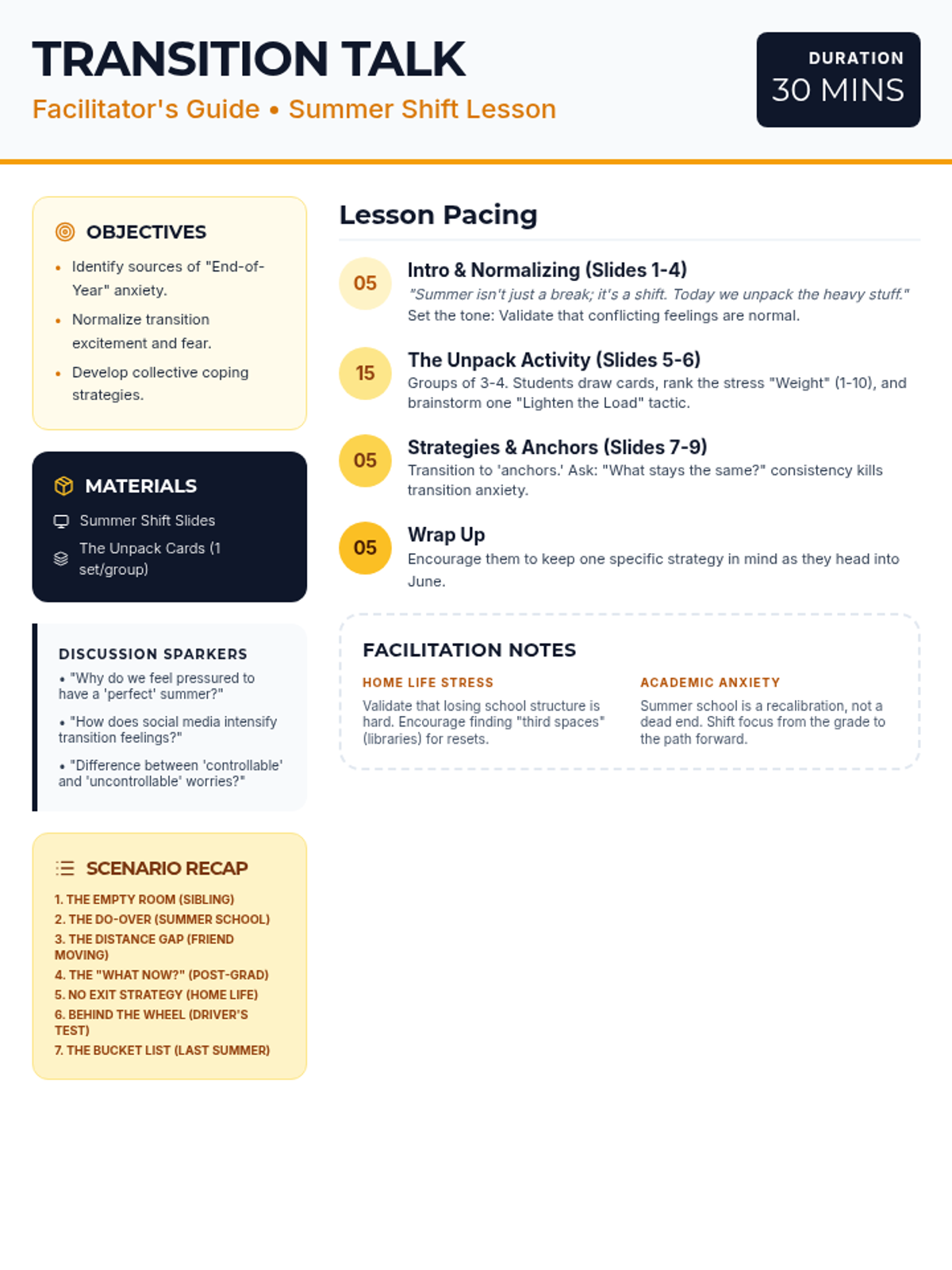
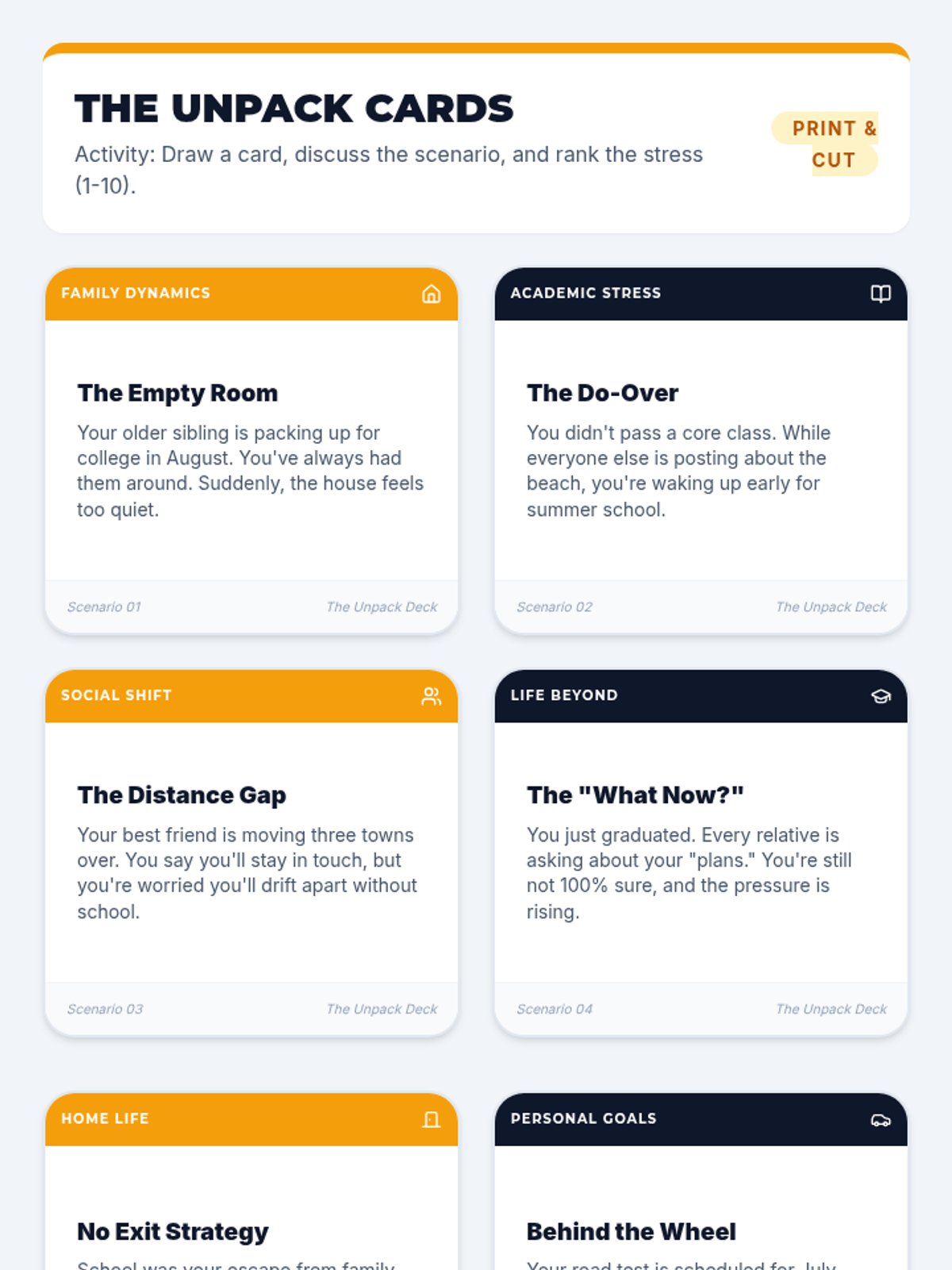
A 30-minute social-emotional learning session designed to help high schoolers navigate the complex transitions of summer, from academic stress to shifting friendships and family dynamics.
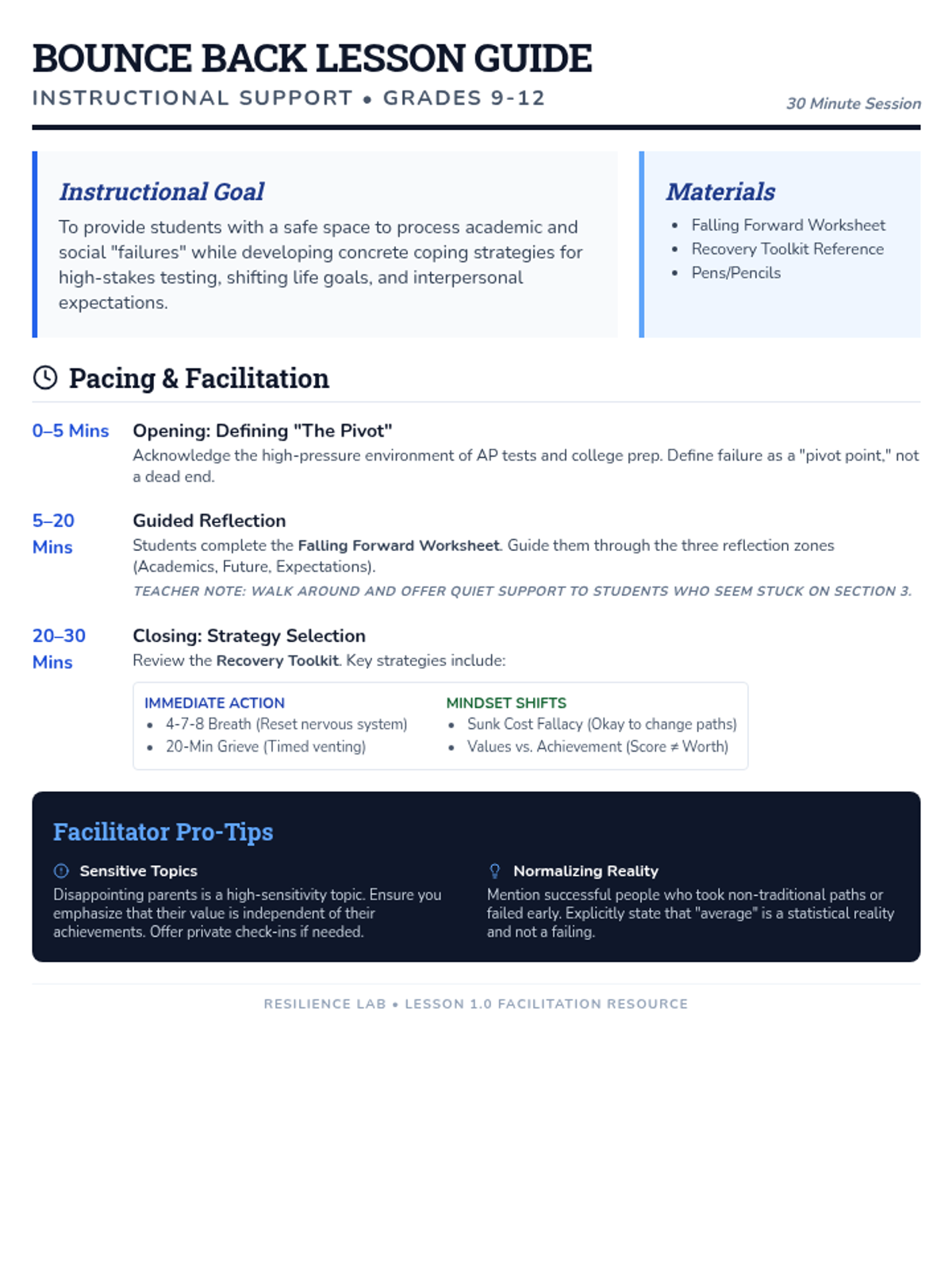
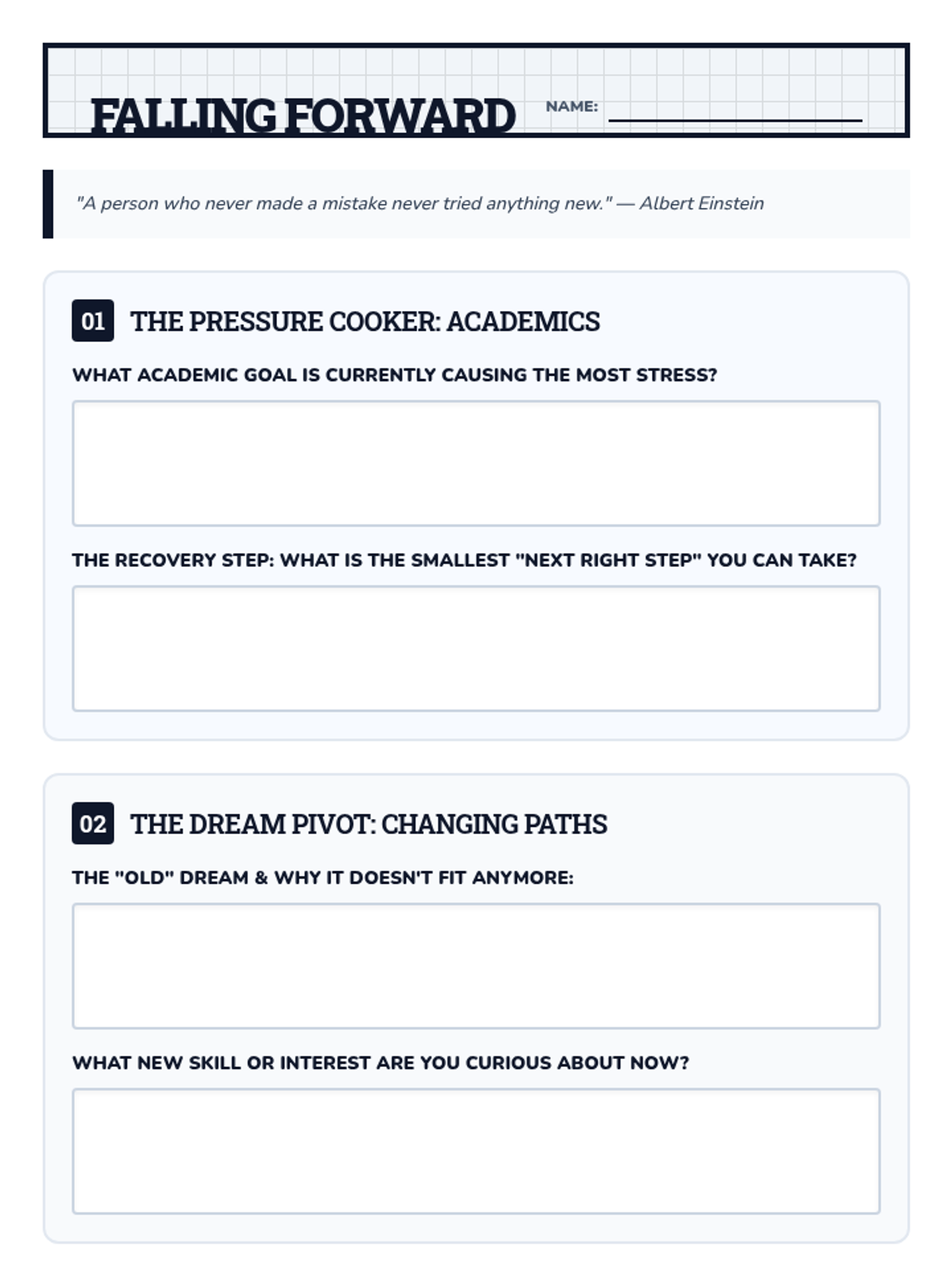
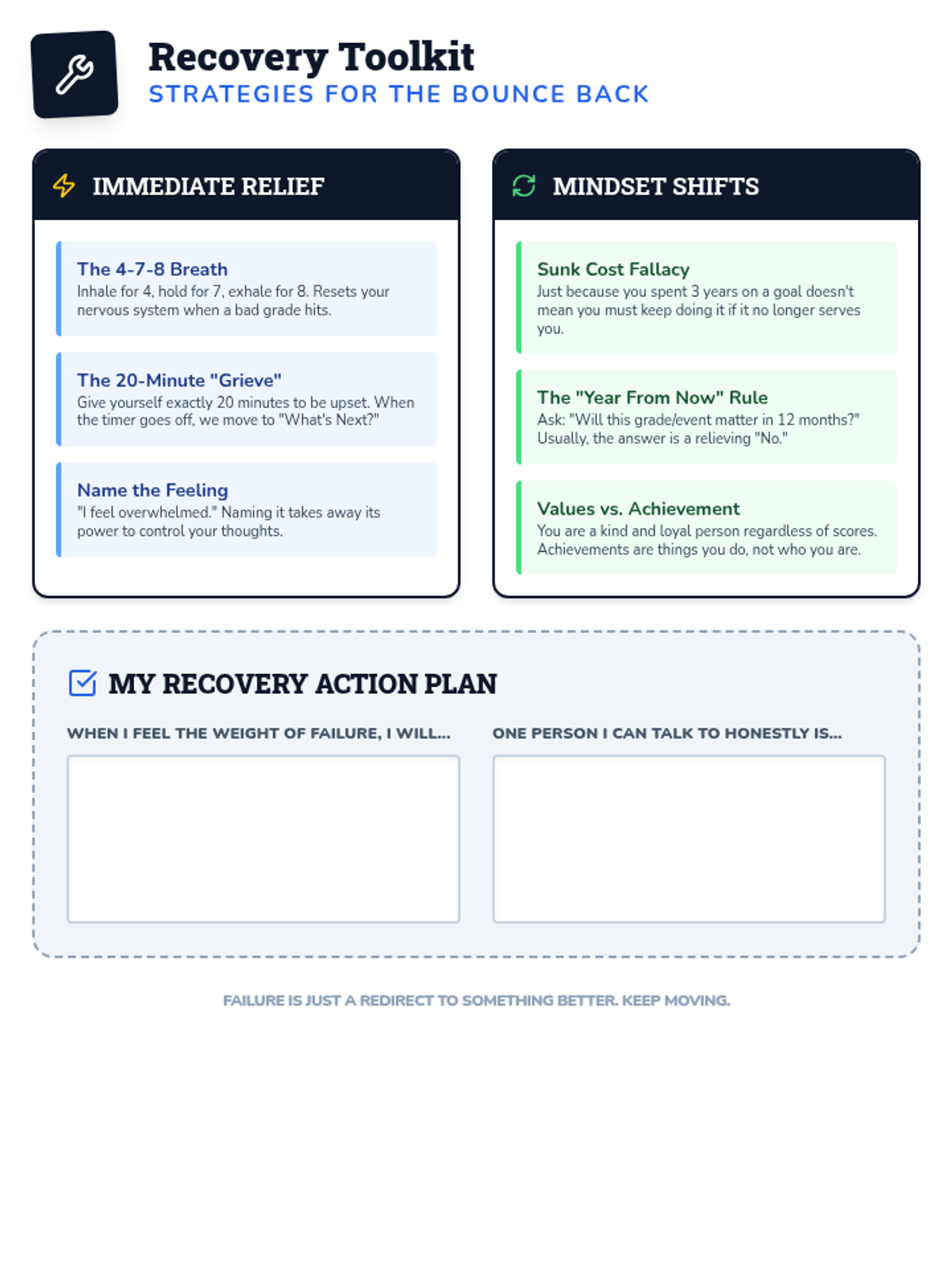
A 30-minute social-emotional learning lesson focused on building resilience and healthy coping strategies when facing academic pressure, changing life goals, and the fear of disappointing others.
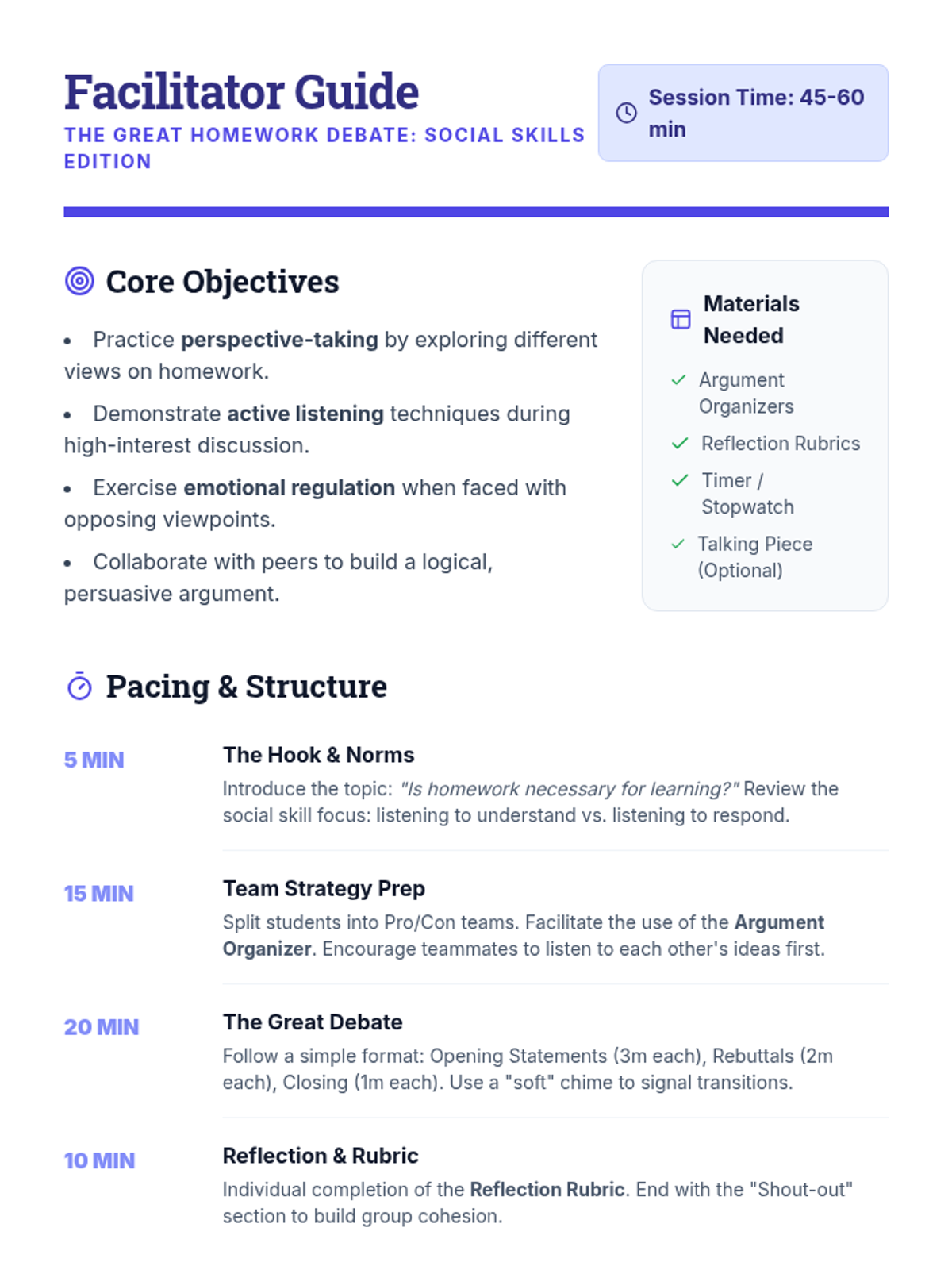
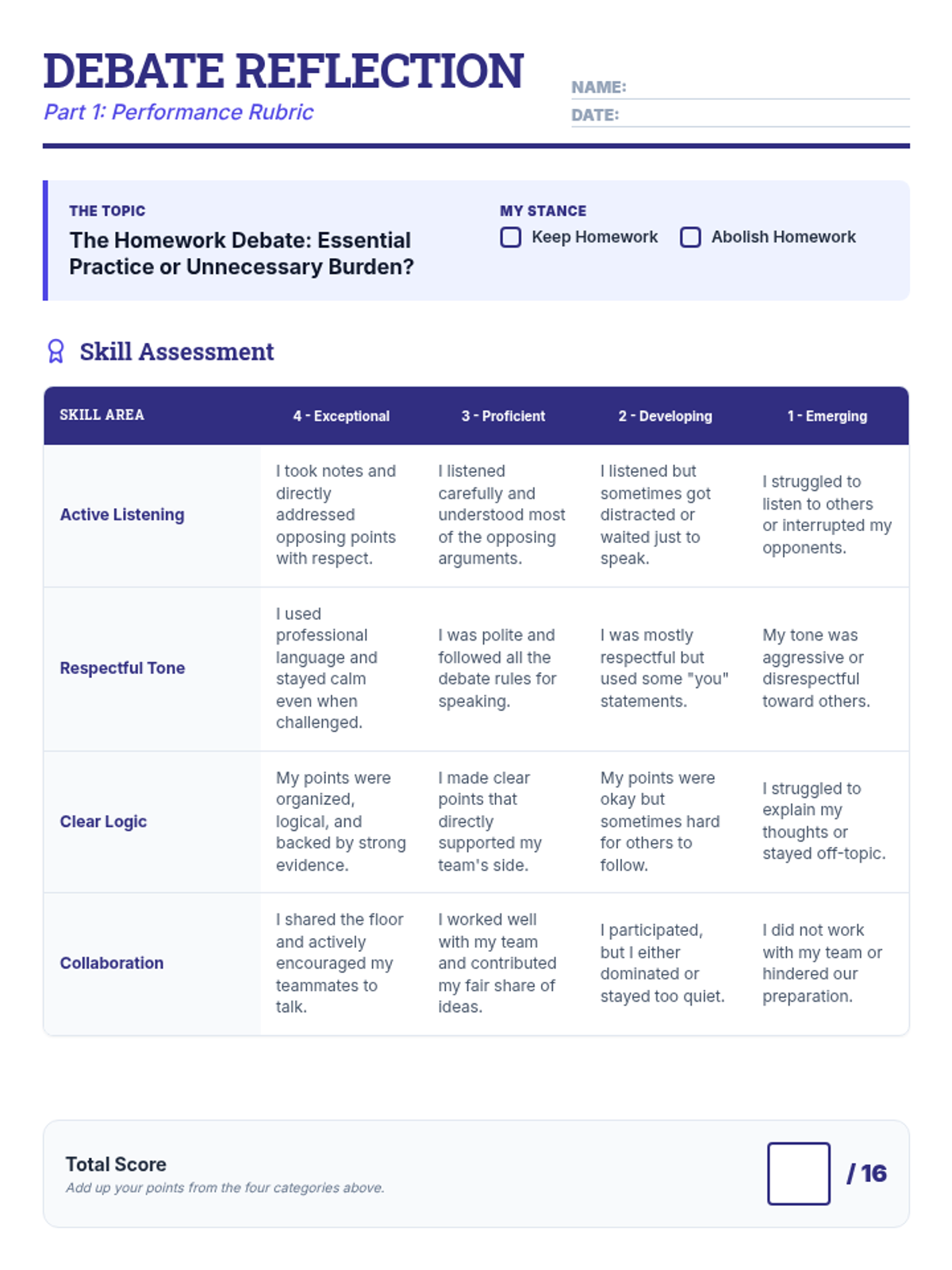
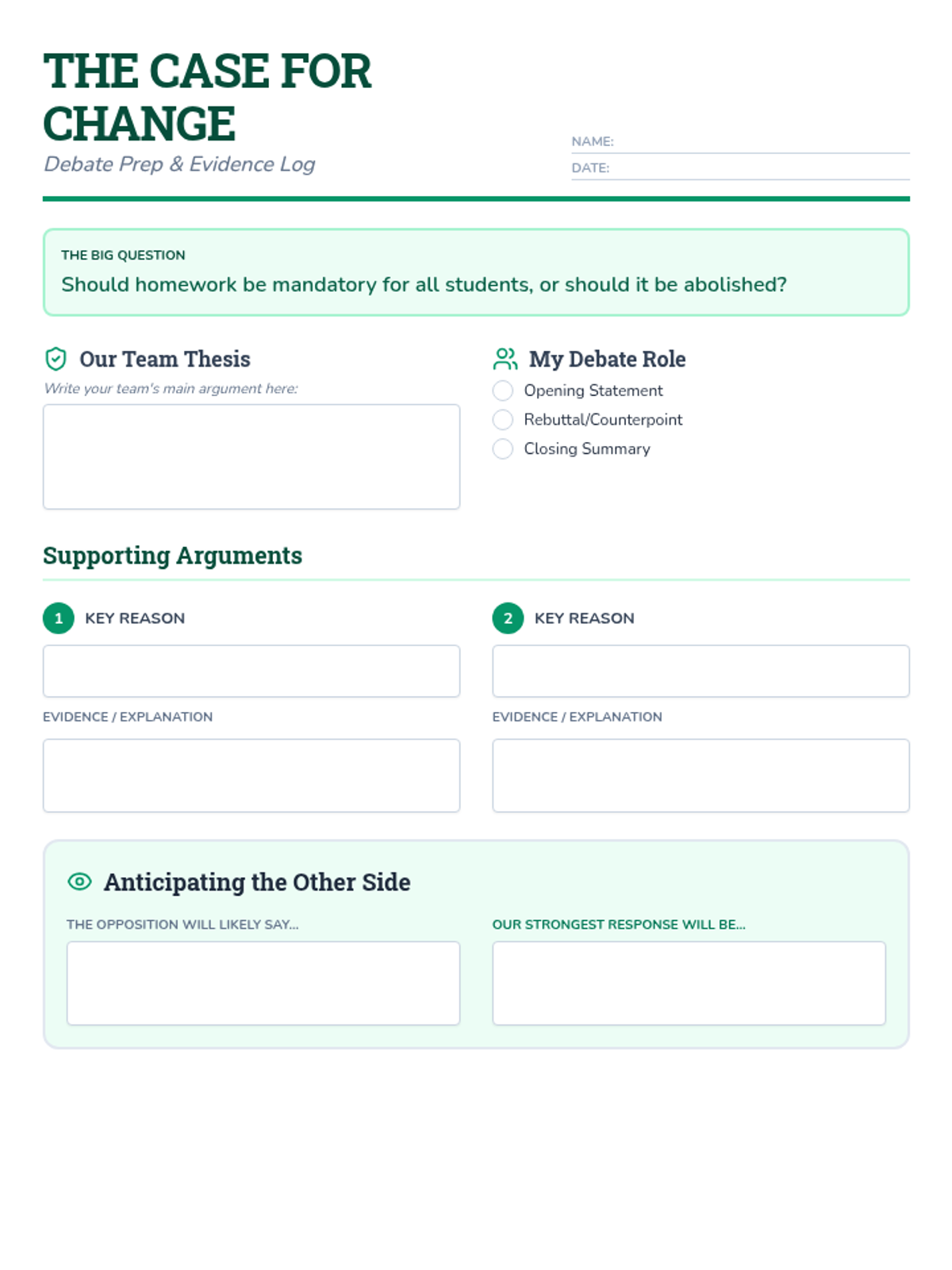
Students participate in a structured debate about the necessity of homework to develop social-emotional skills like active listening, perspective-taking, and respectful disagreement. The lesson provides a comprehensive framework including prep organizers, self-reflection tools, and teacher facilitation strategies.
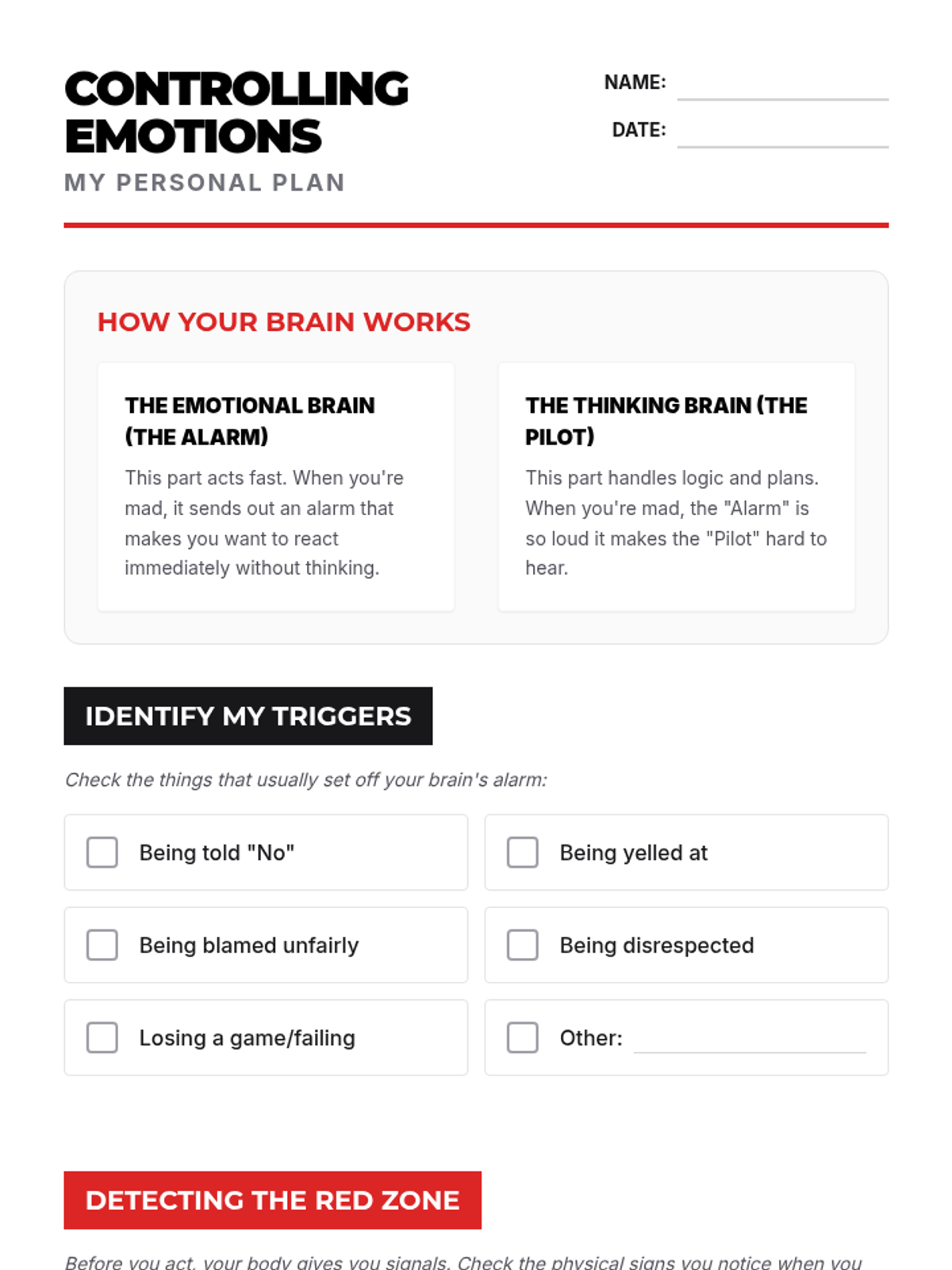
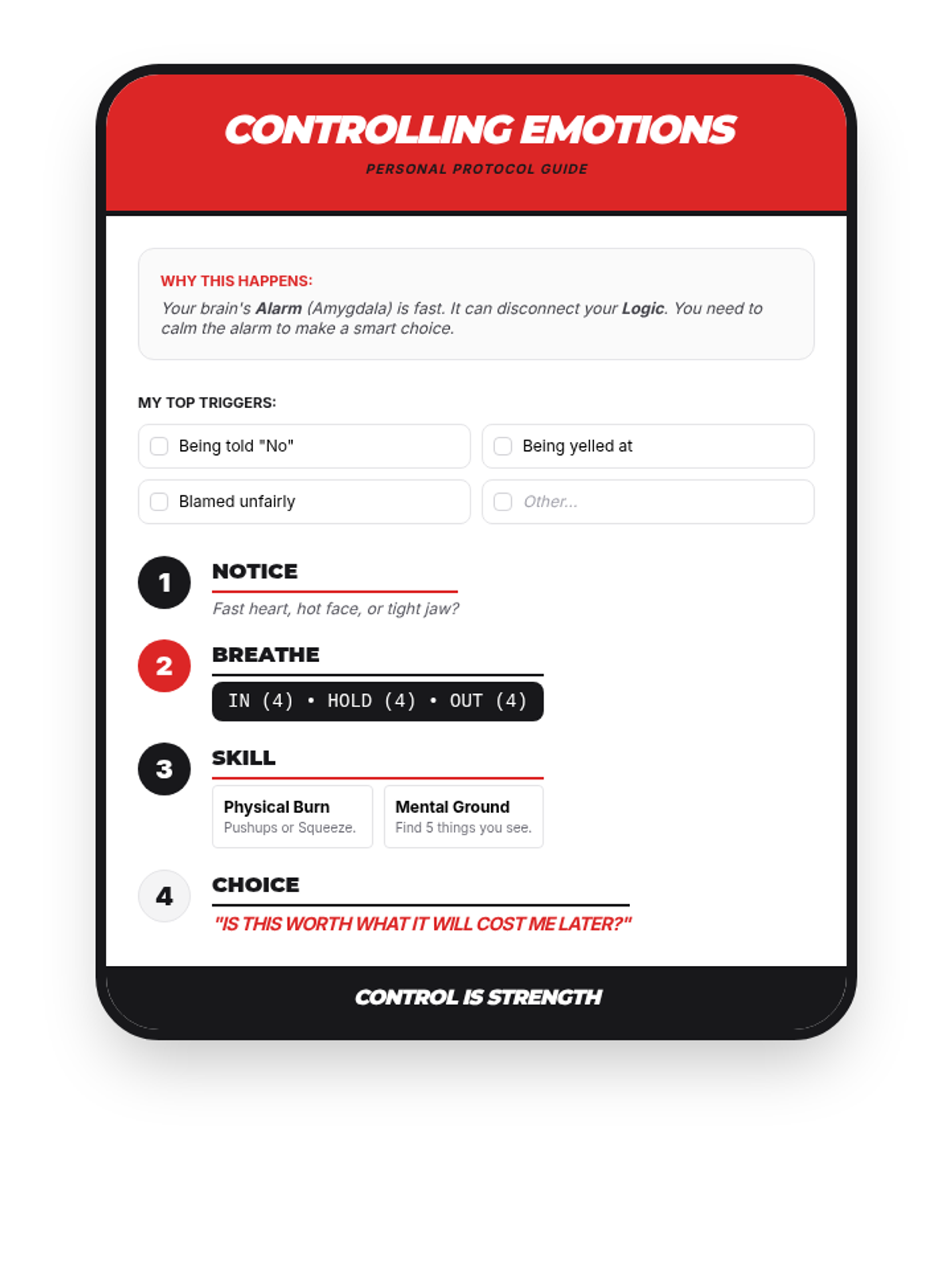
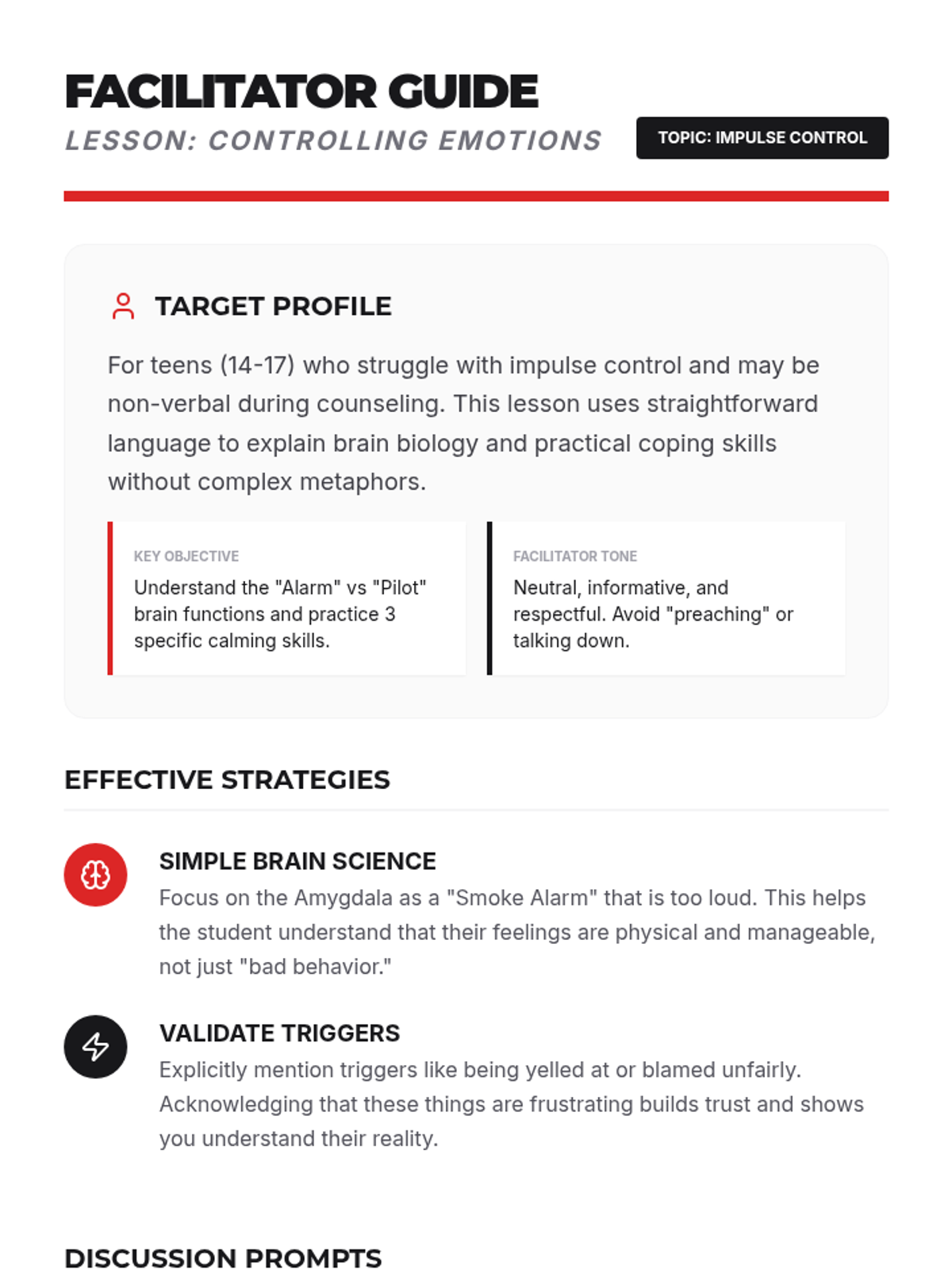
A science-based approach to anger management and impulse control for teens, focusing on the biological 'amygdala hijack' and practical 'manual override' strategies.
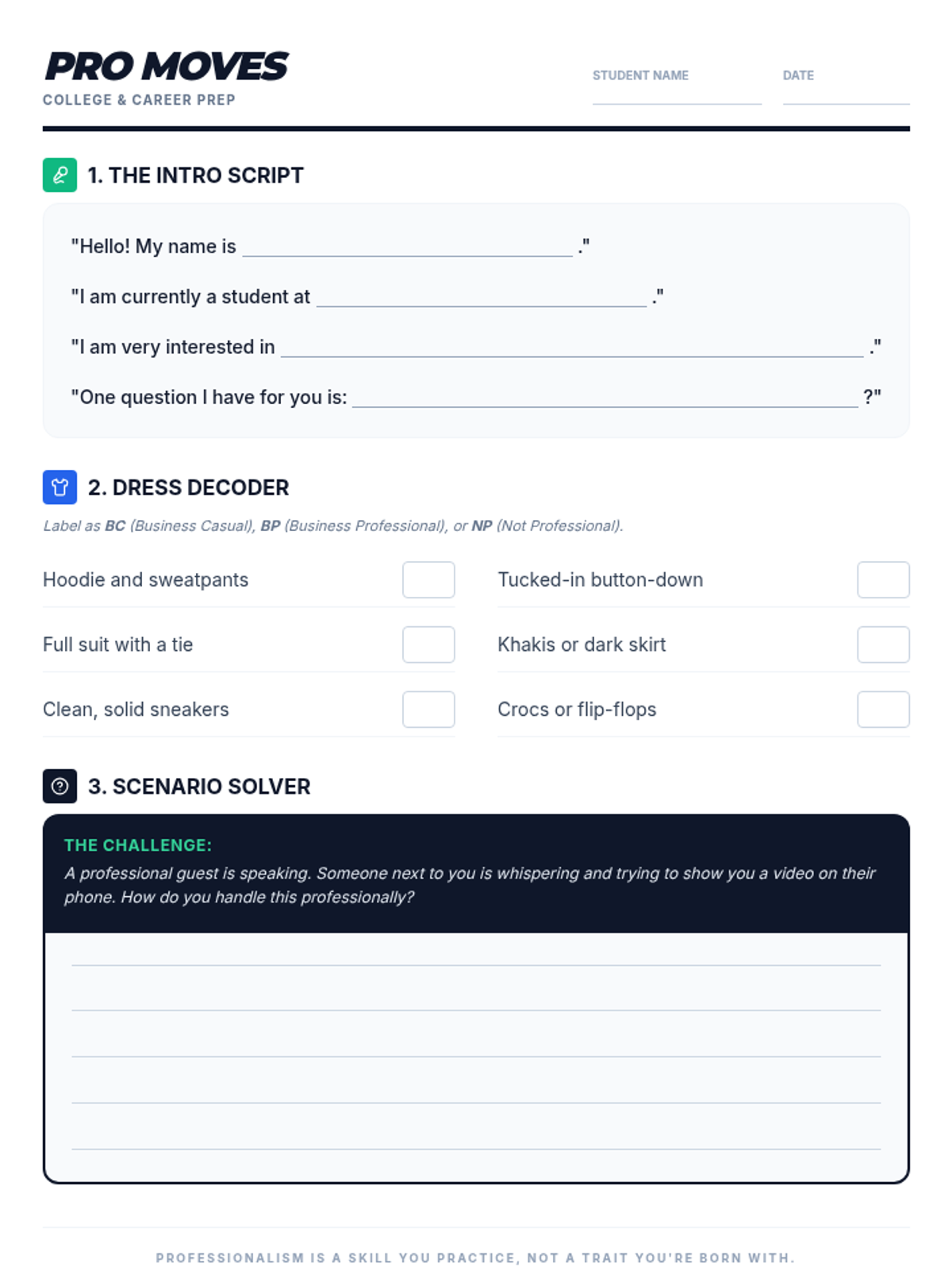
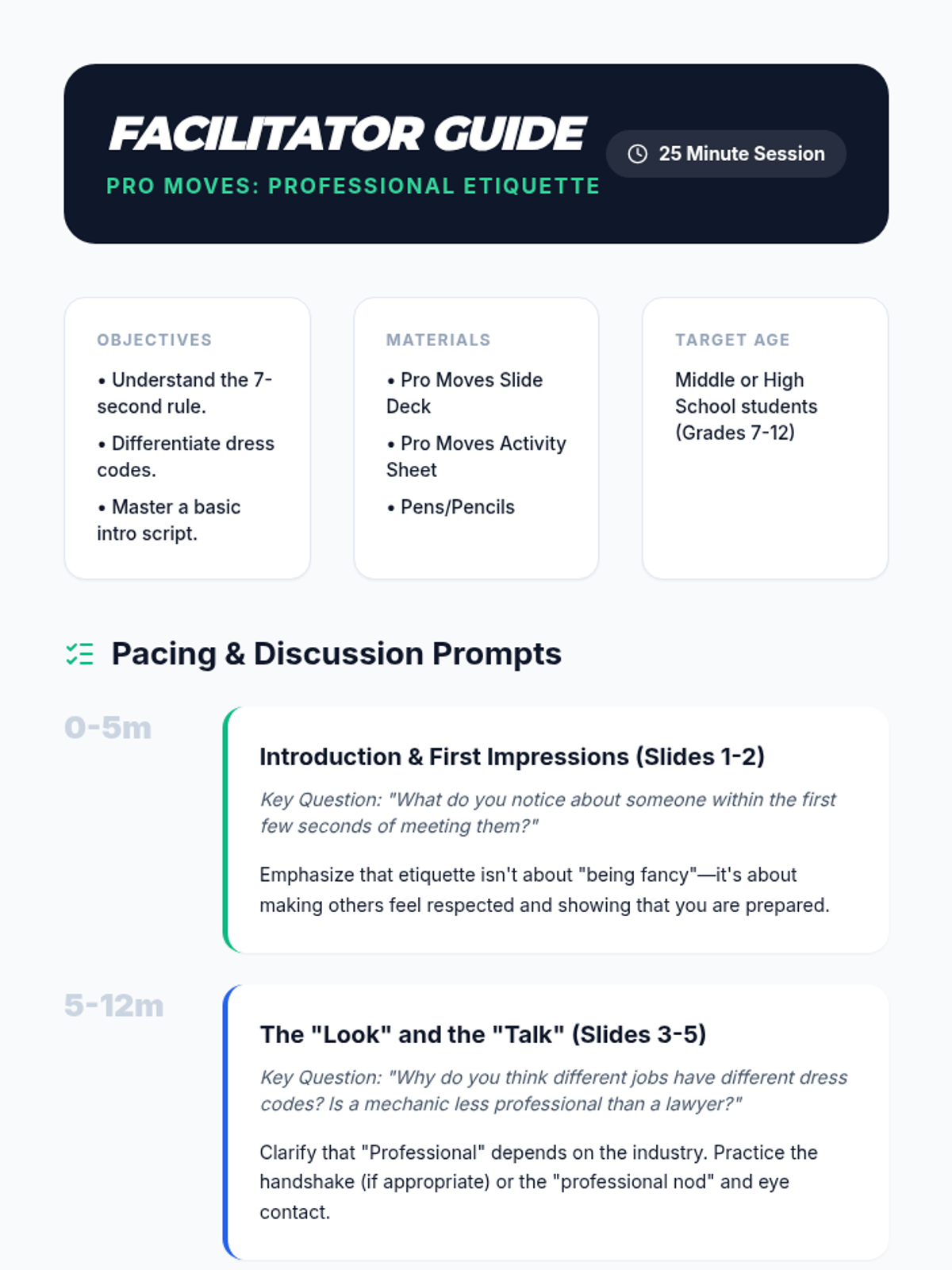
A fast-paced guide to professional etiquette, covering dress, manners, and communication to prepare students for interacting with industry professionals during College and Career Week.
A lesson designed to help students transition into summer break with mindfulness and coping strategies to manage end-of-year nerves and summer stressors.
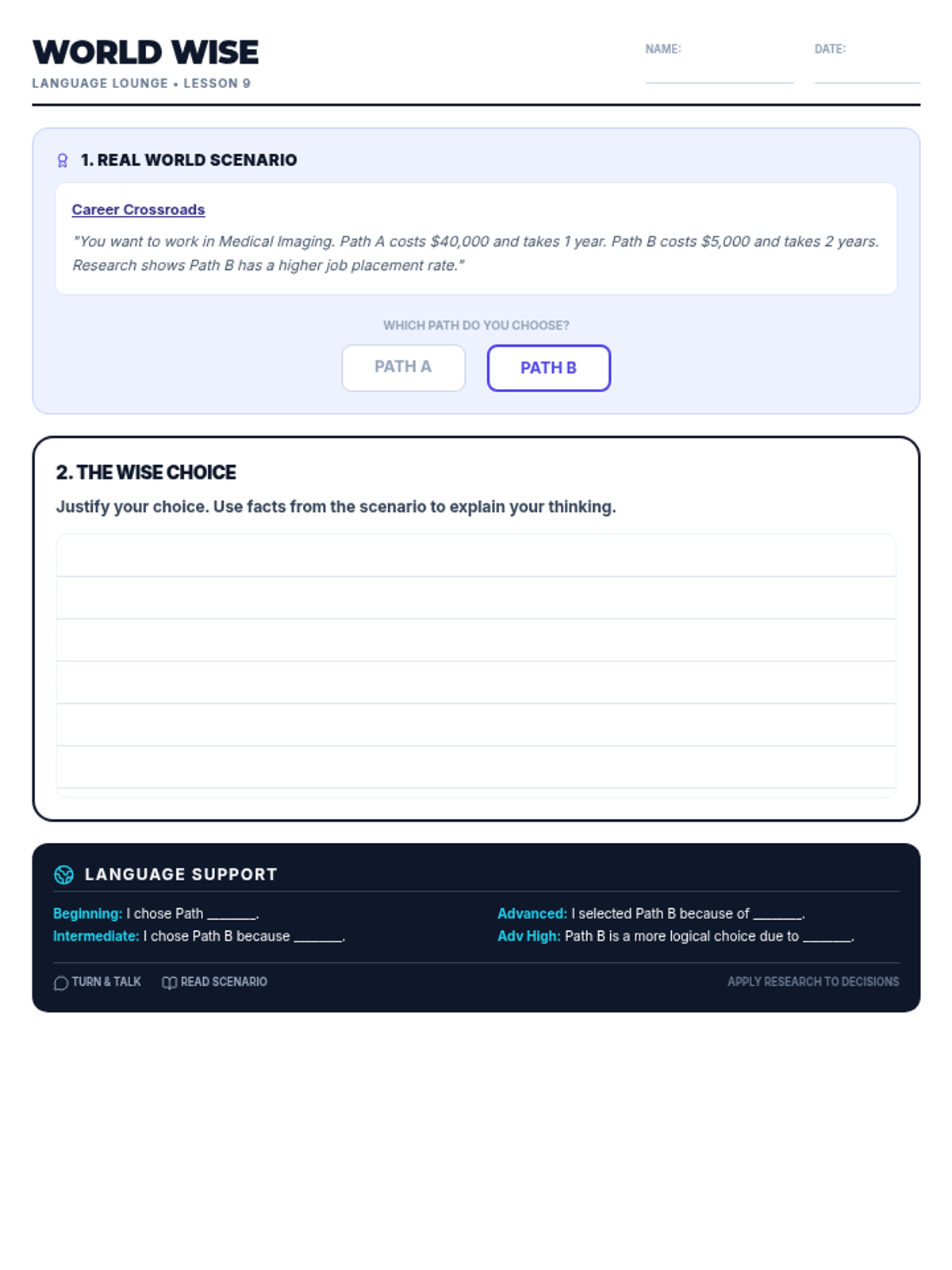
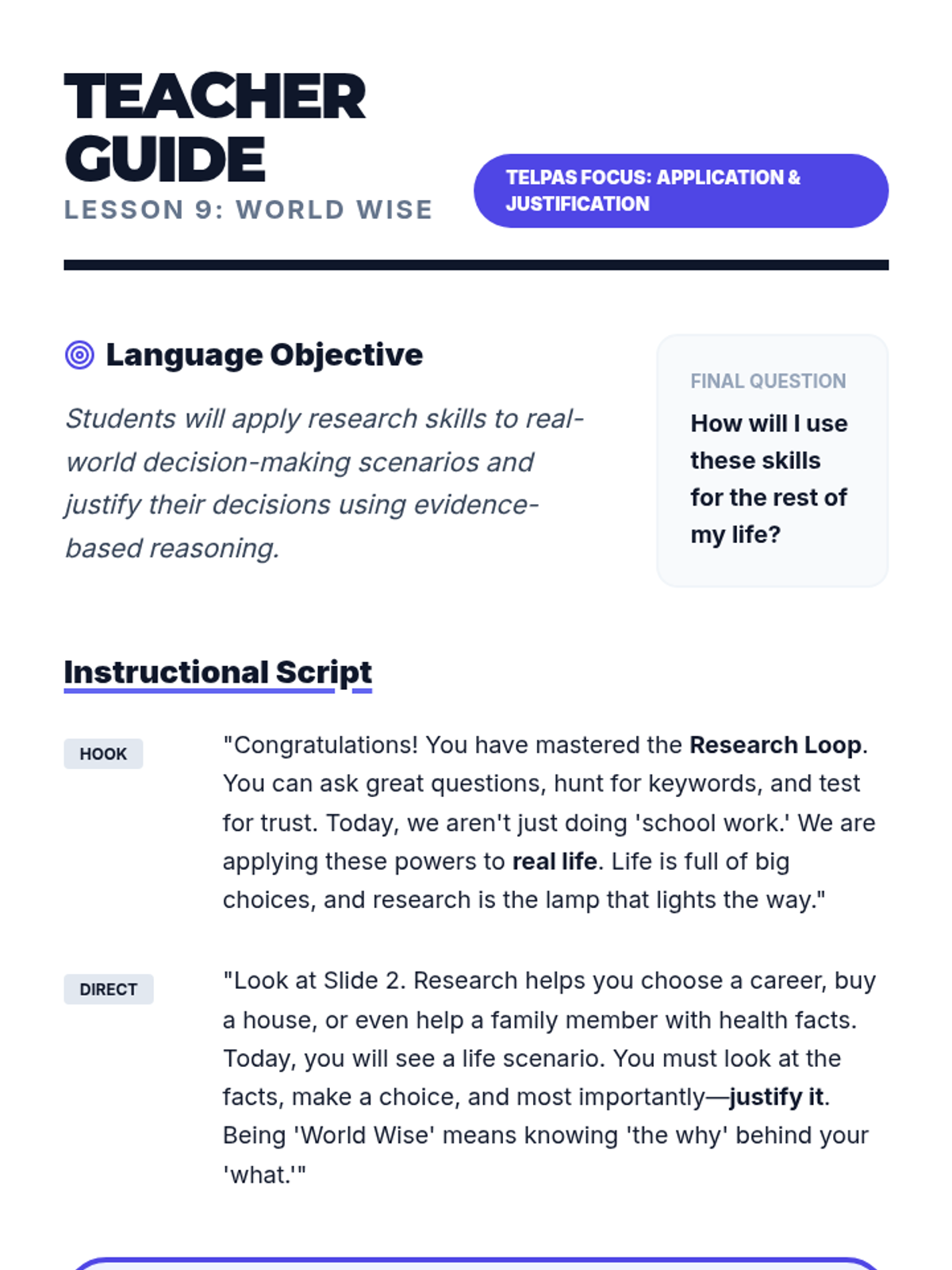
Students apply their research skills to a real-world scenario, justifying decisions with evidence.
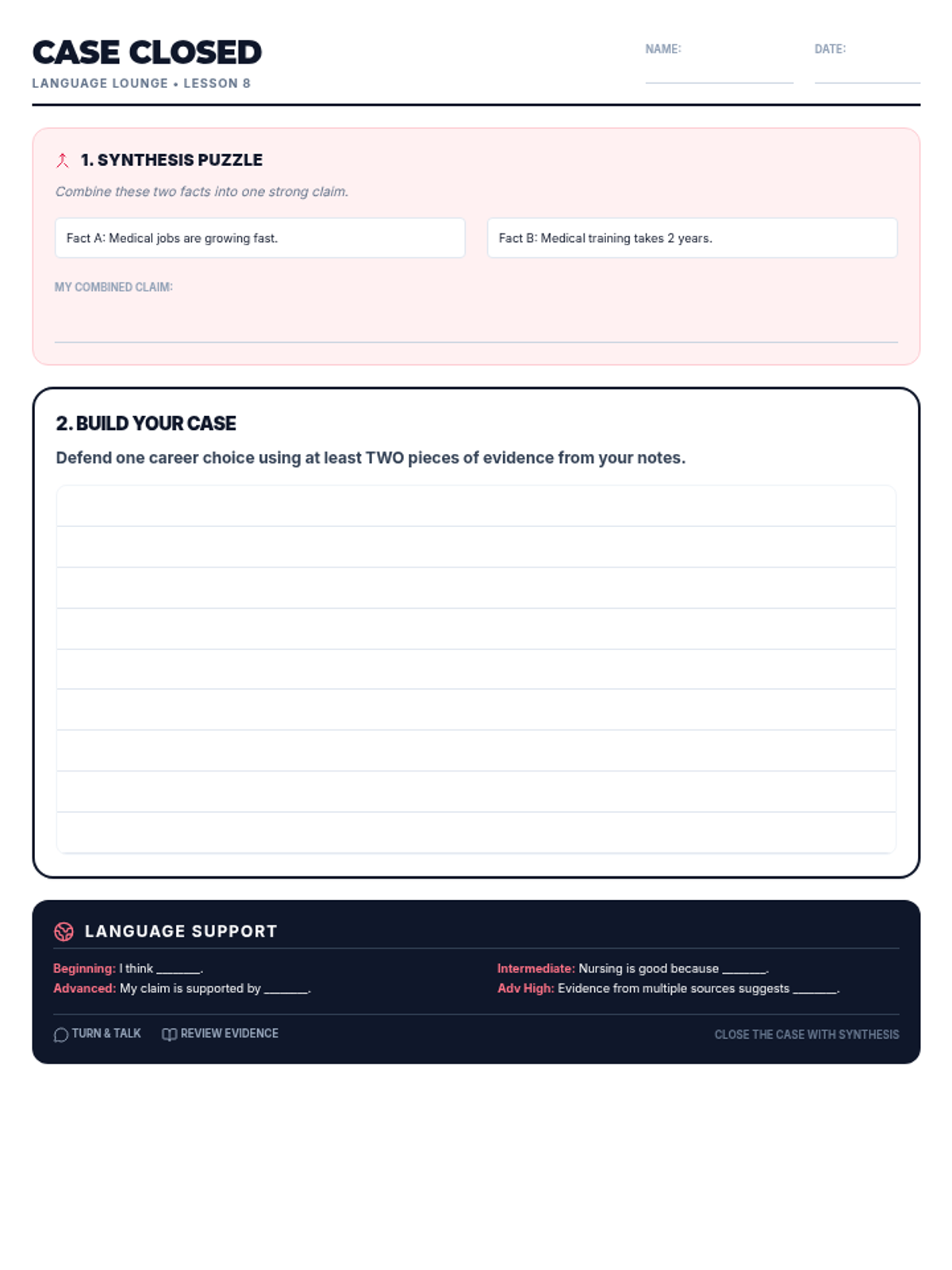
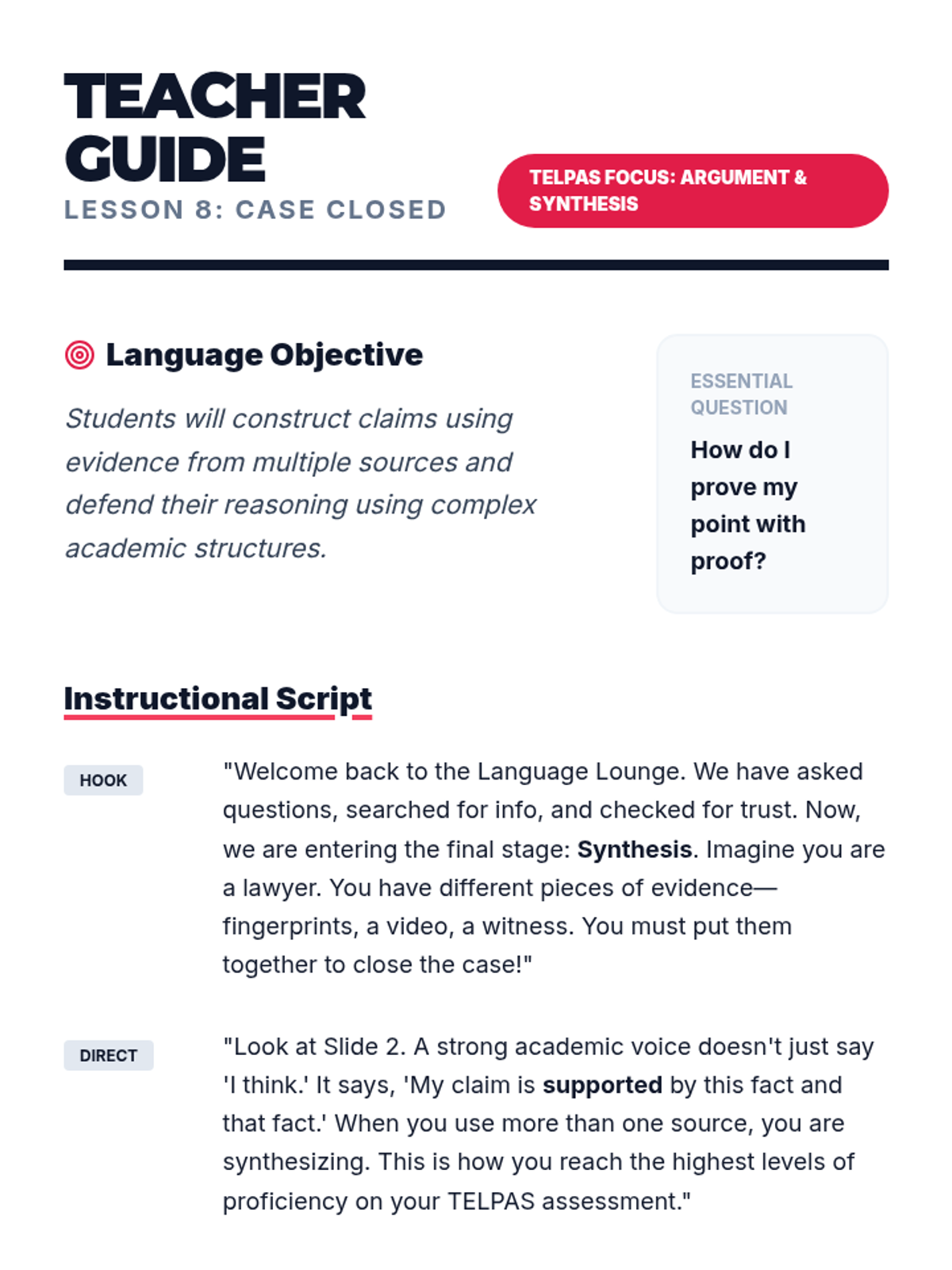
Students synthesize information from multiple sources to construct and defend academic claims.
Students utilize various note-taking and organization strategies to manage career and college research.
Students explore the ethics of information use, including plagiarism, citations, and responsible social media sharing.
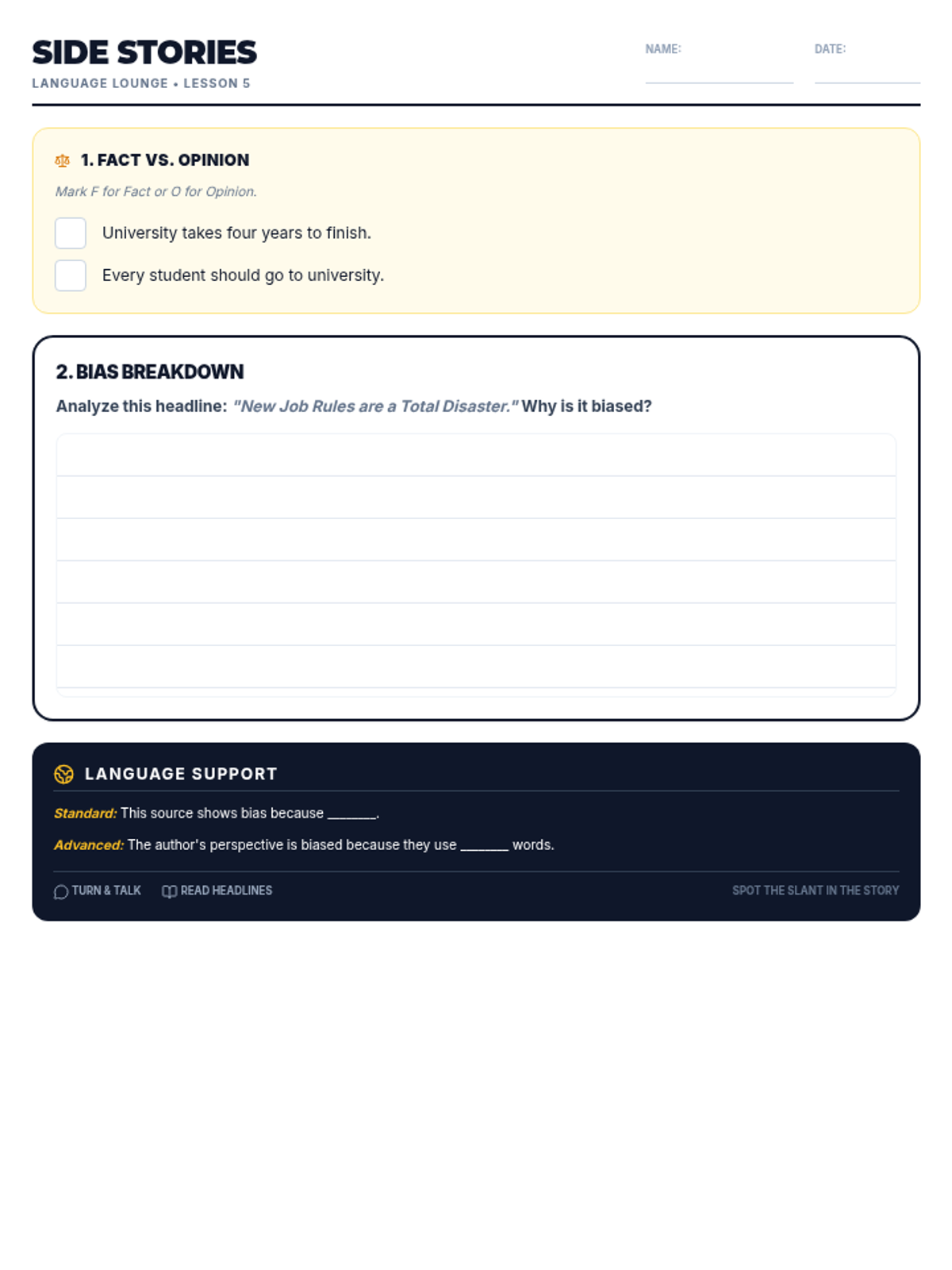
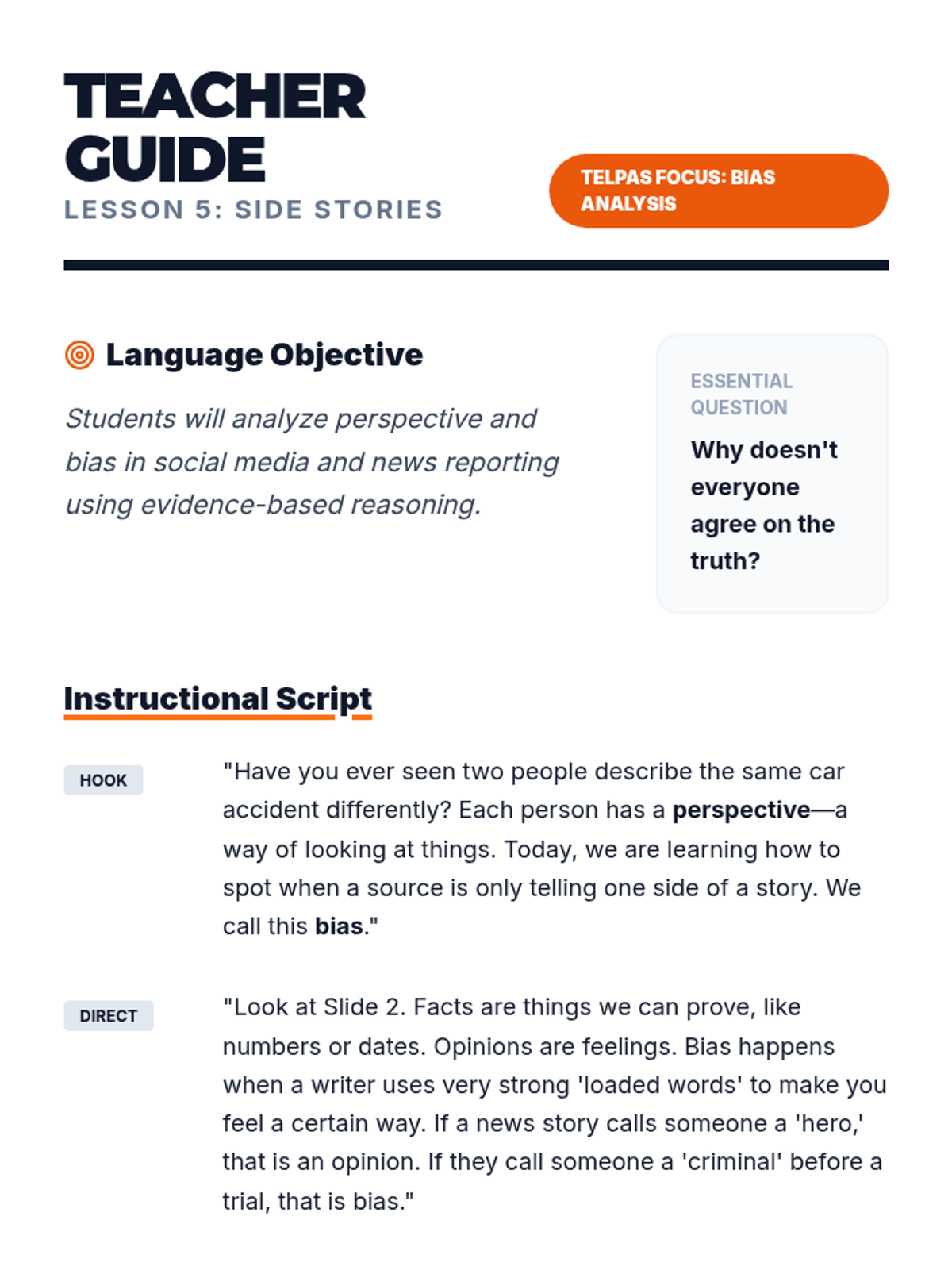
Students identify fact versus opinion and recognize bias in social media and news reporting.
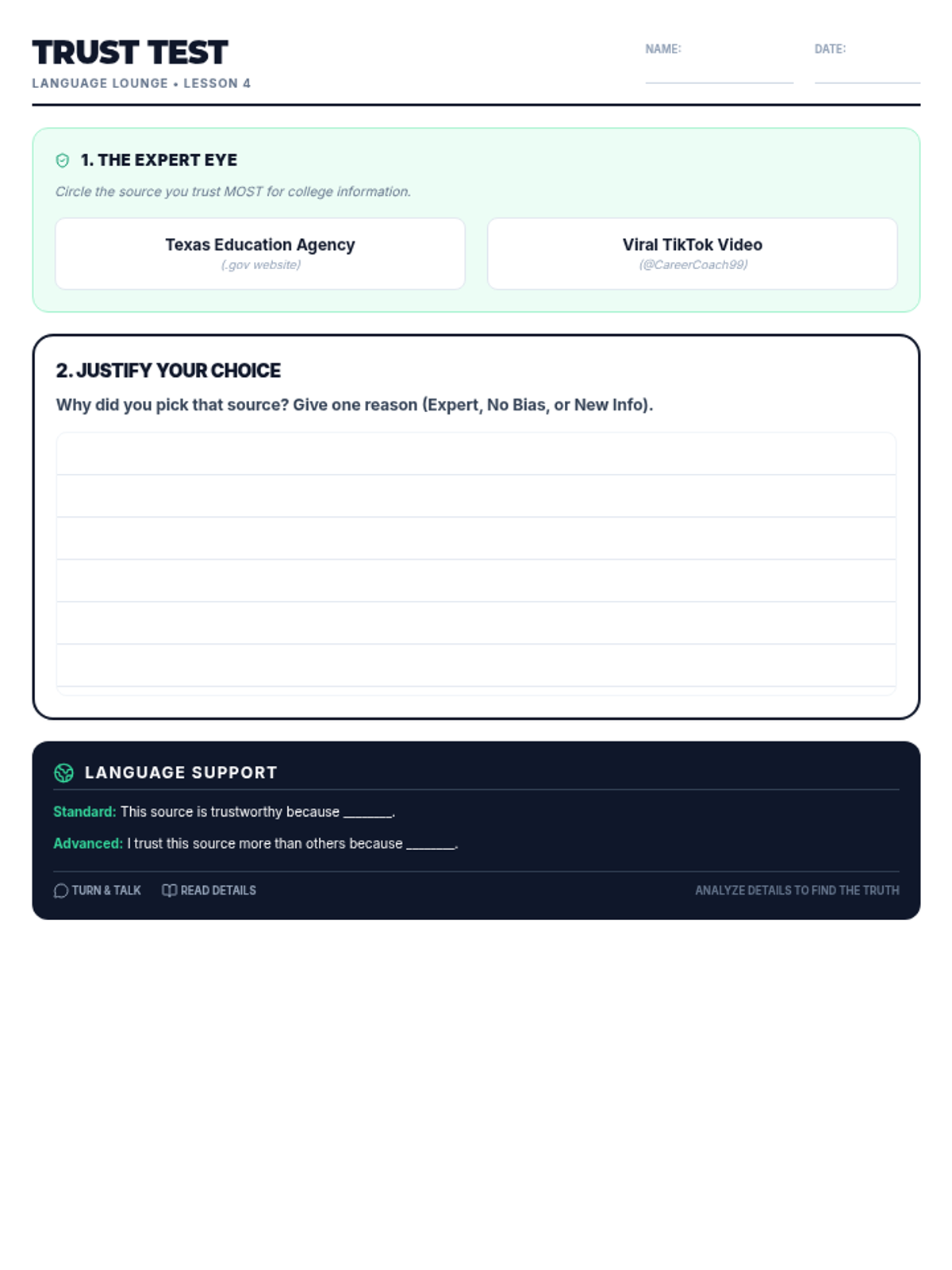
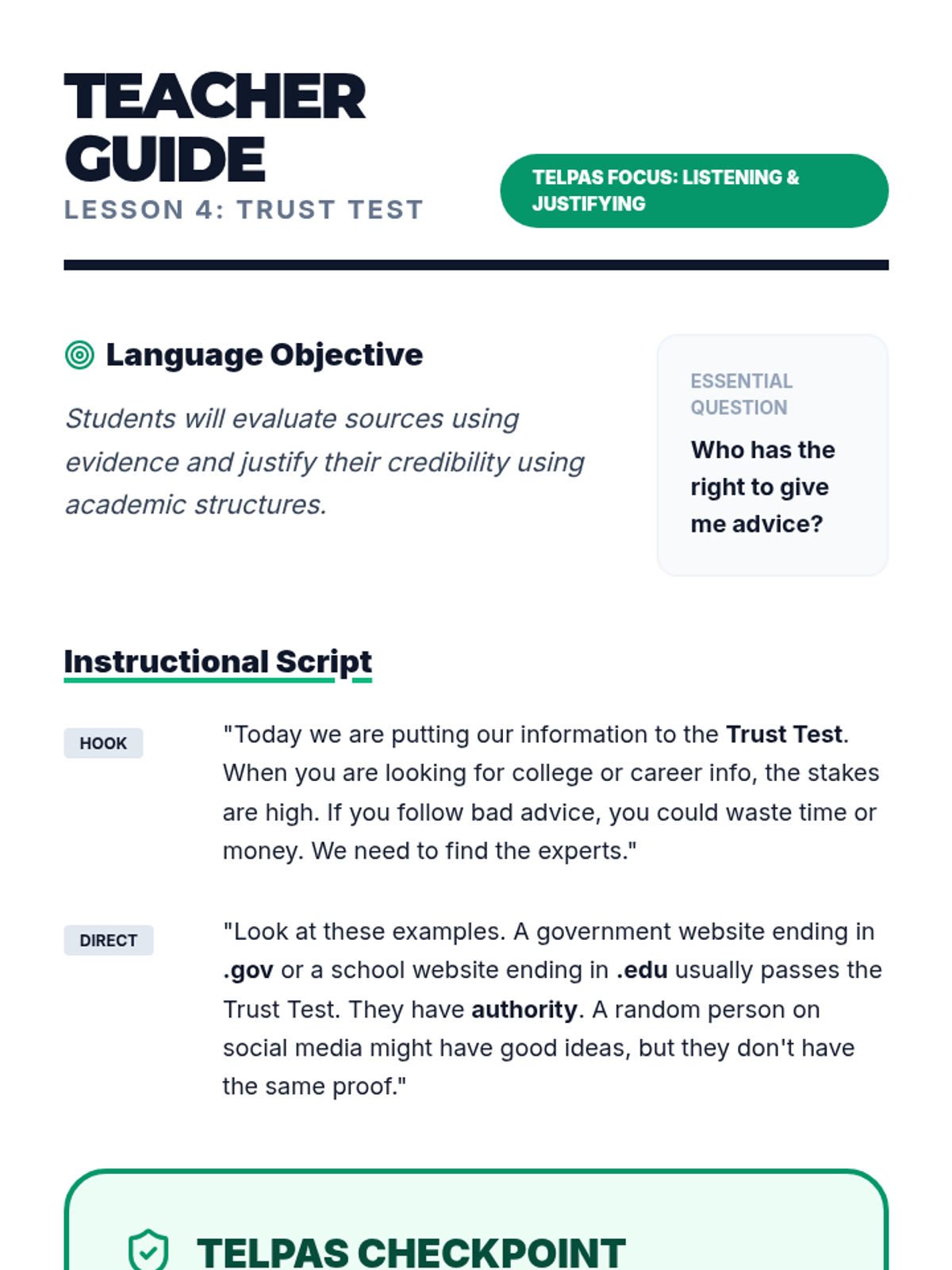
Students analyze the credibility of college and career resources using evidence-based evaluation techniques.
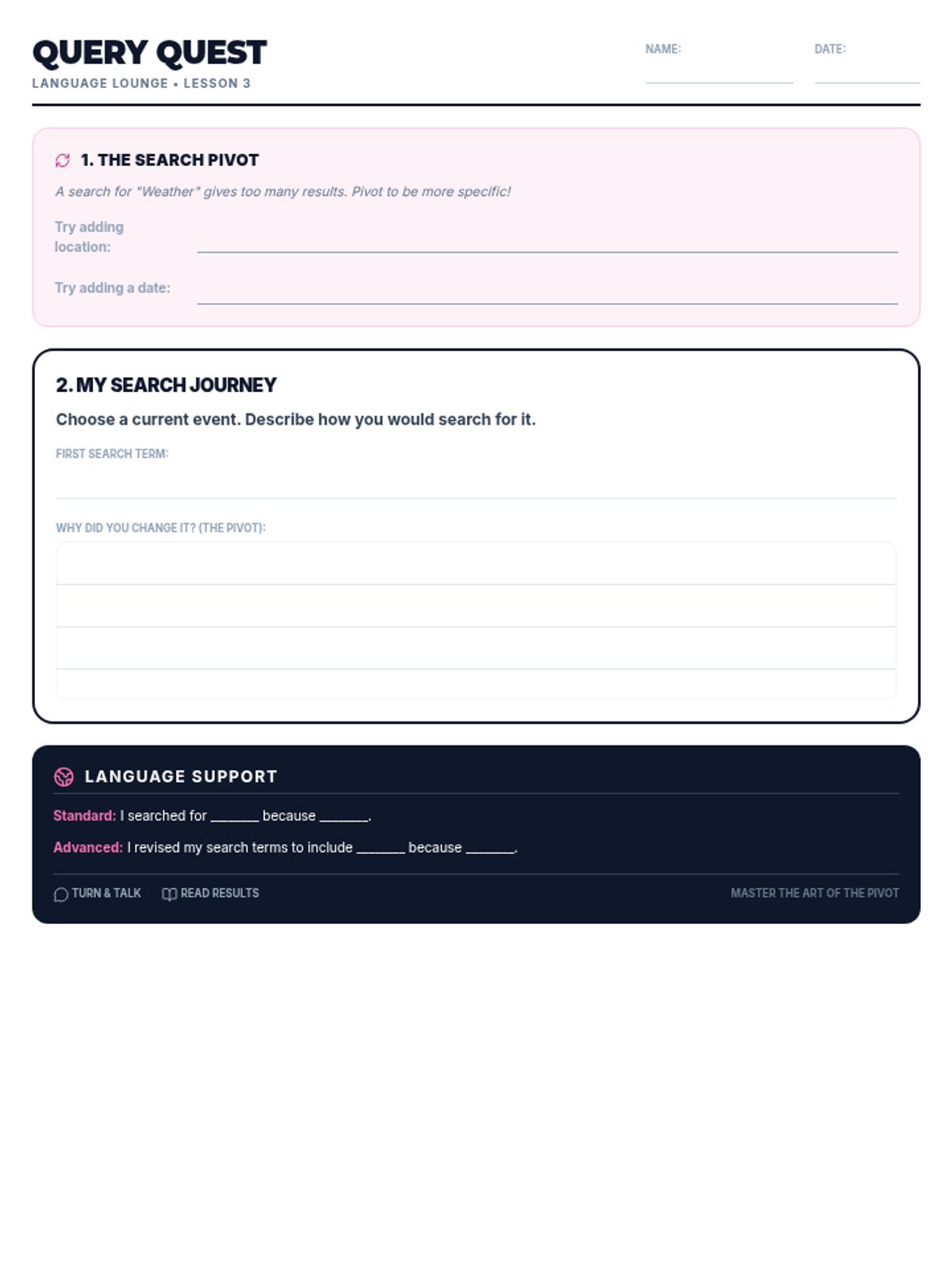
Students practice advanced search strategies to navigate current events and filter for high-quality information.
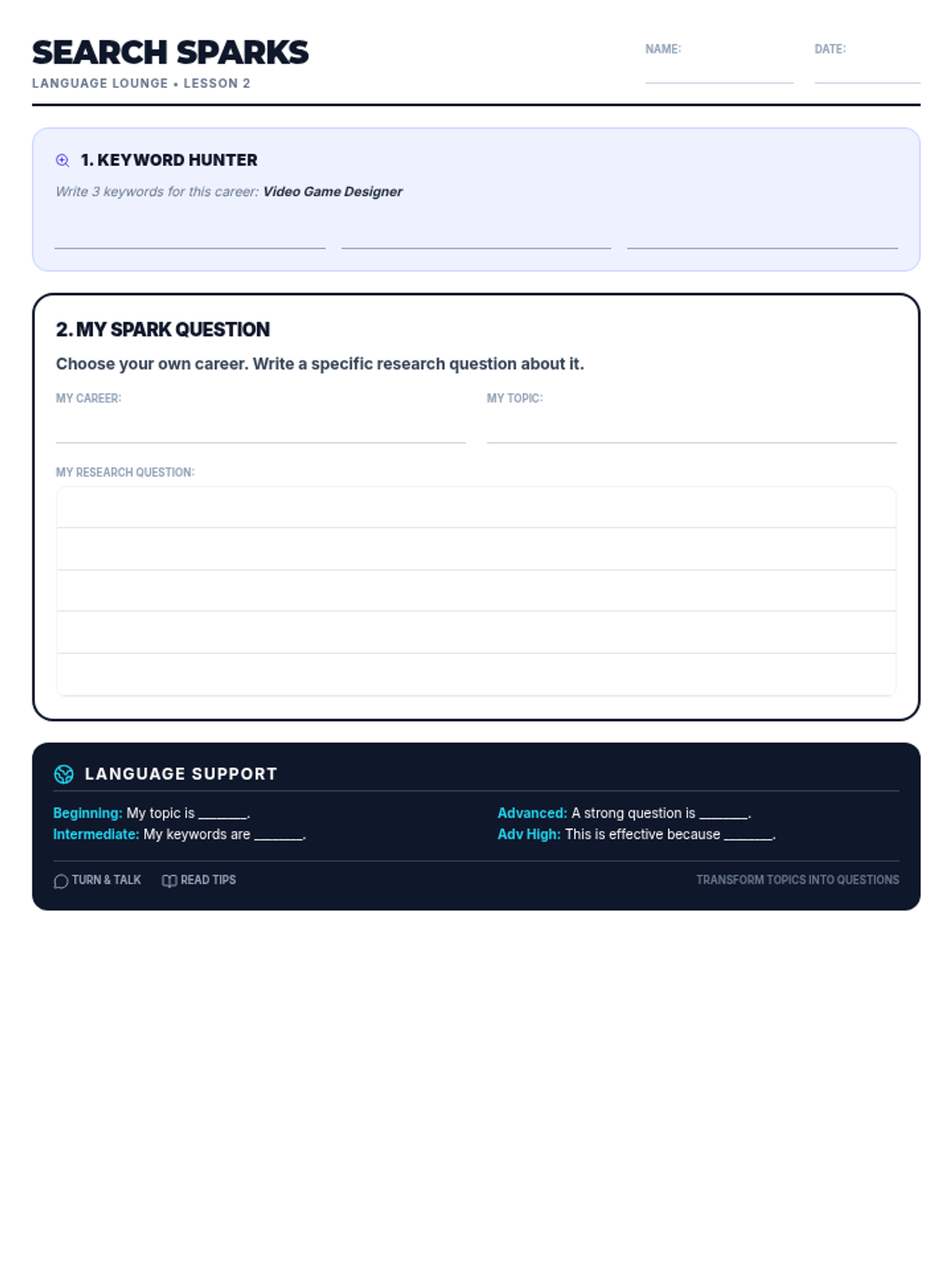
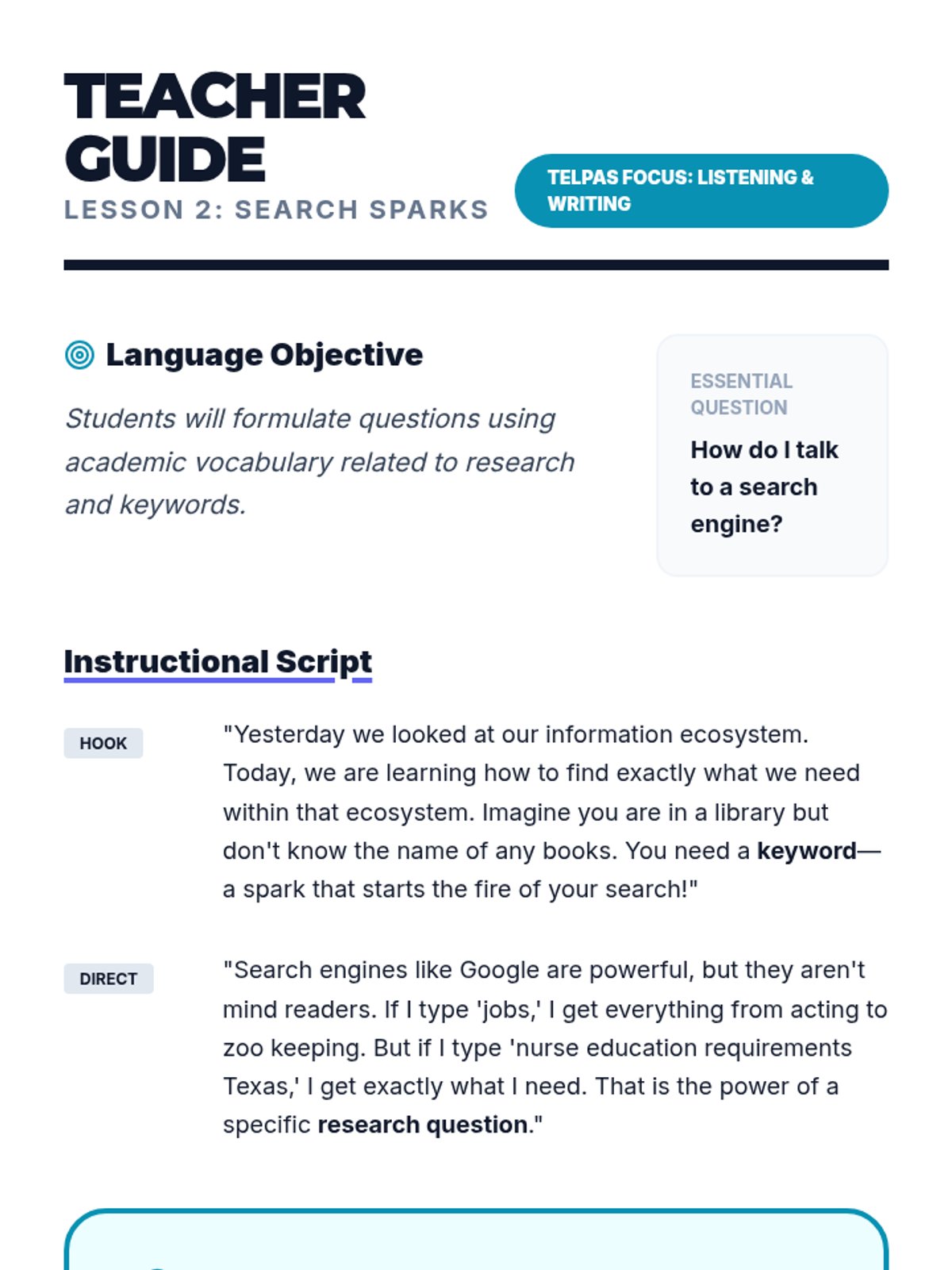
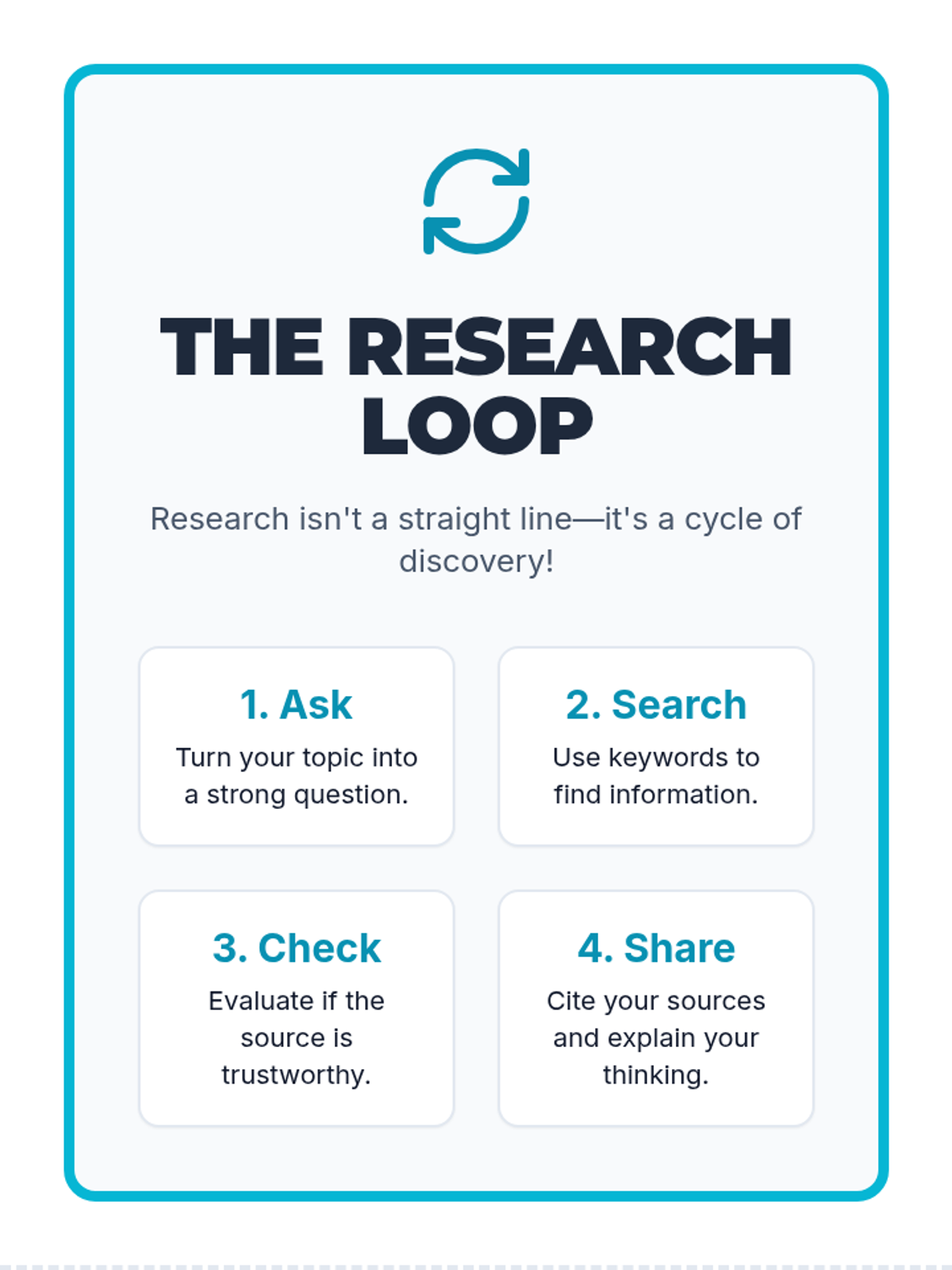
Students learn to transform broad topics like career interests into specific, searchable research questions and keywords.
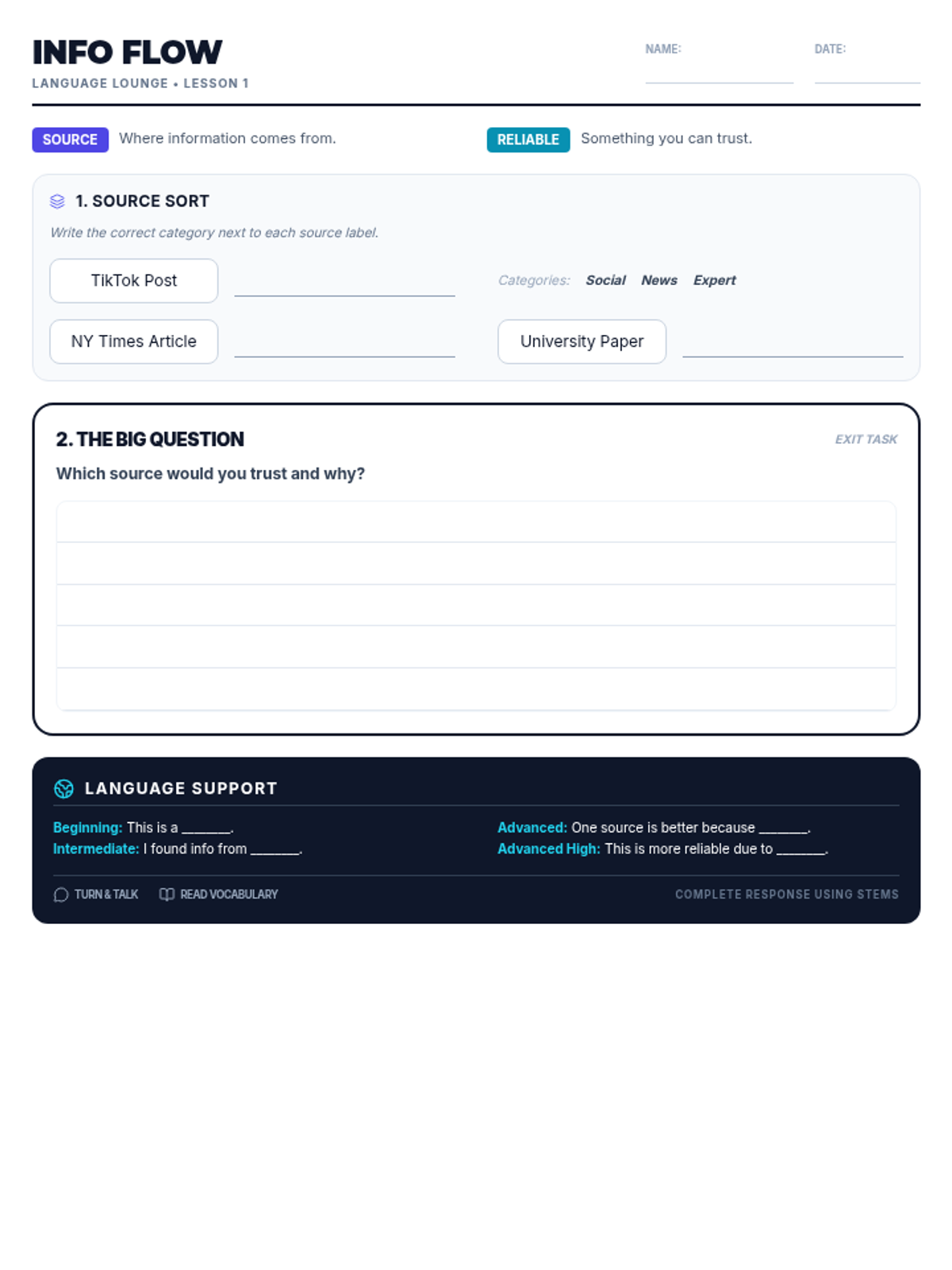
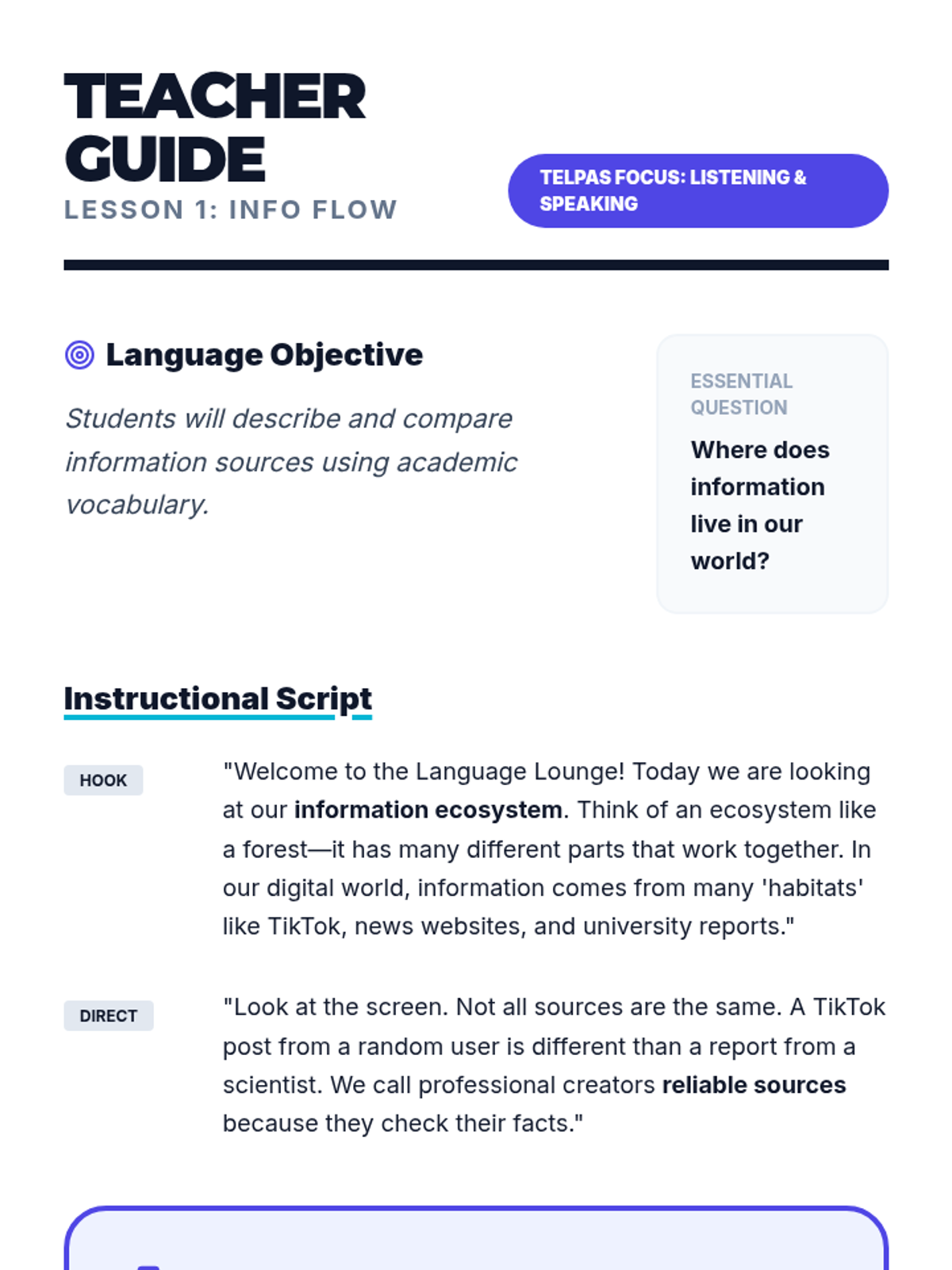
Students identify and classify different types of information sources within the digital ecosystem, focusing on social media and news outlets.
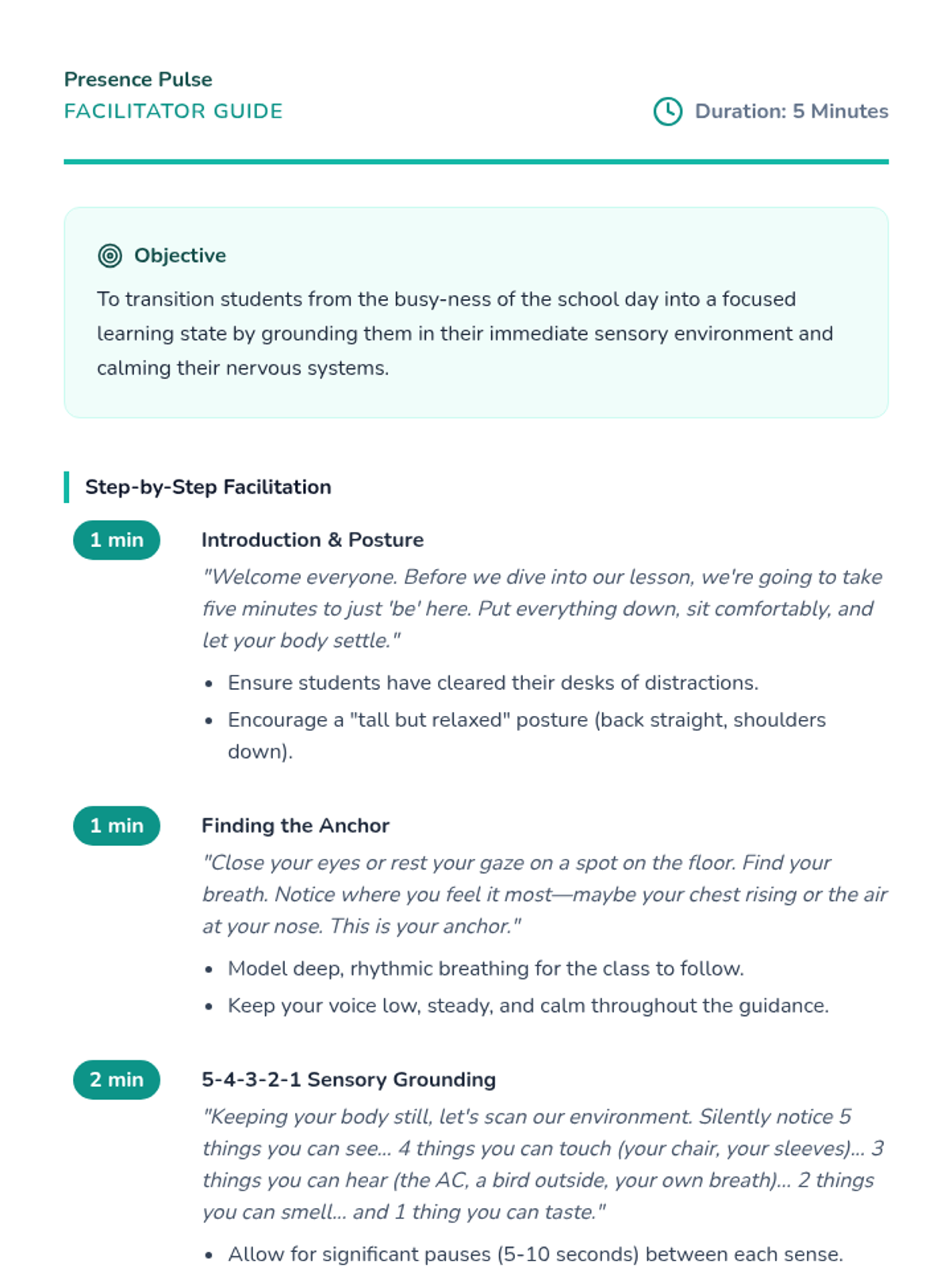
A quick, 5-minute mindfulness session designed to ground students in the present moment before beginning academic work. This lesson uses sensory awareness and breathing techniques to calm the mind and improve focus.
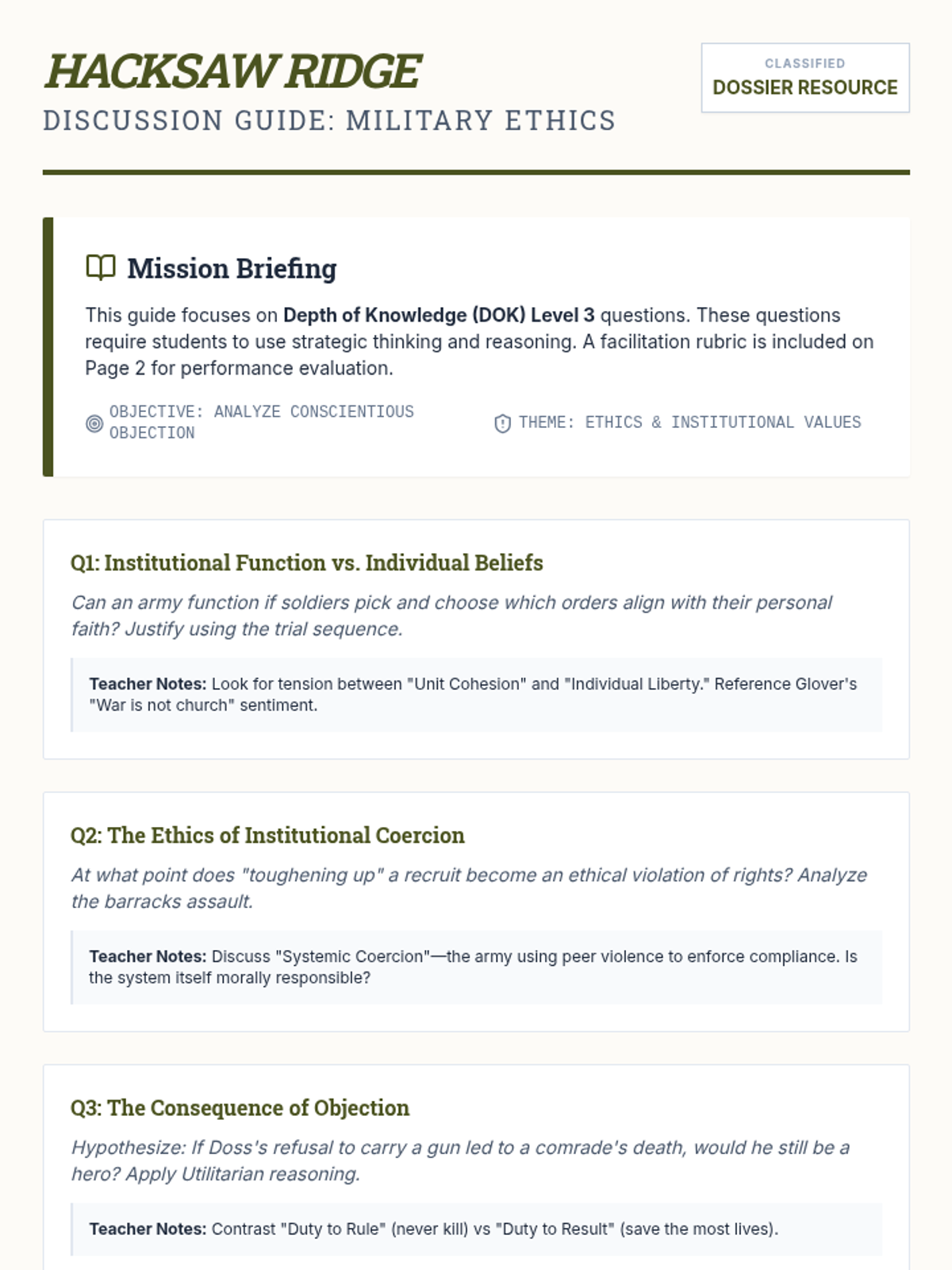
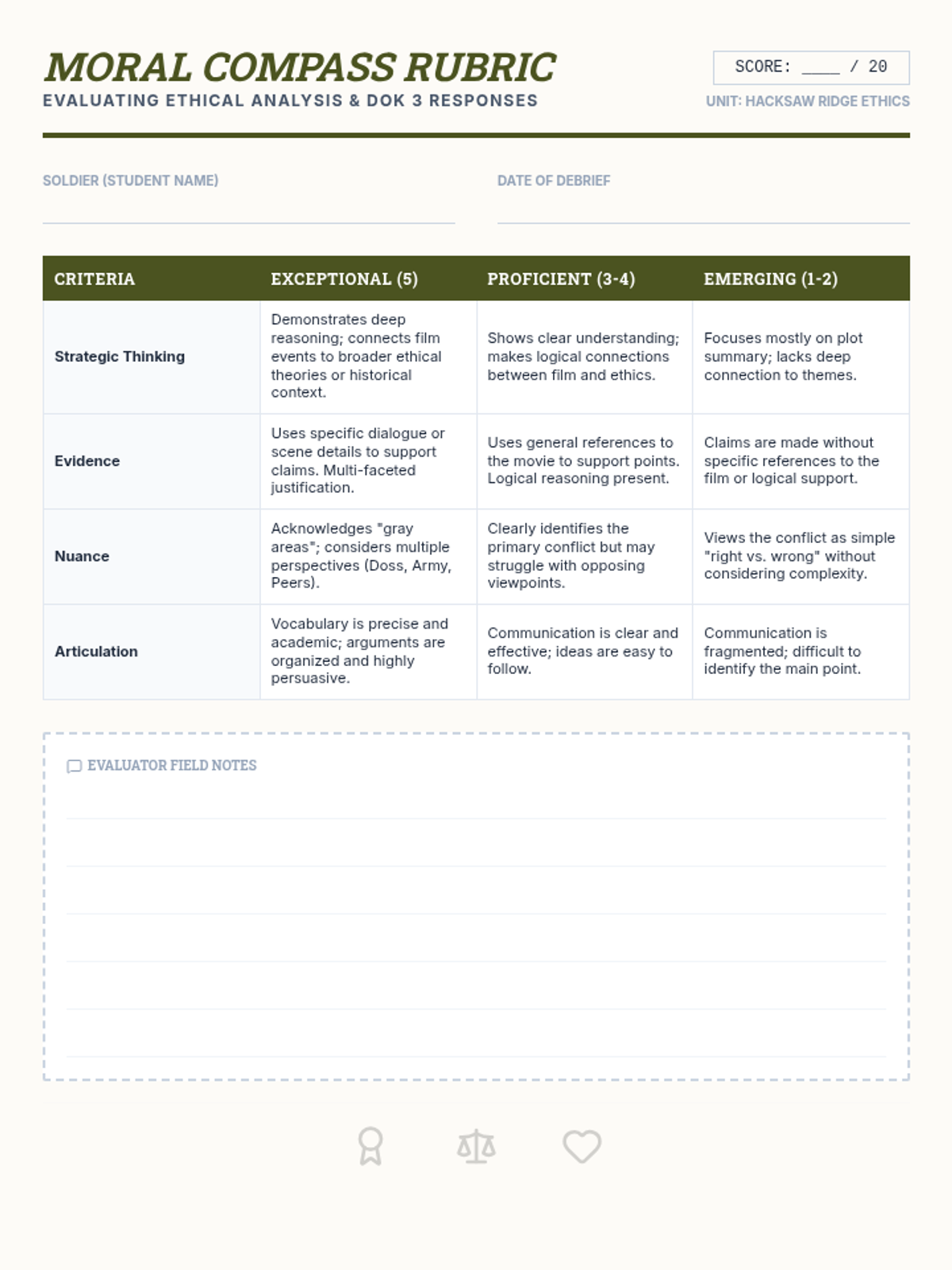
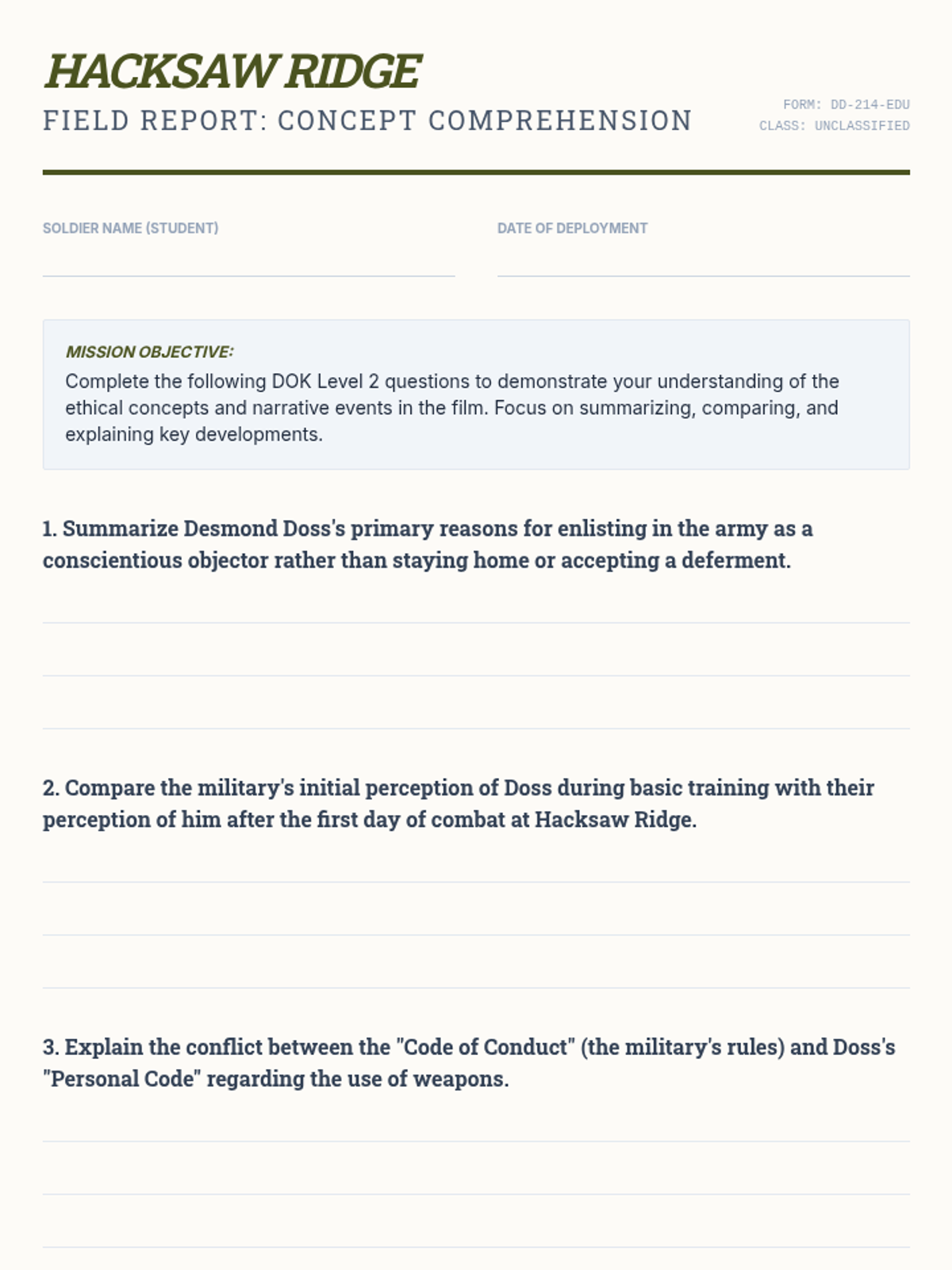
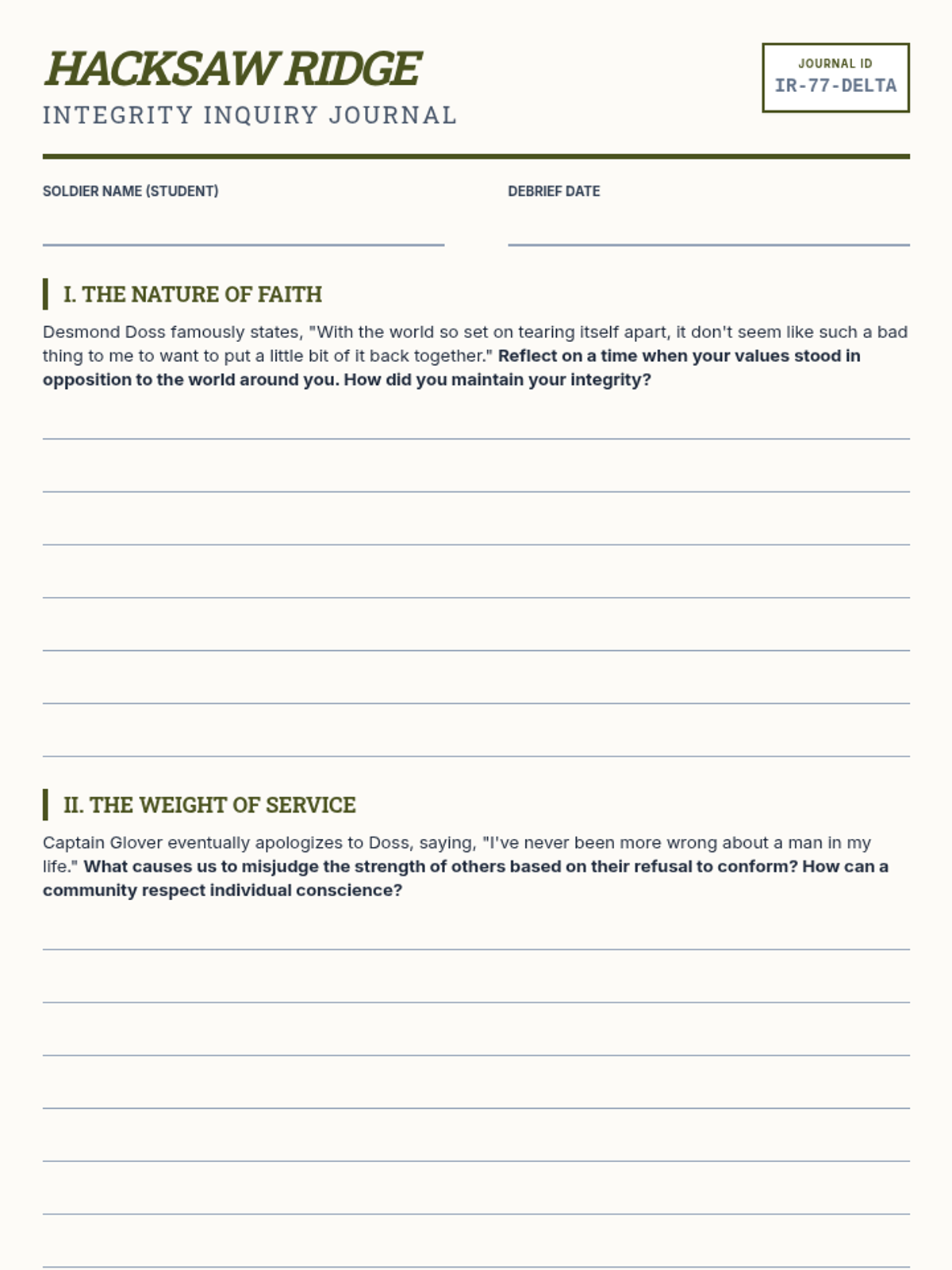
An in-depth exploration of conscientious objection and military ethics through the lens of the film Hacksaw Ridge, featuring DOK Level 3 discussion prompts and evaluation tools.
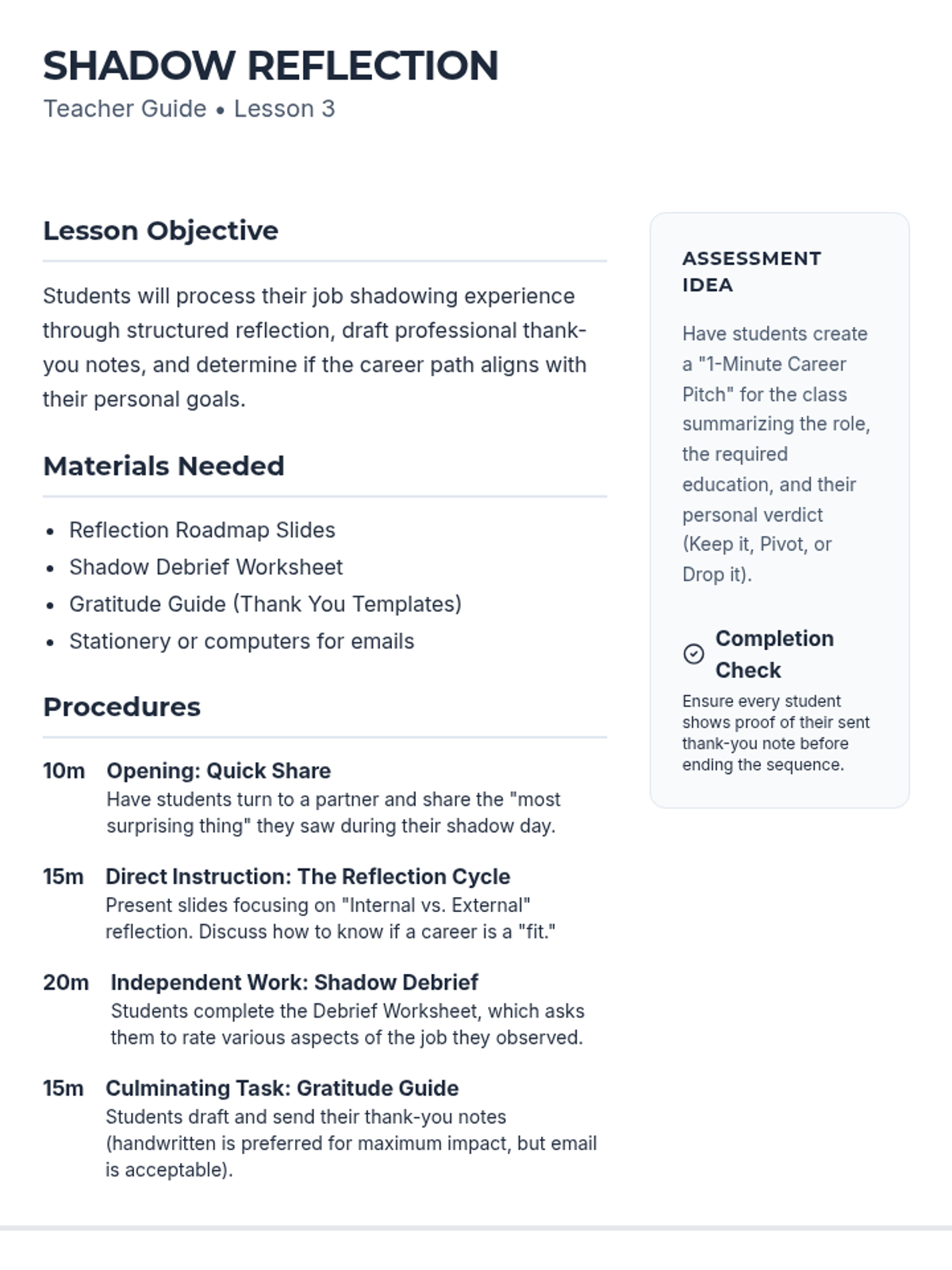
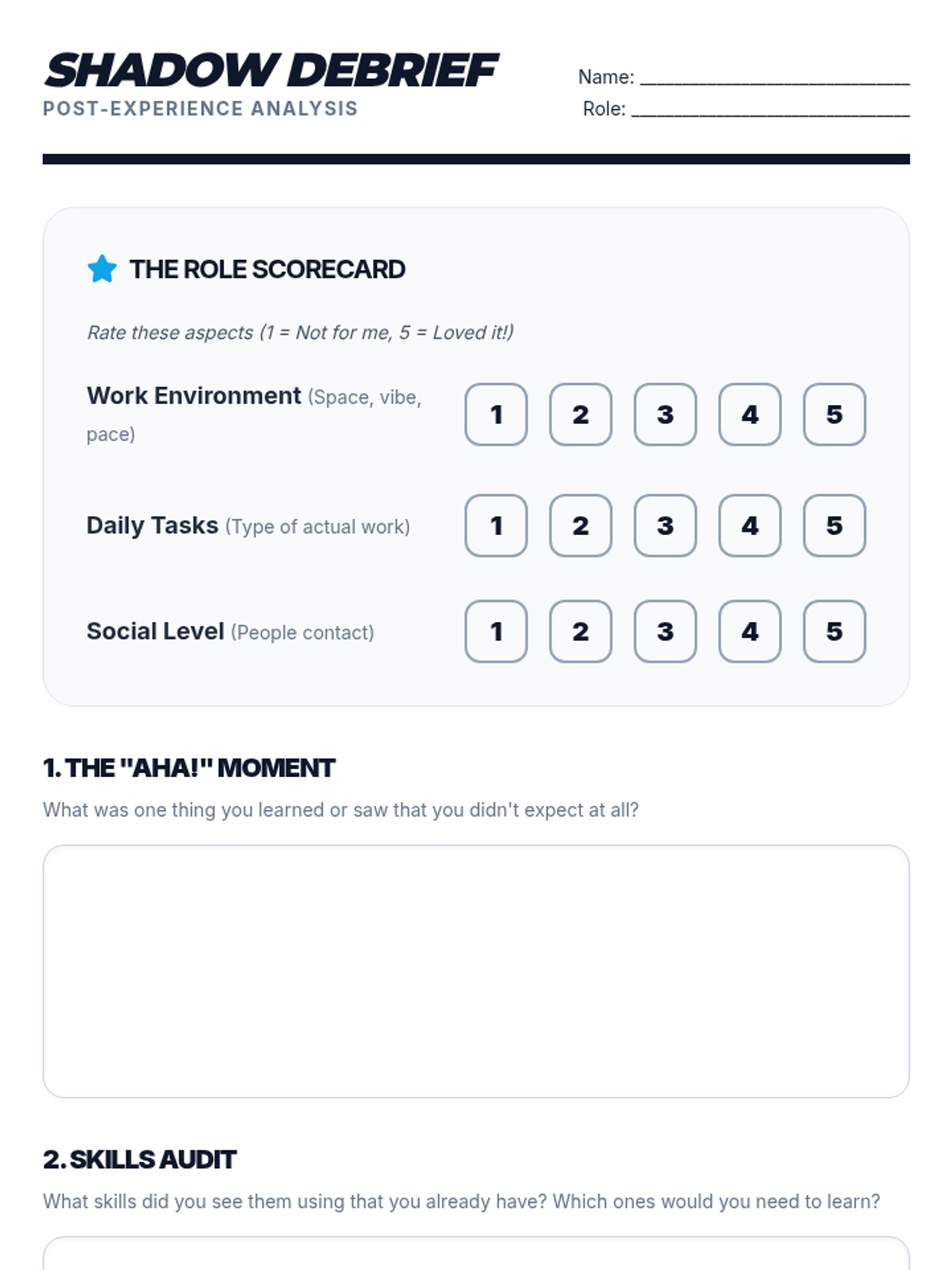
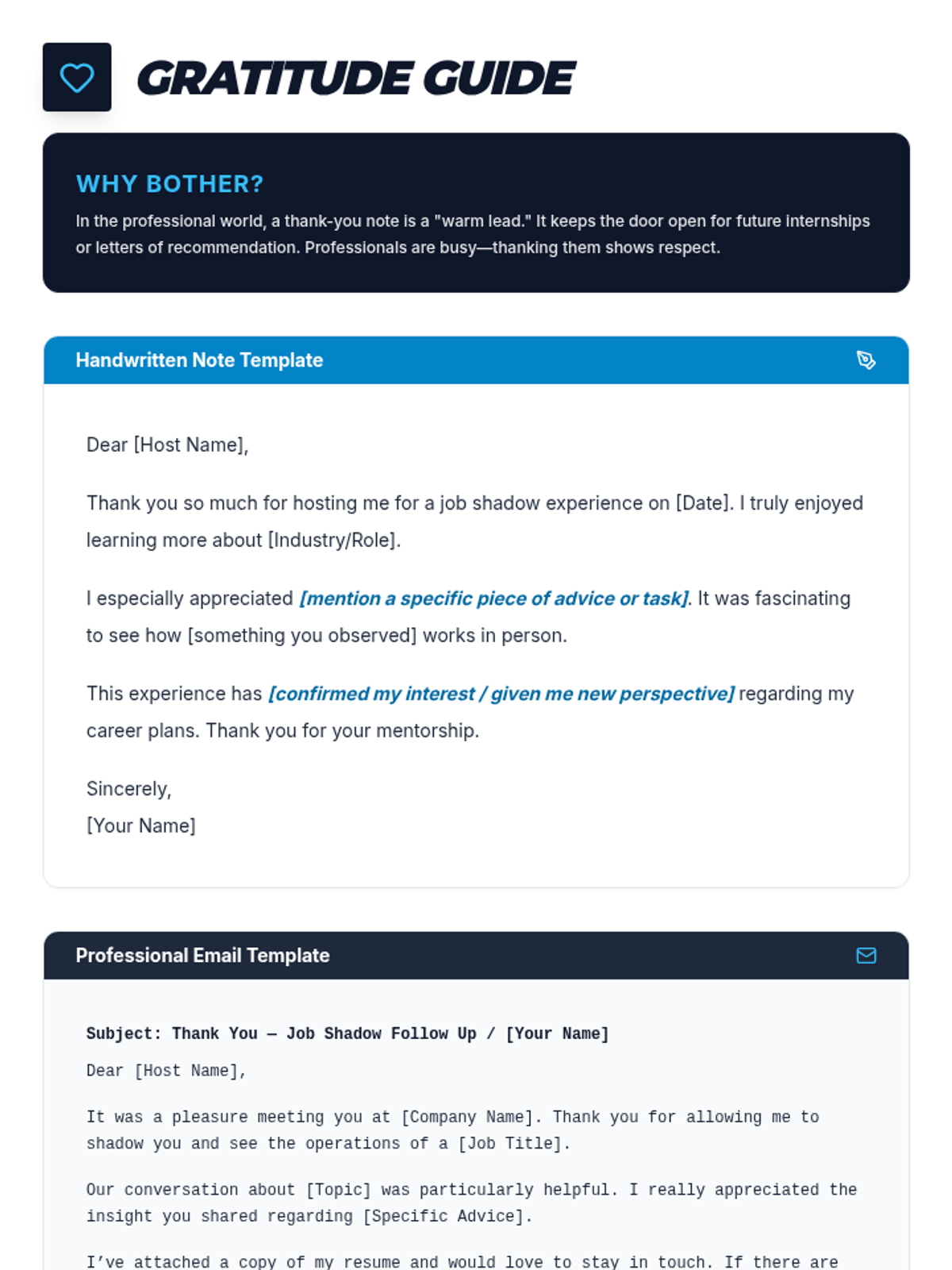
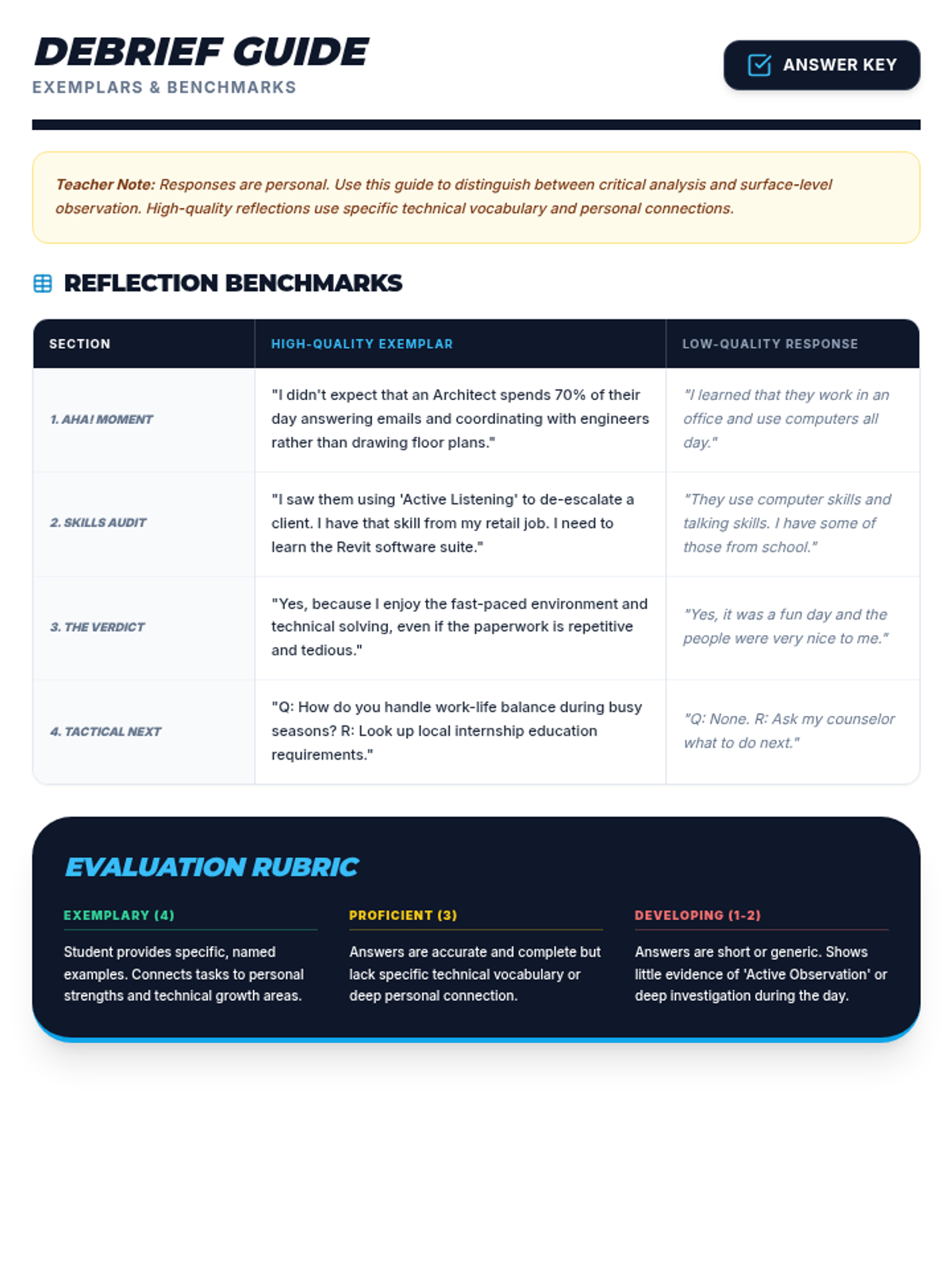
Guides students through analyzing their experience, writing thank-you notes, and planning next career steps.
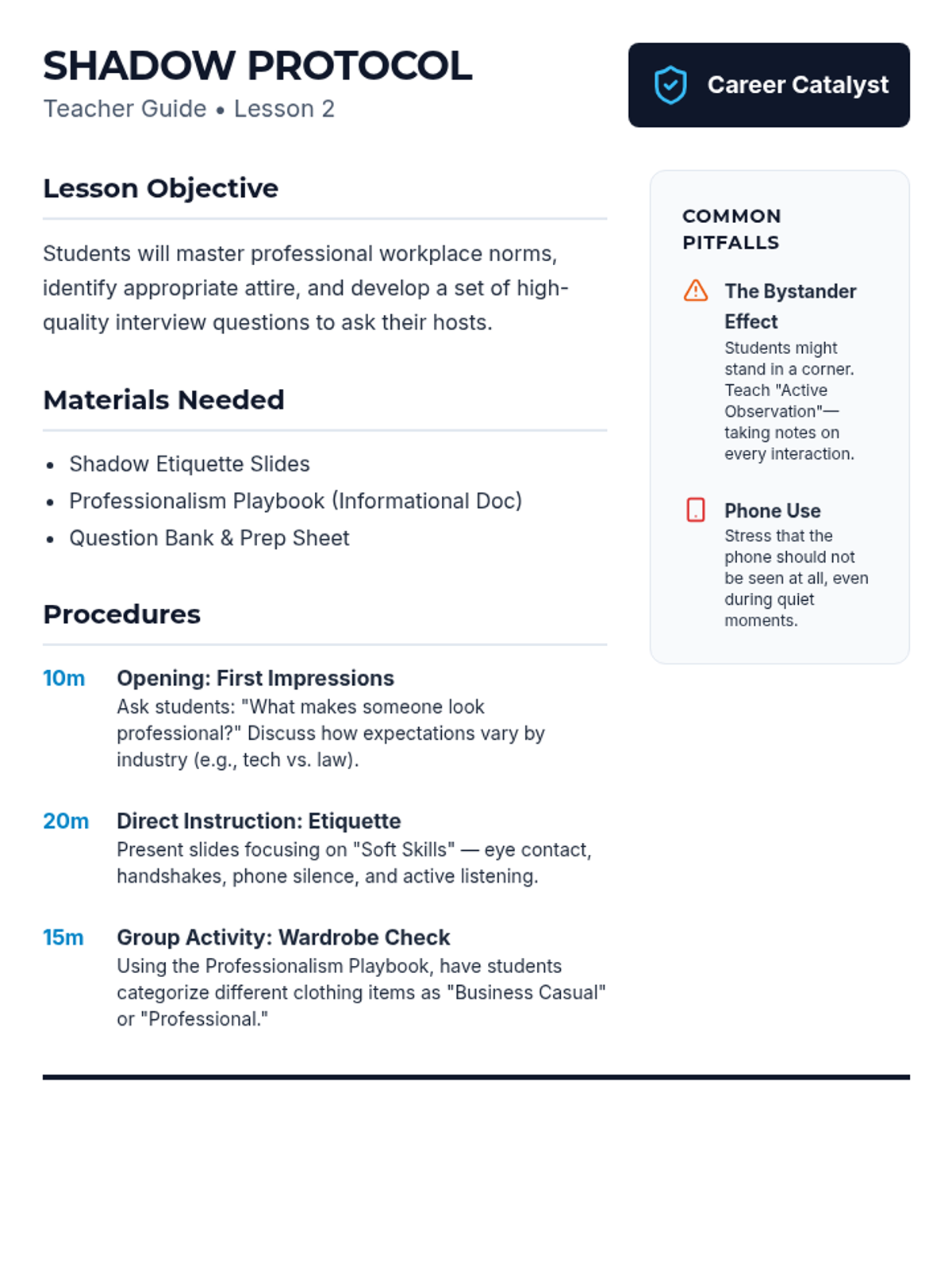
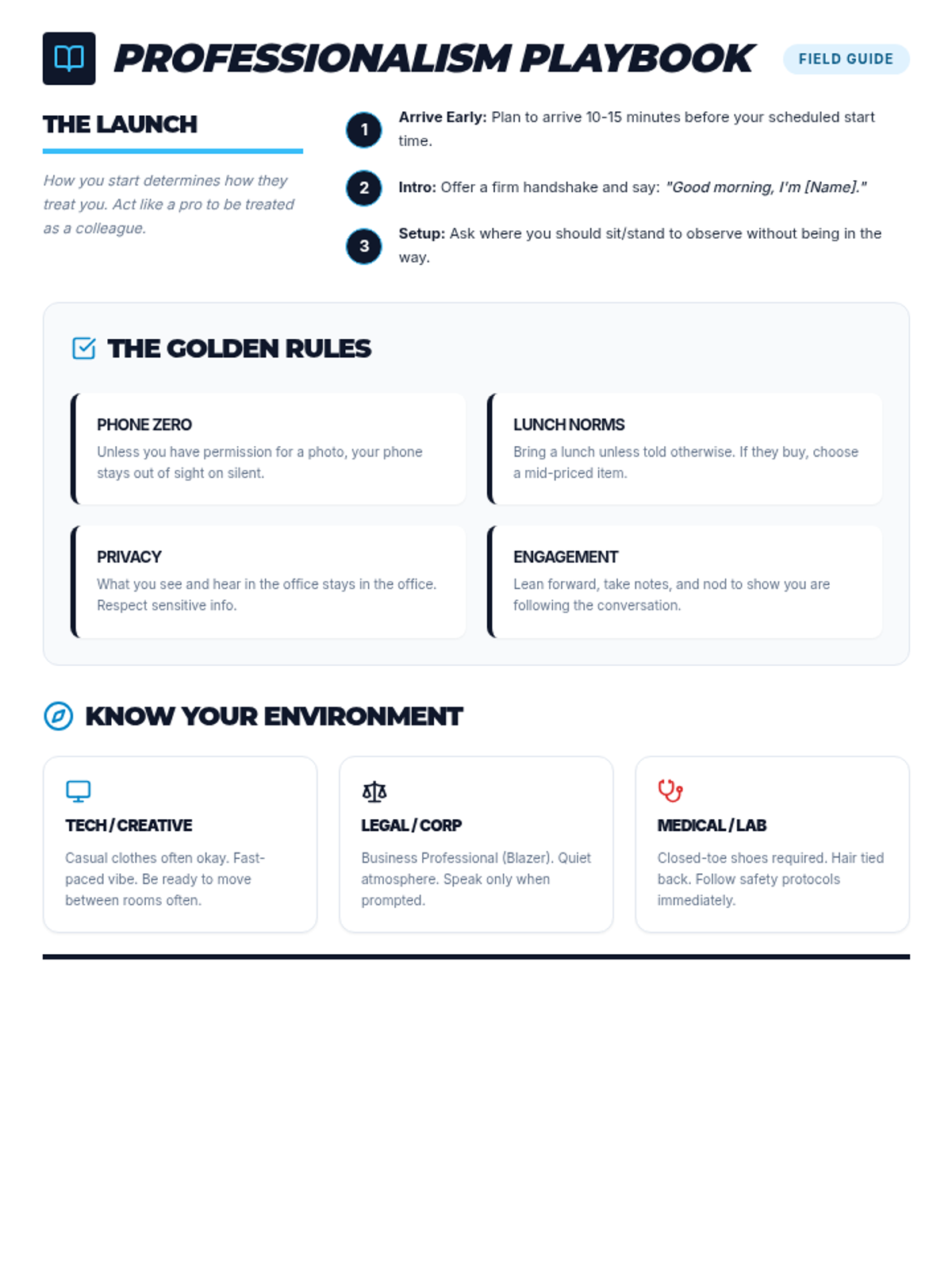
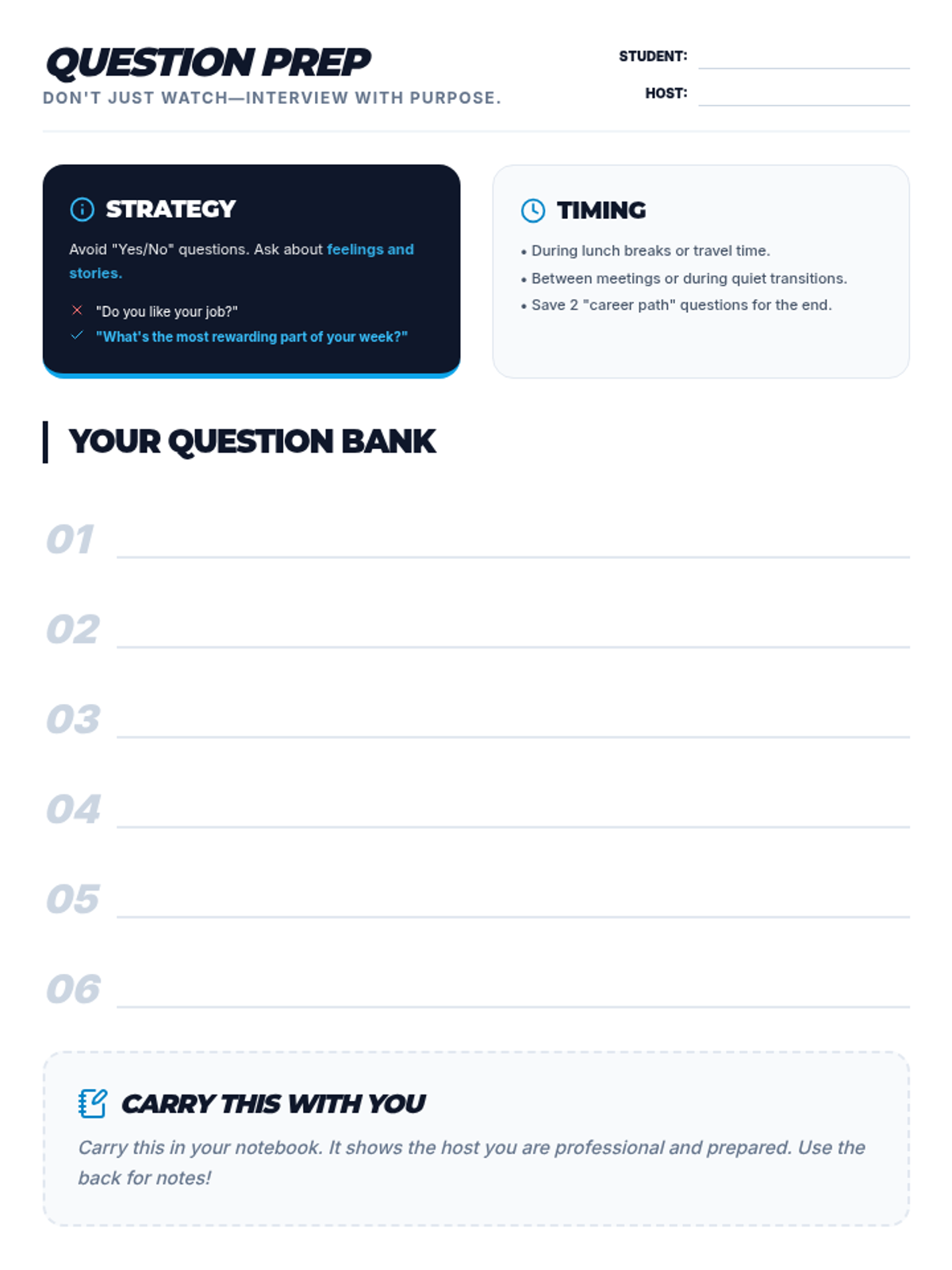
Prepares students for the shadowing day through professionalism training, dress code expectations, and question preparation.
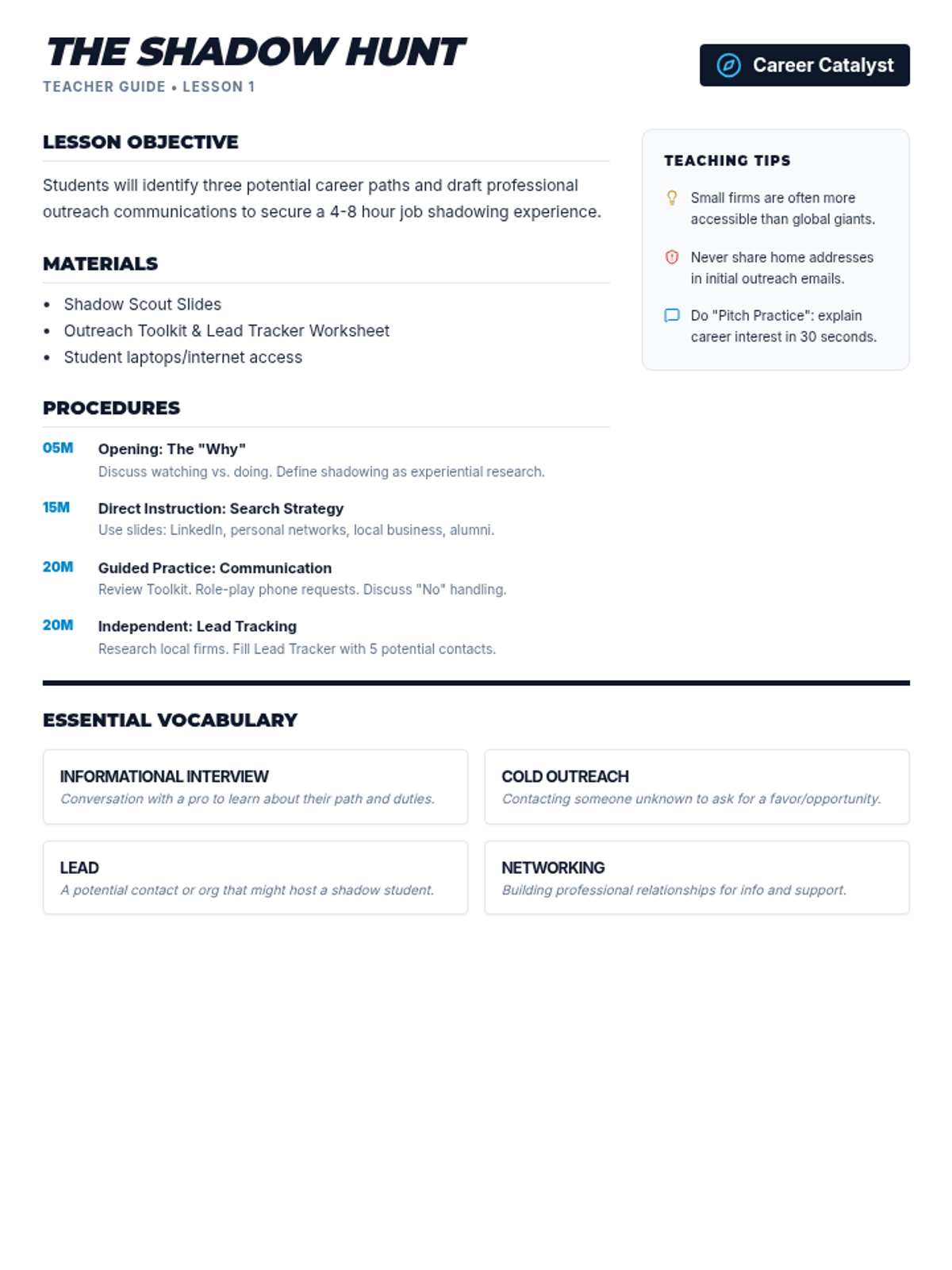
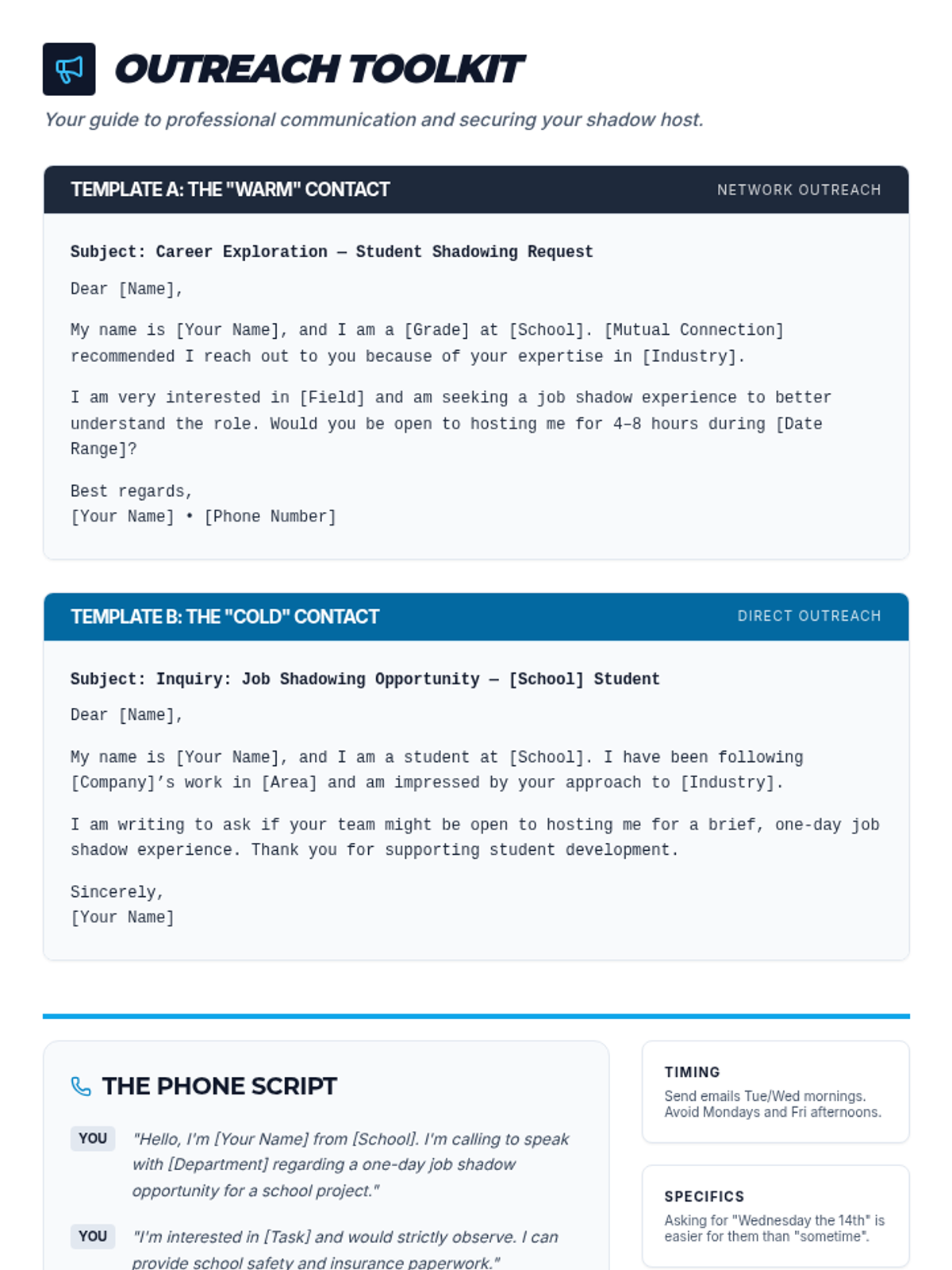
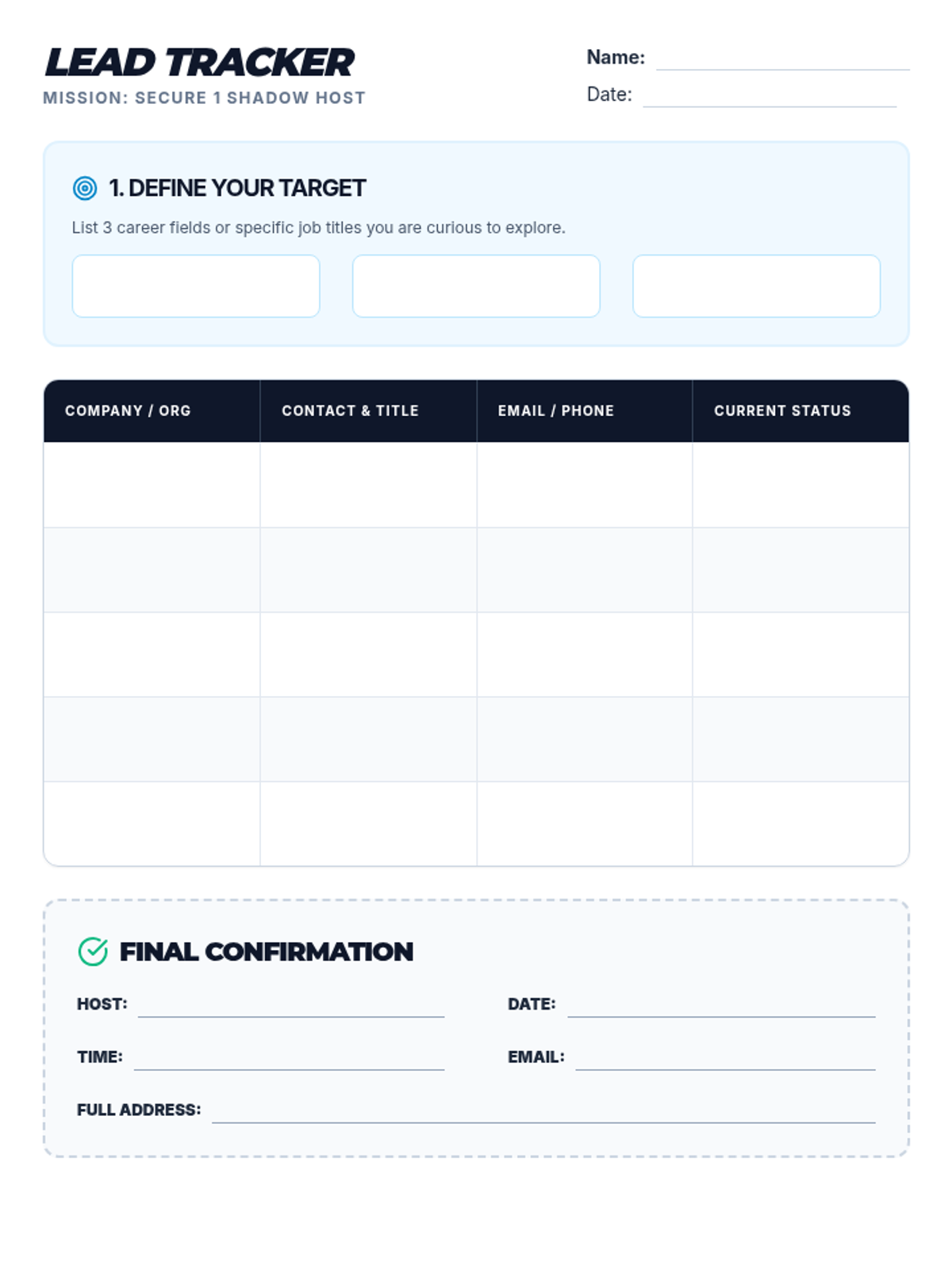
Focuses on identifying career interests and the process of reaching out to professional hosts for shadowing opportunities.
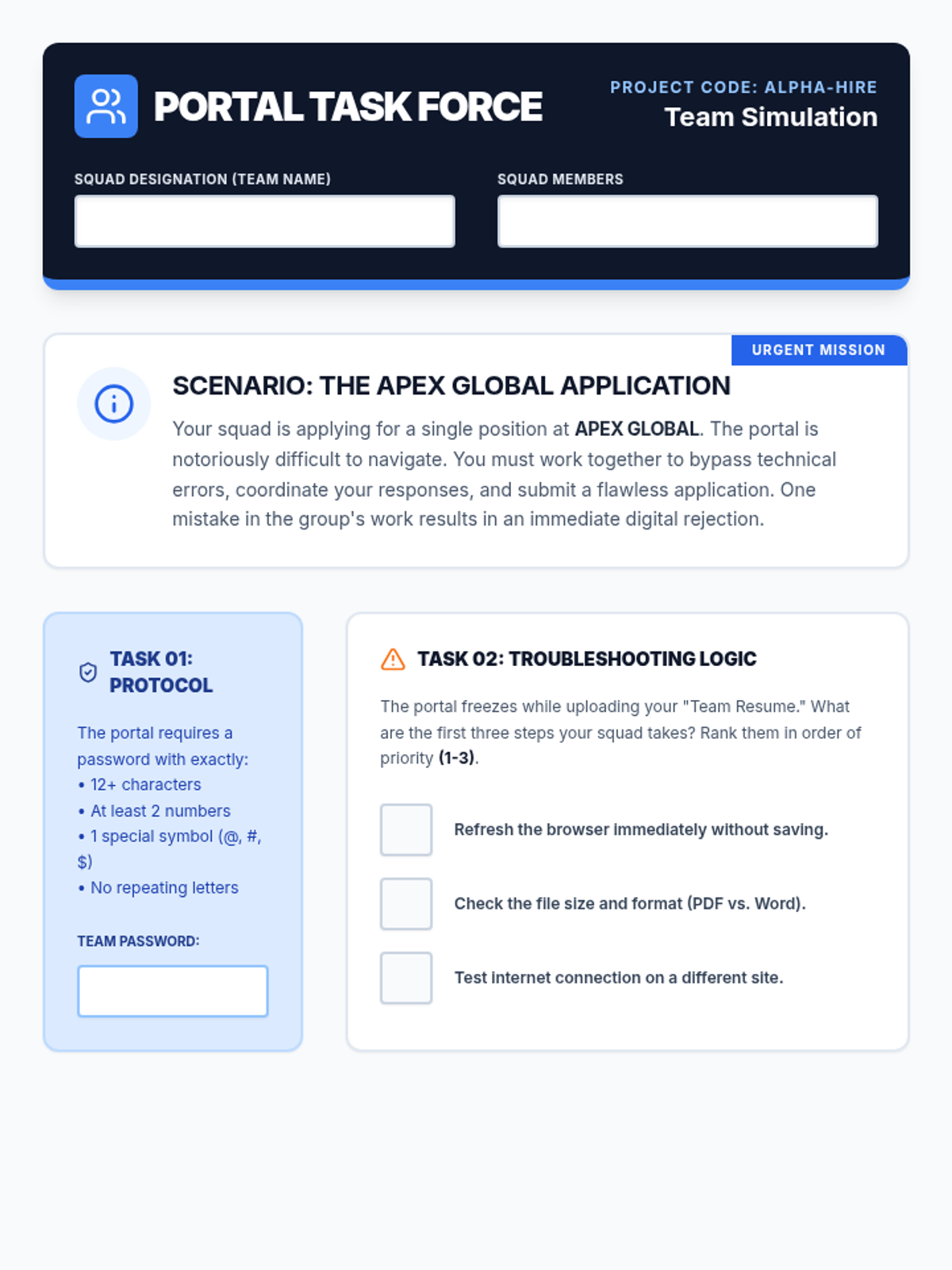
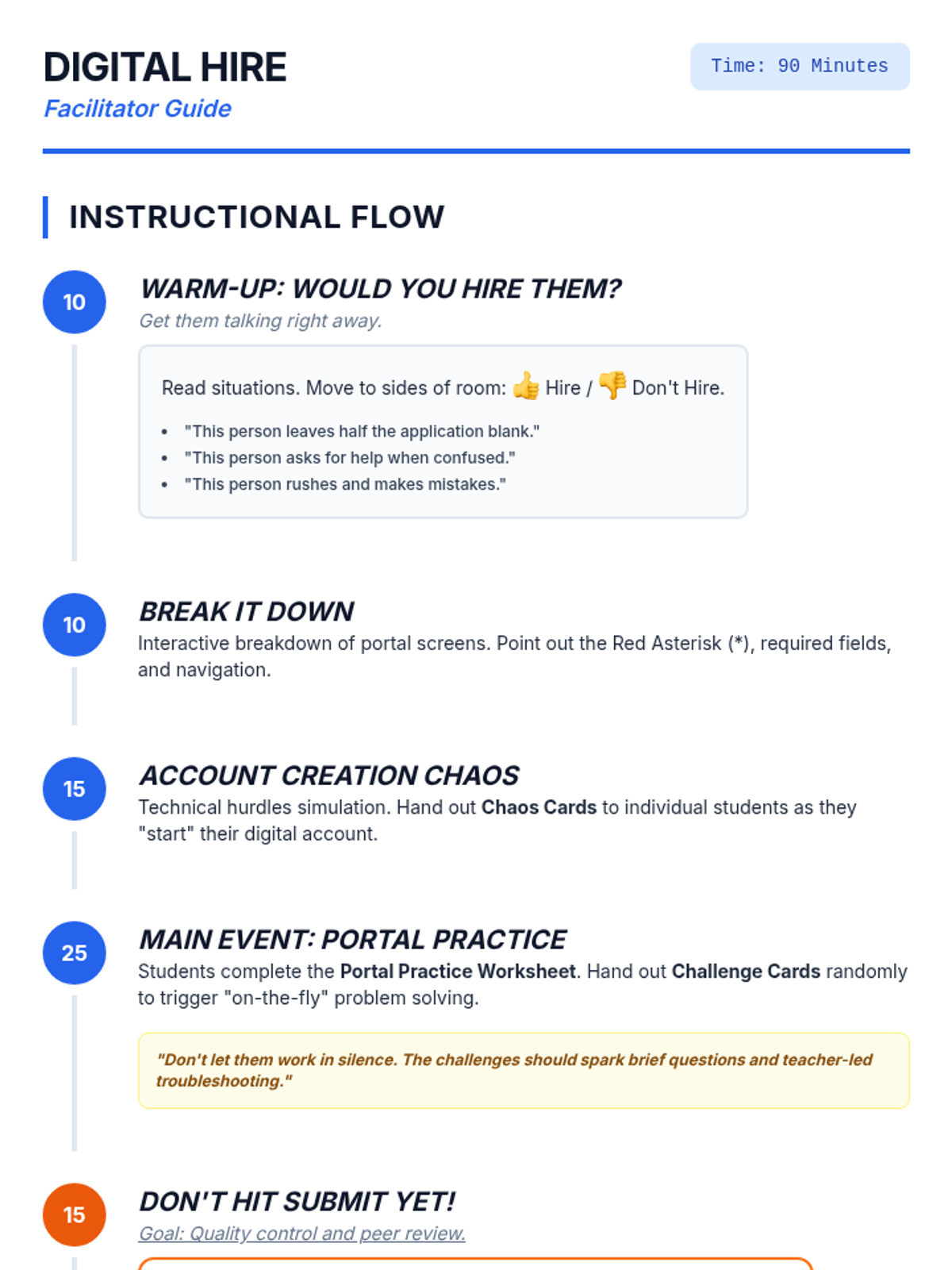
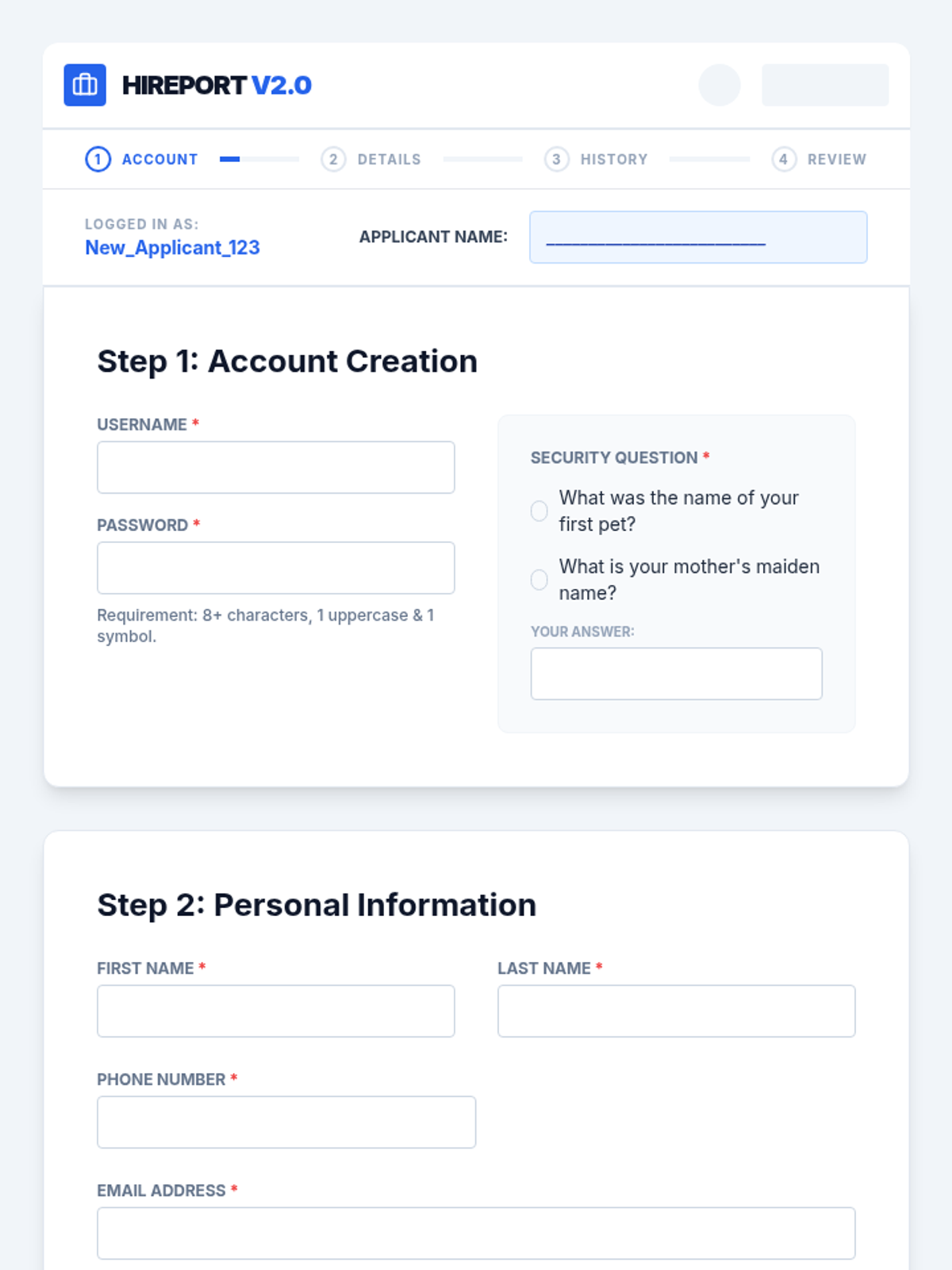
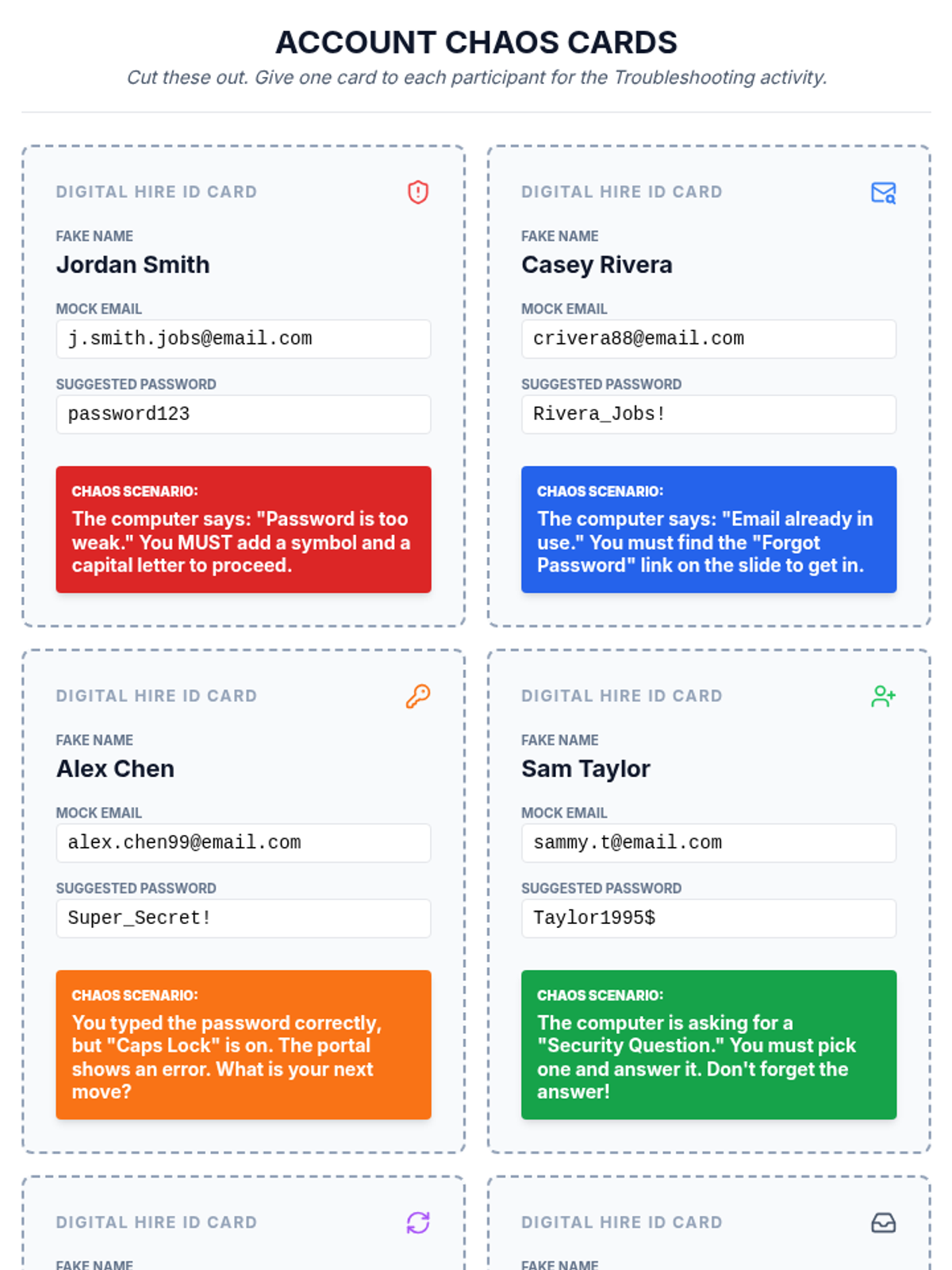
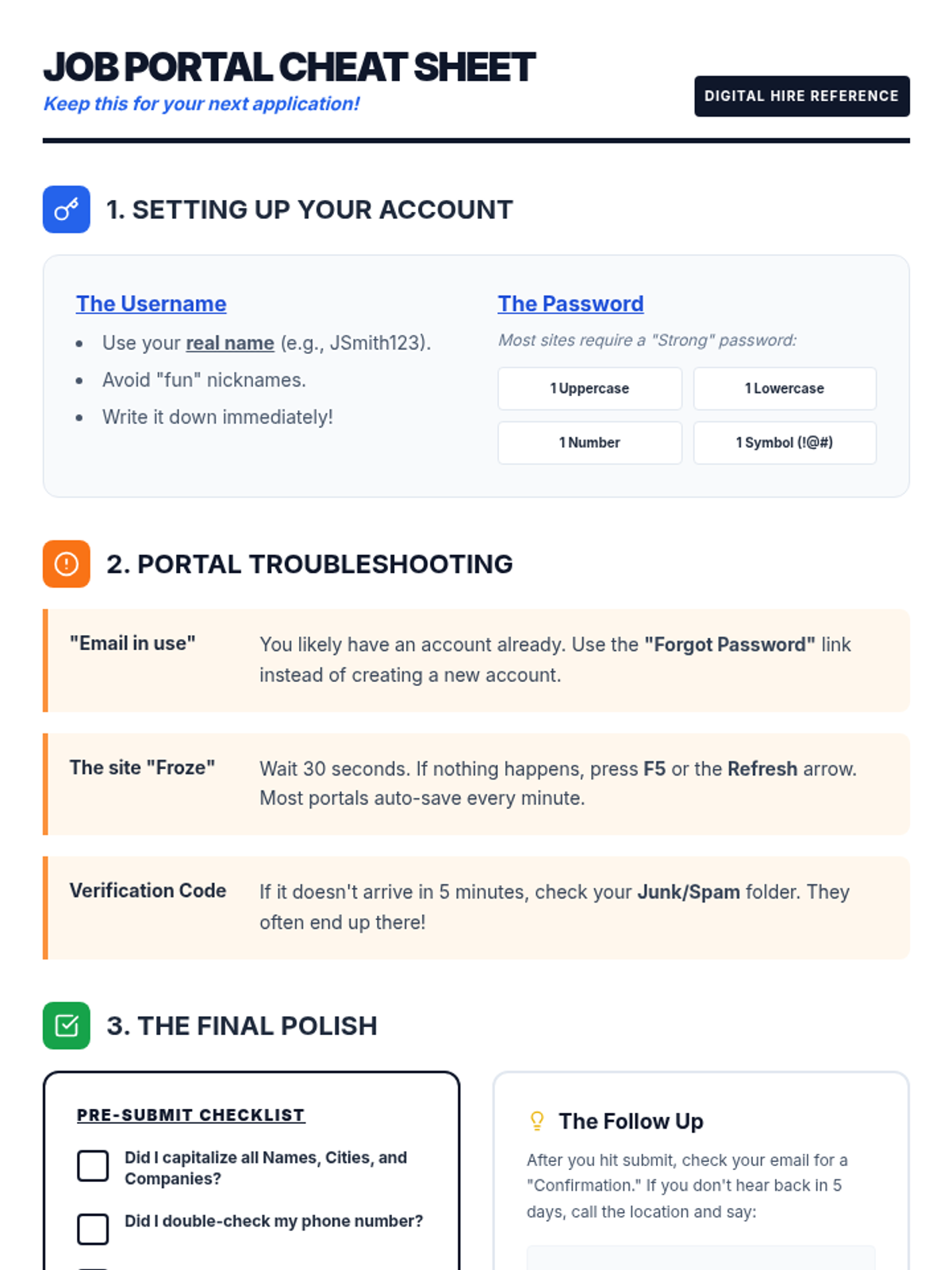
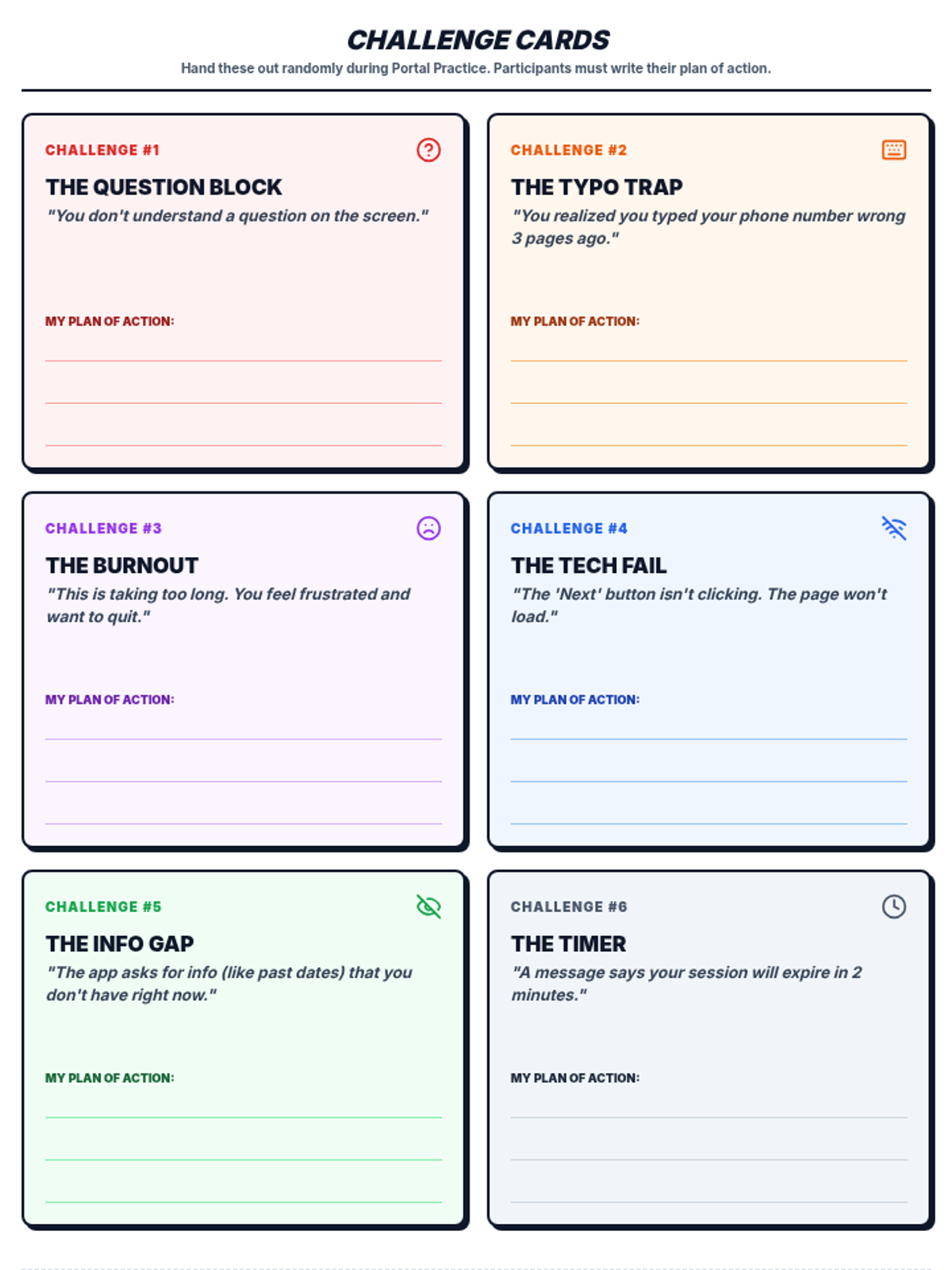
A comprehensive lesson on navigating the digital hurdles of modern job applications, from account creation to final submission. Participants practice technical skills and troubleshooting for online portals.
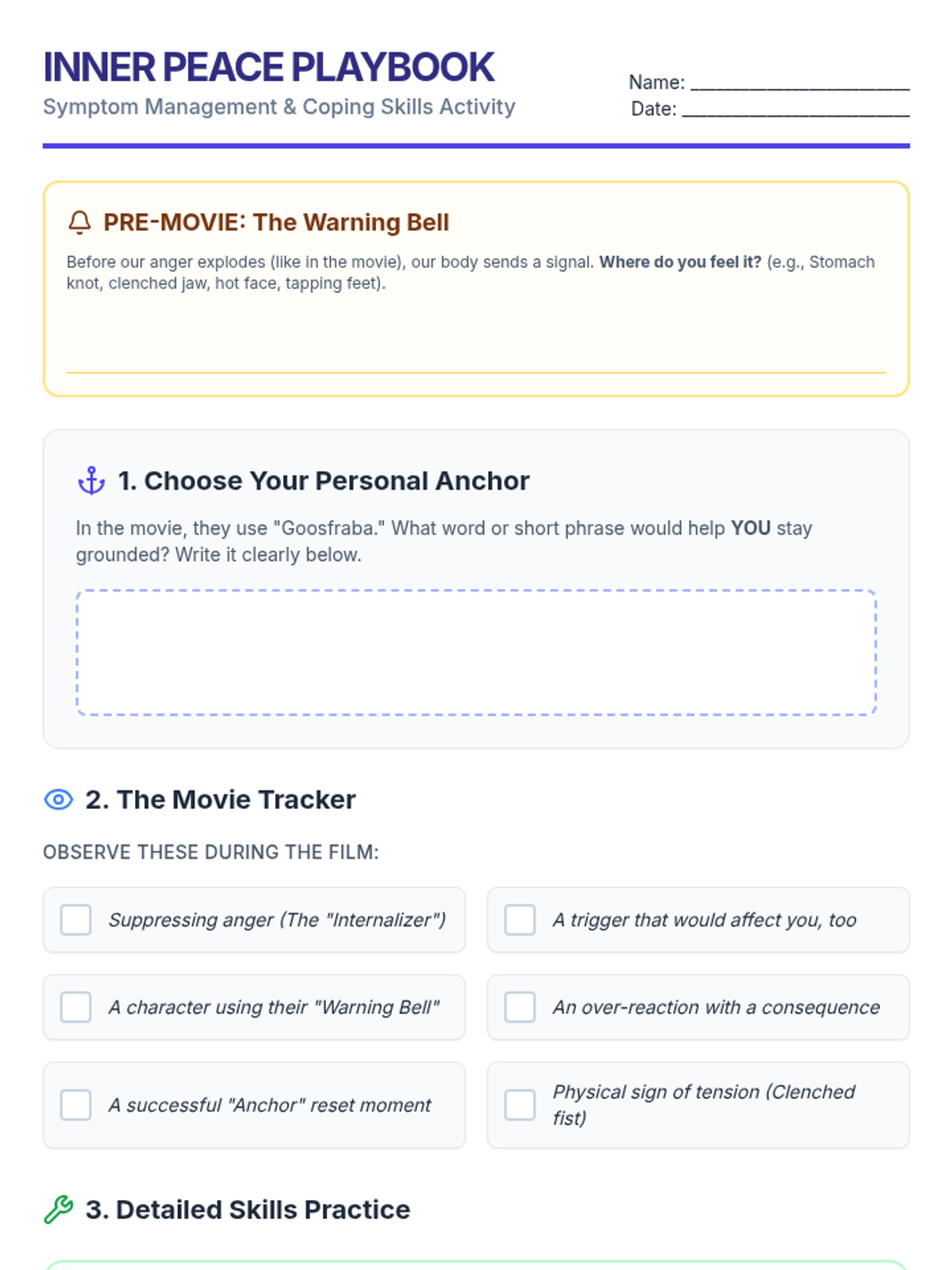
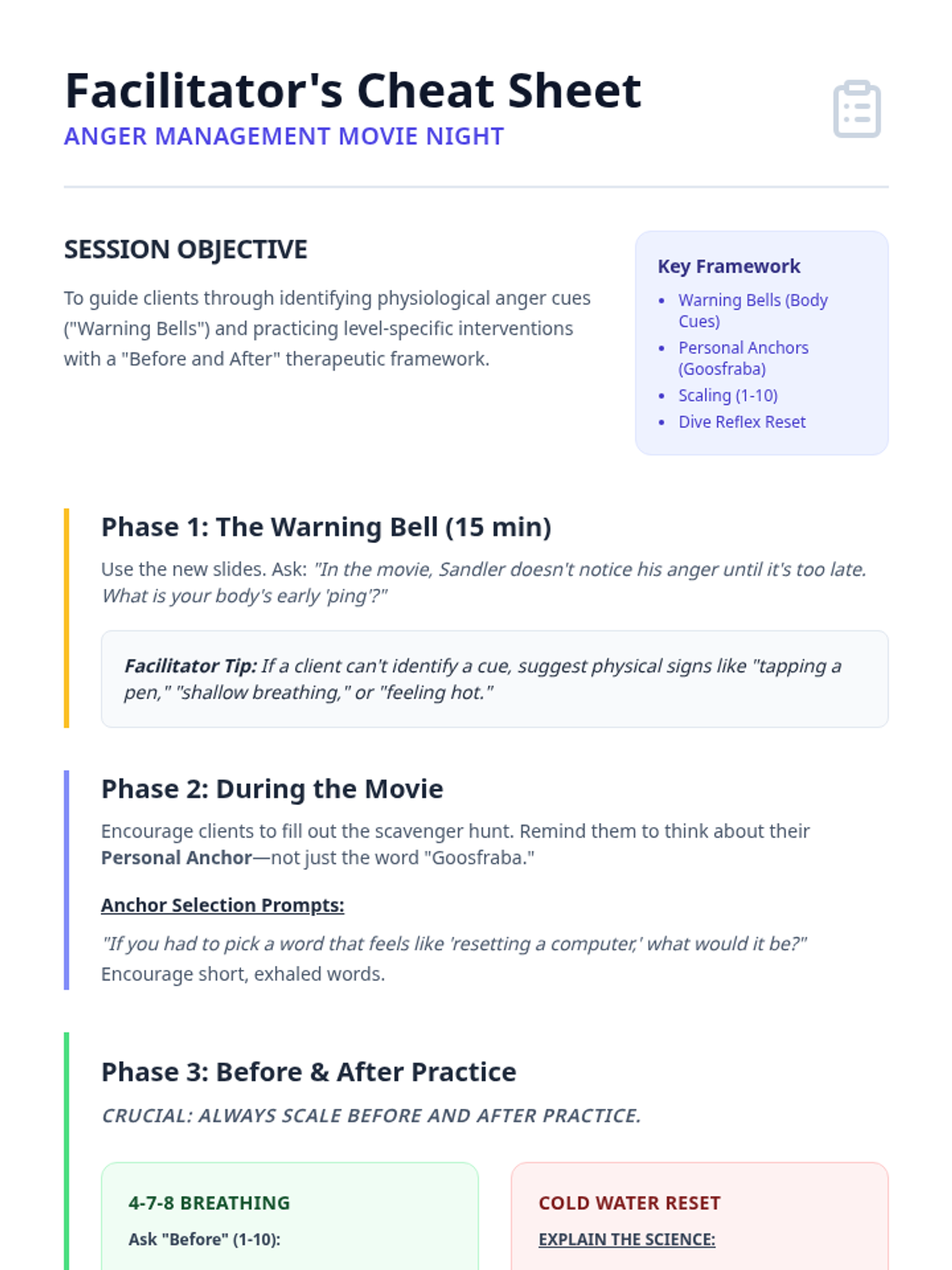
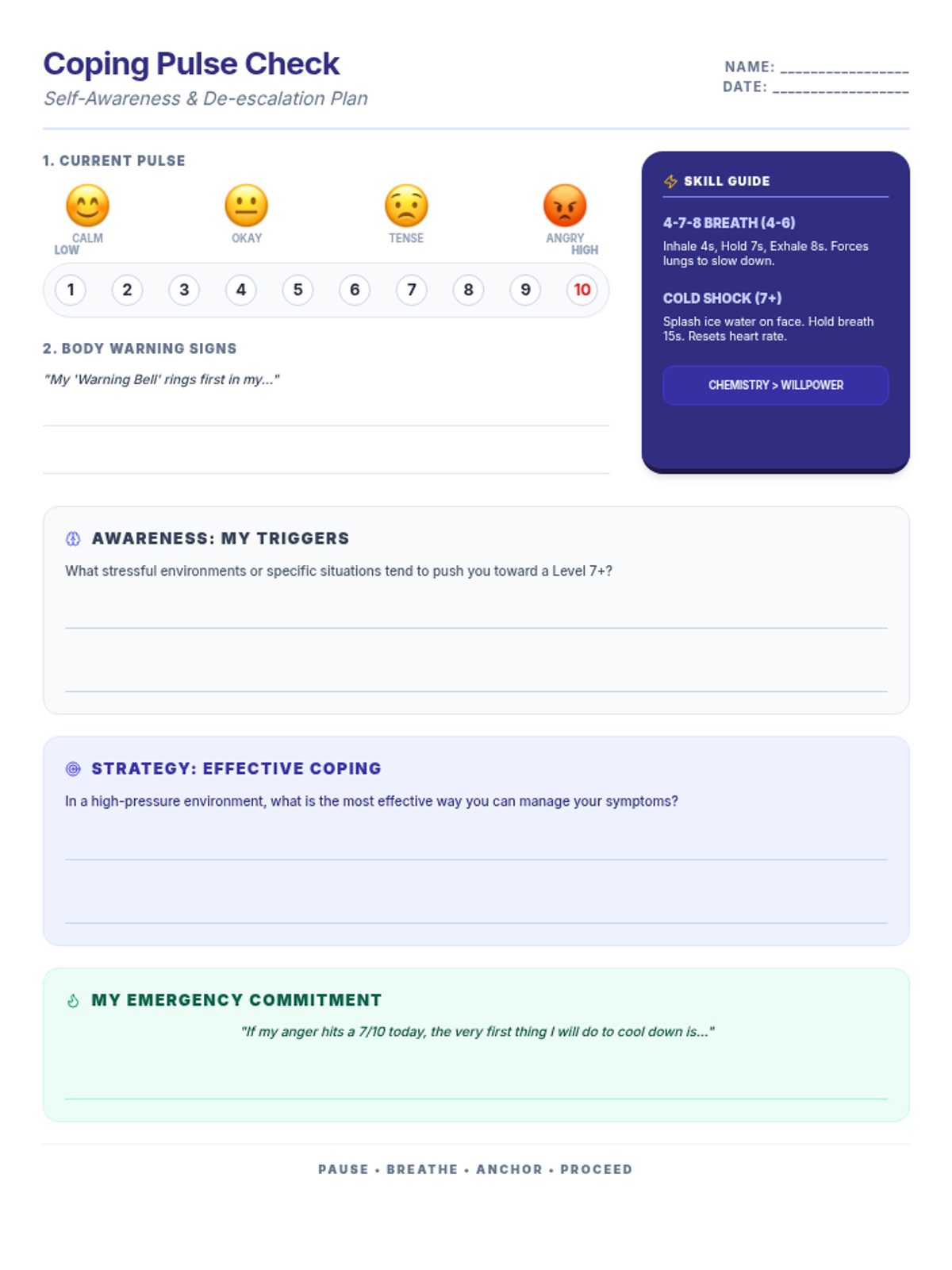
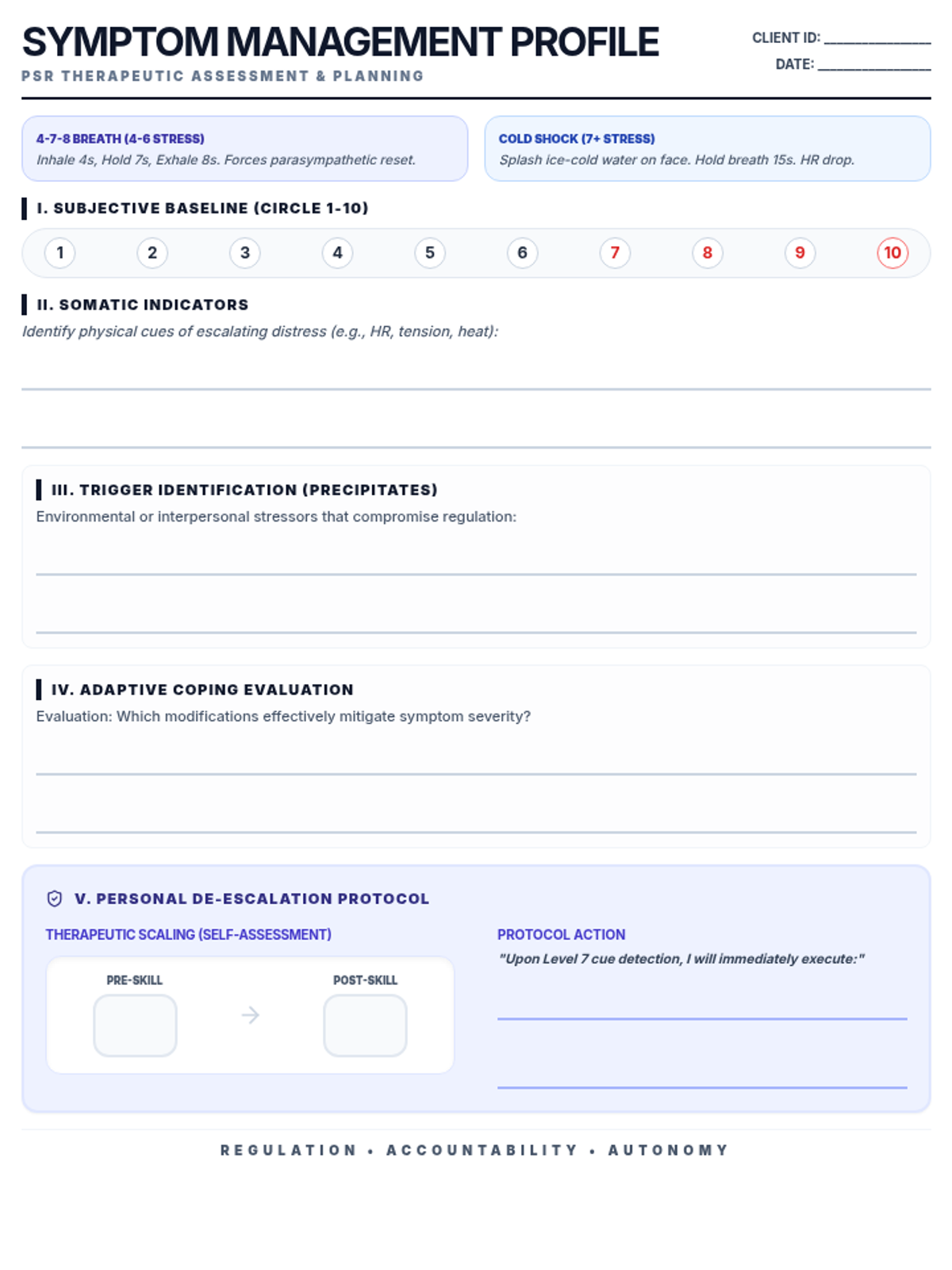
An interactive PSR group lesson centered on the movie 'Anger Management,' focusing on identifying personal triggers and building a hierarchy of coping skills from moderate stress to severe anger.
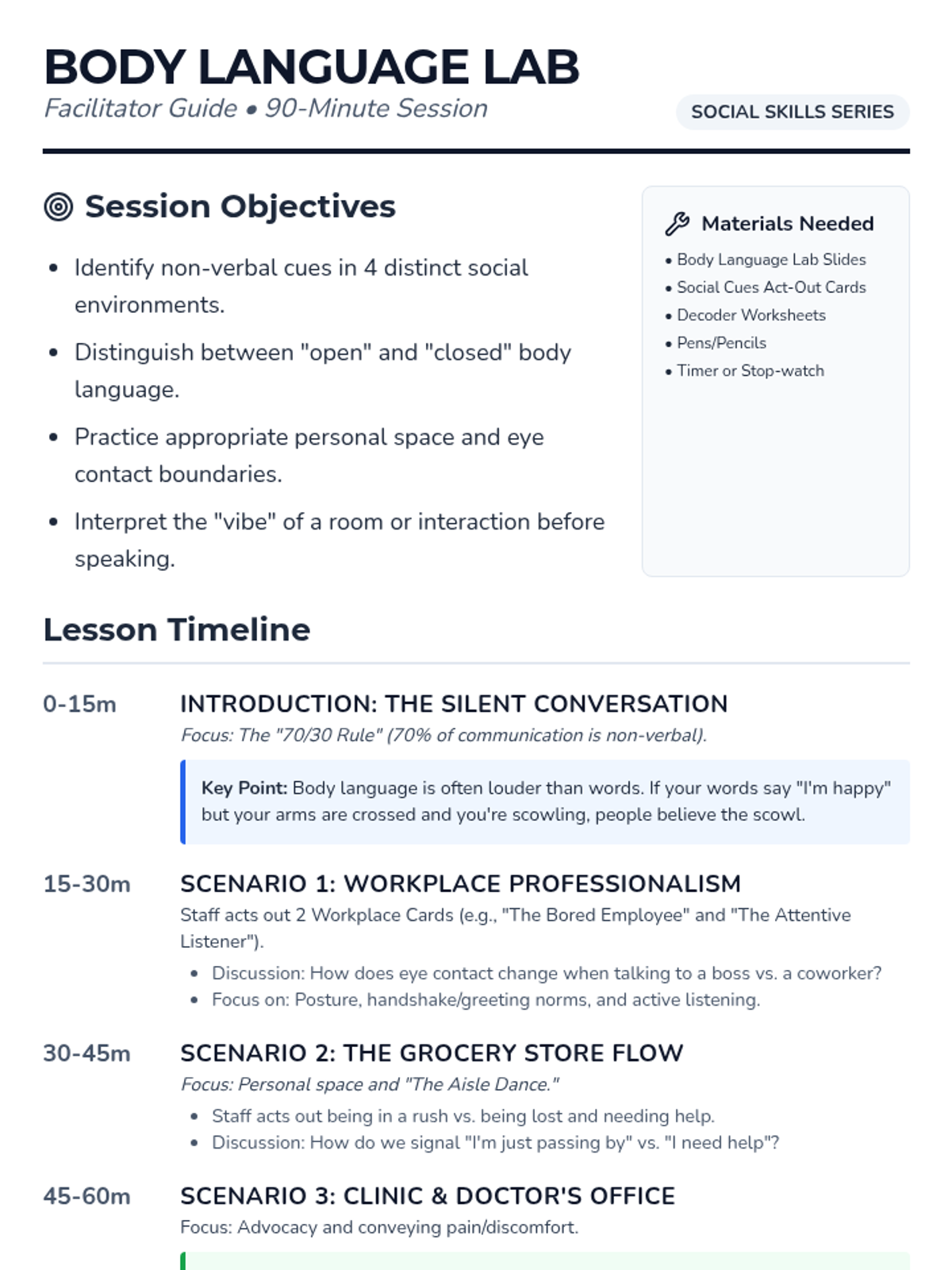
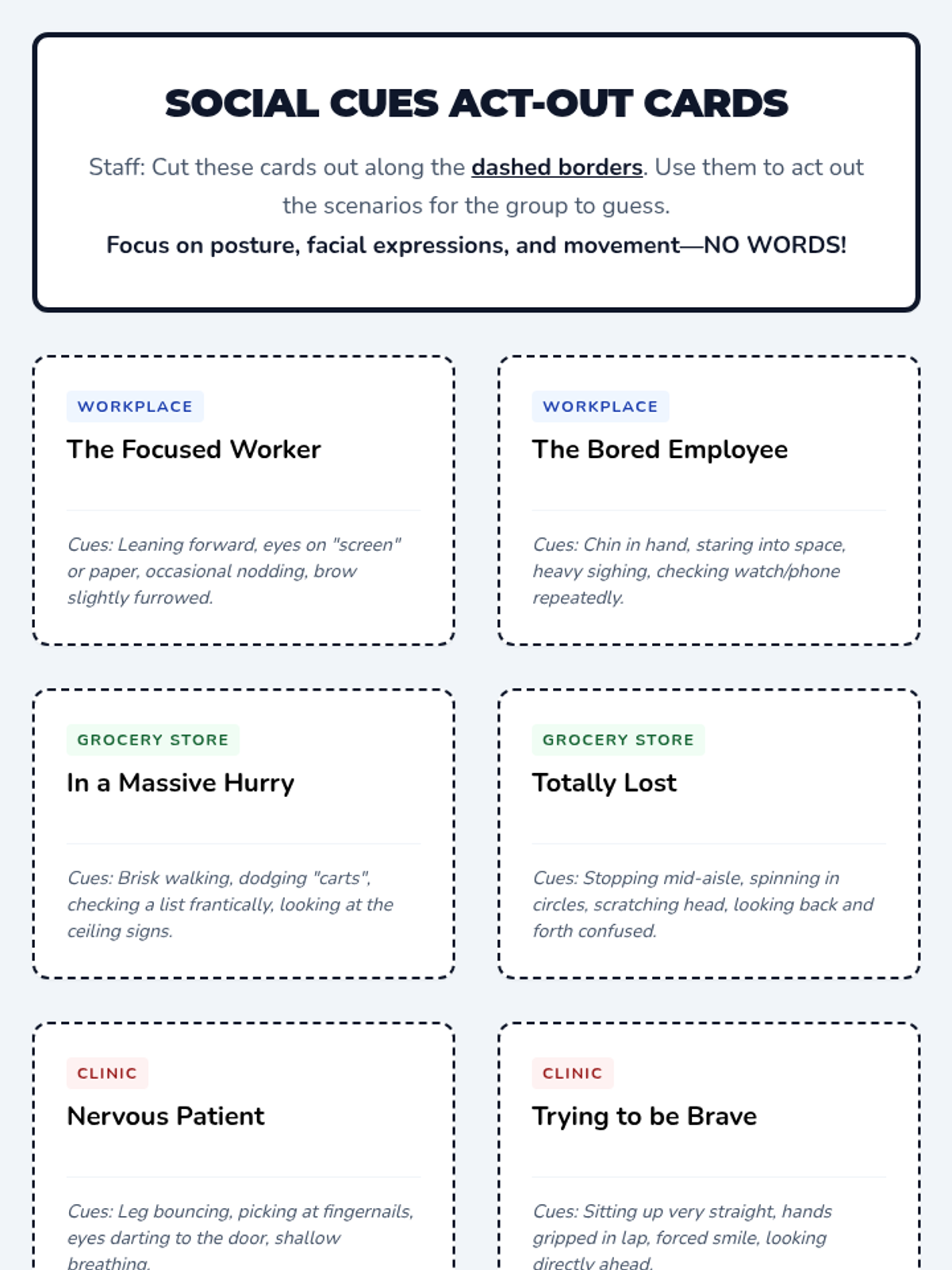
A 90-minute verbal-only workshop on body language in workplace, retail, clinical, and social settings. Uses interactive live acting and guided group discussion.
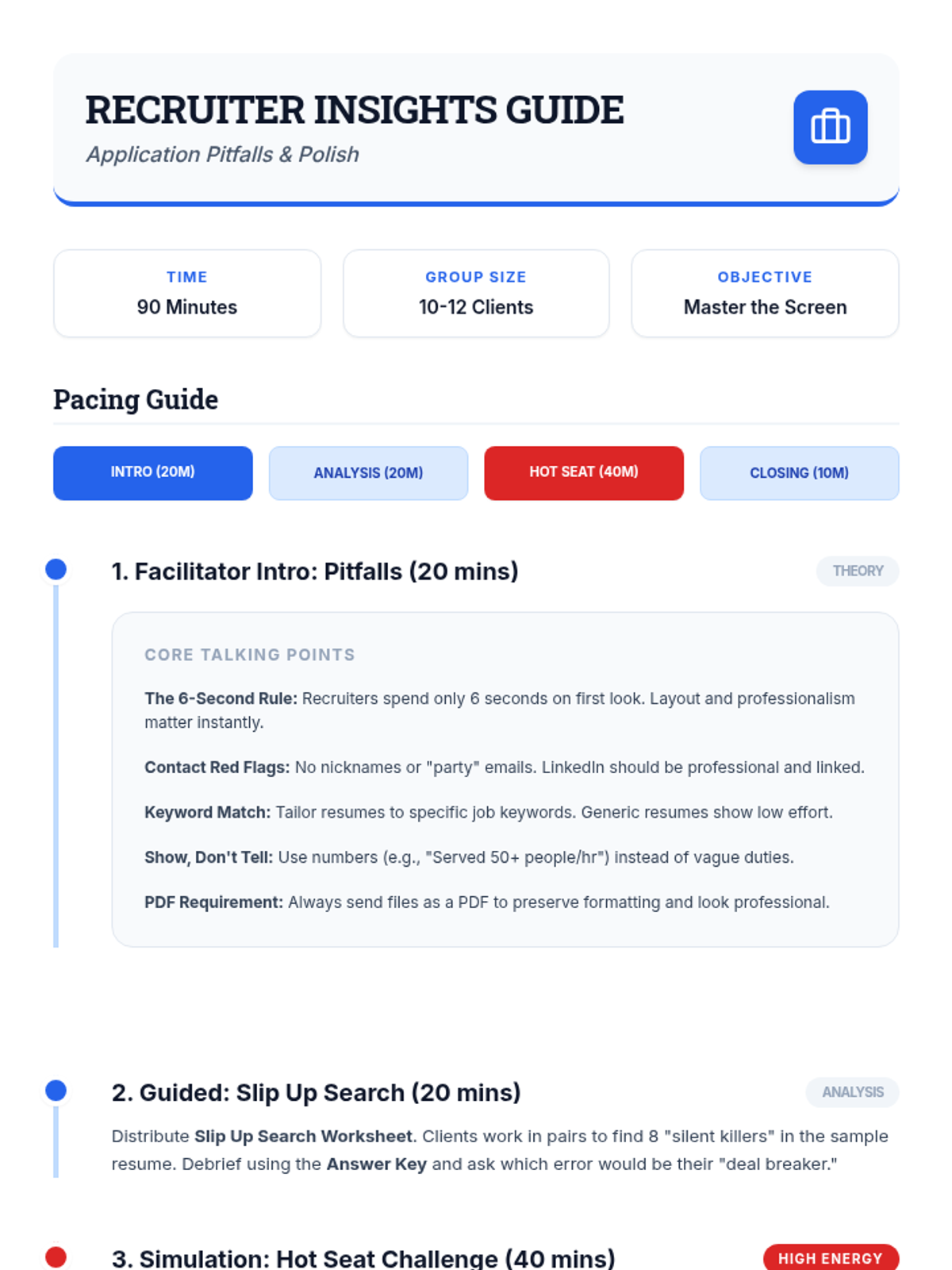
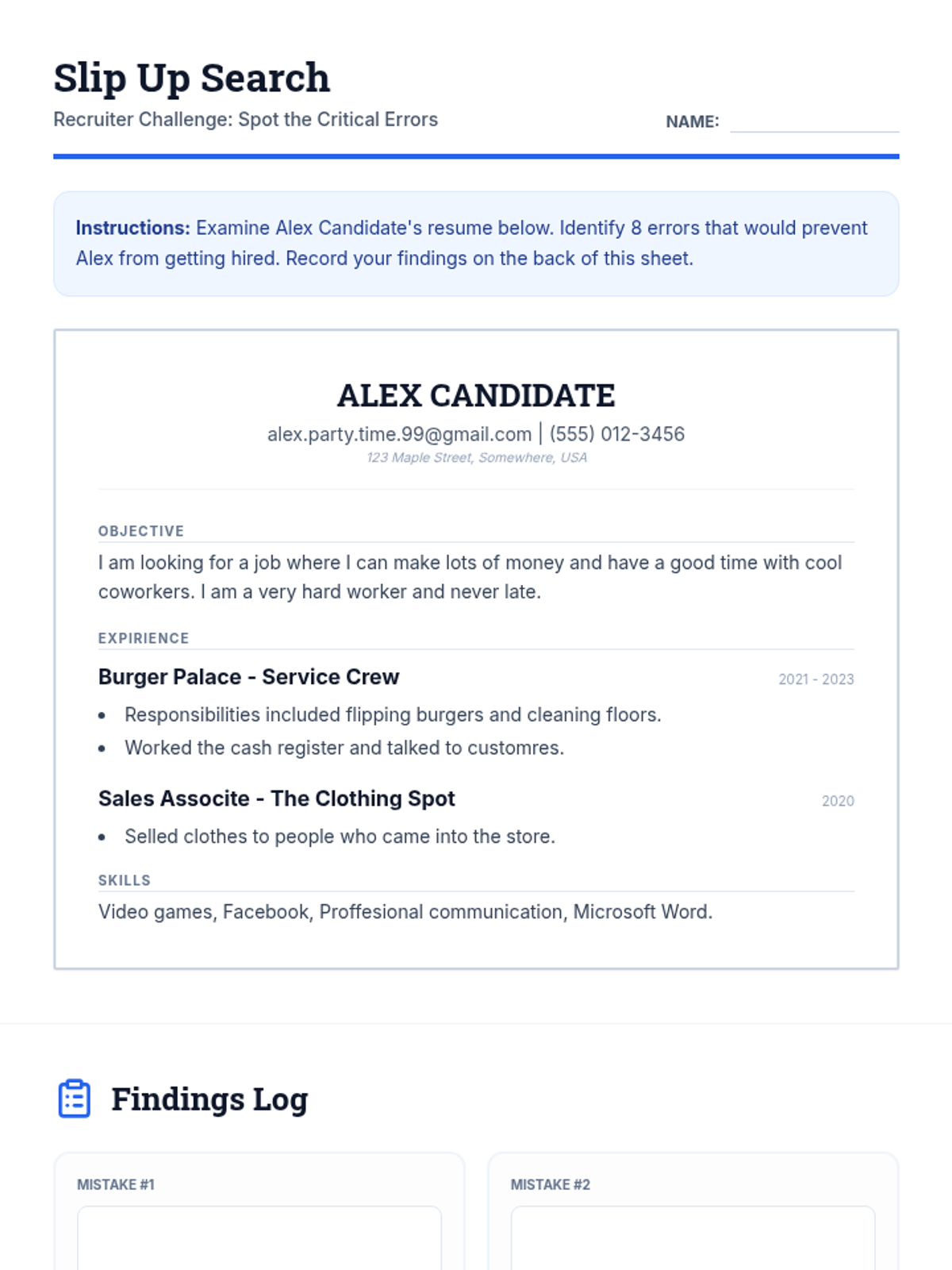
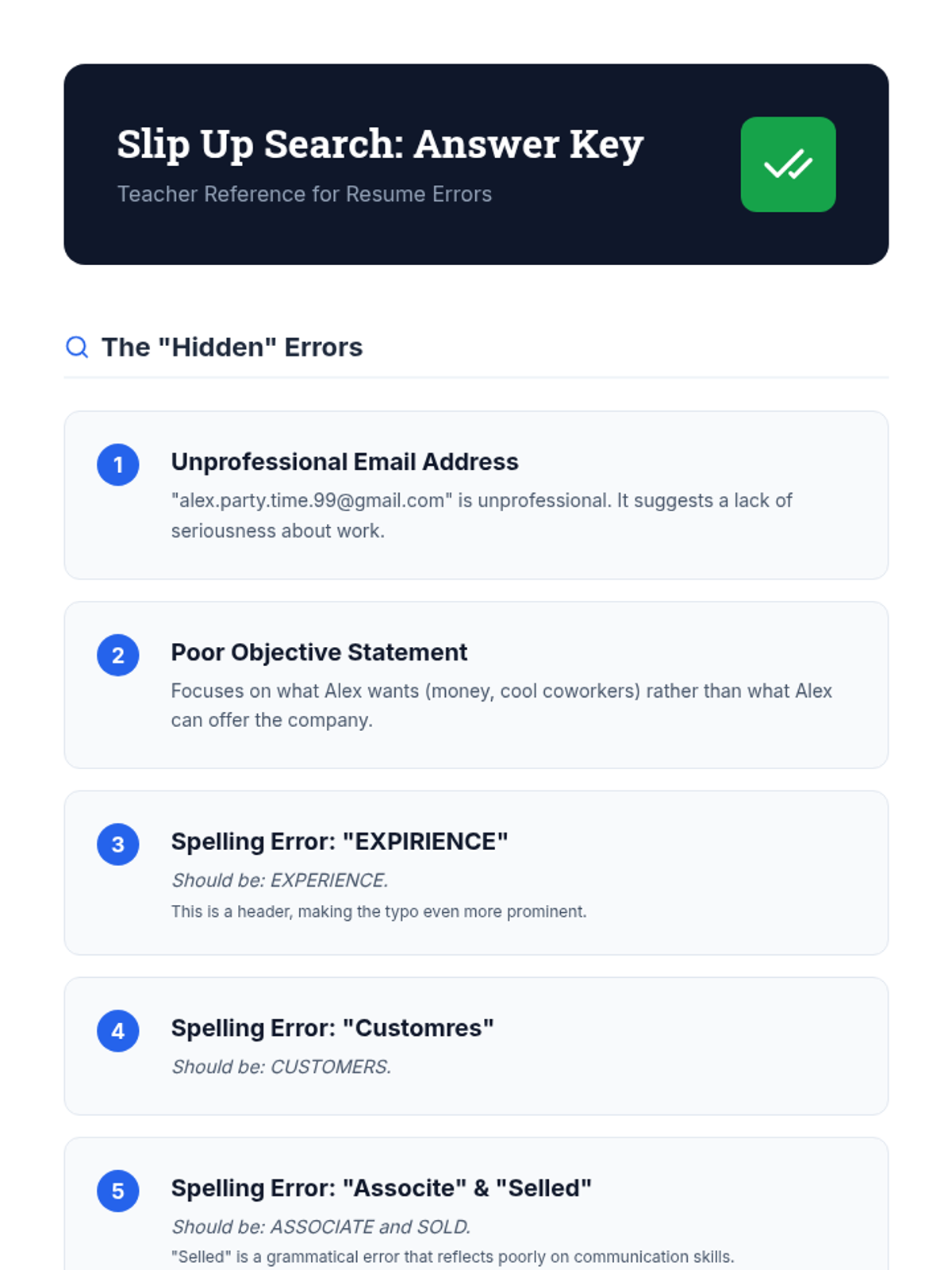
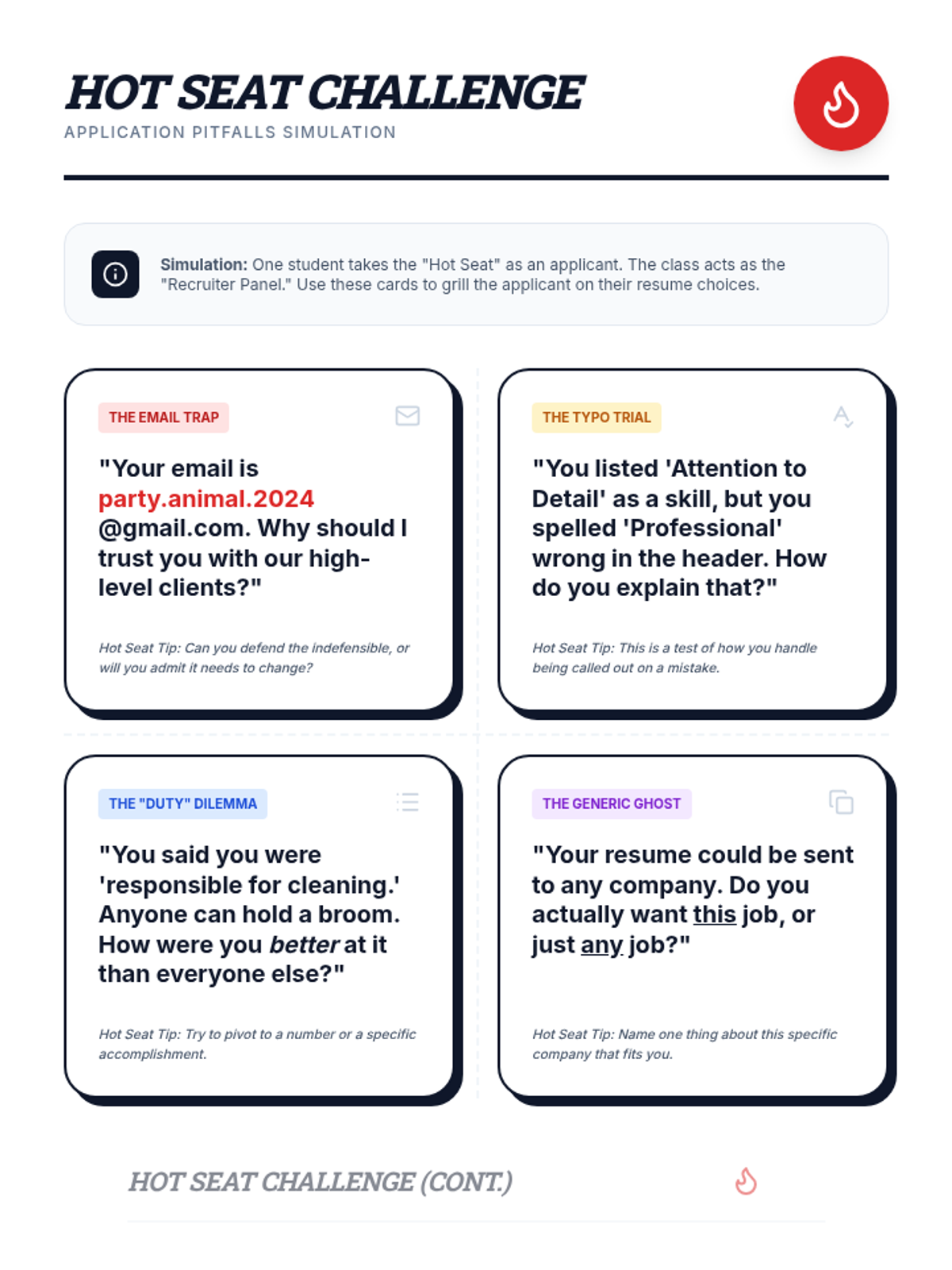
A comprehensive lesson identifying common workplace application errors, from resume typos to unprofessional email addresses, and how to fix them.
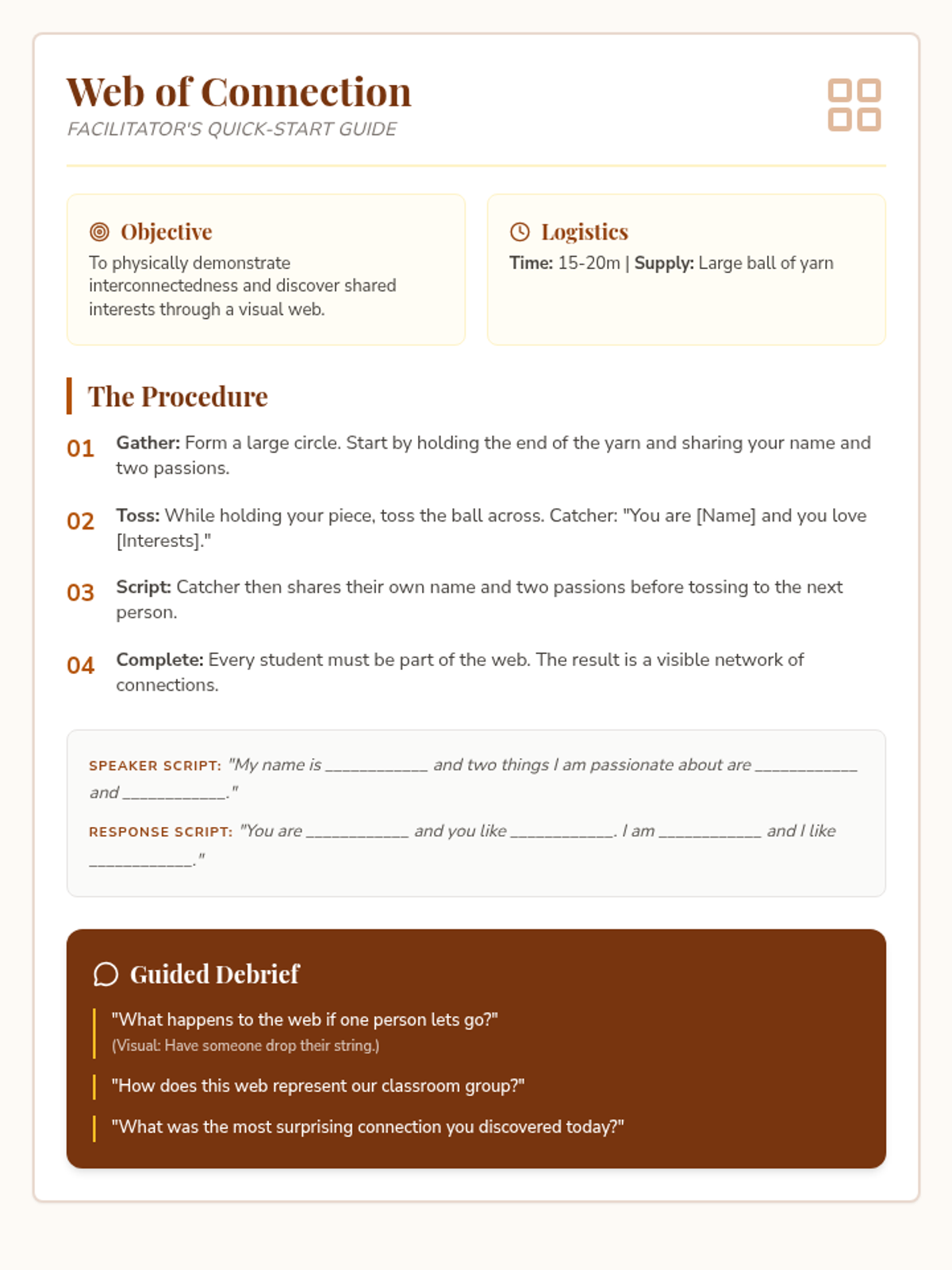
A community-building activity where students use a ball of string to create a physical web, visualizing their shared interests and the strength of their group connection.
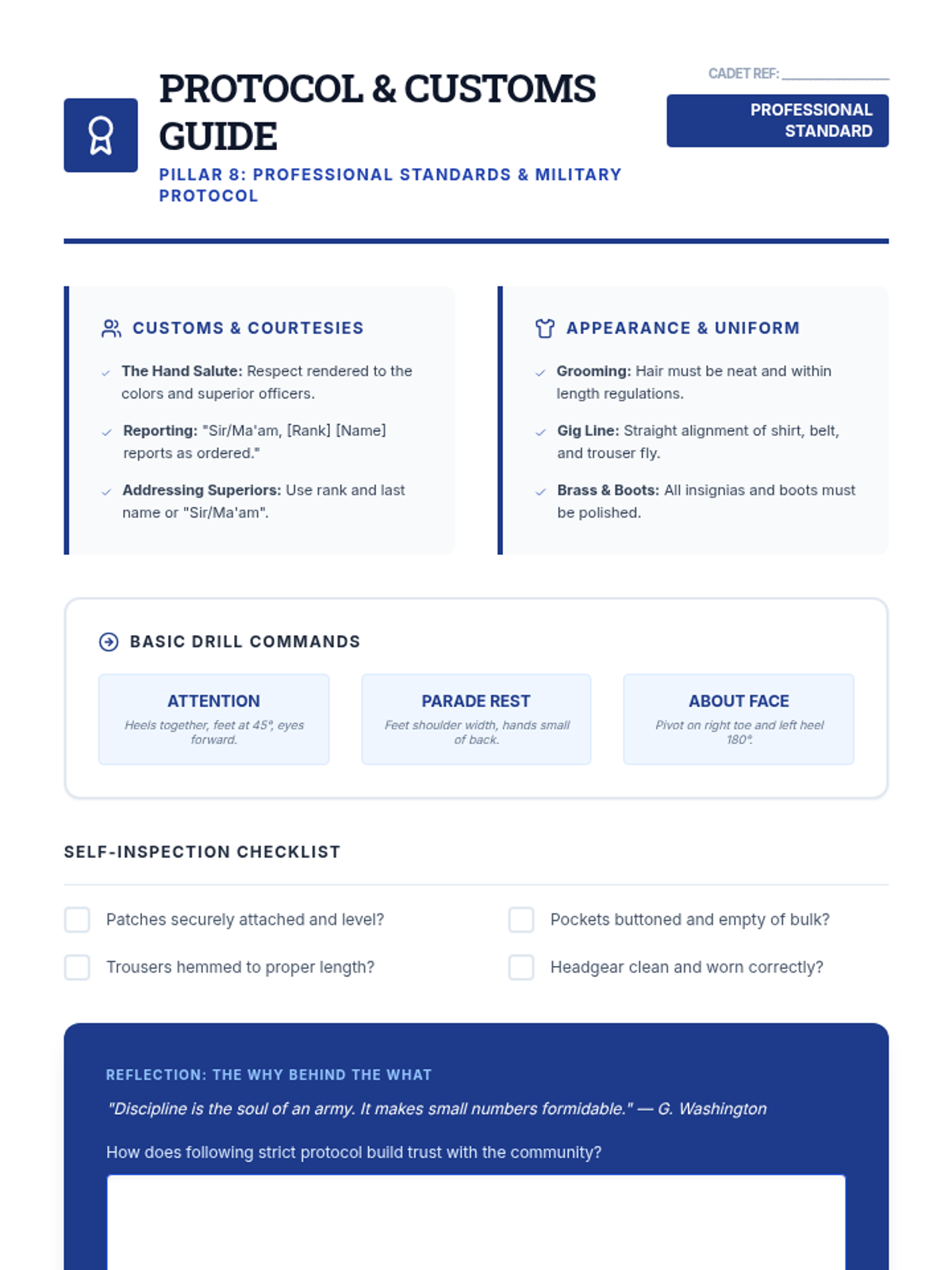
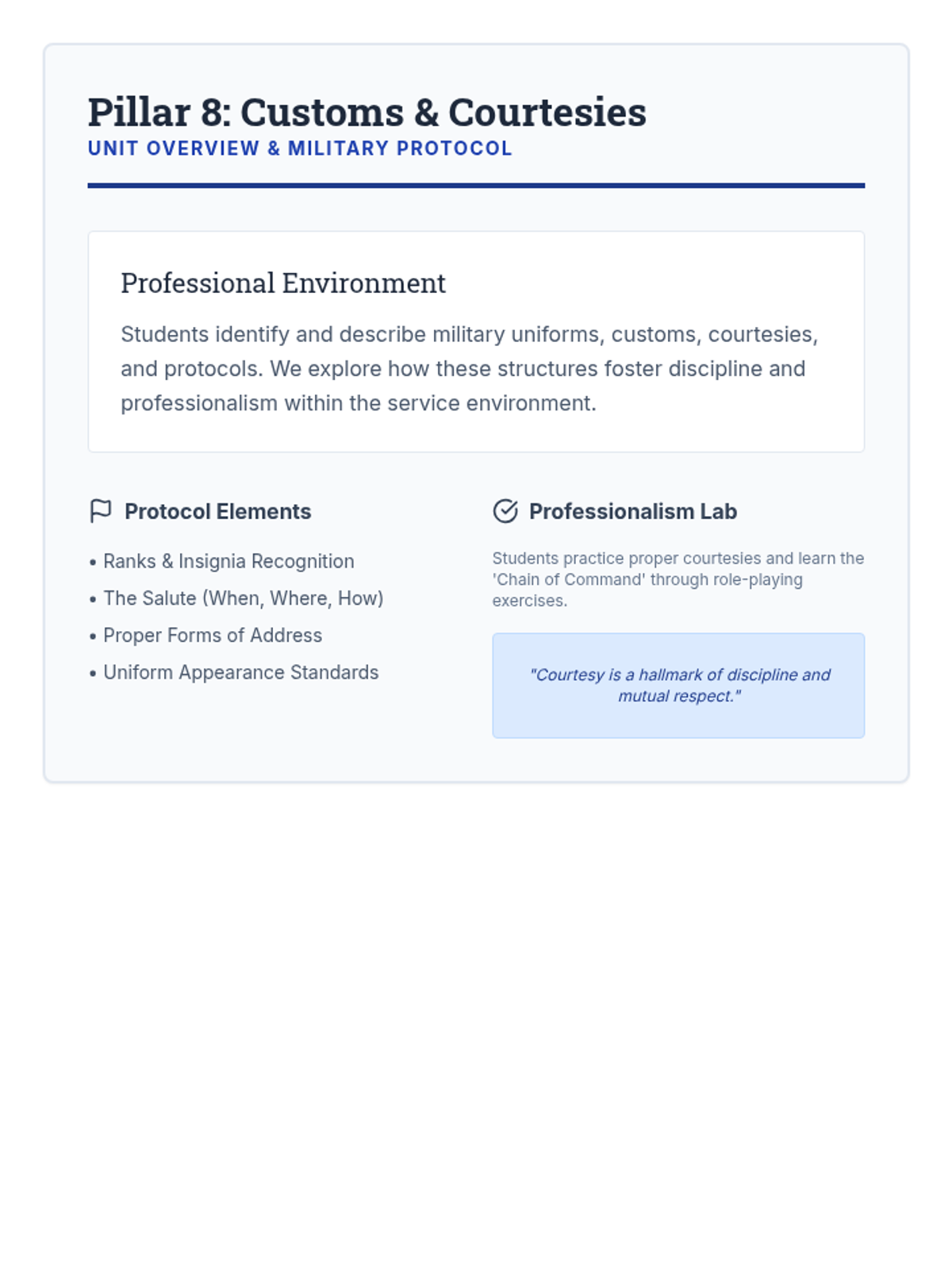
Master military customs, courtesies, protocols, and uniform standards essential for professional military environments.
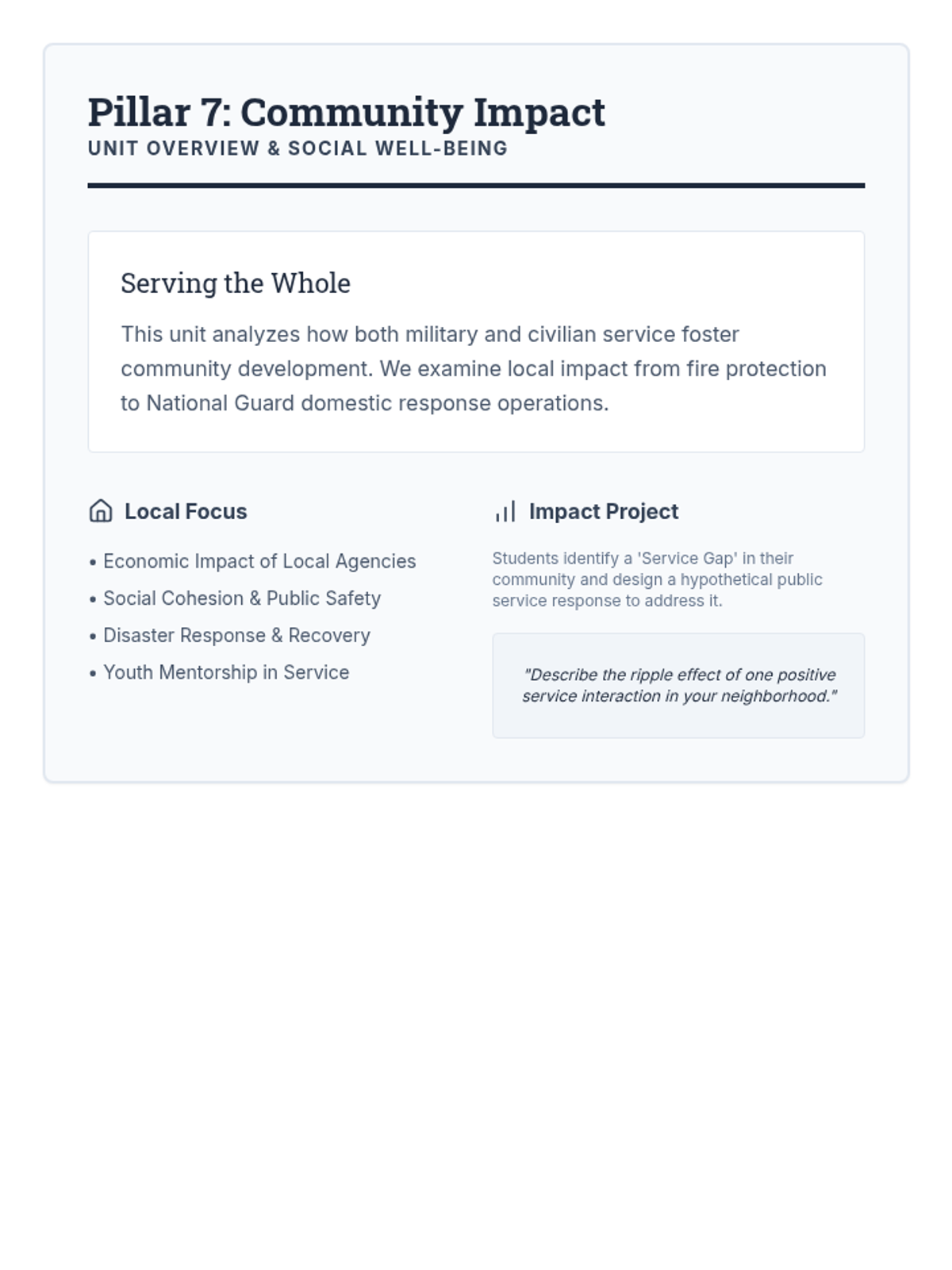
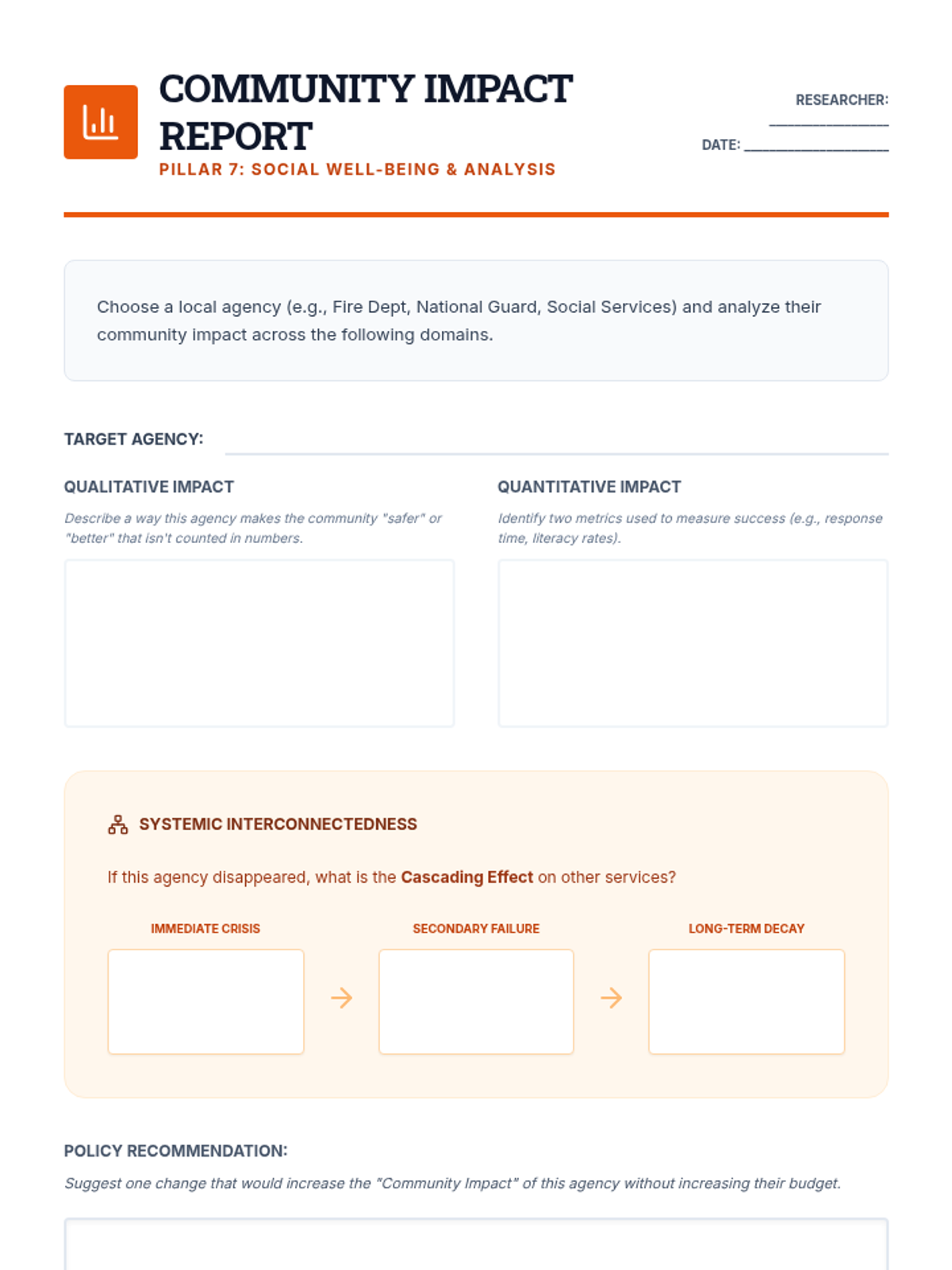
Assess the positive impact of public service on local and national communities, focusing on development and societal well-being.
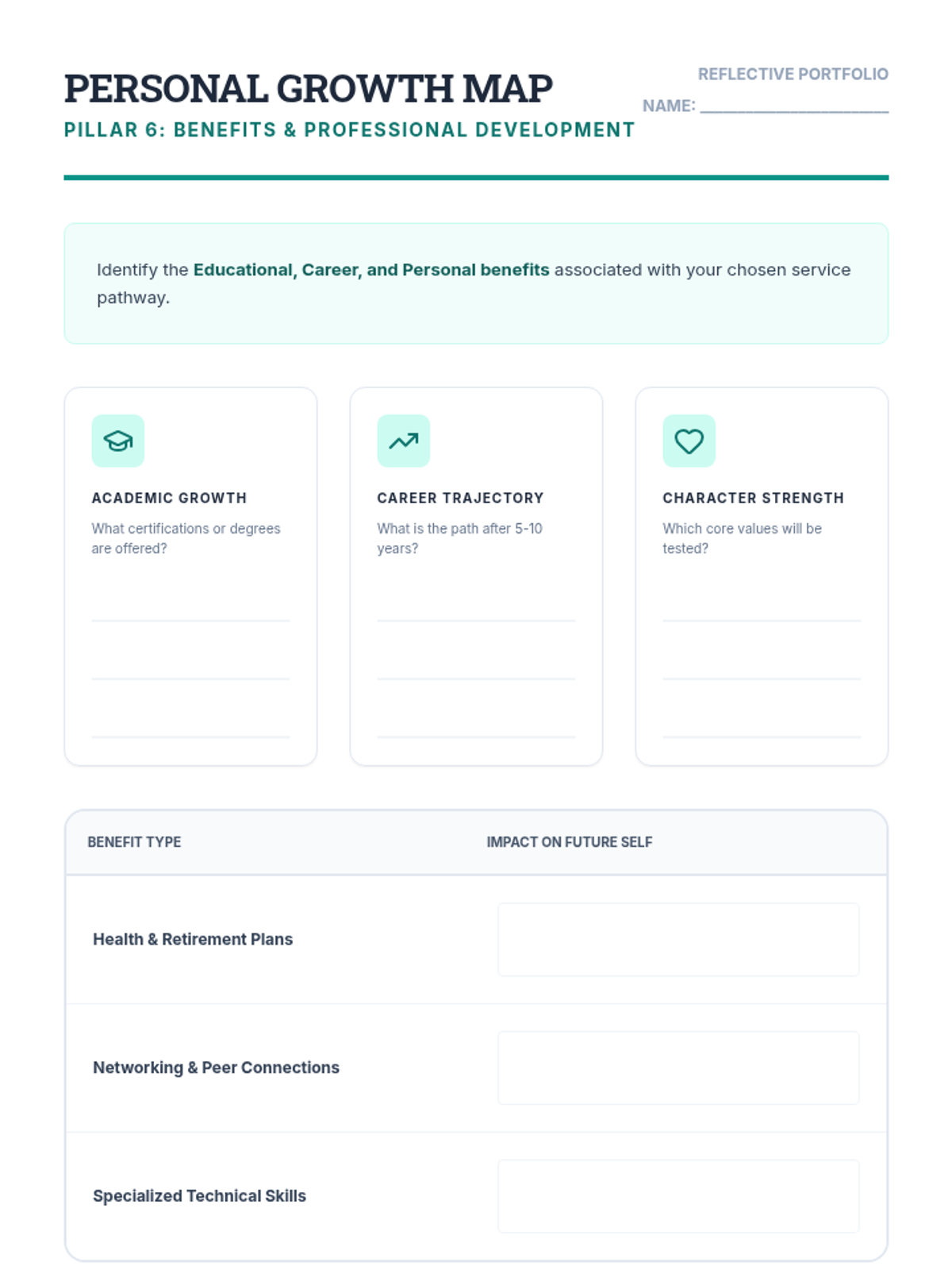
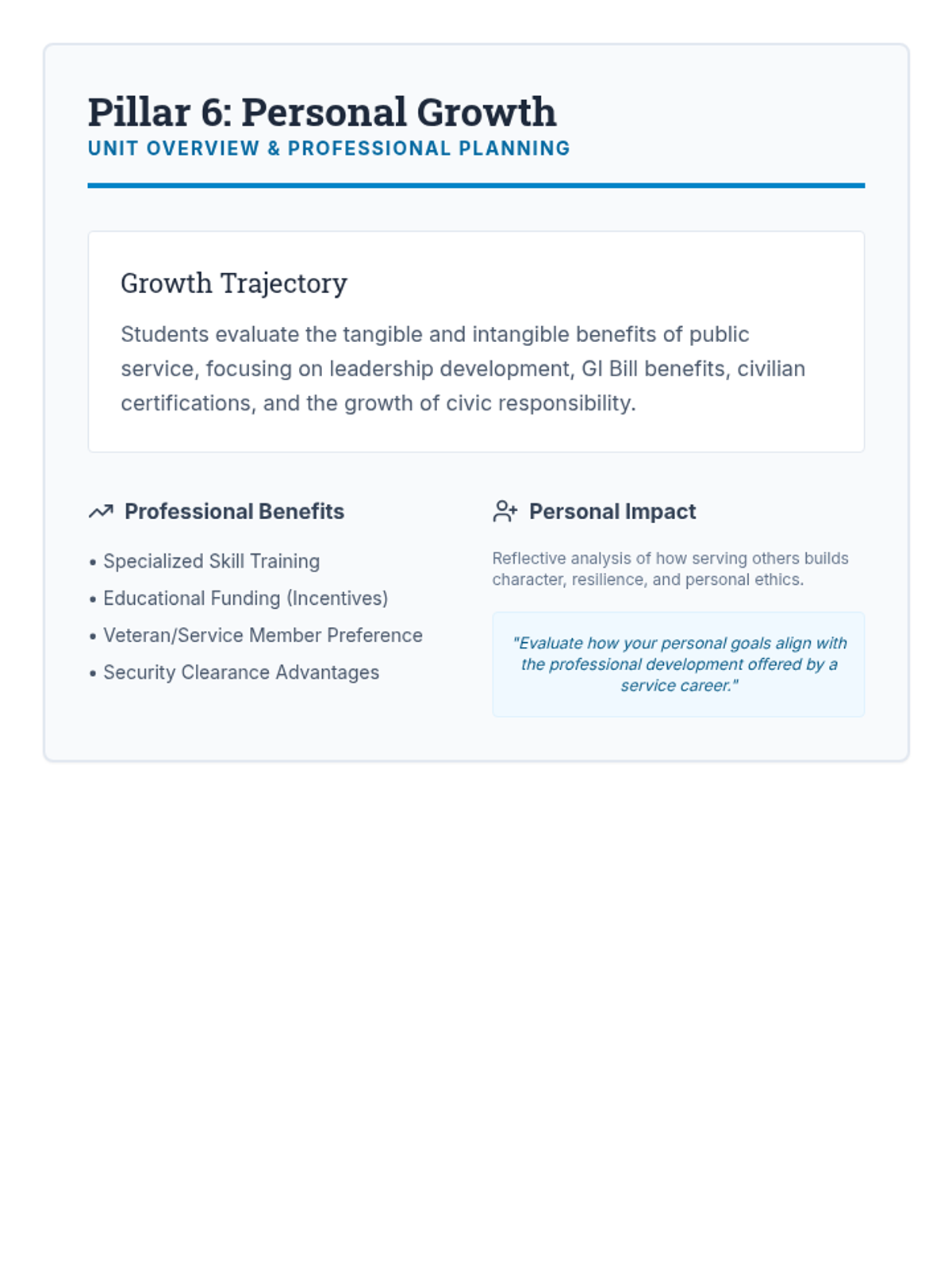
Examine the personal and professional growth resulting from service careers, including civic responsibility and professional advancement.