A supportive toolkit designed for teenagers to identify and scale complex emotions following stressful or traumatic events, focusing on the mind-body connection and emotional literacy.
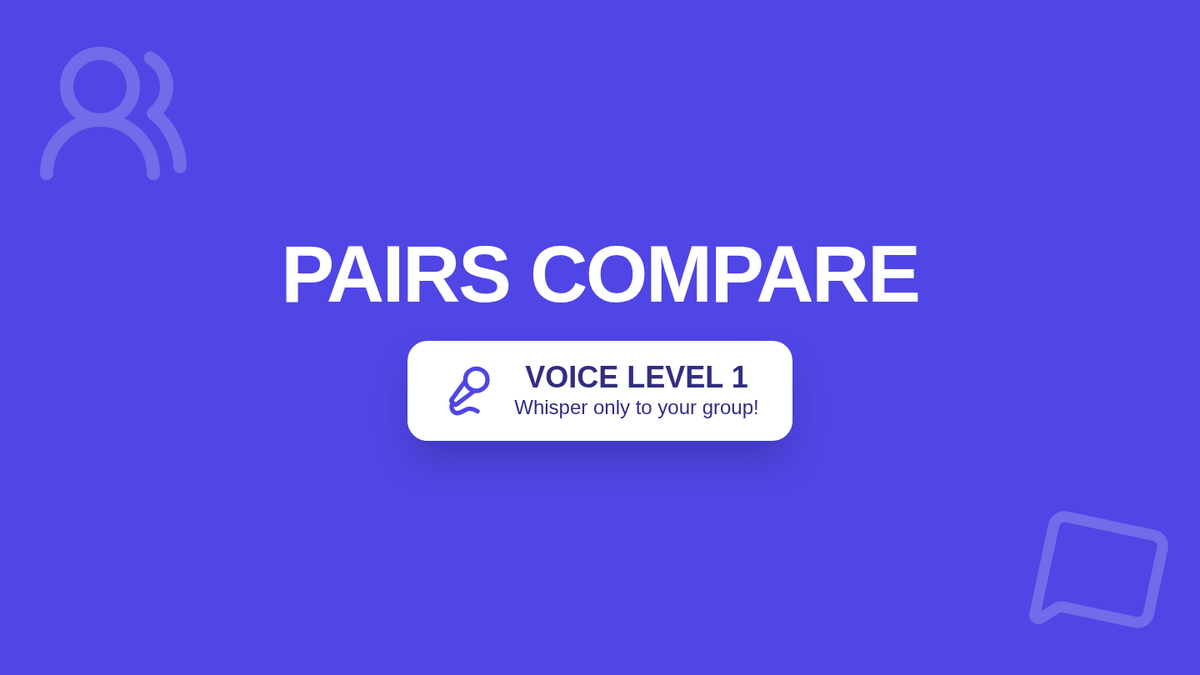
A collaborative "Pairs Compare" activity where students work in teams of four to share keywords, locate evidence, and synthesize final answers on index cards.
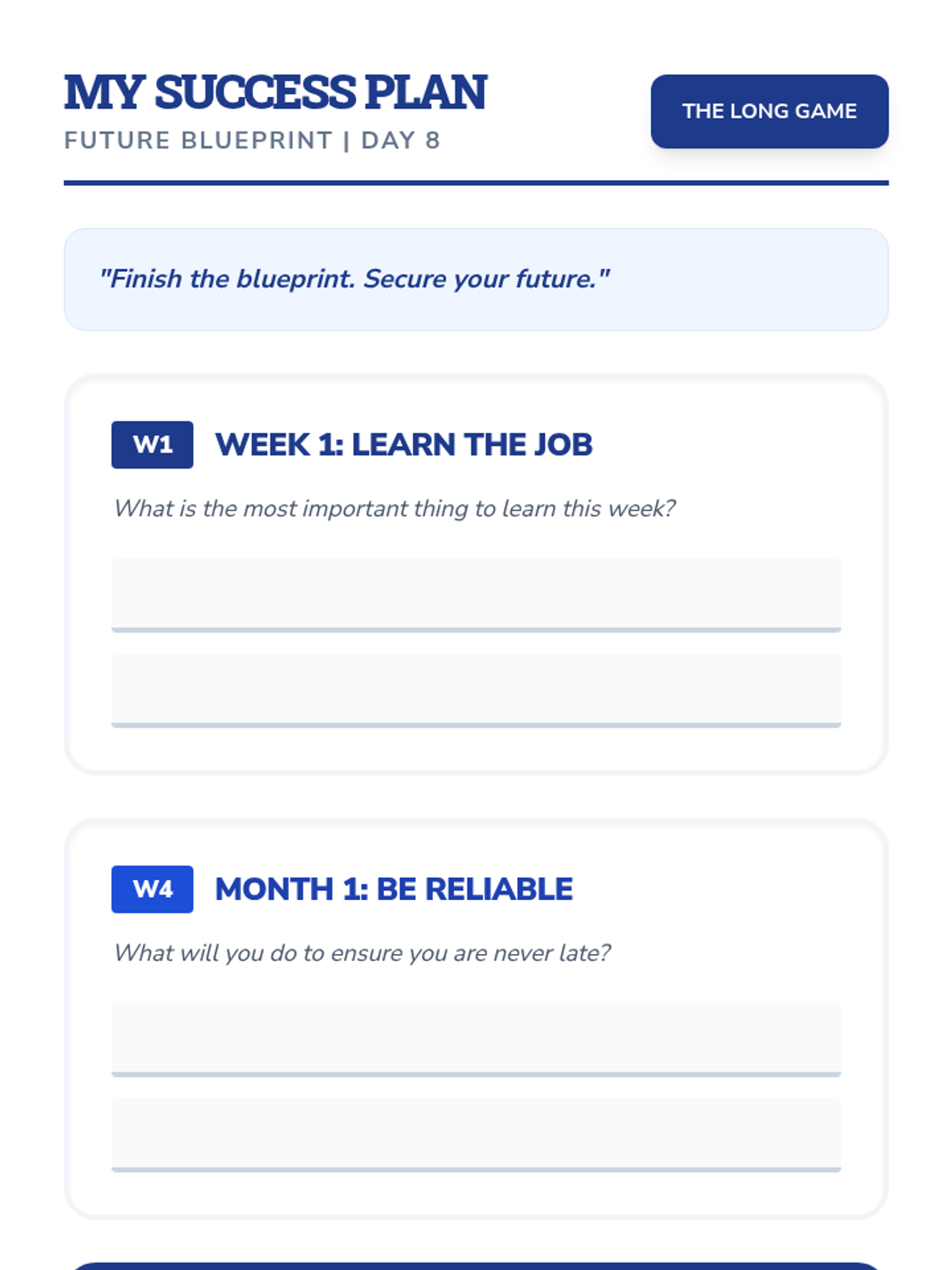
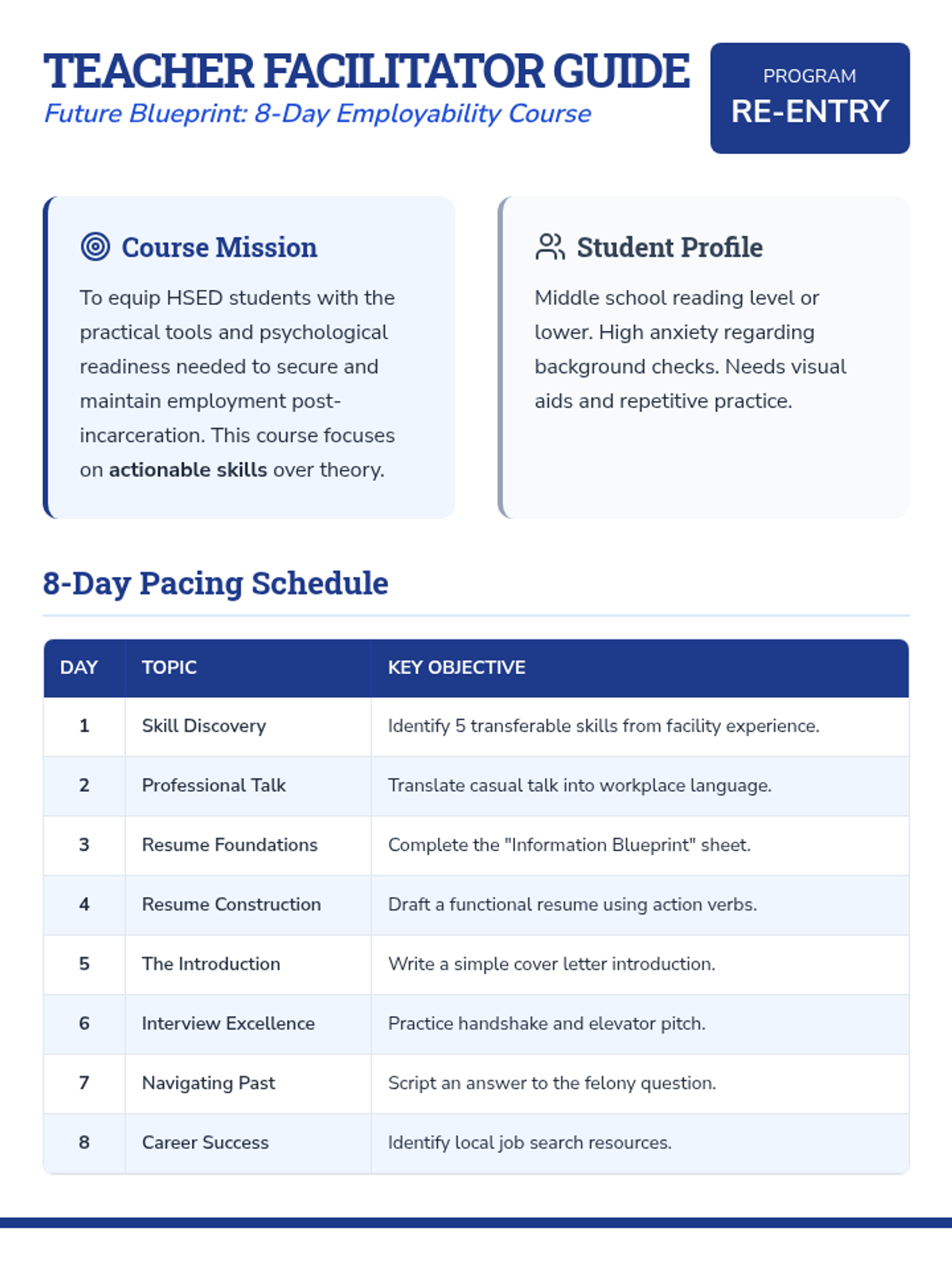
Job search strategies, staying employed, and long-term career planning. Final review and preparation for the 'working world'.
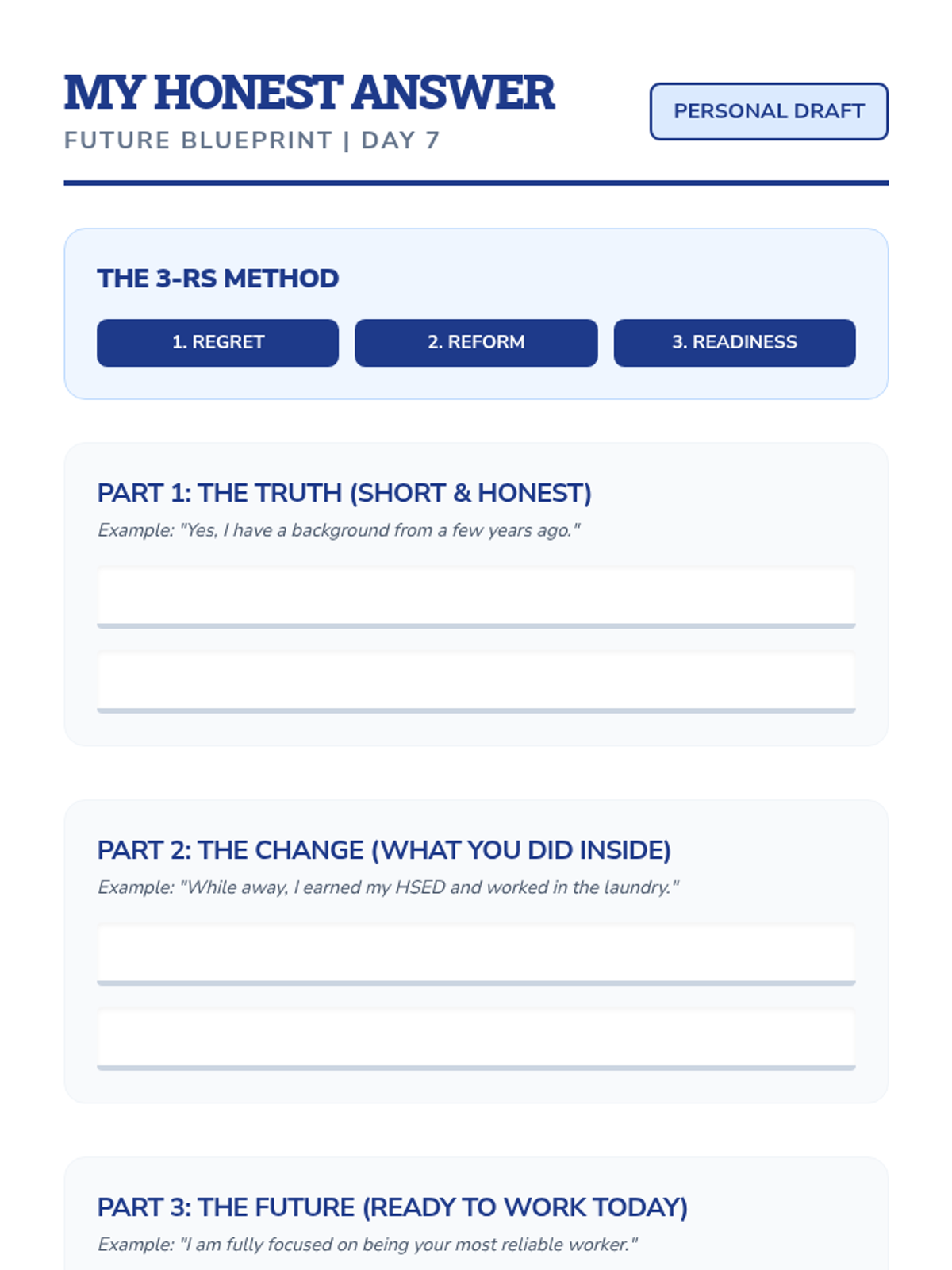
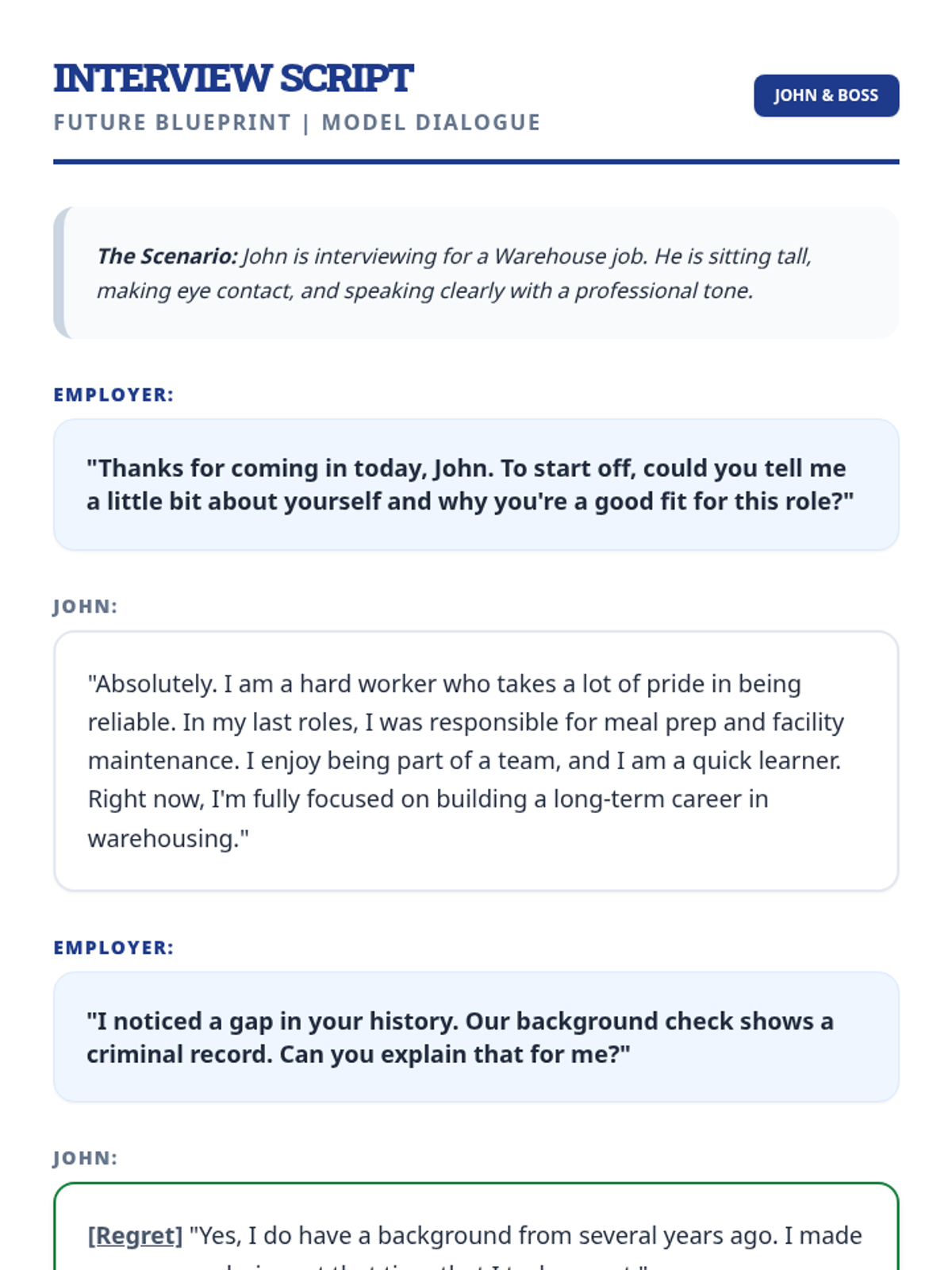
Specific strategies for addressing incarceration and background checks. Uses the 'Regret, Reform, Readiness' framework.
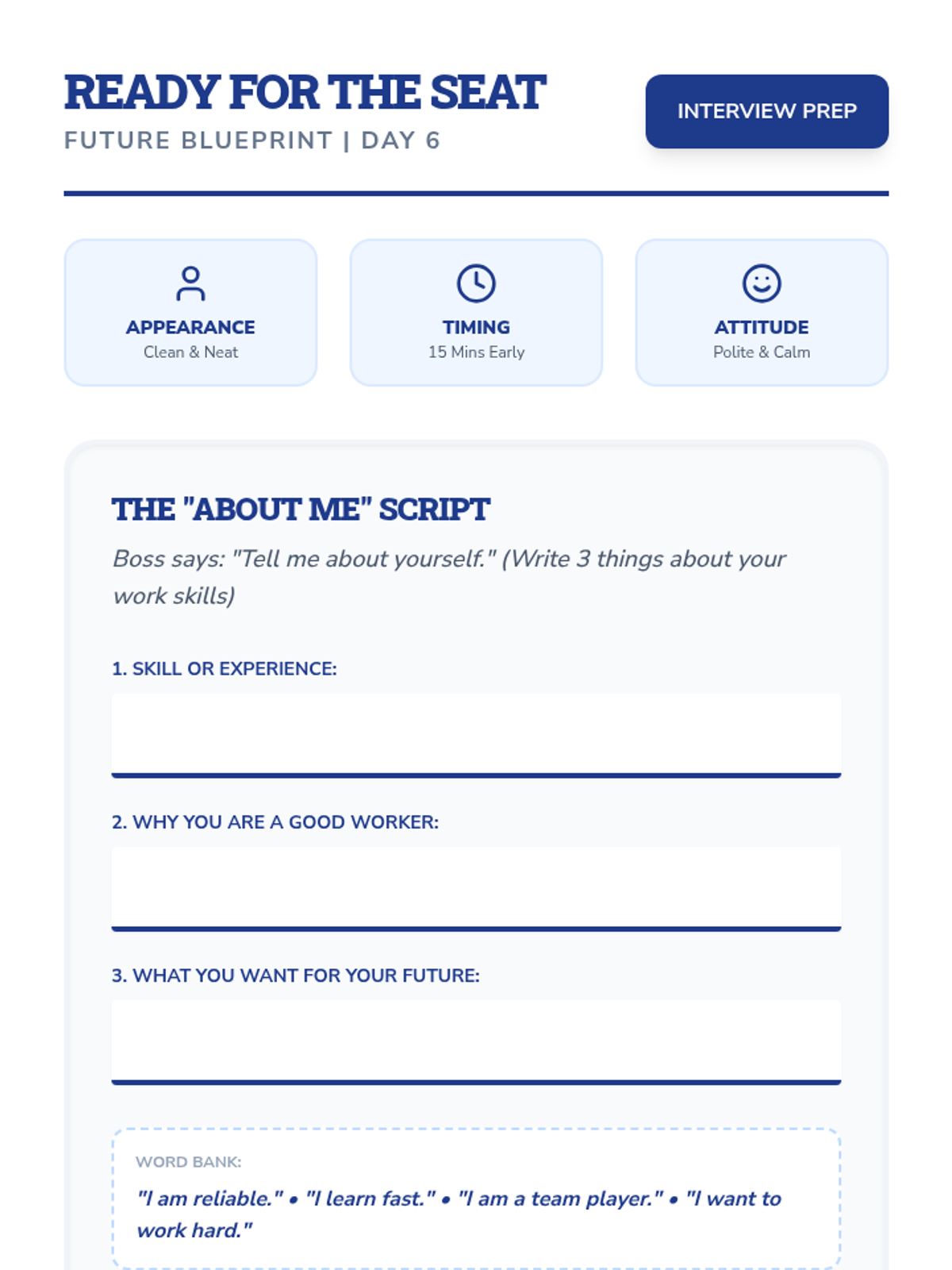
Preparation for the interview process. Focuses on preparation, appearance, and the first five minutes of the encounter.
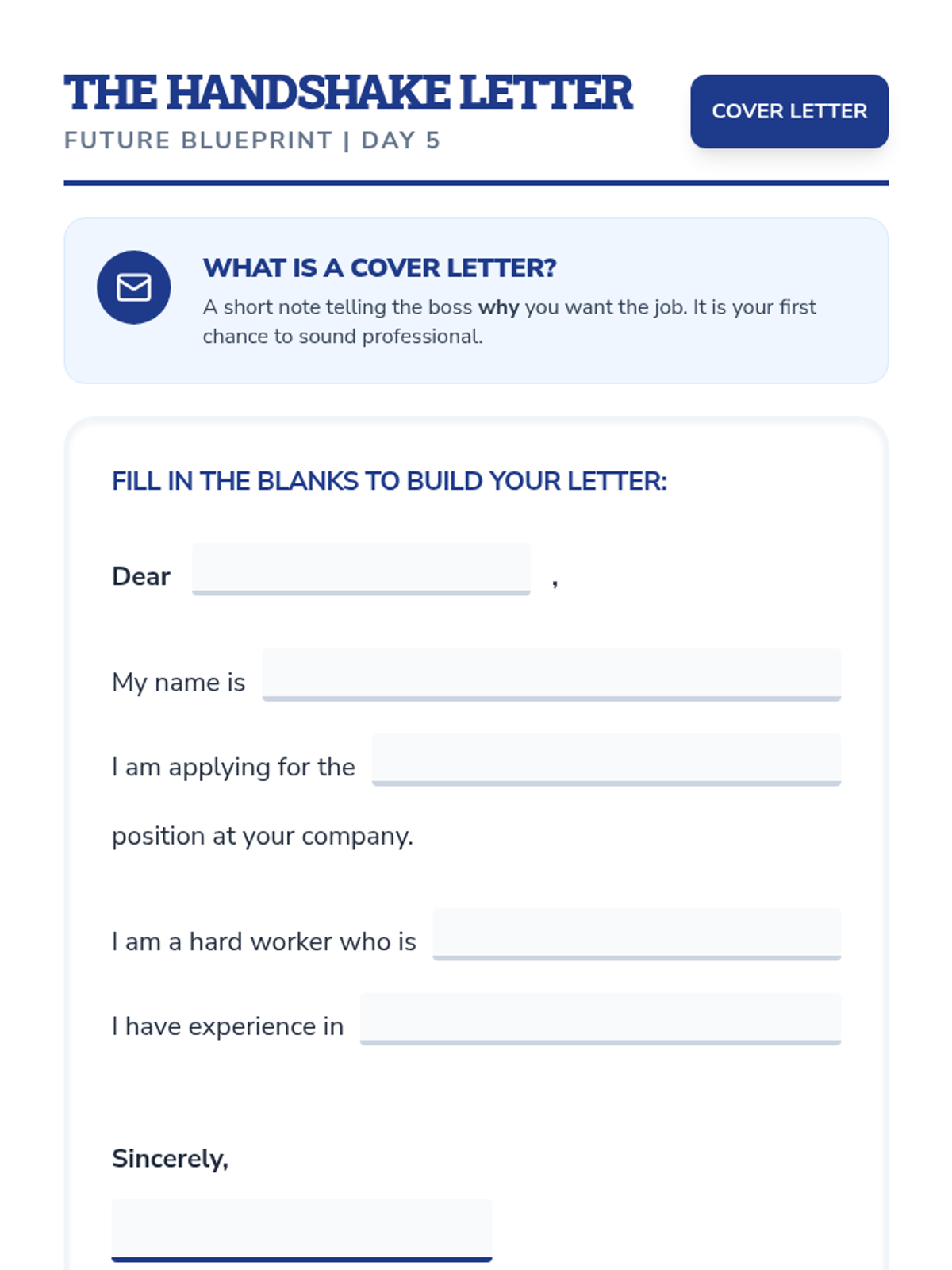
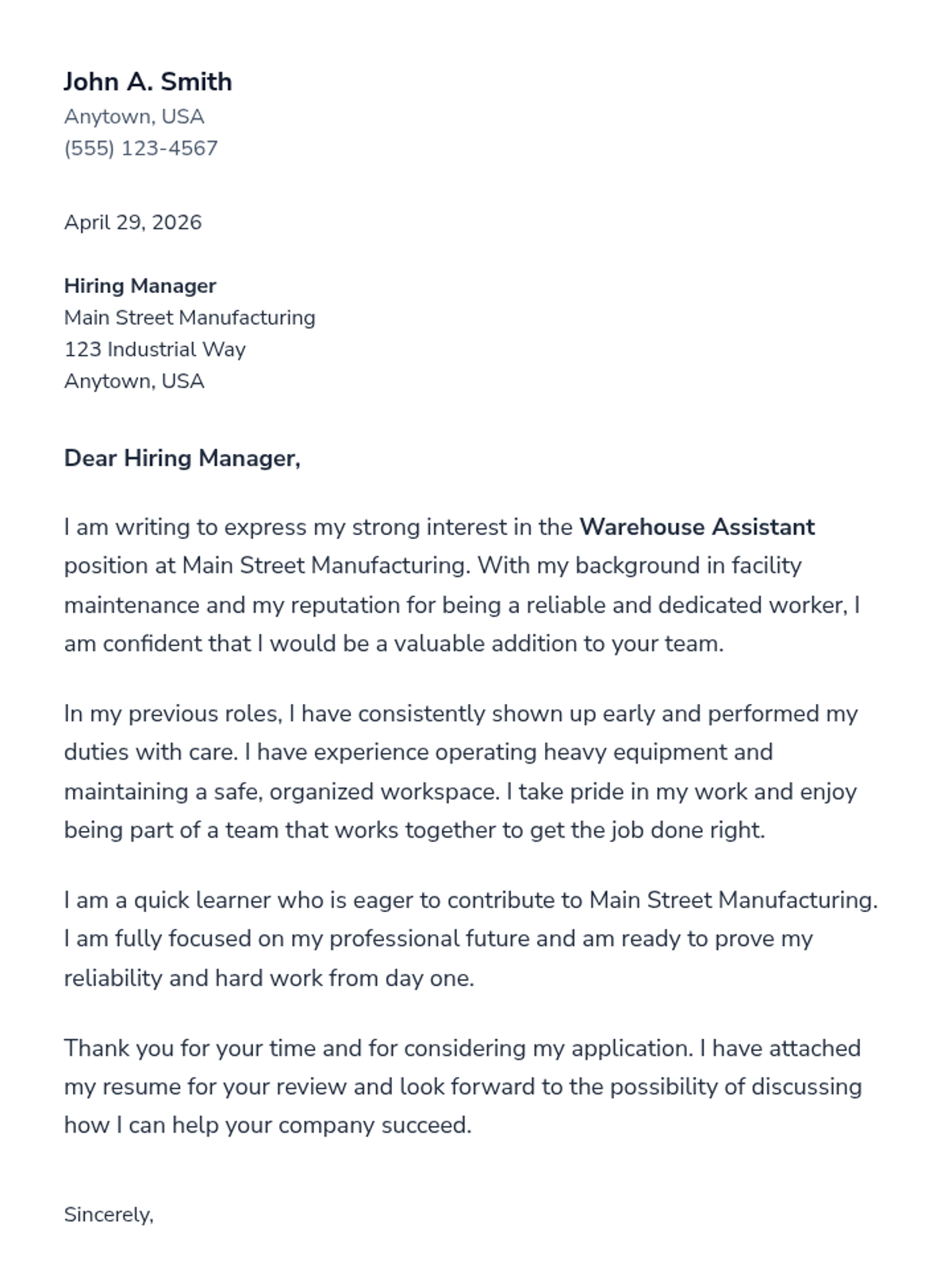
Demystifying the cover letter. Students learn how to introduce themselves to an employer and explain their interest in a role.
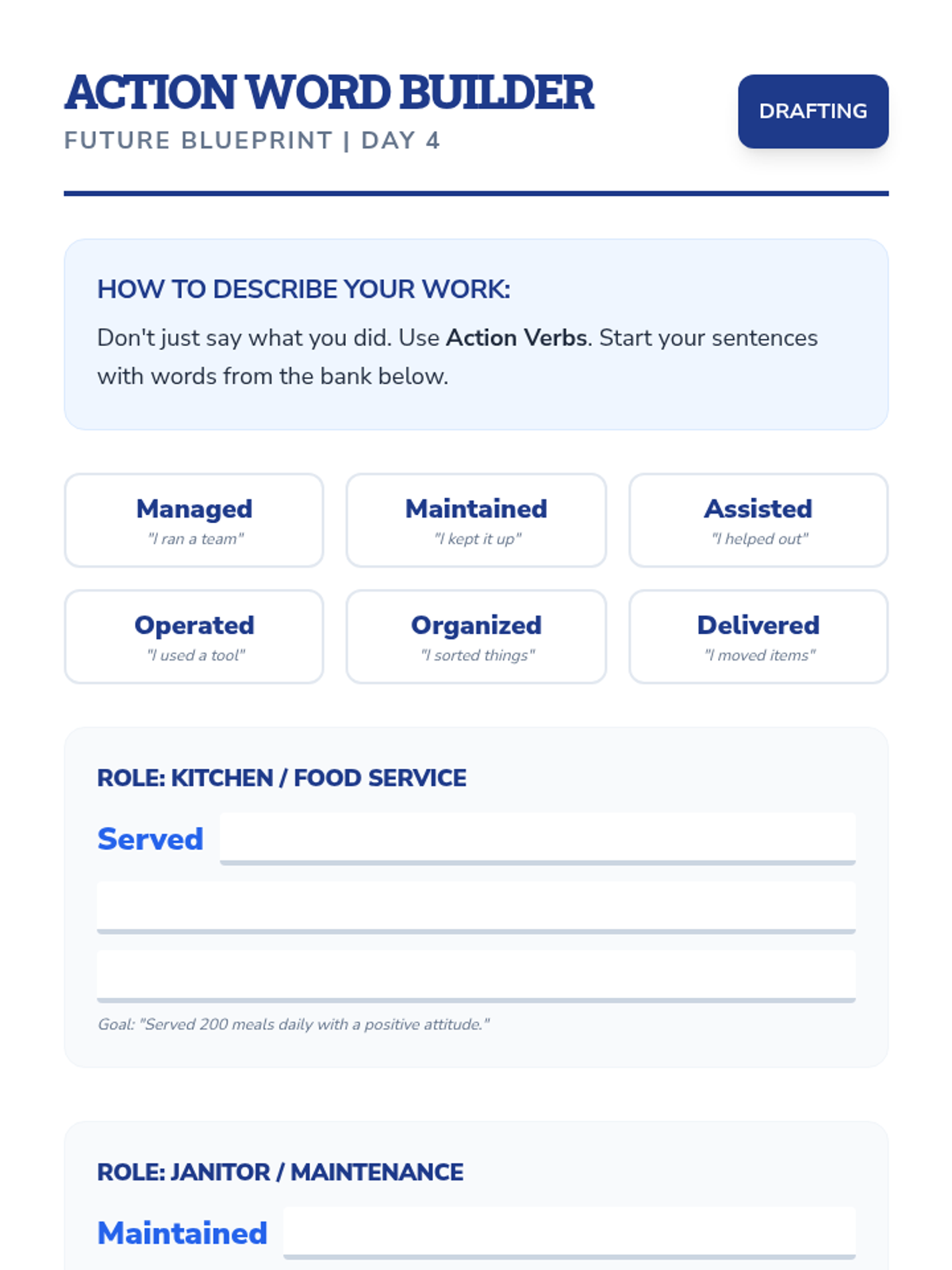
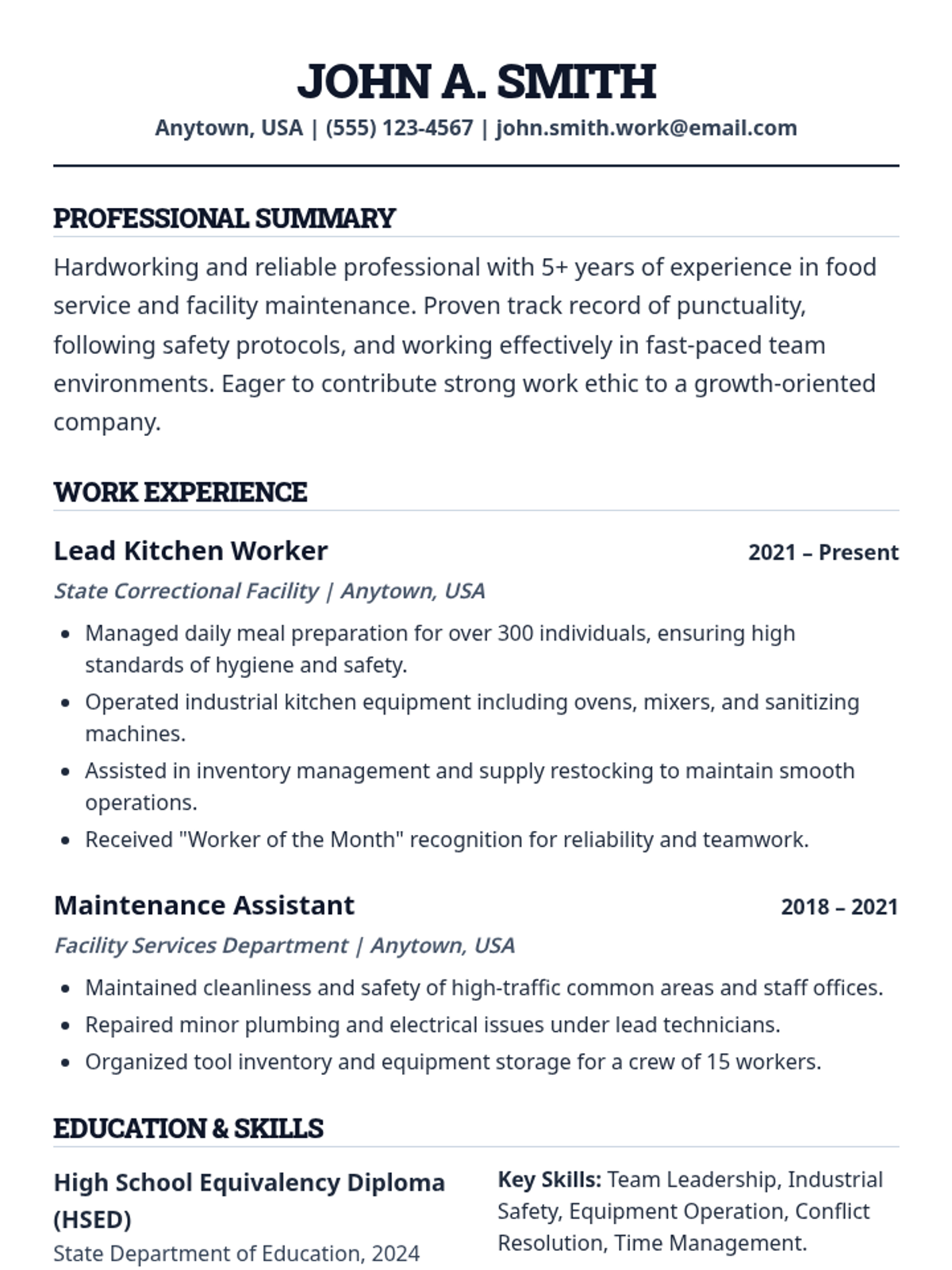
Guided drafting of the resume. Focuses on using action verbs and structuring work history to highlight strengths.
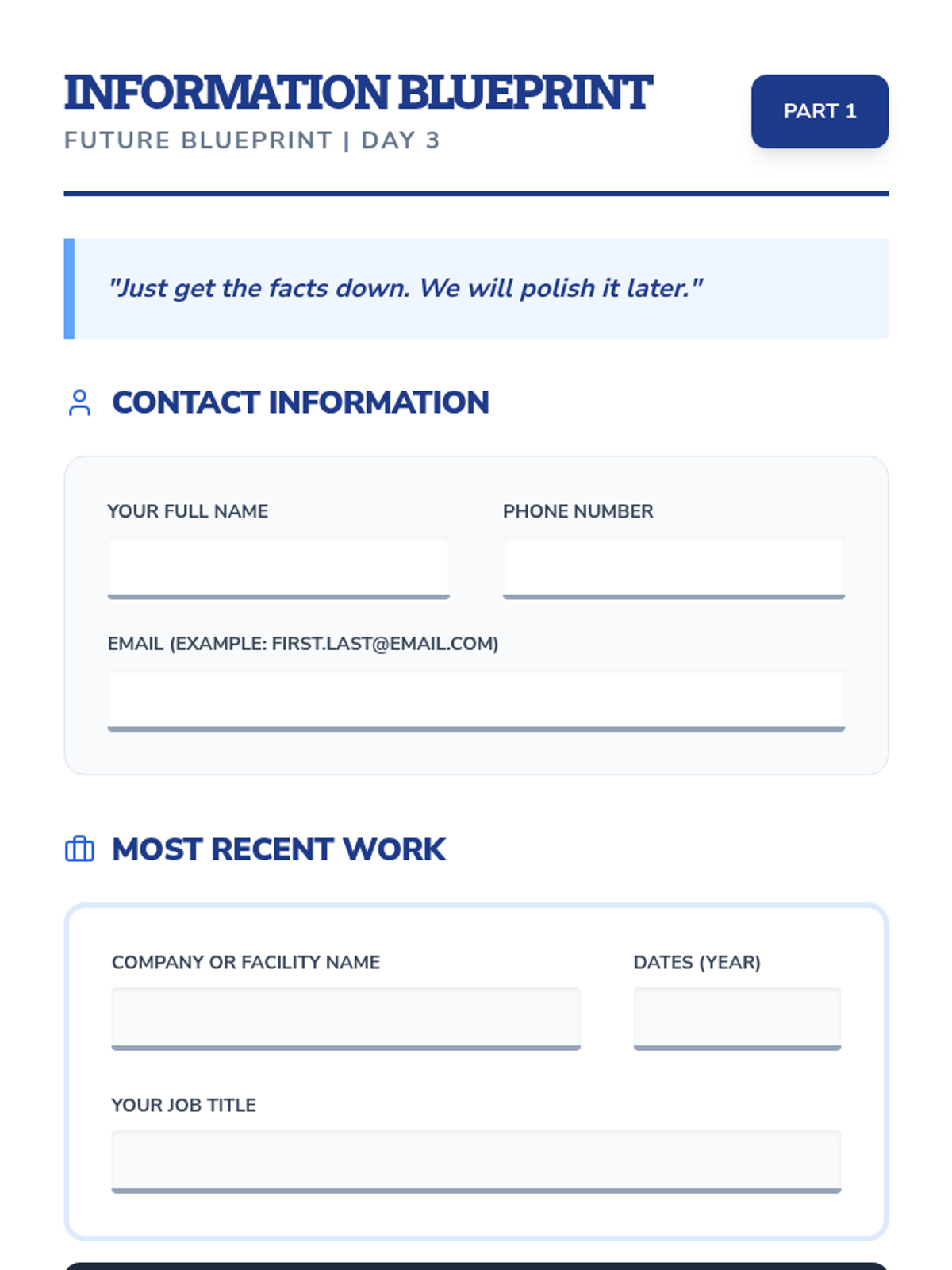
Introduction to resume components. Students begin gathering the necessary information for their professional documents in a simplified format.
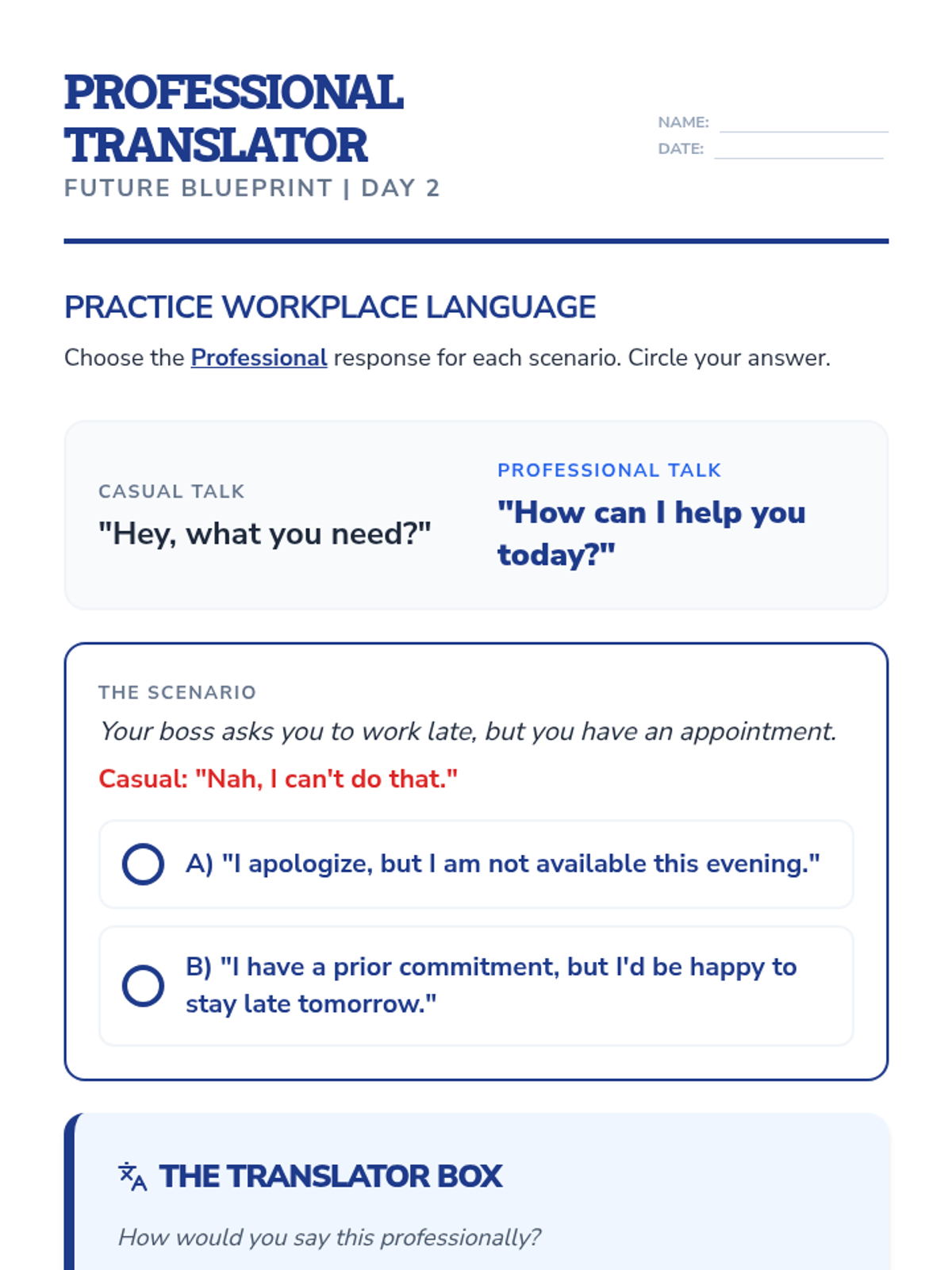
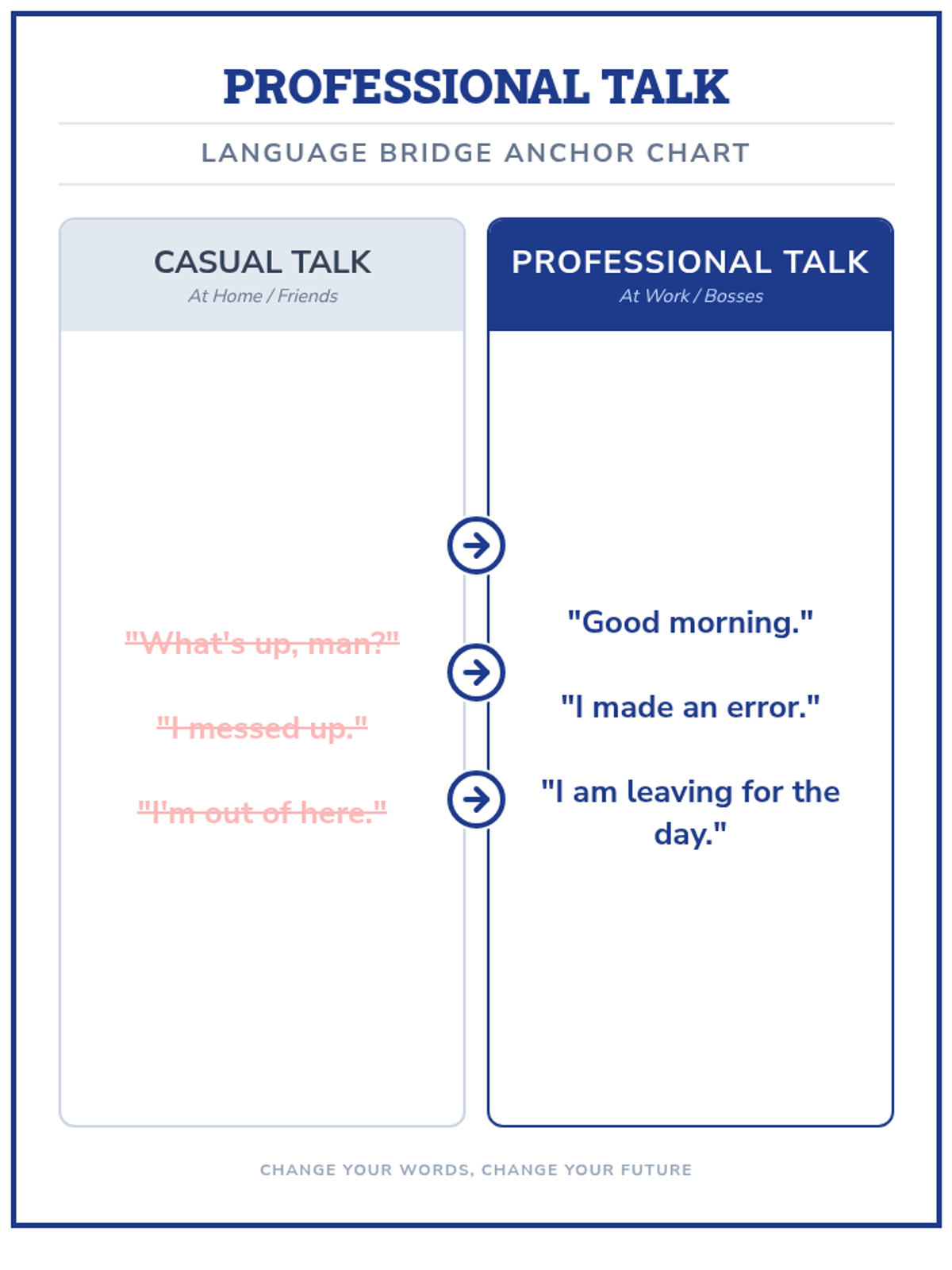
Covers soft skills, professional vocabulary, and non-verbal communication. Practice shifting from casual to professional language.
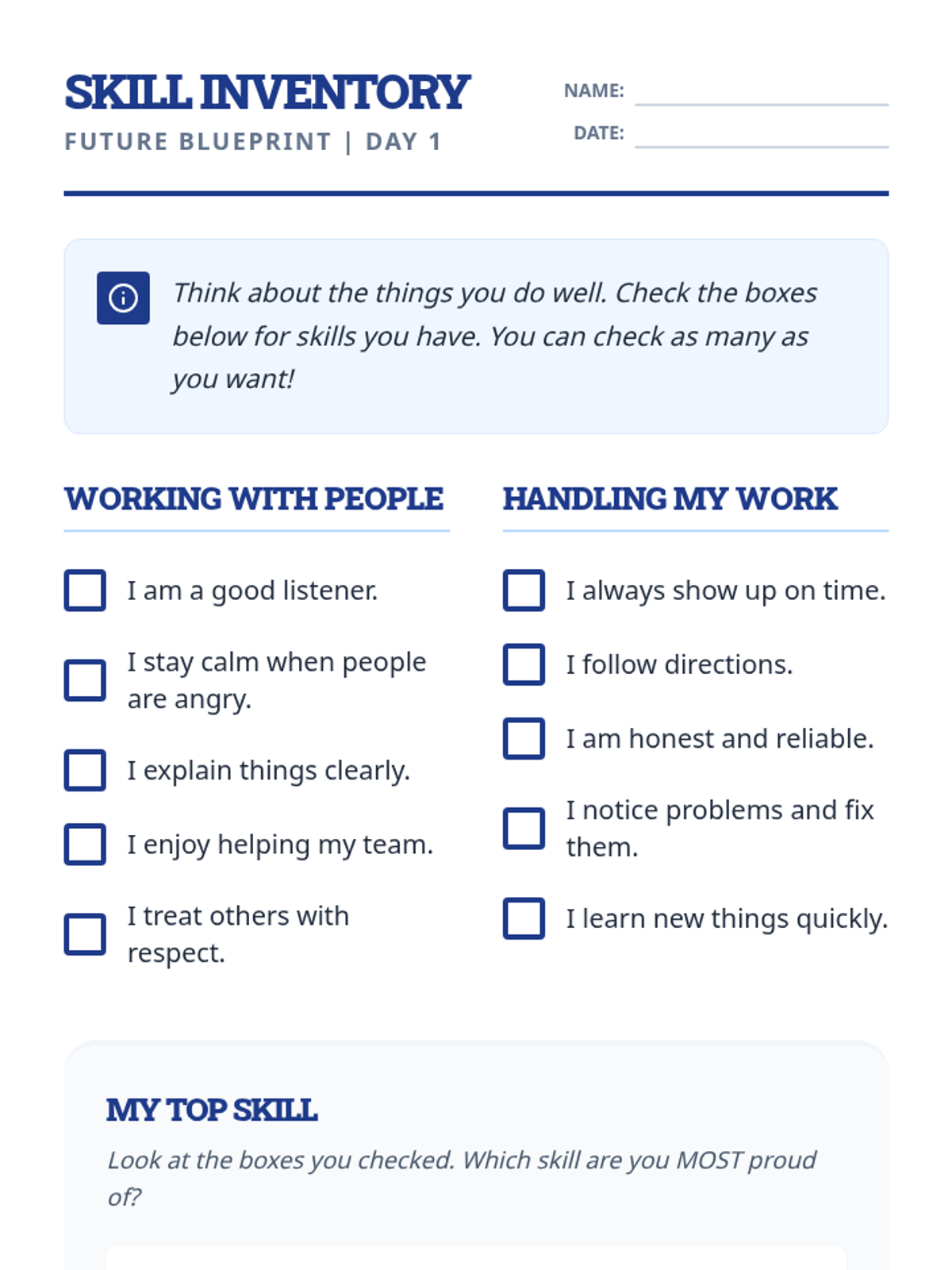
Focuses on identifying transferable skills and setting professional goals. Helps students recognize the value of their experiences in a professional context.
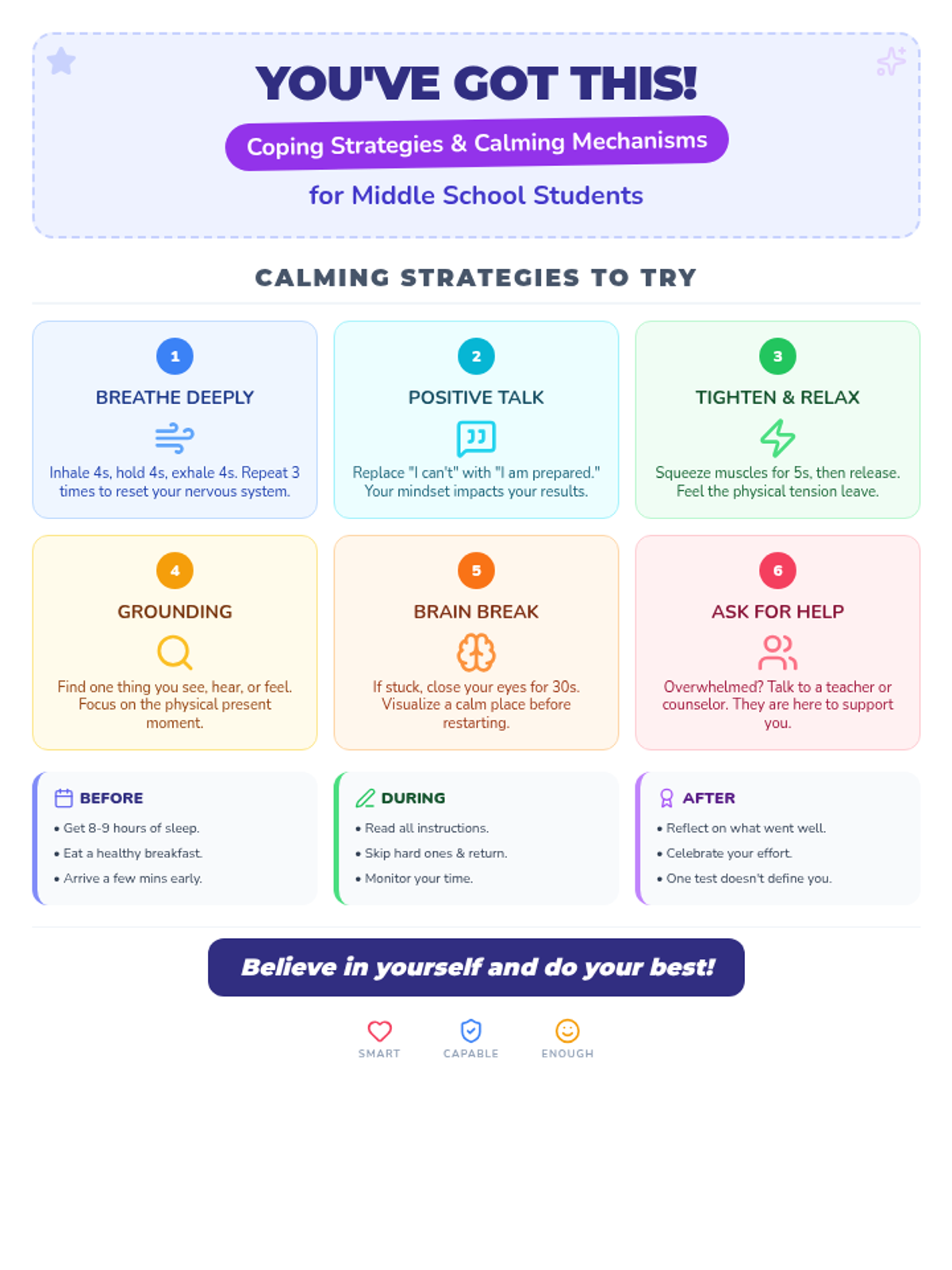
A lesson focused on equipping middle school students with practical strategies to manage test-related stress and anxiety.
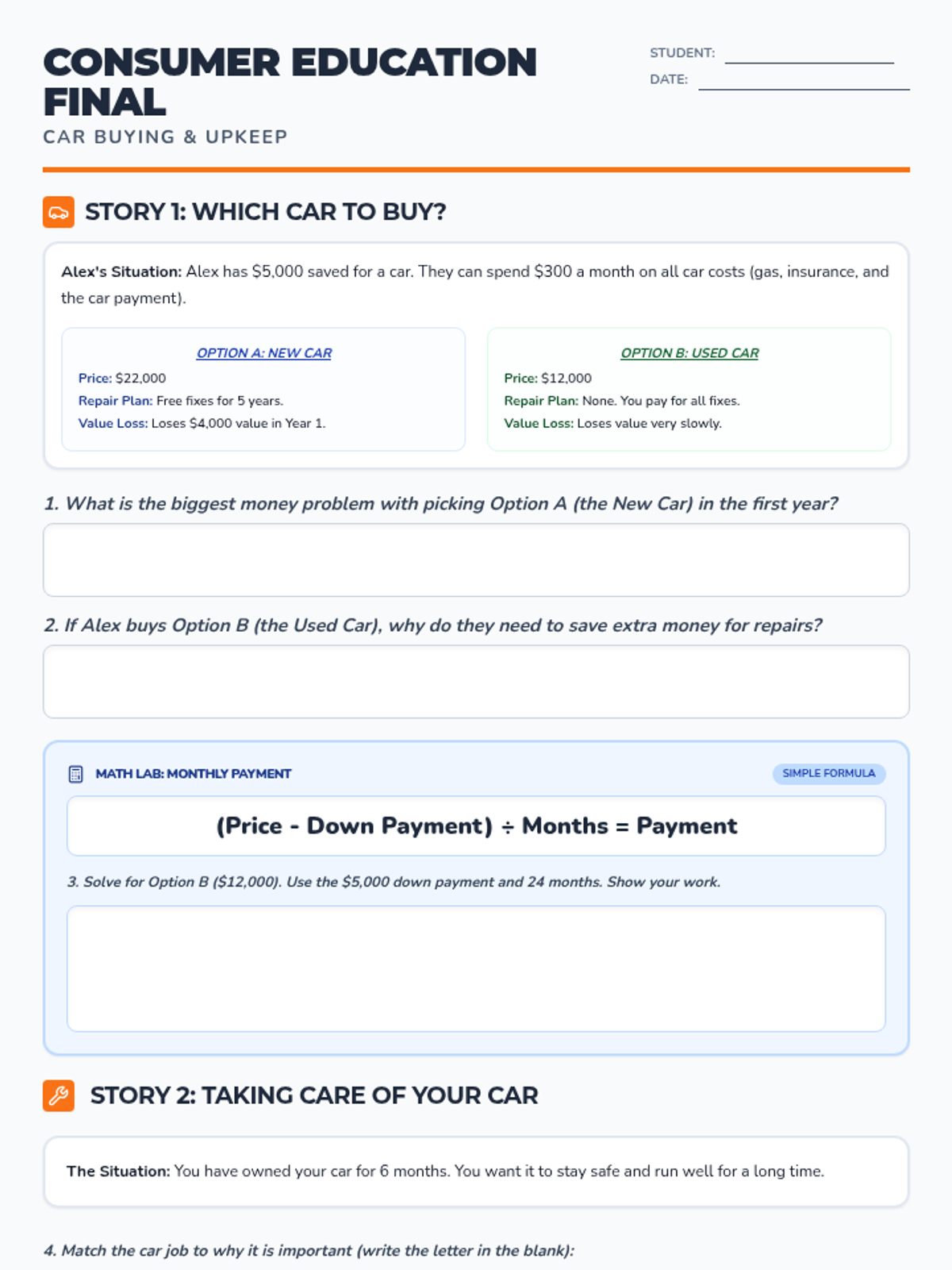
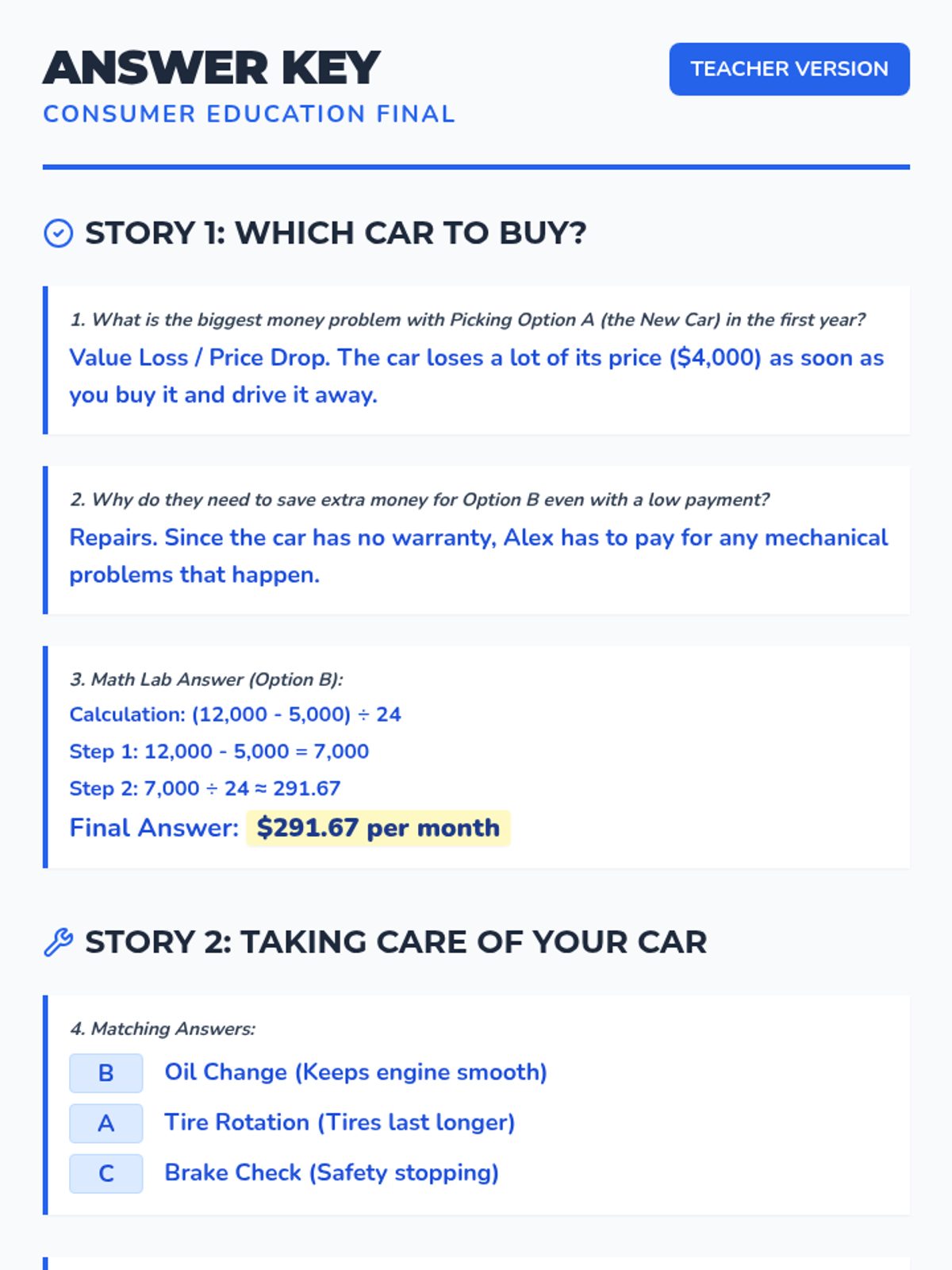
A scenario-based final assessment focusing on the practical decisions involved in purchasing and maintaining a vehicle, designed for a life skills consumer education course.
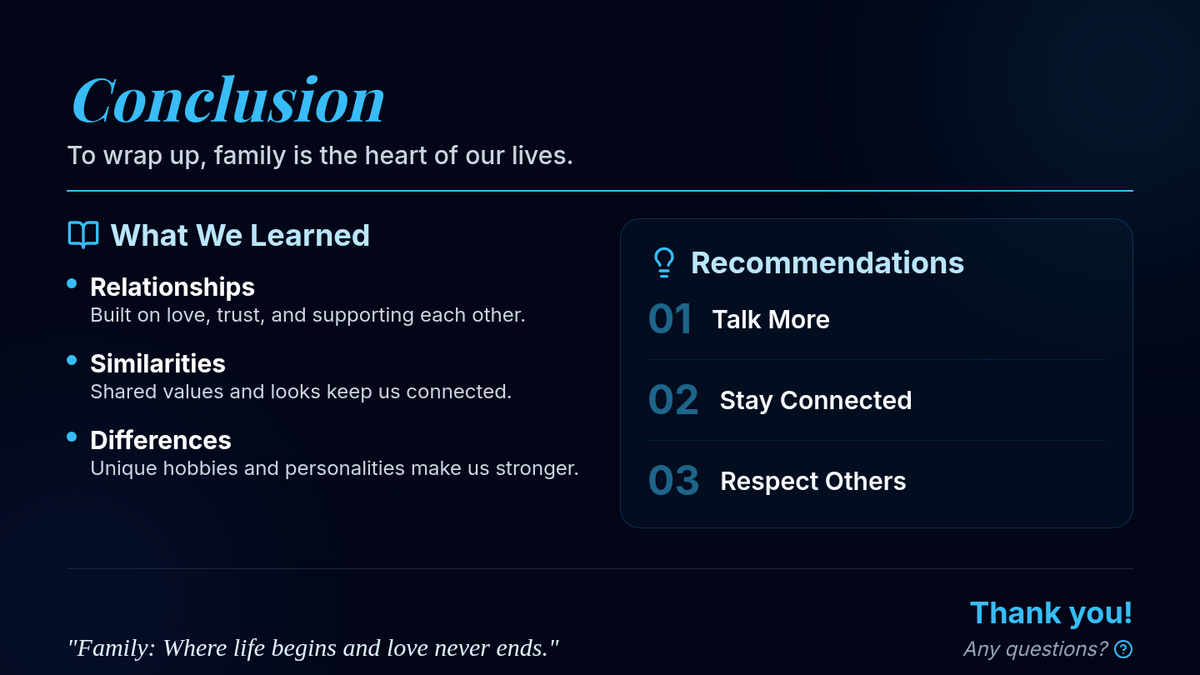
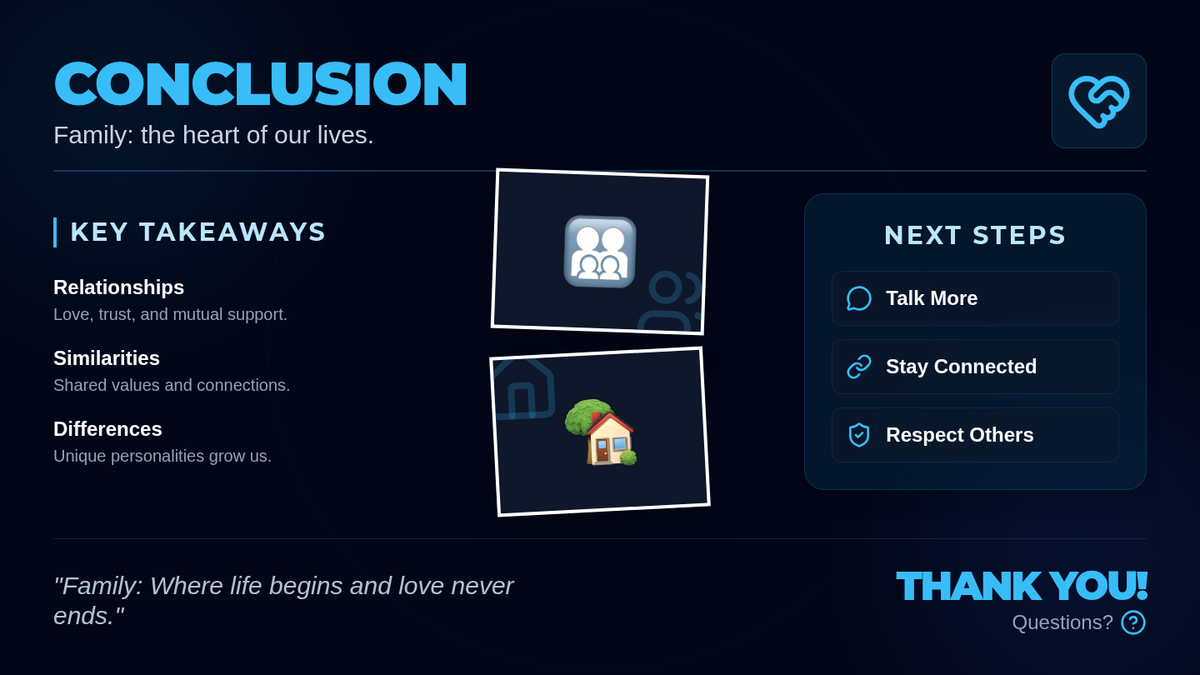
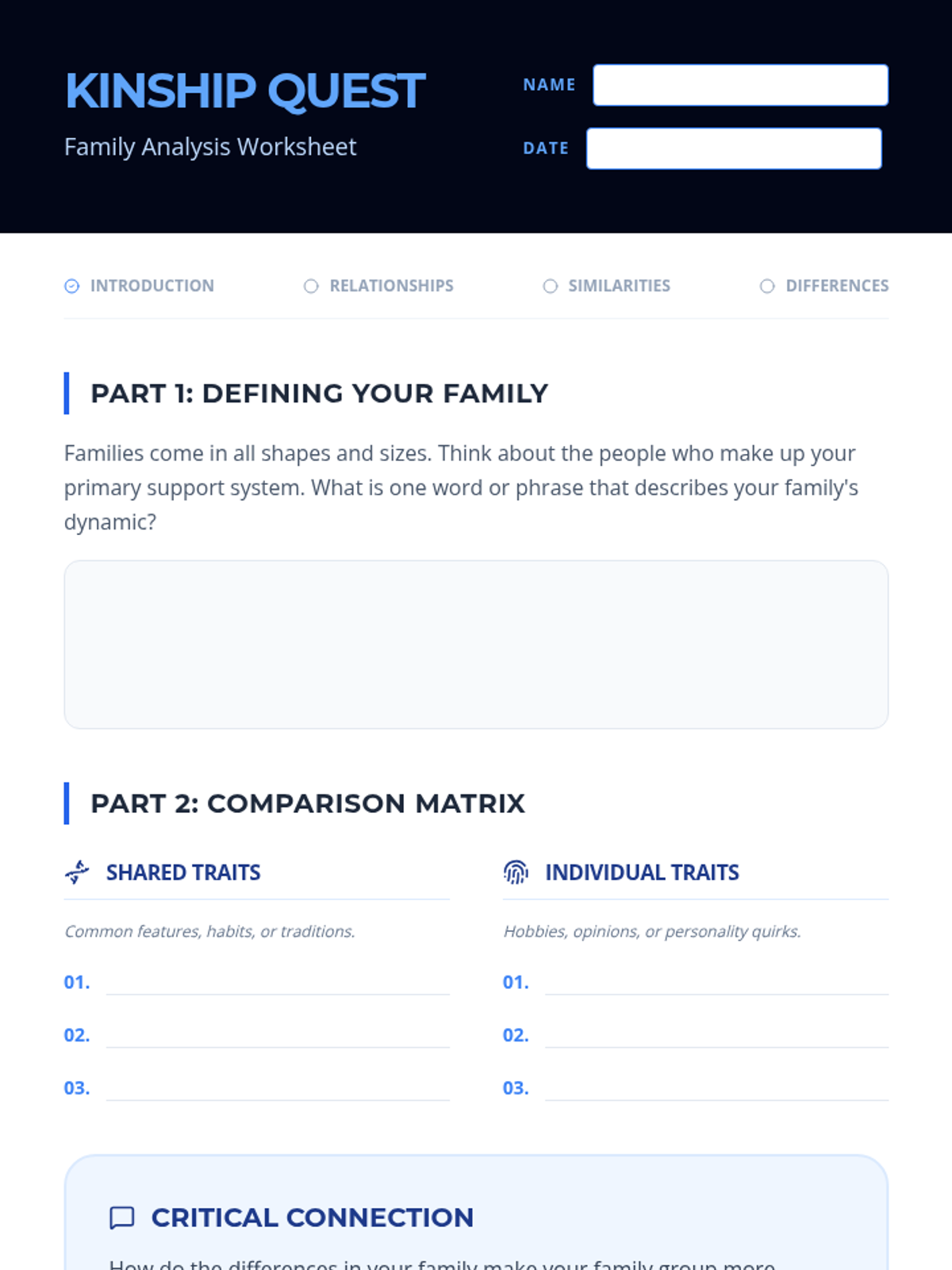
A concluding lesson on the importance of family, focusing on relationships, similarities, and differences.
A lesson exploring the dynamics of family relationships, including the genetic and behavioral similarities and differences that make every family unique.
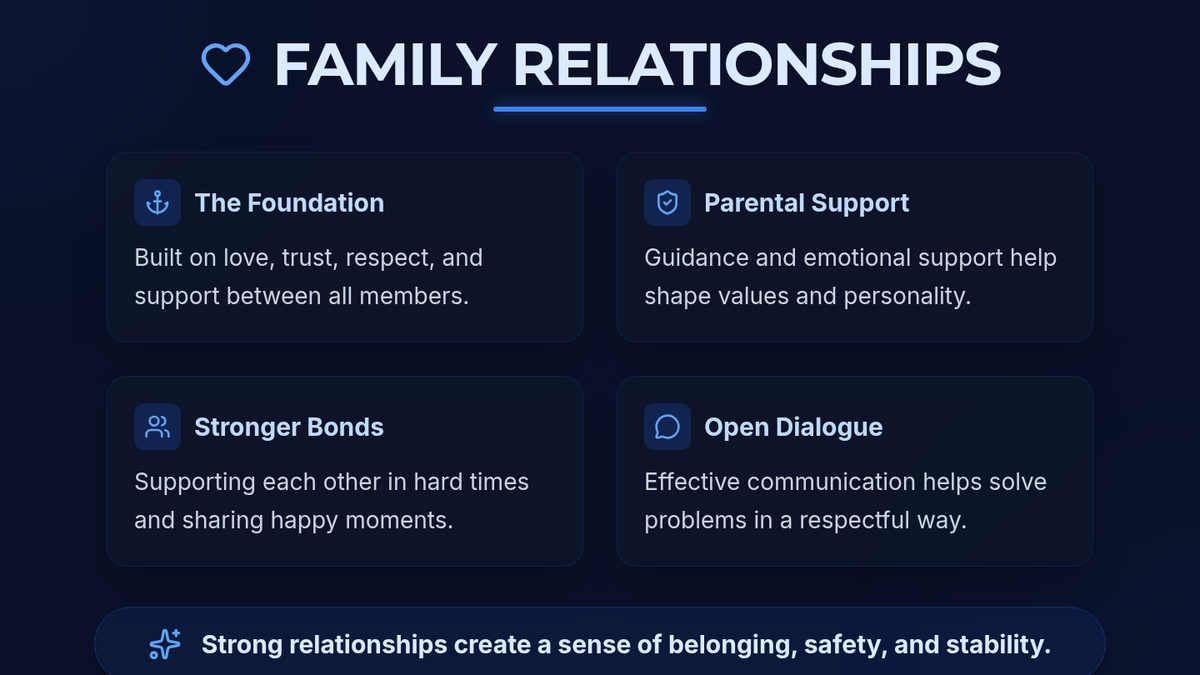
A lesson exploring the importance of family relationships, the roles of parents, and how communication strengthens bonds.
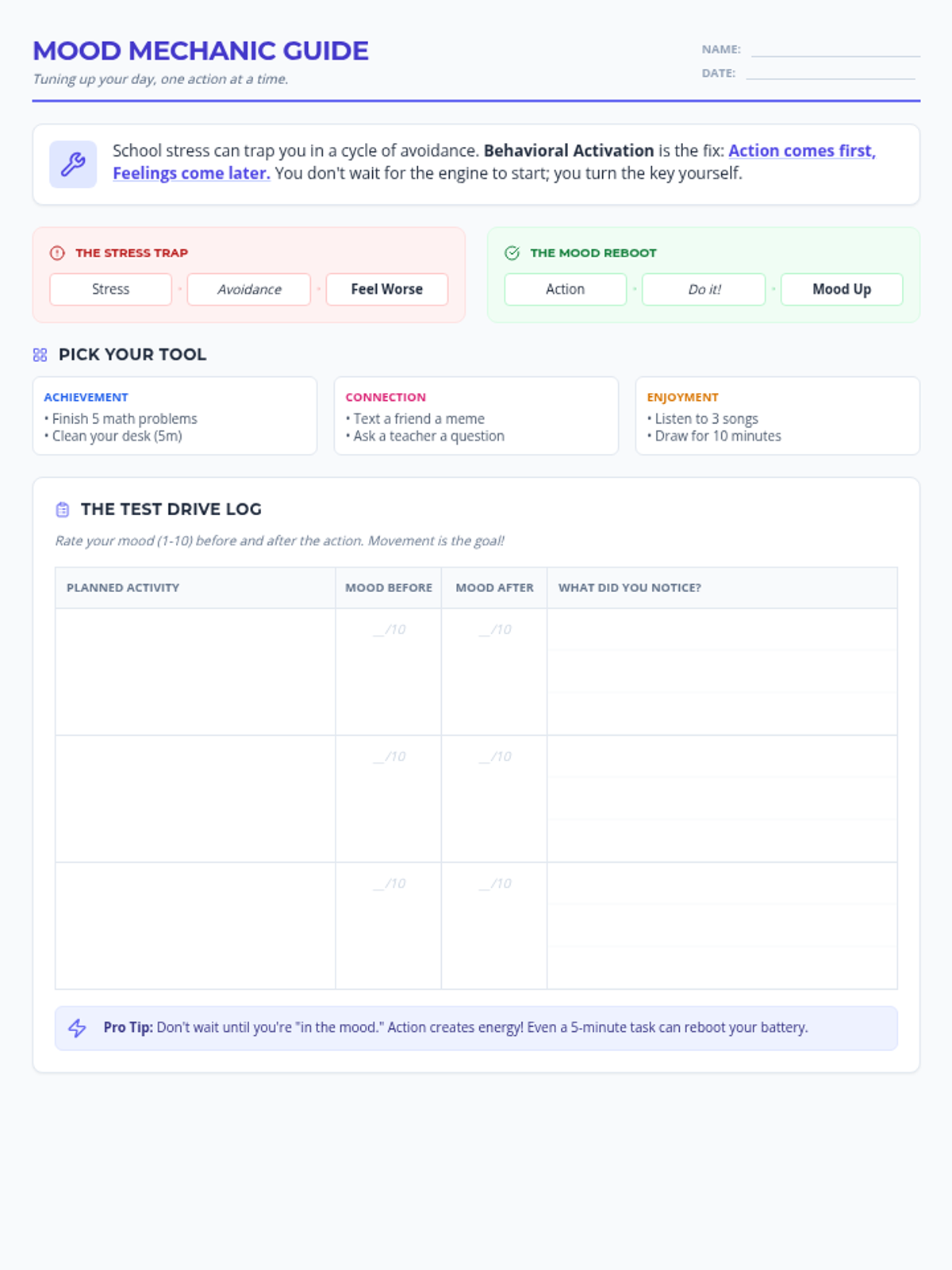
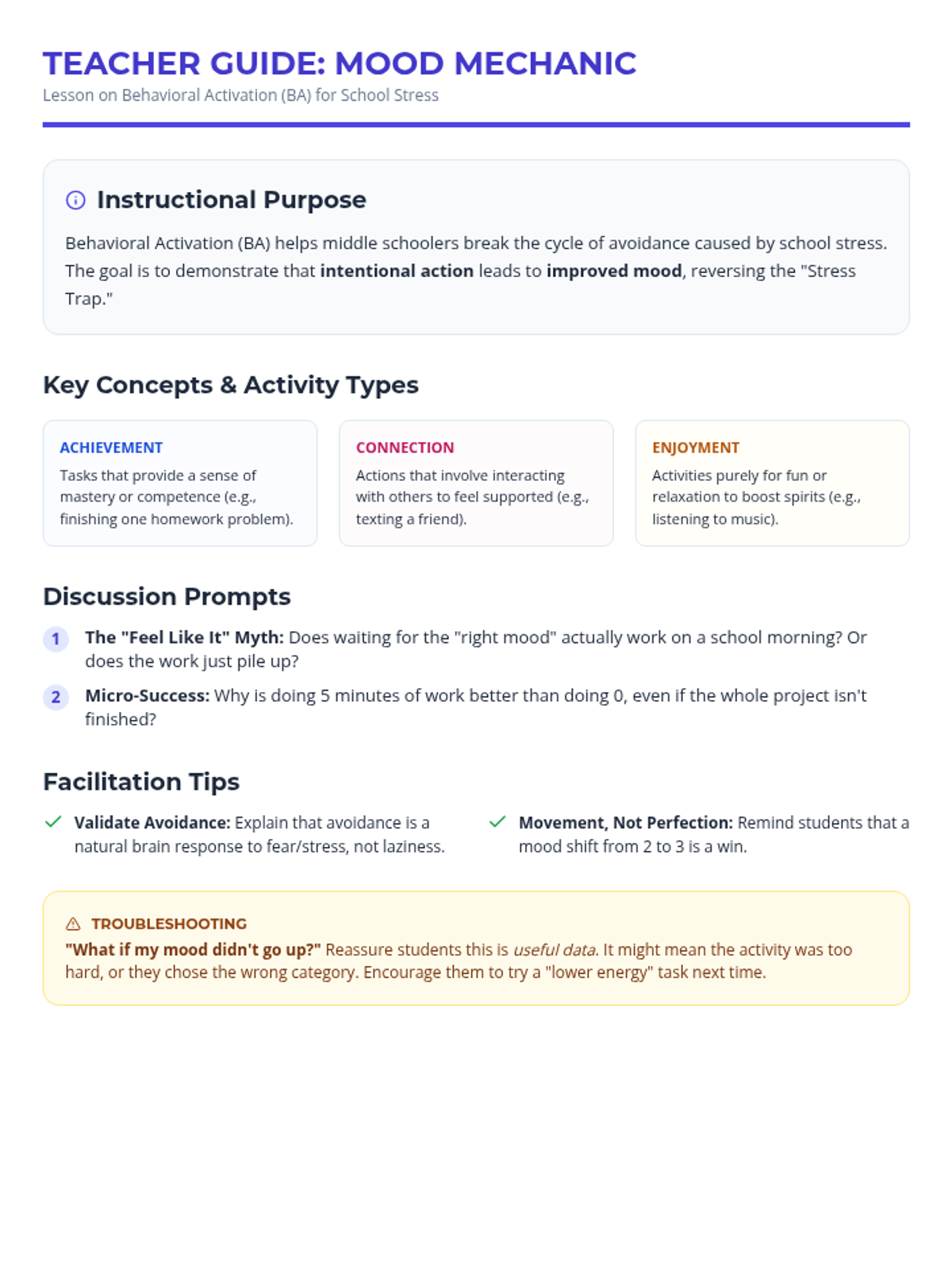
This lesson introduces middle school students to Behavioral Activation, a practical tool for managing school-related stress by changing actions to improve mood. Students will learn the 'vicious cycle' of stress and practice planning and tracking activities using a before-and-after mood scale.
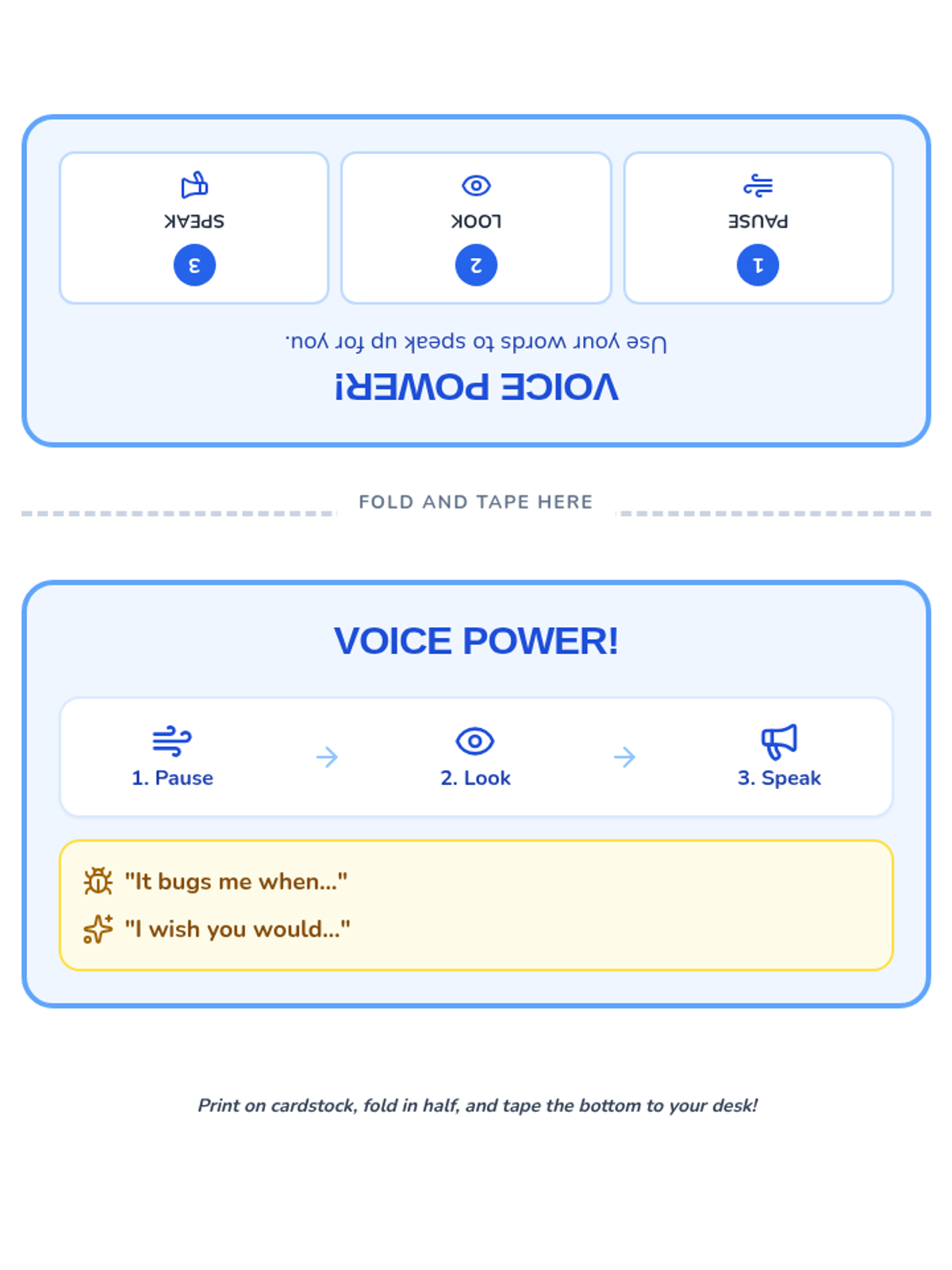
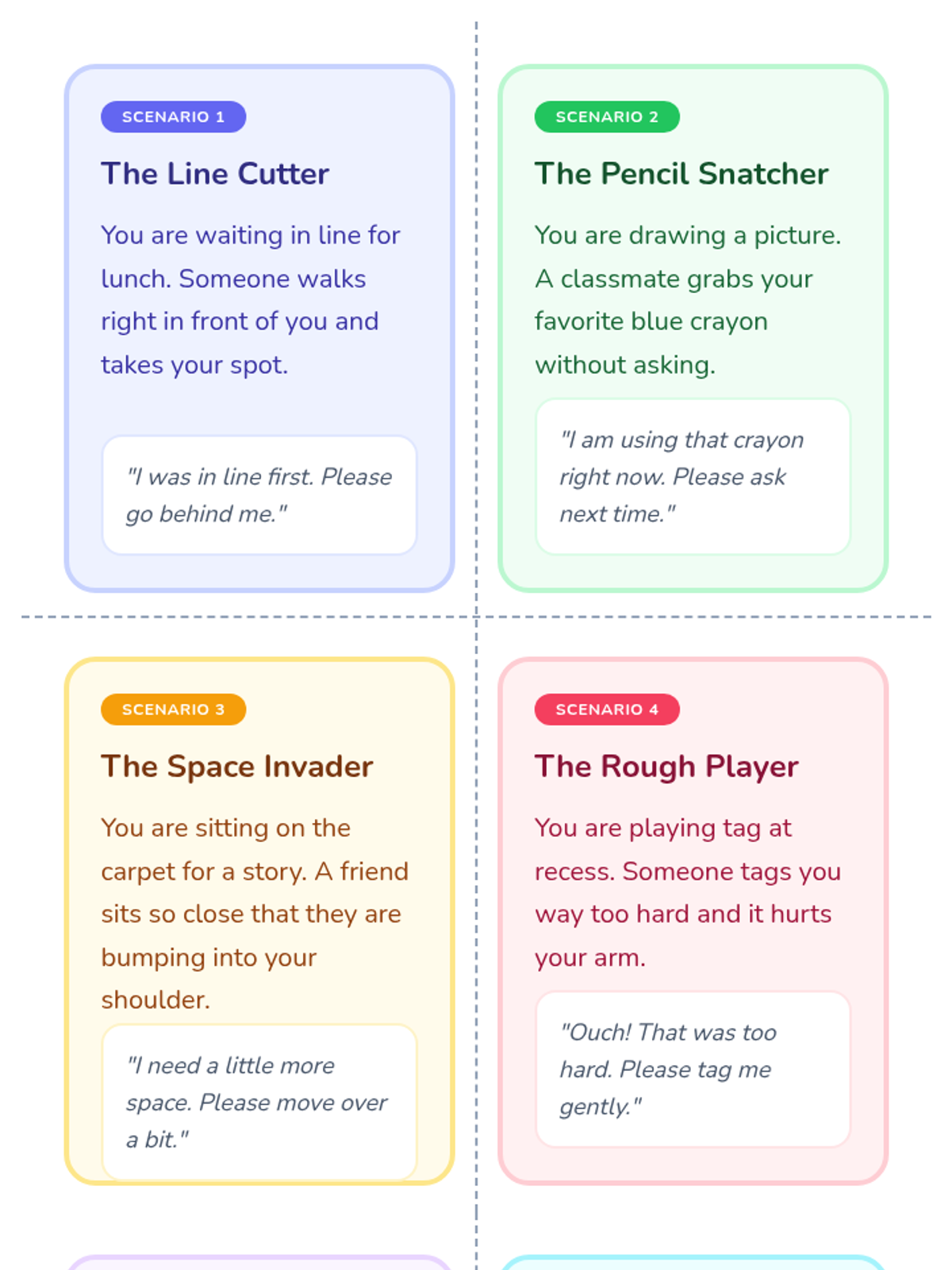
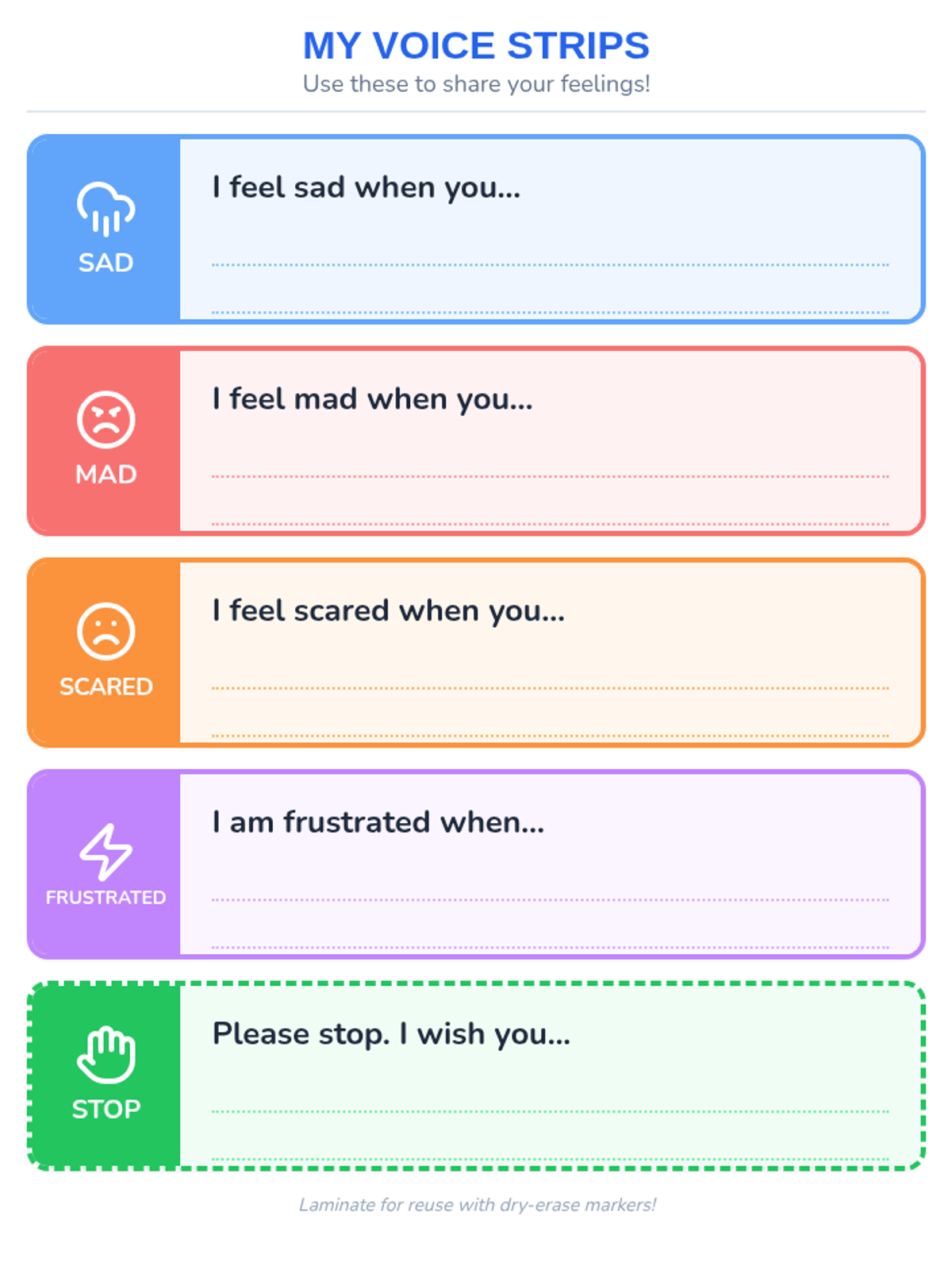
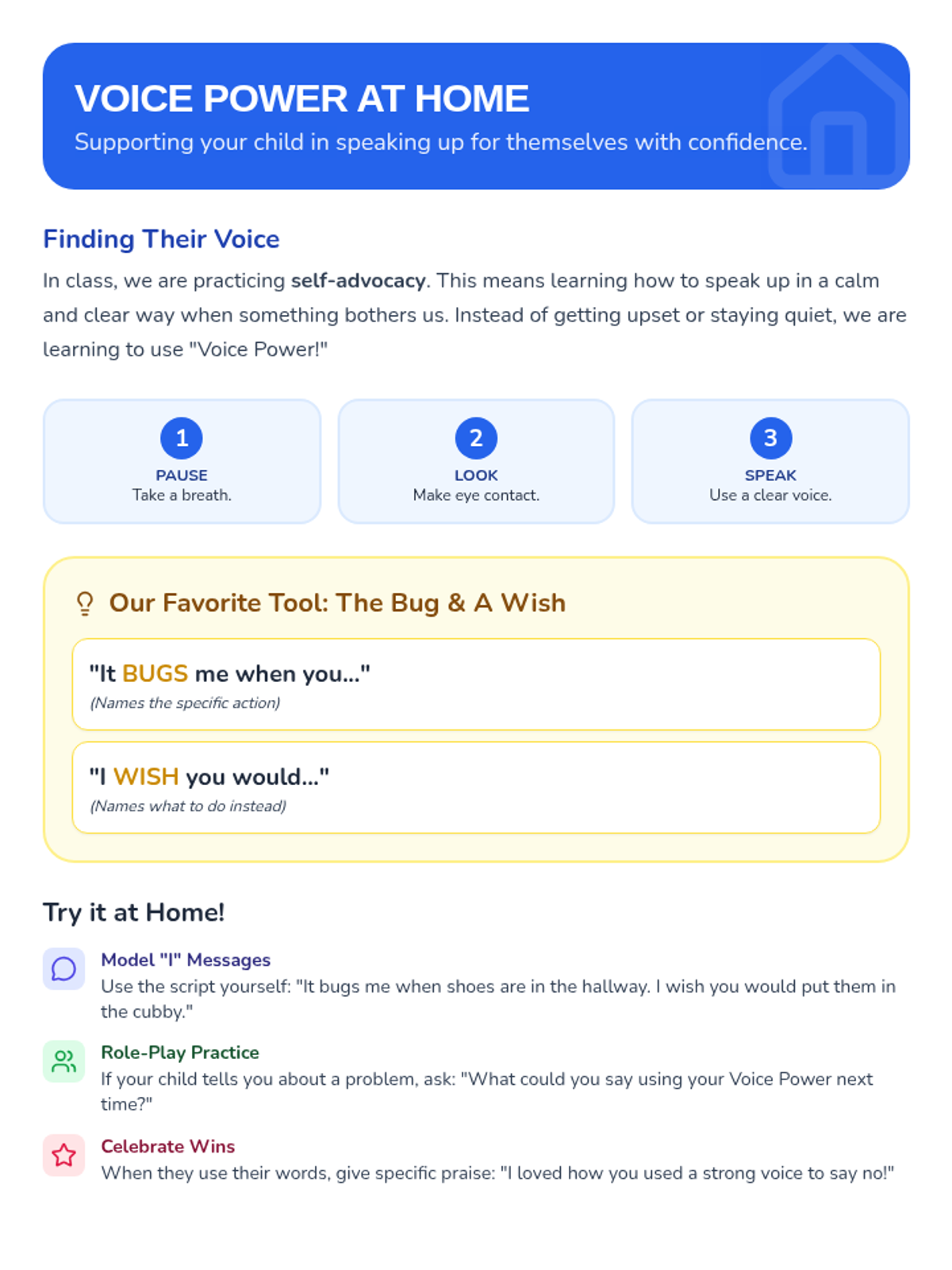
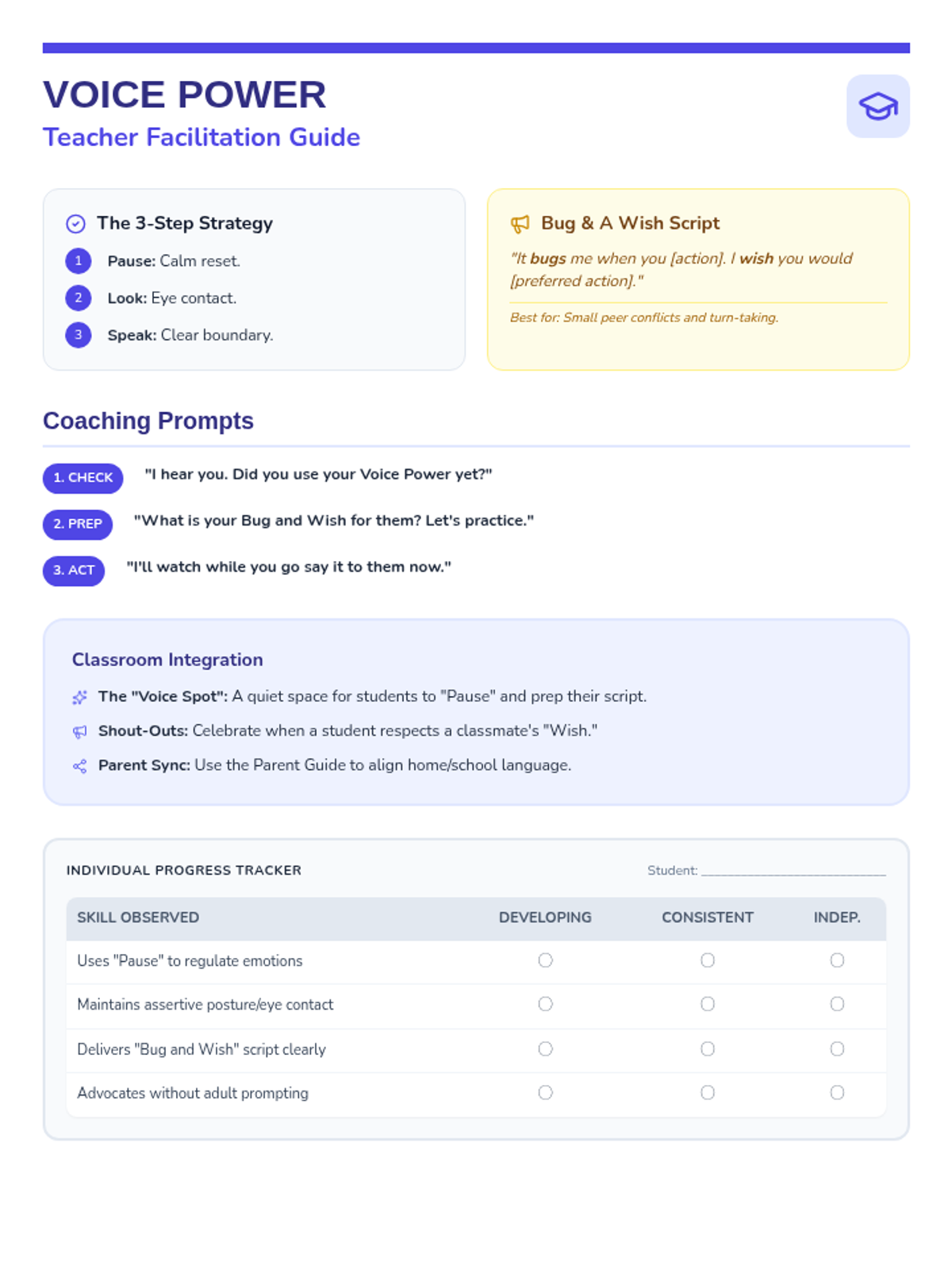
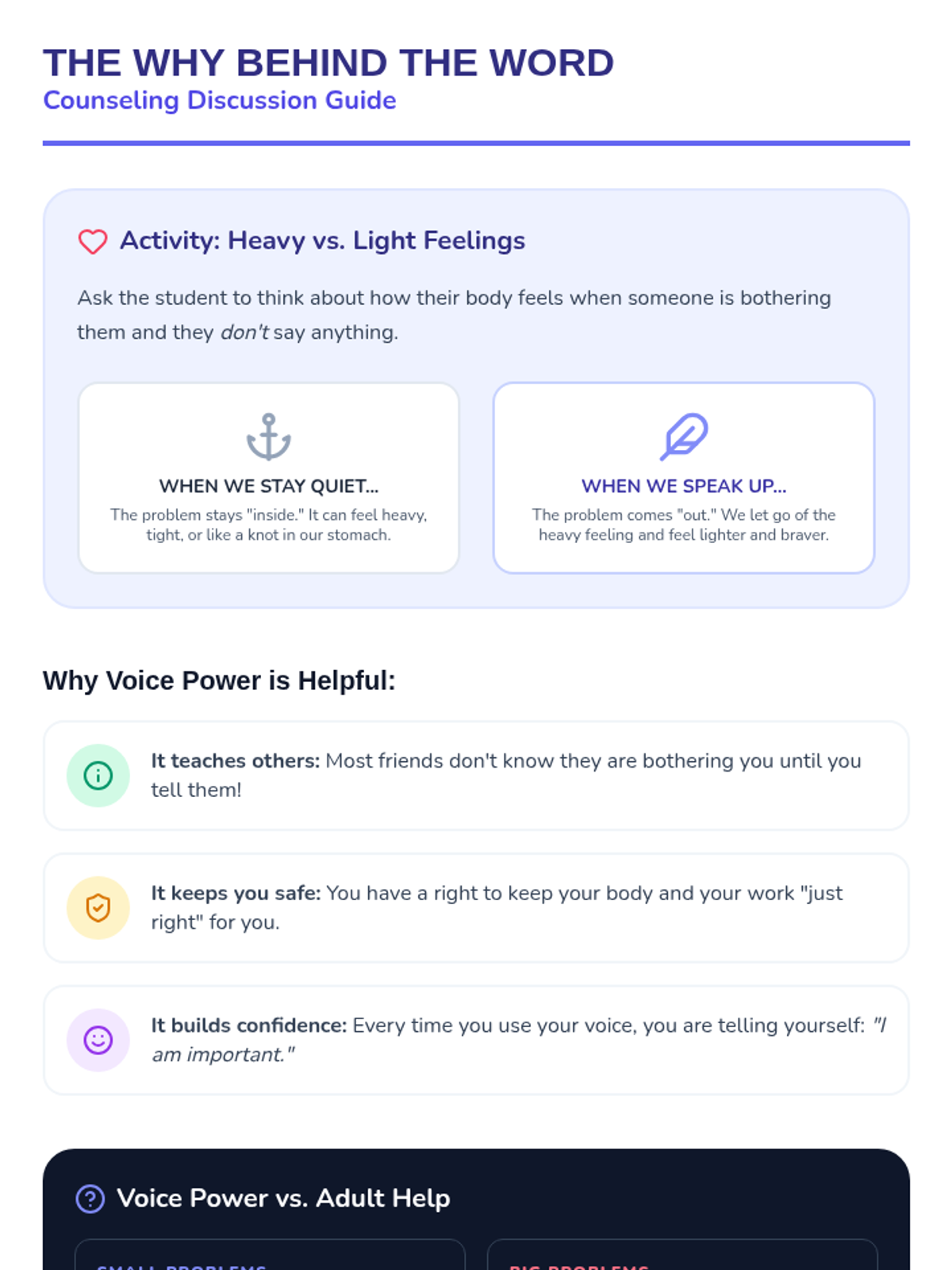
A lesson focused on empowering young students to speak up for themselves using clear communication strategies and role-play practice.