Students practice gathering the specific data points required for a reference list (job title, company, phone, email). They learn the importance of accuracy and checking current details before submitting an application.
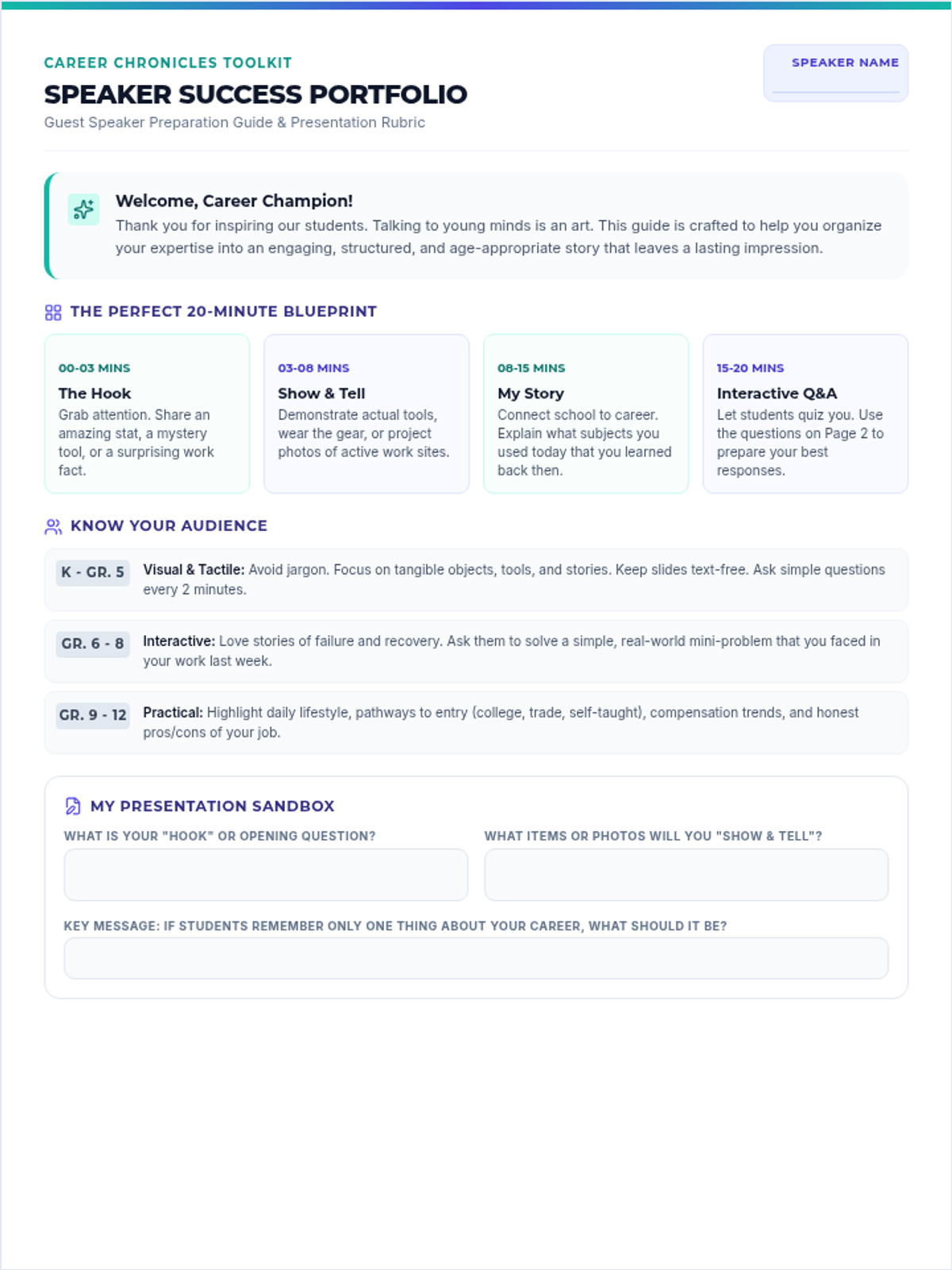
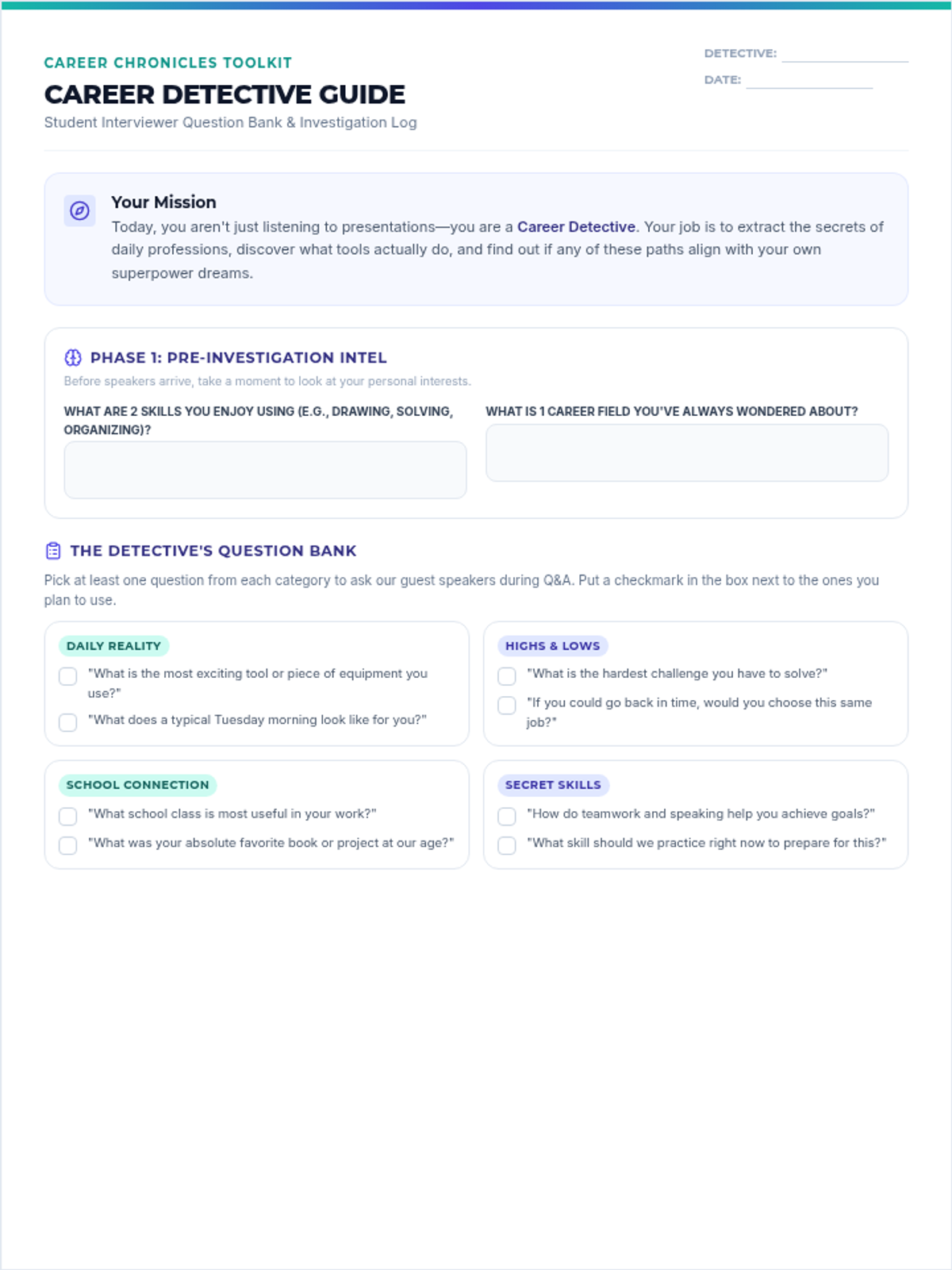
A comprehensive preparation toolkit for Career Day, equipping both guest speakers and student interviewers with structured guides, question banks, and evaluation rubrics to ensure engaging and meaningful professional dialogues.
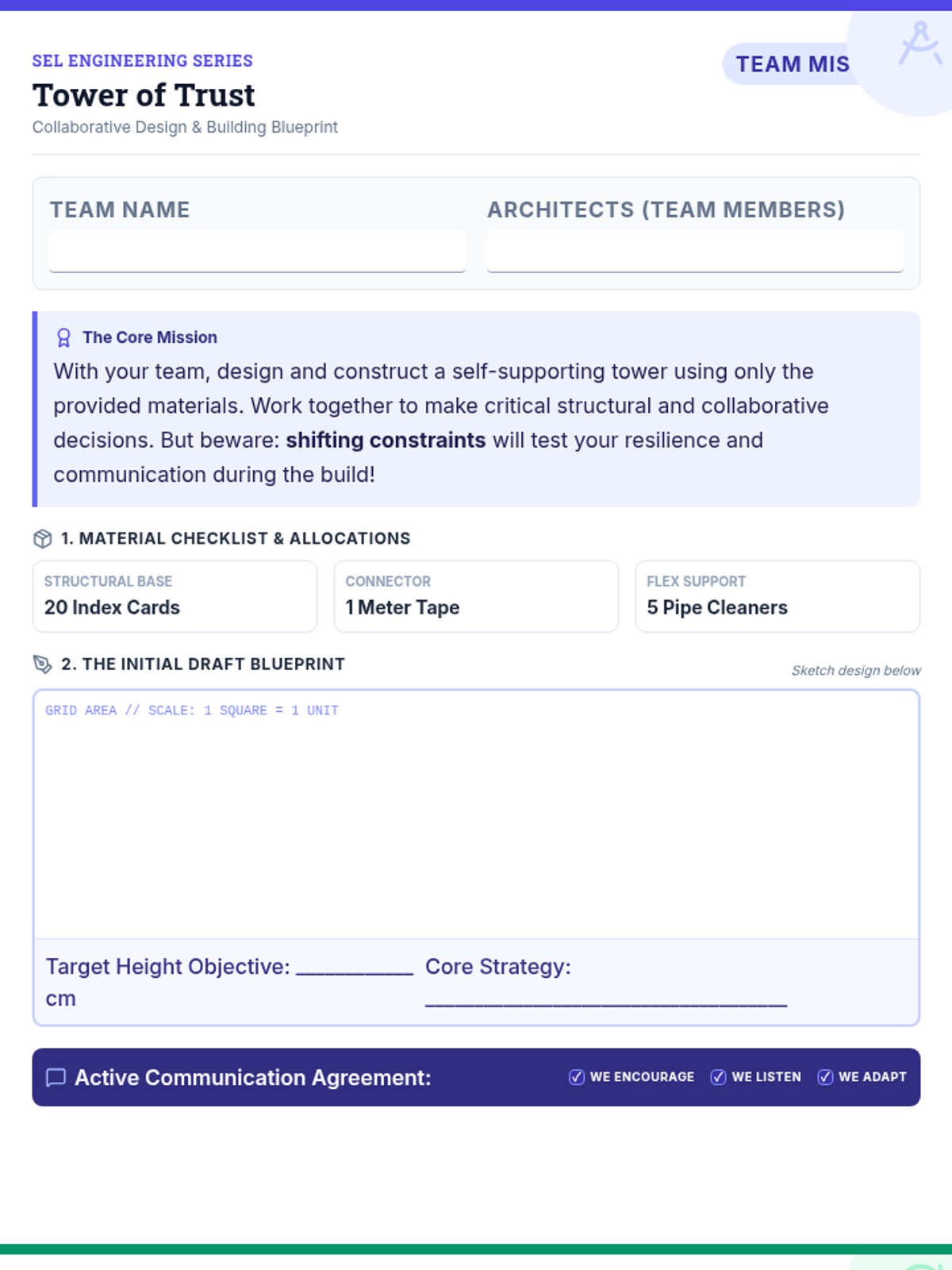
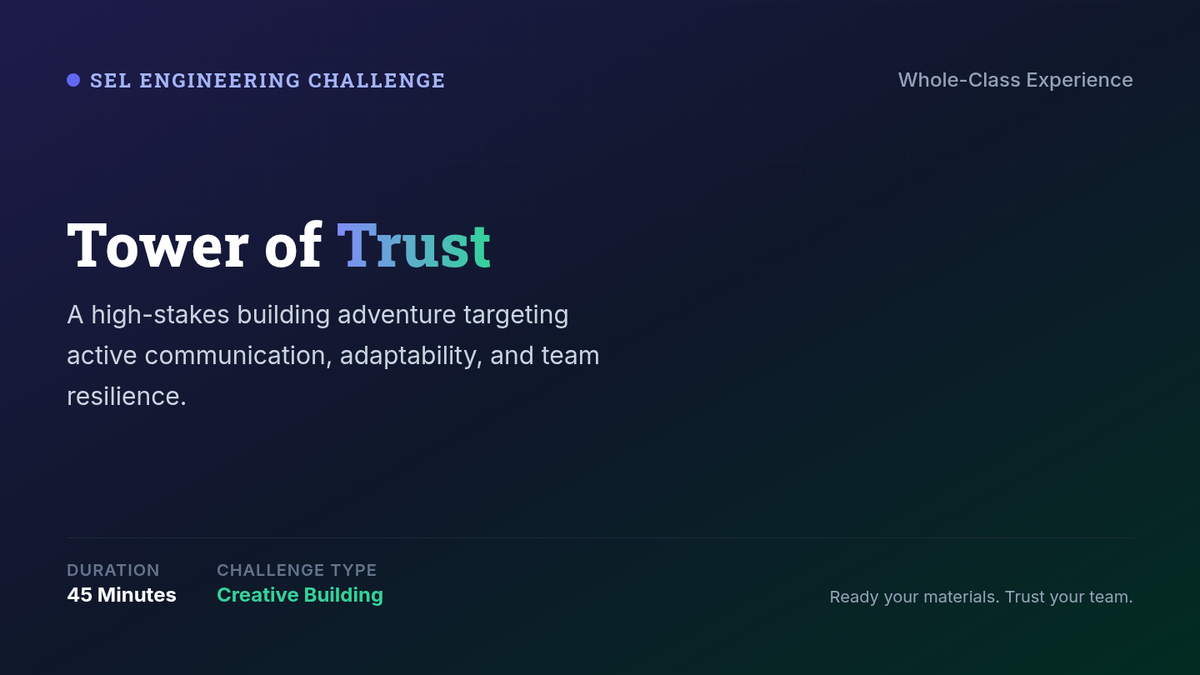
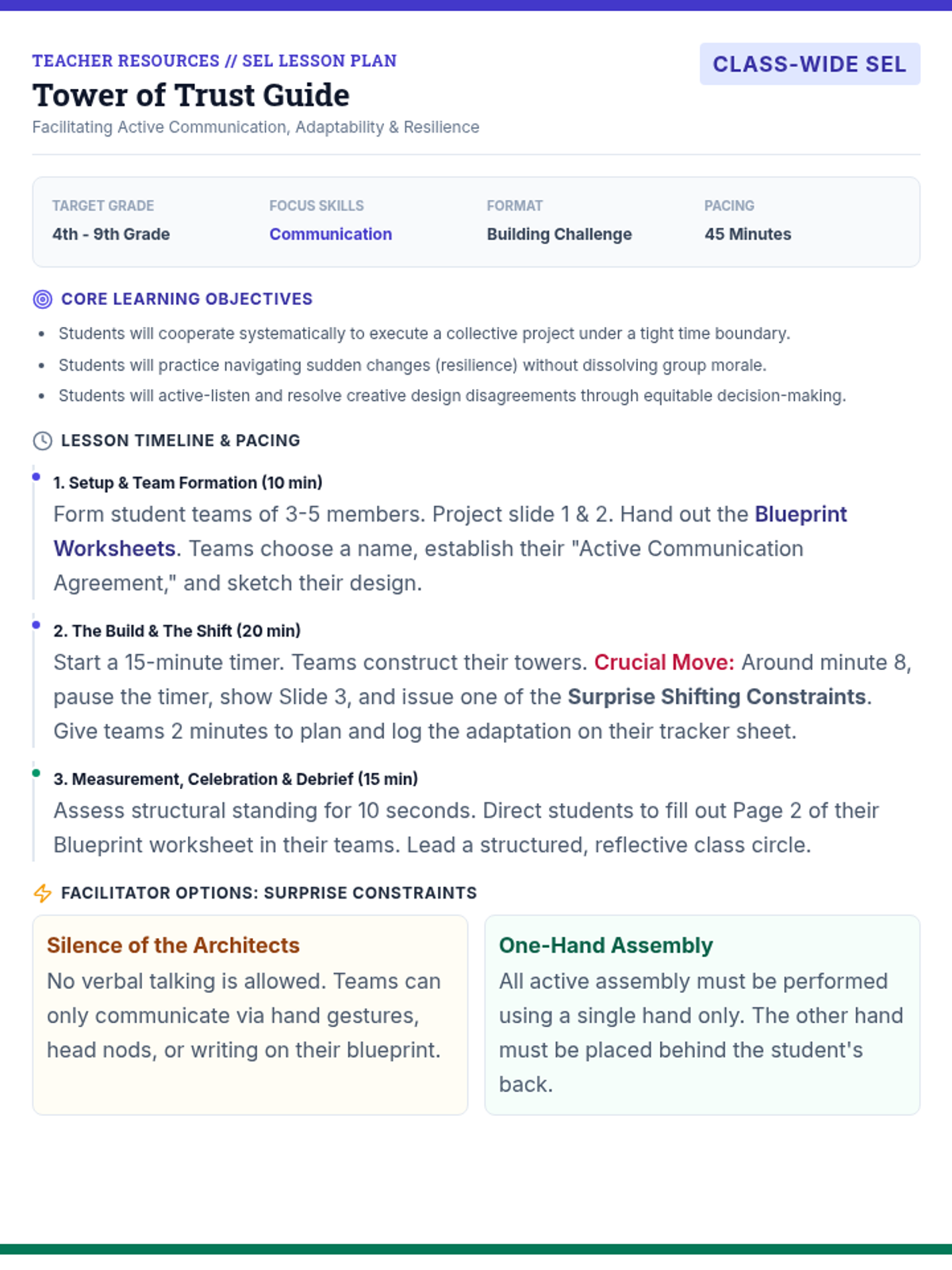
A high-energy, collaborative building challenge where student teams design and construct towers under shifting constraints. This lesson is specifically engineered to target active communication, resilience when faced with unexpected roadblocks, and group decision-making.
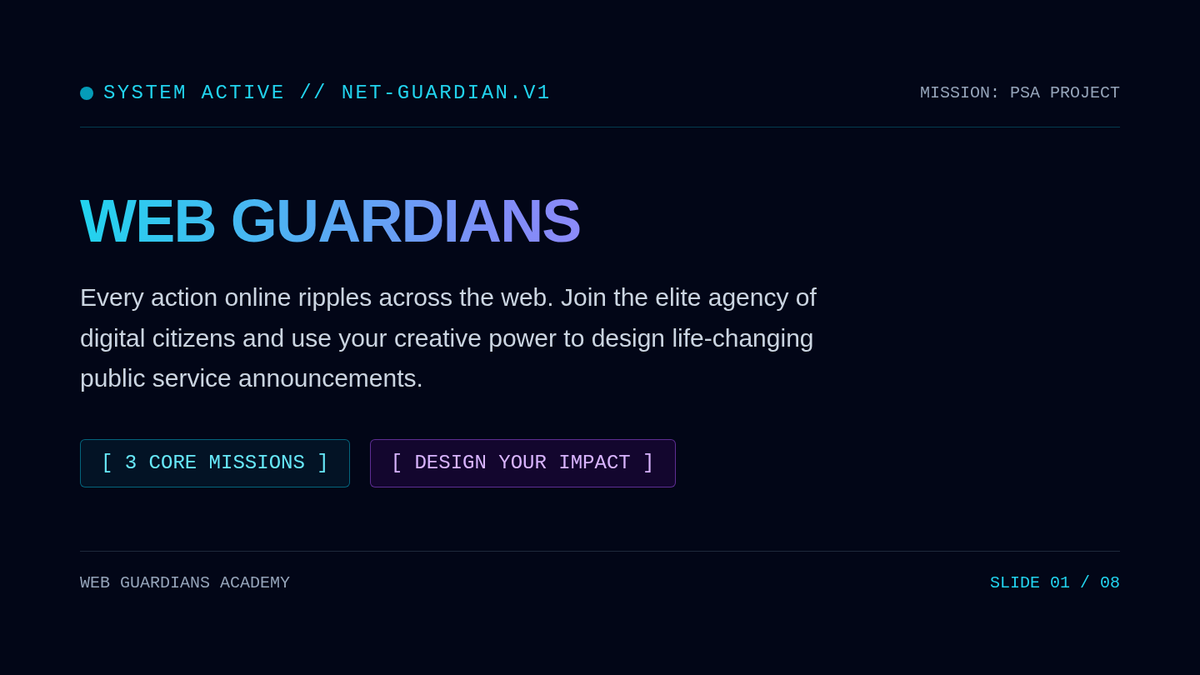
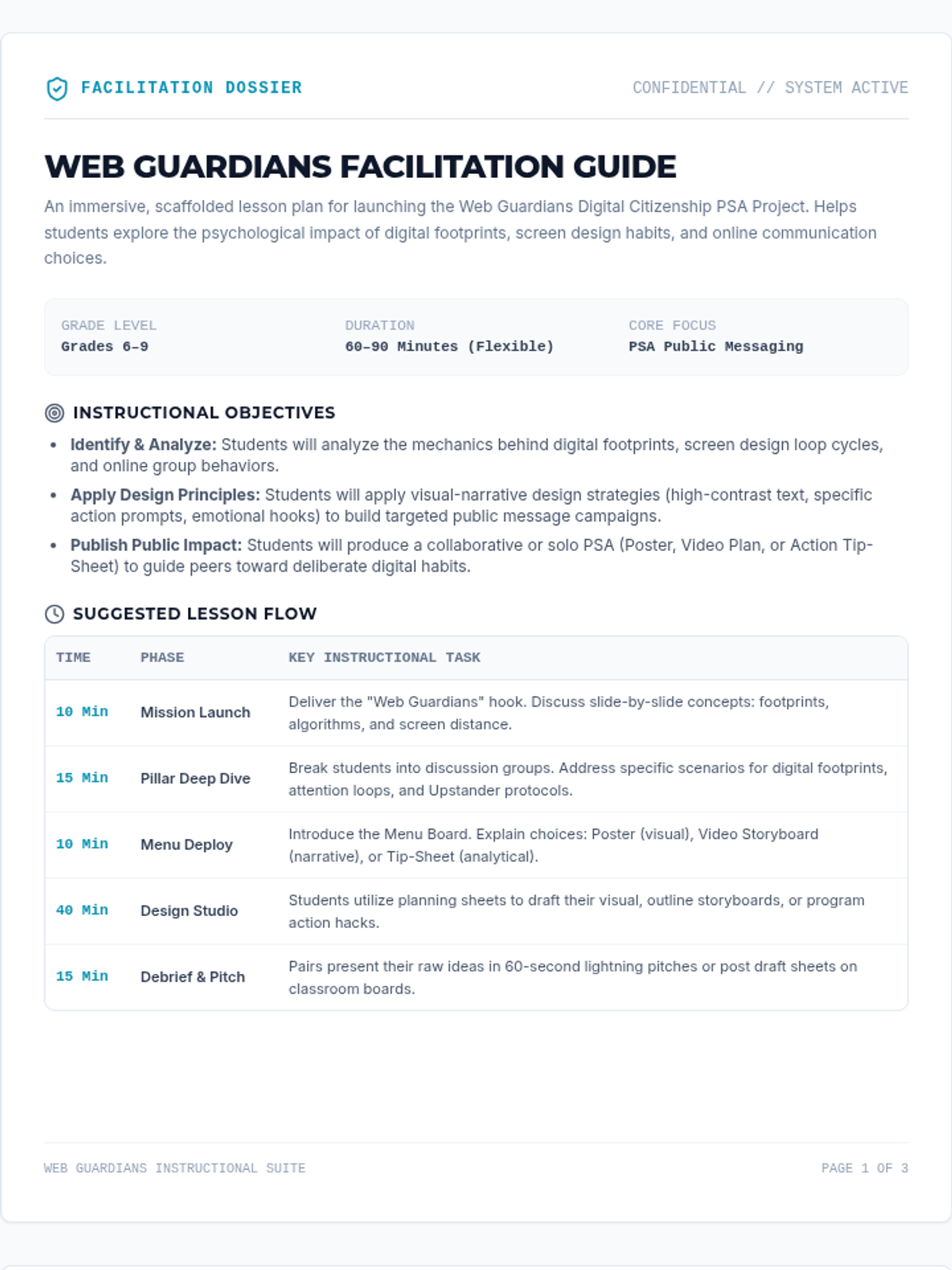
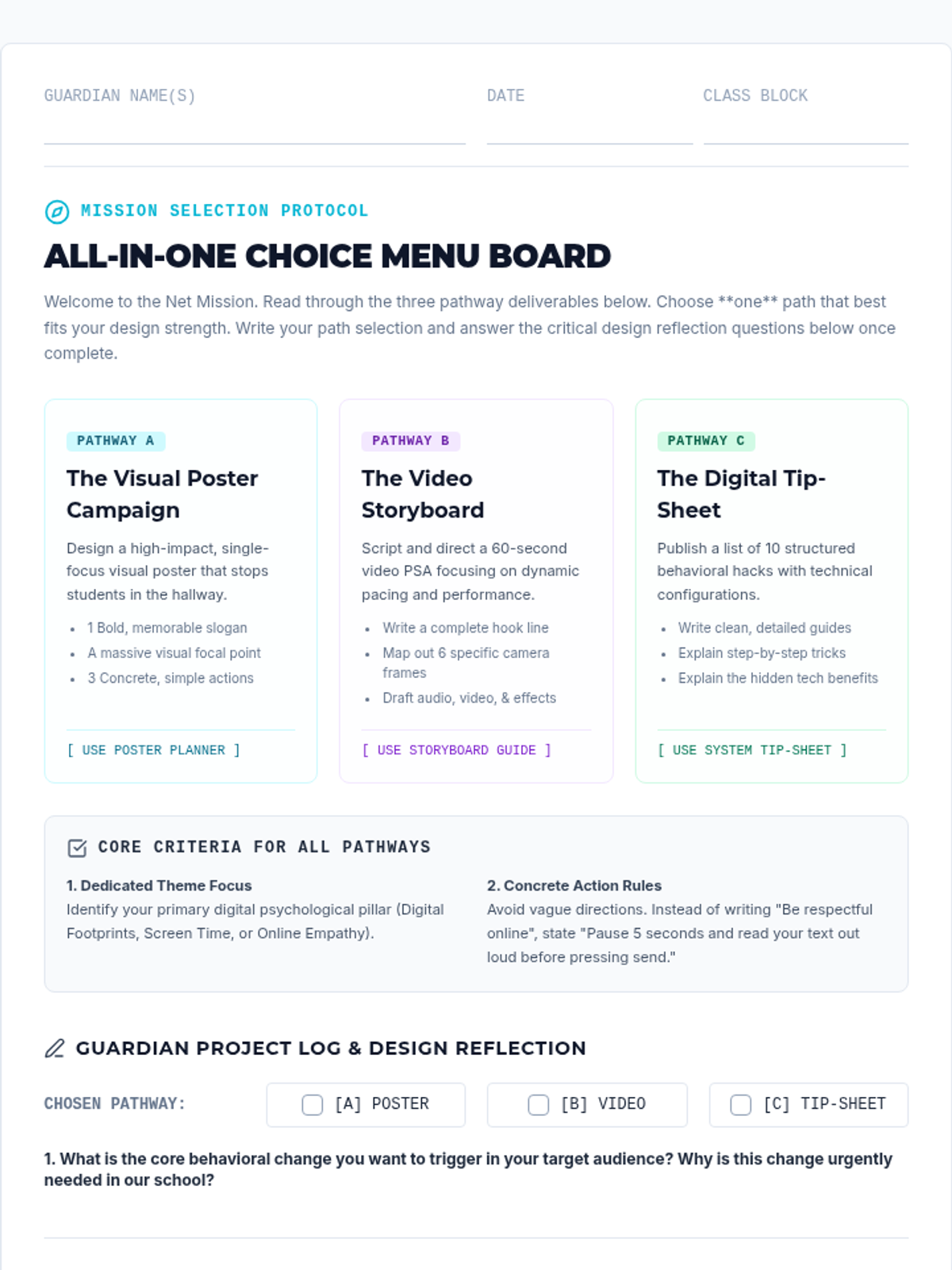
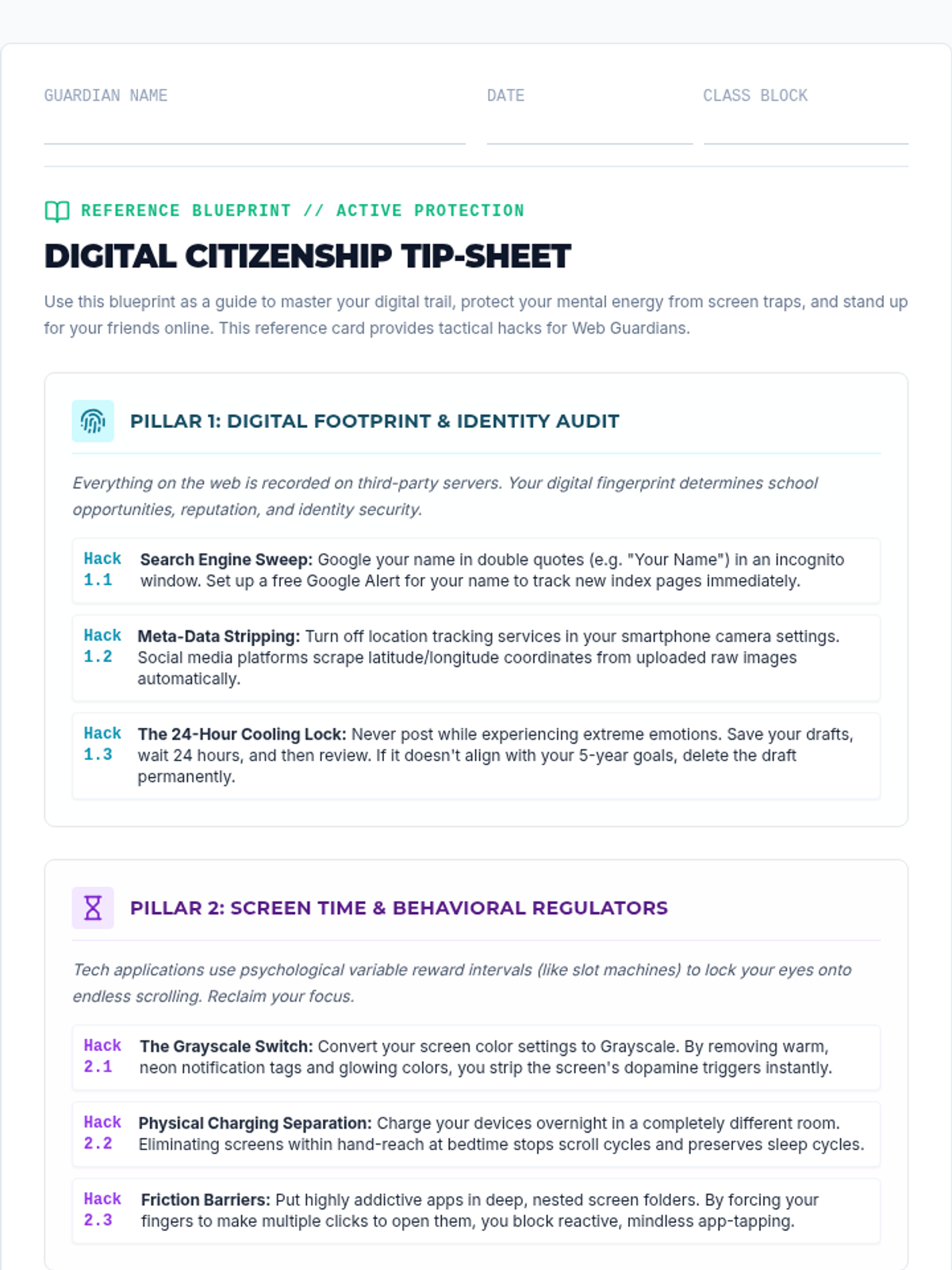
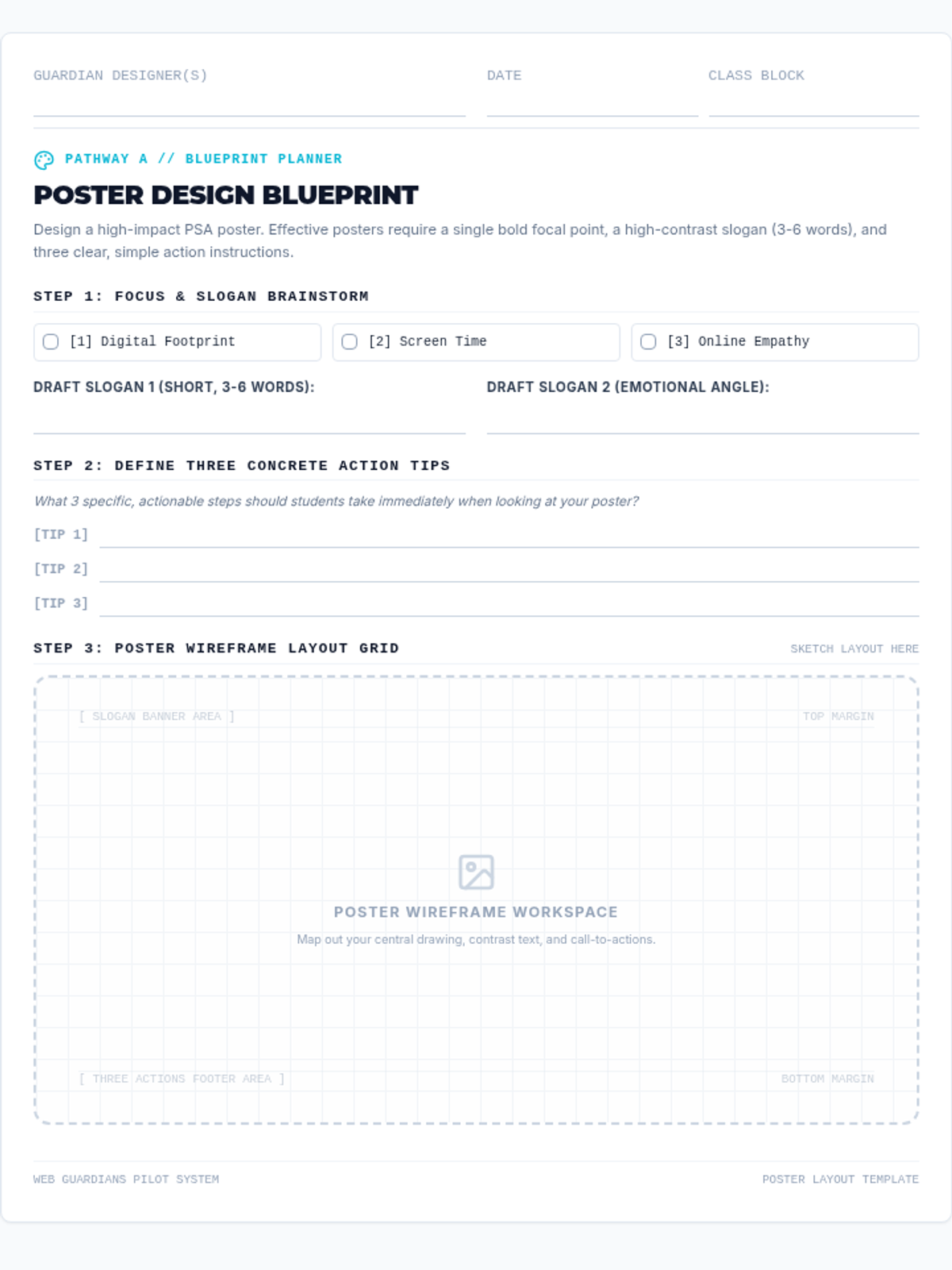
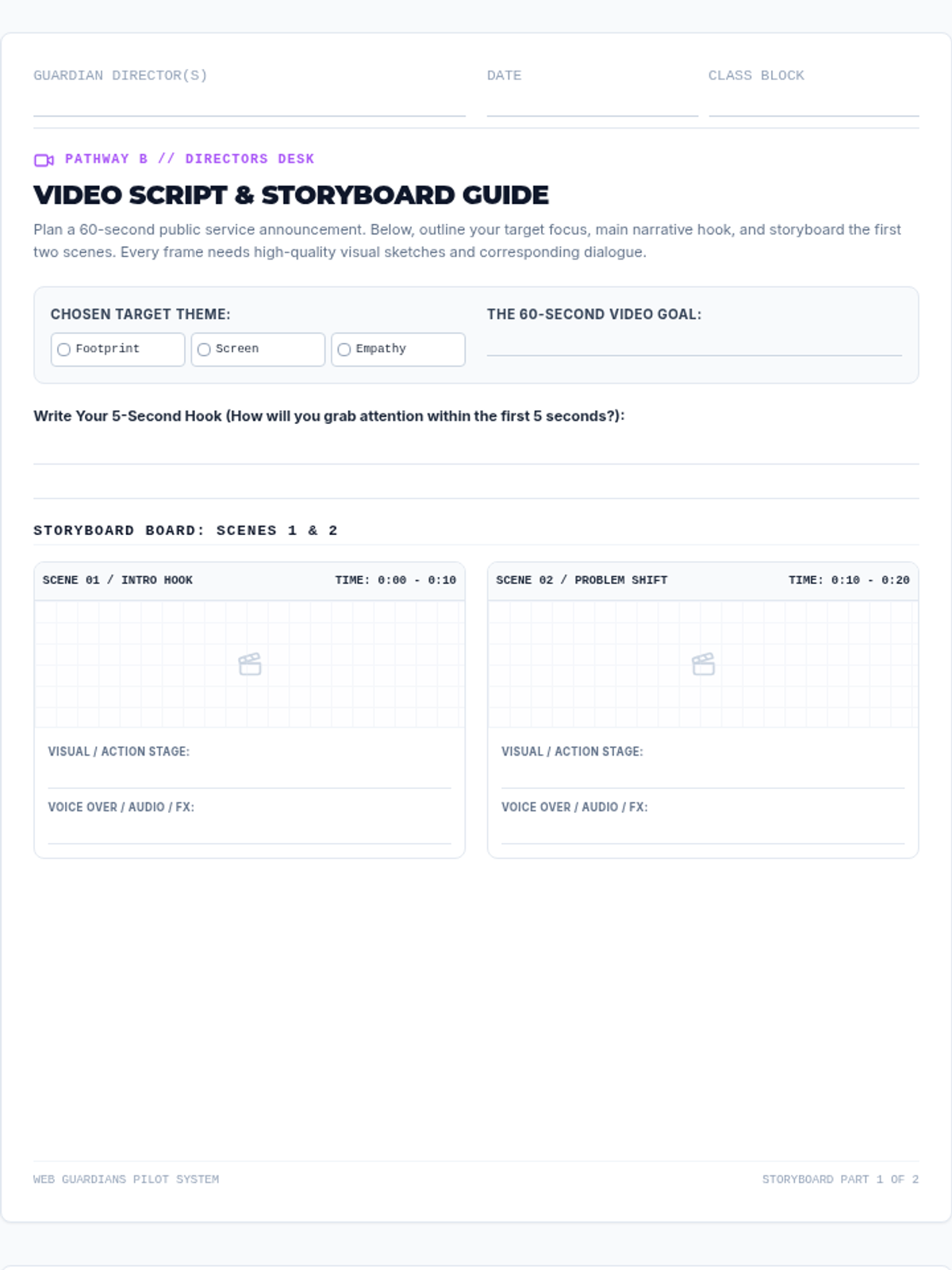
A high-impact digital citizenship project lesson where students become 'Web Guardians' to design PSAs addressing digital footprints, screen time self-regulation, and online empathy. Includes interactive presentation slides, detailed teacher guides, a project menu choice board, visual tip-sheets, and scaffolded planning templates for posters and videos.
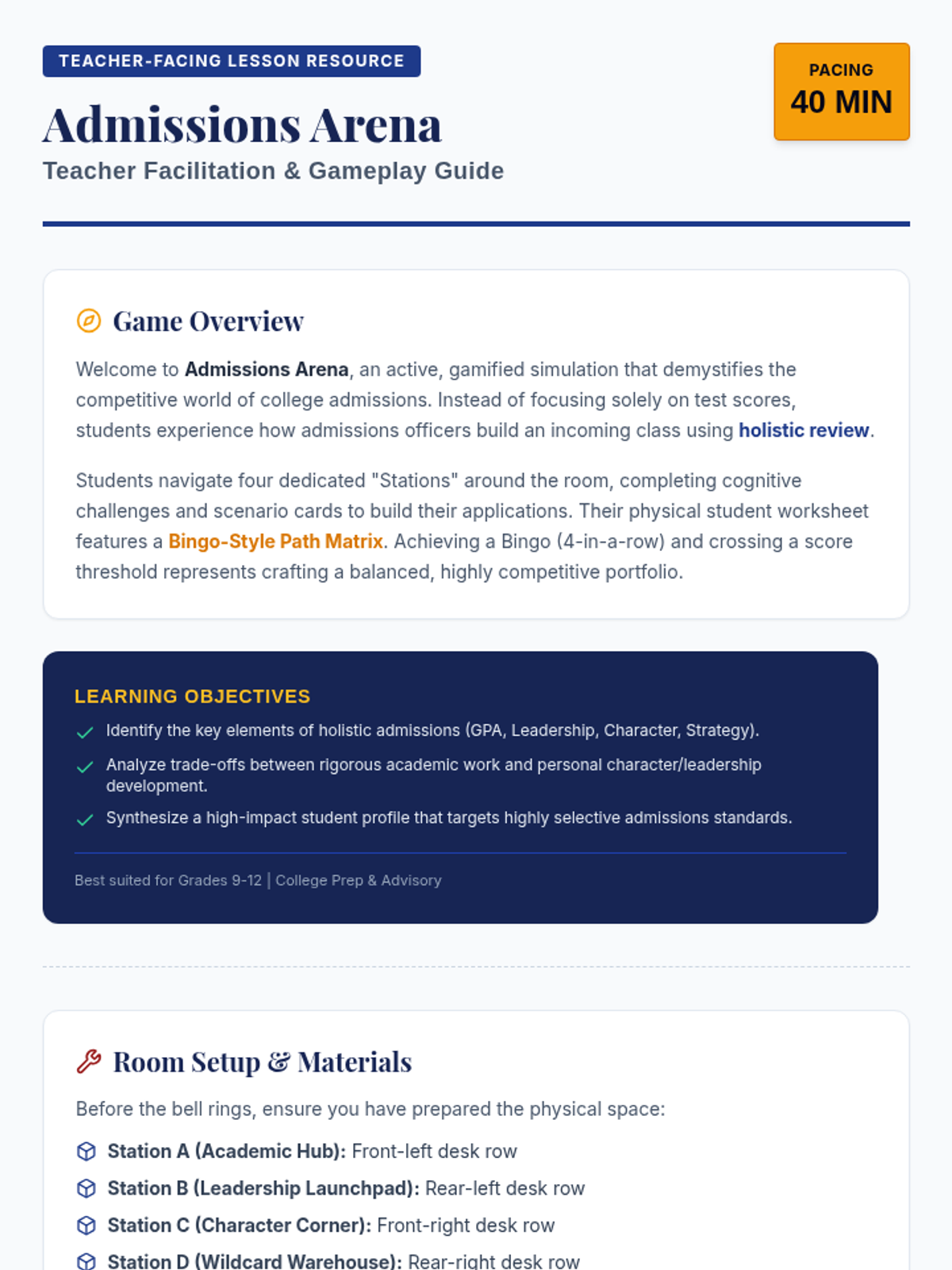
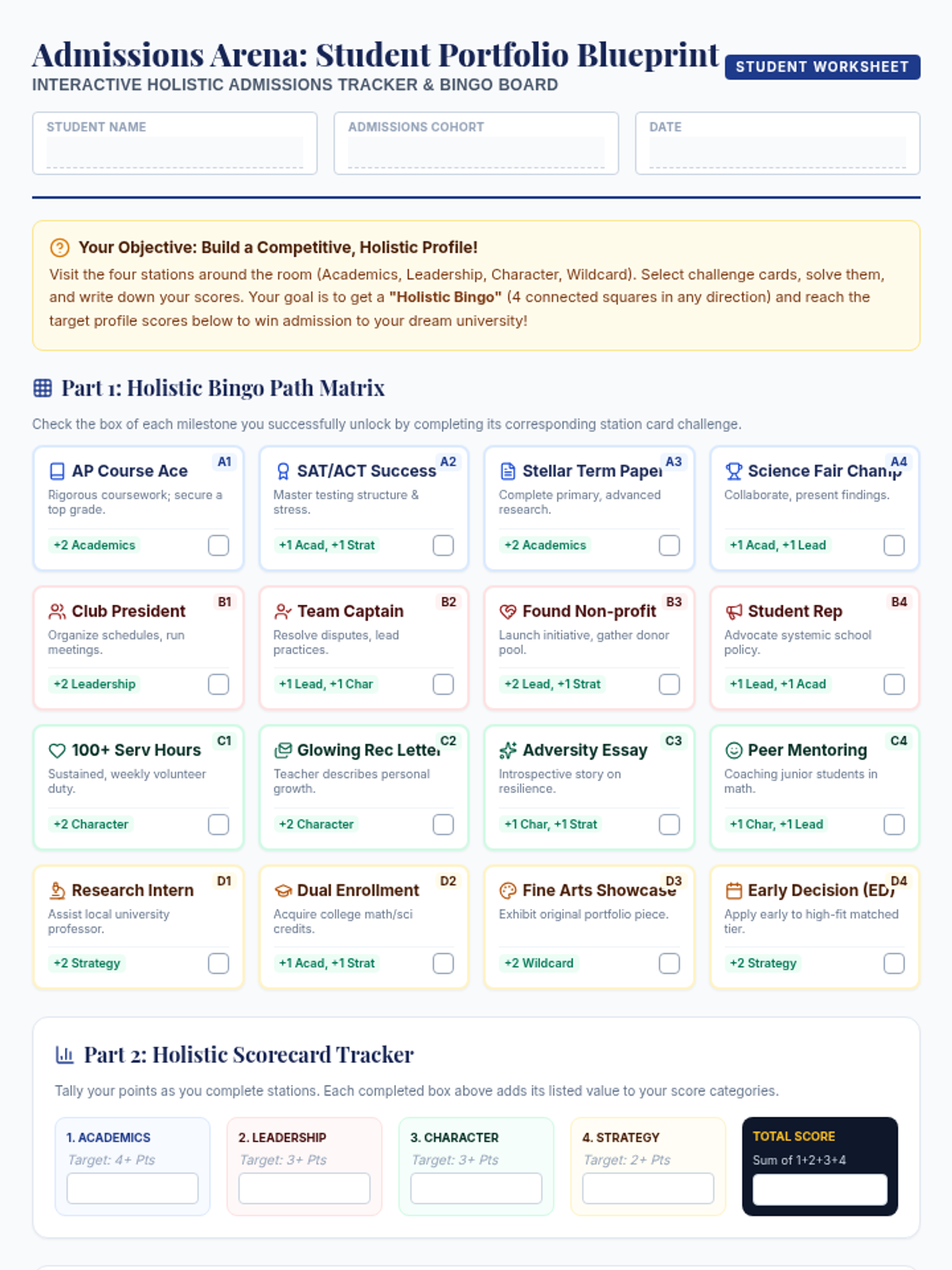
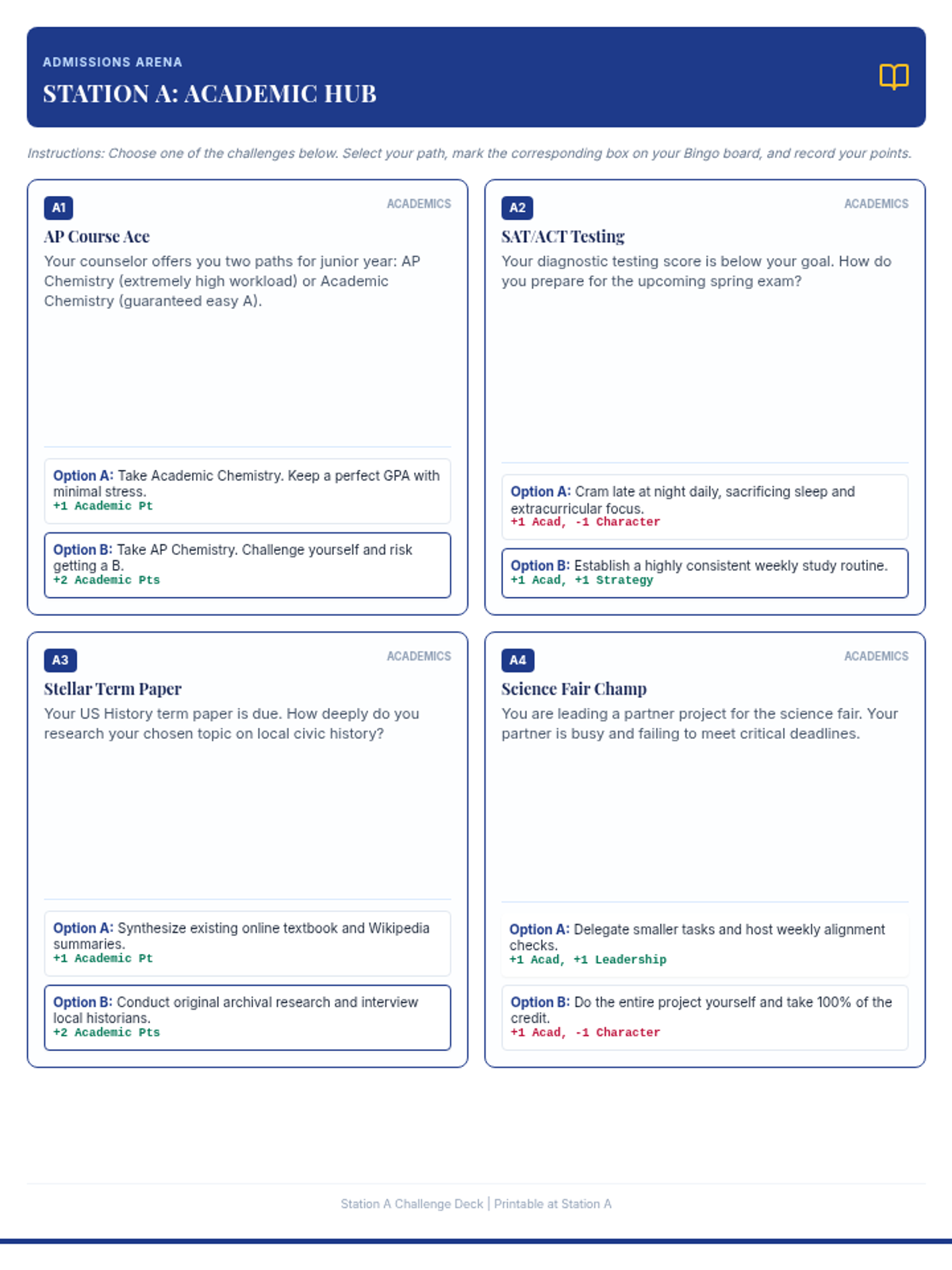
An interactive, fast-paced college admissions simulation game where students build holistic profiles through trivia, scenarios, and station challenges. Students balance academics, leadership, and character to secure a 'Holistic Bingo' and gain admission to their dream schools.
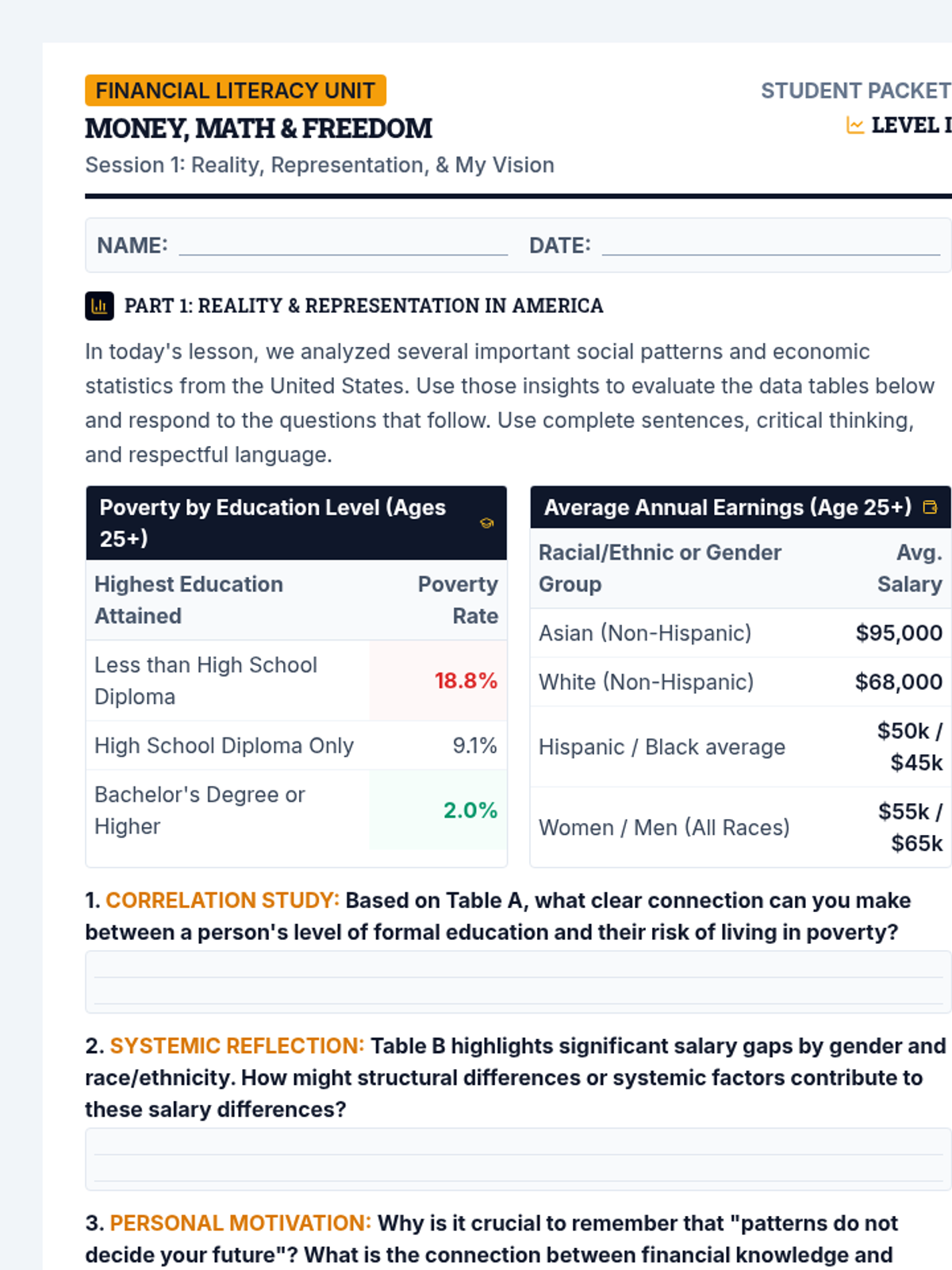
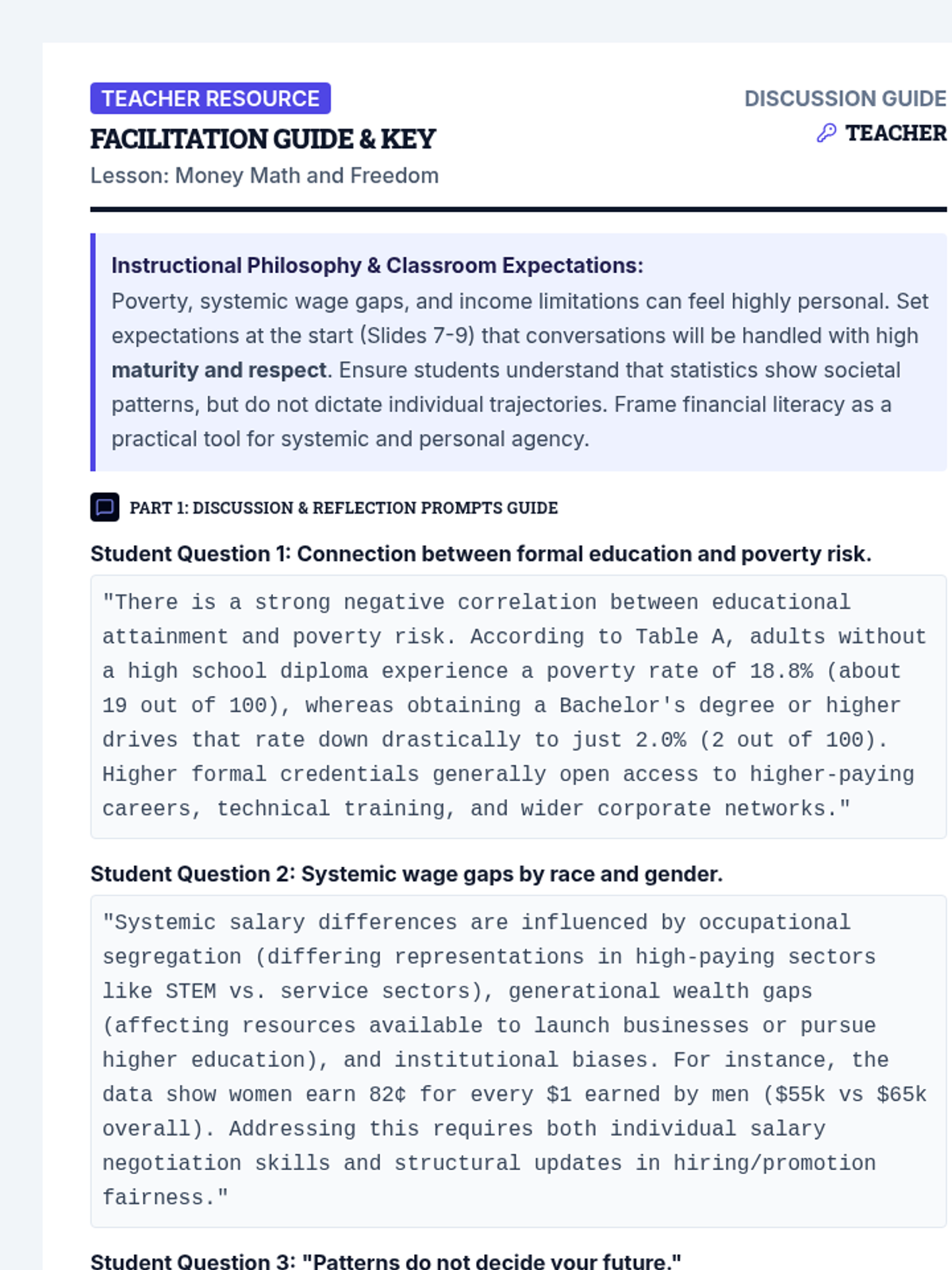
An introductory financial literacy lesson exploring systemic opportunity, critical vocabulary, basic calculations, and personalized future mapping. Includes a student-facing comprehensive work packet and an in-depth teacher discussion guide and answer key.
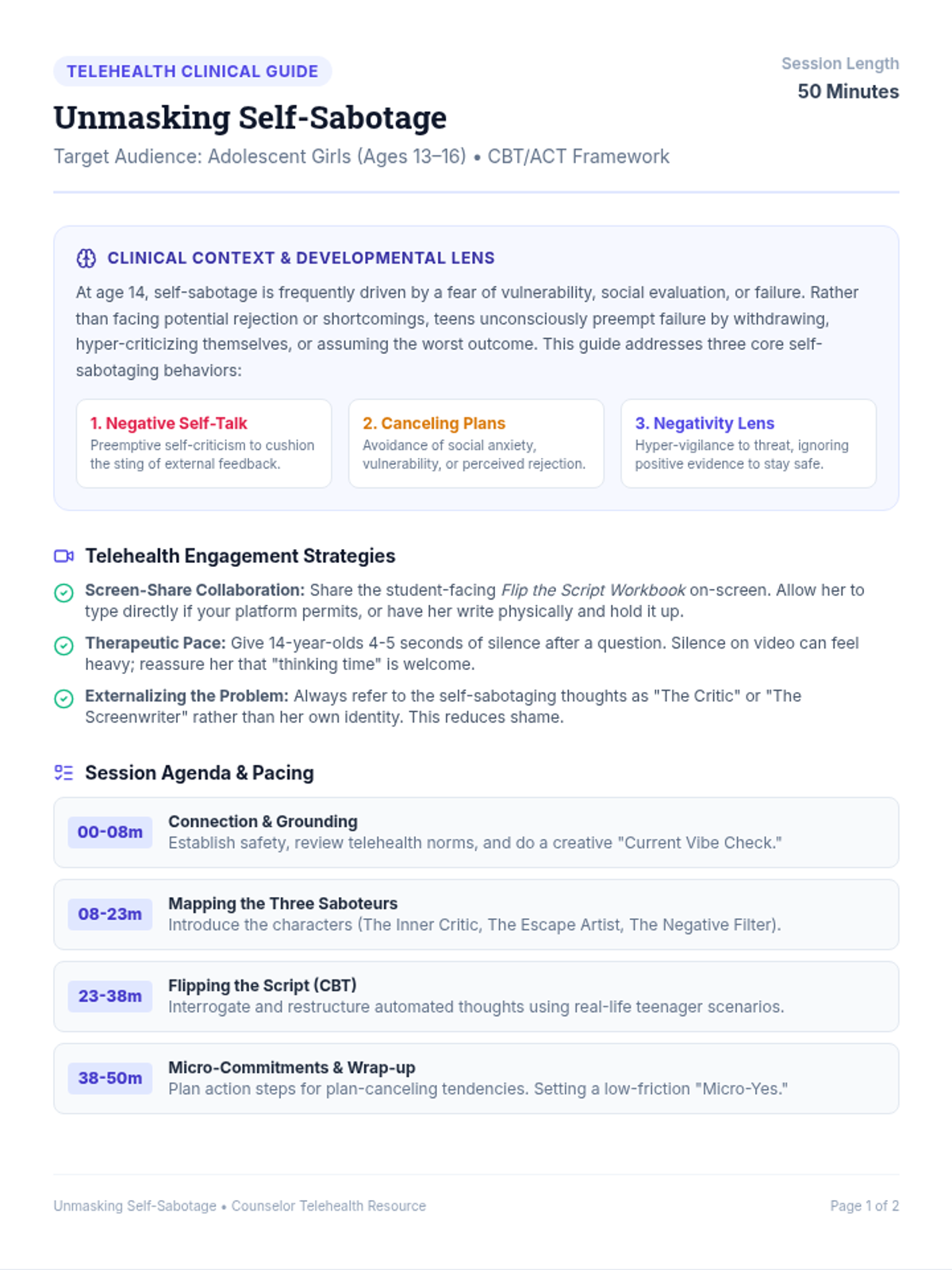
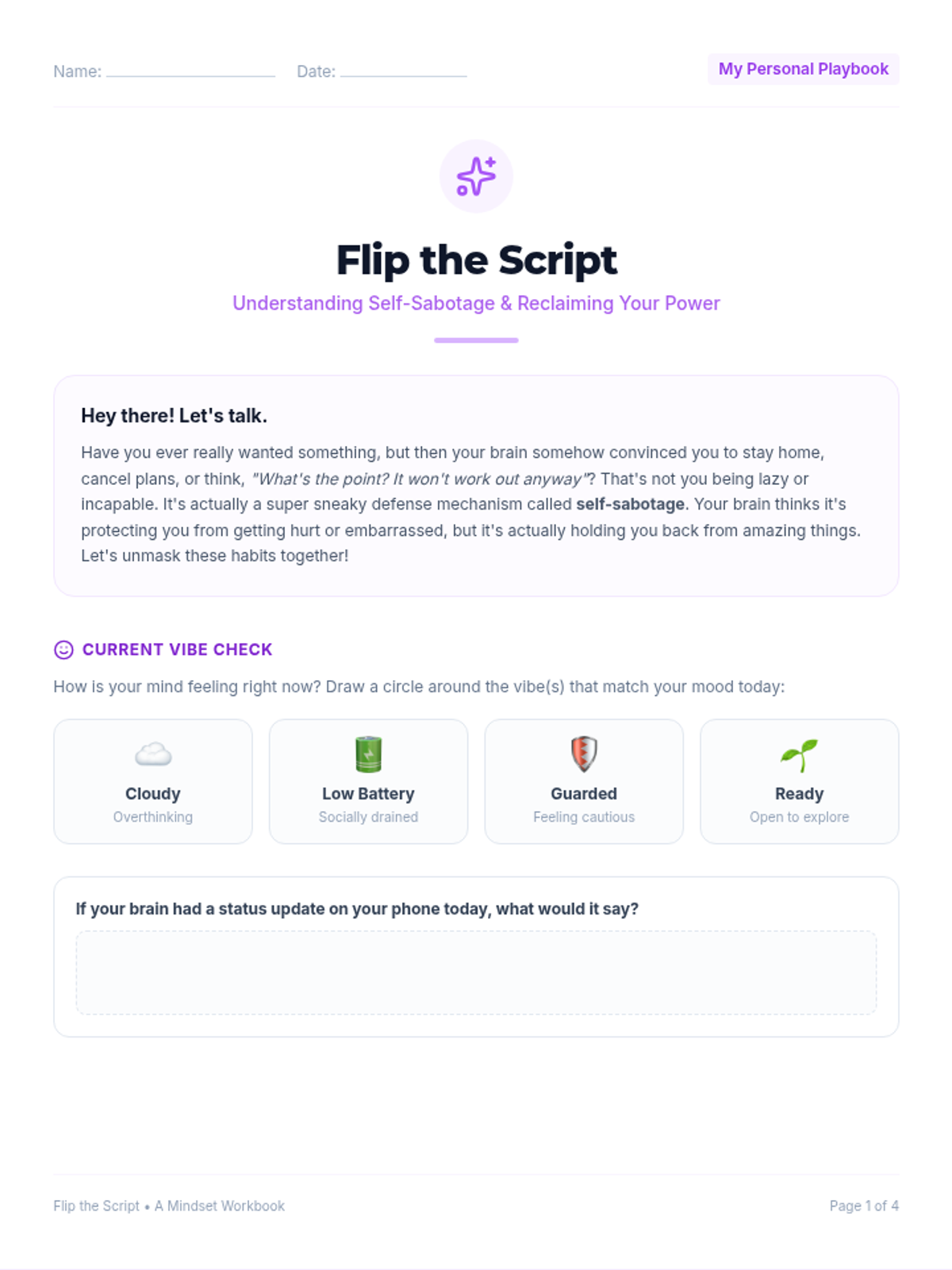
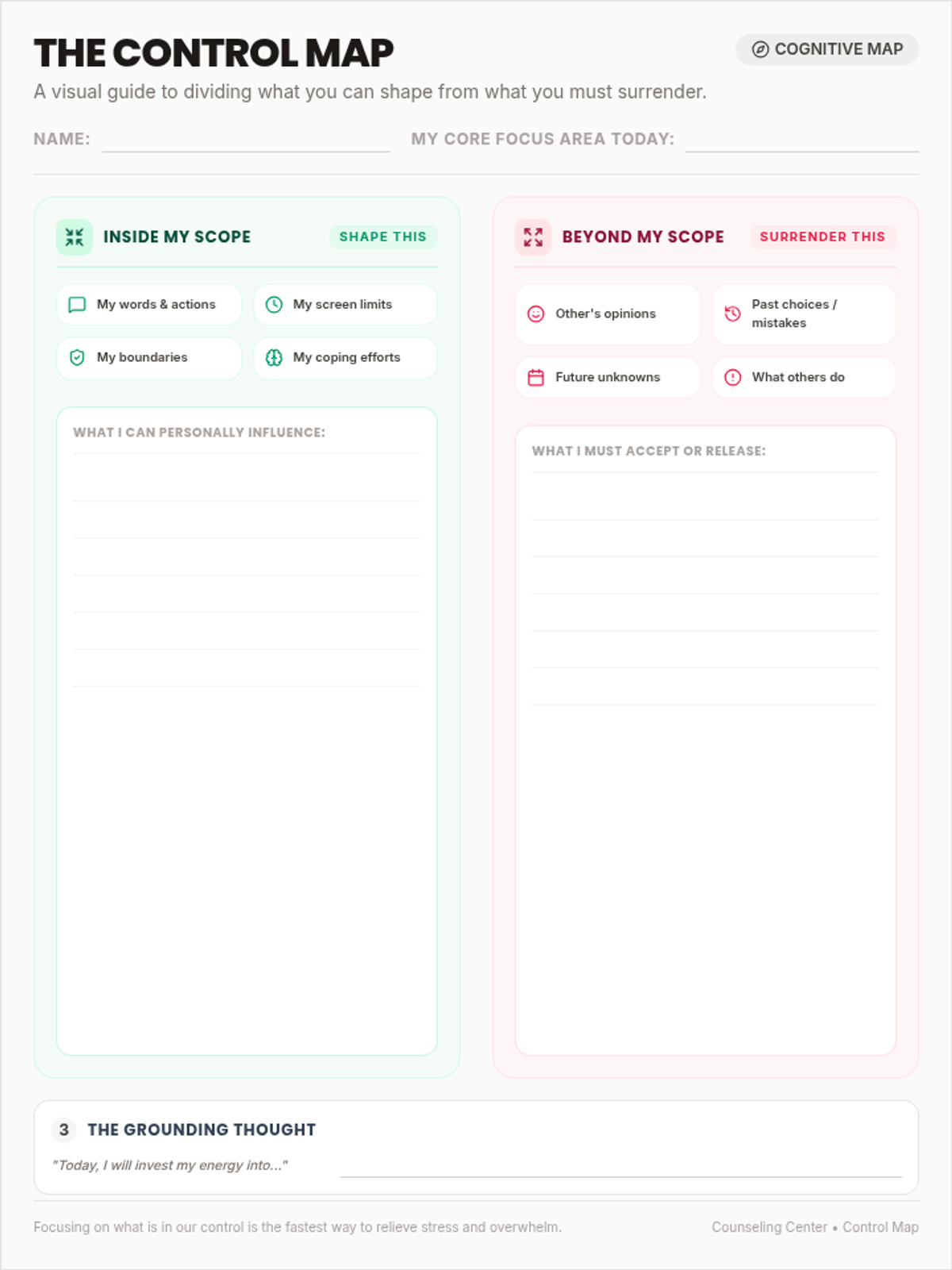
A therapeutic lesson package designed for counselors working with 14-year-old girls struggling with self-sabotage. It includes a structured telehealth counselor guide and a highly aesthetic, Gen Z-friendly reflection workbook focusing on negative self-talk, canceling plans, and negativity bias.
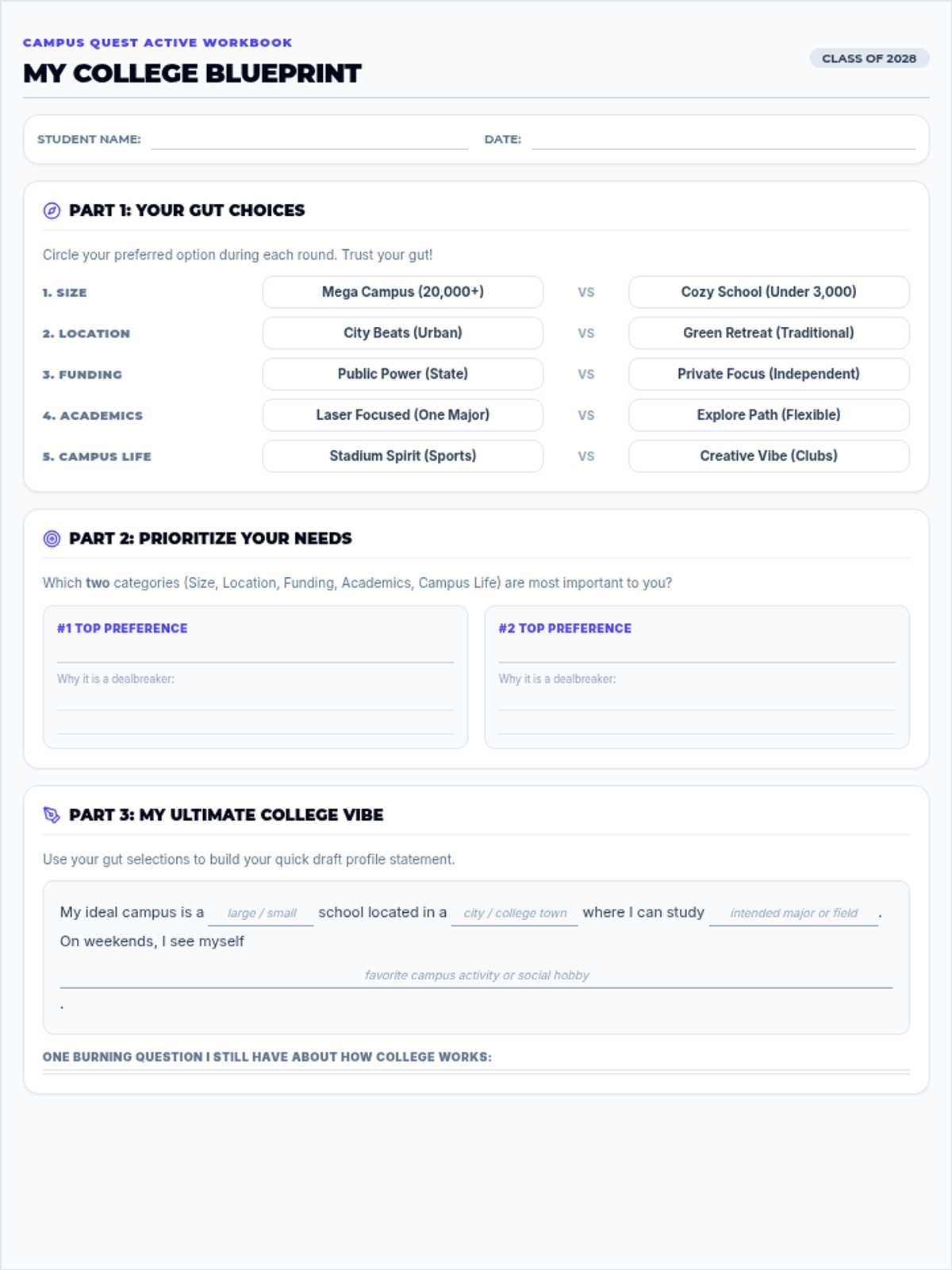
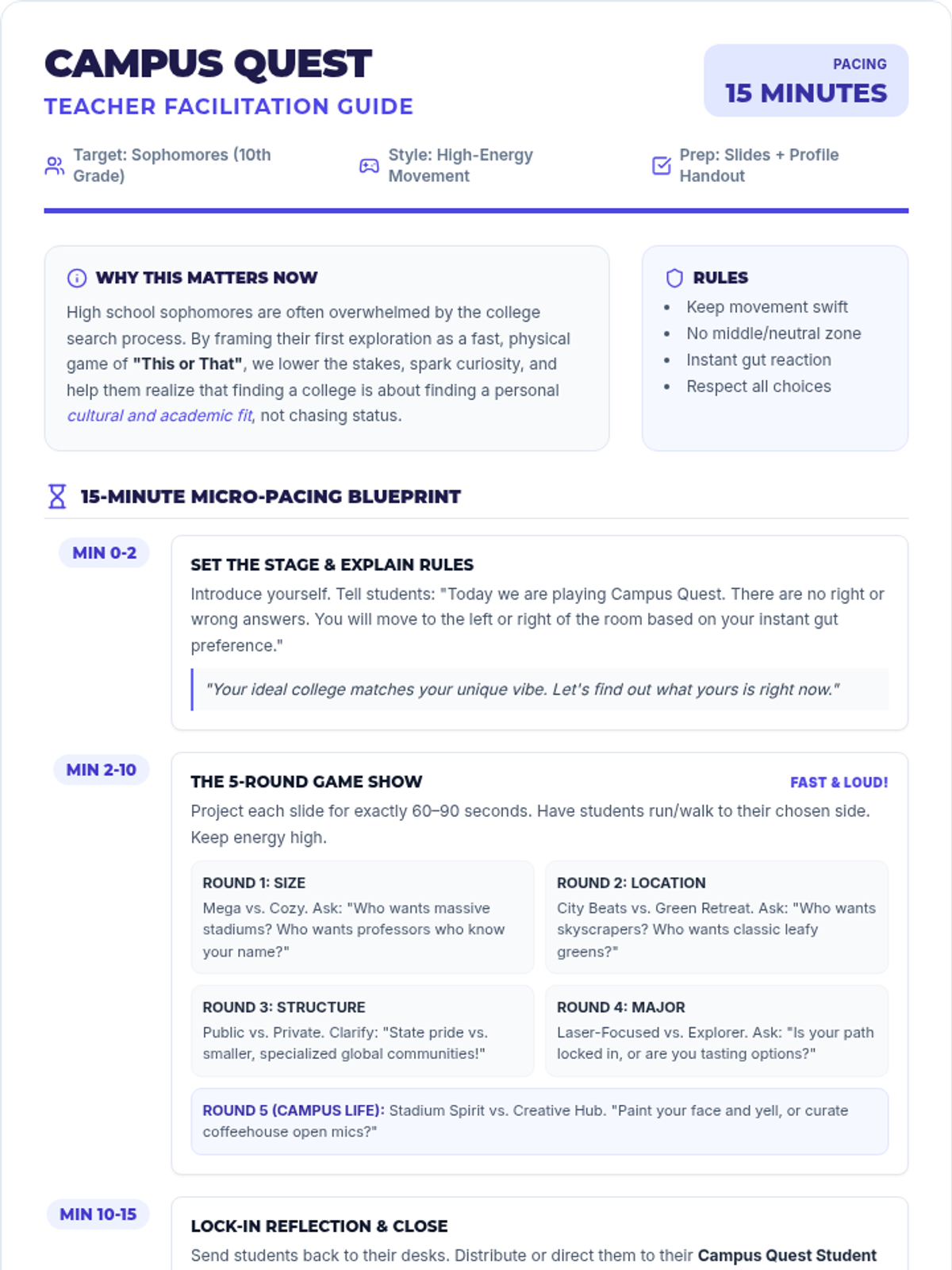
A high-energy, 15-minute introductory lesson designed for high school sophomores to kick off their college search. Through a fast-paced 'This or That' movement game and a personal profile reflection, students identify their preferences across key college factors like size, location, public vs. private, majors, and campus life.
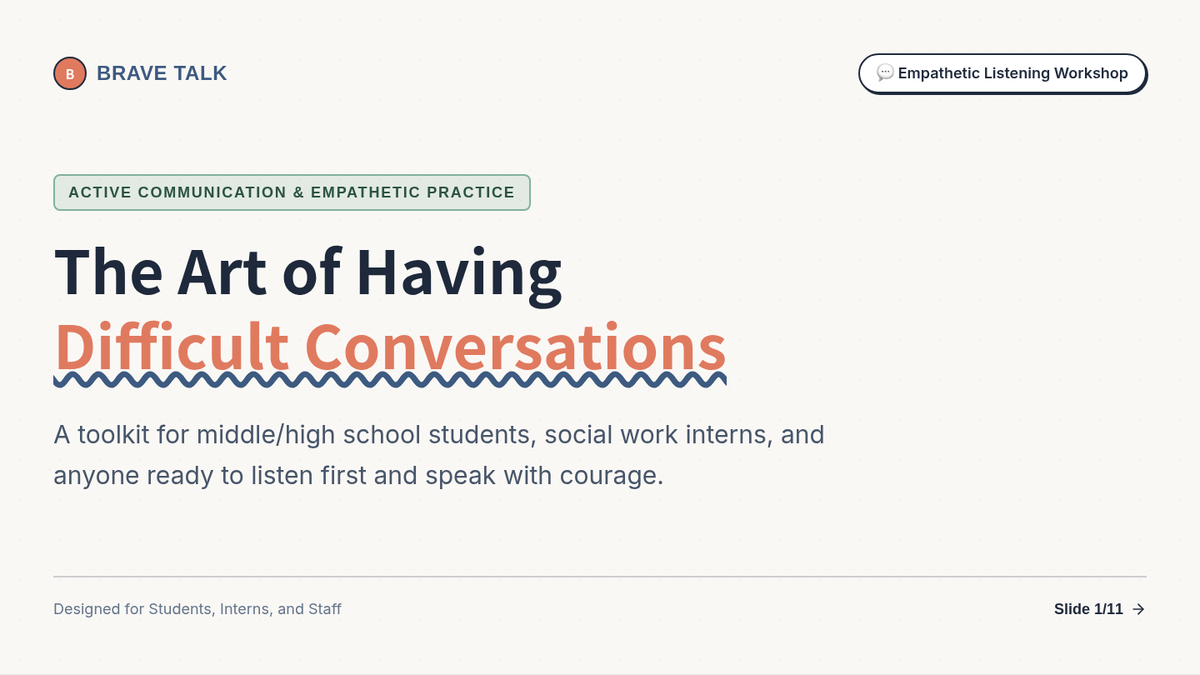
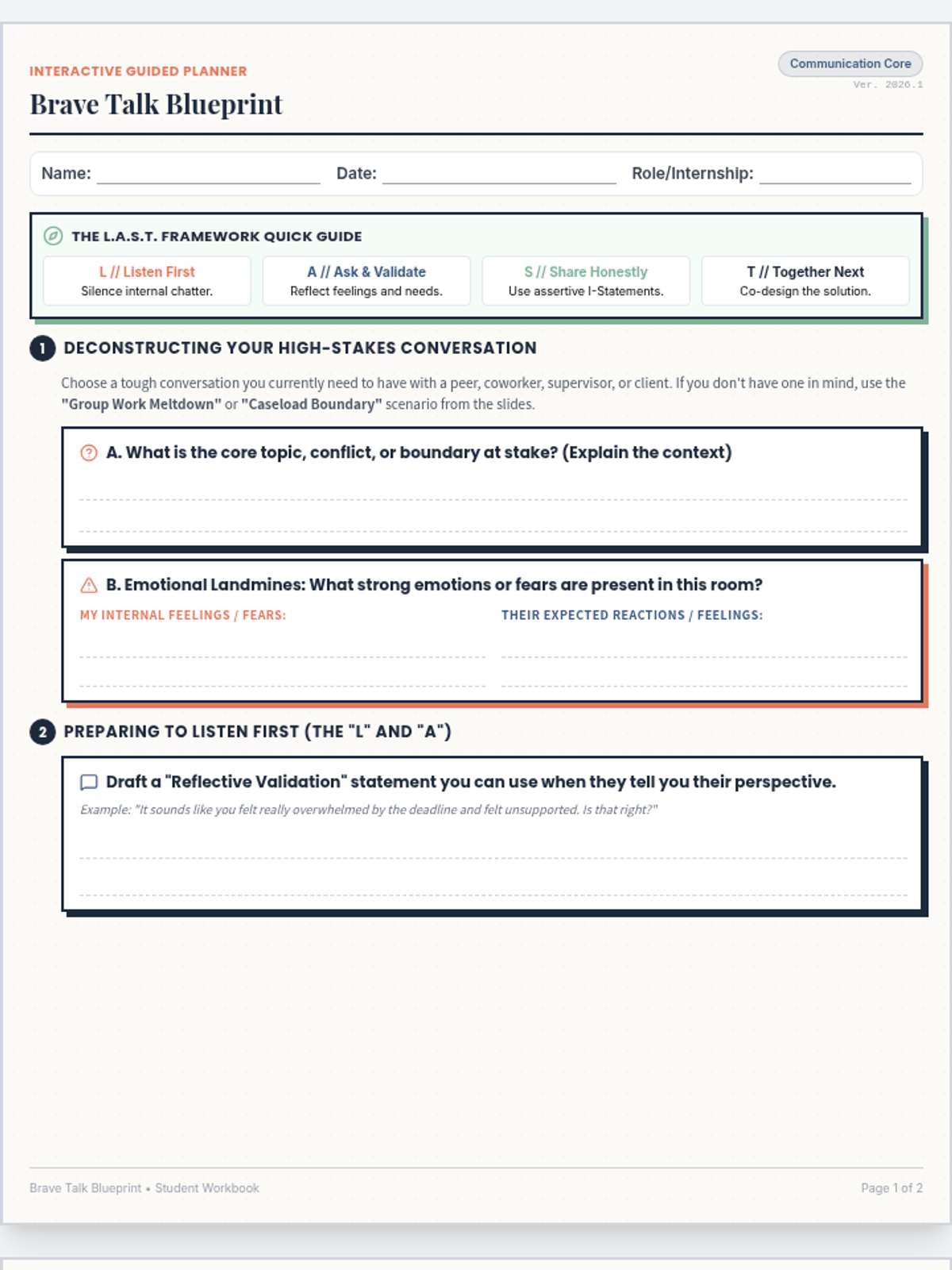
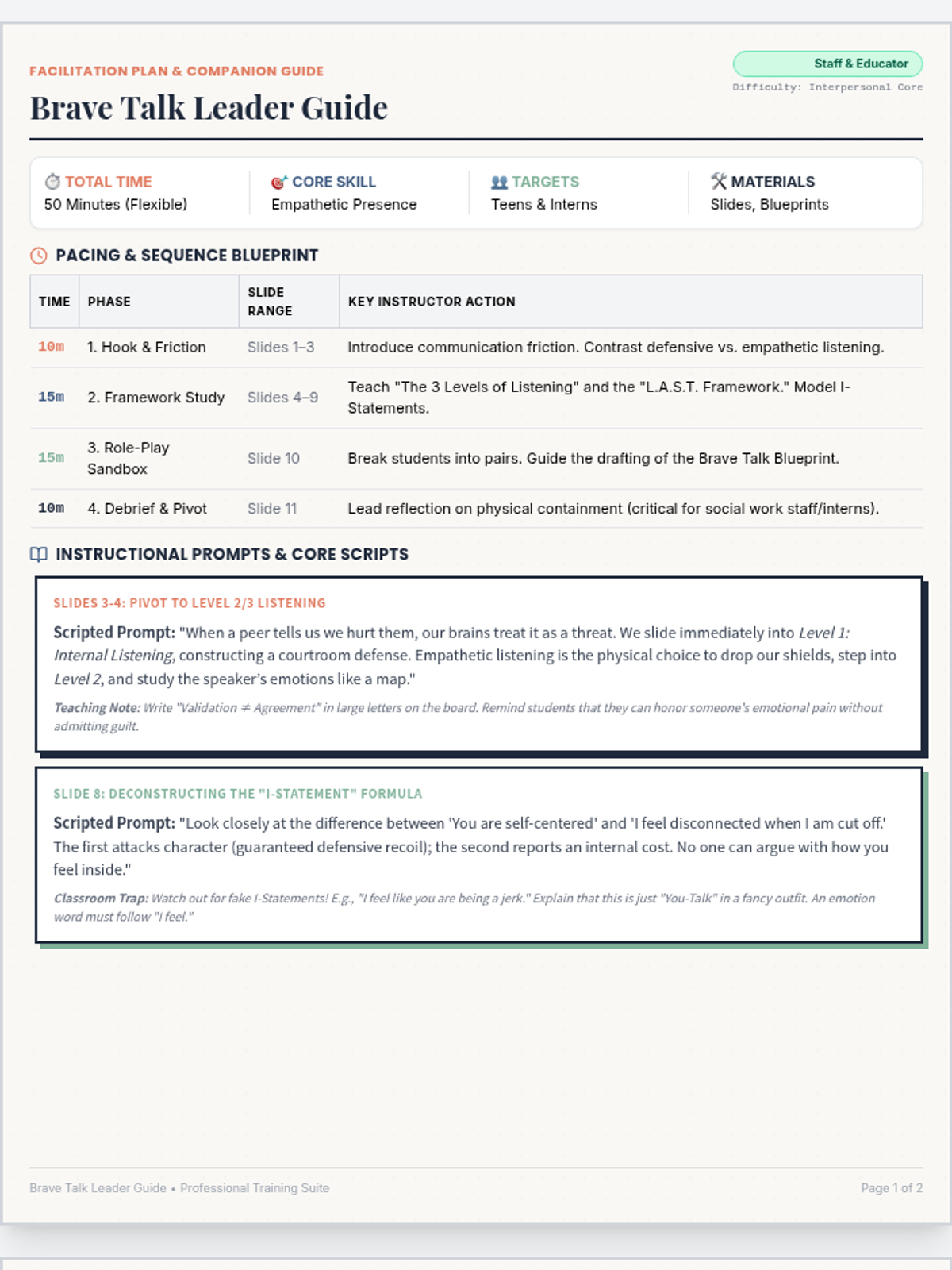
A comprehensive training lesson designed to teach middle/high school students and social work interns how to navigate emotionally charged, difficult conversations using empathetic listening and structured communication frameworks.
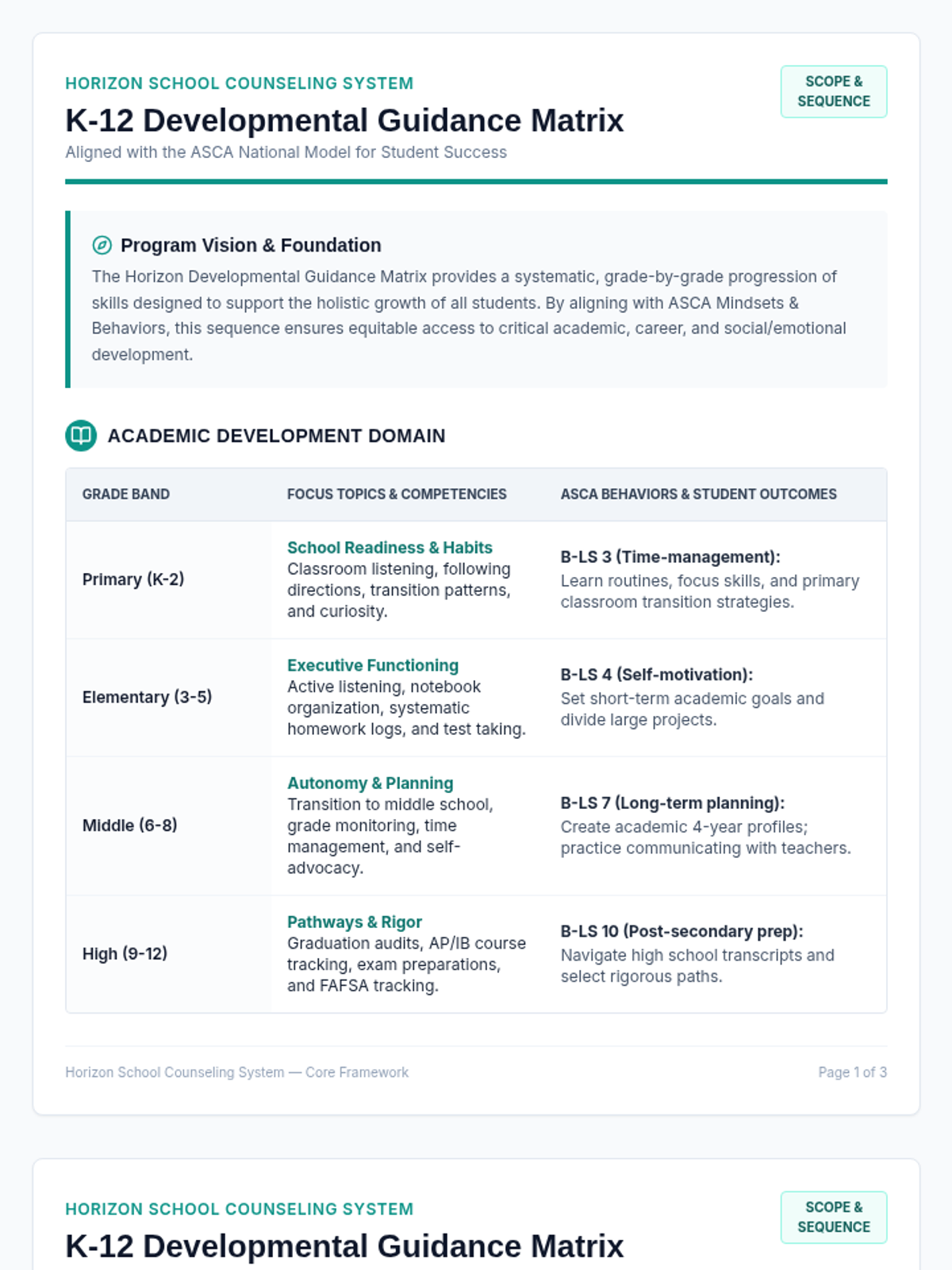
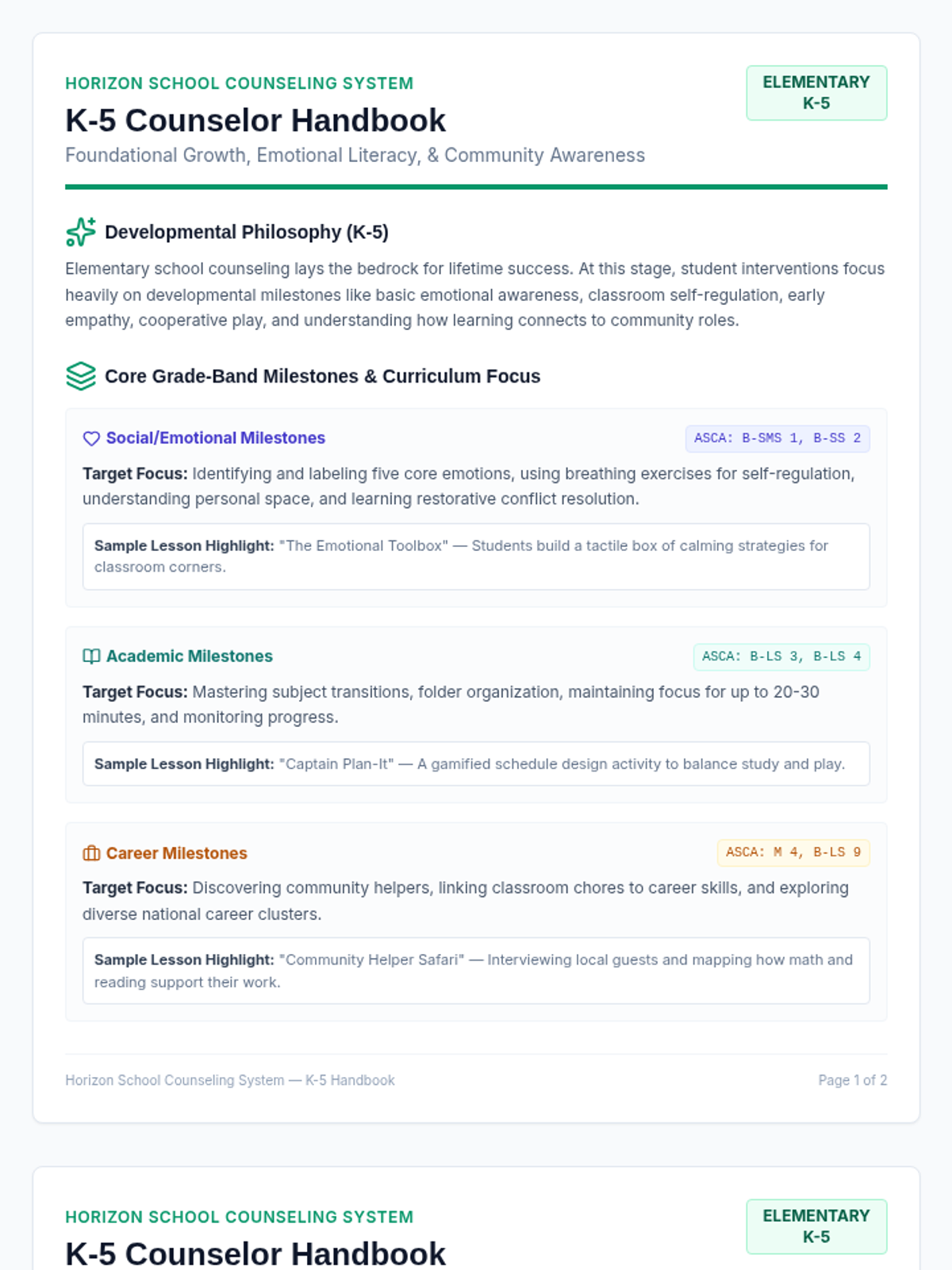
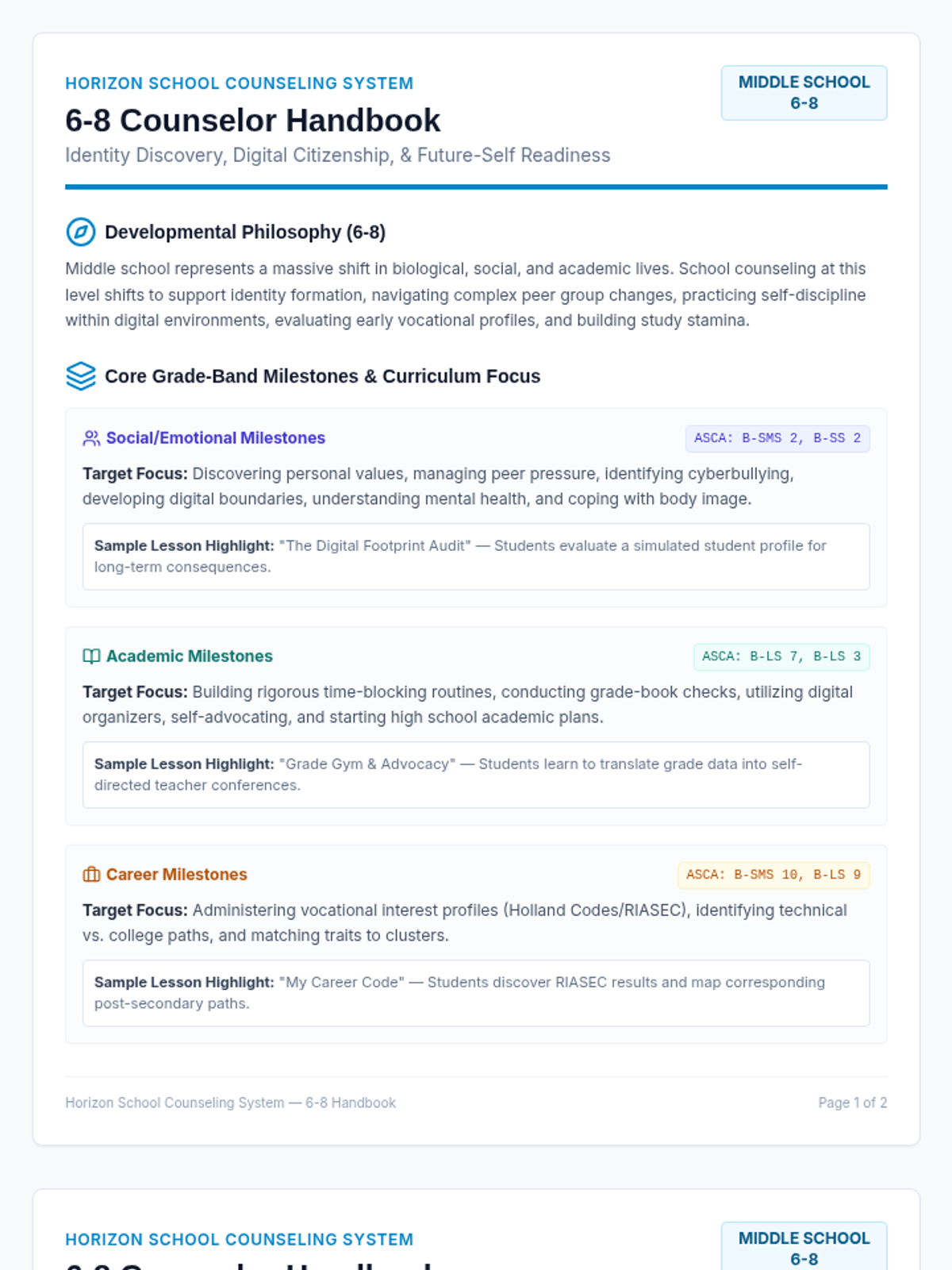
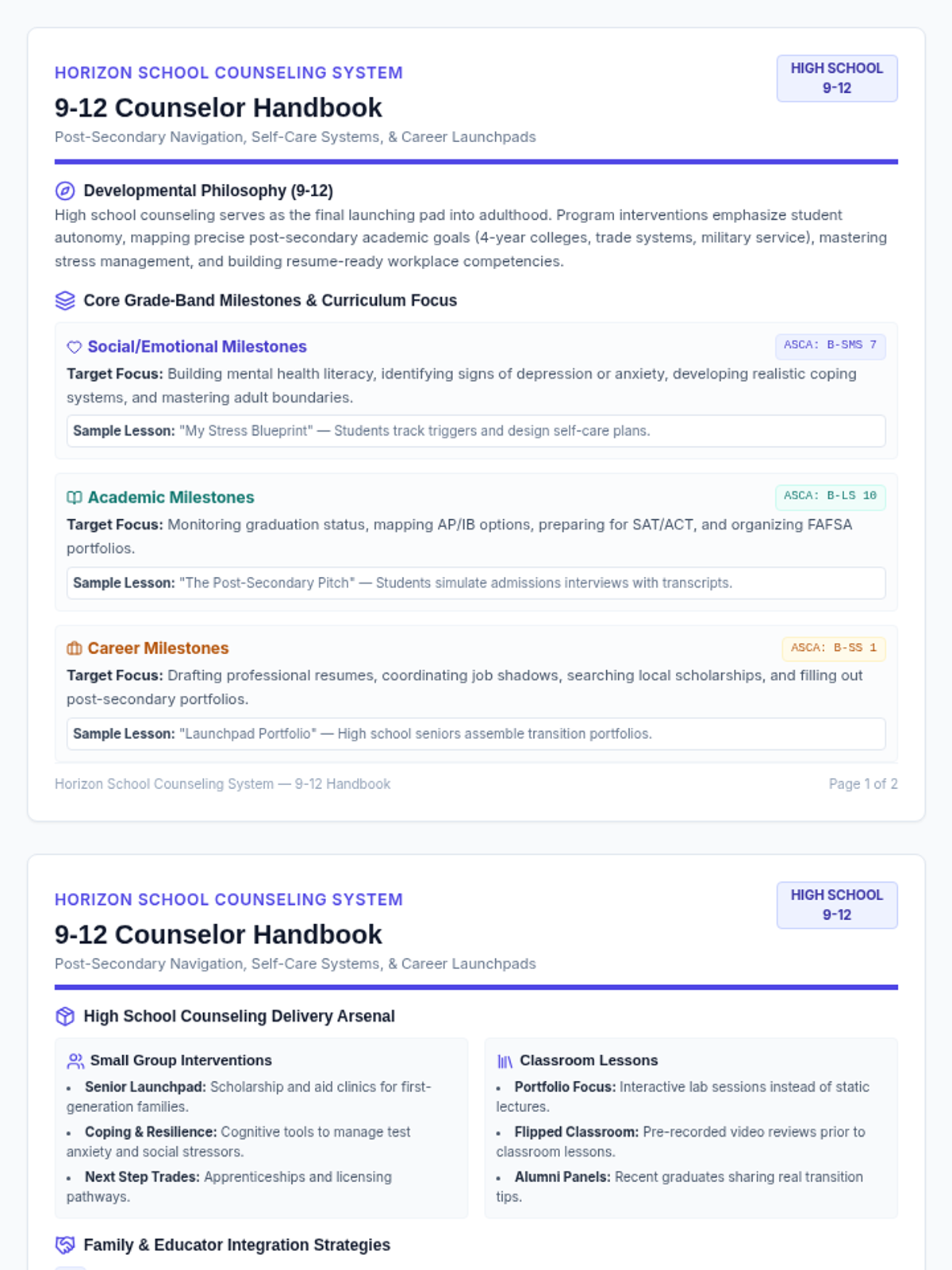
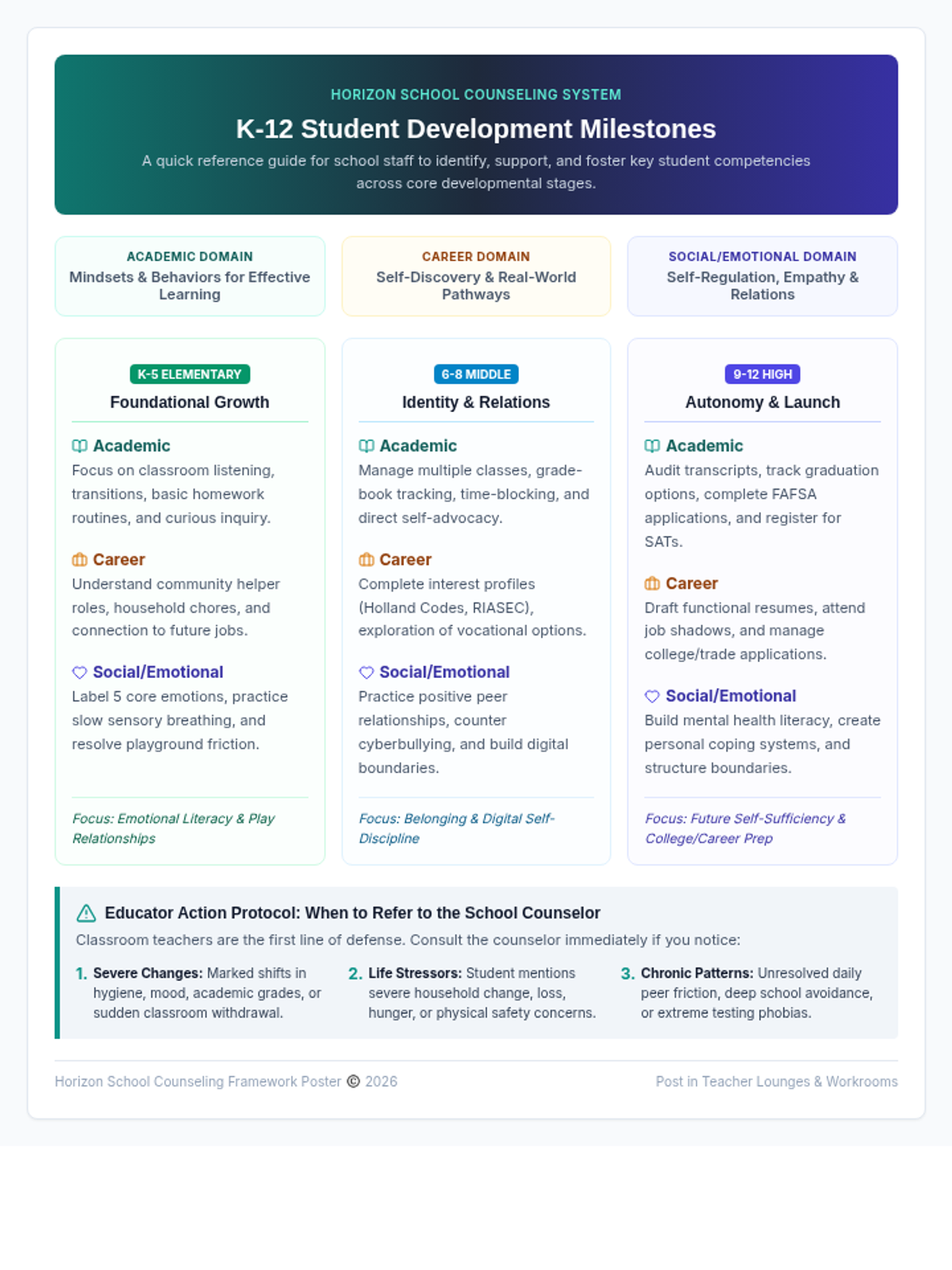
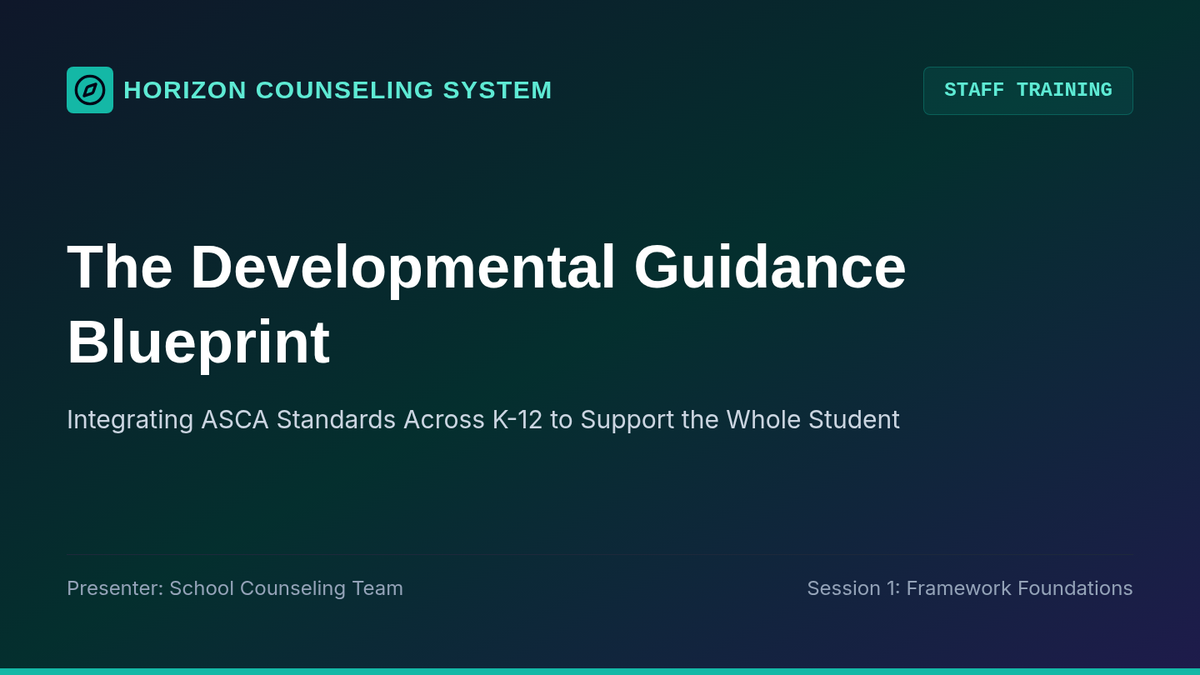
A comprehensive developmental school counseling framework spanning K-12, aligned with ASCA national standards. This blueprint includes a K-12 scope and sequence, grade-band counselor handbooks, a staff reference poster, and professional development slides for counselor-led staff training.
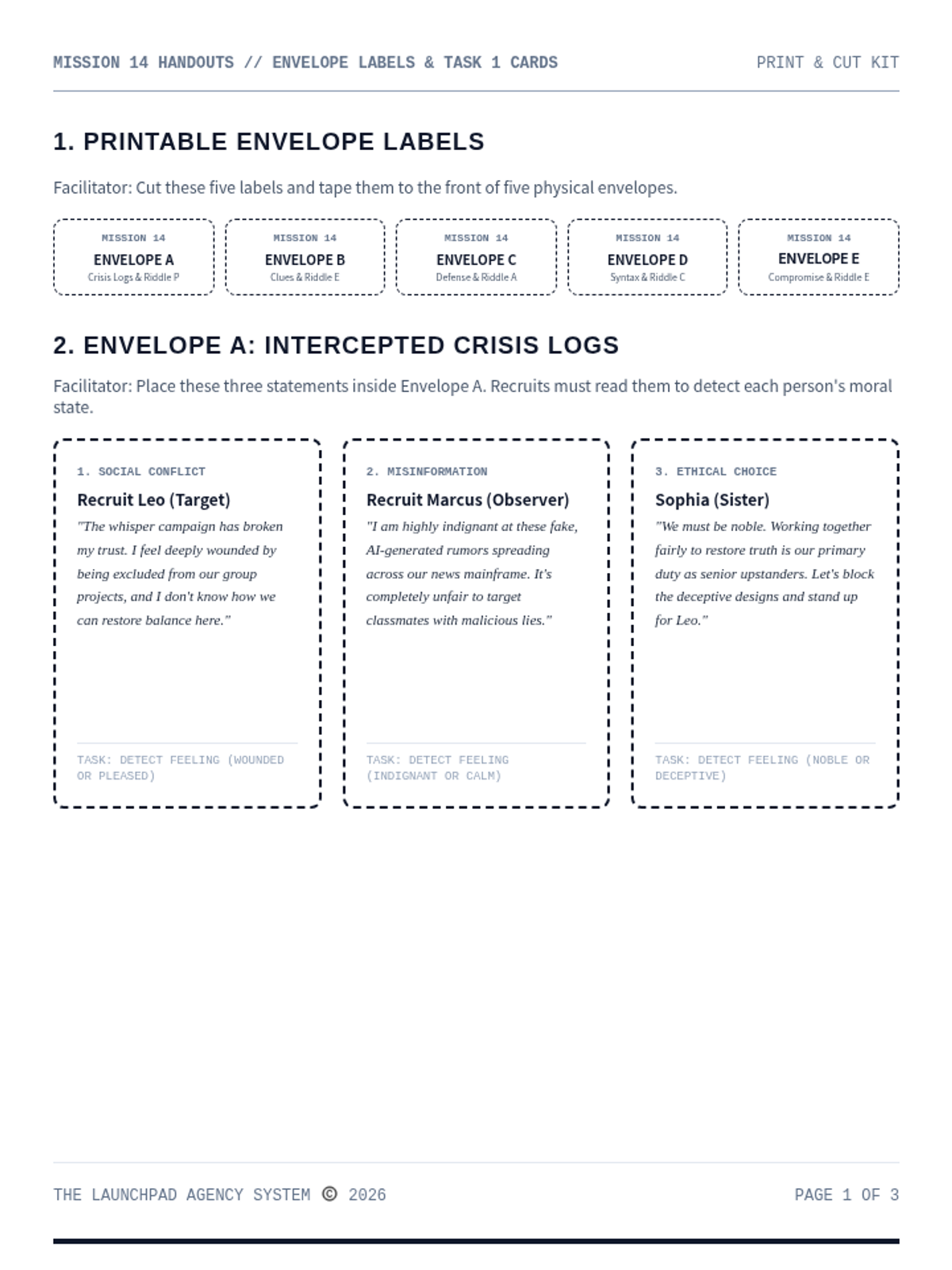
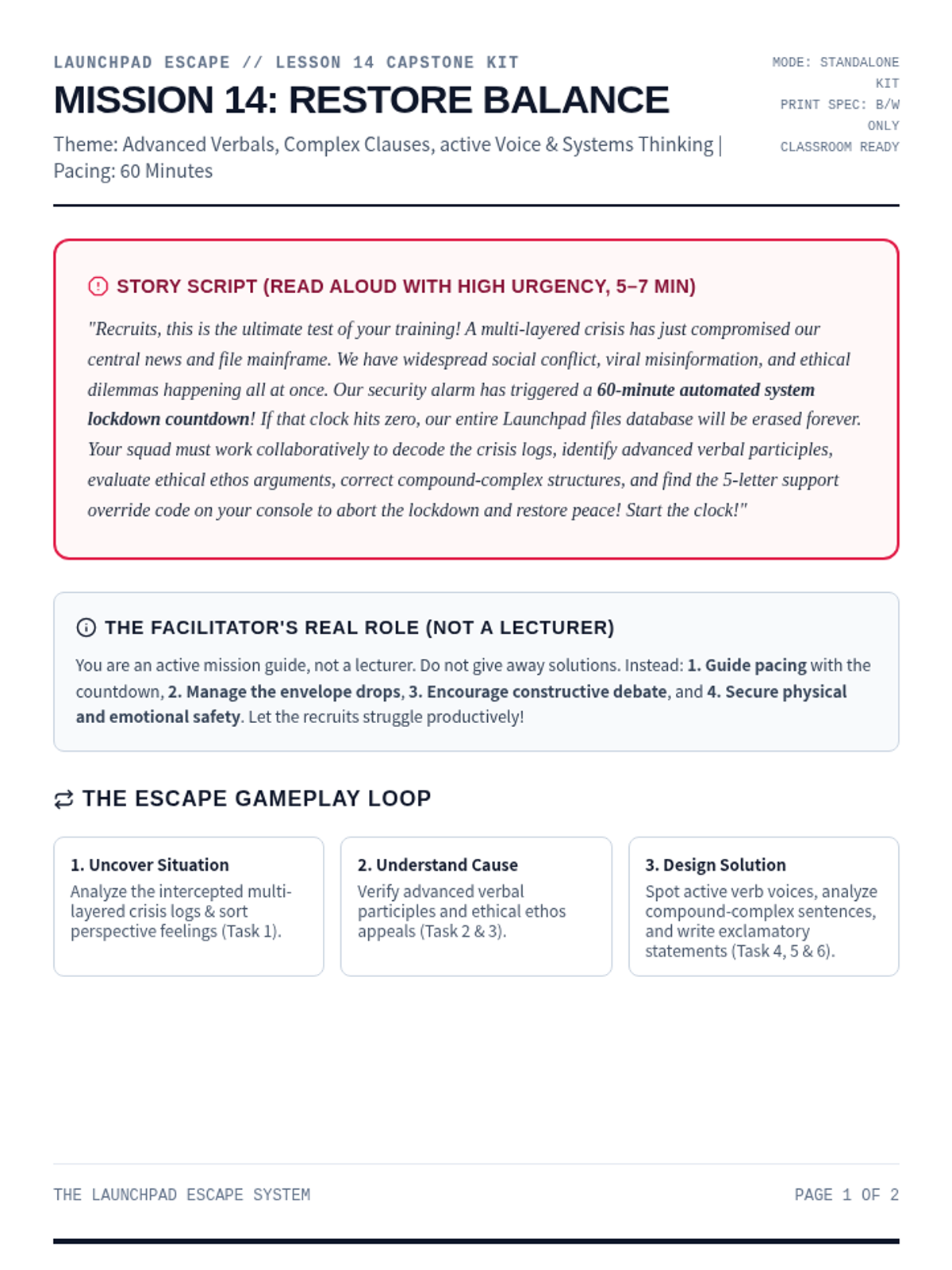
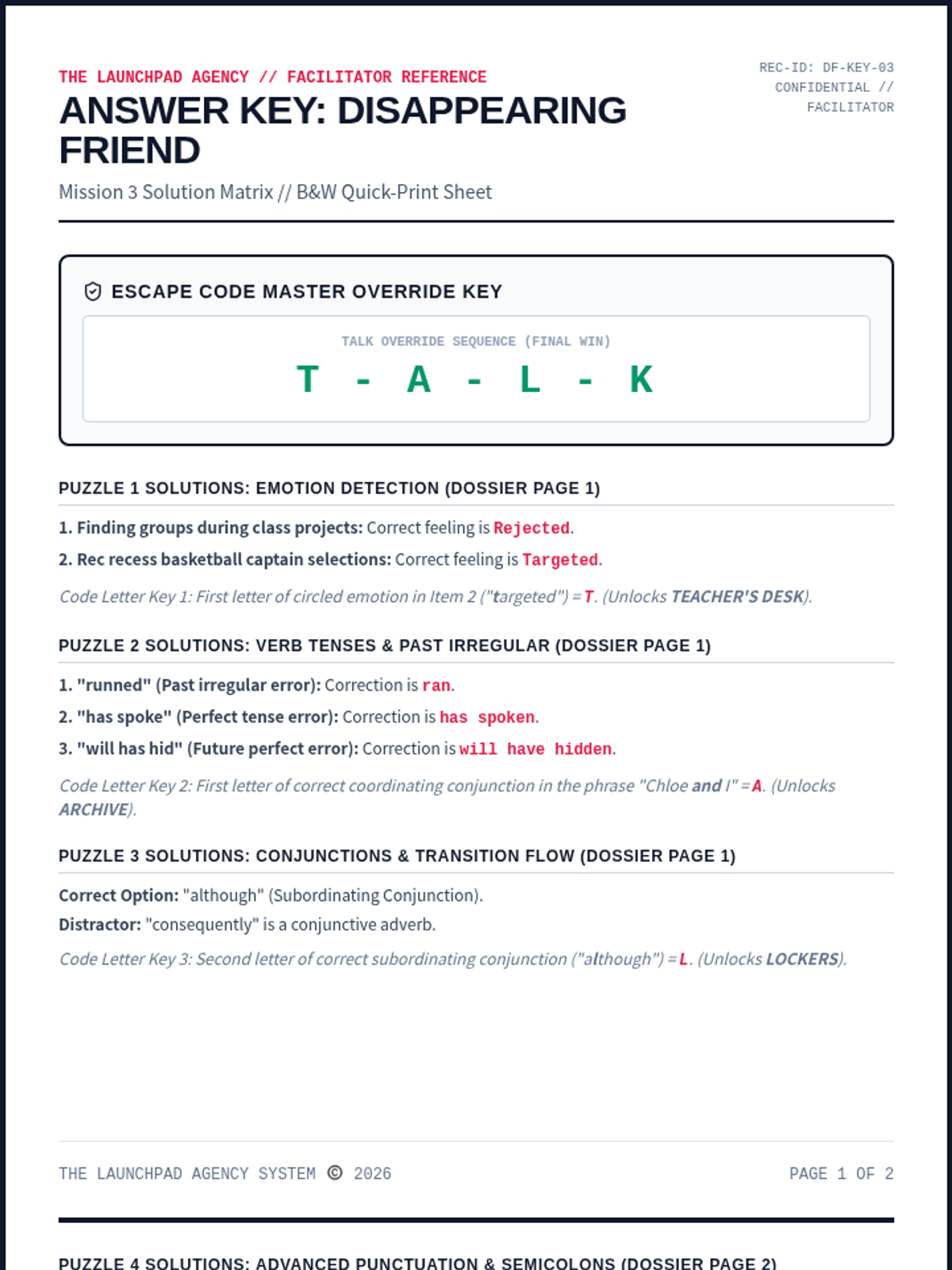
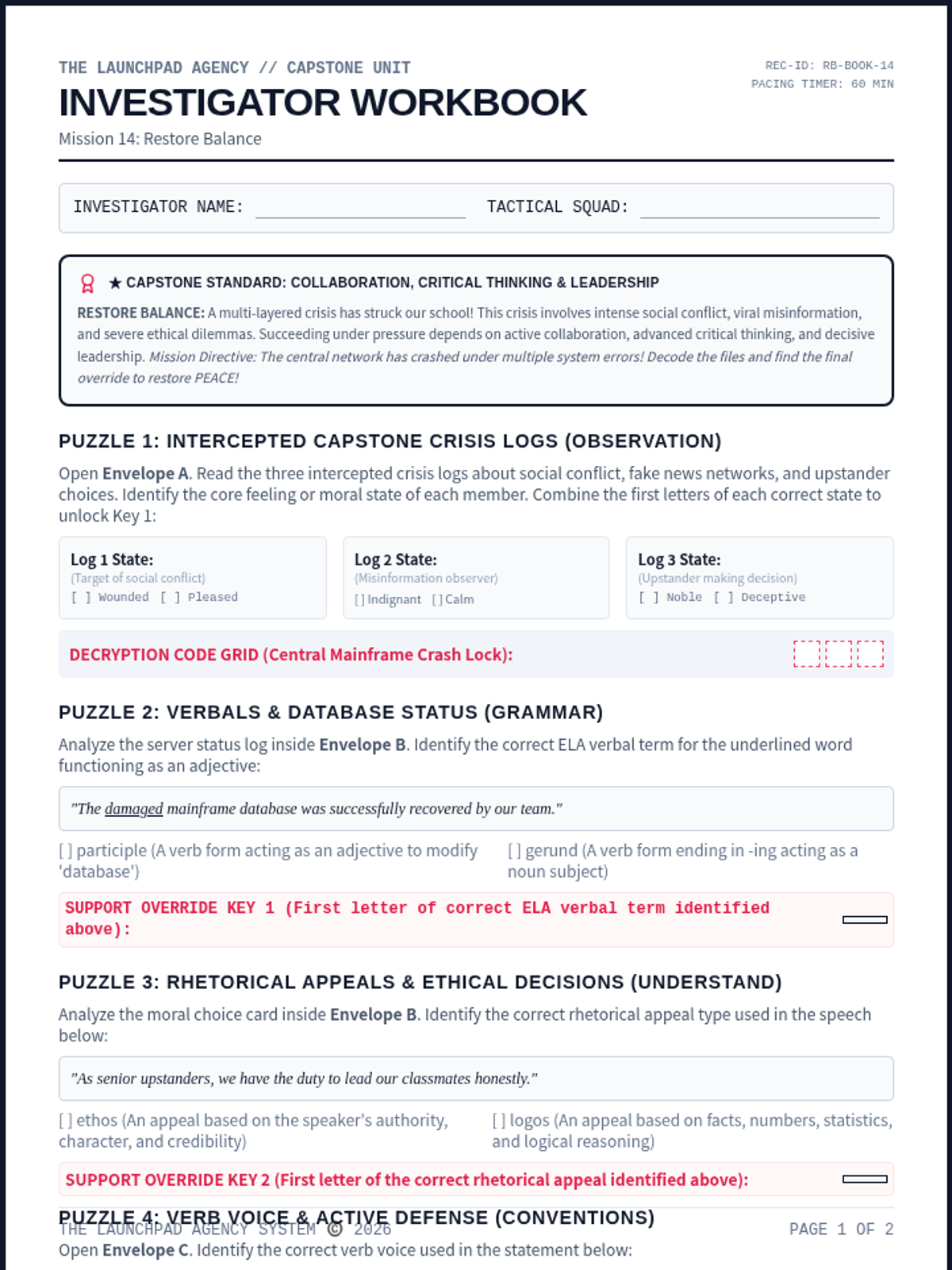
The ultimate multi-layered capstone escape room challenge. Recruits analyze complex social conflict evidence, trace misinformation networks, resolve major ethical dilemmas, and decode the final system override.
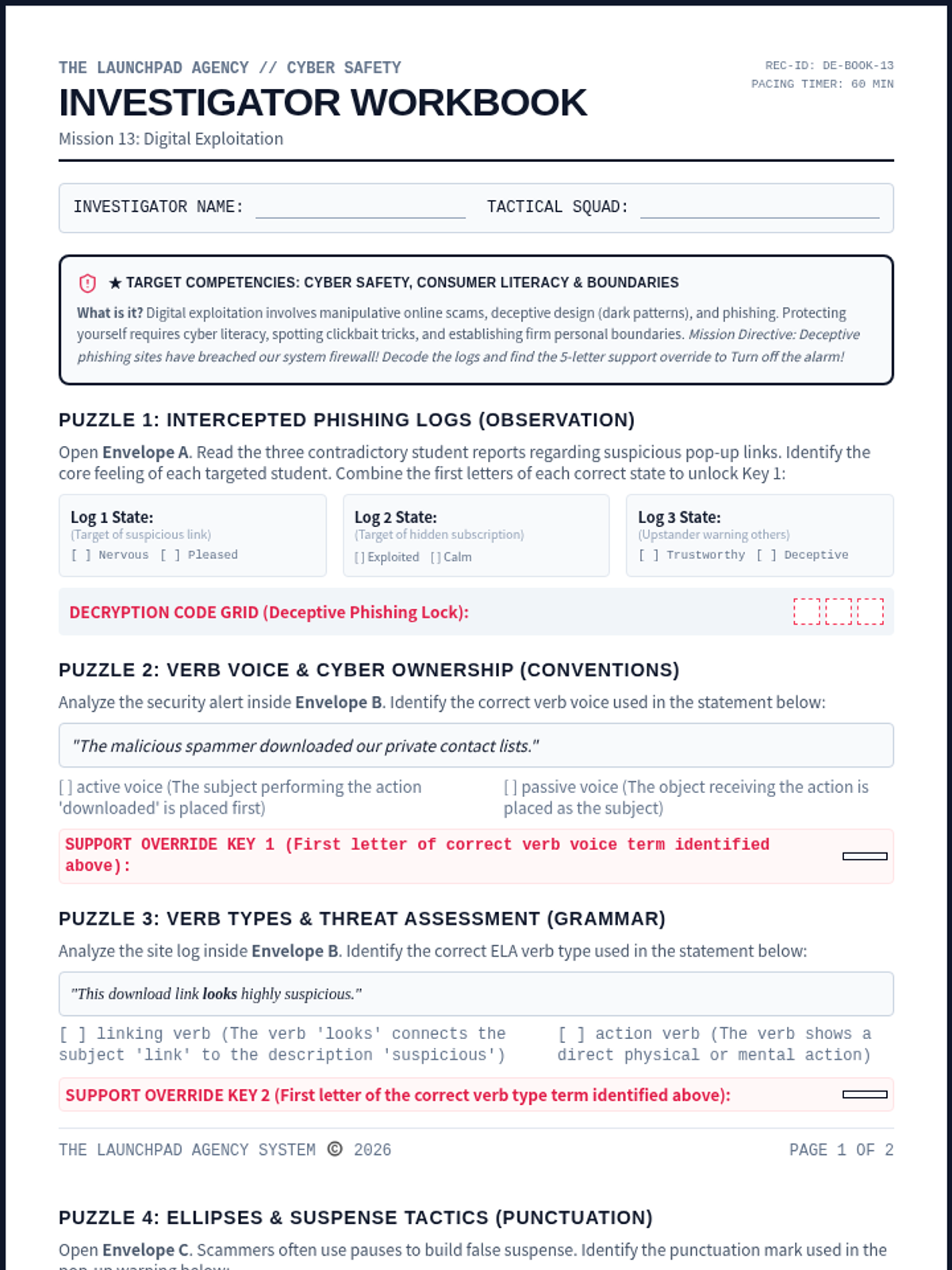
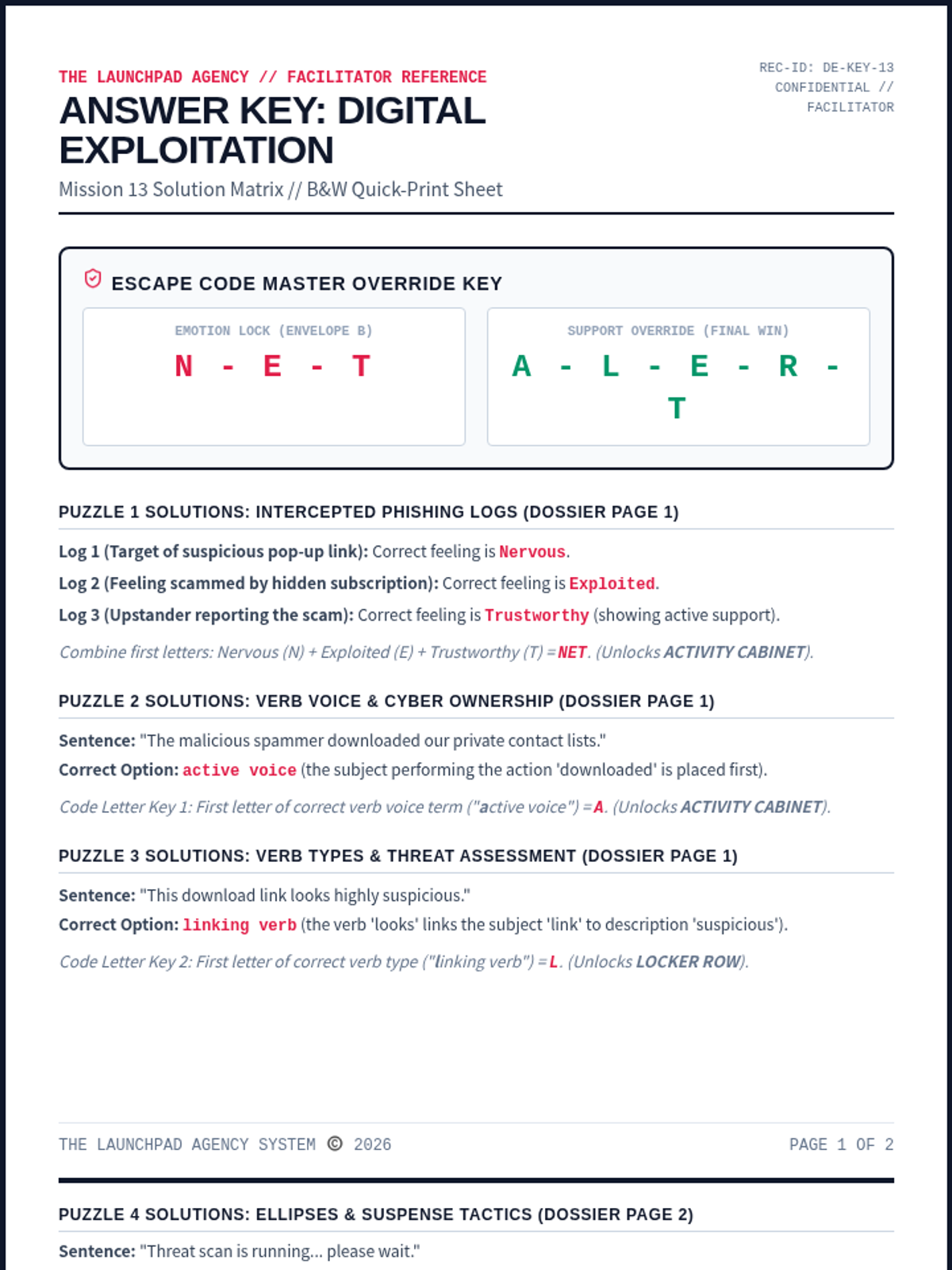
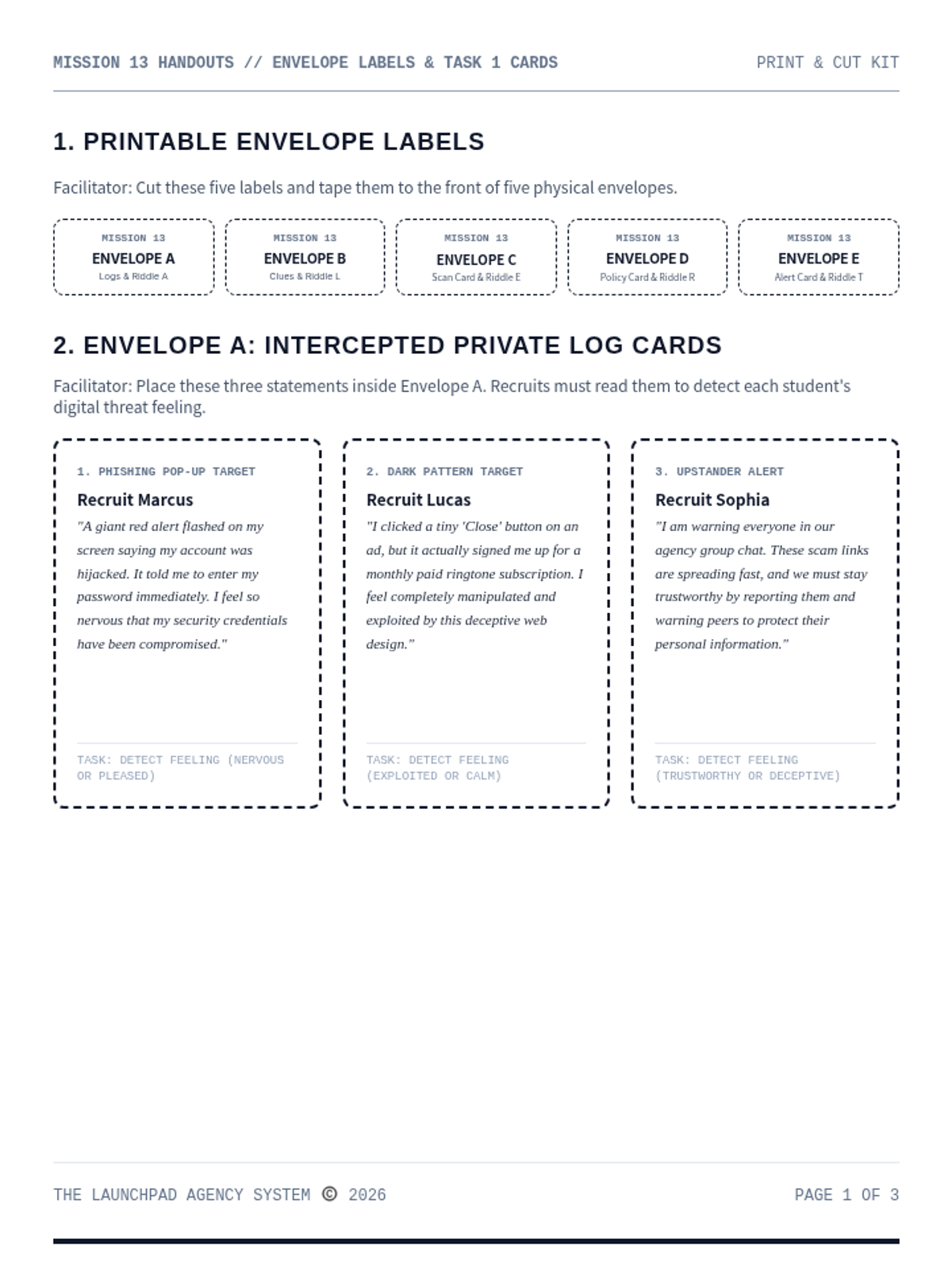
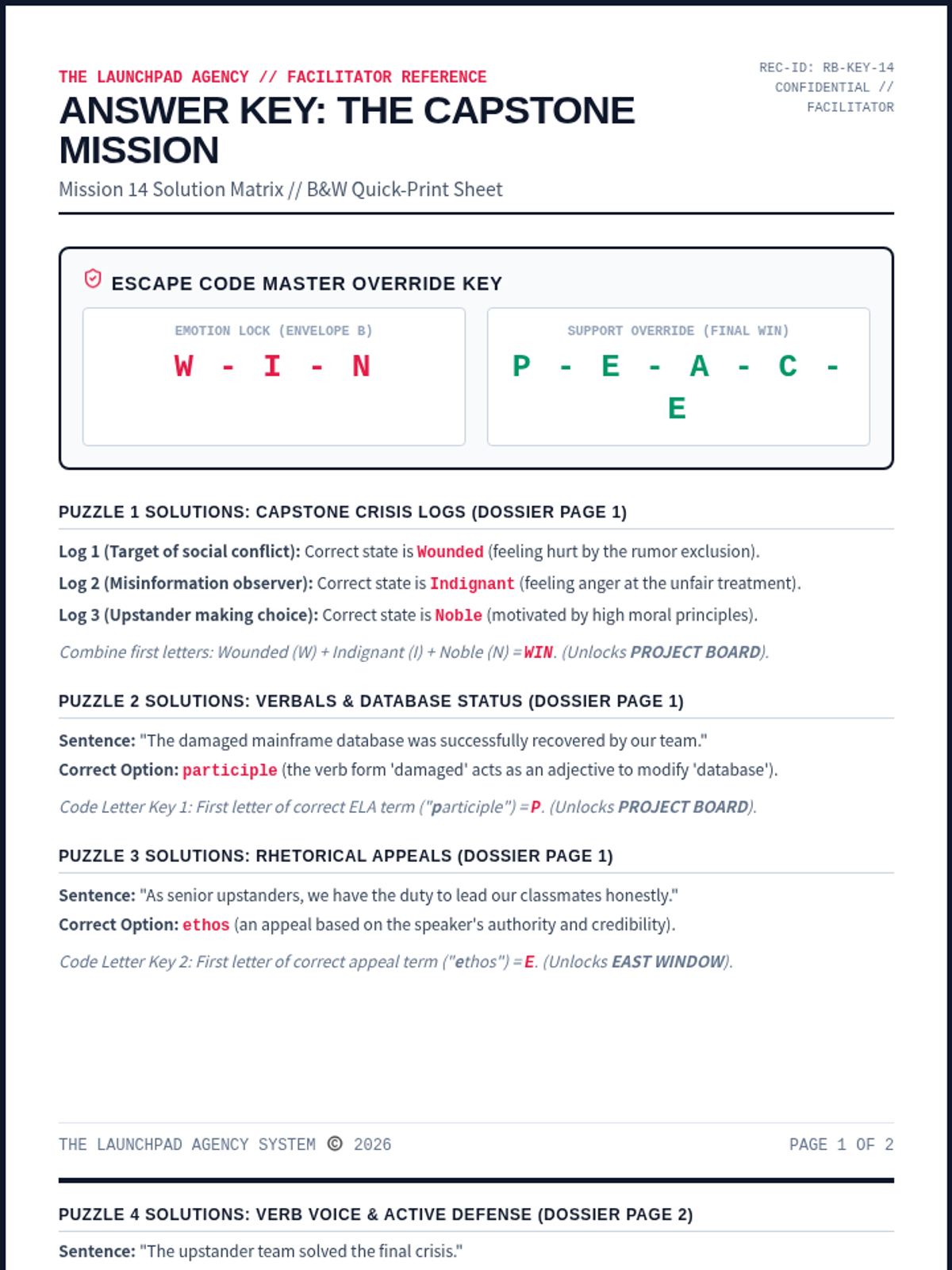
A high-stakes digital safety escape room focused on identifying online scams, recognizing manipulative dark patterns, and protecting personal data. Recruits analyze active verb voices, linking verbs, ellipses punctuation, and deceptive tones to decode the final alert.
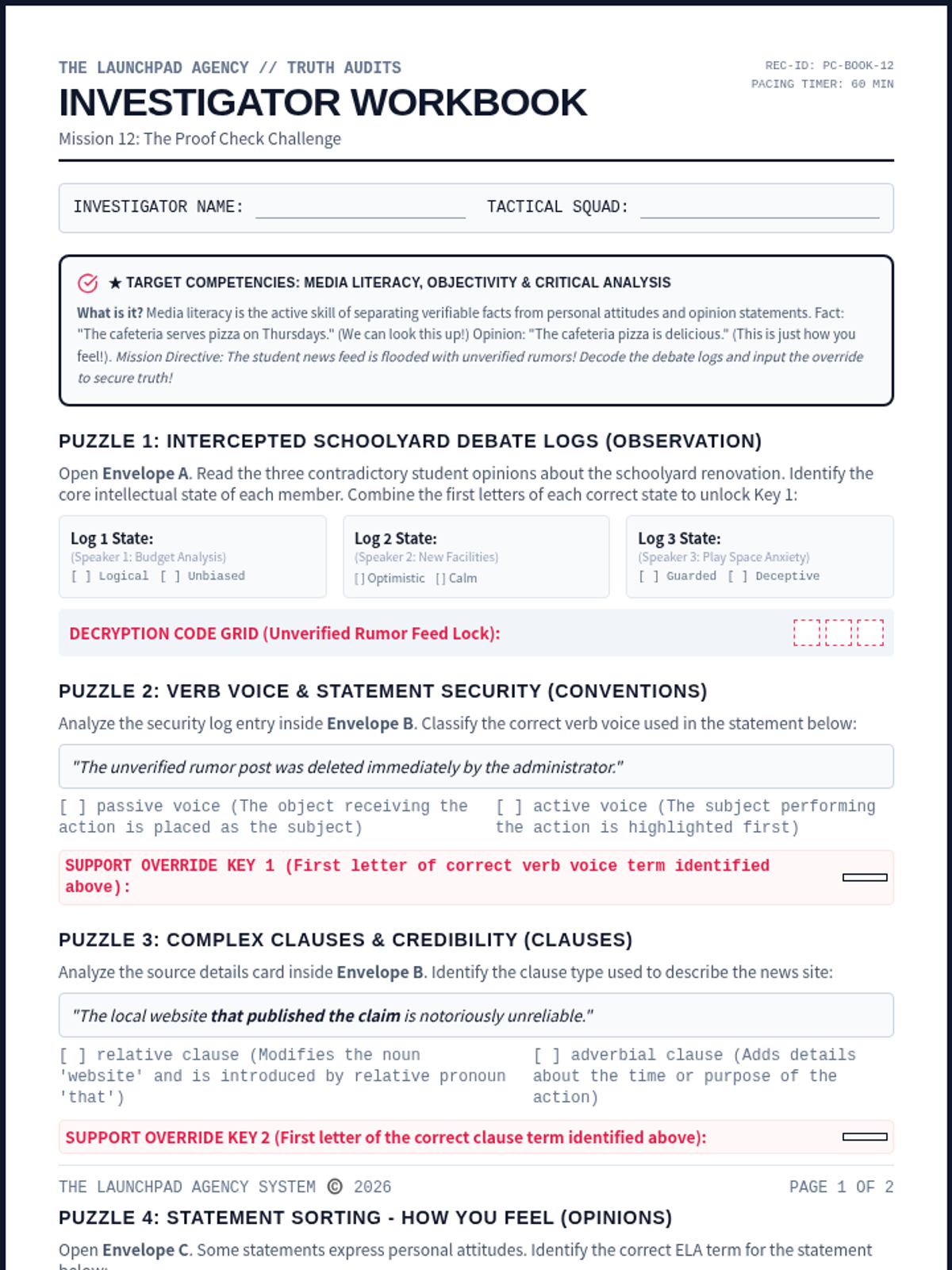
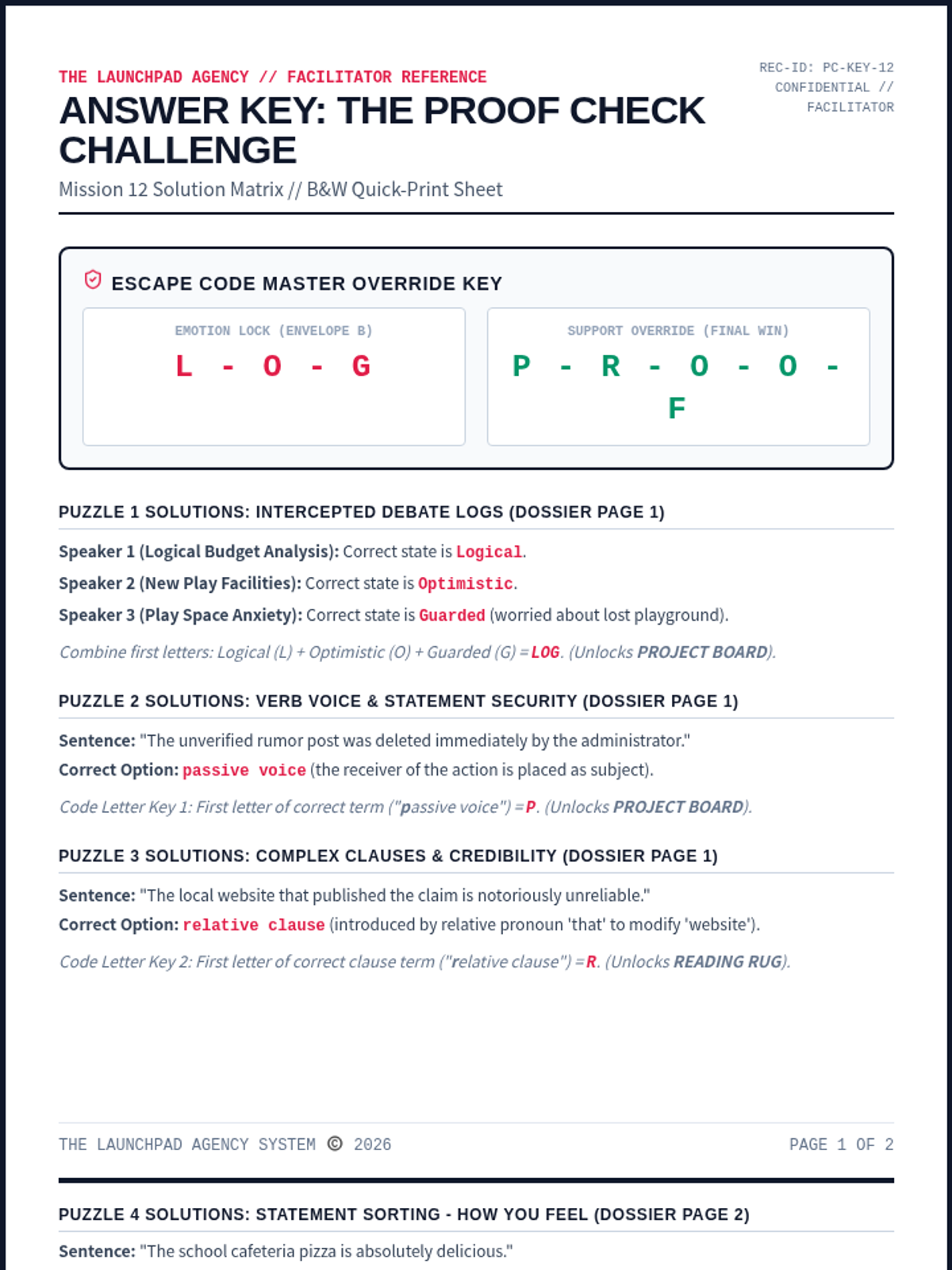
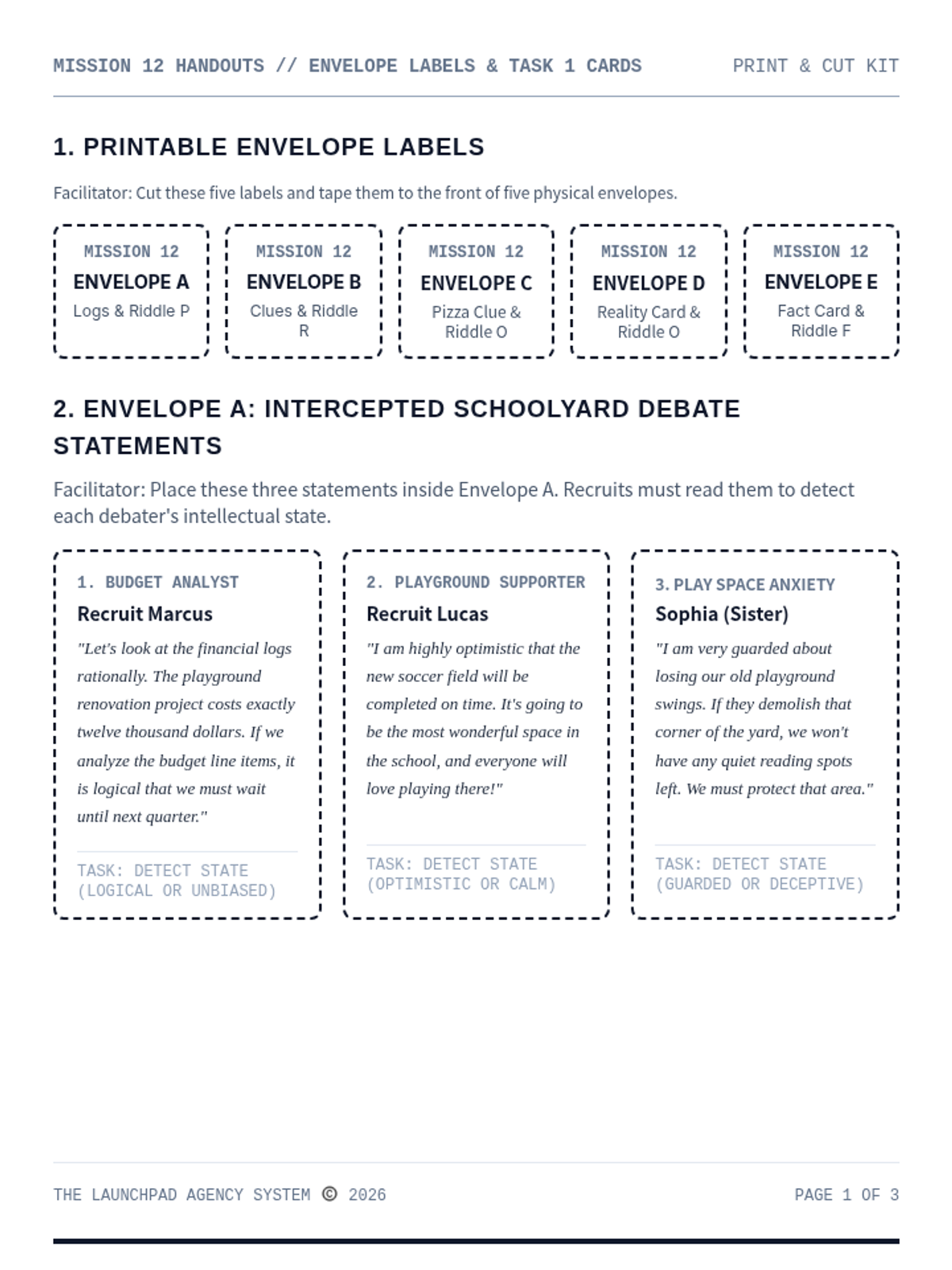
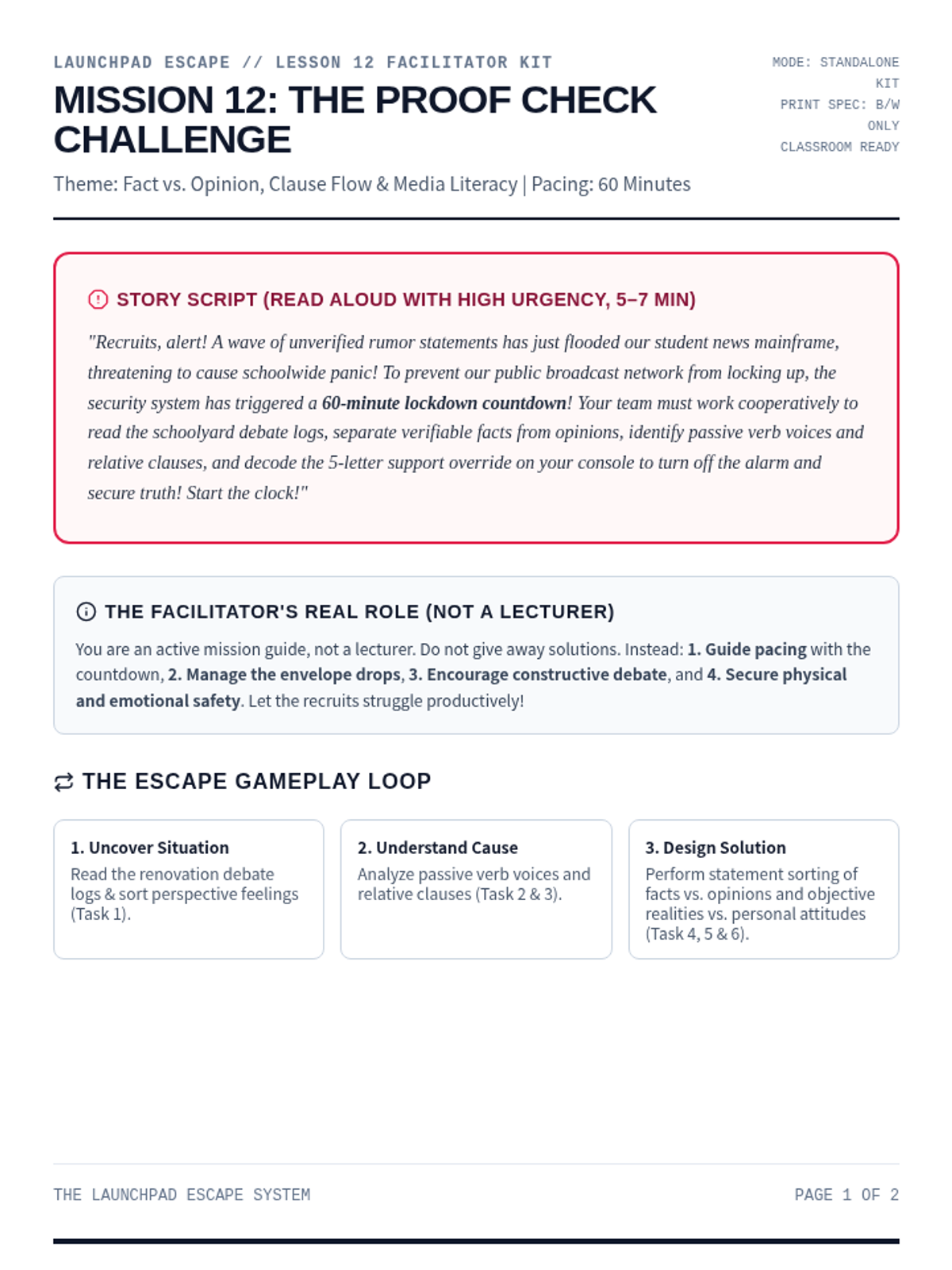
An advanced media literacy and communication escape room for Ages 13-15. Recruits distinguish facts from opinions, analyze objective realities, sort personal attitudes, and input the override PROOF to secure the school news mainframe.
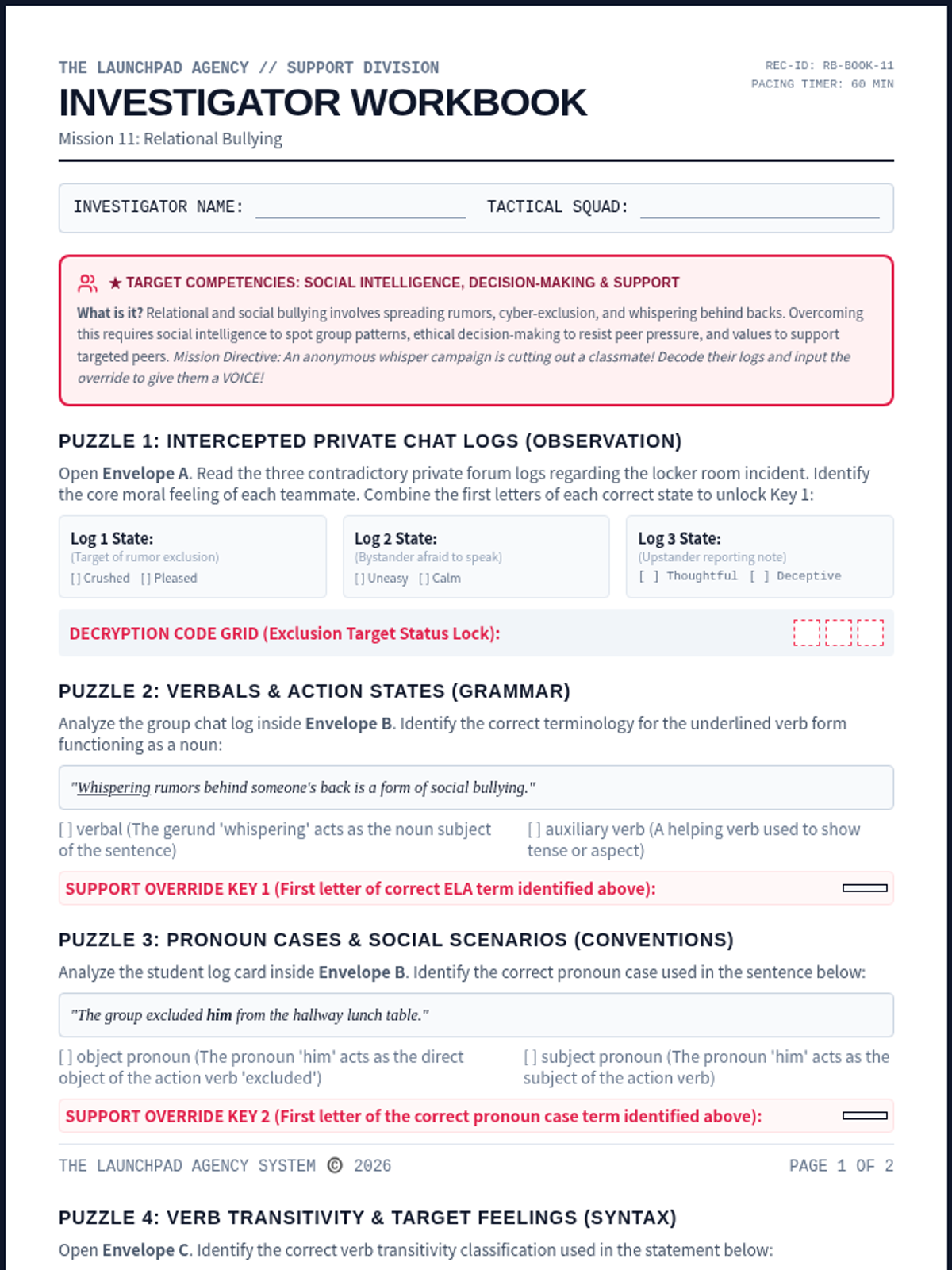
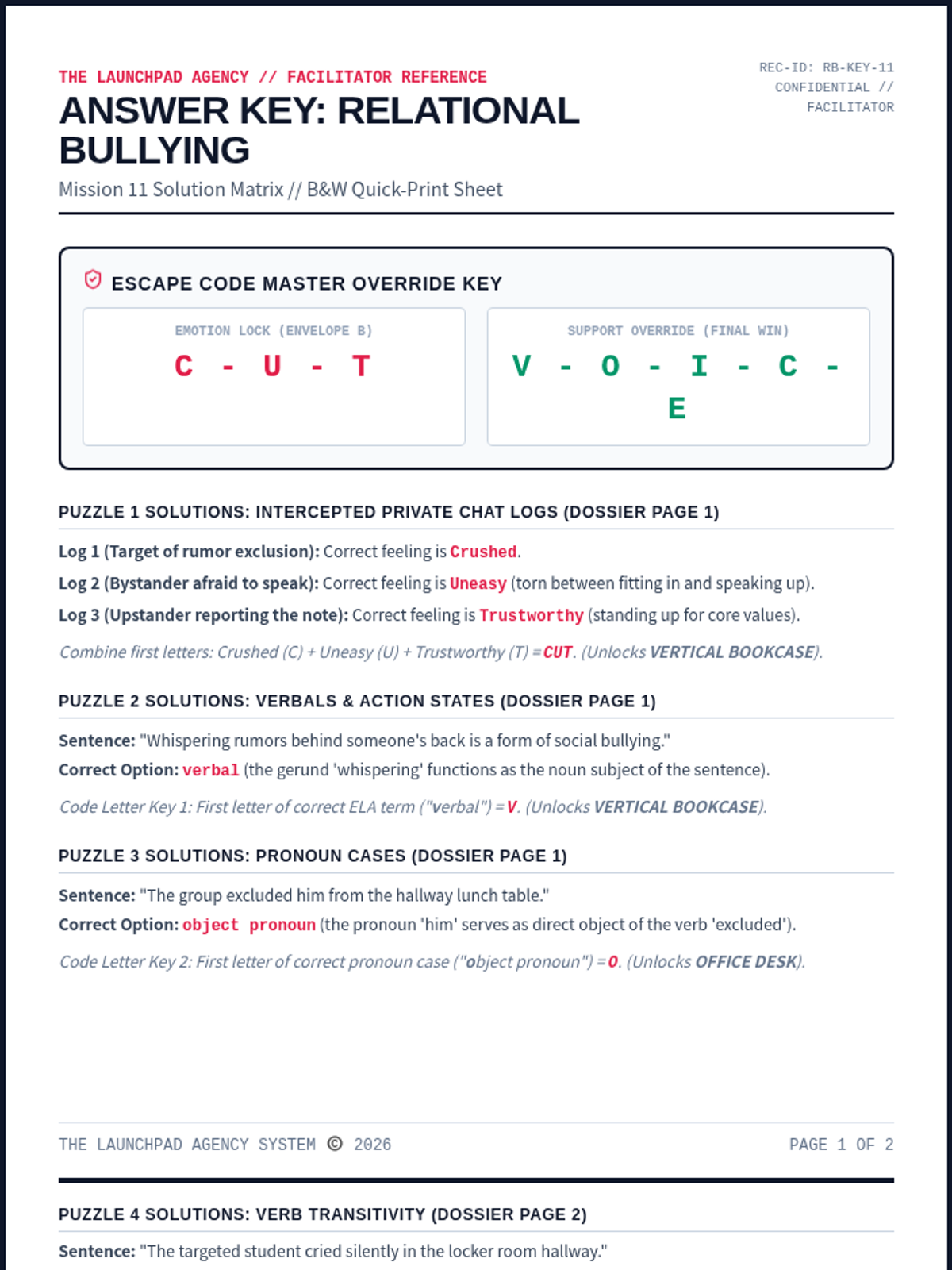
A collaborative social-emotional escape room focused on identifying relational and social bullying, supporting target peers, and standing up to cyber/verbal exclusion. Recruits analyze verb verbal types, pronoun cases, intransitive verbs, and compound syntax to decode the final override.
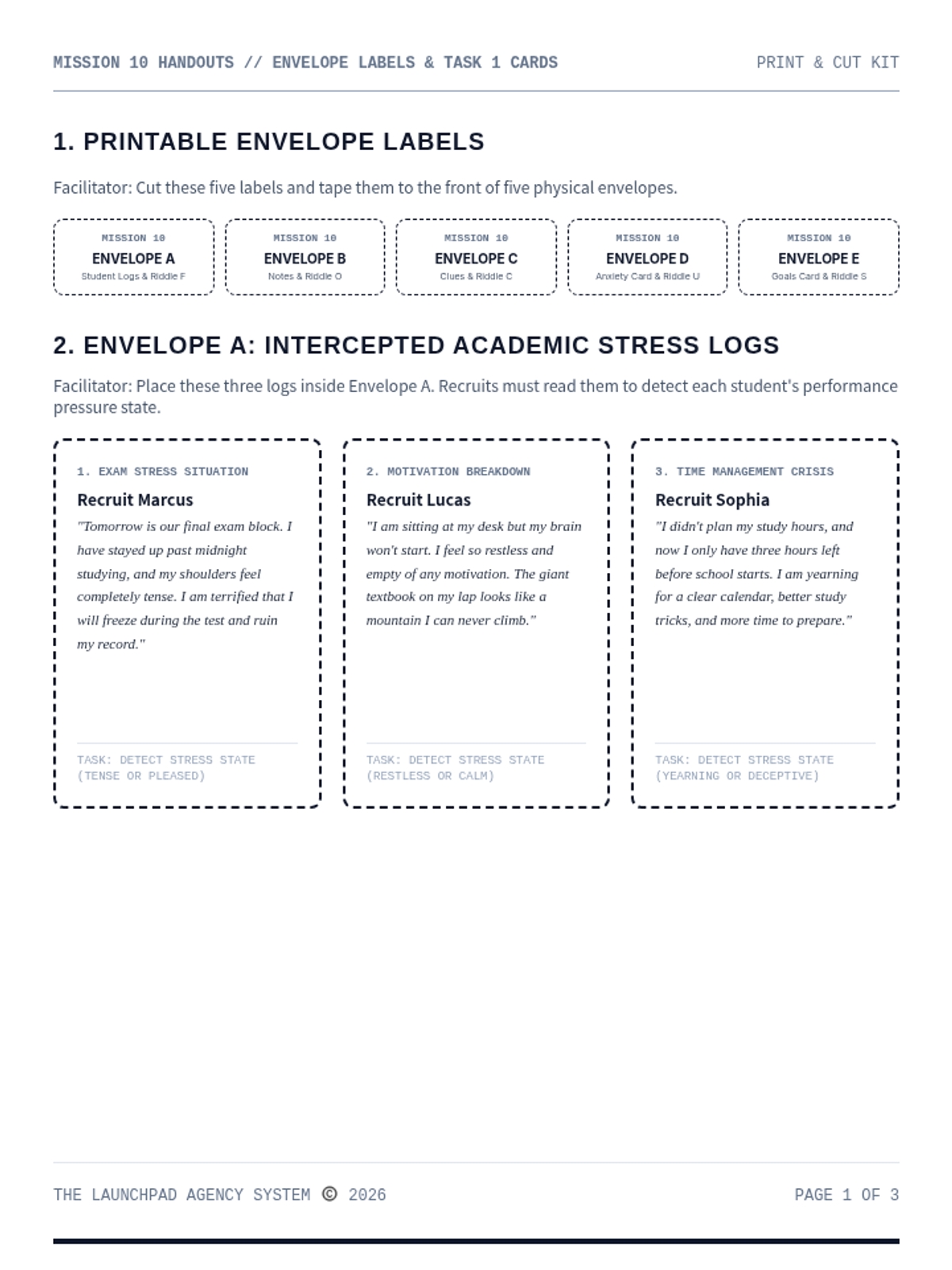
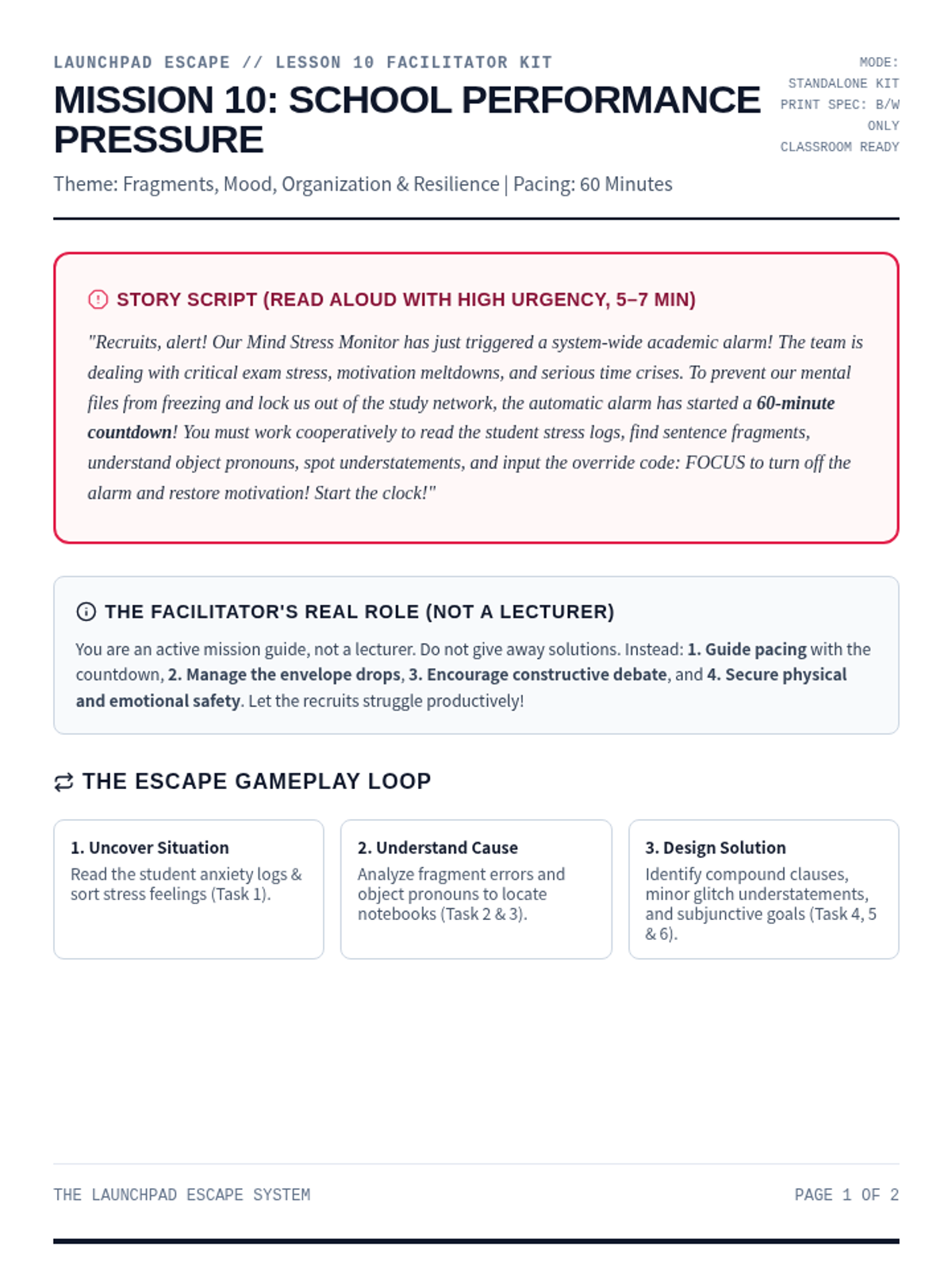
An immersive and strategic escape room focused on managing academic stress, avoiding burnout, and planning study habits. Recruits analyze student logs under performance anxiety, build efficient schedules, and decode the override to restore positive motivation.
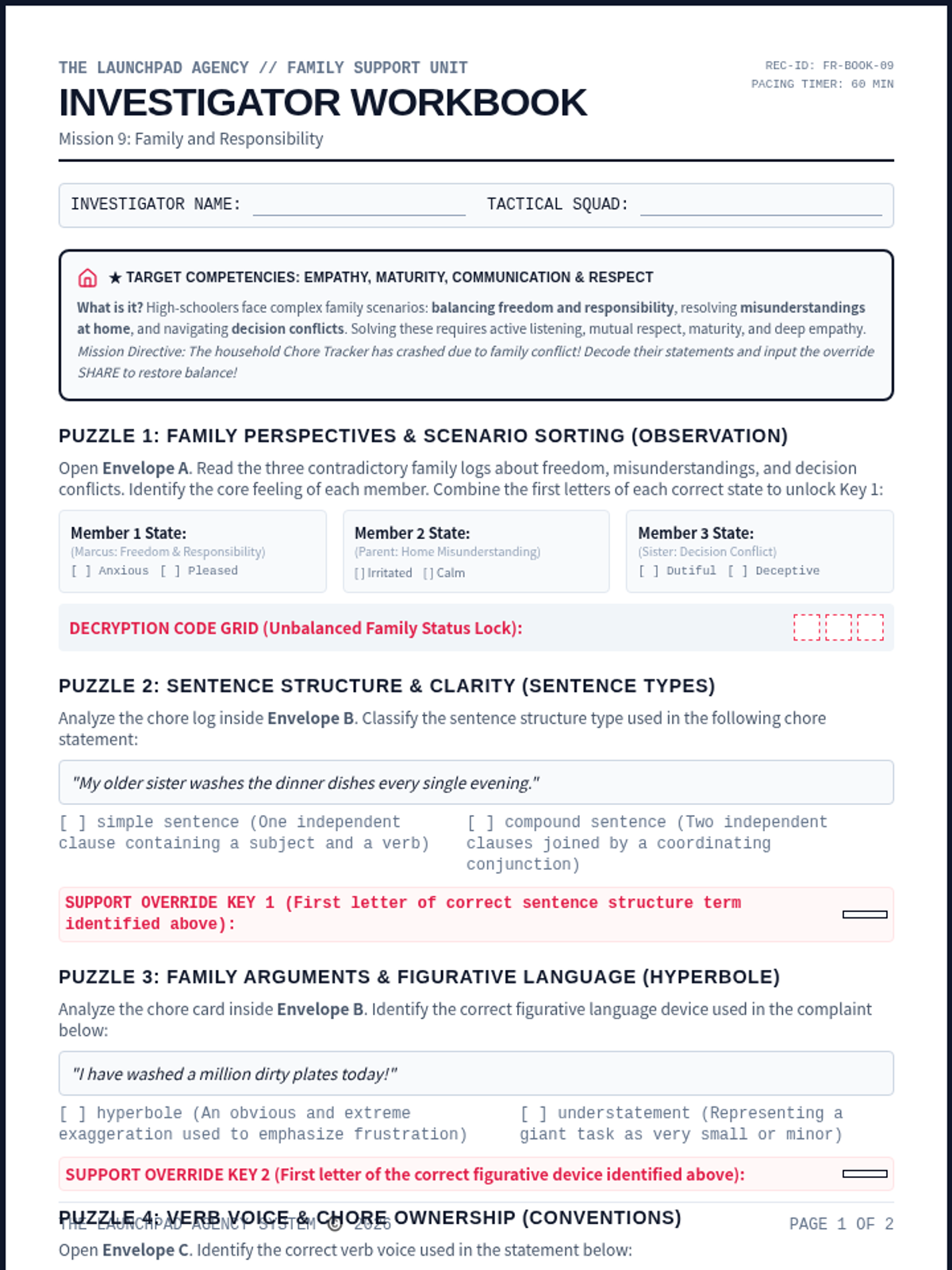
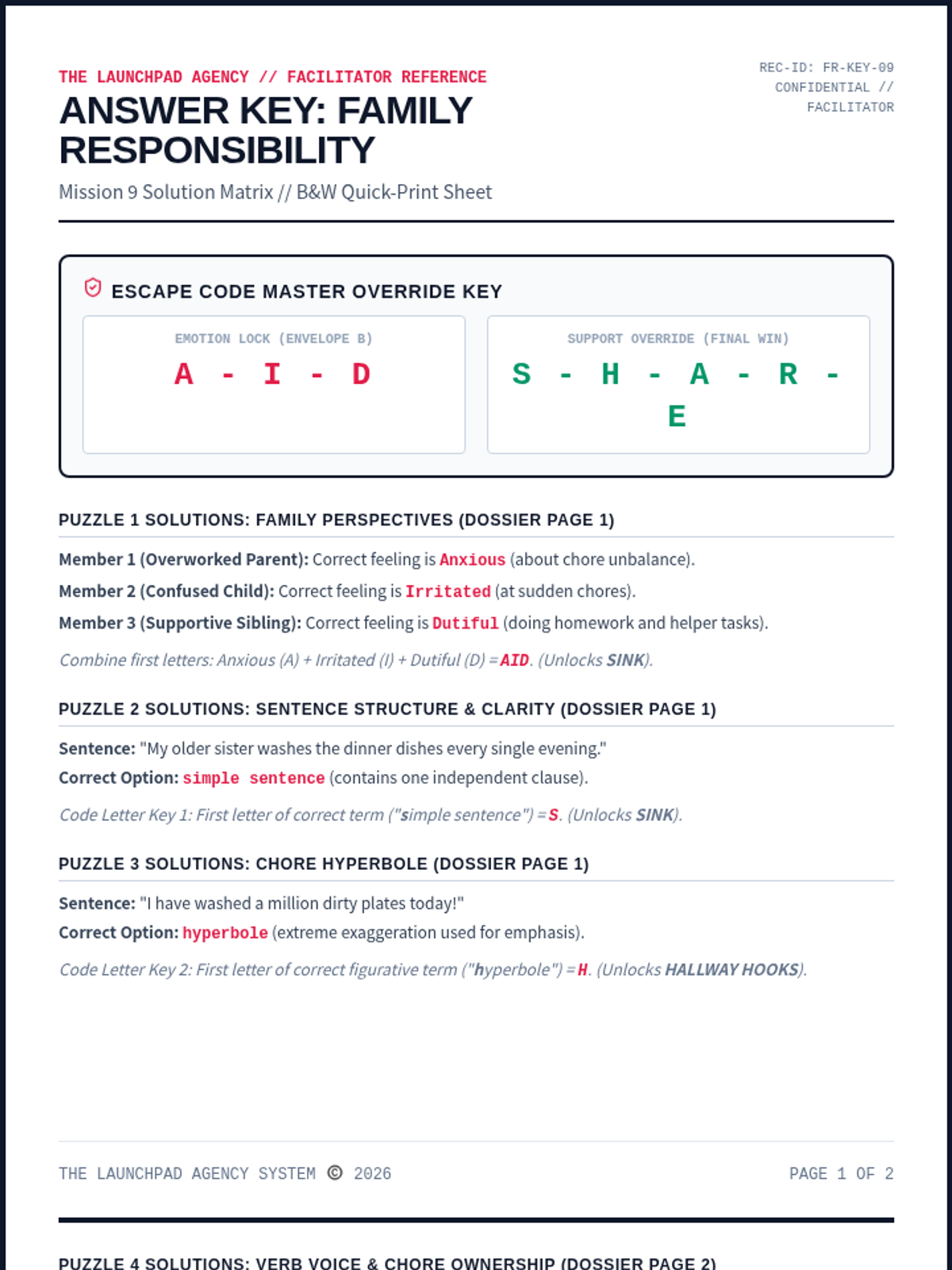
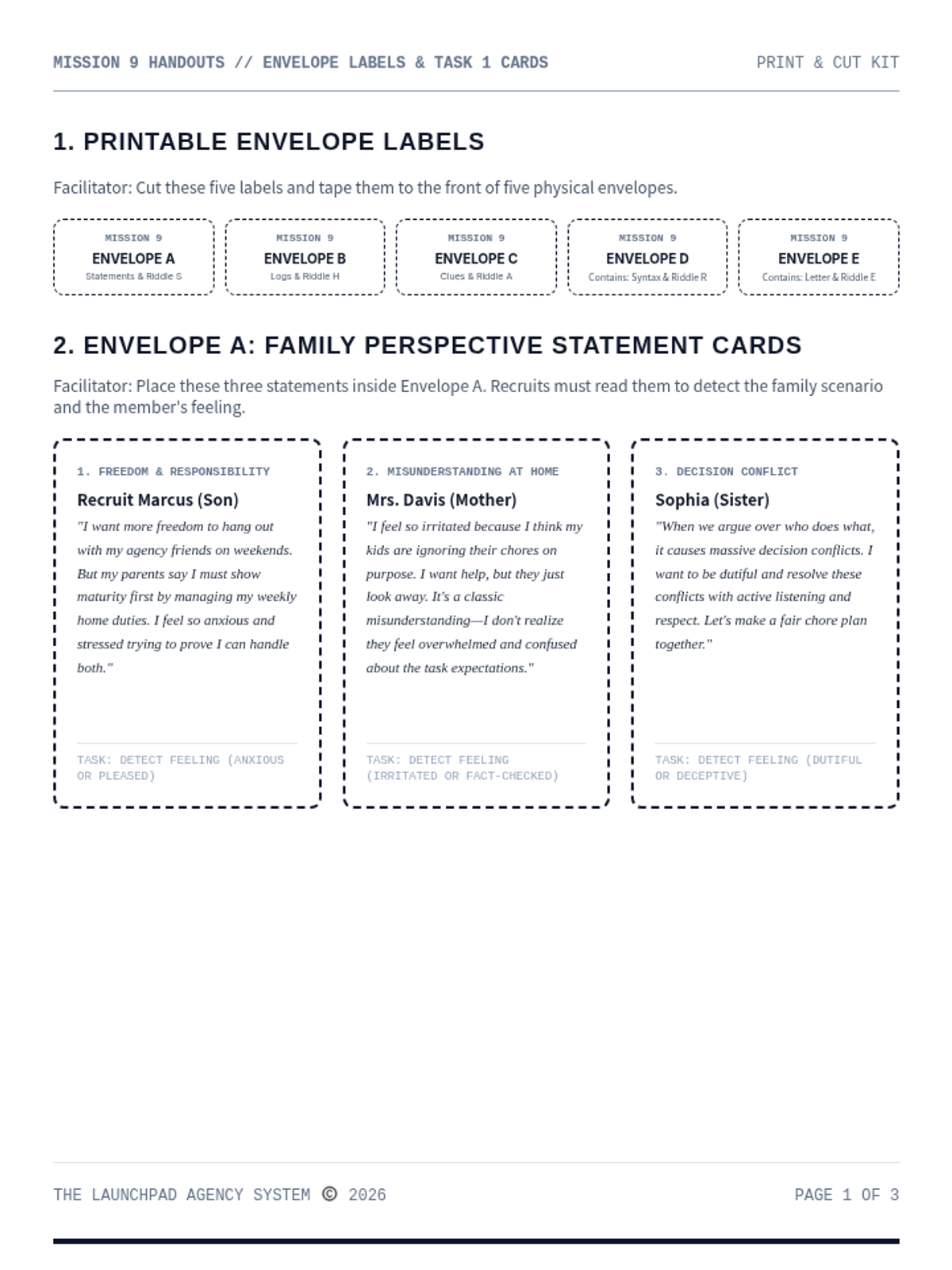
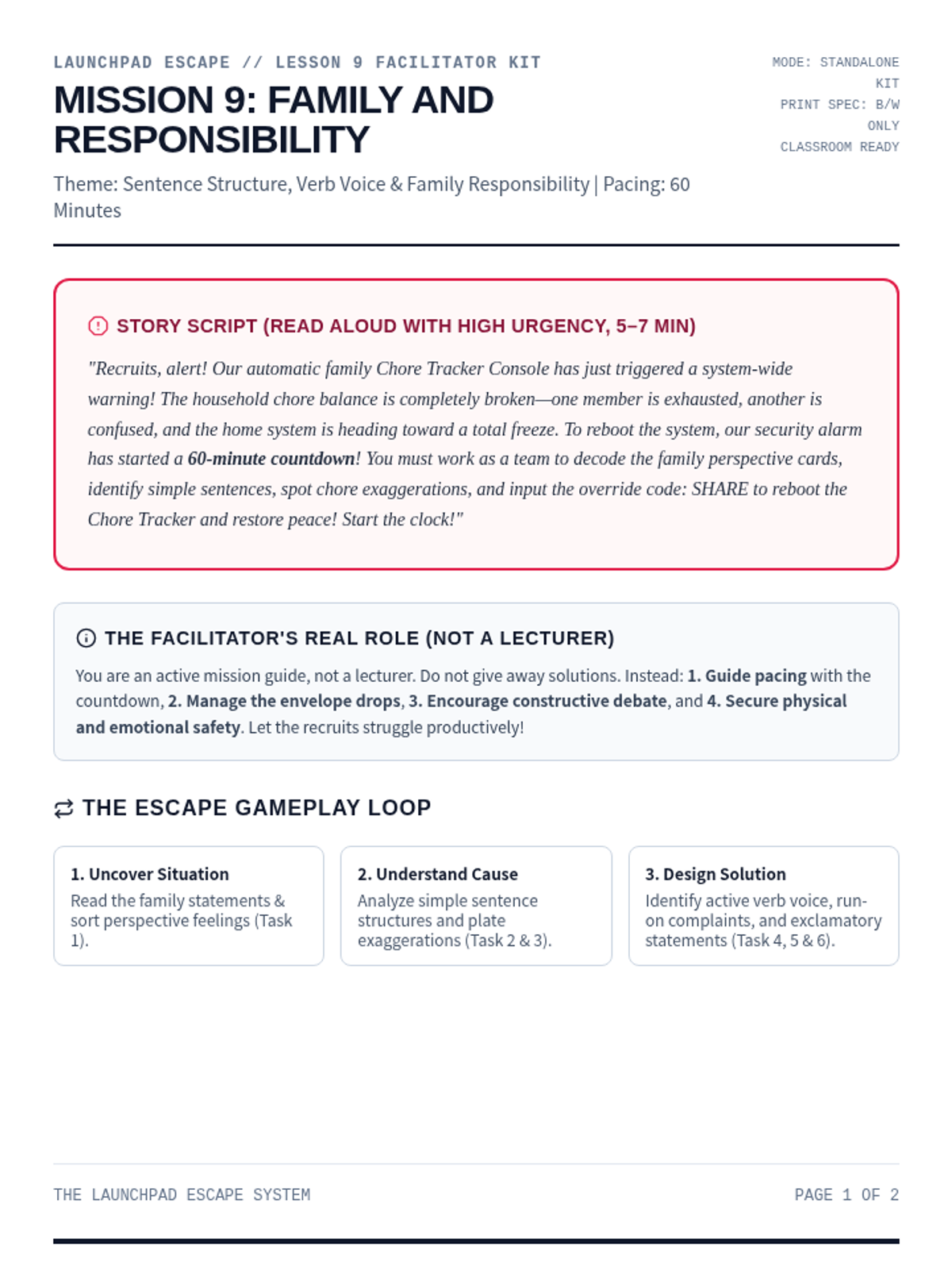
A cooperative and empathetic escape room focused on managing family duties and household balance. Recruits analyze parent/child perspective claims, organize daily chores timelines, and decode the final compromise override.
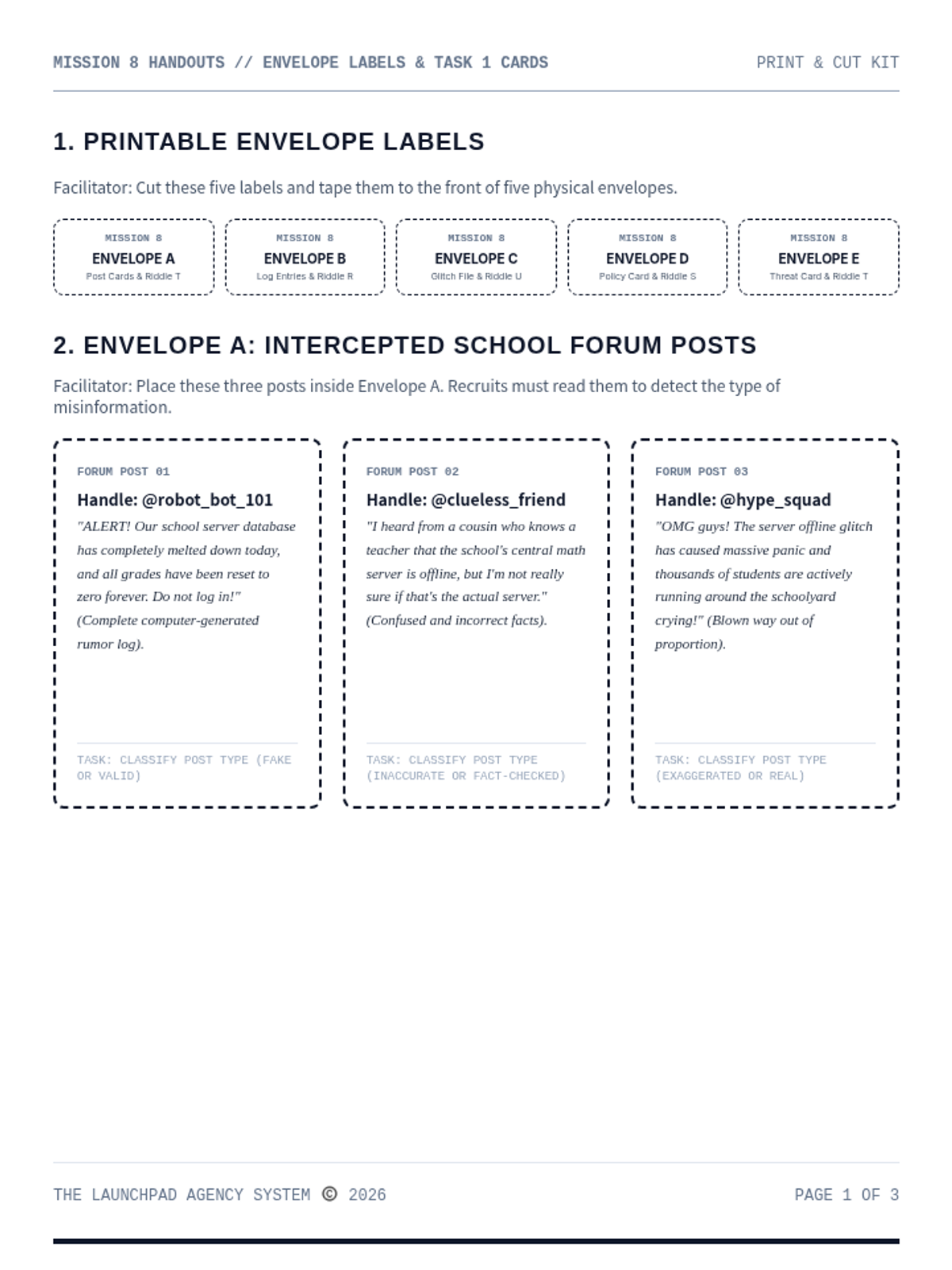
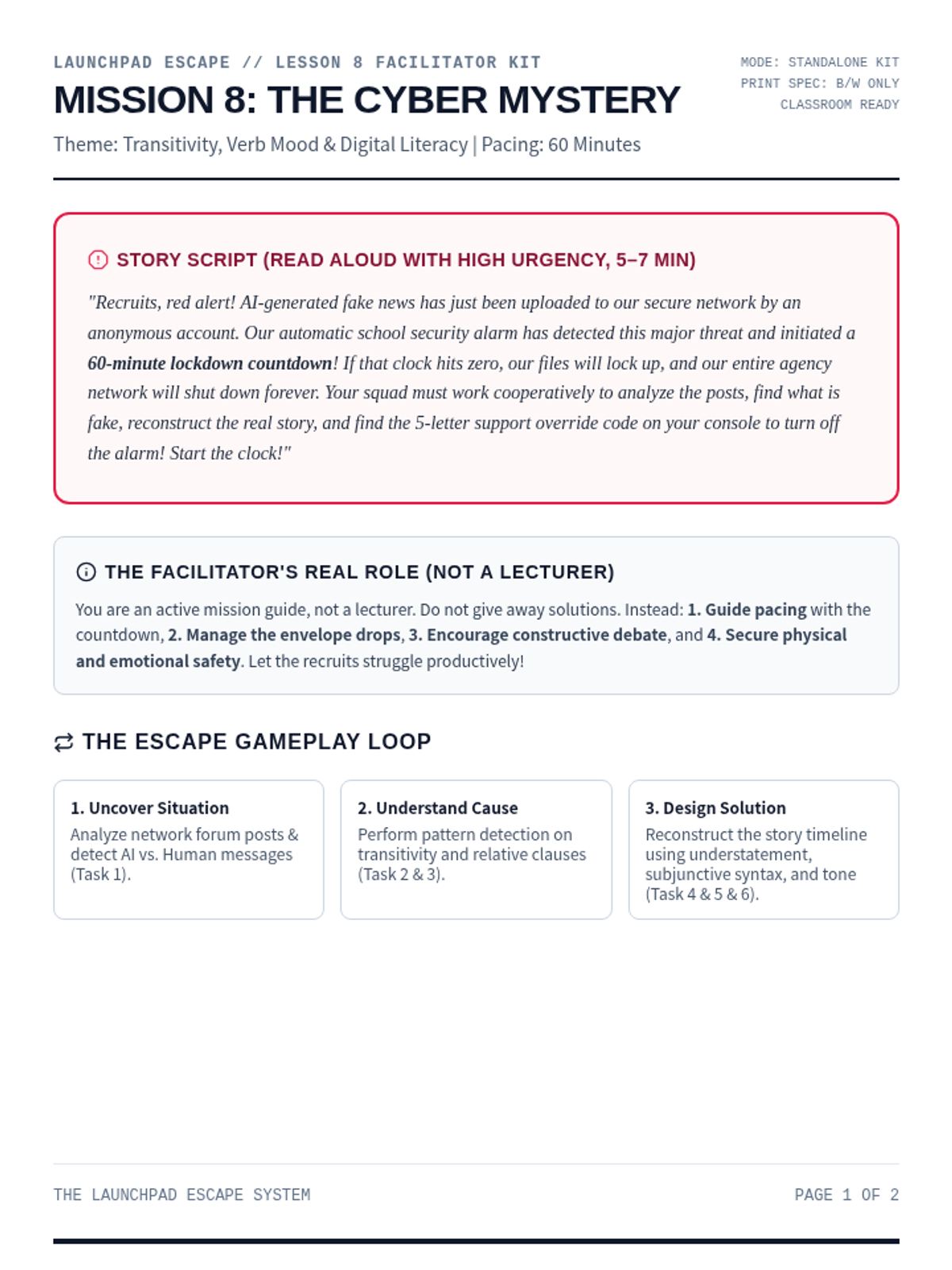
An advanced digital literacy and collaborative cryptography escape room for Ages 14-16. Recruits analyze verb transitivity, relative clauses, subjunctive moods, and tone to stop a school database wipe.
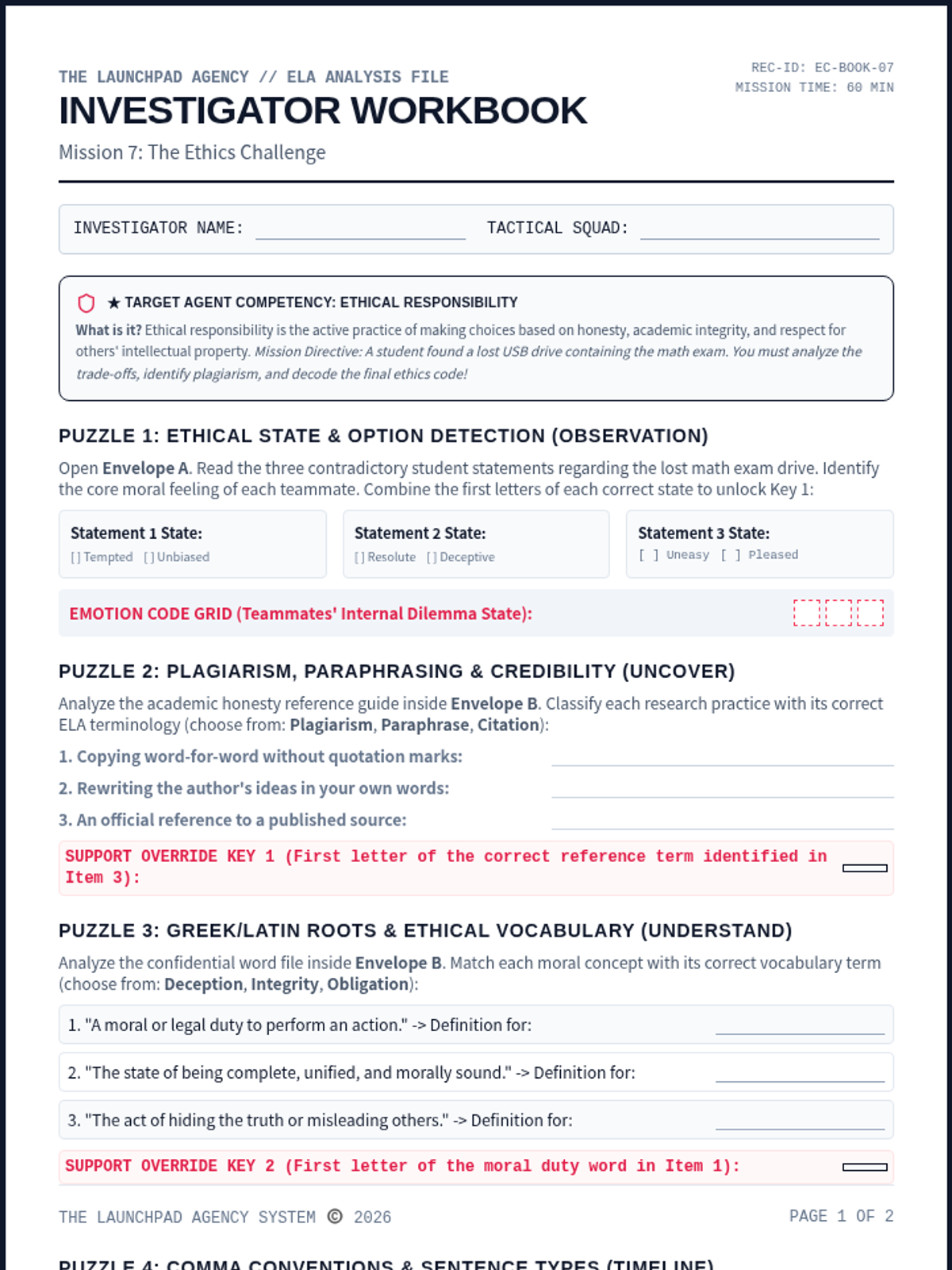
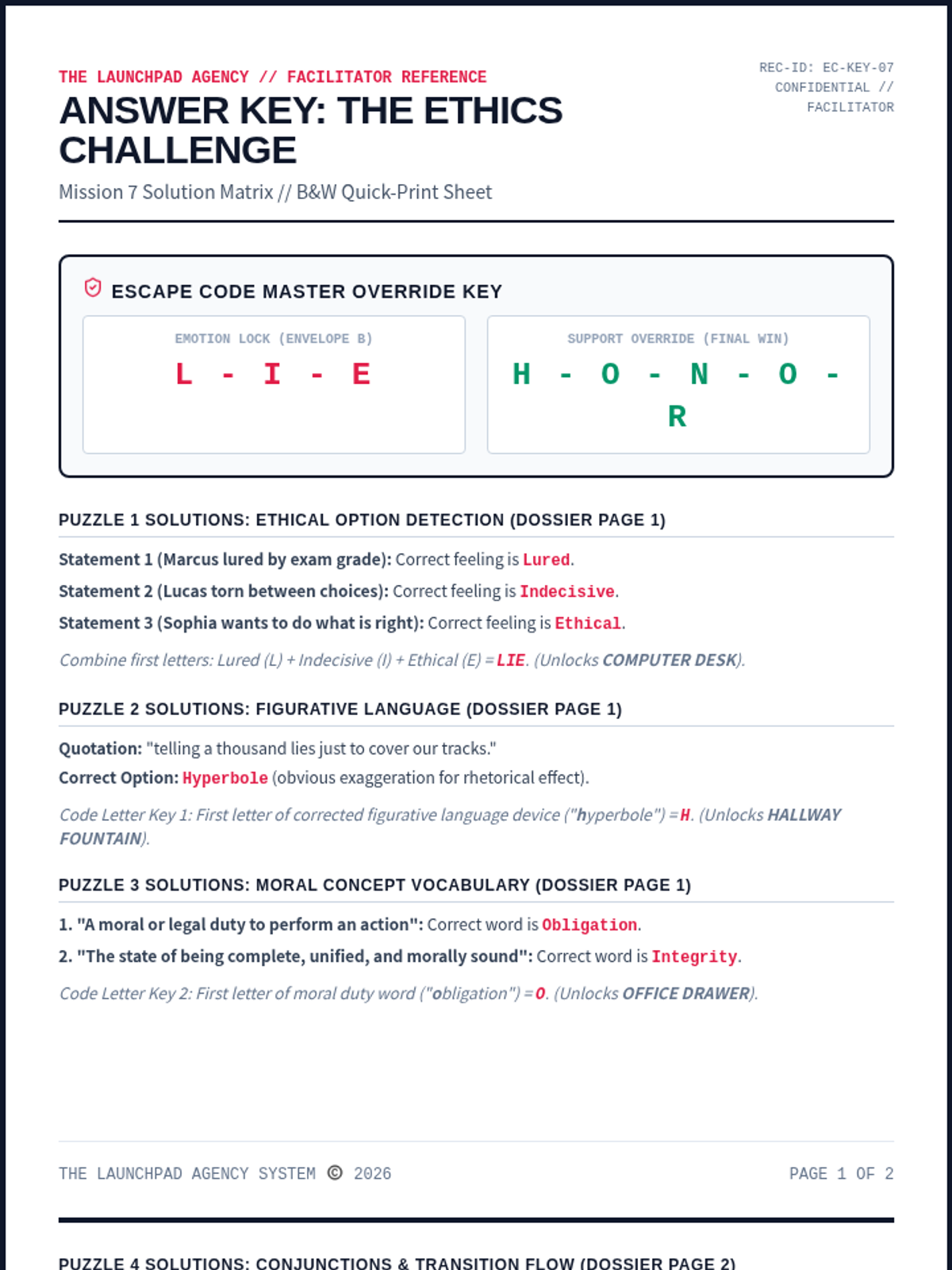
A high-stakes moral dilemma escape room for Ages 11-13. Recruits evaluate the trade-offs of academic honesty, identify plagiarism, analyze persuasive appeals, and decode the final ethics code.
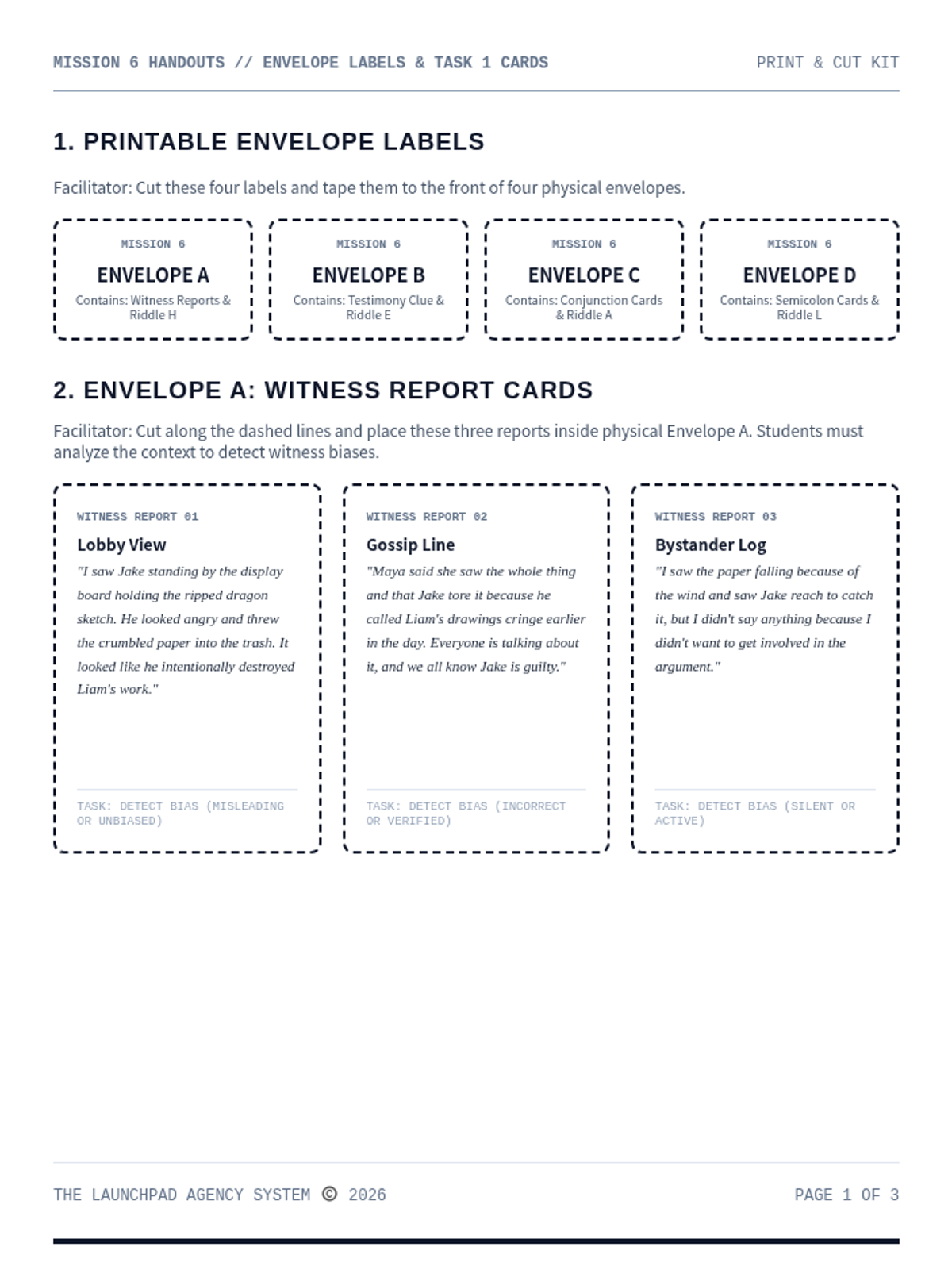
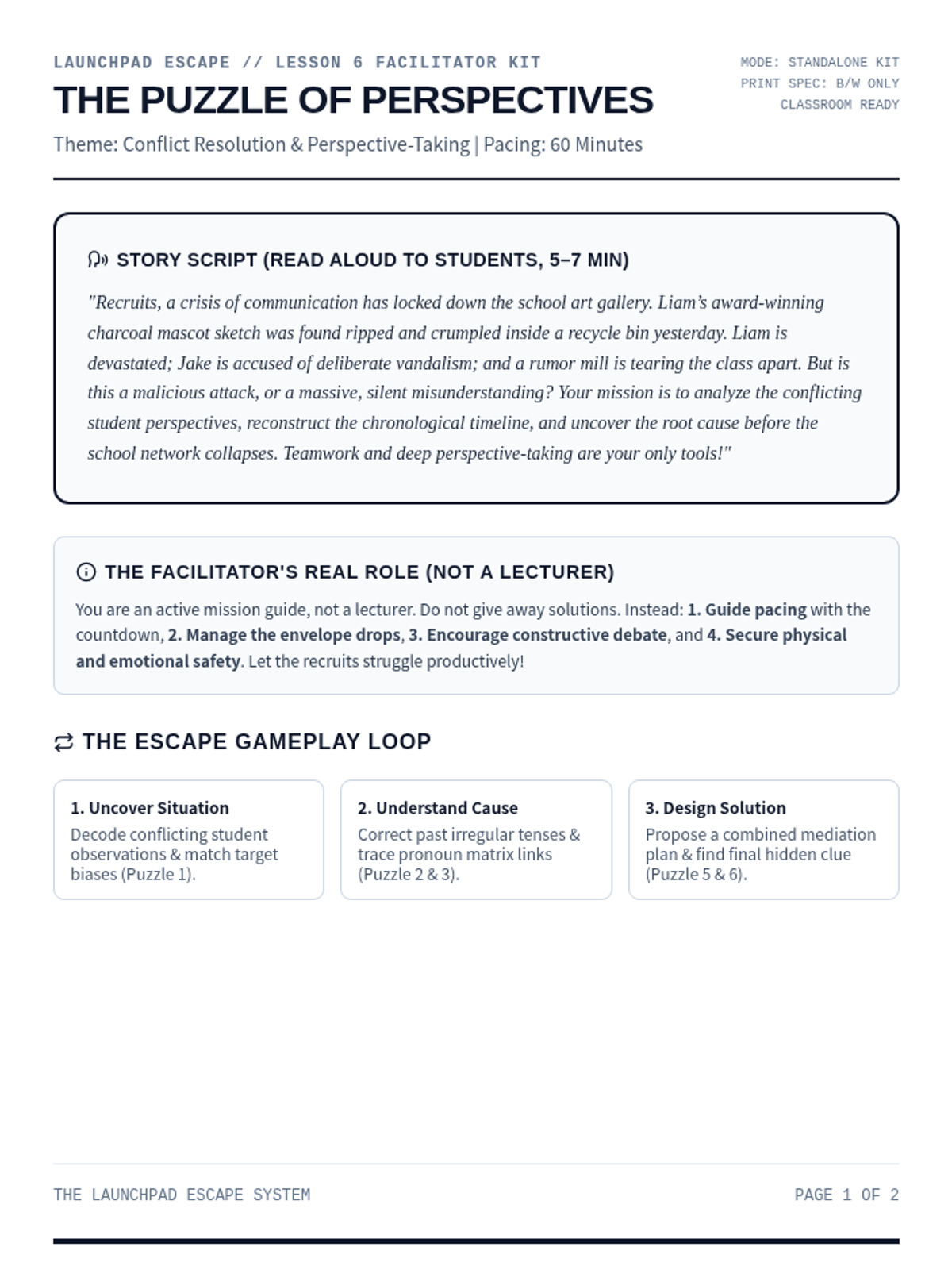
A high-stakes perspective-taking escape room. Recruits examine conflicting first-person accounts, analyze bias, reconstruct a unified timeline, and solve the override code.
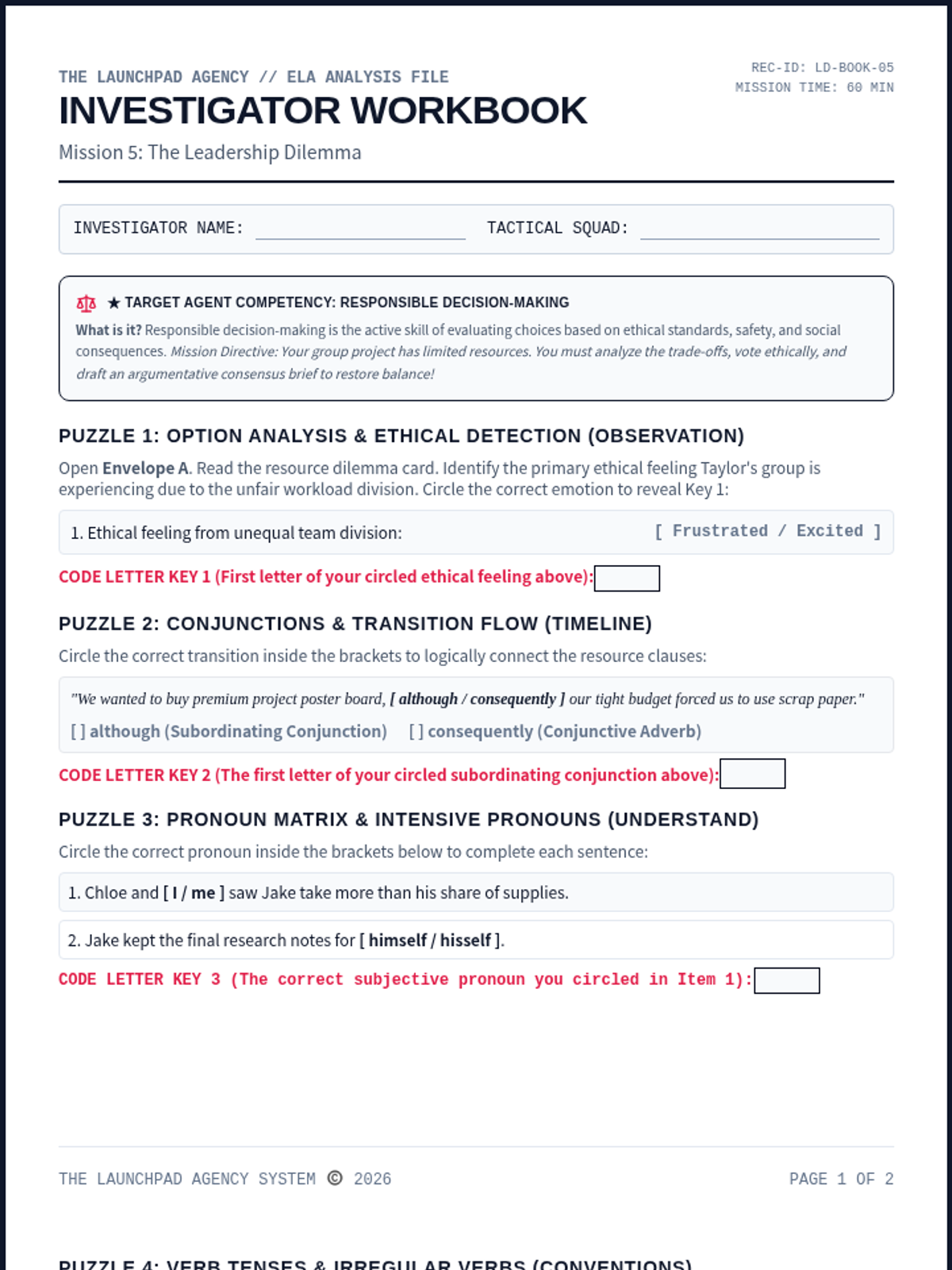
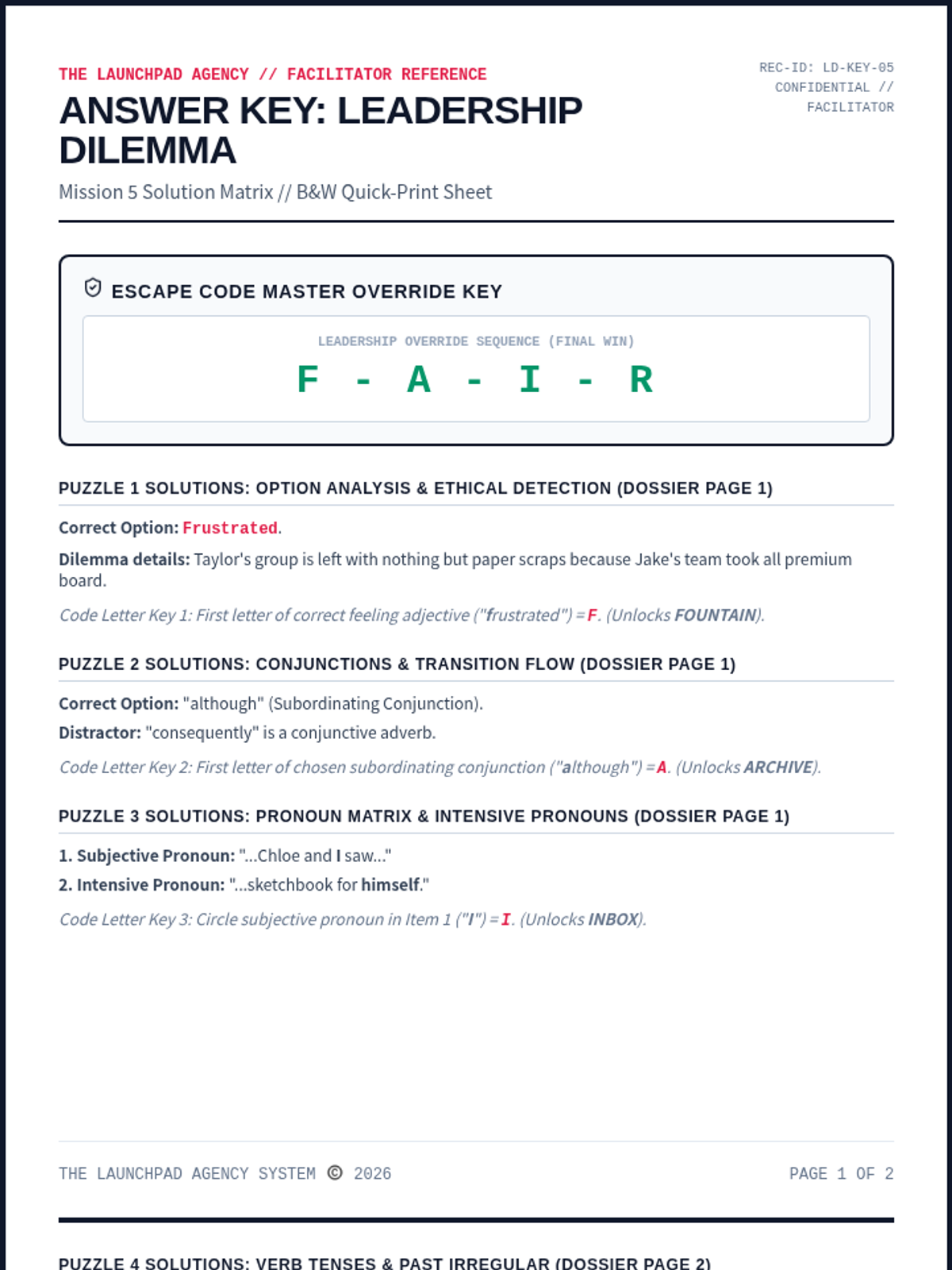
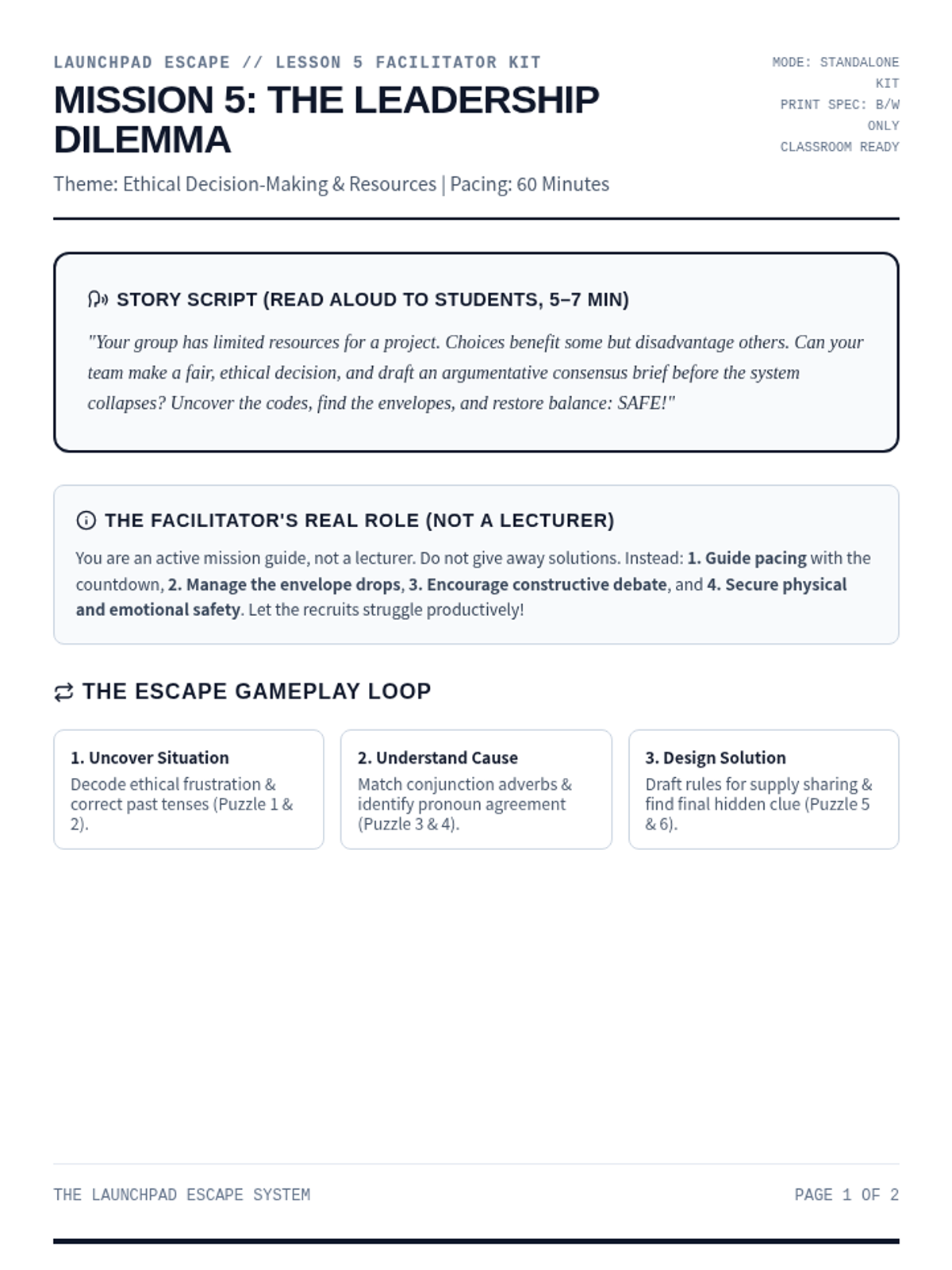
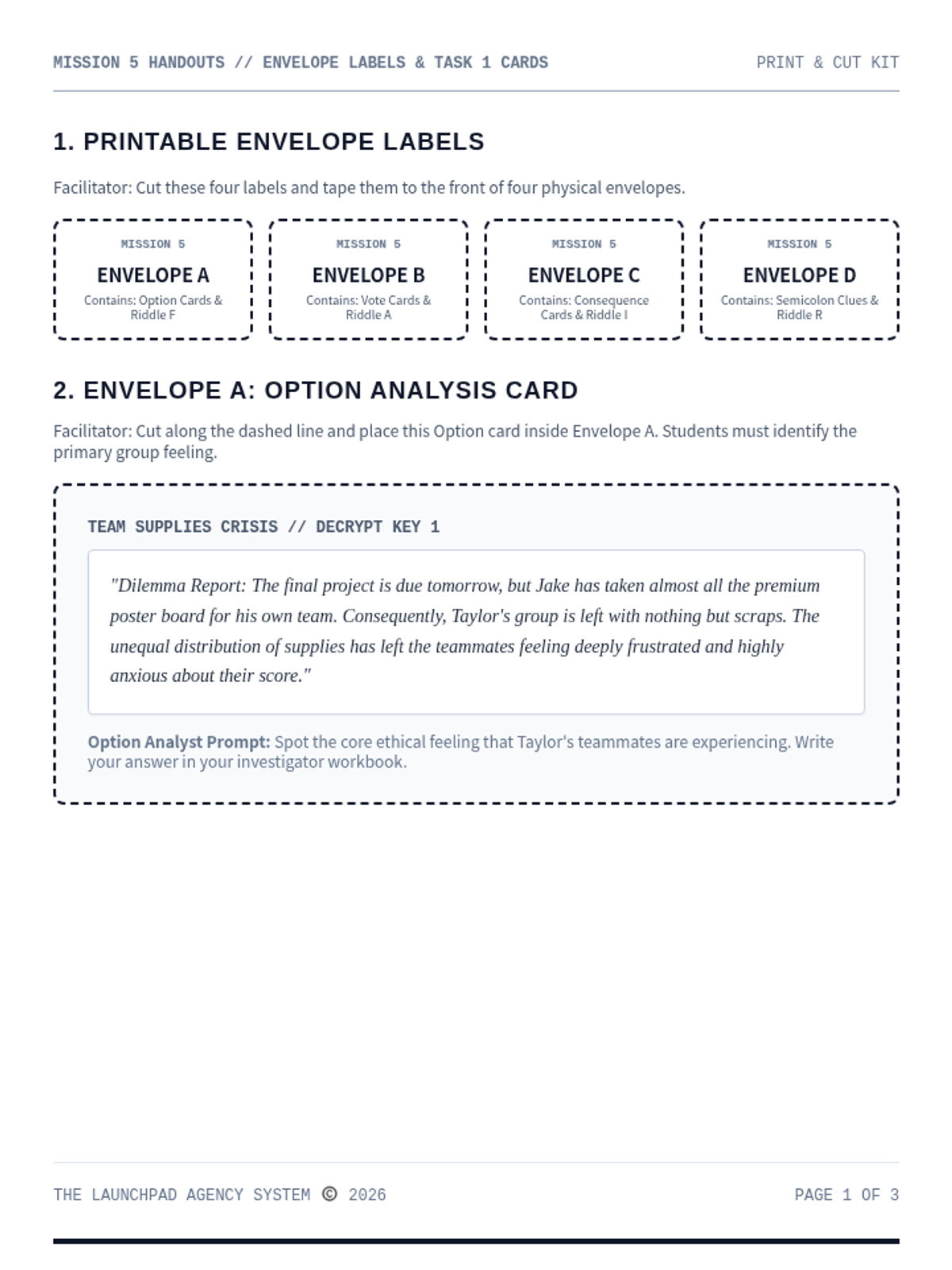
An ethical decision-making and systems-thinking escape room. Recruits analyze resource allocation options, vote on complex tradeoffs, map cascading social consequences, and draft an argumentative consensus brief to restore balance.
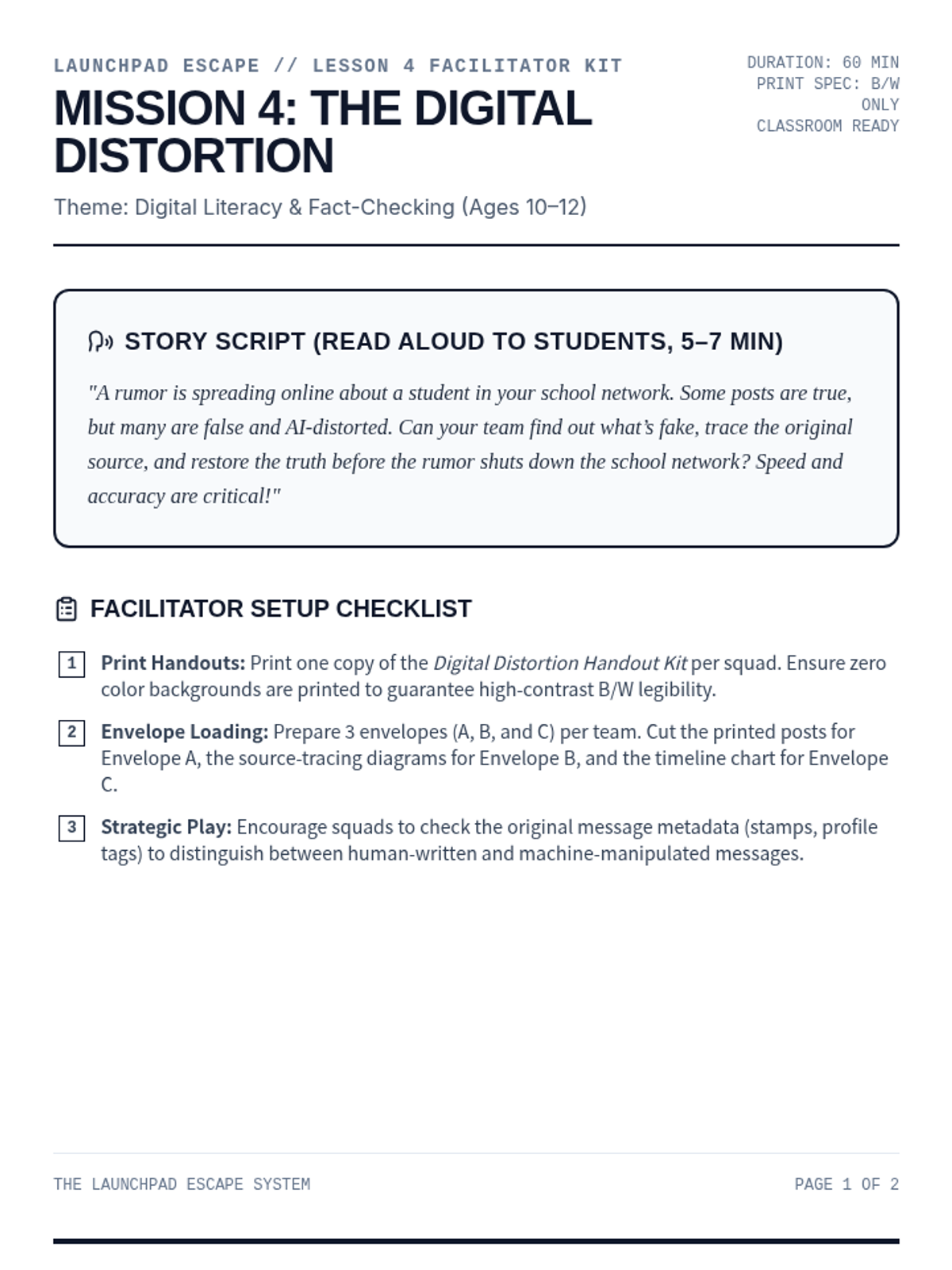
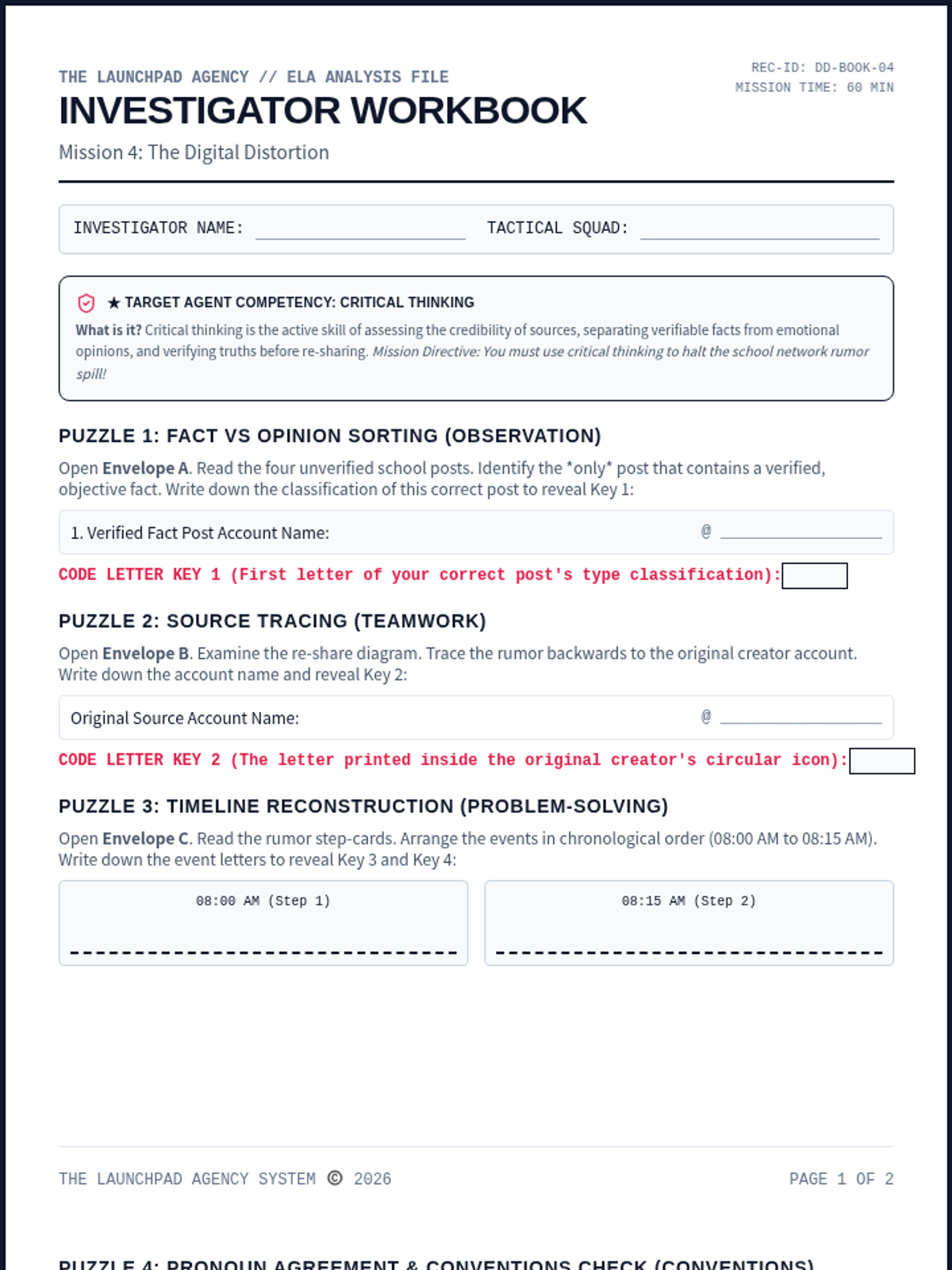
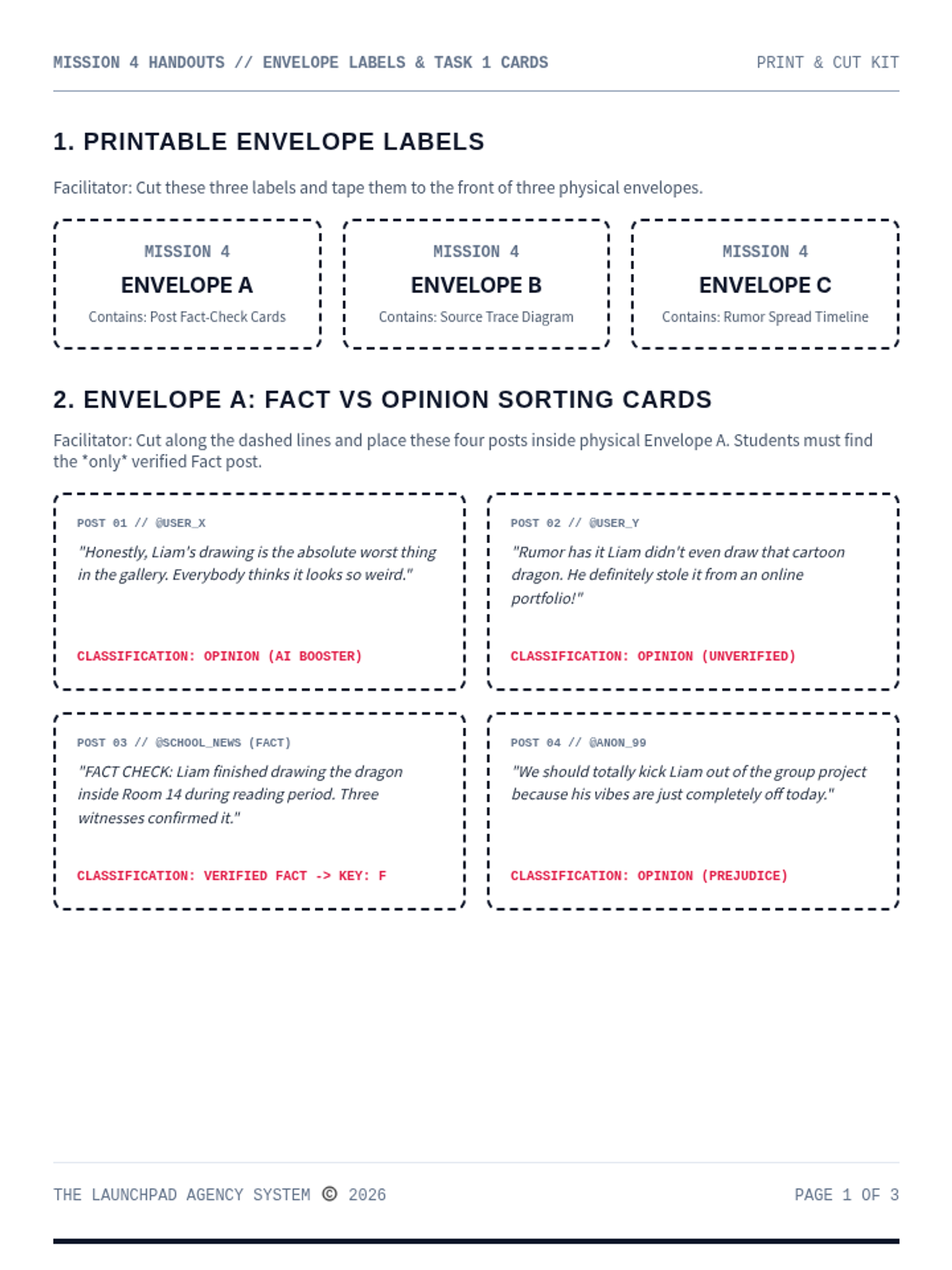
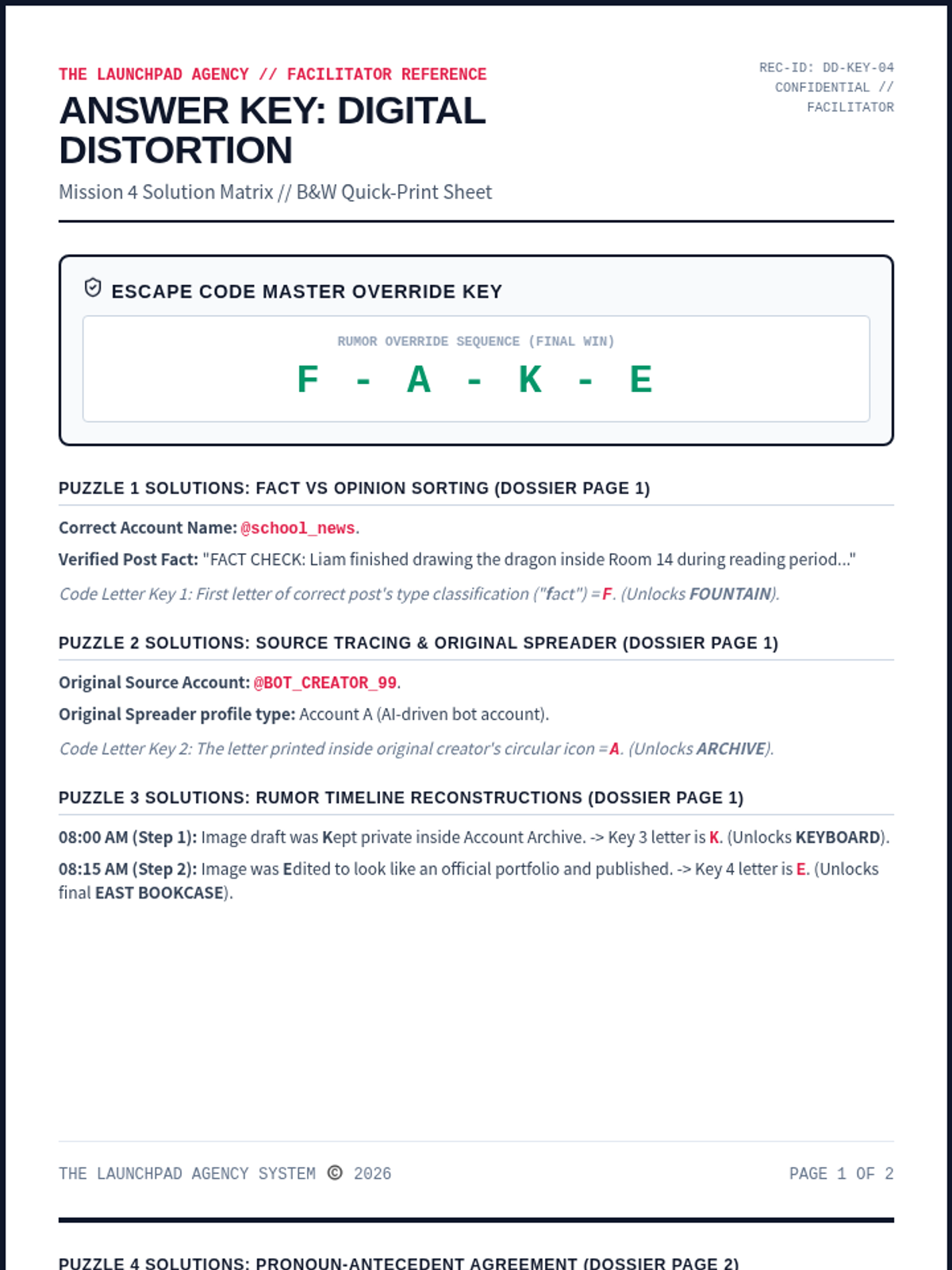
An online misinformation and fact-checking escape room for Ages 10-12. Recruits sort fact vs. opinion, trace original message sources, and reconstruct truth timelines to stop rumors.
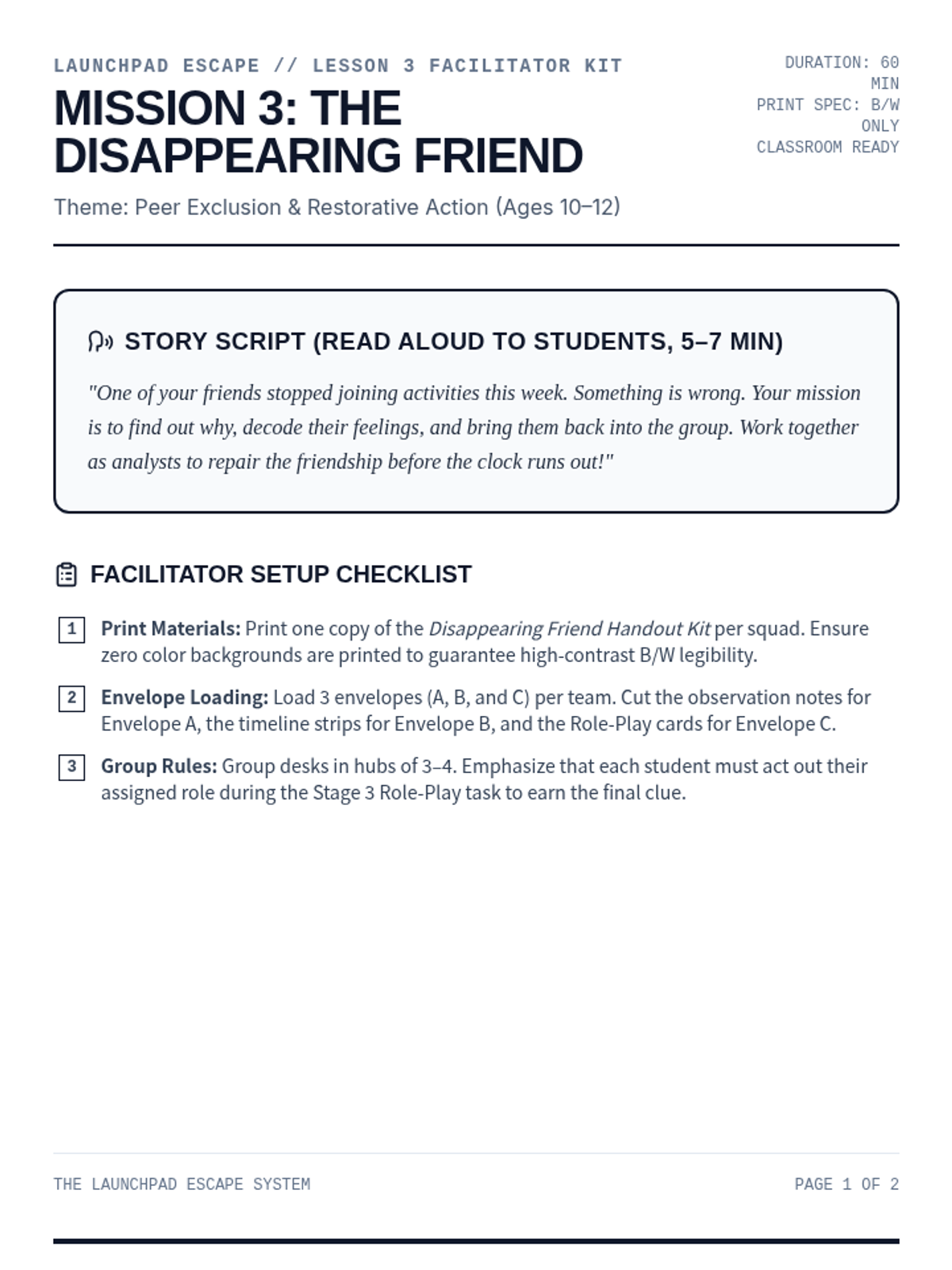
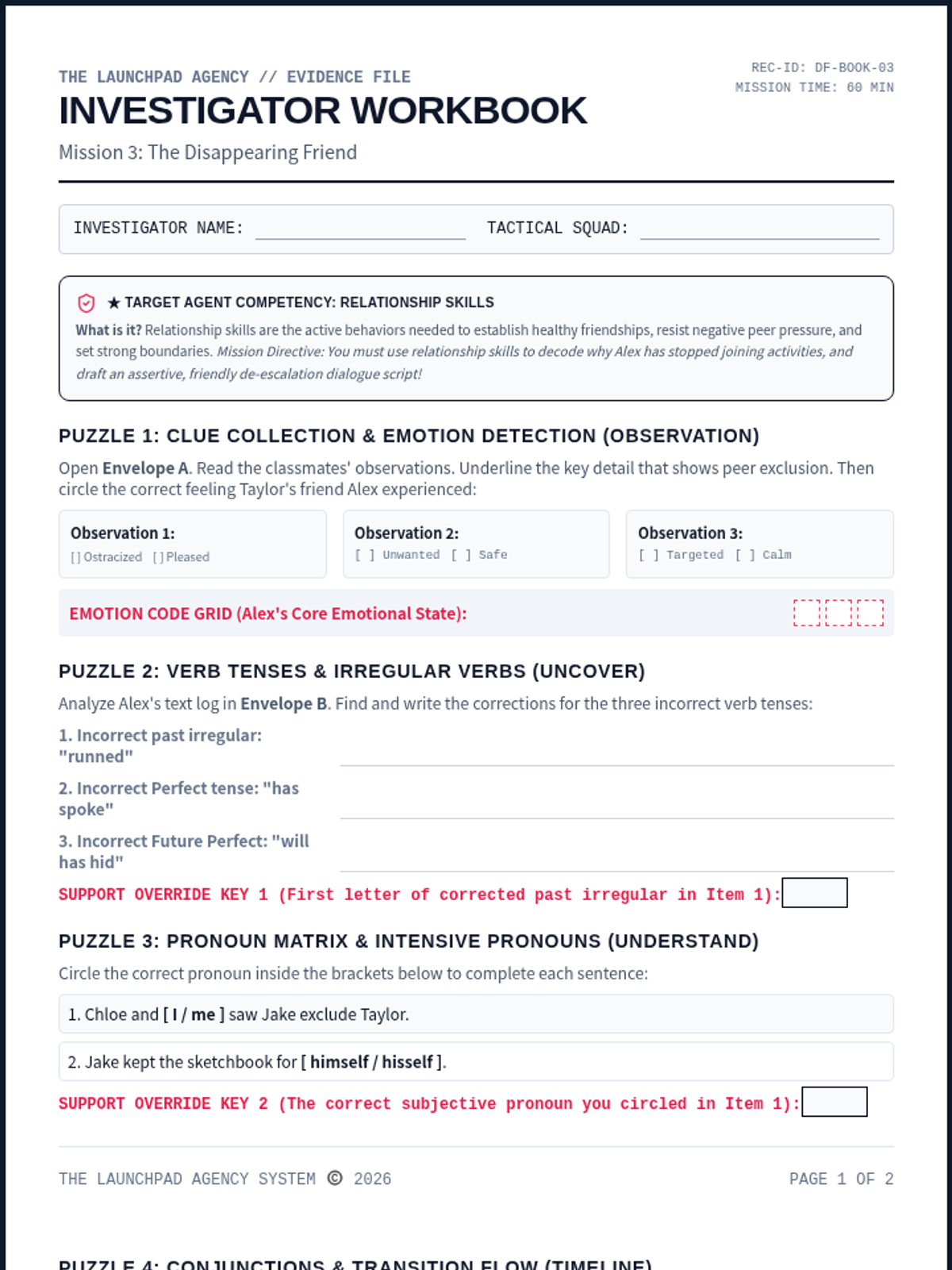
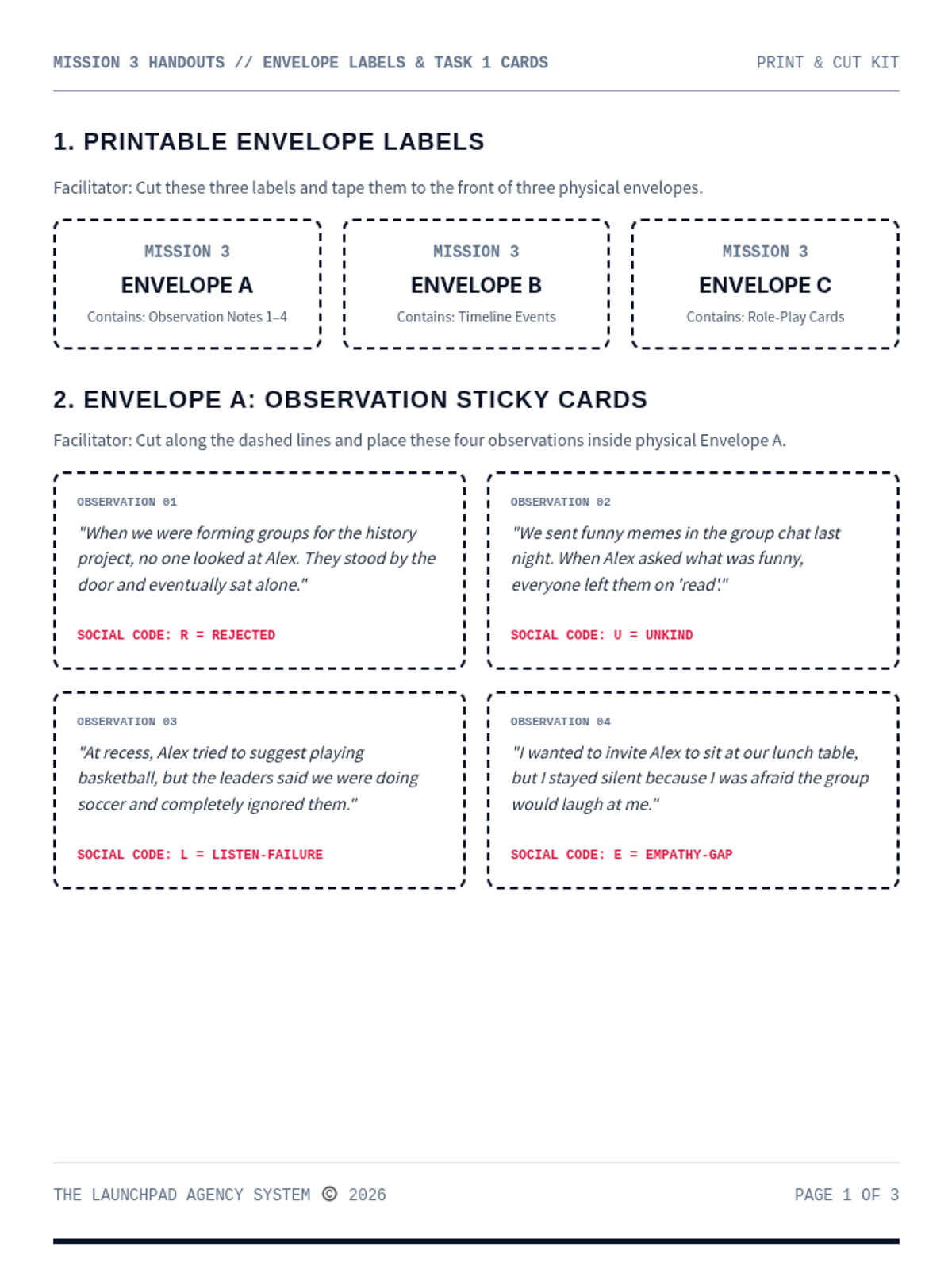
A chronological reconstruction and peer exclusion escape room for Ages 10-12. Recruits analyze sticky-note observations, identify missed social interactions, and role-play restorative de-escalation scripts.
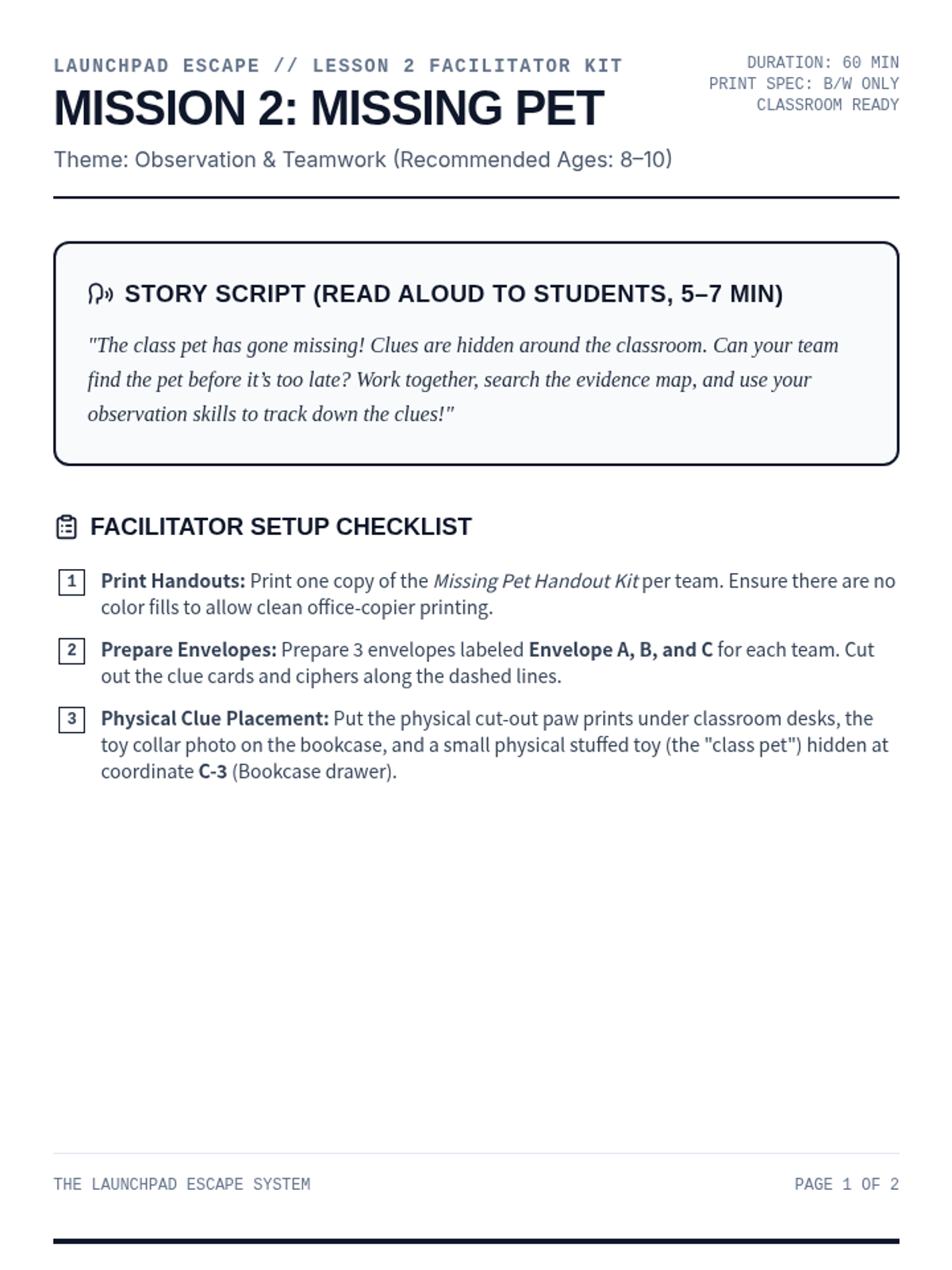
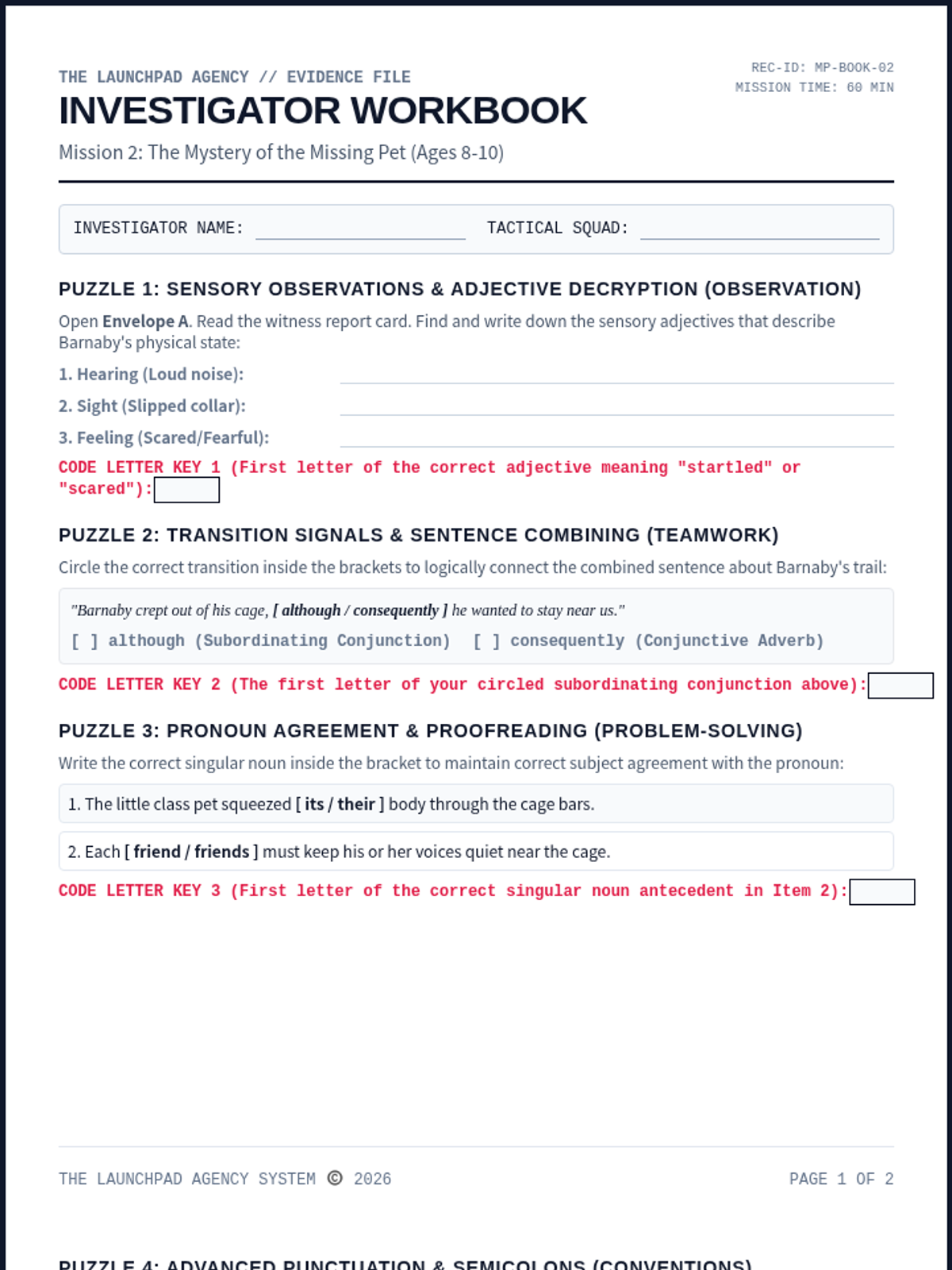
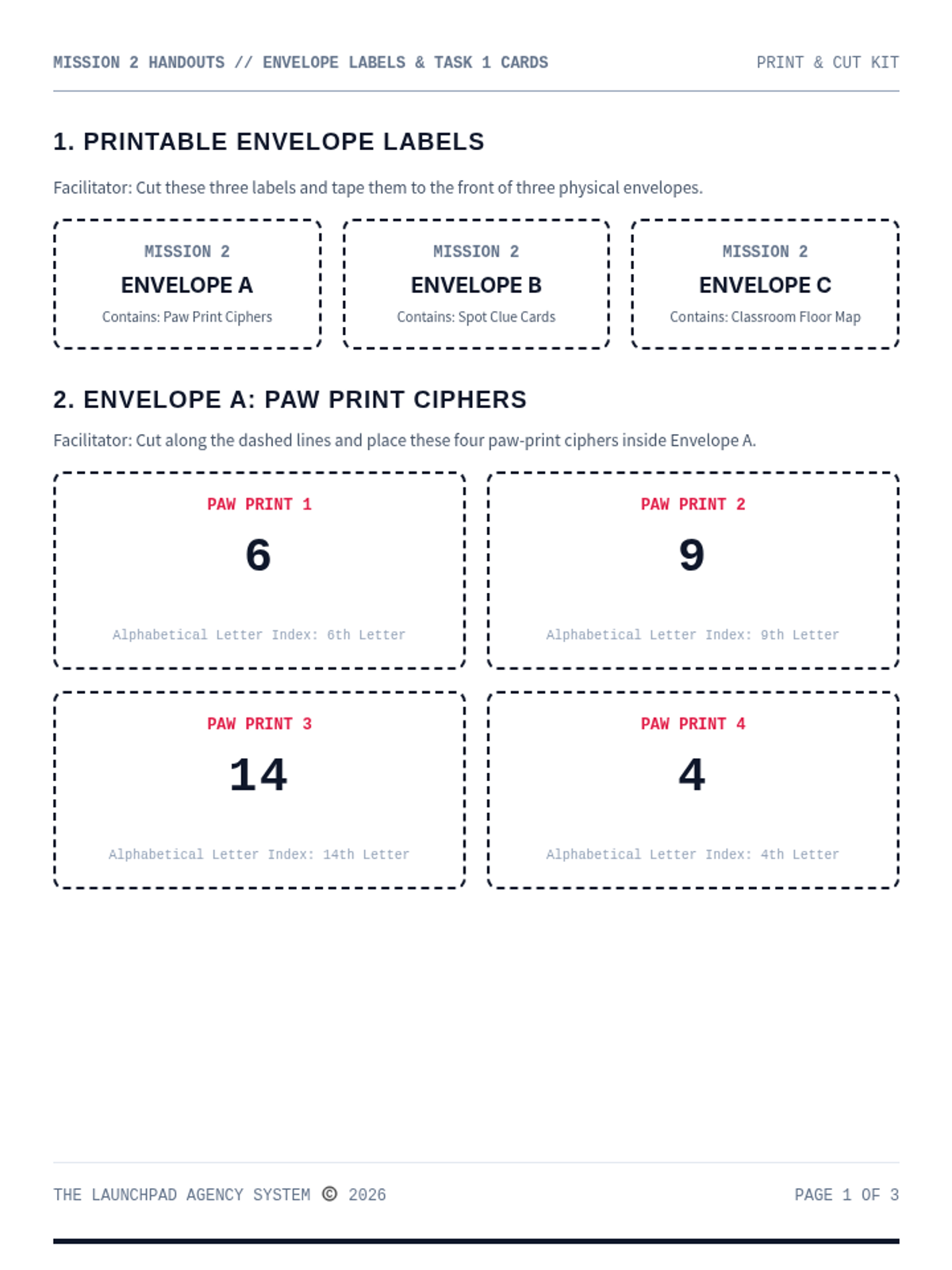
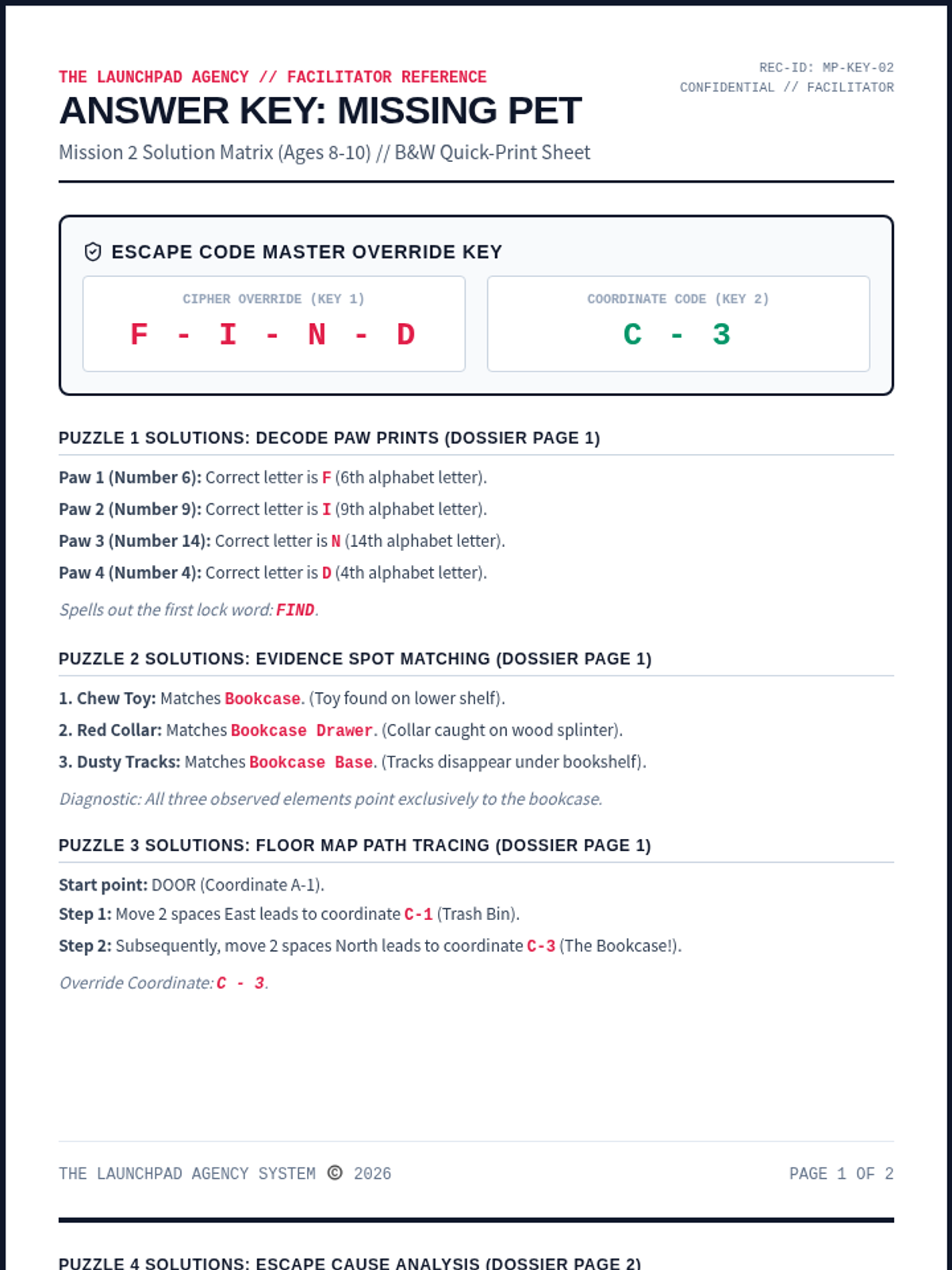
An observation-based escape mission for Ages 8-10. Recruits decode paw ciphers, match footprint evidence to classroom hiding spots, and compile a team map to find the missing class pet.
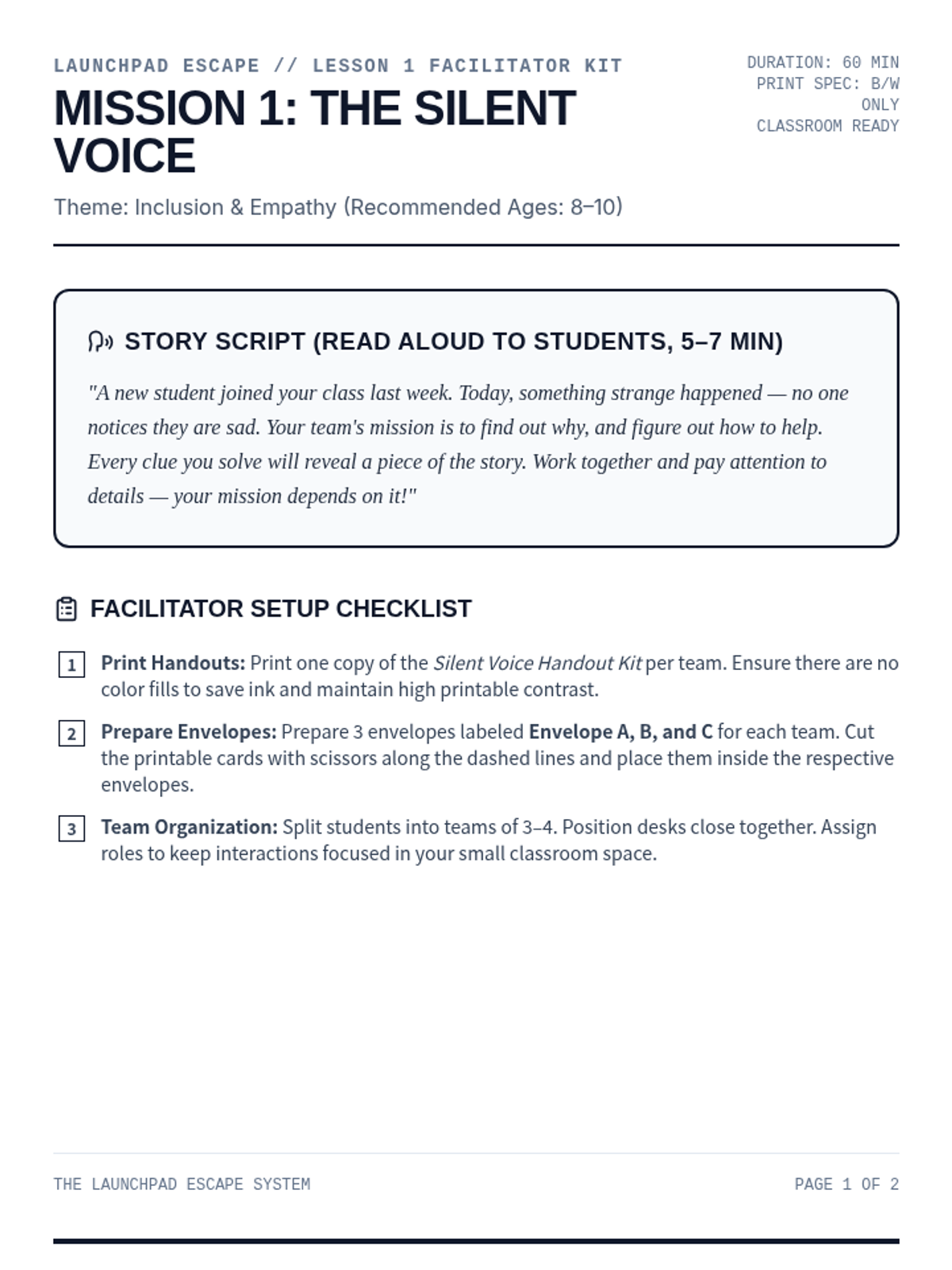
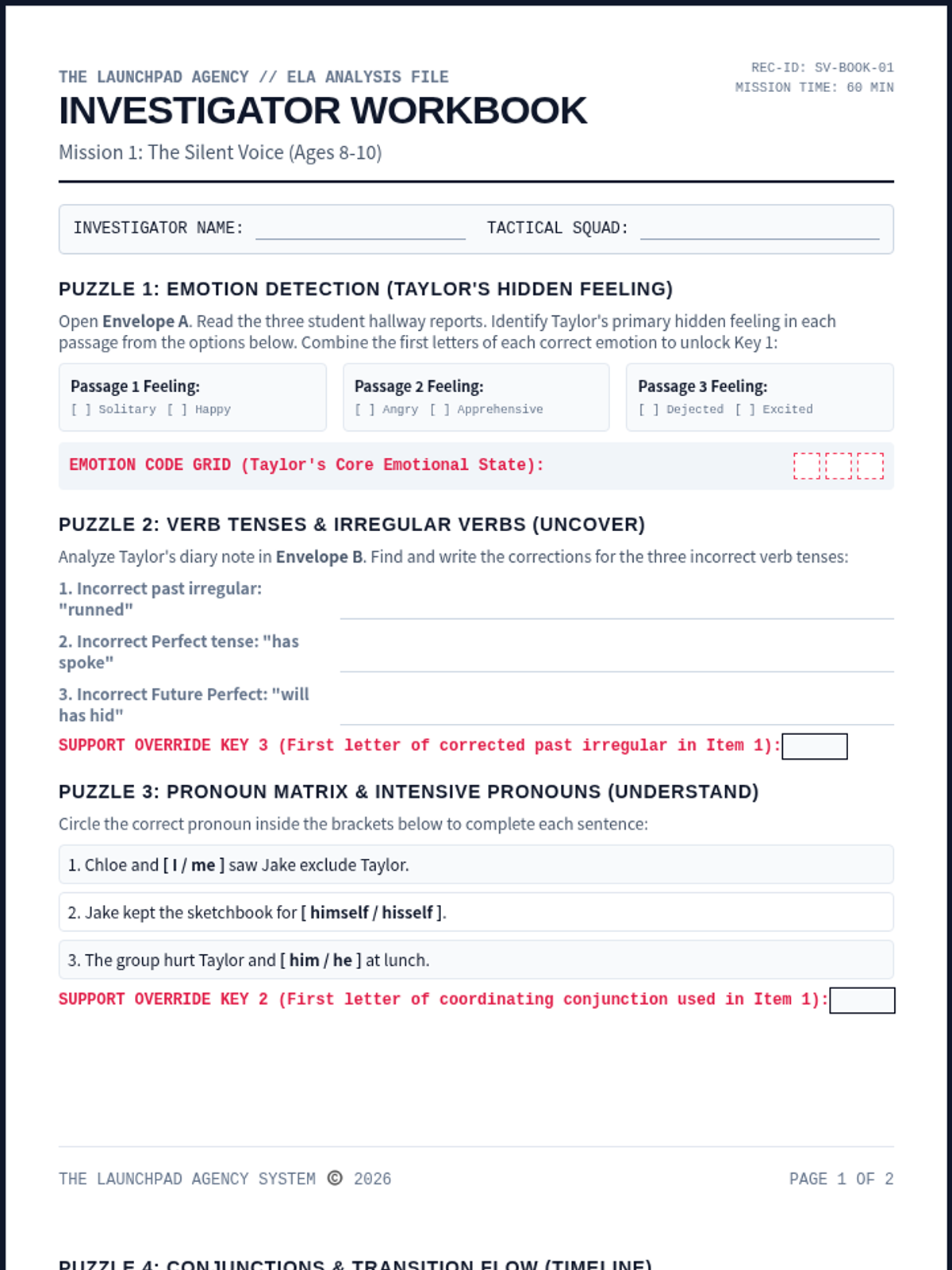
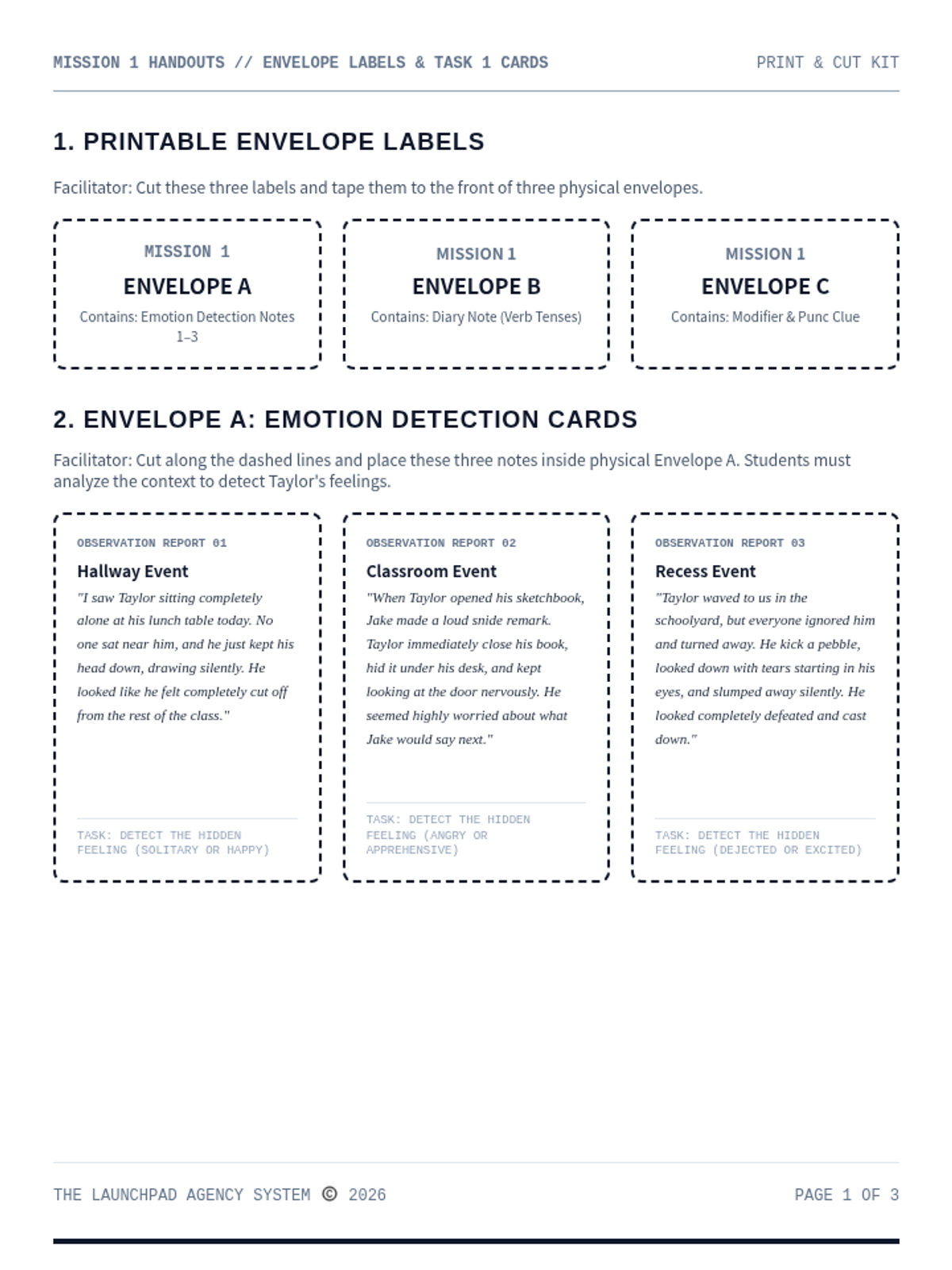
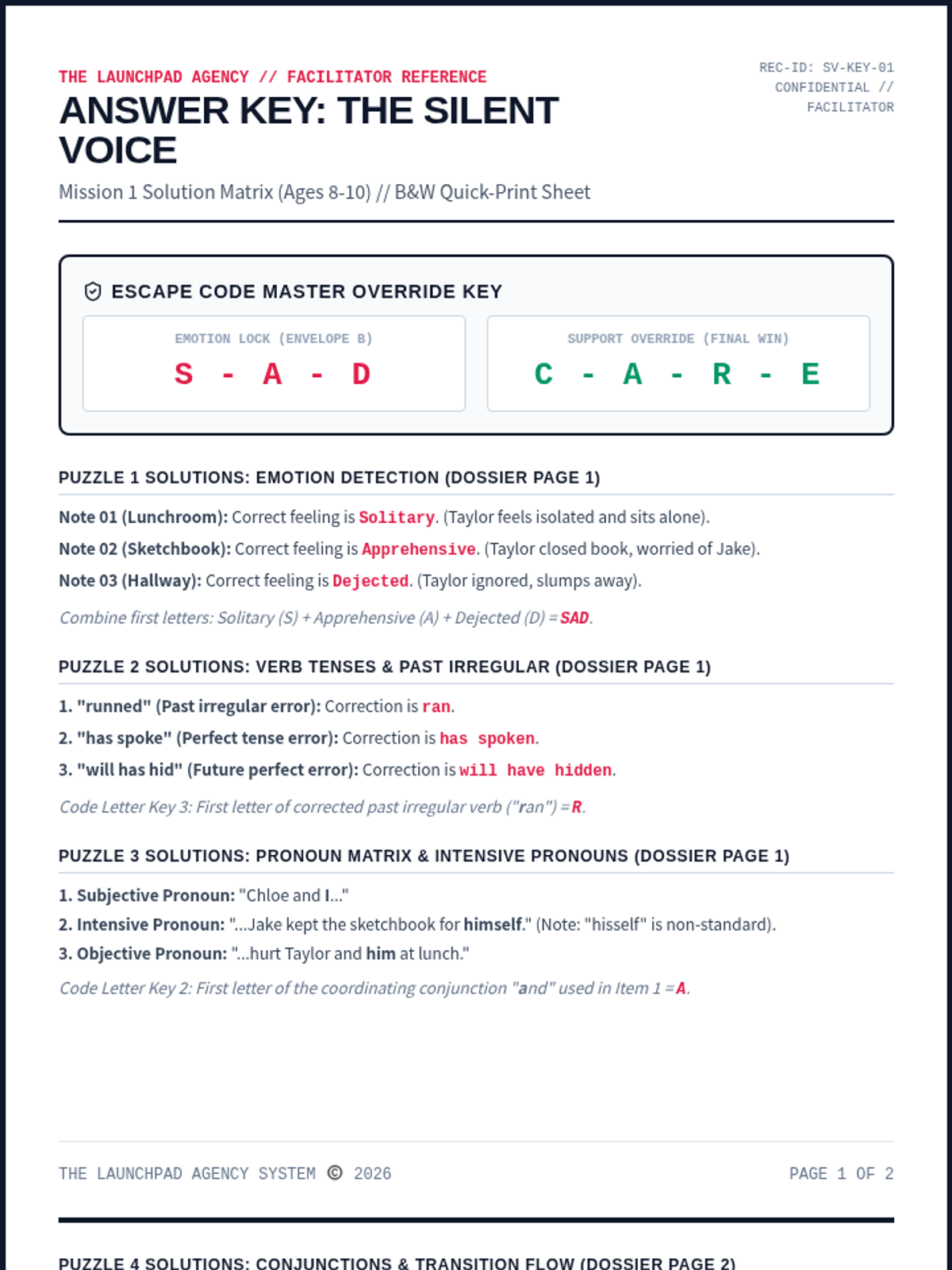
A cooperative social escape room for Ages 8-10 focused on inclusion and empathy. Recruits sort desk messages, build a timeline, and decode perspective cards to support a lonely classmate.
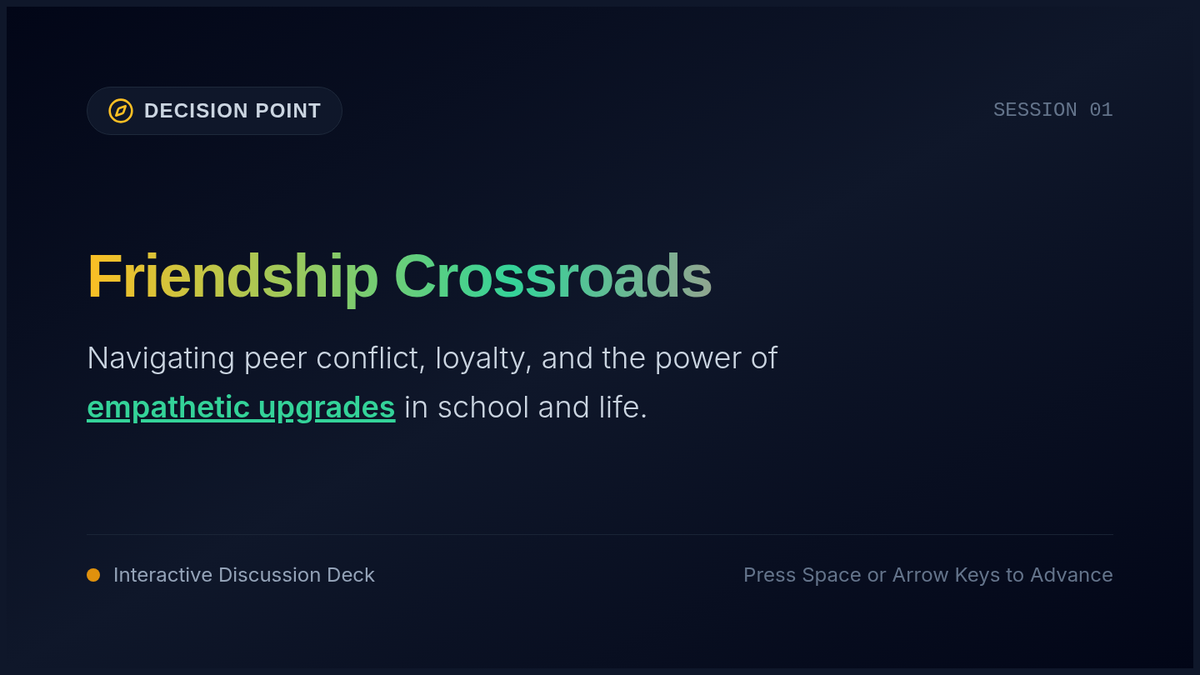
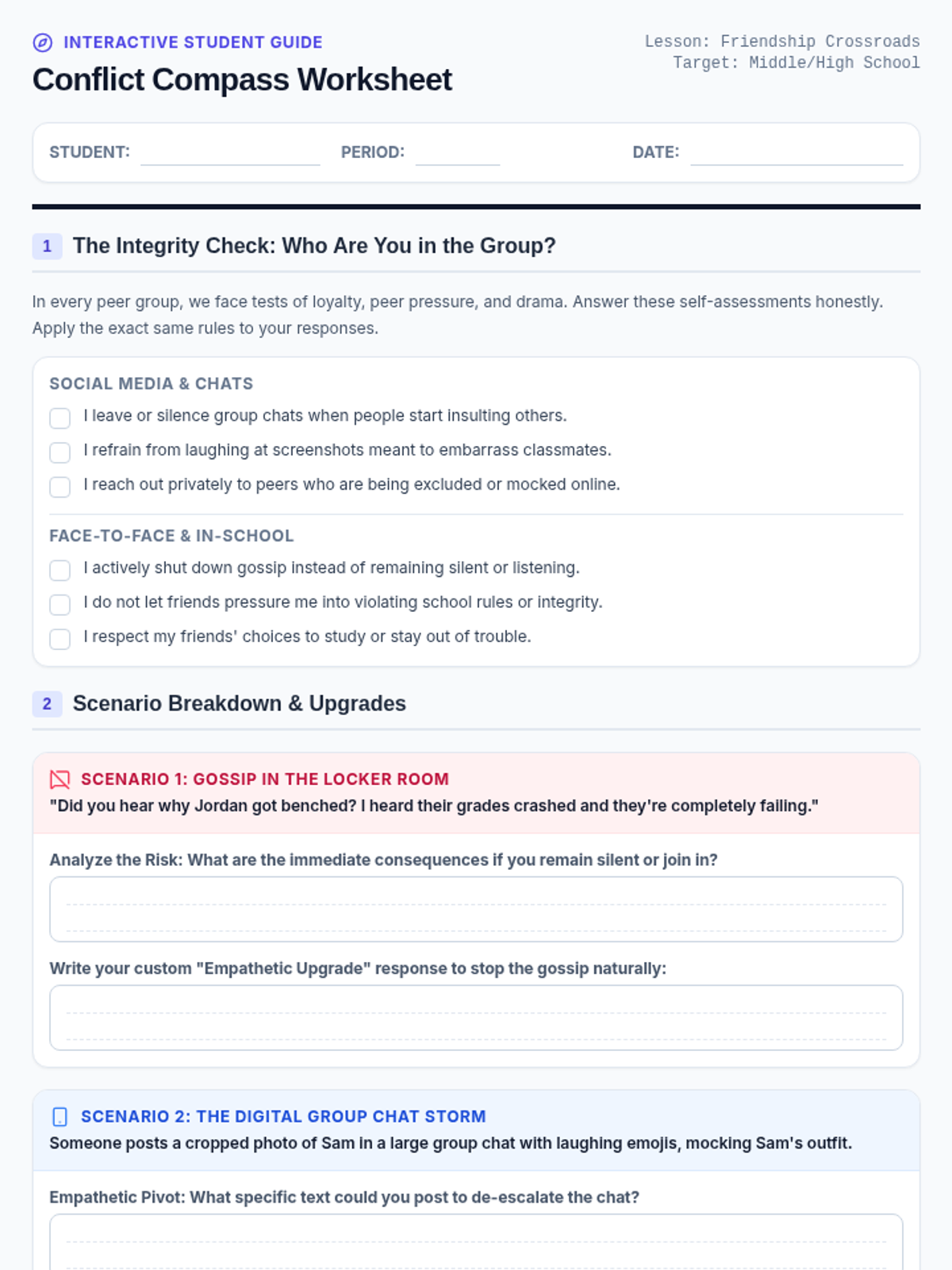
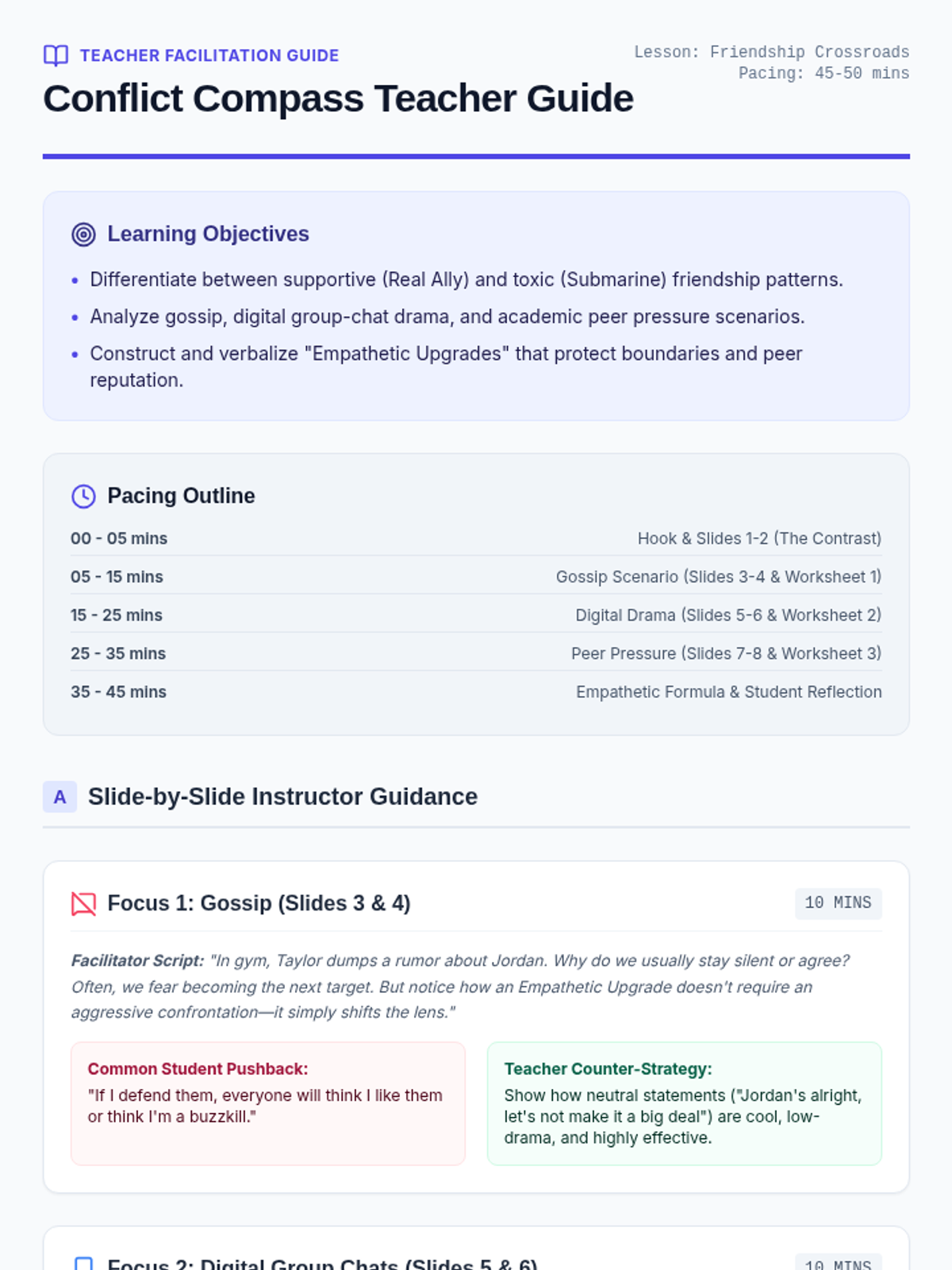
An interactive, highly engaging lesson designed to help middle and high school students navigate complex peer conflicts. Through realistic scenarios involving gossiping, social media drama, and peer pressure, students analyze the differences between supportive and harmful friendship behaviors and practice direct, empathetic communication.
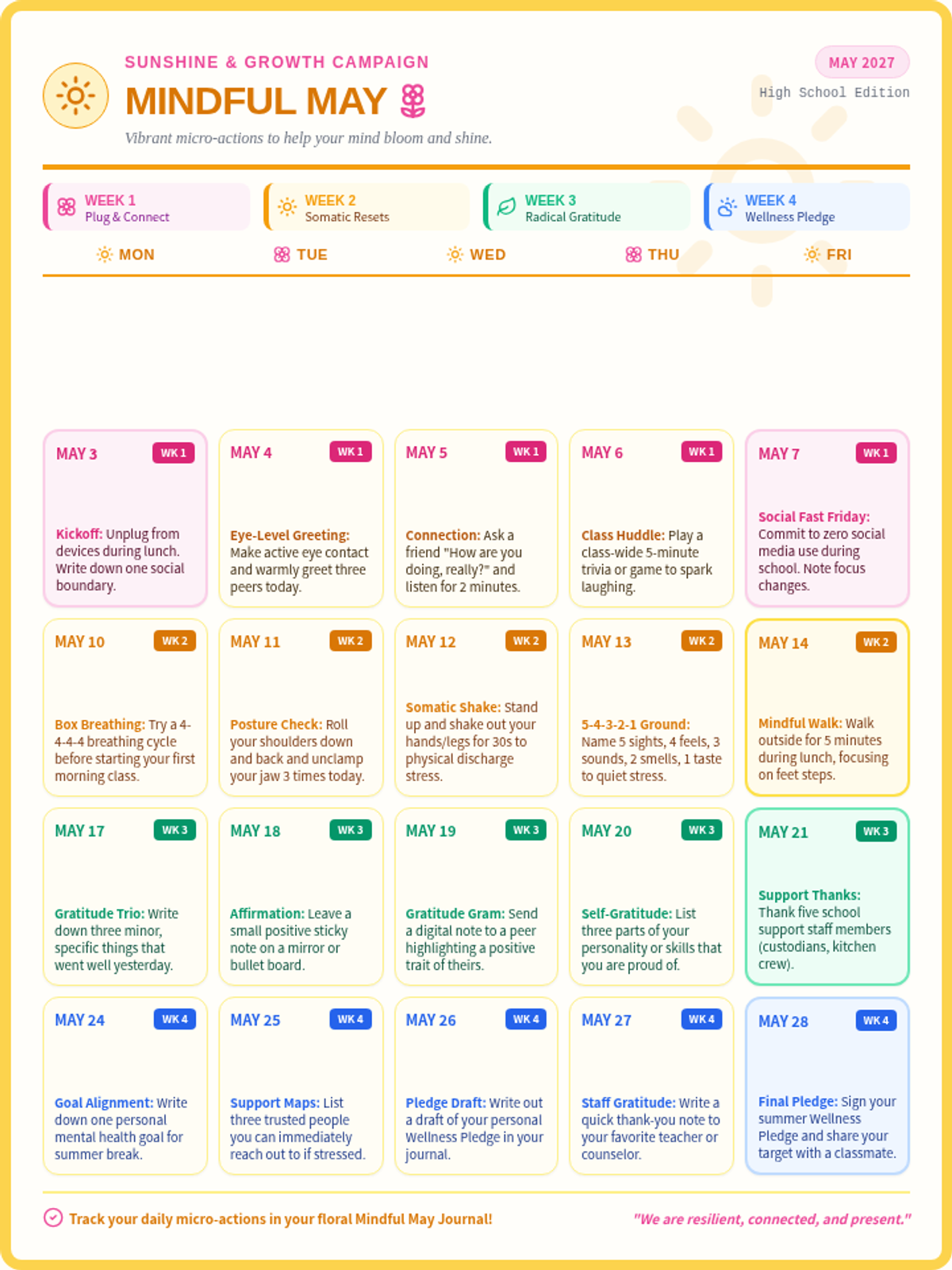
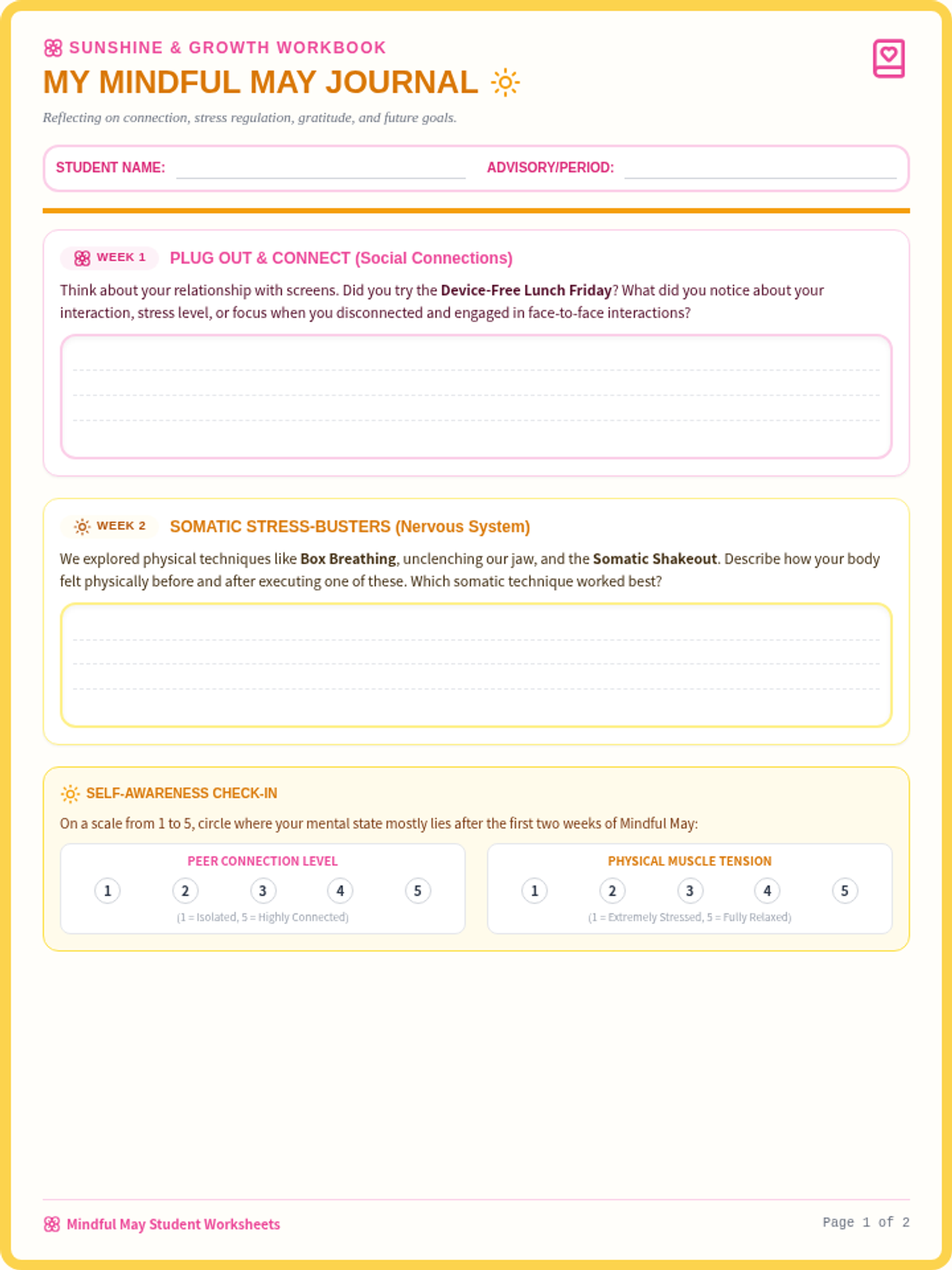
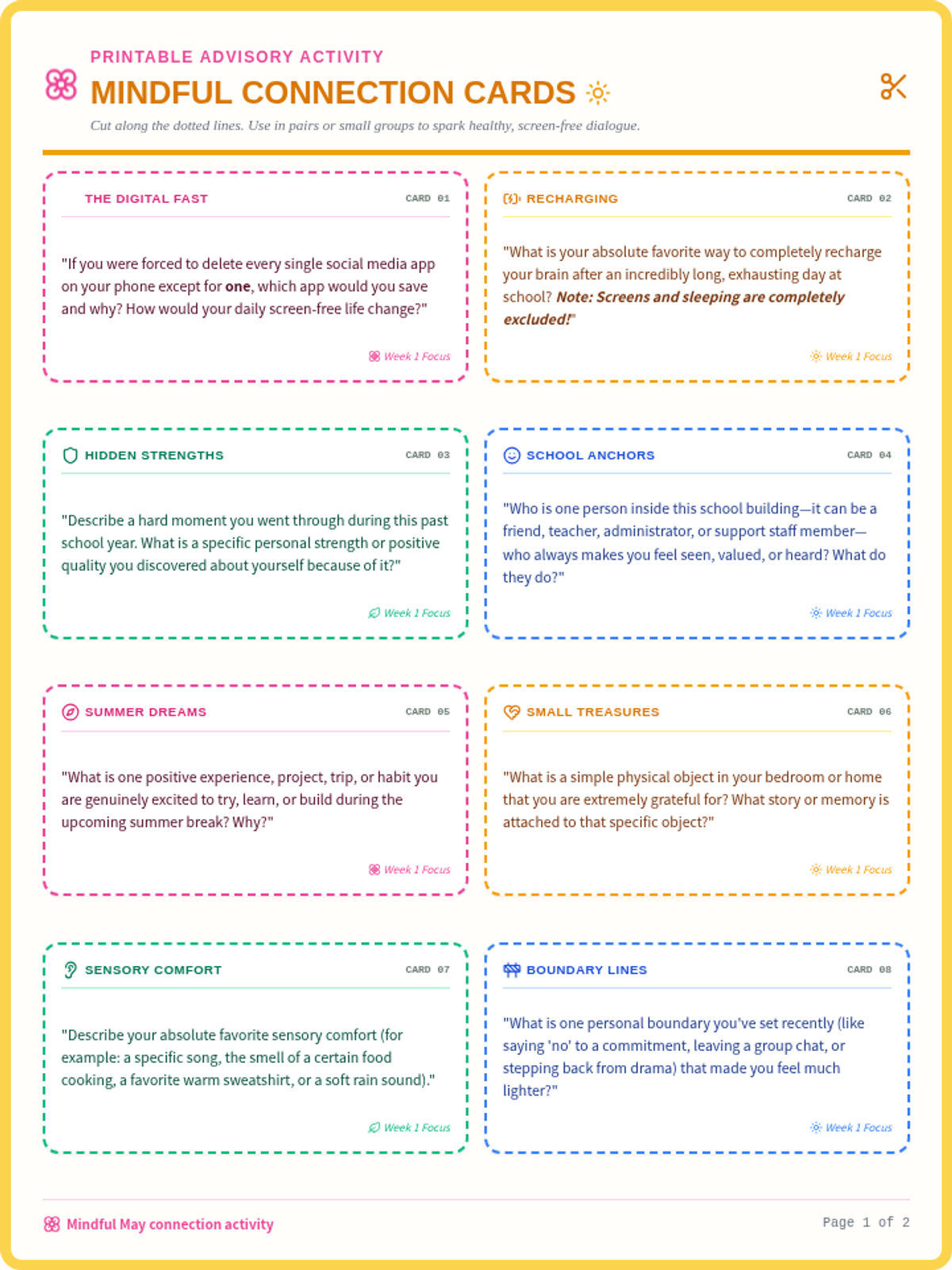
A complete, high-school-focused mental health awareness program for May. Includes a master daily calendar, weekly advisory lesson outlines, kickoff slides, a personal reflection journal, and collaborative connection cards.
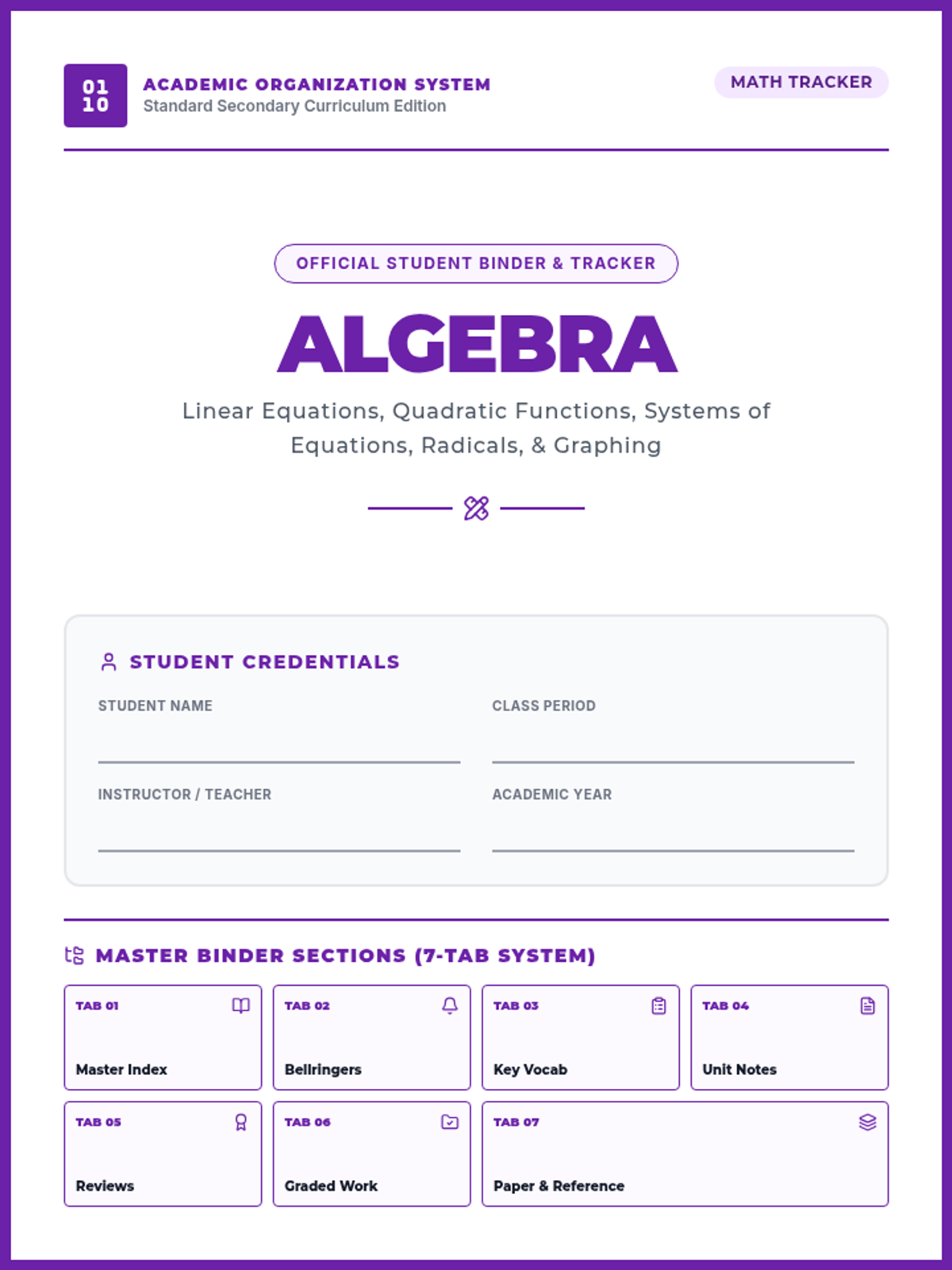
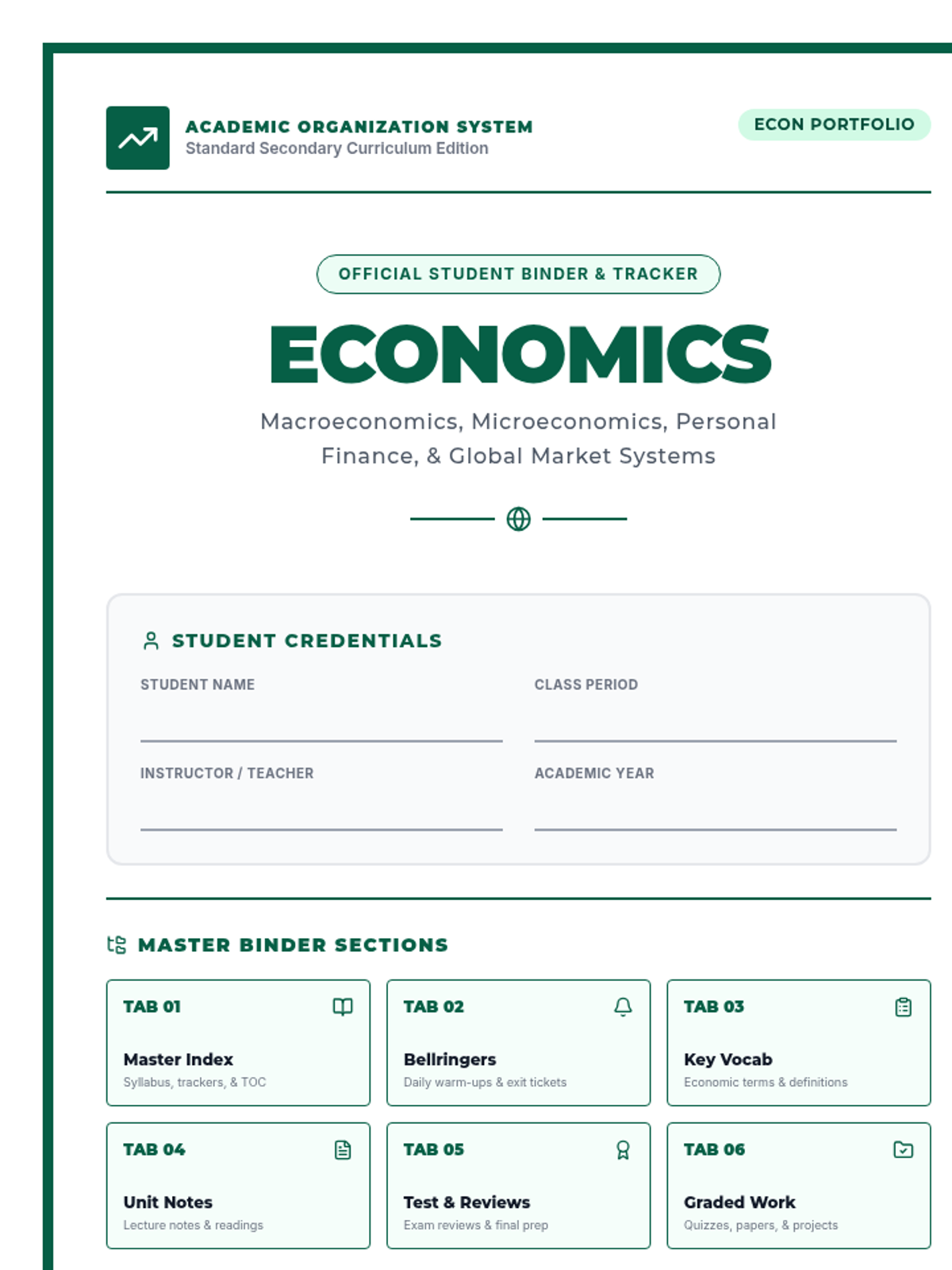
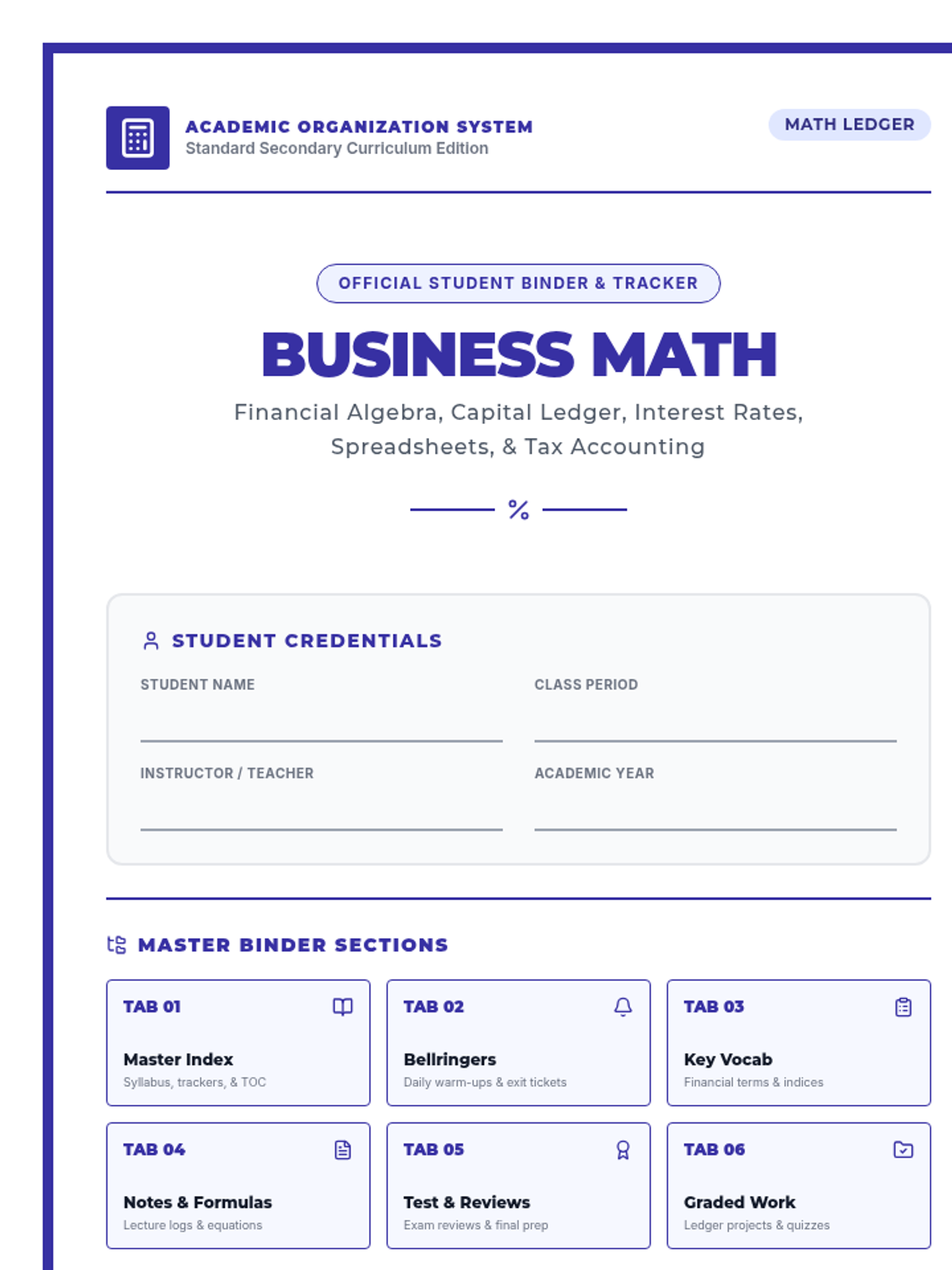
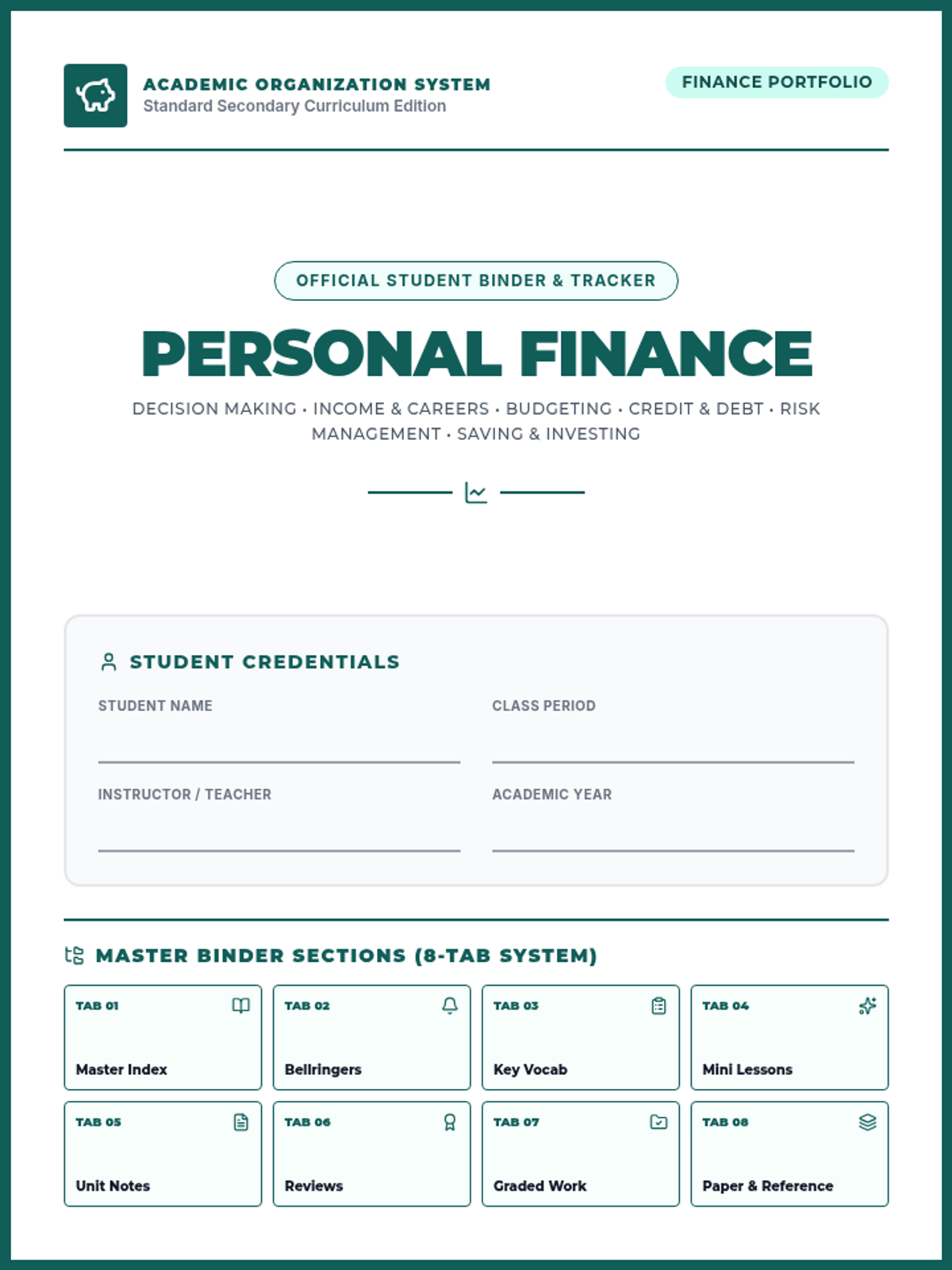
A complete set of high-contrast, professional binder organization kits for Economics, Business Mathematics, Algebra, and Personal Finance. Each kit contains a master index cover page, table of contents, customizable assignment logs, and printable color-coded divider tabs with matching spine inserts.
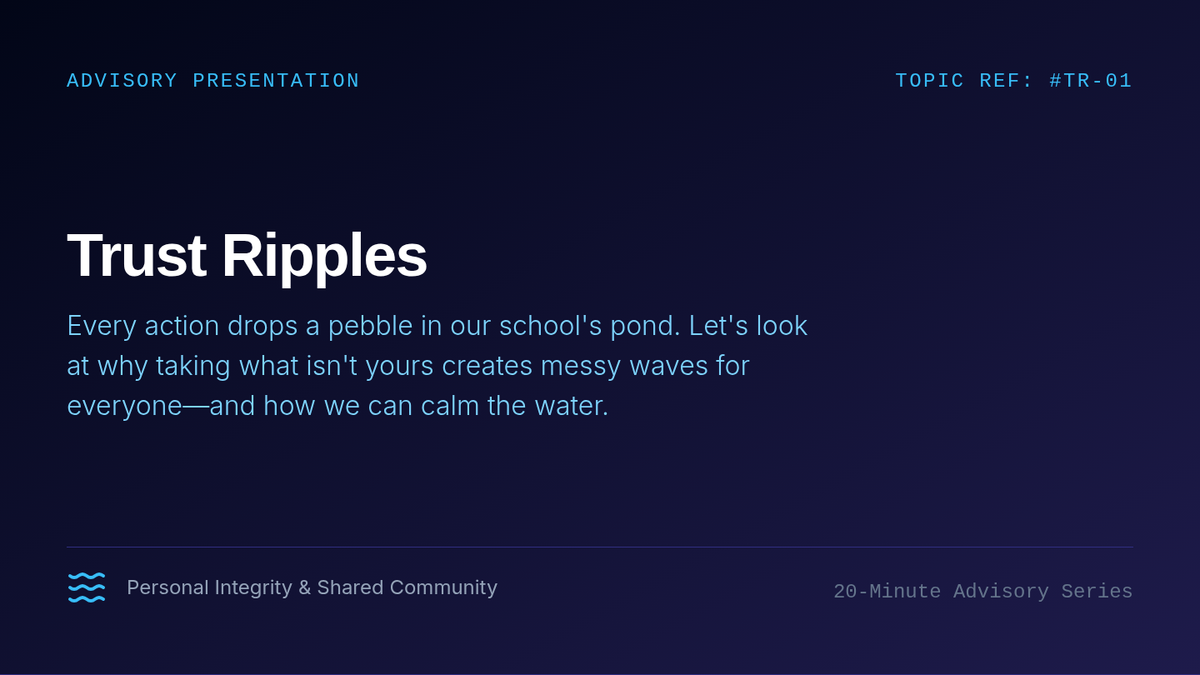
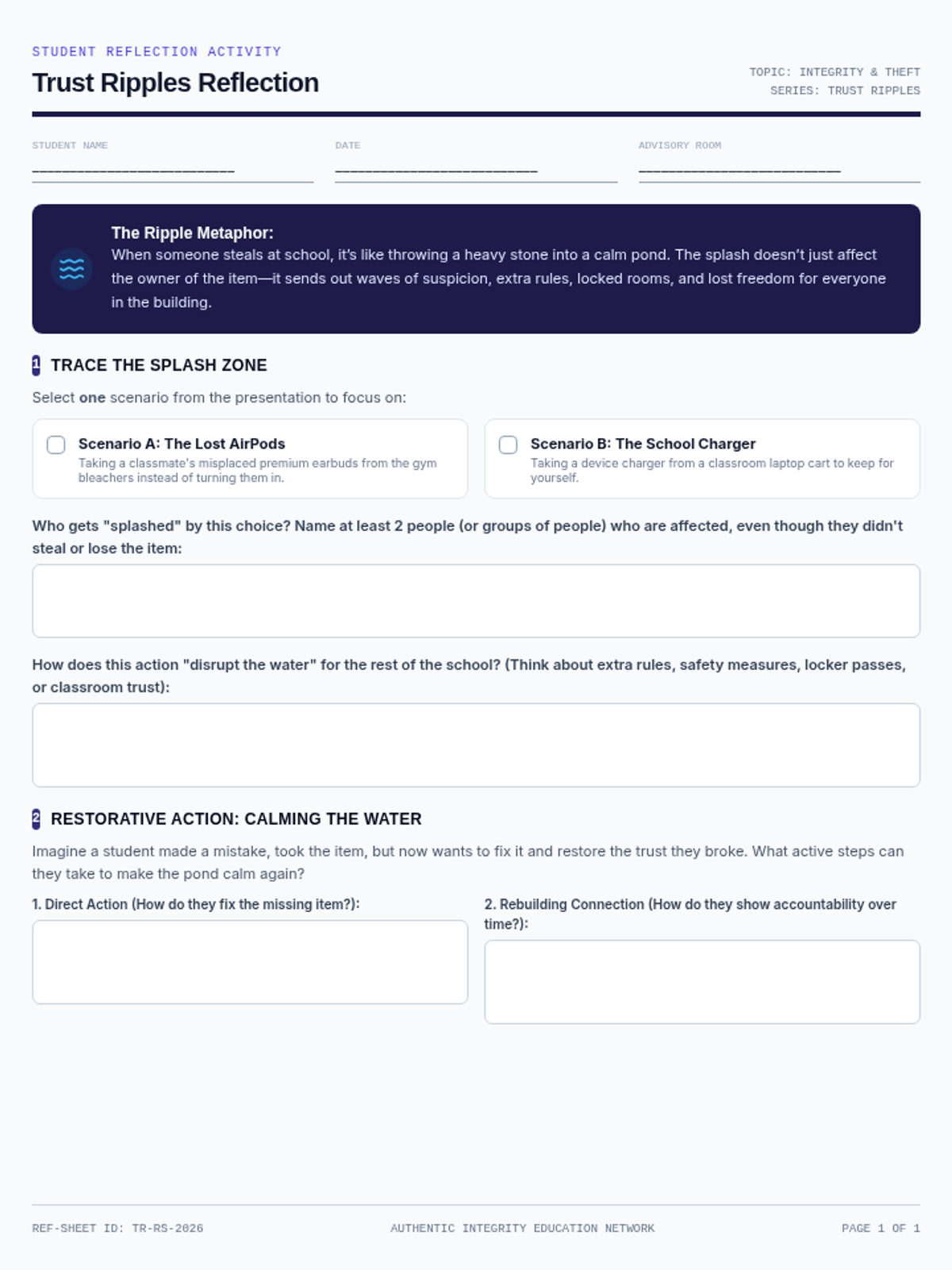
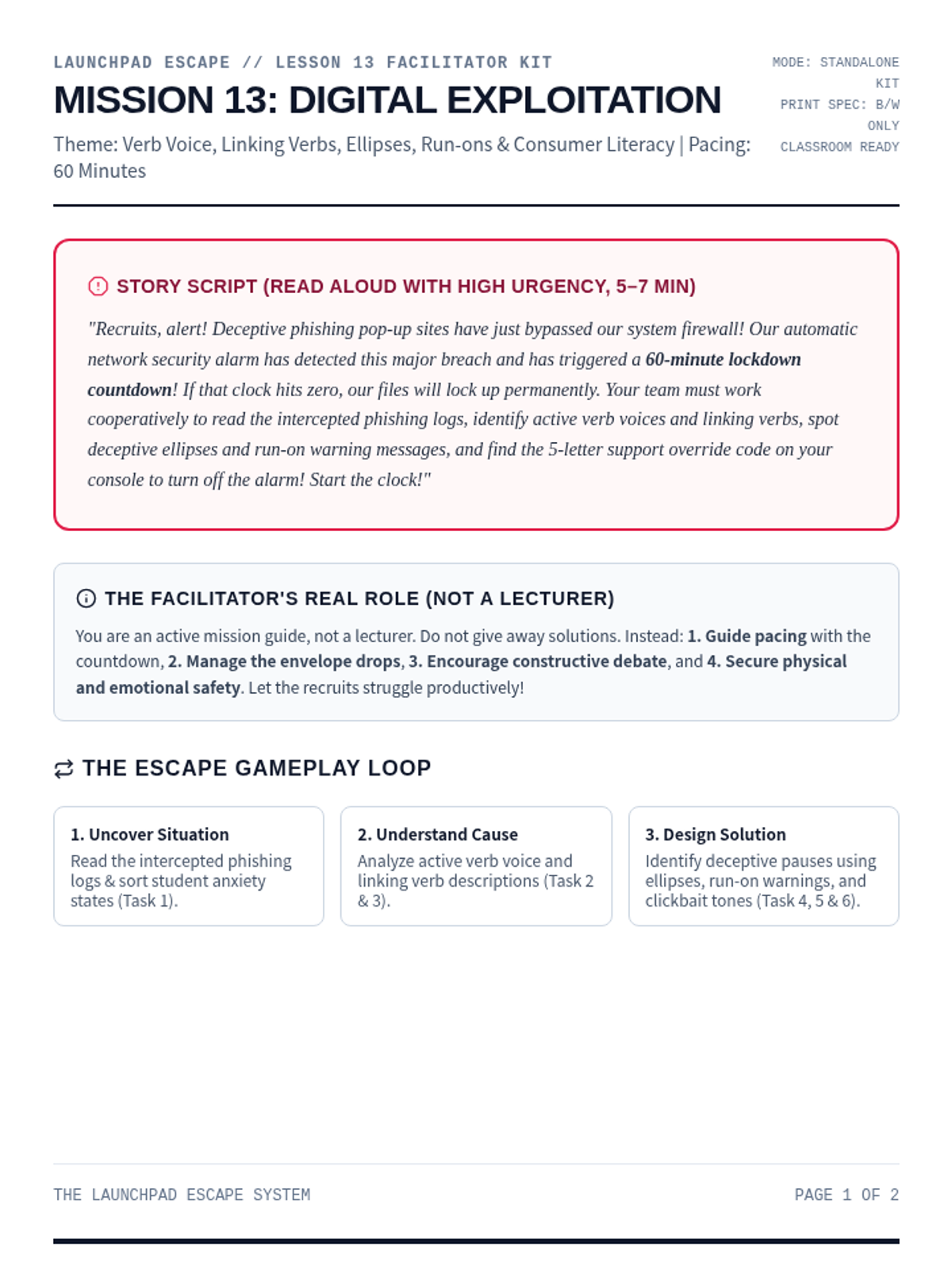
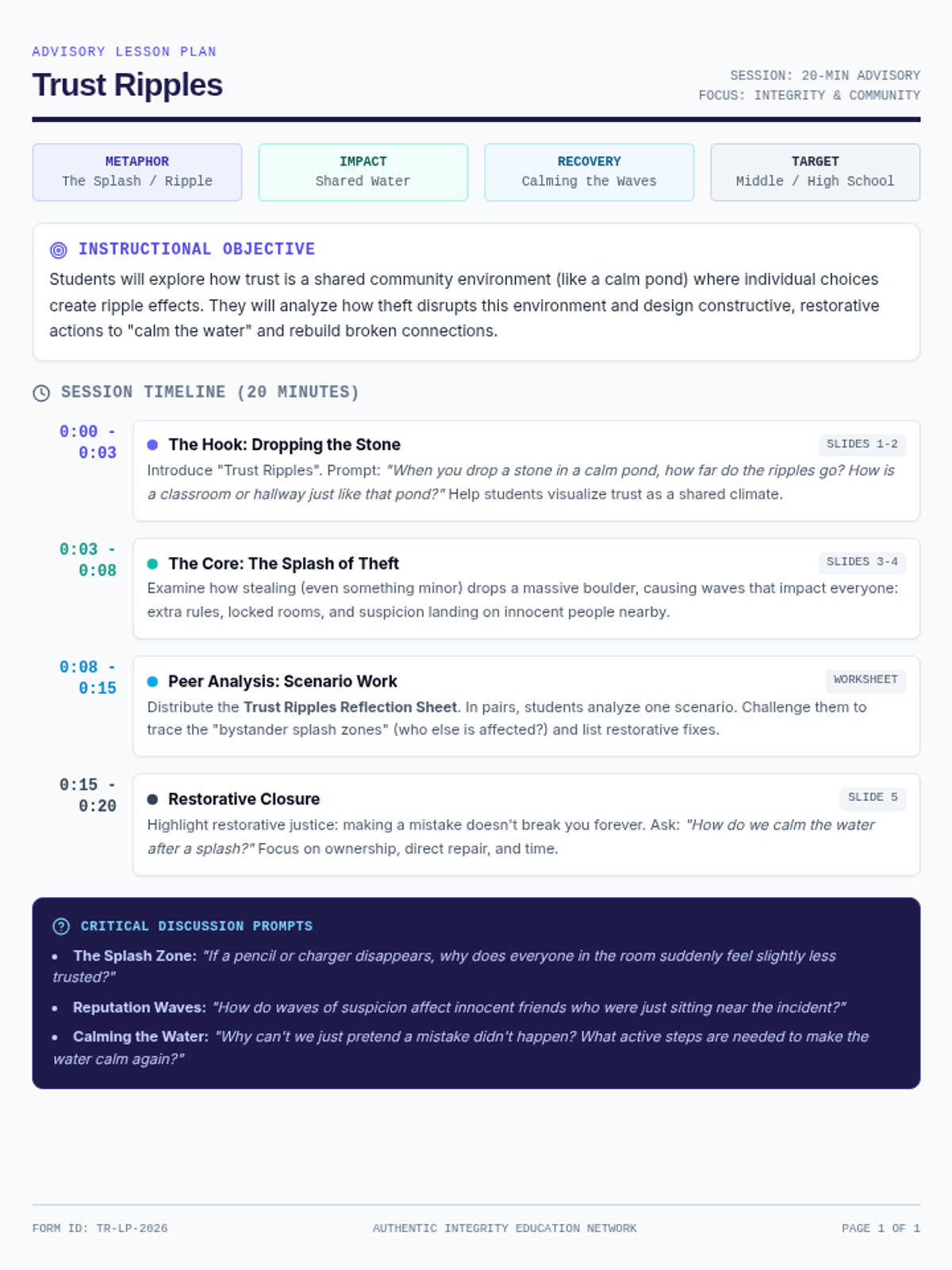
A direct, literal 20-minute advisory lesson exploring why theft is unacceptable in school. Students look past metaphors to analyze the direct consequences of stealing on school culture, rules, innocent peers, and the practical steps to repair relationships after a mistake is made.
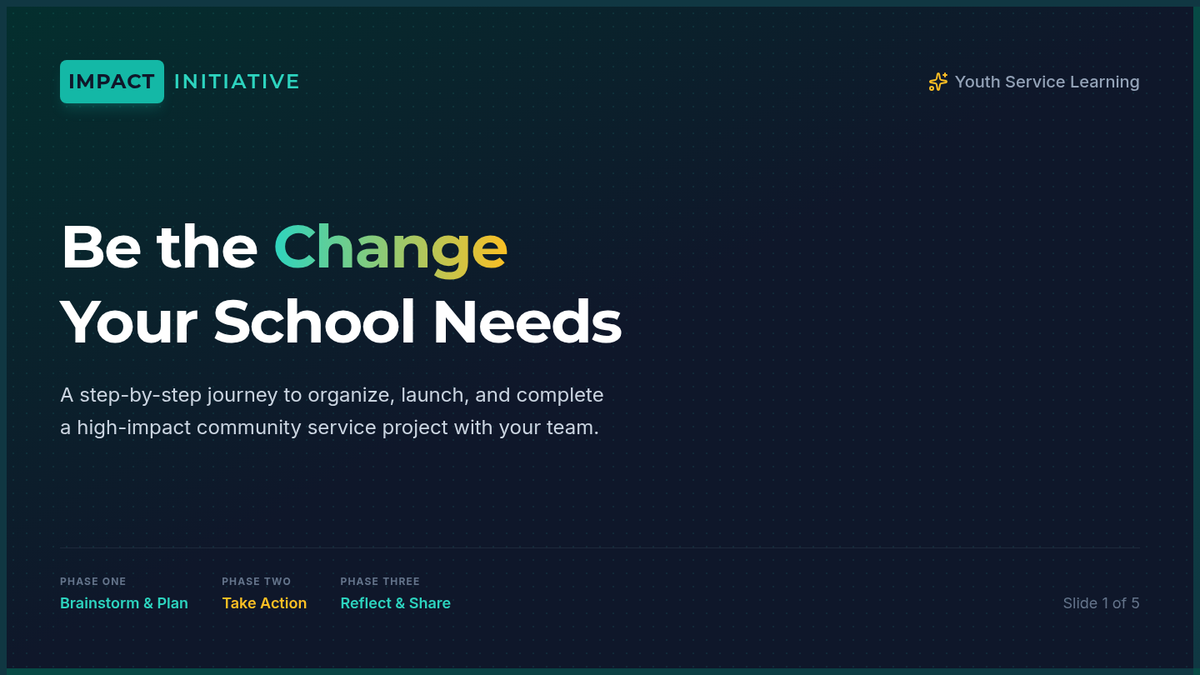
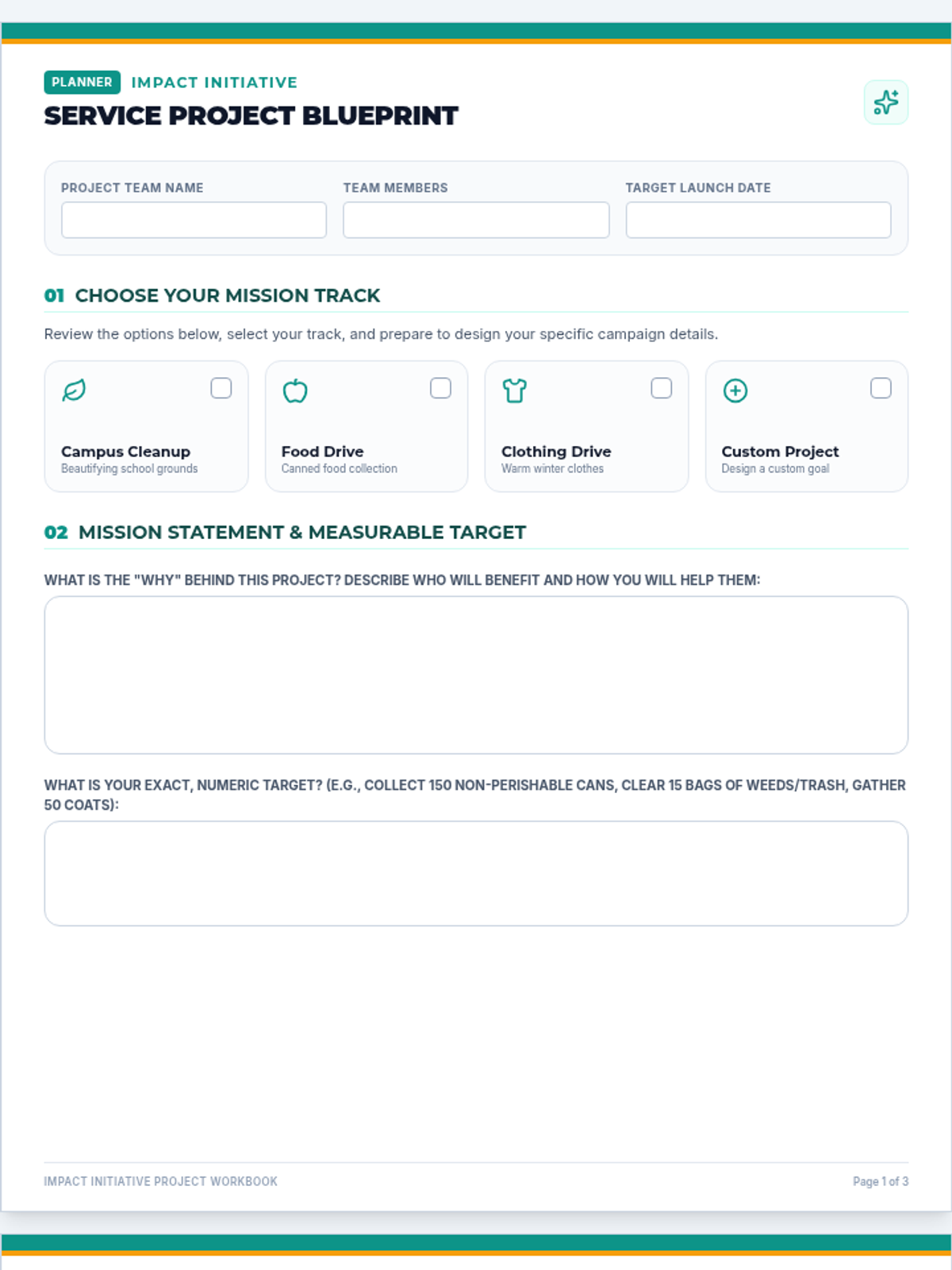
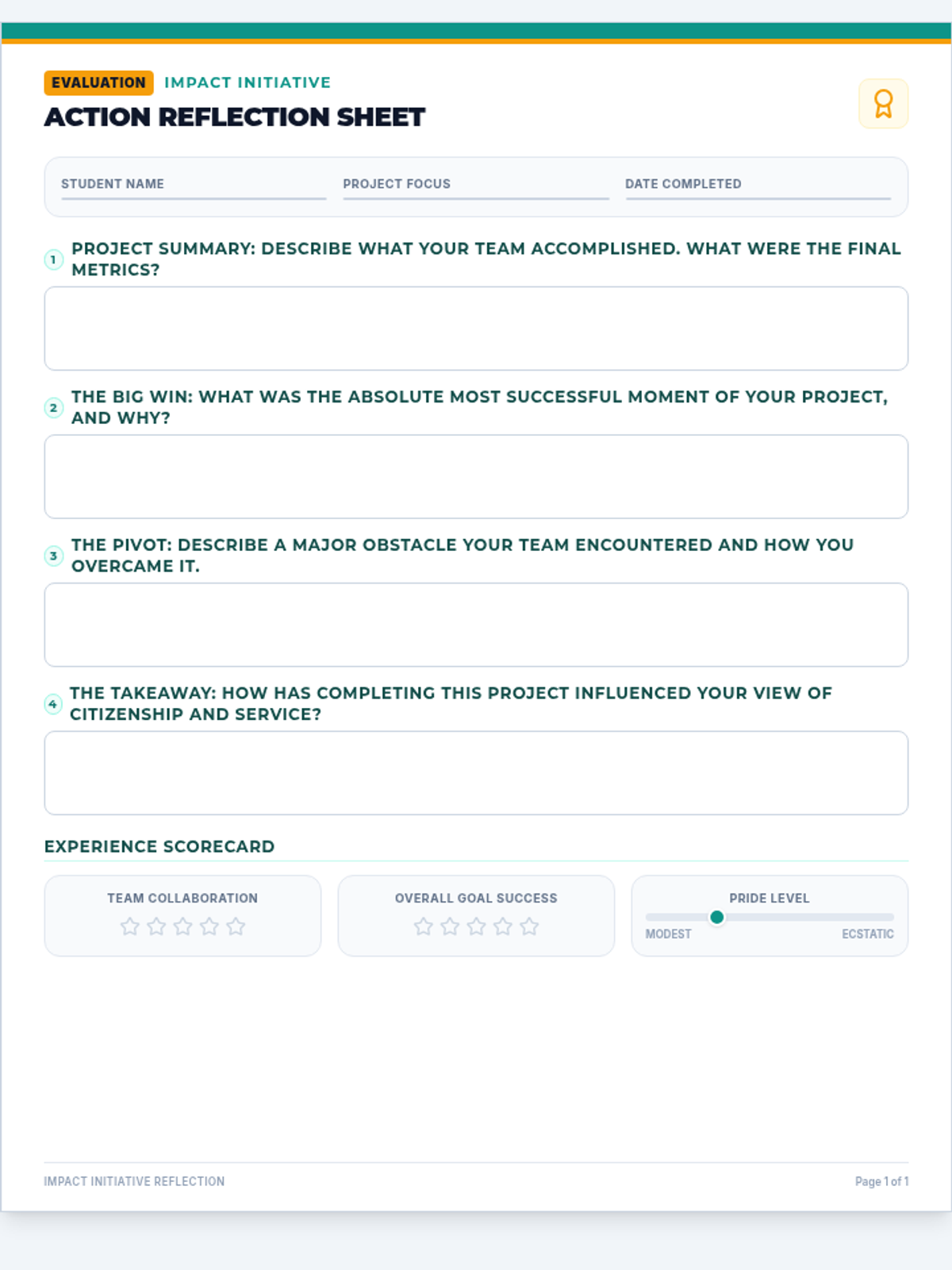
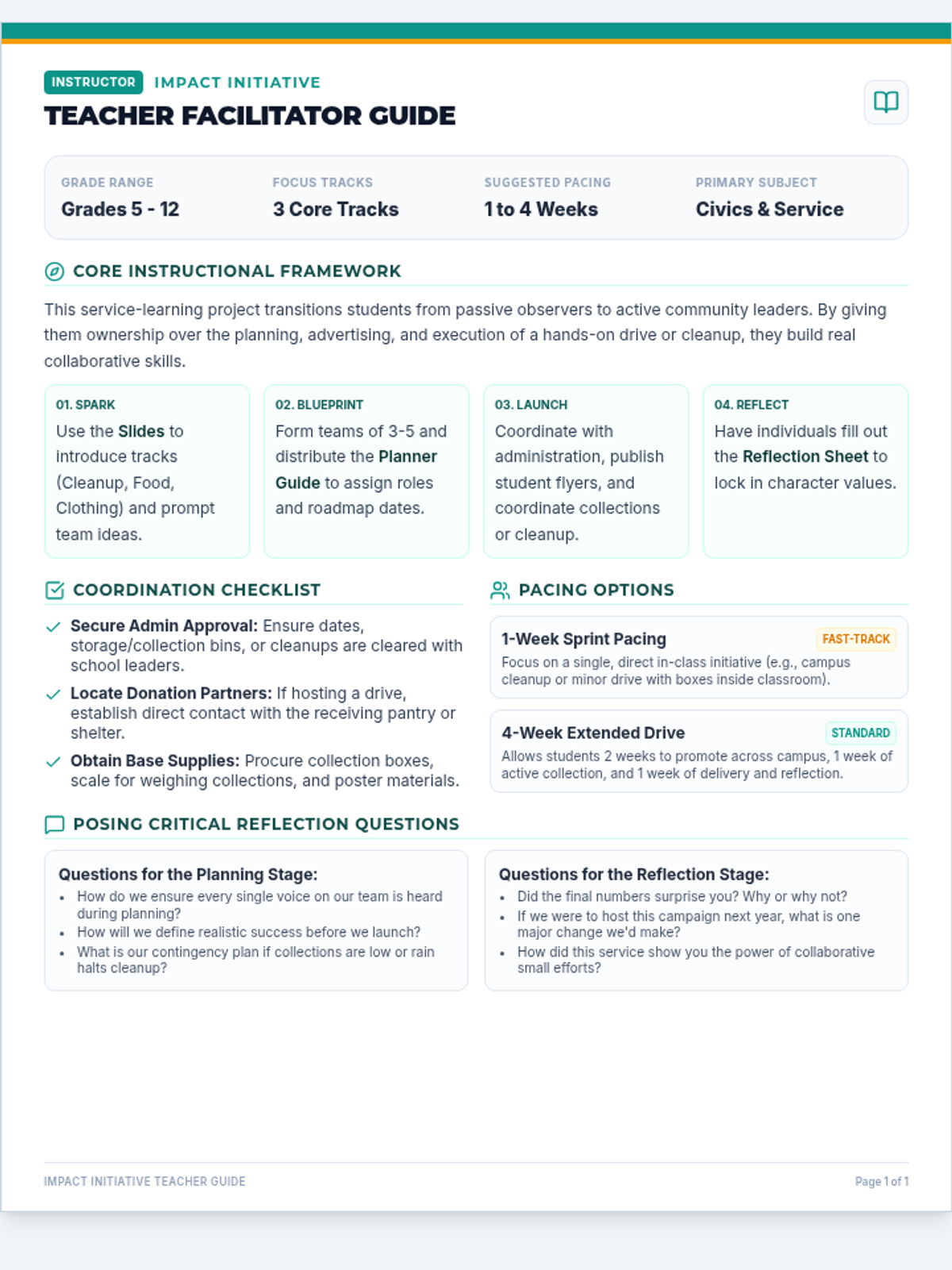
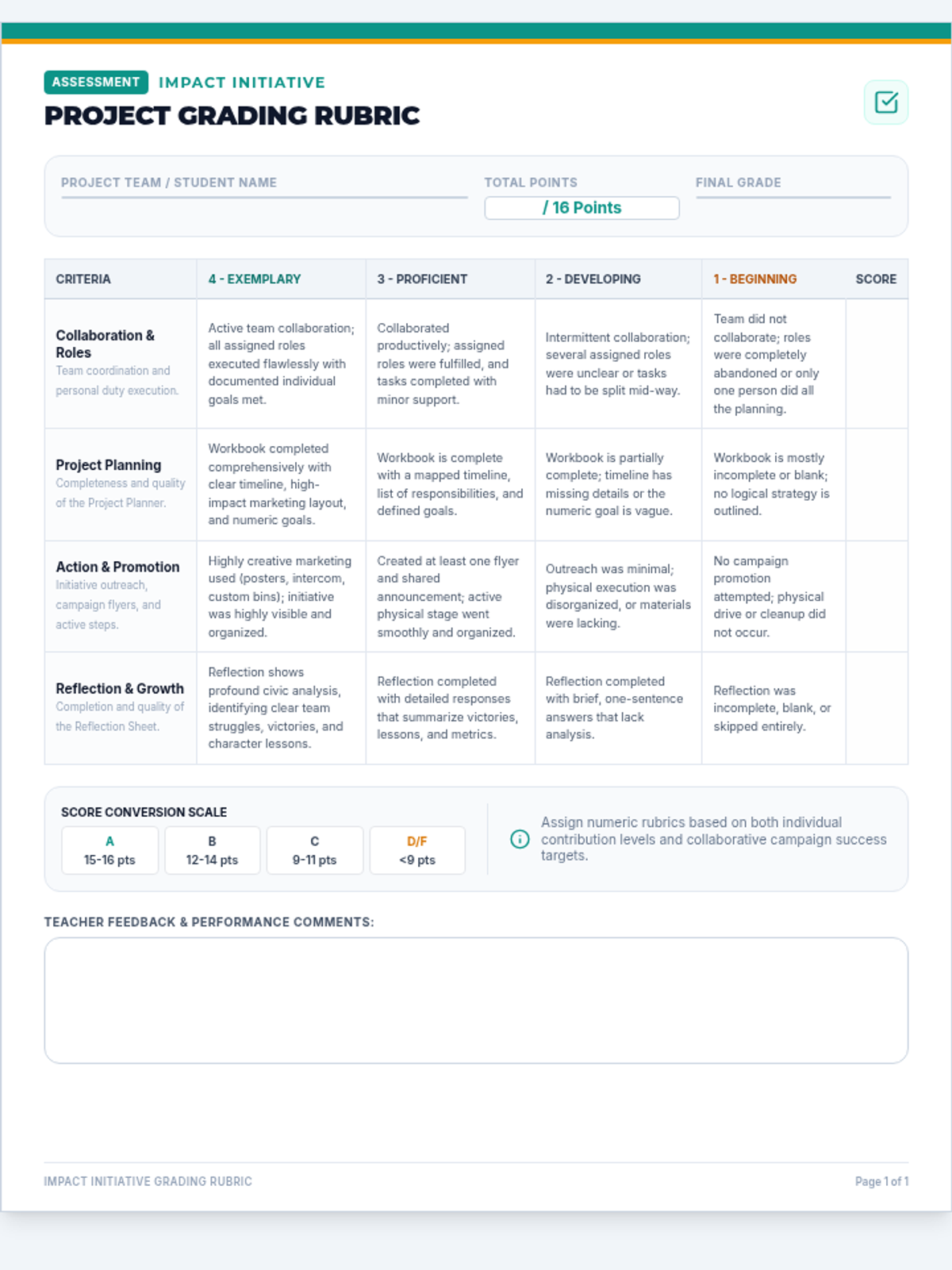
A service-learning lesson where students plan, execute, and reflect on a community service project of their choice (school campus cleanup, food drive, or clothing drive). It includes interactive presentation slides, a step-by-step project planning guide, a simplified reflection worksheet, and a teacher facilitation guide.
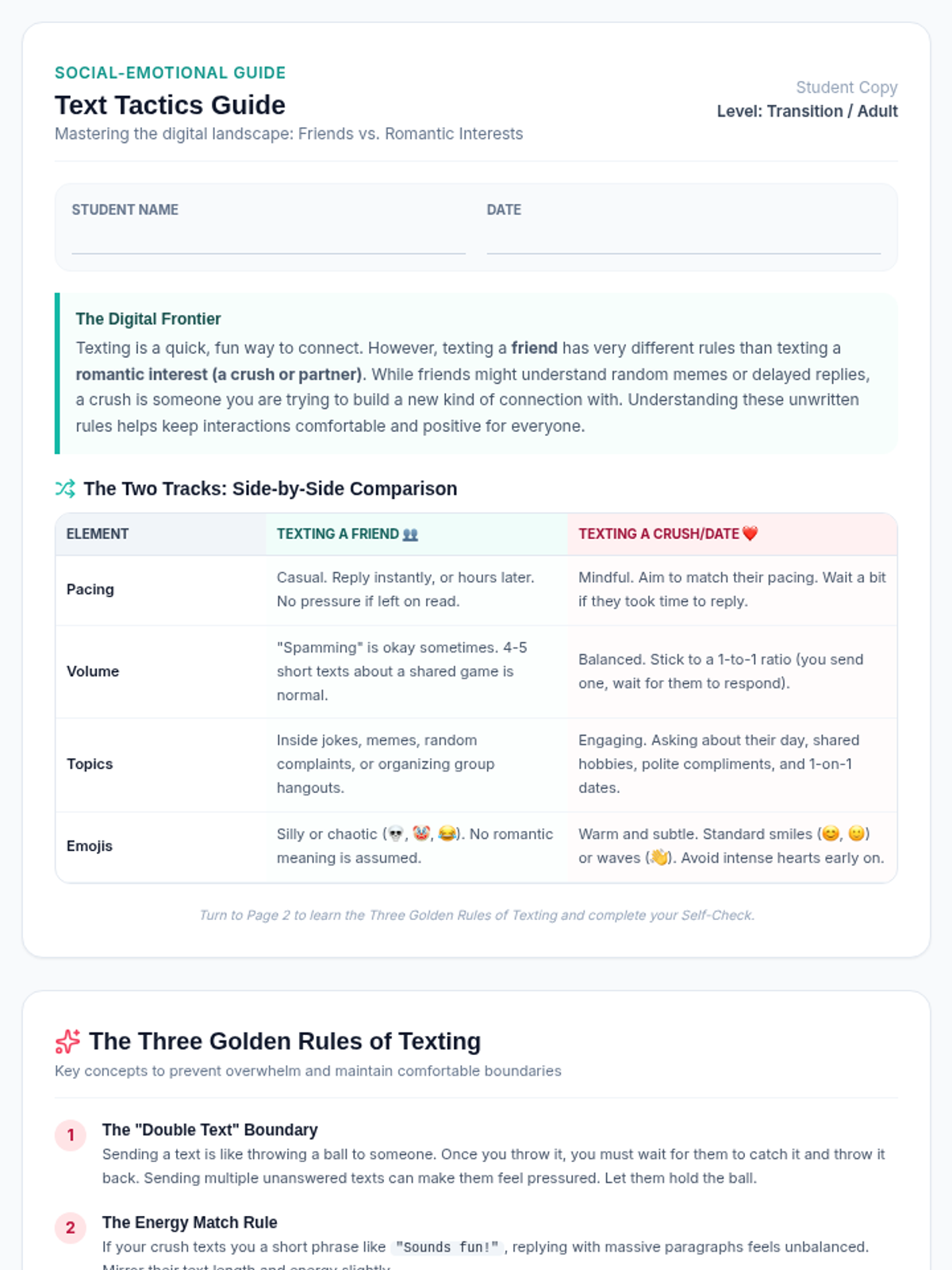
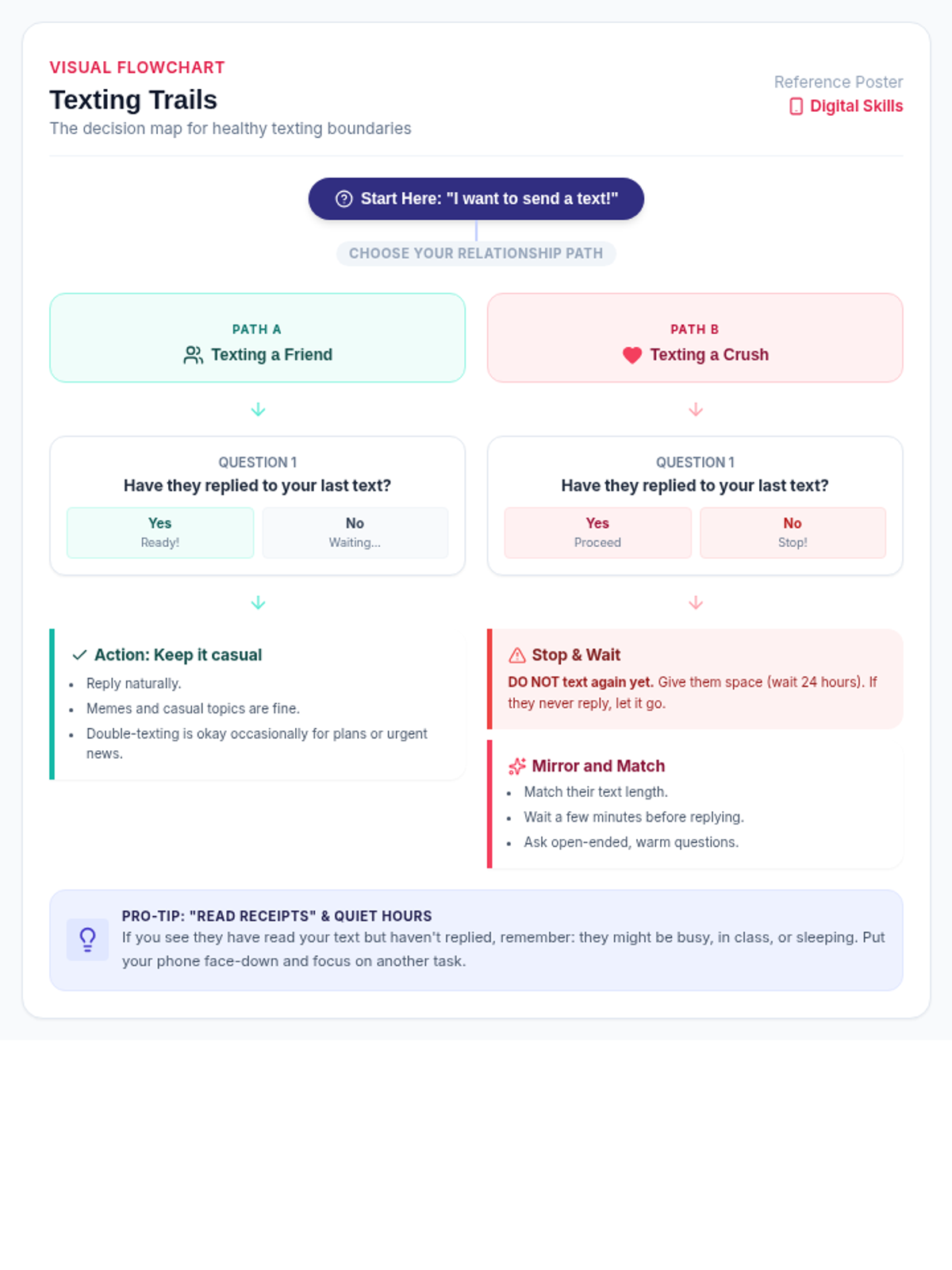
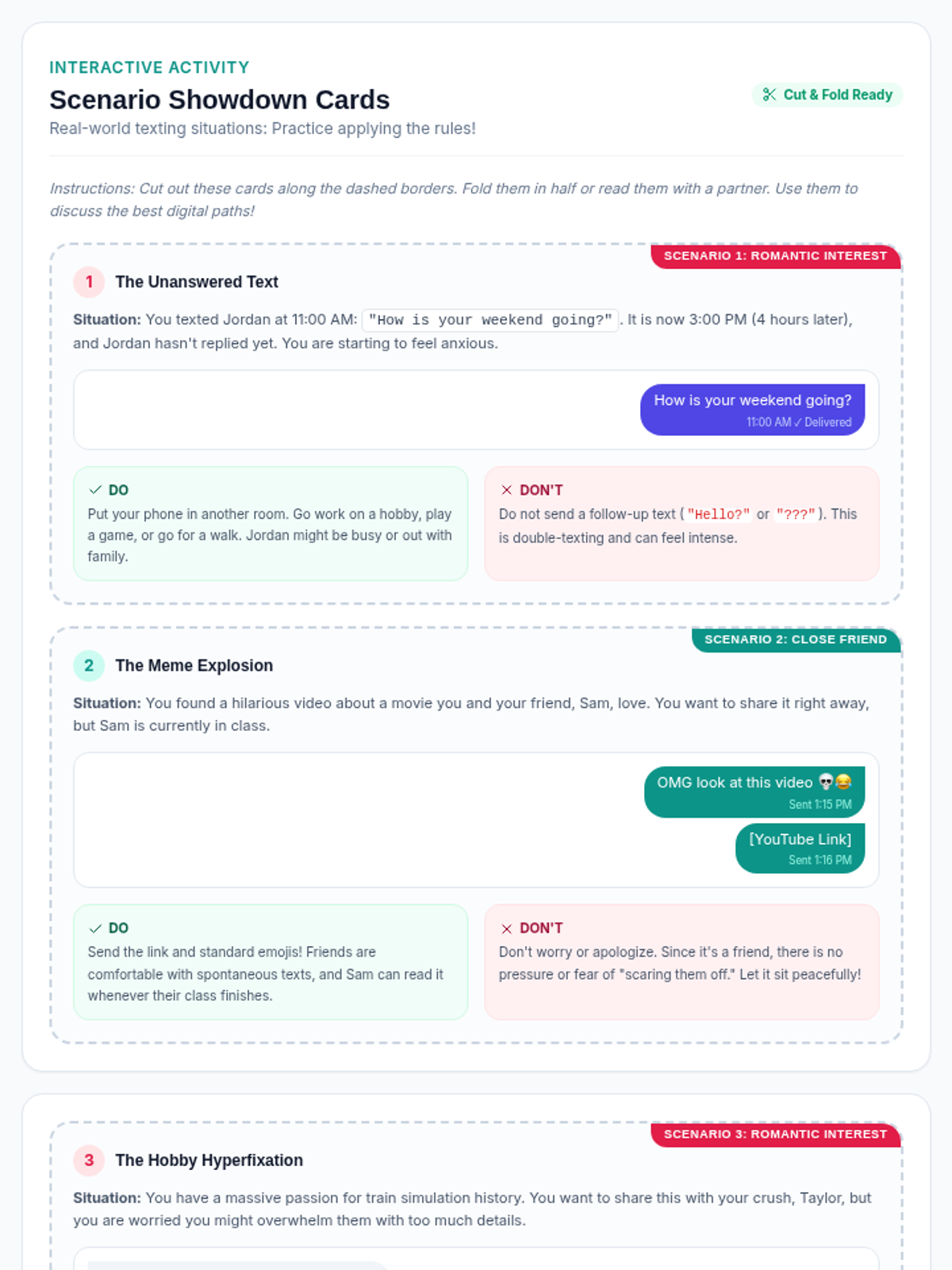
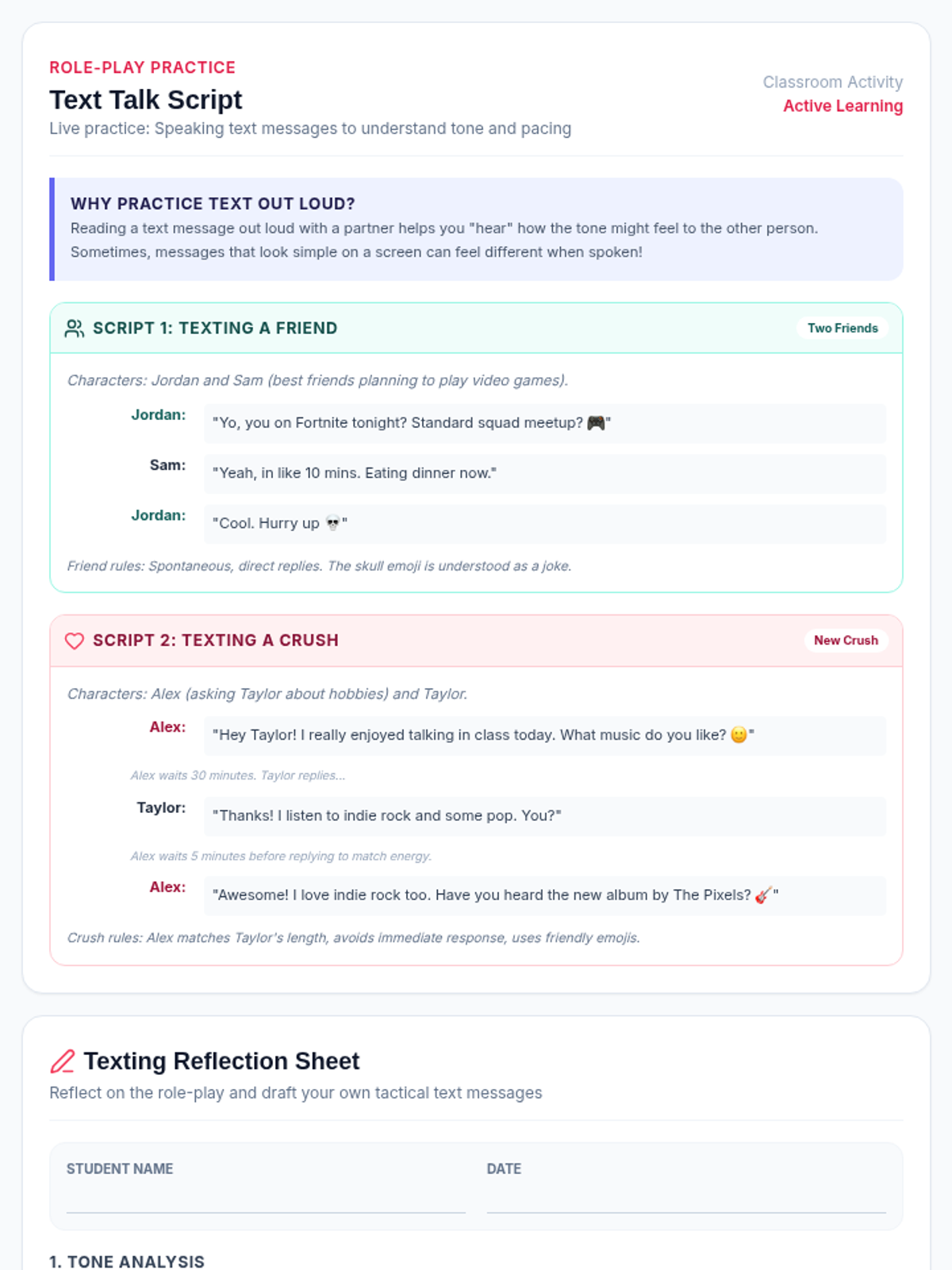
A structured social-emotional learning lesson designed for young adults with autism to navigate the nuances of digital communication. The lesson contrasts texting with friends against texting romantic interests, using visual guides, scenario cards, and role-play.
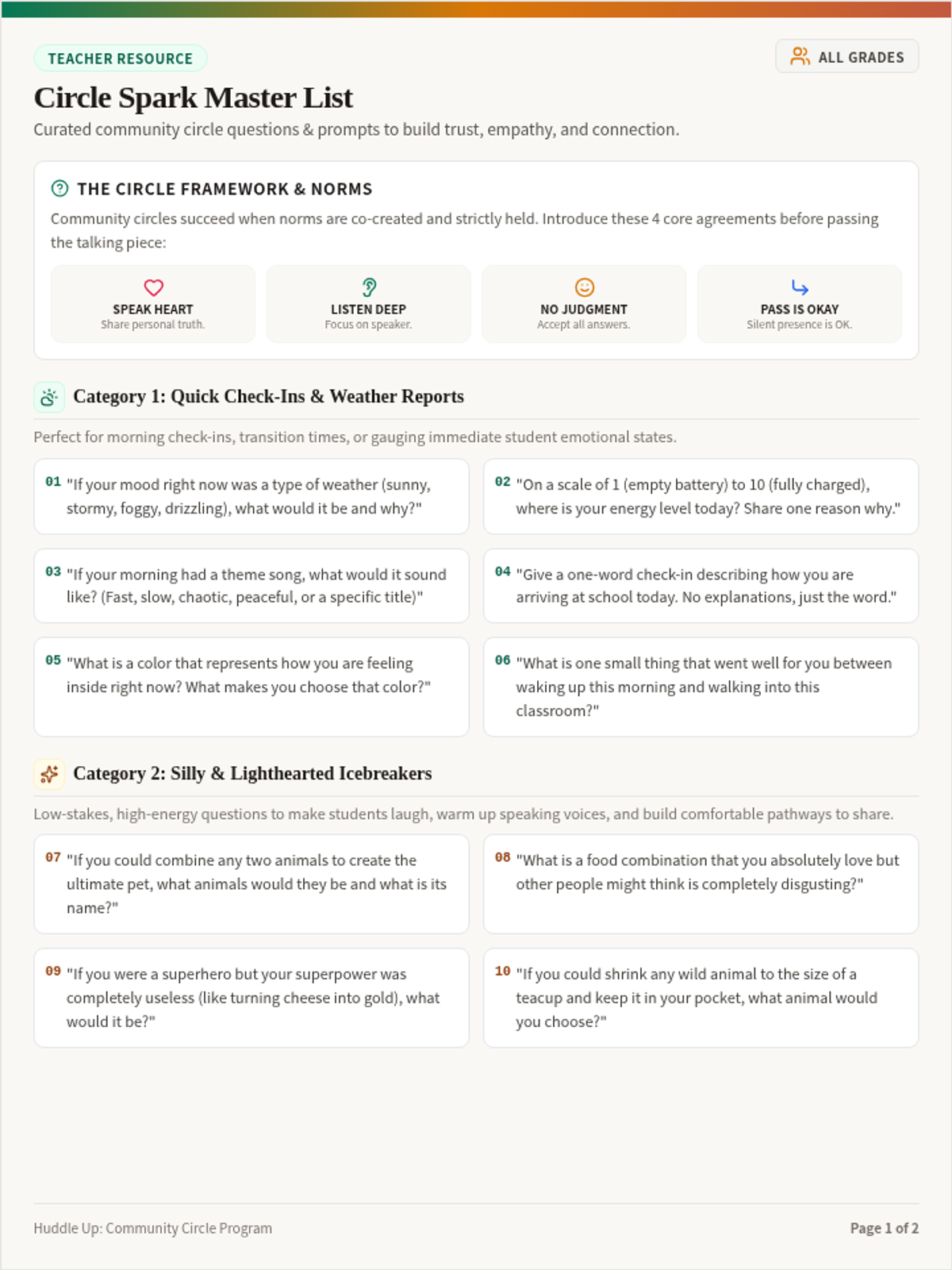
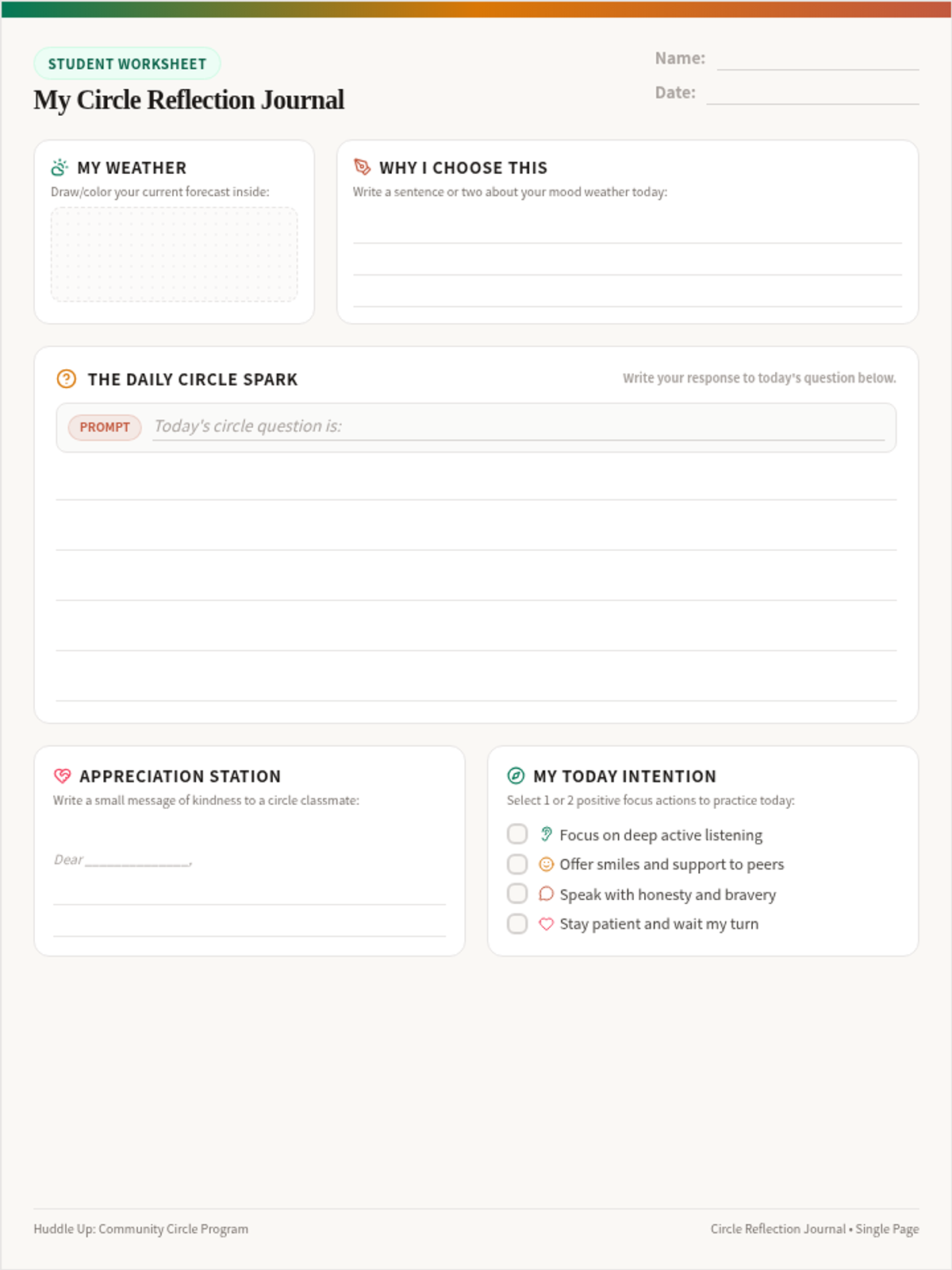
A complete toolkit to establish, run, and maintain engaging daily or weekly community circles that foster empathy, build classroom relationships, and check in on students' social-emotional well-being.
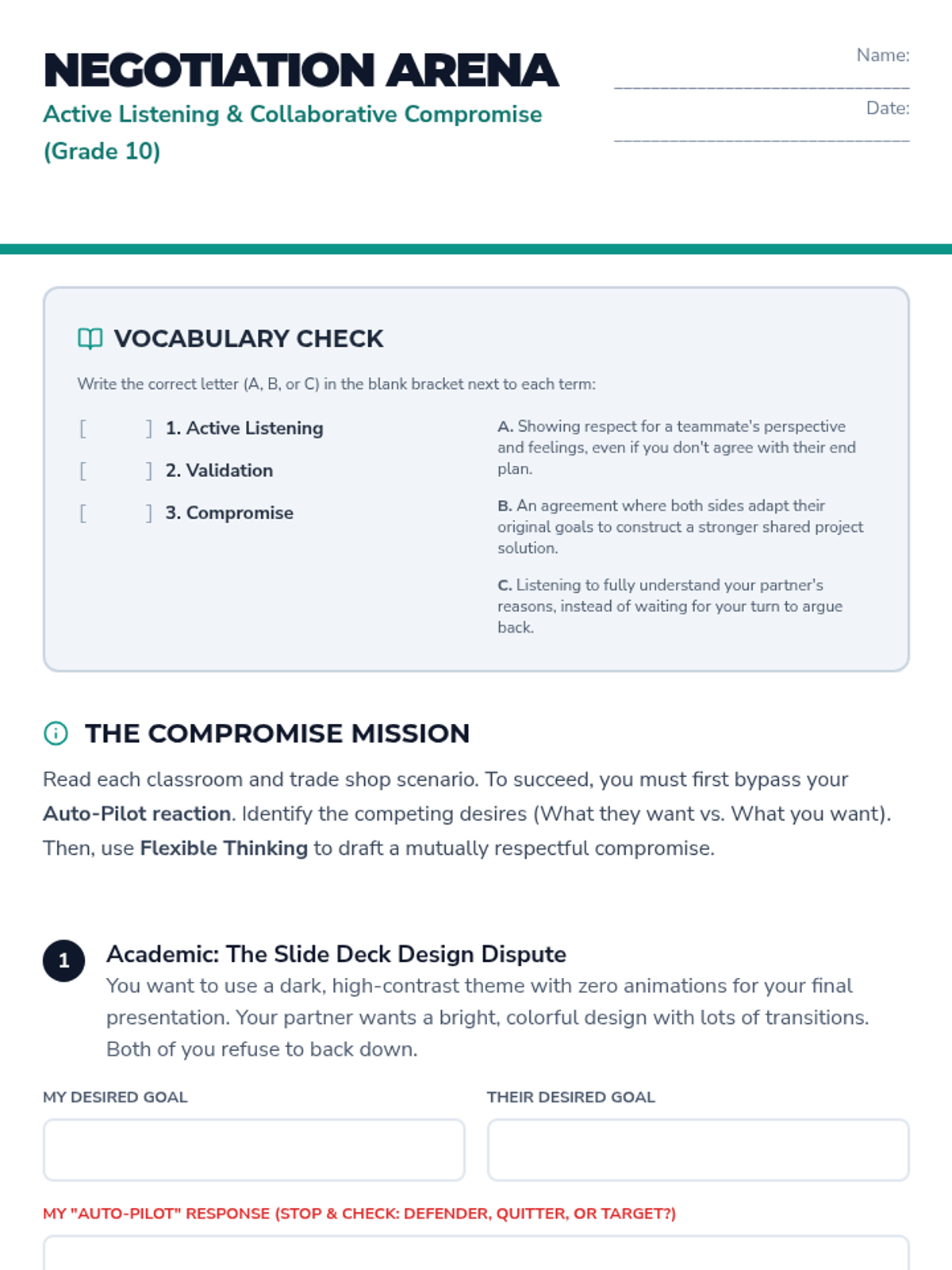
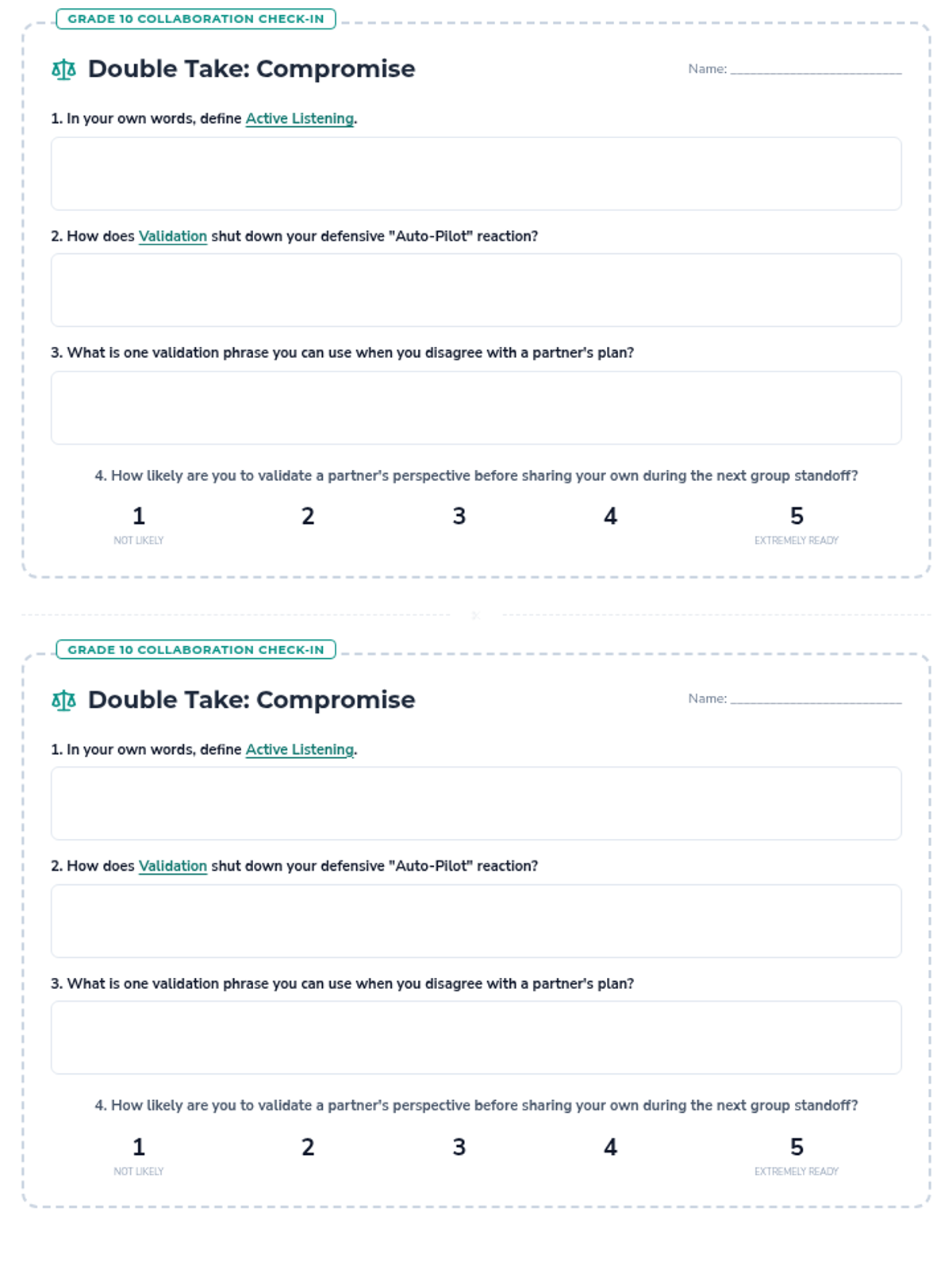
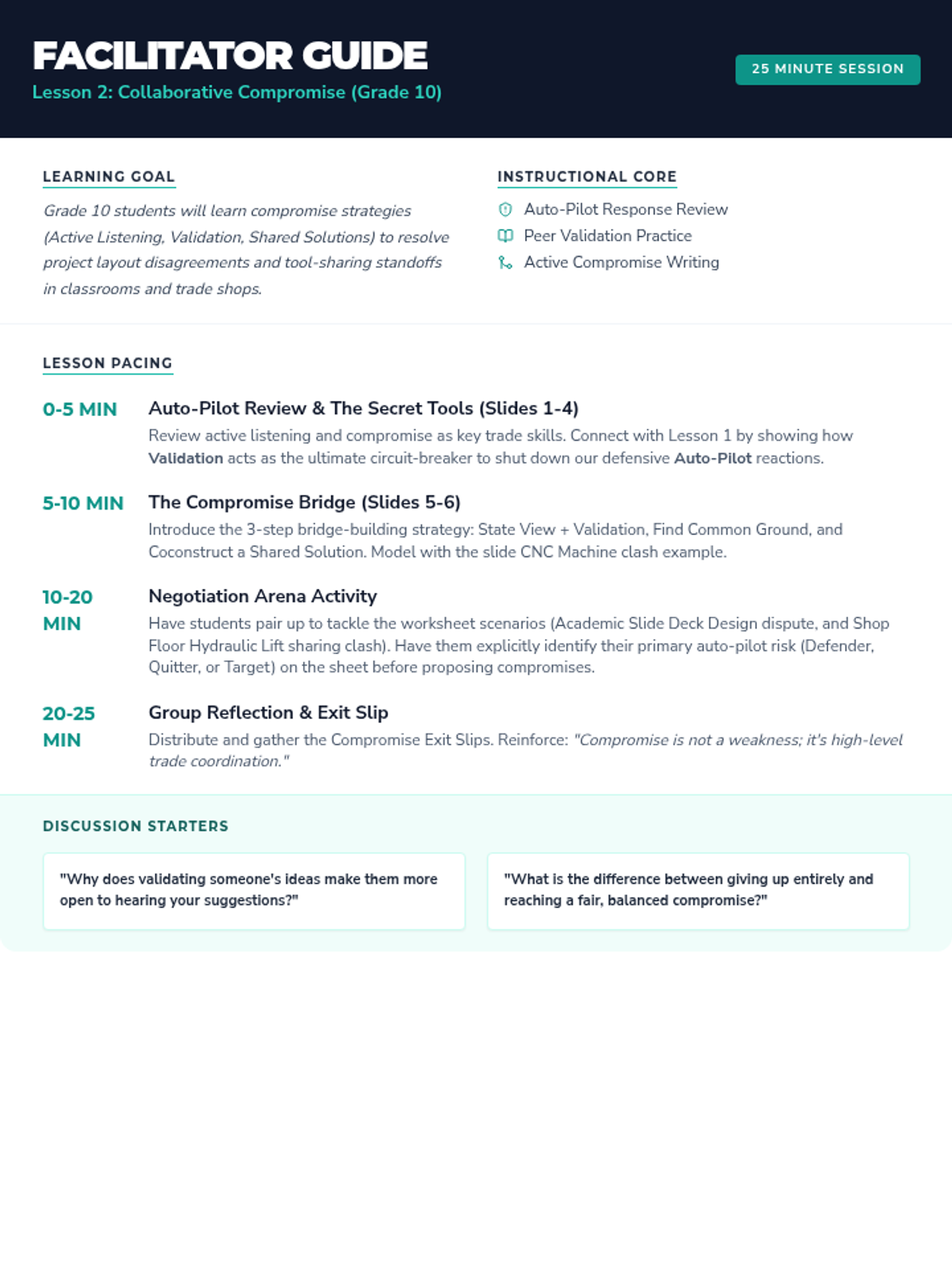
A 25-minute counseling lesson focusing on active listening, validation, and compromising to resolve teammate friction and competing visions in both classrooms and shops.
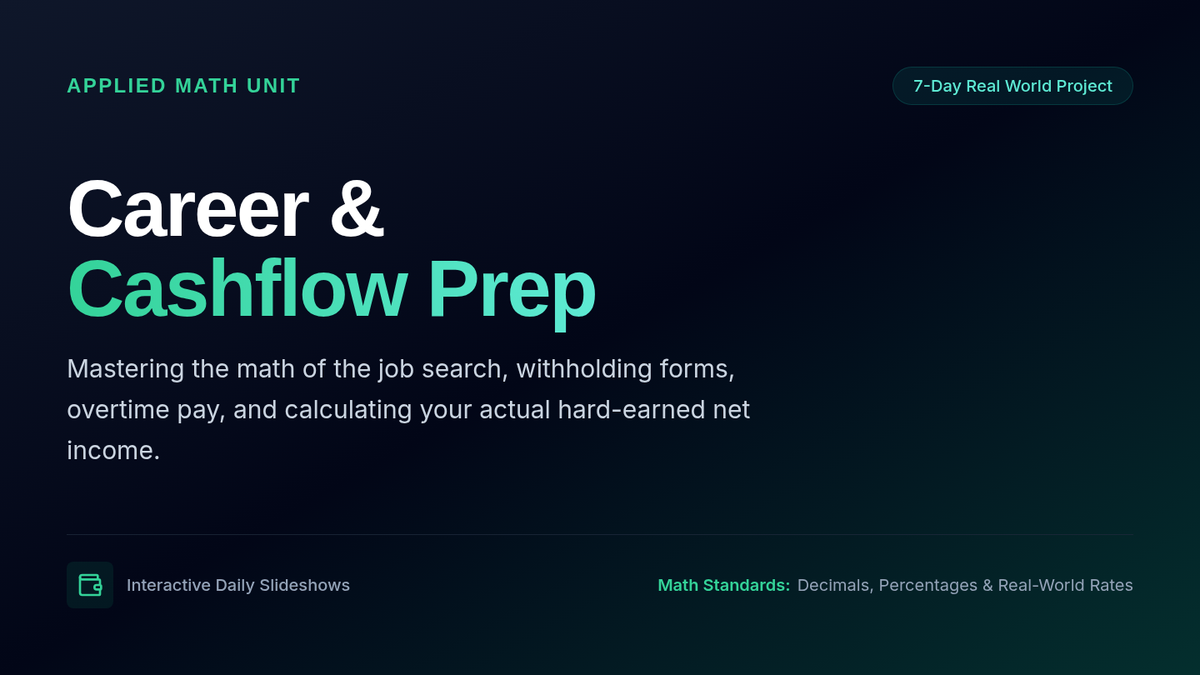
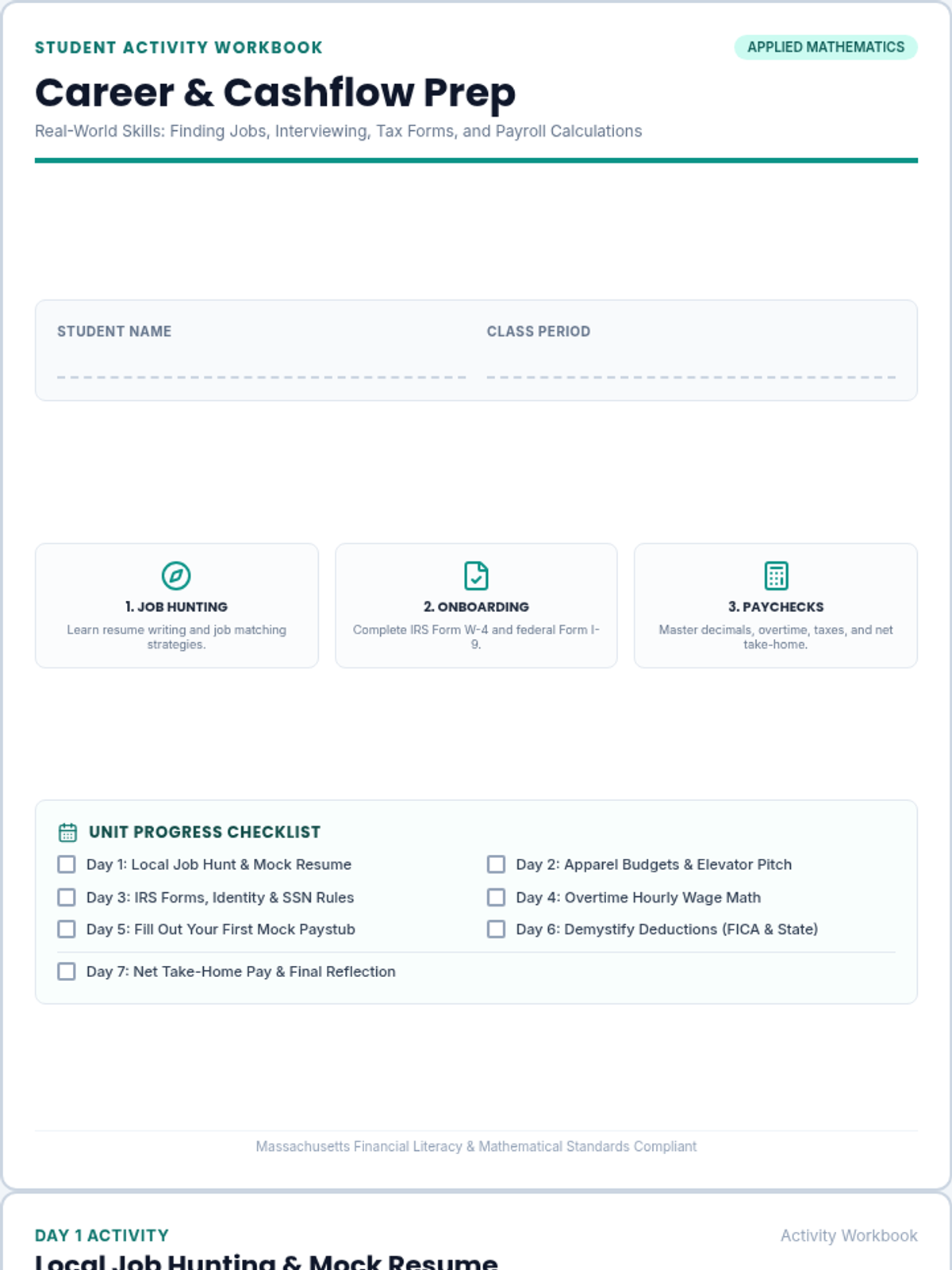
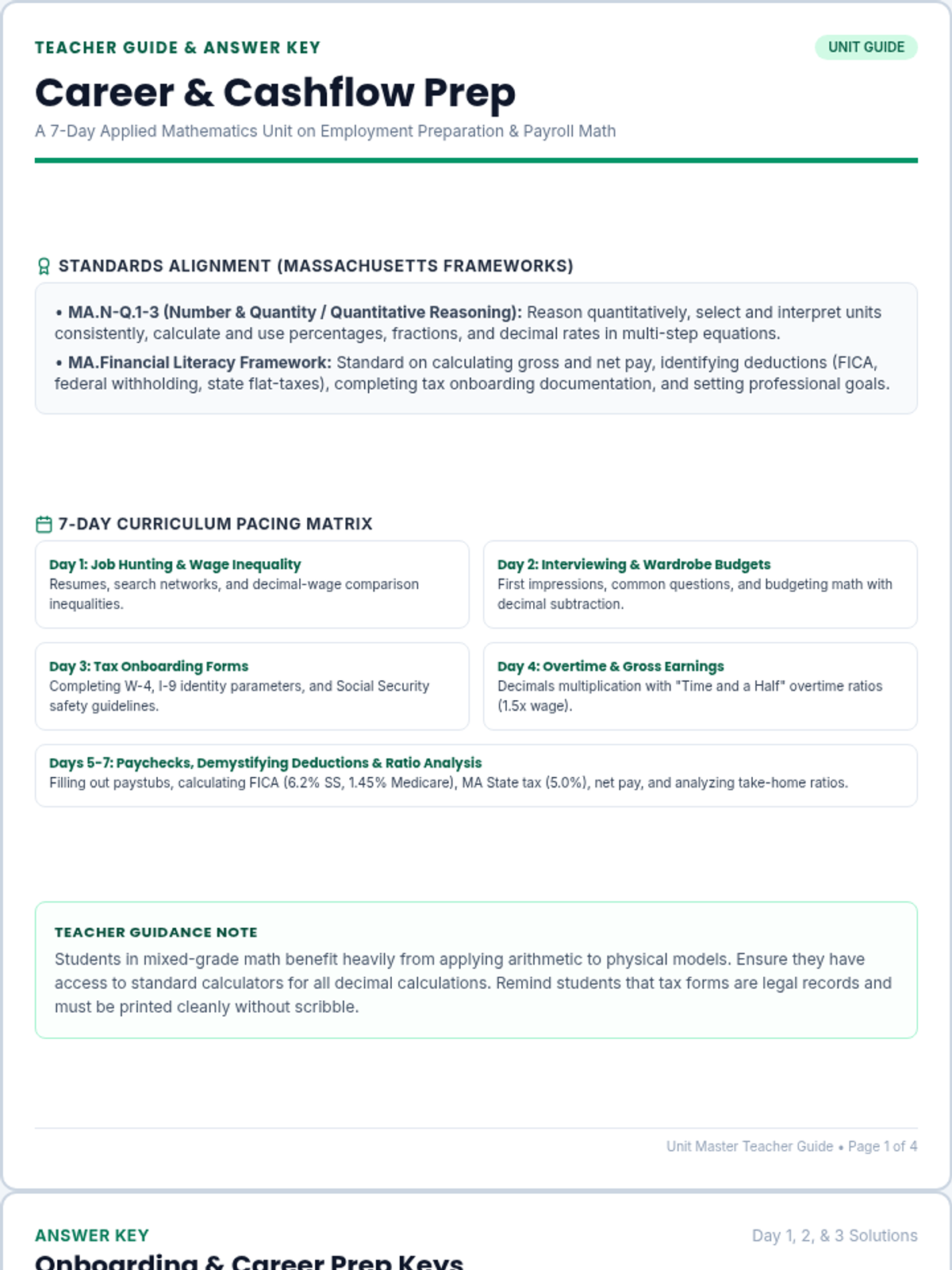
A comprehensive 7-day applied math unit on employment preparation and paycheck calculations. Students learn the job-hunting process, professional interviews, tax withholding forms (W-4 and I-9), and master decimal calculations to compute gross wages, overtime, FICA/state tax deductions, and net take-home pay.
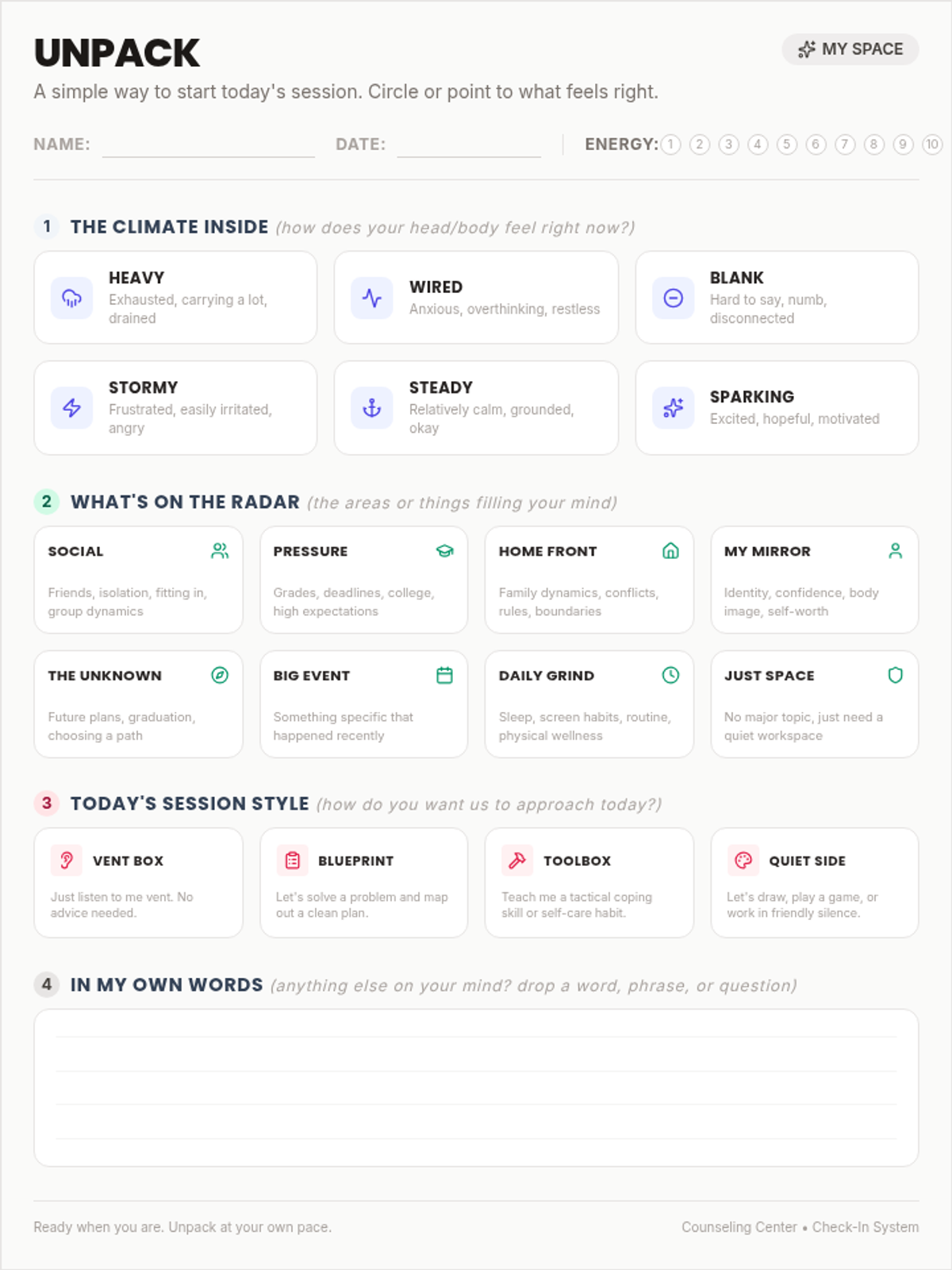
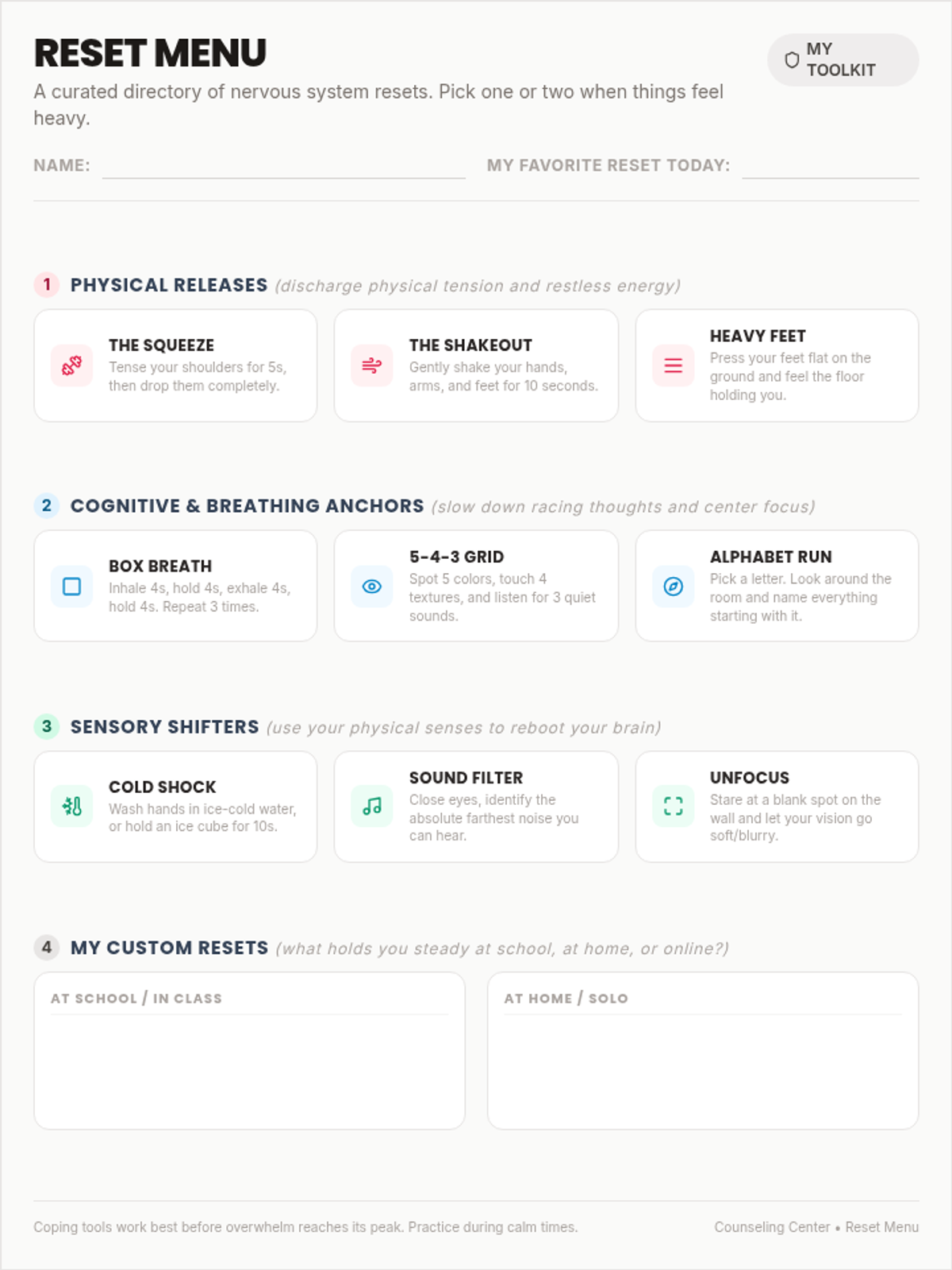
A curated suite of modern visual and communication-focused counseling resources tailored specifically for middle and high school students to lower conversational barriers and facilitate student-led sessions.
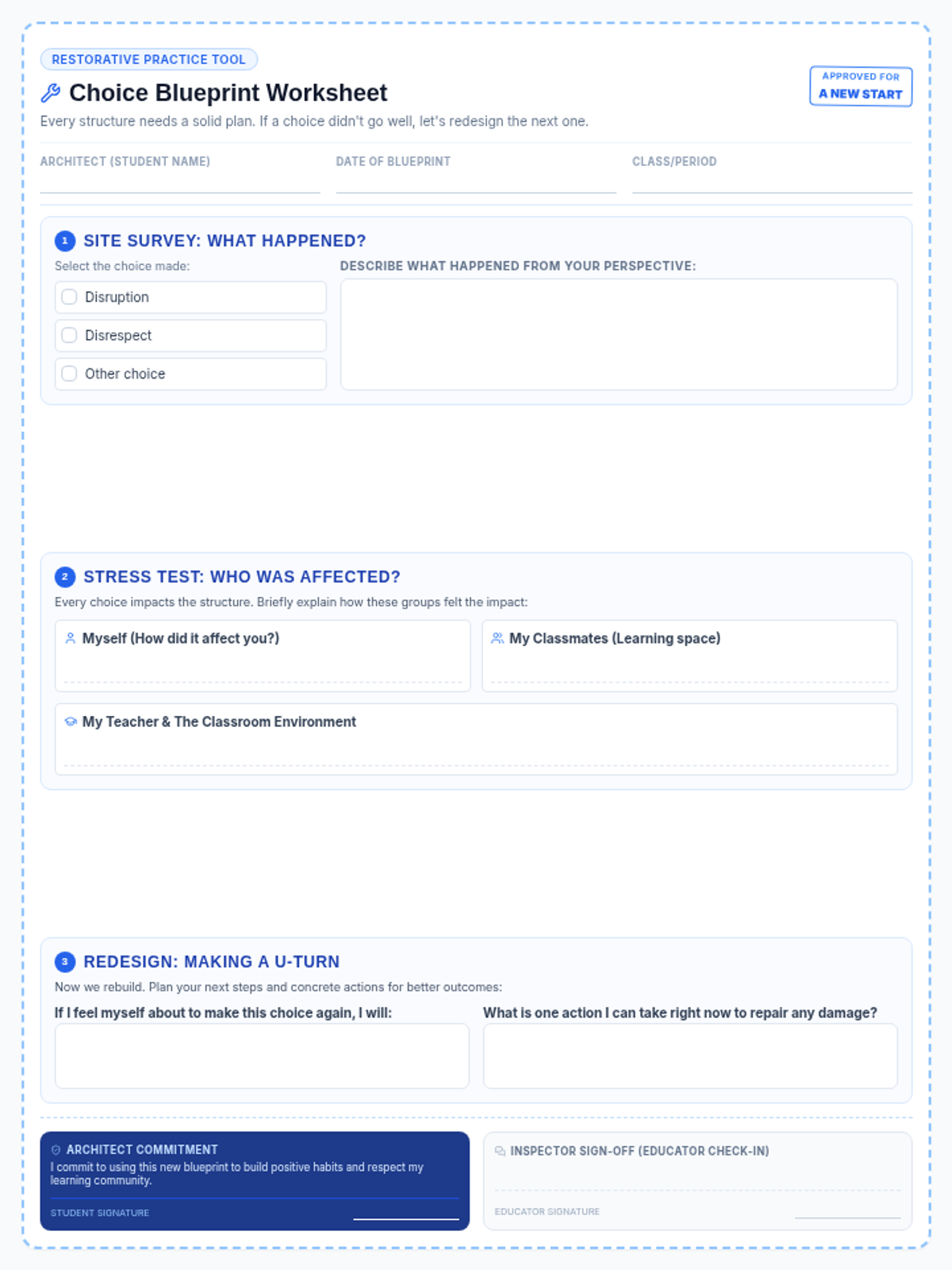
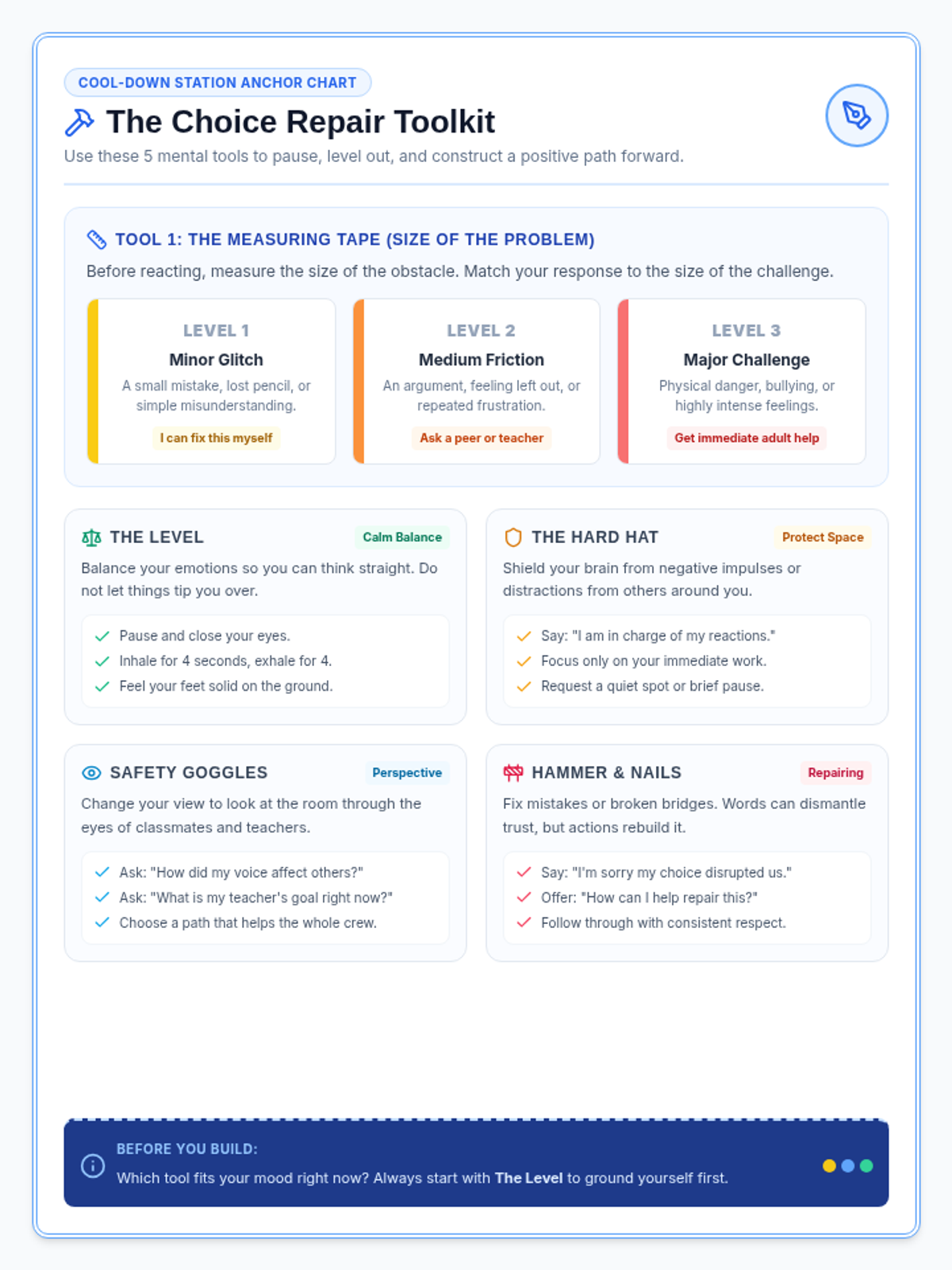
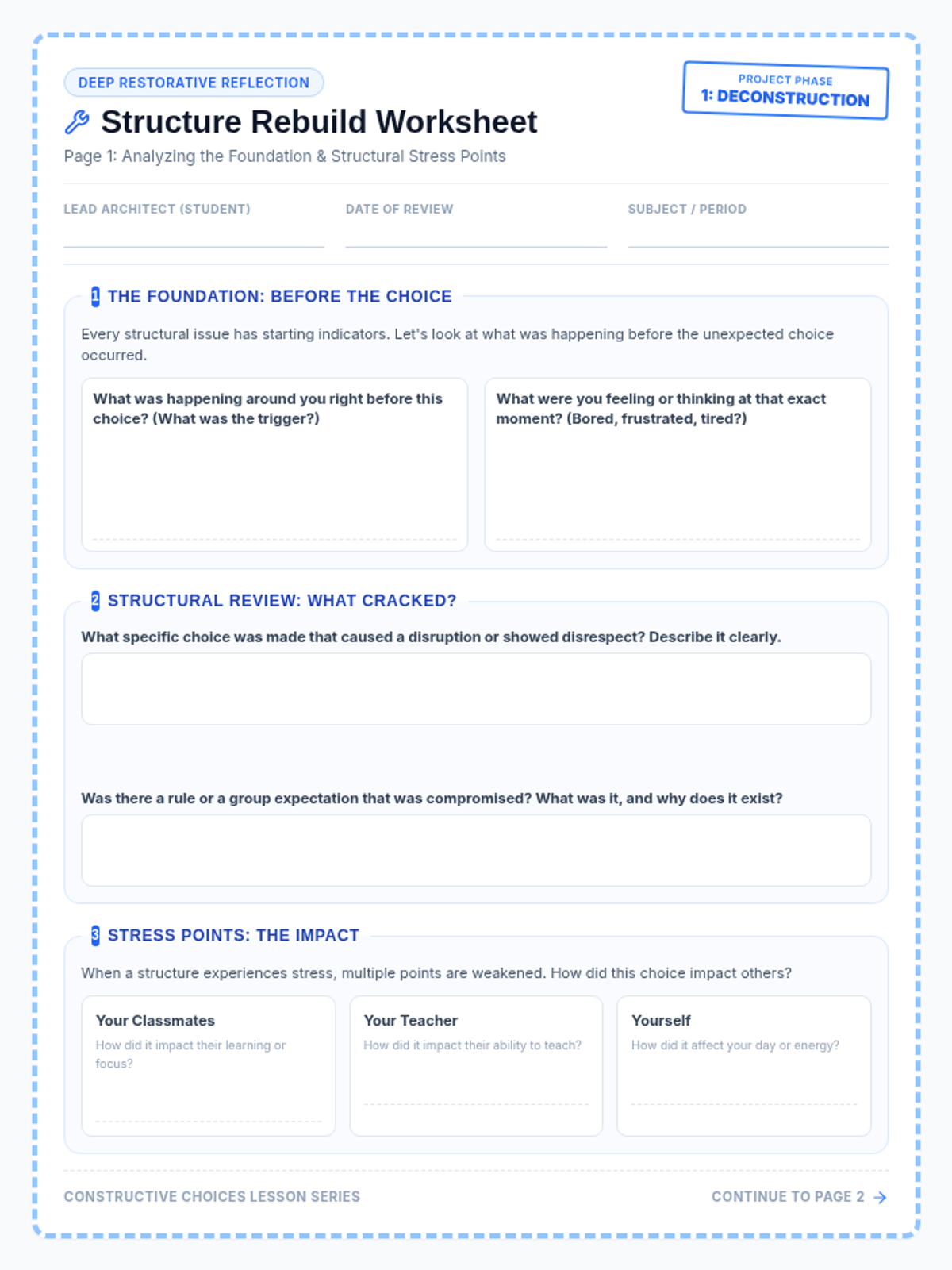
A restorative instruction set focusing on helping students pause, evaluate behavior impacts, and build a positive plan for respectful classroom engagement.
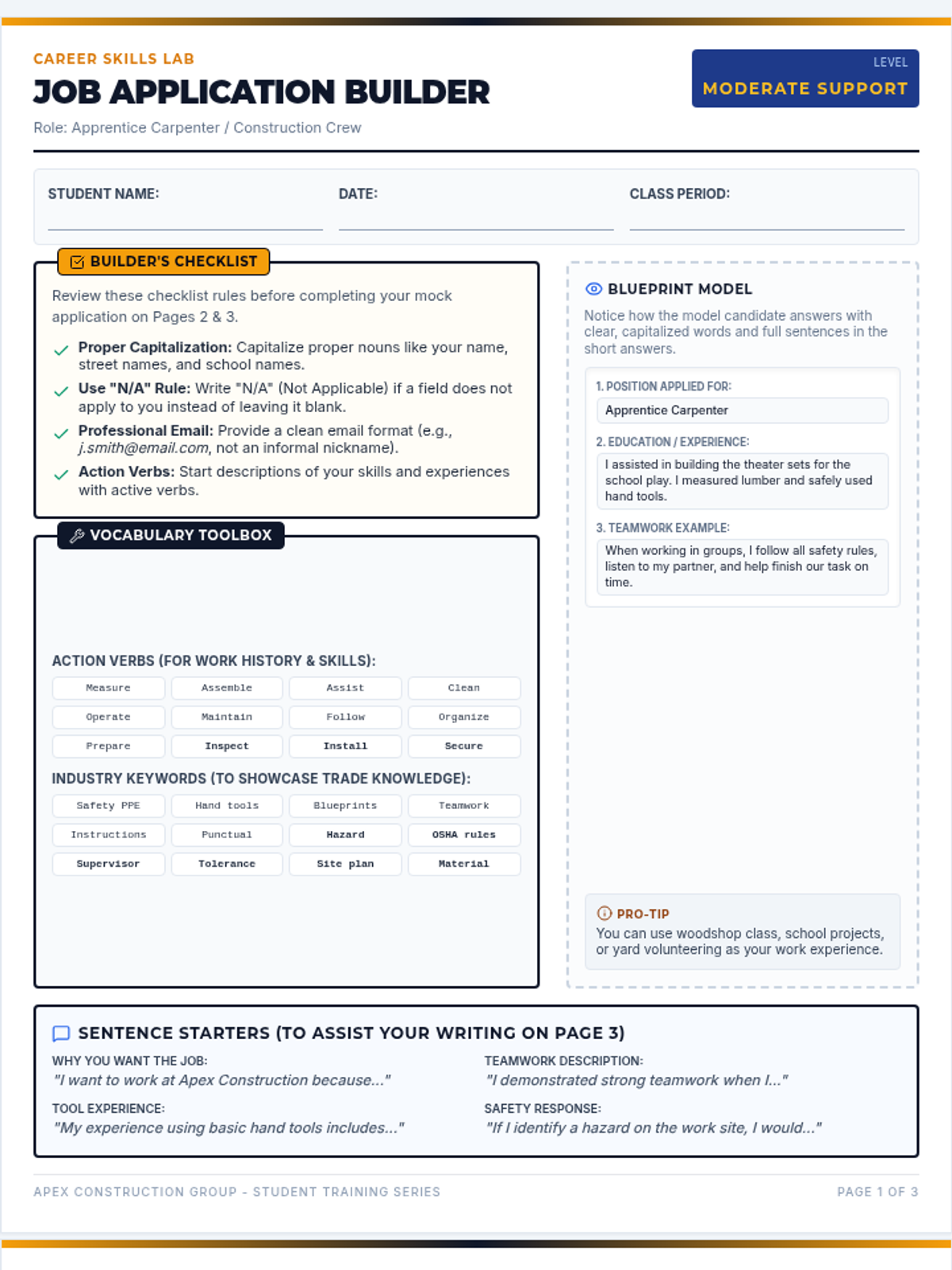
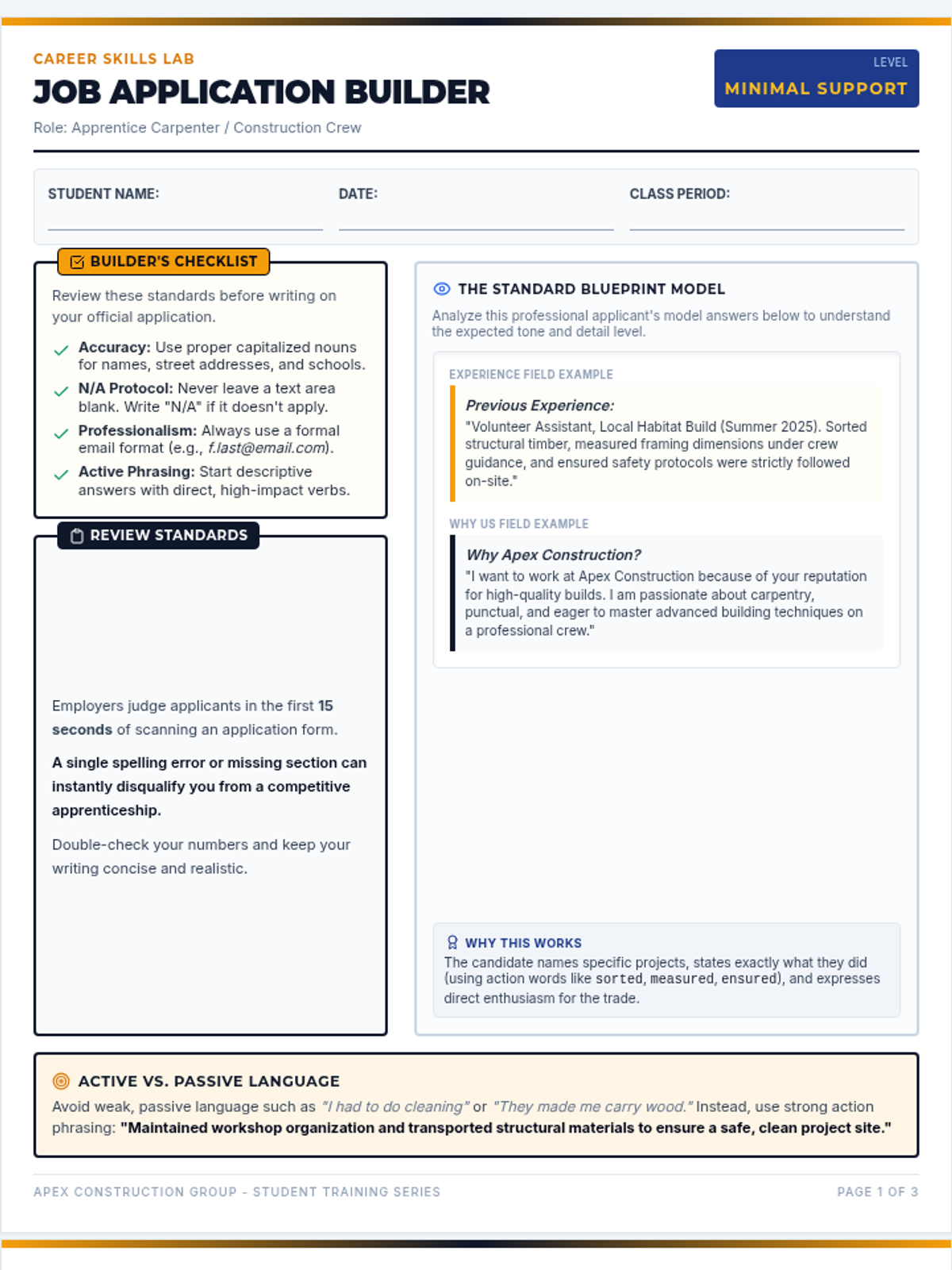
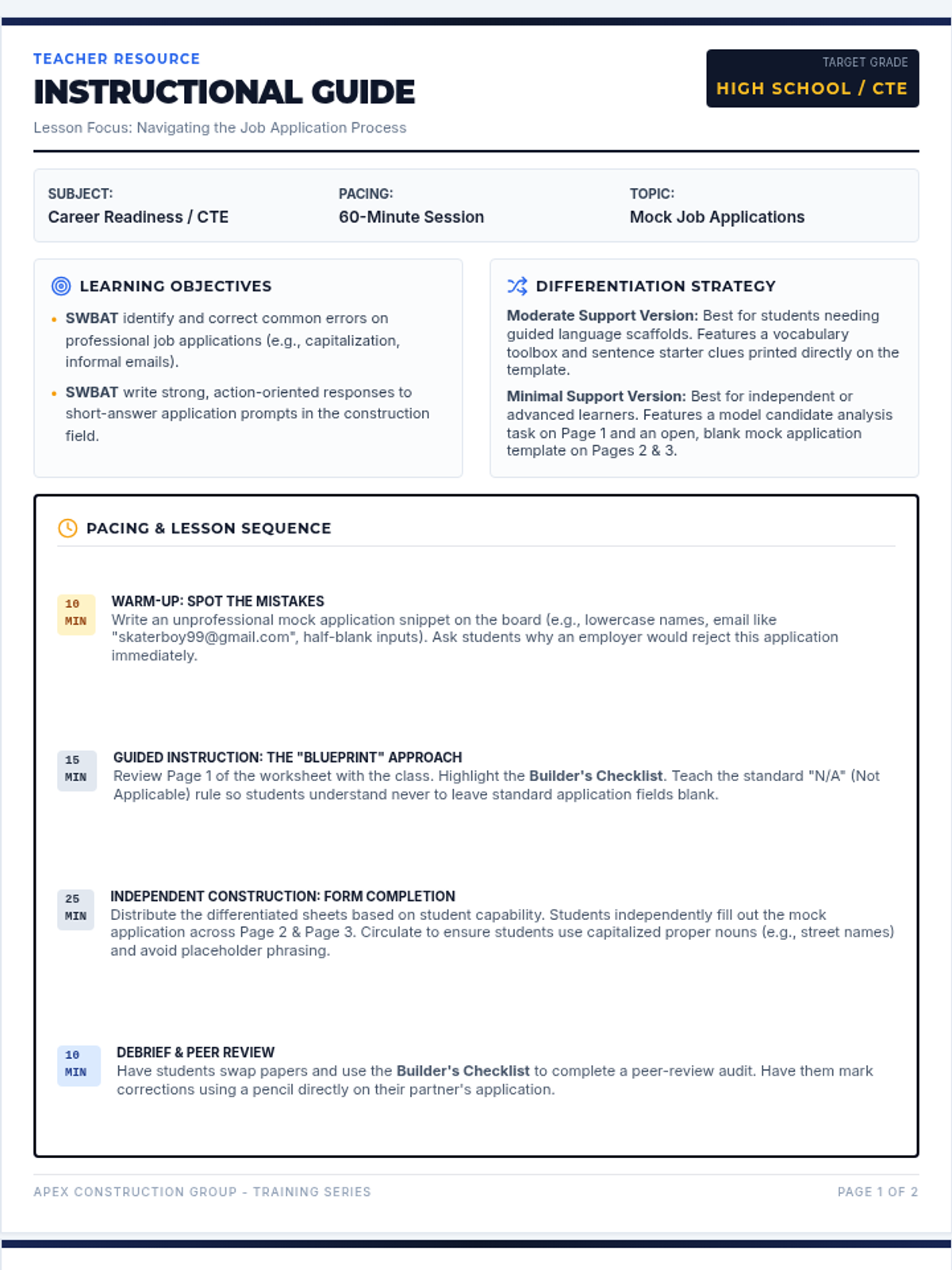
A practical lesson where students learn how to complete a job application for a construction role. Includes differentiated student worksheets (moderate and minimal support) and a comprehensive teacher guide with models and rubrics.
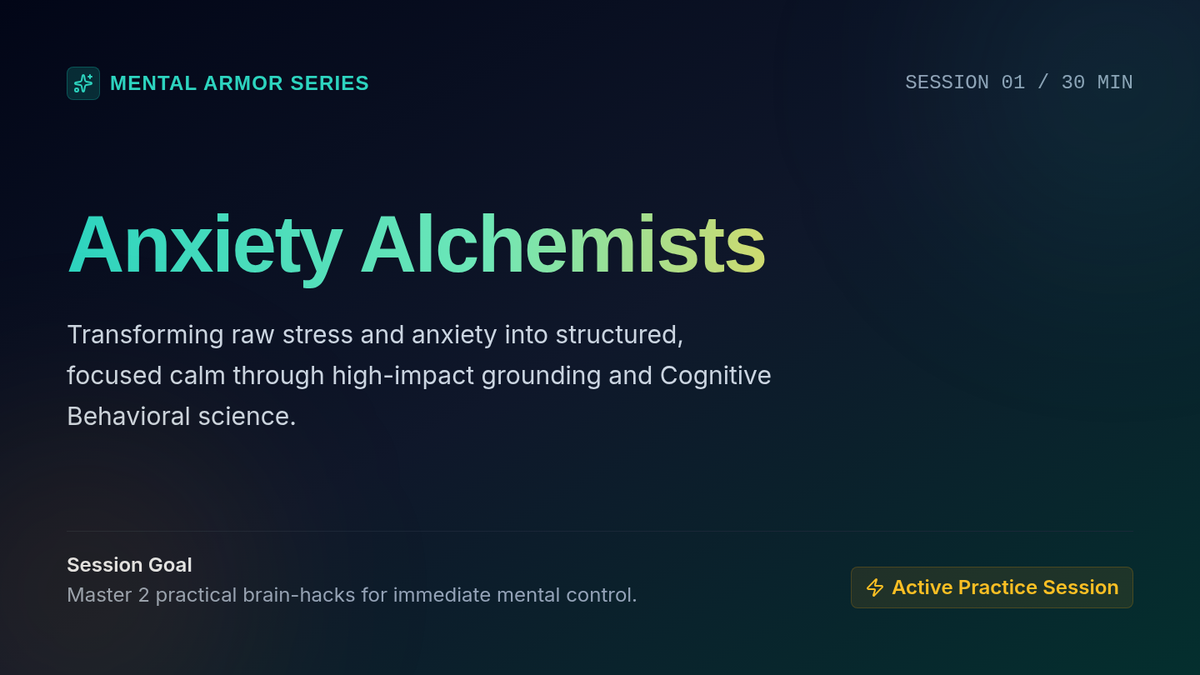
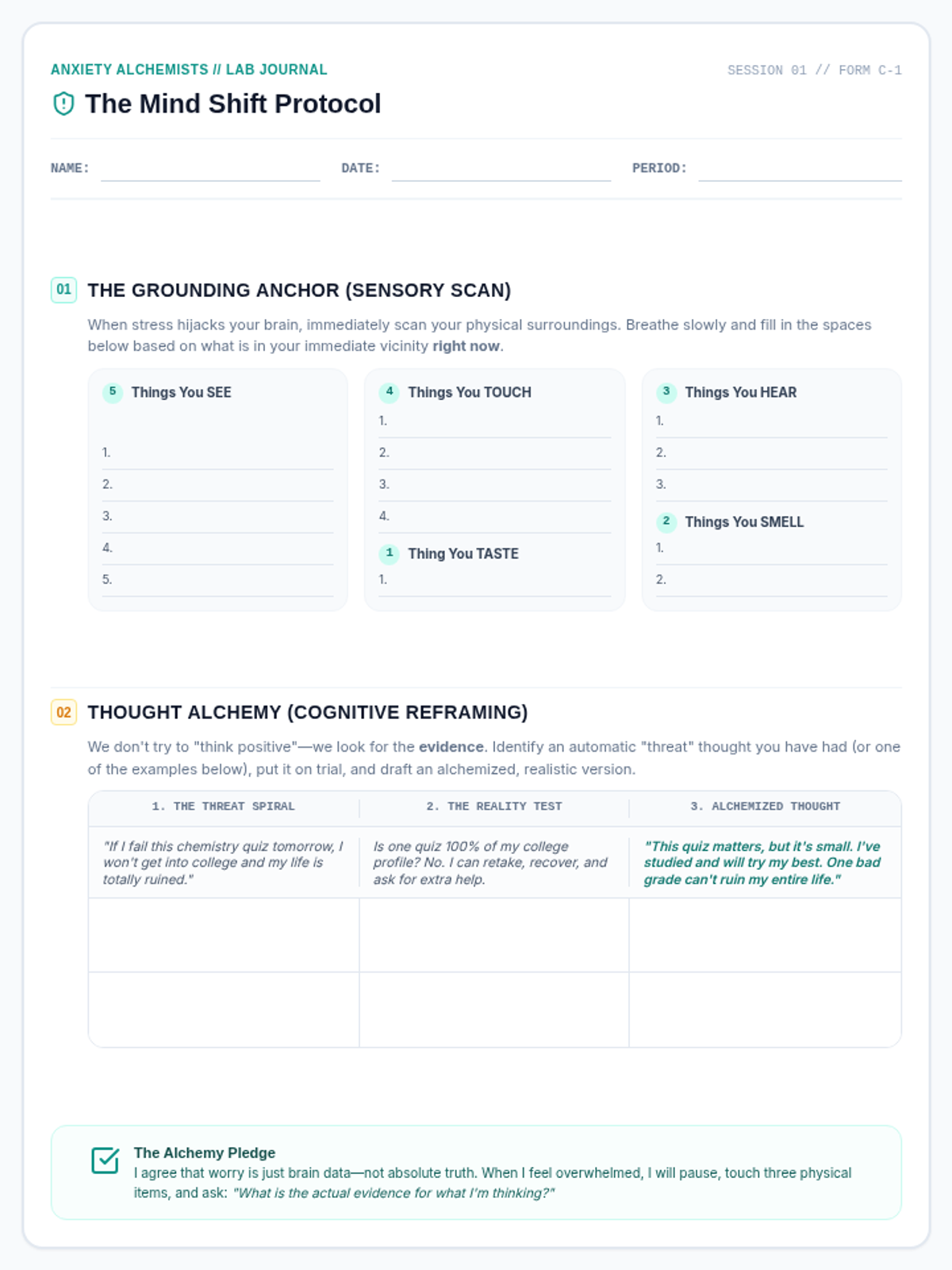
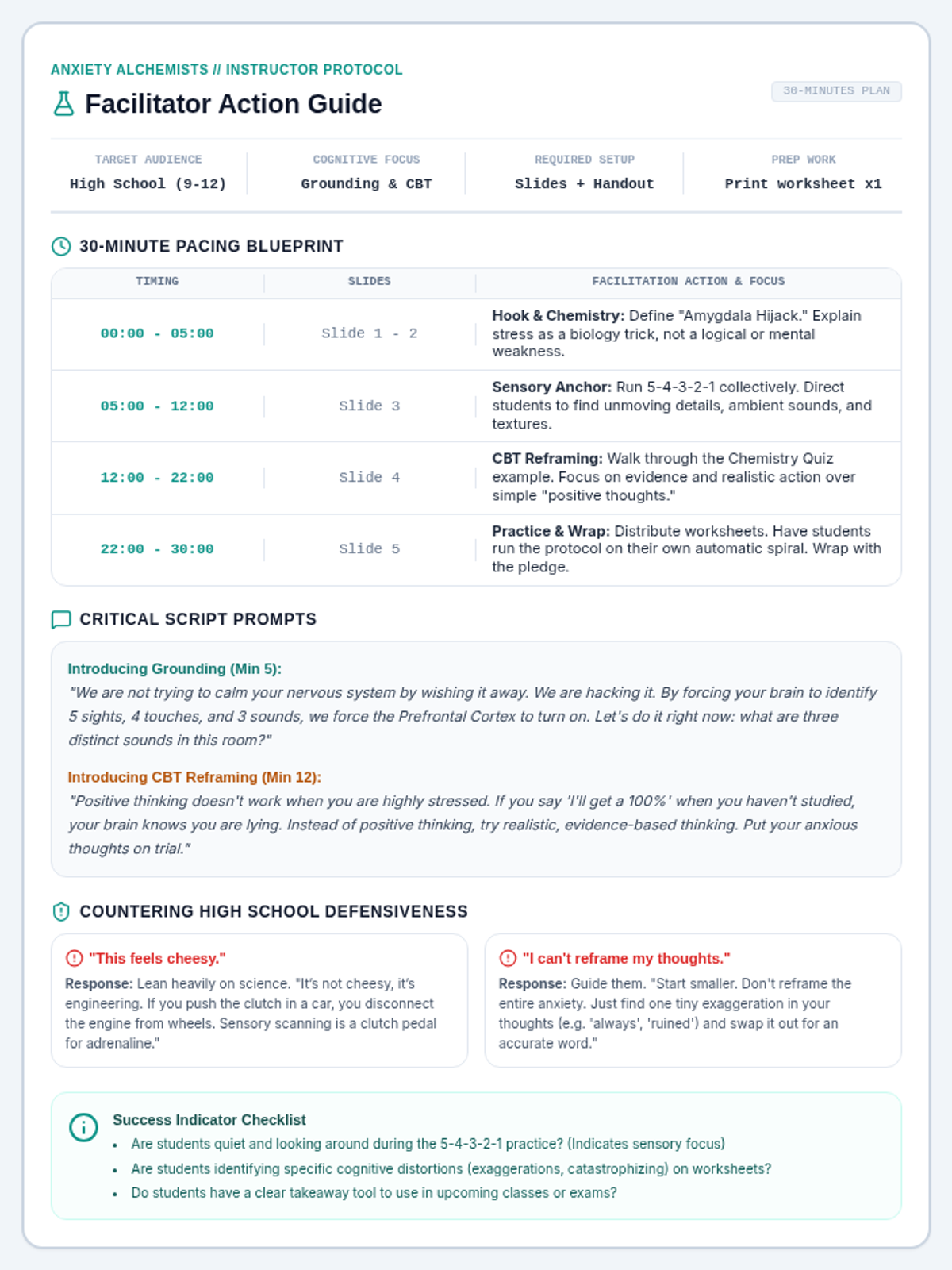
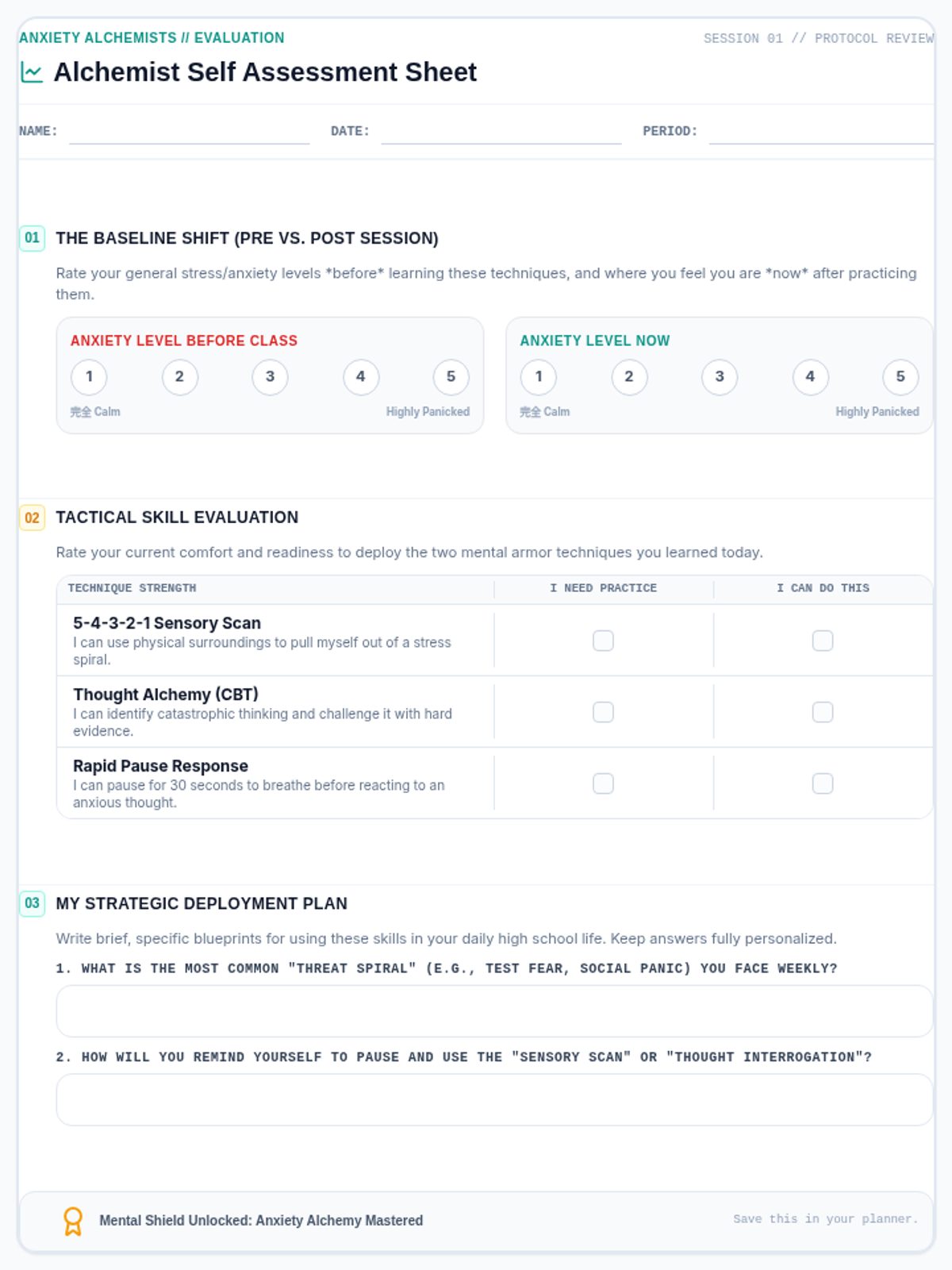
A high-impact, 30-minute lesson teaching high school students practical, evidence-based coping skills for anxiety. Students master the 5-4-3-2-1 grounding technique and CBT cognitive reframing to transform stress into structured calm.
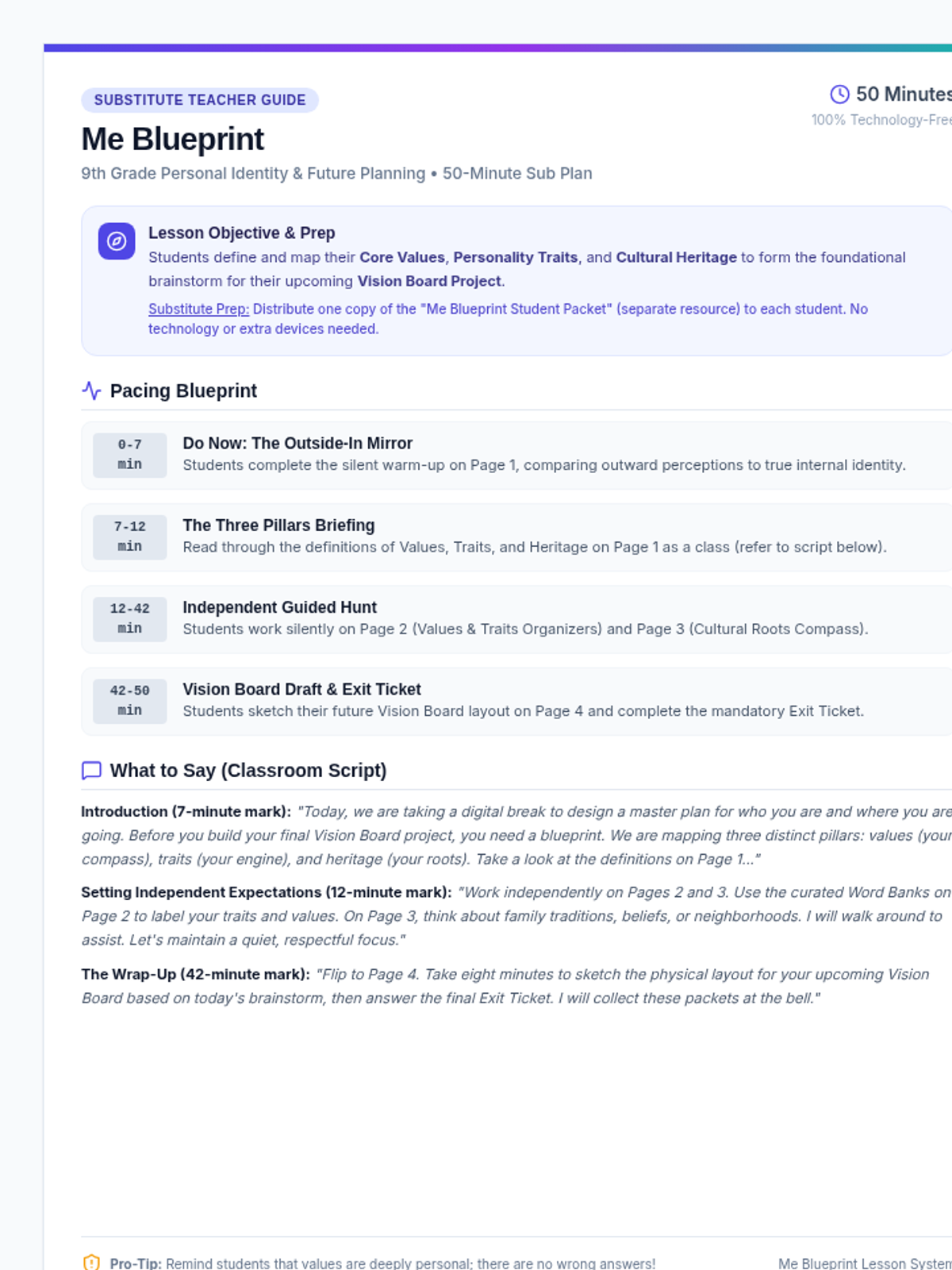
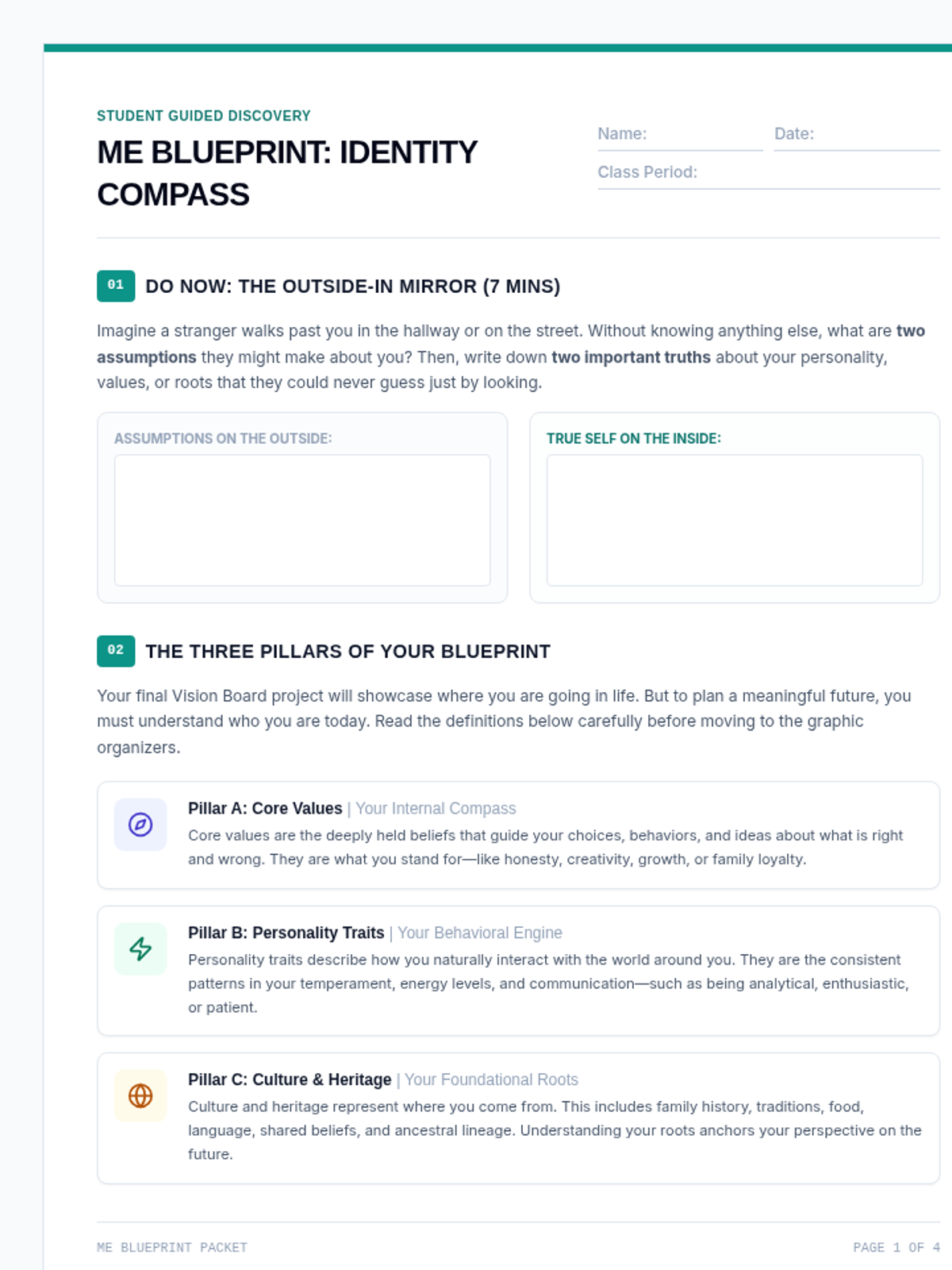
A technology-free 50-minute substitute lesson plan designed to help 9th-grade students deeply explore their core values, personality traits, and cultural heritage in preparation for their final vision board project.
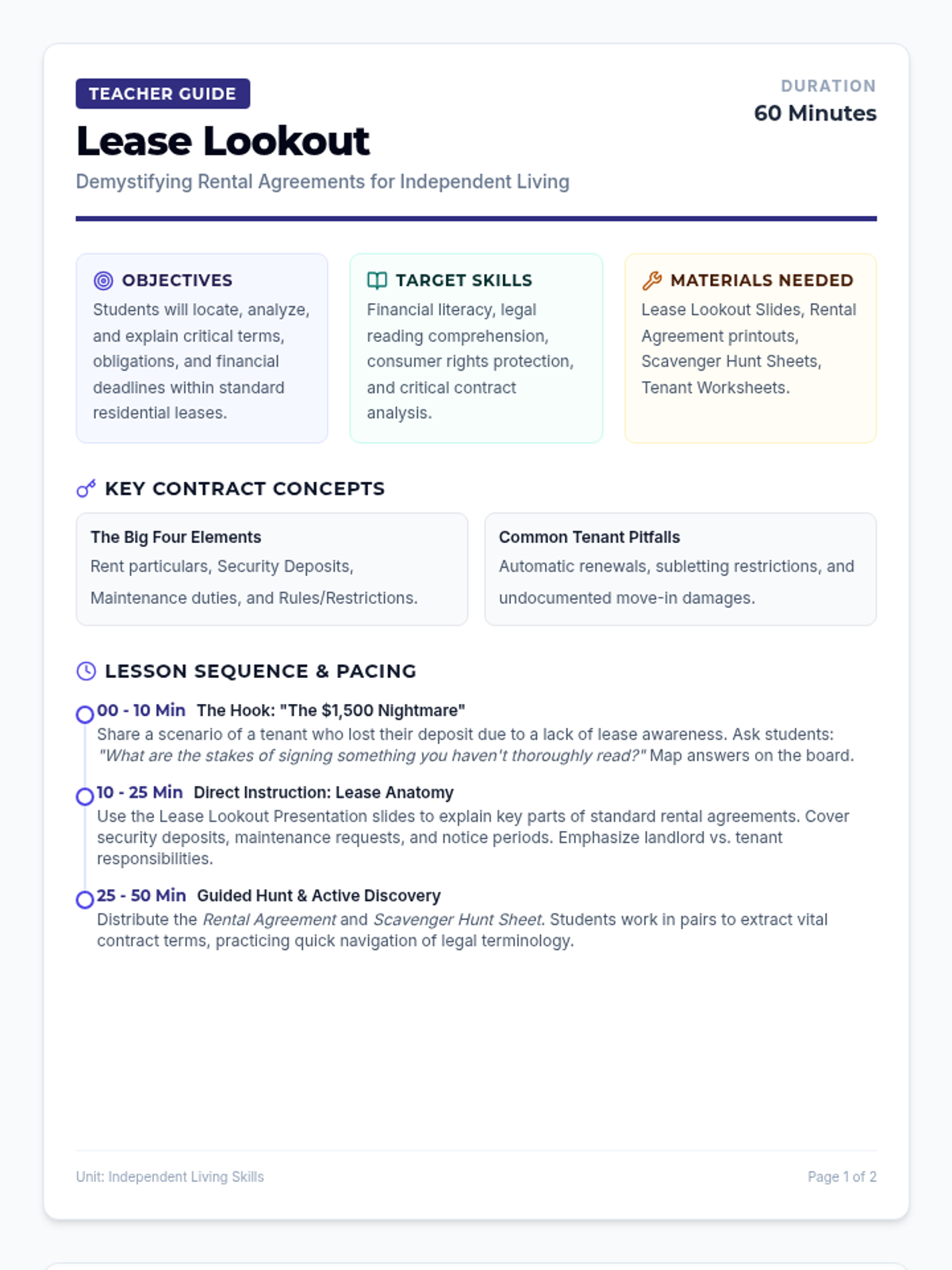
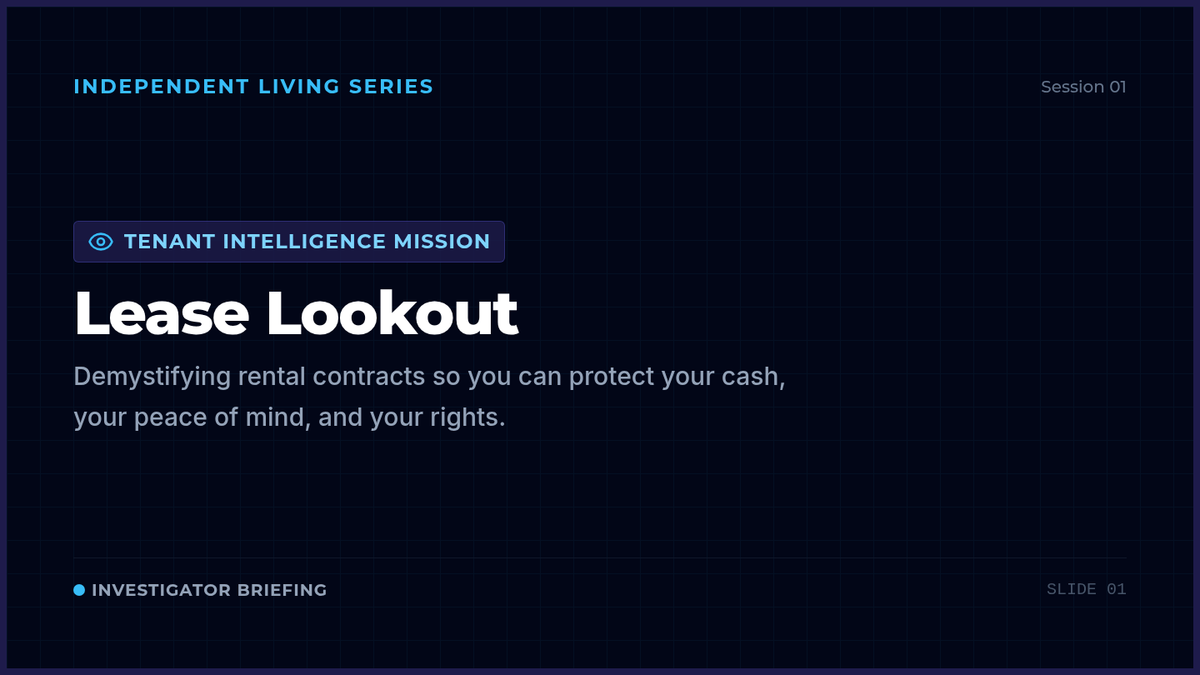
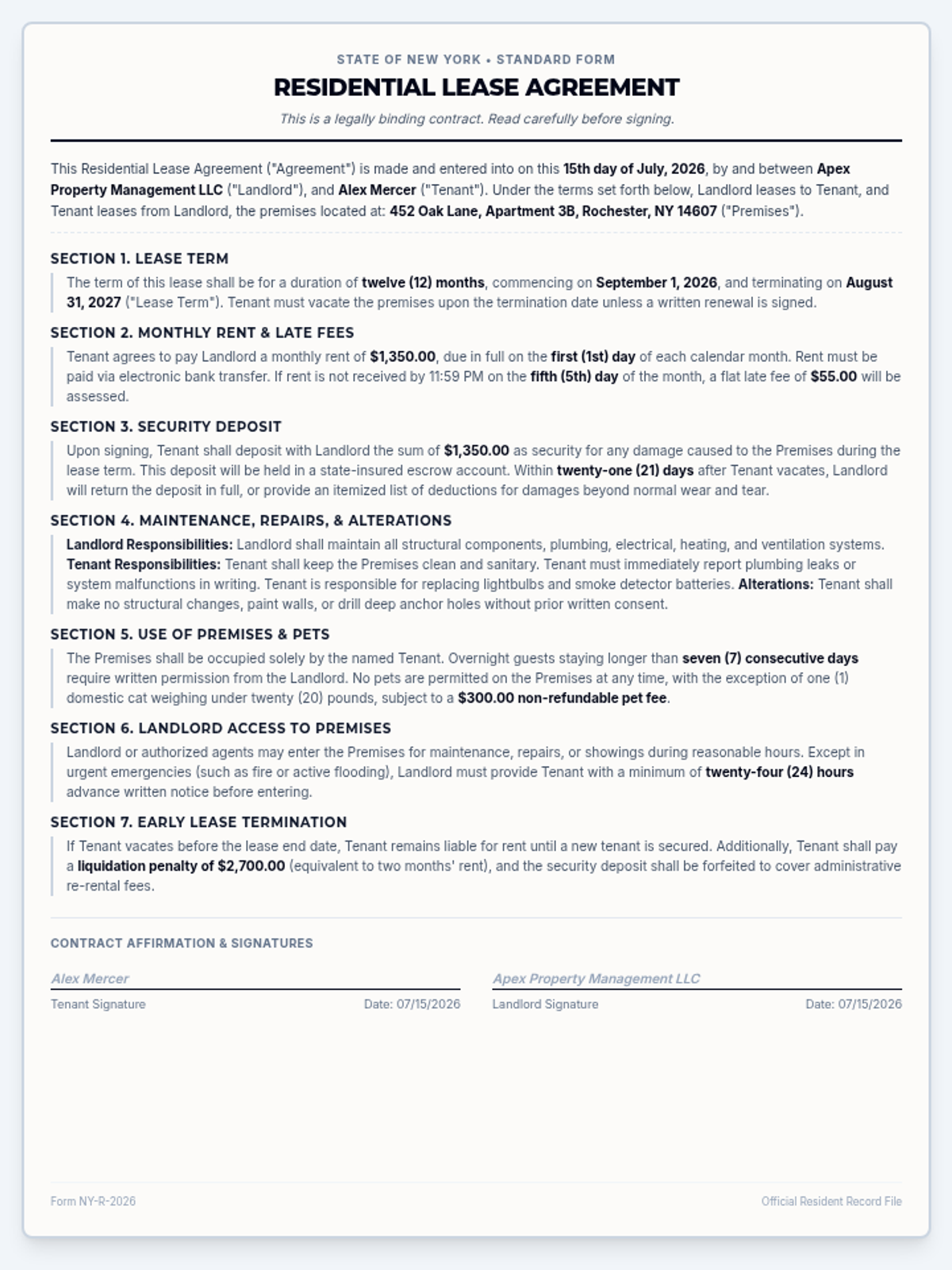
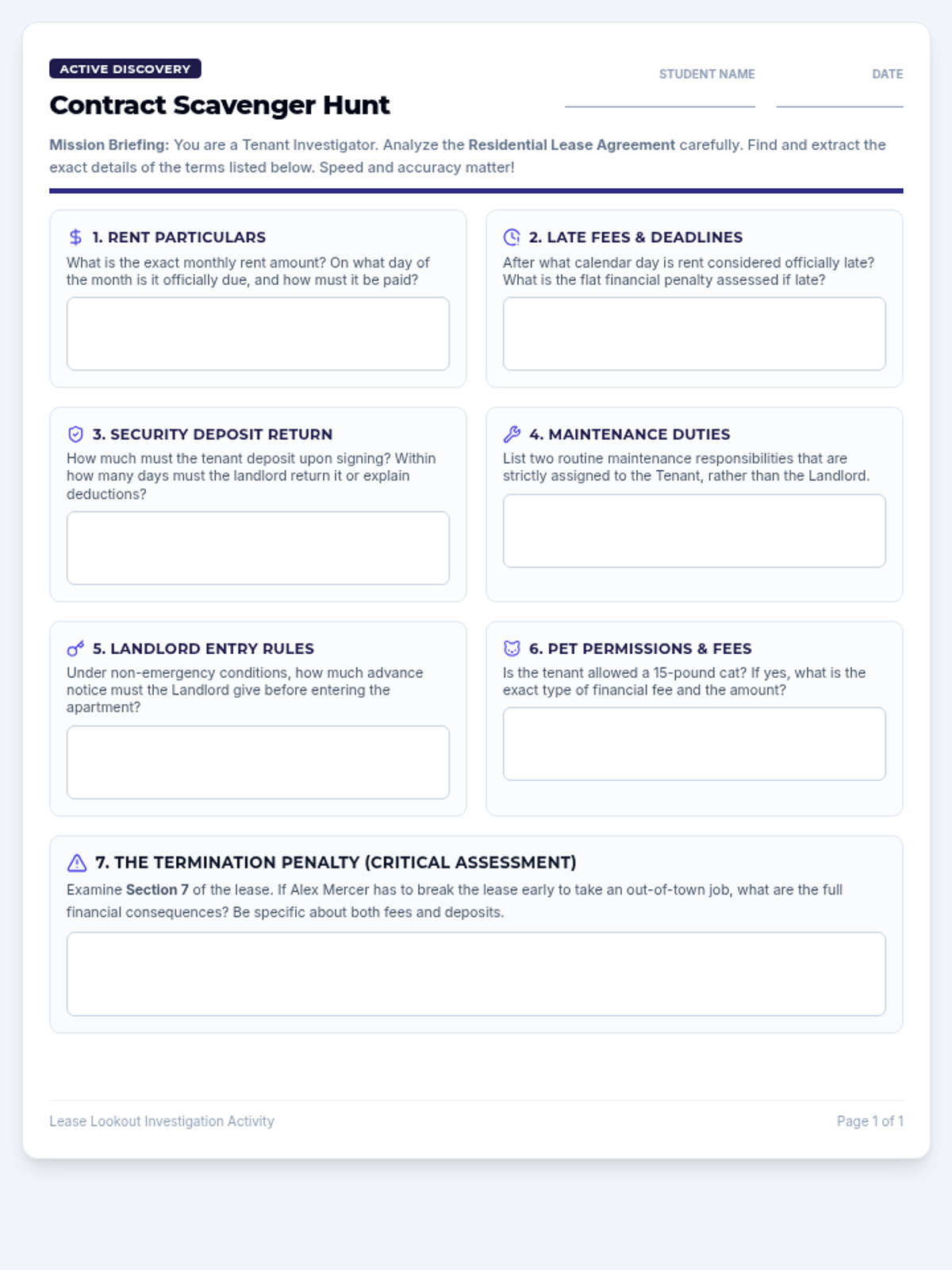
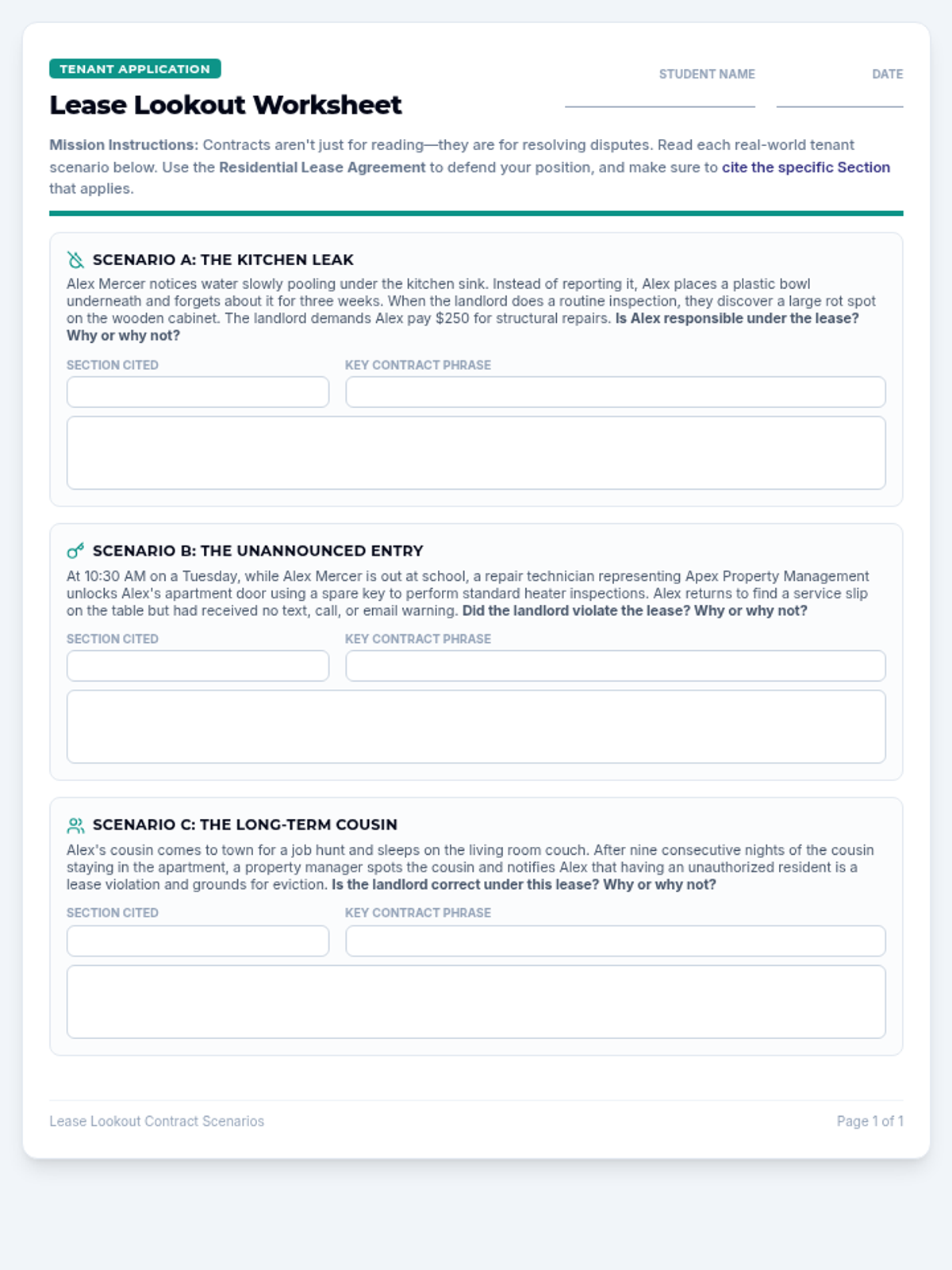
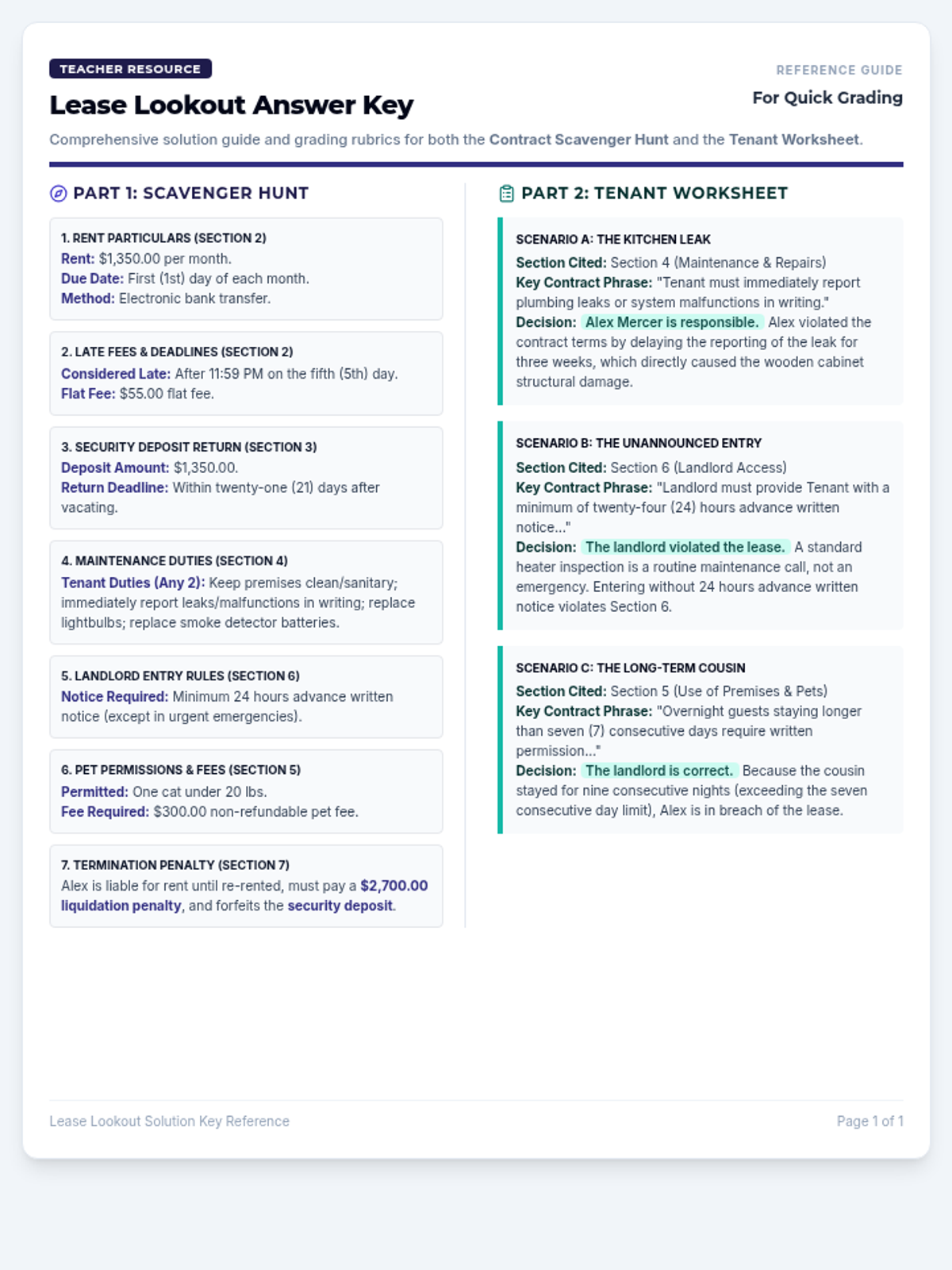
This lesson prepares students for the complexities of independent living by demystifying rental agreements. Through an interactive 'contract scavenger hunt' and real-world scenario analysis, students learn to identify key lease terms, understand security deposits, and navigate landlord-tenant responsibilities.
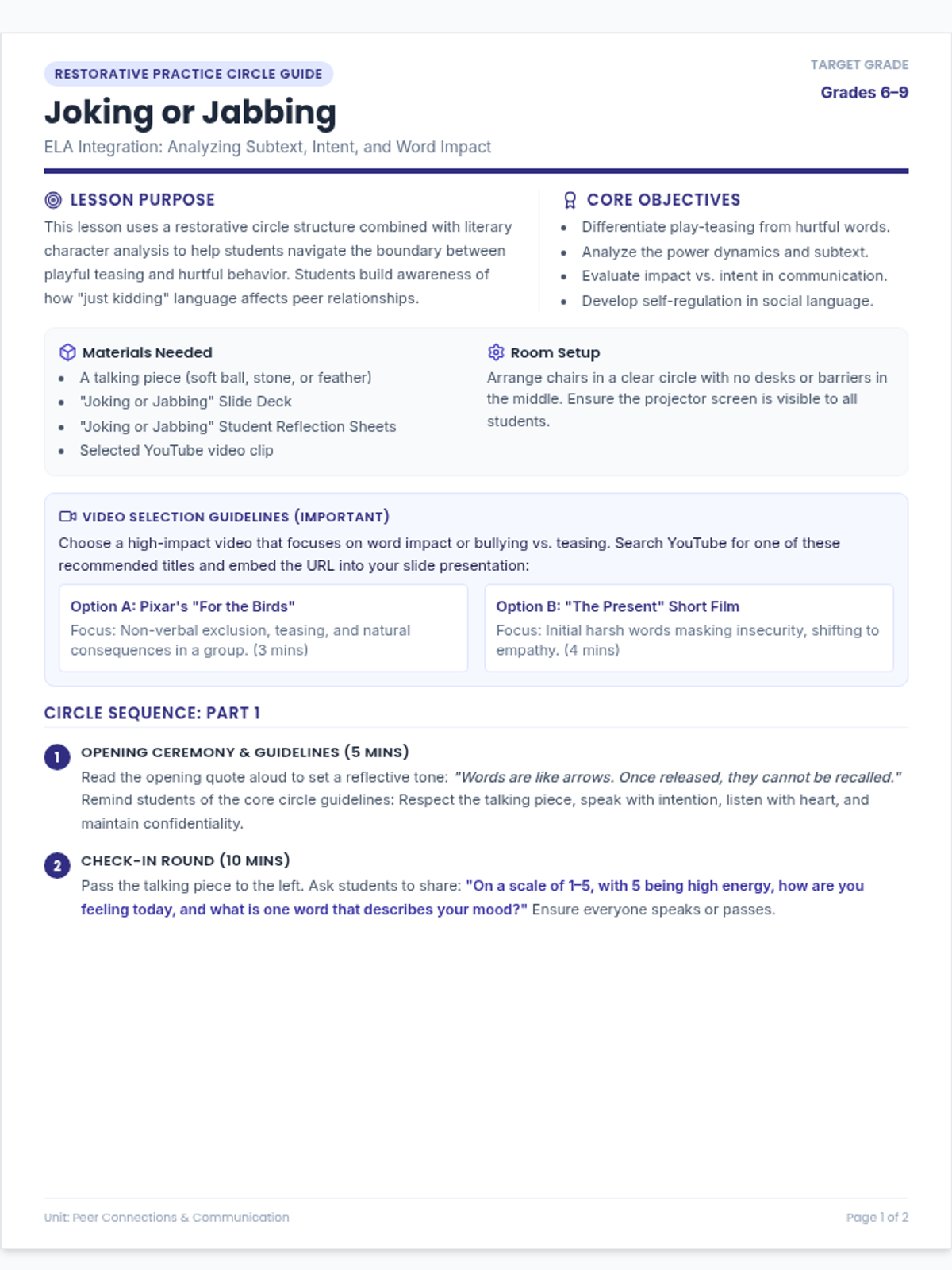
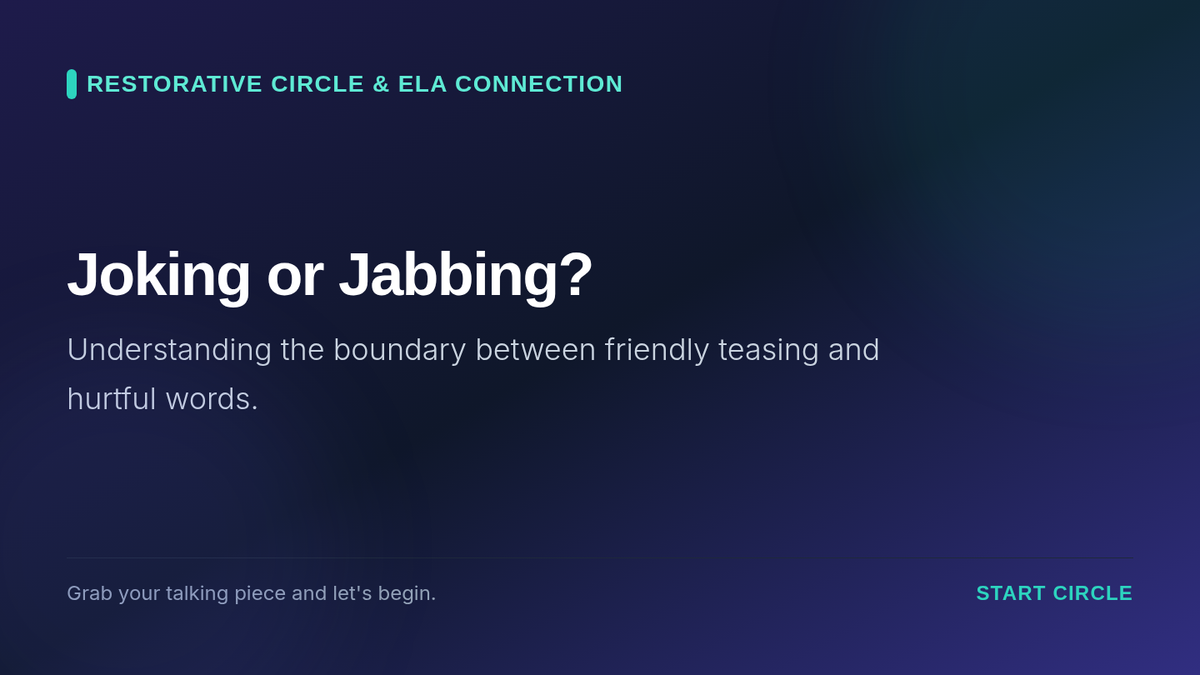
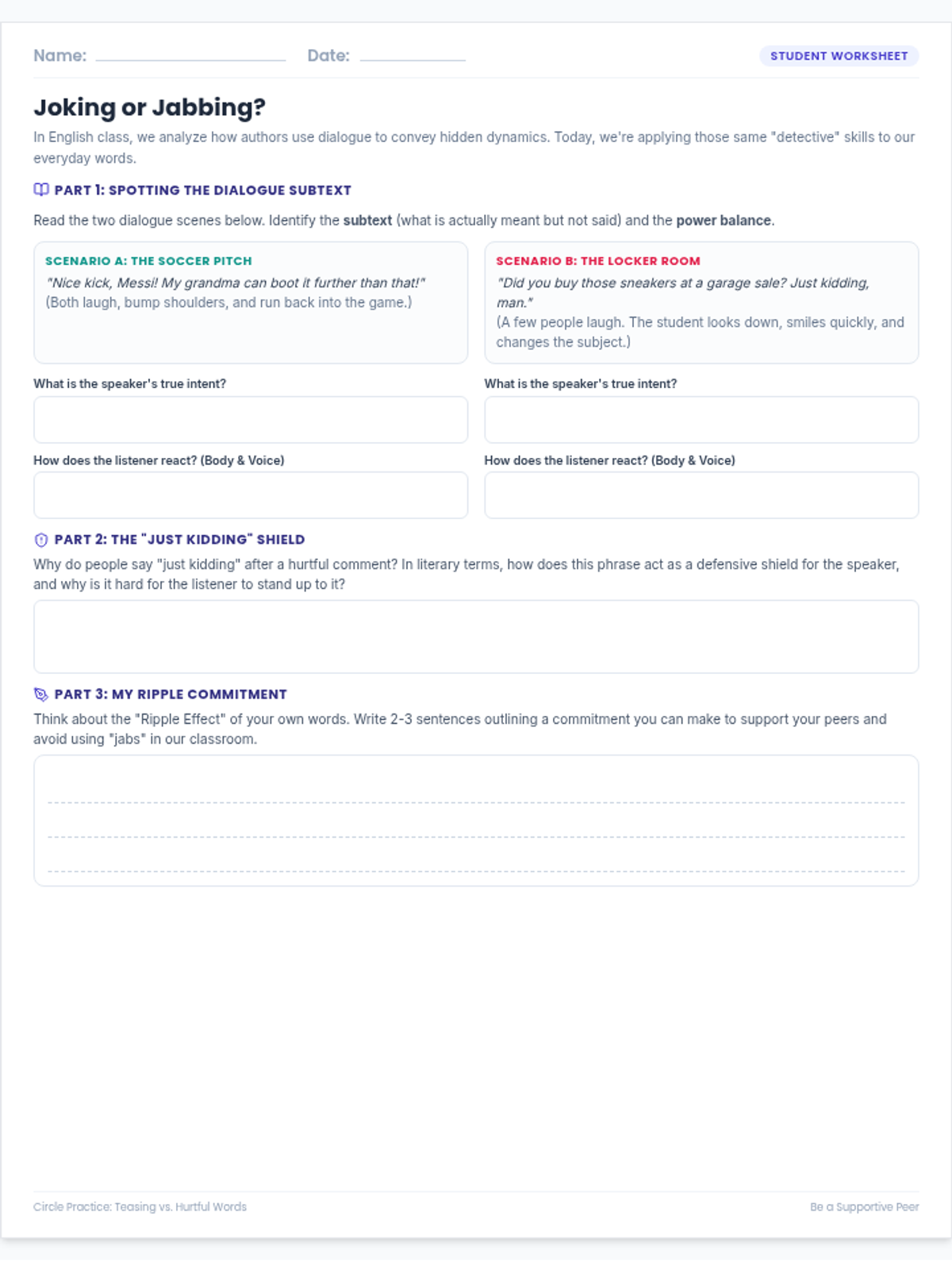
A restorative circle and ELA-integrated lesson focusing on the boundaries between friendly teasing and hurtful words. Students analyze scenarios, discuss video prompts, and reflect on their language impact.
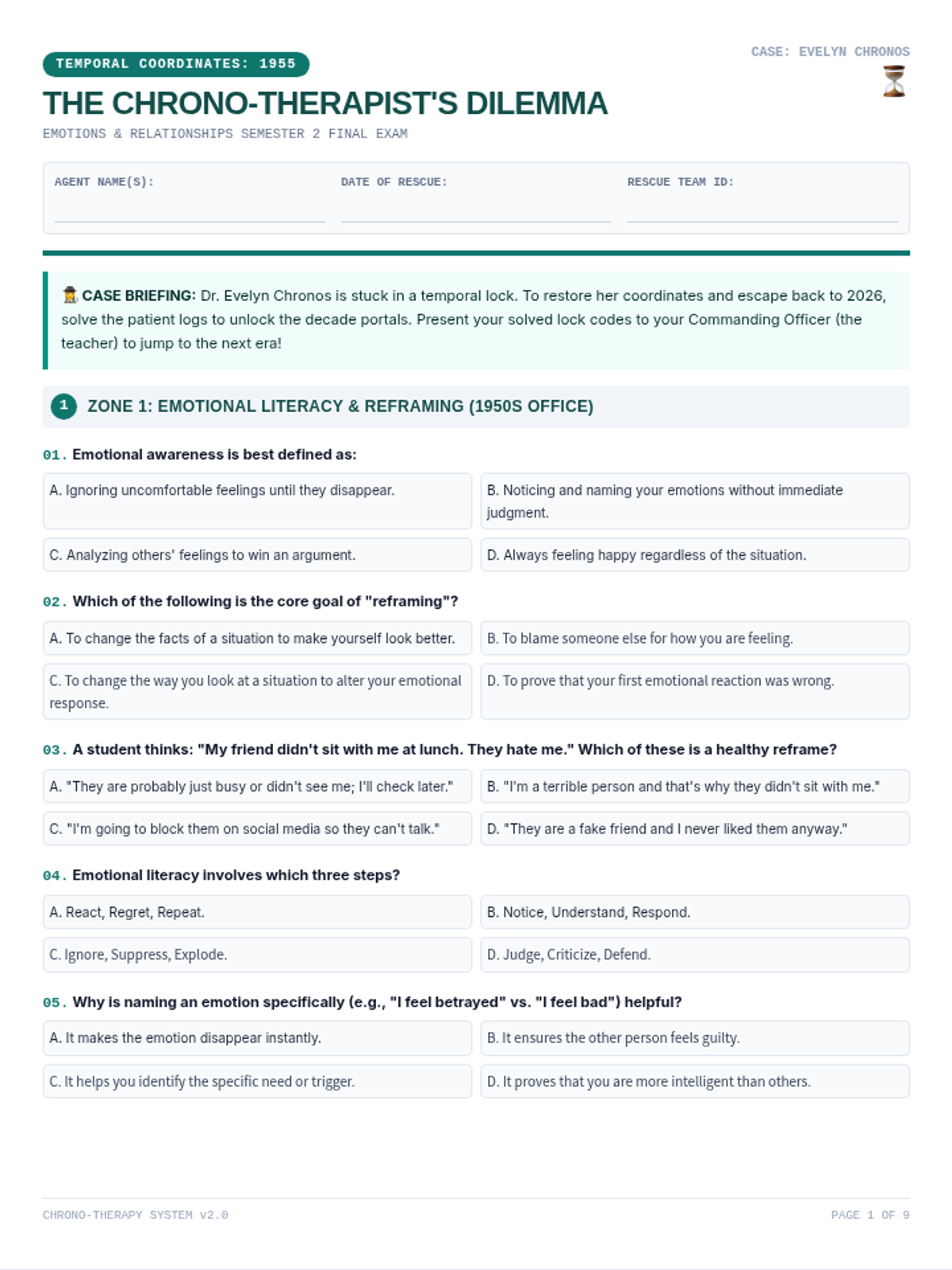
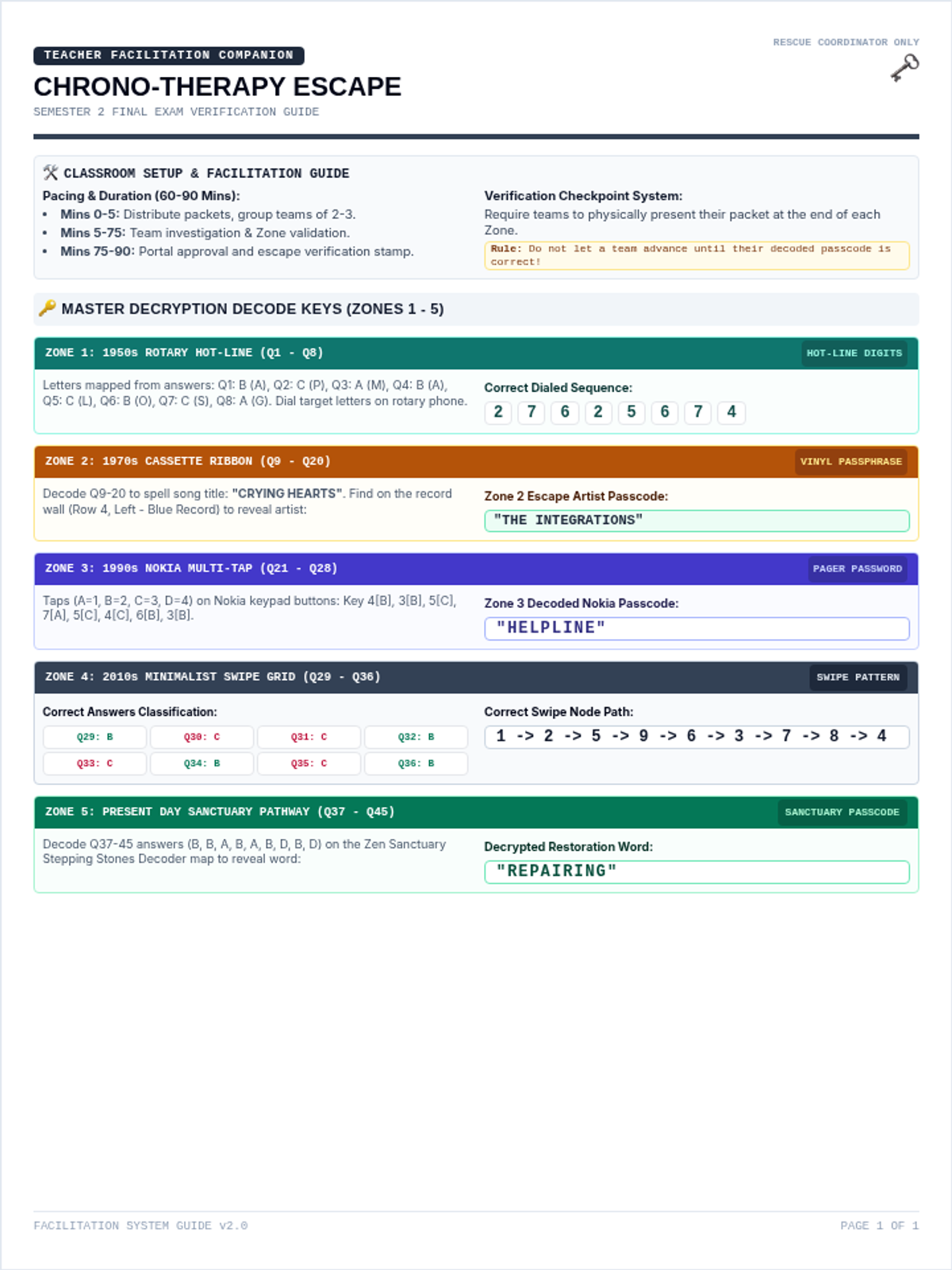
An immersive, multi-decade escape room activity designed to review relationships, grief, boundaries, and emotional regulation concepts for a Semester 2 final exam.
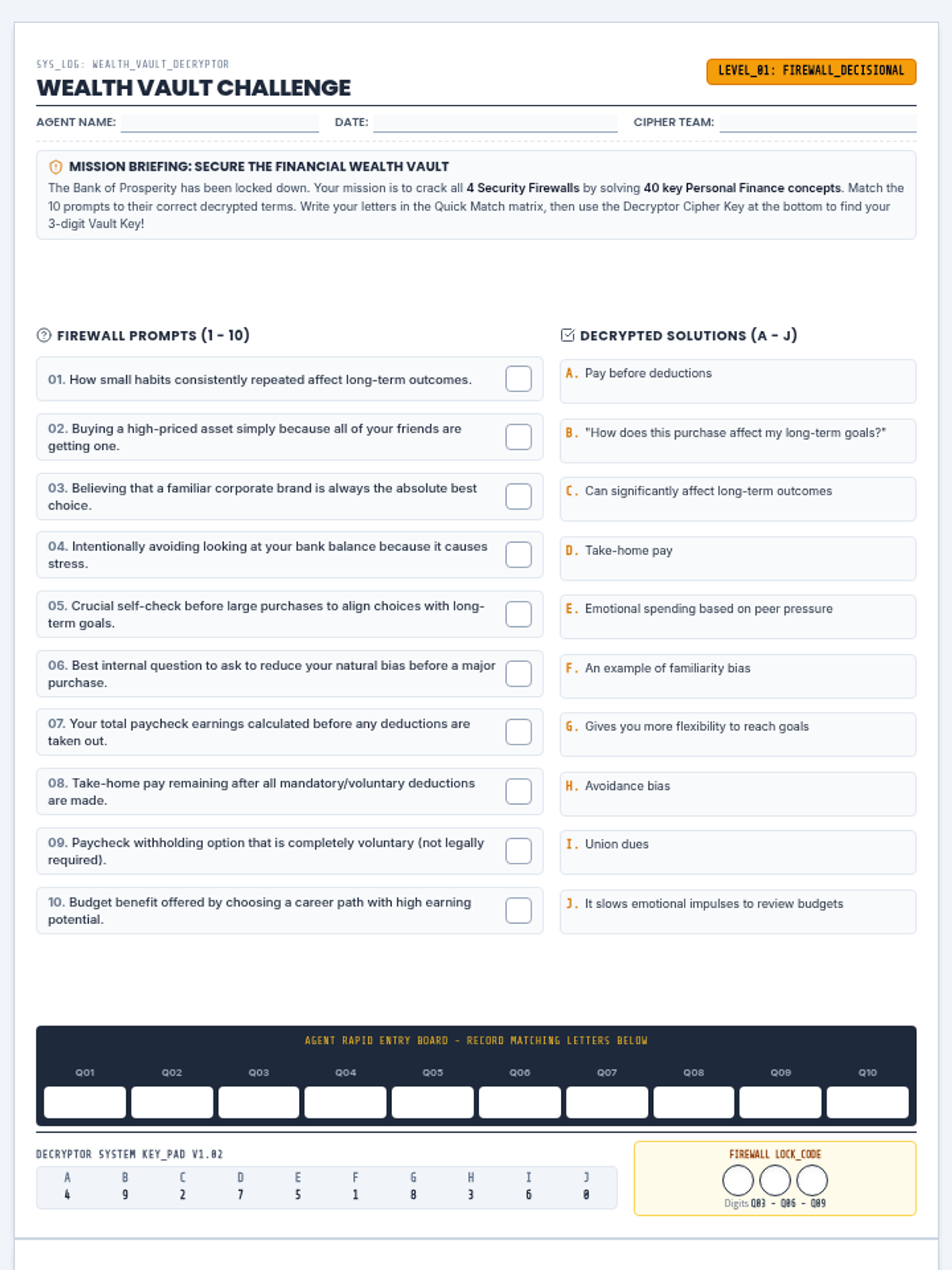
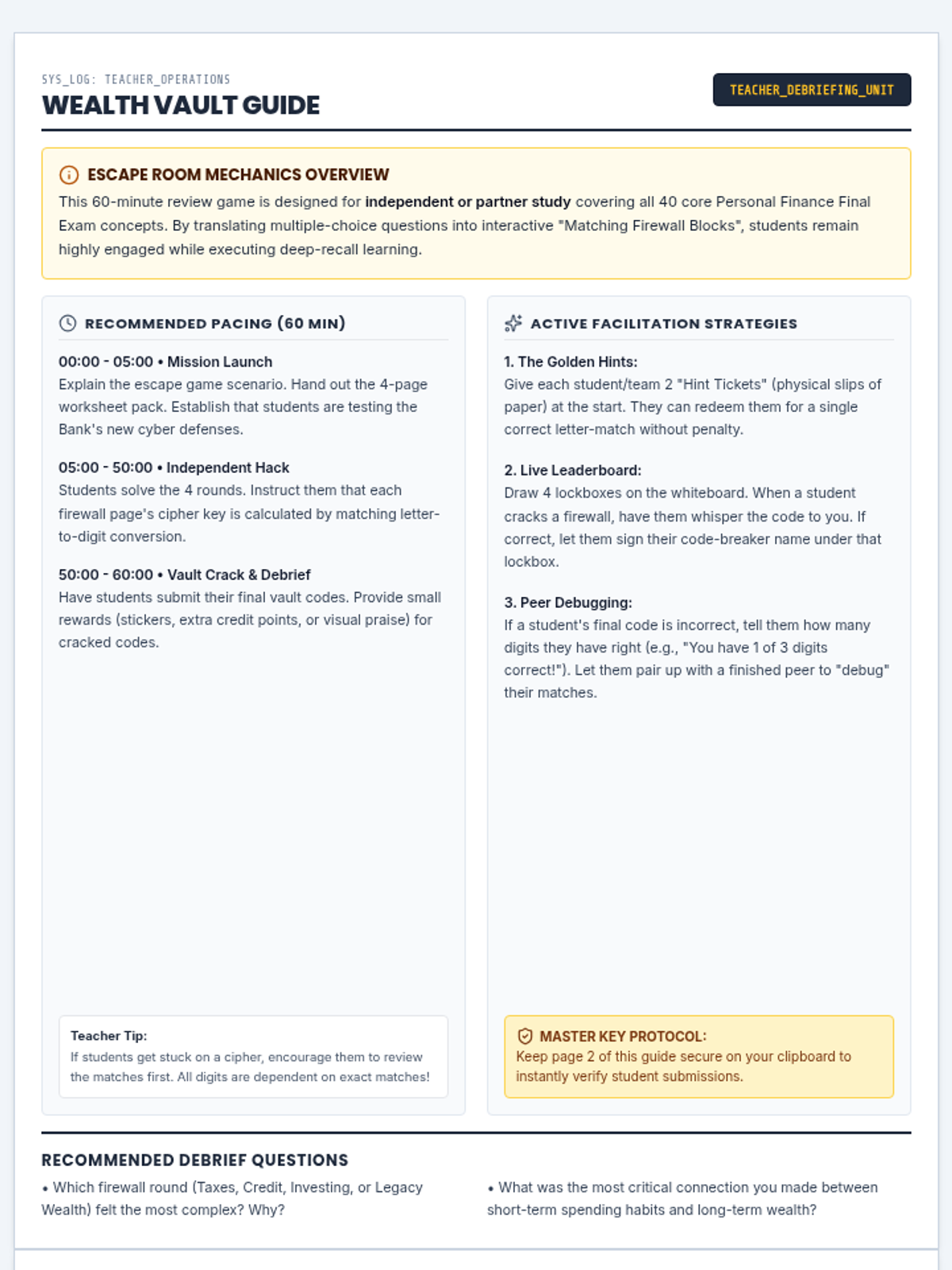
An immersive escape room style review game covering all 40 key concepts from the Personal Finance Final Exam. Students solve 4 thematic codebreaking rounds independently to test their financial knowledge.
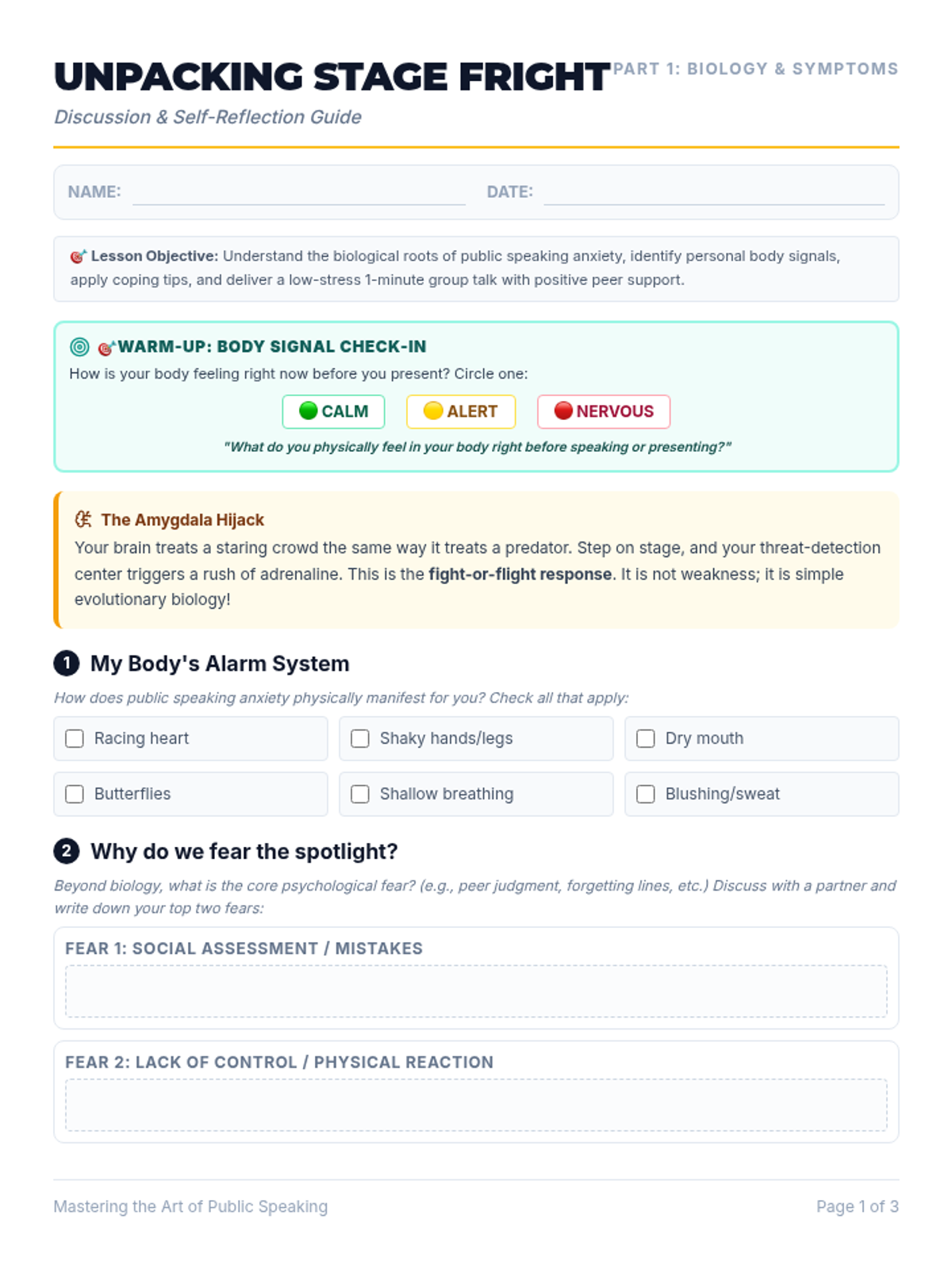
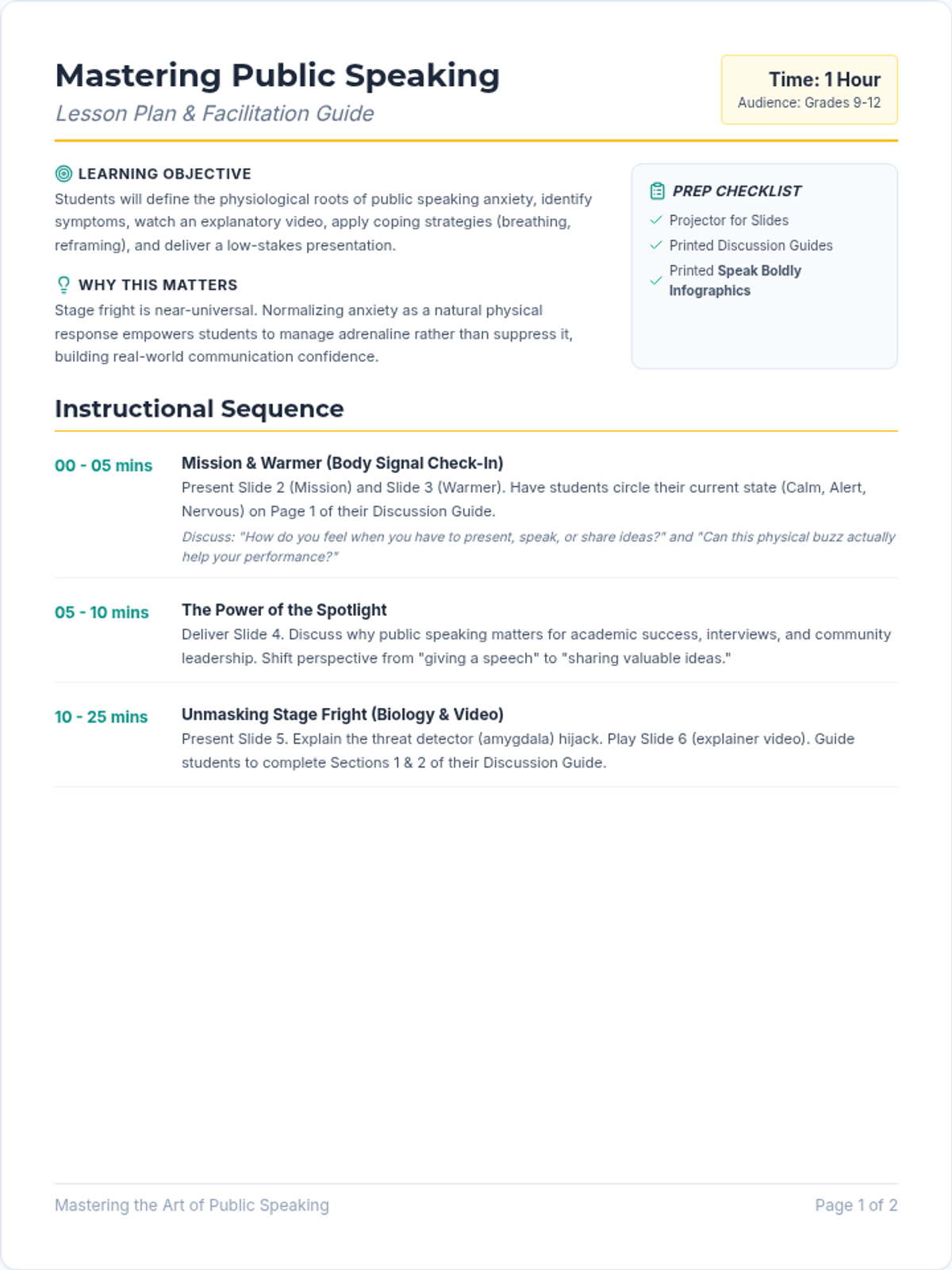
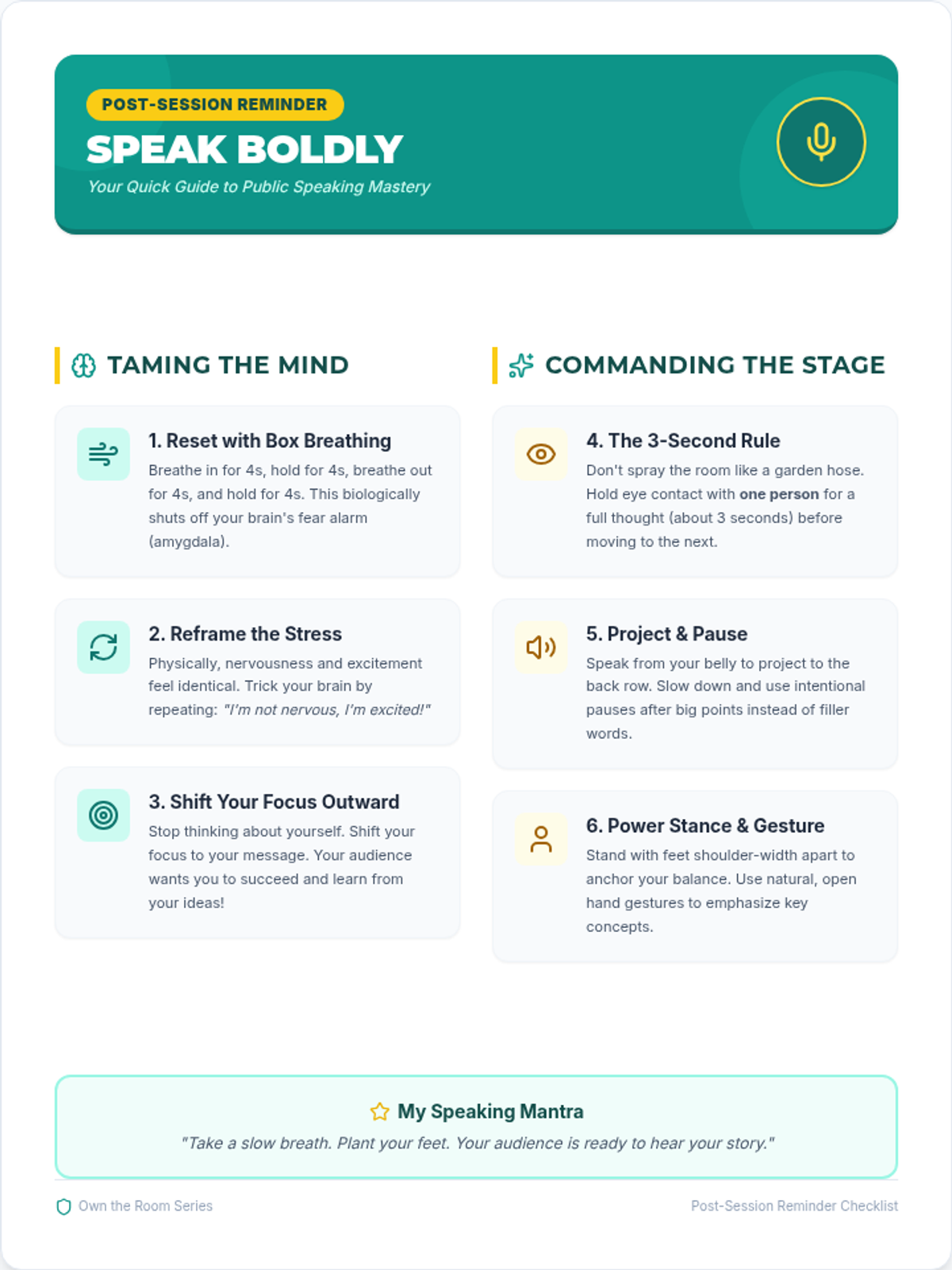
A comprehensive lesson designed to help Grade 9-12 students master public speaking techniques through structured practice, peer feedback, and discussion of common challenges.