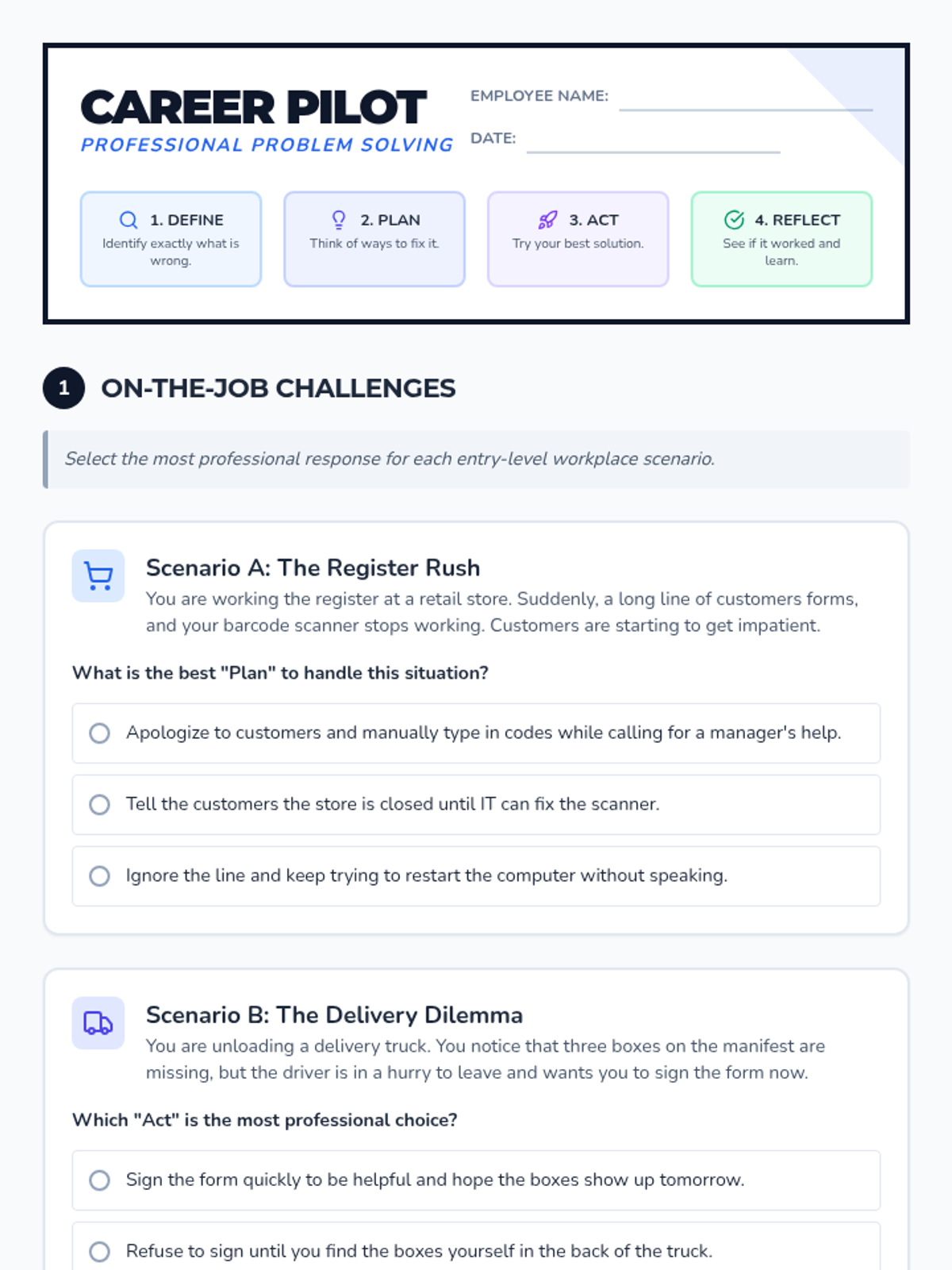
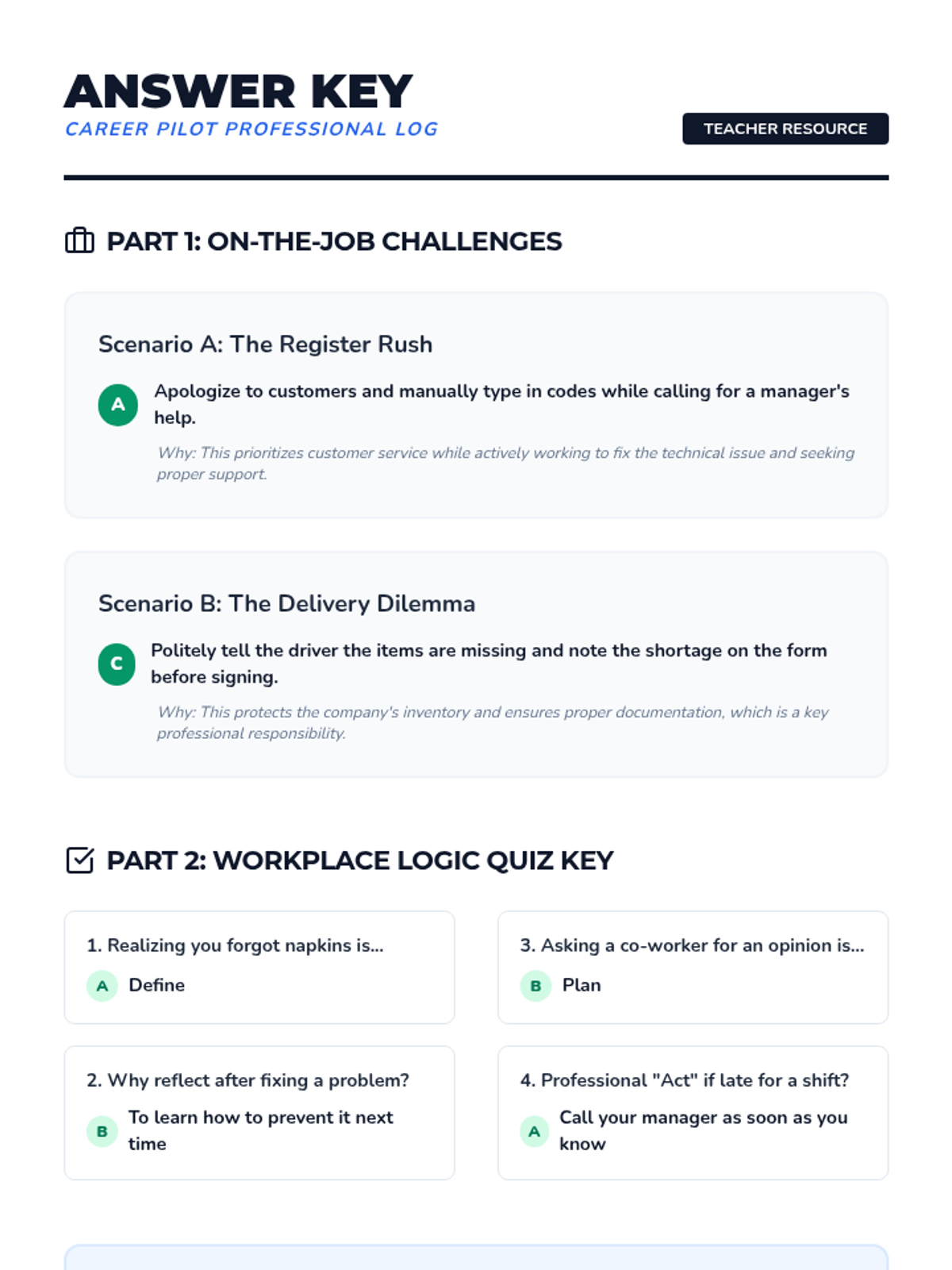
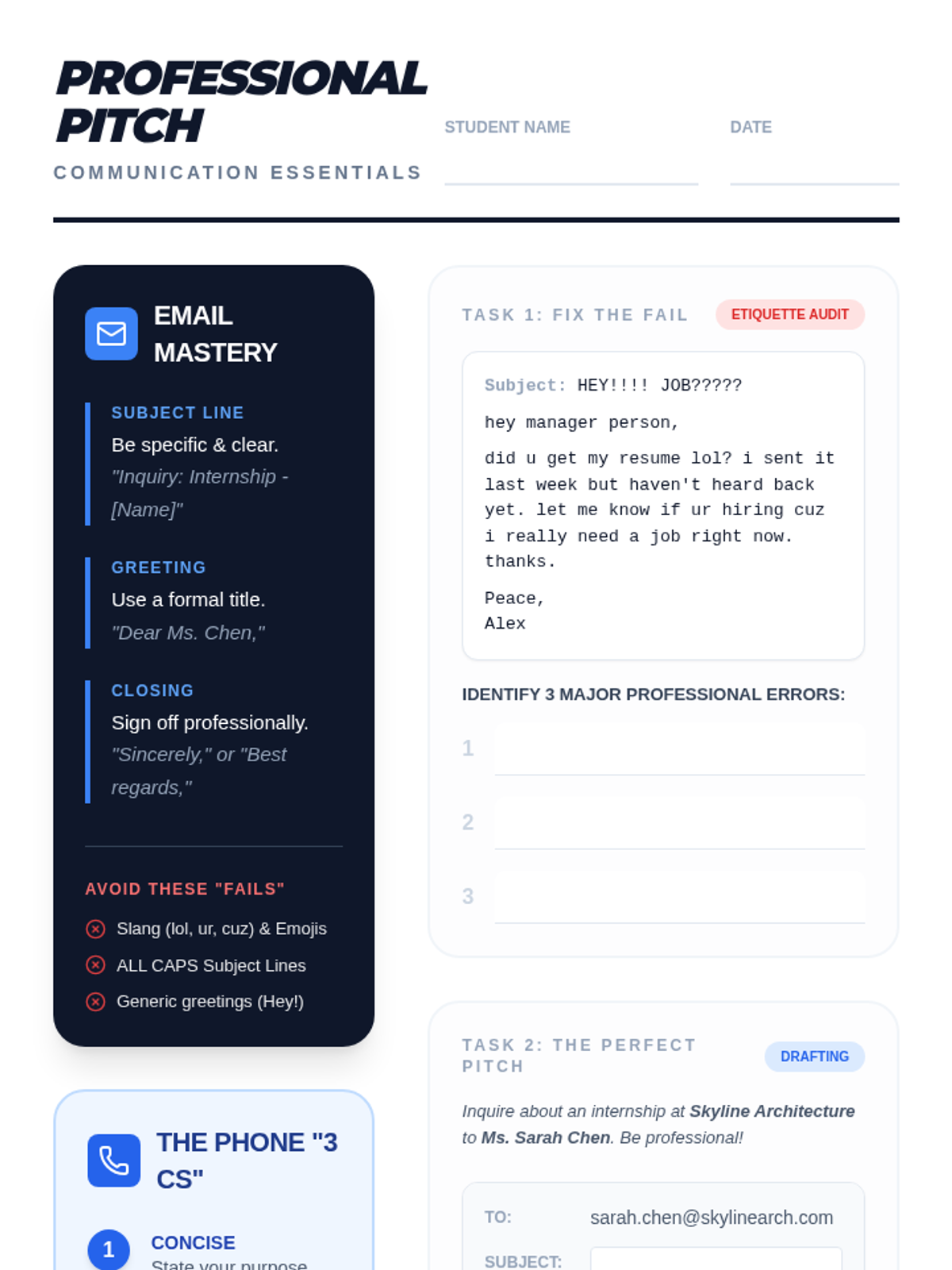
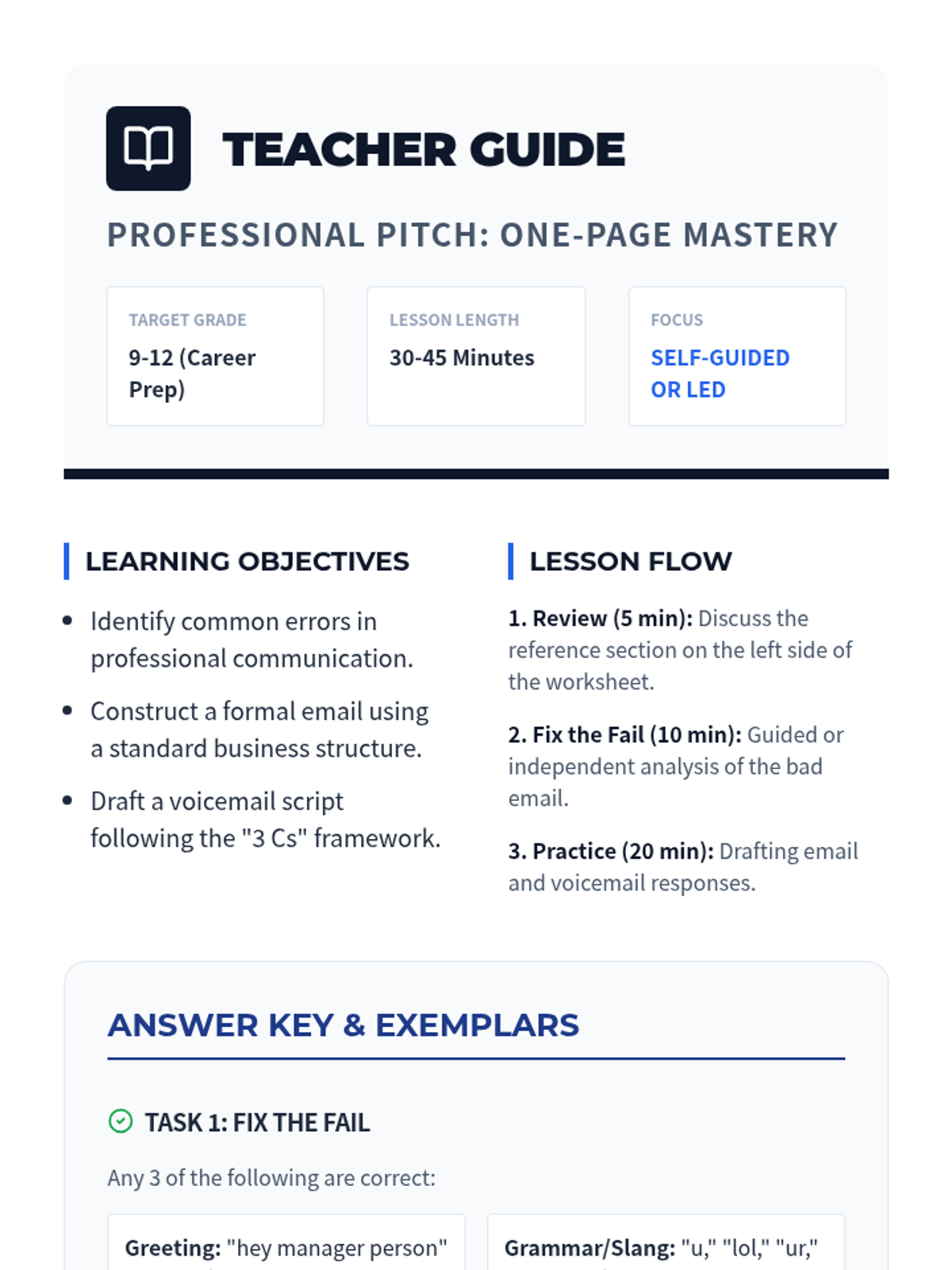
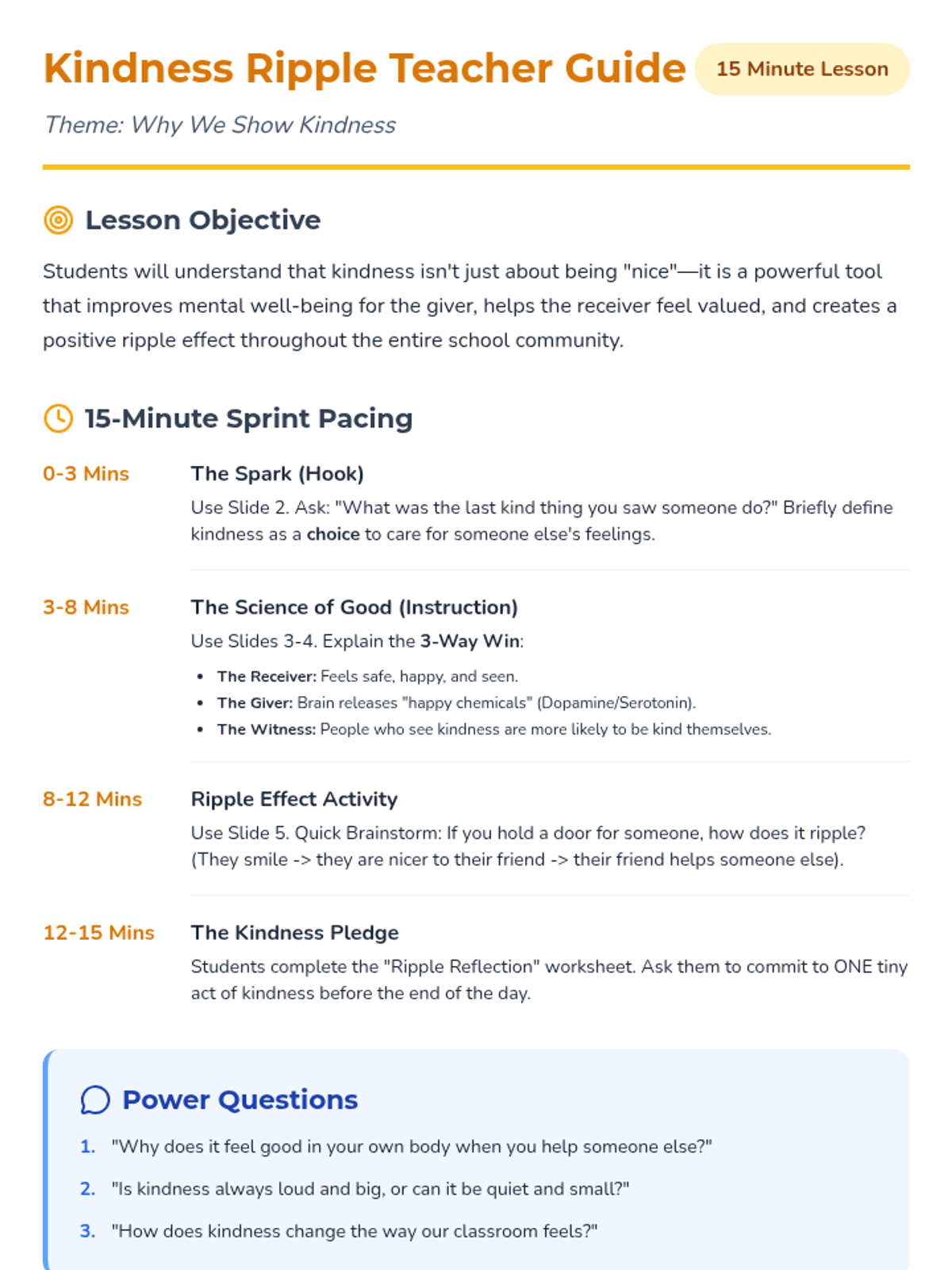
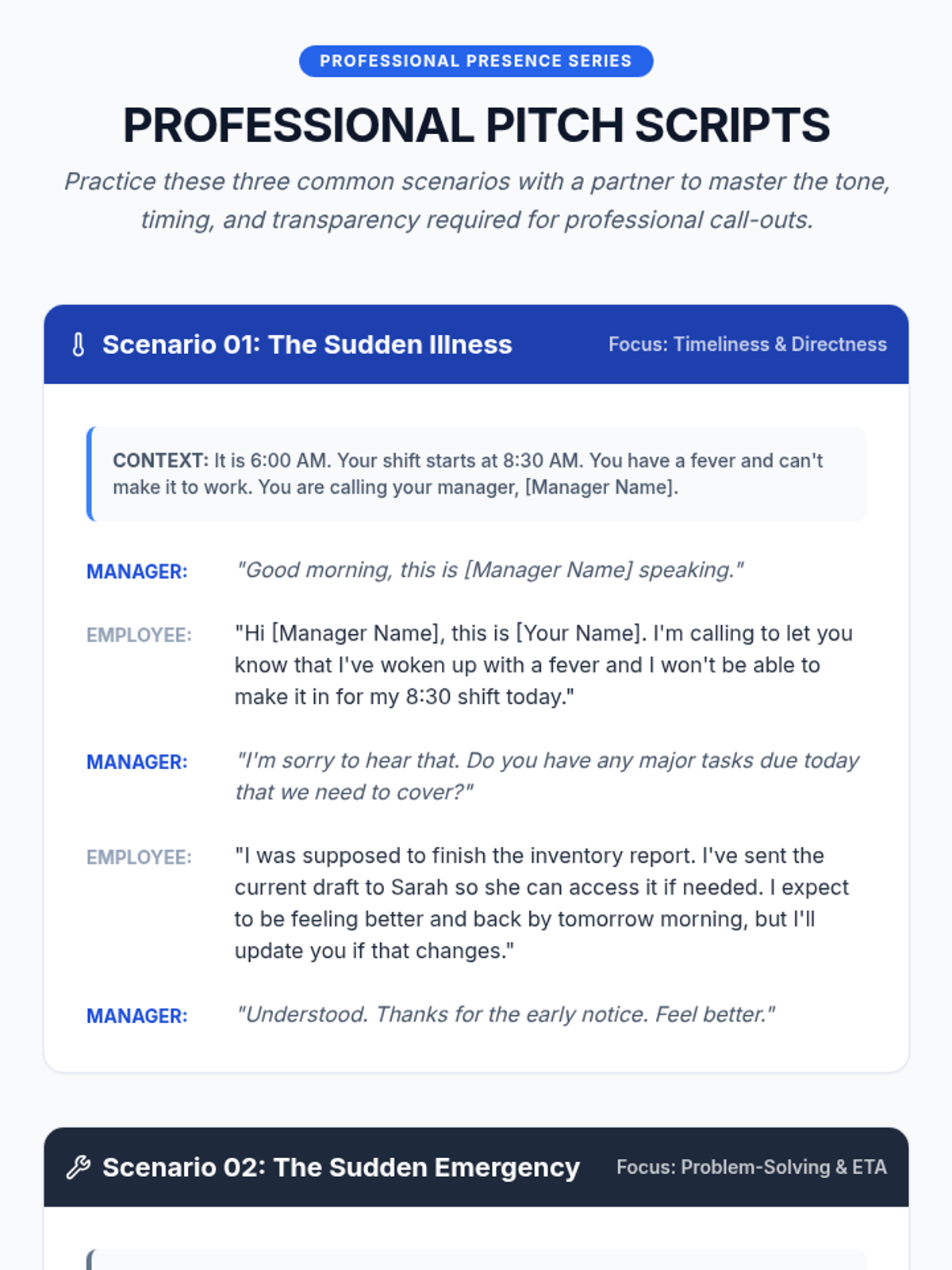
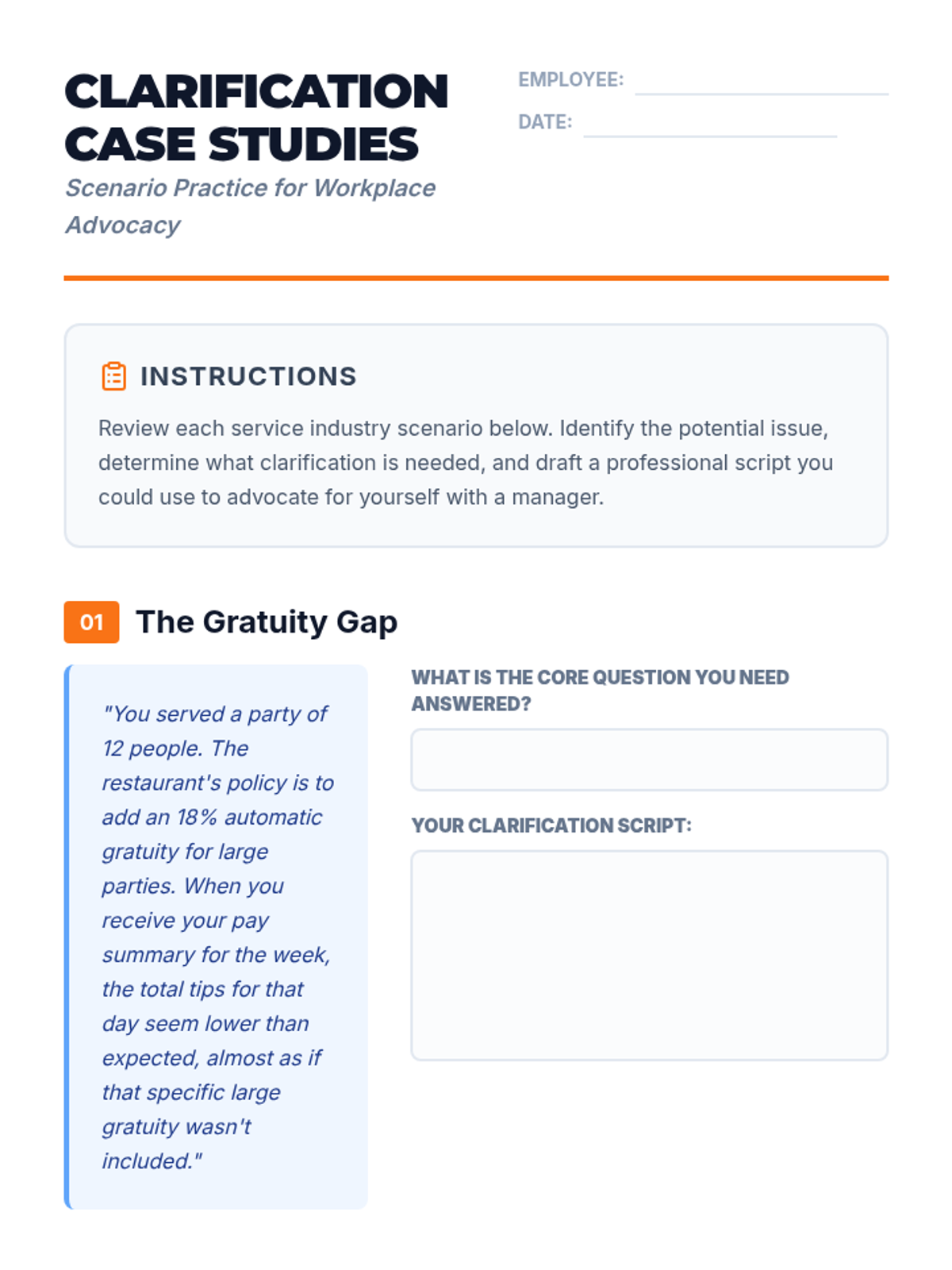
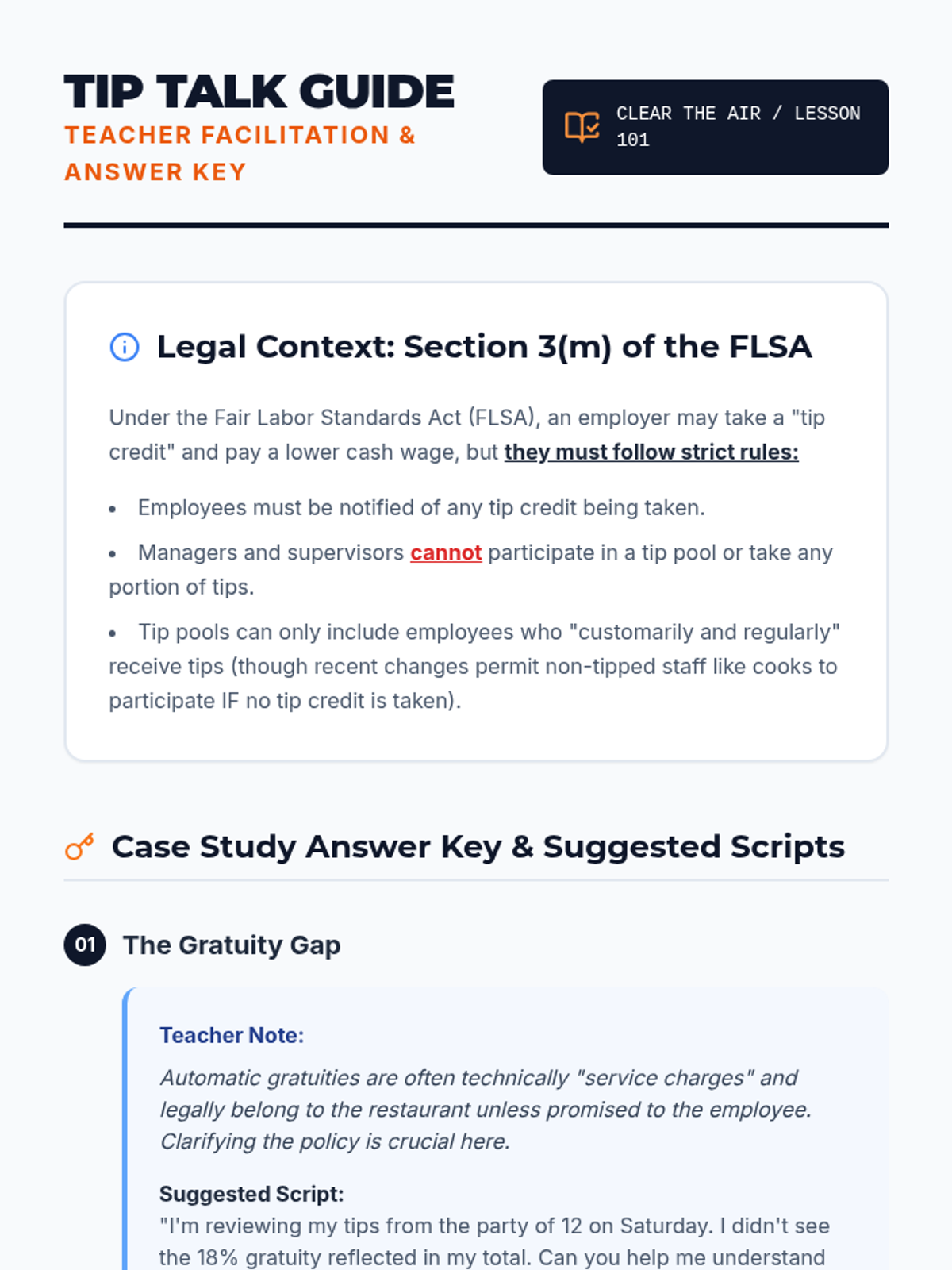
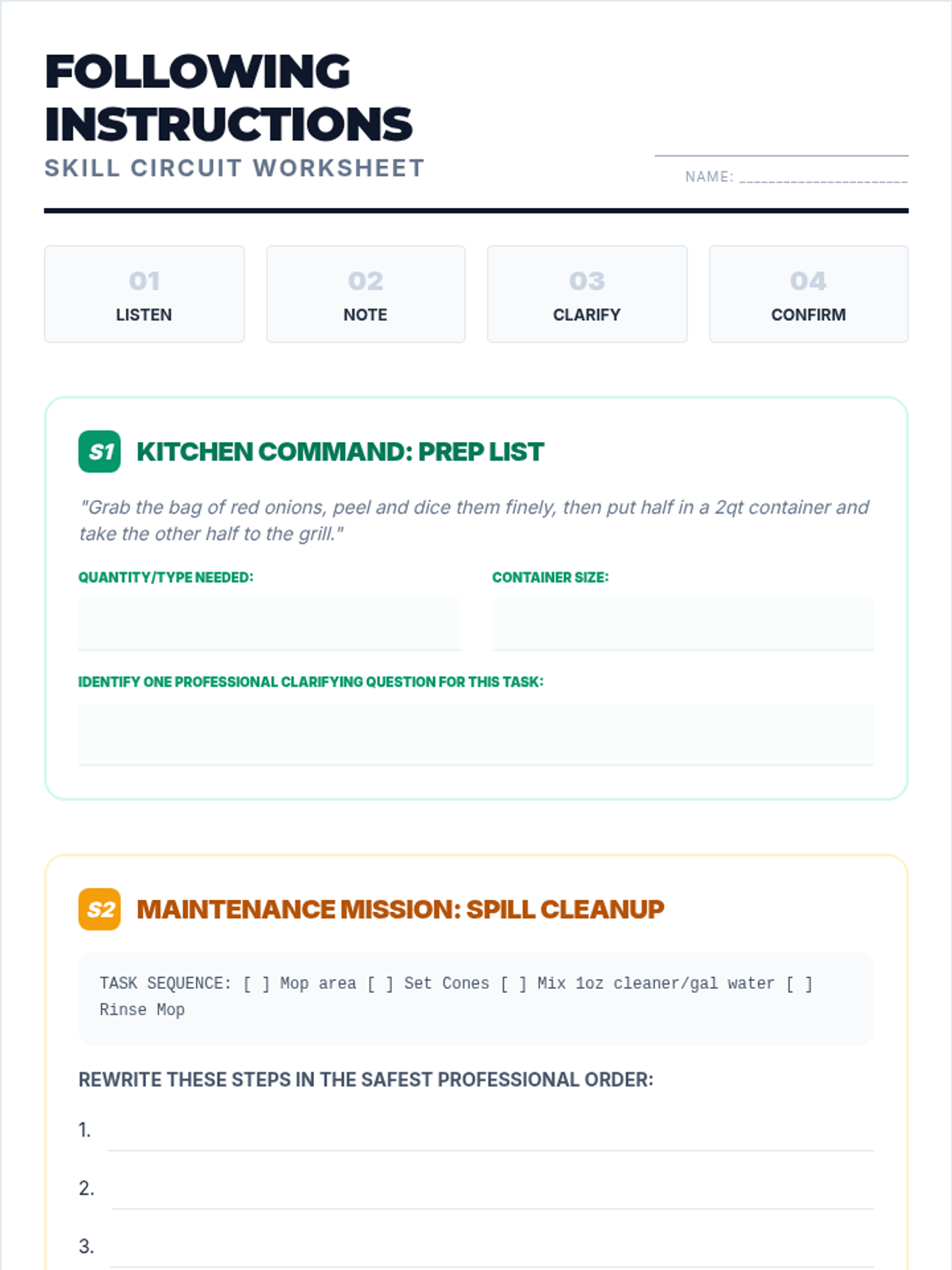
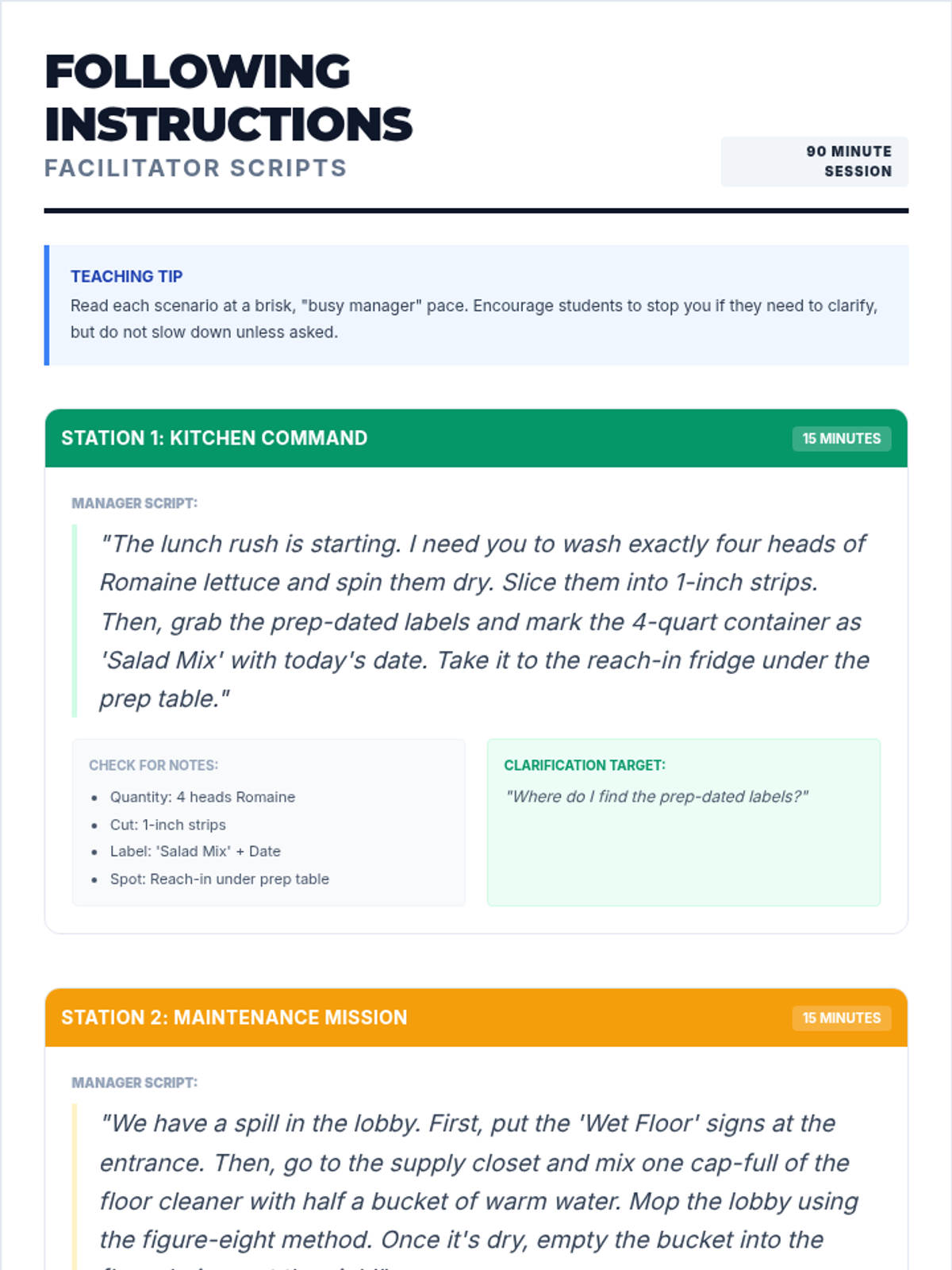
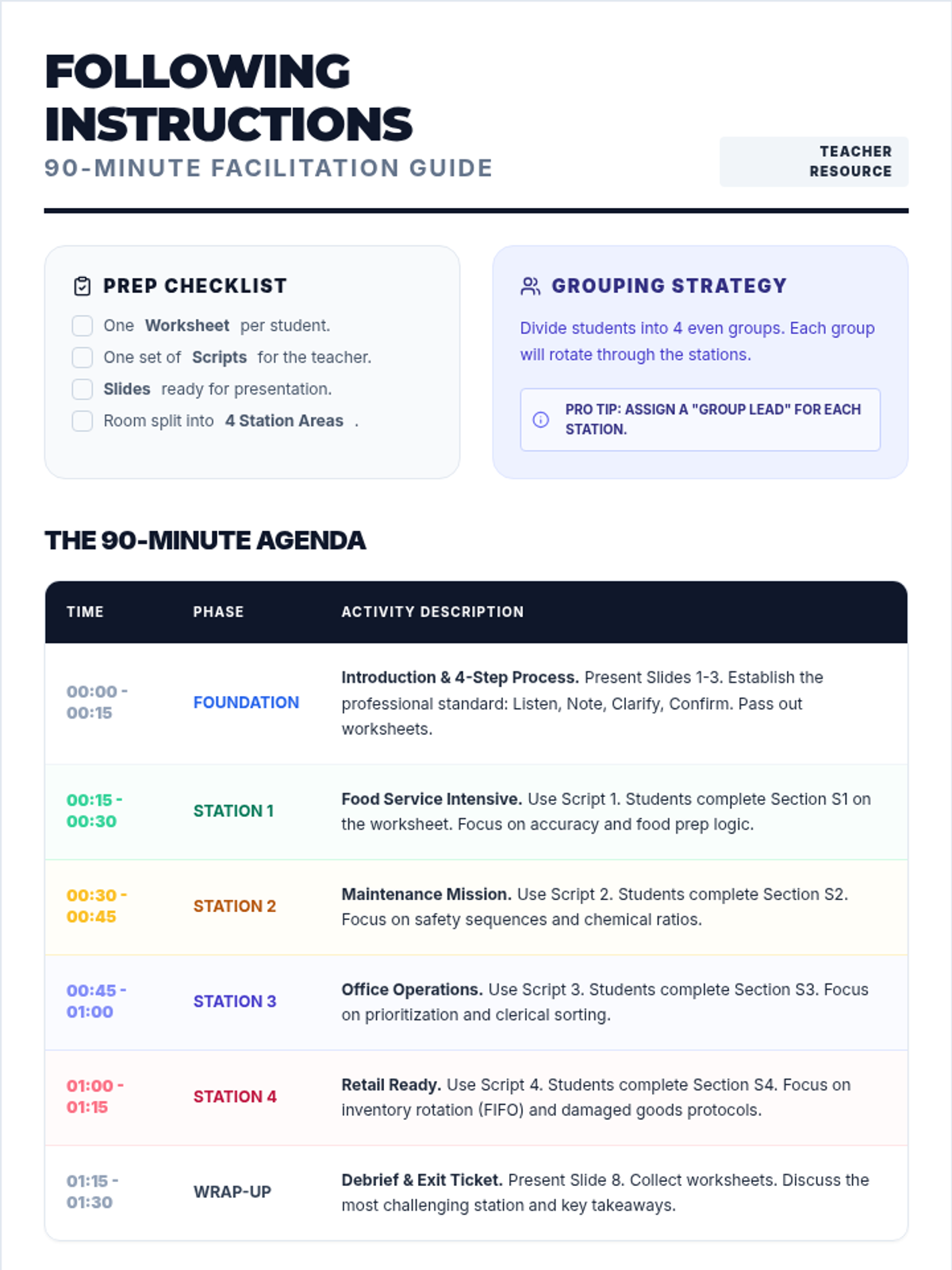
This lesson focuses on writing the 'graceful concession' email. Students practice crafting responses to rejection that leave the door open for future roles or freelance opportunities.

A restorative, community-focused set of materials for 6th grade classrooms. Includes large, clean visual anchor charts (posters) for agreements, restorative dialogue, and repairing harm, plus a student reflection worksheet and a teacher guide for hosting circle discussions.
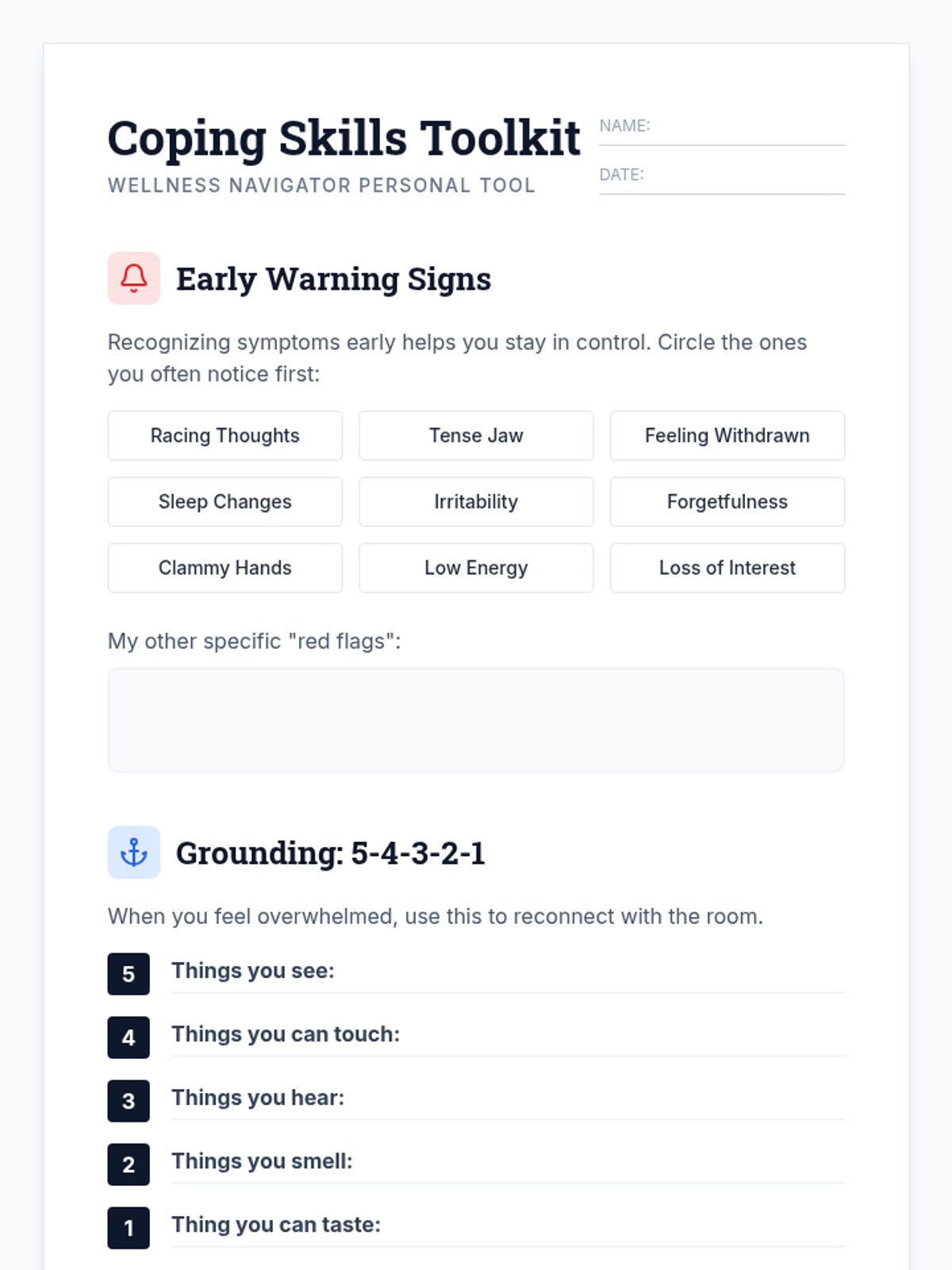
A comprehensive classroom management toolkit designed specifically for middle schoolers, emphasizing autonomy, self-regulation, and collaborative norms. It contains a privilege menu, a brain-break choice board, a student coping guide, and a teacher intervention selector.
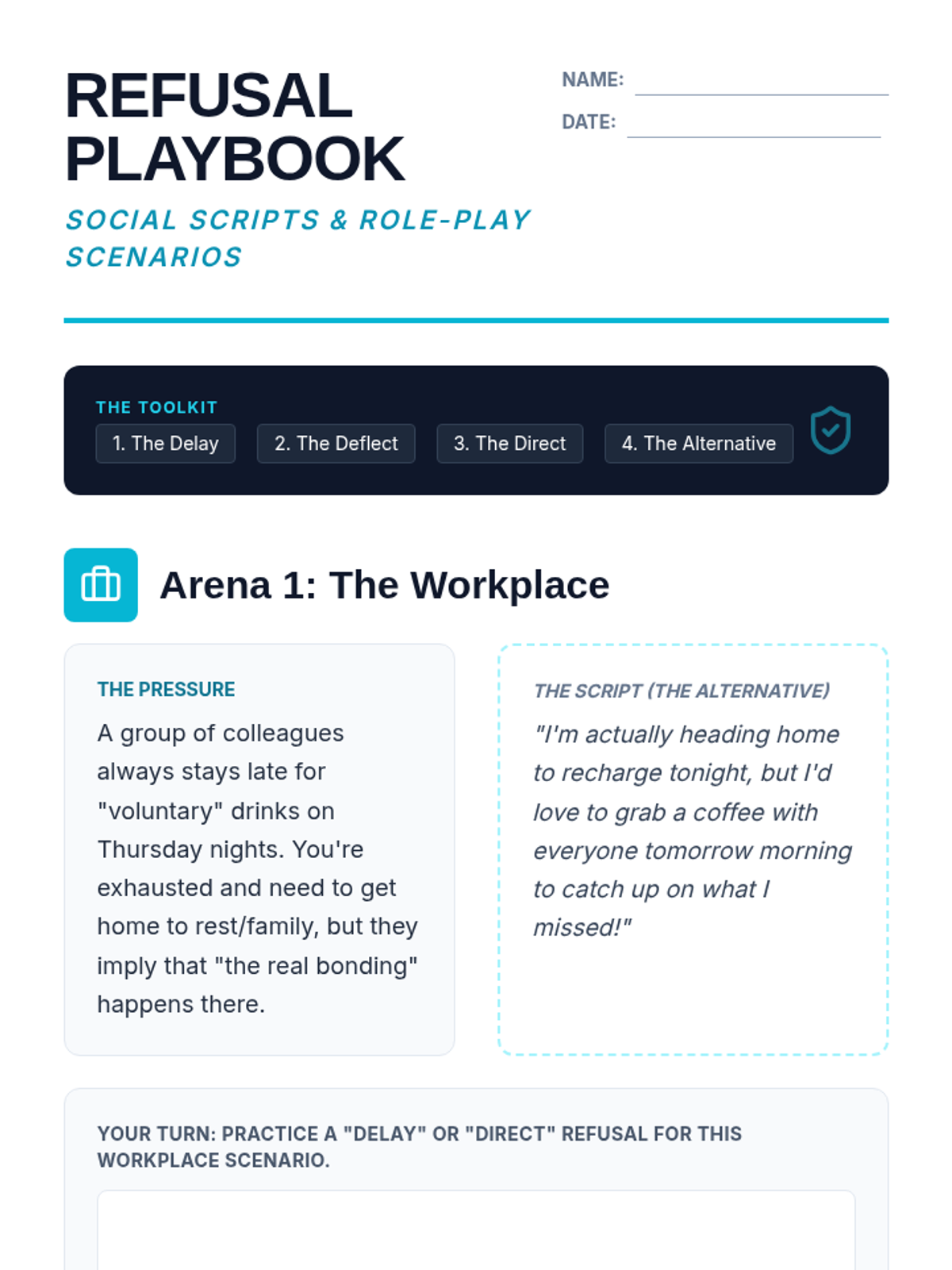
A high-impact 45-minute lesson for 12th graders to master problem-solving under pressure. Students learn a structured 5-step framework, analyze common senior barriers (financial, logistical, time), and build actionable backup plans with concrete contingencies.
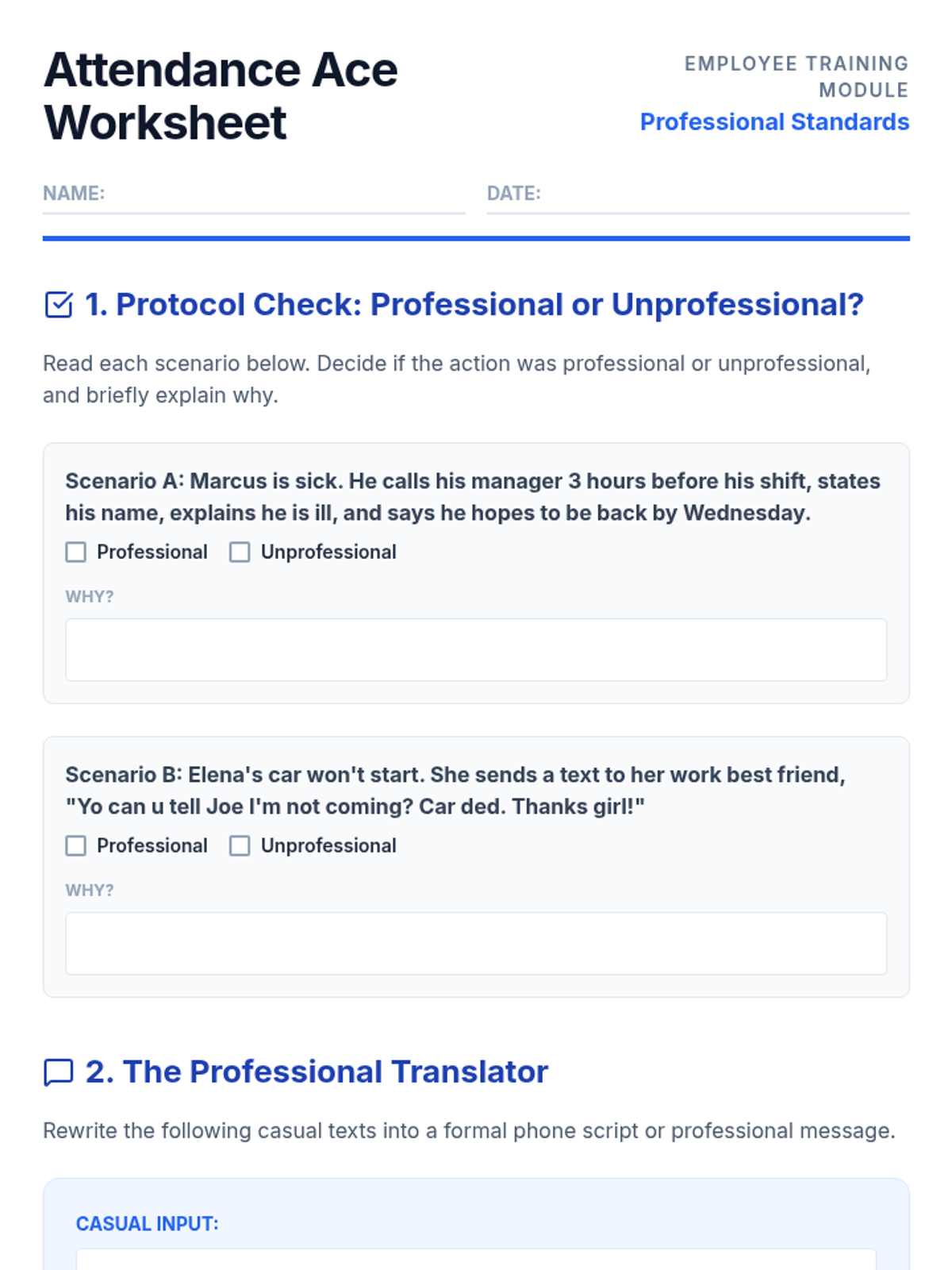
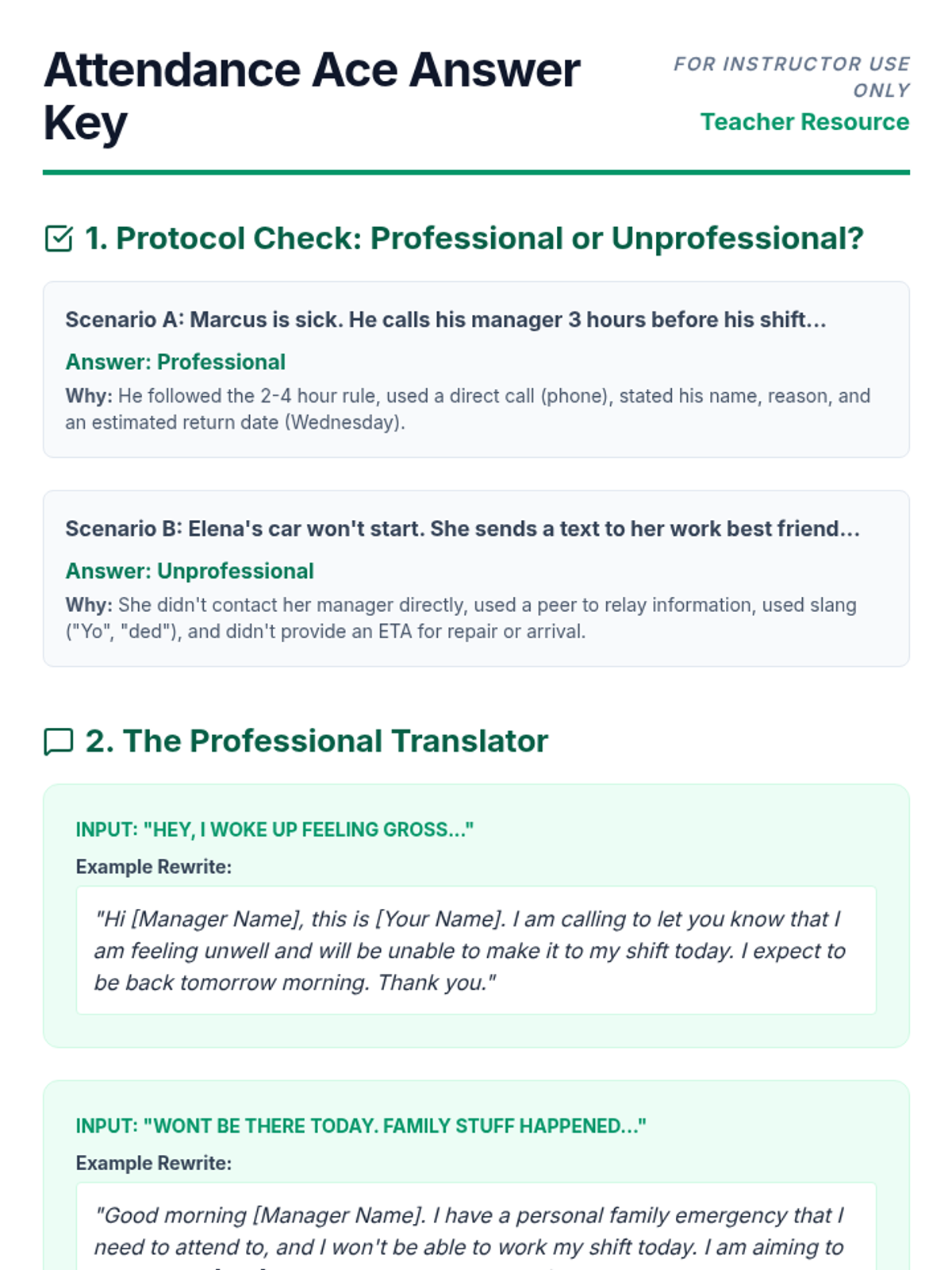
A 45-minute lesson designed for 12th graders to analyze their punctuality habits, understand the high stakes of reliability in high school and the workplace, and build a concrete, personalized reliability plan.
A 45-minute lesson for 11th graders to finalize their 60-day milestone plans, reflect on growth using a Likert post-survey, and make a formal commitment contract for their capstone projects.
A high school transition lesson designed for 9th graders to understand the direct connection between daily attendance, high school credit acquisition, and time management. Students analyze their weekly schedules, map out barriers using a fishbone diagram, and commit to a 30-day attendance goal.
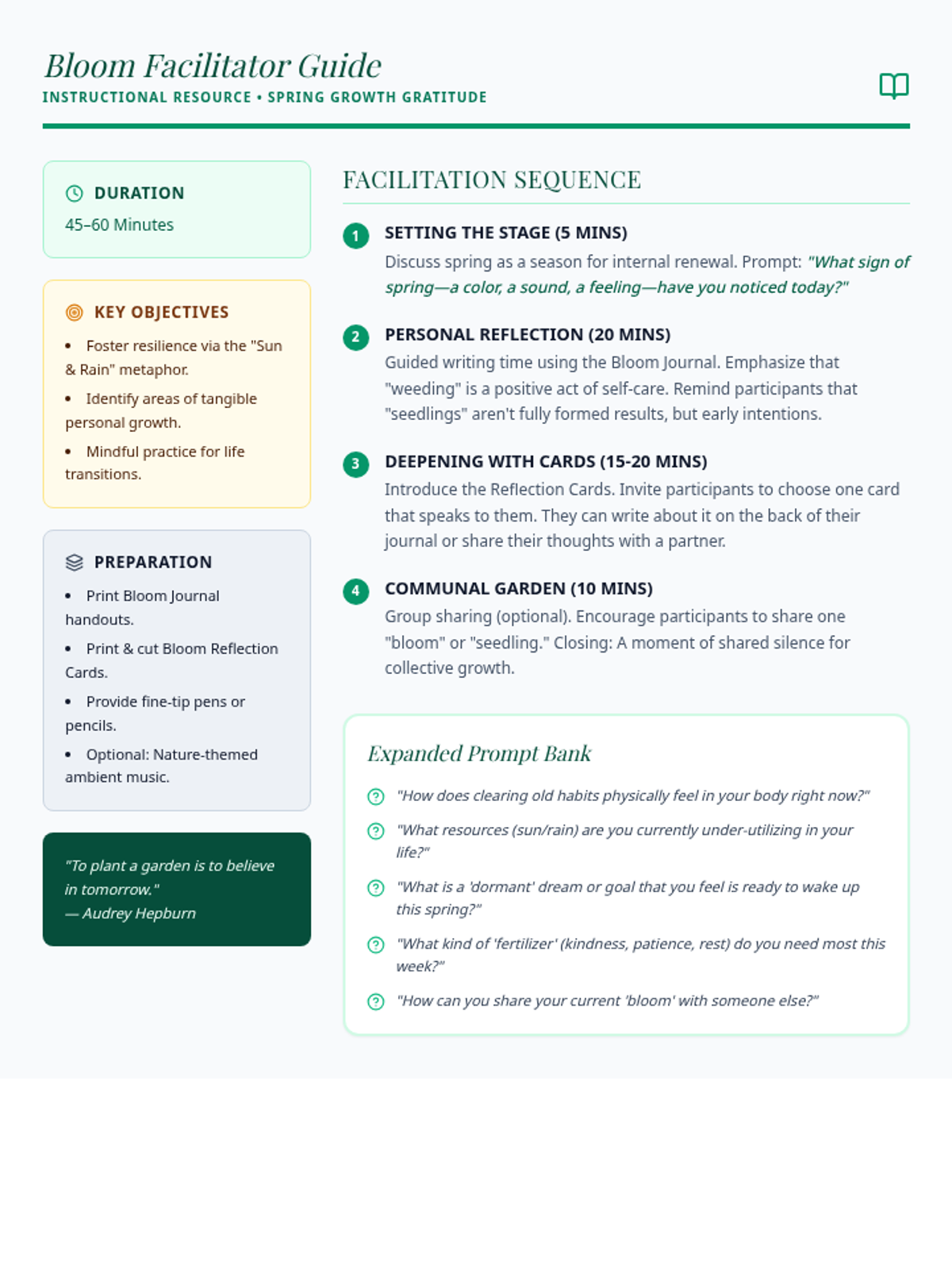
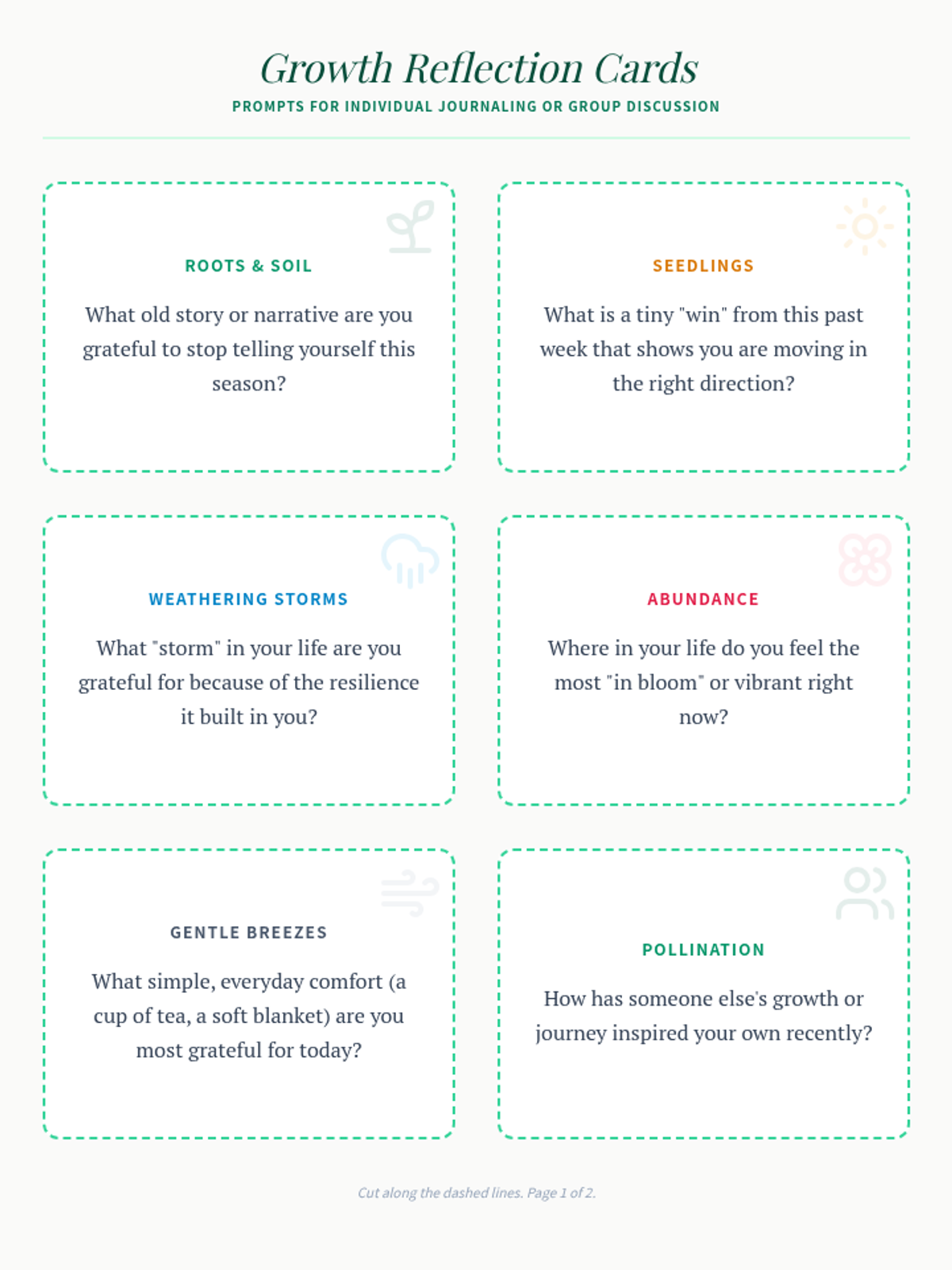
A kickoff lesson introducing 9th graders to growth mindset, neuroplasticity, and self-efficacy. Students engage in collaborative activities, analyze their mindsets, make a personal growth commitment, and complete a baseline school success pre-survey.
A comprehensive 45-minute lesson for 8th graders transitioning to high school, focusing on the link between attendance and academic success, building a personal transition plan with support networks, designing daily routines, and self-assessing readiness.
An interactive 8th-grade lesson designed to help students transition to high school by translating long-term visions into concrete, actionable steps. Students create a structured goal ladder with three milestones, specific due dates, and measurable progress indicators, followed by peer feedback and a share-and-commit circle.
A 45-minute social-emotional learning lesson for 7th graders to explore cognitive reframing, distinguish between productive and unproductive self-talk, and practice applying growth-oriented strategies to academic setbacks.
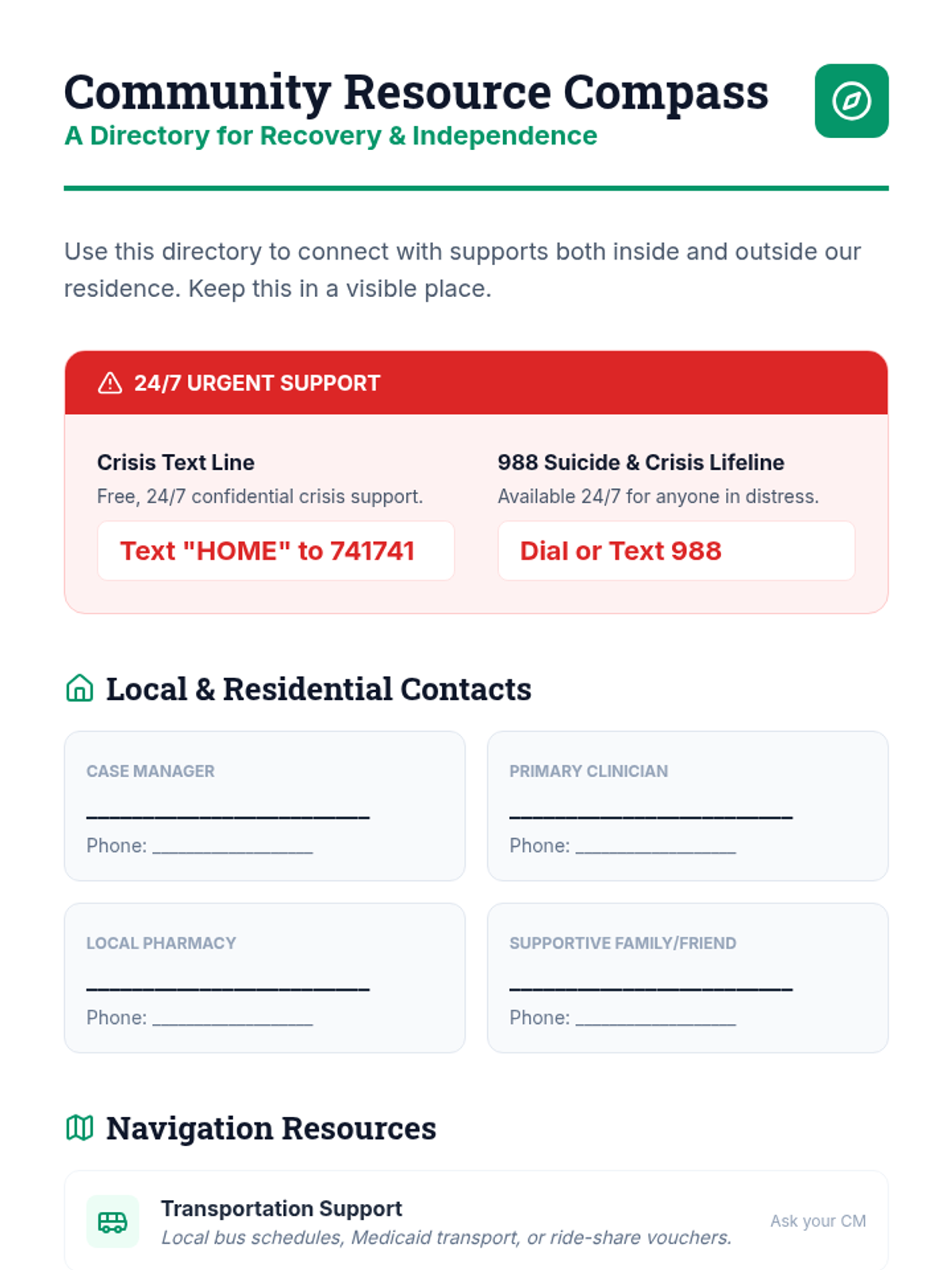
A restorative module focusing on understanding behavior impact, rebuilding classroom trust, and respecting authority. Includes a self-paced reflection packet, transition blueprint, guiding slides, and a facilitator guide.
A 45-minute lesson designed for 5th-grade students to master the art of writing SMART academic/behavior and attendance goals. Students learn to define progress indicators, anticipate barriers, and use peer feedback to design achievable action plans.
A hands-on lesson designed to teach 5th-grade students practical time management and organizational skills, including task prioritization with a matrix, binder/backpack auditing, and building sustainable daily checklists.
A 45-minute 4th-grade social-emotional learning lesson focusing on the connection between regular school attendance, academic success, and personal self-esteem. Students analyze a short text, design a personalized attendance action plan, complete a self-assessment, and celebrate their growth.
A 45-minute social-emotional learning lesson for 4th graders to master self-management and personal responsibility. Students analyze rules versus expectations, learn a 4-step responsibility process, and draft a personal action plan for classrooms and school transitions.
A 45-minute lesson for 4th graders on growth vs. fixed mindset. Students learn that effort and strategies build brain power, complete a self-assessment, sort growth mindset statements, and choose personal growth strategies.
A 3rd-grade social-emotional learning lesson focusing on the 'Pause-Plan-Try' perseverance strategy. Students learn to normalize mistakes, regulate emotions, and practice constructive help-seeking language through interactive challenge stations and self-reflection.
A reflective 45-minute lesson for 8th graders to measure their personal growth, self-esteem progress, and celebrate their learning journey with concrete self-assessments and creative mapping activities.
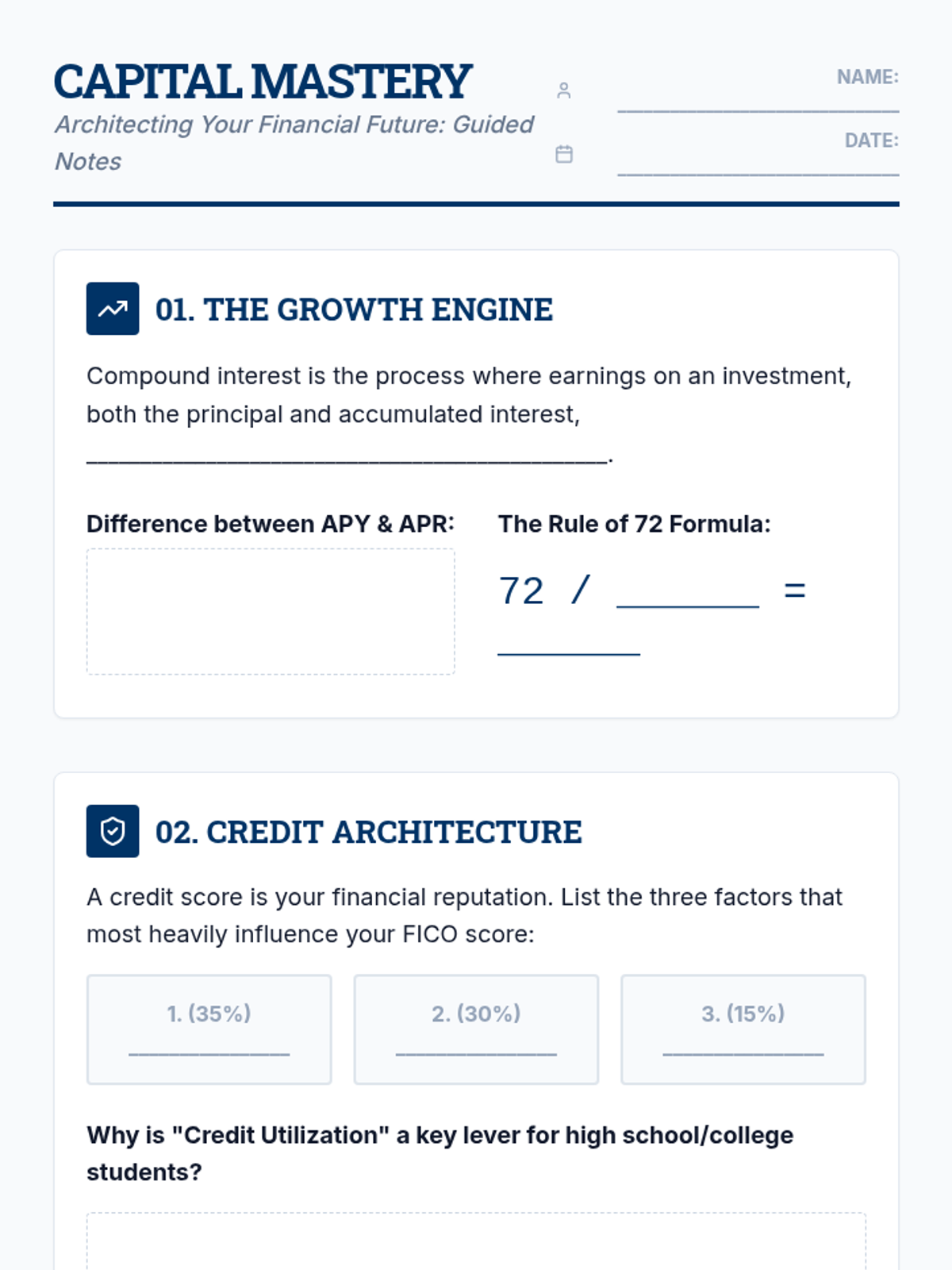
An 8th-grade social-emotional learning lesson focusing on identifying the inner critic, understanding cognitive reframing, and practicing positive self-talk through interactive activities and reflection.
An introductory 8th-grade social-emotional learning lesson focused on defining self-esteem and self-concept, guiding students through a safe, reflective pre-assessment of their personal strengths and areas for growth.
A transformative 45-minute social-emotional learning lesson for 7th graders to master their inner dialogue. Students explore cognitive reframing, separate negative self-talk from positive affirmations, and design a personalized toolkit of supportive inner voices.
An introductory lesson on self-esteem for 7th graders, exploring personal value, self-perception, and establishing a baseline self-concept through reflection and goal-setting. This lesson guides students from definitions to deep personal reflection.
A 45-minute social-emotional learning lesson for 6th grade focused on empathy, active listening, and sincere encouragement to build peer self-esteem. Students learn to spot strengths, deliver authentic compliments, and practice active listening through comic-themed superhero training activities.
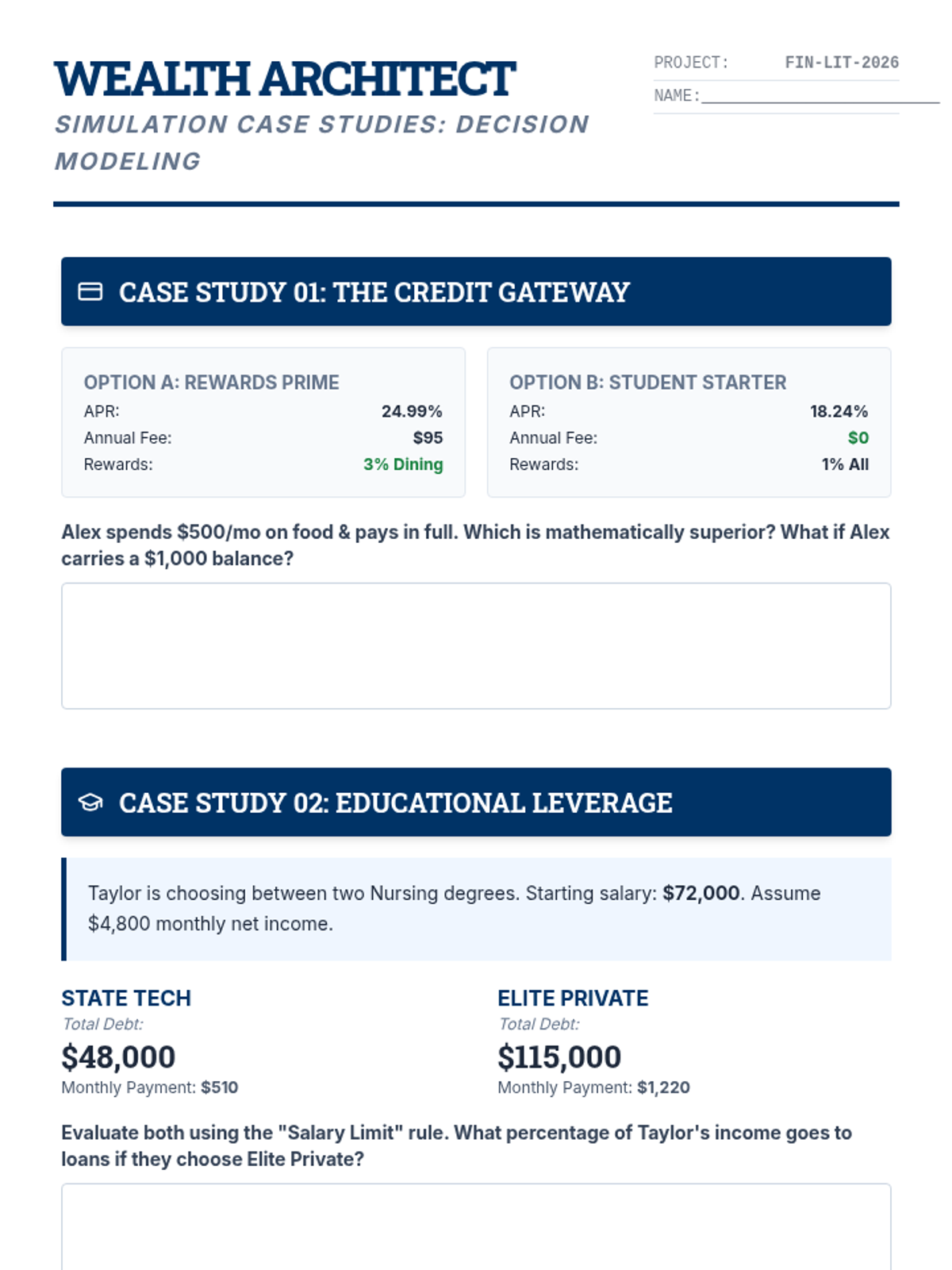
A 45-minute social-emotional learning lesson for 6th graders to explore their self-talk, contrast the 'Inner Critic' and 'Inner Coach', and design actionable personal affirmations.
A Guidance Lesson designed for 4th and 5th graders to upgrade their empathy skills. This lesson focuses on perspective-taking, respecting adult workloads/perspectives, and navigating complex peer exclusion dynamics with maturity.
A 45-minute social-emotional learning lesson for 4th graders to explore their personal strengths and limitations. Students learn to self-appraise, appreciate their unique qualities, and understand how diverse strengths make their classroom community stronger.
A foundational lesson introducing students to workplace evaluations, soft skills, and constructive feedback. Students learn how to interpret rubrics and use performance feedback as a tool for career advancement.
A comprehensive 6-week talk therapy intervention bundle for 12th-grade students, focusing on deepening self-awareness and structured present-moment planning. It contains a professional clinical treatment plan, a weekly reflective journal, and an alignment tracker.
A 20-minute Lunch Bunch lesson plan and facilitation guide designed to celebrate attendance milestones, connect consistent attendance to future goals, and foster a high-energy, positive environment for students.
A comprehensive lesson on workplace prioritization and task management across food service, office, and janitorial roles. Students learn to distinguish between urgent and important tasks using real-world scenarios.
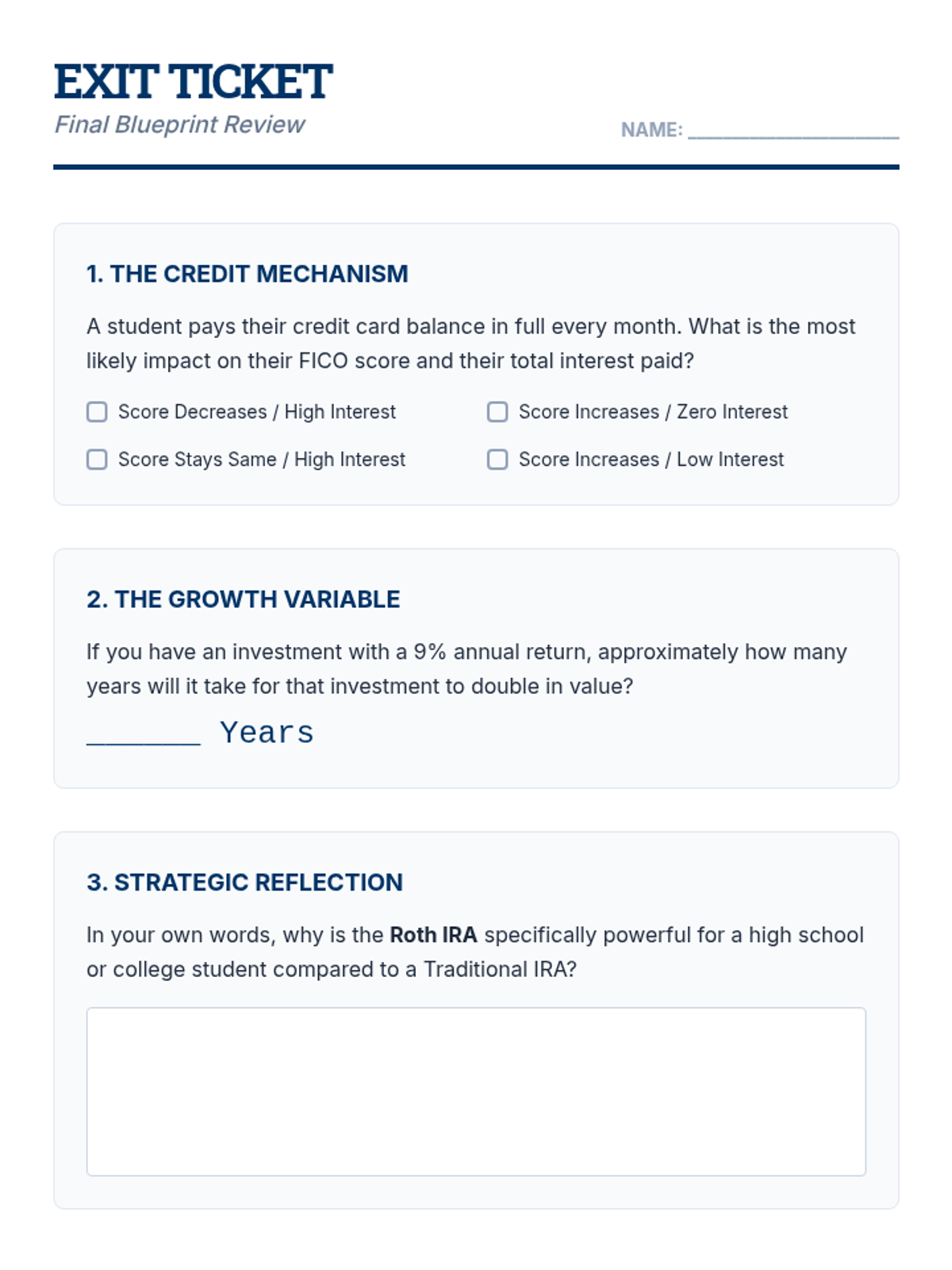
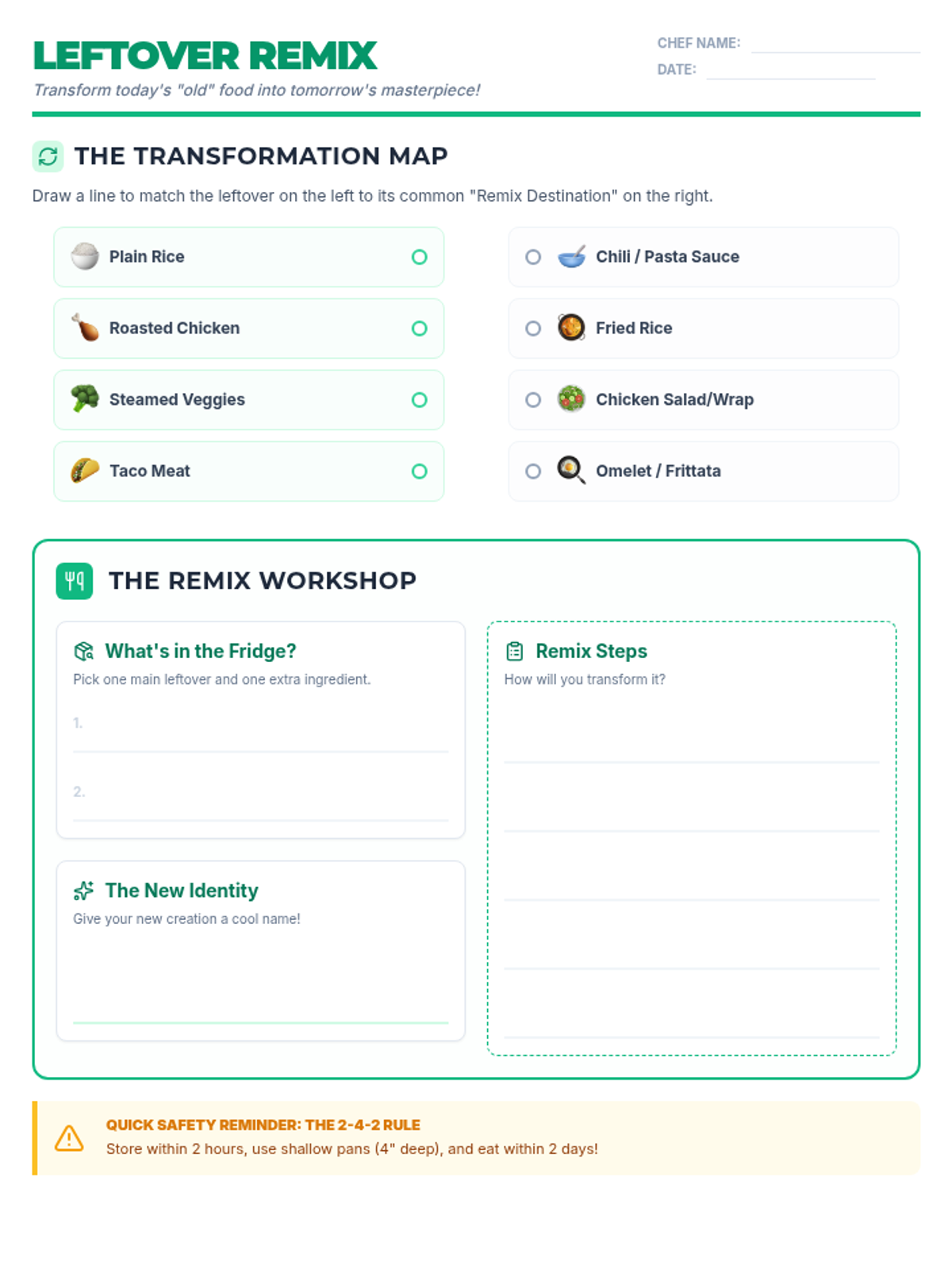
A 45-minute social-emotional learning lesson for 3rd graders to discover, articulate, and celebrate their personal strengths. Students explore the difference between talents and strengths, build a 'Strength Shield' representing their core qualities, and practice positive affirmations.
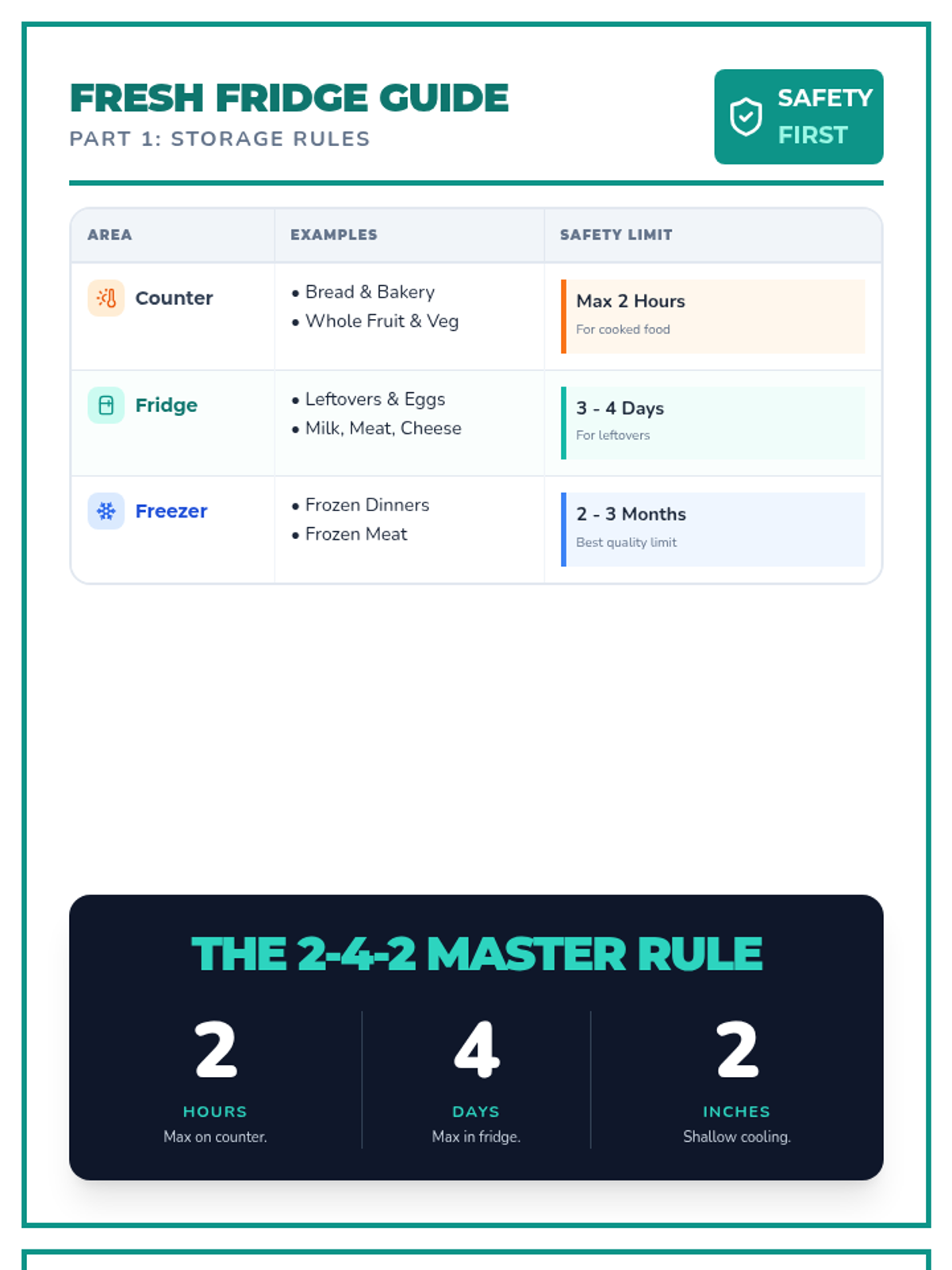
A lesson focusing on gross versus net pay, understanding paycheck deductions, reading a pay stub, and identifying key employment tax forms (W-4, W-2, I-9).
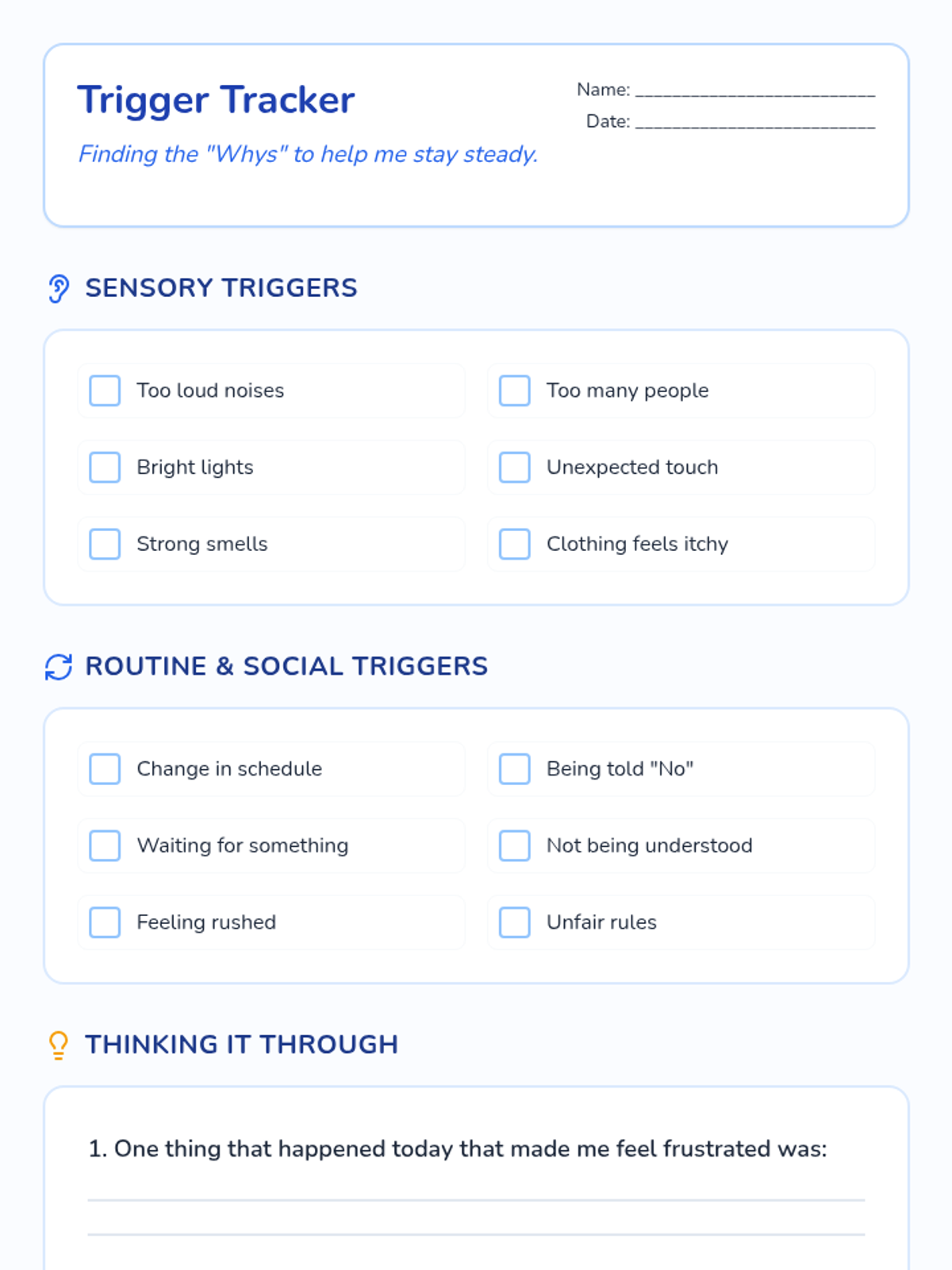
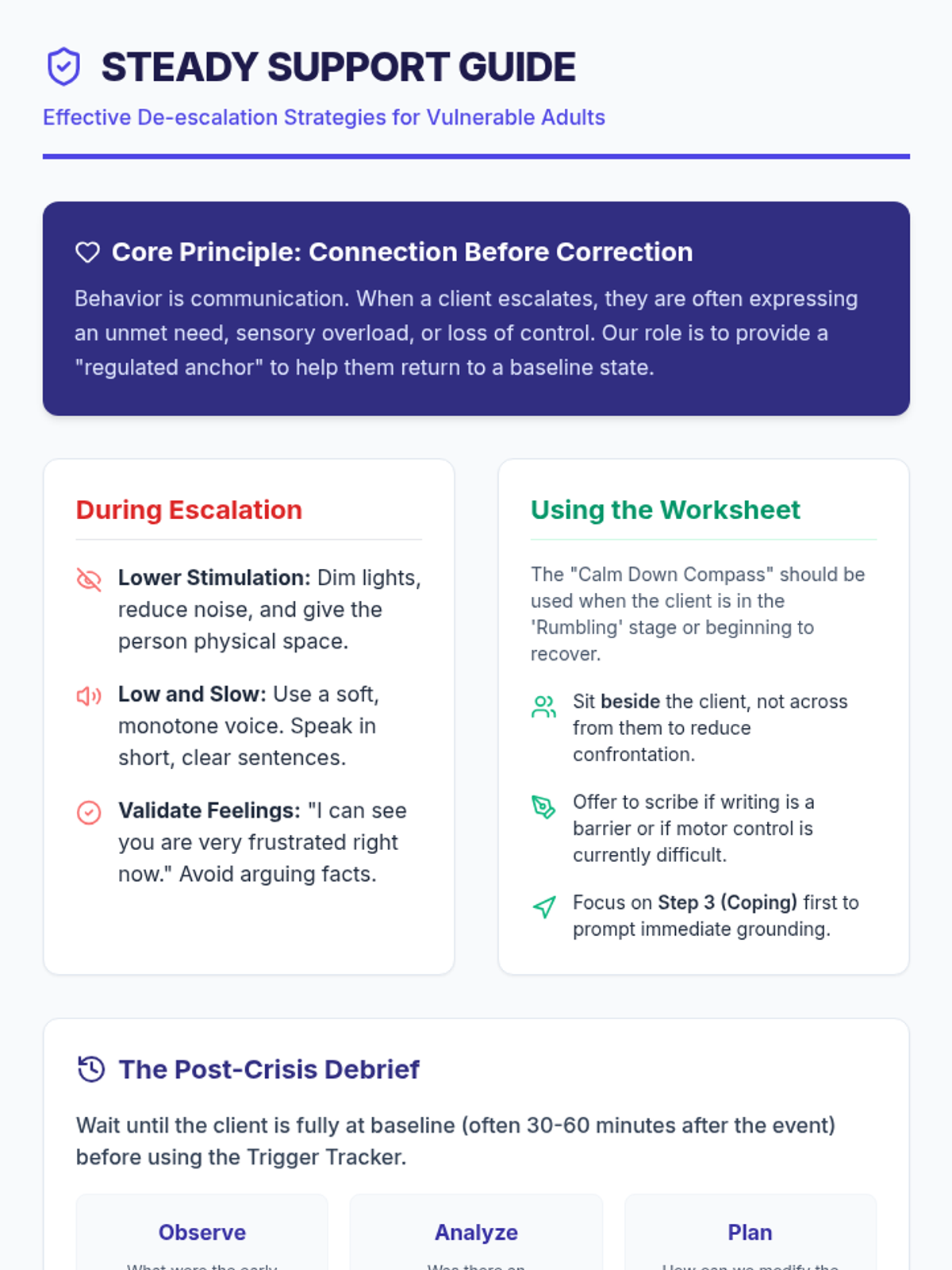
A 1:1 ERMHS (Educationally Related Mental Health Services) counseling session designed for a 9th-grade autistic student. Emphasizes evidence-based cognitive-behavioral reframing, co-regulation, factual evidence testing, and co-creating a discrete pocket-sized regulation comfort card.
A cognitive-behavioral lesson designed to help individuals identify fearful self-talk, expose underlying cognitive distortions, and construct healthy, reality-based alternative narratives. This lesson guides learners through actionable reframing protocols for social anxiety, perfectionism, and worst-case scenarios.
A interactive and heartwarming lesson for 1st-grade students that teaches kindness, empathy, and classroom community using the metaphor of 'bucket filling'. Students learn how their actions impact others and themselves through a read-aloud, role-playing, and self-reflection.
A playful and warm 30-minute lesson for 1st graders focused on self-concept, uniqueness, and identifying personal strengths. Through a shared read-aloud, interactive slides, and a hands-on banner project, students discover and celebrate what makes them special.
Students host their final Shareholders Meeting to present their executive progress. They receive their Brain CEO Certifications, consolidate their boardroom binders, and commit to long-term habits.
Students examine the brain's 'Quality Control' (self-monitoring). They review academic progress, track habit loops, and self-correct work before submitting it.
Students examine the brain's 'Pivot' (cognitive flexibility). They learn how to adapt to unexpected boardroom shifts, handle academic setbacks, and problem-solve when plans fail.
Students explore the brain's 'Mental Clipboard' (working memory). They practice visualization, externalization, and mnemonics to retain multi-step instructions and organize school information.
Students explore the brain's 'Gatekeeper' (impulse control), developing practical techniques like the 'CEO Pause' to resist high-tech distractions and control emotional impulses before acting.