A 30-minute lesson where young students practice mindfulness and relaxation through mandala coloring and guided nature drawing to develop focus and emotional regulation.
Students become 'Brave Builders' to learn the importance of following multi-step directions. Through a fort-building scenario, they practice listening, sequencing, and accuracy to complete their construction missions.
A lesson focused on fostering acceptance by exploring cultural diversity and identifying respectful behaviors towards differences in others through interactive scenarios and reflections.
A lesson focused on helping elementary students understand and practice acceptance of themselves and others through reflection and creative activities.
This lesson introduces elementary students to the concept of acceptance—both of themselves and others—using the metaphor of a colorful mosaic where every unique piece matters. Students will explore how to embrace differences and build a supportive community.
A comprehensive 90-120 minute morning activity designed to teach students the social nuances of interrupting. It covers identifying appropriate times to speak, respectful interruption techniques, and emotional regulation when others interrupt.
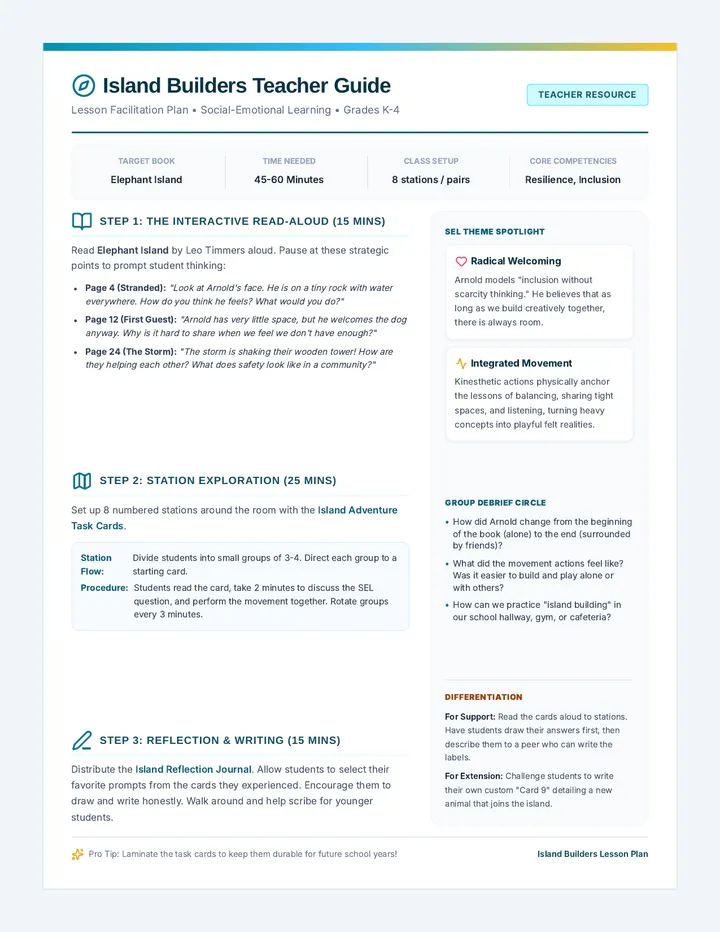
A collaborative problem-solving lesson for first graders where they learn to identify problems, brainstorm solutions, and work together through hands-on challenges. Students will practice communication and compromise as they join the 'Problem Solvers Club' to tackle group-based scenarios.
A lesson focused on identifying and practicing acts of kindness through engaging visual activities and personal reflection.
A 20-minute counseling session designed to boost self-esteem and provide a foundation for managing anxiety by identifying internal strengths. Students will create a 'blueprint' of their positive qualities and take home affirmation cards to reinforce their self-worth.
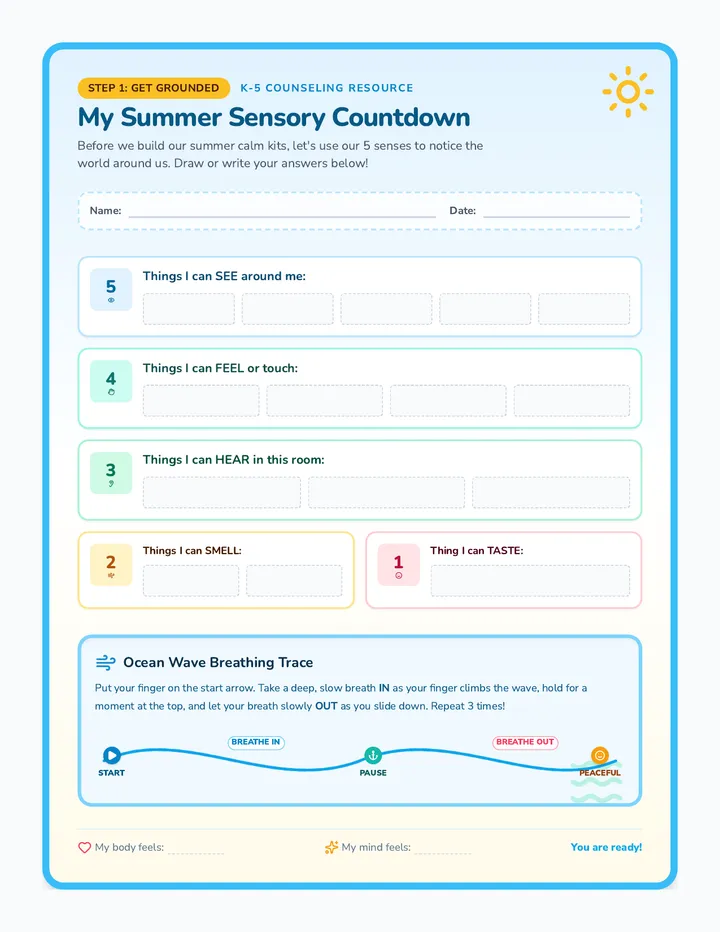
A 20-minute guided session for school or clinical counselors to help students identify anxiety triggers and practice three immediate calming techniques.
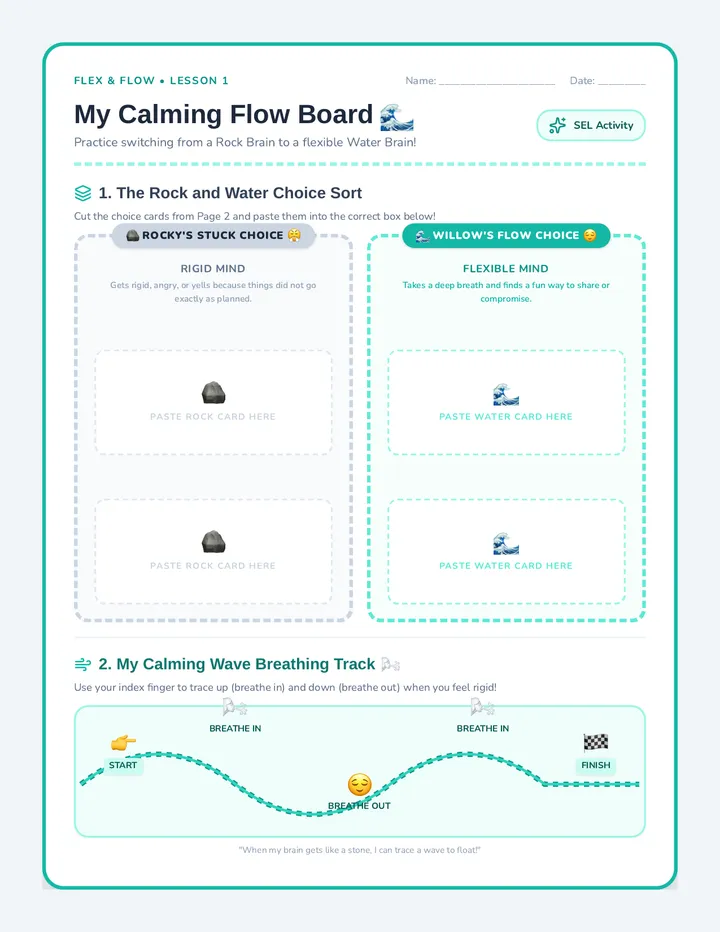
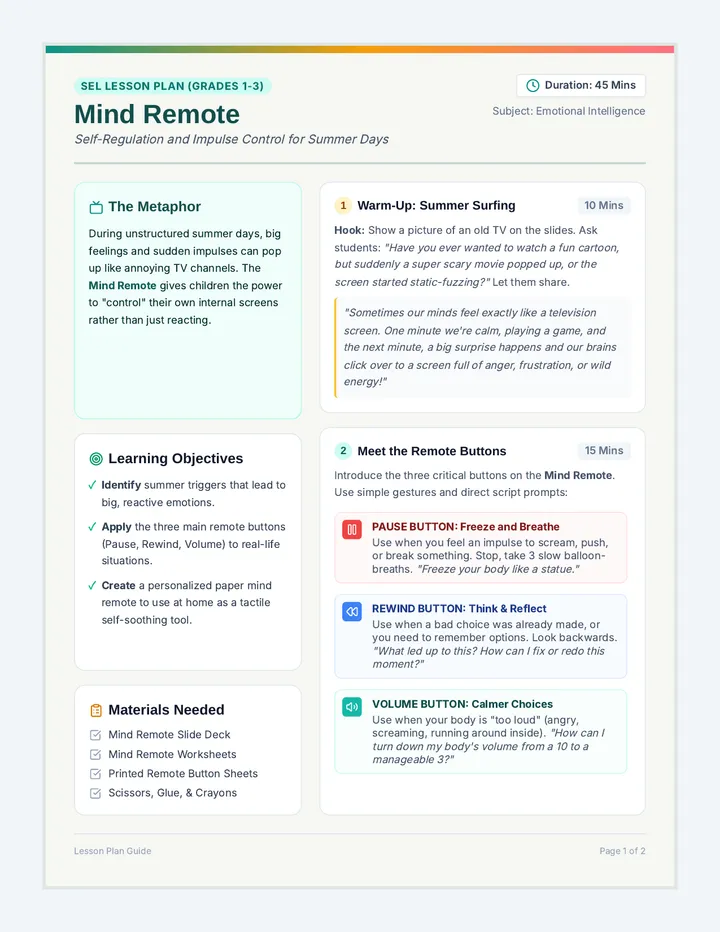
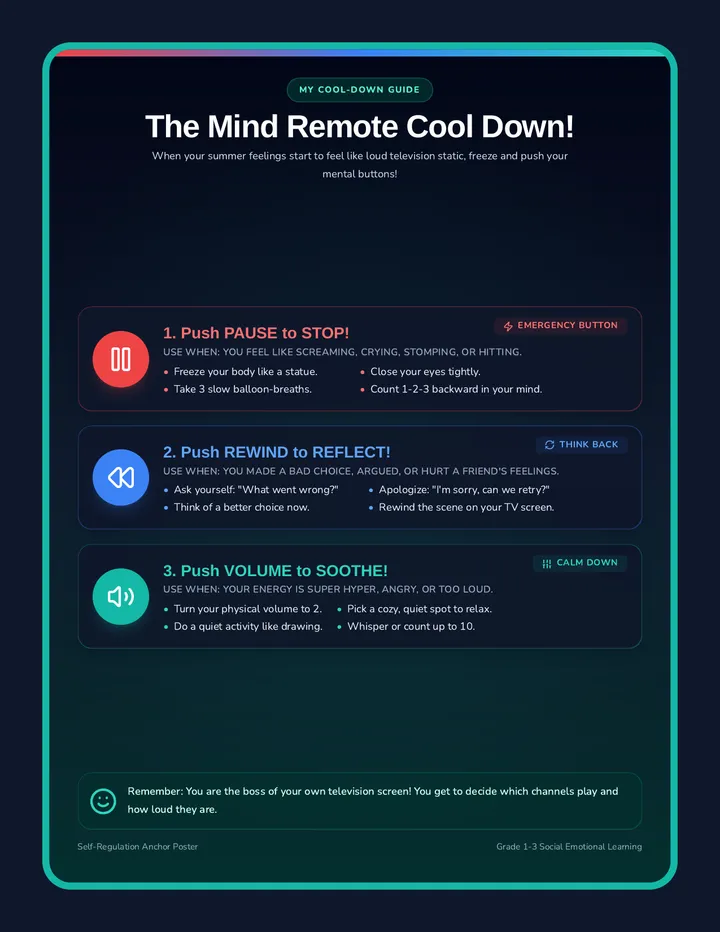
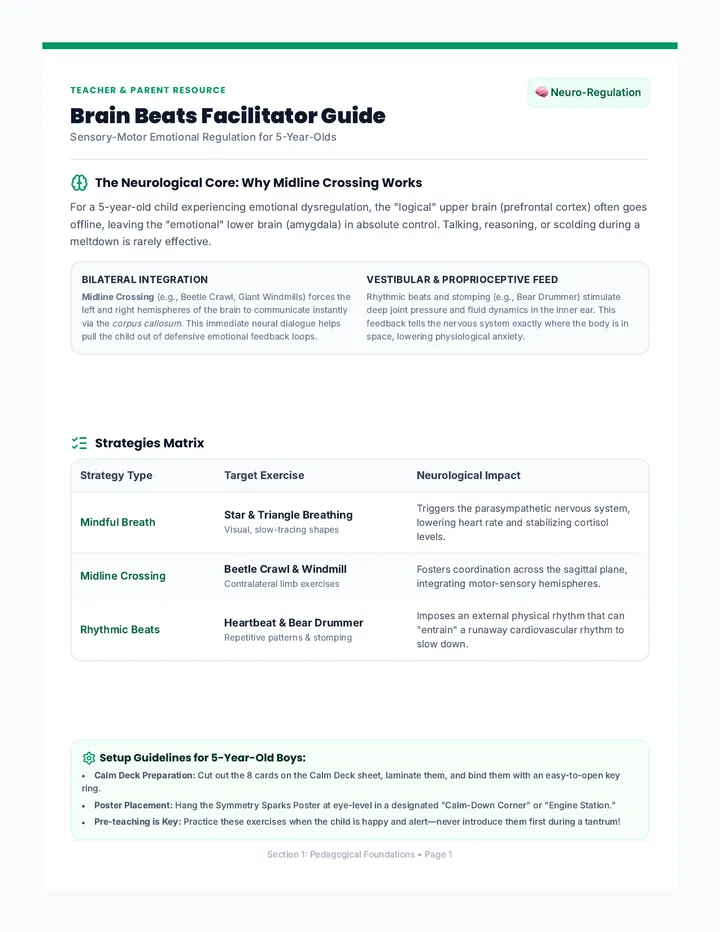
A social-emotional learning lesson for grades 1-3 that teaches students self-regulation through 'The Cool Down Crew,' a team of actionable brain break strategies. Students learn to identify when they need a reset and how to choose the right strategy to refocus.
A short, impactful check-in lesson designed to help students identify and celebrate their personal strengths and positive qualities. This lesson fosters self-awareness and boosts self-esteem through structured reflection.
A 20-minute lesson for kindergarteners focused on building self-esteem and confidence through a collaborative game, a video story, and personal reflection. Students learn to identify their unique strengths and practice positive self-talk.
A comprehensive toolkit of math-integrated brain breaks including printable cards, a presentation, and a reflection worksheet for daily use.
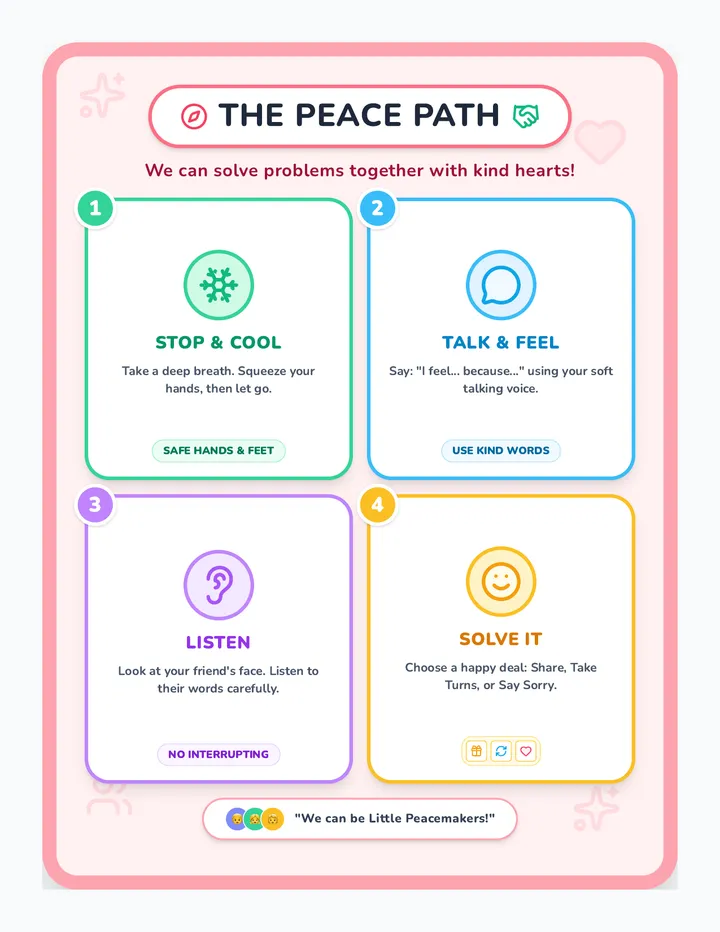
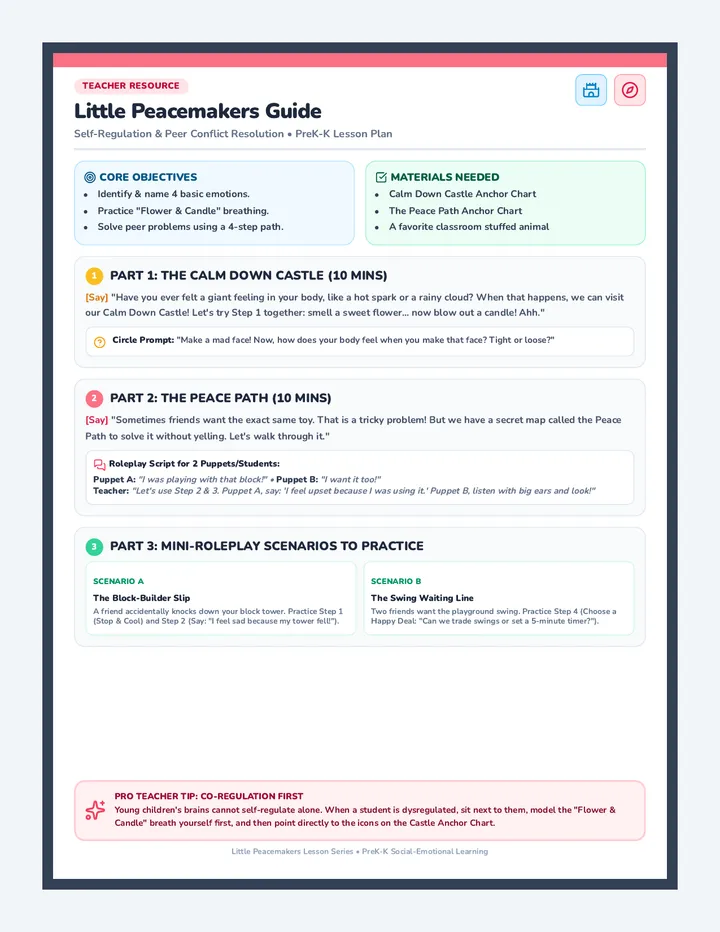
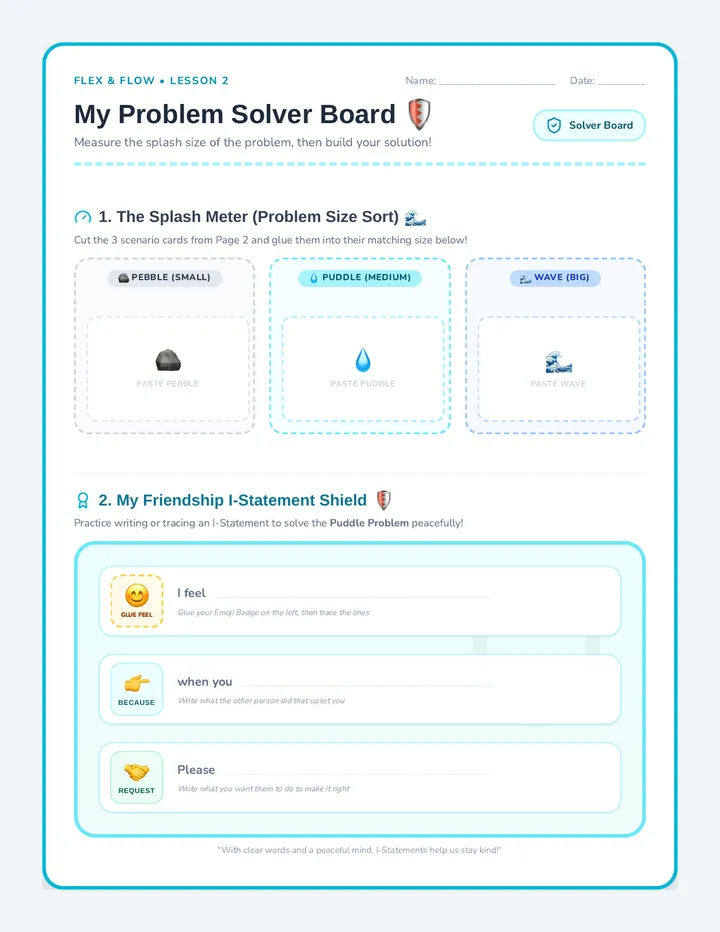
A set of engaging activities designed to teach 1st and 2nd graders how to resolve conflicts peacefully using 'I' statements and positive choices.
This lesson helps students who struggle with redirection by teaching them to recognize defensive emotions, understand teacher intentions, and use positive self-talk to stay calm and focused. Students will practice 'flipping' their internal narrative from feeling attacked to feeling supported.
A lesson designed to help students identify distractions and implement mindfulness and organizational strategies to improve their concentration. Students will engage in group discussions and practical exercises to build their 'focus muscles'.
A celebration of the quest. Students reflect on their learning and commit to being 'Kindness Champions' in their daily lives.
Focuses on respecting the environment. Students learn about 'world generation' and their responsibility to care for the earth, school, and community.
Explores respecting others through empathy, active listening, and teamwork. Students learn how to be 'good teammates' in the multiplayer world of life.
Focuses on self-respect, 'inner armor', and positive self-talk. Students learn that being kind starts with how they treat themselves.
Introduction to the Kindness Quest. Students define kindness and establish morning greeting routines while exploring the 'world' of the classroom.
Teaches students that kindness and 'safe hands' are the 'Heart Points' of the classroom. Focuses on kind words, sharing resources, and helping others to build a strong community.
Teaches students the difference between tattling (trying to get someone in trouble) and telling (trying to keep someone safe). Uses 'Chat Logic' to help students decide when to report an issue.
Teaches students the importance of finishing work with quality ('Masterpiece' level) and provides a clear menu of choices for what to do once work is complete.
Teaches students to adjust their voice volume based on the classroom 'biome' (activity). Covers Level 0 (Silent), Level 1 (Whisper), Level 2 (Partner), and Level 3 (Presentation).
Focuses on classroom movement, staying in assigned 'coordinates' (seats), and maintaining 'safe zones' by keeping hands to oneself. Students learn that safe movement keeps the 'server' from crashing.
Teaches students the '3-Second Rule' for responding to classroom signals like raised hands and chimes. Students learn to 'freeze and listen' quickly to maximize learning time.
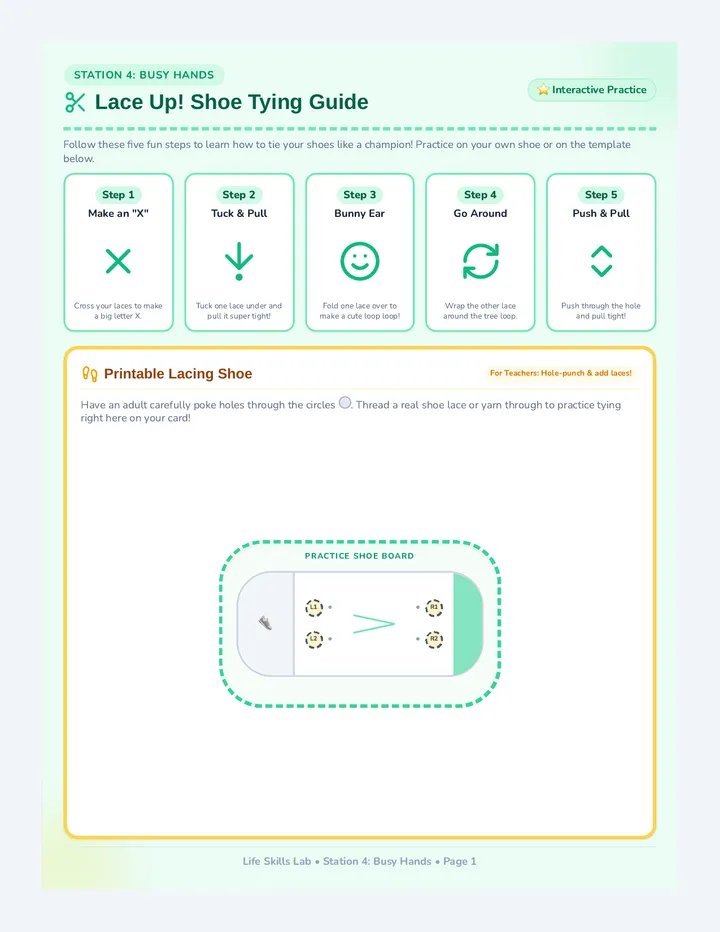
A 30-minute introductory lesson for Kindergarteners to explore community helpers, the tools they use, and how they help their community.
Students explore what makes a good friend, practice kindness, and learn how to maintain healthy relationships using a 'Friendship Garden' metaphor.
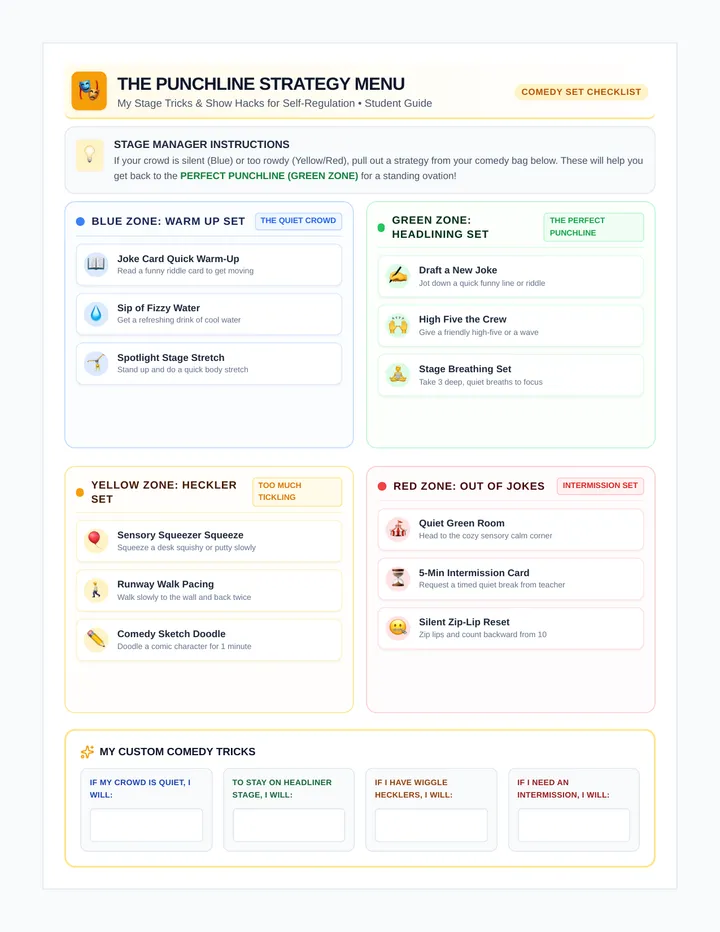
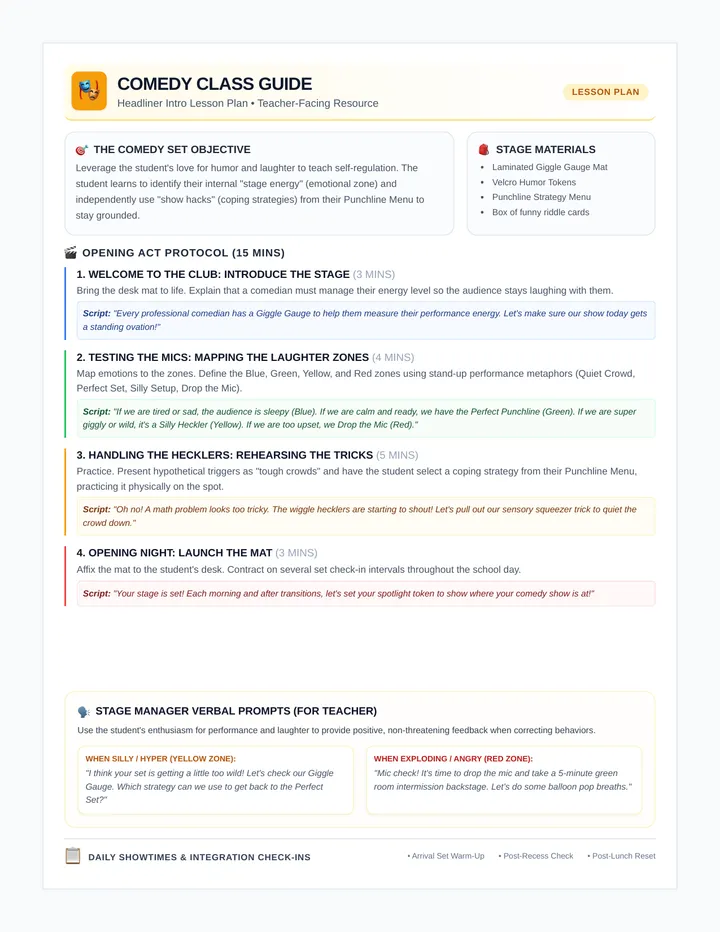
A small-group lesson designed for K-1st grade students to identify feelings and learn practical calming strategies. Includes a social story, a movement-based game, and visual coping skill cards to address hyperactivity and emotional outbursts.
A quick, engaging lesson for Grade 1 students to identify common conflicts and learn simple strategies like 'I-statements' and choosing peaceful solutions.
A 20-minute social-emotional learning lesson that teaches students the difference between 'brain thoughts' and 'spoken words' using the brain filter analogy. Includes interactive role-playing to practice impulse control in the classroom.
An individual counseling session for a kindergartener focused on early task persistence and self-regulation skills. The lesson includes a movement warm-up, focus-building activities, reflection exercises, and a data-tracking component for IEP progress monitoring.