A comprehensive lesson for high school students to master effective study habits, time management, and active recall techniques to boost performance and reduce stress.
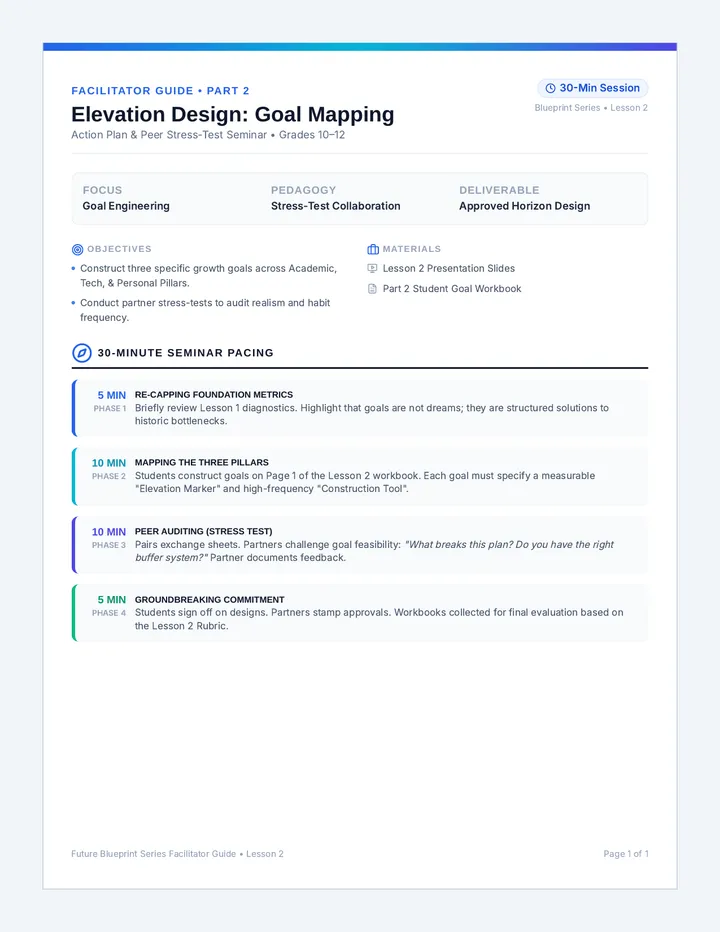
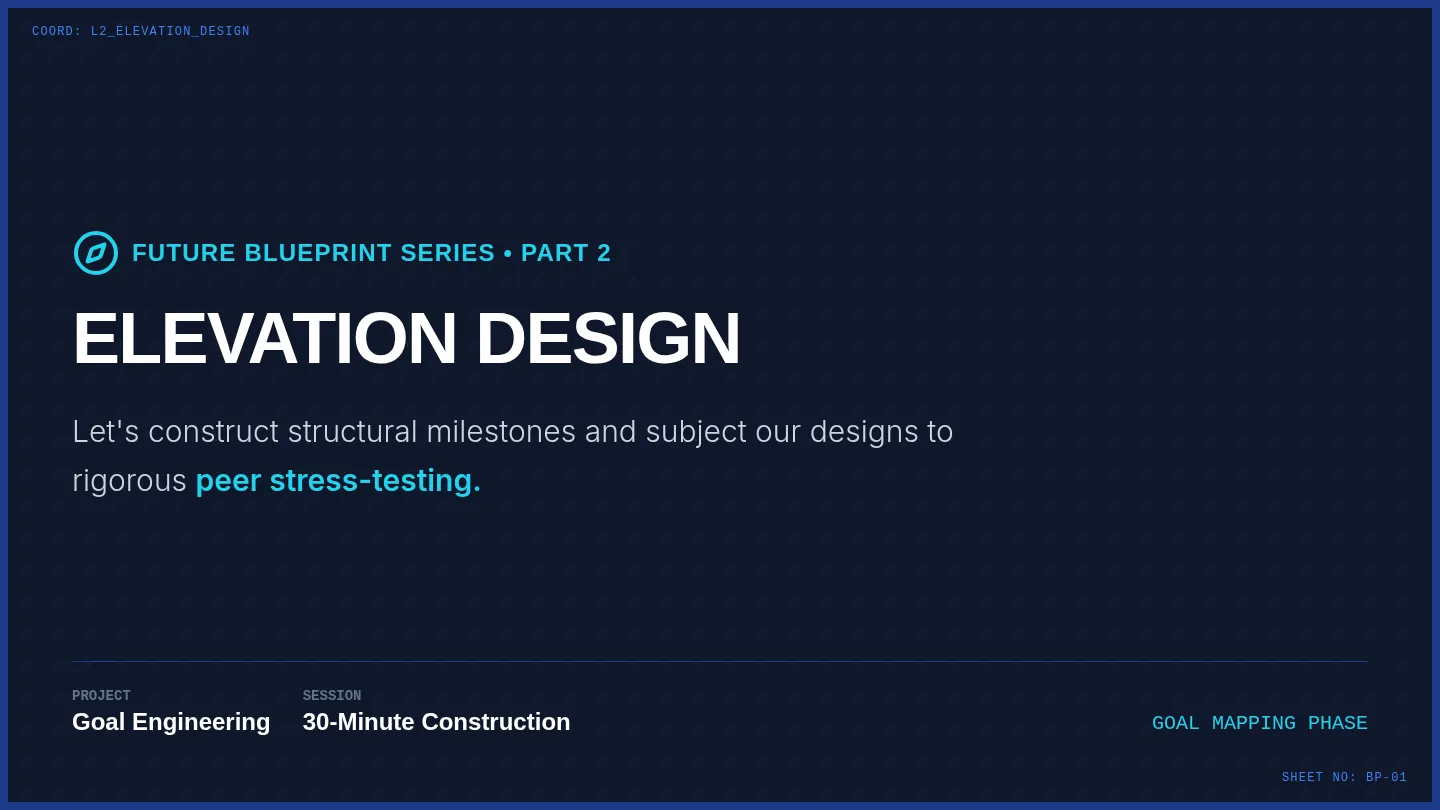
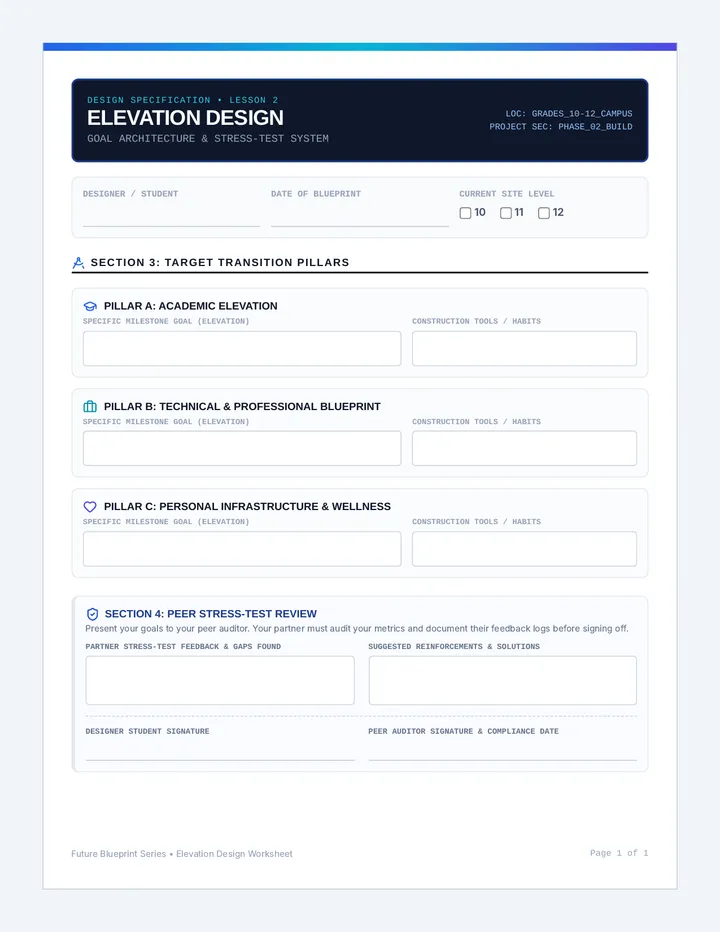
A goal-setting workshop where students 'reverse engineer' a long-term aspiration into immediate, manageable steps. Focuses on clarity, motivation, and overcoming potential obstacles.
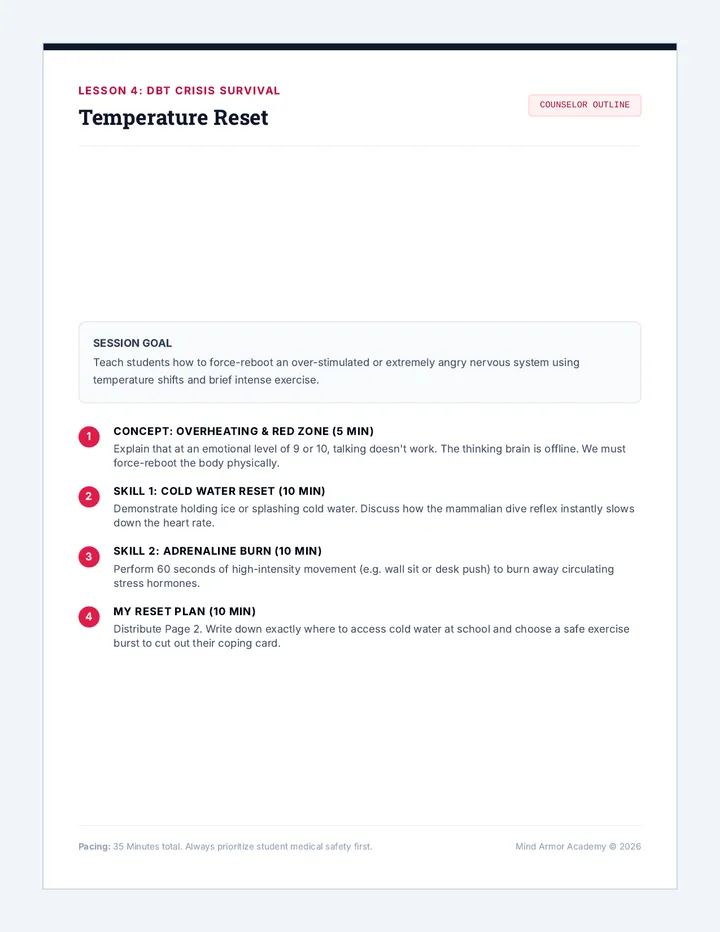
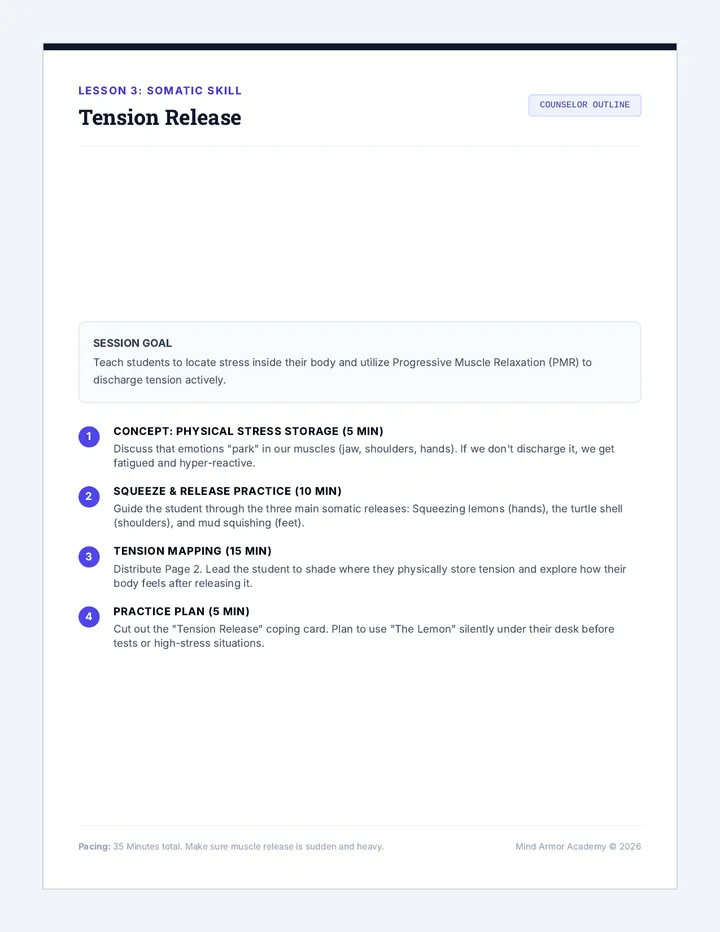
Students identify personal stress triggers and develop a 'relief valve' system of coping strategies. The lesson focuses on recognizing physical signs of stress and planning proactive responses.
Students explore the layers of their identity, distinguishing between how they see themselves and how they are perceived by others. Includes a guided activity to create a multi-layered identity map.
The final summit project where campers create their own 'Vibe Check' Zine—a personalized guide to their own relationship rights and standards.
A deep dive into fairness and power dynamics. Campers learn the difference between 'Leader-Leader' and 'Leader-Follower' dynamics in healthy relationships.
Normalizing rejection as part of the camp experience. Campers build a 'Resilience Toolkit' and learn how to bounce back from social setbacks.
A session focused on the 'Friendship Circle.' Campers use the Time Slice activity to visualize how to keep their 'bunkmate bonds' strong while catching feelings.
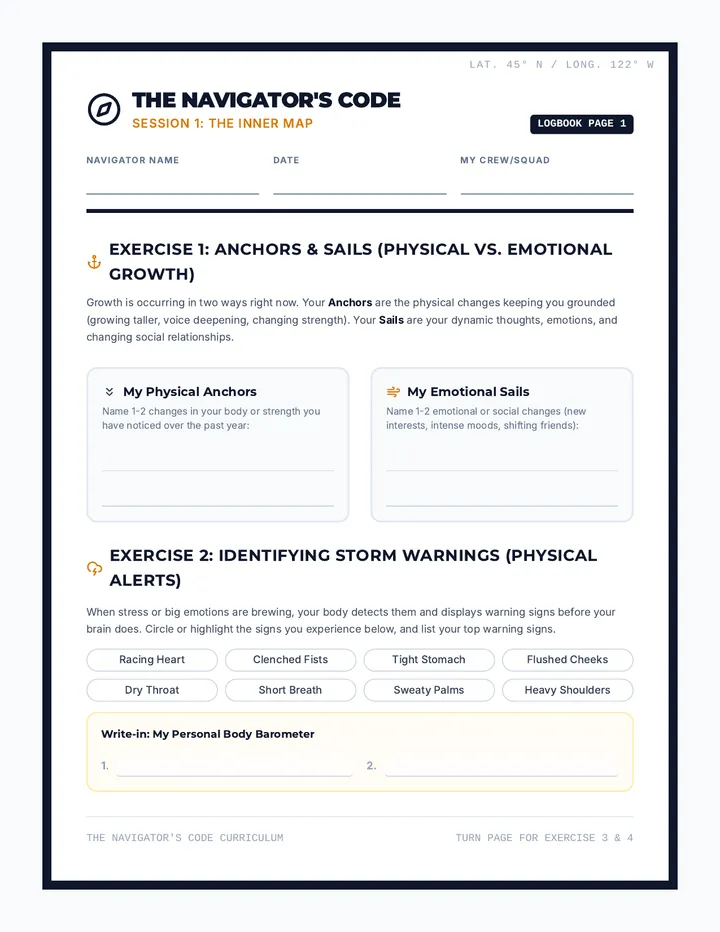
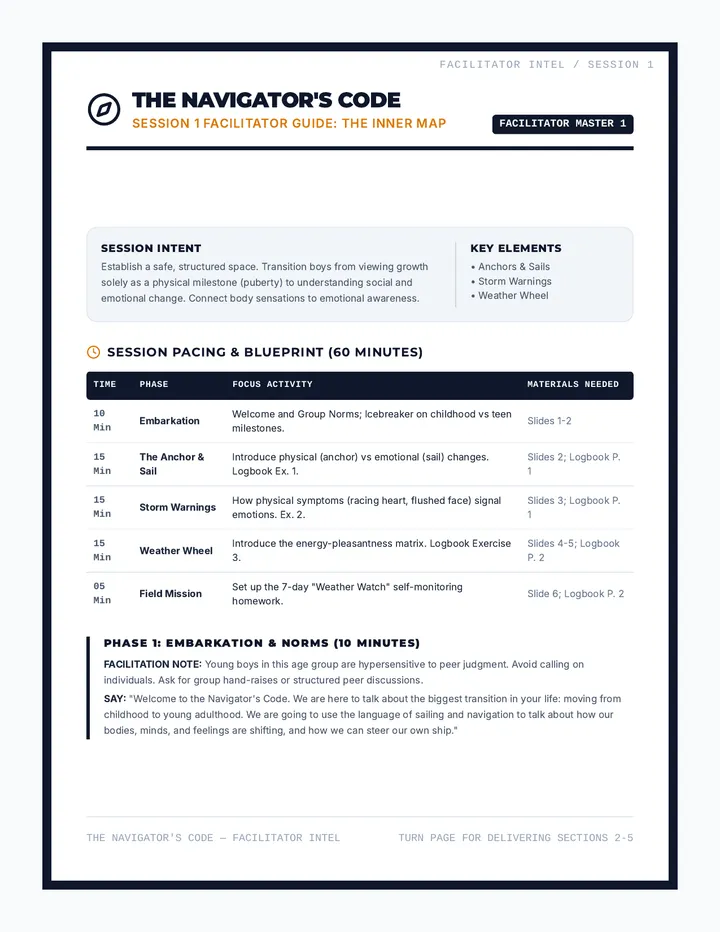
Campers learn to identify physical 'vibe checks'—gut feelings that signal safety or discomfort—and practice trusting their compass in social situations.
Students will learn to identify common financial scams, protect their personal information online, and understand the steps to take if they become a victim of identity theft.
An introduction to the world of credit, covering how credit scores work in Canada, the difference between credit and debit, and the true cost of borrowing money.
Students will explore the power of compound interest, understand the difference between simple and compound growth, and set SMART financial goals using Canadian savings tools like TFSAs.
Students will master the daily operations of a bank account, including using debit cards, avoiding common fees, using mobile banking apps safely, and tracking their spending.
Students will learn the difference between checking and savings accounts, compare different banking institutions, and identify the specific documents required to open an account as a minor.
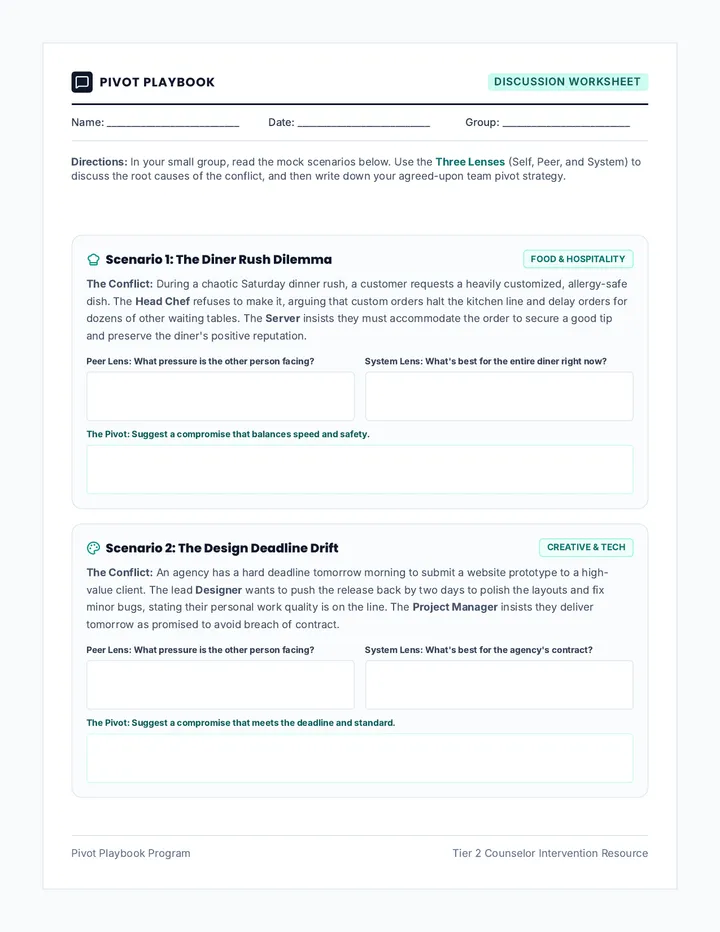
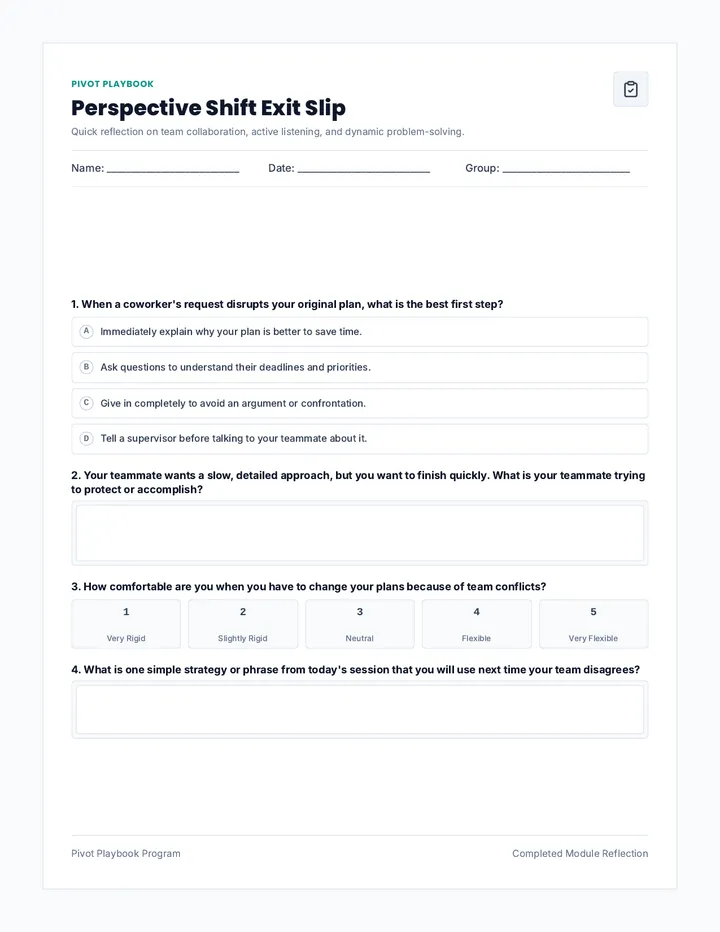
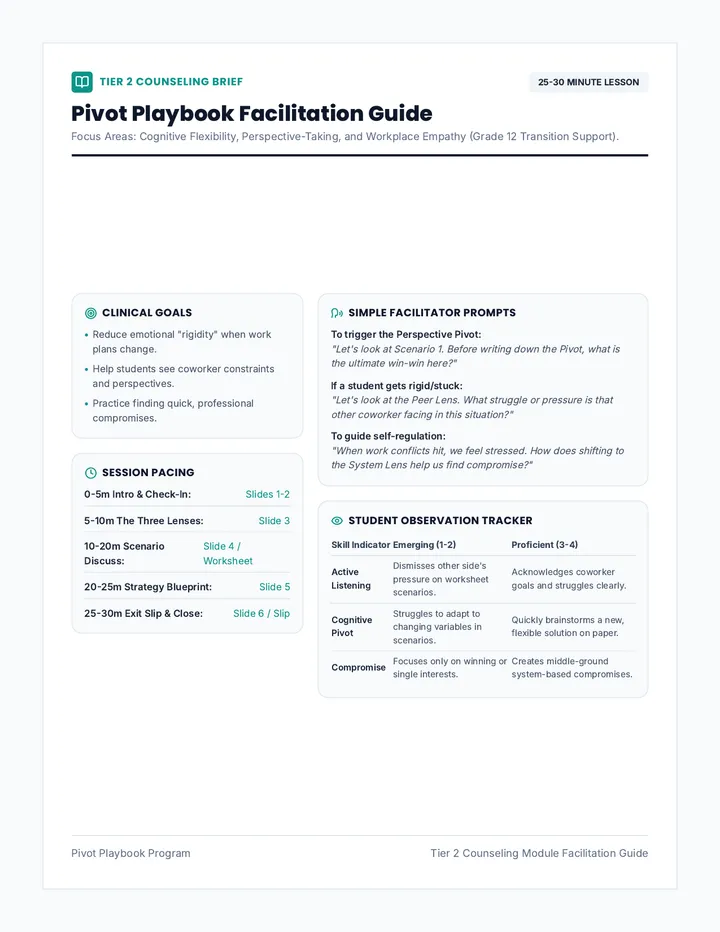
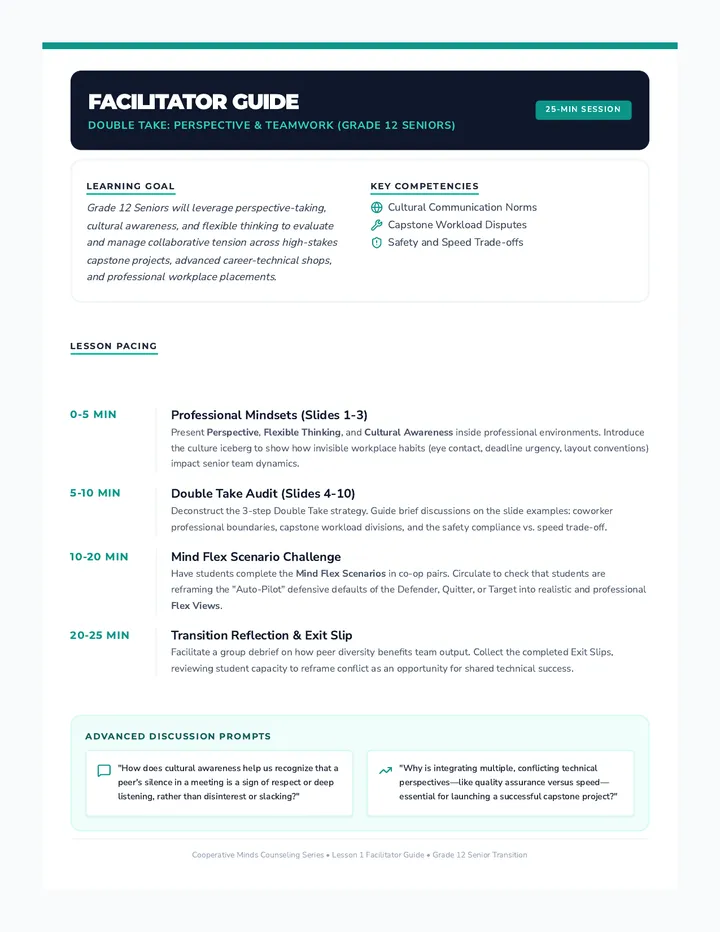
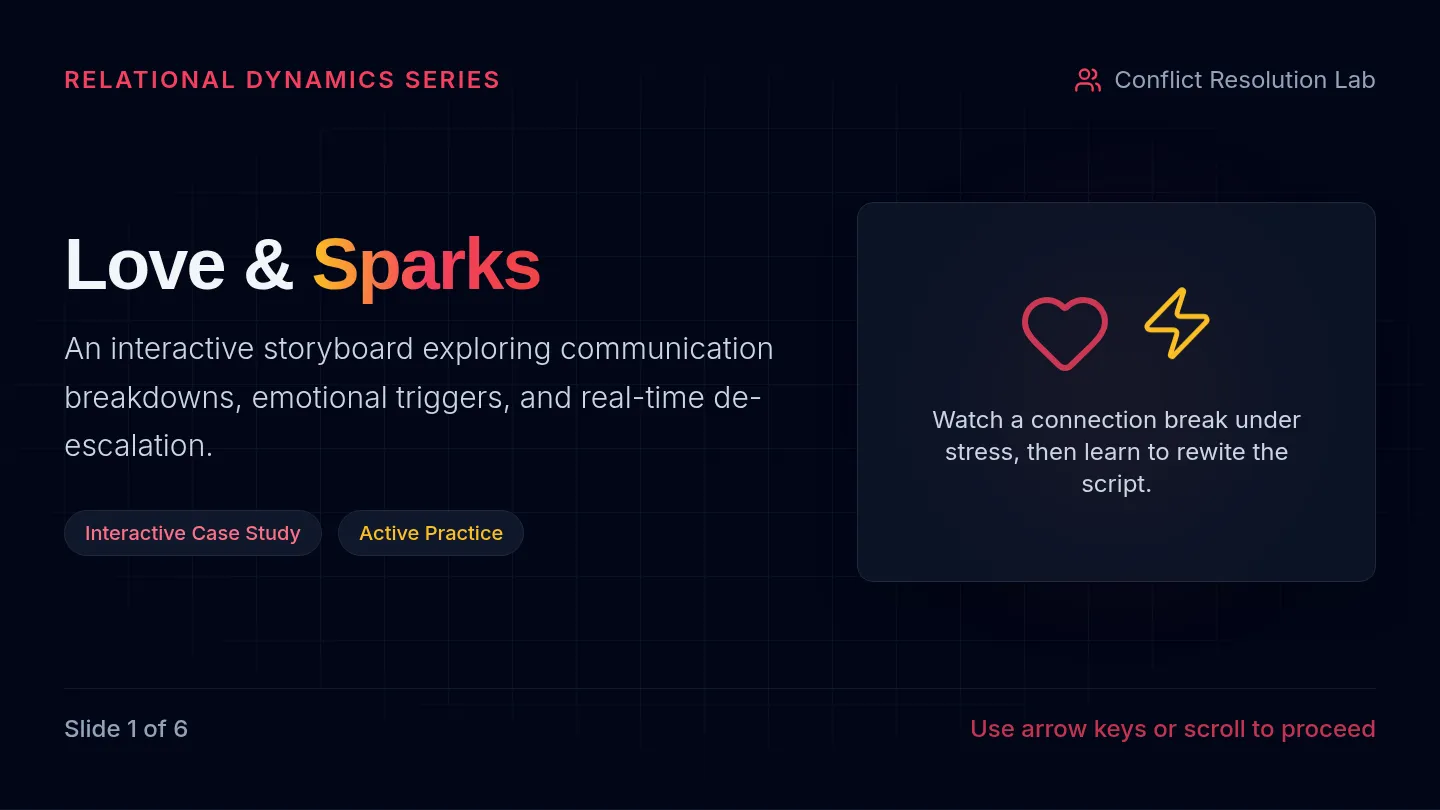
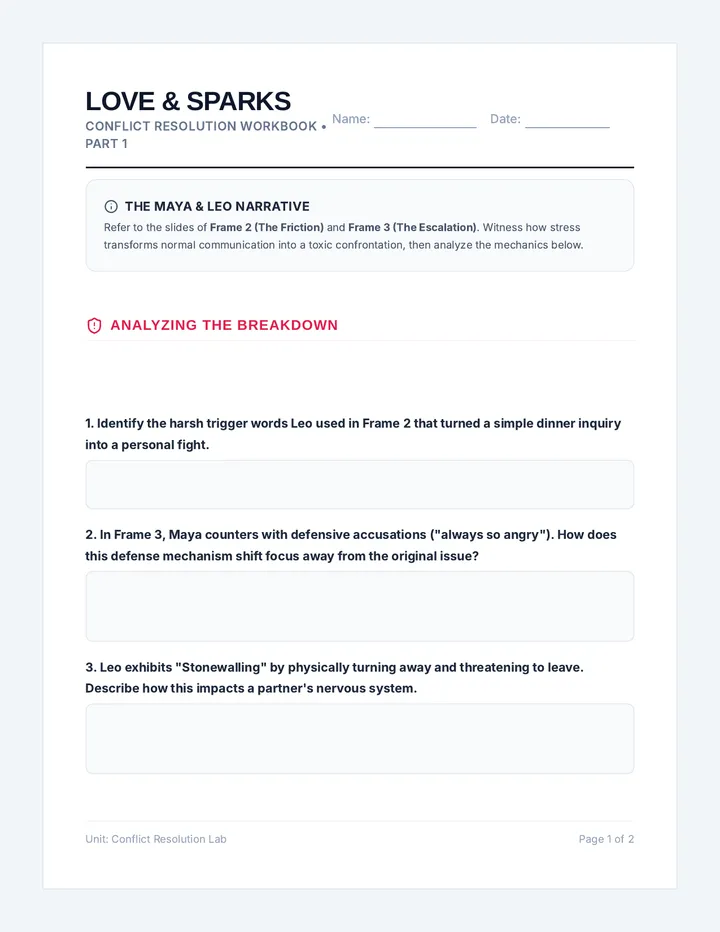
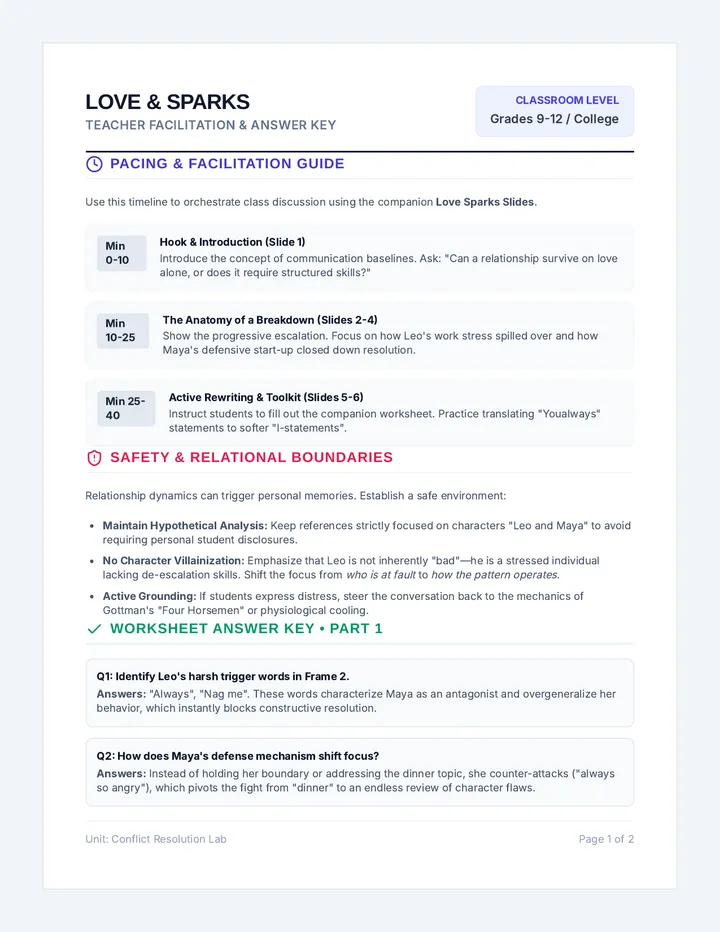
A high-speed micro-lesson designed to give students actionable strategies for de-escalating conflicts with peers and teachers in under 10 minutes. Updated with the Peace Protocol framework.
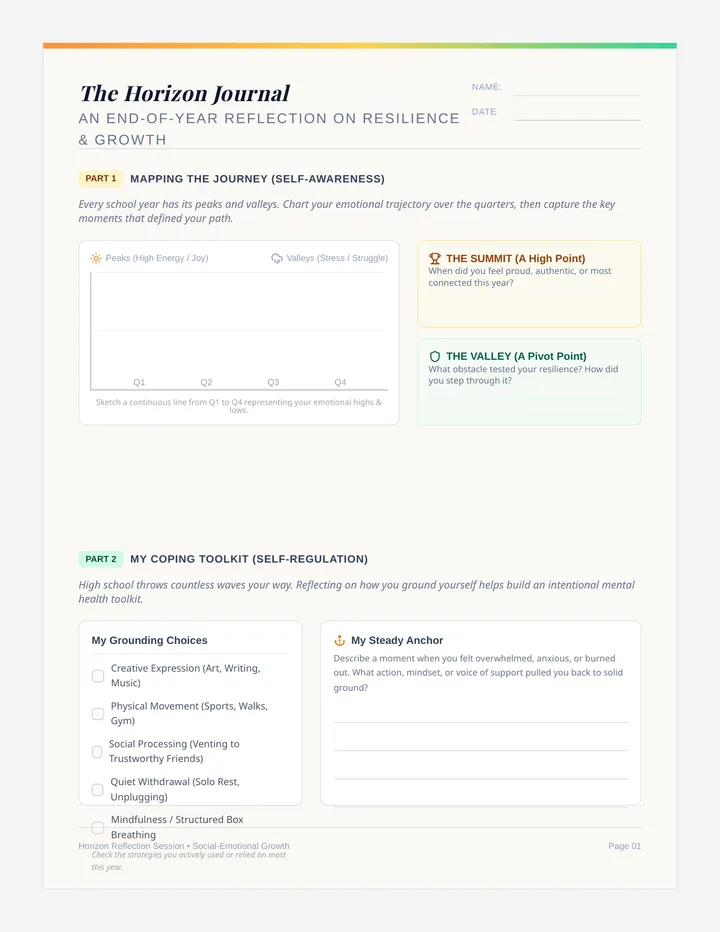
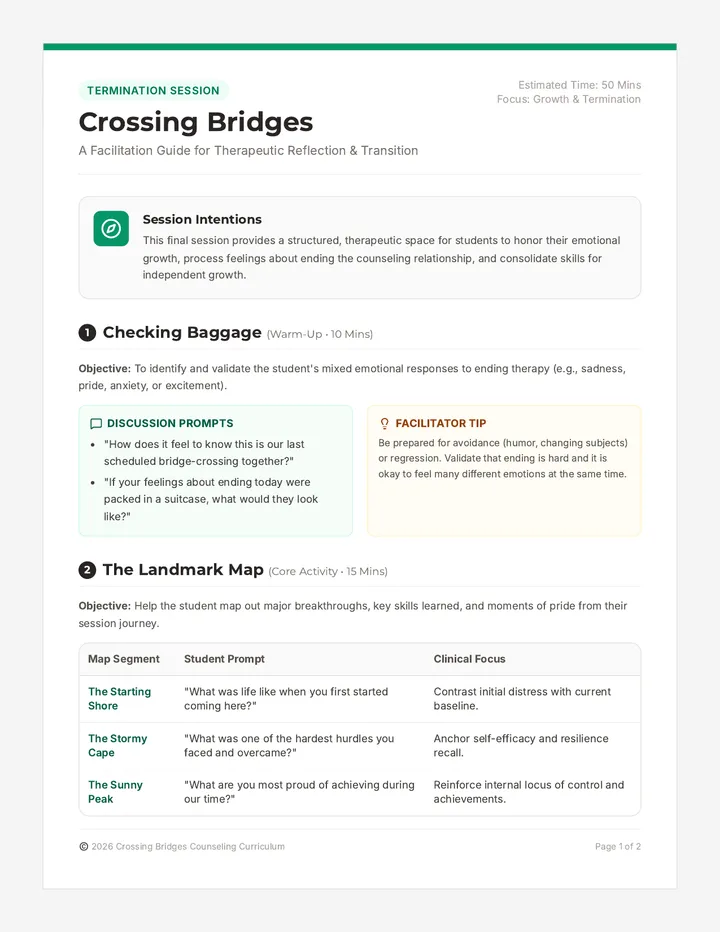
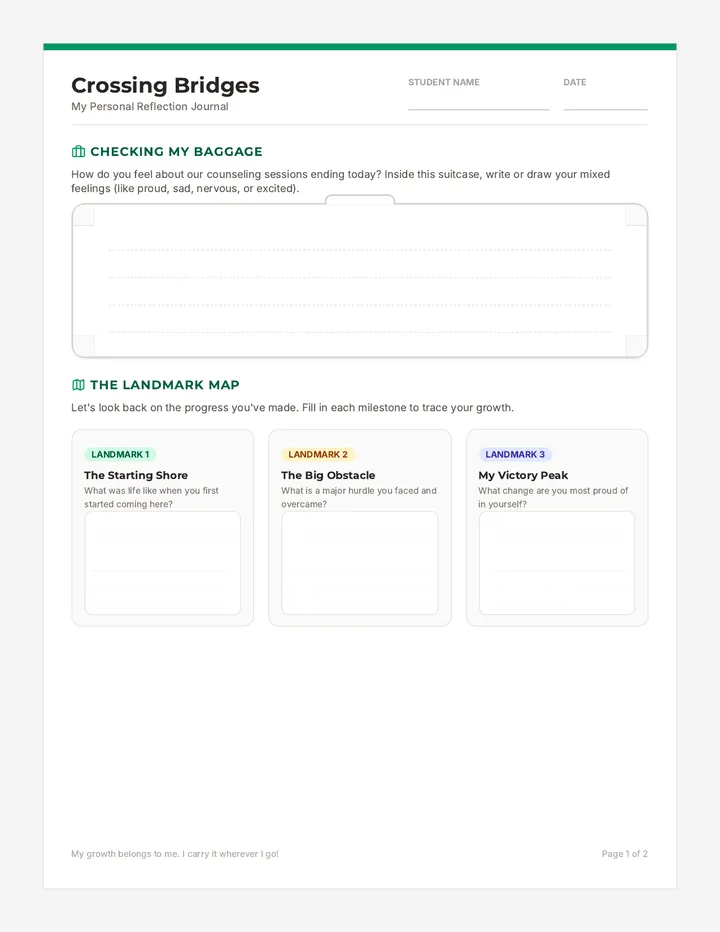
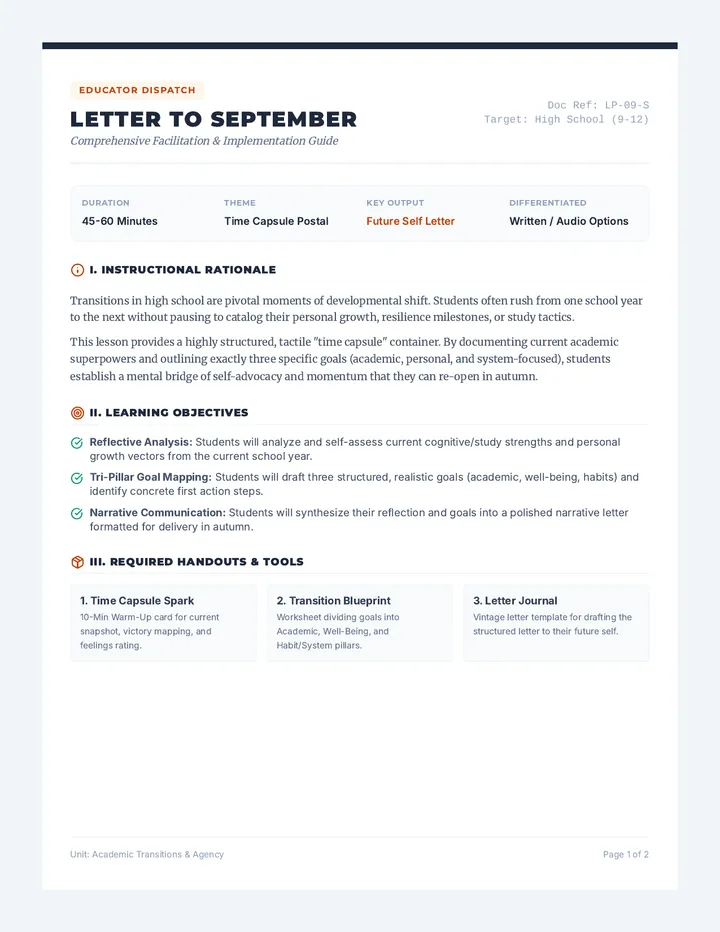
A reflective closing session to celebrate achievements and set intentions for the upcoming transition.
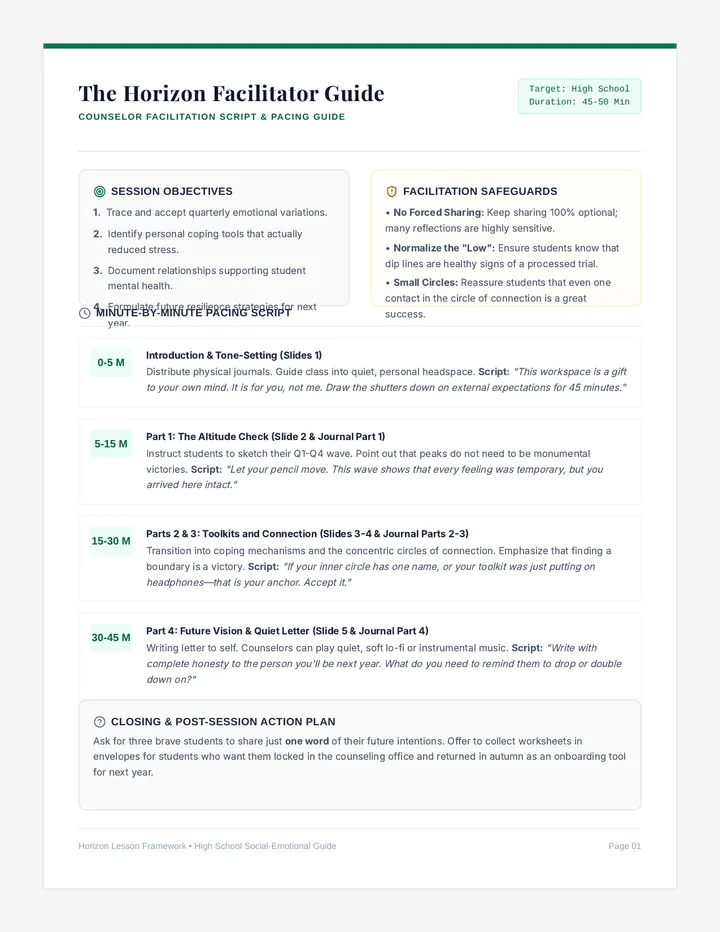
Practical life-prep stress reduction, focusing on the mental shift from high schooler to independent adult.
Addressing the 'comparison trap' and FOMO as students watch peers announce their own college and life paths.
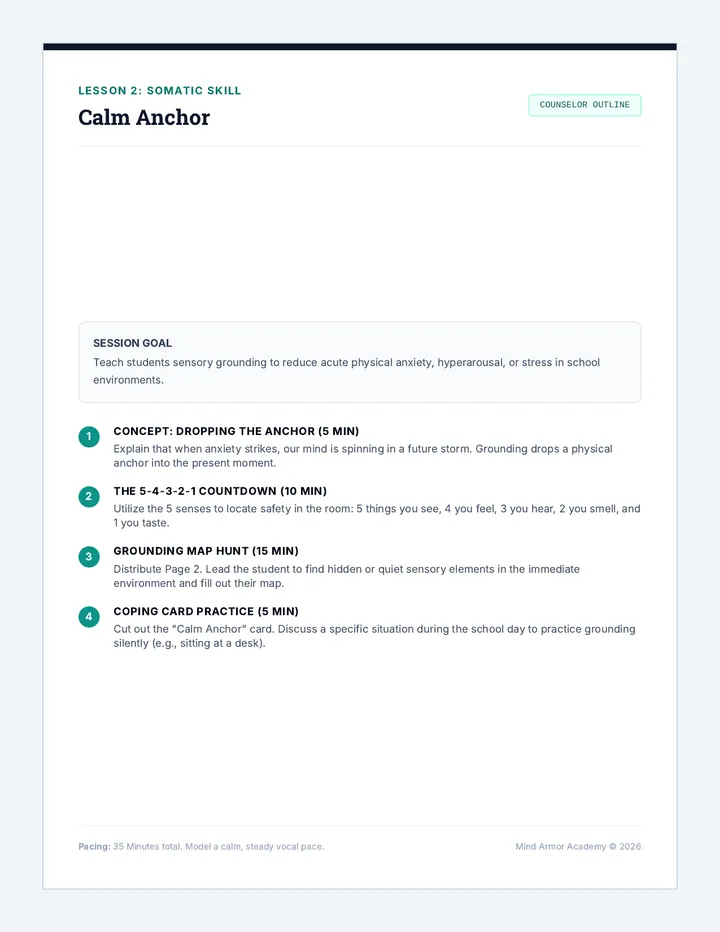
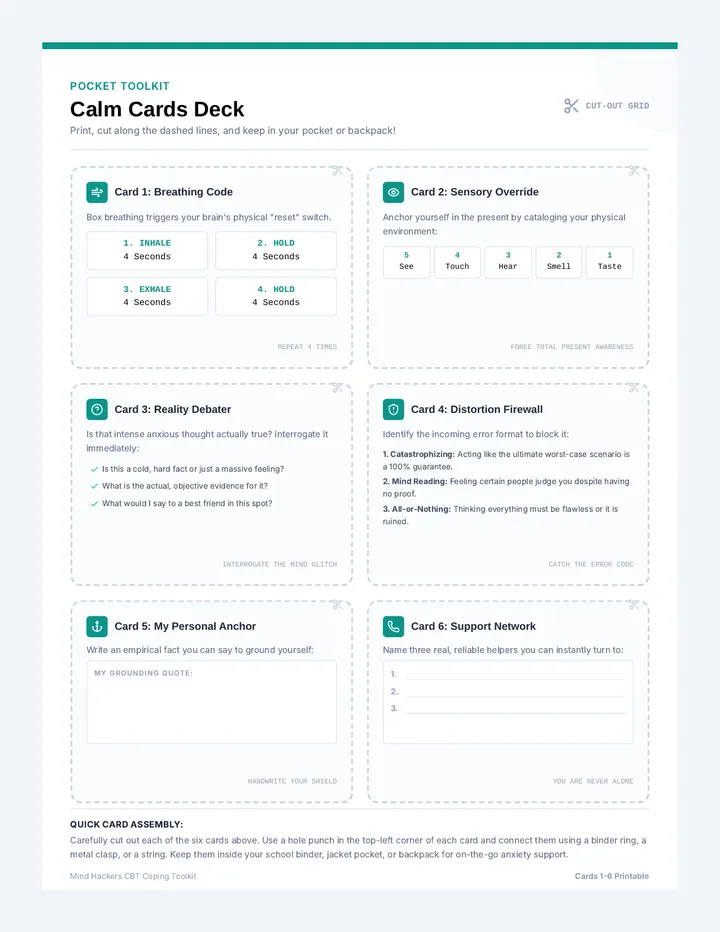
Quick-hit mindfulness and grounding techniques tailored for busy students on the go.
A practical look at the logistical steps between high school graduation and the first week of college.
Concrete techniques for managing high-stakes test anxiety during AP exams and final assessments.
Strategies for balancing the heavy academic load of AP exams with the high-stakes social events of May.
Helping students find emotional closure and peace with their post-graduation choices, moving past 'what-ifs' and comparison.
A quick, celebratory check-in for 8th graders as they prepare for high school. Includes a student flyer for goal-setting and a teacher guide for facilitating the transition discussion.
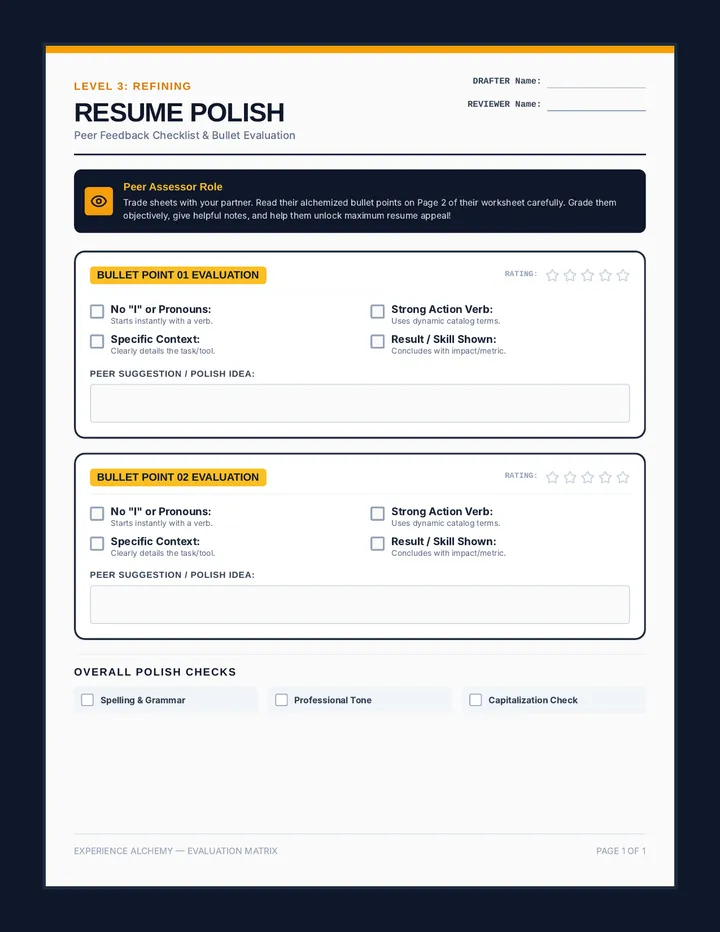
A comprehensive guide for students to master the art of entry-level resumes and cover letters, focusing on translating limited experience into professional potential.
A targeted social-emotional learning lesson designed to help high school students recognize perfectionist patterns and apply self-compassion and cognitive reframing techniques.
A lesson focused on analyzing the arguments and perspectives within the text 'The Digital Paper Trail', specifically looking at the ethics and legality of using social media in hiring.
A lesson exploring how building strong interpersonal connections with teachers, peers, and school staff can make daily school life smoother, more supportive, and more efficient.
A lesson exploring the ethical and legal implications of using social media as a screening tool during the hiring process, based on professional HR perspectives.
A comprehensive tool for the scholarship committee to evaluate and rank applicants based on Booster Club involvement, athletics, academics, and personal essays.
A comprehensive assessment covering developmental domains, brain growth, major ECE theorists, and strategies for supporting young children's self-concept and identity.
This lesson helps students identify personal barriers to school attendance, set actionable attendance goals, and reflect on the connection between presence and their future aspirations. It also provides teachers with a supportive framework for family communication regarding attendance.
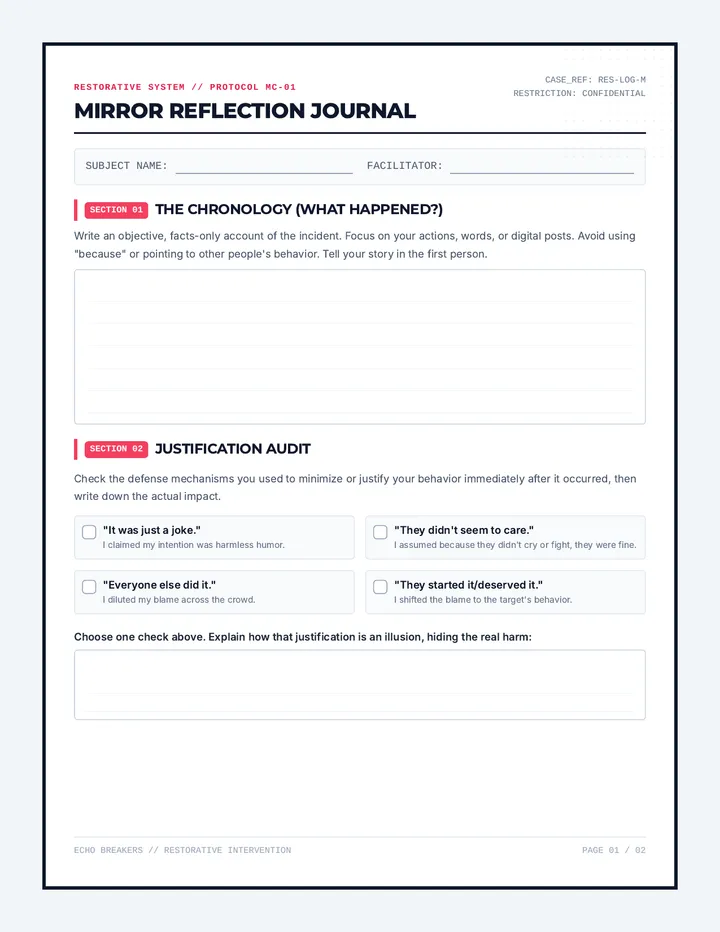
An intensive lesson focusing on the immediate impact of theft and lying, using a peer case study to bypass defensive shut-down mechanisms.
A two-day mixed media art project where students explore the duality of their internal and external identities through silhouette collage. Students brainstorm personal traits, create a visual representation of their 'inner' and 'outer' selves, and reflect on how these identities intersect.
A comprehensive lesson on men's hair replacement systems, covering the psychological and practical reasons for hair replacement, surgical and non-surgical options, and professional terminology.
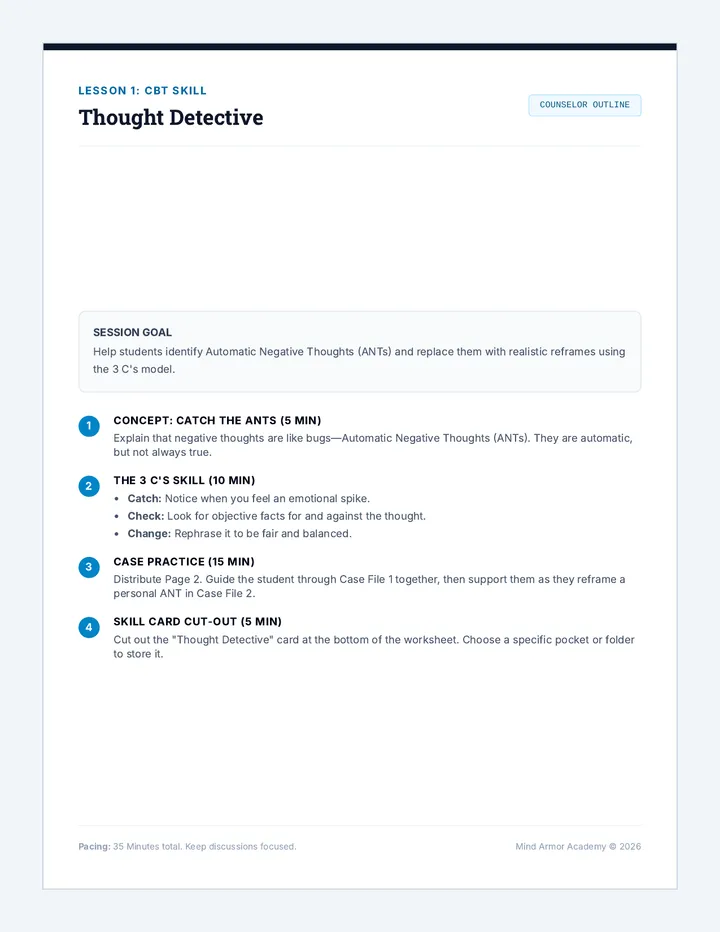
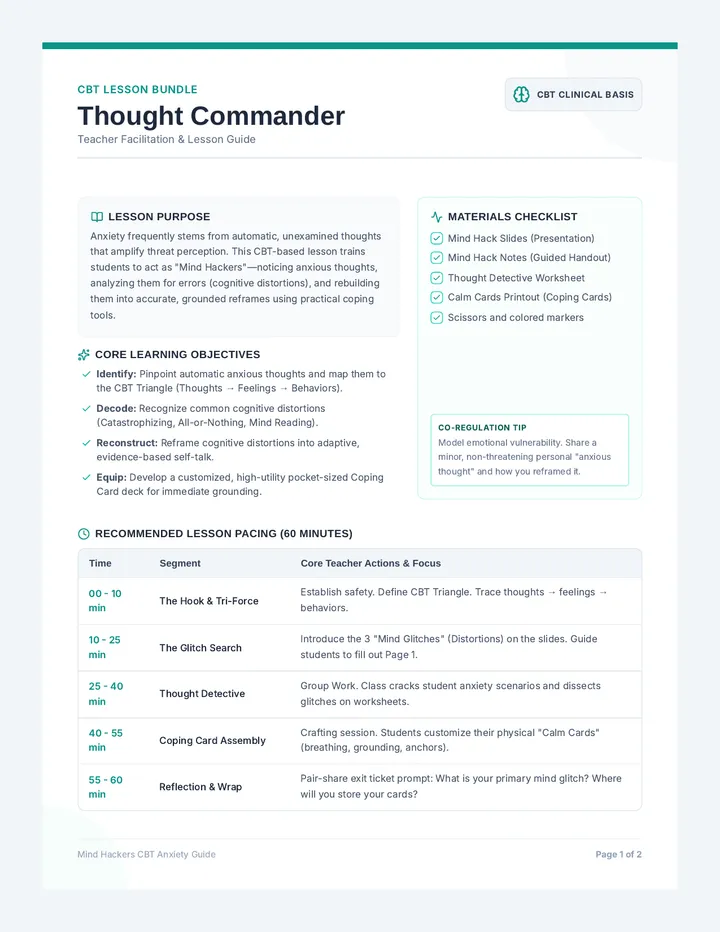
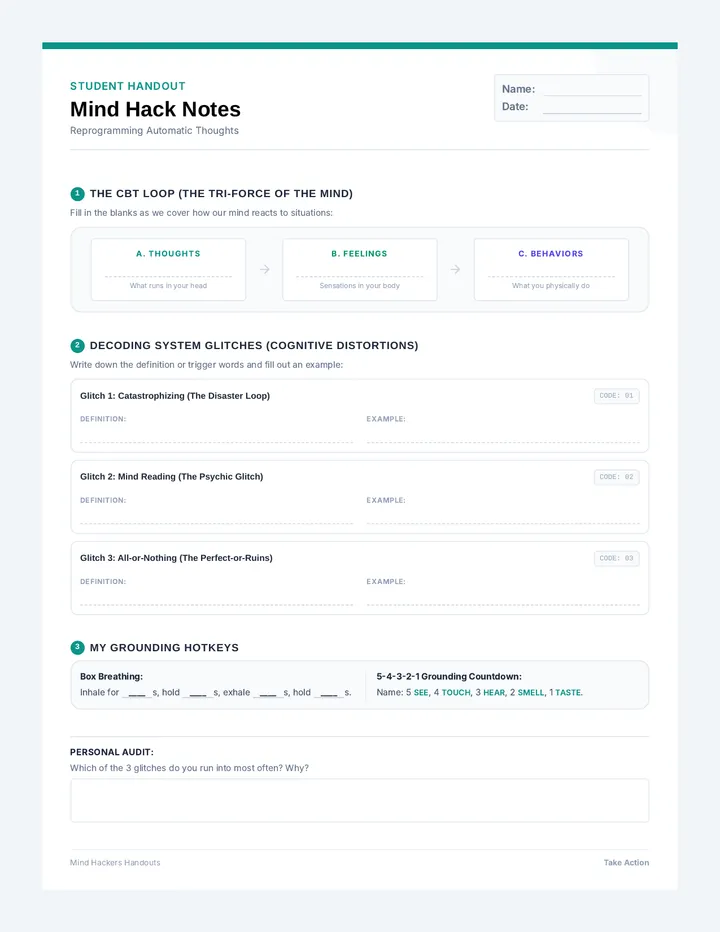
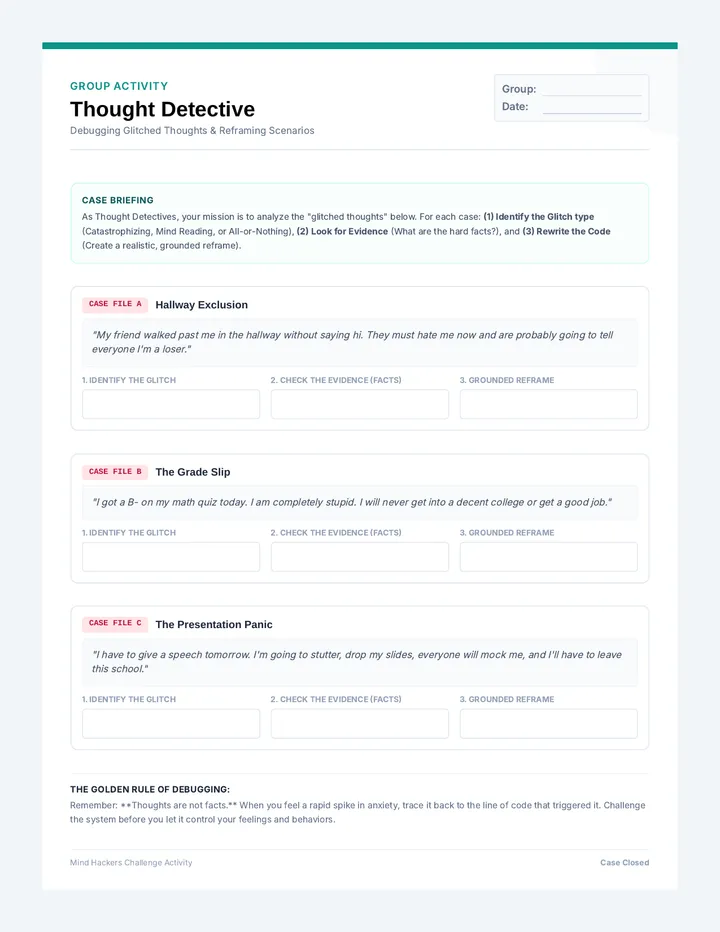
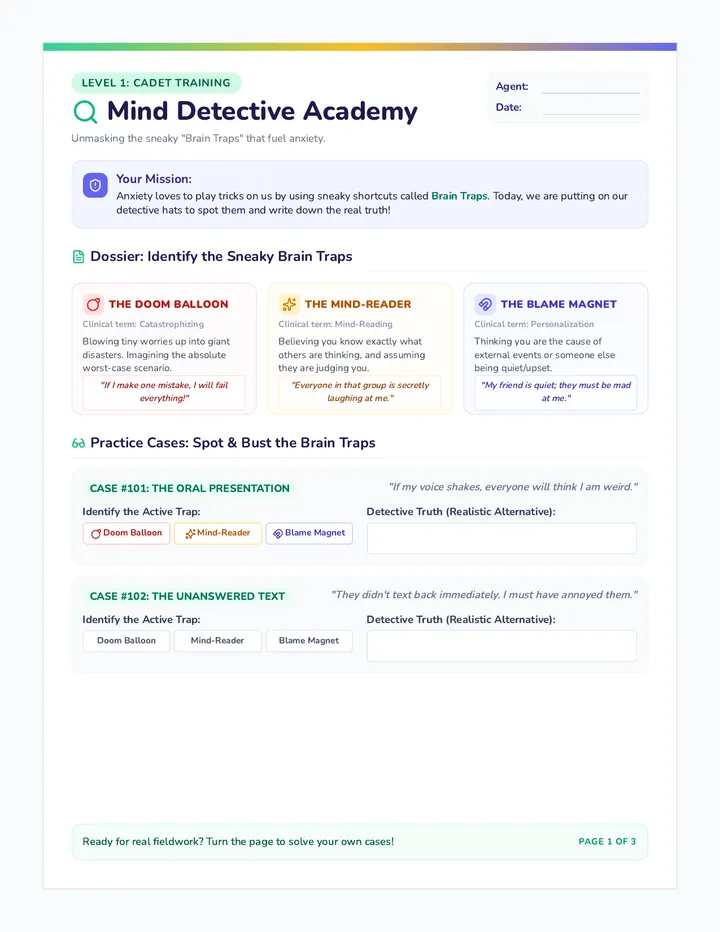
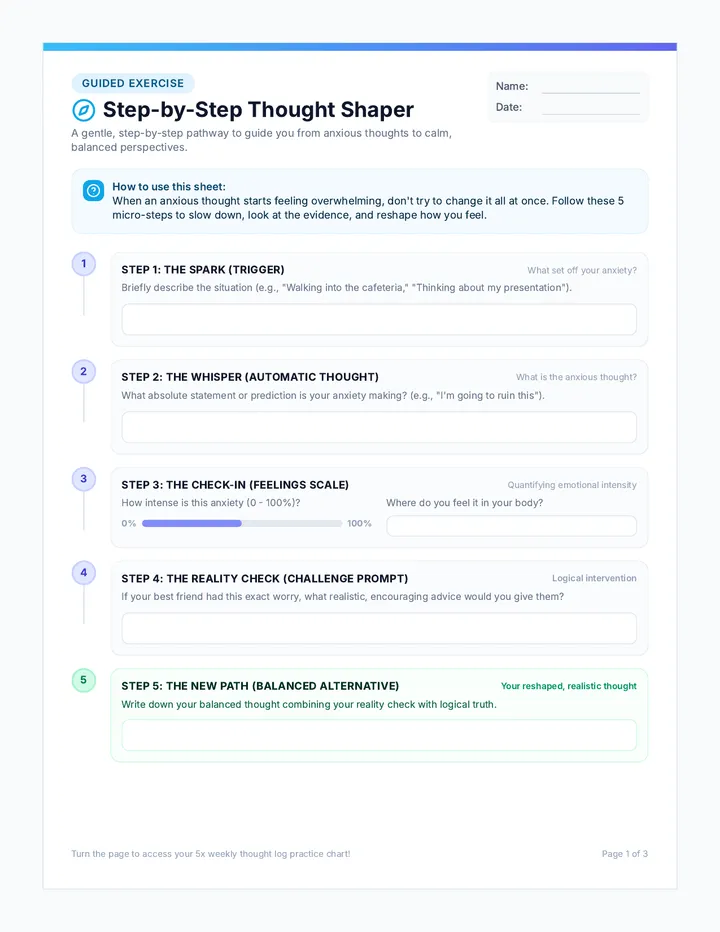
A CBT-focused session for adolescents to build emotional awareness, recognize cognitive distortions, and understand the link between thoughts, feelings, and behaviors.
A social-emotional learning lesson for 9th graders exploring empathy, self-esteem, and friendship through the lens of the film Charlotte's Web. Students analyze character dynamics to understand their own social worlds.
A practical budgeting lesson where students predict real-world costs, research actual expenses for a specific salary, and reconcile their expectations with financial reality.
An introductory lesson on stock market fundamentals, covering key terminology, the difference between individual stocks and index funds, and a hands-on investment simulation.
A transformative lesson on happiness as a trainable skill, focusing on the power of self-talk, daily habits, and cognitive reframing to improve mental well-being for both students and staff.
A hands-on project where students step into the role of an educator, designing a literacy lesson around a children's book and recording a professional storytelling session aligned with Indiana Academic Standards.
The initial meeting focused on breaking the ice and establishing a creative partnership through shared identity projects.
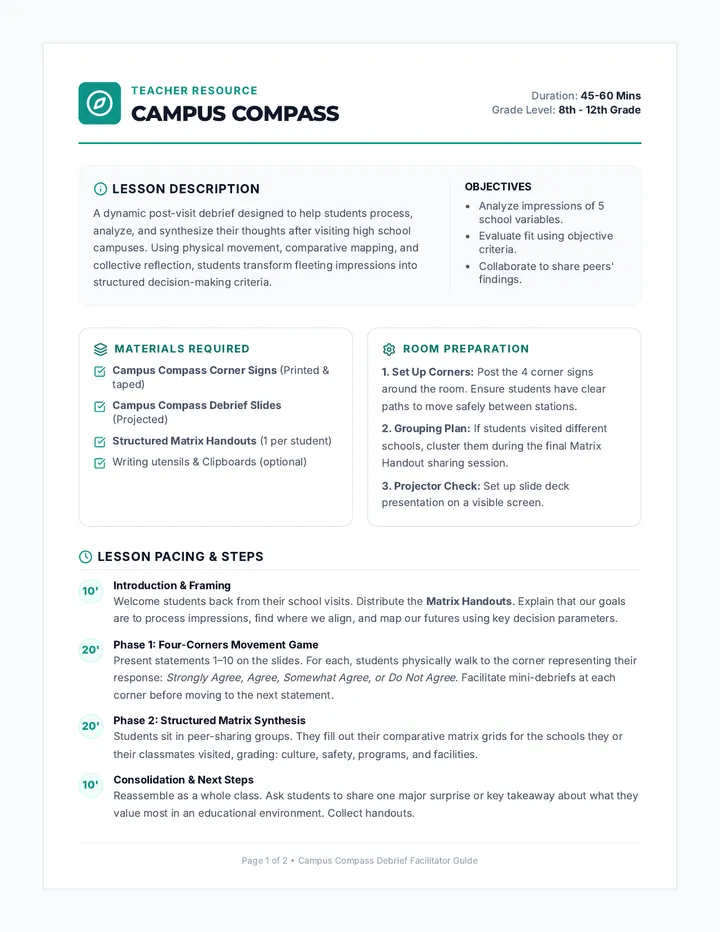
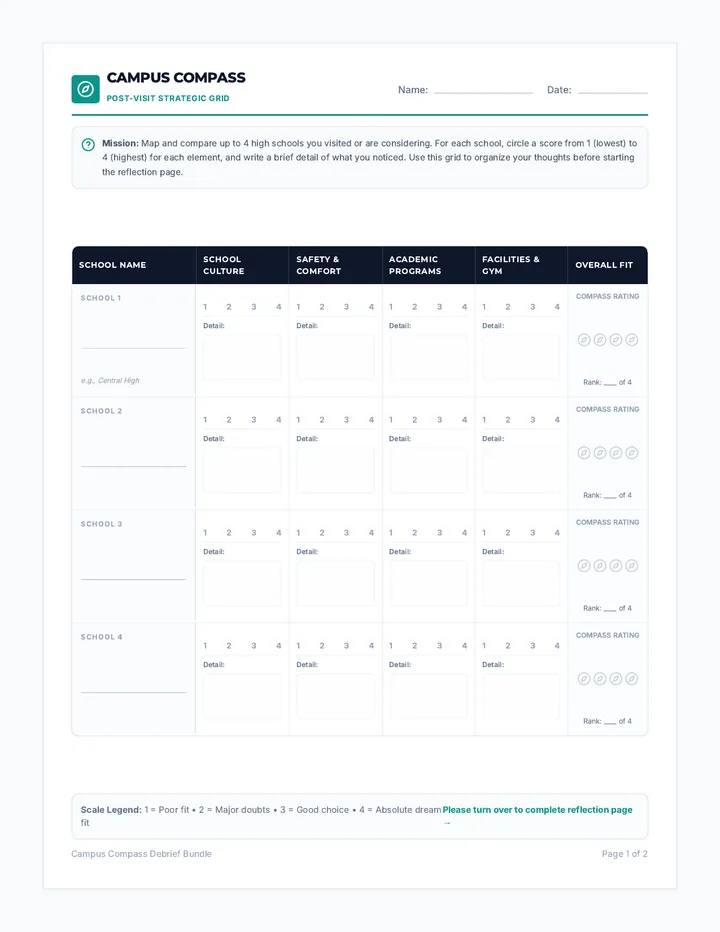
A reflection-focused lesson helping students process their experiences and takeaways after a college campus visit.
A lesson designed to ground student aspirations in financial reality by researching career salaries and mapping them against the actual costs of a desired lifestyle. Students will explore gross vs. net income, essential living expenses, and the long-term planning required to achieve financial goals.
This lesson covers three essential workplace behaviors for life skills students: following instructions, being honest, and asking for clarification through social stories, scenarios, and self-monitoring tools.
This lesson provides students and educators with a comprehensive overview of the Indiana GPS (Graduation Pathways System) requirements for the Class of 2029 and beyond, focusing on the differences between the GPS Diploma and GPS Diploma Plus.
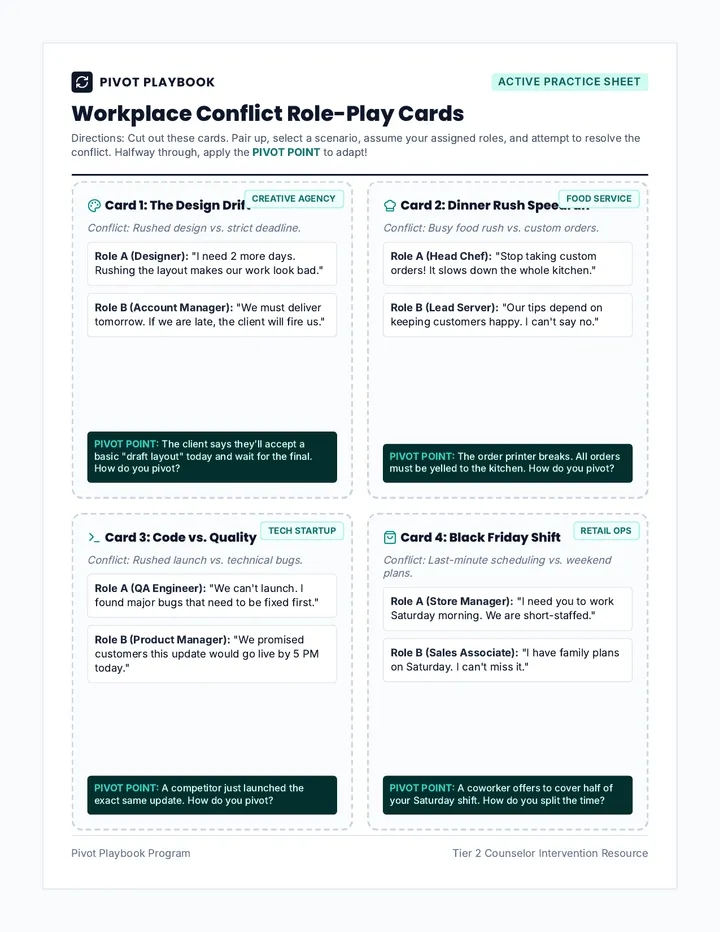
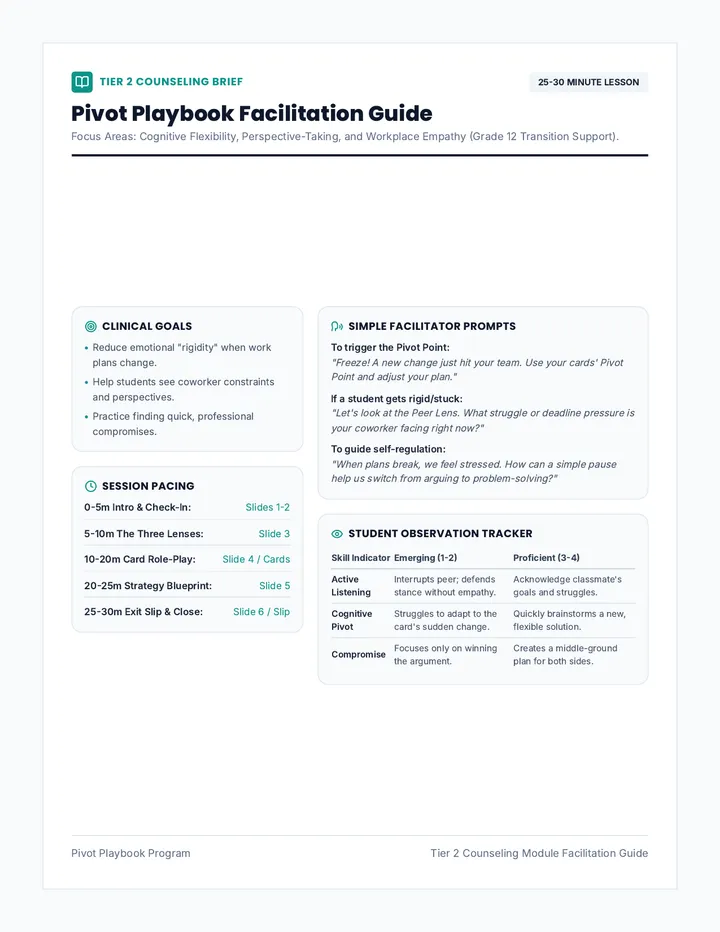
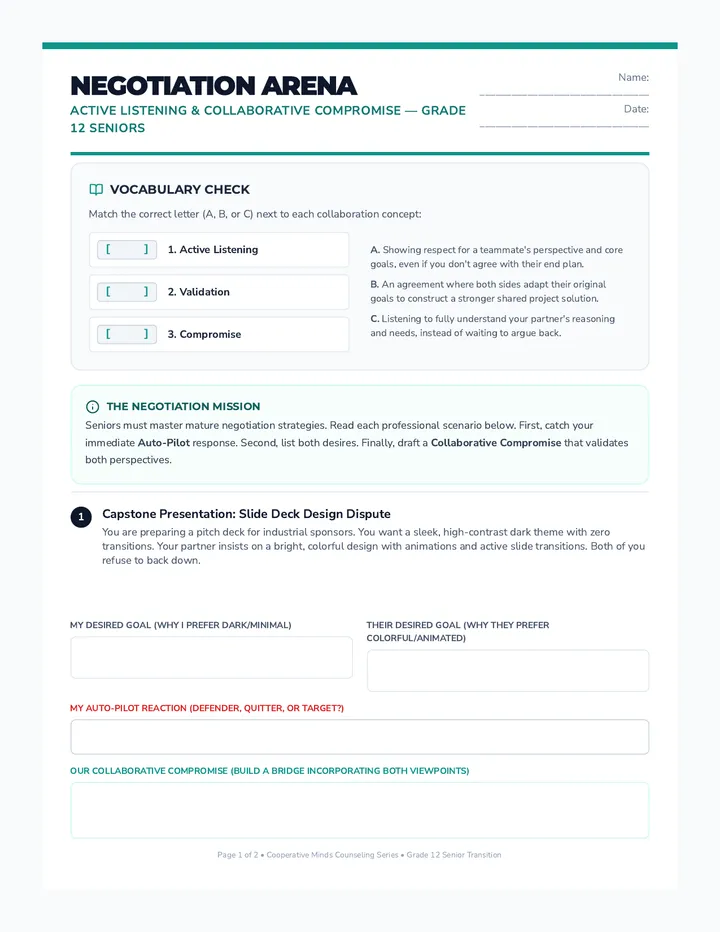
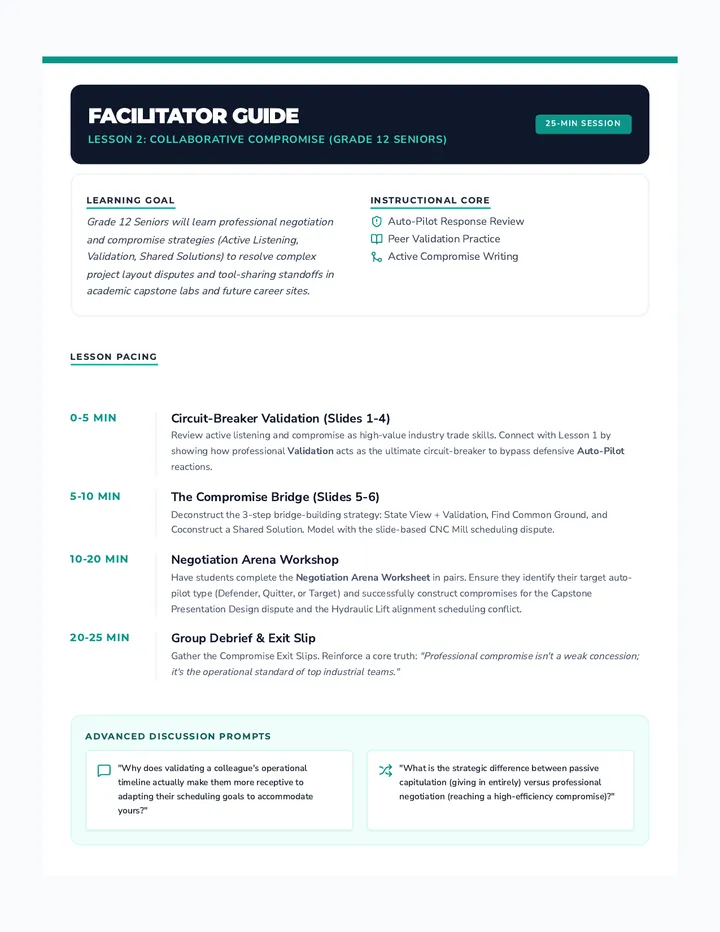
A lesson focused on de-escalation techniques and the use of 'I' statements in workplace conflict. Students learn to identify the stages of conflict and practice professional scripts to resolve peer and manager-level disagreements without escalating tension.
一份旨在家长会上发放的资源包,包含一张为家长设计的视觉化“成长种子”提示卡及一份配套的家长会引导指南,旨在通过情绪支持、习惯培养和有效沟通促进学生全面成长。
A restorative intervention focused on eliminating body shaming and name-calling through empathy-building and the collaborative creation of a binding Class Constitution.
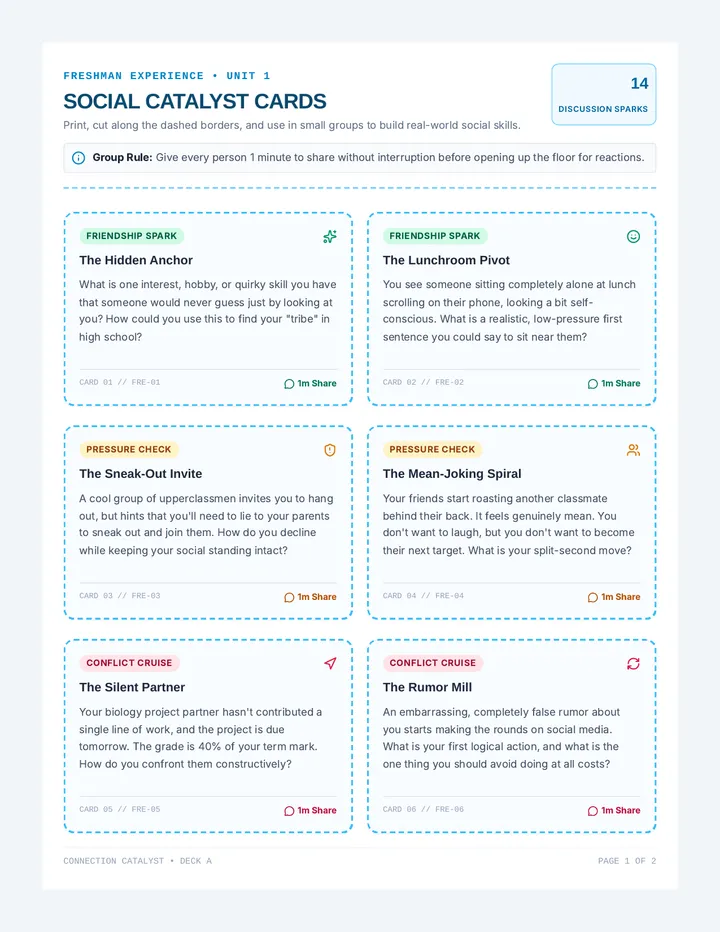
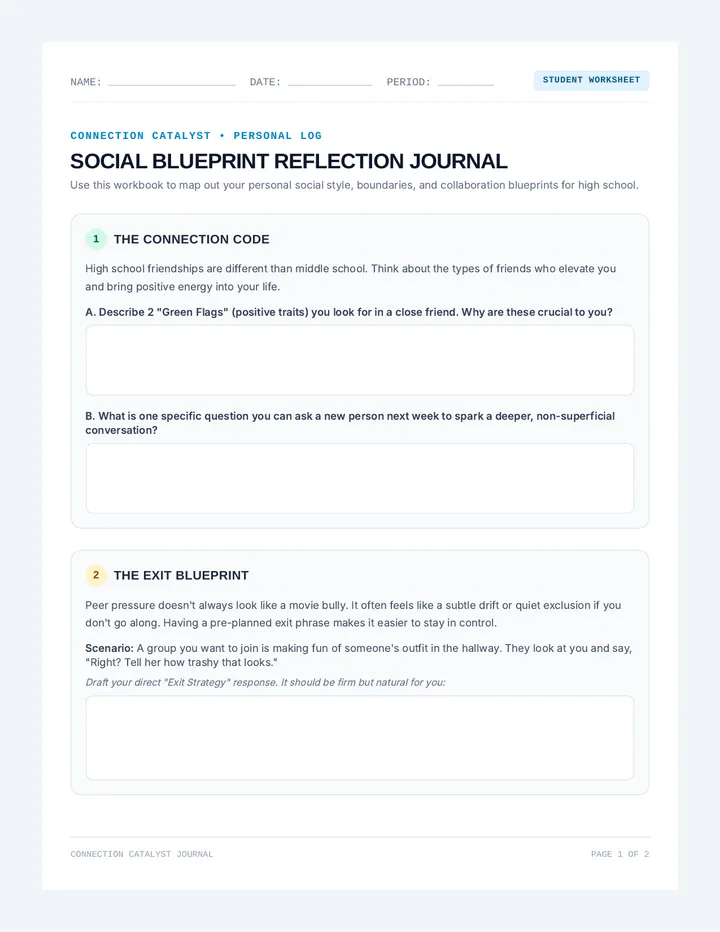
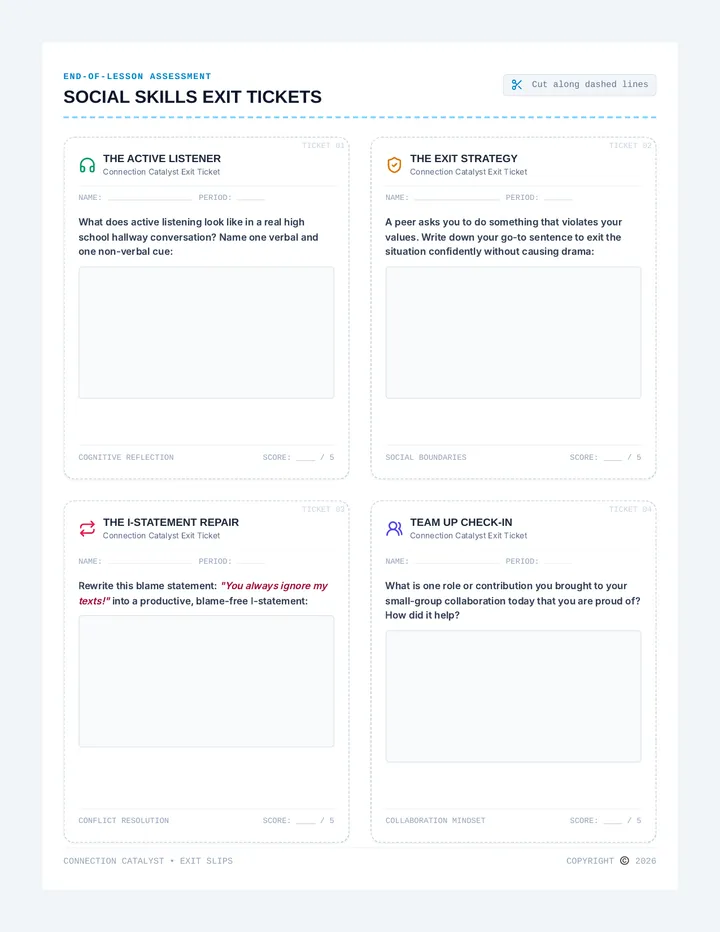
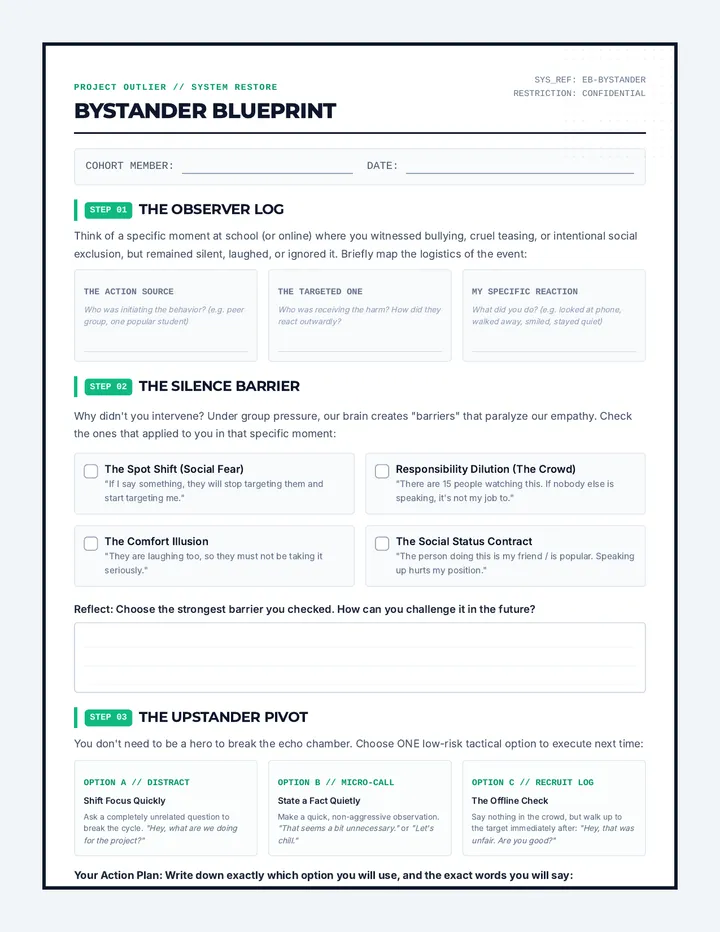
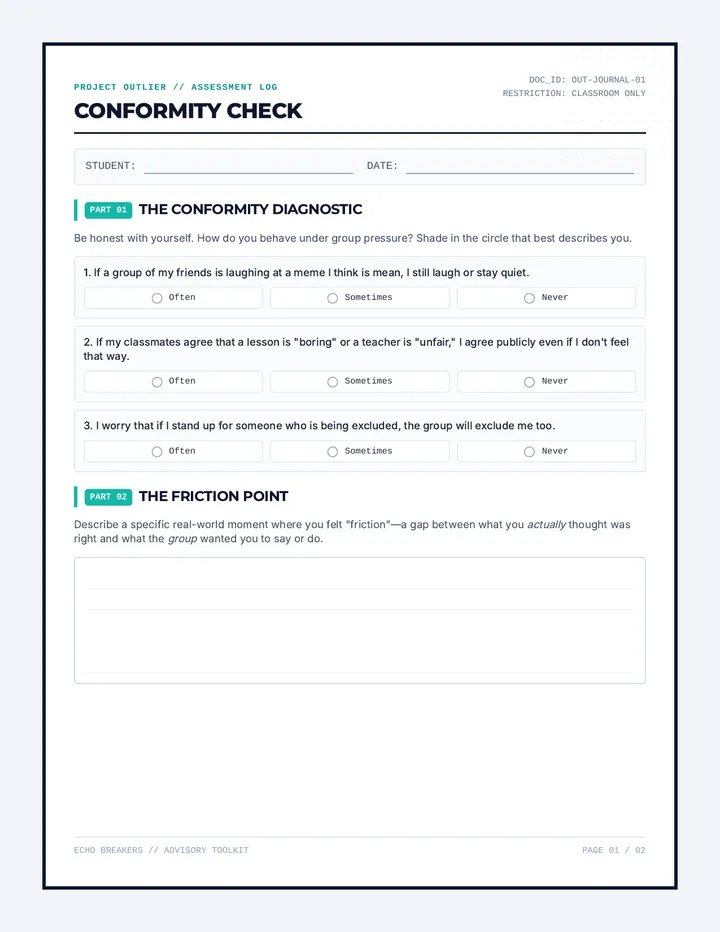
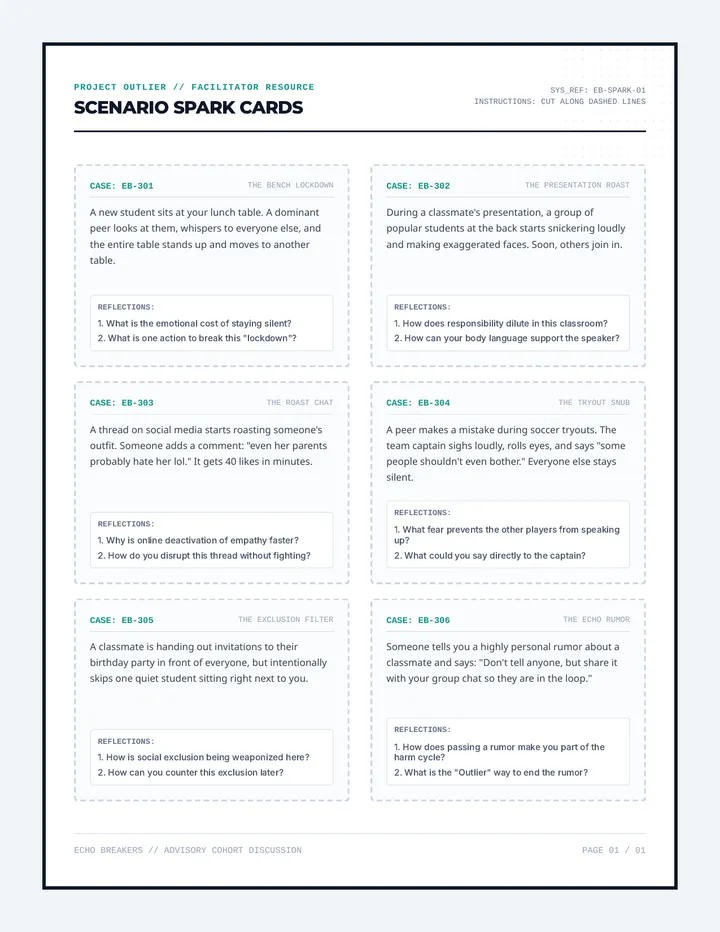
A comprehensive lesson on understanding the psychological drivers of group conflict and how to navigate peer dynamics to prevent group fights. Features a "Social Blueprint" theme to help students map out social interactions.
A comprehensive lesson focused on preparing students for office assistant and clerical roles through practical skill-building in phone etiquette, filing, document management, and mock interviews.