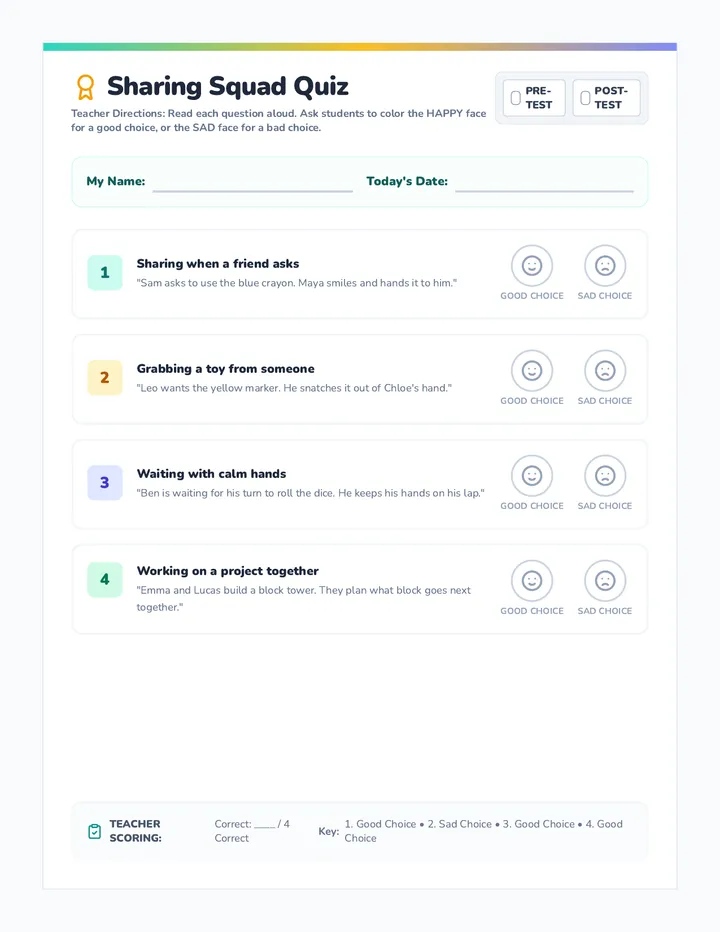
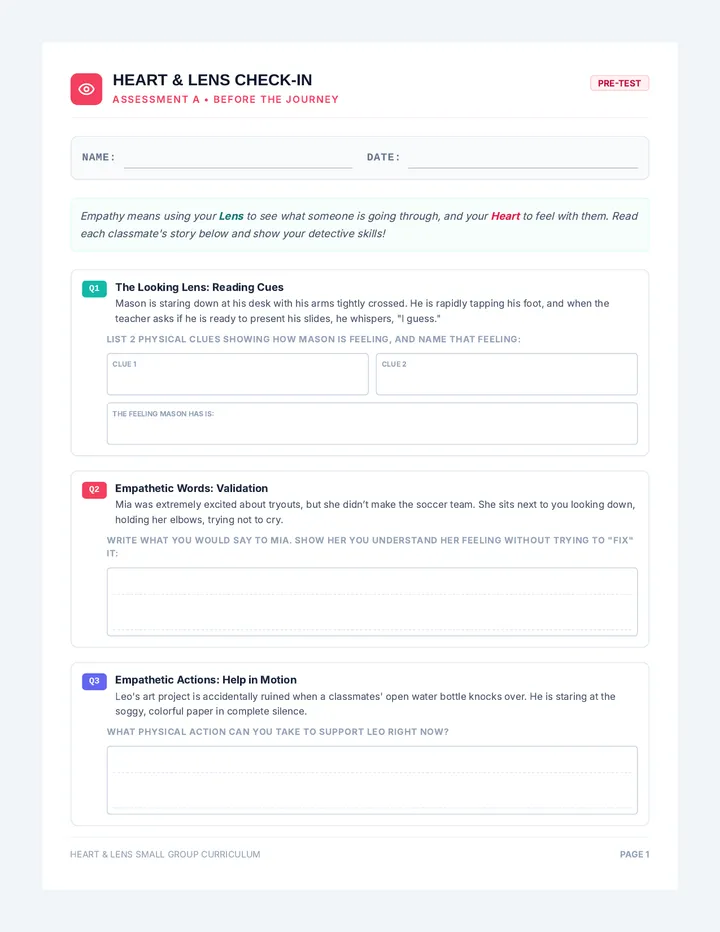
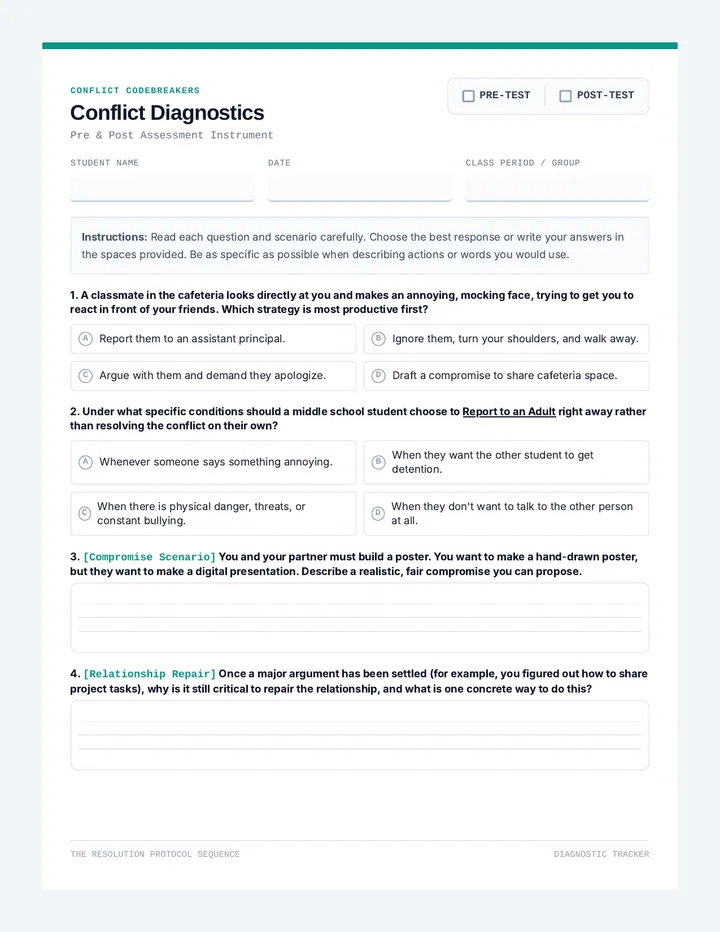
Teamwork Adventures Assessment
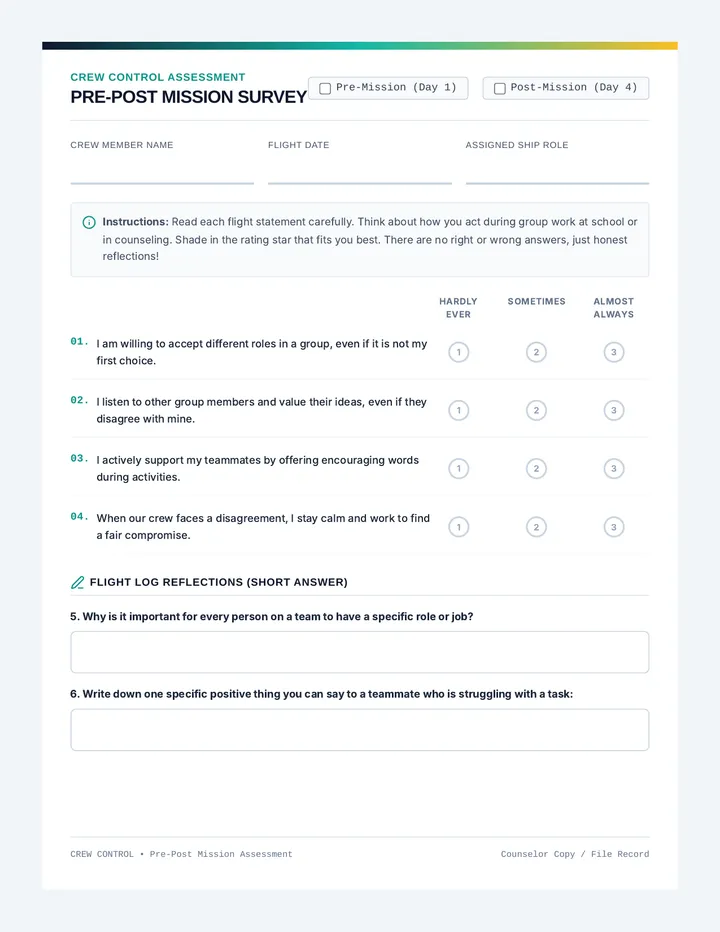
A pre- and post-assessment quiz designed for 4th graders to measure growth in their understanding of inclusion, empathy, communication, and collaborative problem-solving.
Understanding Inclusion Lesson Plan
A detailed lesson plan for teaching 4th graders about inclusion, featuring a nautical 'crew' theme, interactive discussions, and scenario analysis.
Teamwork Adventures Presentation
A visual presentation for Week 1 of the Teamwork Adventures sequence, introducing the concept of inclusion and the Inclusion Investigator activity.
Understanding Inclusion Script
A detailed instructional script for the Week 1 lesson on inclusion, providing word-for-word guidance and visual cues for the teacher.
What is Inclusion Reading
An engaging reading passage for 4th graders defining inclusion, providing real-world examples, and explaining its importance in building a supportive community.
Inclusion Investigator Activity
An interactive worksheet for 4th graders to analyze social scenarios and determine if behaviors are inclusive or non-inclusive.
Inclusion Word Web Warm Up
A teacher facilitation guide for the Week 1 warm-up activity, focused on building a collective understanding of inclusion through a visual word web.
Inclusive Reflection Cool Down
A reflective cool-down worksheet and exit ticket for students to commit to a specific inclusive action following the Week 1 lesson.