A visual slide deck to introduce students to the concepts of ambiguity, tone, body language, and context in social communication. Revised for code cleanliness.
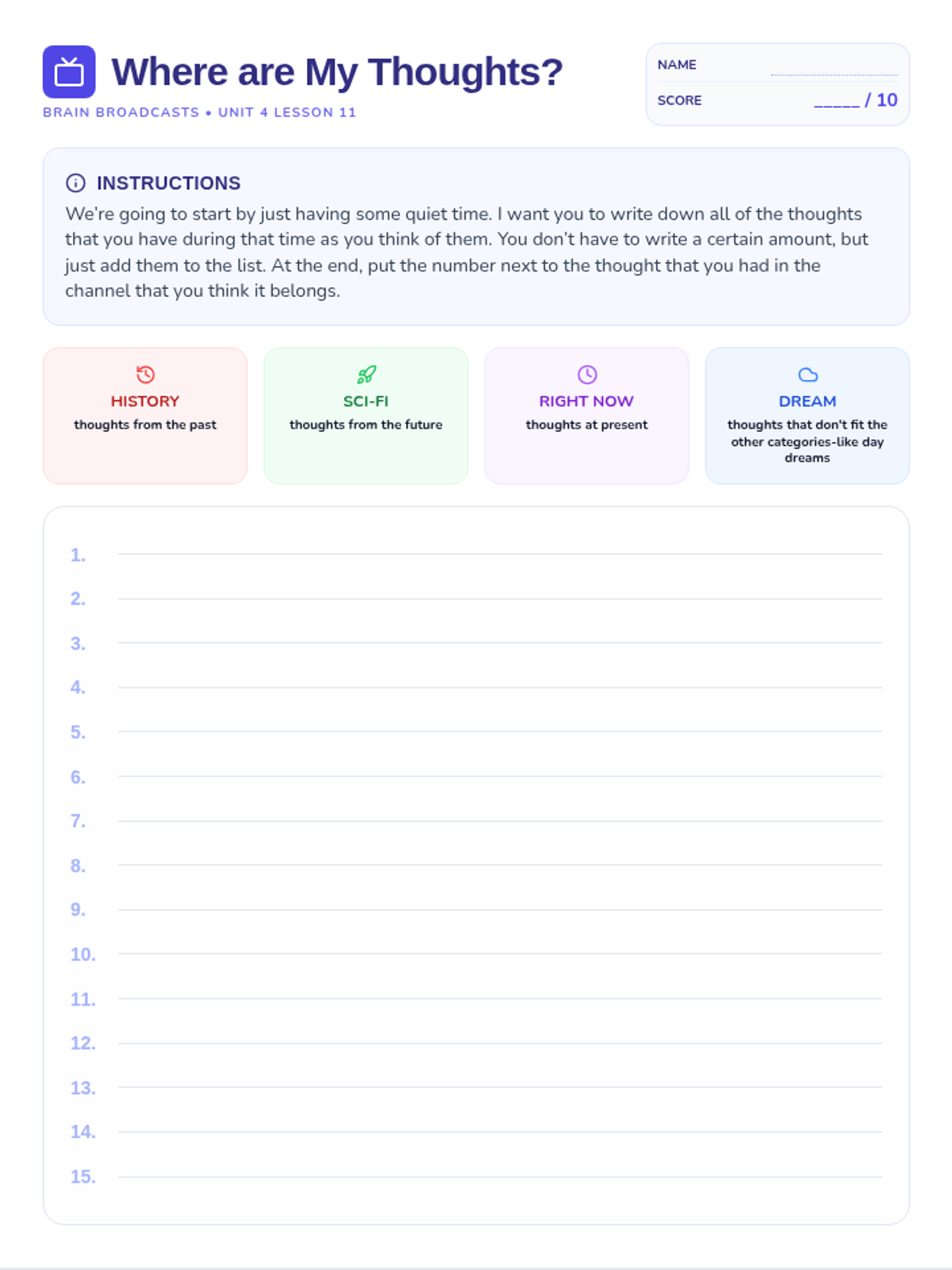
A playful, colorful worksheet for a mindfulness activity where students record their thoughts and categorize them into 'channels' (past, future, present, or daydreams) using a retro TV theme.
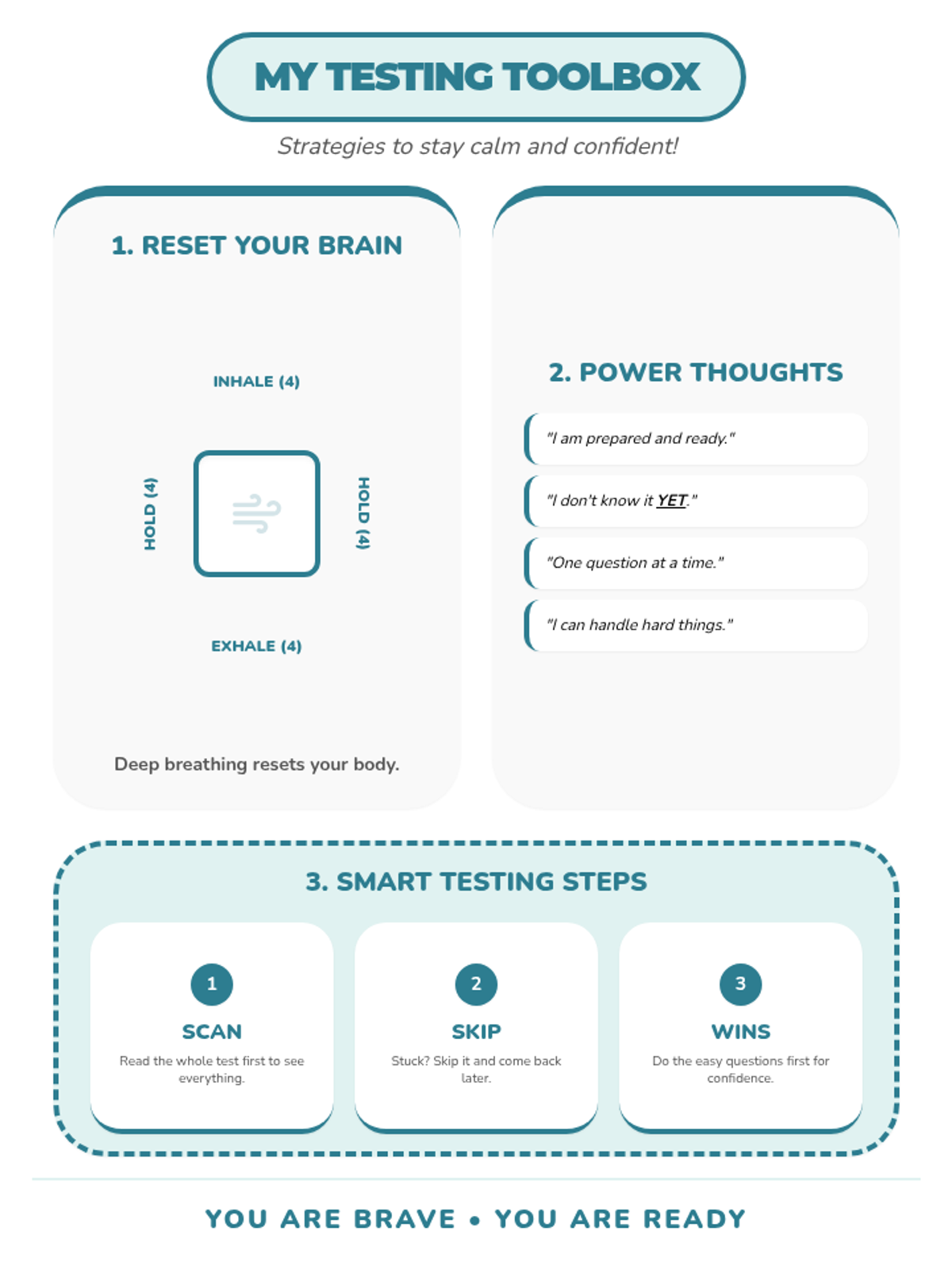
A visually engaging reference sheet (anchor chart style) for students to keep at their desks, reminding them of breathing techniques, positive mantras, and test-taking tips.
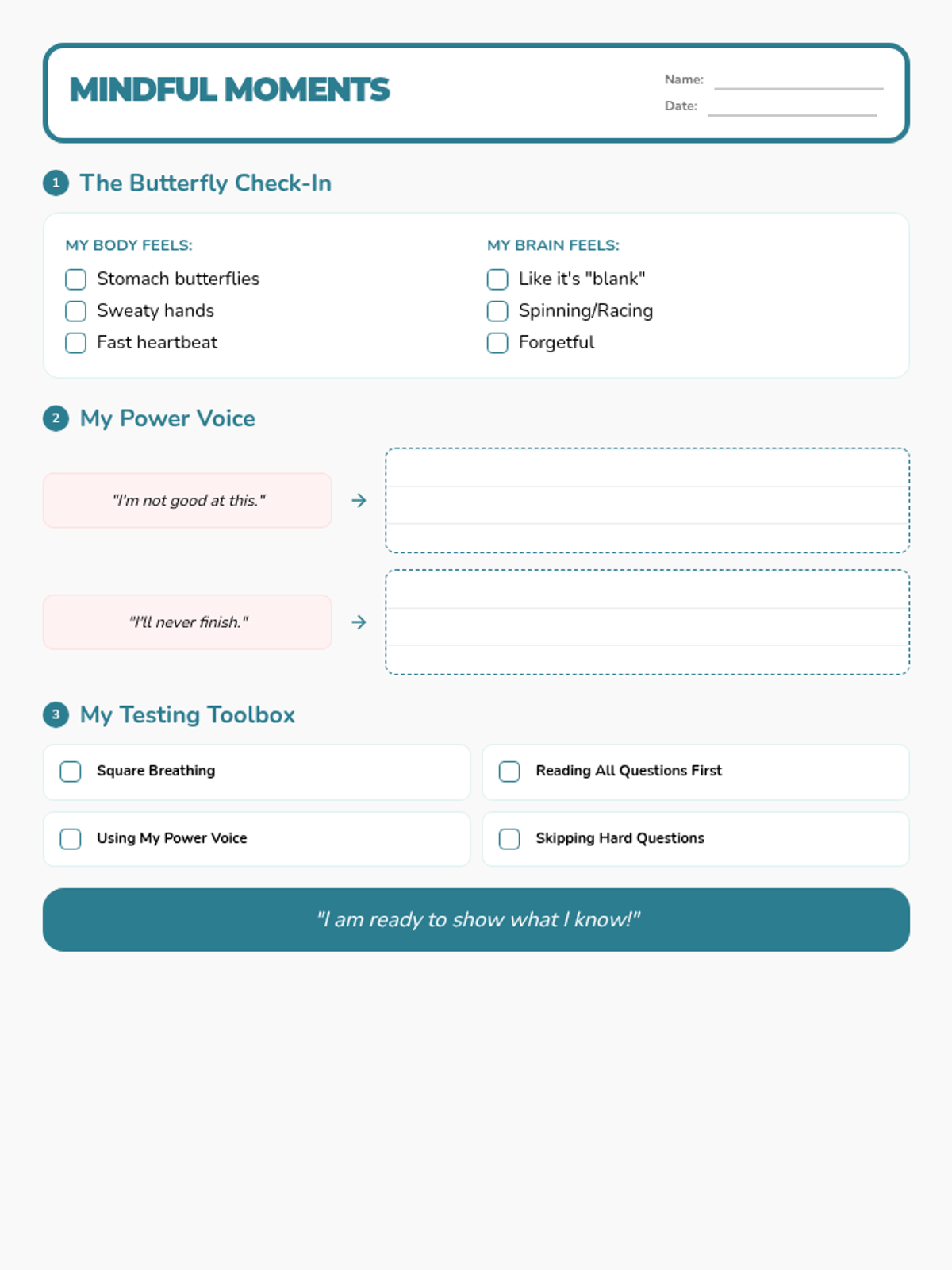
A student-facing worksheet for grades 3-5 to help them identify their anxiety triggers and plan which stress-management strategies they will use during a test.
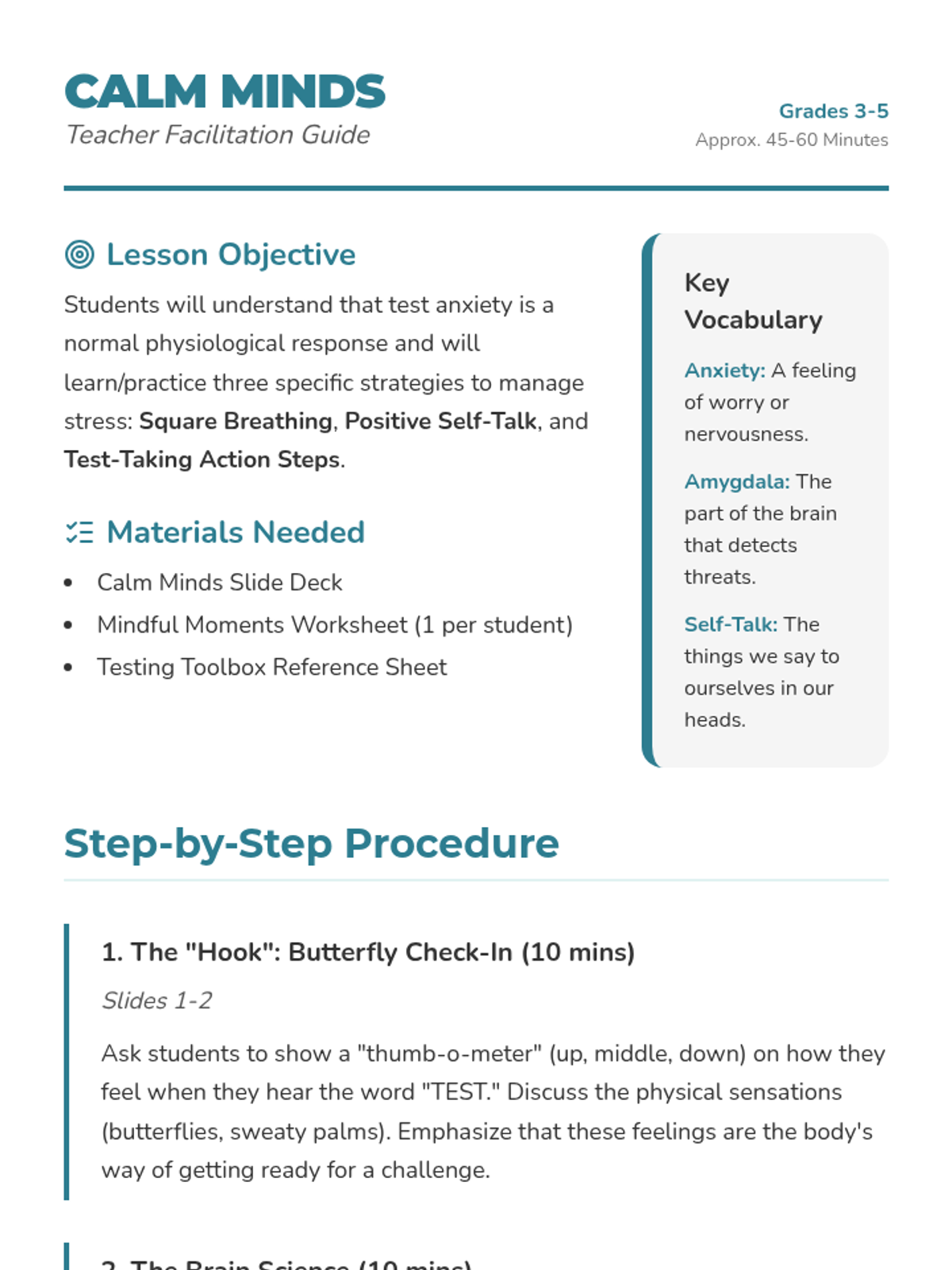
A detailed lesson plan for teachers, outlining objectives, materials, and a step-by-step instructional sequence for teaching test anxiety strategies to grades 3-5.
A slide deck for grades 3-5 that explains test anxiety, the role of the amygdala, and practical strategies like square breathing and positive self-talk.
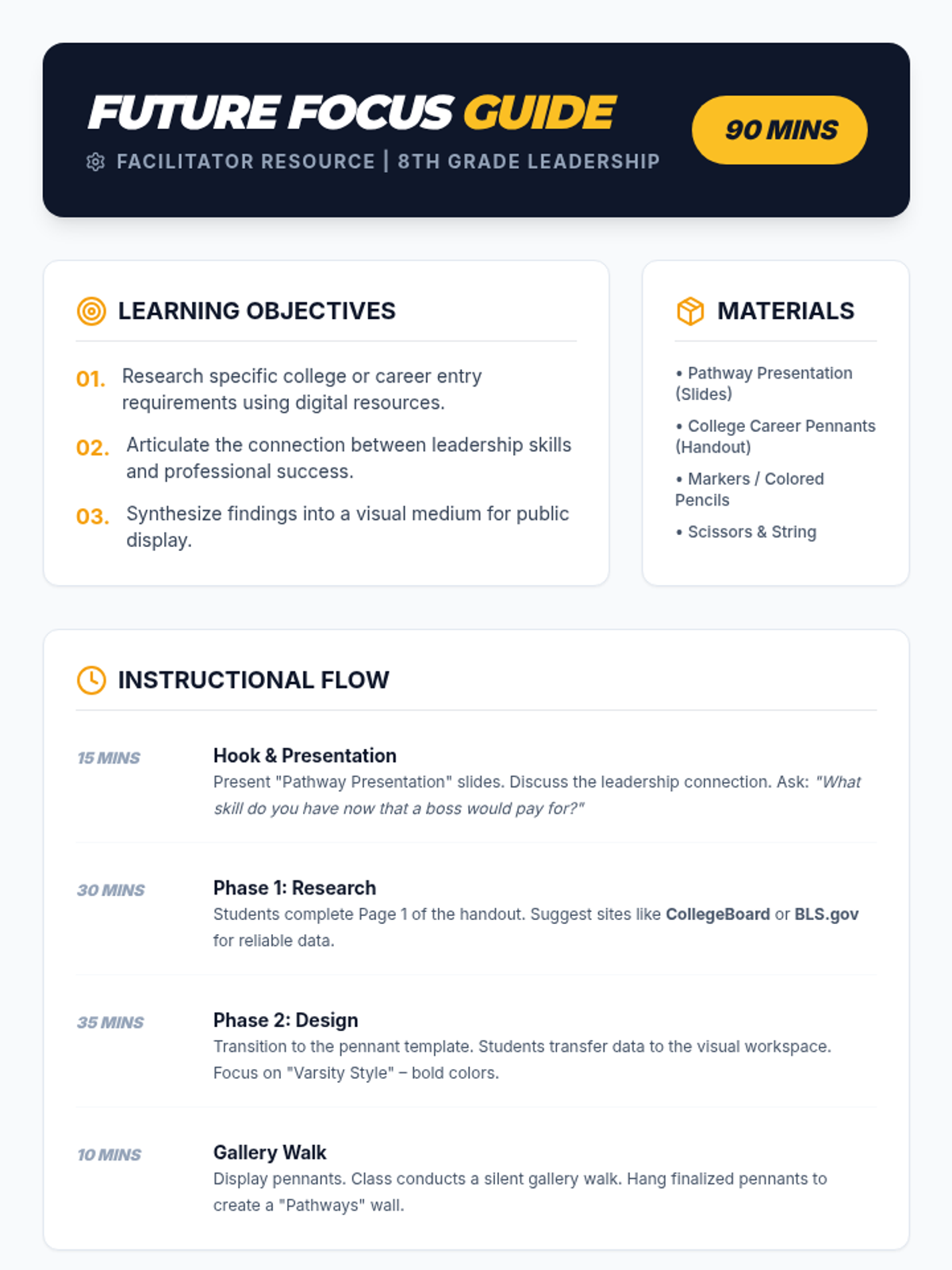
A teacher guide for the "Future Focus" lesson, including instructional flow, research resources, and a project rubric for 8th-grade leadership students.
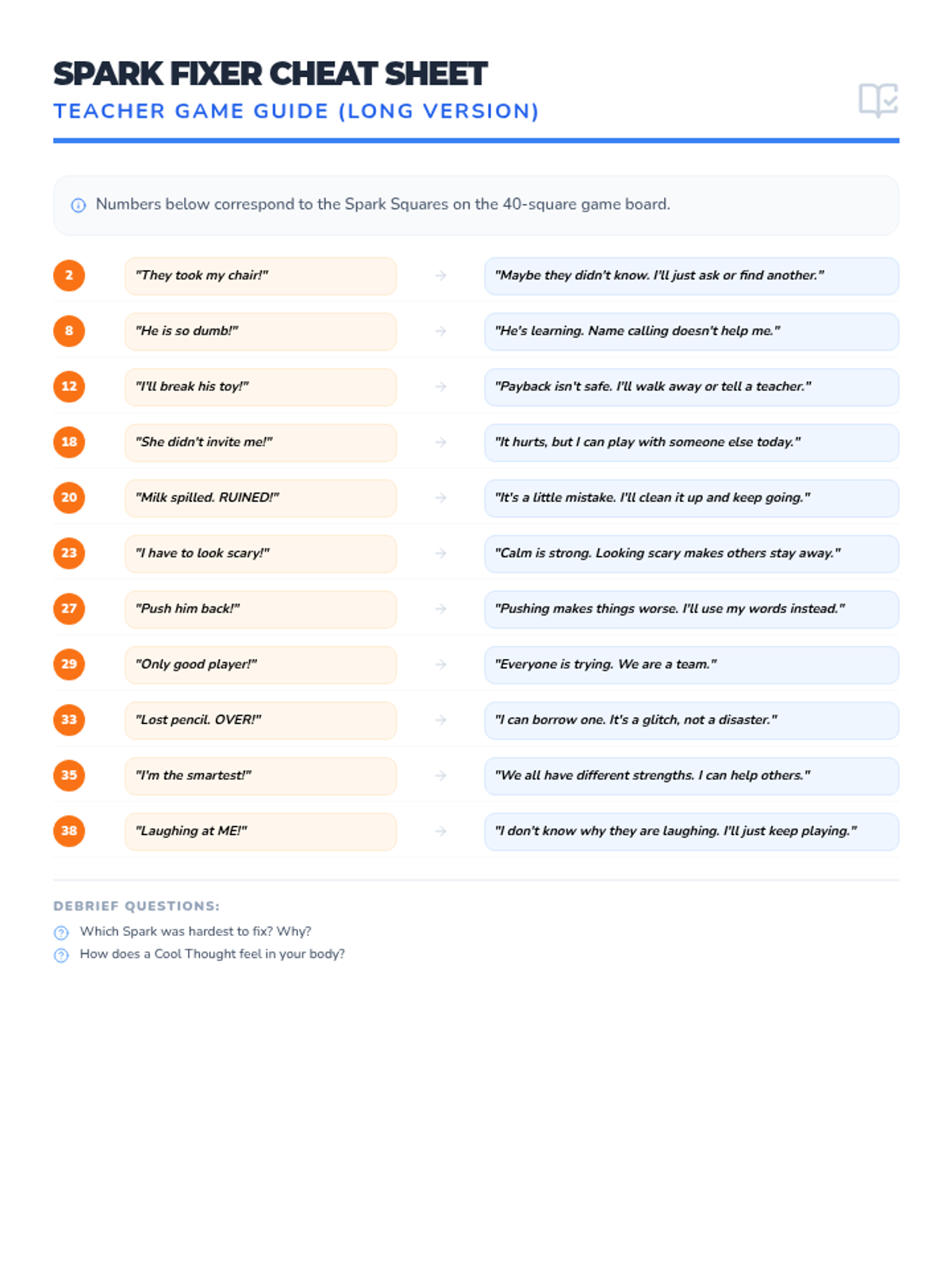
A teacher guide for the Spark to Calm Quest game, providing specific "Cool Thought" examples for students to use when they land on "Spark" squares.
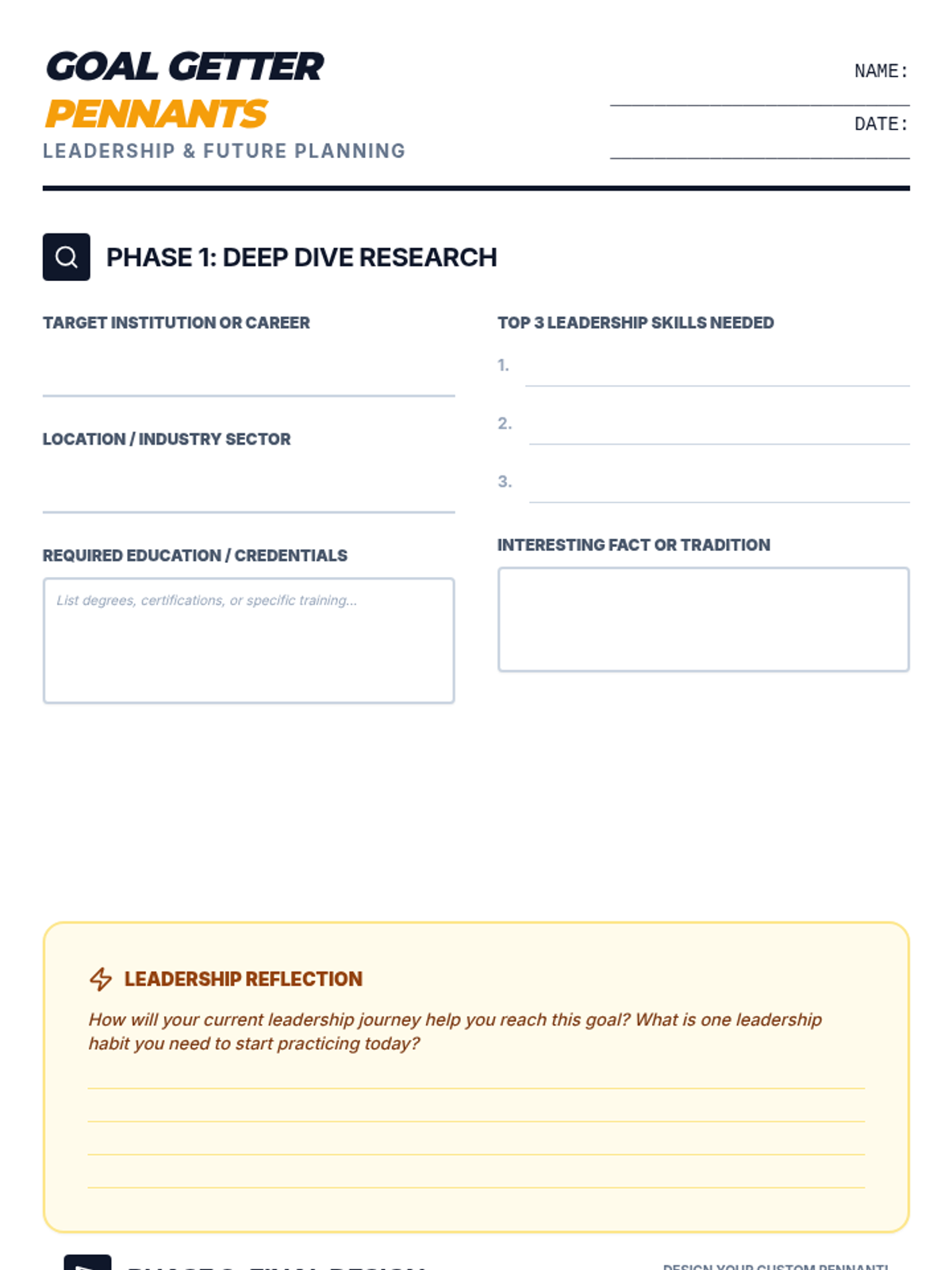
A two-page student activity document including a research organizer and a varsity-style pennant template for researching college or career paths.
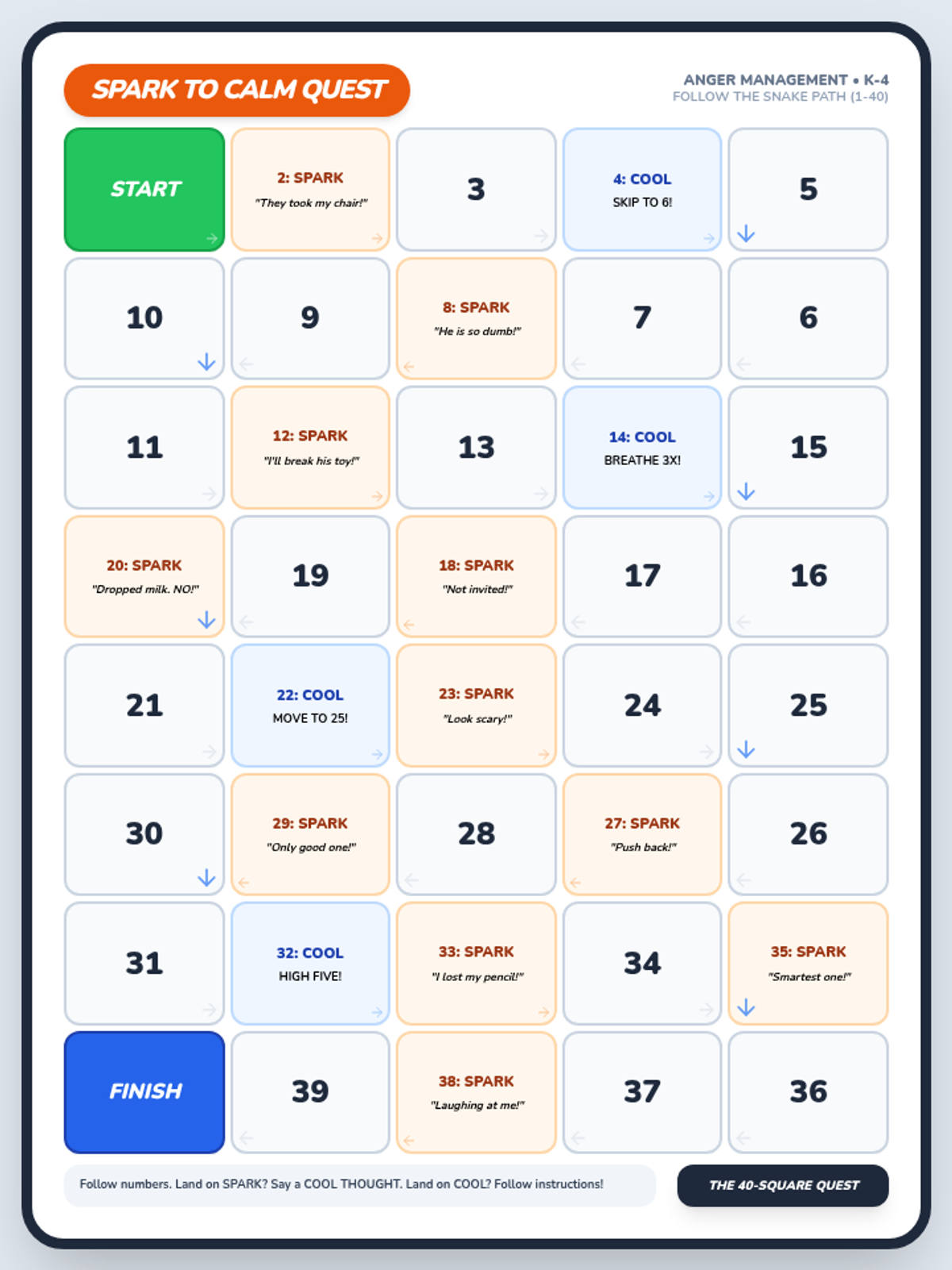
A printable board game where students identify and transform "Spark Thoughts" to advance toward the "Cool Center." Includes scenarios for name-calling, payback, and more. Now includes printable tokens and a die.
A slide deck for 8th-grade leadership students introducing a research project on college and career paths, focusing on how leadership skills are essential for future success.
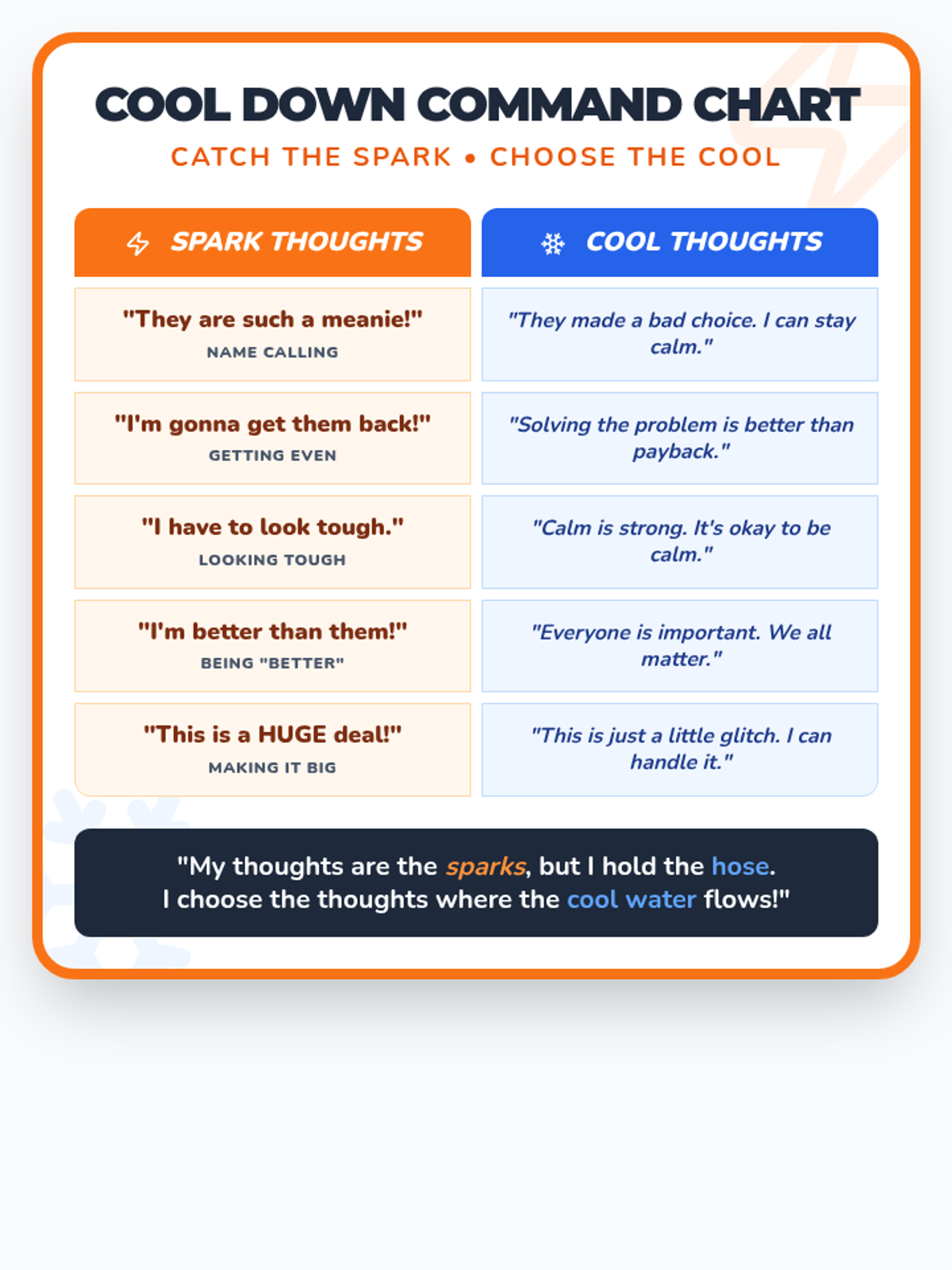
A visual anchor chart for the classroom comparing 5 anger-fueling "Spark Thoughts" with their calming "Cool Thought" alternatives.
A visually engaging slide presentation for K-4 students identifying 5 common "Spark Thoughts" that fuel anger and their "Cool Thought" replacements.
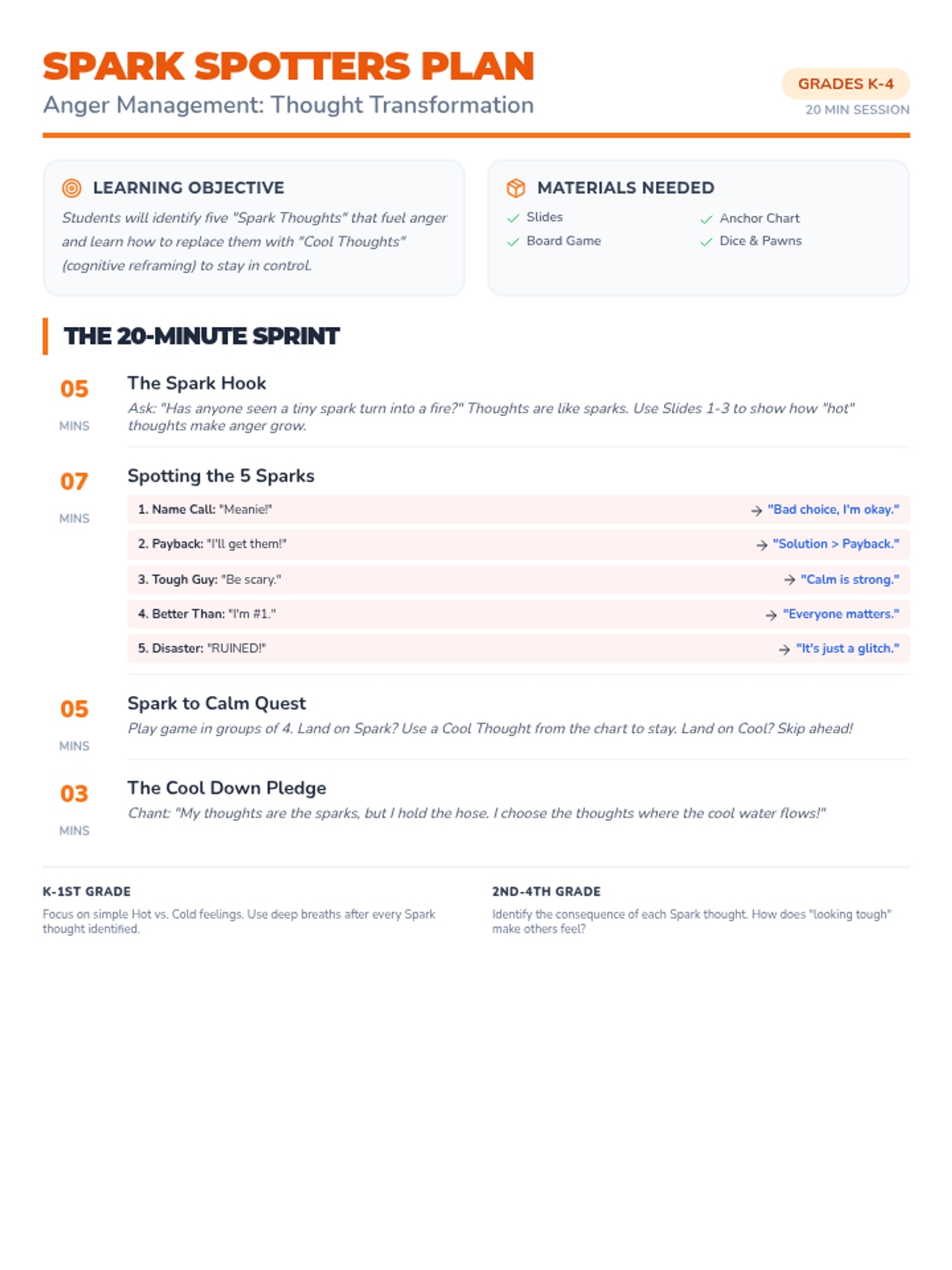
A structured, 20-minute teacher lesson plan for teaching students to identify and transform anger-fueling thoughts into calm alternatives.
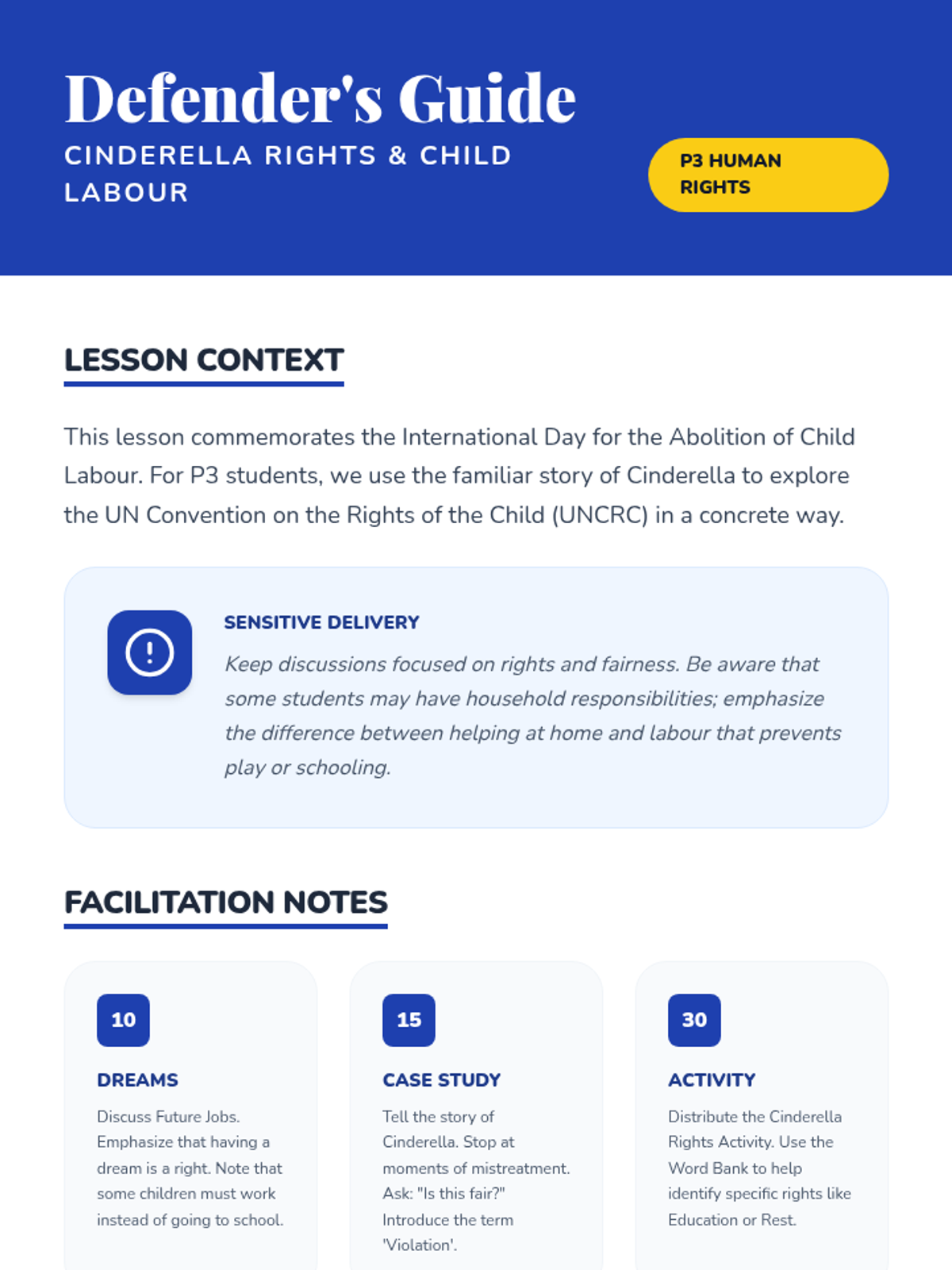
Teacher's guide for the Cinderella Rights lesson, providing historical context, facilitation tips, and a 'Rights Cheat Sheet' for the activity.
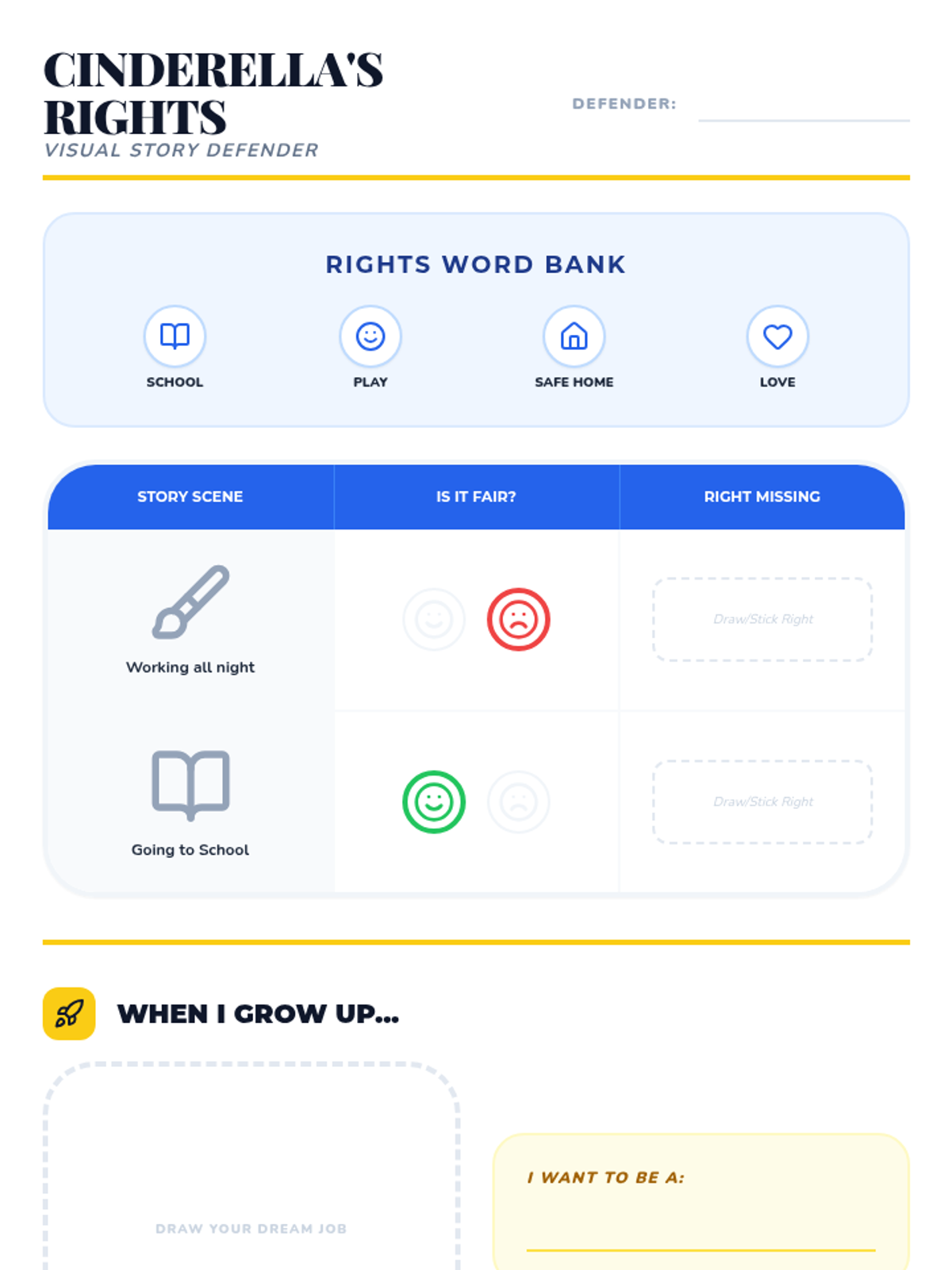
A visual, low-literacy activity where students identify fair vs unfair rights in Cinderella's life using symbols, and draw their dream job.
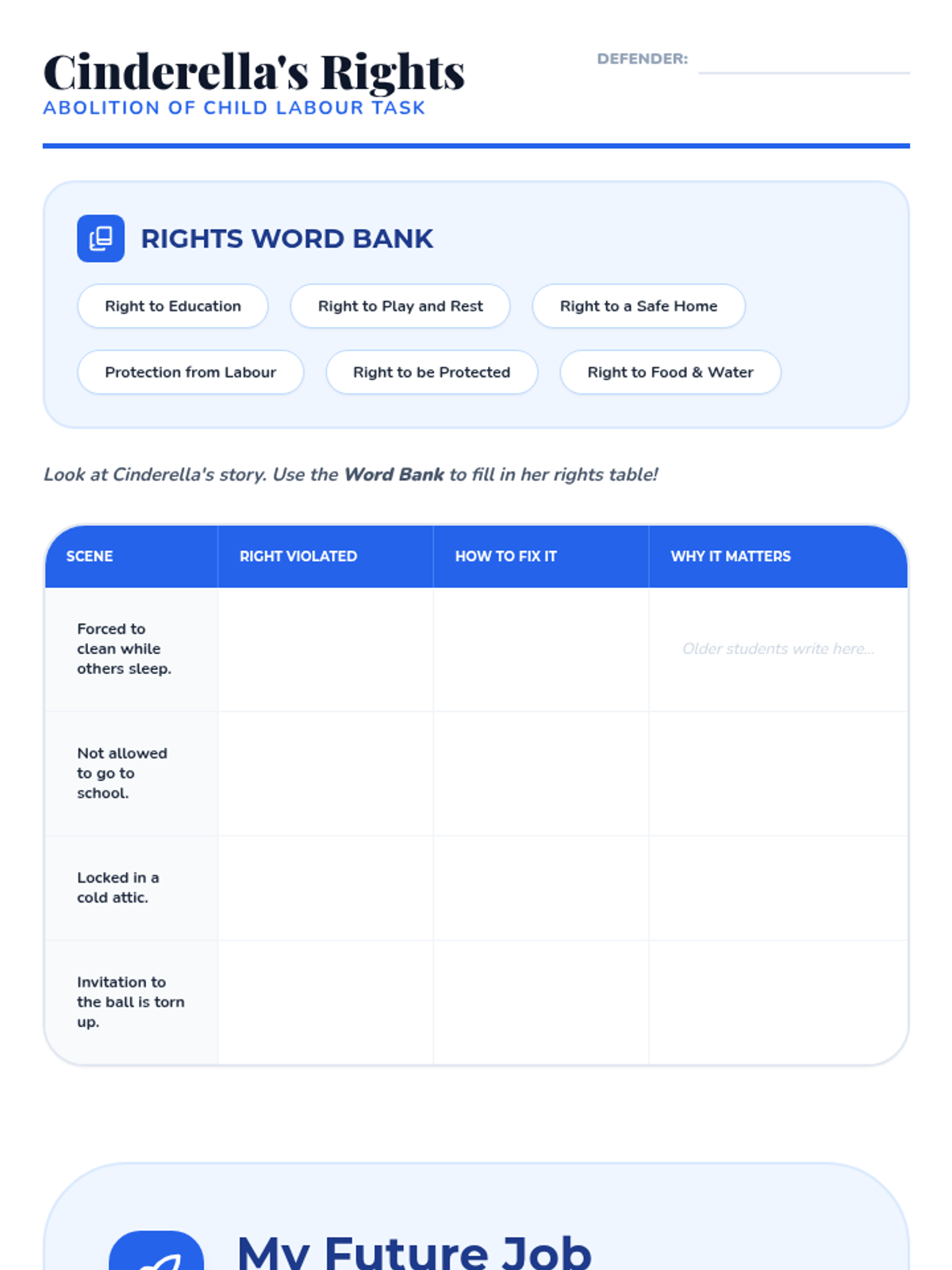
A worksheet where students analyze Cinderella's life using a rights table, identifying violations and solutions, plus a drawing space for their future dreams.
Slides for the Cinderella Rights lesson, covering child labour, future dreams discussion, and a case study of Cinderella's rights.
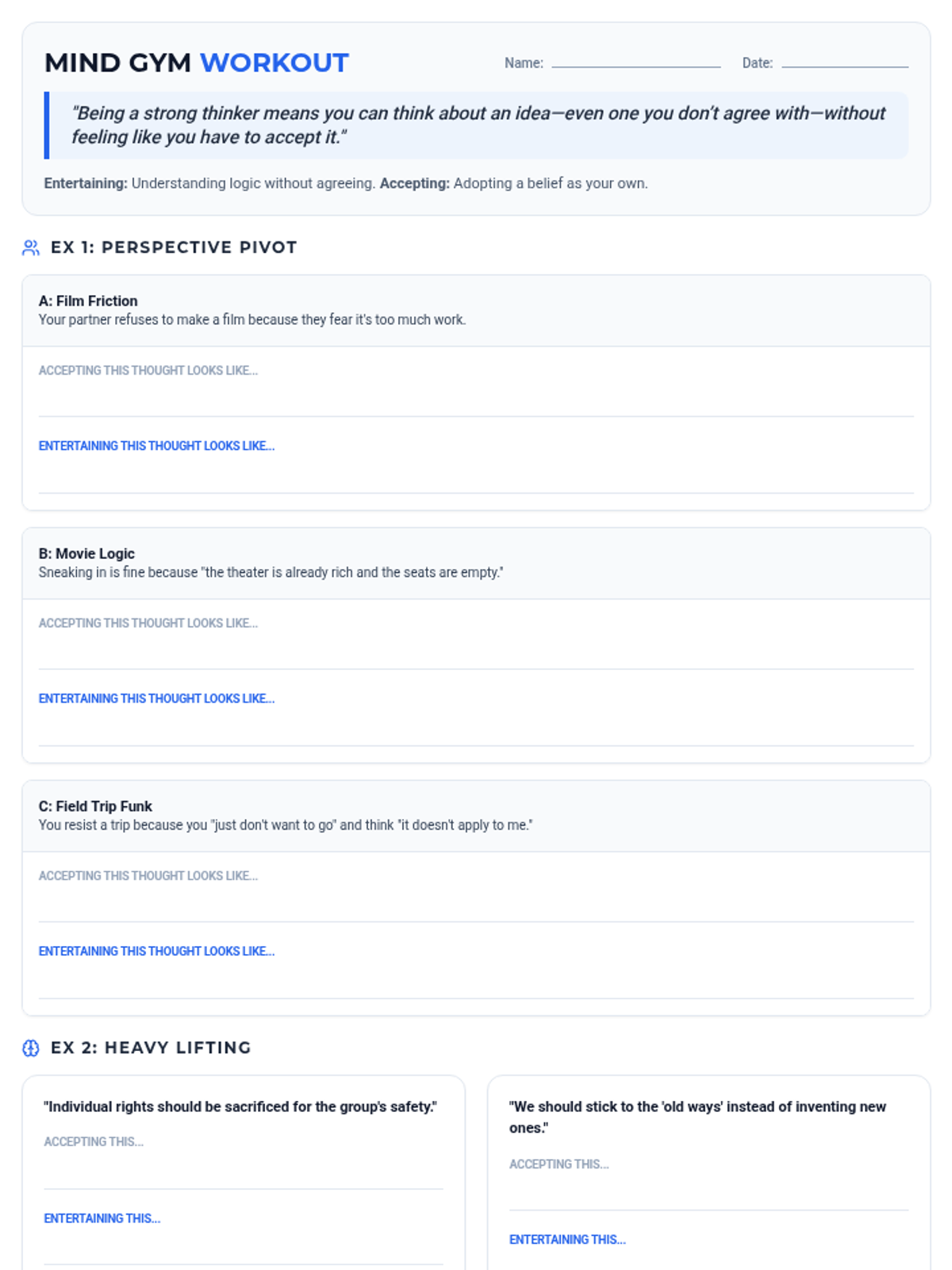
Updated mental flexibility worksheet with refined scenarios. Includes a specific challenge about resisting a field trip due to lack of interest and a partner's resistance to making a film, encouraging students to 'entertain' the logic of opposing views.
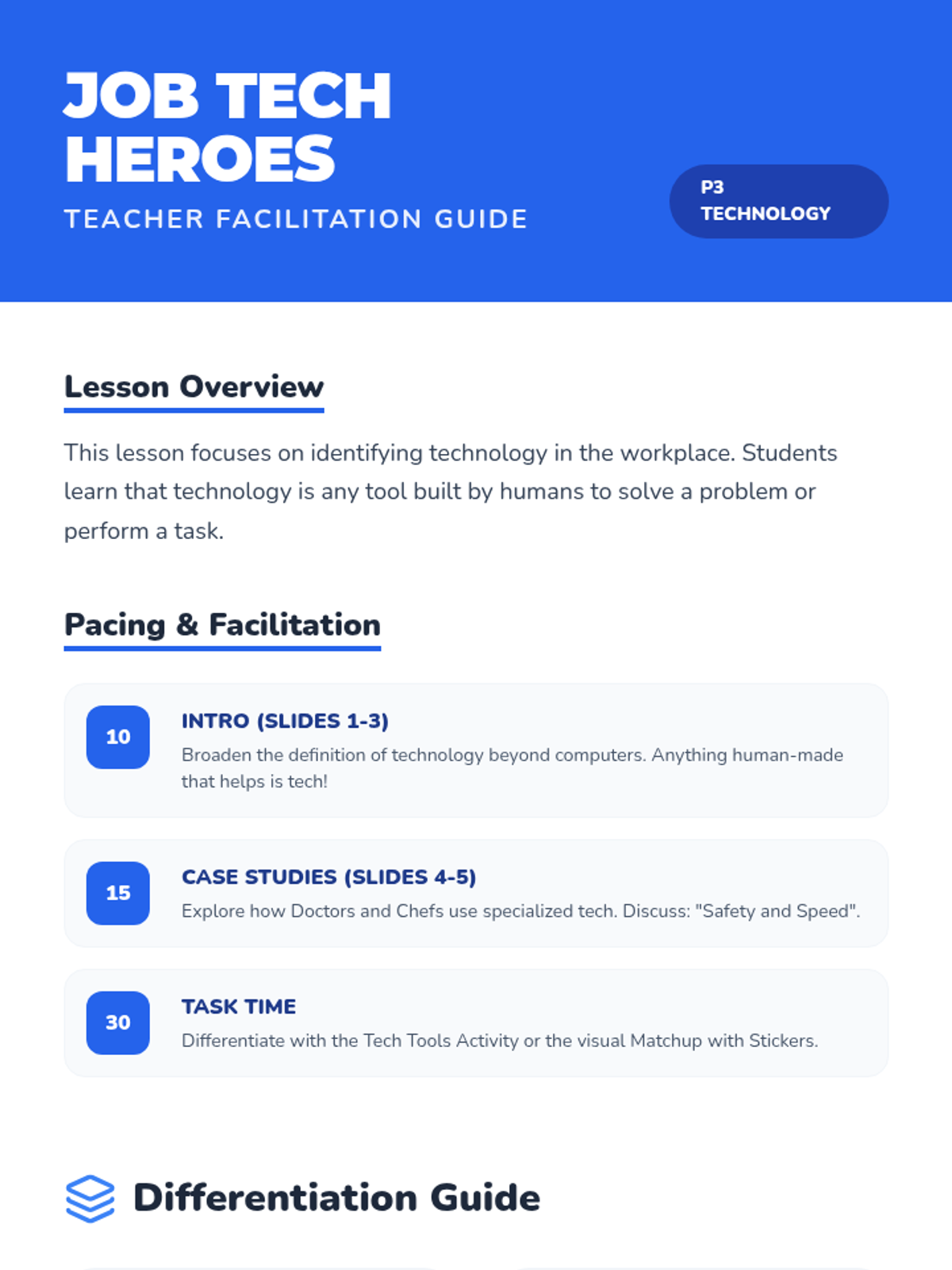
A comprehensive teacher facilitation guide for the P3 Technology lesson. Includes pacing, differentiation tips, and deep-thinking discussion questions about the role of technology in work.
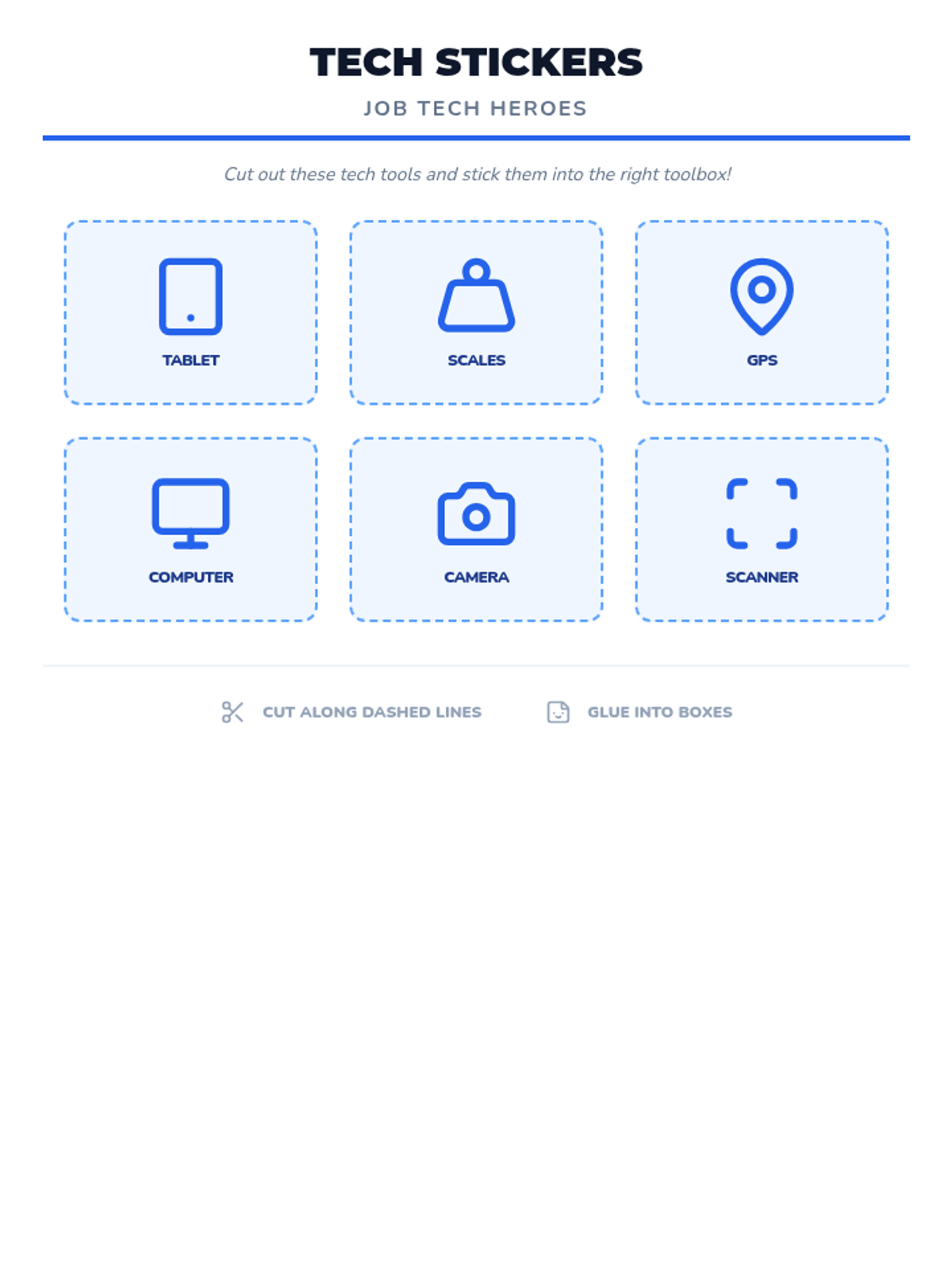
Printable cut-out sheet for the Technology in Jobs lesson. Features clear icons and labels of various tech tools used by workers for the matching activity.
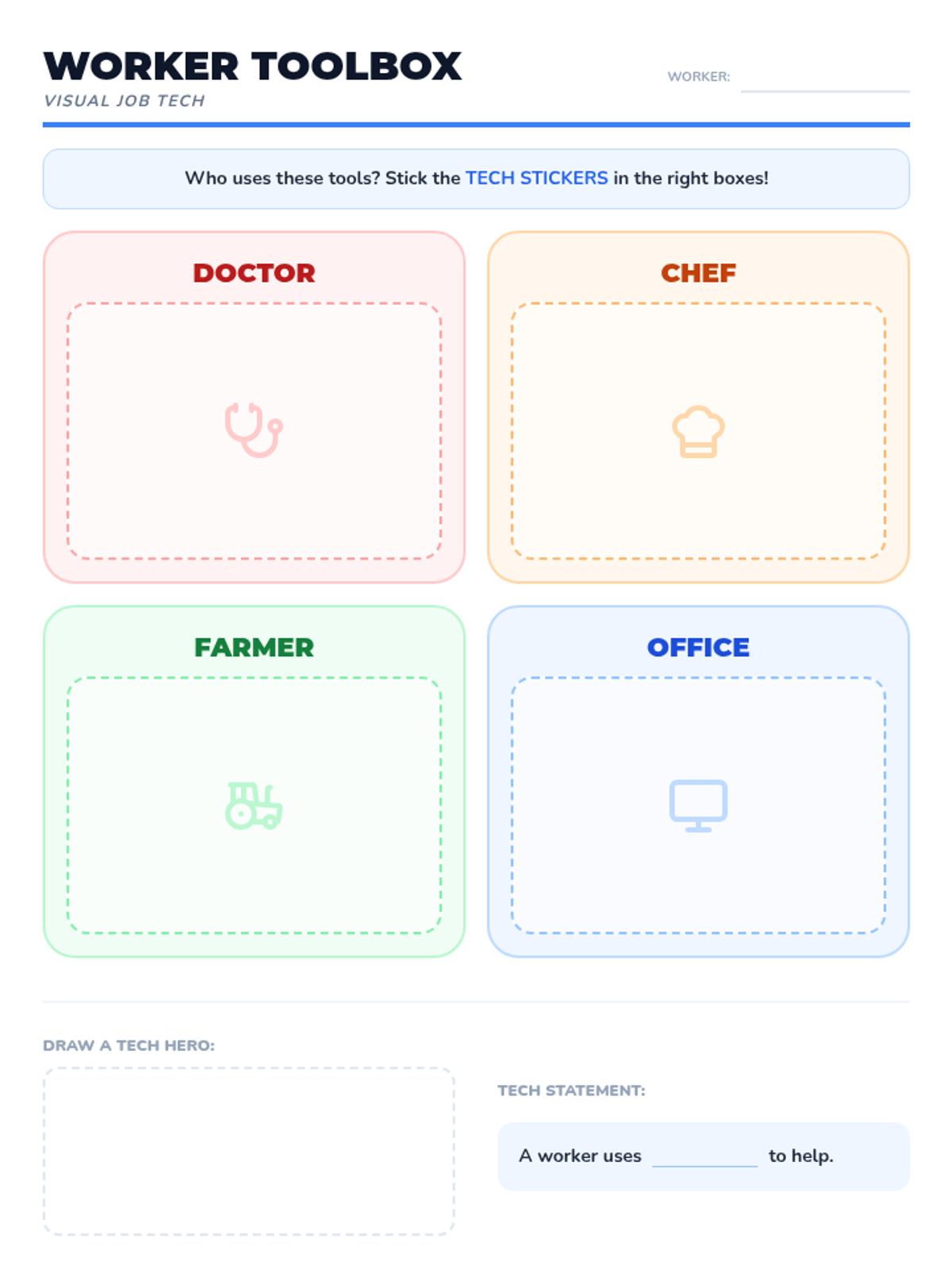
A highly visual, low-literacy activity for the Technology in Jobs lesson. Students use stickers to match technology tools to specific workers (Doctor, Chef, Farmer, Office Worker).
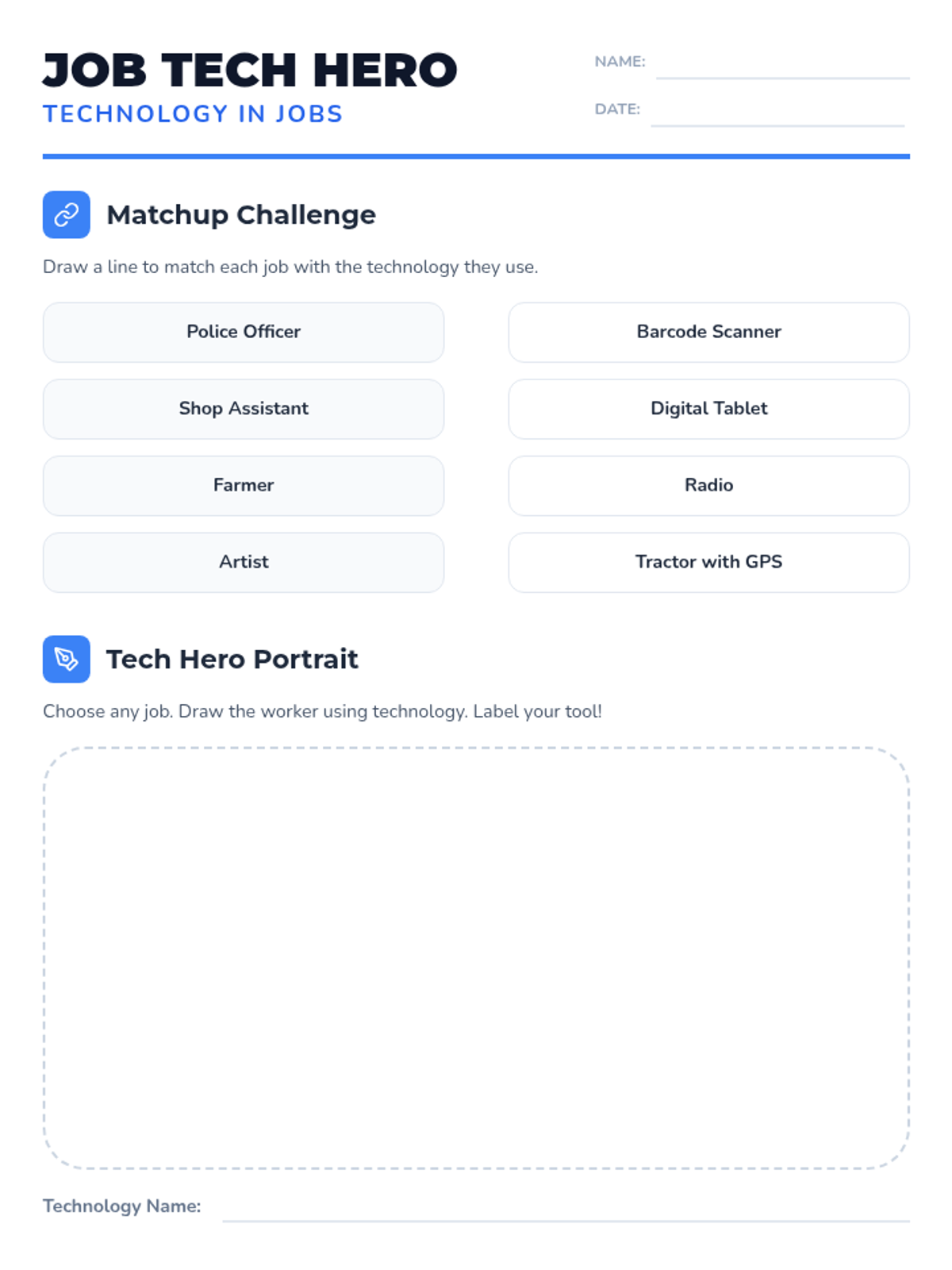
A standard P3 activity for the Technology in Jobs lesson. Includes a matching task, a drawing and labeling section, a fill-in-the-blanks statement, and a critical thinking extension.
Engaging slides for a P3 technology lesson about how different workers (Doctors, Chefs, etc.) use technology to help them in their jobs. Includes a clear definition of technology and task instructions.
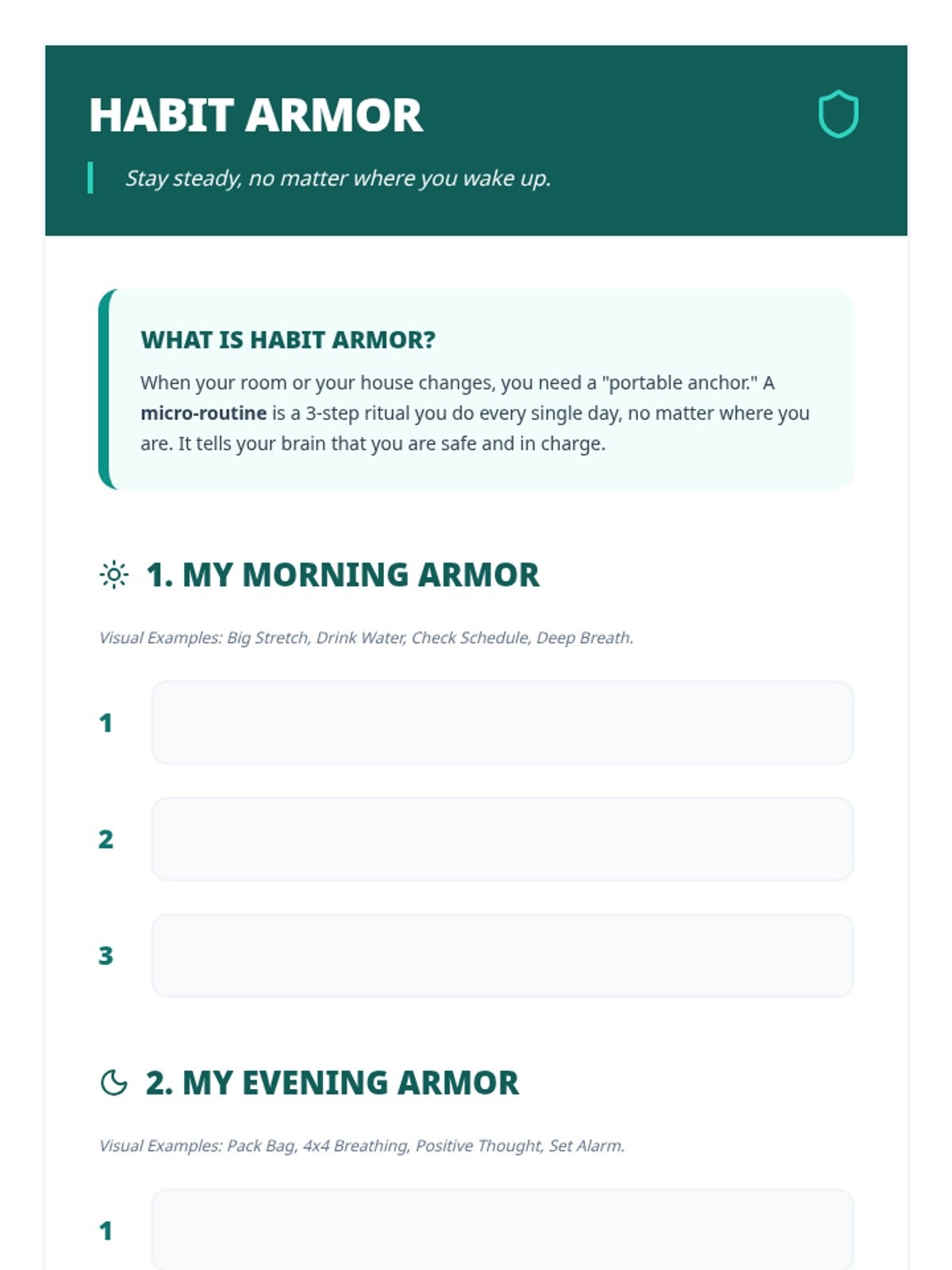
Student workbook for the Habit Armor lesson, featuring templates for creating portable morning and evening micro-routines.
Slide deck for the Habit Armor lesson, illustrating the cognitive benefits of micro-routines and presenting templates for portable morning and evening habits.
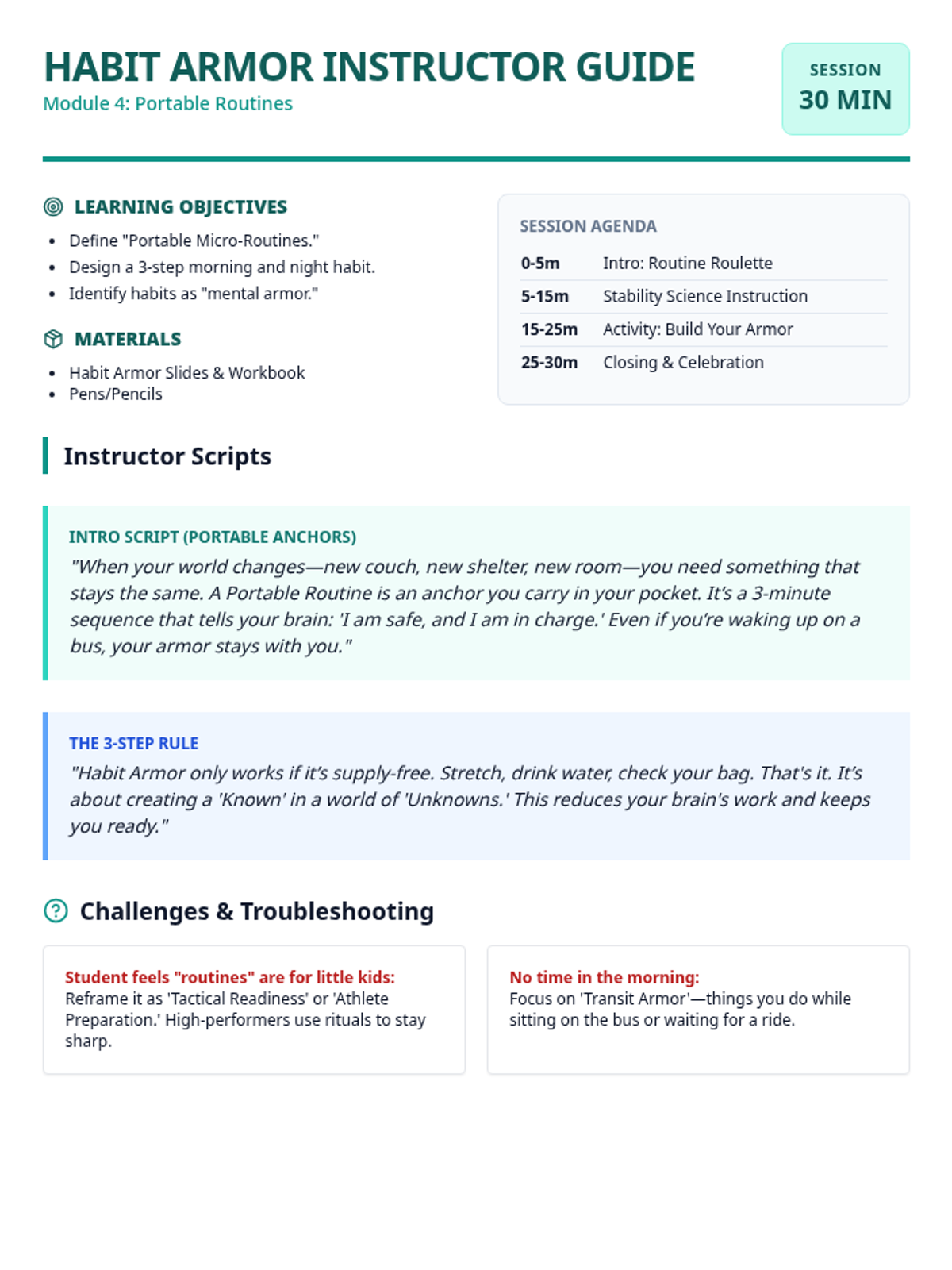
Instructor guide for the Habit Armor lesson, focusing on creating simple, portable micro-routines to provide a sense of agency and stability during housing transitions.
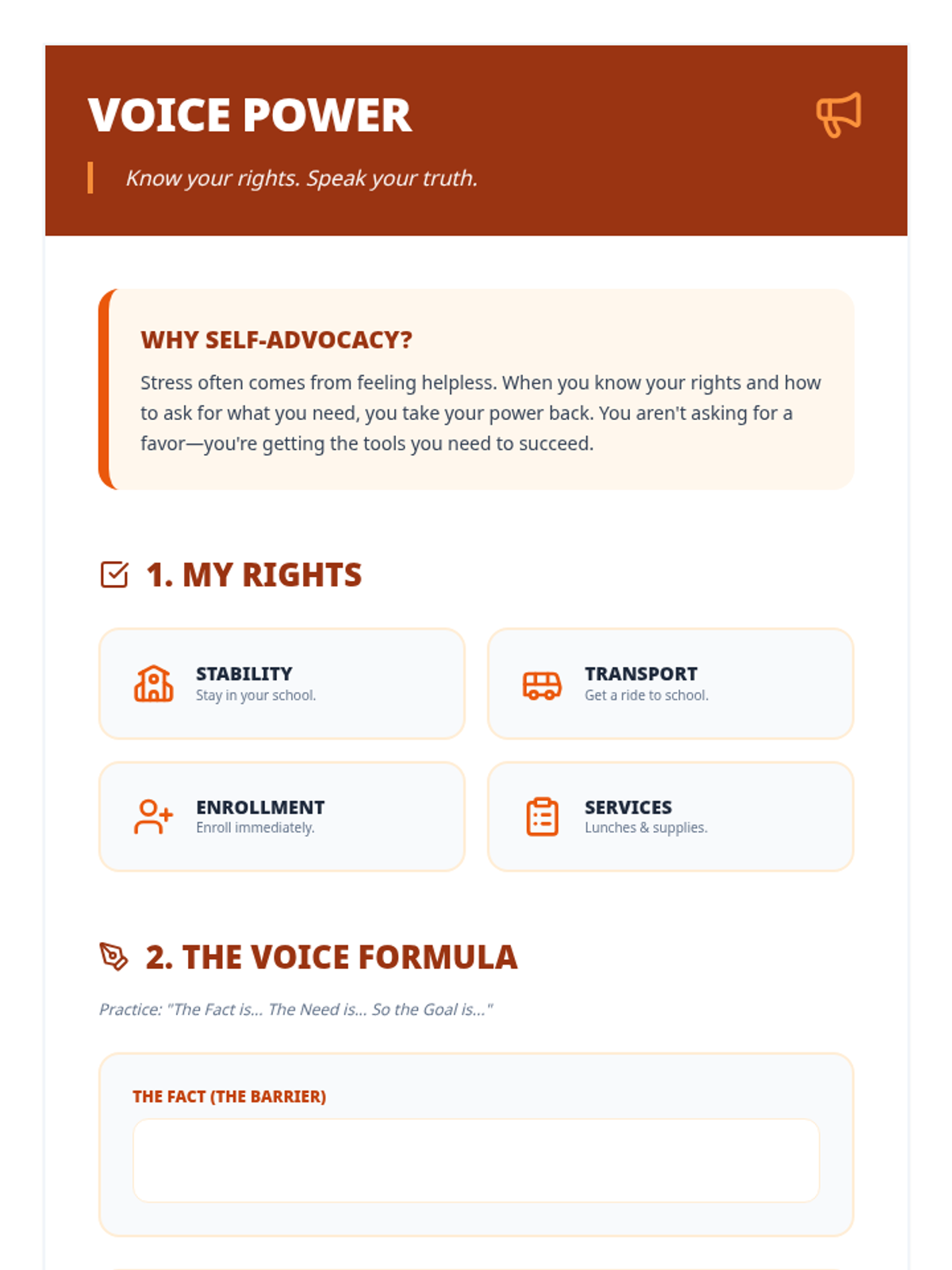
Student workbook for the Voice Power lesson, featuring a rights identification activity and a template for practicing the self-advocacy formula.
Slide deck for the Voice Power lesson, explaining McKinney-Vento rights and teaching the "Fact + Need + Goal" self-advocacy formula.
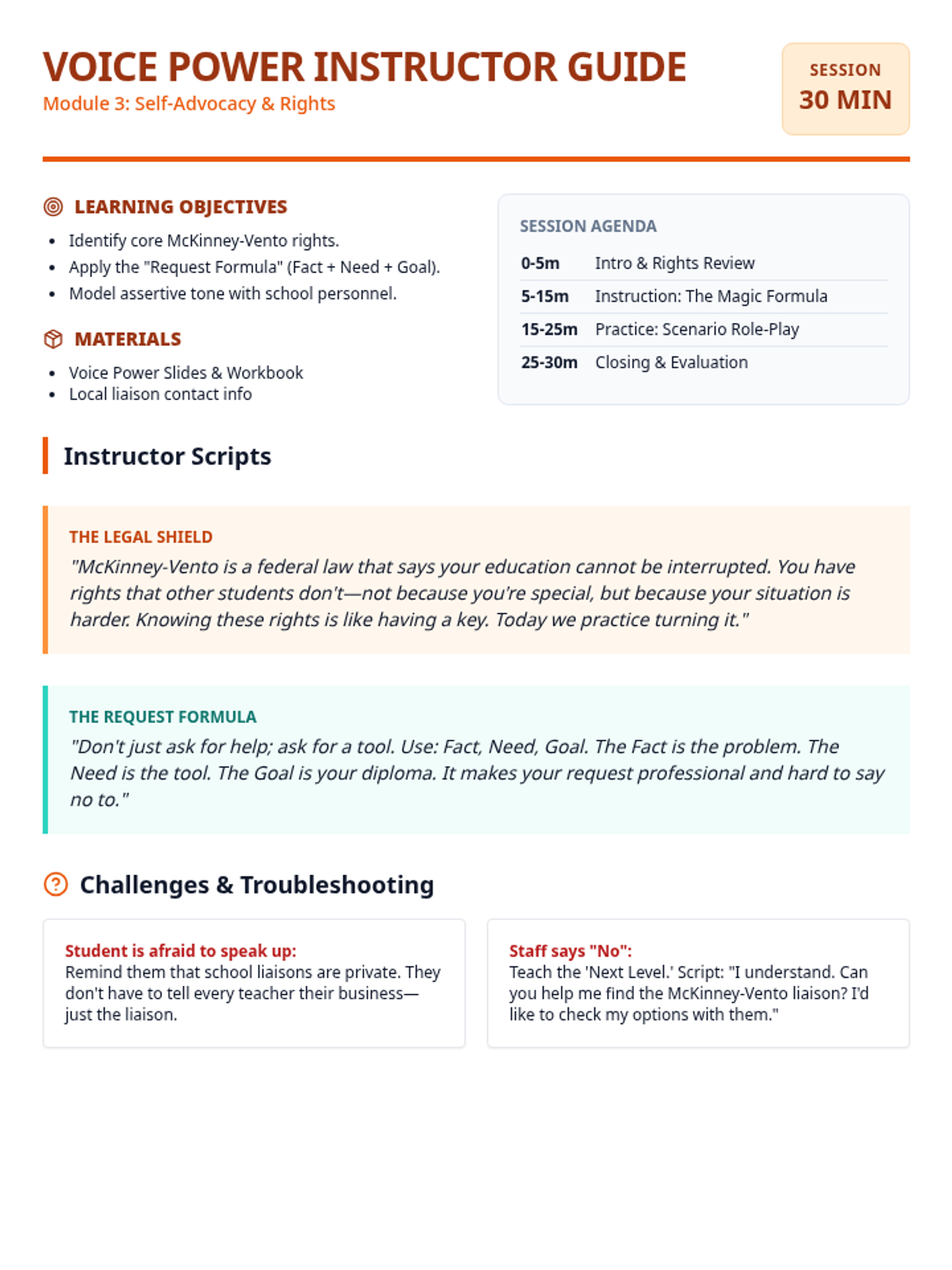
Instructor guide for the Voice Power lesson, focusing on self-advocacy scripts, understanding McKinney-Vento rights, and reducing stress through assertive requests.
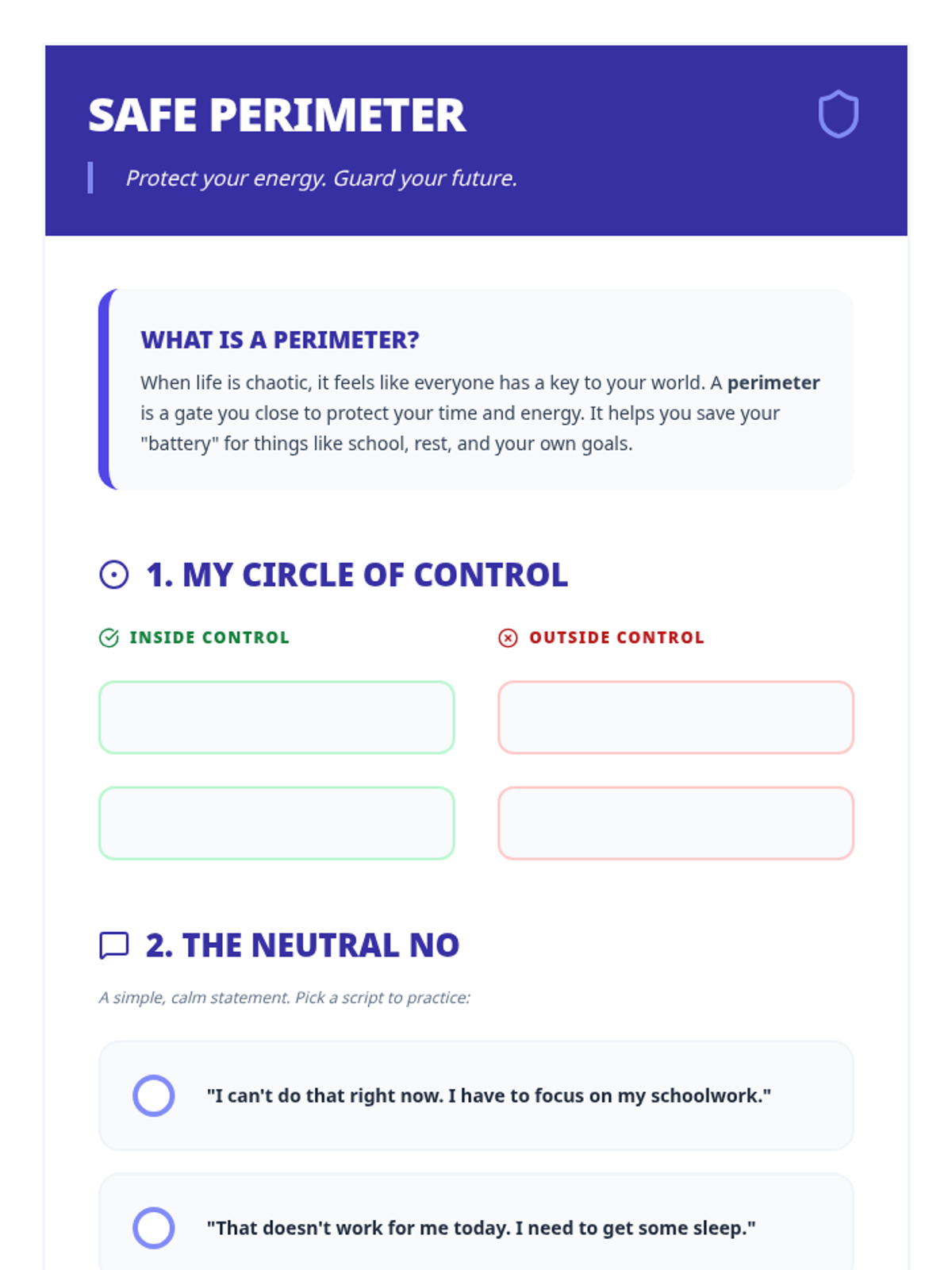
Student workbook for the Safe Perimeter lesson, featuring control circle mapping, boundary script selection, and an energy protection planning area.
Slide deck for the Safe Perimeter lesson, featuring visual metaphors for spheres of control and scripts for setting assertive, neutral boundaries.
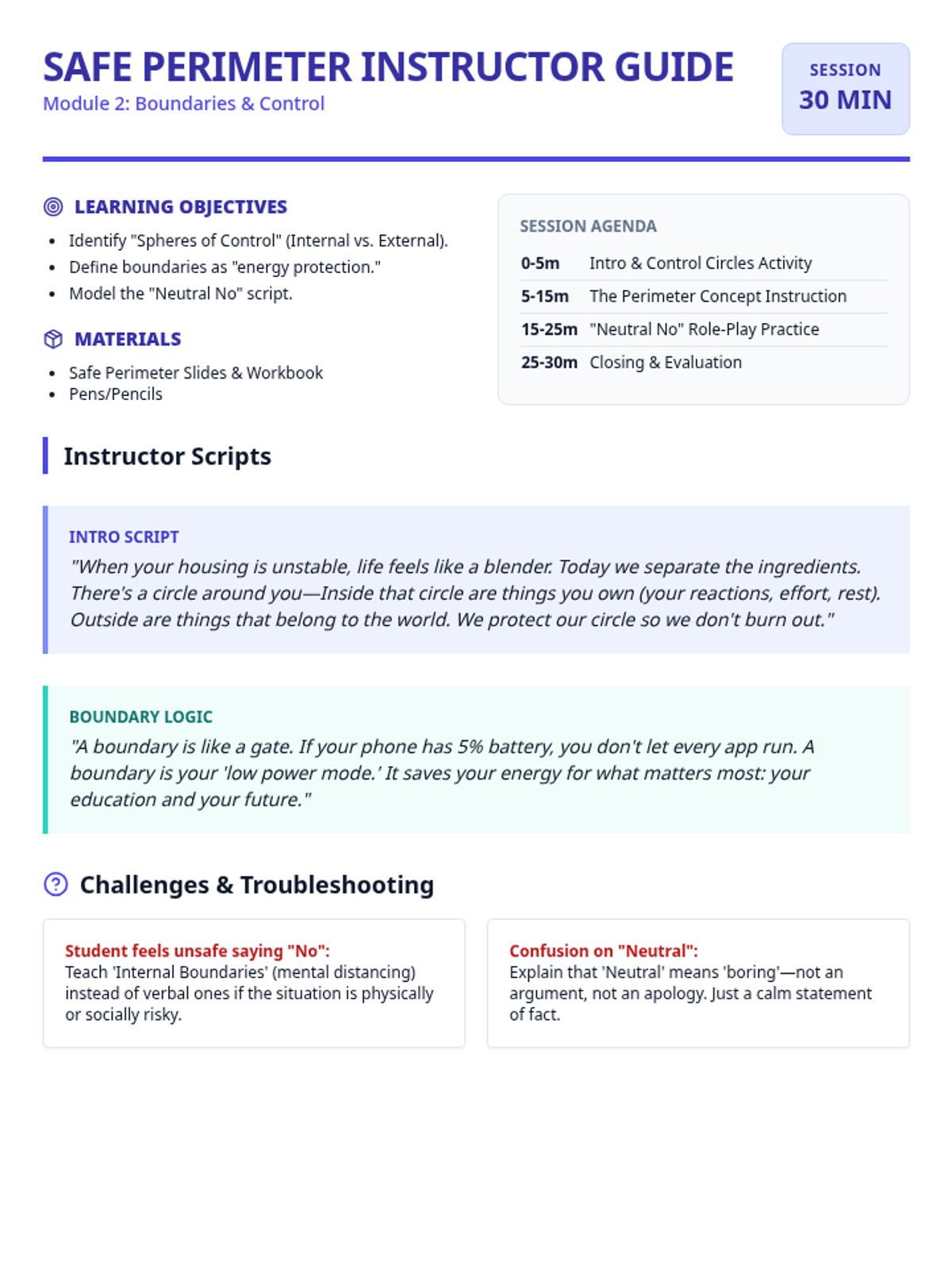
Instructor guide for the Safe Perimeter lesson, focusing on control circles, the "Neutral No" technique, and mental boundary setting for students in high-instability environments.
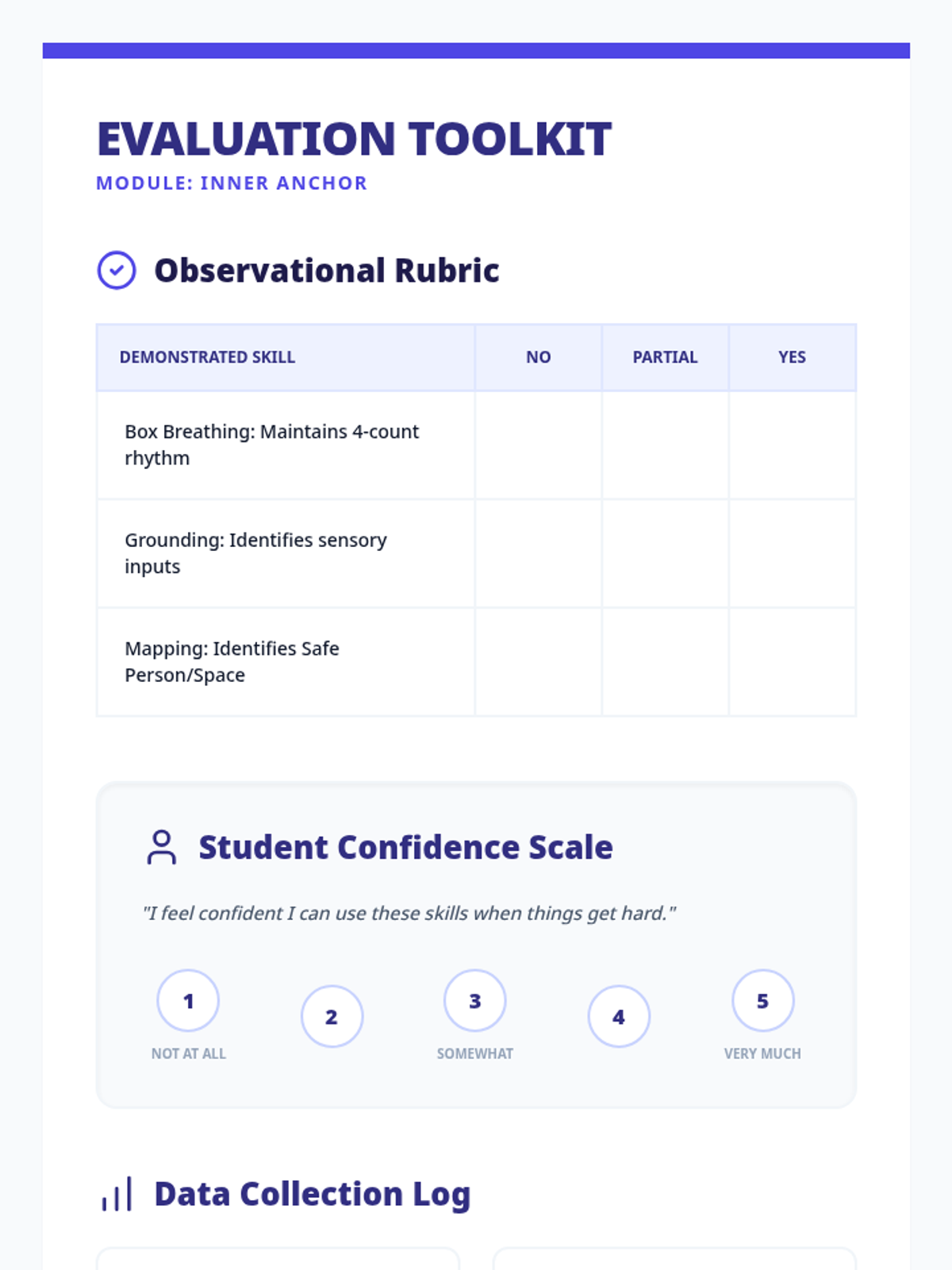
Outcome measures and evaluation toolkit for the Inner Anchor session, including observational rubrics, student confidence scales, and program metrics logs.
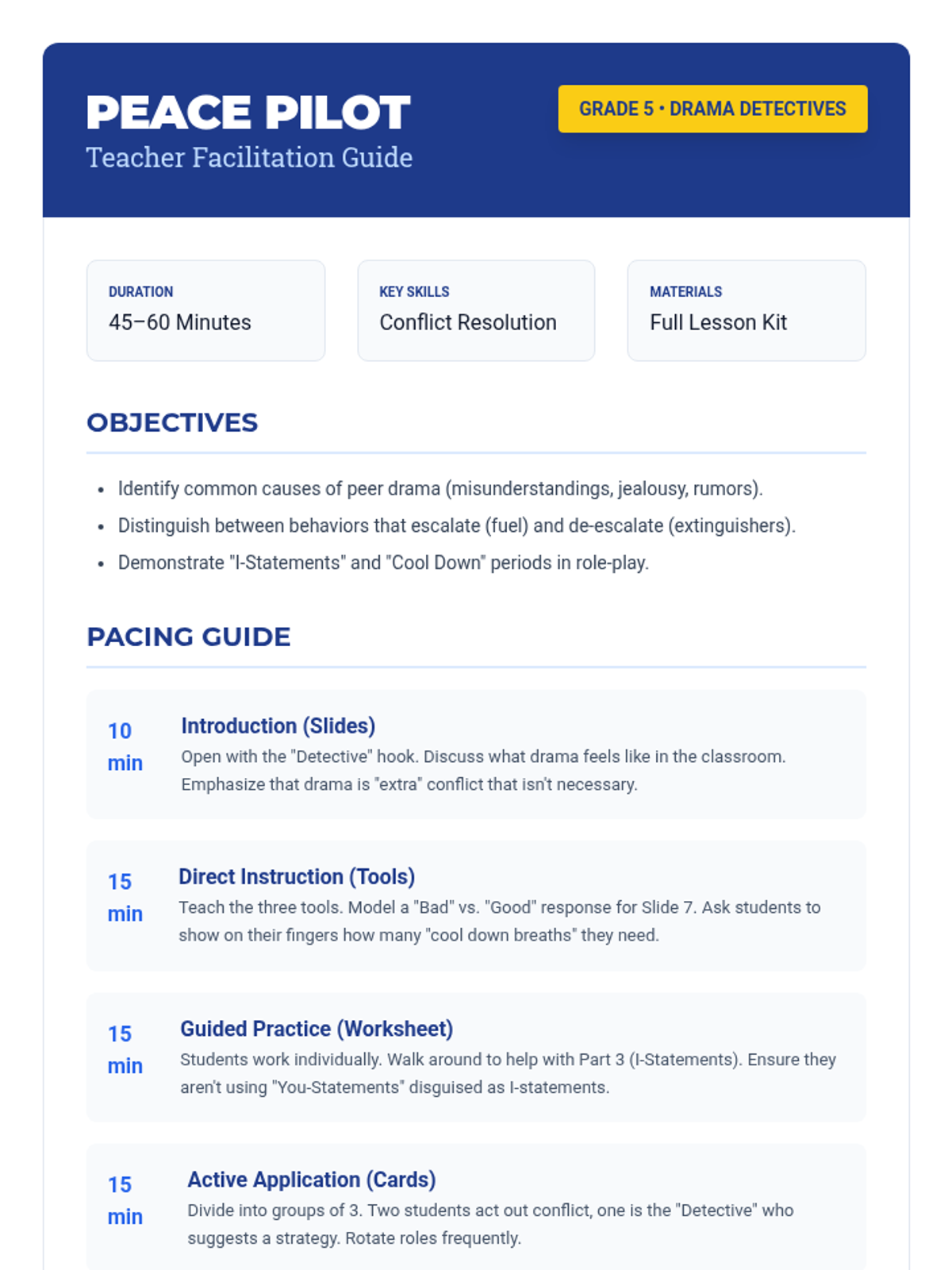
A comprehensive teacher guide for the "Drama Detectives" lesson, featuring pacing suggestions, discussion prompts, and an answer key for the worksheet. Optimized for clean page breaks.
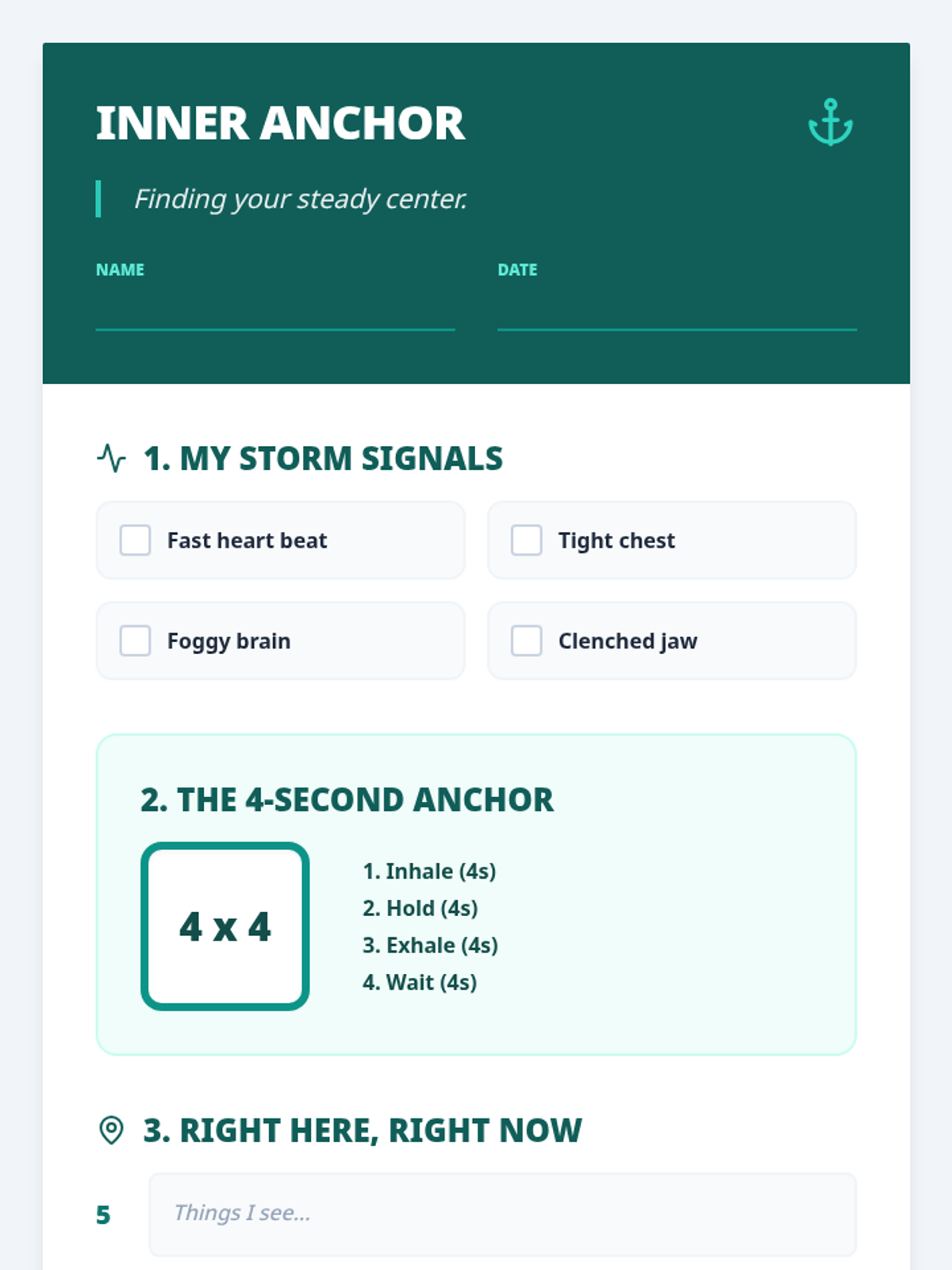
Student participant workbook featuring a body scan checklist, visual breathing guide, grounding exercise, and a minimalist coping plan.