A facilitating guide for parents and teachers to implement the Mission Command daily log, featuring goal-setting strategies, review techniques, and incentive suggestions.
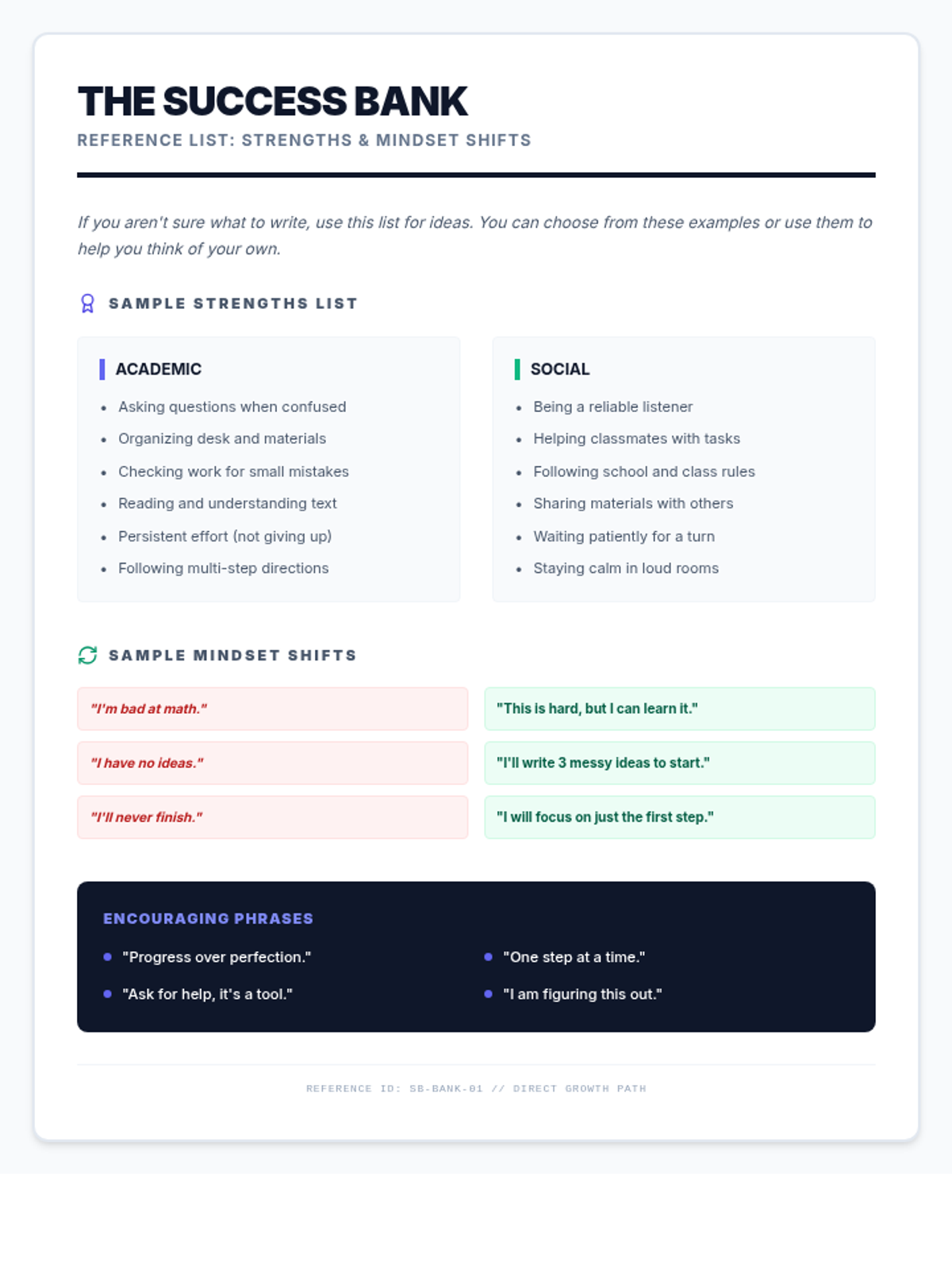
A reference sheet for the student containing concrete examples of academic and social strengths, growth mindset shifts, and encouraging phrases. Designed to support students who struggle to generate their own responses. Revised for single-page layout.
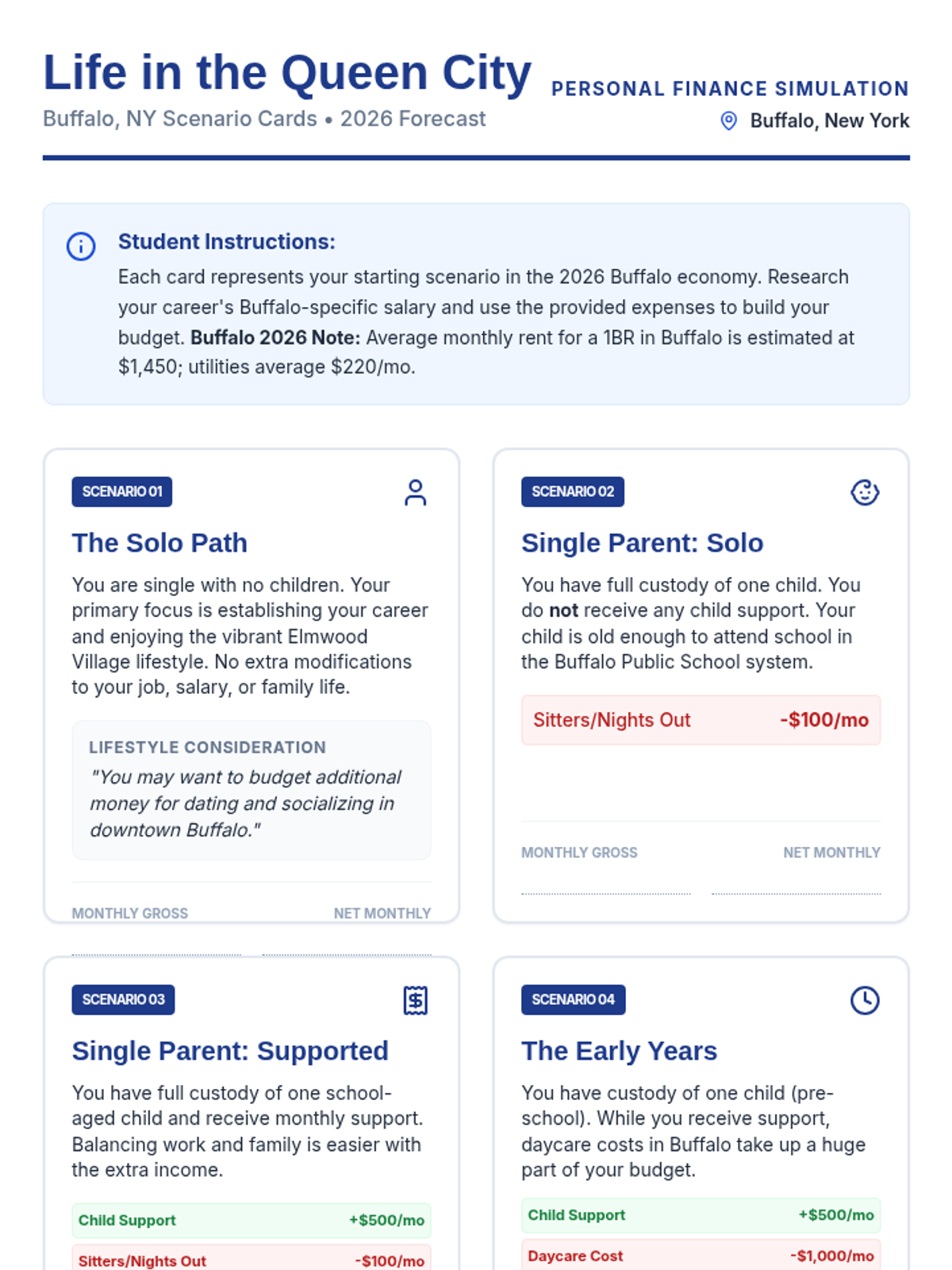
A comprehensive set of 22 printable family scenario cards for a personal finance simulation set in Buffalo, NY in 2026. Each card includes specific life circumstances and financial modifications (daycare, child support, etc.). Designed for quick printing and clean cutting without student work areas on the cards.
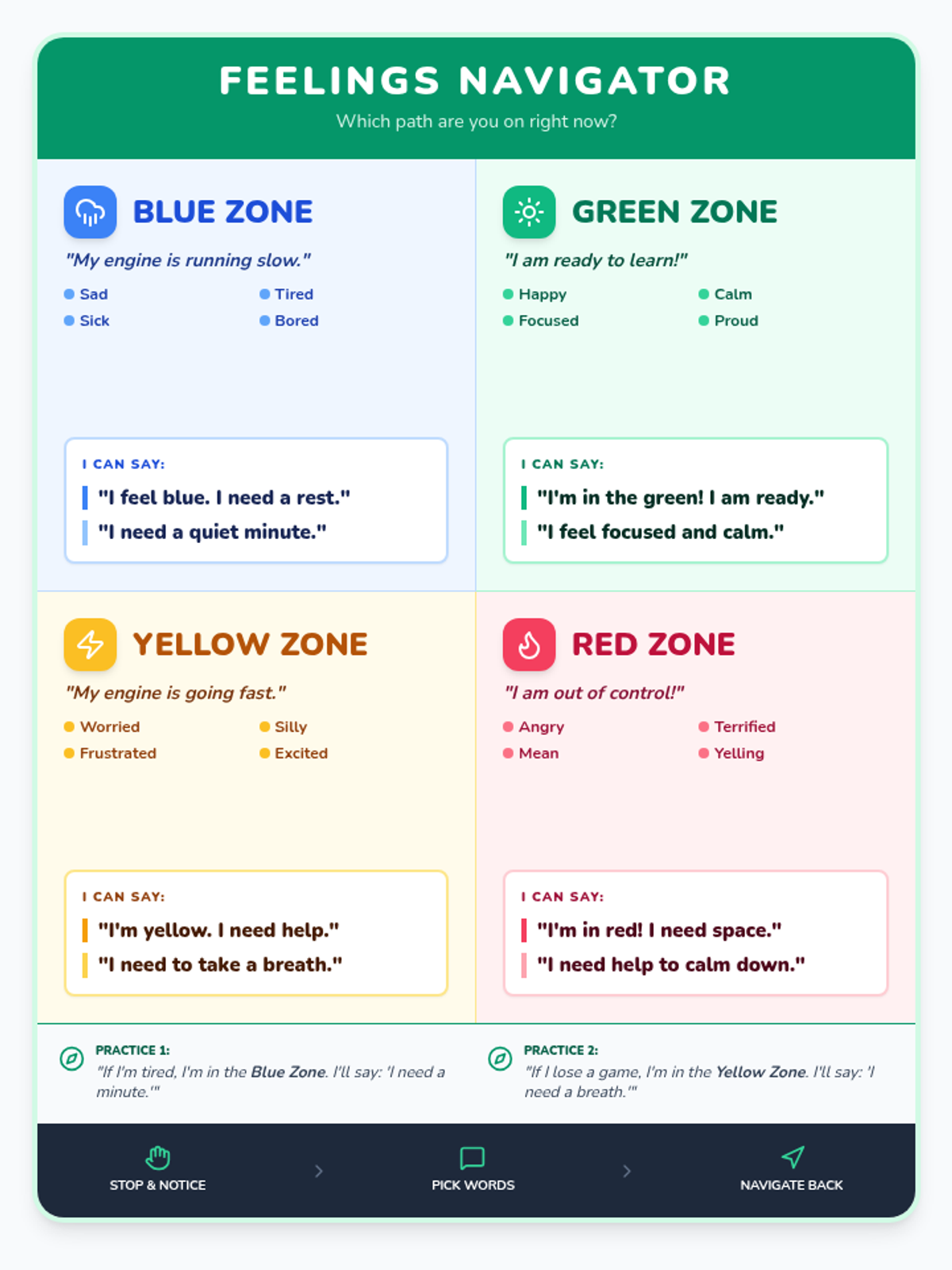
A visual anchor chart for first graders to identify their emotional state across four color-coded zones (Blue, Green, Yellow, Red). Includes simple descriptors, icons, and 'I can say' verbal prompts to encourage communication over elopement or screaming. Designed for display in a calm-down corner or for use during role-play activities.
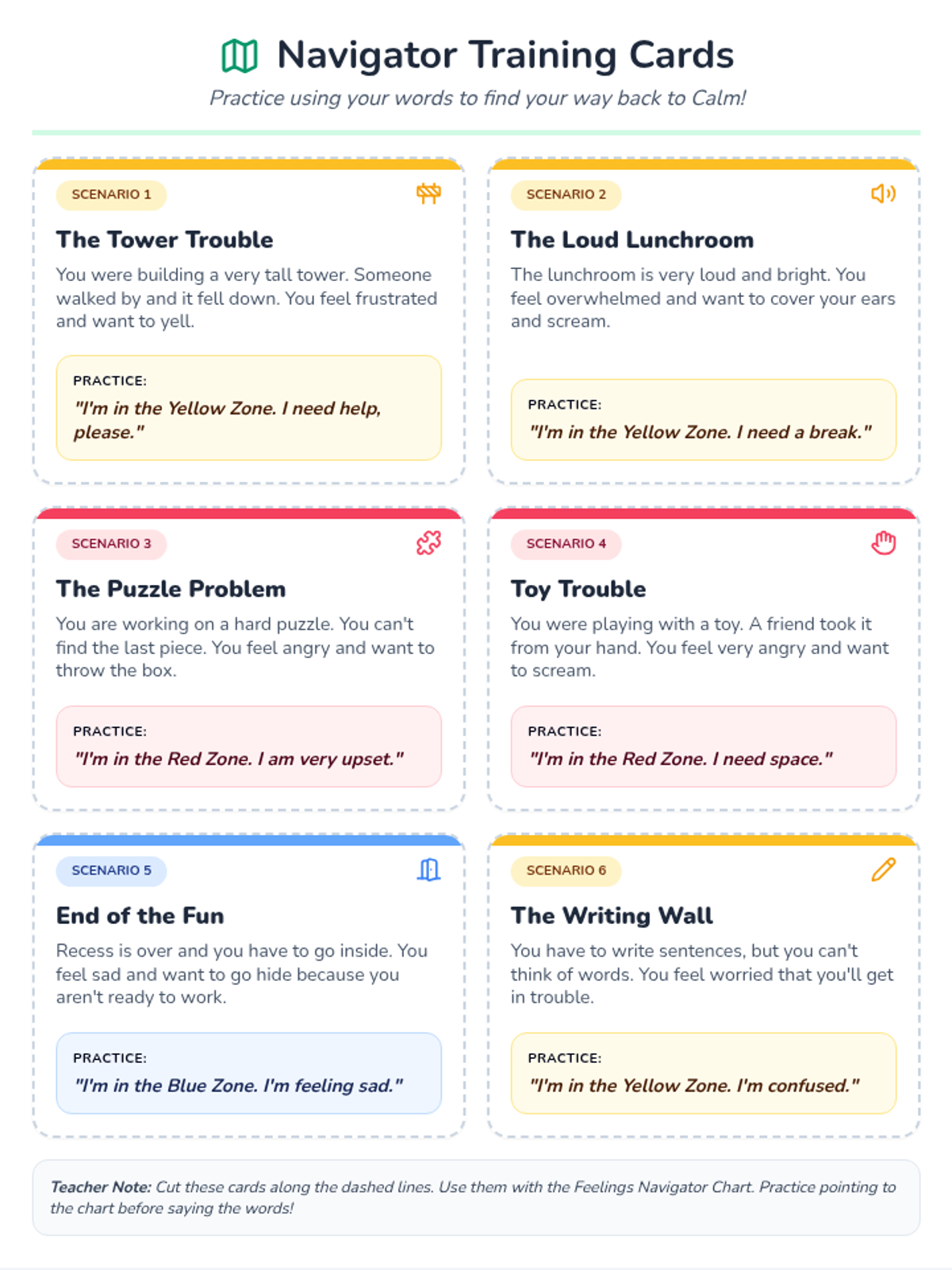
A comprehensive set of 24 role-play scenario cards designed for first graders, focusing on common school-based triggers. Each card identifies an emotion zone (Yellow, Blue, or Red) and provides a specific verbal phrase for students to practice, replacing elopement or screaming behaviors. Layout is optimized for easy cutting and includes consistent visual cues.
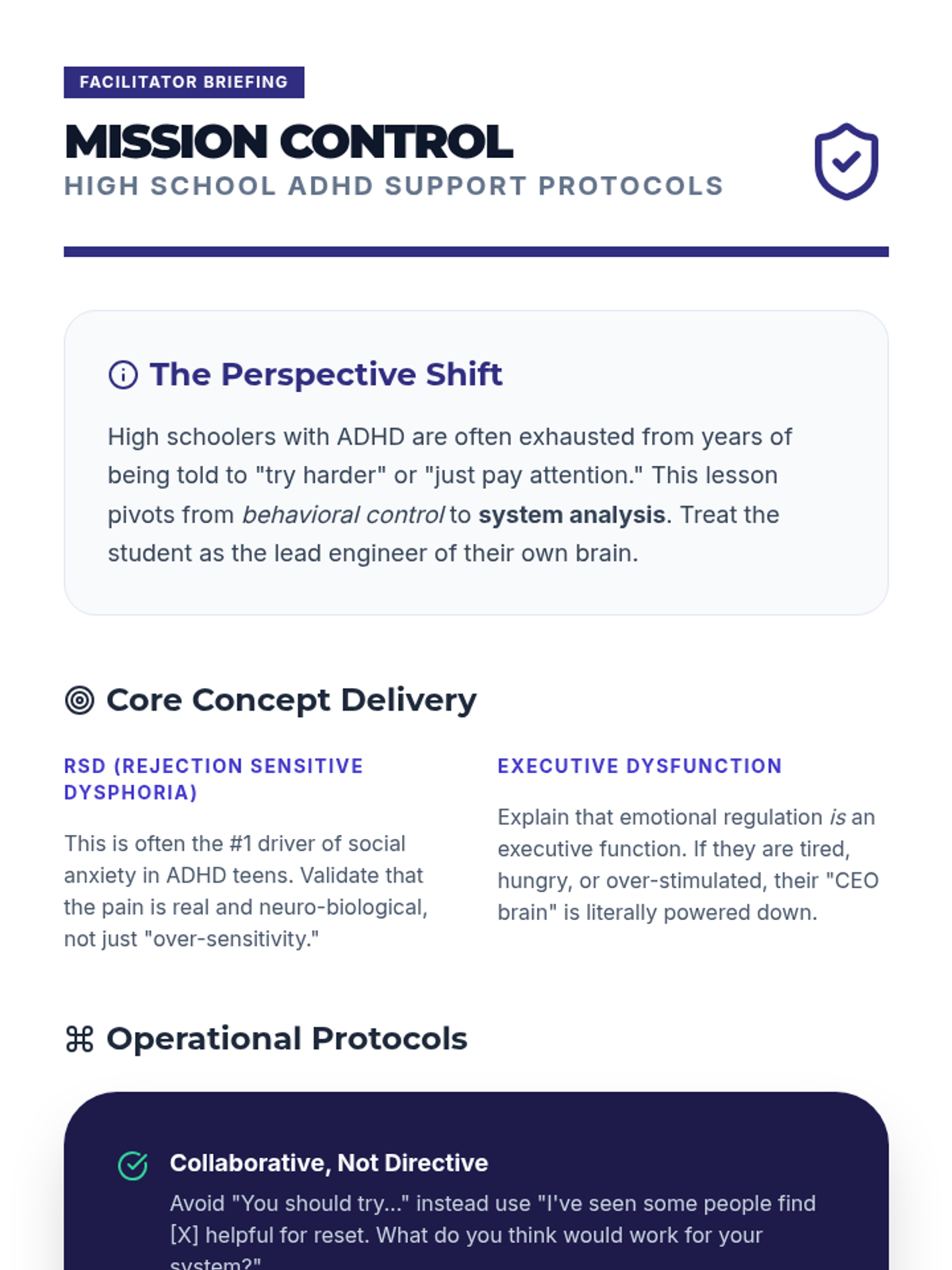
A facilitator's guide for supporting high schoolers with ADHD, focusing on autonomy, validation, and advanced cognitive strategies like RSD management and executive function audits.
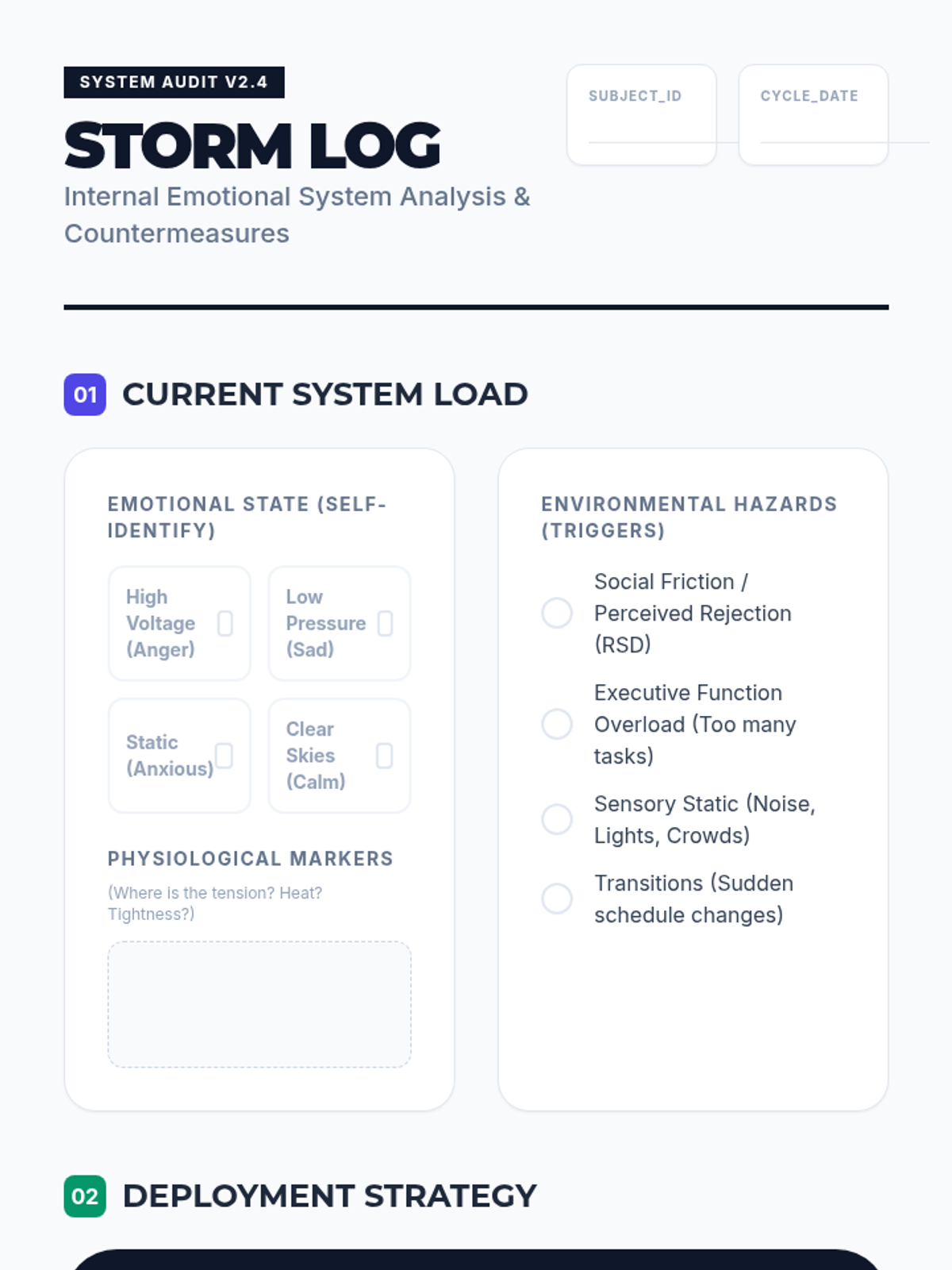
A data-driven self-audit for high schoolers to track their emotional triggers and systemic responses using a professional, high-tech diagnostic theme.
A professional-grade briefing for high schoolers on the mechanics of the ADHD brain and emotional regulation, featuring neuroscience-based explanations and advanced coping strategies.
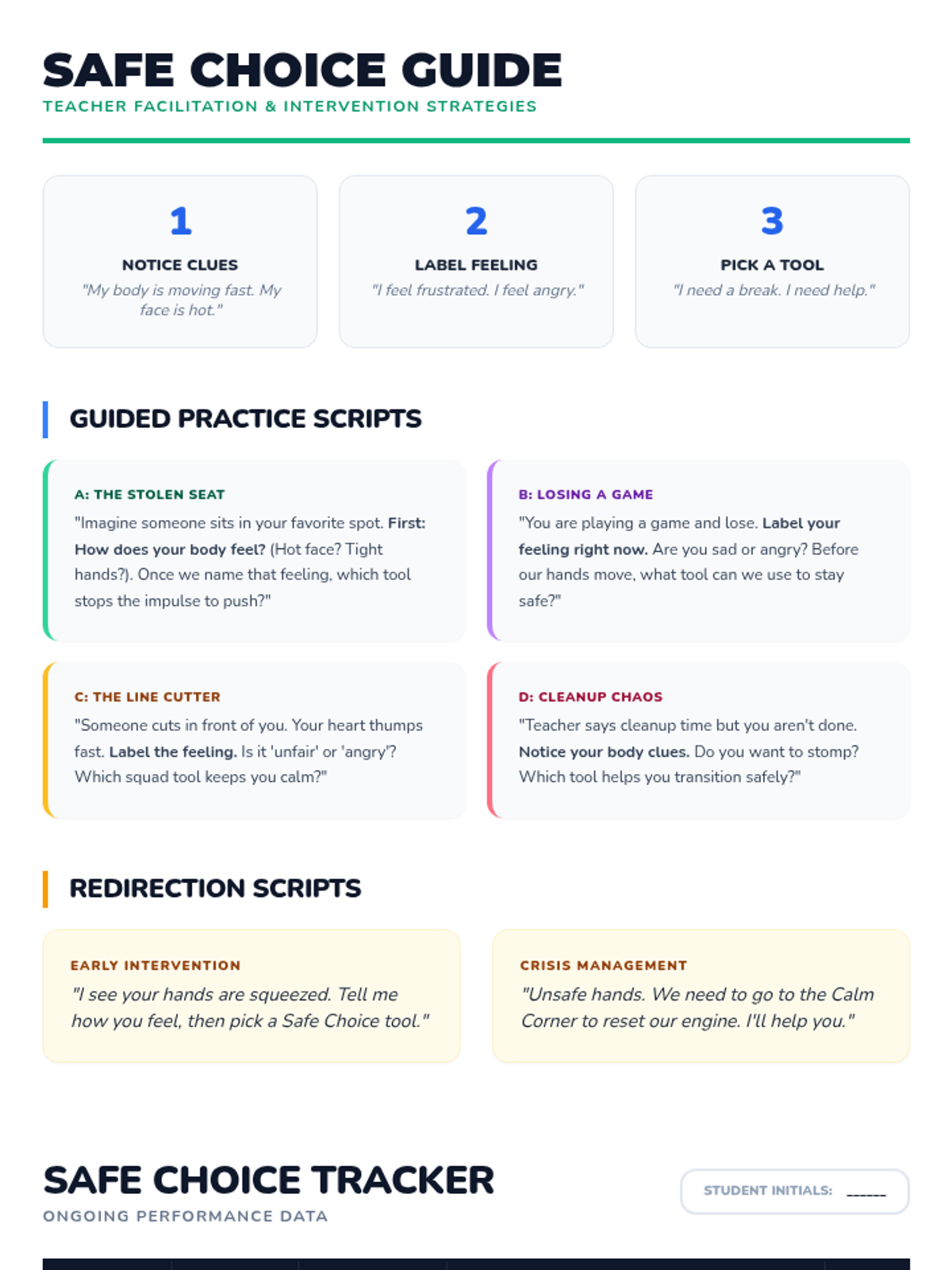
A teacher-facing guide providing intervention strategies, scripts for redirection, and implementation tips to support a student's impulse control and safety. Updated with additional guided practice scripts for varied classroom scenarios.
A presentation introducing the concept of impulsivity as 'Super Speed' and teaching three specific coping strategies (Calm Corner, Asking for Help, and Box Breathing) using clear visuals and student-friendly language. Updated to include more interactive scenarios for classroom practice.
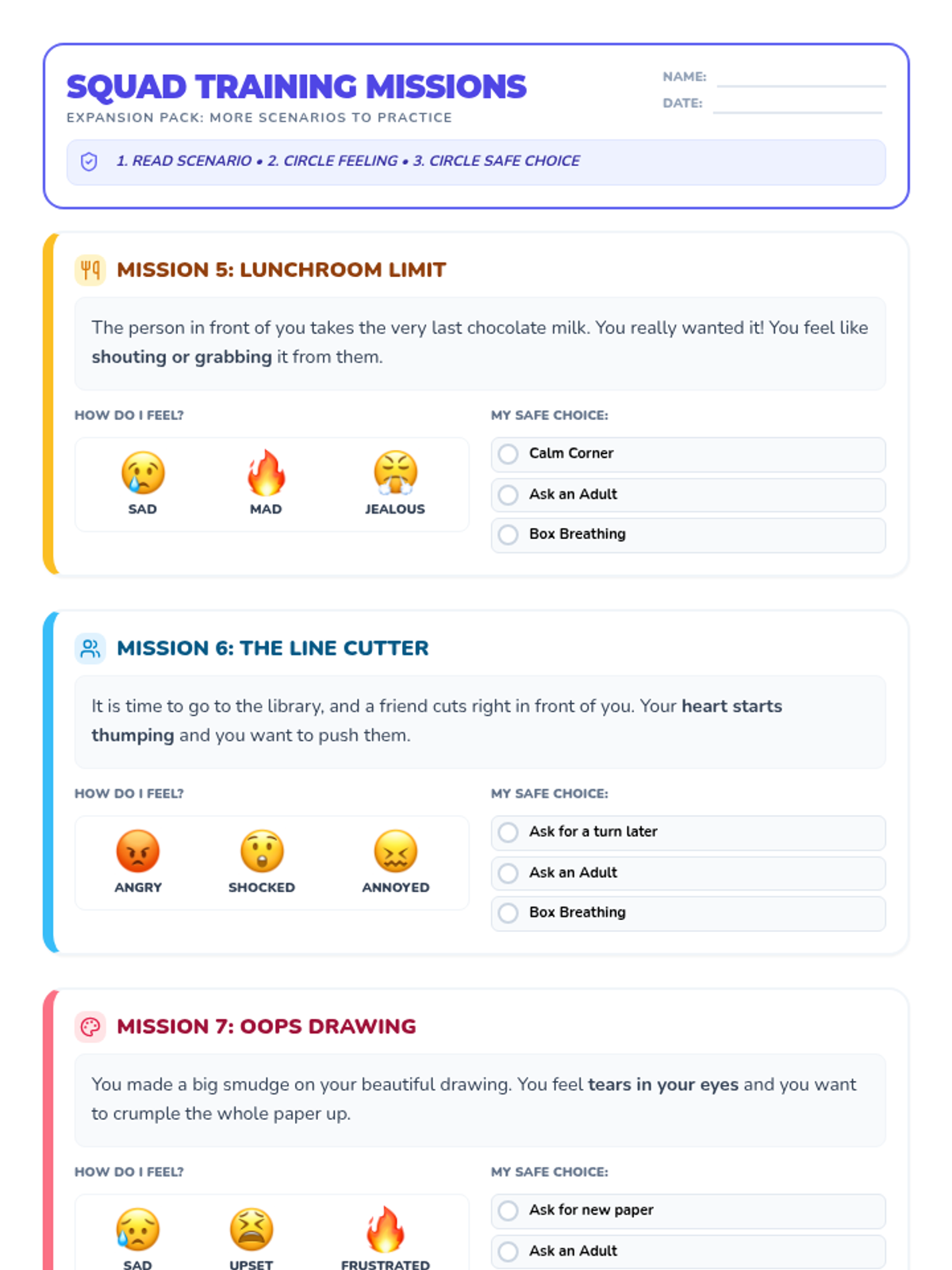
A two-page expansion worksheet for the Safe Choice Squad lesson, featuring four additional scenarios (missions 5-8) focused on lunchroom conflicts, line cutting, mistakes, and cleaning up transitions. Students practice labeling their internal physical sensations and selecting appropriate coping tools.
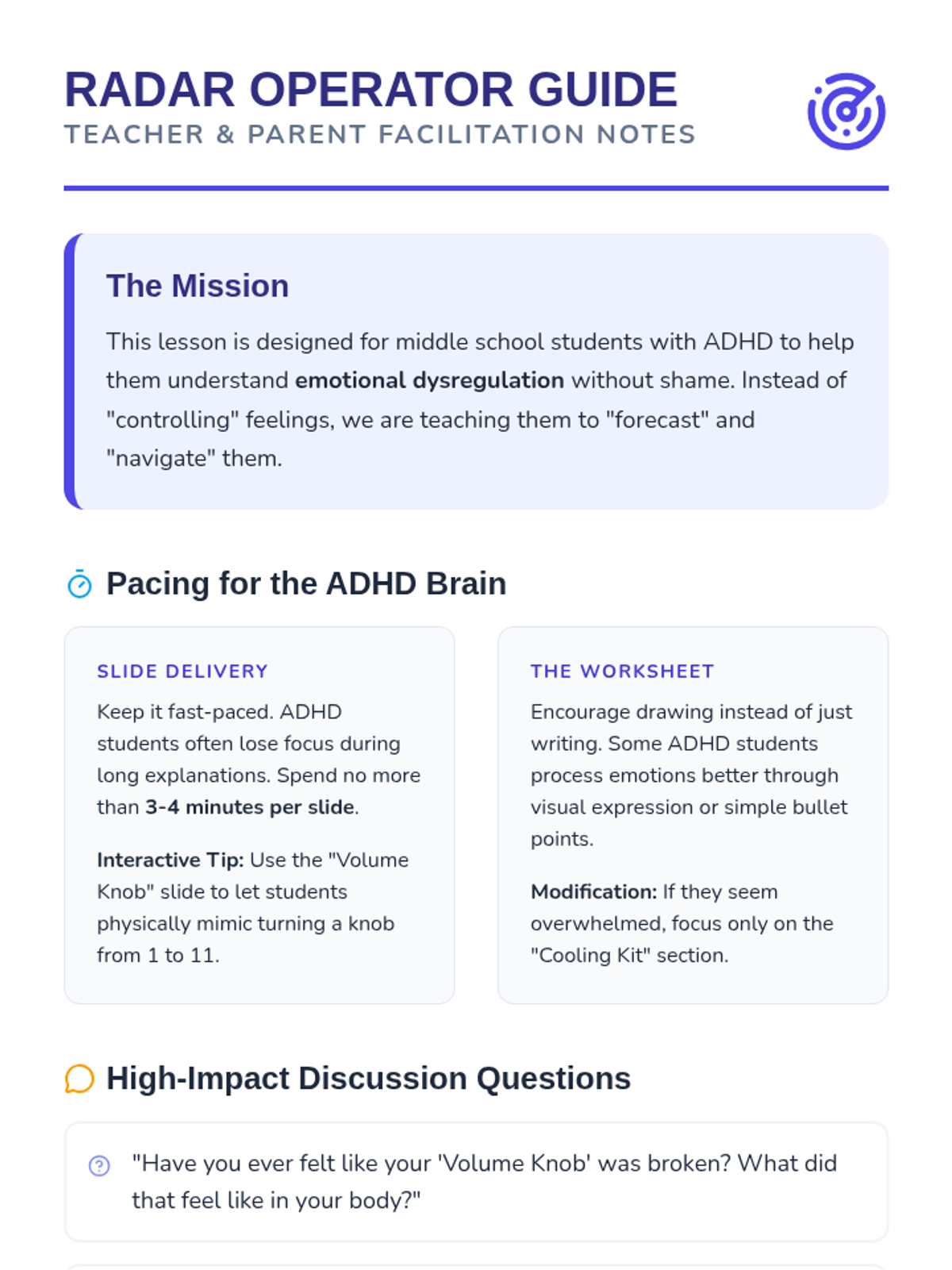
A guide for educators and parents to facilitate the "Brain Storms" lesson, featuring pacing tips, discussion prompts, and strategies for validating ADHD-driven emotions.
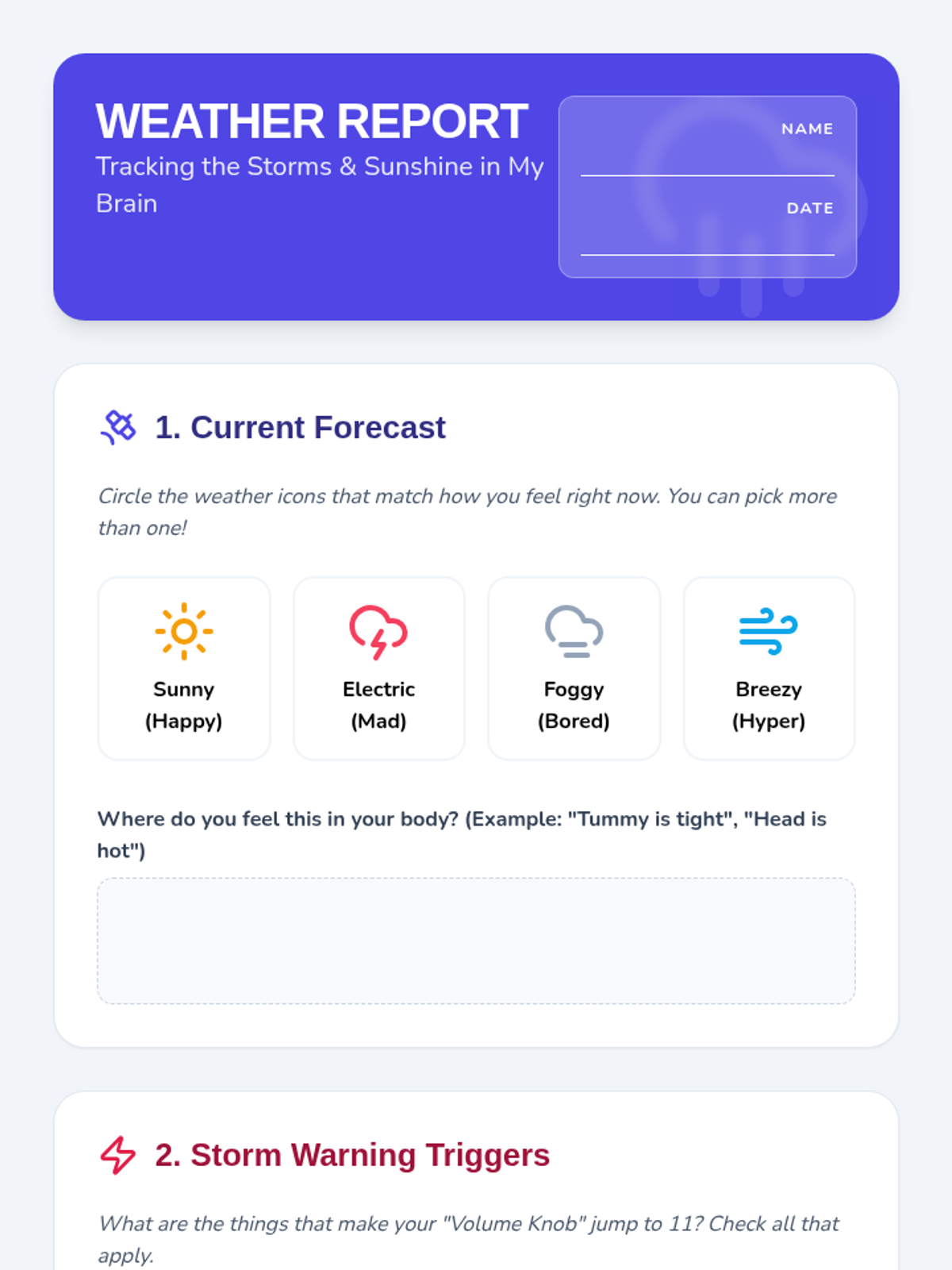
A self-reflection worksheet for students with ADHD to identify their personal emotional triggers, physical warning signs, and favorite regulation strategies using a weather-tracking theme.
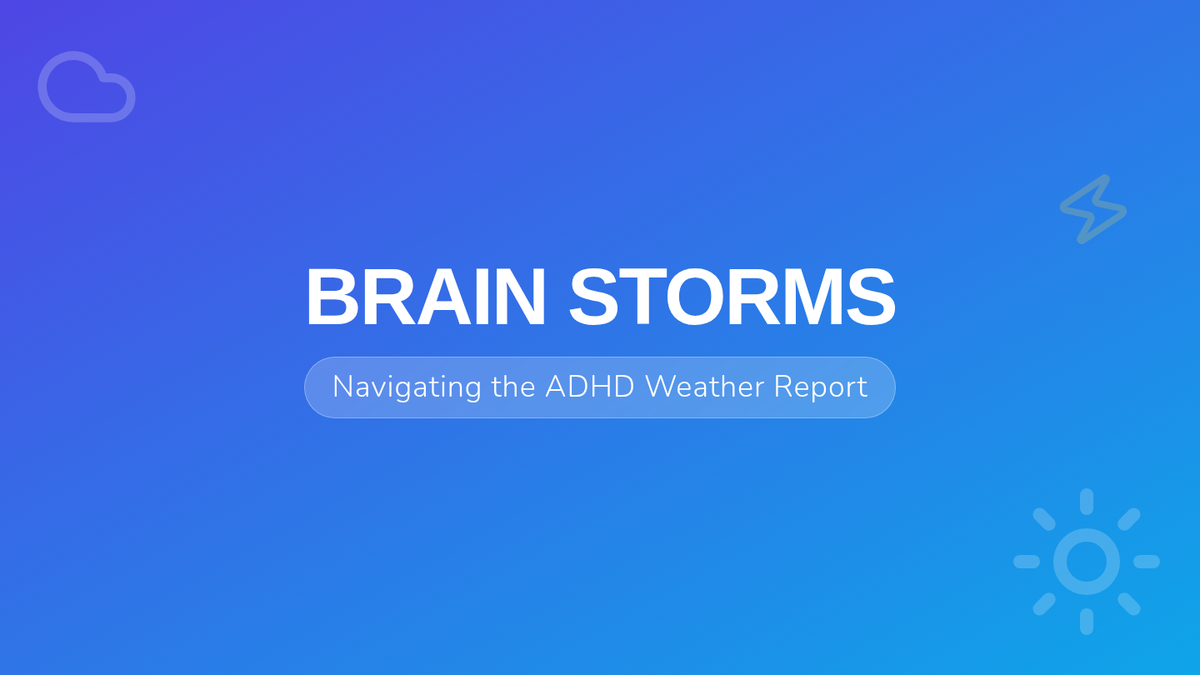
An engaging slide deck using a weather metaphor to help middle schoolers with ADHD understand emotional dysregulation, brain function, and coping strategies.