A professional-grade briefing for high schoolers on the mechanics of the ADHD brain and emotional regulation, featuring neuroscience-based explanations and advanced coping strategies.
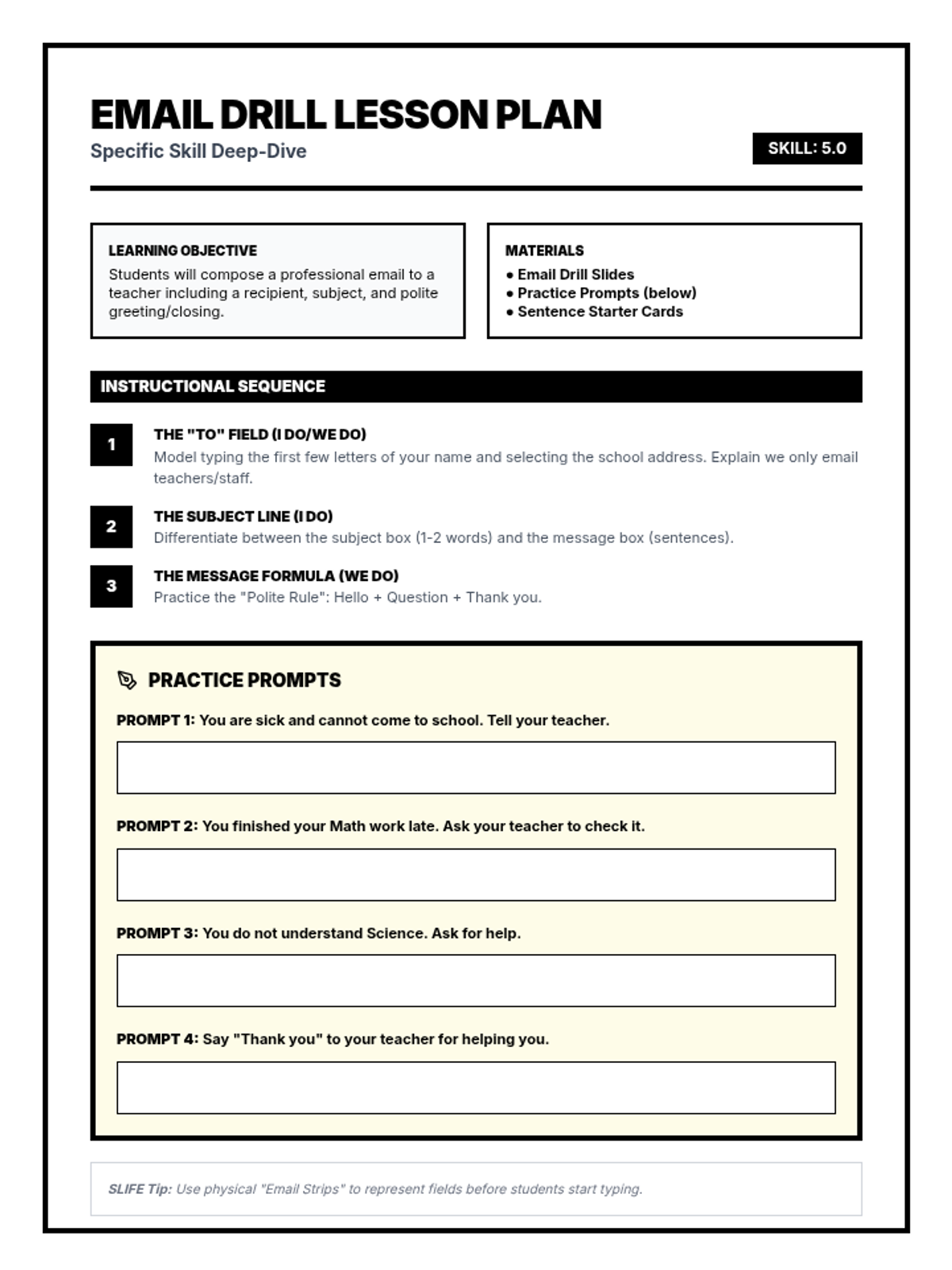
A detailed teacher's lesson plan for instructing SLIFE students on professional school email etiquette, including a 3-step instructional routine and specific practice prompts.
A high-contrast, visual-first slide deck for SLIFE students focusing on the specific structure and etiquette of writing professional school emails to teachers.
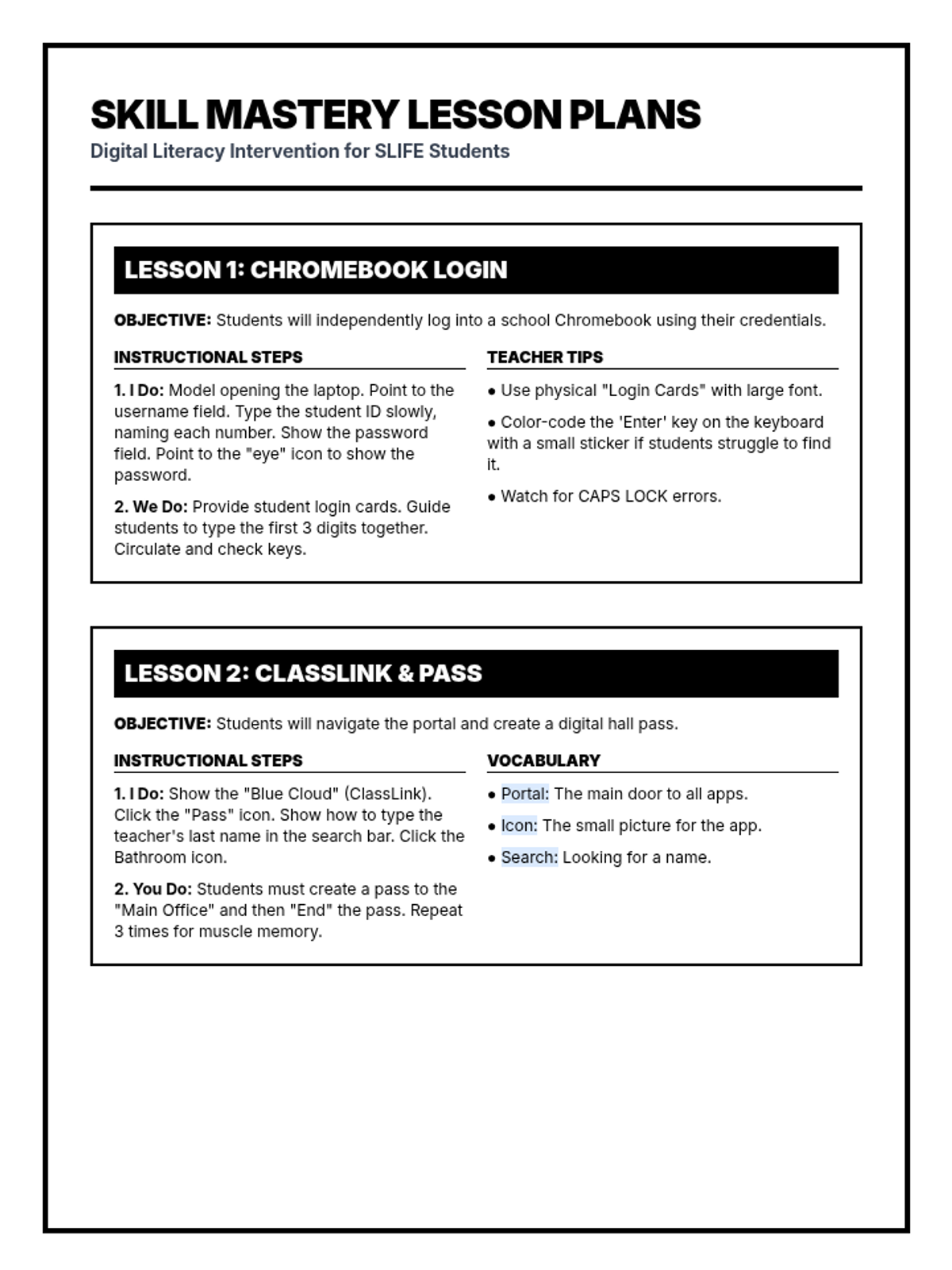
A structured set of teacher-facing lesson plans for the Tech Navigator intervention, providing step-by-step instructional routines for Chromebook login, ClassLink, Canvas, PowerSchool, and email mastery.
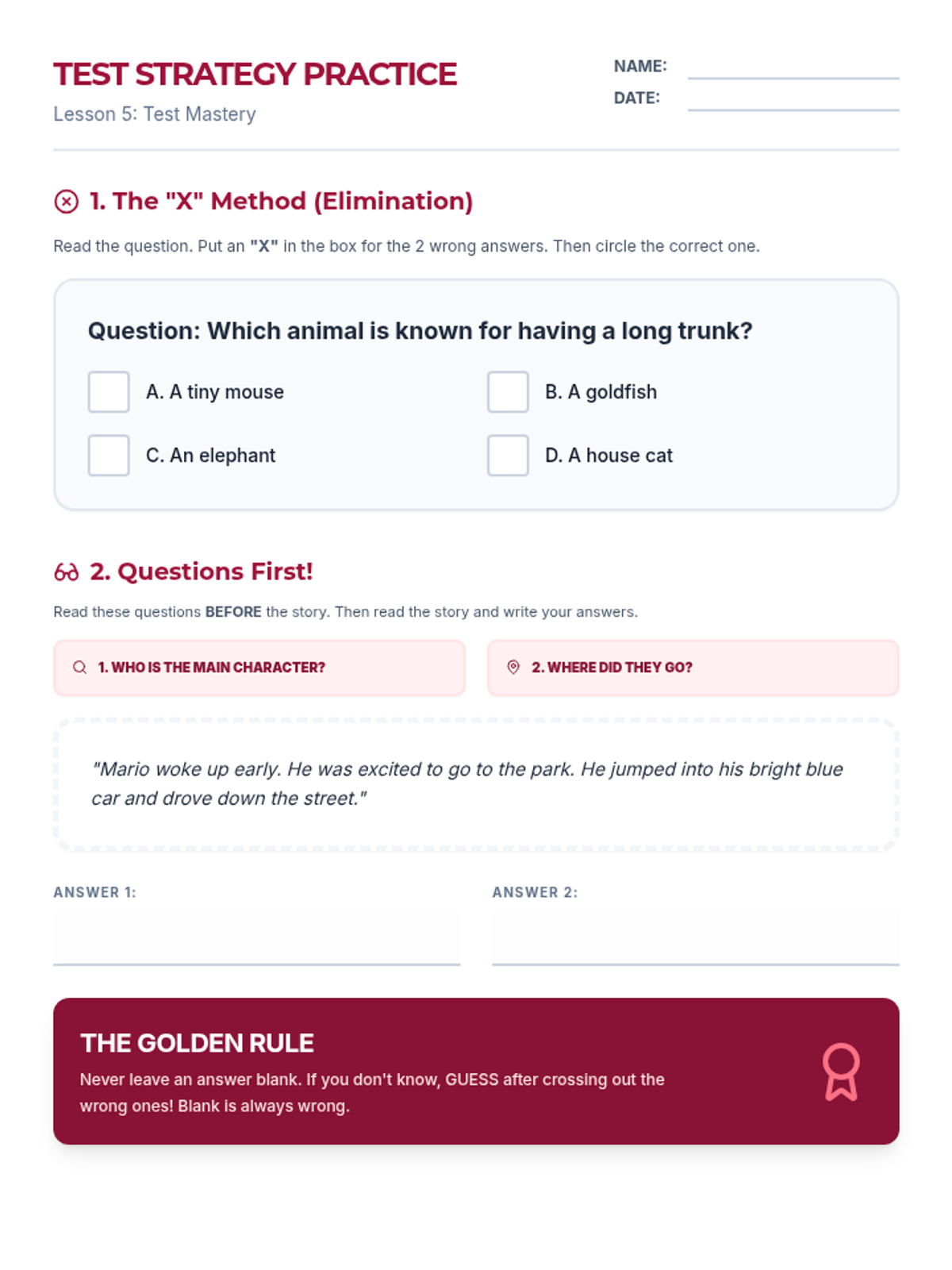
A student worksheet for Lesson 5 where they practice test-taking elimination and pre-reading questions. Complete with work areas and strategy reinforcement. One-page layout.
A slide deck for Lesson 5 that teaches test-taking strategies like elimination and reading questions first. High visibility visuals and corrected text for EL students.
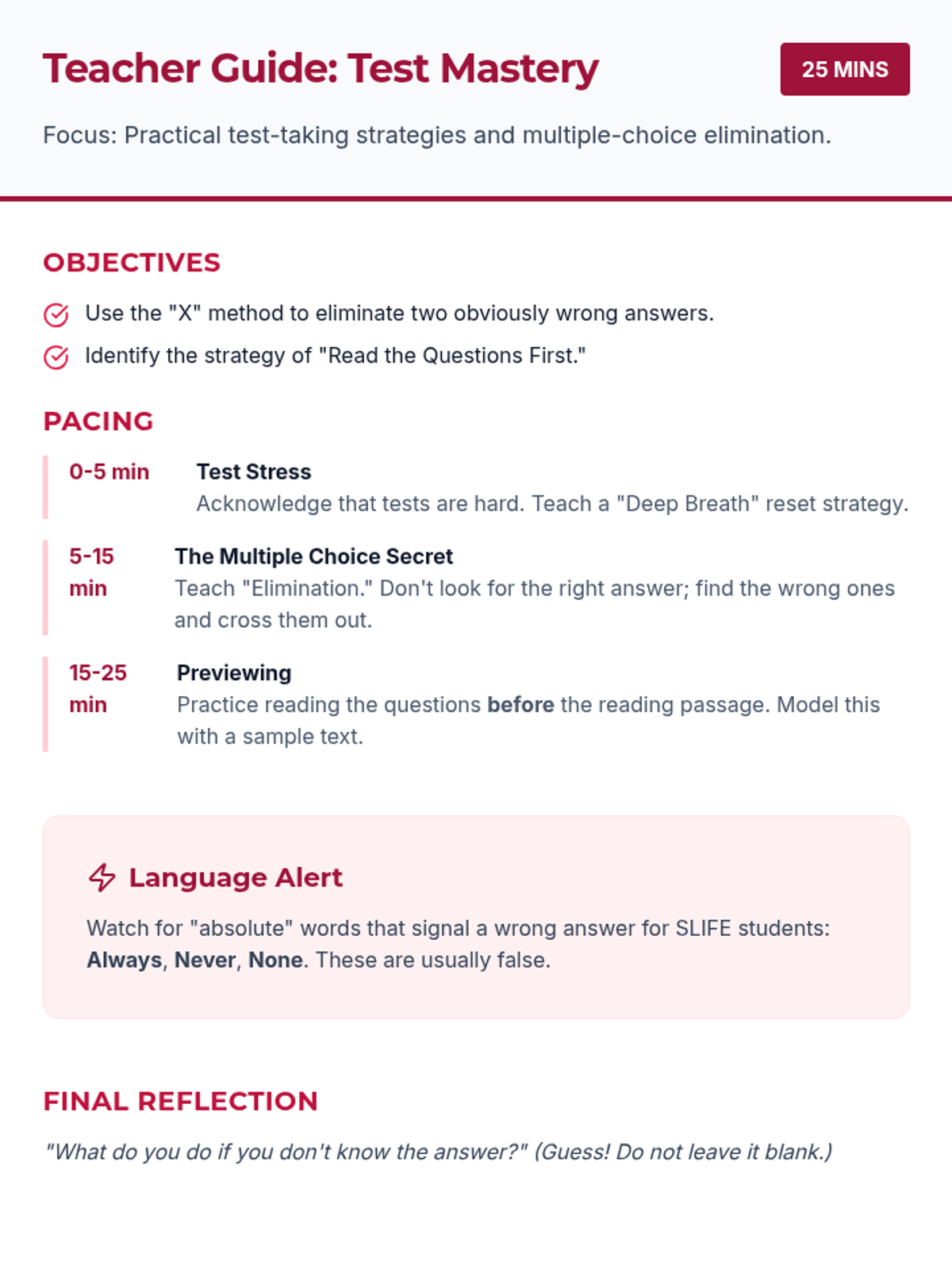
A teacher guide for Lesson 5, focusing on multiple-choice strategies and anxiety management for tests.
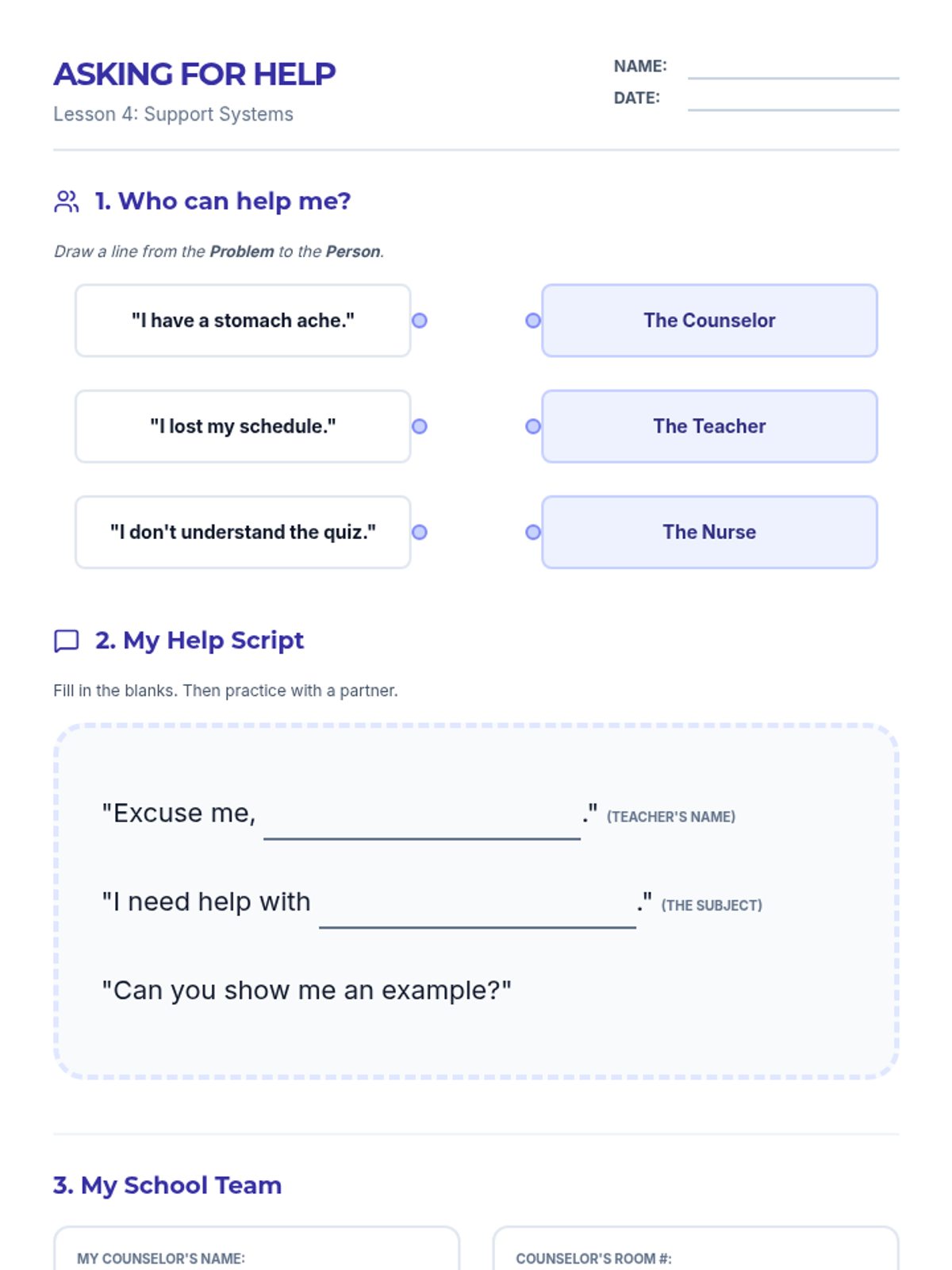
A student worksheet for Lesson 4 where they practice matching school problems to staff members and scripting a request for help. Optimized for handwriting space and clarity. One-page layout.
A slide deck for Lesson 4 that identifies school support roles and teaches students how to use scripts to ask for help. Visual contrast and scripts optimized for EL clarity.
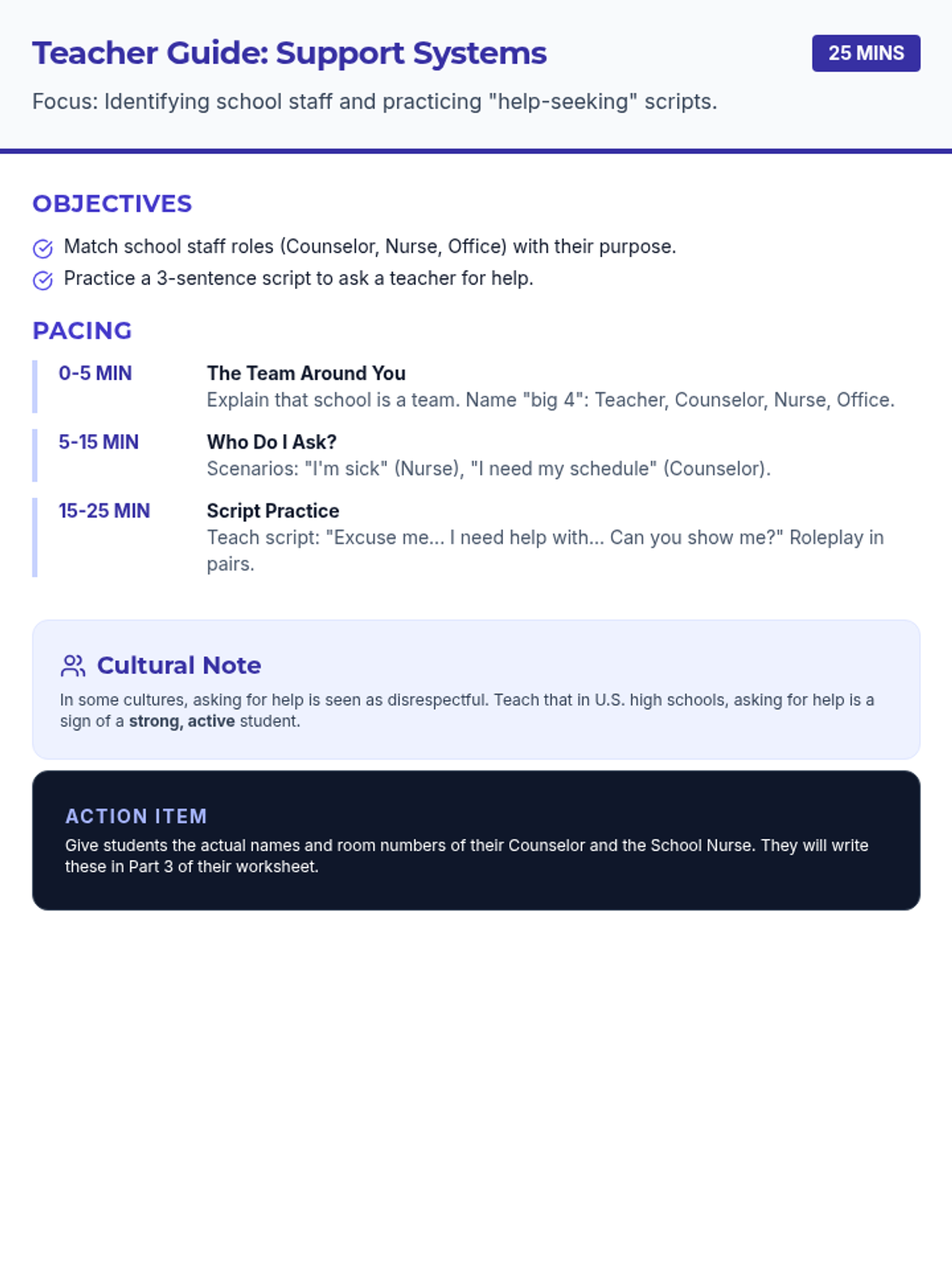
A teacher guide for Lesson 4, designed to help students identify school support staff and practice effective communication strategies. Optimized for one-page reference.
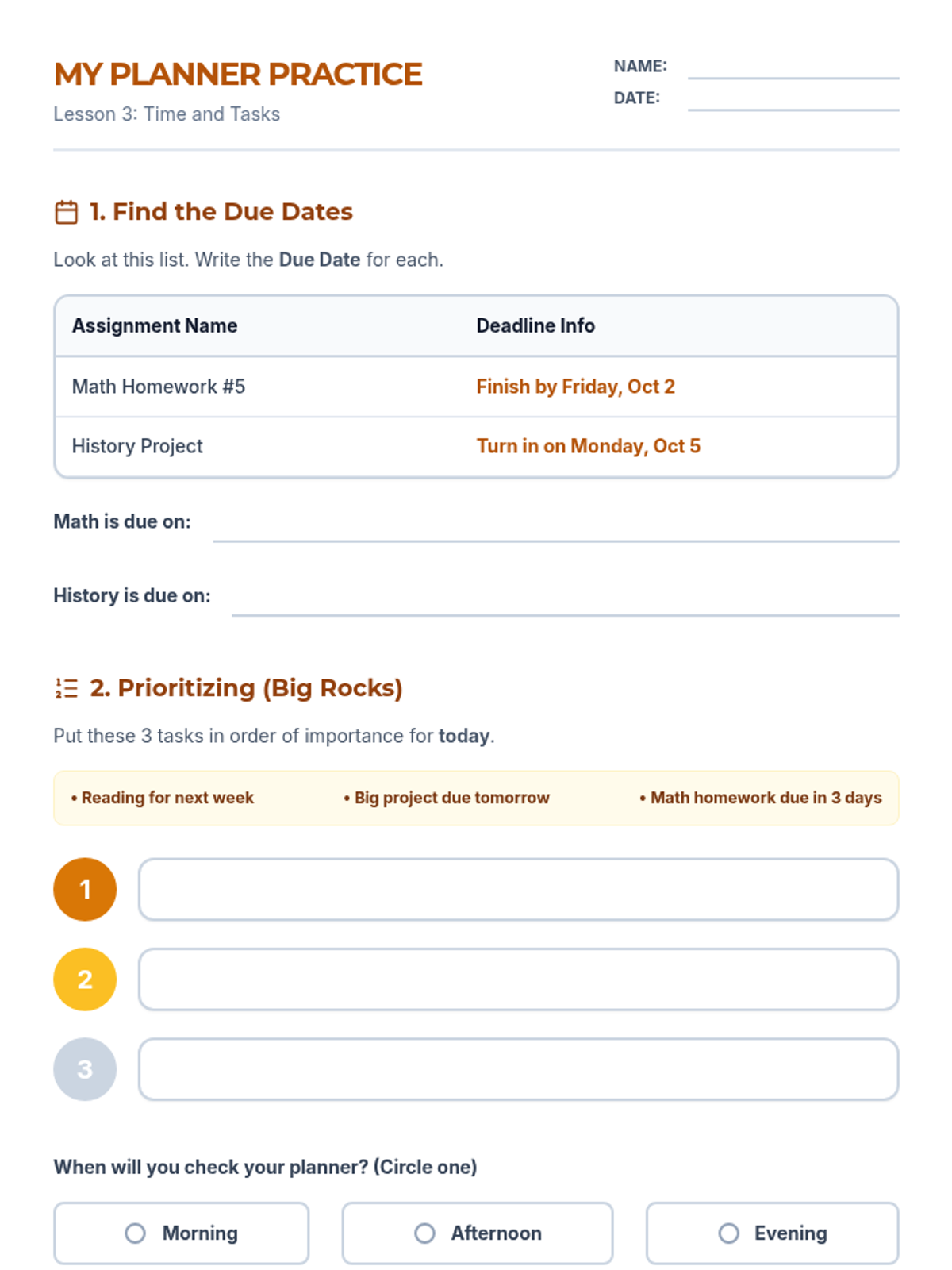
A student worksheet for Lesson 3 where they practice identifying due dates and prioritizing tasks. Concrete examples provided for sorting and handwriting space optimized for one-page layout.
A visual slide deck for Lesson 3 introducing time management, planners, due dates, and task prioritization.
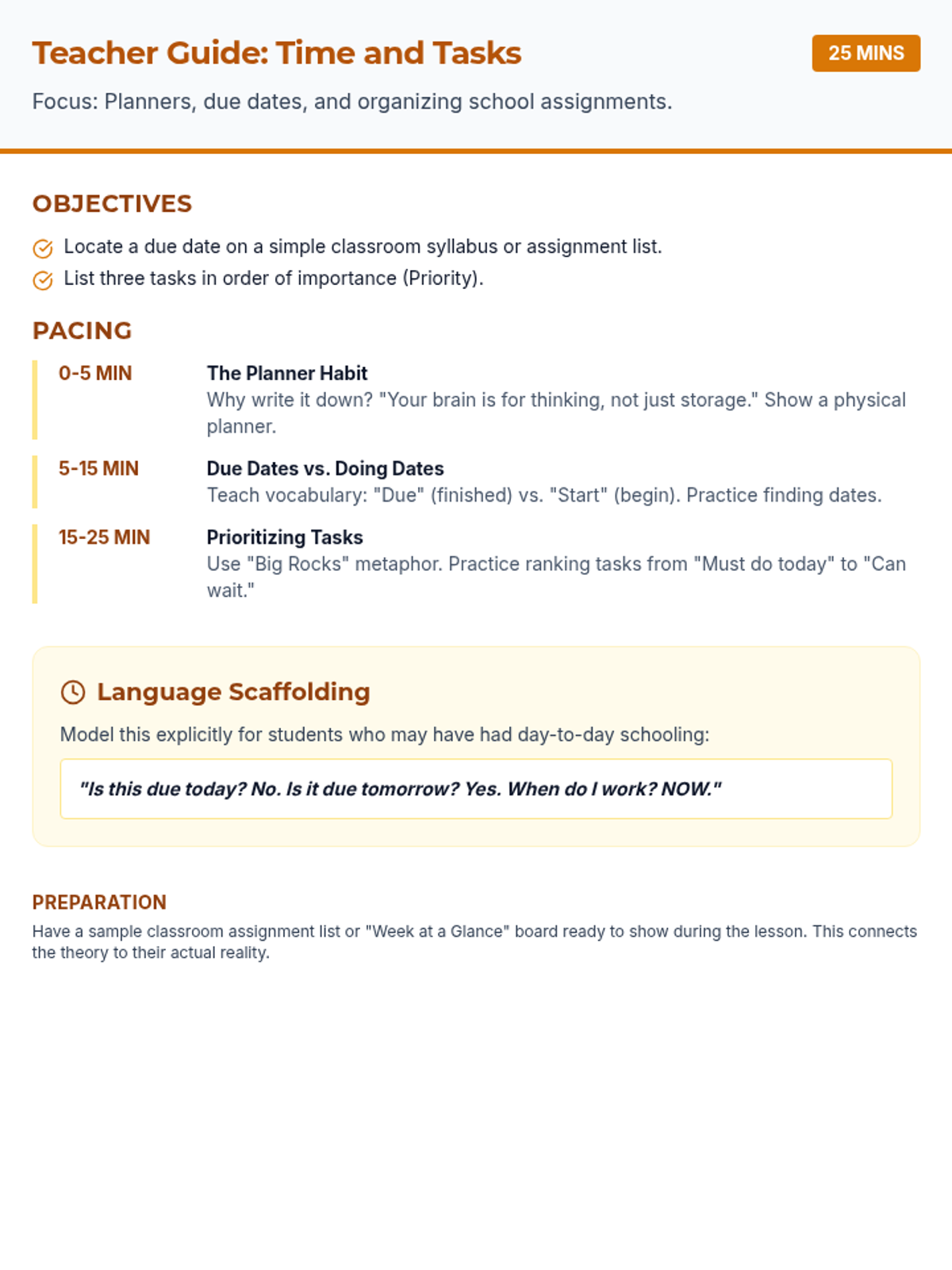
A teacher guide for Lesson 3 focusing on organizational habits, due dates, and task prioritization for high school SLIFE students. Optimized for one-page reference.
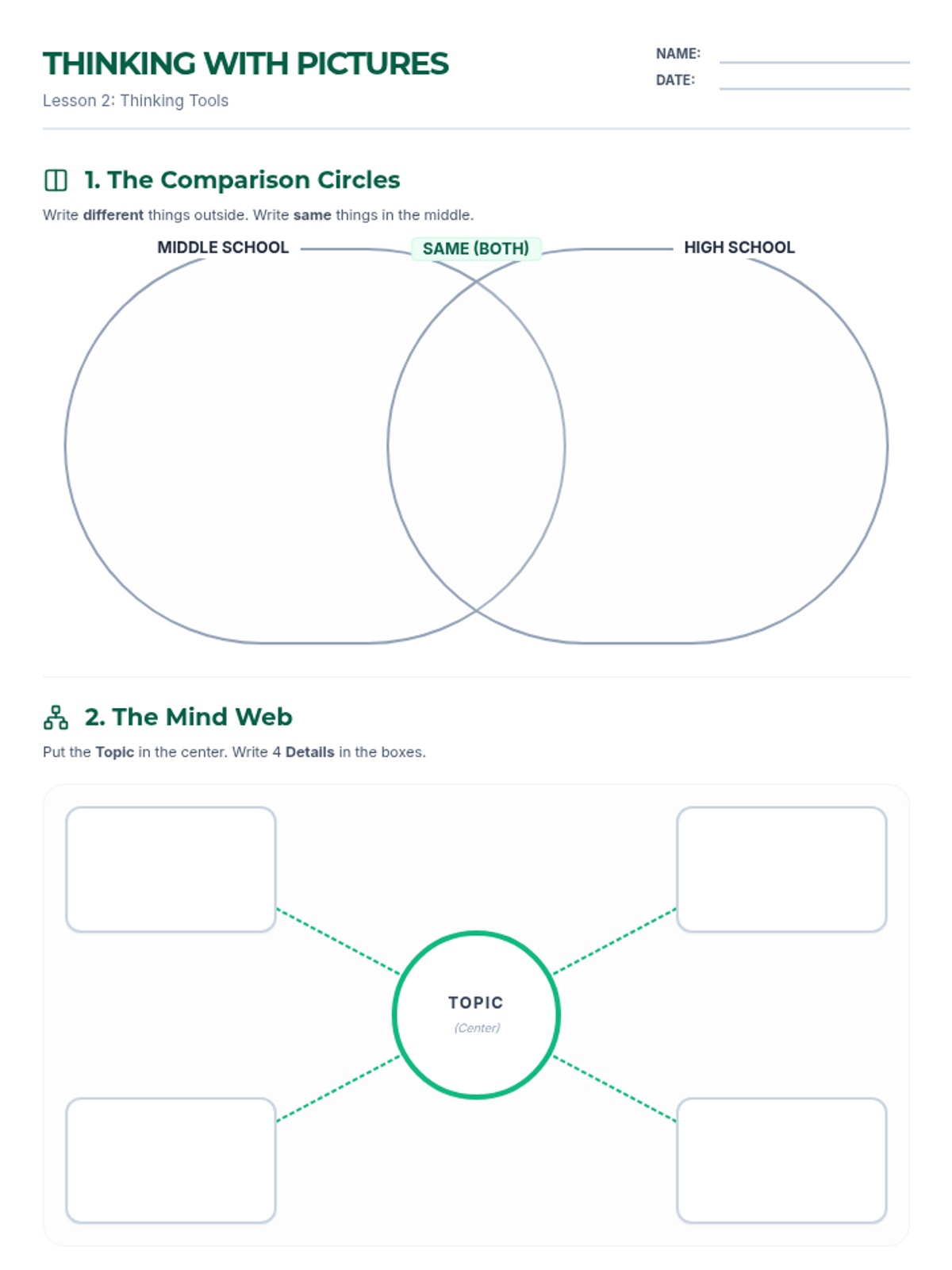
A student worksheet for Lesson 2 featuring practice areas for a Venn diagram and a Mind Web graphic organizer. Optimized for clear handwriting space and visual connection logic. One-page layout.
A visual slide deck for Lesson 2 that introduces graphic organizers, specifically the Mind Web and Venn Diagram, as tools for understanding lessons. Includes visual connection lines for the Mind Web example.
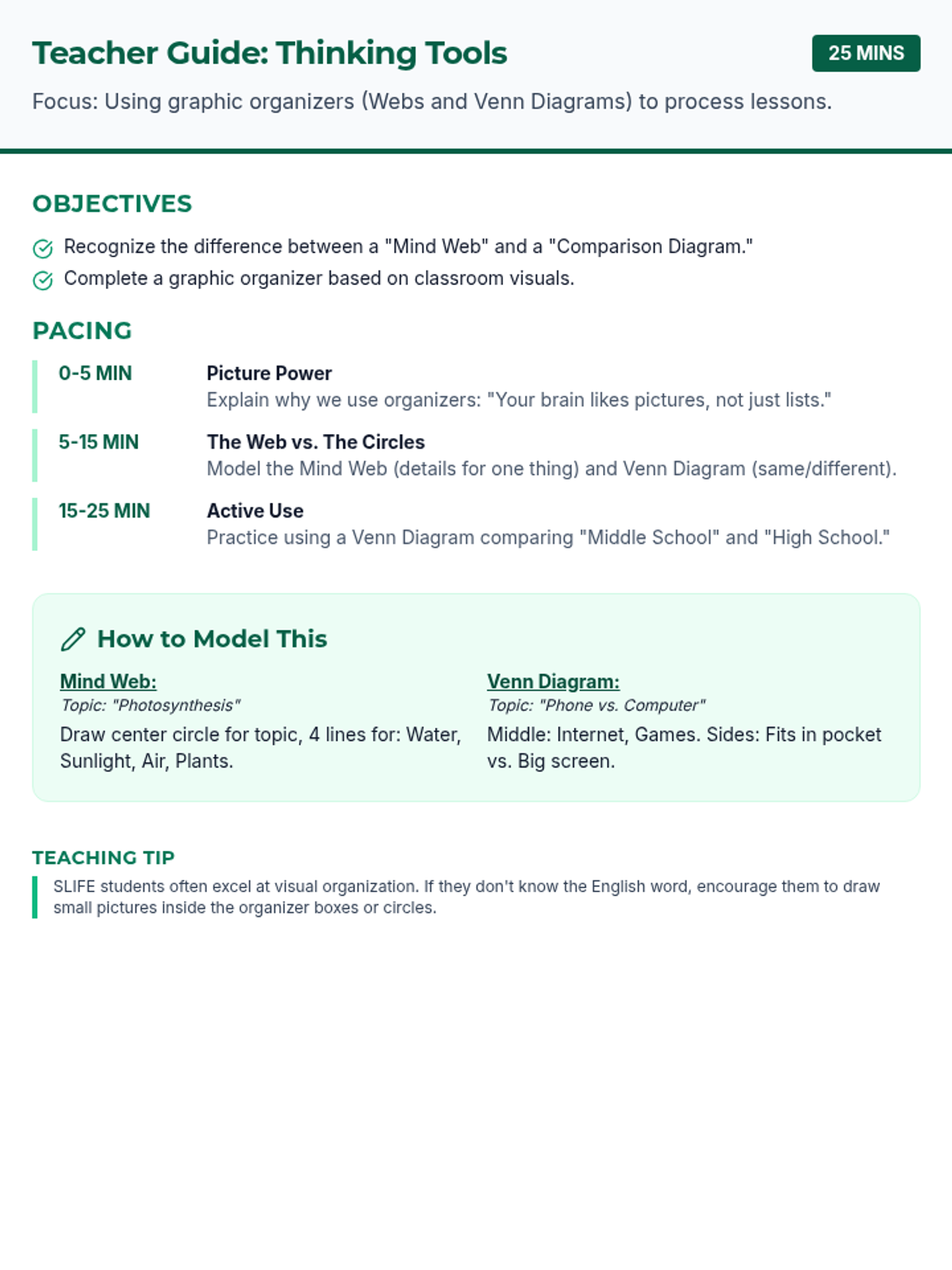
A teacher-facing guide for Lesson 2, focusing on the use of graphic organizers like webs and Venn diagrams for academic success. One-page optimized layout with visual modeling examples.
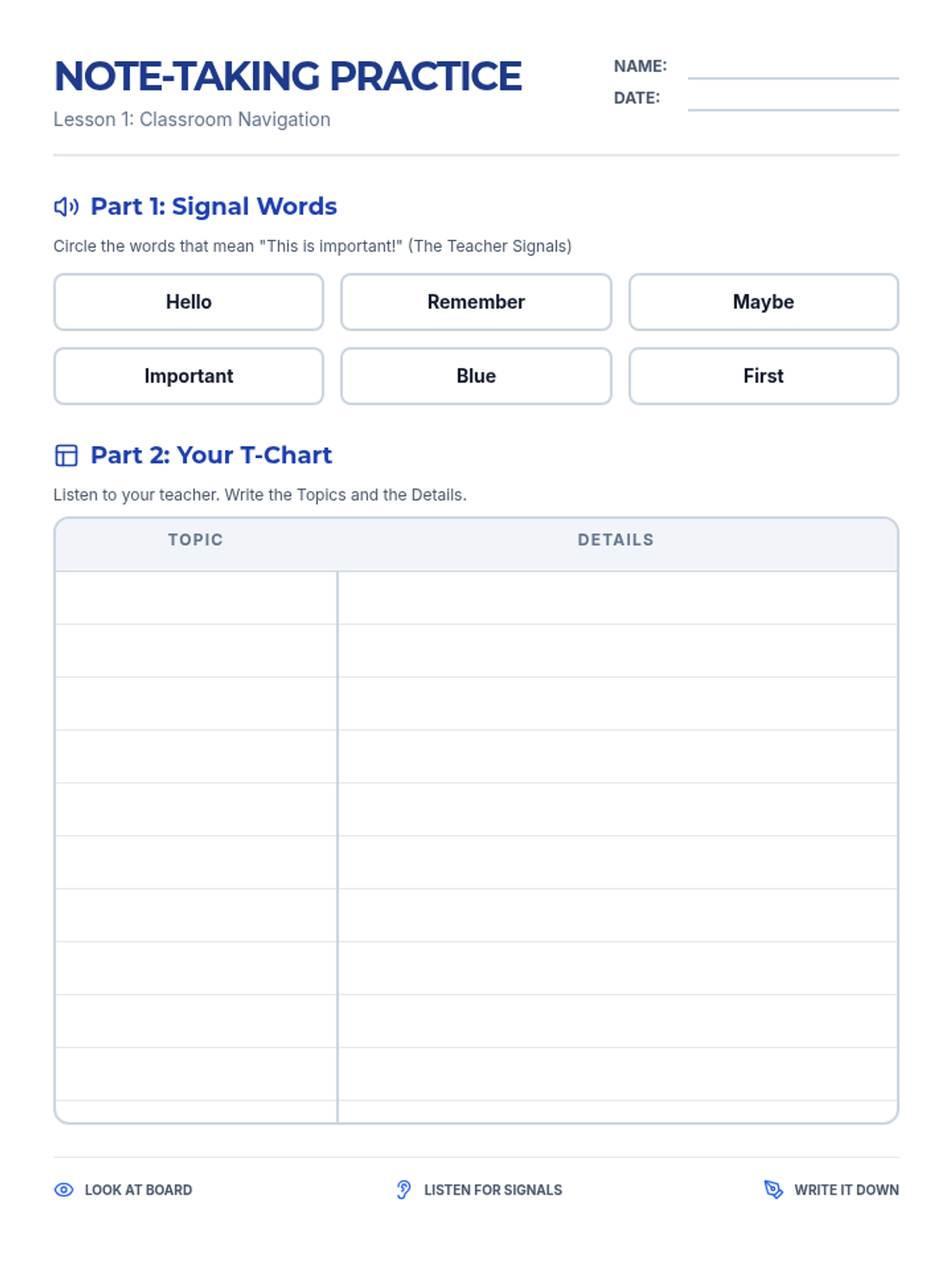
A student worksheet for Lesson 1 where they practice identifying signal words and using a T-chart for note-taking. Uniform styling for exercises and handwriting lines included. One-page layout.
A visual slide deck for Lesson 1 focused on teaching visual and verbal cues in the classroom and the T-chart note-taking method. High contrast for classroom projection.
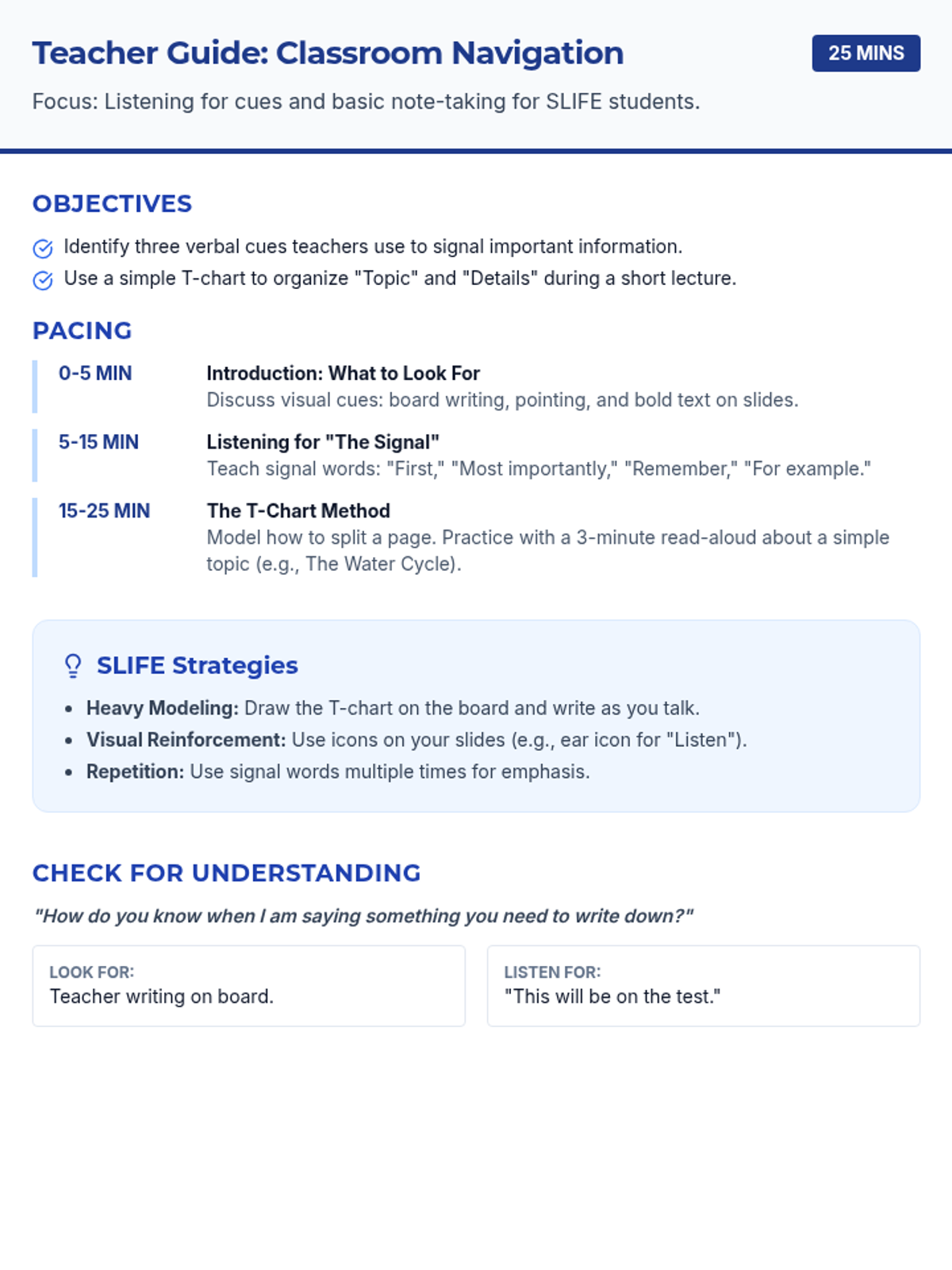
A teacher-facing guide for Lesson 1, detailing the 25-minute pacing, learning objectives, and specific instructional strategies for SLIFE students regarding classroom cues and note-taking. Optimized for one-page printing.
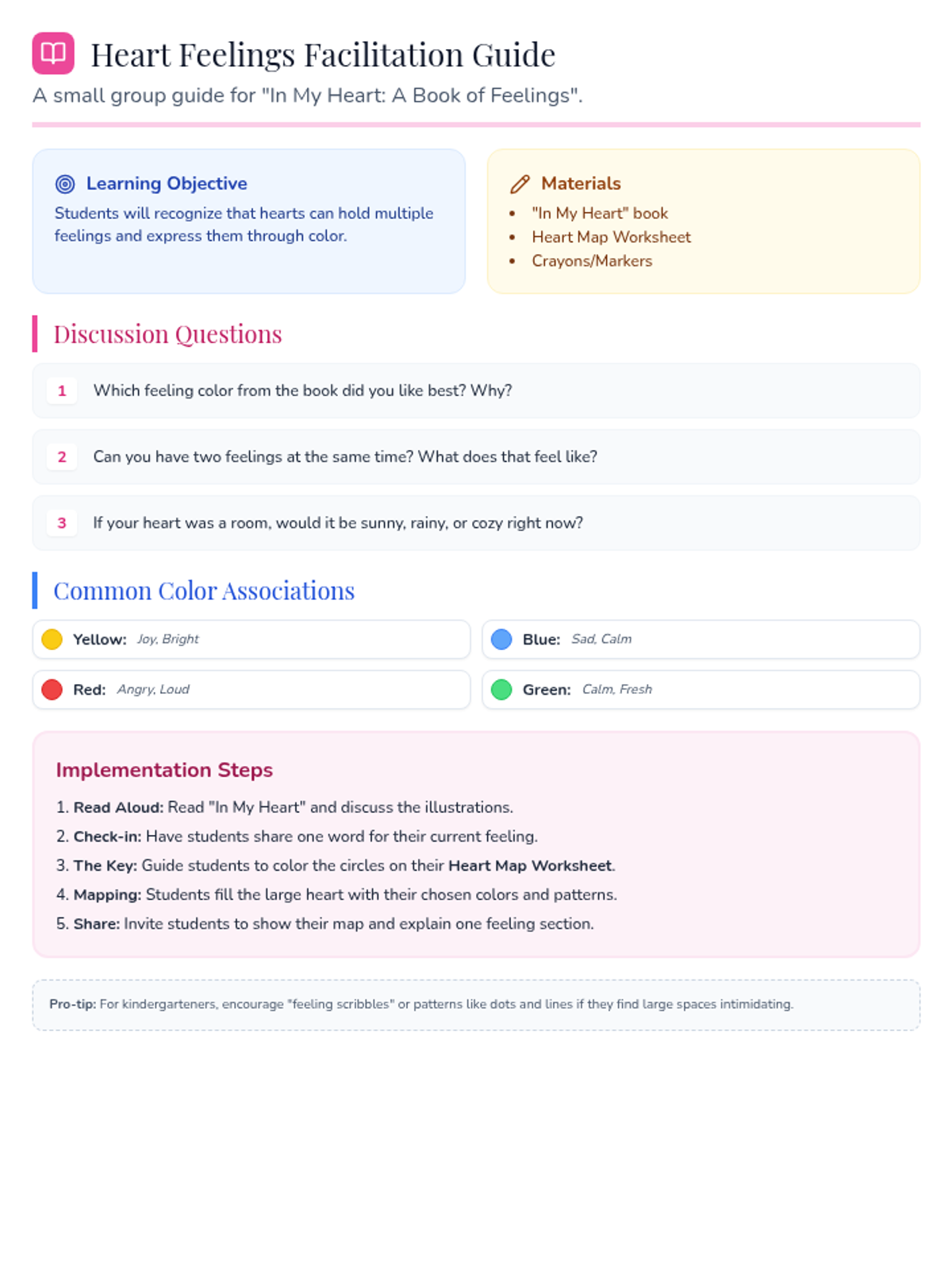
A teacher-facing facilitation guide for a small group counseling session. Includes learning objectives, discussion prompts, materials list, and common color-emotion associations to support the art activity.
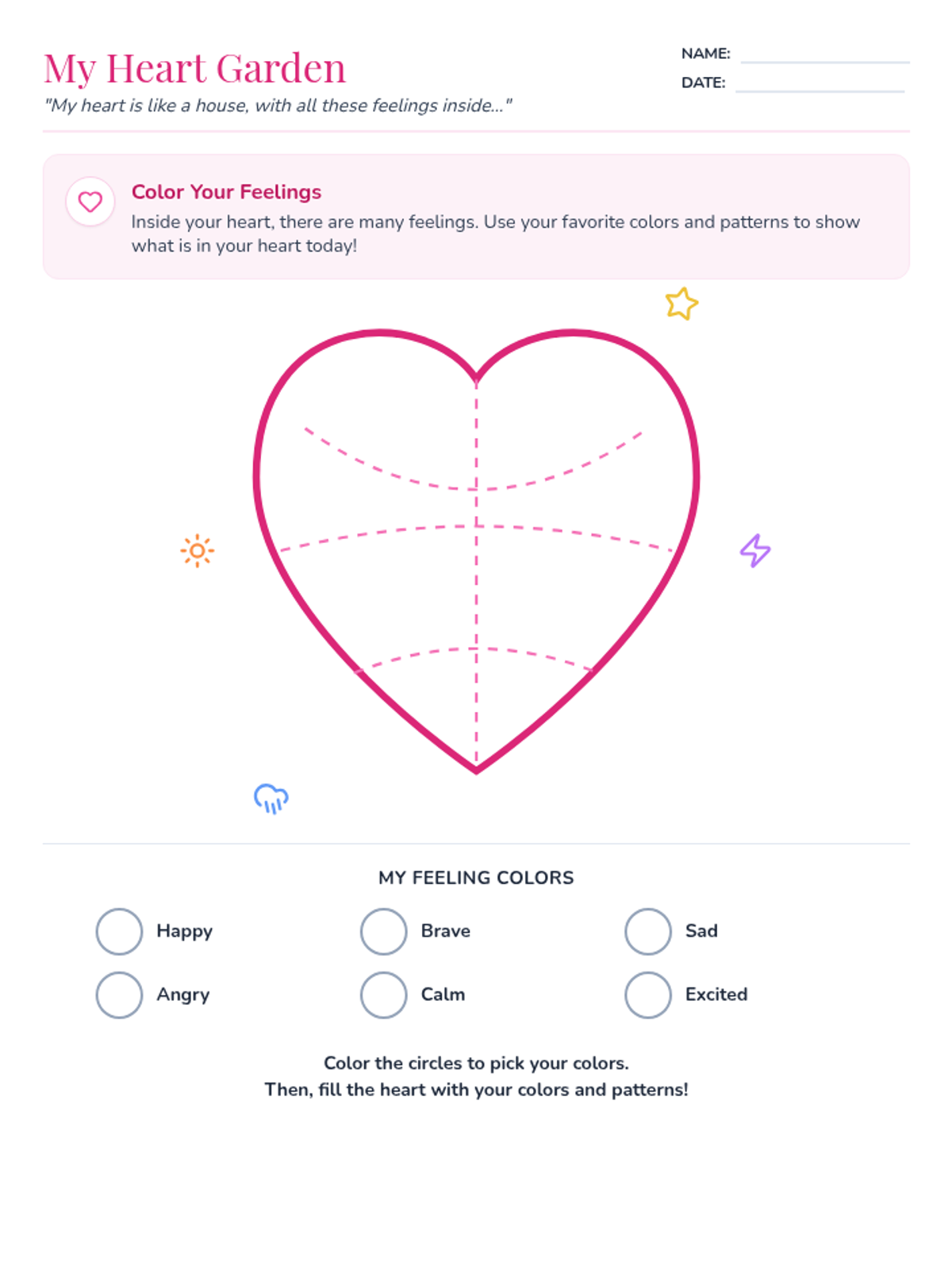
A printable coloring worksheet featuring a large central heart divided into subtle sections, allowing students to 'map' their feelings using colors and patterns inspired by the book. Includes a key for defining colors for different emotions.
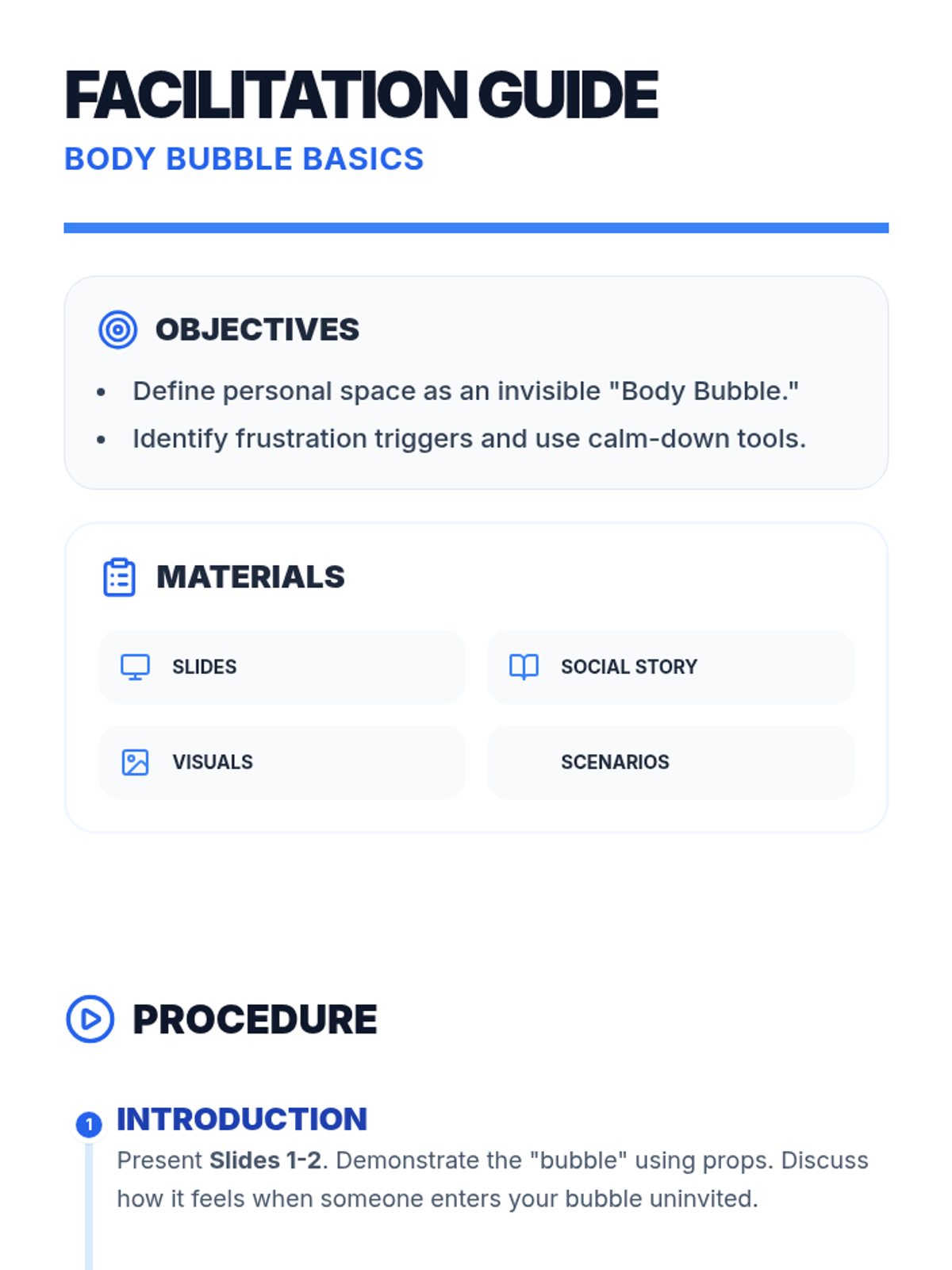
A teacher-facing guide outlining the lesson flow, instructional strategies, and tips for supporting students who struggle with physical aggression and frustration.
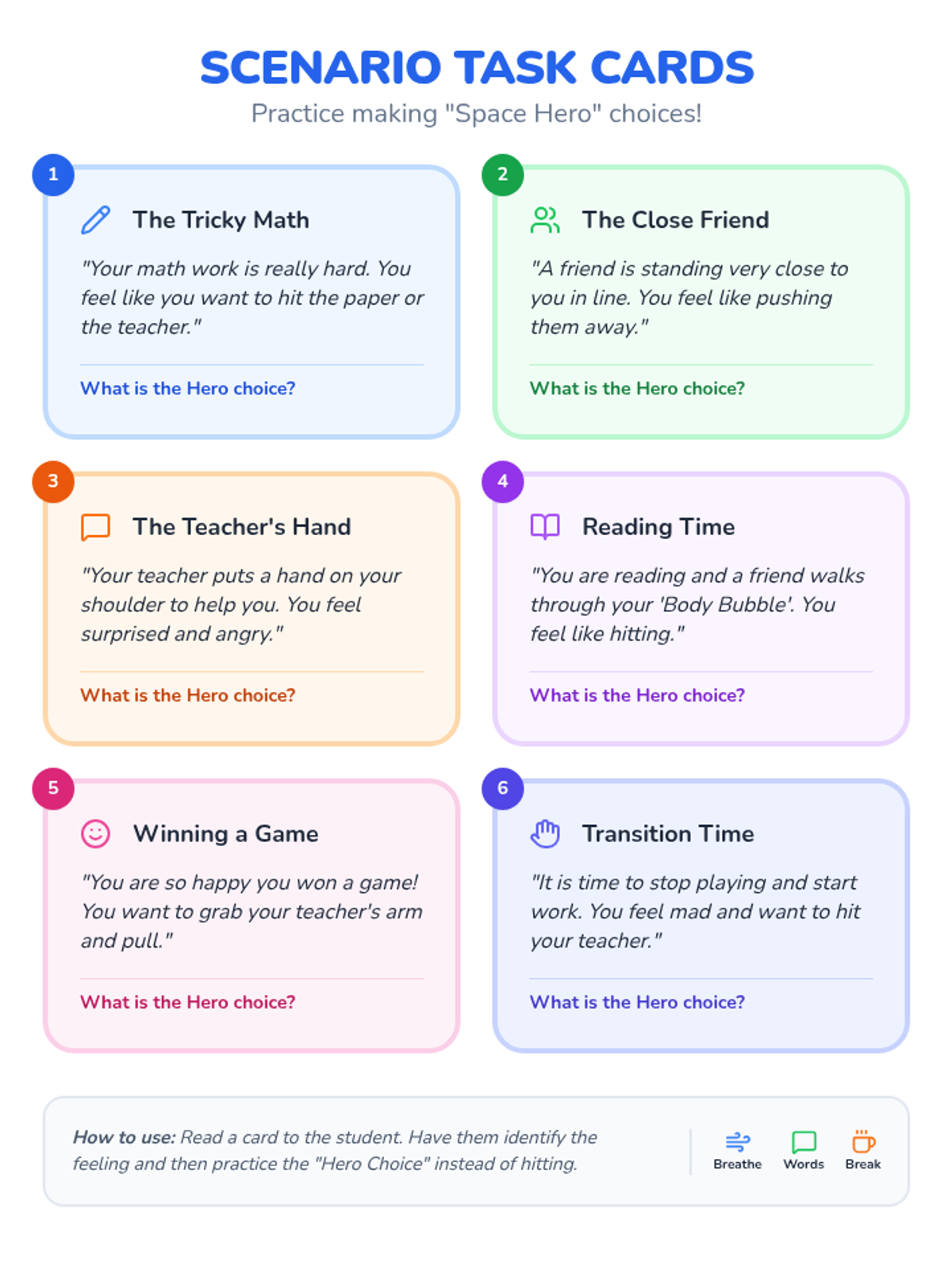
Six scenario cards focusing on common triggers like difficult work, personal space intrusion, and transitions, designed for role-play and social problem-solving.
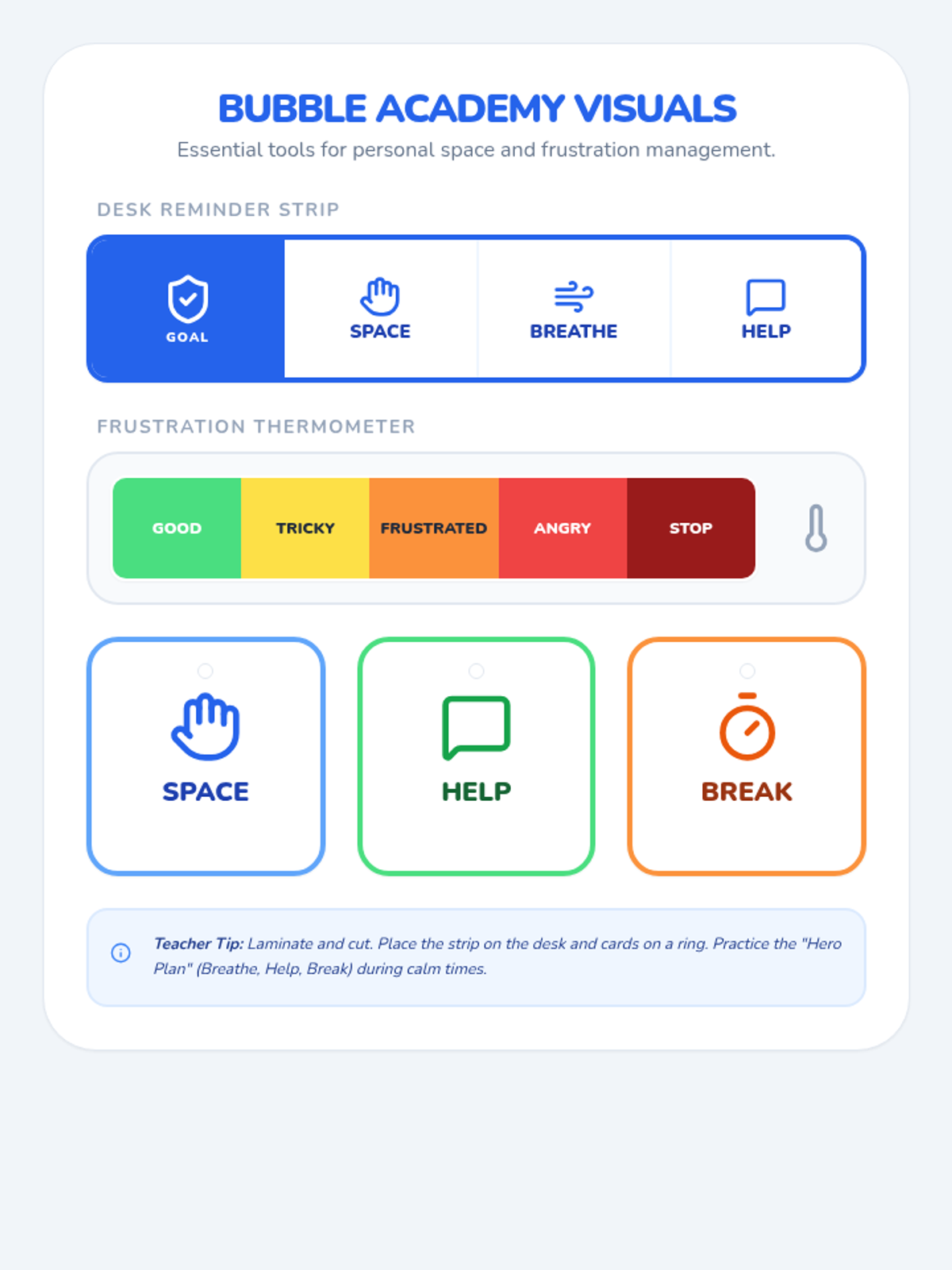
Visual supports including a desk reminder strip, a frustration thermometer, and individual prompt cards for personal space, asking for help, and taking breaks.
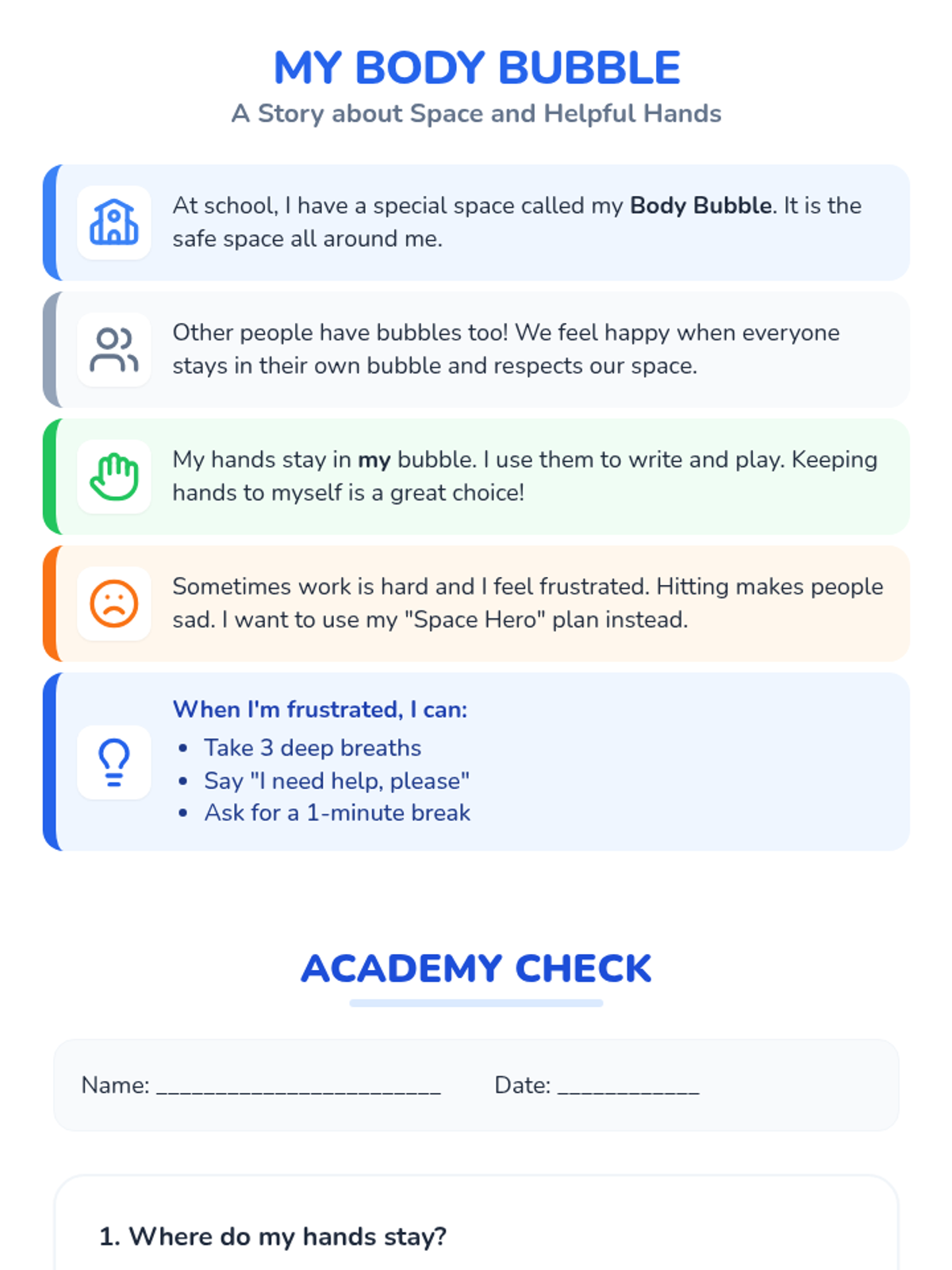
A structured social story with simple language and visual panels, followed by a brief reflection section for a student to demonstrate understanding of the 'Body Bubble' concept.