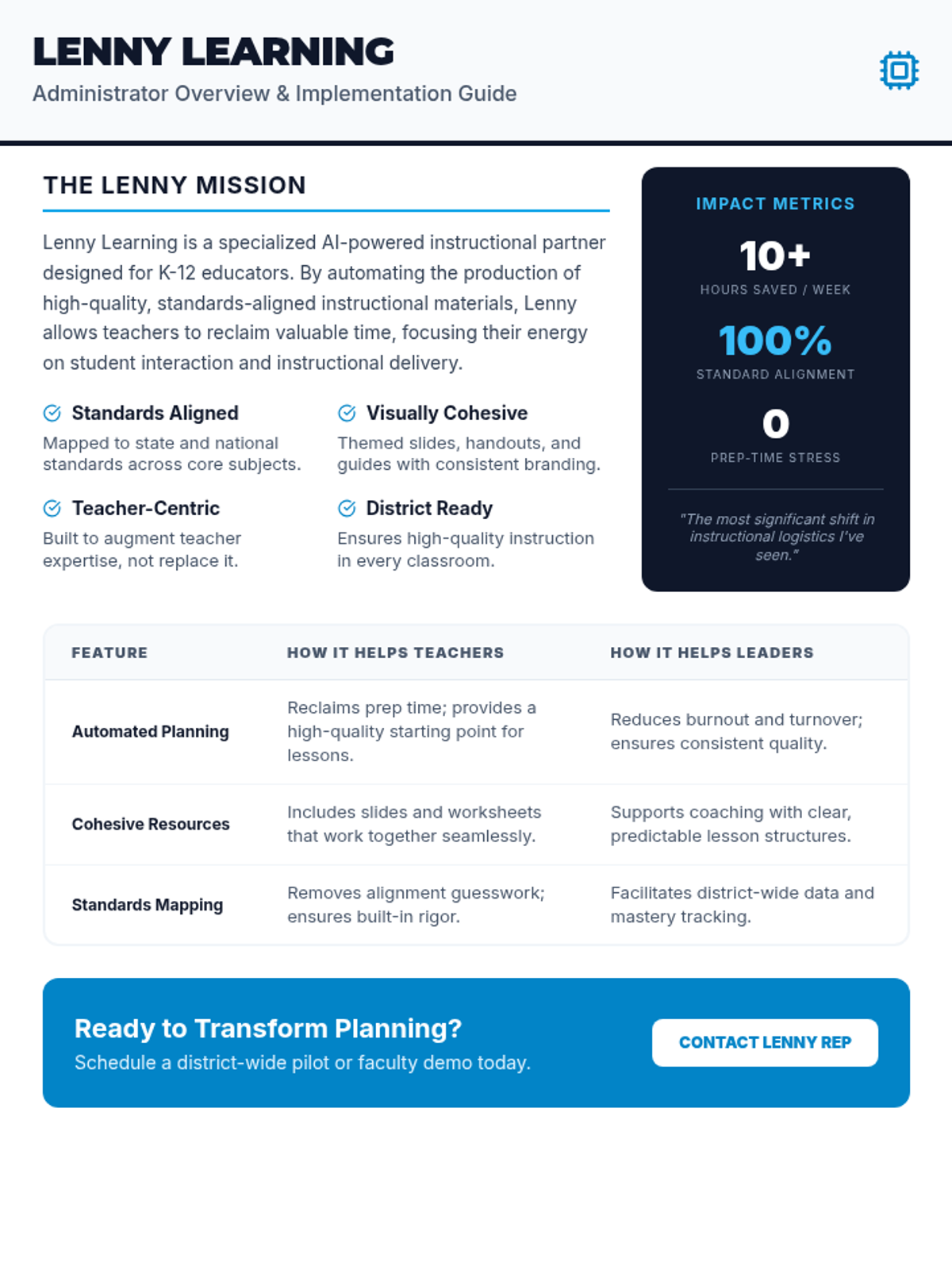
A professional presentation designed for school administrators, introducing Lenny Learning as an AI instructional partner that streamlines planning and ensures curricular consistency.
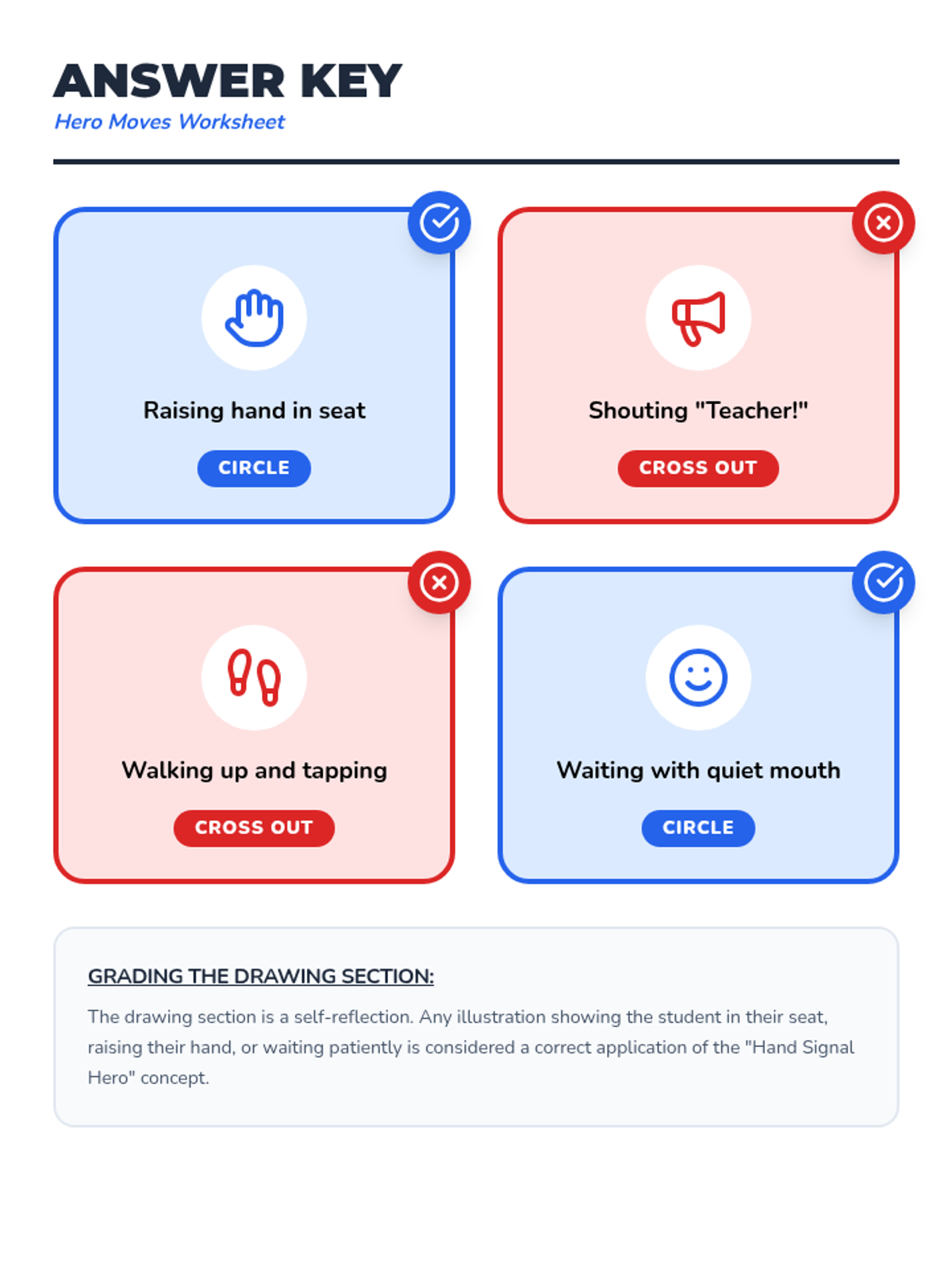
An answer key for the Hero Moves Worksheet, clearly indicating which behaviors should be circled as "Hero Moves" and which should be crossed out.
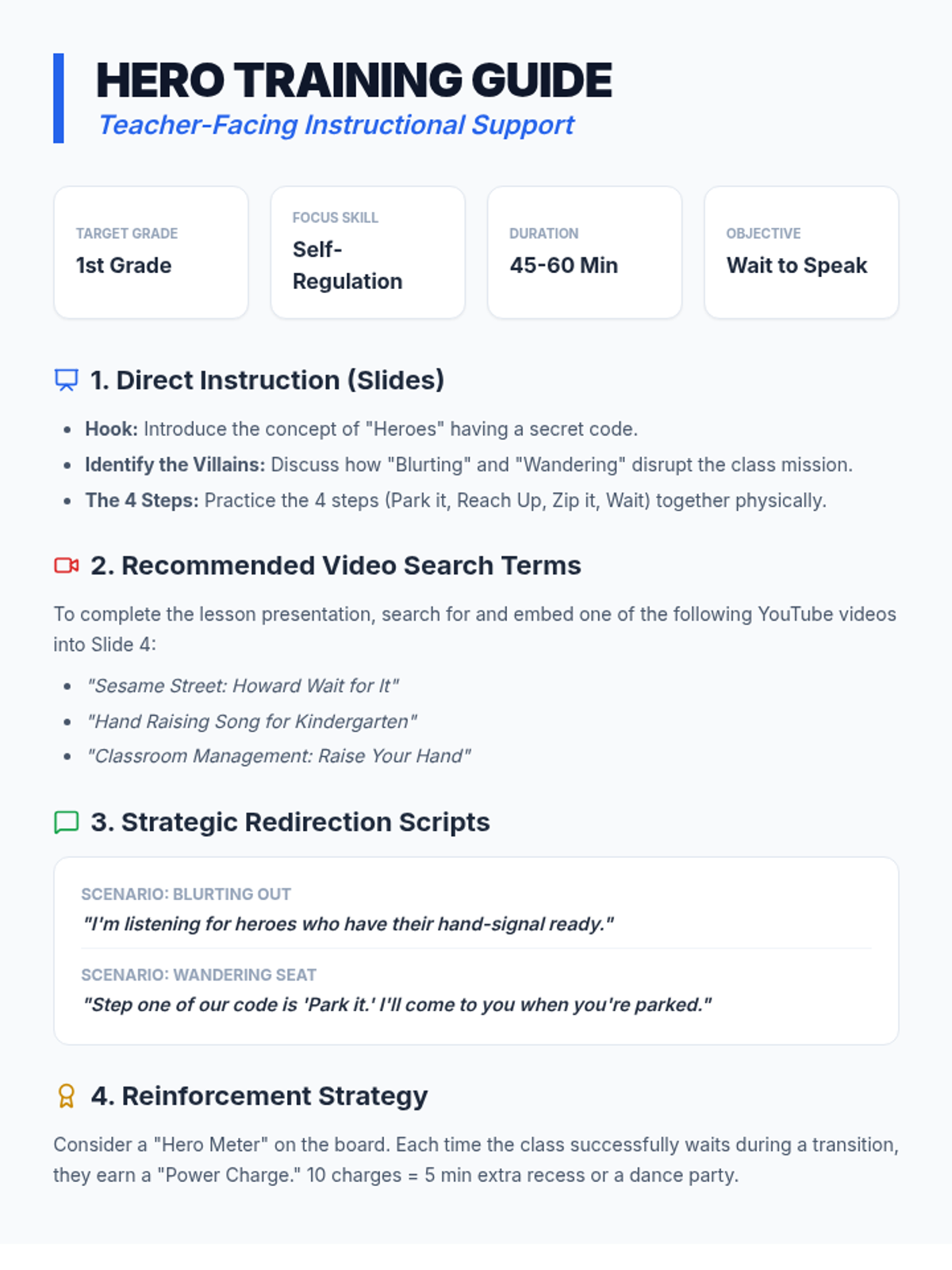
A comprehensive teacher guide for implementing the Hand Signal Heroes lesson, including lesson flow, video search suggestions, and redirection scripts.
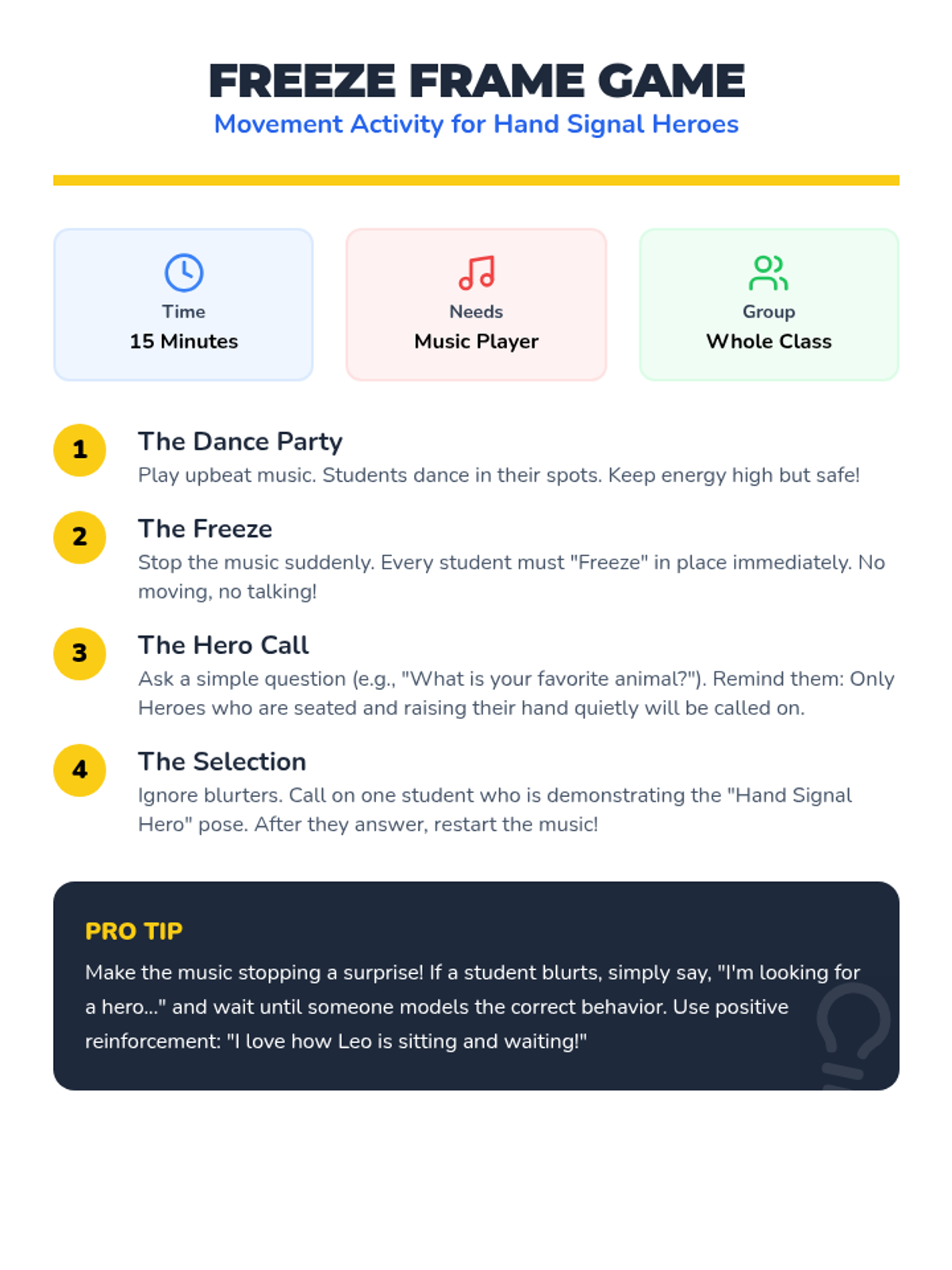
A guide for teachers to lead a "Freeze Frame" movement activity that practices hand-raising and waiting skills in a high-energy classroom setting.
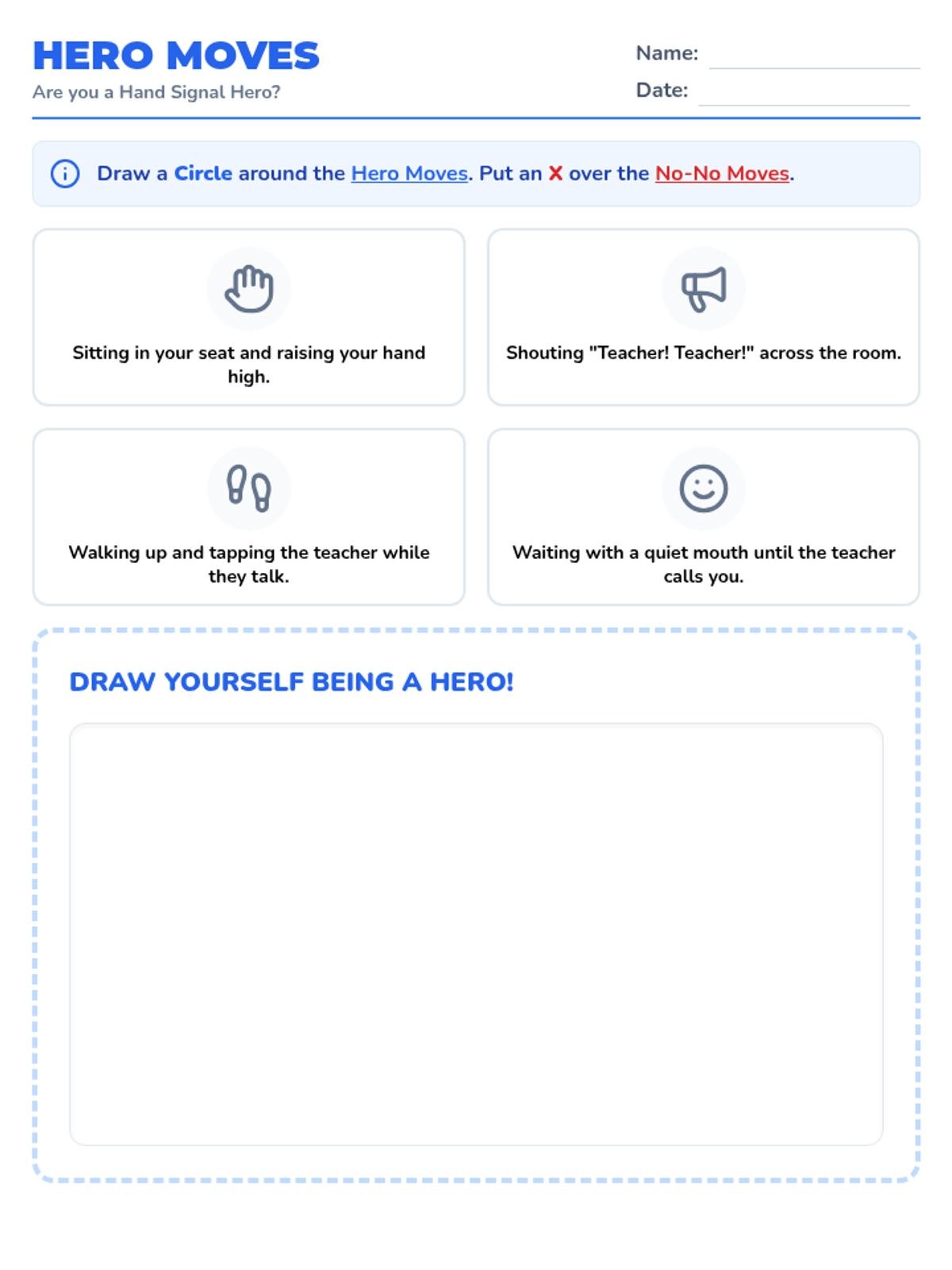
A student worksheet where 1st graders identify positive and negative ways to get a teacher's attention through a sorting activity and drawing.
A vibrant, comic-book themed slide deck teaching 1st graders the four steps of being a "Hand Signal Hero": sit in seat, raise hand, stay quiet, and wait.
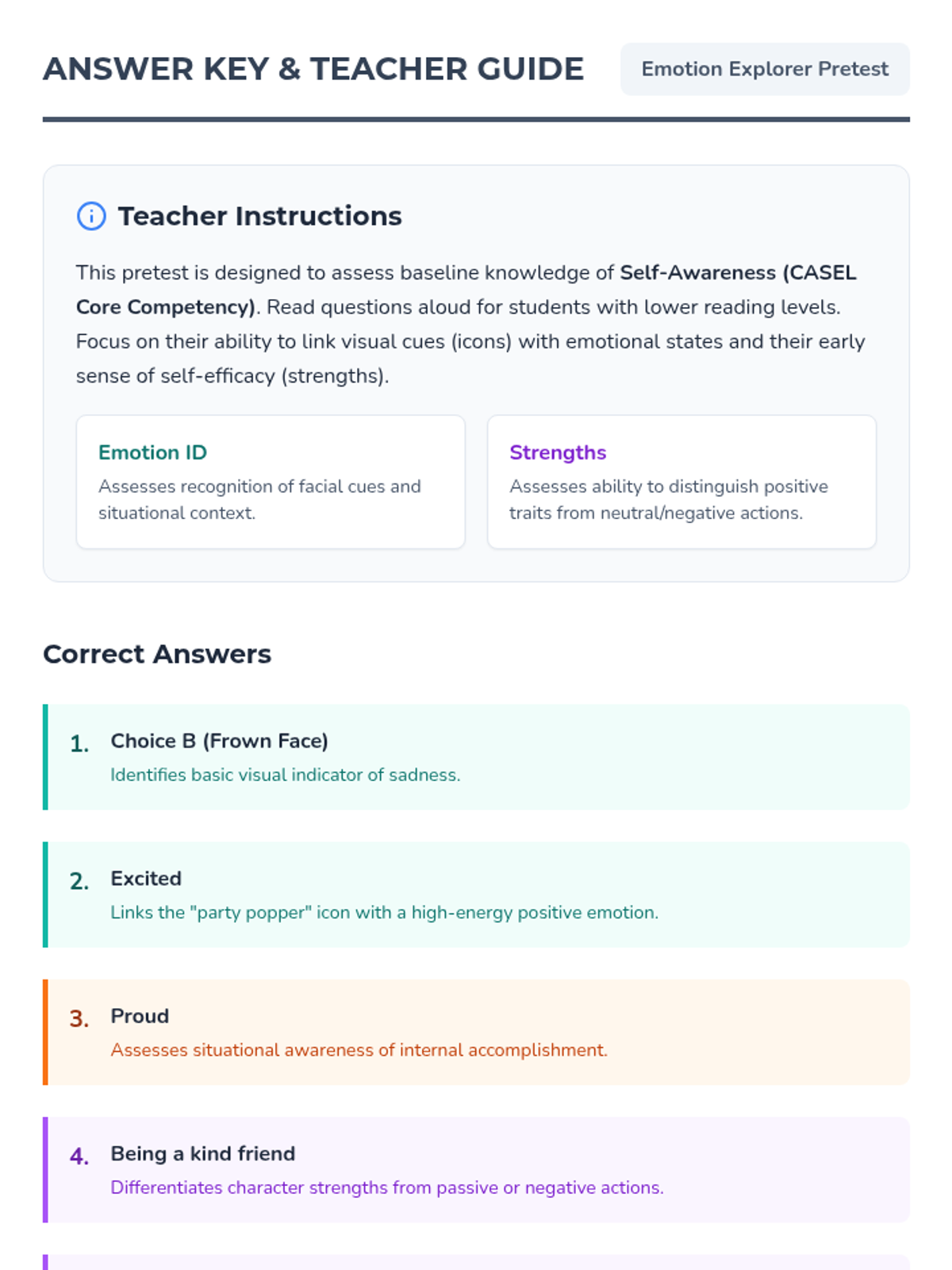
A teacher resource including the answer key for the Emotion Explorer Pretest and a guide for observing student self-awareness levels.
An engaging slide presentation introducing the concepts of self-awareness, emotions, and personal strengths to 2nd-grade students. Updated with standardized interactive quiz styling.
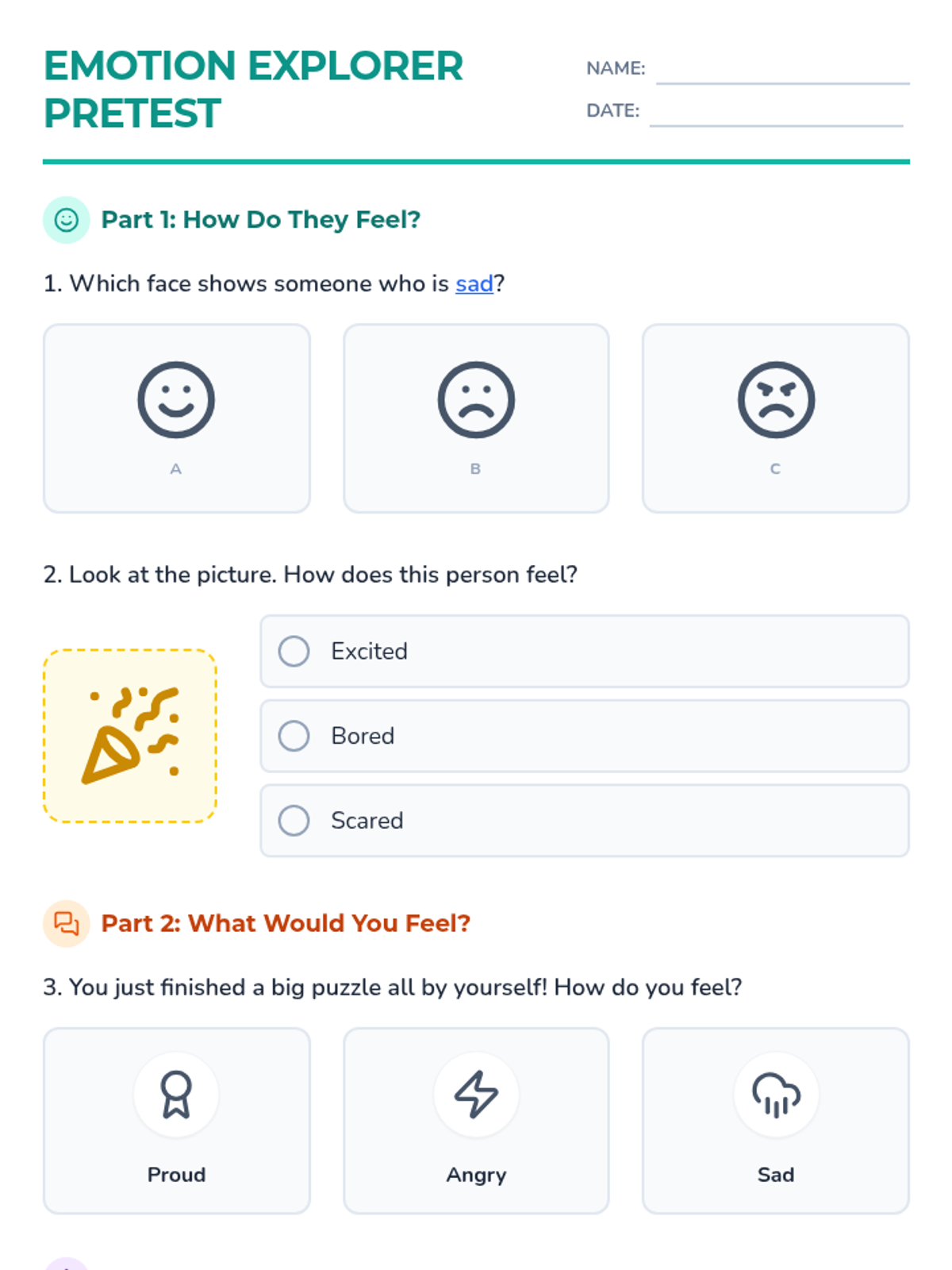
A visual pretest for 2nd graders to assess their ability to identify basic emotions and recognize personal strengths using icons and simple scenarios. Condensed to 2 pages with improved consistency.
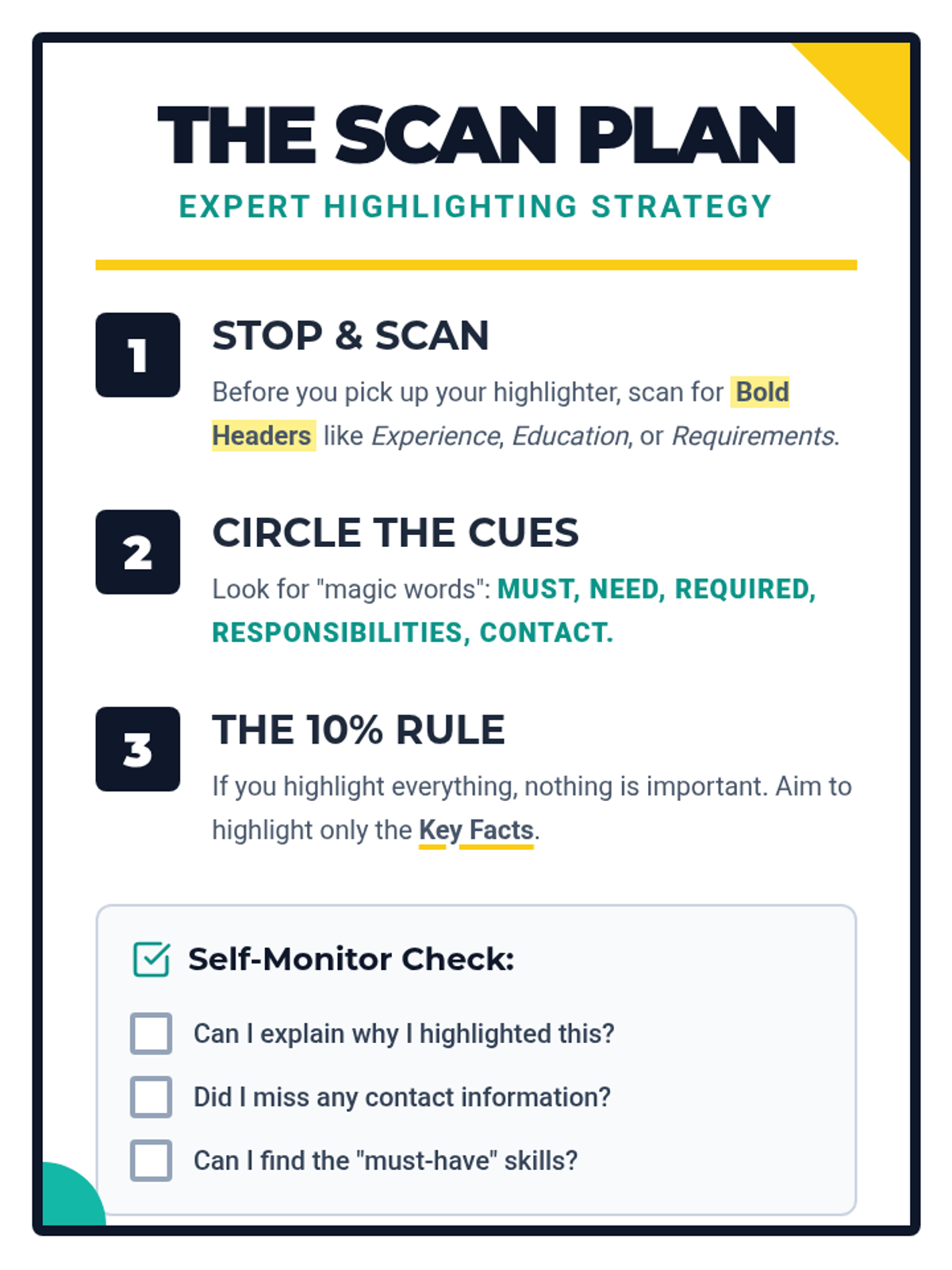
An anchor chart for self-monitoring highlighting strategies, providing students with a step-by-step "Scan Plan" for functional texts. Optimized for single-page printing.
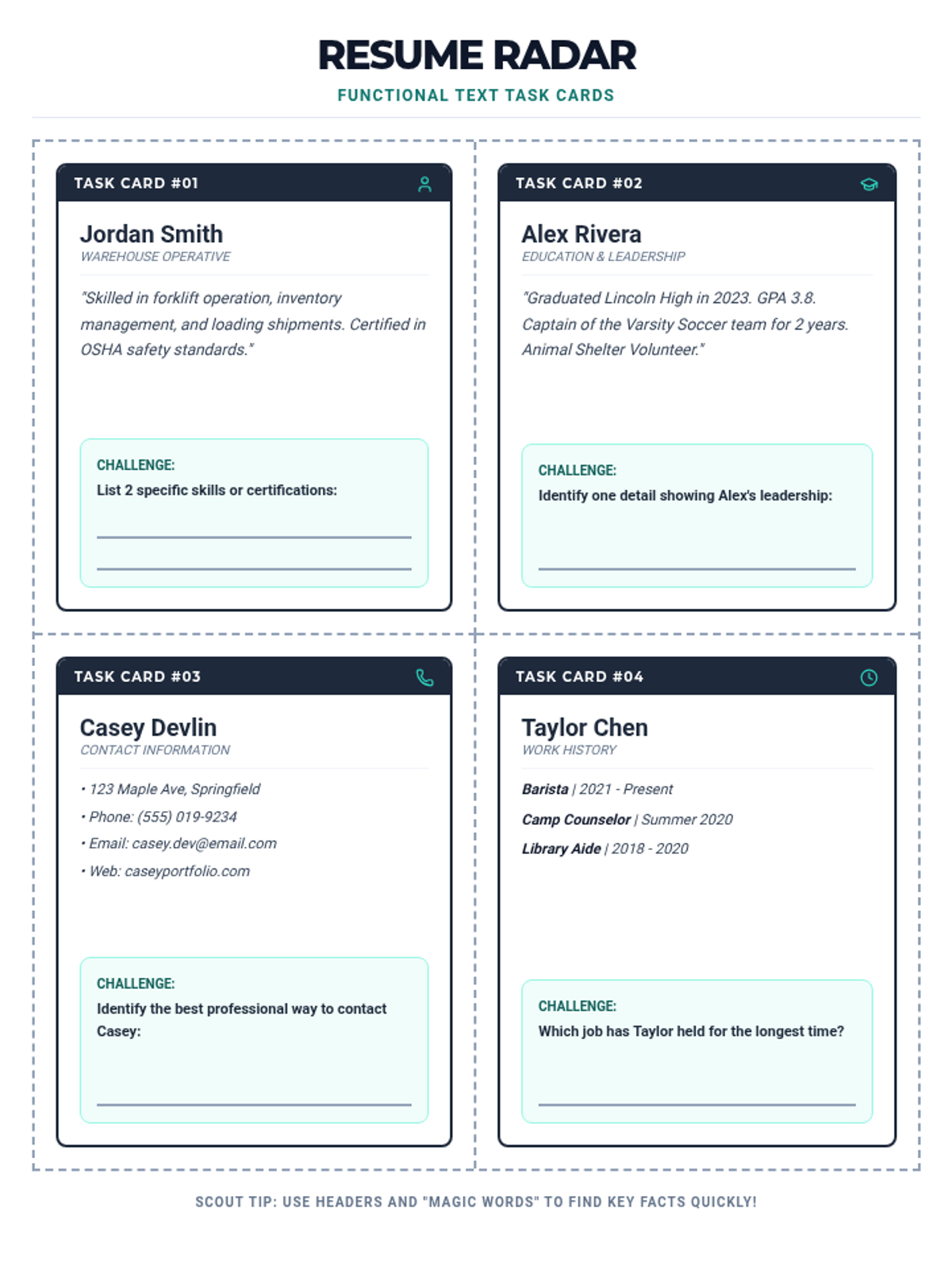
A set of 4 functional text task cards focusing on scanning resumes for specific details like experience, contact info, and work history. Includes cutting guides and student response areas.
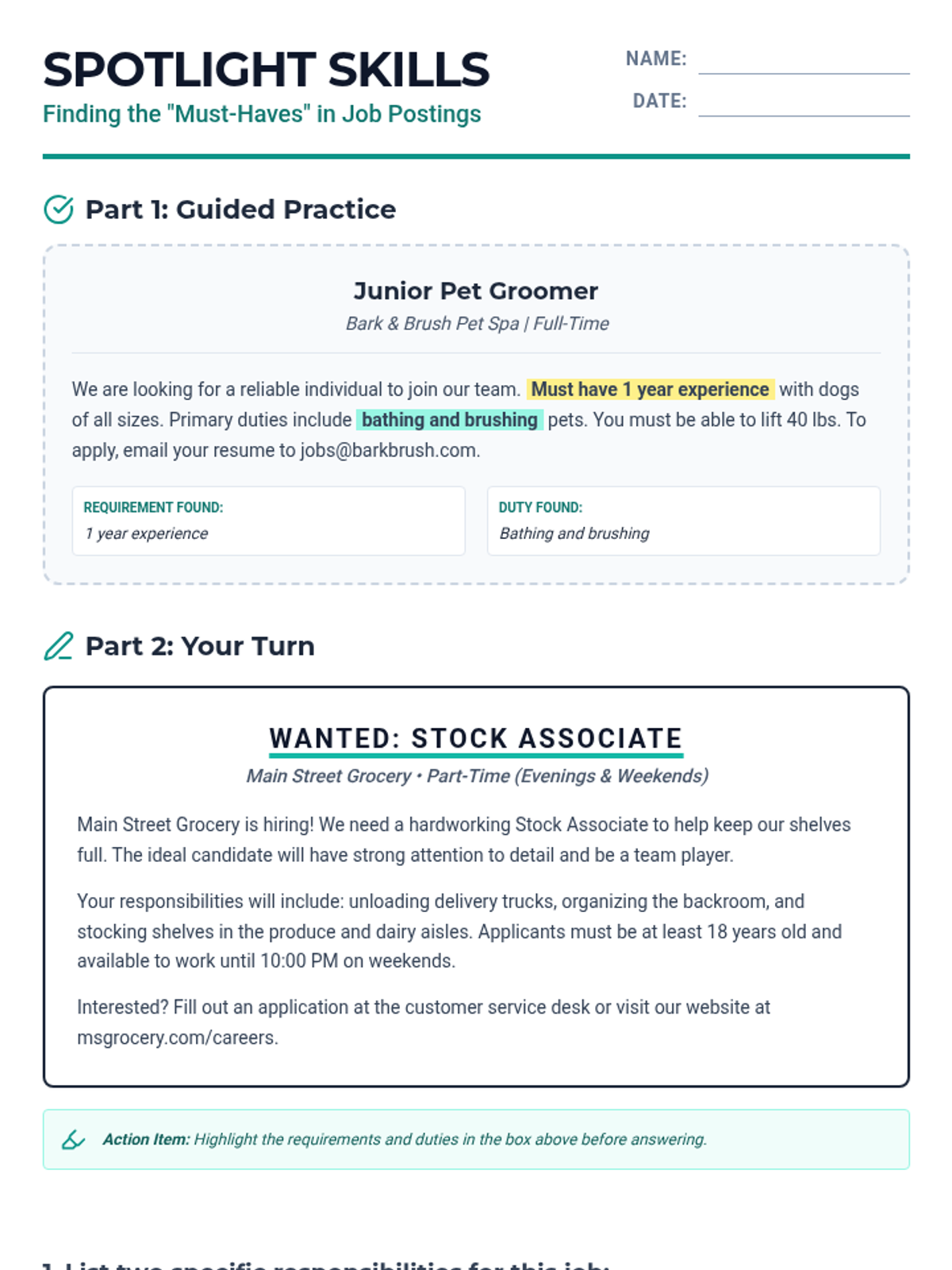
A two-page worksheet designed to help students identify and highlight key information in job postings using guided examples and independent practice. Revised for better page flow and work space.
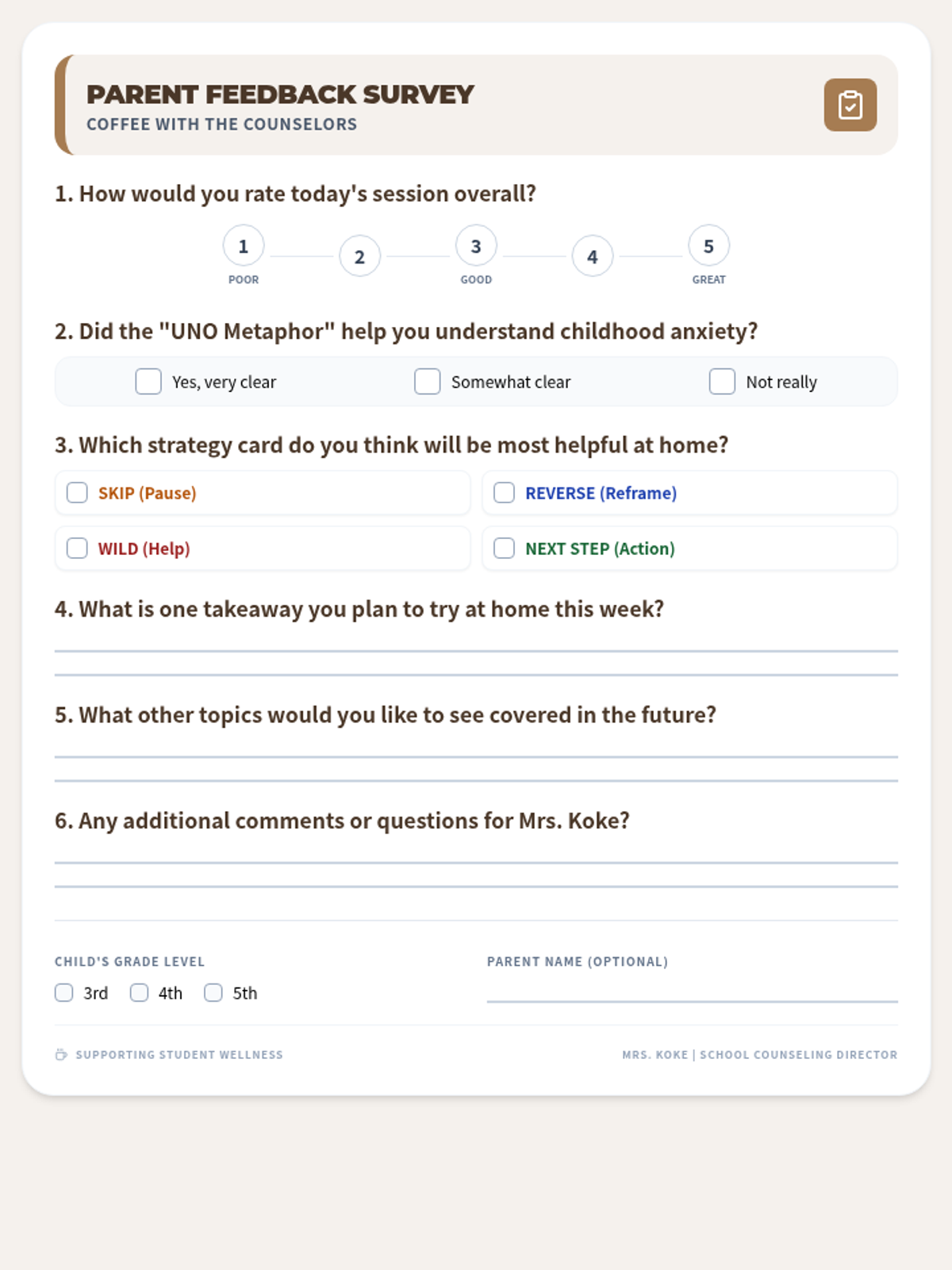
A professional feedback survey for parents to complete at the end of the 'Coffee with the Counselors' session. It features a clean design with thematic elements, gathering data on session quality, the effectiveness of the UNO metaphor, and interest in future topics.
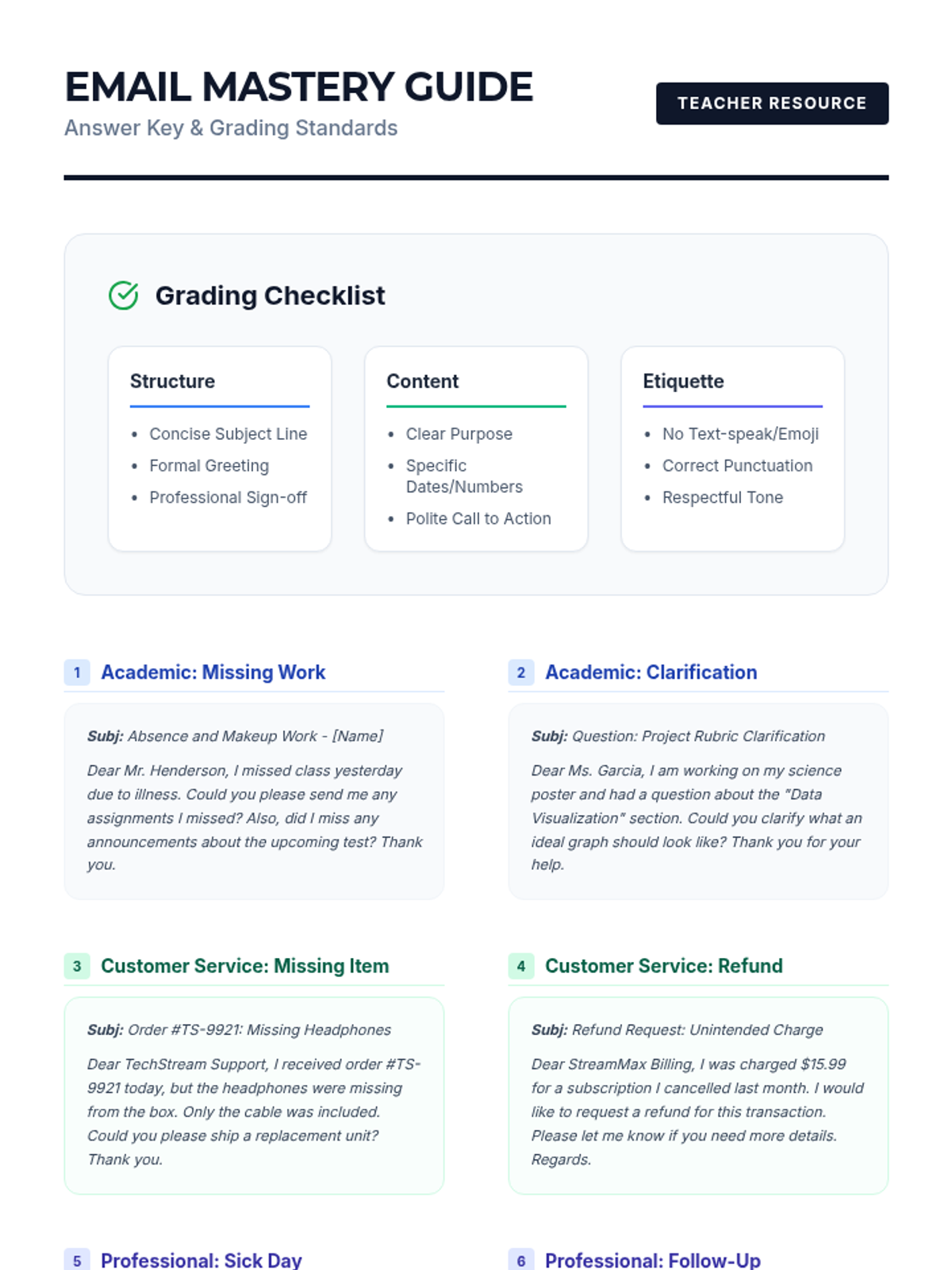
A teacher guide containing grading criteria, common pitfalls, and sample email responses for various student scenarios to assist in evaluation and modeling.
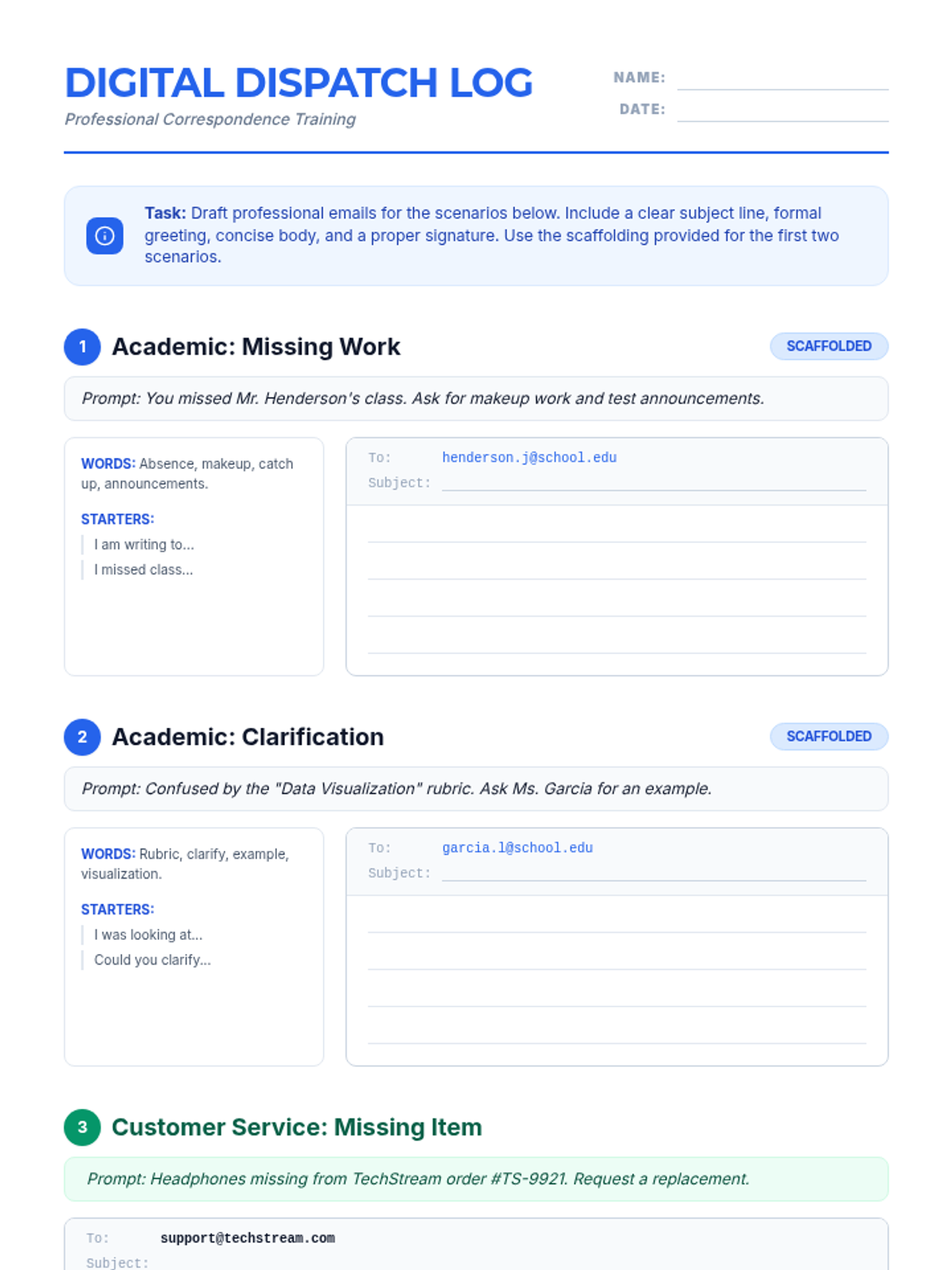
A multi-page worksheet providing structured email templates for 8 different real-world scenarios. Includes scaffolding like word banks and sentence starters for the first two academic scenarios.
A 9-slide presentation covering the structure of formal emails and 8 diverse scenarios for student practice, including academic, customer service, and professional situations. Includes word banks and sentence starters for initial slides.
A comprehensive one-page overview for administrators detailing the benefits of Lenny Learning for both teachers and district leadership.
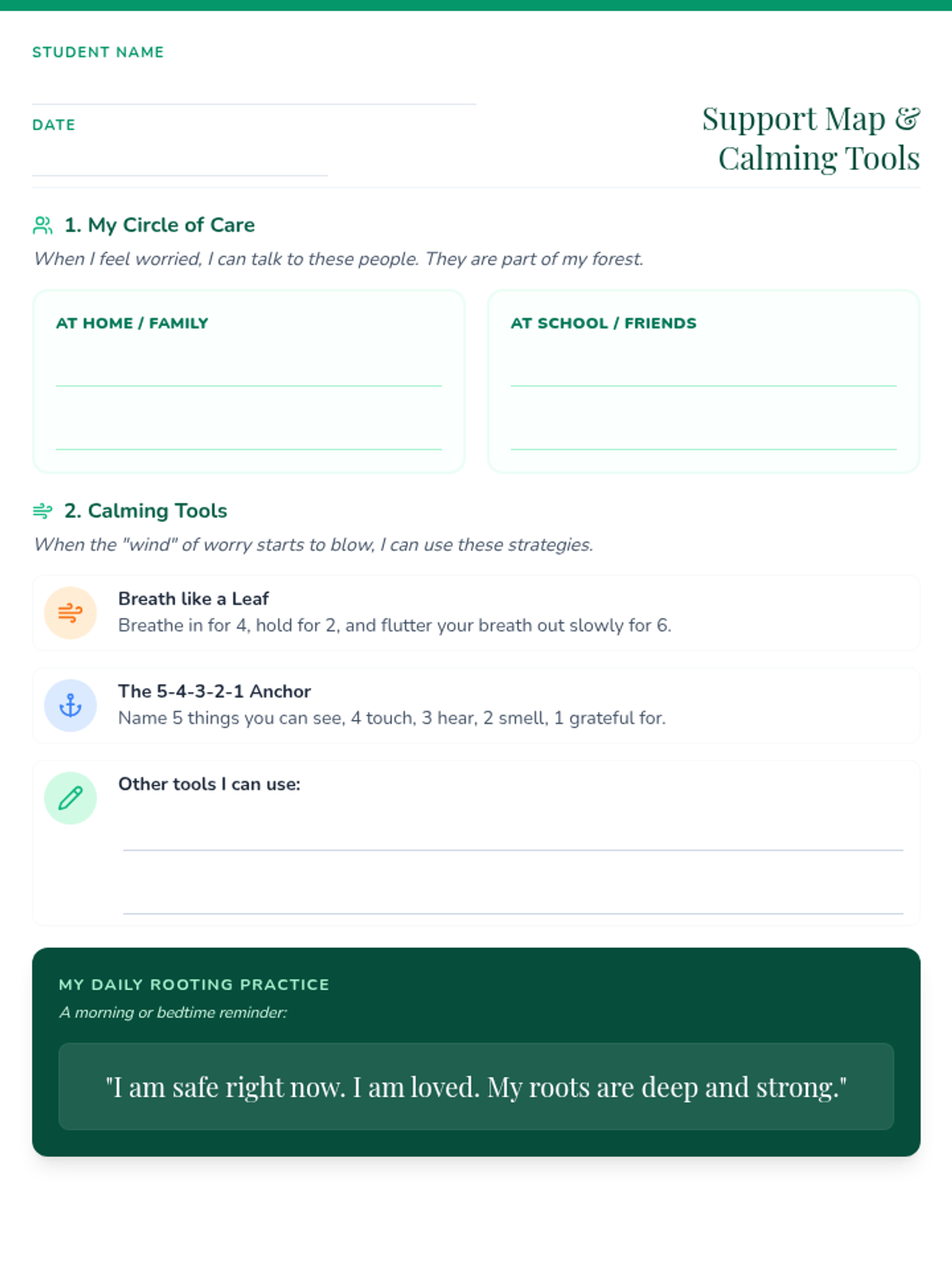
A structured worksheet to help students map their support systems and practice specific anxiety-coping strategies.
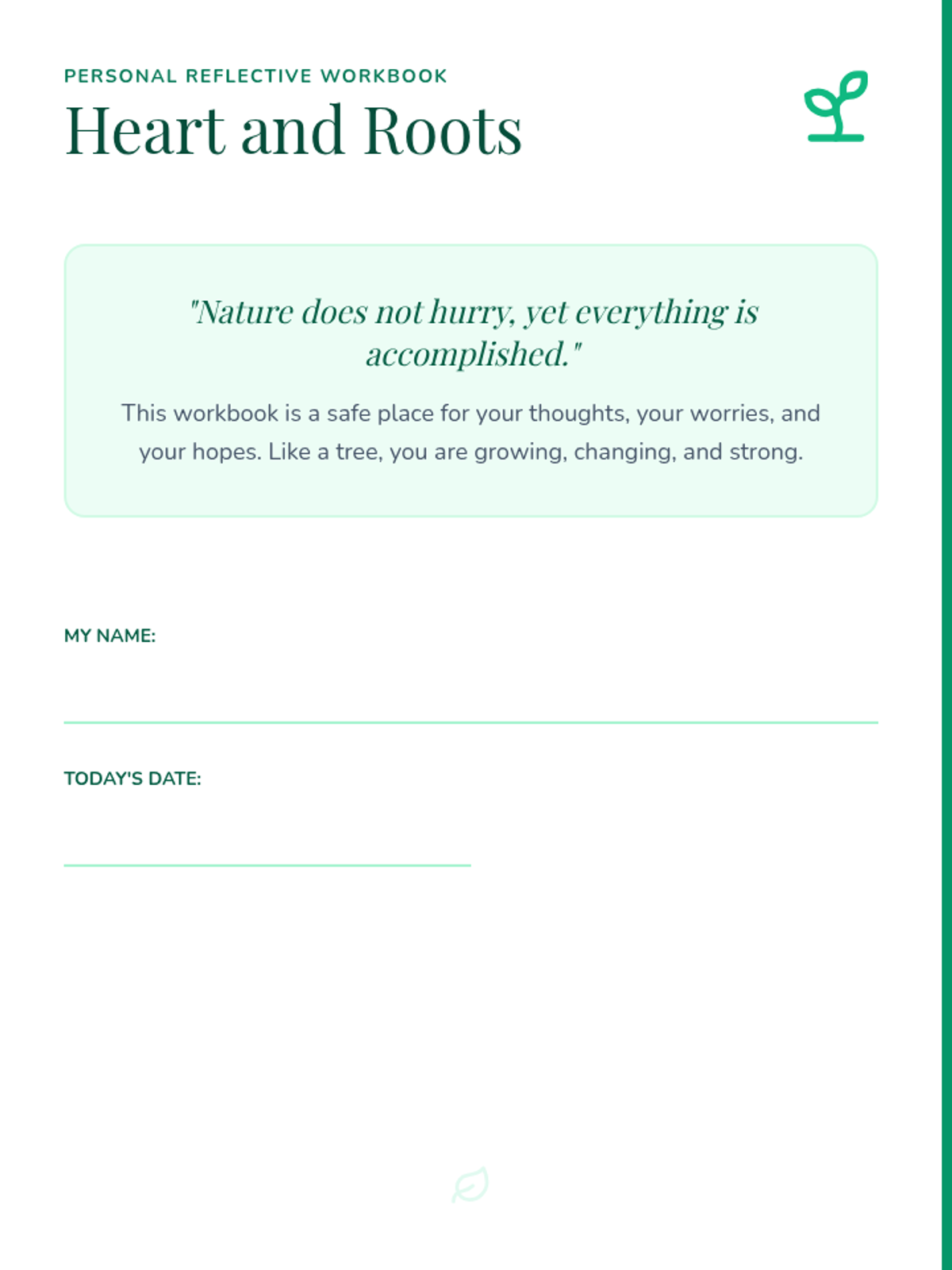
A reflective workbook for students to explore their thoughts on life cycles and create expressive art through a "Memory Tree" activity.
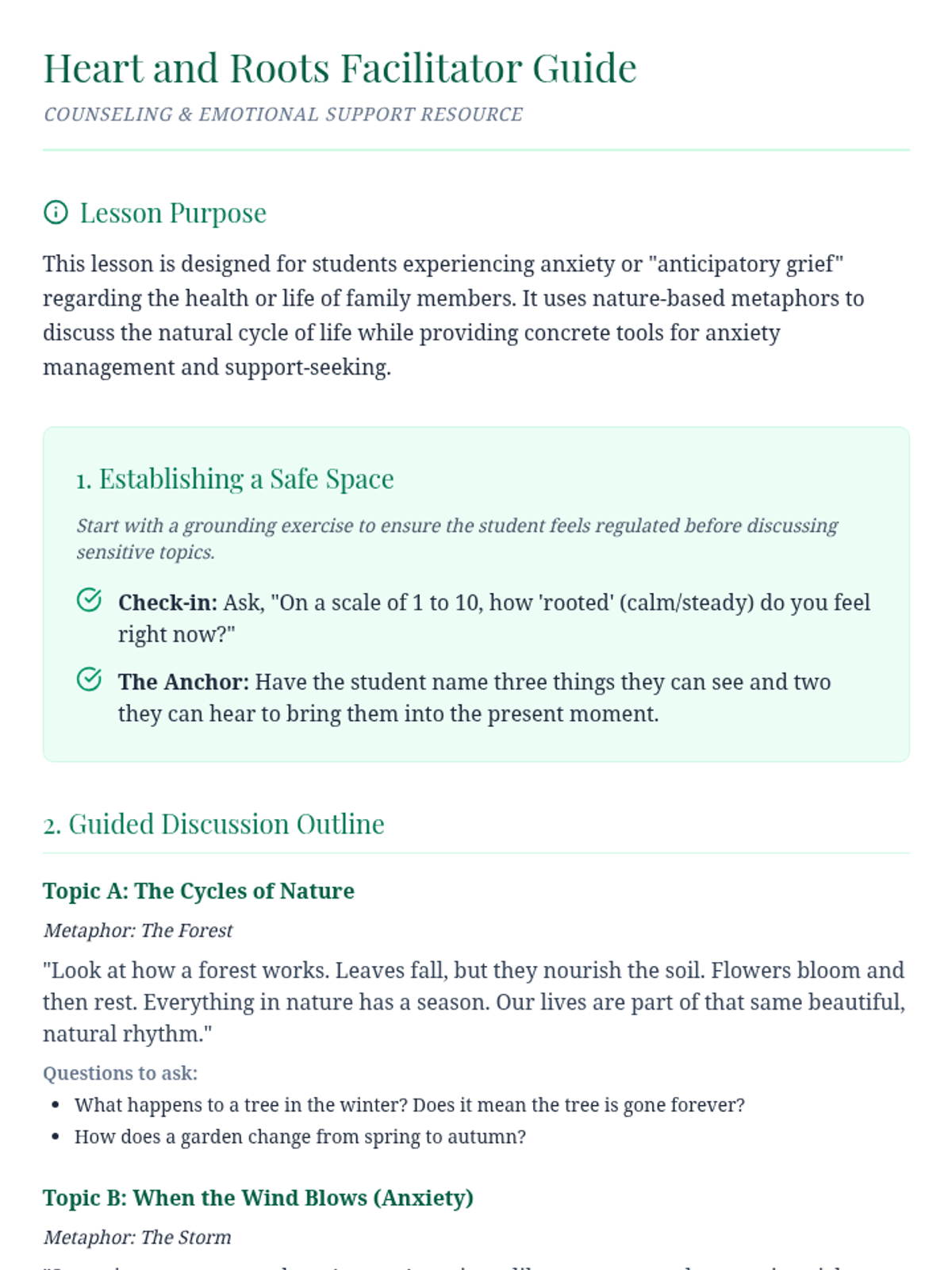
A detailed facilitator guide for teachers or counselors to lead discussions about life cycles, anxiety, and support systems using nature metaphors.
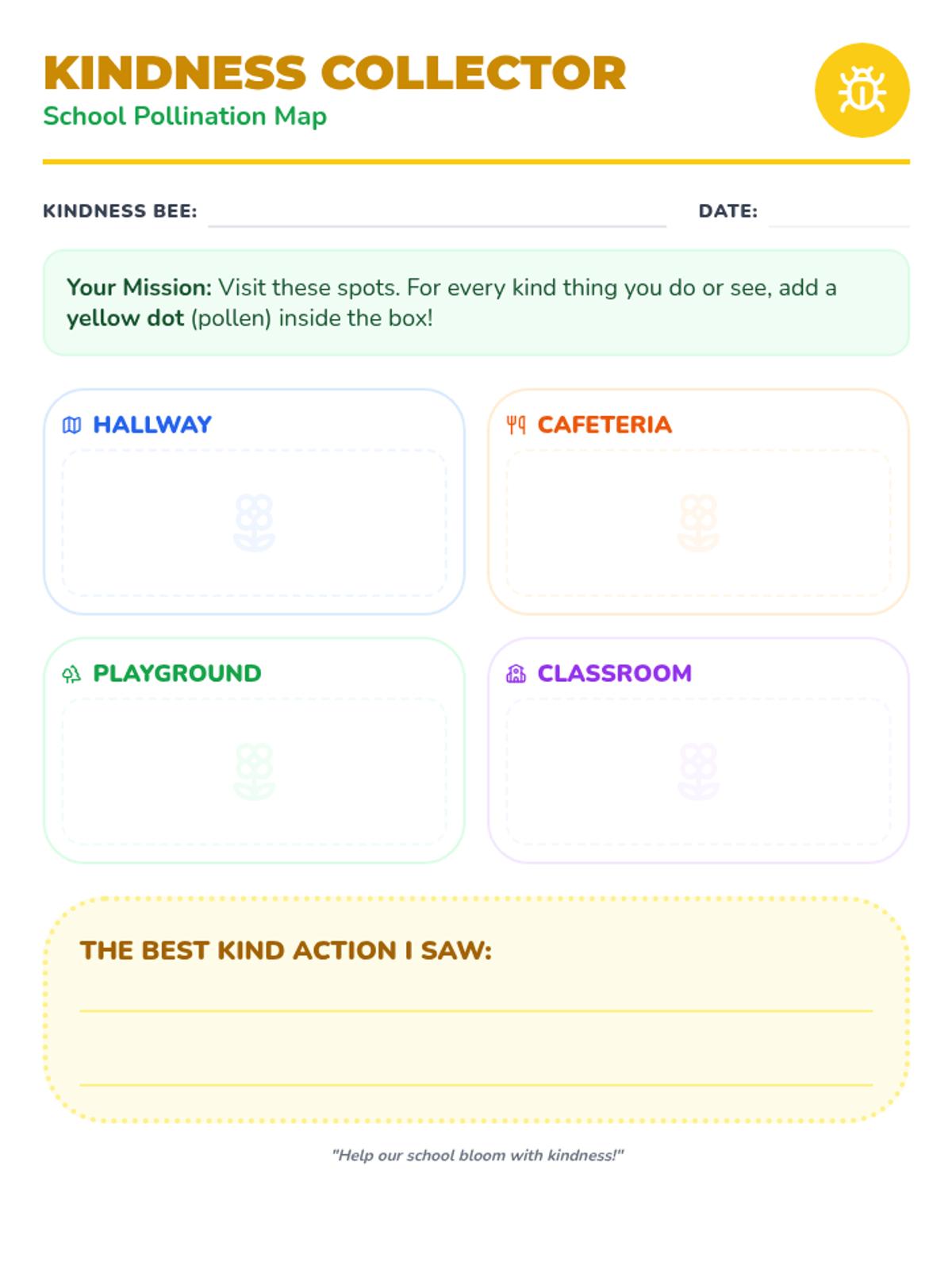
An interactive tracking sheet for the Pollinating Kindness Project. Students use the worksheet to record acts of kindness observed or performed in different school locations, visualized as "pollen" being spread throughout a garden.
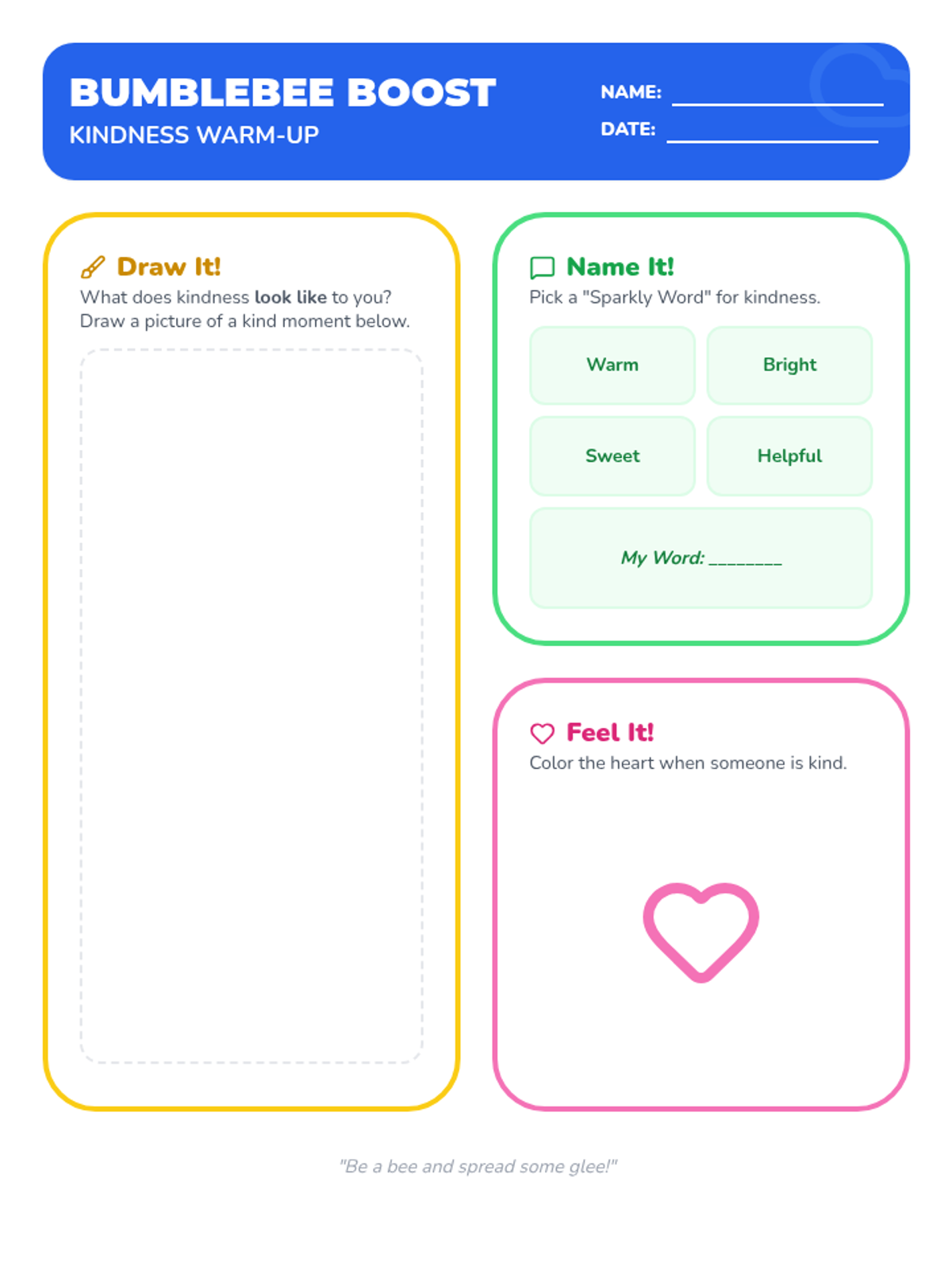
A student warm-up worksheet that uses drawing and word selection to help K-3 students reflect on the emotional impact and visual representation of kindness.
Colorful and engaging slides for the Pollinating Kindness Project that explain the analogy between bees pollinating flowers and students spreading kindness throughout their school.
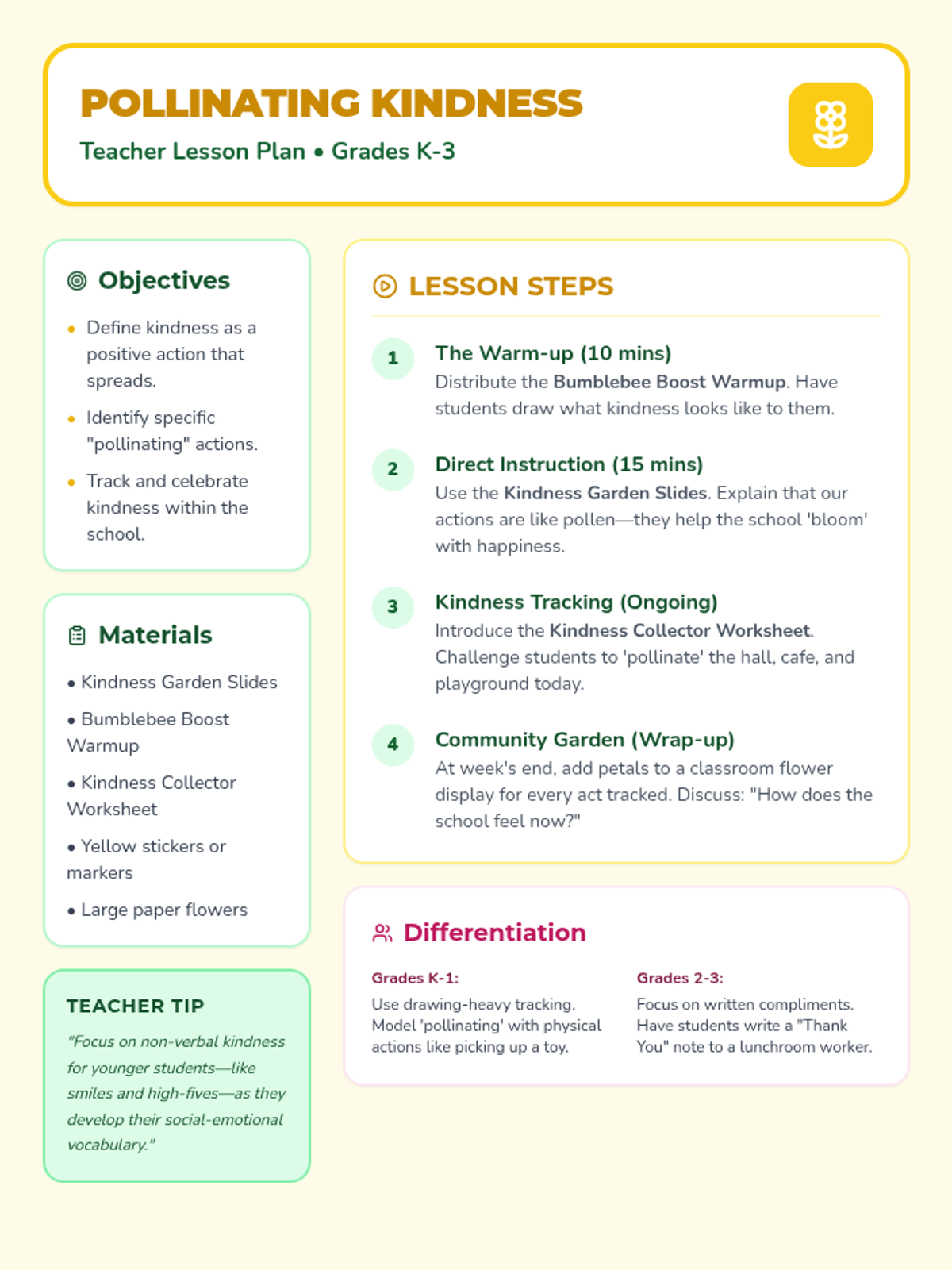
A detailed teacher guide for the Pollinating Kindness Project, featuring a garden-themed analogy, learning objectives, and a step-by-step instructional procedure for K-3 classrooms.
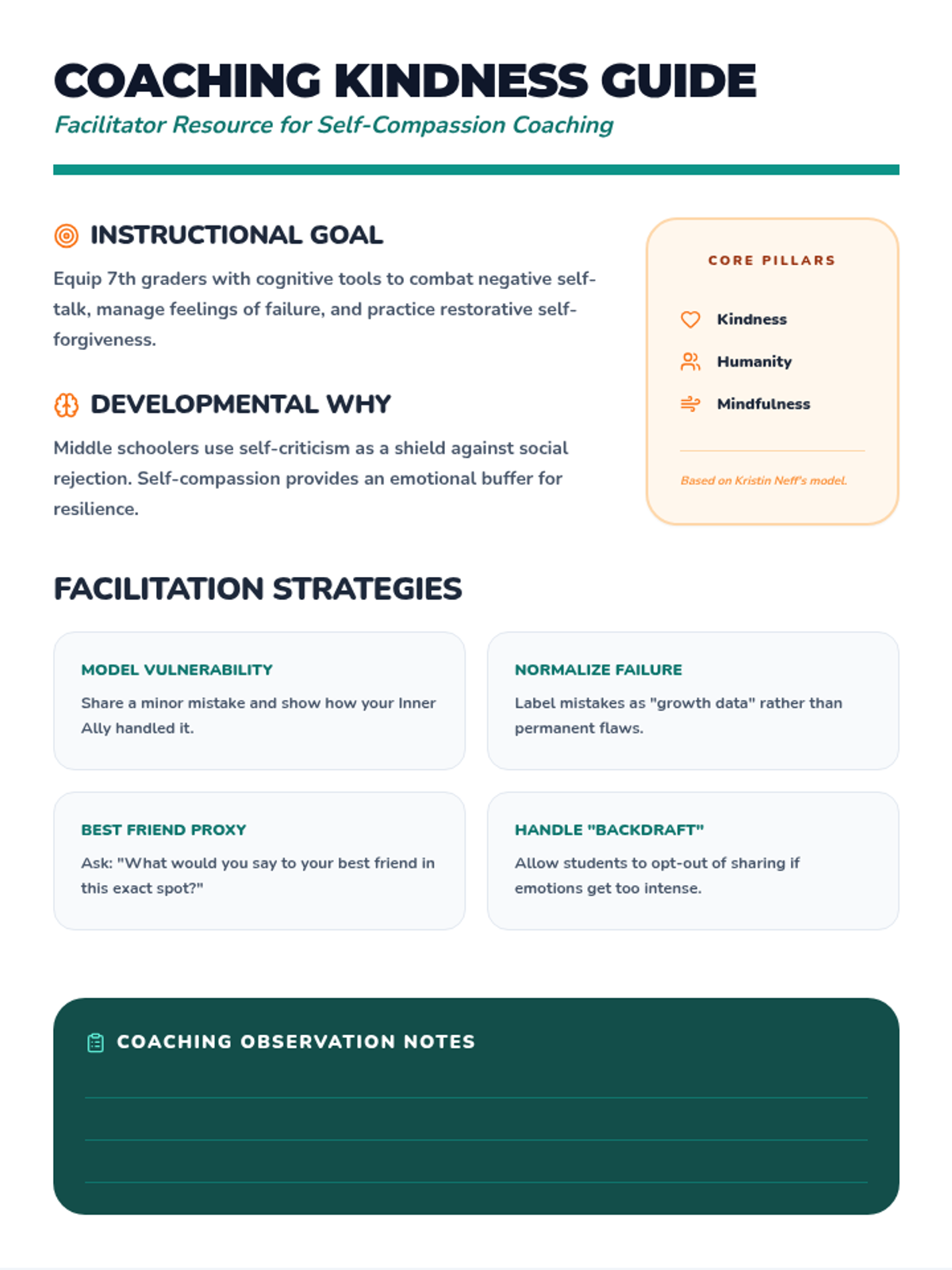
A facilitation guide for teachers and counselors providing instructional goals, age-appropriate reasoning for self-compassion, coaching scripts, and group discussion prompts.
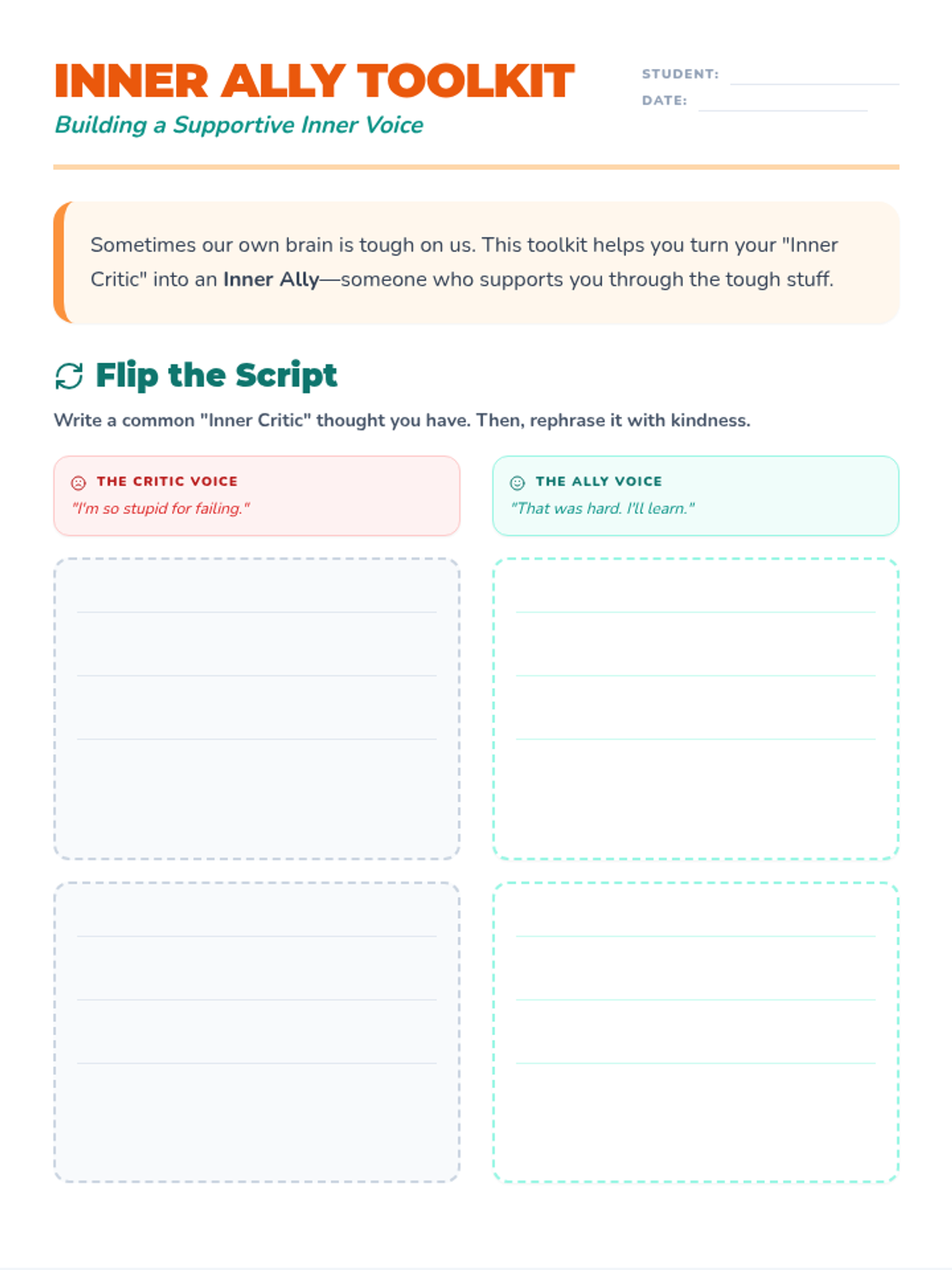
A comprehensive workbook for students to identify their inner critic, practice reframing negative thoughts, write a self-forgiveness letter, and build a personal coping skills toolkit.
A supportive and visually calming slide deck introducing middle schoolers to the concepts of self-compassion, identifying the inner critic, and practicing self-forgiveness.
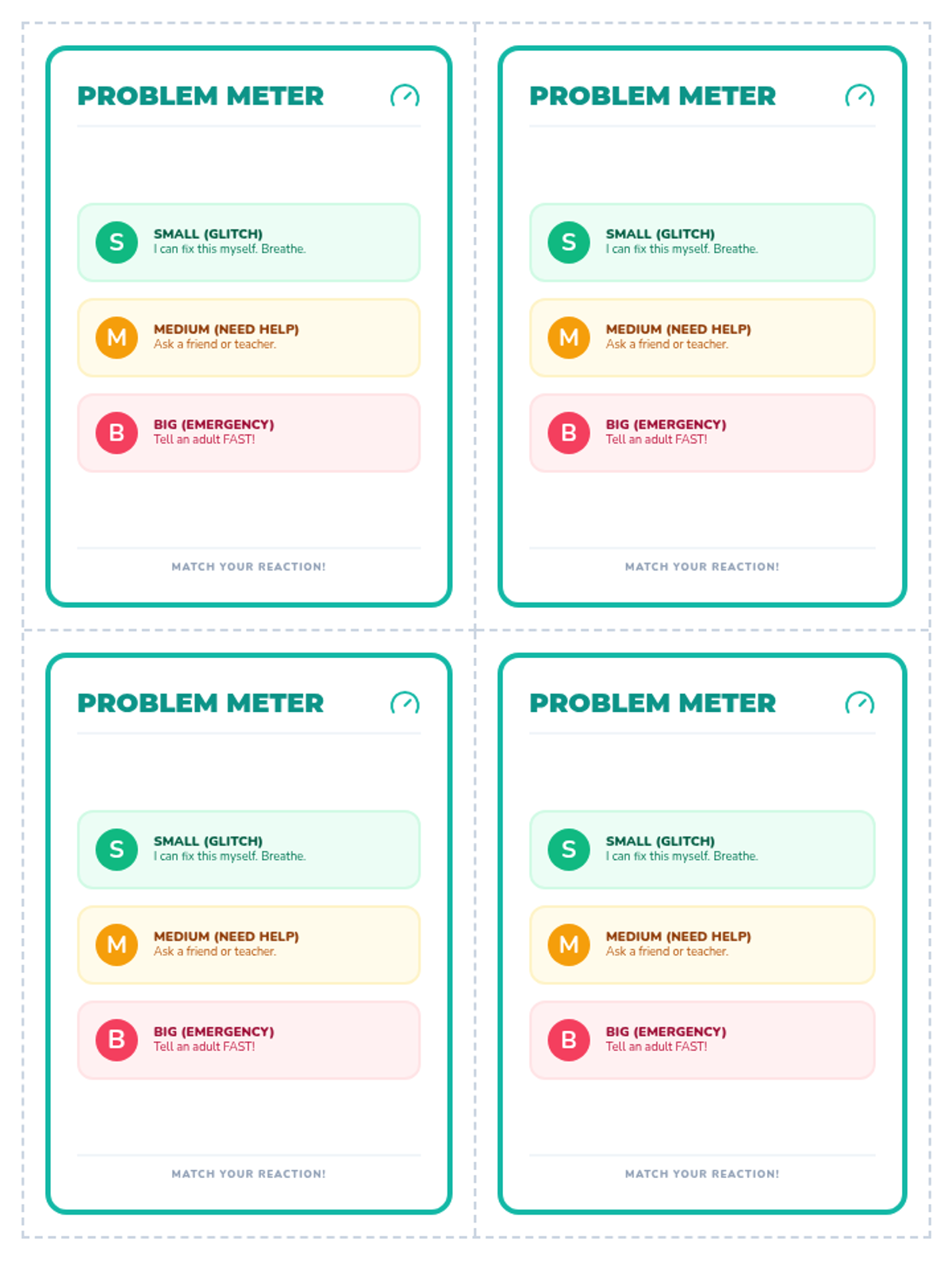
Printable reference cards for students to keep at their desks or in their pockets, providing a quick visual guide to problem sizes and reaction levels. Four cards per page.
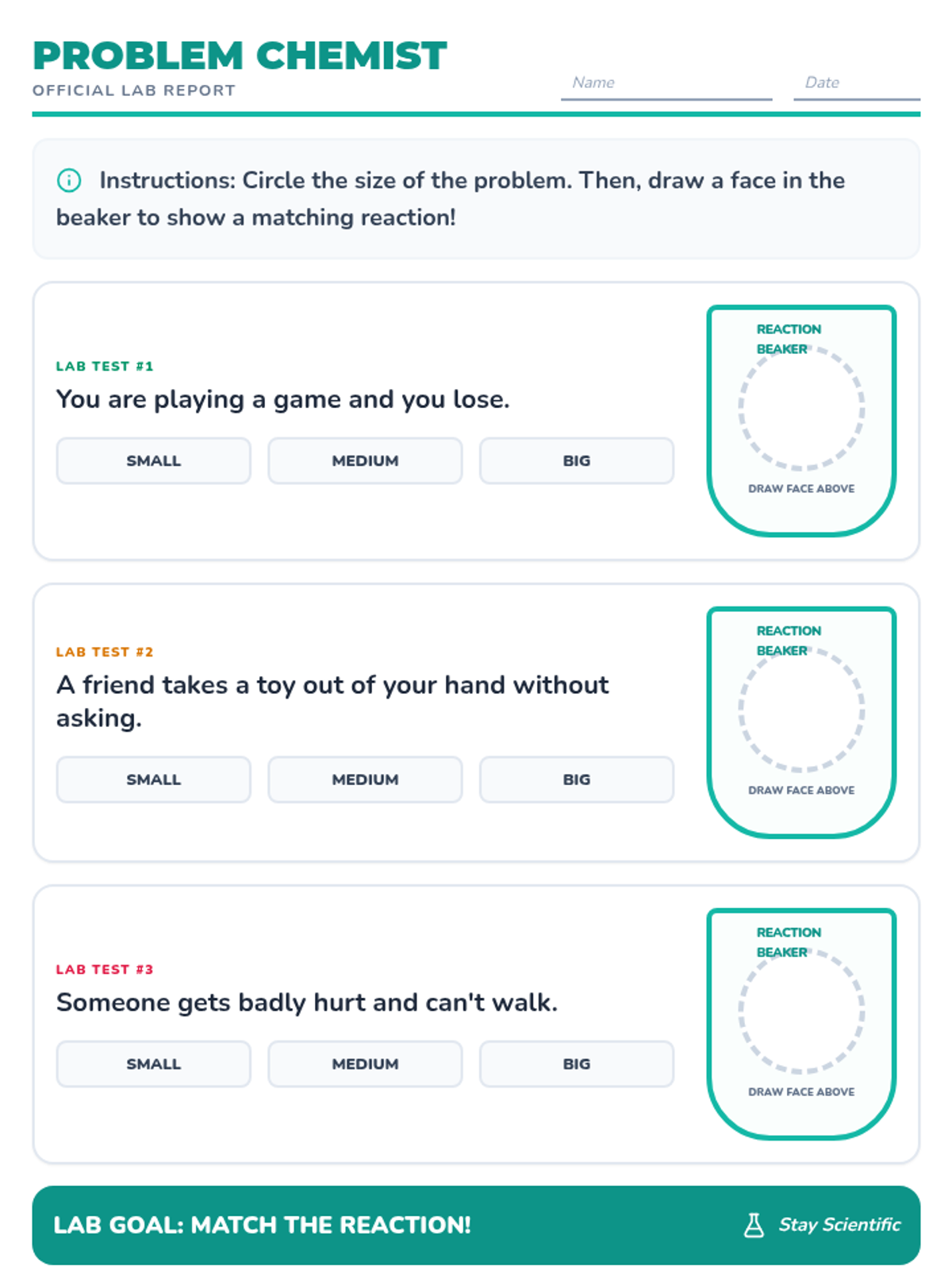
A student worksheet where they categorize three different scenarios as small, medium, or big problems and draw an appropriate facial reaction in a lab beaker. Content optimized to fit on one page.
A visual slide deck designed for whole-class or small-group instruction, defining problem sizes and emphasizing matching reactions.
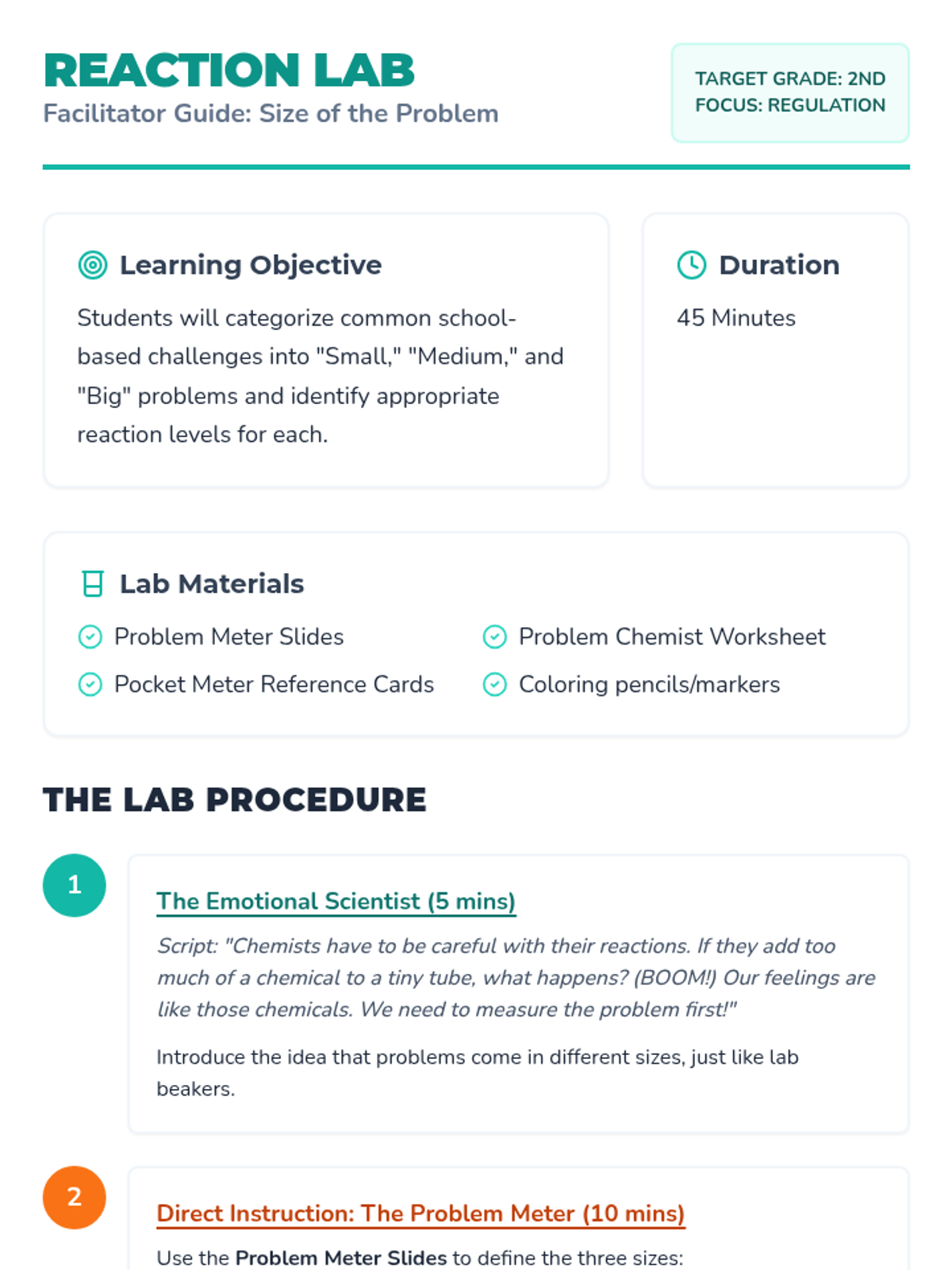
A detailed facilitator guide for teachers or counselors, providing a step-by-step procedure for teaching 'Size of the Problem' with discussion prompts and activities.
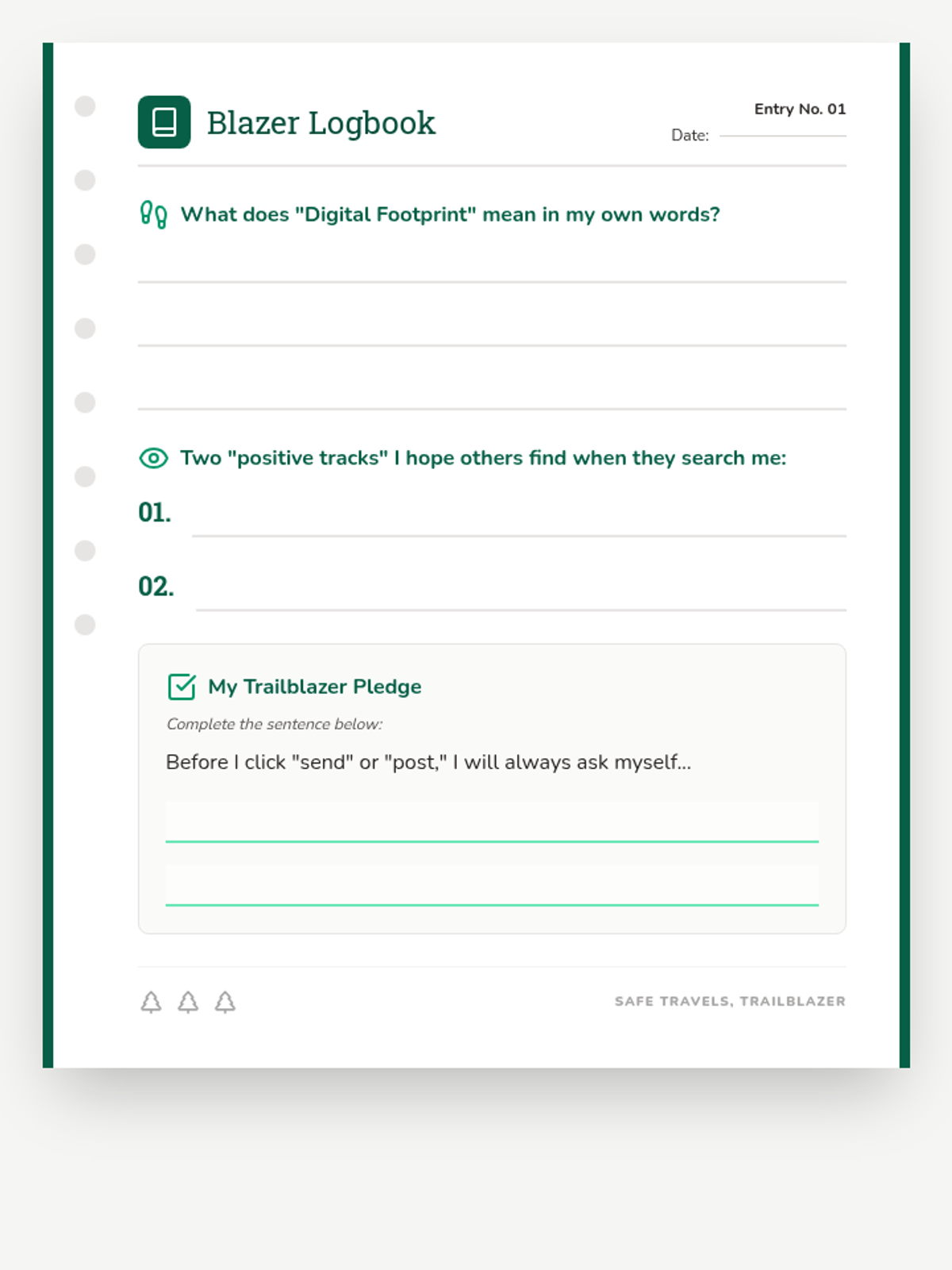
A reflection journal sheet for students to define their digital footprint and make a personal pledge to maintain a positive online trail.
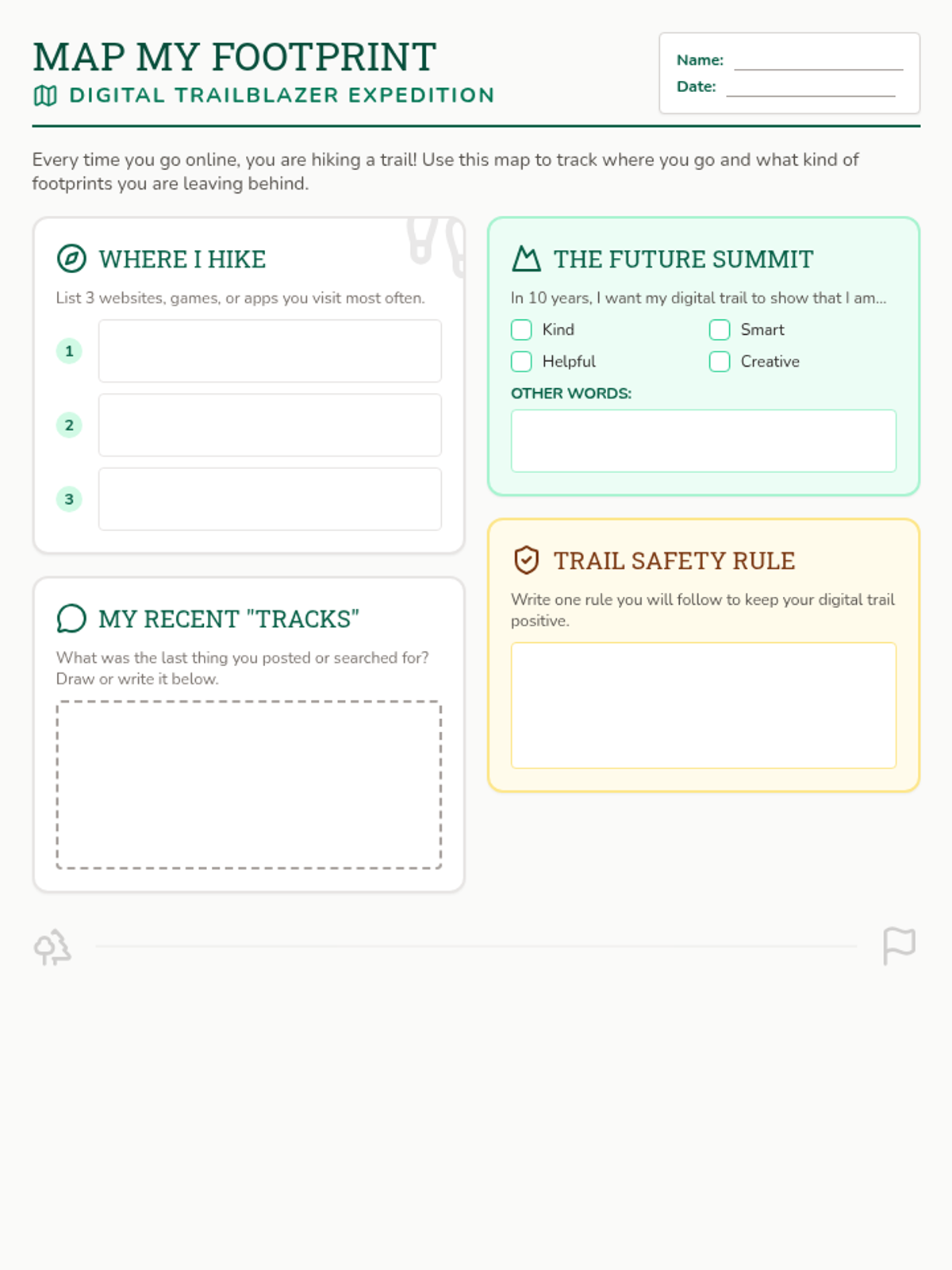
A student project sheet where children map their online activities, identify their "digital tracks," and set goals for a positive future online presence.
A dynamic 6-slide presentation for grades 3-5 that uses wilderness motifs to teach digital footprint concepts, permanence, and future impact.
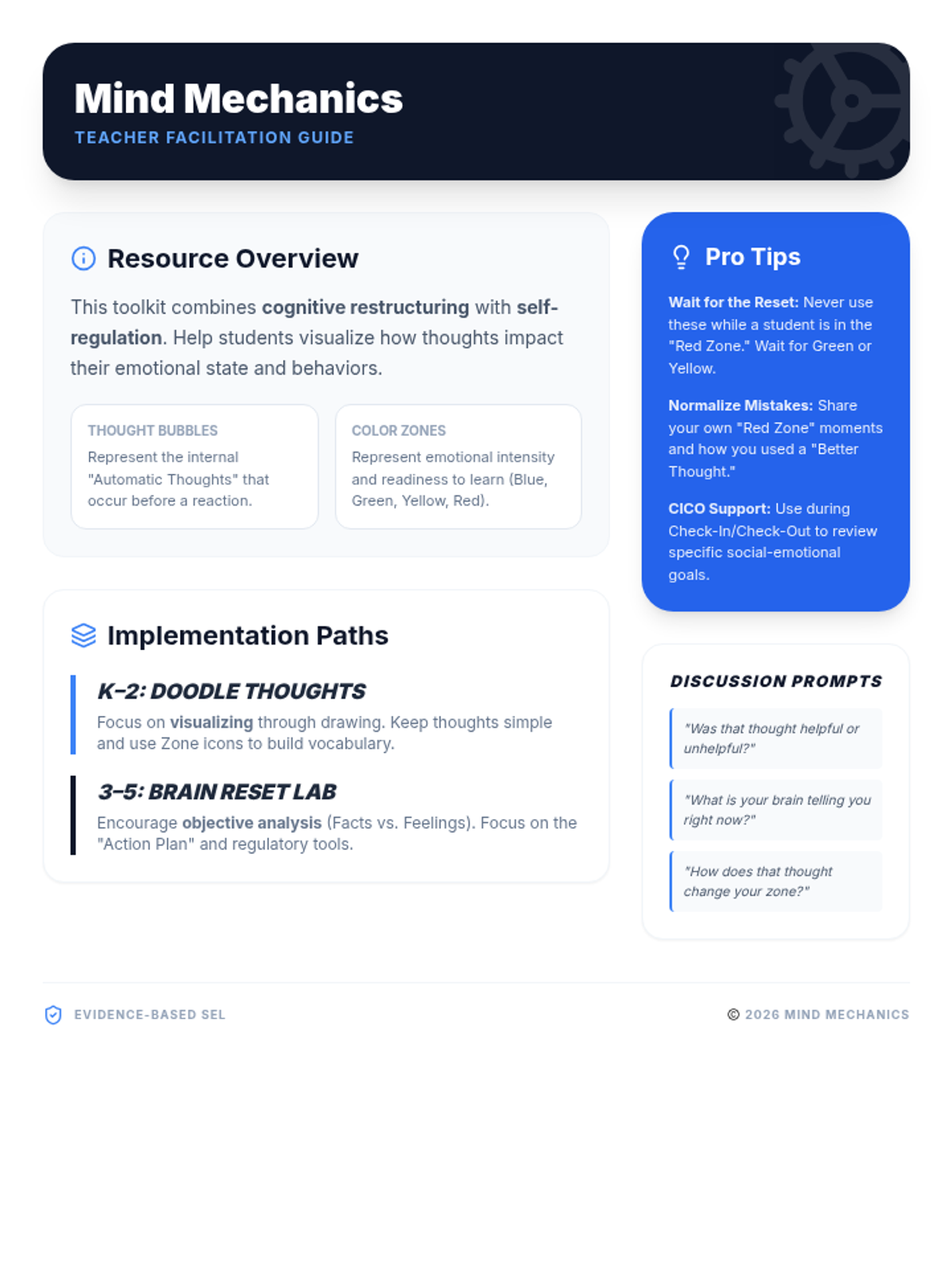
A teacher resource providing an overview of cognitive restructuring, implementation strategies for different grade levels, and practical tips for using the Mind Mechanics worksheets. Revised for one-page layout and better spacing.
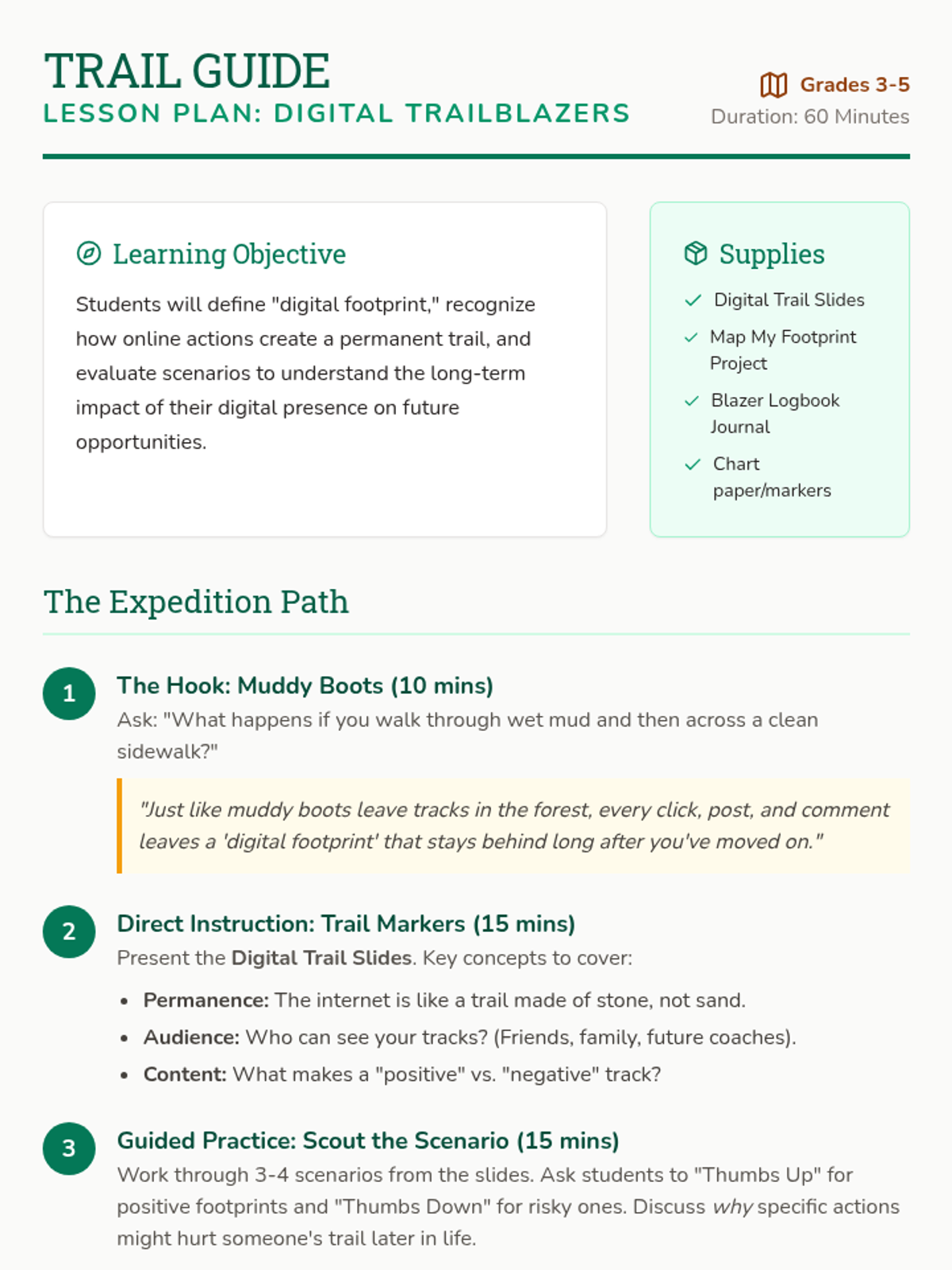
A comprehensive teacher's guide for the Digital Trailblazers lesson, featuring a wilderness-themed instructional path, learning objectives, and delivery tips for grades 3-5.
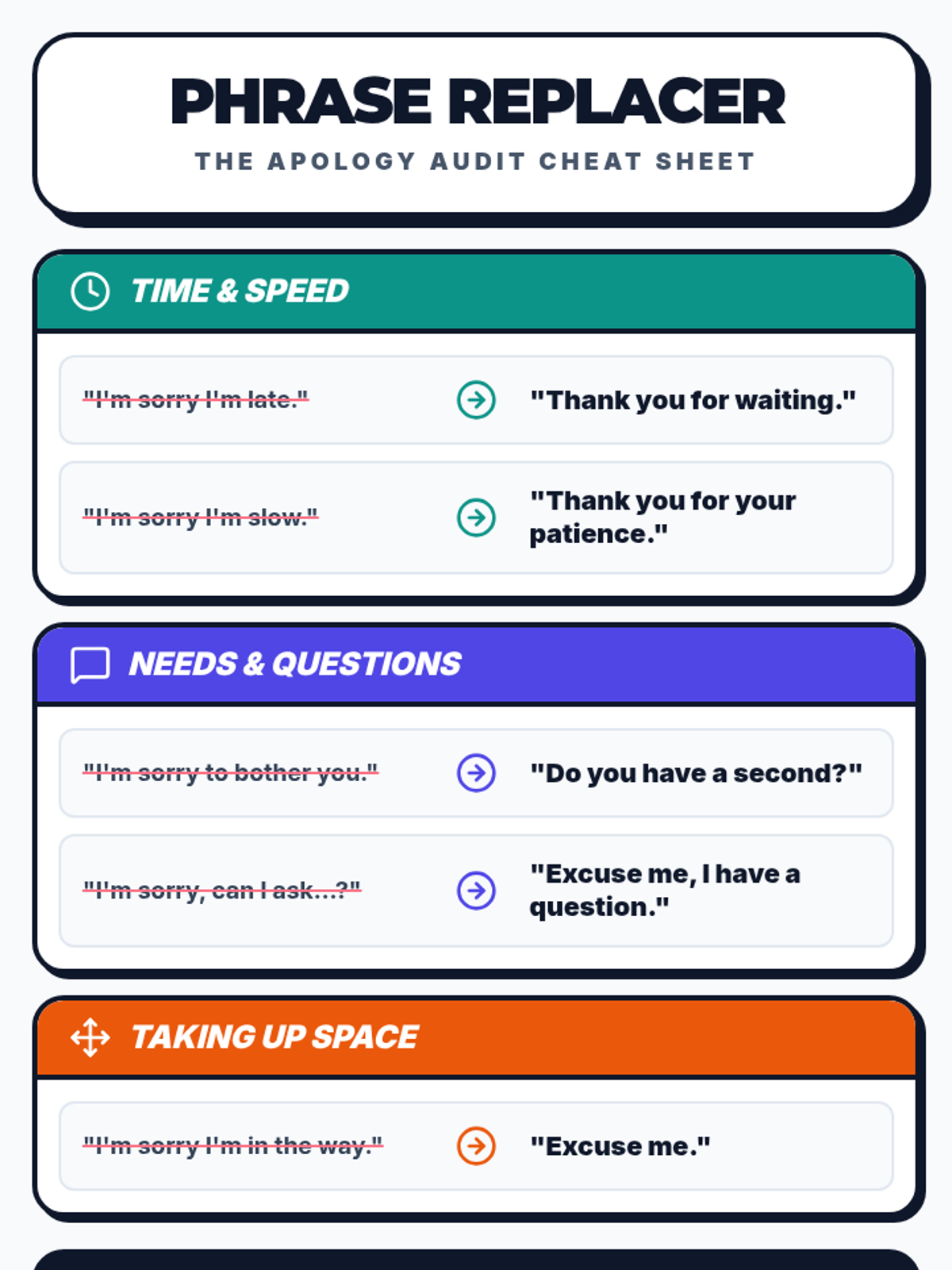
A one-page visual reference guide listing common over-apologies and their more effective replacements, designed for quick desk-side or binder use.
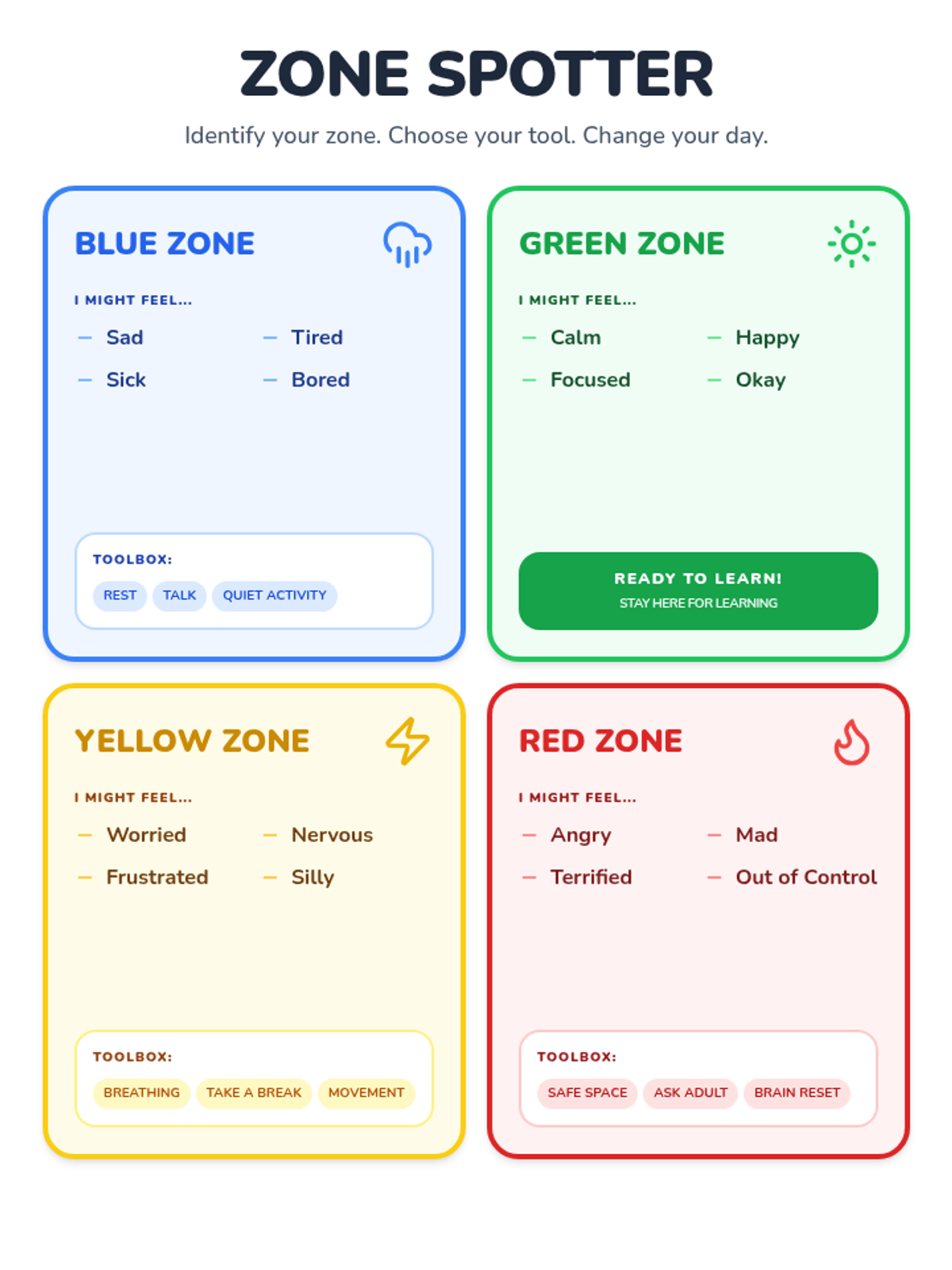
A clear, color-coded reference sheet for identifying emotions across the four zones (Blue, Green, Yellow, Red) and suggested tools for regulation. Revised for better contrast and one-page layout.
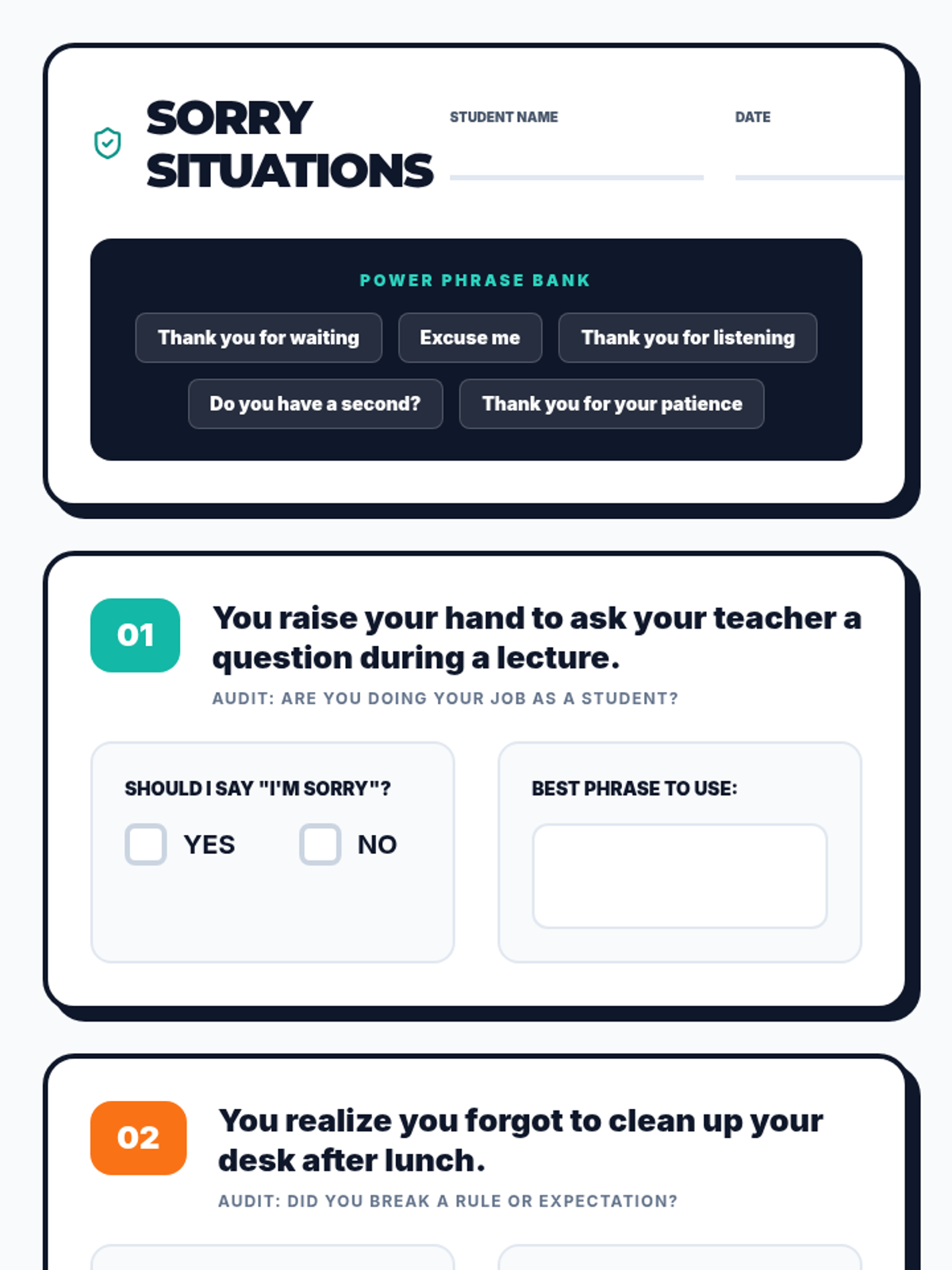
A practice worksheet where students audit various social situations to decide if an apology is necessary and practice replacing it with appropriate "power phrases."
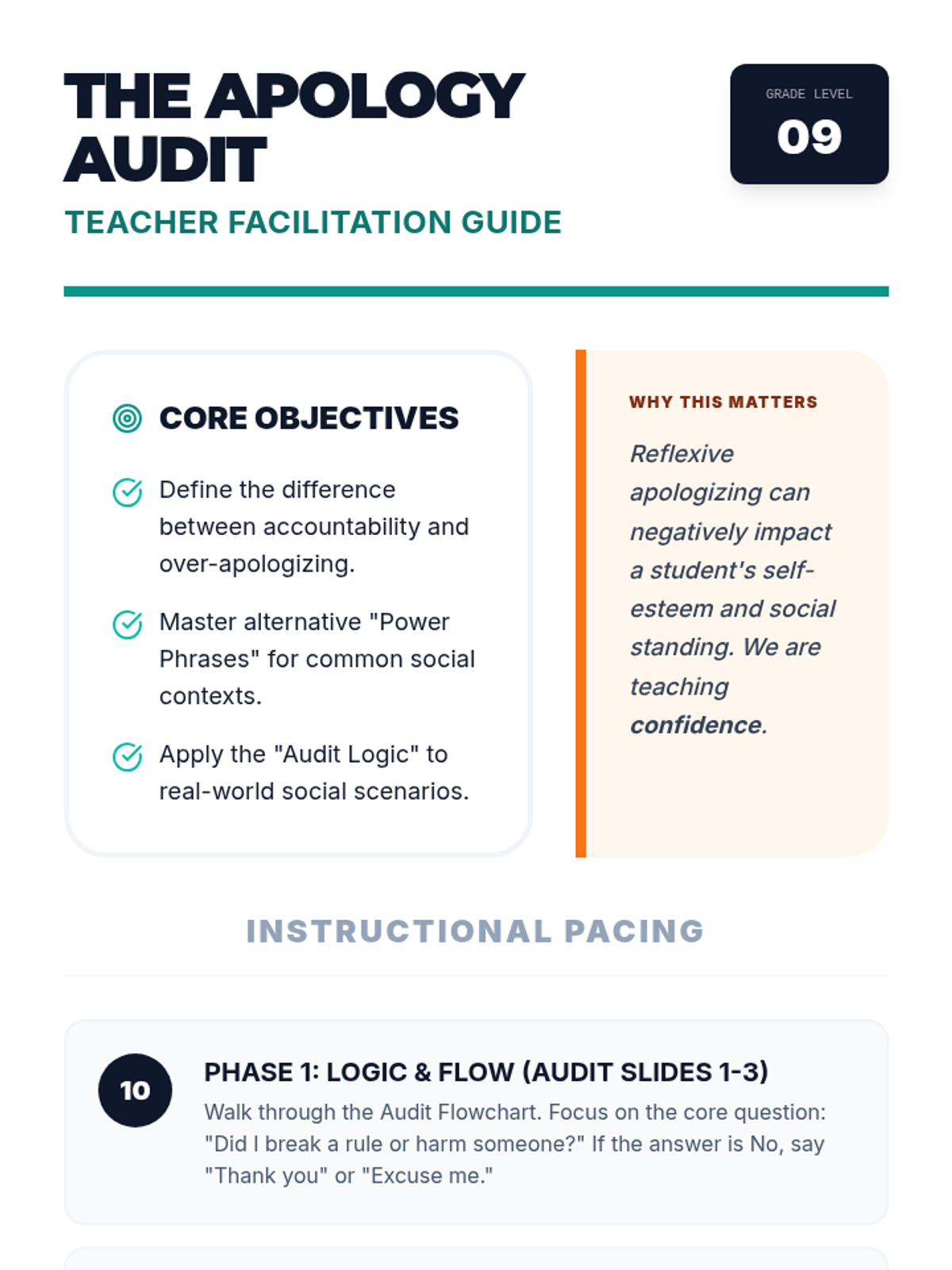
A comprehensive facilitator guide for teachers, providing pedagogical context on over-apologizing in autism, delivery instructions, and troubleshooting tips.
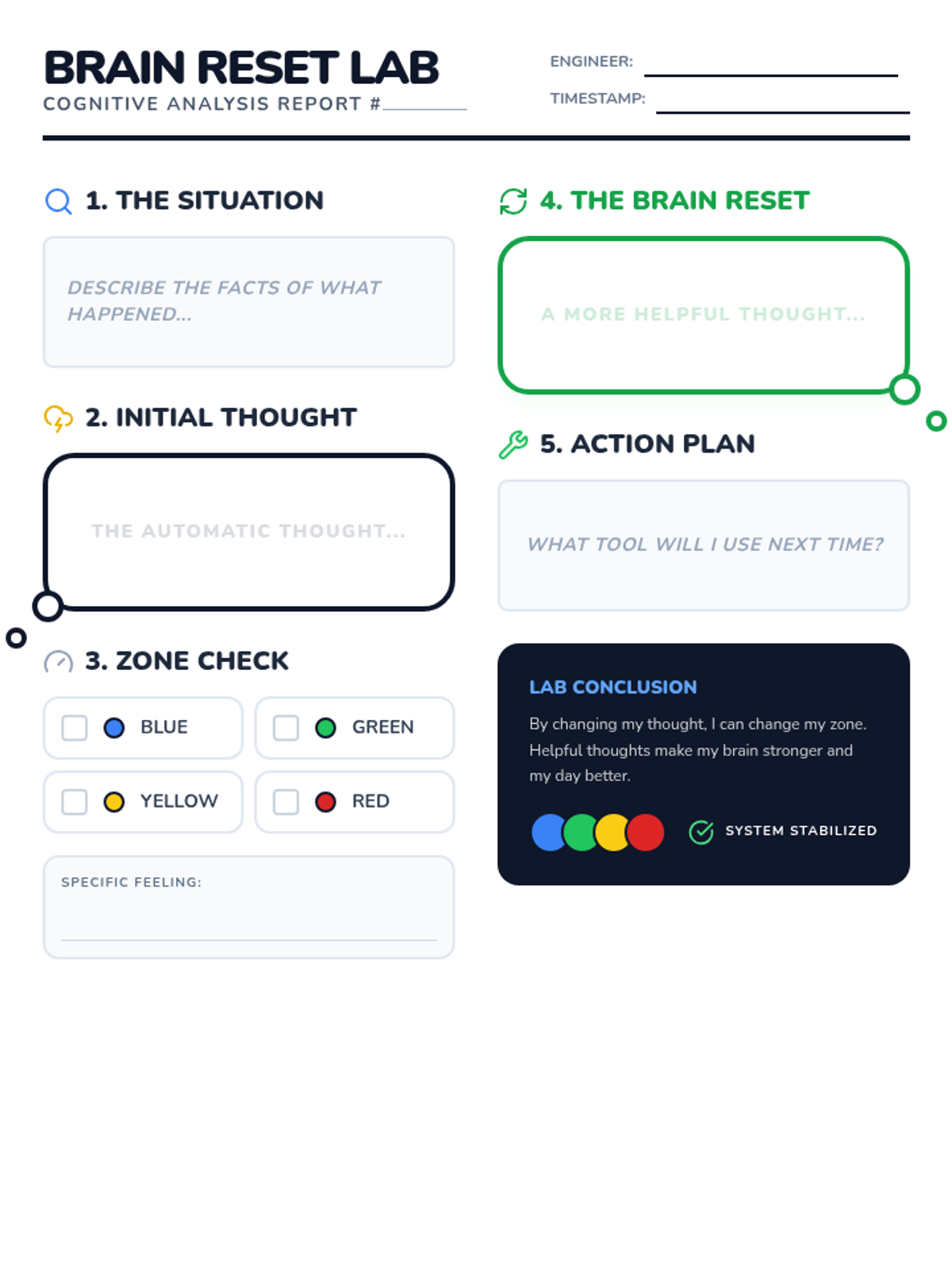
A more advanced cognitive restructuring worksheet for grades 3-5, styled as a 'Lab Report' to encourage objective analysis of triggers, automatic thoughts, and helpful replacement thoughts. Revised for better readability and spacing.
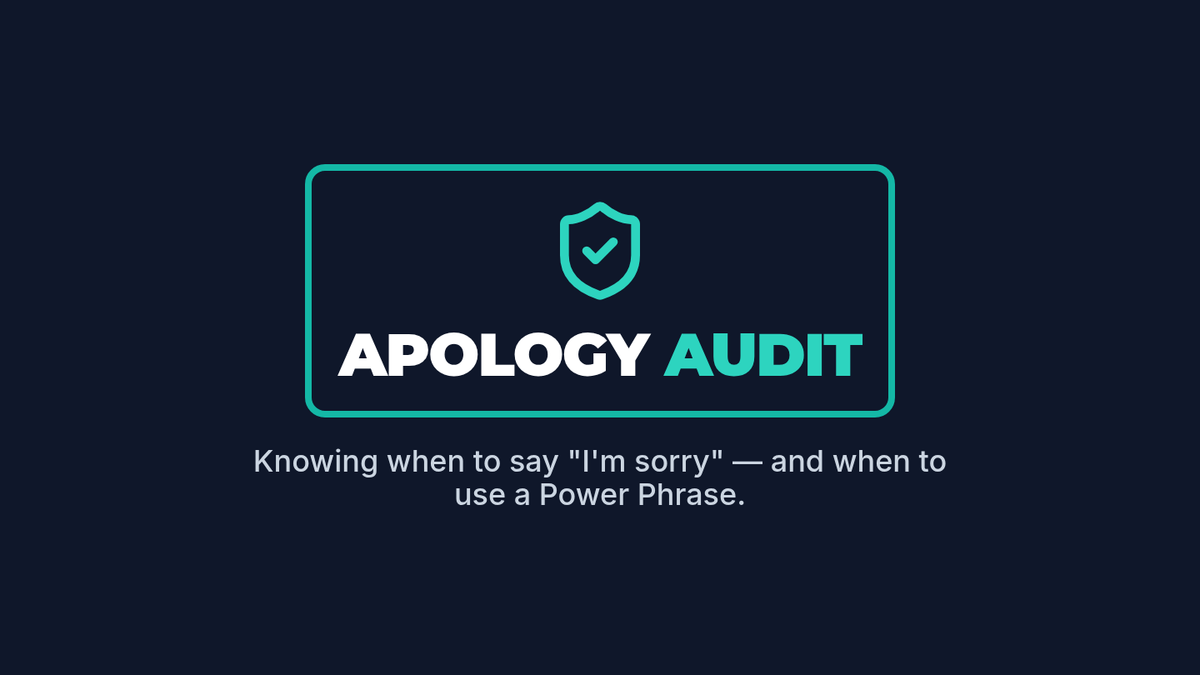
A visually structured slide deck that explains the logic behind apologies, featuring the "Apology Audit" flowchart and "Thank You" power moves for 9th-grade students.
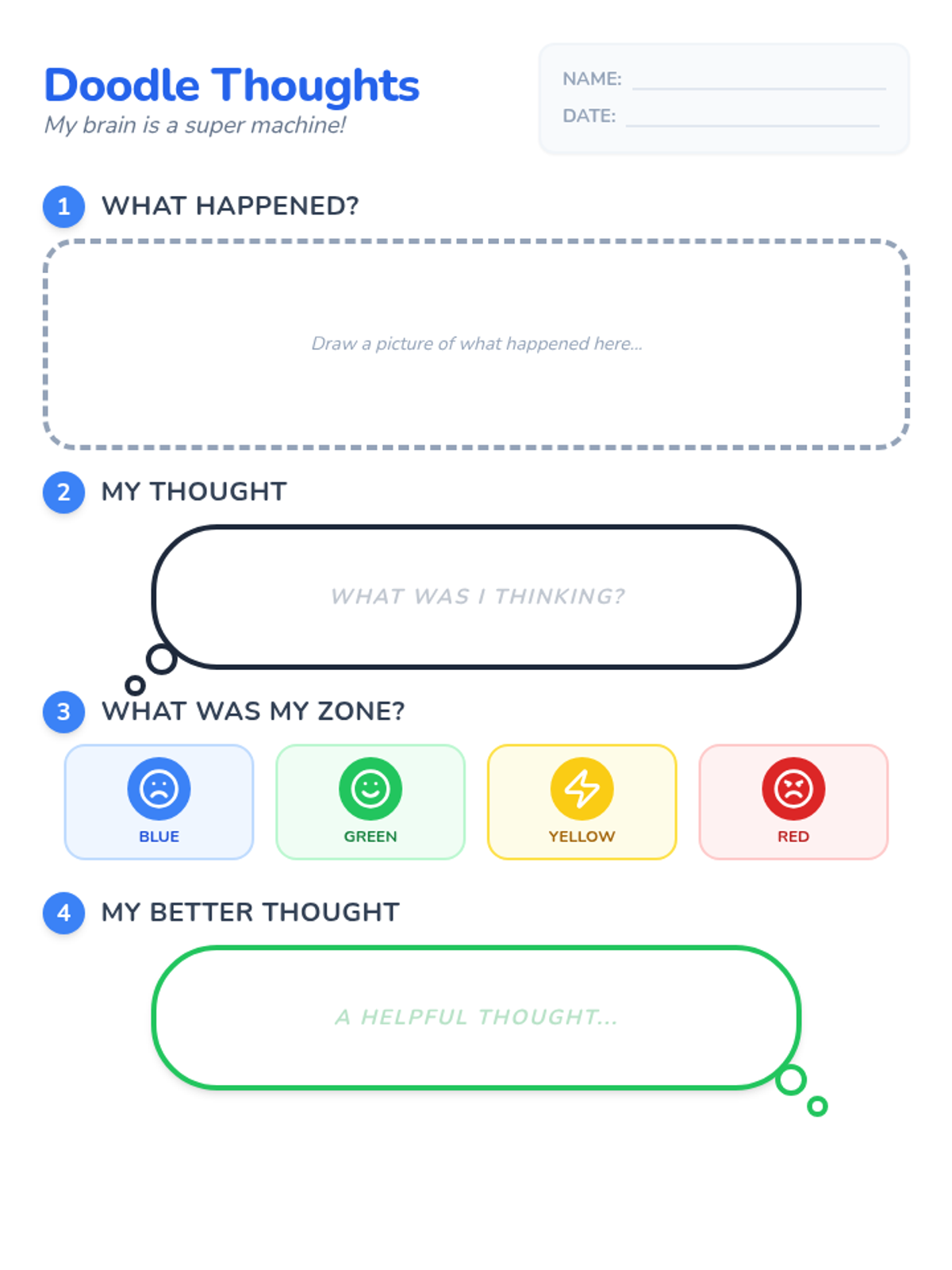
A highly visual worksheet for K-2 students to draw their situations, identify thoughts, and select an emotional zone using clear icons and simplified thought bubbles. Revised to fit on a single page with better contrast and logical flow.
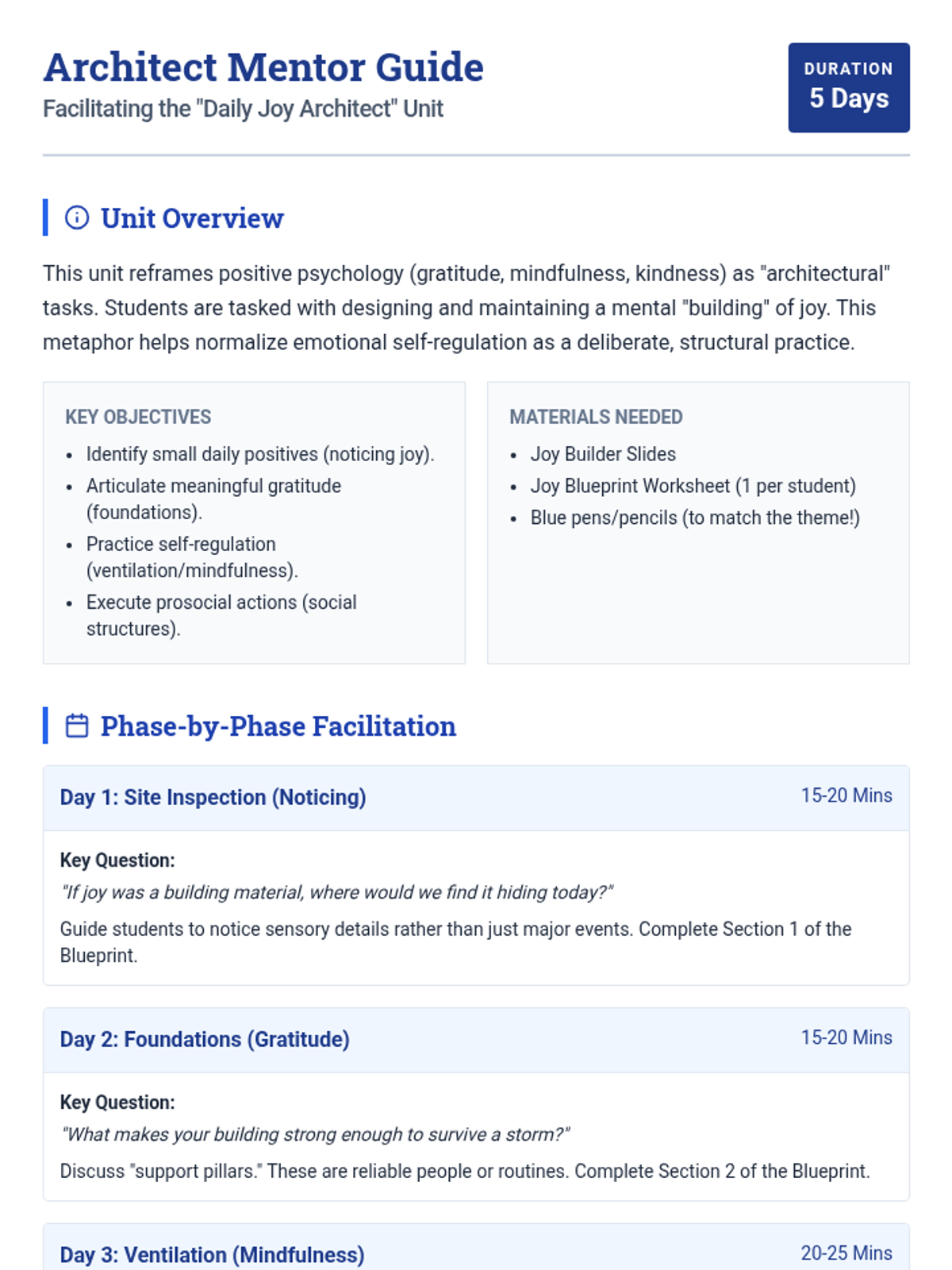
A facilitation guide for teachers leading the Joy Architect unit. Includes pacing guides, key discussion questions for each phase, and pedagogical tips for maintaining the architectural metaphor.
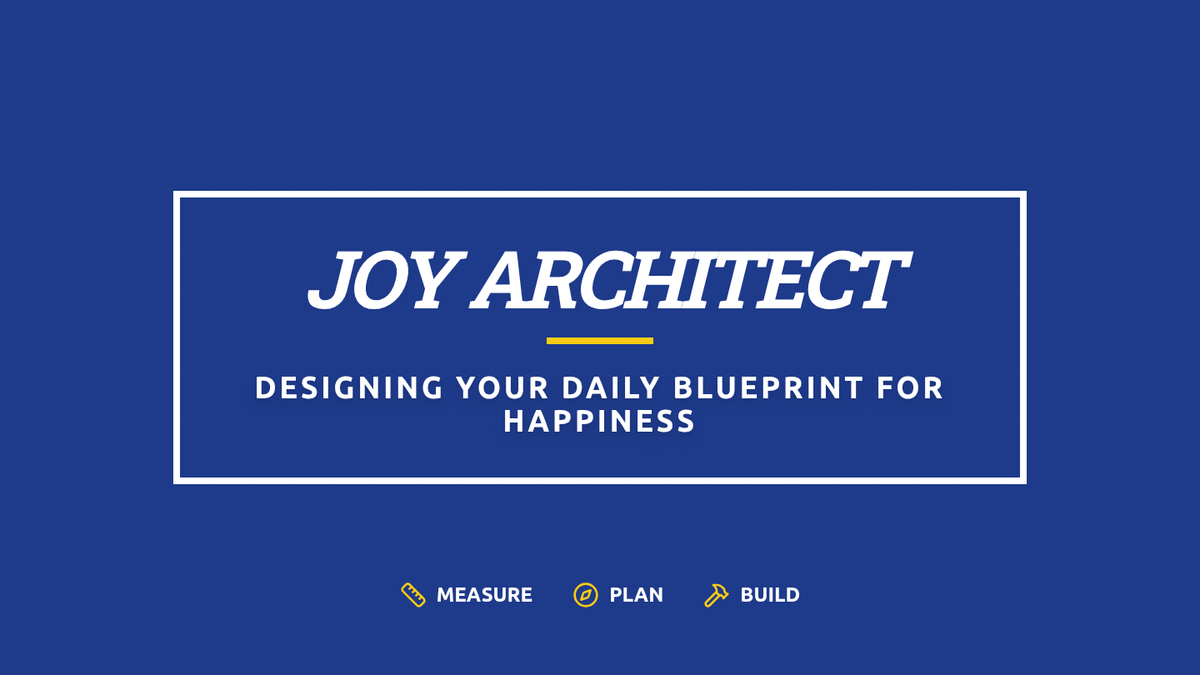
A visual slide deck guiding students through the 5 phases of Joy Architecture, from site inspection to long-term maintenance. Features an architectural blueprint theme with clean lines and bold headings.
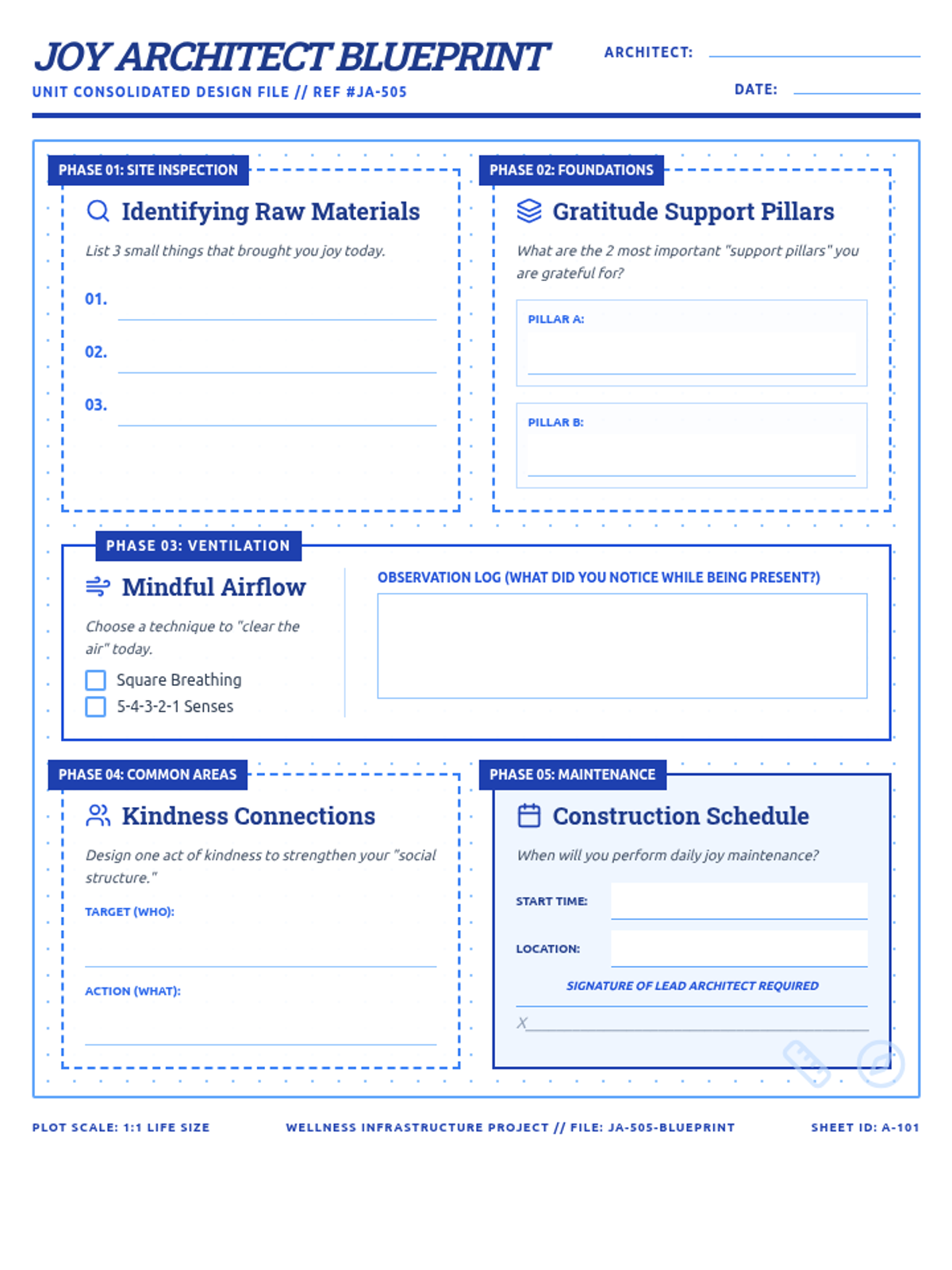
A consolidated graphic organizer worksheet that fits all five phases of the Joy Architect lesson into a single, blueprint-themed page. Students can track their progress from site inspection to final construction schedule.
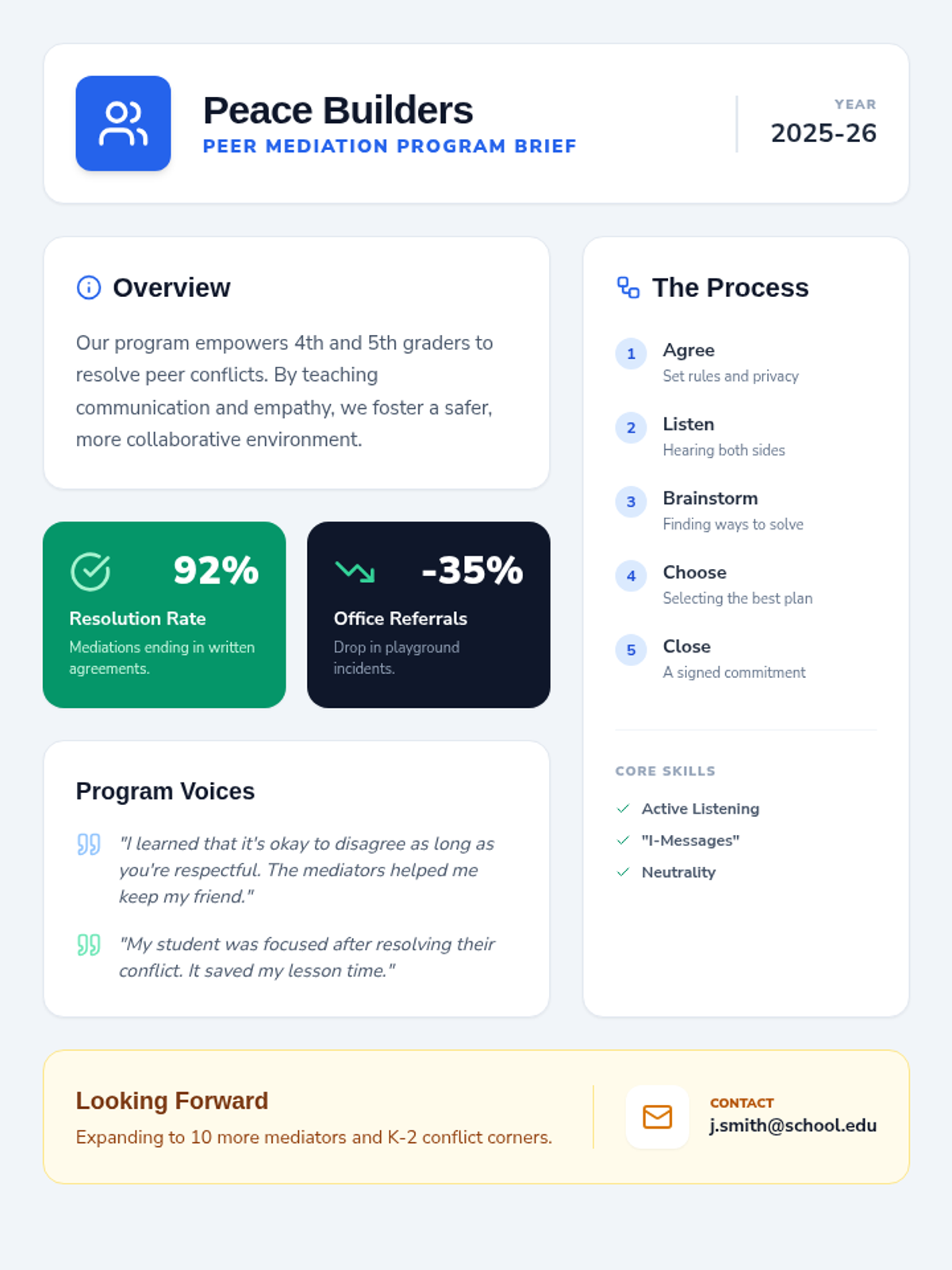
A concise one-page report for school board members and parents summarizing the peer mediation program's goals, process, and key success metrics.
A professional and engaging 8-slide presentation for school board and parent meetings, highlighting the mission, process, and success data of the elementary peer mediation program.
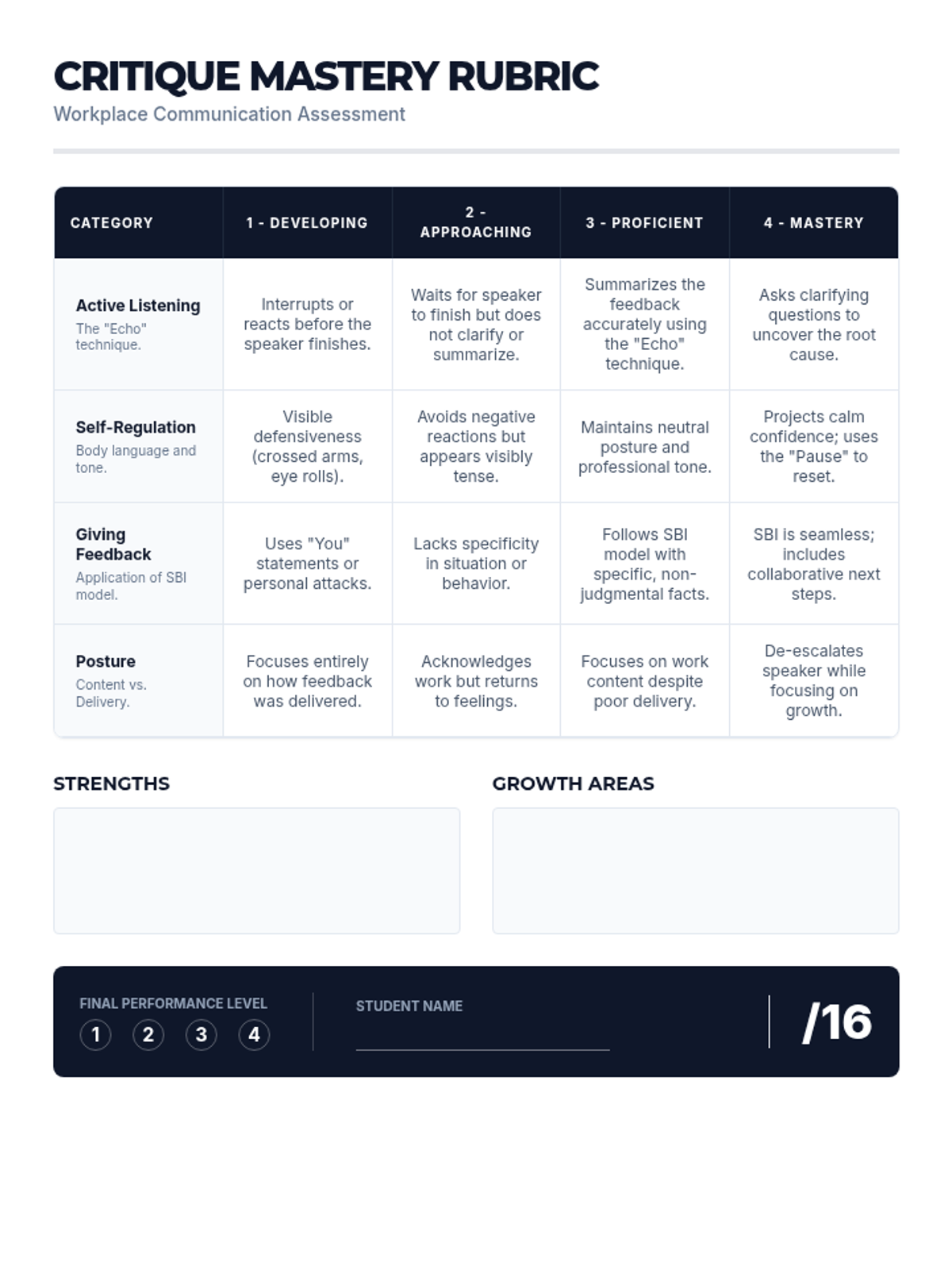
A professional evaluation rubric for assessing student performance. Revised to fit on a single page and improve visual contrast for grading.
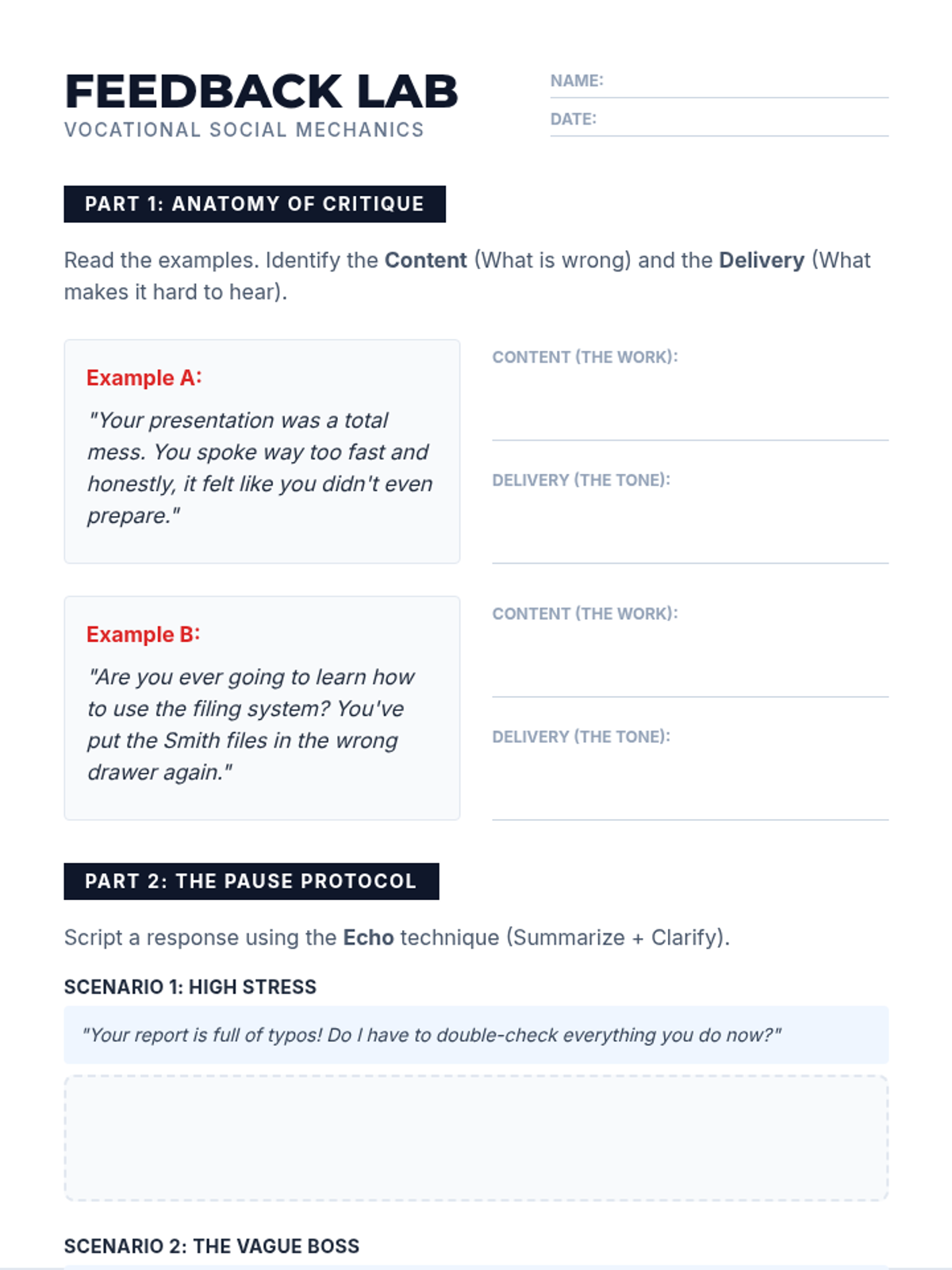
A student worksheet for practicing de-escalation, active listening, and the SBI feedback model. Revised to improve handwriting space and ensure layout consistency across pages.
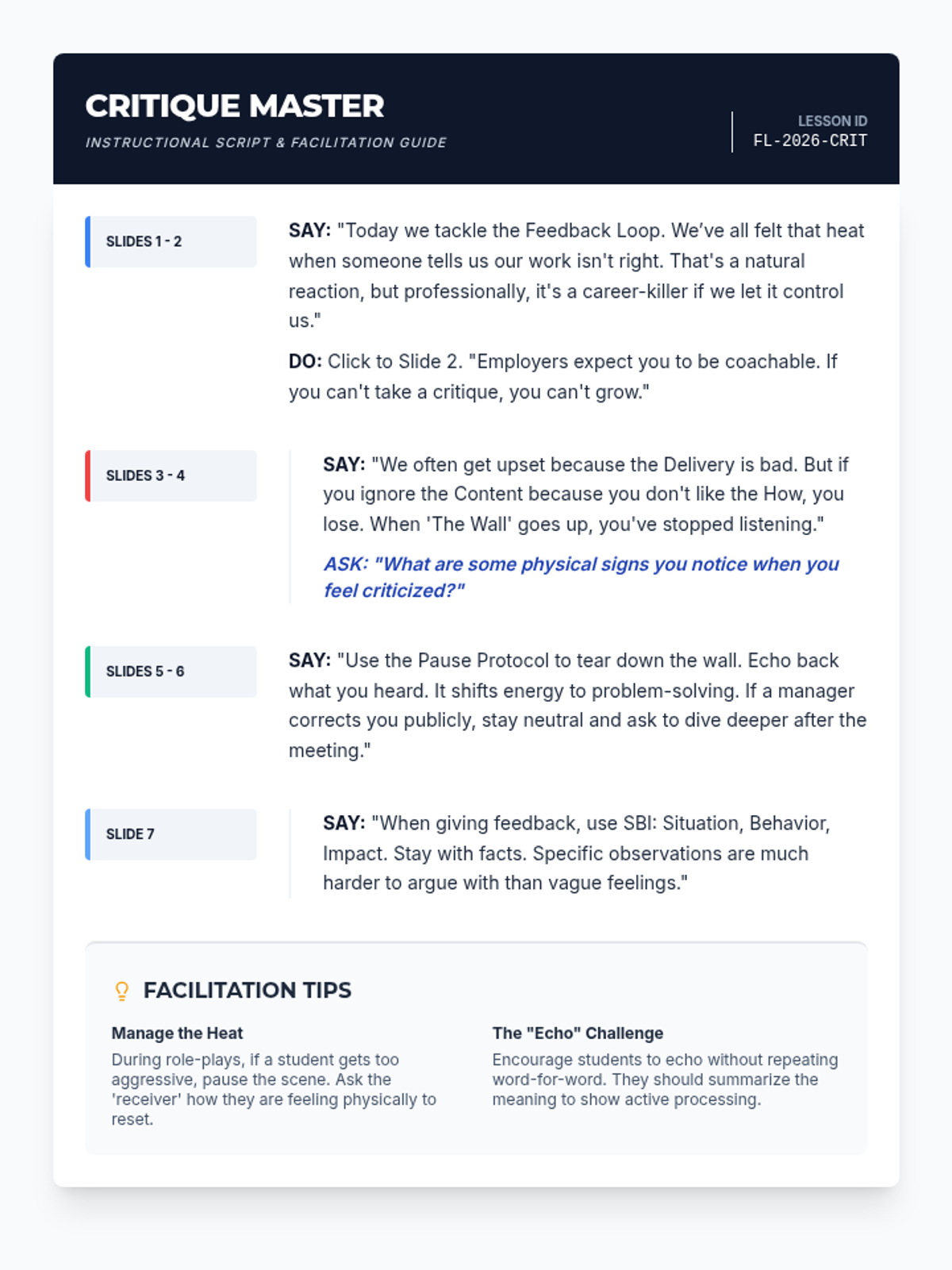
An instructional script for educators to use alongside the 'Feedback Loop' slides. Revised to remove extra pages and ensure all icons render.