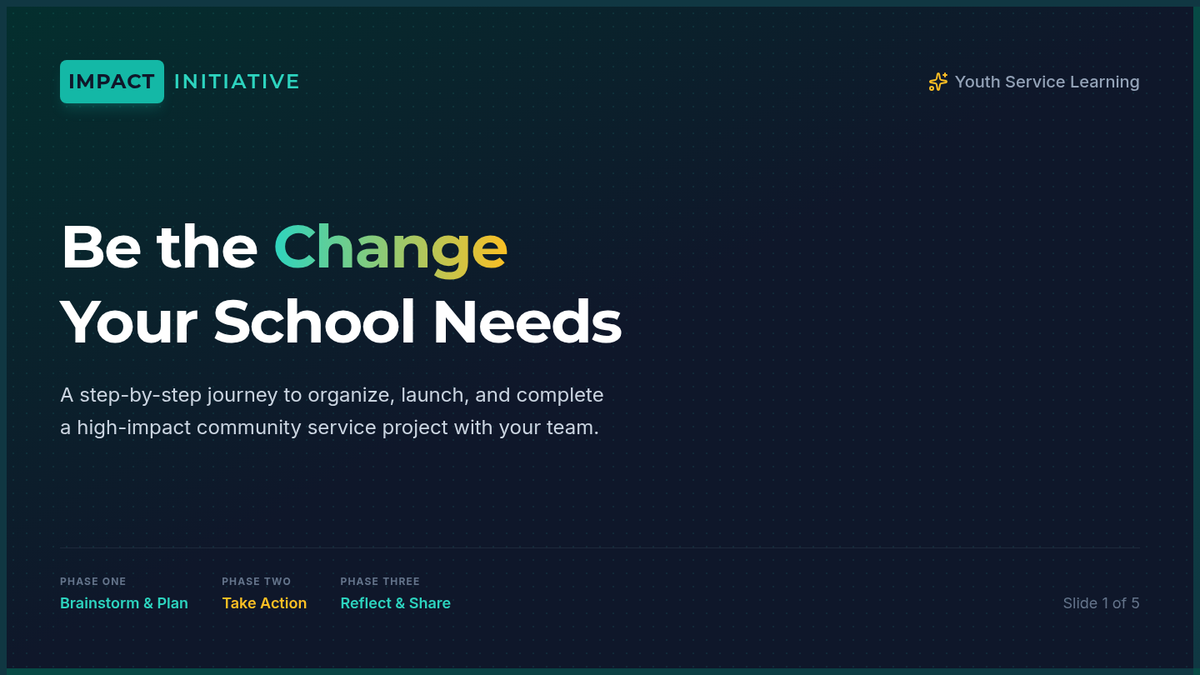
Slide deck for Lesson 4: The EEOC Path. Covers the external reporting process, the 180-day filing deadline, and the role of federal agencies.
A discussion guide for teachers to lead a deeper conversation on social energy, focusing on physical warning signs, the difference between distraction and recharge, and the importance of advocacy.
A teacher facilitation guide for the 'Social Circuit' movement activity. Includes step-by-step instructions and diverse social scenarios for students to evaluate their energy impact.
A student worksheet for self-reflection on social energy. It includes sections for identifying personal drains and gains, a visual energy tracker, and space to practice self-advocacy scripts.
A visually engaging slide deck that explains the concept of the 'social battery', including drains, gains, and self-advocacy scripts. Designed for classroom instruction with high-contrast colors and readable text.
A comprehensive teacher lesson plan for 'Power Up', designed for 7th-12th graders. It includes instructional sequences, differentiation strategies, and learning objectives focused on managing social energy.
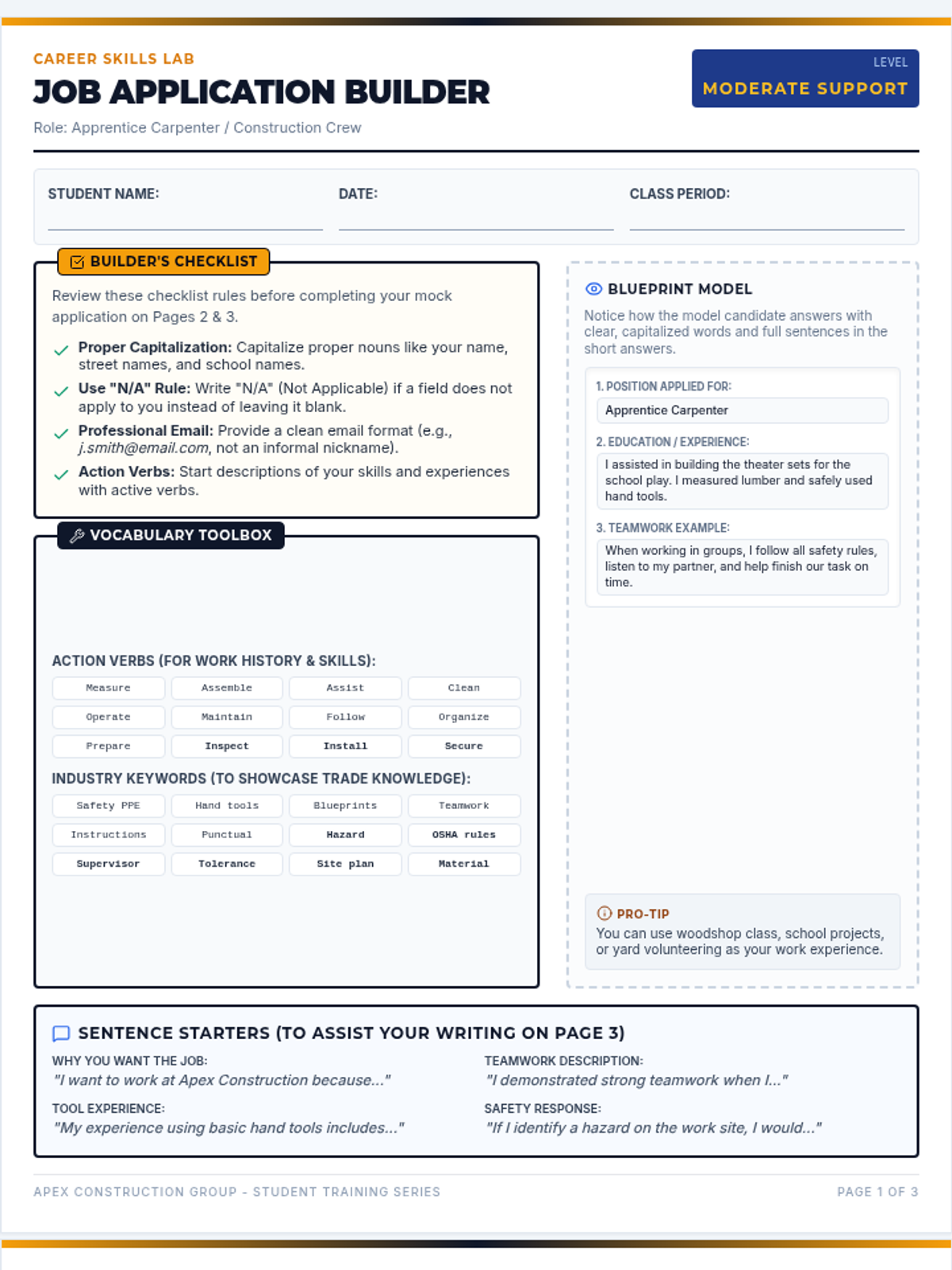
A compact 3-page interactive worksheet designed to teach students how to find free computer access, navigate login screens, connect to public WiFi, and understand basic desktop navigation. Optimized to fit perfectly within three 8.5x11 printable pages.
A comprehensive five-page STAAR EOC Prep Study Guide covering Algebra I, English I & II, Biology, and U.S. History, featuring content summaries, test-day strategies, and performance level explanations.
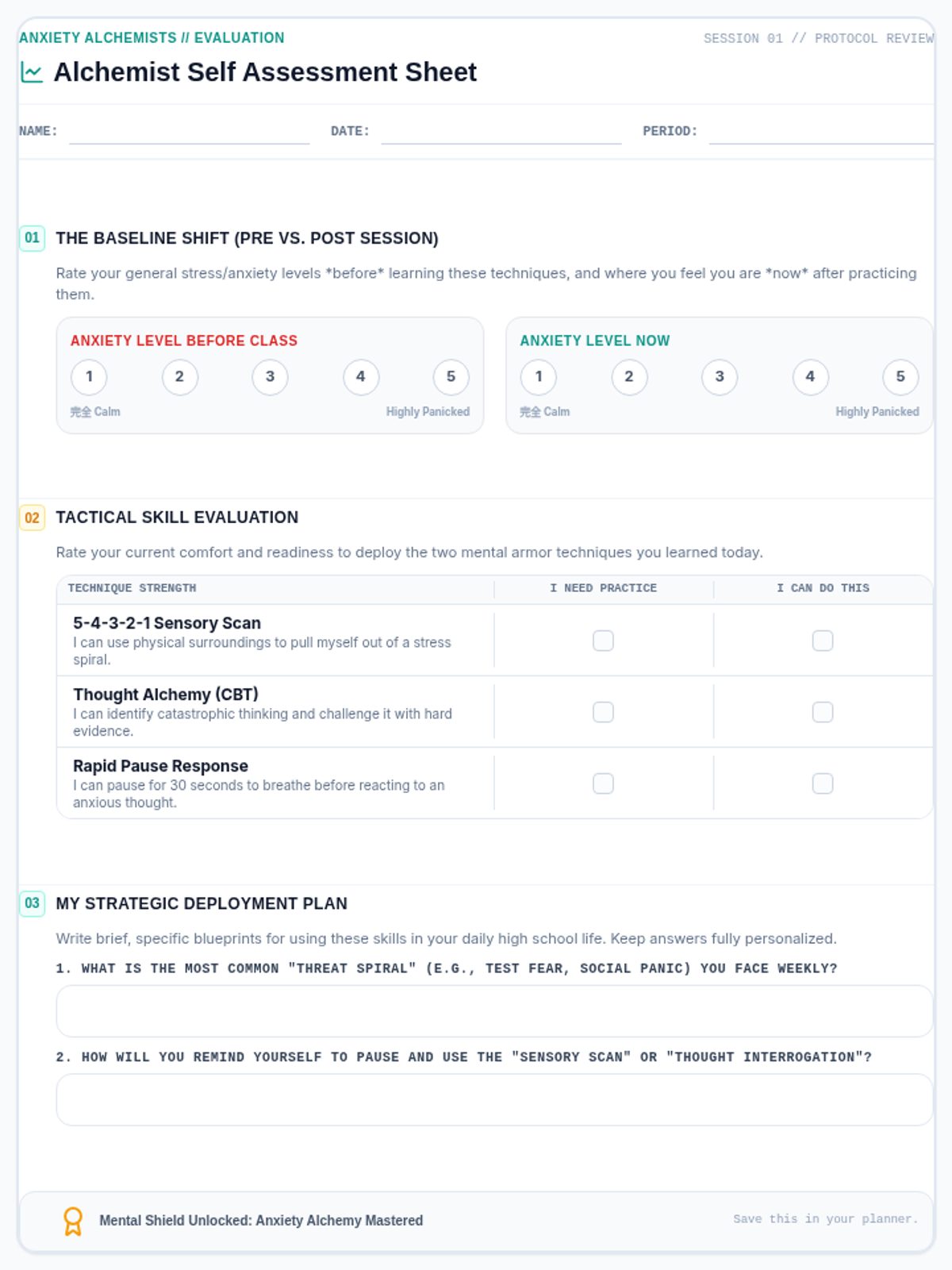
A comprehensive facilitator guide for educators teaching digital access to students in transition. Includes pedagogical tips, solutions for common administrative barriers (like library cards), and classroom activity ideas.
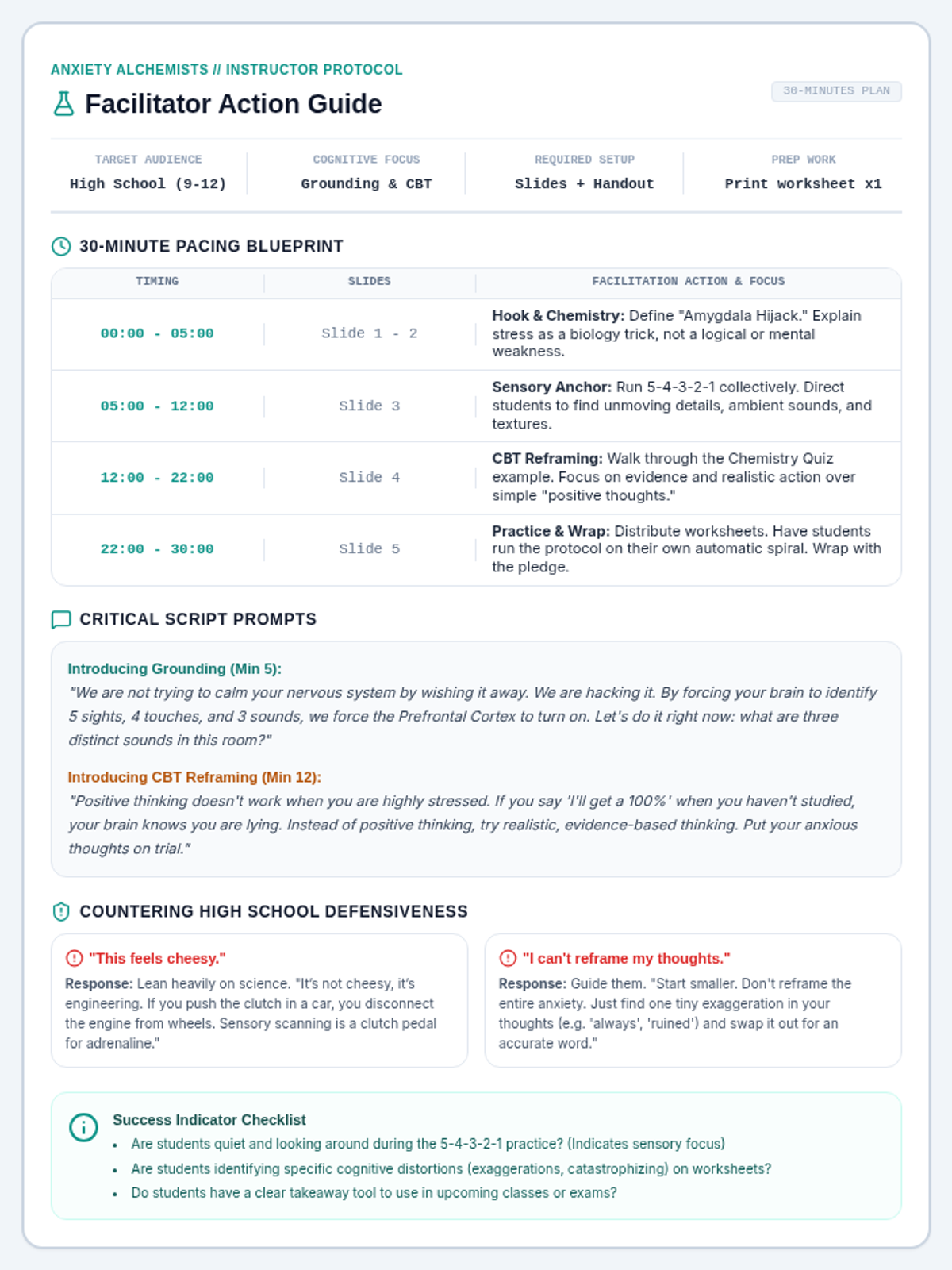
A "Website Showdown" activity where students compare pairs of websites (represented by descriptions and snippets) to determine which is more reliable using digital literacy principles.
A comprehensive answer key and facilitation guide for teachers/staff, updated to match the removal of Situation C and G and re-ordering of remaining scenarios. Syncs all worksheet scenarios and showdown activity results.
A high-engagement digital literacy worksheet featuring real-world hypotheticals on searching for resources and verifying social media claims. Updated to remove the Job Finder and Crisis Line scenarios and re-ordered the remaining situations.
A slide presentation introducing digital literacy skills like advanced search operators, source credibility checks, and scam prevention for high school students.
Visual presentation for guiding students through the advocacy email process, highlighting the importance of McKinney-Vento rights and breaking down the "email formula" for clarity and confidence.
A teacher-facing facilitation guide providing instructional strategies, background information on McKinney-Vento rights, and discussion prompts for supporting neurodivergent students in housing crisis.
A comprehensive student-facing toolkit featuring professional email templates for advocating for housing resources, IEP/504 accommodations, and school-related financial waivers. Includes specific strategies for neurodivergent students to communicate effectively despite environmental instability.
A teacher answer key providing recommended priorities and logical reasoning for the six schedule scramble scenarios, including sample social scripts using the V-F-P model.
A teacher's guide for the Digital Armor lesson, including answer keys for the scenarios, instructional advice for working with homeless youth, and a list of free security tools.
A worksheet for high school students featuring four critical online safety scenarios (public Wi-Fi, phishing, social media, and document storage) with space for reflection and problem-solving.
A high-contrast, visual infographic poster designed for neurodivergent youth experiencing homelessness. It provides clear, direct guidance on public Wi-Fi safety, social media privacy, identifying predatory red flags, and safe protocols for meeting online friends in person.
A slide deck for high school students focusing on digital security, public Wi-Fi safety, phishing recognition, and secure document storage, tailored for those navigating housing instability.
A teacher facilitation guide providing objectives, discussion points for each scenario card, and a framework for teaching students how to politely decline invitations using the V-F-P model.
A step-by-step resolution worksheet that guides students through visualizing a conflict on a timeline, identifying the specific overlap, stating their chosen priority, and drafting a polite social message to decline.
A decision-making graphic organizer used to compare two conflicting events. It helps students weigh commitments based on consequences, flexibility, and social impact to determine a priority.
A set of 6 scenario cards featuring schedule conflicts common to high schoolers, including work, social, family, and extracurricular overlaps. Designed to be cut out and used for problem-solving discussions.
A student document to practice drafting apologies for specific scenarios using the 4-part effective apology framework.
High-impact slides for Session 5 about the mechanics of a real apology (not just "I'm sorry") and the 4 parts (Expression, Responsibility, Restitution, Promise).
A student worksheet designed for Session 4 to help students analyze influence in their social circle and practice tactical "No" responses.
A high-impact slide deck for Session 4 focusing on navigating power imbalances, peer pressure, and tactical "saying no" techniques like the Broken Record.
A student activity worksheet for Session 3 designed to help students analyze tone misinterpretation in text messages and practice transitioning conflict away from digital platforms.
A student worksheet for Session 2 providing scenario-based practice for the '3-Second Pause', 'Fogging', and '"I" Statement' techniques.
A modern, high-contrast slide deck for Session 3 focusing on the unique psychological traps of digital conflict, including online disinhibition and the lack of non-verbal cues.
Visual guide for Session 2 covering techniques like "Fogging," "The Three-Second Pause," and "I" statements using a high-impact, modern tech-inspired aesthetic.
A student worksheet designed for Session 1 to help students visually identify physical warning signs of conflict and log their personal triggers.
A high-energy, visually striking slide deck for Session 1, introducing the biology of conflict (amygdala hijack), physical warning signs, and trigger identification using a 'Peace Protocol' blueprint aesthetic.
A set of printable practice cards with common testing-season scenarios for students to practice identifying cognitive distortions and applying the Perspective Pivot technique.
A student worksheet for identifying cognitive distortions and practicing the Perspective Pivot reframing technique, including space for evidence collection and belief scaling.
A personal reflection worksheet where students identify a specific stress thought and apply the P.I.V.O.T. technique to reframe it into a resilient, balanced perspective.