An intensive teacher's guide for a 120-minute vocational session, featuring a five-phase timeline covering digital prep, visual branding, response drafting, mock interview circuits, and follow-up.
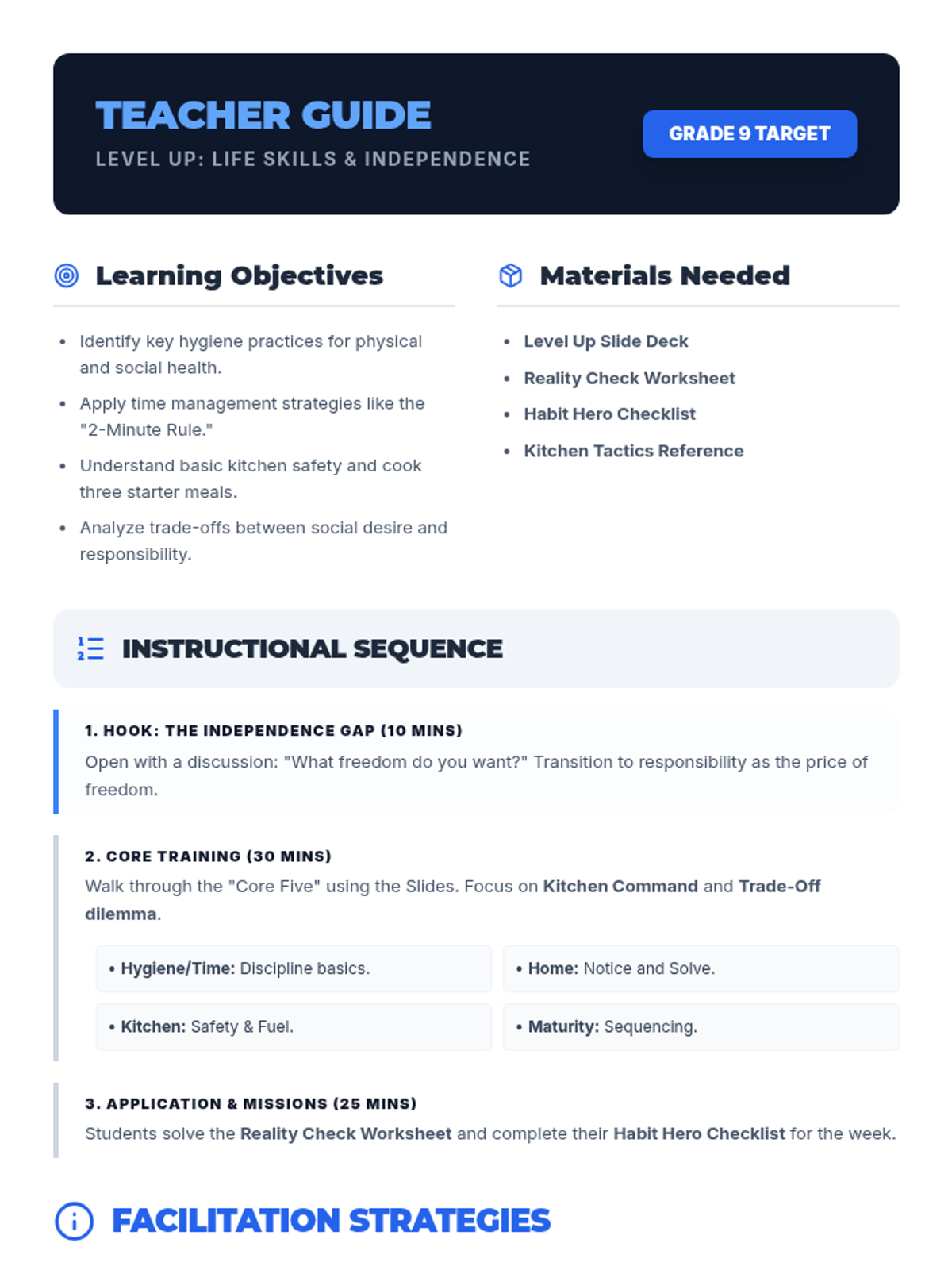
A comprehensive teacher guide for delivering the Level Up life skills lesson. It includes learning objectives, a detailed instructional sequence, facilitation tips for engaging teen boys, and strategic discussion prompts.
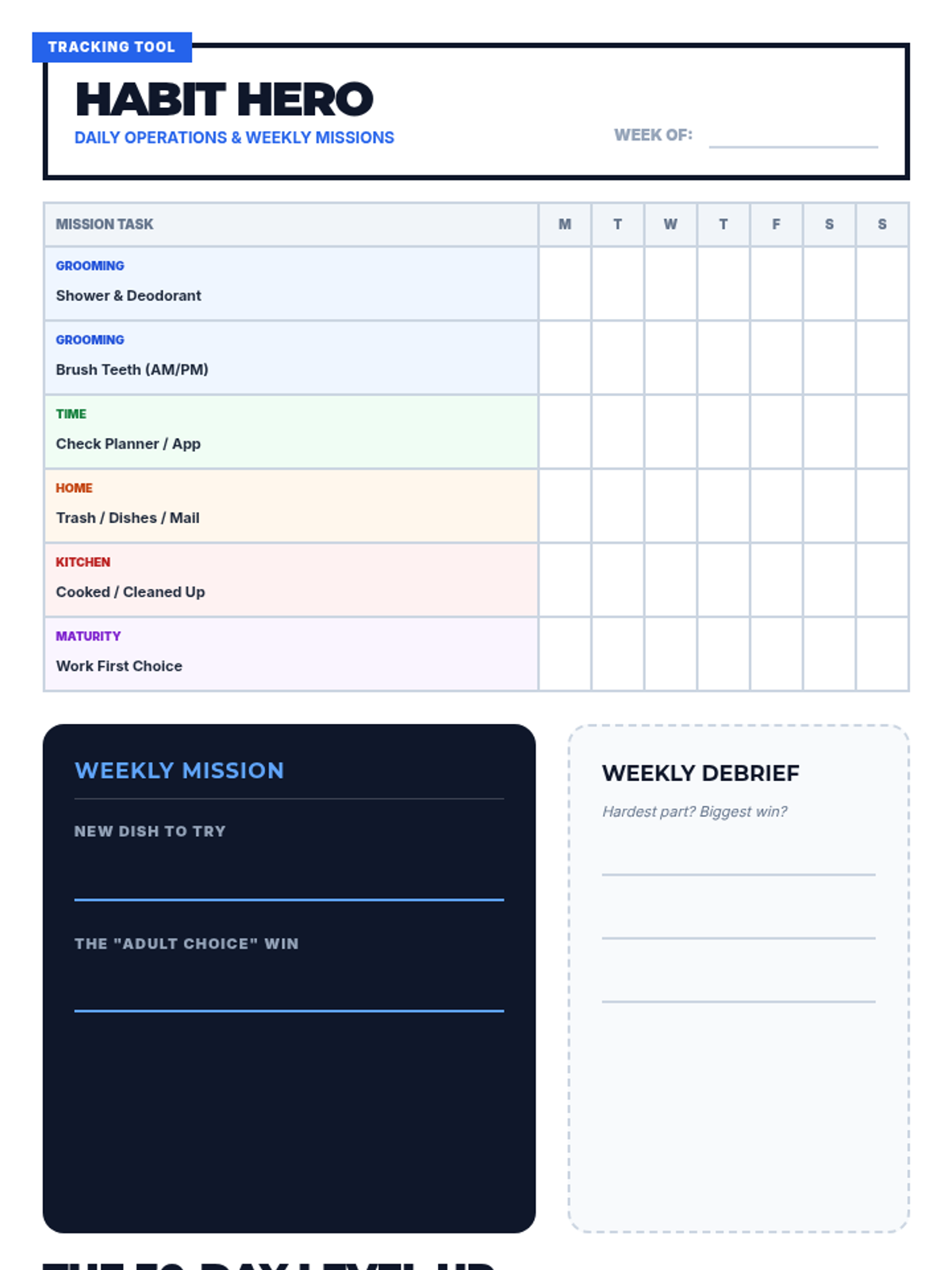
A practical daily and weekly tracking tool for 14-year-old boys to monitor their progress in hygiene, time management, and home responsibilities. It includes a structured goal-setting section for long-term habit formation.
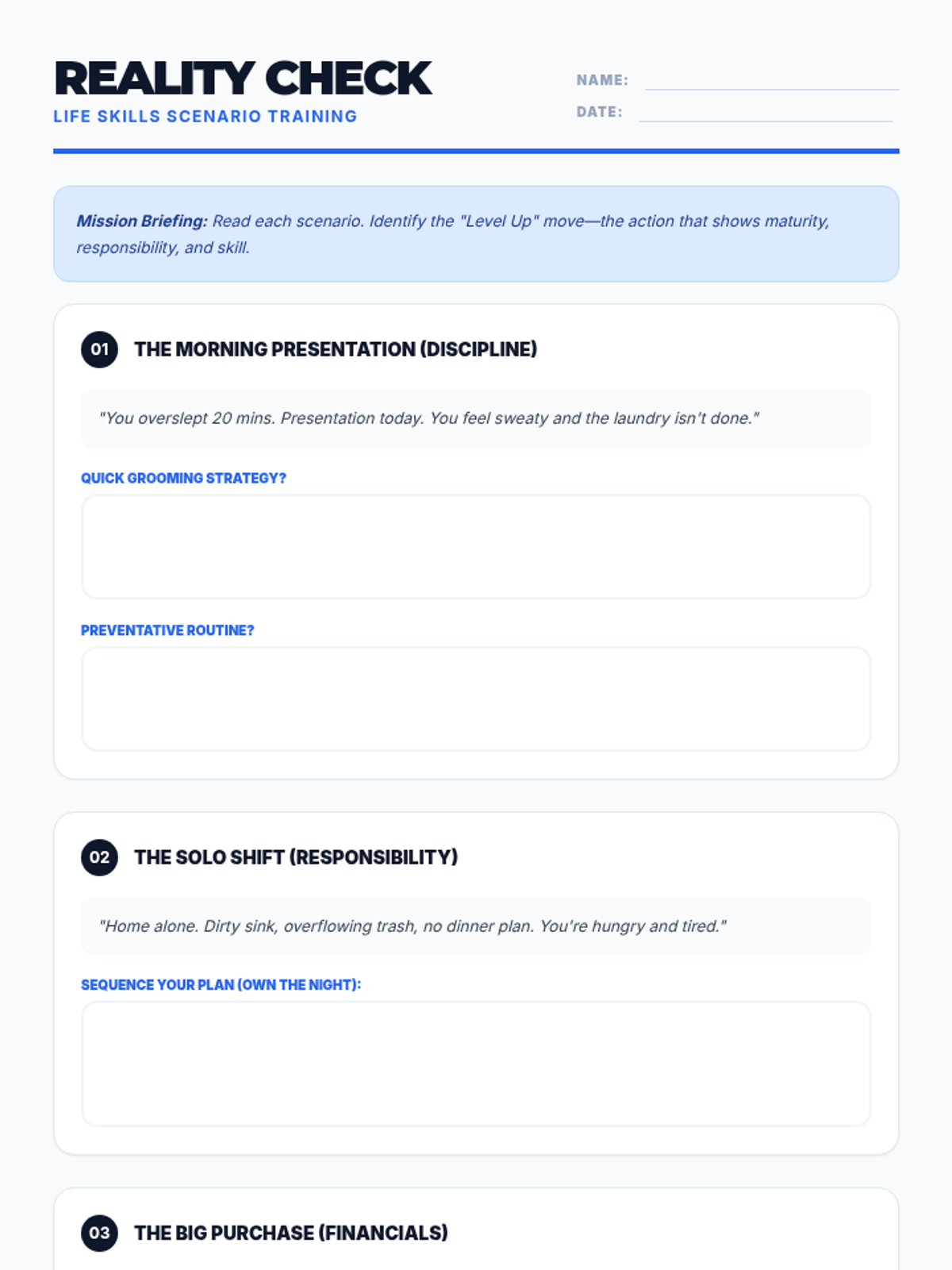
A scenario-based worksheet for 14-year-old boys that presents real-world challenges related to hygiene, time management, home life, and accountability. It provides ample writing space for students to brainstorm mature solutions.
A dynamic, 16:9 presentation designed for 14-year-old boys that explores personal hygiene, time management, home responsibilities, and the mindset of transitioning into adulthood. It uses a high-contrast 'blueprint' aesthetic to engage and inform.
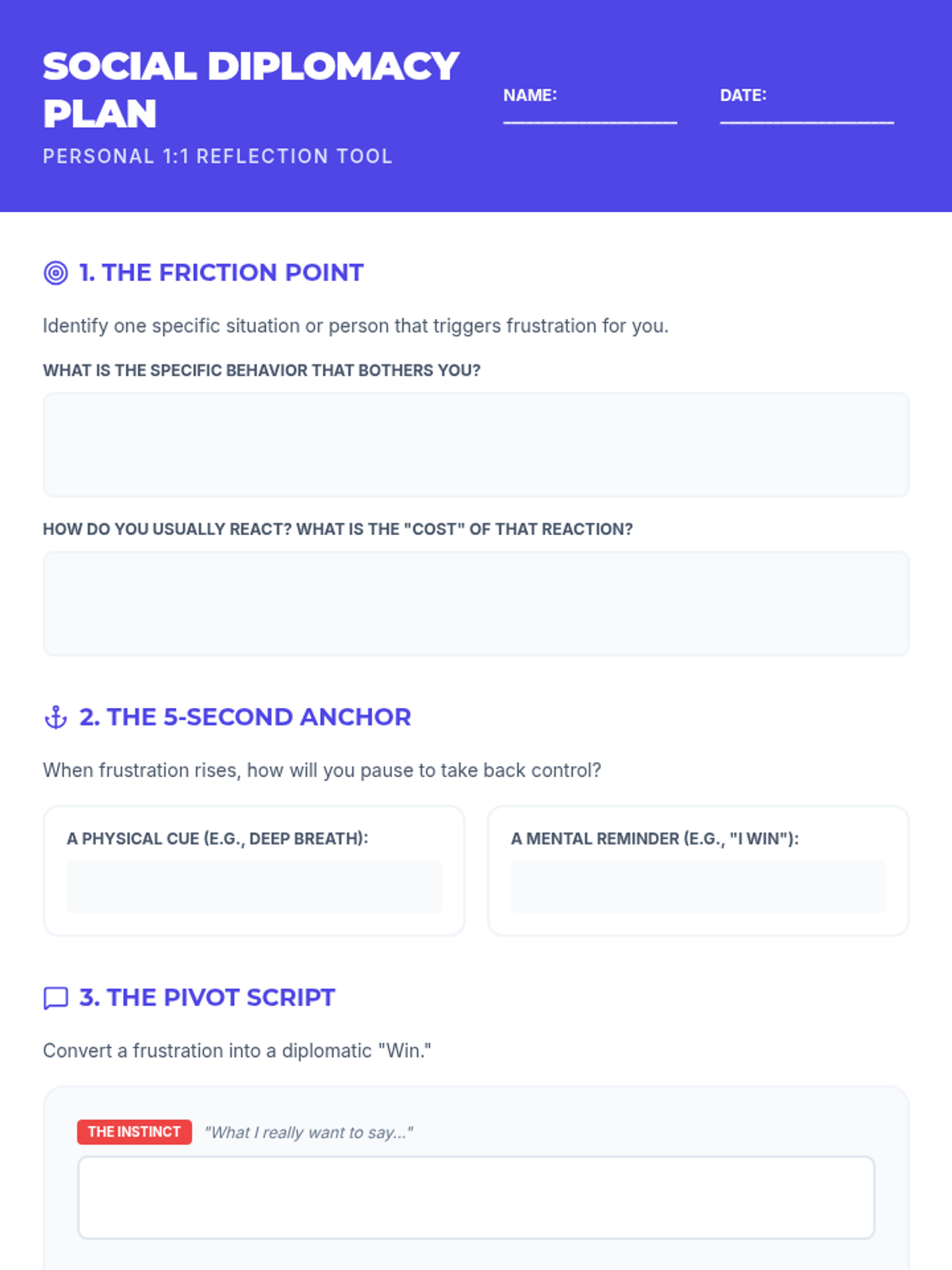
A personal reflection tool for students to use during or after a one-on-one discussion. Helps the student identify real-world triggers, plan physical coping cues, and write their own 'Professional Pivot' scripts for difficult relationships.
A slide deck designed for one-on-one guided discussion. High-impact visuals anchor conversation points on emotional regulation, the 'pivot' communication strategy, and strategic perspective-taking.
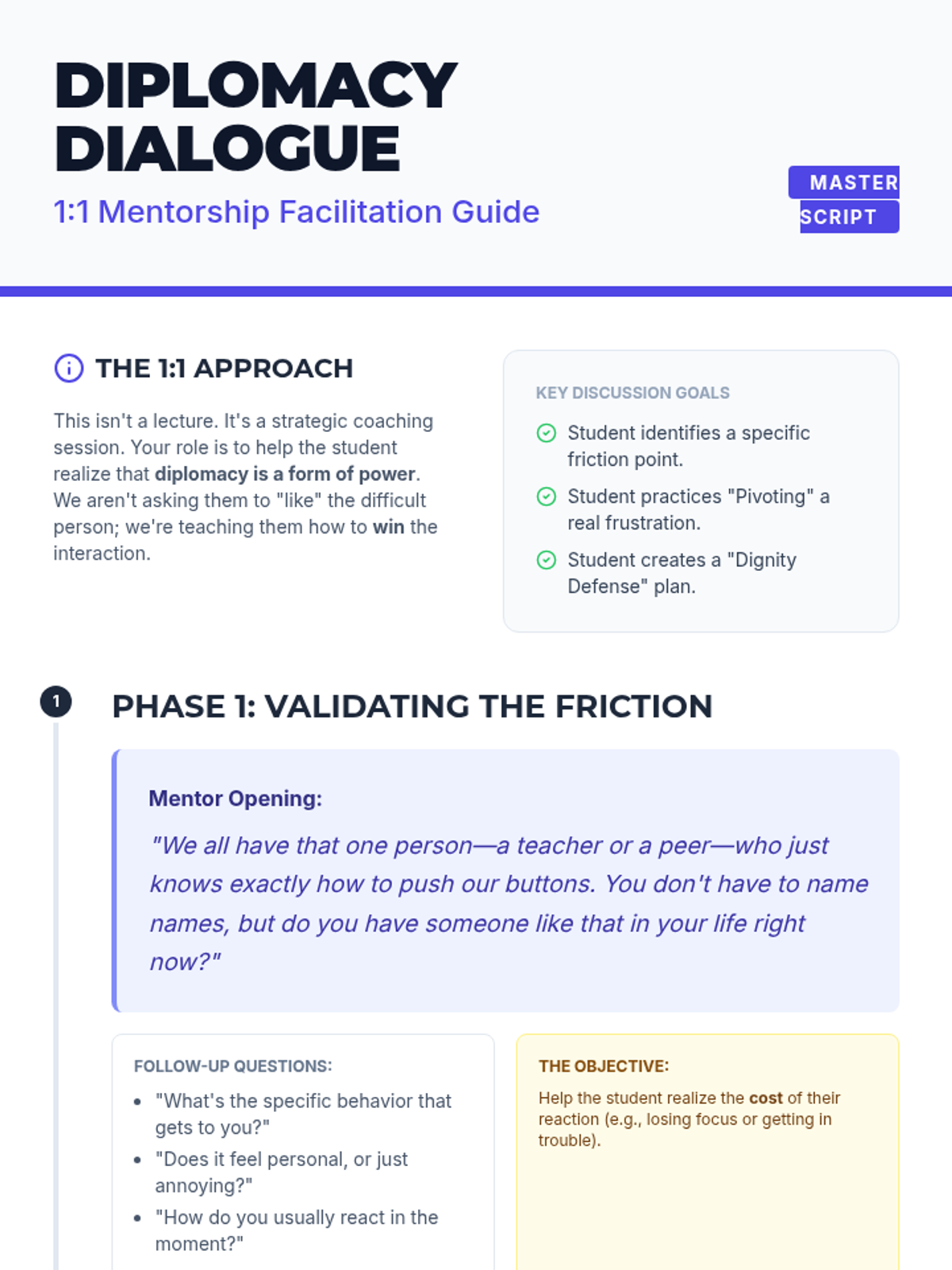
A specialized facilitator script for a one-on-one mentorship session. Focuses on transforming interpersonal frustration into strategic diplomacy through guided dialogue, validation, and real-time script practice.
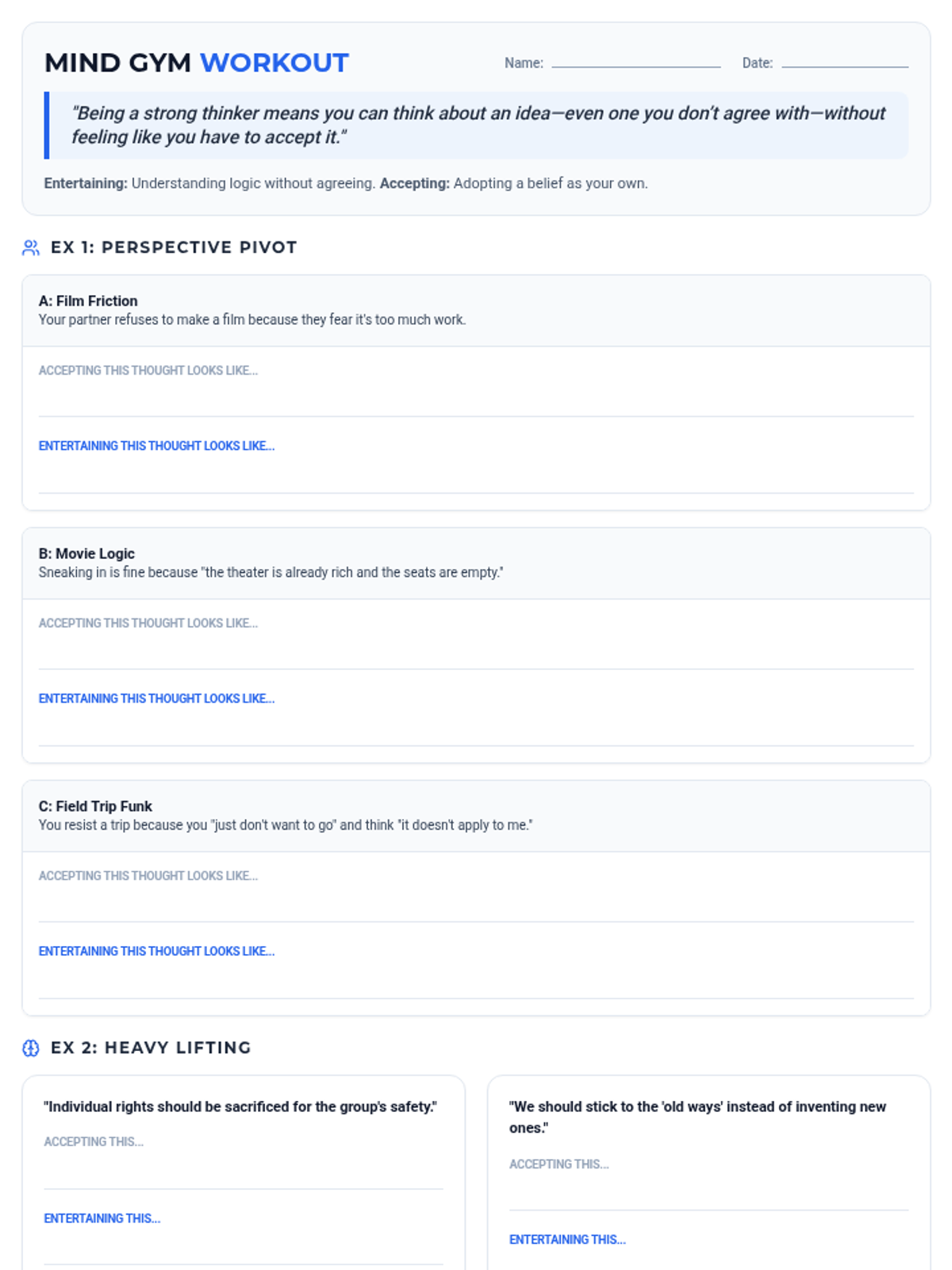
A refined single-page worksheet for building mental flexibility. Features varied, descriptive prompts like 'The Logic Check' and 'Why It Matters' to guide students through entertaining opposing viewpoints across real-world and philosophical scenarios. Layout optimized for writing width and high-quality printing.
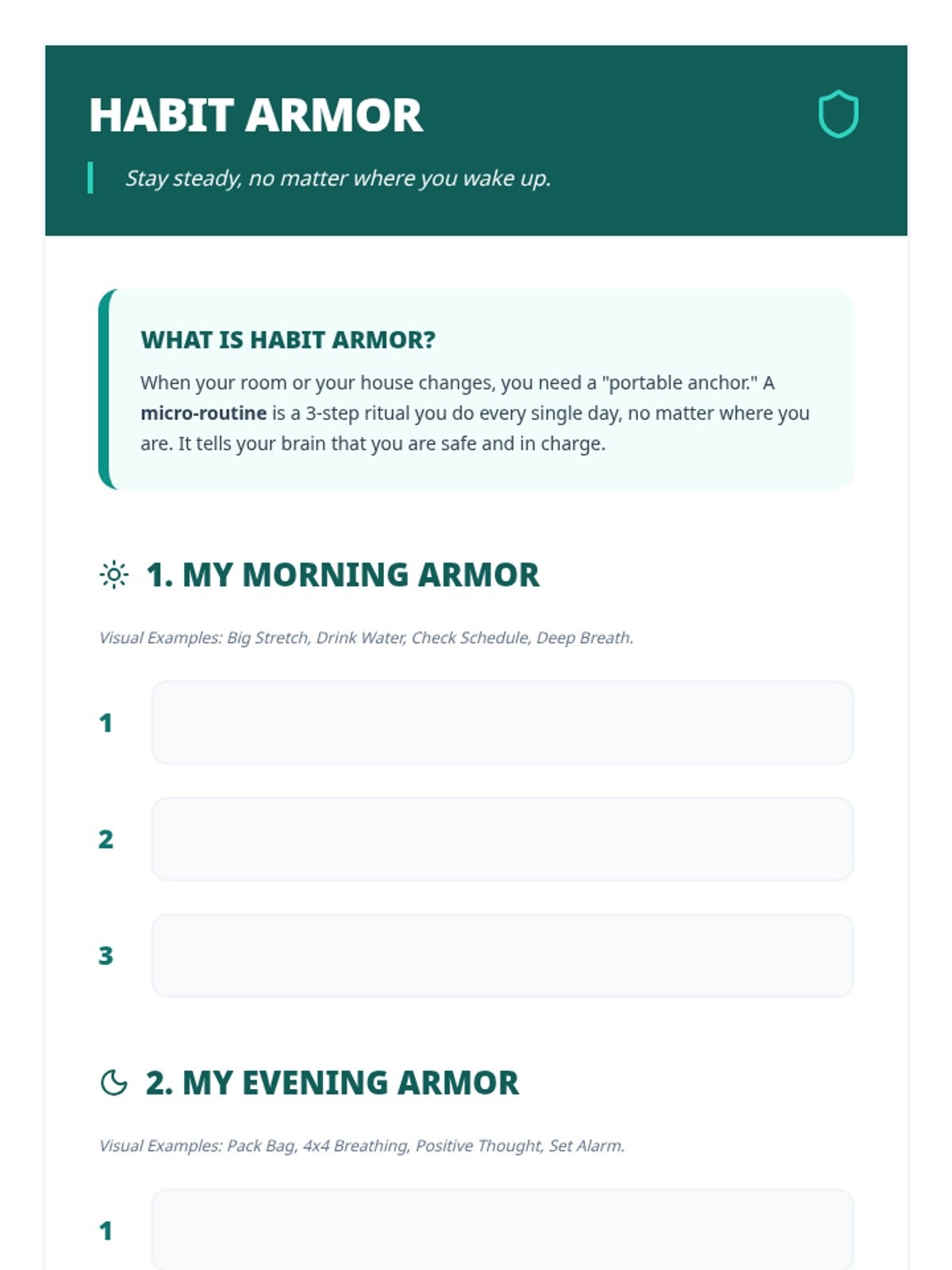
Student workbook for the Habit Armor lesson, featuring templates for creating portable morning and evening micro-routines.
Slide deck for the Habit Armor lesson, illustrating the cognitive benefits of micro-routines and presenting templates for portable morning and evening habits.
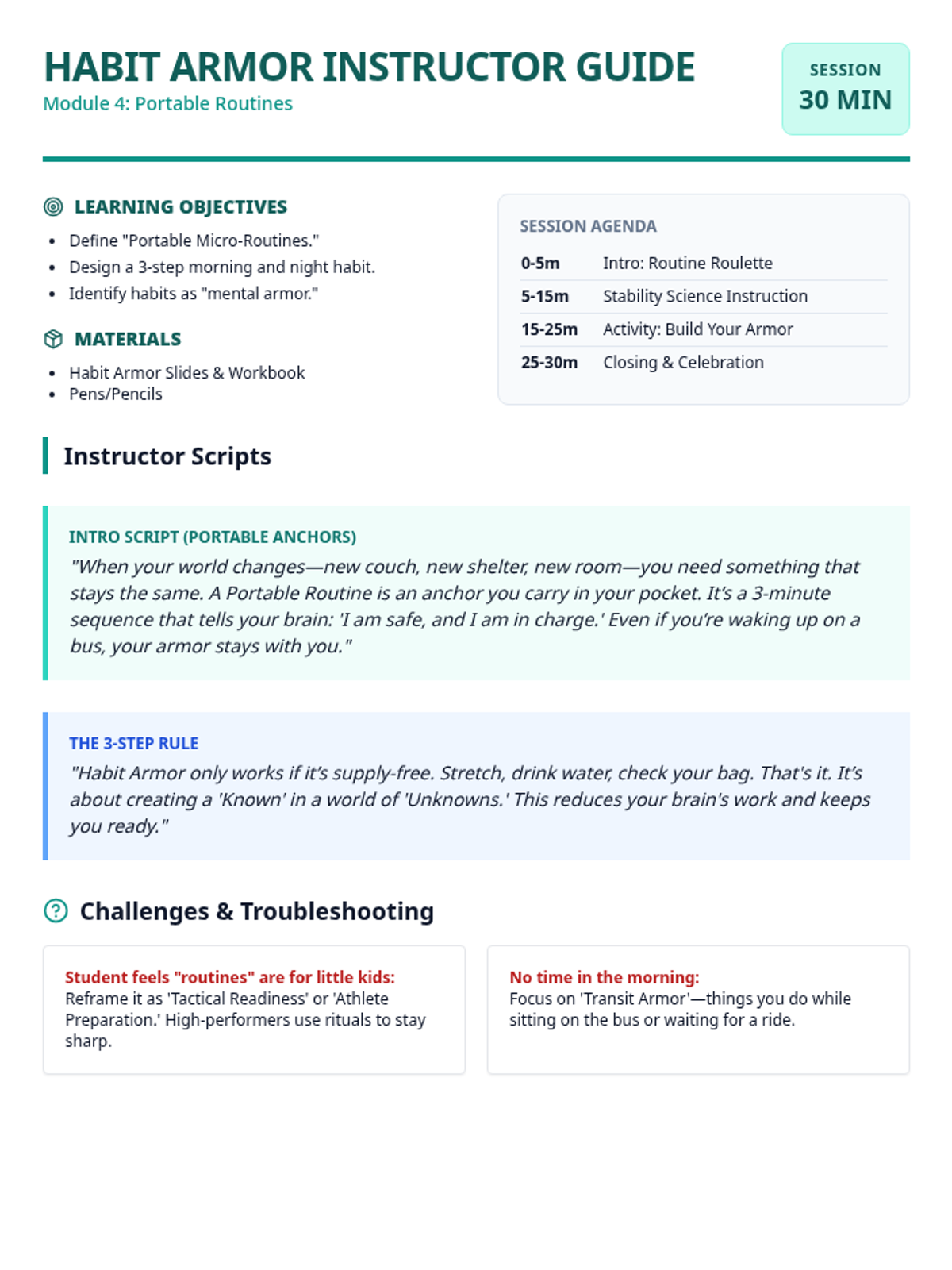
Instructor guide for the Habit Armor lesson, focusing on creating simple, portable micro-routines to provide a sense of agency and stability during housing transitions.
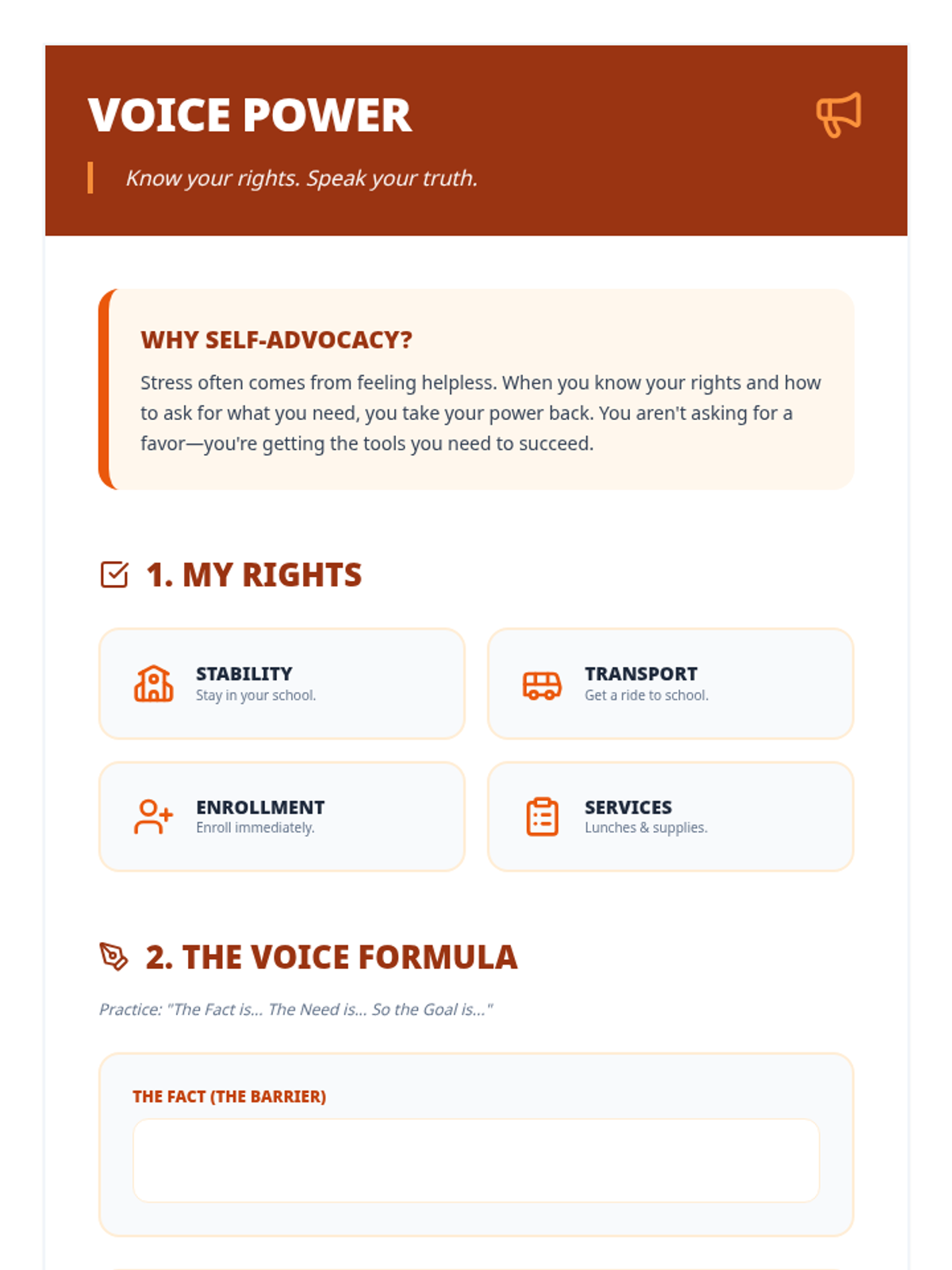
Student workbook for the Voice Power lesson, featuring a rights identification activity and a template for practicing the self-advocacy formula.
Slide deck for the Voice Power lesson, explaining McKinney-Vento rights and teaching the "Fact + Need + Goal" self-advocacy formula.
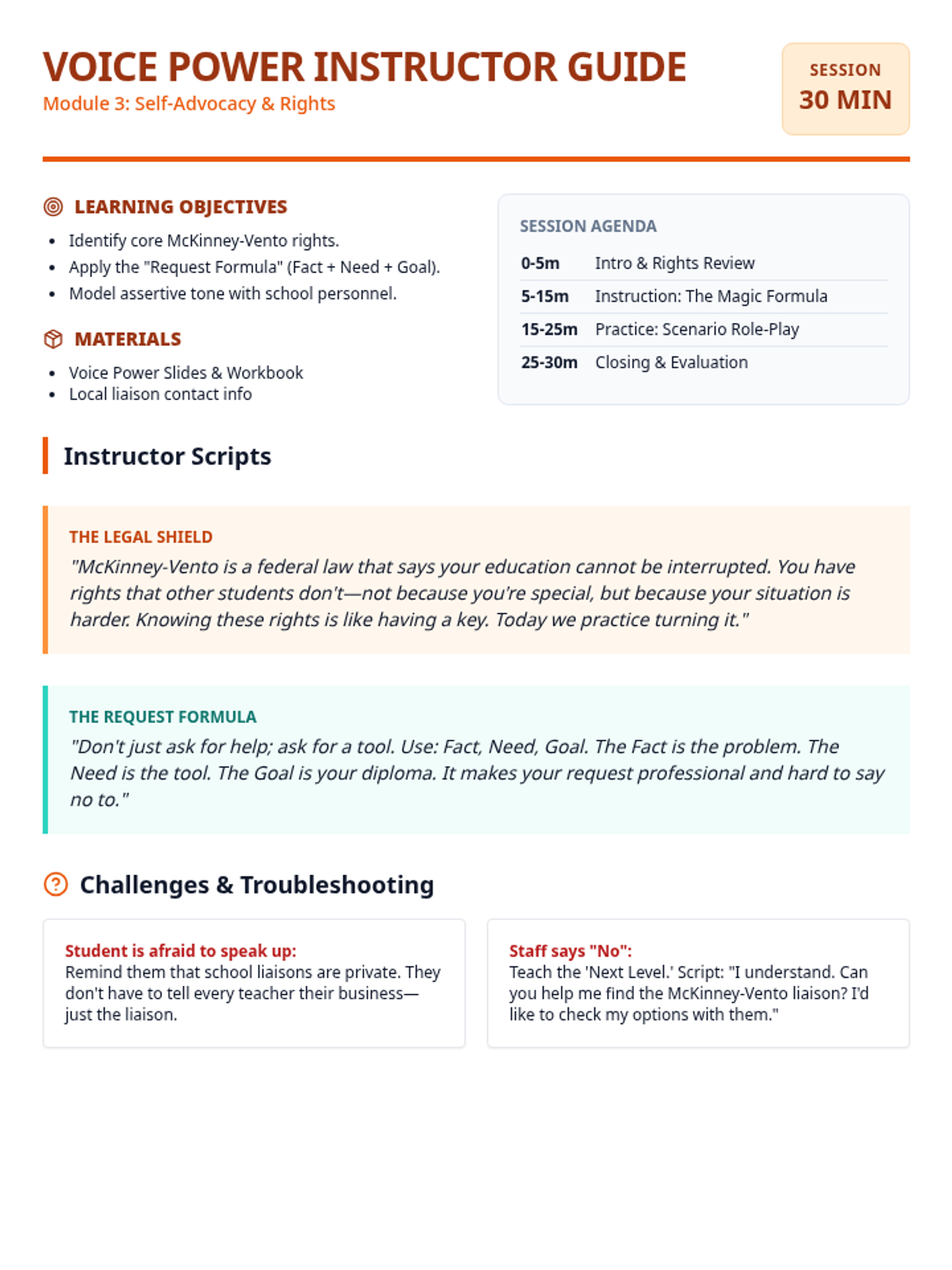
Instructor guide for the Voice Power lesson, focusing on self-advocacy scripts, understanding McKinney-Vento rights, and reducing stress through assertive requests.
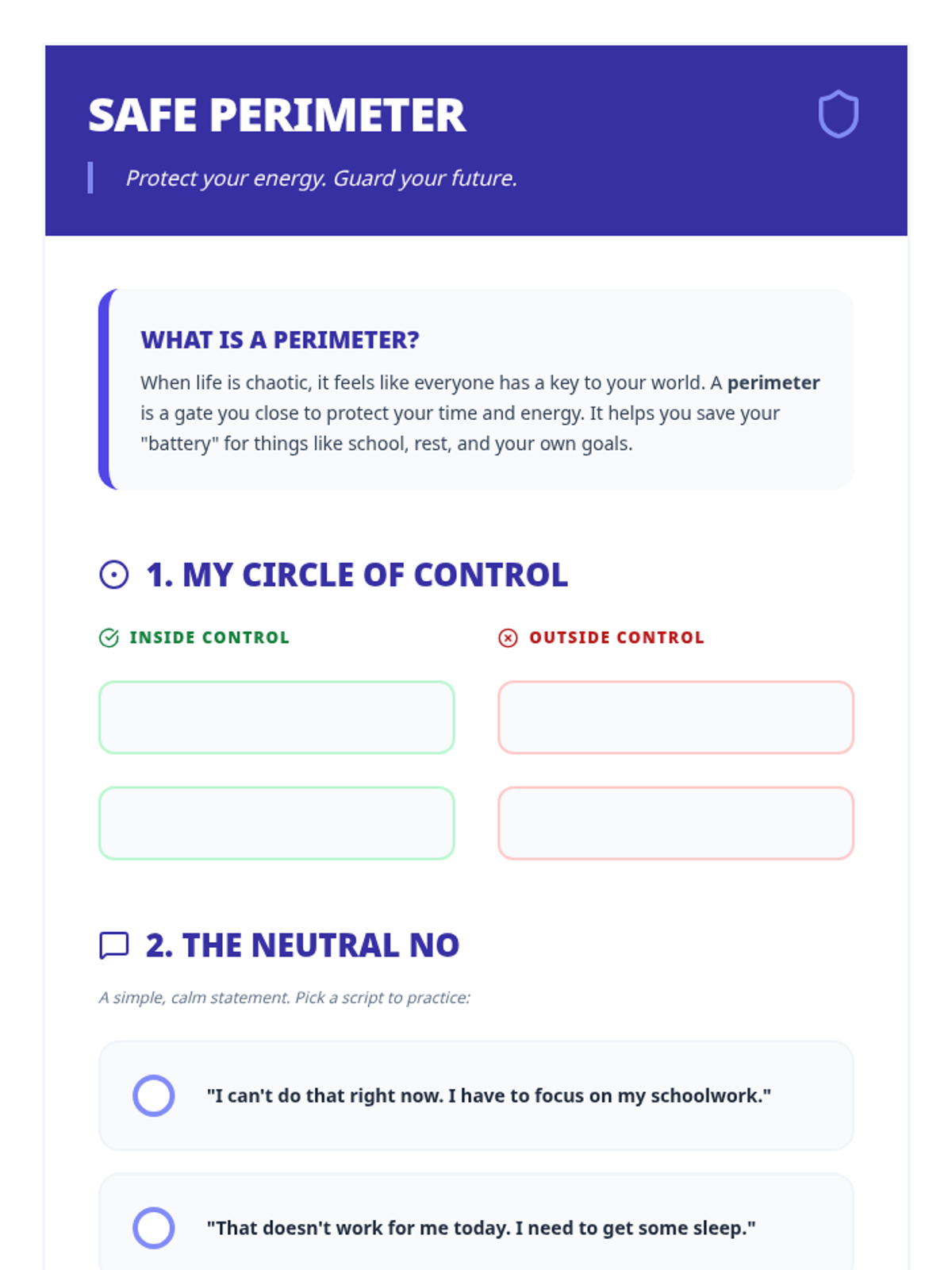
Student workbook for the Safe Perimeter lesson, featuring control circle mapping, boundary script selection, and an energy protection planning area.
Slide deck for the Safe Perimeter lesson, featuring visual metaphors for spheres of control and scripts for setting assertive, neutral boundaries.
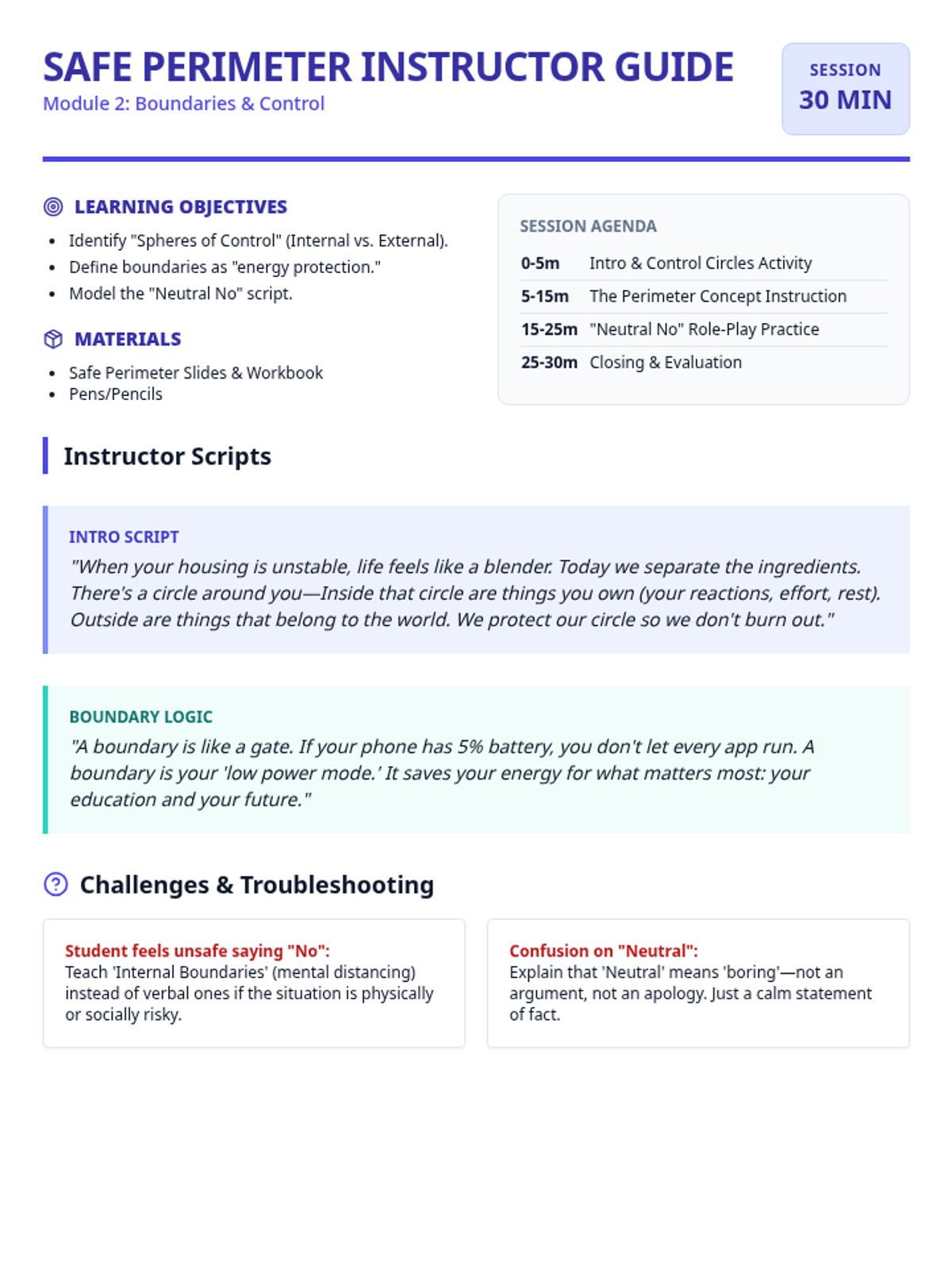
Instructor guide for the Safe Perimeter lesson, focusing on control circles, the "Neutral No" technique, and mental boundary setting for students in high-instability environments.
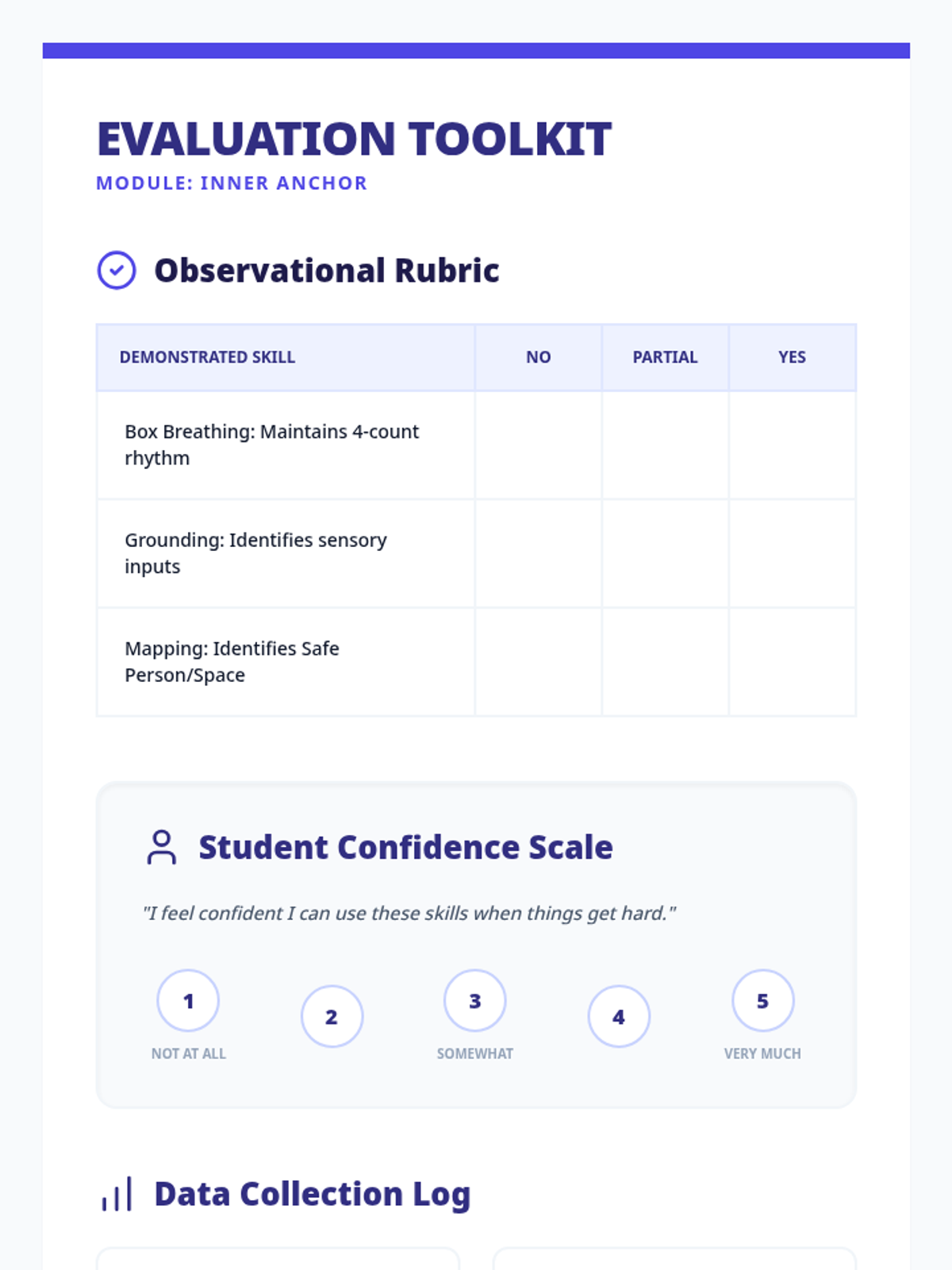
Outcome measures and evaluation toolkit for the Inner Anchor session, including observational rubrics, student confidence scales, and program metrics logs.
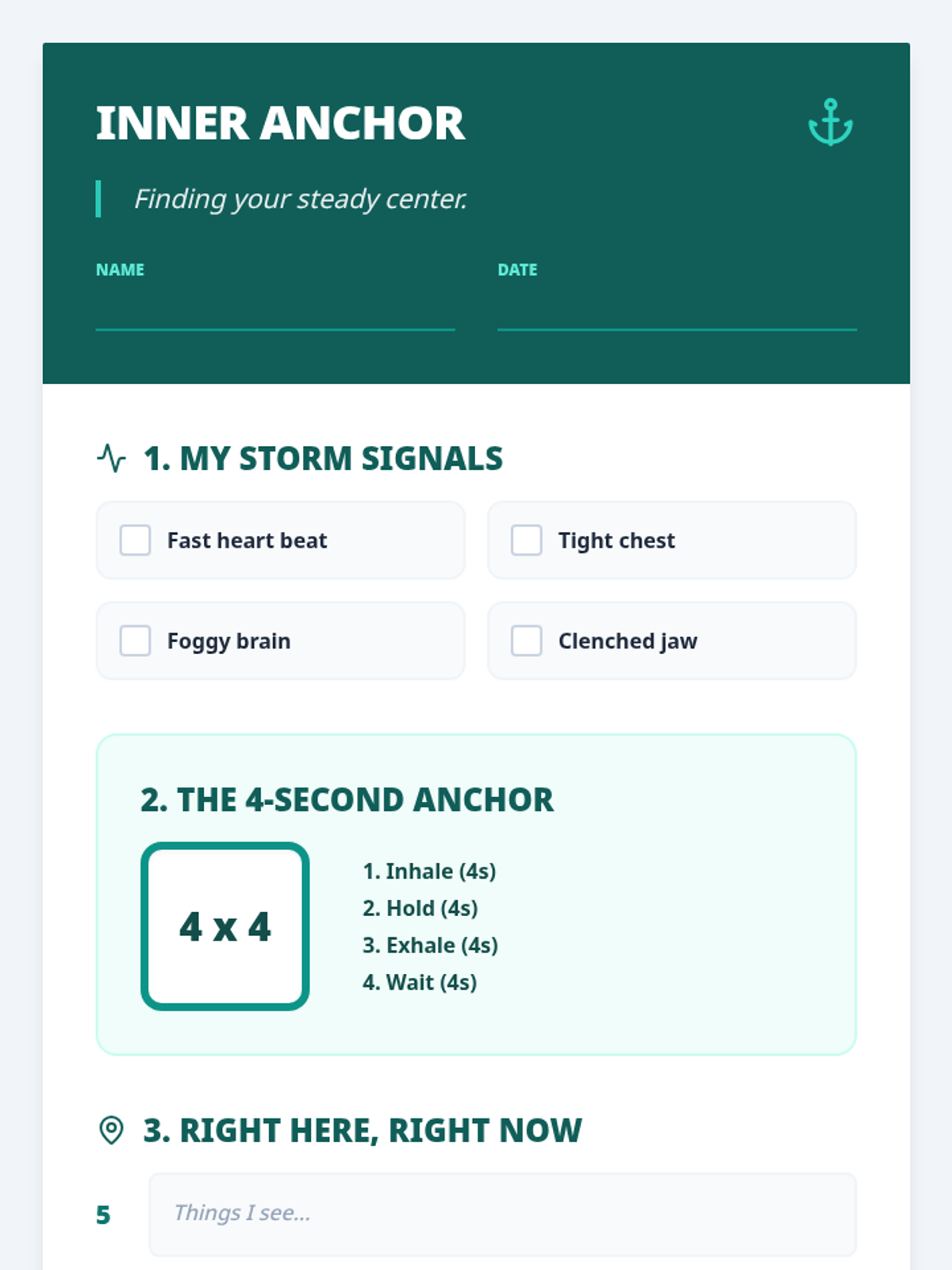
Student participant workbook featuring a body scan checklist, visual breathing guide, grounding exercise, and a minimalist coping plan.
Visual slide deck for the Inner Anchor stress management session, featuring clear, high-contrast instructional visuals for breathing and grounding techniques.
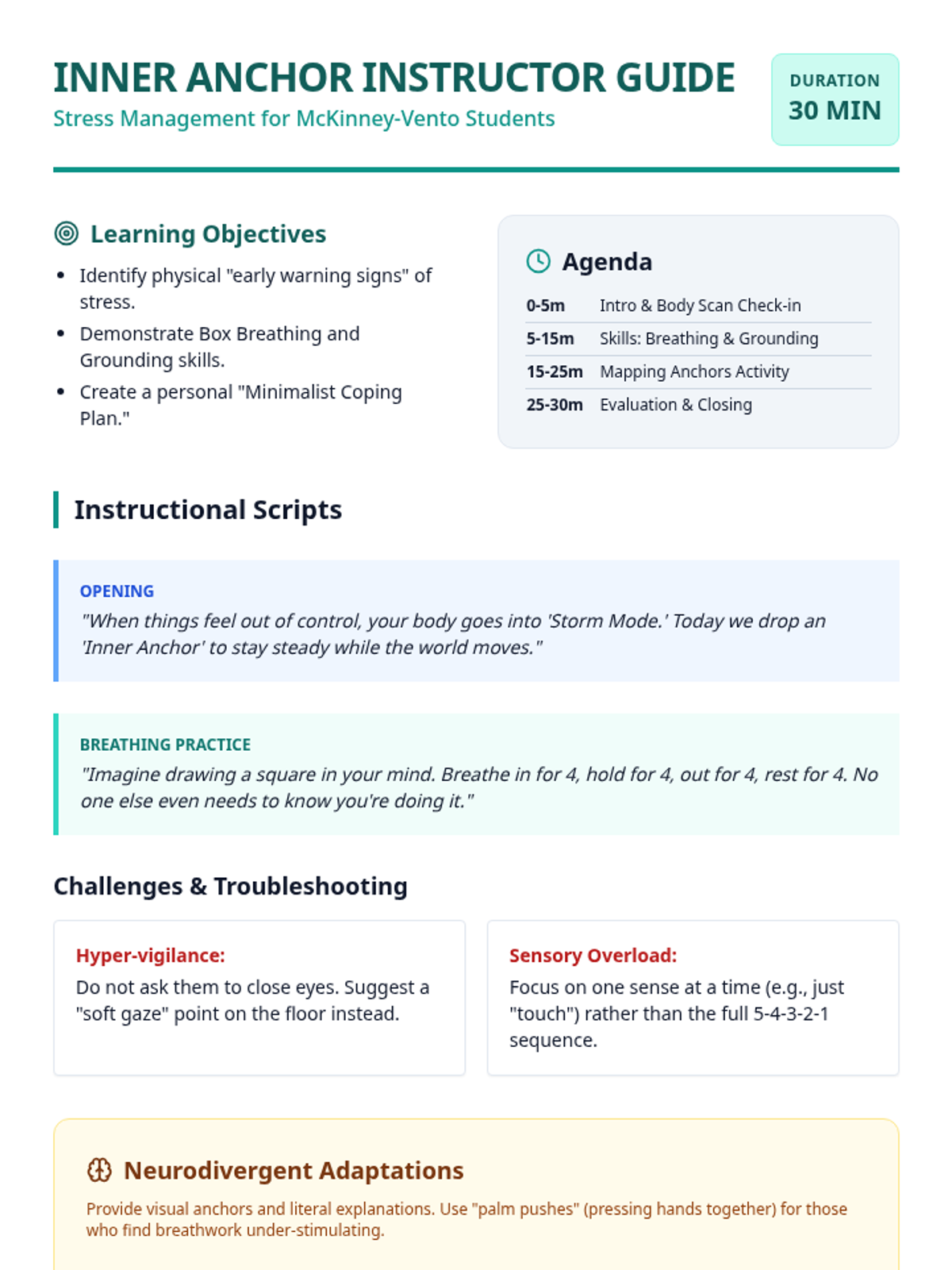
A comprehensive instructor manual for a 30-minute stress management session, including scripts, neurodivergent adaptations, and a fidelity checklist.
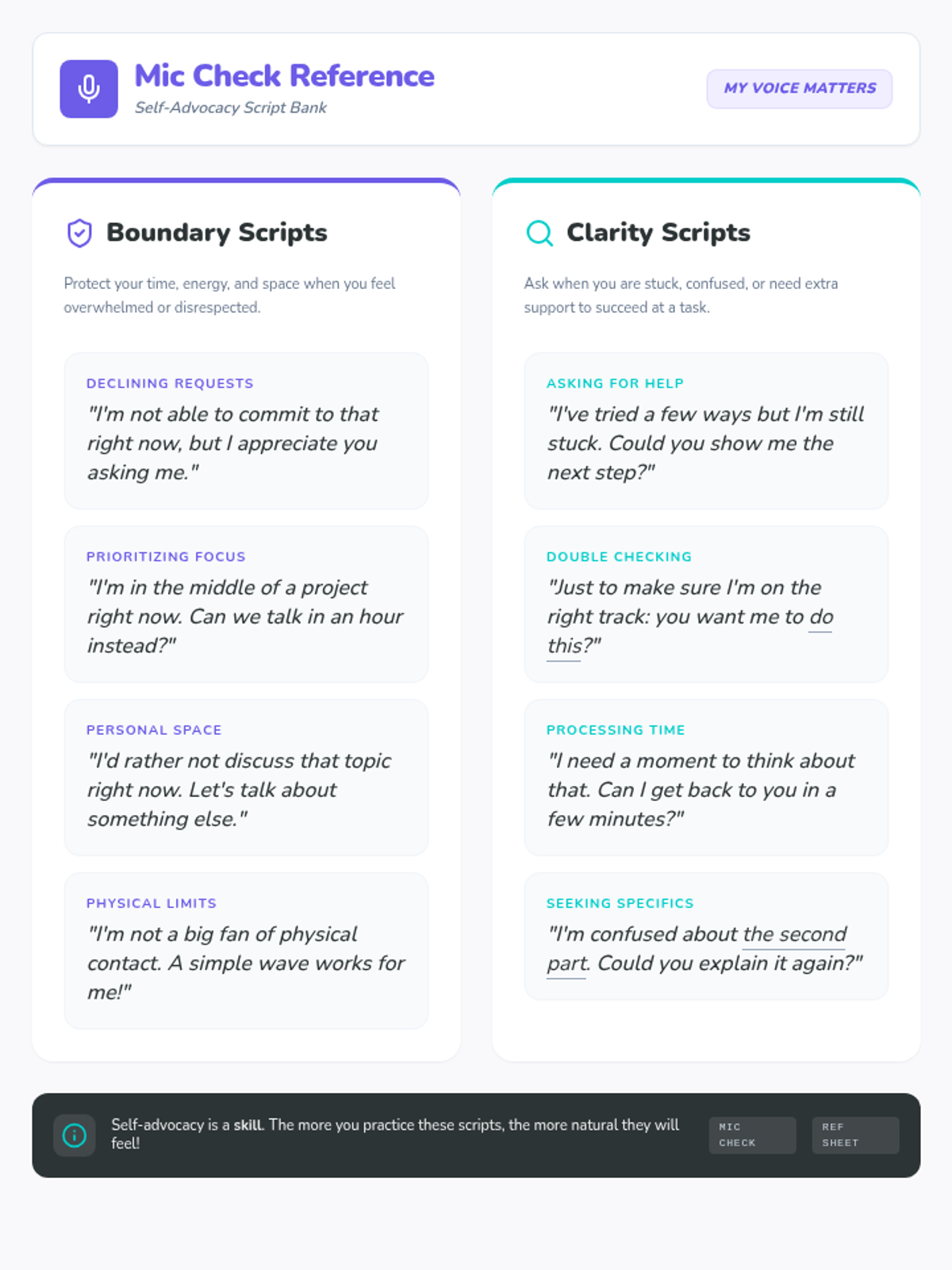
A student reference sheet containing script banks for boundaries and clarity. Designed as a non-writing resource to support verbal discussion and practice. Revised for single-page layout.
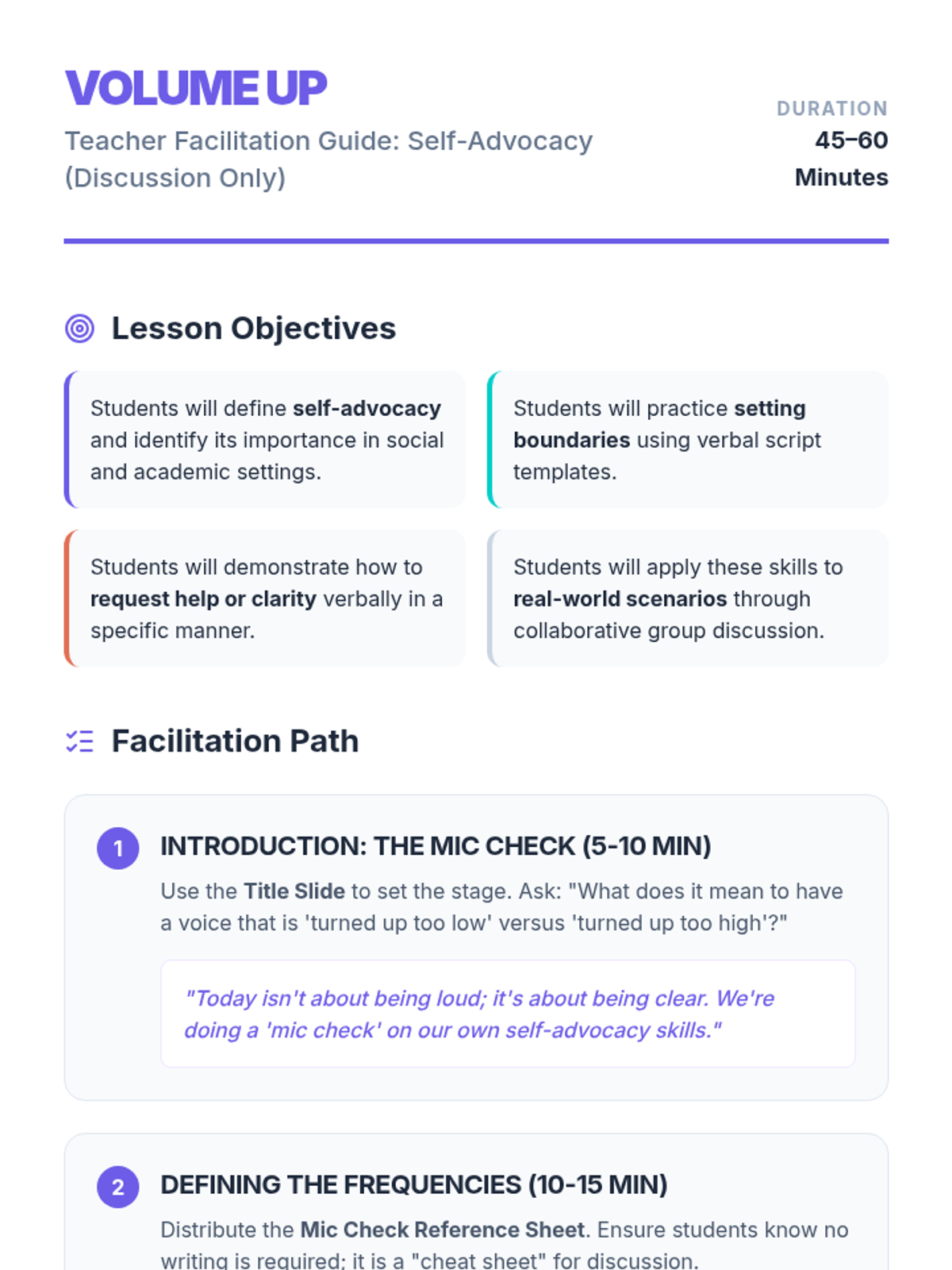
Teacher-facing facilitation guide for the self-advocacy lesson, specifically adapted for a discussion-only format. Includes scenario summaries and tips for verbal practice. Revised for better page flow and contrast.
Visual slide deck for a discussion-based lesson on self-advocacy. Features modern design motifs, definitions of boundaries and help-seeking, and practice scenarios for group discussion.
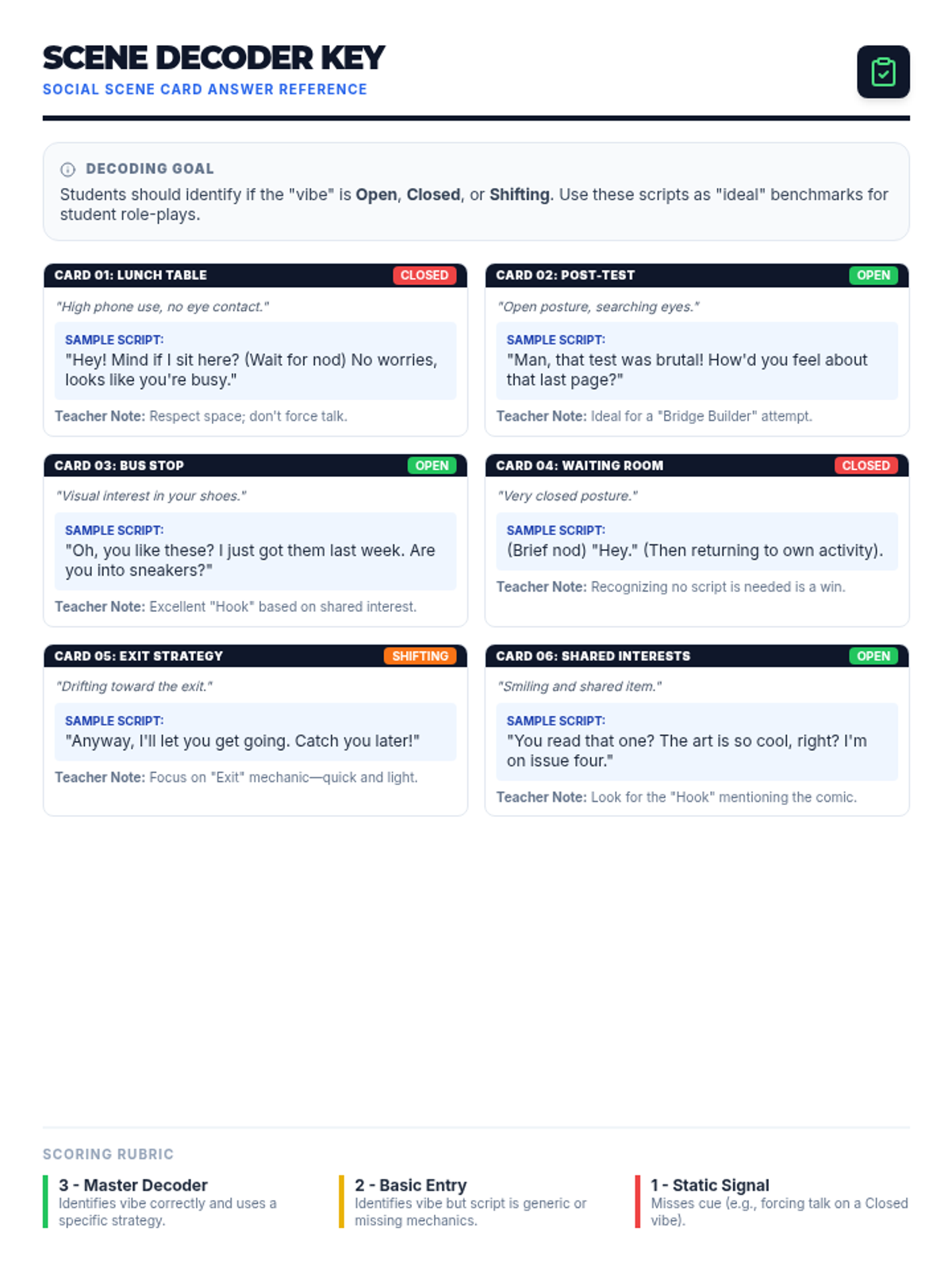
A teacher's answer key for the Social Scene Cards, providing 'Social Vibe' decoding (Open, Closed, Shifting), sample scripts for hooks and exits, and a scoring rubric for student role-plays. Revised for better layout and text legibility.
An 8-page clinical case conceptualization paper in APA 7th edition format, analyzing Howard Hughes through Behavioral Therapy principles and interventions.
A 12-slide presentation providing a behavioral case conceptualization of Howard Hughes, featuring clinical impressions, ABC assessment, and evidence-based interventions.
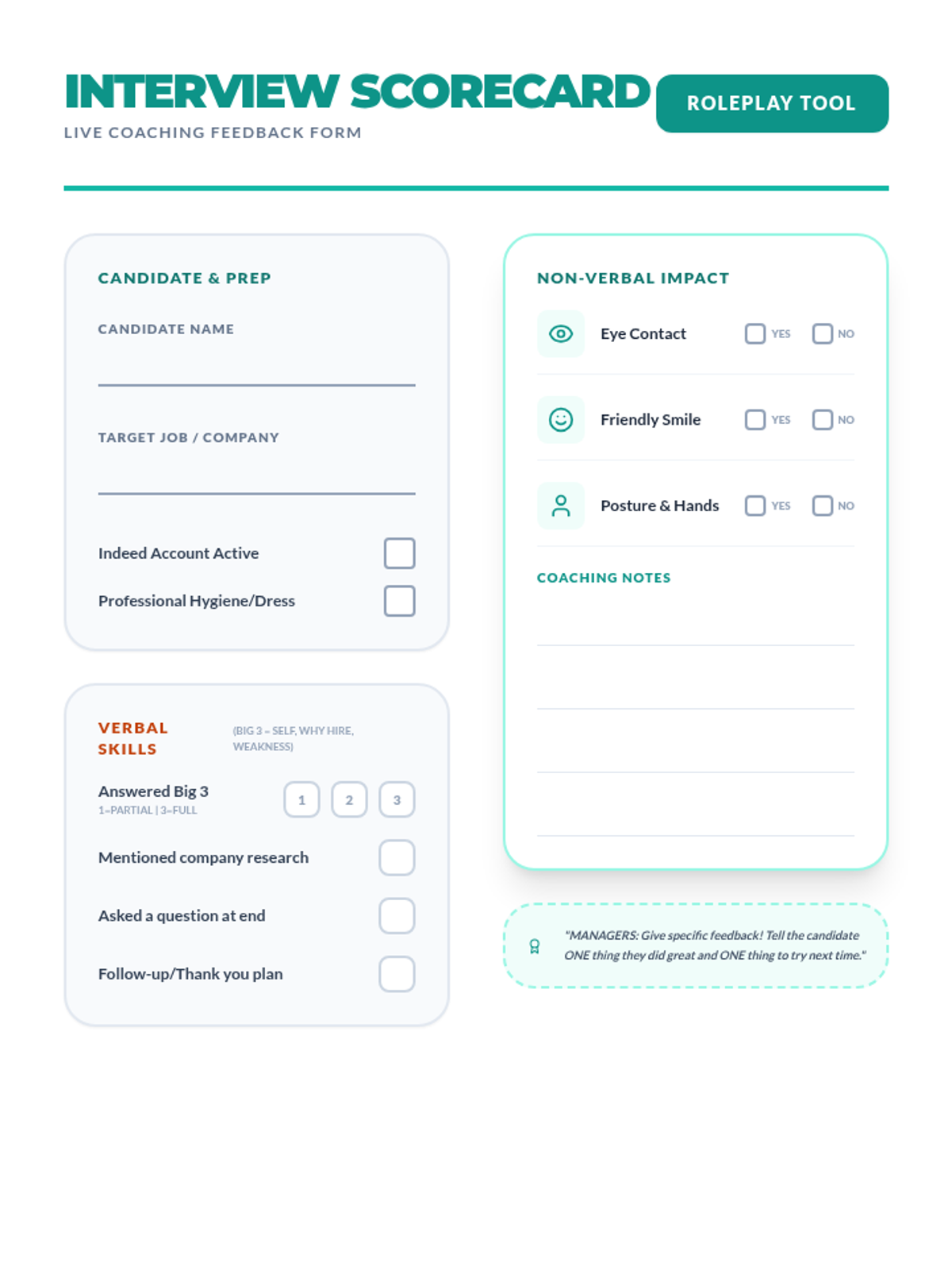
A professional coaching scorecard for use during mock interview roleplays, focusing on both verbal responses and non-verbal body language impact.