A structured recording sheet for students to document their career research, salary calculations, housing costs, and secondary expenses. It includes a final "Bottom Line" calculation area for a realistic financial summary.
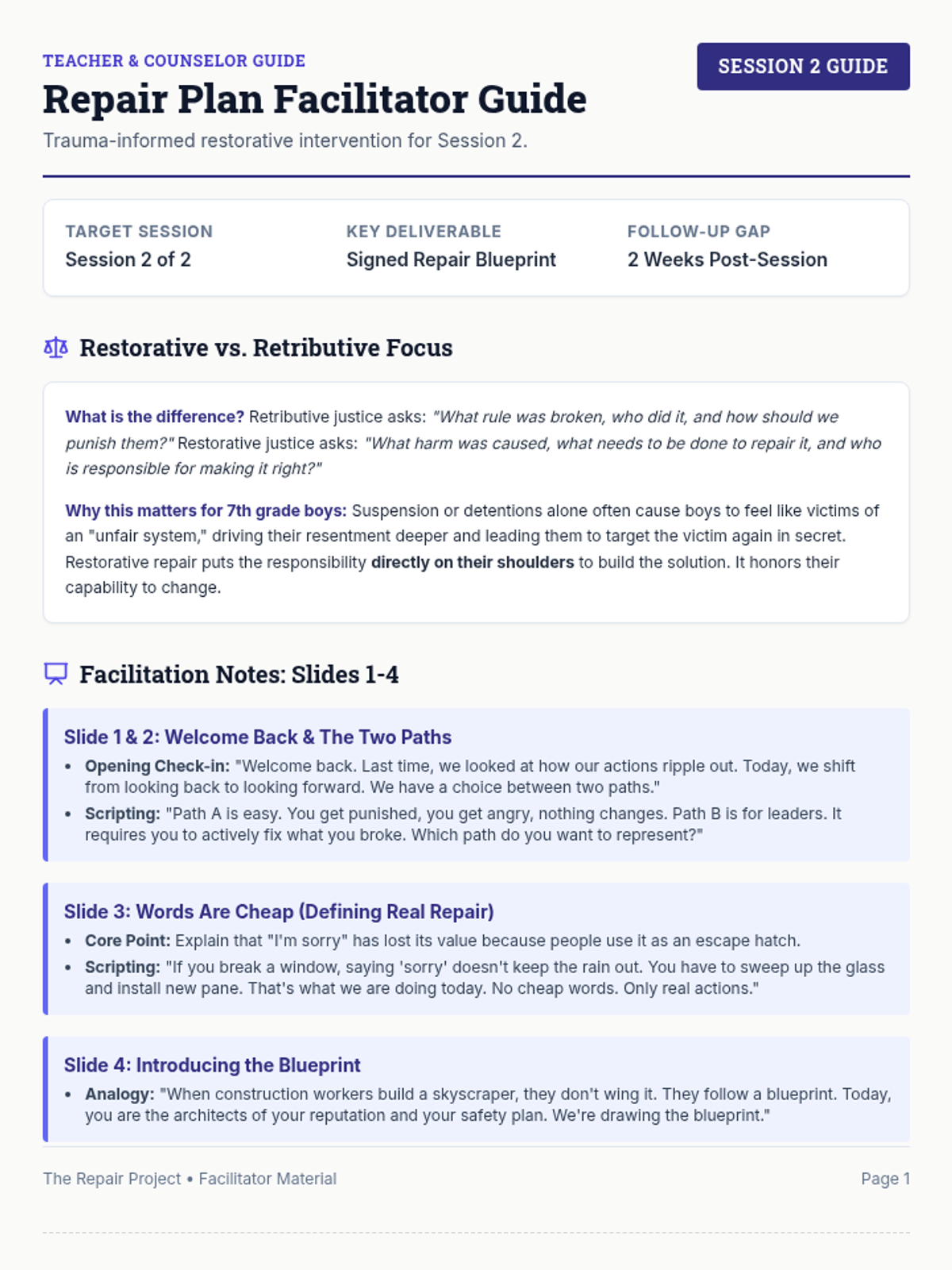
Facilitator guide for running Session 2 of the Repair Project restorative sequence. Includes instructions on explaining restorative principles, guiding students to draft behavioral safety commitments, and setting up the 2-week follow-up cycle.
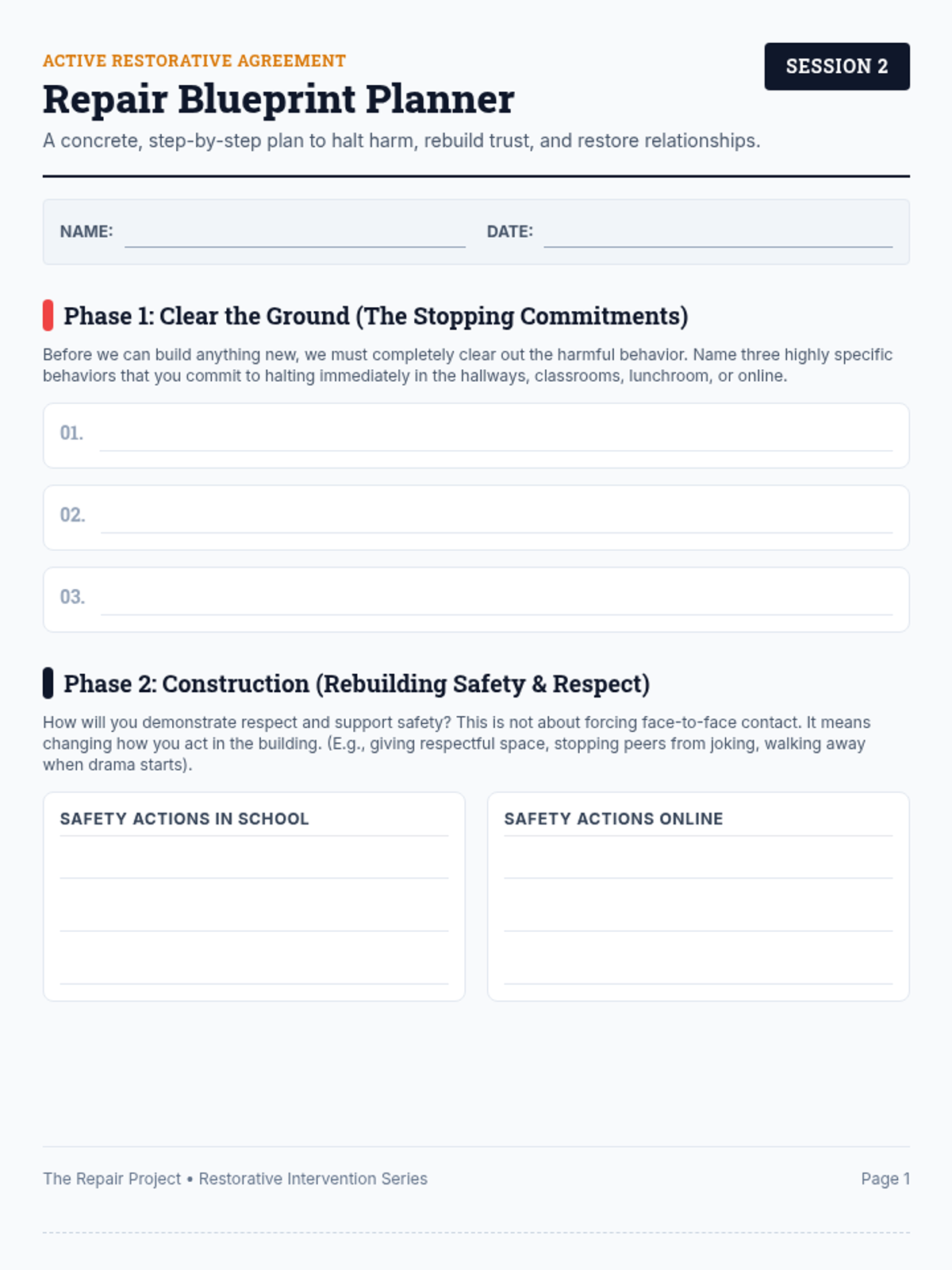
Structured workbook for Session 2 of the Repair Project restorative sequence. Student-facing with light, clean lined text input areas. Provides sections for defining behavioral stopping points, setting concrete hallway/classroom safety plans, noting personal coping strategies, and setting up an accountability contract.
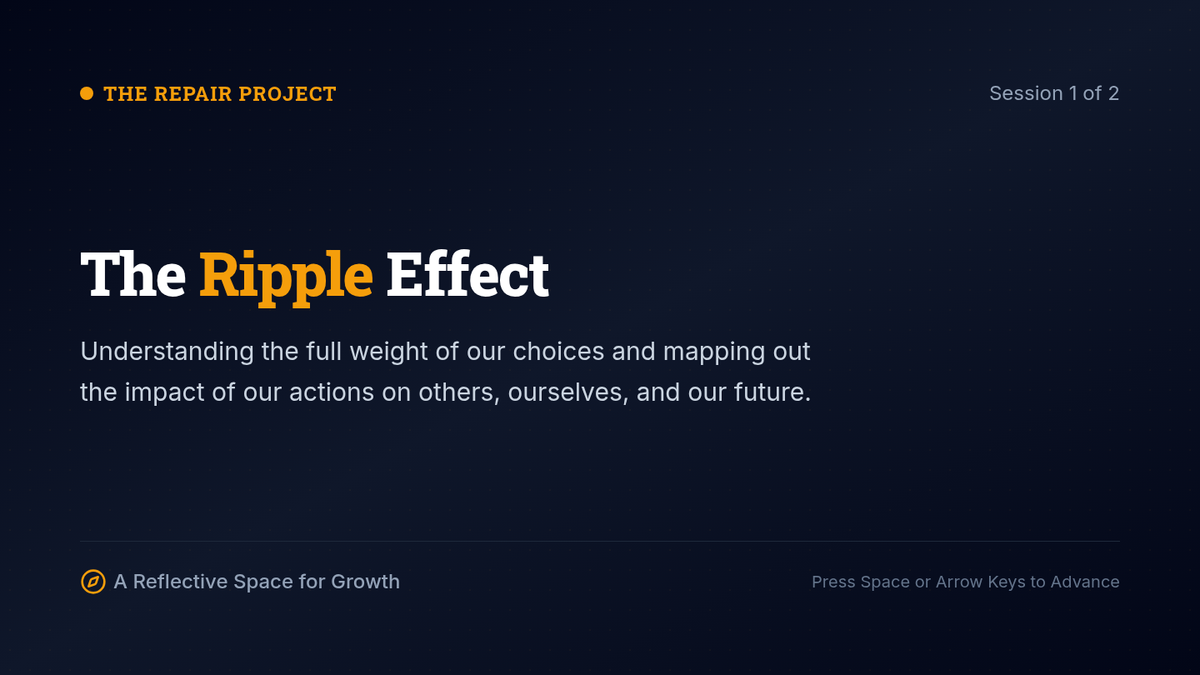
Visual presentation slides for Session 2 of the Repair Project restorative sequence. Guides students through understanding the differences between retributive and restorative justice, defining what real repair is, and introducing the components of their individual Repair Blueprint plans.
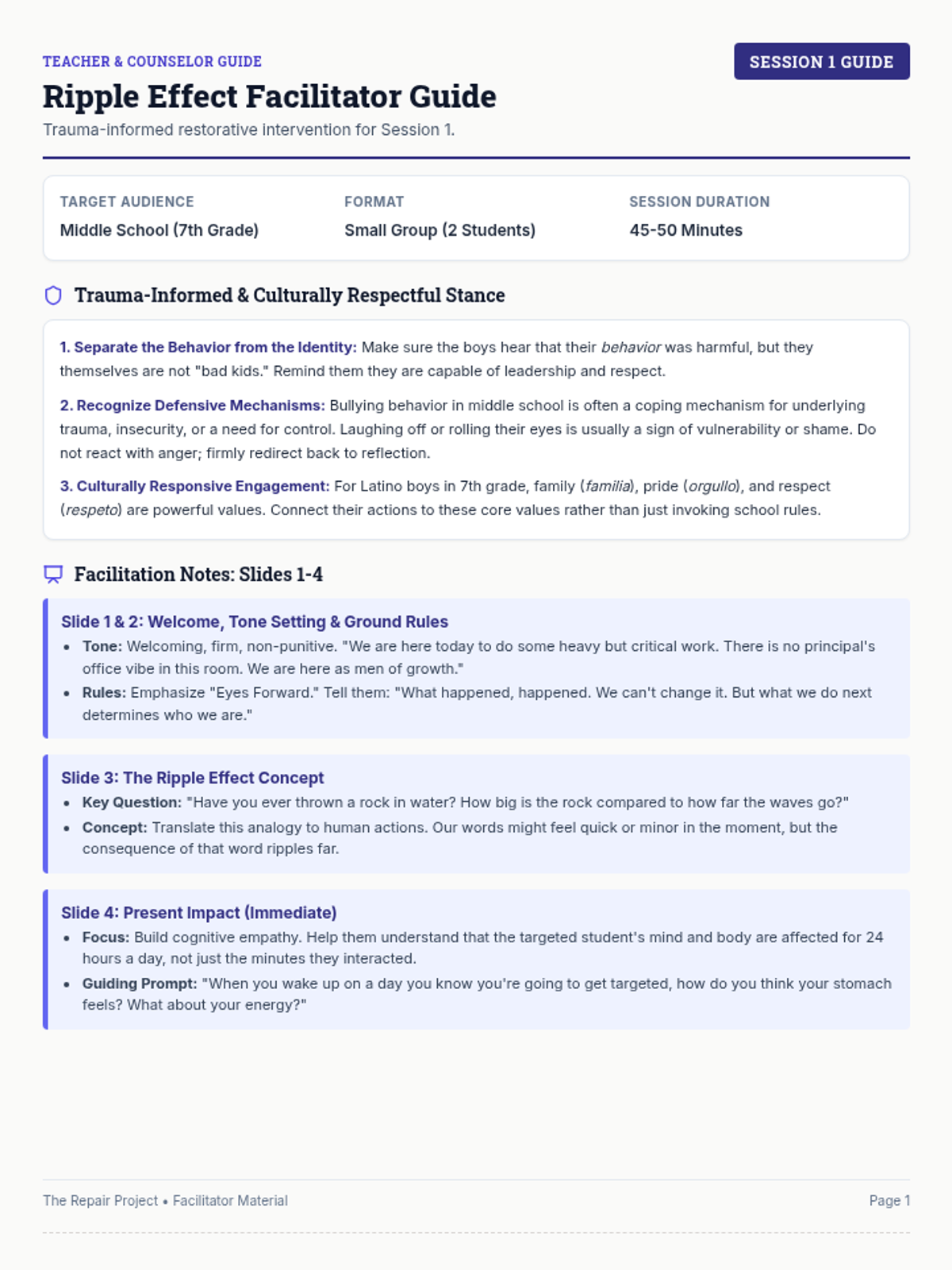
Detailed facilitator guide for running Session 1 of the Repair Project in a trauma-informed and culturally respectful manner. Includes sliding-scale discussion guides, counselor scripts, and troubleshooting tips for common middle-school defensive behaviors.
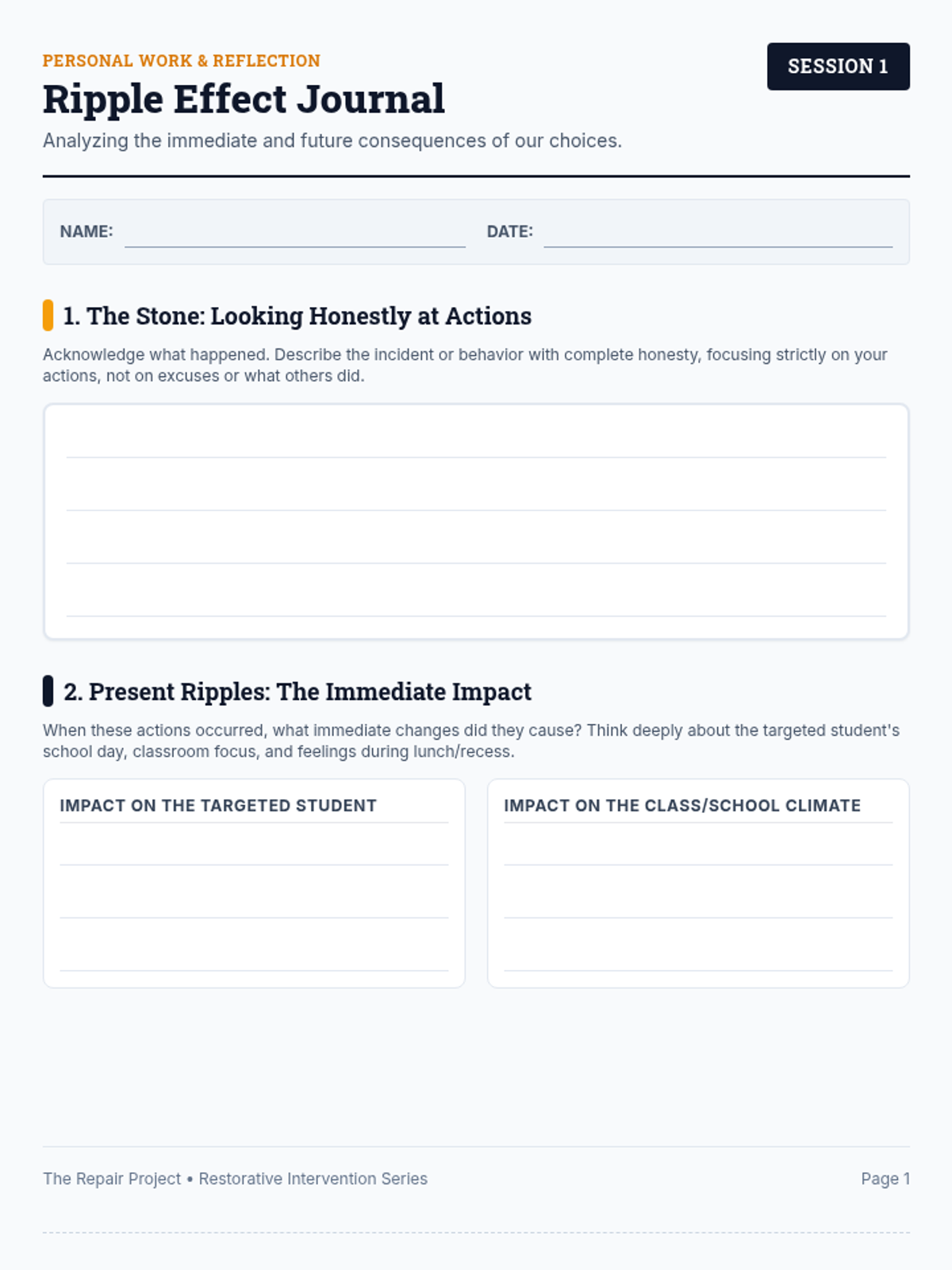
Reflective workbook for Lesson 1 (Session 1). Designed for student completion with lined blank answer spaces on light backgrounds. Helps students analyze immediate and future impacts, identify personal values, and prepare for restorative actions.
Visual slides for Session 1 of the Repair Project restorative sequence. Explores the ripple effect concept, outlining the immediate (present) and long-term (future) impacts of bullying behaviors on the targeted student, families, school climate, and the students themselves.
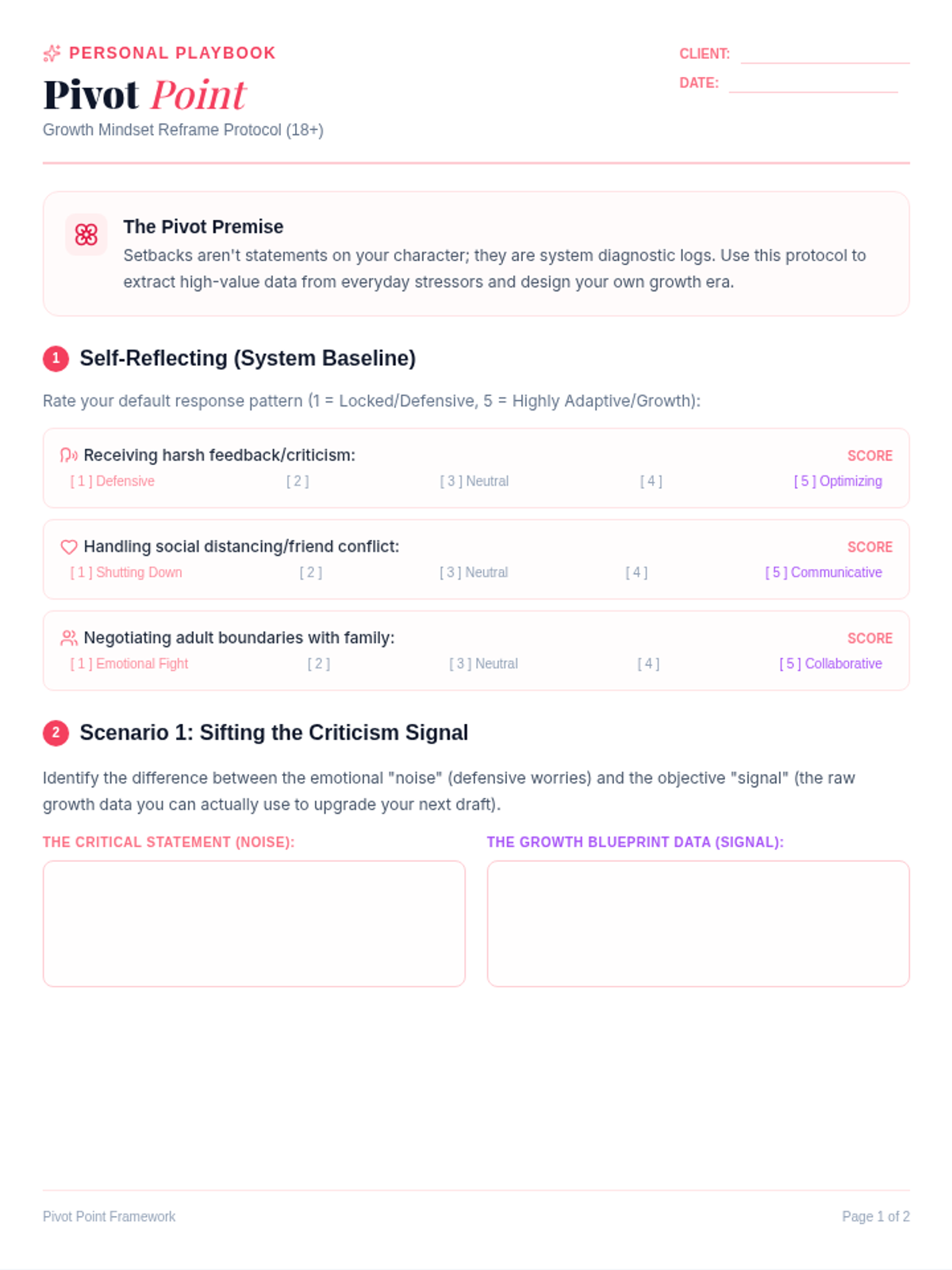
An engaging, printable coaching worksheet designed to help young adults apply the 3-Step Pivot Protocol to real-life triggers across feedback, peer conflict, and family boundaries.
A beautiful pink-and-lavender aesthetic slide deck tailored for young women/telehealth clients, featuring elegant layouts and structured role-play scenarios.
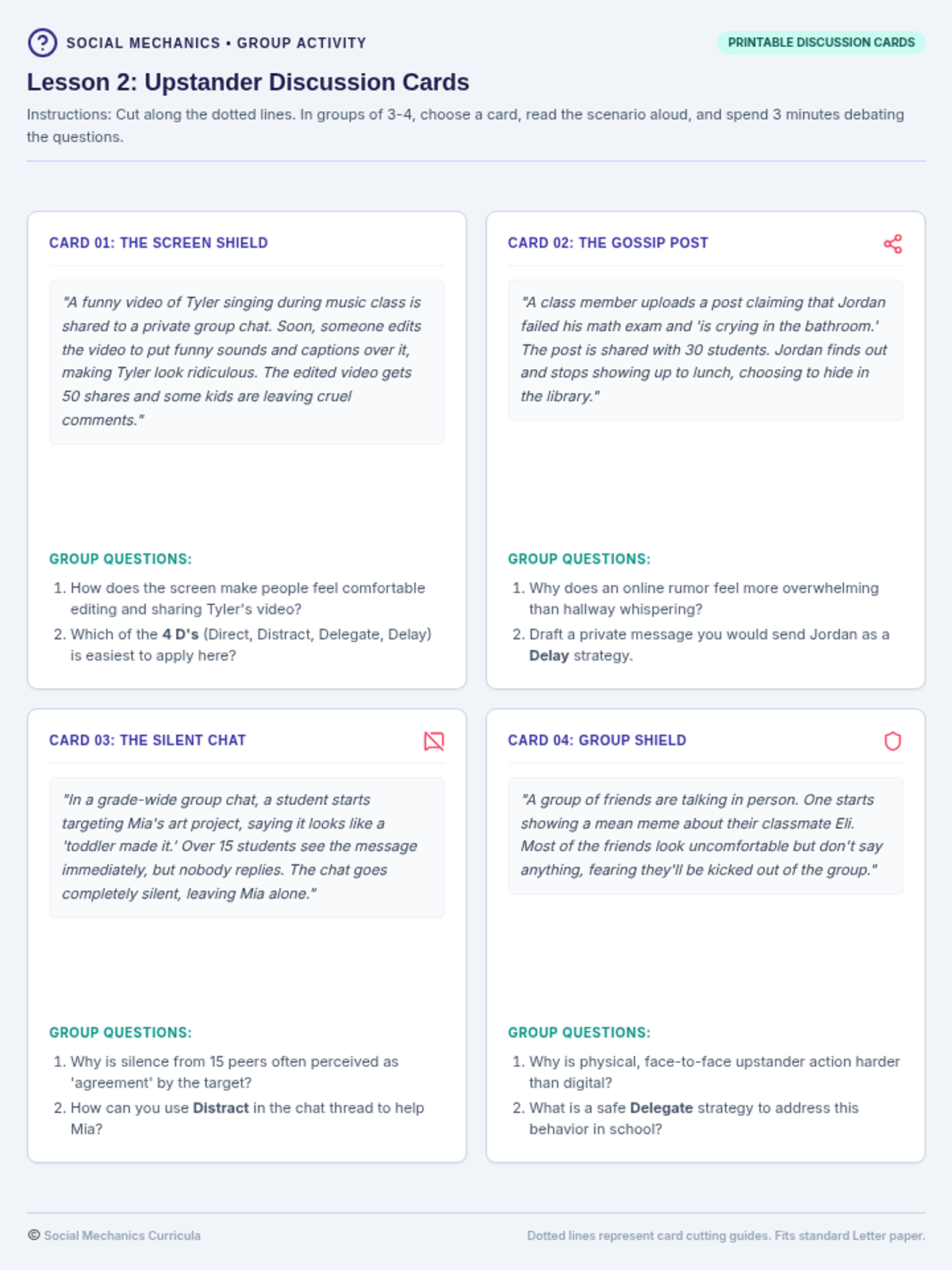
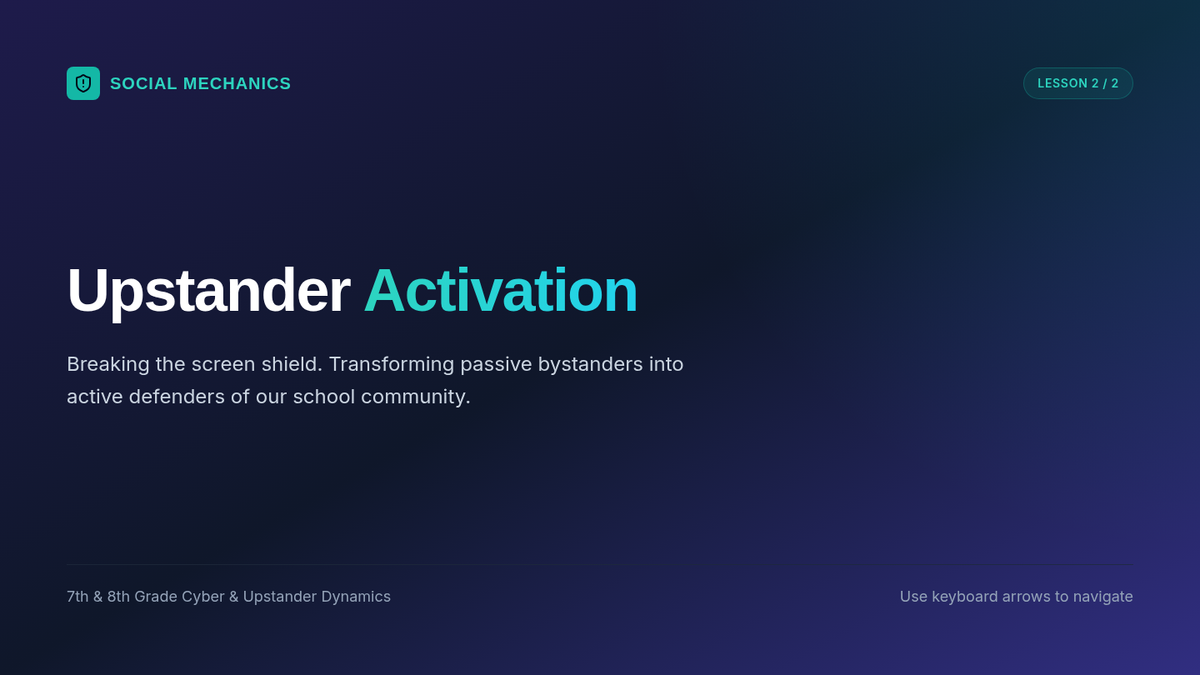
A printable set of 4 discussion cards for Lesson 2 (Upstander Activation) focusing on cyberbullying, screen shield effect, and the 4 Ds of upstander actions in social media contexts.
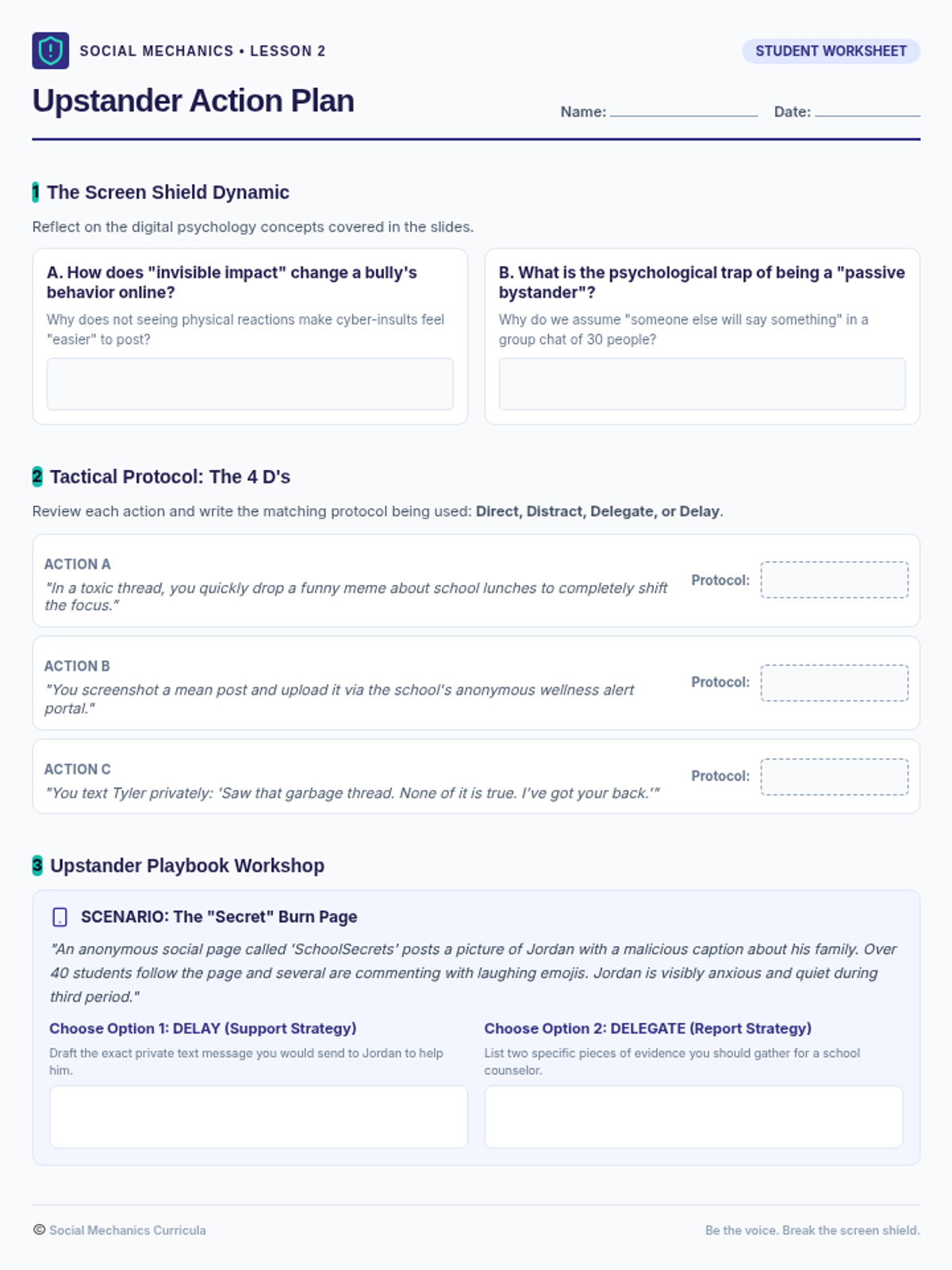
A student-facing worksheet for Lesson 2 (Upstander Activation) that challenges students to analyze the psychology of cyberbullying, identify upstander protocols, and draft delay/delegate responses to an online crisis.
Slide deck for Lesson 2 (Upstander Activation) covering cyberbullying, screen dissociation, and the '4 Ds' upstander protocol (Direct, Distract, Delegate, Delay) for 7th & 8th graders.
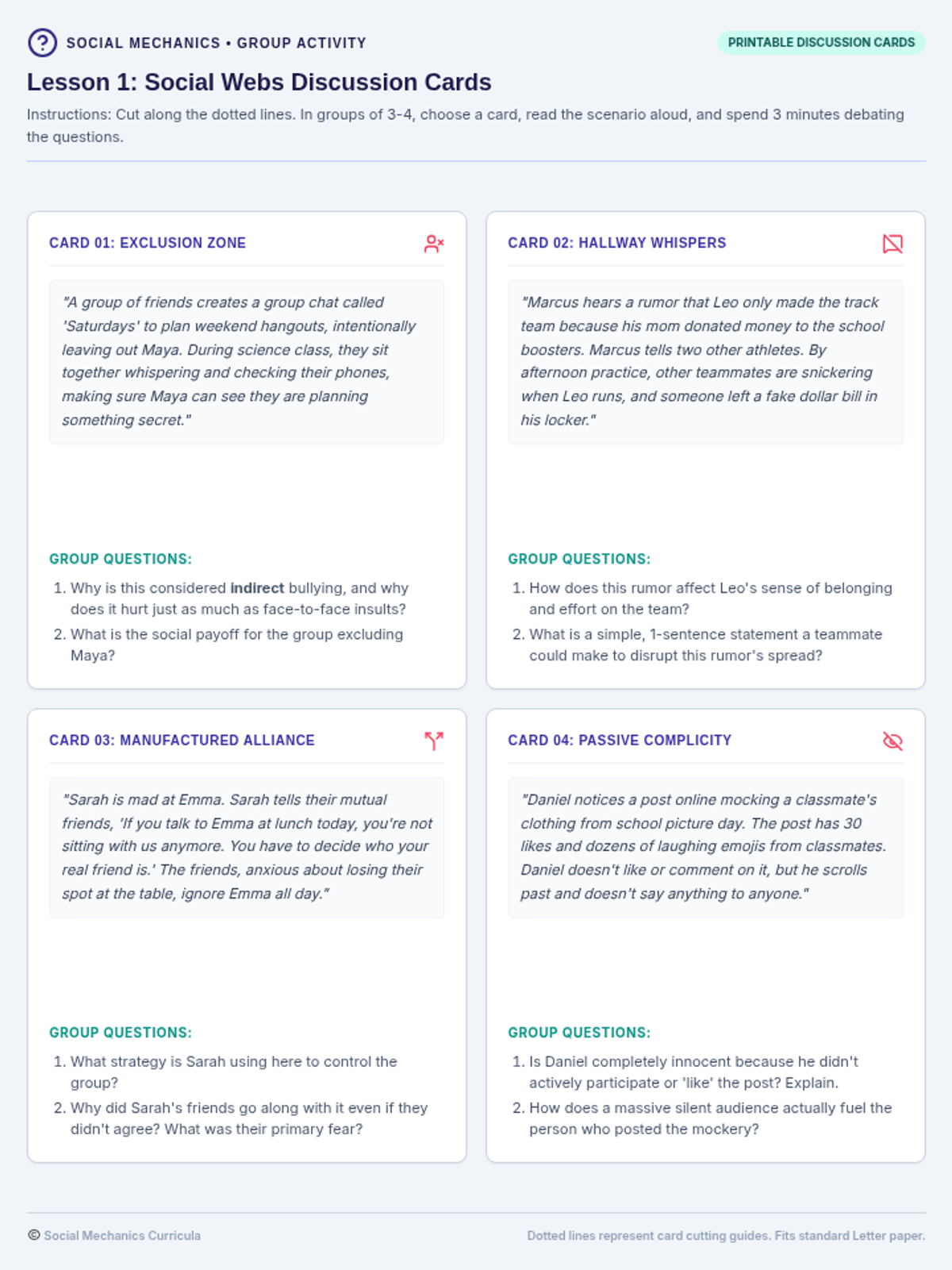
A printable set of 4 discussion cards for small groups during Lesson 1 (Decoding Social Webs). Each card contains a detailed scenario focusing on exclusion, rumors, or bystander peer pressure, along with guiding questions.
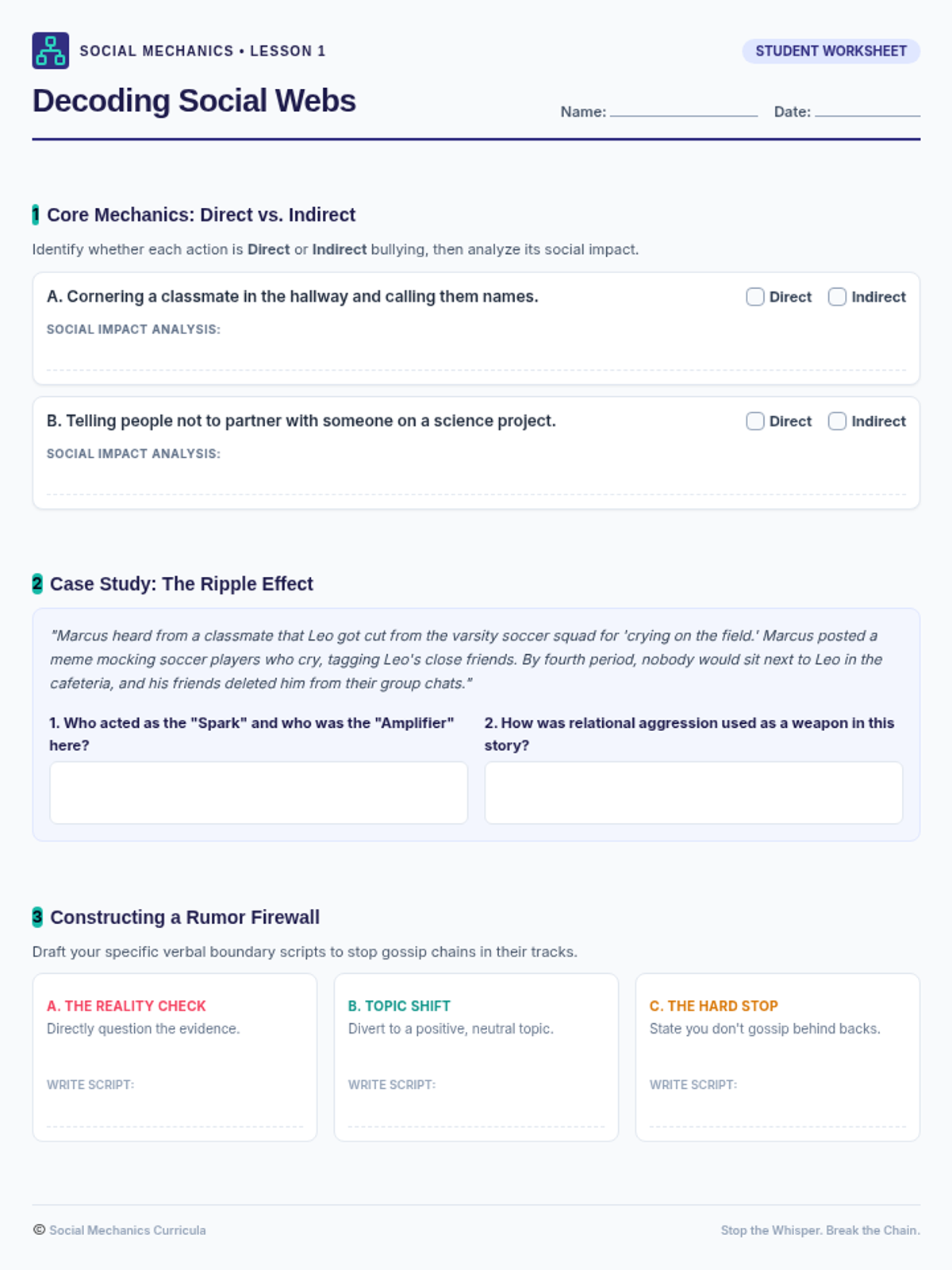
A student-facing worksheet for Lesson 1 (Decoding Social Webs) that provides practice distinguishing direct from indirect bullying, analyzing a rumor case study, and drafting specific 'firewall' verbal strategies to stop rumor spread.
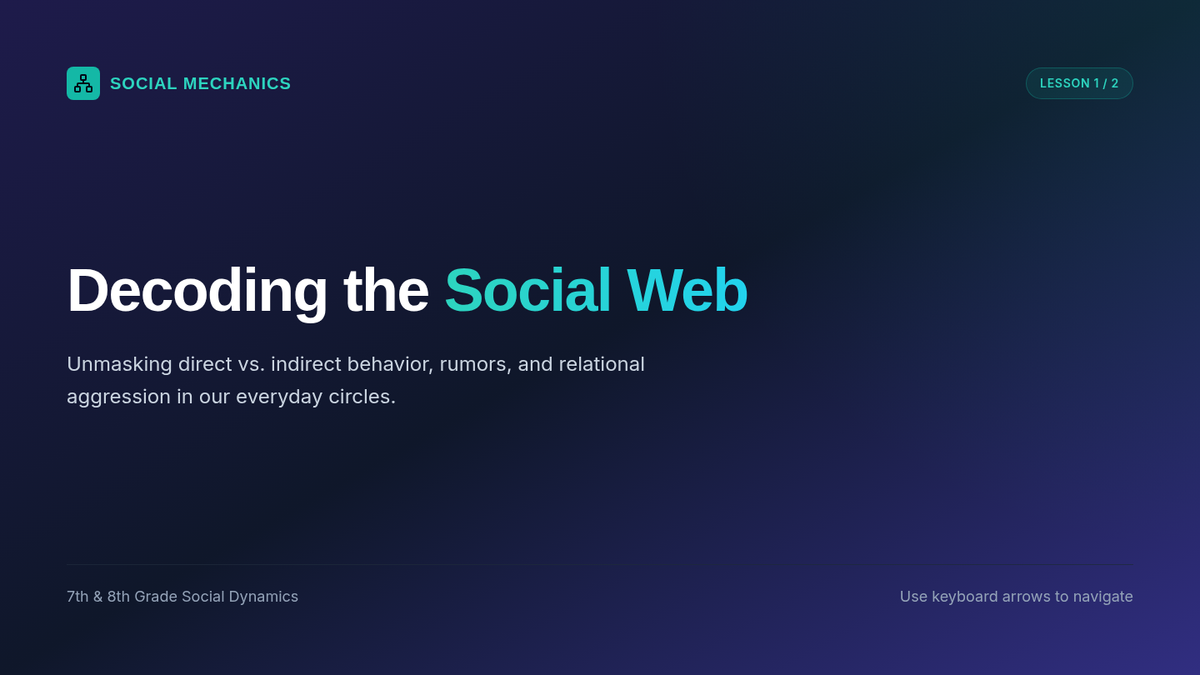
Slide deck for Lesson 1 (Decoding Social Webs) covering direct vs. indirect bullying, relational aggression, and rumor propagation for 7th & 8th graders. Includes interactive scenarios and conceptual breakdowns.
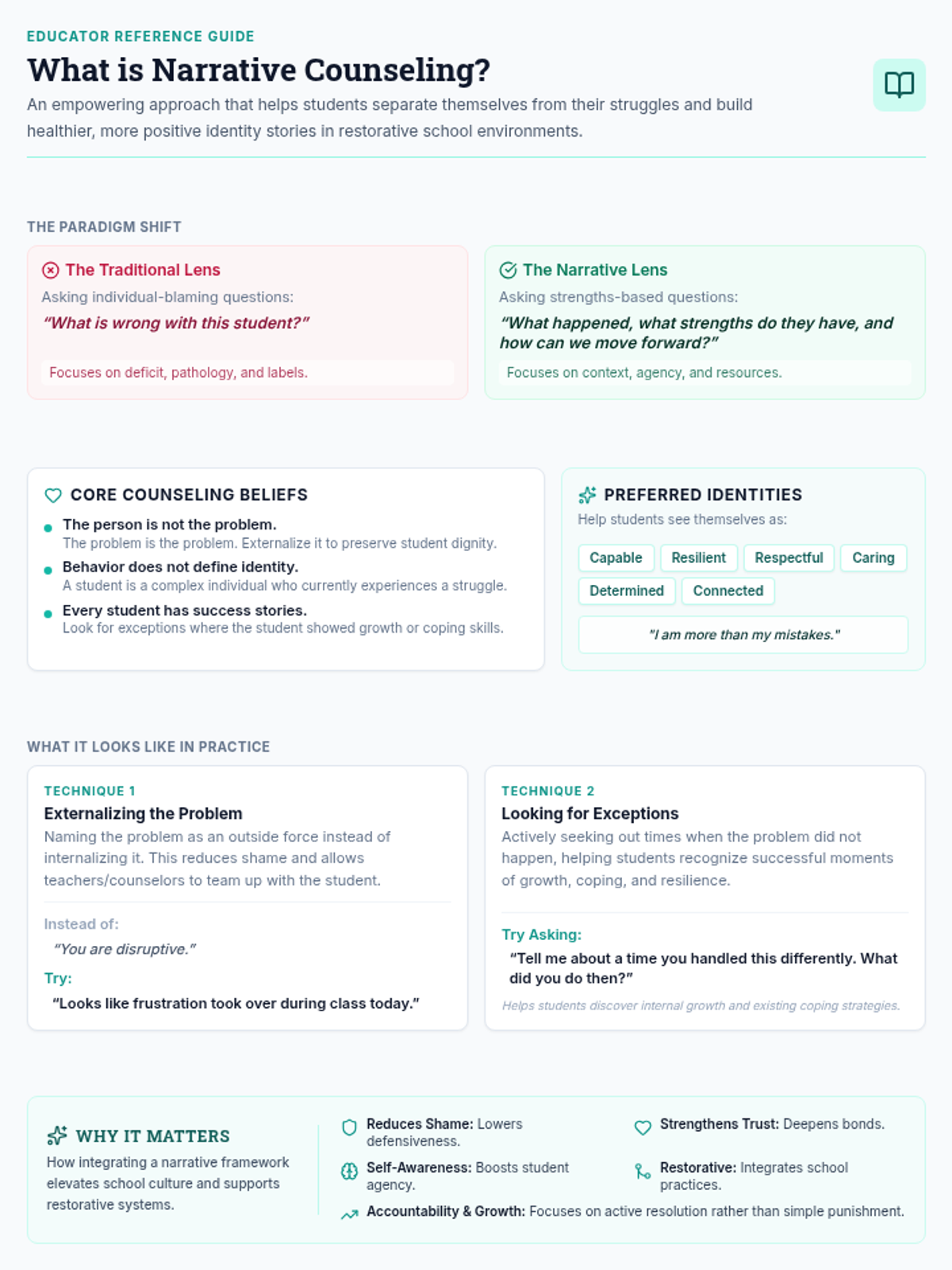
A high-quality 2-page printable layout designed to be cut in half to create four distinct 5.5x8.5" landscape handouts. The toolkit covers the paradigm shift, core beliefs, practical applications (externalizing the problem, exceptions), and why it matters in school settings. It contains clear cut-lines and large, readable, table-friendly card visual styles.
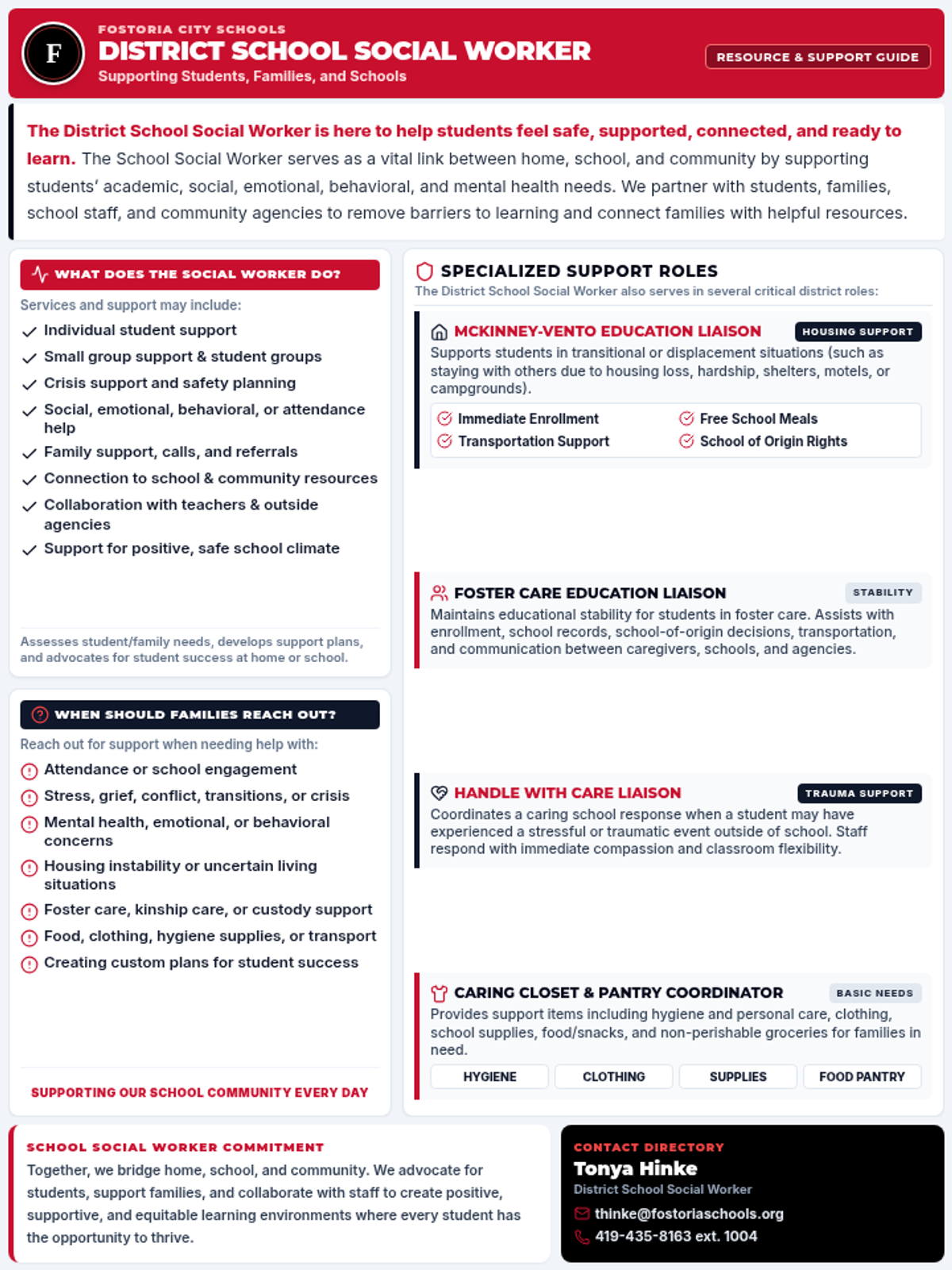
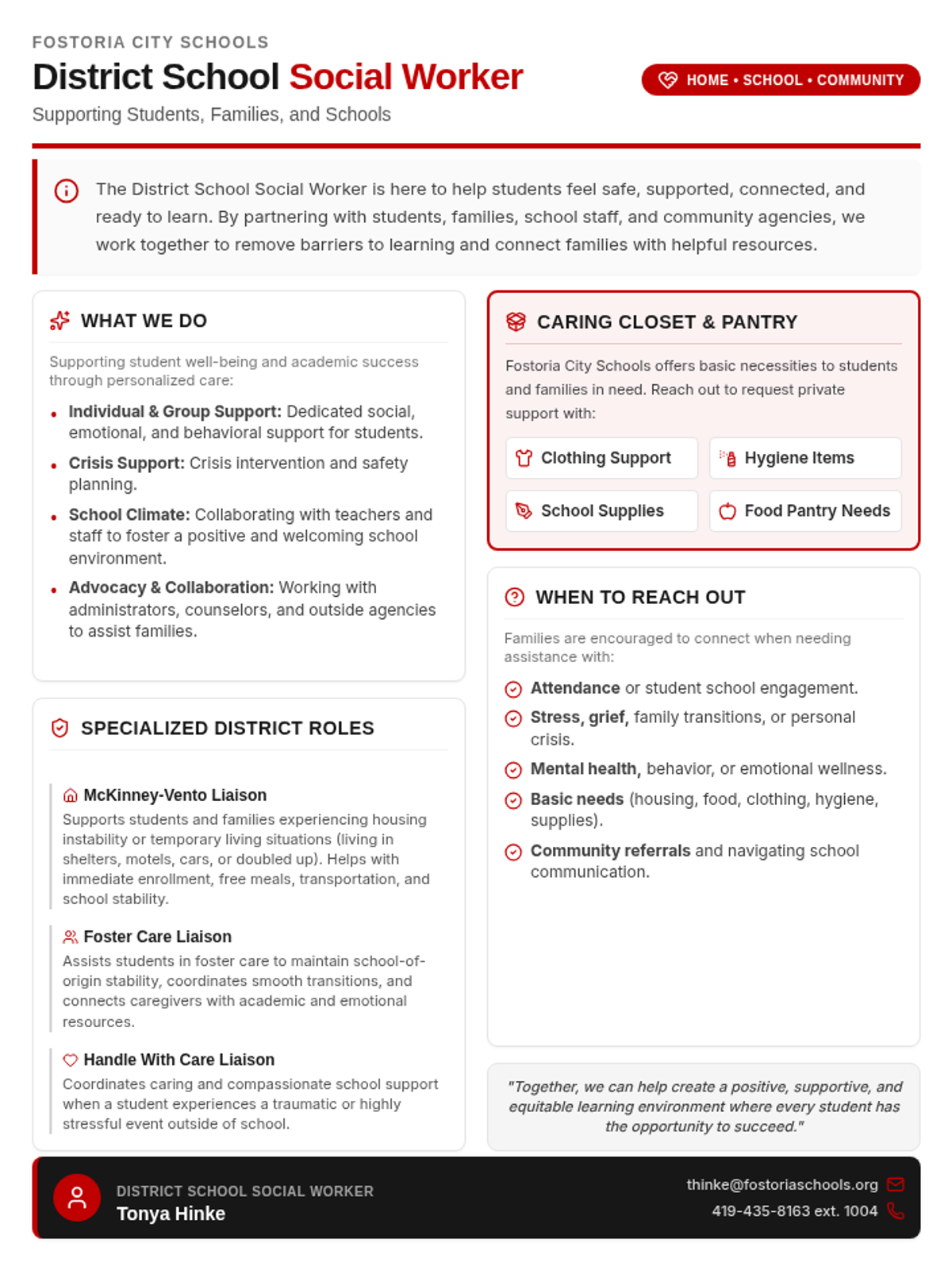
An elegant, highly professional single-page outreach and resources flyer for the District School Social Worker of Fostoria City Schools. It utilizes clean grids, custom program cards, clear visual cues, and a modern color scheme to ensure absolute legibility and optimal use of space.
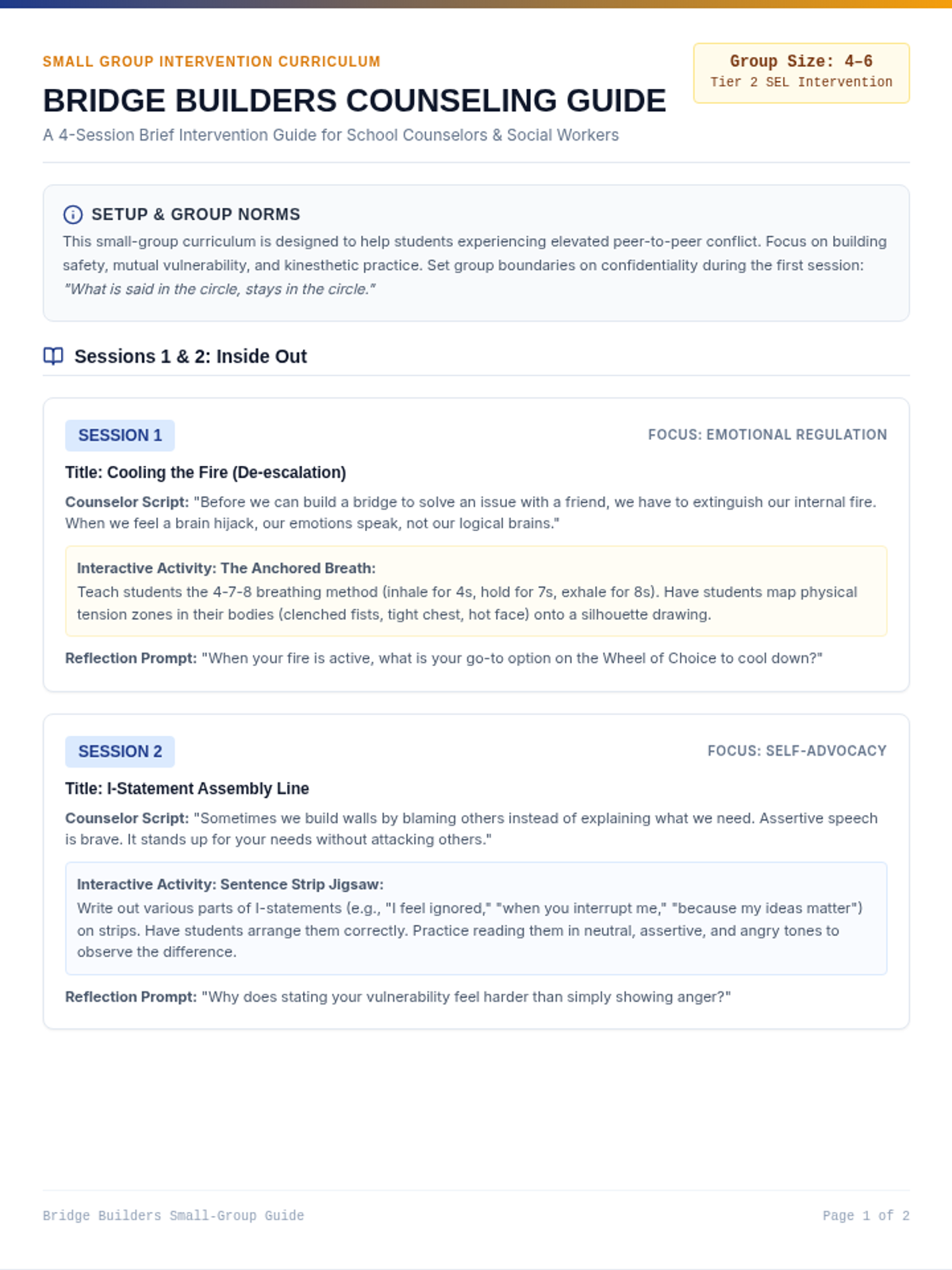
A comprehensive Tier-2 curriculum containing 4 structured session plans (Cool Down, I-Statements, Active Listening, Win-Win) complete with counselor scripts, interactive activities, reflection prompts, and an observation rubric.
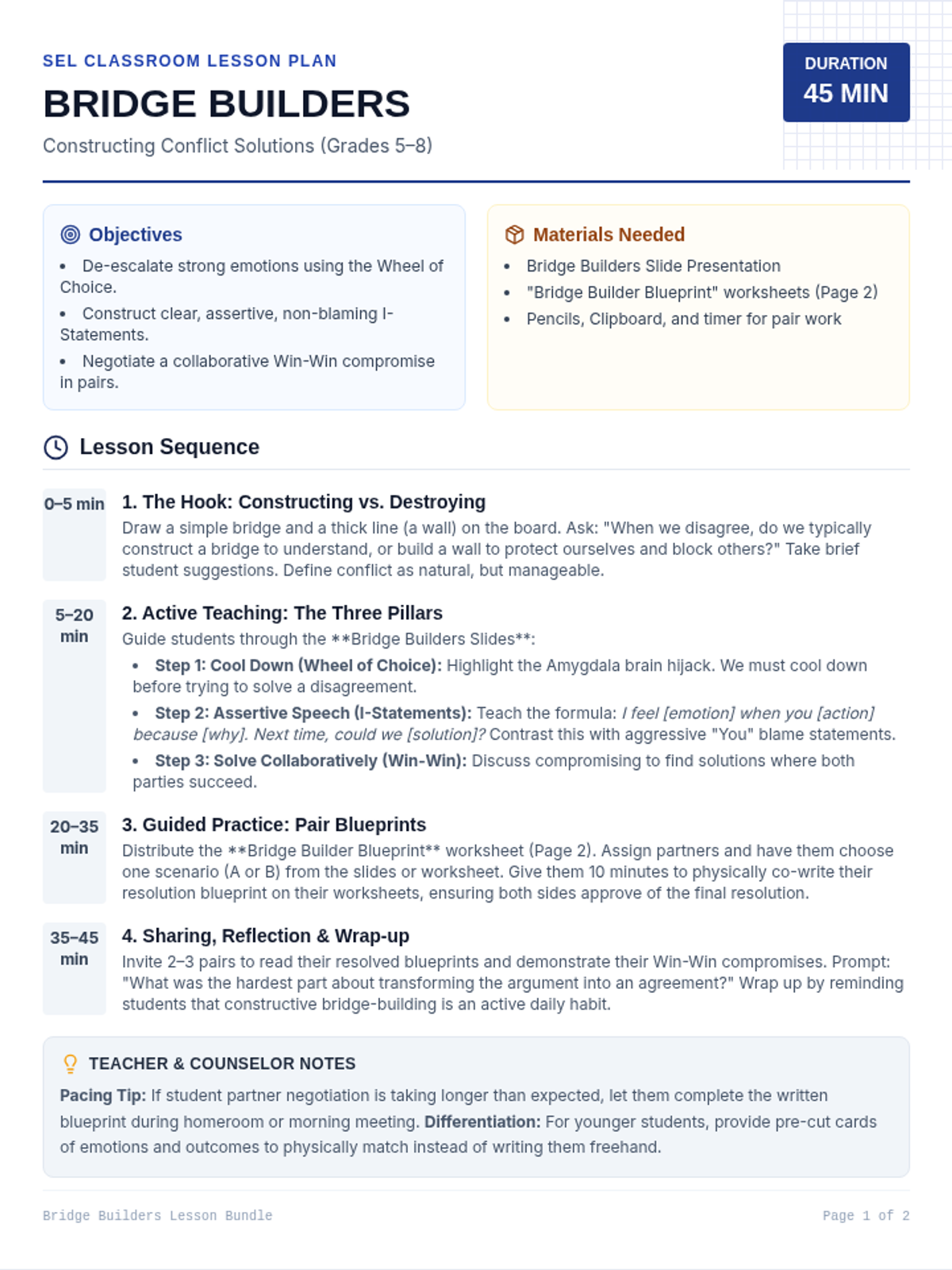
A print-ready 2-page document containing a structured 45-minute educator lesson plan with step-by-step pacing and an integrated classroom student activity worksheet featuring structured writing spaces for formulating I-Statements and Win-Win compromise strategies.
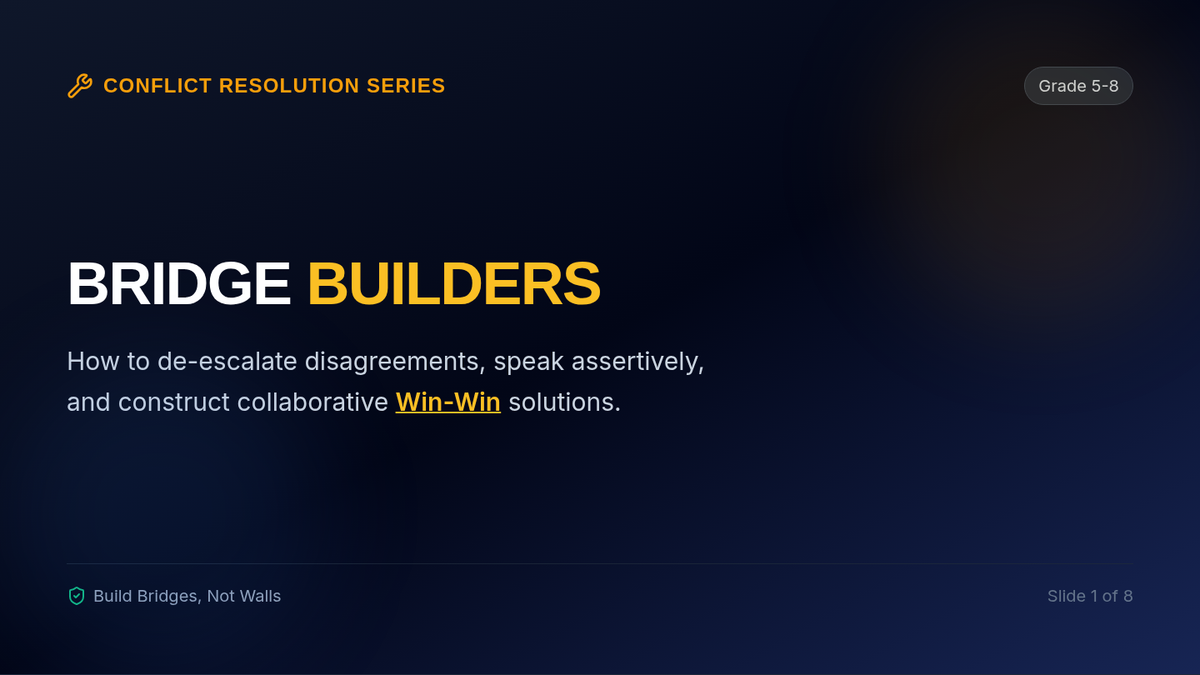
Highly visual and interactive conflict resolution slide deck detailing the Wheel of Choice, I-Statements, Active Listening, and Collaborative Problem-Solving. Fully optimized for a 16:9 1440x810 digital viewport with clean grid structures and clear text sizes (min 24px) suitable for middle grade students.
An updated visually striking school district informational flyer for Fostoria City Schools. It removes any 'we' pronouns, features the custom FCS logo, explicitly details the Social Worker's role as the Caring Closet Coordinator, uses decreased margins to fill the 8.5x11 page size, and expands the original text details while retaining large, accessible text.
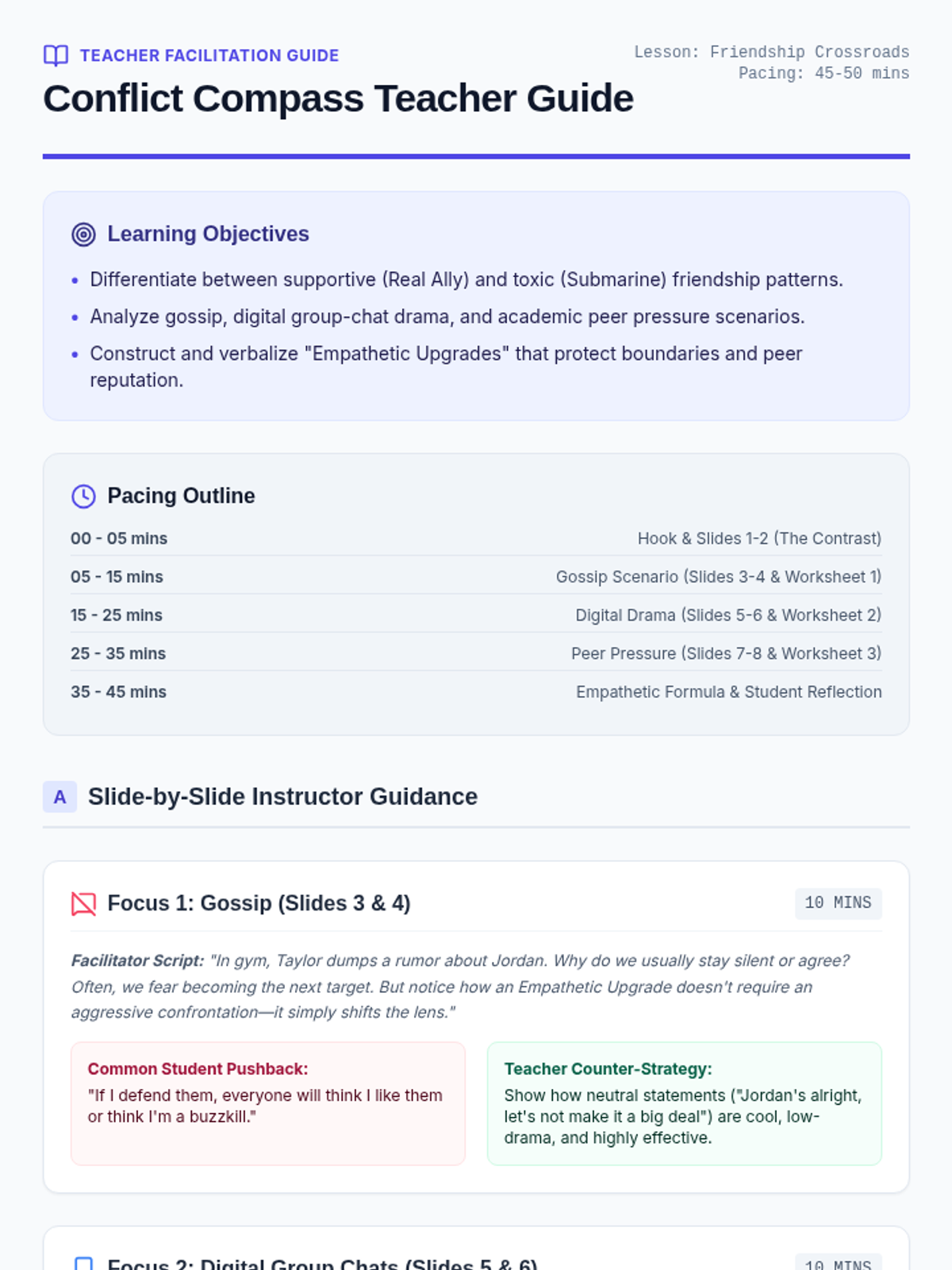
A detailed, professional lesson plan and script for teachers, matching the Friendship Crossroads slides and containing pacing guides, facilitation cues, counter-arguments for common student defenses, and clear discussion questions.
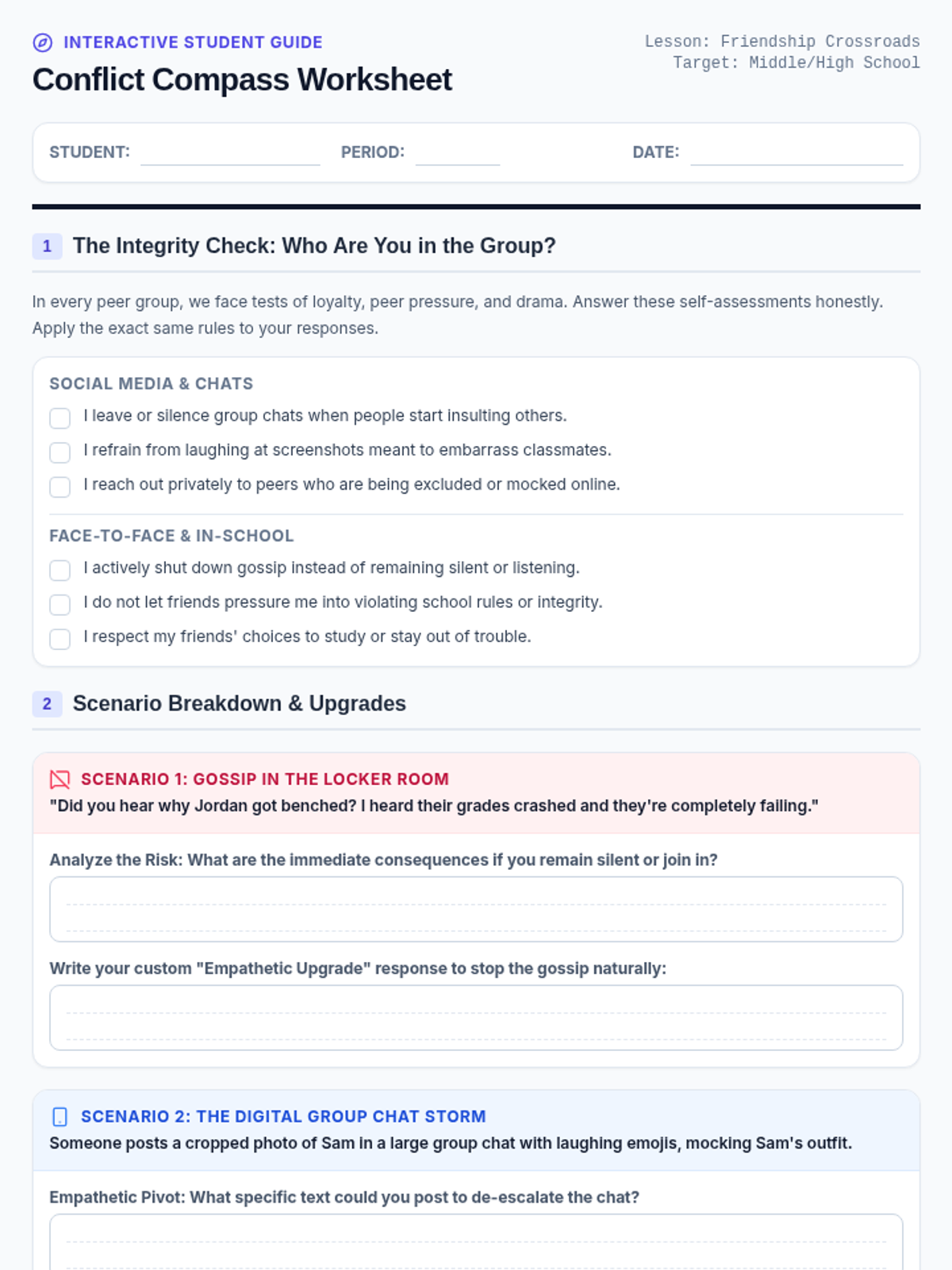
A high-contrast printable worksheet for students, providing concrete self-assessment questions and spaces to analyze three peer-conflict scenarios (gossip, digital drama, and pressure to mess with classmate's personal belongings in school) while writing customized empathetic upgrades.