A 30-minute Kindergarten lesson focused on identifying the qualities of a good friend through the 'Friendship Recipe' concept, circle discussions, and a matching game.
Celebrating progress and reviewing the tools learned.
Practicing which tool to use for specific feeling scenarios.
Developing positive self-talk to manage frustration and disappointment.
Learning to slow down with Counting to 10 and releasing energy with Movement Breaks.
Learning and practicing the Deep Belly Breathing tool.
Differentiating between big and small problems to reduce explosive reactions.
Introduce the Mood Meter and identifying feelings in the four color quadrants.
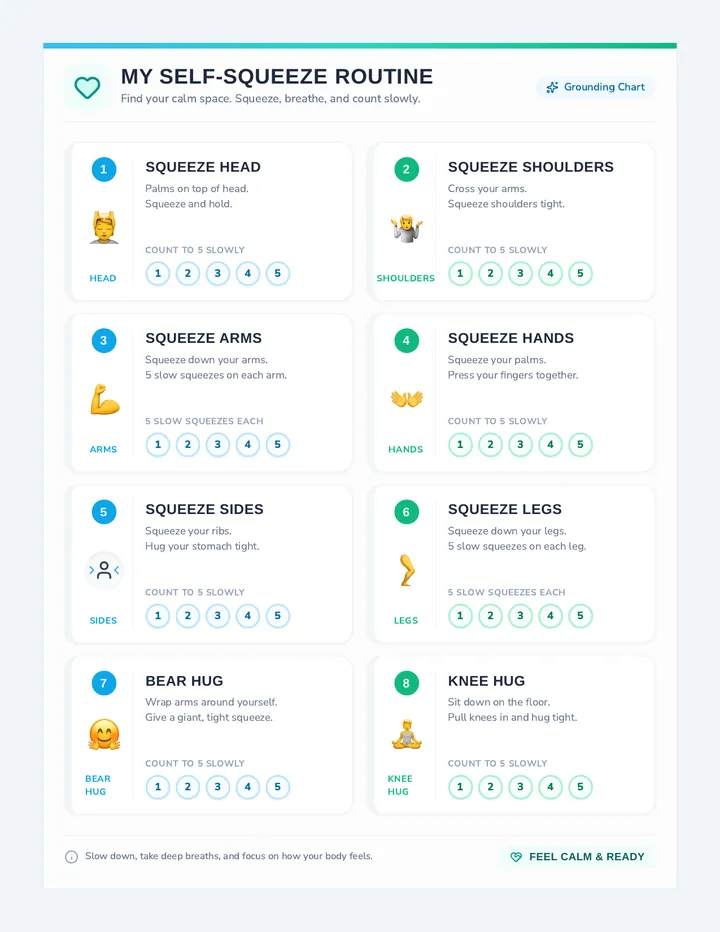
A lesson focused on physical mindfulness techniques, including progressive muscle relaxation and gentle grounding movements to help students regulate their emotions and focus their bodies.
A soothing and interactive virtual lesson designed for 3rd and 4th grade students with IEPs during high-stress testing weeks. The lesson focuses on all five SEL competencies through gentle movement, mindful breathing, and collaborative fun to promote a sense of calm and well-being.
Introduction to self-awareness and reading mechanics, helping students visualize their thinking process as a map.
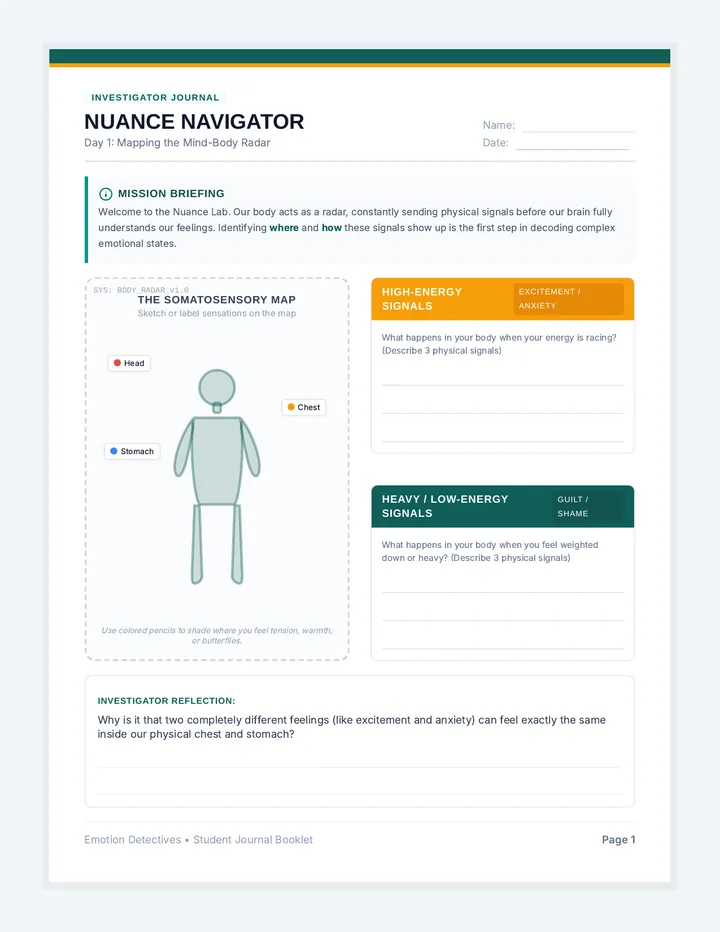
A lesson for first graders to identify the physical sensations and outward signs associated with different emotions, inspired by "A Little Spot of Feelings" by Diane Alber. Students become 'Feeling Detectives' to investigate how their bodies react to various feelings.
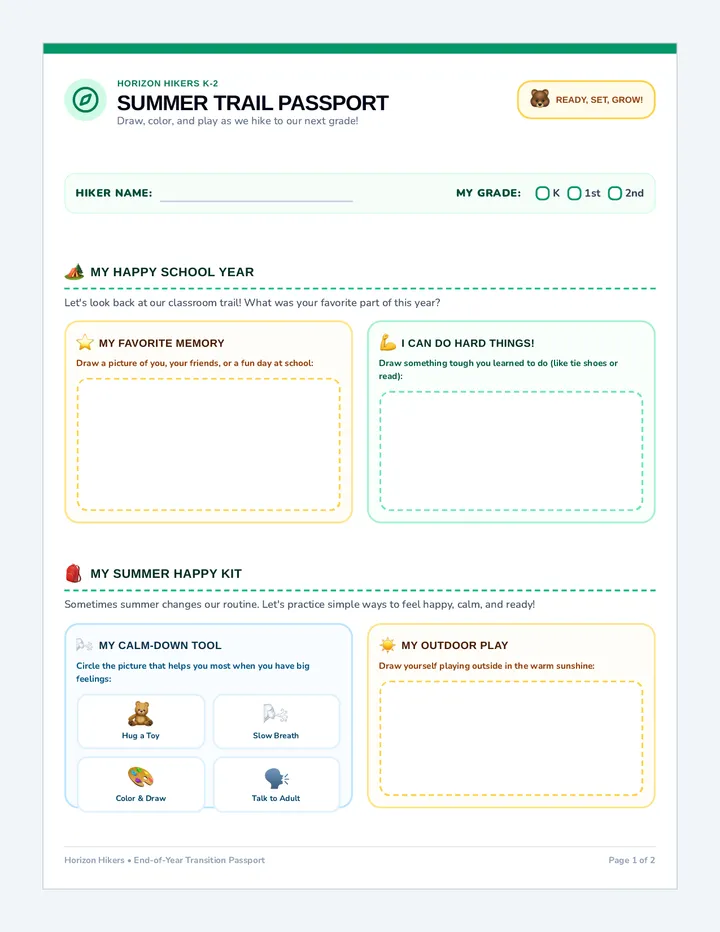
A social-emotional learning lesson using a compass metaphor to help K-5 students re-establish empathy, kindness, and community after time away from school. Students explore the four 'cardinal points' of connection: Notice Needs, Speak Kindness, Everyone's Invited, and Work Together.
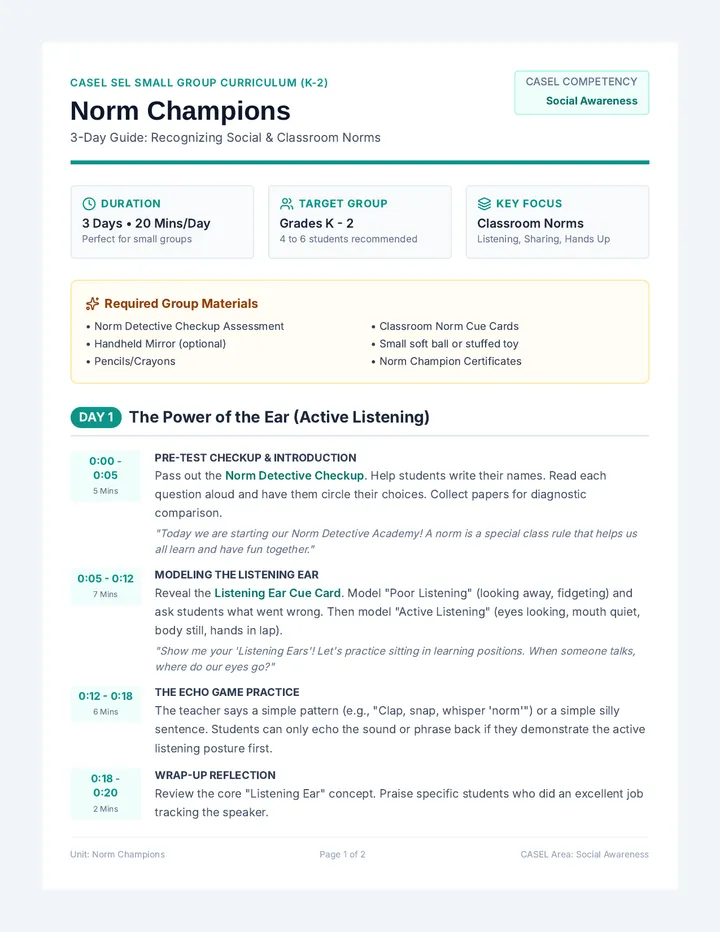
A lesson for K-2 students on interpreting non-verbal social cues using a traffic light metaphor. Students learn to recognize 'Green' (open/ready), 'Yellow' (cautious/check-in), and 'Red' (stop/need space) signals in their peers, especially during high-energy transitions.
Course synthesis and graduation. Reflecting on the journey from impulsive to intentional Pathfinder.
Mastering boundaries. Learning when and how to say 'No' or 'Yes' to family, friends, and strangers.
Financial literacy basics. Categorizing needs vs. wants to build long-term planning skills.
Learning to see failure as data. Celebrating 'Beautiful Oops' moments and messy progress.
Applying logic to everyday challenges. The 'Pathfinder Step System' for making thoughtful choices.
Practical tools for managing exam stress and academic pressure. Transitioning from panic to self-awareness.
Developing empathy and social awareness to build an inclusive community.
Training the brain for better focus and memory retention. Strategies for mindful attention.