A lesson designed to teach middle schoolers the core pillars of internet safety: staying on task, conducting appropriate searches, and communicating responsibly online.
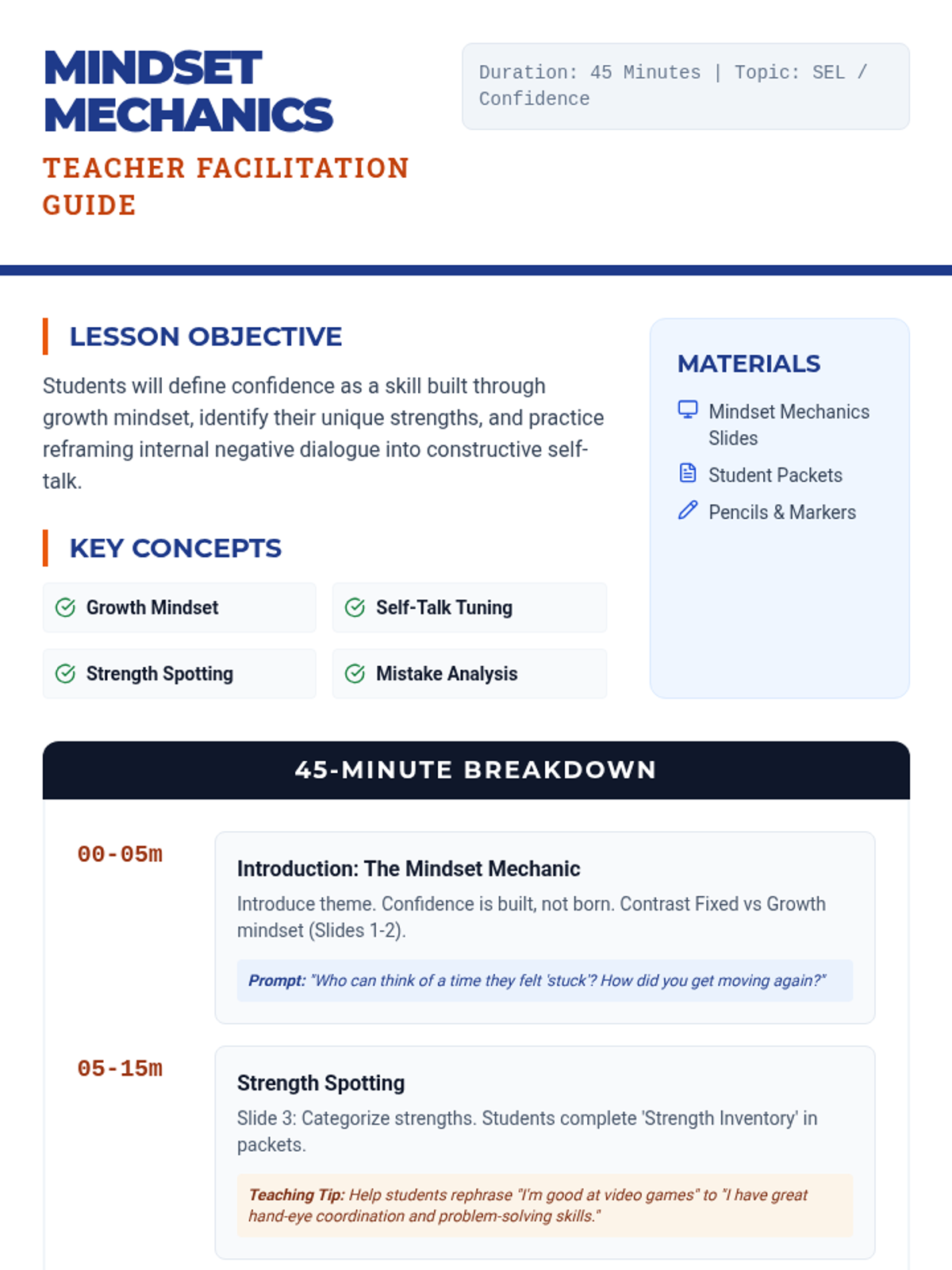
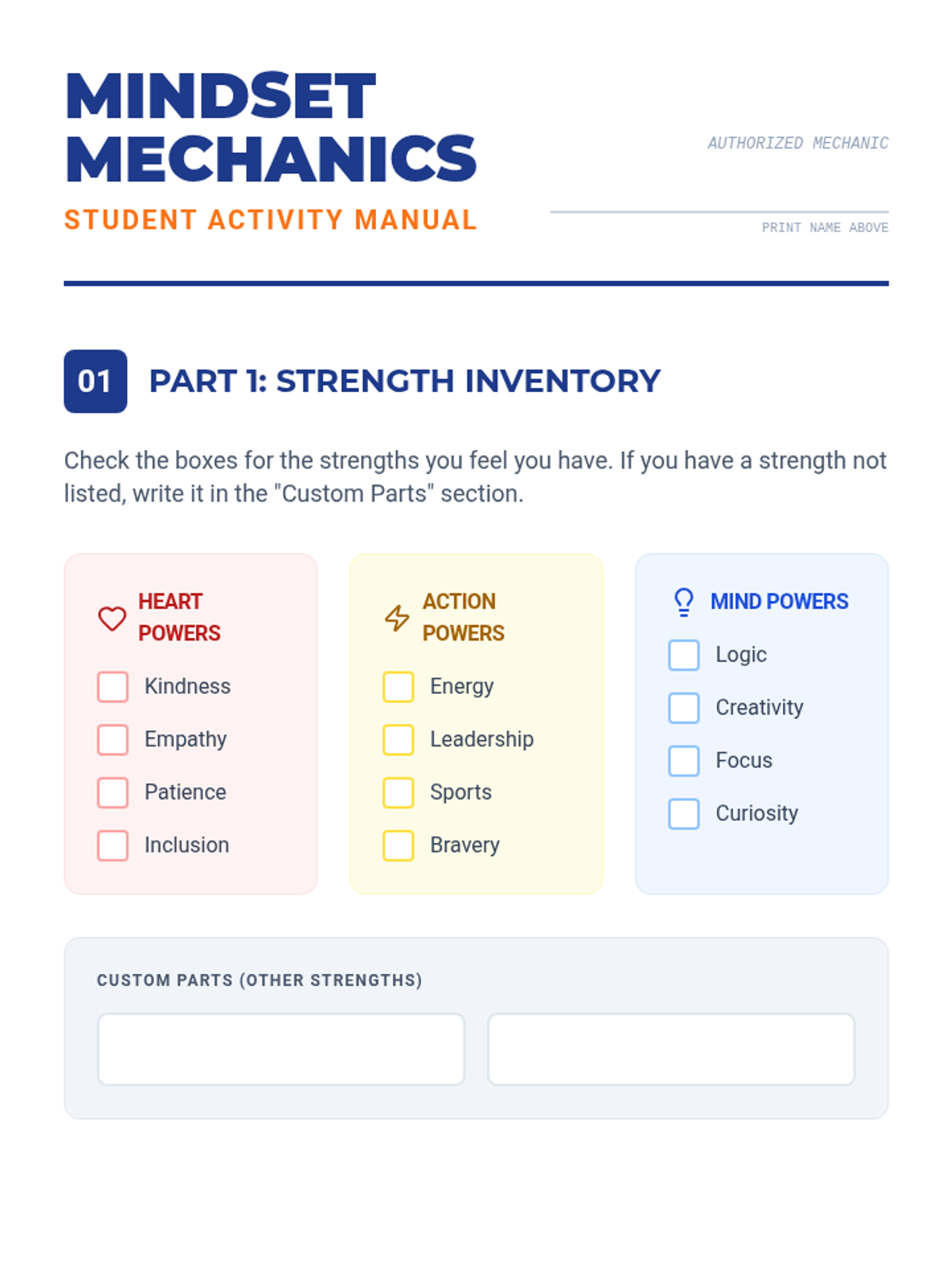
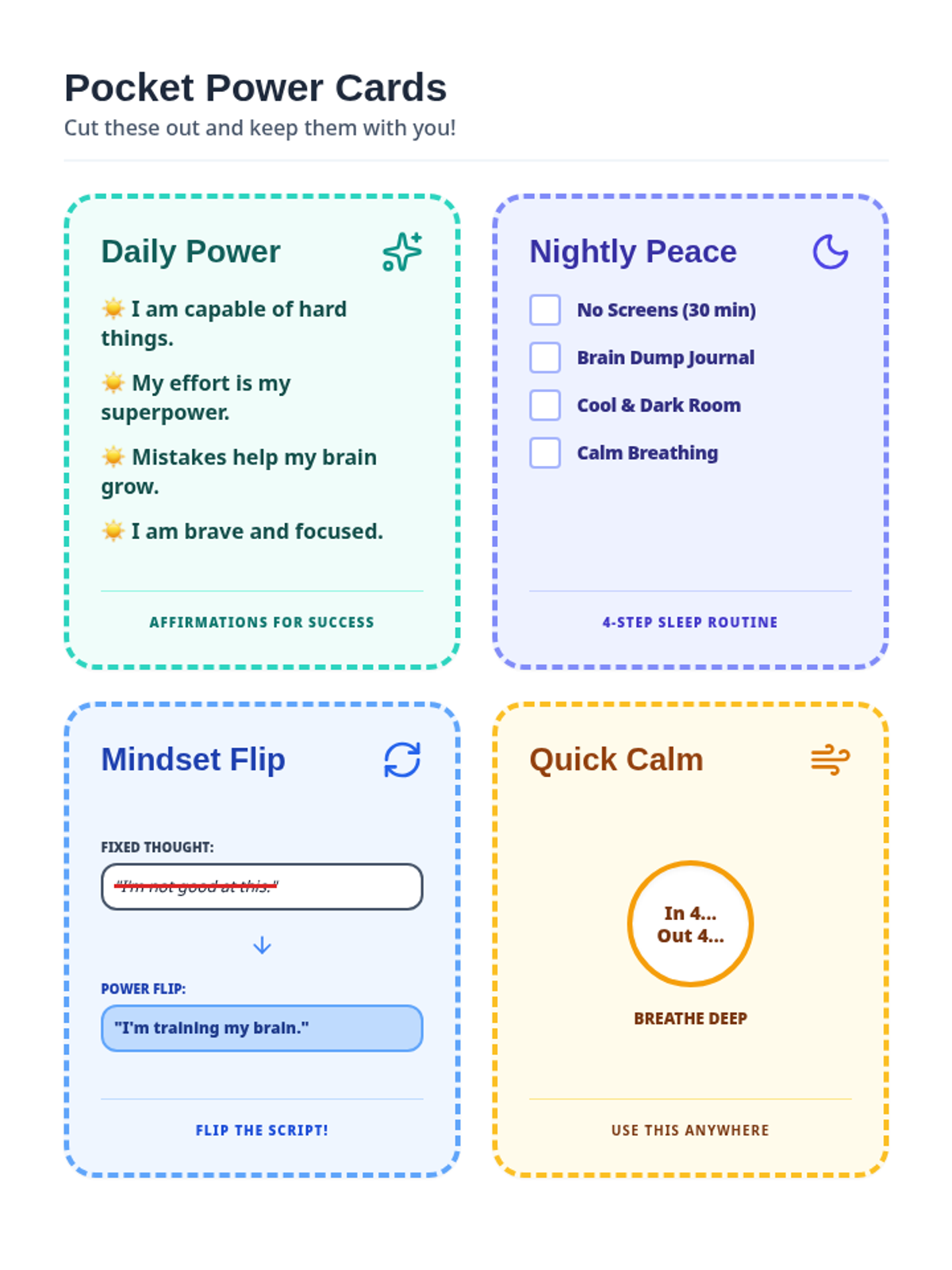
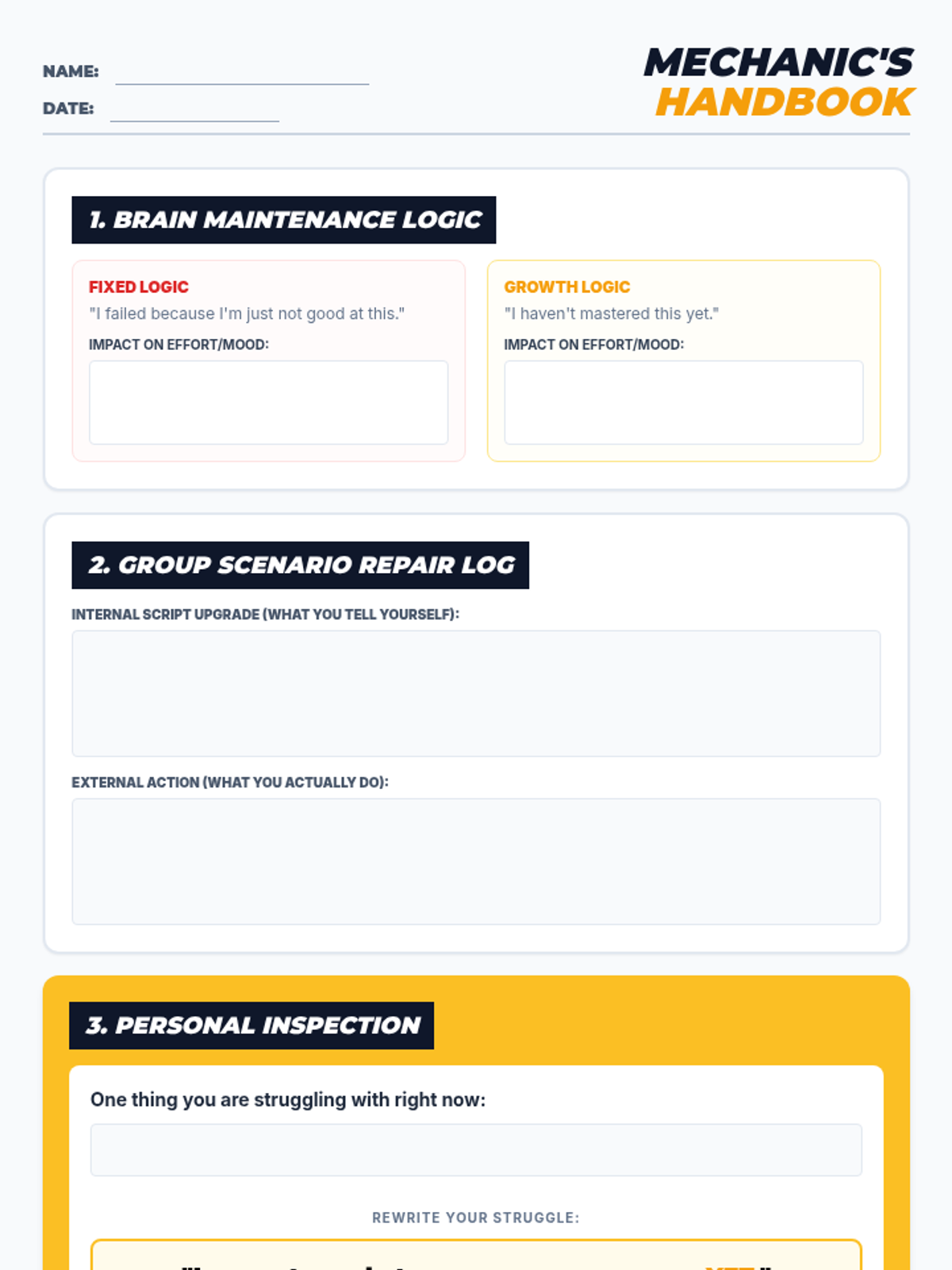
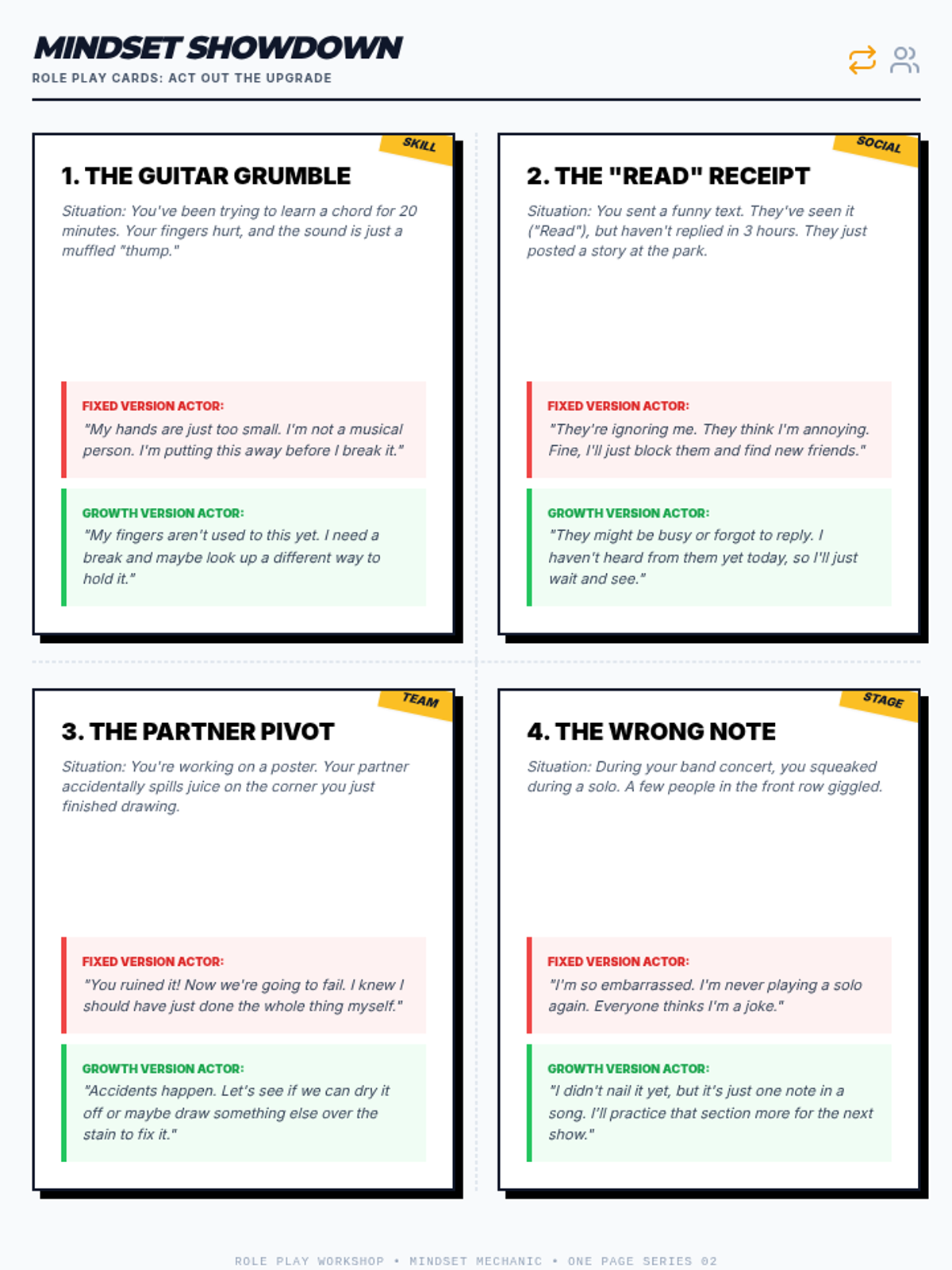
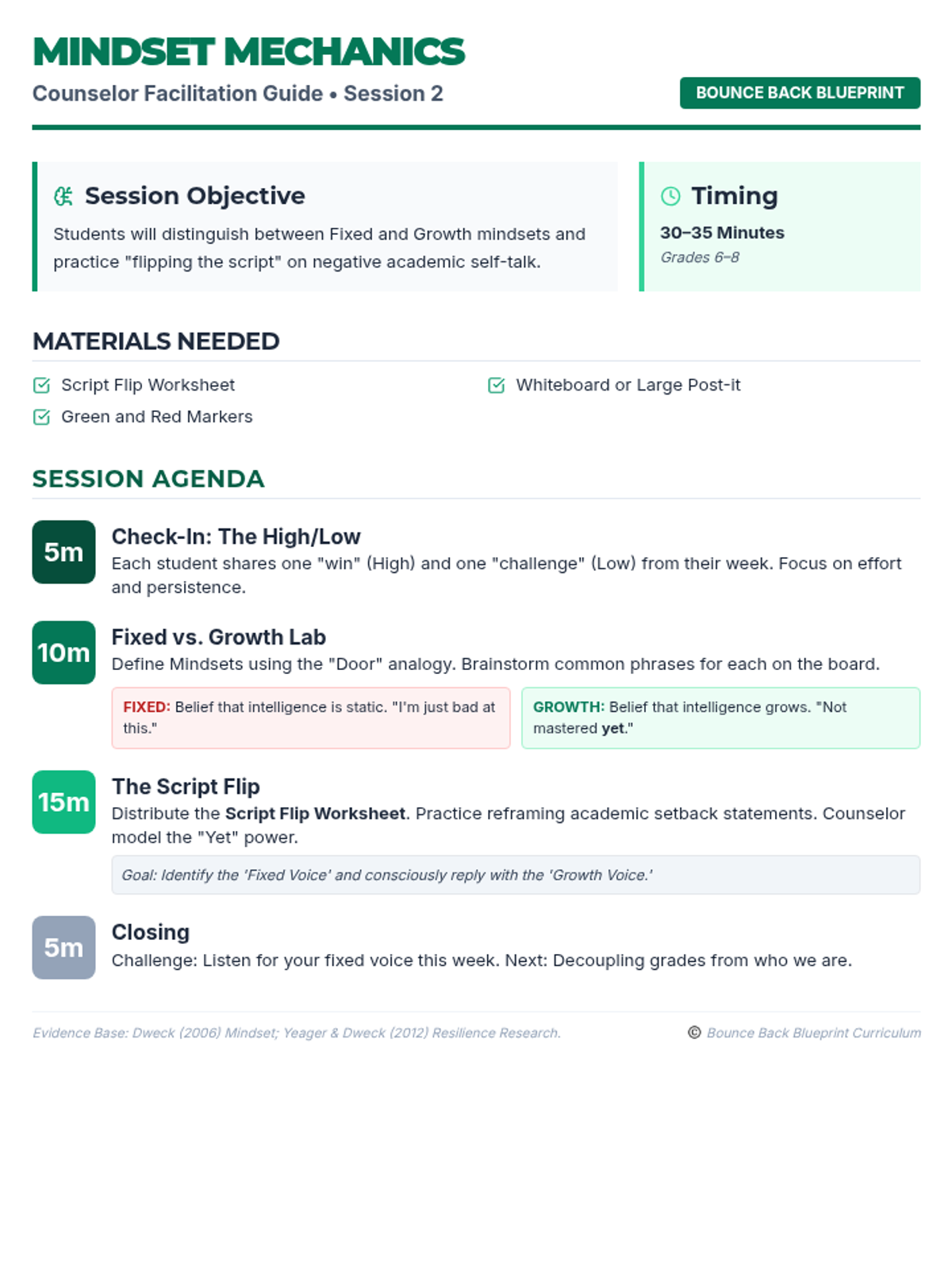
A comprehensive SEL lesson focused on building confidence through growth mindset, identifying personal strengths, reframing mistakes, and practicing positive self-talk. Students act as 'Mindset Mechanics' to tune up their internal dialogue and build a resilient self-image.
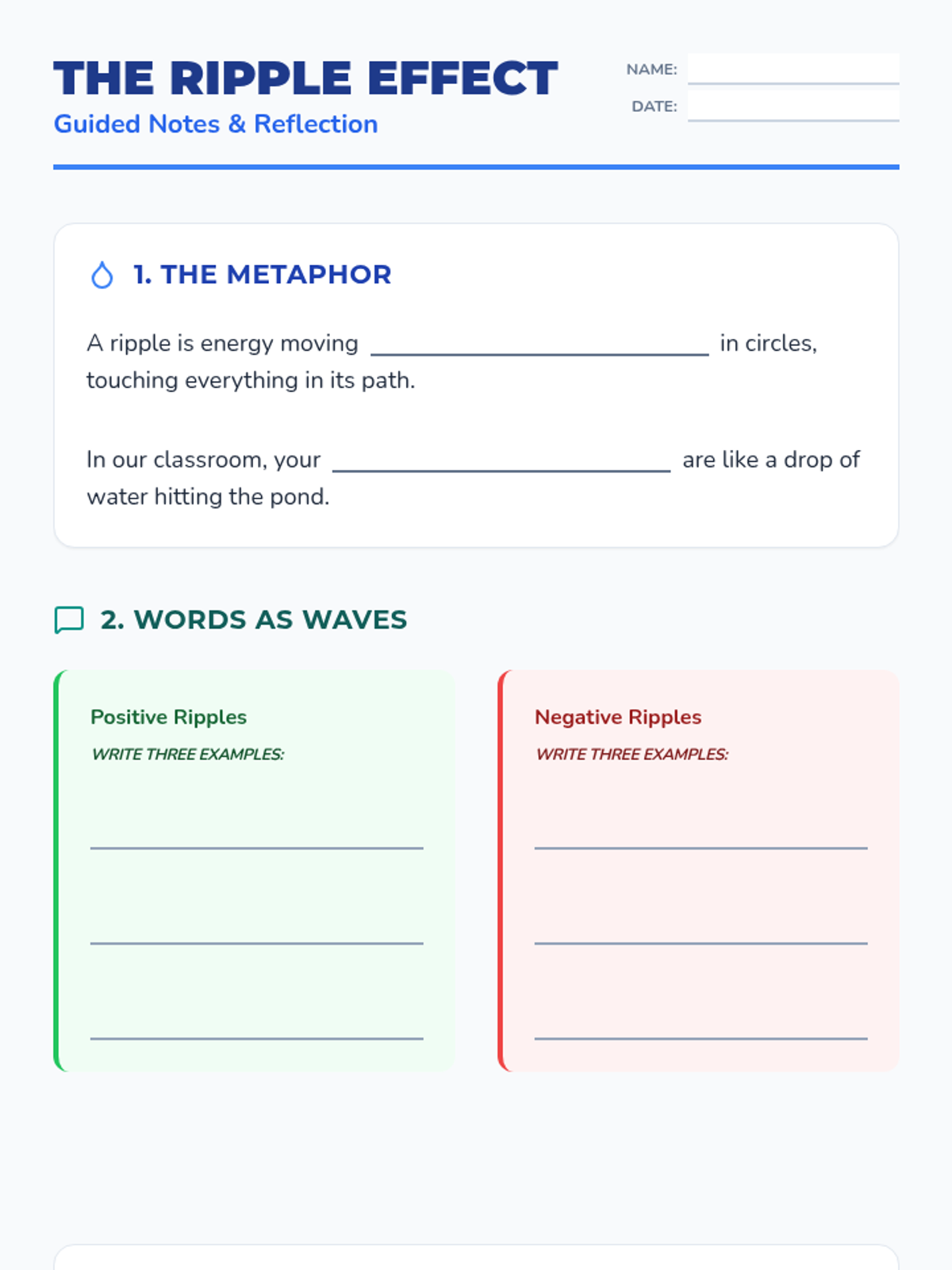
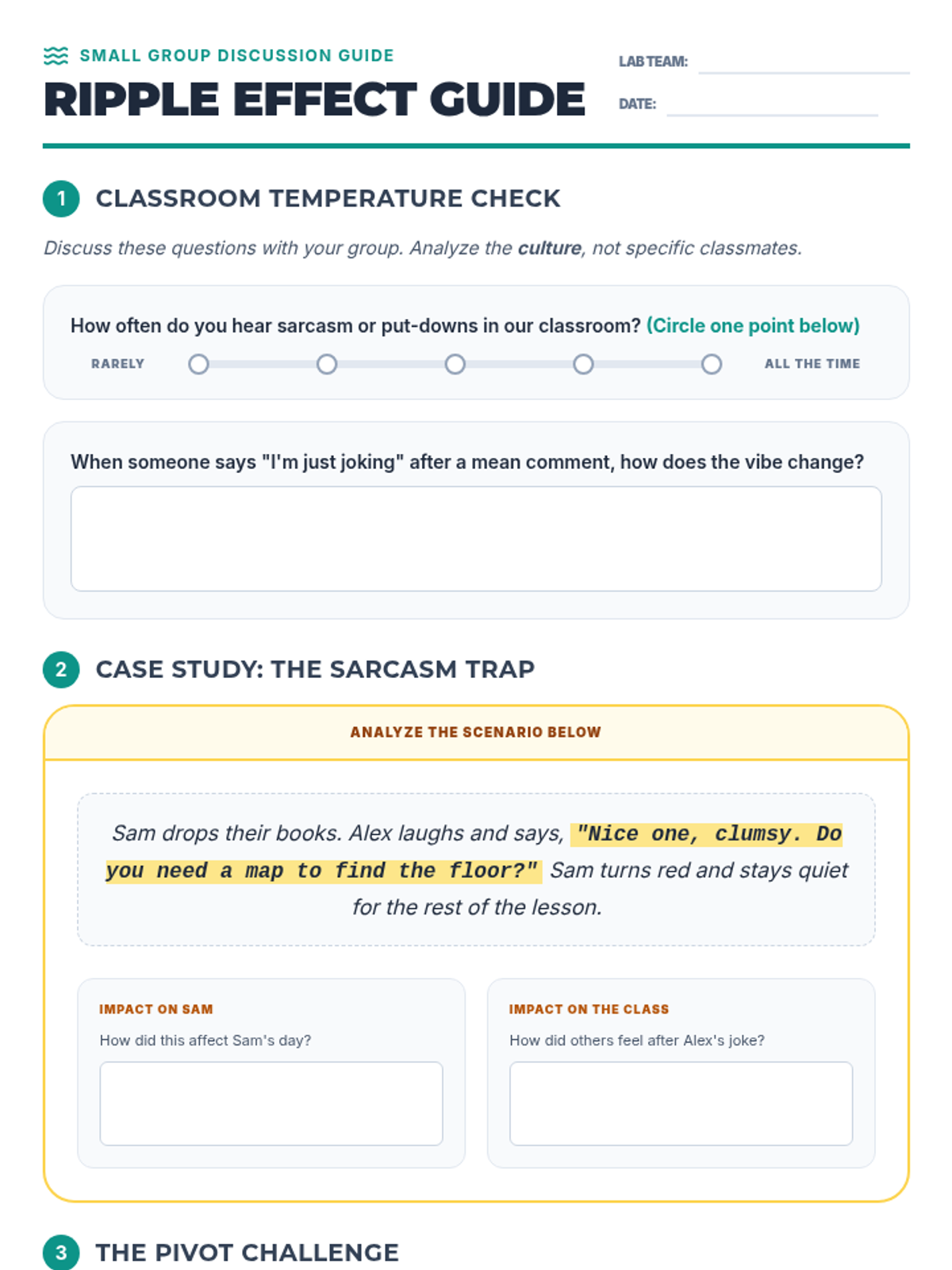
A Social Emotional Learning lesson exploring the concept of the ripple effect, helping students understand how their individual choices and behaviors impact their peers and the overall classroom environment.
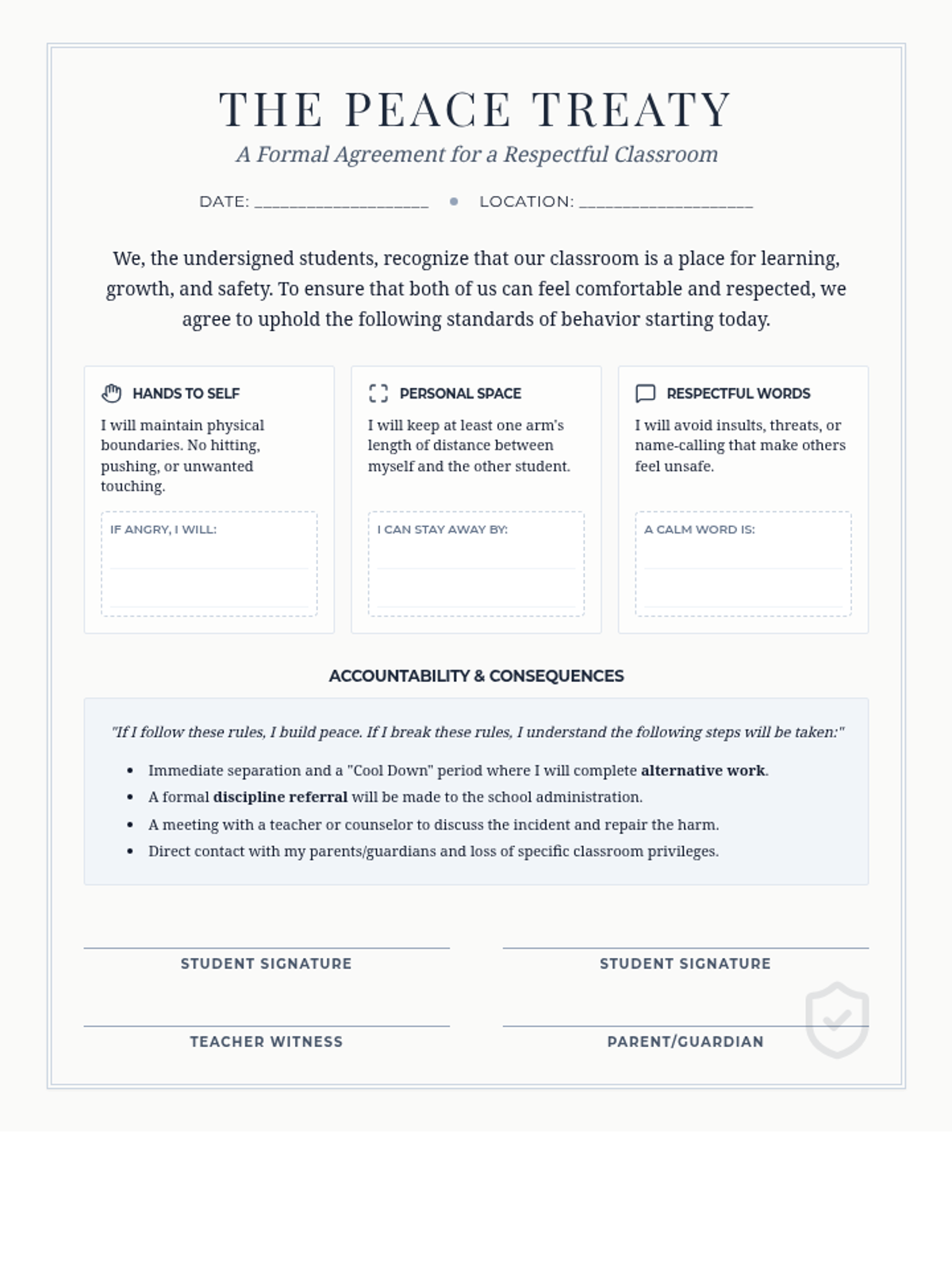
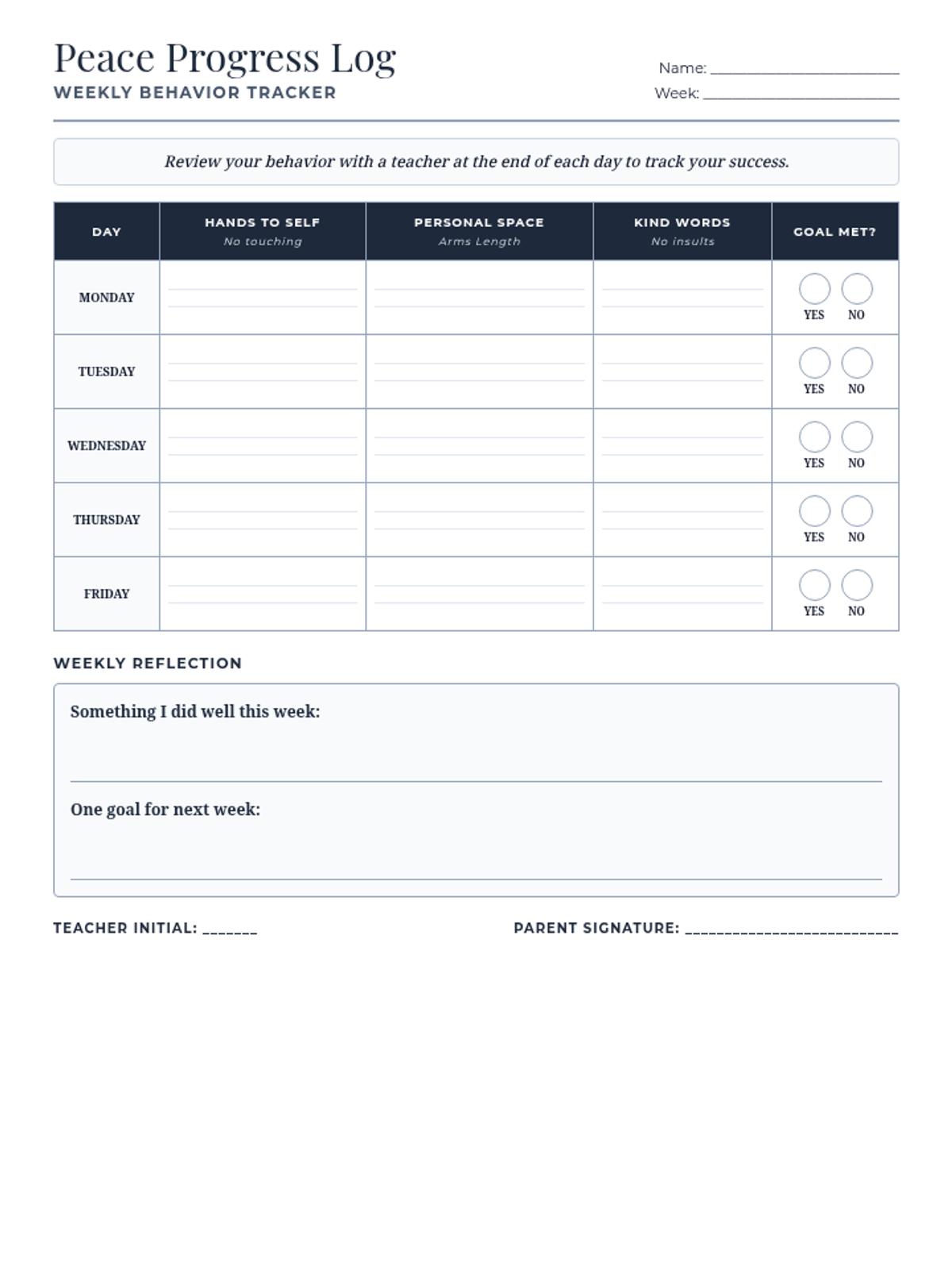
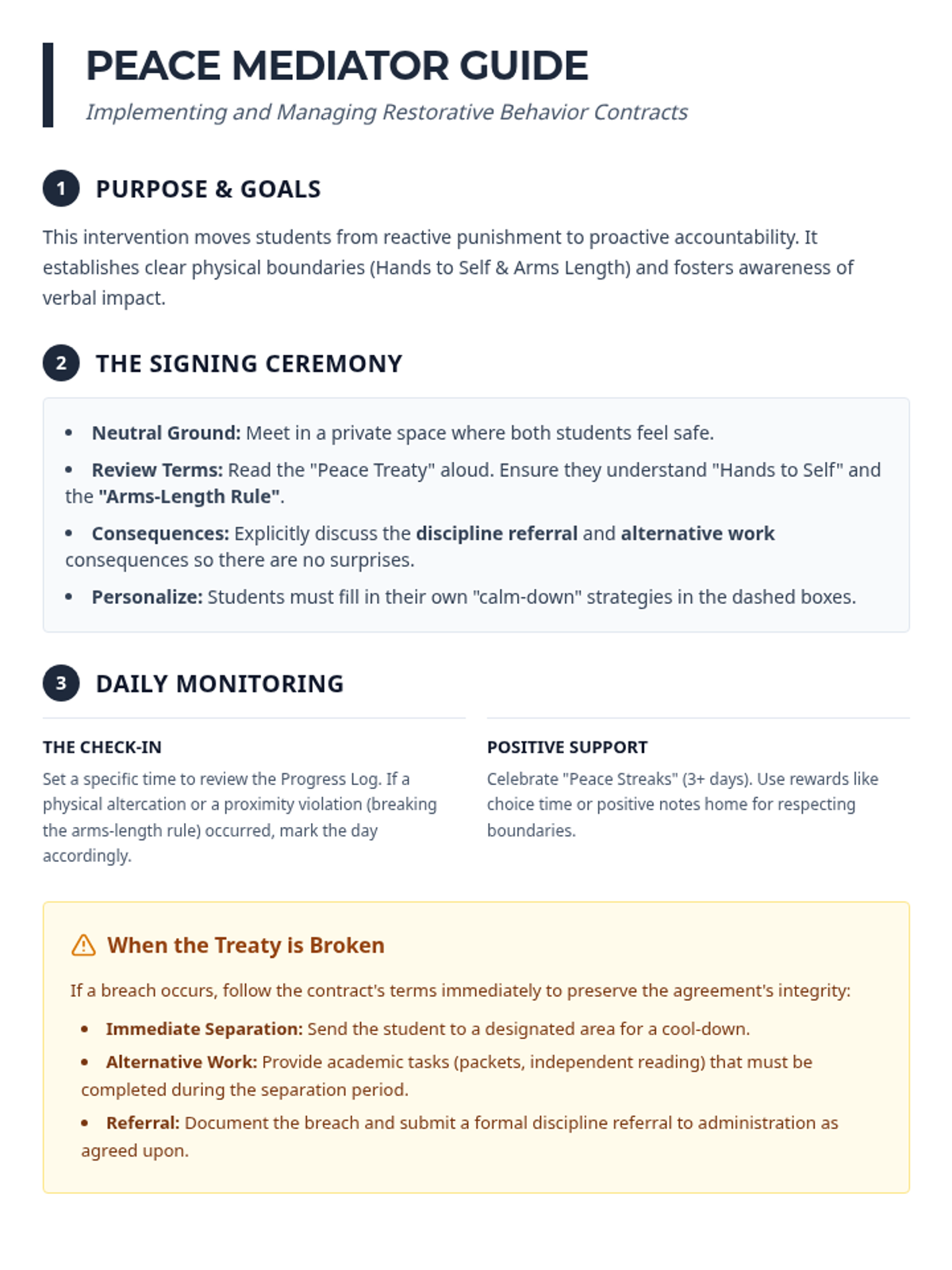
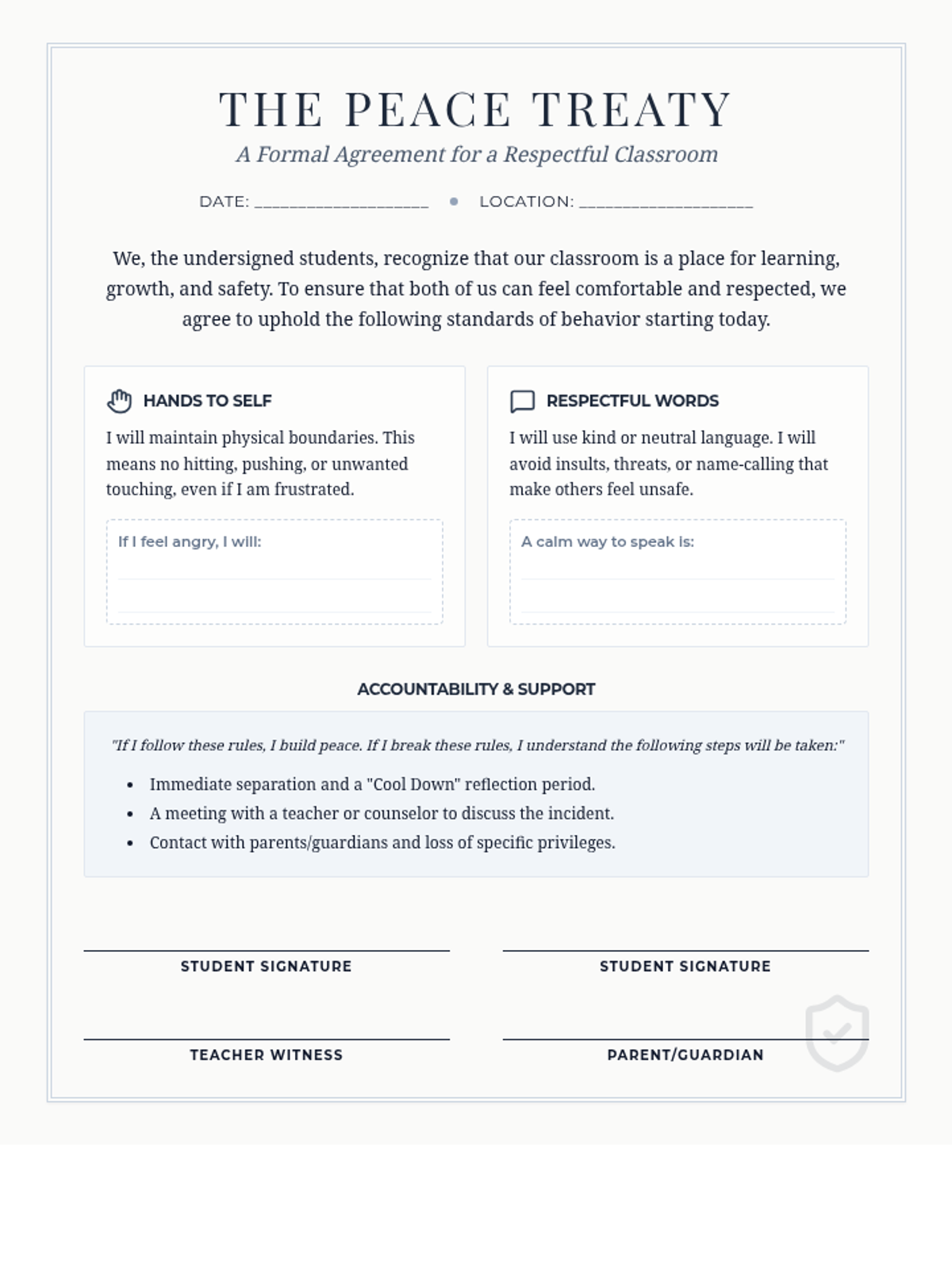
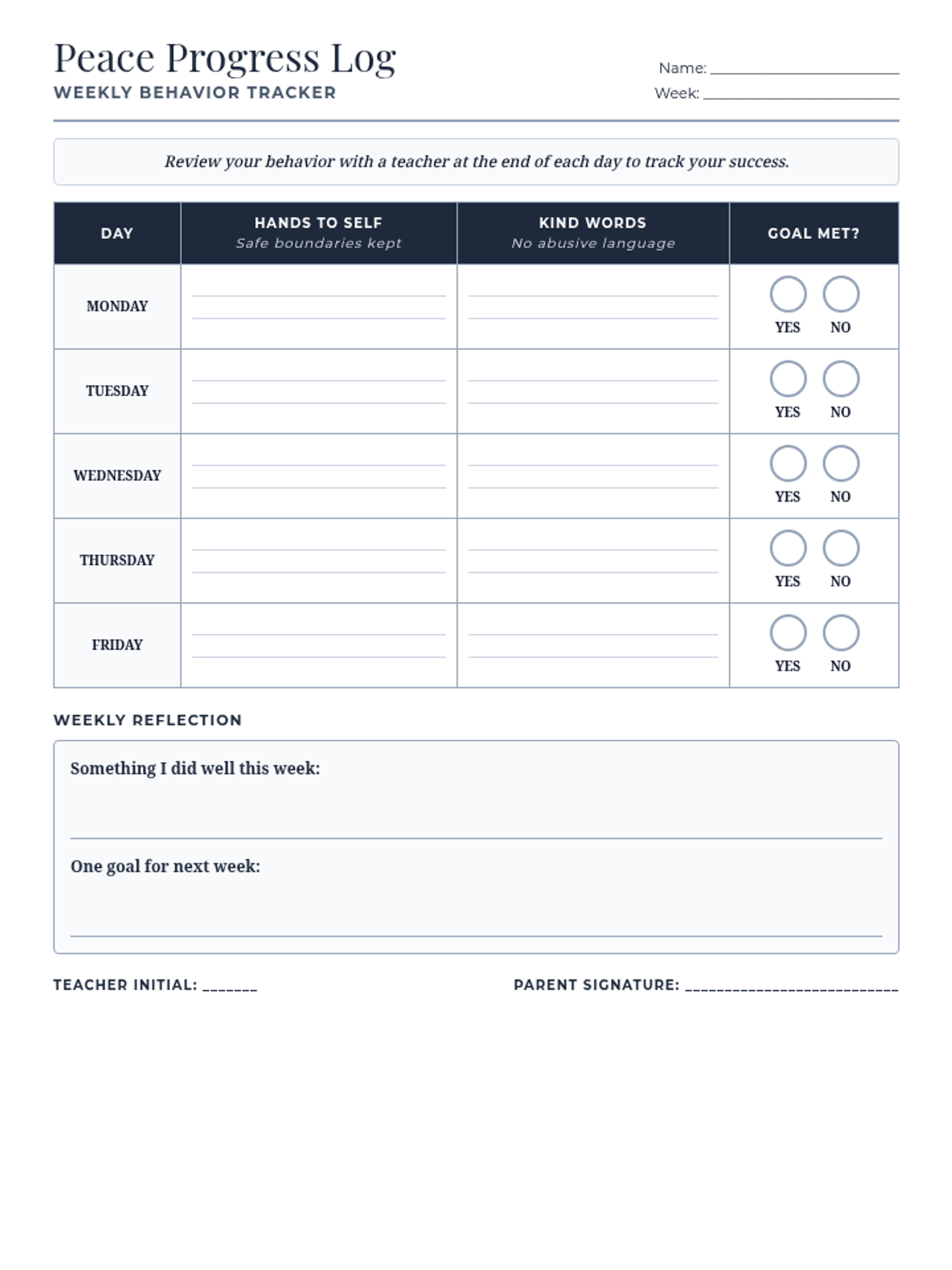
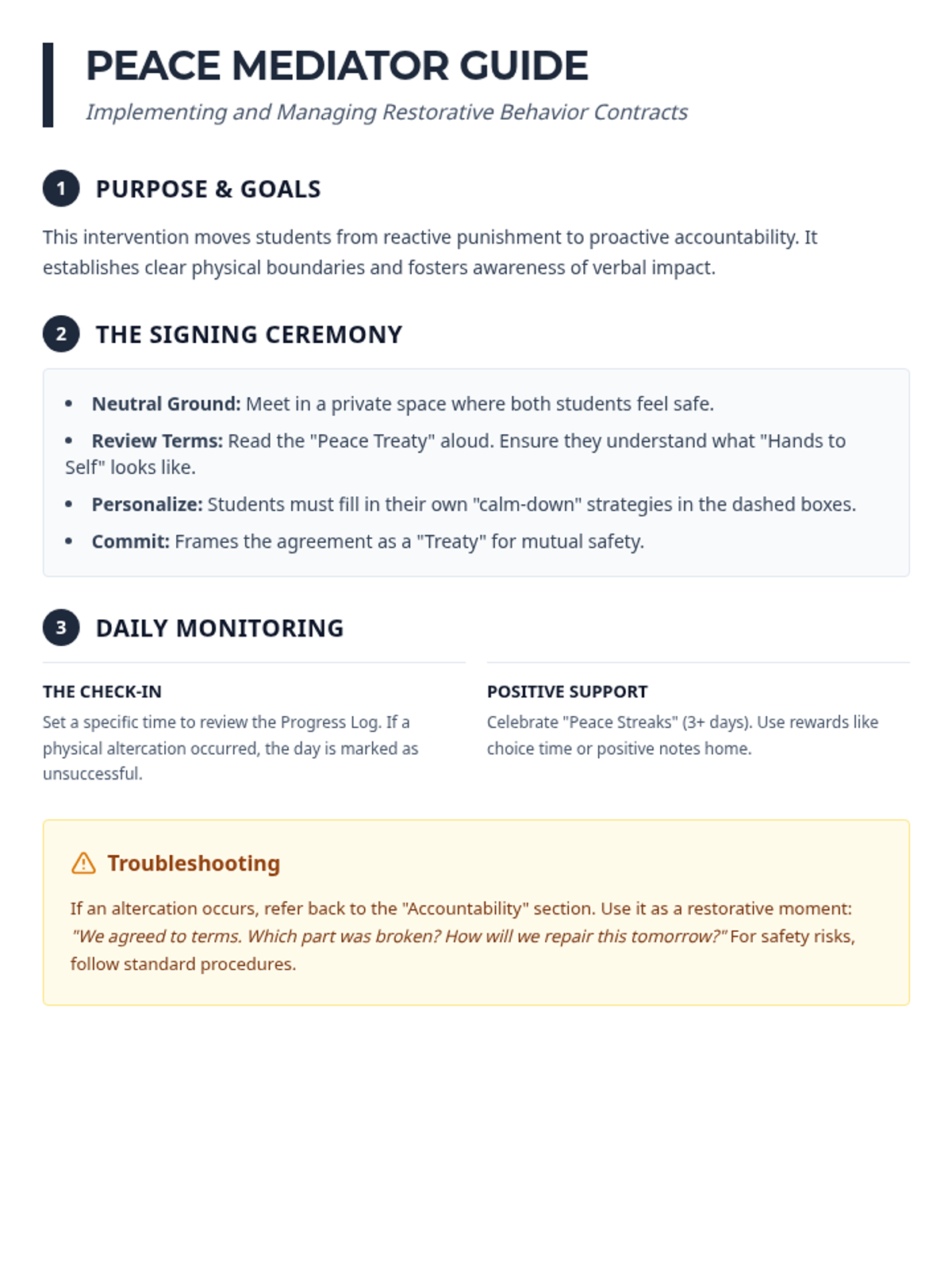
A restorative behavioral intervention focused on resolving physical conflict and verbal aggression through a formal behavior contract and daily progress tracking.
A restorative behavioral intervention focused on resolving physical conflict and verbal aggression between two students through a formal agreement and daily tracking.
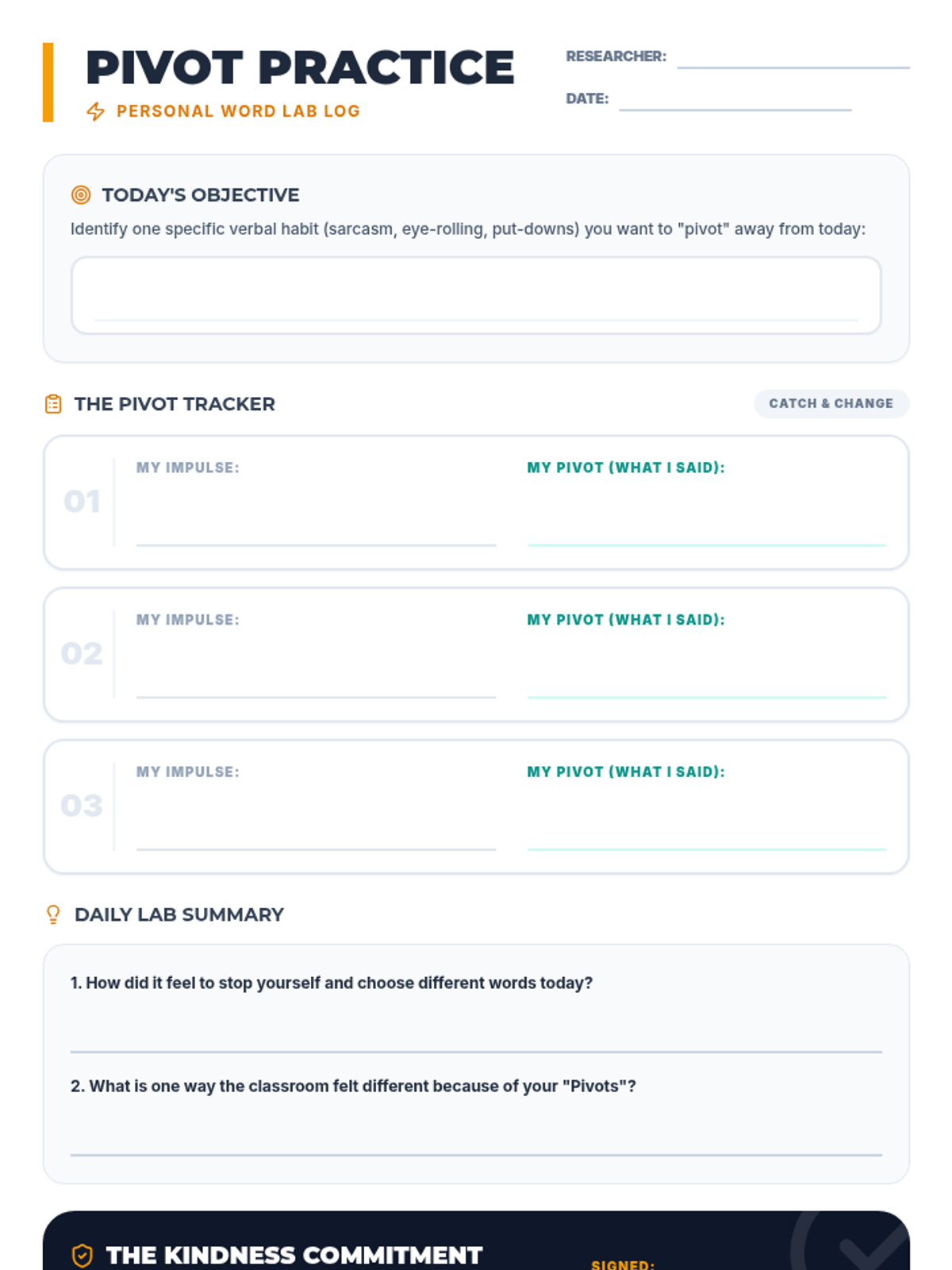
This lesson focuses on identifying and reducing verbal put-downs and sarcasm in the classroom. It helps students understand the impact of their words and provides strategies for building a supportive peer culture through small group discussions and self-reflection.
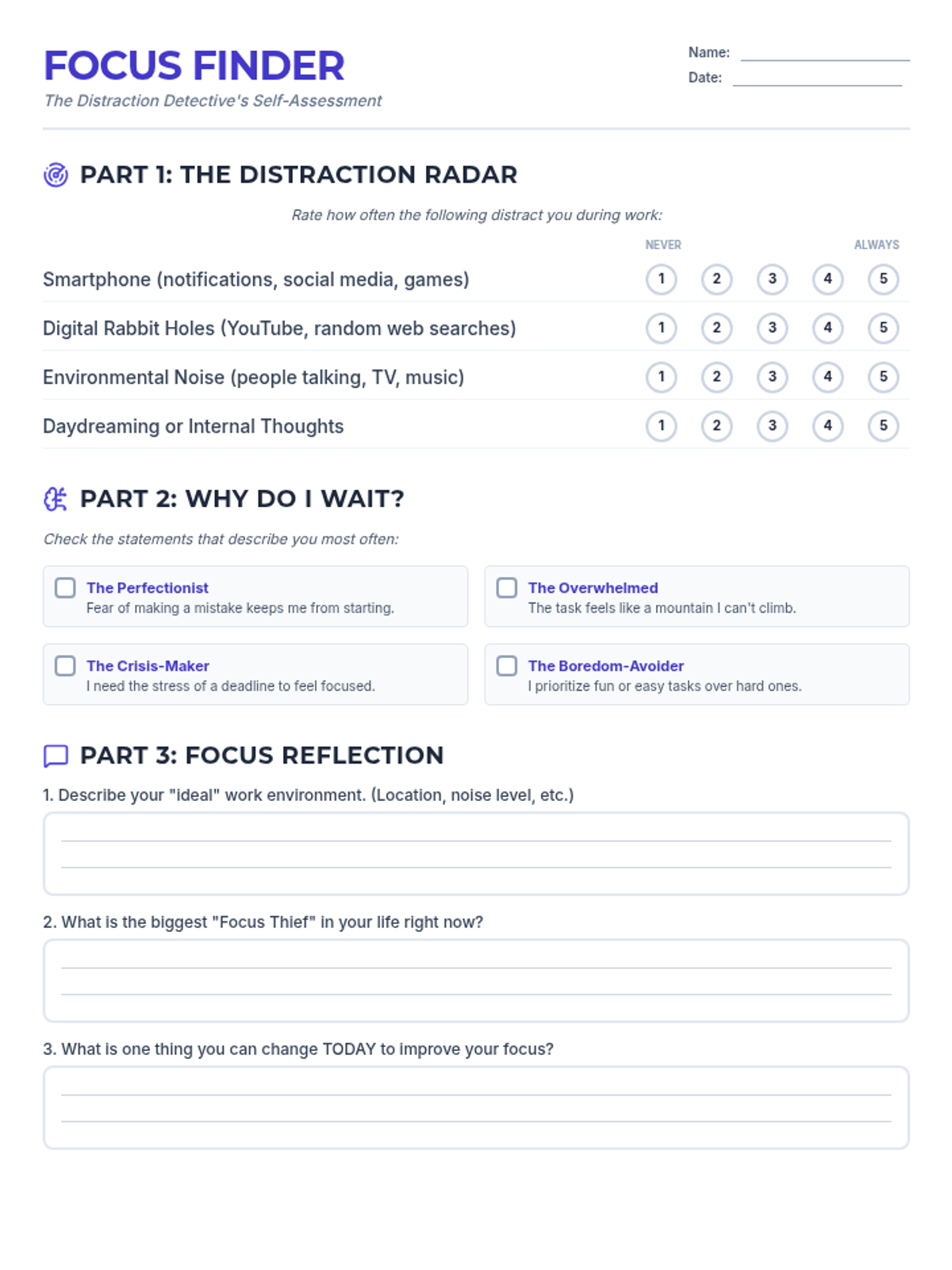
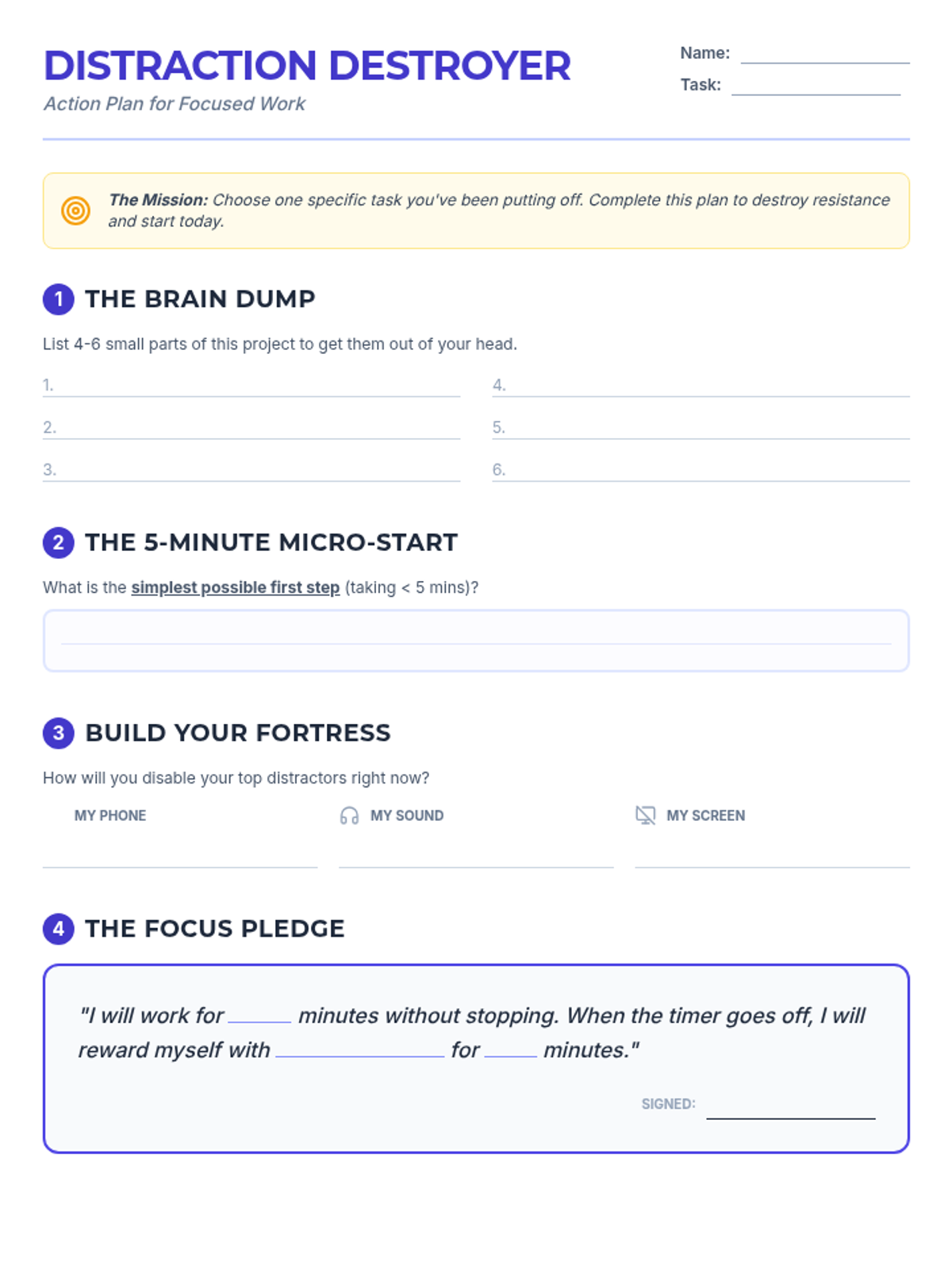
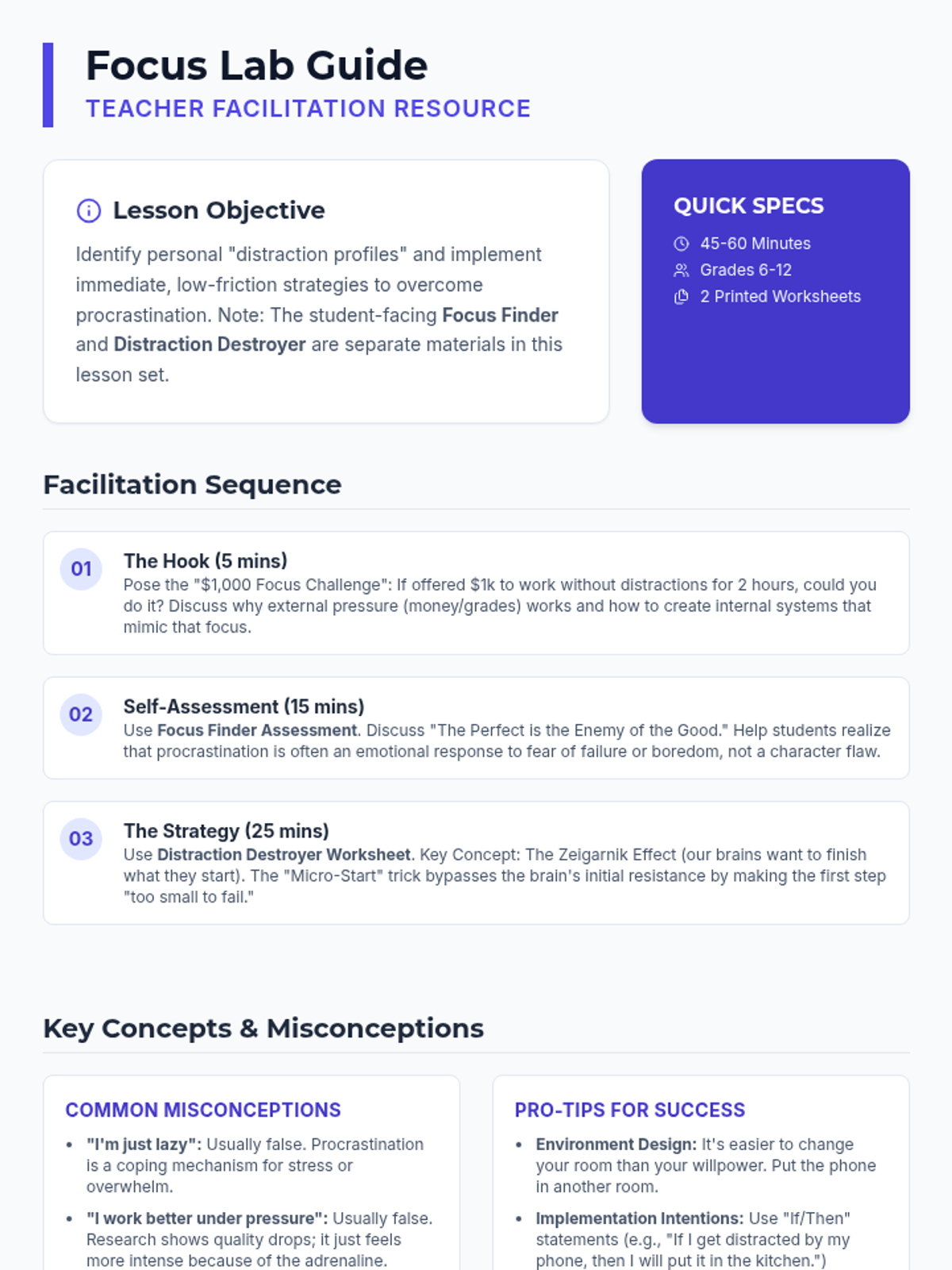
A lesson focused on identifying the root causes of procrastination and the specific distractions that hinder productivity. Students will learn to assess their own habits and develop a personalized plan for focused work.
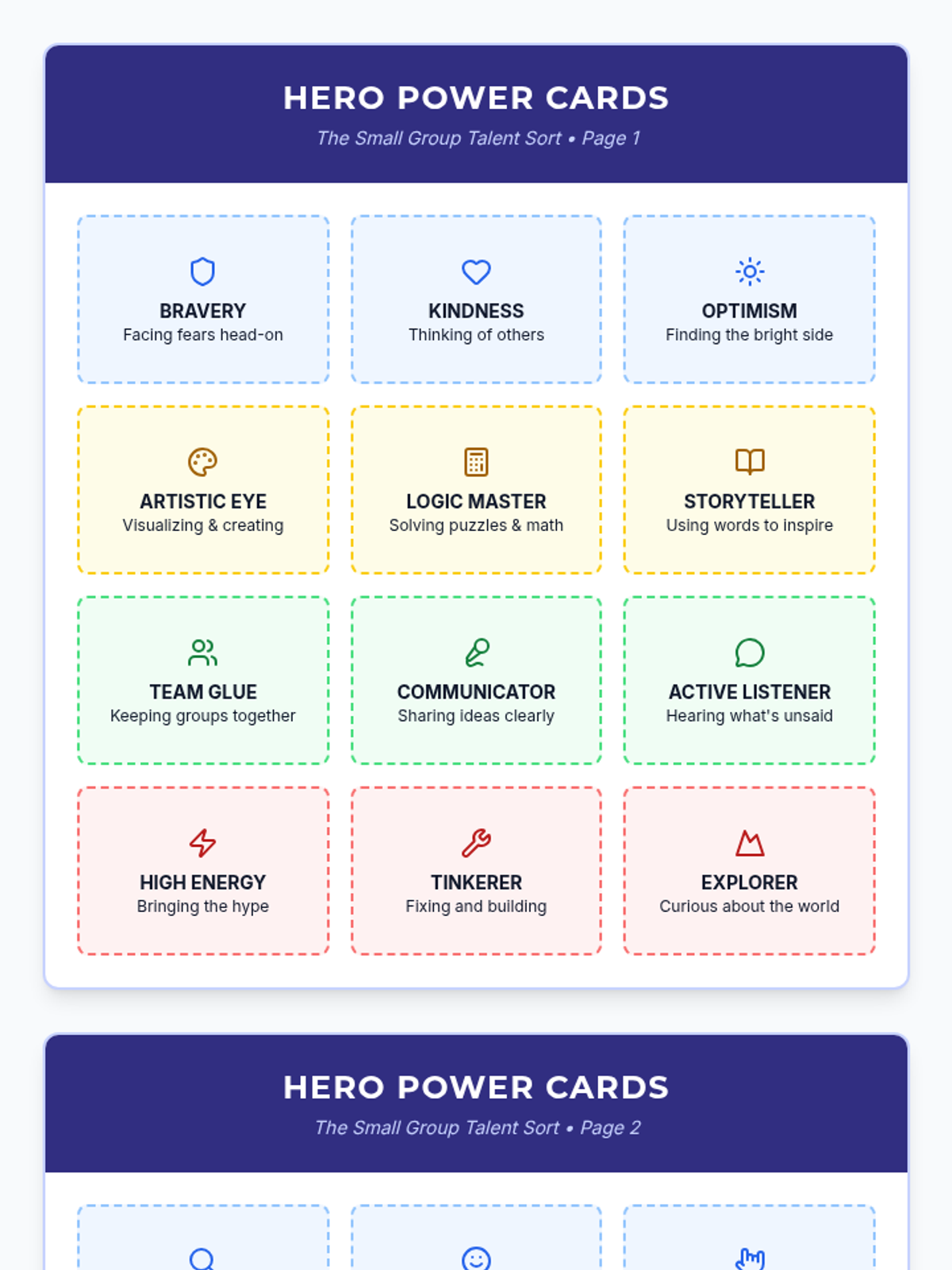
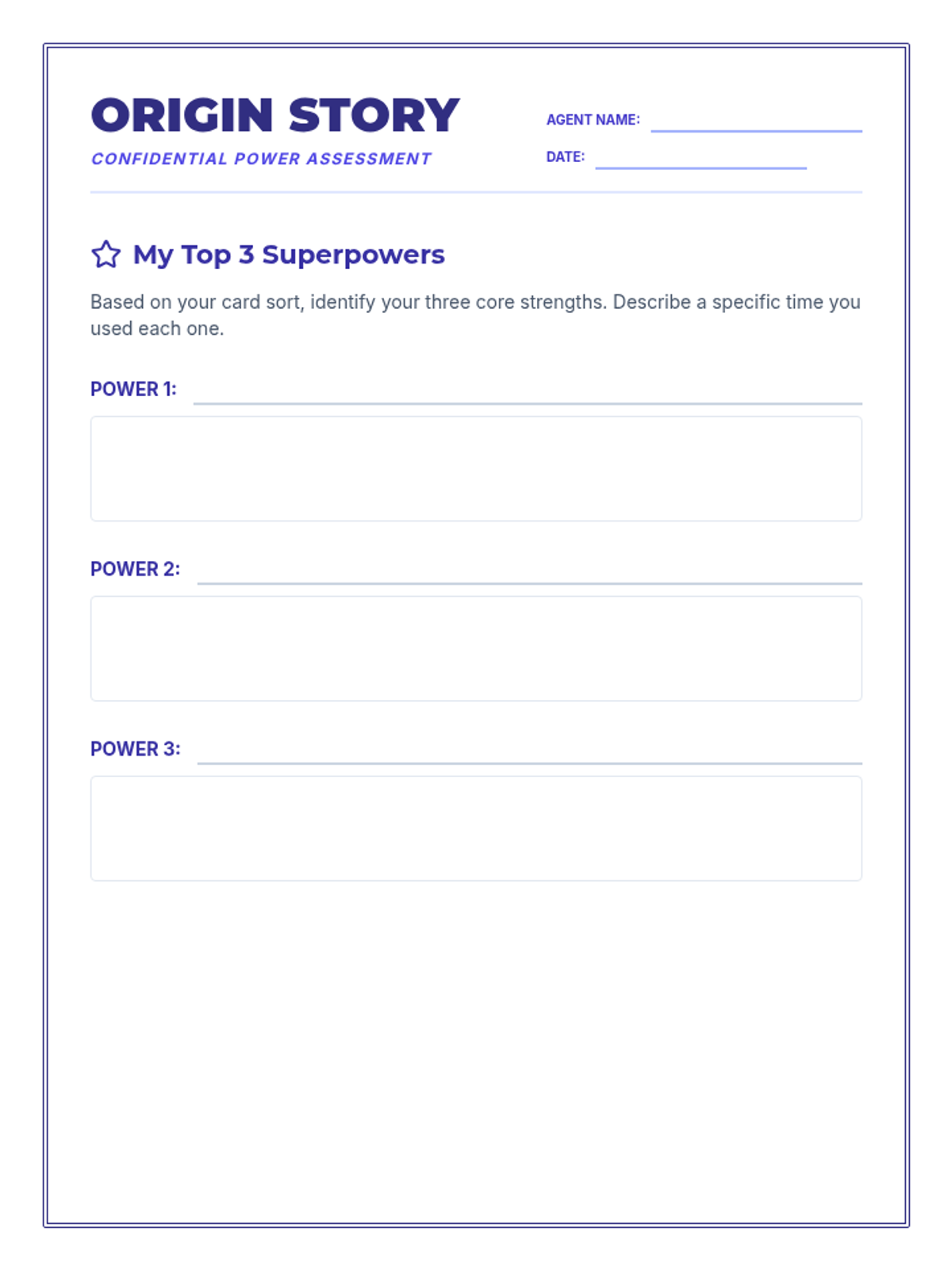
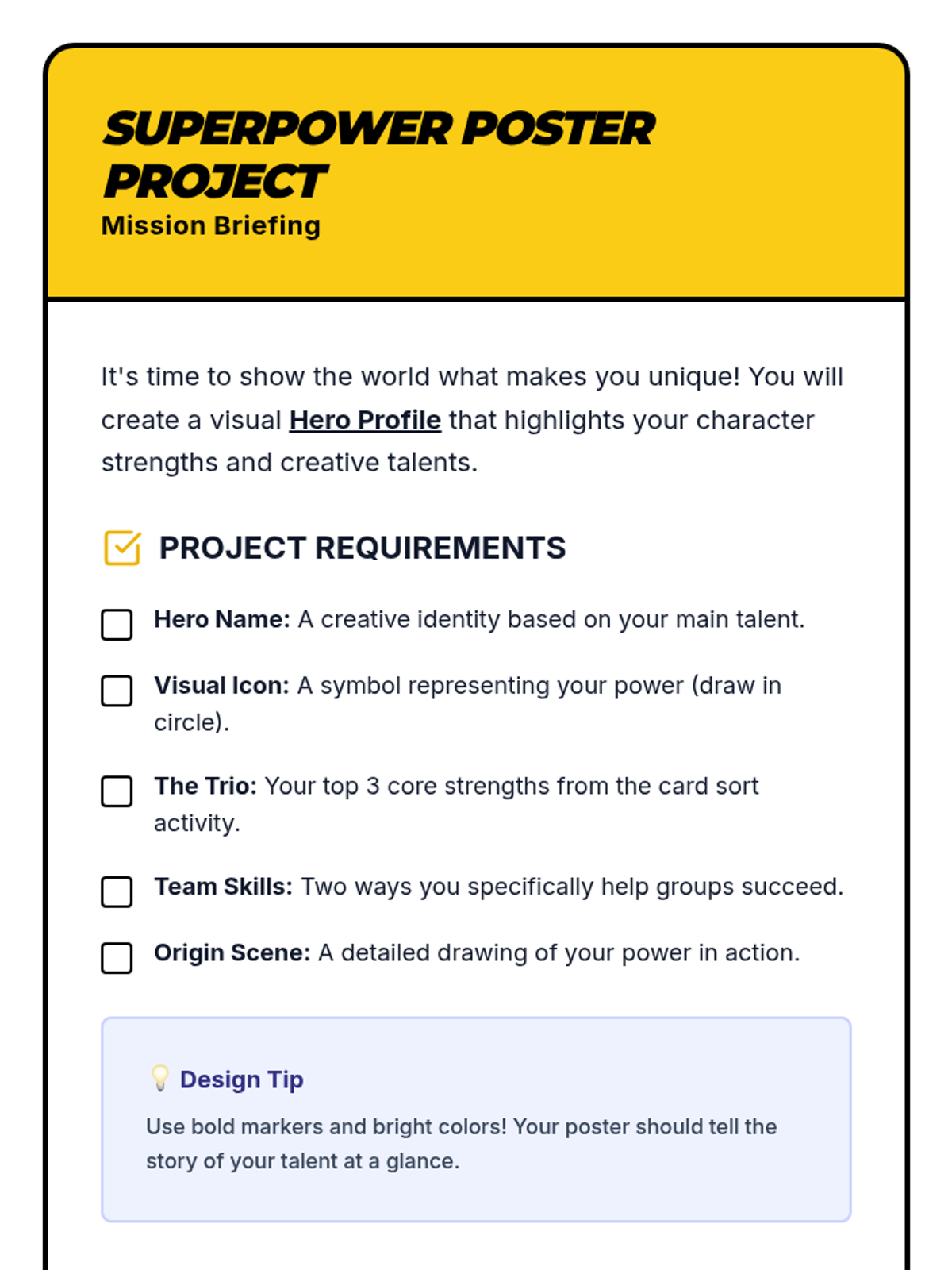
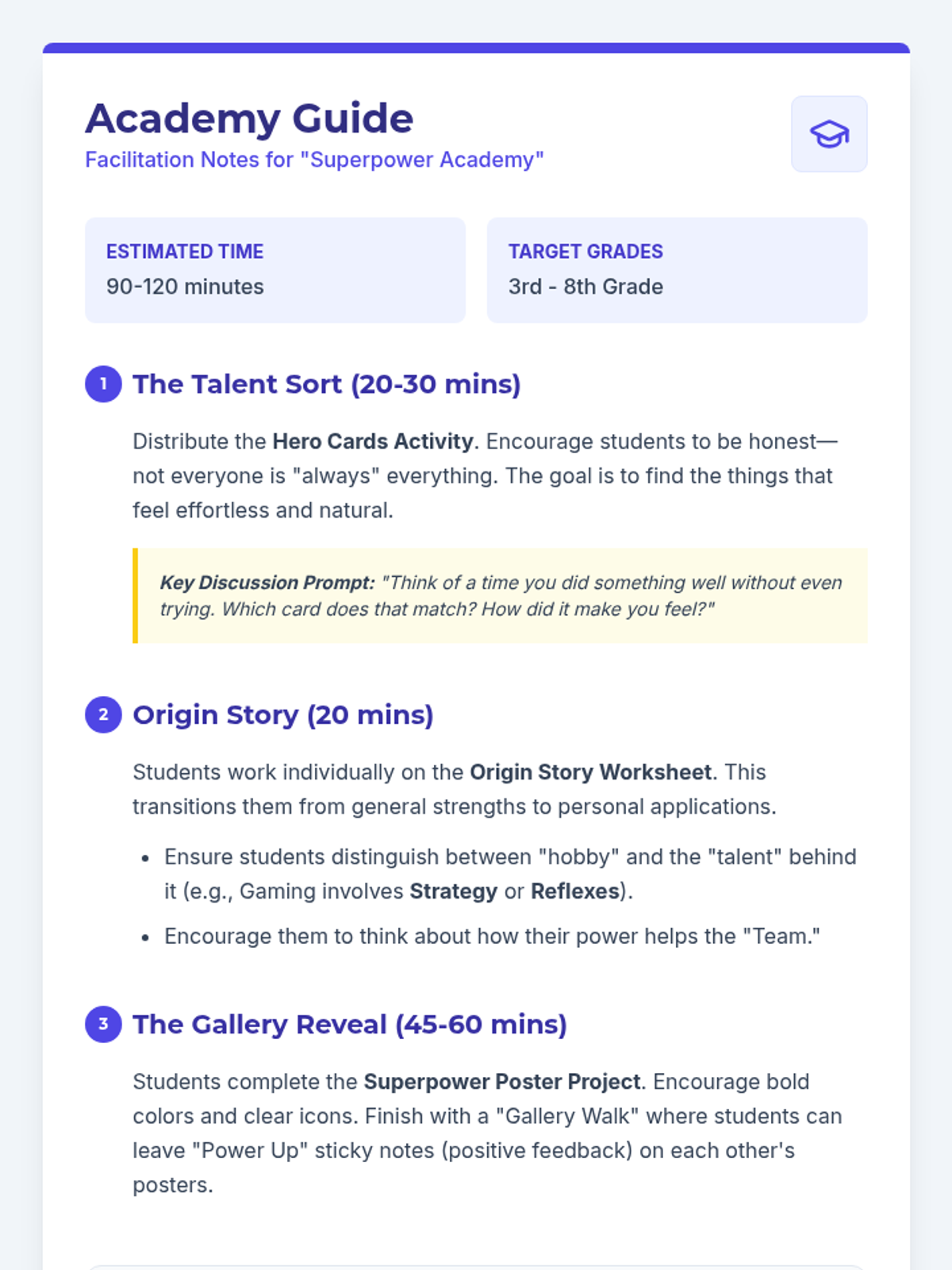
A high-energy lesson where students identify their unique character strengths, academic talents, and social skills through a collaborative card sort, self-reflection, and a creative poster project.
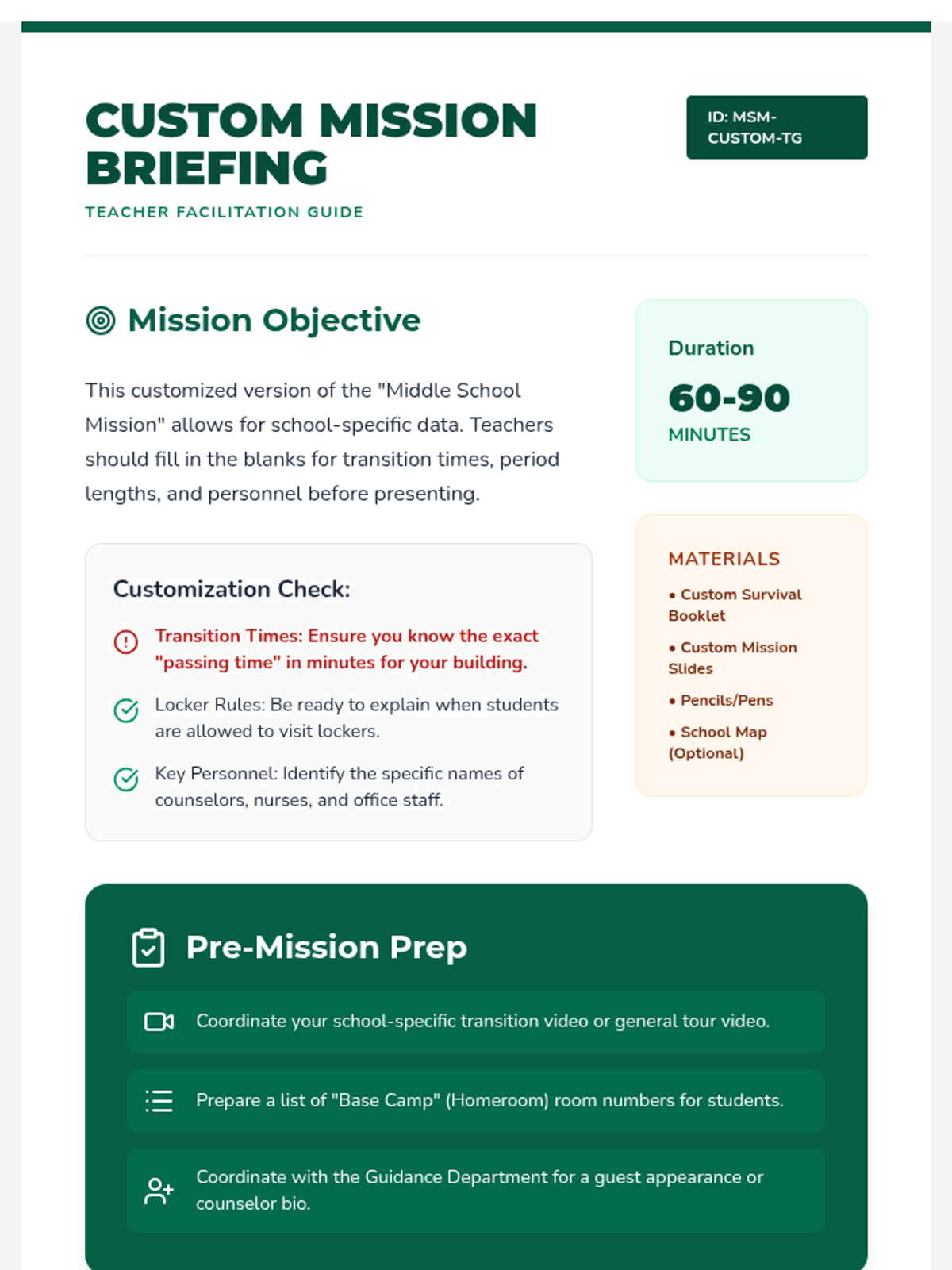
A customizable version of the Middle School Mission lesson, featuring blank fields for specific transition times, locker rules, and school-specific personnel.
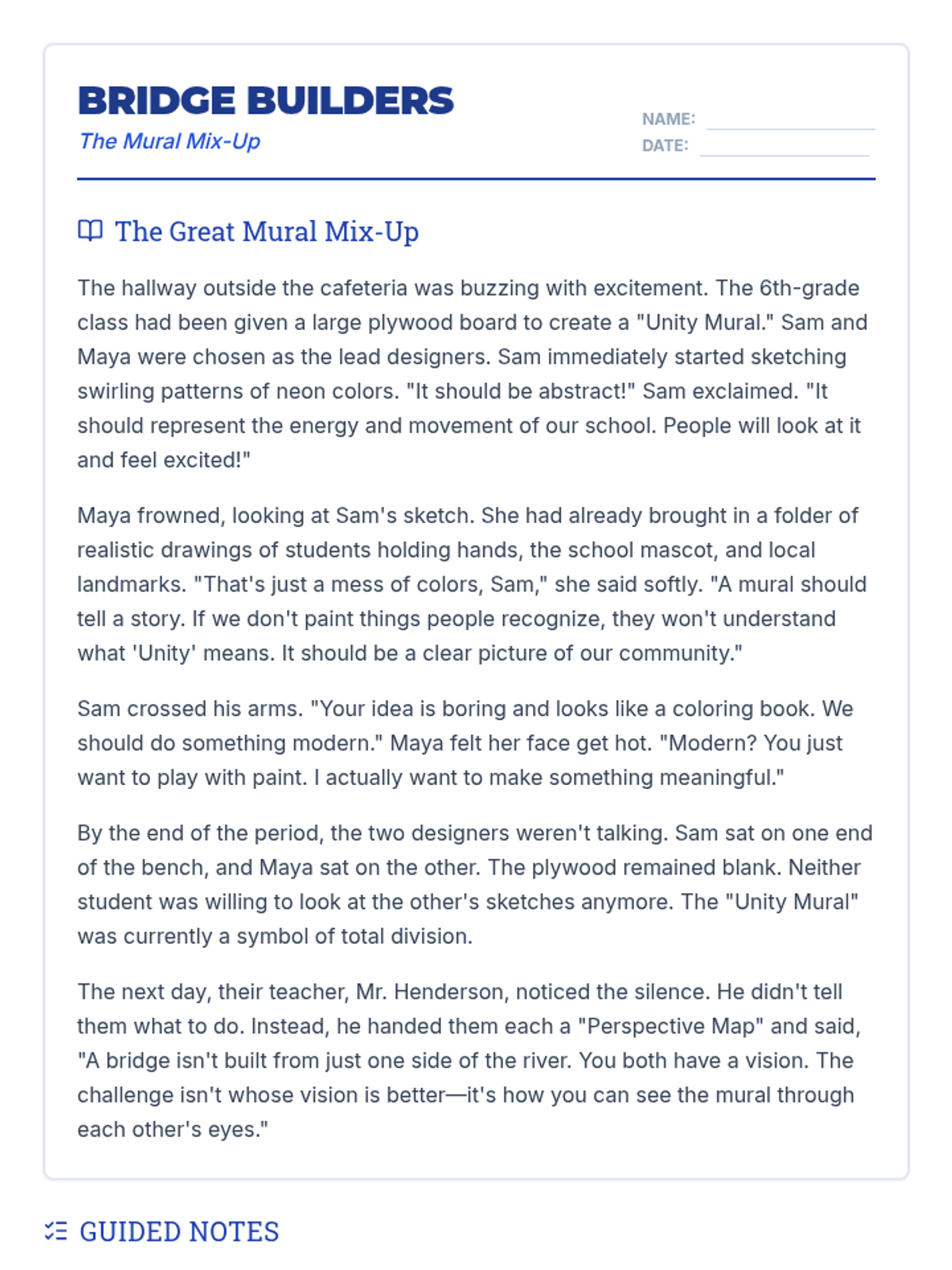
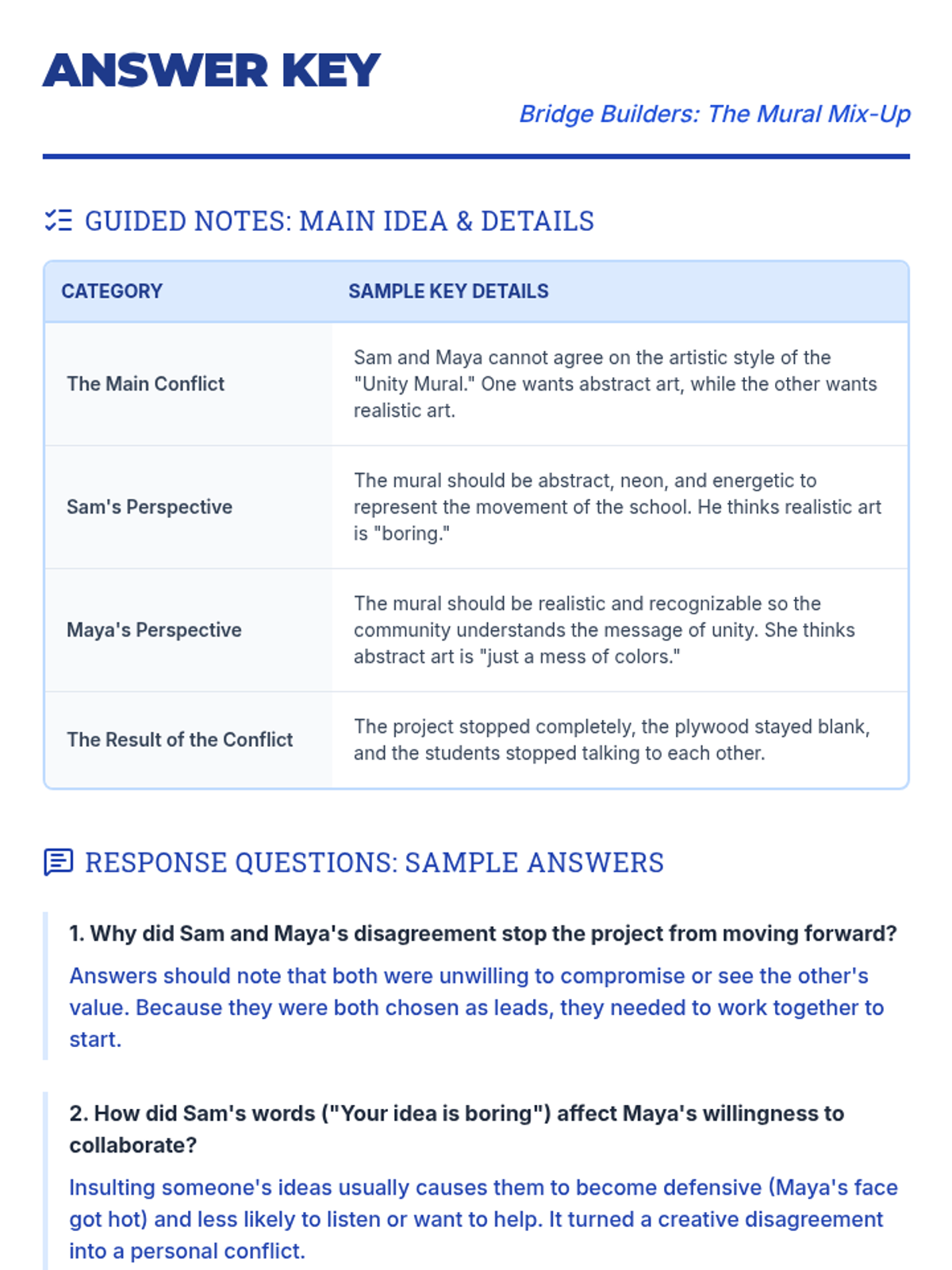
A 6th-grade SEL lesson focused on conflict resolution and perspective taking through a realistic story about collaboration and compromise.
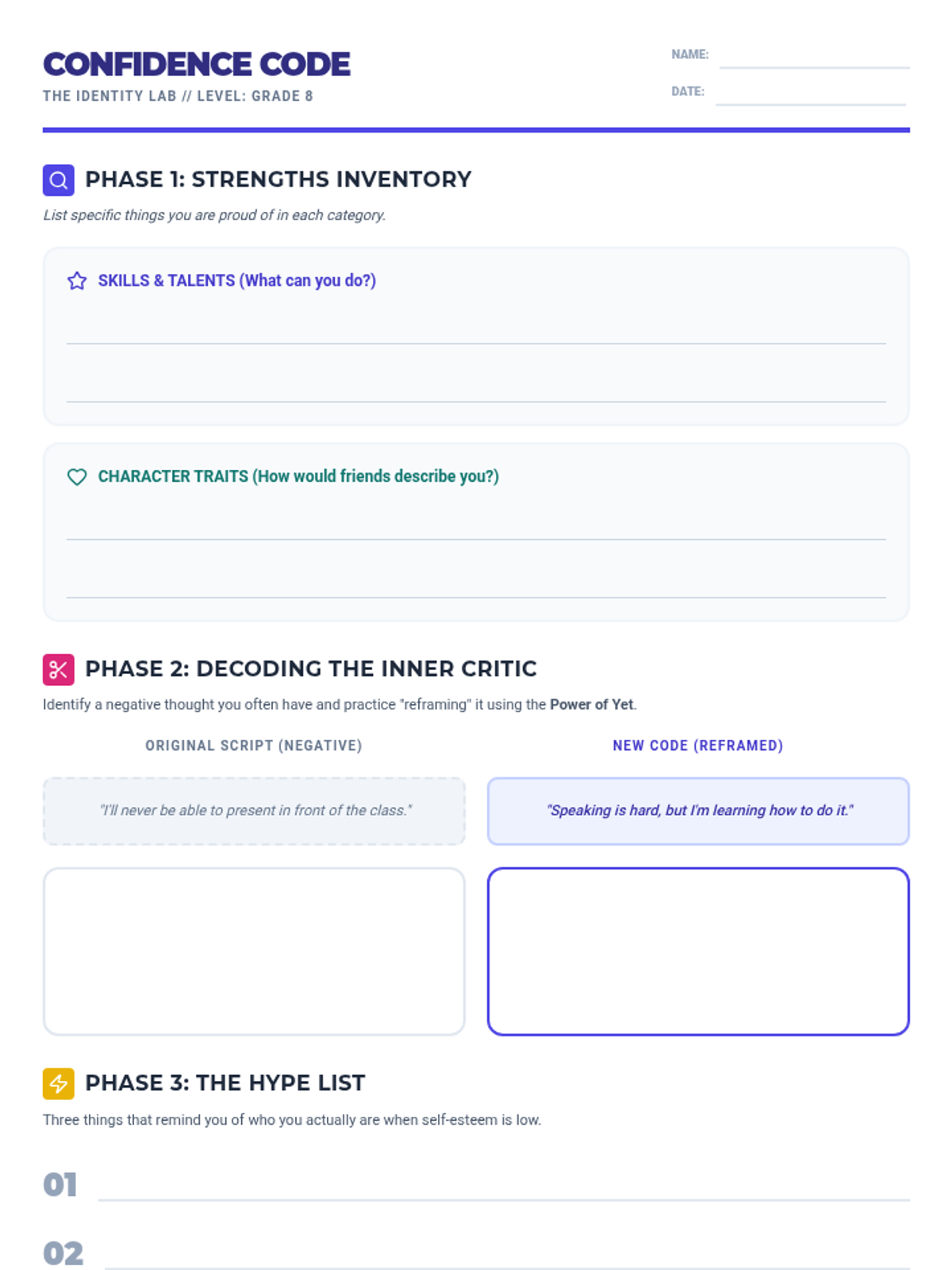
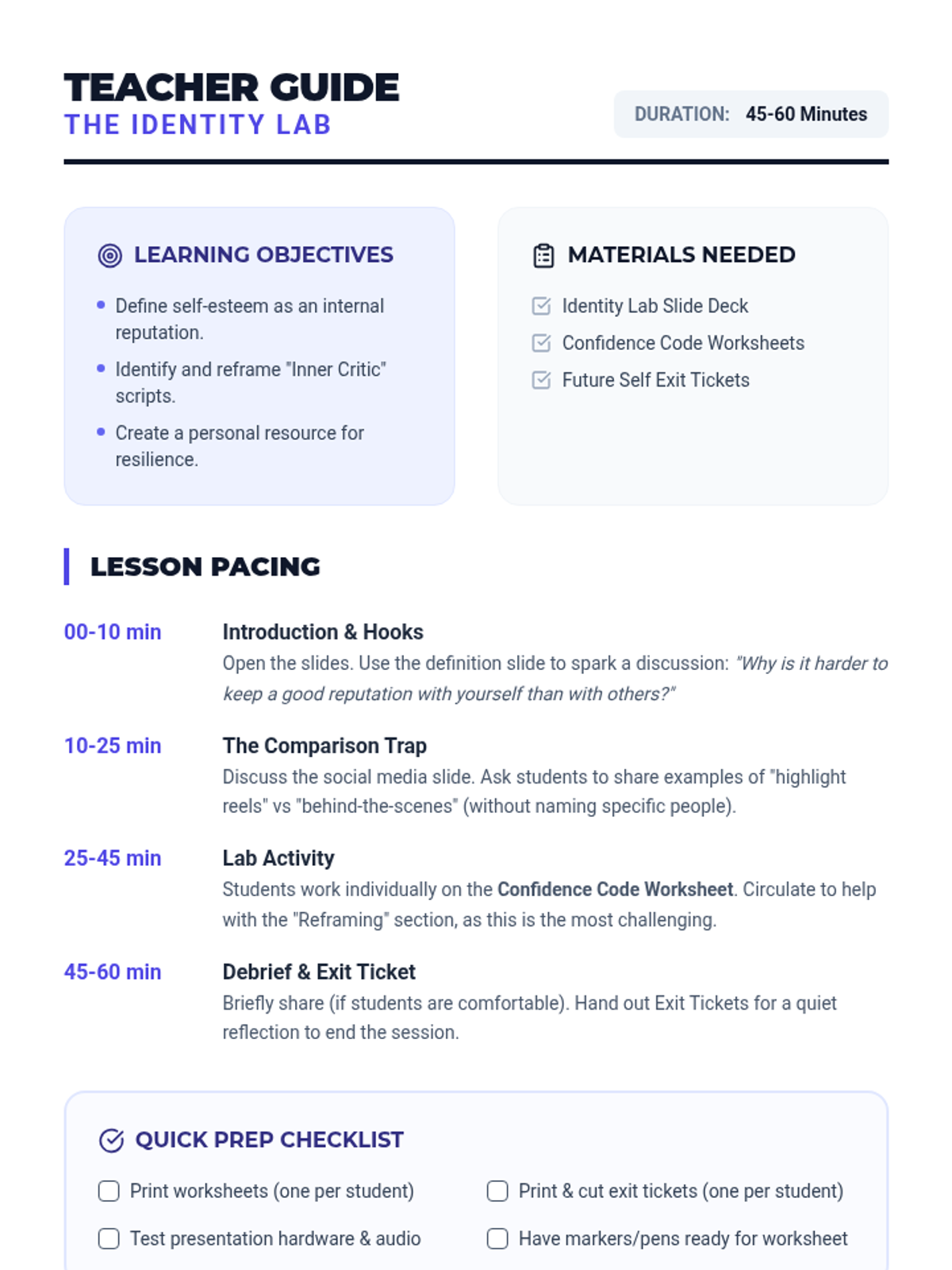
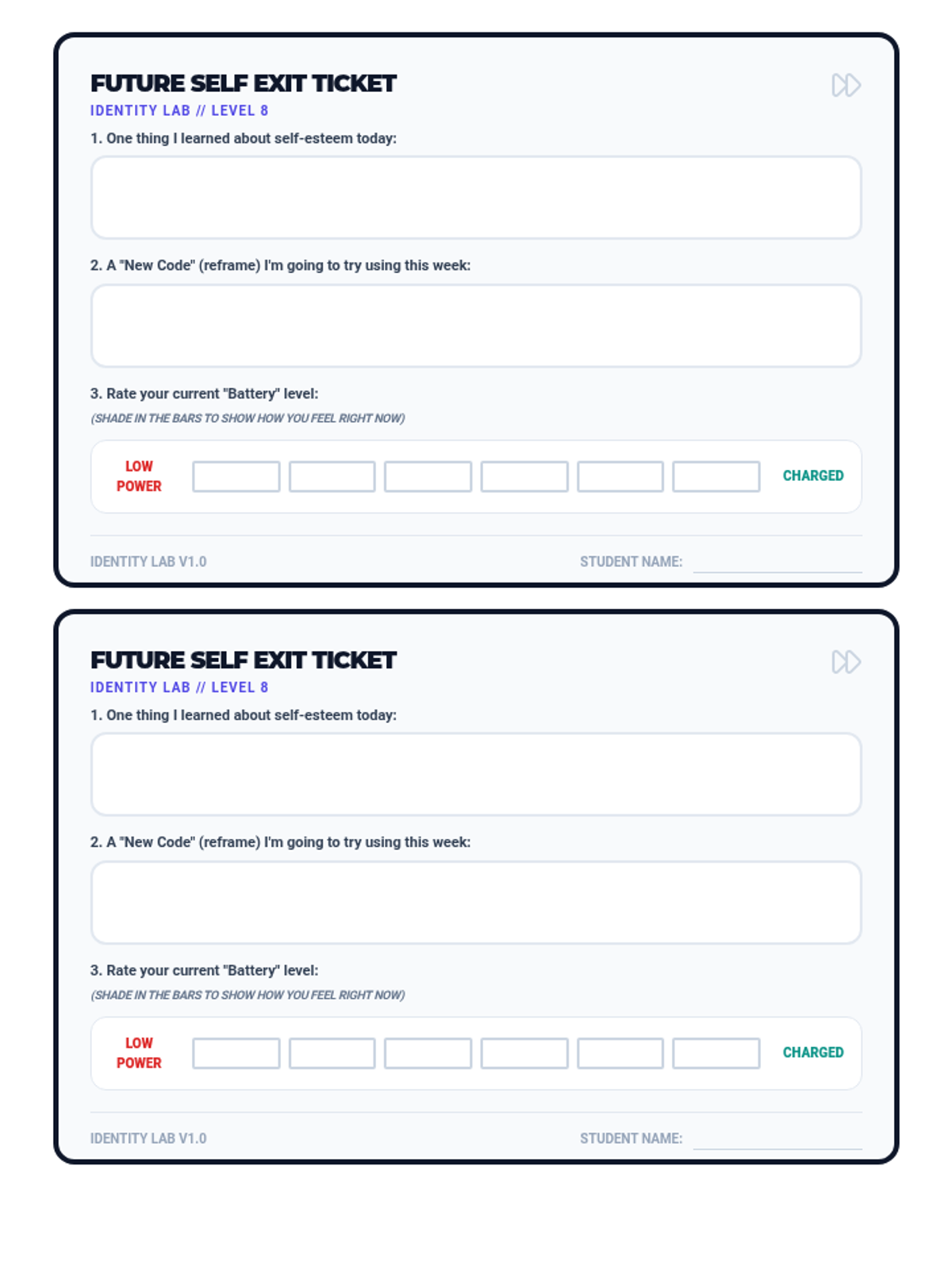
A dynamic lesson designed for 8th graders to explore the foundations of self-esteem, combat the comparison trap, and develop a personalized "Confidence Code" to navigate social and academic challenges.
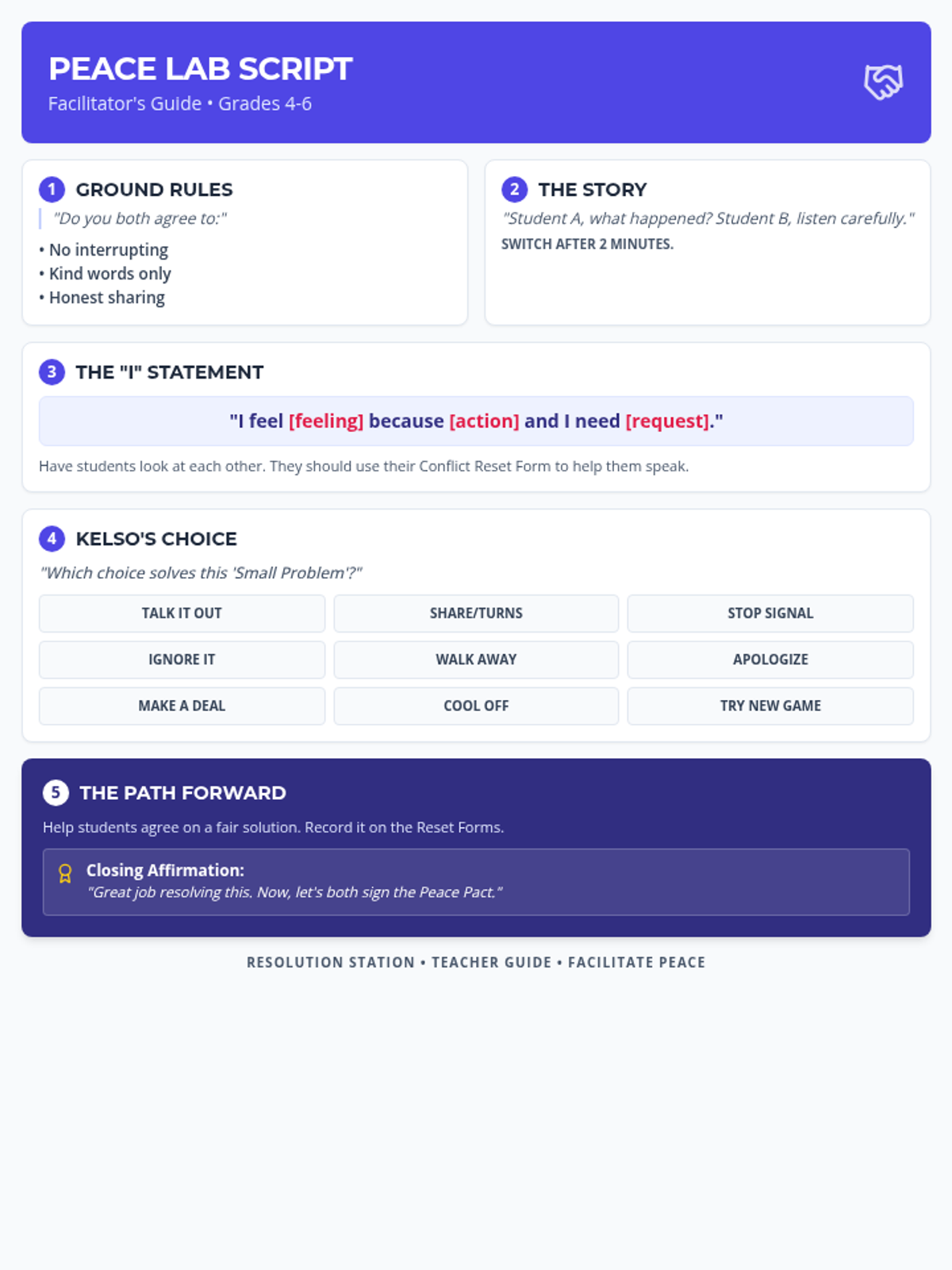
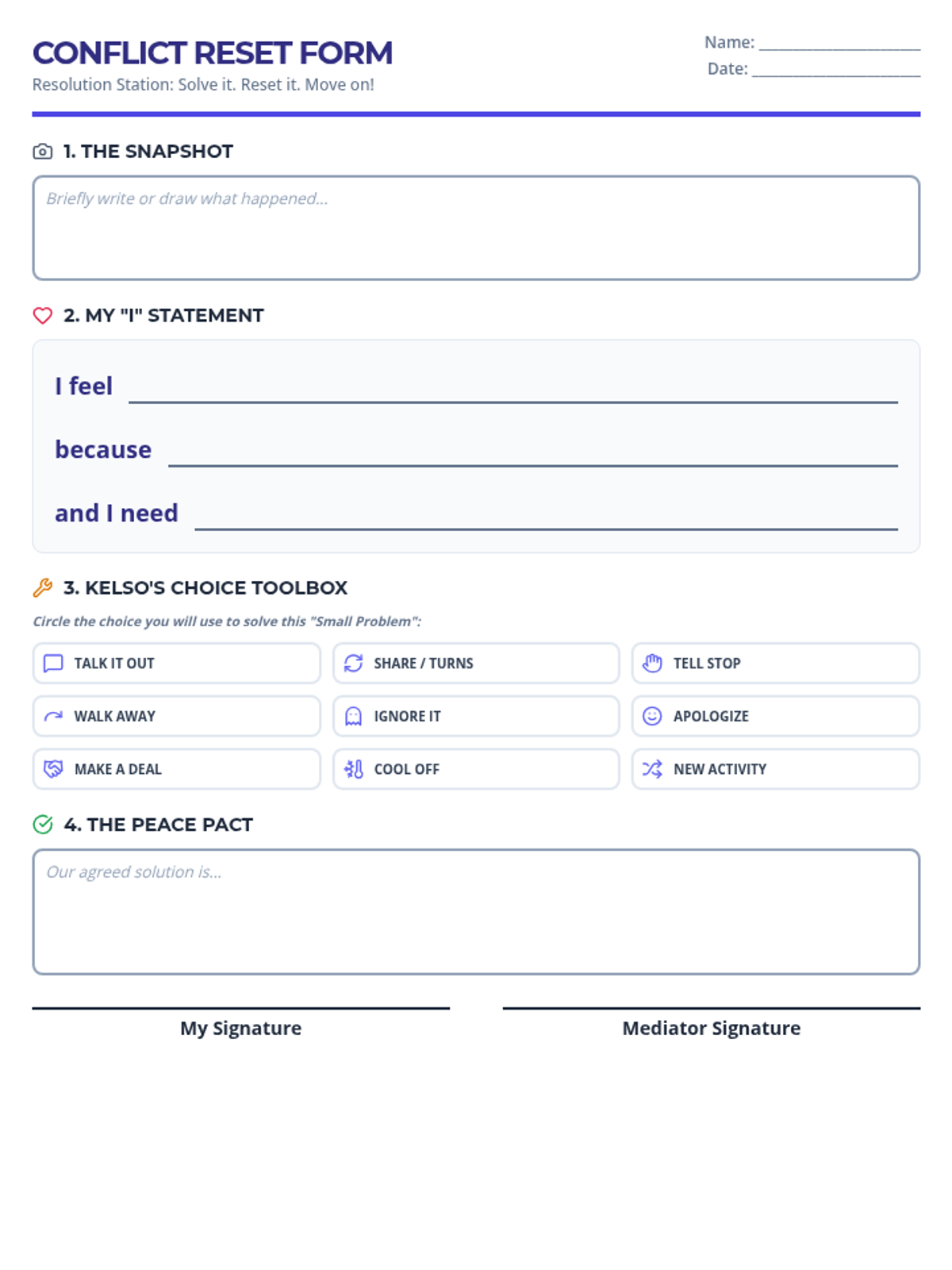
A set of resources designed to help upper elementary students (grades 4-6) navigate peer conflicts using 'I' statements and Kelso's Choices. This lesson provides a structured mediation framework for teachers and a self-reflection tool for students.
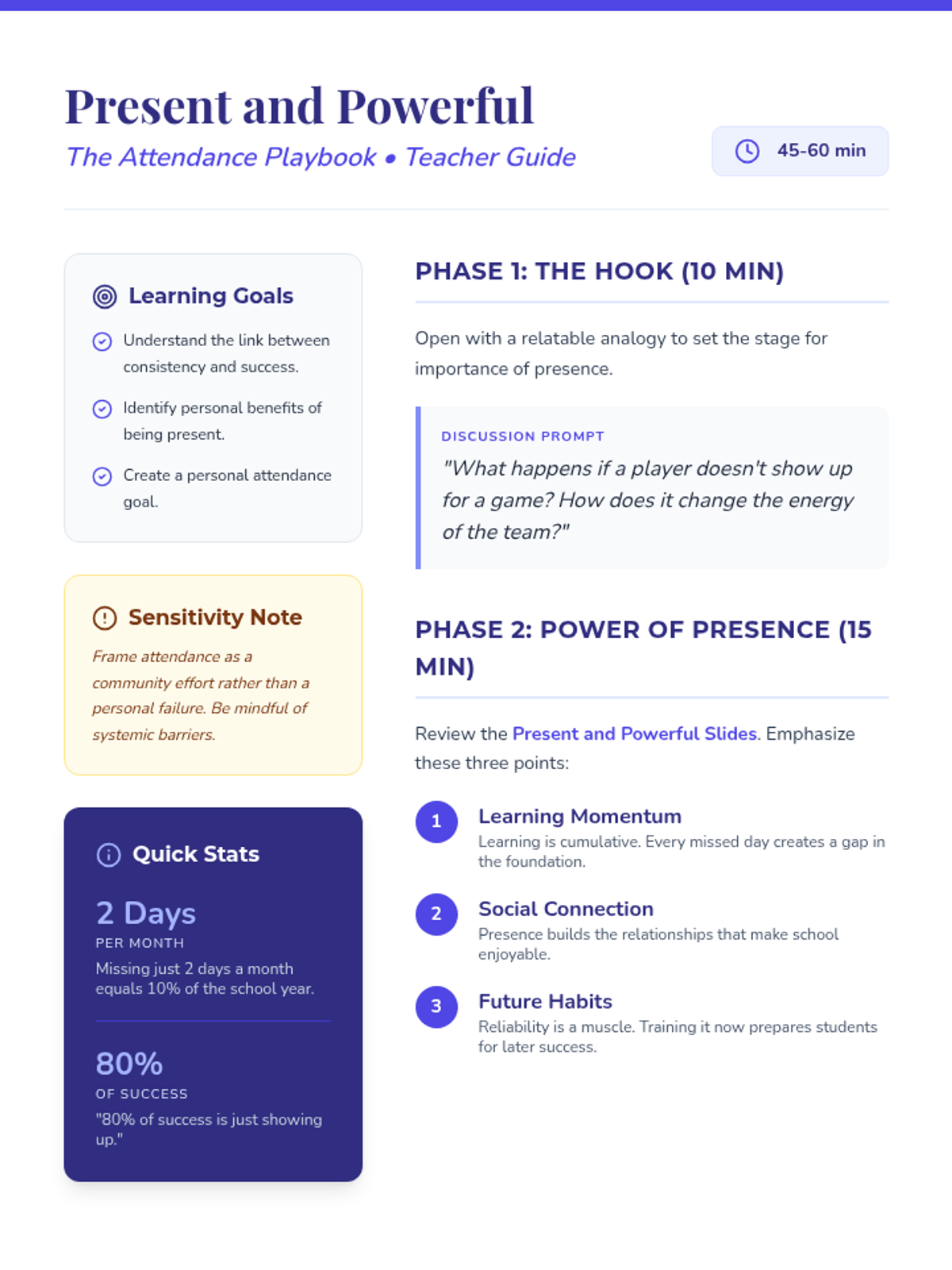
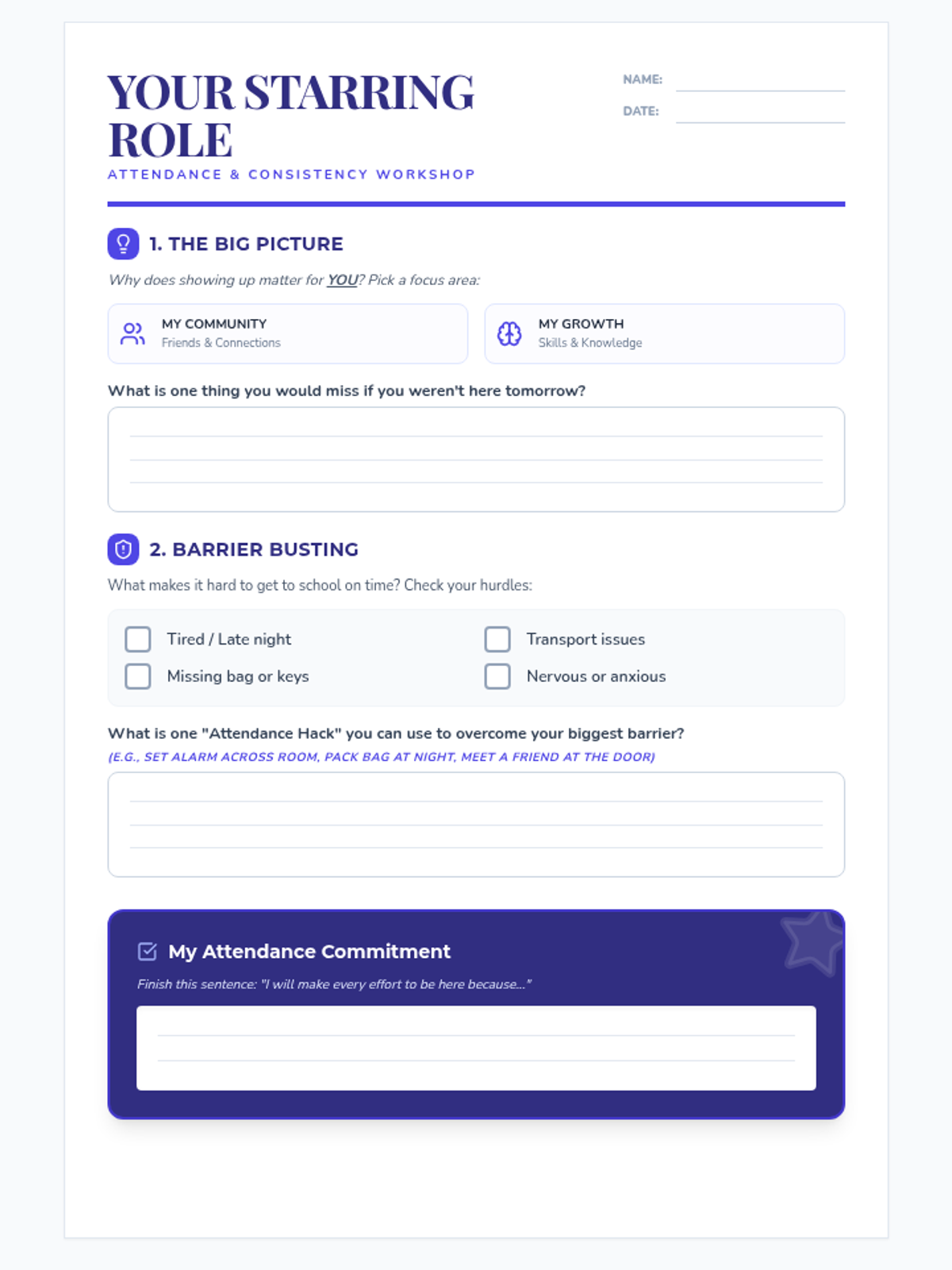
A lesson designed to help students understand the critical link between school attendance and their personal, social, and academic success. It frames attendance as the 'first step' to achieving their goals and building a strong community.
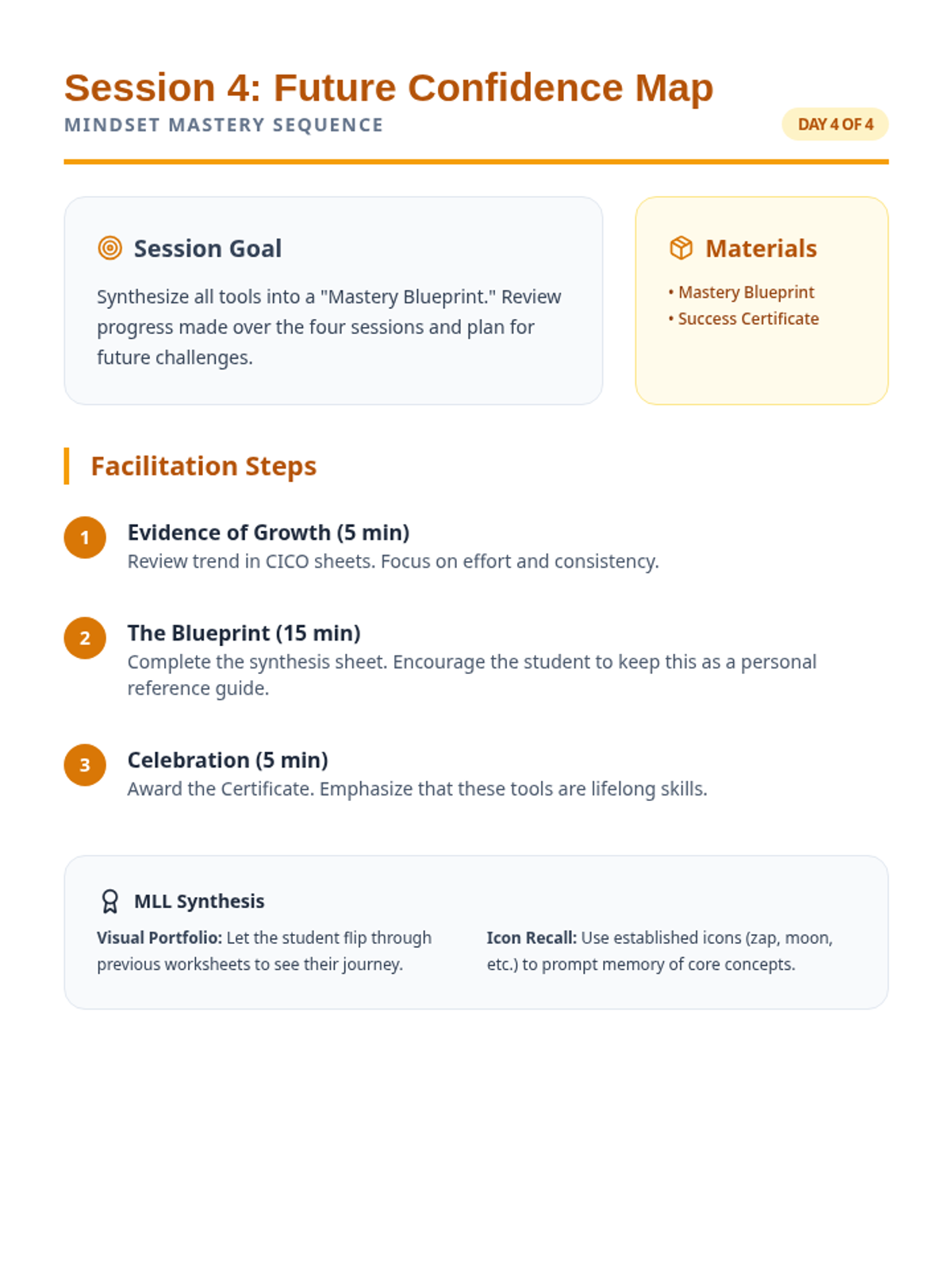
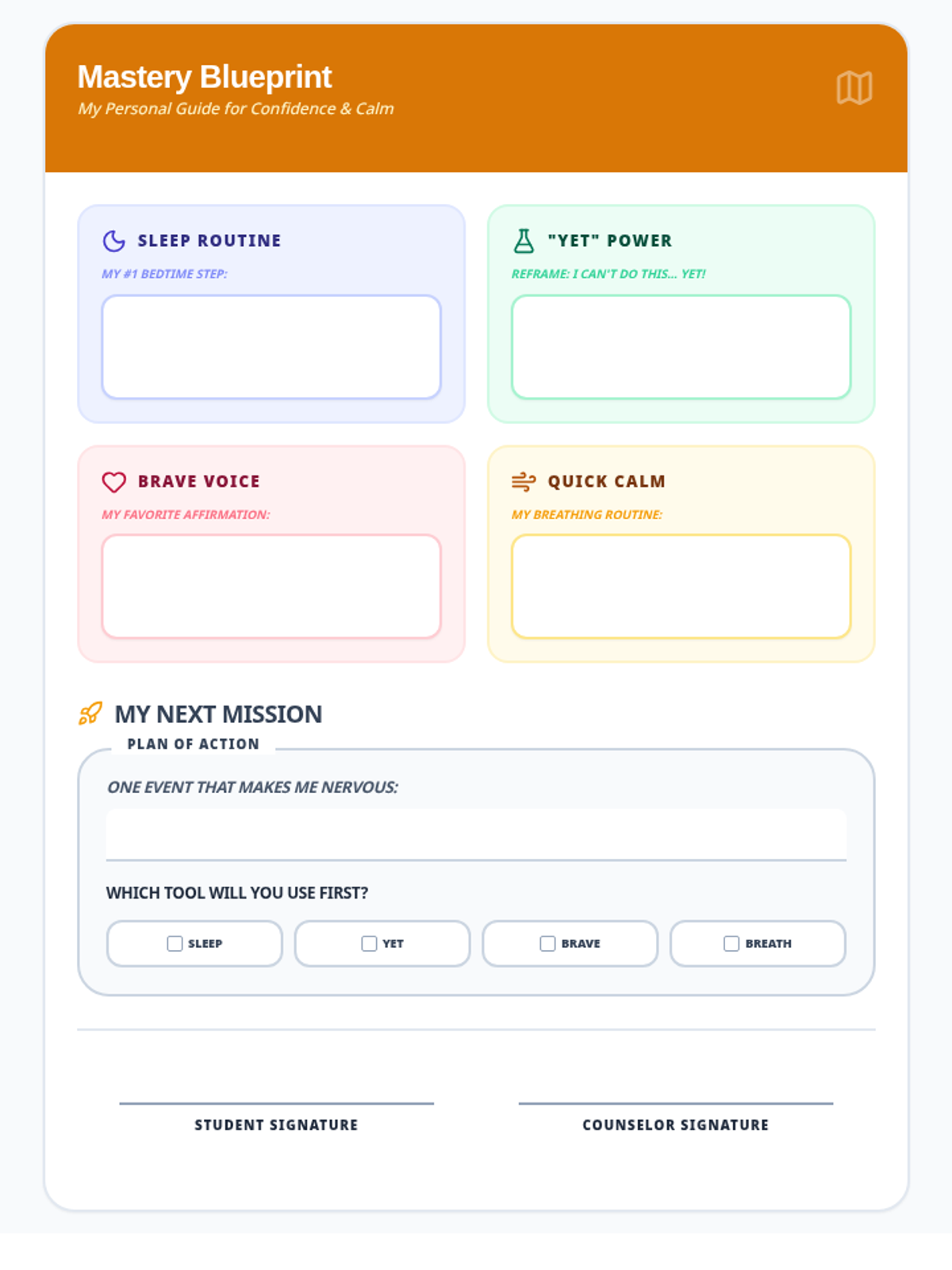
The final session synthesizes all tools into a personal 'Confidence Blueprint,' reviewing progress and planning for future challenges with a focus on long-term resilience.
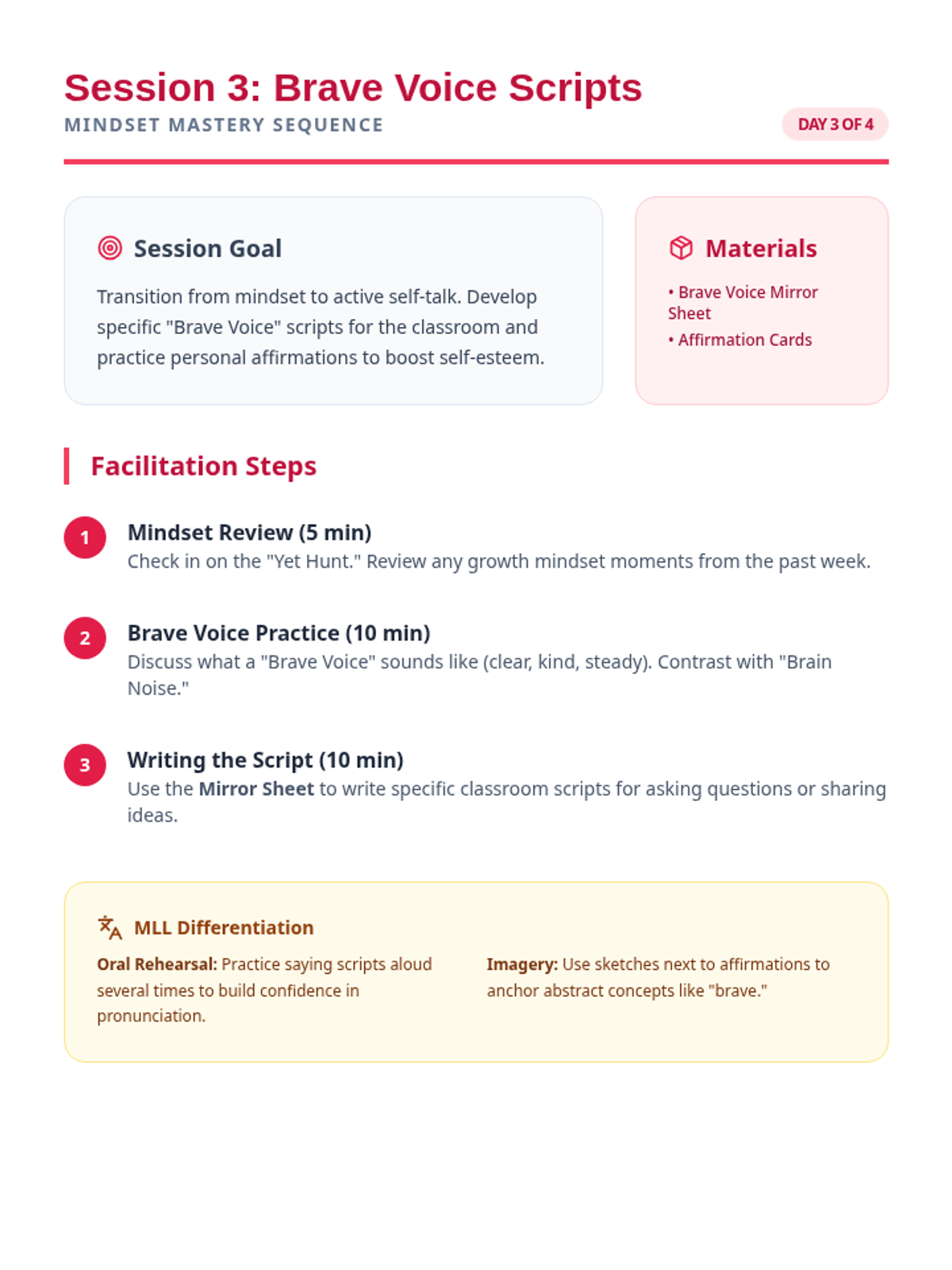
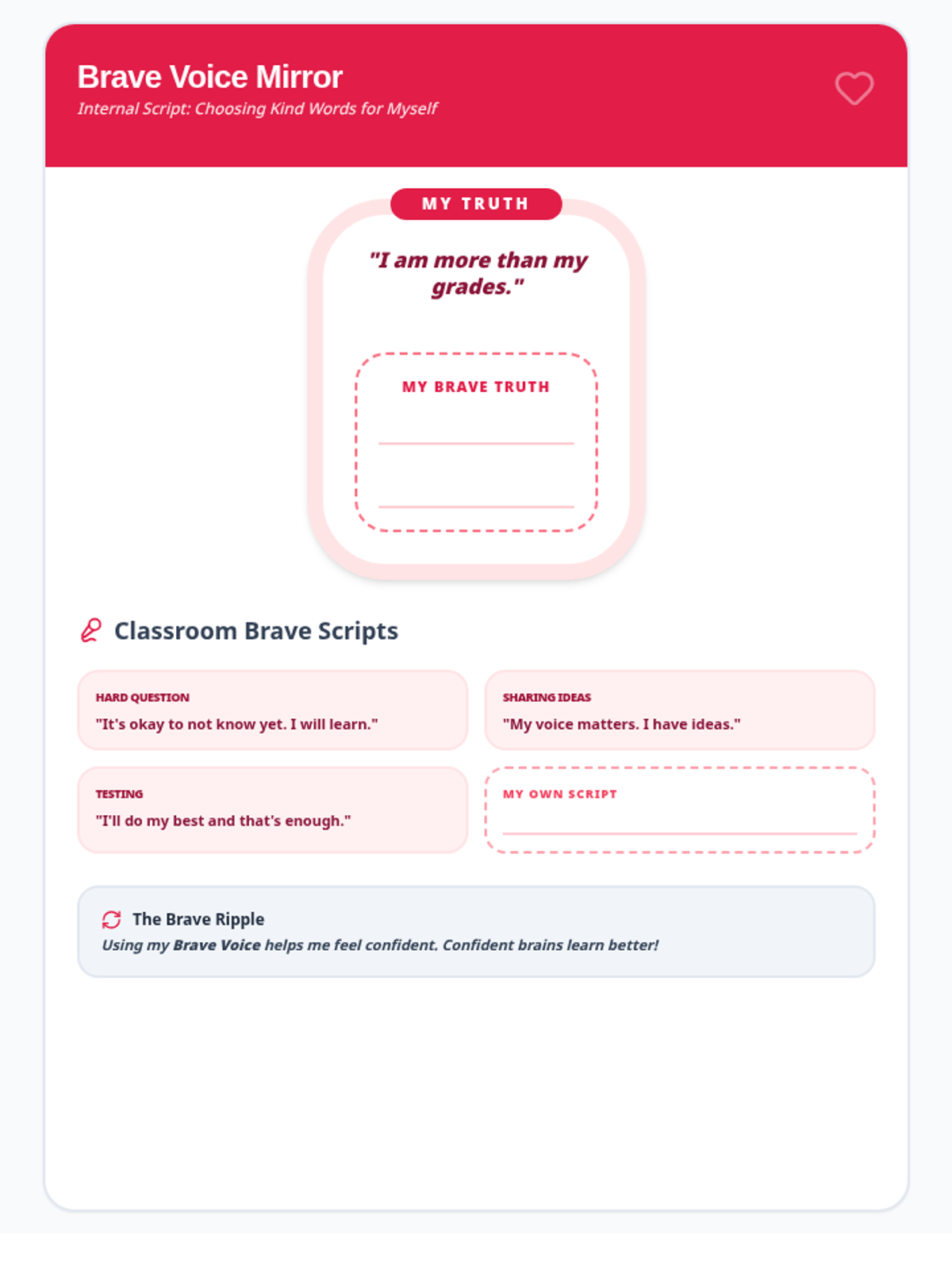
This session focuses on internalizing positive self-talk and affirmations, helping the student build a 'Brave Voice' for classroom participation and self-confidence.
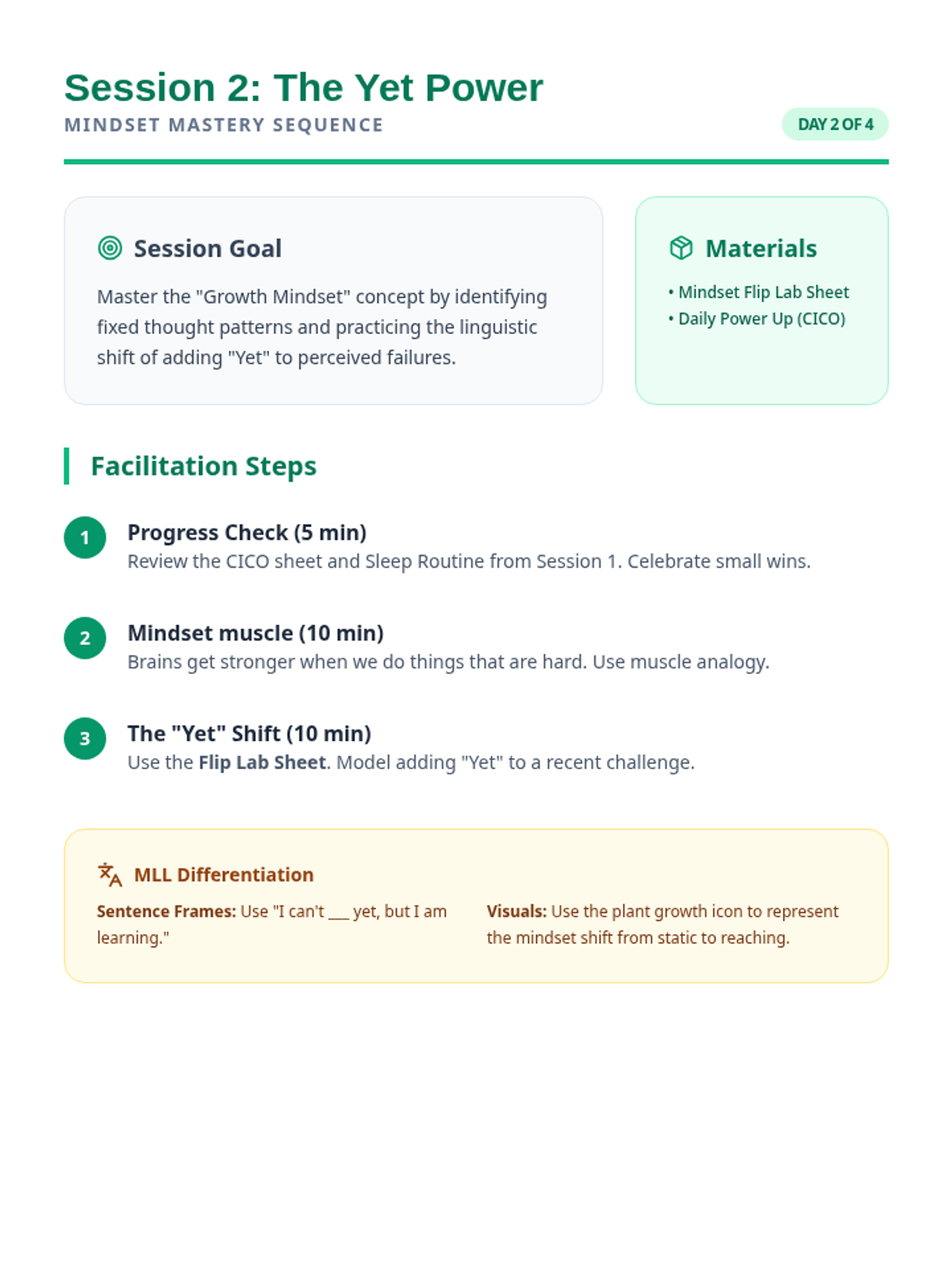
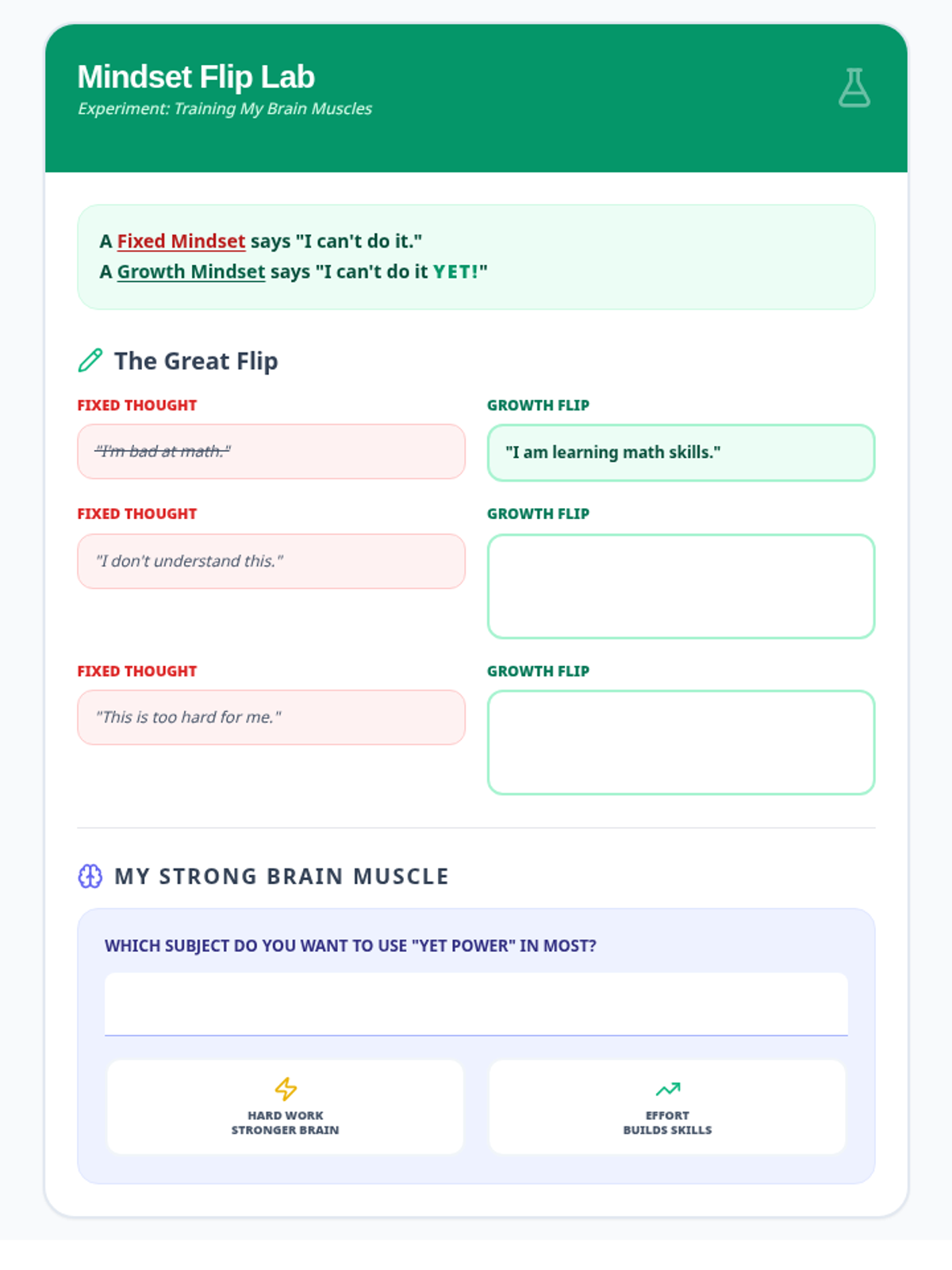
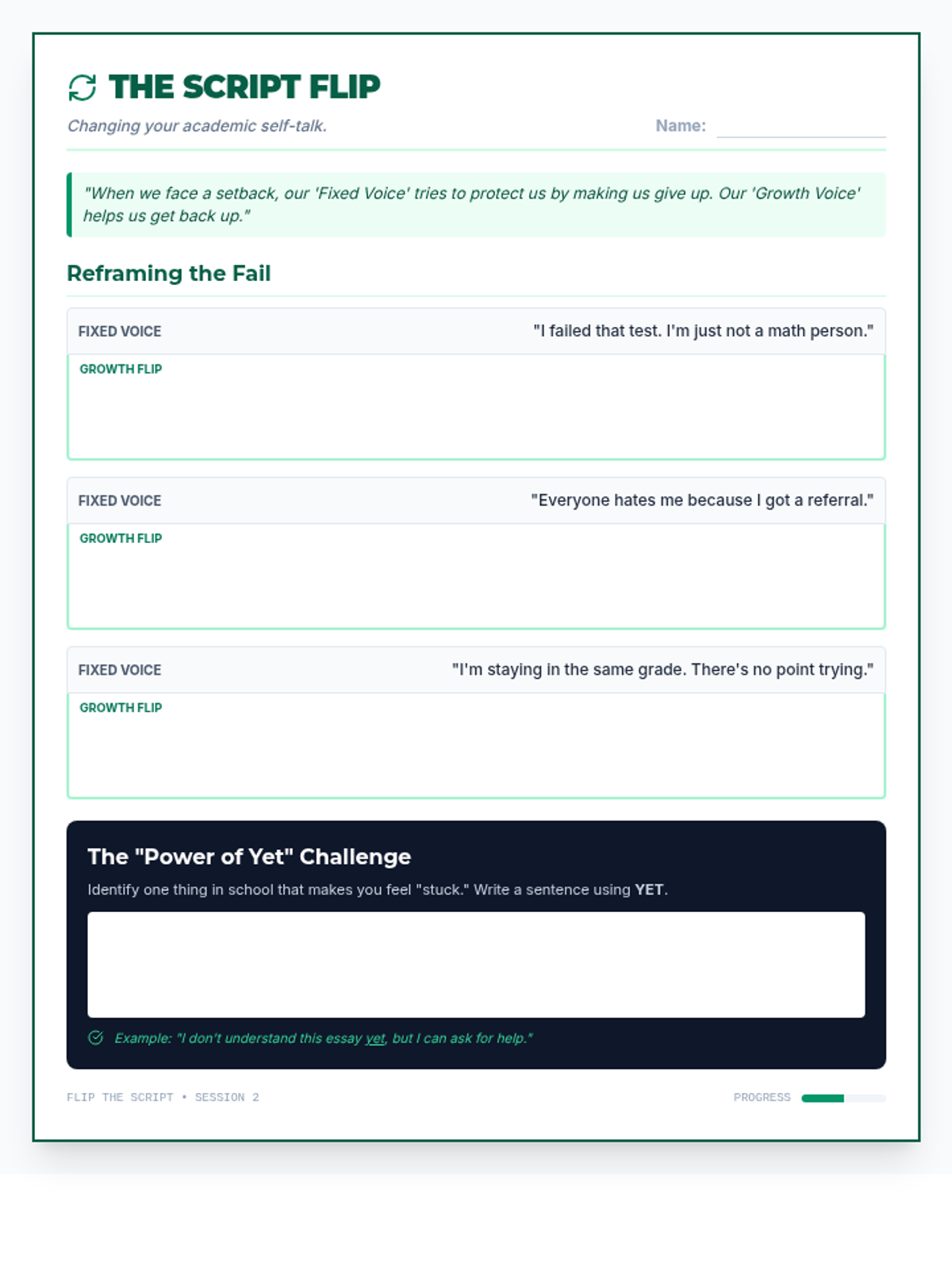
A session focused on mastering the Growth Mindset by identifying fixed thoughts and using the 'Power of Yet' to reframe challenges into opportunities for growth.
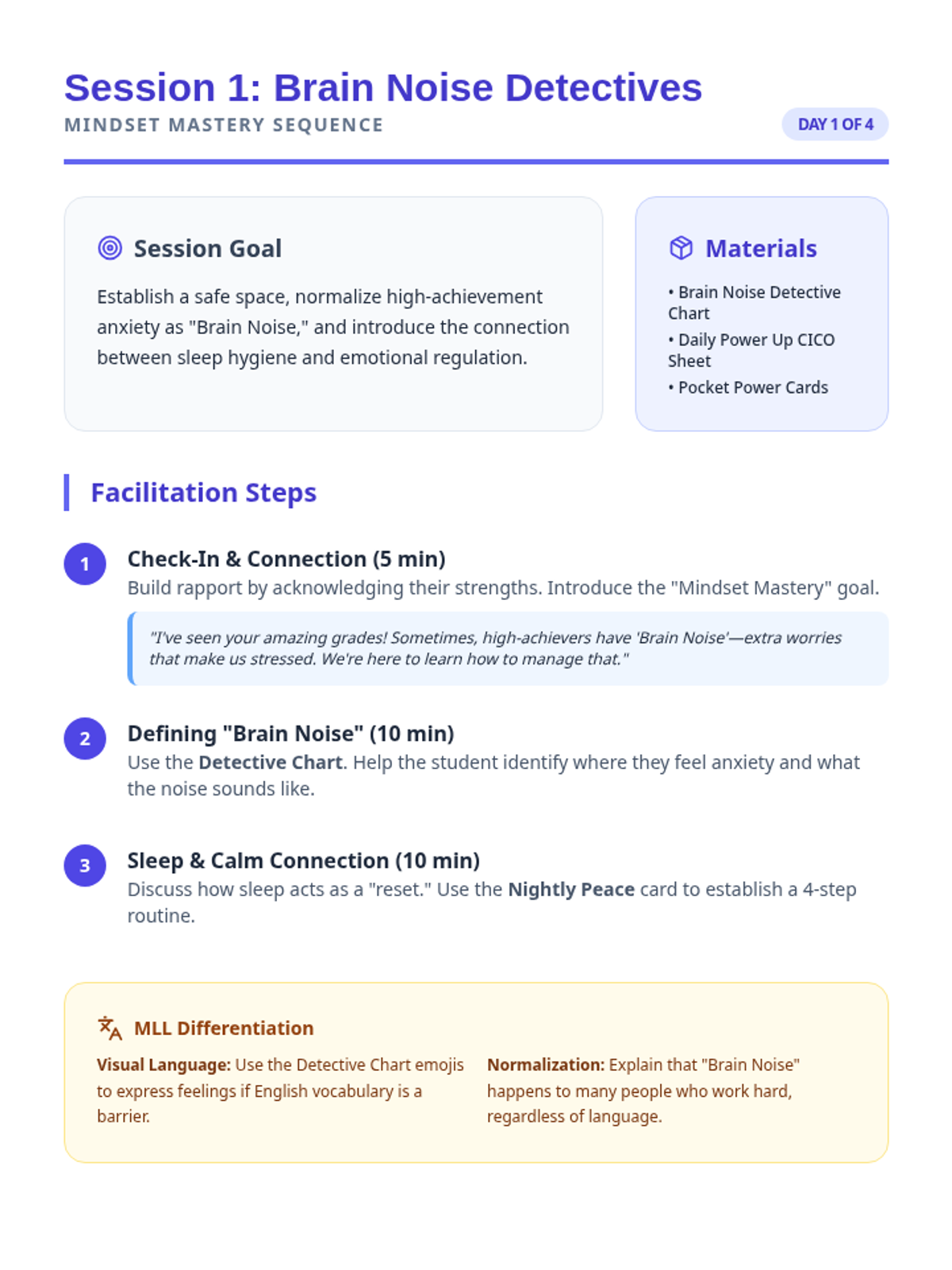
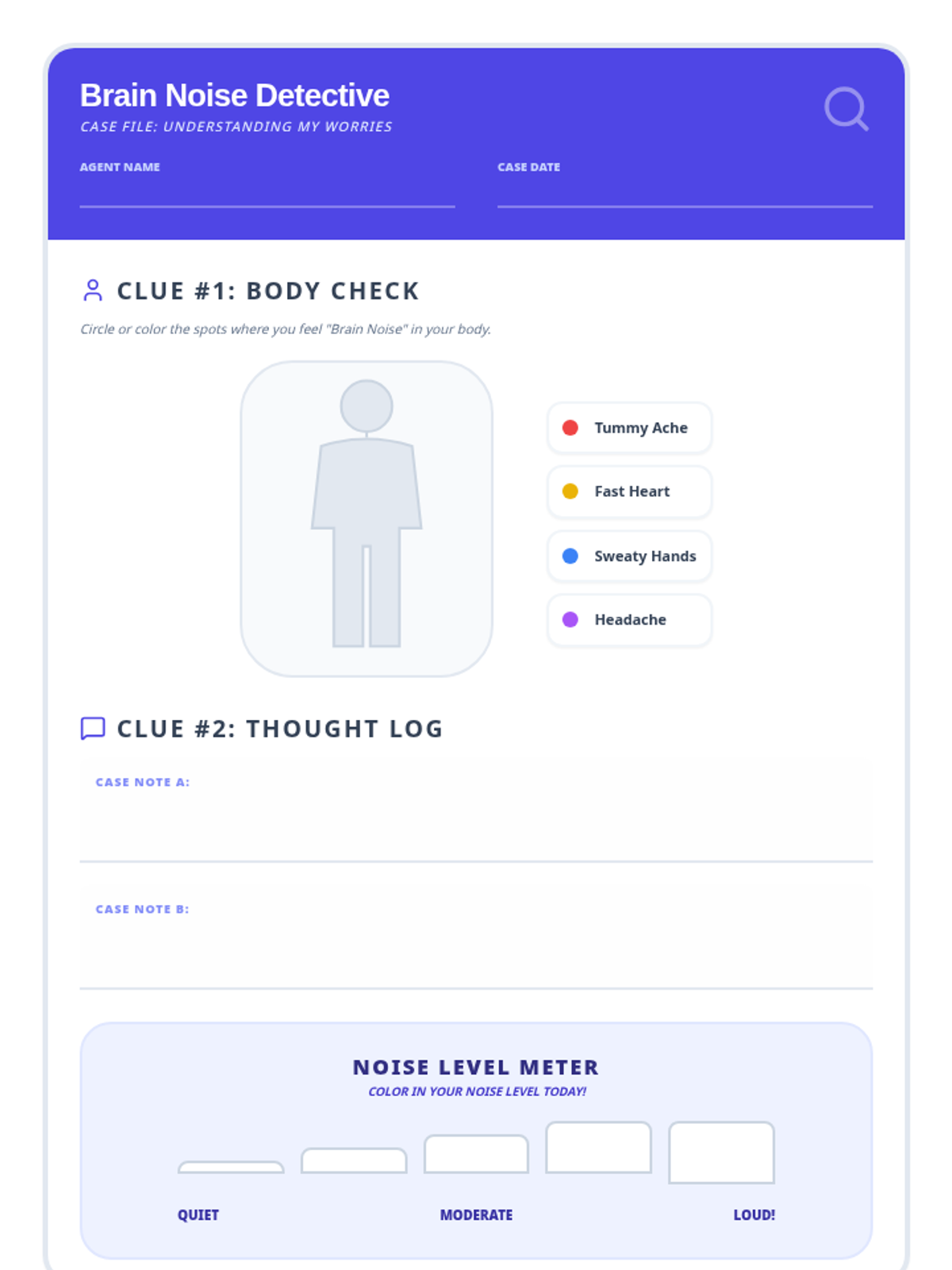
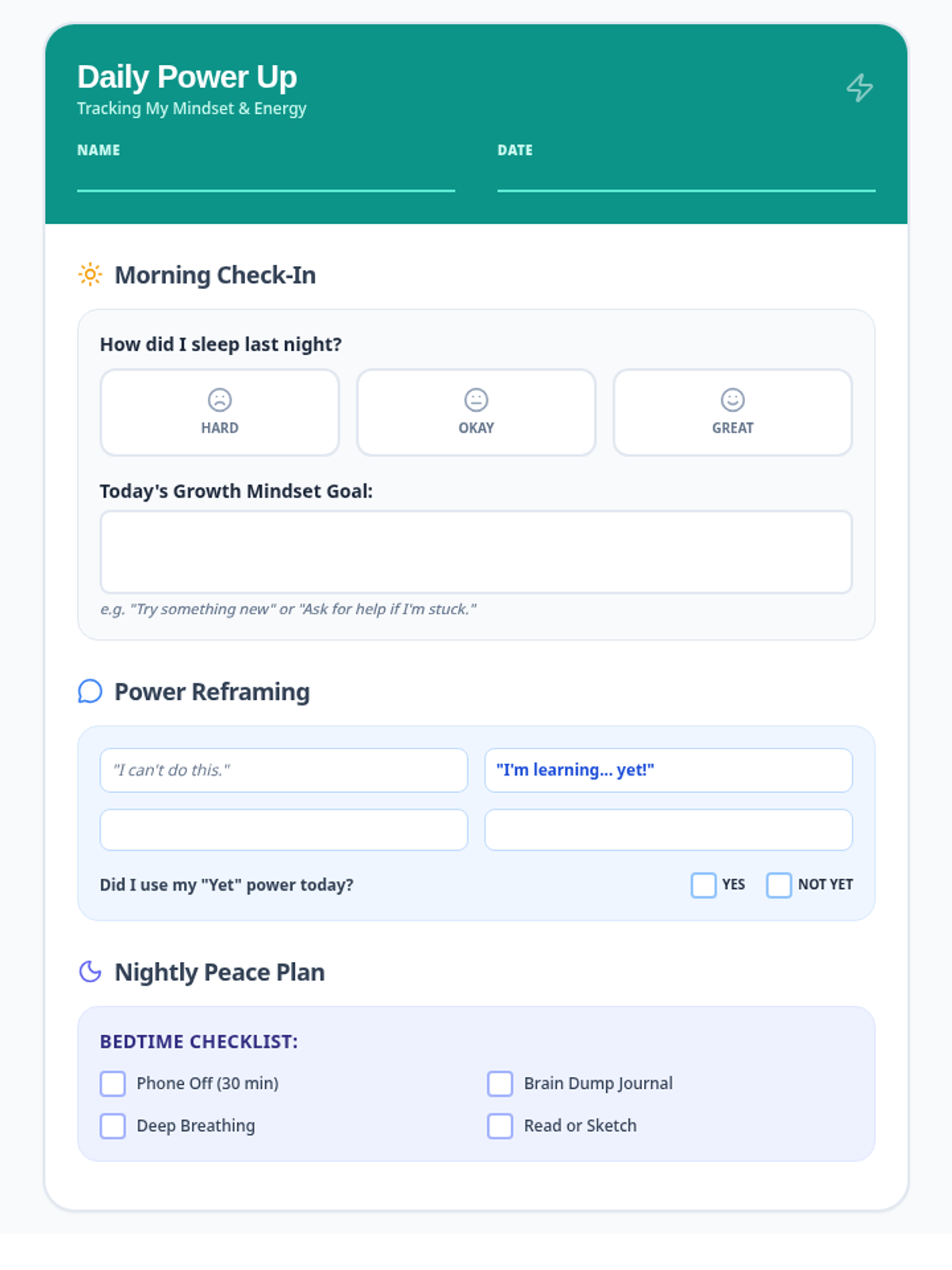
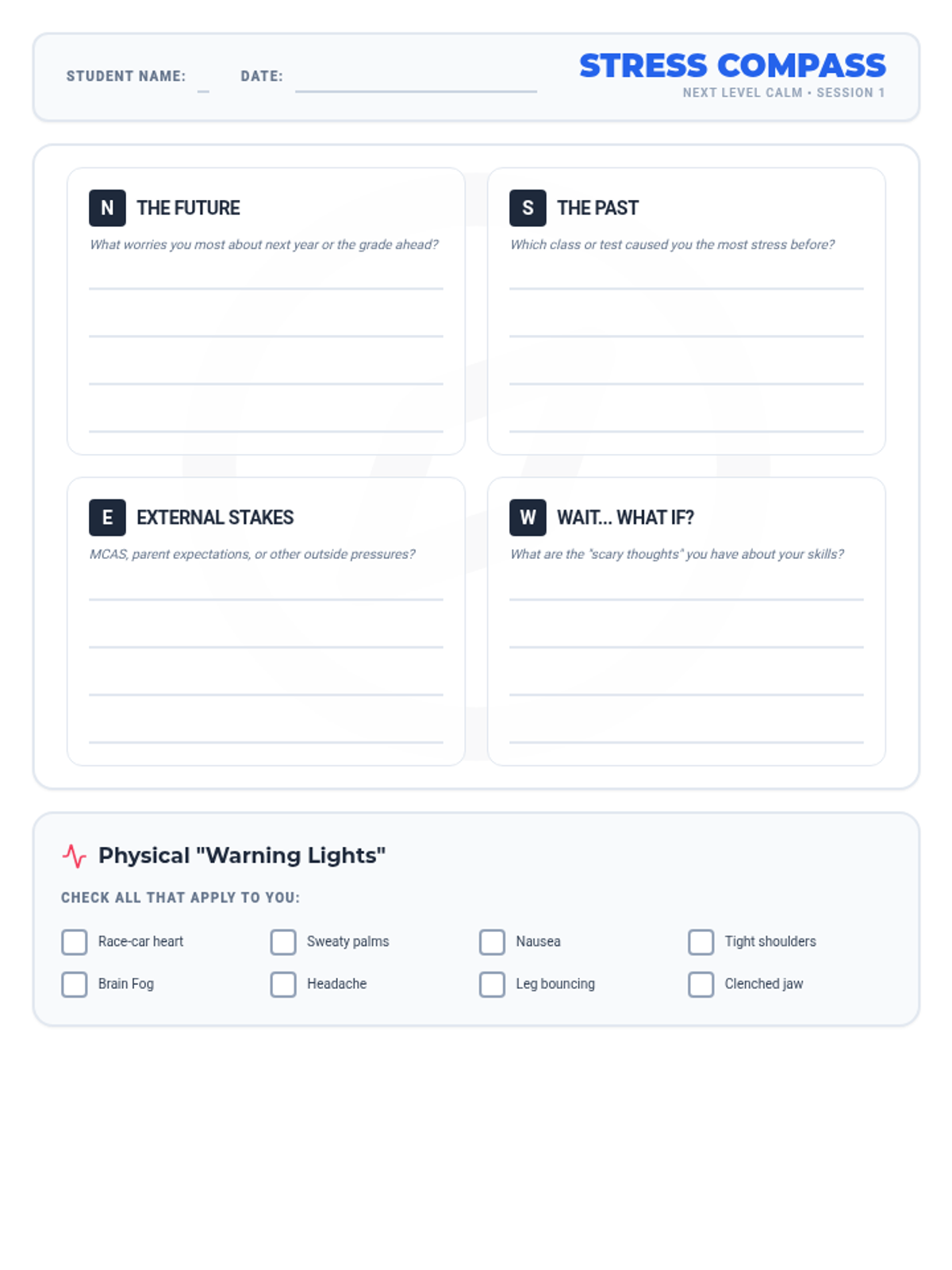
The first session focuses on defining anxiety as 'Brain Noise,' normalizing the experiences of high-achievers, and setting up the Nightly Peace Routine for better sleep.
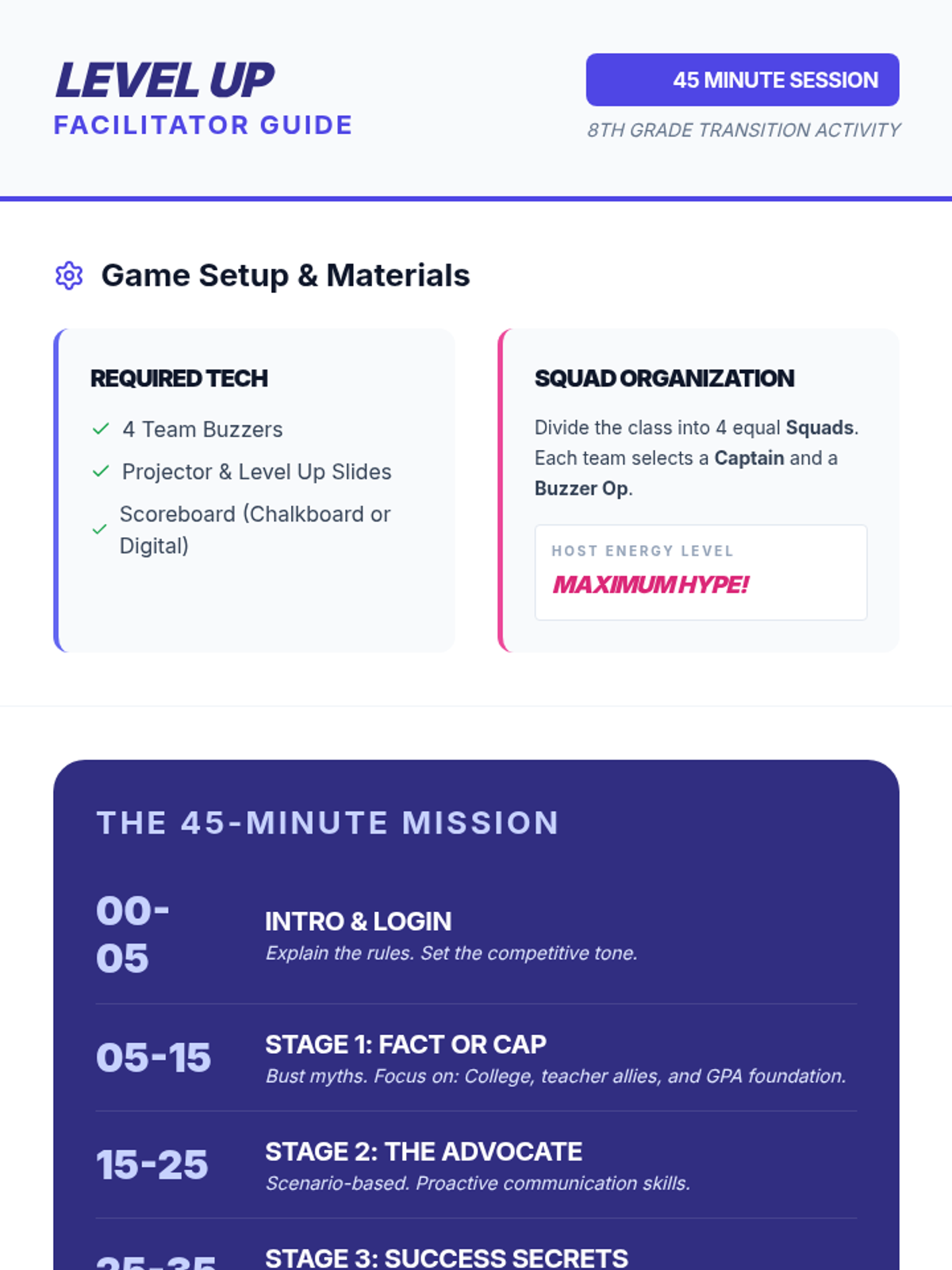
An energetic, 45-minute gaming-themed transition game show designed to help 8th graders level up for high school by tackling myths, self-advocacy, and success strategies.
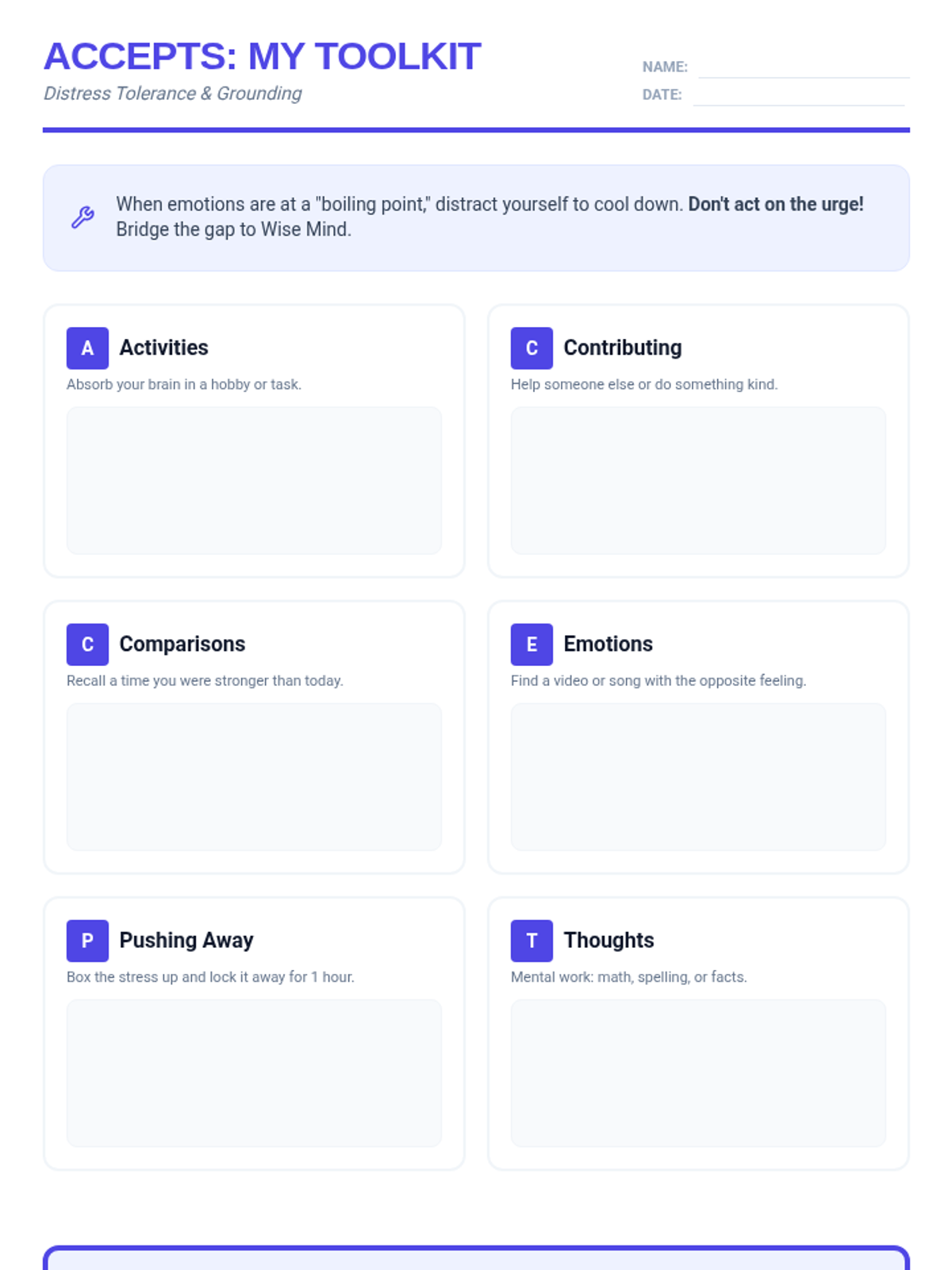
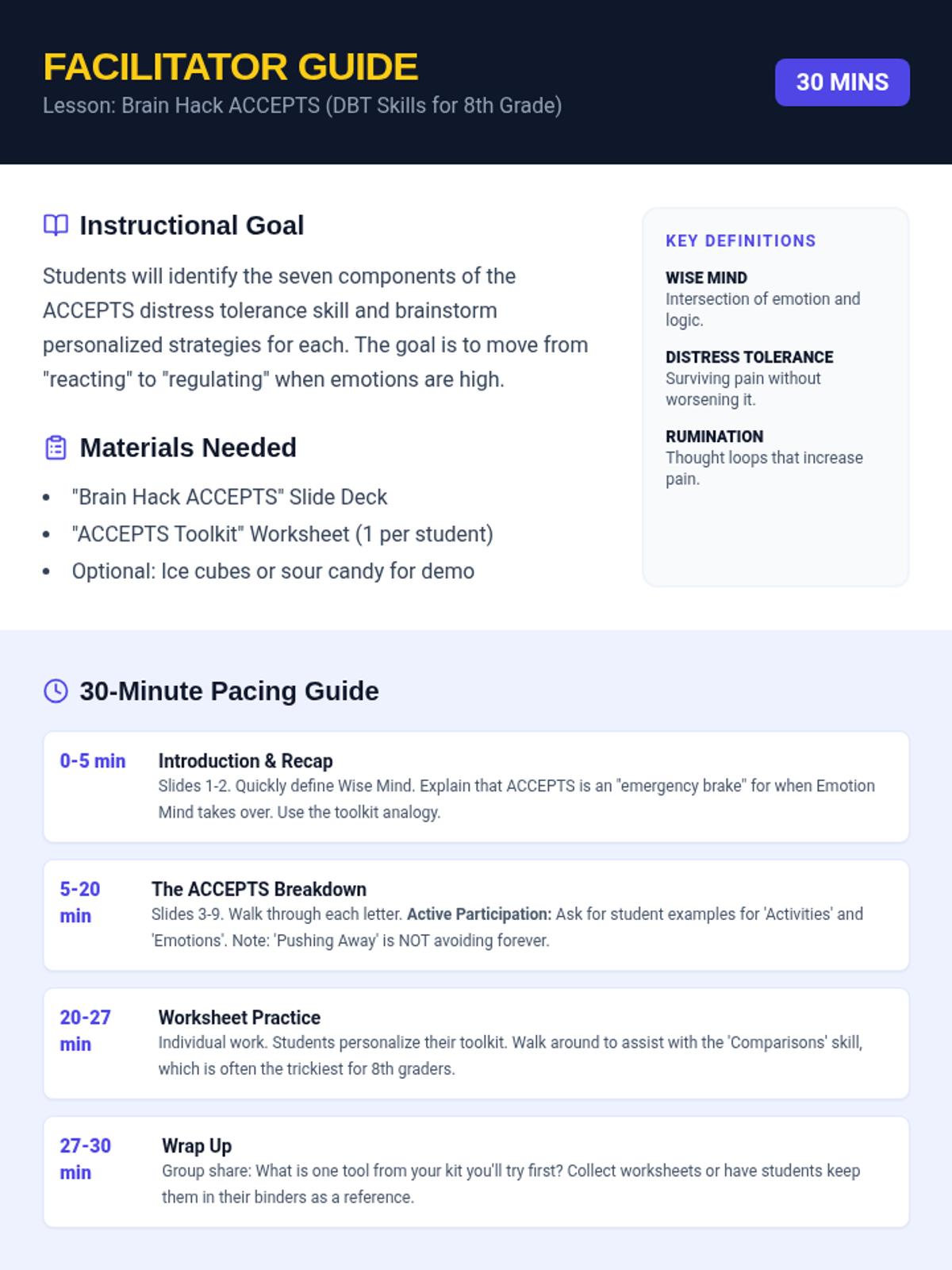
A 30-minute introductory lesson on the DBT 'Wise Mind ACCEPTS' skill, focusing on distress tolerance techniques for 8th grade students.
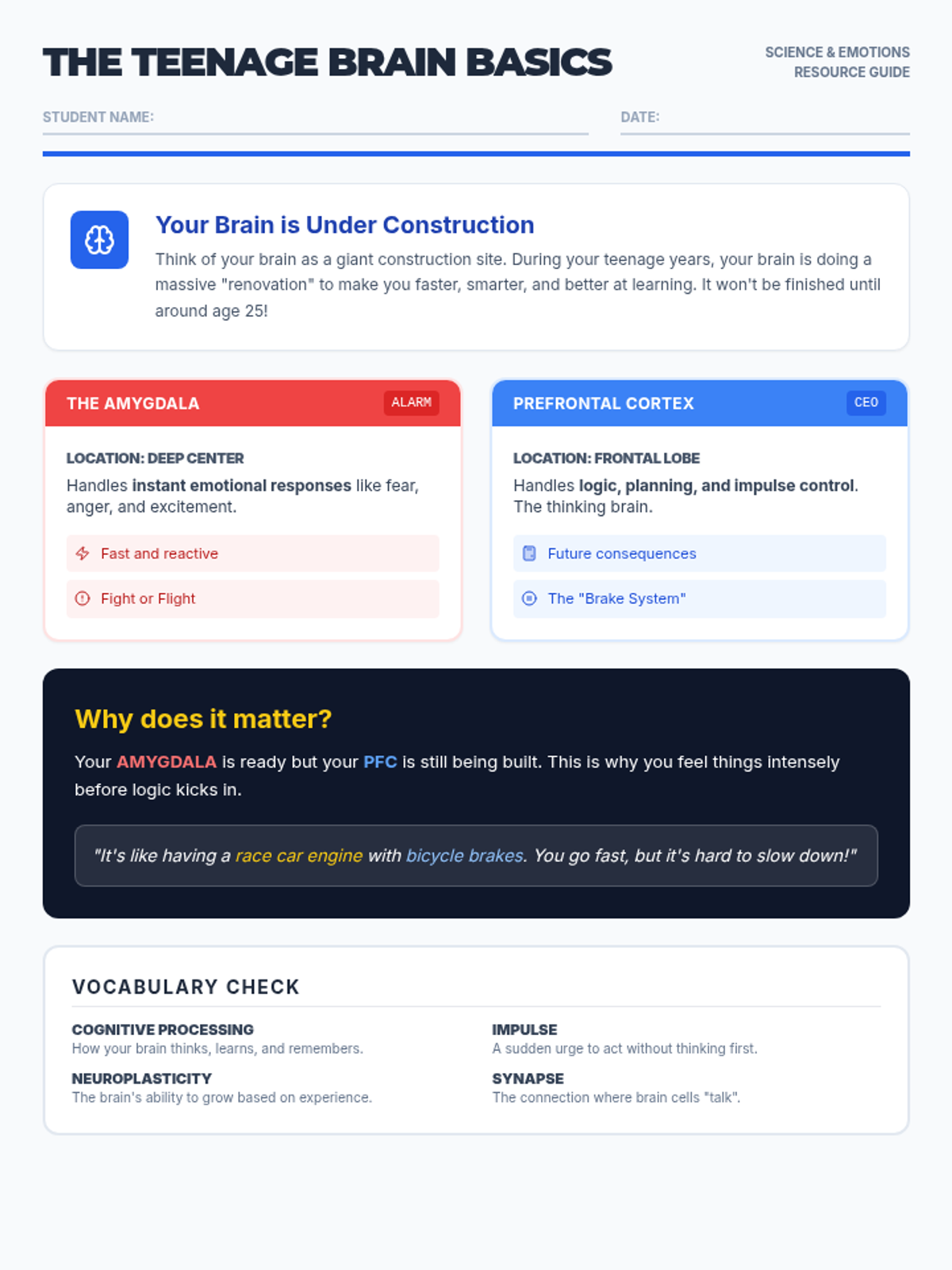
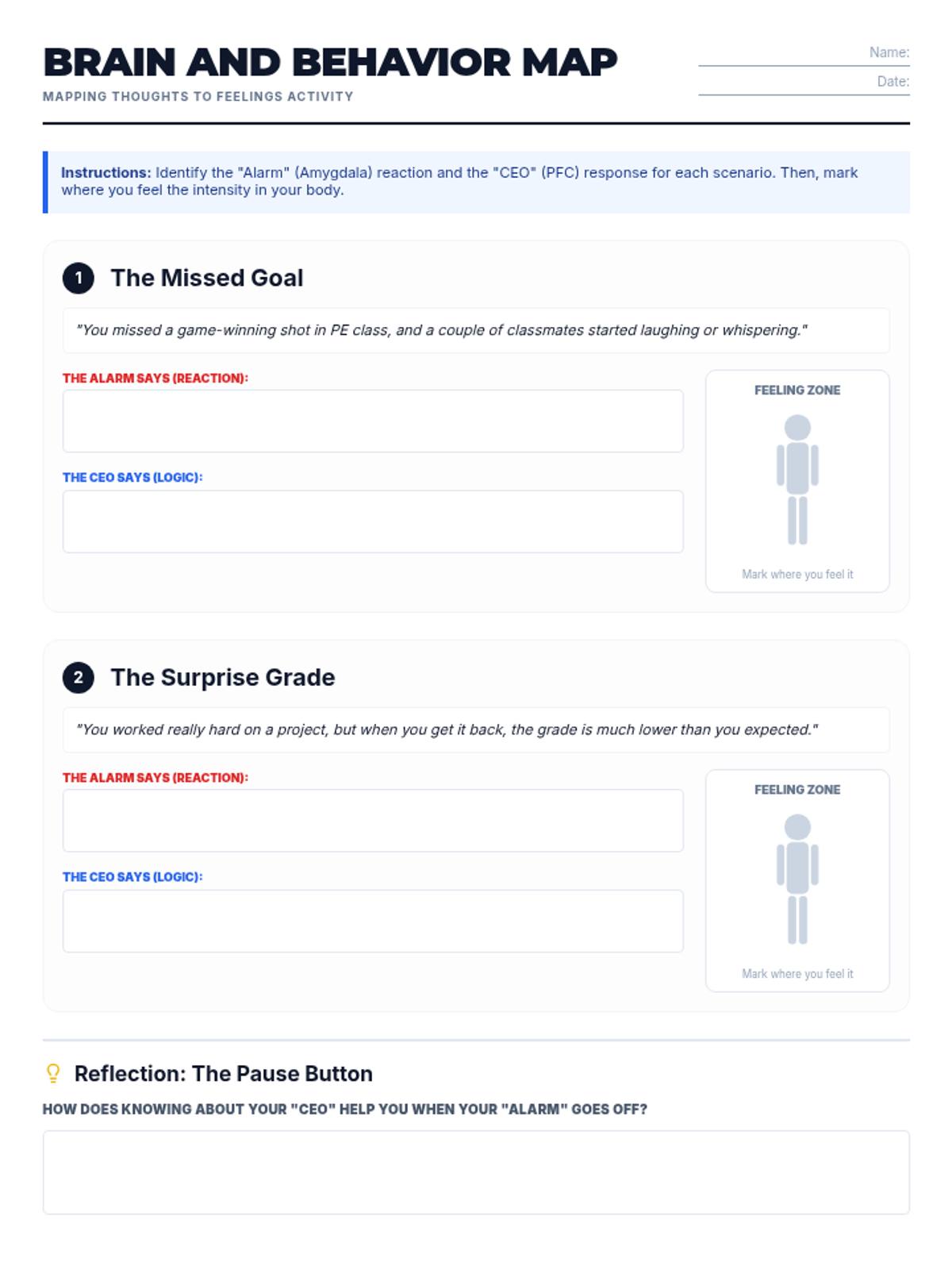
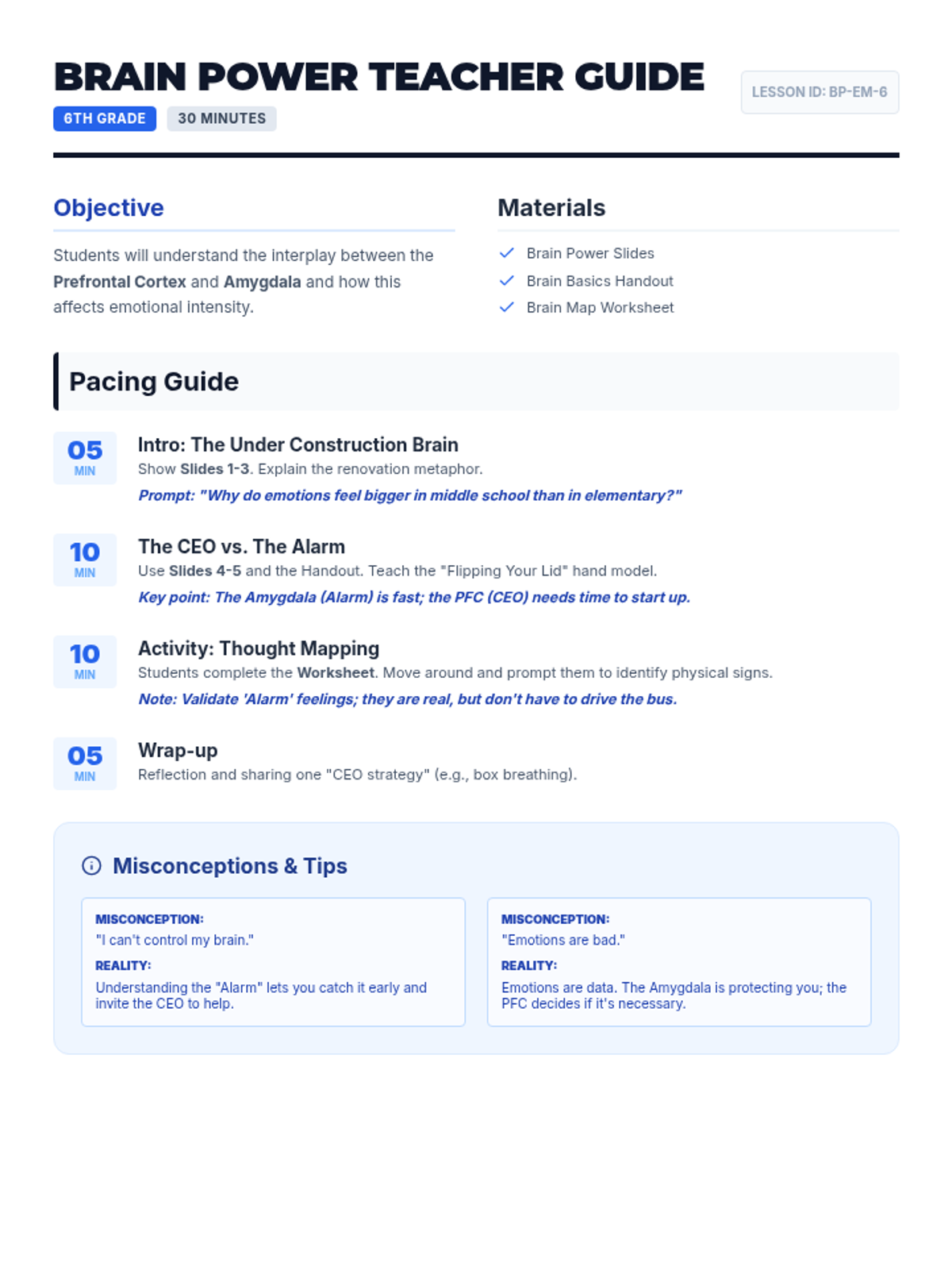
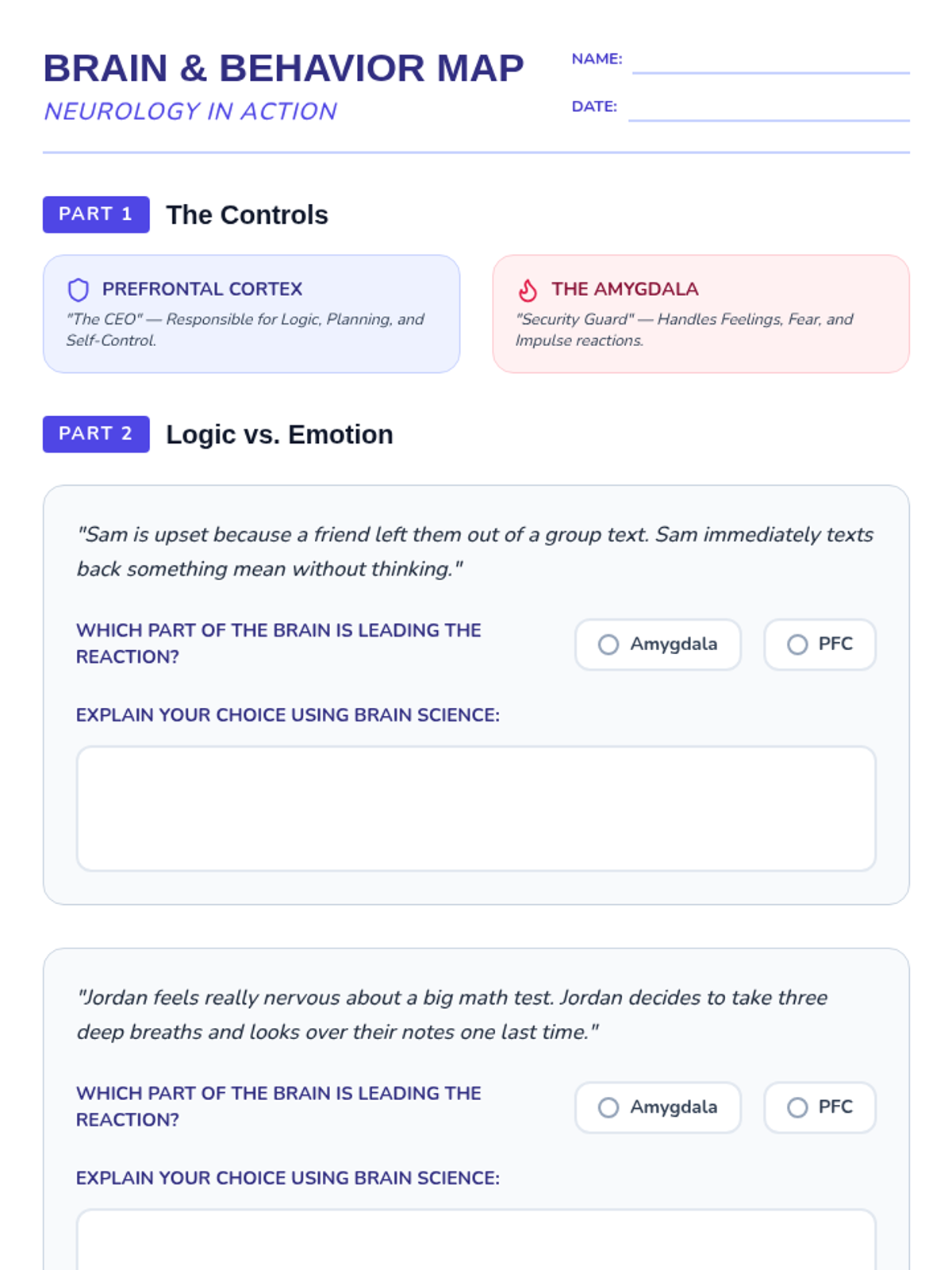
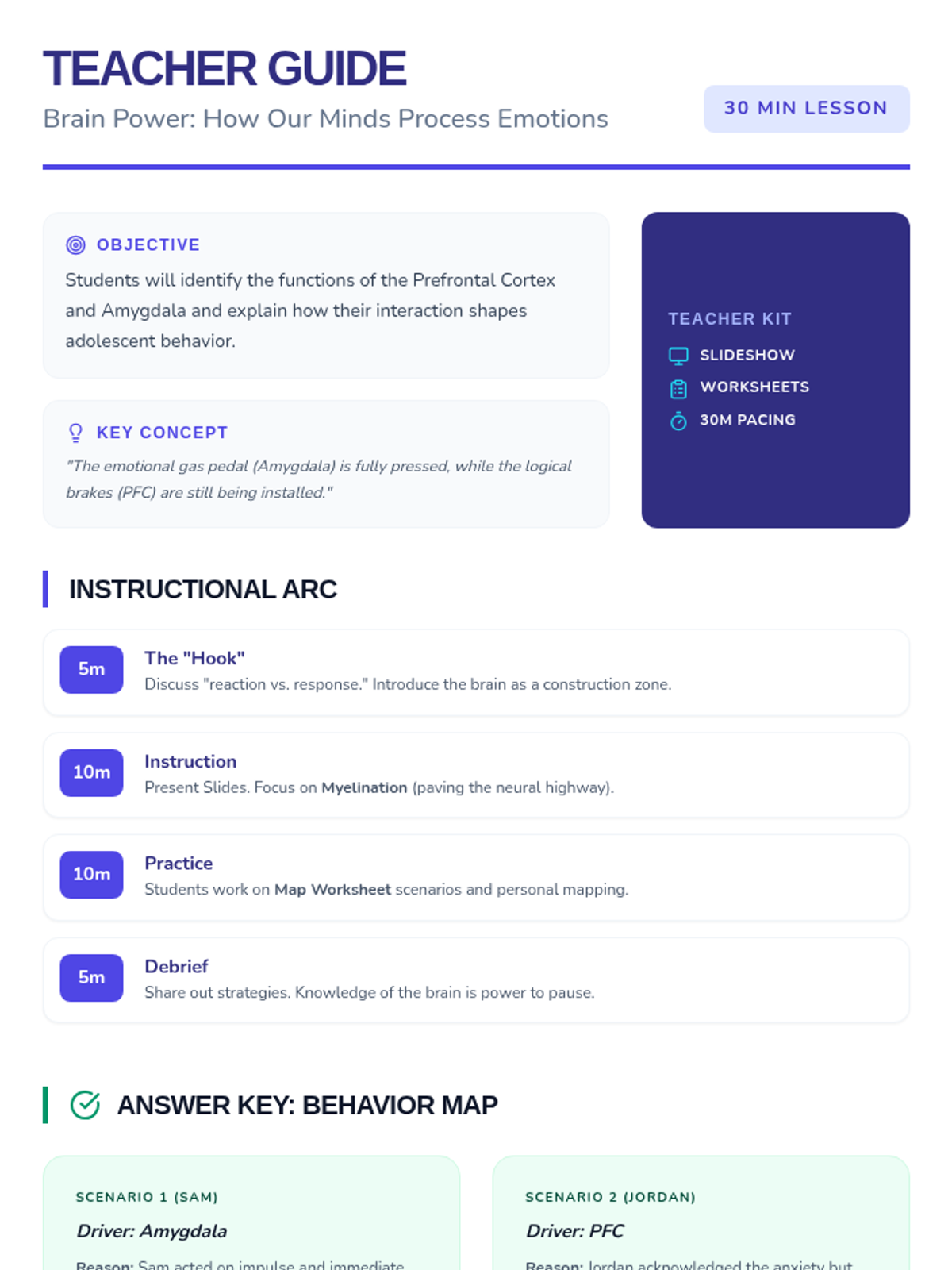
A fast-paced, engaging 30-minute lesson for 6th graders on the neuroscience of emotions, focusing on the interplay between the prefrontal cortex and the amygdala. Students will explore why adolescent emotions feel so intense and learn to map their brain's responses to real-world scenarios.
This 30-minute lesson introduces 6th graders to the adolescent brain, focusing on the dynamic between the emotional amygdala and the logical prefrontal cortex. Students will learn why their emotions often feel intense and how to 'map' their responses to different situations.
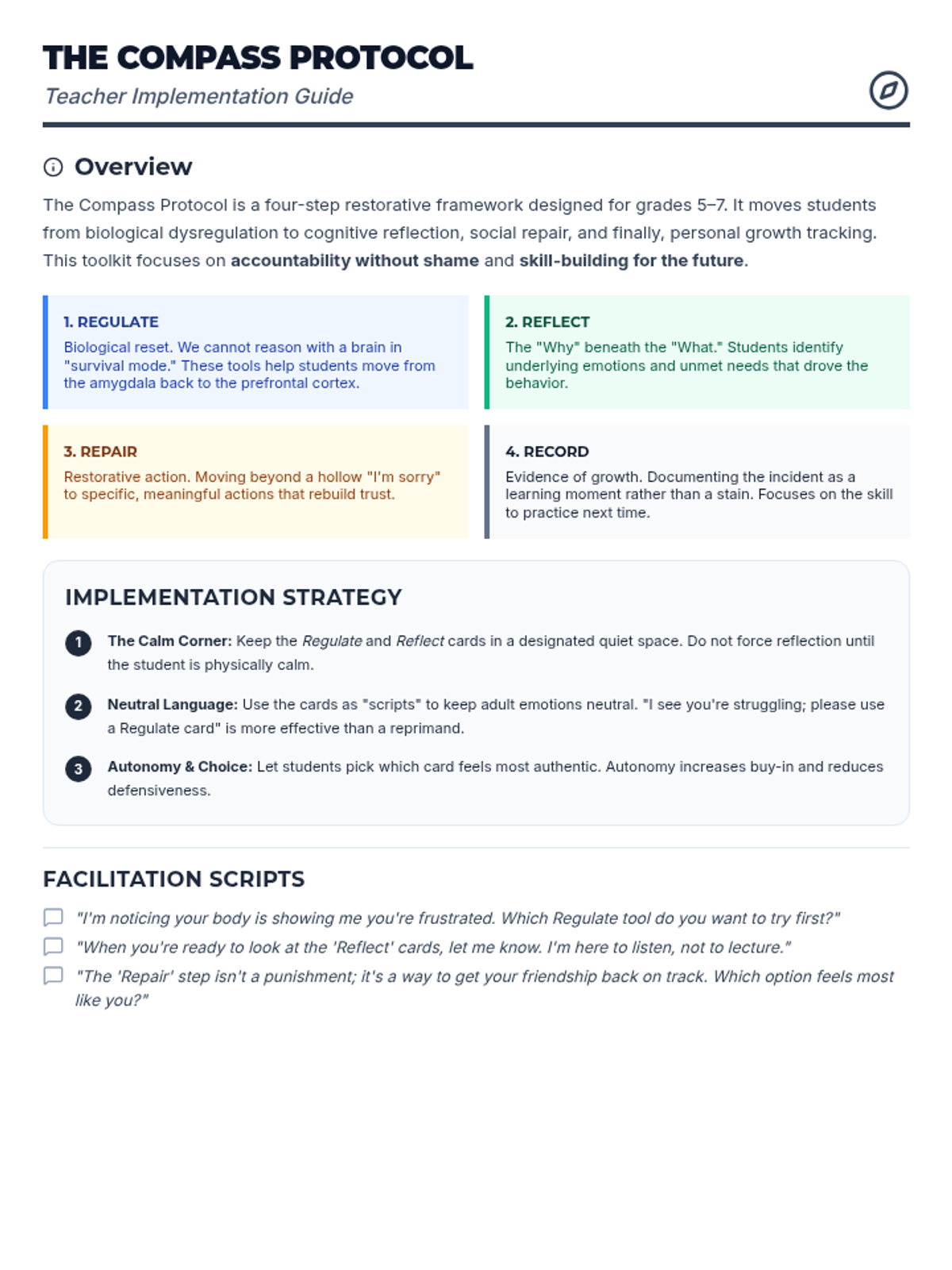
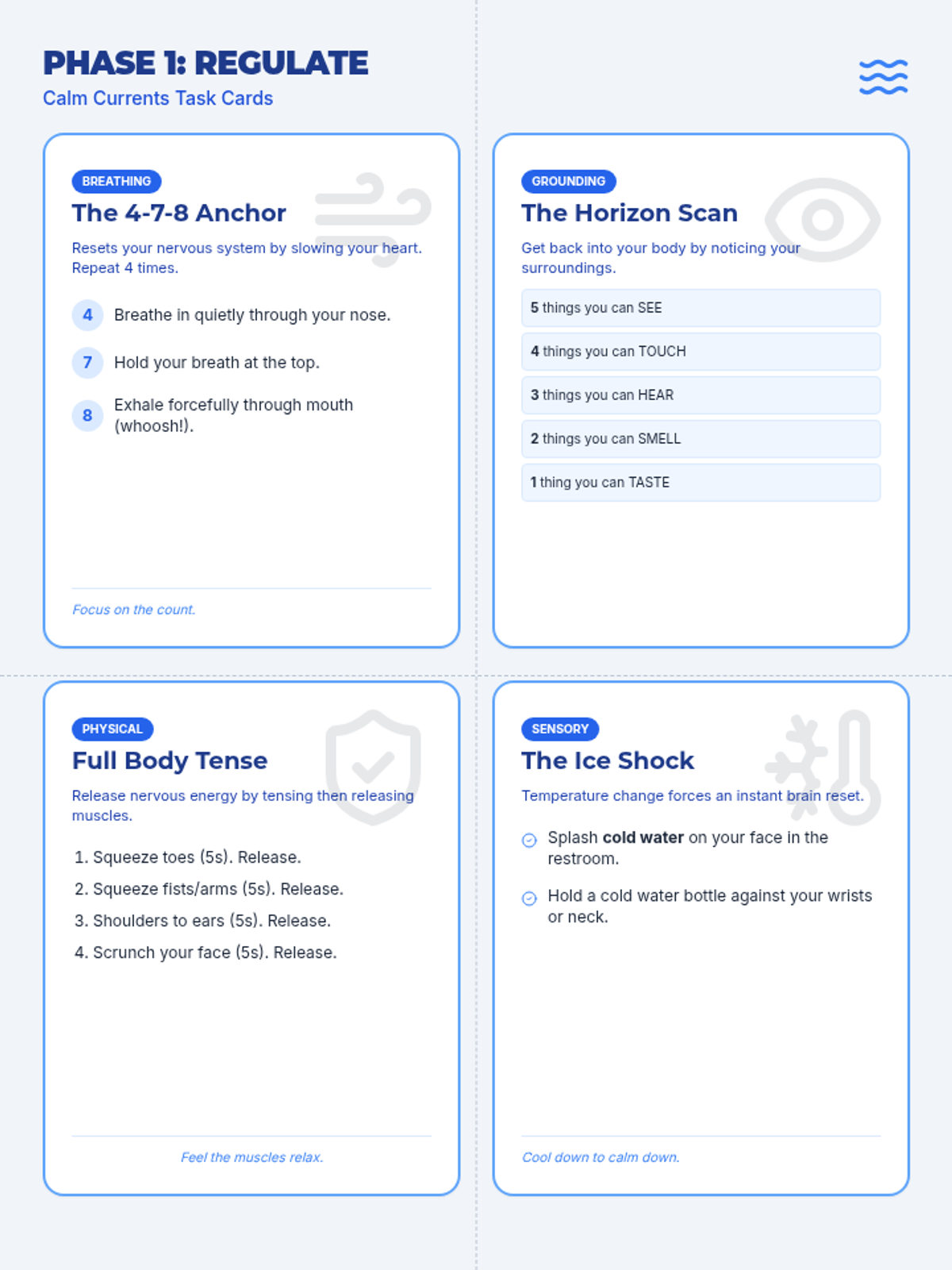
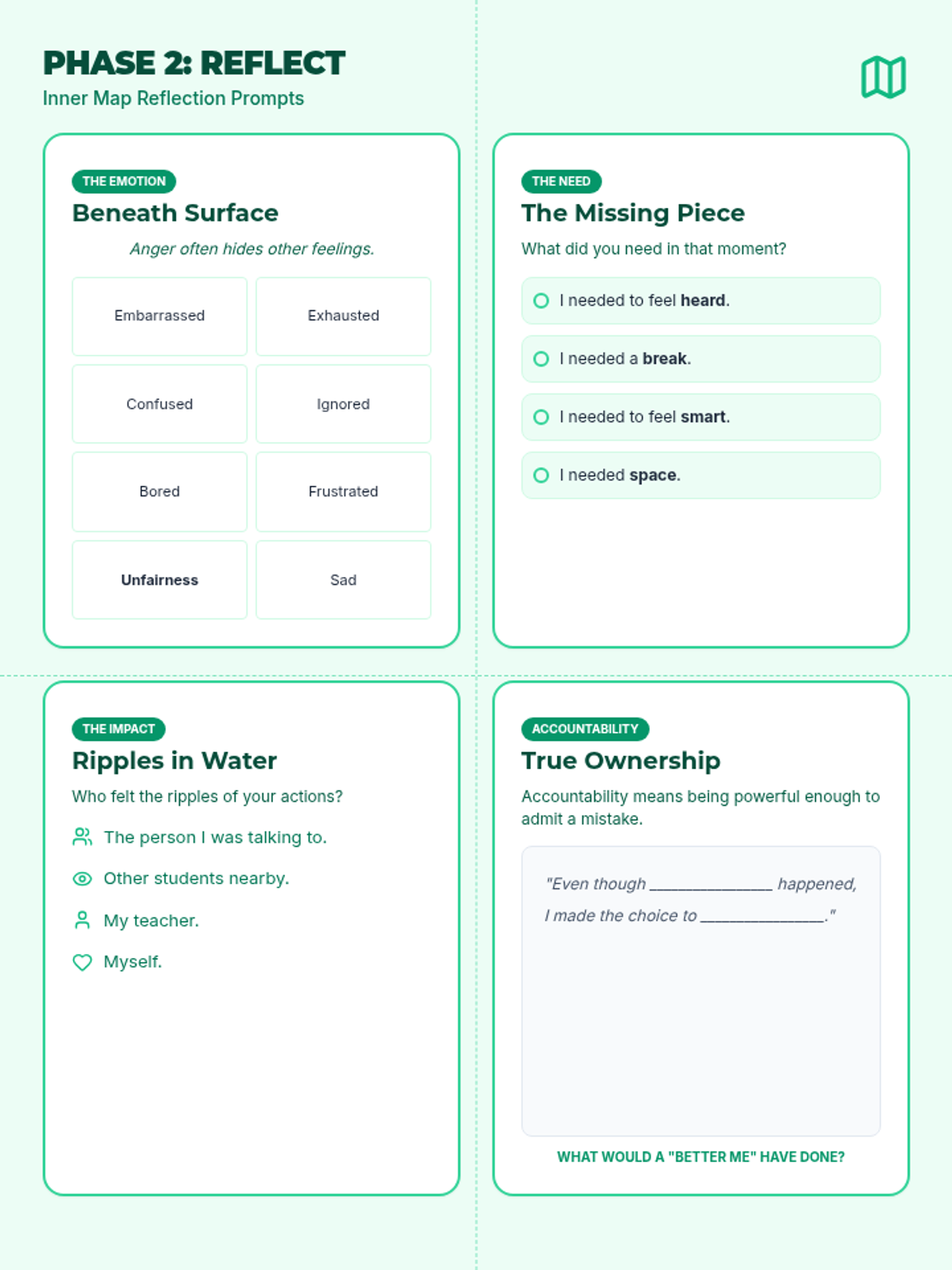
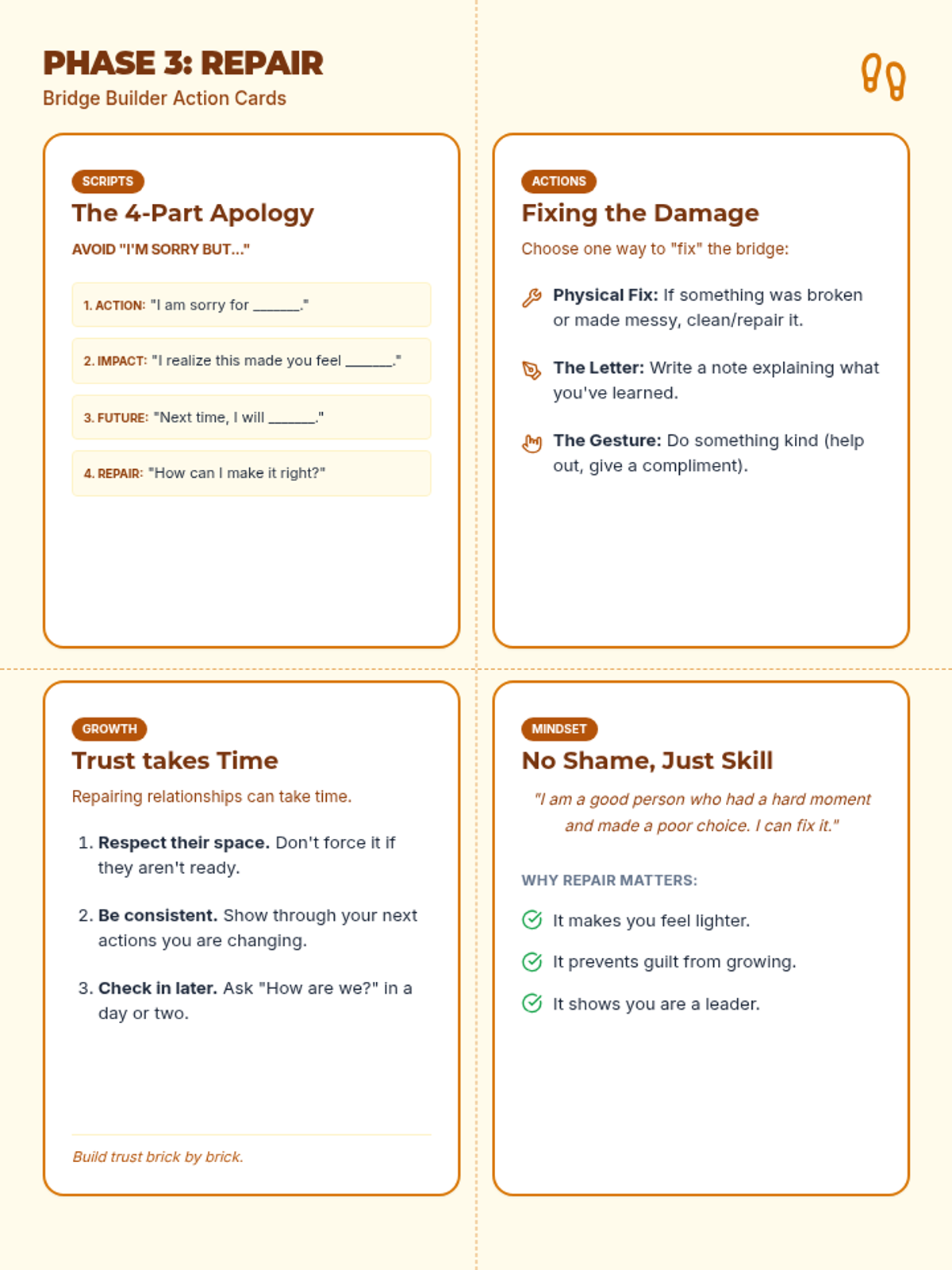
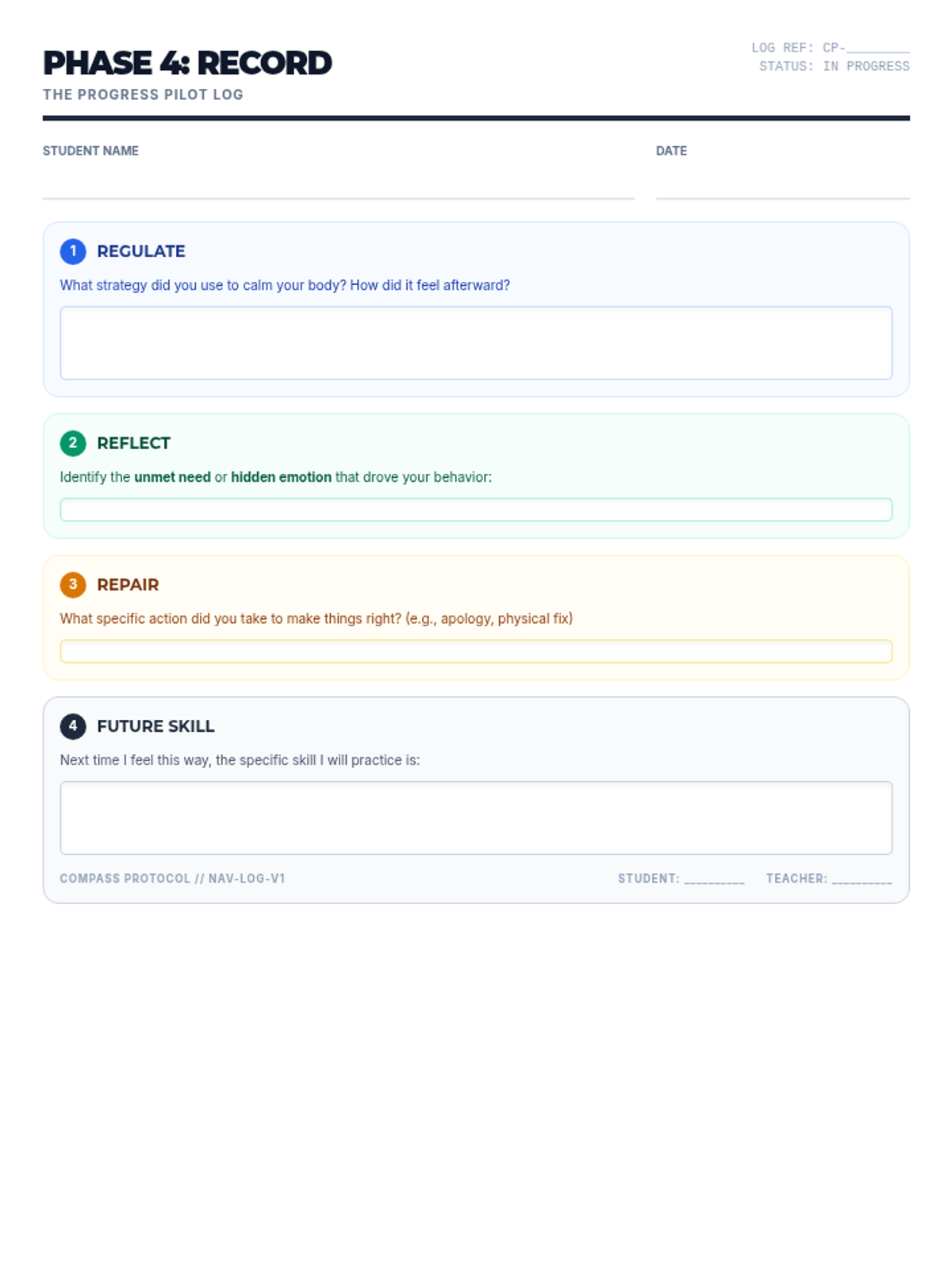
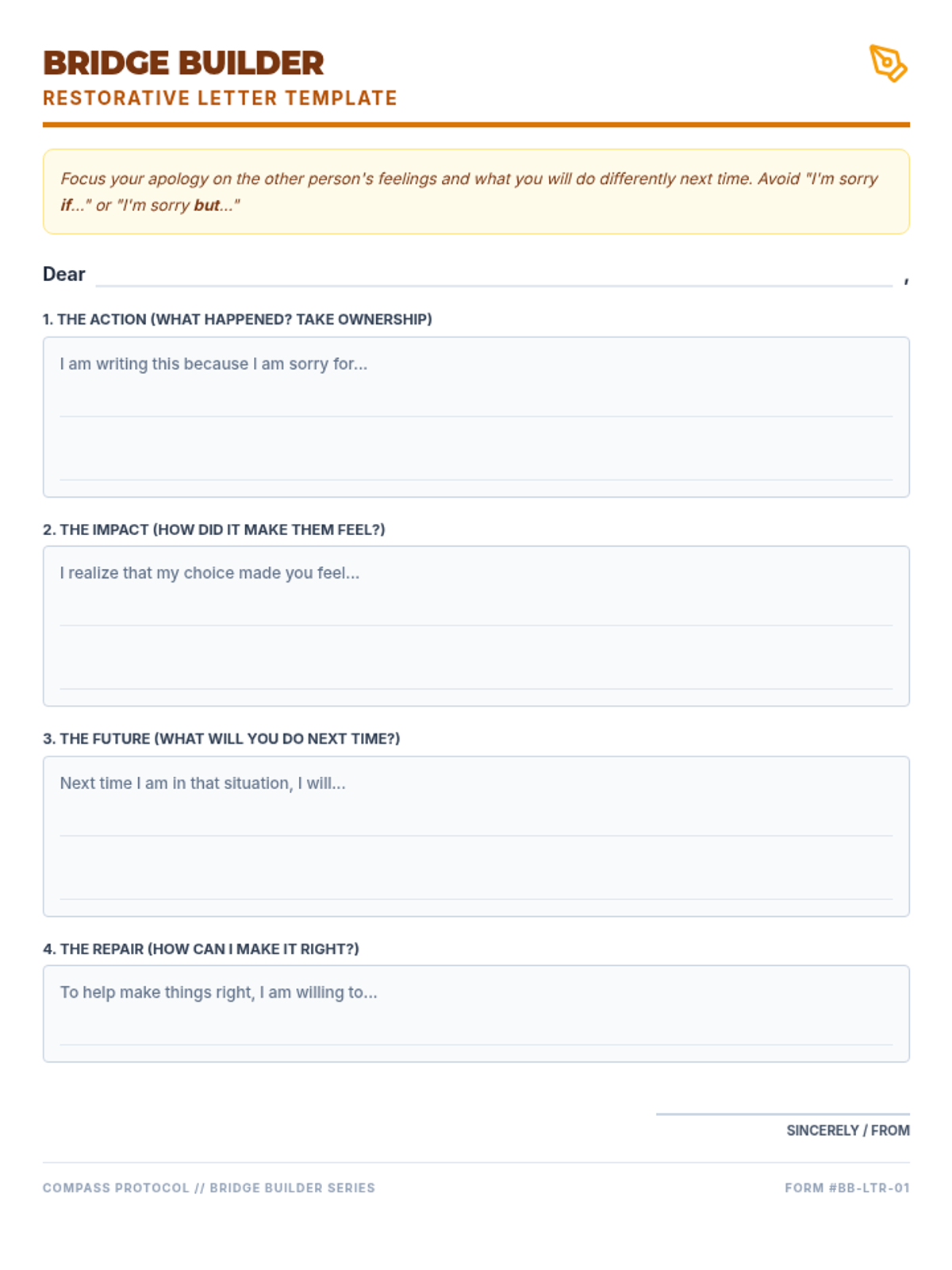
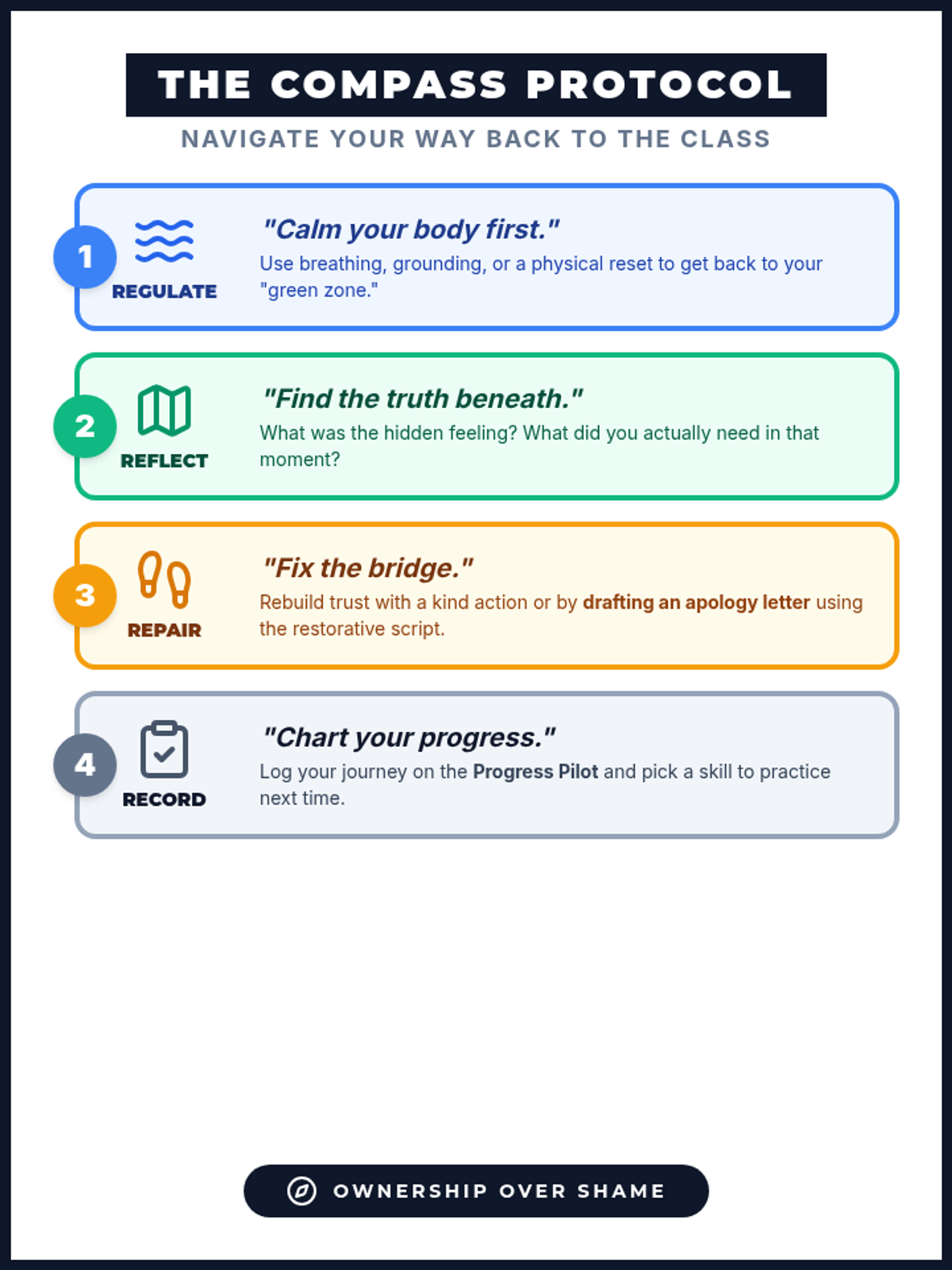
A comprehensive toolkit for middle schoolers to navigate behavioral challenges using the Regulate, Reflect, Repair, and Record framework. Focuses on restorative practices and emotional intelligence.
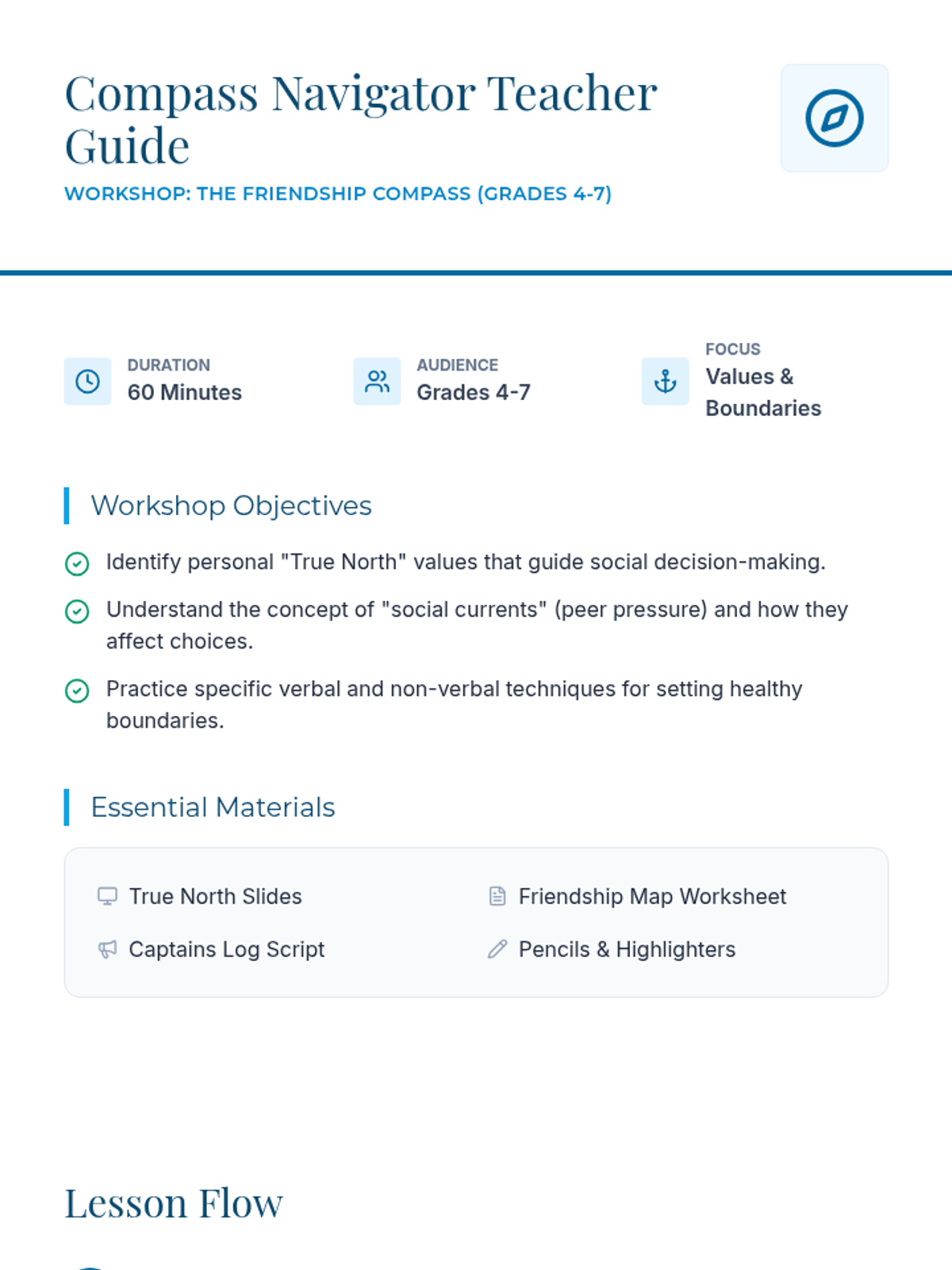
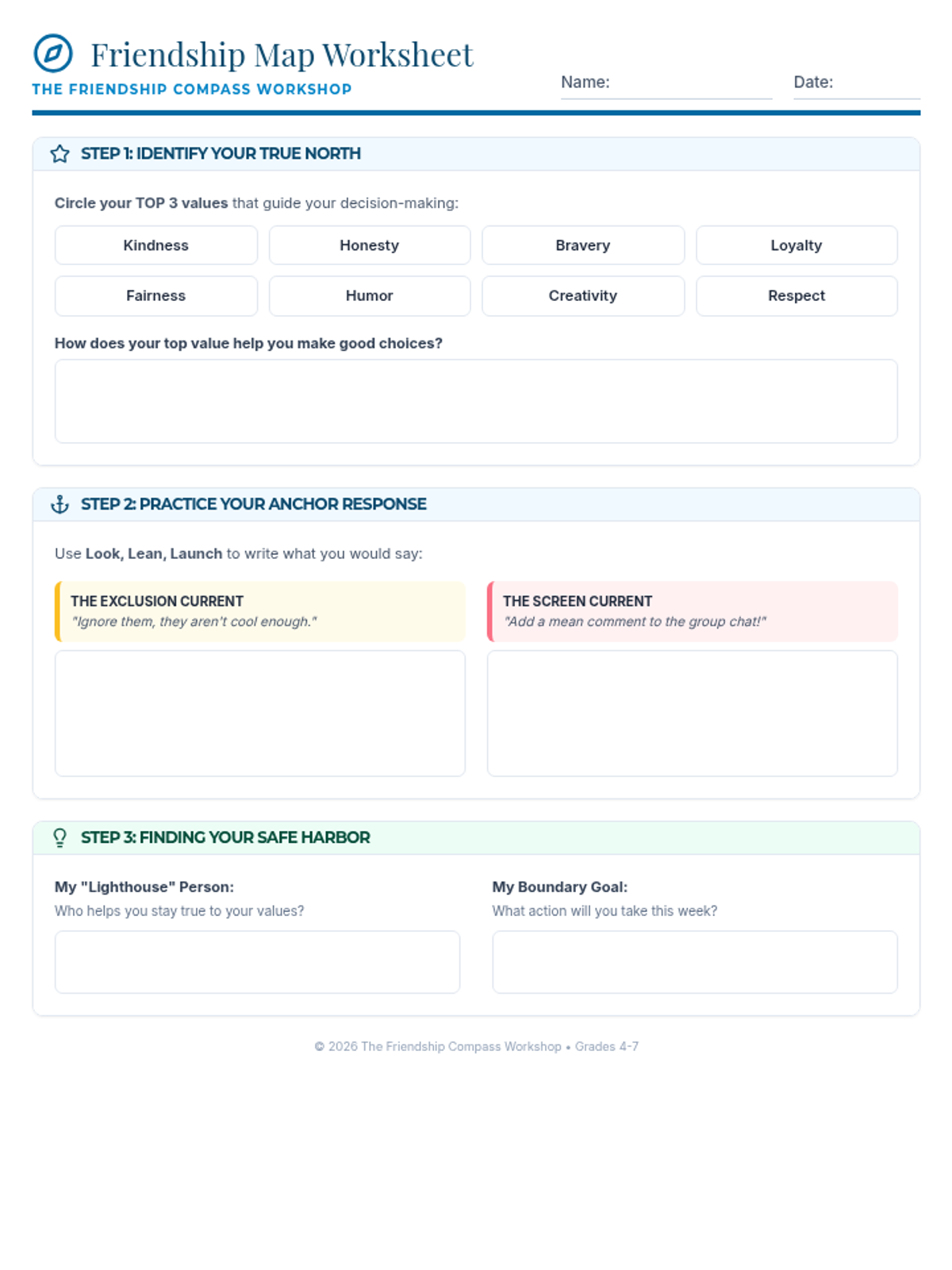
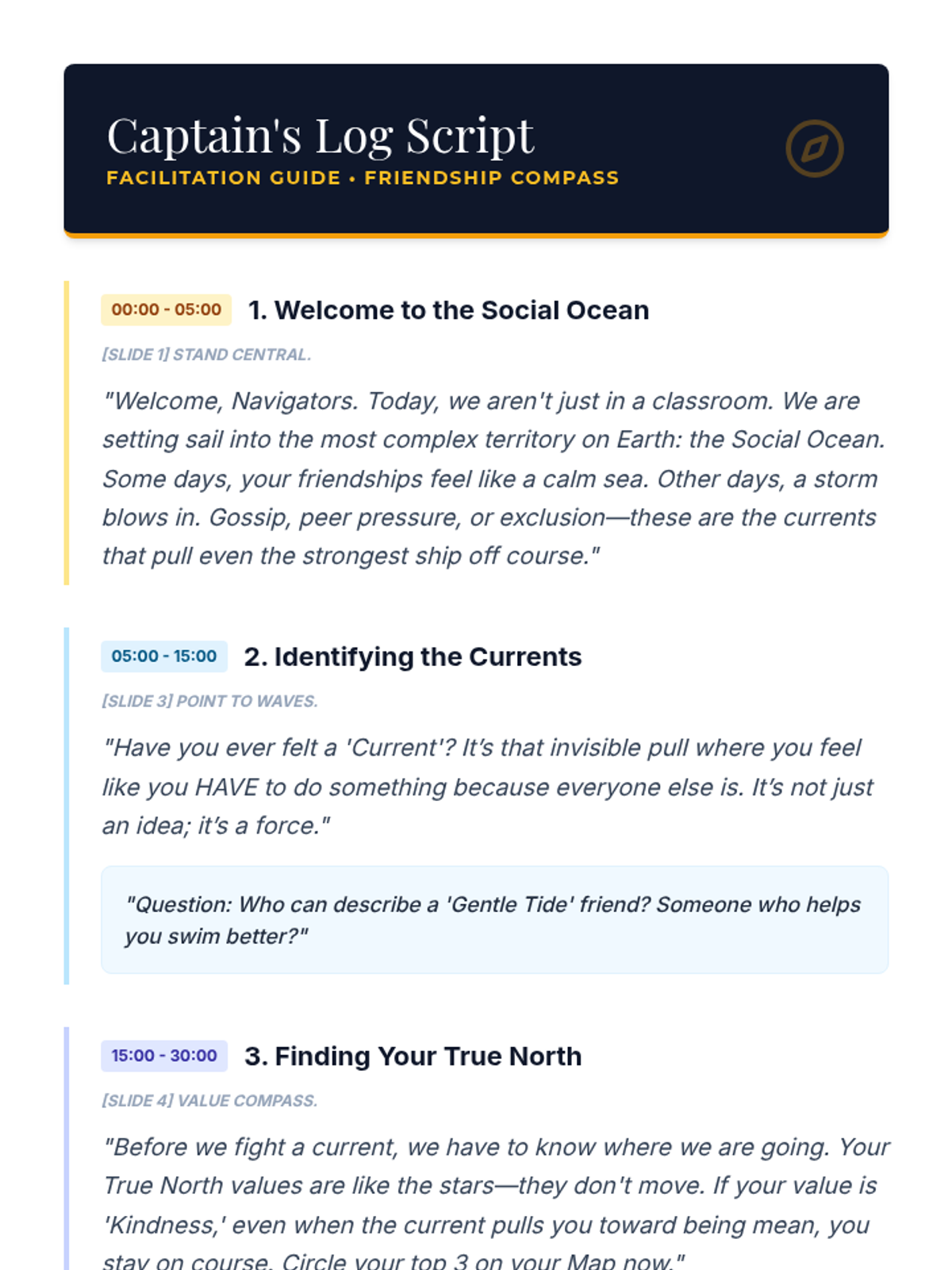
A workshop for grades 4-7 that uses a nautical metaphor to help students identify their core values ('True North') and navigate peer pressure through boundary-setting and interactive scenarios.
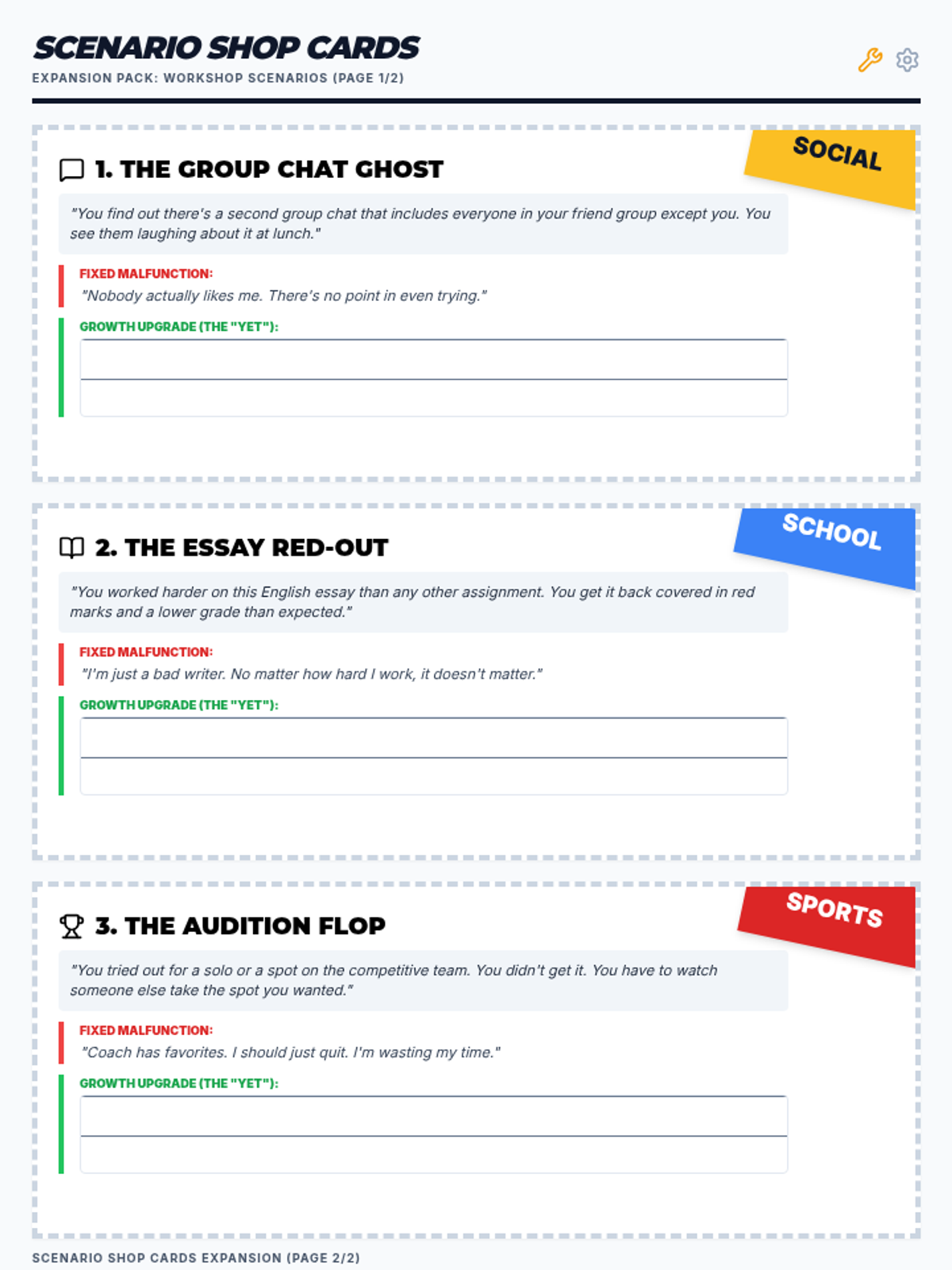
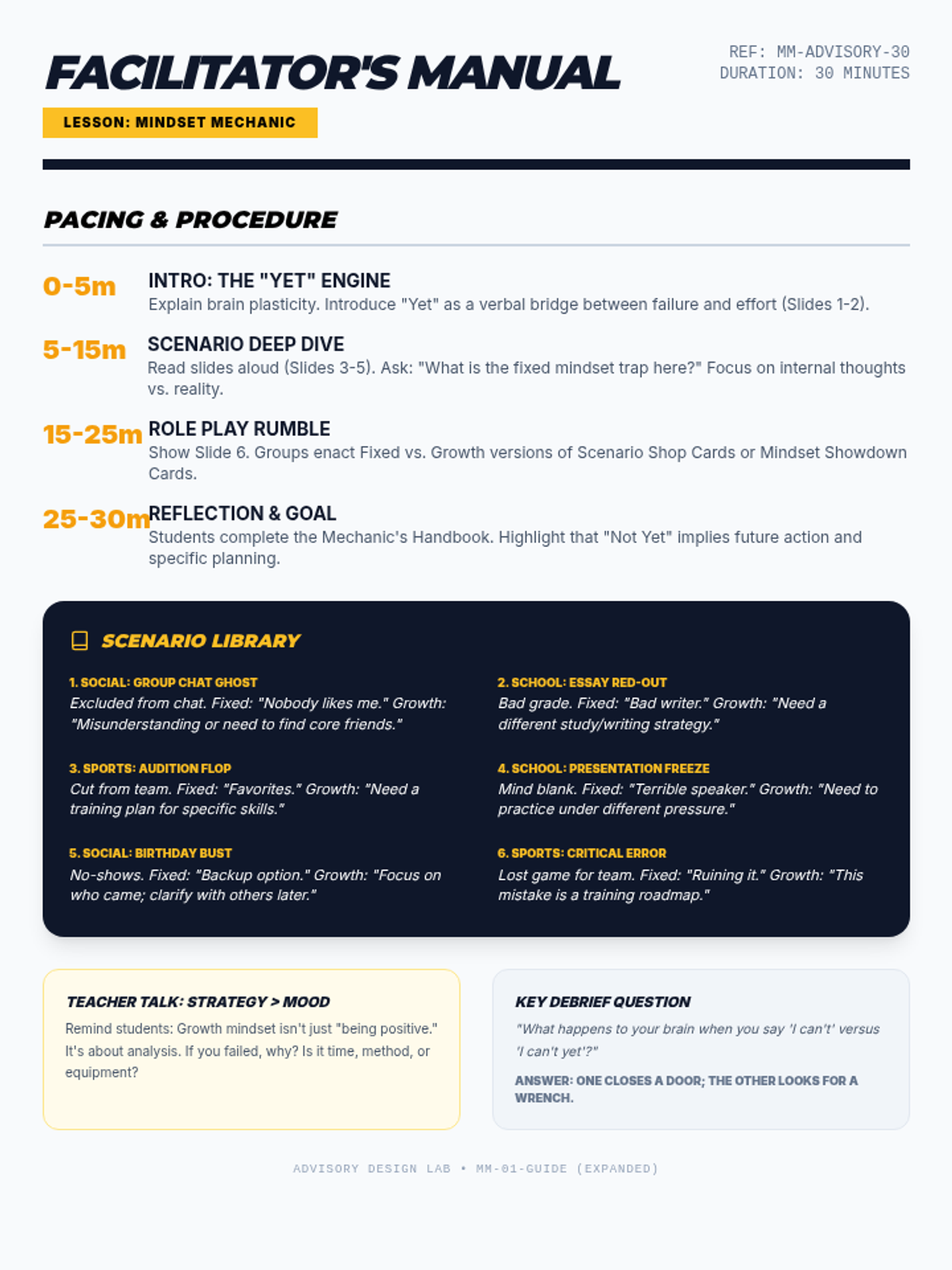
A 30-minute interactive advisory lesson for middle schoolers to build a growth mindset through scenarios involving social rejection, academic struggles, and athletic setbacks.
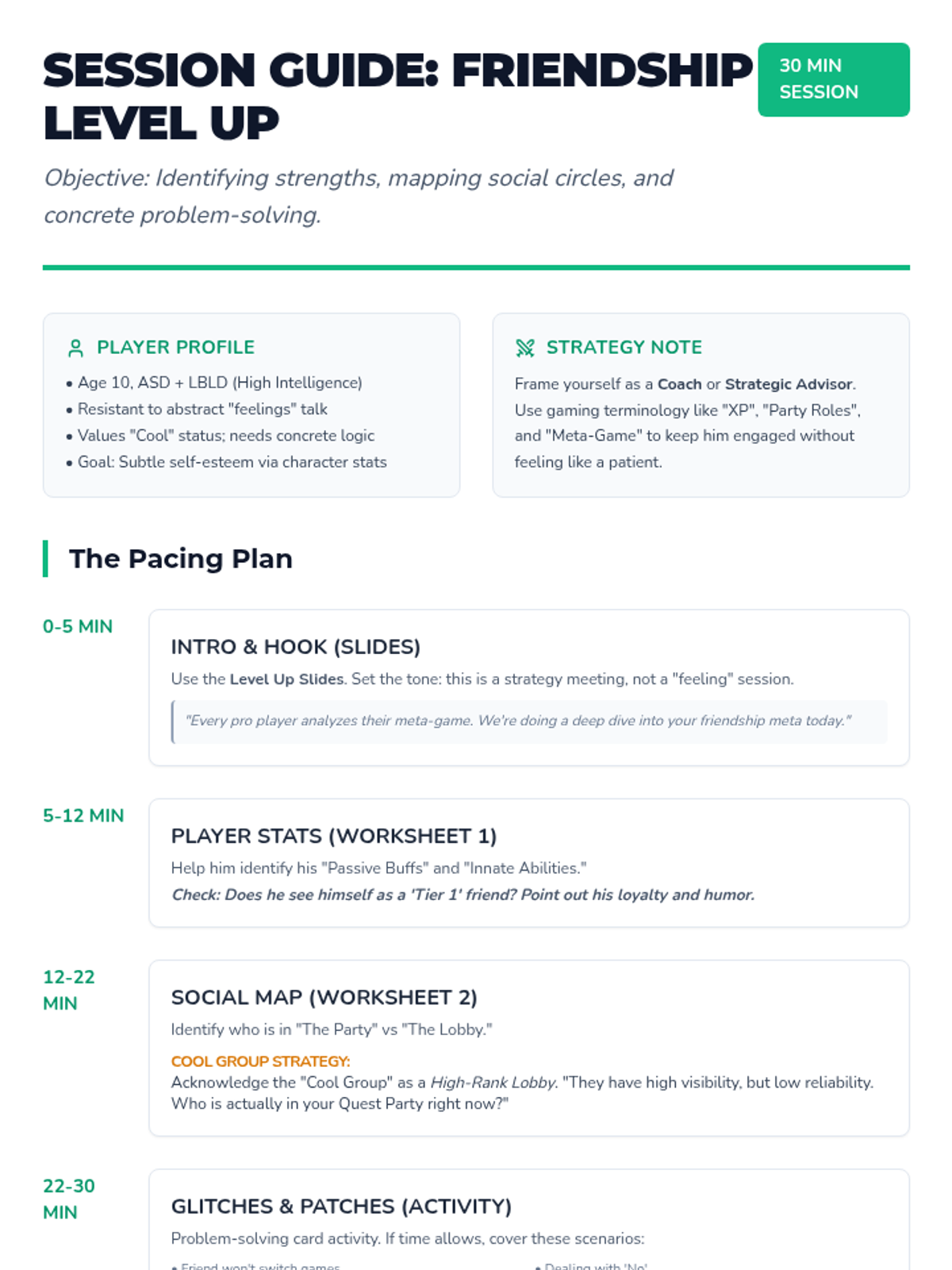
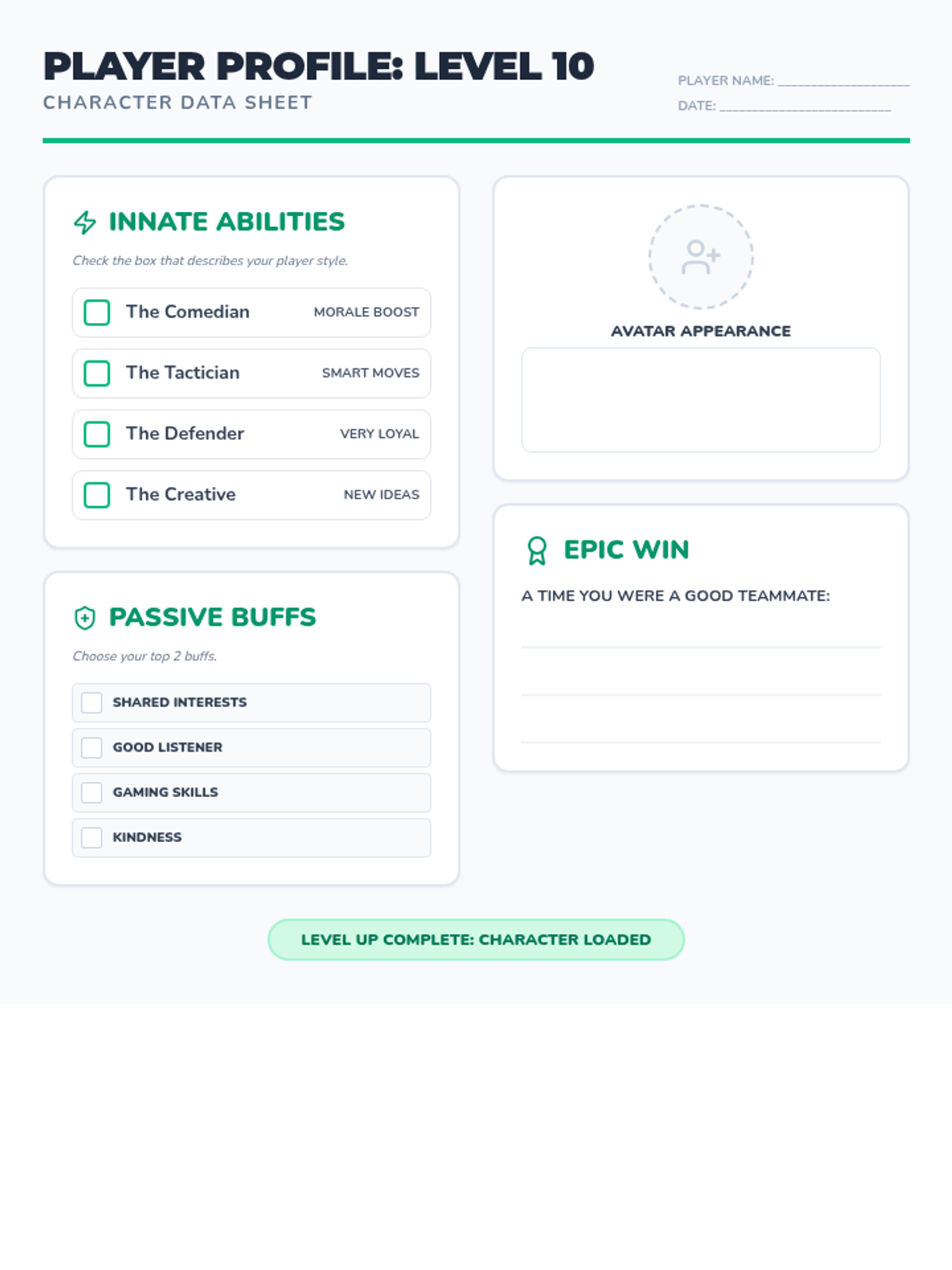
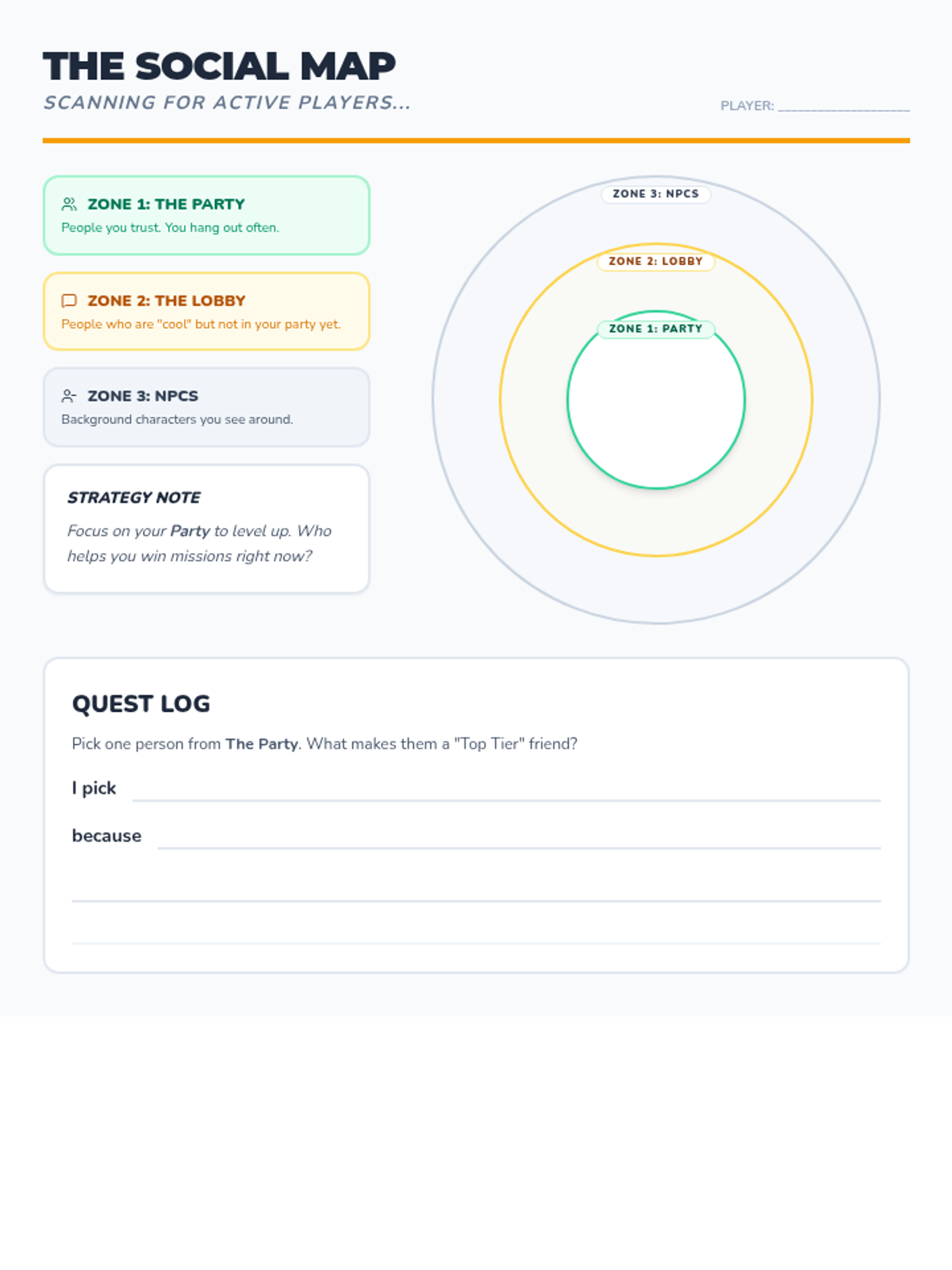
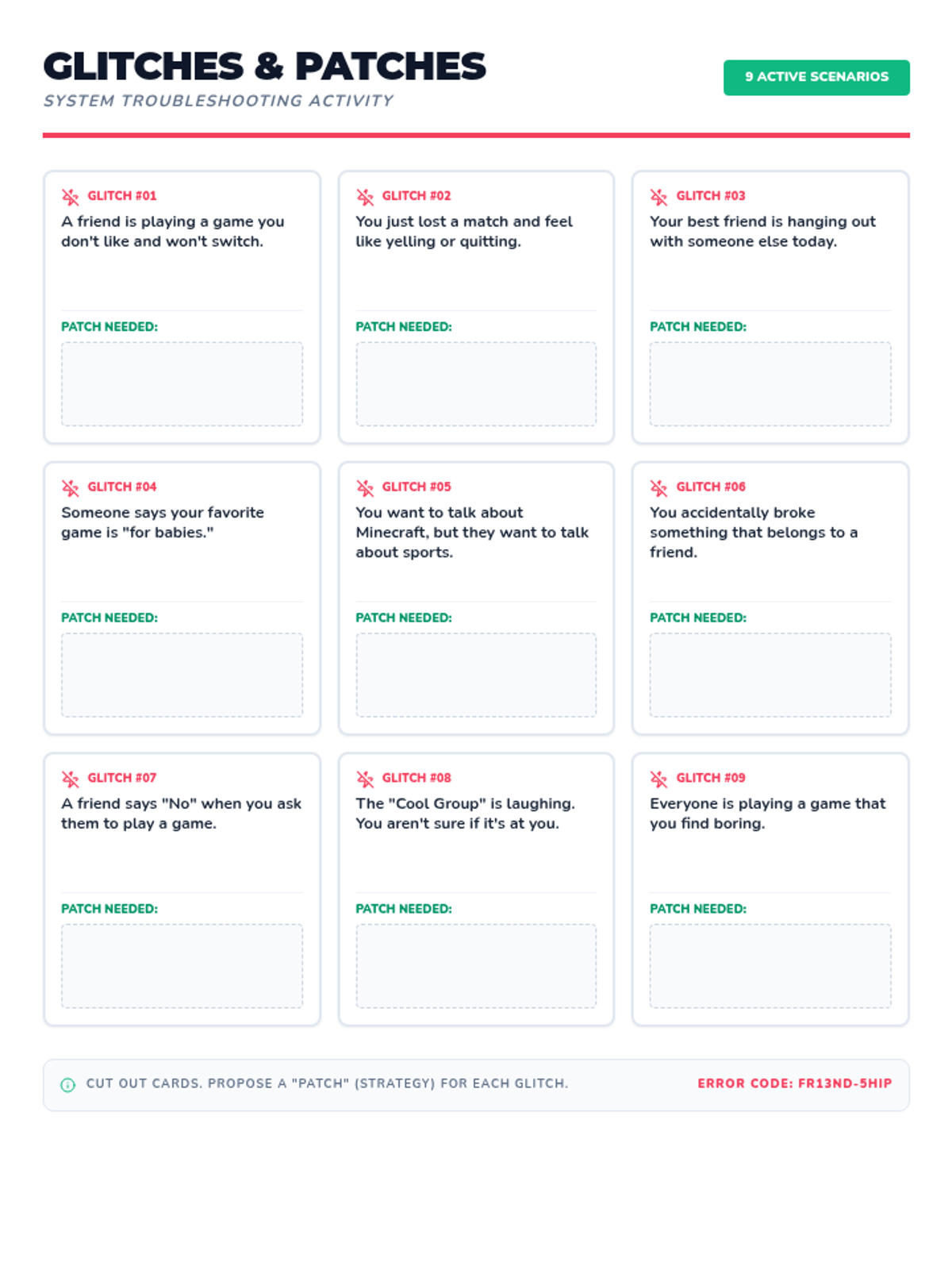
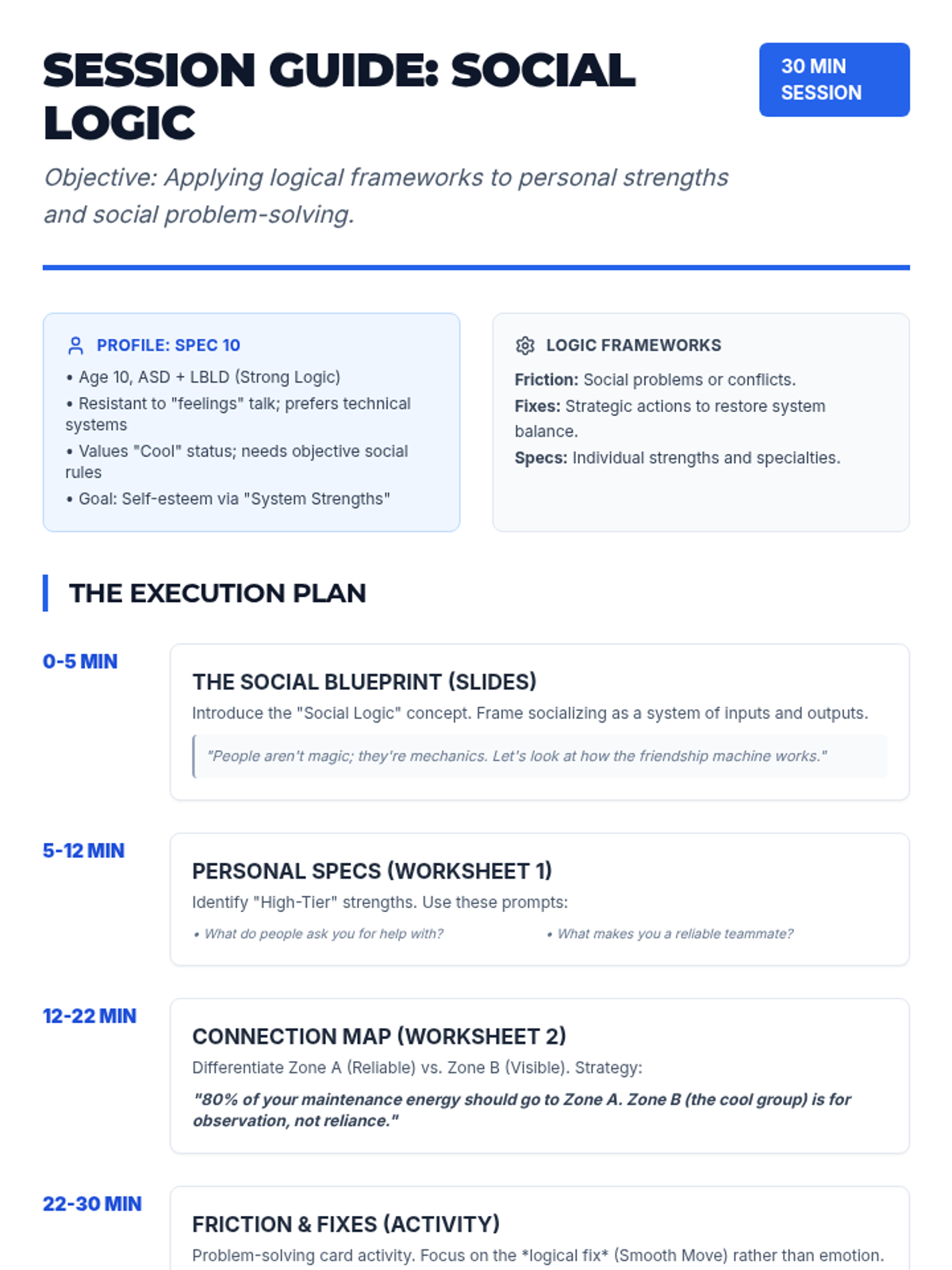
A 30-minute high-engagement individual counseling session for a student with ASD and LBLD, using a video game strategy theme to explore personal strengths and friendship dynamics.
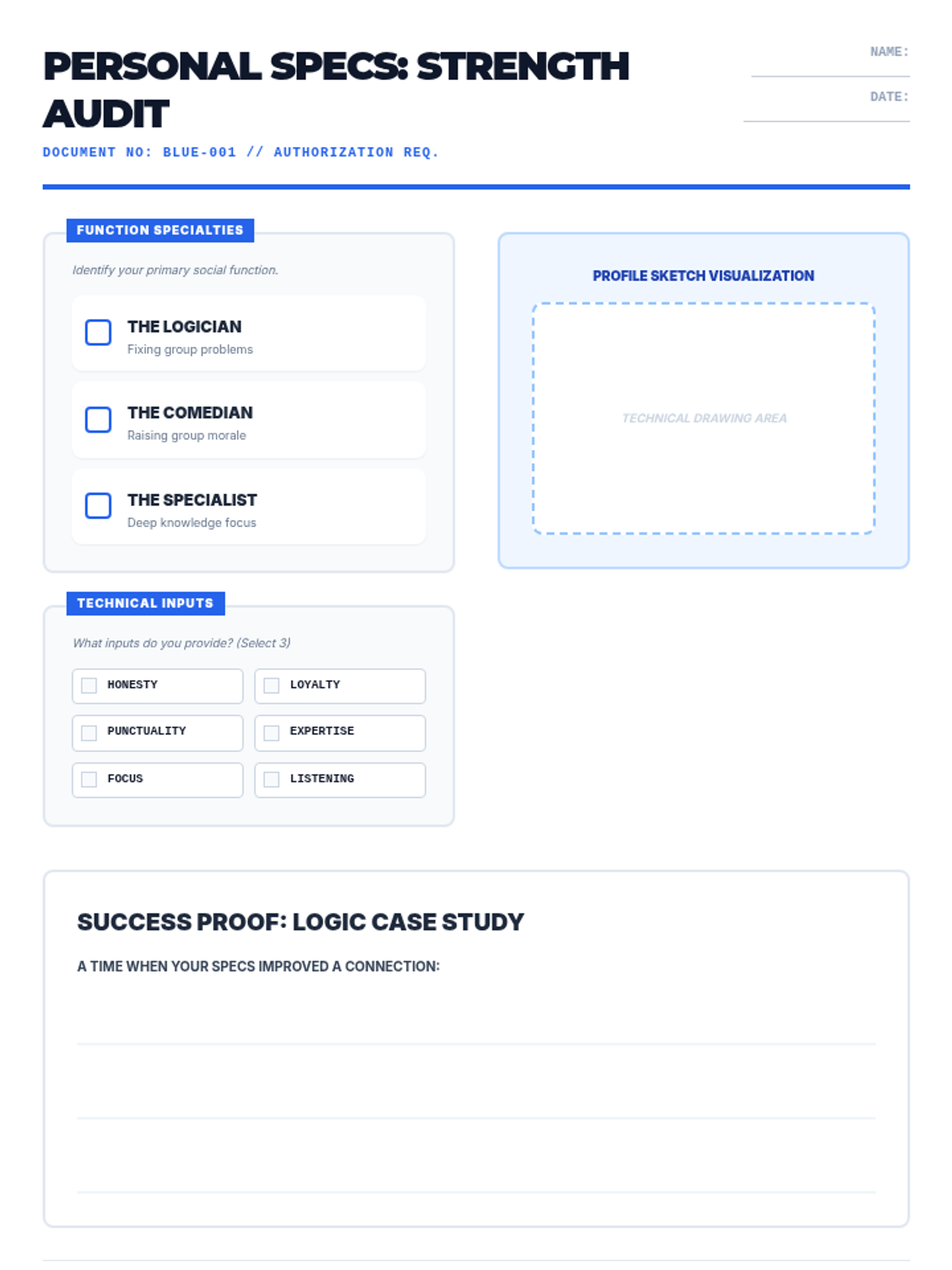
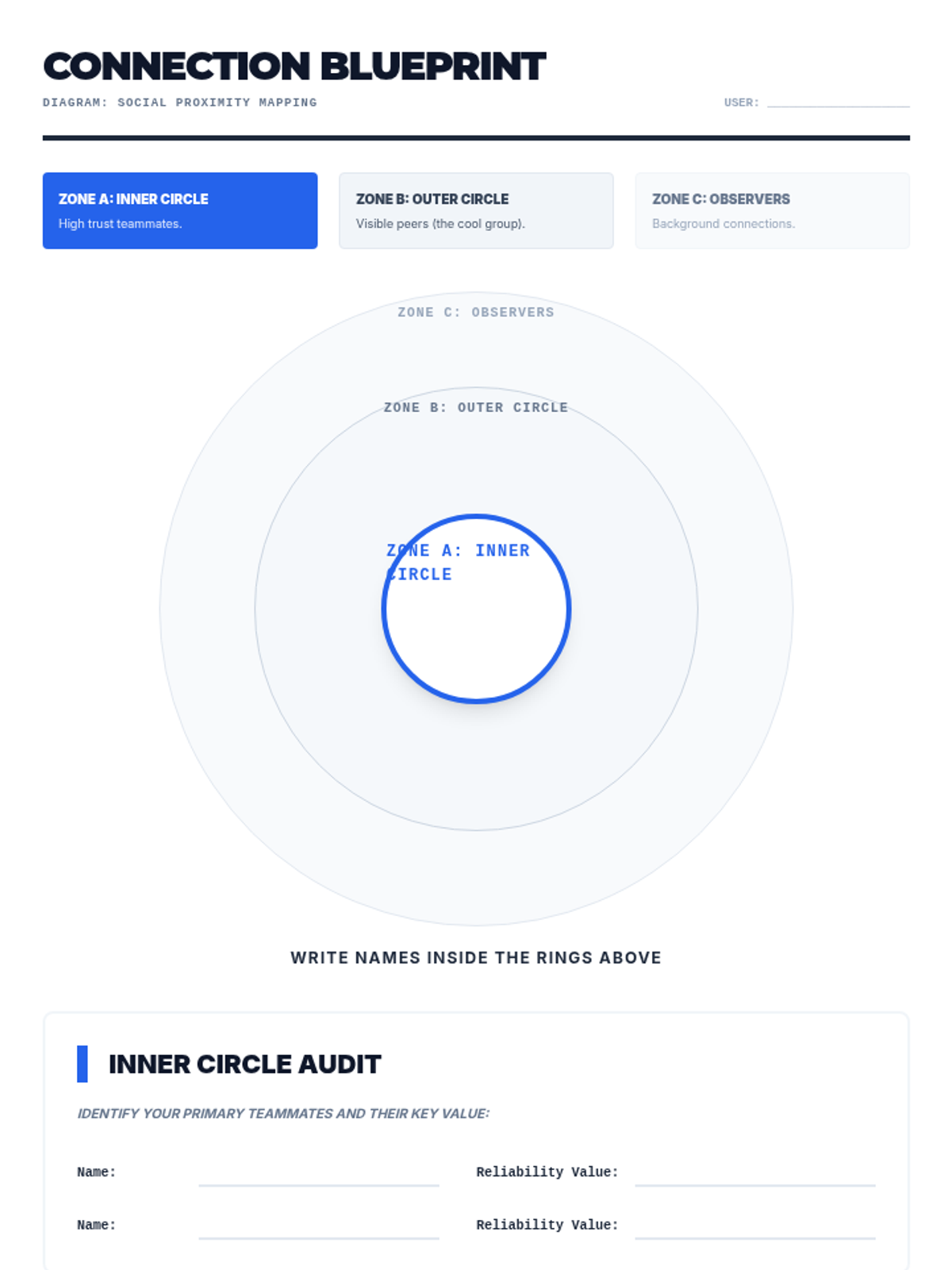
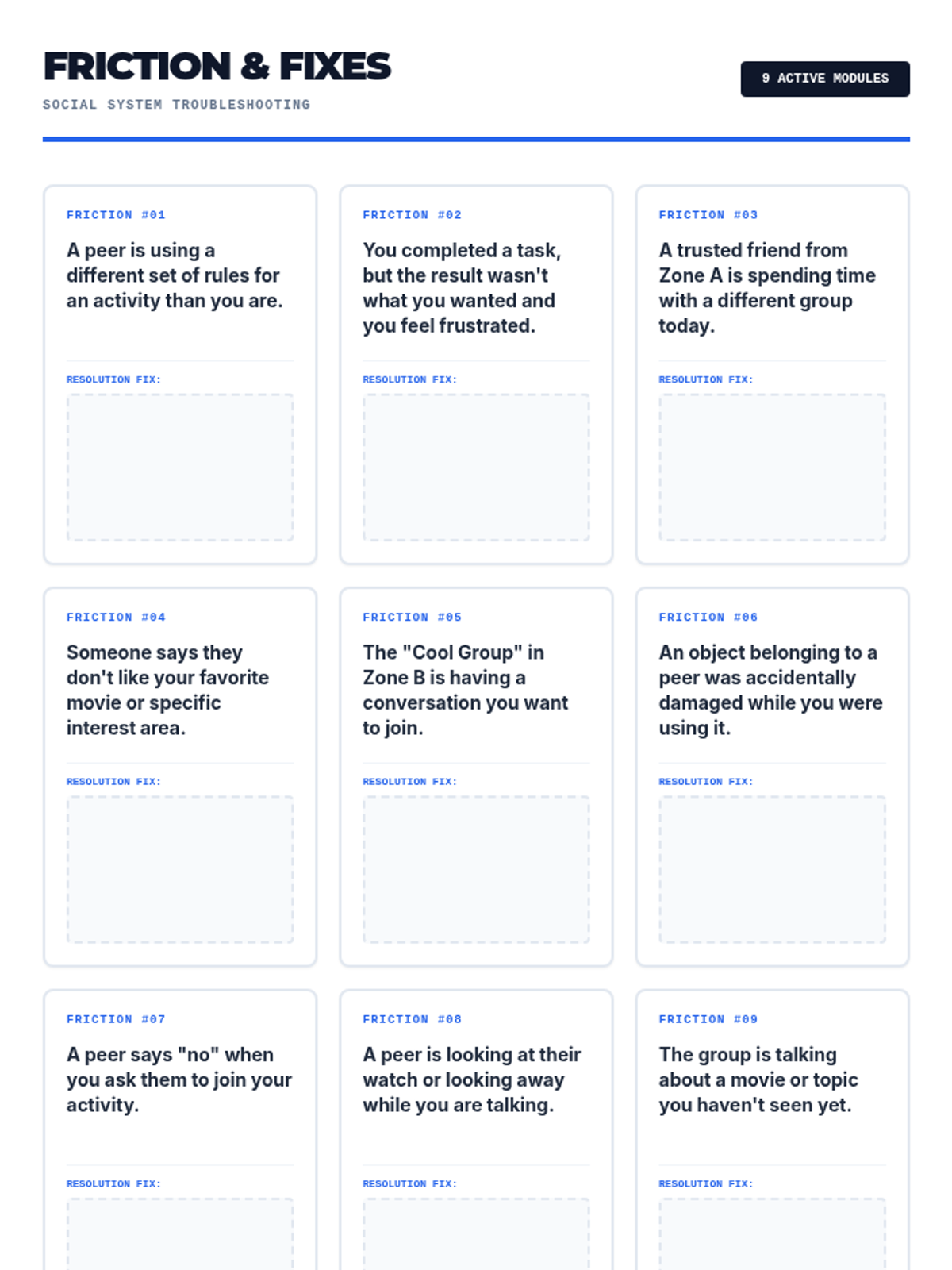
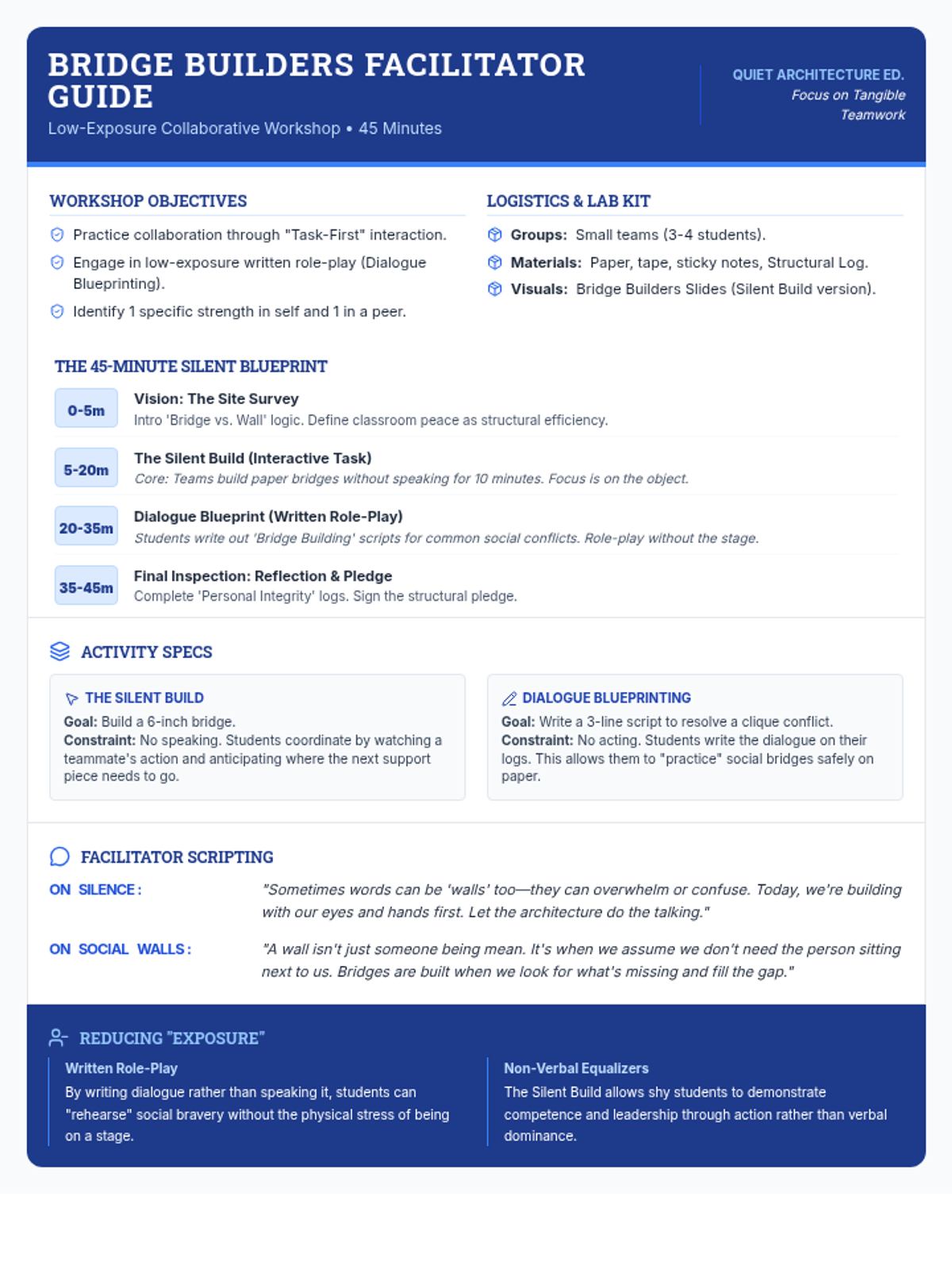
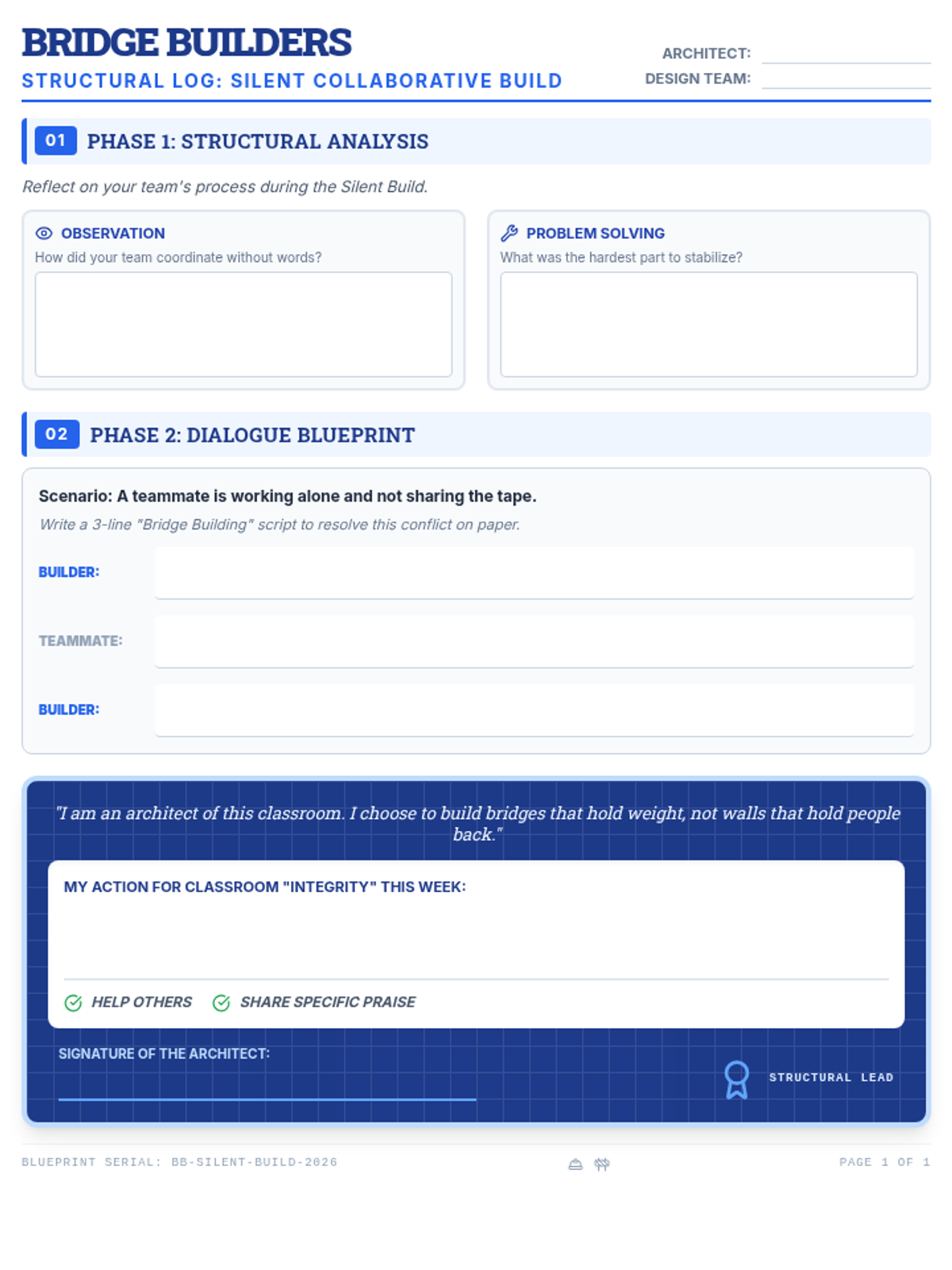
A workshop focused on breaking down classroom cliques and fostering empathy through collaborative 'blueprint' activities. Designed for high-conflict environments where inter-group tension is prevalent.
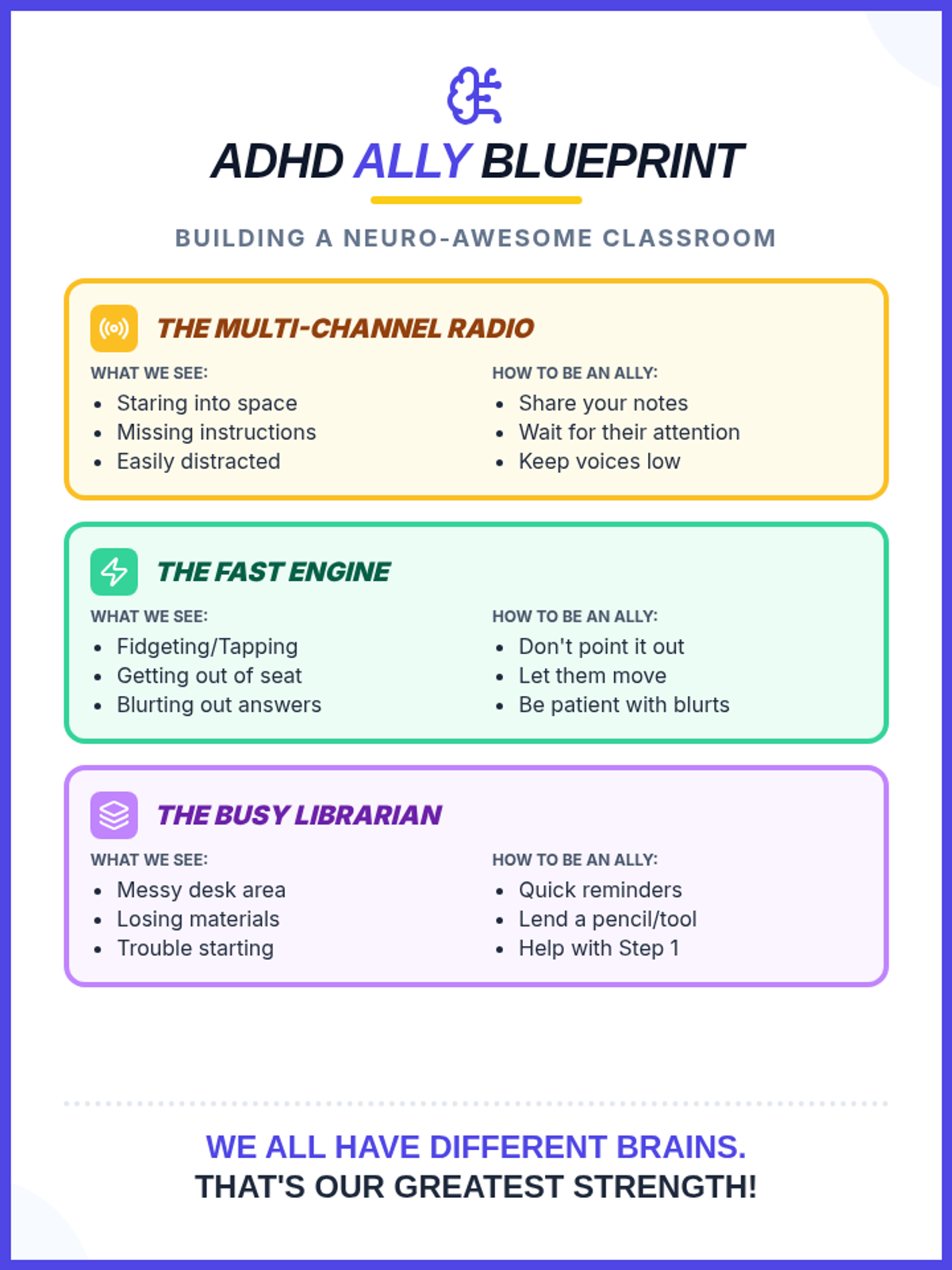
A neurodiversity-affirming lesson designed to help students understand the ADHD experience through analogies like 'The Fast Engine' and 'The Busy Librarian.' It covers focus, hyperactivity, and executive function to build empathy and allyship in the classroom.
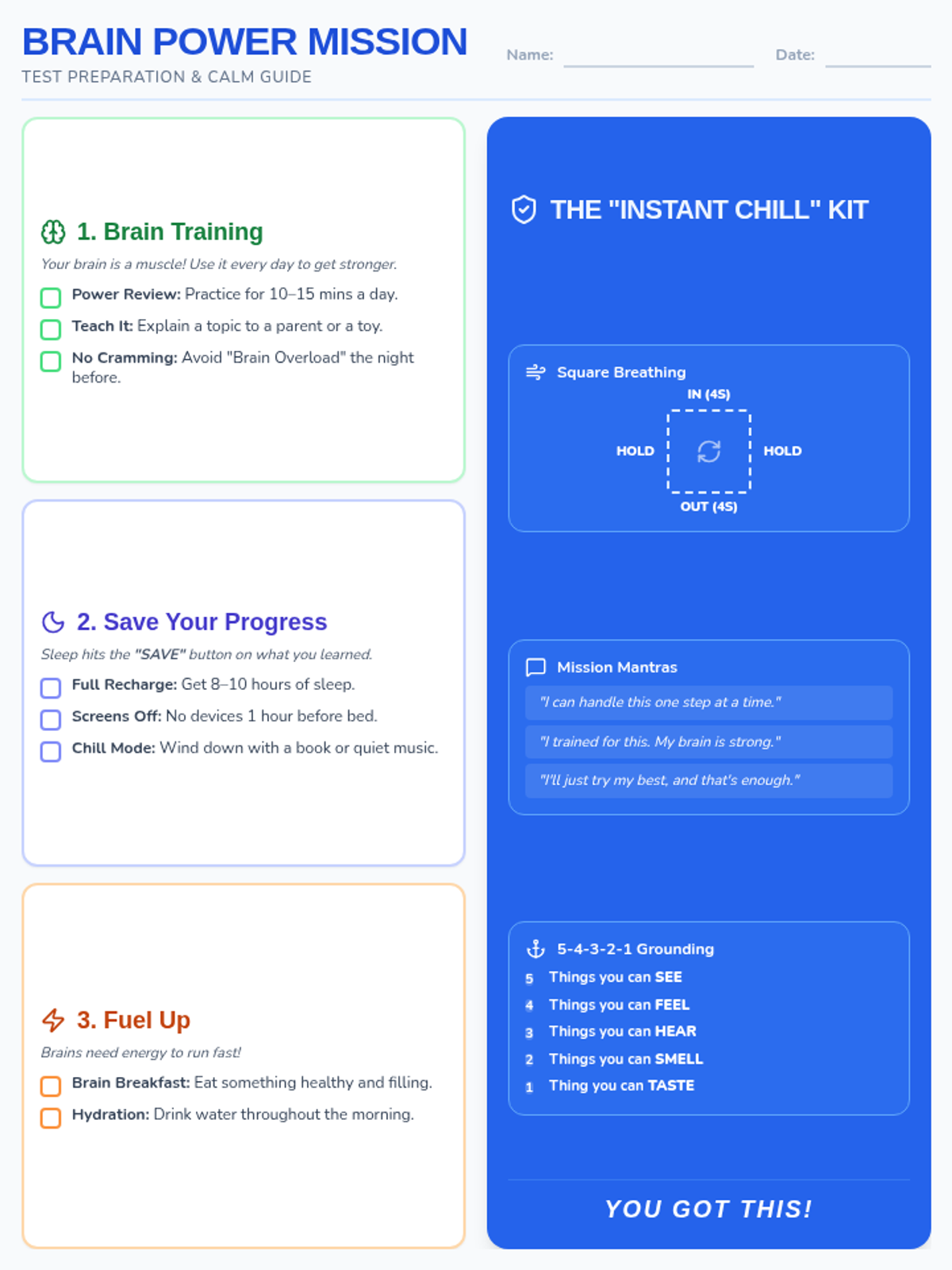
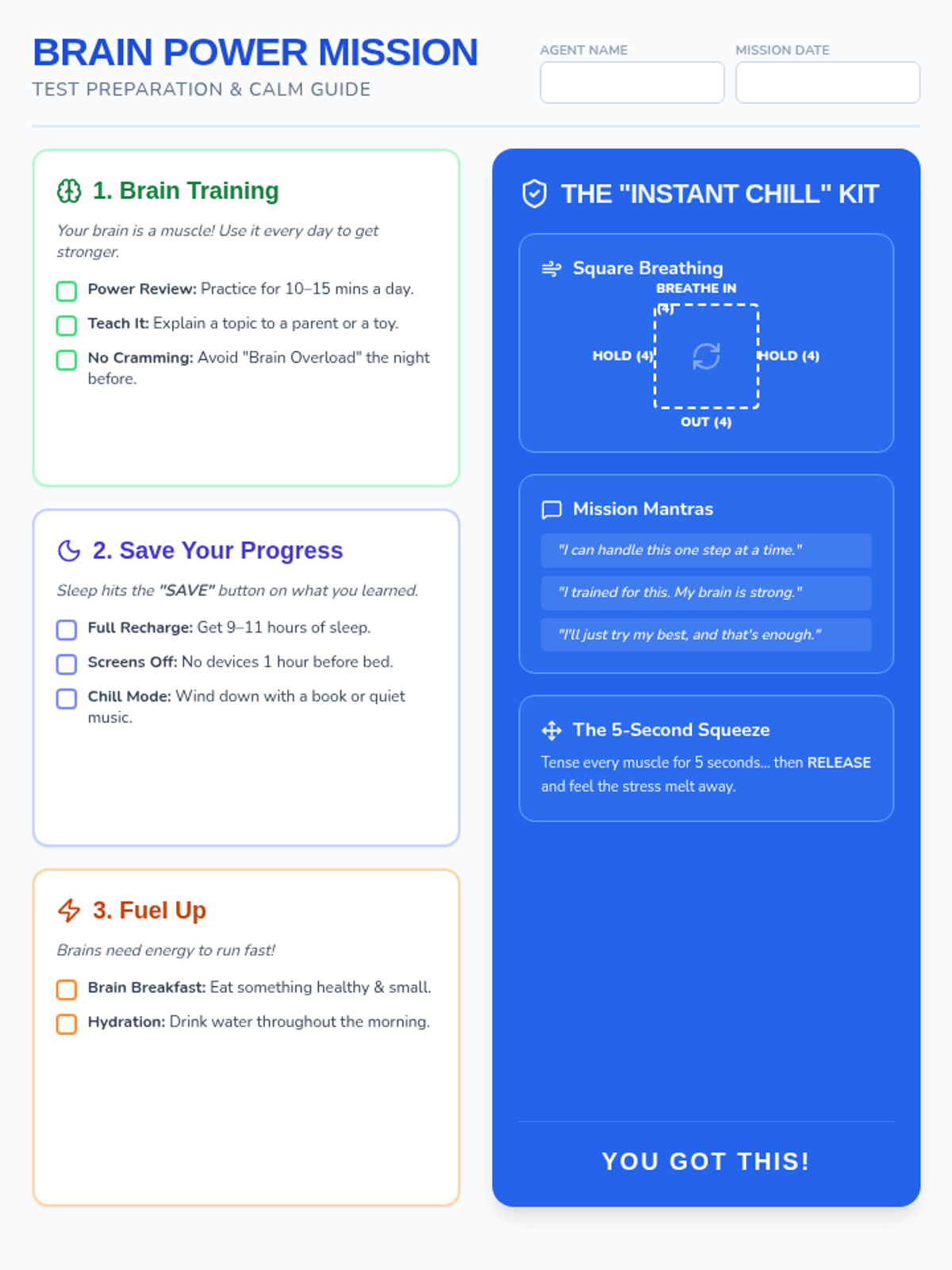
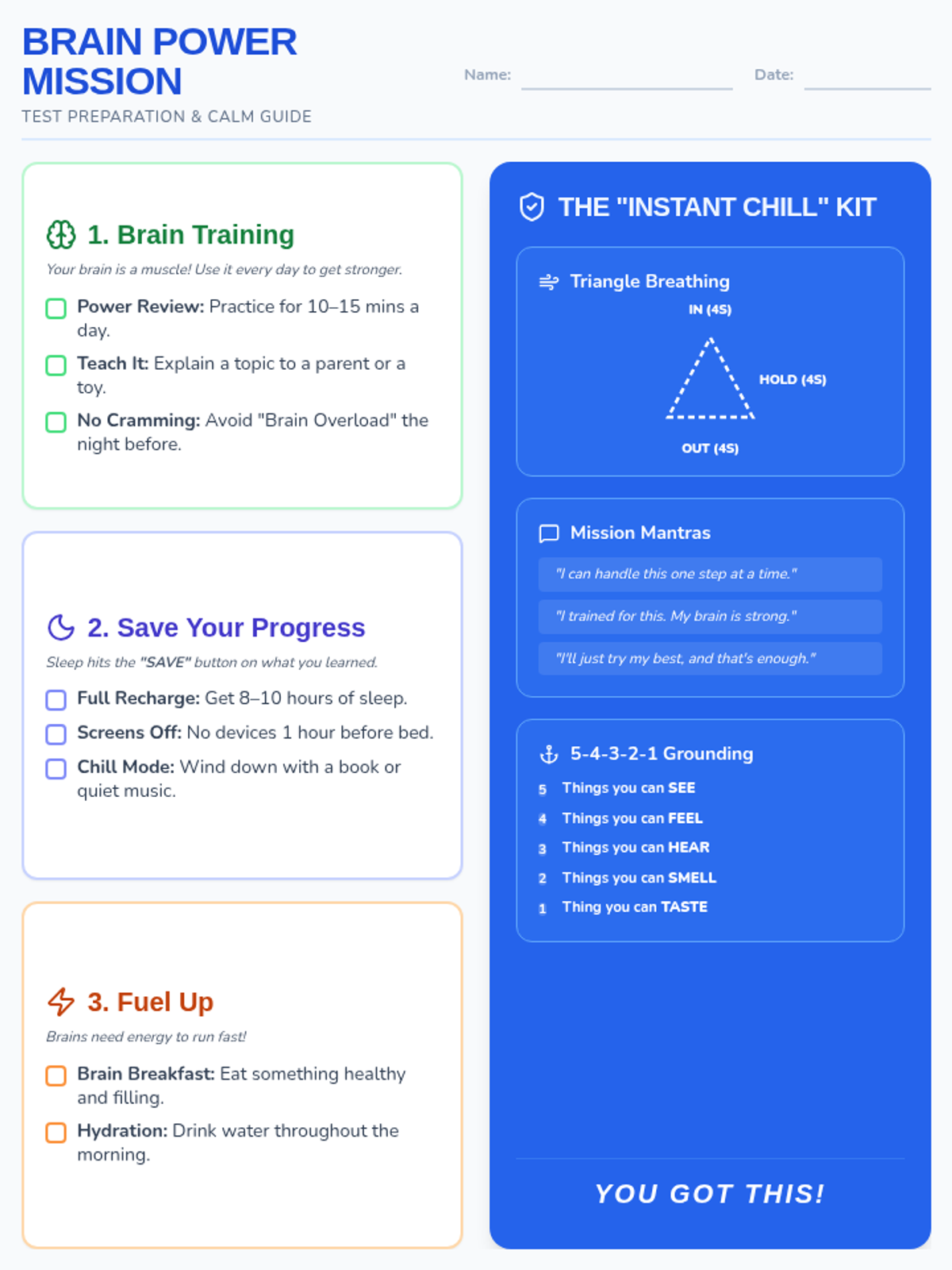
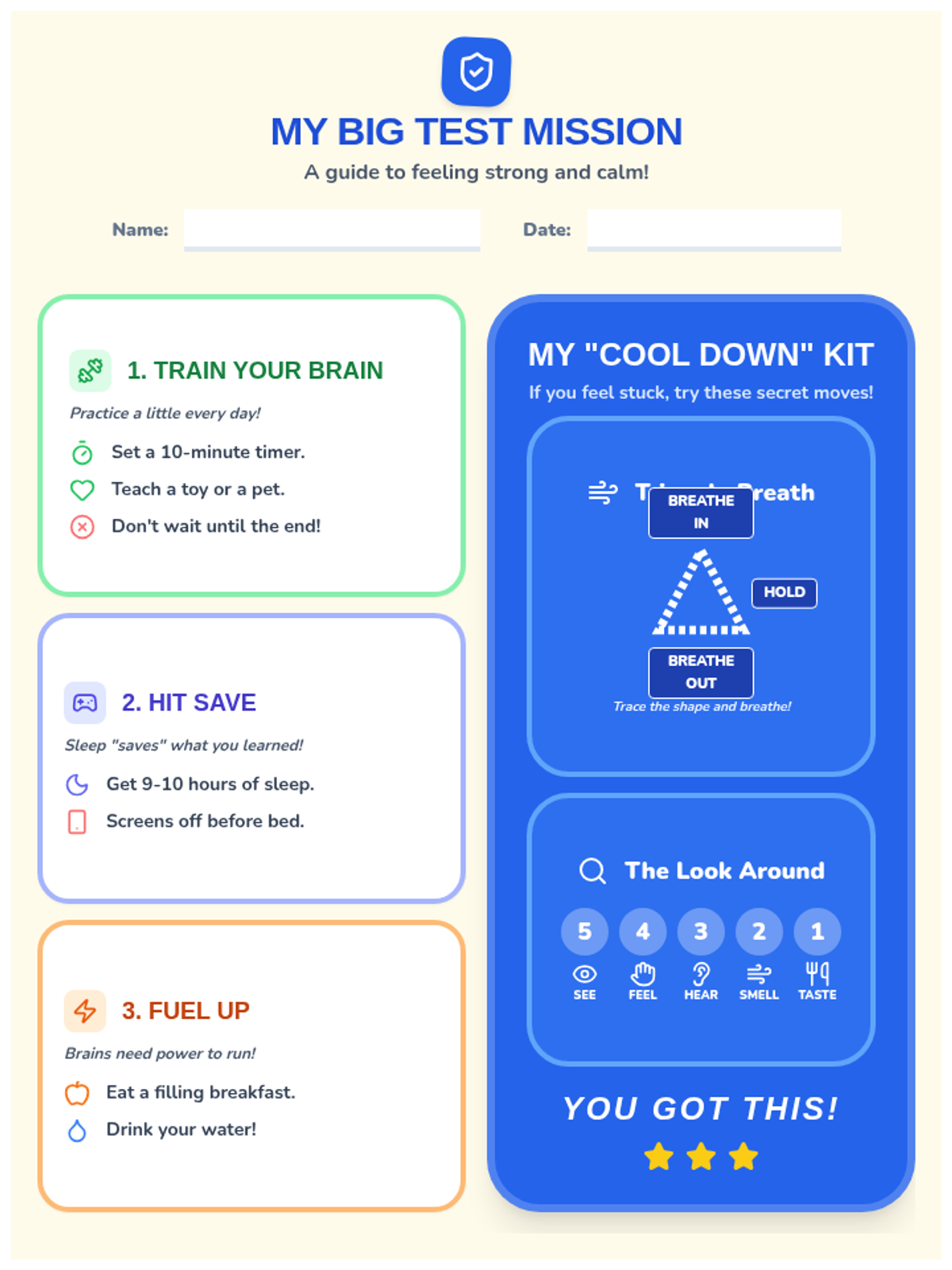
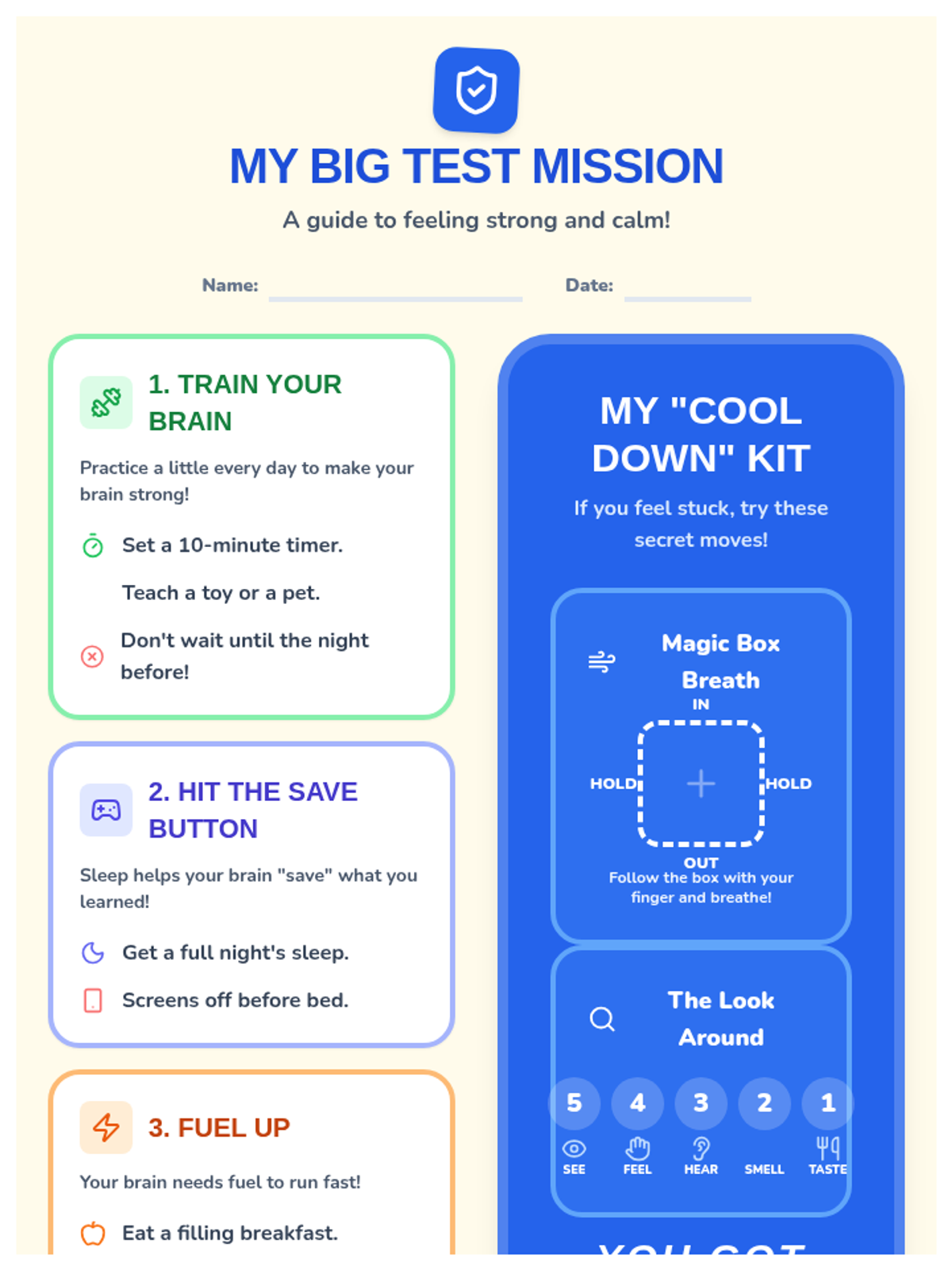
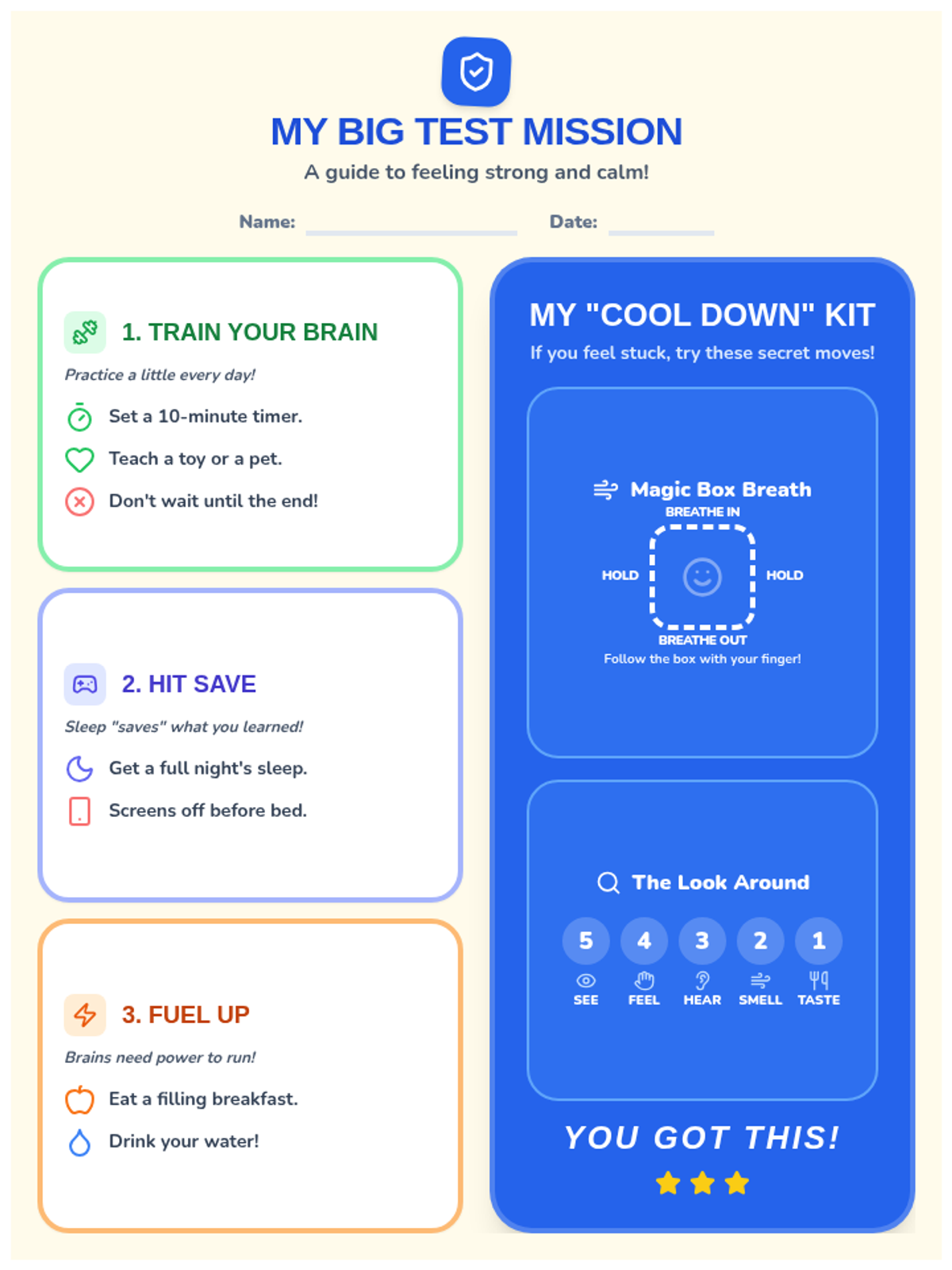
A social-emotional learning lesson for students in grades 3-6 to manage test anxiety through preparation strategies and in-the-moment coping skills.
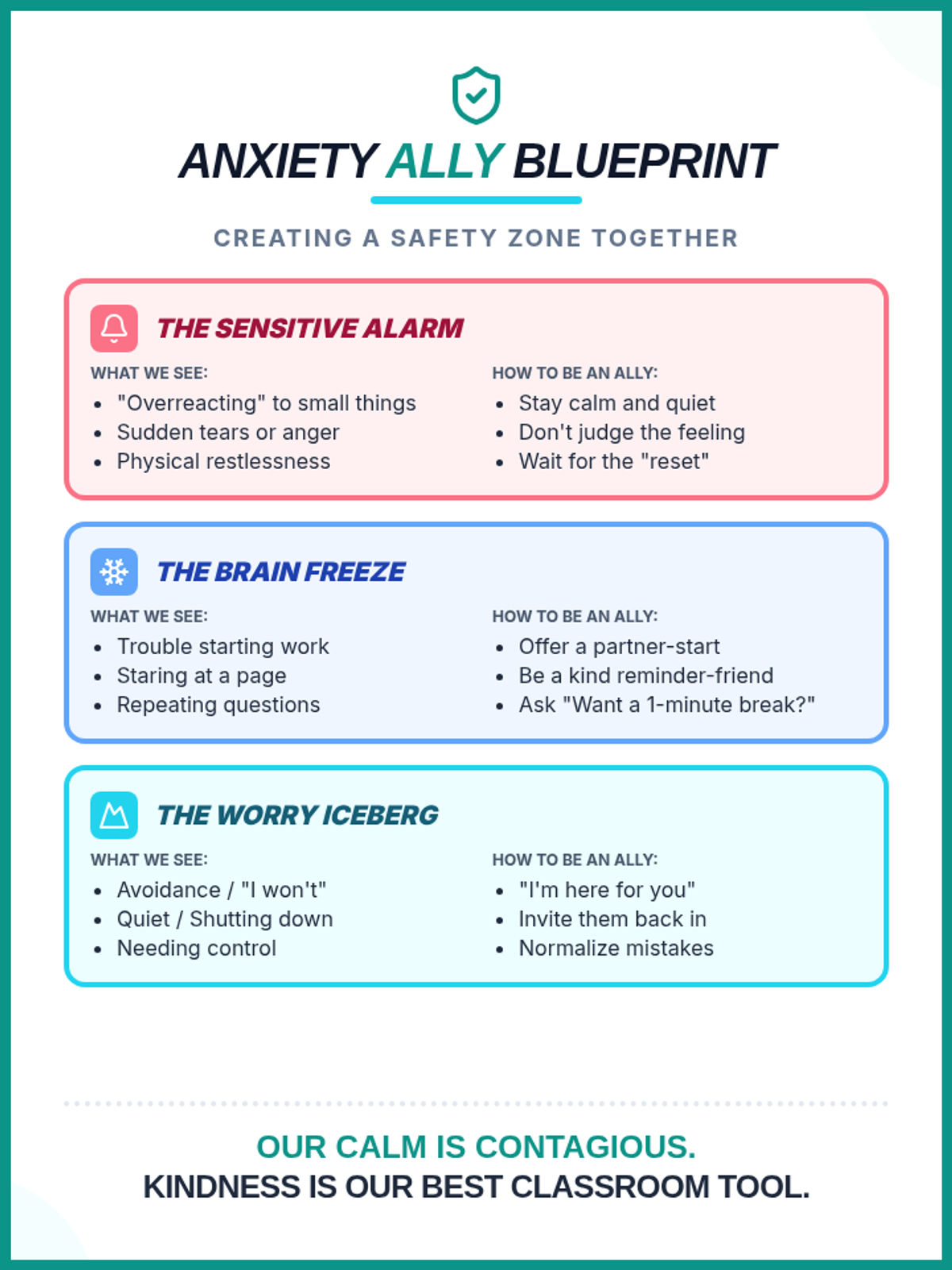
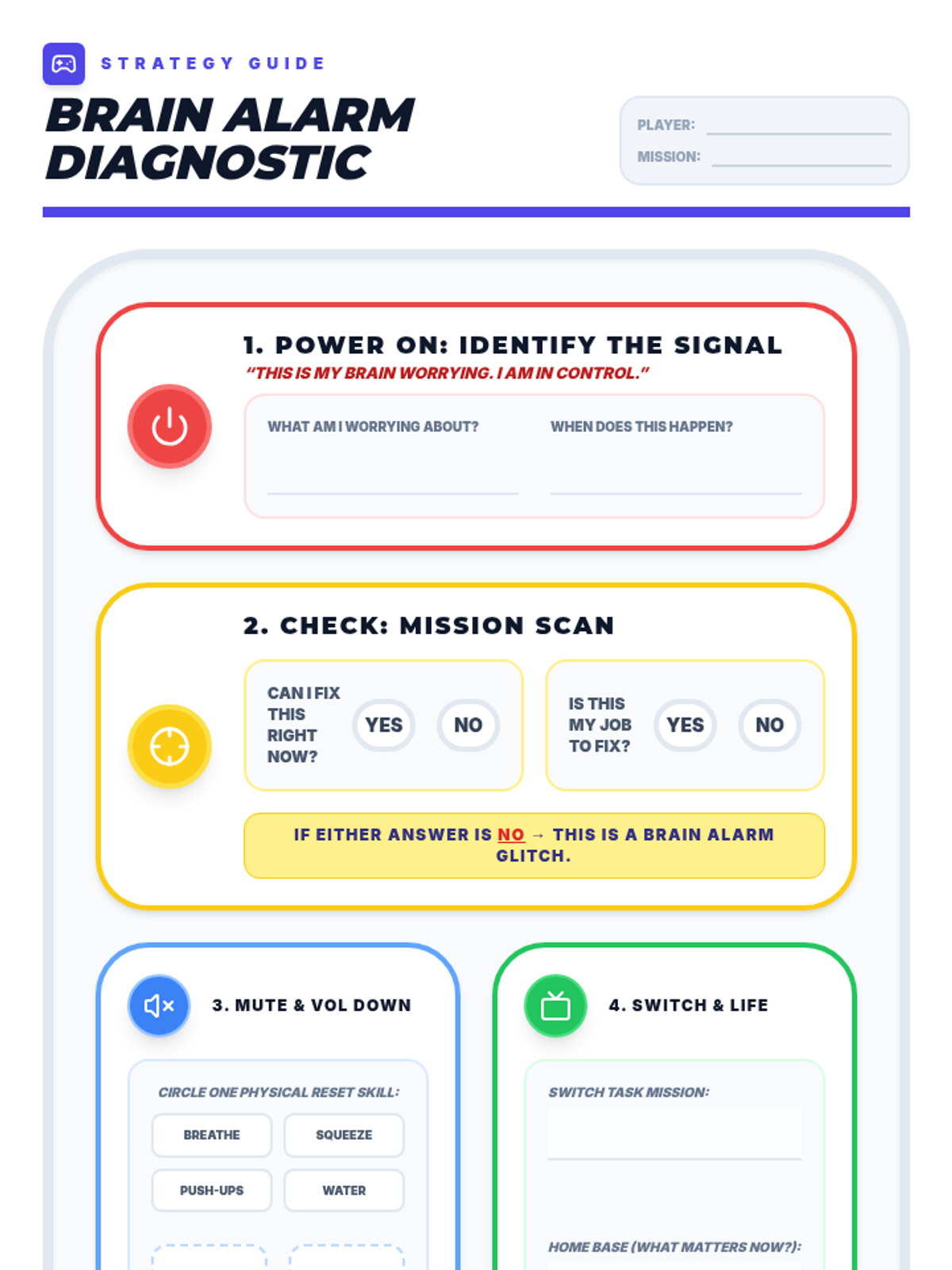
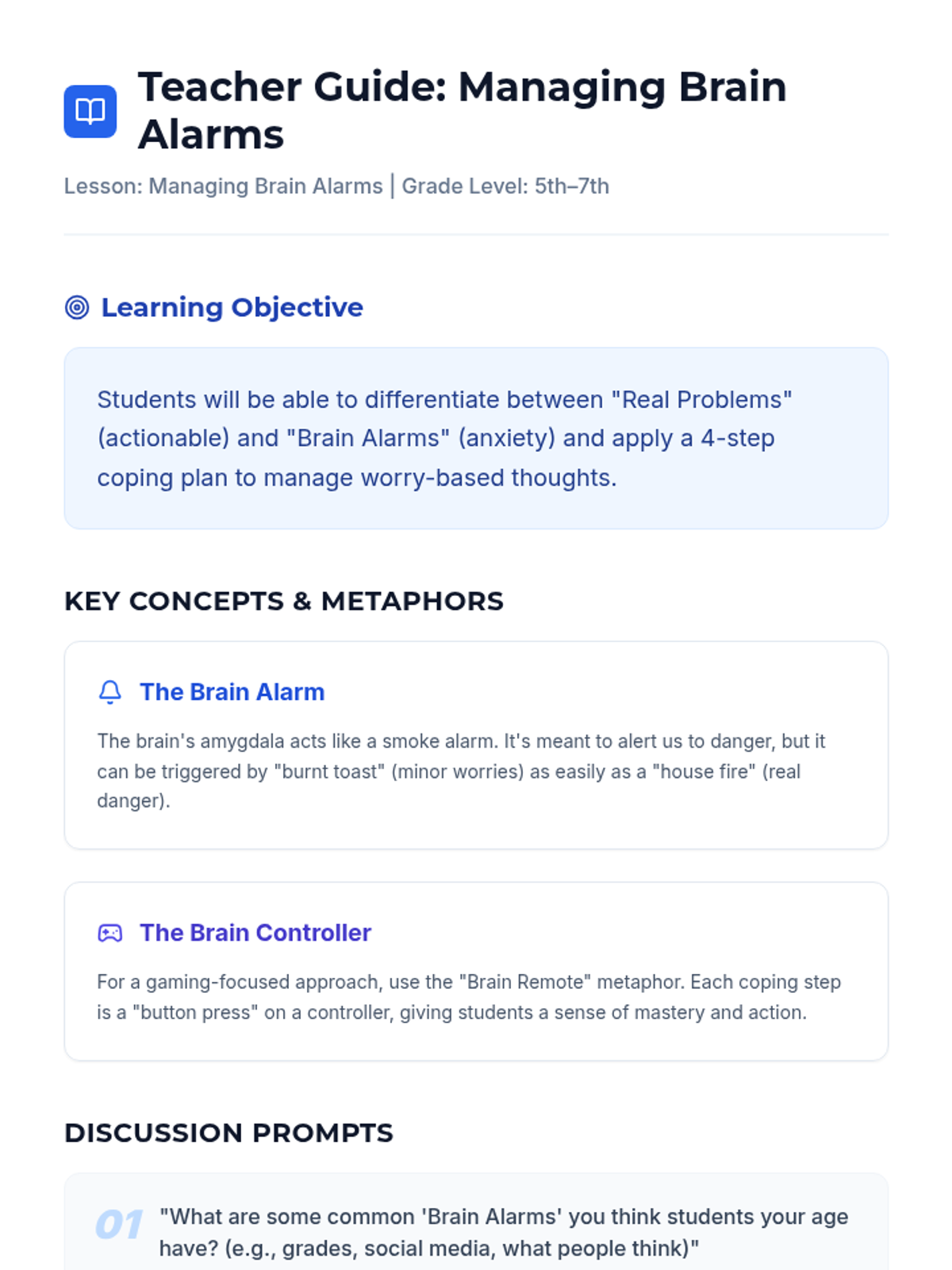
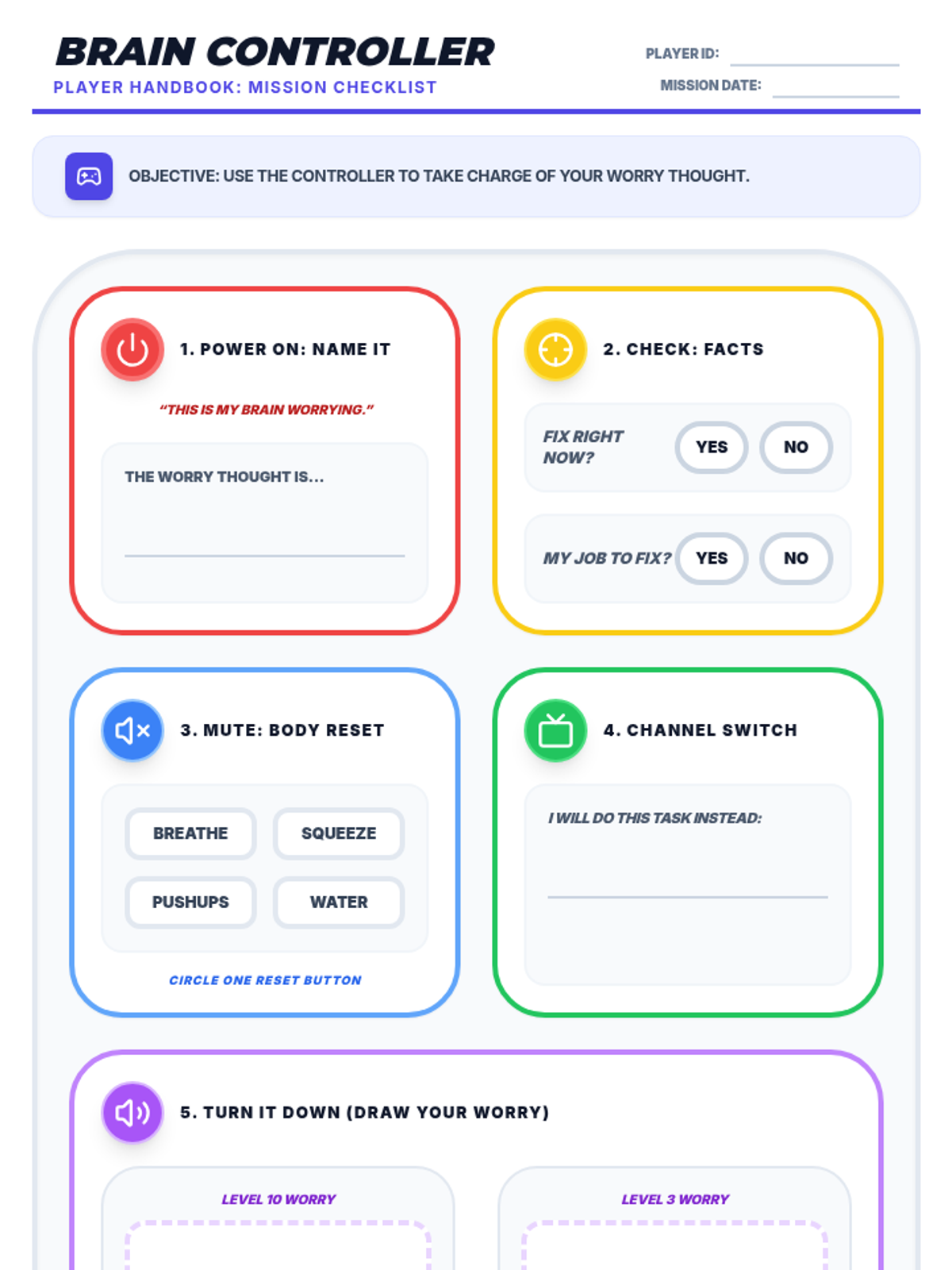
A lesson focused on helping students identify anxiety-driven thoughts as 'brain alarms' and developing a concrete step-by-step plan to manage them.
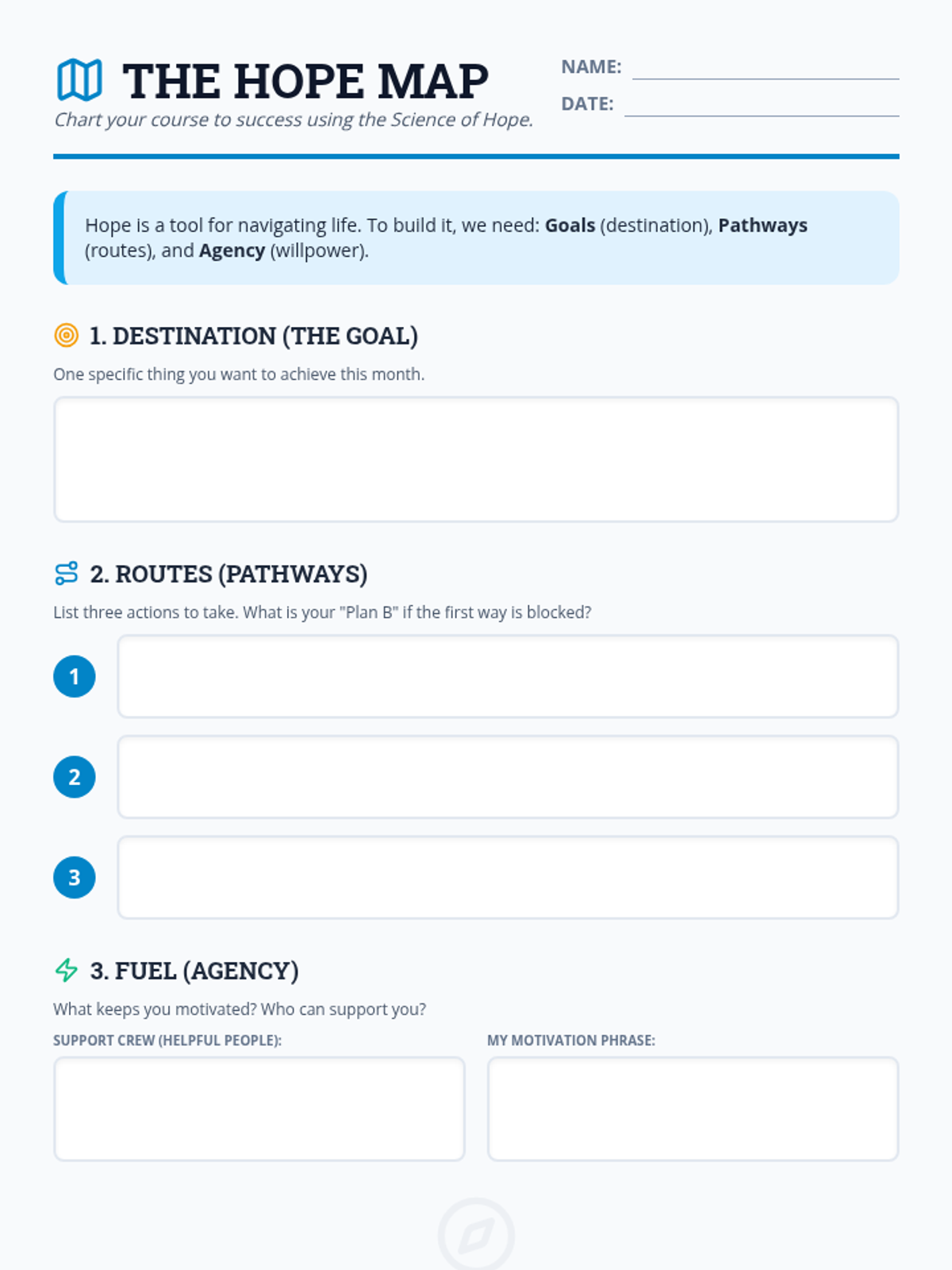
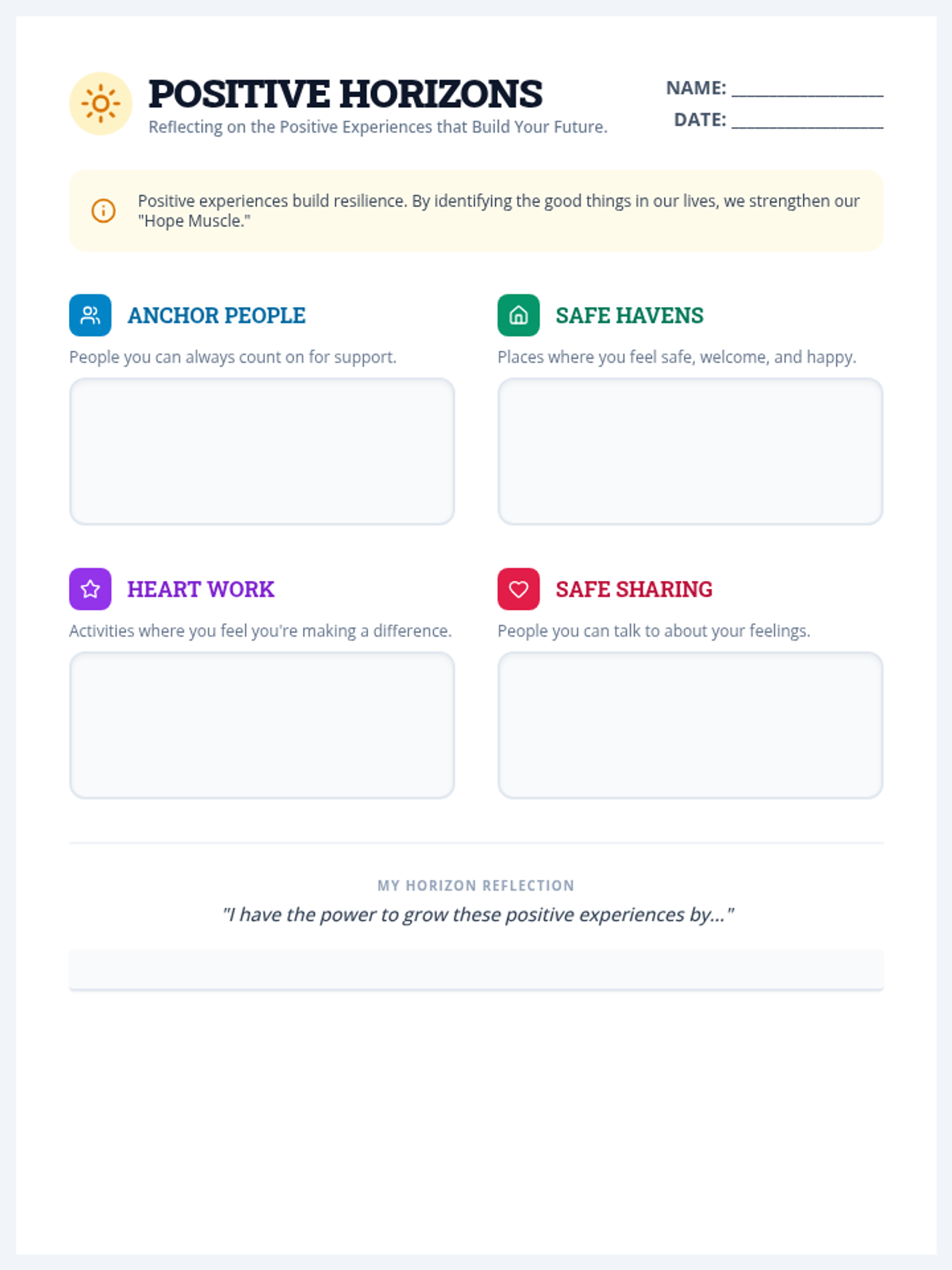
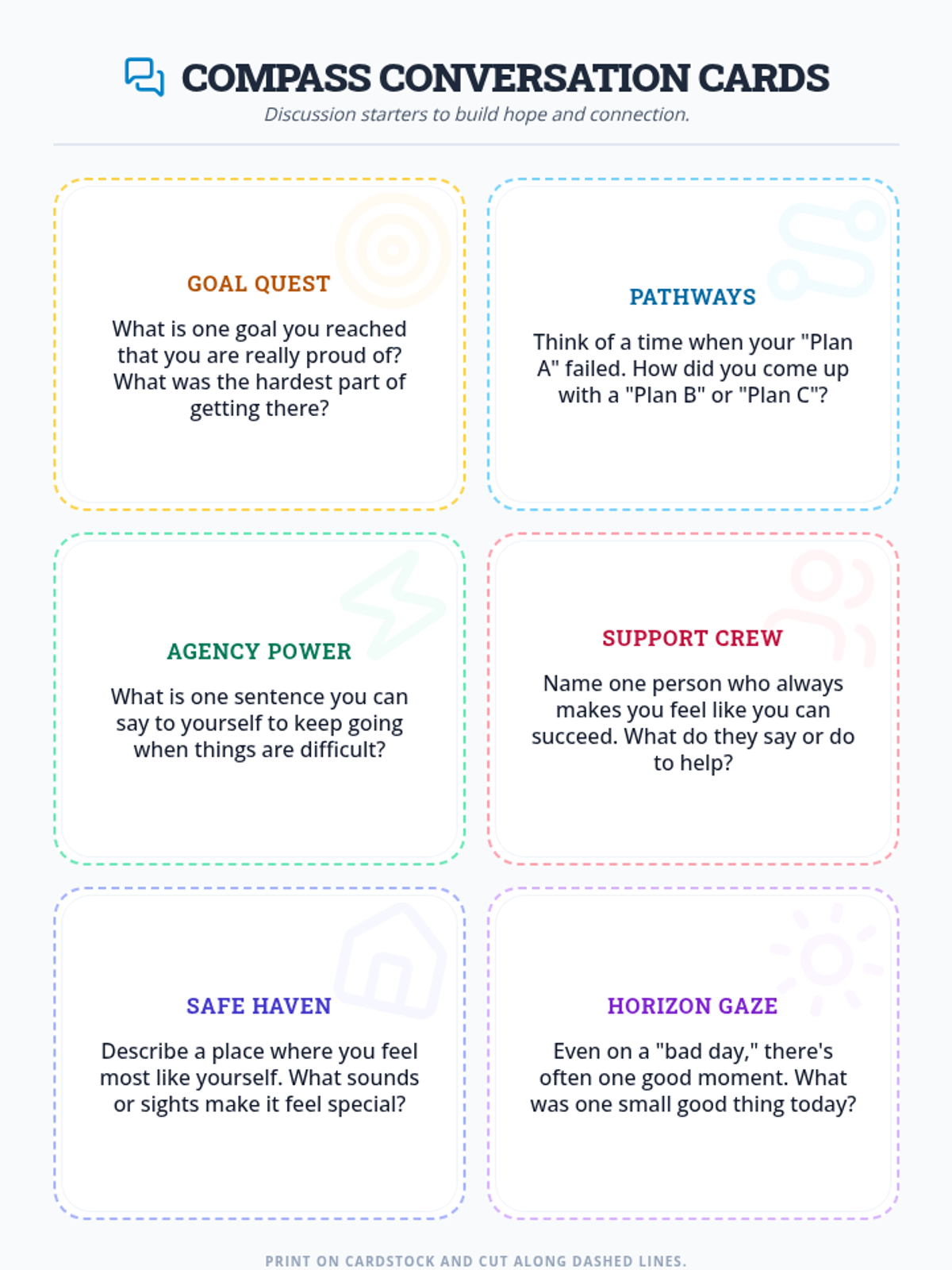
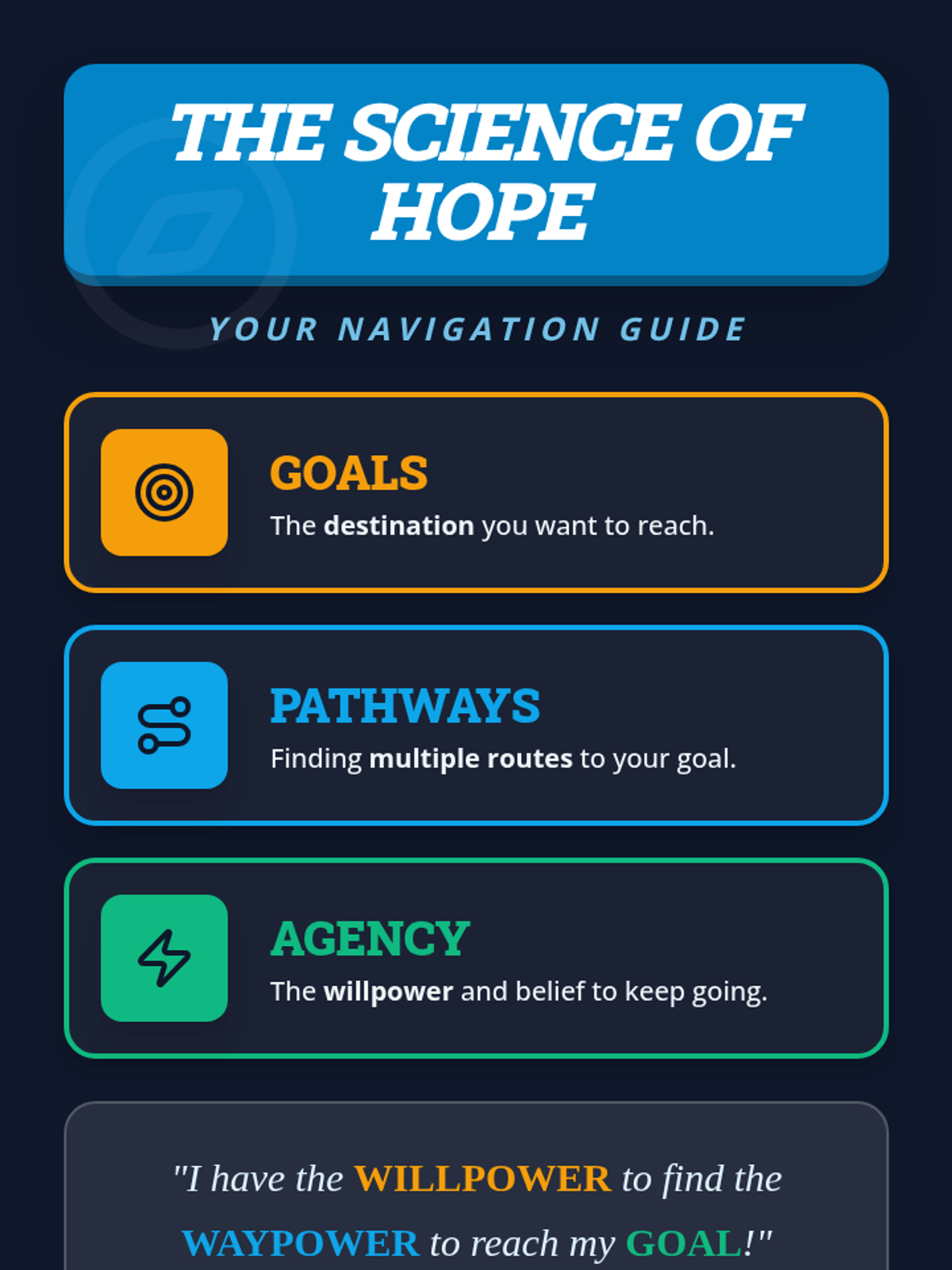
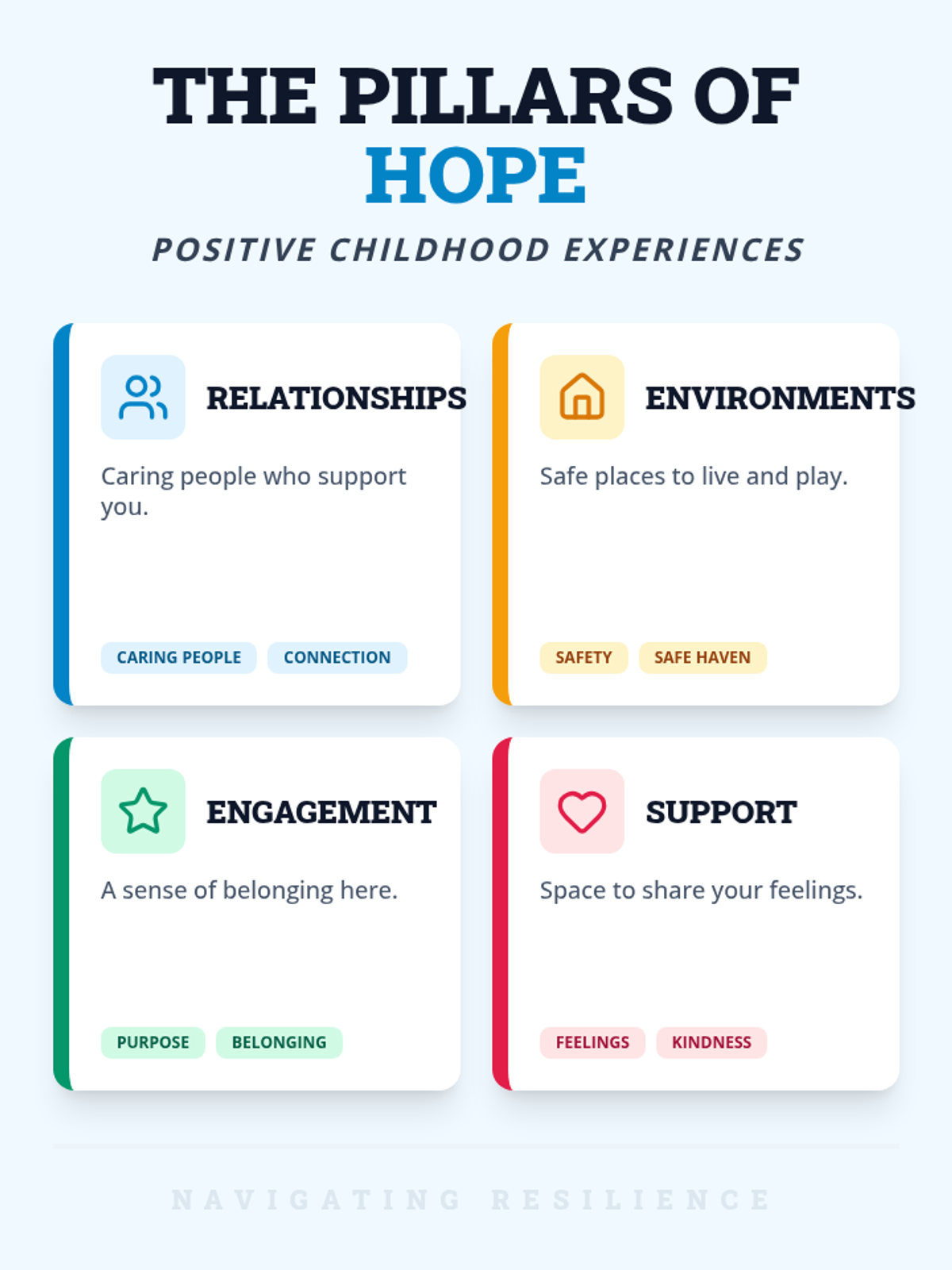
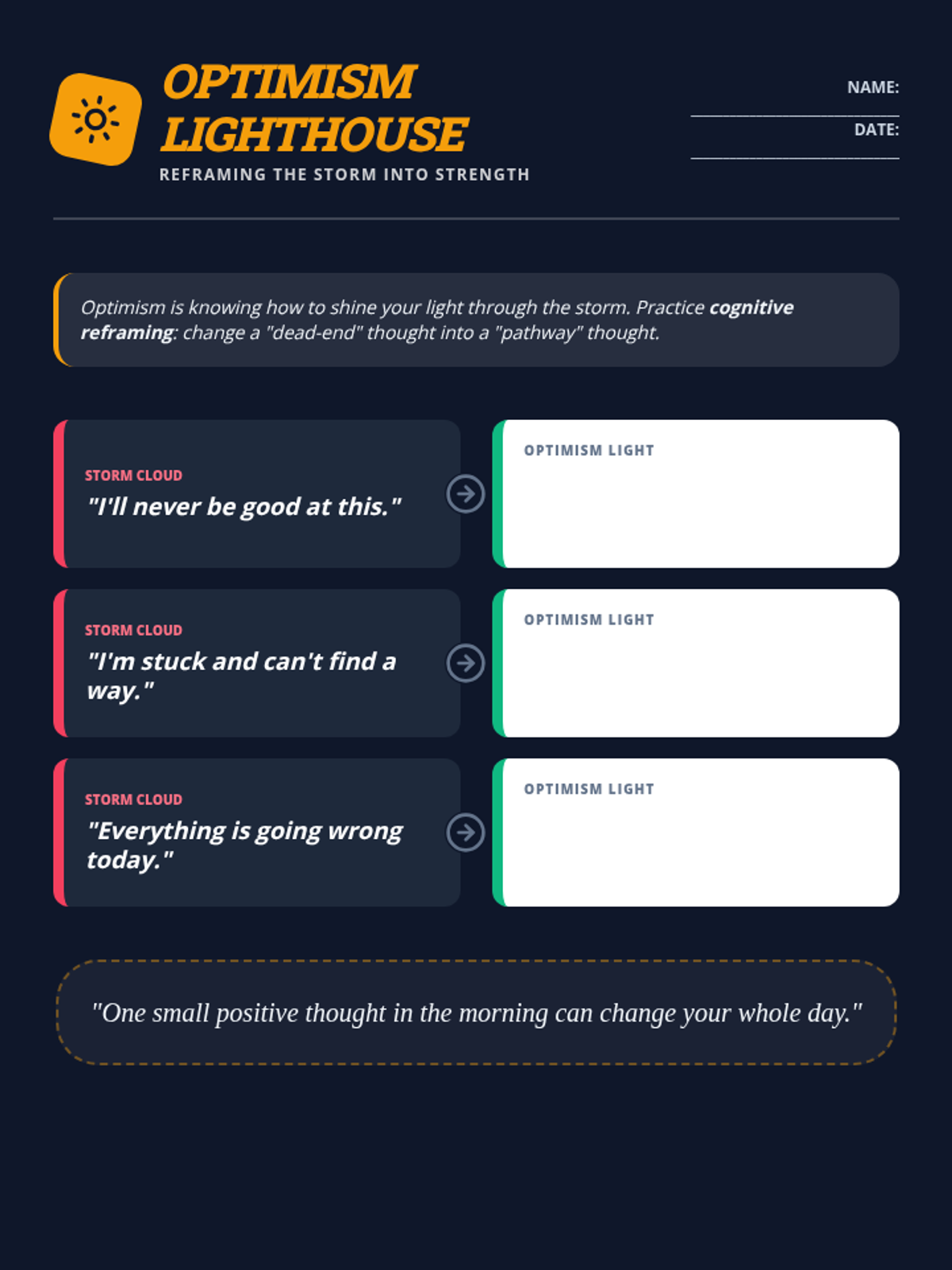
This lesson introduces students to the components of hope (Goals, Agency, Pathways) and the importance of positive childhood experiences. Students will reflect on their strengths, set practical goals, and identify the support systems that help them navigate life.
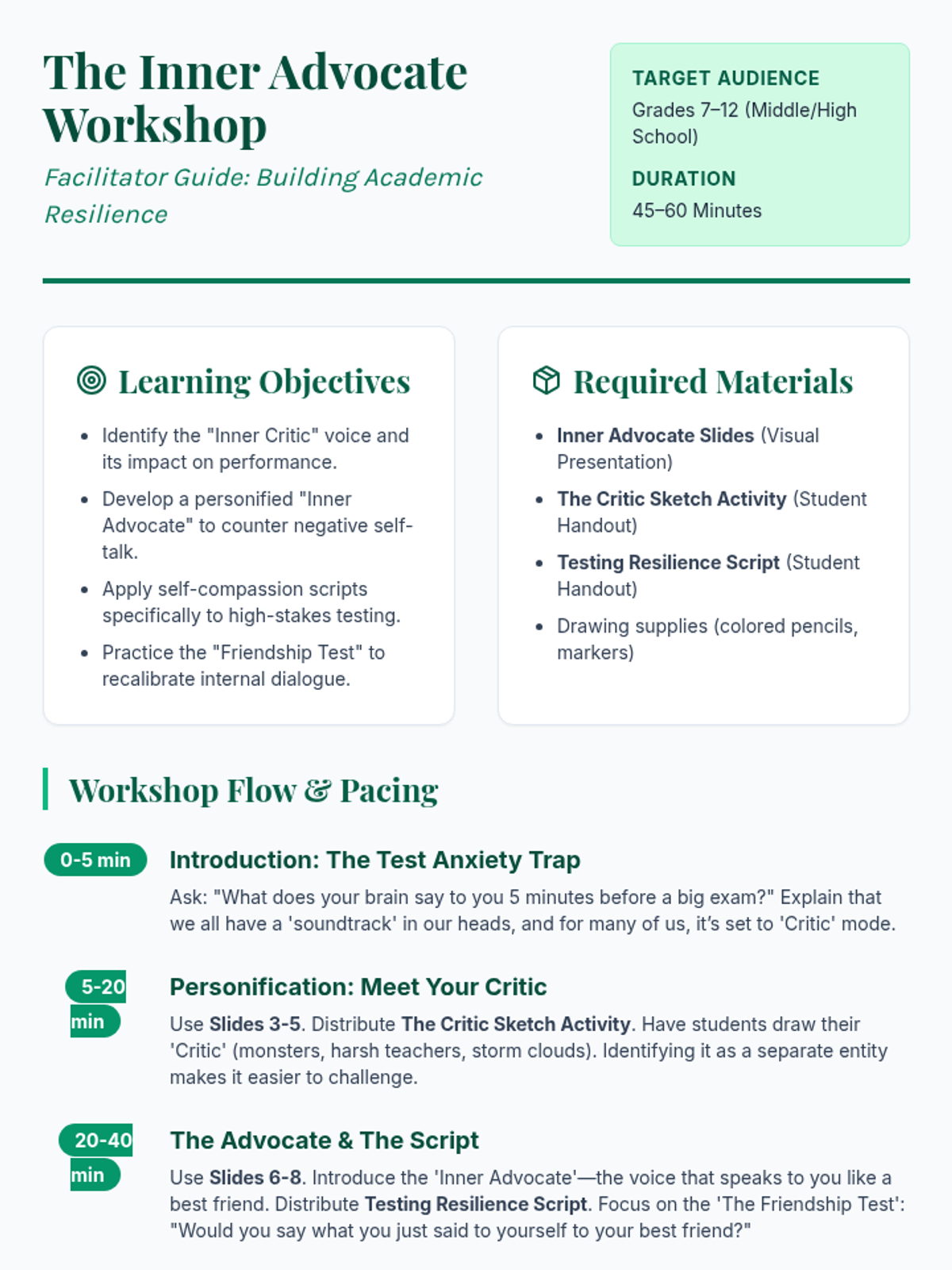
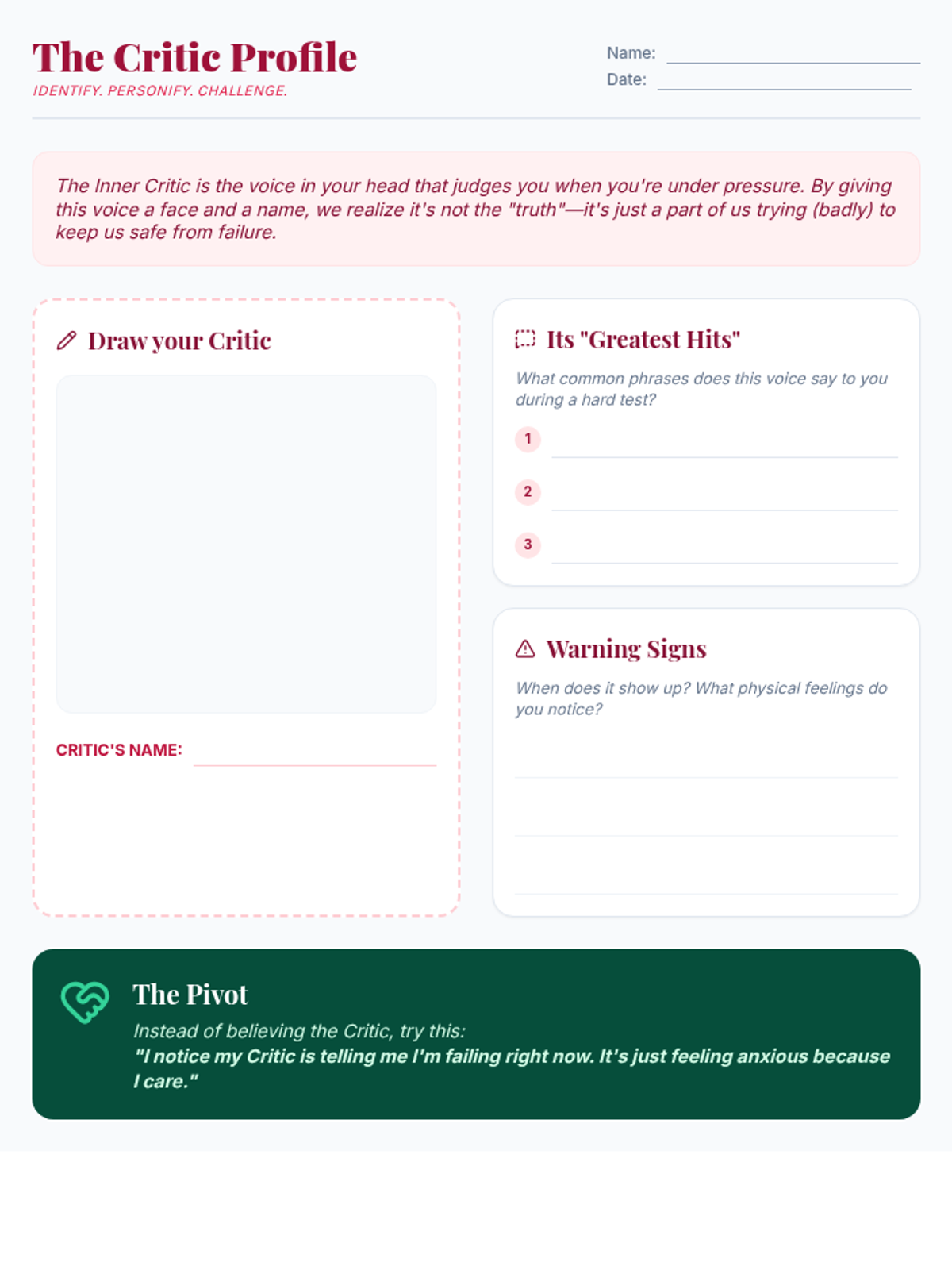
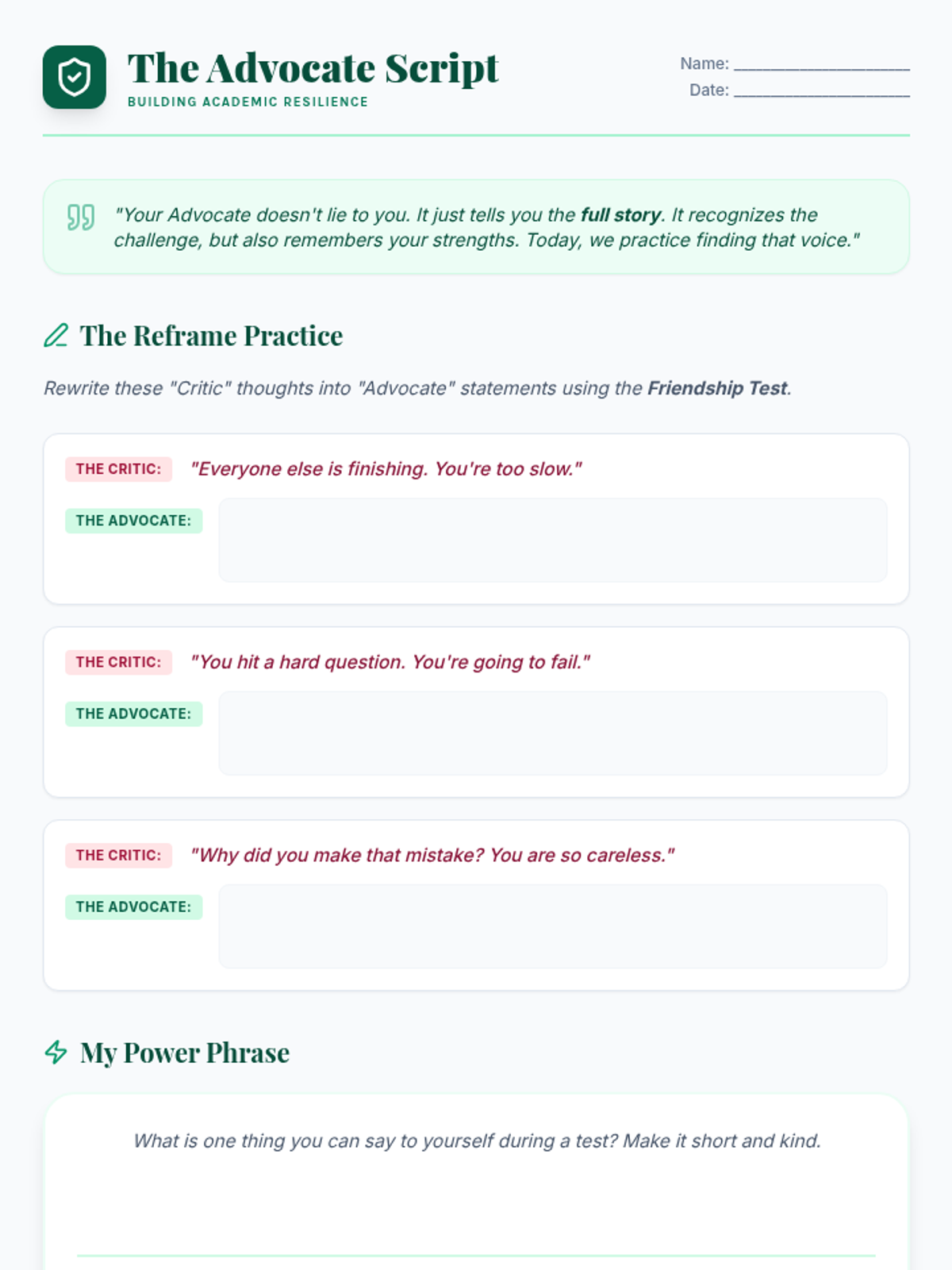
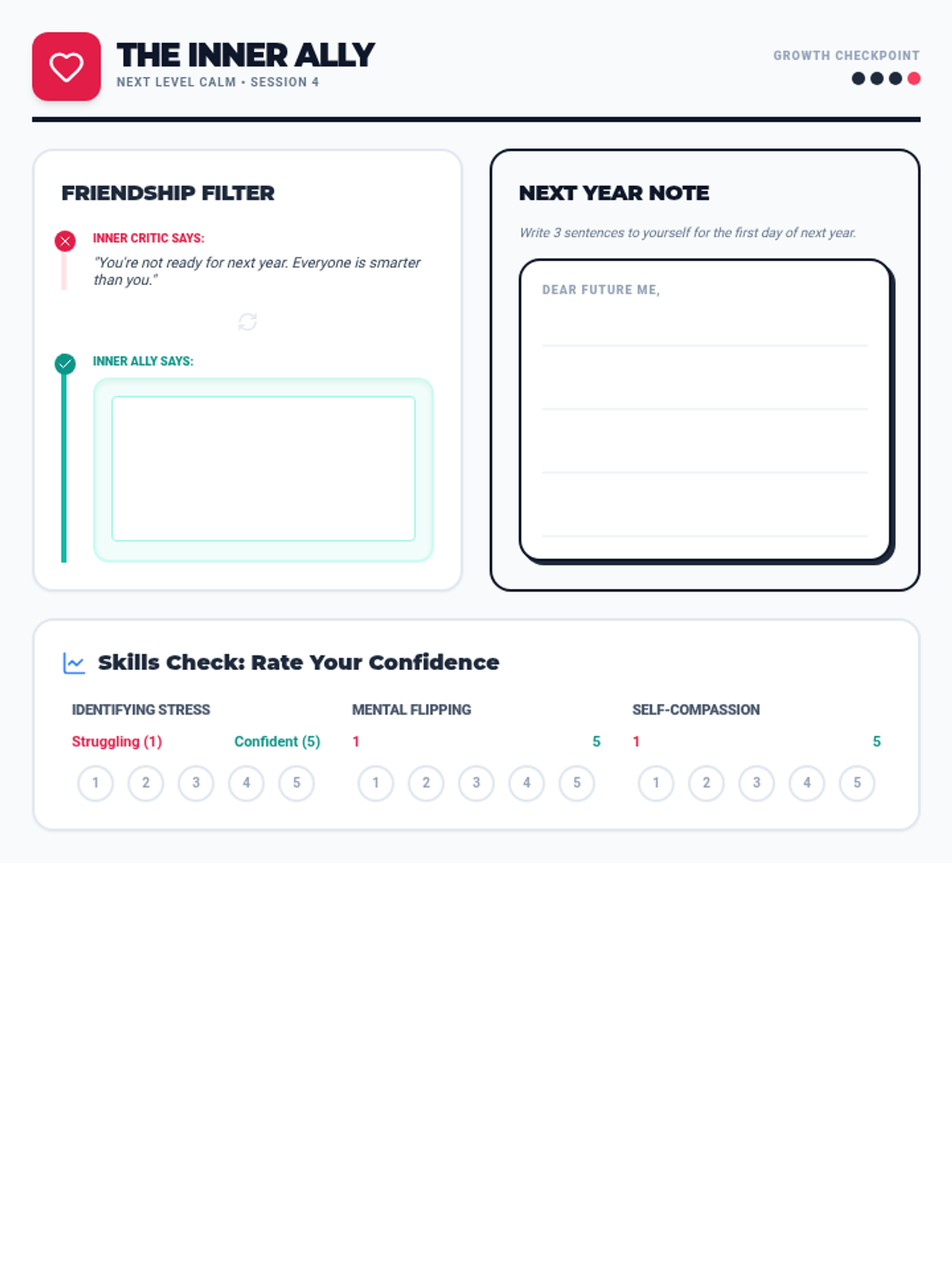
A transformative workshop for middle and high school students to swap their 'inner critic' for an 'inner advocate,' building resilience and self-compassion to navigate high-stakes testing and academic pressure.
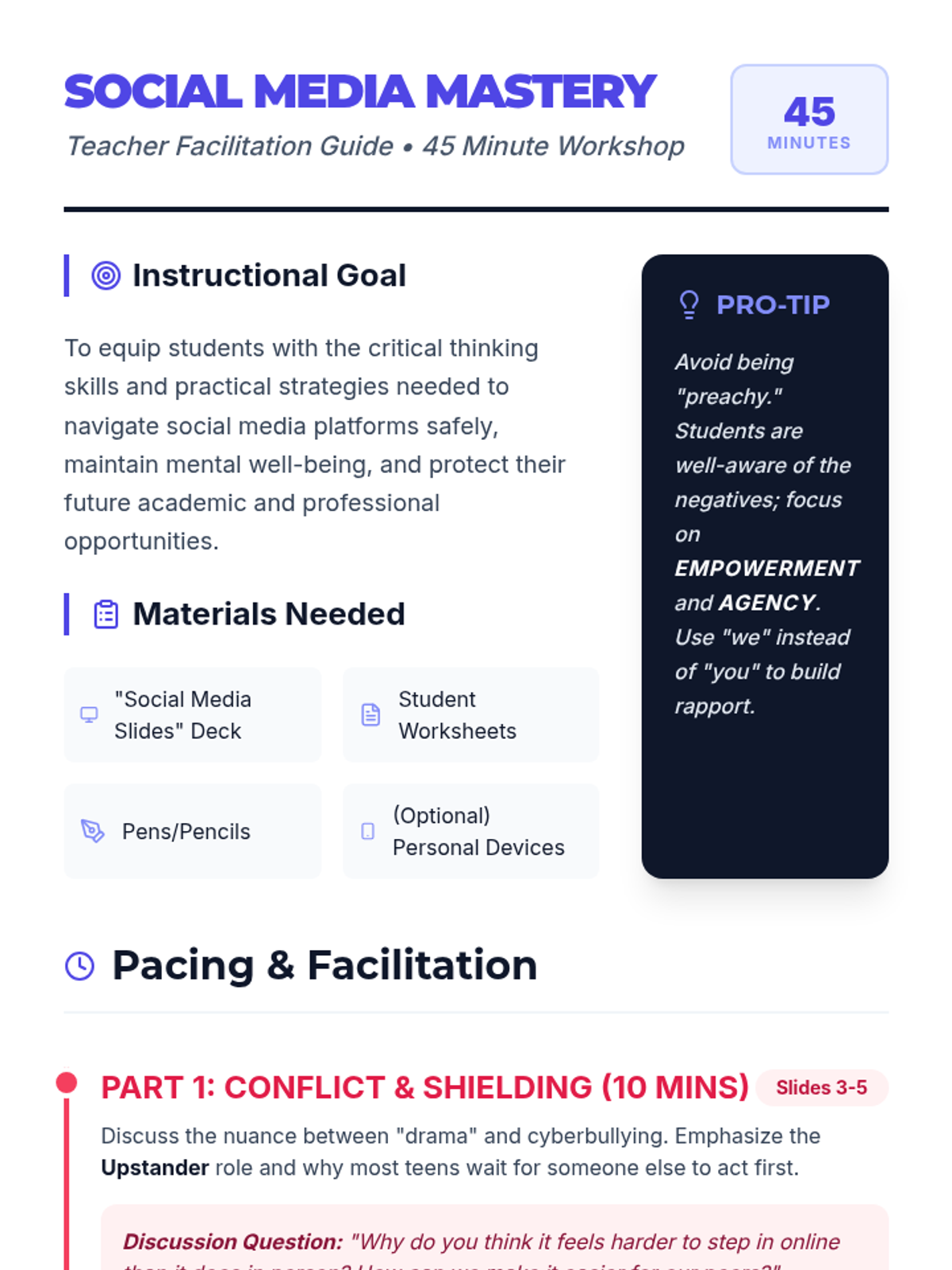
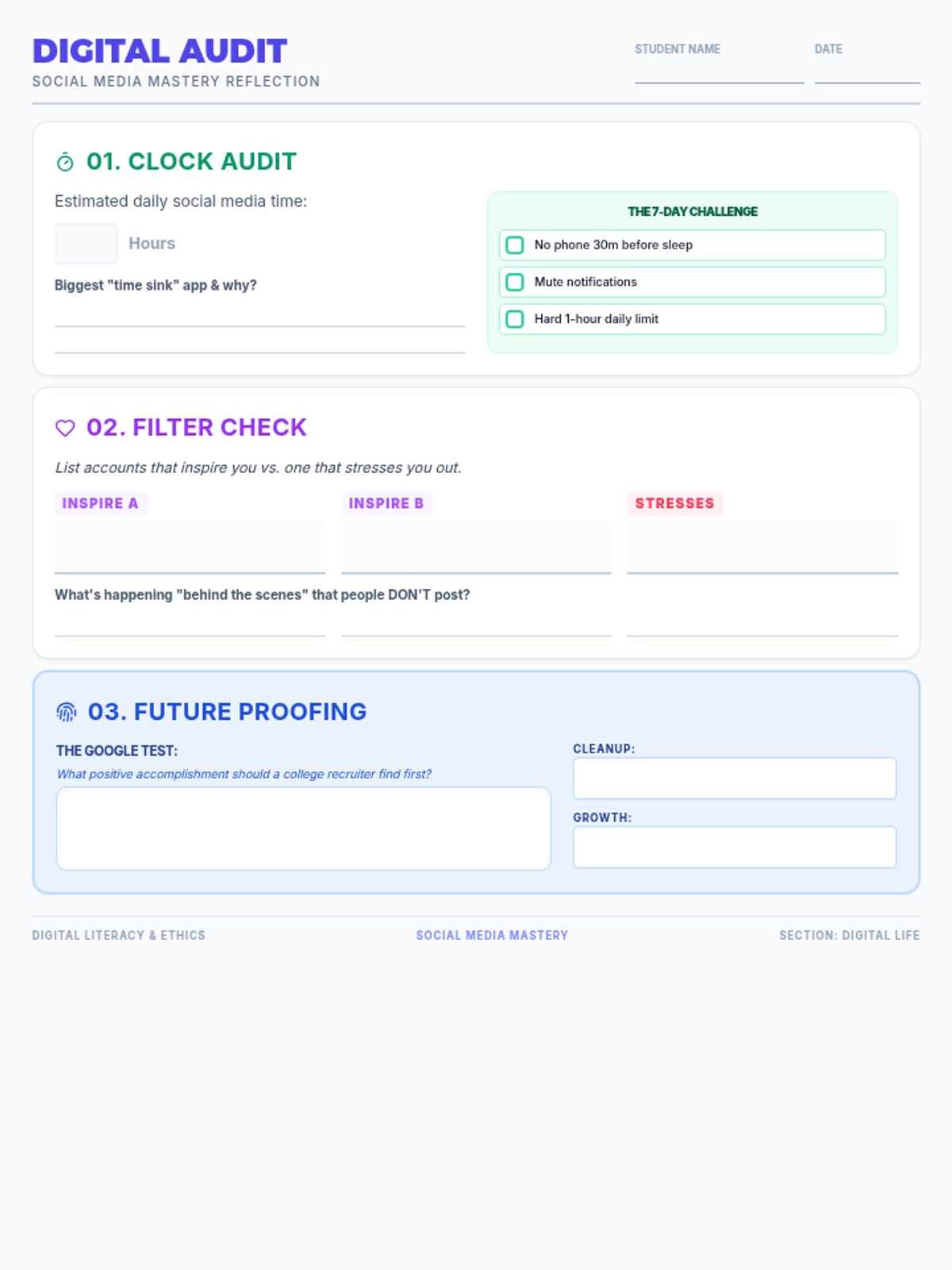
A comprehensive 45-minute lesson covering the critical pillars of responsible social media use, including digital citizenship, mental well-being, and future-proofing one's online presence.
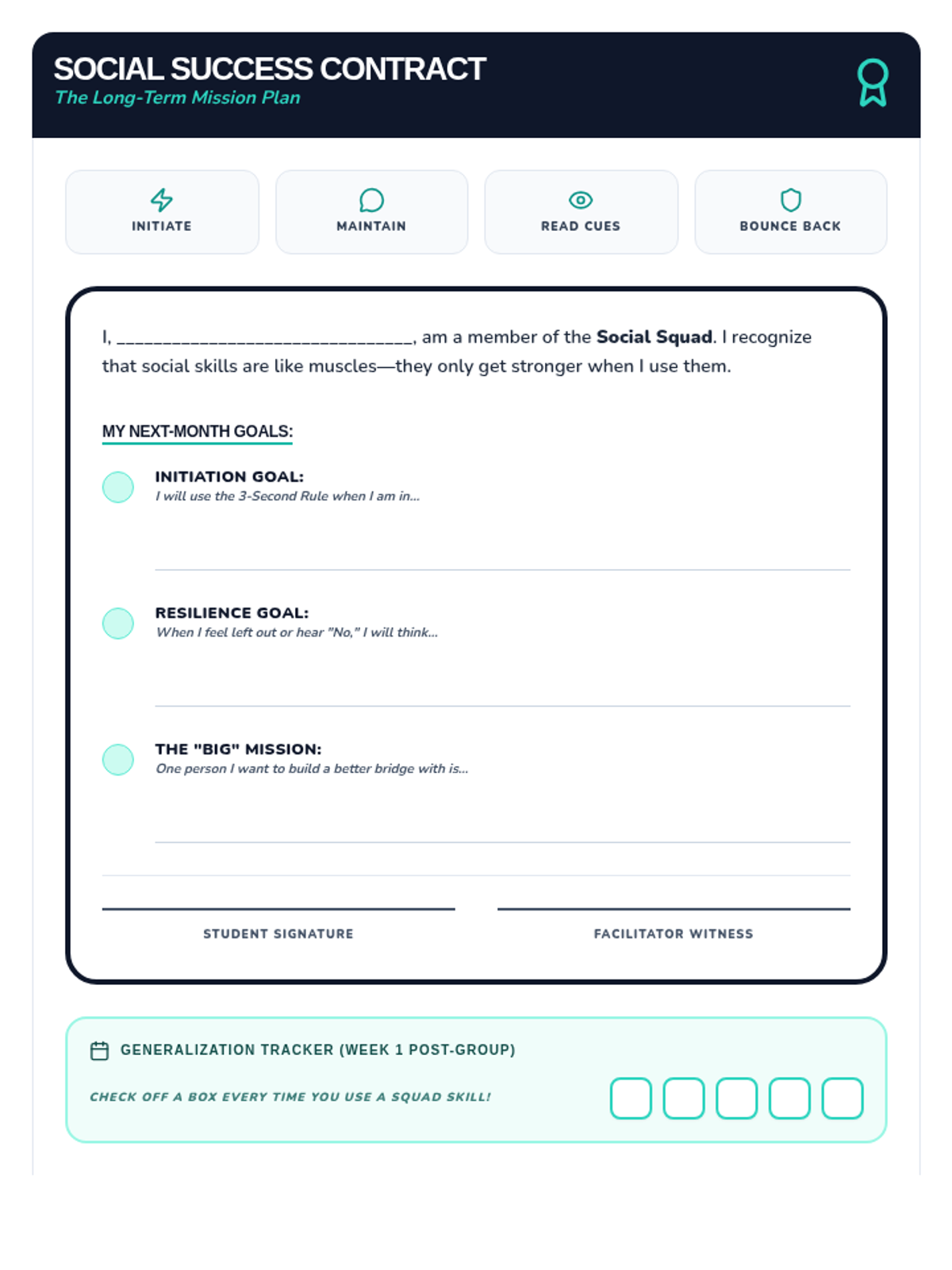
Learning strategies for repairing damaged peer relationships and creating a long-term generalization plan for social success.
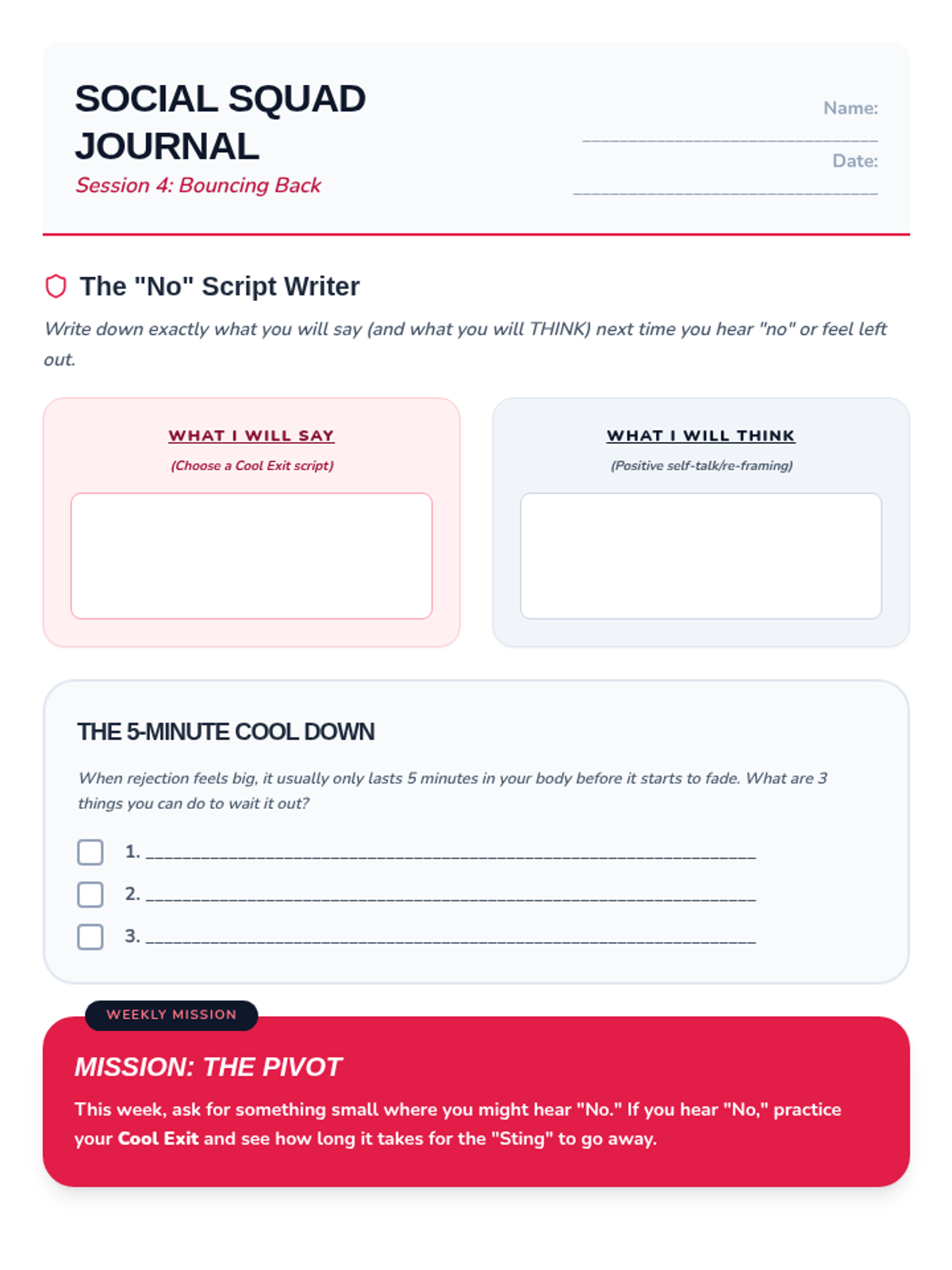
Building resilience by learning how to handle social rejection and setbacks without losing confidence or acting out.
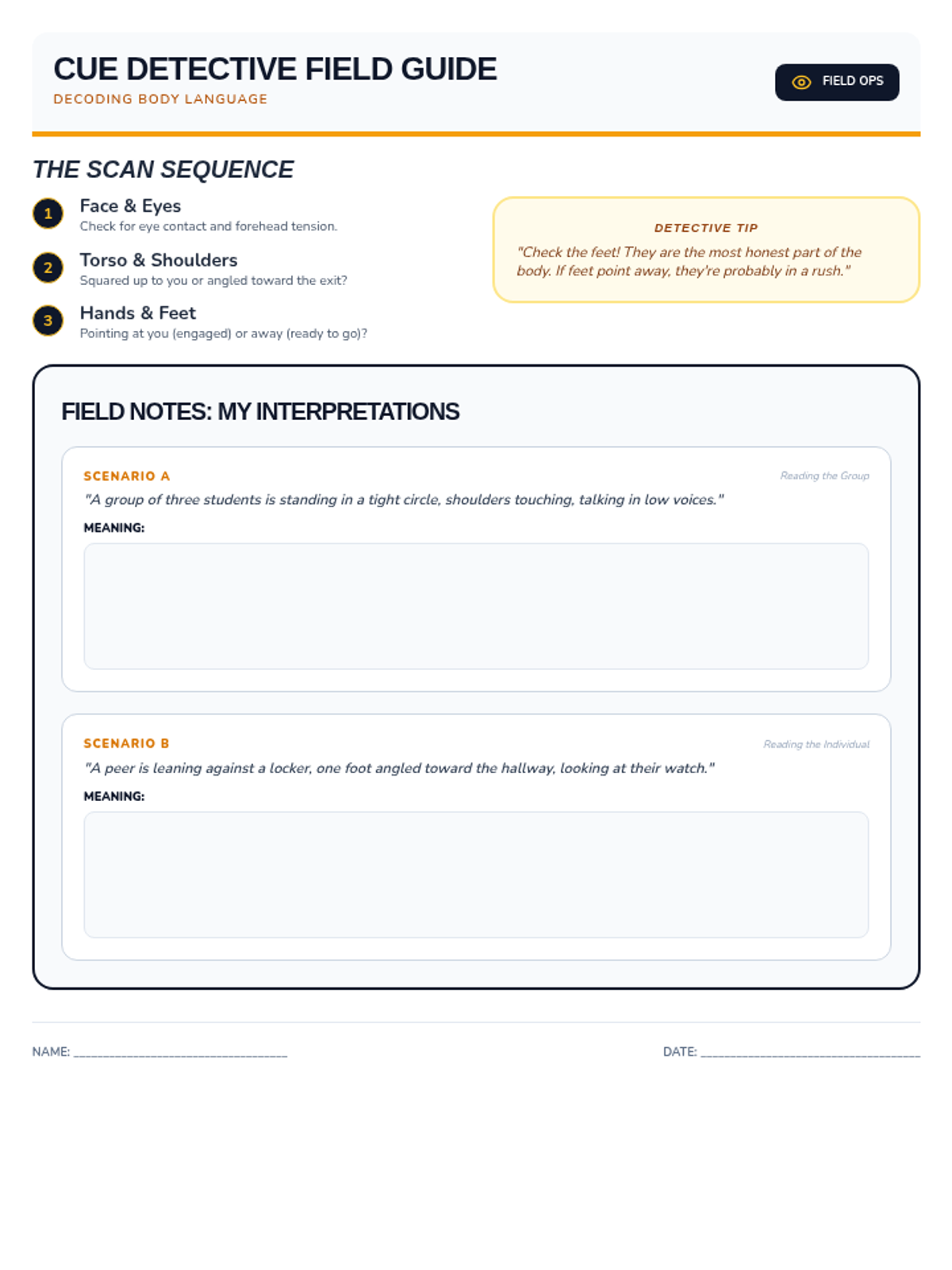
Identifying and interpreting non-verbal social cues, body language, and tone of voice to better 'read the room.'
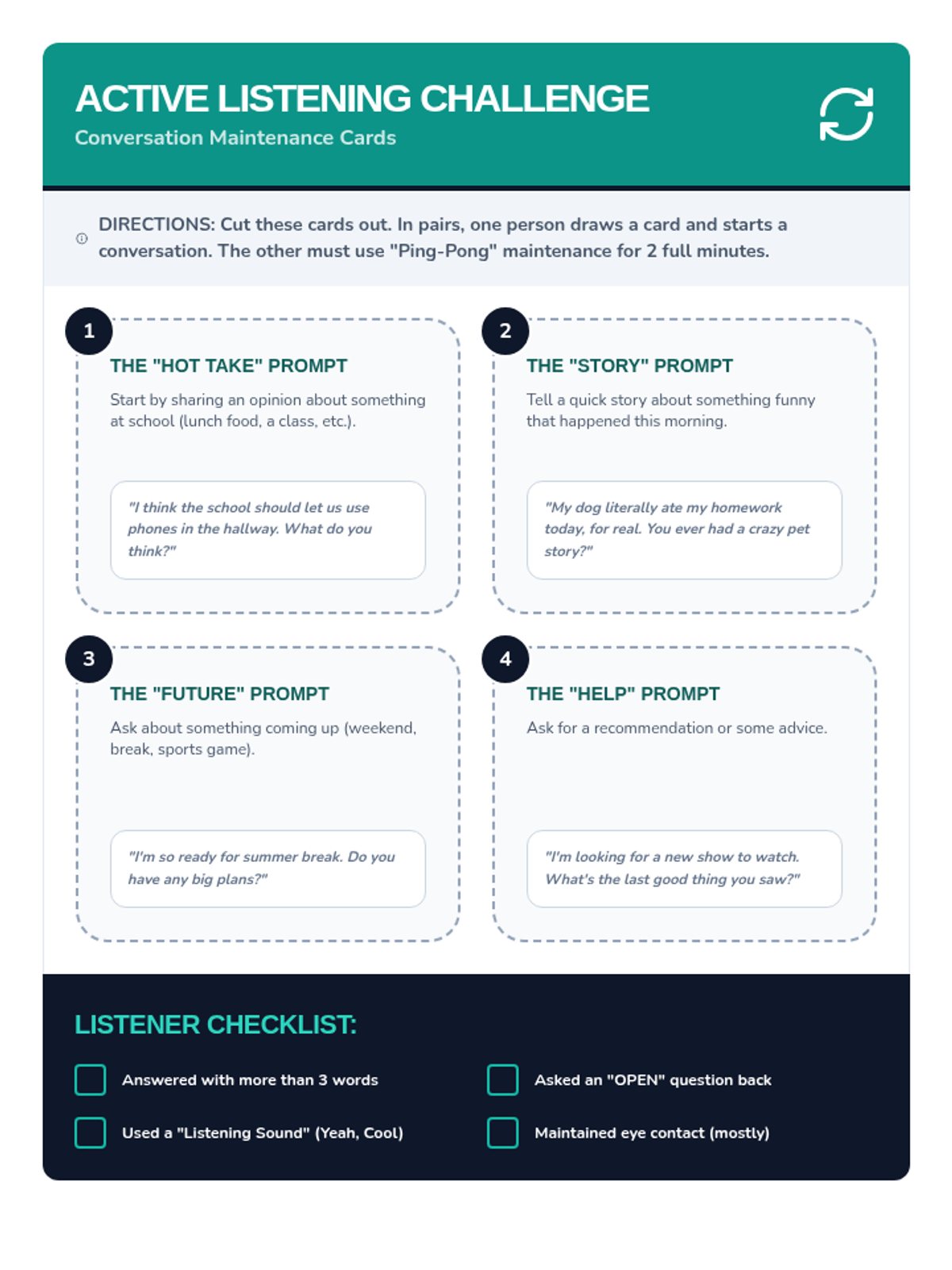
Developing skills to maintain conversations through active listening, asking open-ended questions, and managing social 'ping-pong.'
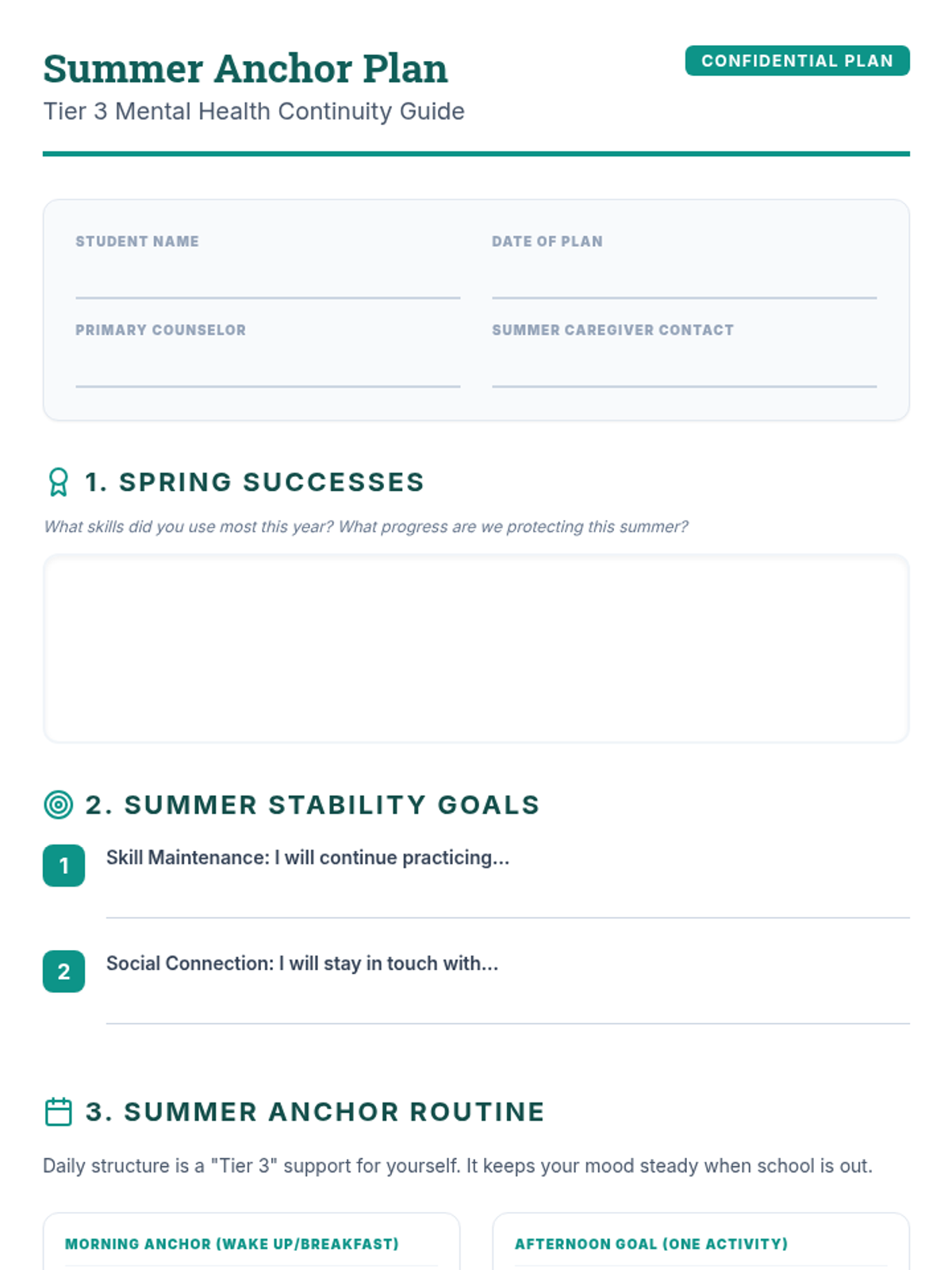
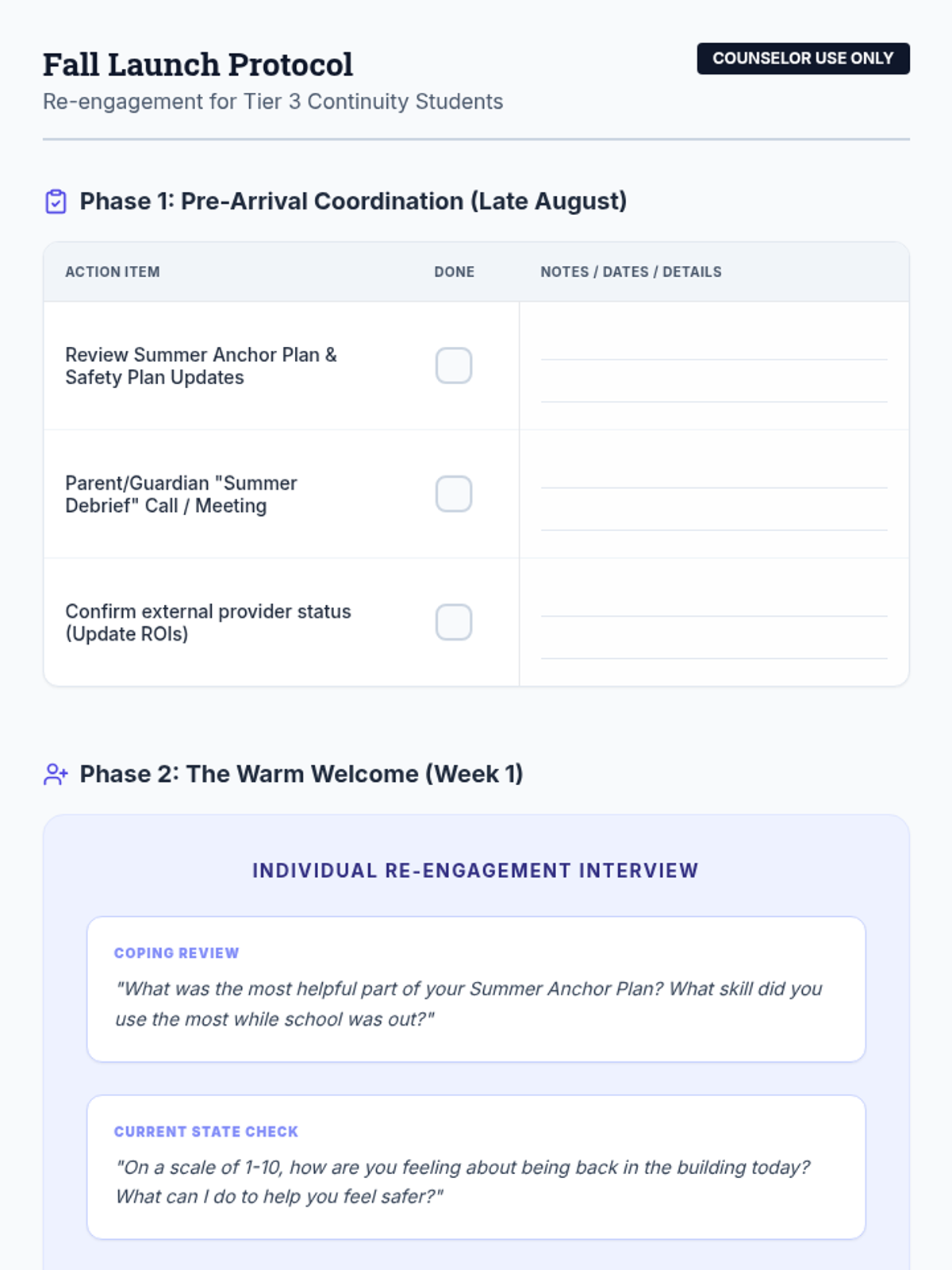
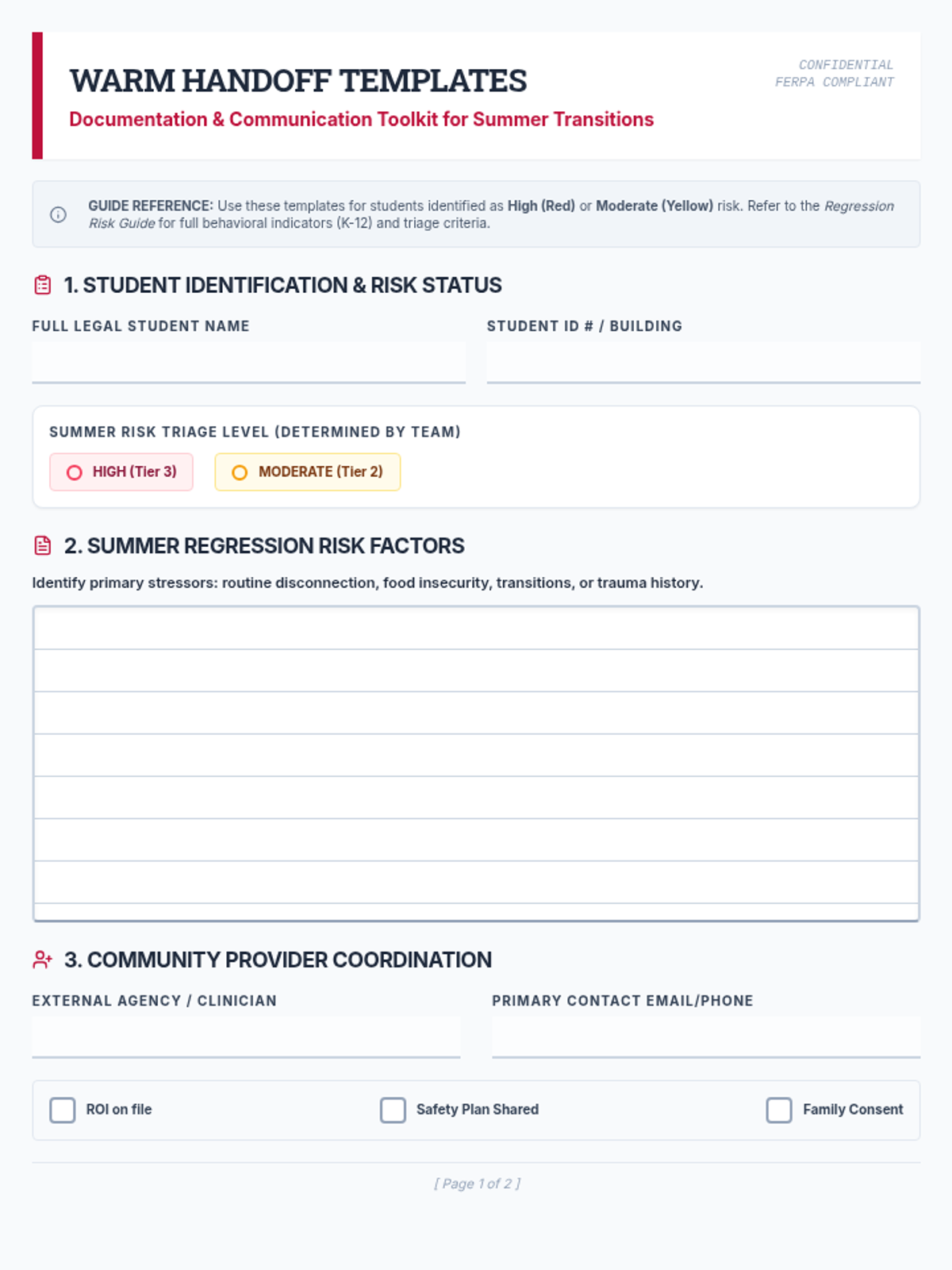
A structured framework for school counselors to facilitate the transition of Tier 3 students to summer break, ensuring continuity of care and crisis preparedness.
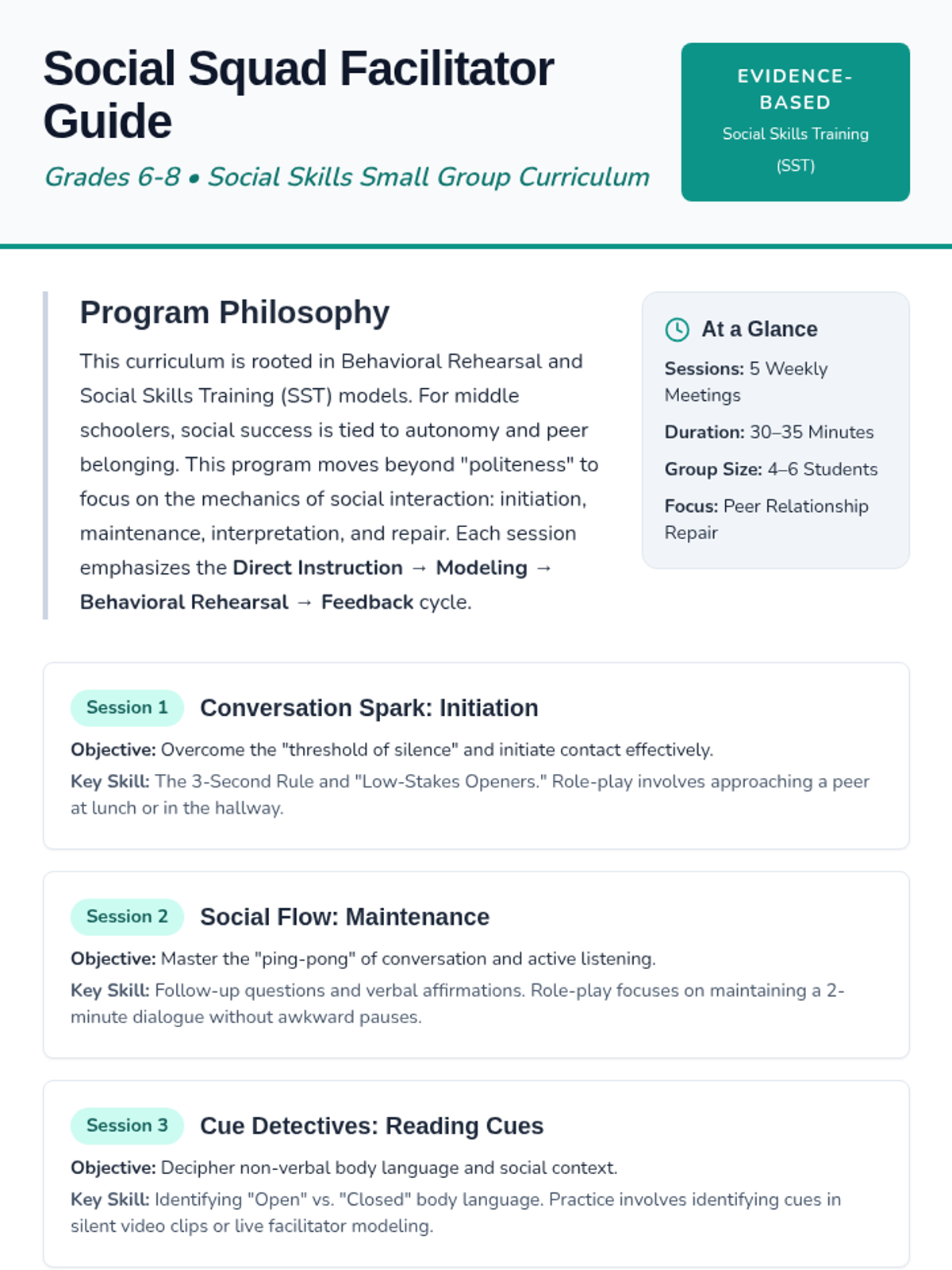
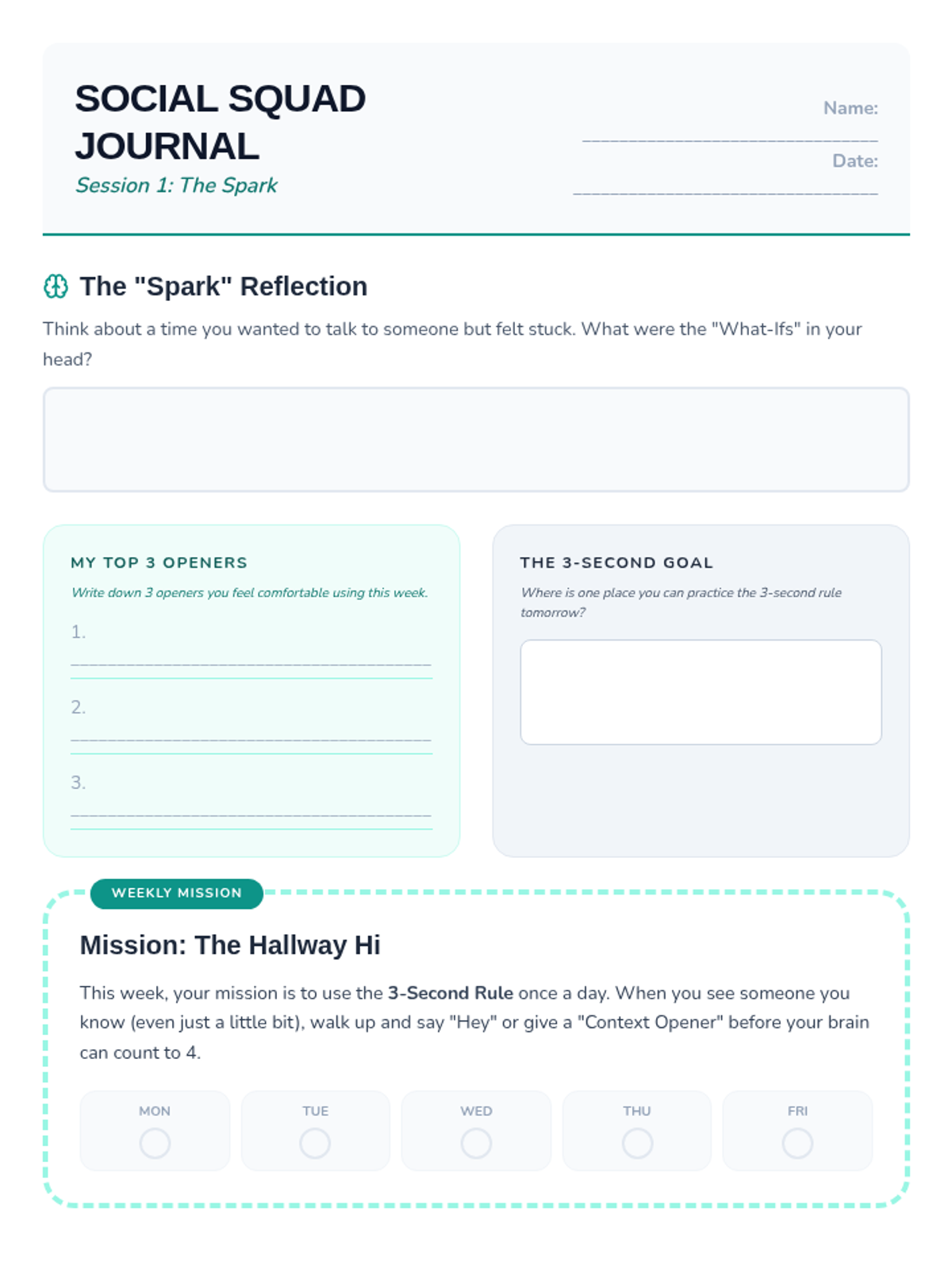
Introduction to group norms and learning how to effectively initiate conversations with peers using the 'Three-Second Rule' and 'OARS' model.
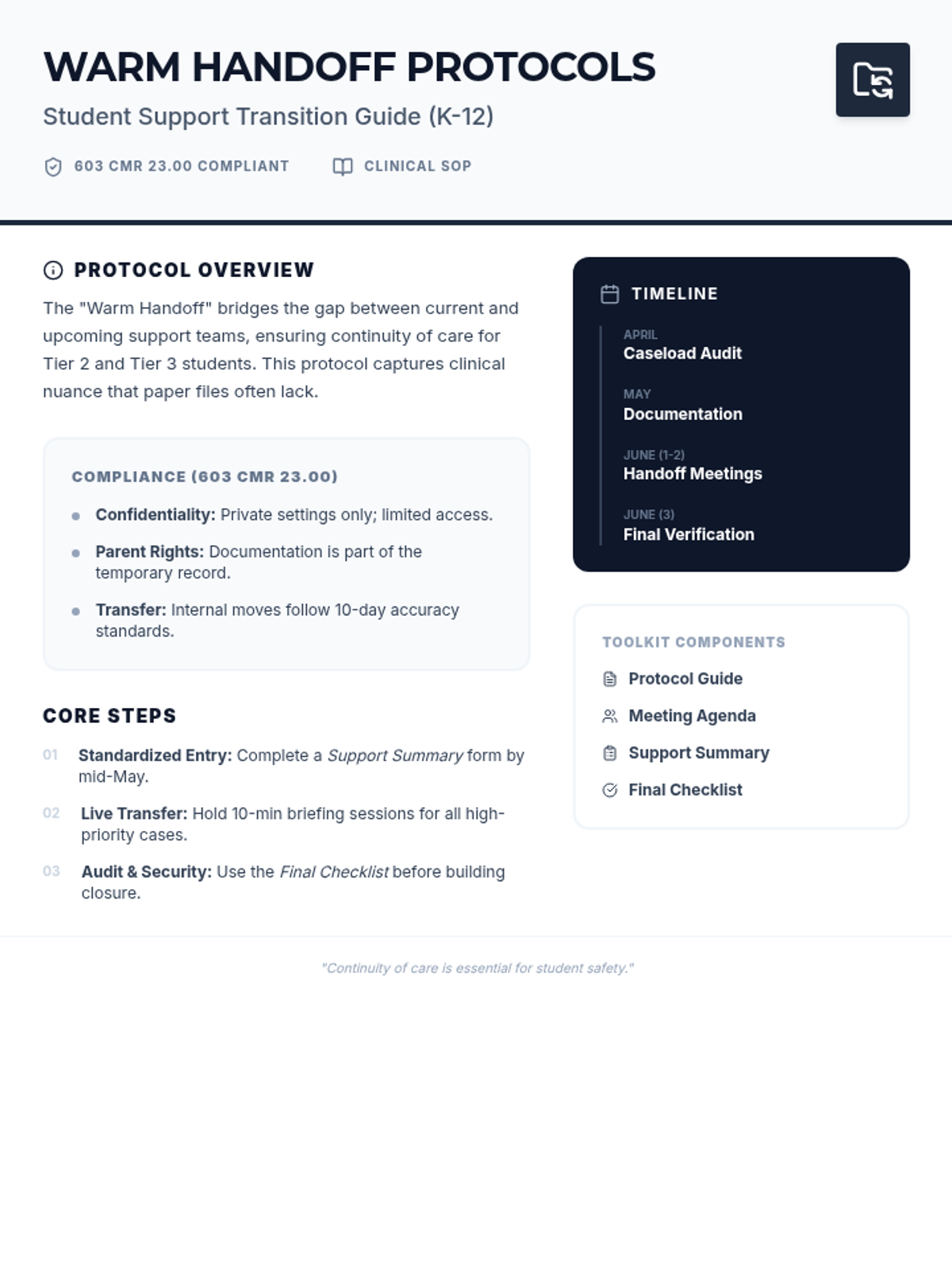
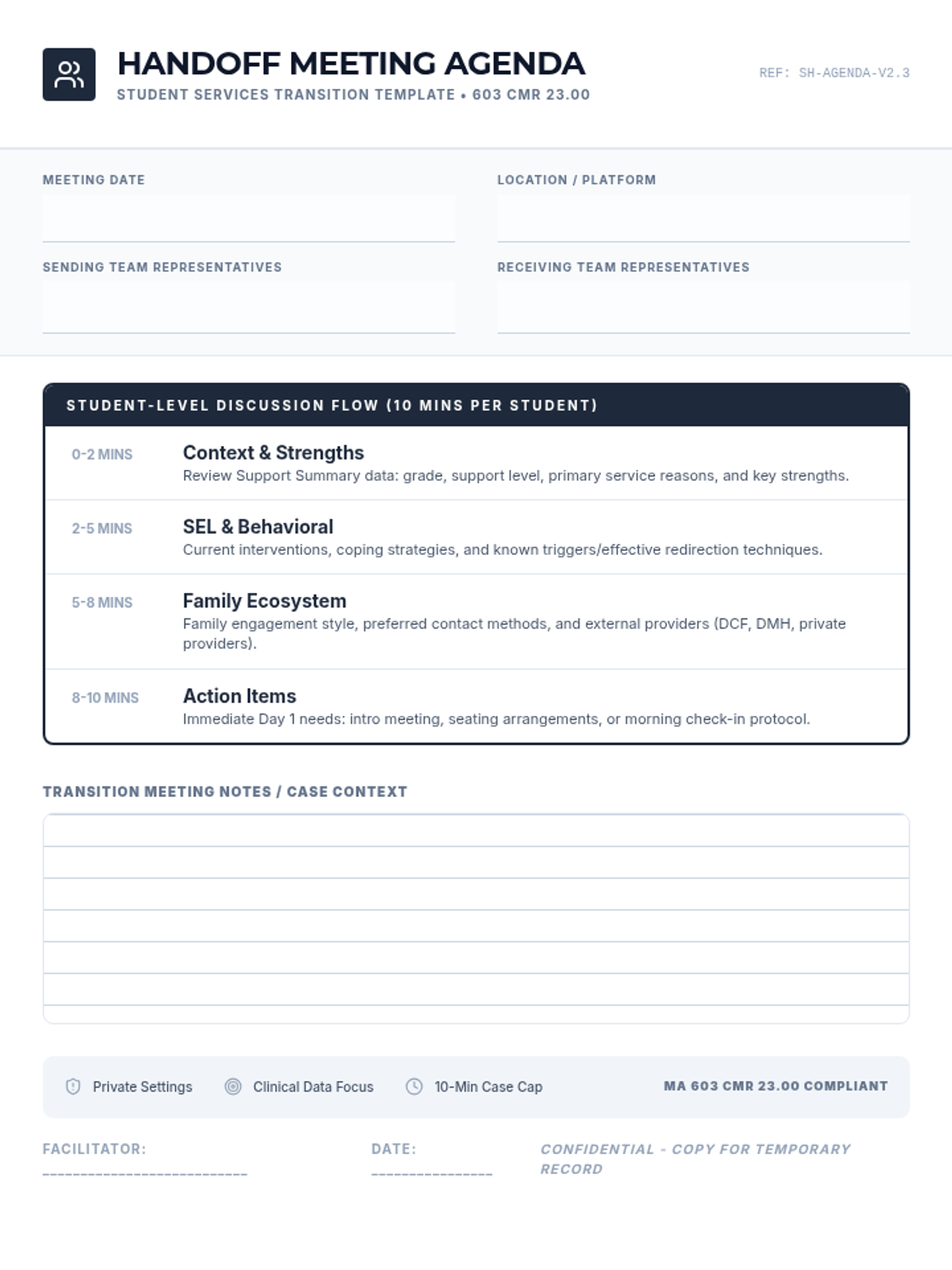
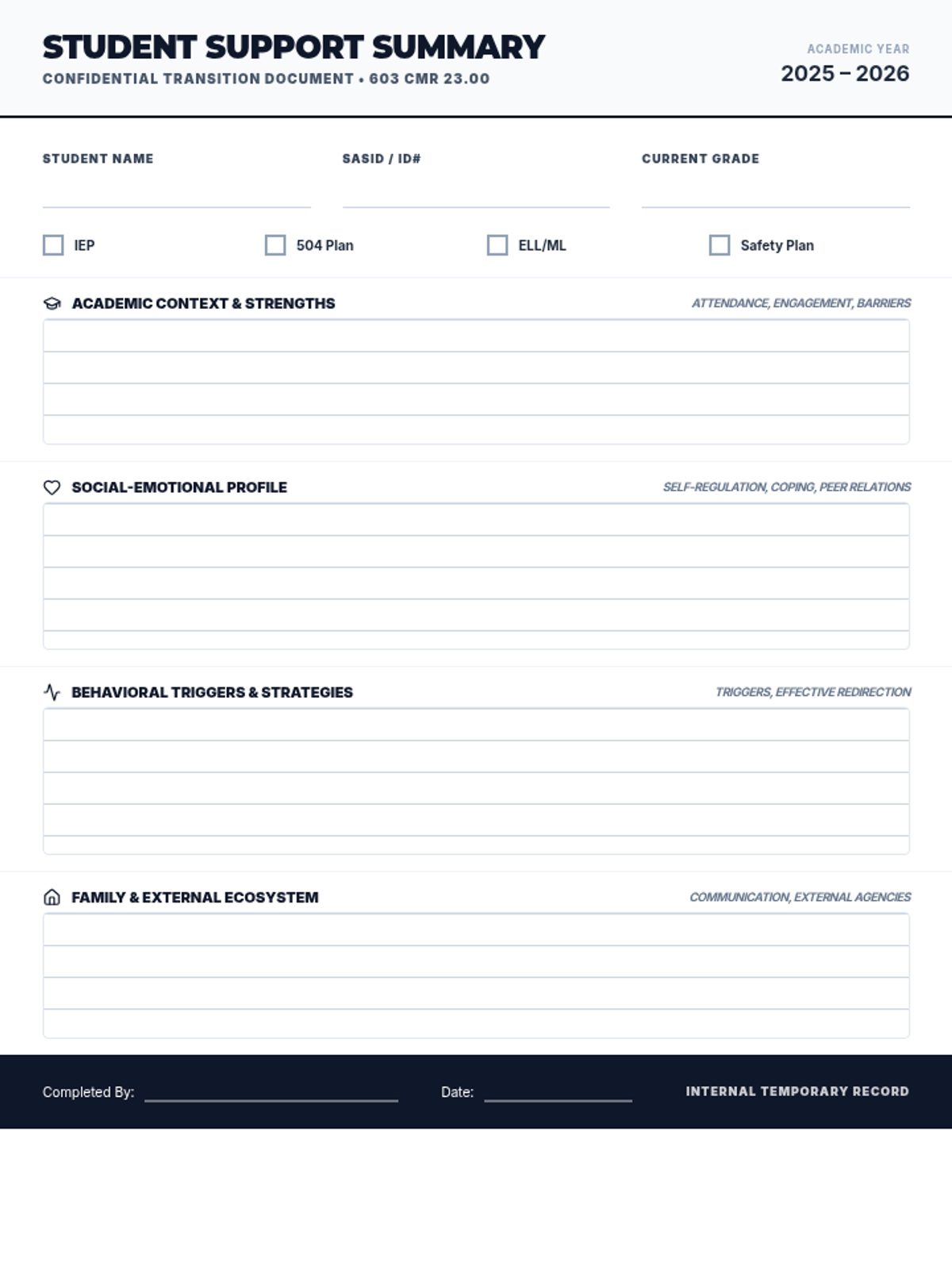
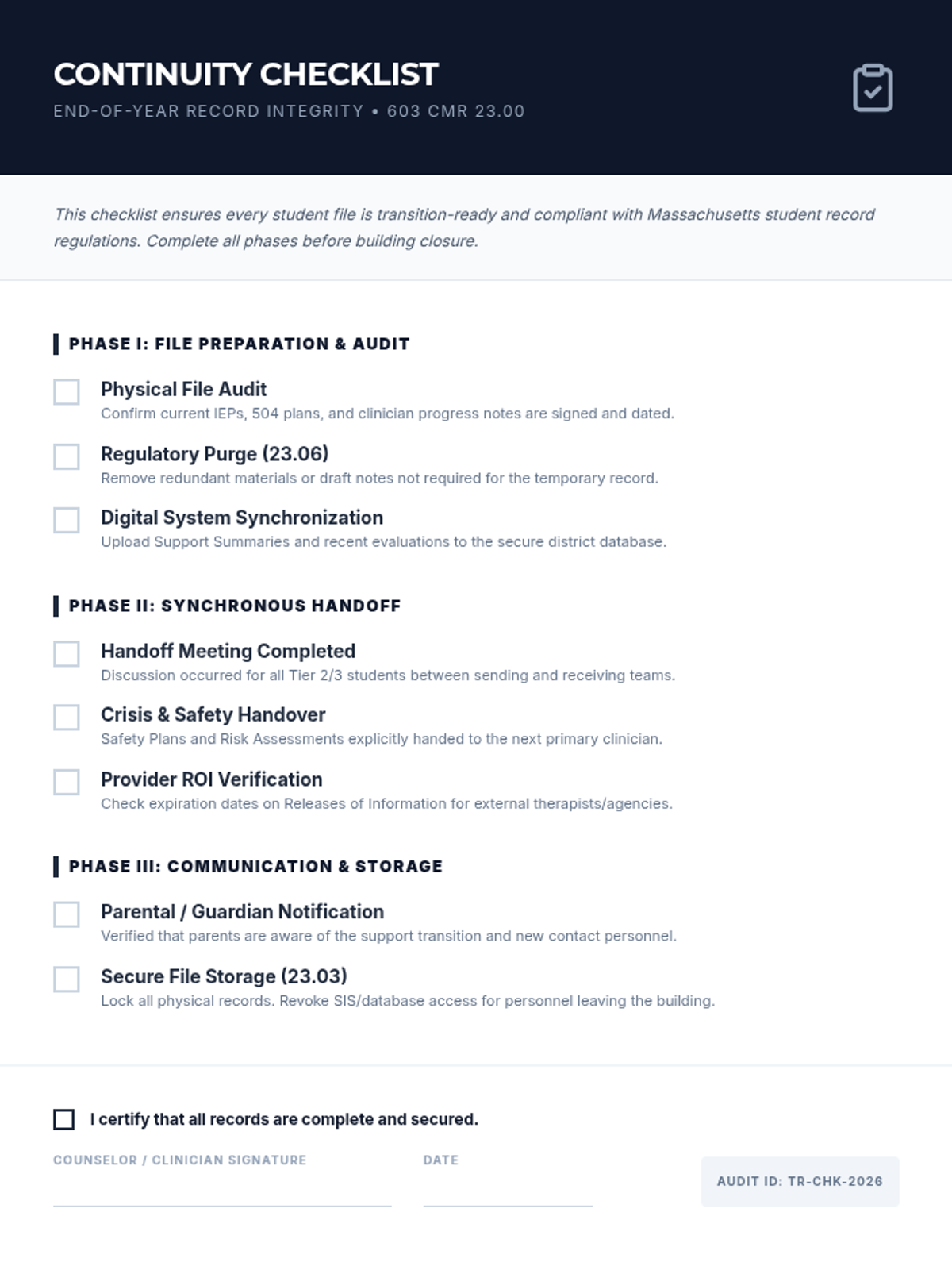
A comprehensive toolkit for K-12 school counselors and student services teams to ensure continuity of care during end-of-year transitions. It includes protocol guides, meeting structures, and documentation templates aligned with Massachusetts student records regulations.
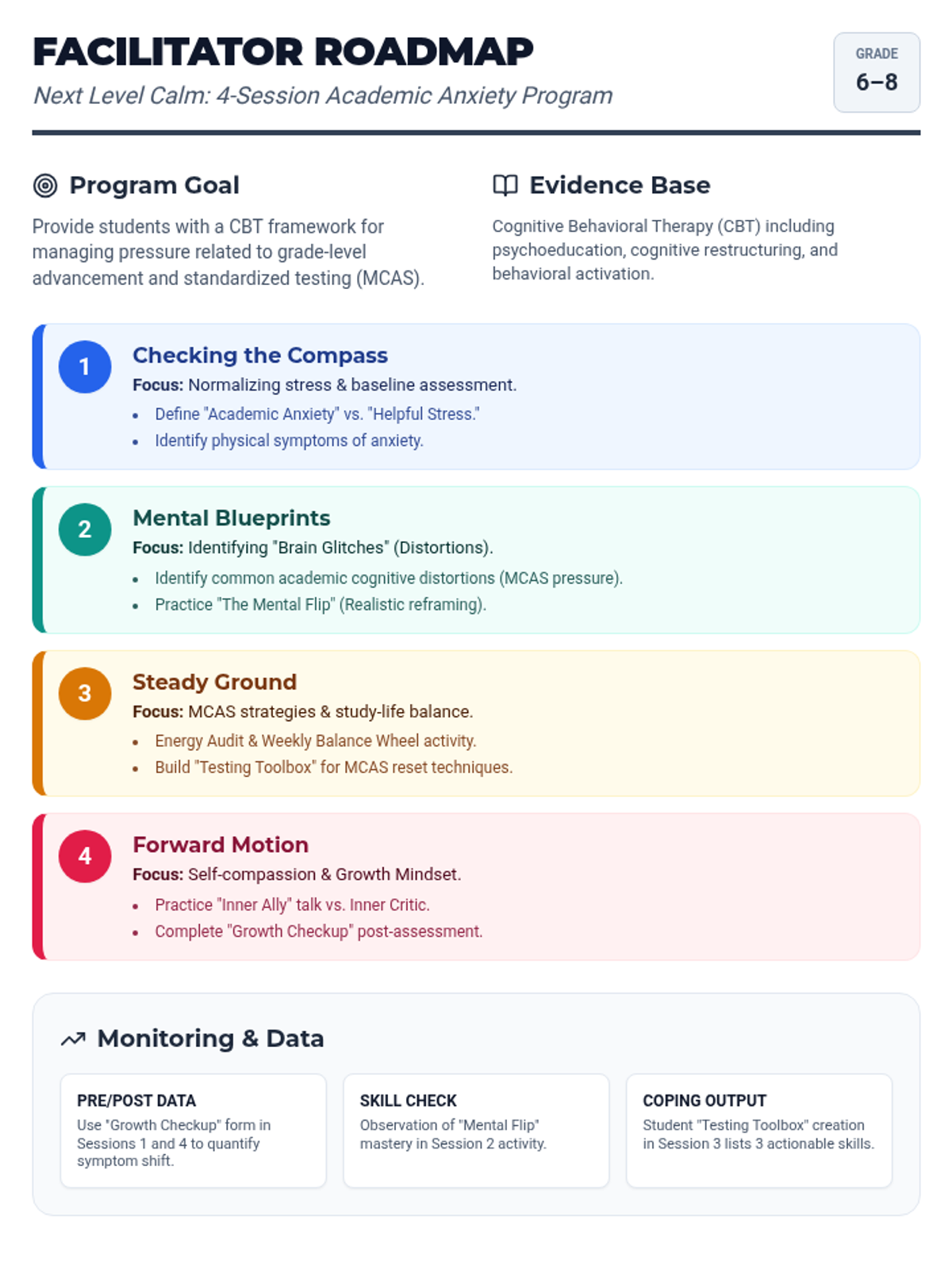
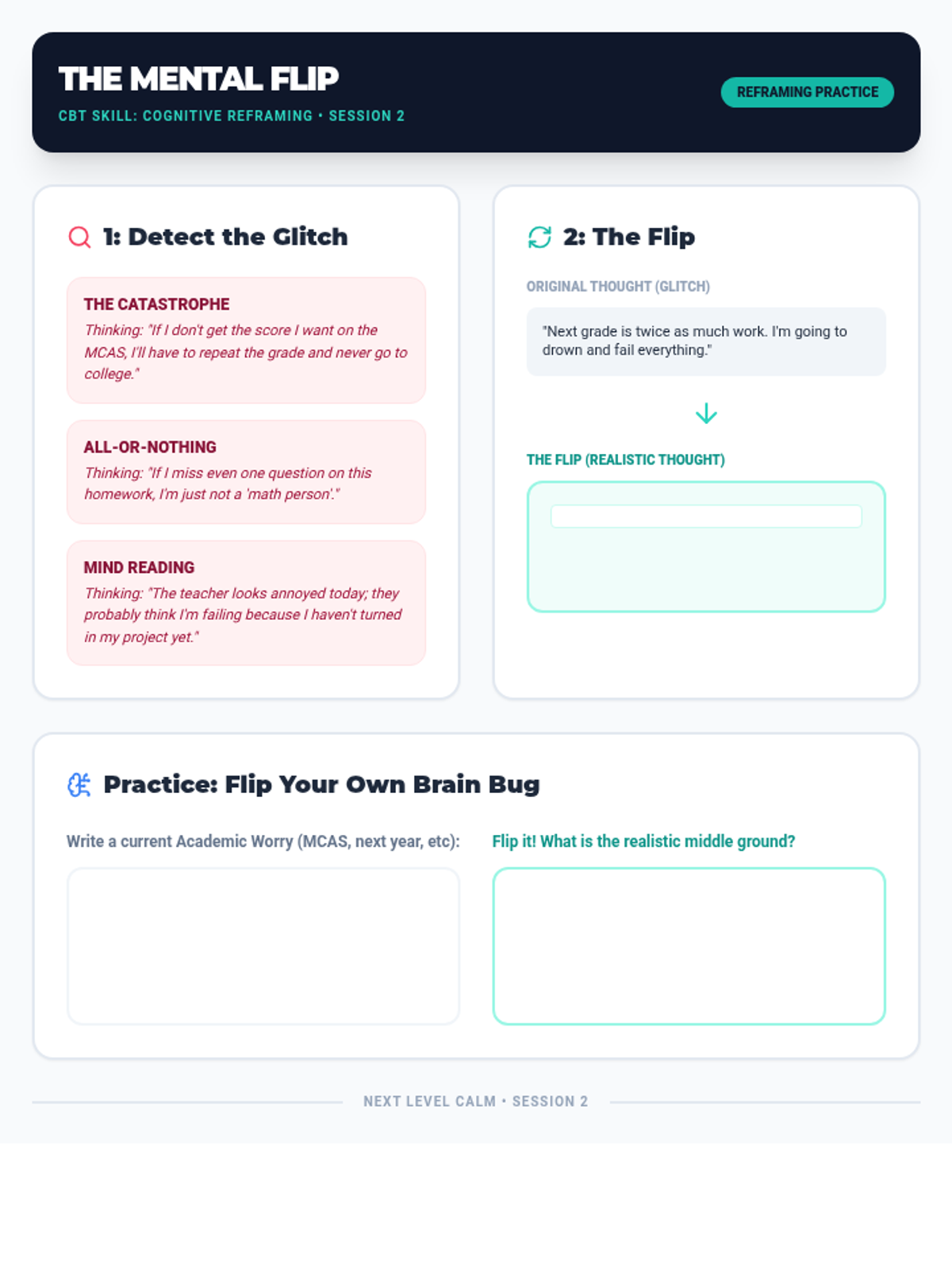
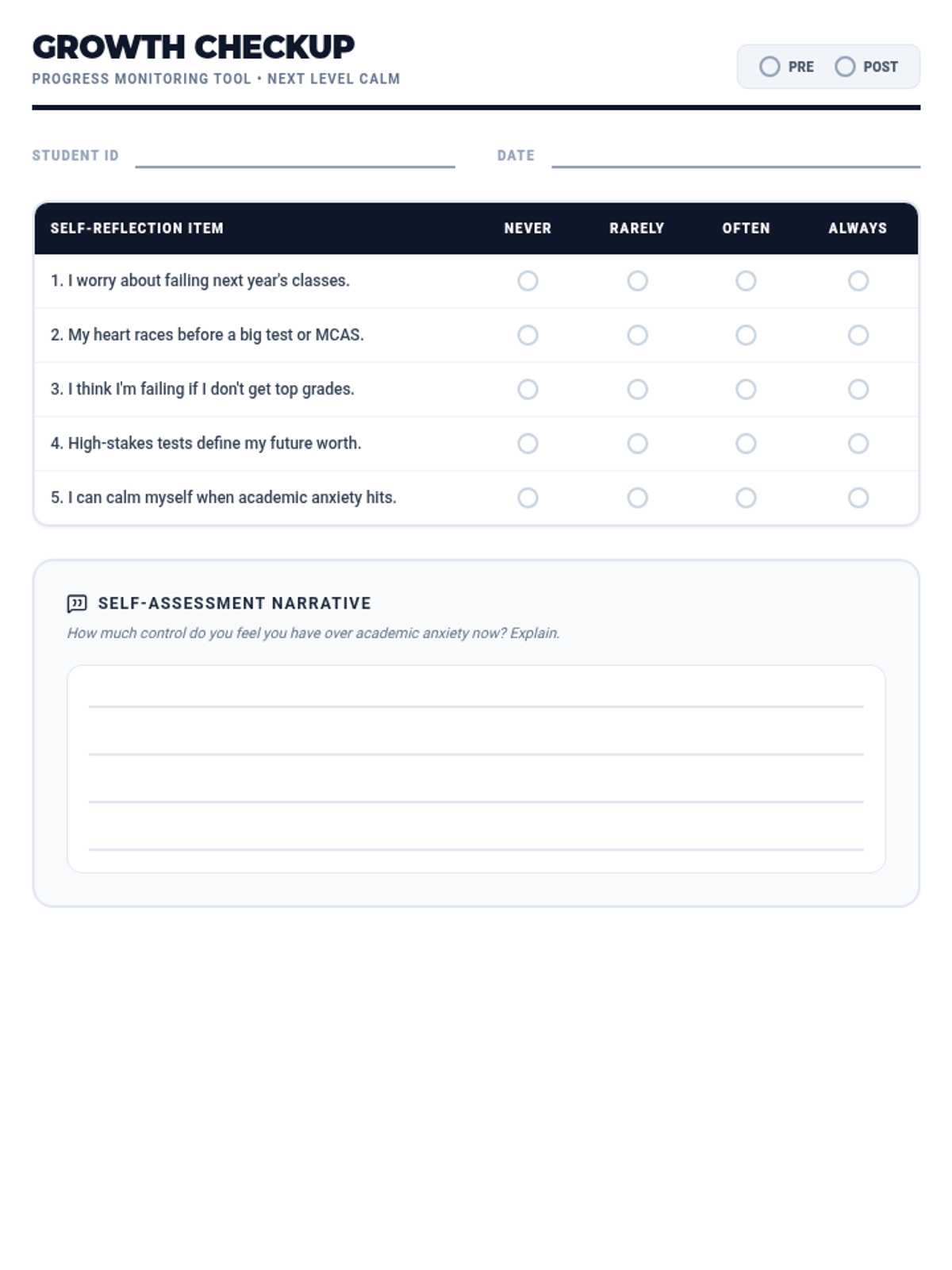
The second session focused on identifying cognitive distortions and practicing reframing techniques to challenge academic anxiety.
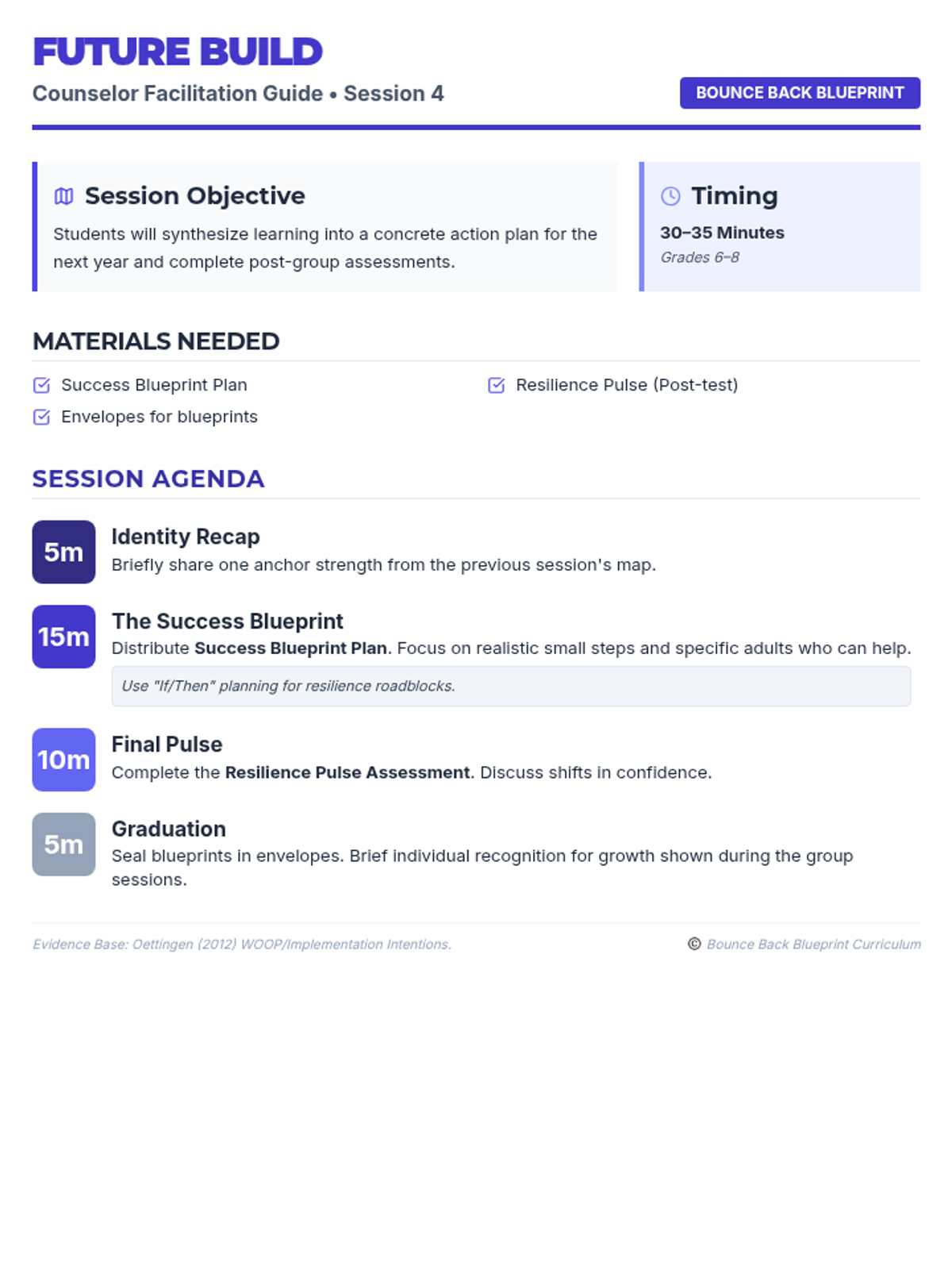
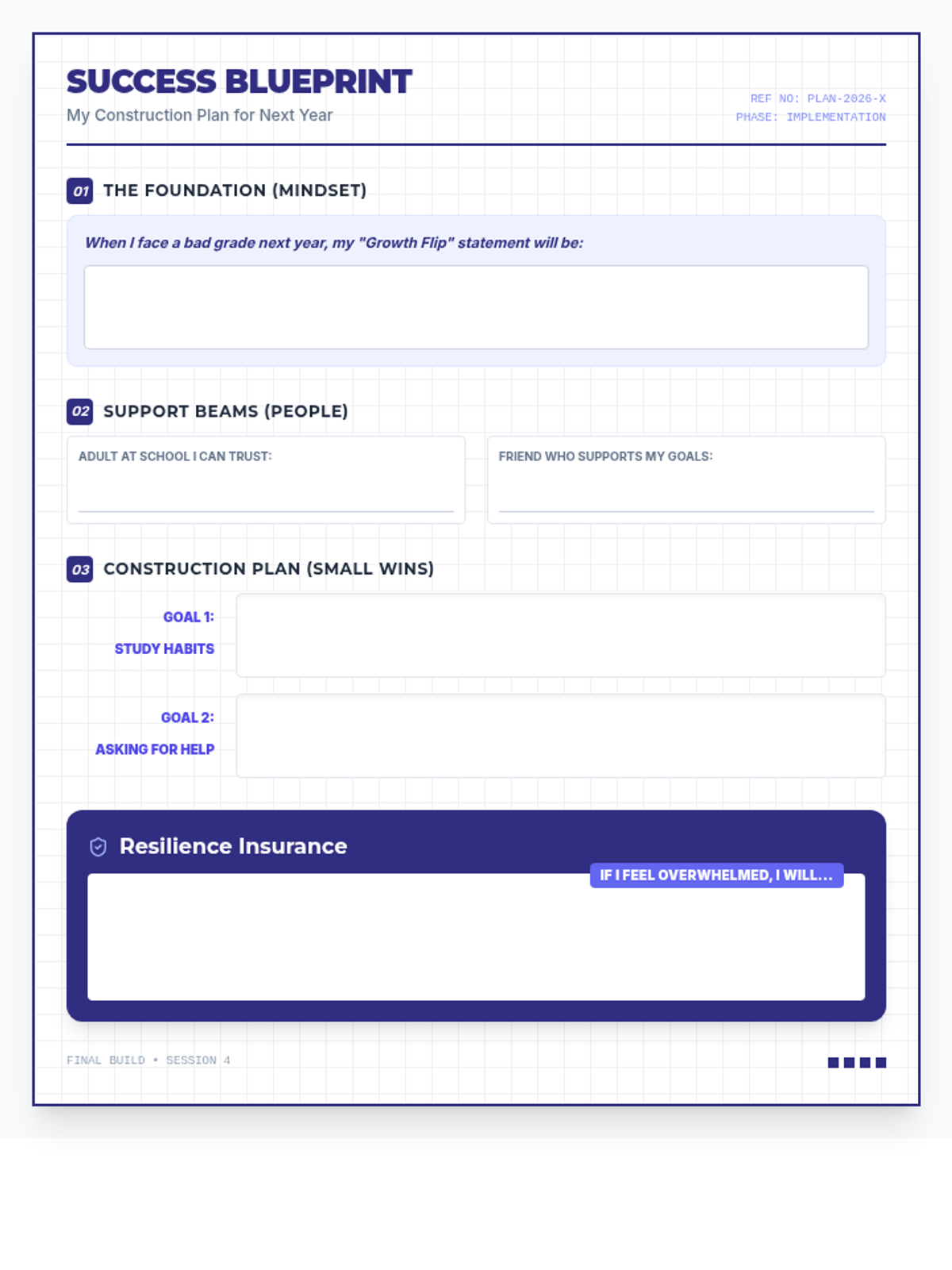
Developing a concrete action plan for the upcoming academic year and conducting a post-intervention assessment.
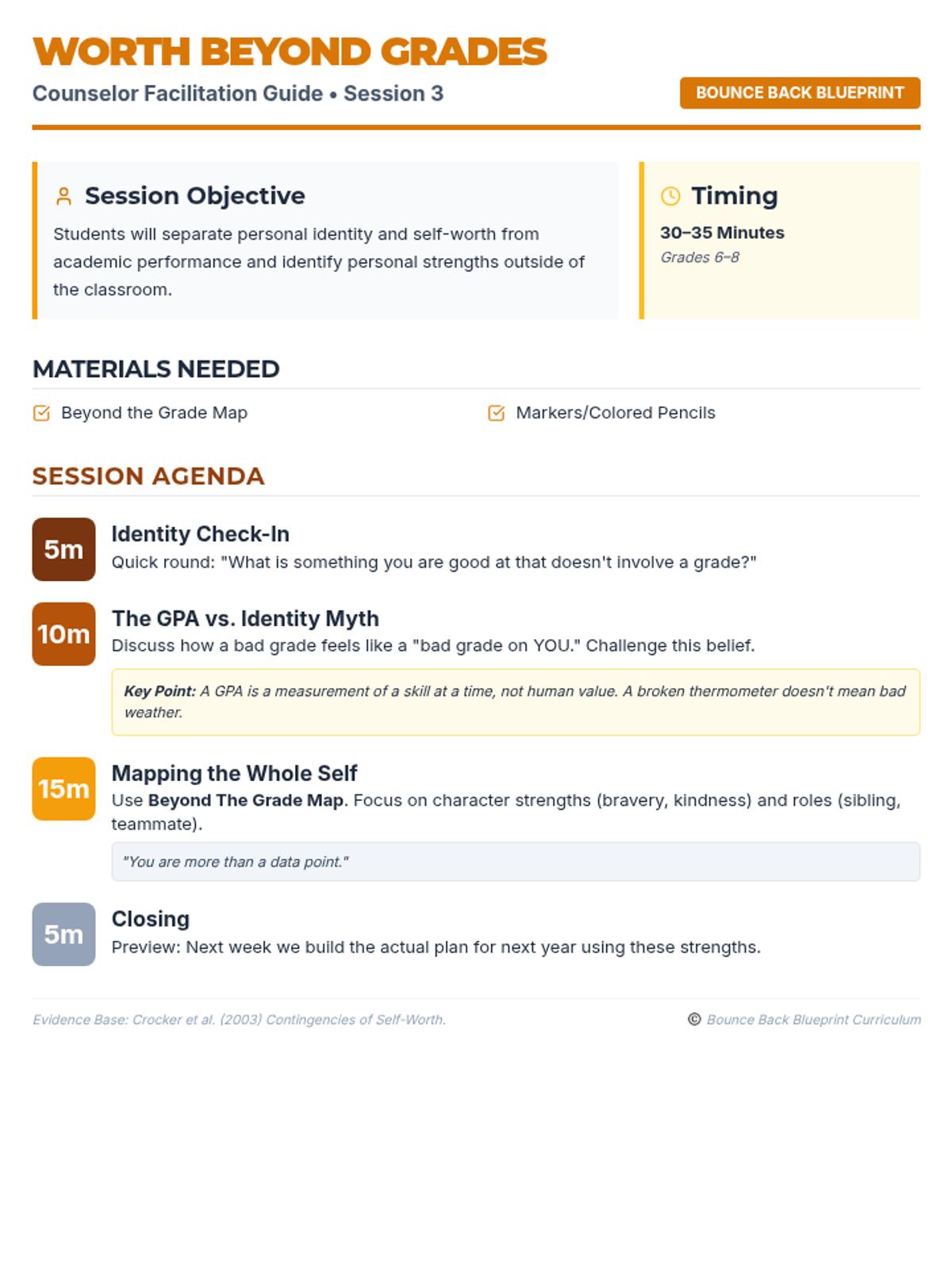
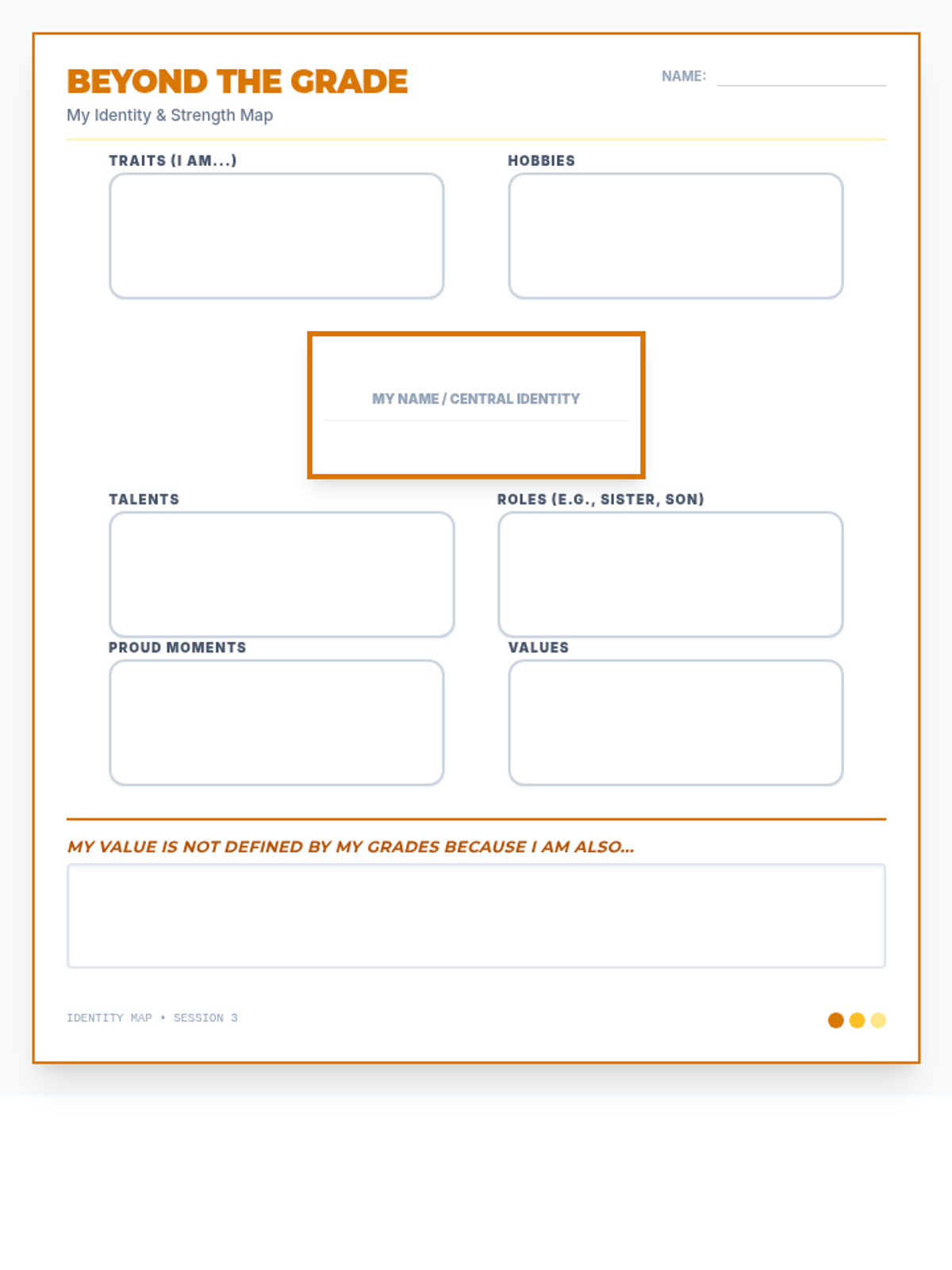
Differentiating personal worth from academic performance and identifying individual strengths outside of school.
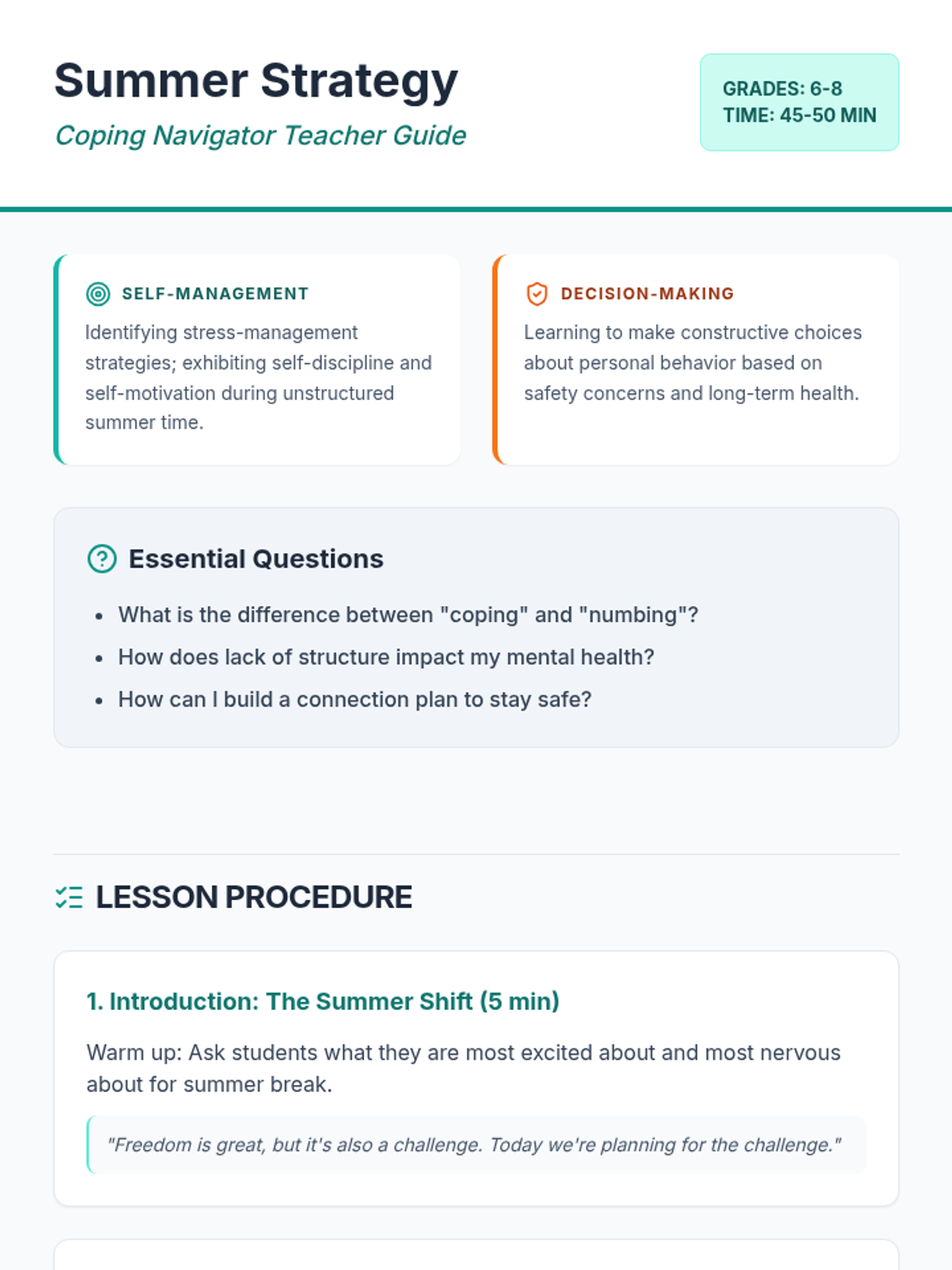
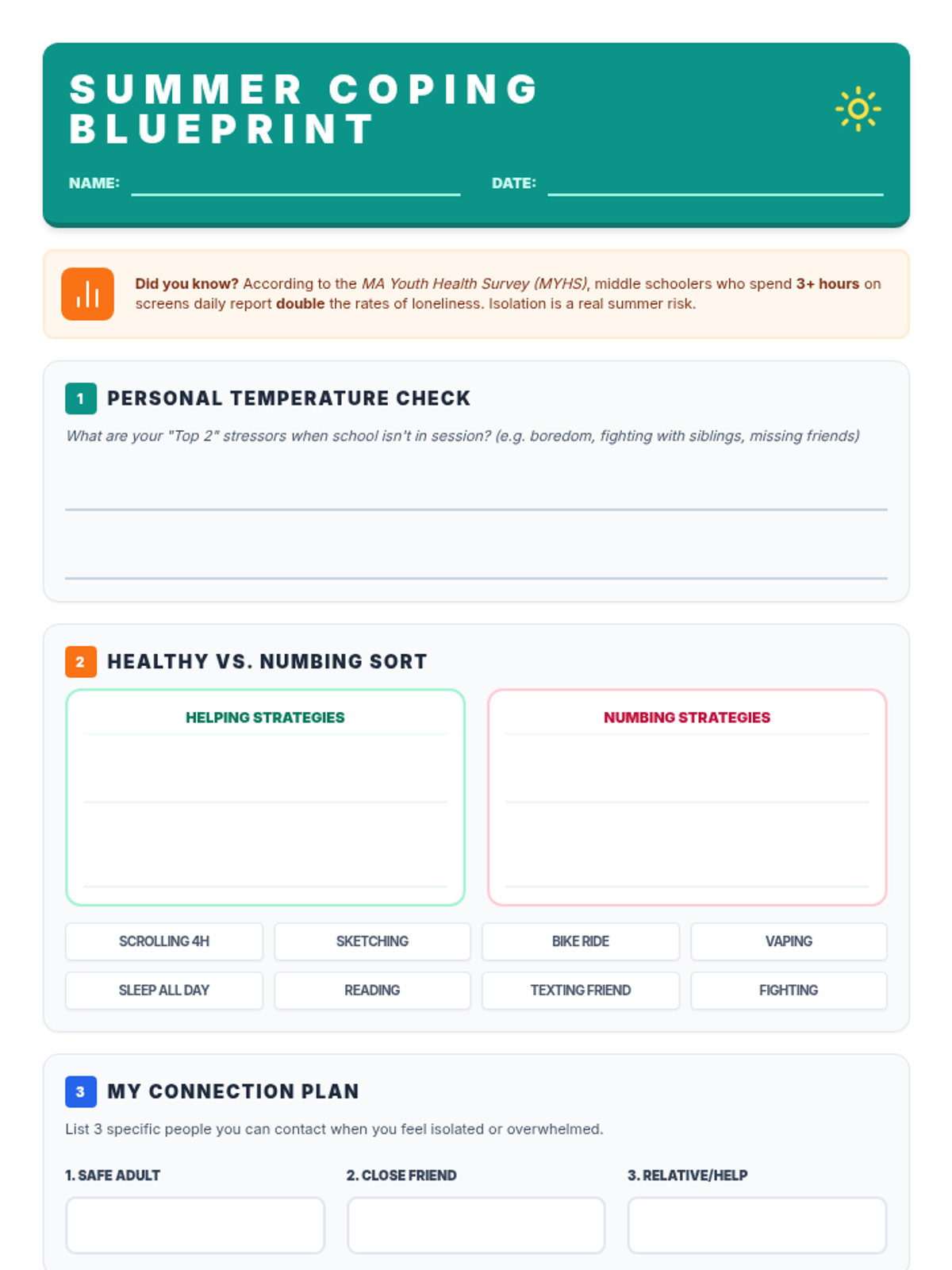
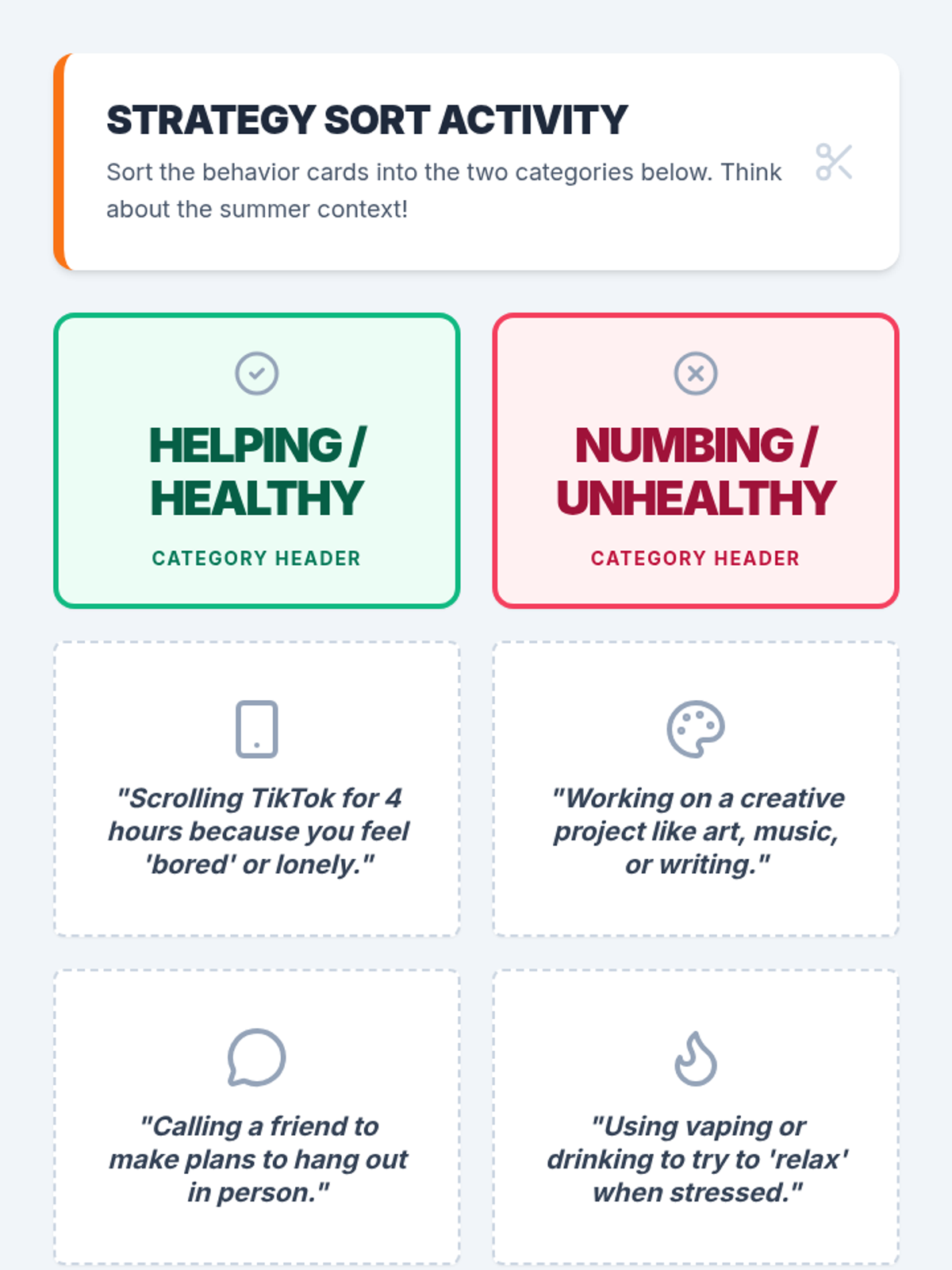
A middle school counseling lesson focused on distinguishing between healthy and unhealthy coping mechanisms for the summer break, using data-driven insights and CASEL-aligned strategies.
Exploring the difference between fixed and growth mindsets and practicing cognitive reframing of academic failures.
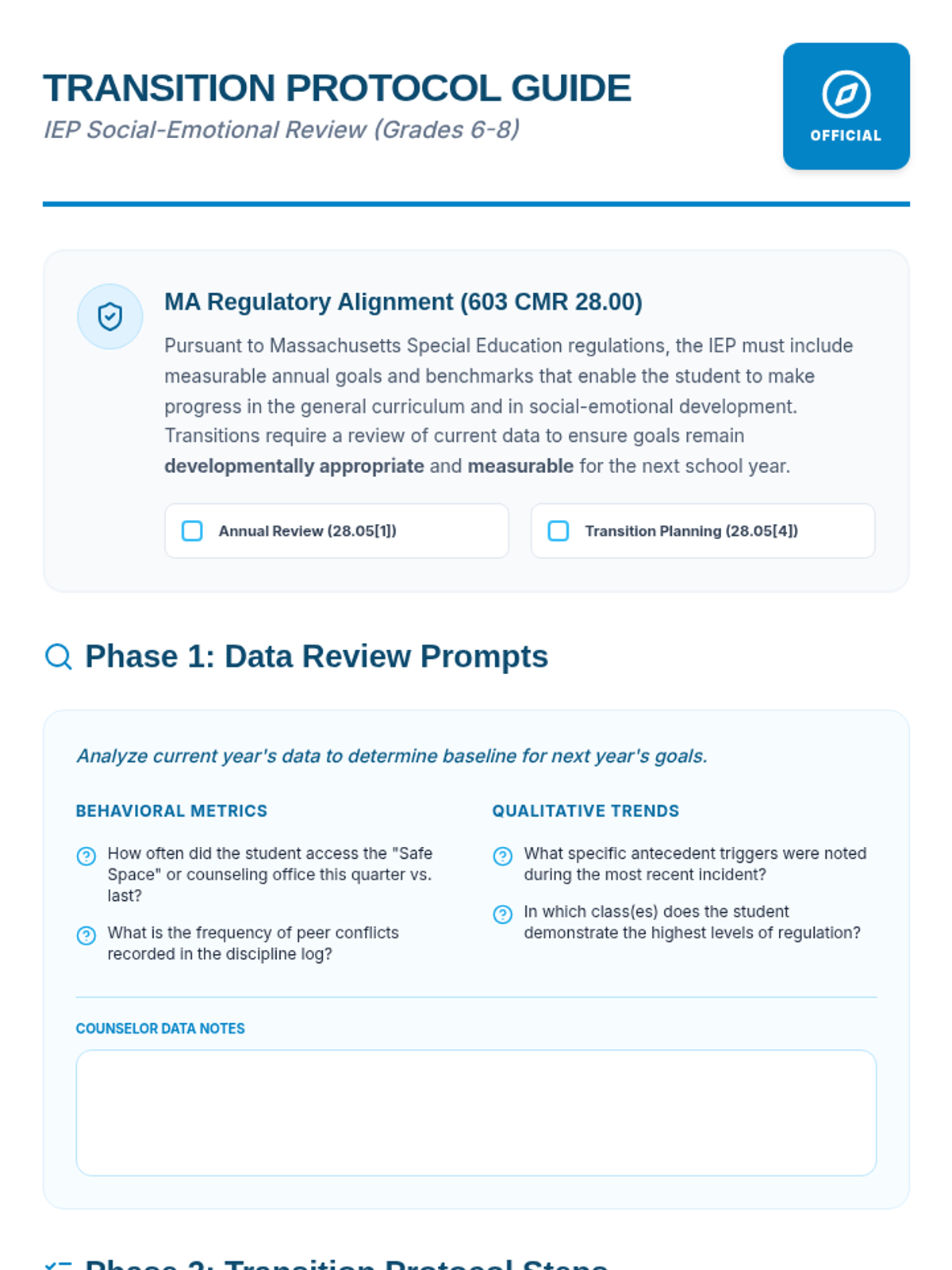
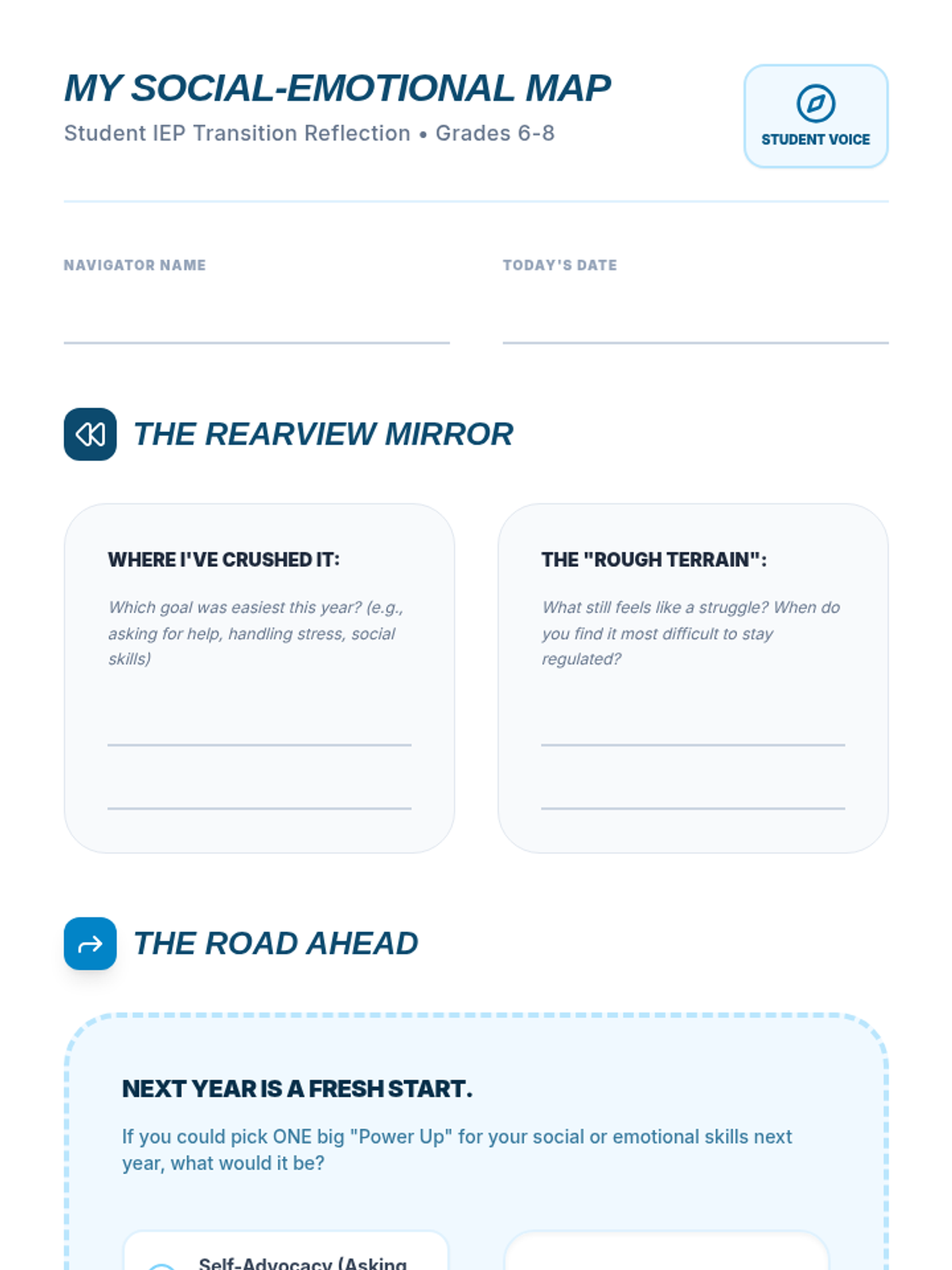
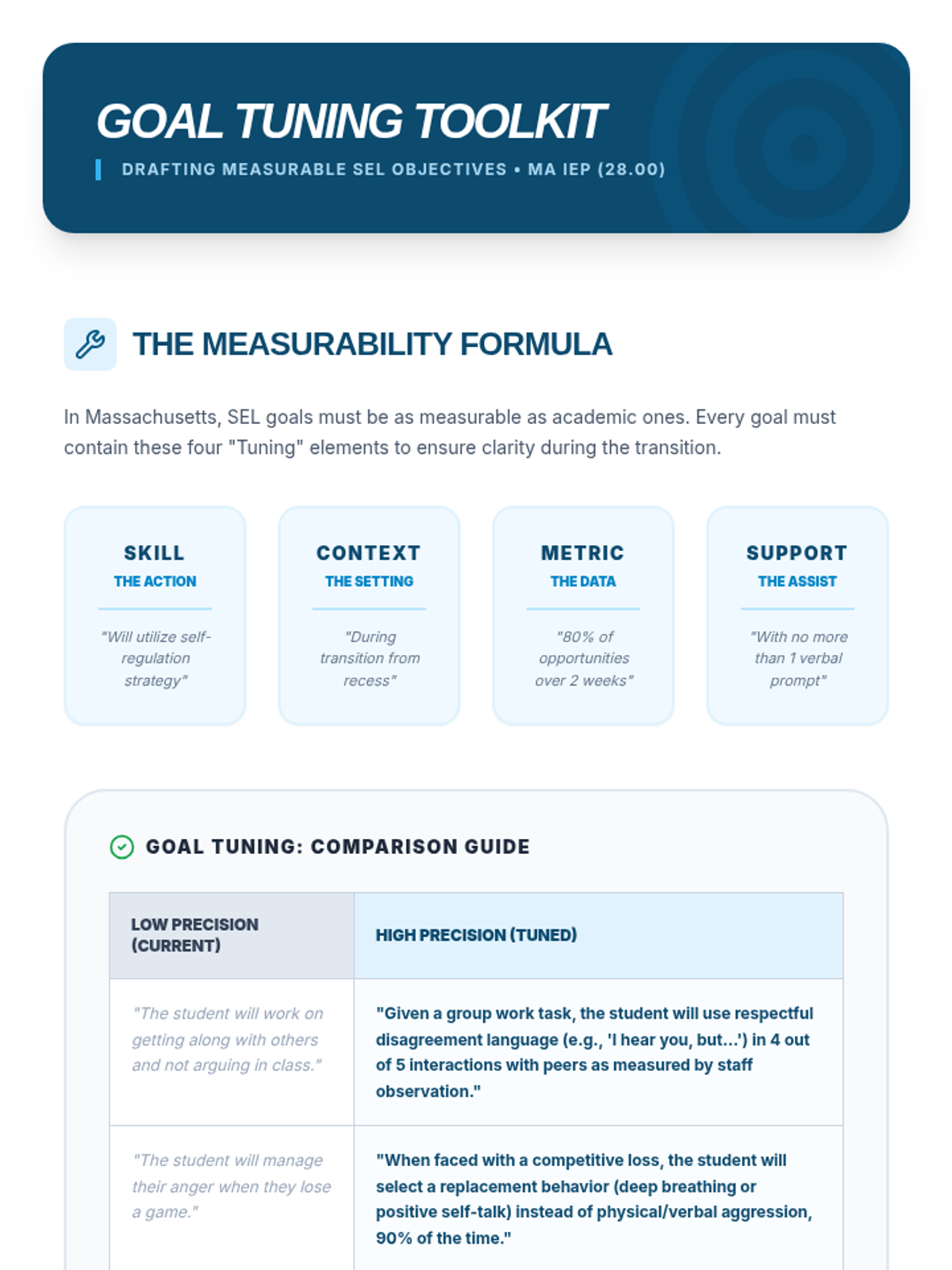
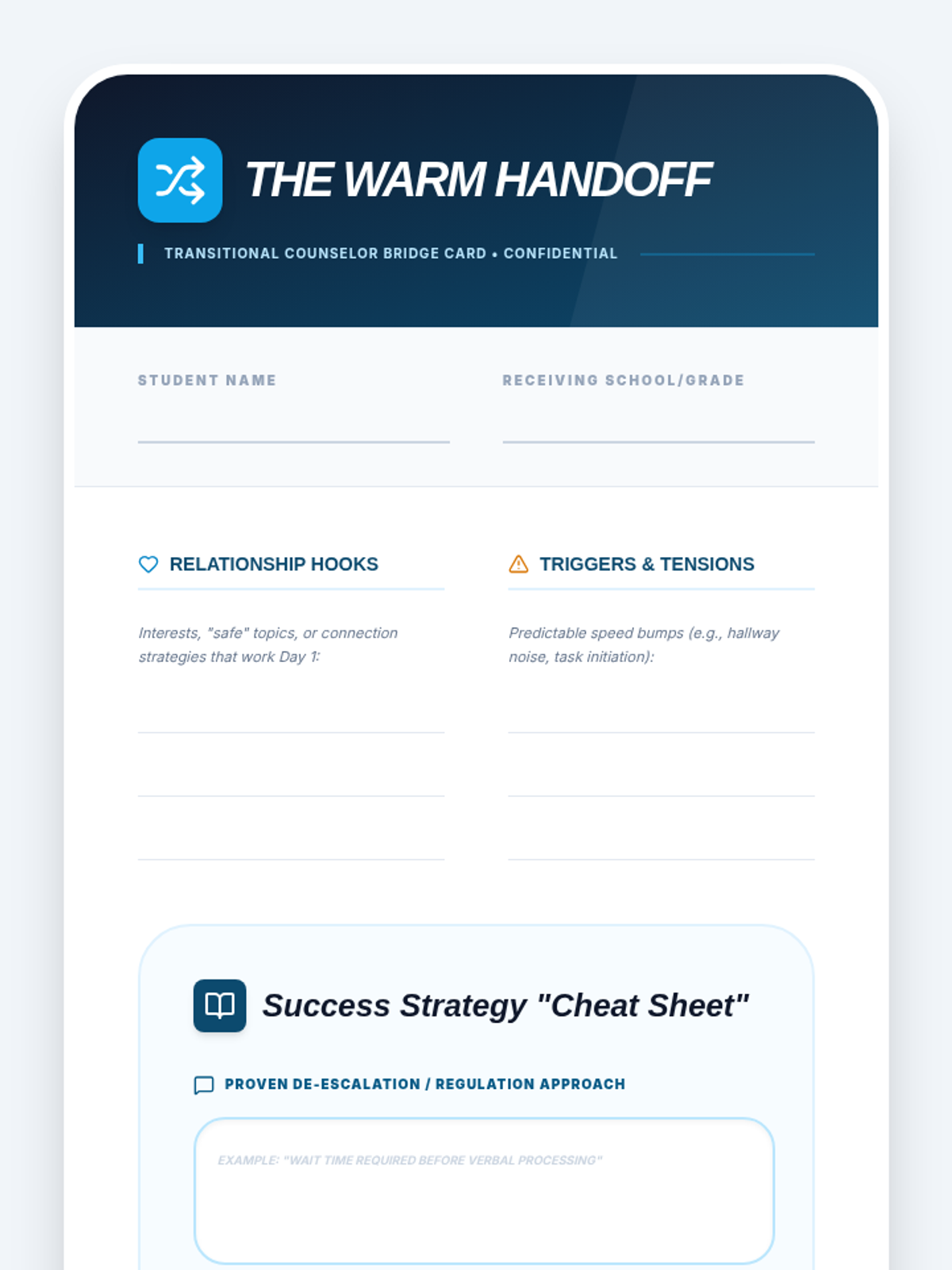
A comprehensive counselor-led toolkit for reviewing and adjusting social-emotional IEP goals during middle school transitions, ensuring compliance with Massachusetts standards while prioritizing student voice and smooth communication.
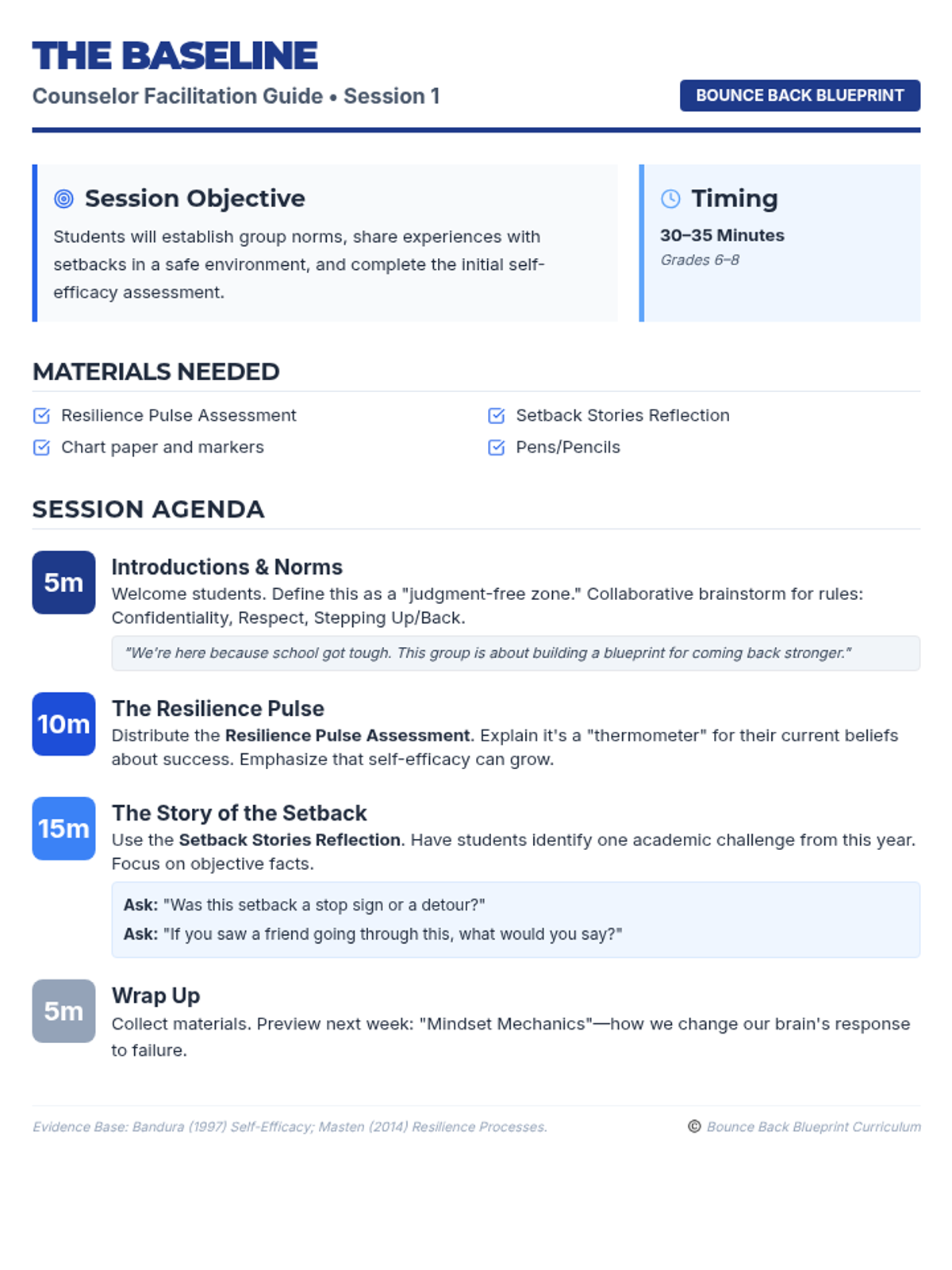
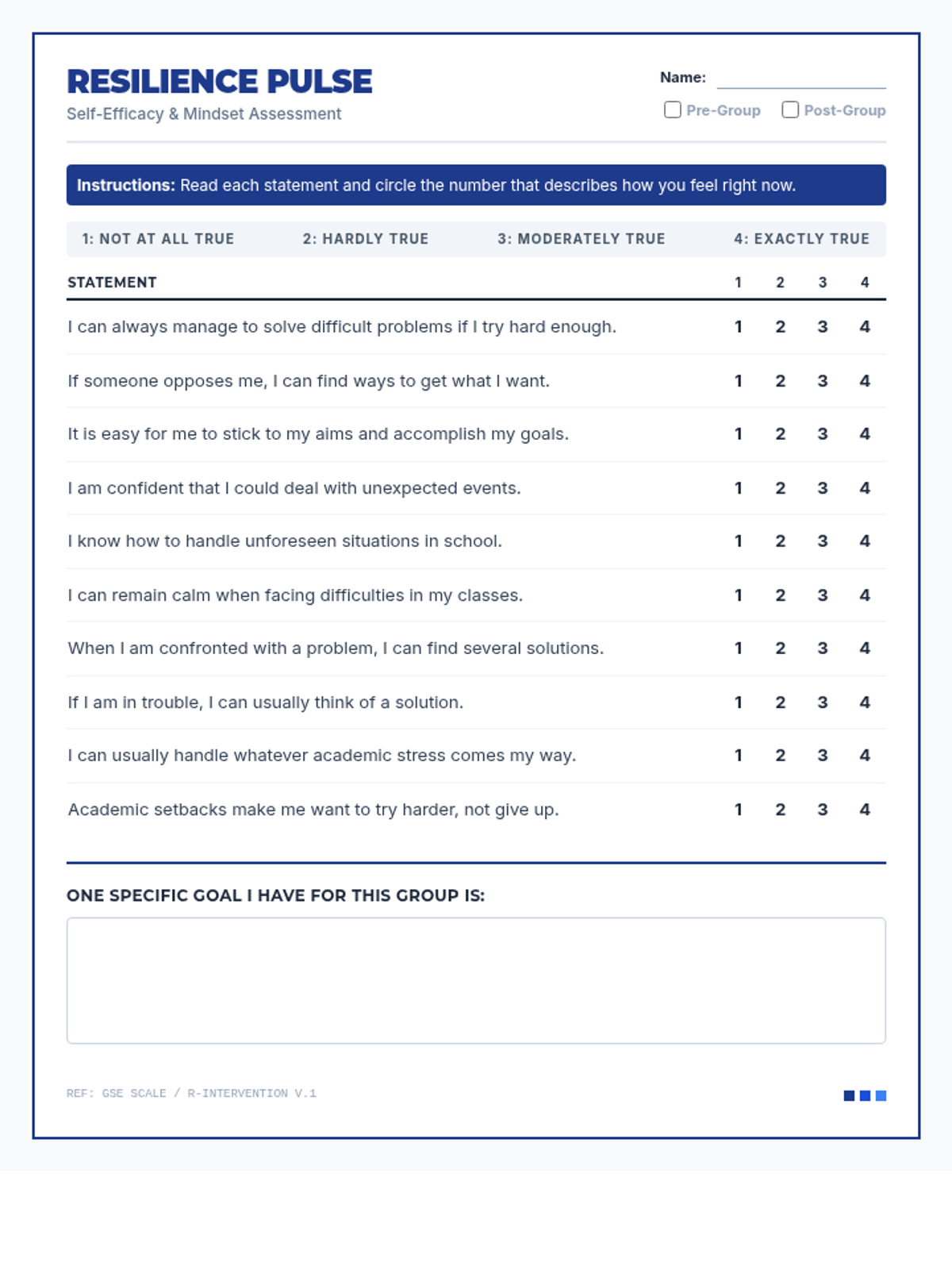
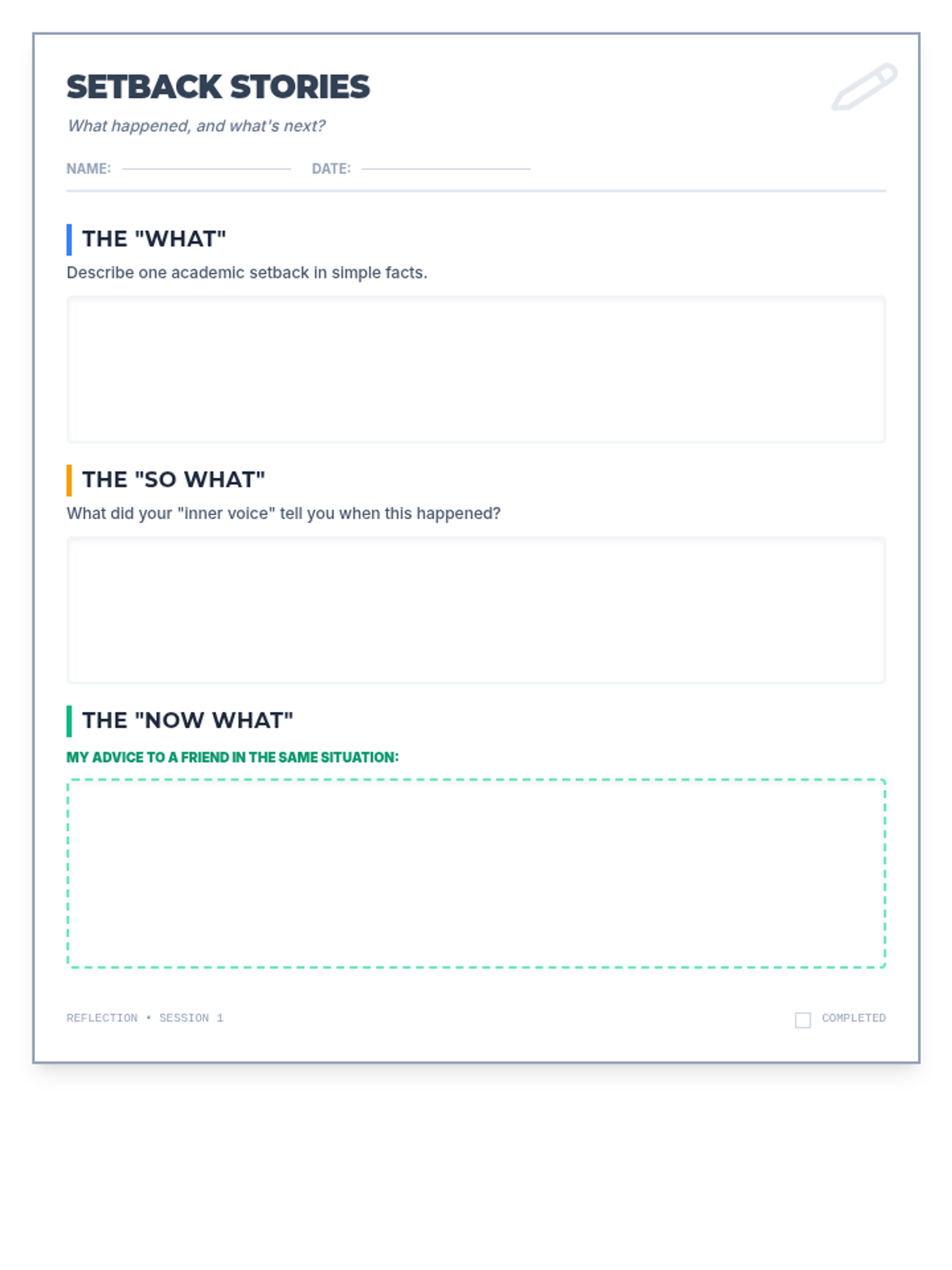
Introduction to the group, establishing norms, and assessing baseline self-efficacy regarding academic challenges.
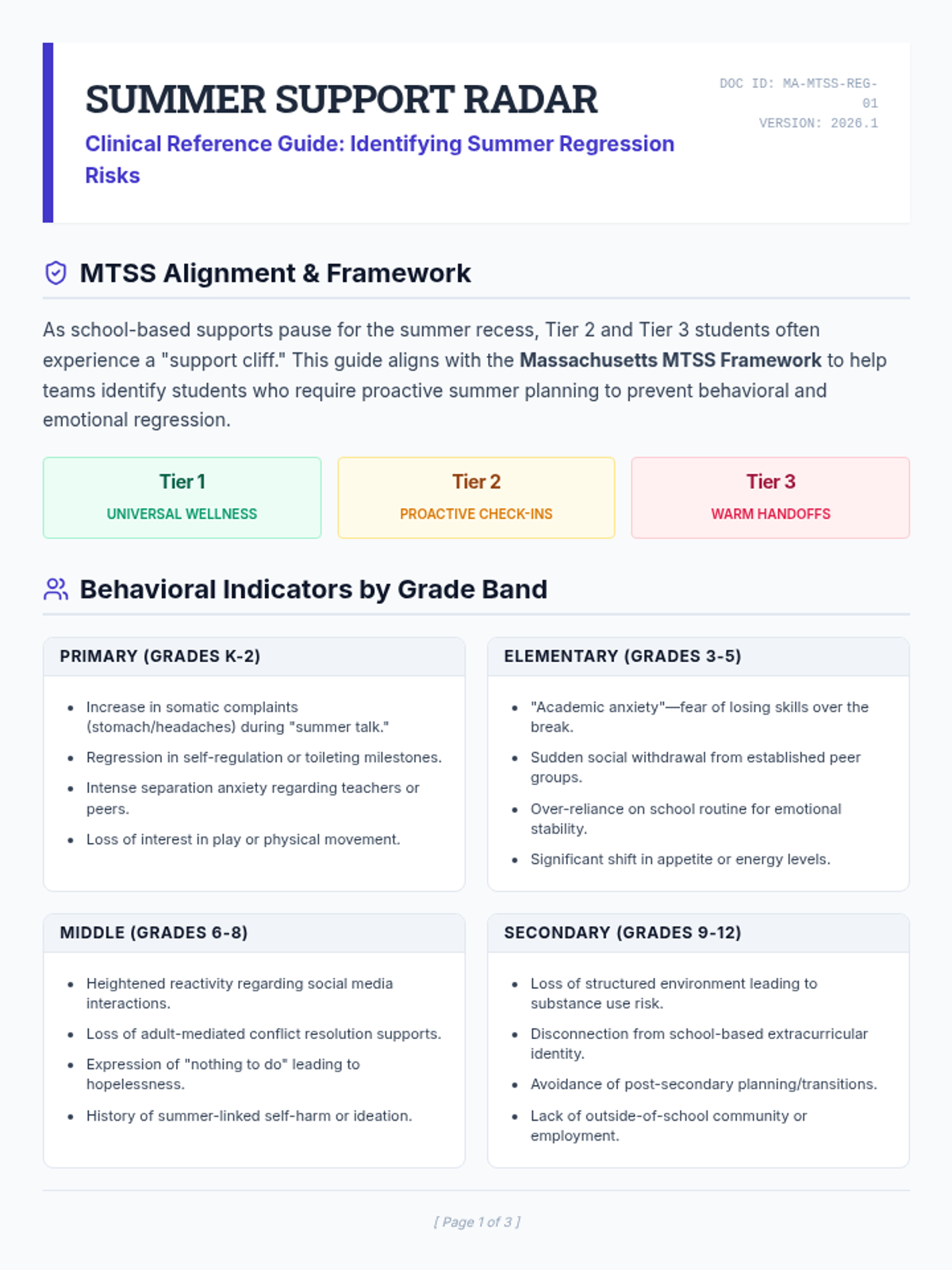
A professional toolkit for school counselors and educators to identify K-12 students at risk of mental health regression during summer break, including triage frameworks and handoff documentation.
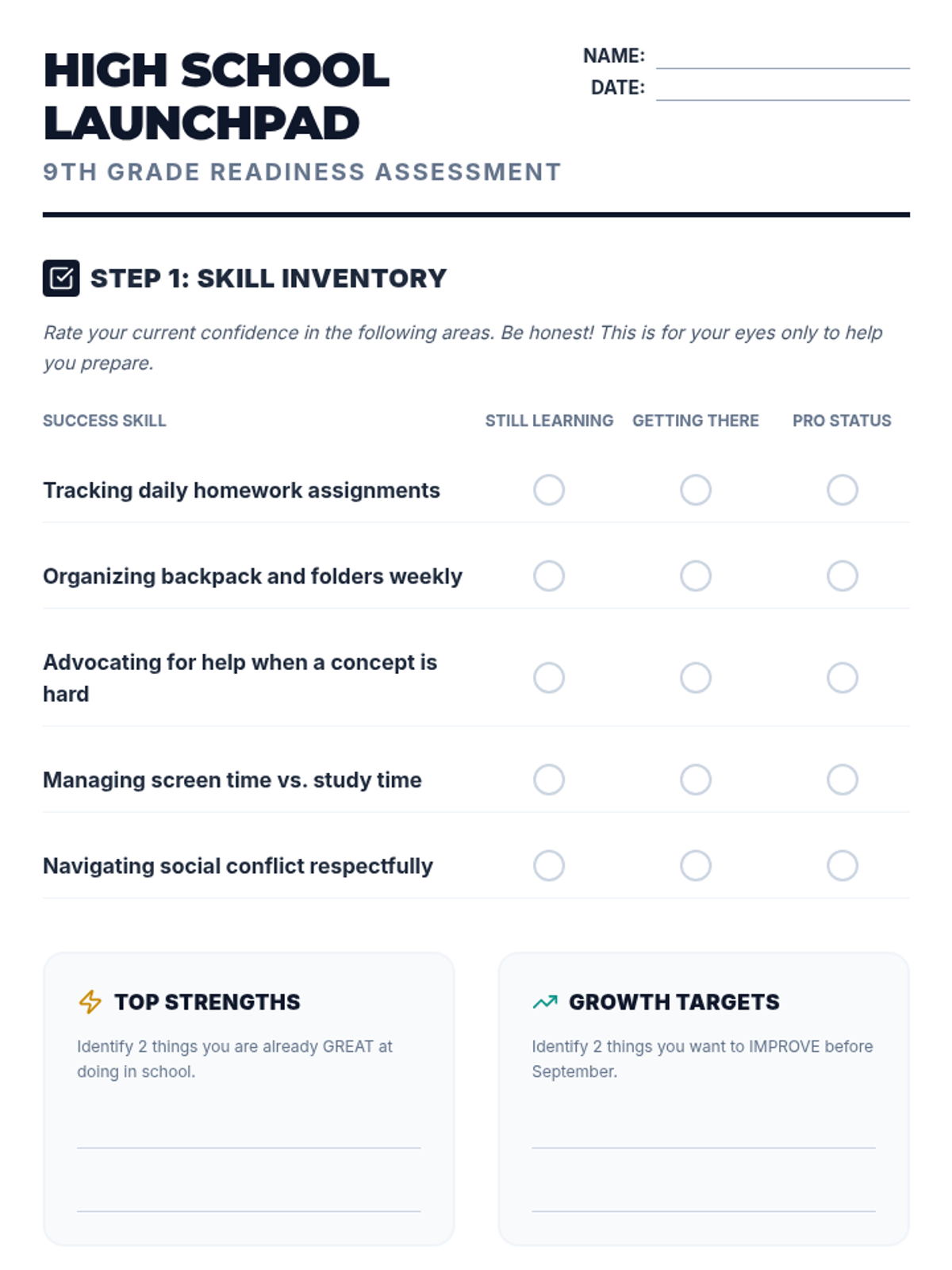
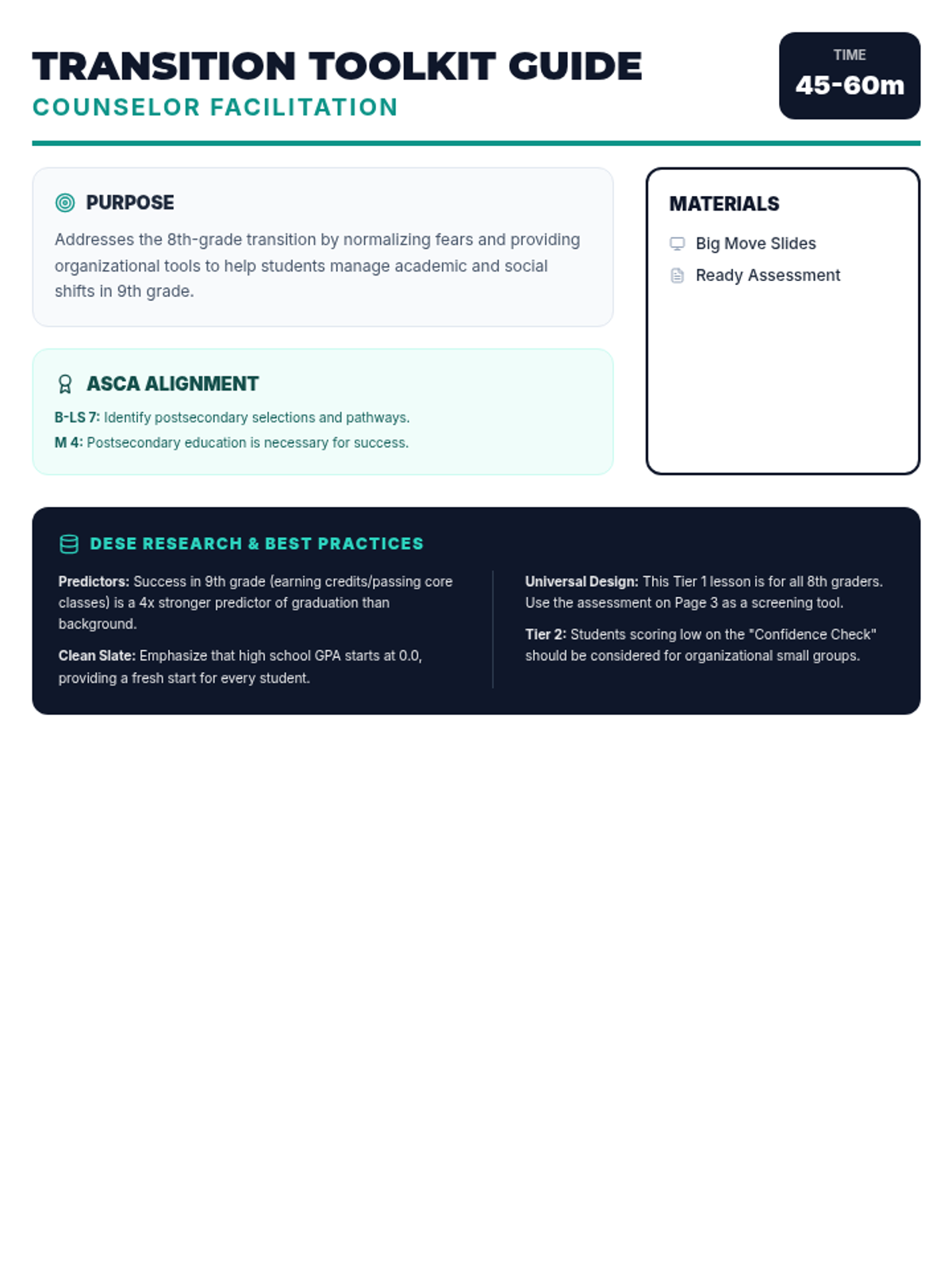
A comprehensive counseling lesson designed to ease the transition from middle to high school for 8th-grade students, focusing on academic readiness, social-emotional navigation, and organizational success.
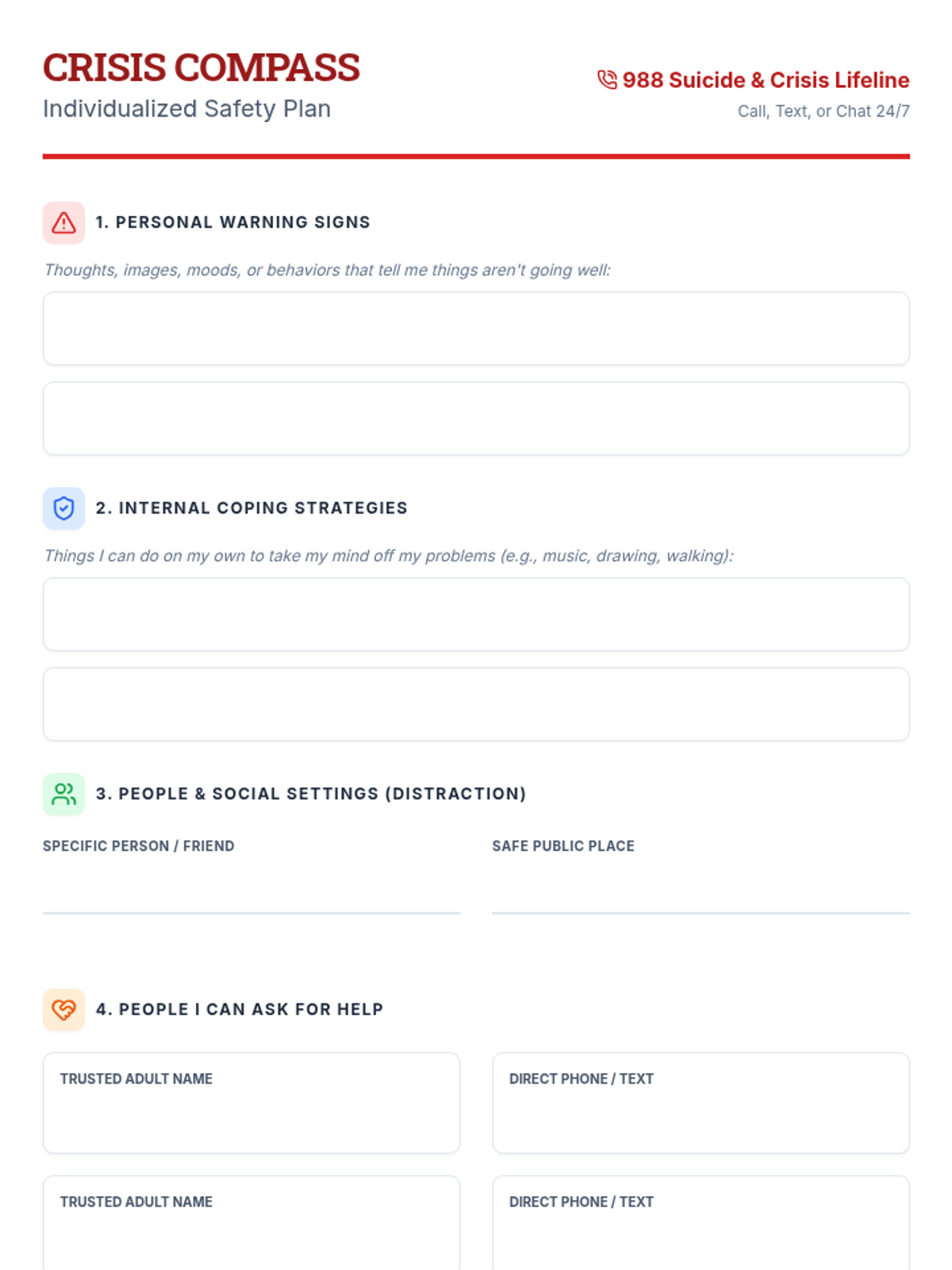
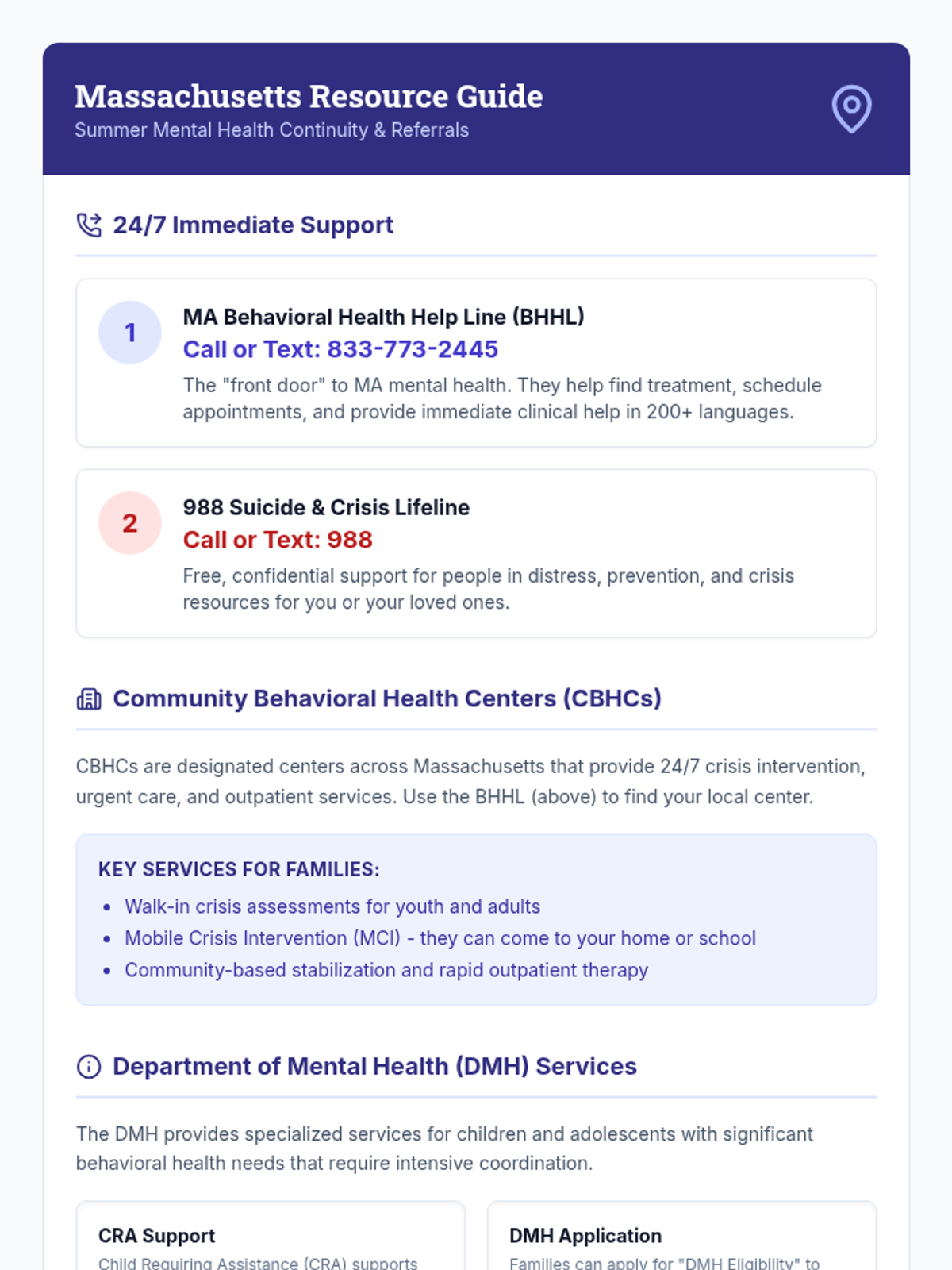
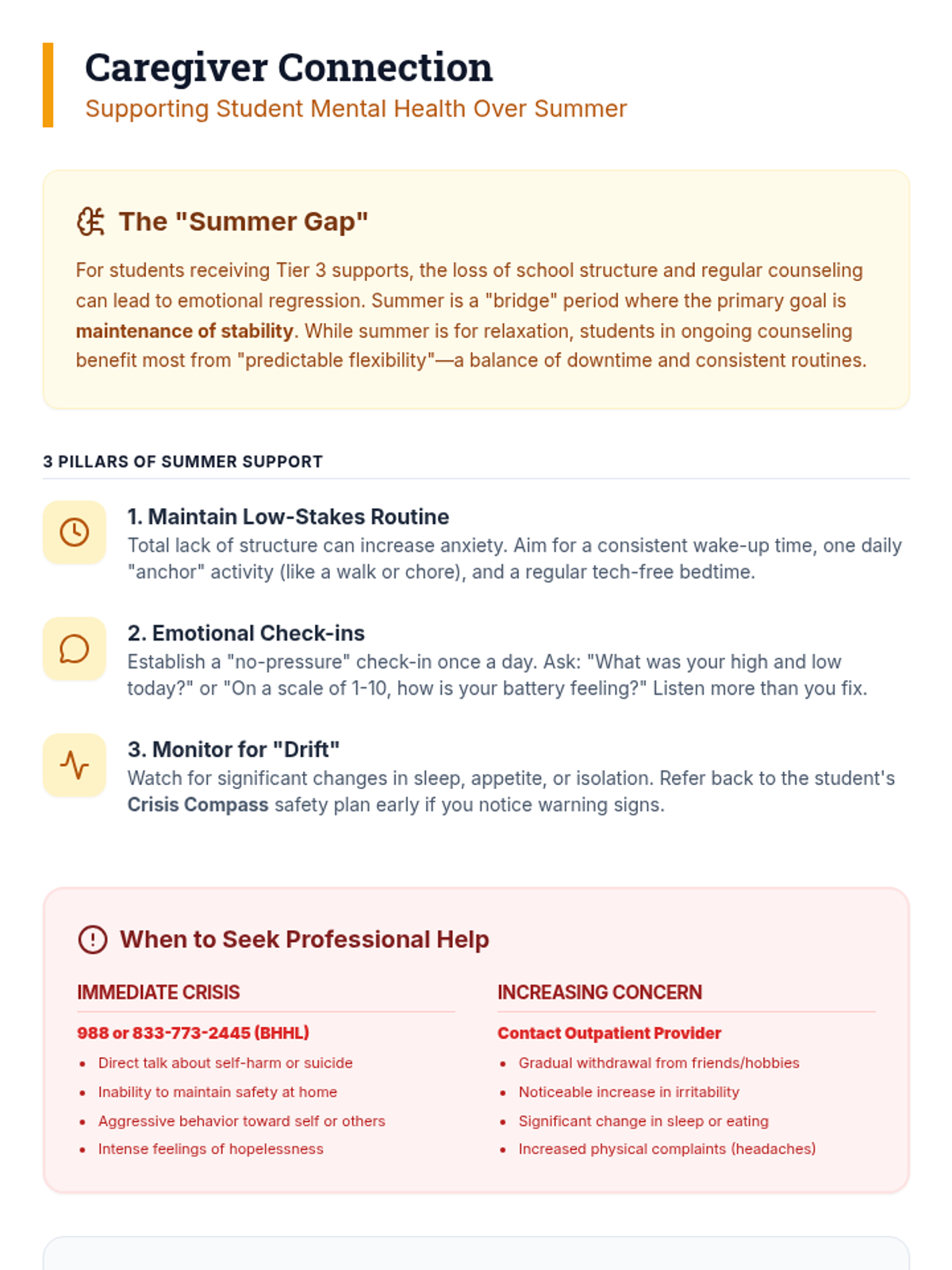
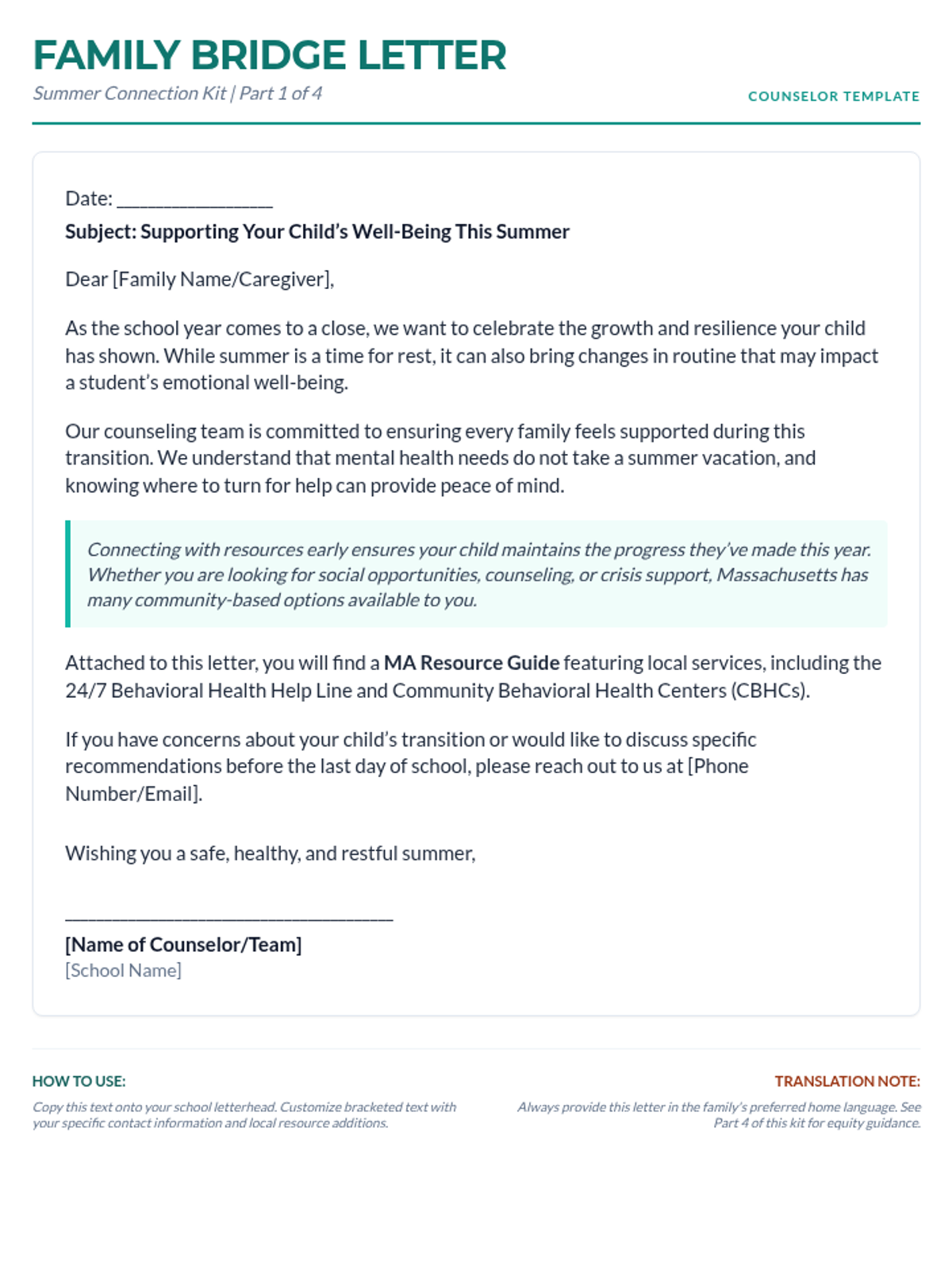
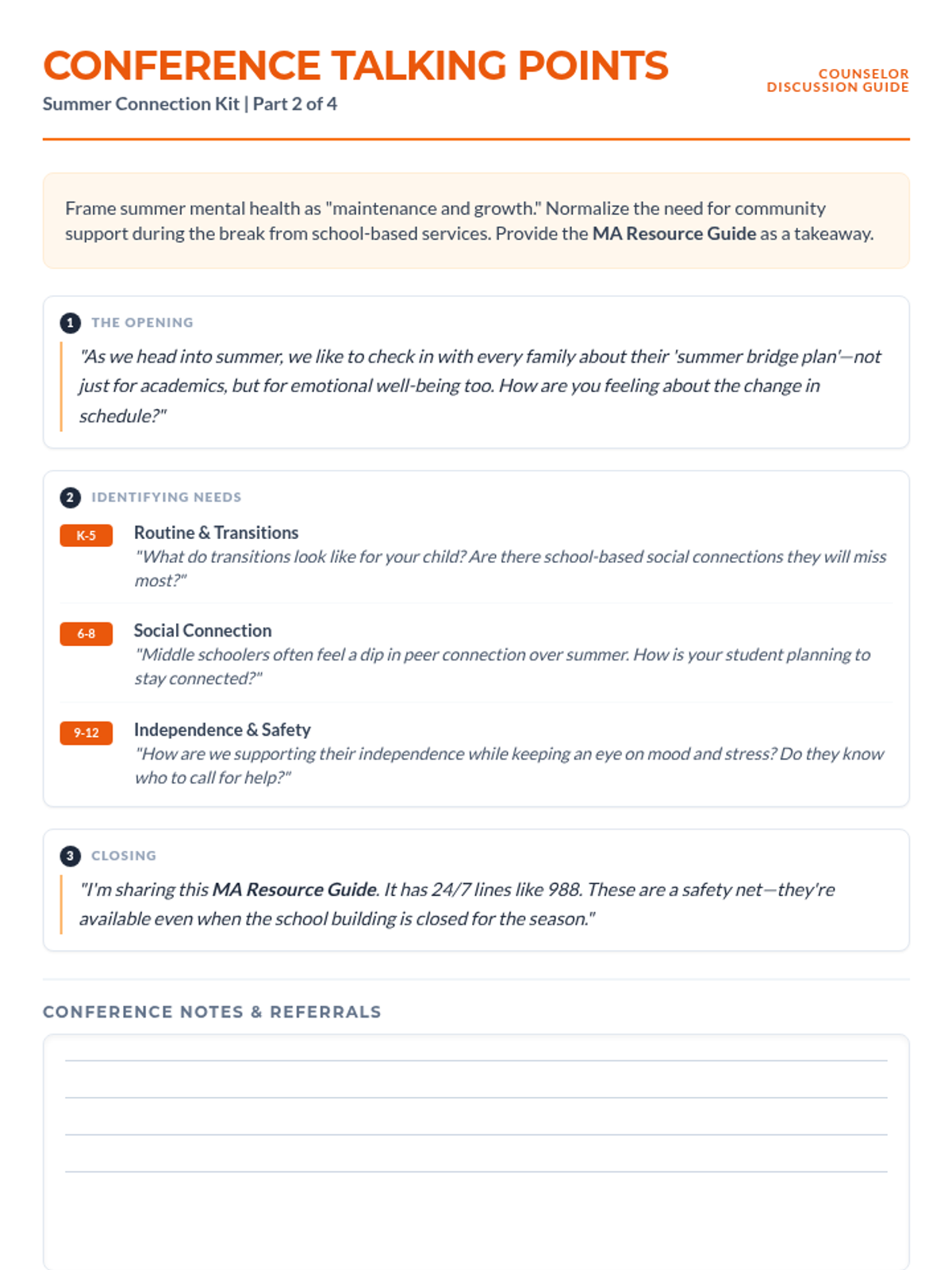
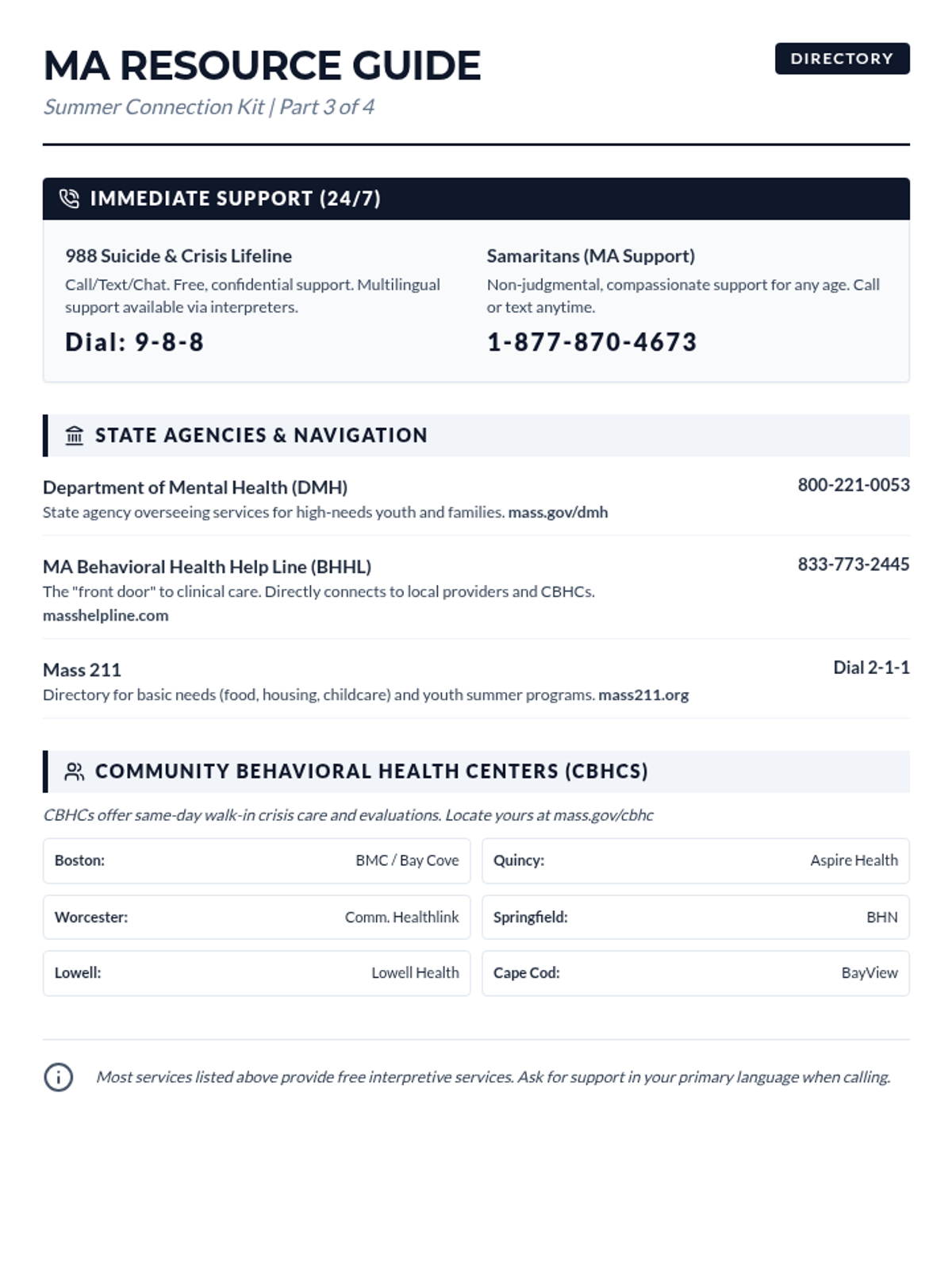
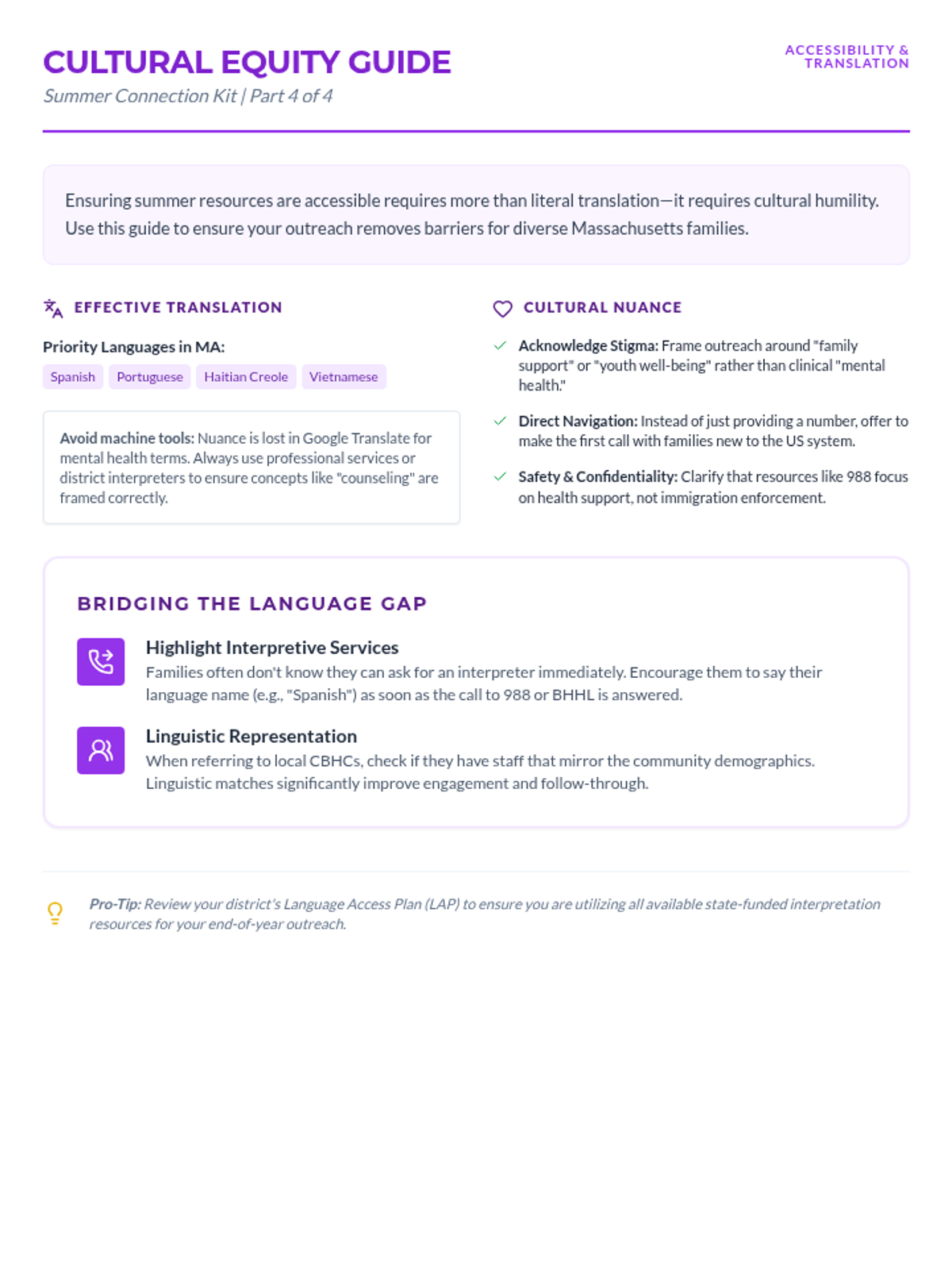
A comprehensive toolkit for school counselors to bridge the gap between school-year support and summer mental health resources for families in Massachusetts.