Students explore why certain assets lose value over time, learn to calculate percent change using real-world scenarios (car, phone, handbag), and discuss the financial implications of depreciation on insurance and net worth.
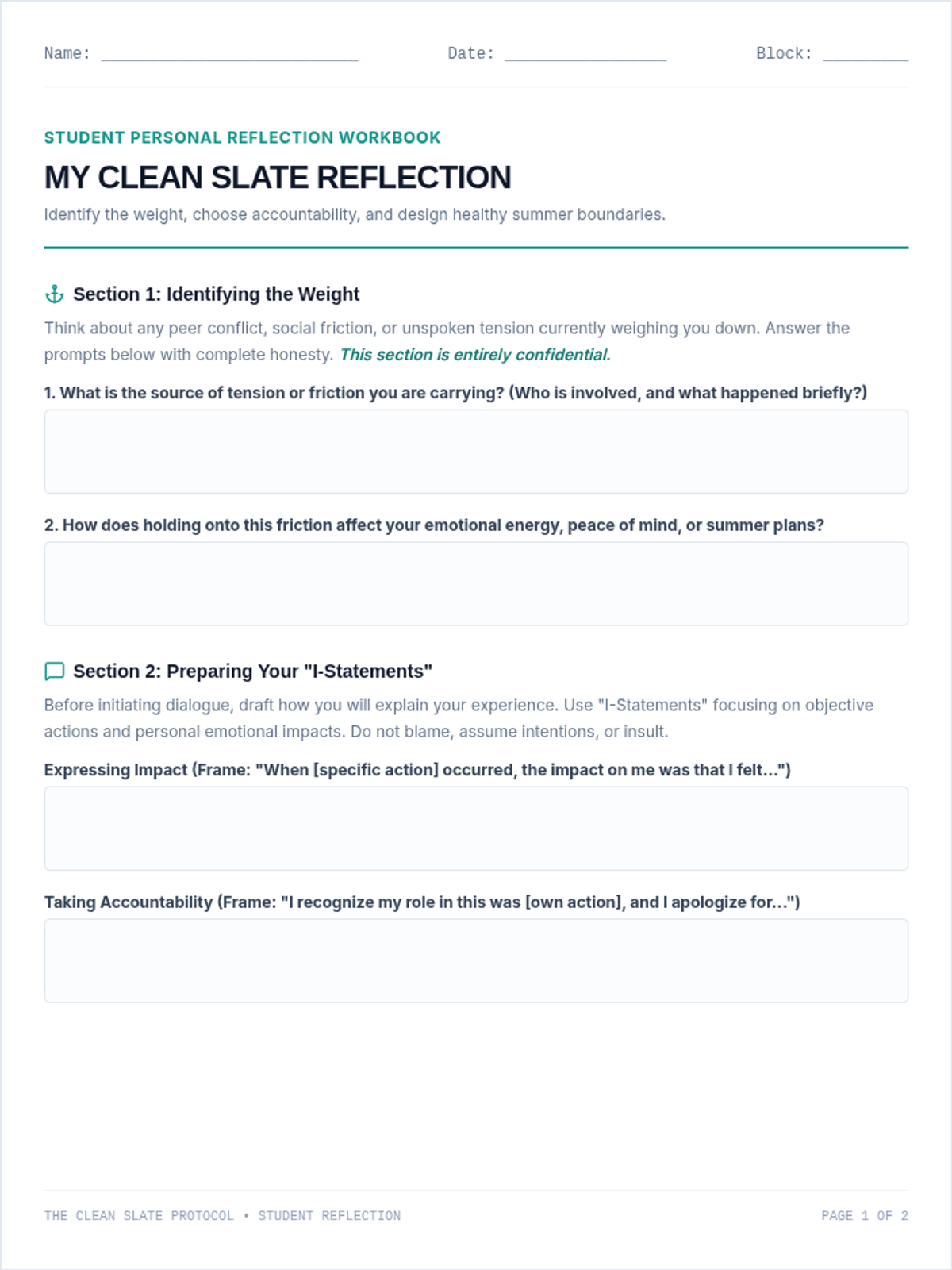
A comprehensive lesson designed for 7th grade students to identify and shift away from co-dependent 'trauma bonding' behaviors toward healthy, resilient friendship boundaries. It focuses on the 'both can be true' philosophy—acknowledging hard things while maintaining individual emotional ownership.
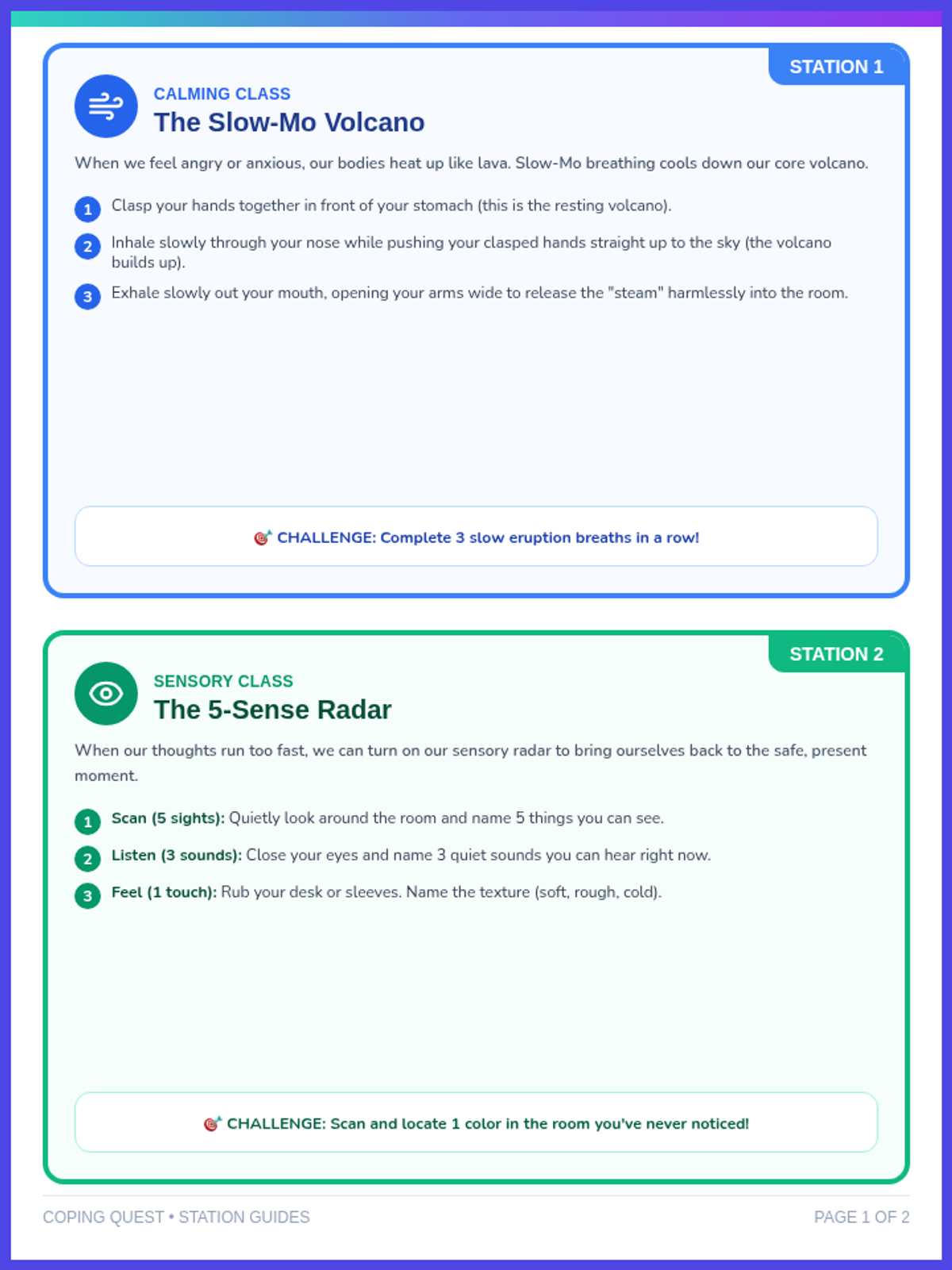
A comprehensive collection of evidence-based coping strategy handouts for middle schoolers, focusing on the biological and psychological 'why' behind each technique. Designed for 7th-grade boys with a tactical, engineering-inspired 'Survival Guide' aesthetic.
A lesson designed for early elementary students to learn the social mechanics of making friends, specifically focusing on starting conversations, asking questions, and discovering shared interests through a social story and interactive cards.
A large-group SEL lesson focused on character, exploring the concept of doing the right thing even when no one is watching through interactive discussions and reflective activities.
A social thinking lesson based on the "Body in the Group" ocean adventure, teaching kindergarteners how physical proximity and orientation show interest and participation.
A lesson for 4th graders exploring the importance of honesty, the impact of lies on trust, and how to tell the truth even when it's hard.
A lesson focused on developing emotional intelligence through identifying and practicing various coping strategies and regulation techniques.
A lesson for kindergarteners to establish foundational classroom expectations, focusing on active listening, following directions, and cooperating as a "Classroom Crew."
A lesson introducing 4th graders to emotional regulation and practical coping strategies for managing big feelings like anger, frustration, and anxiety.
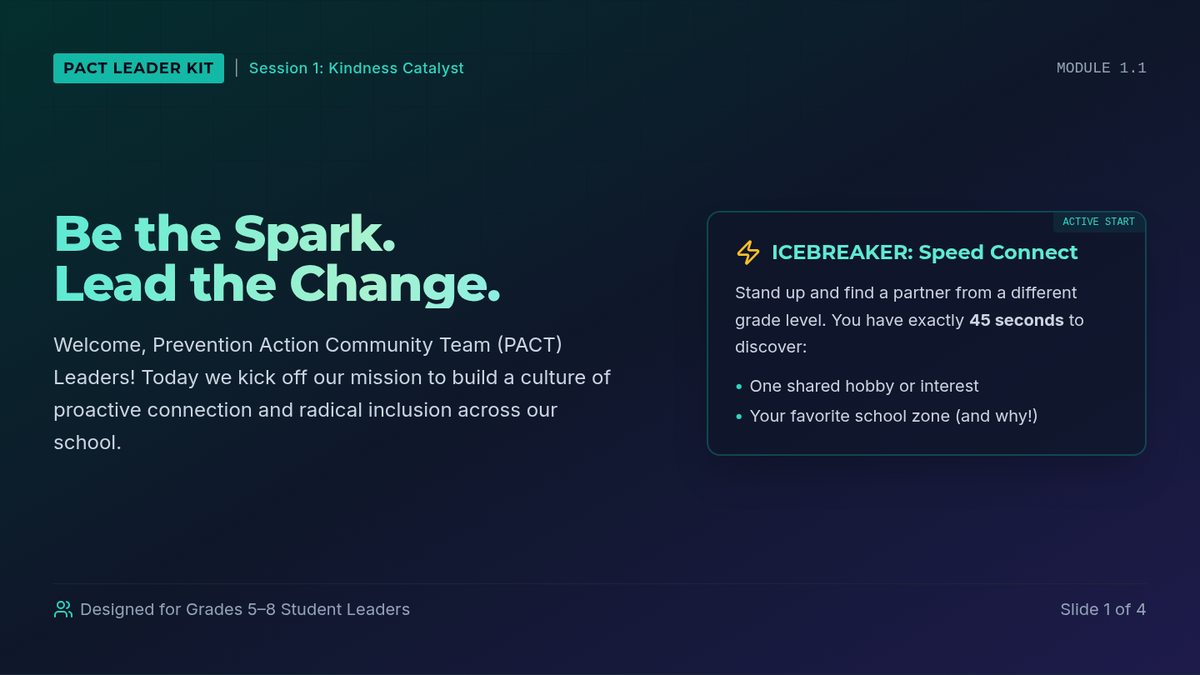
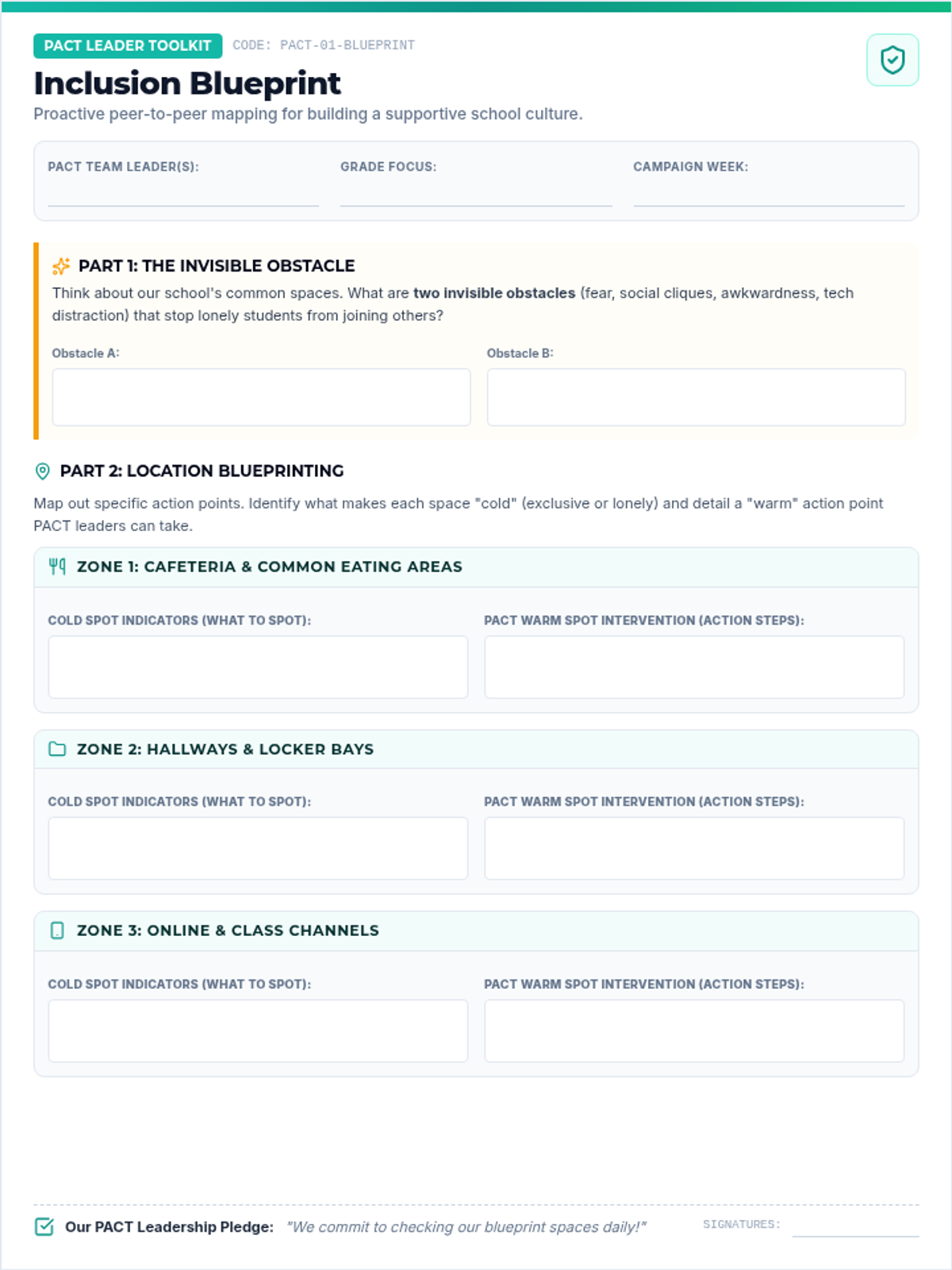
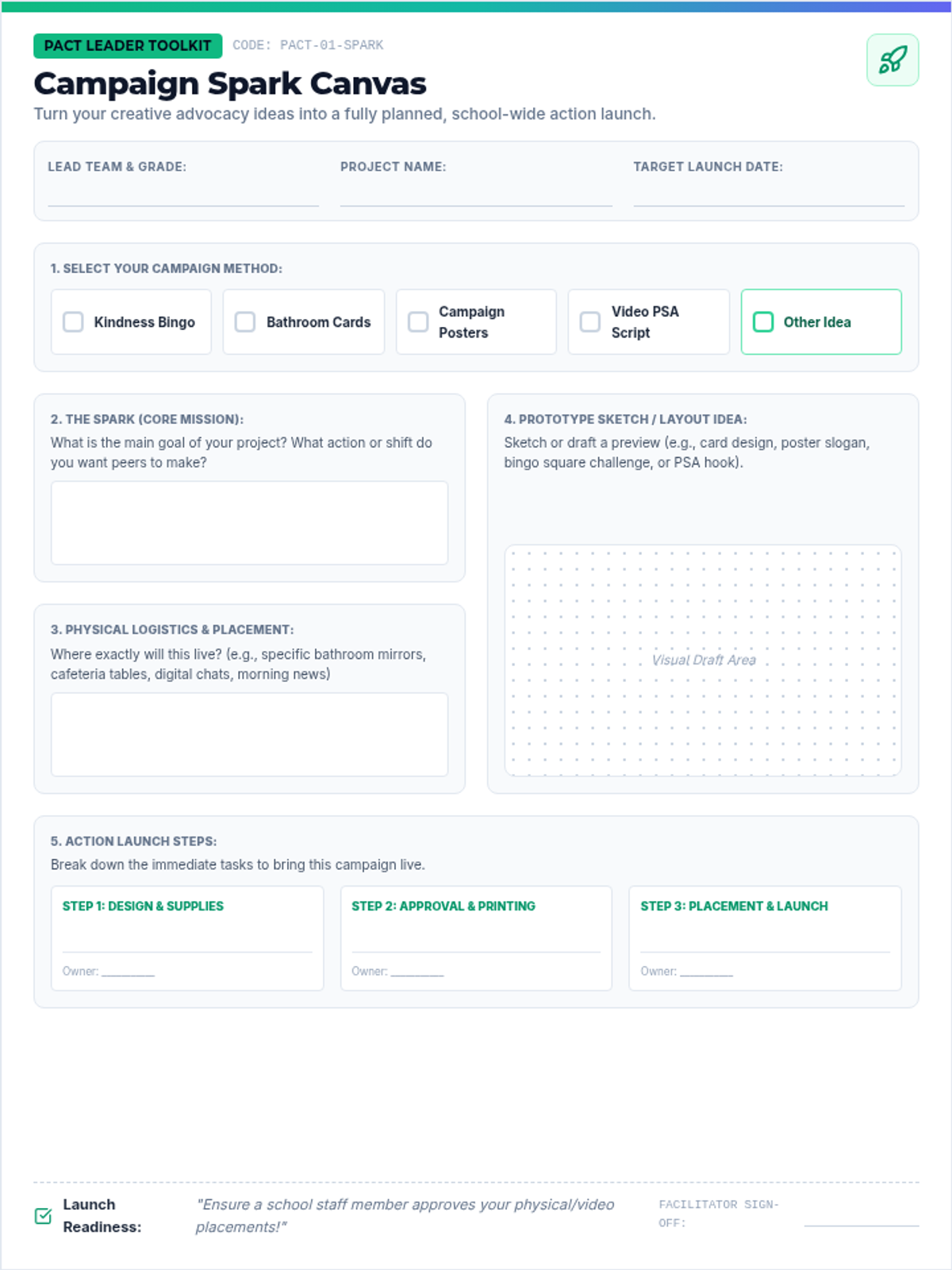
A lesson focused on fostering a culture of kindness within the school community, targeting interactions between students and teachers through discussion and active practice.
A comprehensive lesson exploring the motivations behind academic dishonesty and the long-term impact of cheating on personal integrity and community trust. Students analyze realistic scenarios and build a personal 'blueprint' for ethical decision-making.
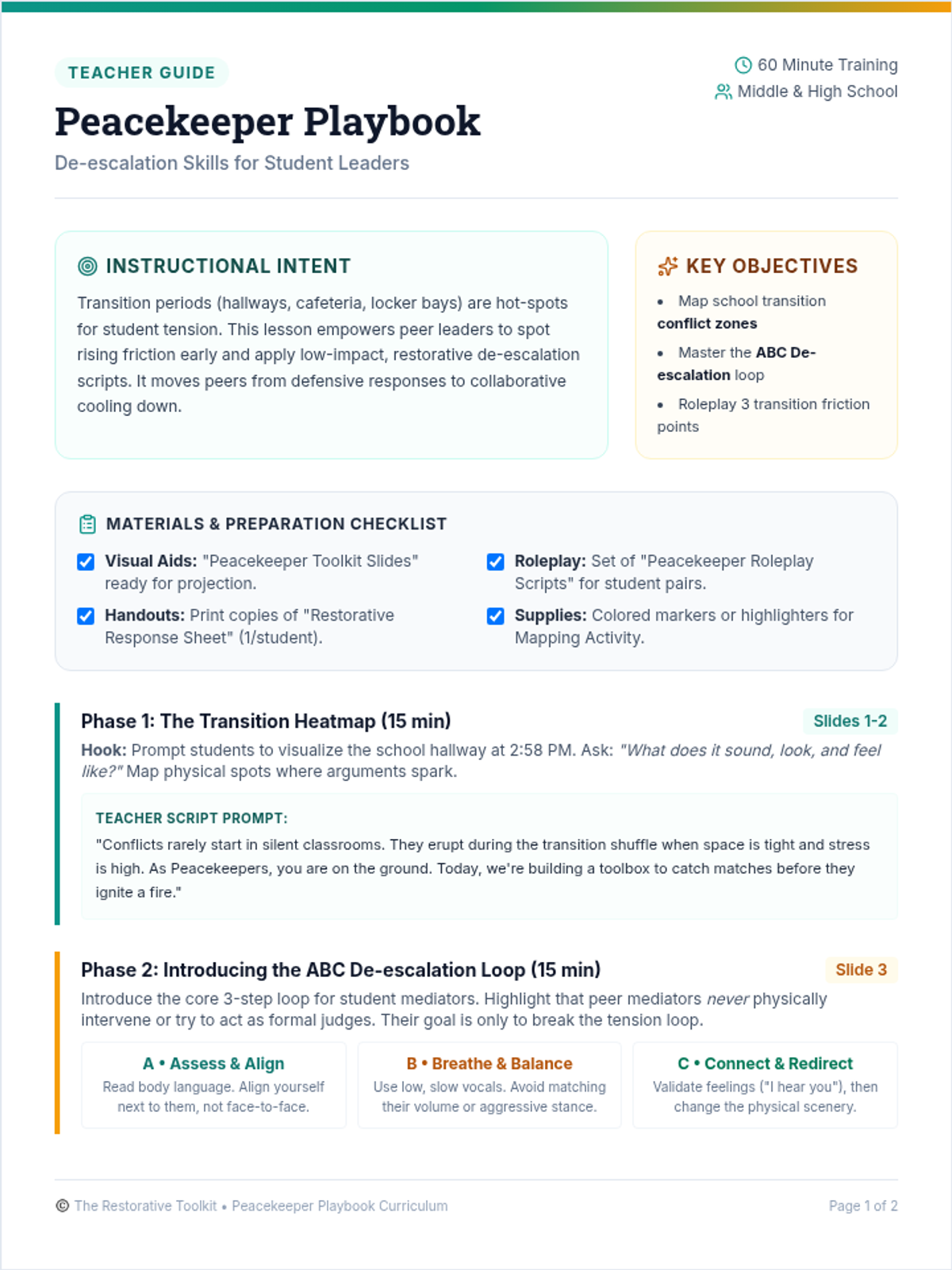
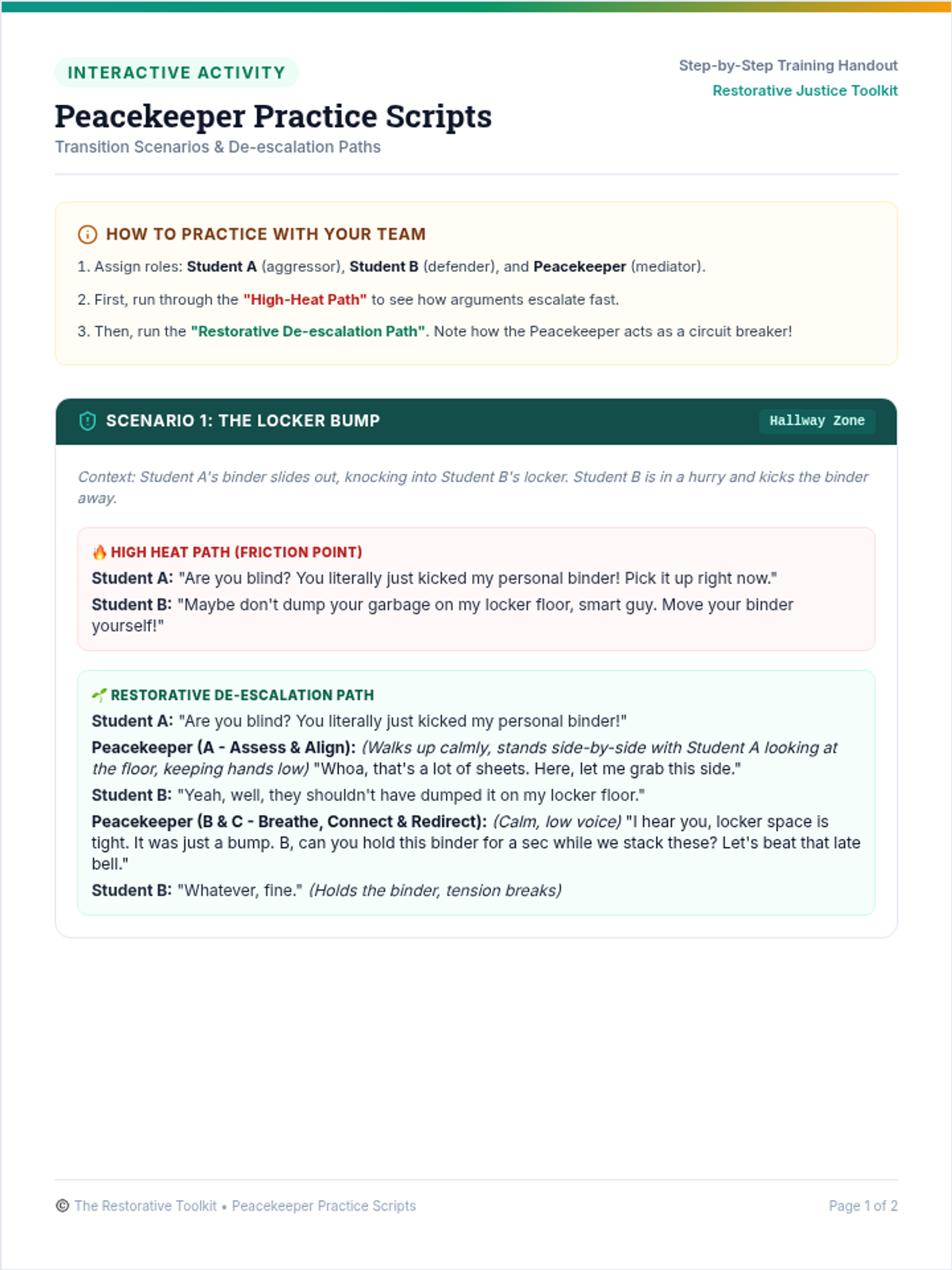
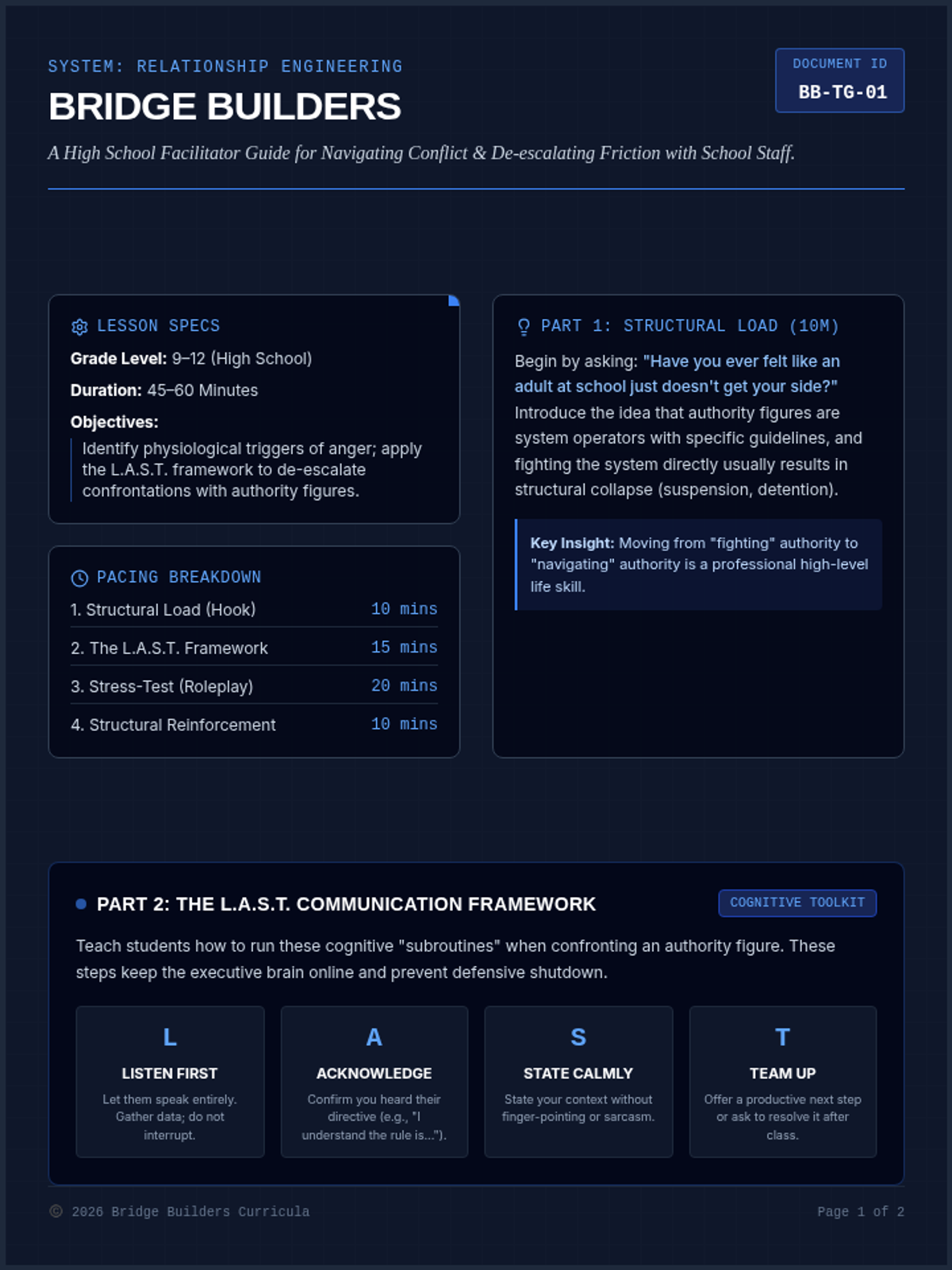
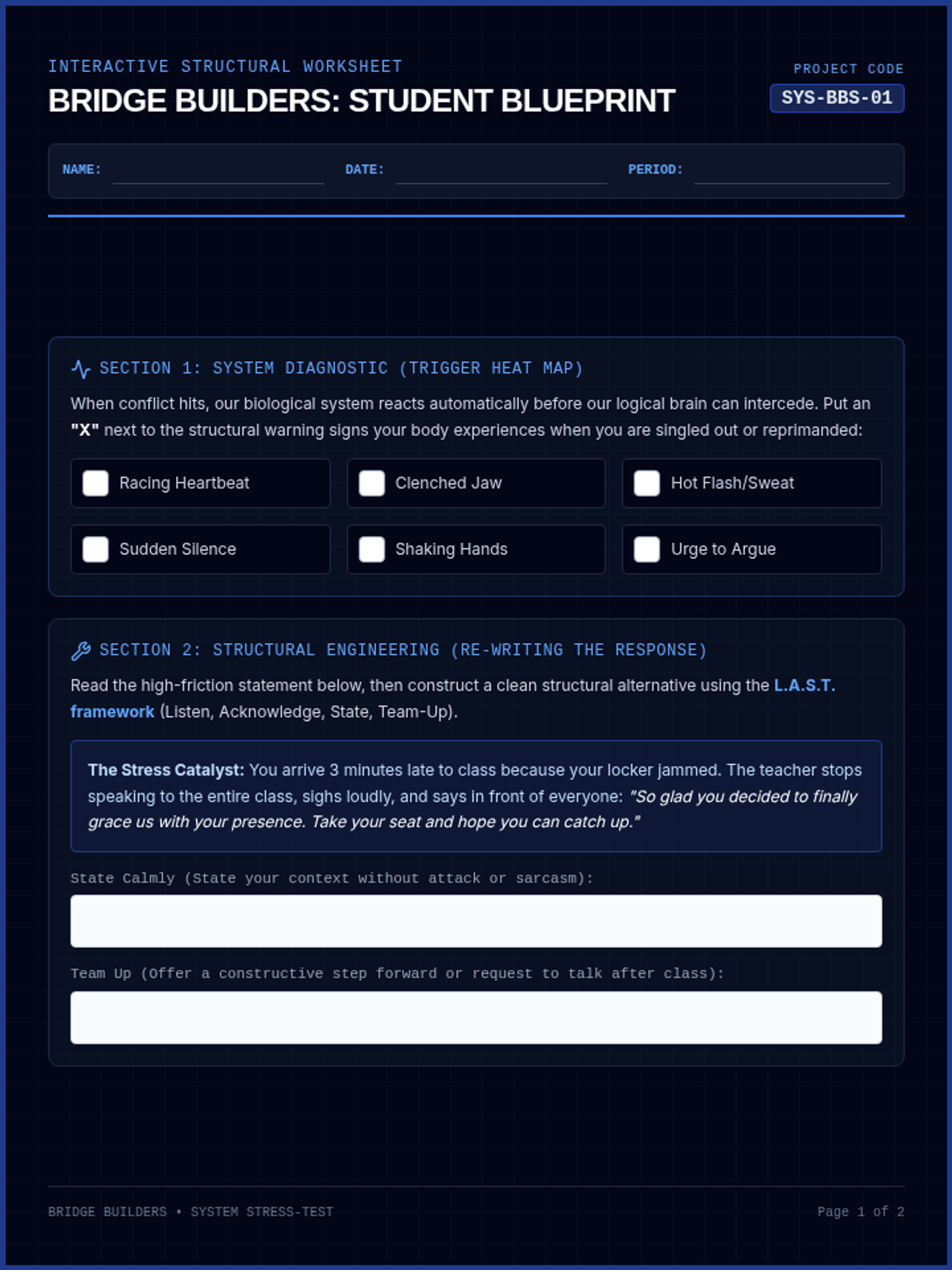
A guide for students and staff on how to safely navigate and respond to physical conflicts in a school setting, focusing on de-escalation, safety, and restorative practices.
Students investigate the physical manifestations of low self-esteem and depression. They learn to identify the 'Bio-Feedback Loop' where body language and physical sensations reinforce negative self-perception.
Students conduct movement experiments to see how physical activity impacts their mindset. They observe the difficulty of maintaining a low mood while engaging in high-energy positive actions.
Using complex character scenarios, students apply behavioral activation principles to analyze social-emotional challenges. They diagnose negative feedback loops and prescribe evidence-based action interventions.
Students practice role-playing the transition from recognizing a negative feeling to choosing a positive action. They use 'Joy Menus' to simulate real-world application of emotional regulation strategies.
In this culminating lesson, students create a personal 'Bounce-Back Plan' emergency card. They identify three specific actions they can take when feeling low to build resilience and autonomy.
A nautical-themed lesson focusing on decision-making skills for middle-grade students, introducing the 'Pause, Plot, Pilot' framework to navigate tricky situations and peer pressure.
A lesson focused on teaching students self-regulation techniques through mindful breathing, featuring the infinity loop strategy.
A set of resources designed for a therapeutic program to address class and work avoidance using a witty, nautical winter theme. Focuses on self-regulation, coping skills, and the impact of individual behavior on the school community.
Finalizes the quest by teaching SMART goal setting and reflecting on the skills learned throughout the 6-week program.
Deepens study strategies with mnemonic devices and summarization techniques to expand the student's academic toolkit.
Addresses the 'Boss Battles' of academic life: procrastination and stress, providing students with tools to manage big projects and anxiety.
Covers active note-taking and the basics of active recall to transform passive reading into active learning.
Introduces time management tools like planners and priority matrices to help students navigate their academic schedule.
Focuses on setting the stage for success by organizing physical and digital spaces and adopting a growth mindset for the quest ahead.
A game-inspired goal-setting activity designed for parent-teacher conferences, focusing on identifying student strengths and growth areas through a 'future quest' lens.
Learning mindfulness and mental strategies to handle internal distractions and return focus to the task at hand.
Developing practical strategies to mitigate external distractions by modifying the environment and setting boundaries.
A cumulative review lesson where students practice categorizing various scenarios into internal or external distraction types.
Understanding how physical body signals like hunger, fatigue, and discomfort act as internal distractions.
Identifying mental internal distractions like daydreaming, worries, and planning for the future while trying to work.
Exploring how digital devices, notifications, and apps act as powerful external distractions in the modern world.
Focusing on physical environment distractions such as noise, visual clutter, and people, and how they impact concentration.
An introduction to what distractions are and the fundamental difference between internal (thoughts/feelings) and external (environment/tech) distractions.
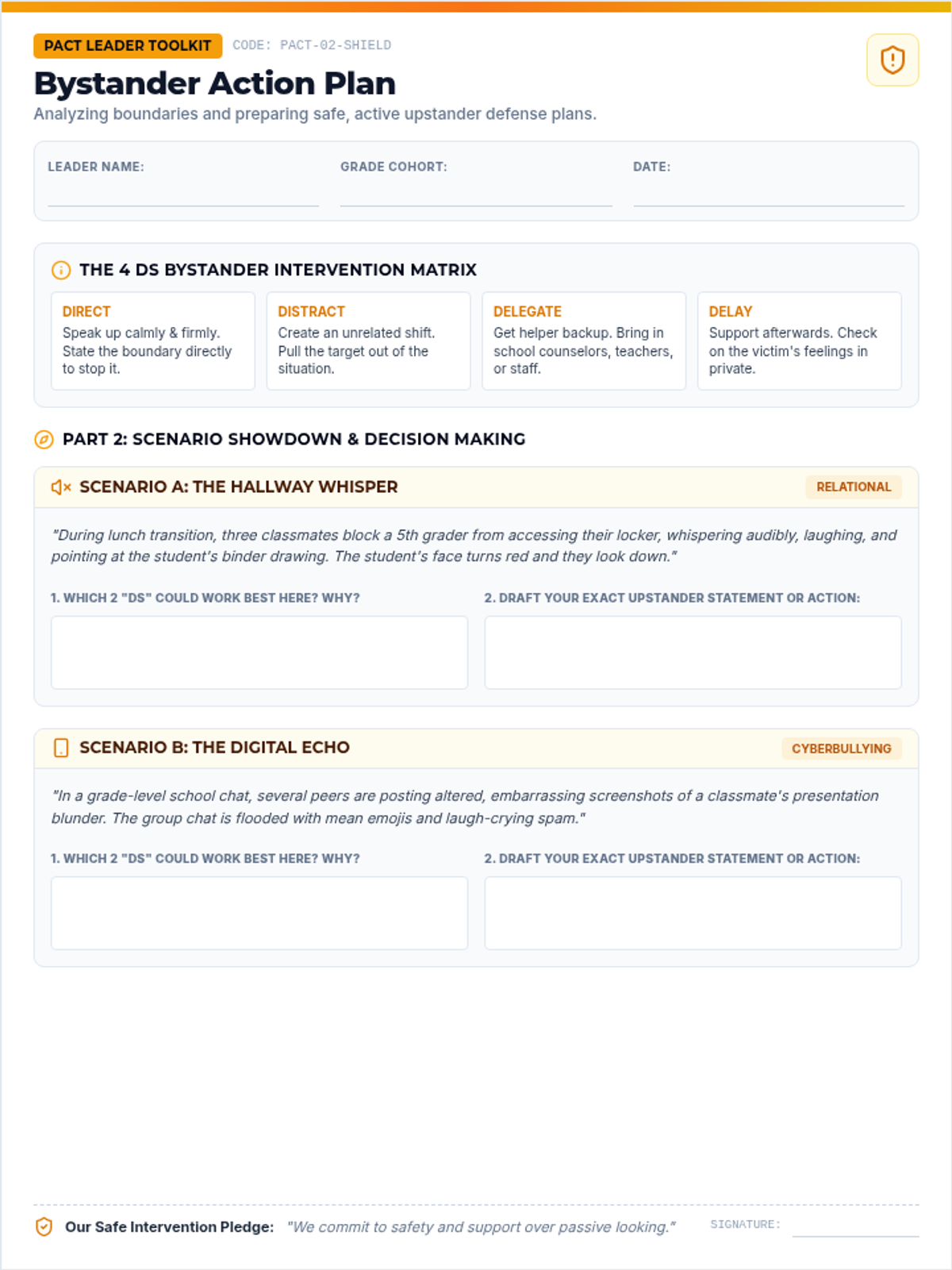
This lesson helps high school students identify and navigate social conflict, specifically focusing on scenarios where teasing crosses the line into bullying. Students will analyze 8 realistic scenarios to develop empathy and bystander intervention strategies.
A lesson focused on sensory tools for emotional regulation, specifically the creation and use of calming bottles as a mindfulness technique.
A parent workshop focused on establishing calm and effective morning routines for K-1st grade students to reduce stress and foster independence.
A comprehensive workshop for K-1st grade parents to design stress-free morning routines that foster independence and positive school starts.
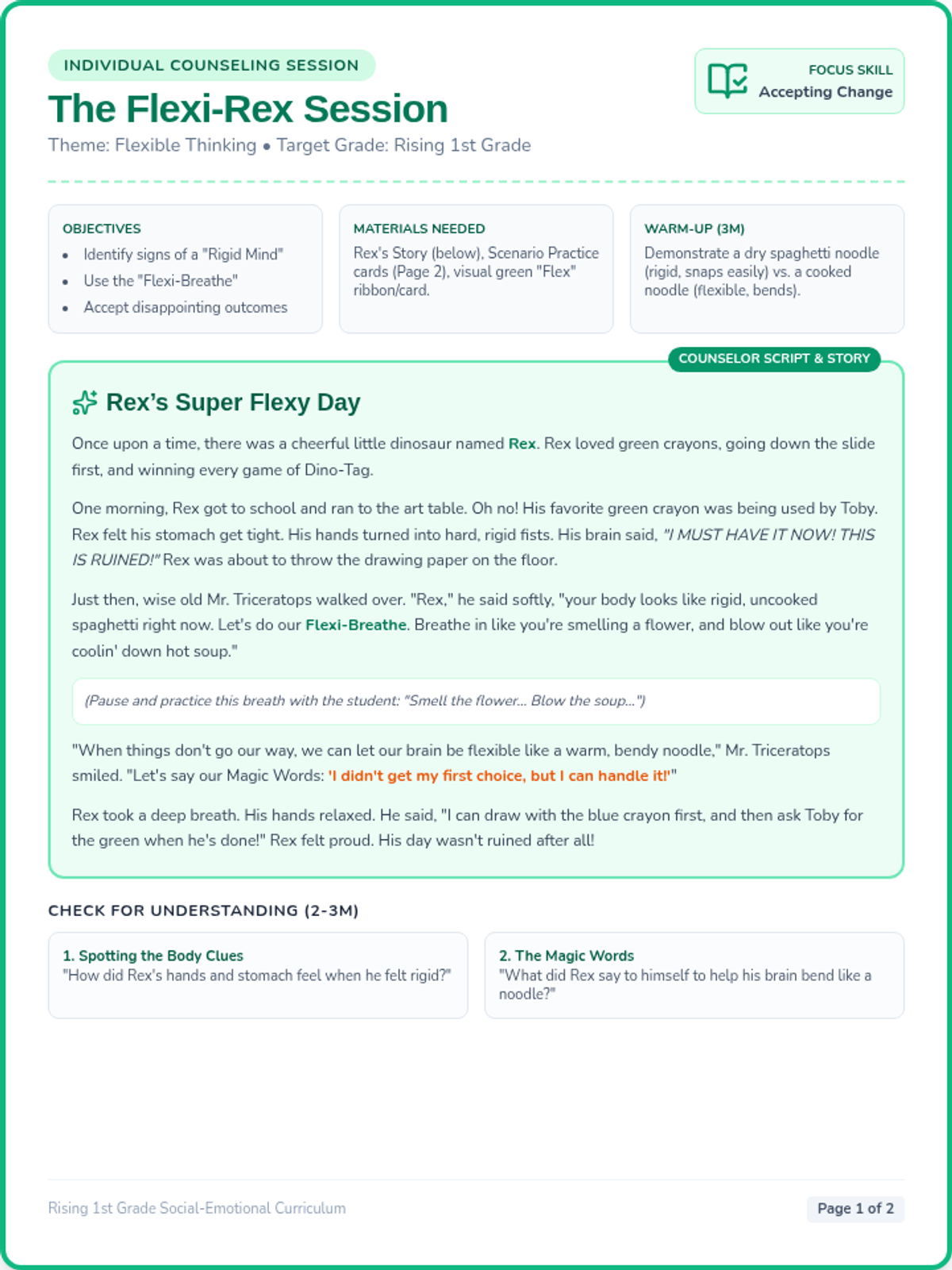
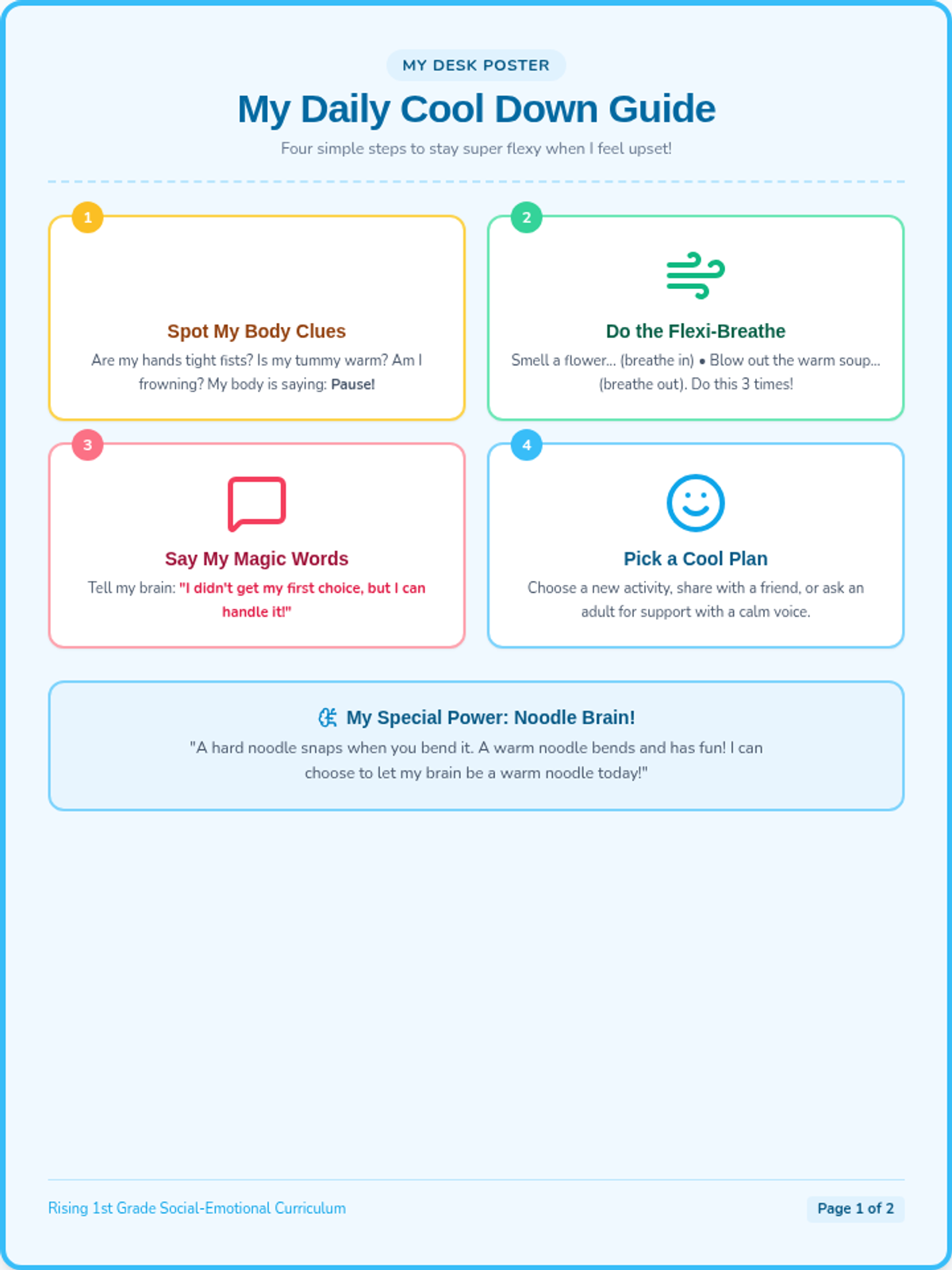
A 15-minute Social-Emotional Learning lesson for 1st graders focused on identifying and using healthy coping strategies to manage sadness and difficult emotions. Students explore a 'toolbox' of actions they can take to feel better.
The foundational lesson for individual anger management, focusing on identifying internal physical signals of anger and building a customized toolkit for regulation. This lesson provides the essential 'blueprints' and 'tools' needed for the student to begin self-monitoring and proactive problem-solving.
A Parent-Teacher Conference initiative focused on building a 'Kindness Tree' to celebrate student growth and positive character through small, impactful acts.
A charming Valentine-themed lesson for first graders focusing on identifying kind actions and celebrating friendship through a scenarios worksheet and coloring activity.
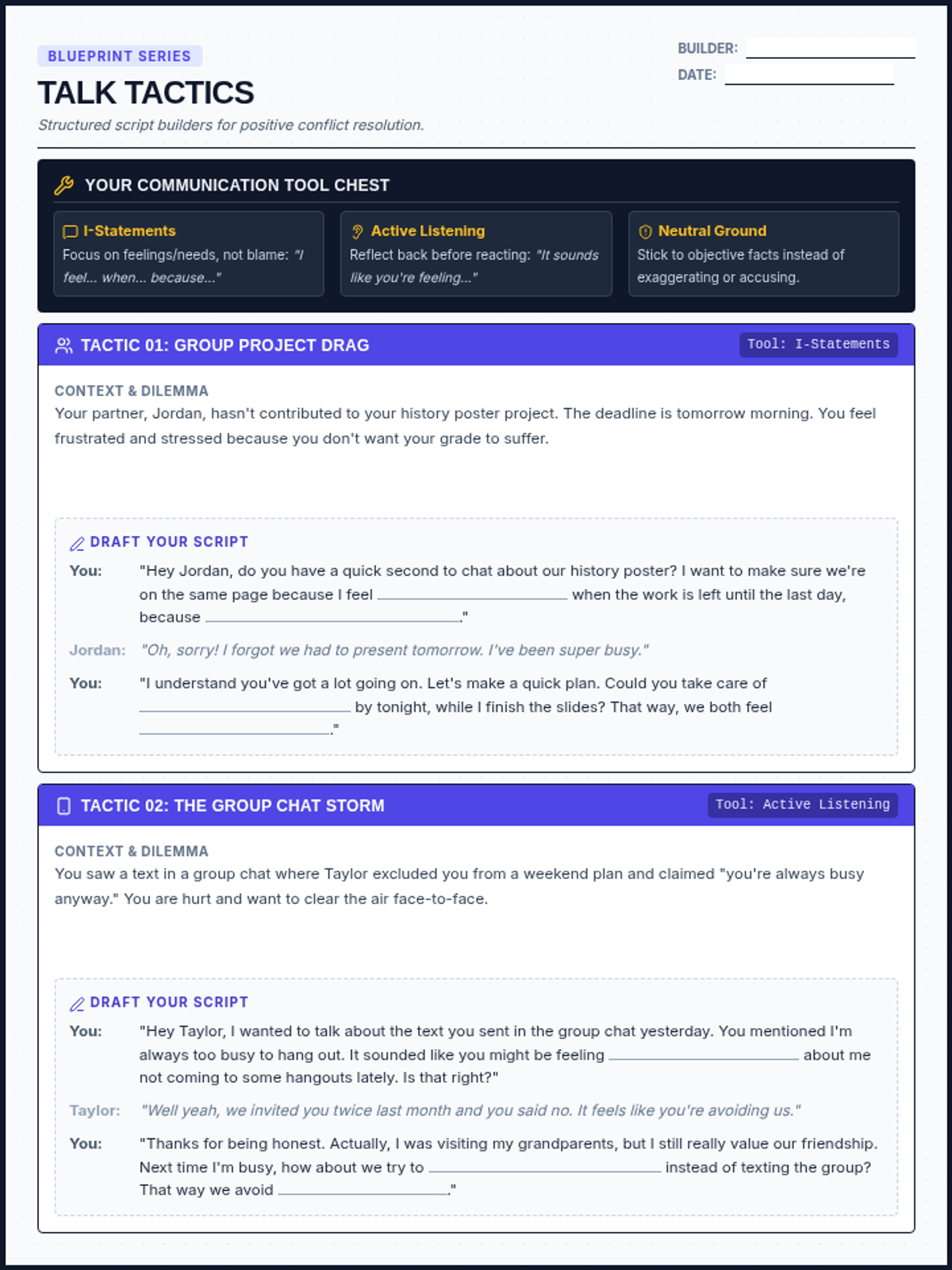
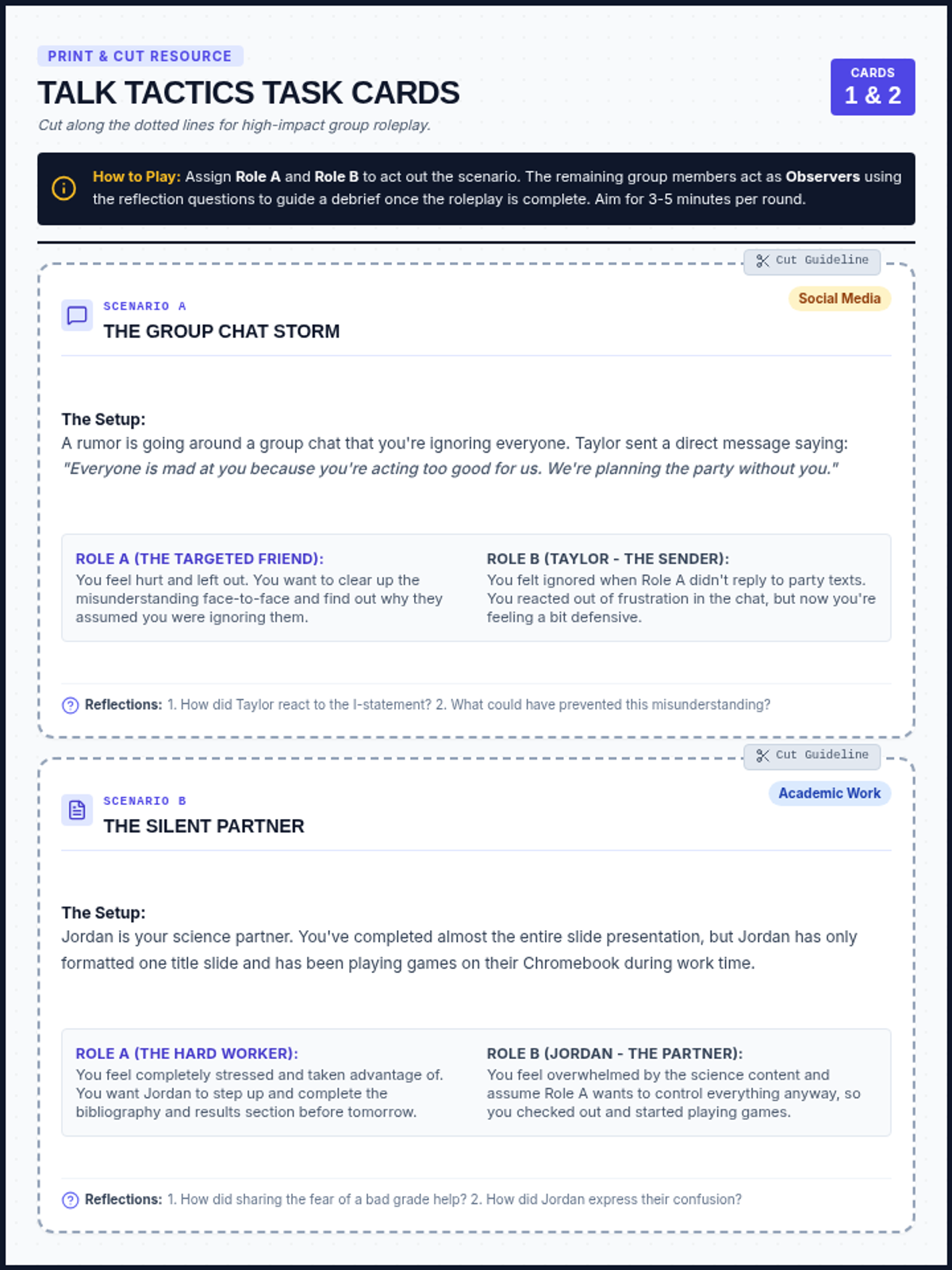
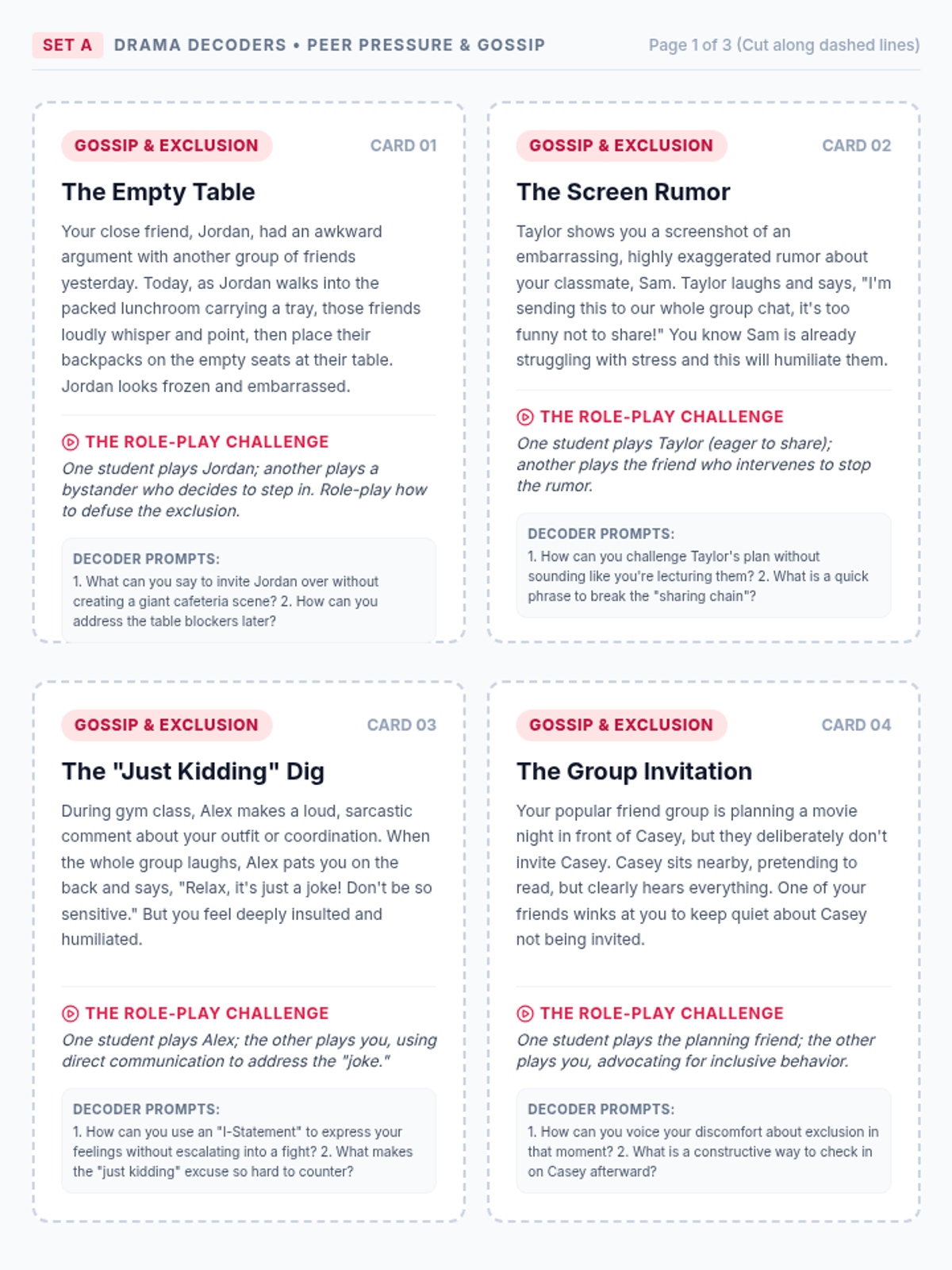
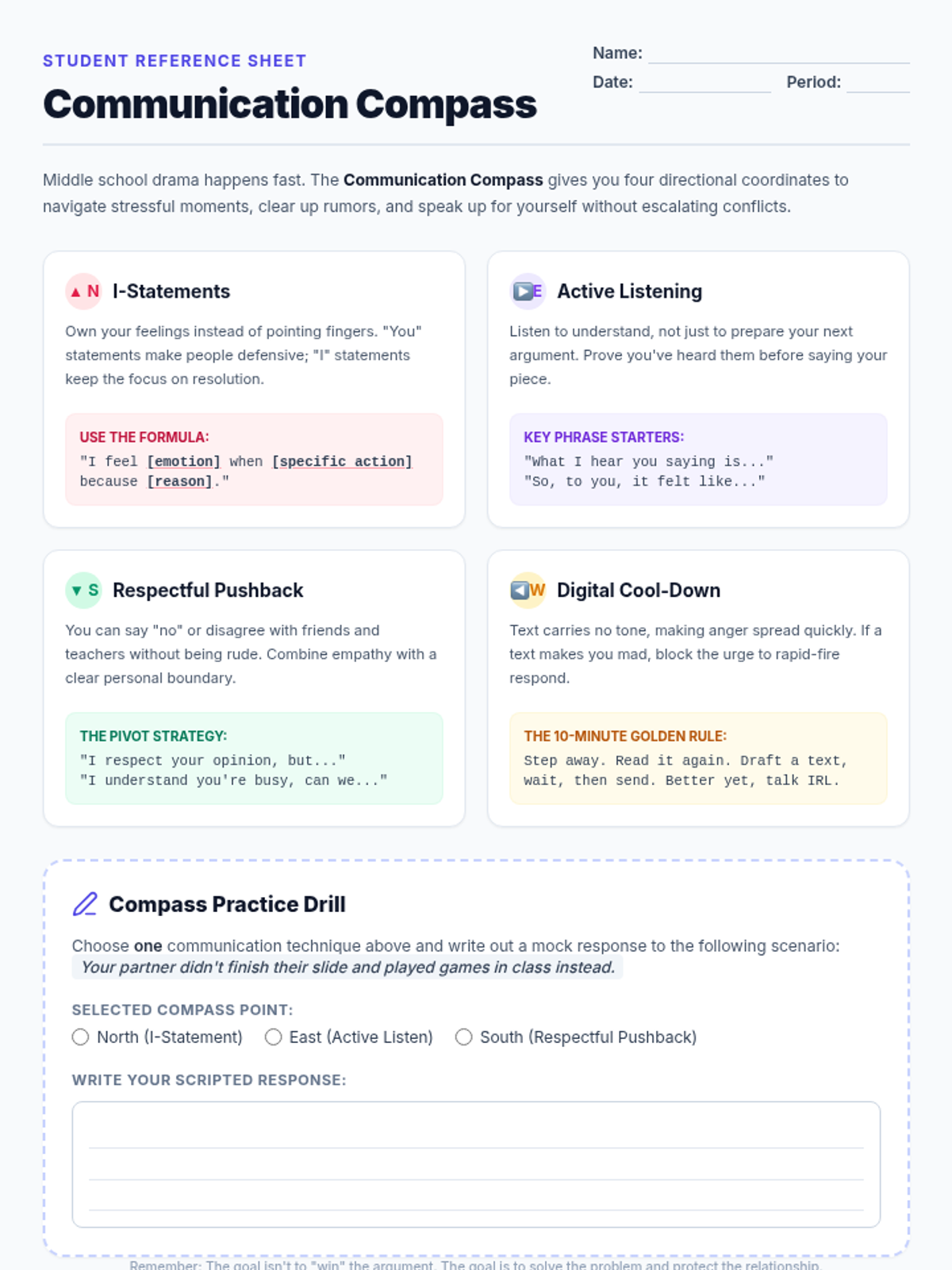
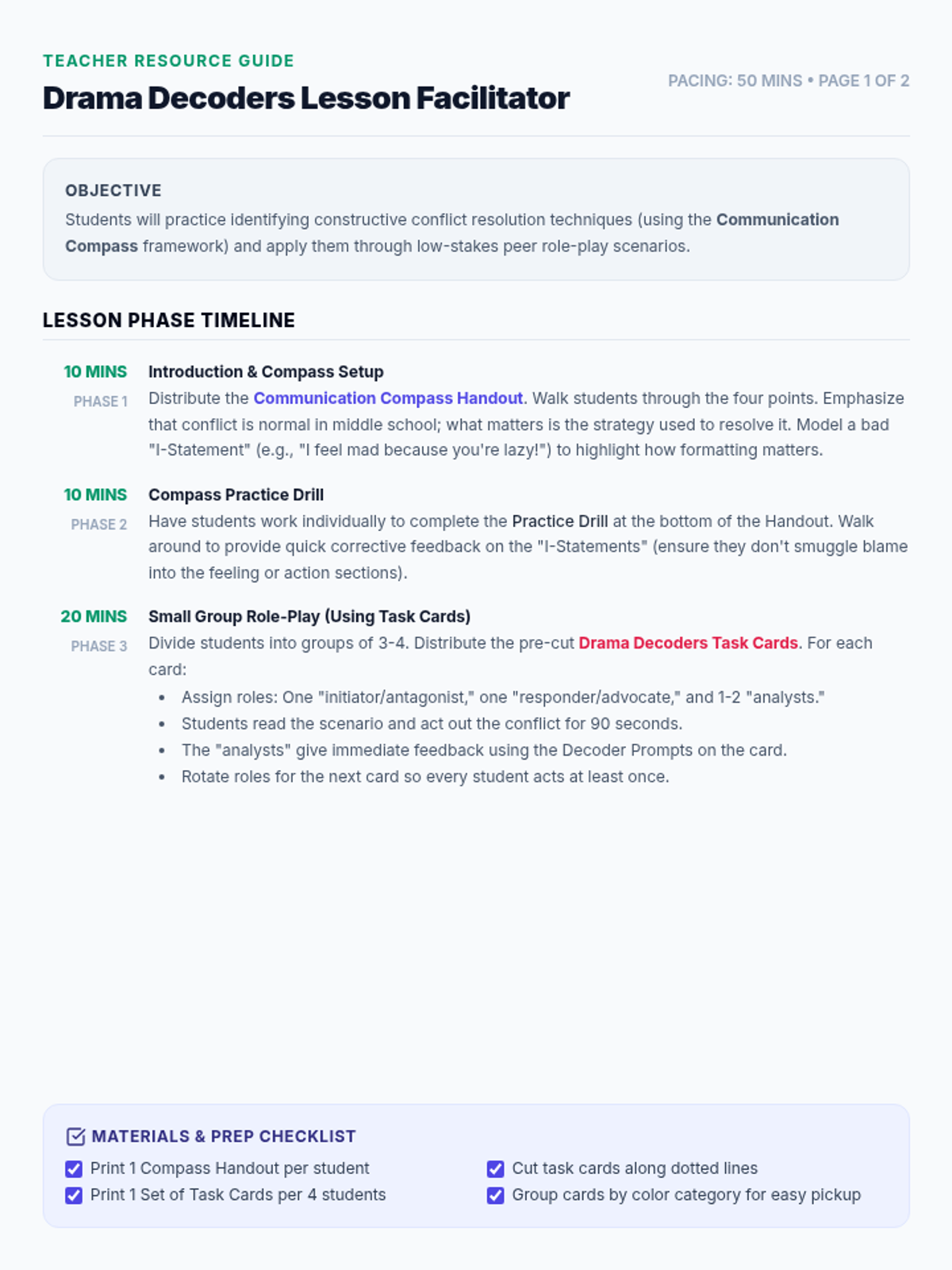
A 30-minute counseling lesson focused on decoding social signals, understanding perspectives, and choosing effective conflict-resolution strategies for middle schoolers.
The capstone lesson where students synthesize their learning into a final project and apply survival lessons to their own lives.
A reflective session where students track Brian's (and their own) growth over the course of the novel.
Develops adaptability and resilience by practicing survival problem-solving and reflecting on personal setbacks.
Examines the nature of courage, distinguishing it from the absence of fear through Brian's risky survival tasks.
Explores the psychological impact of isolation and the development of self-reliance and inner strength.