A DBT-focused lesson for 10th-grade girls struggling with school-based distress, covering the STOP skill and self-soothing techniques to manage anxiety and depression in the classroom.
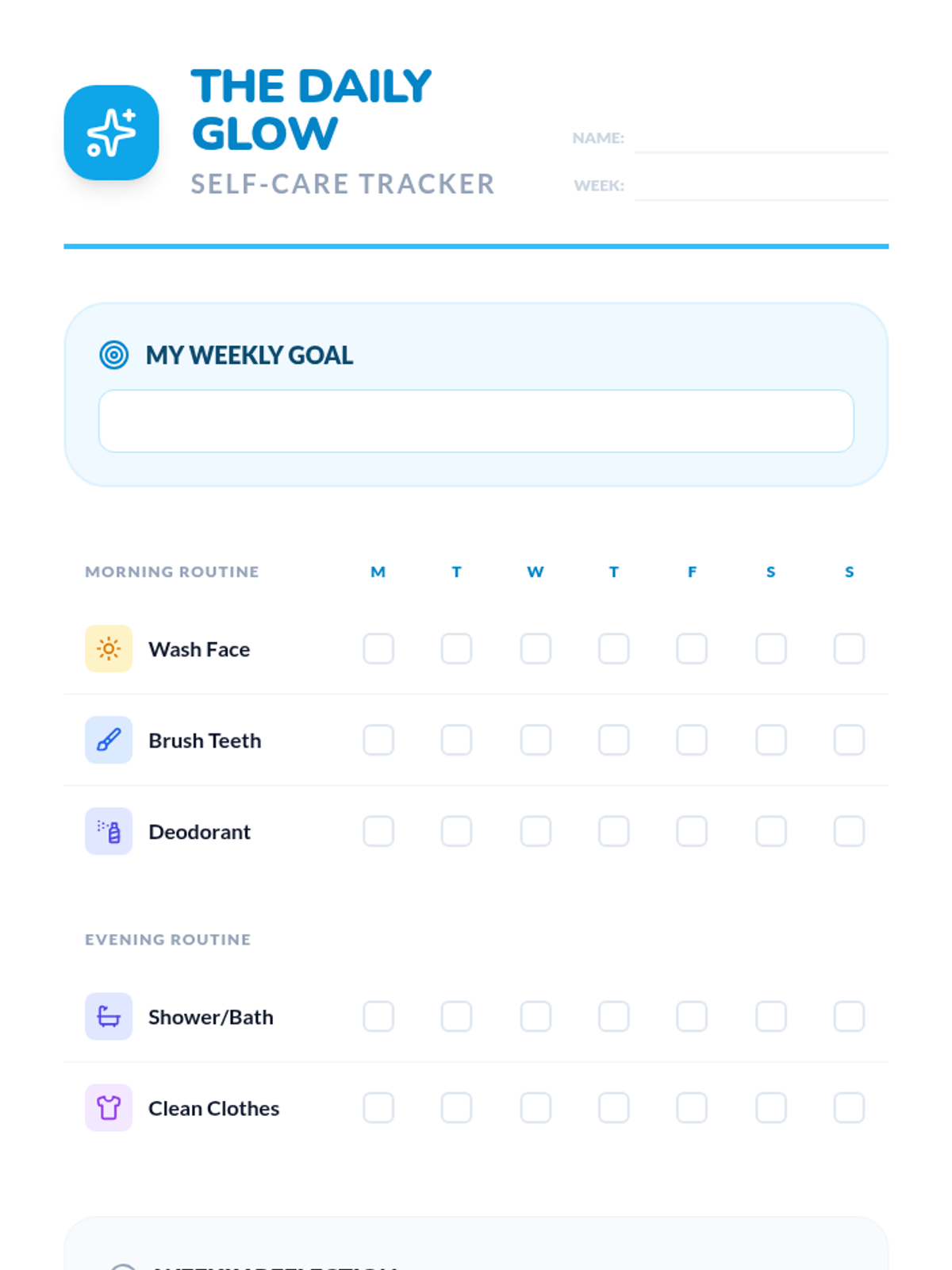
Establishing consistent personal care routines. Students explore the importance of grooming, hygiene, and self-care for health and social confidence.
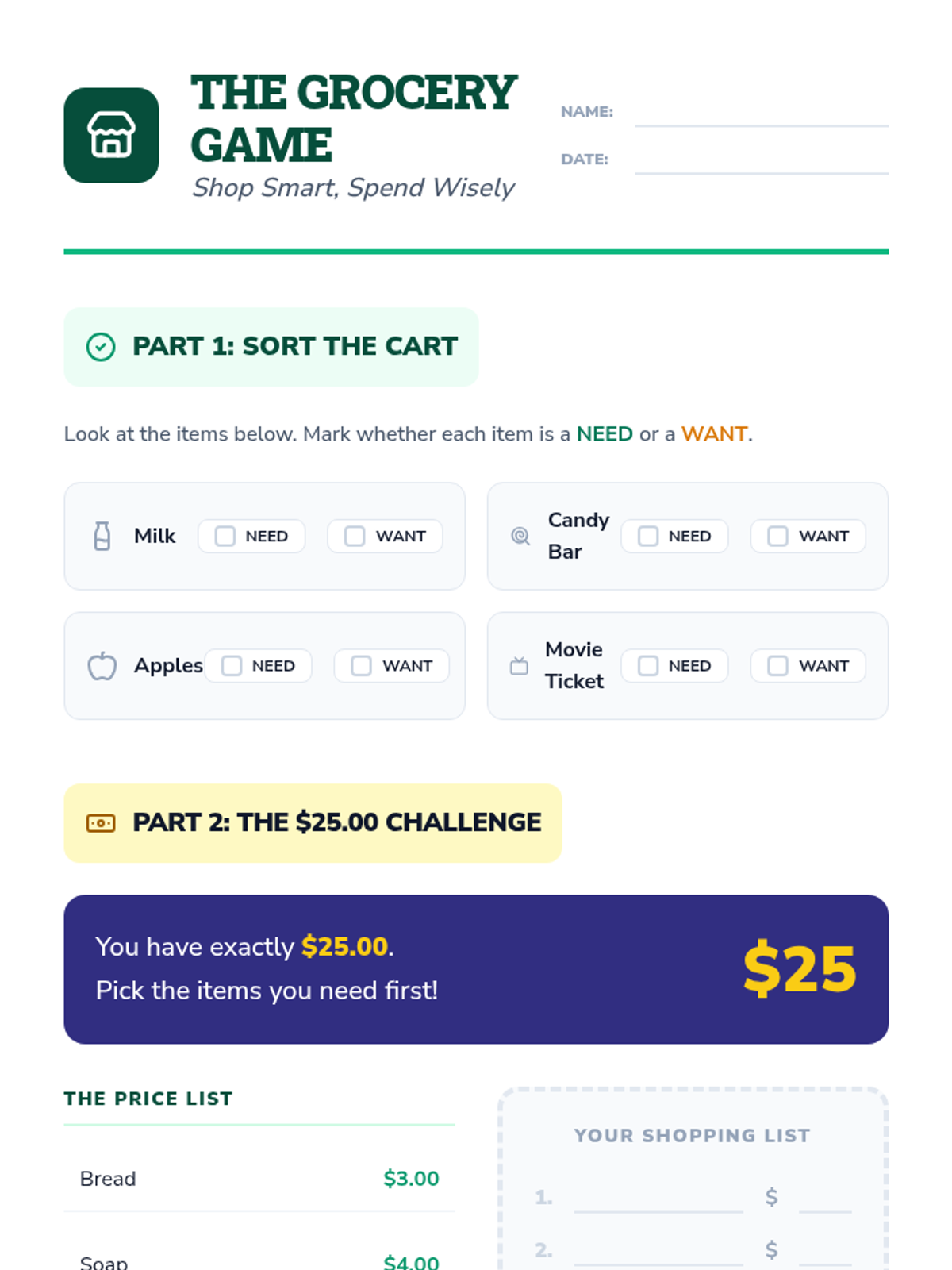
Navigating the world of currency and cost. Students practice tracking expenses, understanding needs versus wants, and planning a basic budget for personal items.
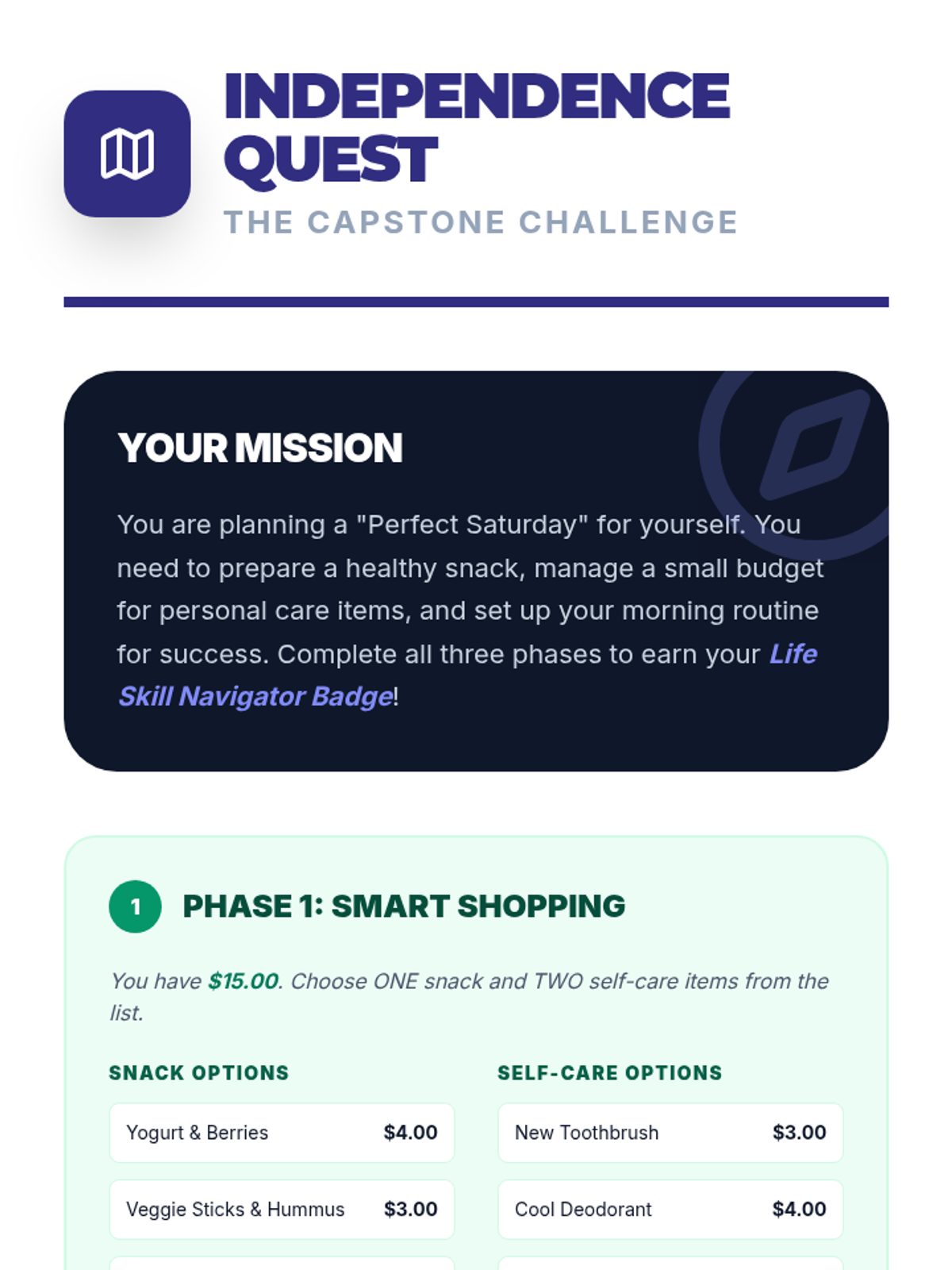
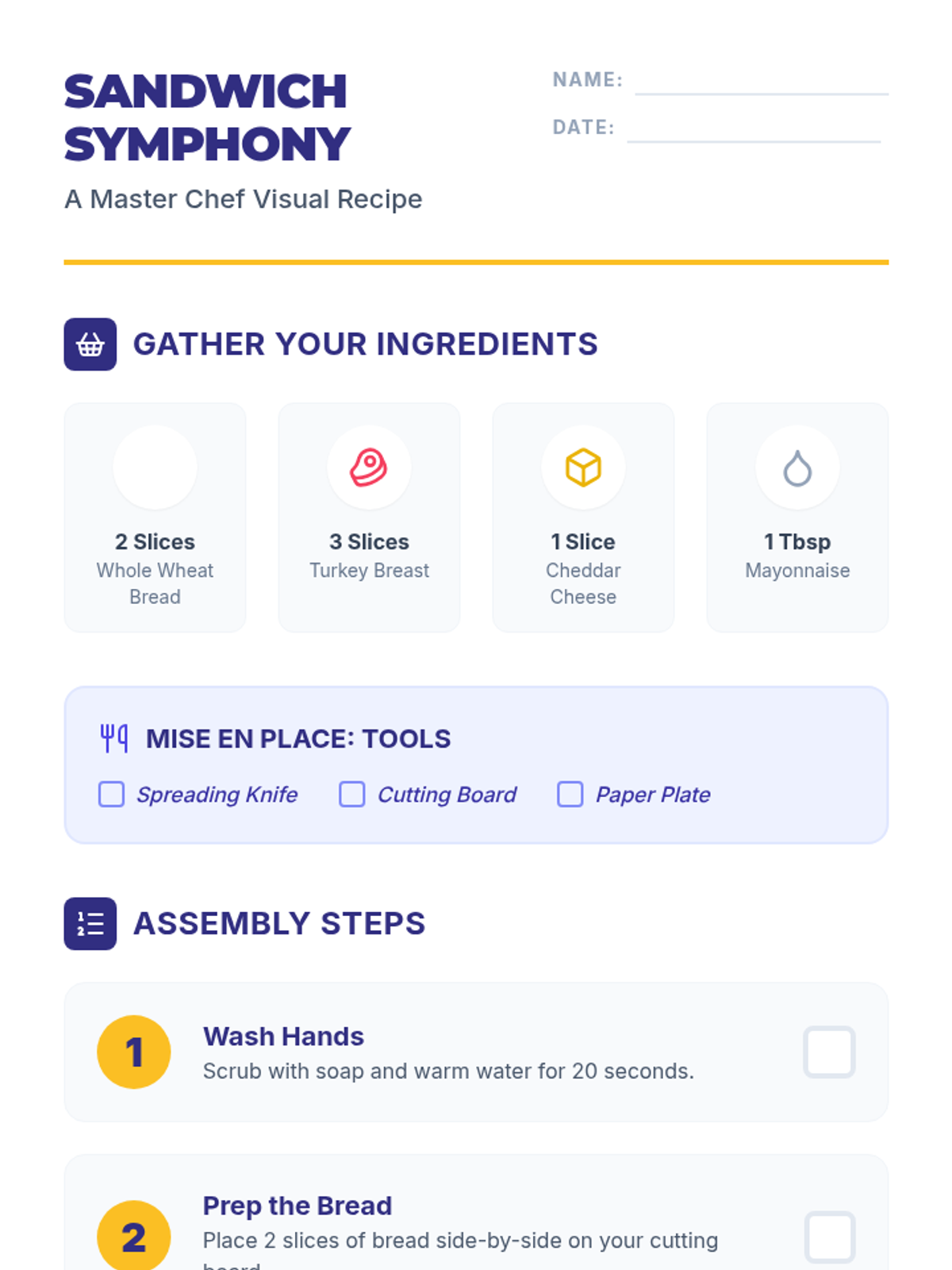
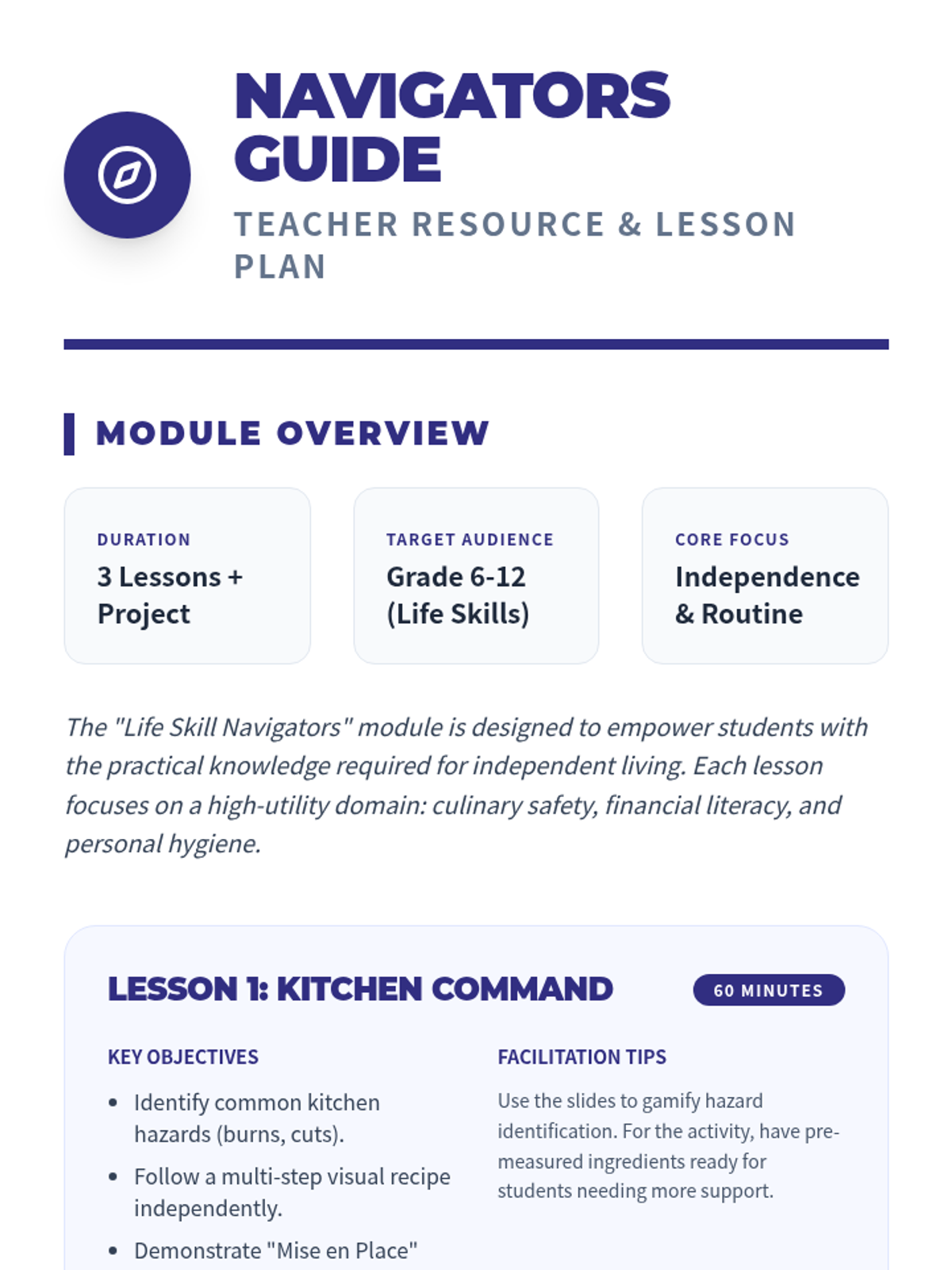
Mastering the art of safe kitchen navigation and simple meal assembly. Students learn to identify hazards and follow visual recipes to create basic snacks and meals.
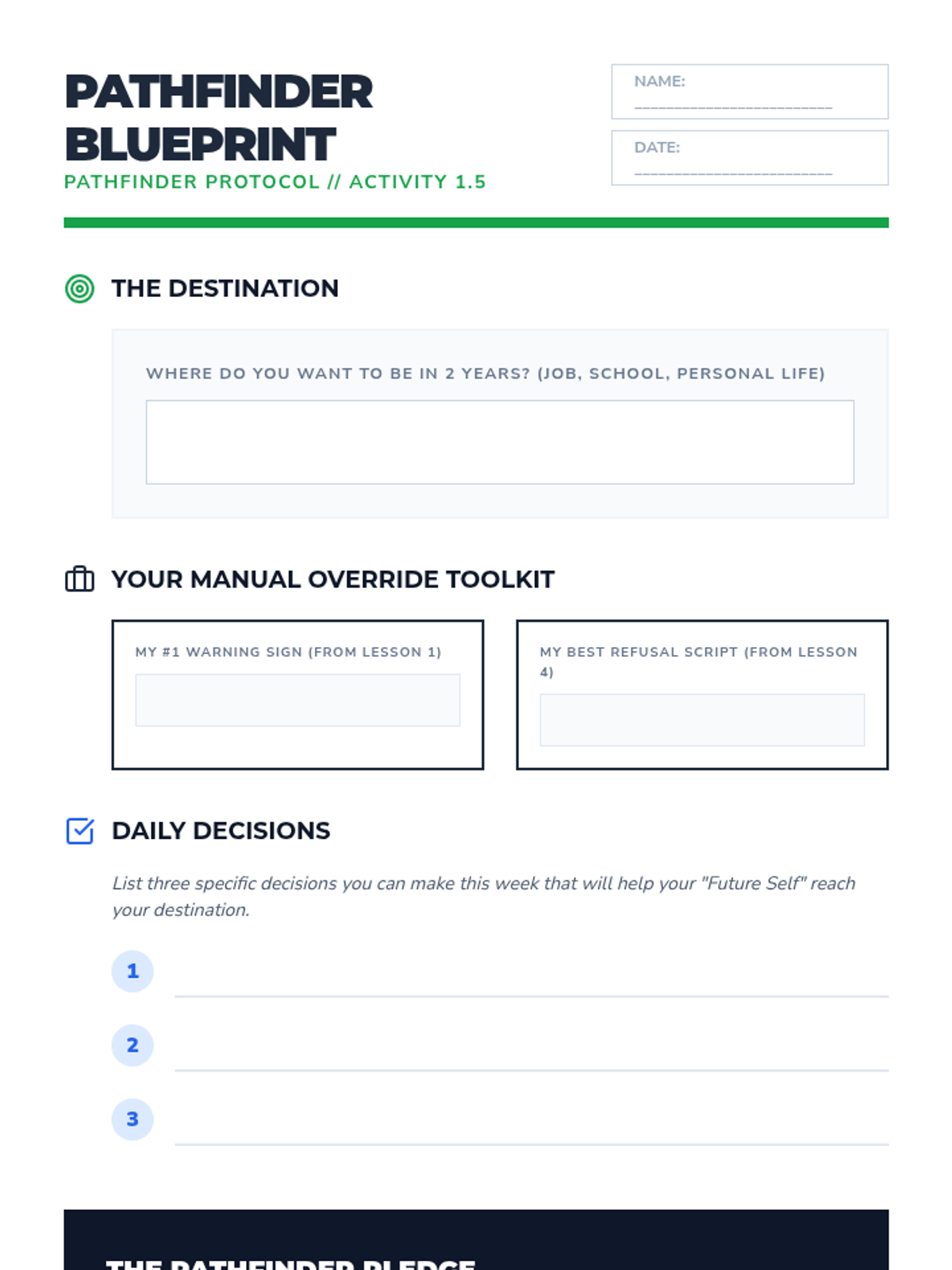
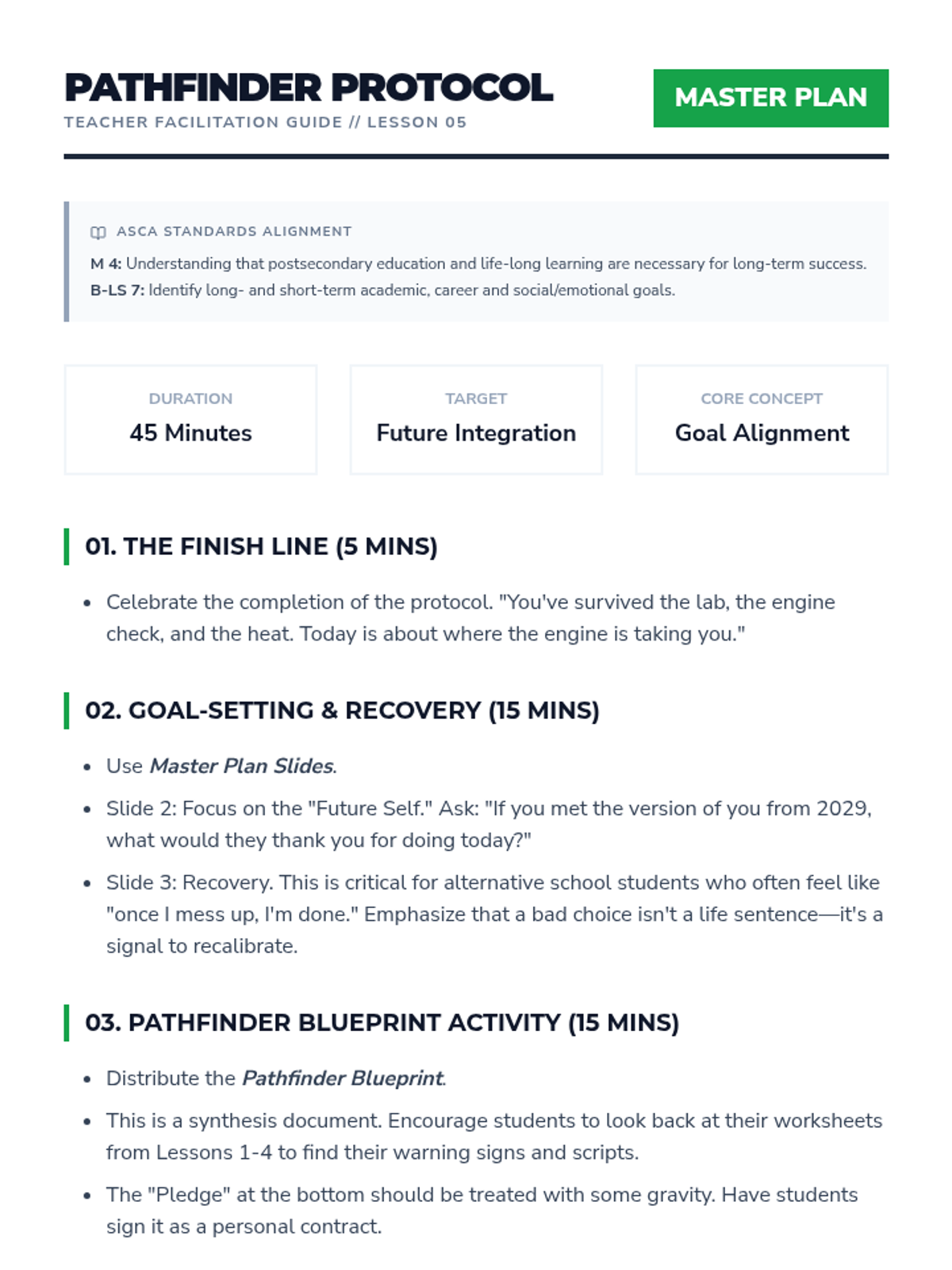
Synthesizes previous lessons into a personal action plan. Students connect daily choices to their desired future selves and learn strategies for recovering and taking responsibility after a poor decision.
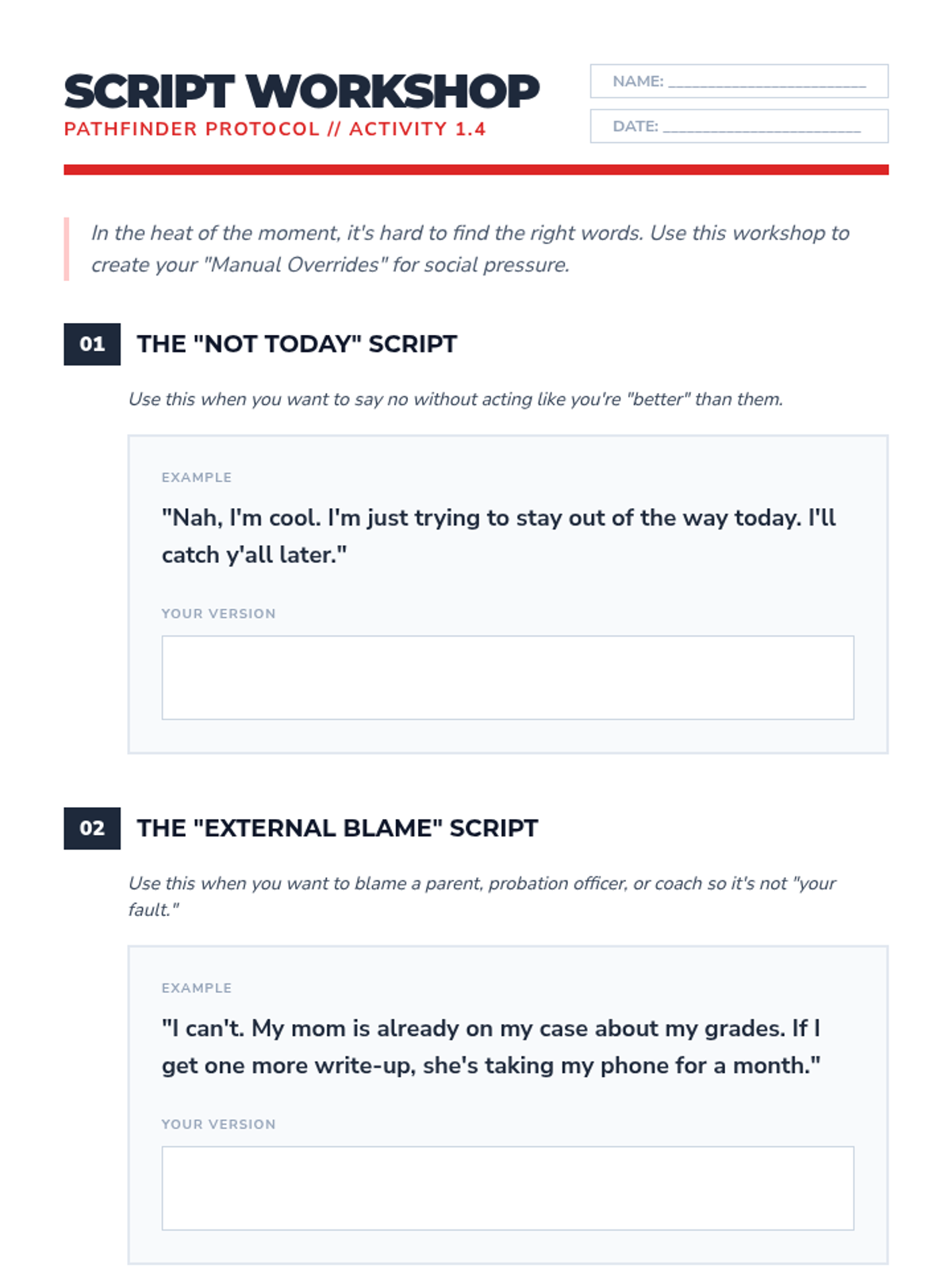
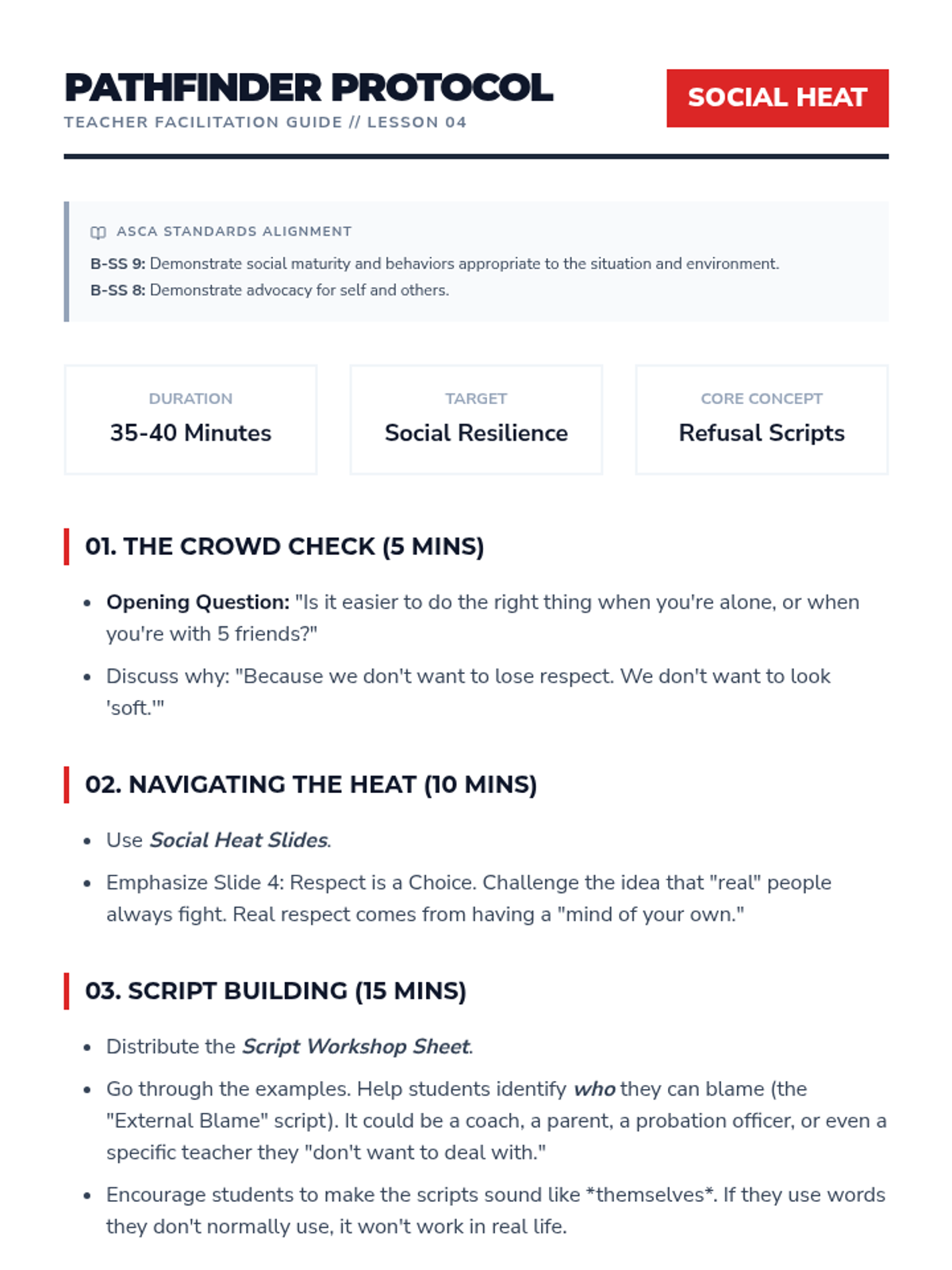
Addresses the social dimension of decision-making, focusing on peer influence, reputation, and setting boundaries. Students develop 'refusal scripts' to navigate high-pressure social situations without losing face.
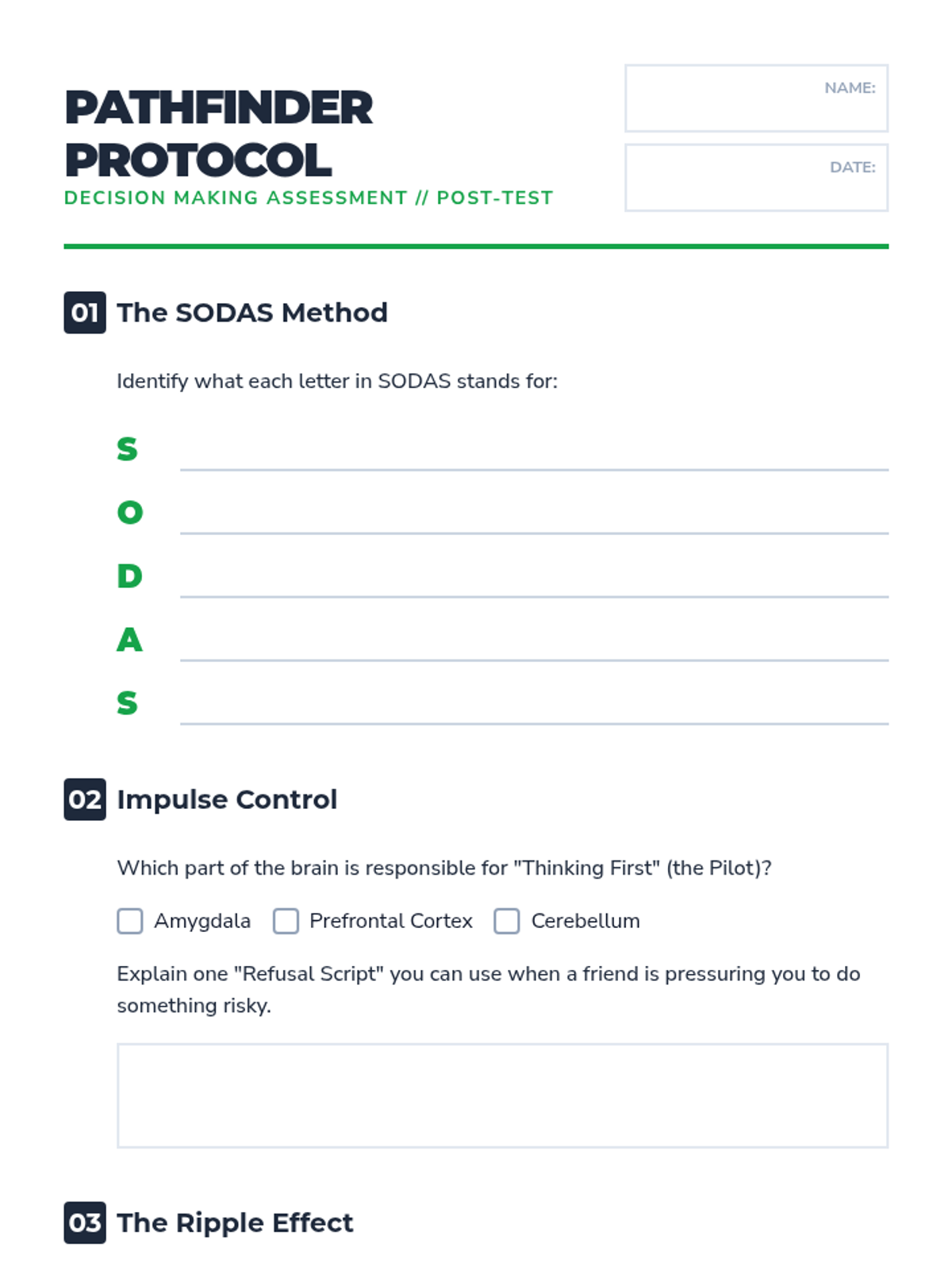
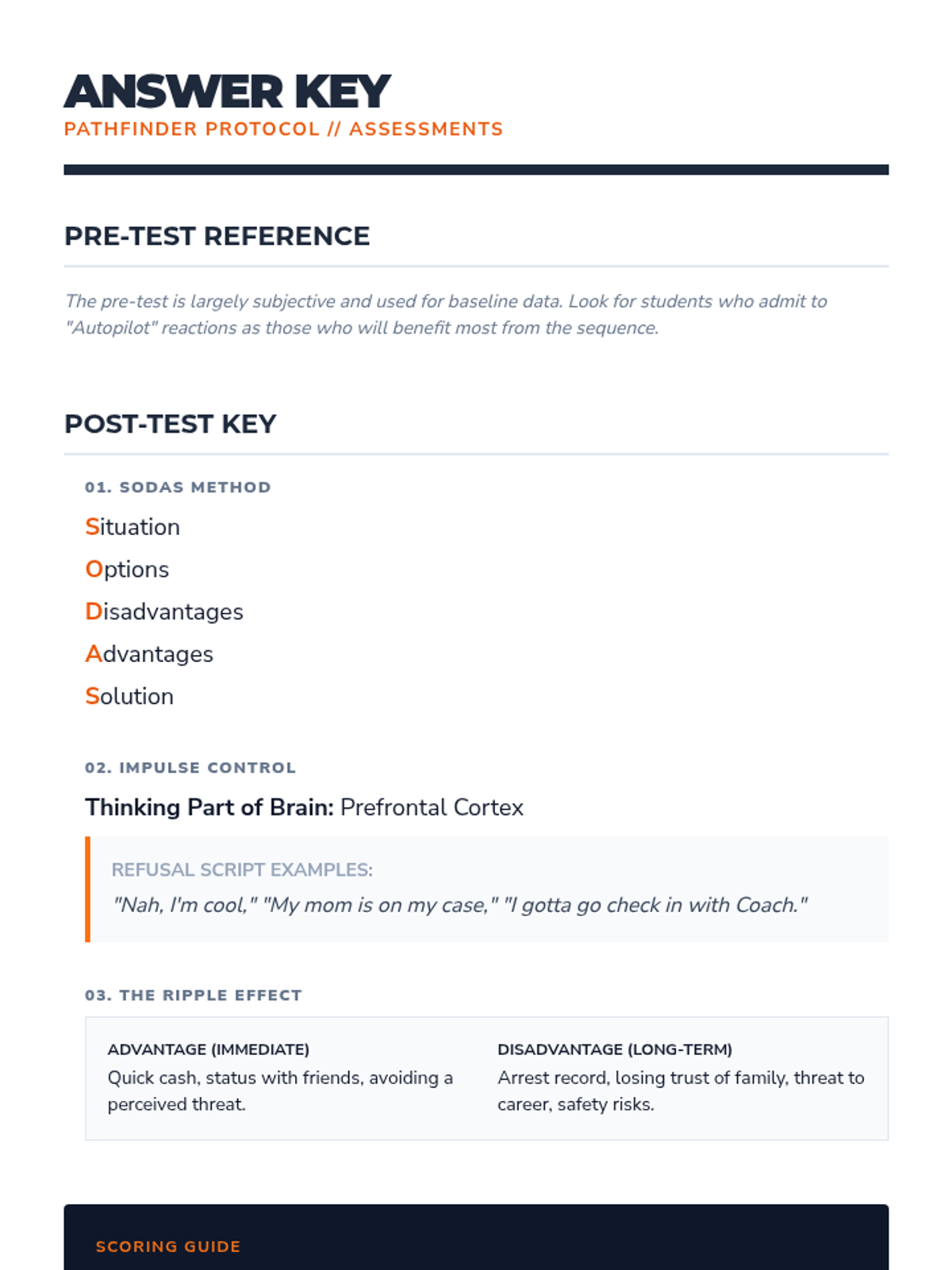
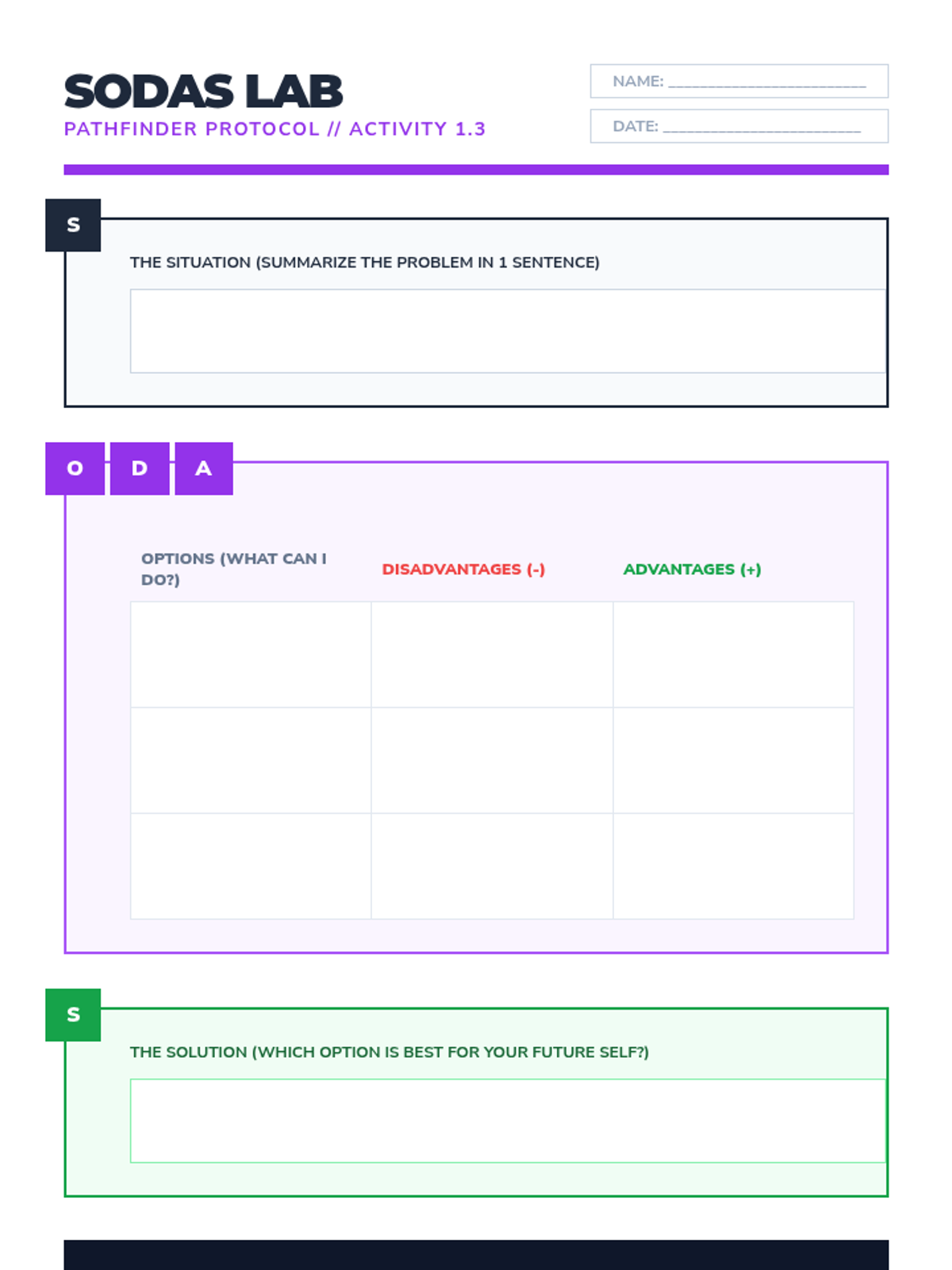
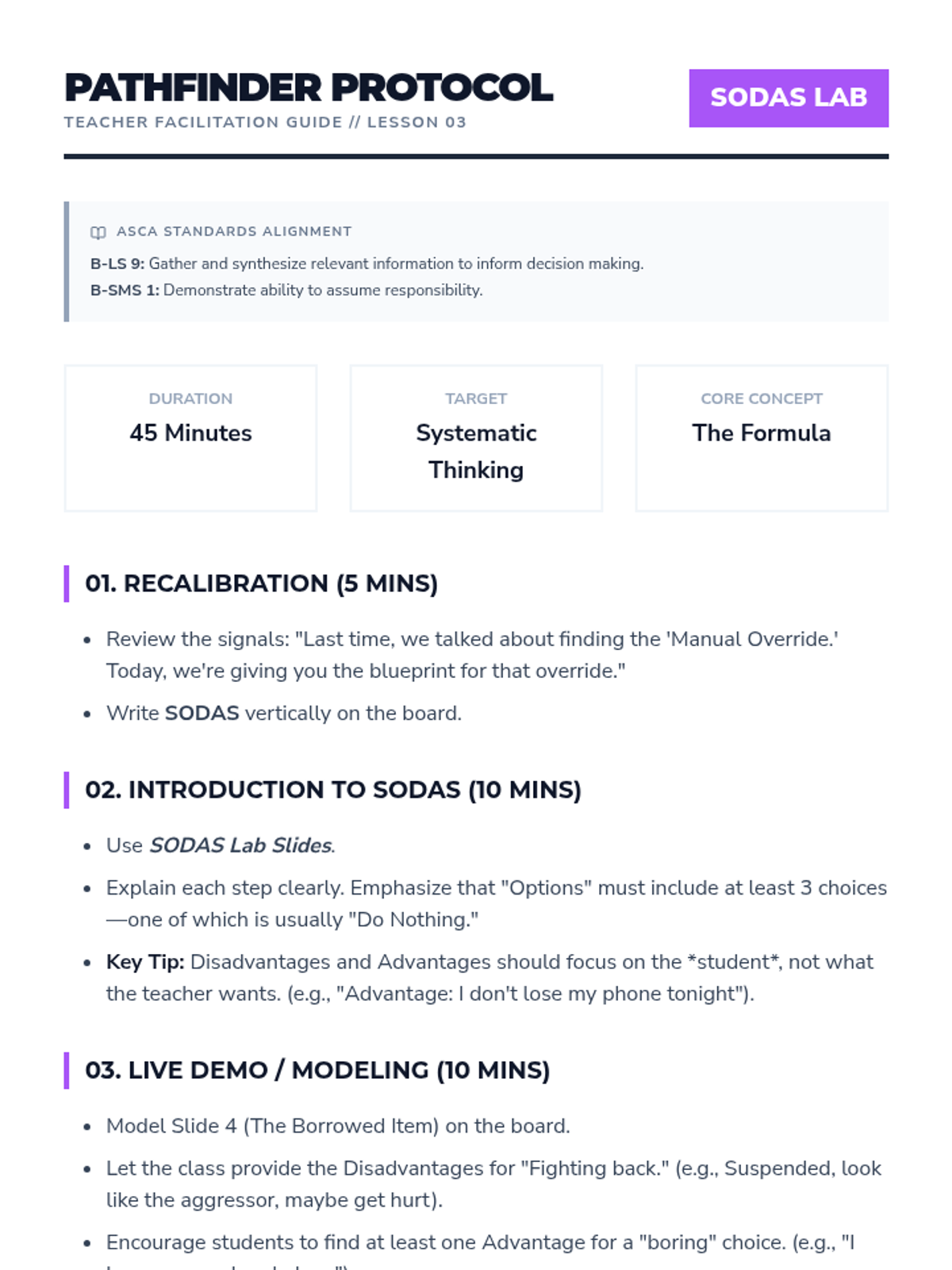
Introduces and applies the SODAS (Situation, Options, Disadvantages, Advantages, Solution) framework. Students use this concrete tool to break down complex social and personal dilemmas into manageable parts.
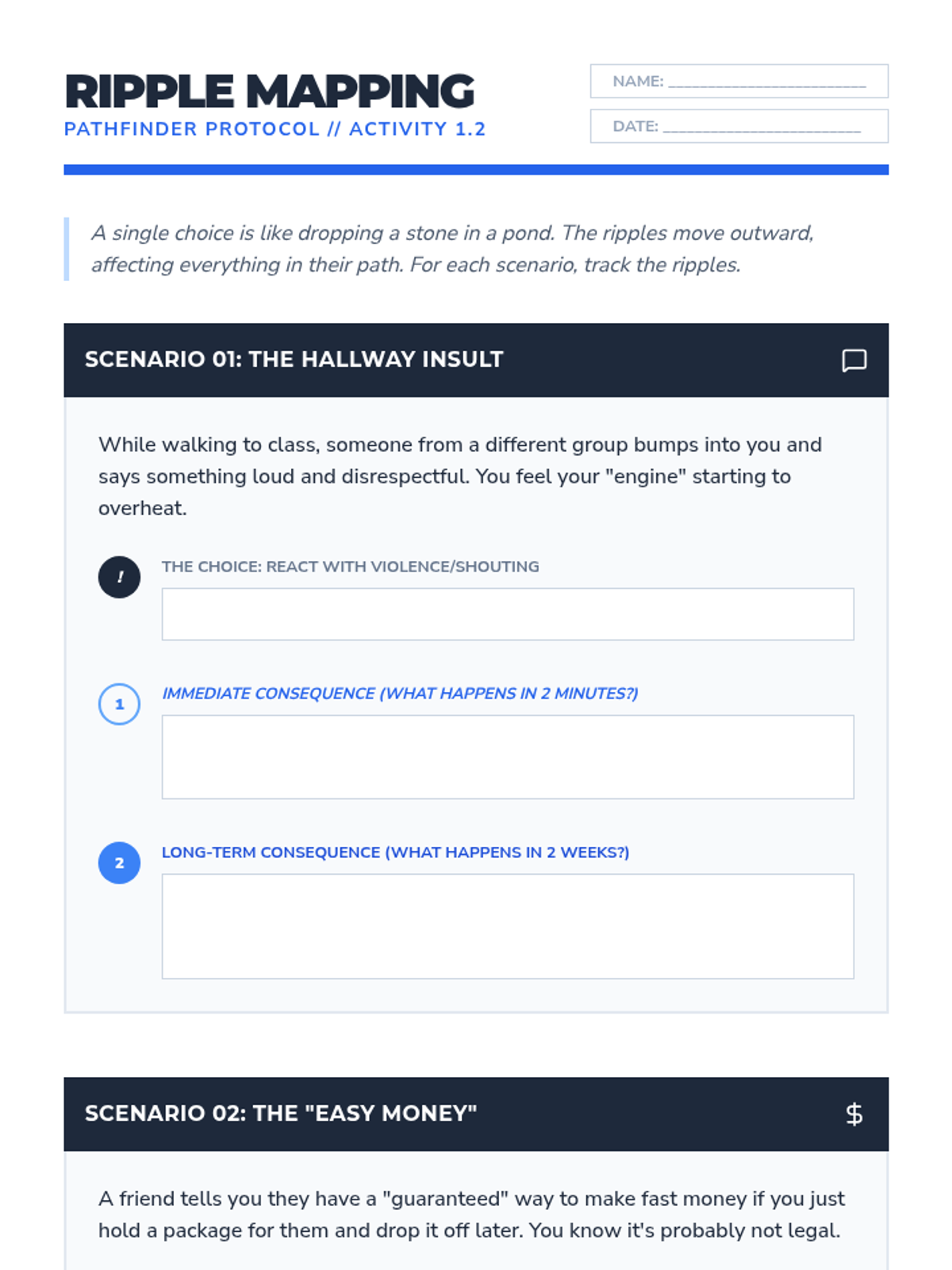
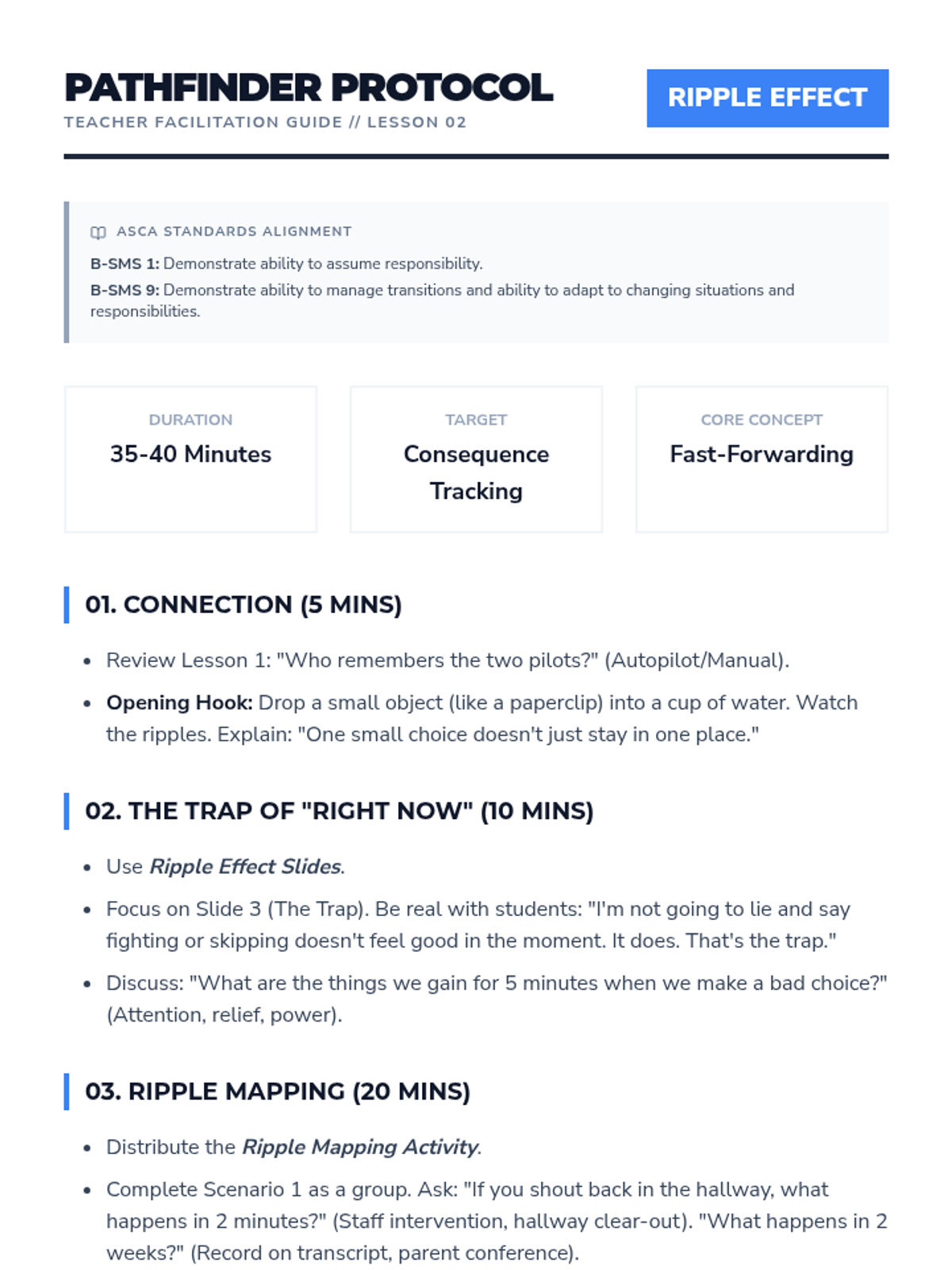
Explores the concept of consequences, specifically the difference between immediate gratification and long-term impact. Students practice 'fast-forwarding' their lives to see the ripple effects of their choices.
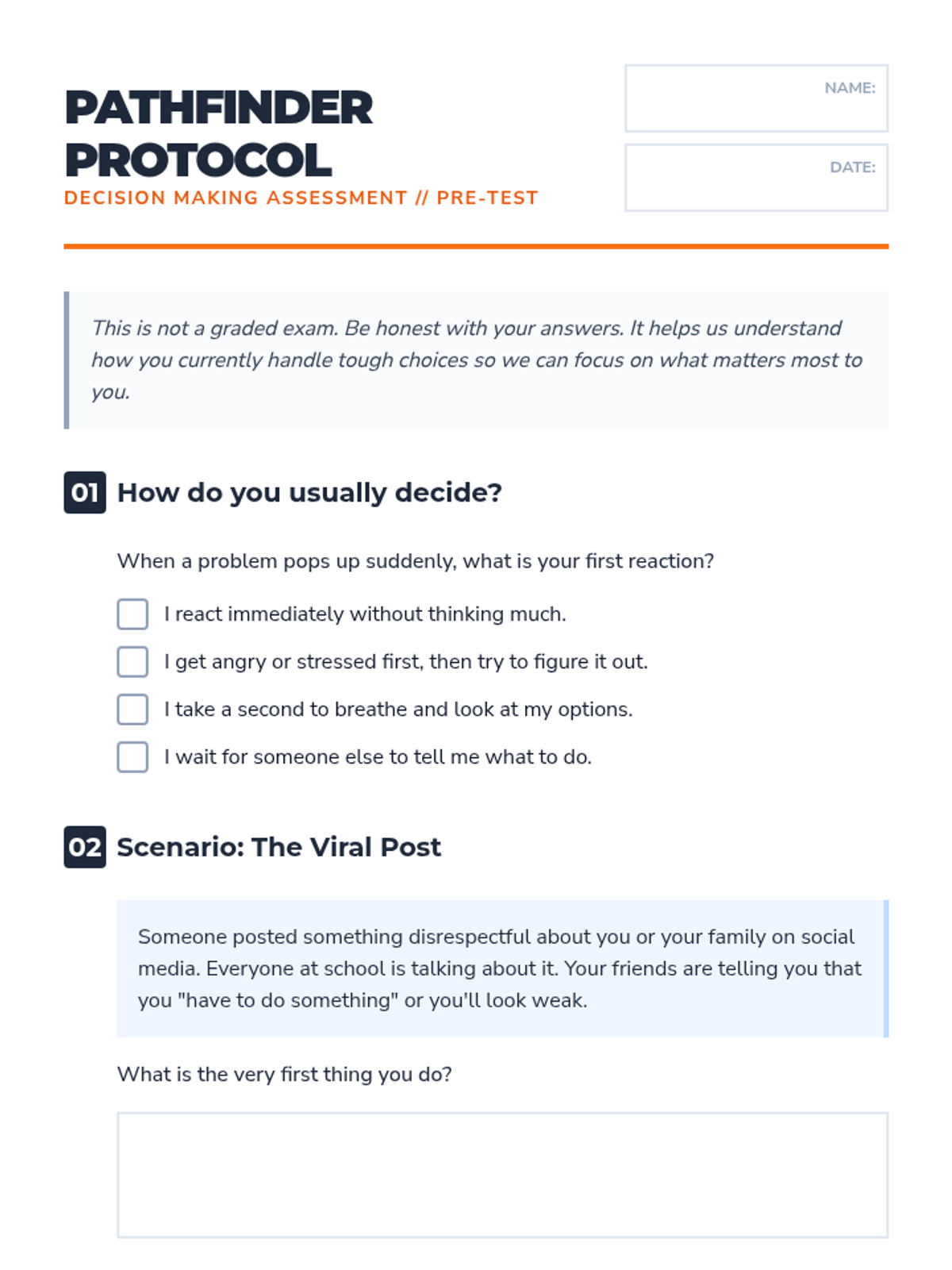
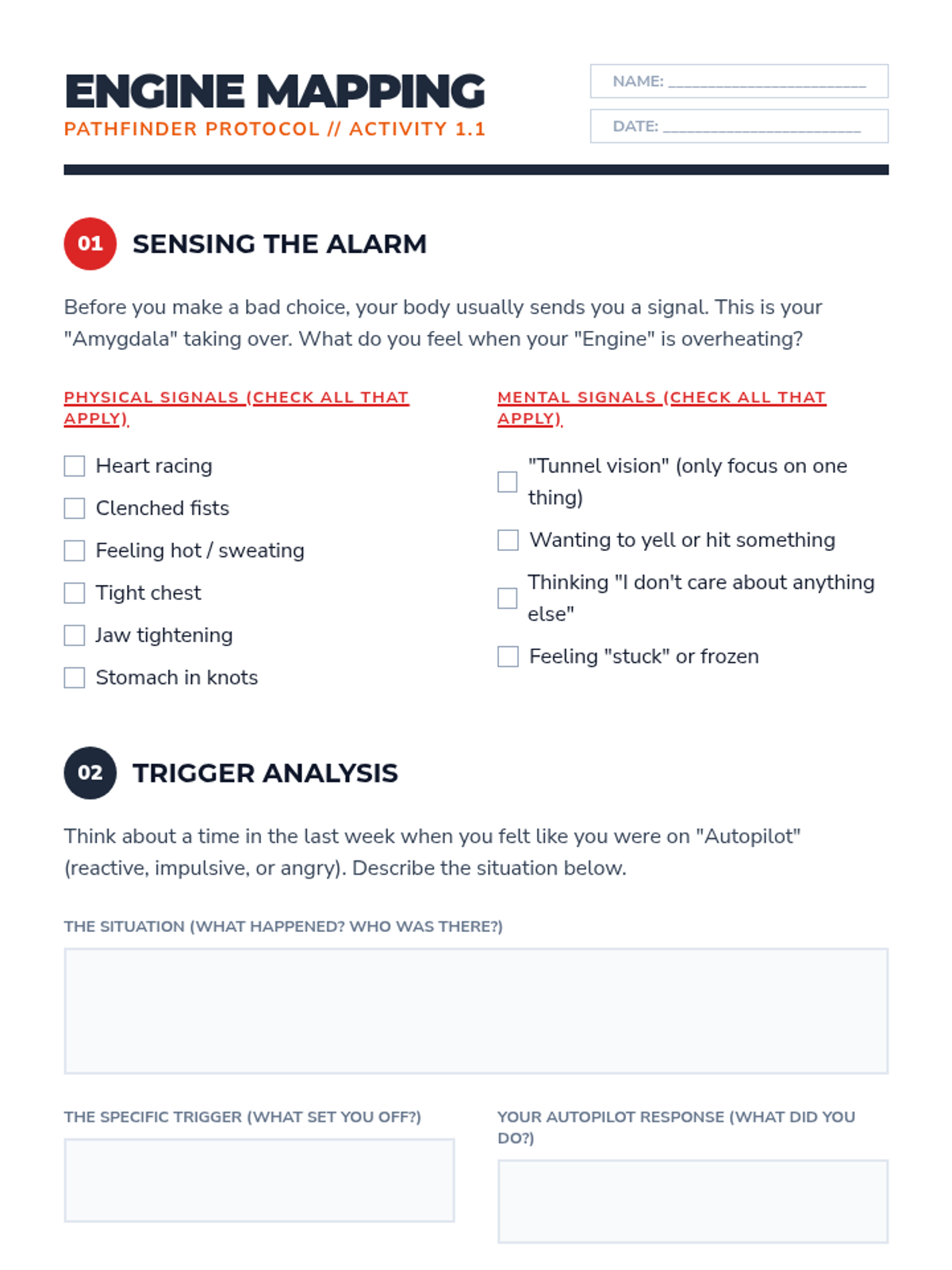
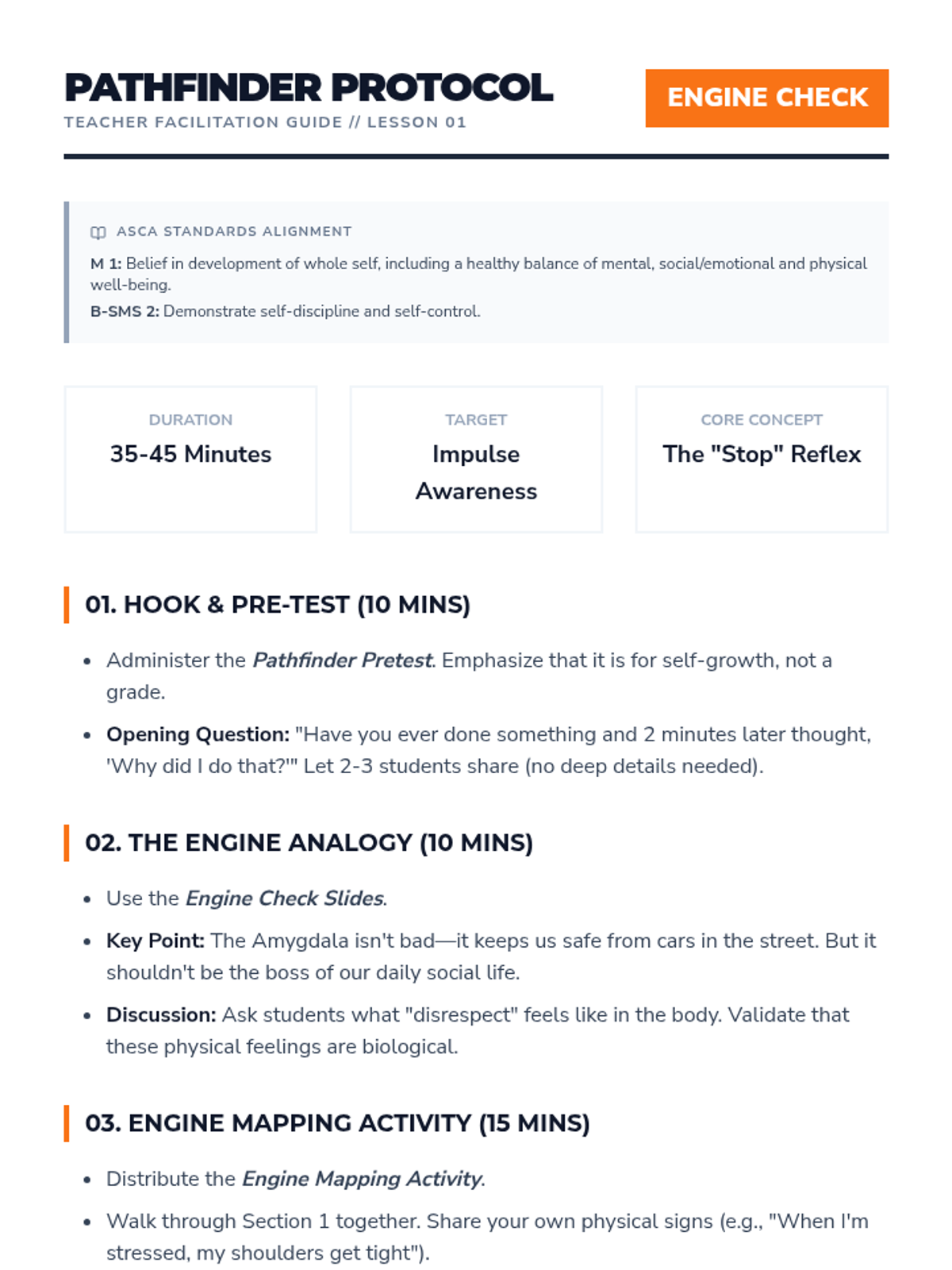
Focuses on the internal mechanics of choice, distinguishing between reactive 'autopilot' responses and intentional 'pilot' decisions. Students learn to identify their personal triggers and the physiological signs of an impulse.
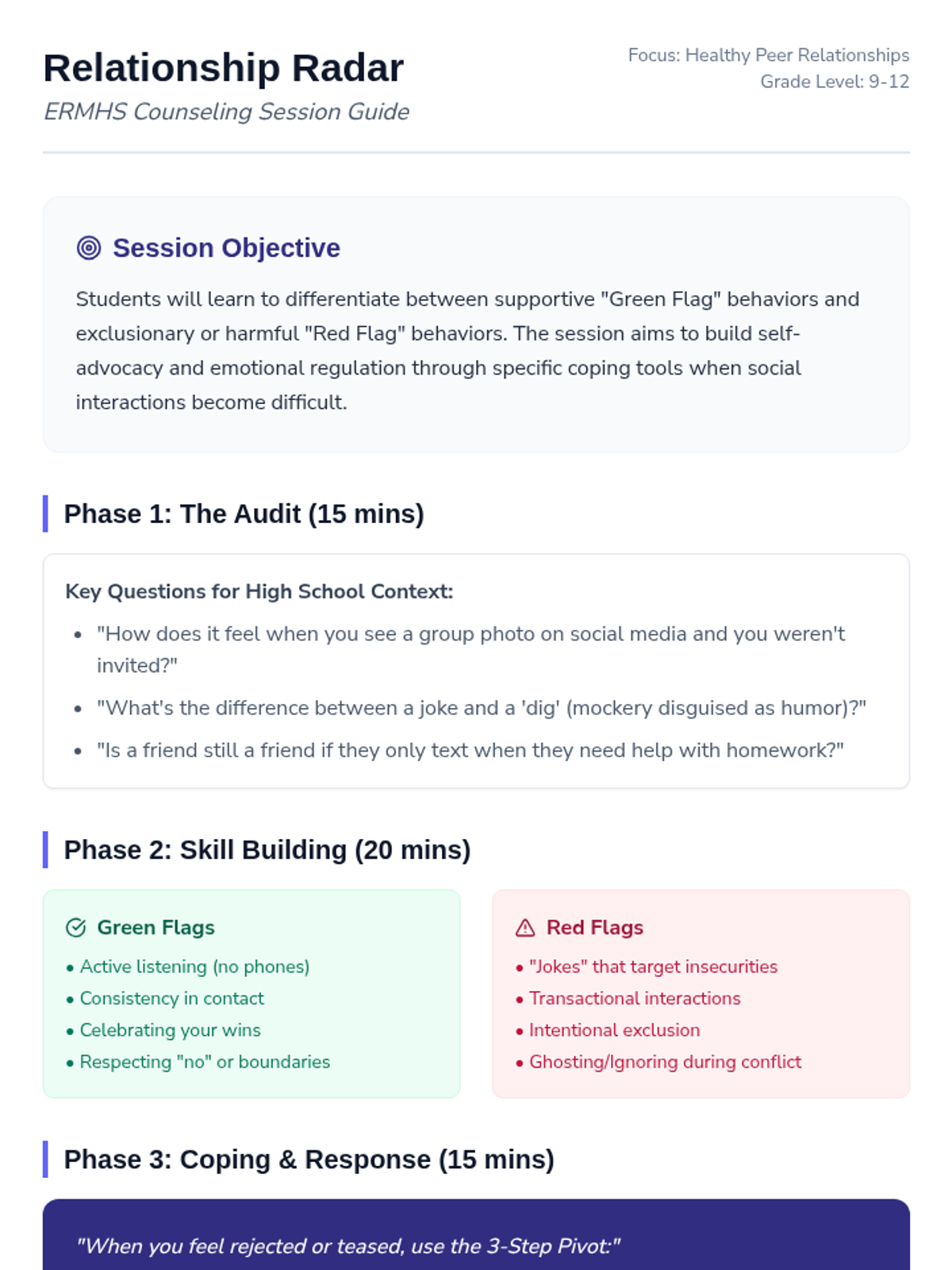
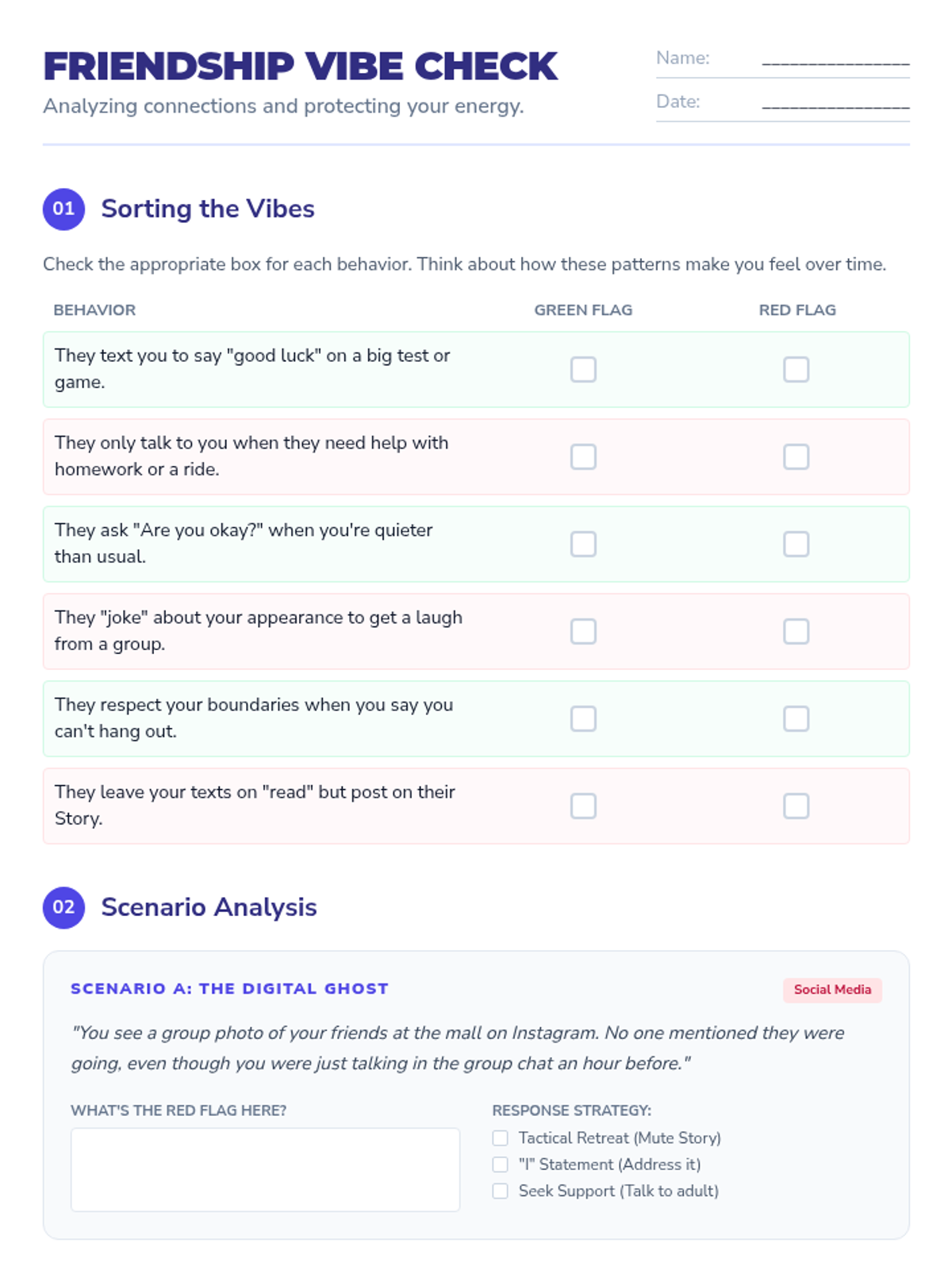
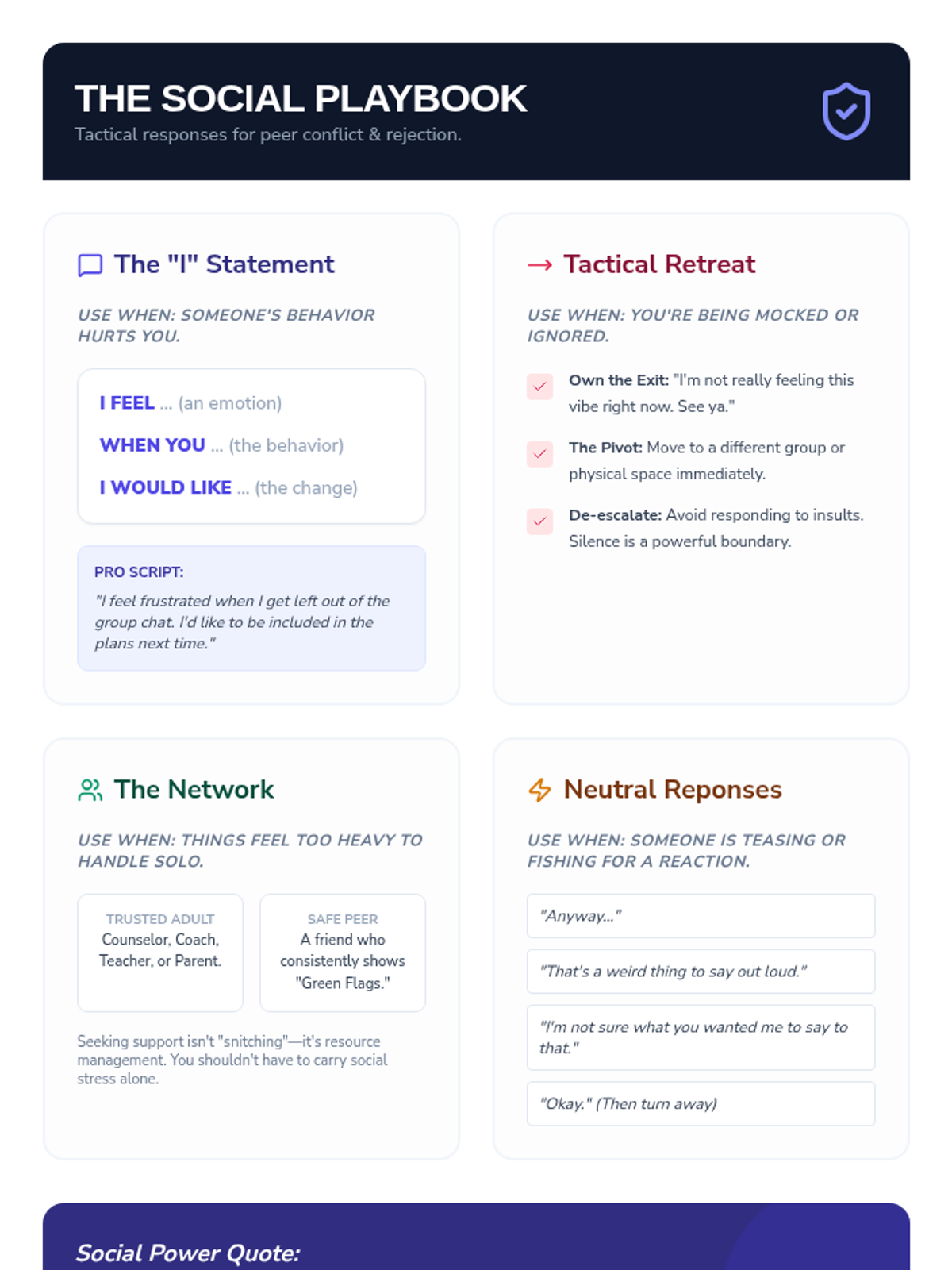
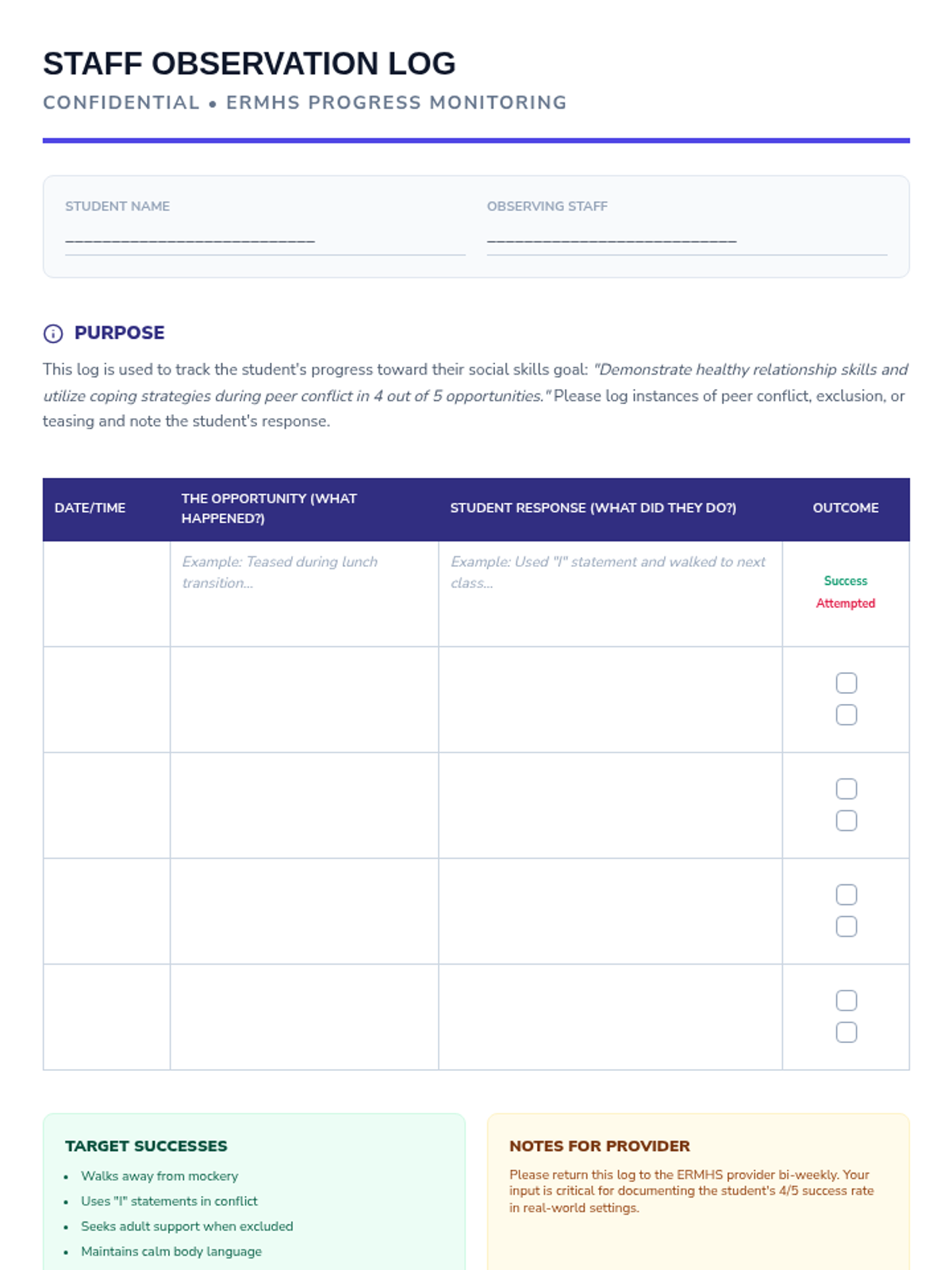
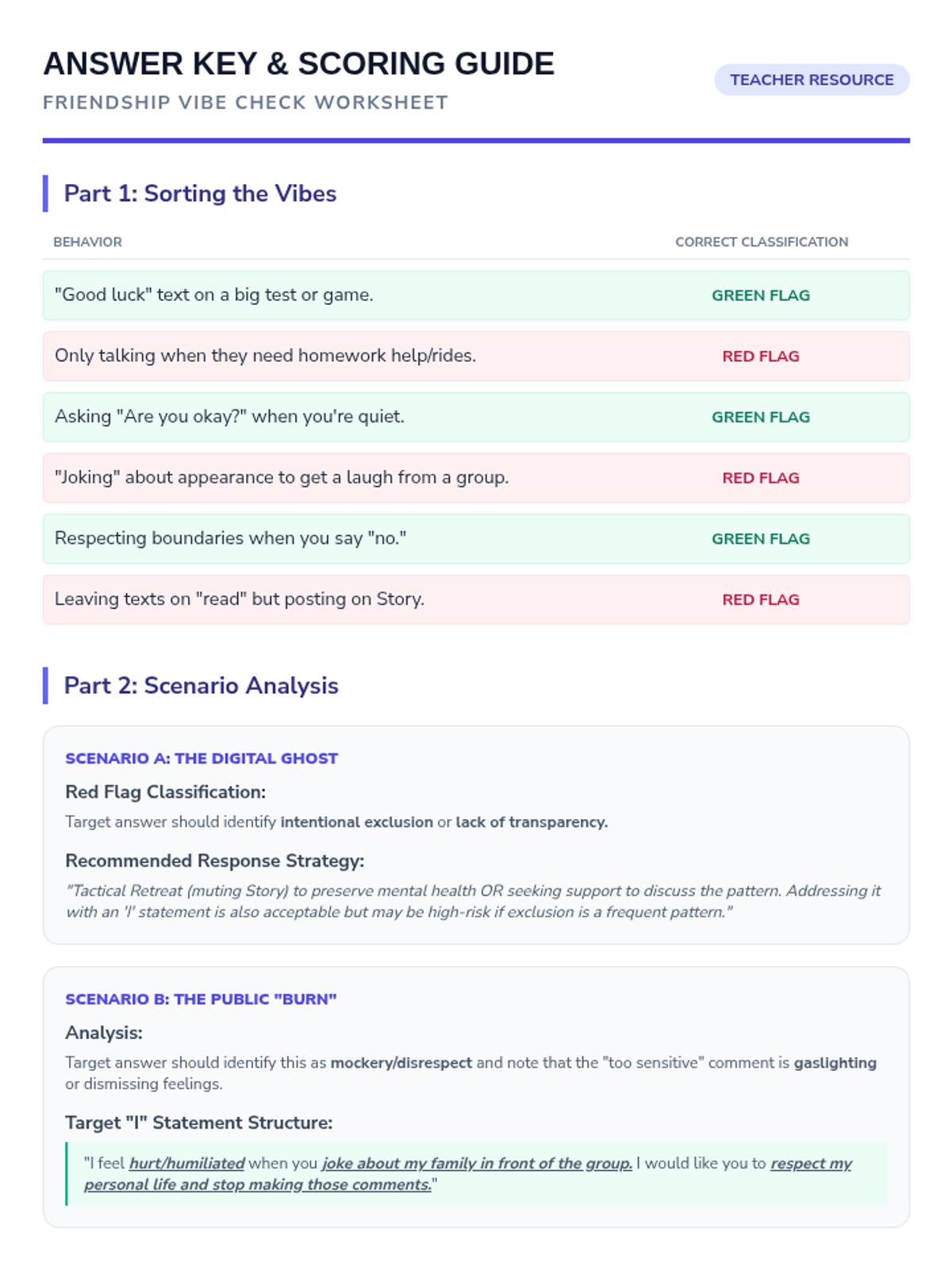
A counseling lesson focused on identifying healthy friendship 'green flags' and recognizing social 'red flags,' equipped with coping strategies for navigating peer rejection and conflict in a high school setting.
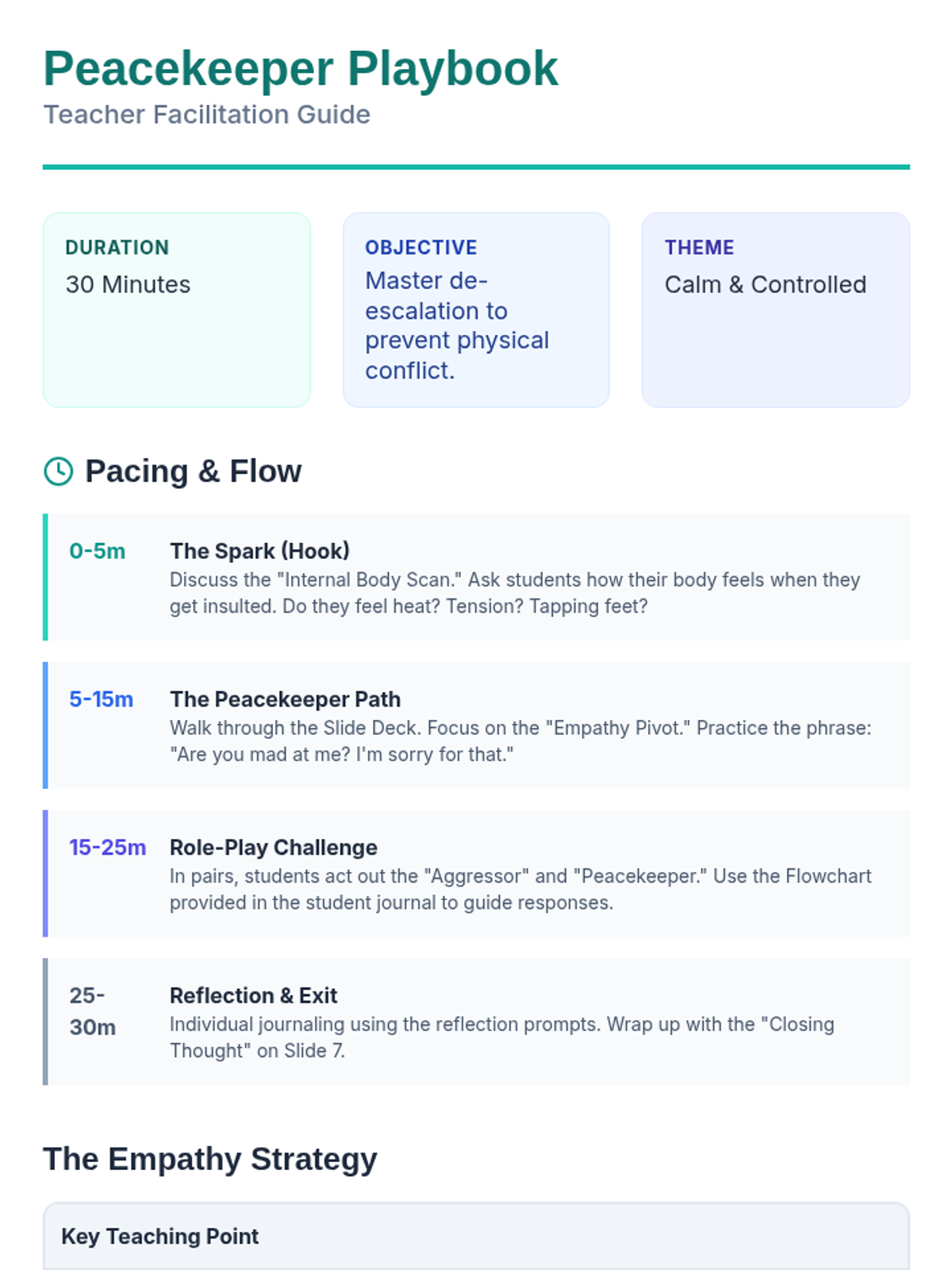
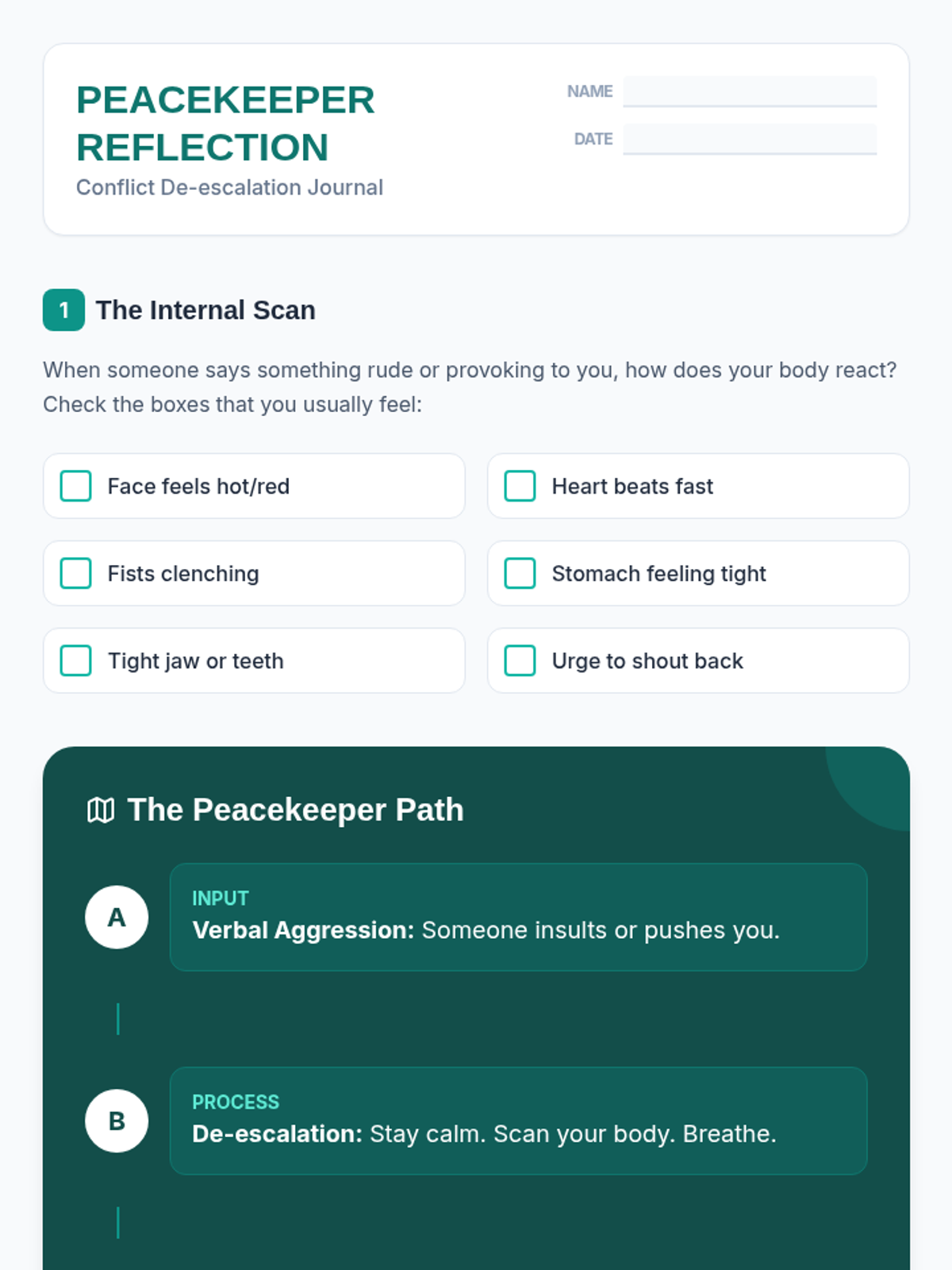
A lesson focused on de-escalating verbal aggression to prevent physical fights, featuring a slide deck, a visual flowchart, and reflection activities.
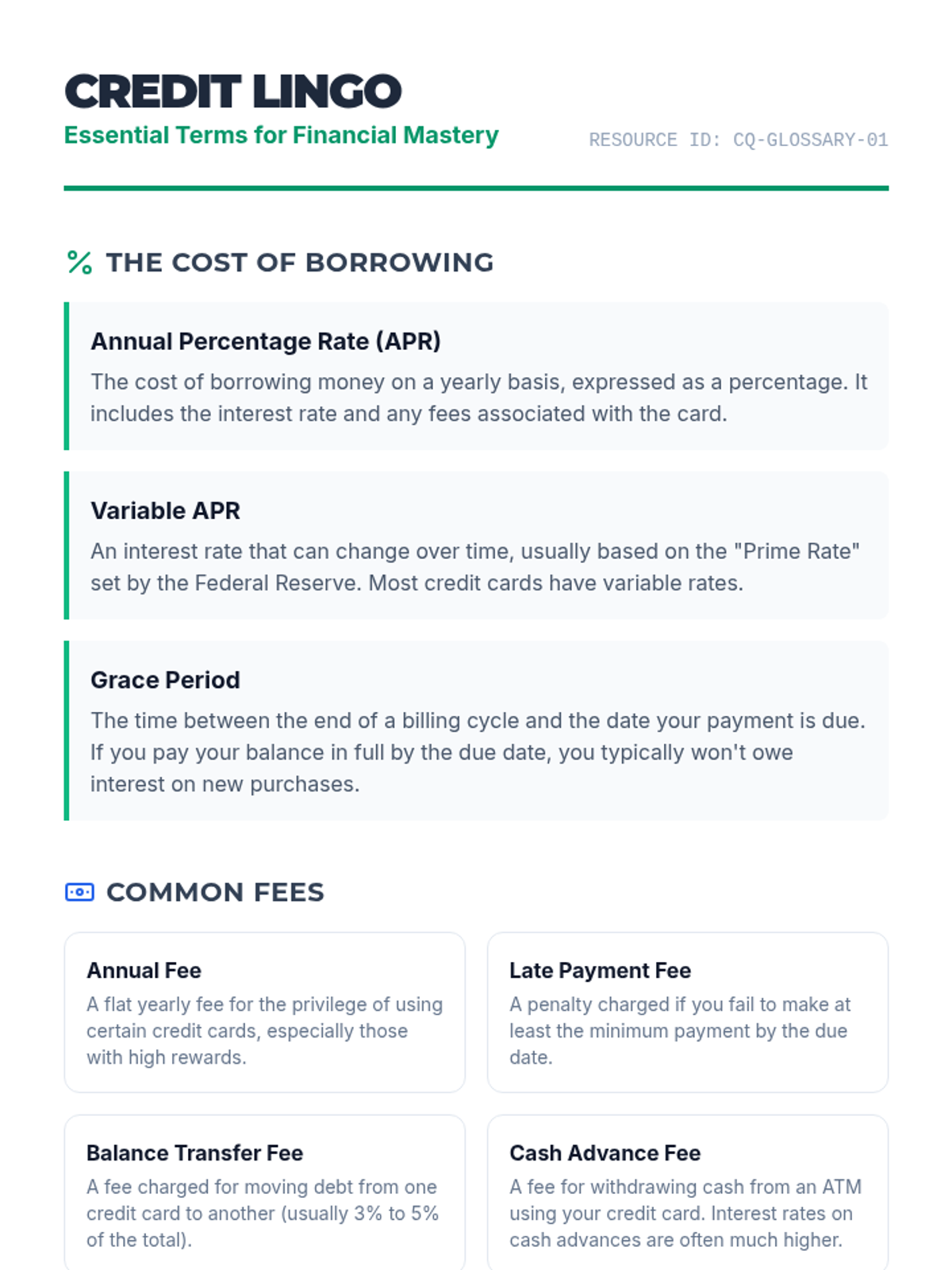
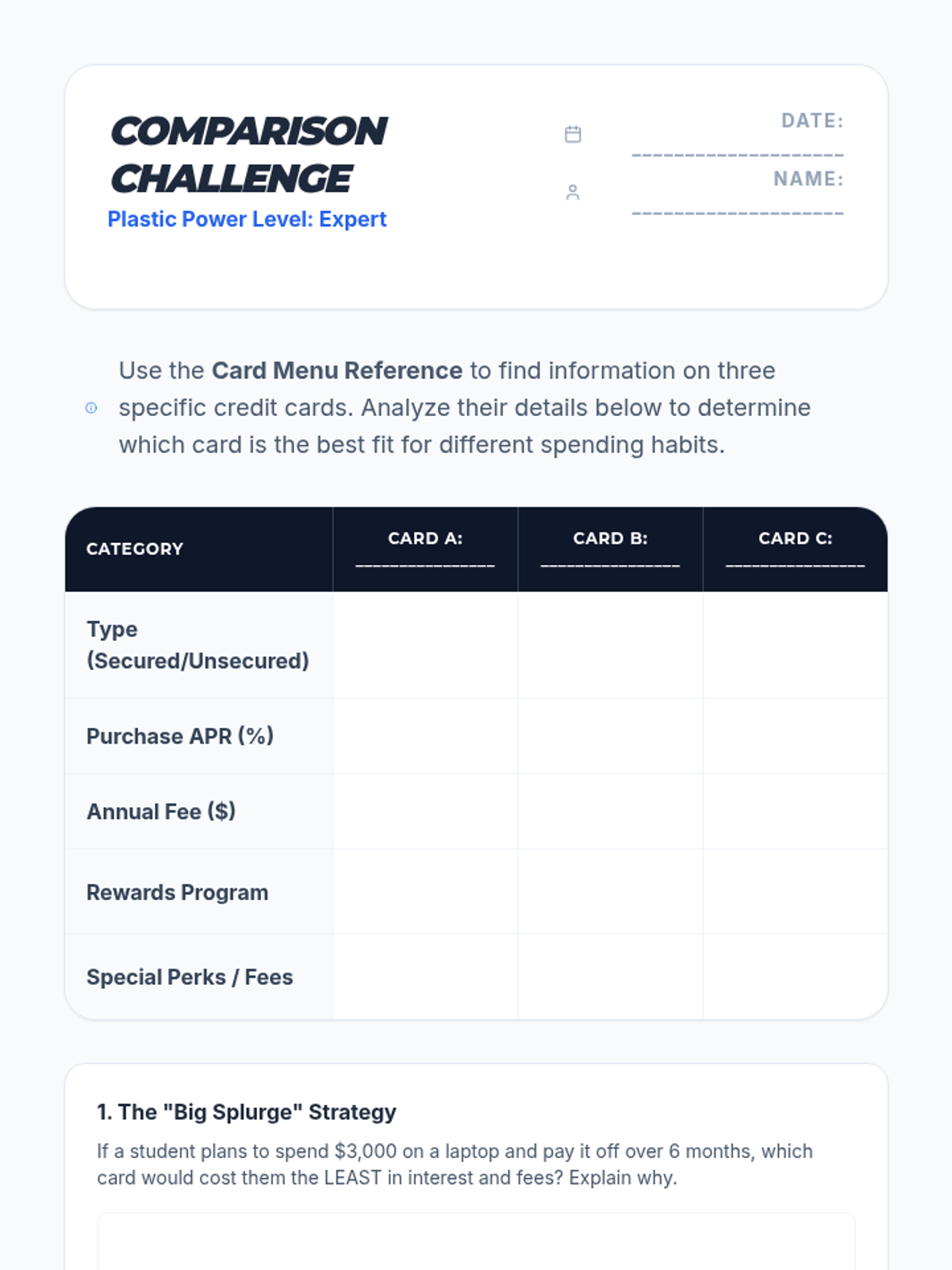
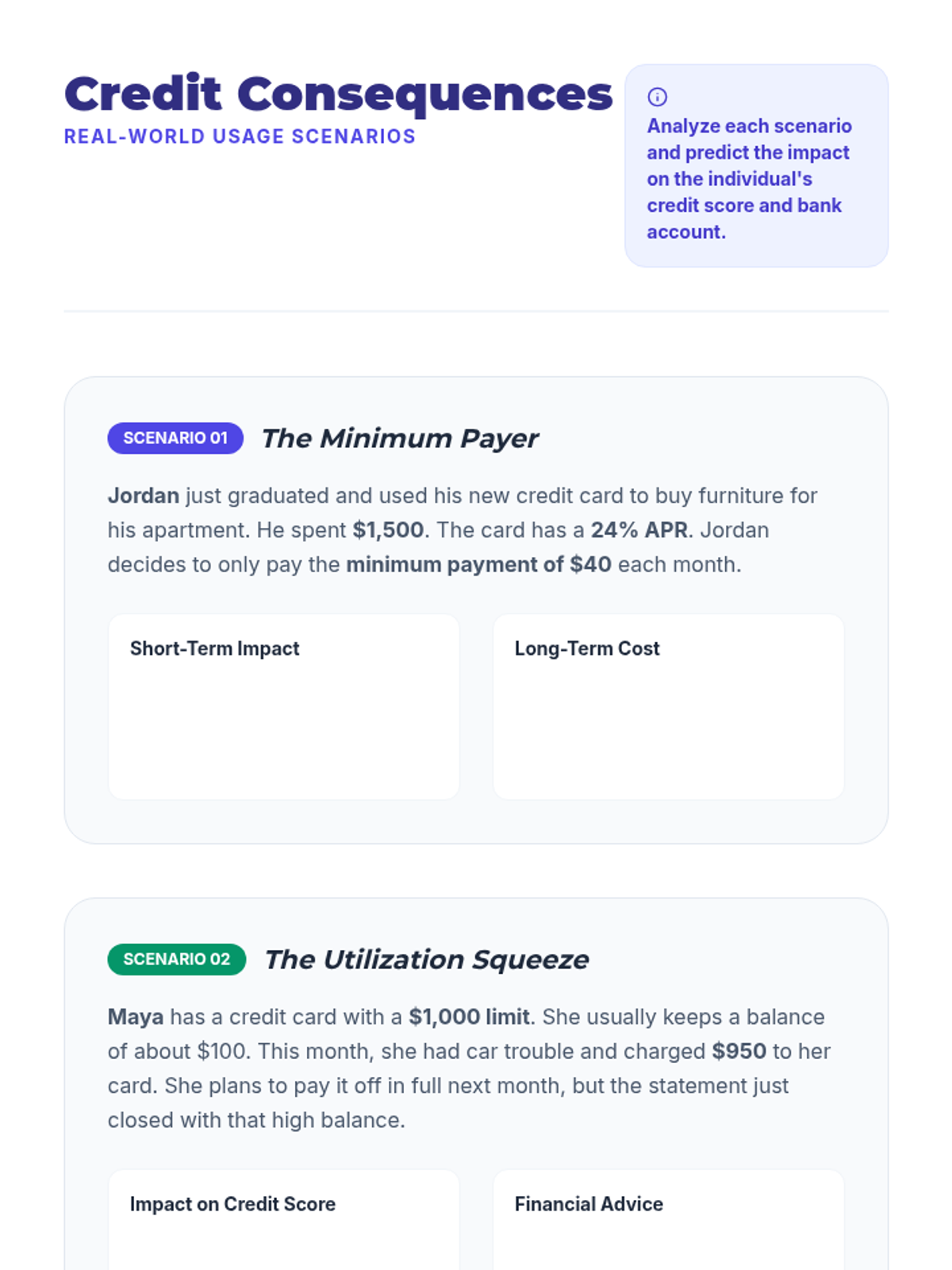
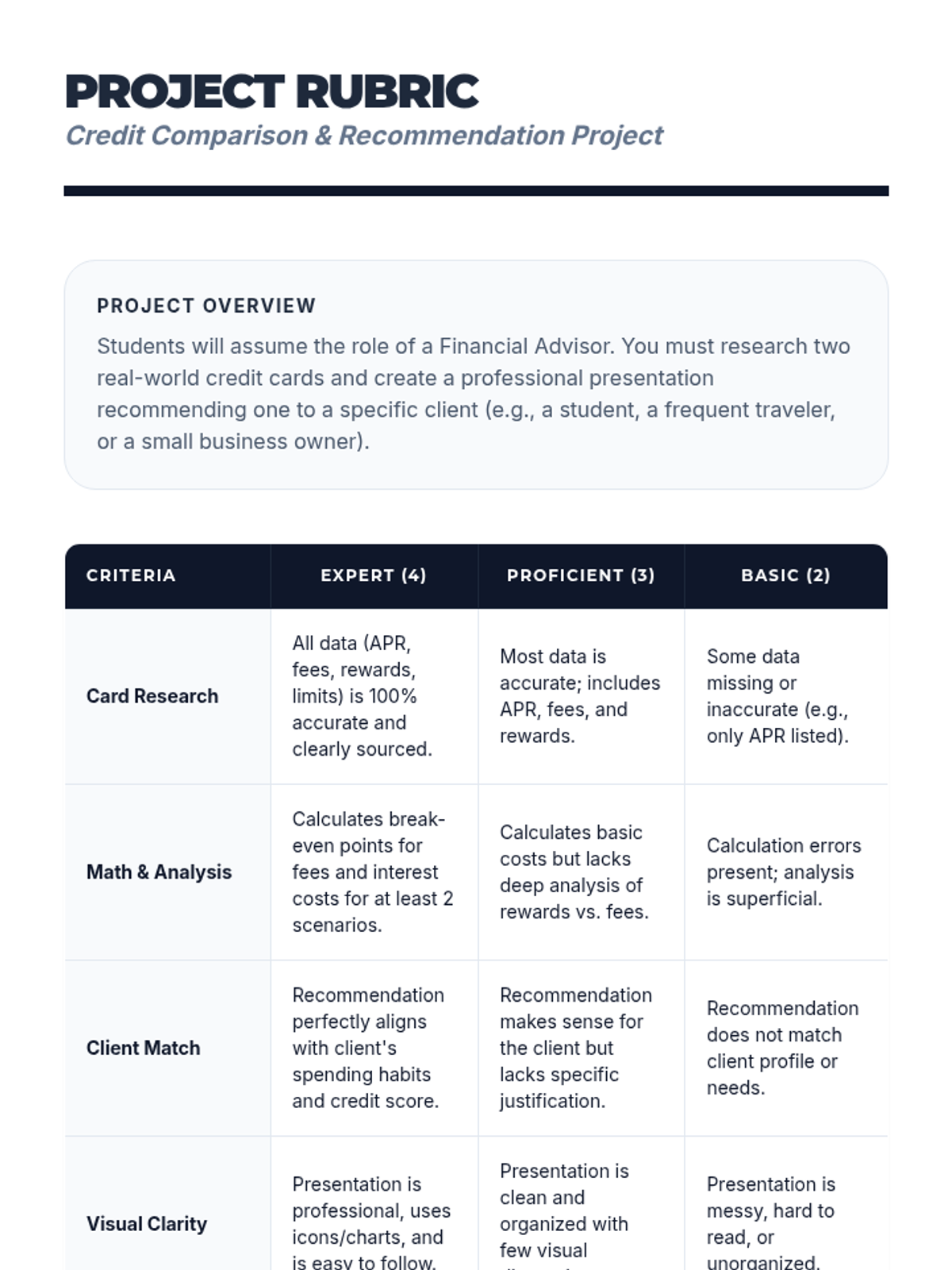
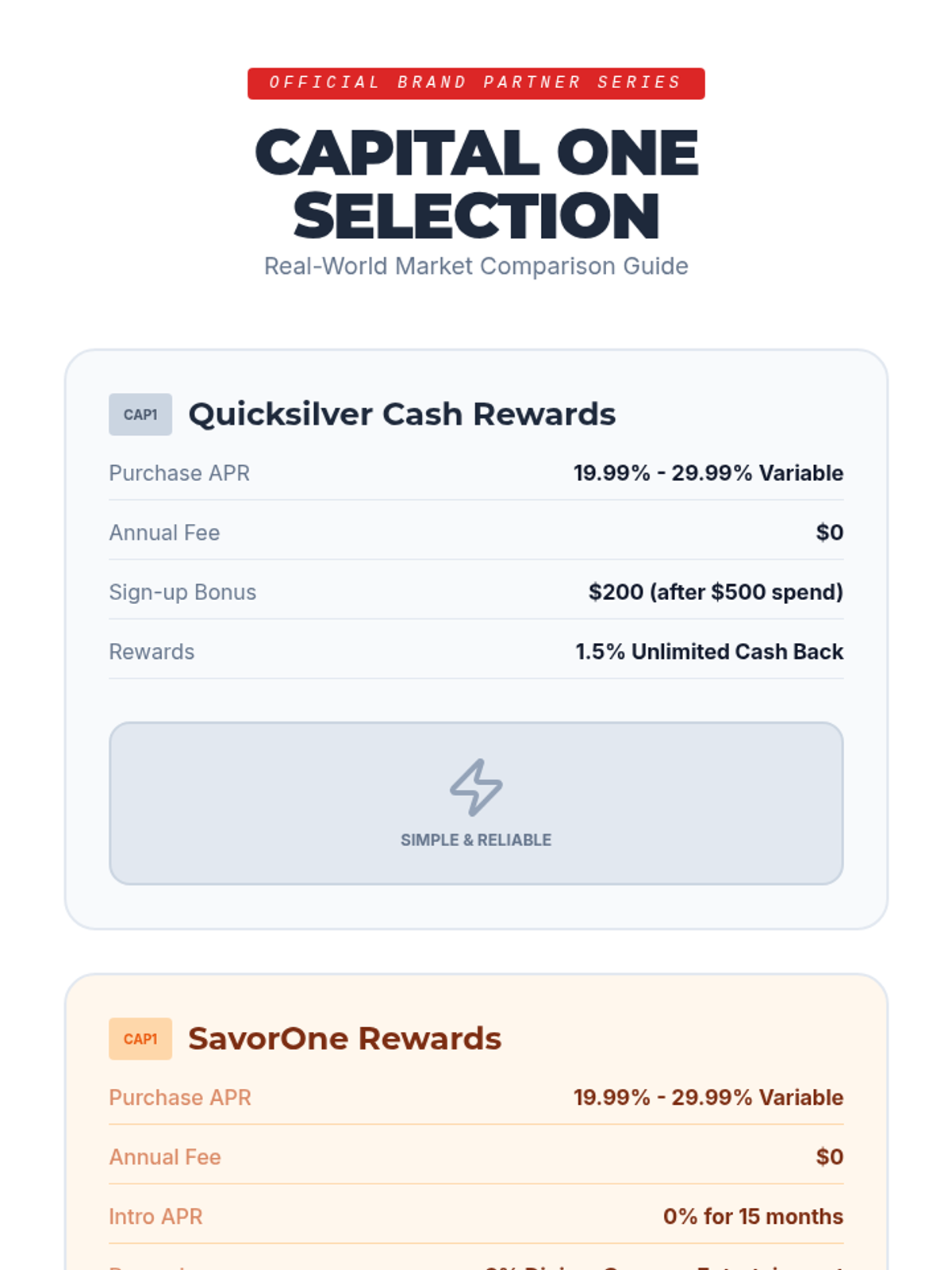
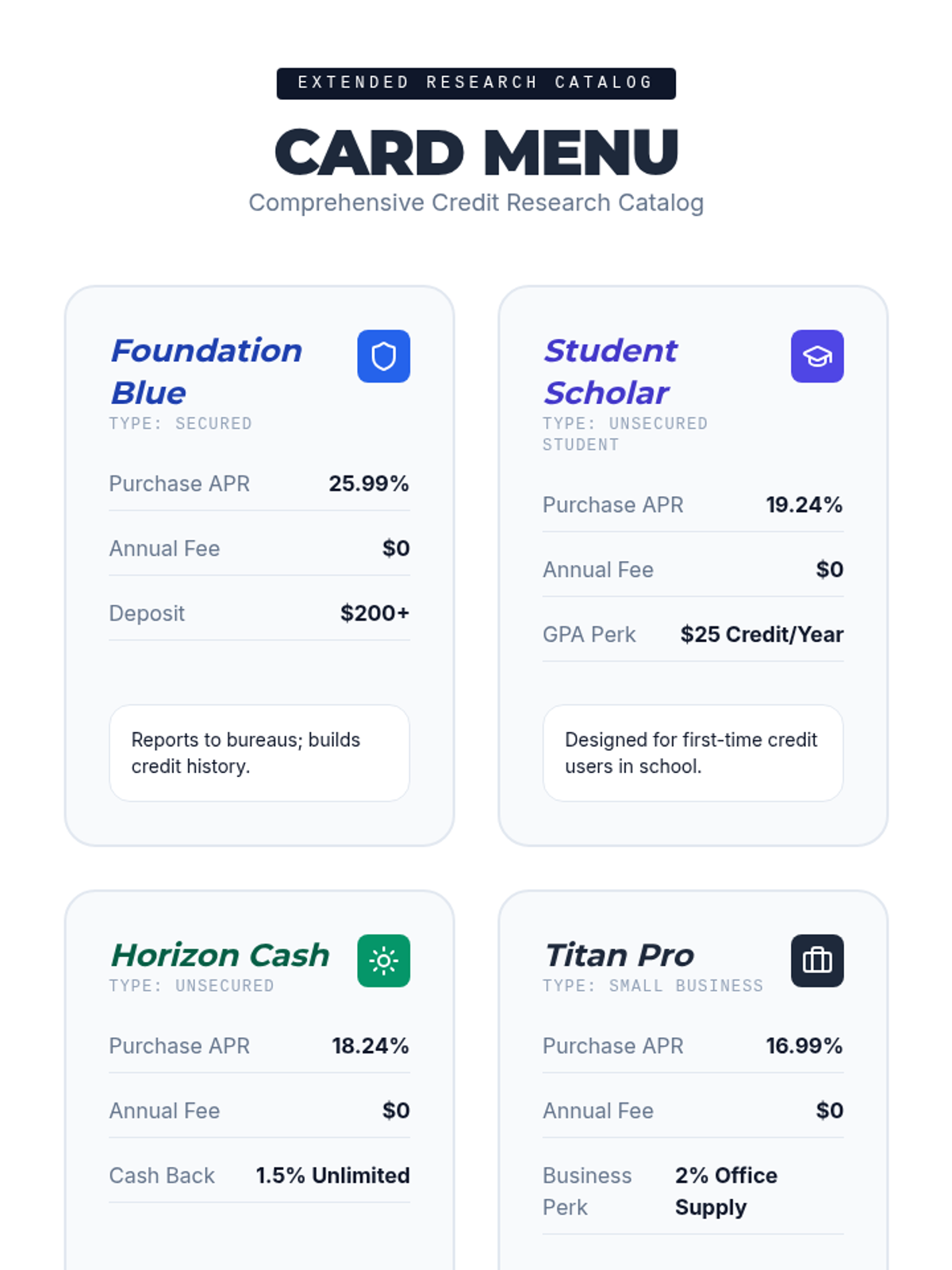
Students will learn to evaluate and compare different credit card options, understand the implications of card terms, and practice responsible credit management through scenarios and research.
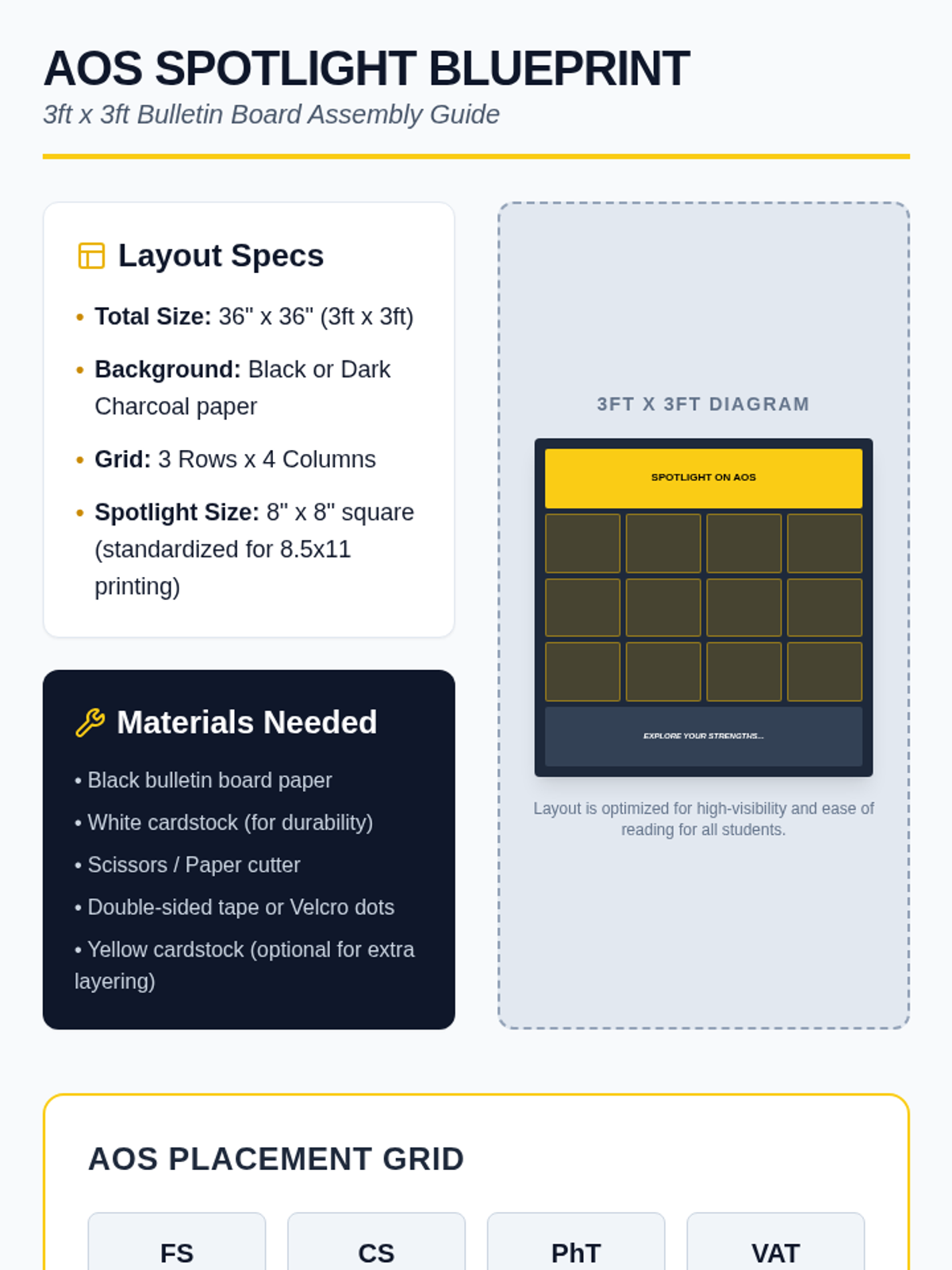
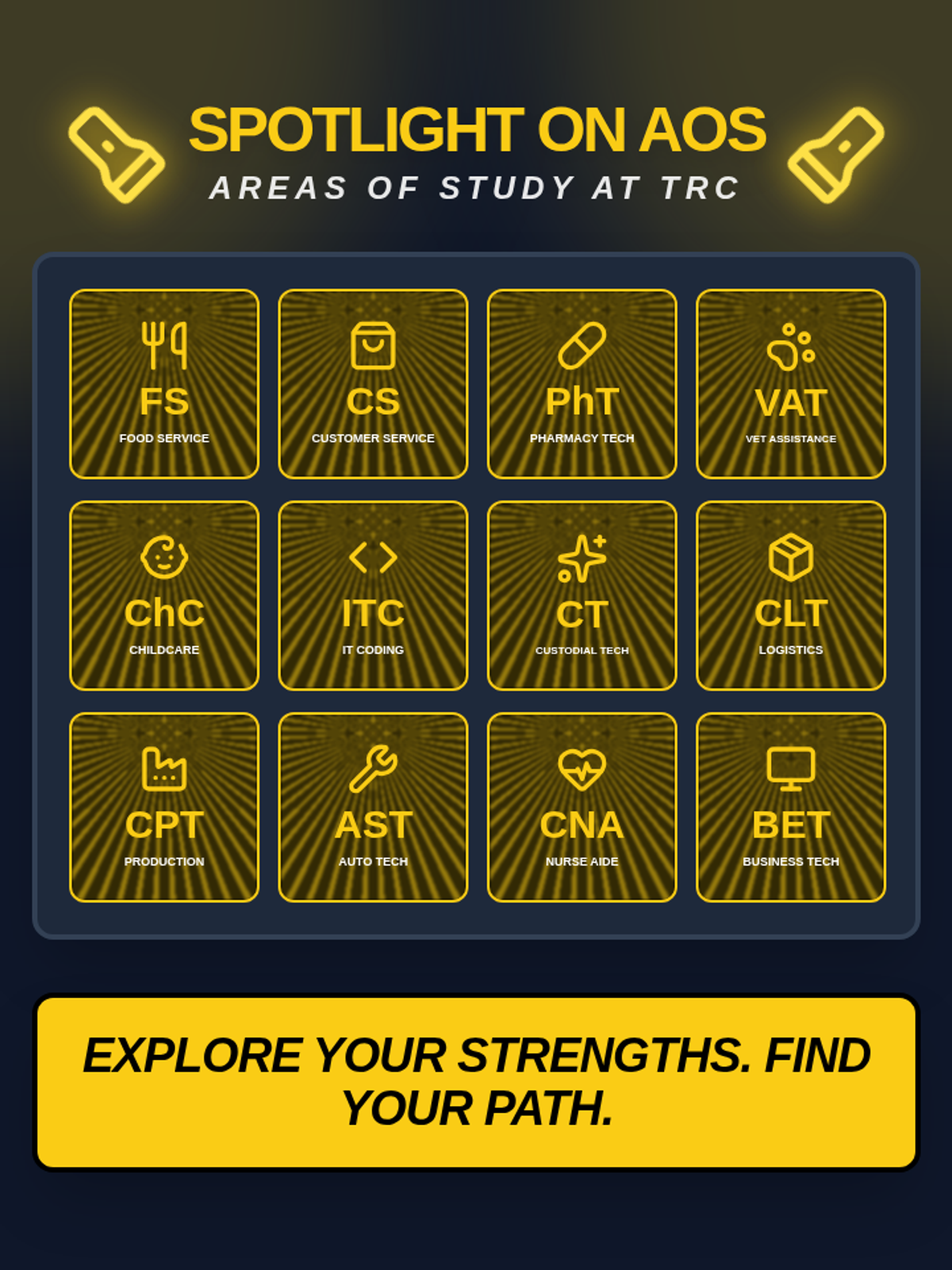
A comprehensive set of visual materials to create a high-contrast, student-friendly bulletin board showcasing twelve Areas of Study (AOS). Includes a layout blueprint, printable spotlight squares, and header/footer banners designed for maximum readability.
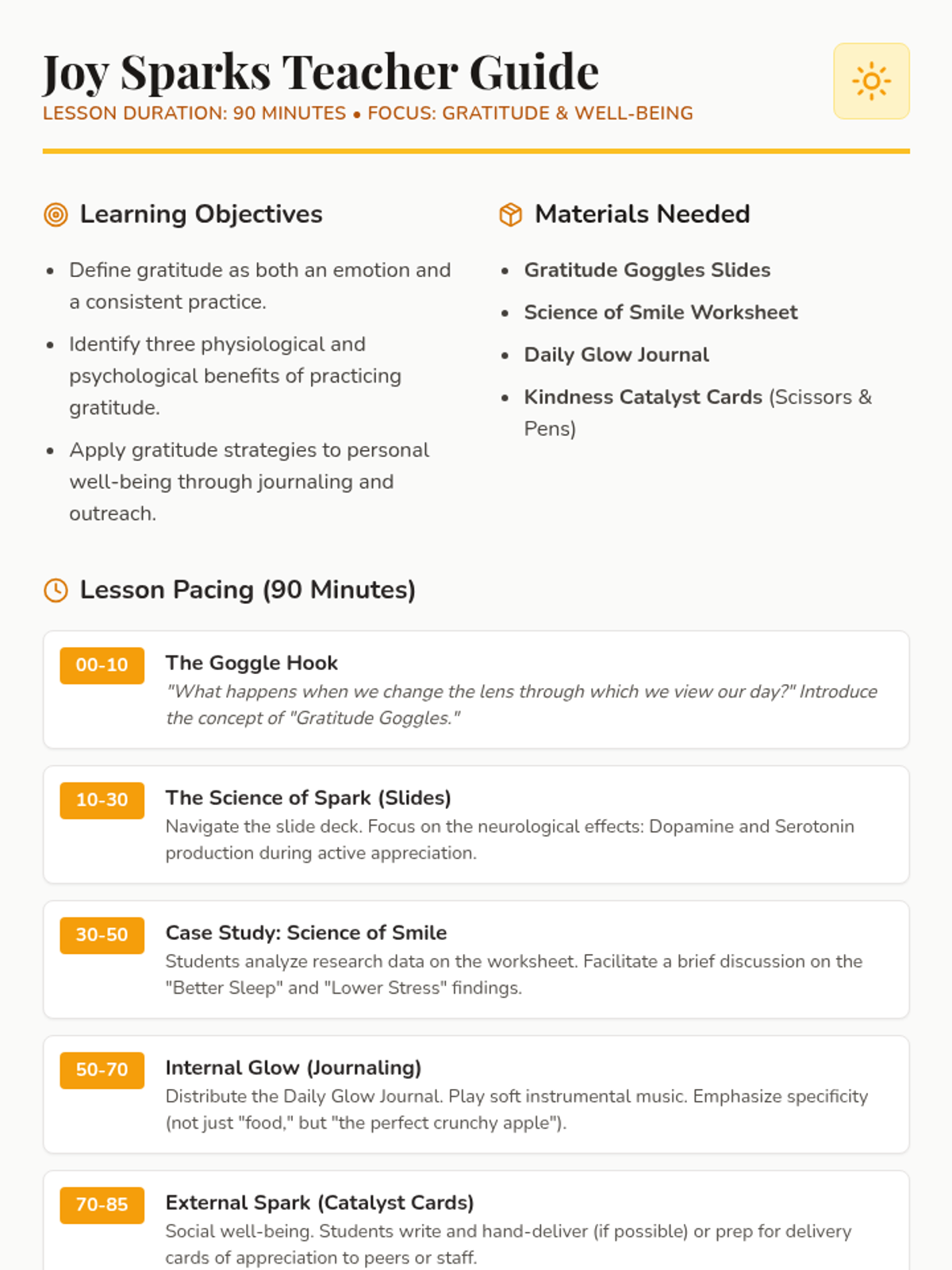
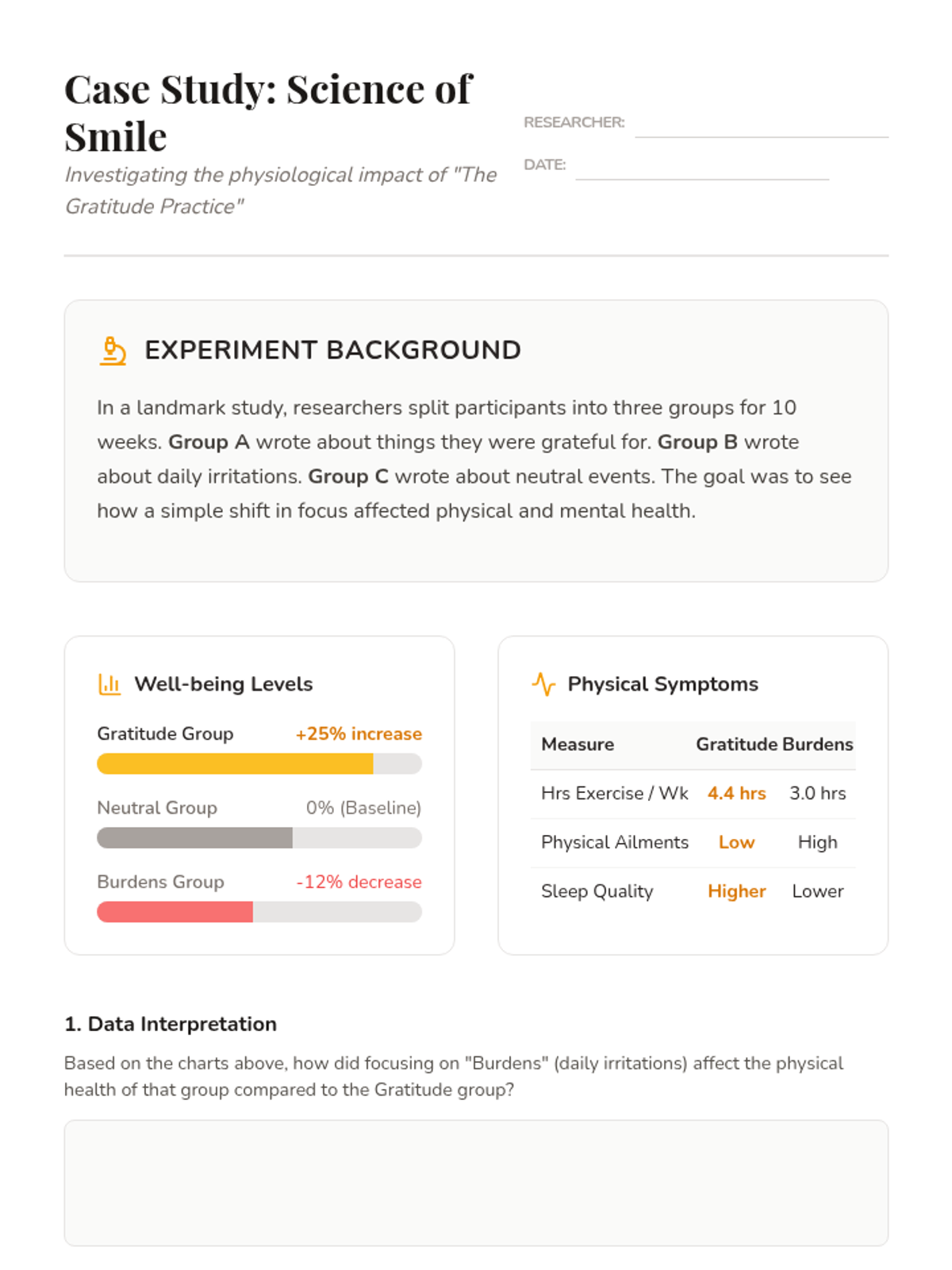
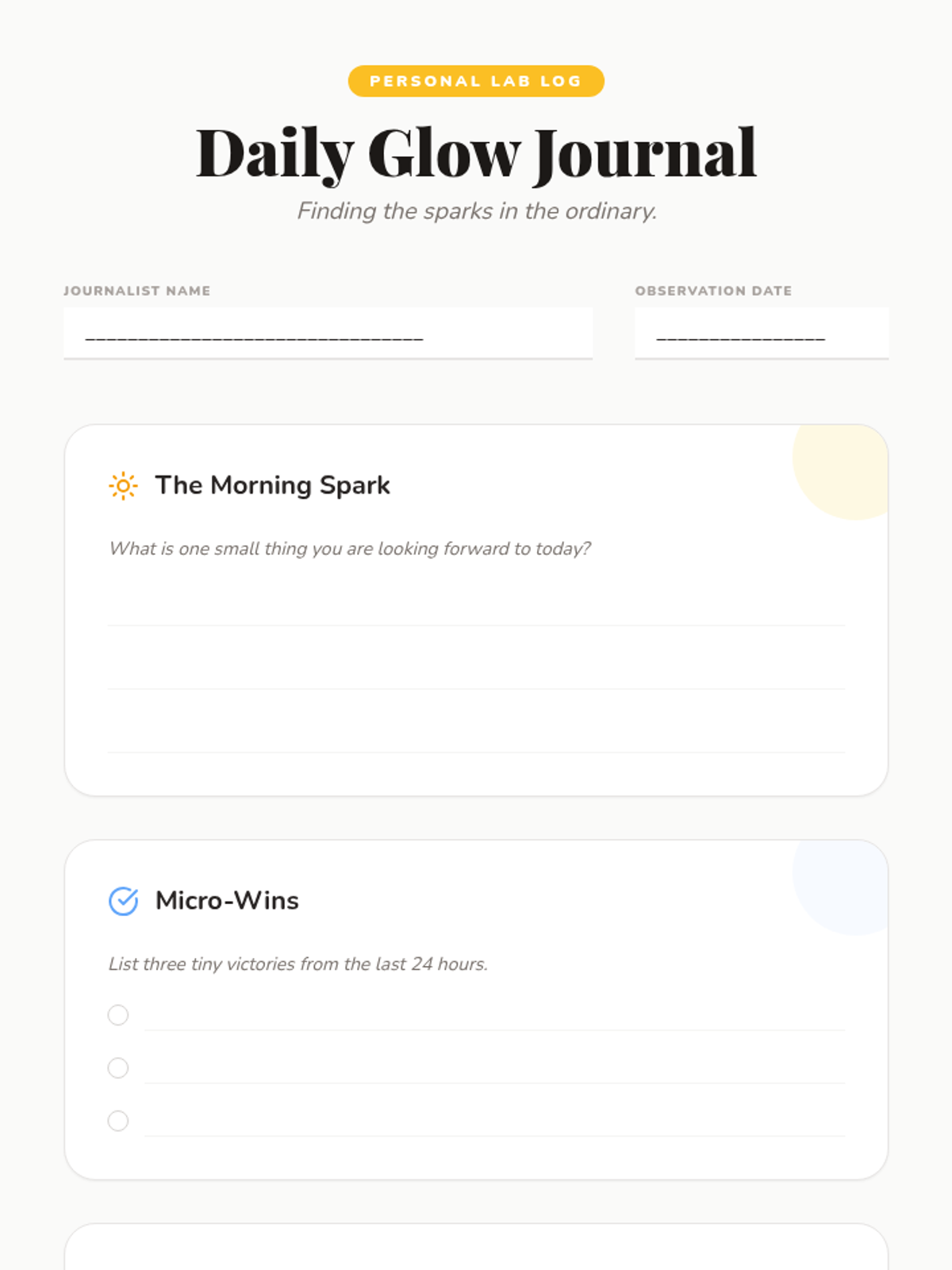
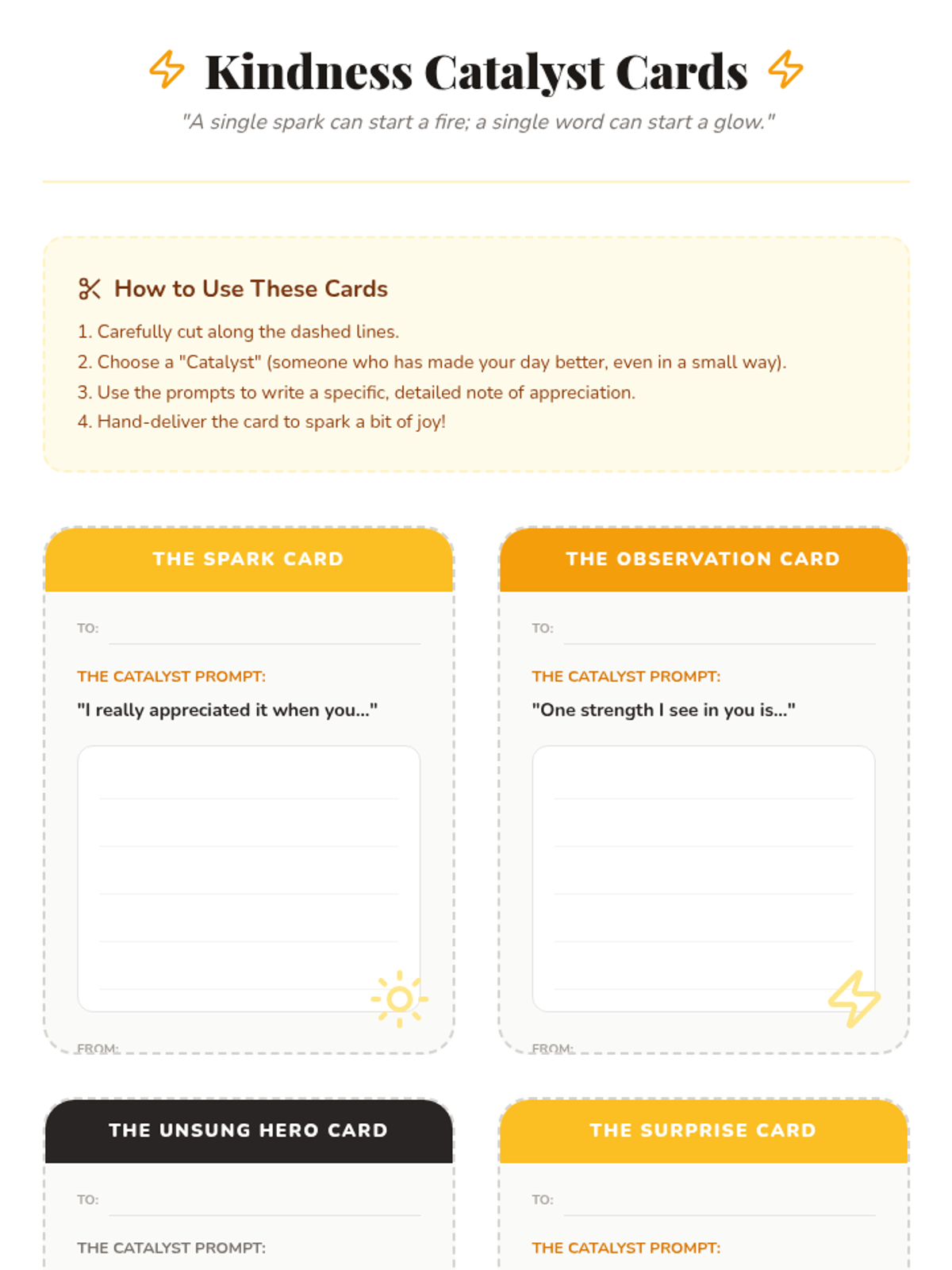
A 90-minute exploration into the science and practice of gratitude, focusing on how shifting perspective can tangibly improve mental and physical well-being.
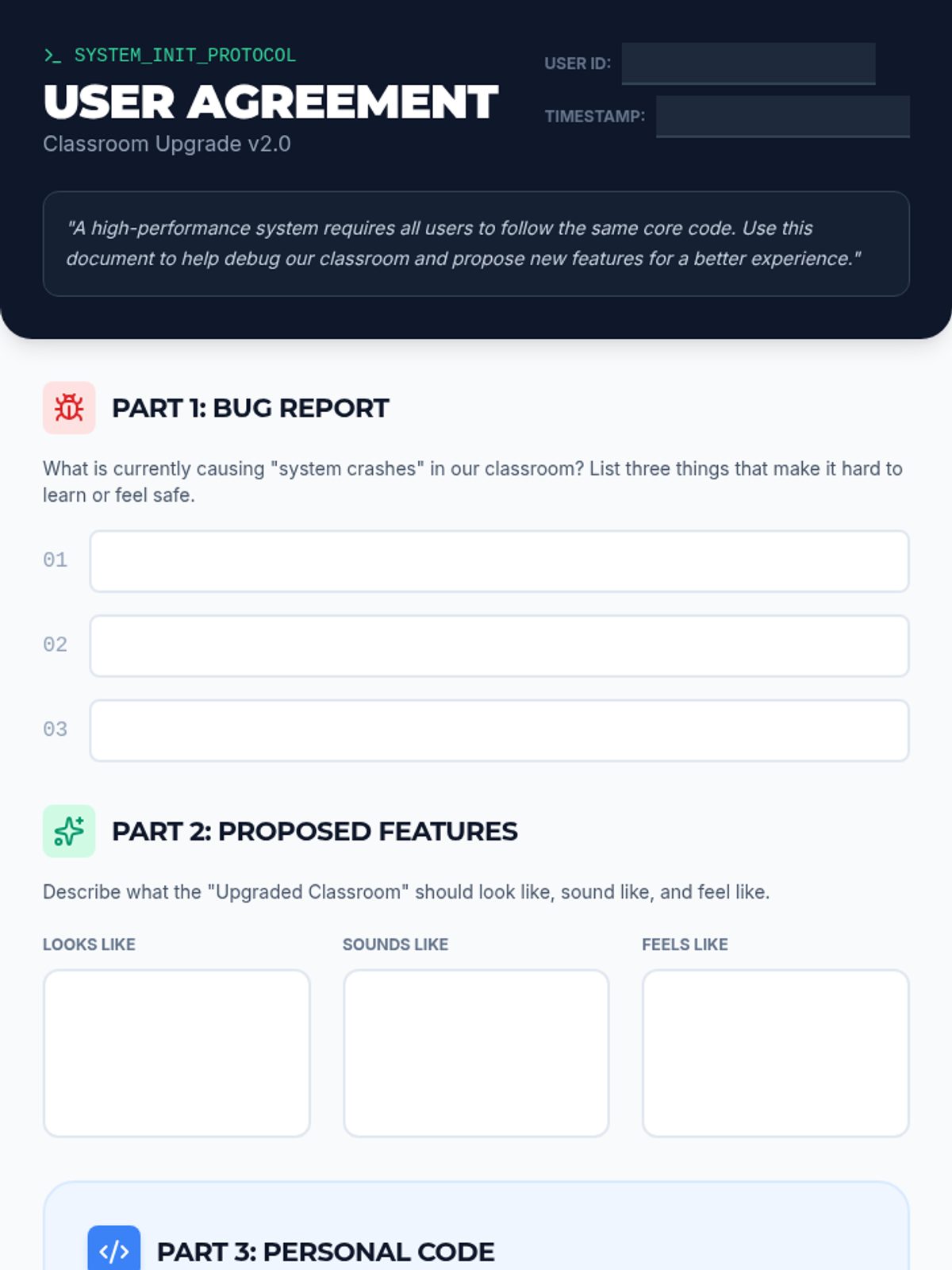
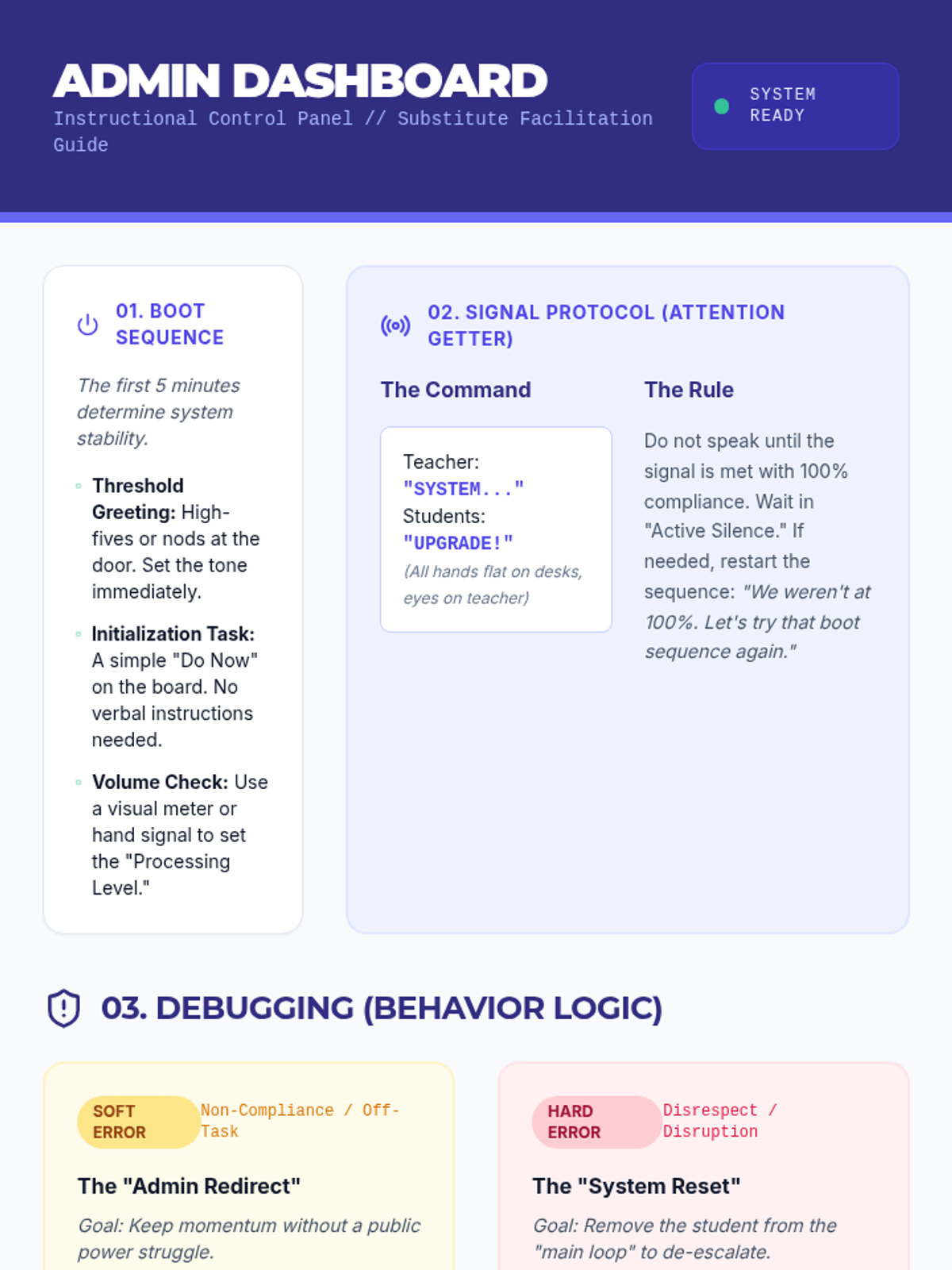
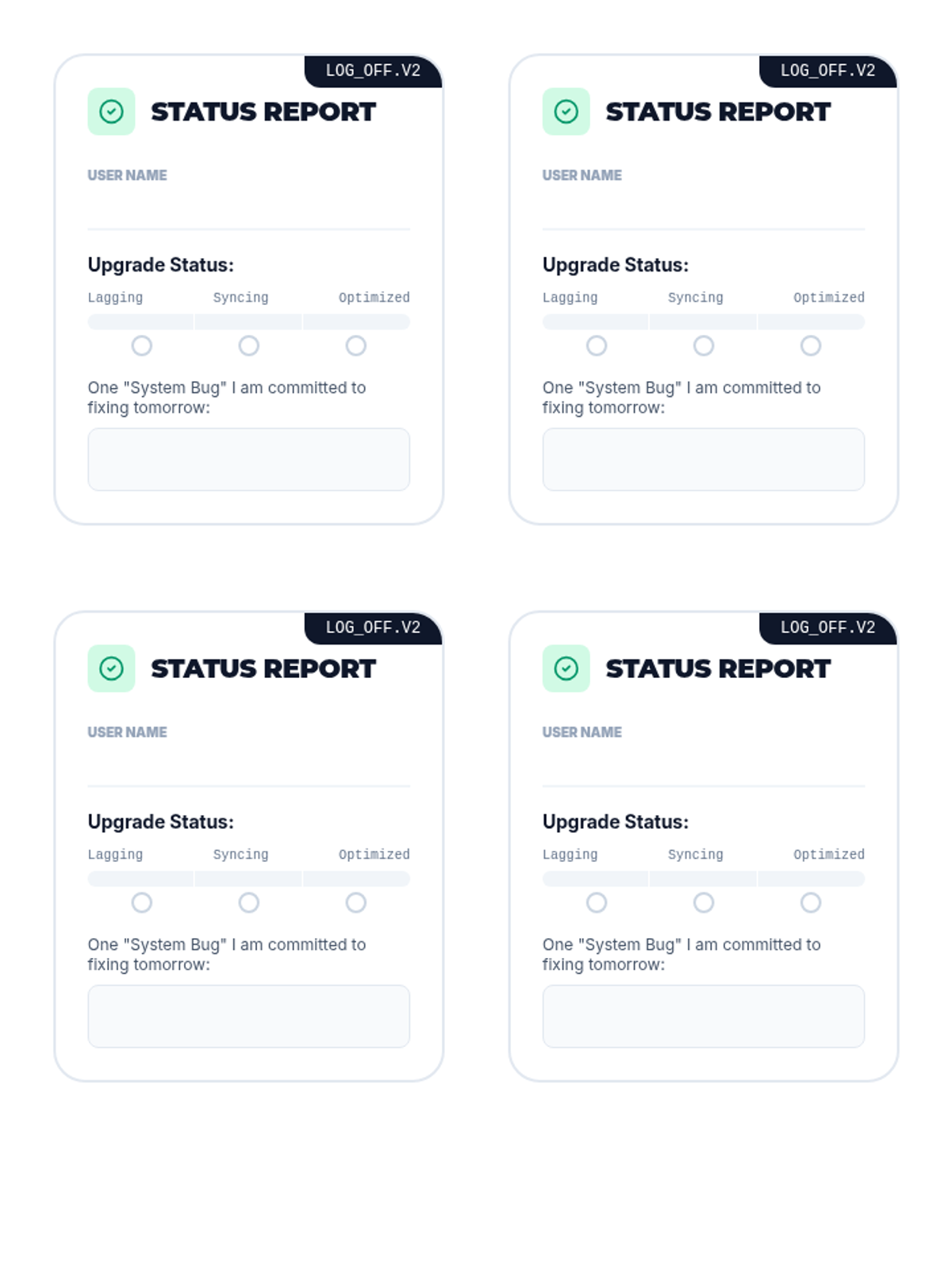
A comprehensive 'classroom reset' lesson designed to help a substitute and their students build a positive culture through the metaphor of a system upgrade. Students collaborate to define norms and understand their role in the classroom community.
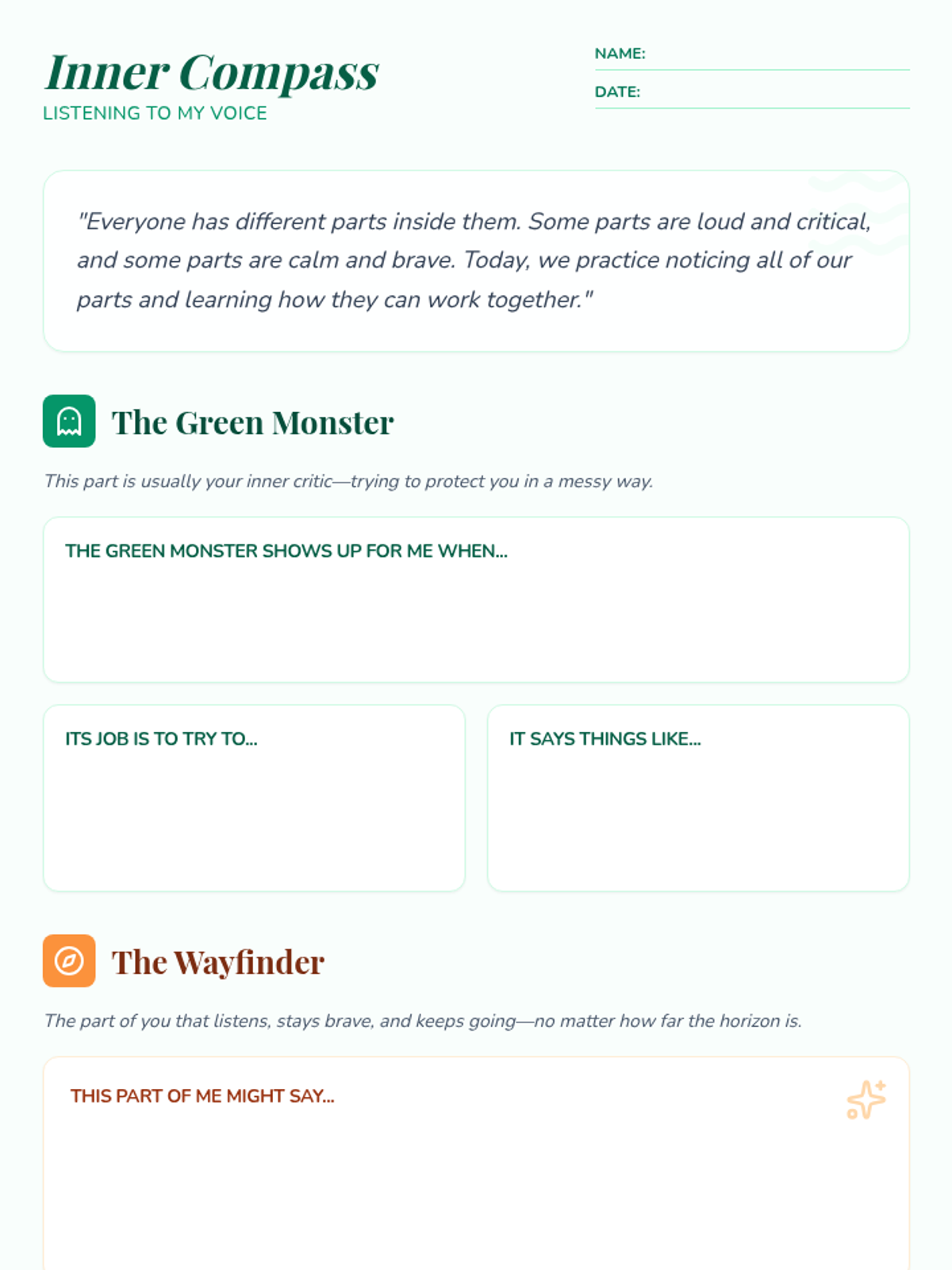
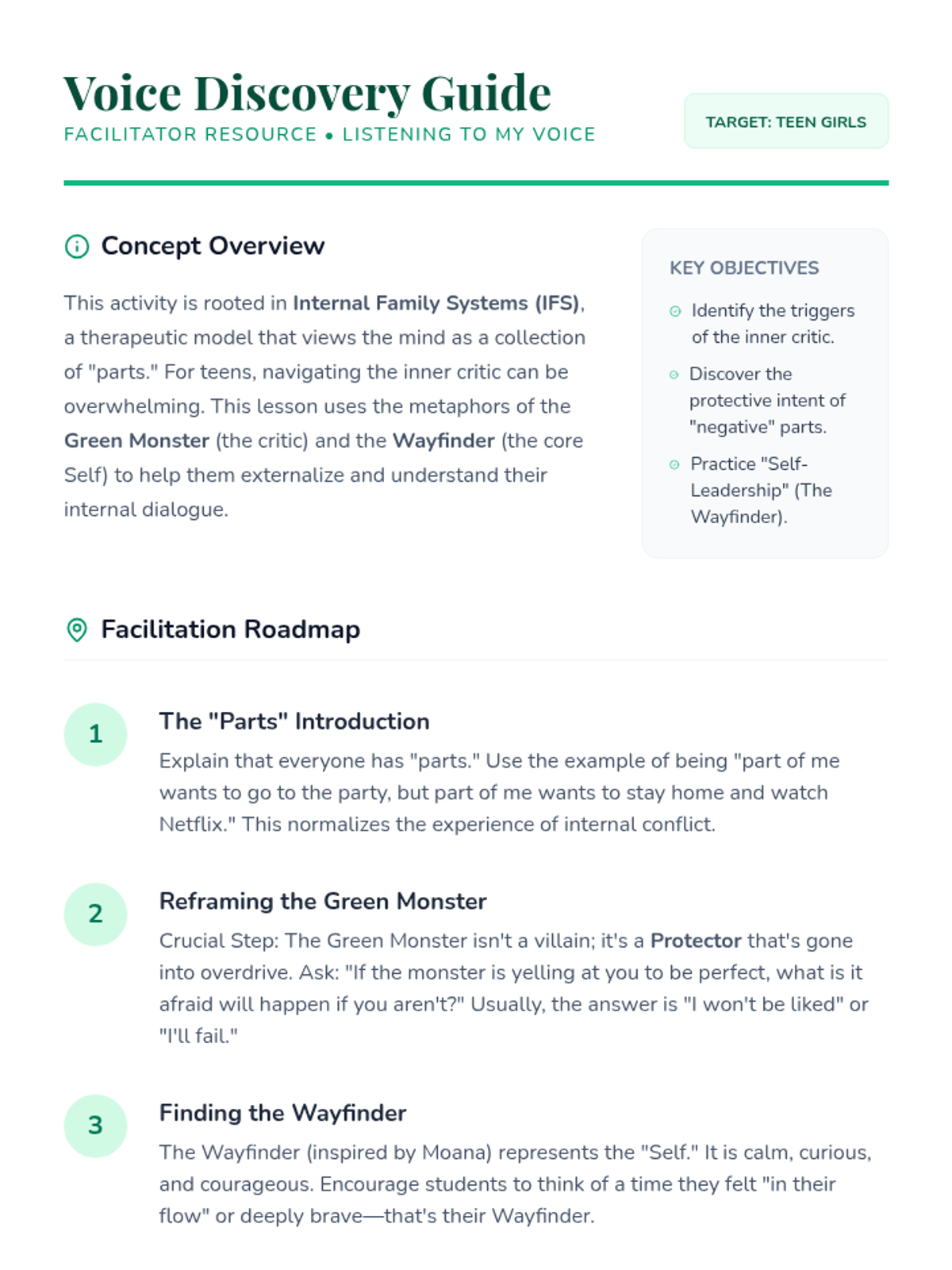
A lesson focused on Internal Family Systems (IFS) concepts for teens, helping them identify and integrate their inner critic and resilient parts with self-compassion.
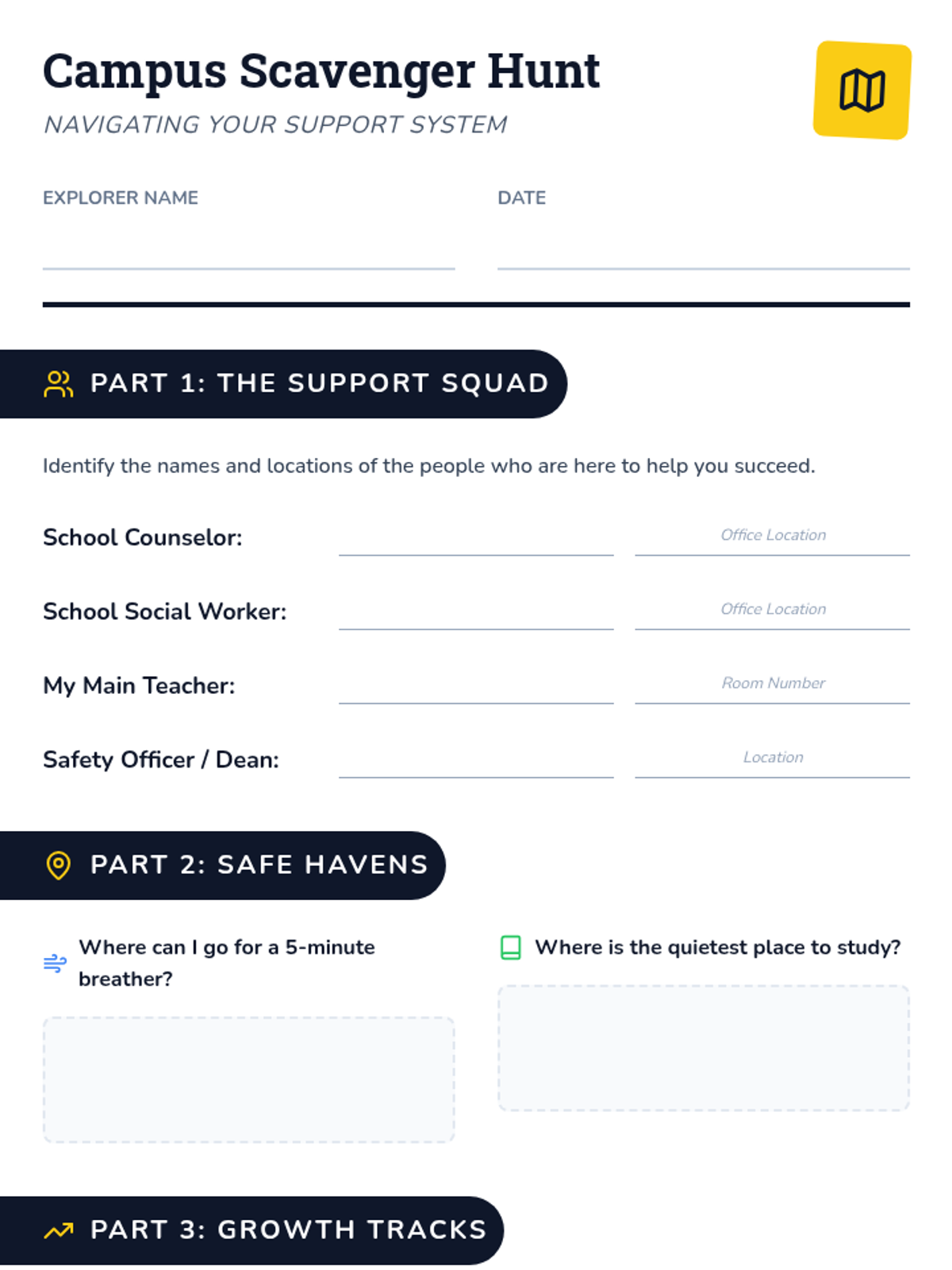
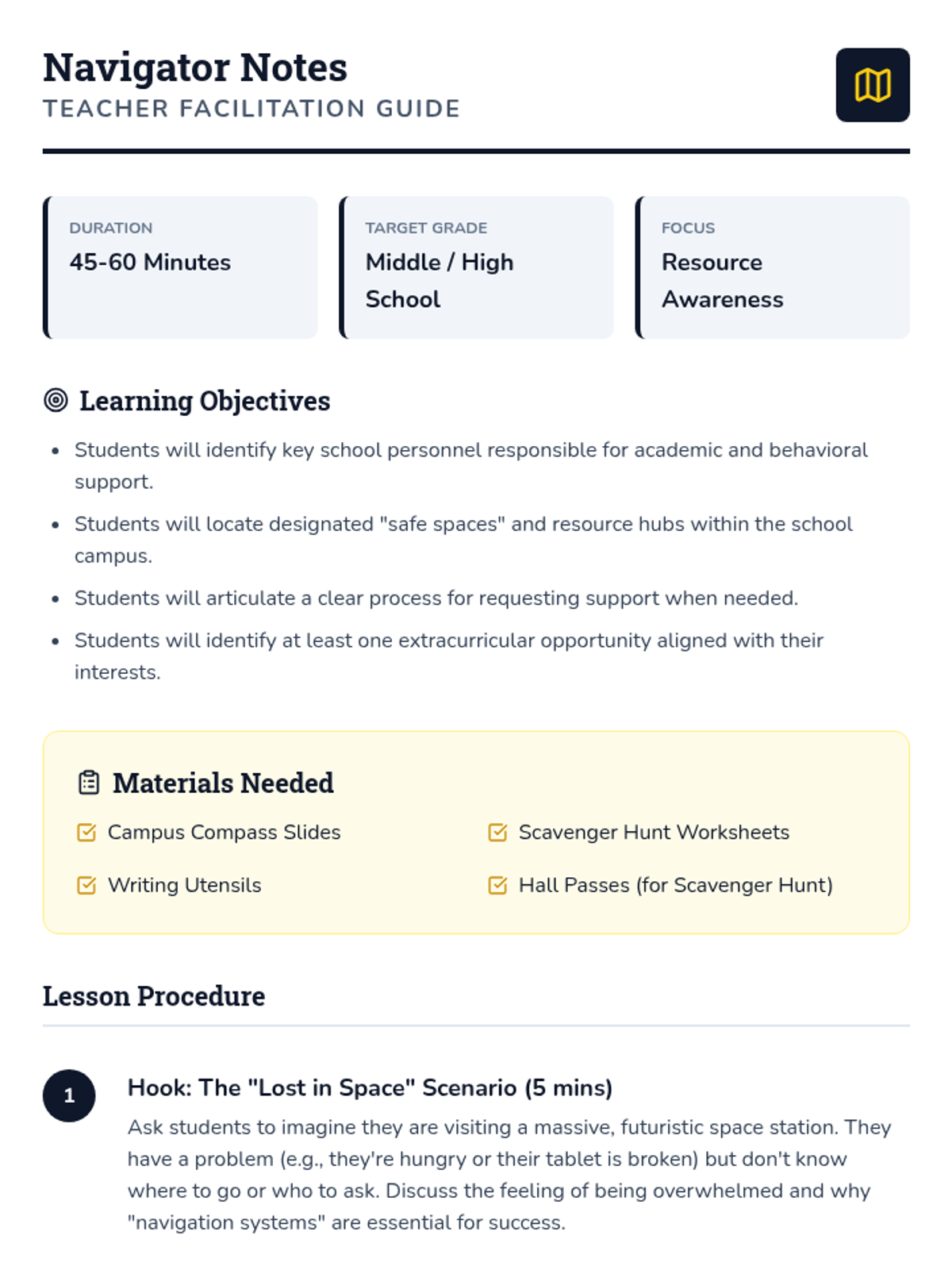
A lesson designed to help students identify and navigate the various support systems, resources, and extracurricular opportunities available within their school environment to support their behavioral and academic success.
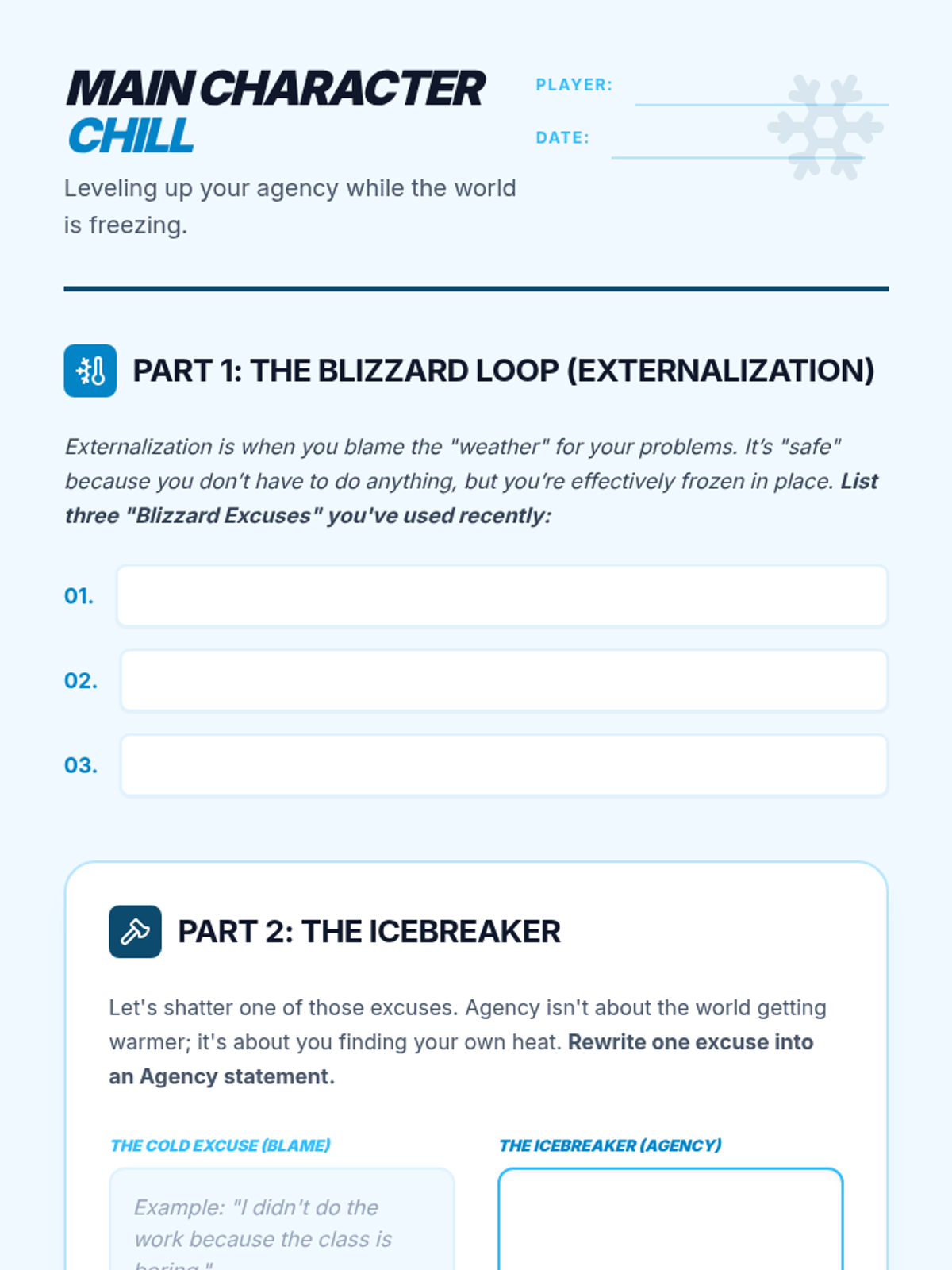
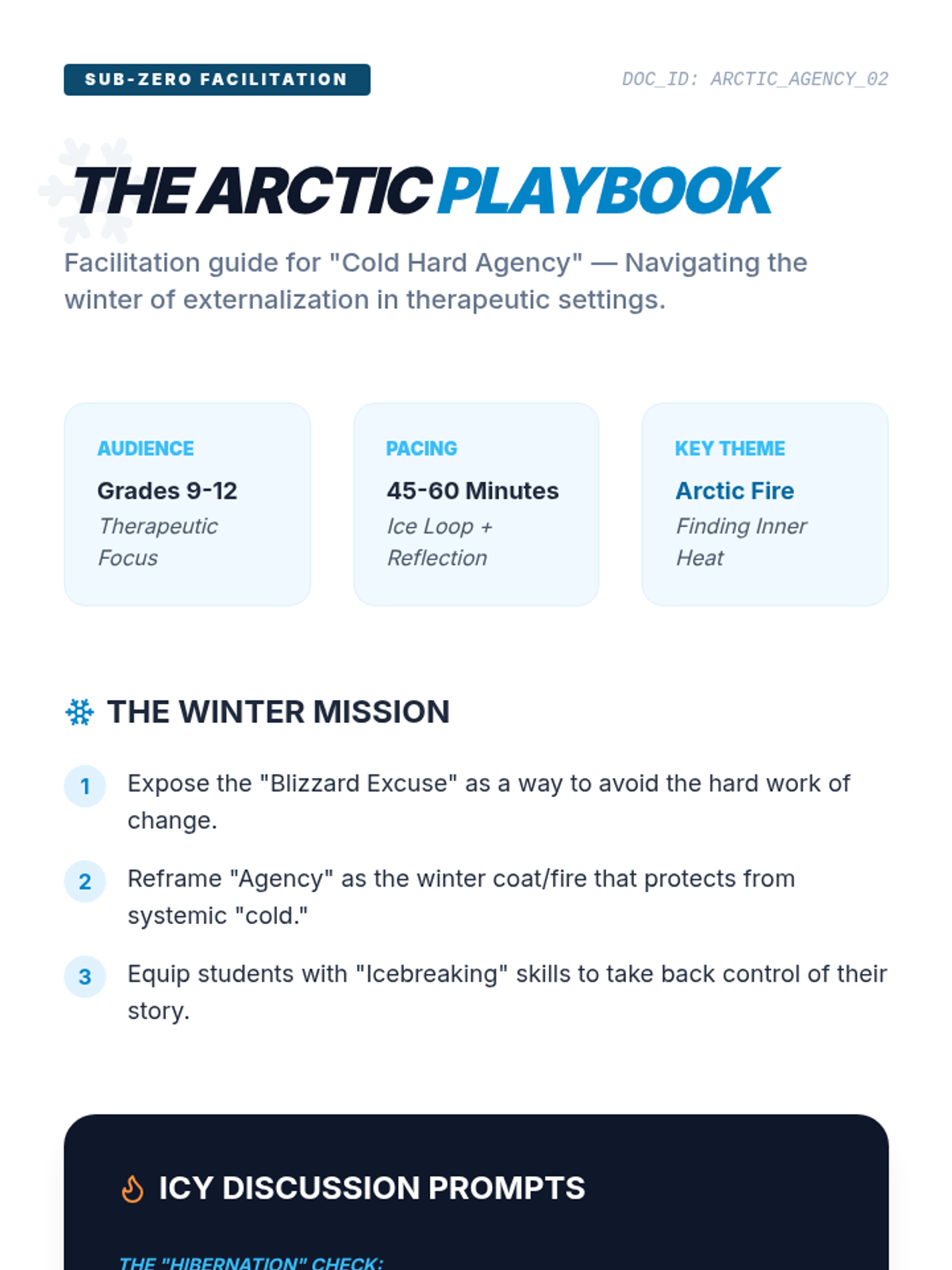
A gritty, high-energy lesson for high school students in therapeutic settings, focusing on the distinction between personal agency and the habit of externalizing blame. It uses a modern, 'Main Character' aesthetic to make psychological concepts relatable and engaging.
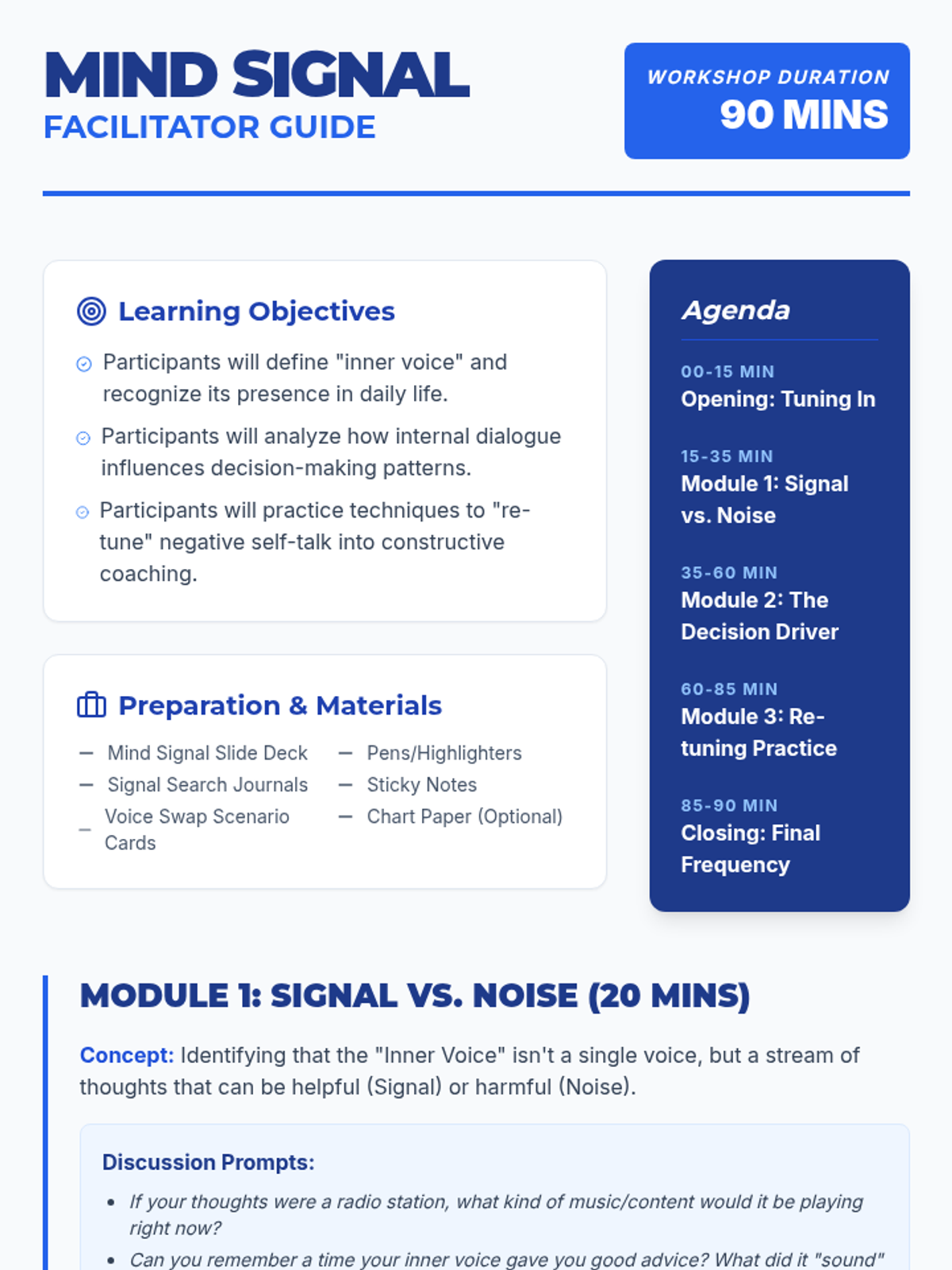
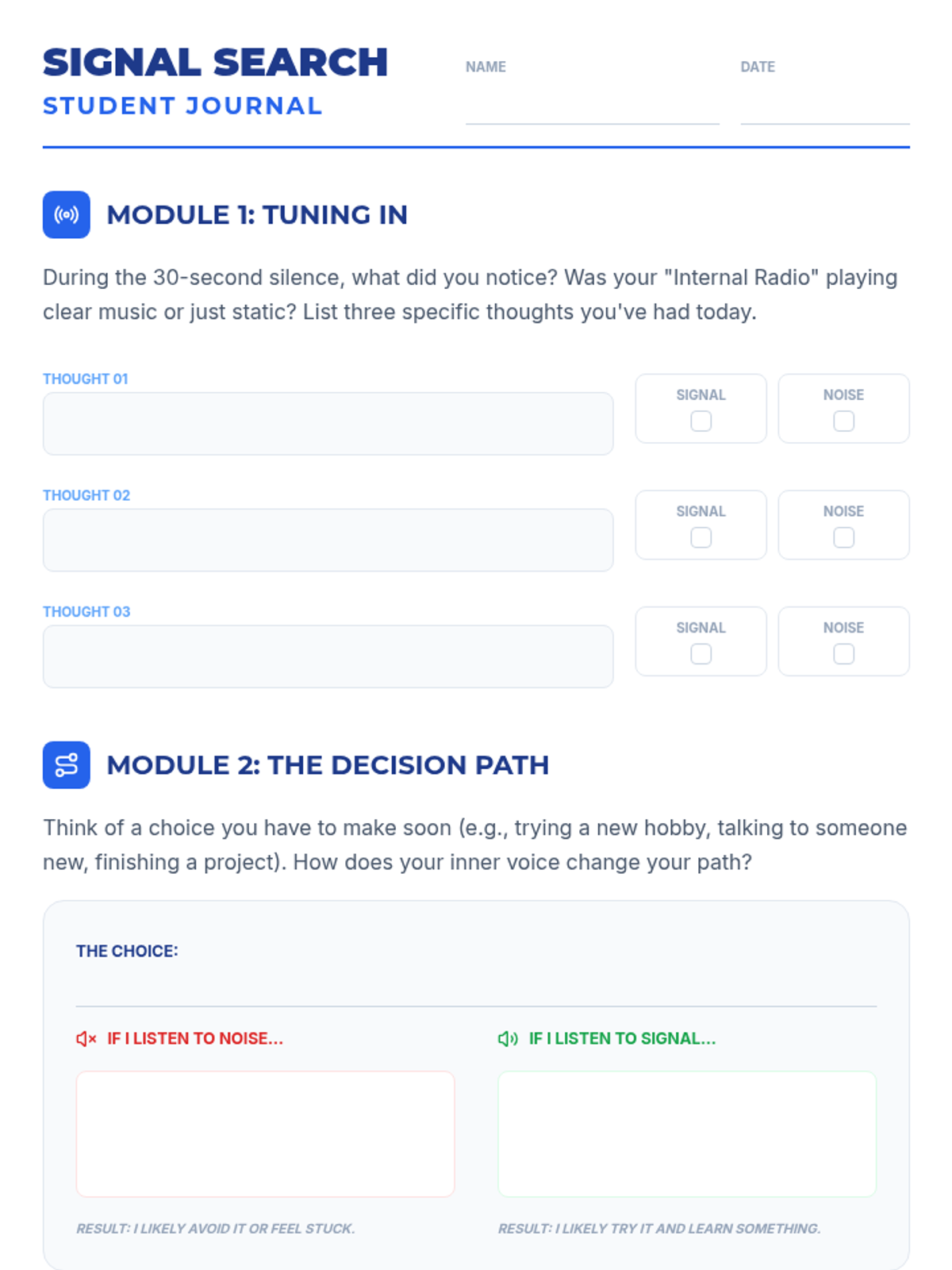
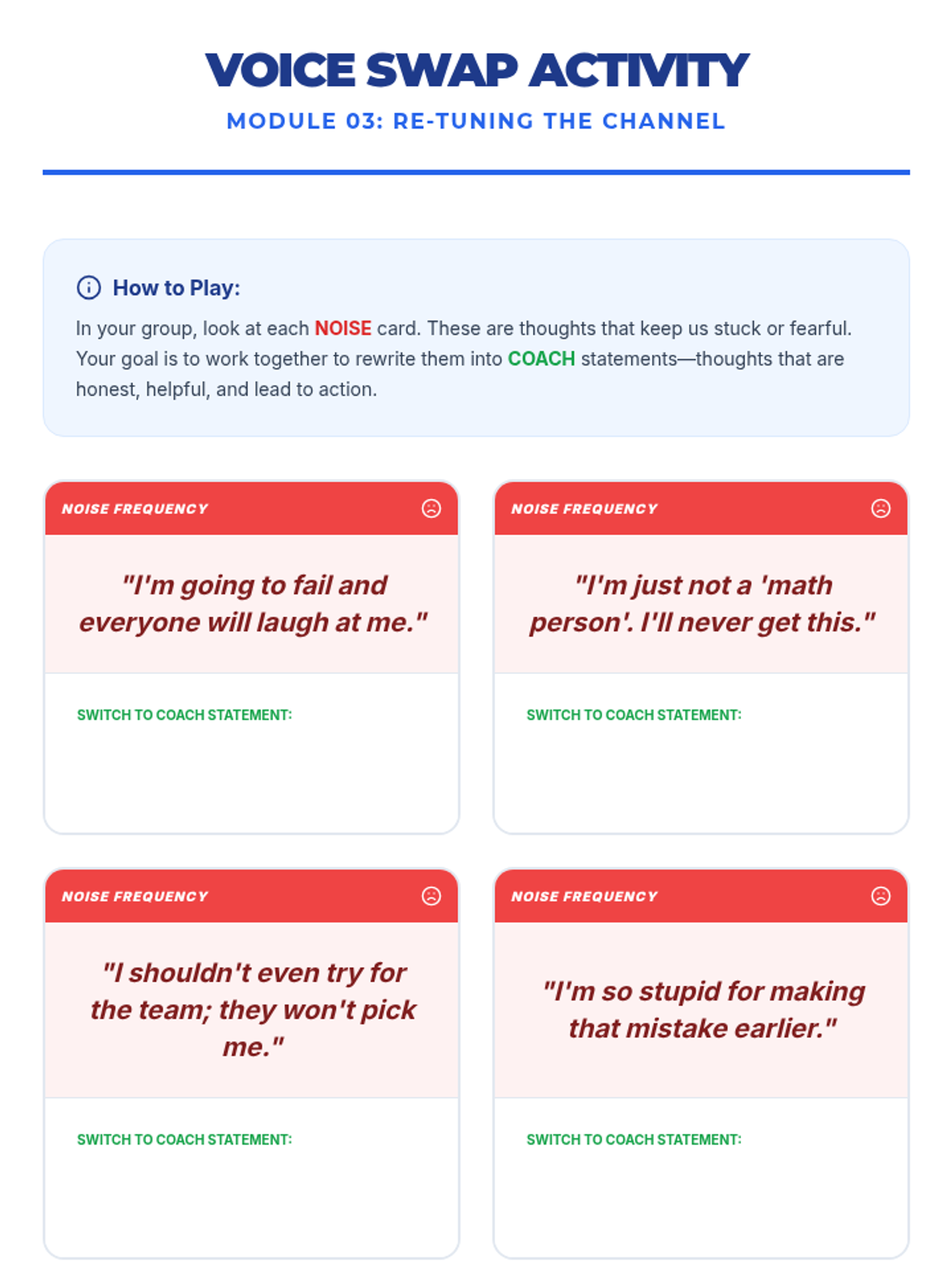
A comprehensive workshop lesson focused on identifying the inner voice, understanding its influence on decisions, and transforming negative self-talk into a supportive internal coach.
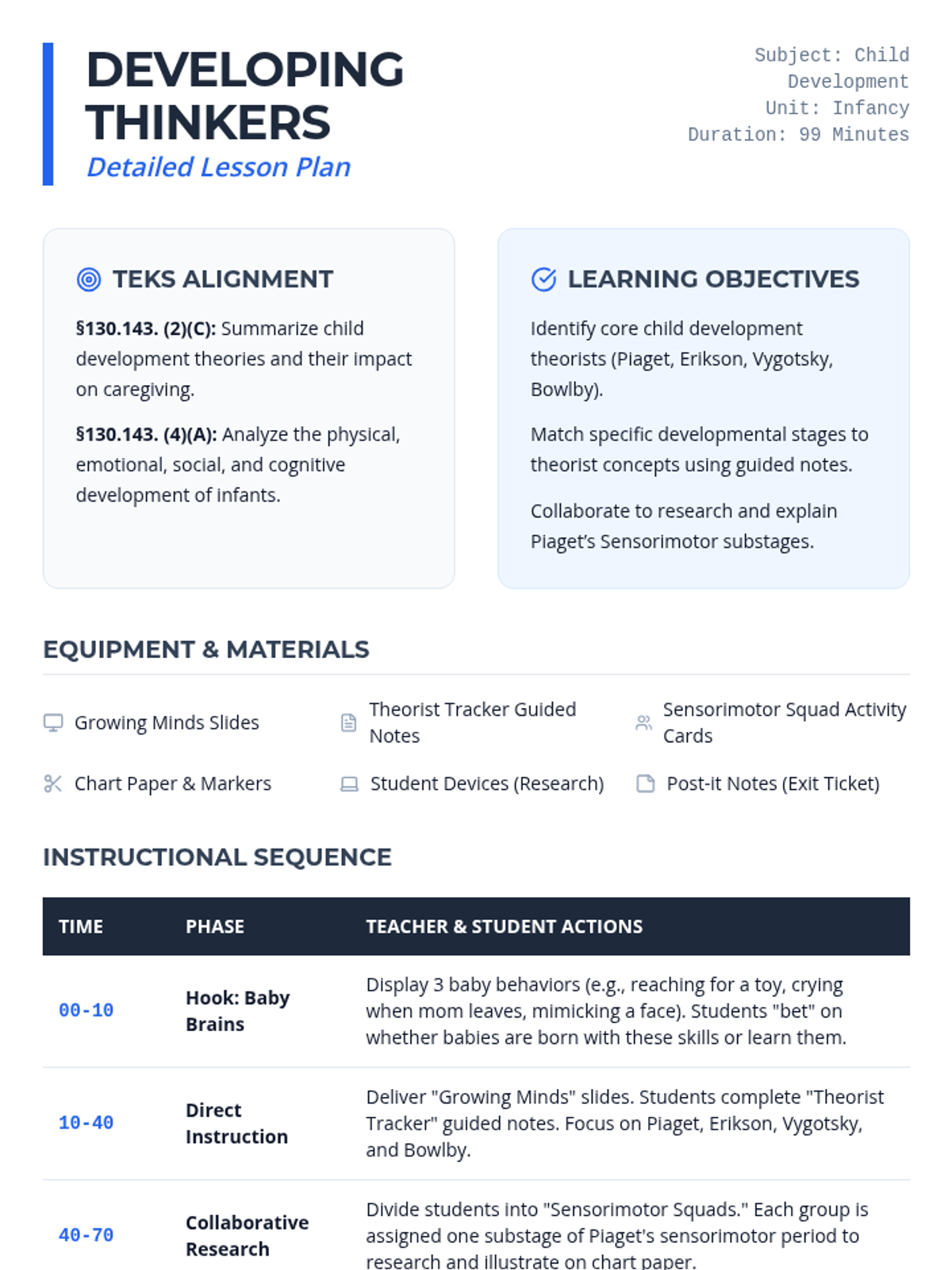
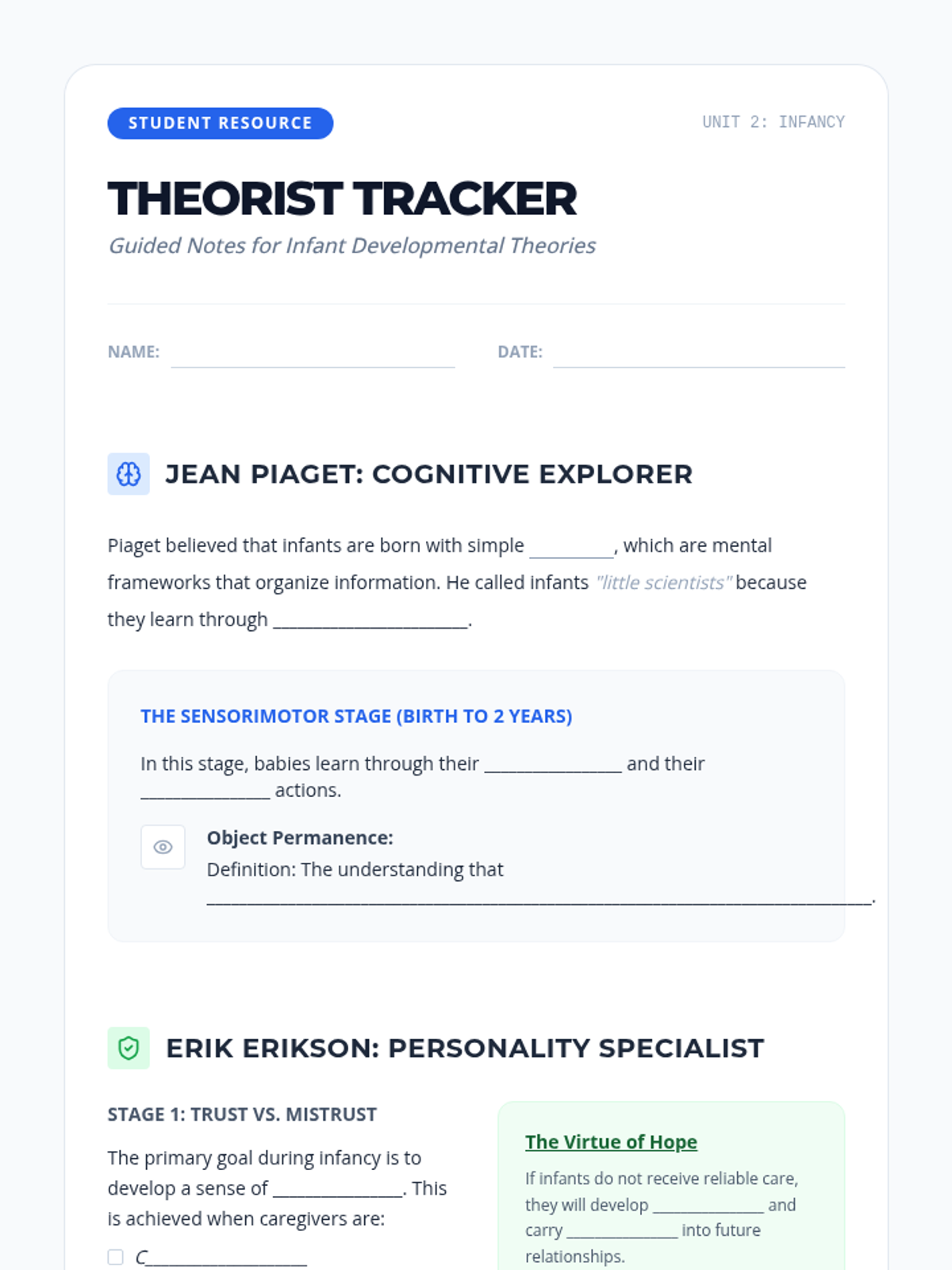
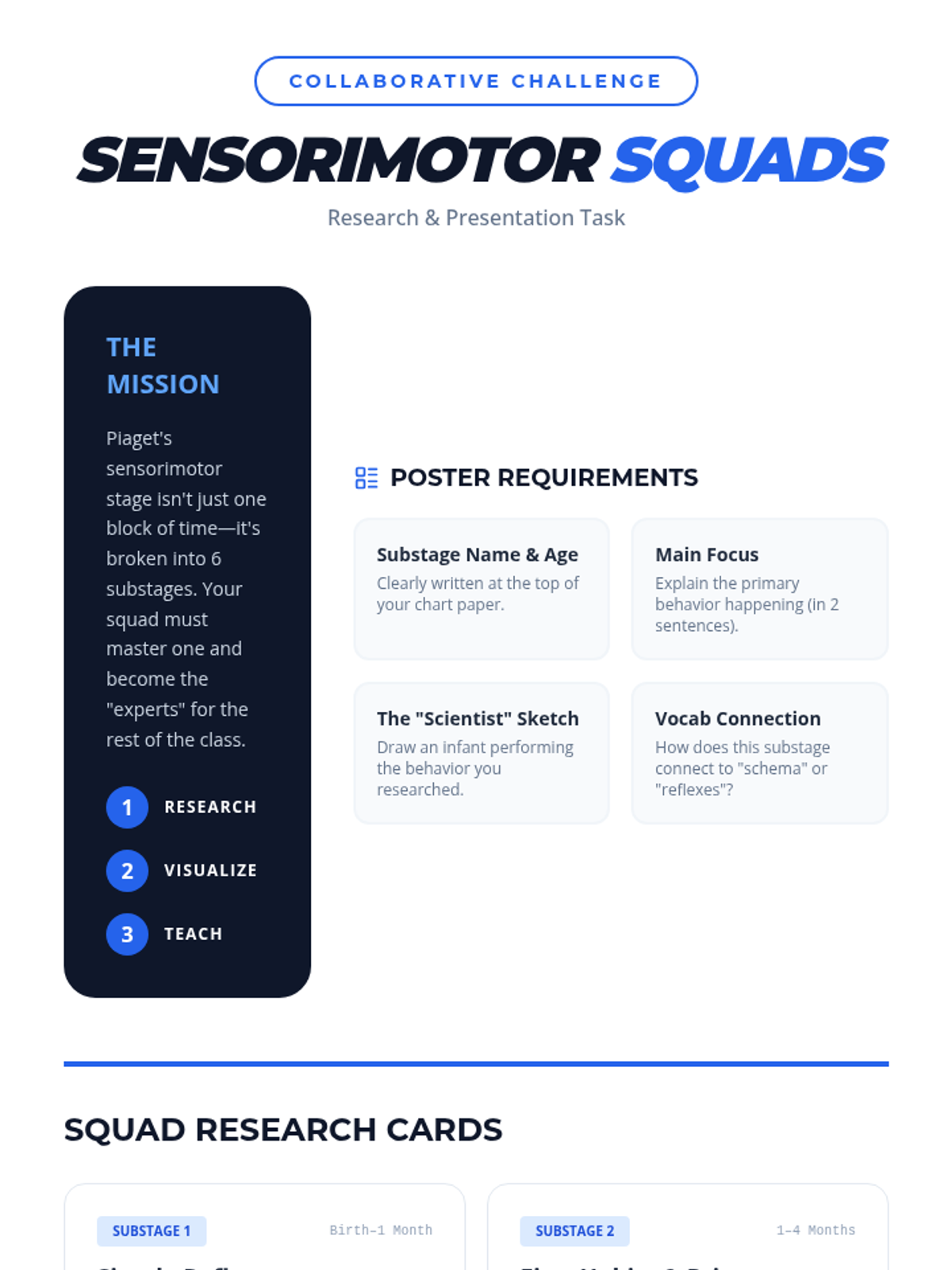
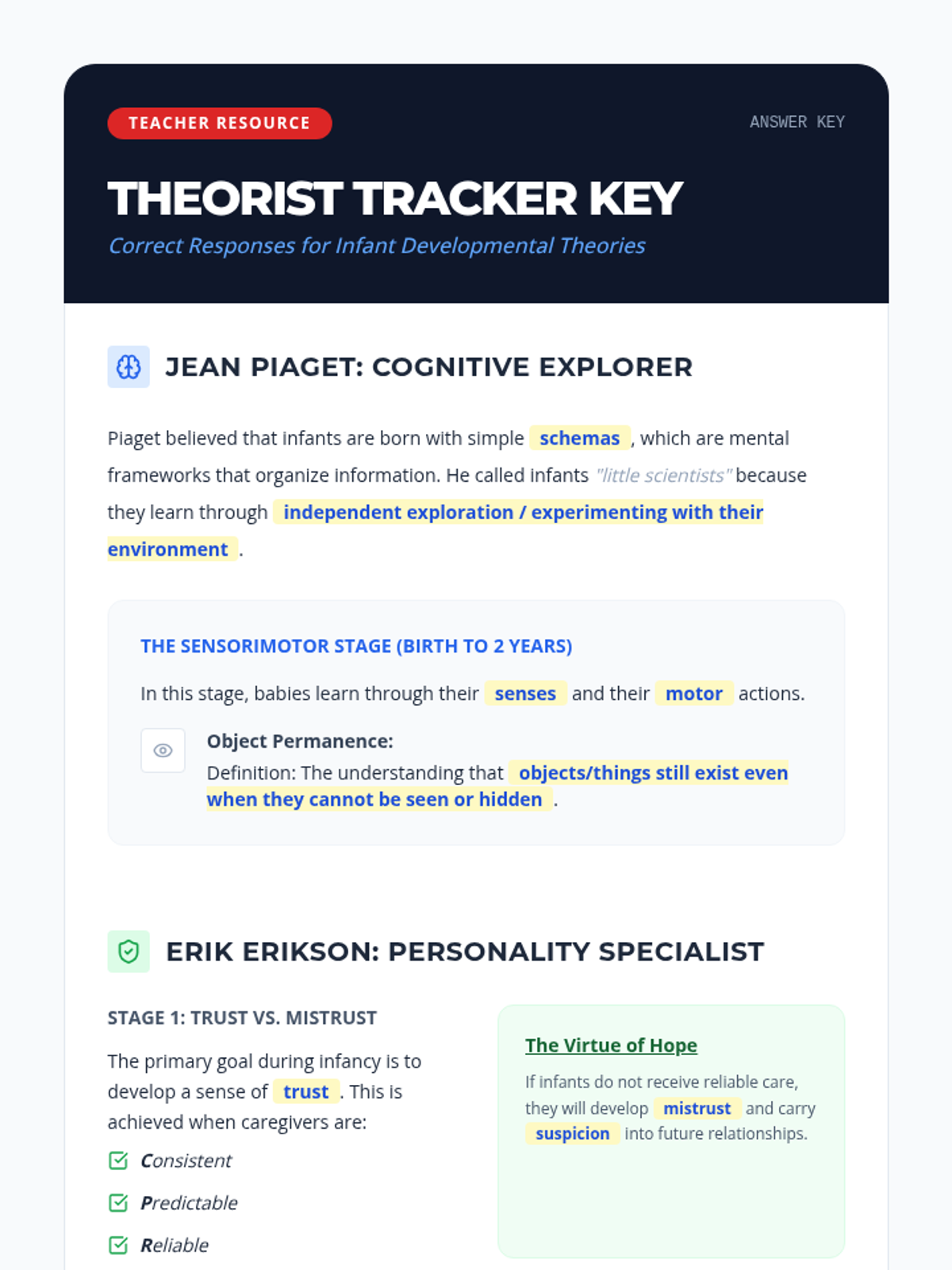
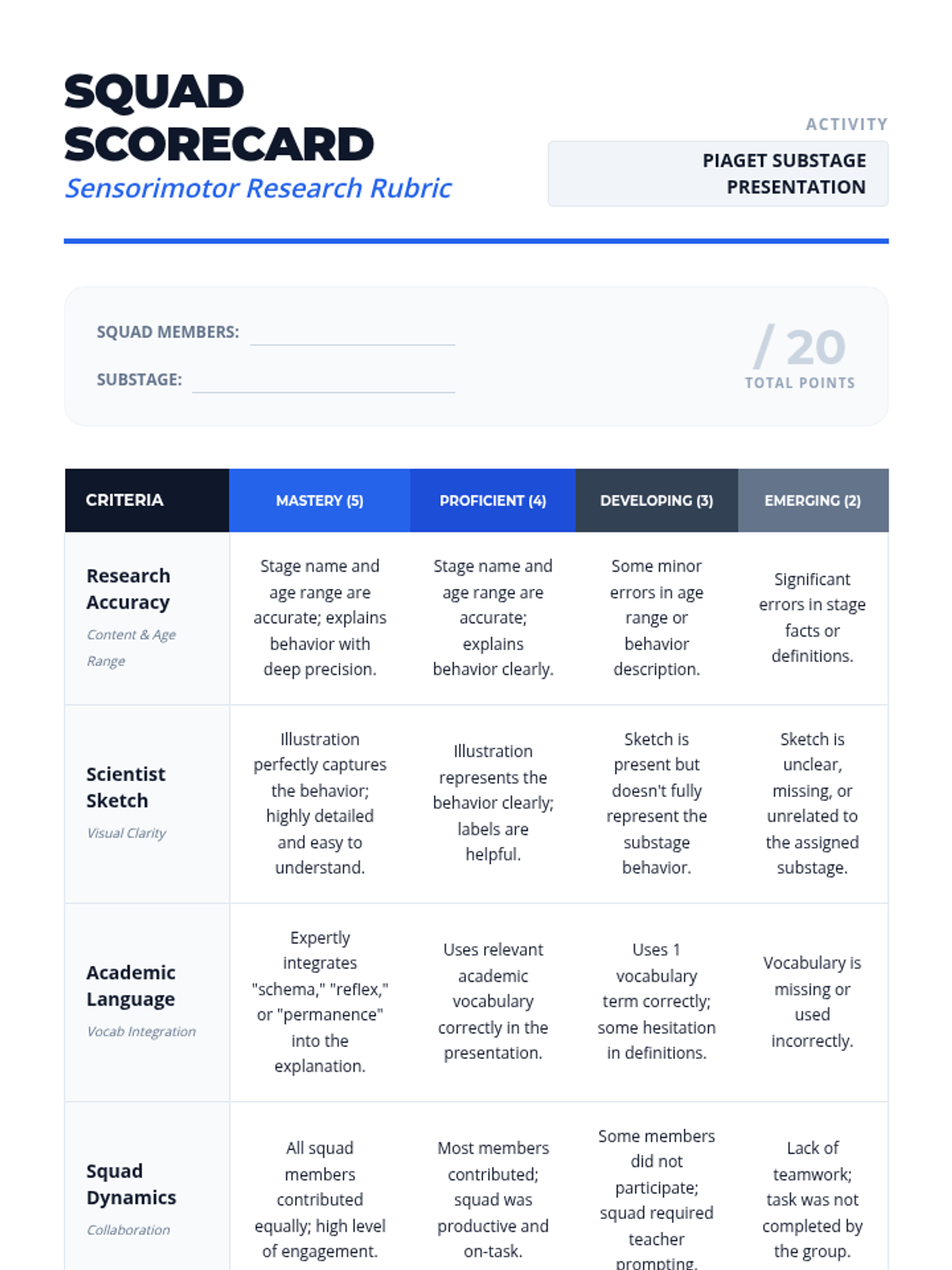
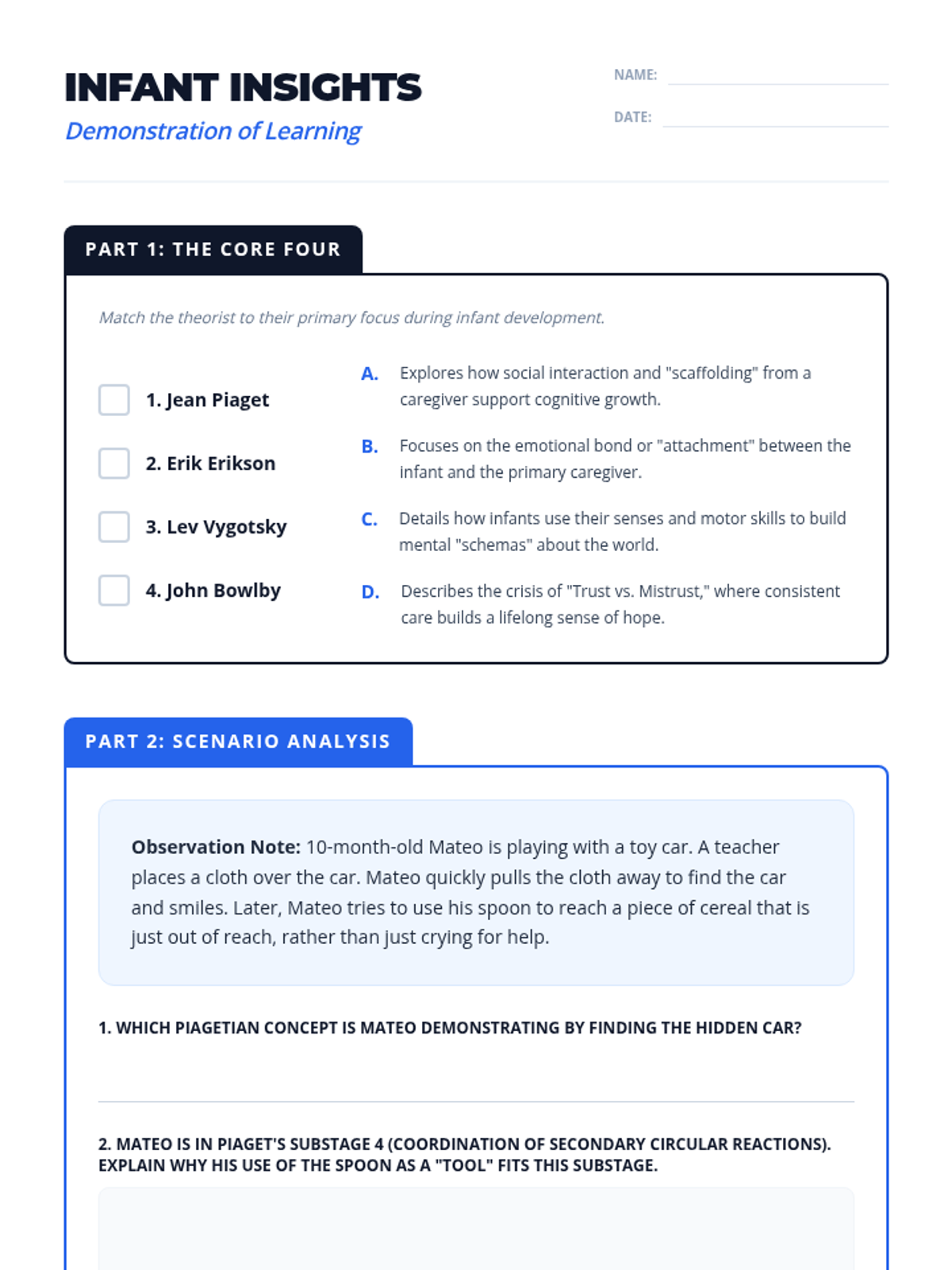
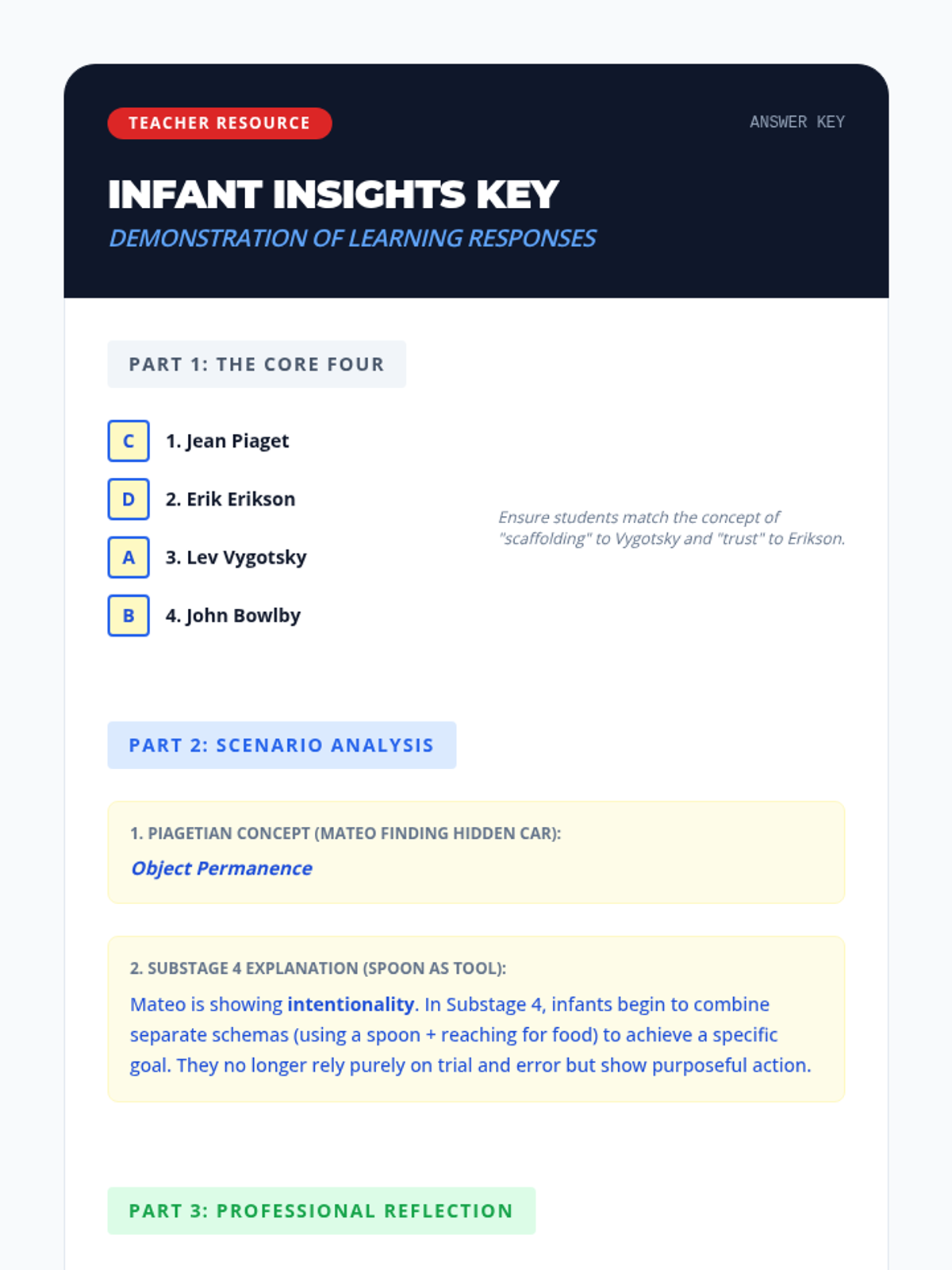
A comprehensive 99-minute lesson exploring child development theorists (Piaget, Erikson, Vygotsky, Bowlby) with a focus on infancy, featuring collaborative research and guided note-taking.
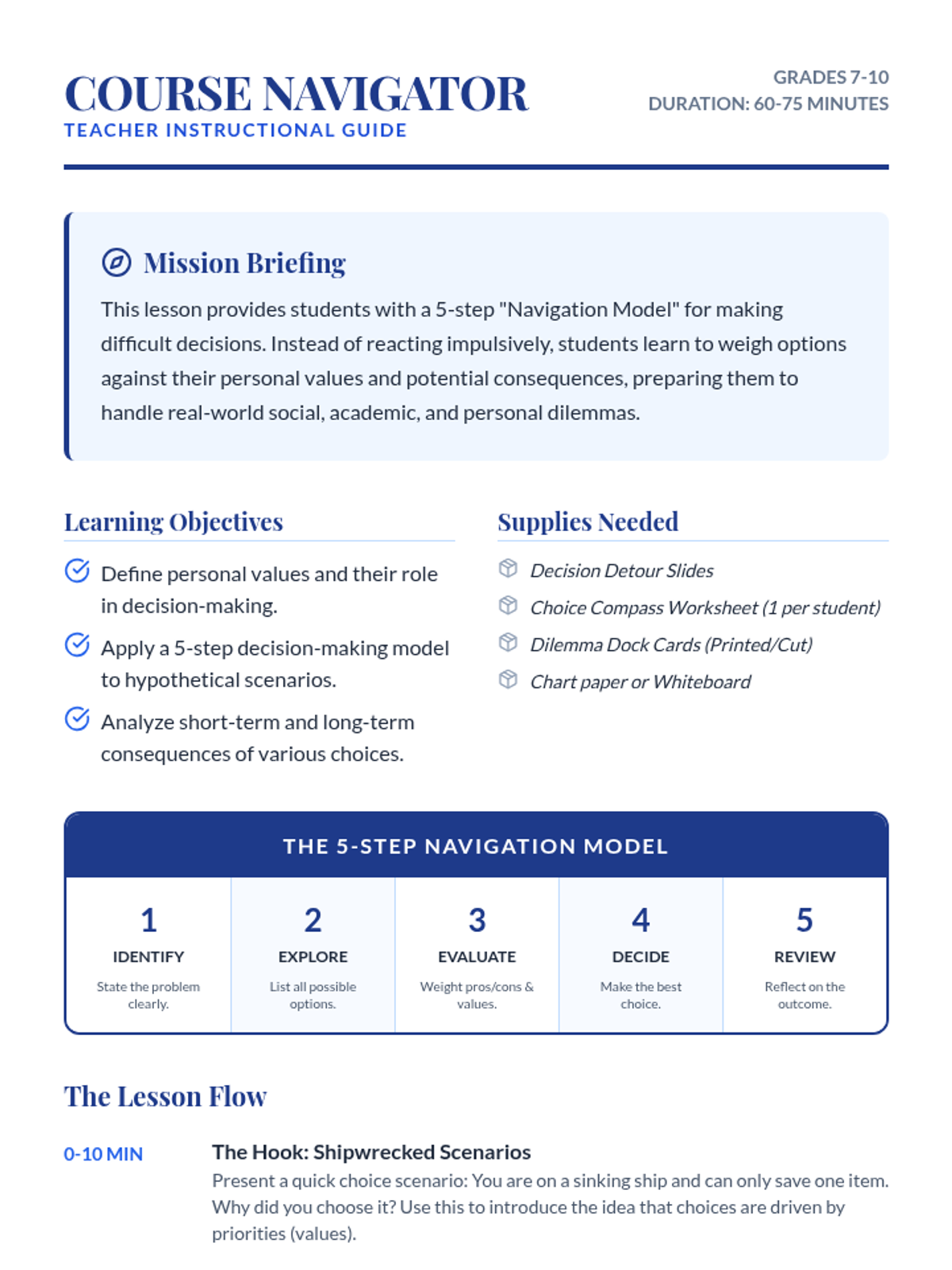
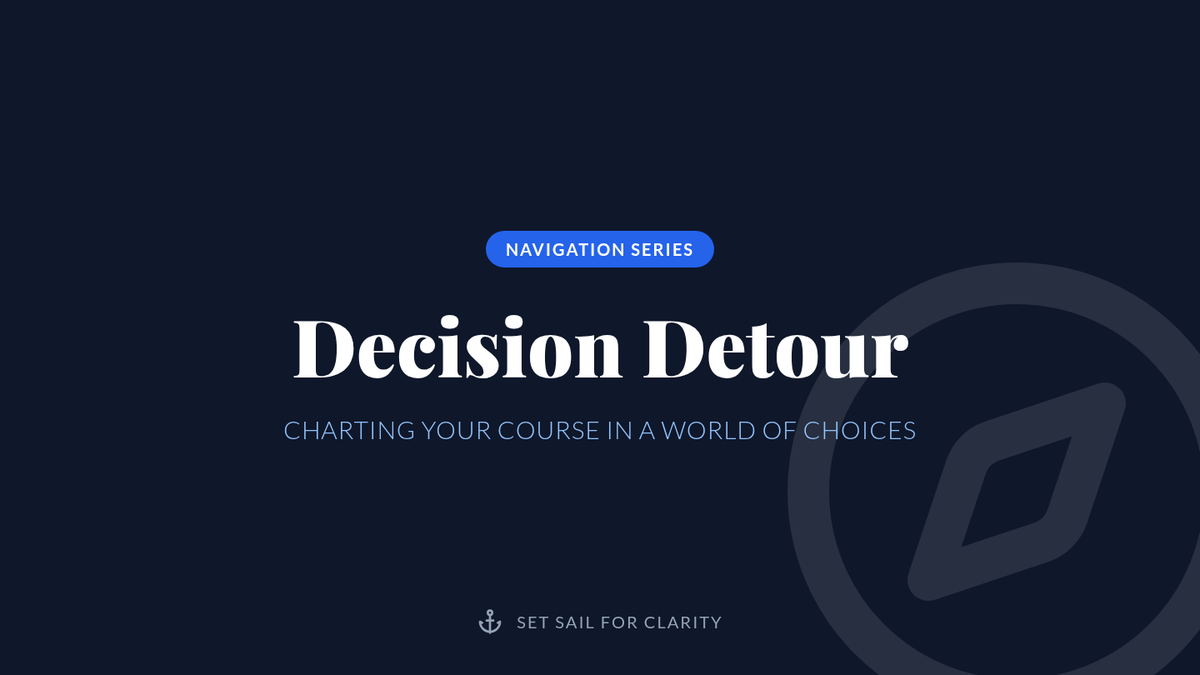
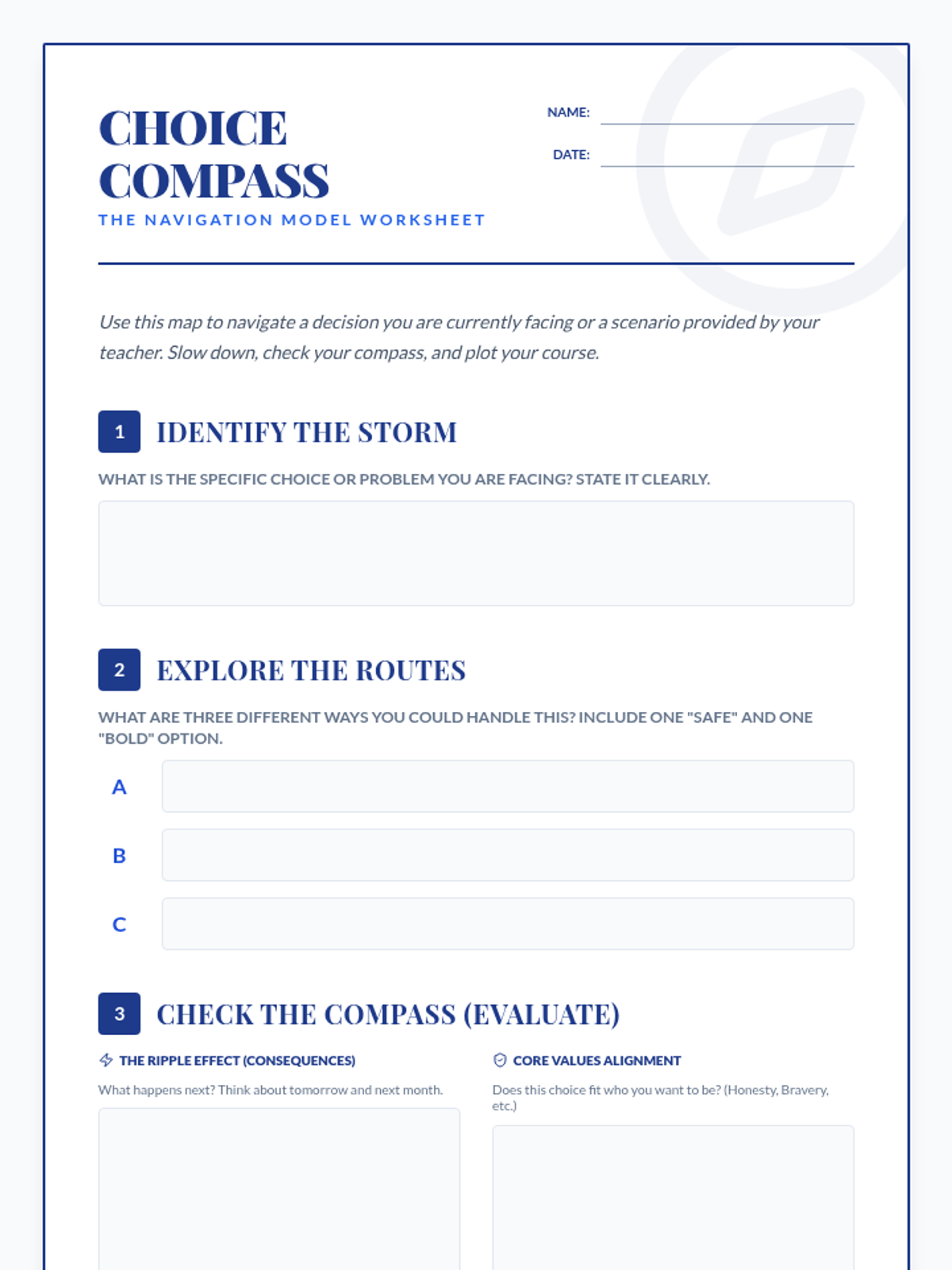
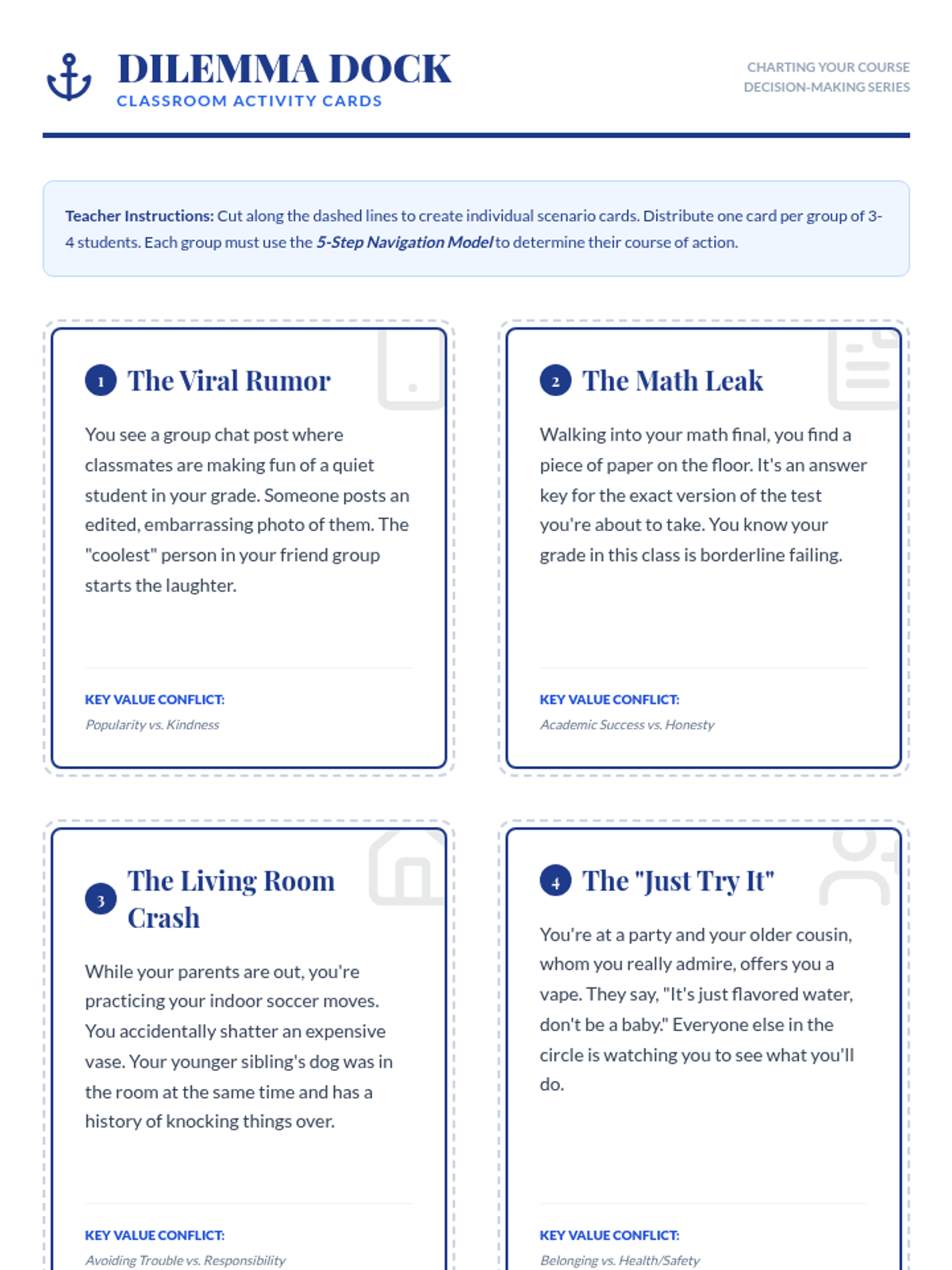
This lesson equips students with a structured approach to making informed decisions by identifying options, evaluating consequences, and aligning choices with personal values. Through interactive scenarios and guided practice, students build the confidence and autonomy needed to navigate complex life dilemmas.