A high-energy, 30-minute workshop where students practice collaborative problem-solving through a structured puzzle challenge. Students establish team norms, work through a shared task, and reflect on the dynamics of effective leadership.
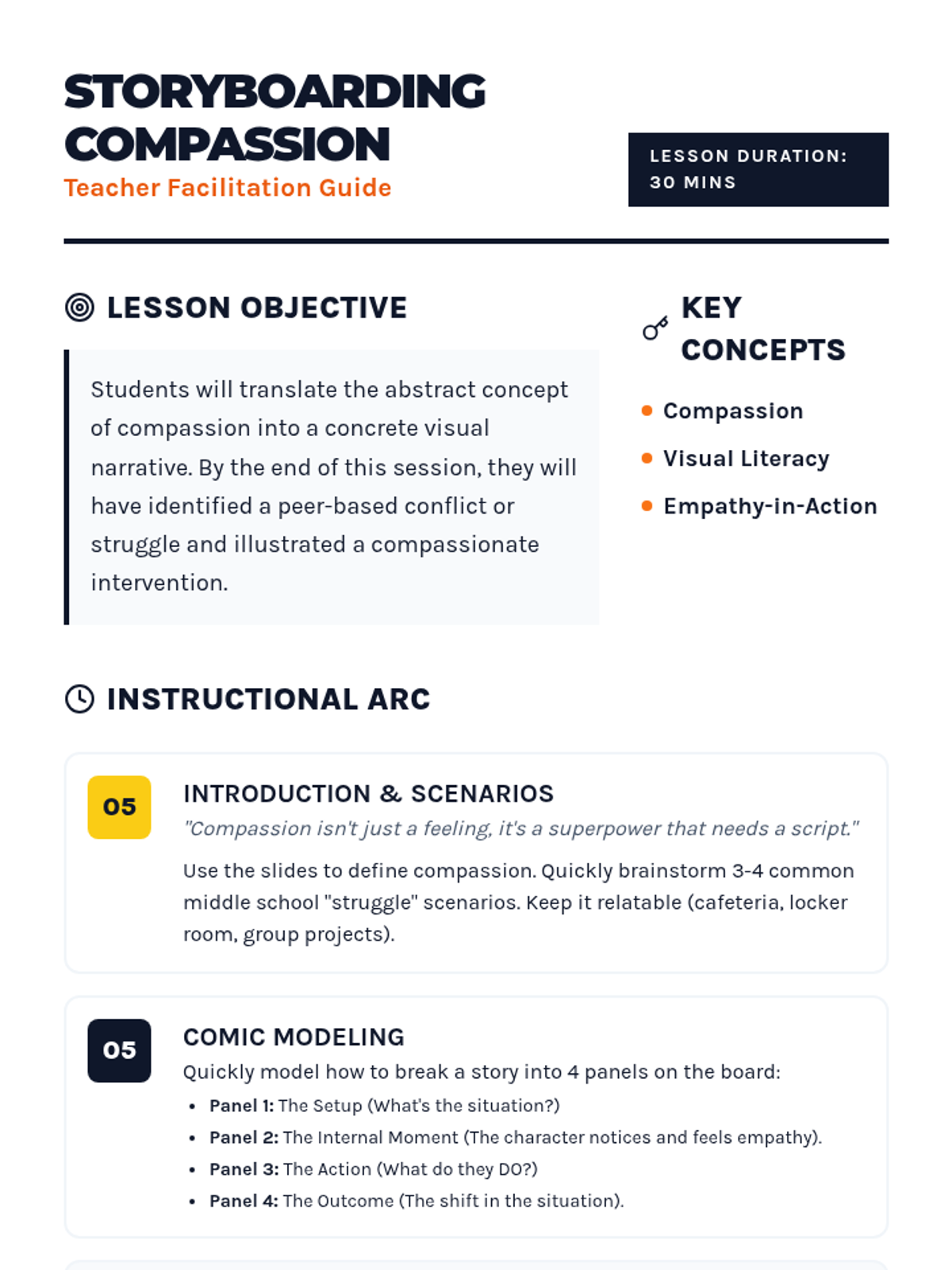
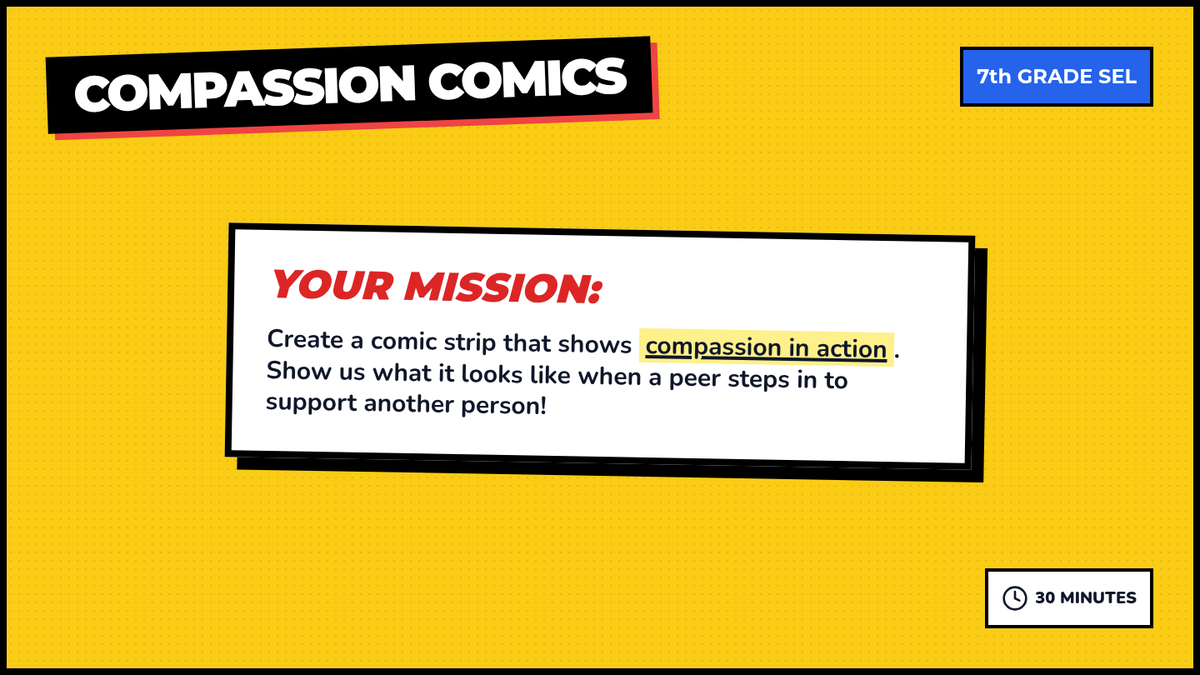
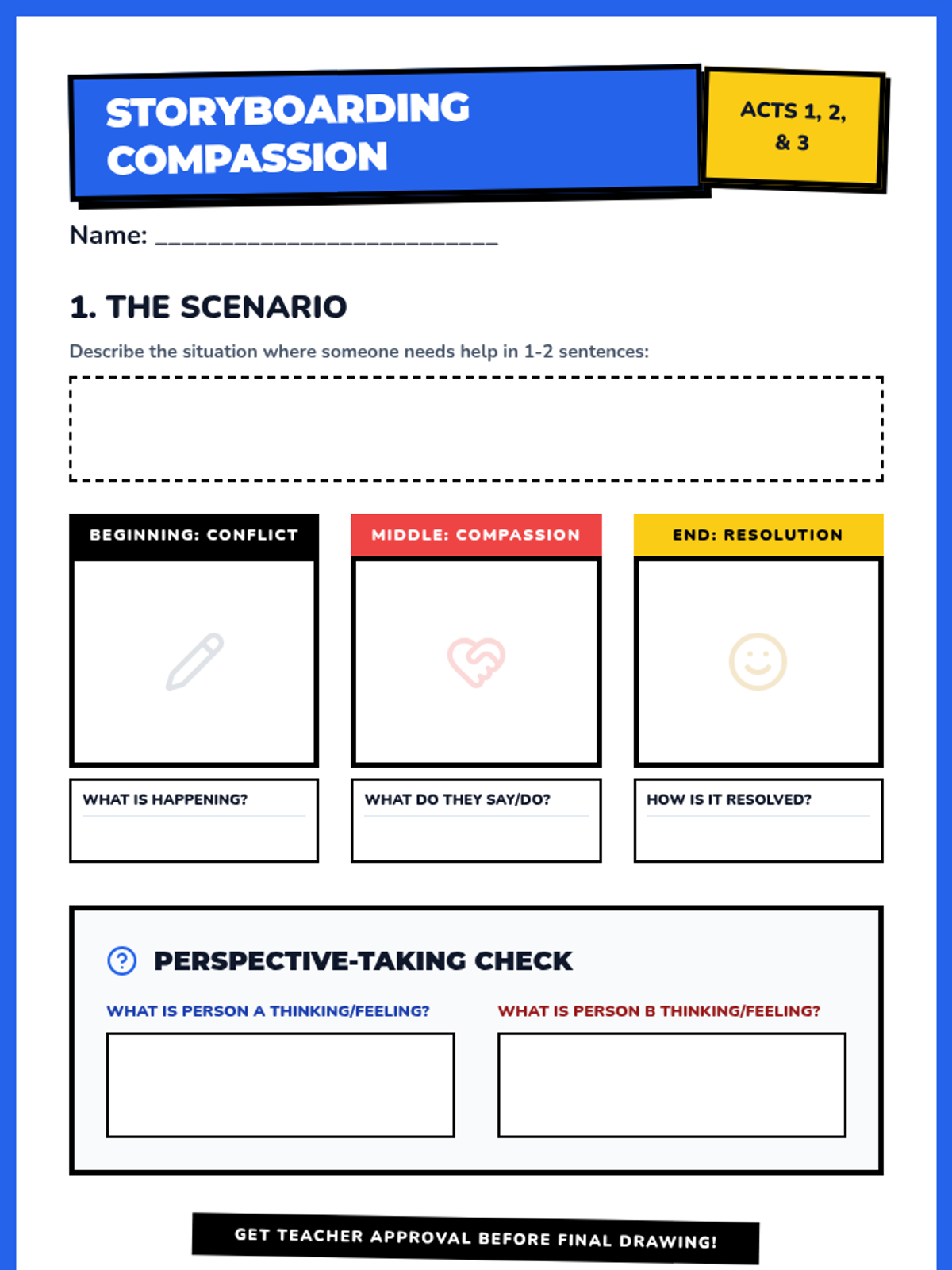
A creative arts-integrated lesson where 7th graders explore the concept of compassion by illustrating a peer-focused scenario through sequential visual storytelling. Students practice perspective-taking and identify concrete ways to show empathy in their daily lives.
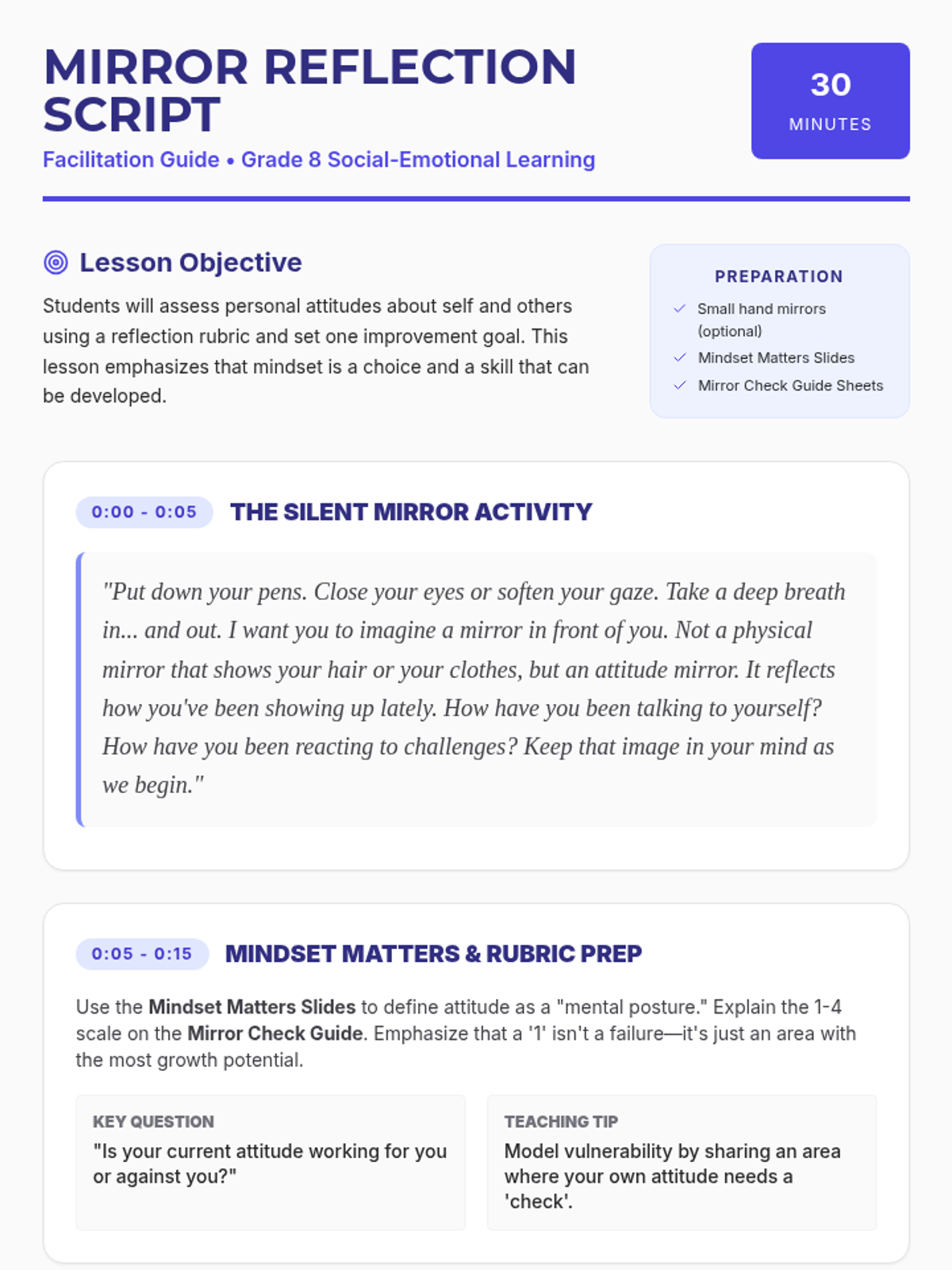
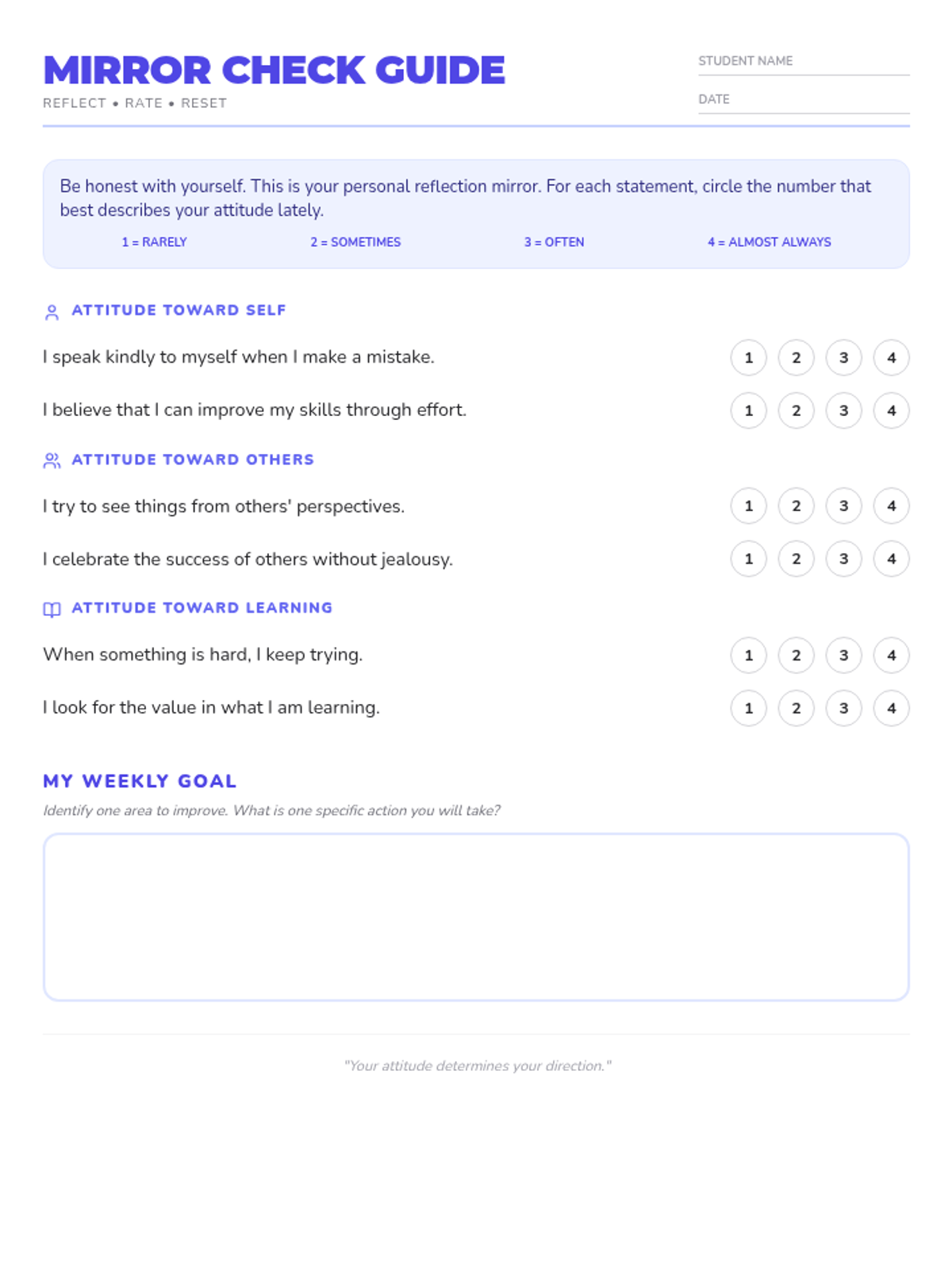
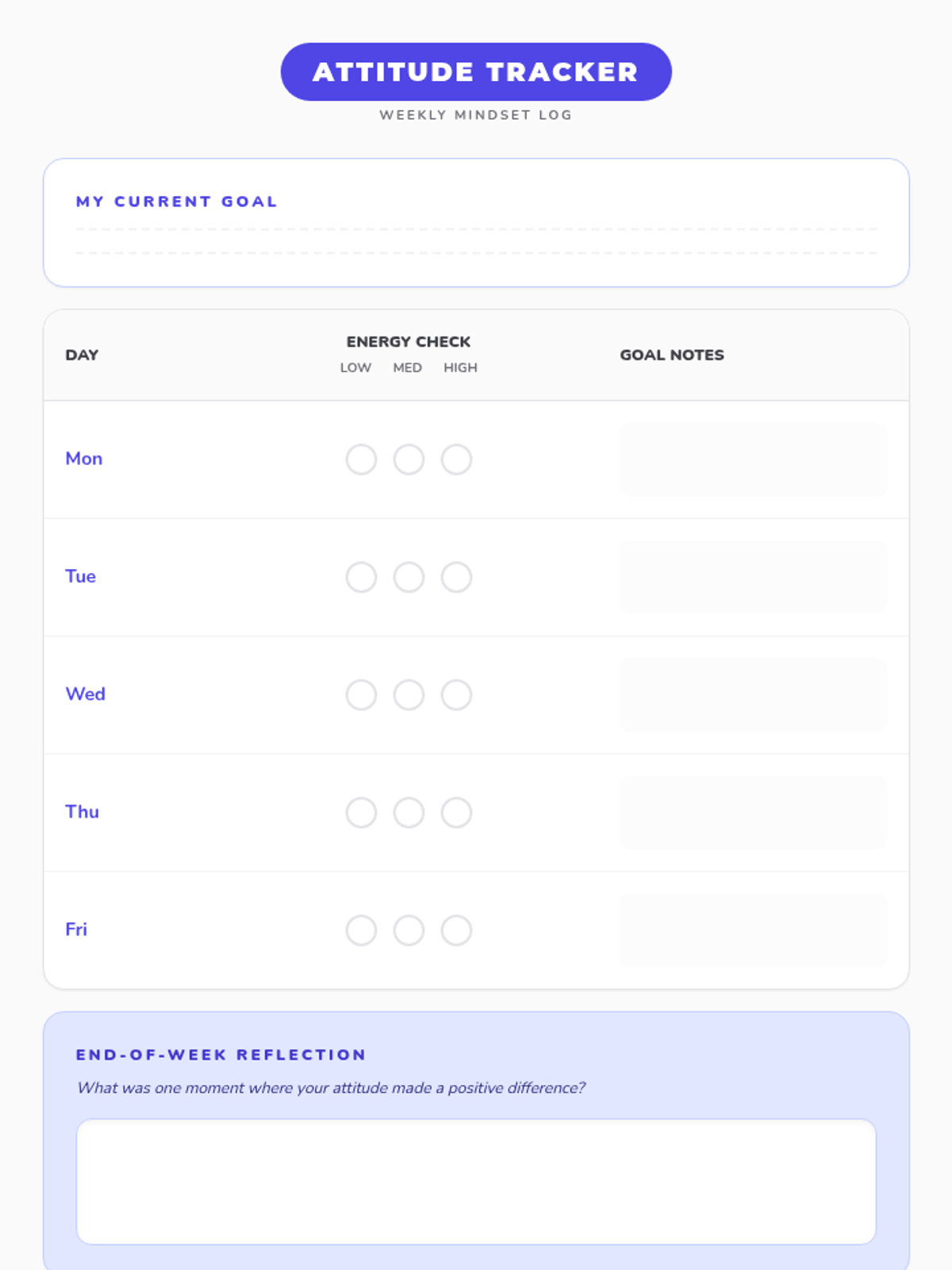
A 30-minute social-emotional learning lesson for 8th graders focused on self-reflection and personal growth. Students use a structured rubric to assess their current mindsets and set a concrete goal for attitude improvement.
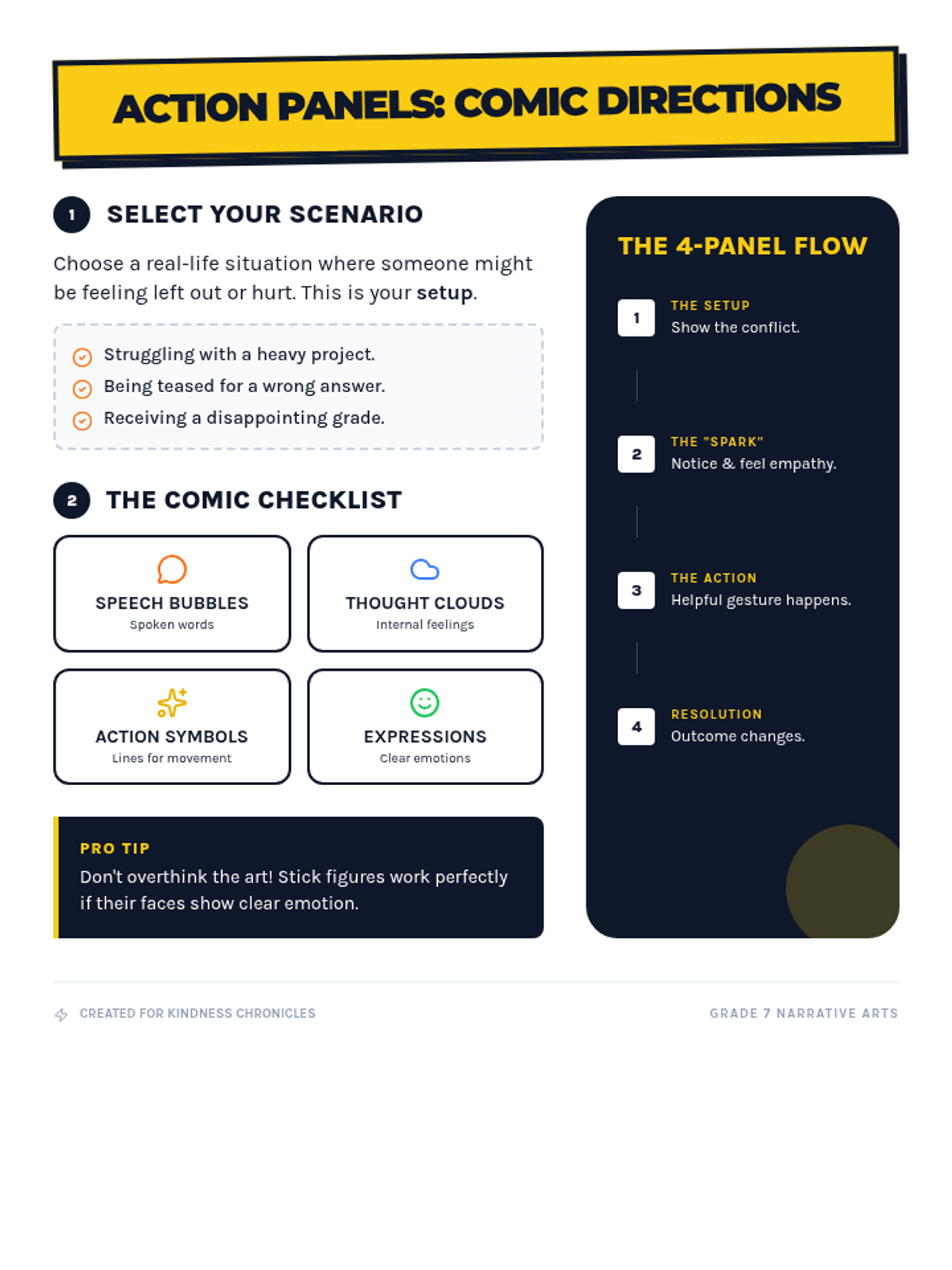
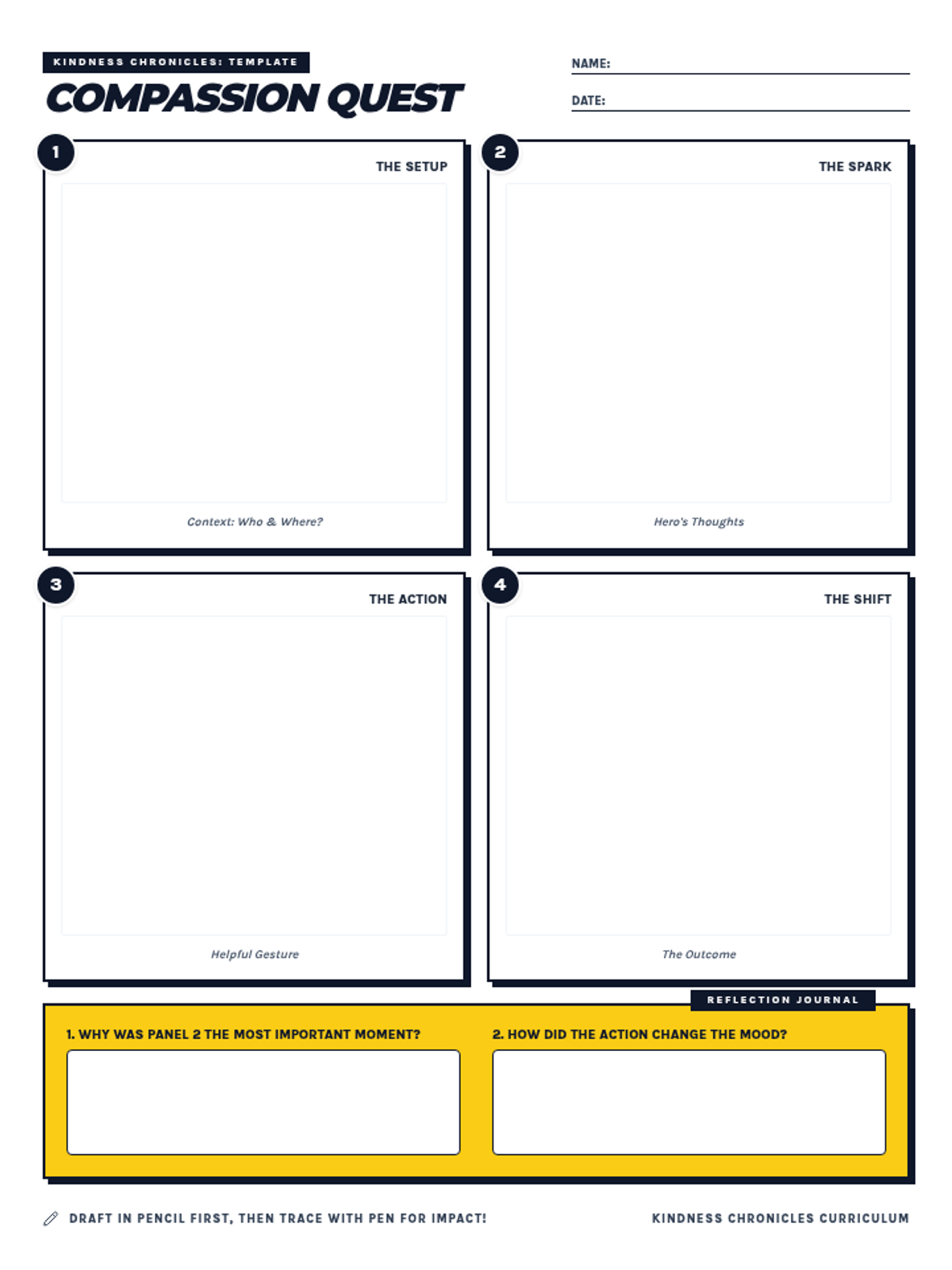
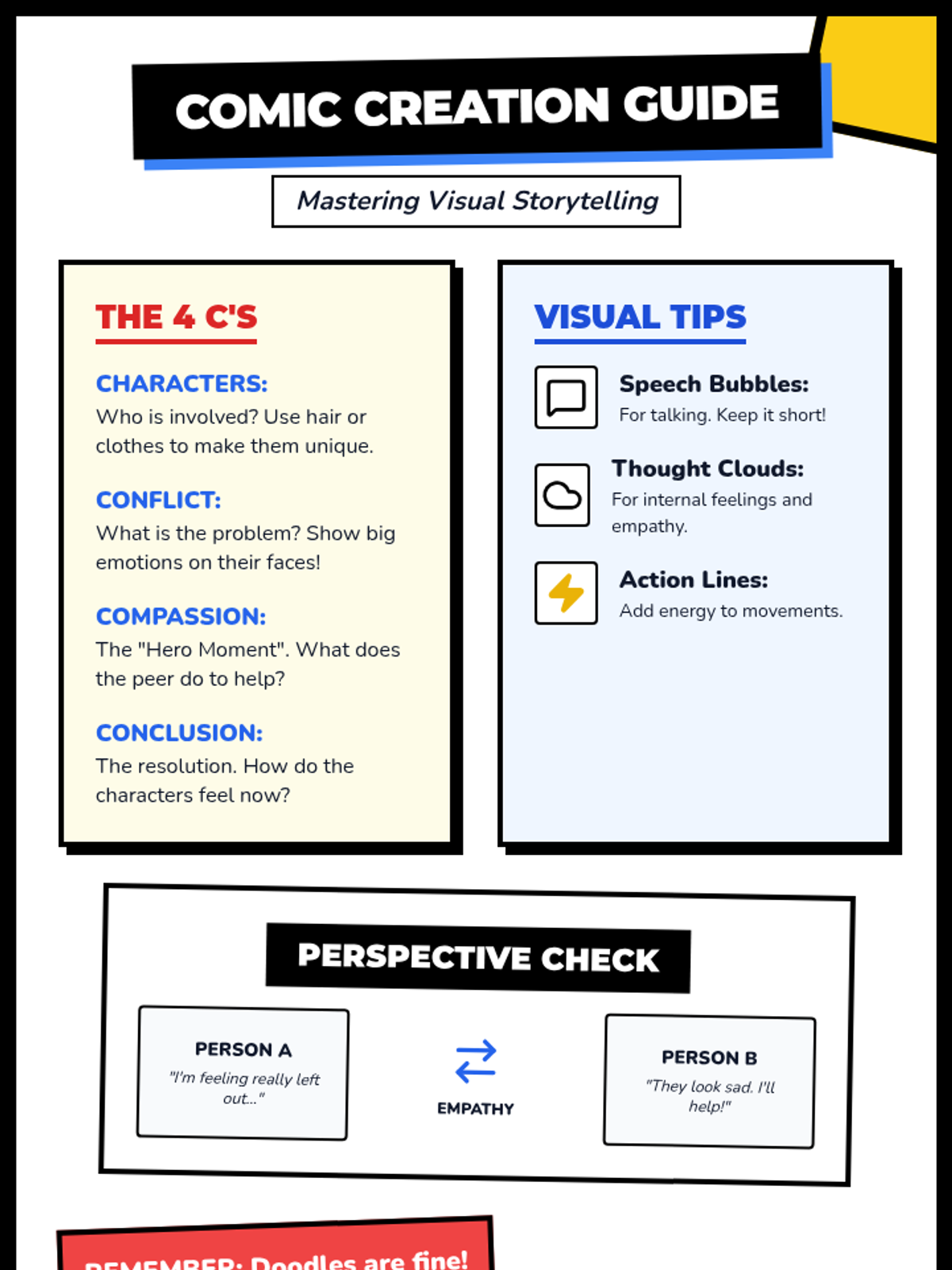
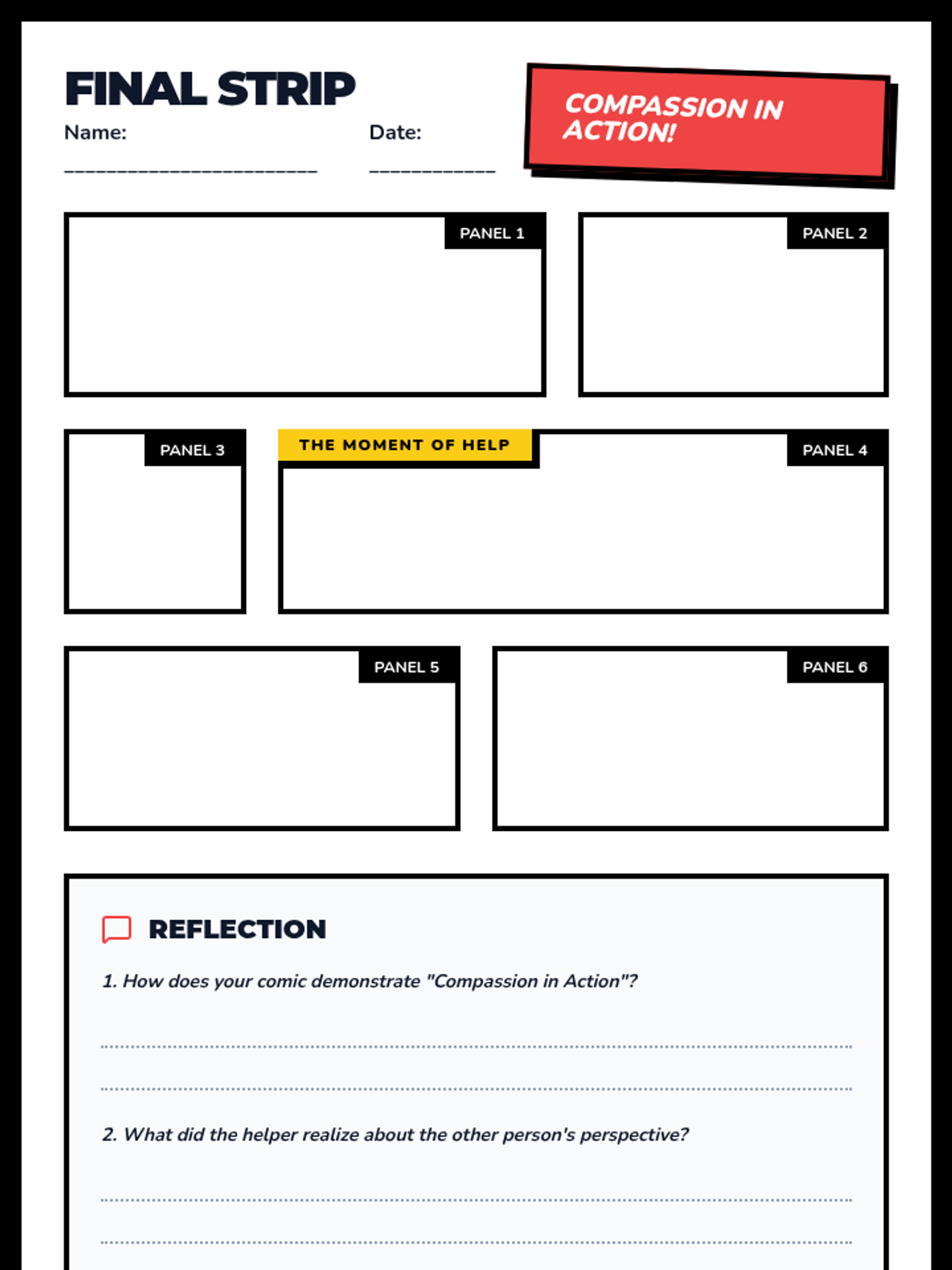
A creative social-emotional learning lesson where students use visual storytelling to explore empathy and perspective-taking through comic creation. Students identify peer-to-peer compassion scenarios and translate them into a multi-panel comic strip.
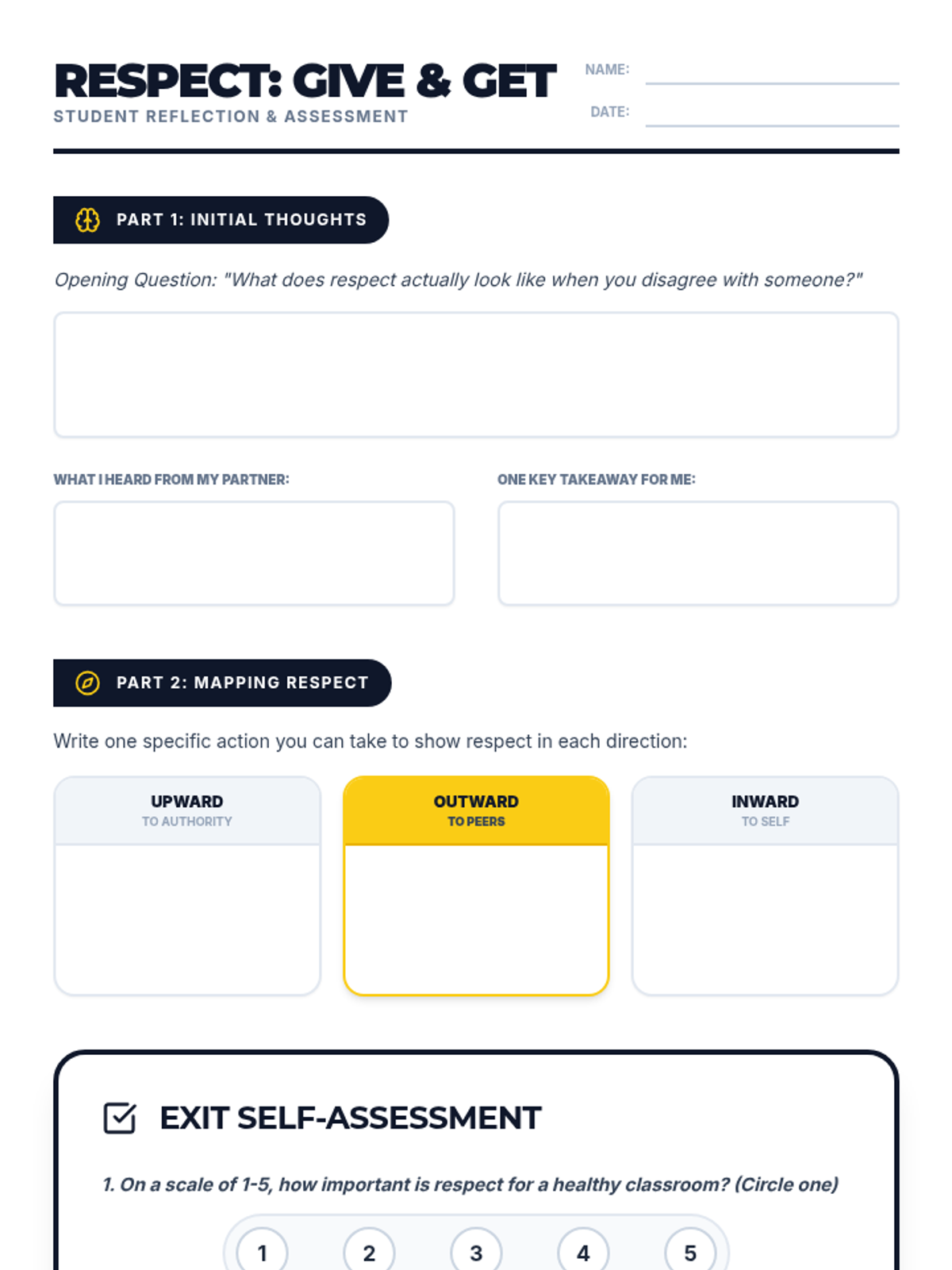
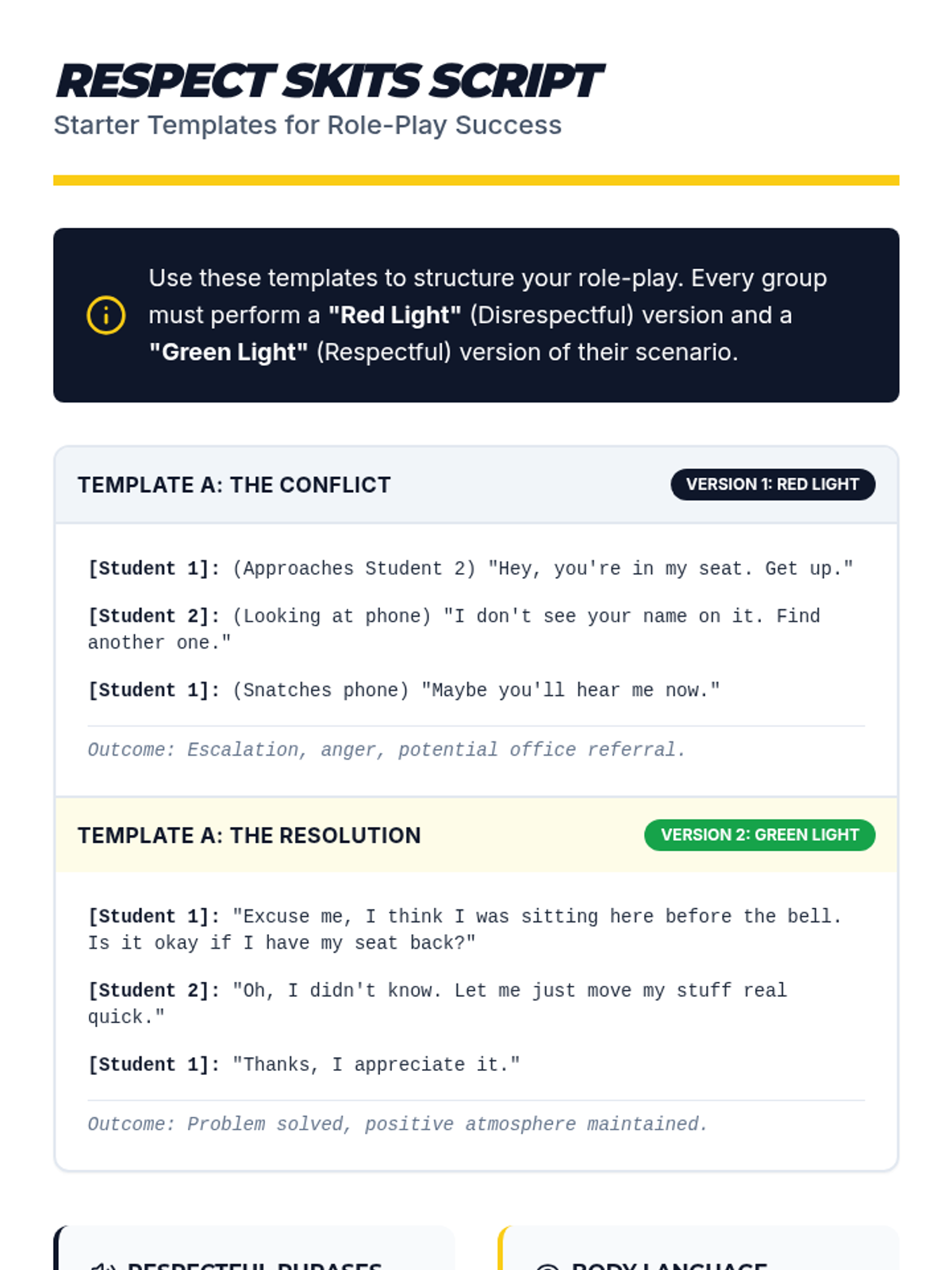
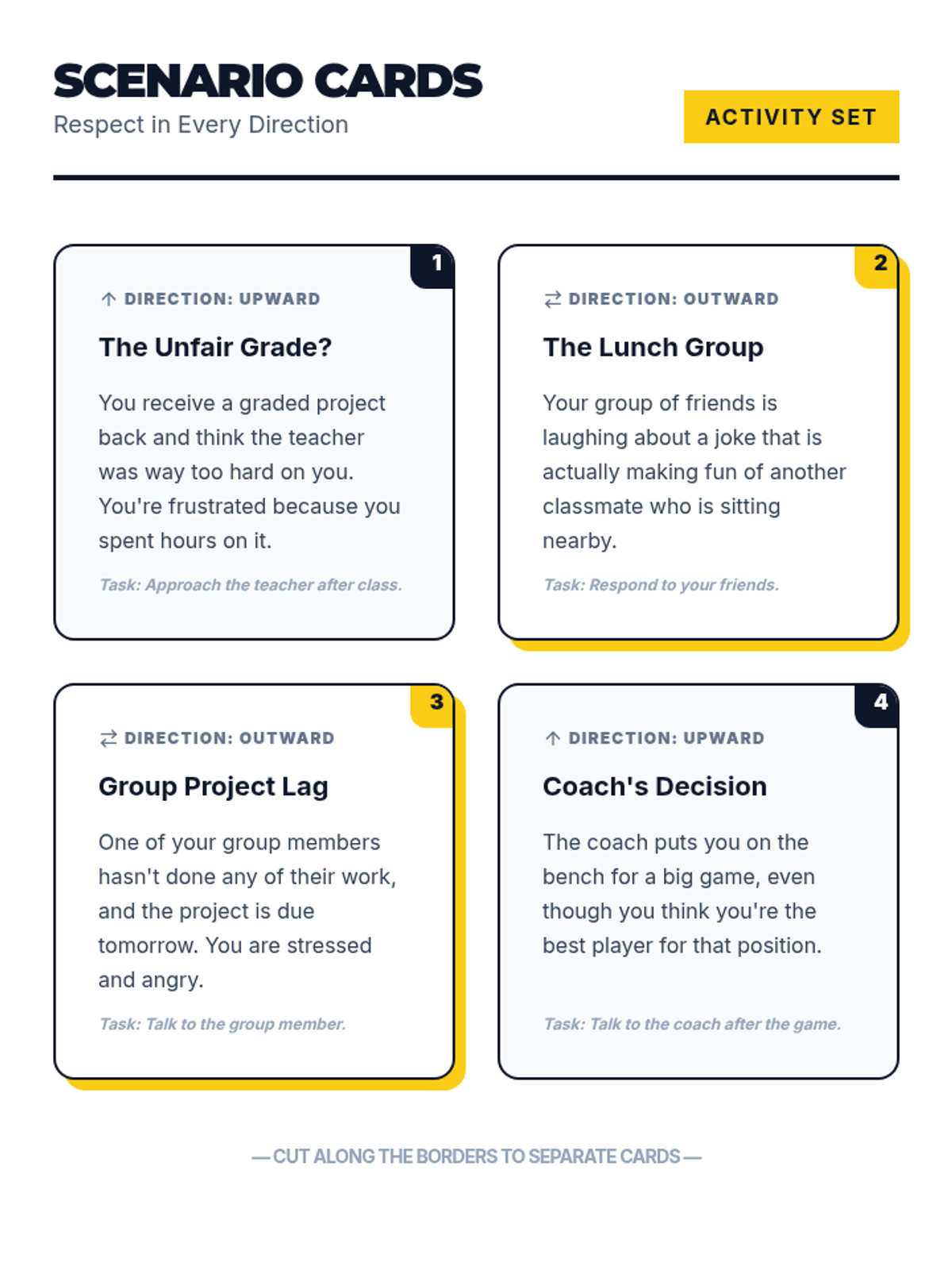
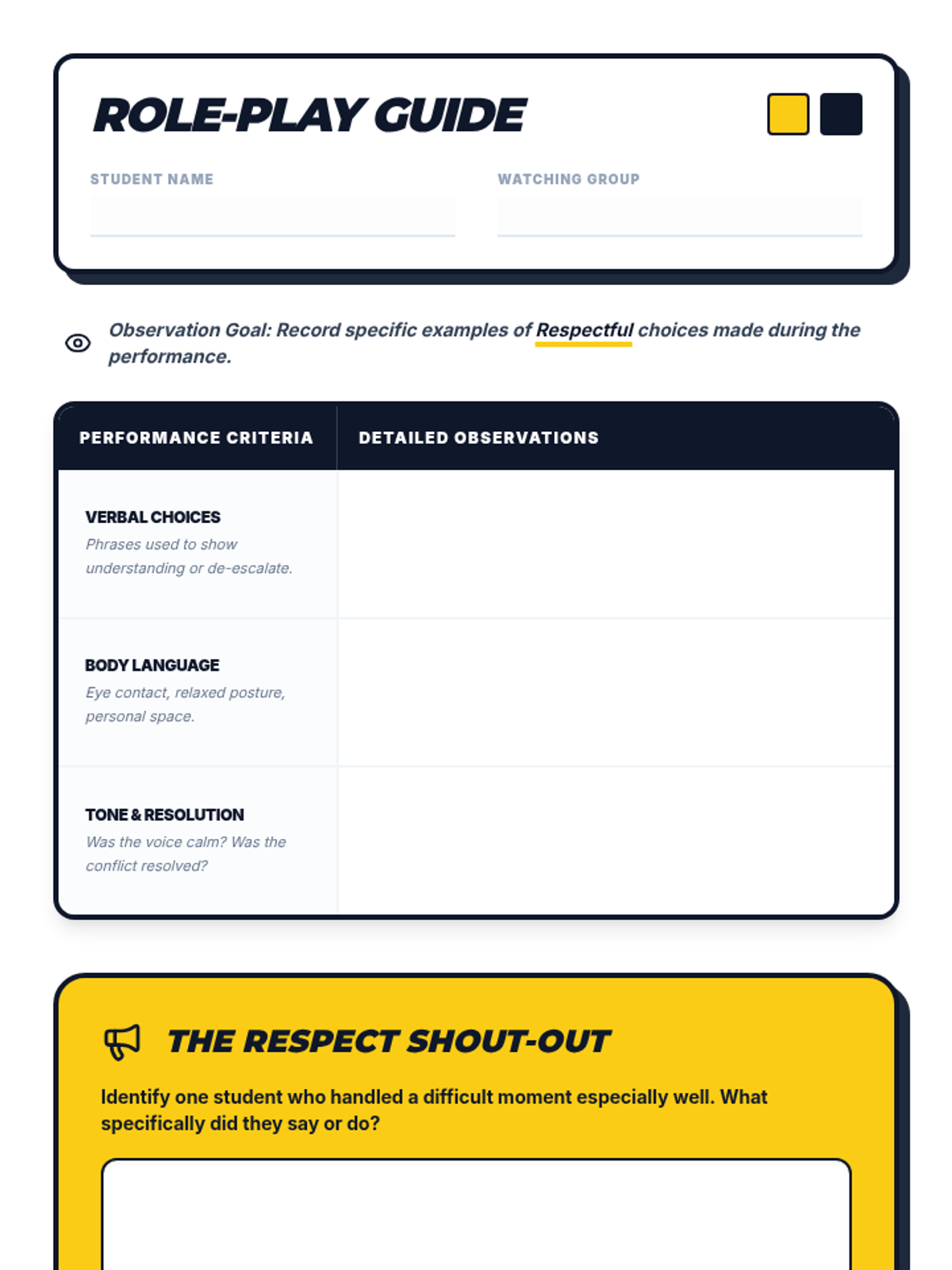
A 30-minute interactive lesson for 7th graders focusing on the importance of respect across various social contexts. Students will explore respectful communication and engage in role-play scenarios to practice navigating school-based interactions with peers and authority figures.
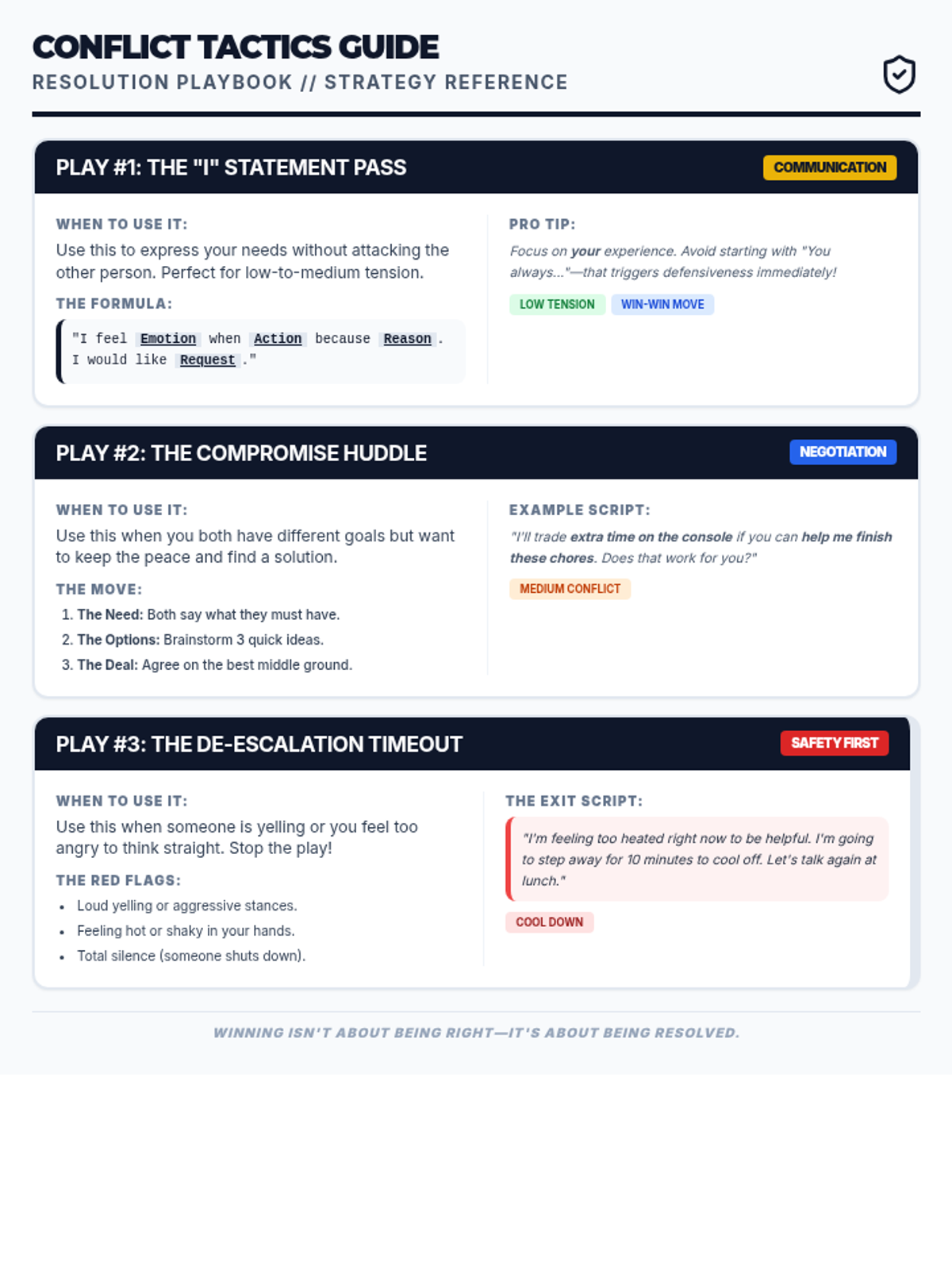
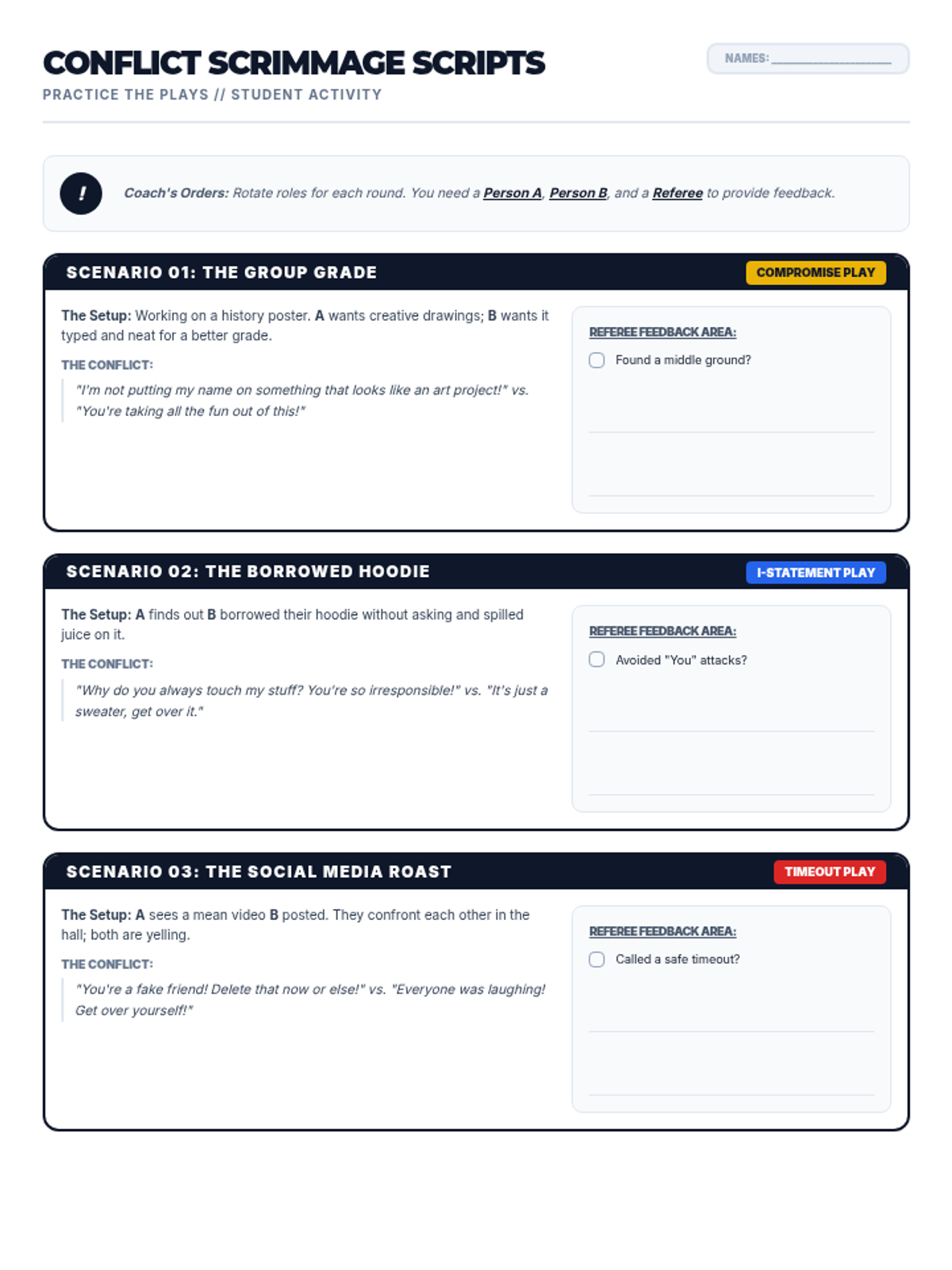
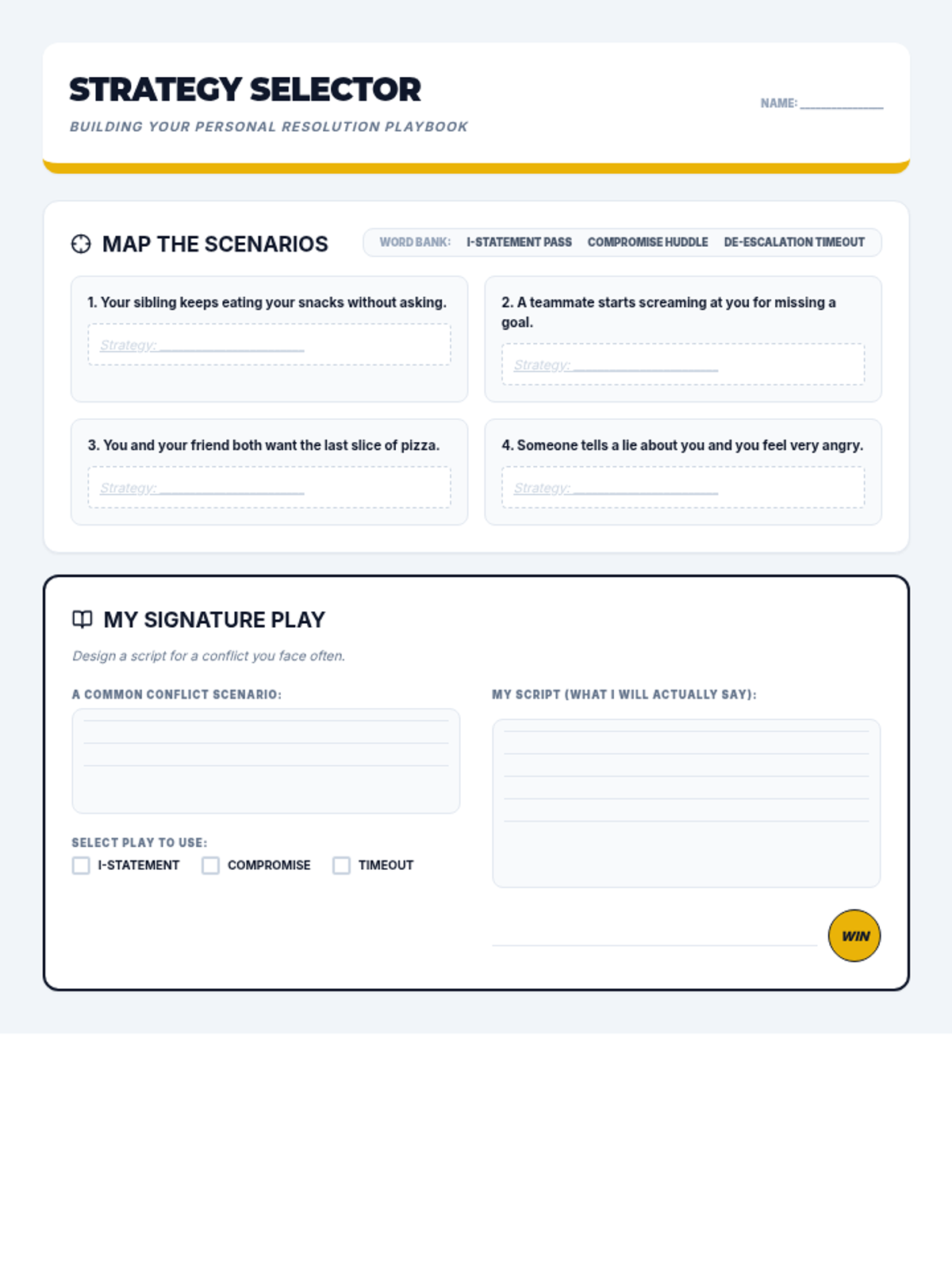
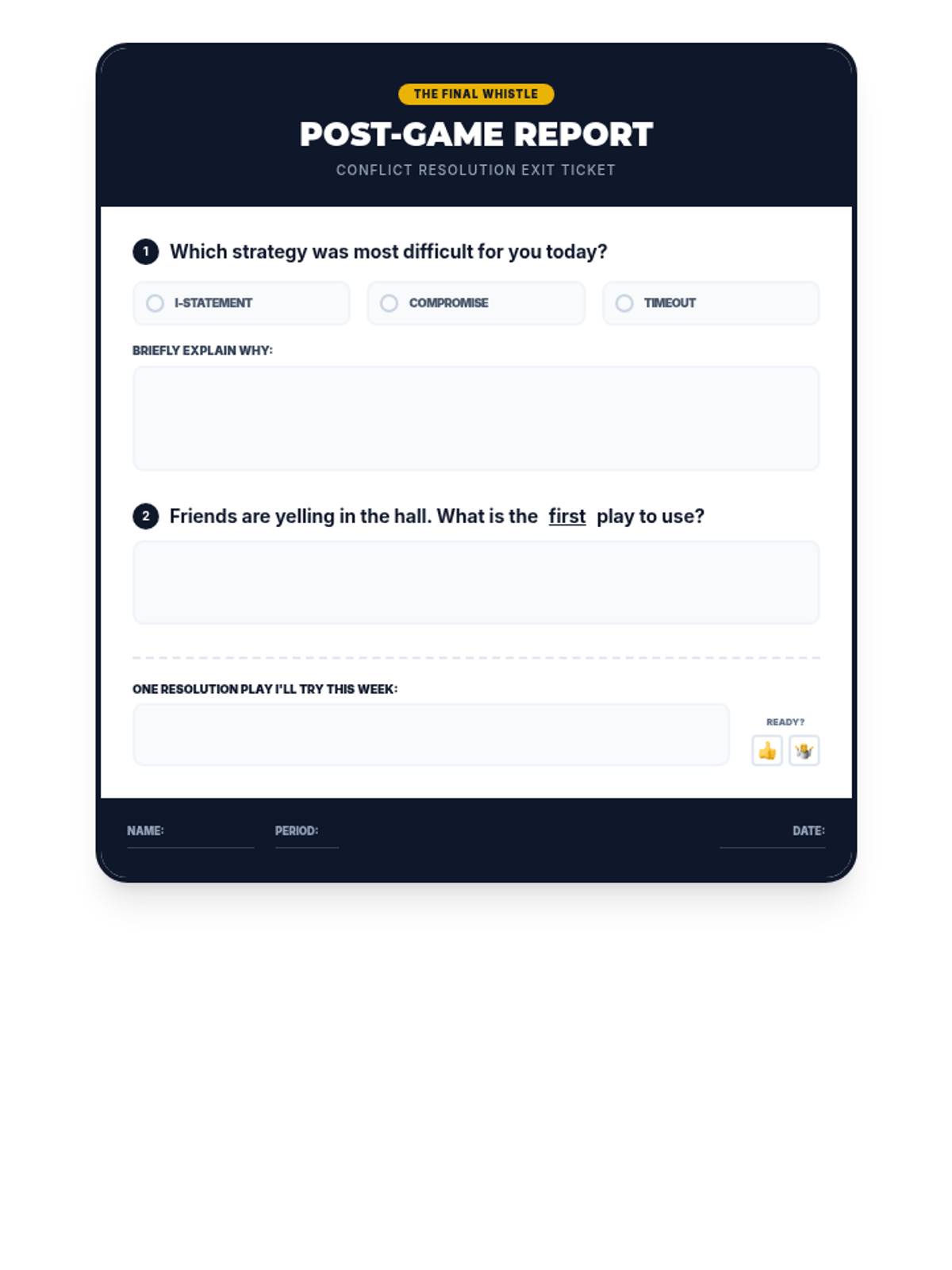
An 8th-grade lesson focusing on practical conflict resolution strategies. Students explore three specific 'plays' (I-statements, compromise, and de-escalation) through role-play and scenario analysis to build a personal conflict-management toolkit.
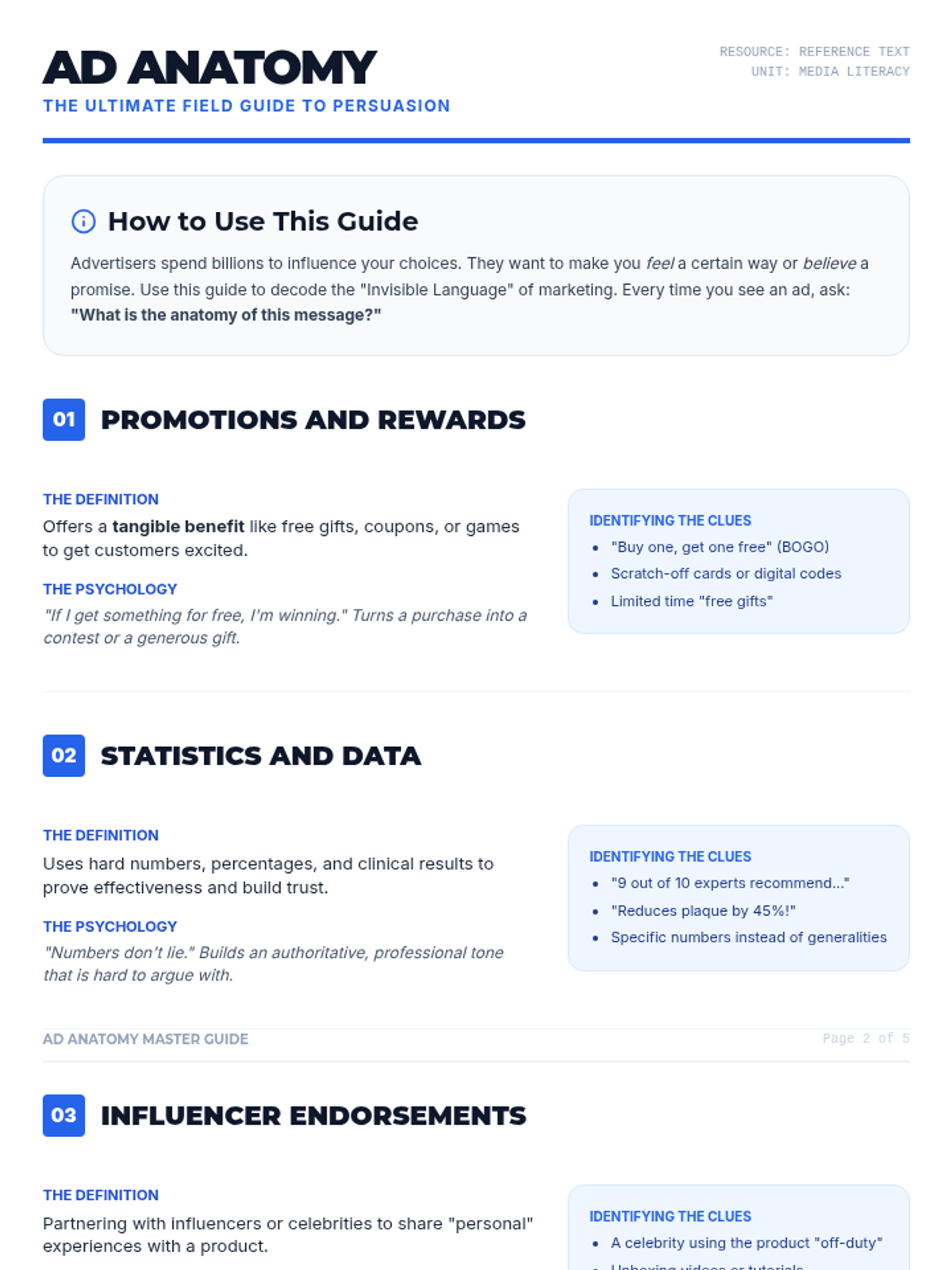
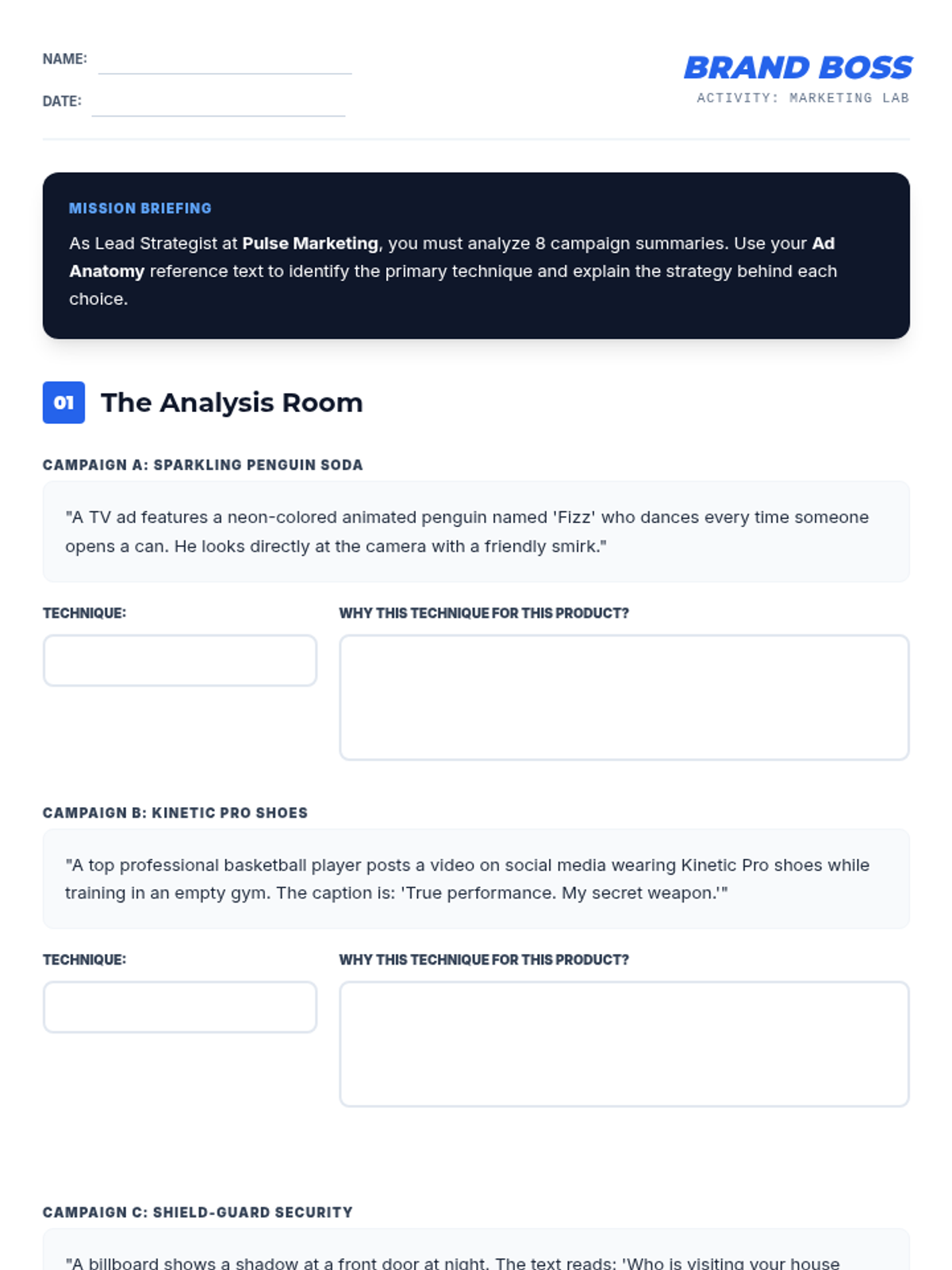
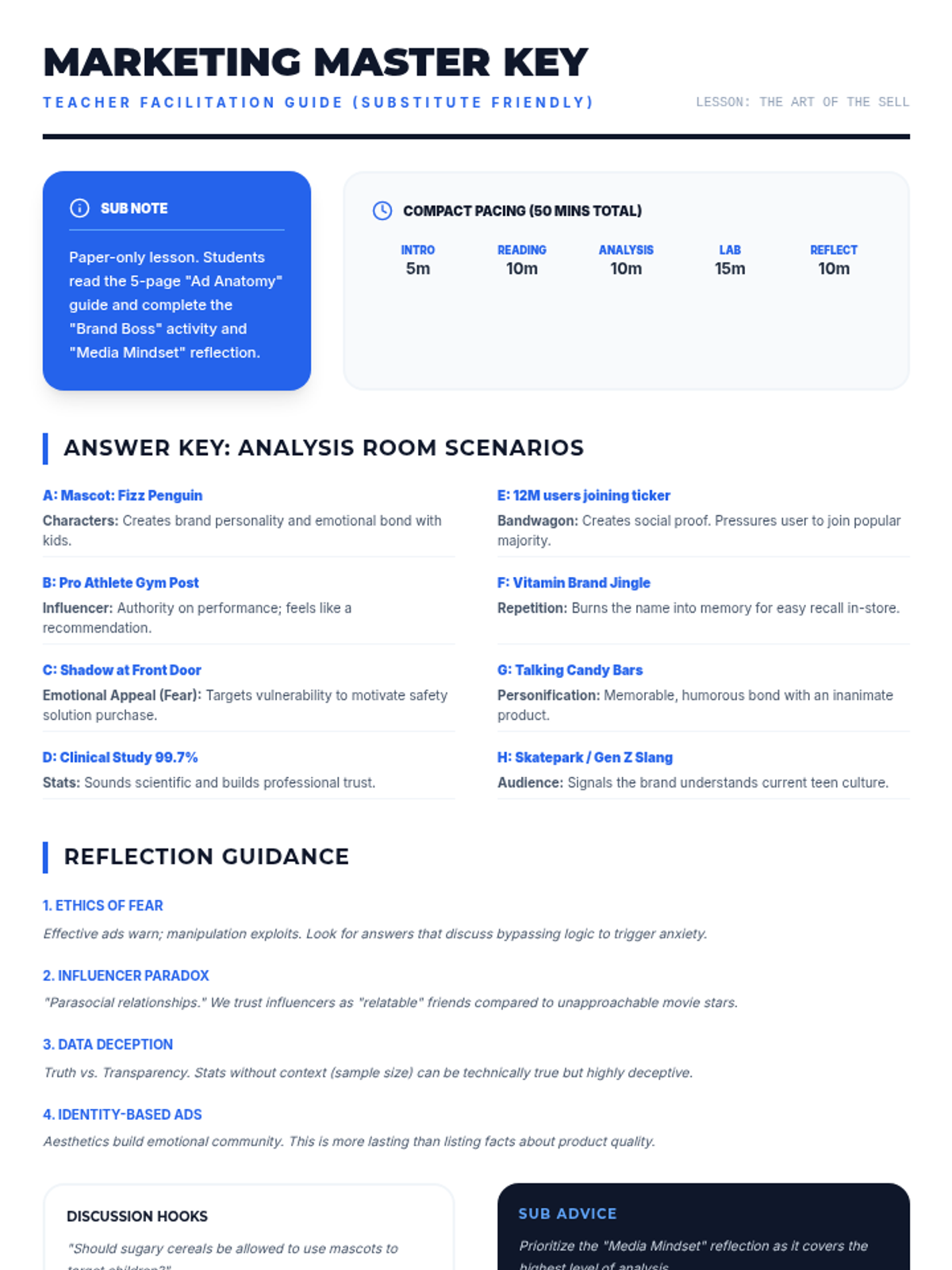
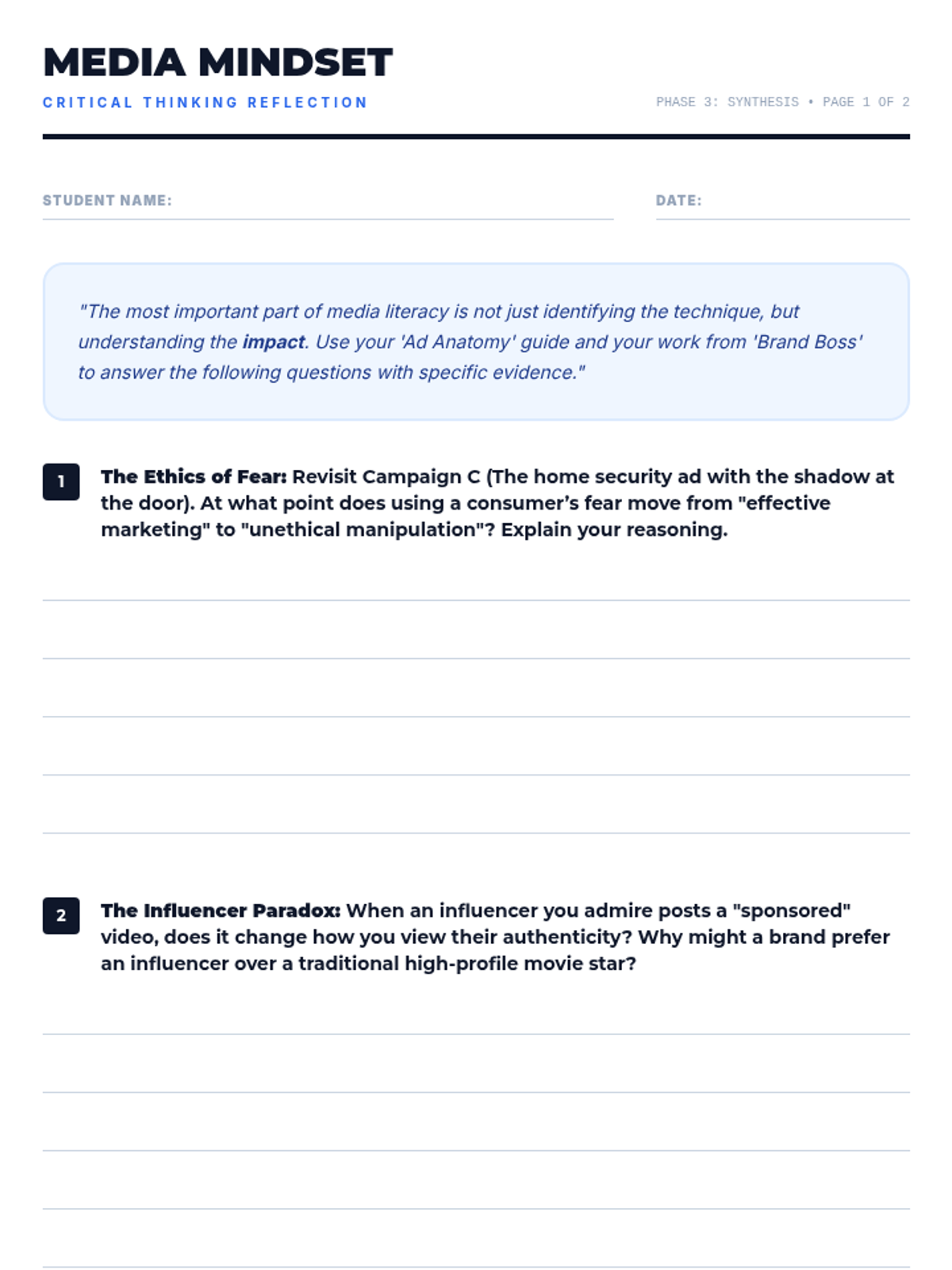
A comprehensive lesson on media literacy and advertising strategies, teaching students to identify and apply ten key persuasive techniques used in modern marketing.
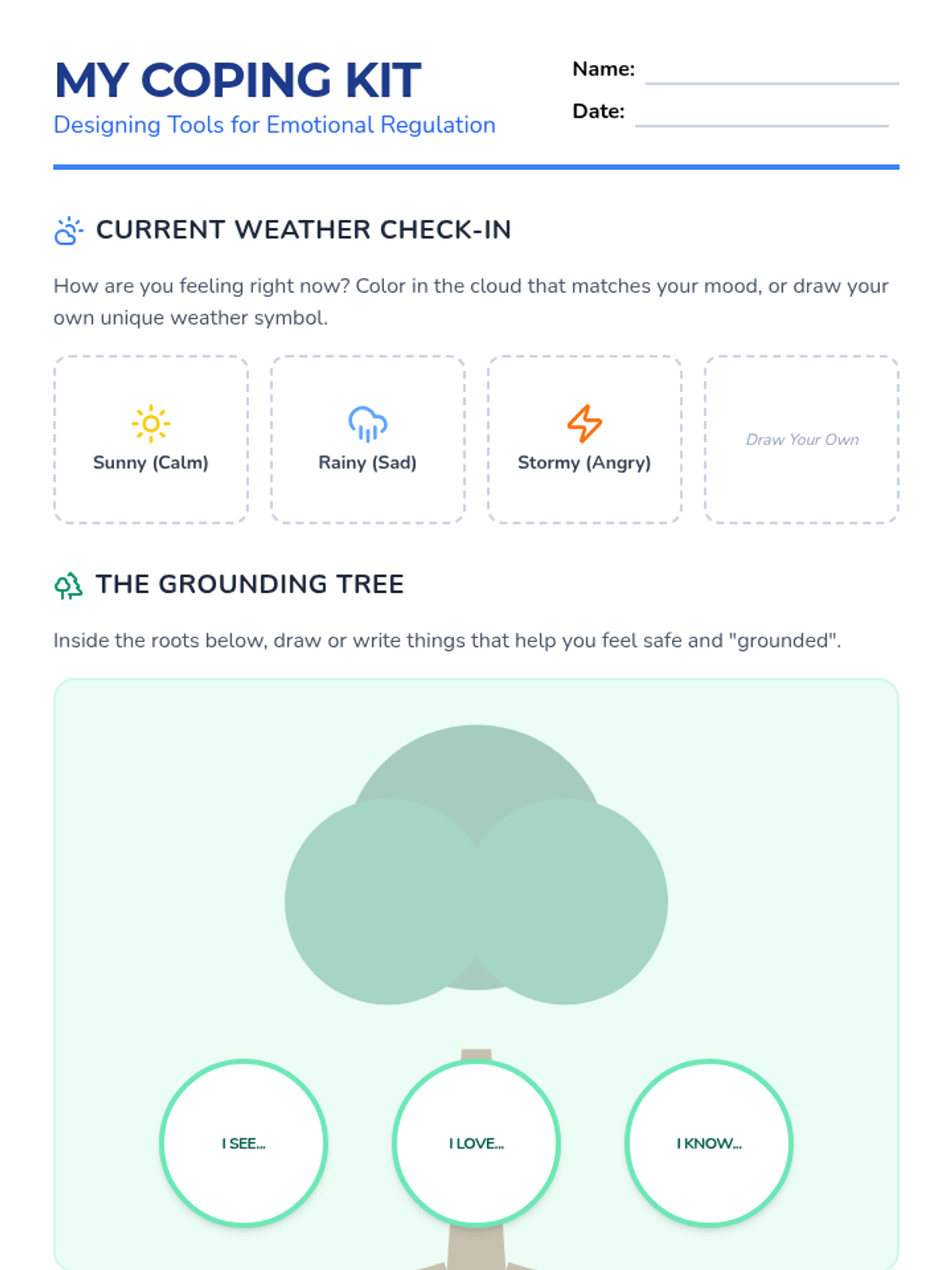
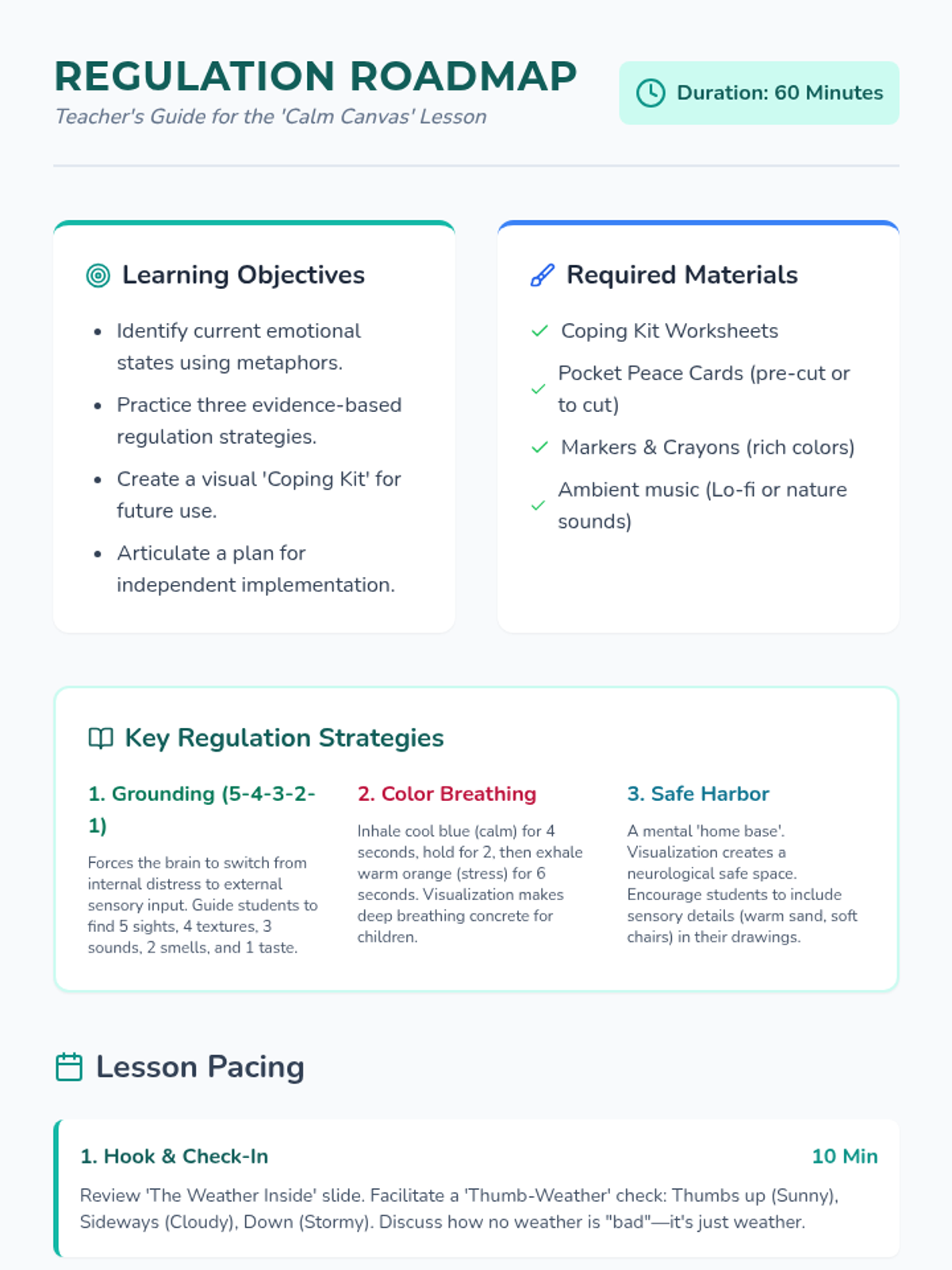
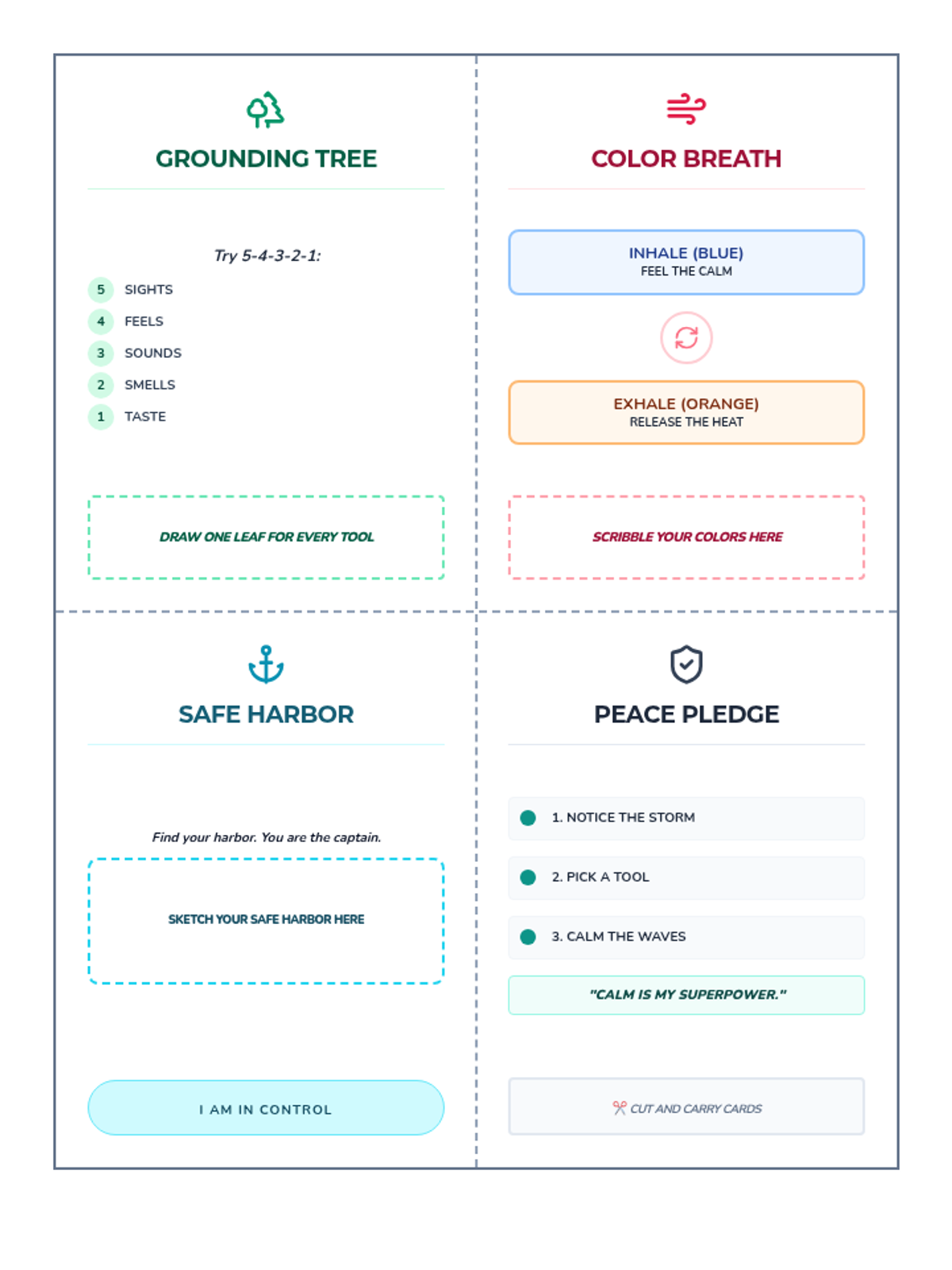
A creative art-based lesson where students learn to identify their emotional states and build a personalized 'coping kit' of regulation strategies using markers and crayons.
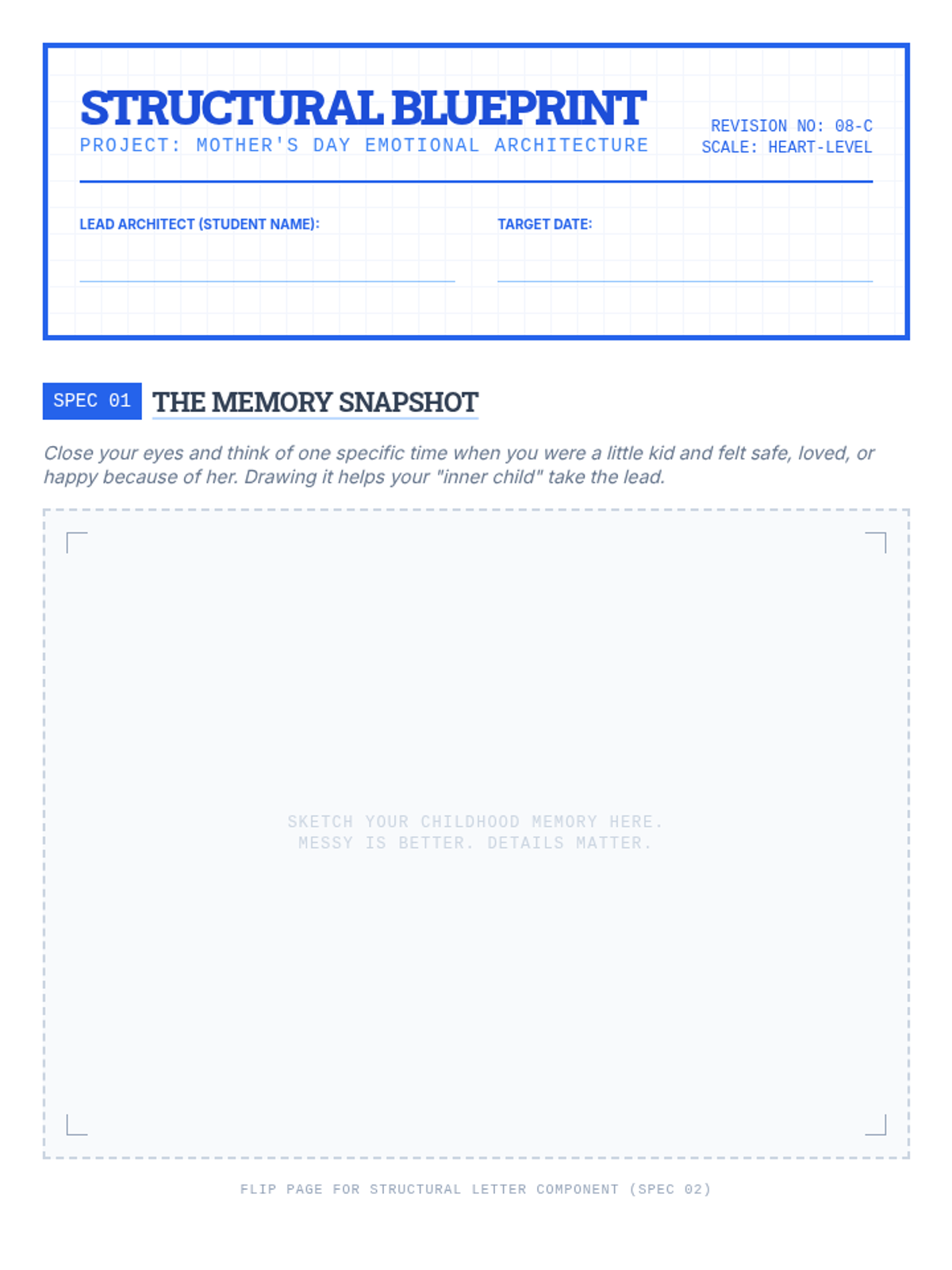
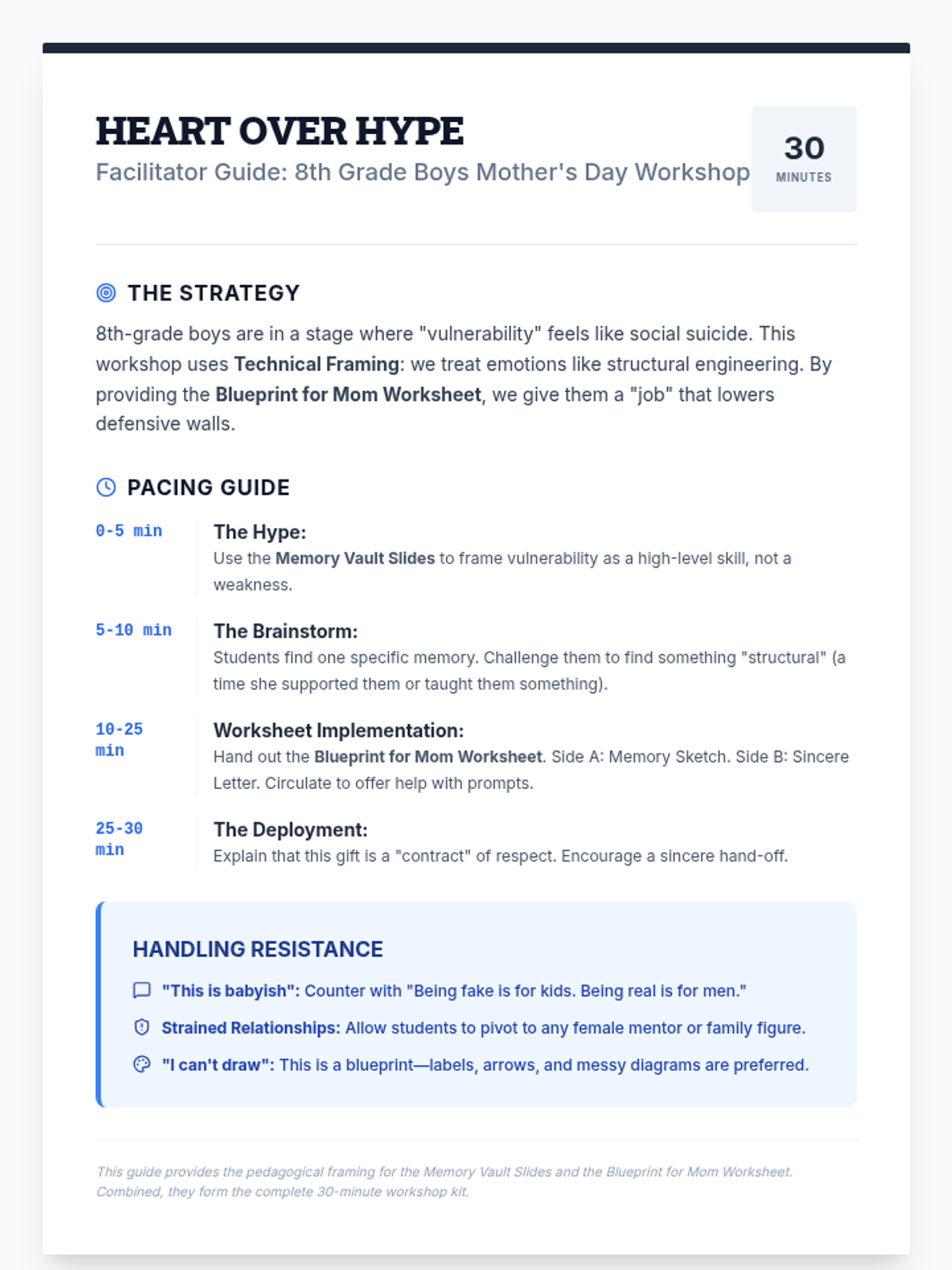
A 30-minute workshop for 8th-grade boys focused on Mother's Day, emphasizing vulnerability and emotional expression through the creation of a 'Memory Blueprint'. Students will reflect on childhood memories and practice expressing gratitude in a sincere, non-performative way.
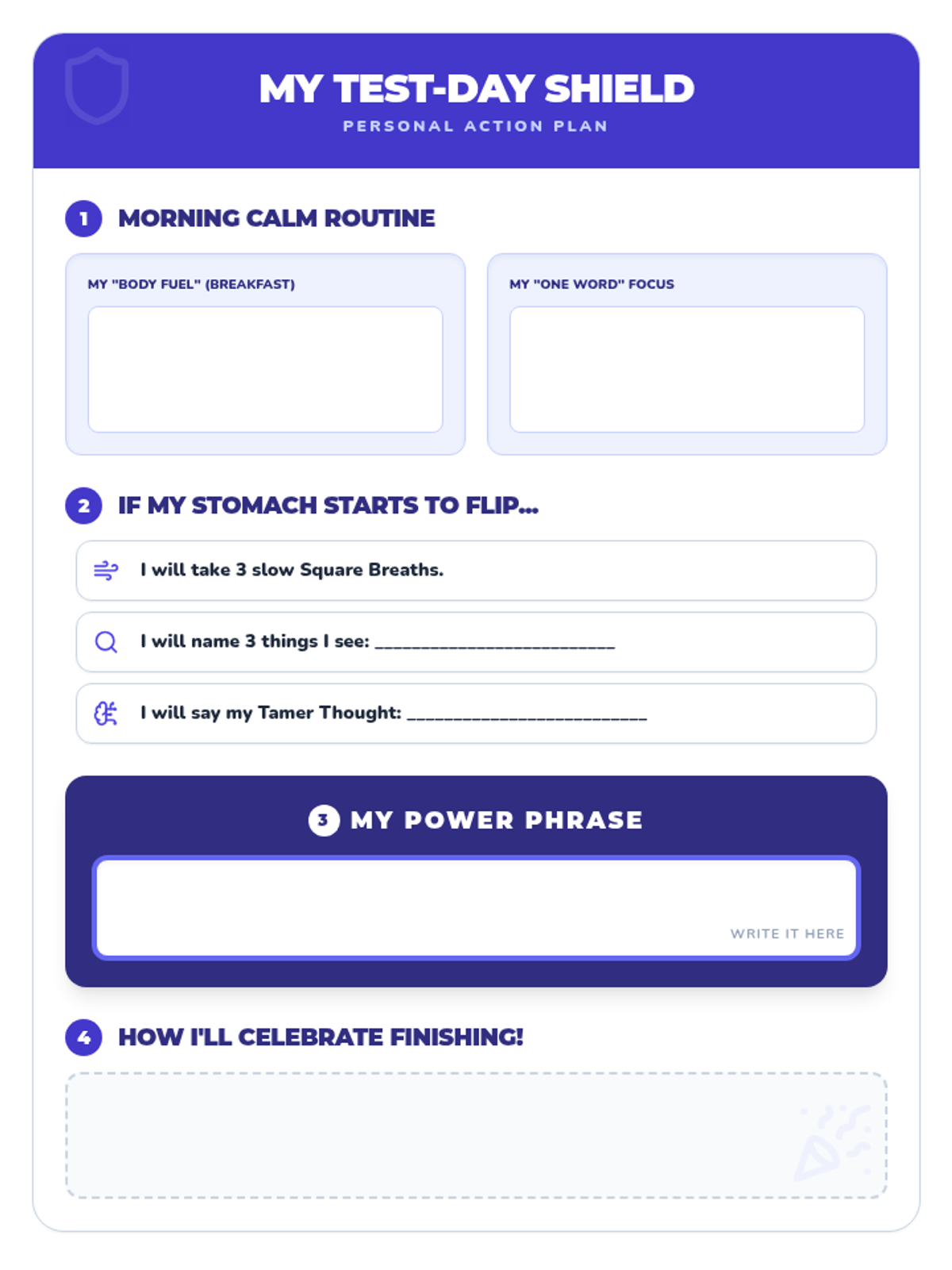
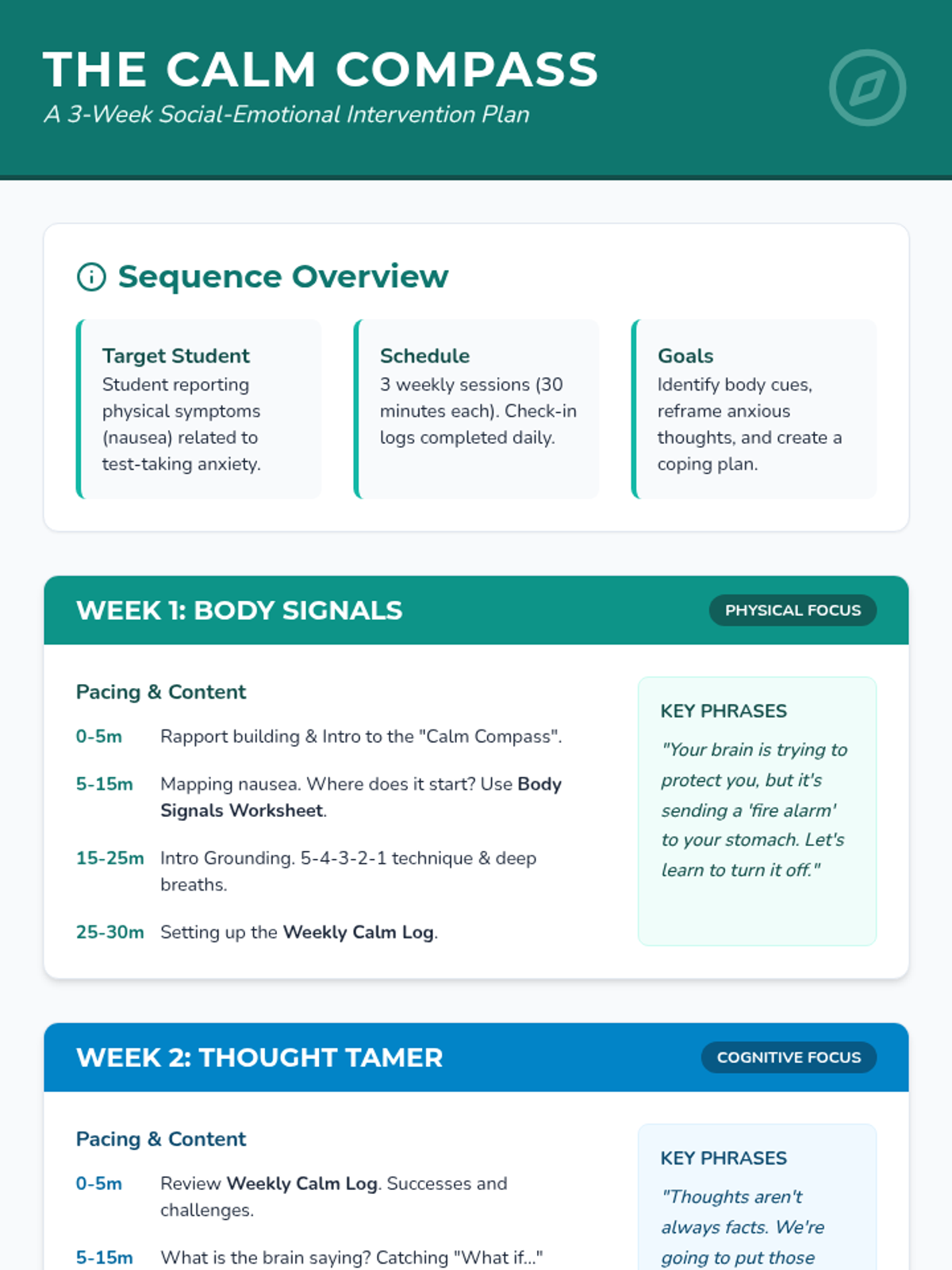
Integrates physical and cognitive strategies into a concrete, visual game plan for upcoming tests.
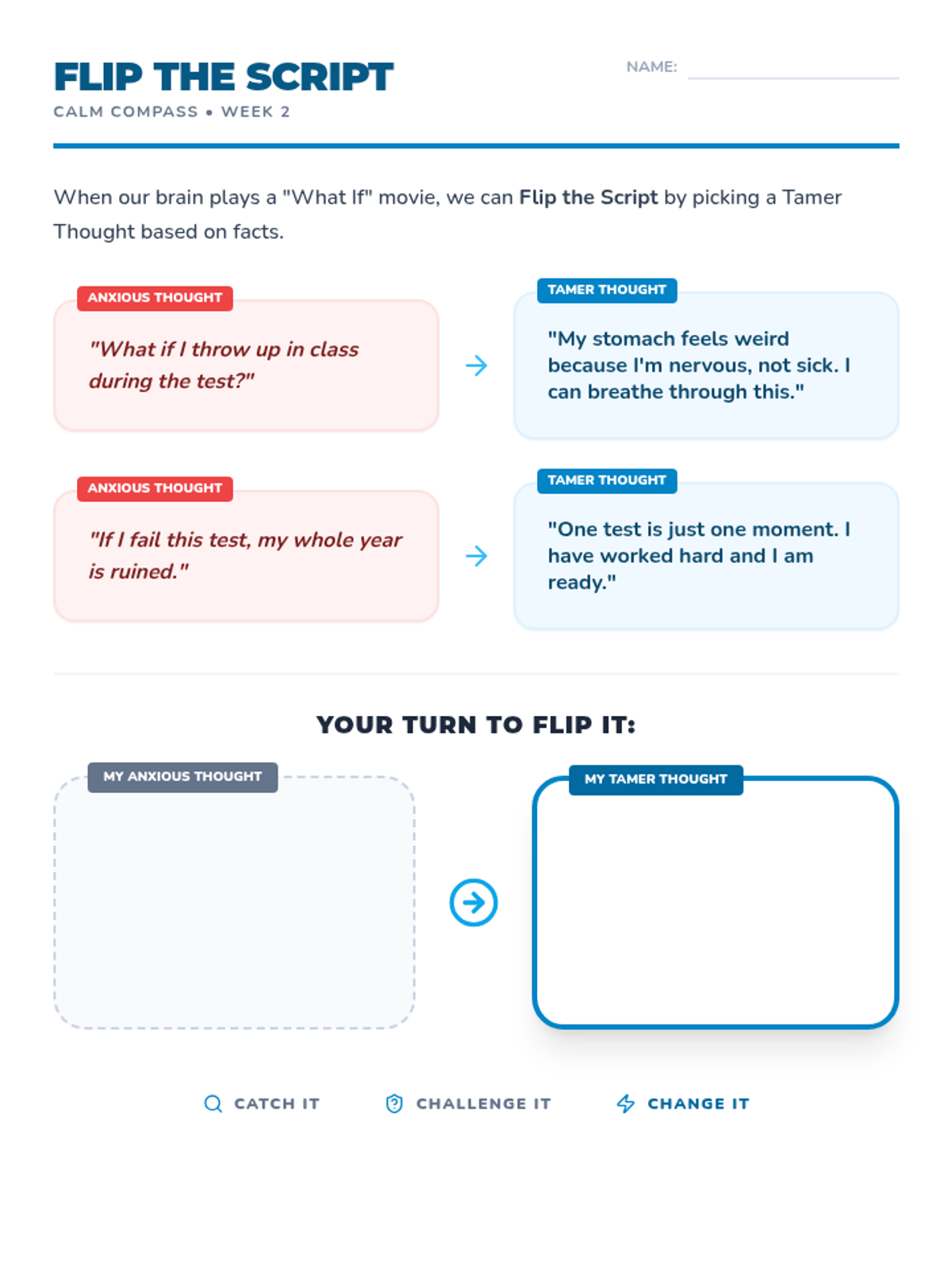
Explores the thoughts behind the physical feelings, teaching the student how to catch and reframe anxious 'what if' thinking.
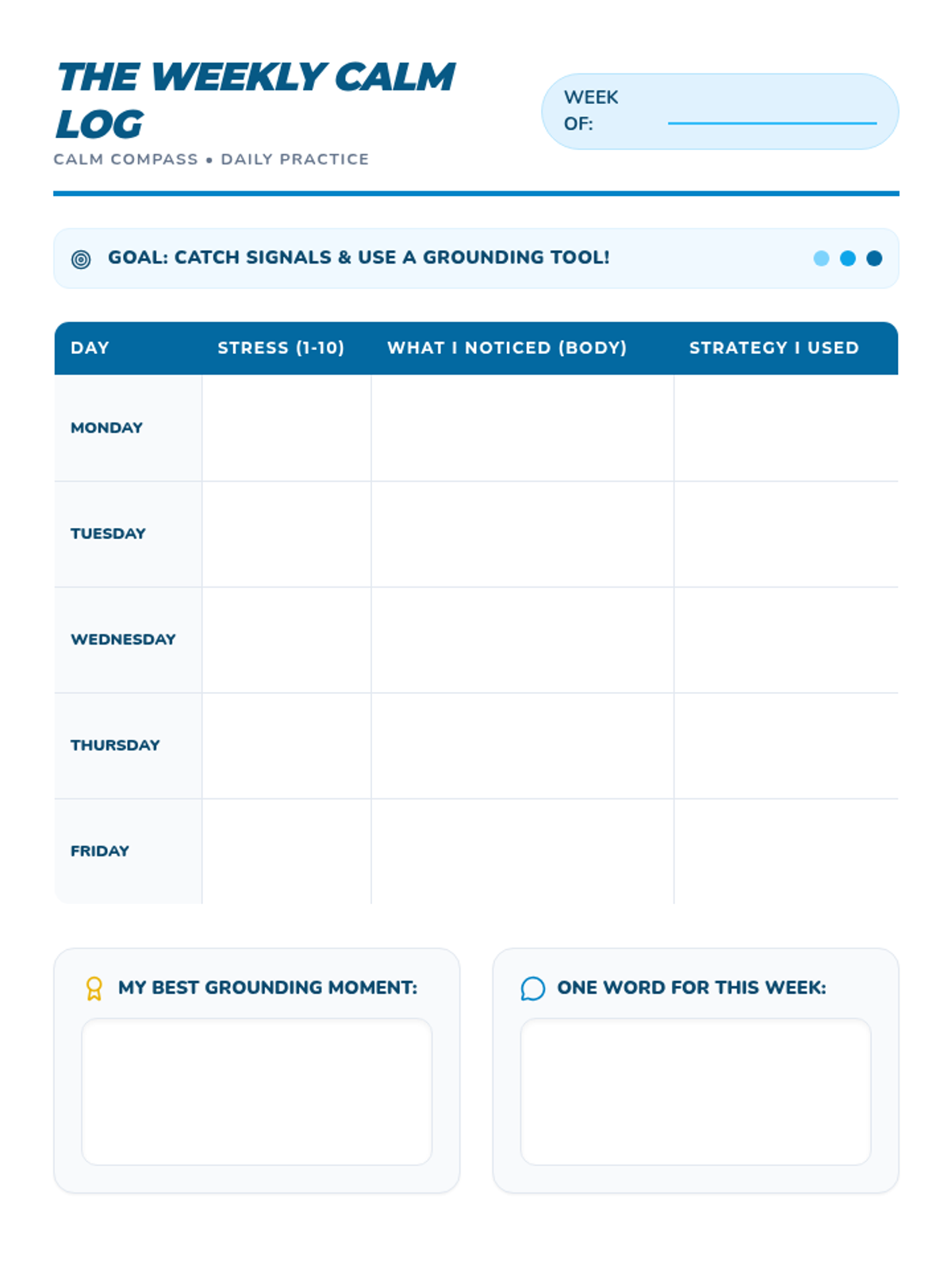
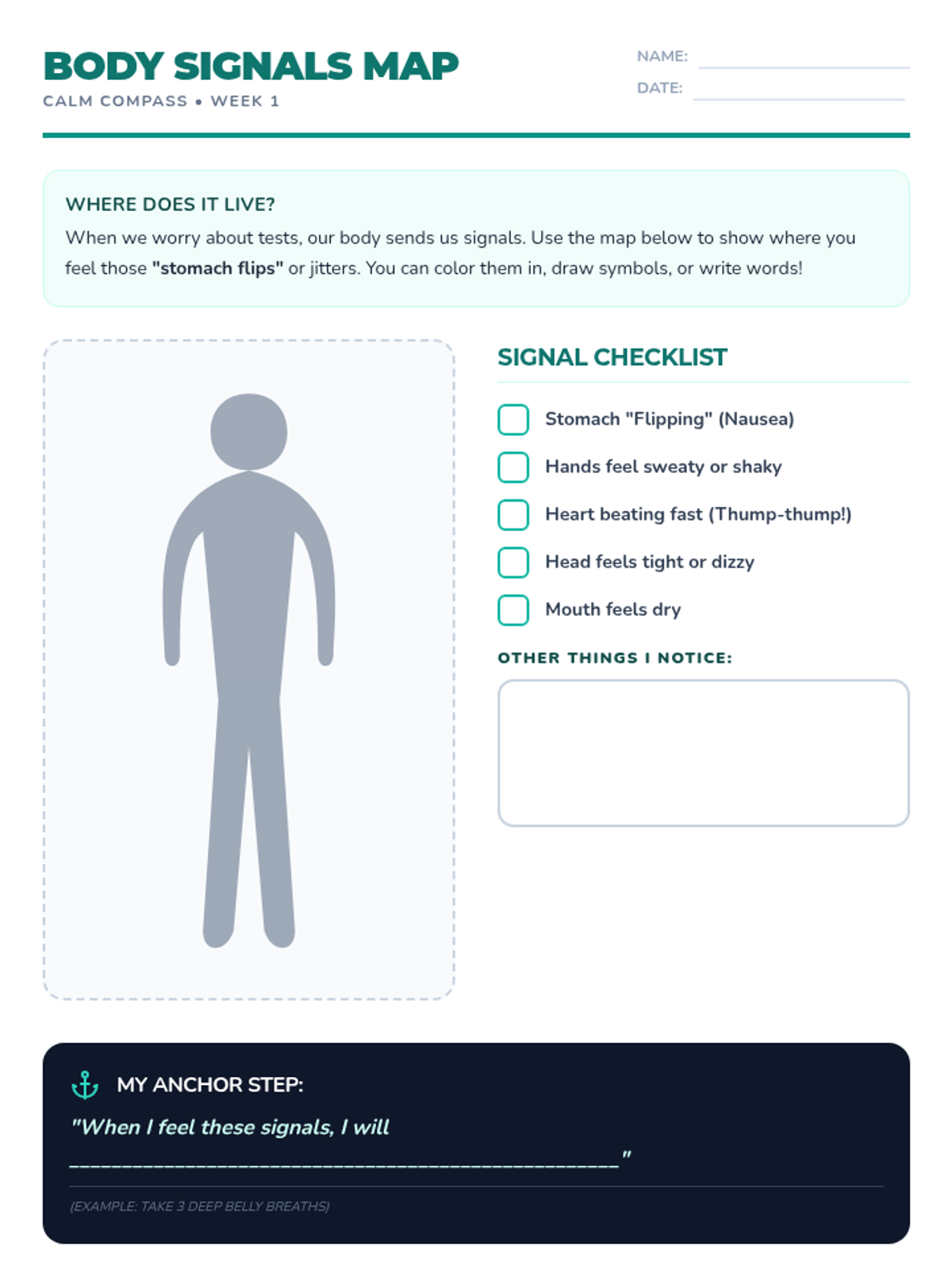
Focuses on identifying the physical manifestations of anxiety, particularly the 'stomach flip' sensation, and introduces grounding techniques.
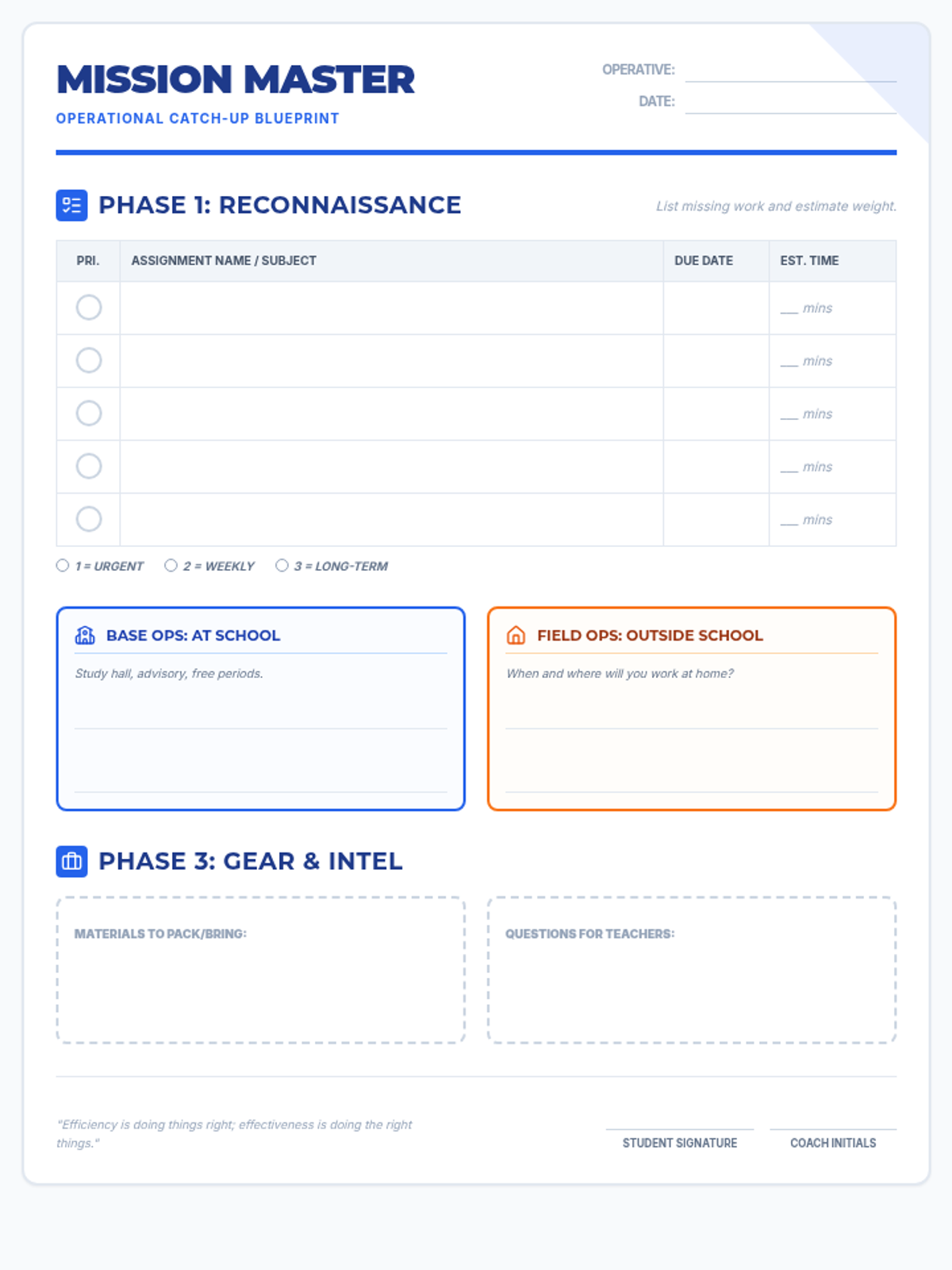
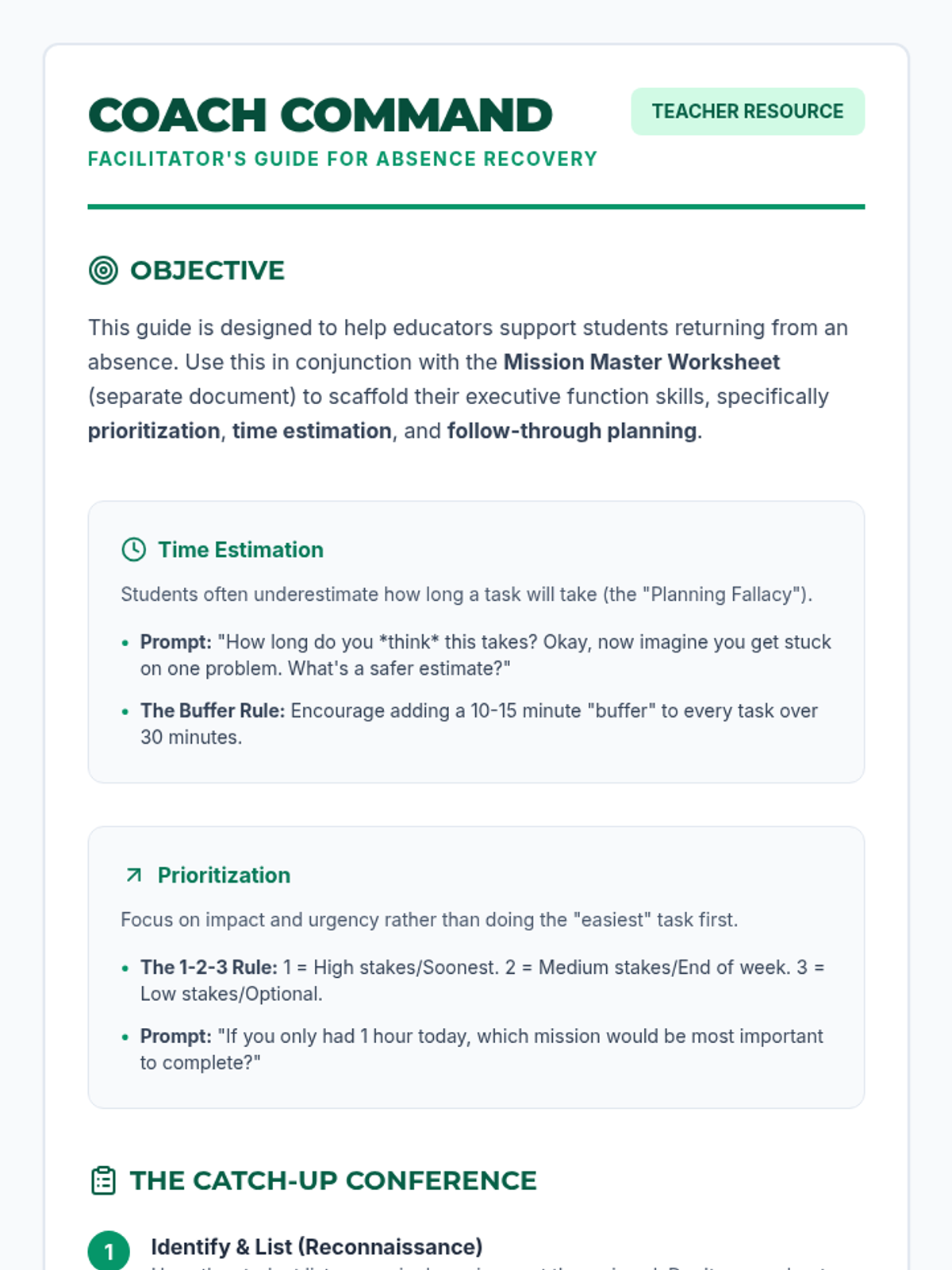
A toolkit designed to help students recover from absences by developing executive function skills like prioritization, time estimation, and resource management.
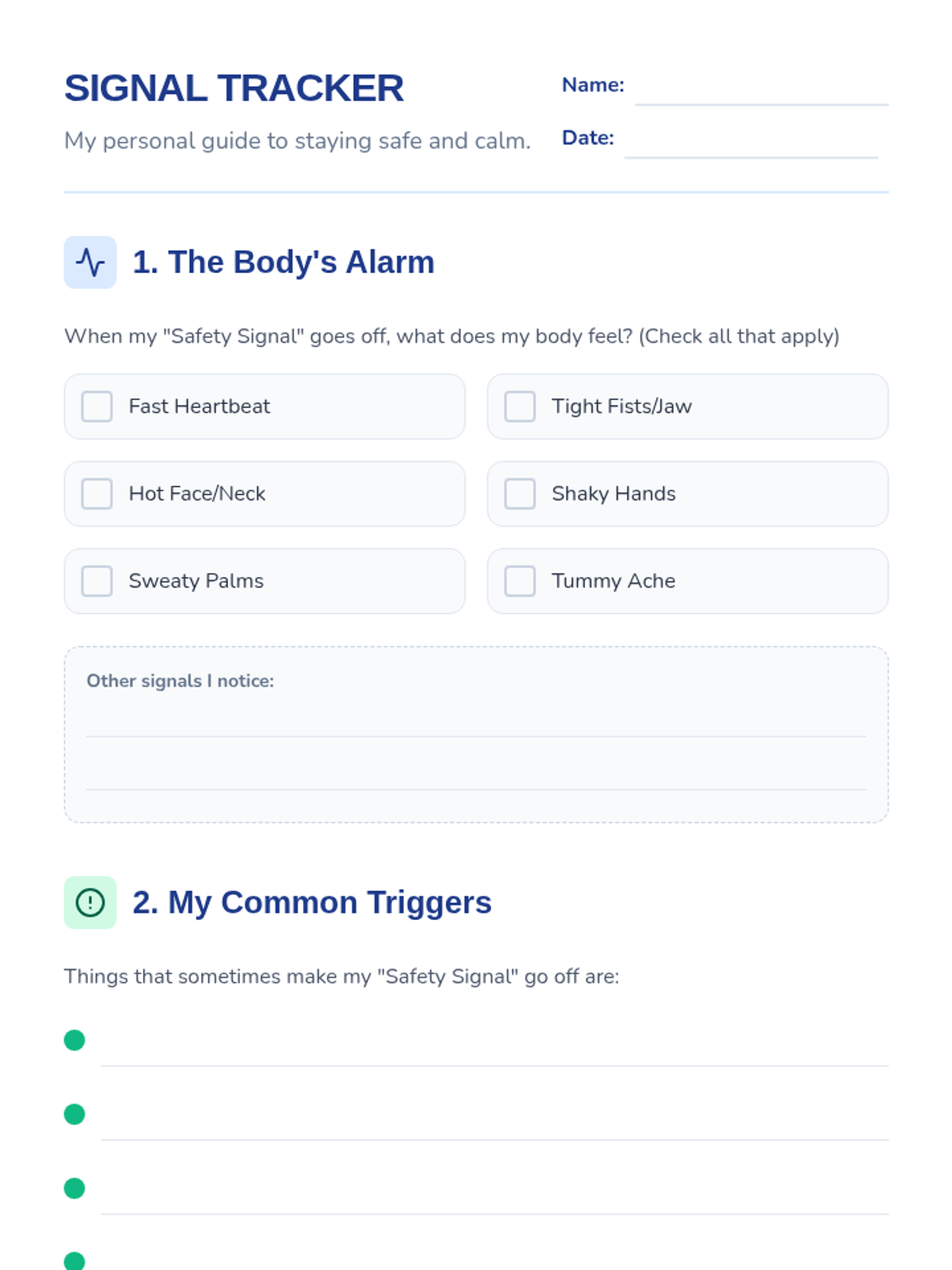
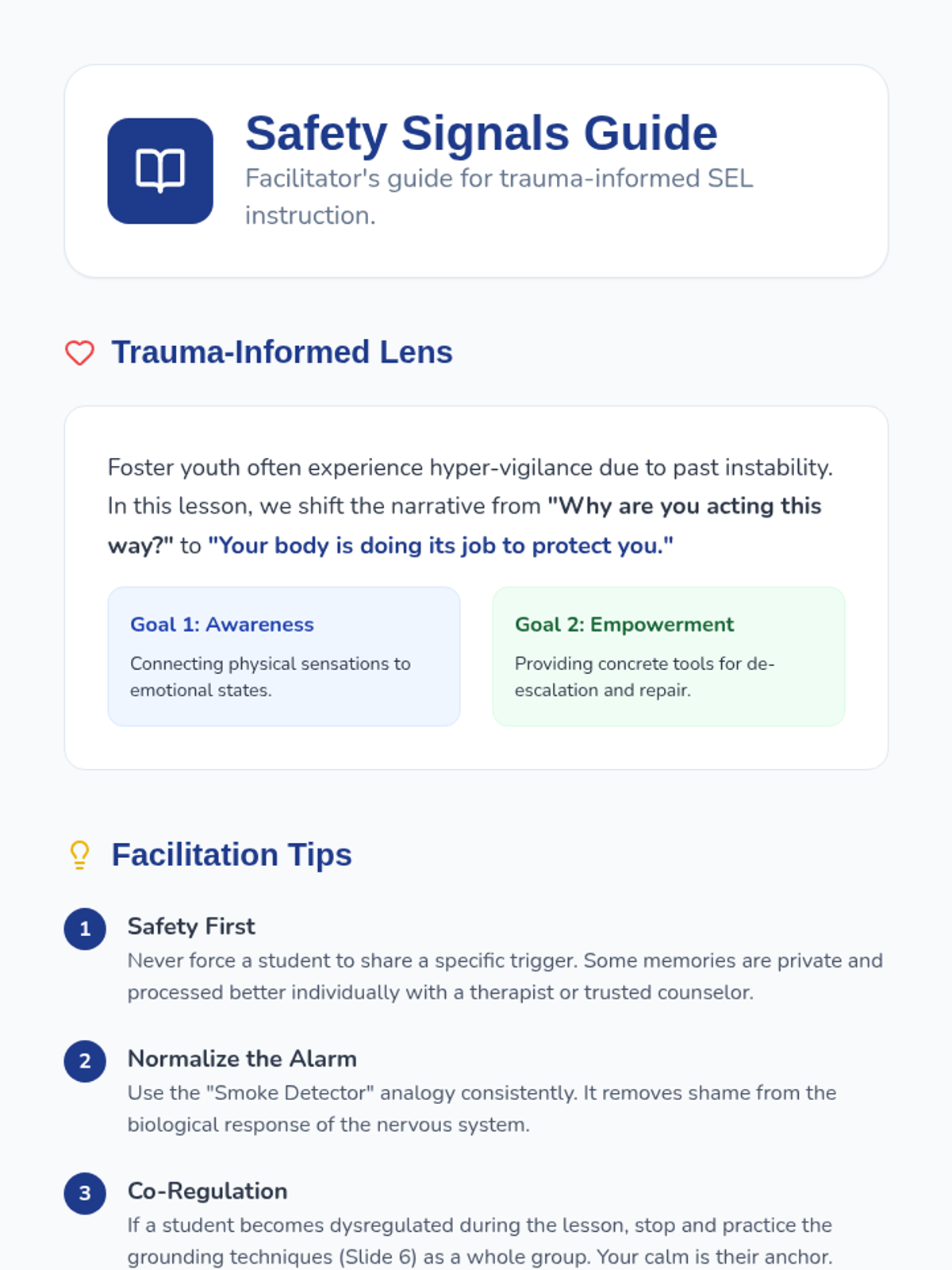
A trauma-informed lesson designed to help students identify their emotional triggers and develop healthy conflict resolution strategies in a safe, supportive environment.
A psychoeducational lesson exploring the CBT 3-component model of emotions (Thoughts, Feelings, Behaviors) designed for 12-year-old girls. Features interactive slides, social scenarios covering friendship and family, and a companion journal for personal reflection.
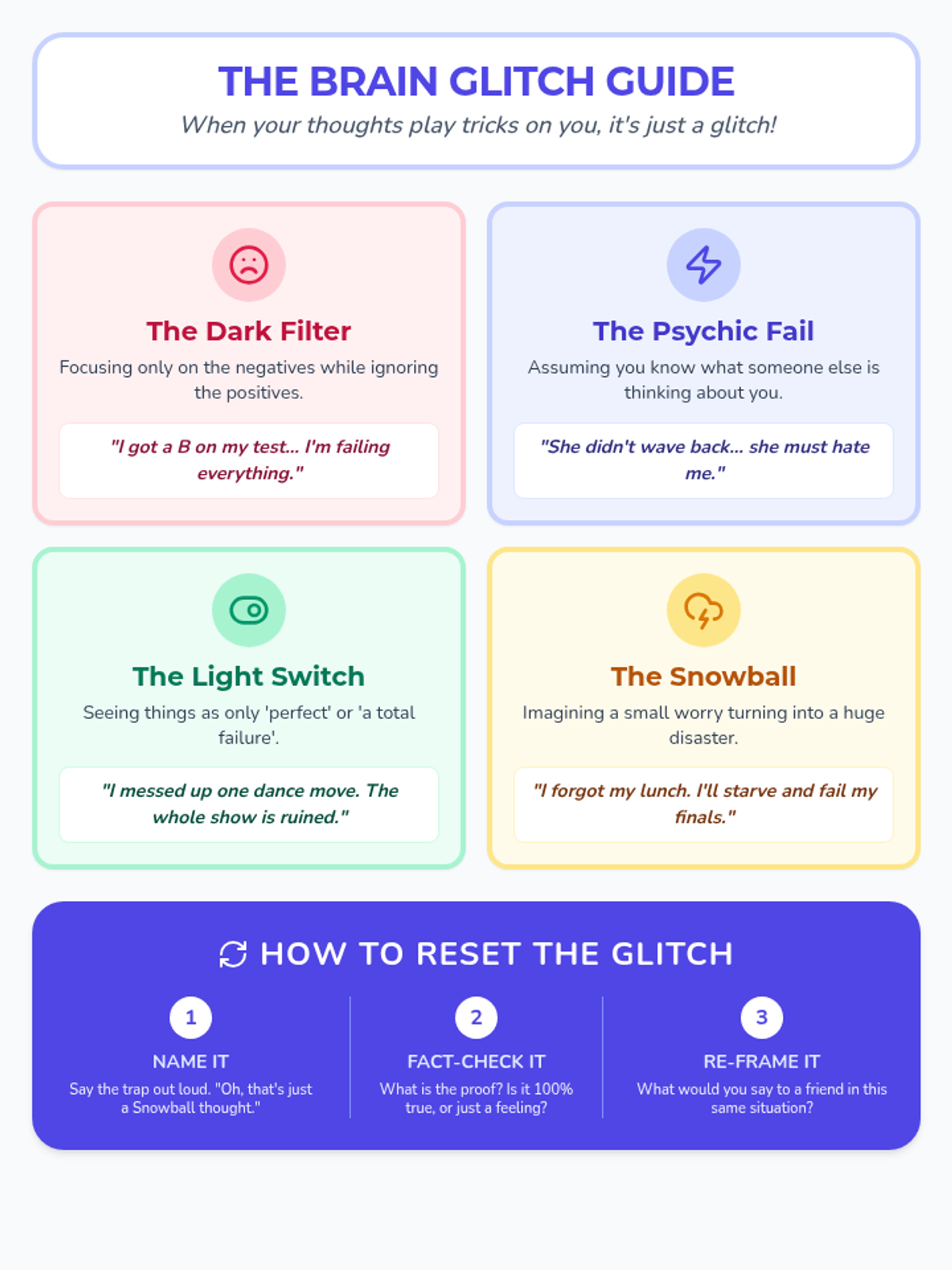
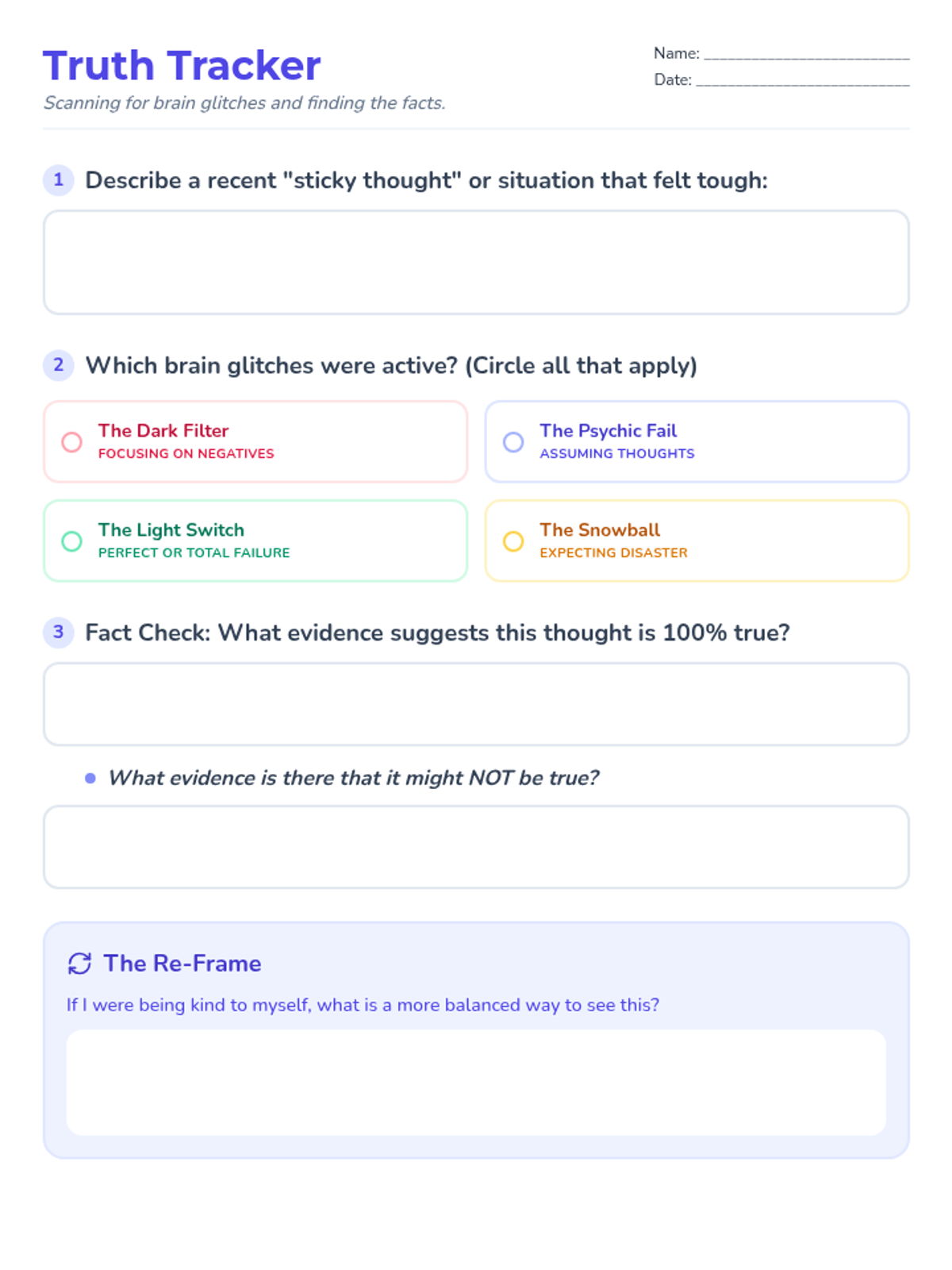
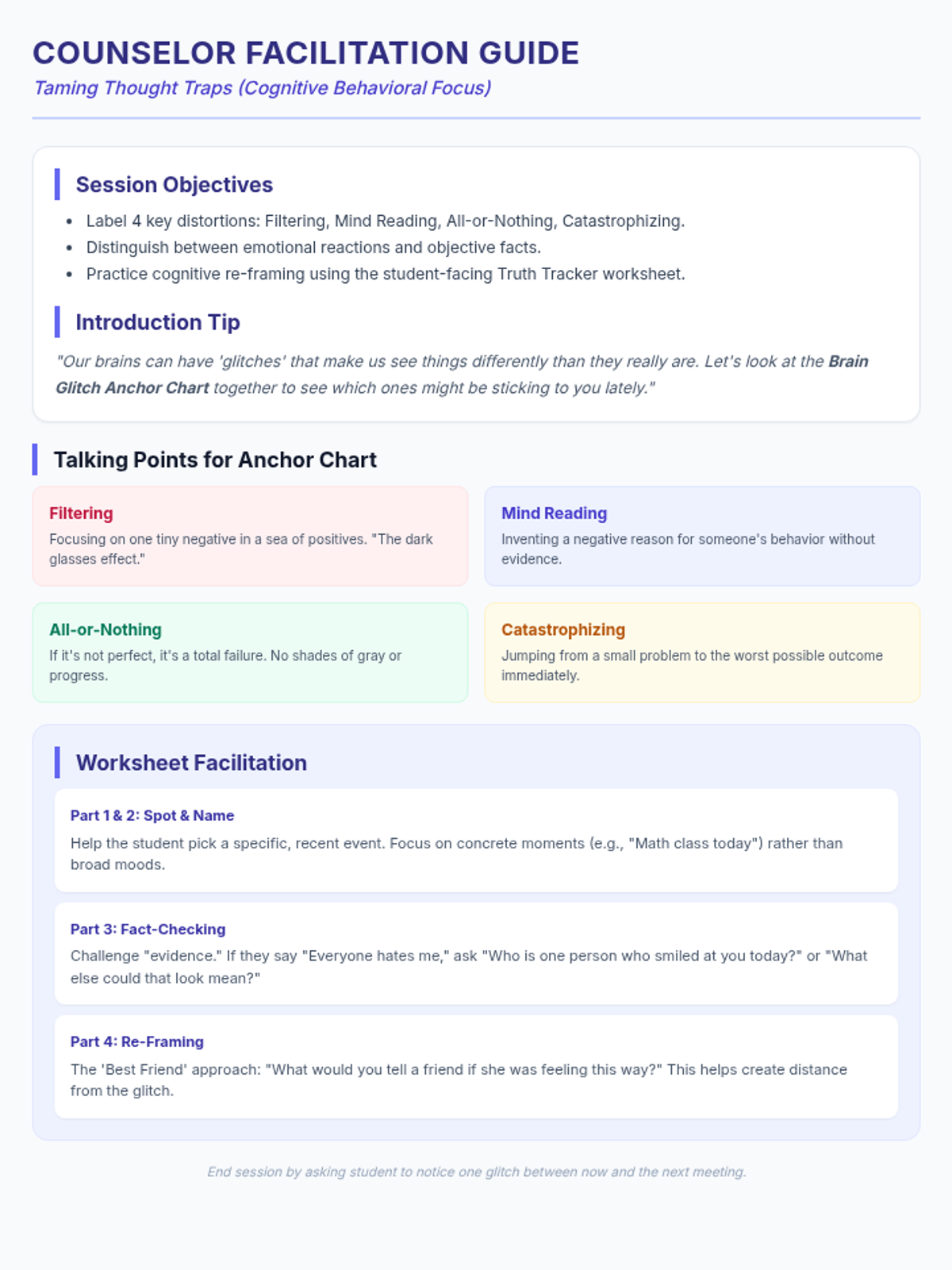
A supportive individual counseling session focused on identifying and challenging four specific cognitive distortions (Filtering, Mind Reading, All-or-Nothing Thinking, and Catastrophizing) for middle school students.
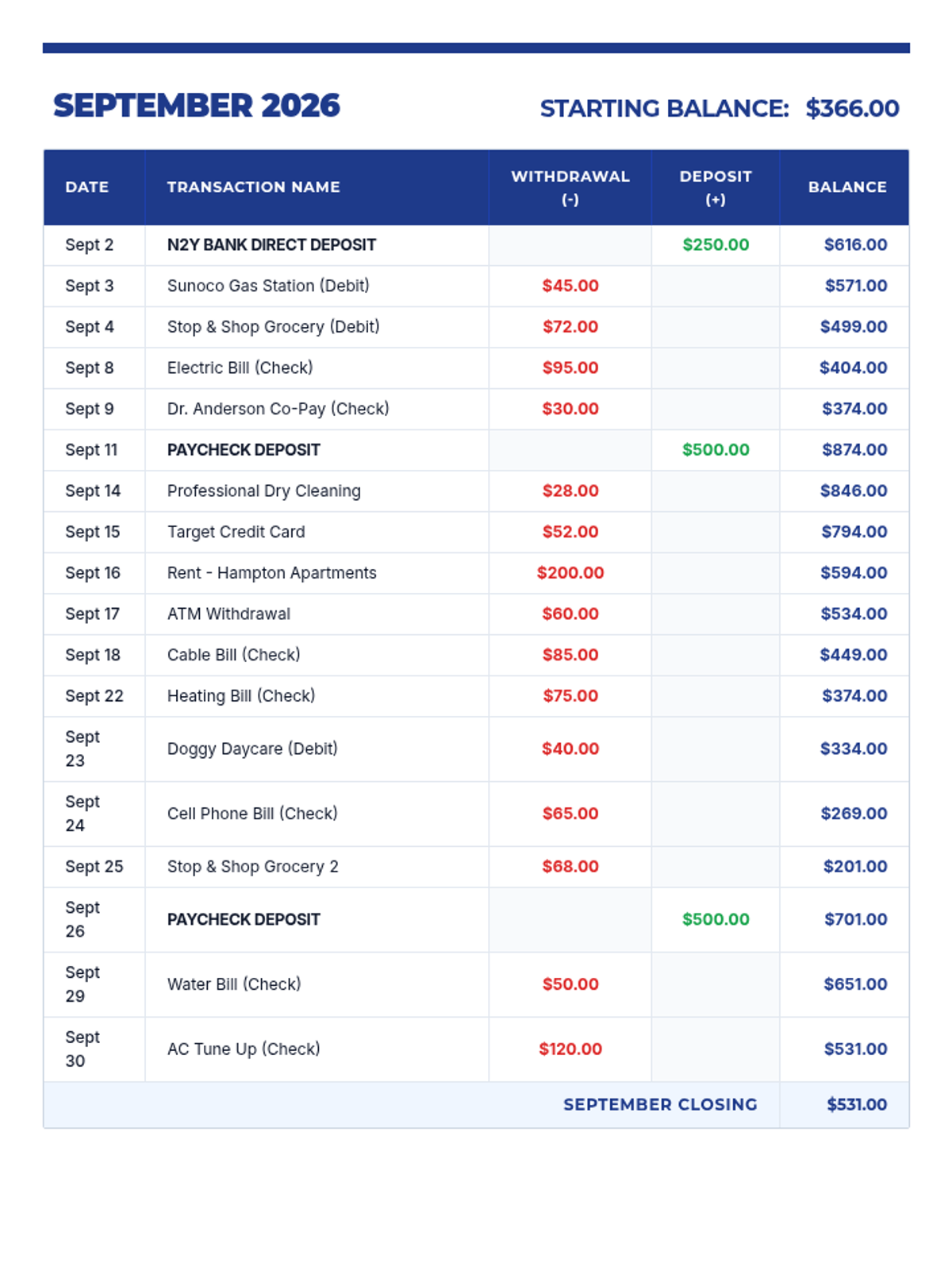
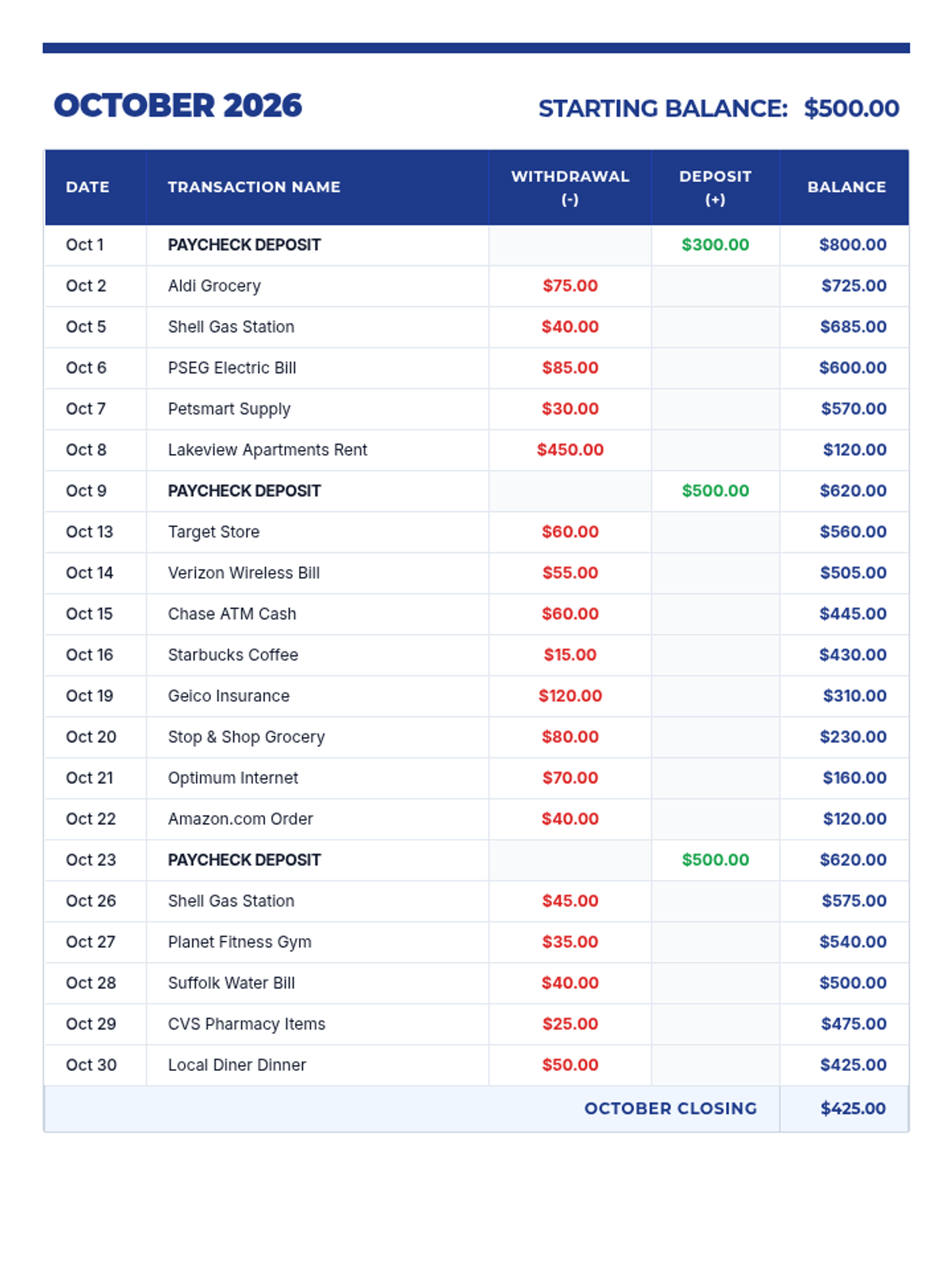
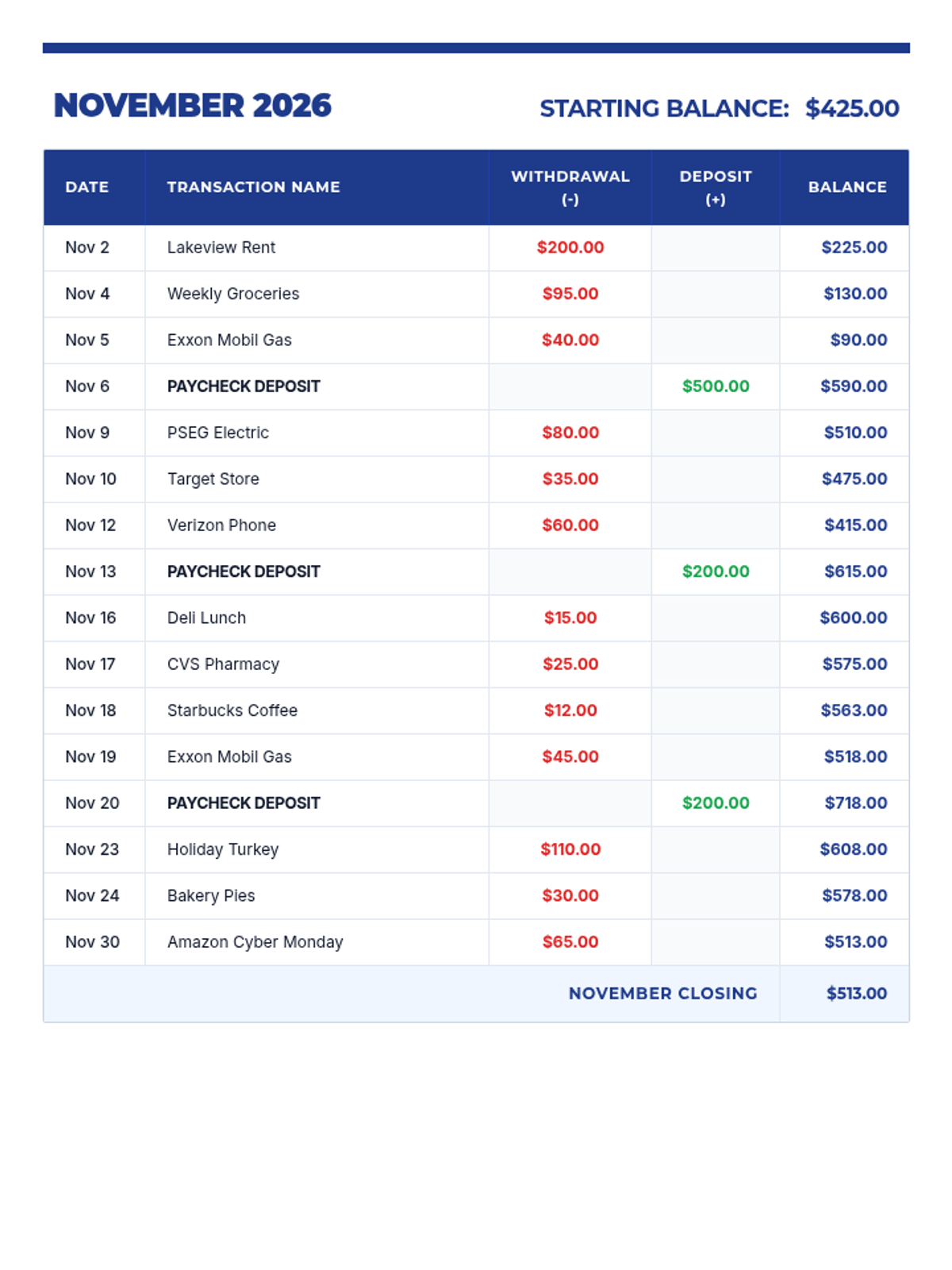
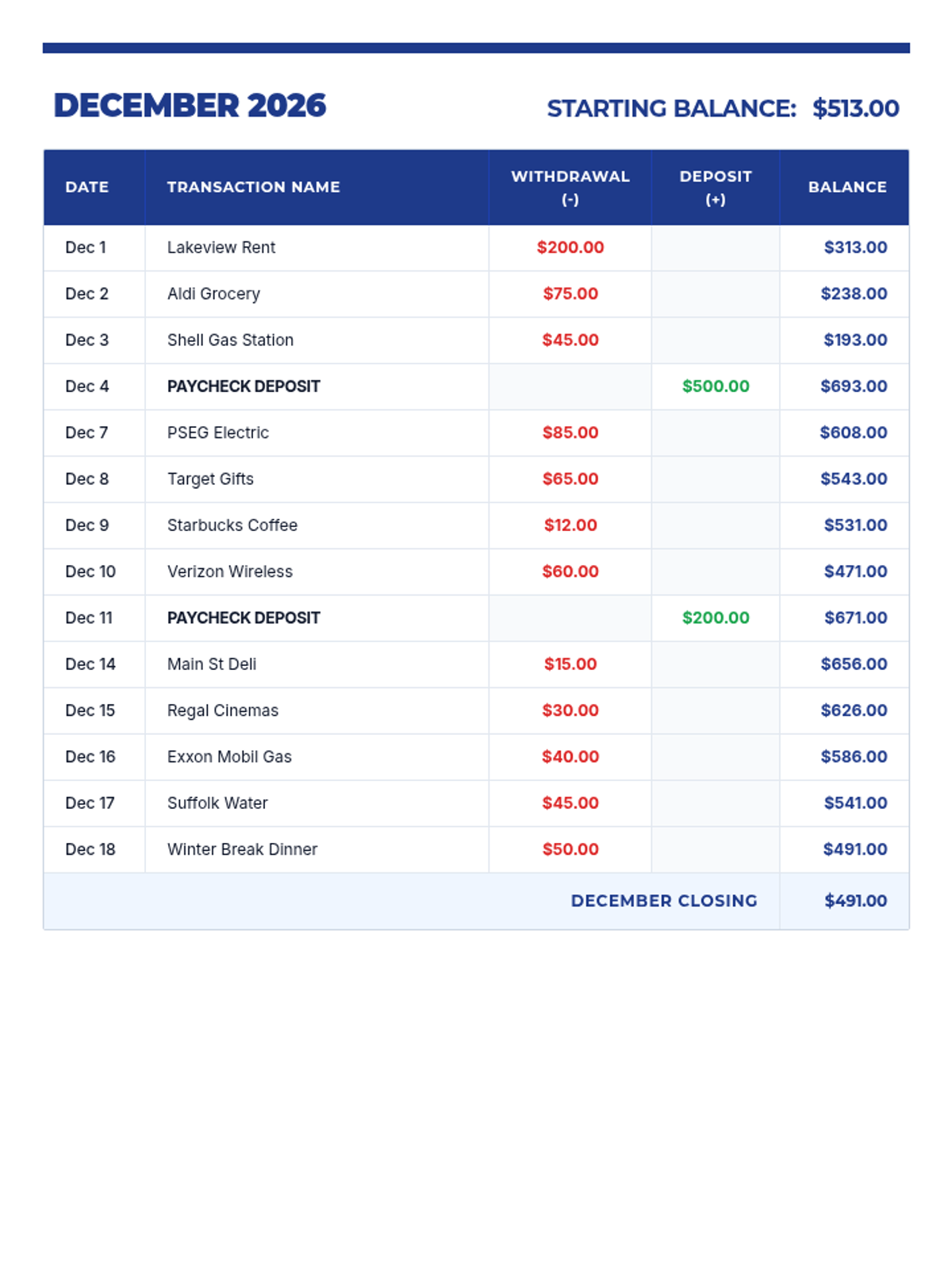
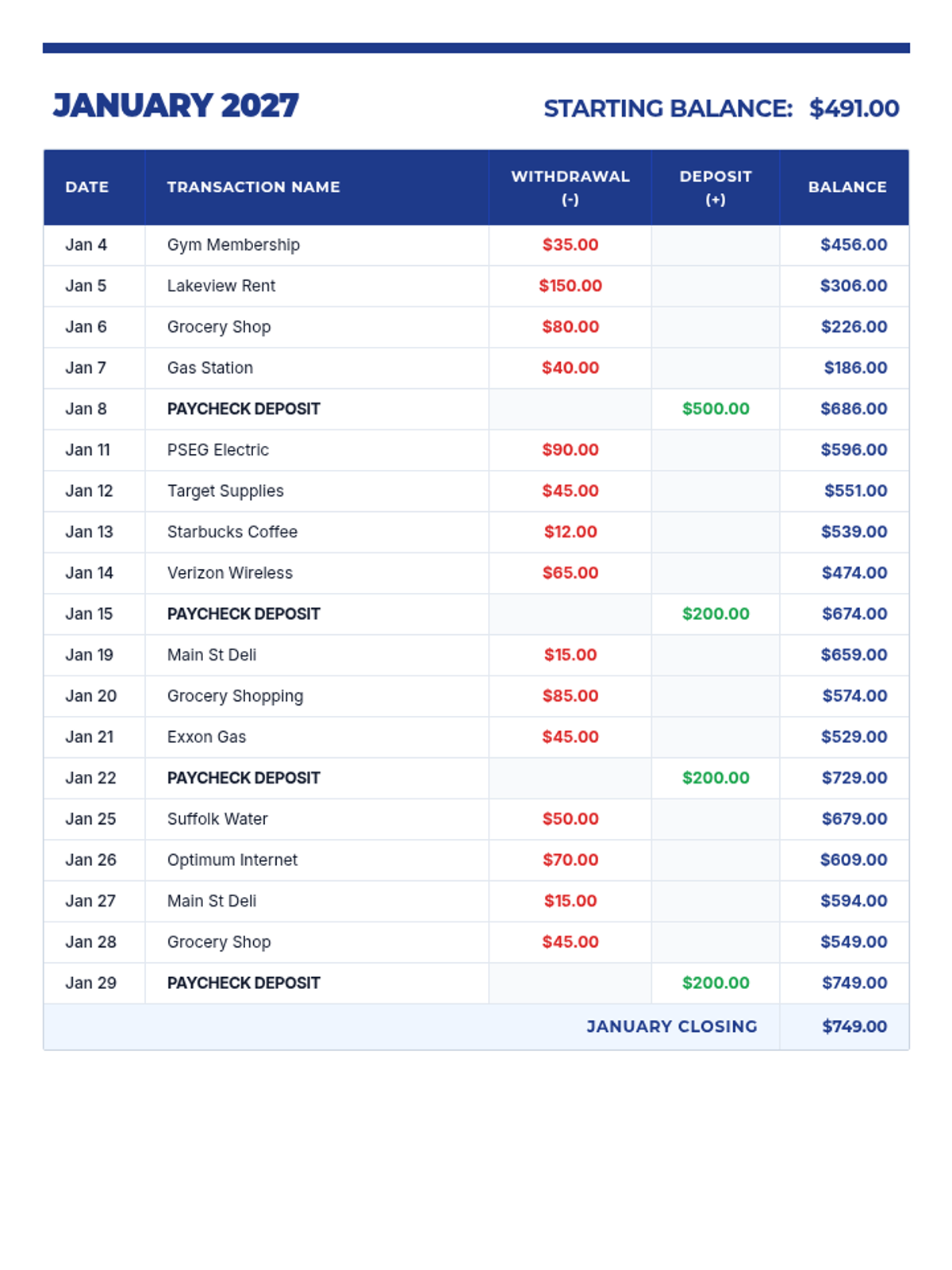
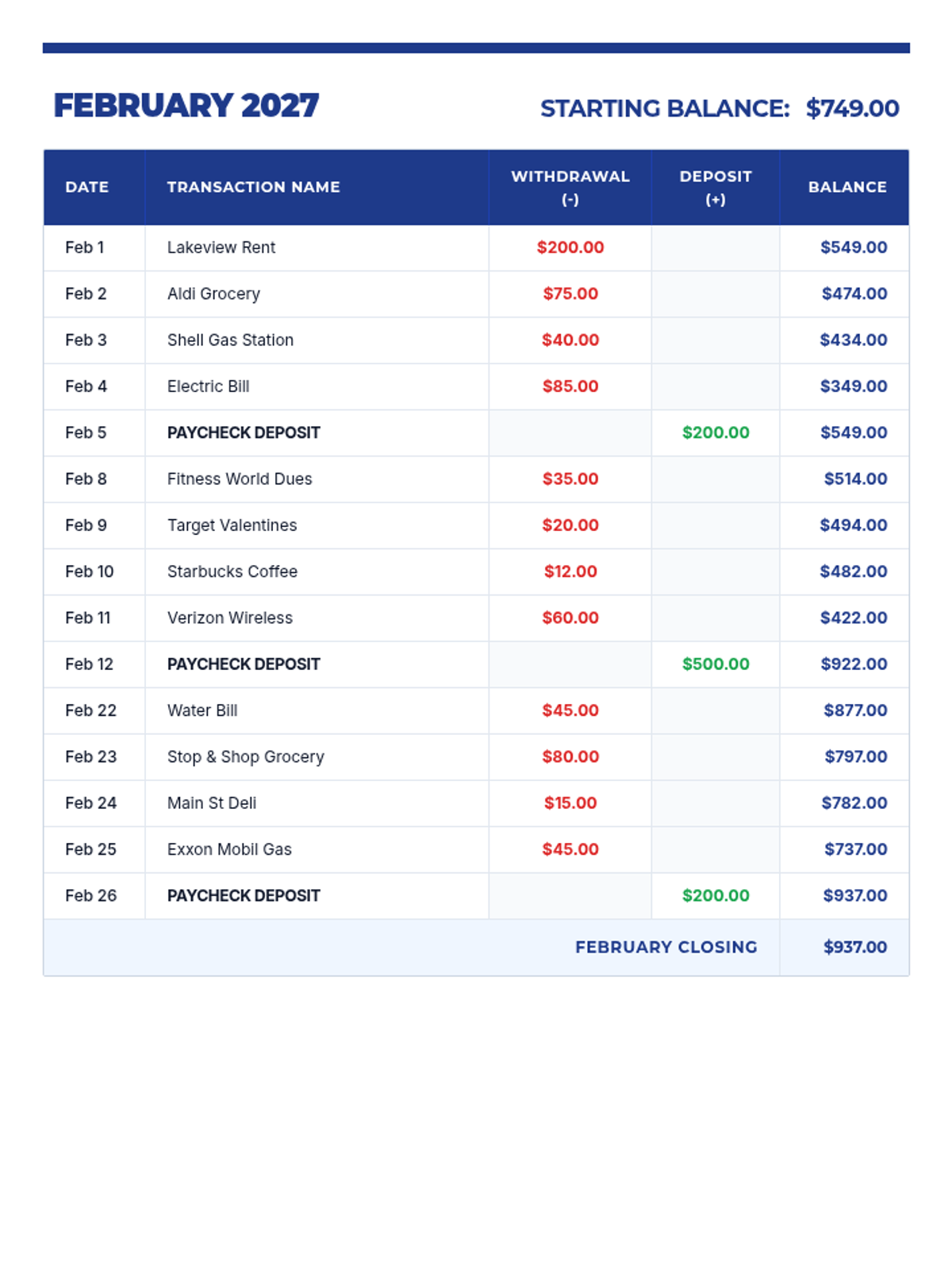
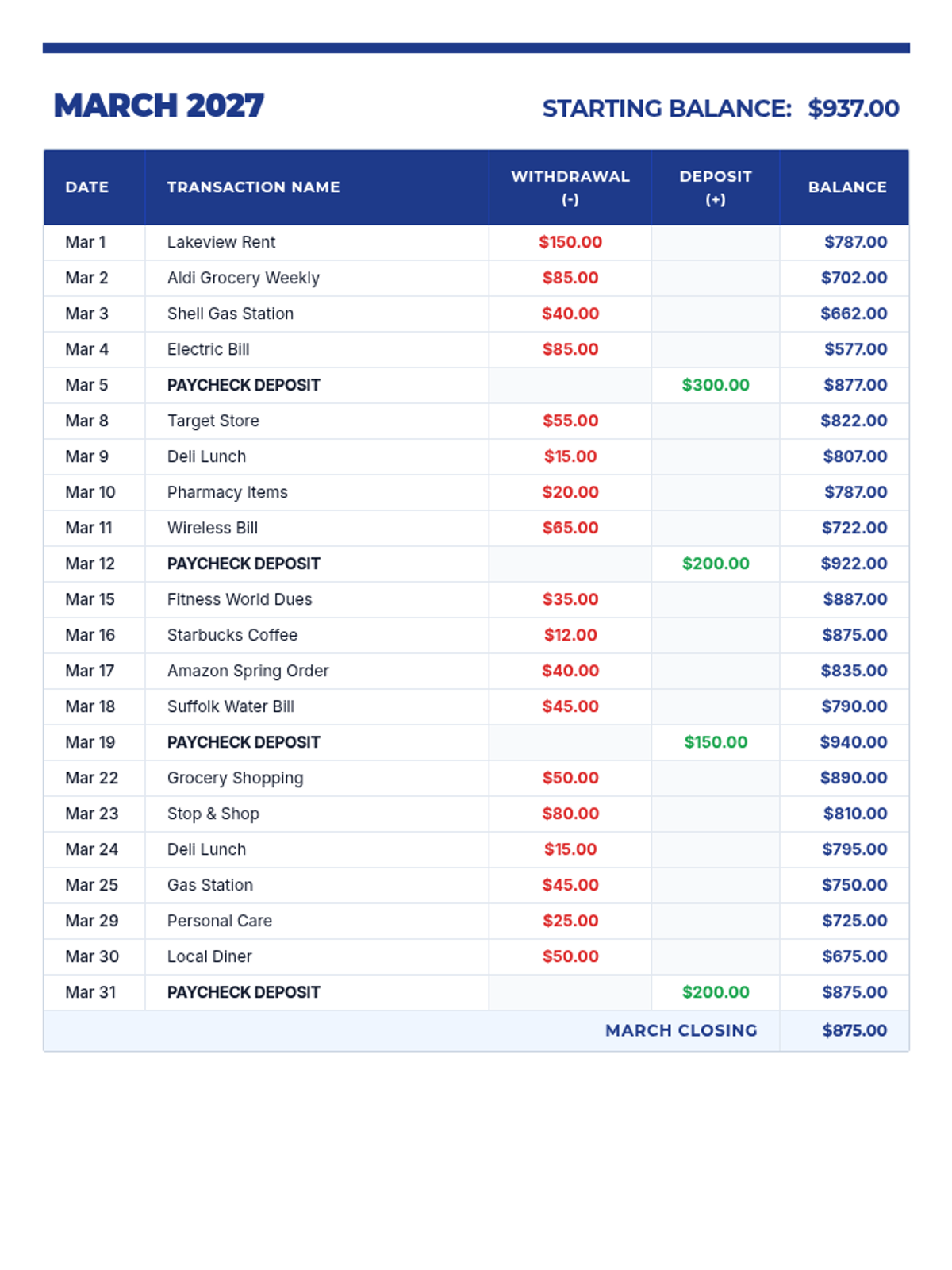
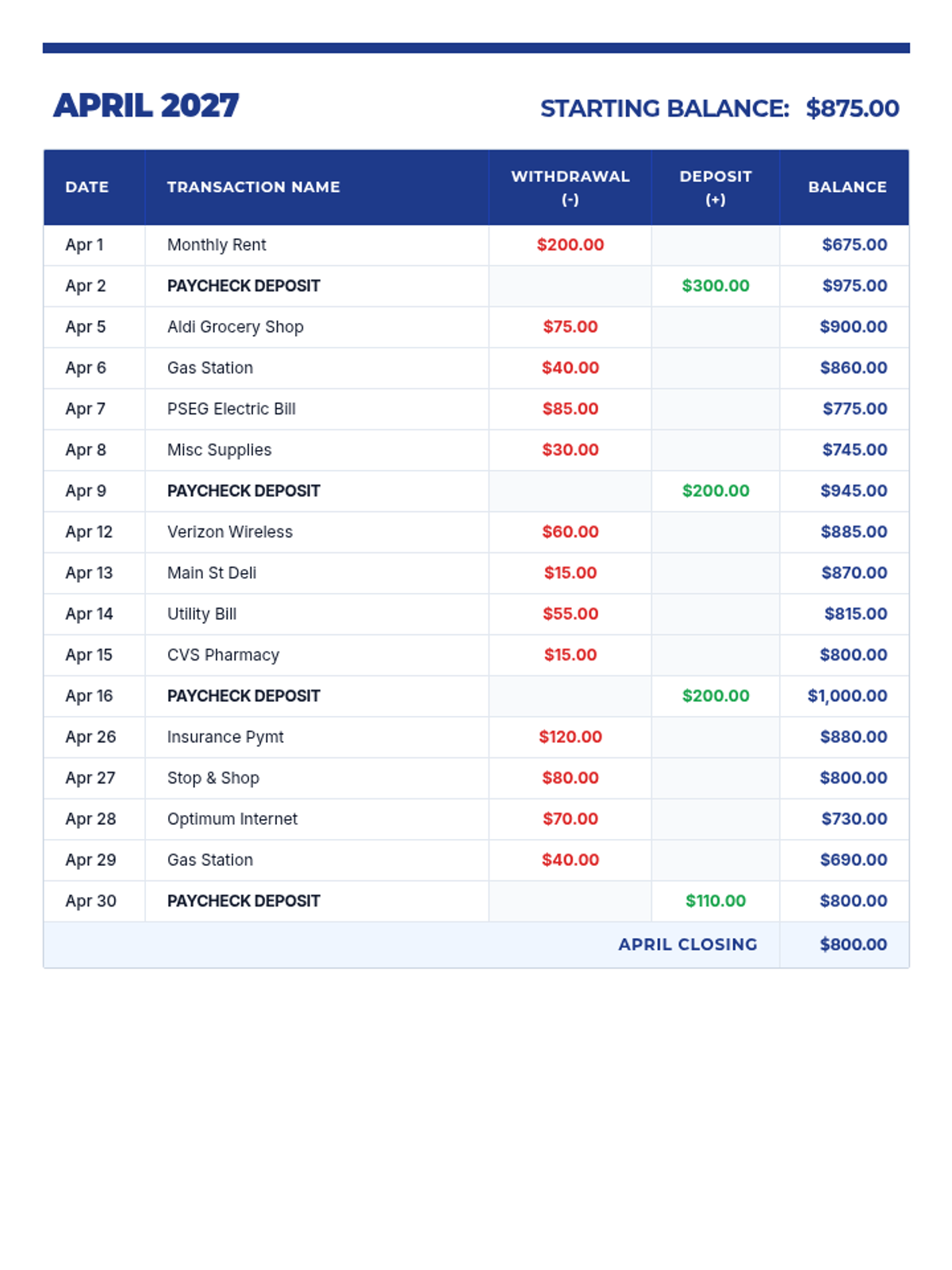
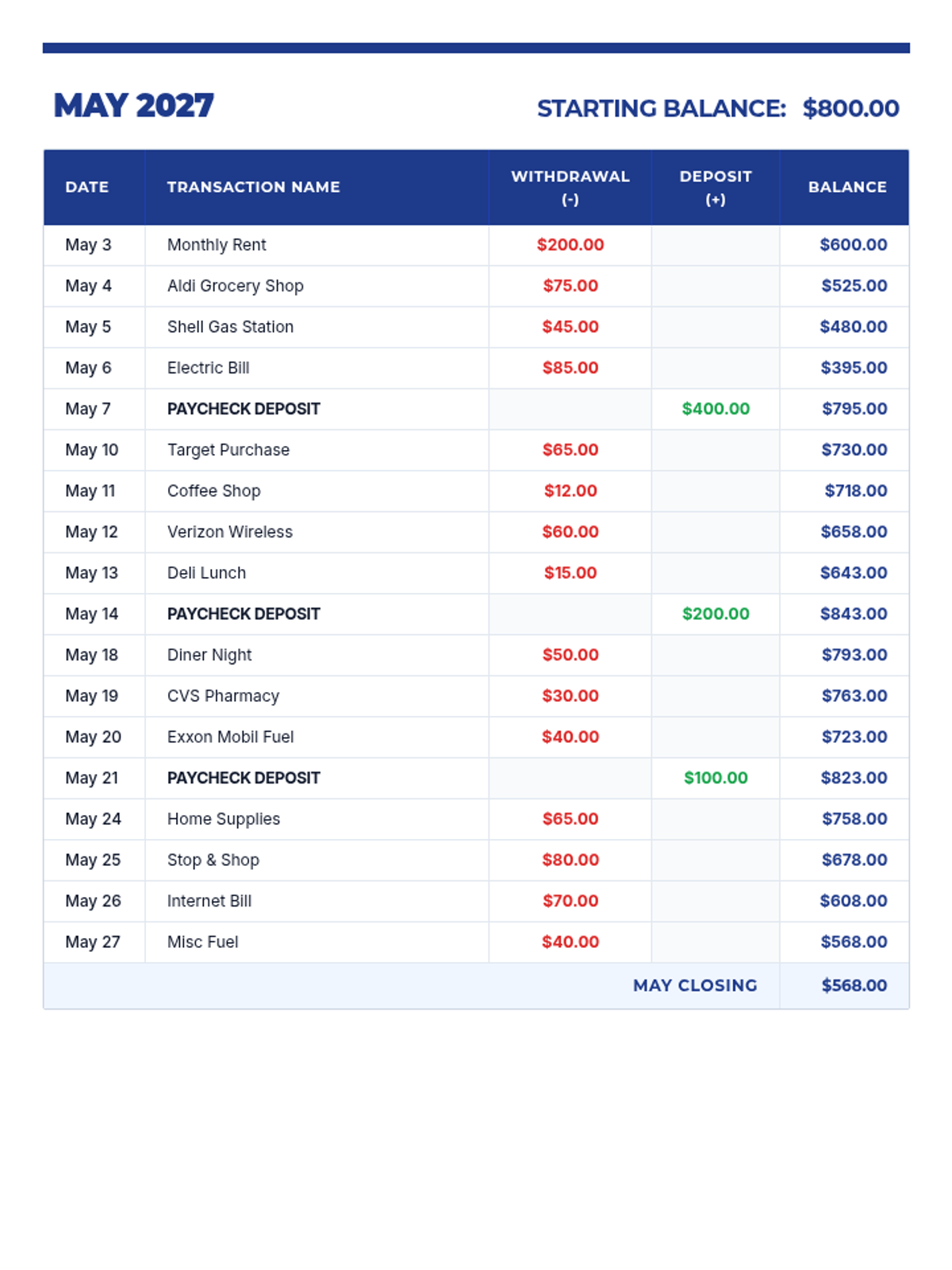
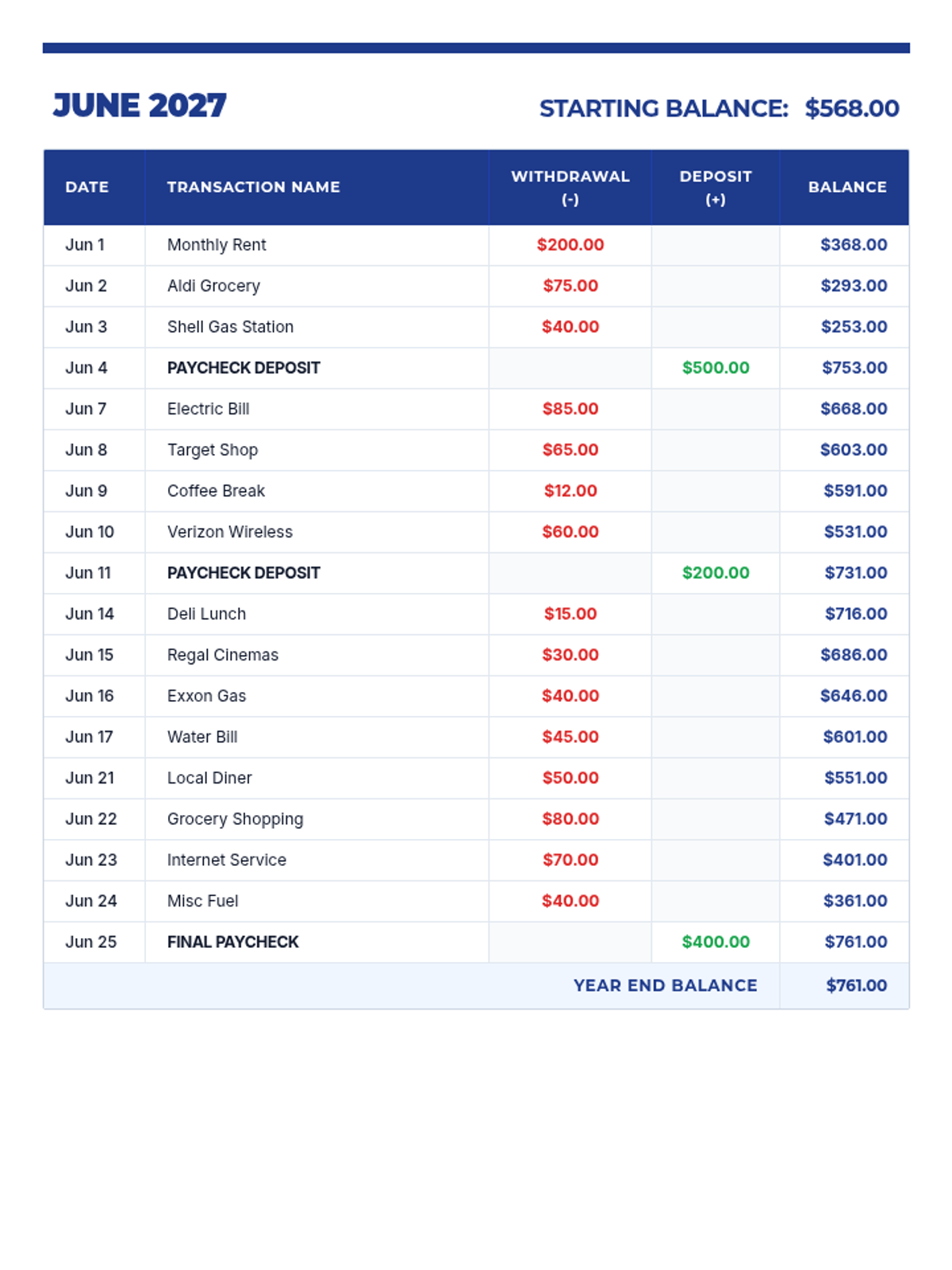
A collection of monthly paycheck registers for the 2026-2027 school year, designed to teach students real-world banking and transaction tracking.
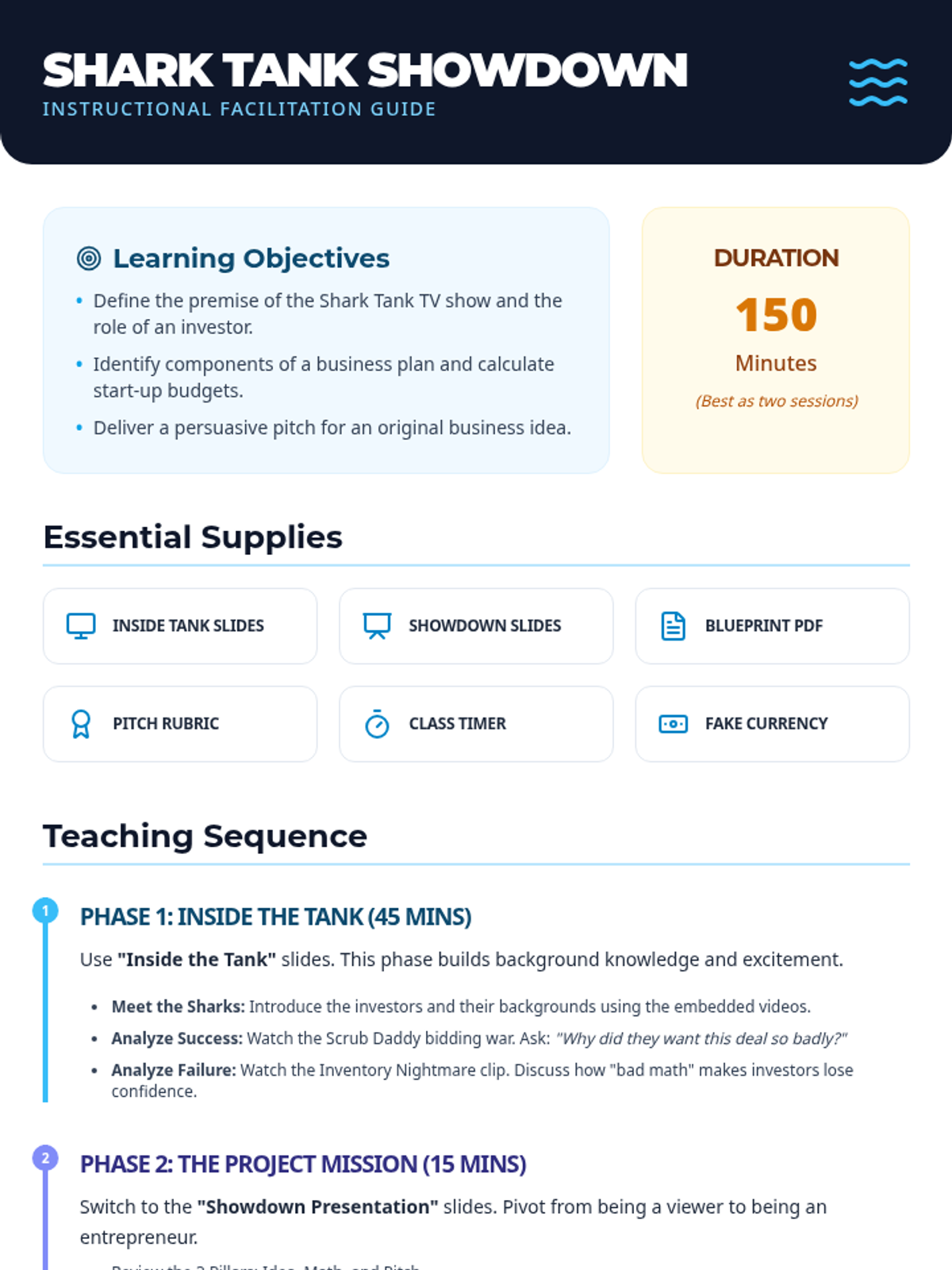
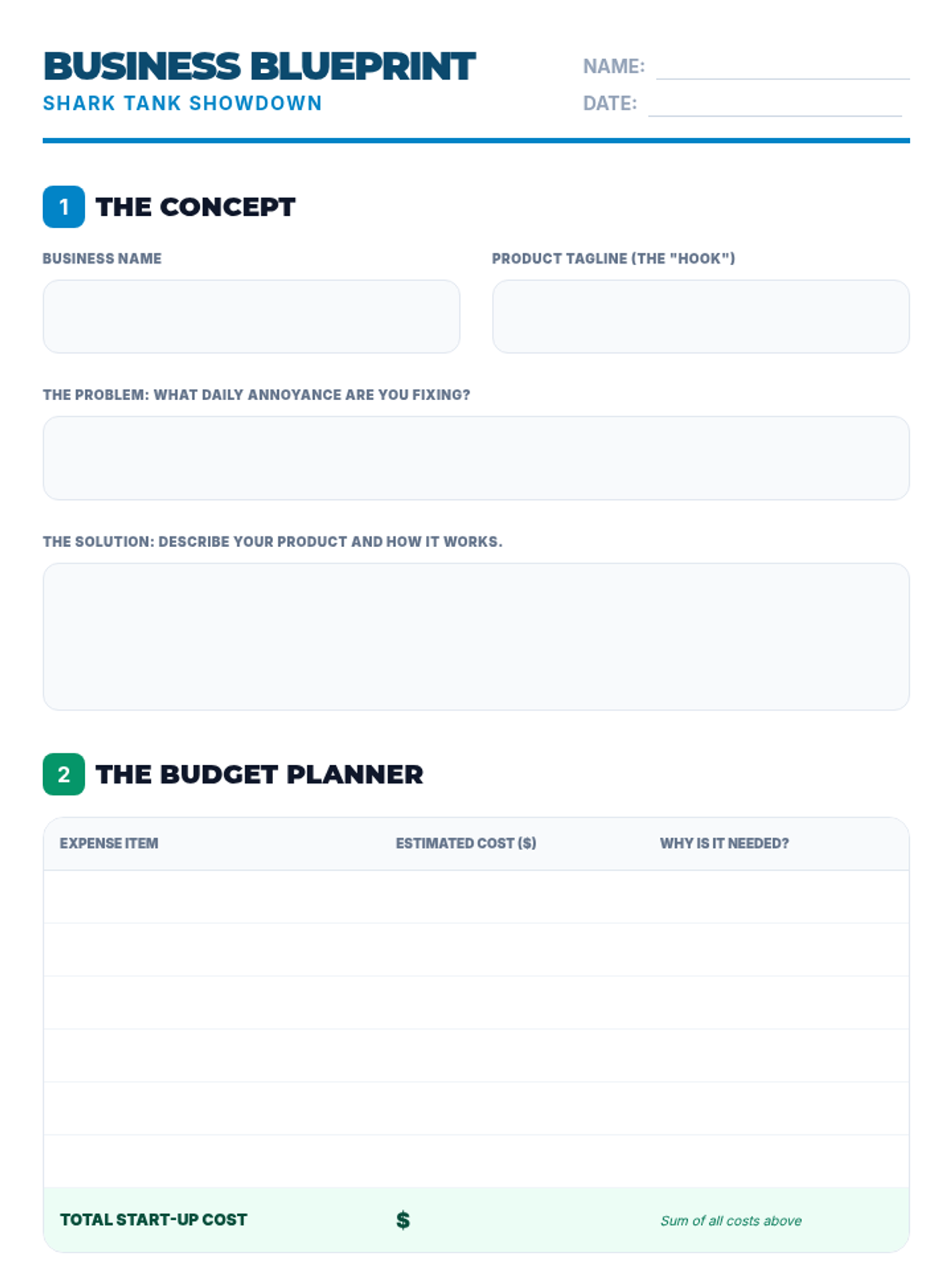
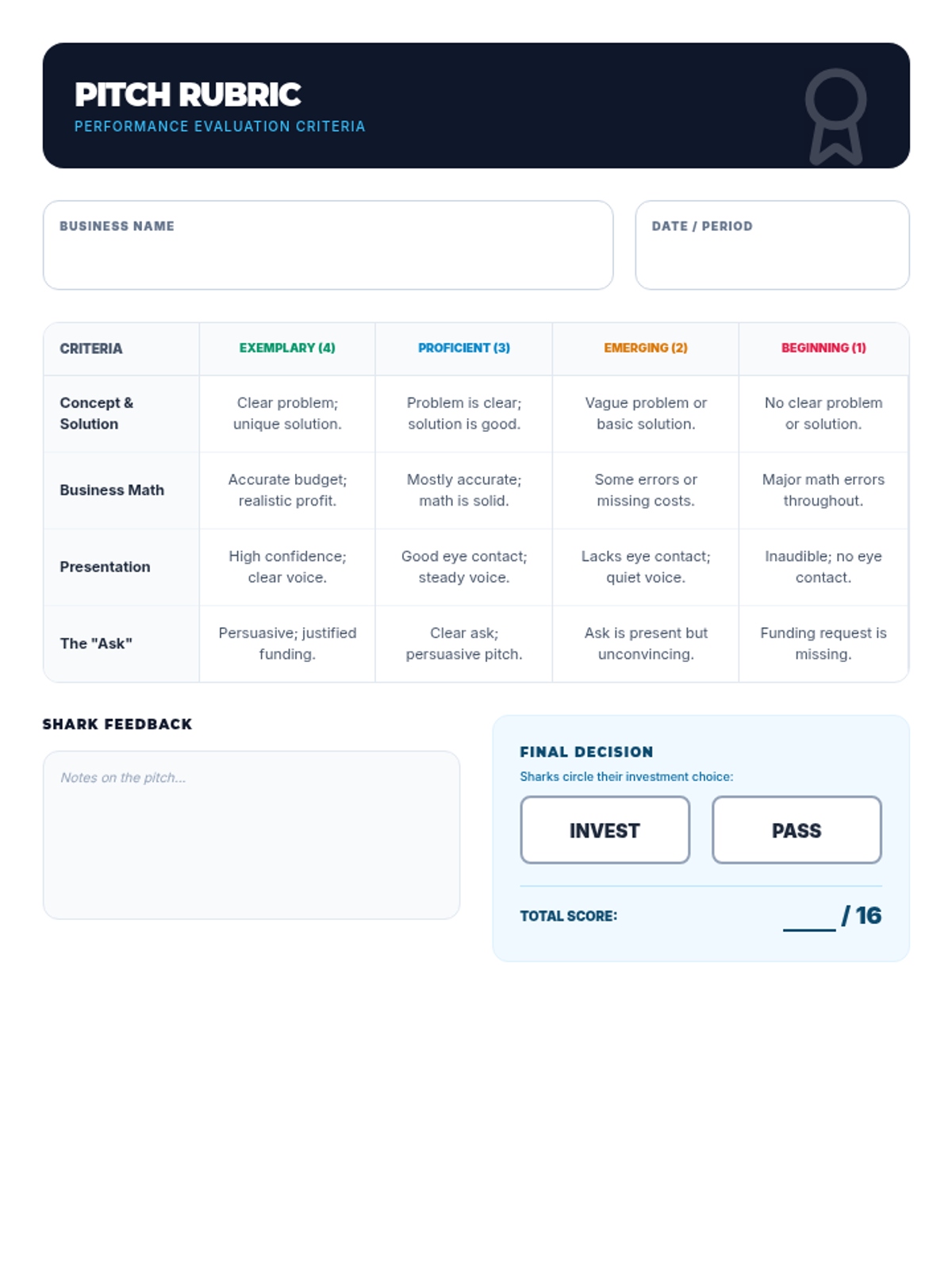
An immersive entrepreneurship lesson where students learn business basics, budgeting, and persuasive pitching to secure 'funding' for their original ideas.
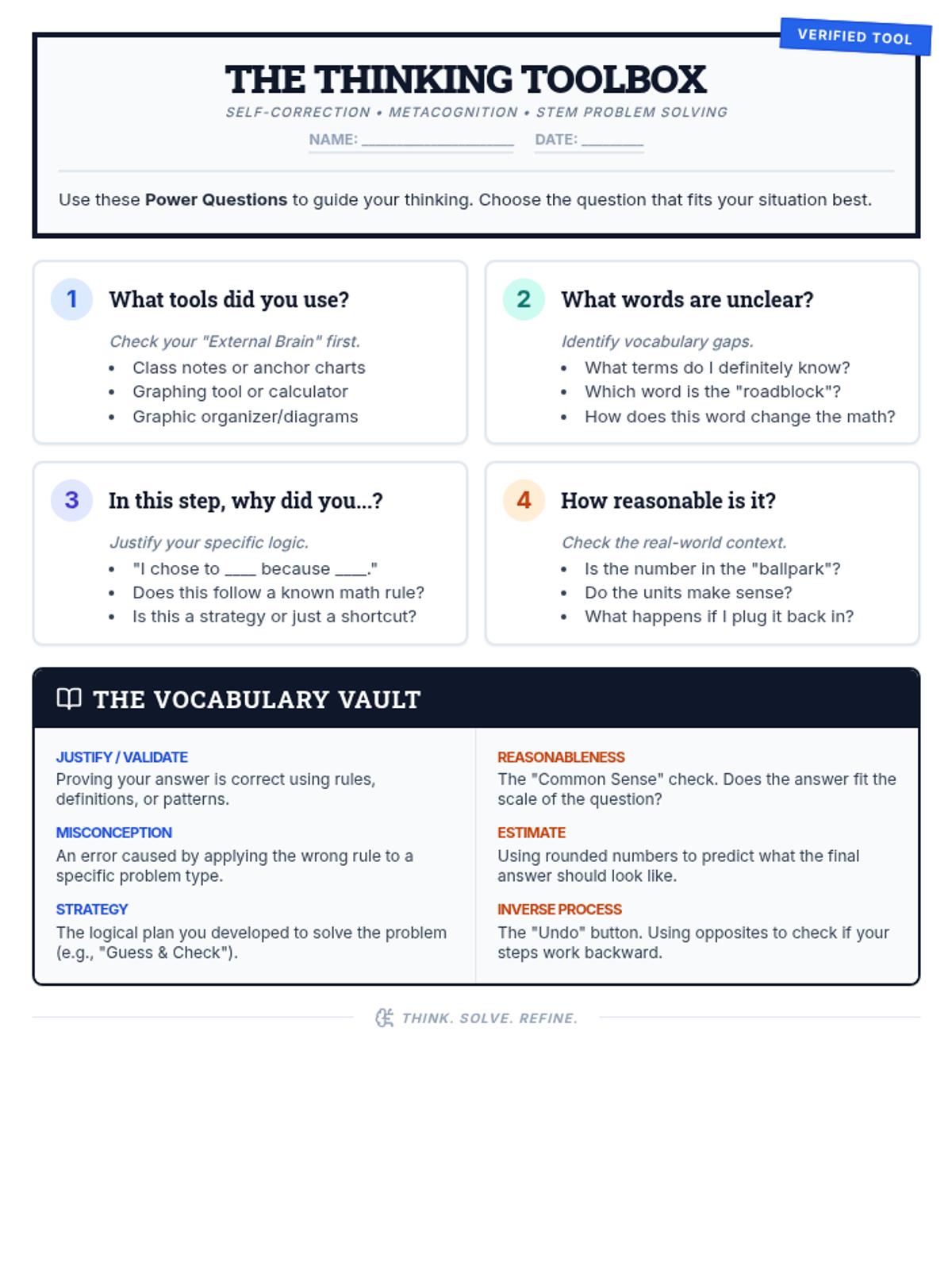
This lesson focuses on developing students' metacognitive skills and problem-solving language using Katherine Rowe's four essential questions. It empowers students to self-correct, identify vocabulary gaps, and justify their mathematical reasoning.
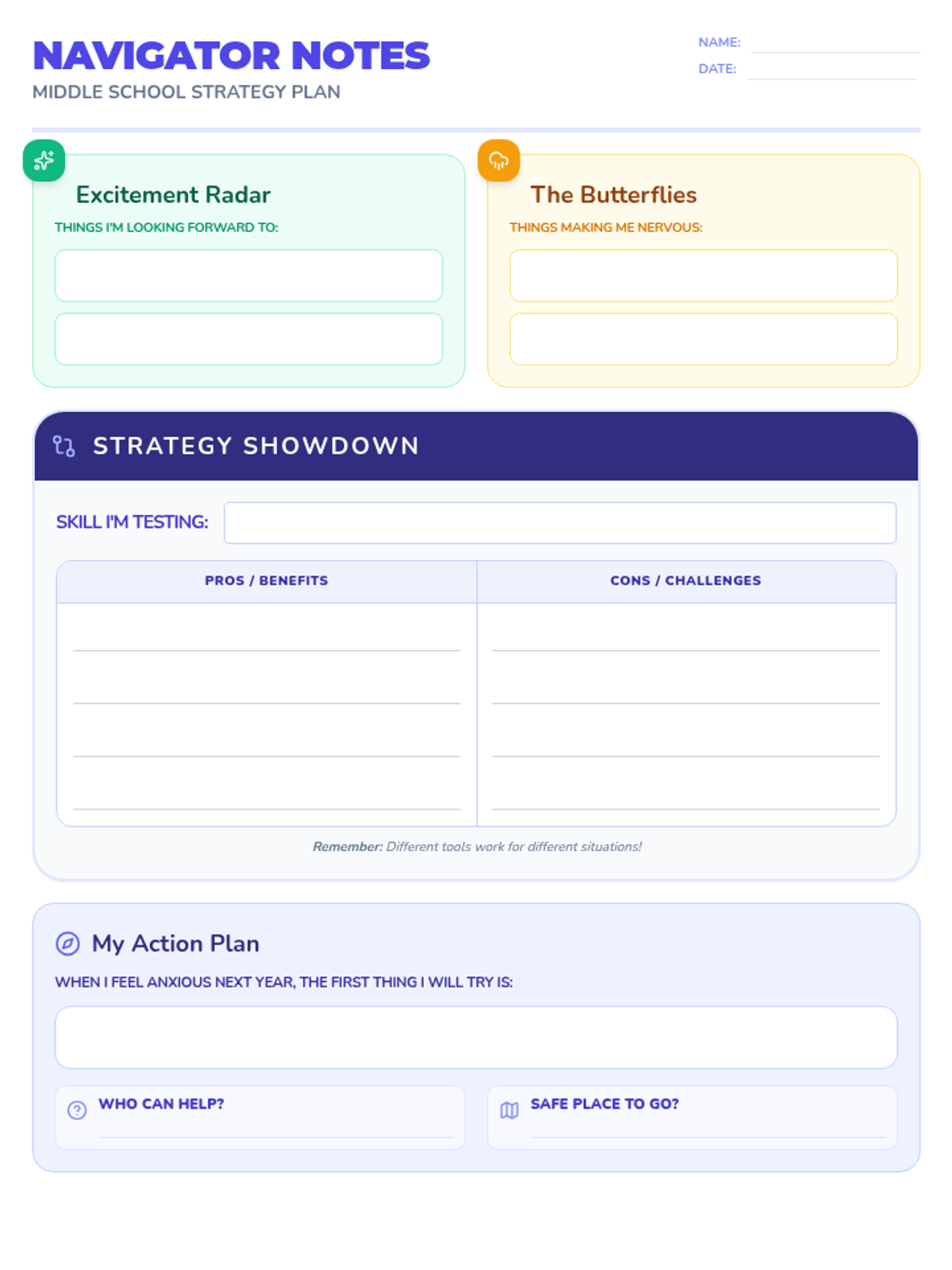
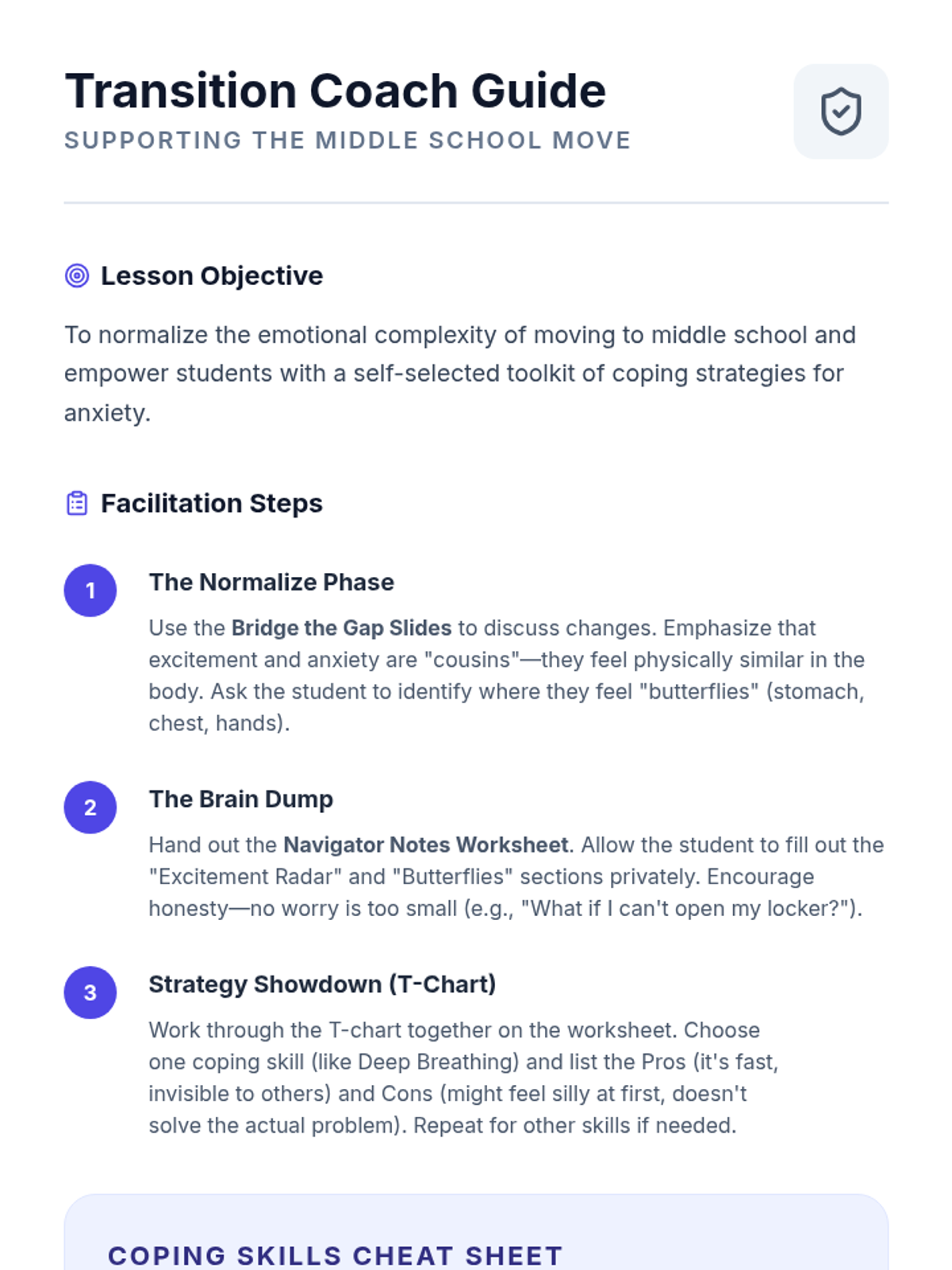
A lesson designed to help 6th-grade students navigate the transition to middle school by identifying feelings of excitement and anxiety while developing practical coping strategies.
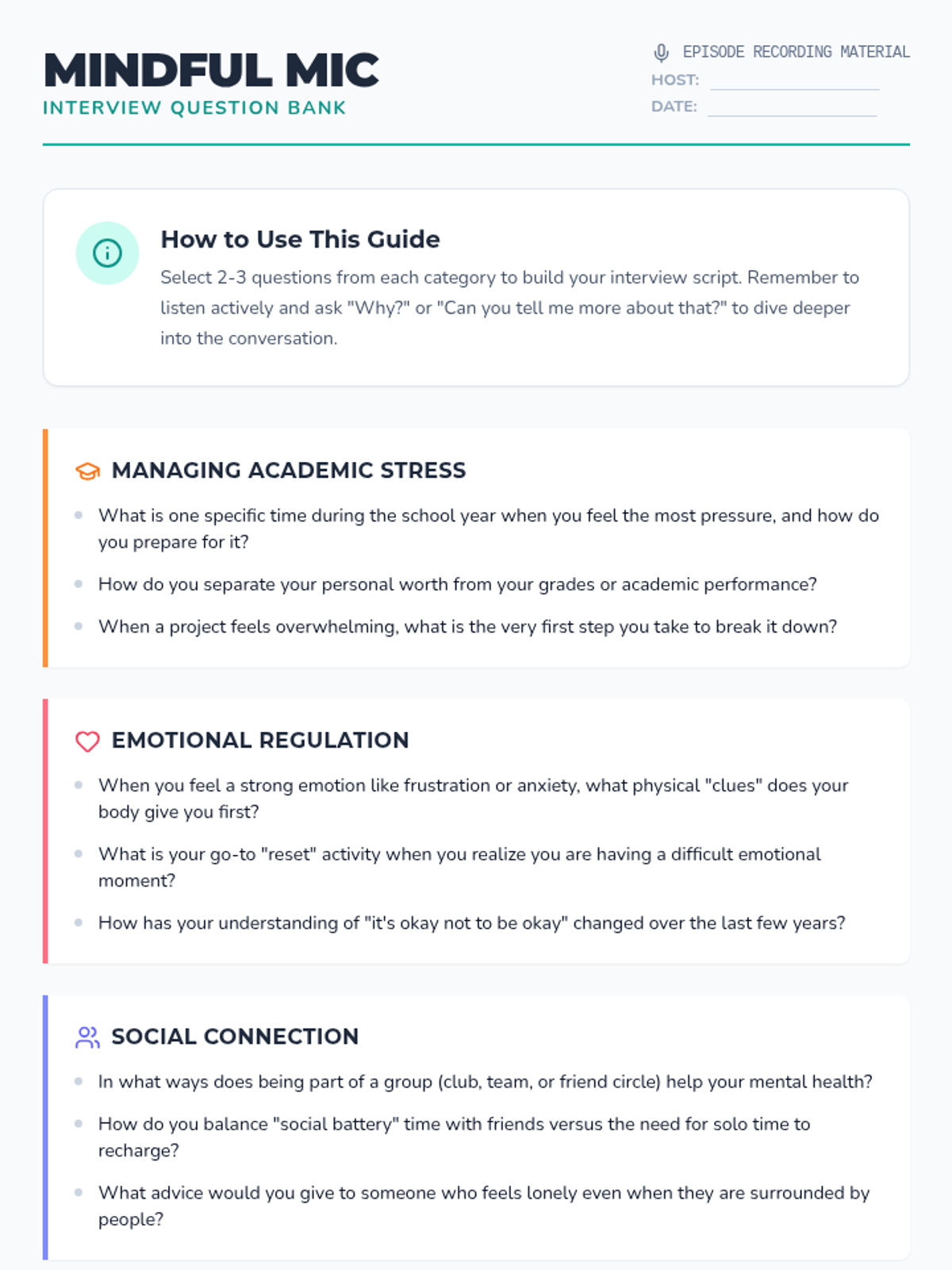
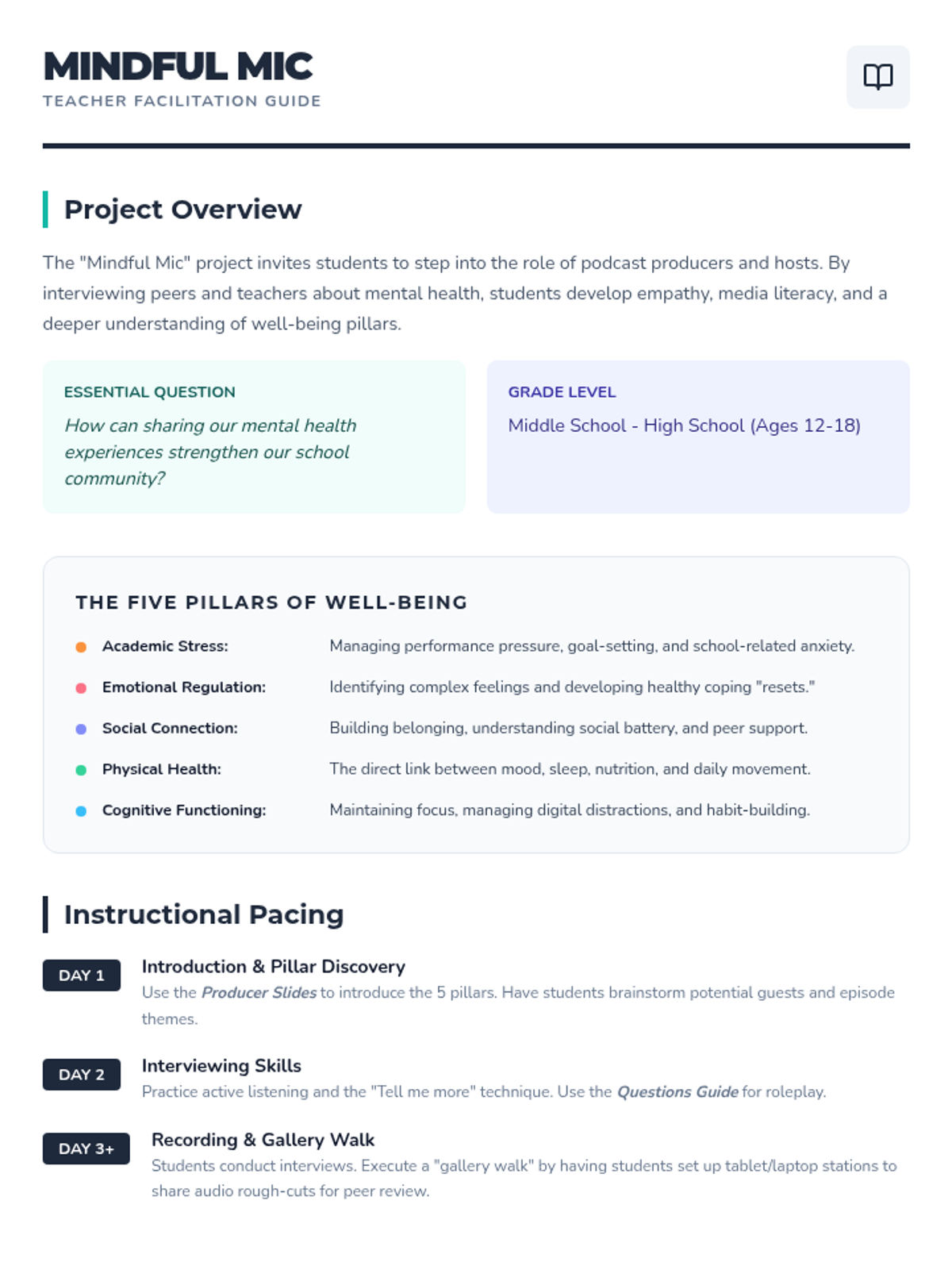
A comprehensive guide for students to produce a podcast exploring mental health through peer and teacher interviews. This lesson covers interview techniques and categorizes questions across five key pillars of well-being.