Students learn to distinguish between 'Do it for me' and 'Help me learn.' The lesson focuses on asking for clues, steps, or watching a demonstration rather than handing over the task completely.
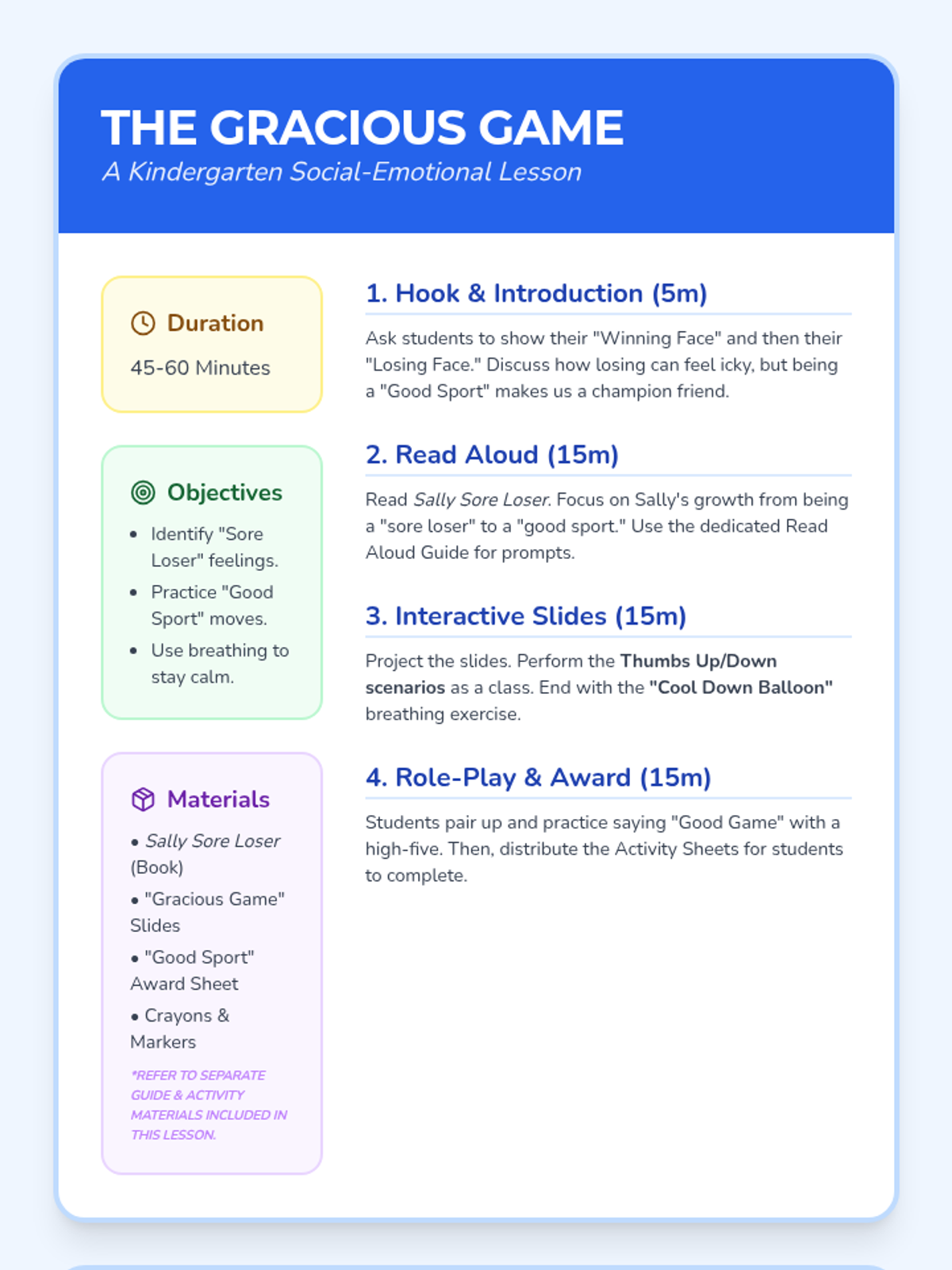
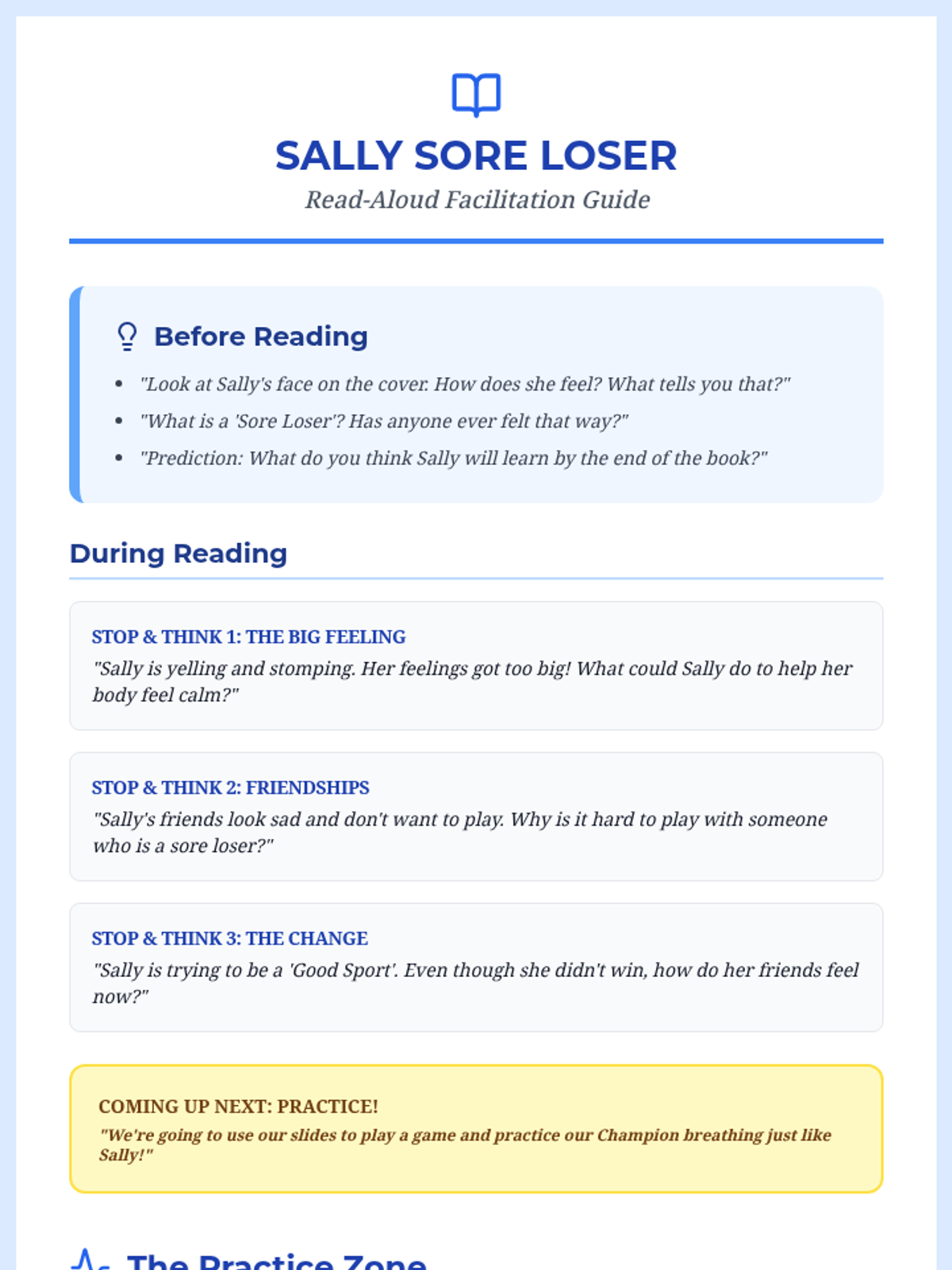
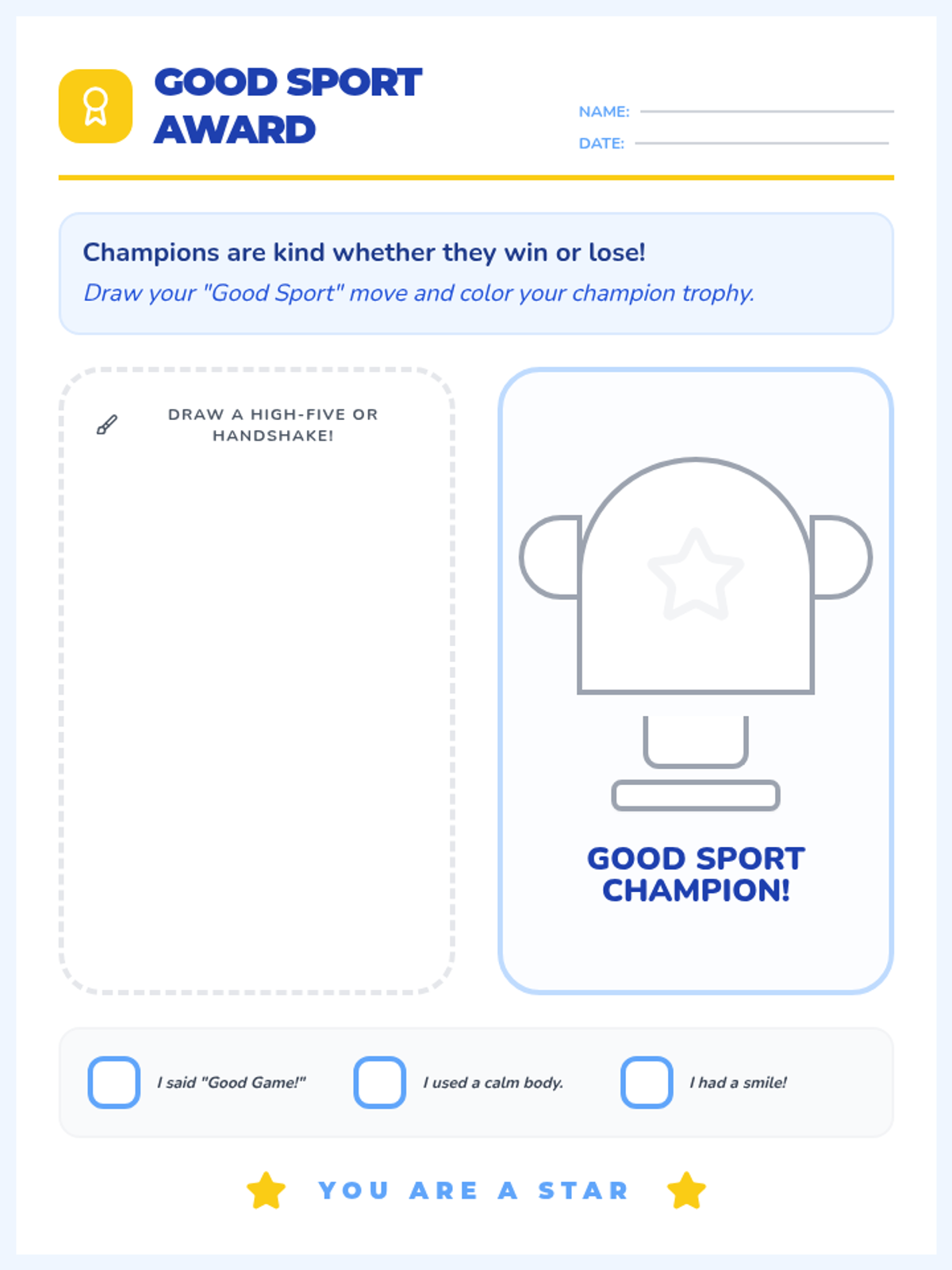
A kindergarten lesson focused on sportsmanship and losing gracefully, using the book 'Sally Sore Loser' as a cornerstone for identifying feelings and practicing positive reactions.
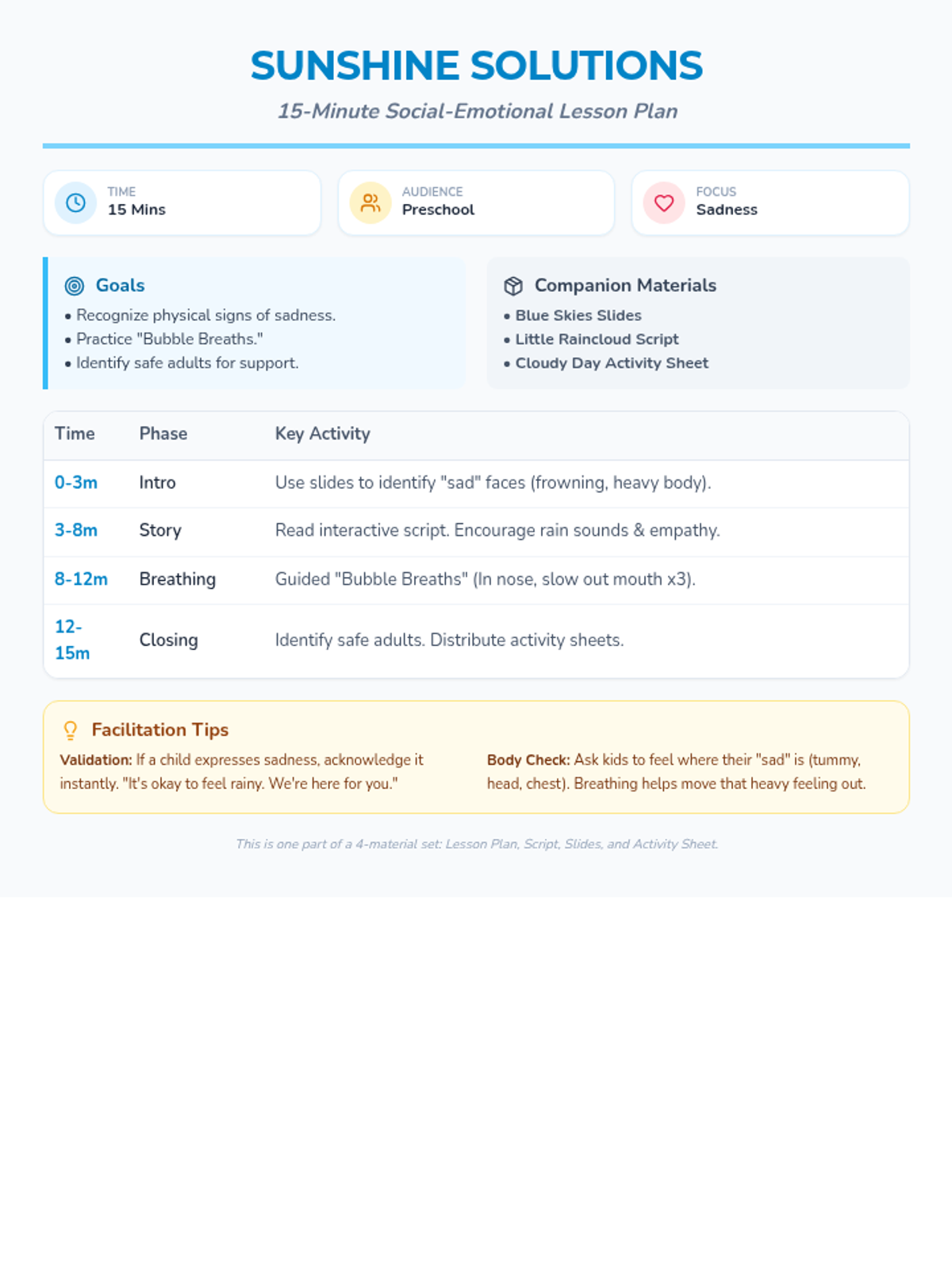
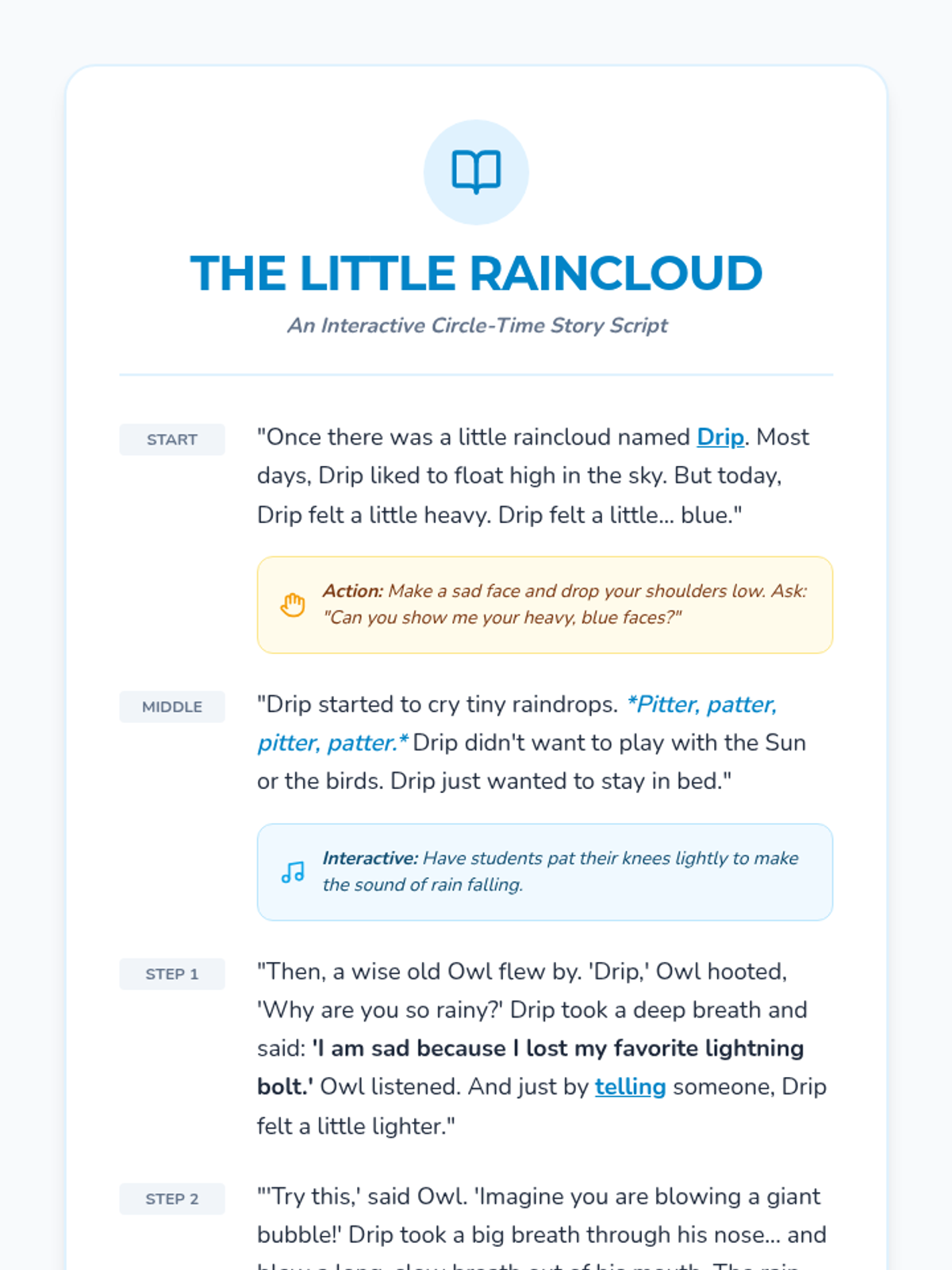
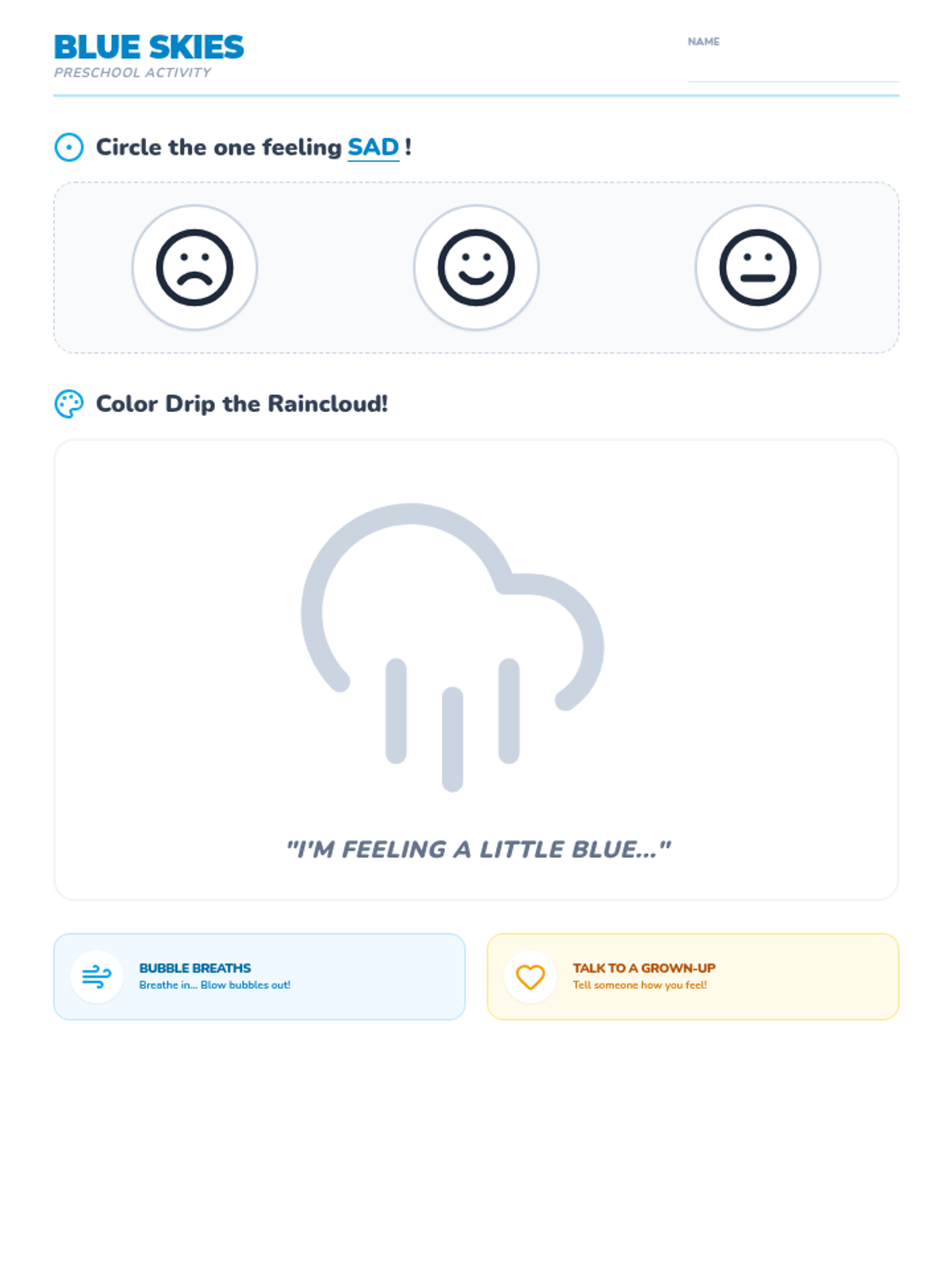
A gentle, 15-minute social-emotional learning lesson for preschoolers focused on identifying sadness and practicing two simple coping strategies: talking to a trusted adult and 'Bubble Breaths'.
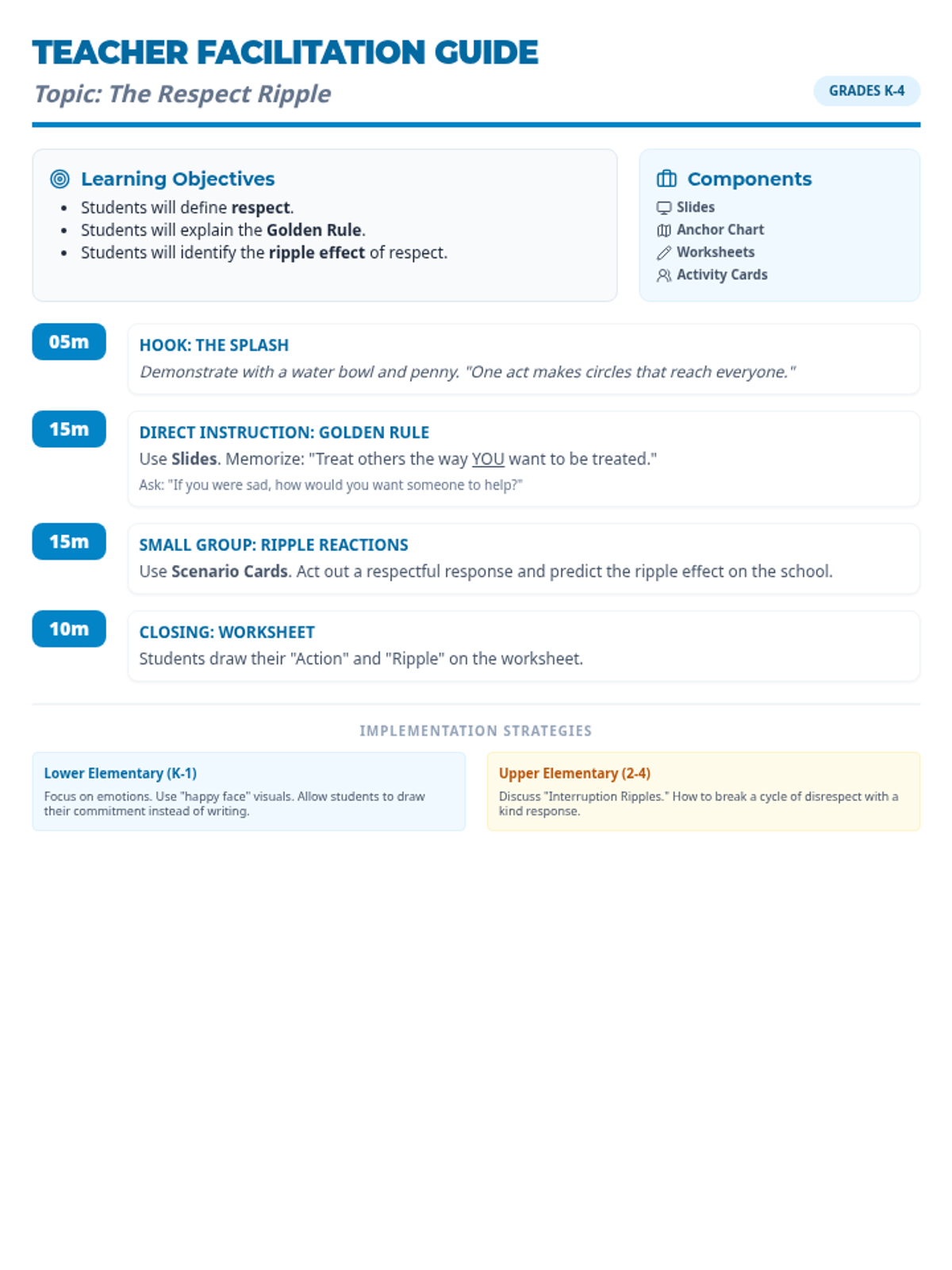
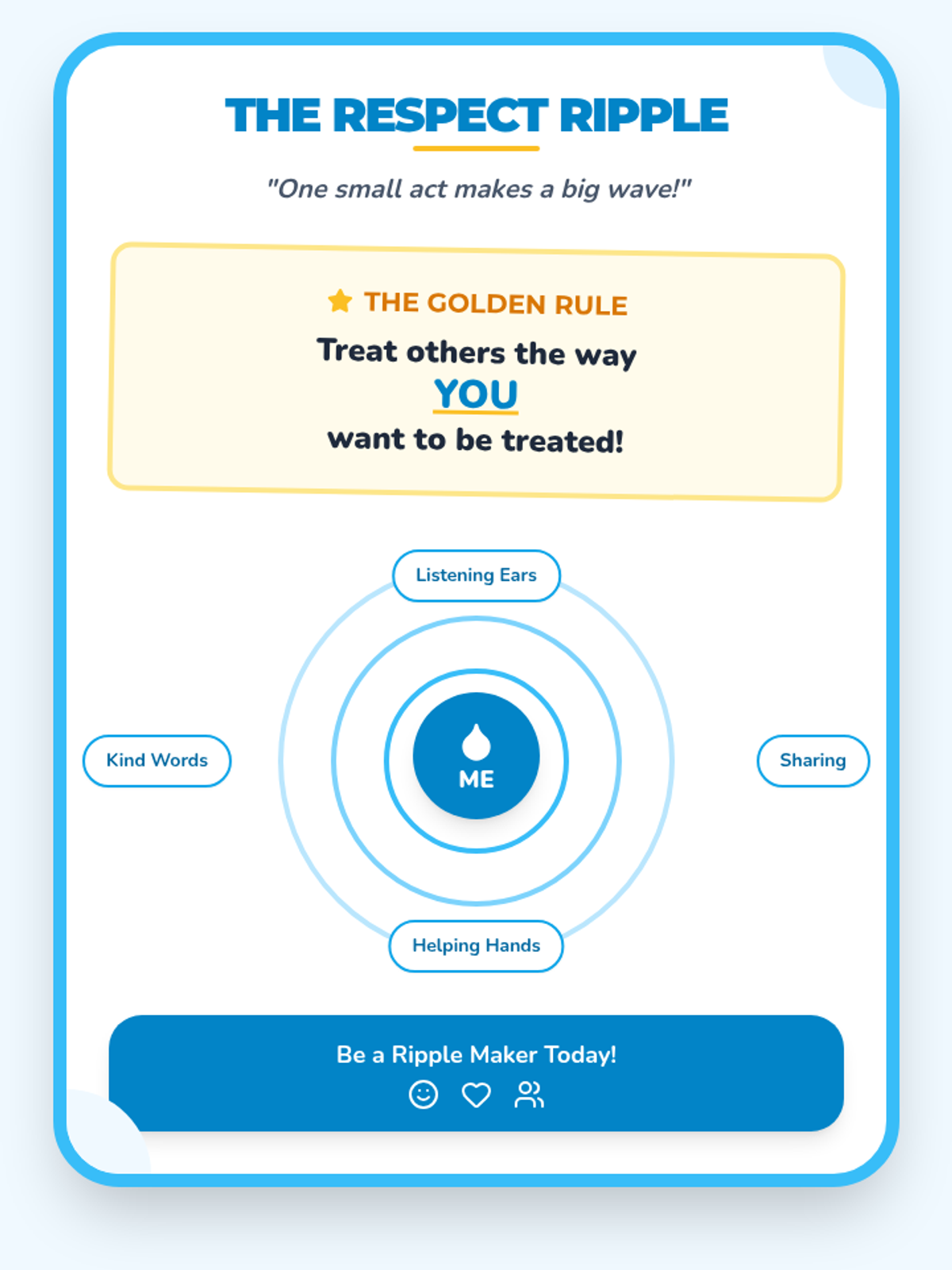
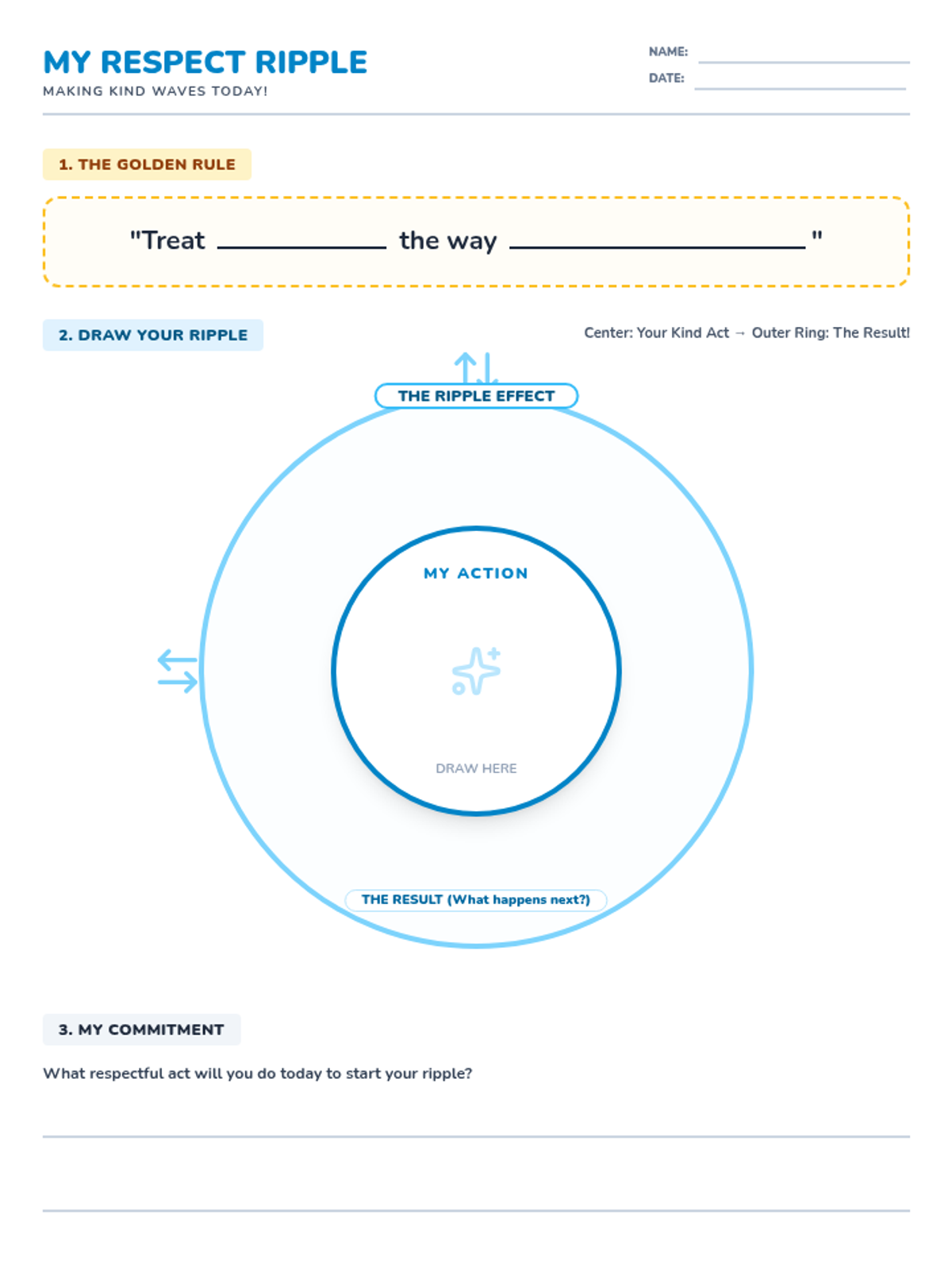
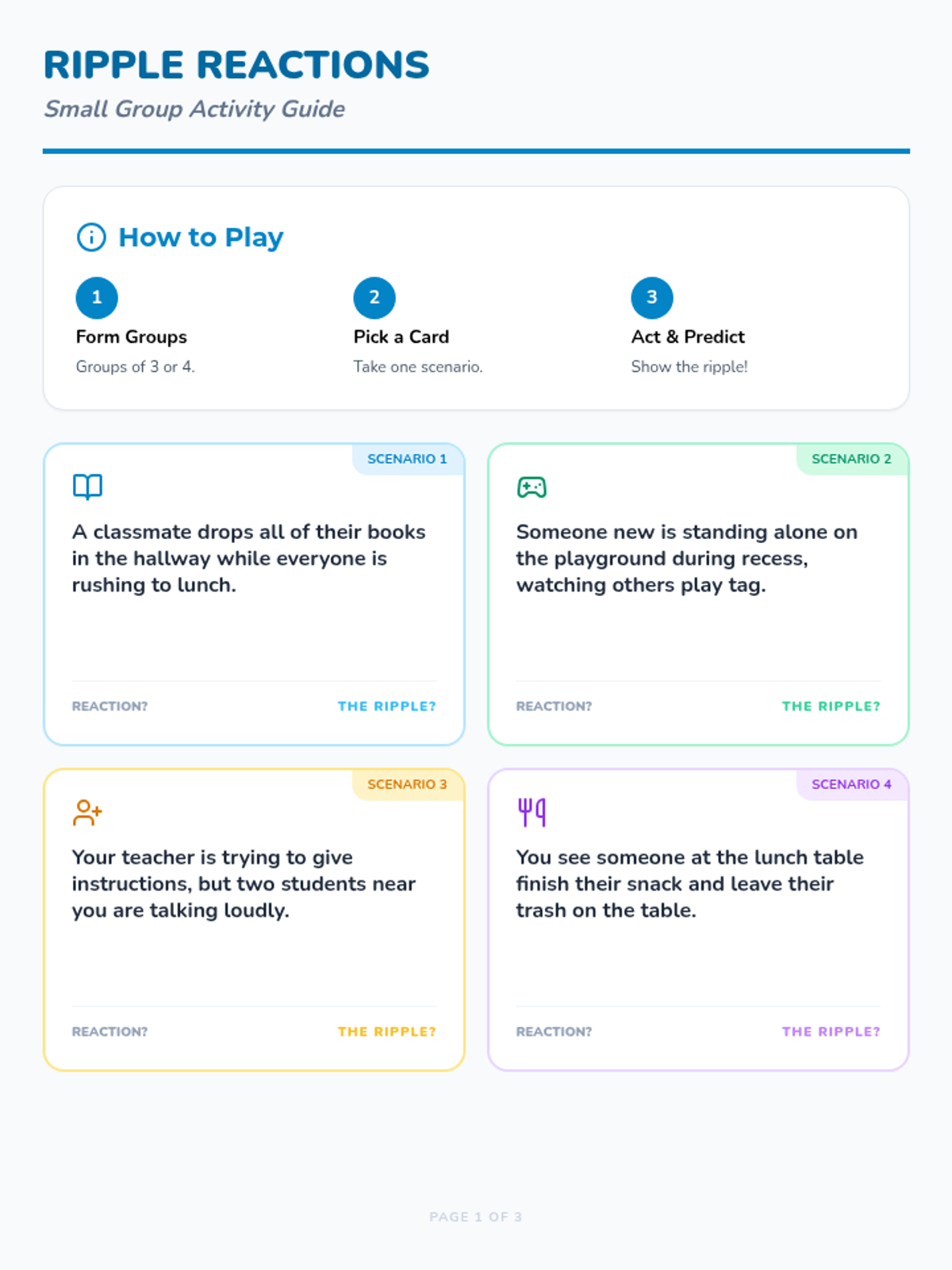
A comprehensive lesson on respect for K-4 students, focusing on the Golden Rule and the 'ripple effect' of kind actions. Includes a visual slide deck, teacher's guide, student worksheet, anchor chart, and small group activity cards.
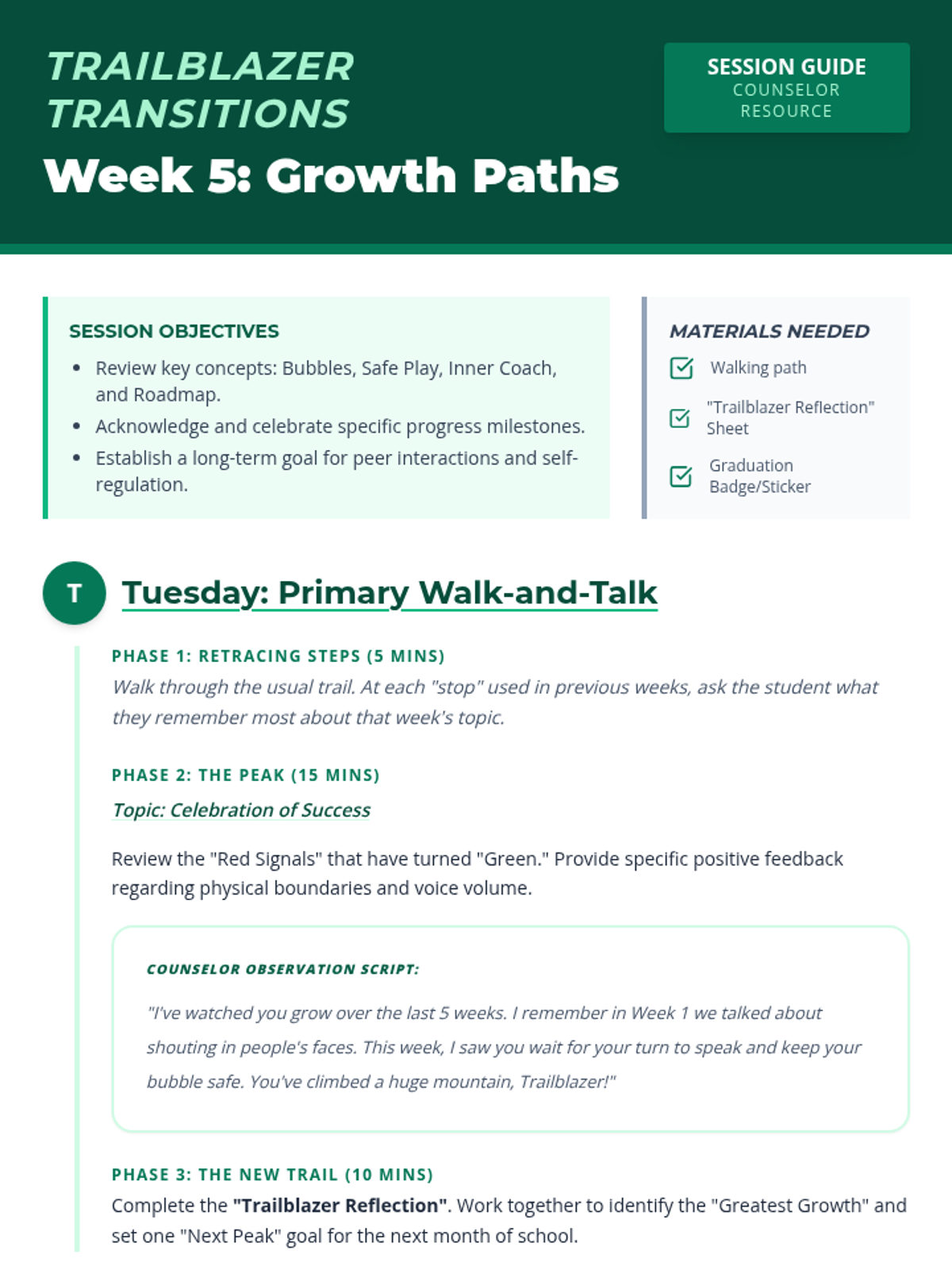
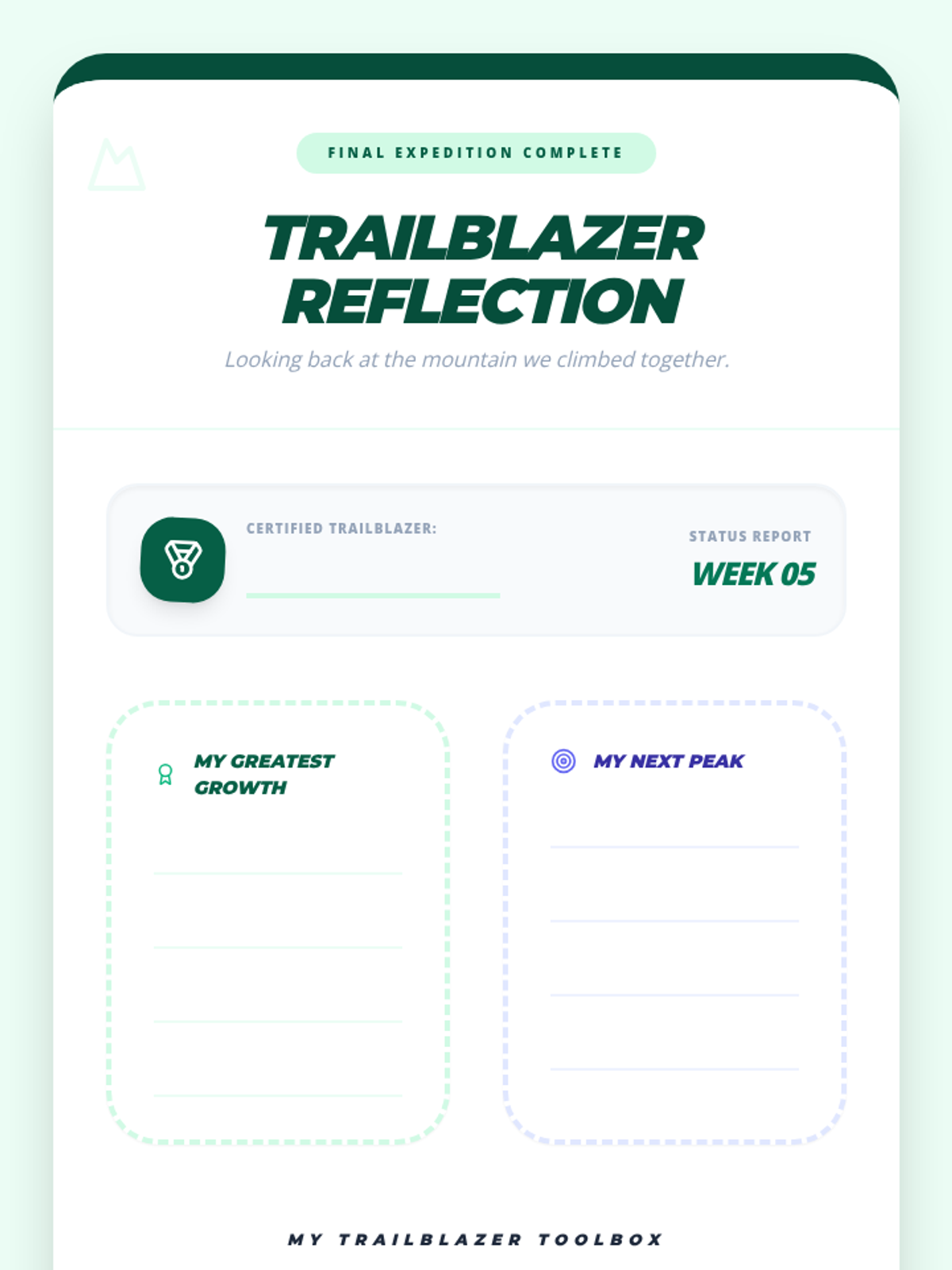
Consolidates learning from the previous weeks and sets goals for continued social-emotional success.
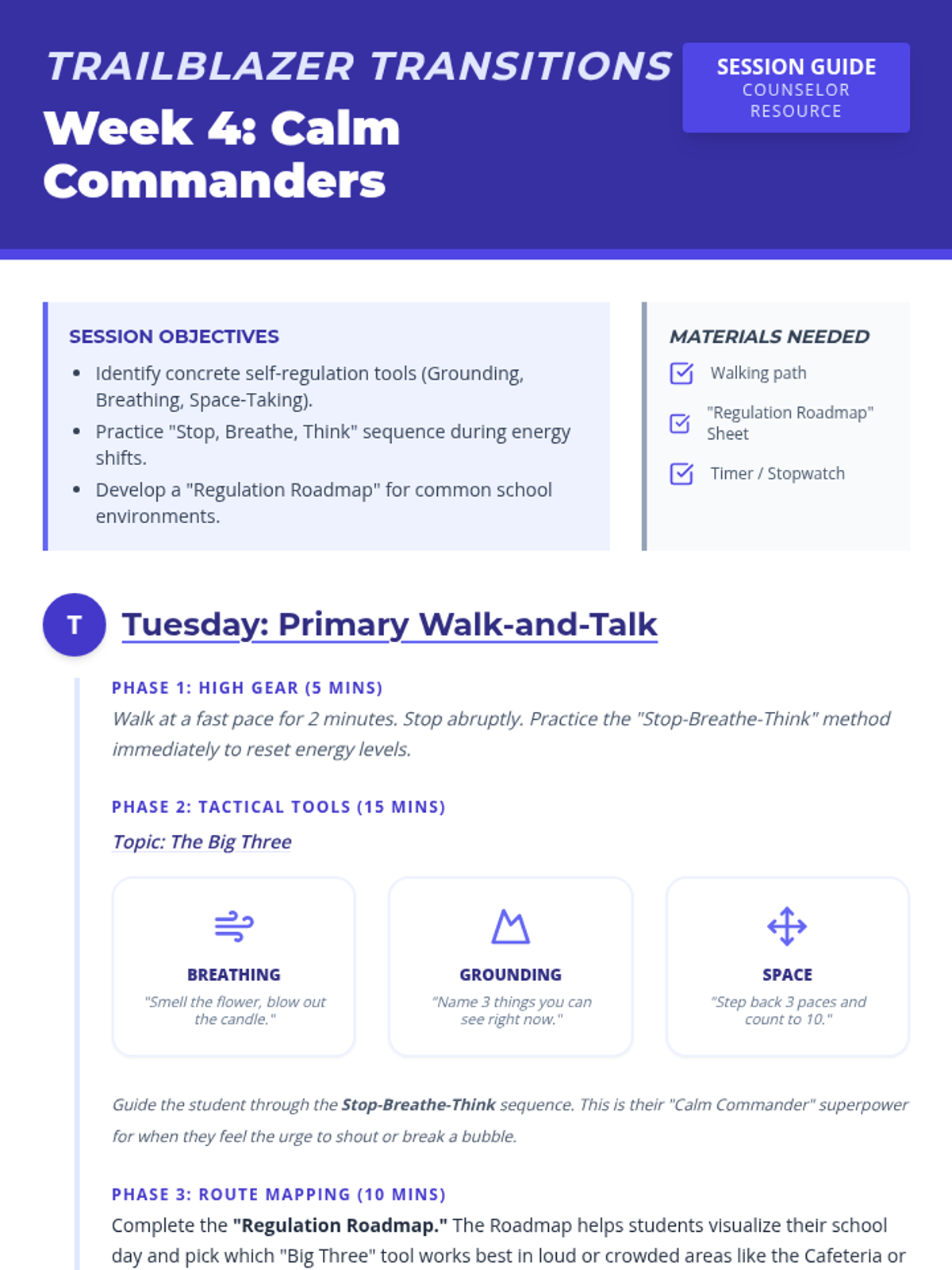
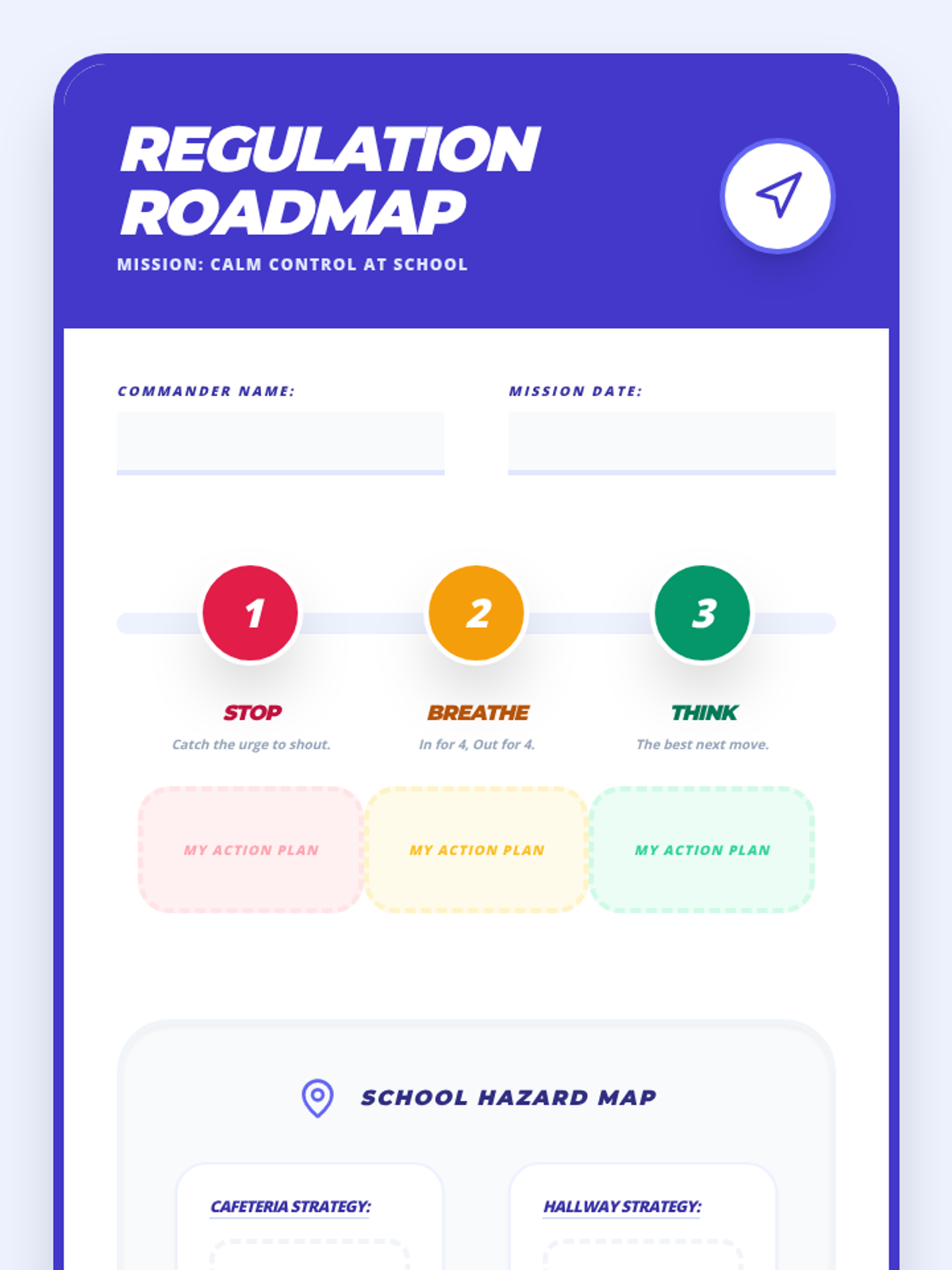
Teaches concrete self-regulation strategies and provides tools for emotional regulation.
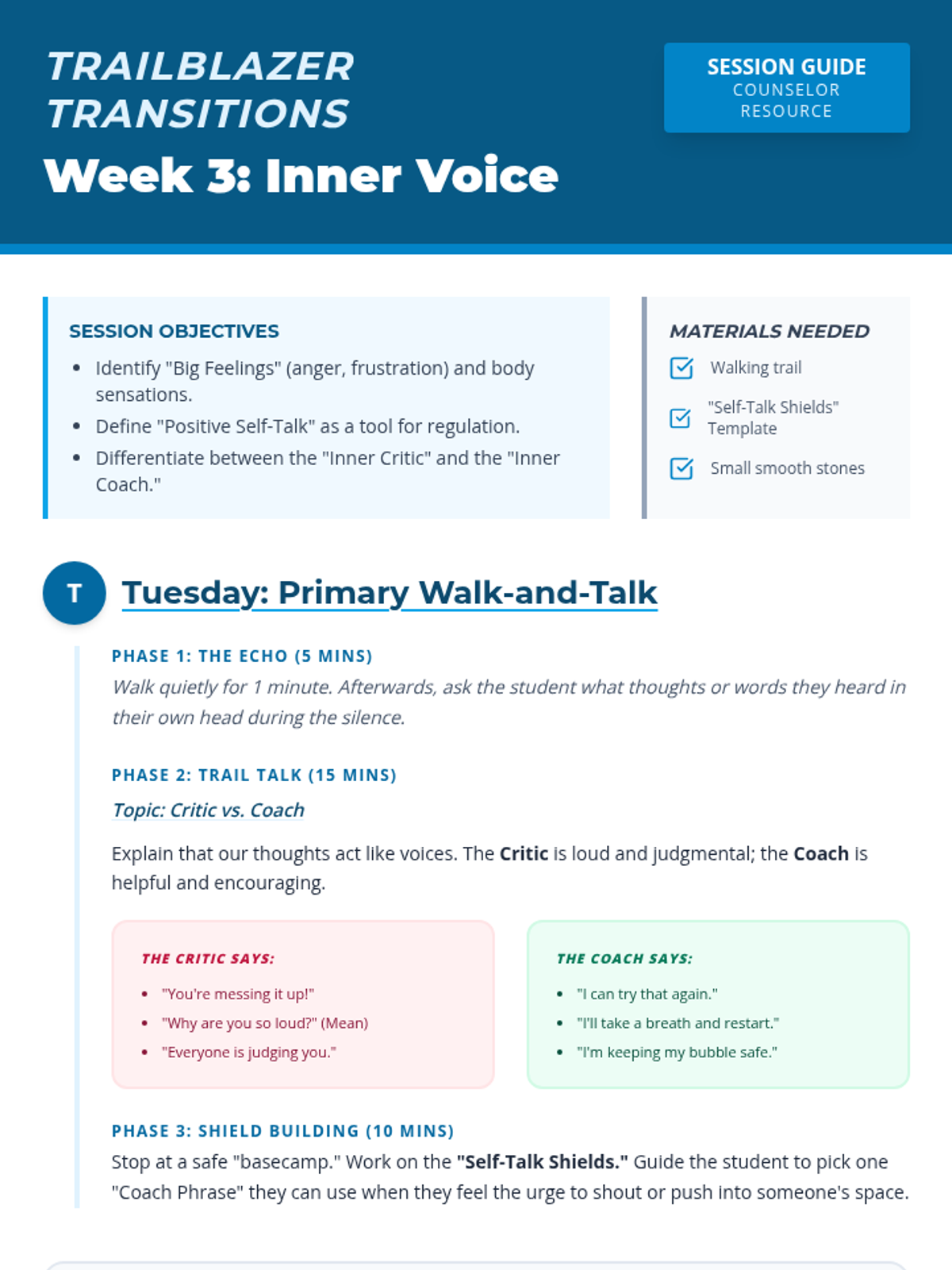
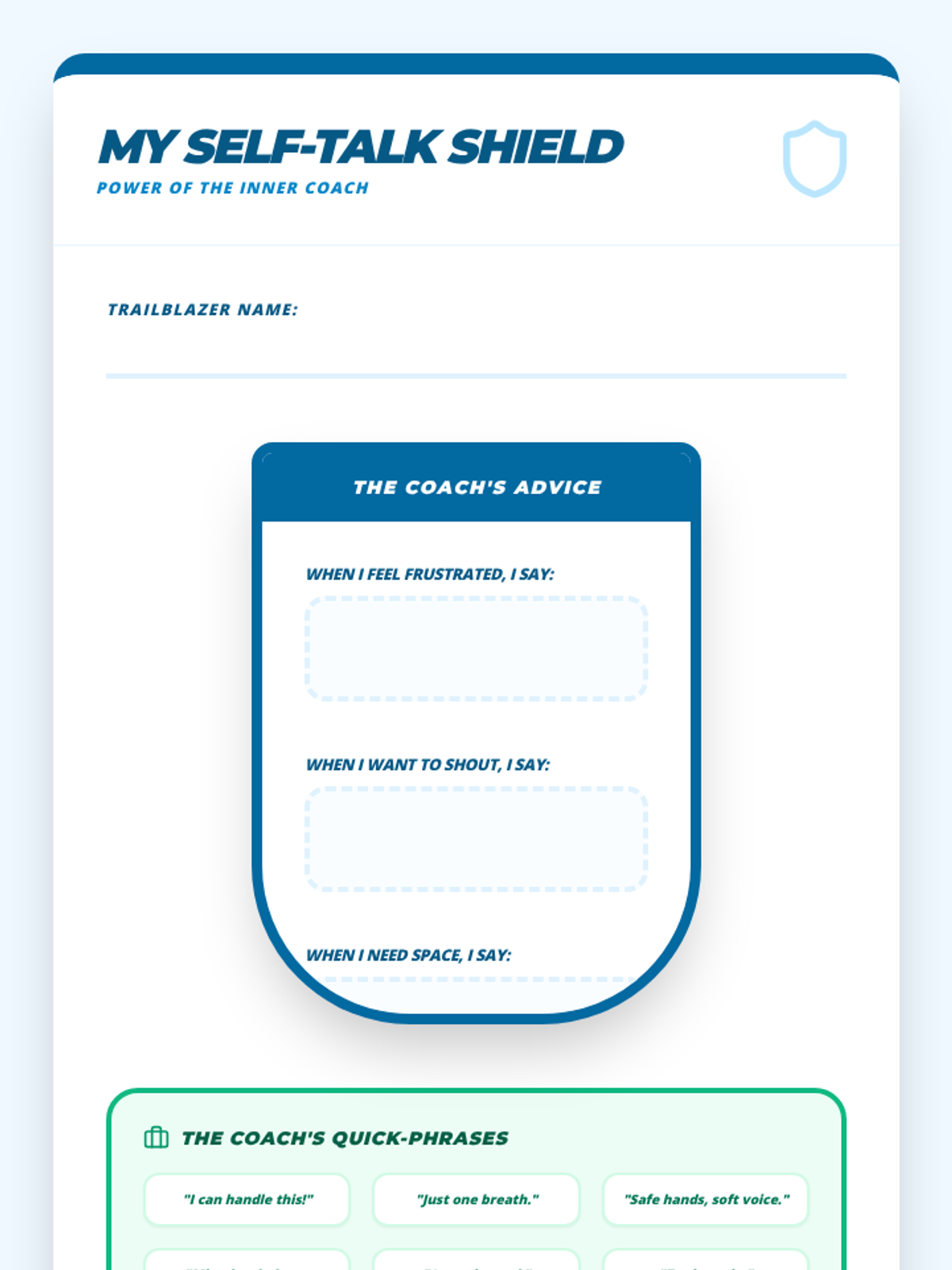
Explores emotional awareness and the power of positive self-talk to manage frustration.
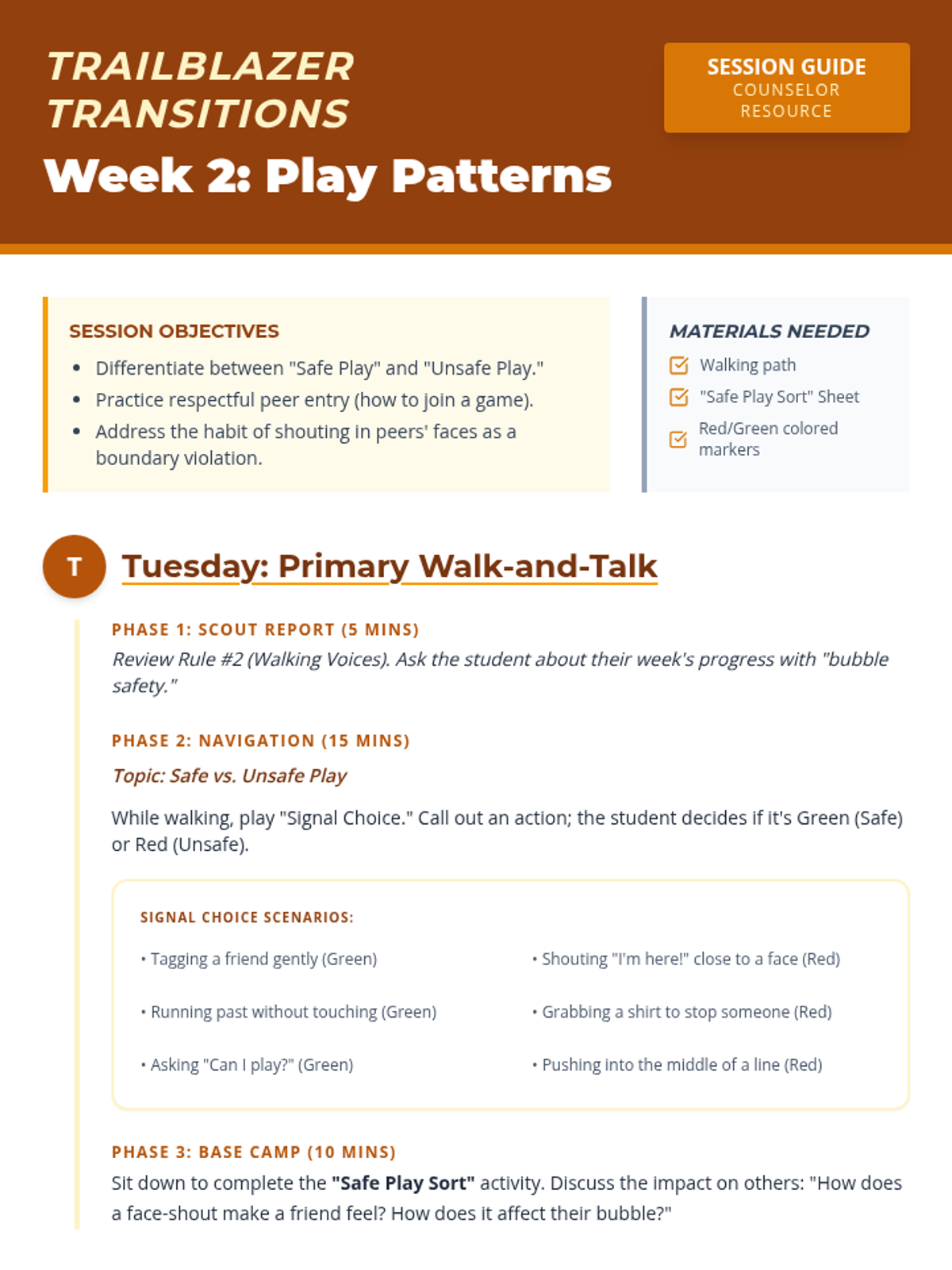
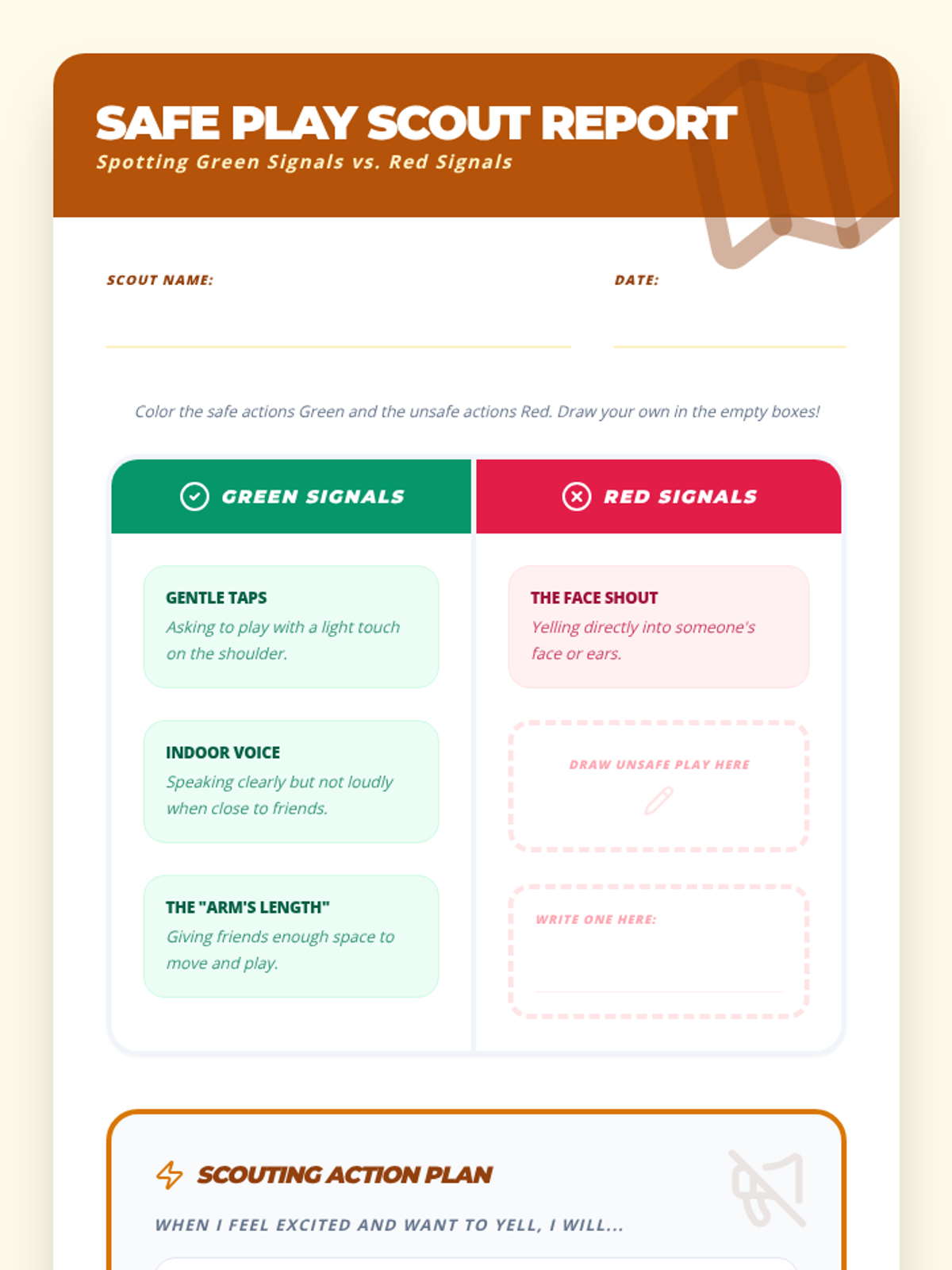
Focuses on distinguishing between safe and unsafe play, specifically addressing peer interactions like shouting and physical contact.
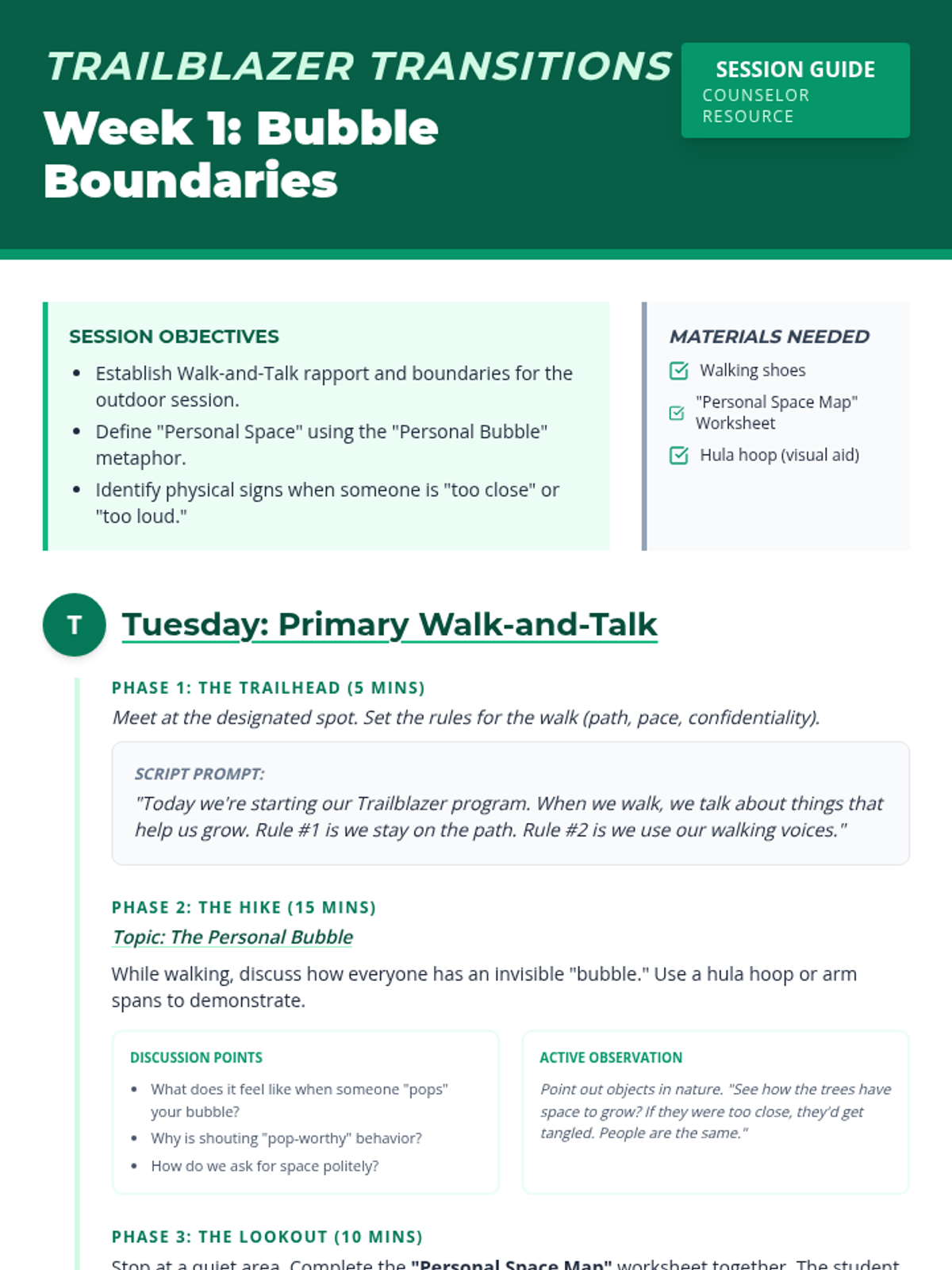
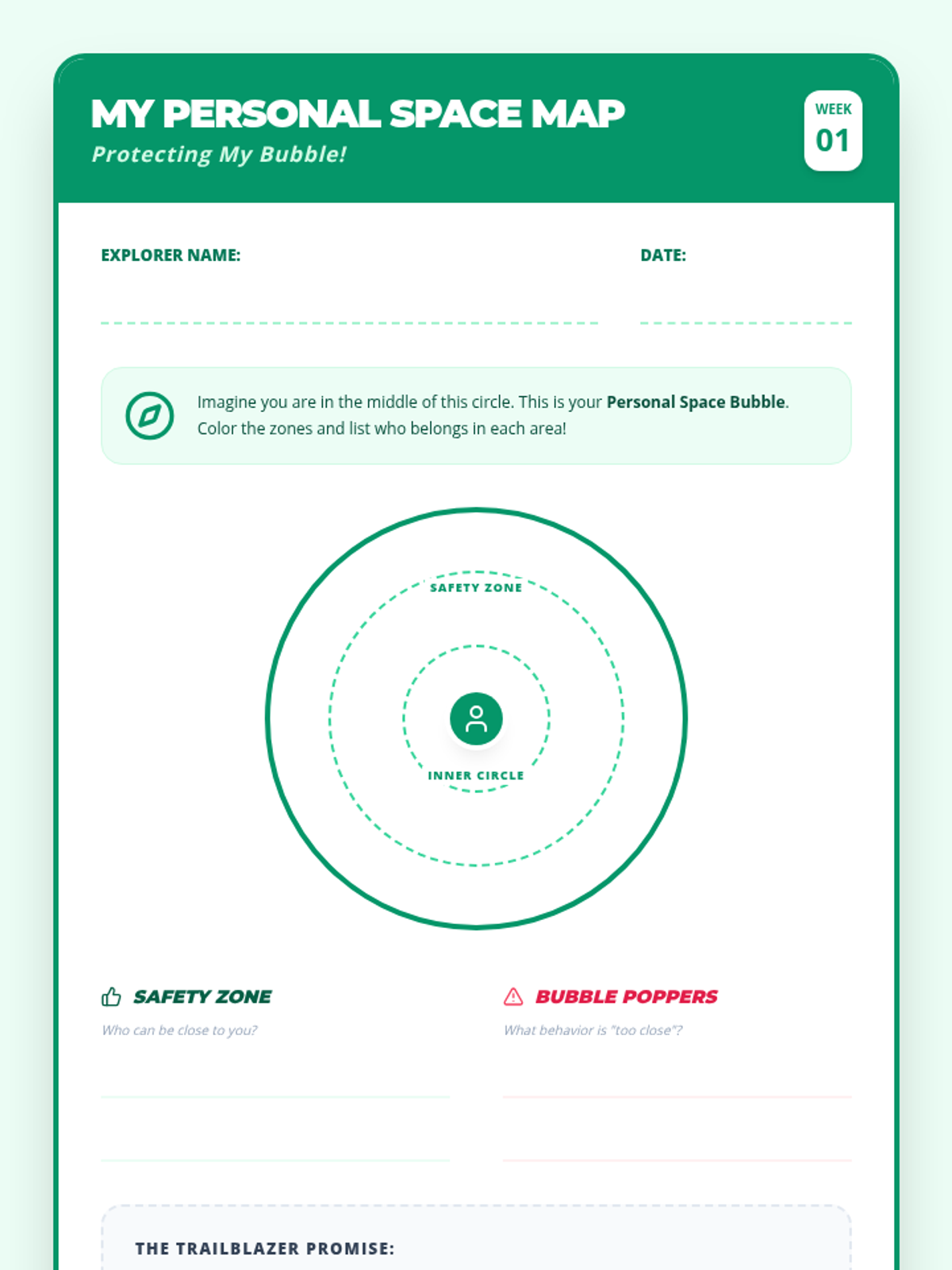
Introduces the concept of personal space and 'bubbles' while establishing the walk-and-talk routine.
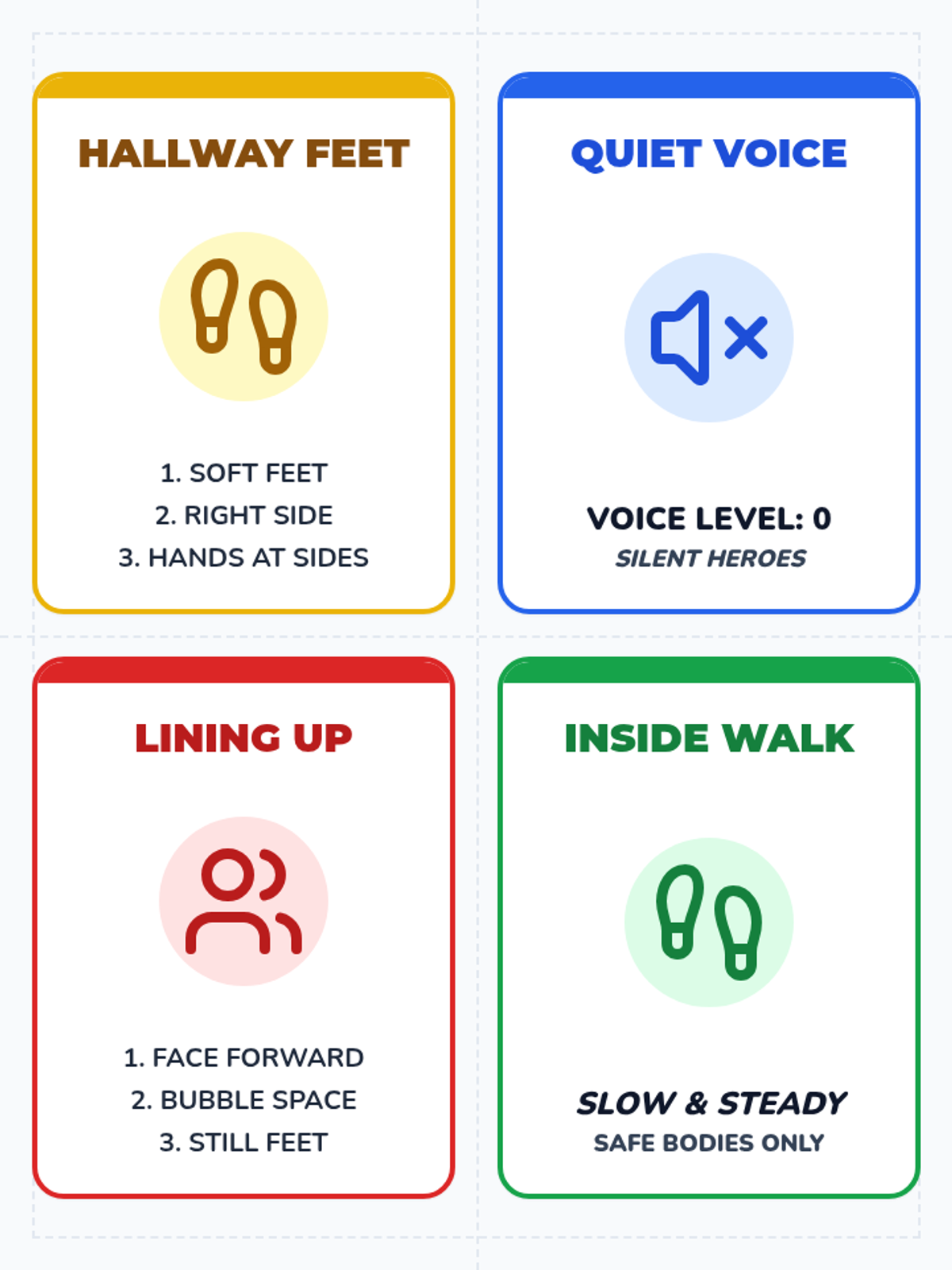
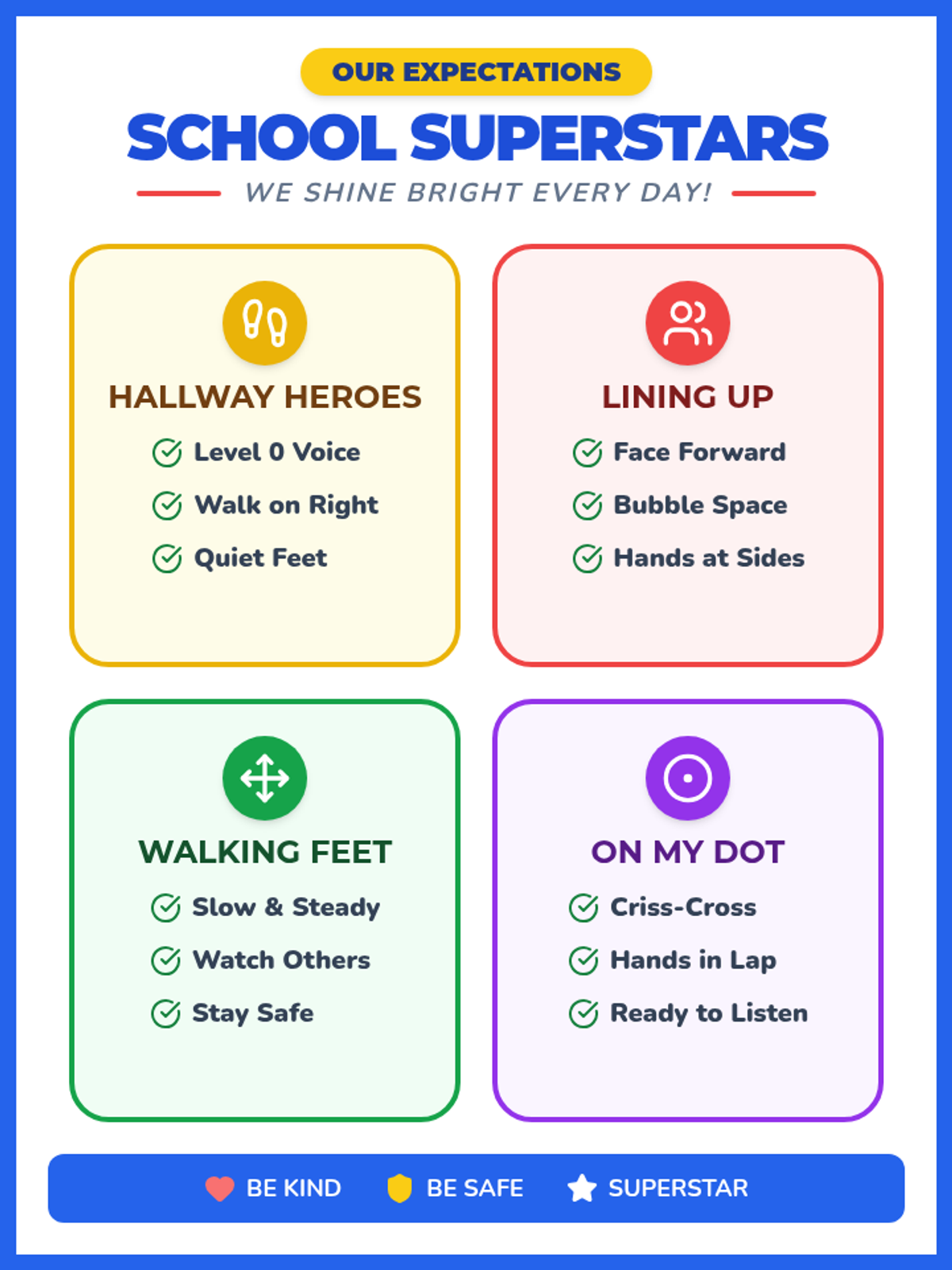
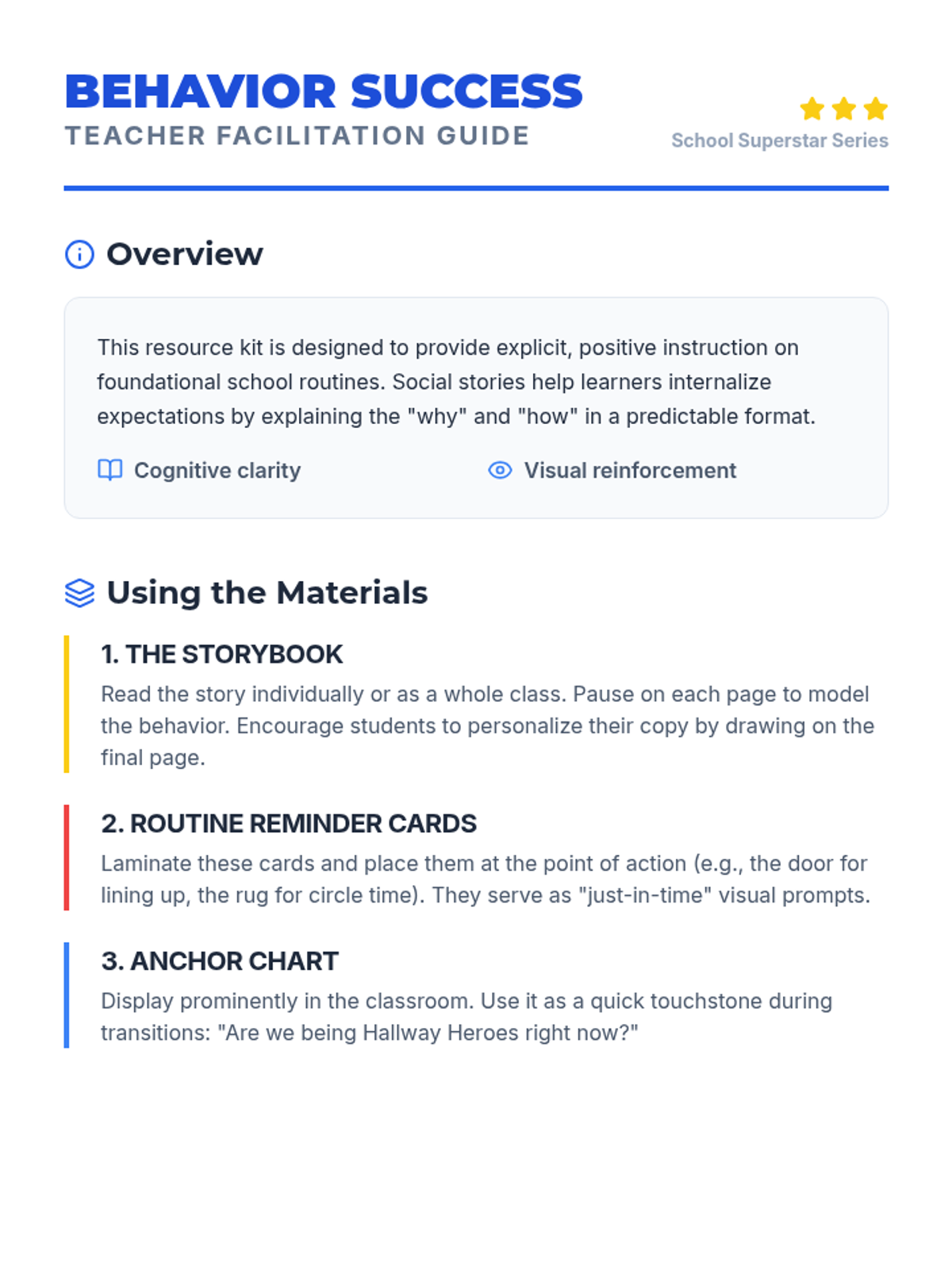
A comprehensive set of social story materials designed to teach and reinforce expected behaviors for walking in hallways, standing in lines, moving through the classroom, and participating in circle time.
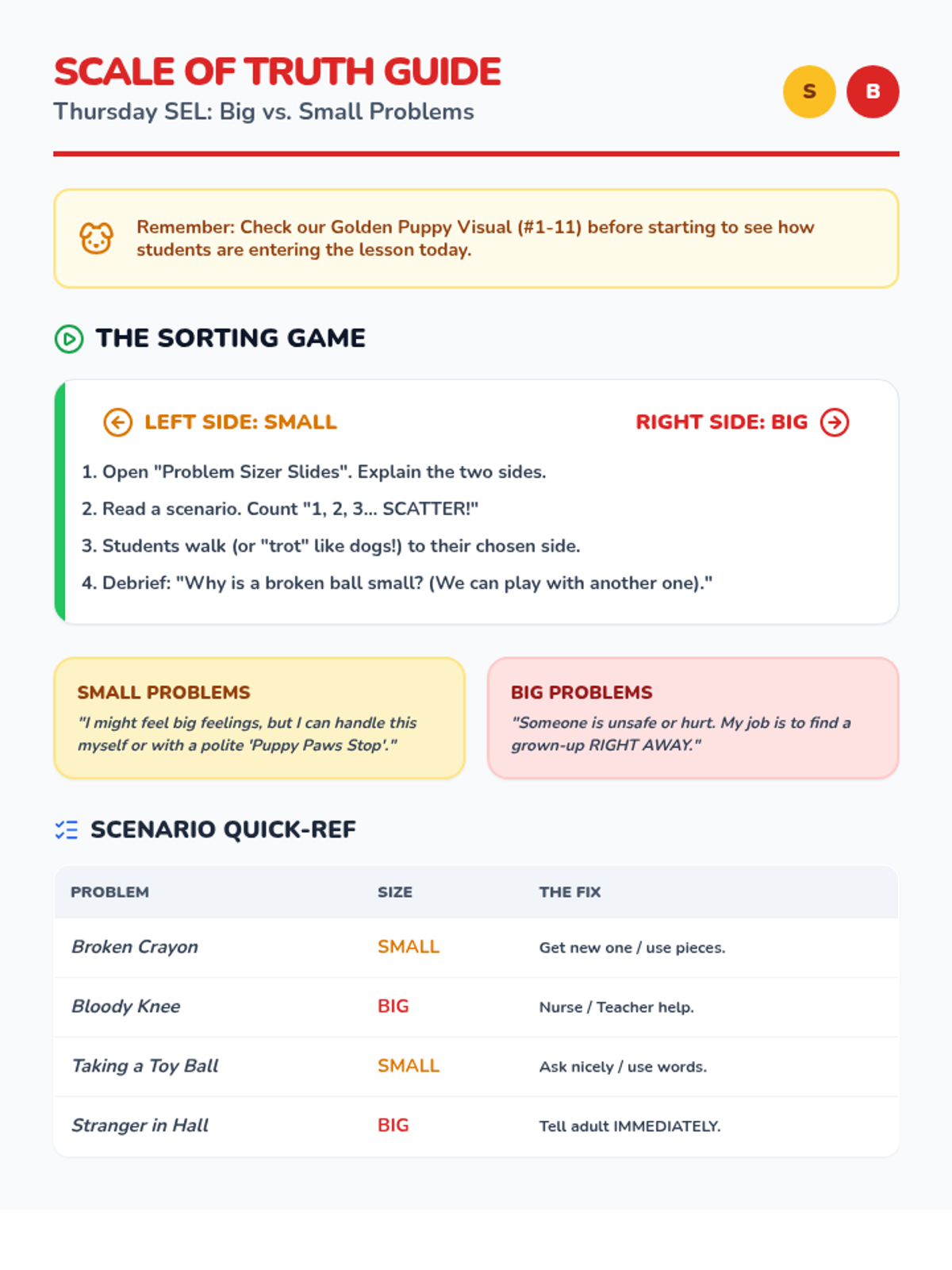
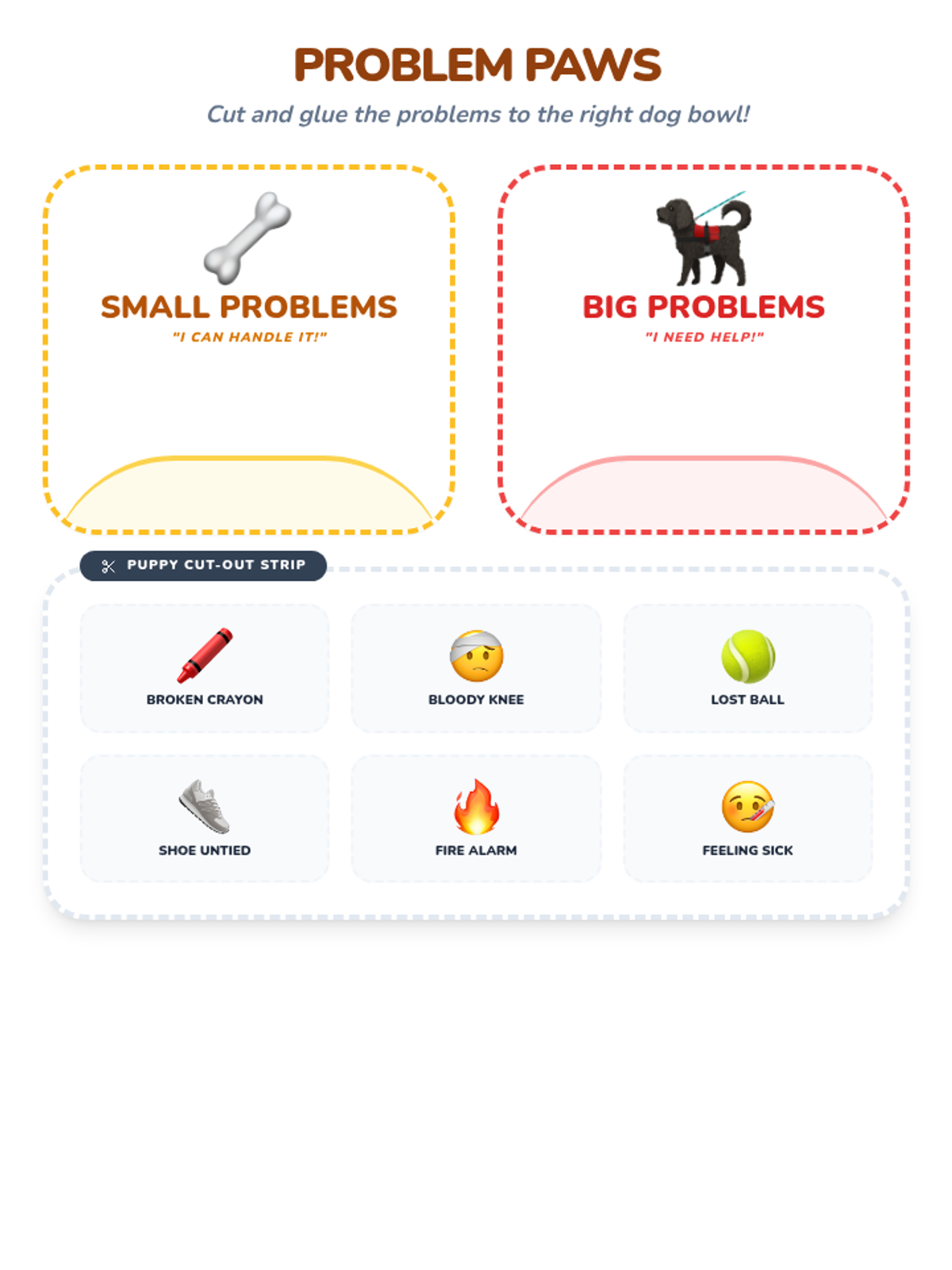
A Thursday lesson focused on categorizing problems as Big or Small, featuring a 'stand on this side' sorting game to help Kindergarteners understand when to solve things independently versus seeking adult help.
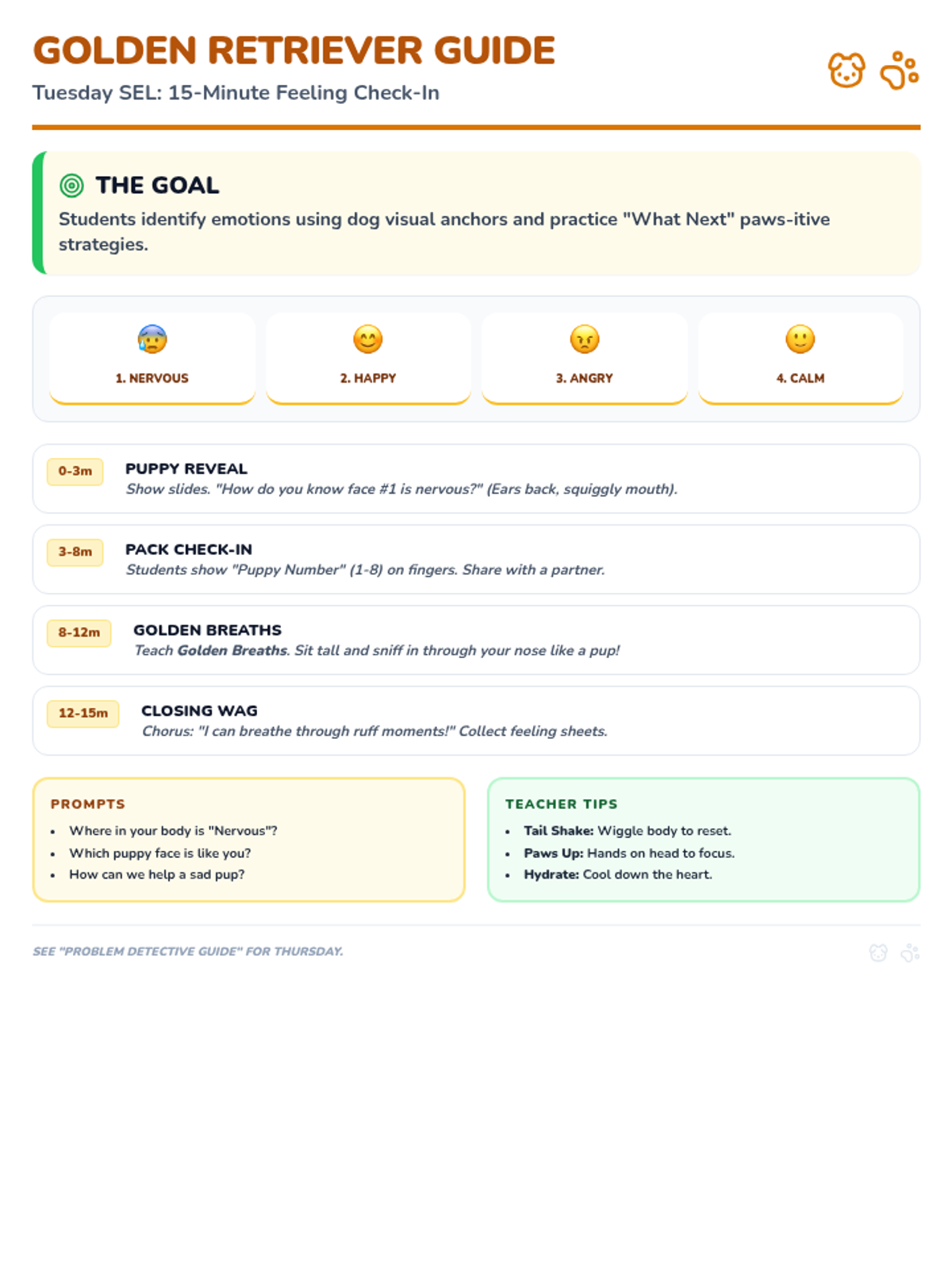
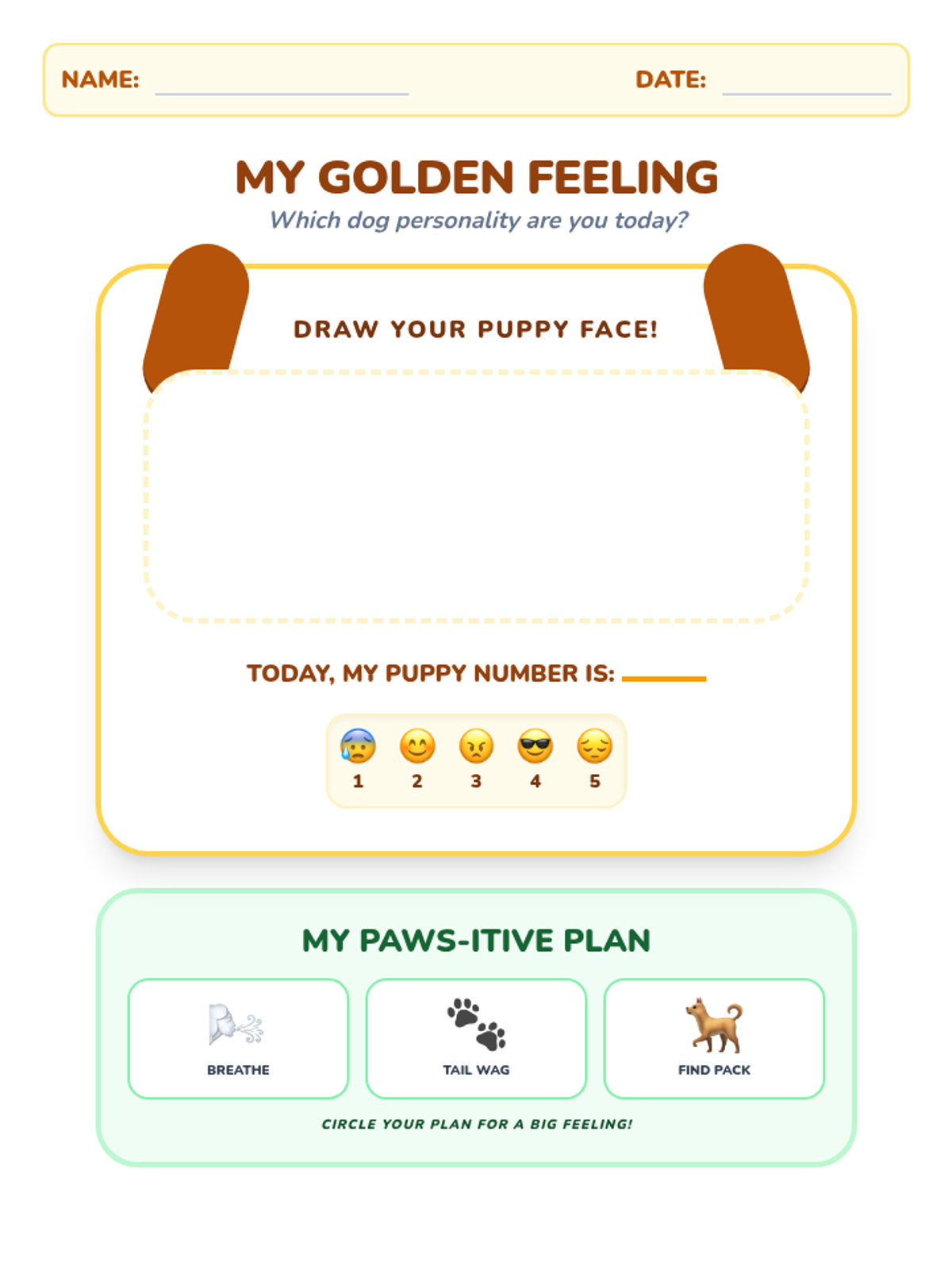
A recurring 15-minute Tuesday lesson where students use Golden Retriever expressions to identify their feelings and learn practical 'What Next' strategies for emotional regulation.
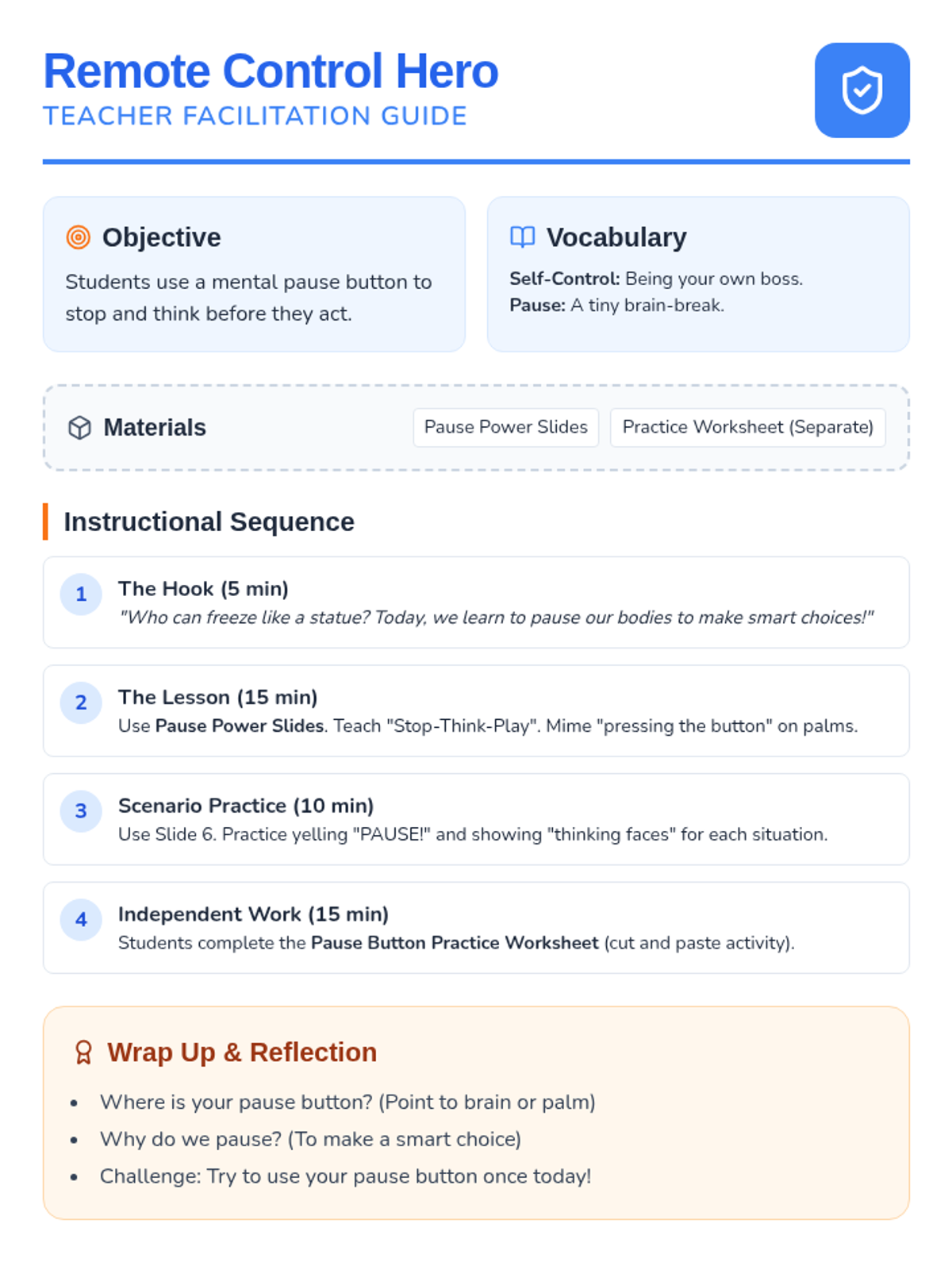
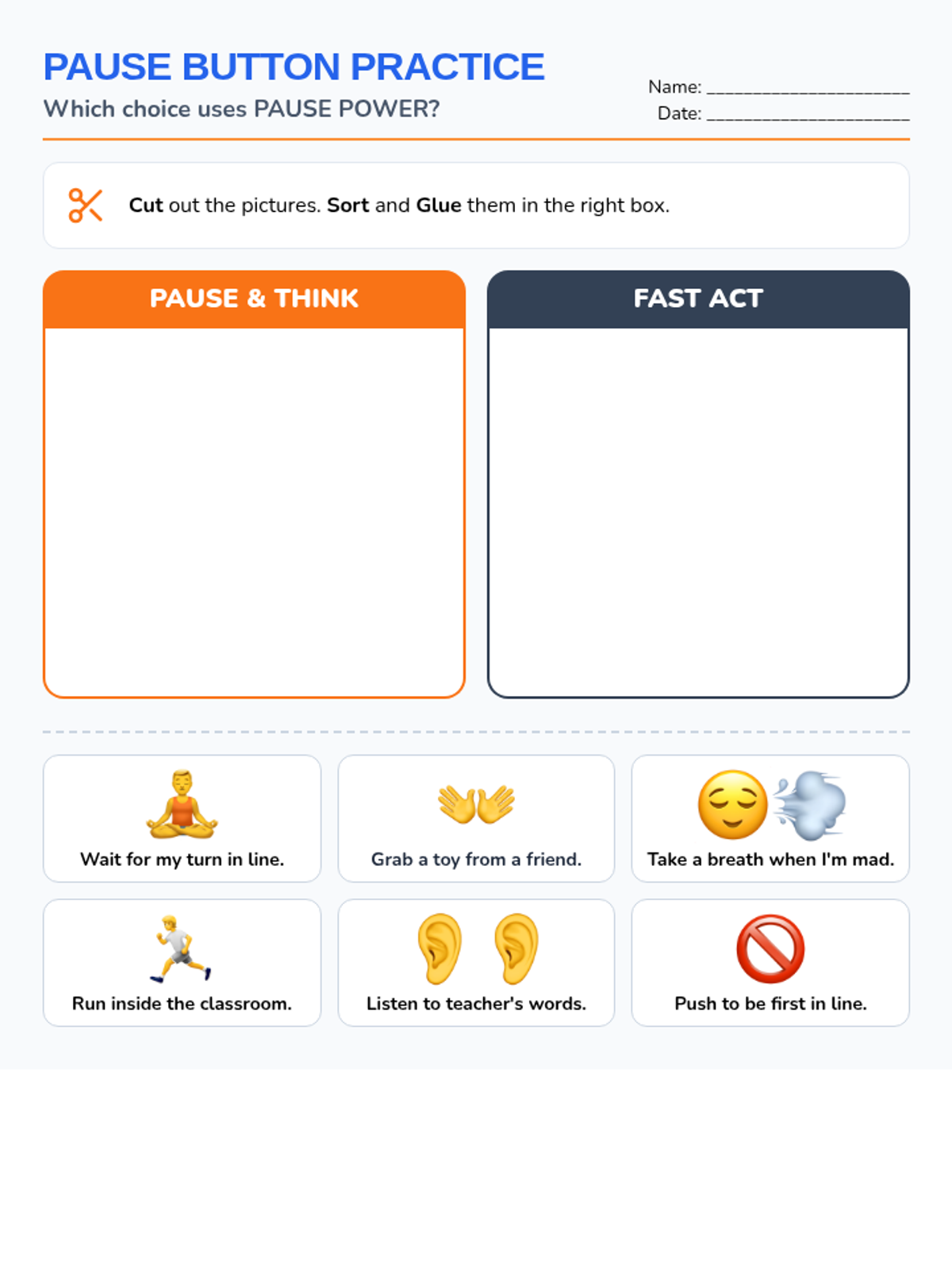
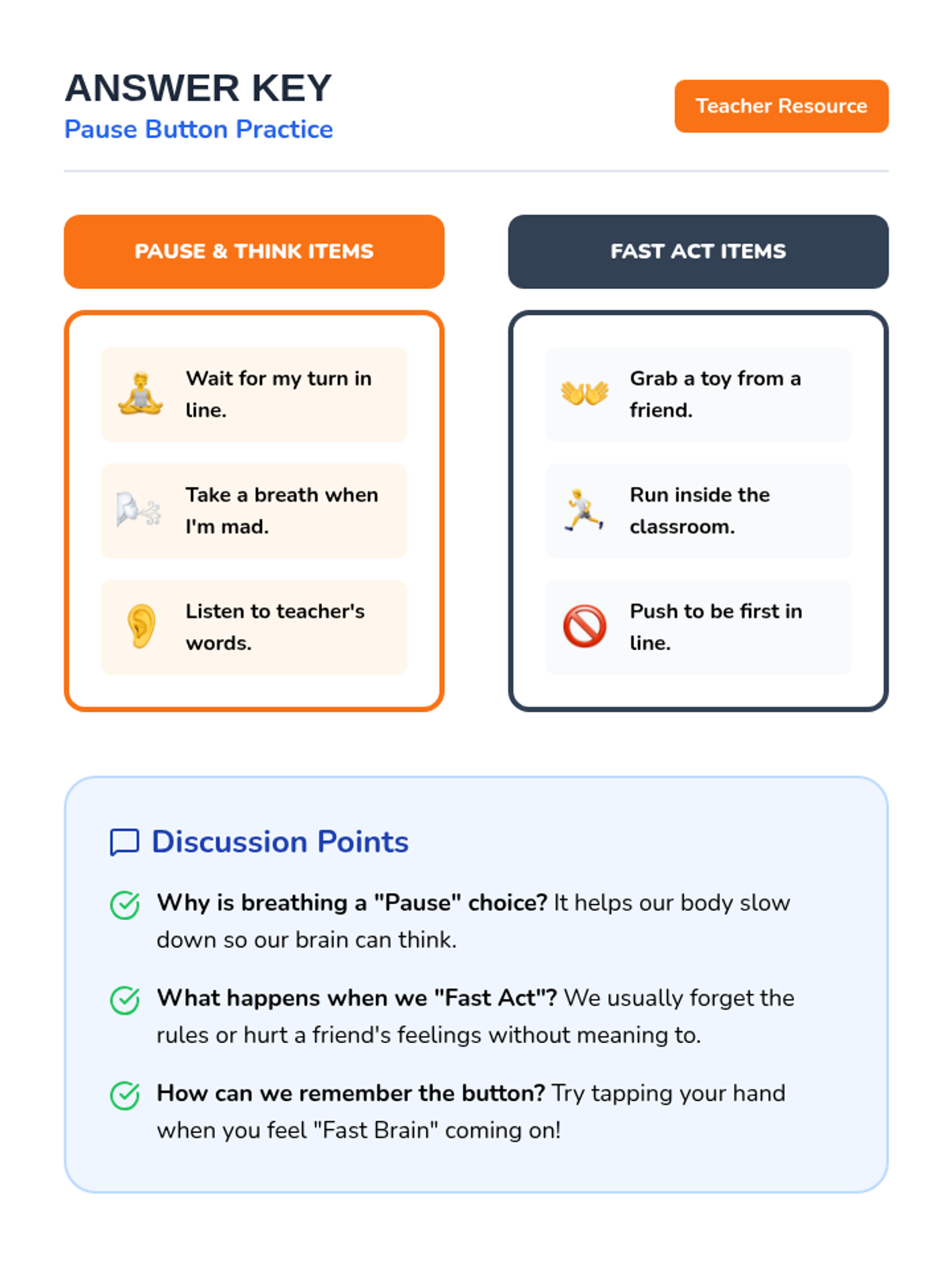
A lesson for kindergarten students to learn self-control using the 'Pause Button' strategy. Students explore how to think before they act through interactive slides and a hands-on sorting activity.
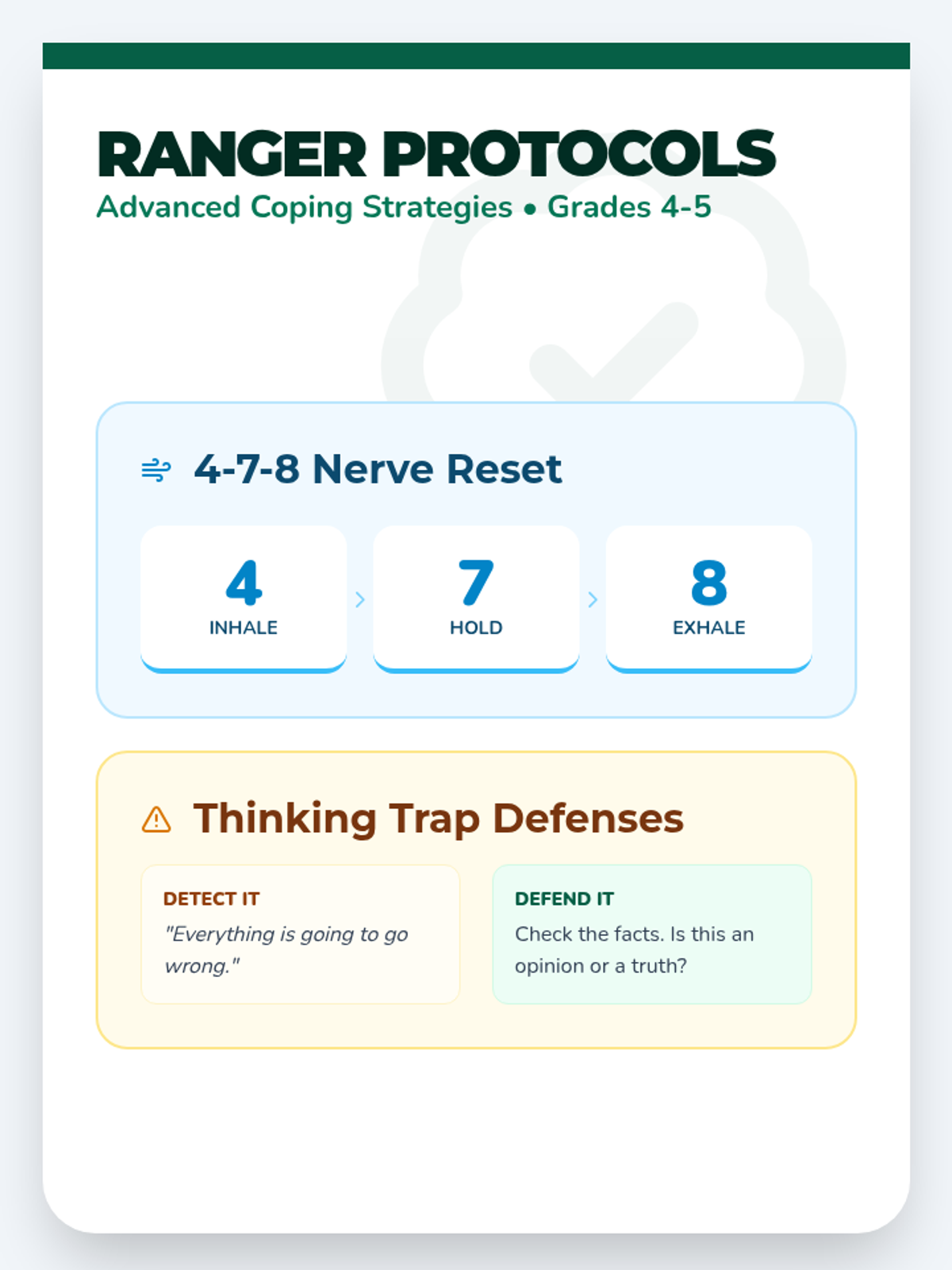
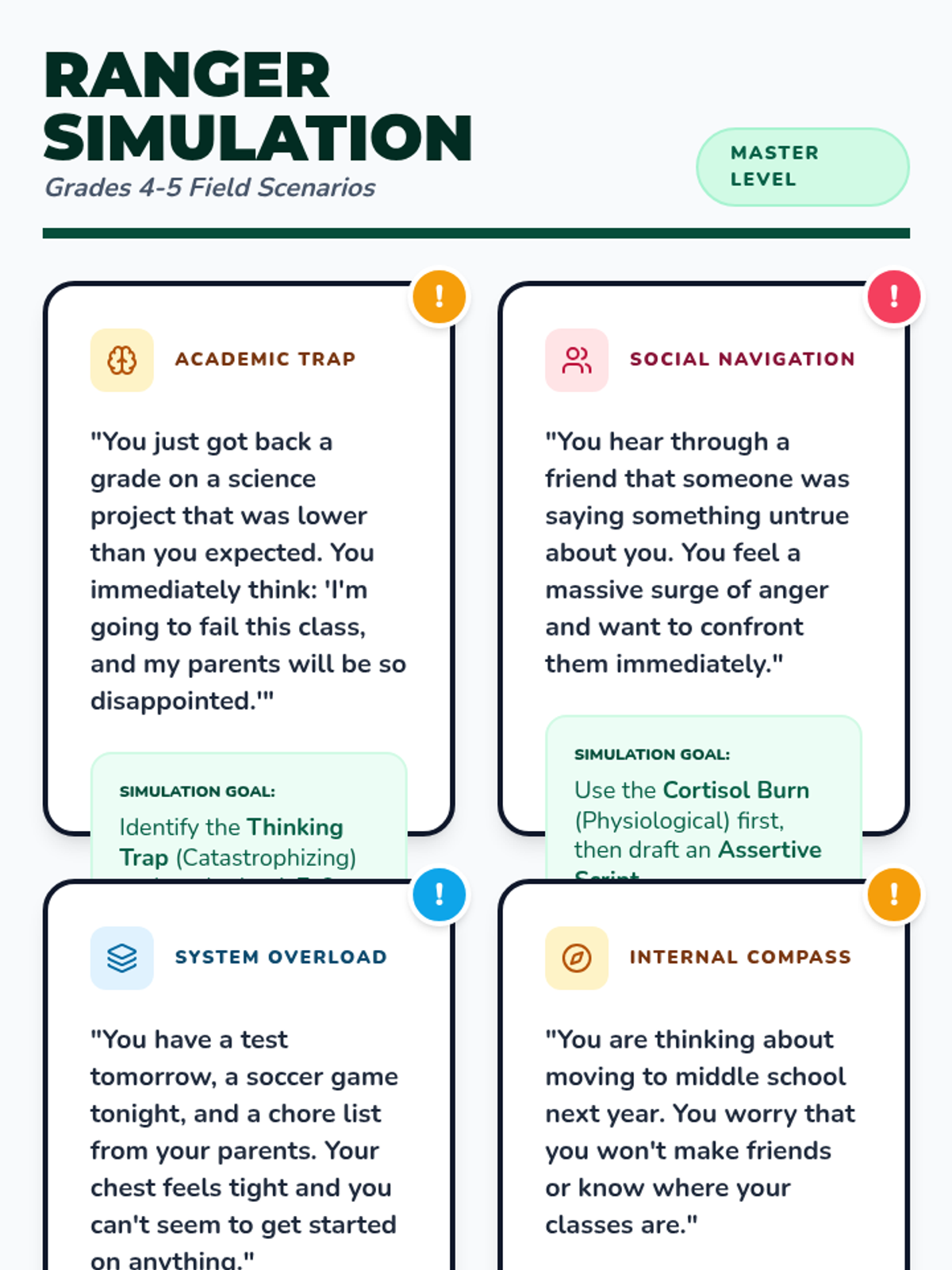
Advanced coping skills for 4-5 students exploring complex grounding methods, assertive communication strategies, cognitive reframing of self-talk, and understanding the physiological benefits of movement for stress management.
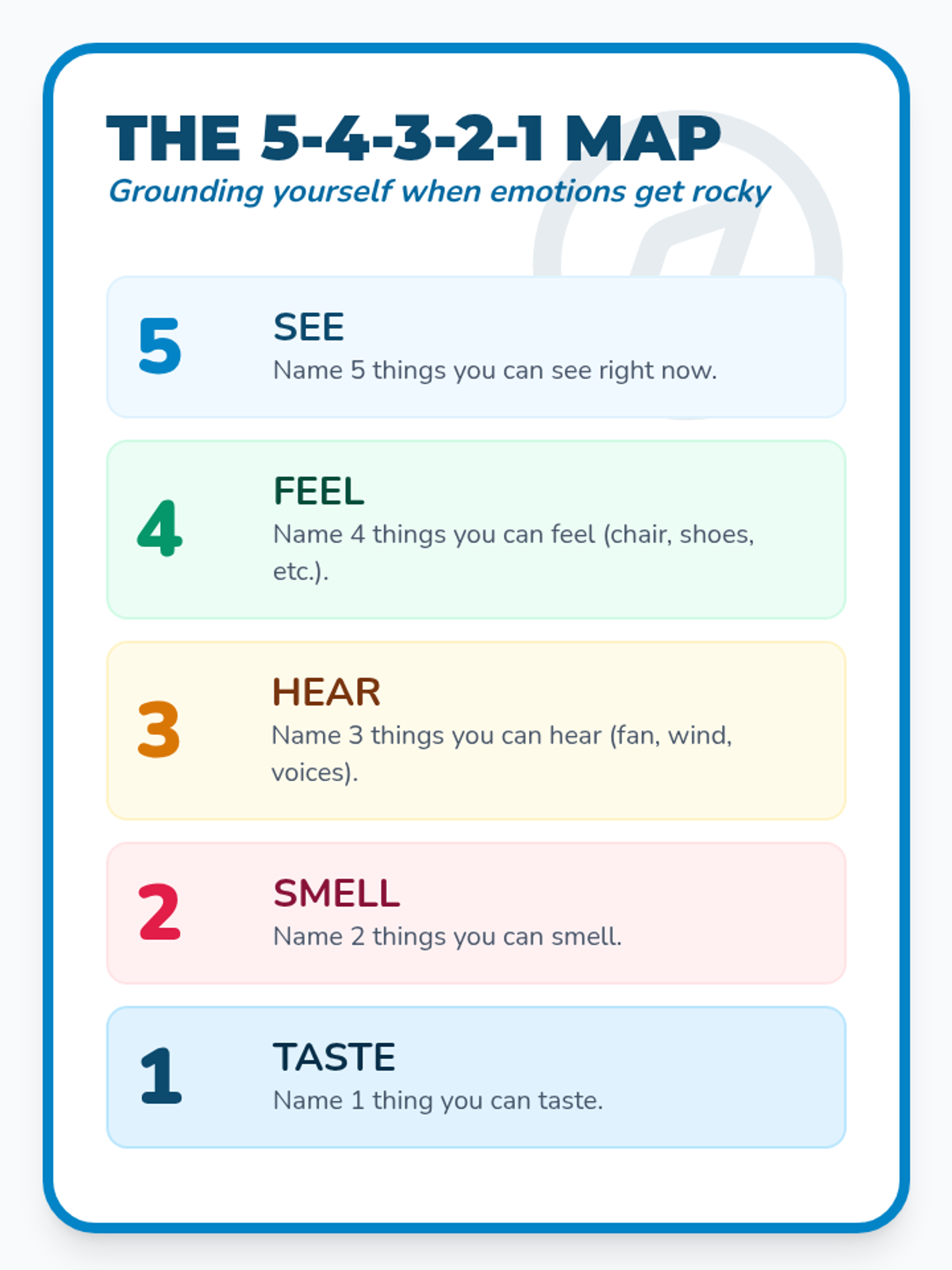
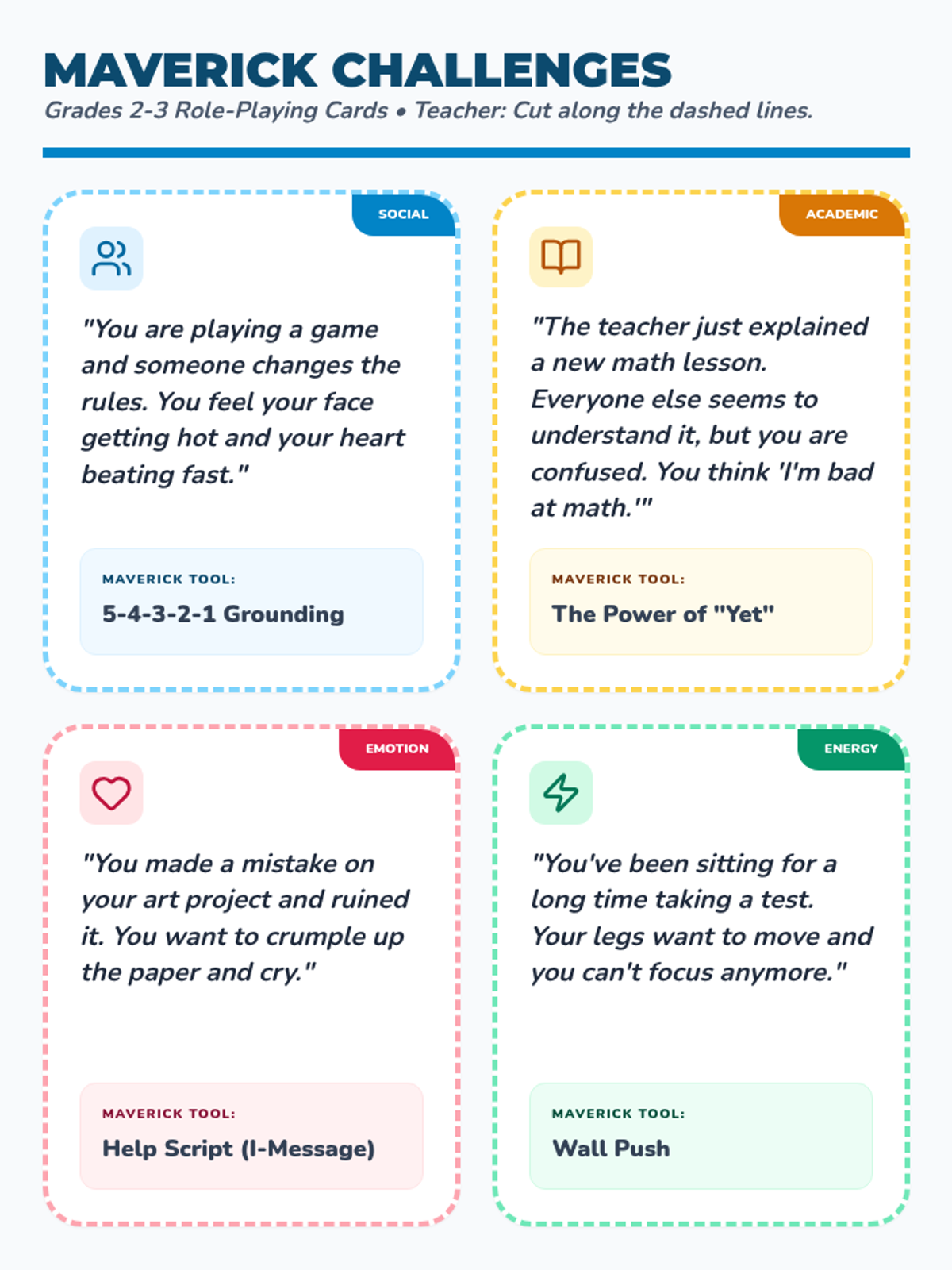
Intermediate coping skills for 2-3 students introducing the 5-4-3-2-1 grounding technique, specific communication scripts for asking for help, reframing negative thoughts, and purposeful physical activities to release energy.
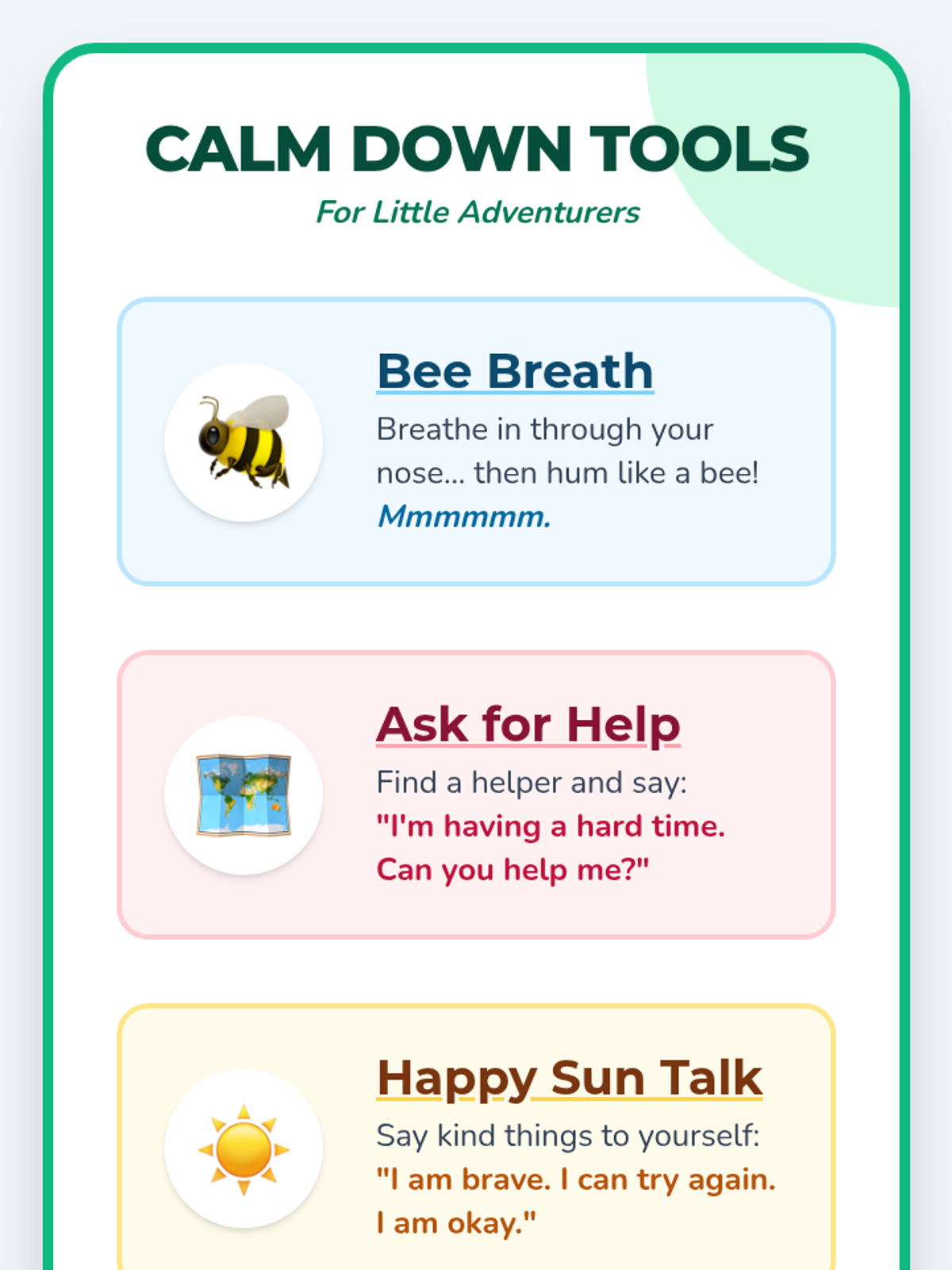
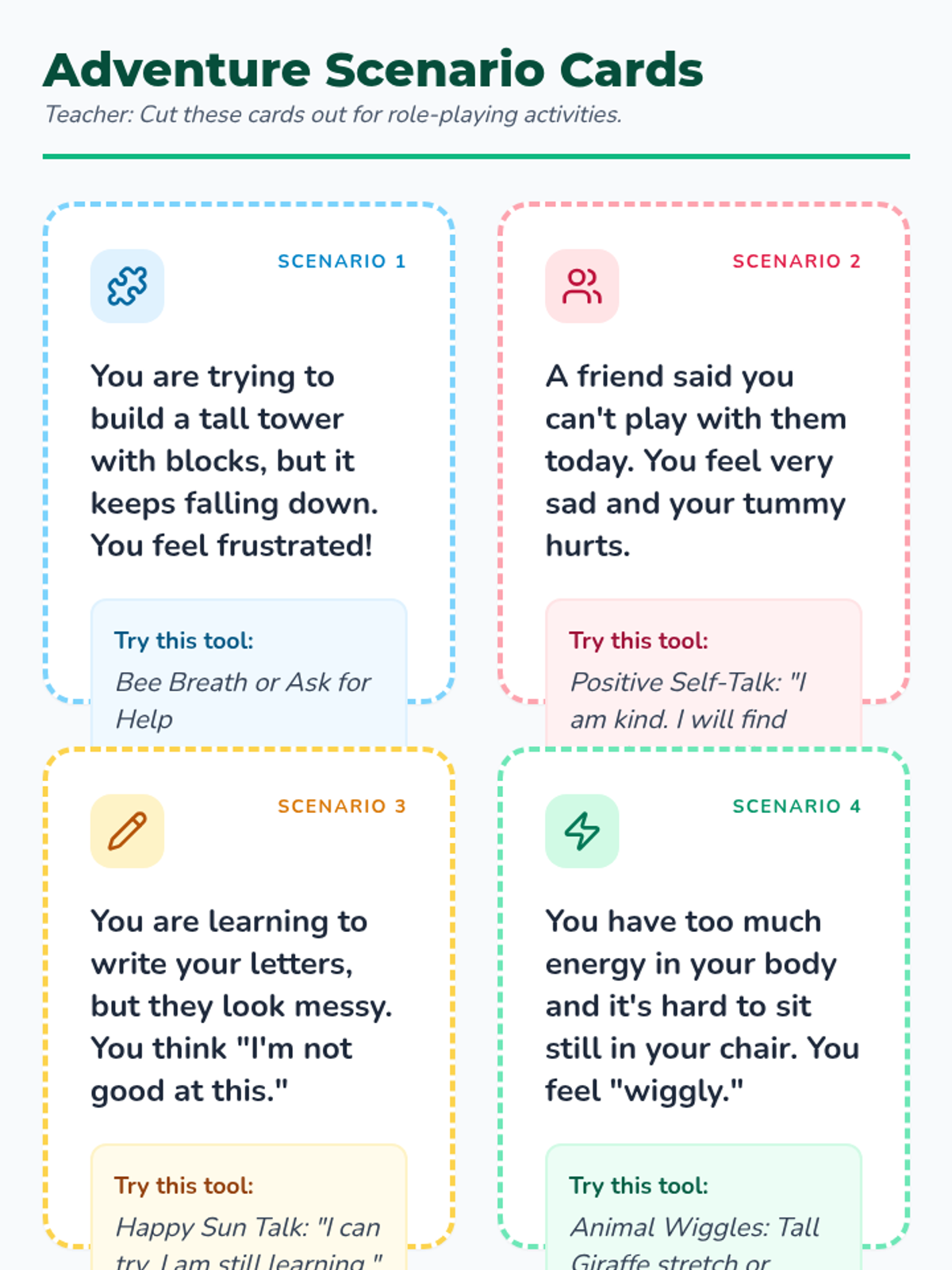
Foundational coping skills for K-1 students focusing on simple breathing techniques (like 'Bee Breath'), identifying helpers, basic 'I can' self-talk, and fun animal-themed movements.
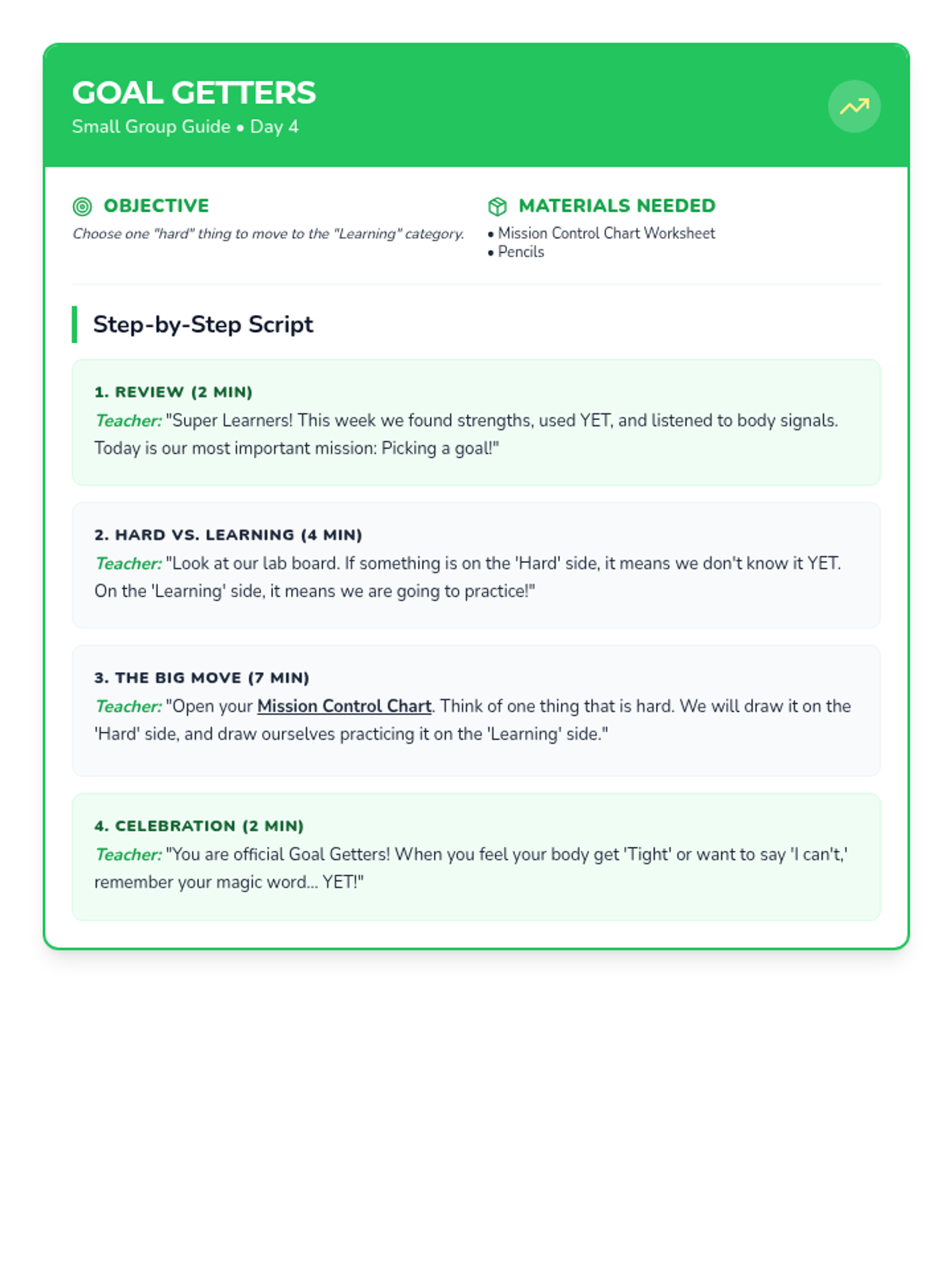
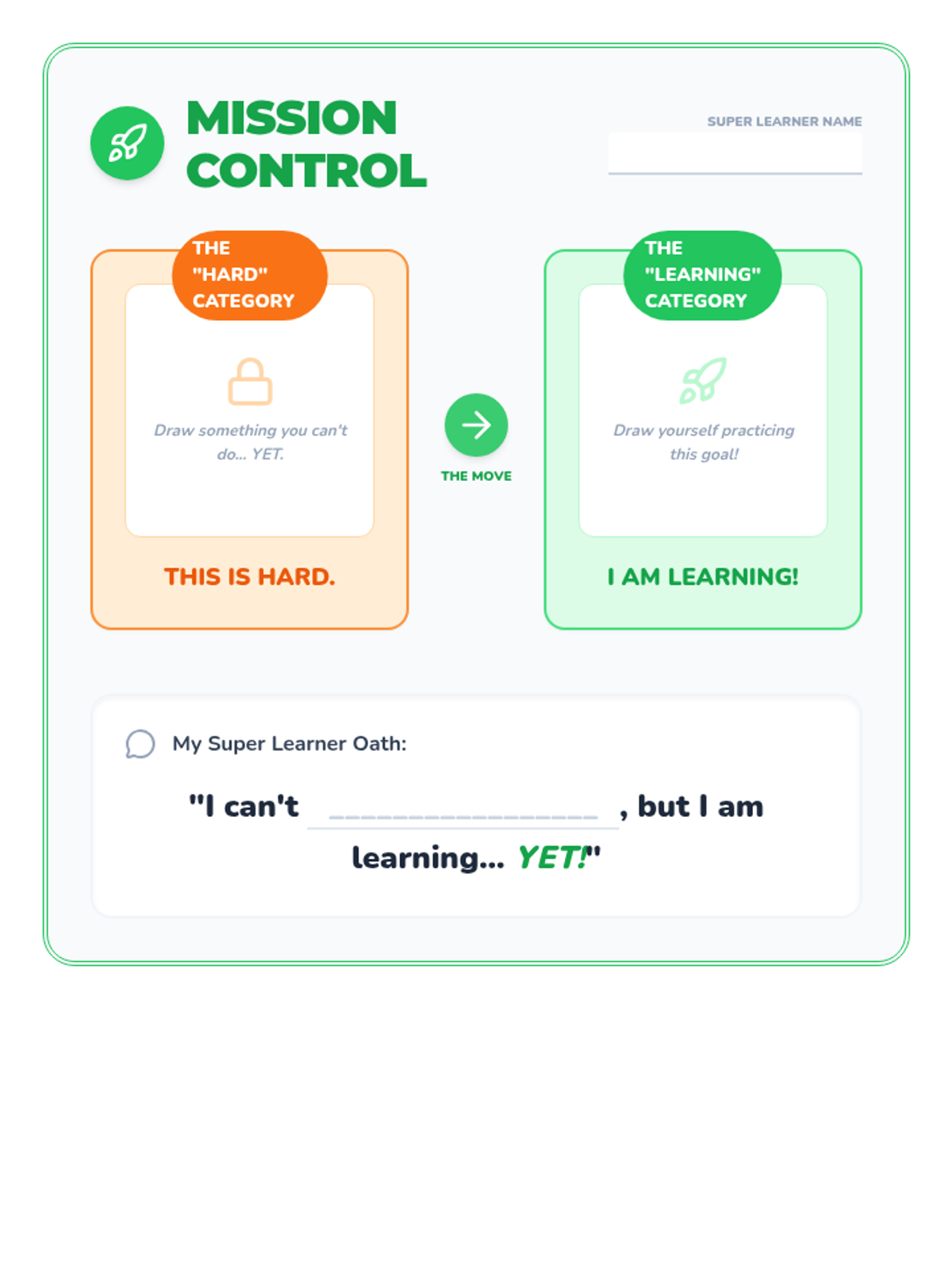
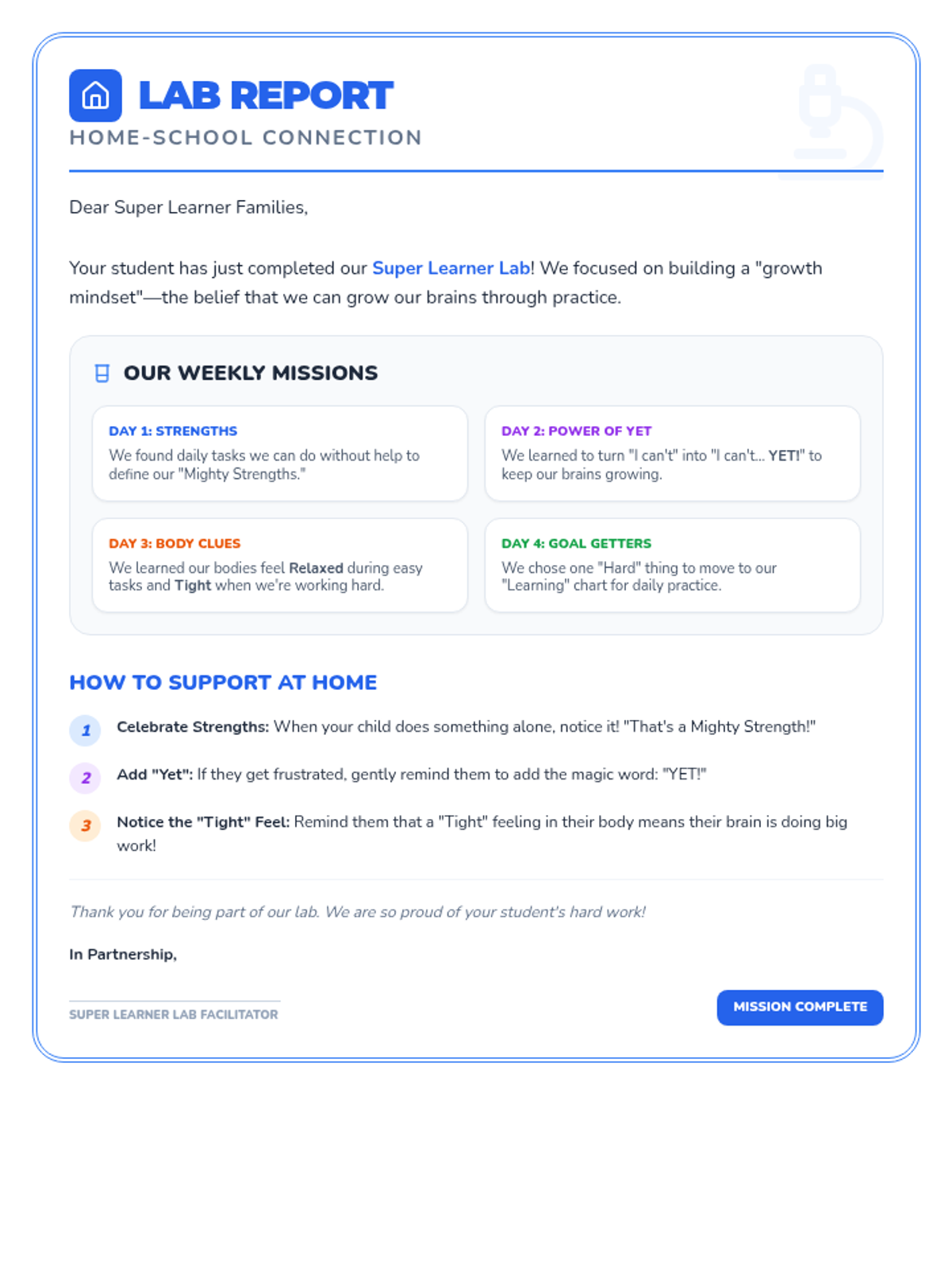
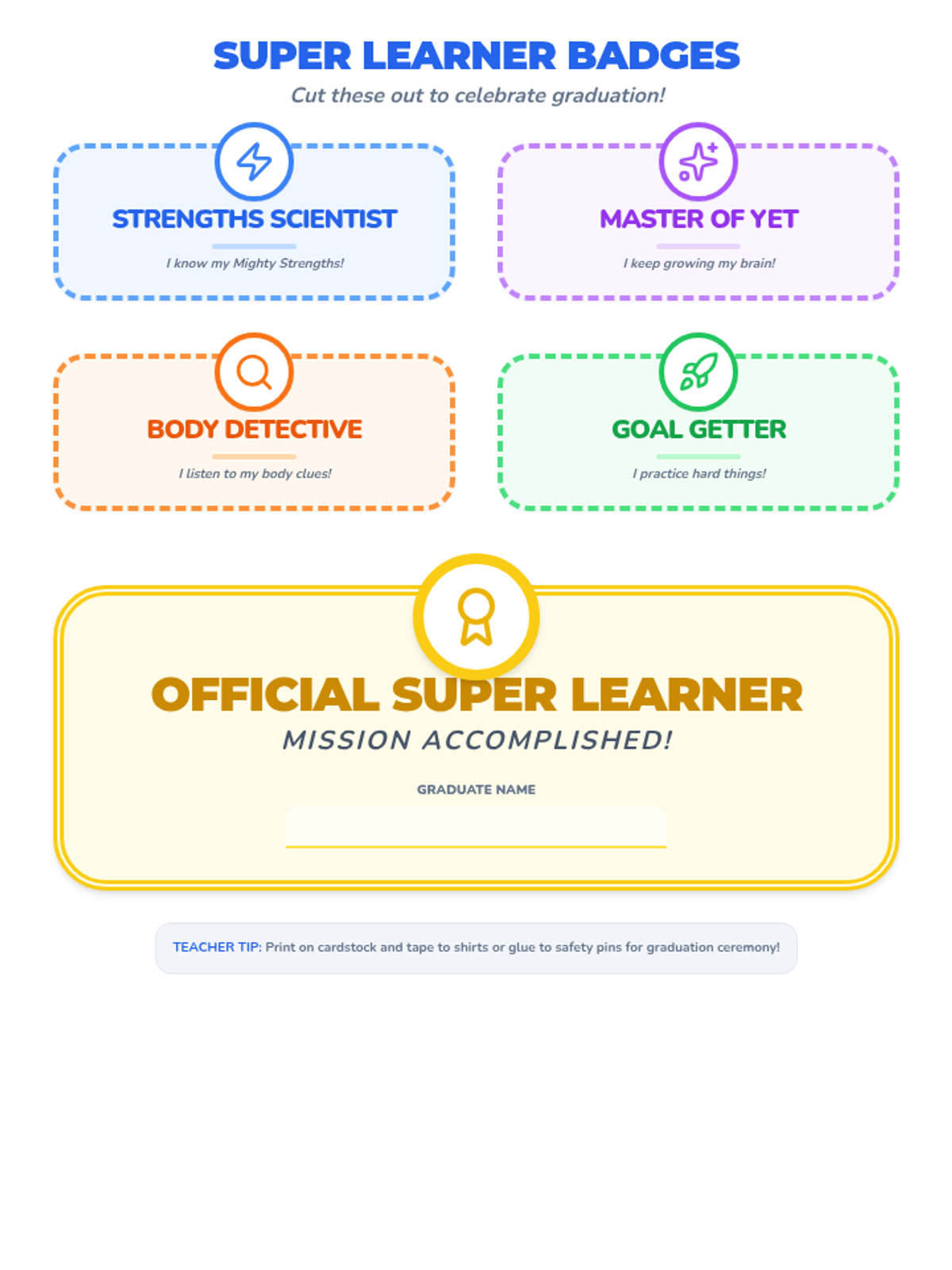
Students select a personal challenge and move it from 'Hard' to 'Learning' on their personal growth chart to set a clear goal for practice.
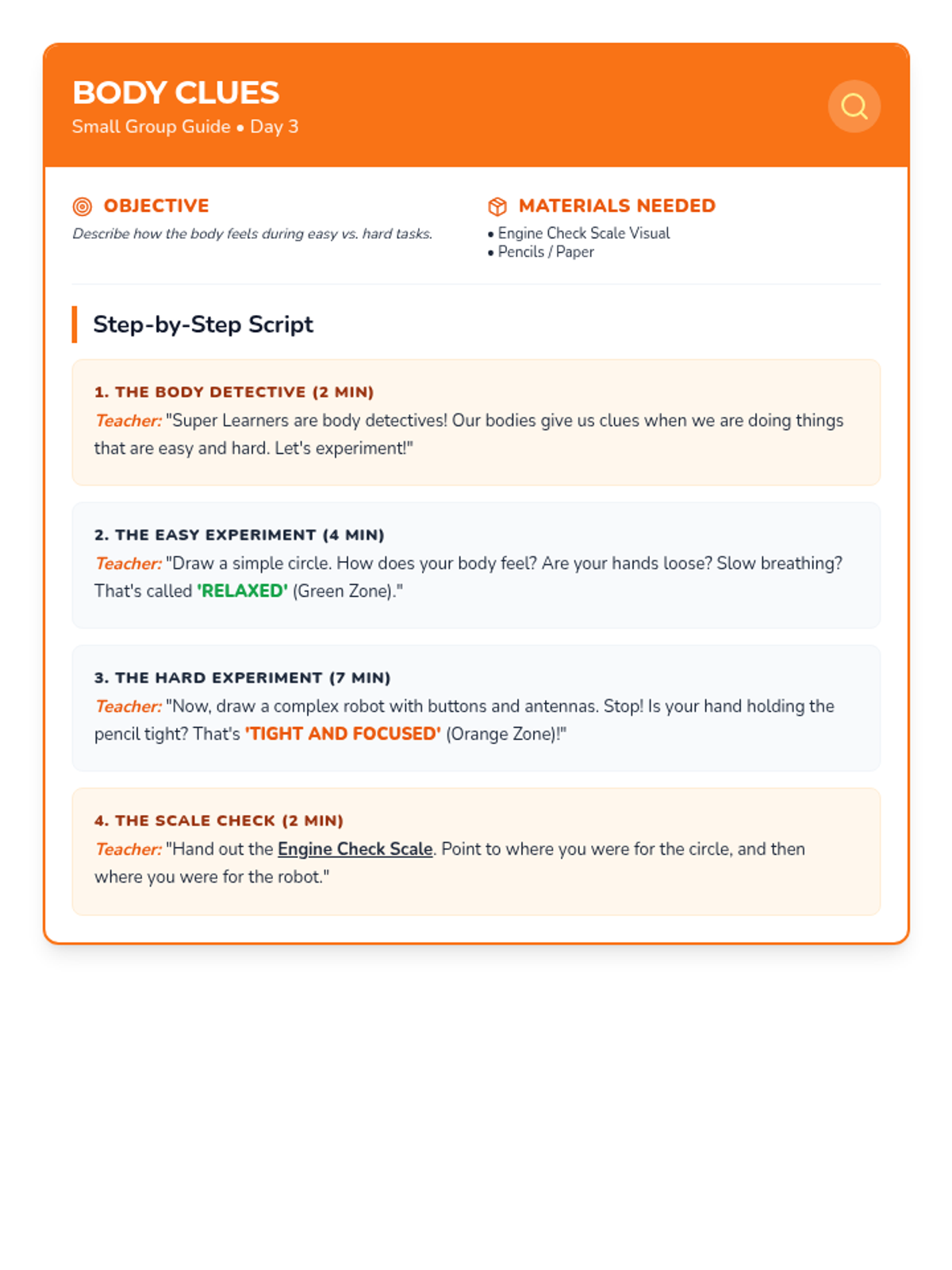
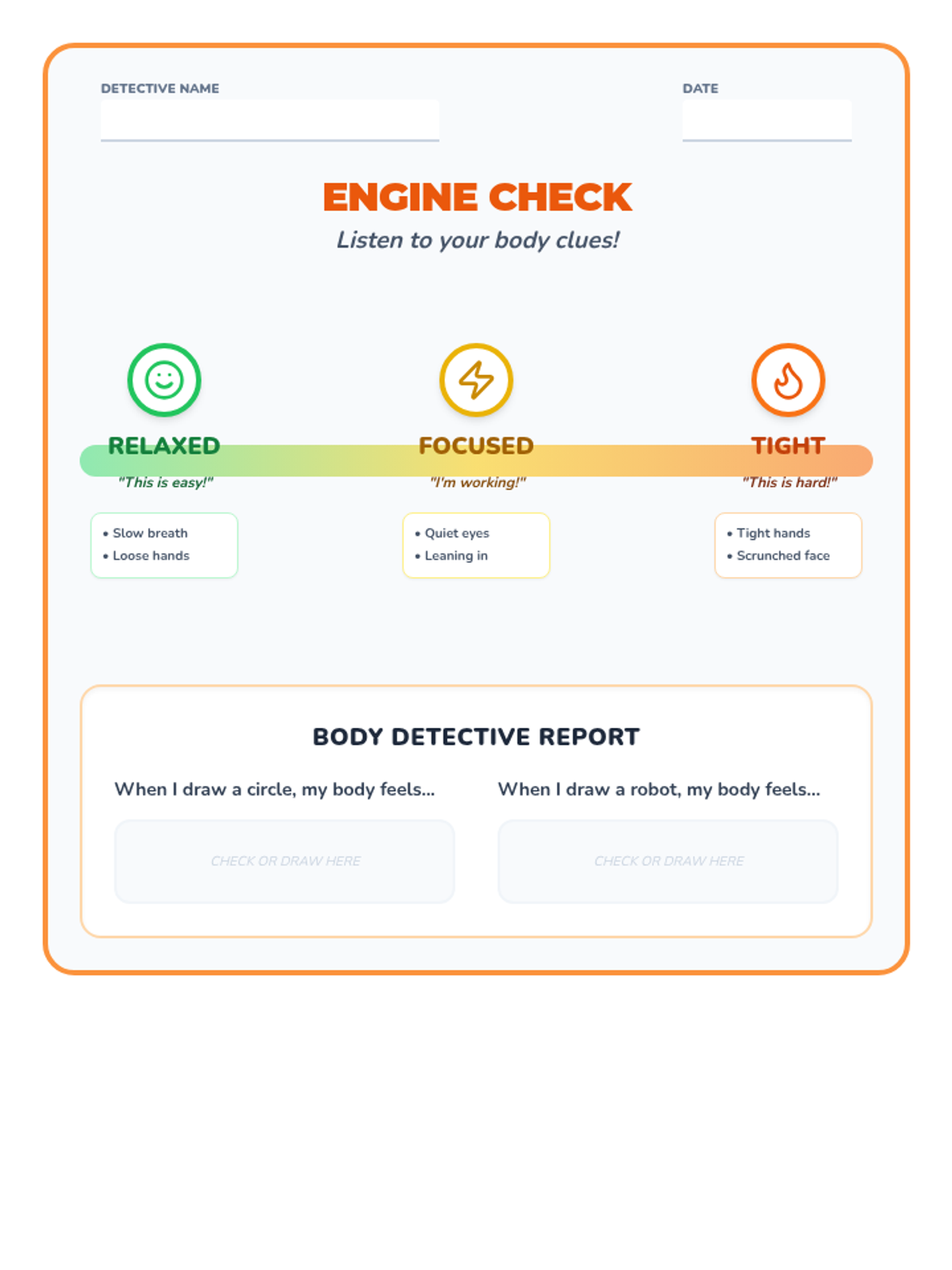
Students identify physical body signals (relaxed vs. tight) associated with easy and hard tasks using a visual engine scale.
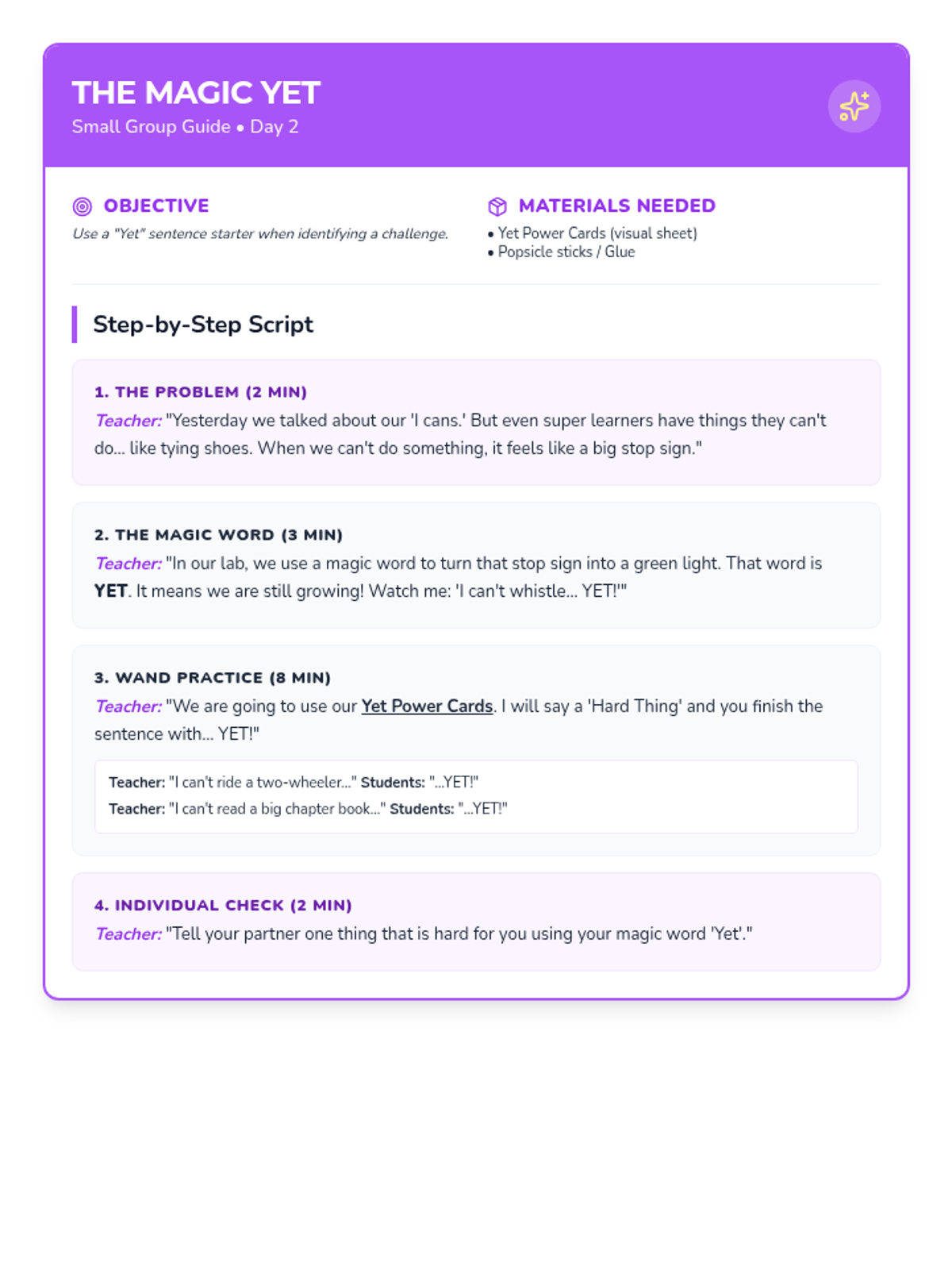
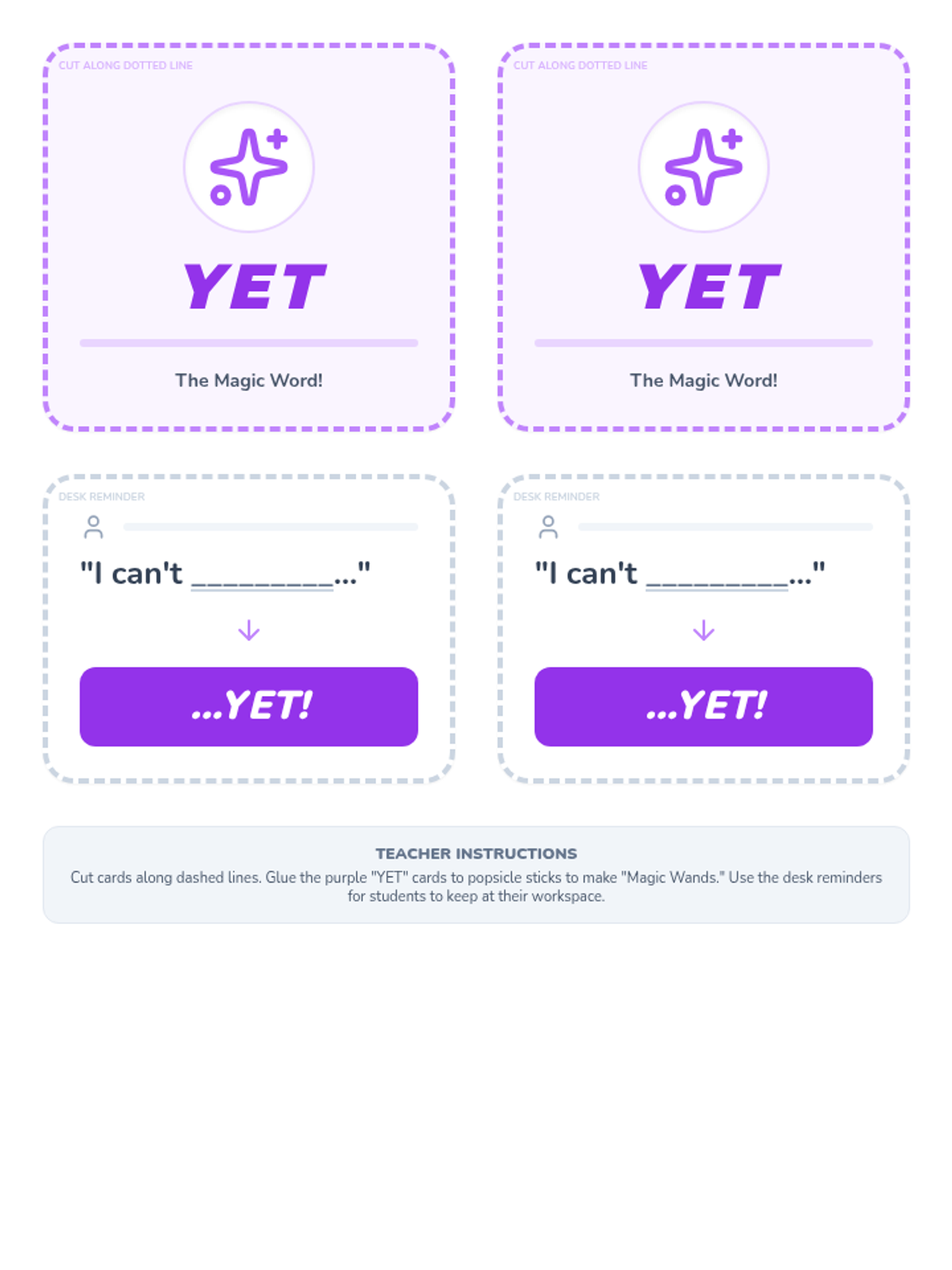
Students learn to use the word 'yet' to transform challenges into opportunities for growth, practicing the 'Power of Yet' sentence starter.
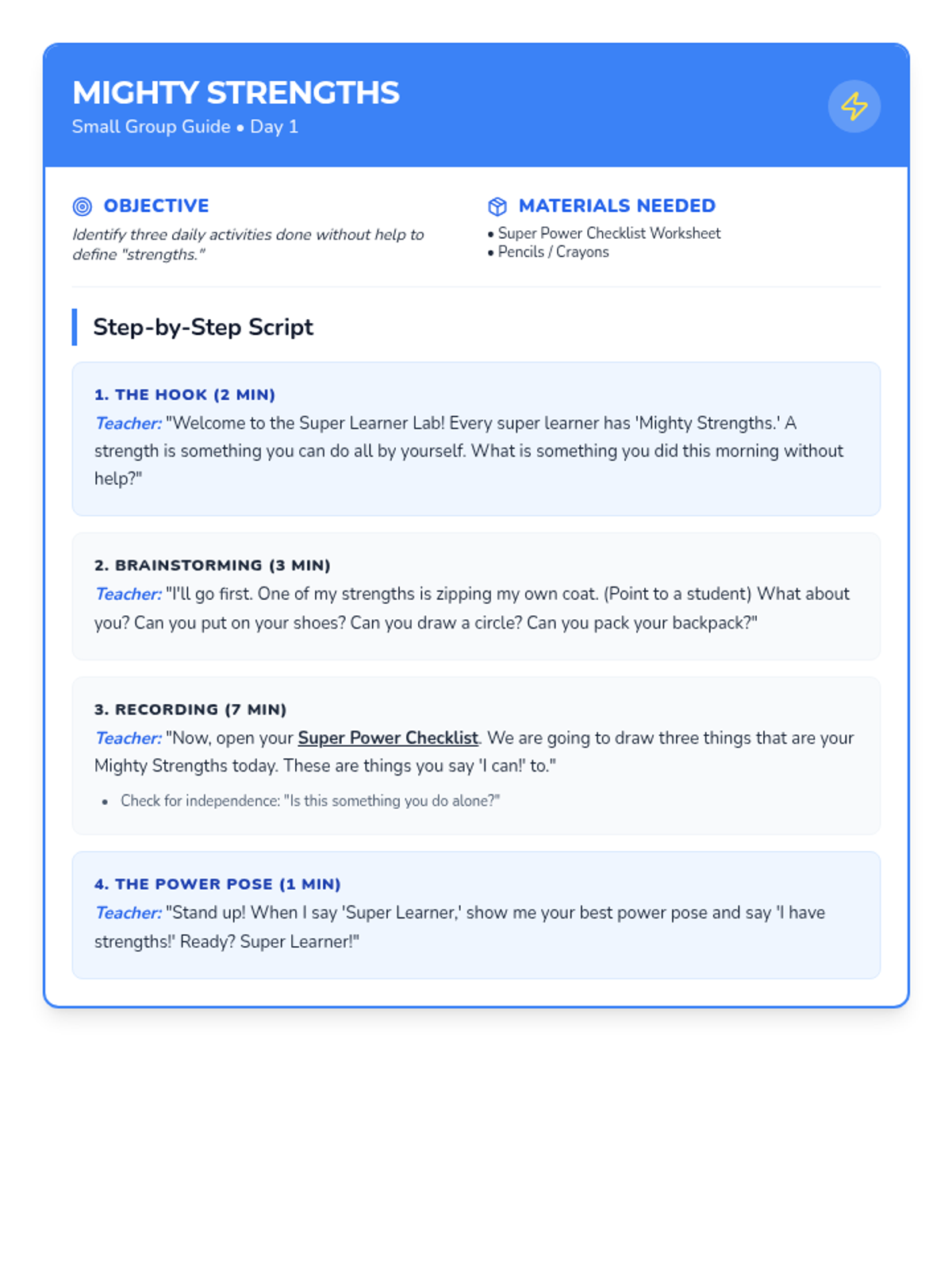
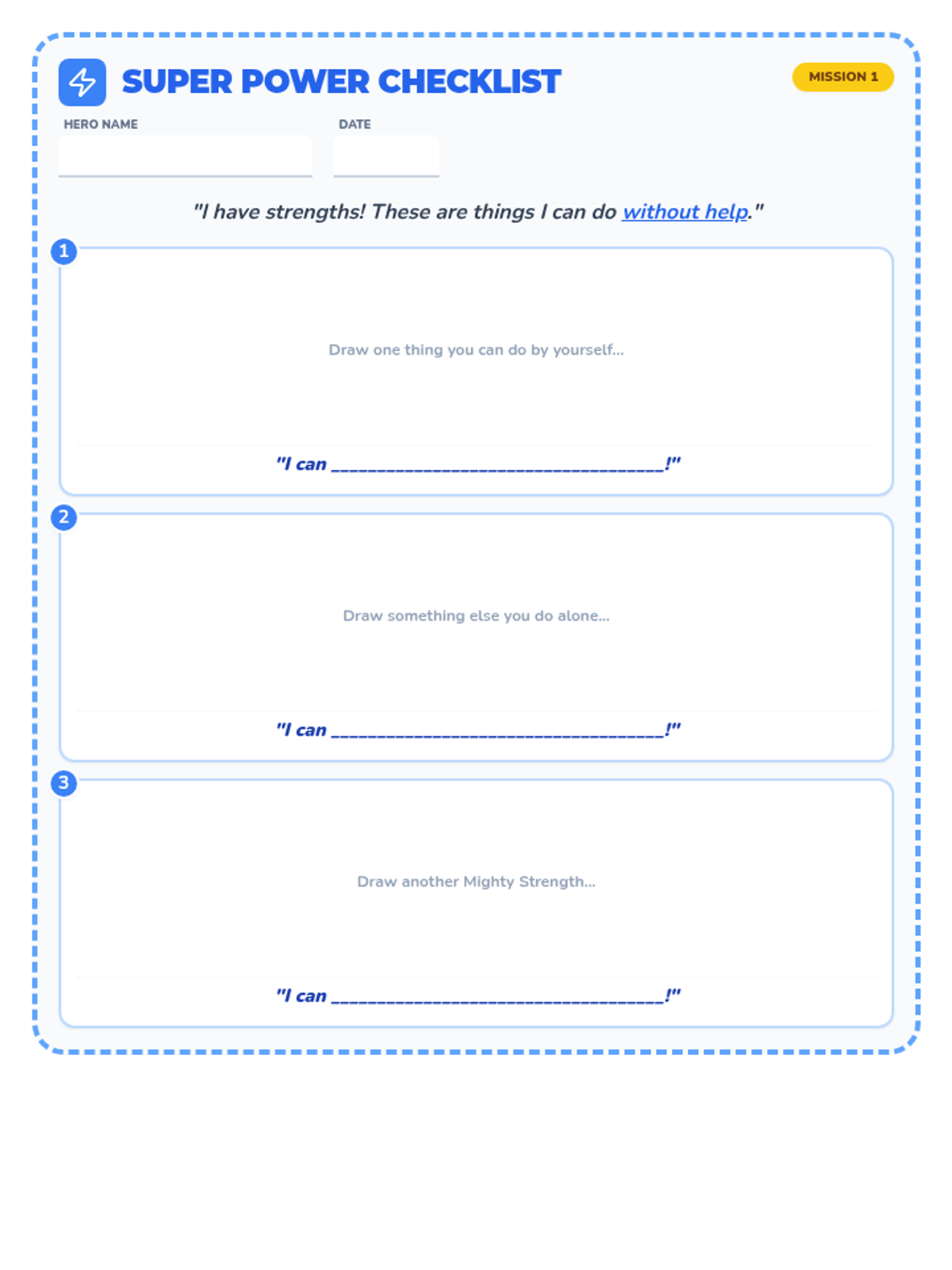
Students identify three daily activities they can perform independently to define their personal 'strengths' in the context of being a Super Learner.
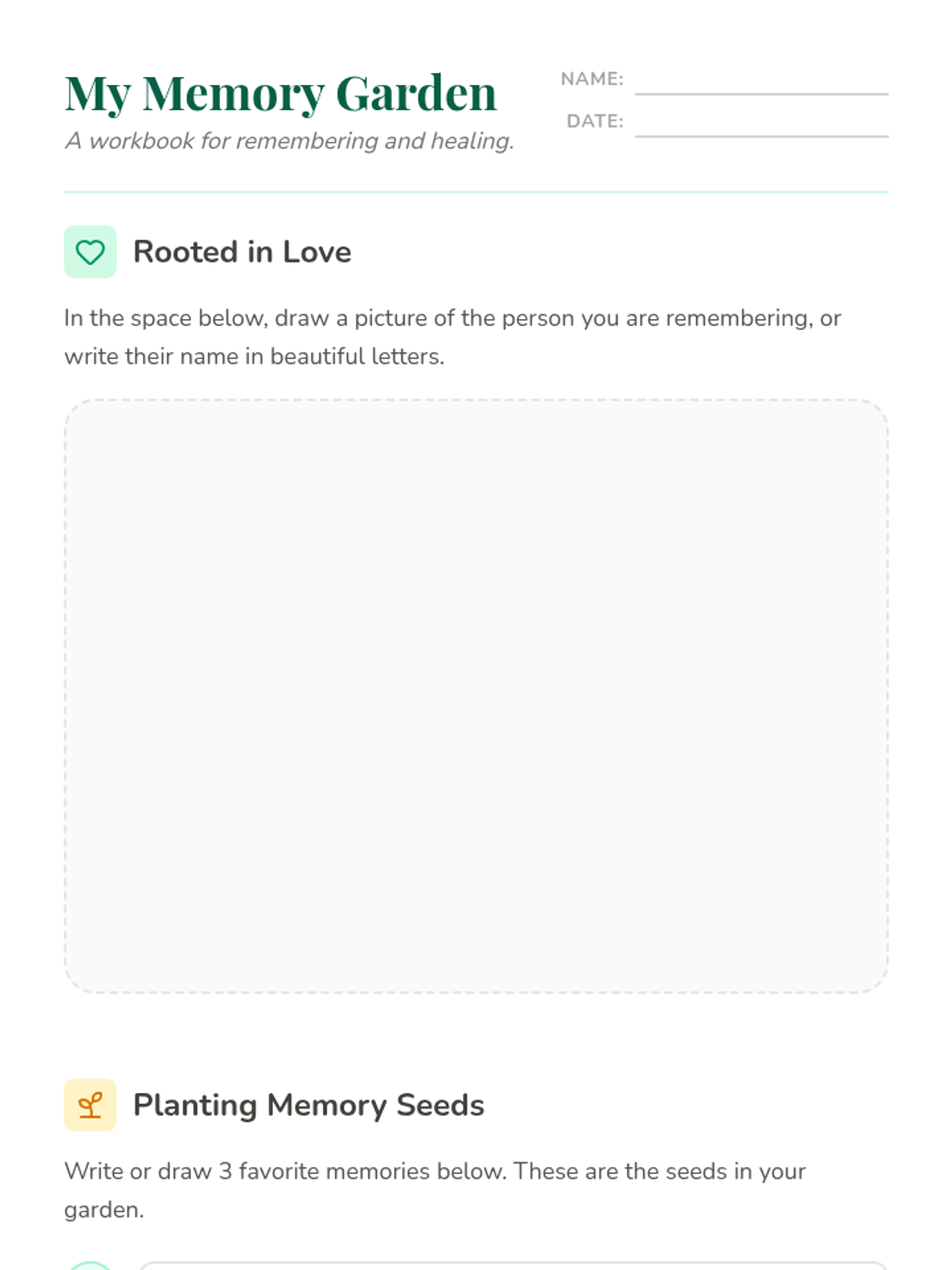
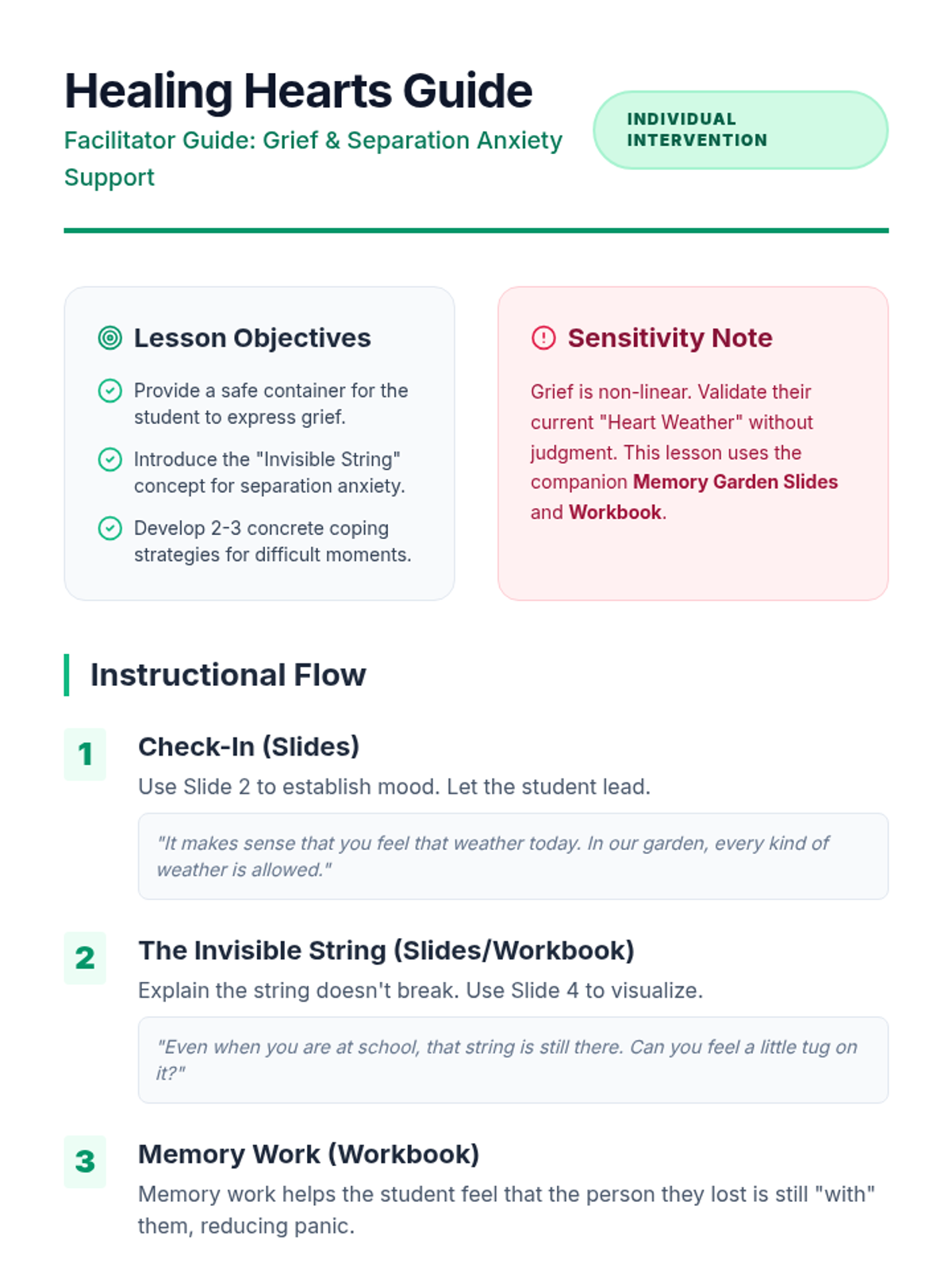
A gentle, trauma-informed lesson designed for individual students navigating grief and separation anxiety. It uses the metaphor of a "Memory Garden" to help students process loss, honor their loved ones, and build coping strategies for when they feel alone.
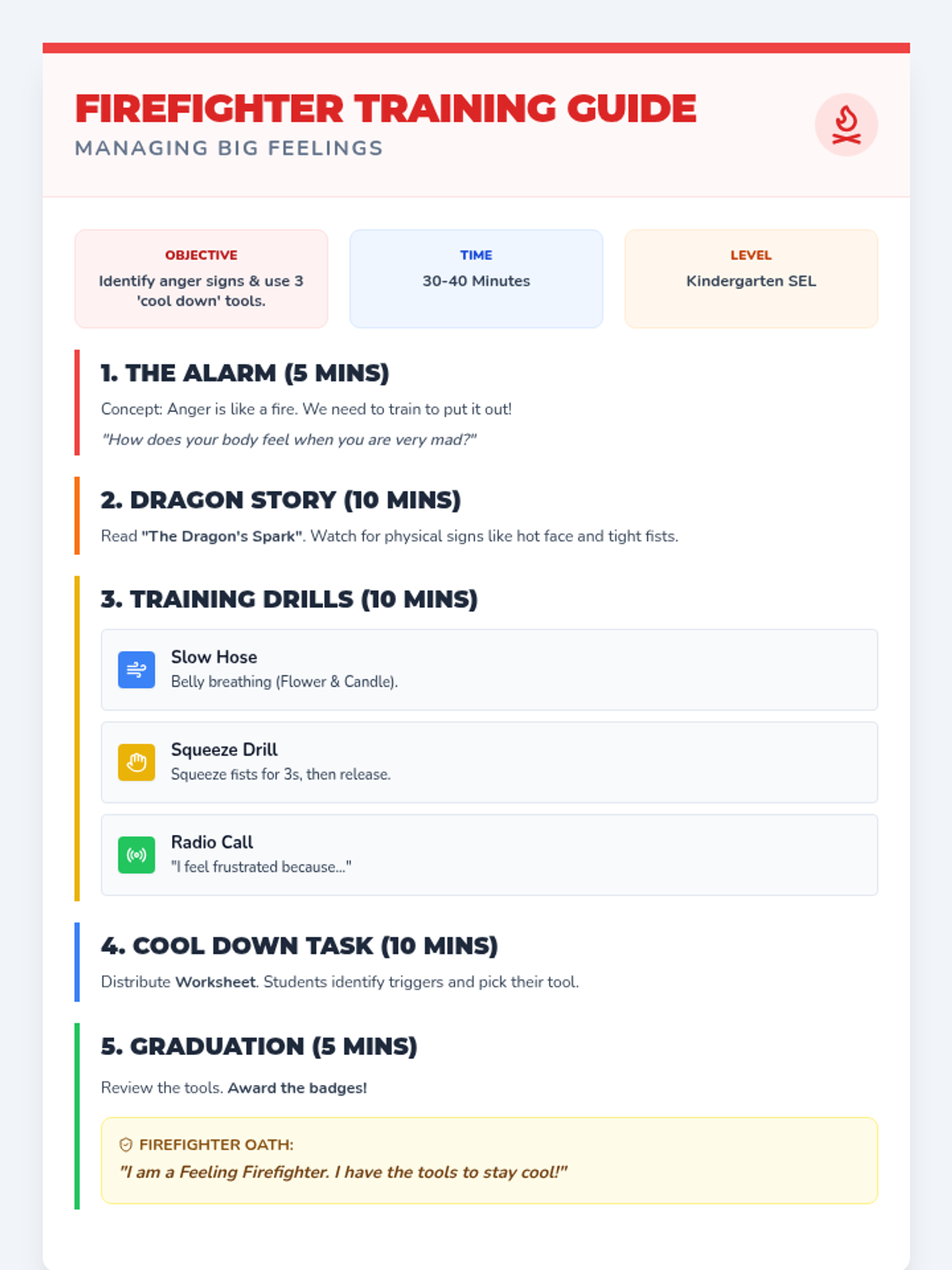
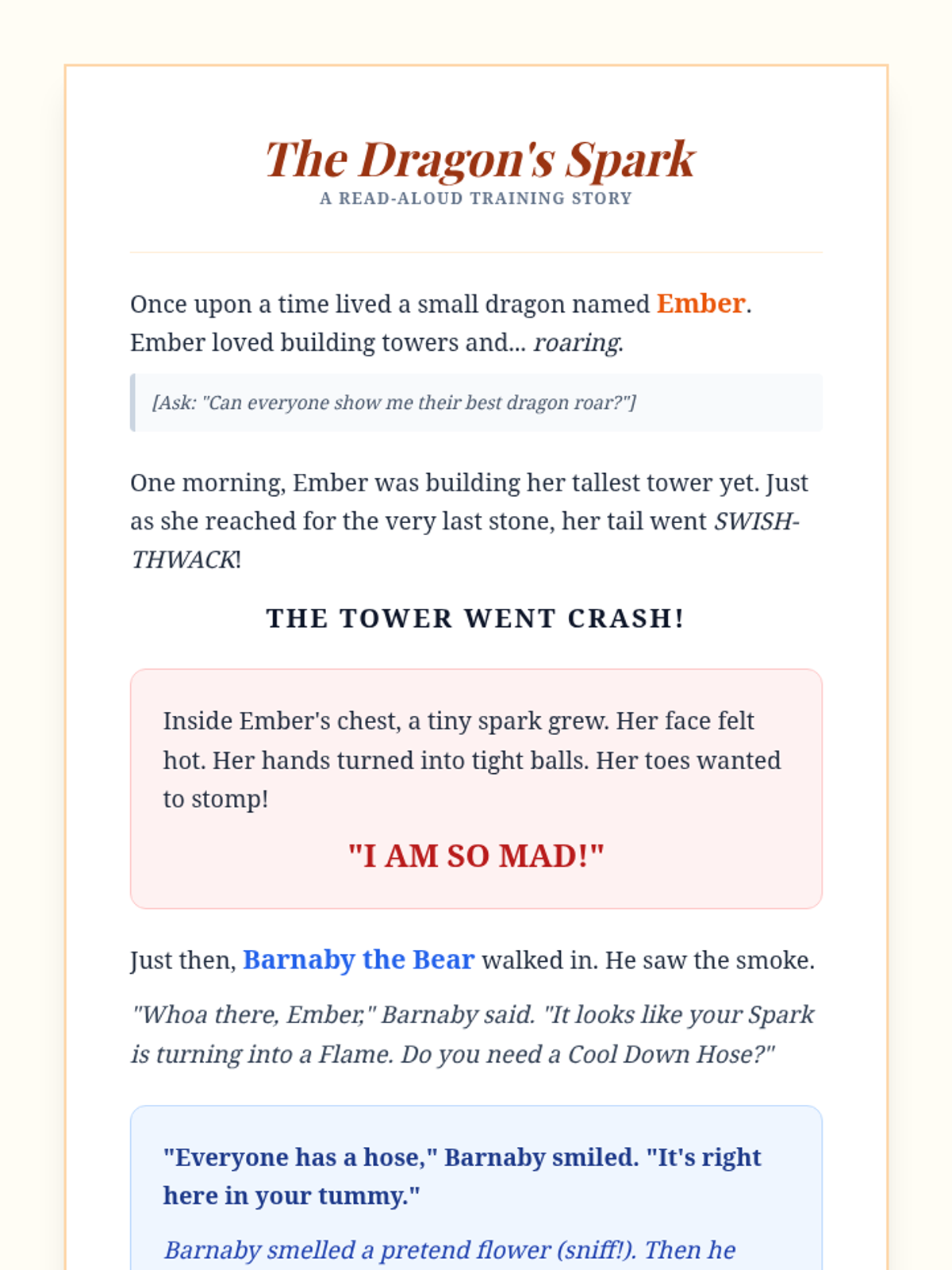
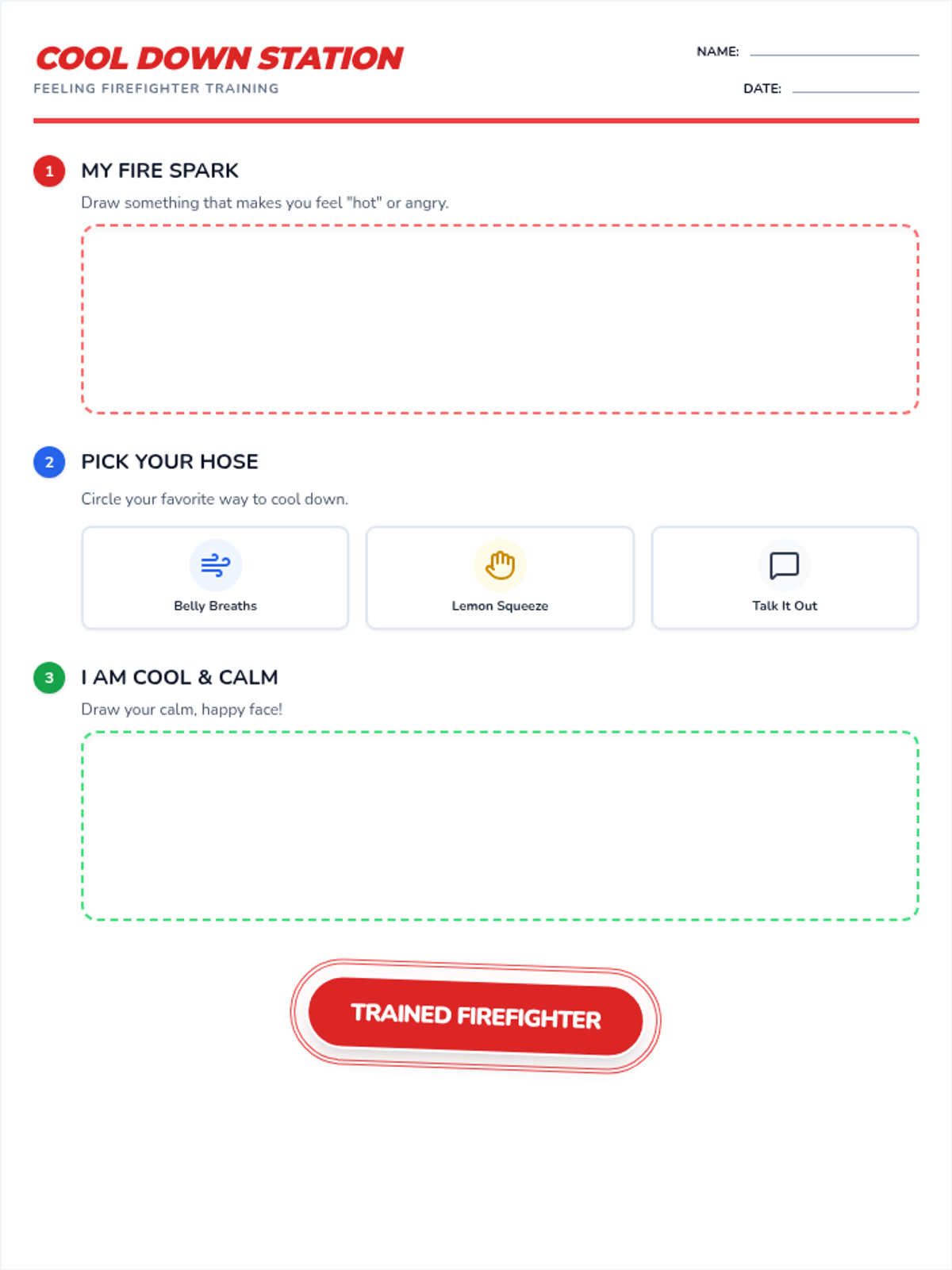
A kindergarten lesson focused on identifying and managing anger and frustration through the metaphor of 'putting out the fire' using calming strategies.
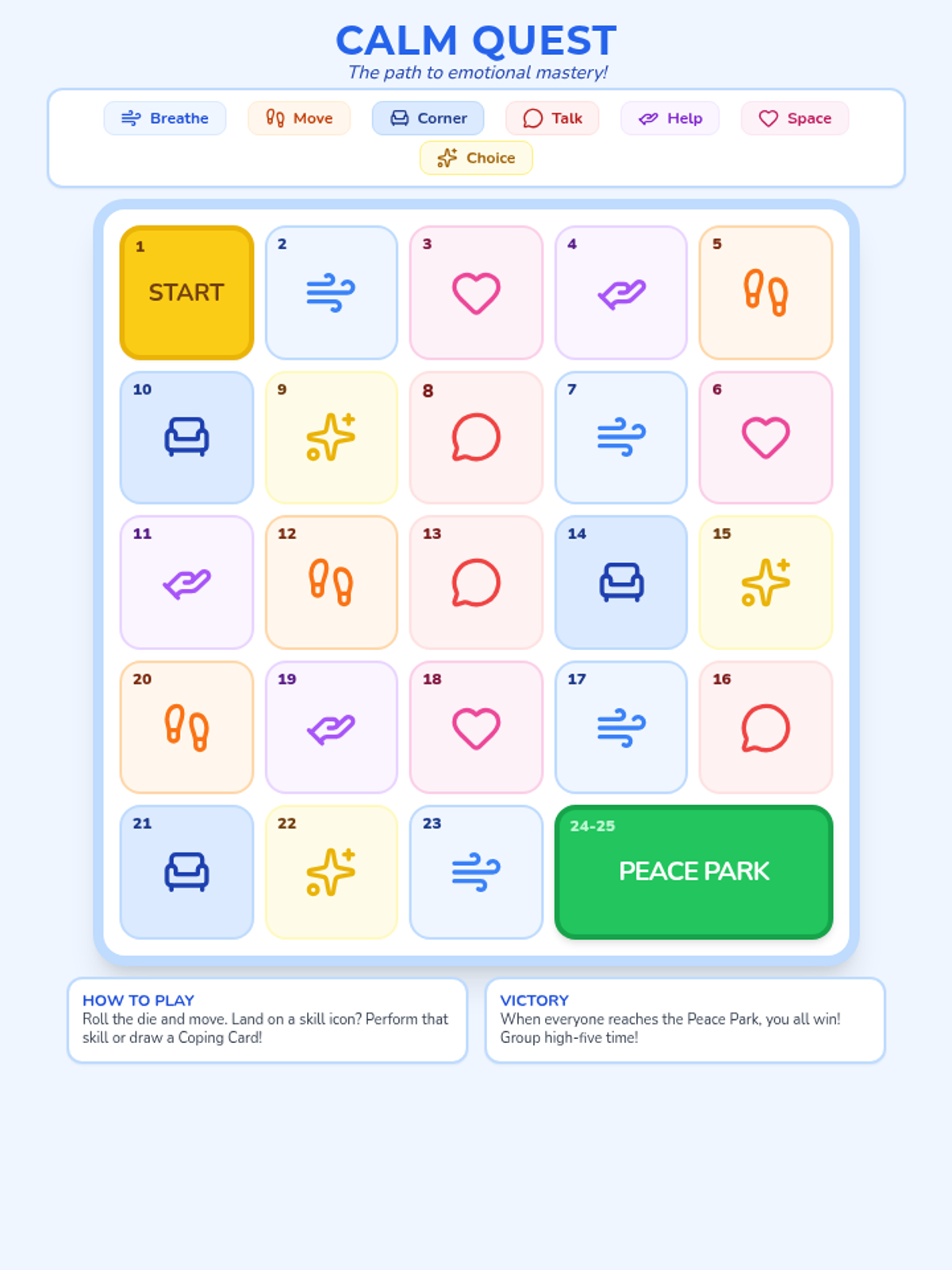
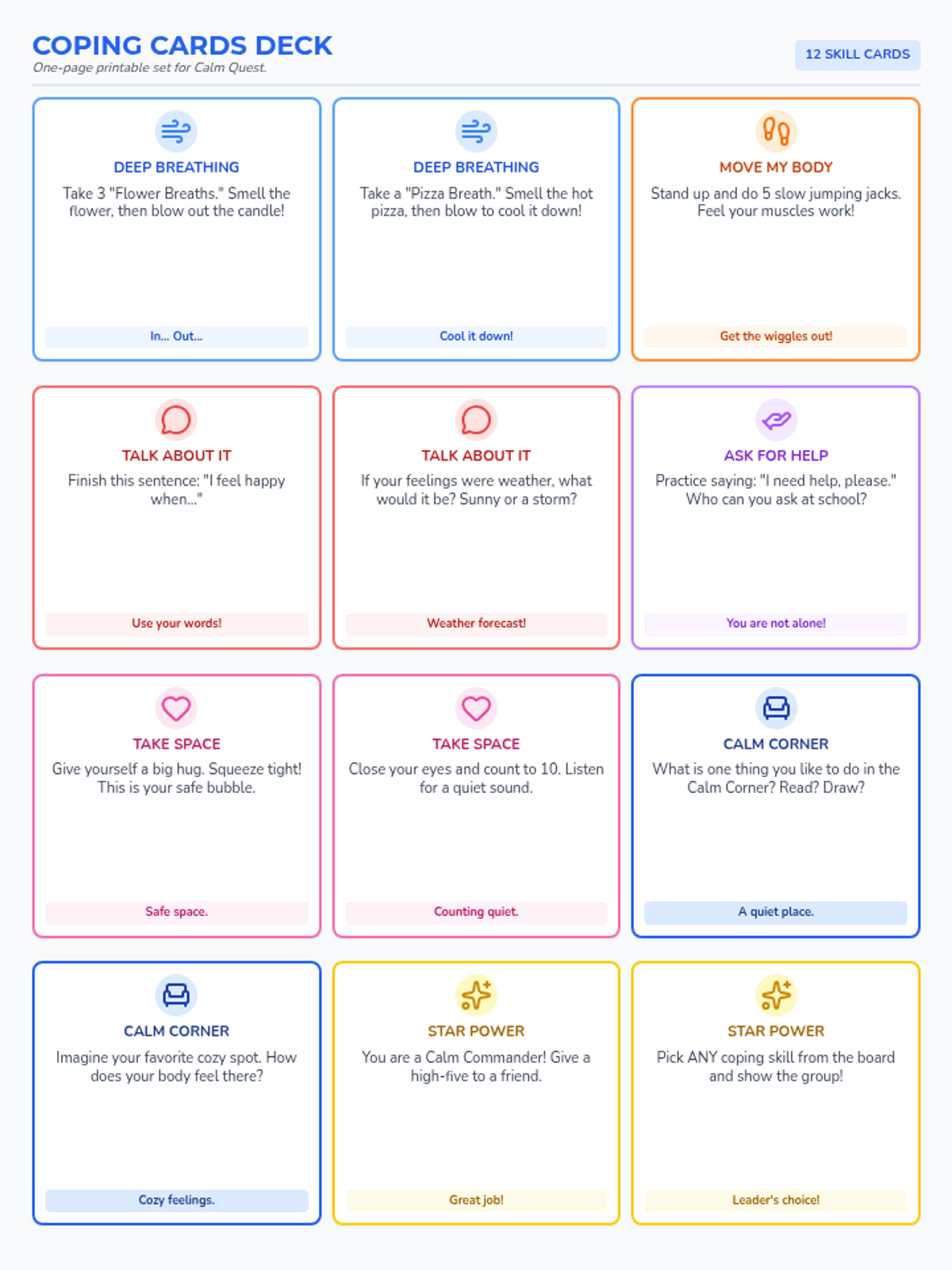
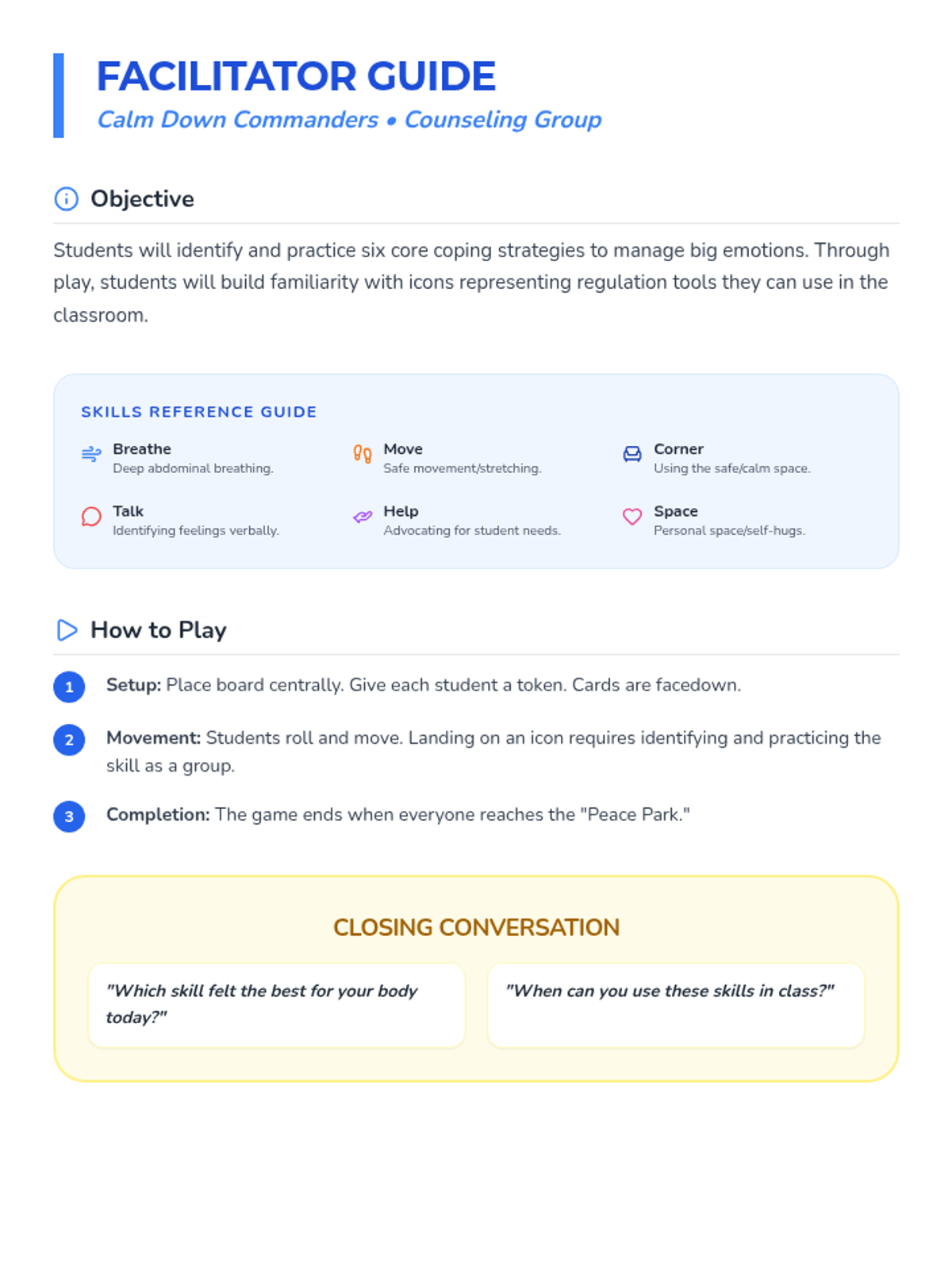
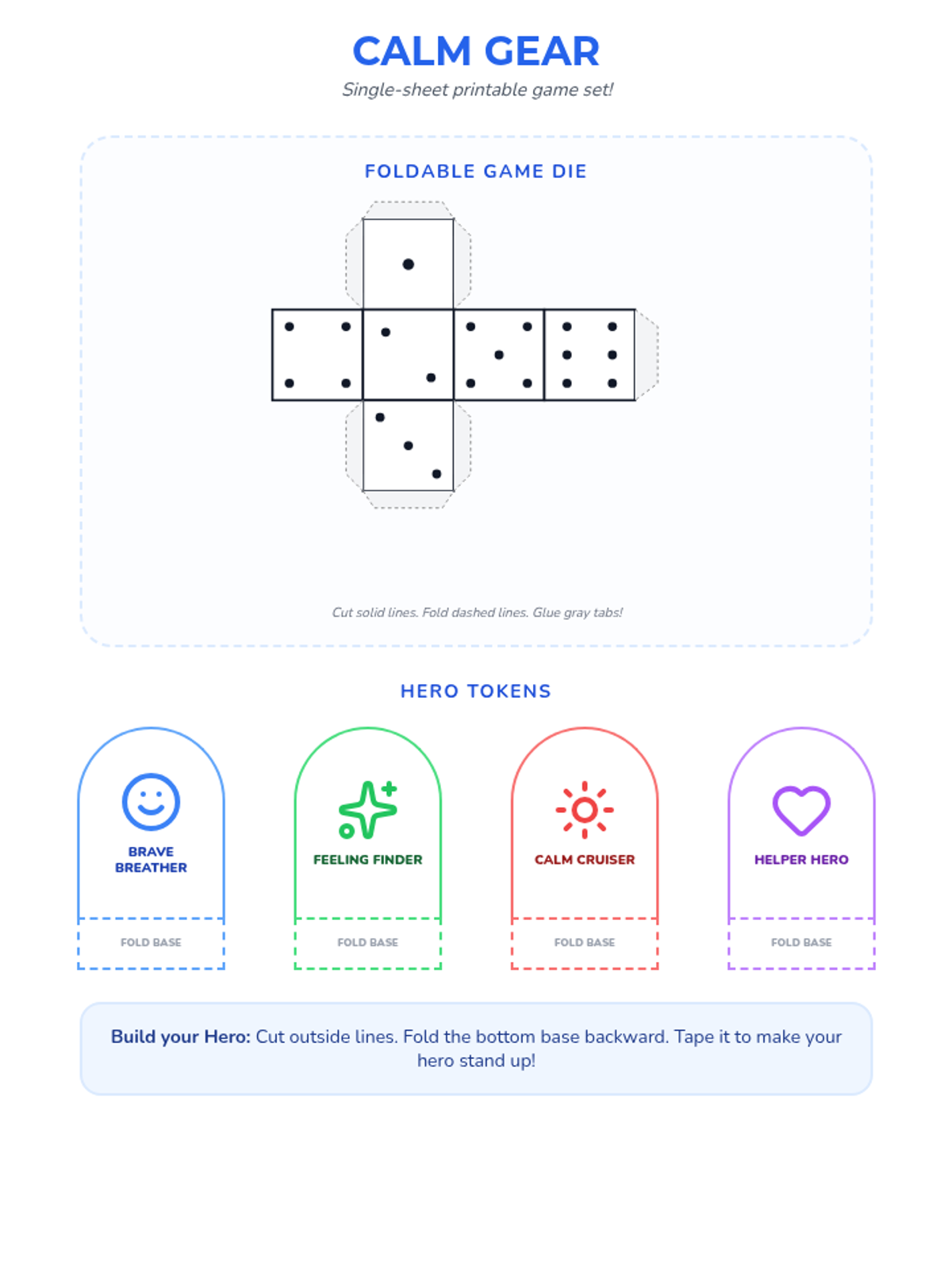
A small-group counseling lesson designed to teach Kindergarten and 1st-grade students proactive coping strategies through an interactive path board game. Students practice identifying and demonstrating various emotional regulation techniques in a supportive, play-based environment.
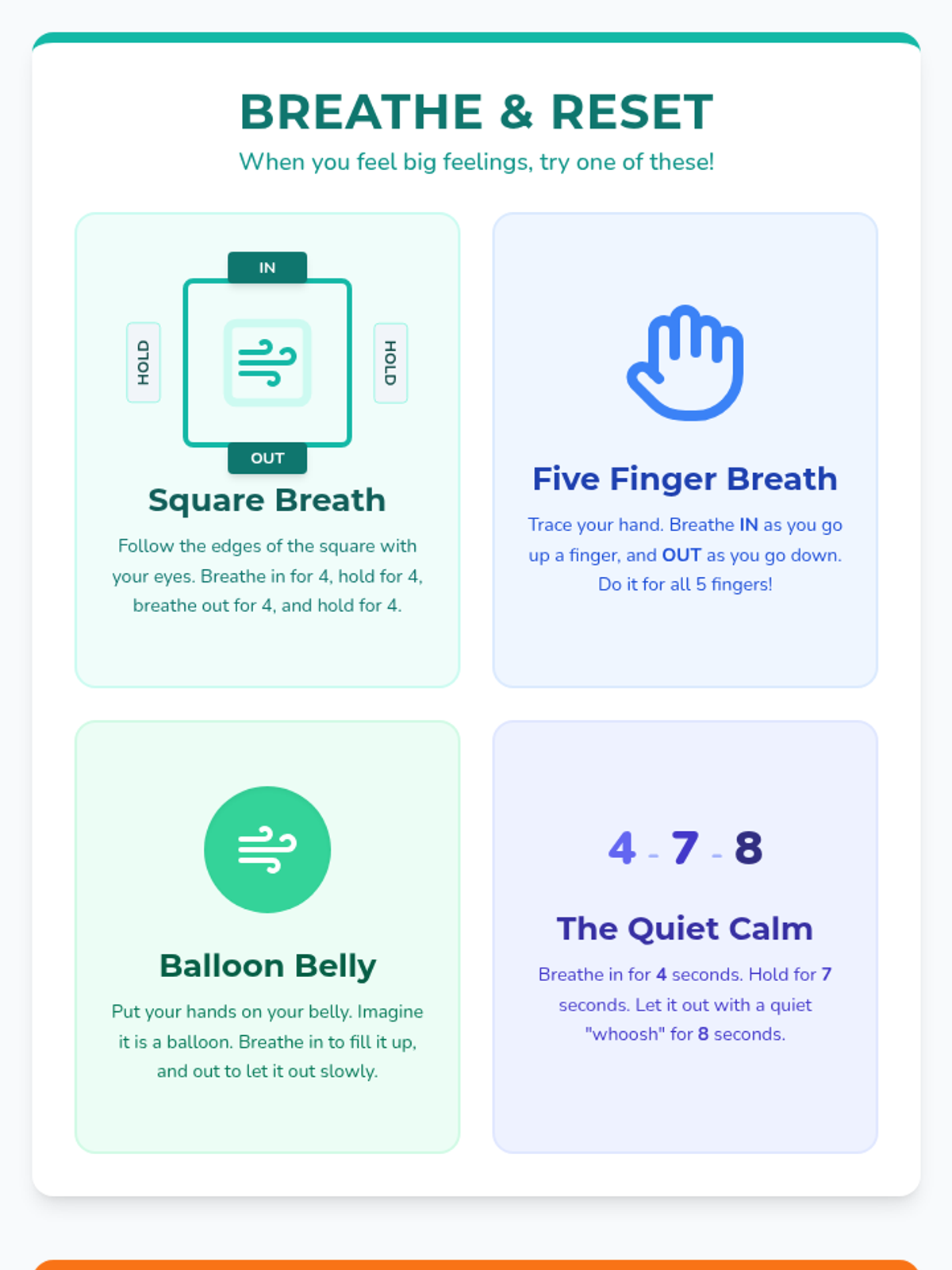
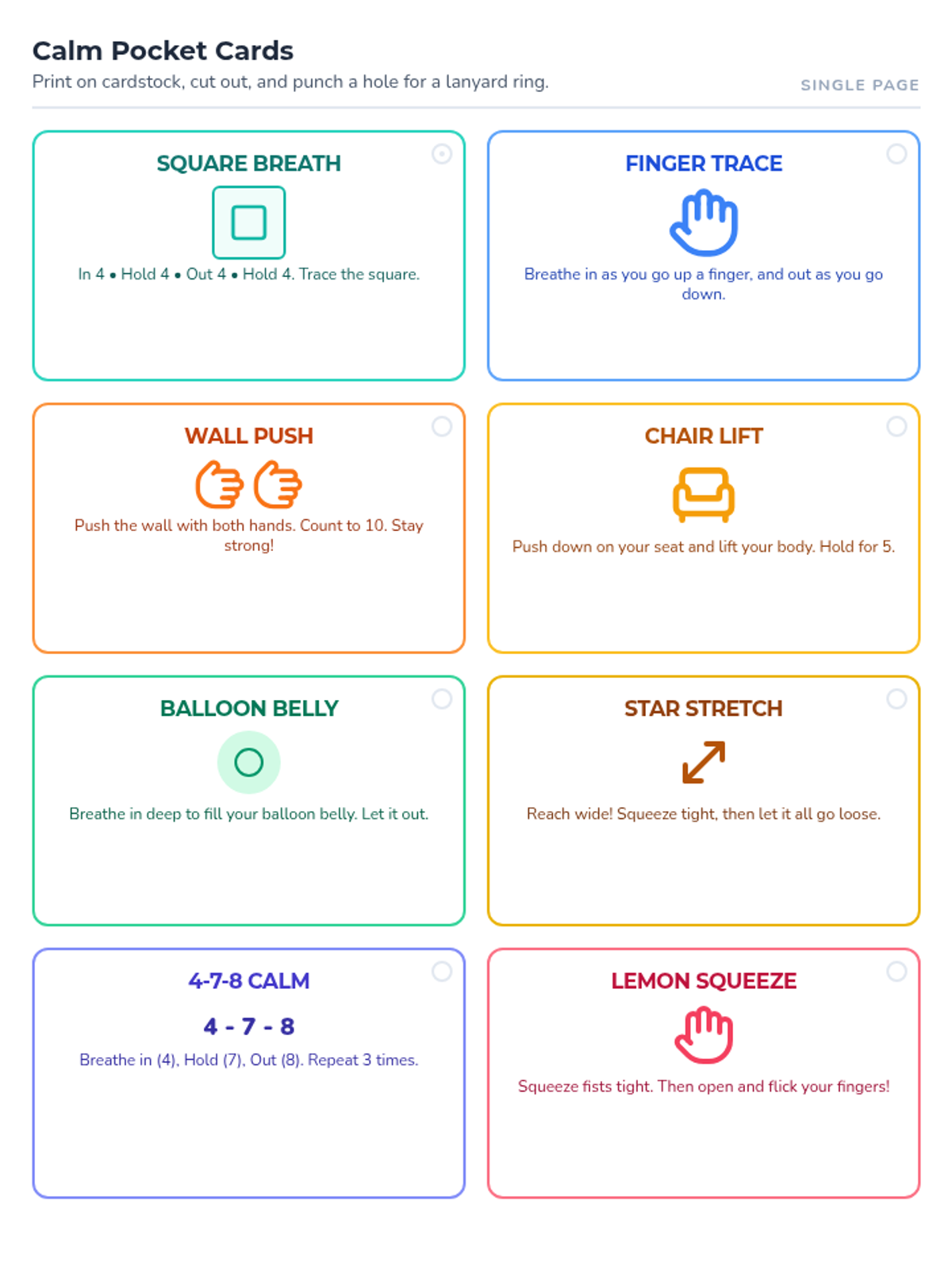
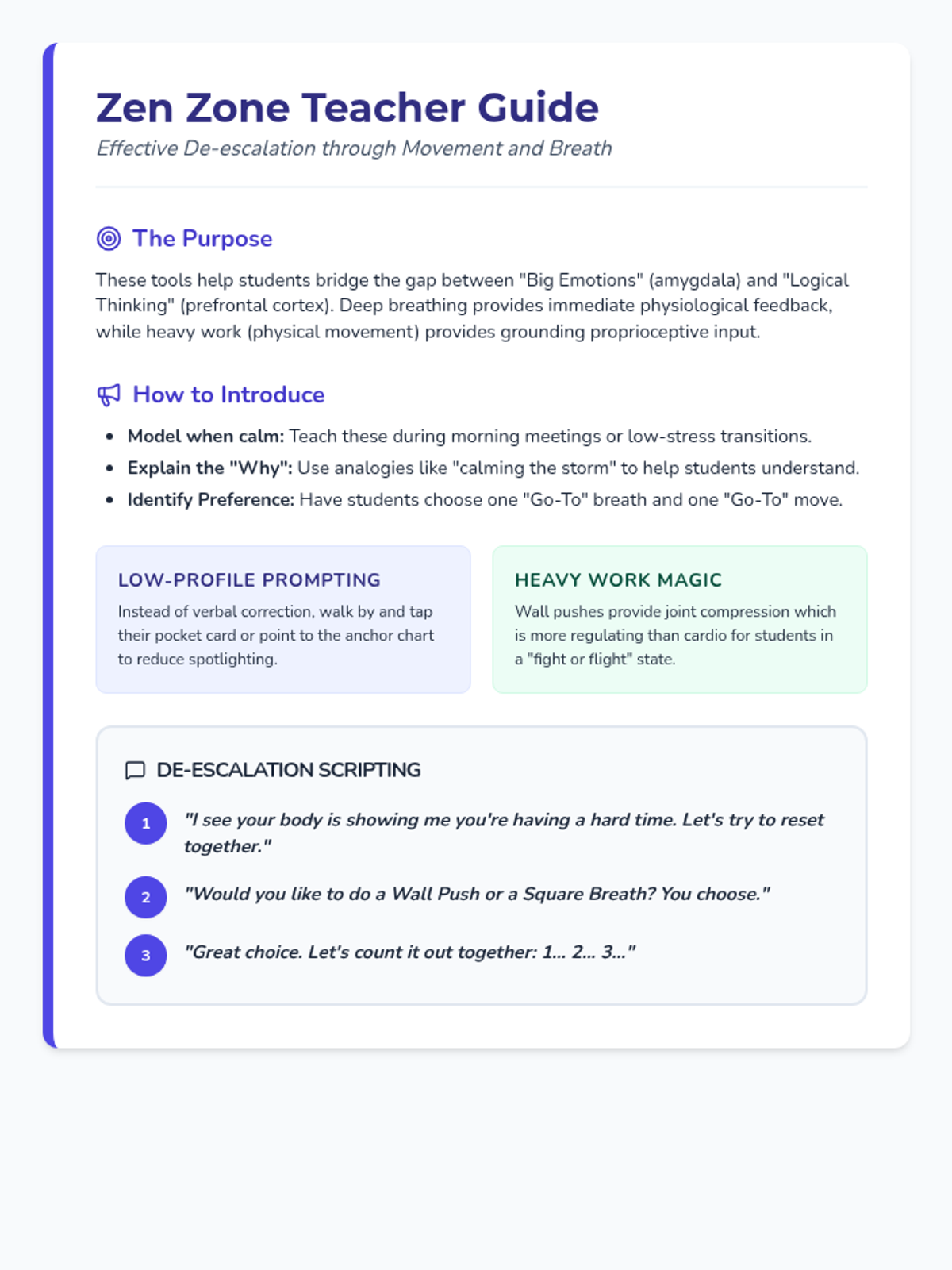
A collection of visual de-escalation resources focused on deep breathing and physical movement to help students manage big emotions and return to a state of calm.
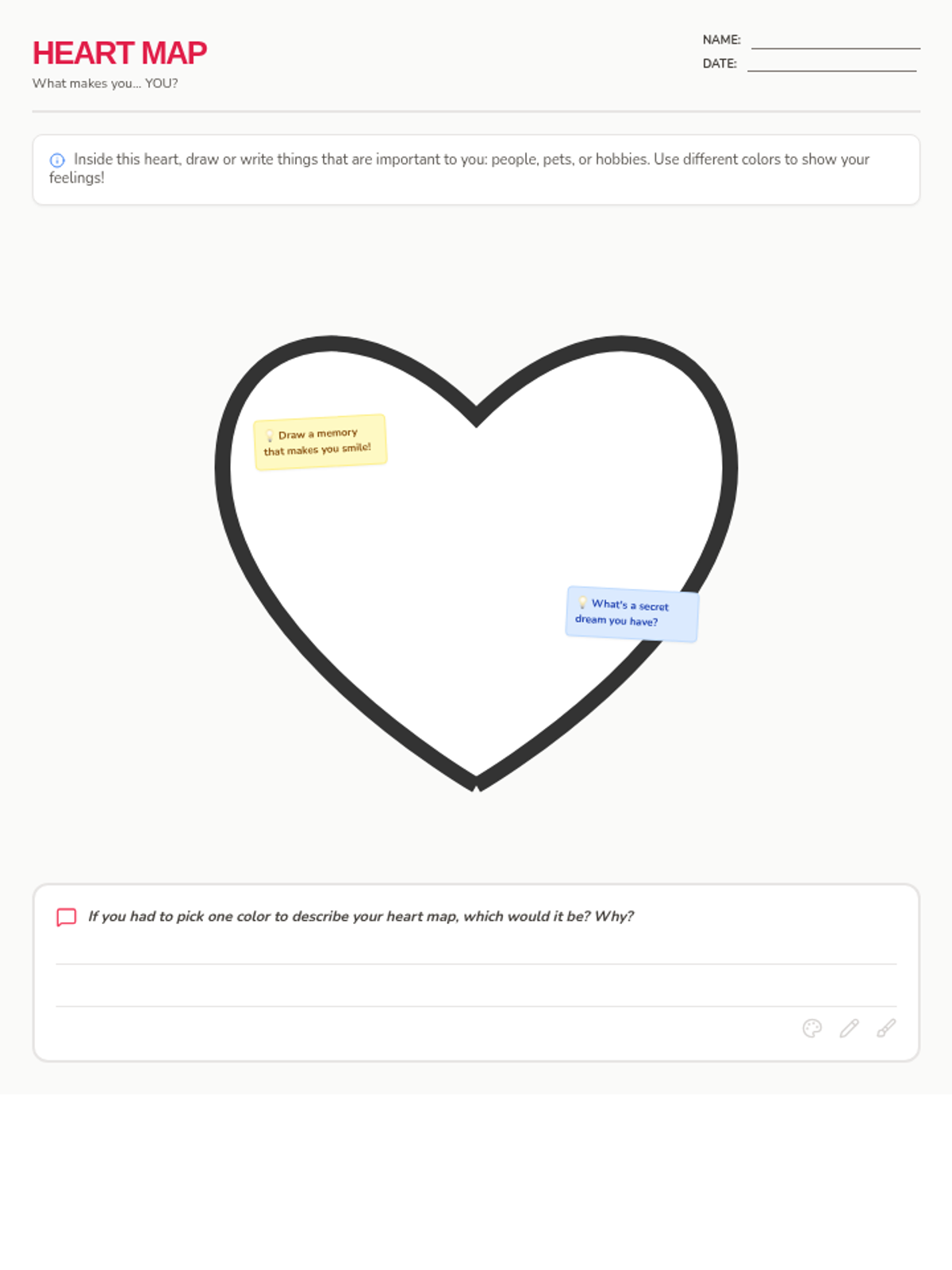
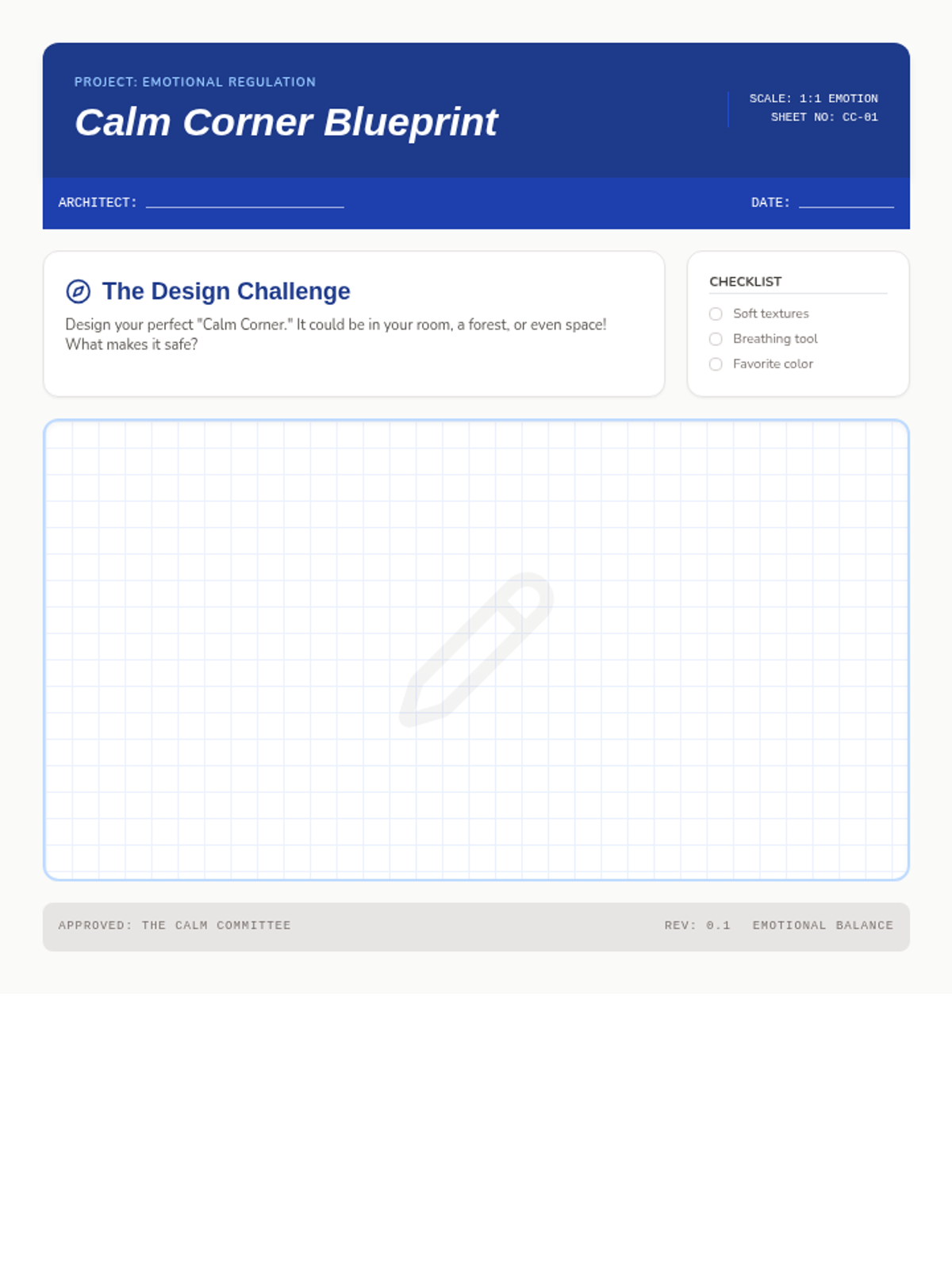
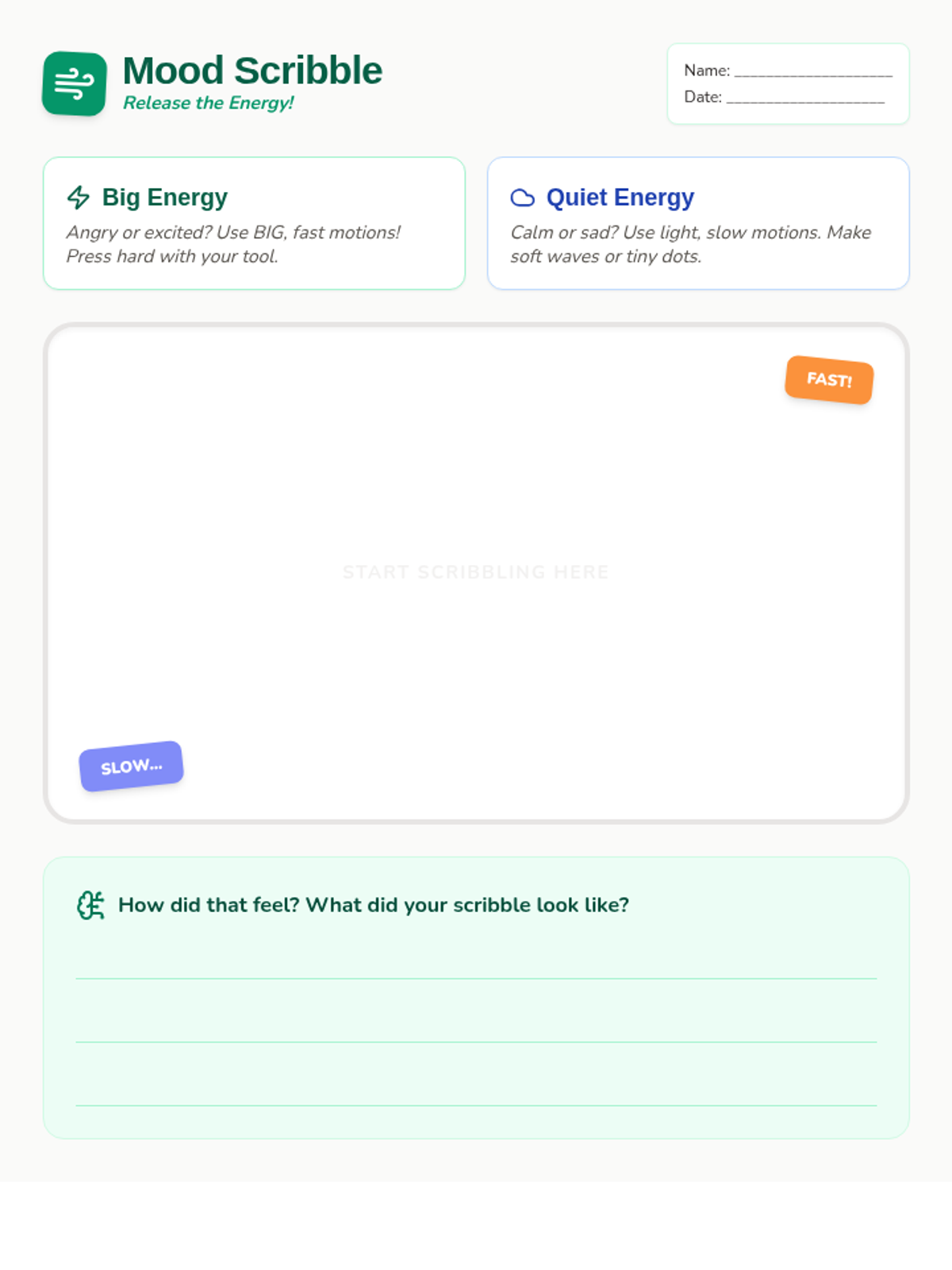
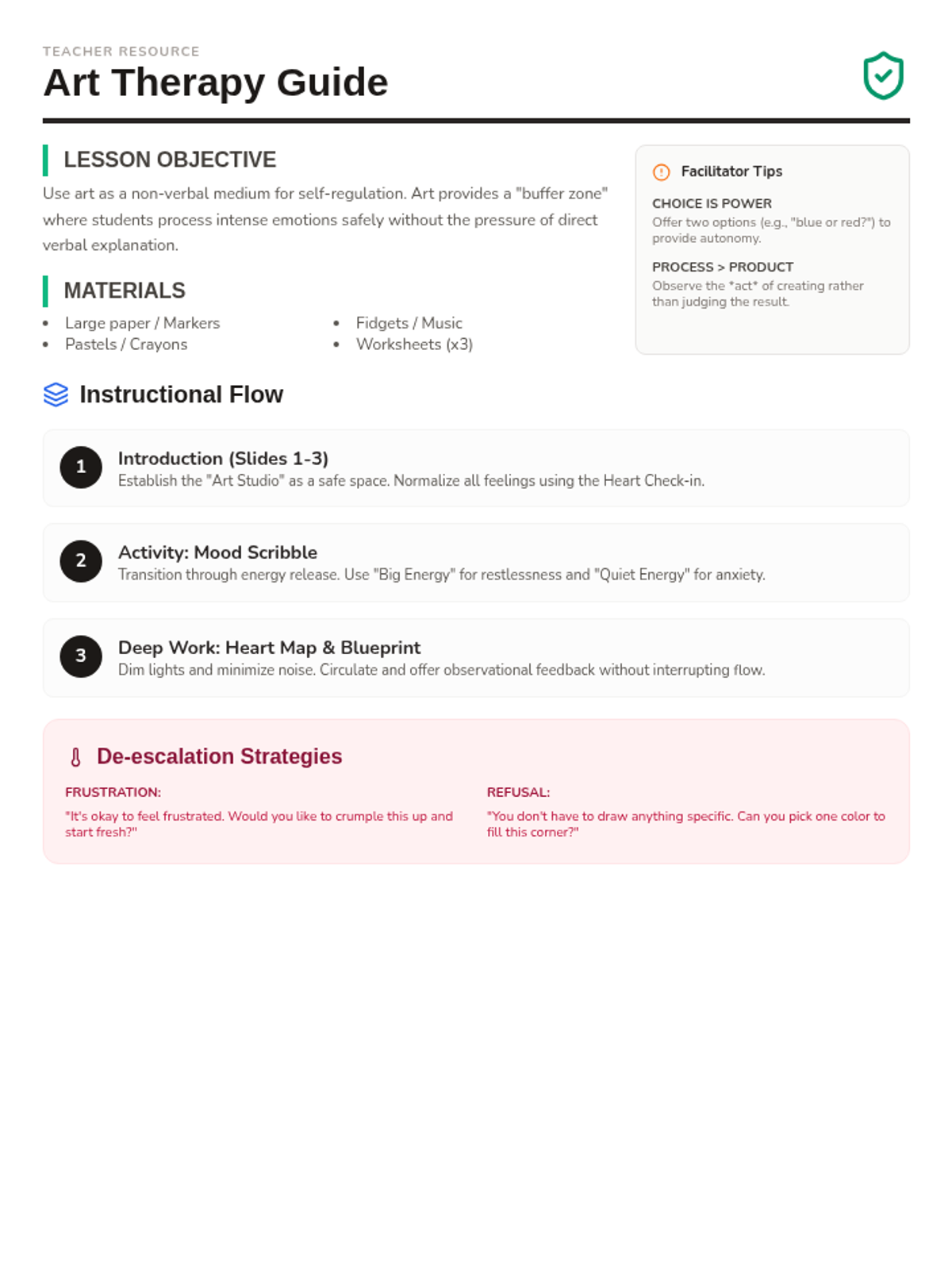
A creative exploration of emotions through art therapy, helping children with behavioral health concerns identify feelings and build self-regulation skills.