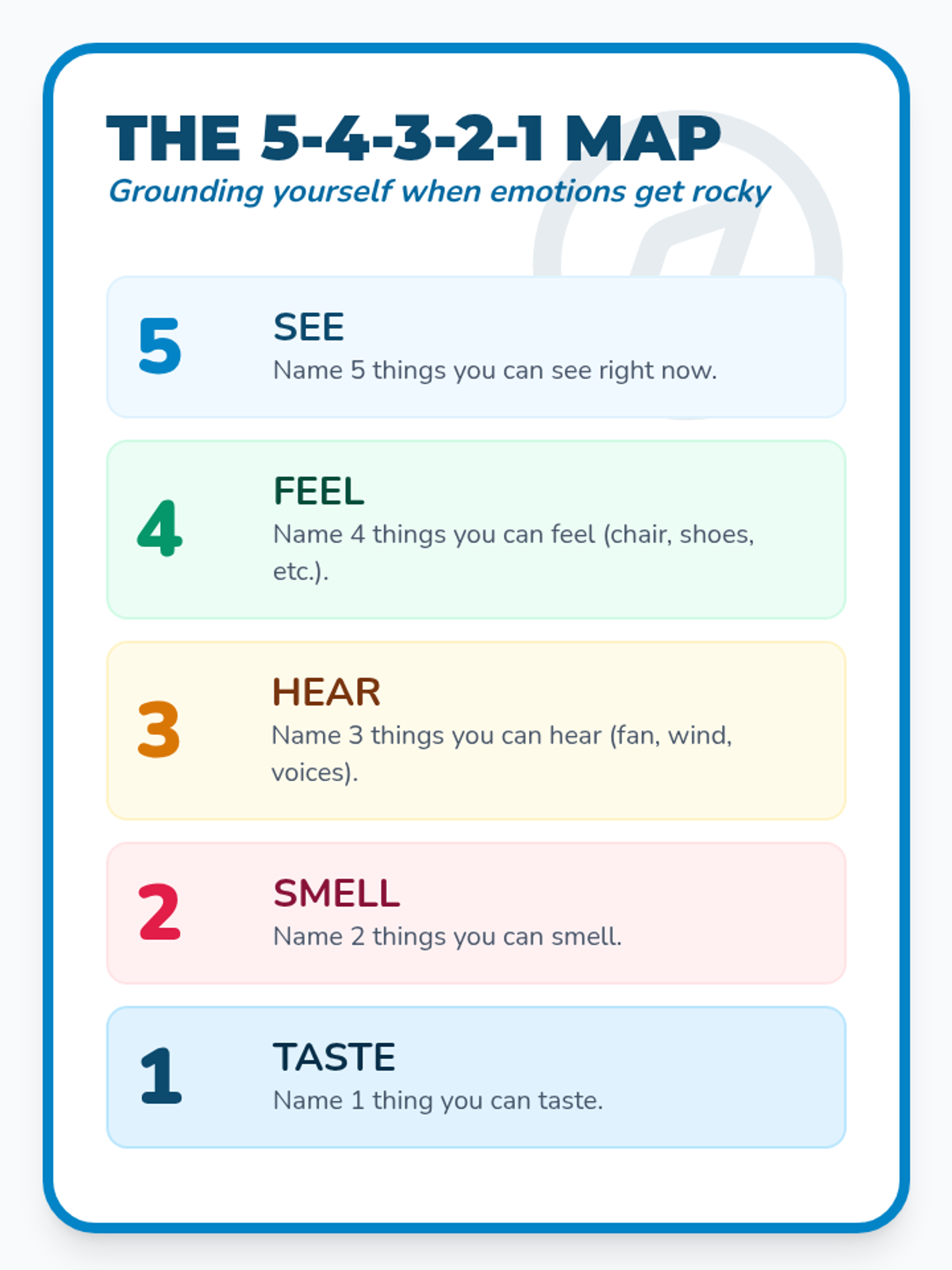
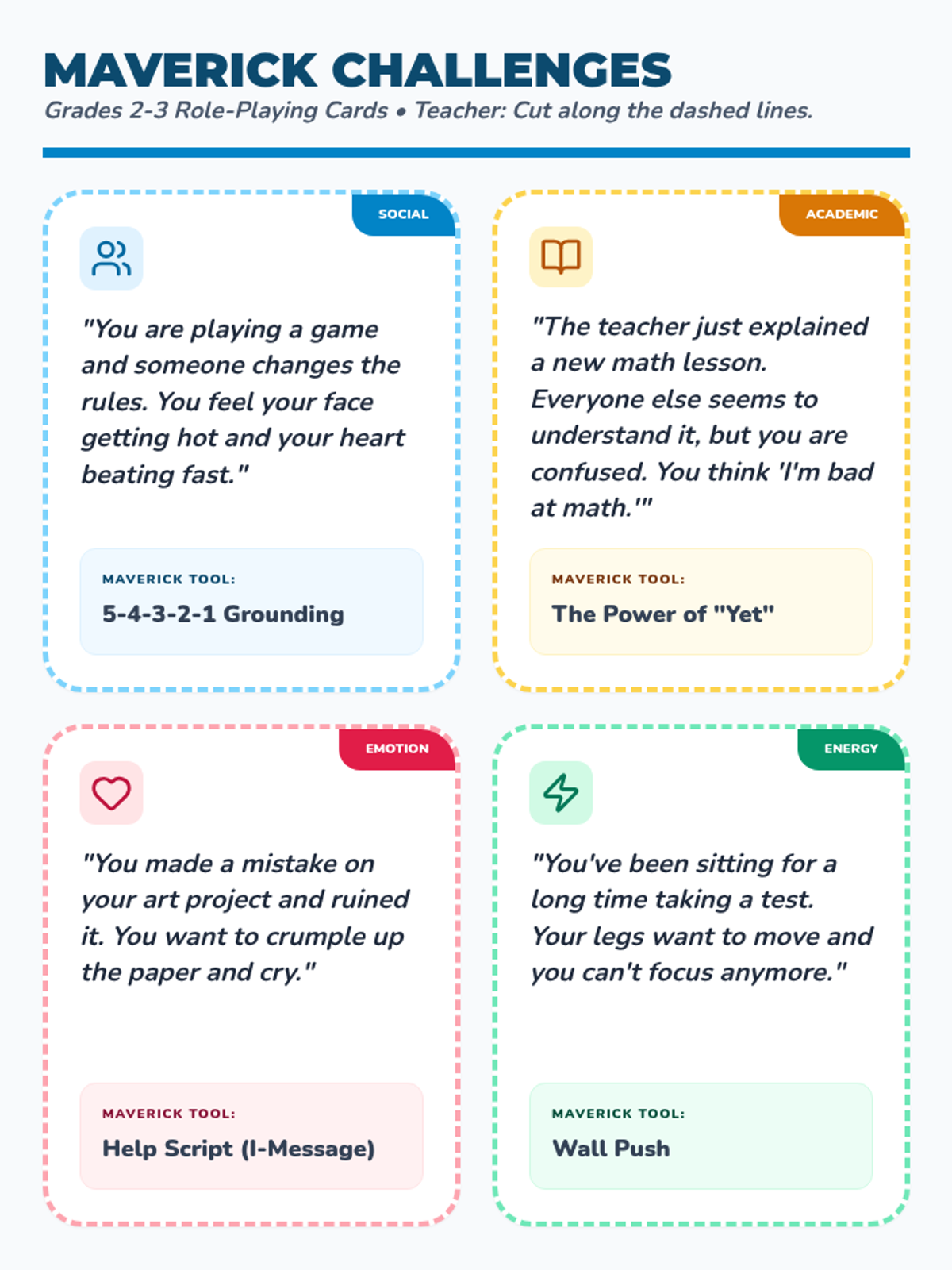
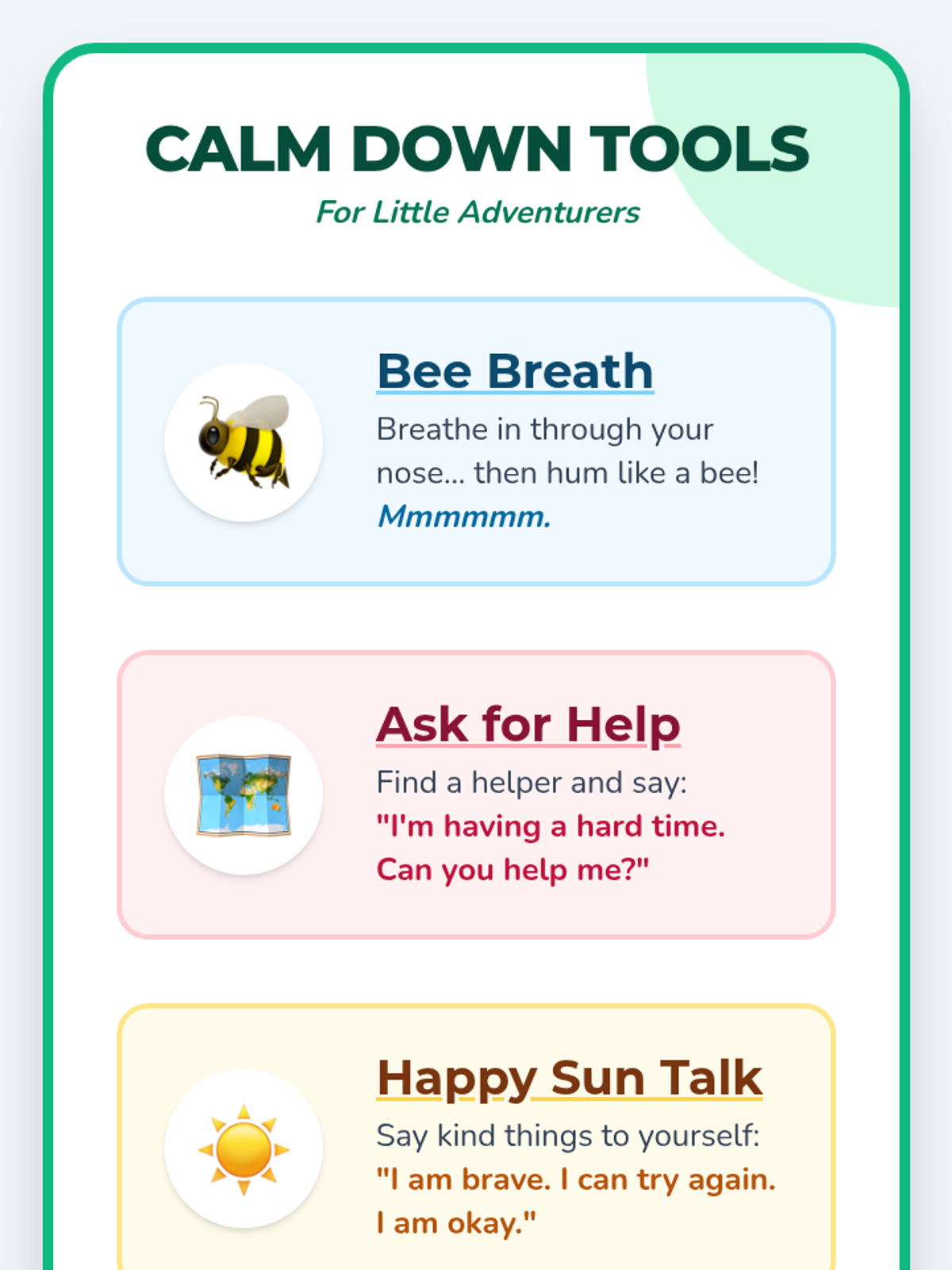
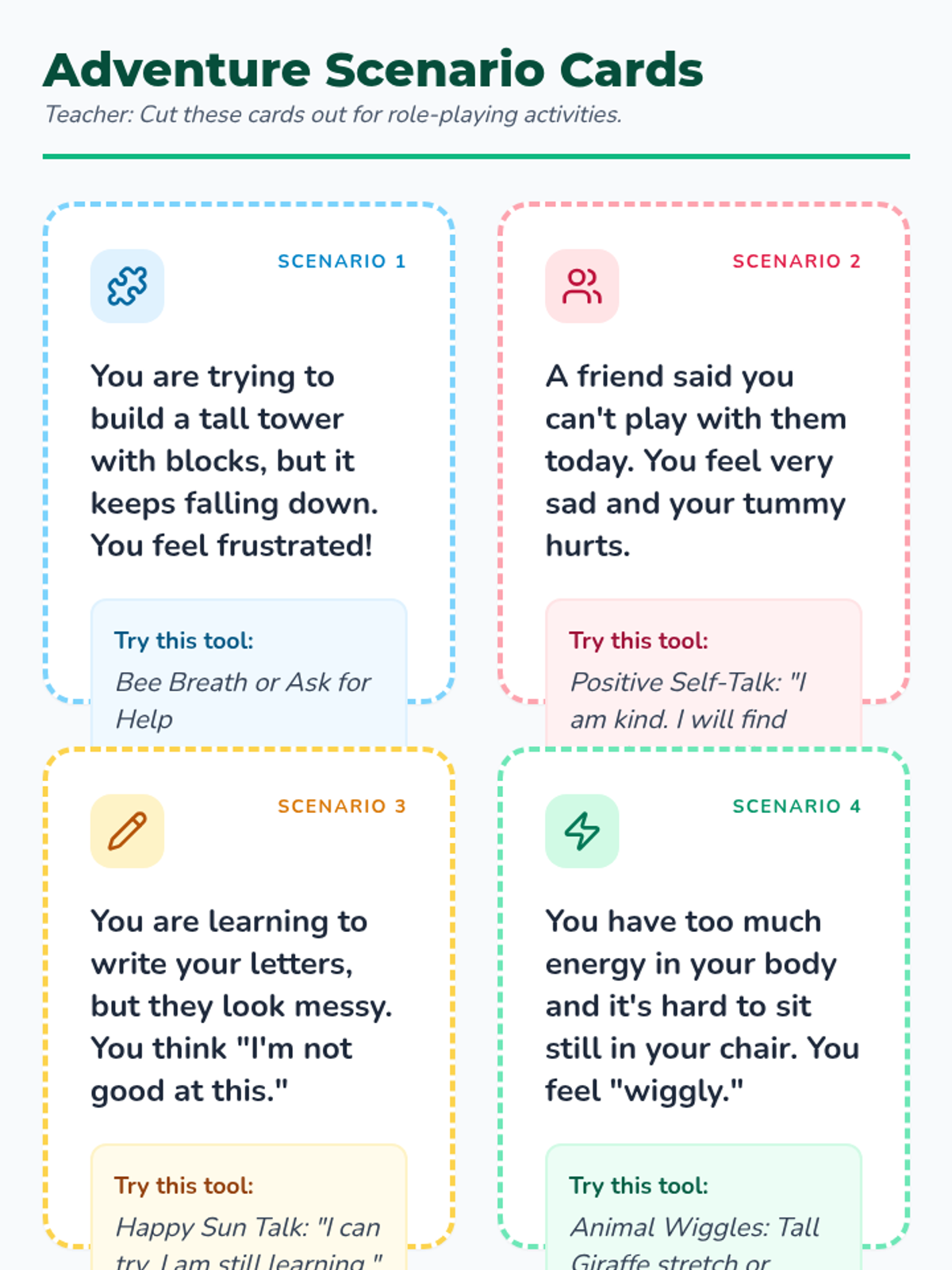
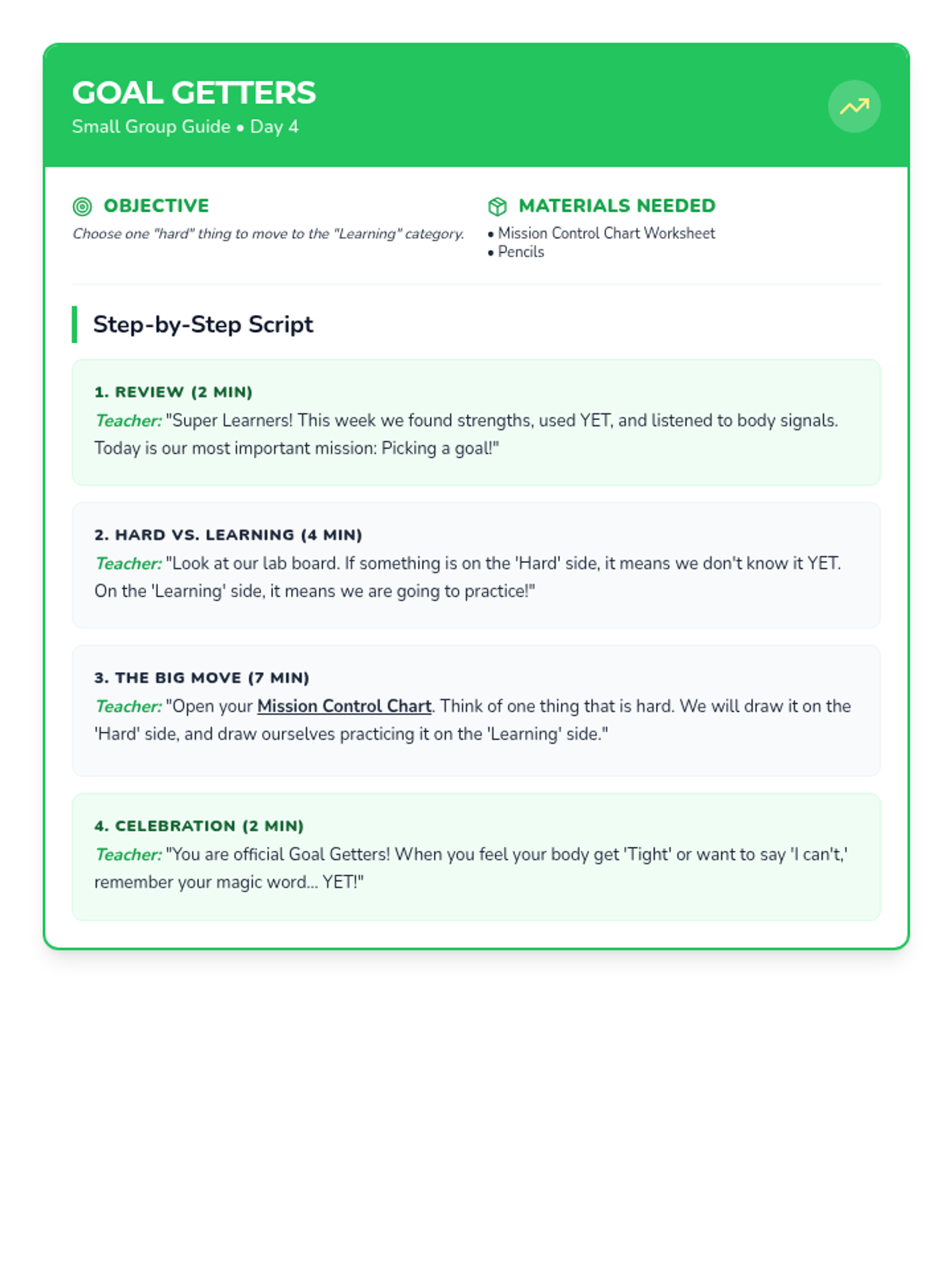
In a structured activity, students are given tasks with intentional barriers and must navigate the classroom to find the correct peer or resource to help them solve it, synthesizing the sequence's skills.
An introductory lesson for Kindergarten students to identify and categorize their emotions into the four Zones of Regulation using visual cues and creative activities.
A collaborative group-building activity where students work in teams to complete puzzle-based relay challenges, focusing on social communication, turn-taking, and the concept of inclusion.
A collection of tools to help students in residential settings prepare for their school day through social-emotional reflection.
A high-energy, hands-on social-emotional learning lesson where Kindergarteners use imaginary 'Empathy Glasses' to explore the feelings of others and practice perspective-taking.
A high-energy, soccer-themed lesson designed to help disengaged students identify emotions and practice regulation strategies through interactive play and hands-on activities.
A comprehensive counseling module combining CBT and Person-Centered approaches to help children manage anger and improve focus in the classroom. includes practitioner guidance and student-facing activities.
A social-emotional learning lesson for K-2 students that teaches a concrete, physical process for resolving conflicts using the 'Peace Path' method. Students learn to use I-statements, listen actively, and find win-win solutions.
A bilingual kindergarten lesson exploring diversity and self-identity inspired by 'The Colors of Us' by Karen Katz. Students celebrate their unique skin tones and personal traits through the 'Pieces of Me' activity.
A review lesson focused on synthesizing responsible decision-making skills through games, role-play, and reflection. Students practice navigating school scenarios, fixing mistakes, and applying the Stop-Think-Choose method.
A social-emotional learning lesson focused on the 'Stop, Think, Choose' framework for decision-making. Students practice pausing before acting through movement activities, scenarios, and visual reinforcements.
A series of resources designed for Kindergarten and 1st-grade students to explore the positive benefits of playing Fortnite, focusing on strategy, social skills, and coordination through simplified text and heavy visual support.
A 30-minute interactive program for grades K-6 focused on building a positive classroom culture through affirmations, service, and conflict resolution.
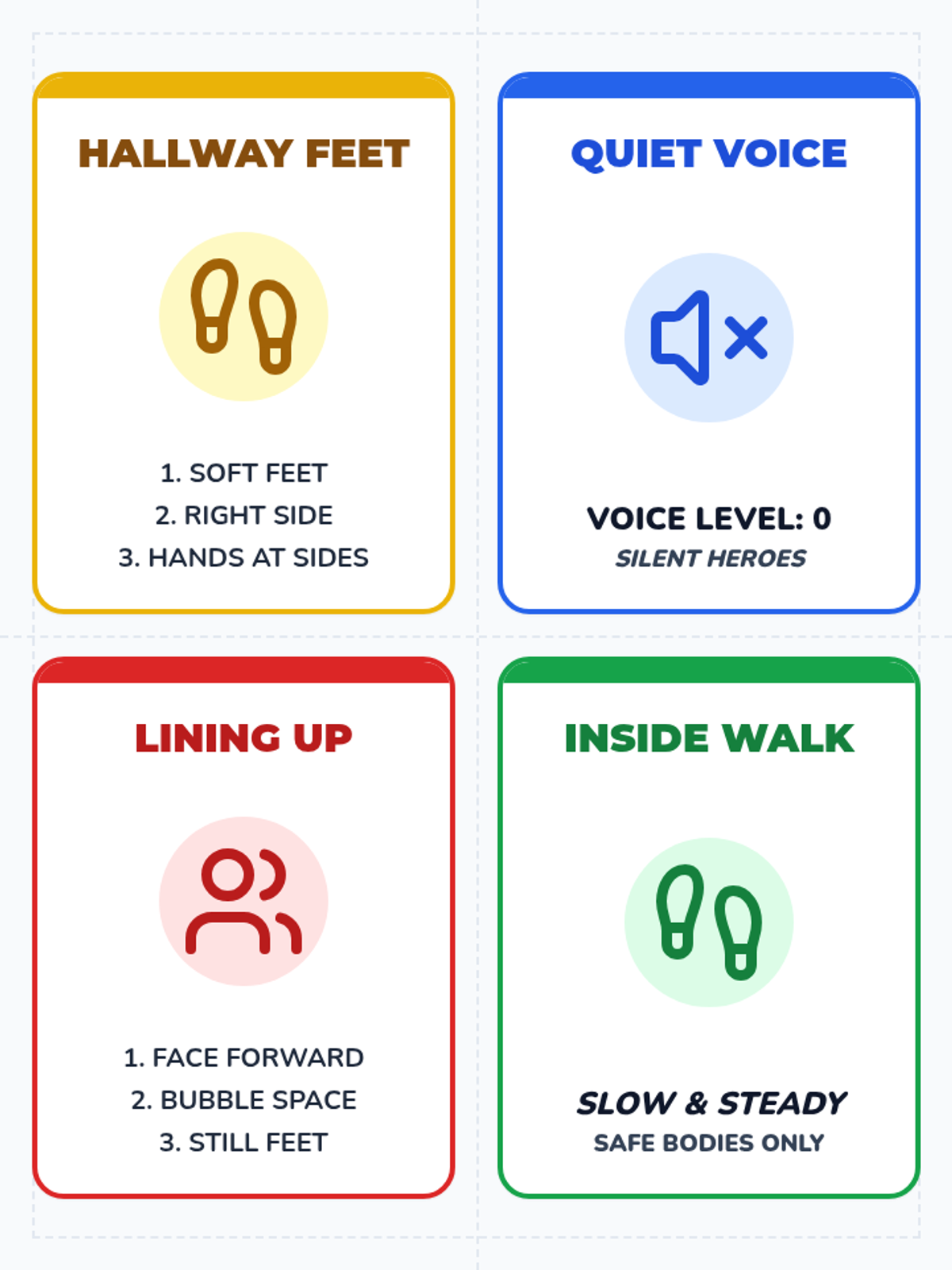
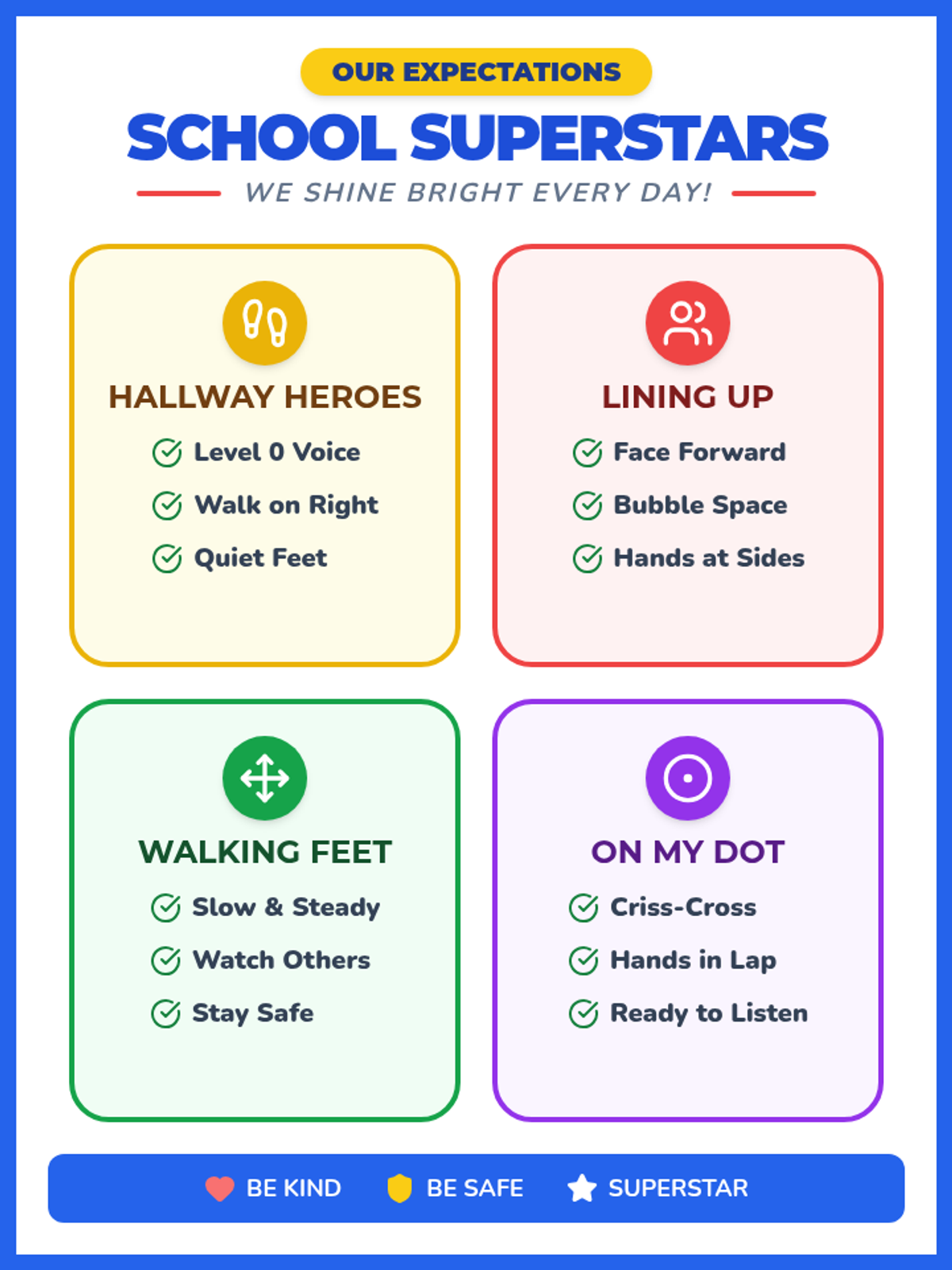
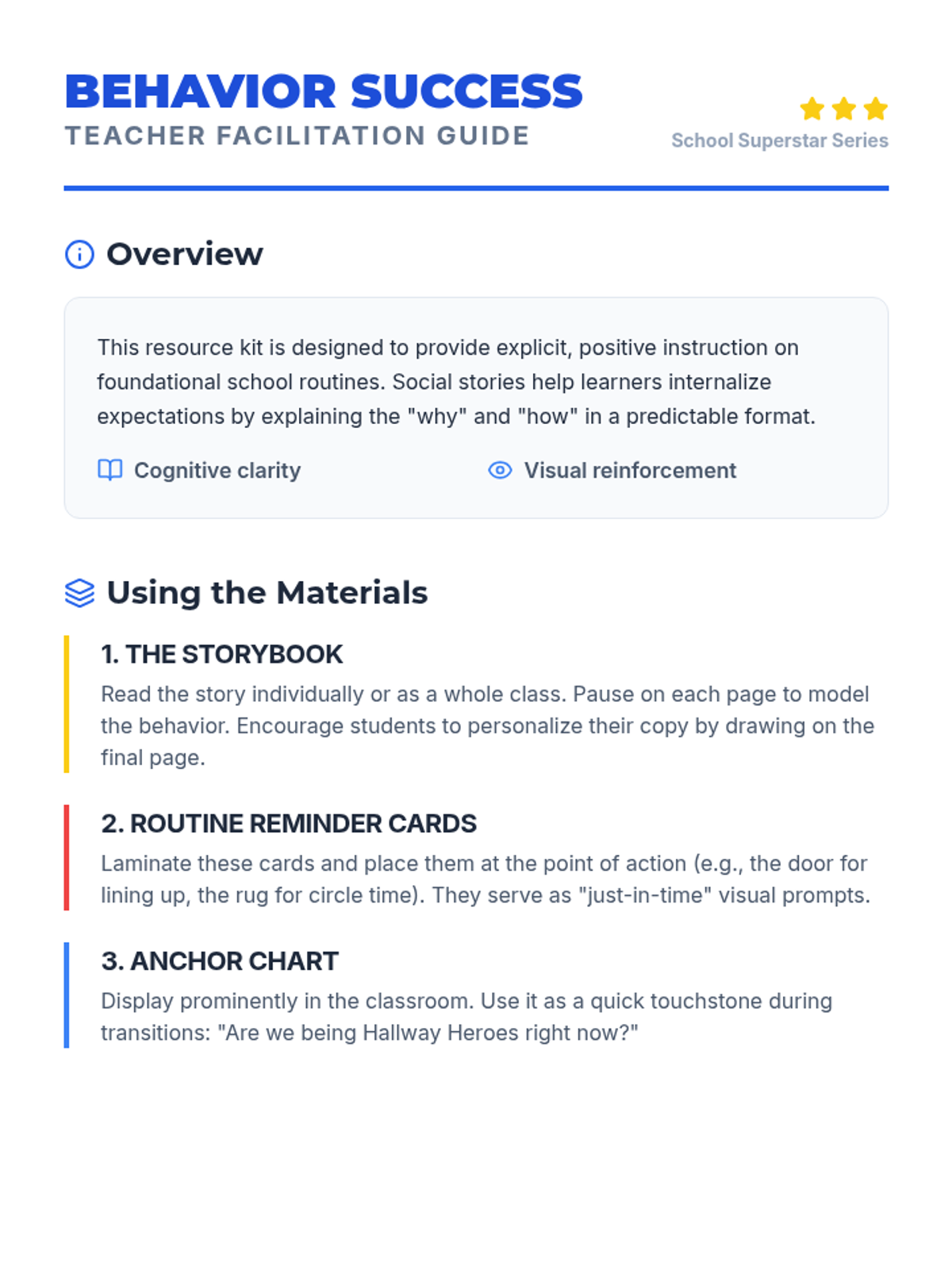
A social-emotional learning lesson focused on hallway safety, group cohesion, and self-regulation during transitions. Includes a visual self-reflection worksheet and a teacher facilitation guide.
A quick 15-minute lesson focusing on the four pillars of whole-body listening: eyes watching, ears listening, brain thinking, and a still body. Includes visual slides, hands-on practice, and creative reinforcement.
A quick, impactful 15-minute lesson focused on self-gratitude. Students identify their personal strengths and transform them into positive affirmations on custom bookmarks.
A playful, superhero-themed lesson for K-2 students to master 'whole-body listening.' Students will discover how their eyes, hands, feet, and hearts help them become legendary listeners through movement, visuals, and interactive play.
A student-led lesson focused on the 'Size of the Problem' concept using the Glassman character. Students learn to match their reaction size to the problem size to stay 'unbreakable'.
A collection of intake and referral forms for school counseling programs, focused on building a holistic understanding of a student's social-emotional needs through student, teacher, and parent perspectives.
A self-regulation lesson that teaches students to recognize their body's energy levels using a visual 'Alertness Meter.' Students learn to identify when they are 'Too Slow,' 'Just Right,' or 'Too Fast' and discover strategies to find their focus.
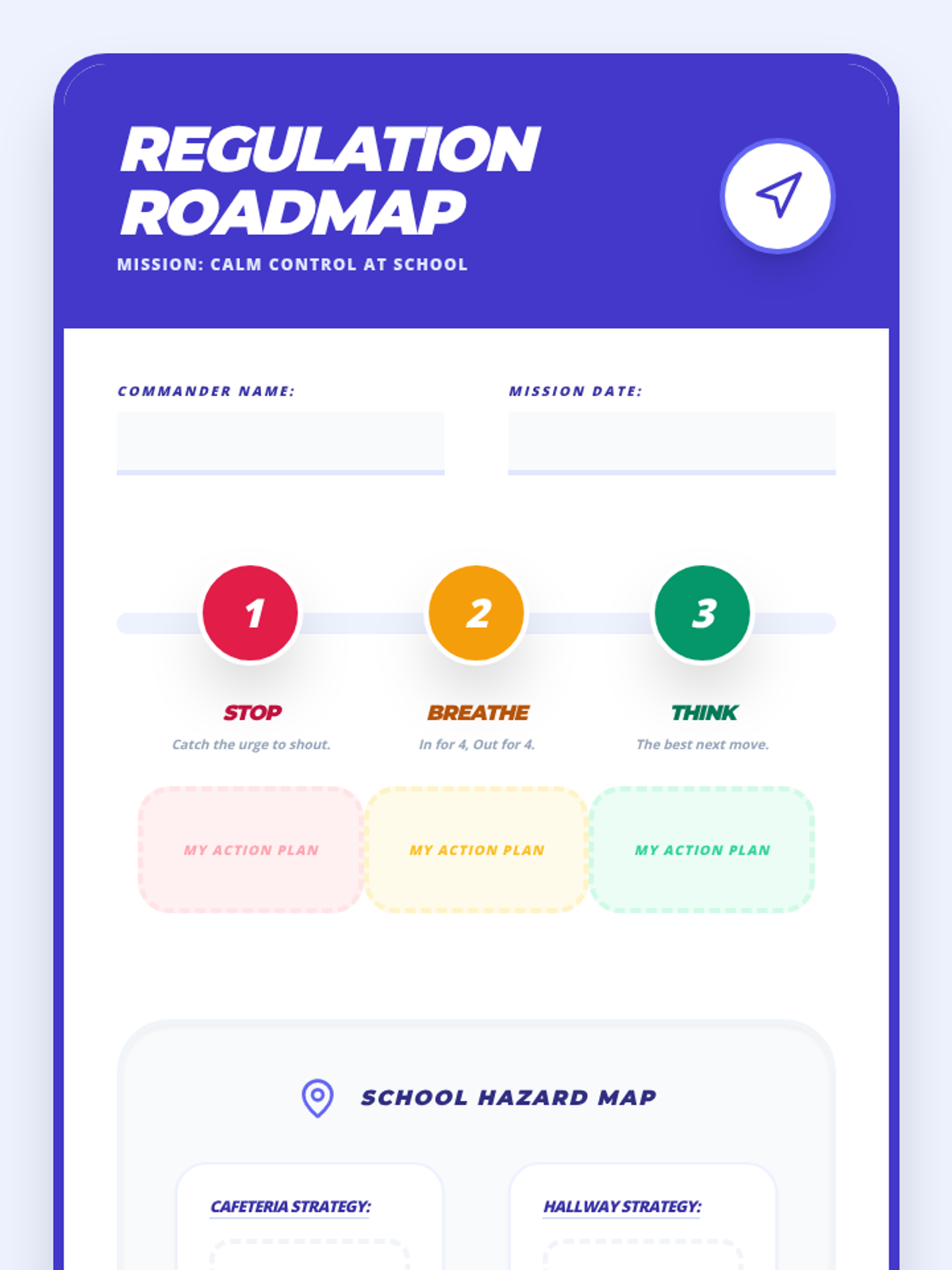
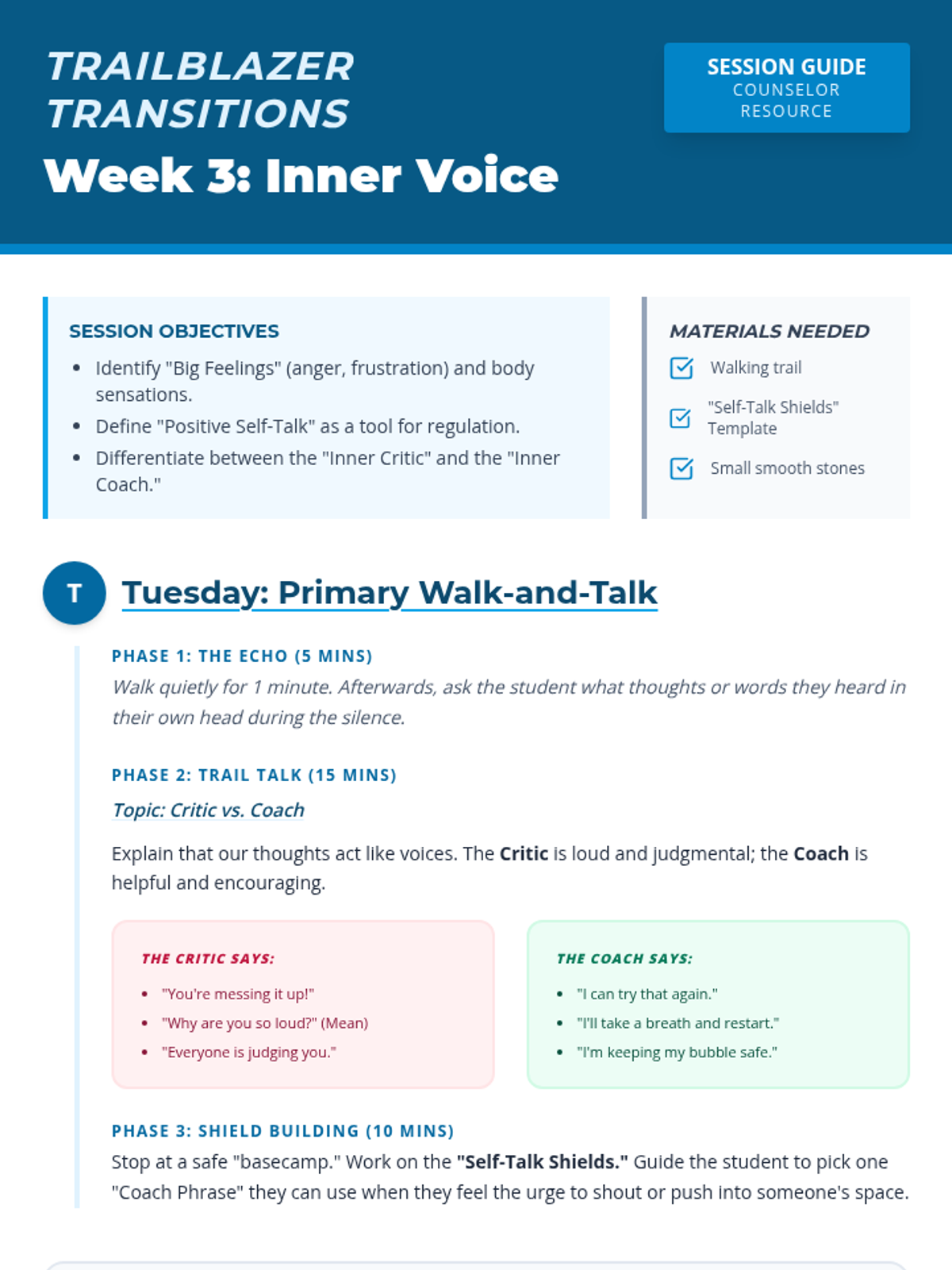
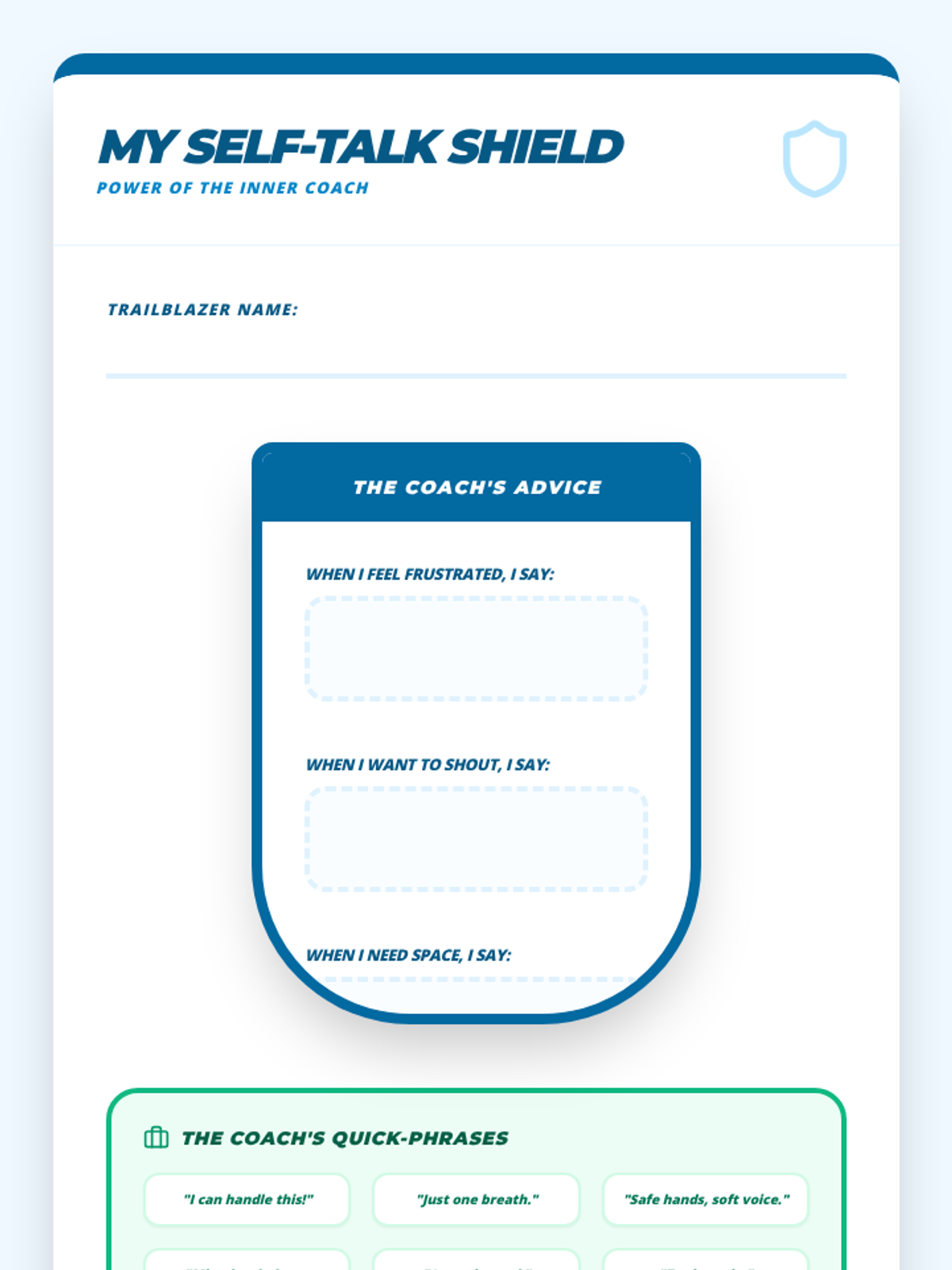
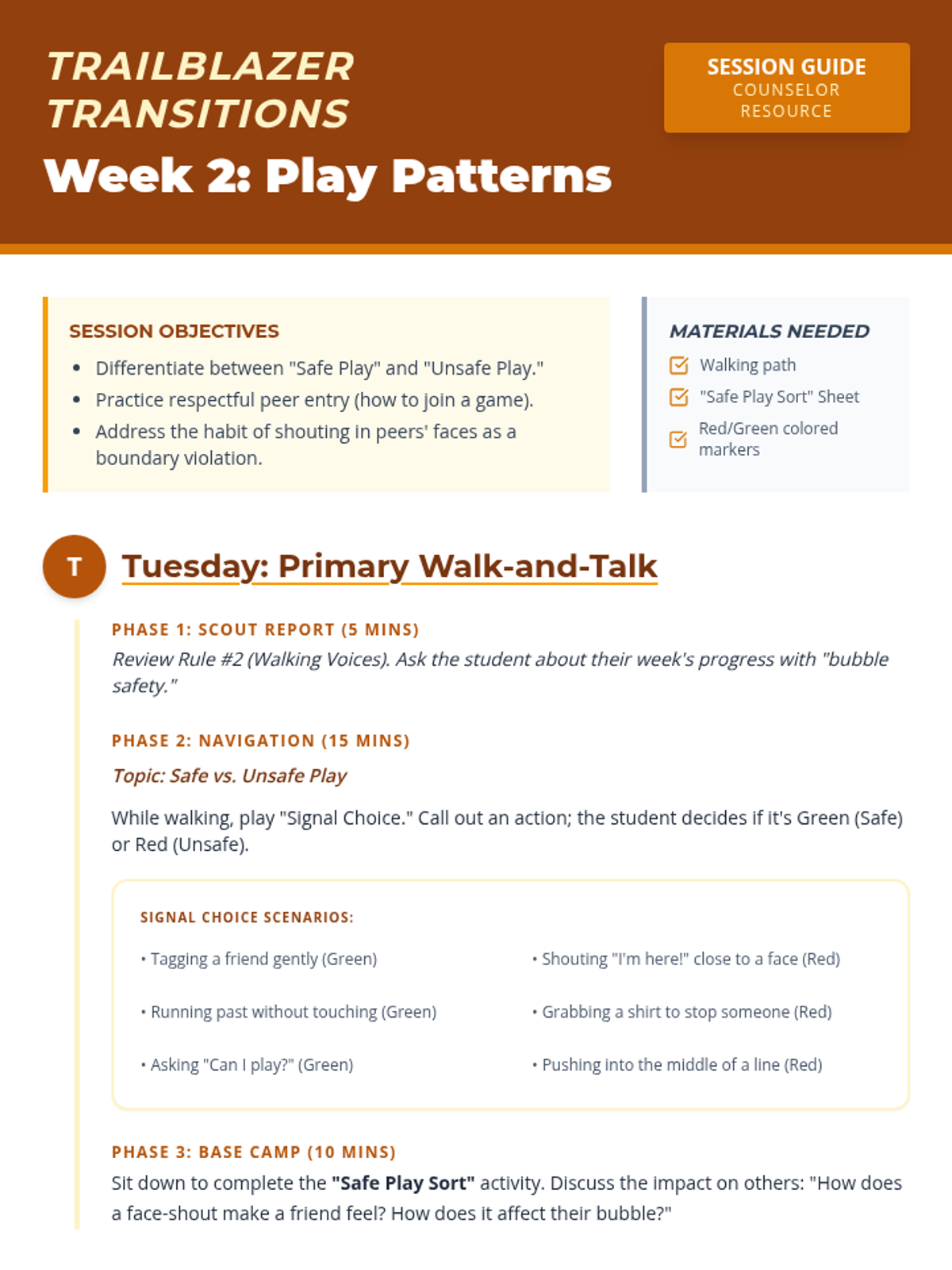
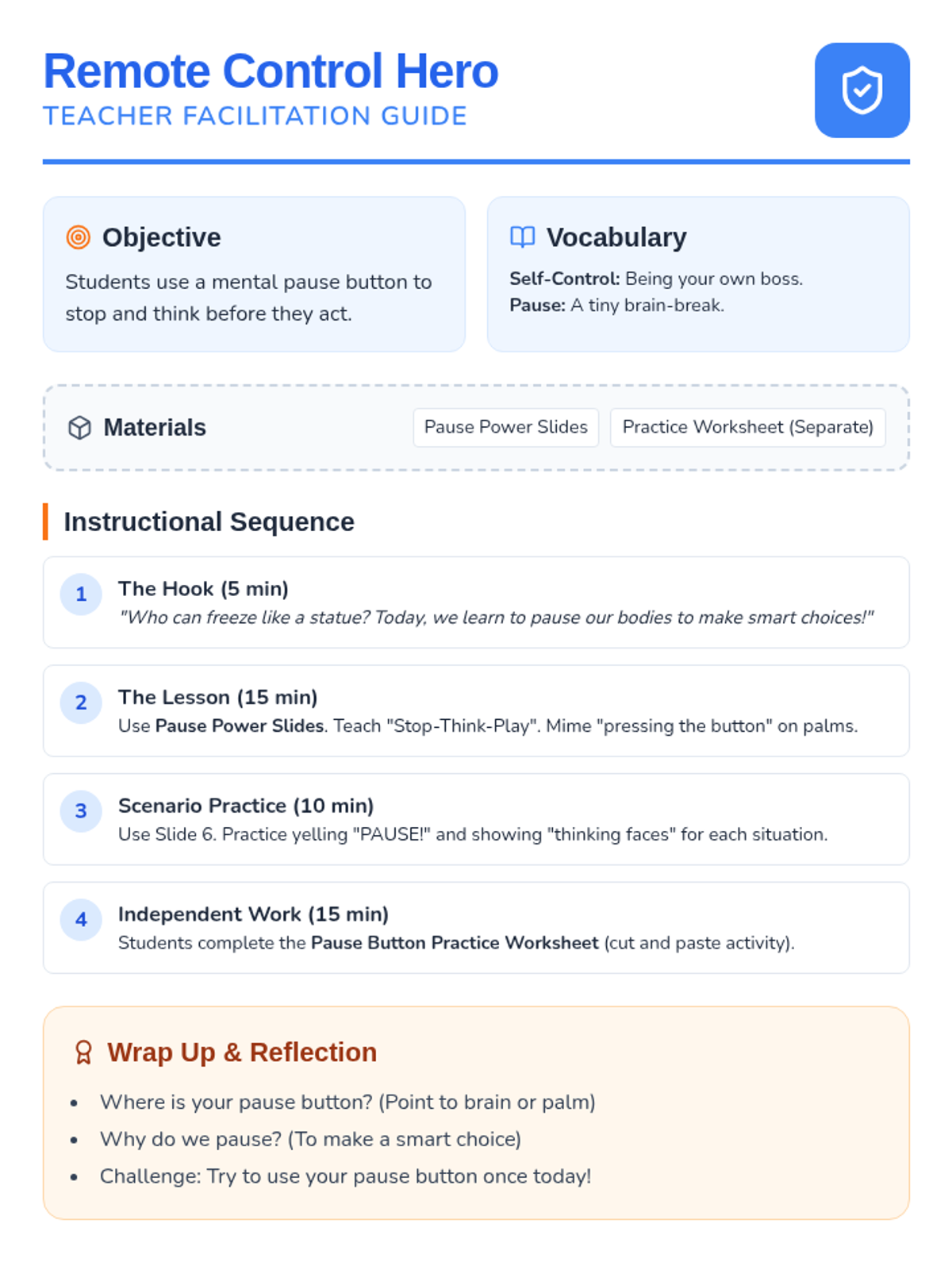
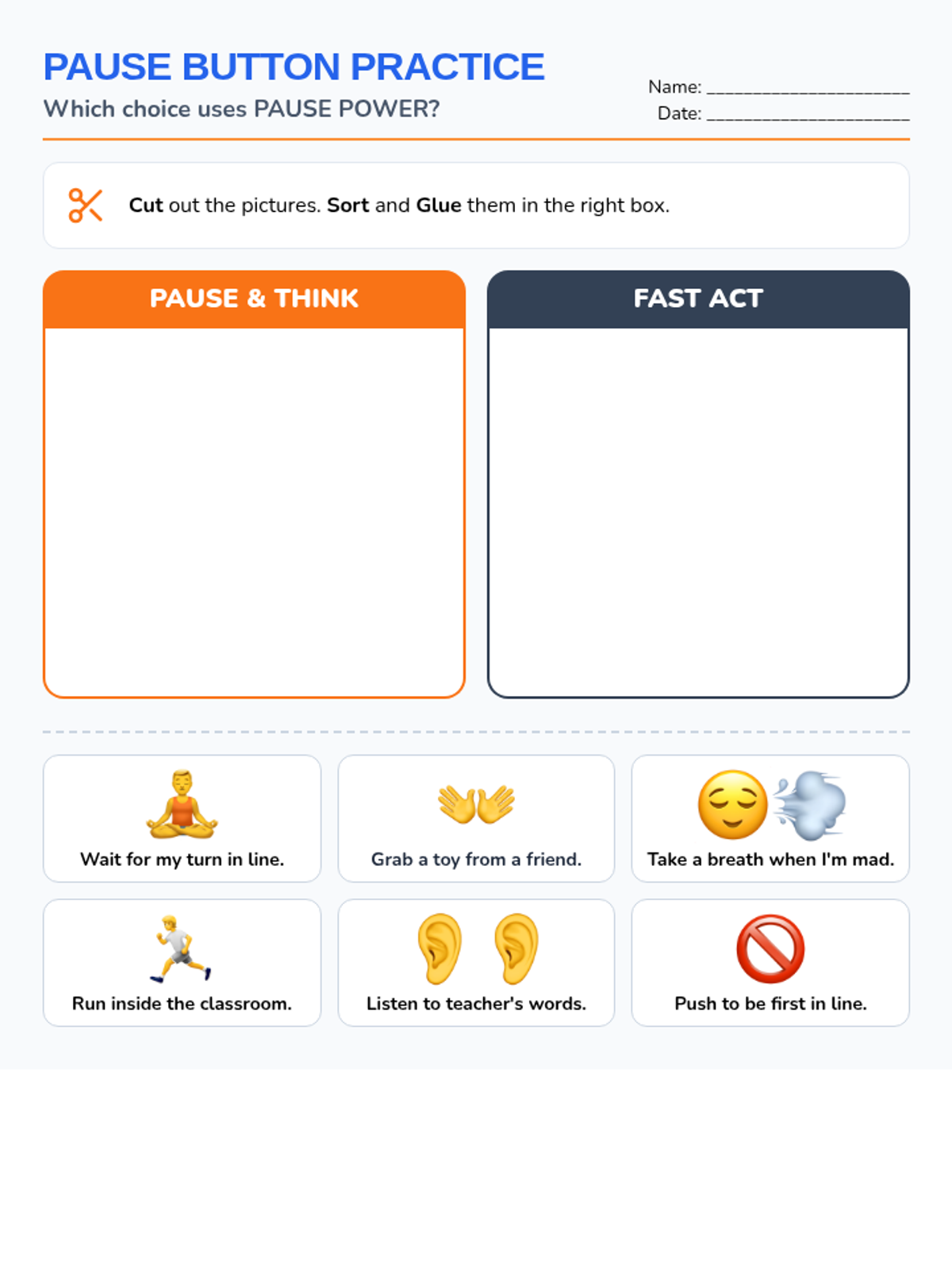
This individual counseling session helps students understand the 'Stop-Think-Act' model to reduce disruptive classroom behaviors. It includes a structured facilitation guide, a reflection worksheet, and a portable visual reminder.
A collection of activities and guides to facilitate a magical overnight adventure for stuffed animals and their young owners.
A high-energy SEL lesson for K-2nd graders in an auditorium setting, focusing on self-advocacy and the power of their voices through the lens of women's history and empowerment. Students will learn how to speak up for themselves and others, inspired by resilient women leaders.
A 30-minute introductory lesson for K-2 students on internet safety. It covers distinguishing private from public information, practicing the 'Pause & Think' method, and promoting digital kindness through interactive slides and a sorting activity.
A foundational conflict resolution lesson where students identify and practice using 'tools' like sharing, taking turns, and 'I' statements to repair friendship 'bumps'. Designed for small group or whole-class social-emotional learning.
A social-emotional learning lesson for Pre-K to 2nd grade that uses the 'Resilient Rabbit' character to teach students how to handle mistakes, manage frustration, and use positive self-talk to try again.
A social-emotional learning lesson for K-5 students using the metaphor of the ocean to understand that big emotions, like waves, are temporary and can be managed through 'riding the wave' techniques.
In this lesson for Kindergarten through 2nd grade, students use physical 'filters'—customized glasses—to learn how to block out classroom distractions and build foundational attention skills through a playful, tactile metaphor.
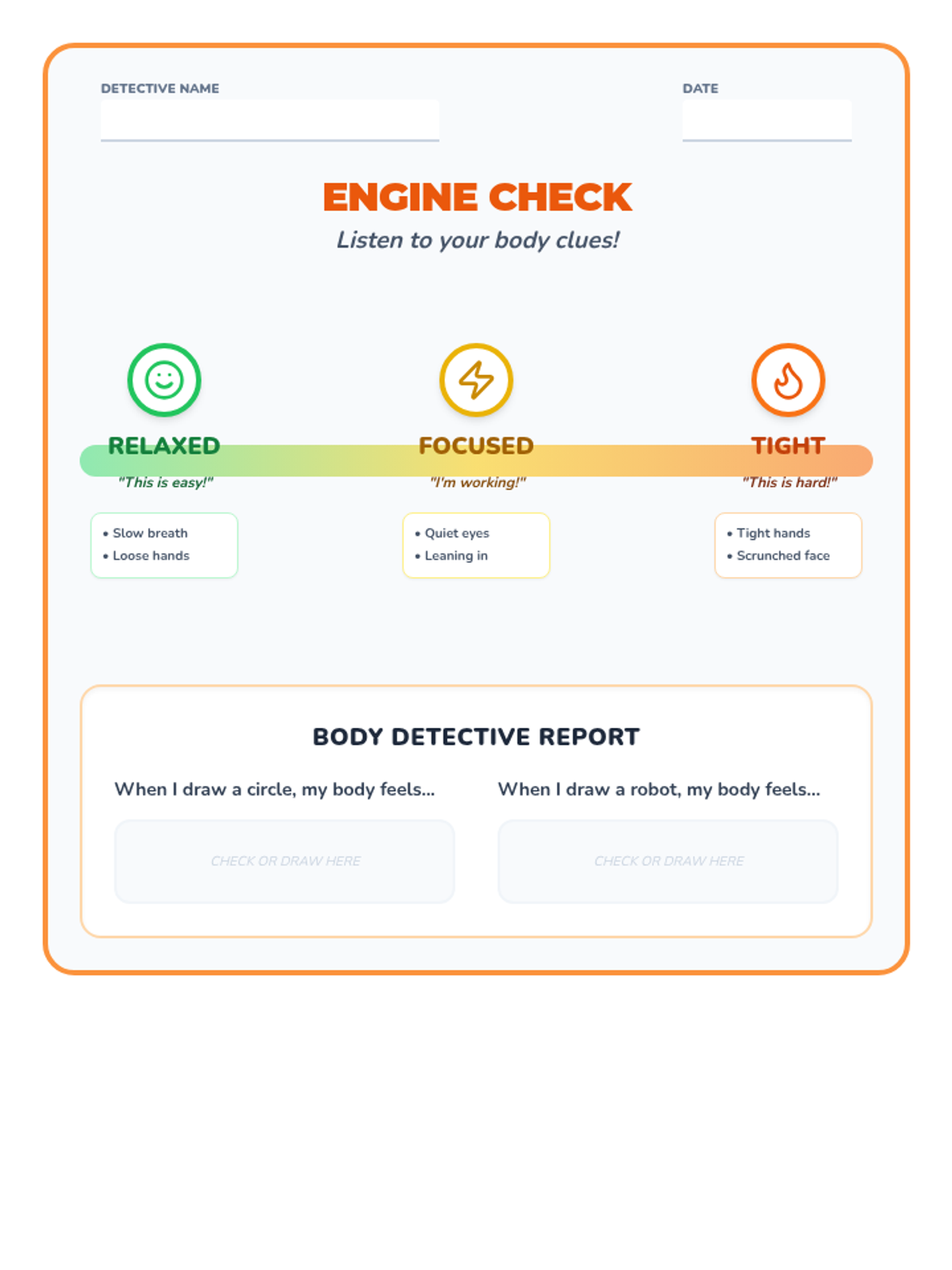
A preschool lesson focused on self-regulation using the 'Body Pilot' metaphor to help children understand and manage their energy levels and emotions.
Students learn about the 'Ripple Effect' of kindness and how small acts of inclusion can transform a school culture. The lesson concludes with a class pledge to be 'Kindness Crusaders'.
Students develop 'Upstander' skills by learning specific strategies to intervene when they witness bullying and how to safely stand up for themselves using assertive communication.