In this final simulation, students navigate a classroom 'store' with play money, encountering items with different prices and quality levels. They must apply all previous skills to make the best purchase decisions for a set scenario.
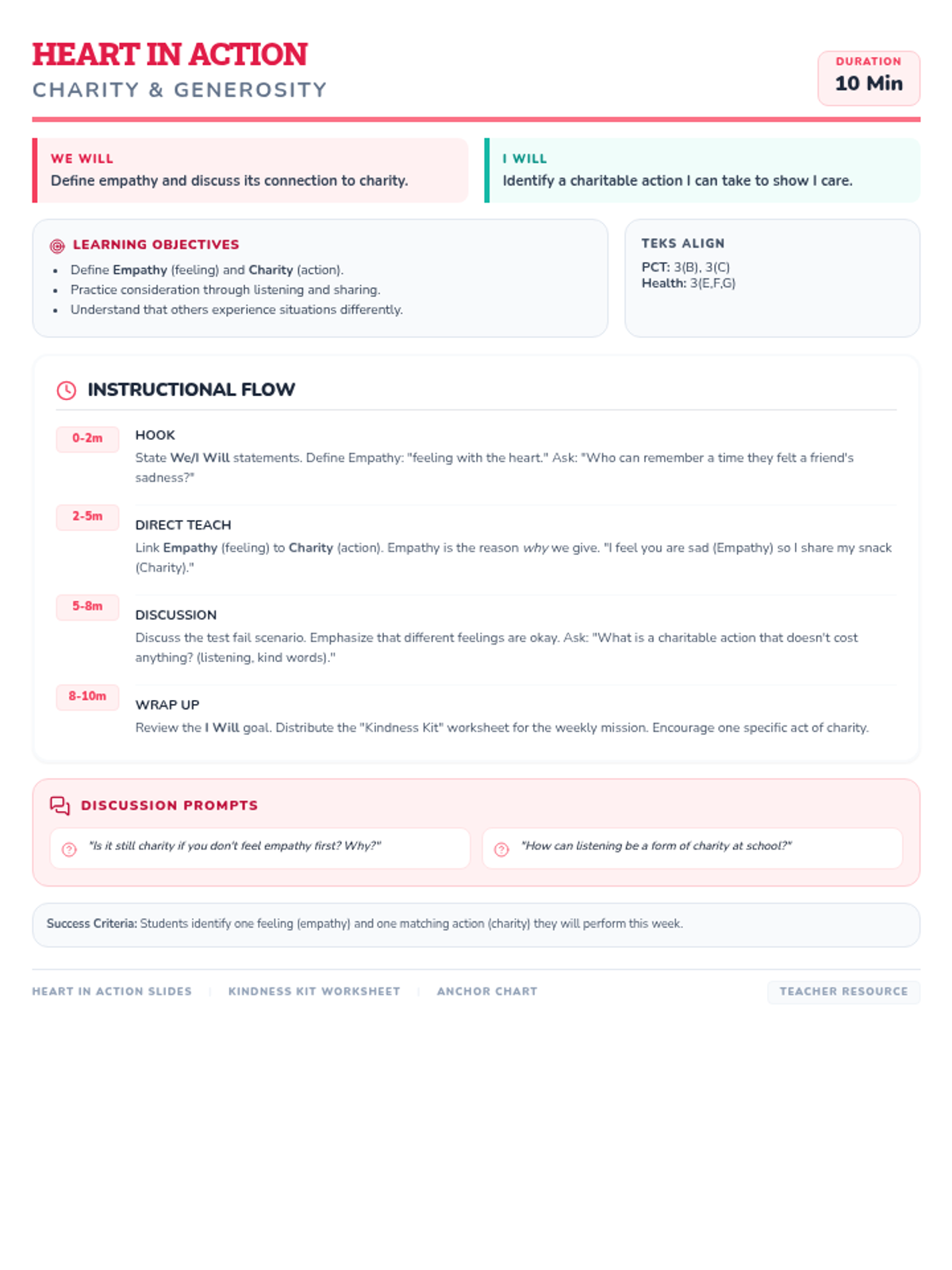
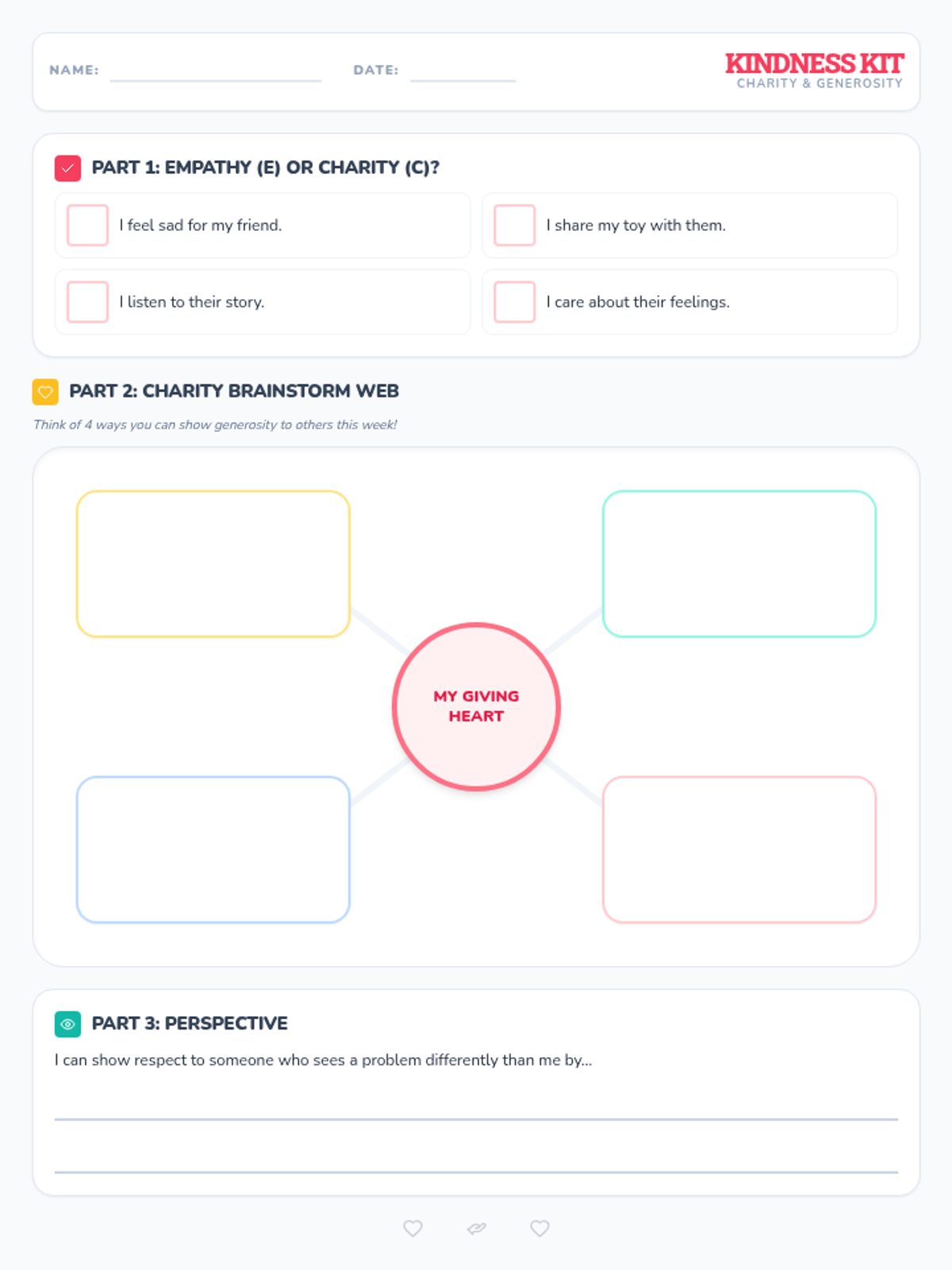
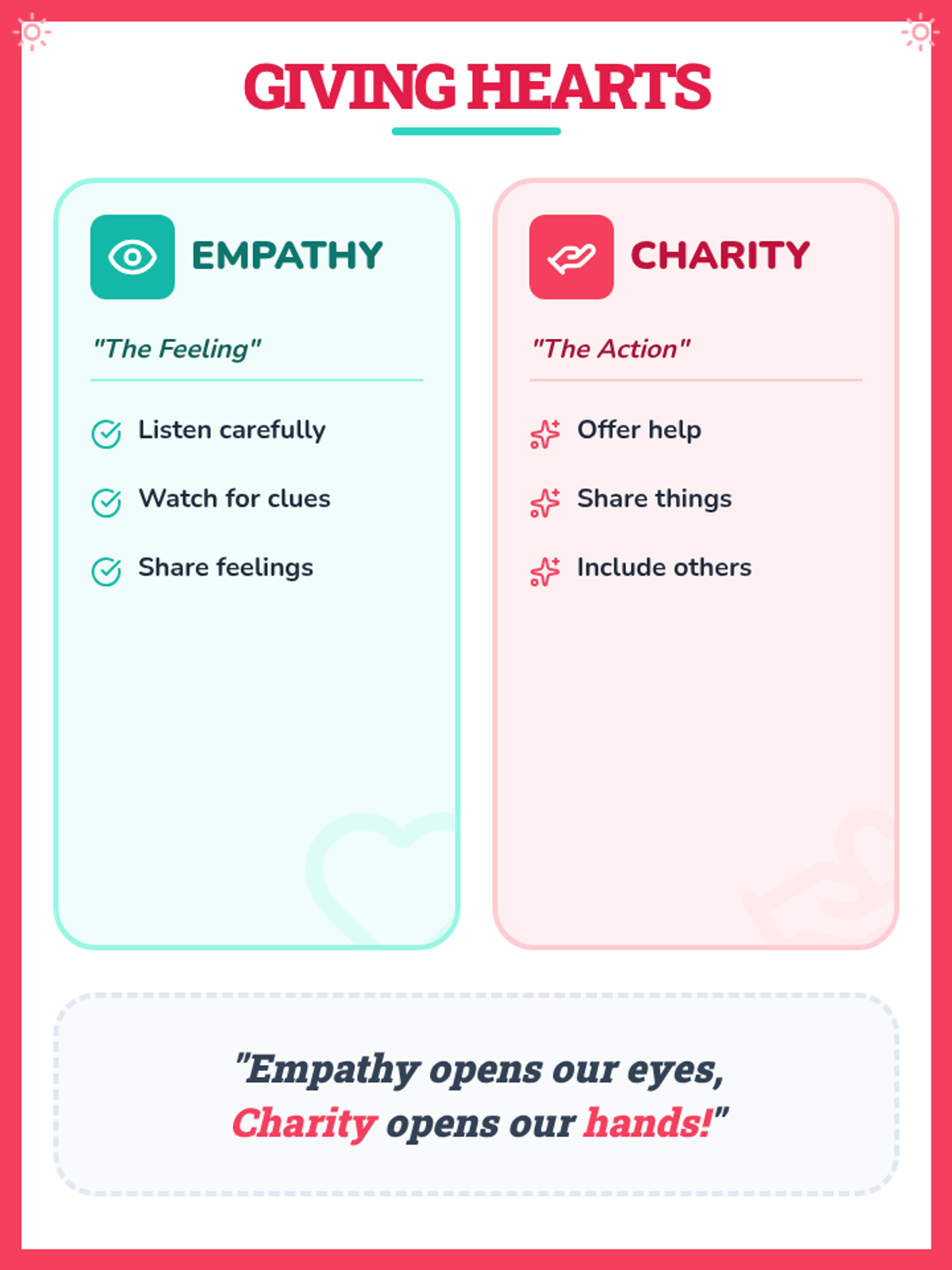
A 10-minute lesson focused on the connection between empathy and charity, teaching students how to identify needs and act with generosity. Includes a slide deck, worksheet, and anchor chart.
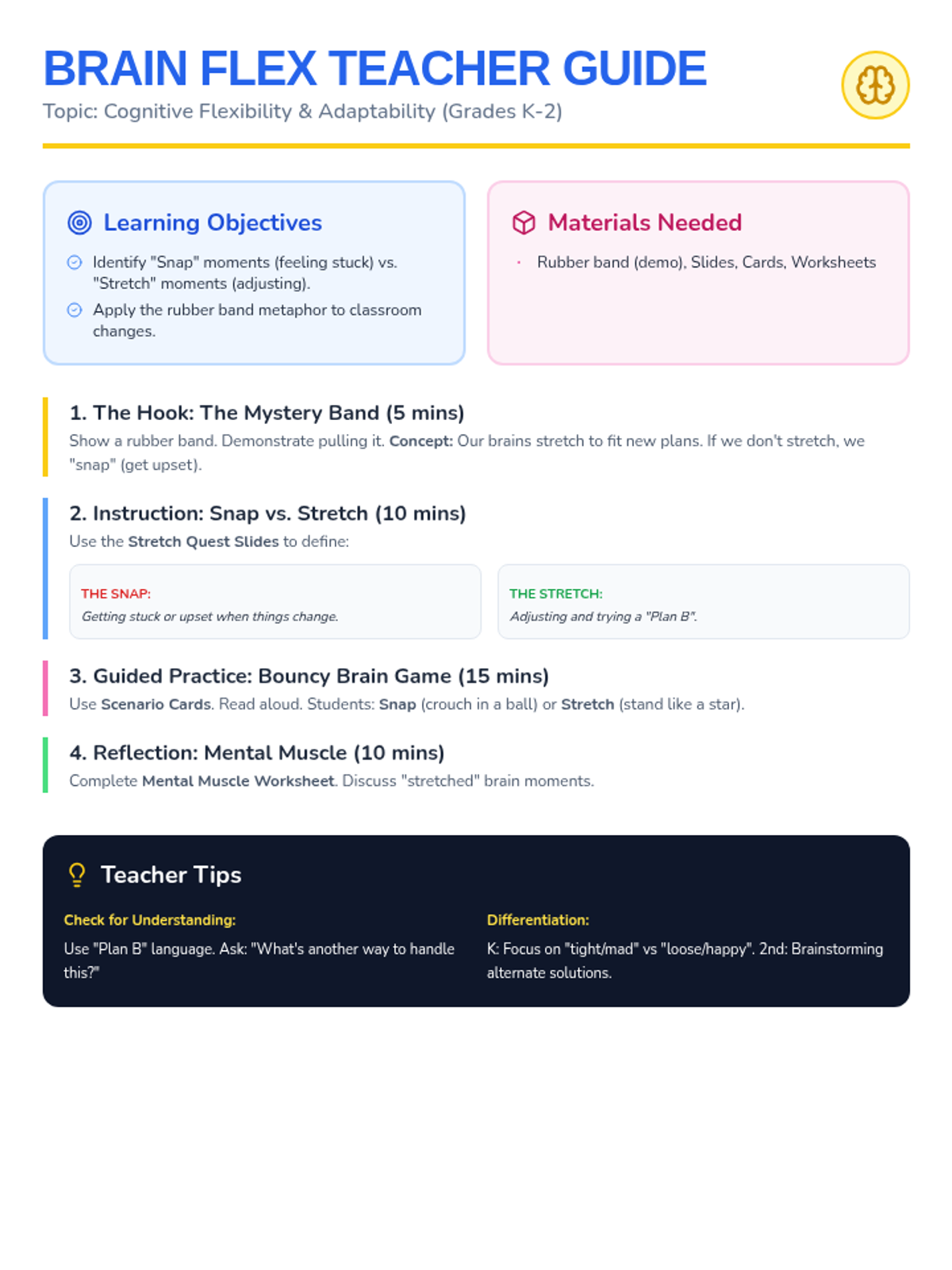
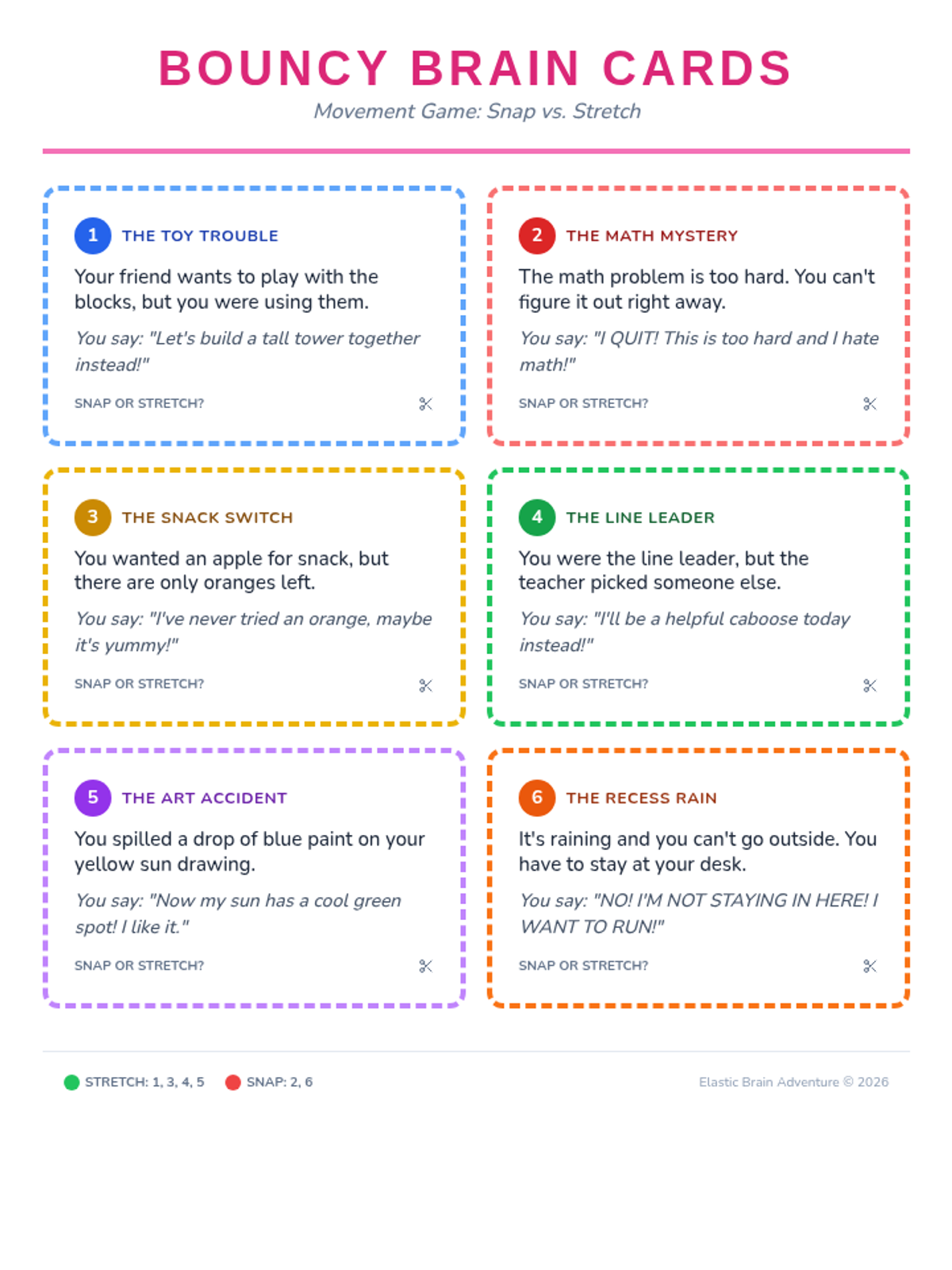
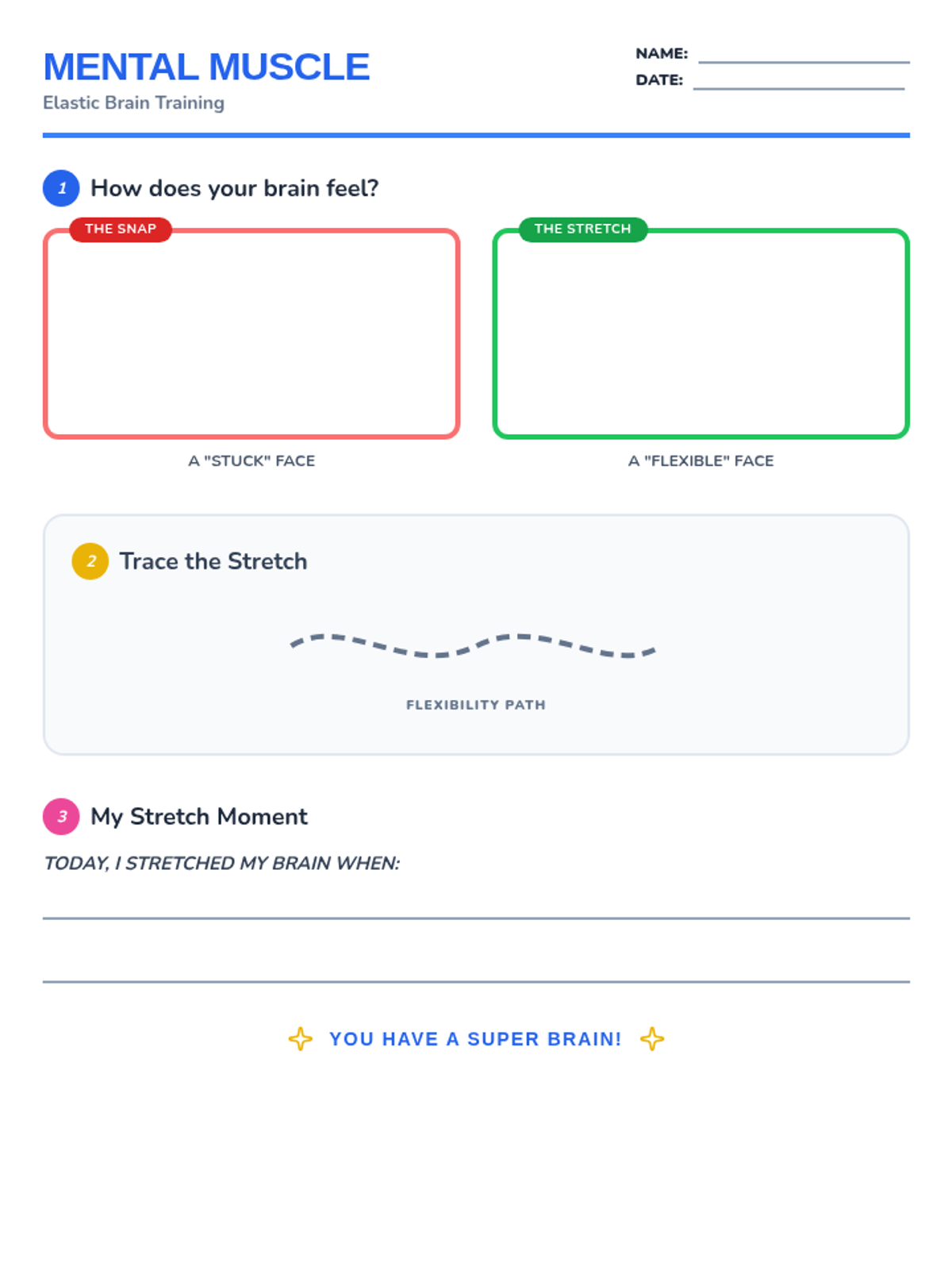
A social-emotional learning lesson for K-2 students that uses the metaphor of a rubber band to teach cognitive flexibility, adaptability, and emotional regulation when facing changes.
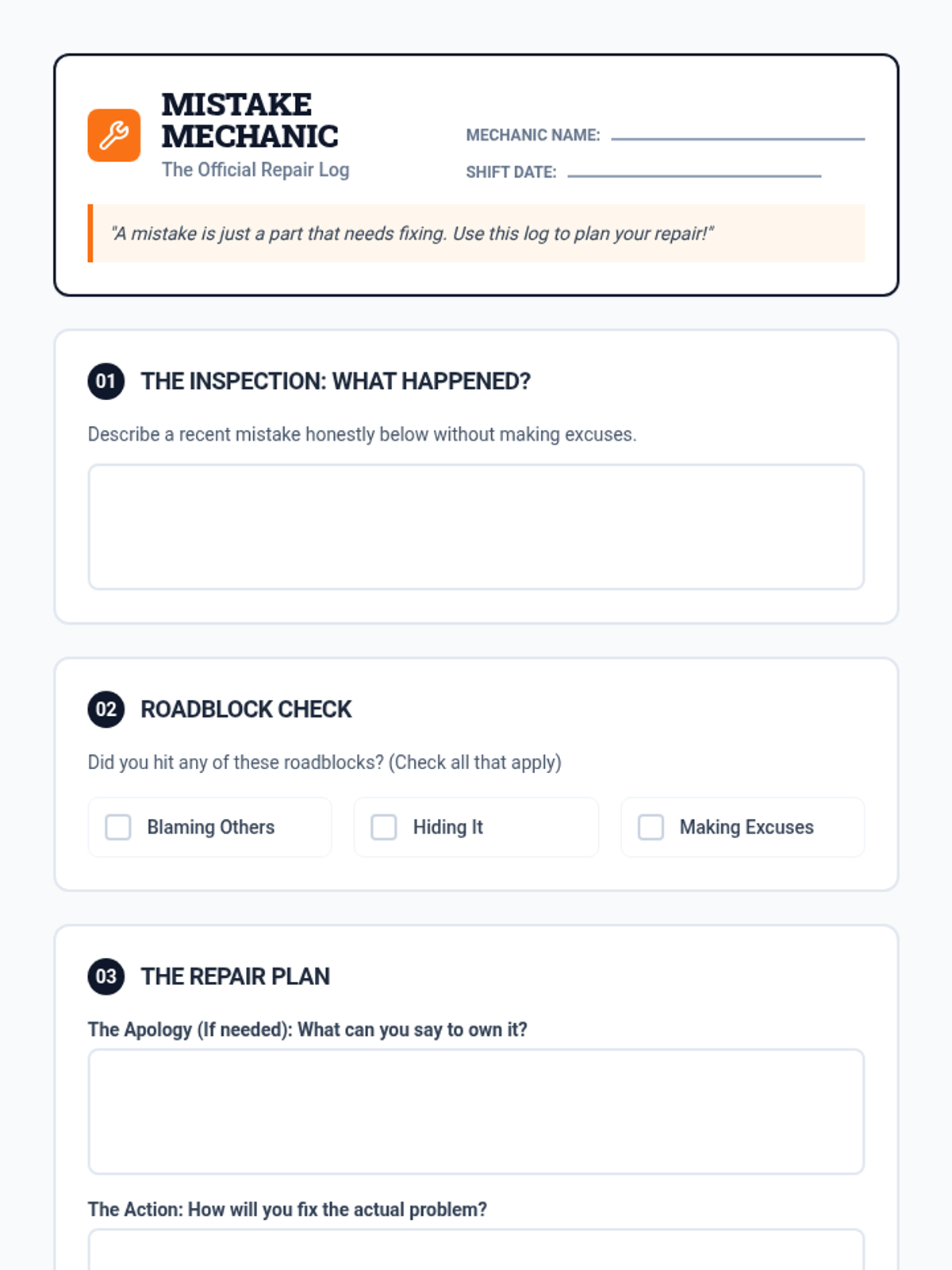
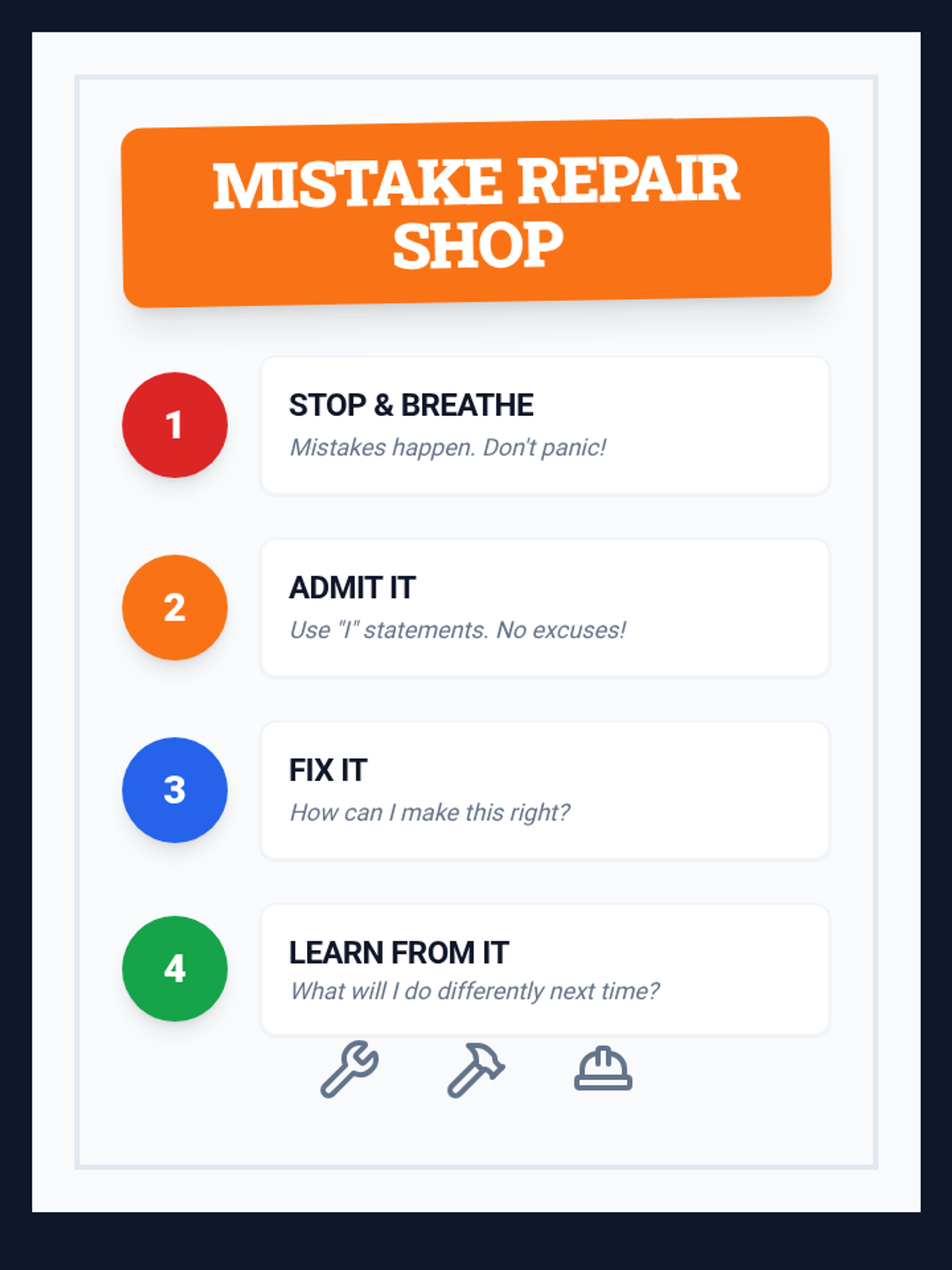
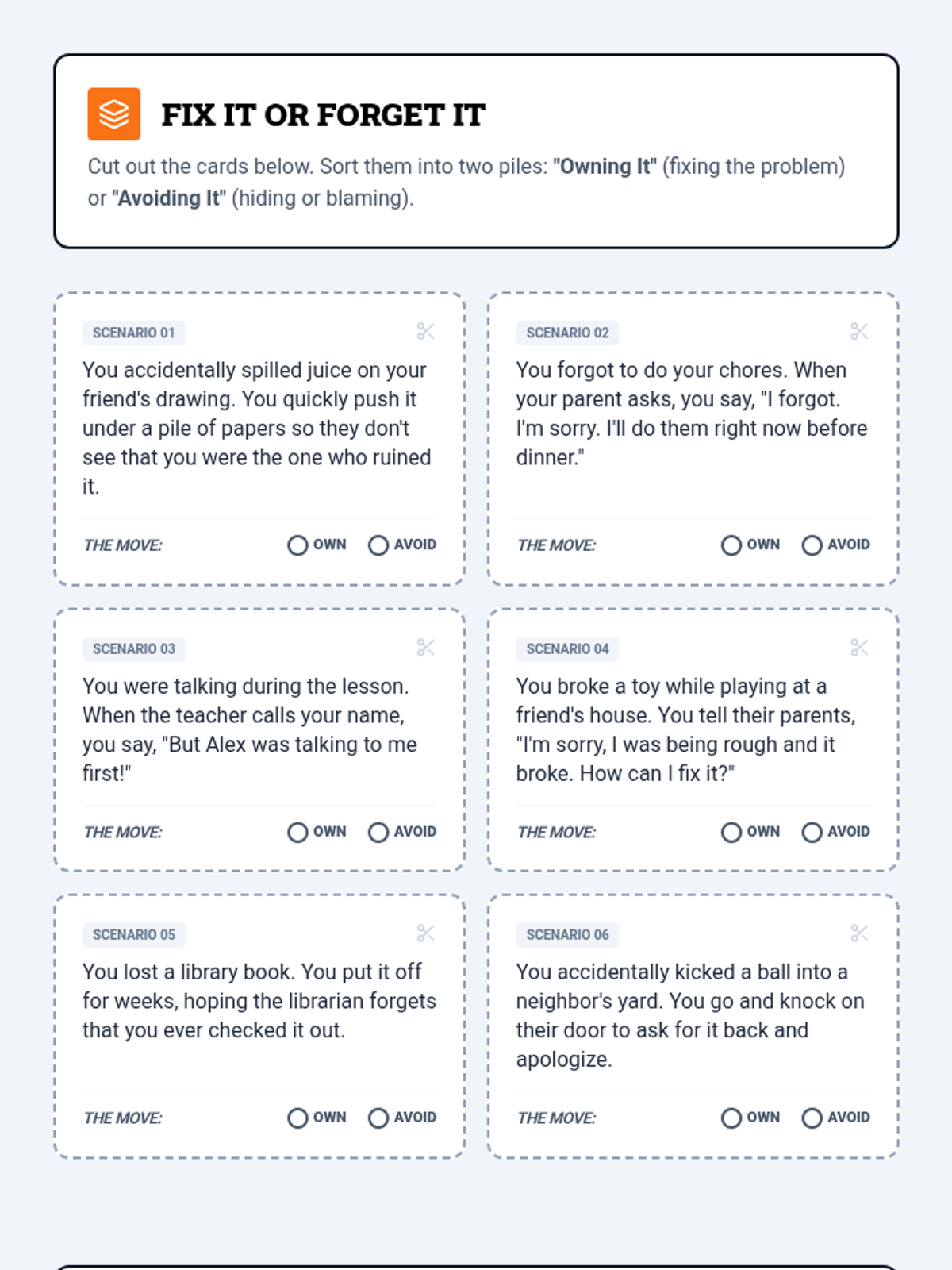
A lesson focused on taking ownership of mistakes through the metaphor of a 'Repair Shop'. Students will learn to move past blame and use a step-by-step process to fix their errors and learn from them.
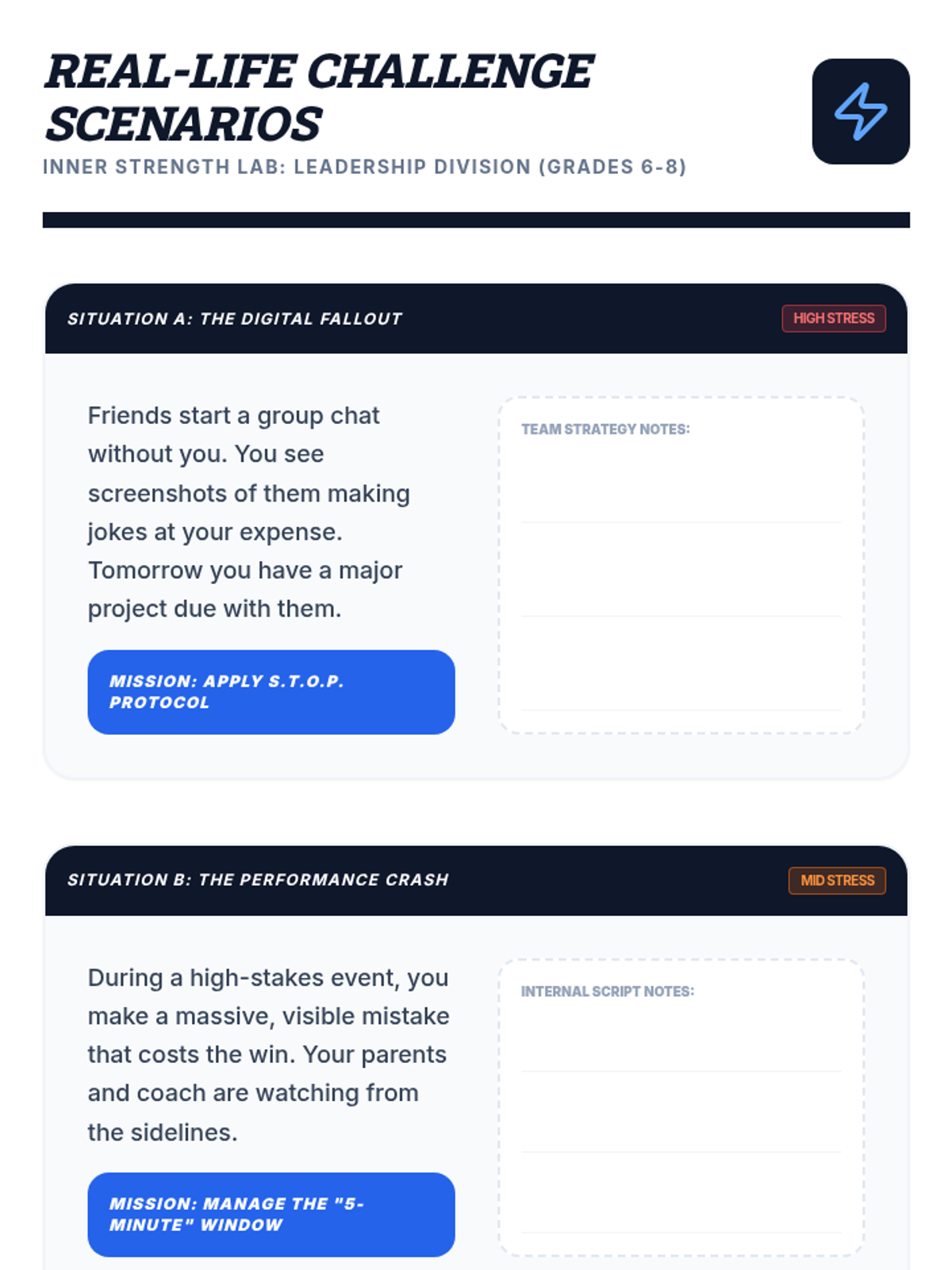
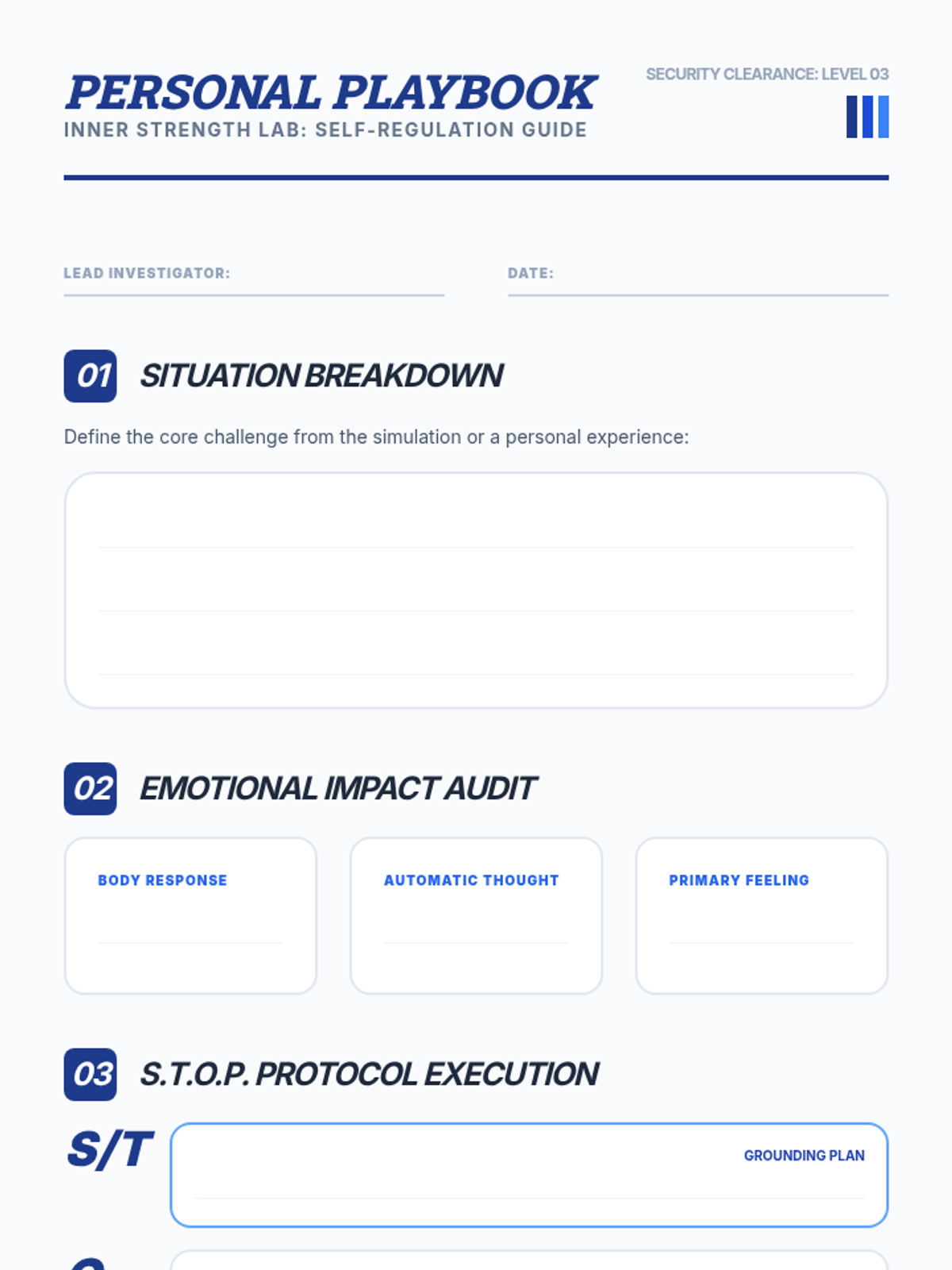
Equips middle schoolers (6th-8th) with strategies to handle complex social dynamics and personal setbacks using realistic role-play scenarios.
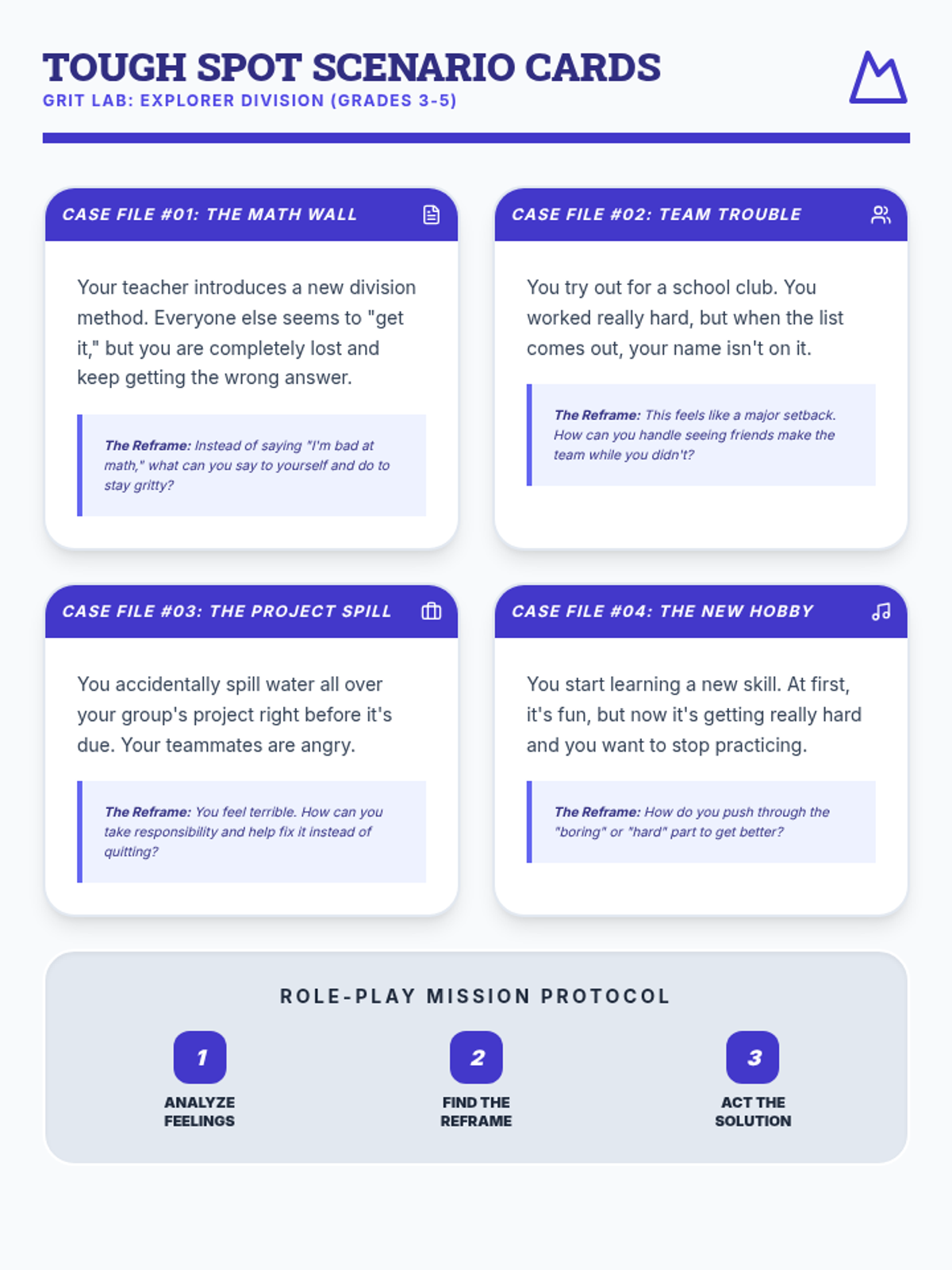
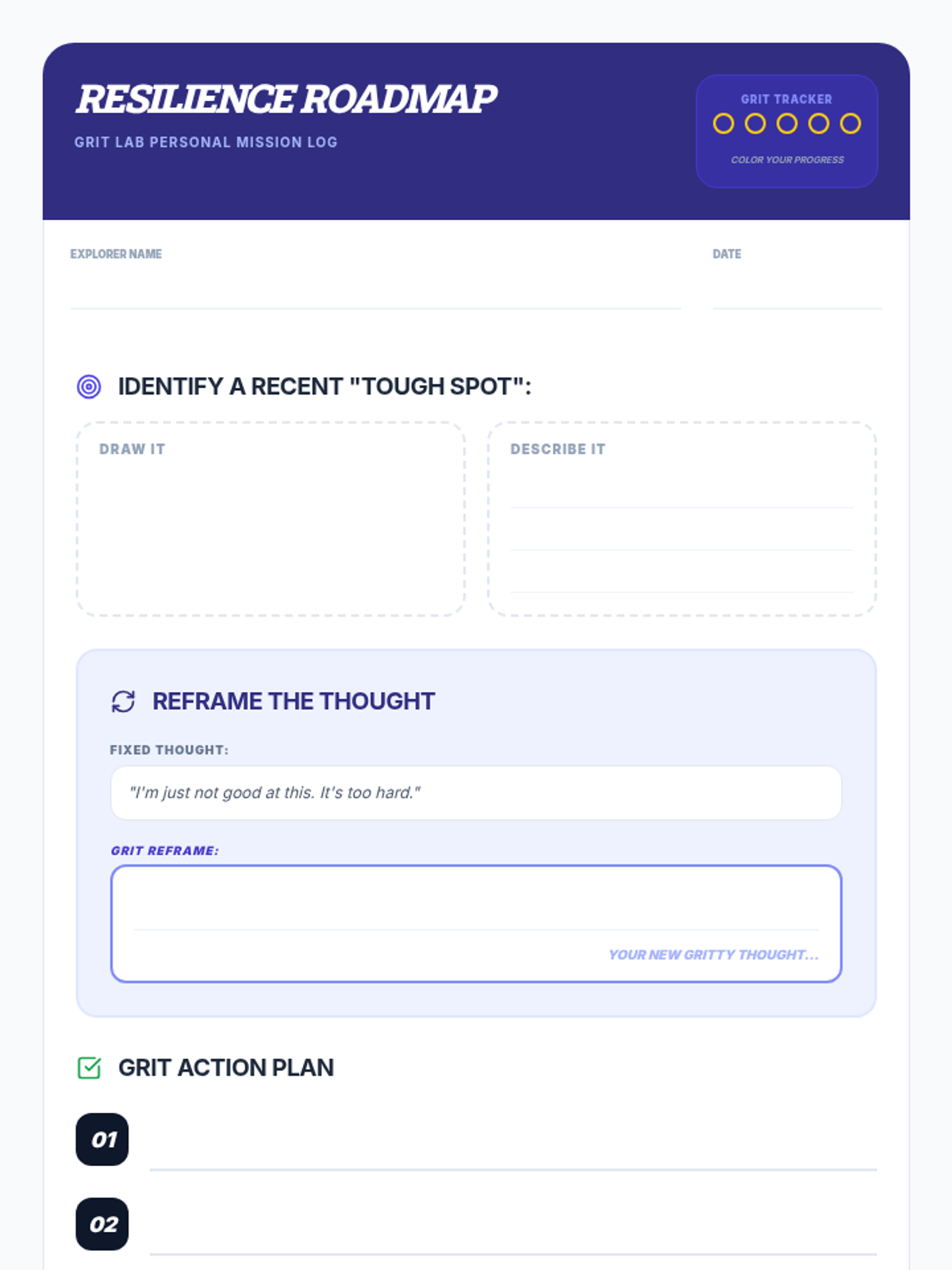
Helps 3rd to 5th graders develop grit and perspective when facing academic and social challenges through collaborative role-play.
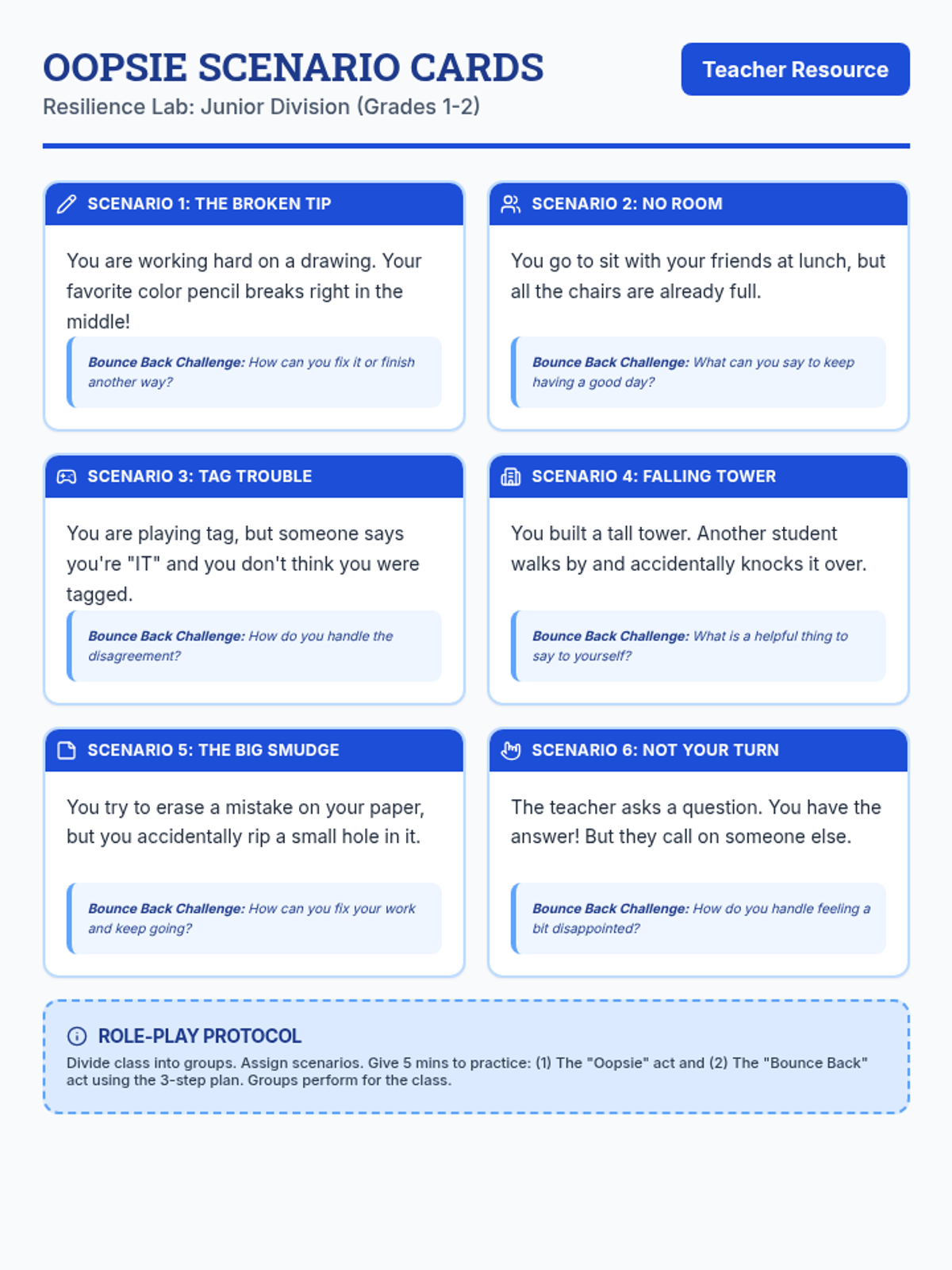
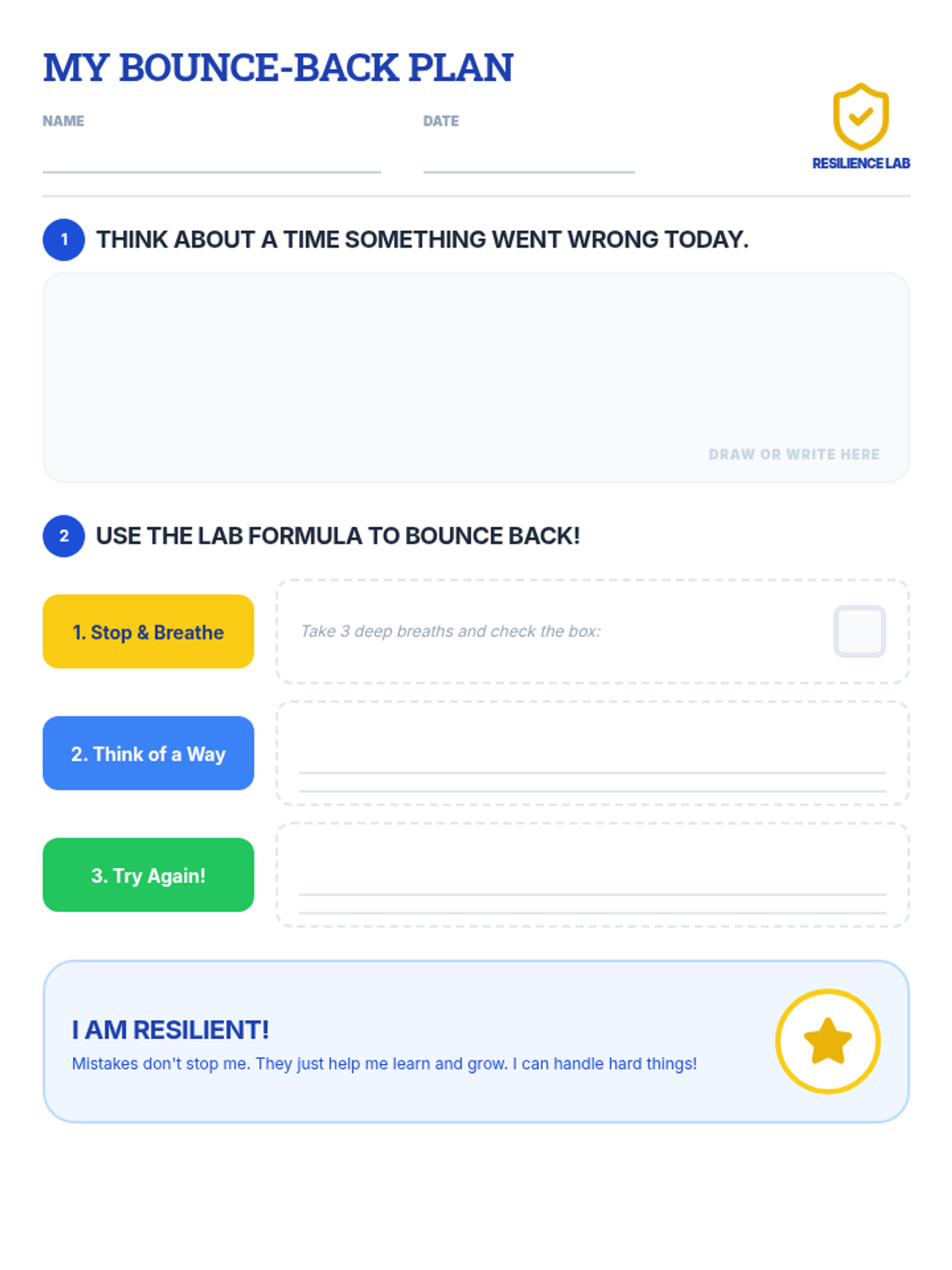
Introduces 1st and 2nd graders to the concept of 'bouncing back' from small mistakes and managing big feelings using role-play scenarios.
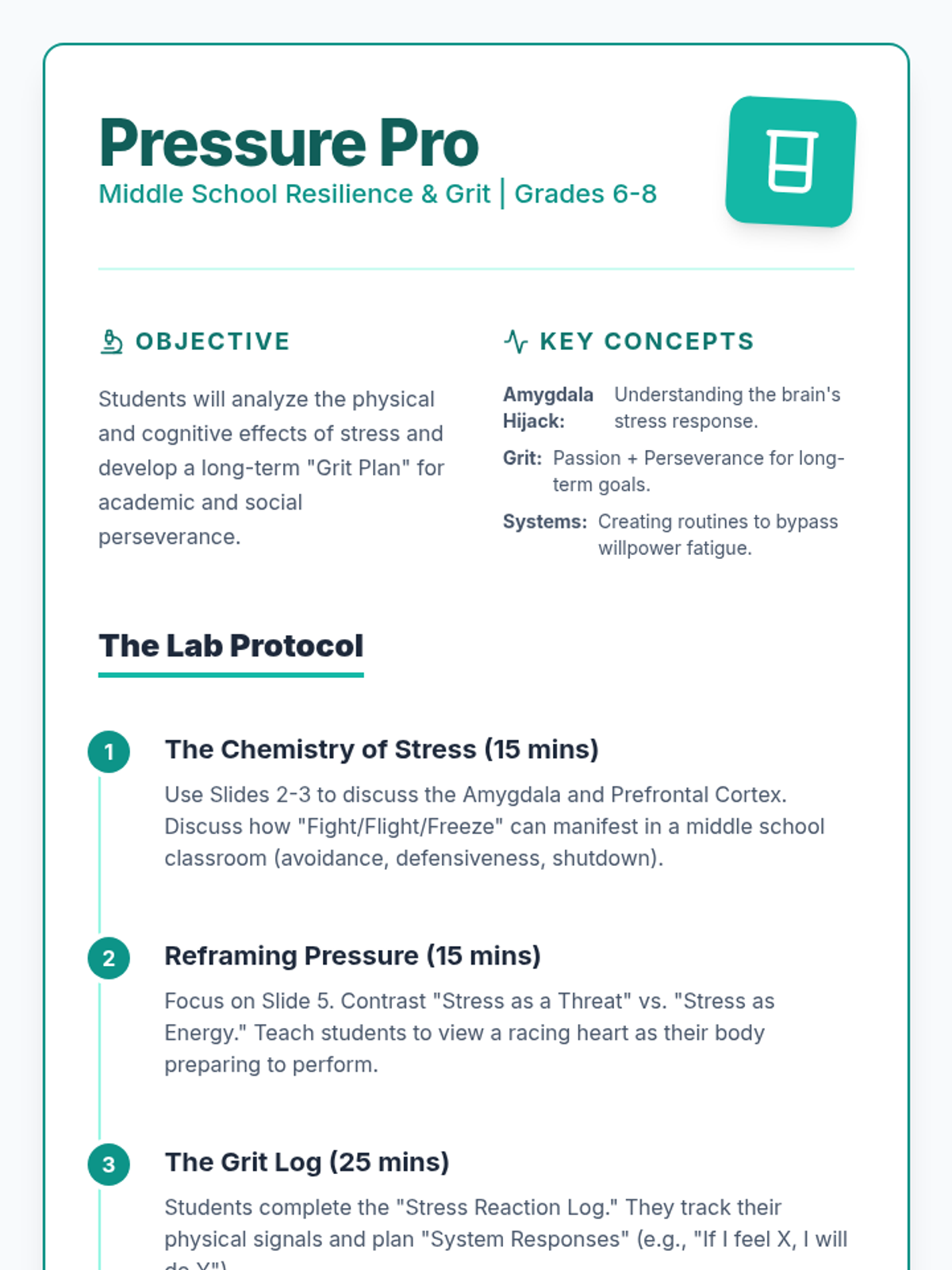
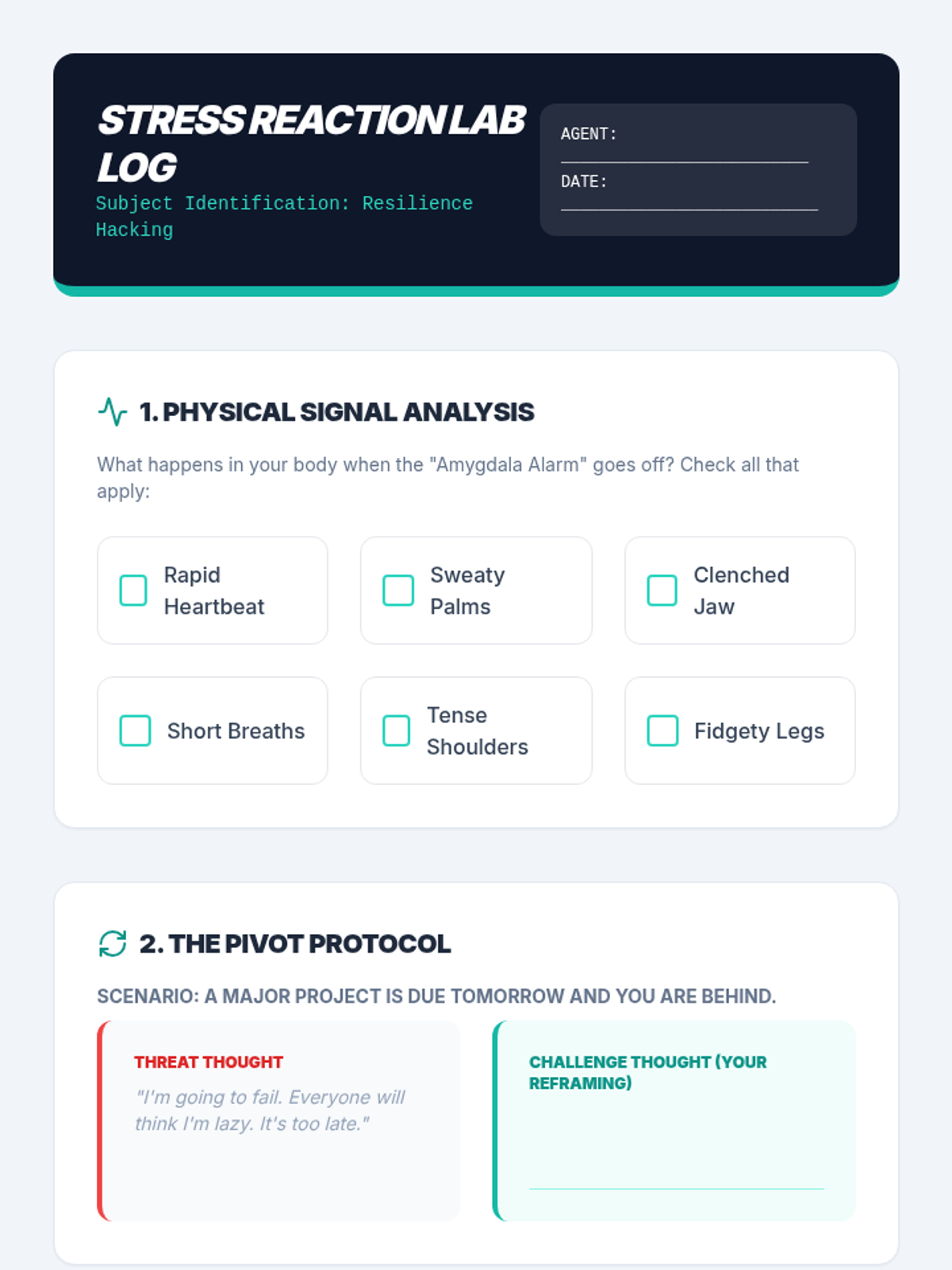
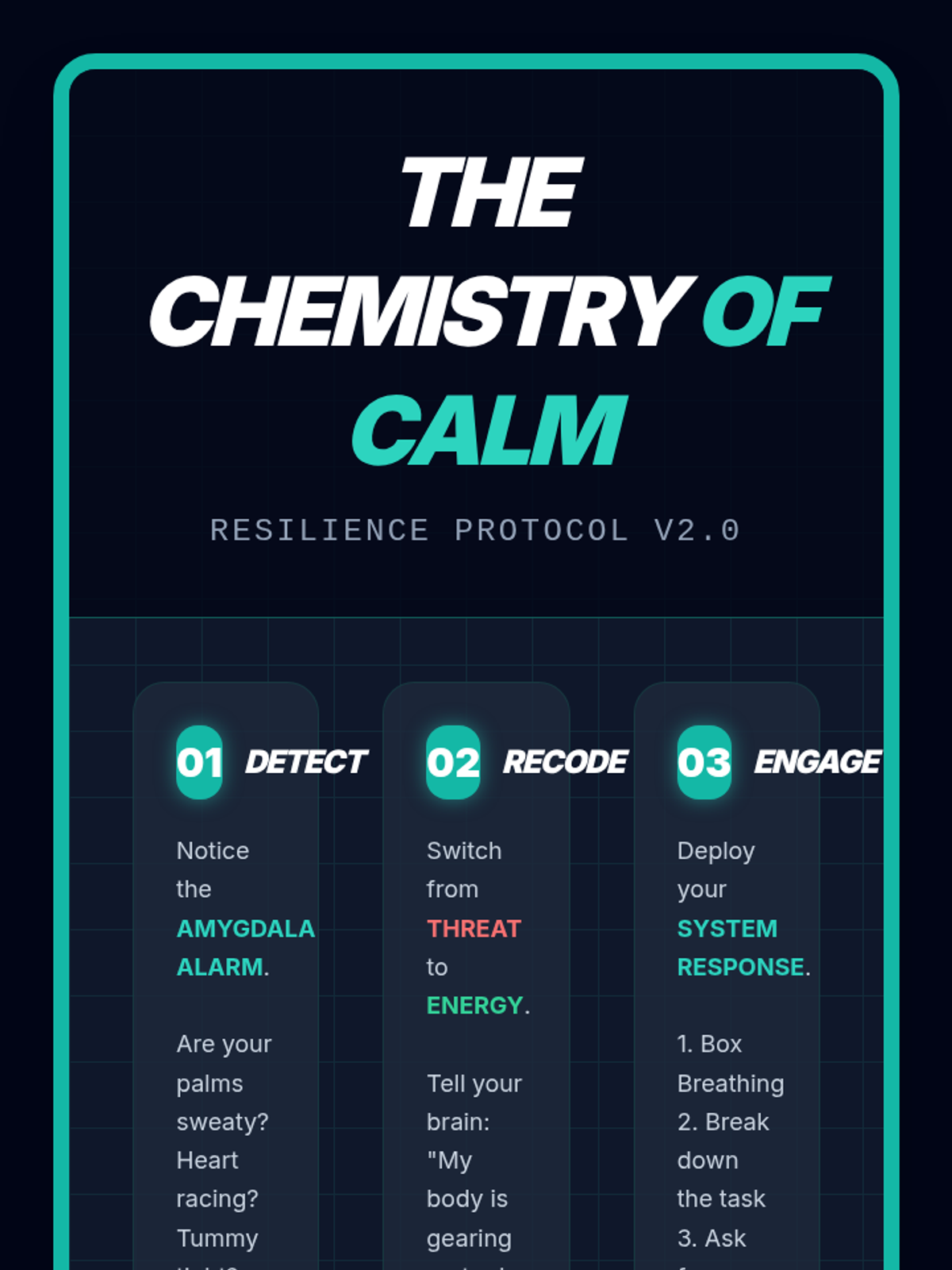
Explores the science of stress, long-term perseverance (grit), and developing a personal resilience plan for navigating middle school transitions.
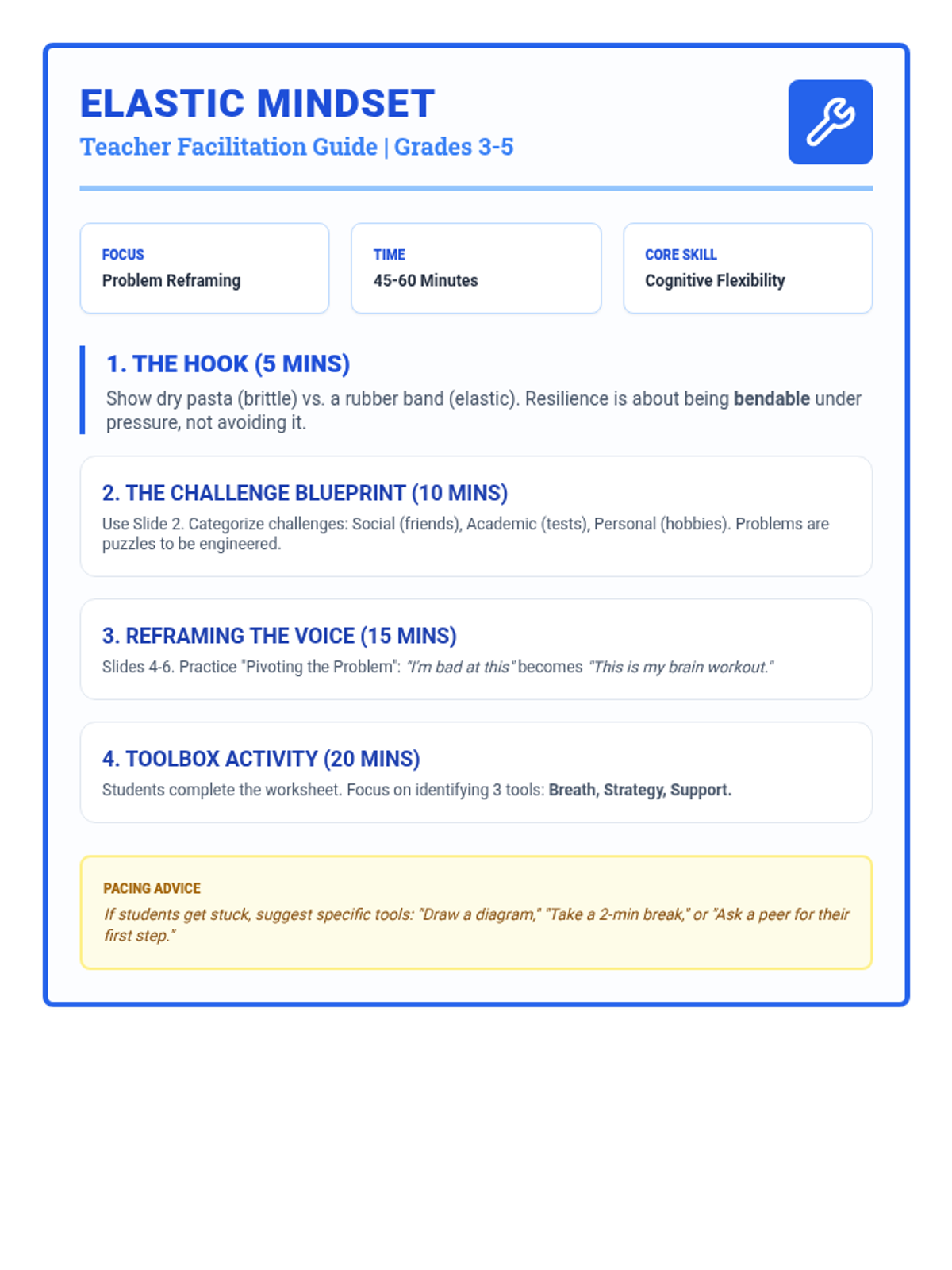
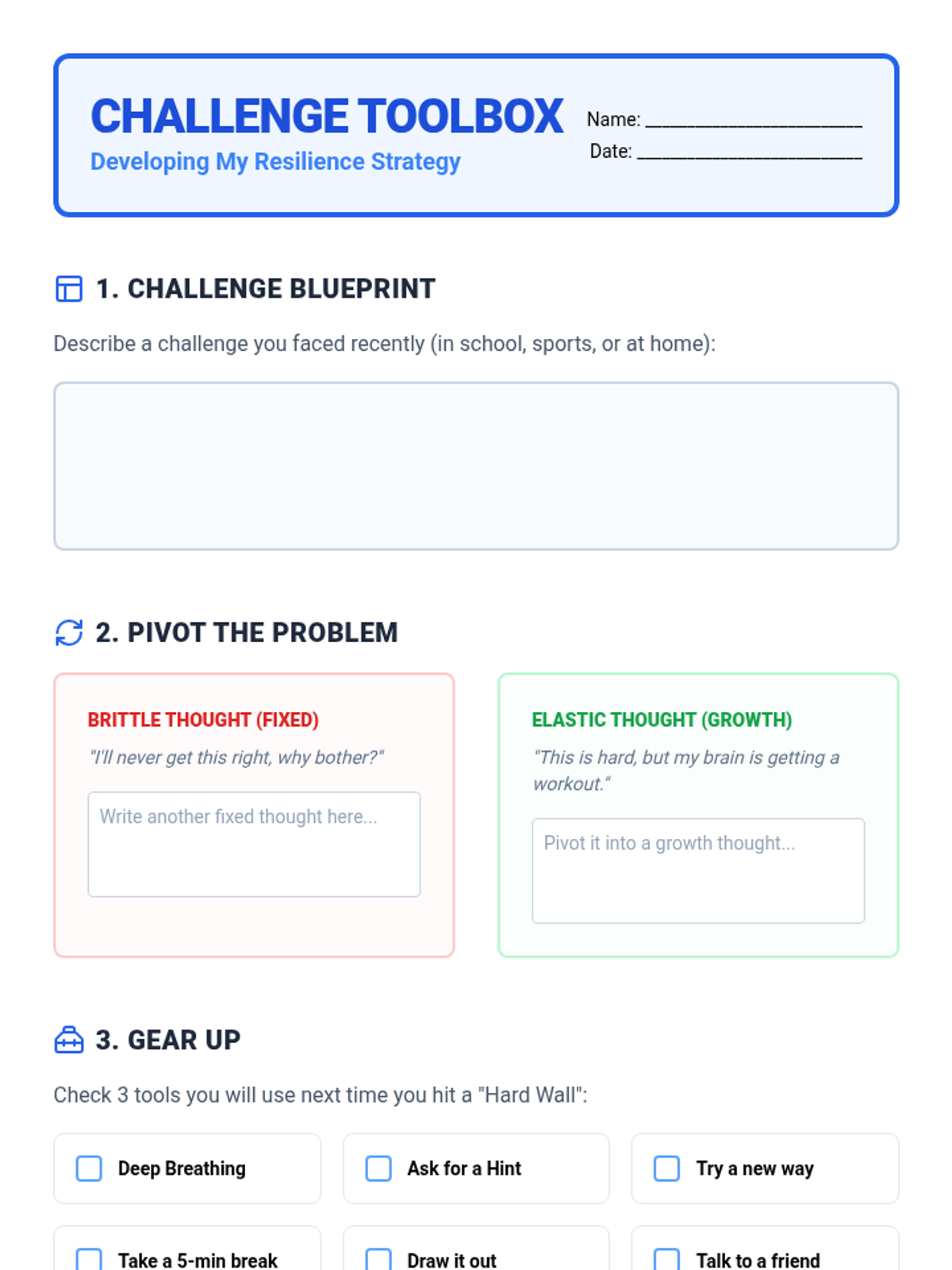
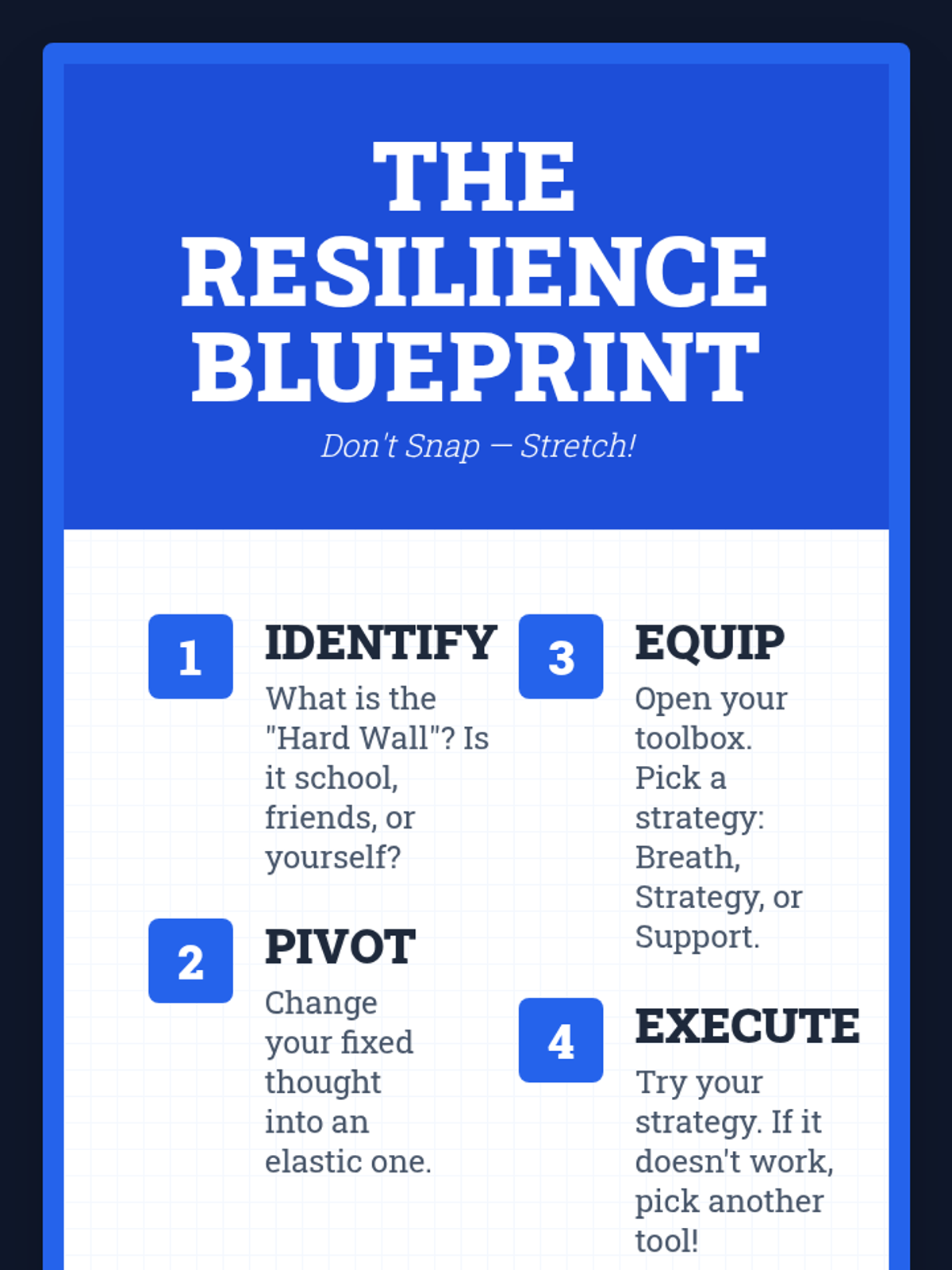
Teaches students to identify challenges, reframe negative thoughts, and build a 'toolbox' of coping strategies for social and academic hurdles.
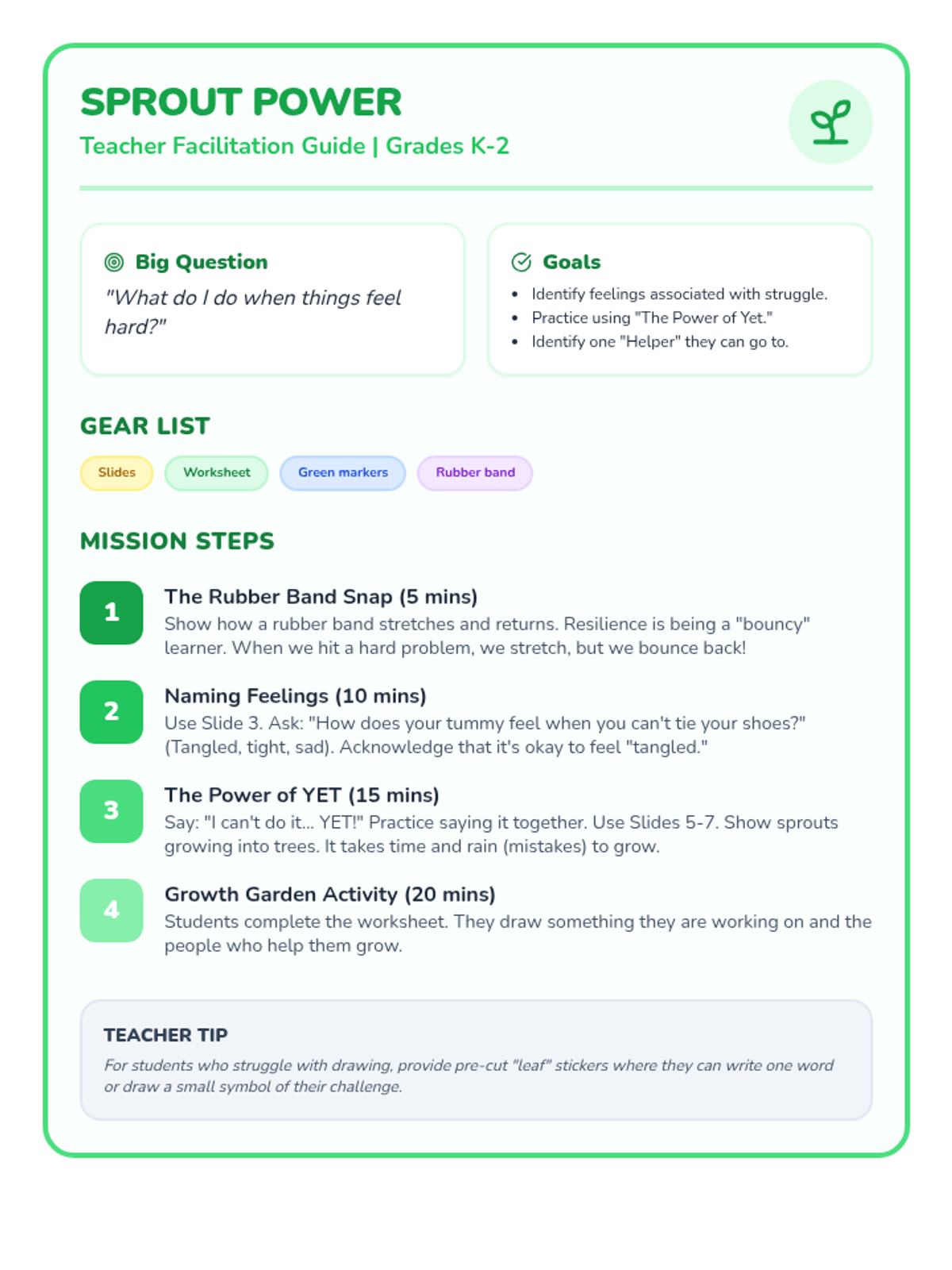
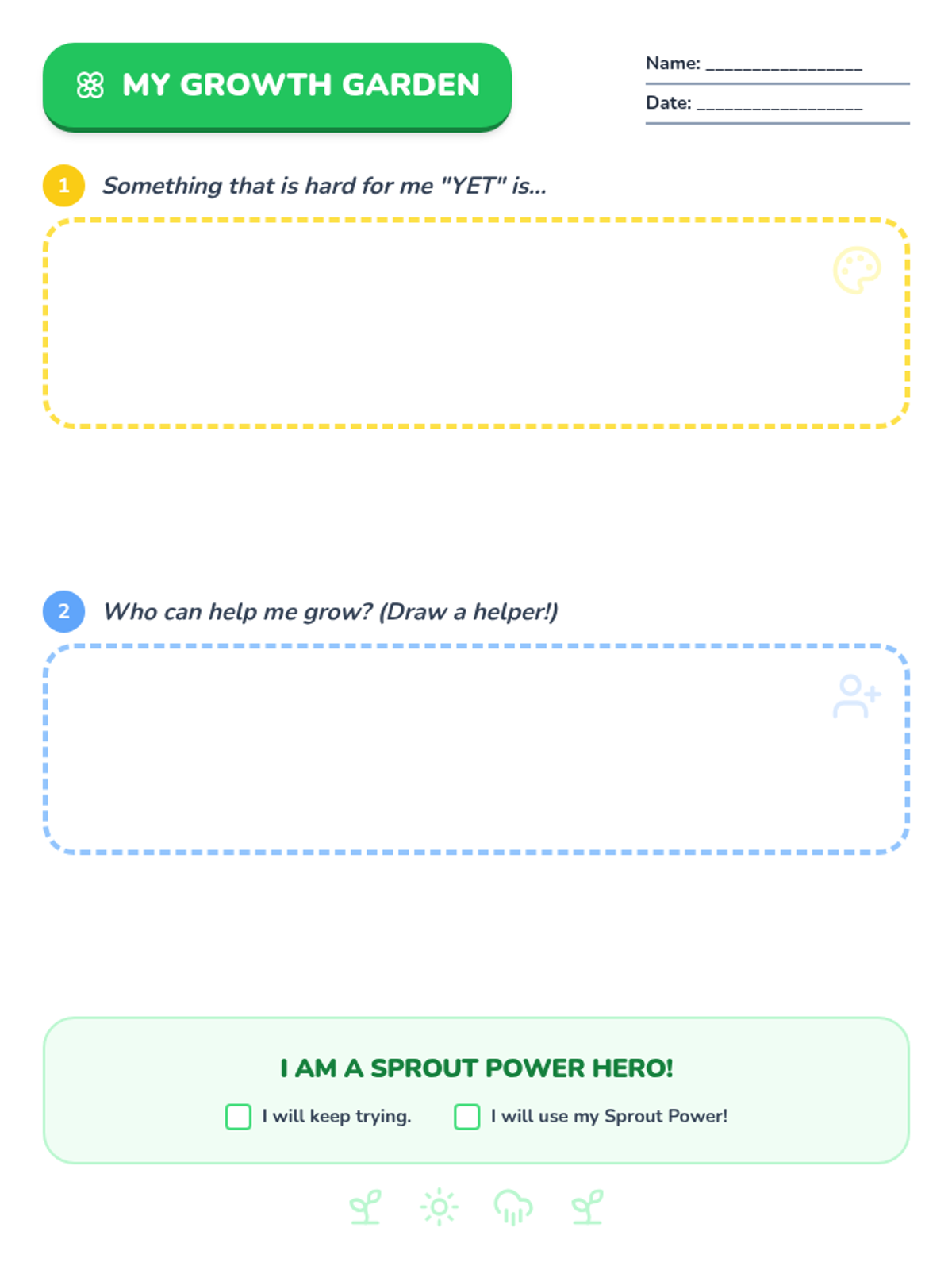
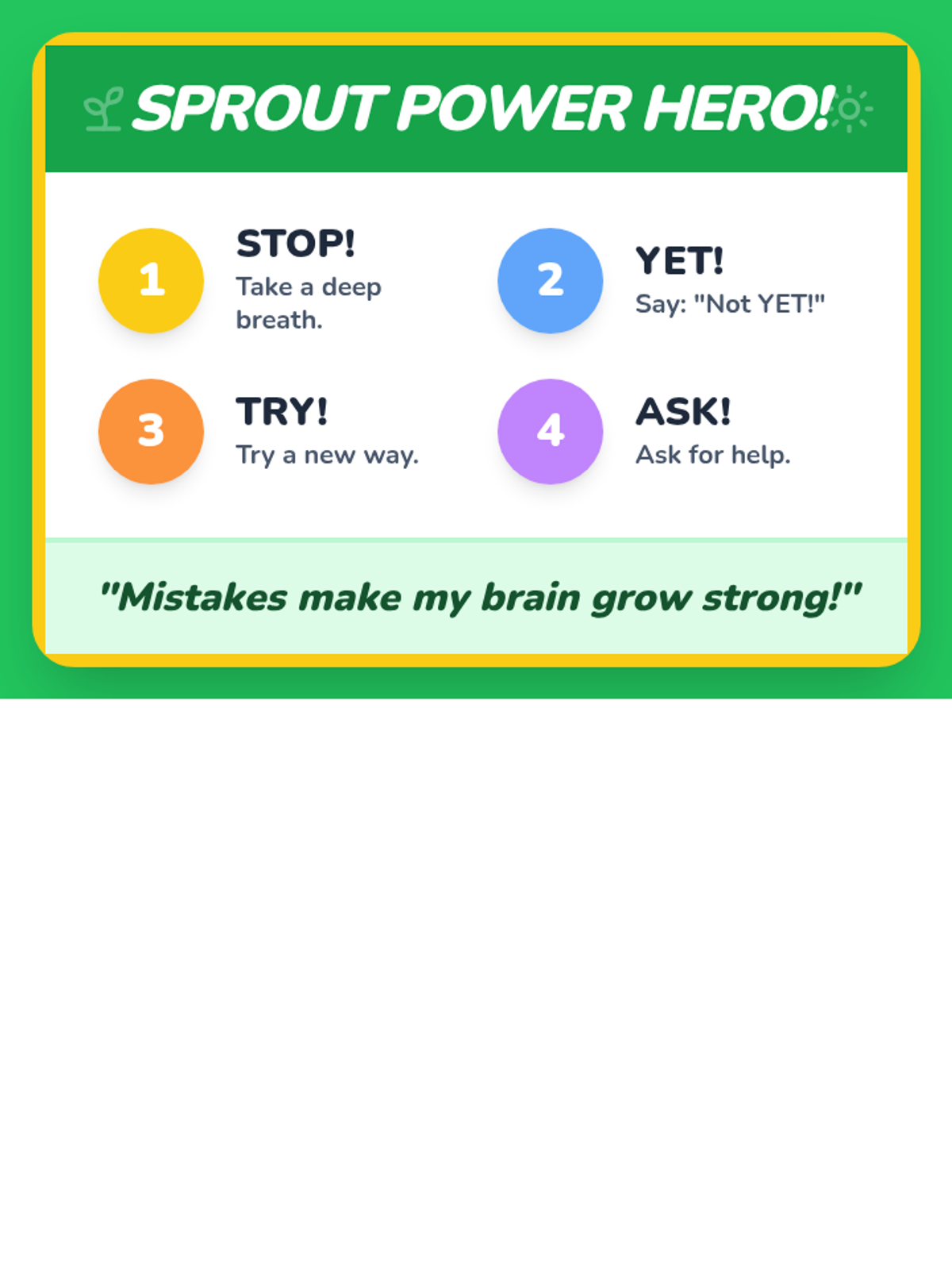
Focuses on naming emotions, understanding that mistakes help us grow, and using the 'Power of Yet' to build early resilience.
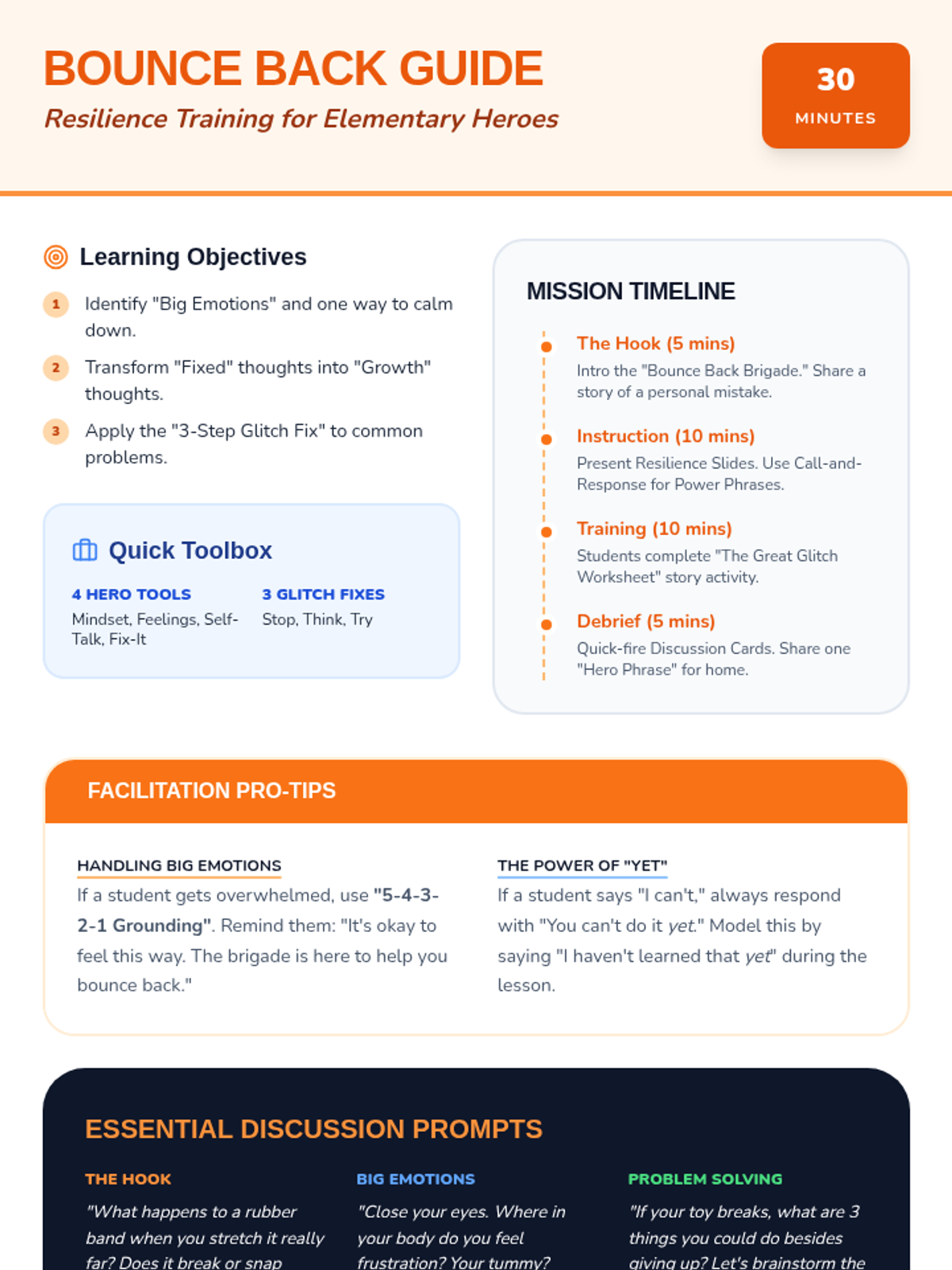
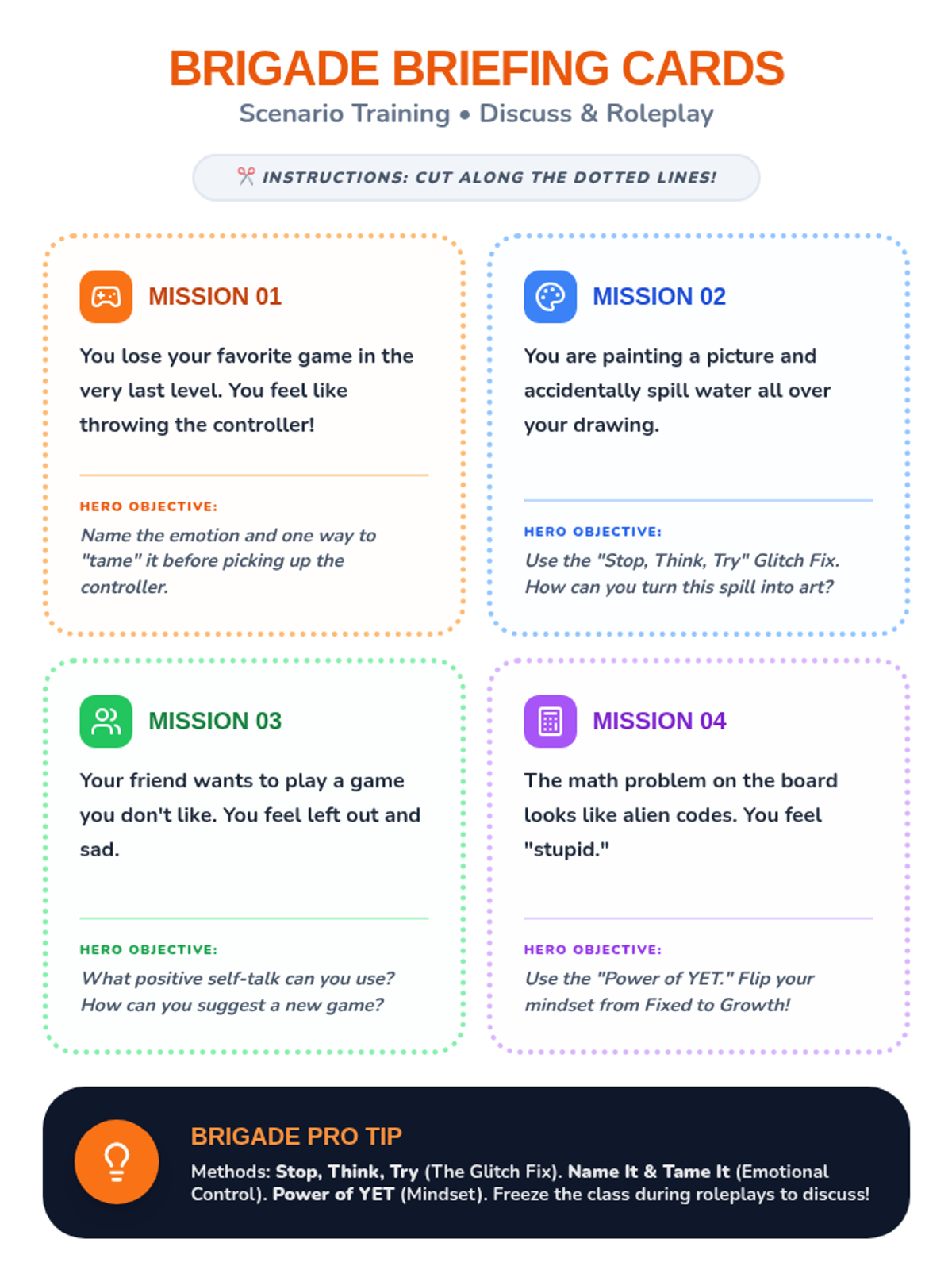
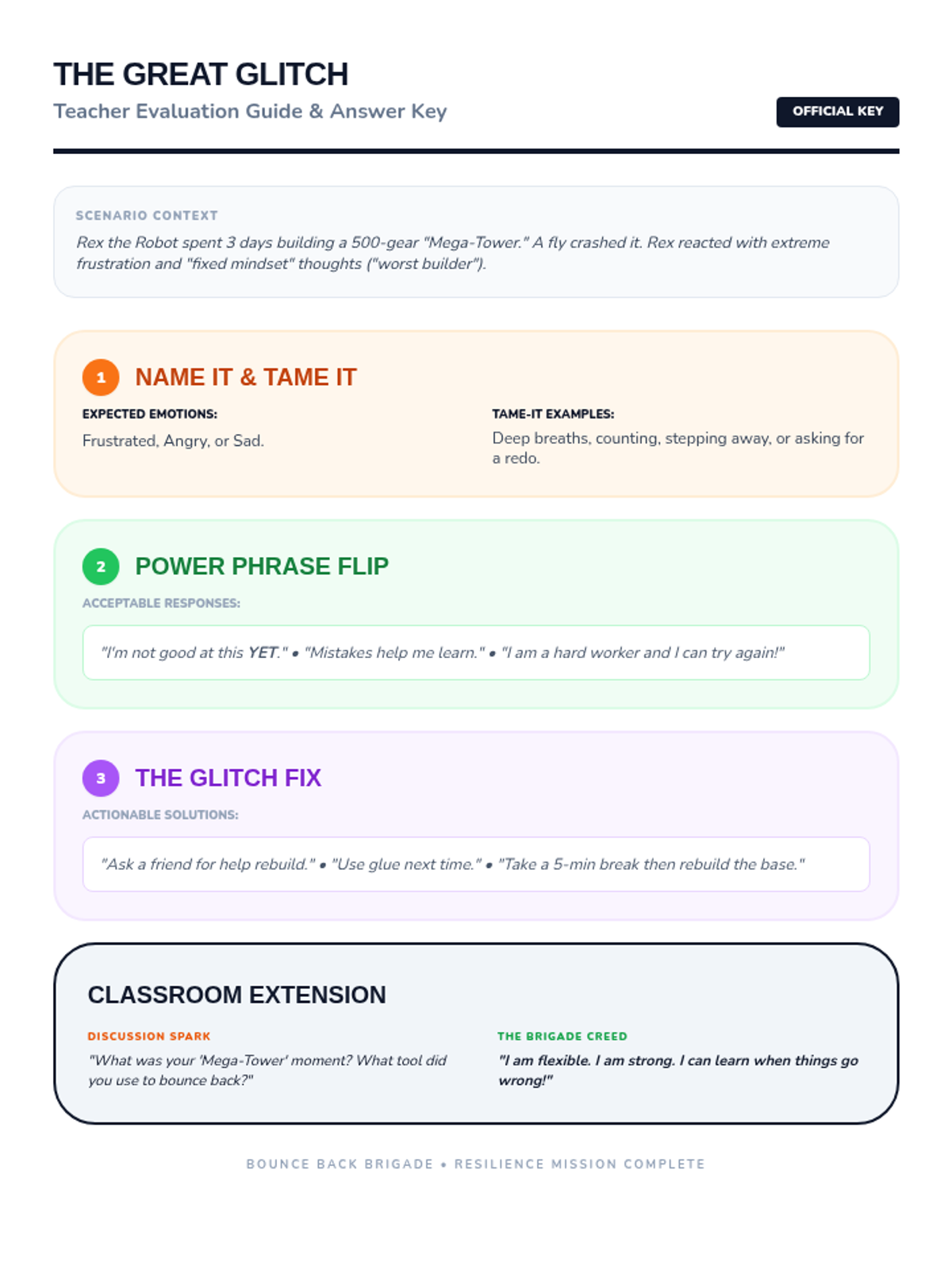
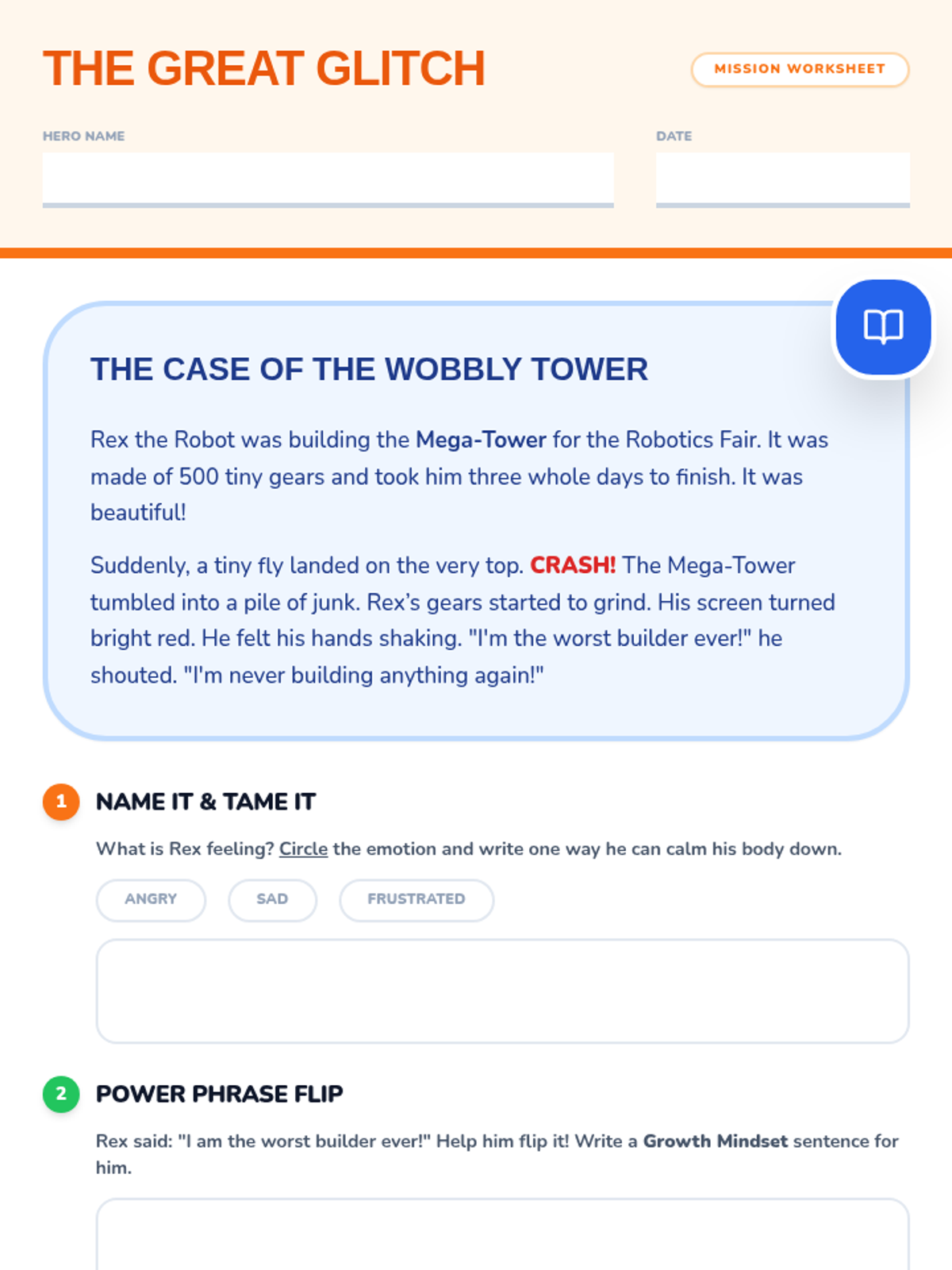
A fast-paced, high-energy 30-minute lesson designed to teach elementary students the fundamentals of resilience through the 'Bounce Back Brigade' framework. Students learn to navigate big emotions, use positive self-talk, adopt a growth mindset, and solve problems through interactive slides and story-based activities.
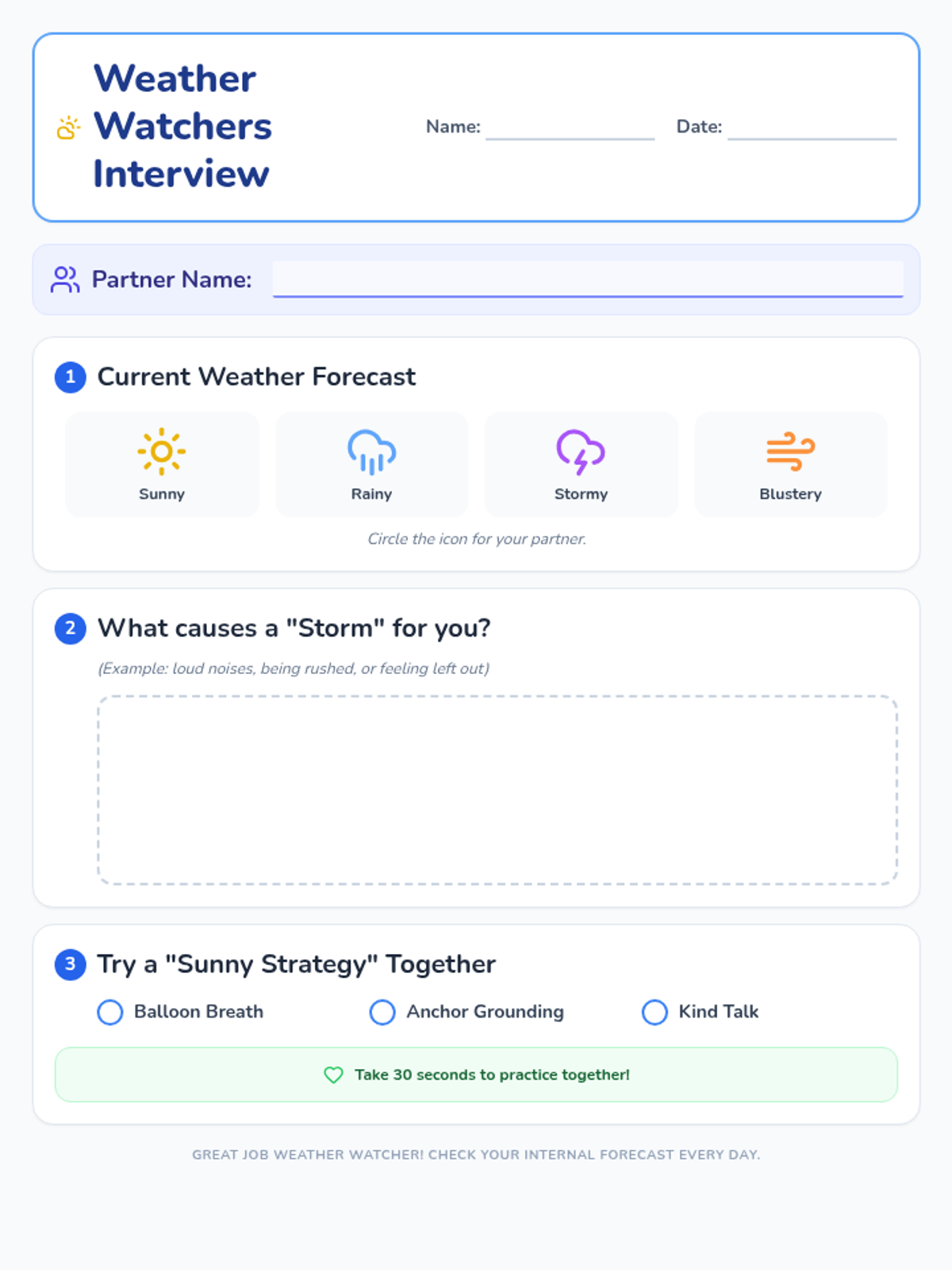
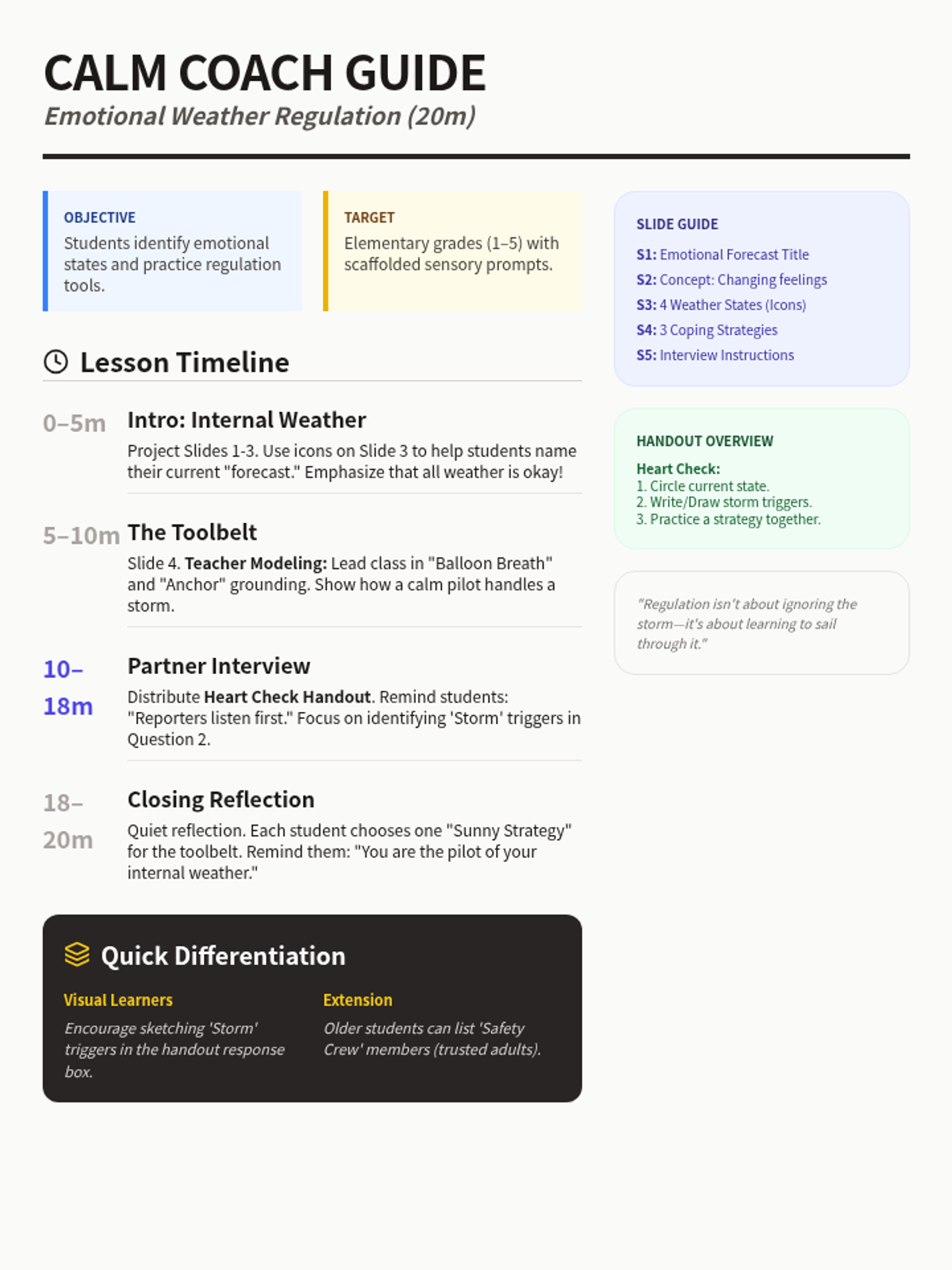
A 20-minute lesson focused on emotional regulation through the metaphor of 'internal weather,' helping students identify feelings and practice self-care strategies.
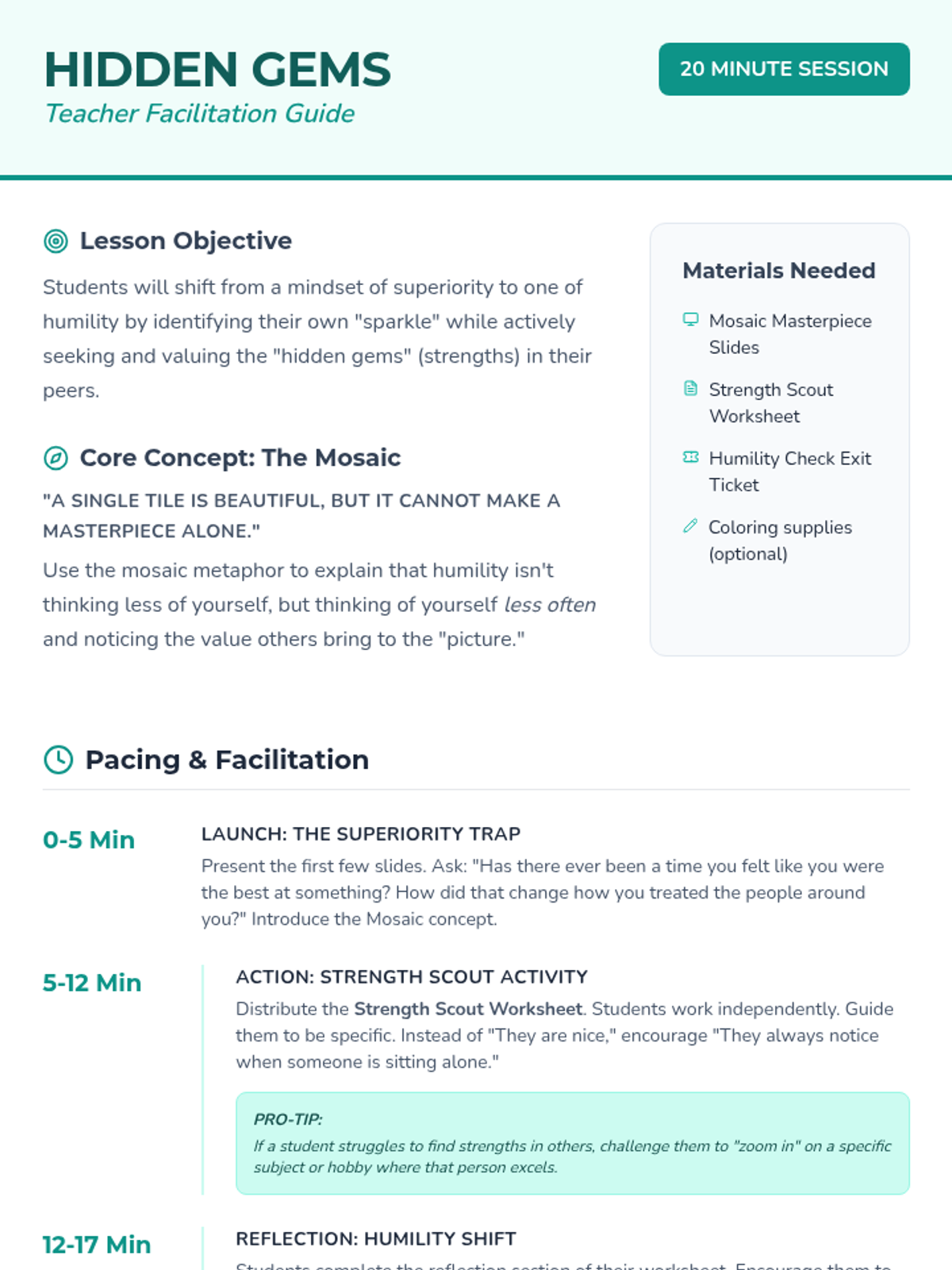
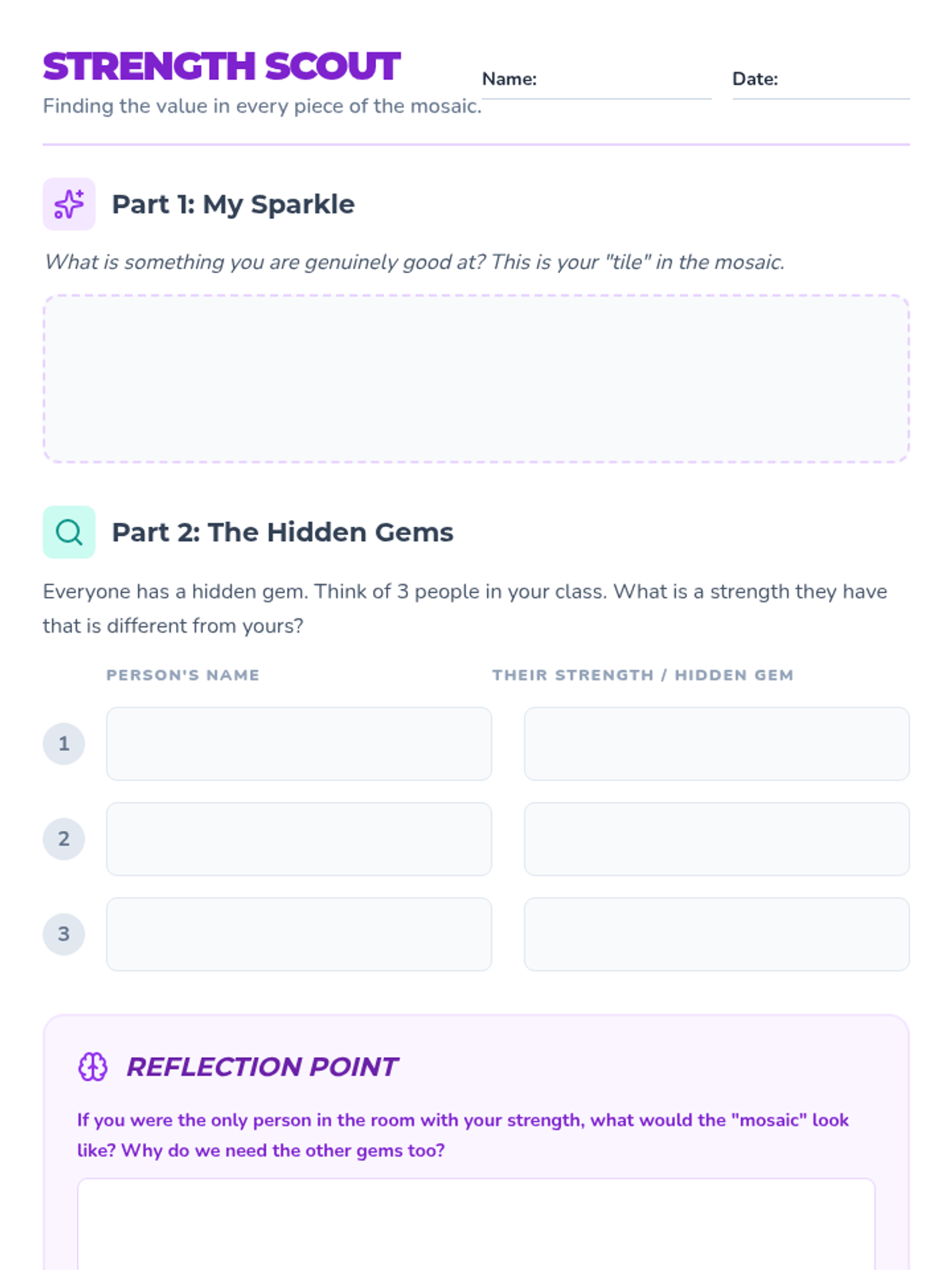
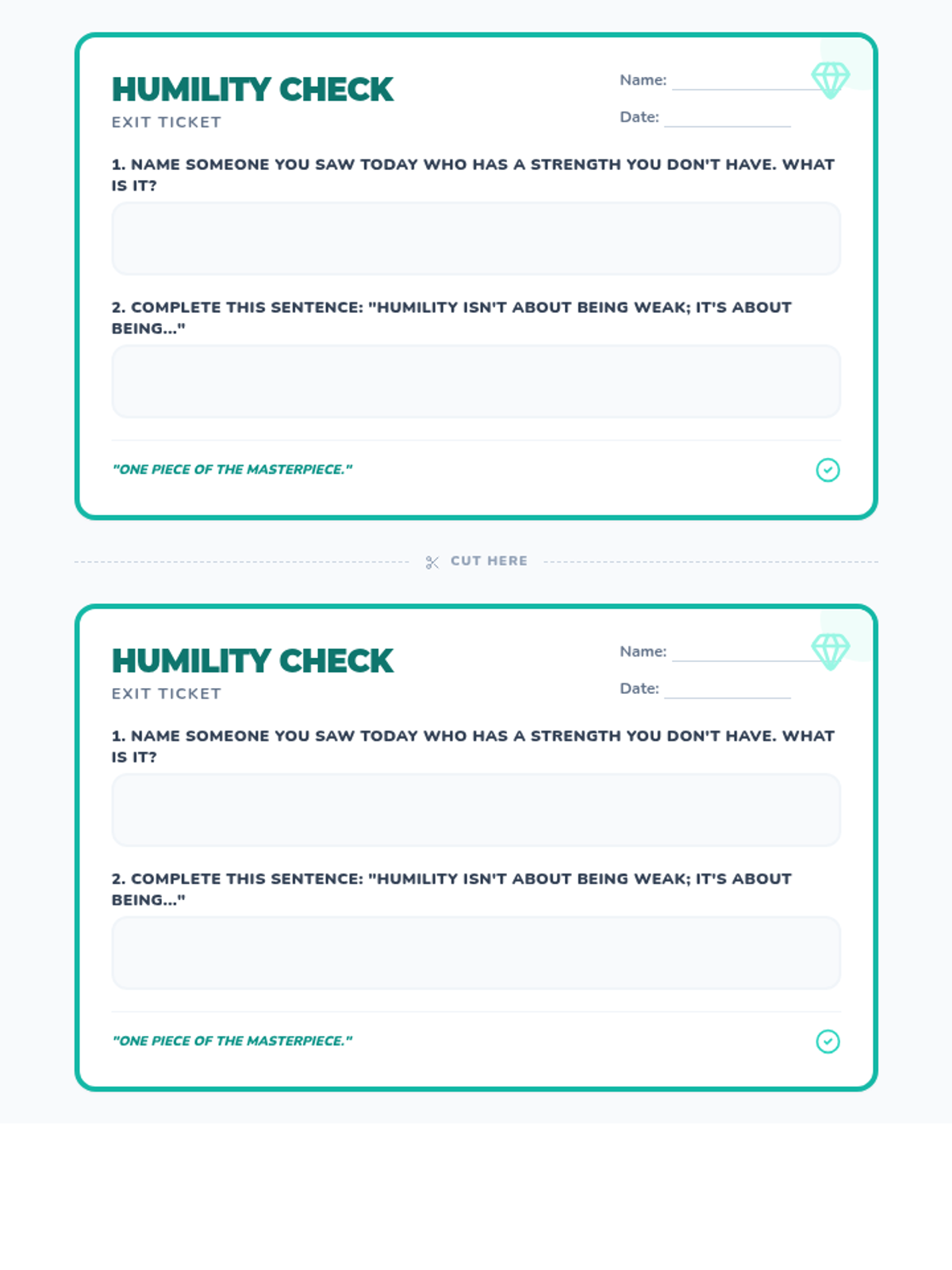
A 20-minute lesson focused on humility and valuing the unique strengths of others, using the metaphor of a mosaic to show that every individual is a vital piece of a larger whole.
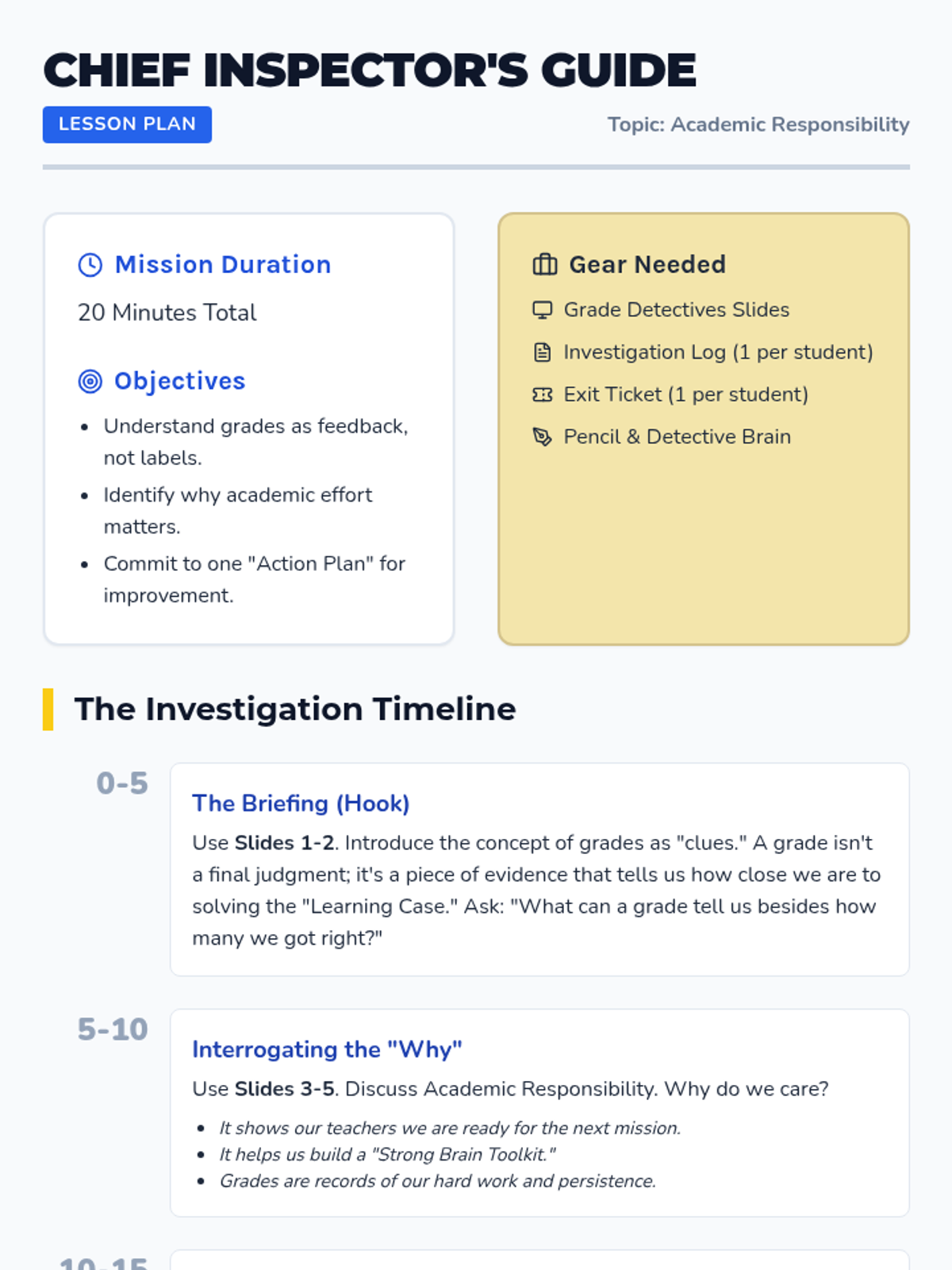
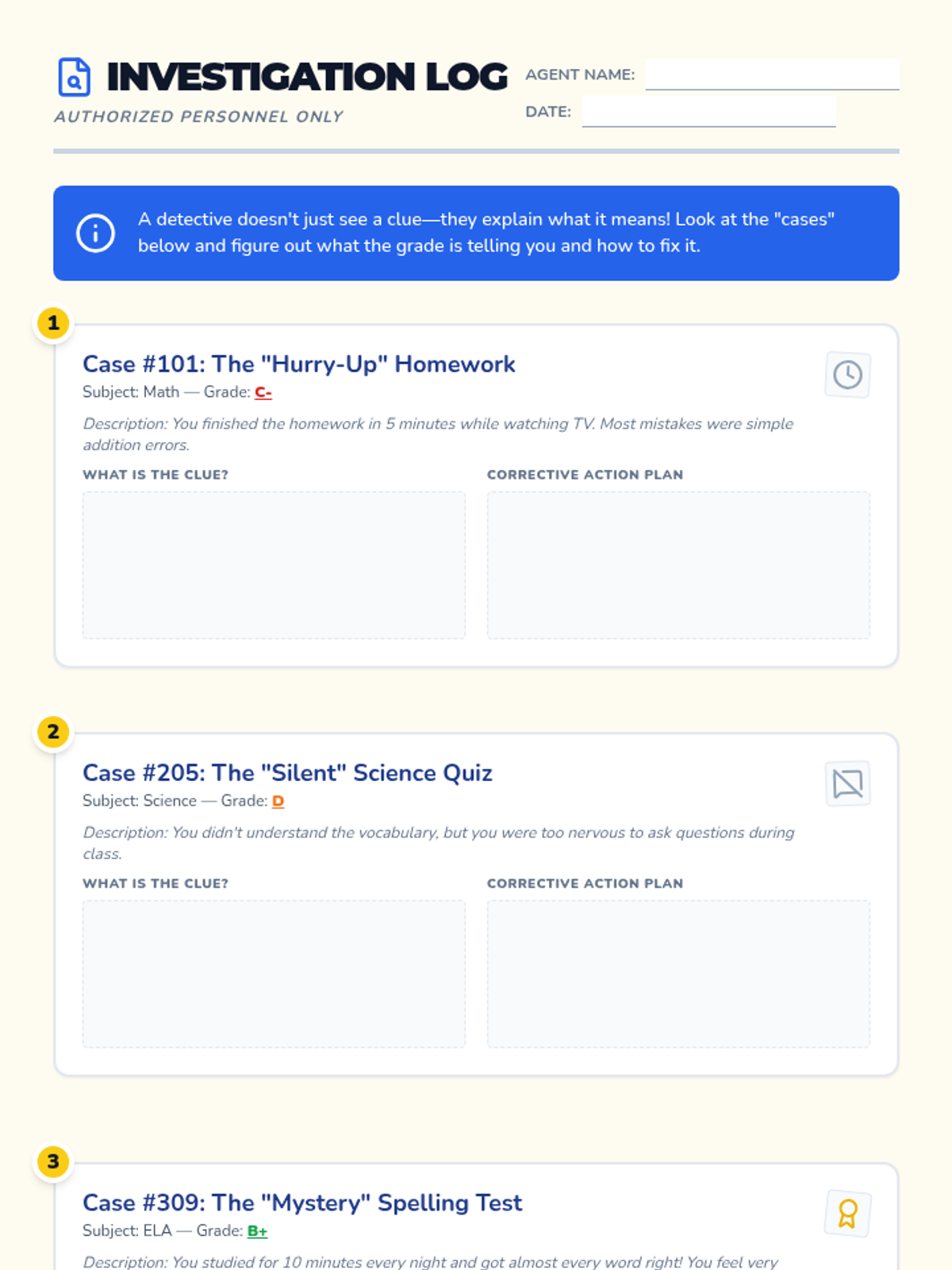
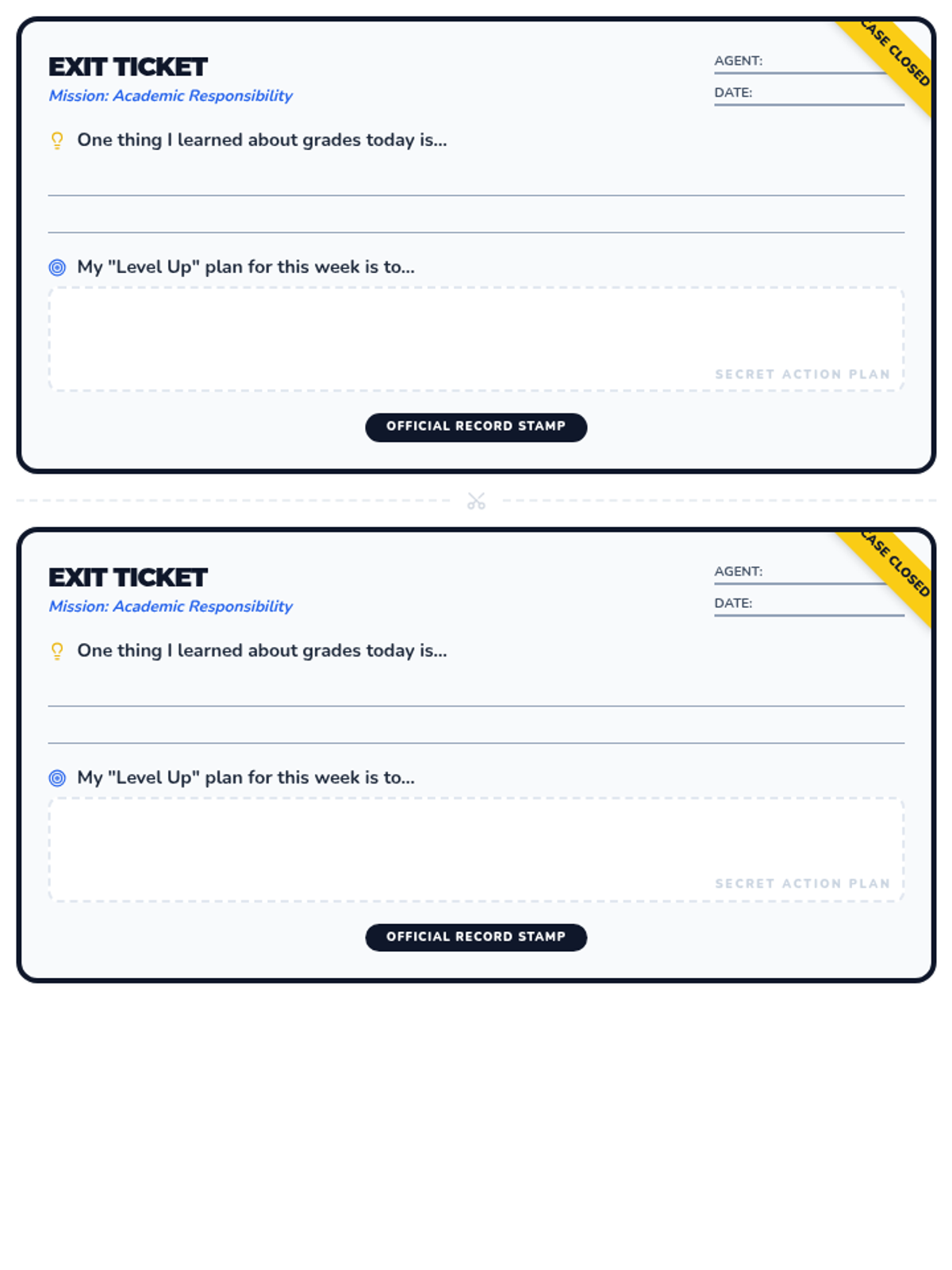
A 20-minute lesson using a detective theme to teach elementary students about the importance of grades as feedback and the value of academic responsibility.
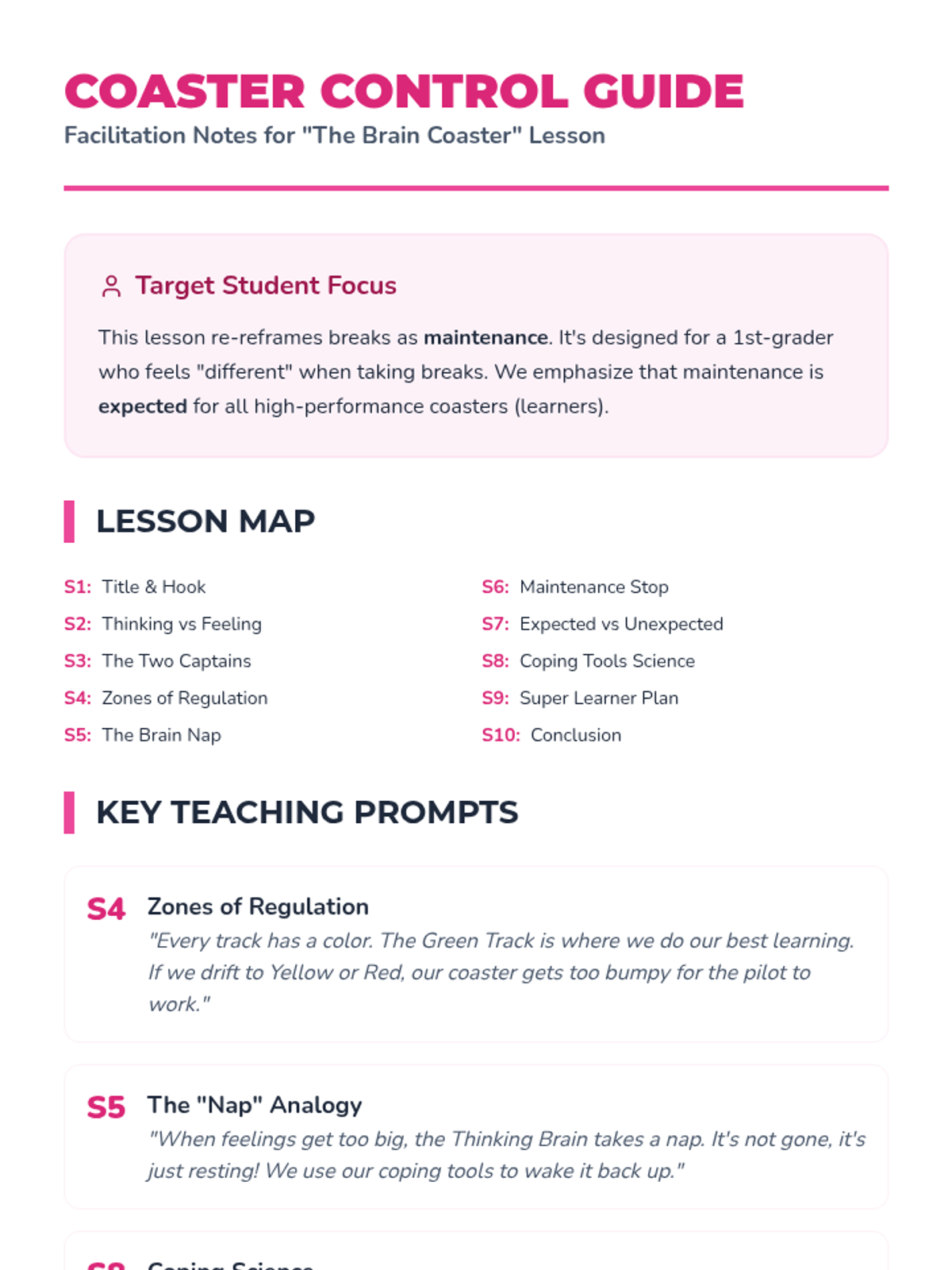
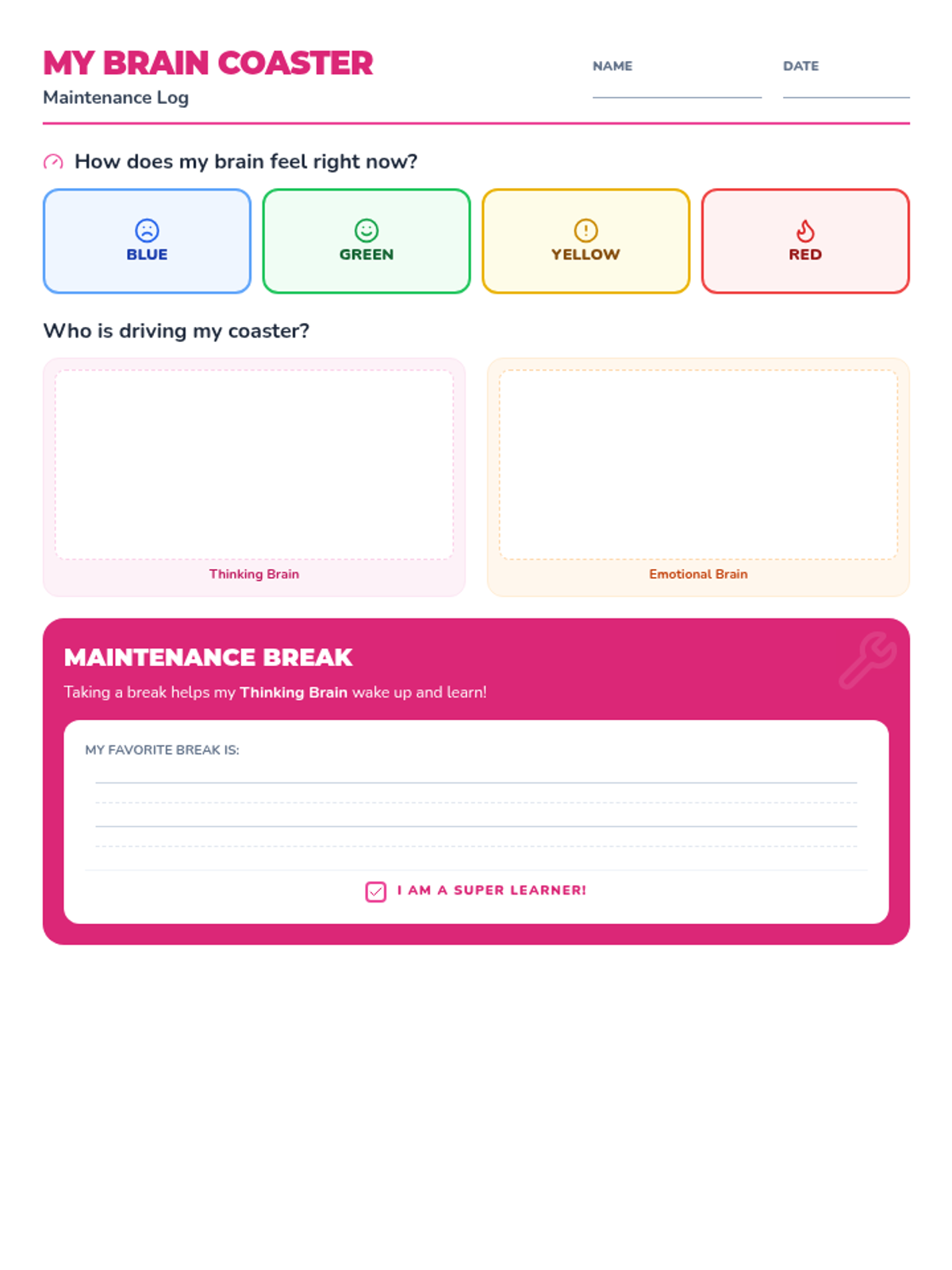
A social-emotional learning lesson designed for a 1st-grade student with autism, using a rollercoaster theme and Social Thinking language to explain the science of brain regulation and the value of breaks.
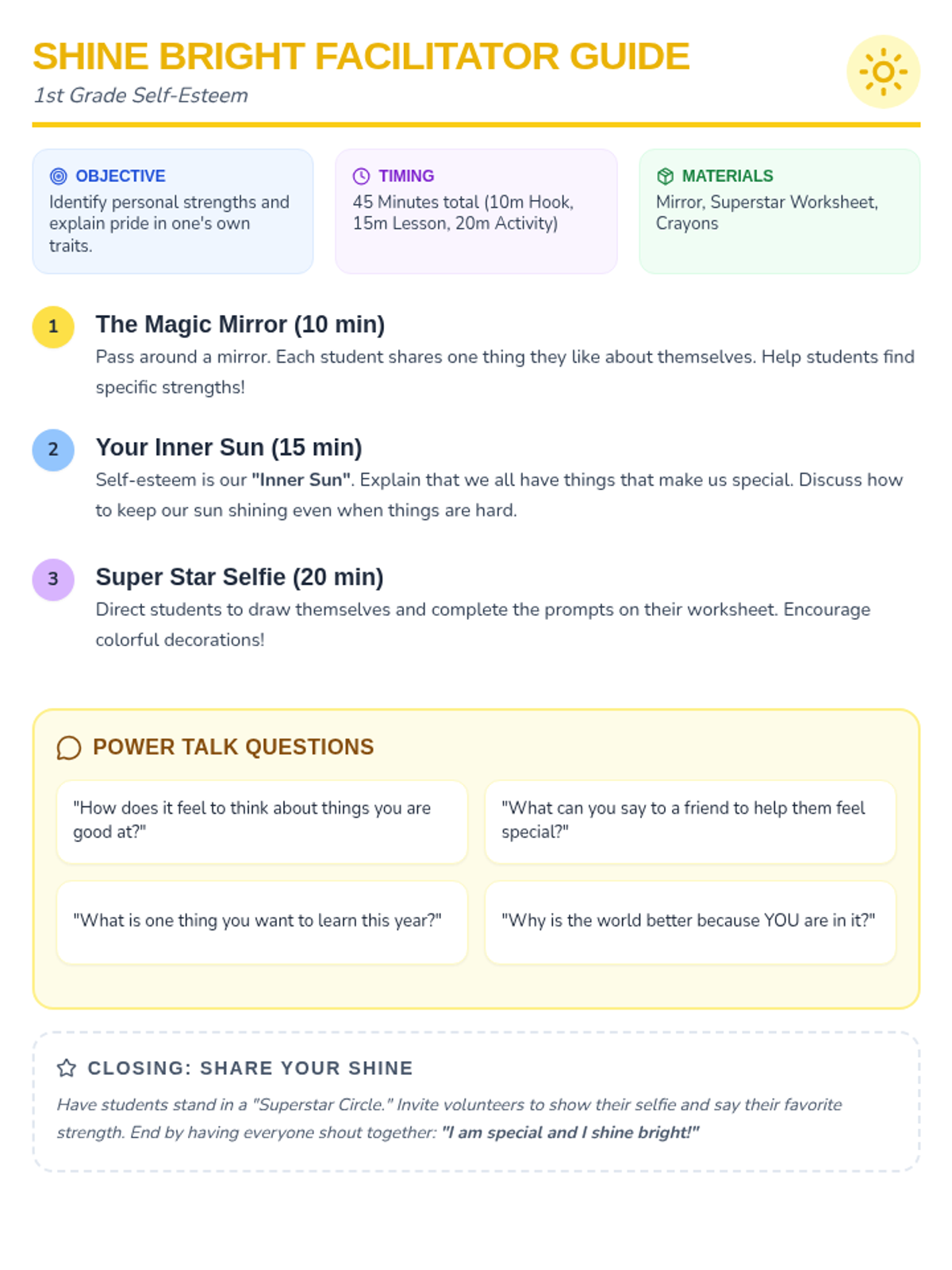
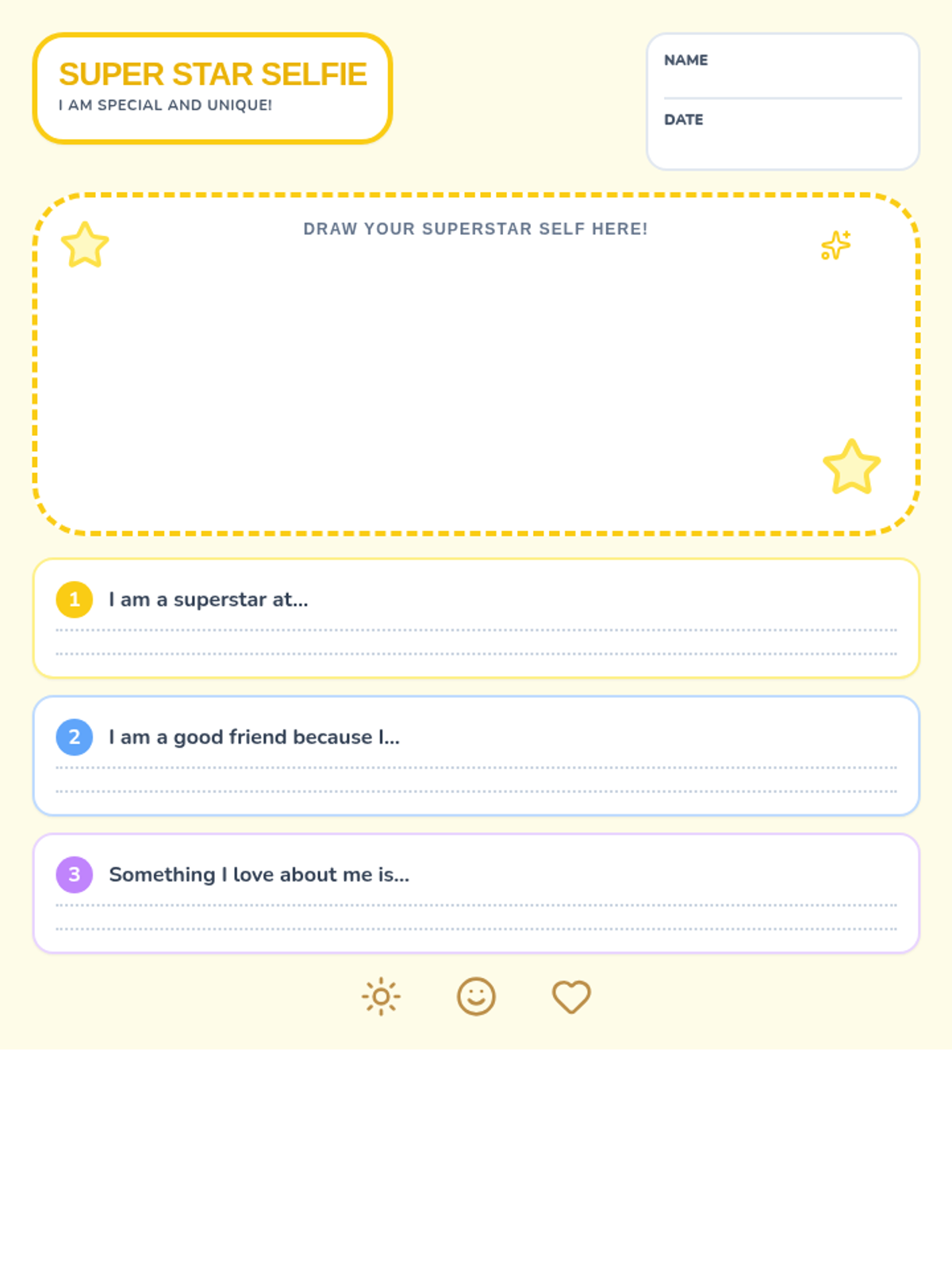
A foundational lesson for 1st graders to identify their unique strengths and build a positive self-image through reflection and creative expression.
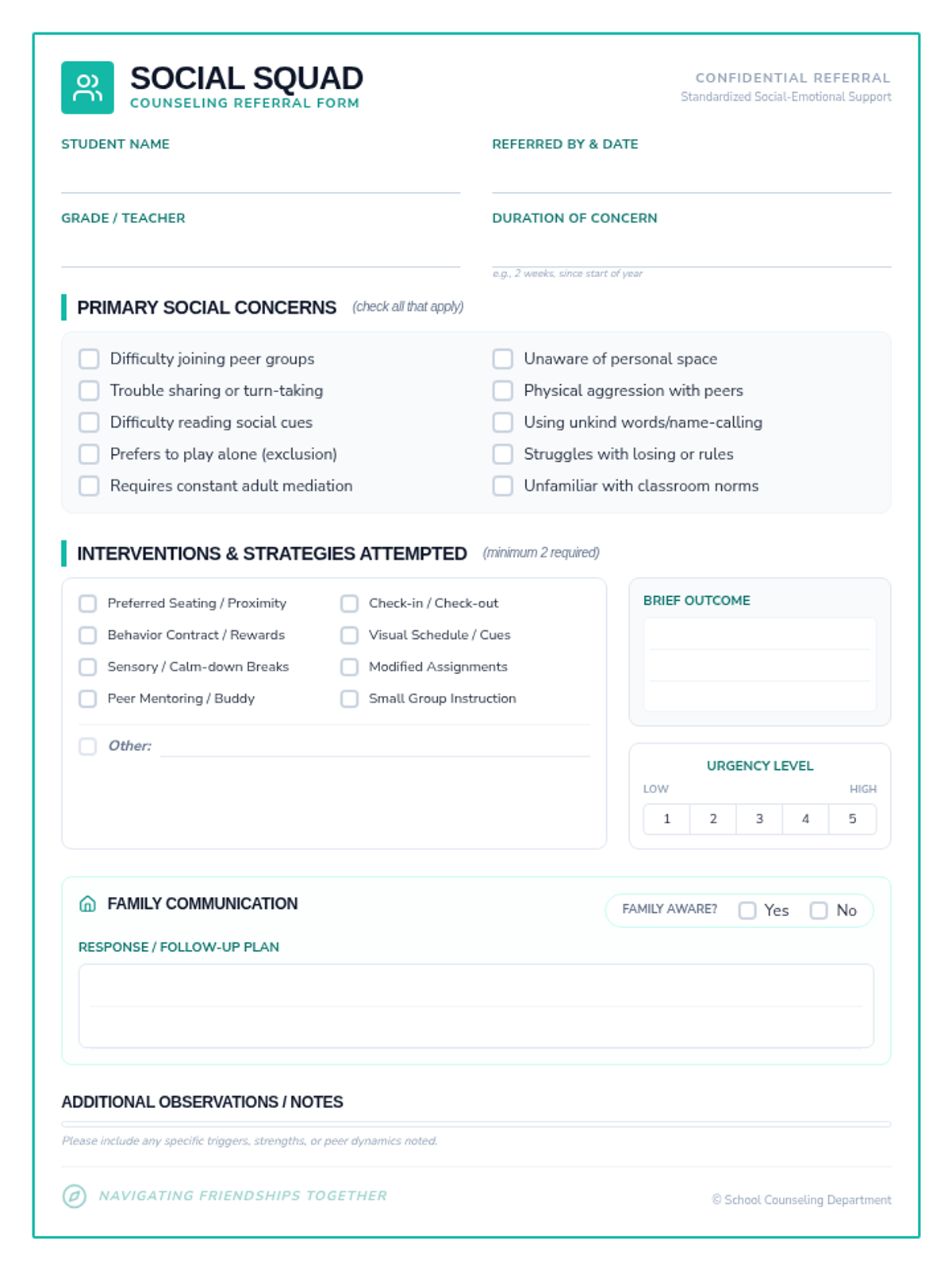
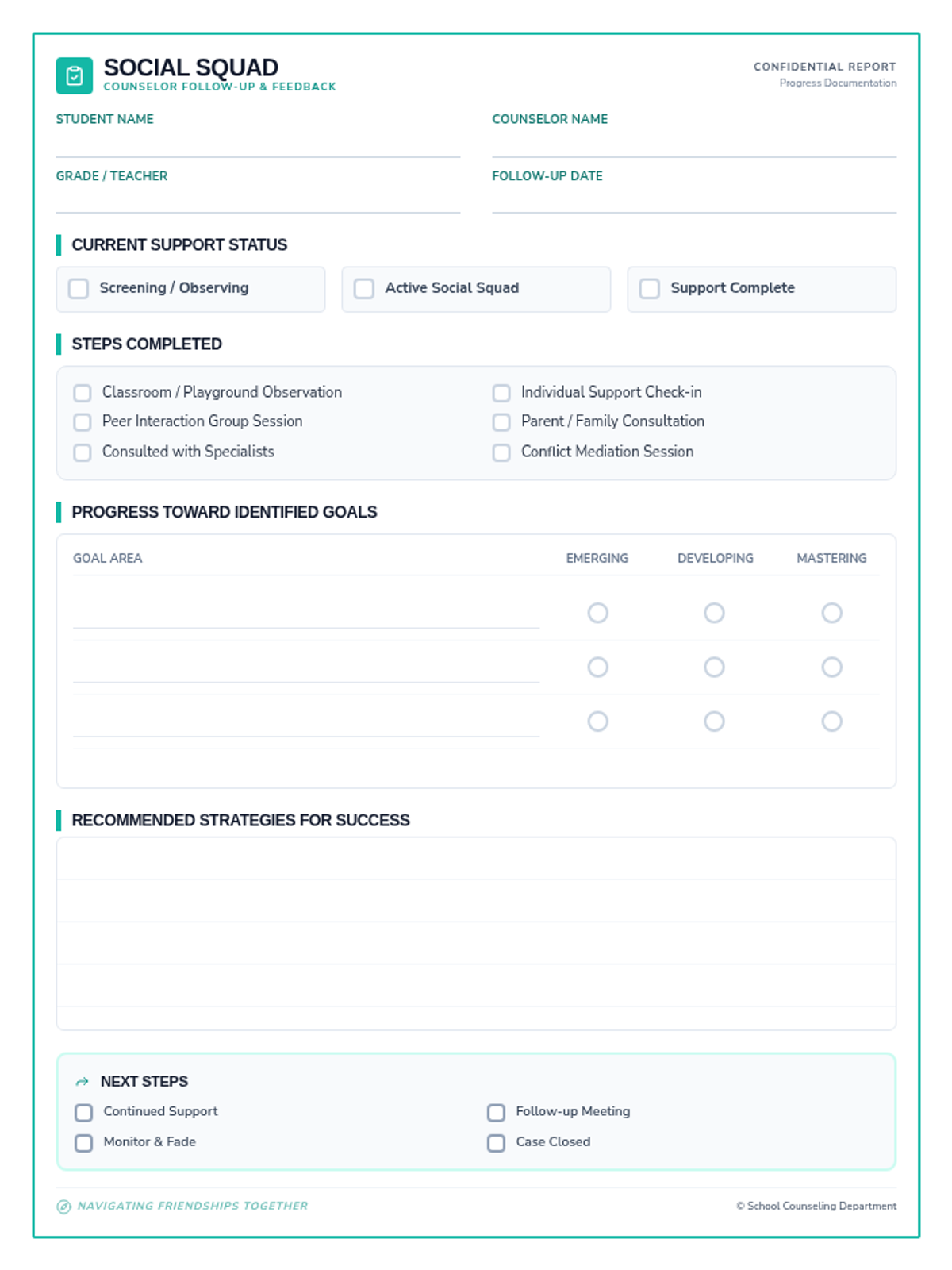
A suite of professional school counseling forms for managing student referrals, tracking progress, and providing feedback to teachers and families.
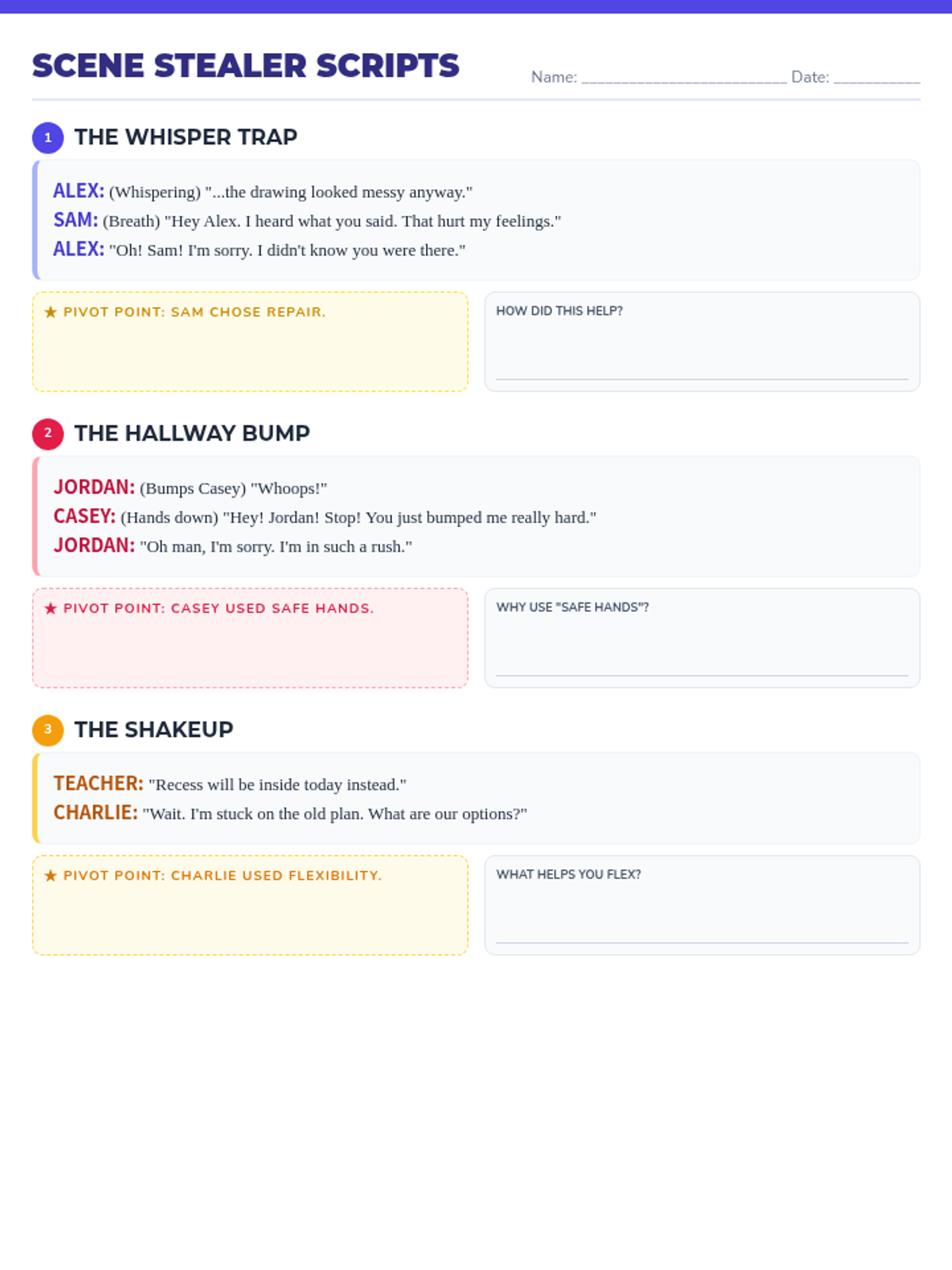
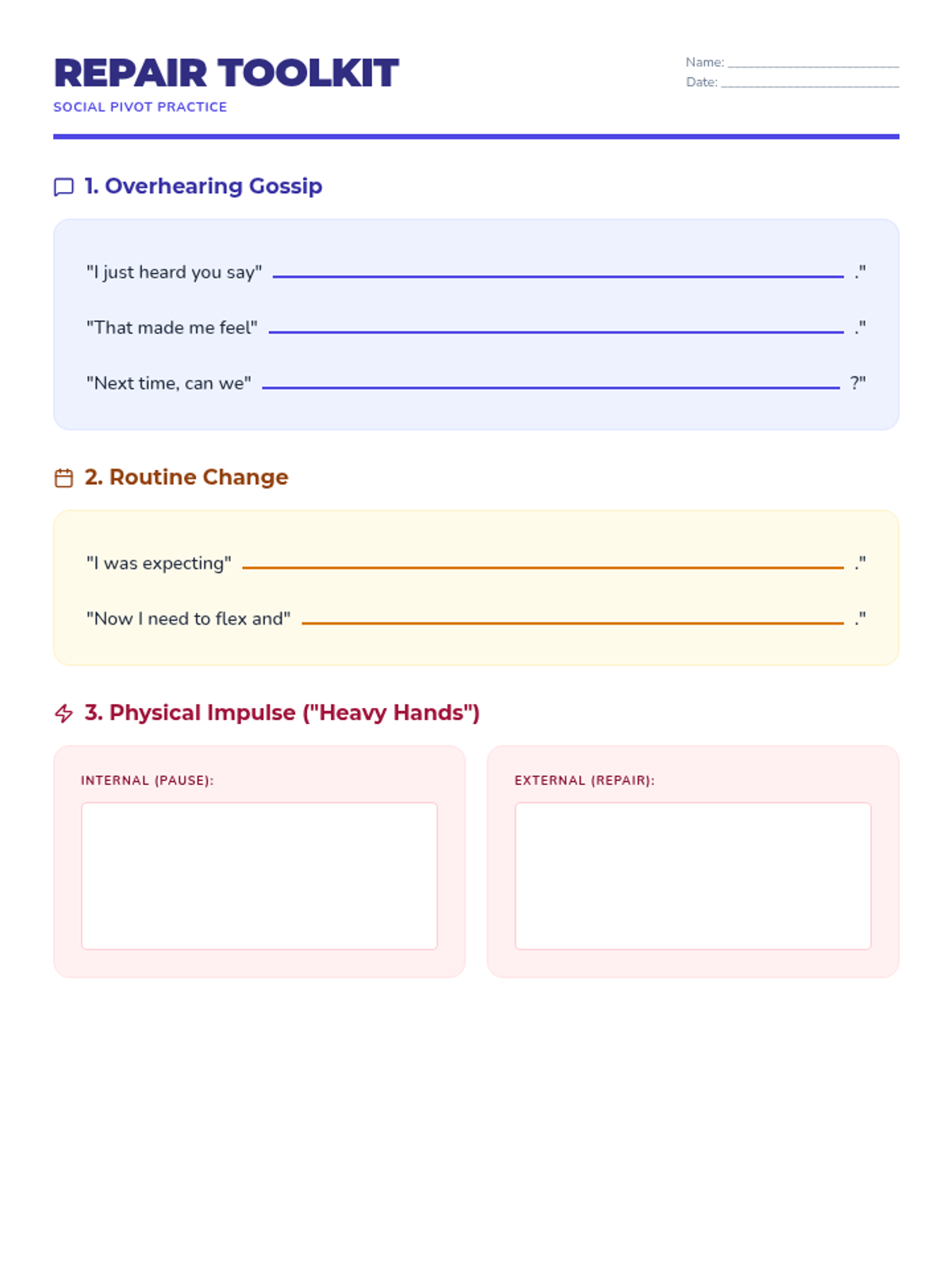
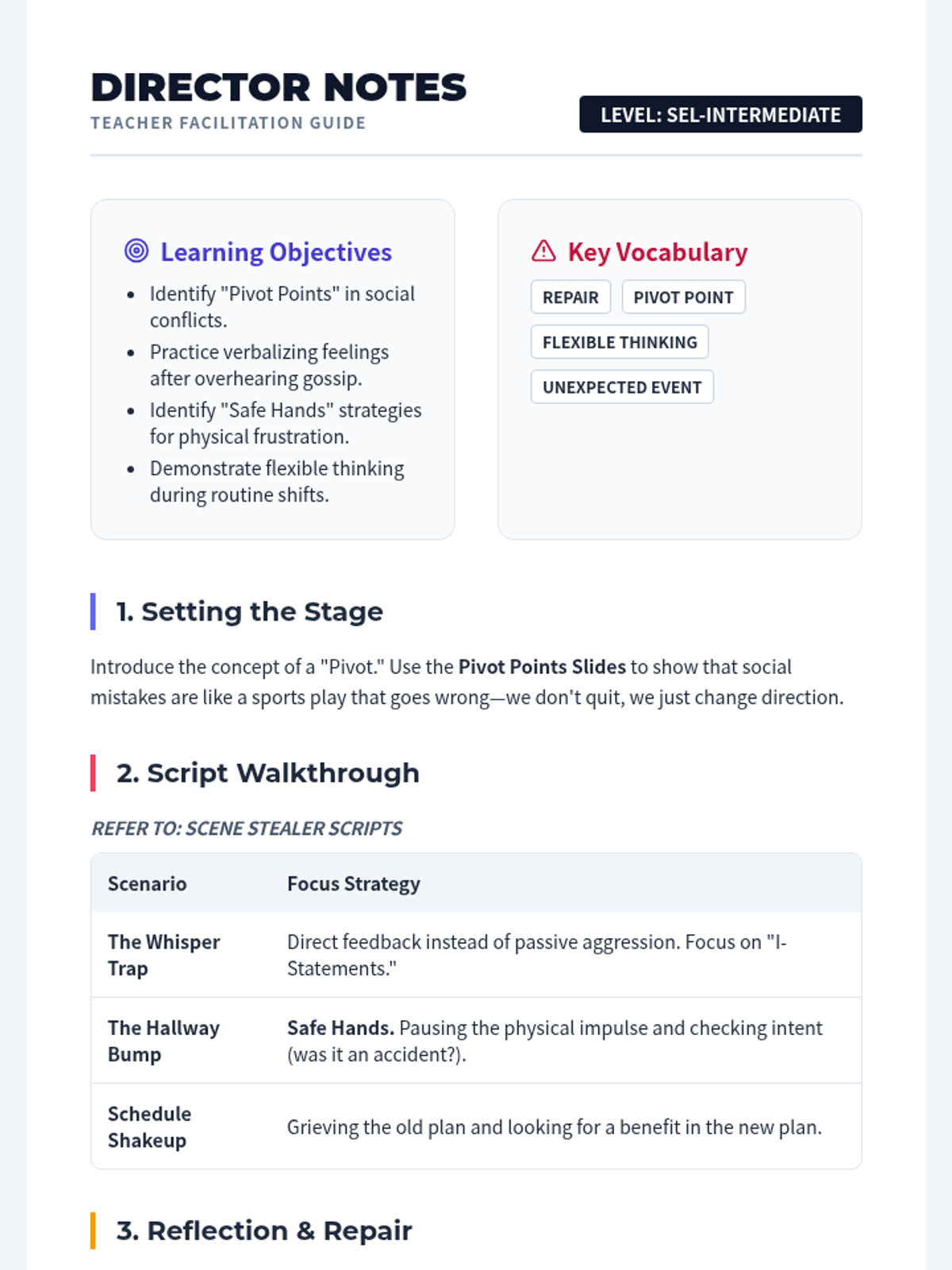
A social-emotional learning lesson focused on navigating difficult social moments like overhearing gossip, managing physical impulses, and adapting to routine changes through roleplay and scripts.
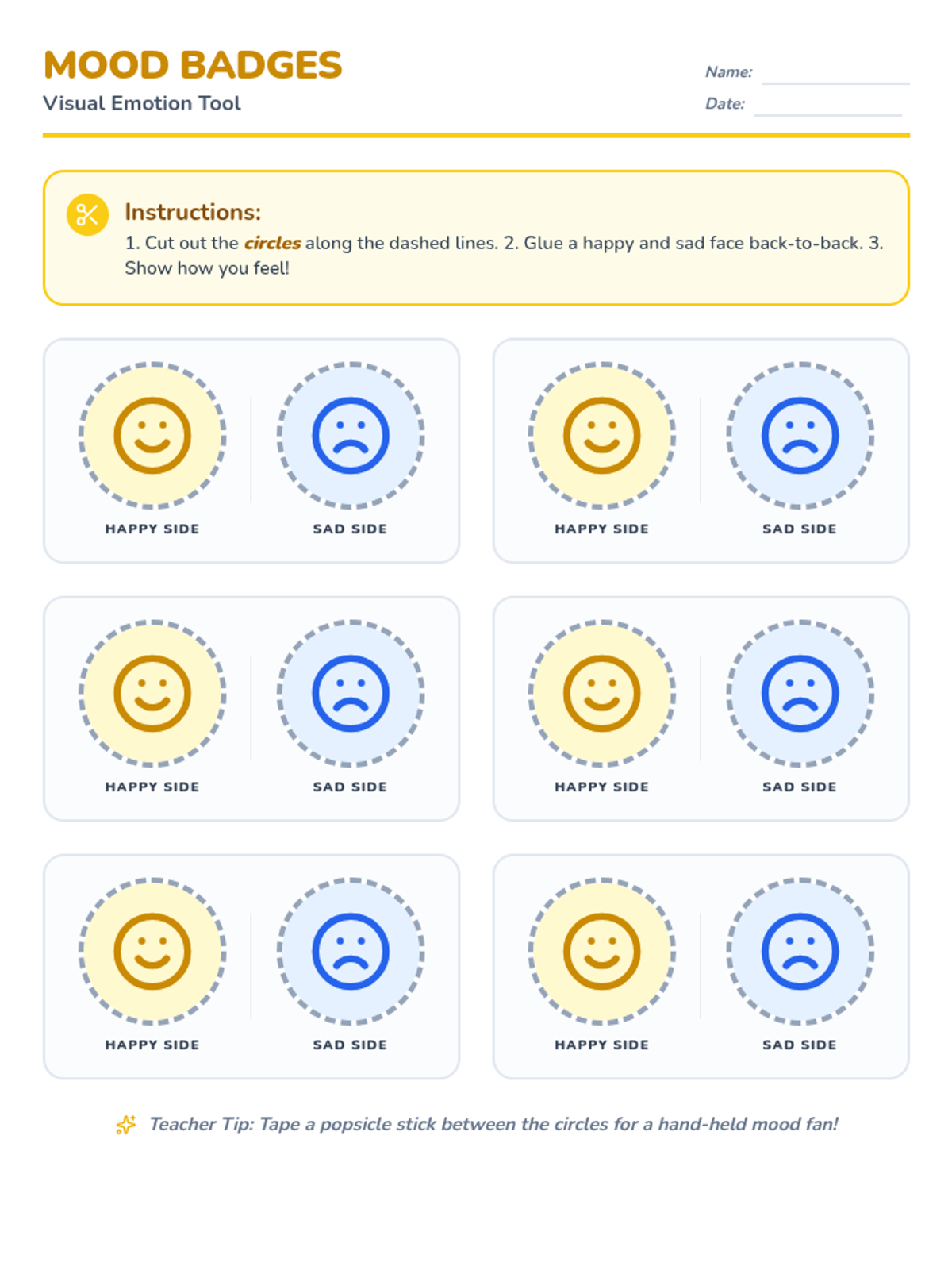
A collection of visual tools to help students identify and communicate their emotions using simple, tactile badges.
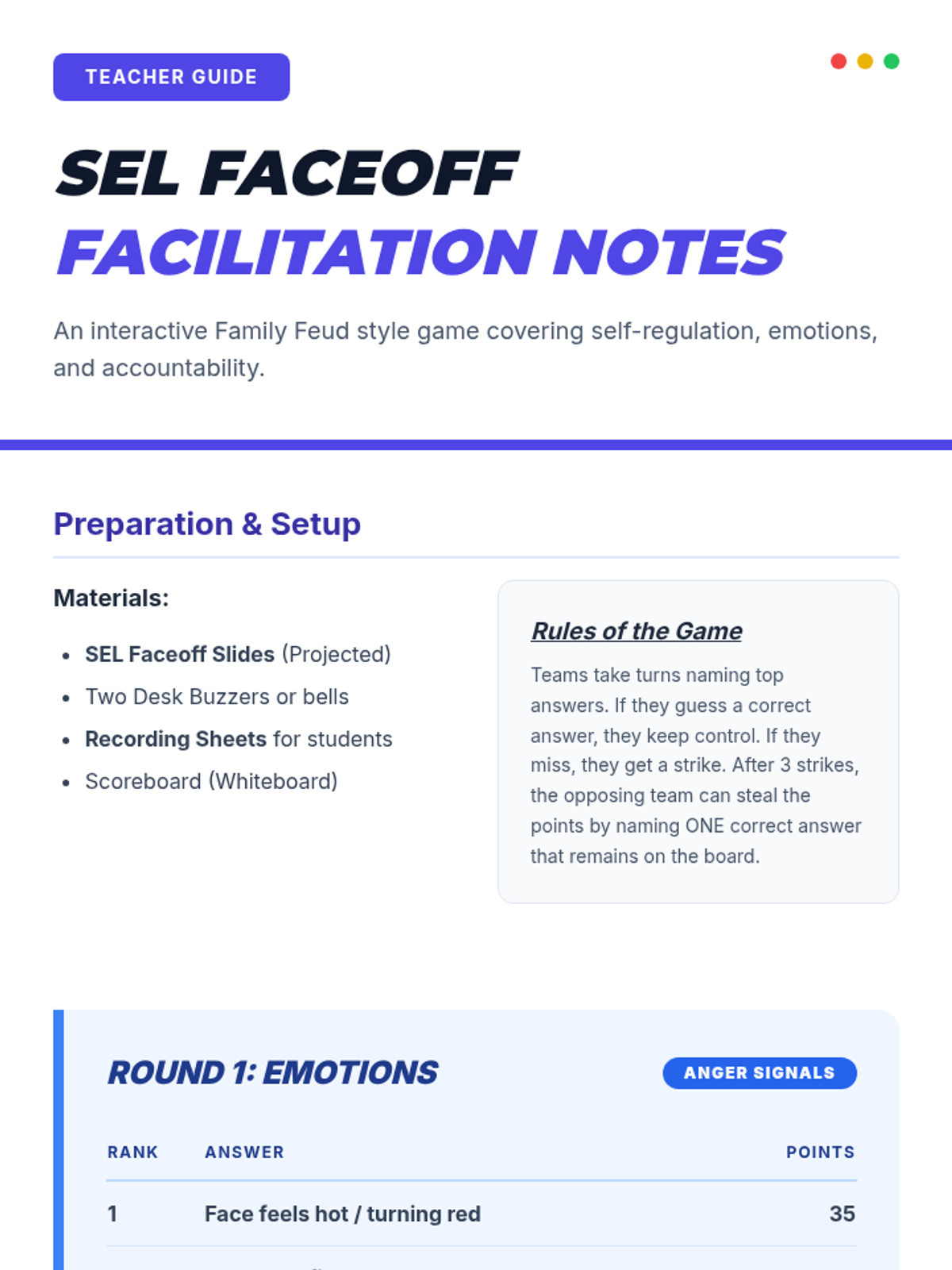
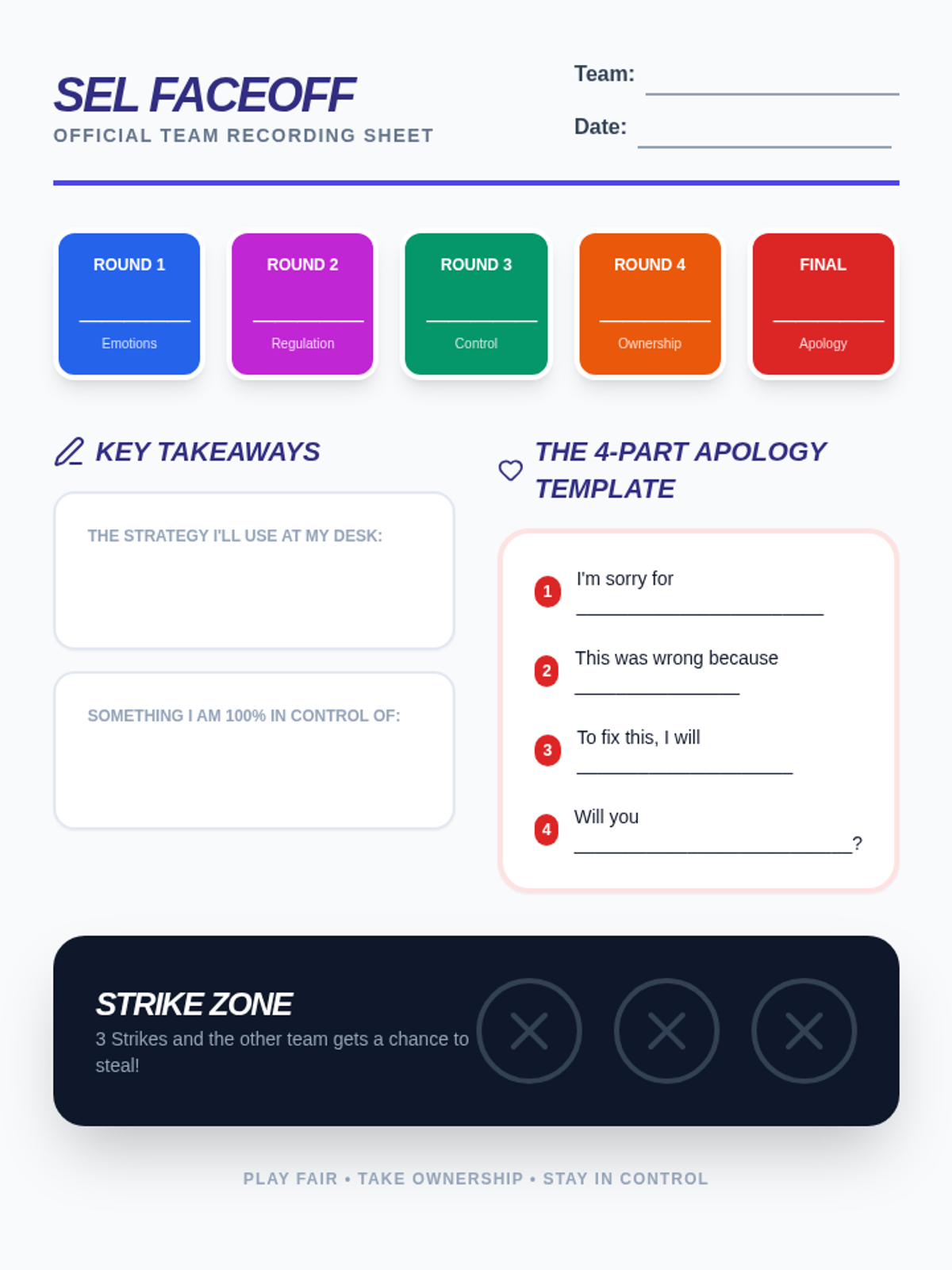
An interactive game-show style lesson covering emotional intelligence, self-regulation strategies, personal accountability, and the 4-part apology method. Students compete in teams to identify 'top answers' for common social-emotional scenarios.
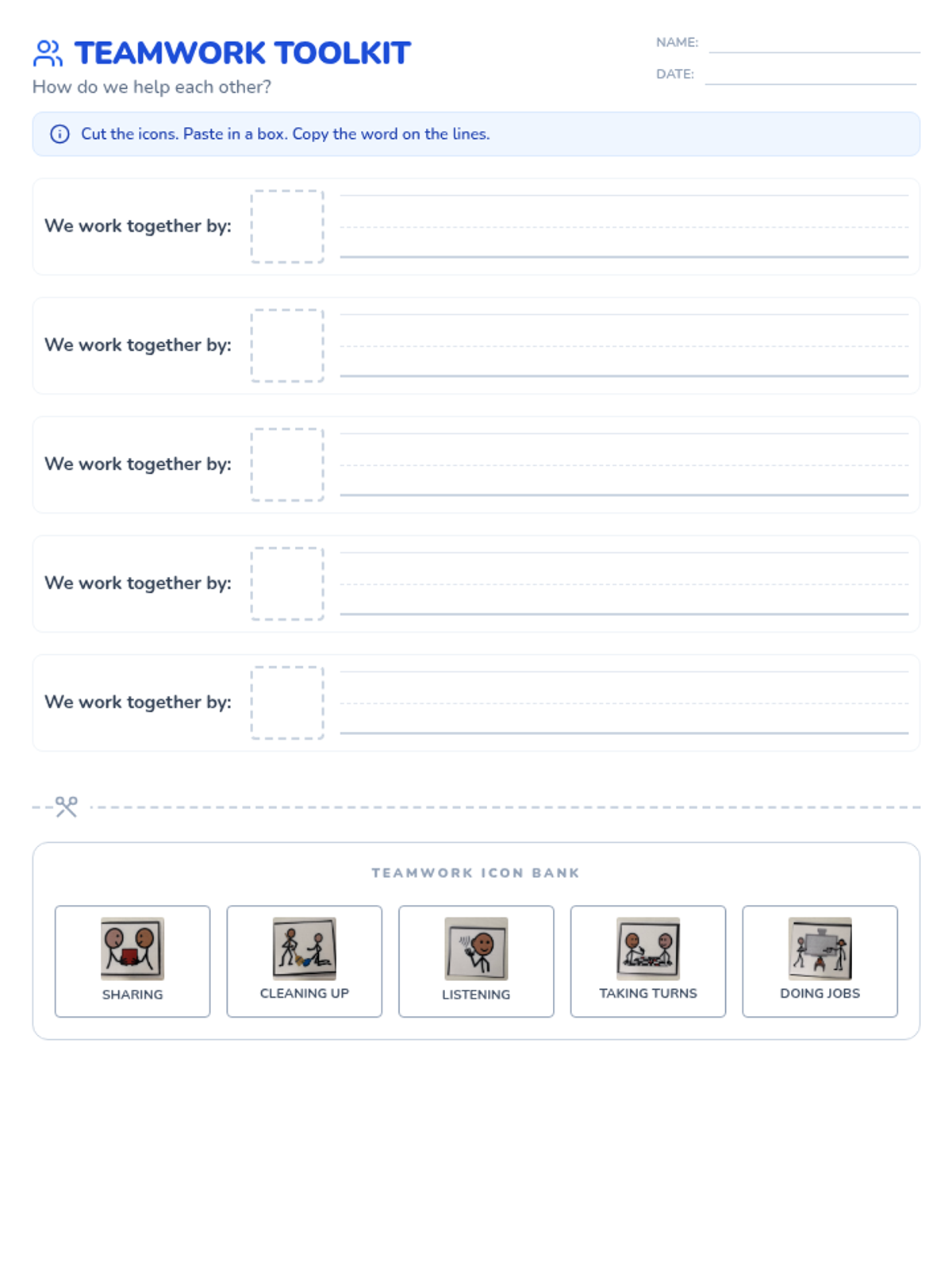
A lesson focused on collaborative behaviors and classroom community through a hands-on sentence building activity.
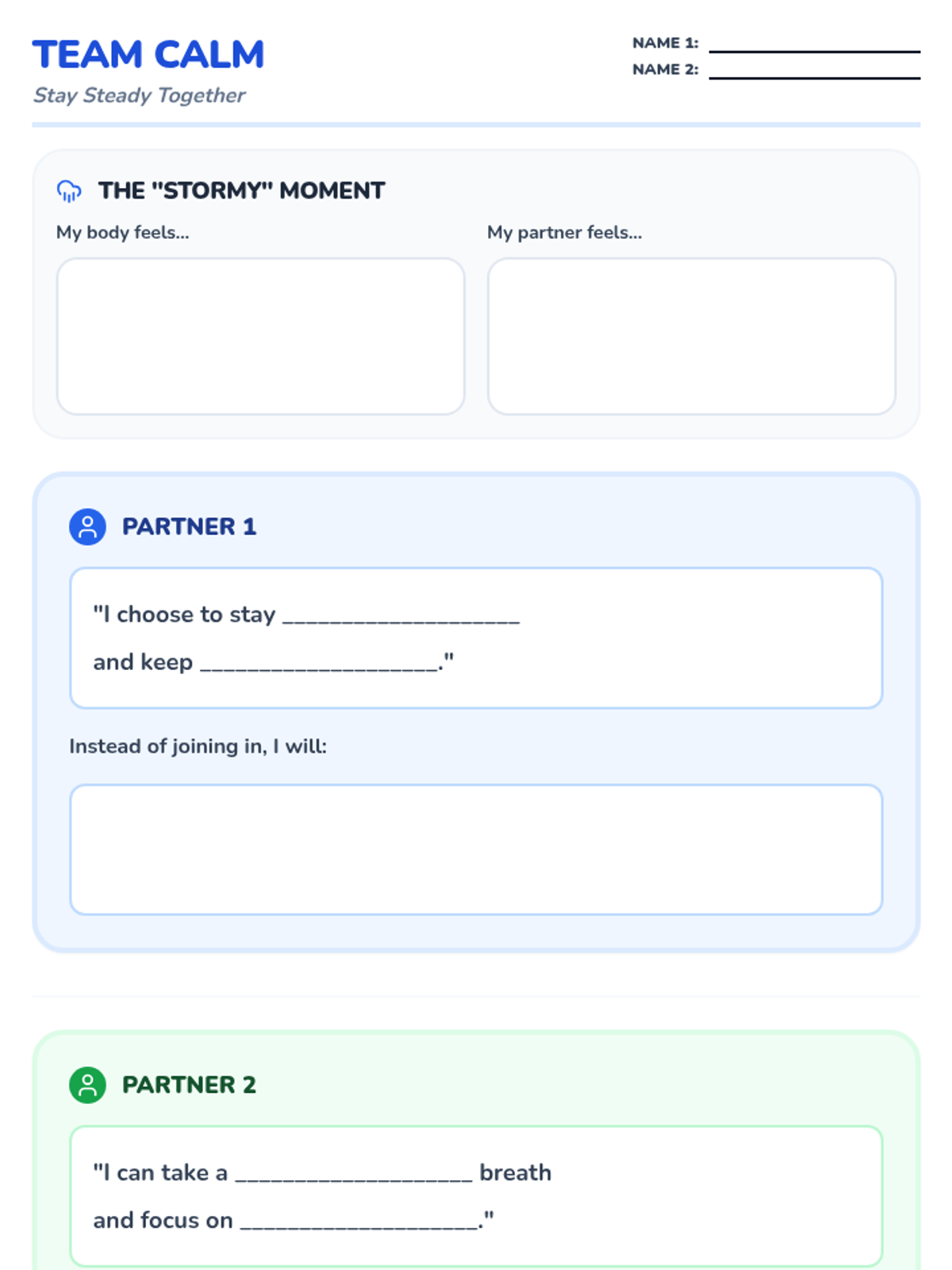
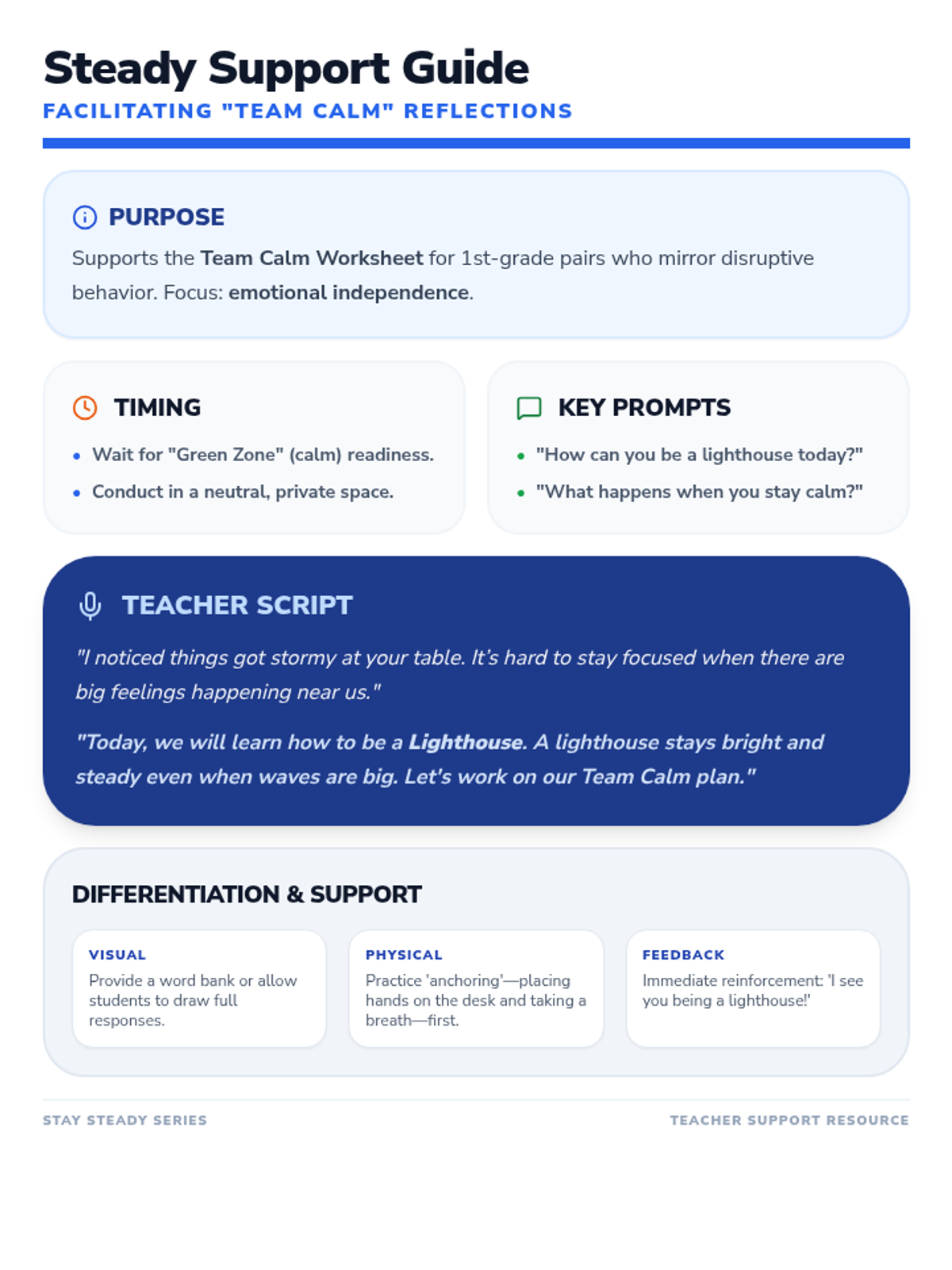
This lesson helps young students learn how to maintain their own emotional regulation and make positive choices even when their peers are experiencing emotional outbursts or disruptive behavior. It focuses on the 'lighthouse' metaphor—being a steady light during someone else's storm.
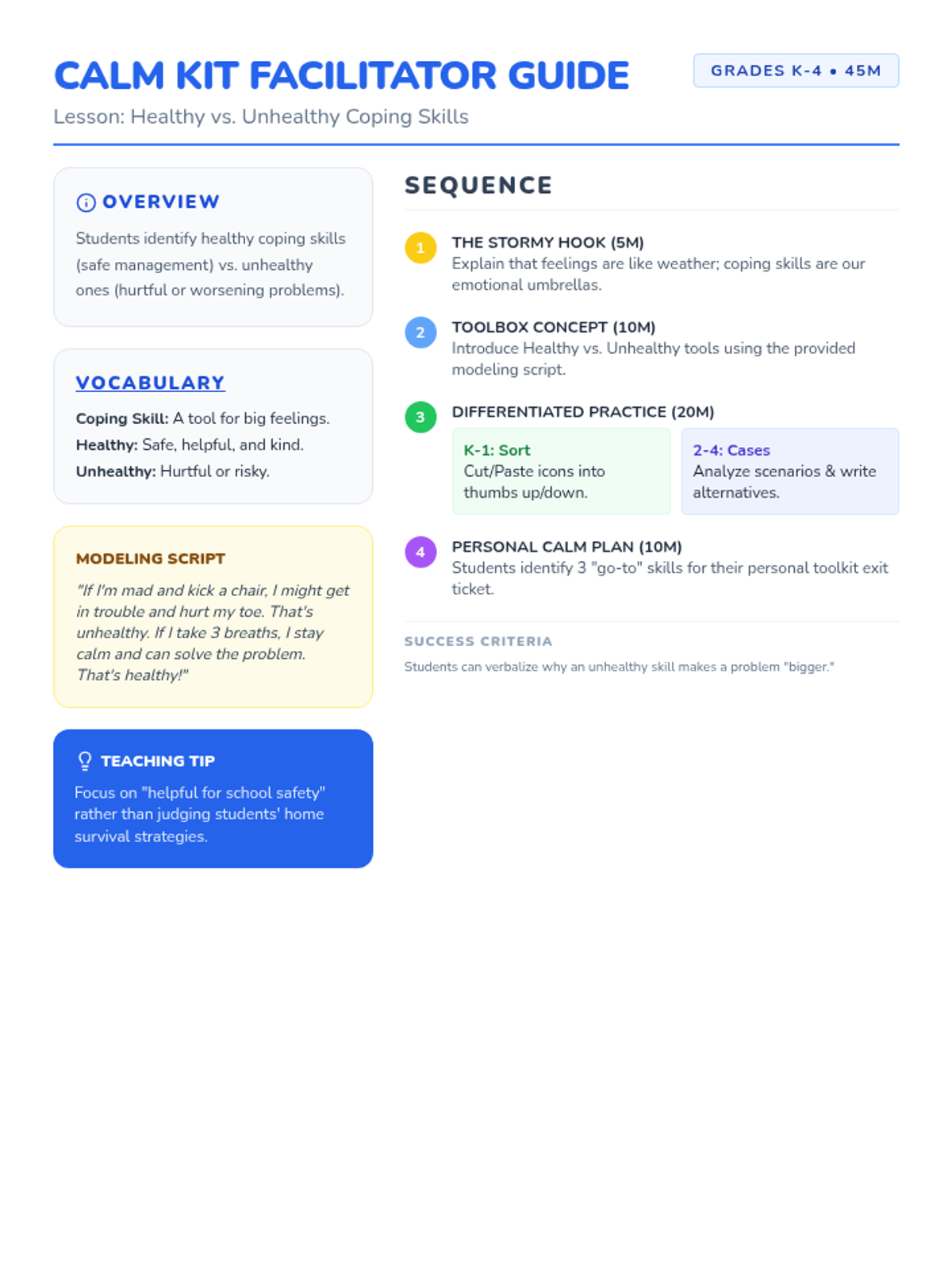
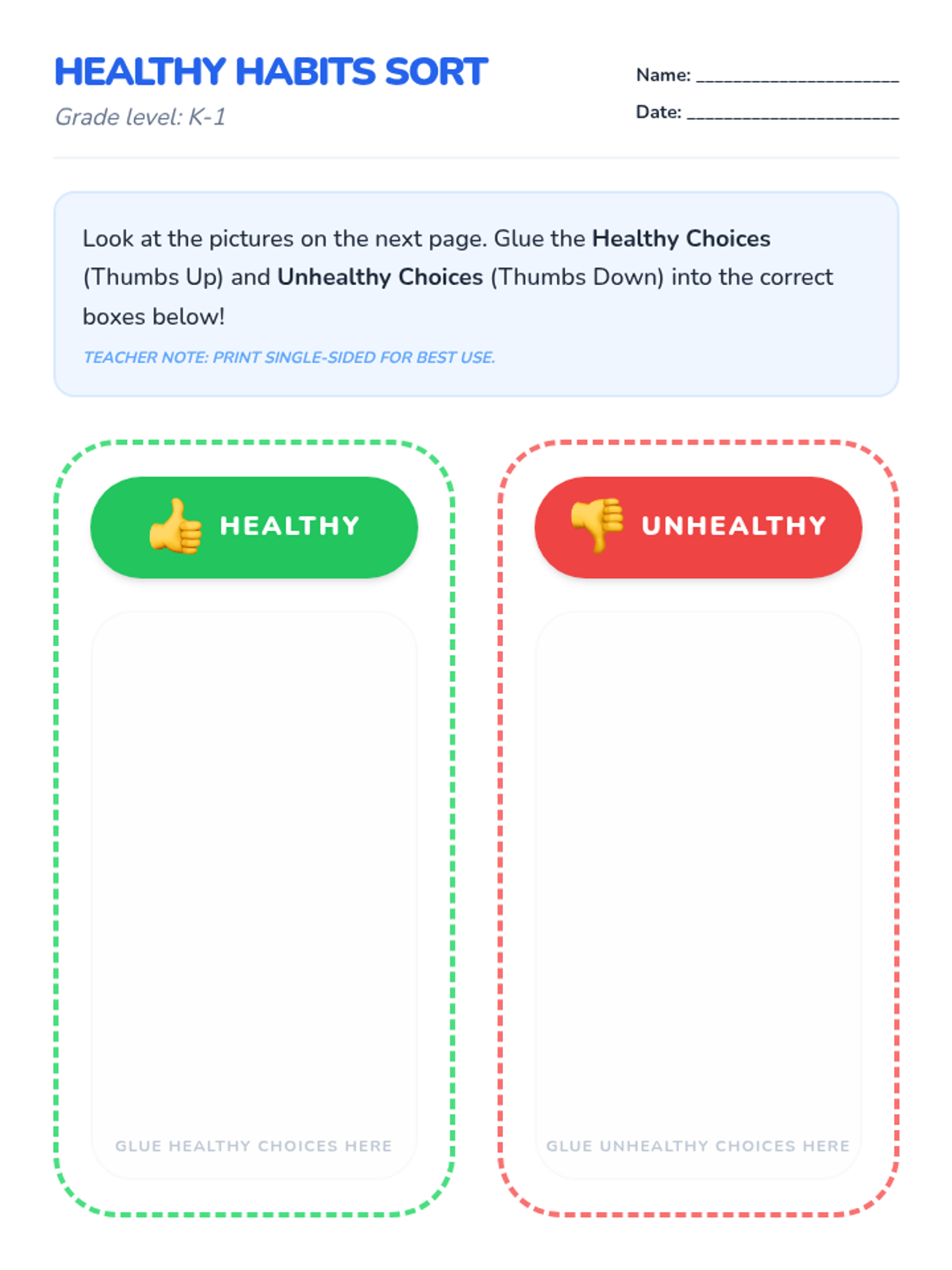
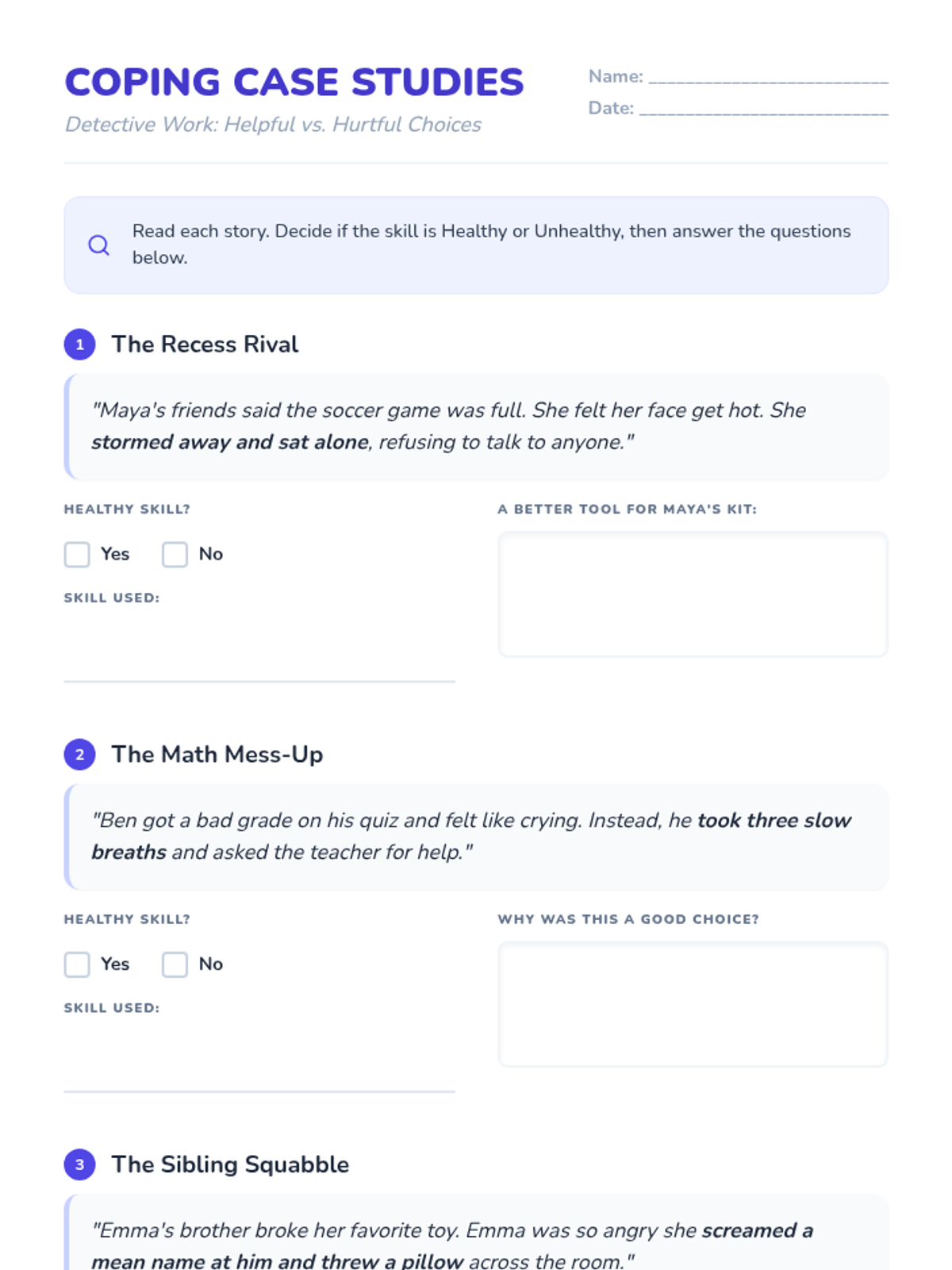
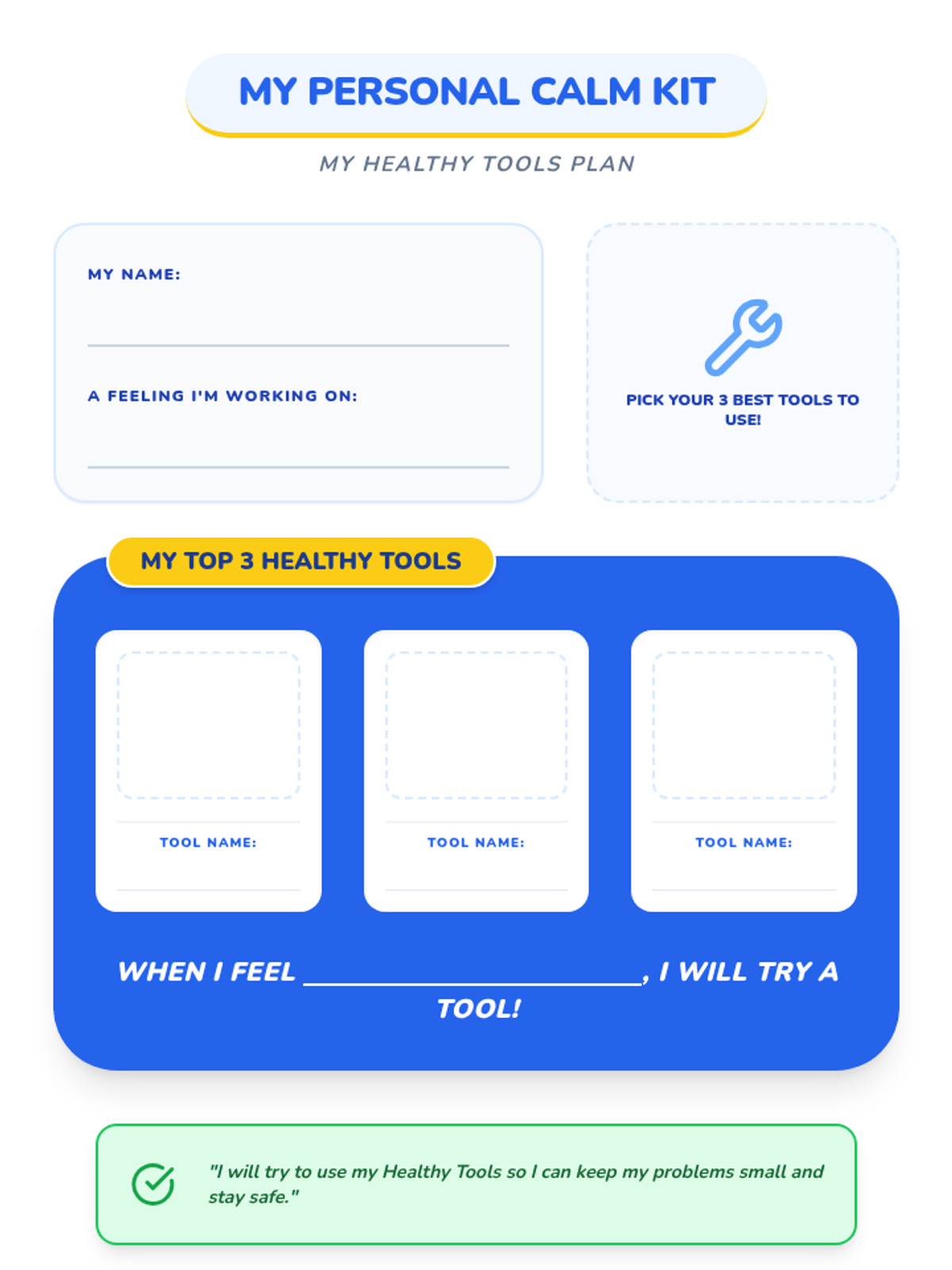
A comprehensive lesson on identifying and choosing healthy coping skills for students in grades K-4, featuring differentiated activities for younger and older learners.