An 8th-grade lesson focusing on dissecting the SMART goal framework and equipping students with the tools to engineer vague desires into high-performance, structured blueprints.
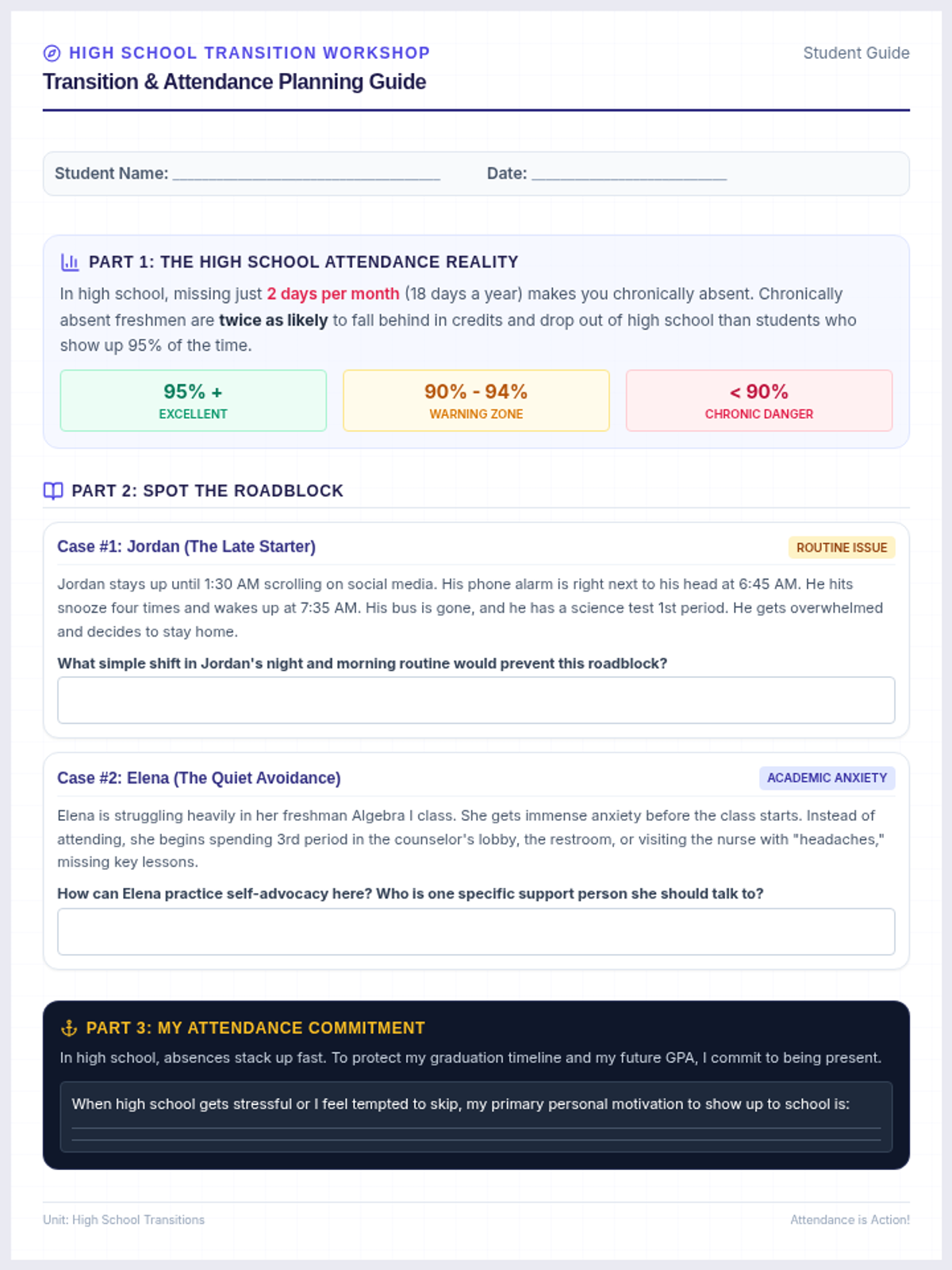
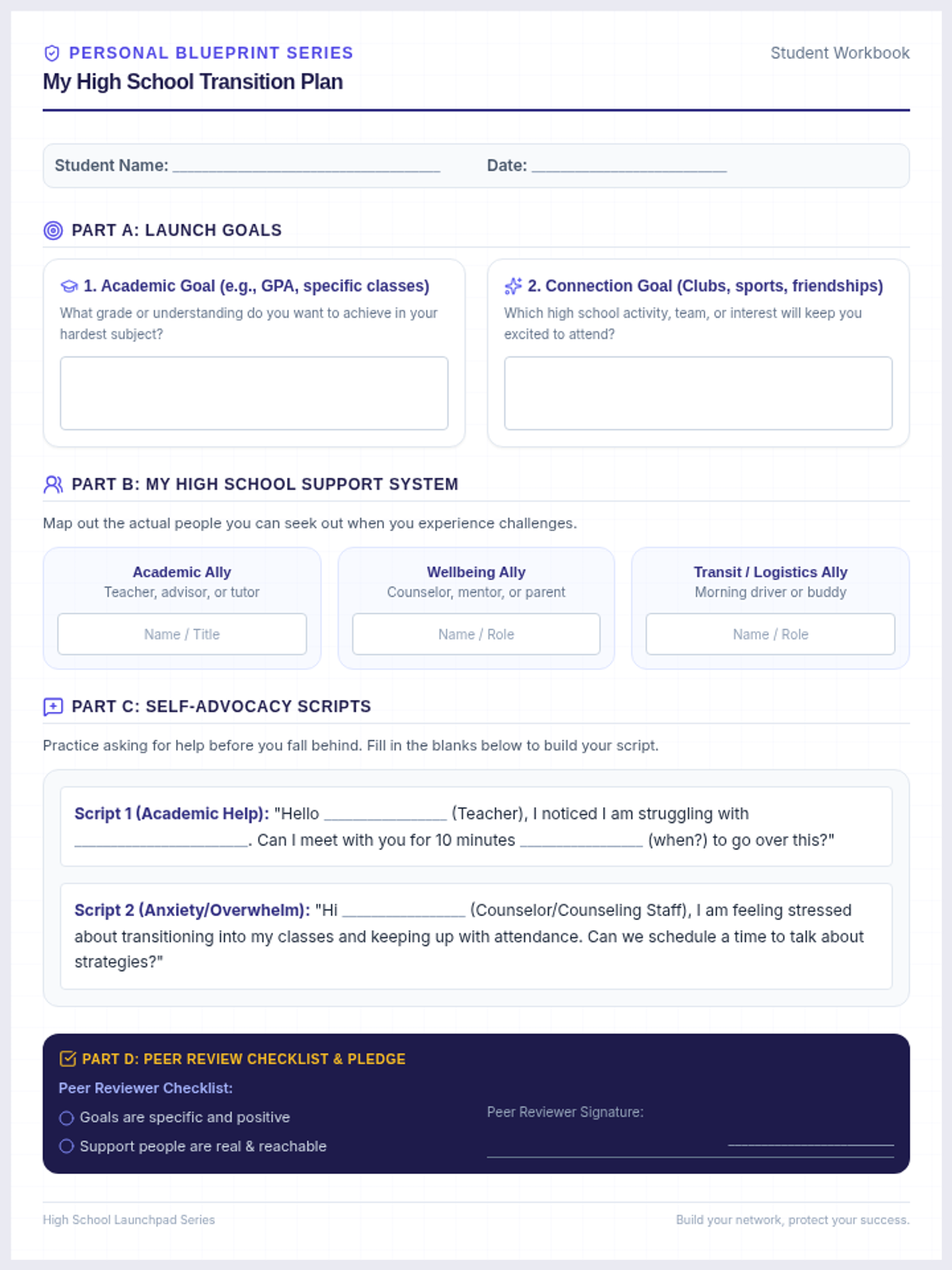
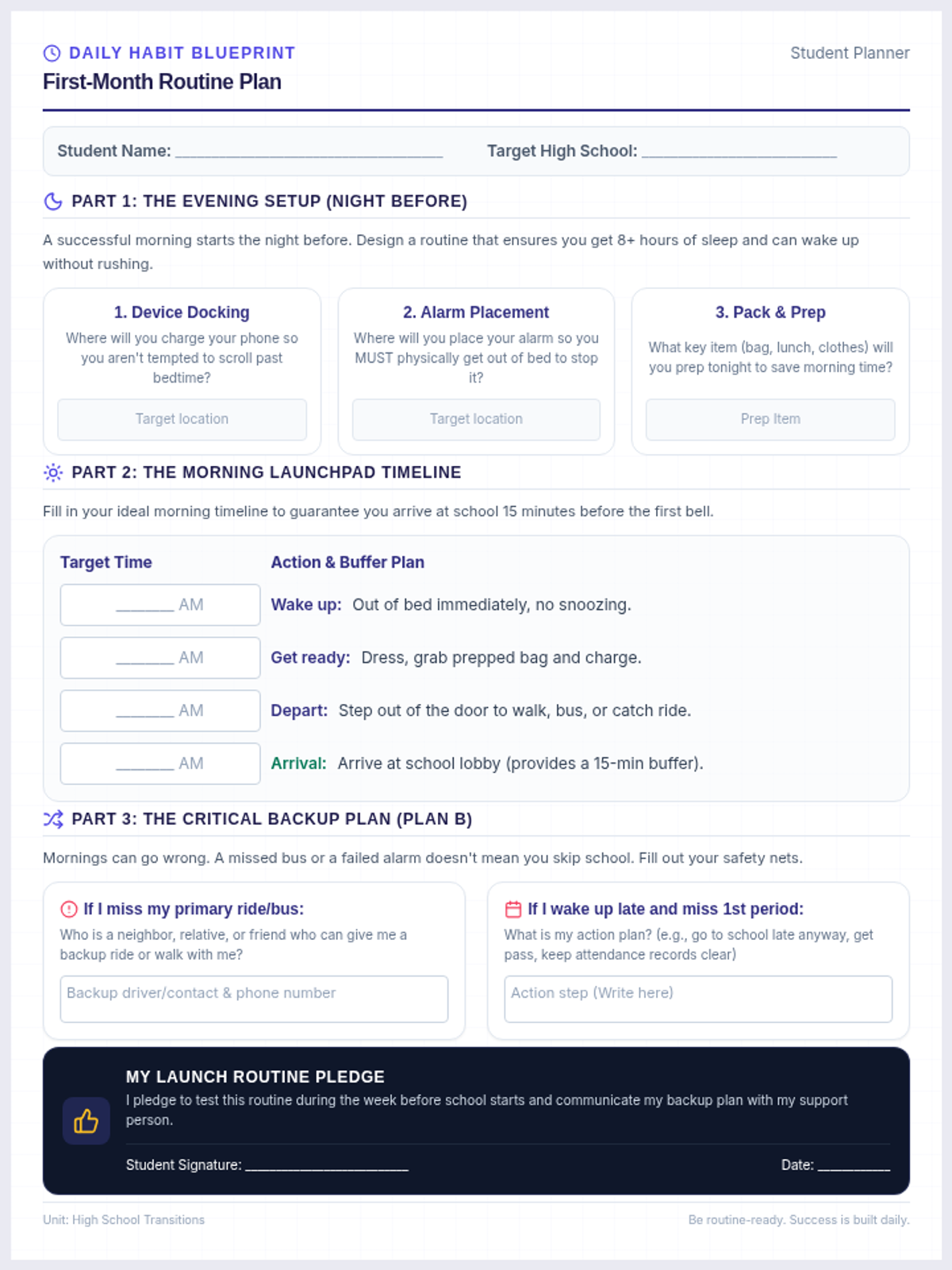
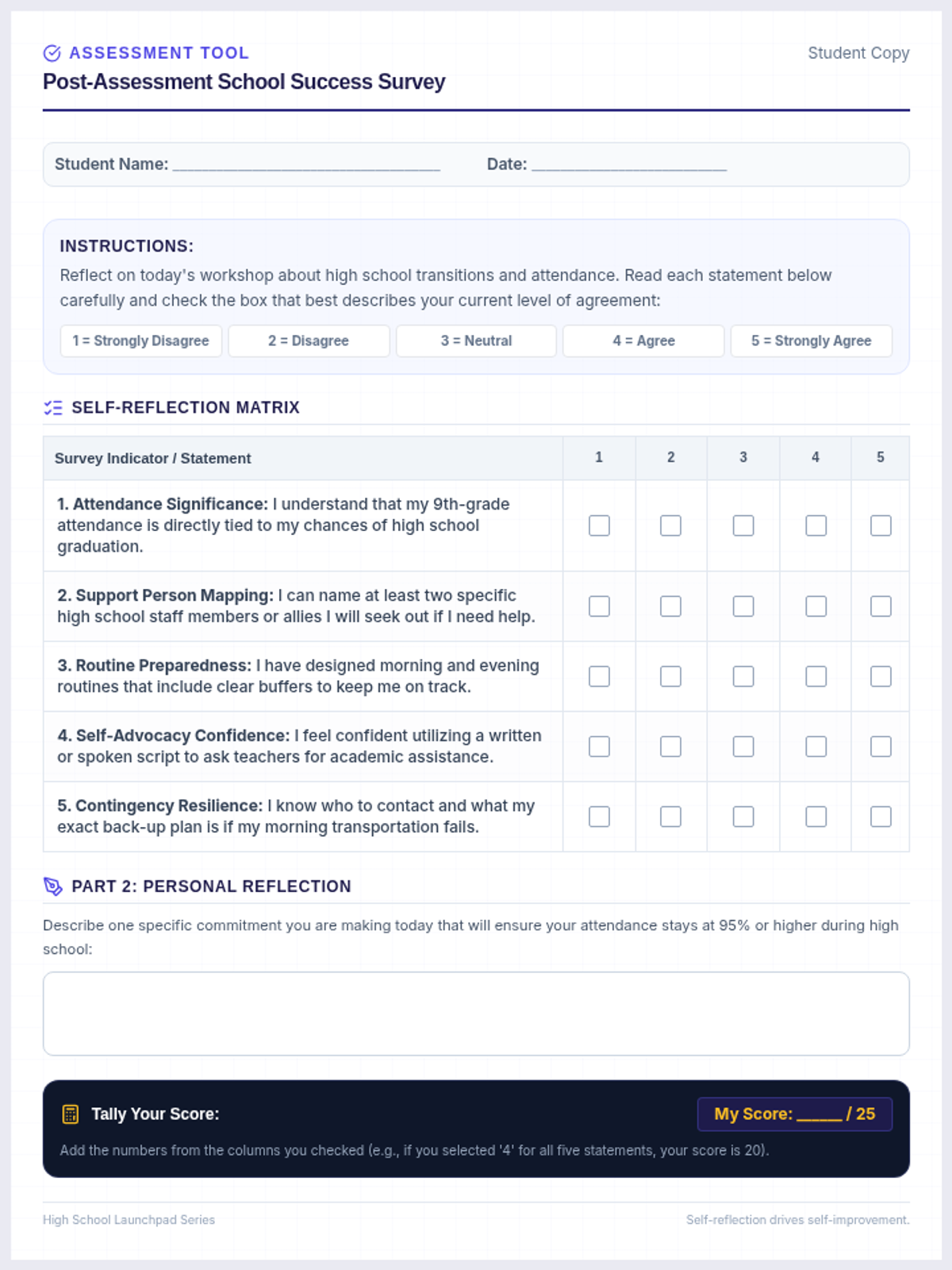
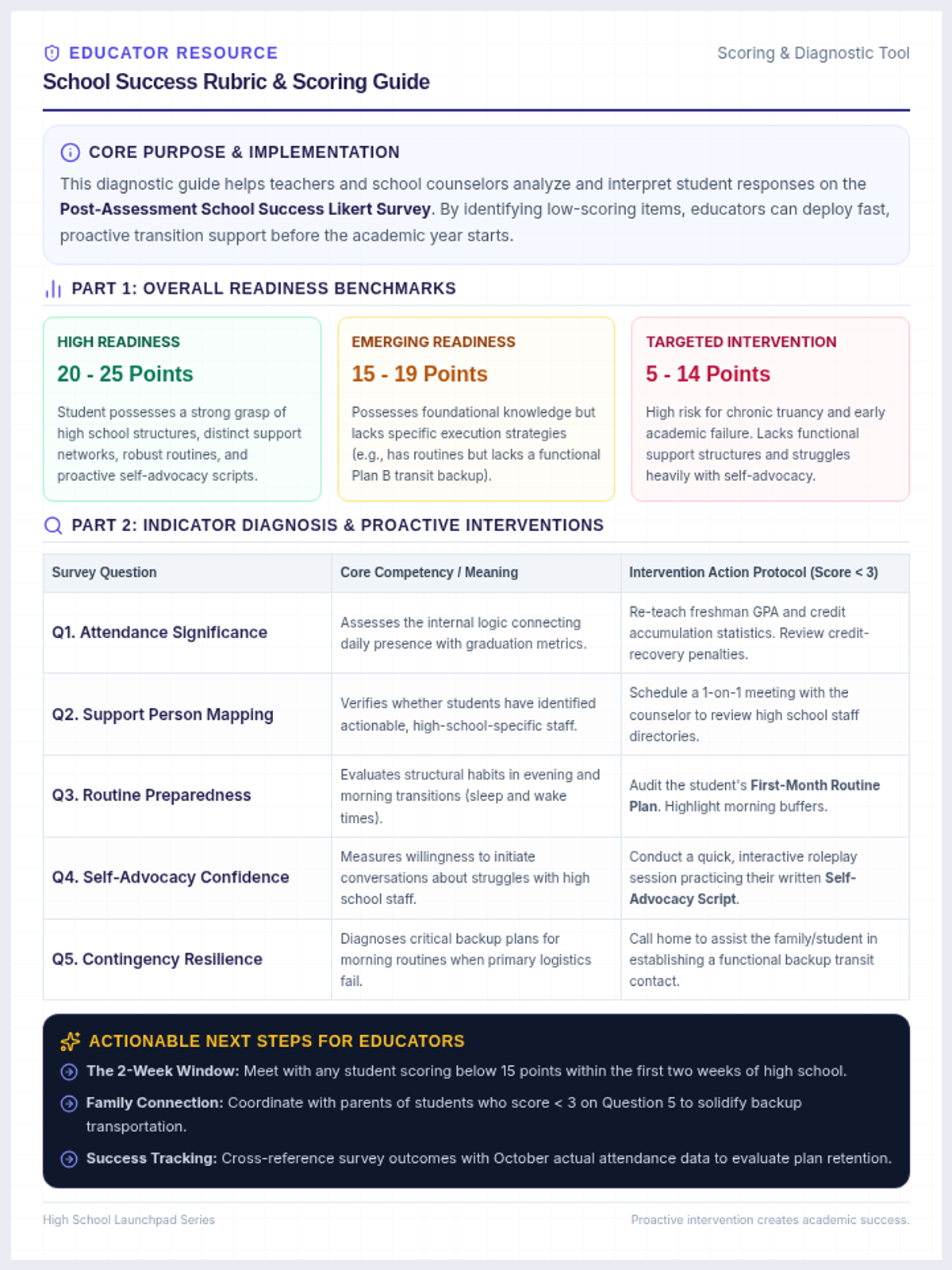
A comprehensive 45-minute lesson for 8th graders transitioning to high school, focusing on the link between attendance and academic success, building a personal transition plan with support networks, designing daily routines, and self-assessing readiness.
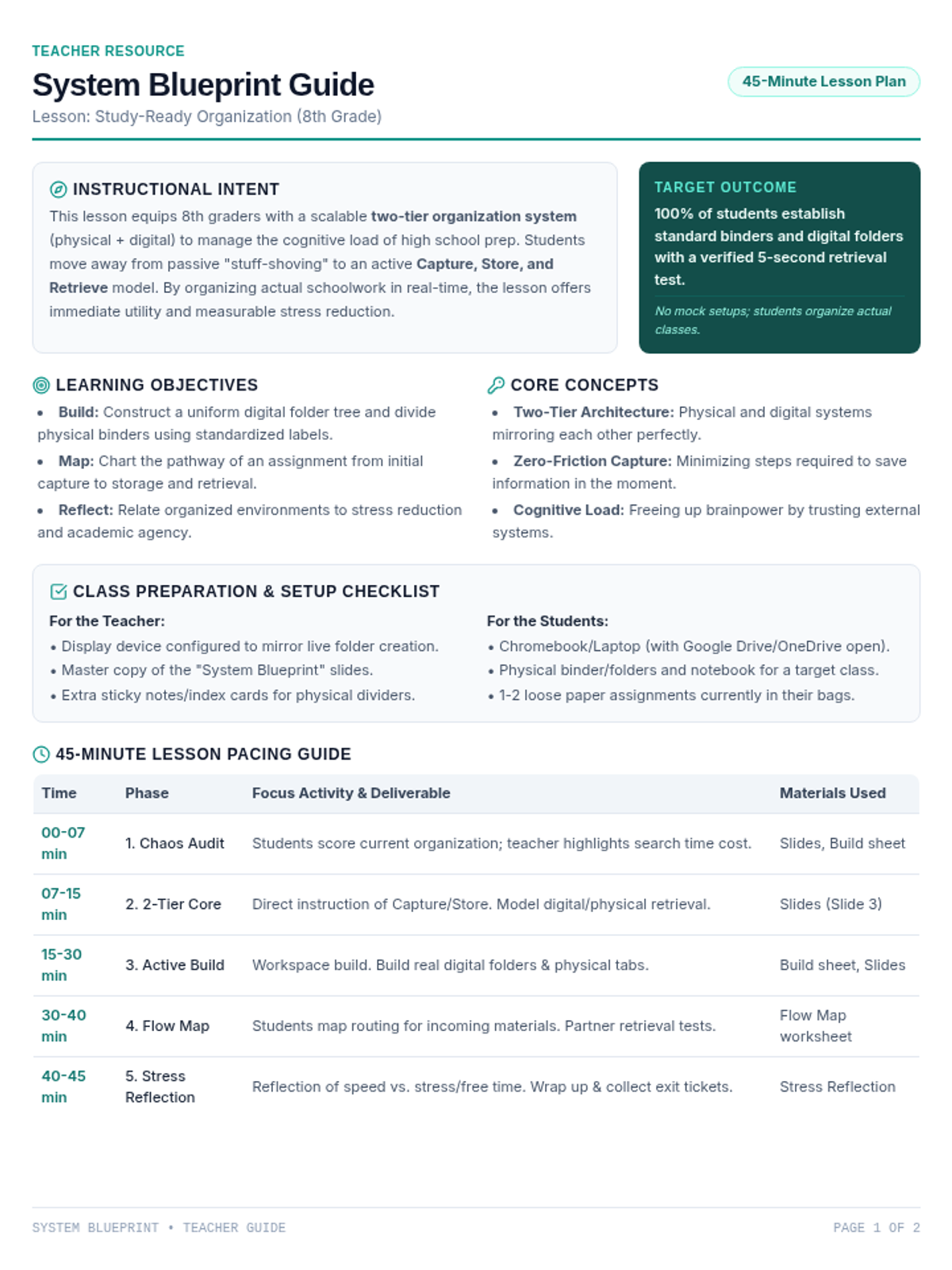
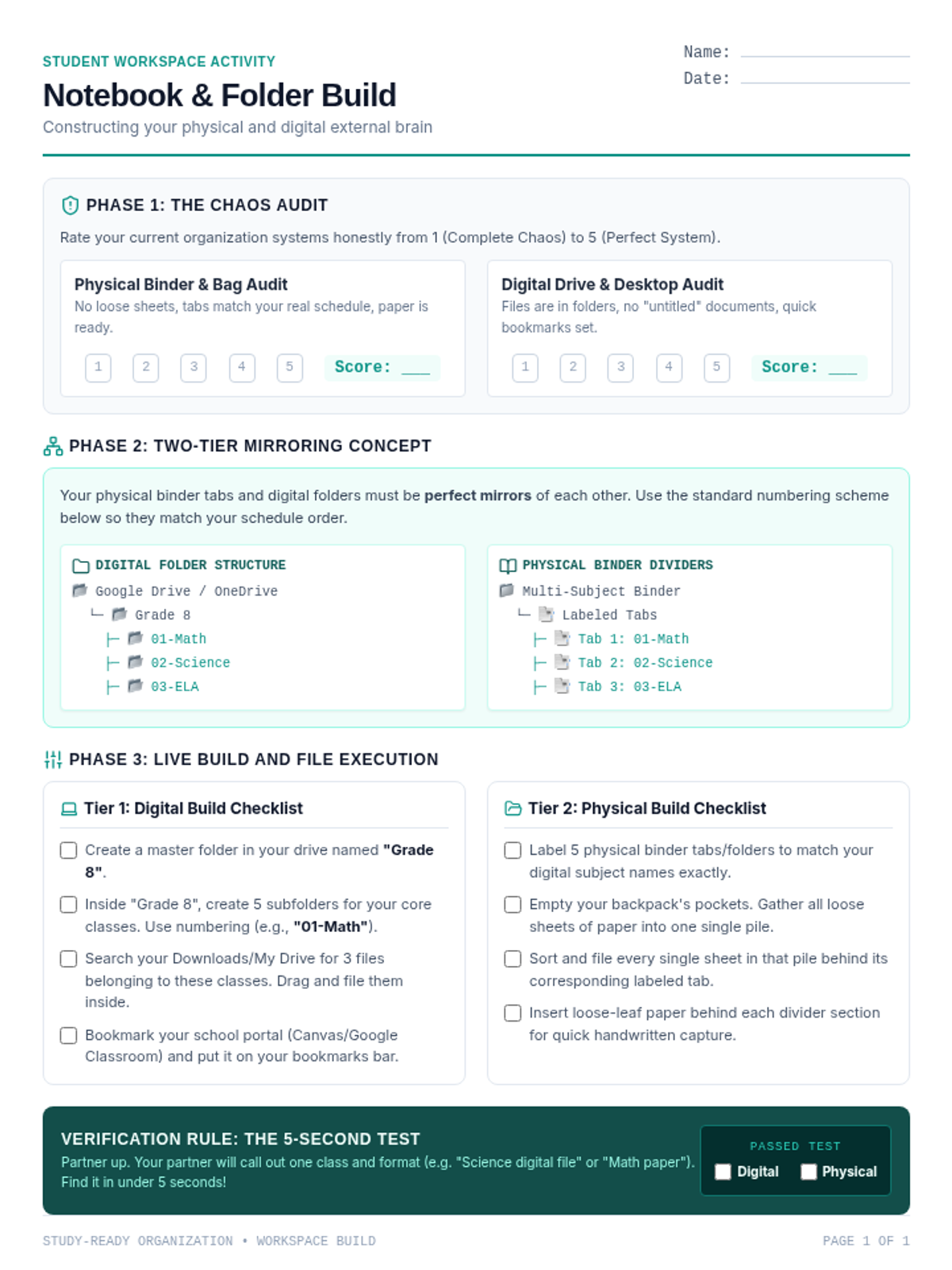
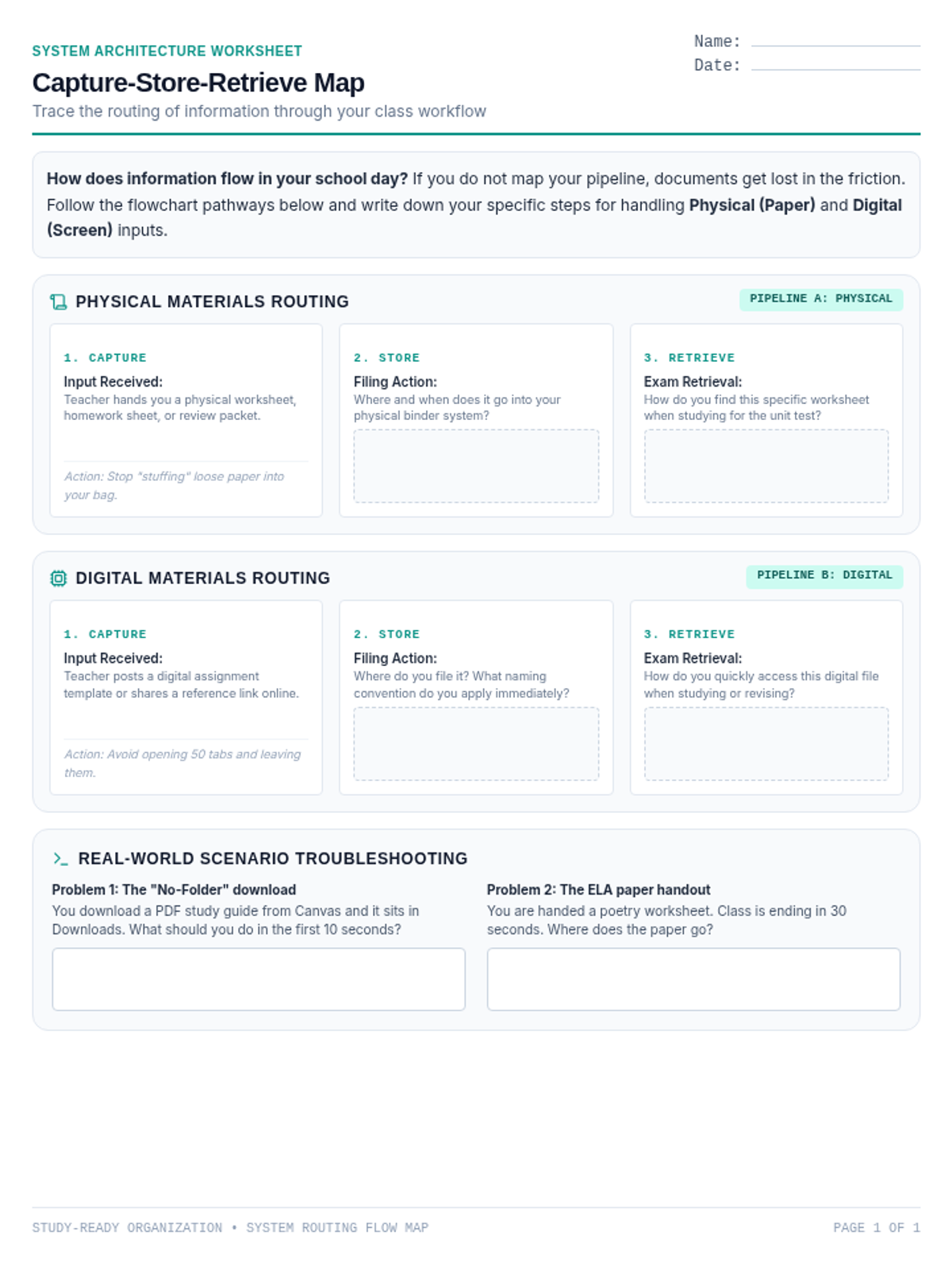
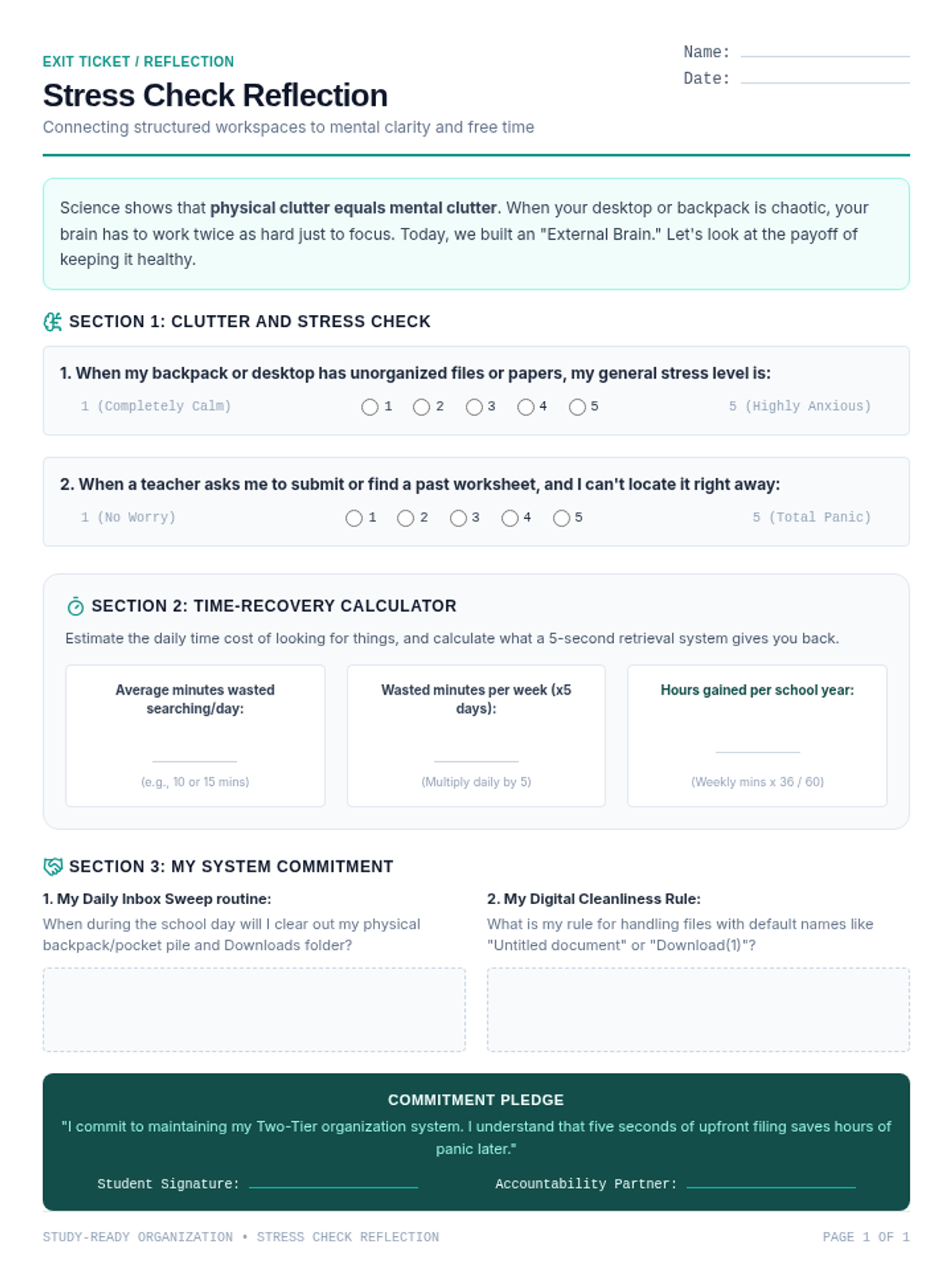
A practical, hands-on lesson designed to help 8th-grade students establish a consistent two-tier organization system (physical and digital). Students conduct an organization audit, build structured systems, map their capture-store-retrieve workflows, and reflect on how structured habits reduce stress and boost productivity.
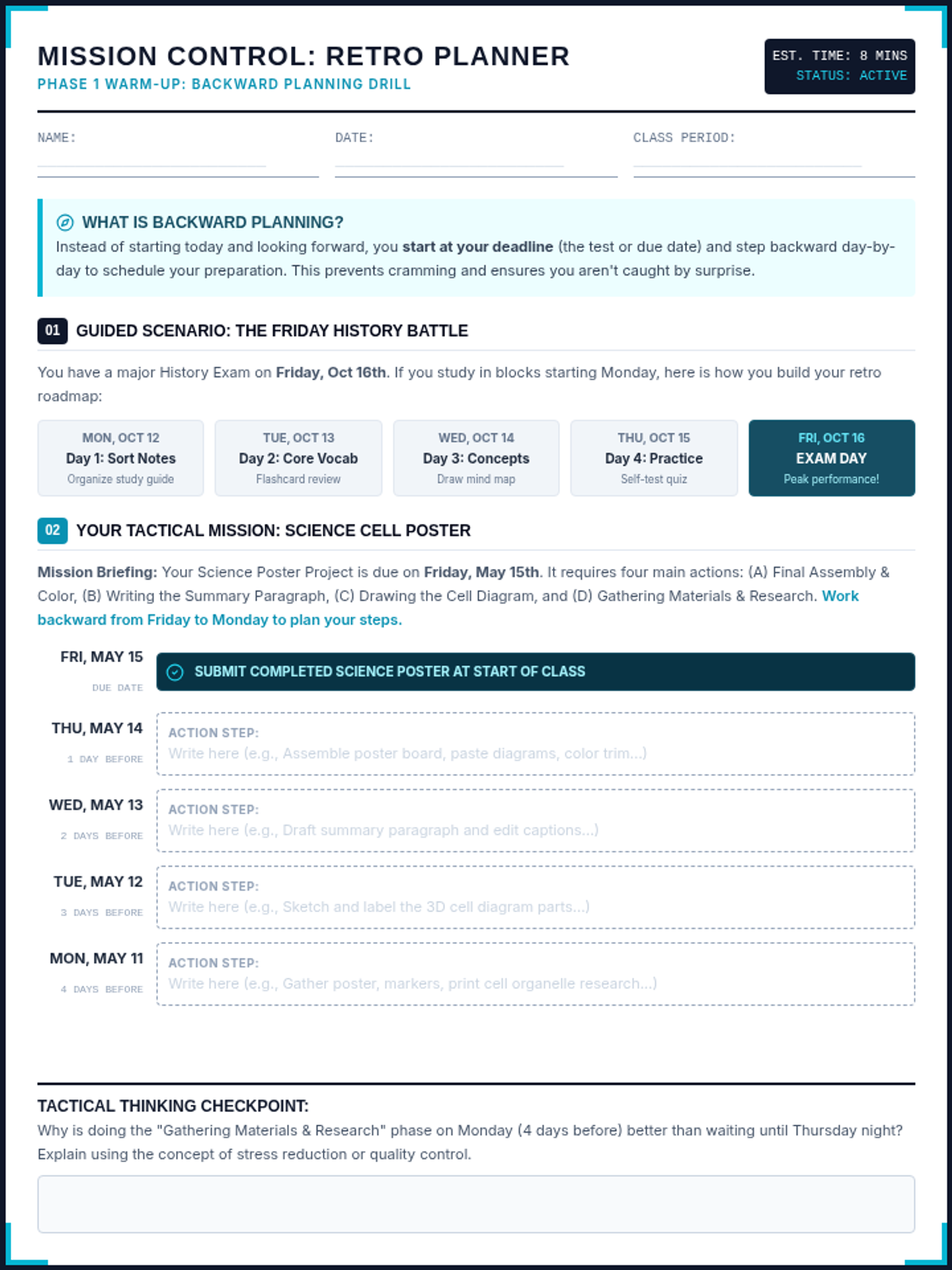
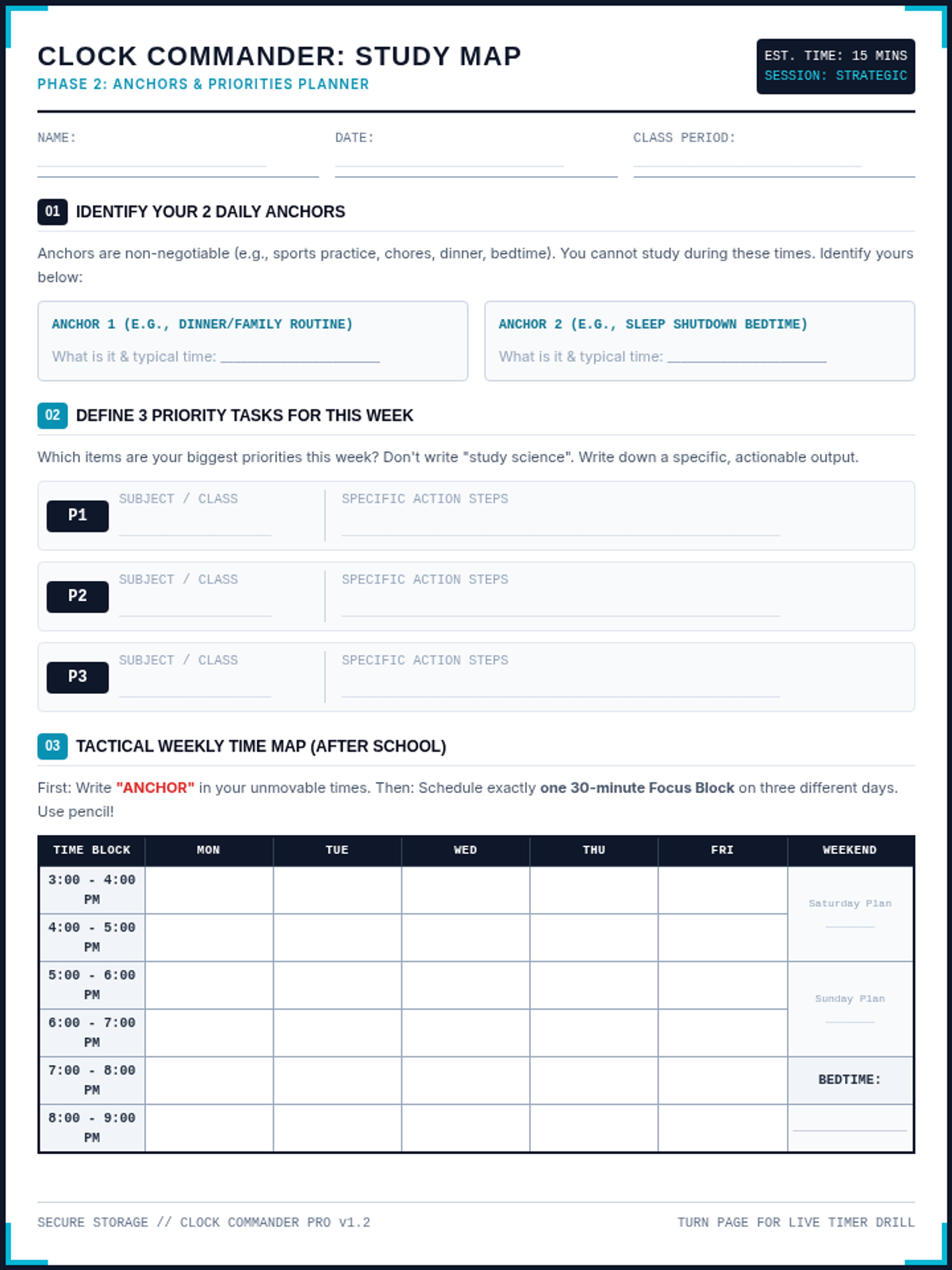
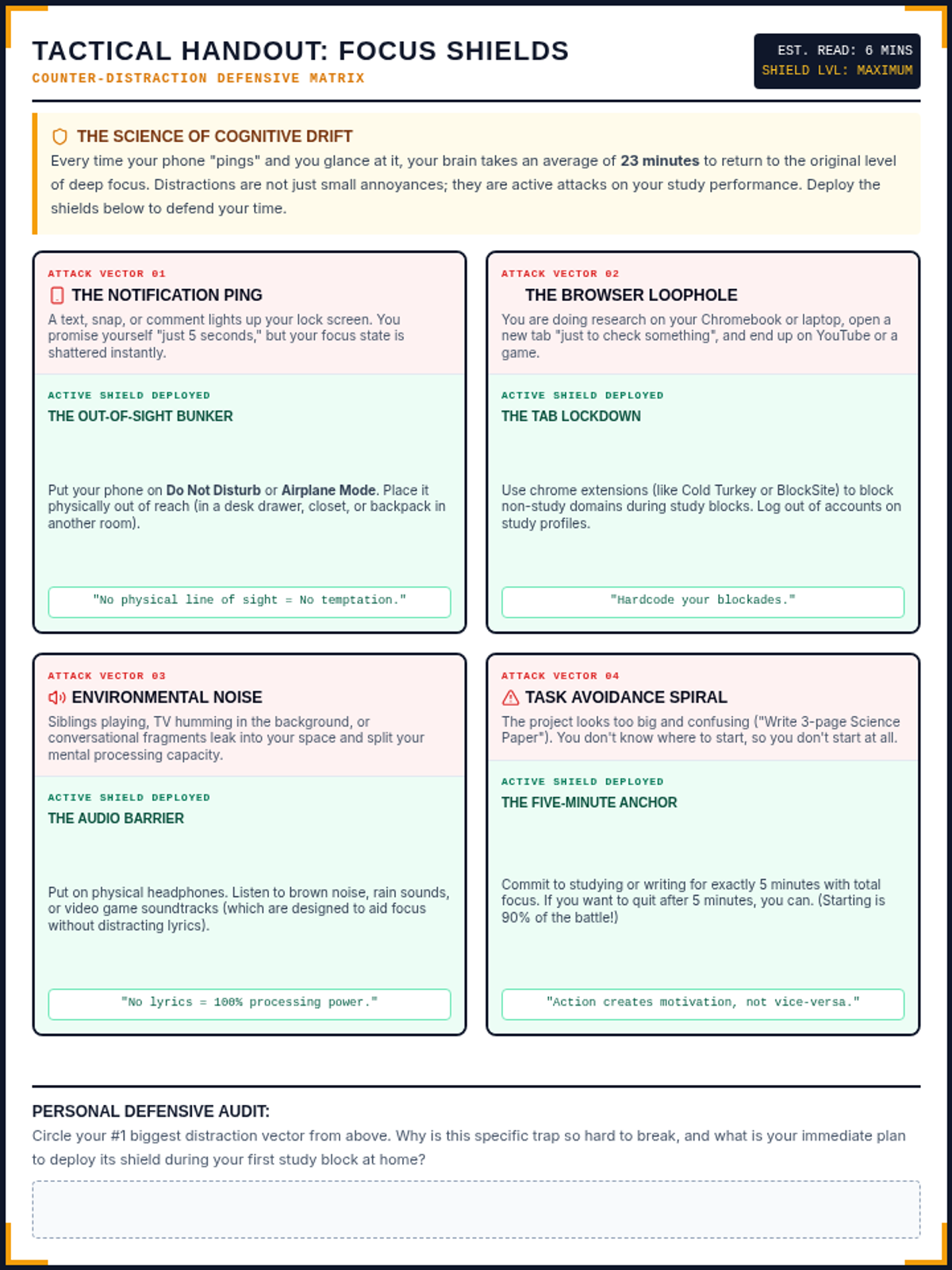
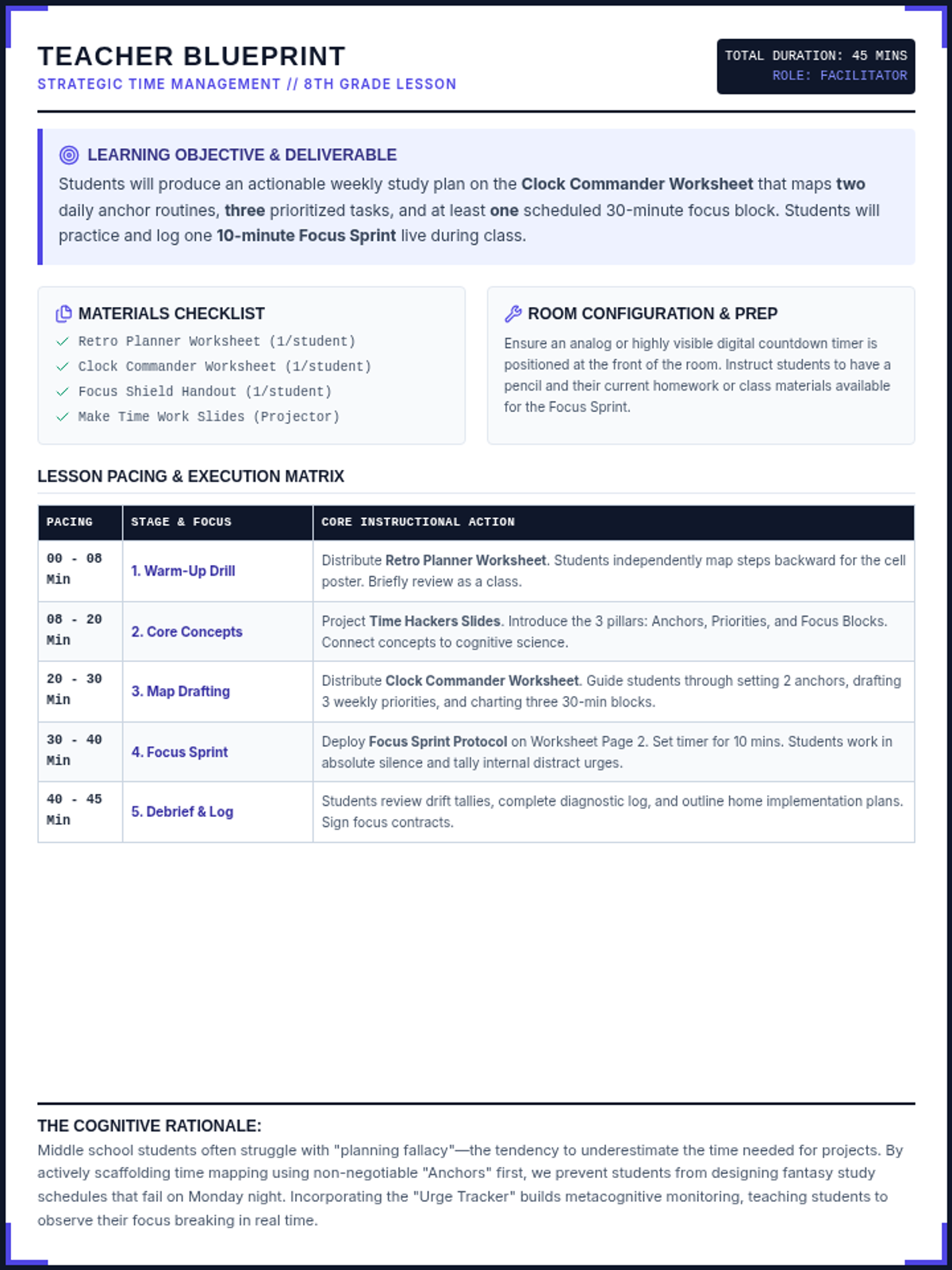
An 8th-grade lesson on time management, focusing on backward planning, prioritization, distraction shielding, and structured focus blocks to help students design and execute actionable weekly study plans.
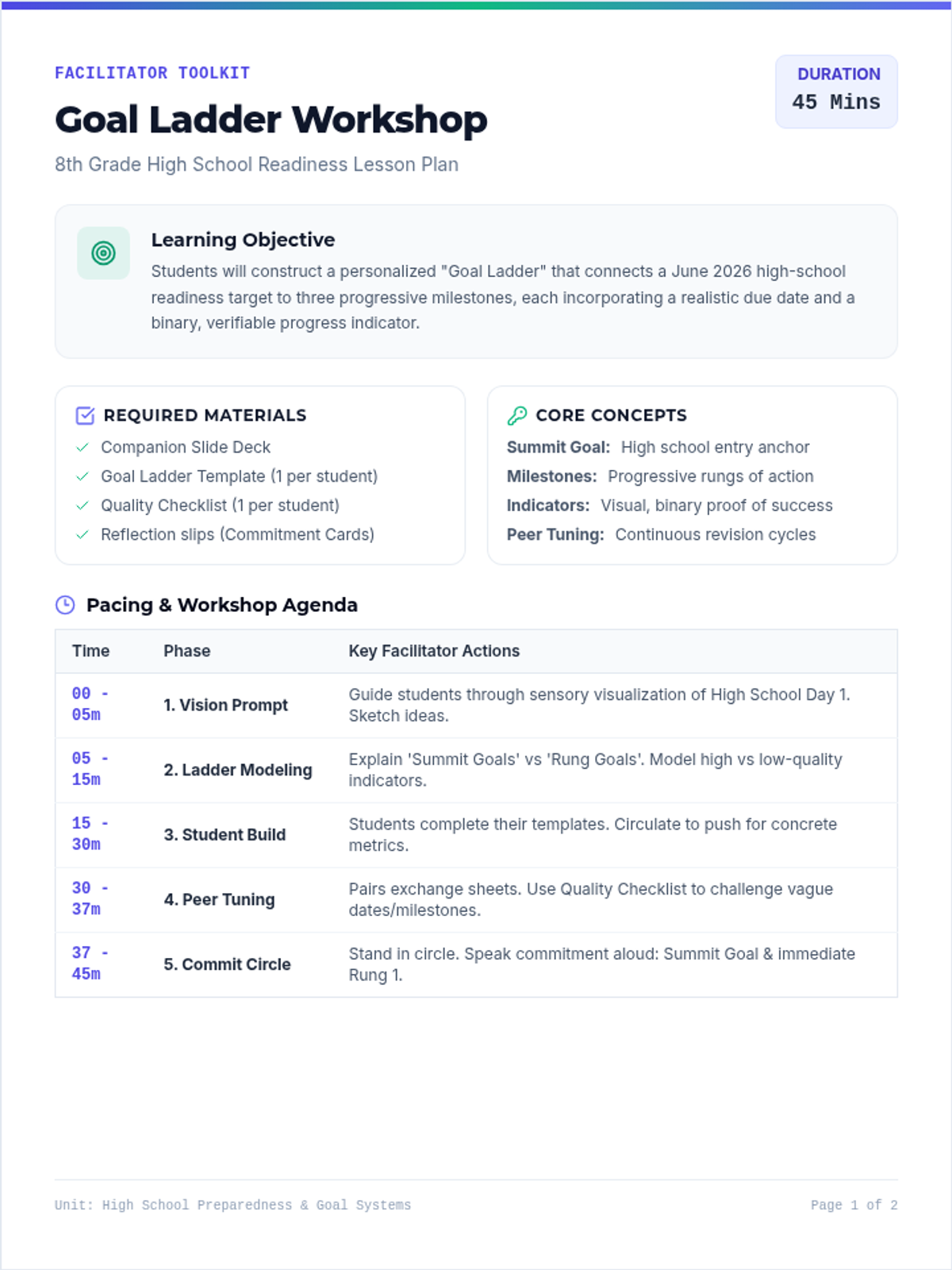
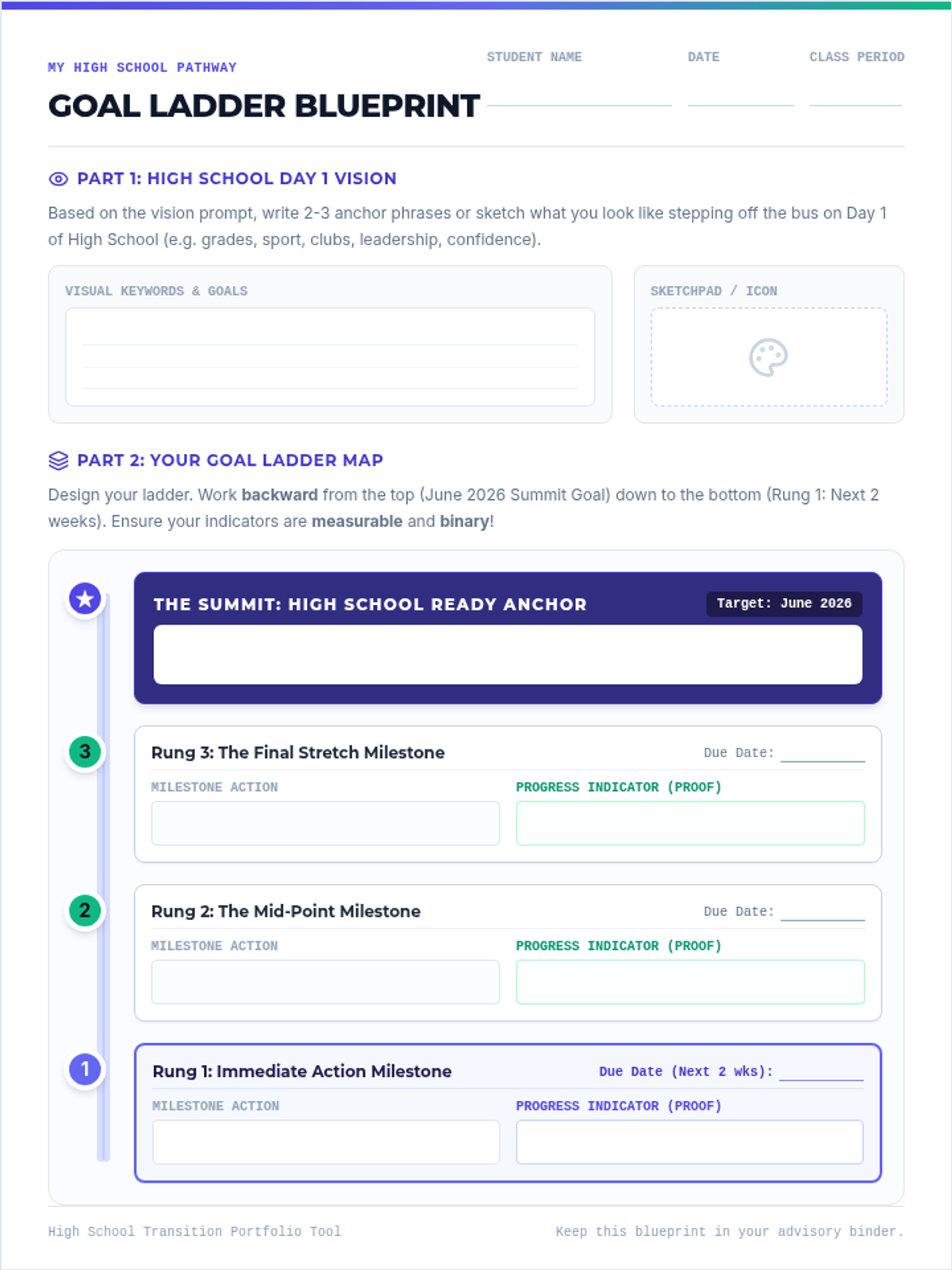
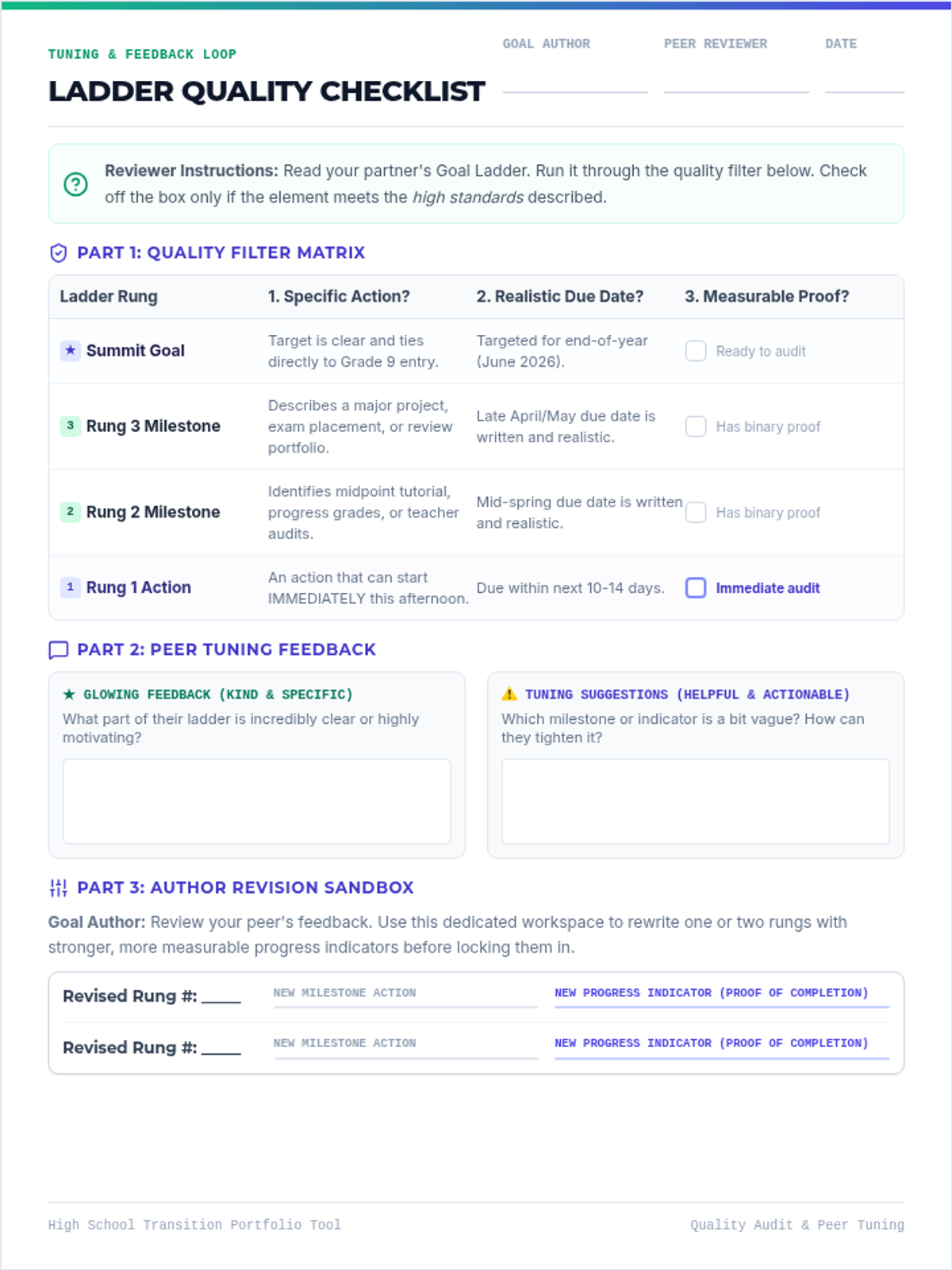
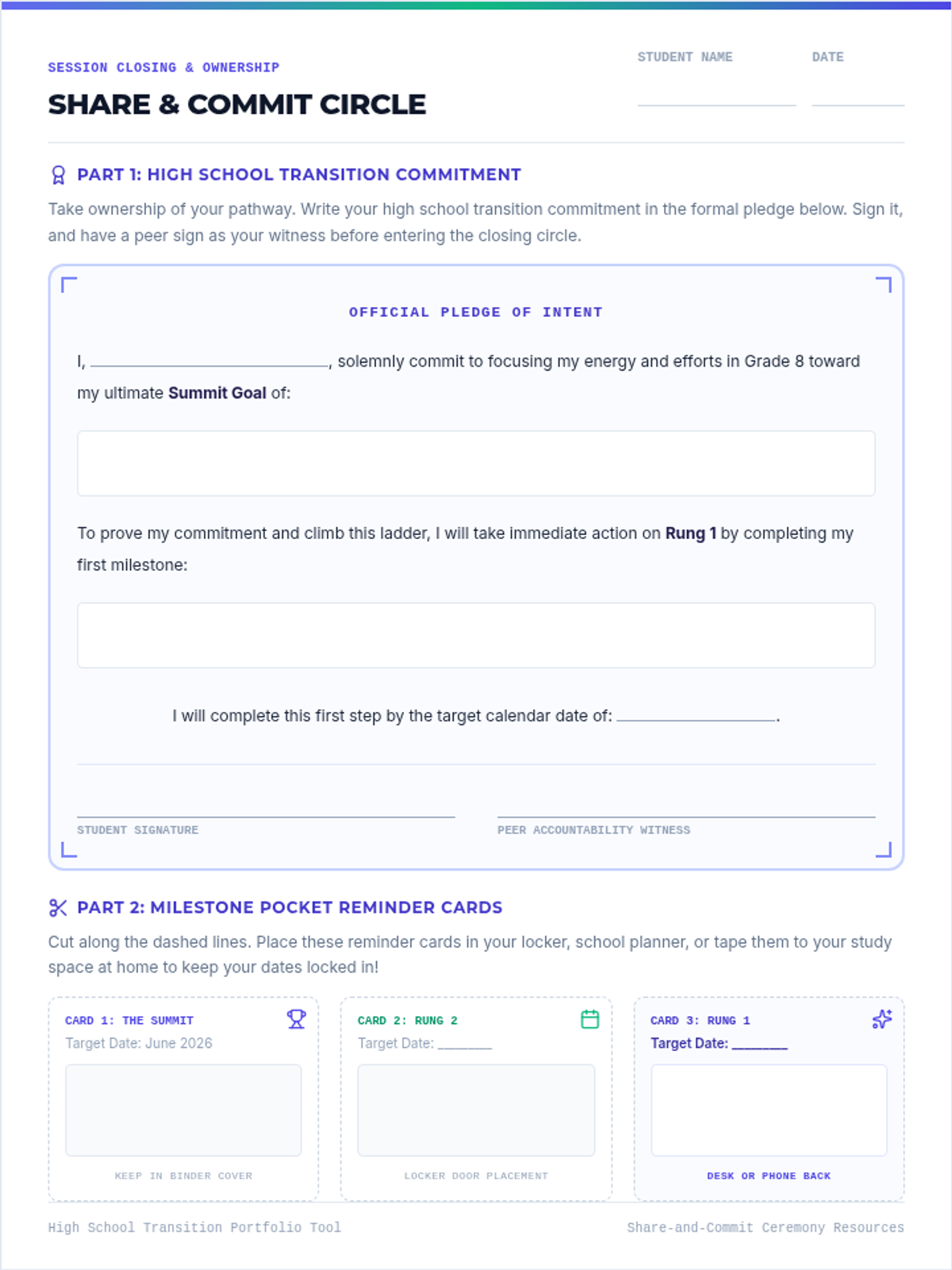
An interactive 8th-grade lesson designed to help students transition to high school by translating long-term visions into concrete, actionable steps. Students create a structured goal ladder with three milestones, specific due dates, and measurable progress indicators, followed by peer feedback and a share-and-commit circle.
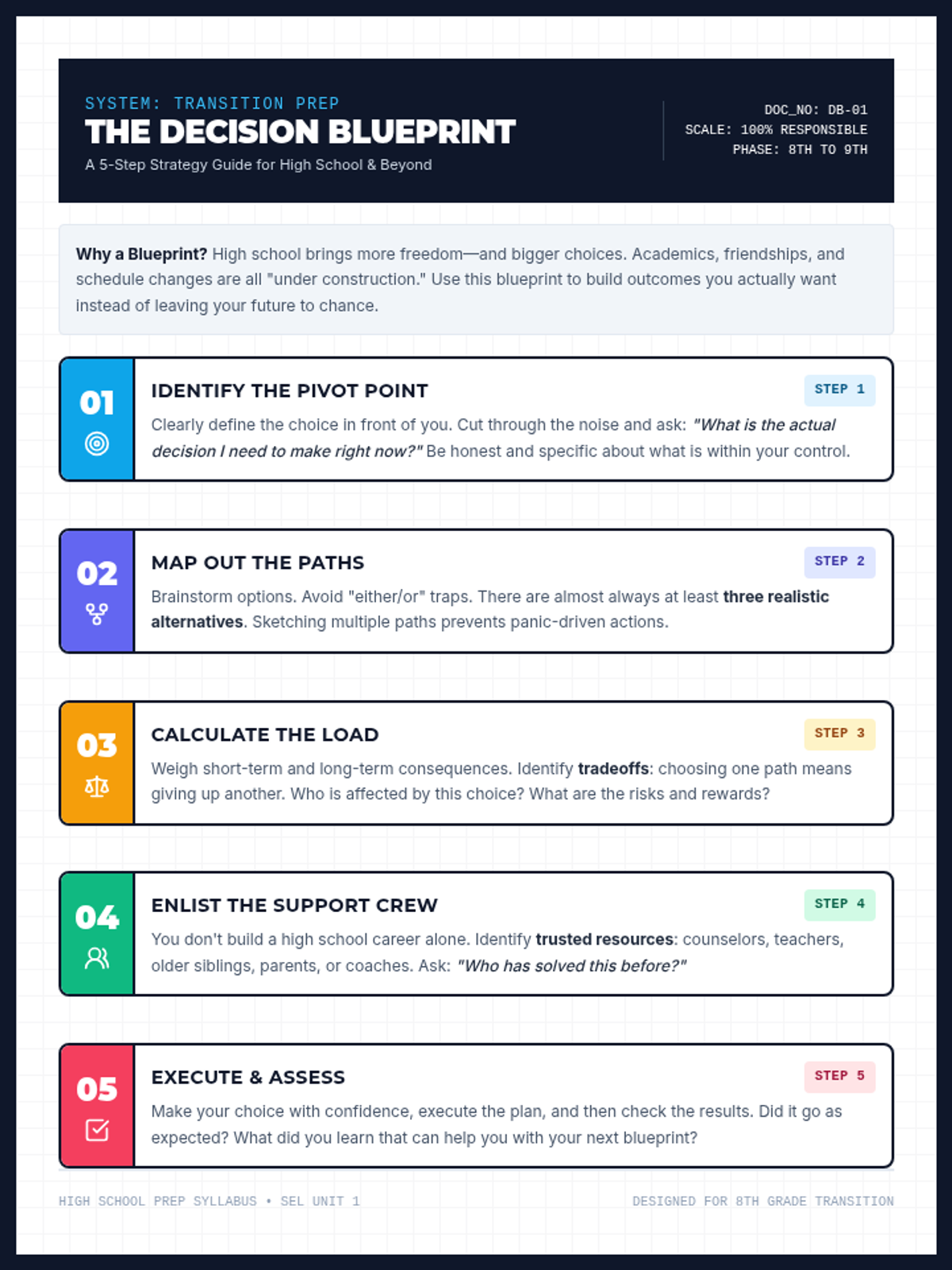
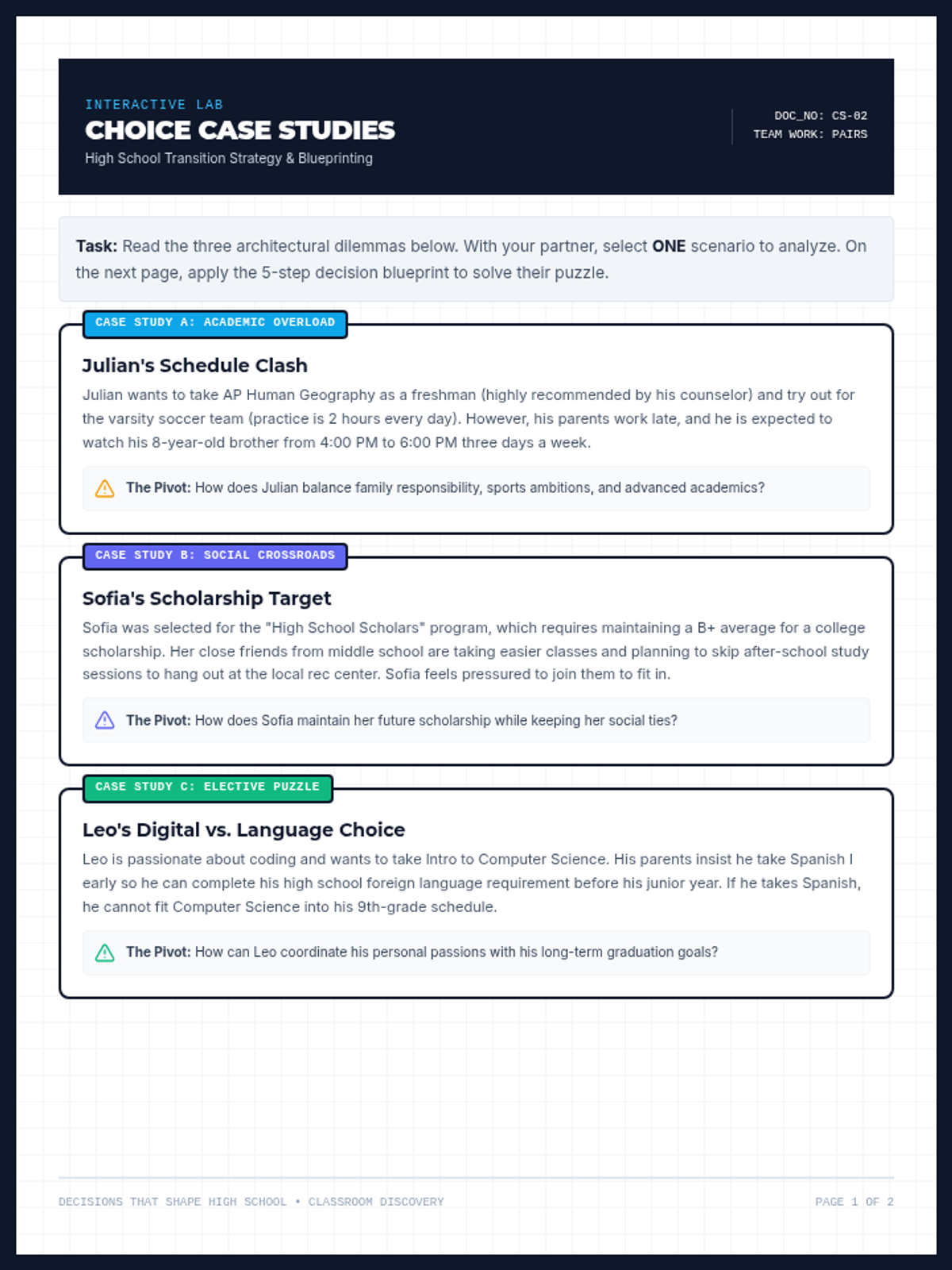
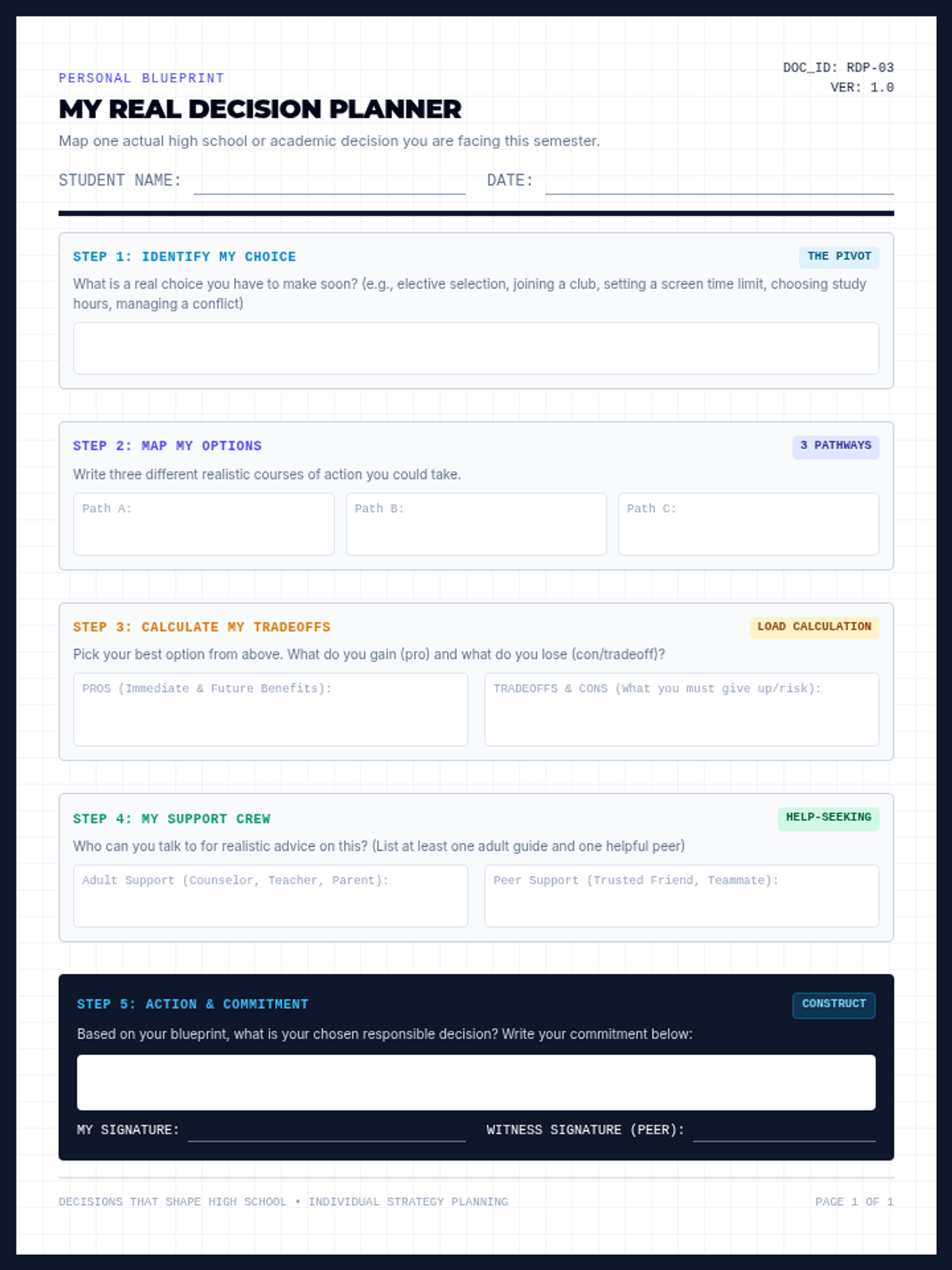
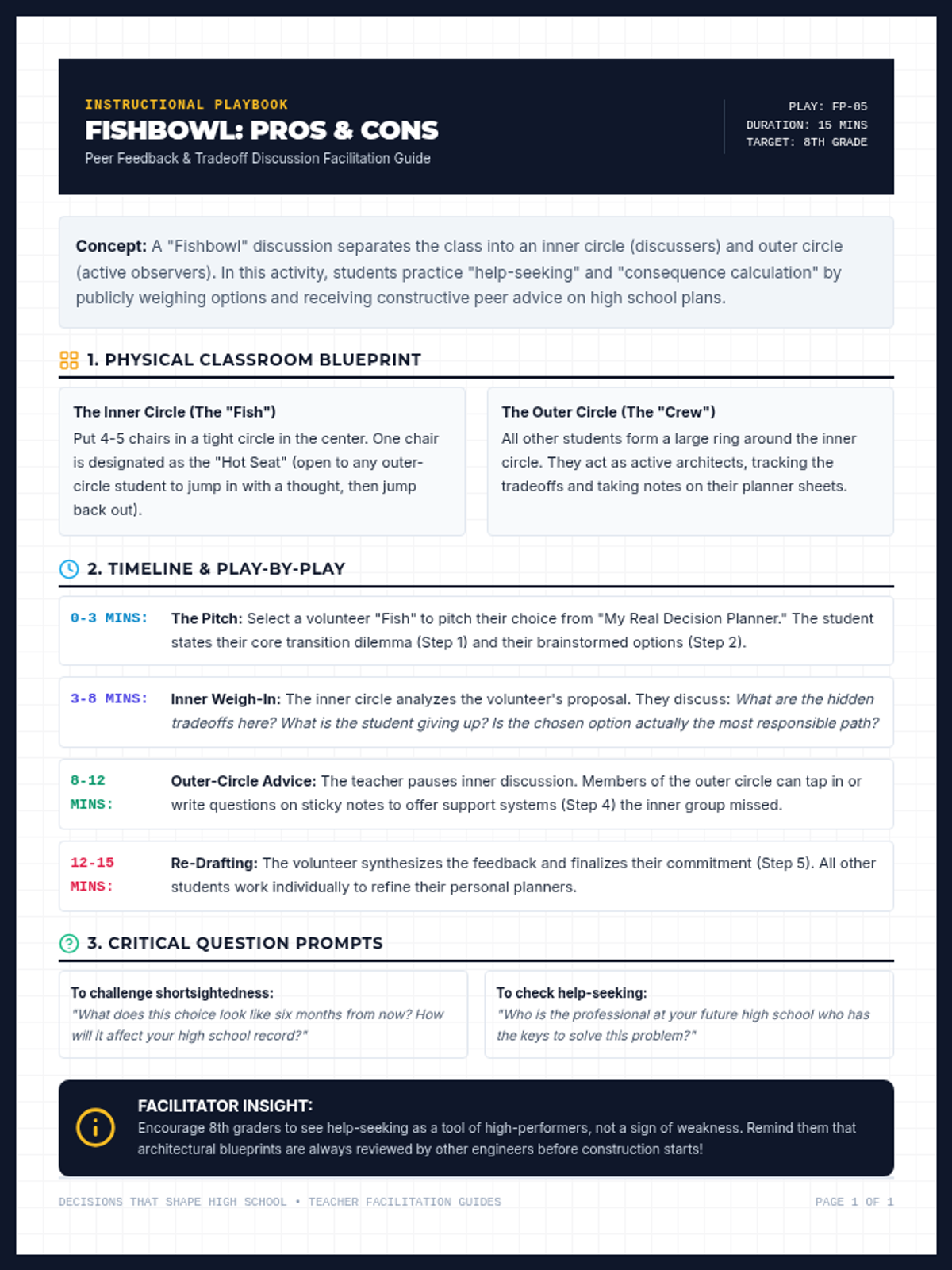
An engaging 45-minute lesson for 8th graders preparing for high school, teaching them a structured 5-step decision-making process to navigate academic and social choices. Students practice with realistic high school case studies and apply the process to a personal upcoming decision.
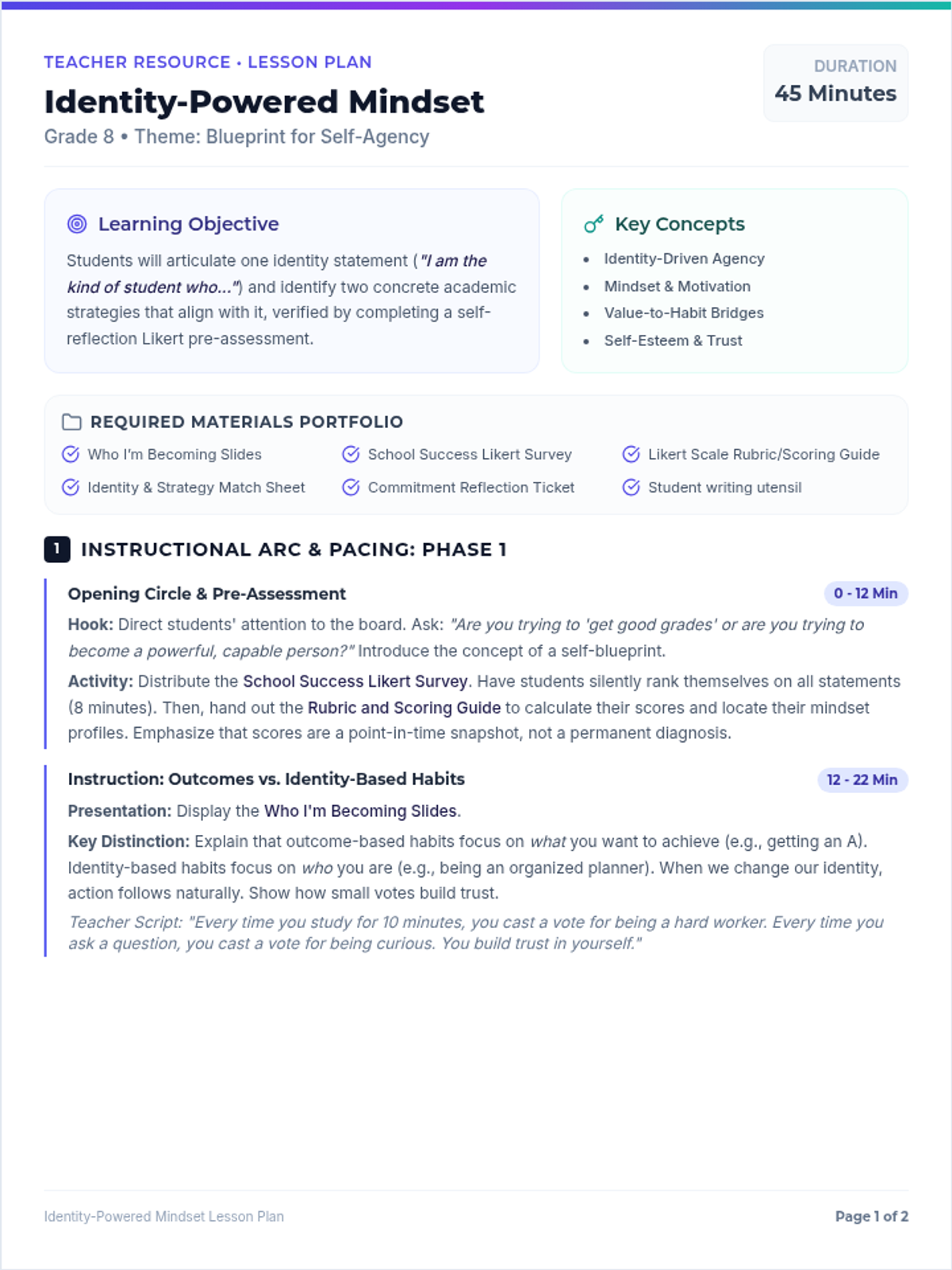
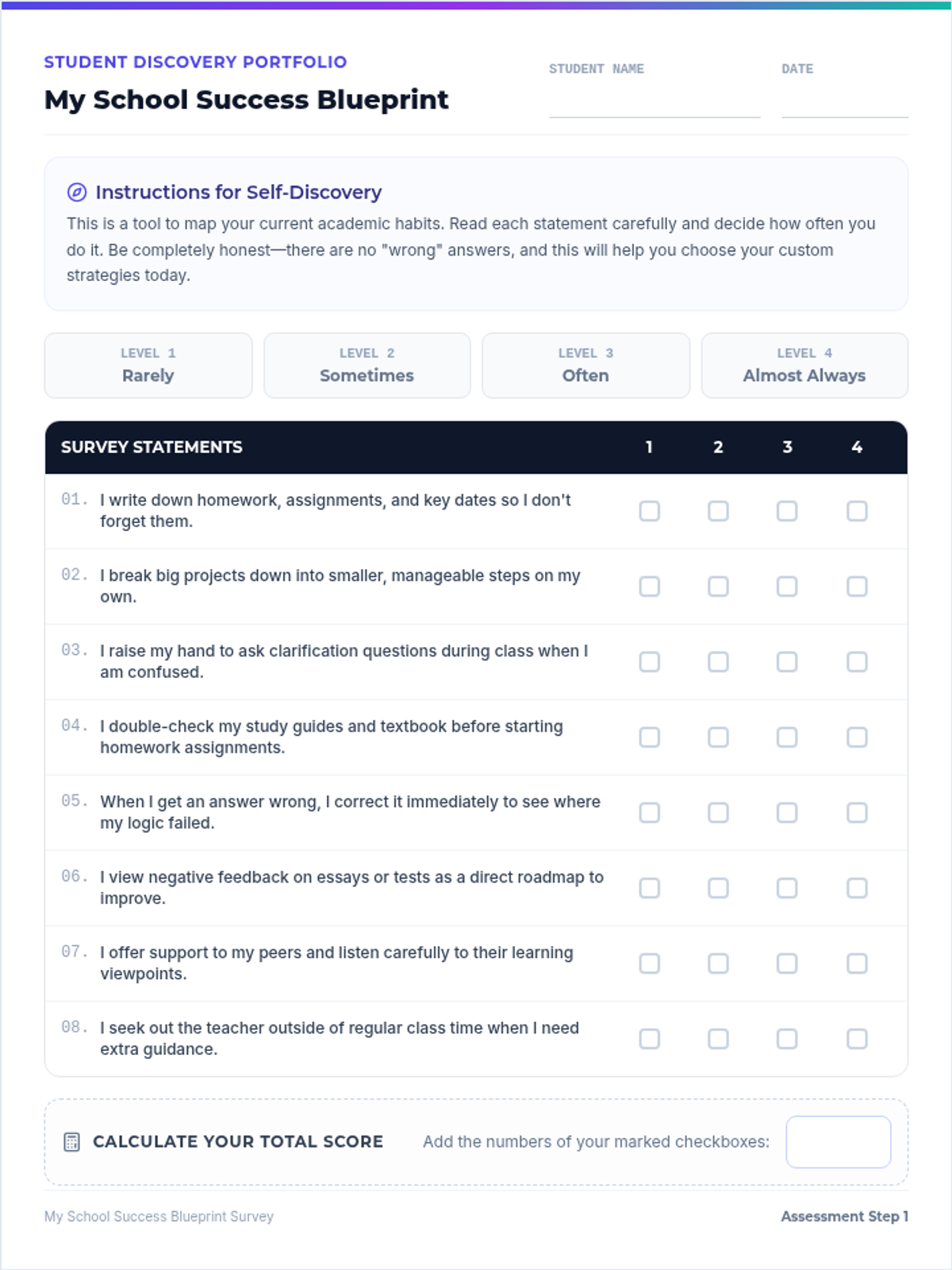
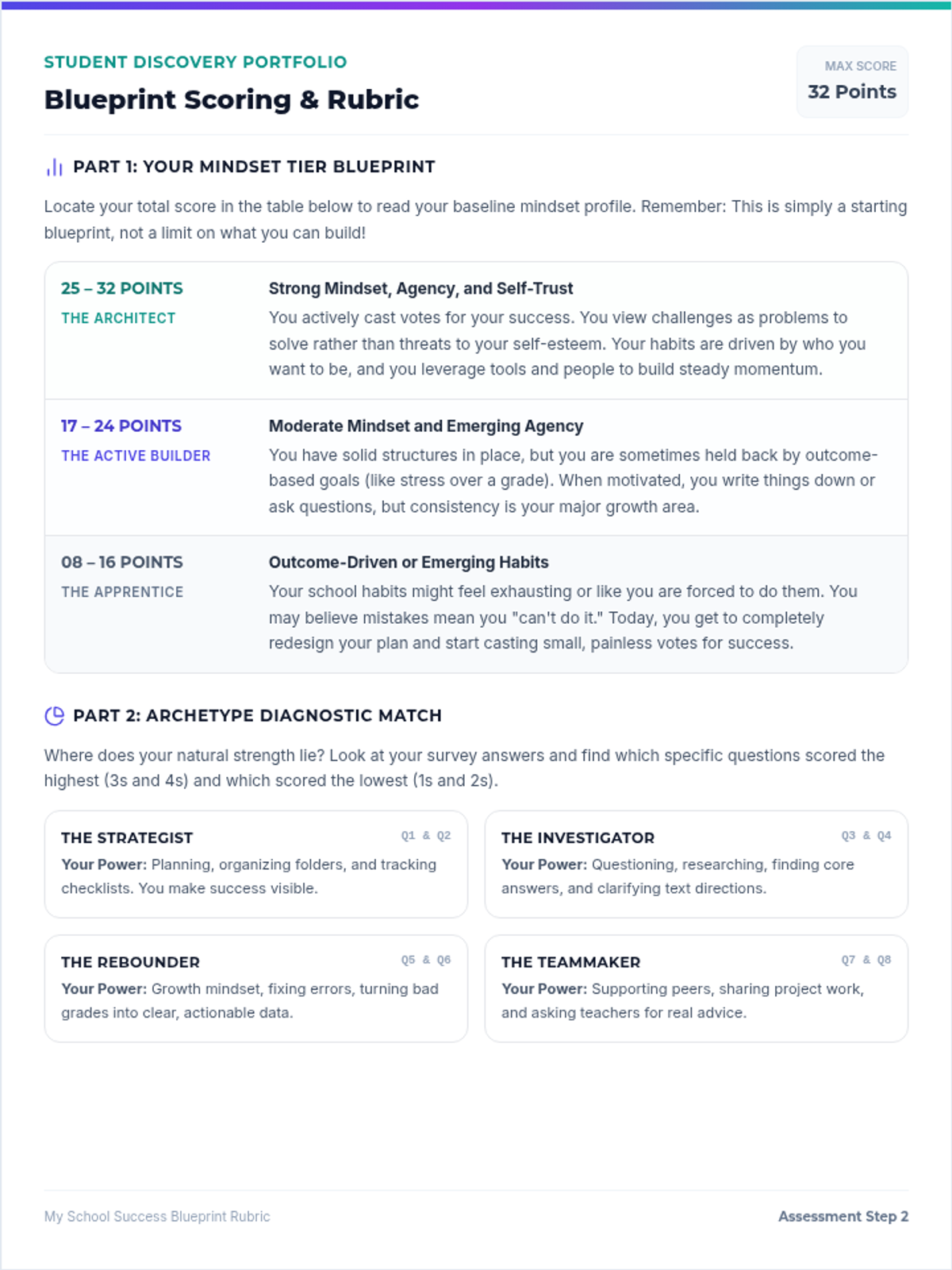
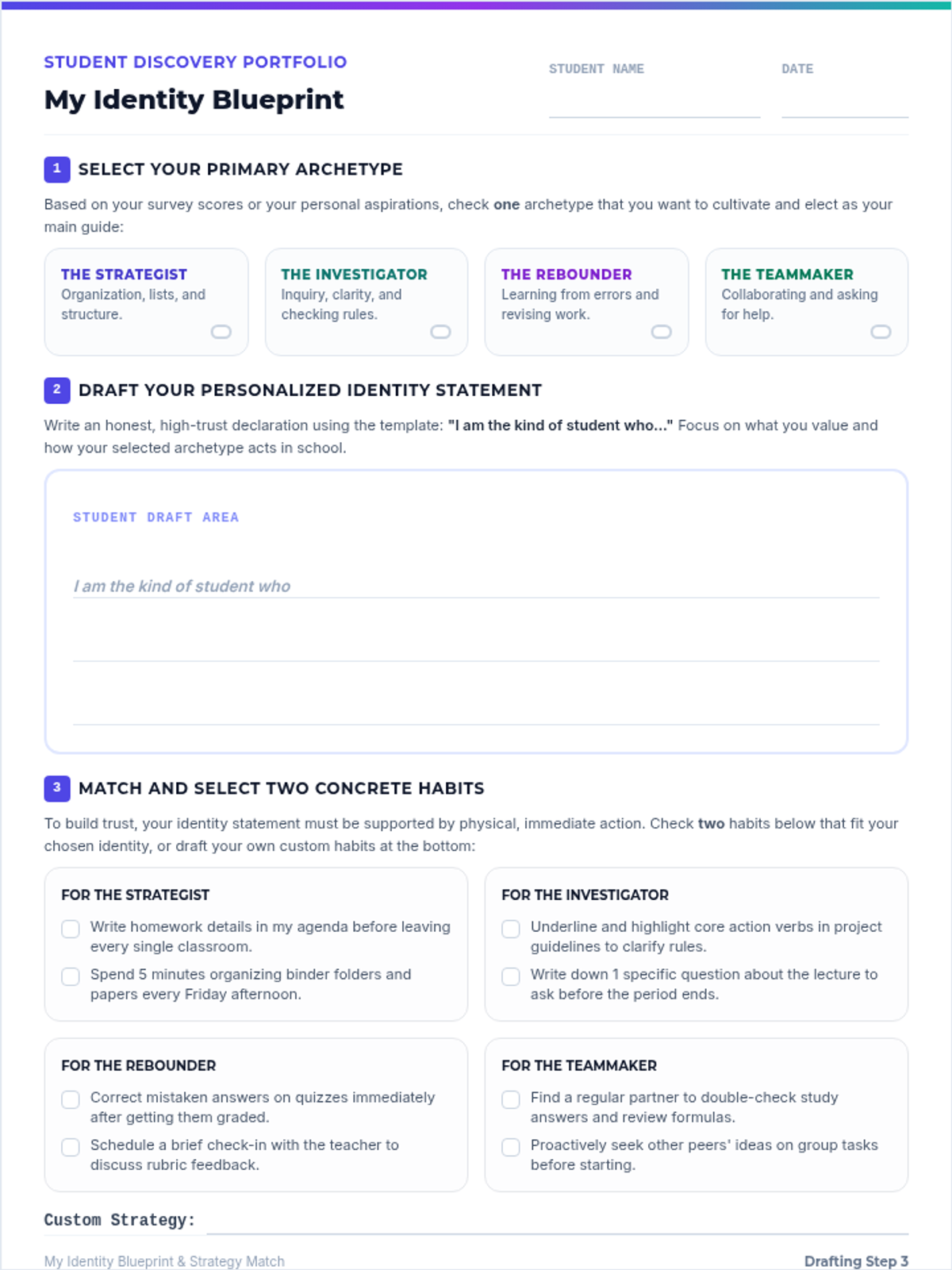
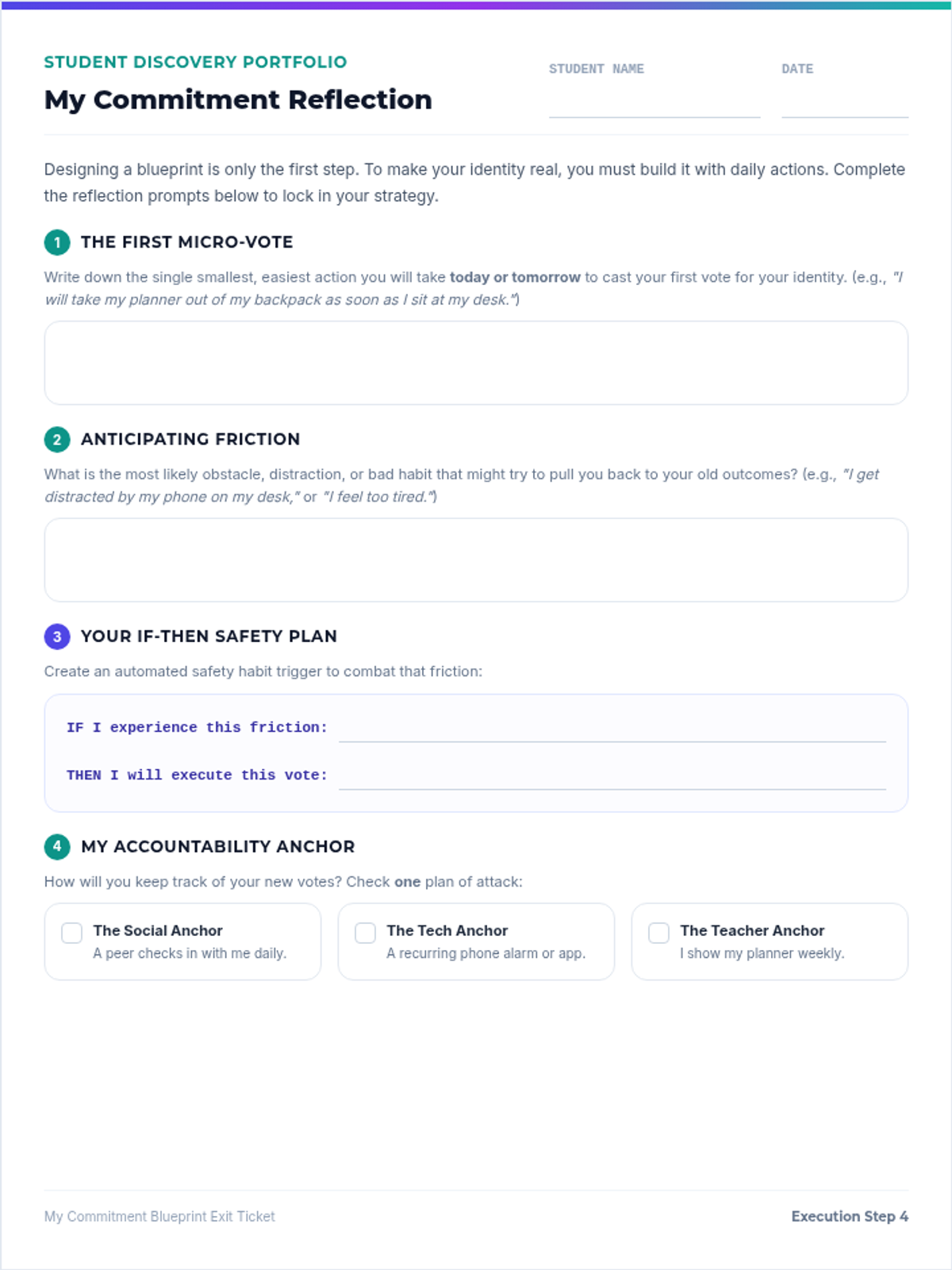
A 45-minute lesson designed for 8th-grade students to bridge the gap between their identity and their school habits. Students complete a self-reflection Likert survey, explore how identity shapes agency and motivation, draft their own identity statement, and select concrete strategies to build lasting success habits.
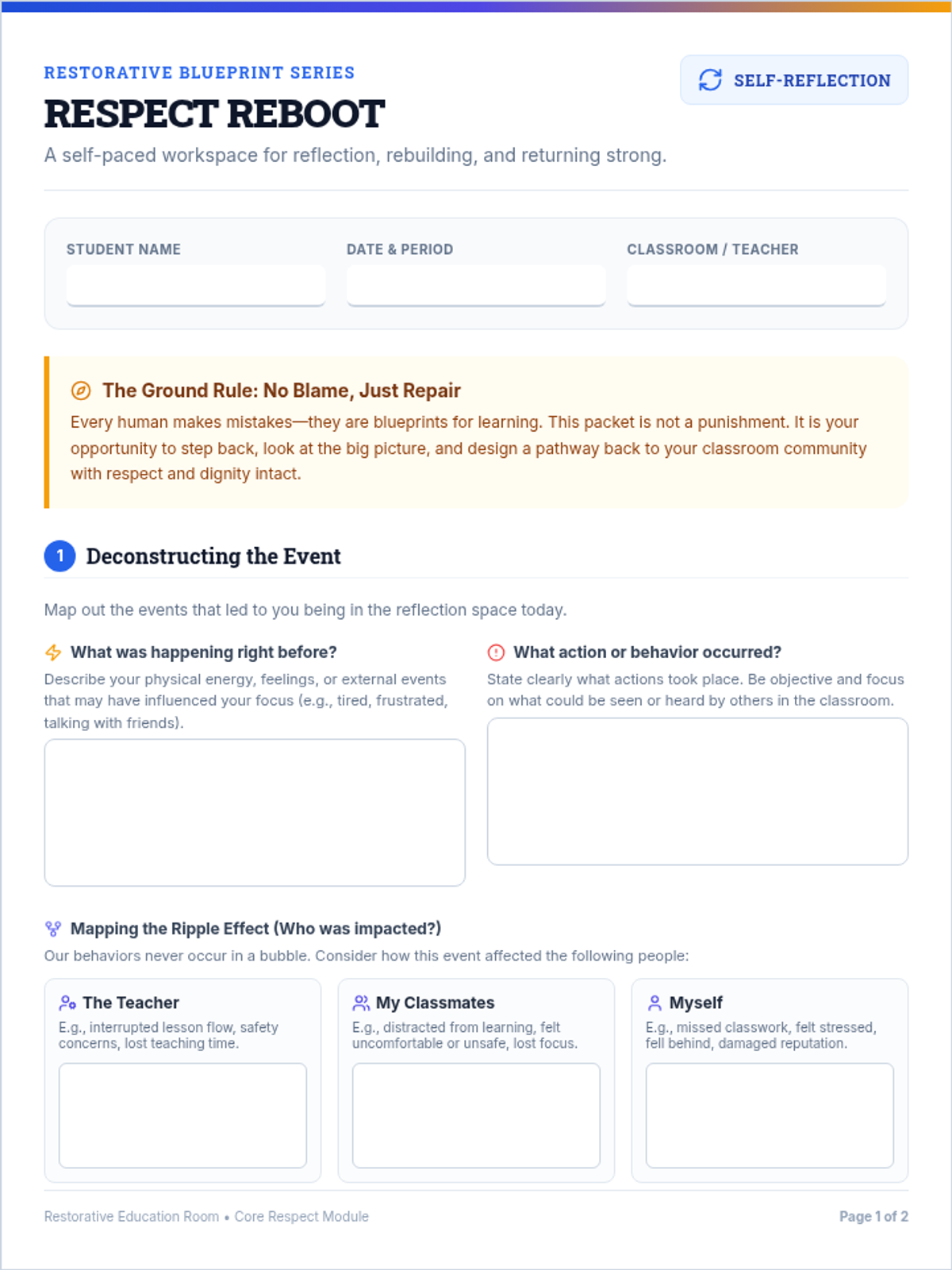
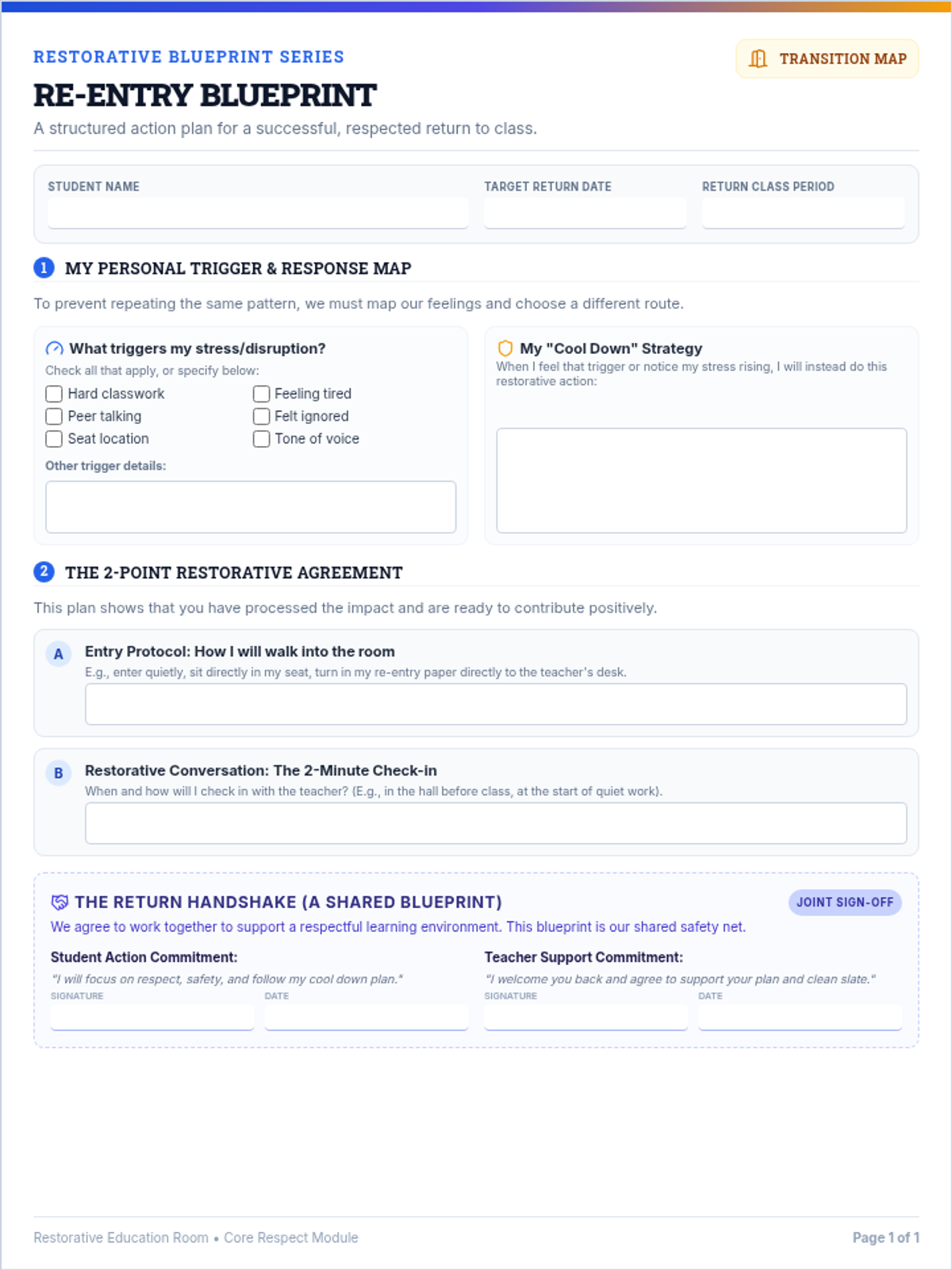
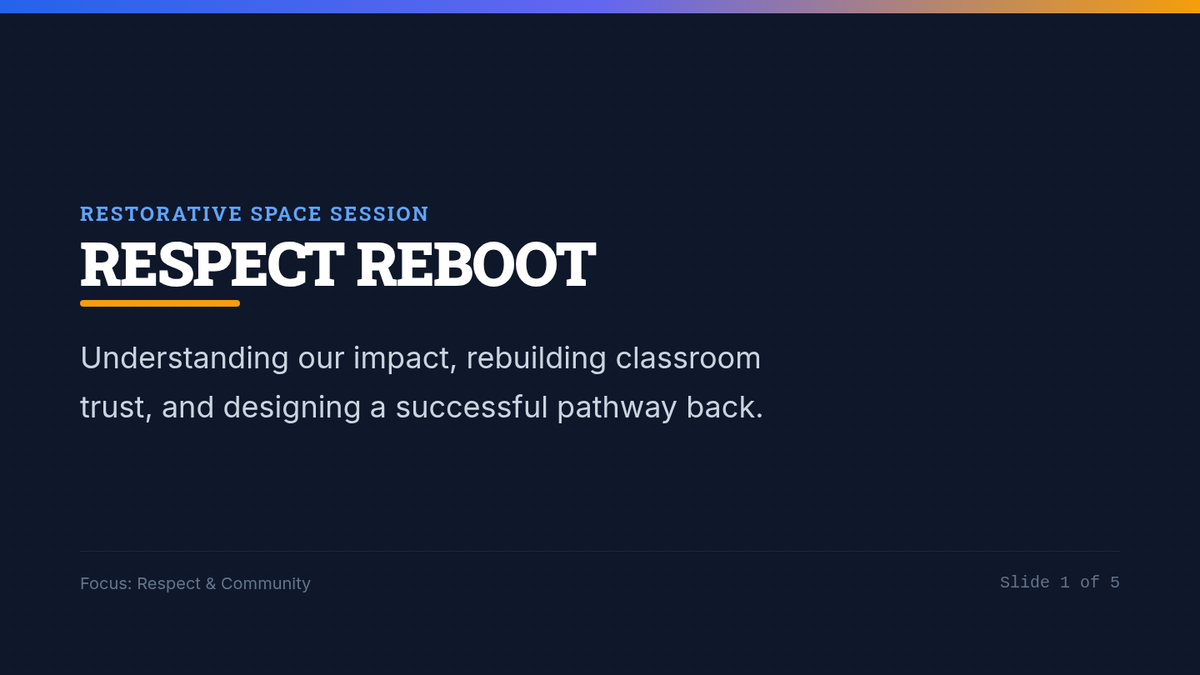
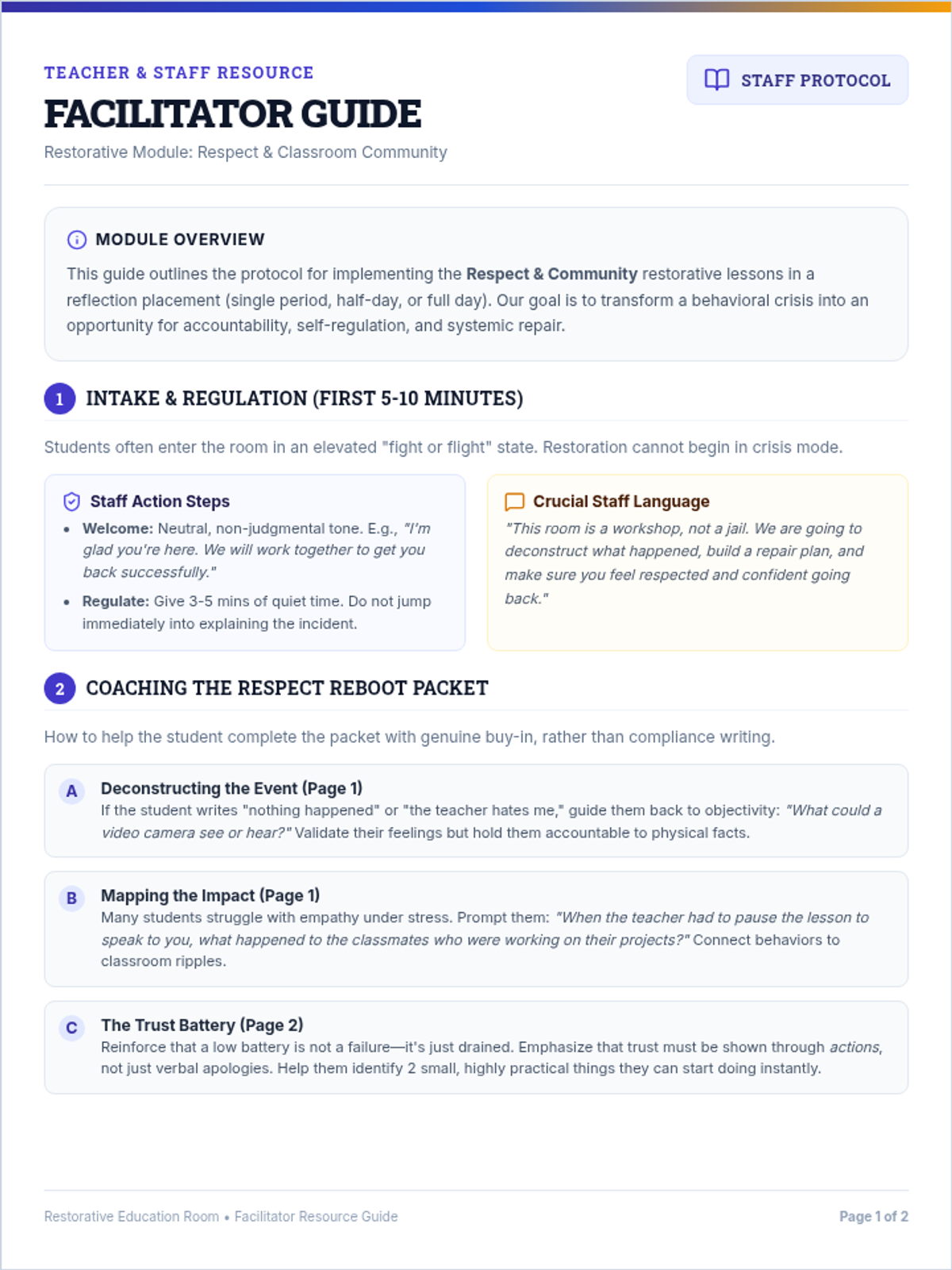
A restorative module focusing on understanding behavior impact, rebuilding classroom trust, and respecting authority. Includes a self-paced reflection packet, transition blueprint, guiding slides, and a facilitator guide.
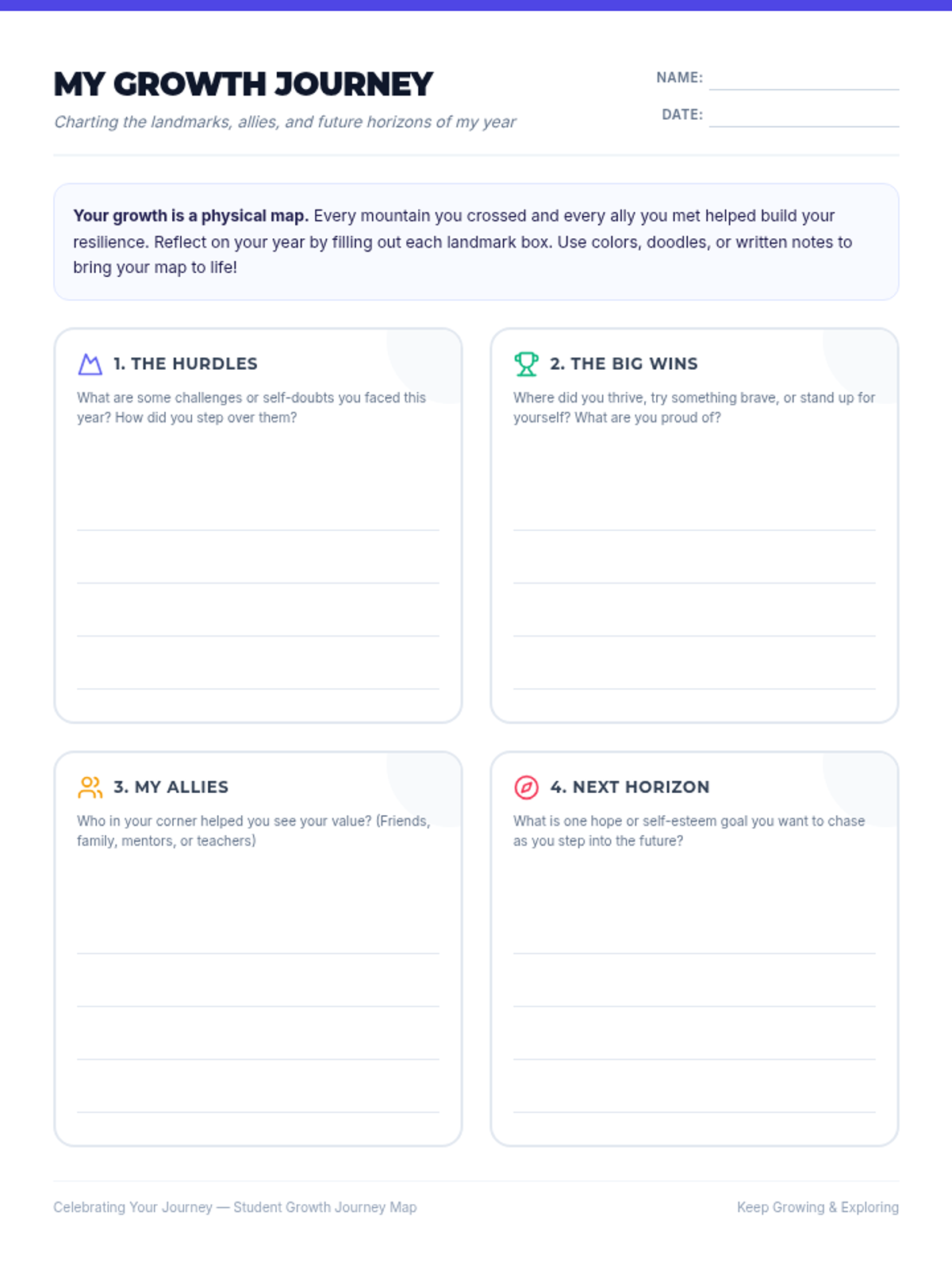
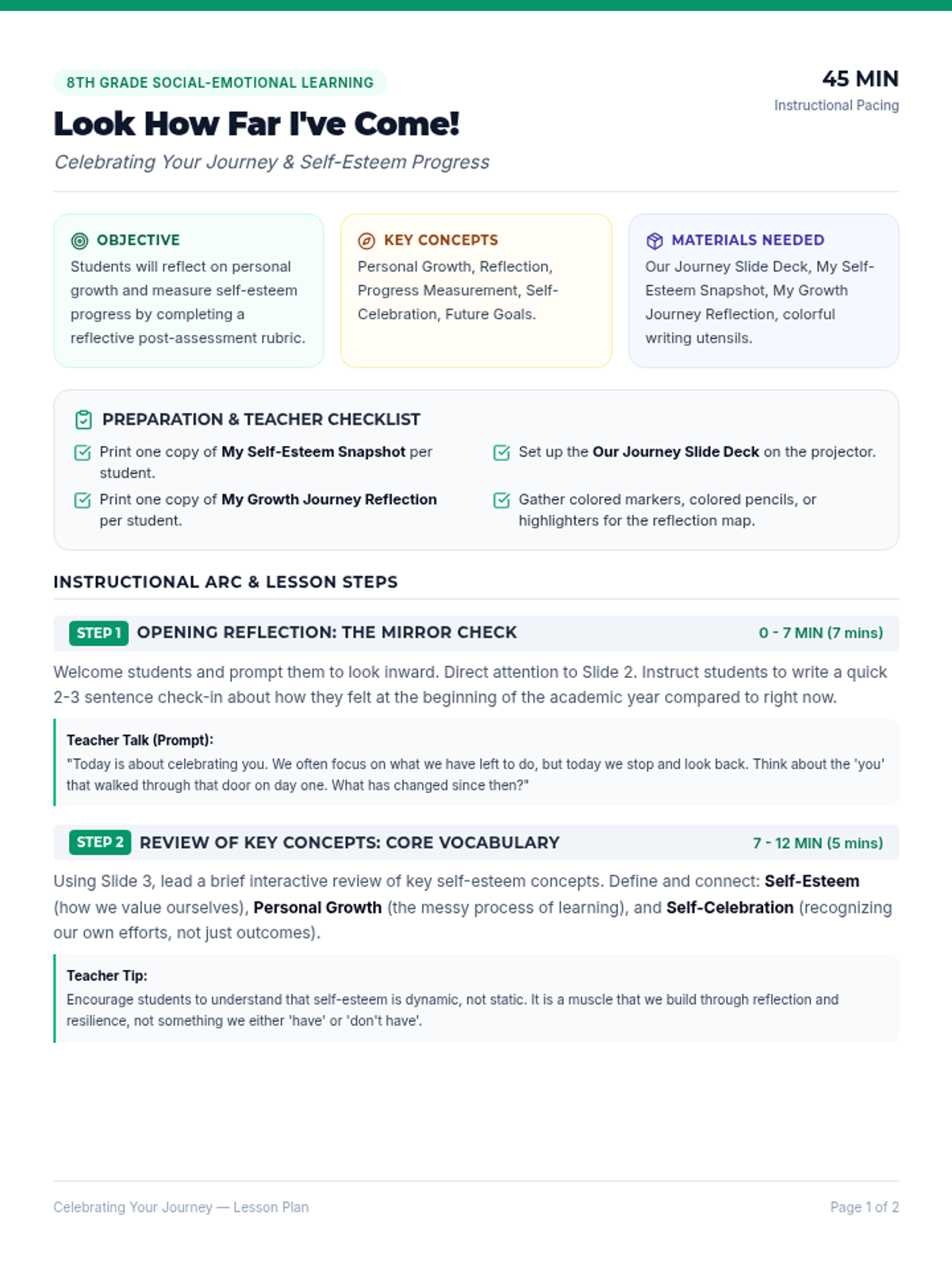
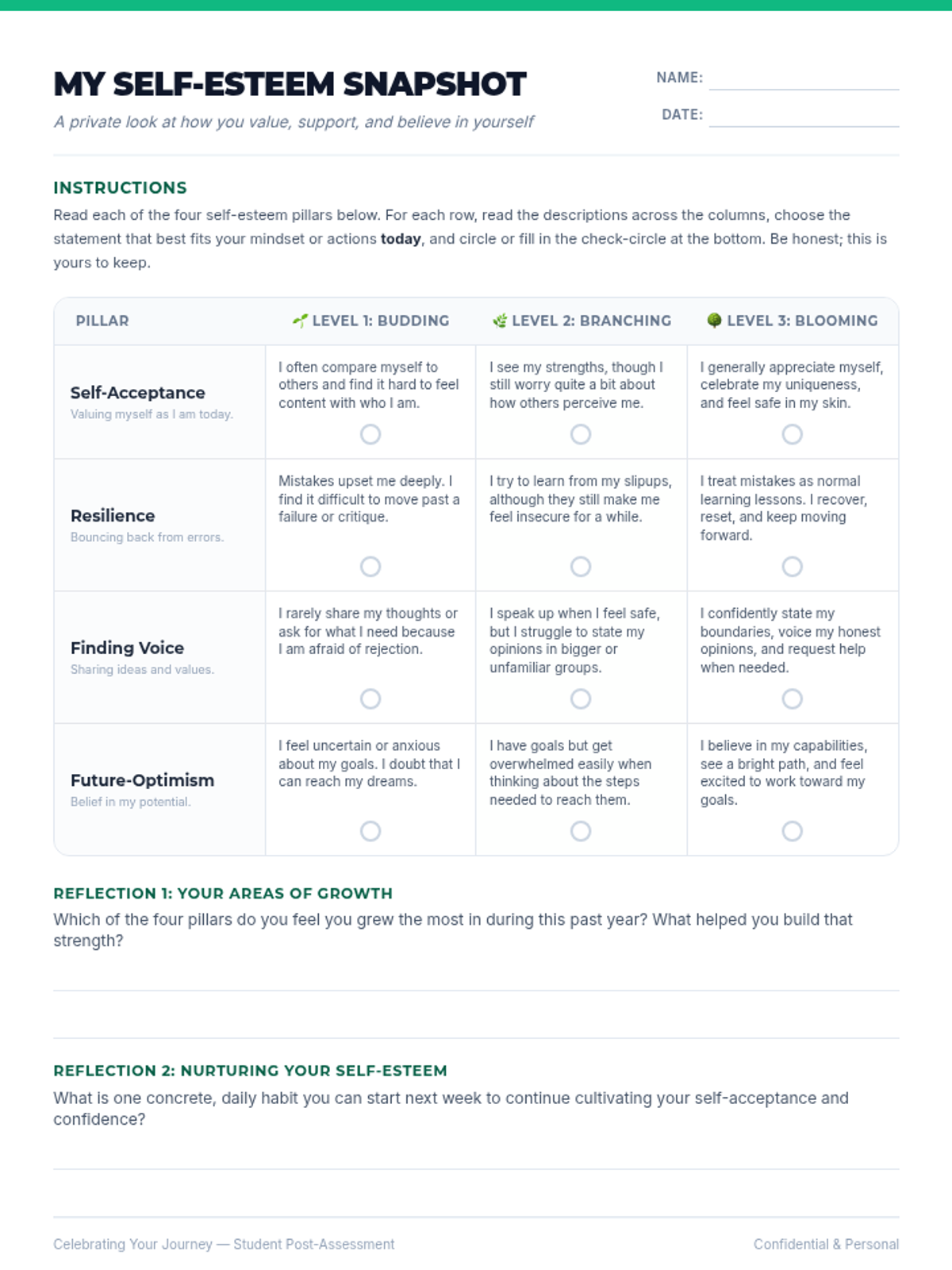
A reflective 45-minute lesson for 8th graders to measure their personal growth, self-esteem progress, and celebrate their learning journey with concrete self-assessments and creative mapping activities.
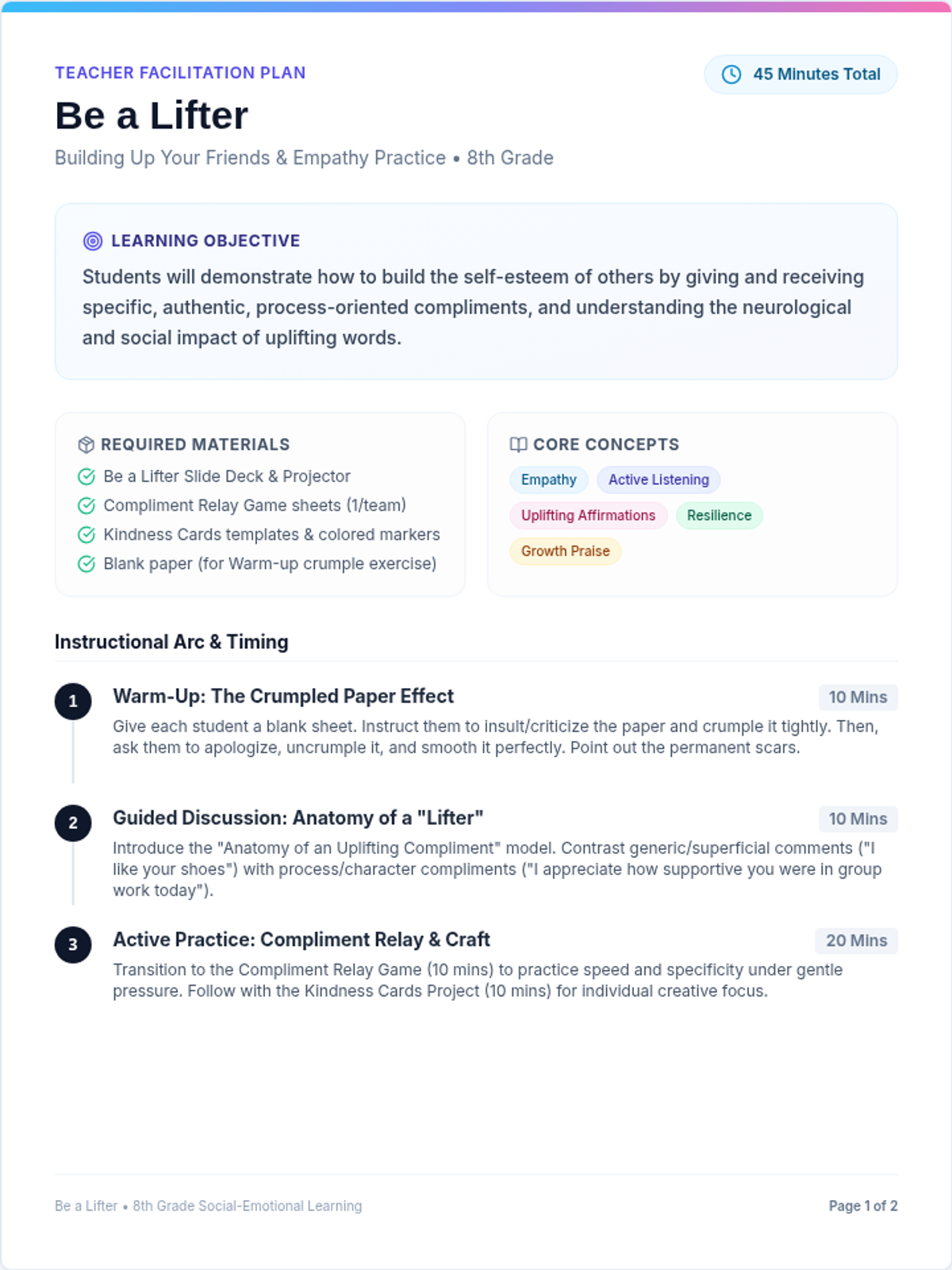
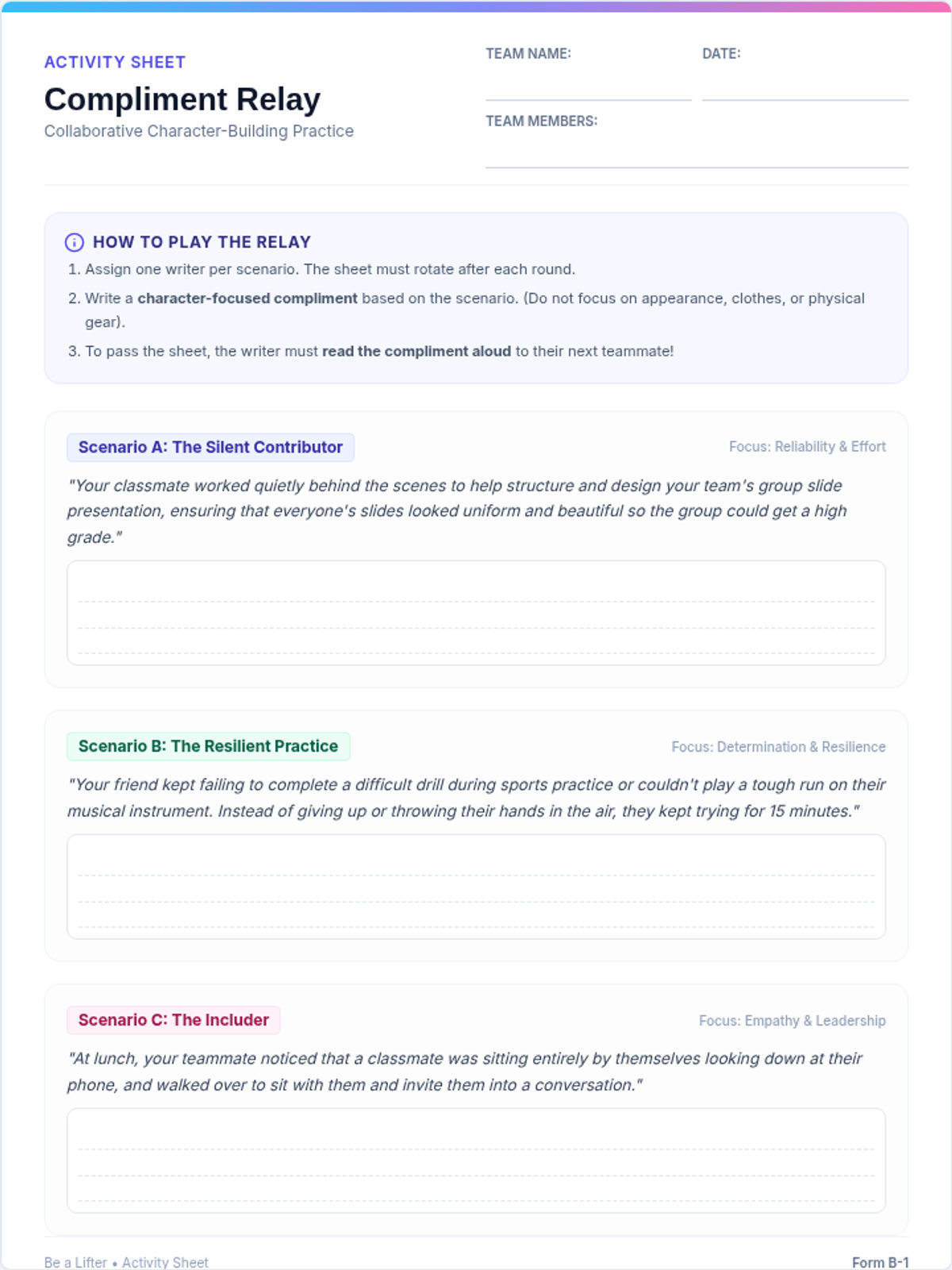
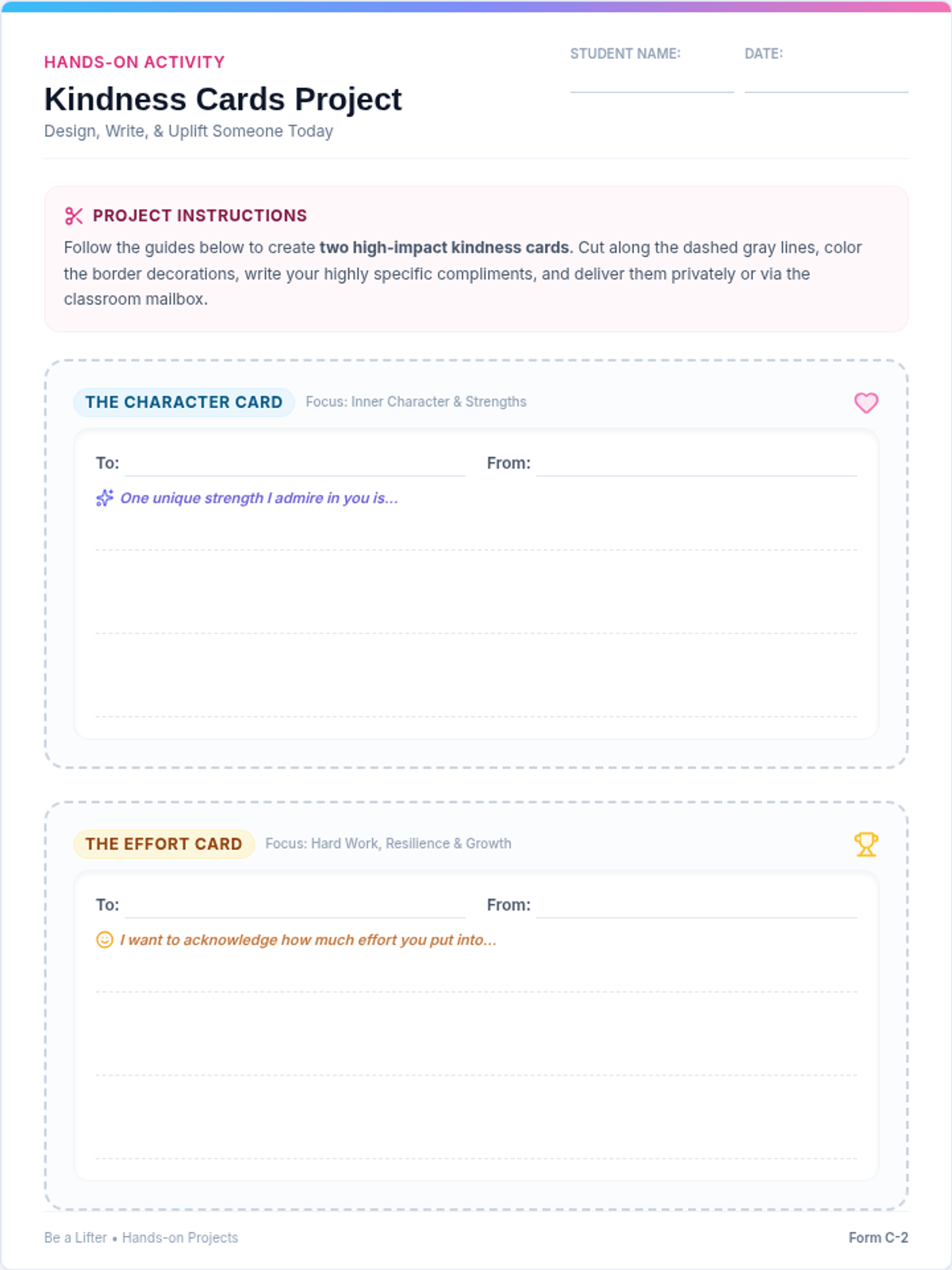
A 45-minute lesson designed for 8th graders to understand and practice uplifting others. Through discussion, a compliment relay, and crafting kindness cards, students learn the anatomy of a meaningful compliment and how to receive kindness with grace.
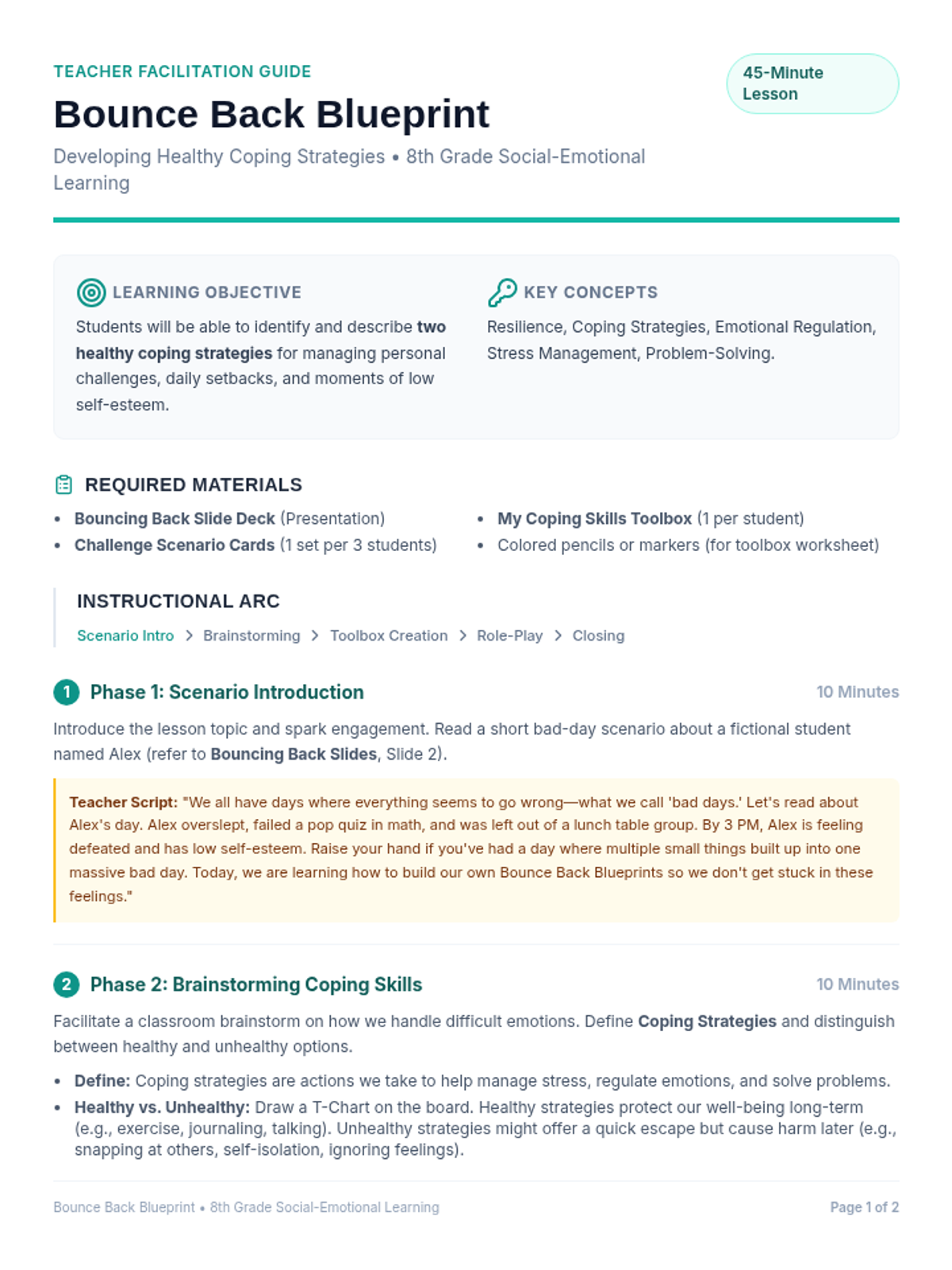
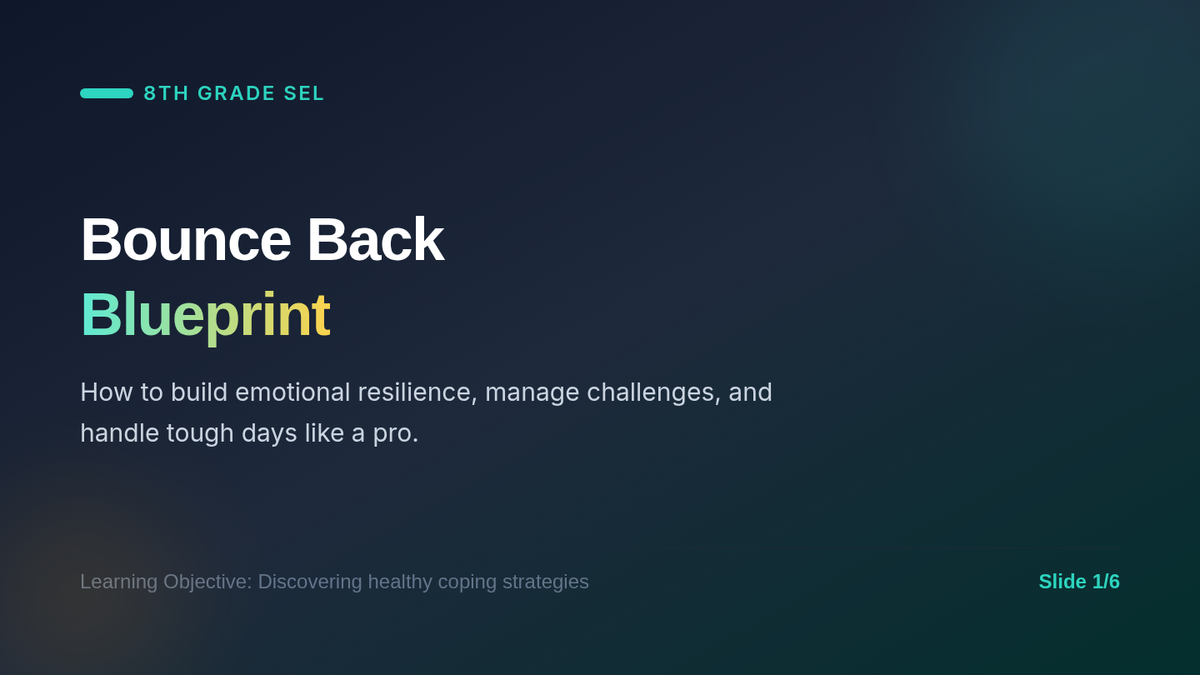
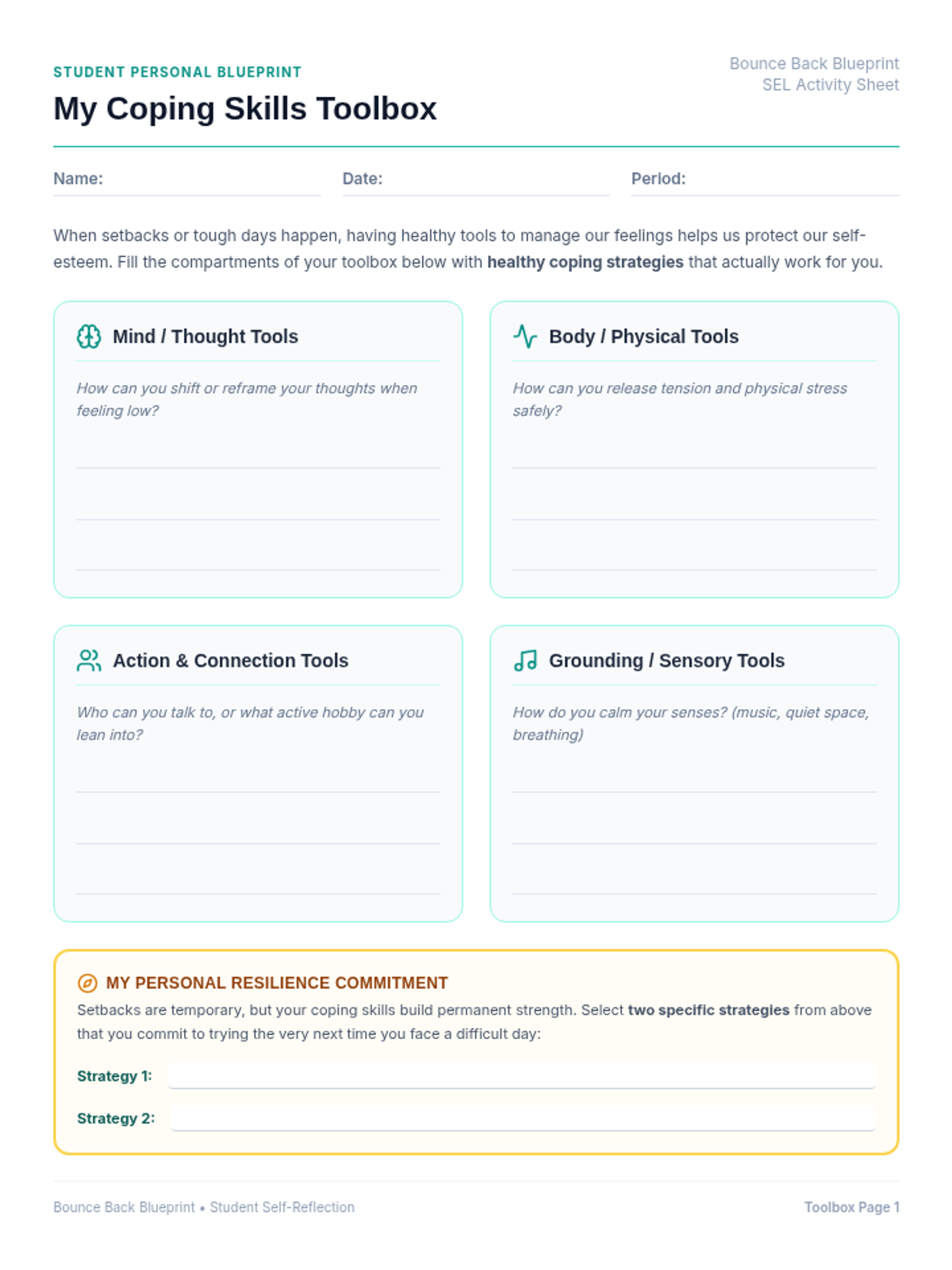
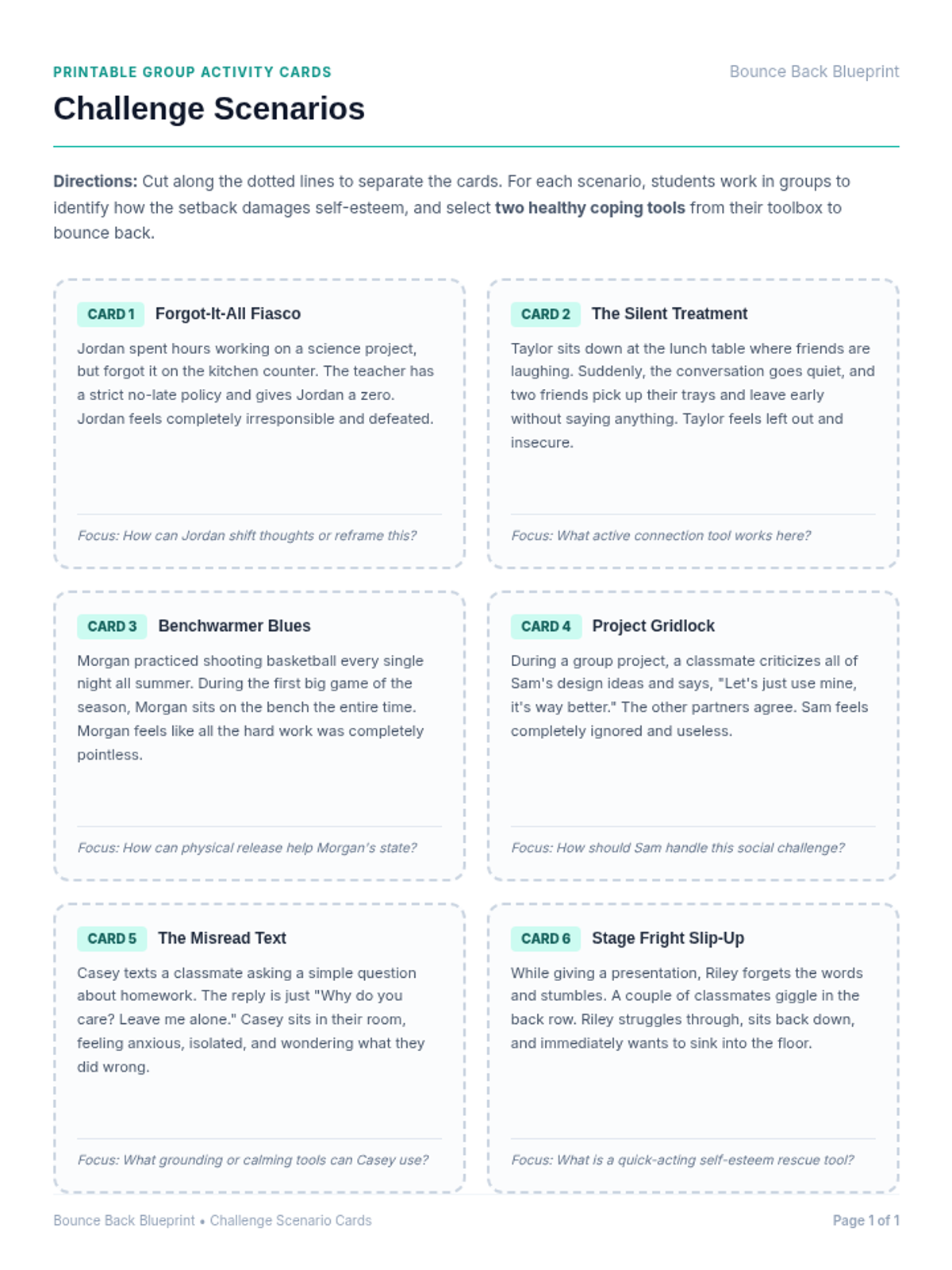
A 45-minute social-emotional learning lesson for 8th-grade students designed to help them identify and apply healthy coping strategies, building emotional resilience and self-esteem when facing daily setbacks.
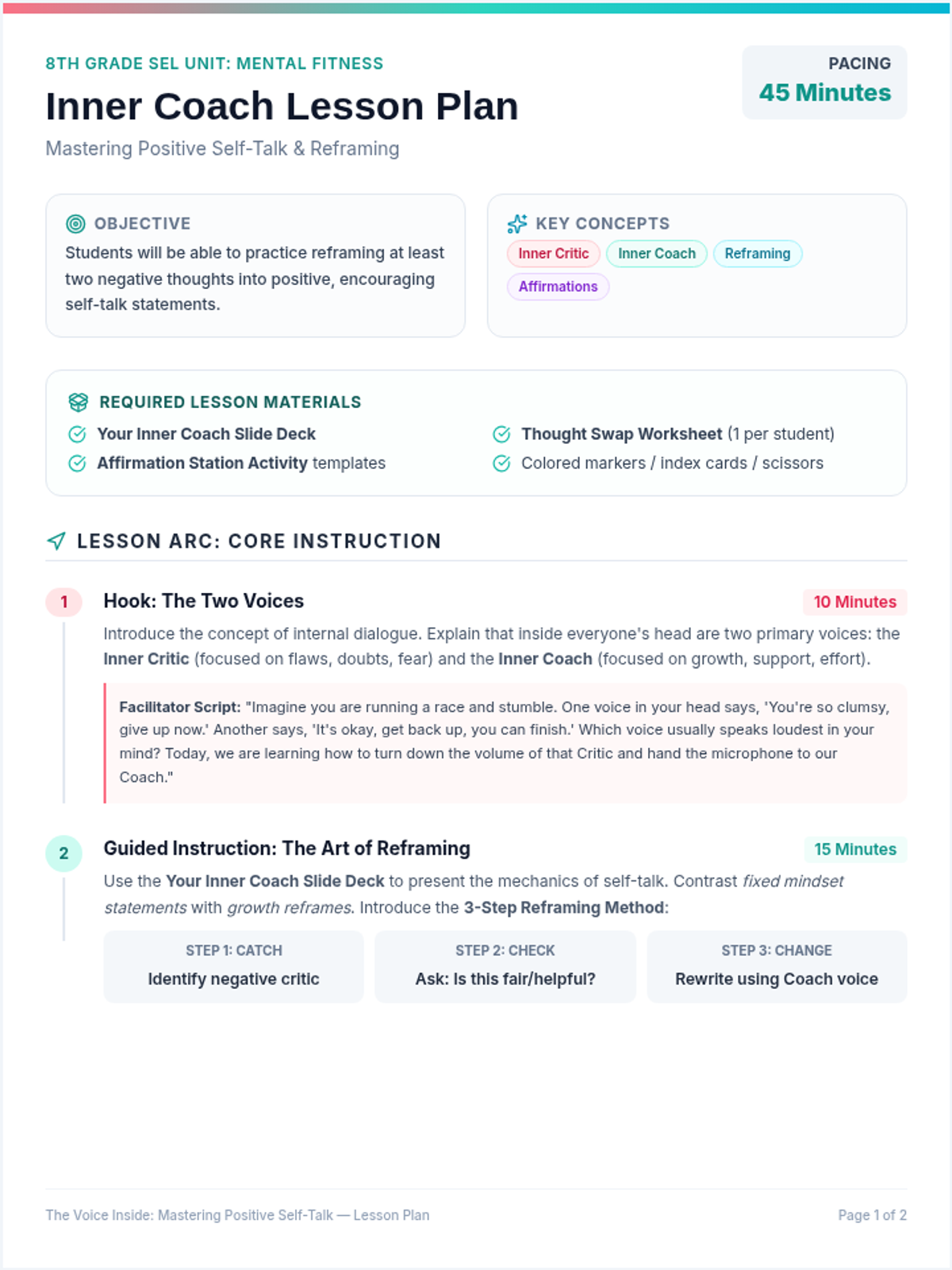
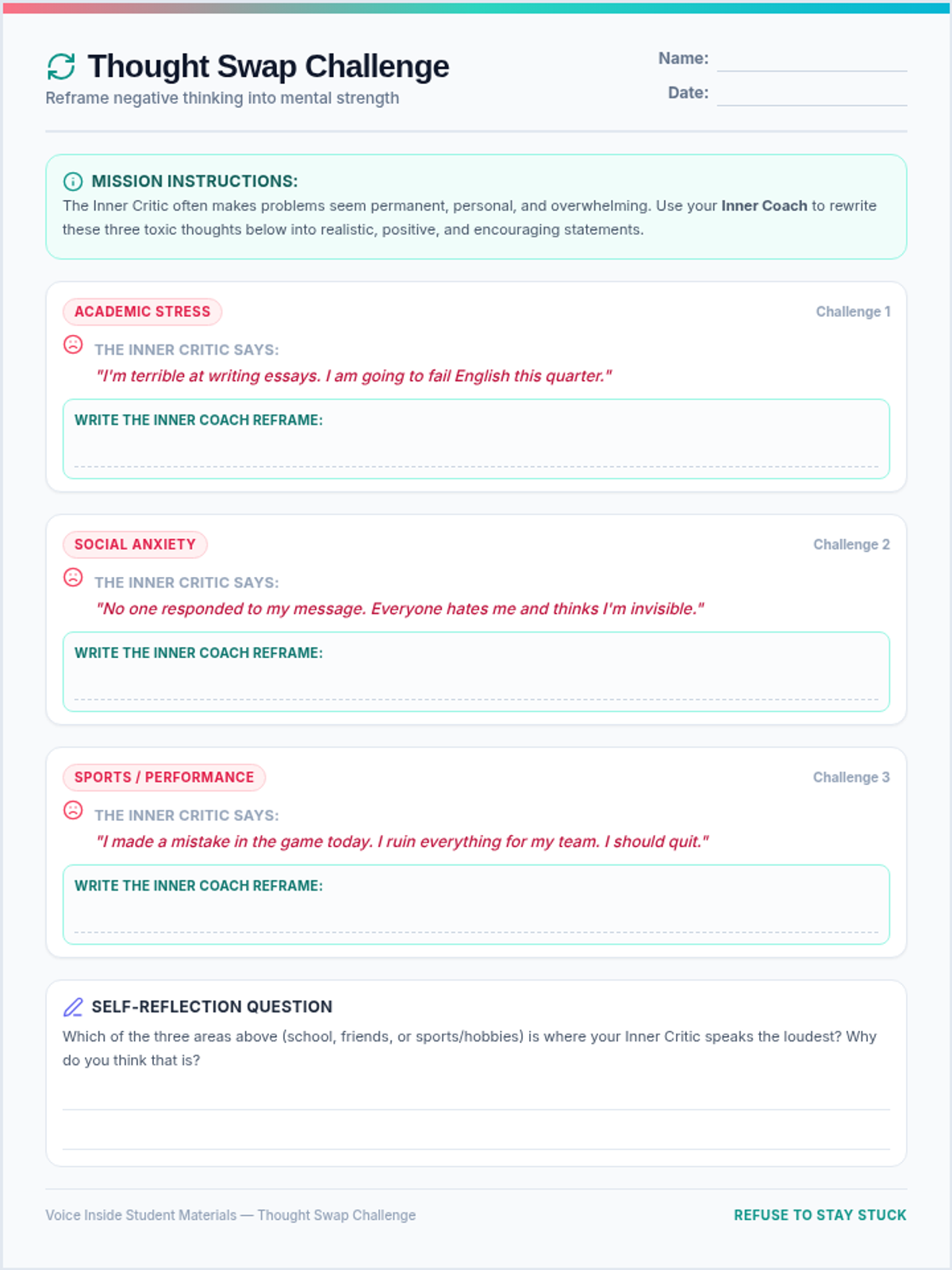
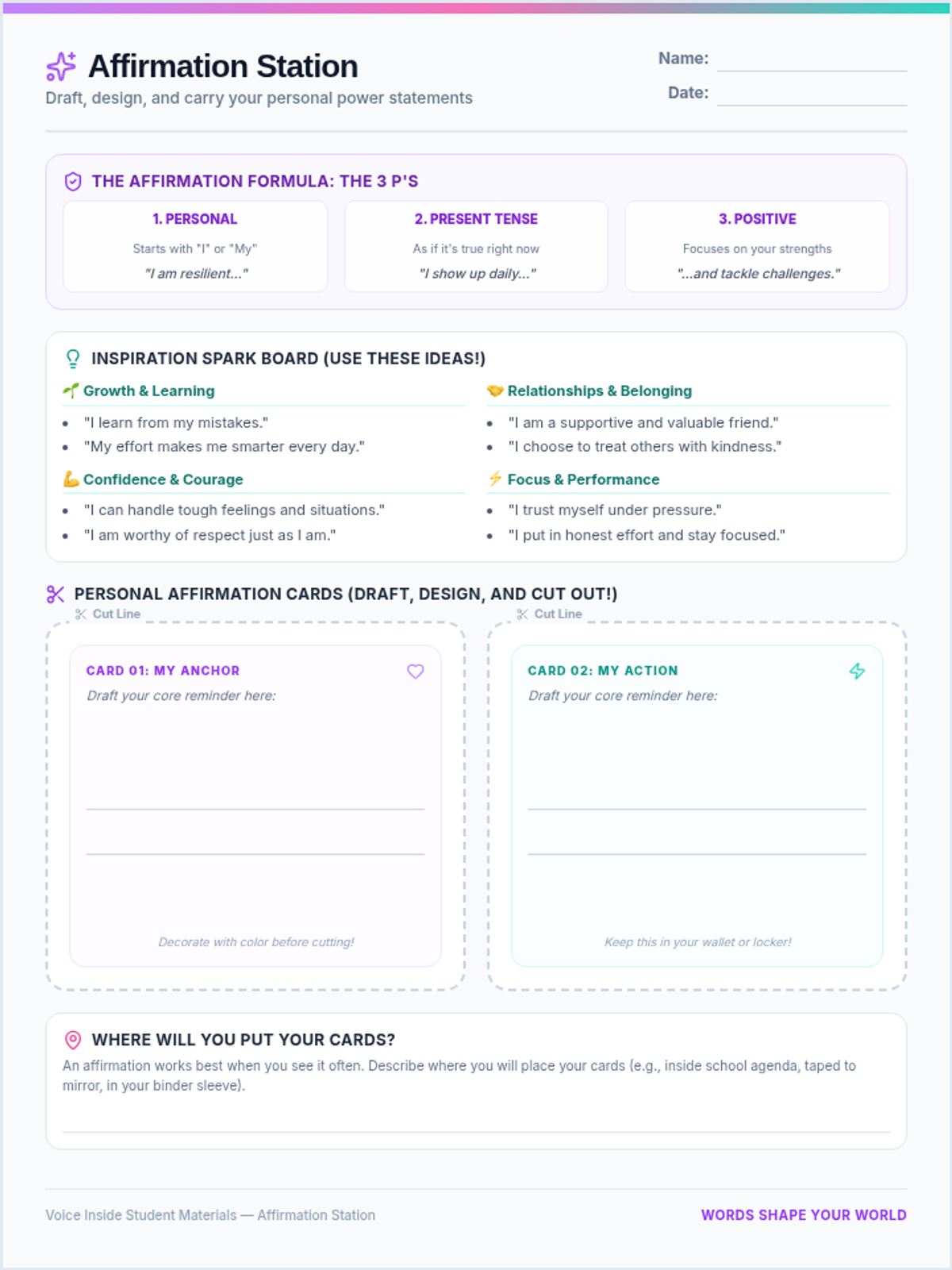
An 8th-grade social-emotional learning lesson focusing on identifying the inner critic, understanding cognitive reframing, and practicing positive self-talk through interactive activities and reflection.
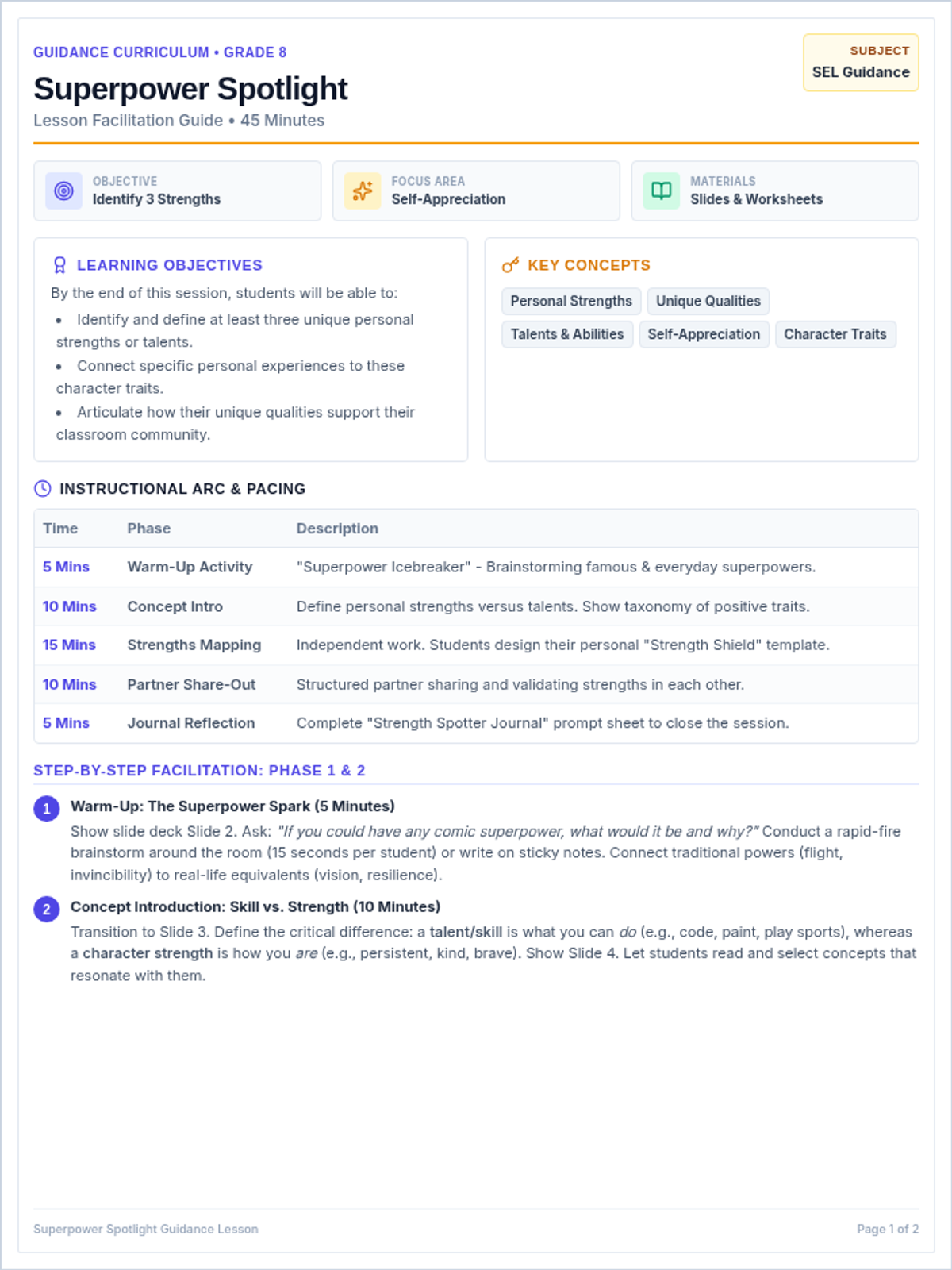
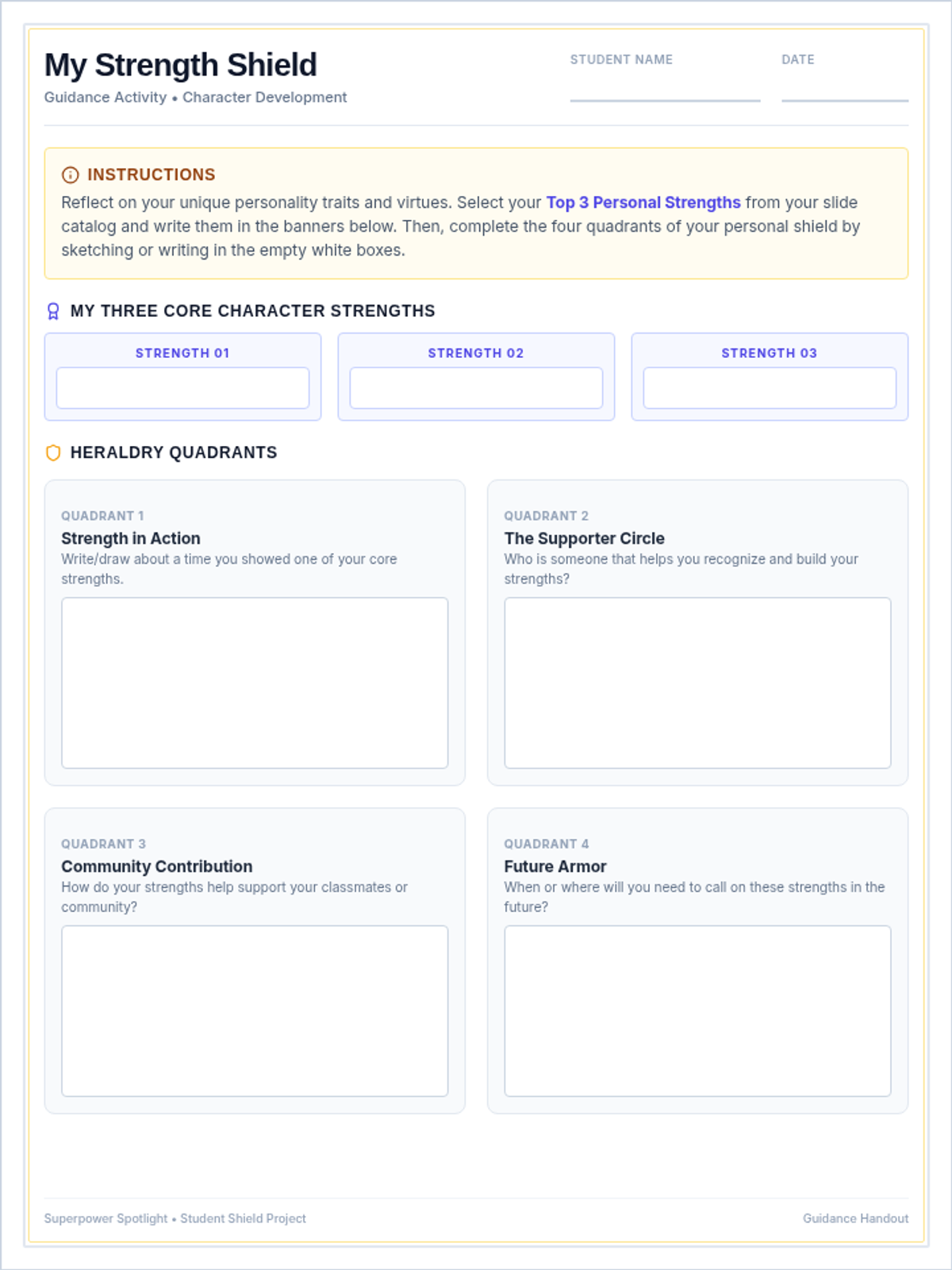
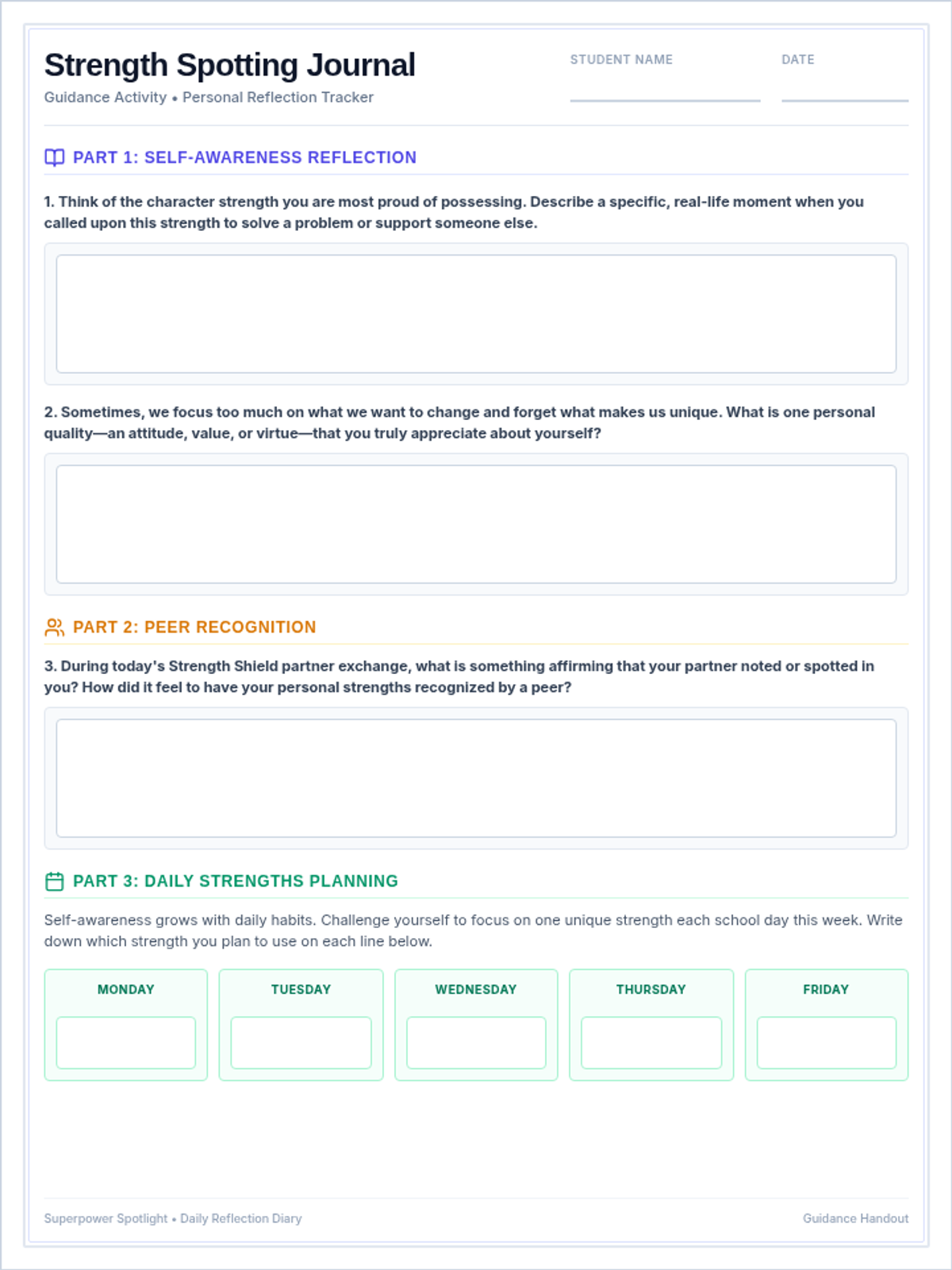
An interactive 8th-grade guidance lesson where students identify, map, and celebrate their personal strengths through interactive slides, a creative shield-design activity, and reflective journaling.
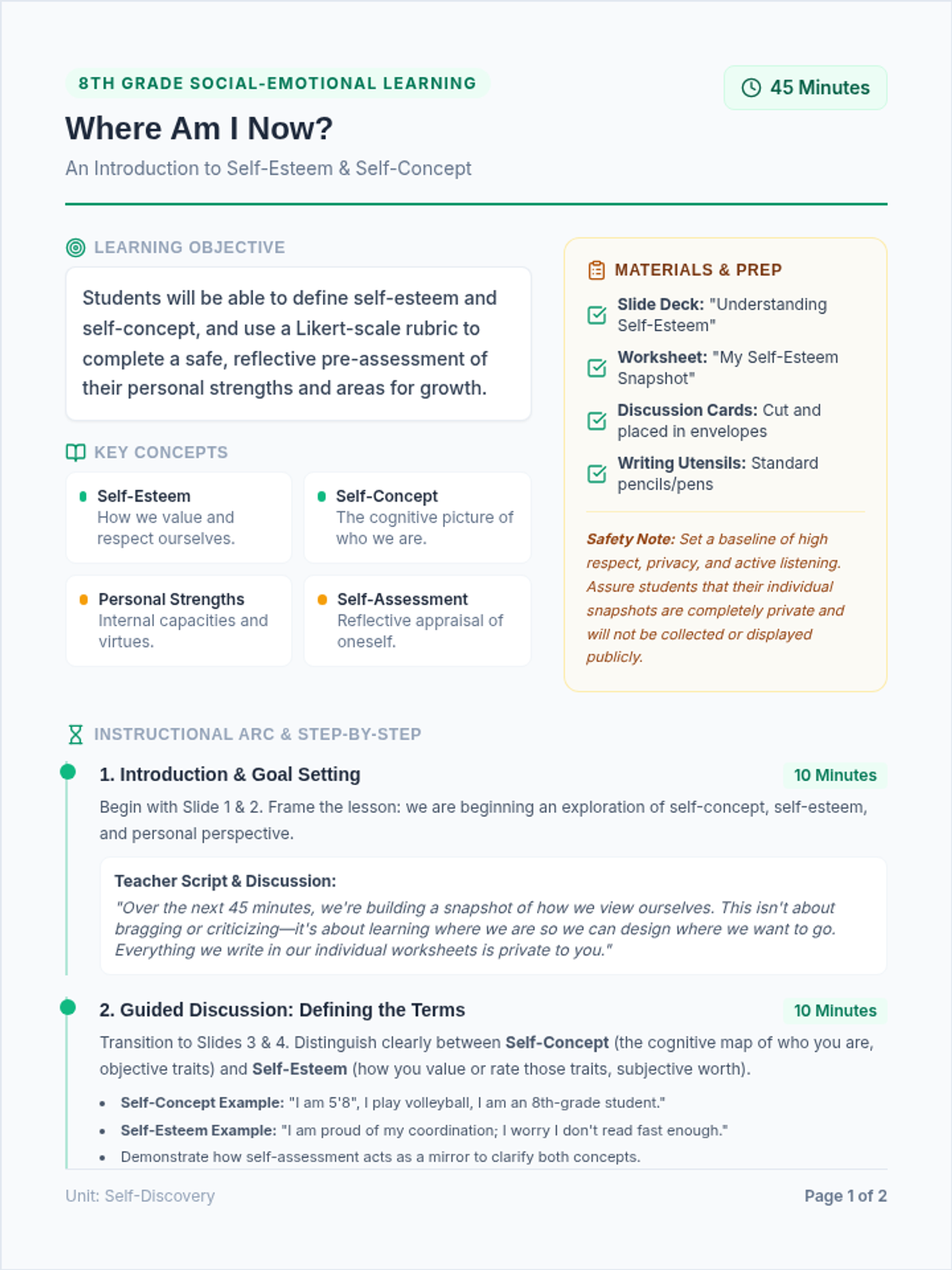
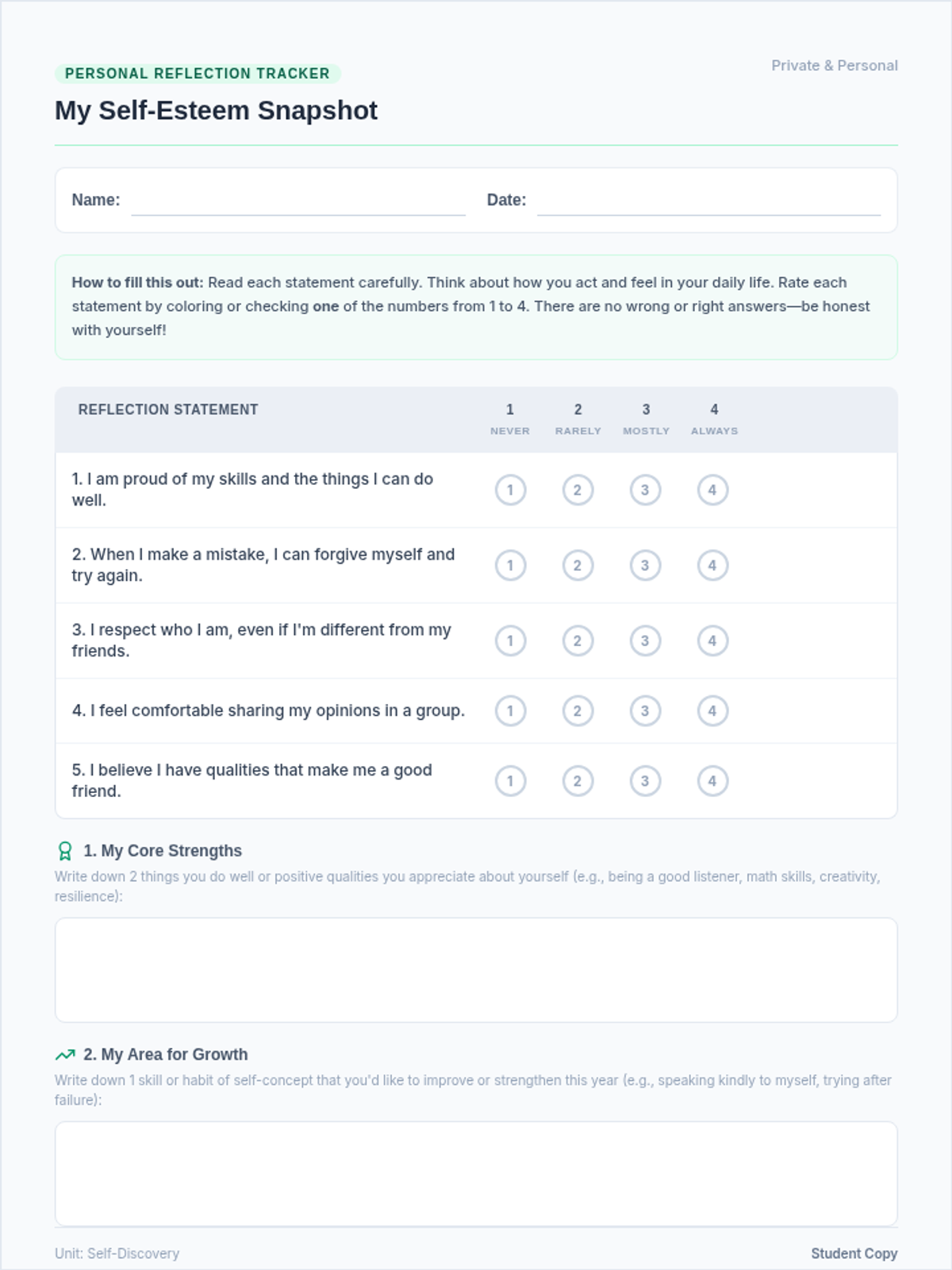
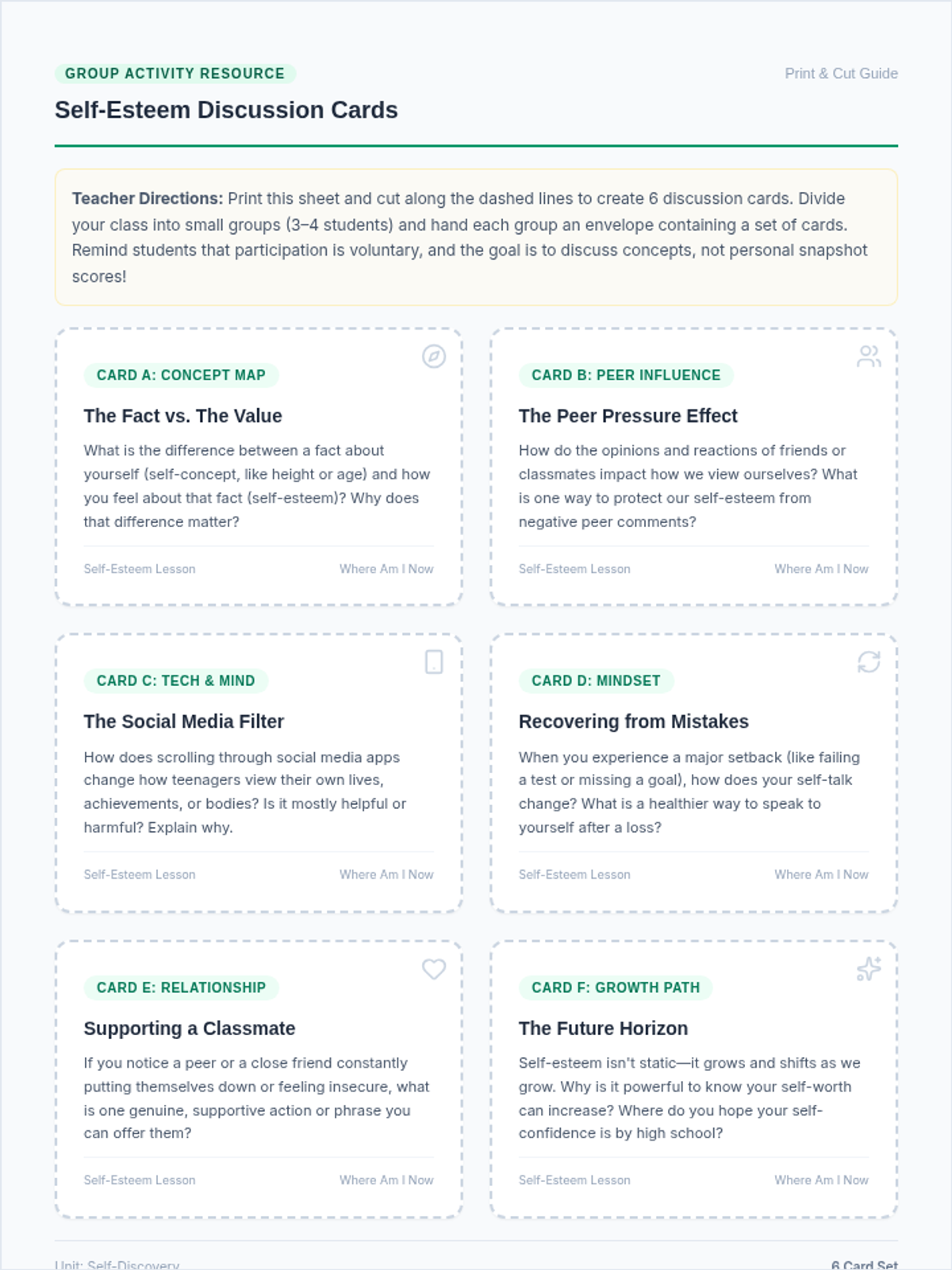
An introductory 8th-grade social-emotional learning lesson focused on defining self-esteem and self-concept, guiding students through a safe, reflective pre-assessment of their personal strengths and areas for growth.
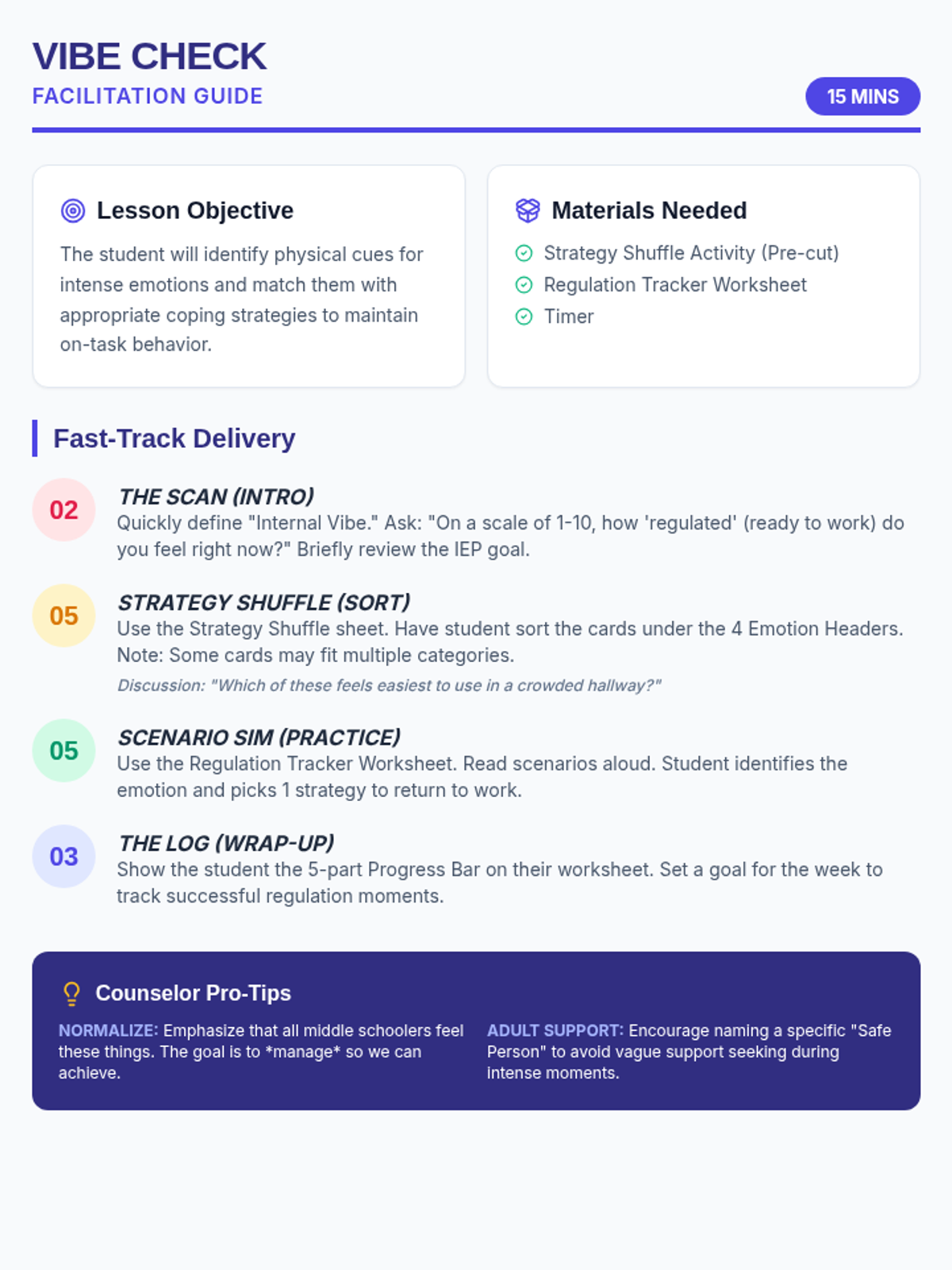
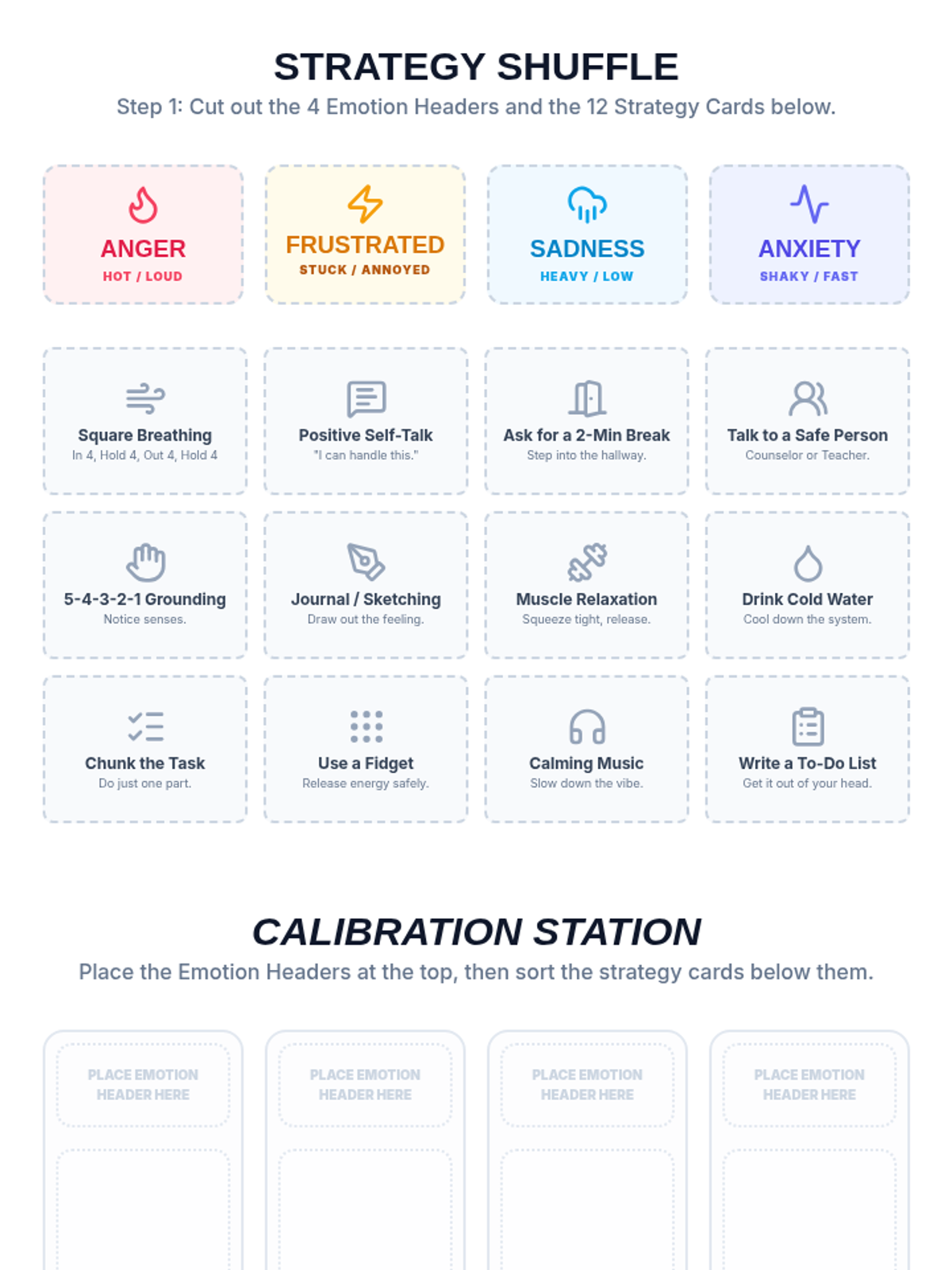
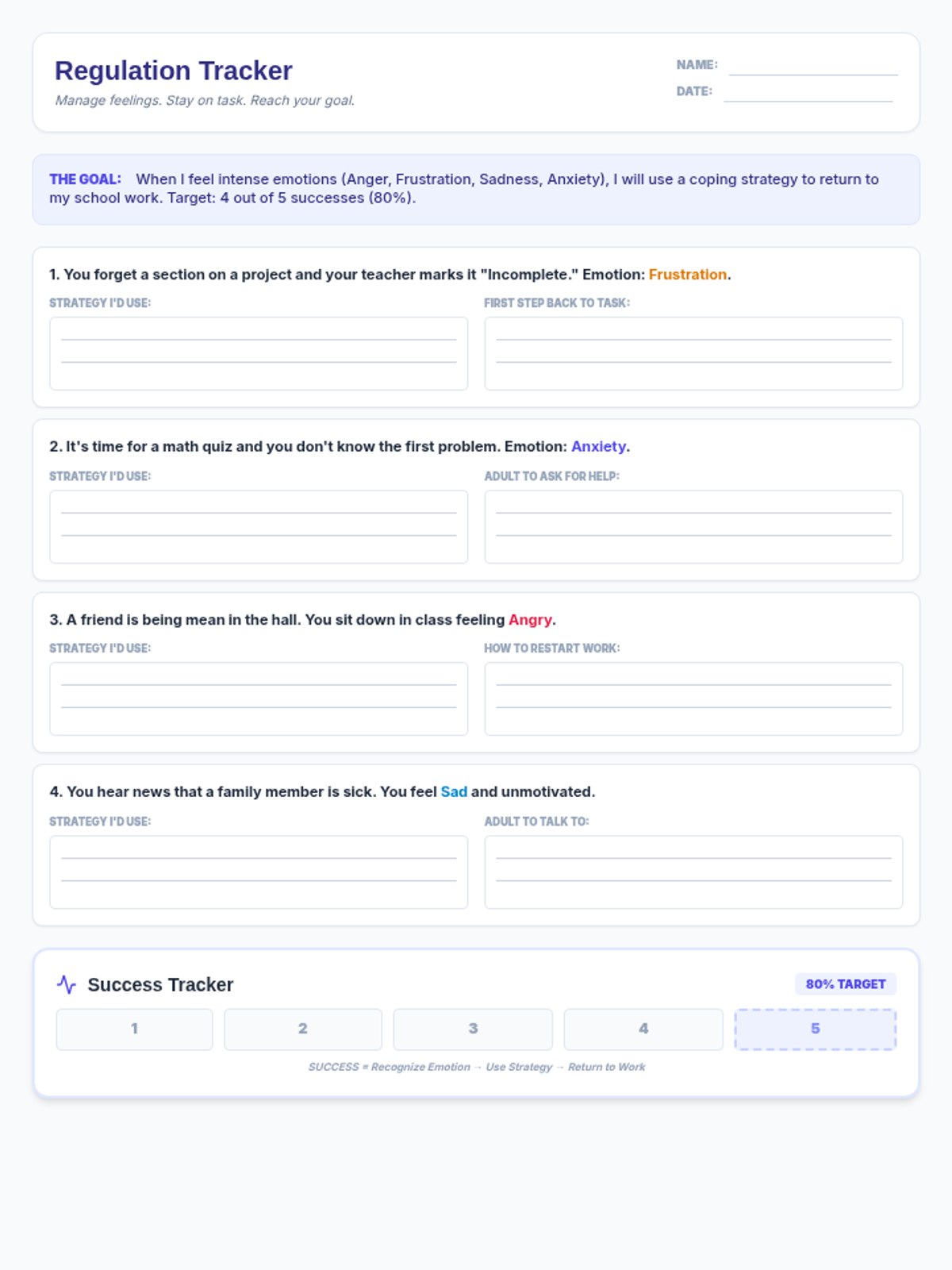
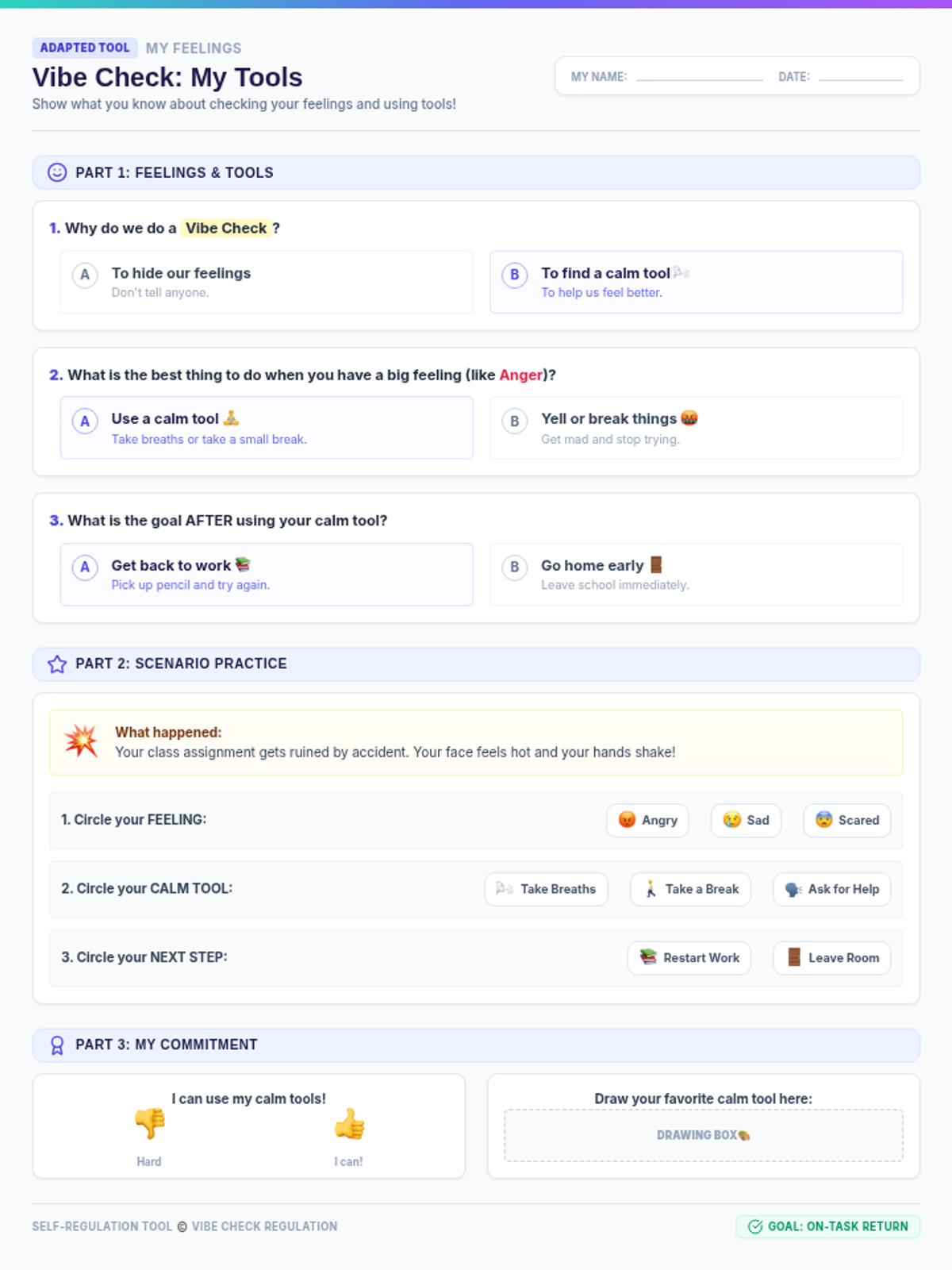
A 15-minute counseling lesson designed to help middle school students identify intense emotions and apply specific self-regulation strategies to return to on-task behavior.
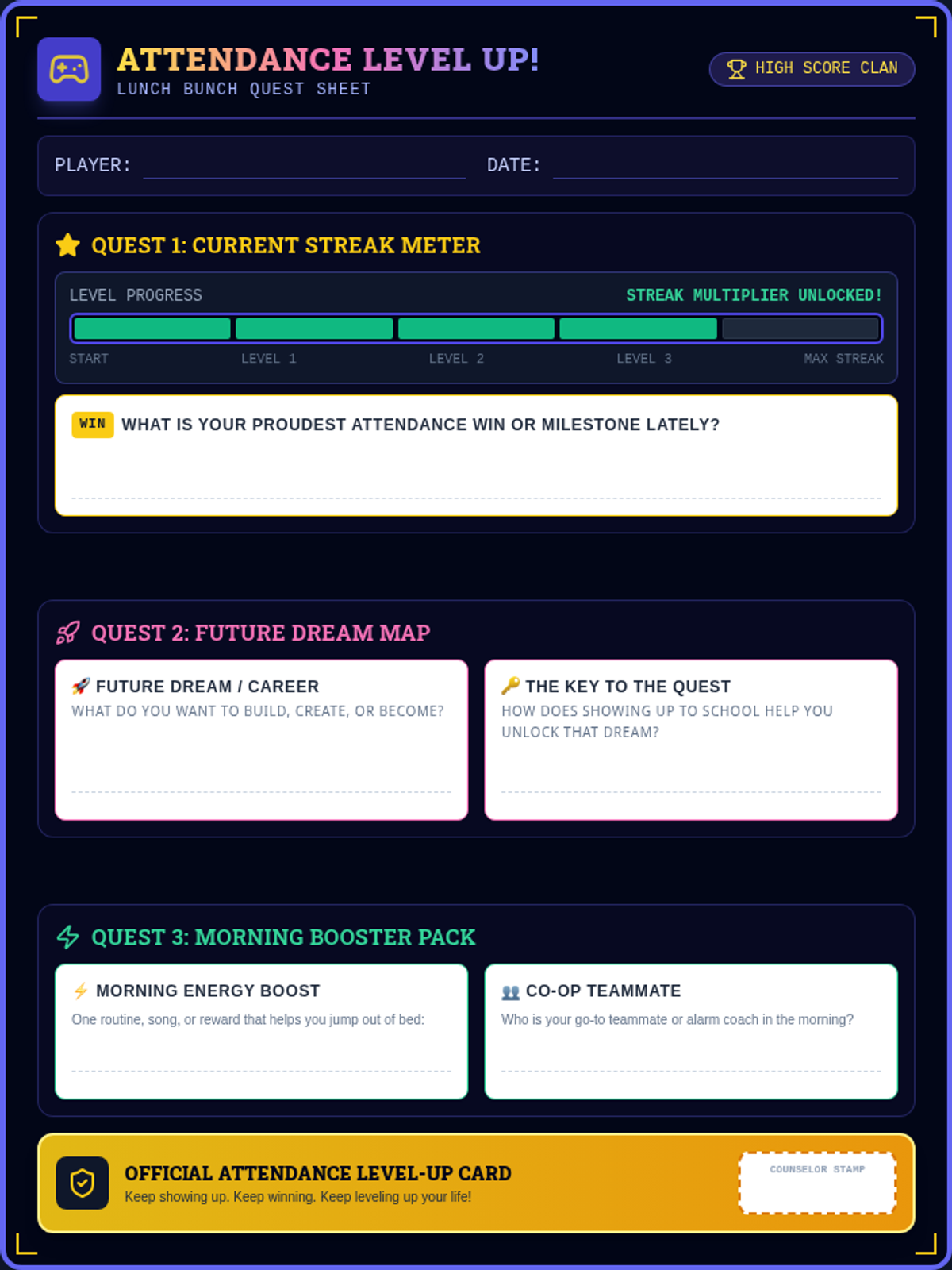
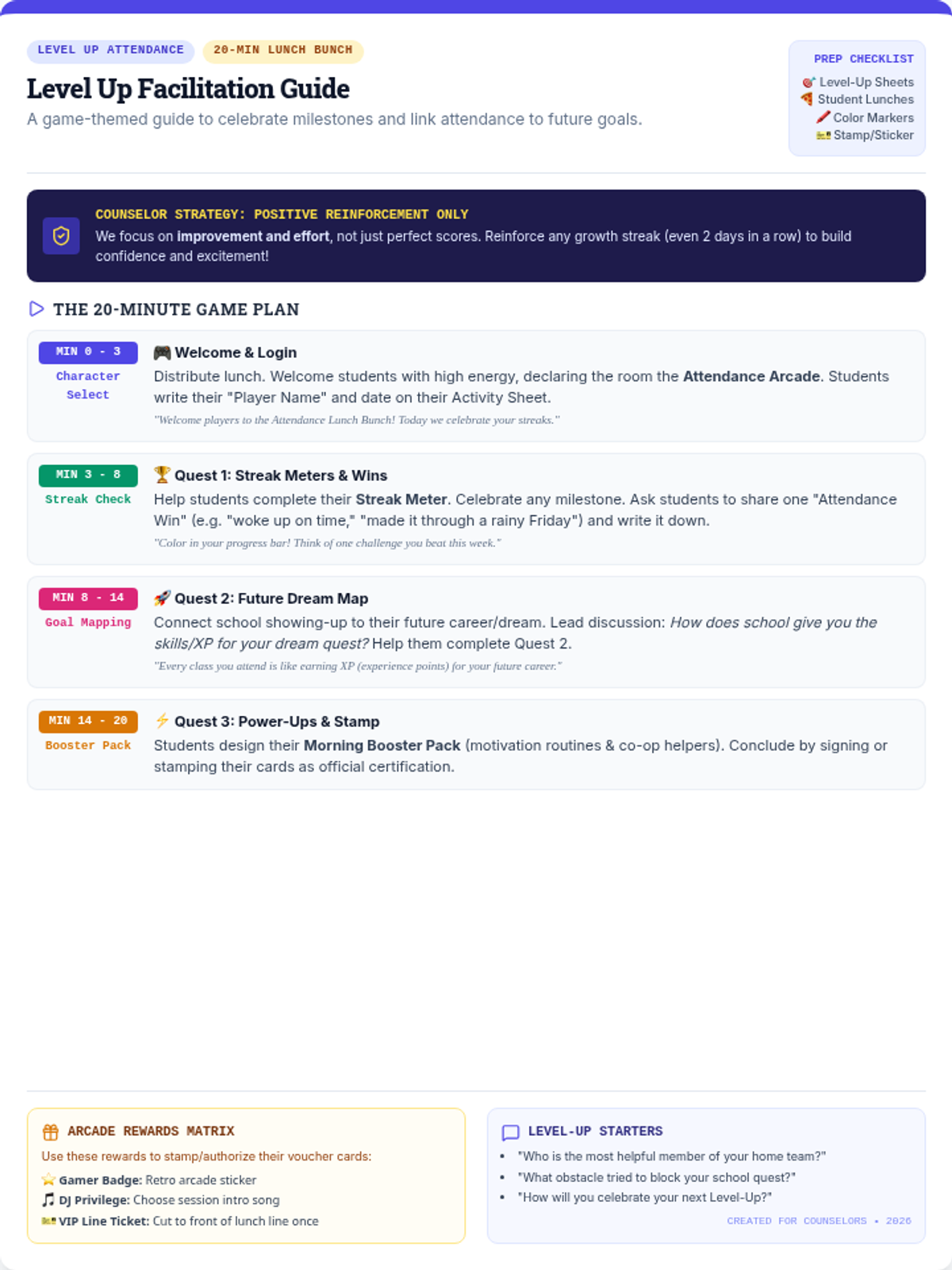
A 20-minute Lunch Bunch lesson plan and facilitation guide designed to celebrate attendance milestones, connect consistent attendance to future goals, and foster a high-energy, positive environment for students.
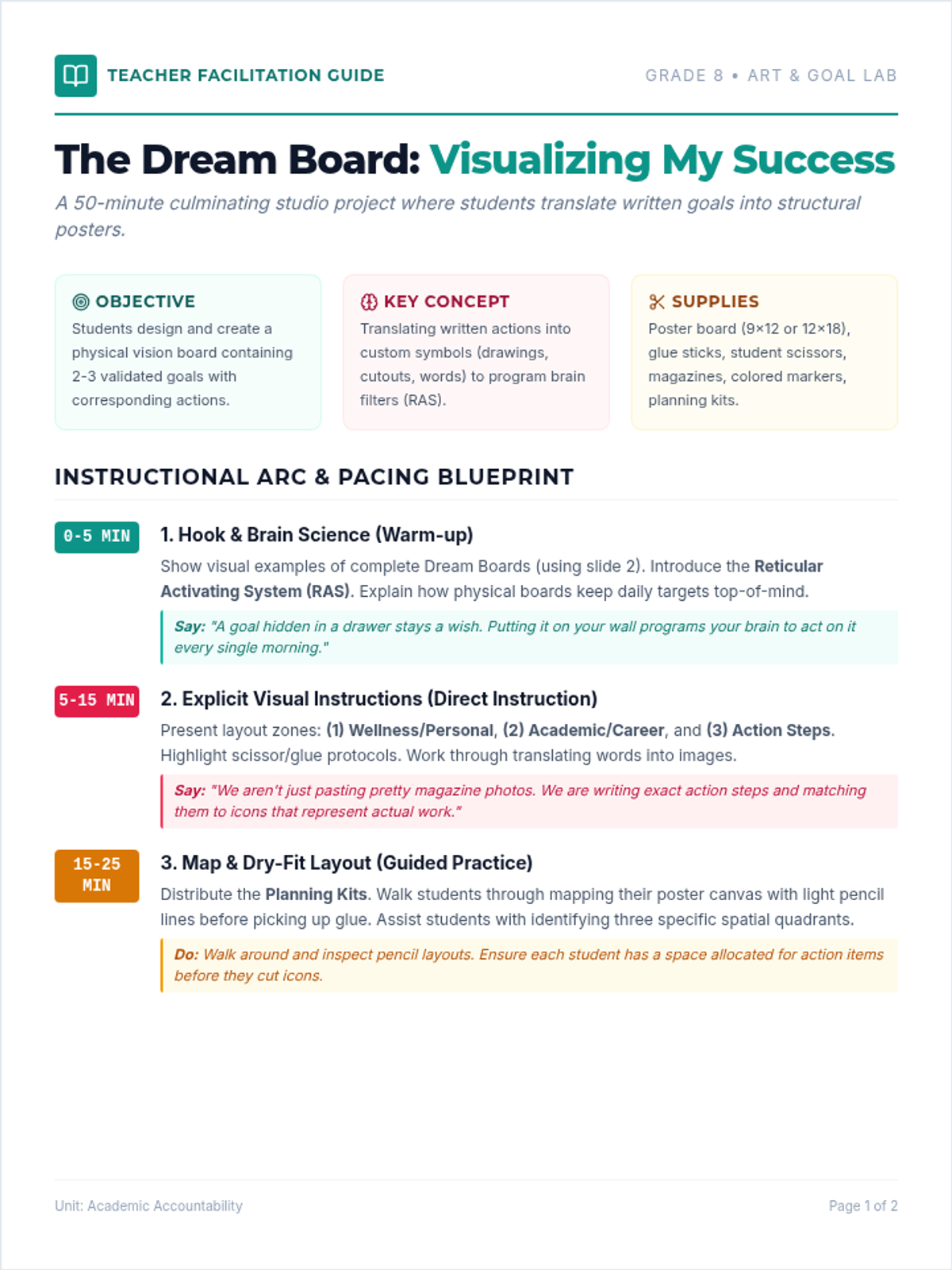
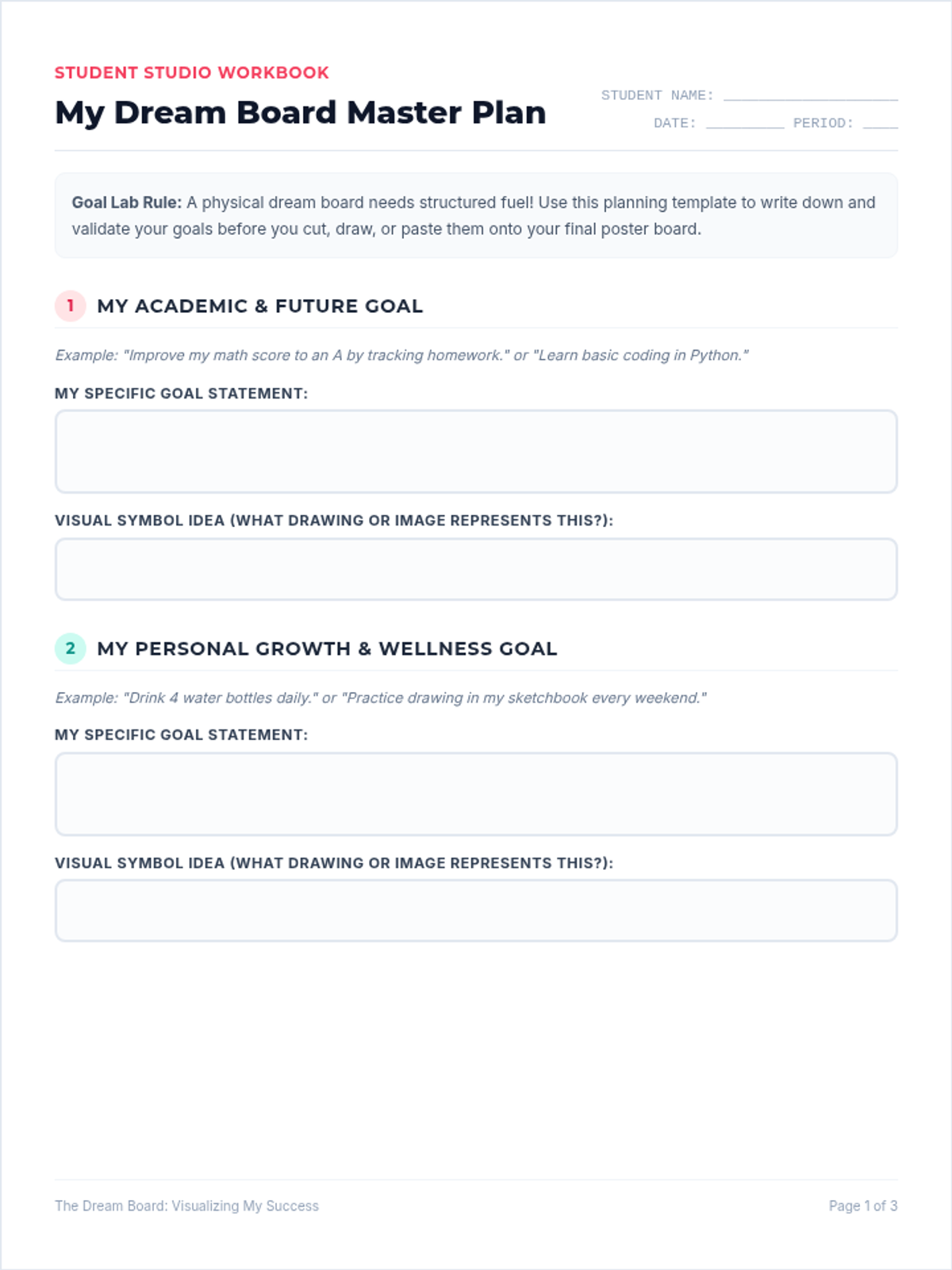
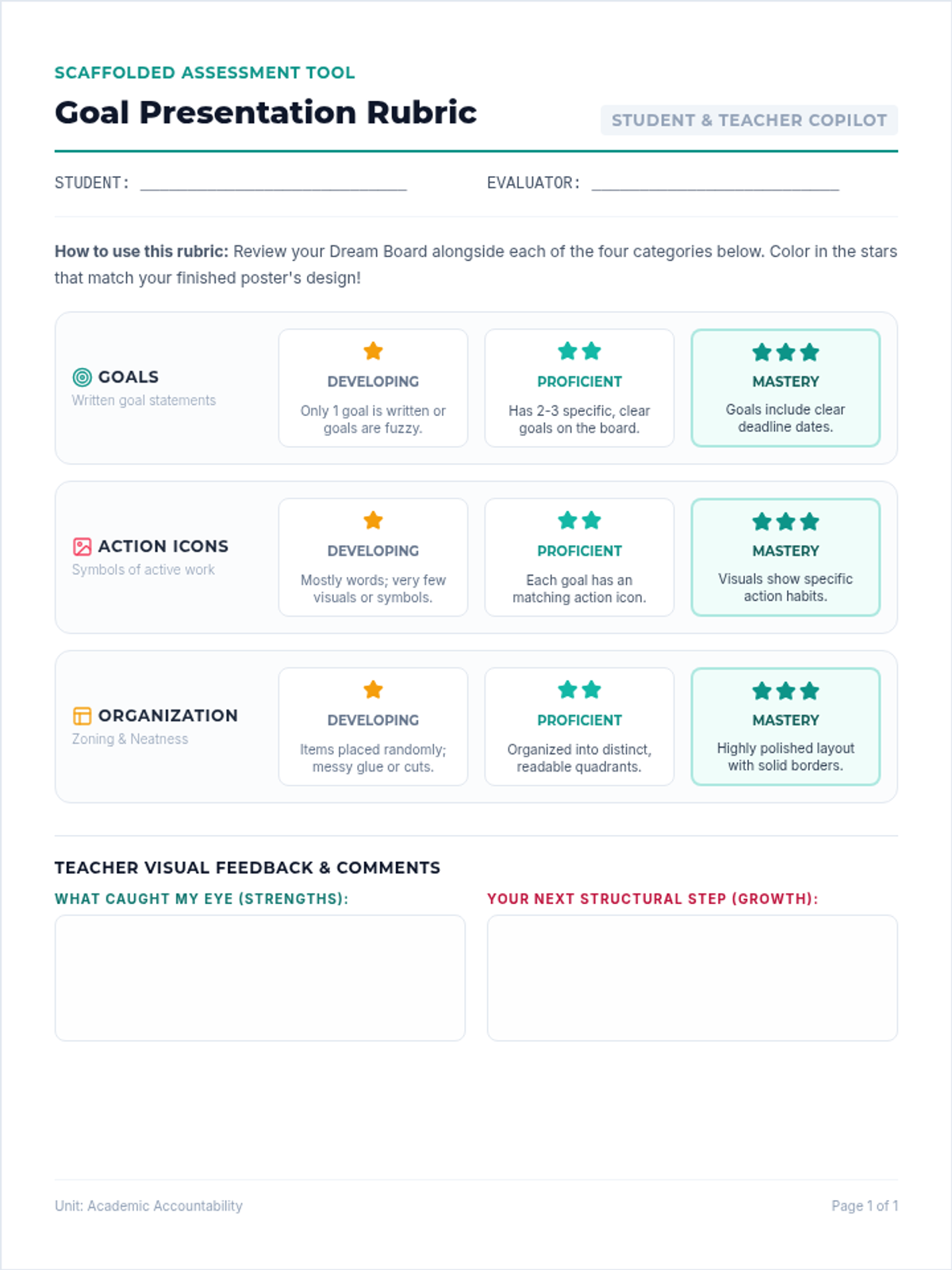
An inspiring 8th-grade lesson where students design and create a physical vision board on poster board, translating their goals and action steps into high-impact visual symbols to foster long-term motivation, positive self-image, and accountability.
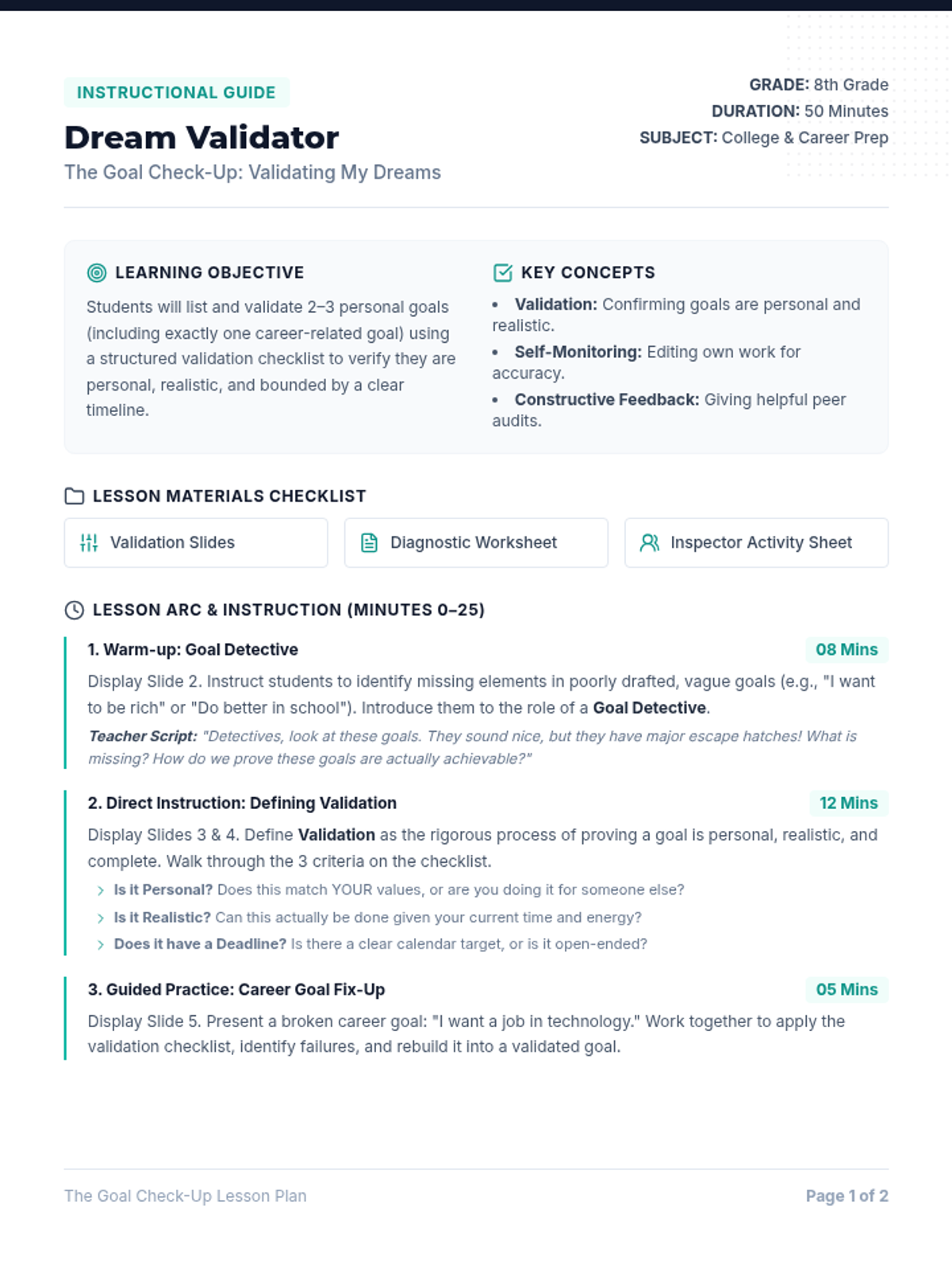
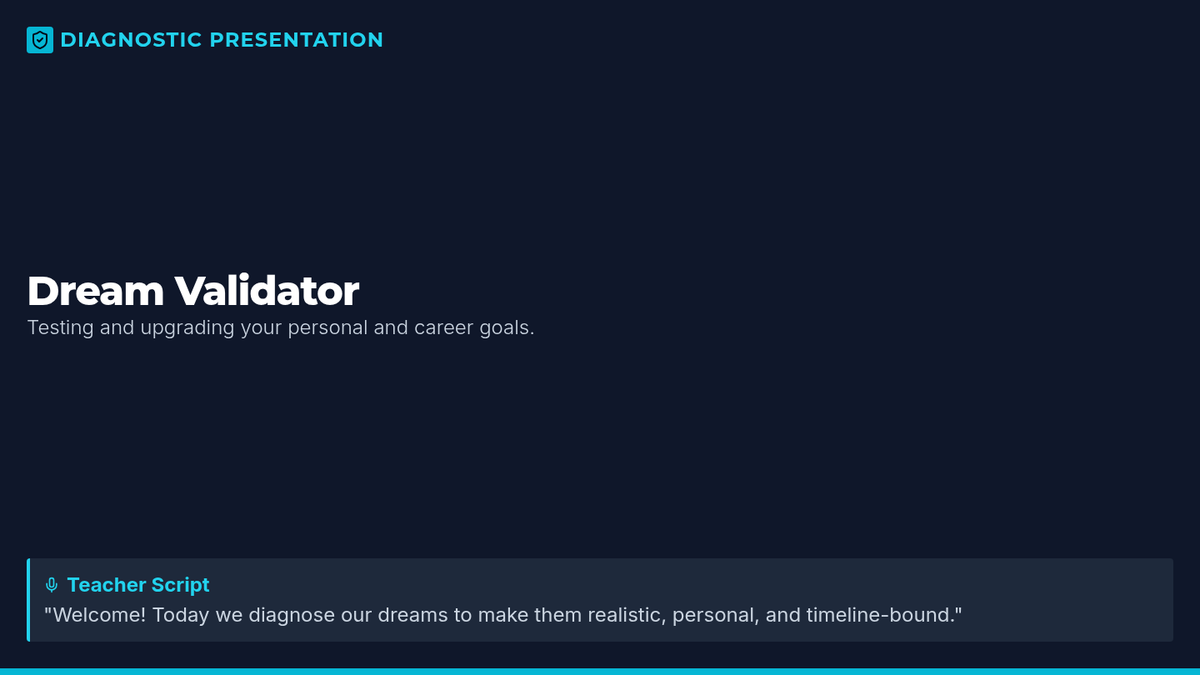
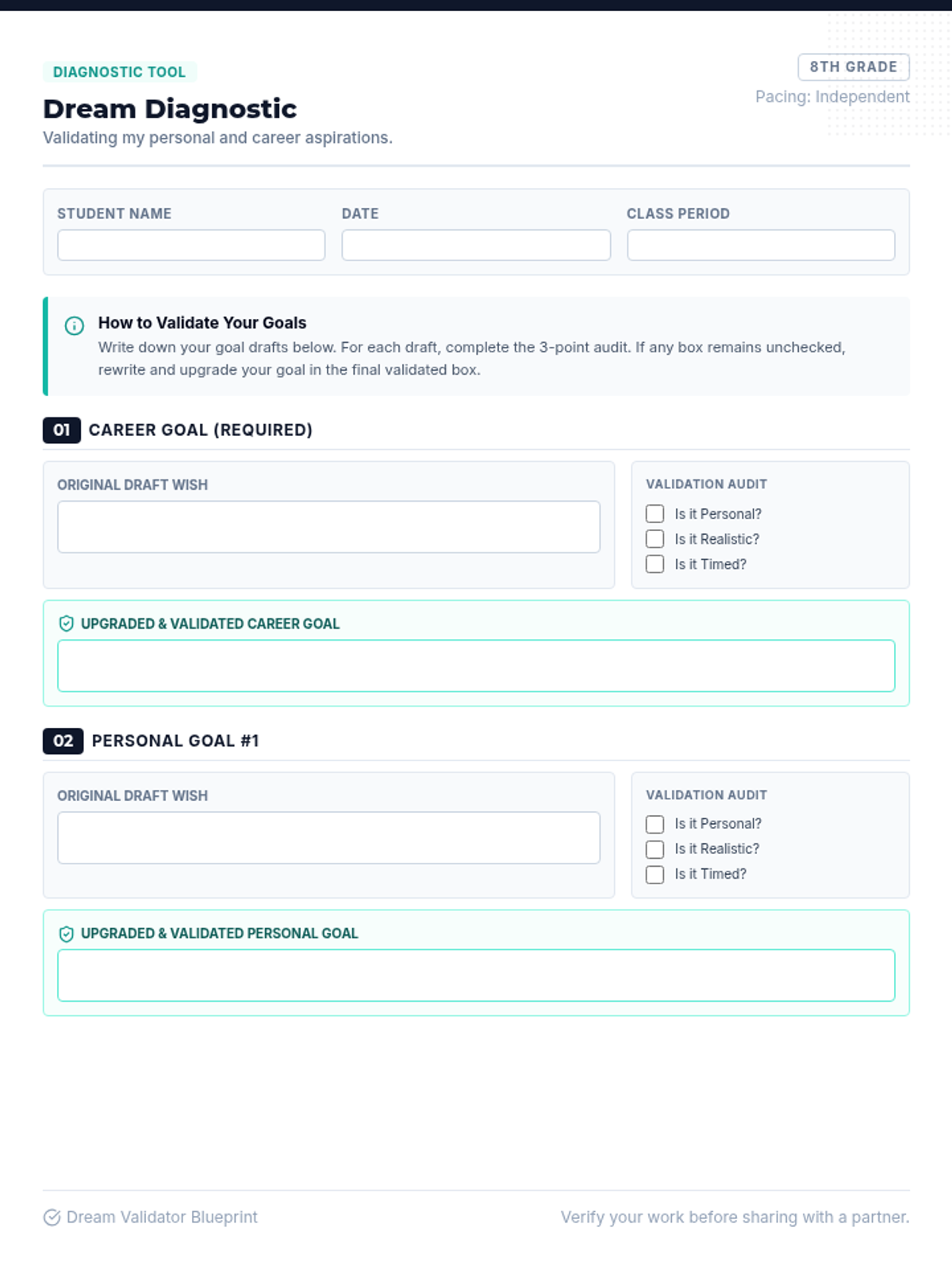
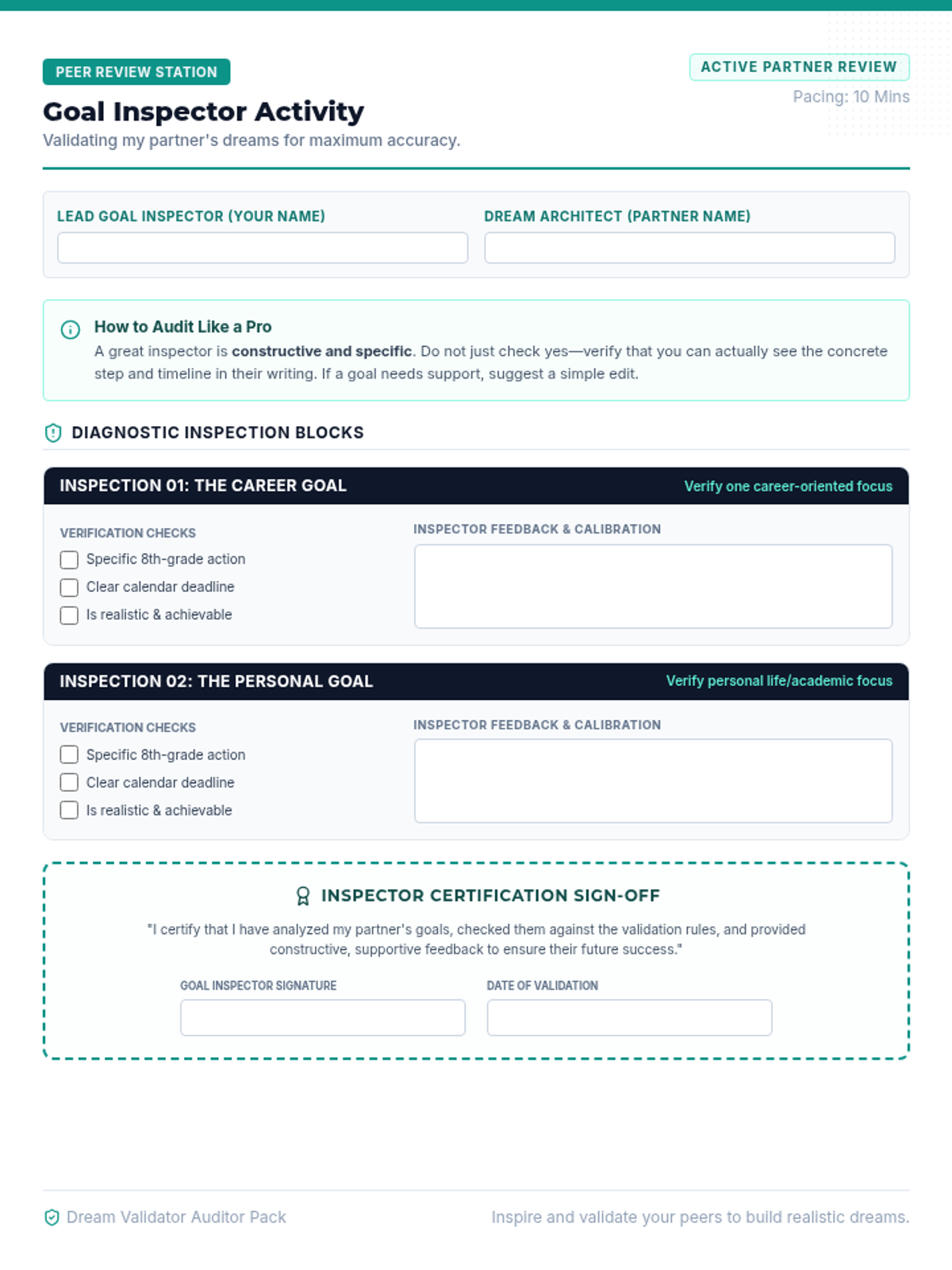
A 50-minute high-engagement lesson for 8th graders to draft, analyze, and validate 2-3 personal and career goals using a structured blueprint checklist. Students act as goal detectives and partner inspectors to ensure their dreams are realistic, personal, and timeline-bound.
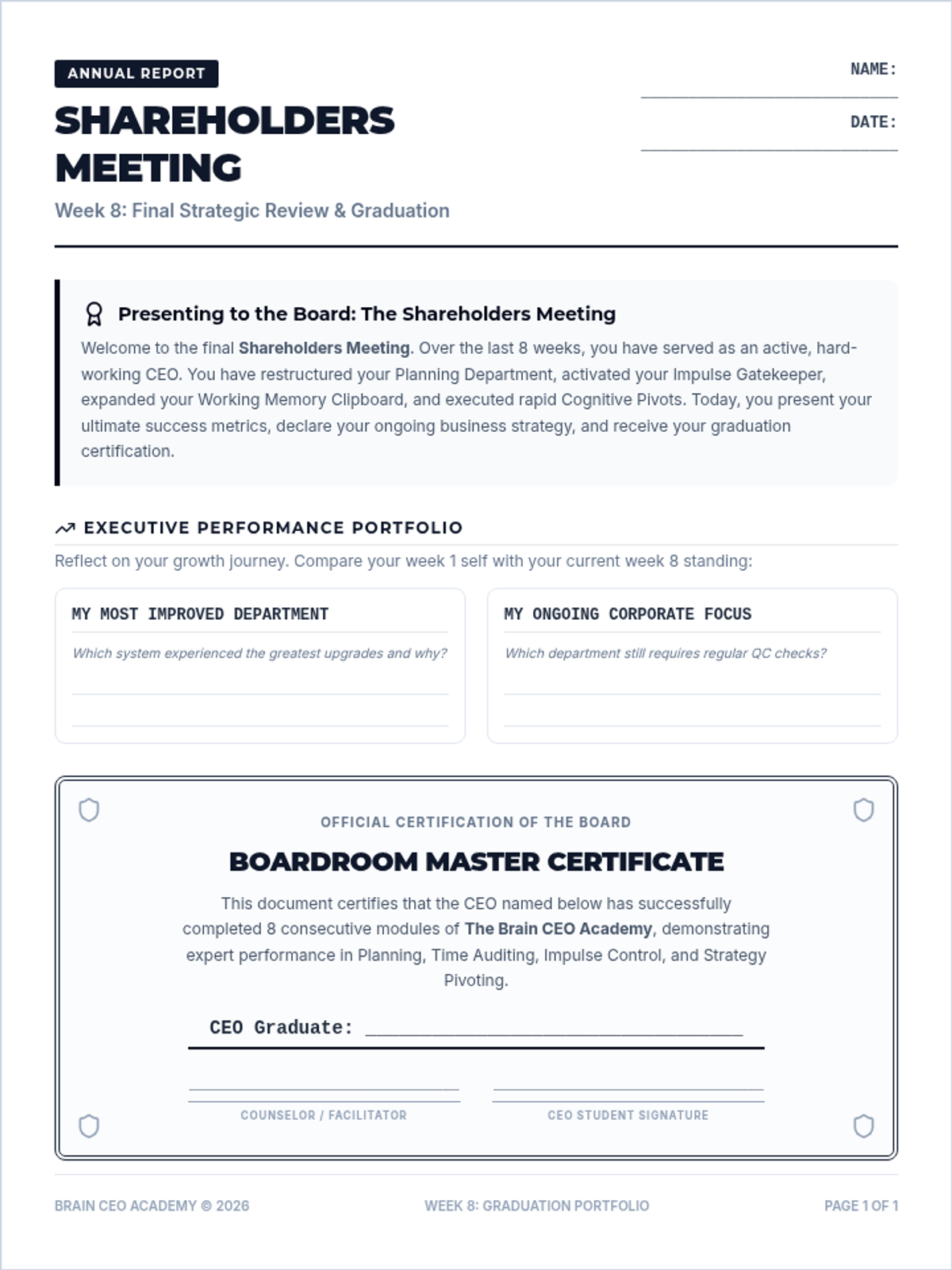
Students host their final Shareholders Meeting to present their executive progress. They receive their Brain CEO Certifications, consolidate their boardroom binders, and commit to long-term habits.
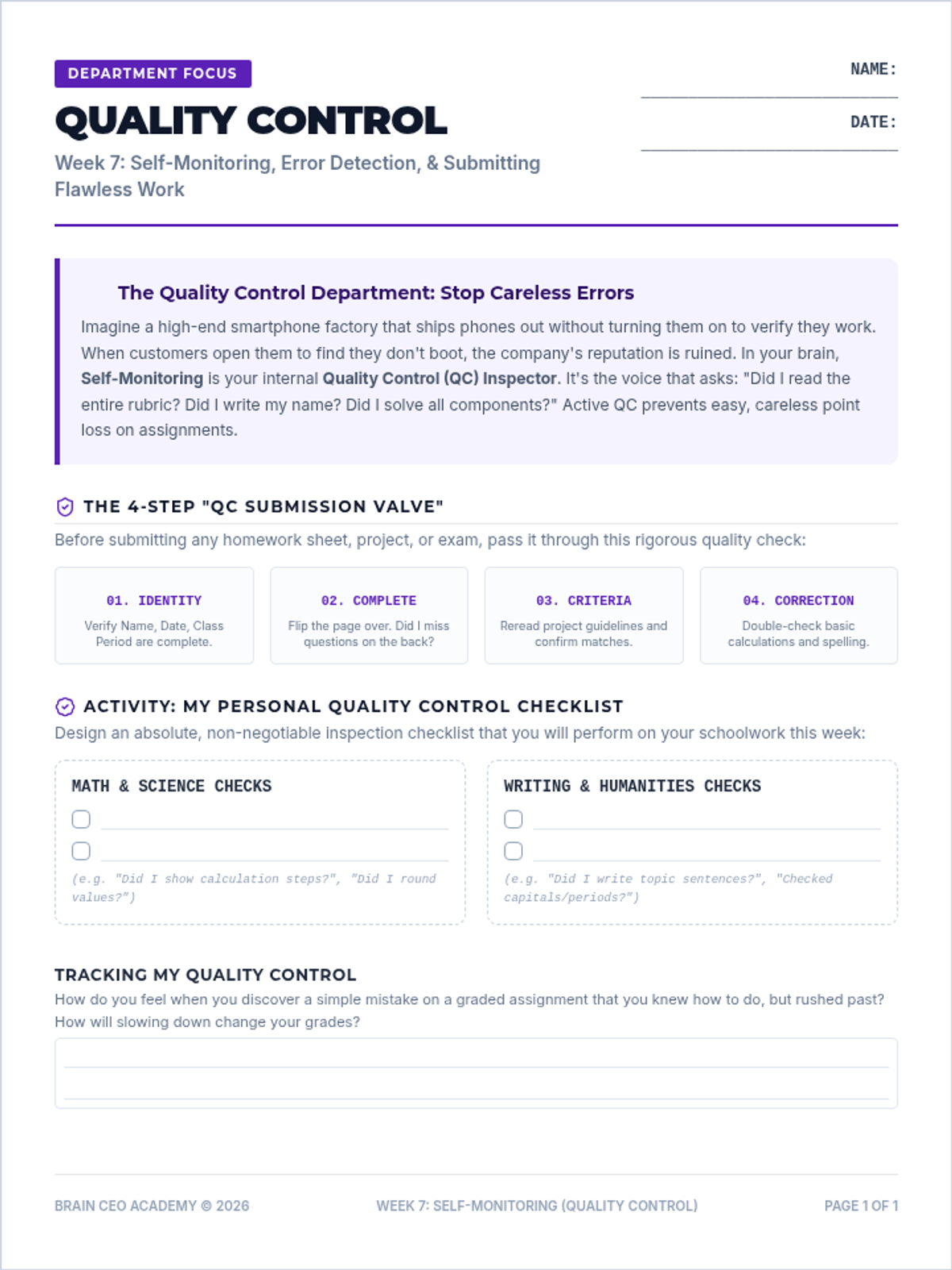
Students examine the brain's 'Quality Control' (self-monitoring). They review academic progress, track habit loops, and self-correct work before submitting it.
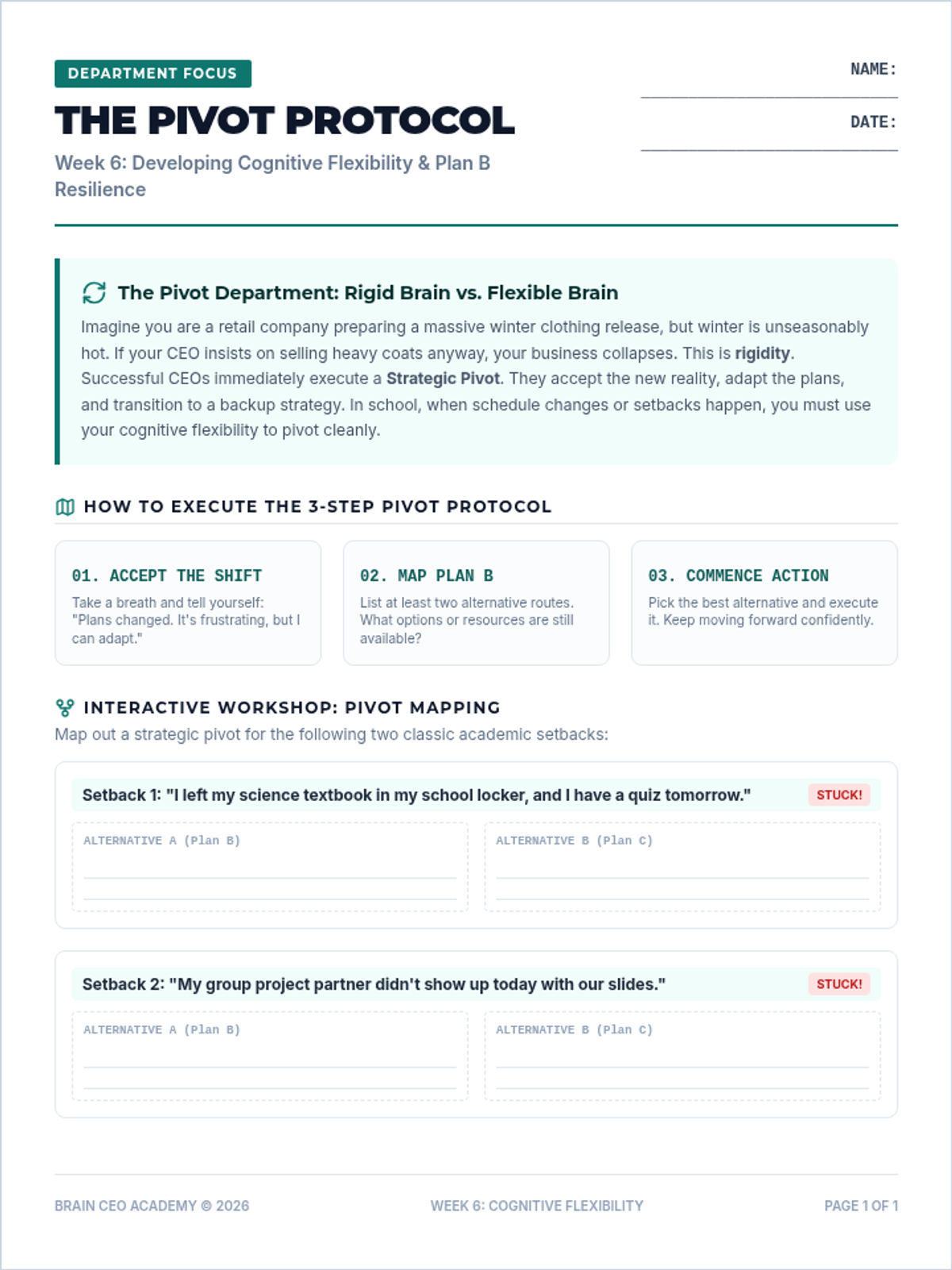
Students examine the brain's 'Pivot' (cognitive flexibility). They learn how to adapt to unexpected boardroom shifts, handle academic setbacks, and problem-solve when plans fail.
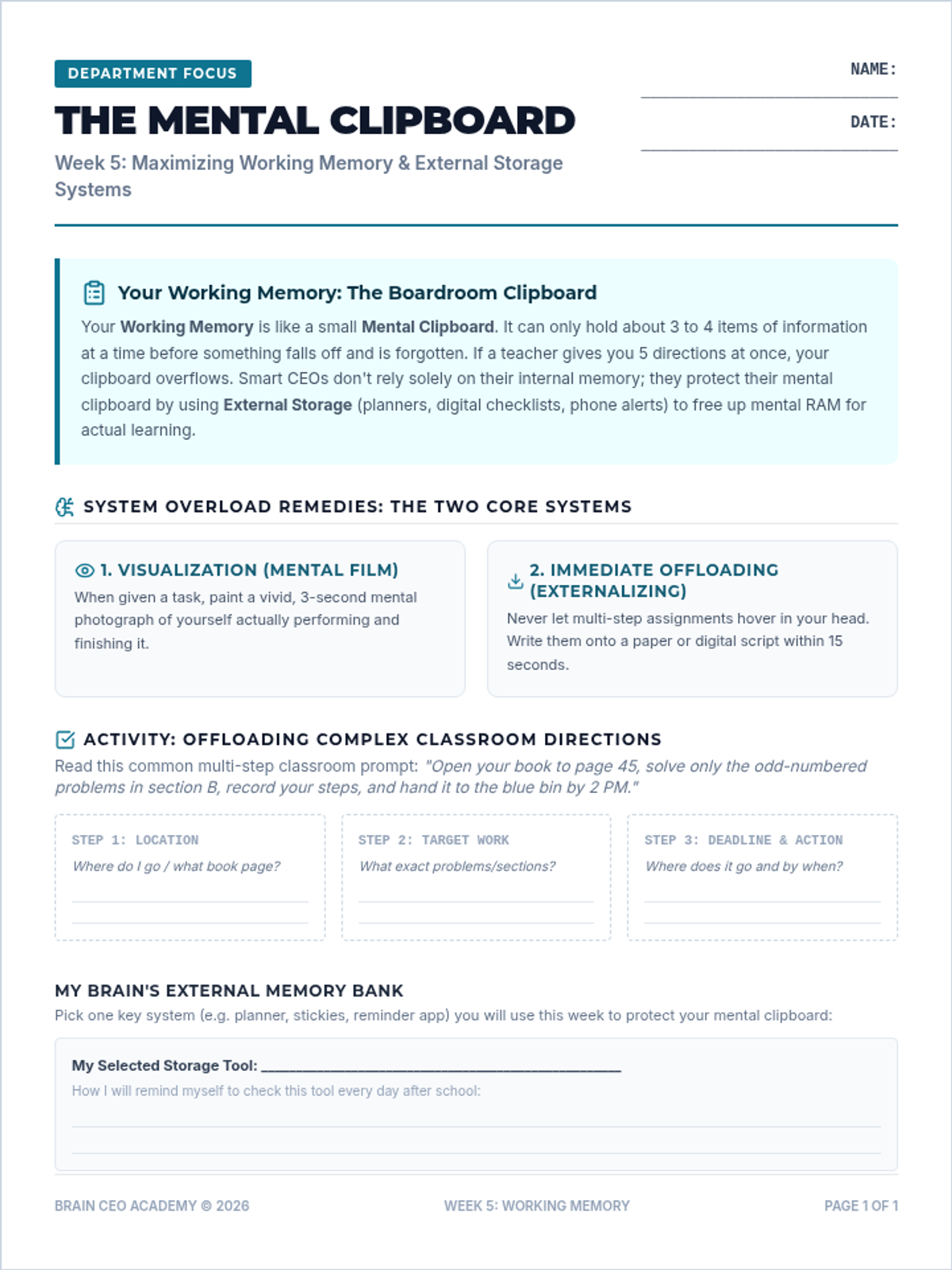
Students explore the brain's 'Mental Clipboard' (working memory). They practice visualization, externalization, and mnemonics to retain multi-step instructions and organize school information.
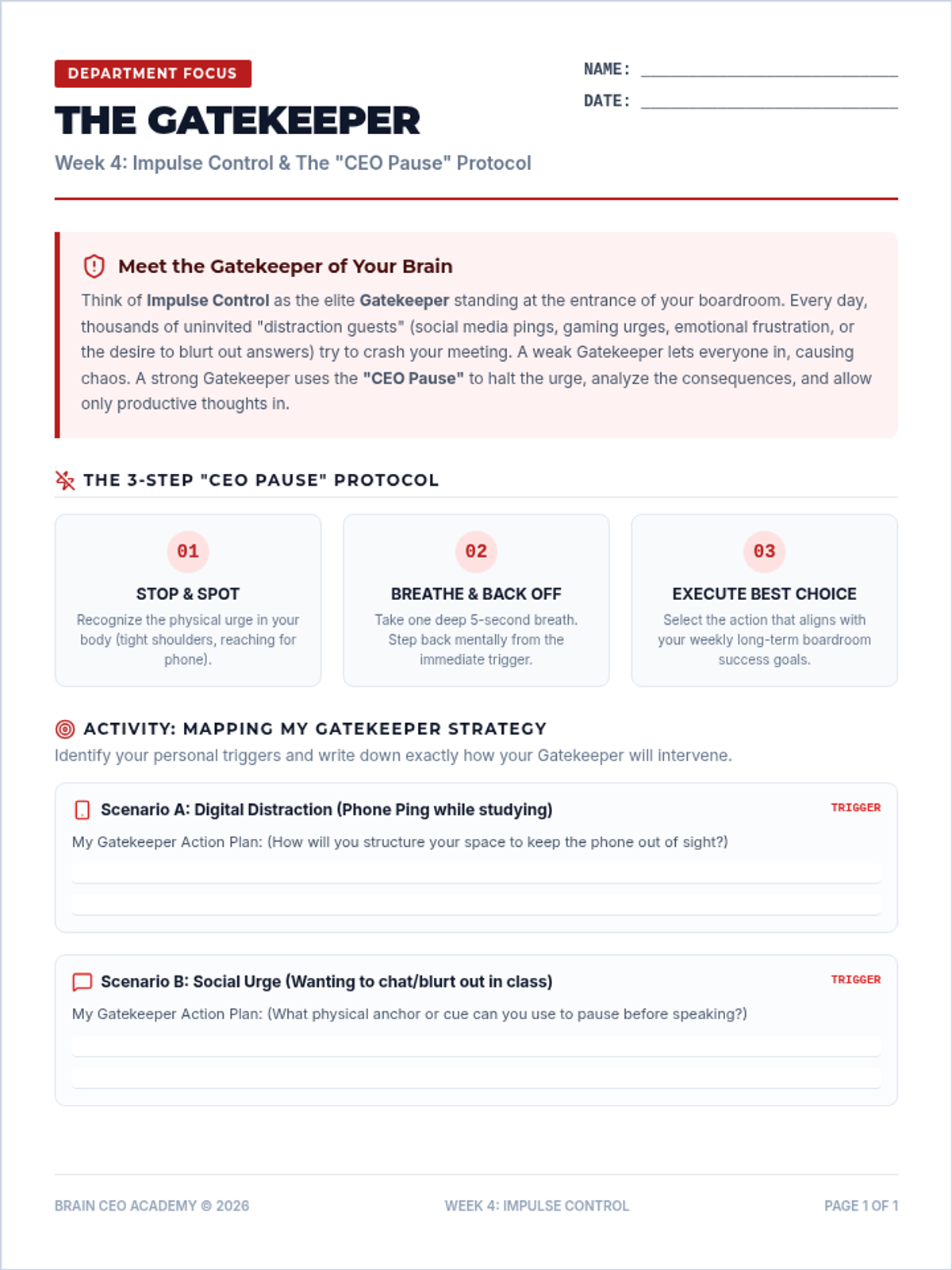
Students explore the brain's 'Gatekeeper' (impulse control), developing practical techniques like the 'CEO Pause' to resist high-tech distractions and control emotional impulses before acting.
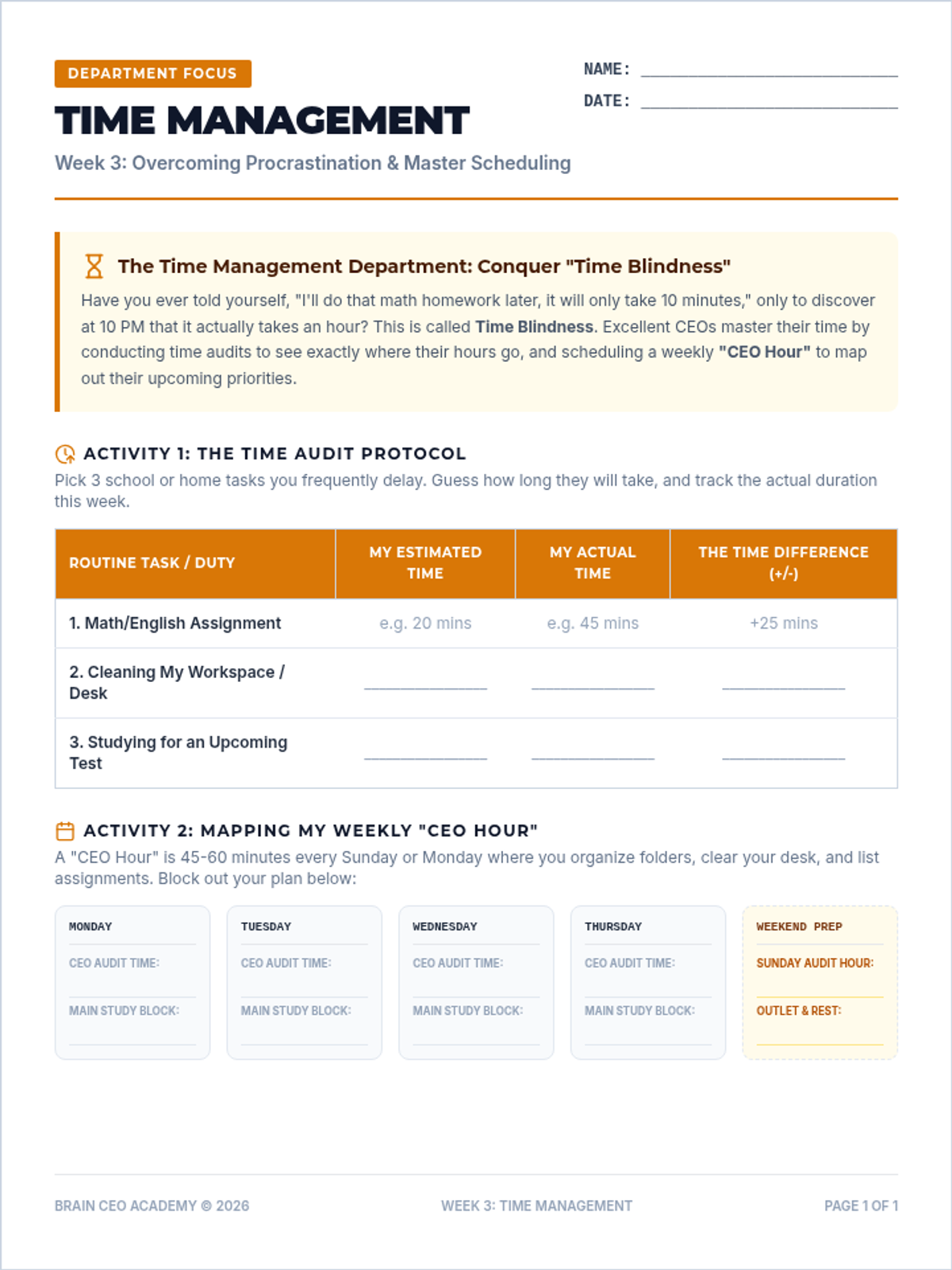
Students examine their brain's Time Management department, learning how to overcome procrastination, estimate task durations accurately, and implement the 'CEO Hour' weekly scheduling technique.
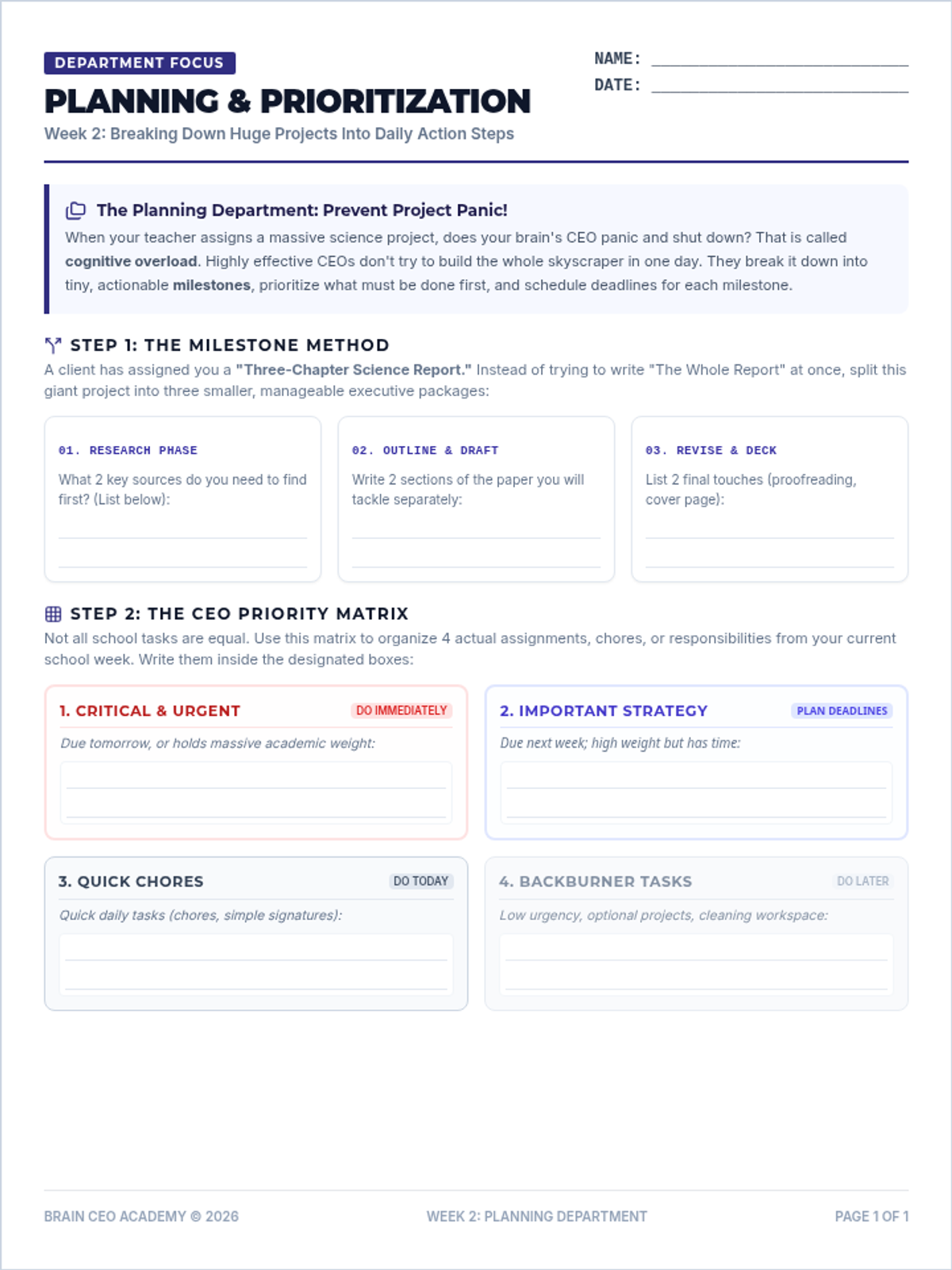
Students dive into the Planning & Prioritization Department, learning how to break down complex projects into actionable steps and organize tasks using the 'CEO Action Item' matrix.
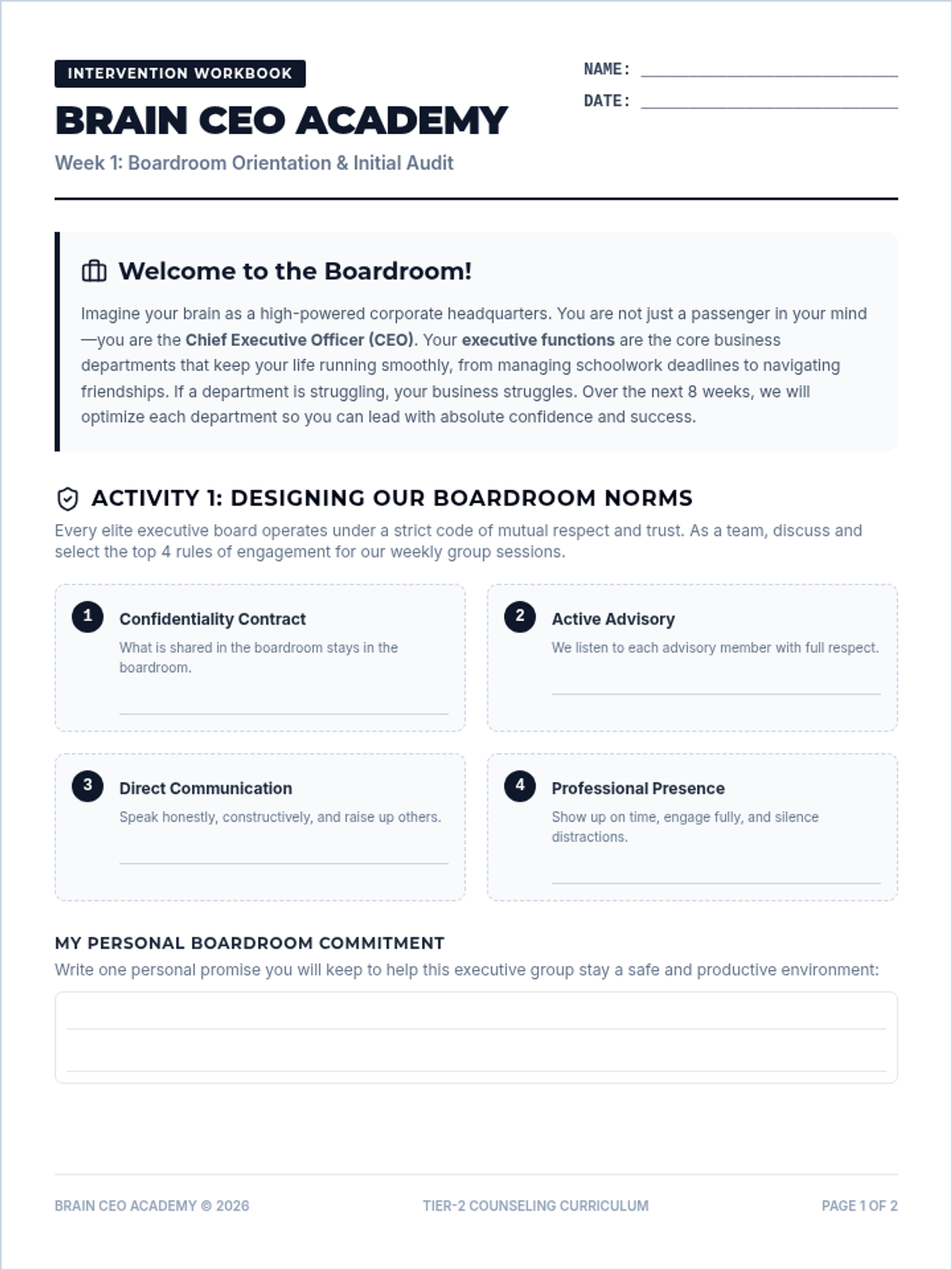
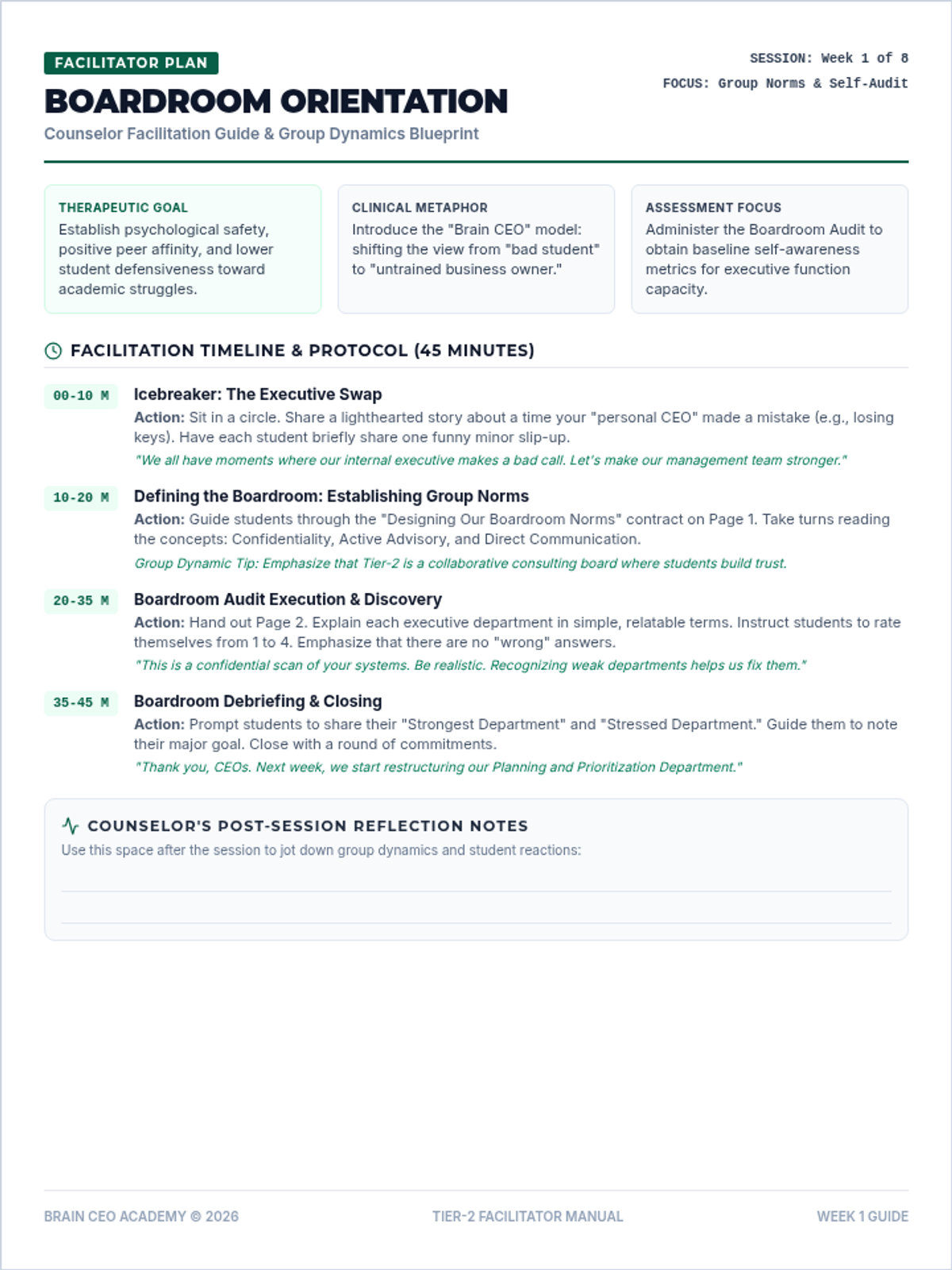
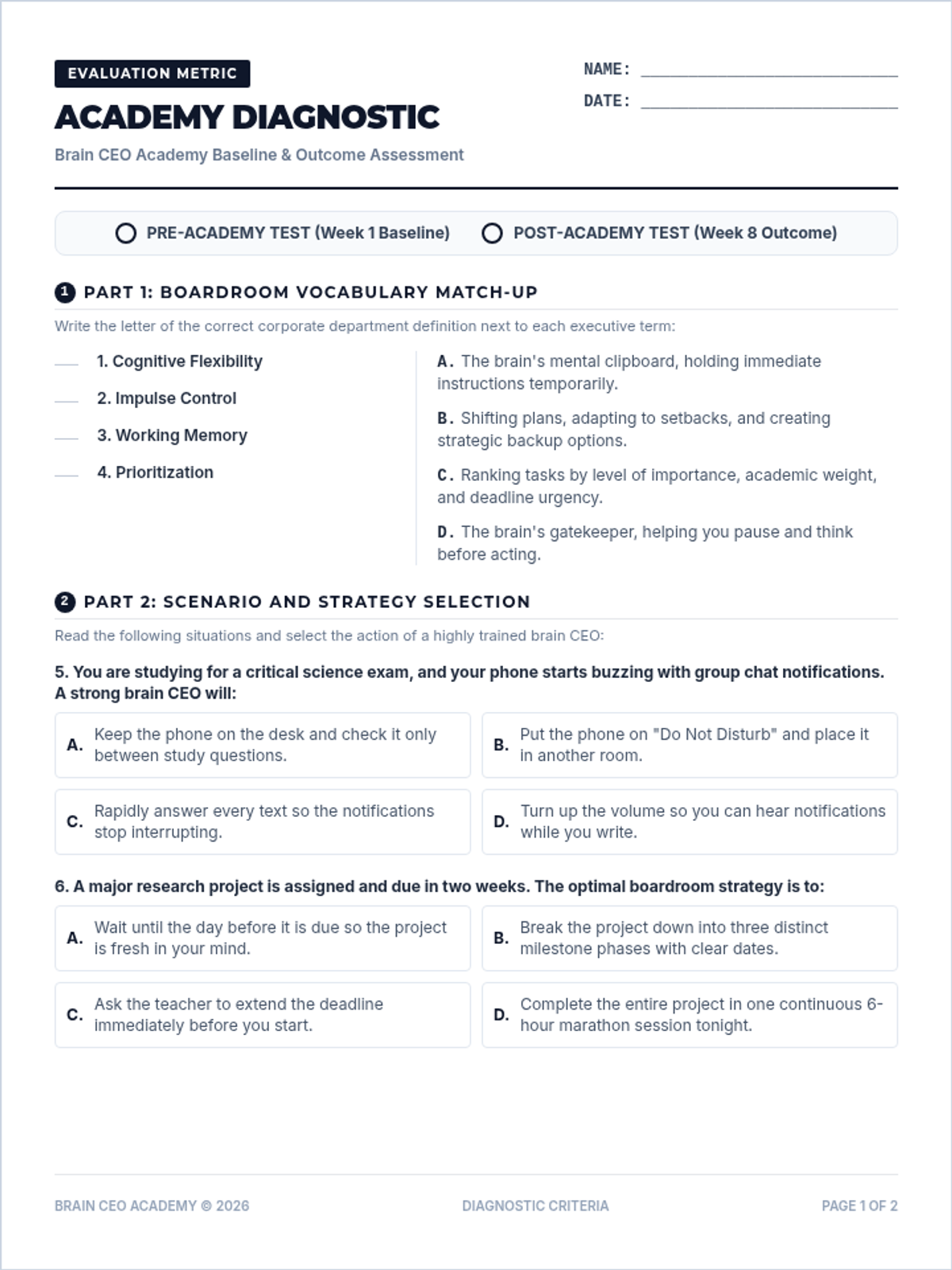
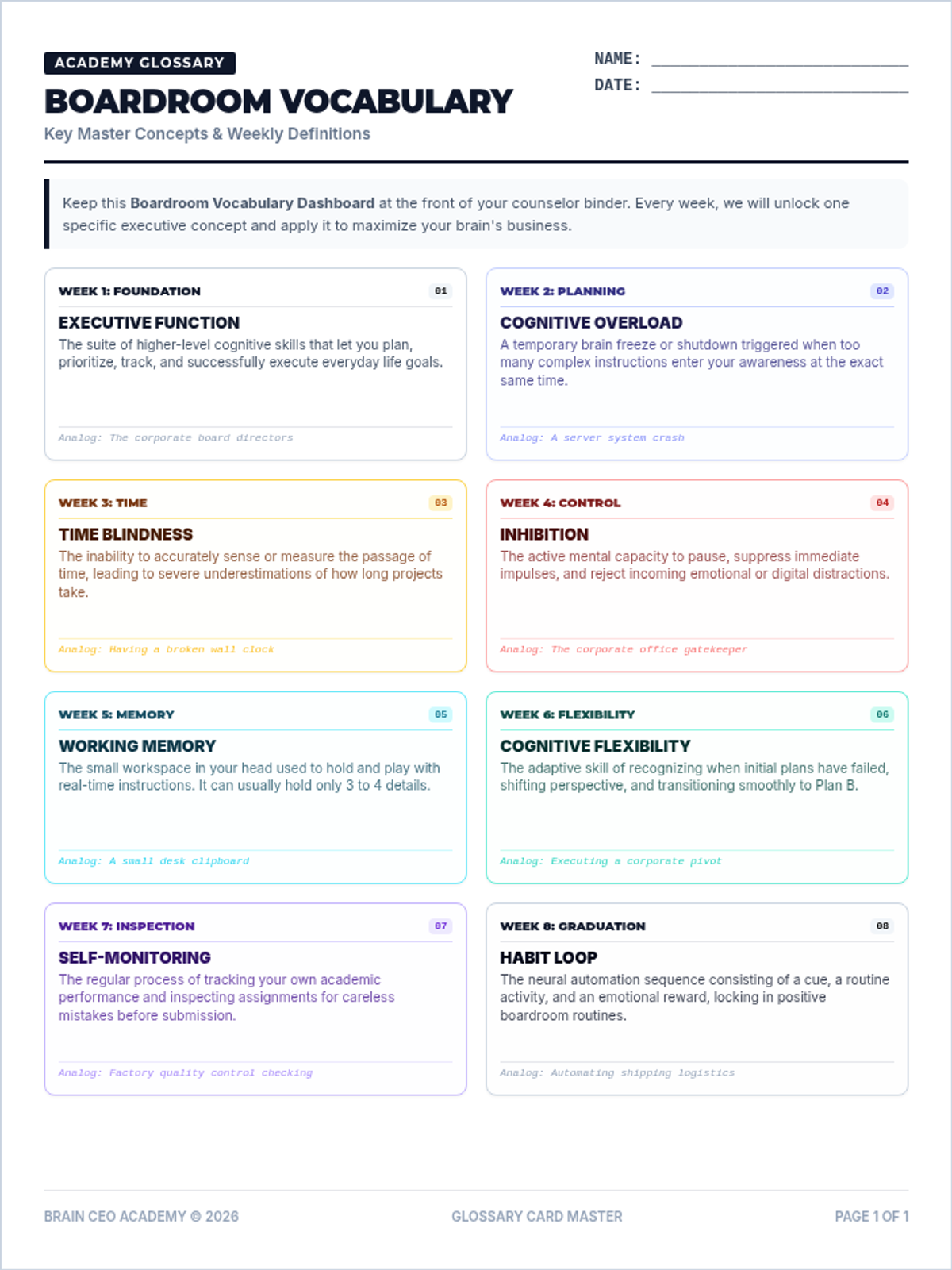
Students are introduced to the group, establish norms, and explore the 'Brain CEO' metaphor. They conduct an initial Boardroom Audit (Self-Assessment) to identify their brain's strongest and weakest executive departments.
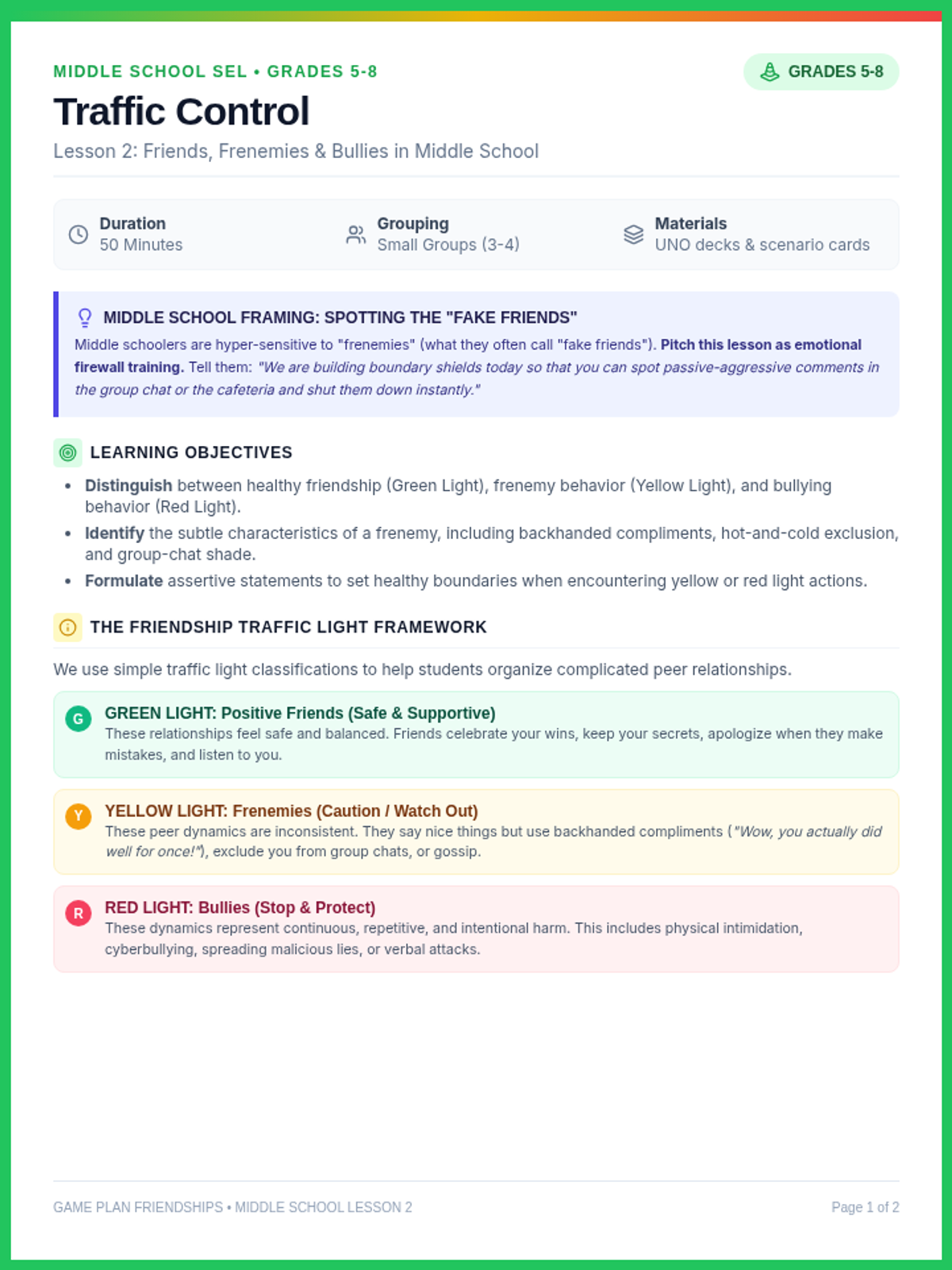
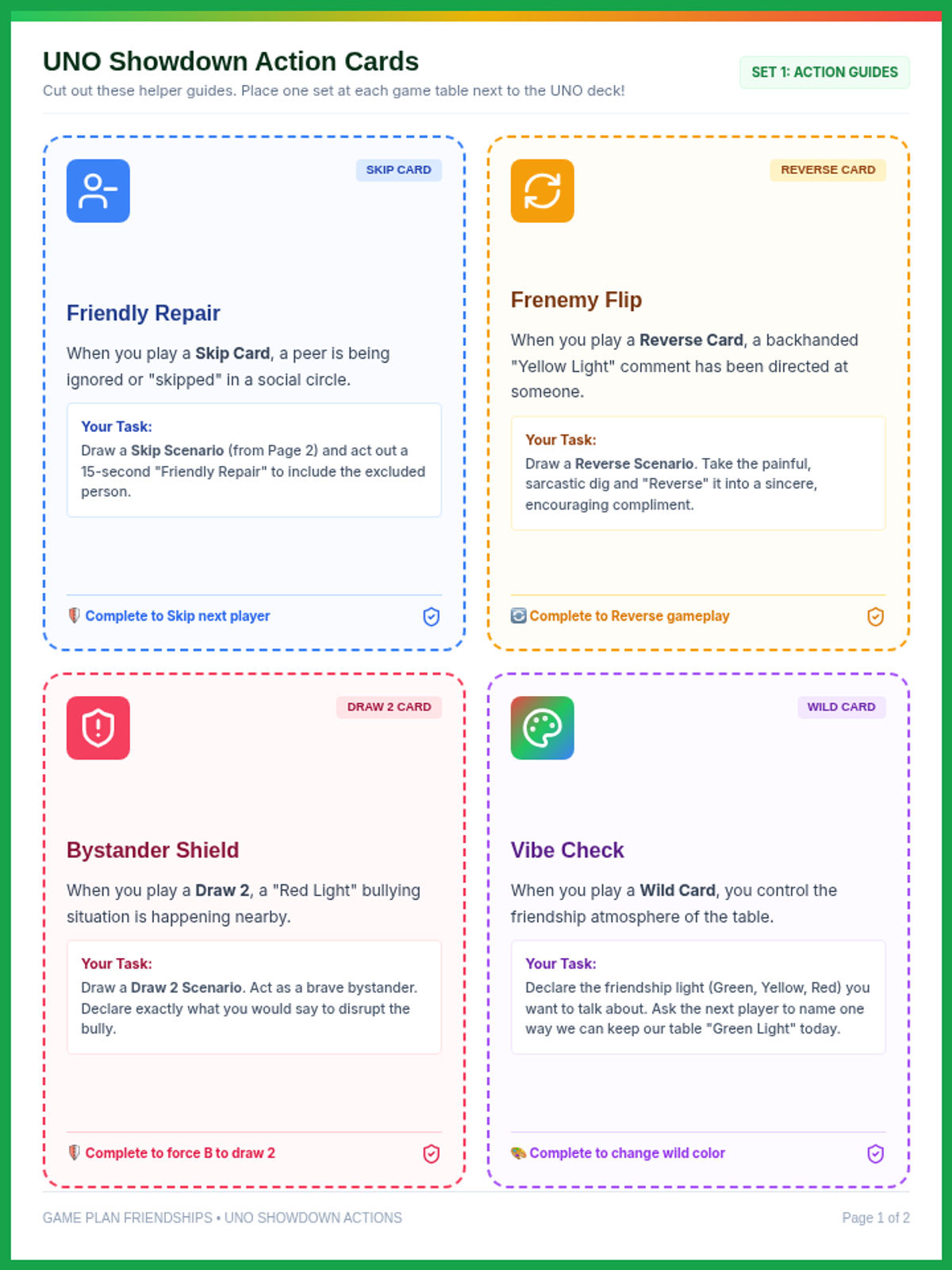
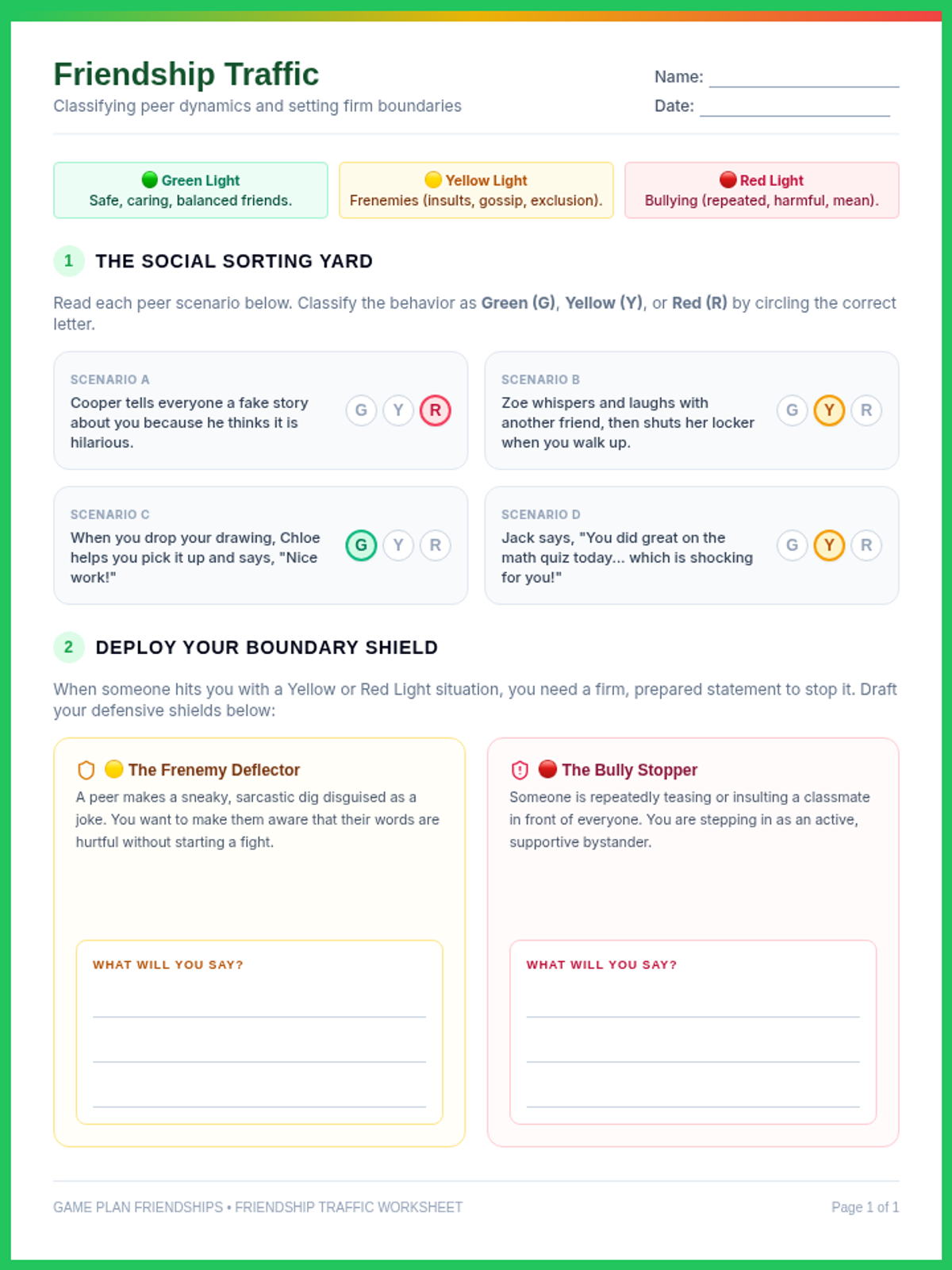
Students learn to classify peer dynamics as friends, frenemies, or bullies using "UNO Showdown" action cards to trigger role-play and conflict-resolution.
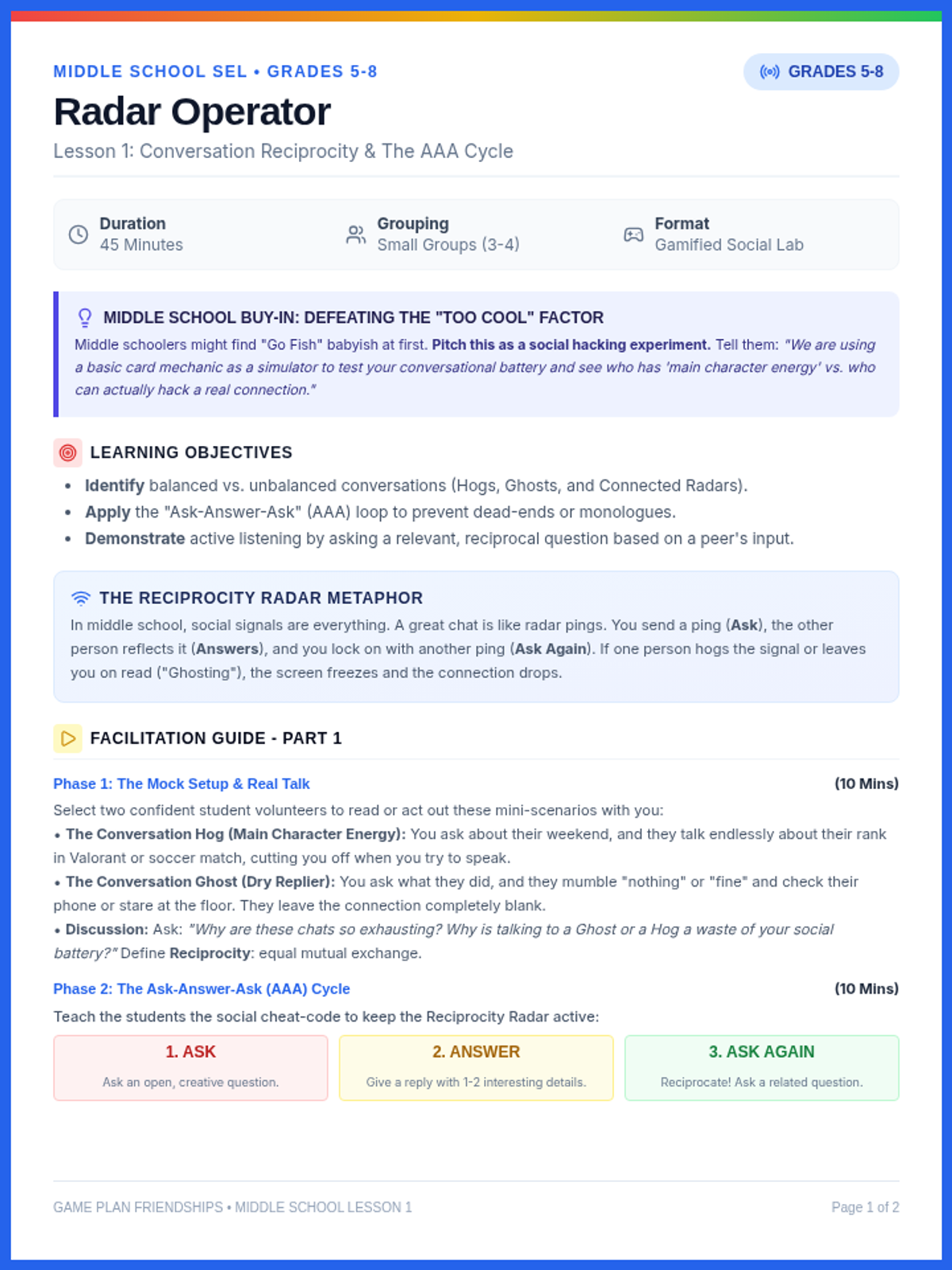
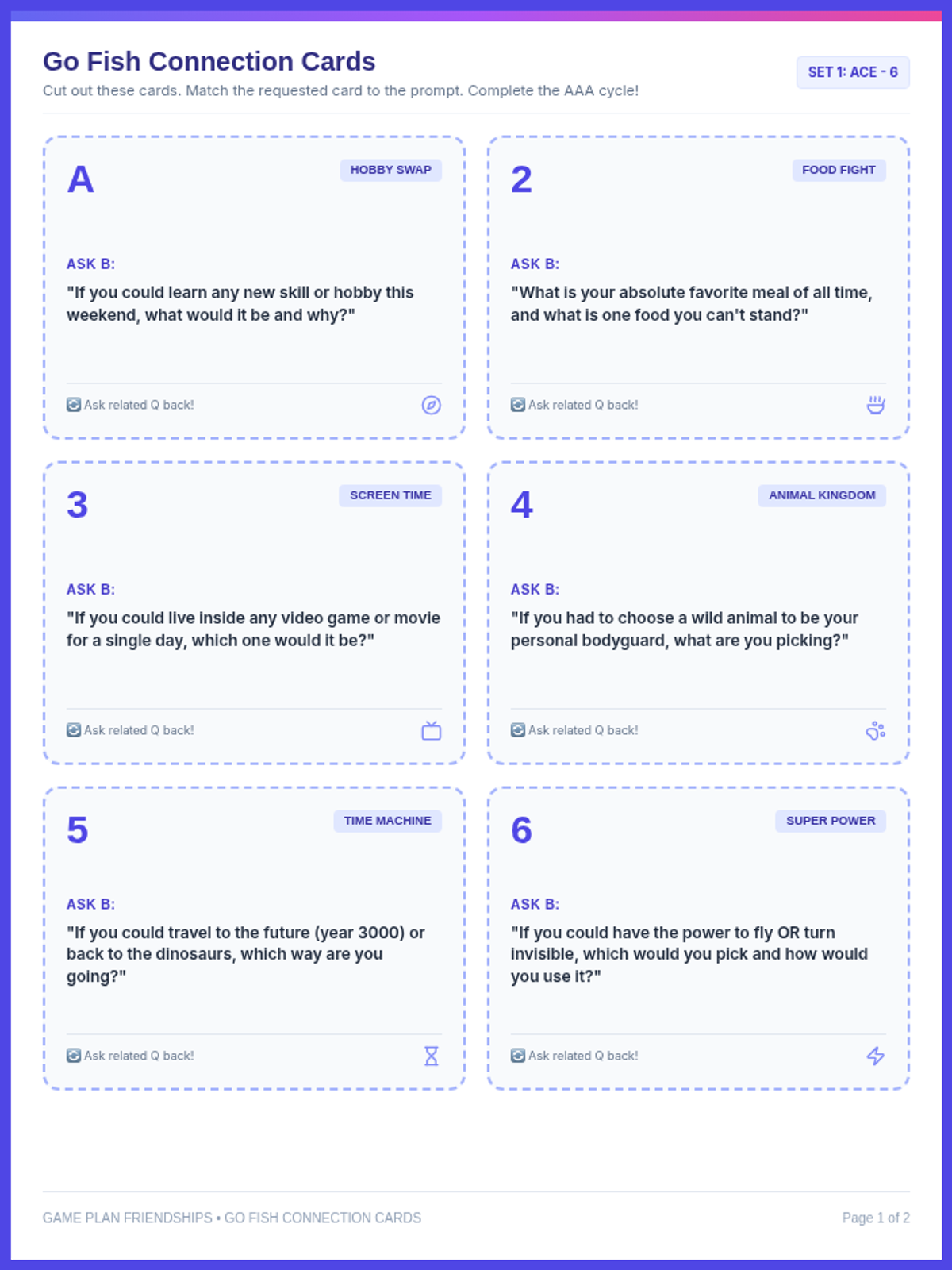
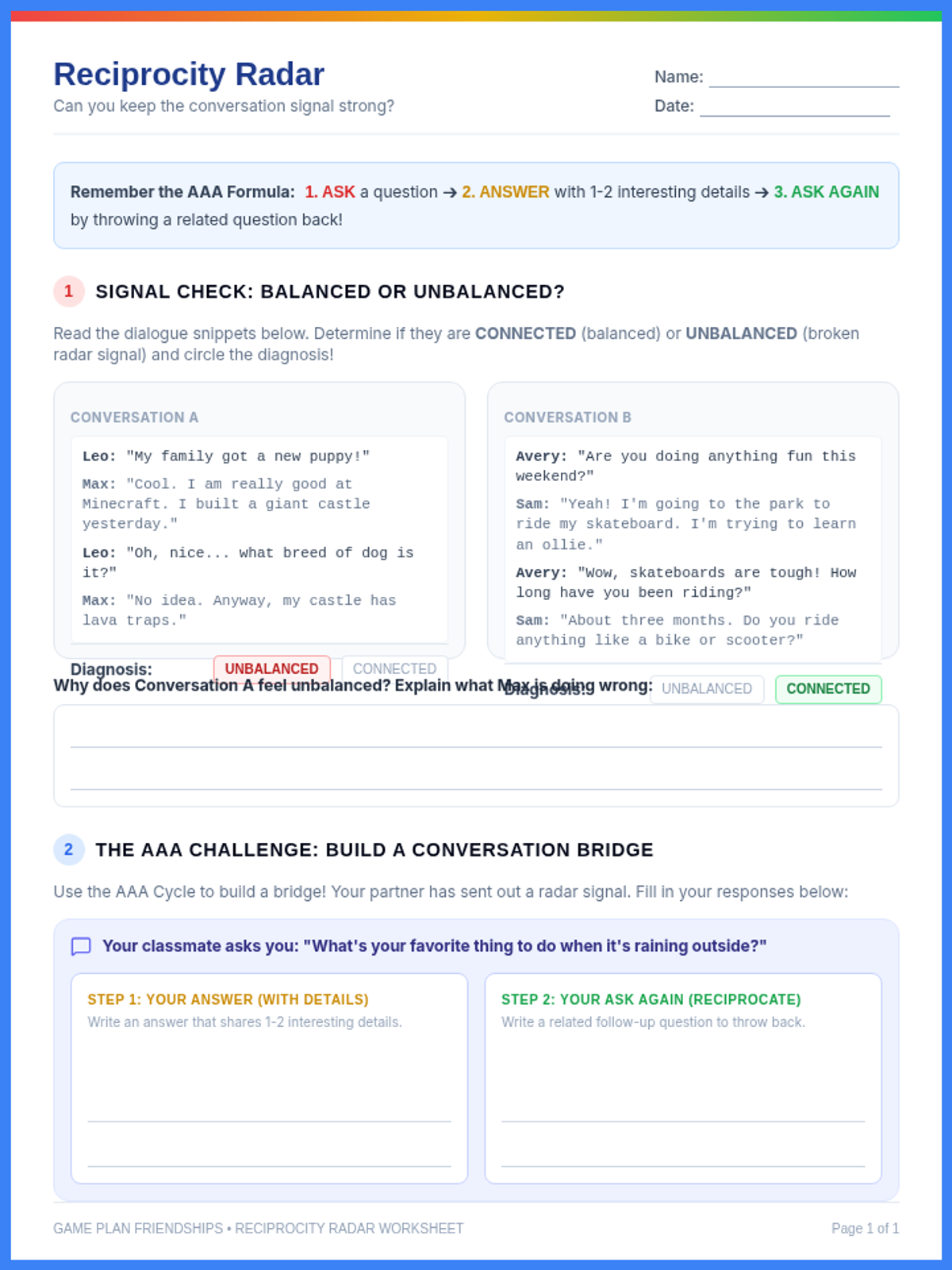
Students master conversation turn-taking and reciprocating by playing "Go Fish Connection," where asking for matches triggers targeted questions.
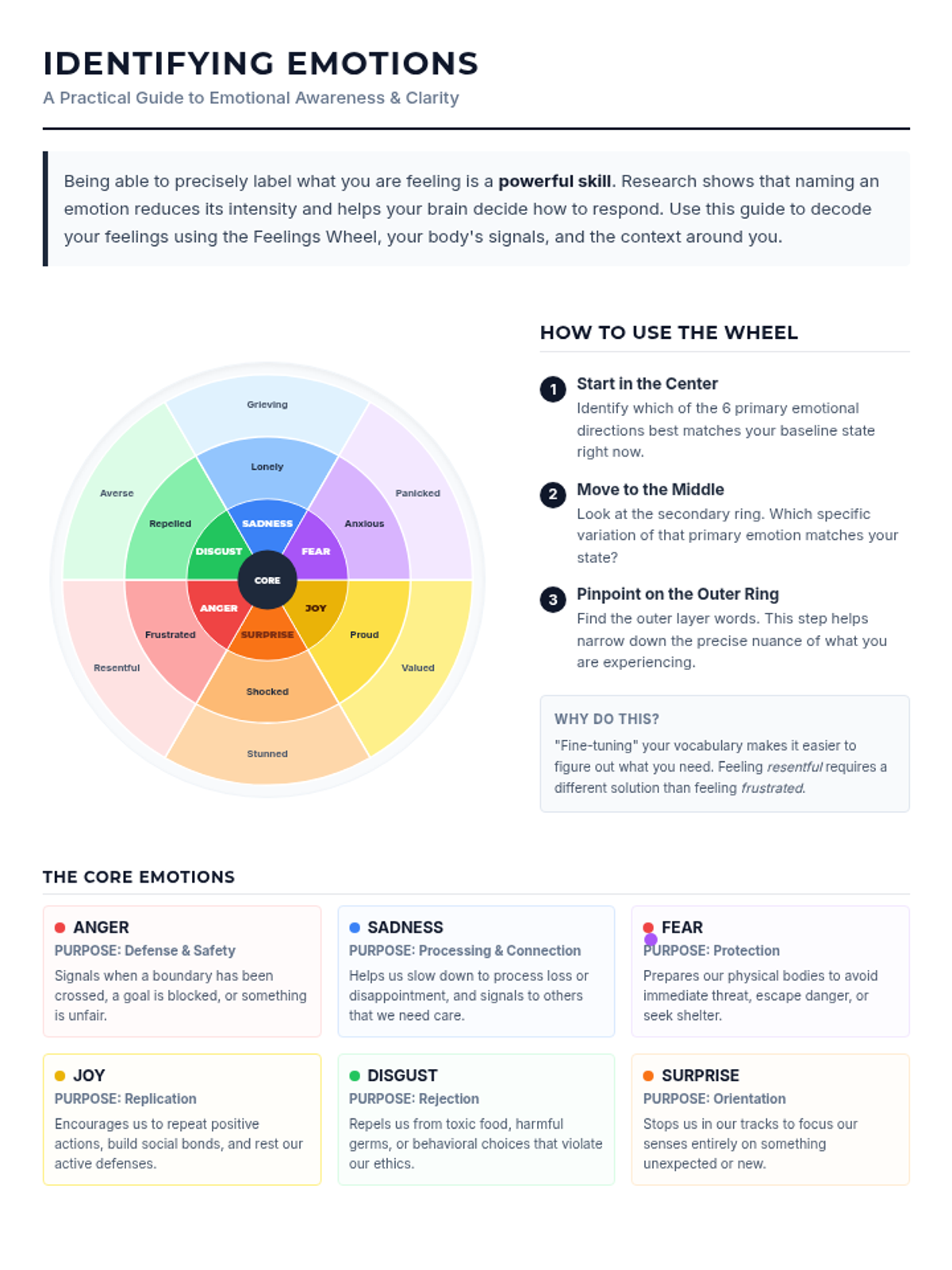
A middle-school guide to emotional awareness. This lesson introduces students to identifying and labeling their emotions using physical cues, external context, and a categorized feelings wheel.
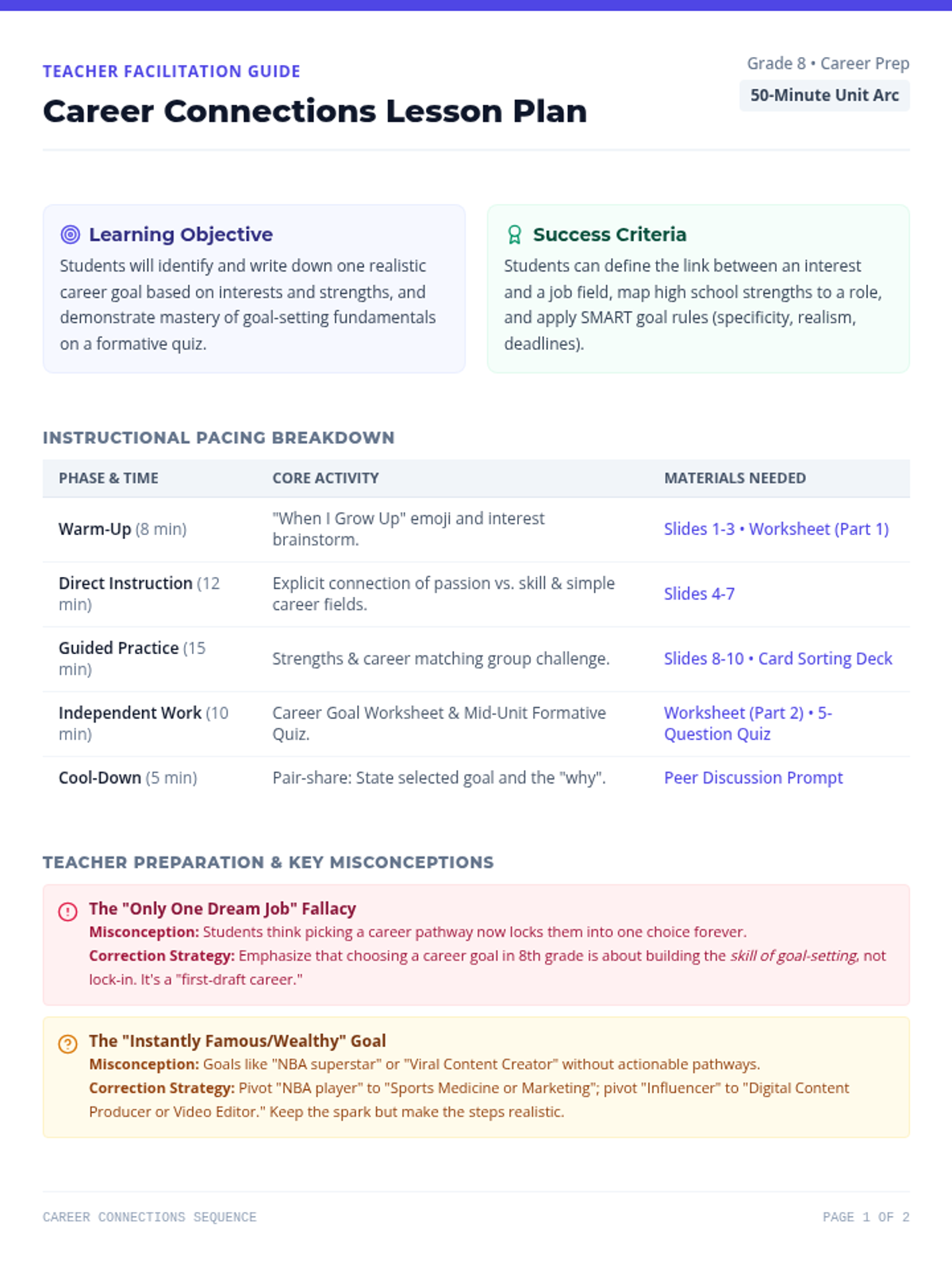
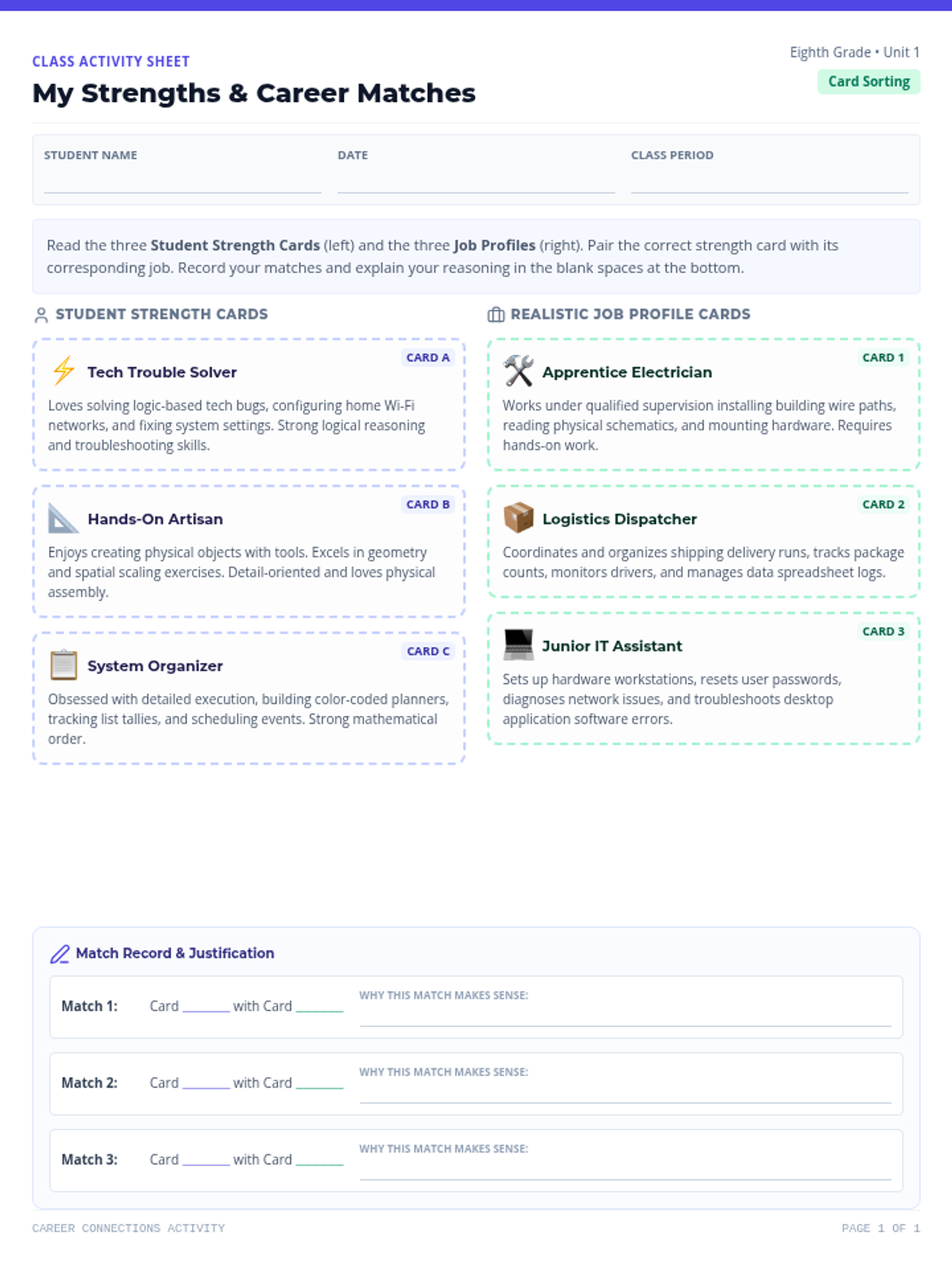
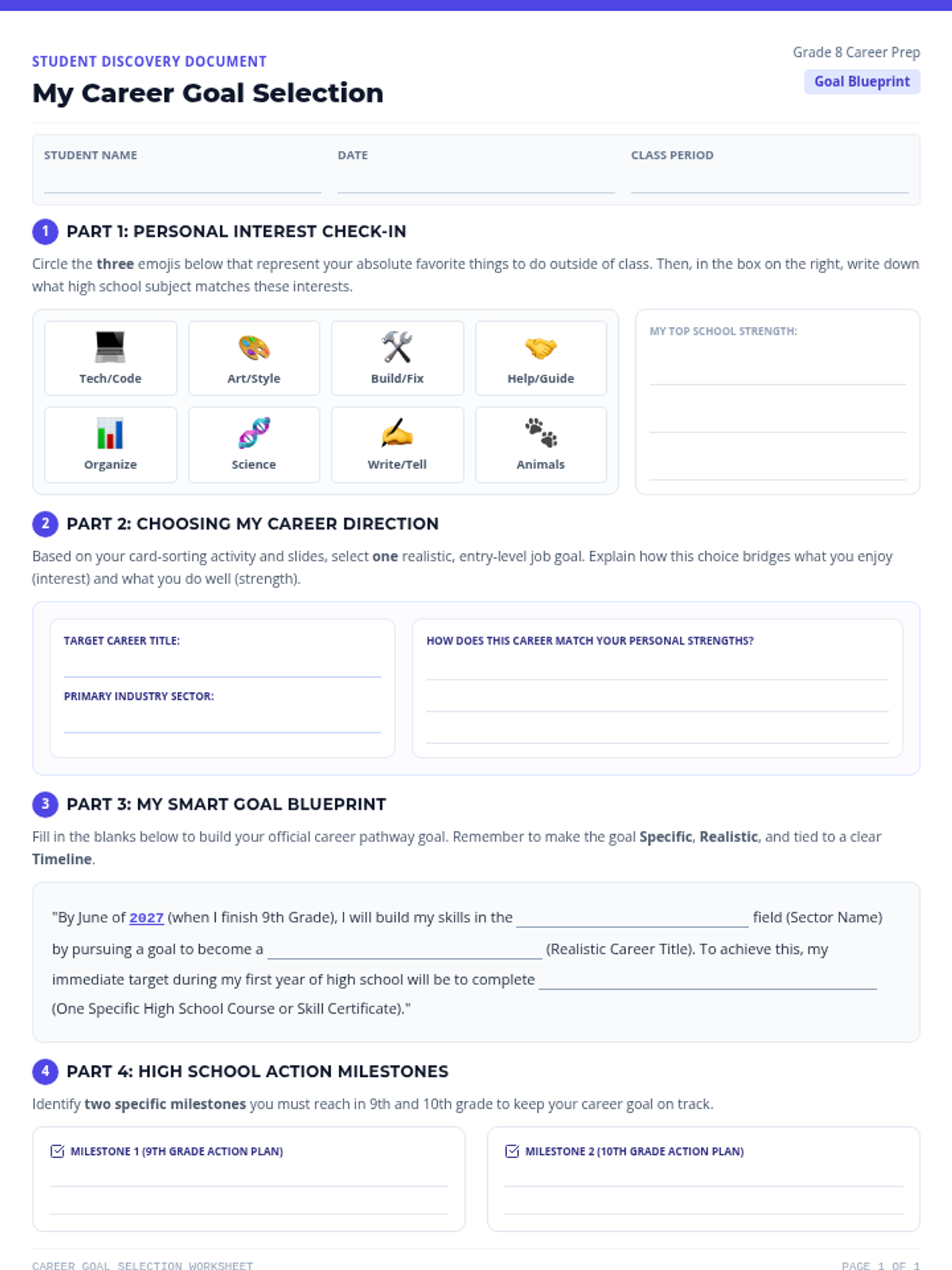
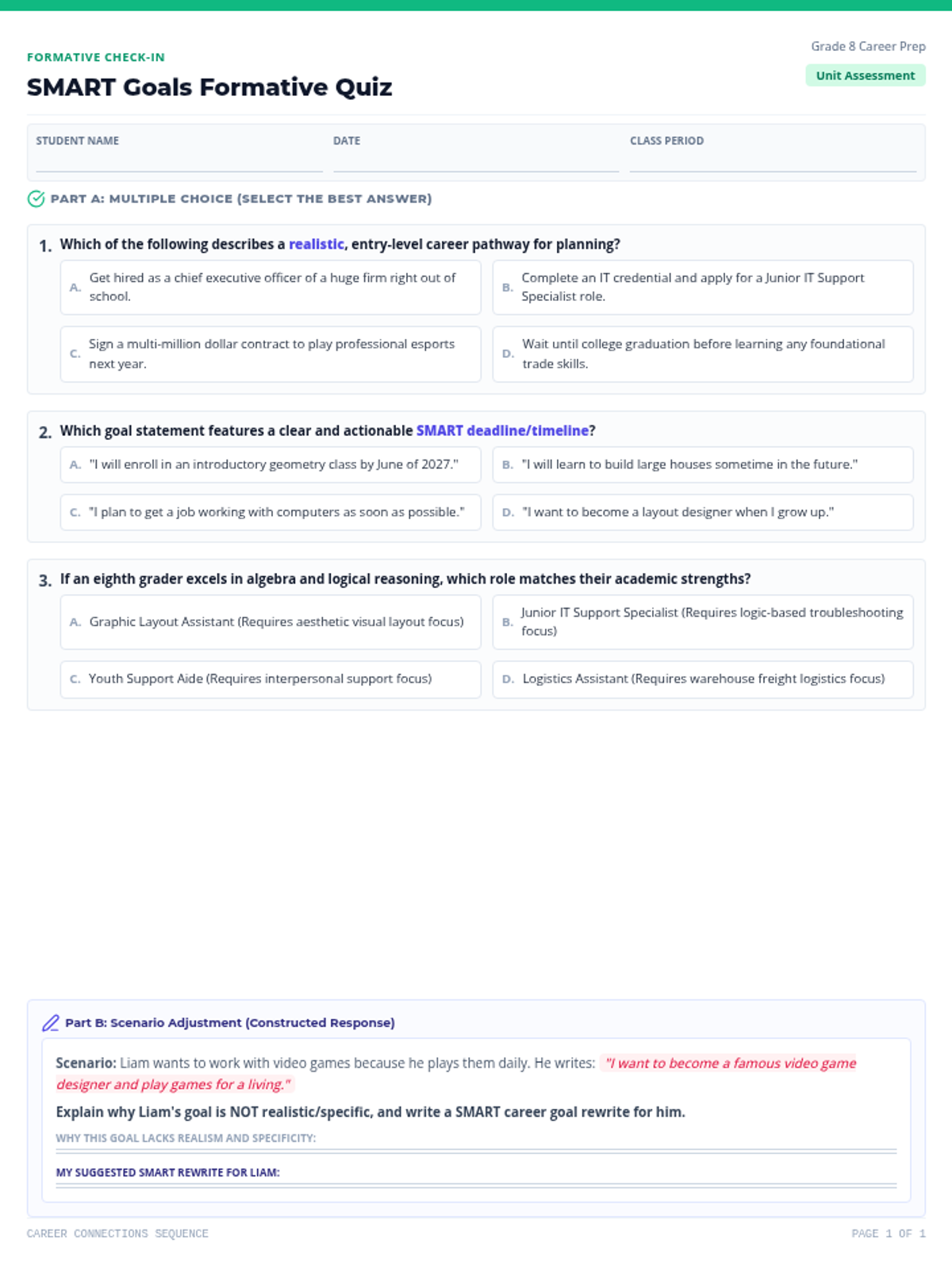
An interactive 8th-grade lesson that helps students connect their personal interests and strengths to realistic career goals, concluding with a visual formative assessment.
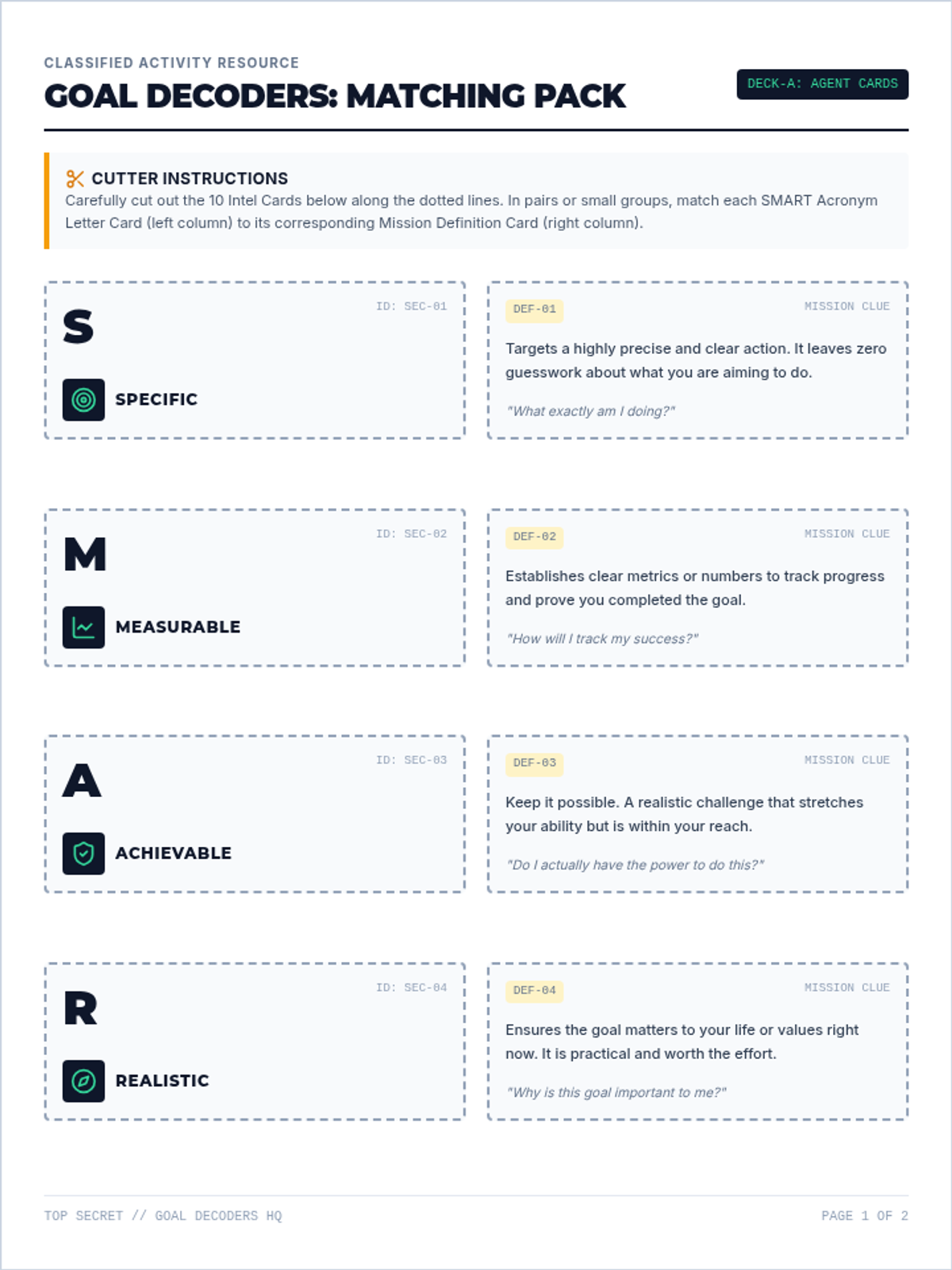
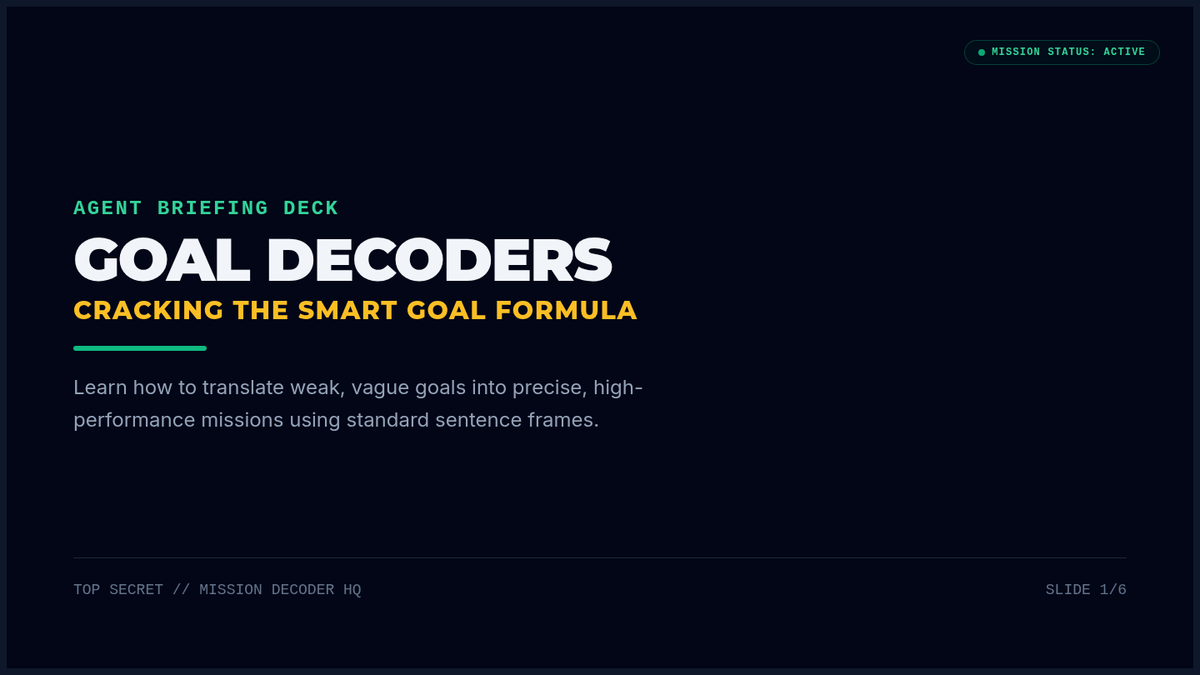
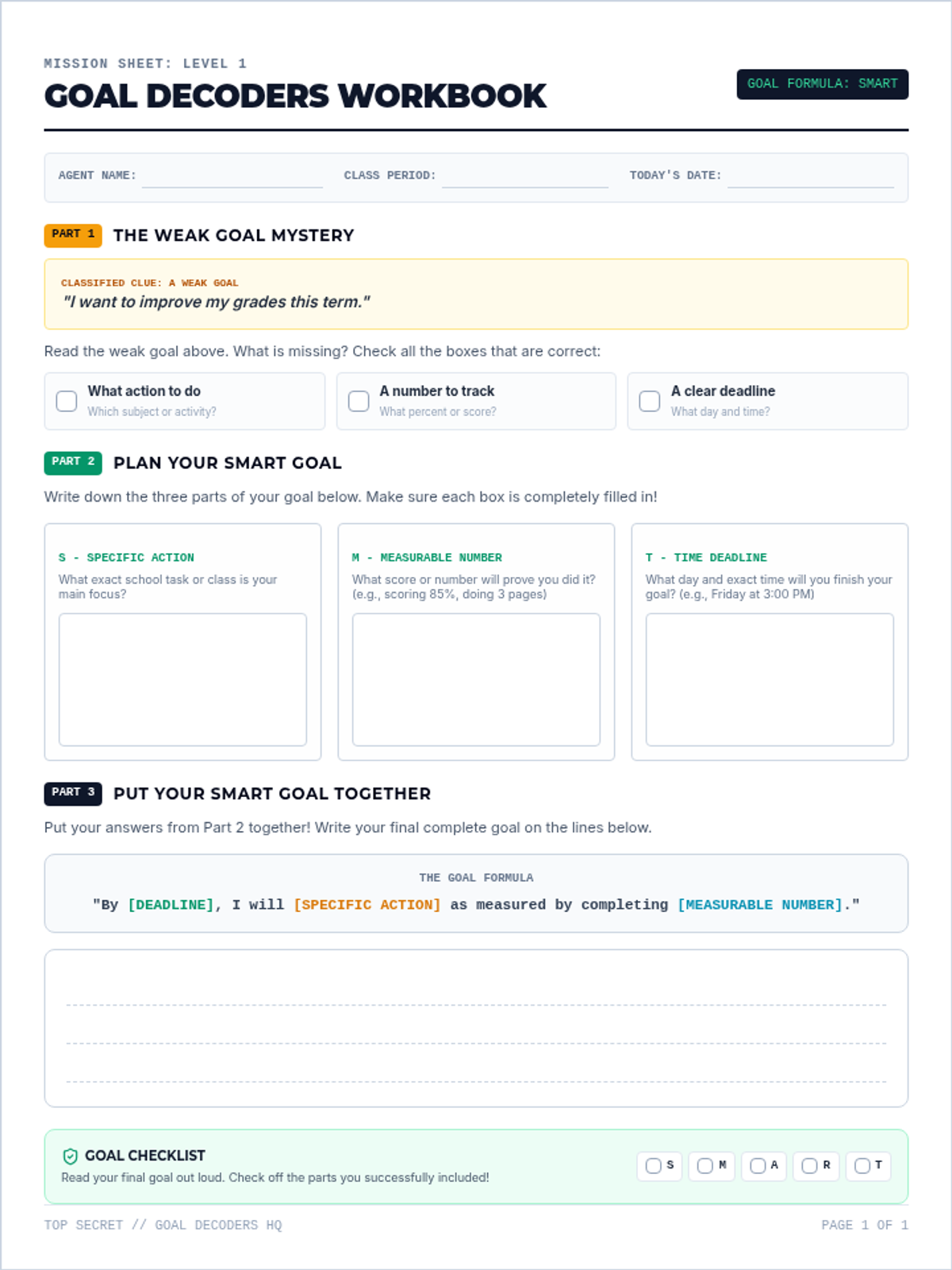
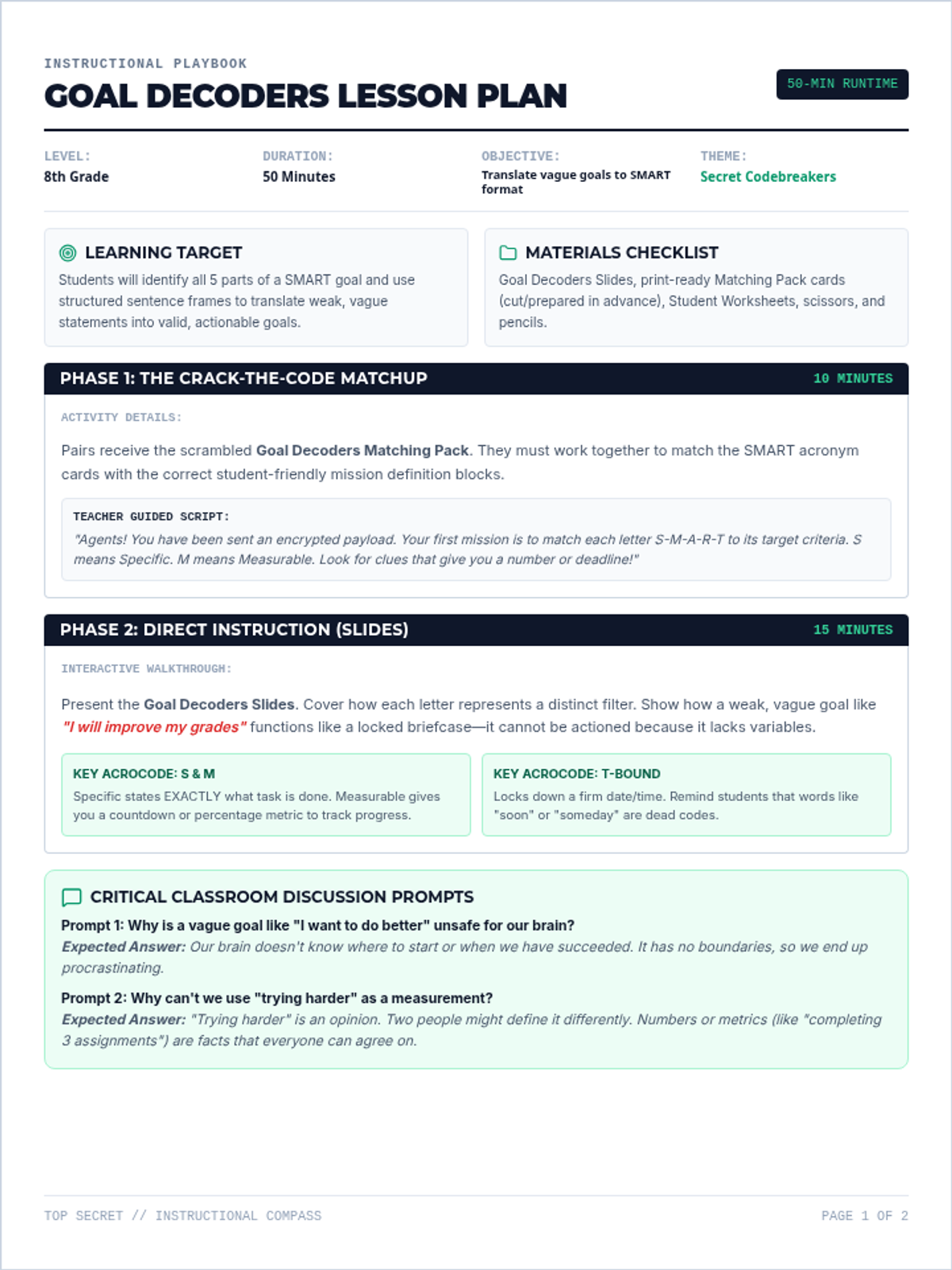
An 8th-grade lesson that transforms students into Goal Decoders using a secret-agent theme to crack the SMART goal formula. Students learn to translate vague, weak goals into precise, actionable missions using structured sentence frames.
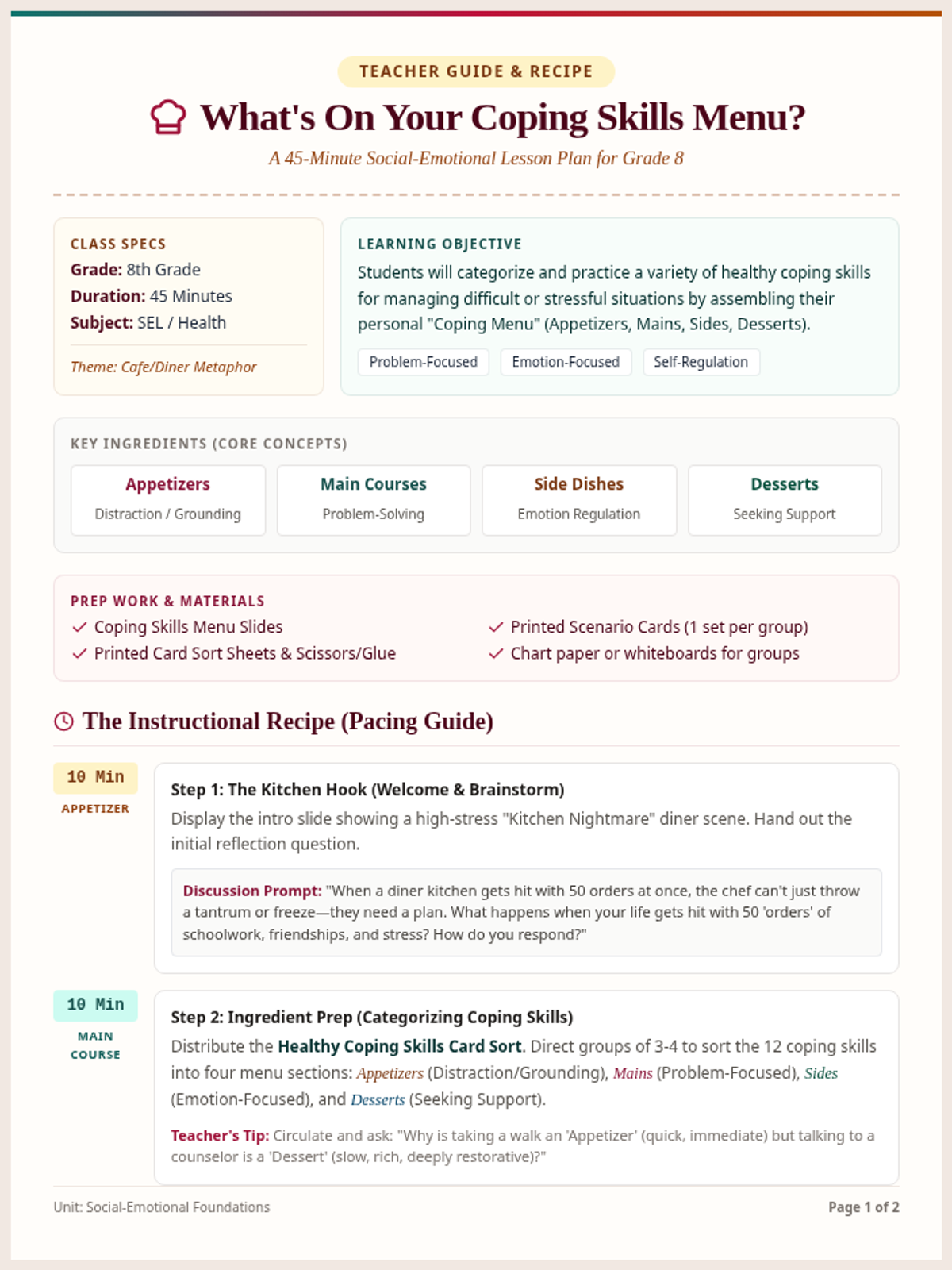
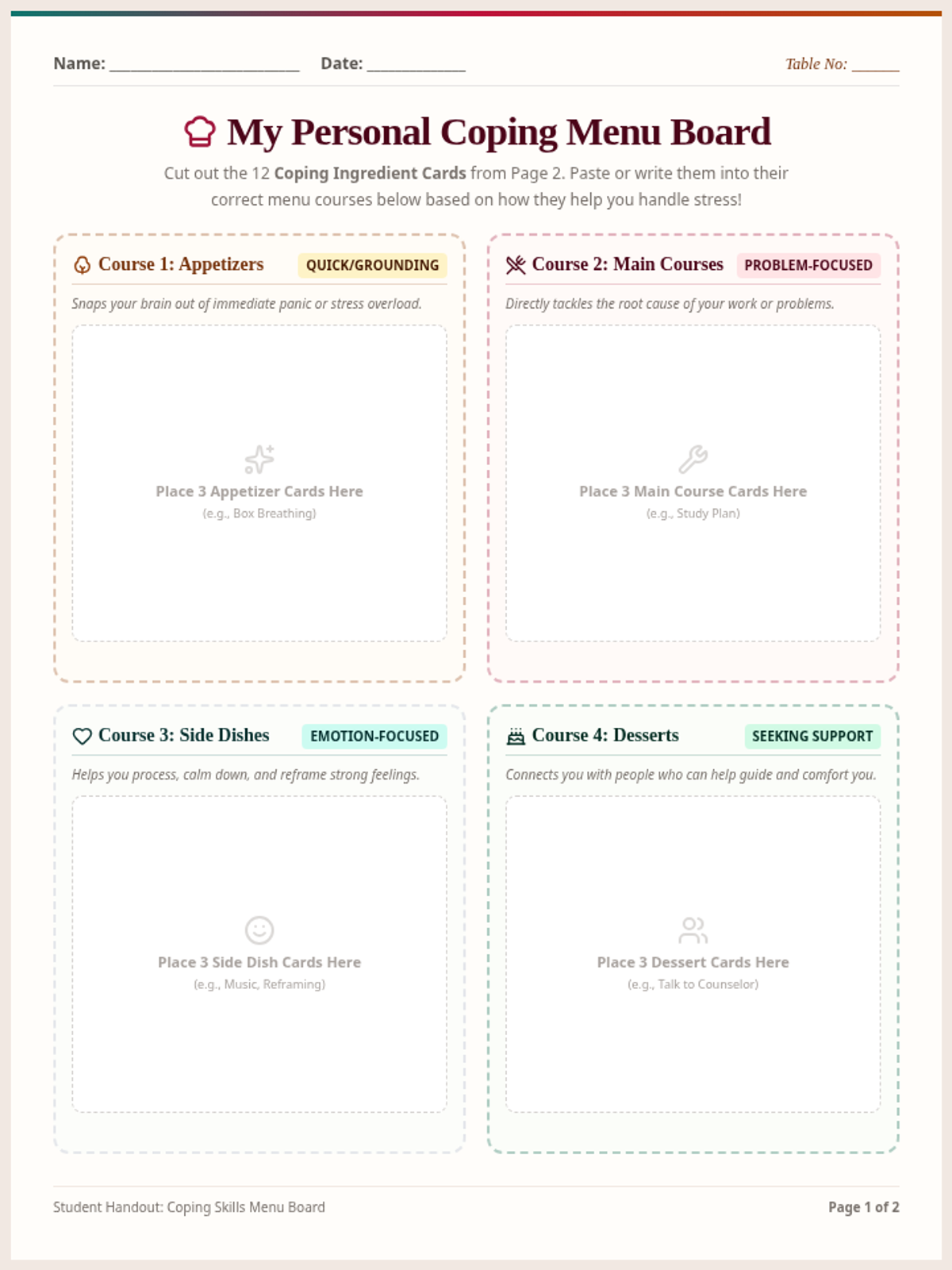
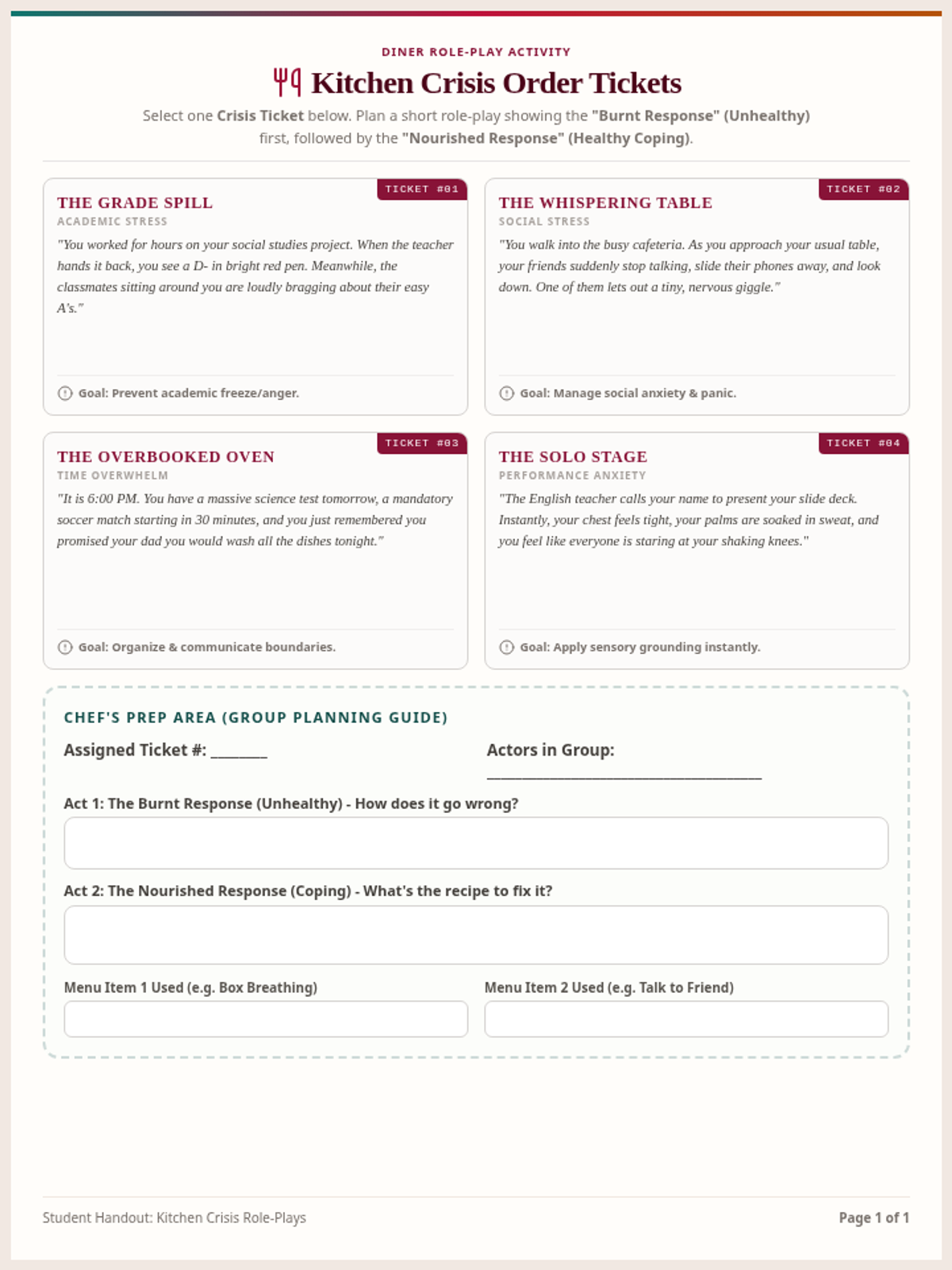
A 45-minute social-emotional learning lesson for 8th-grade students, centered around a restaurant menu metaphor to help them explore, categorize, and practice healthy coping strategies for handling stress.
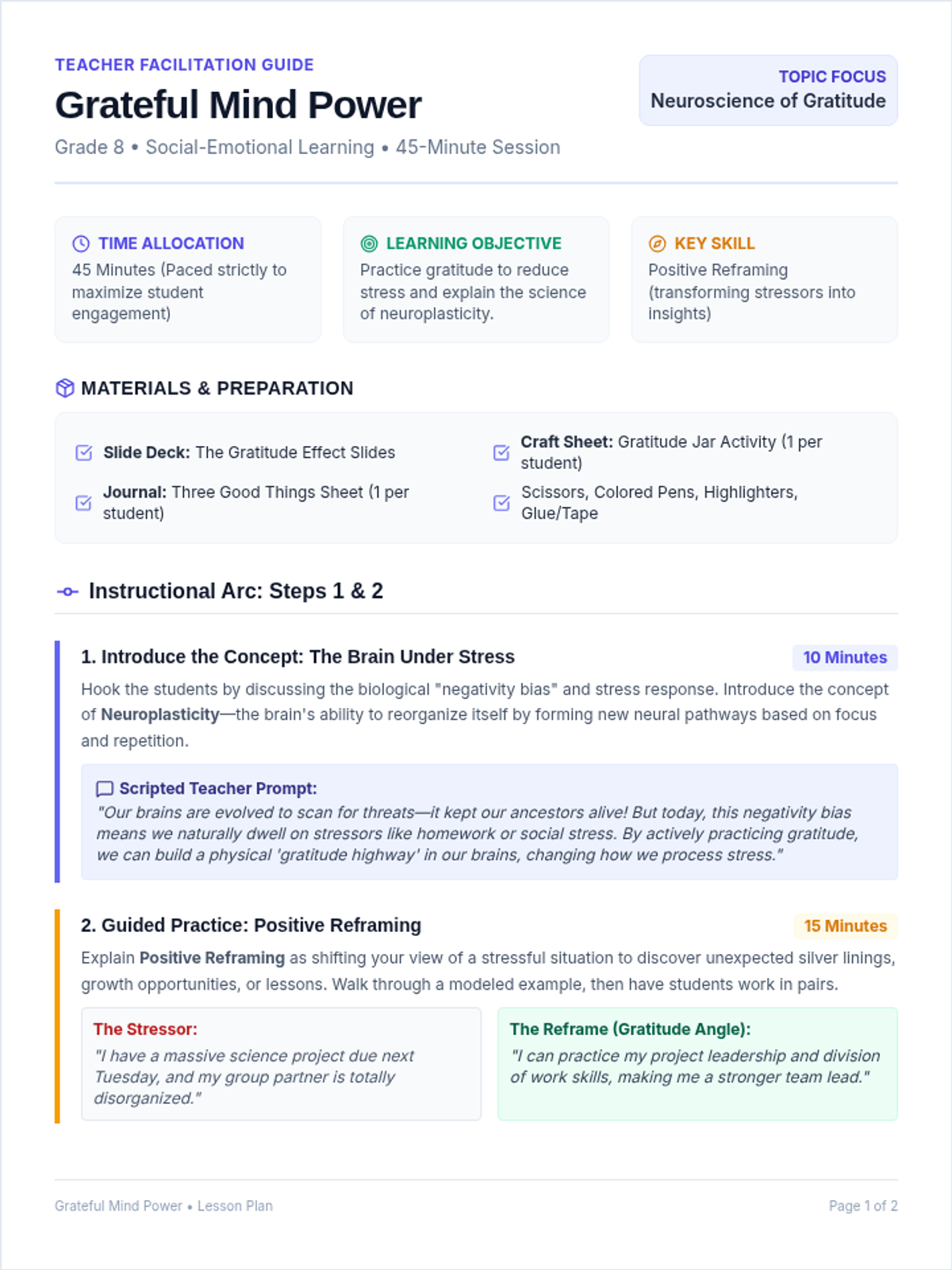
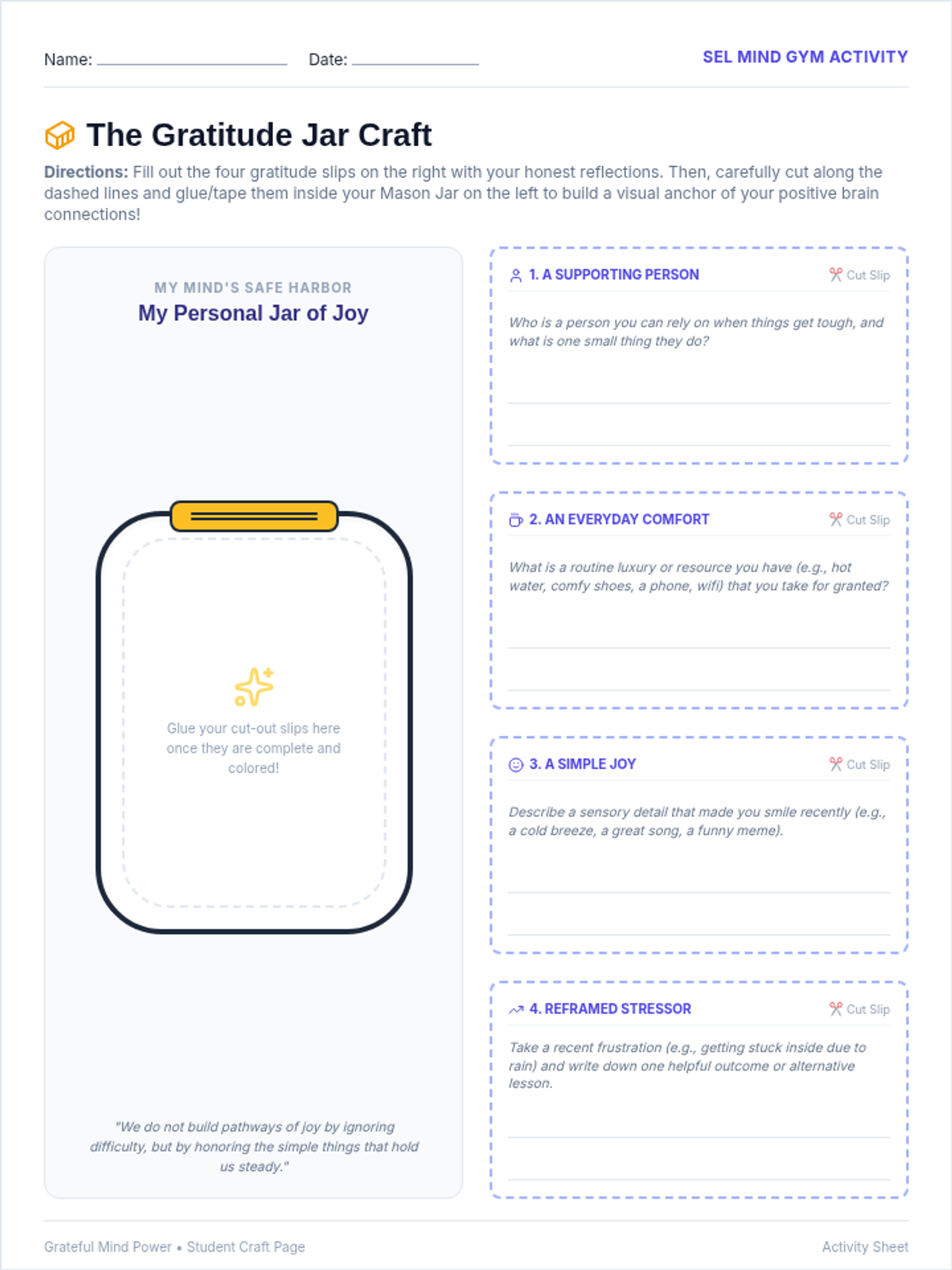
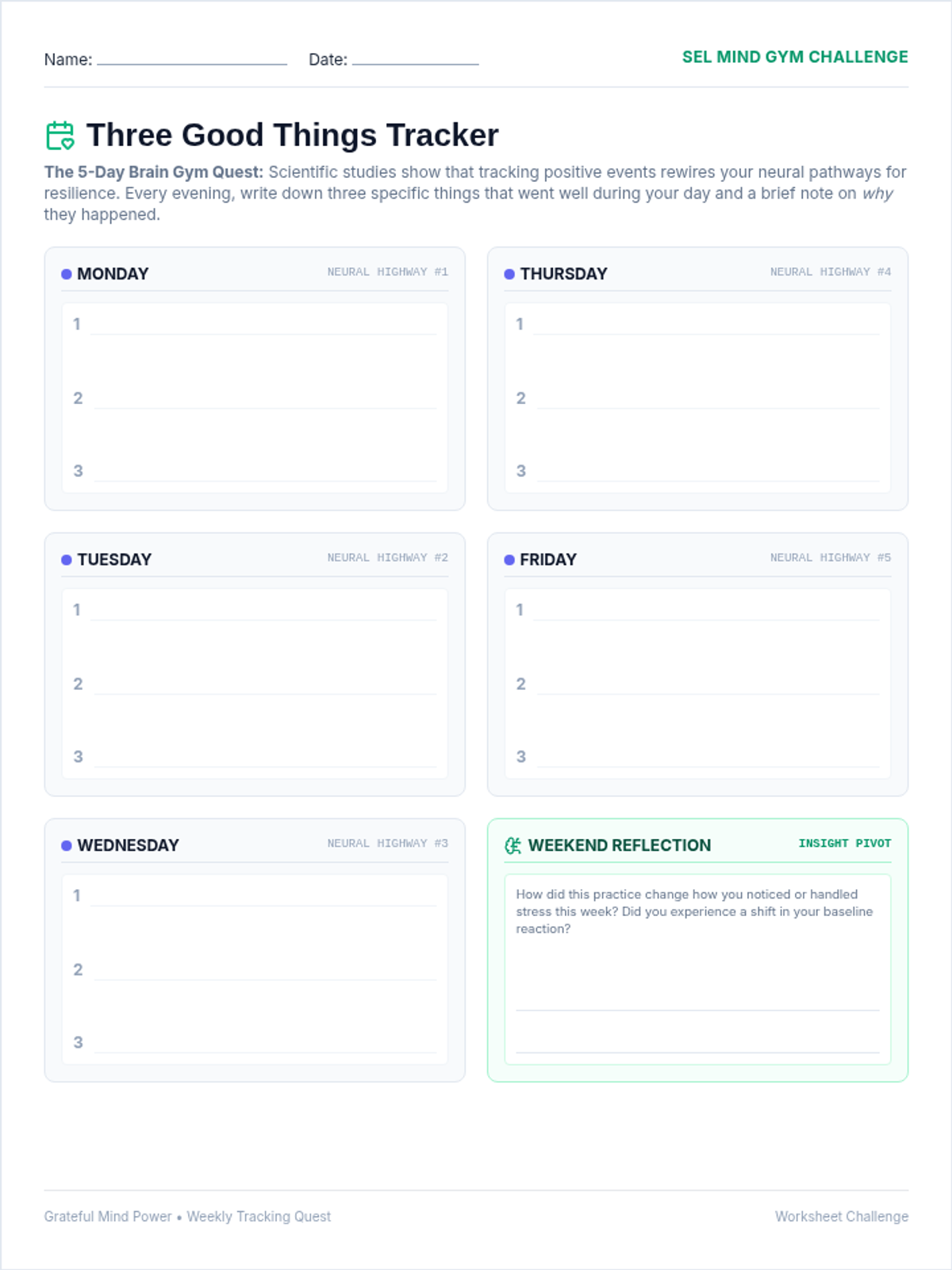
An 8th-grade lesson focusing on gratitude as a mindfulness and stress-reduction tool, exploring the science of neuroplasticity and positive reframing to help students shift their everyday perspectives.
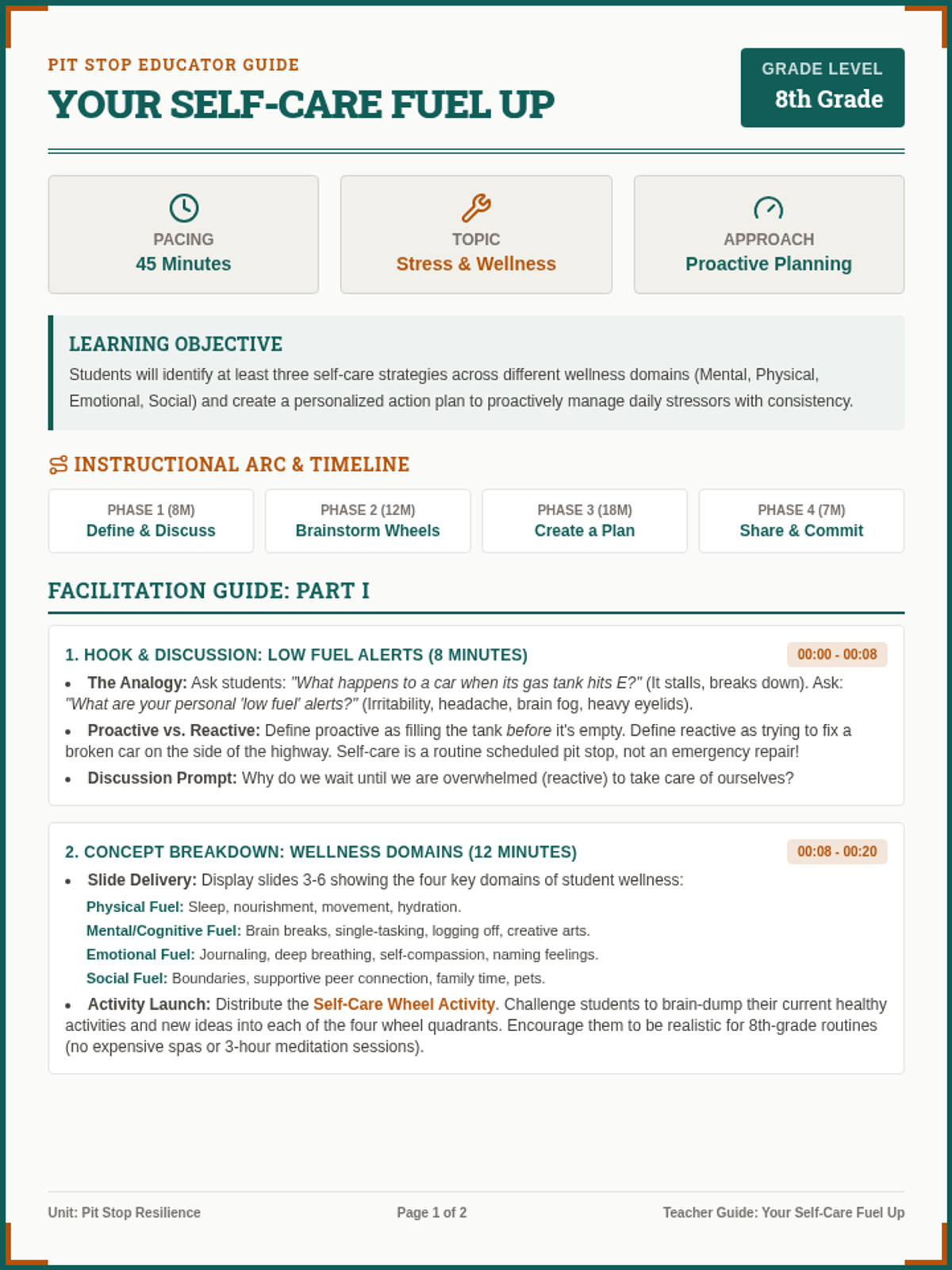
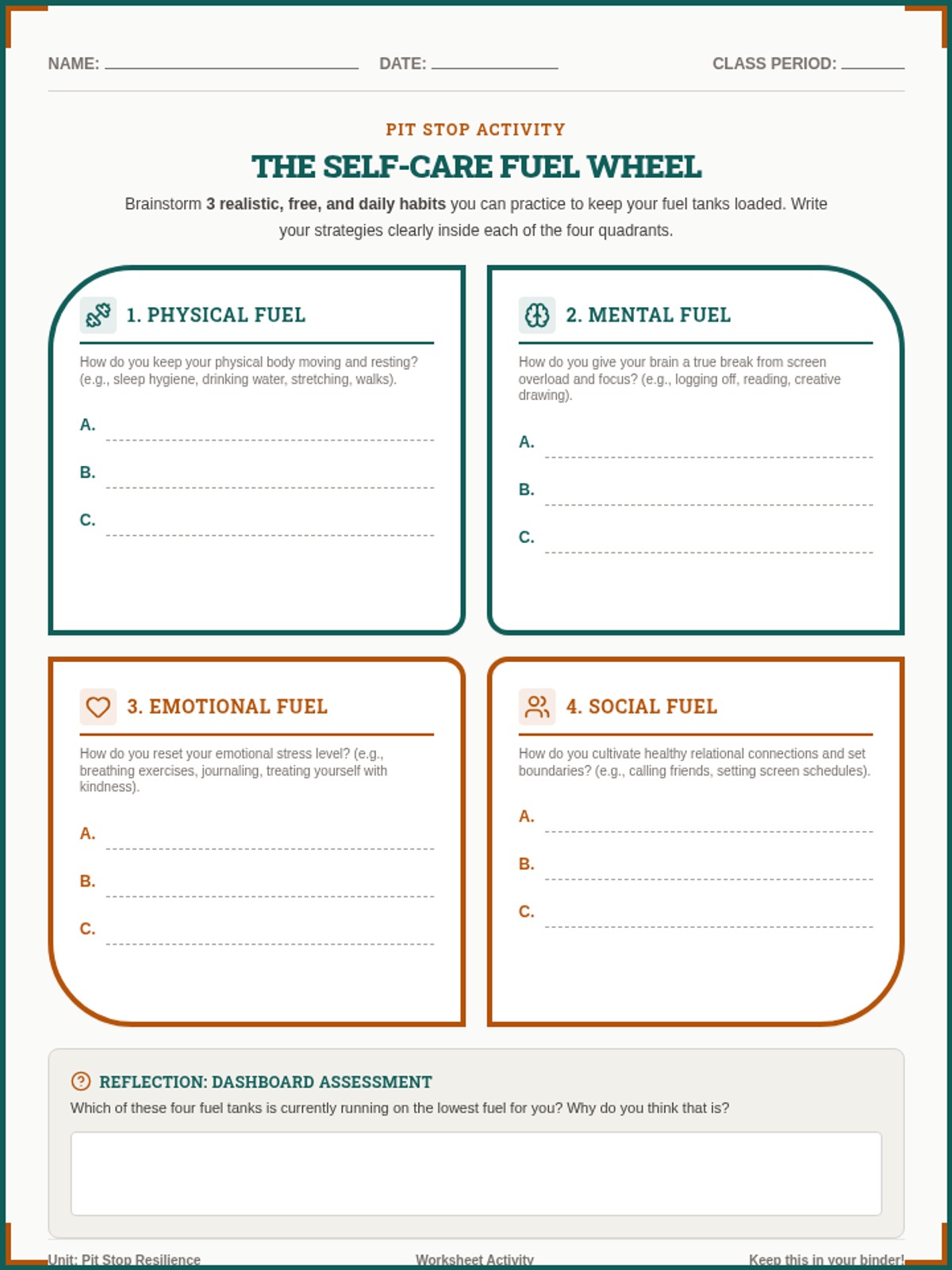
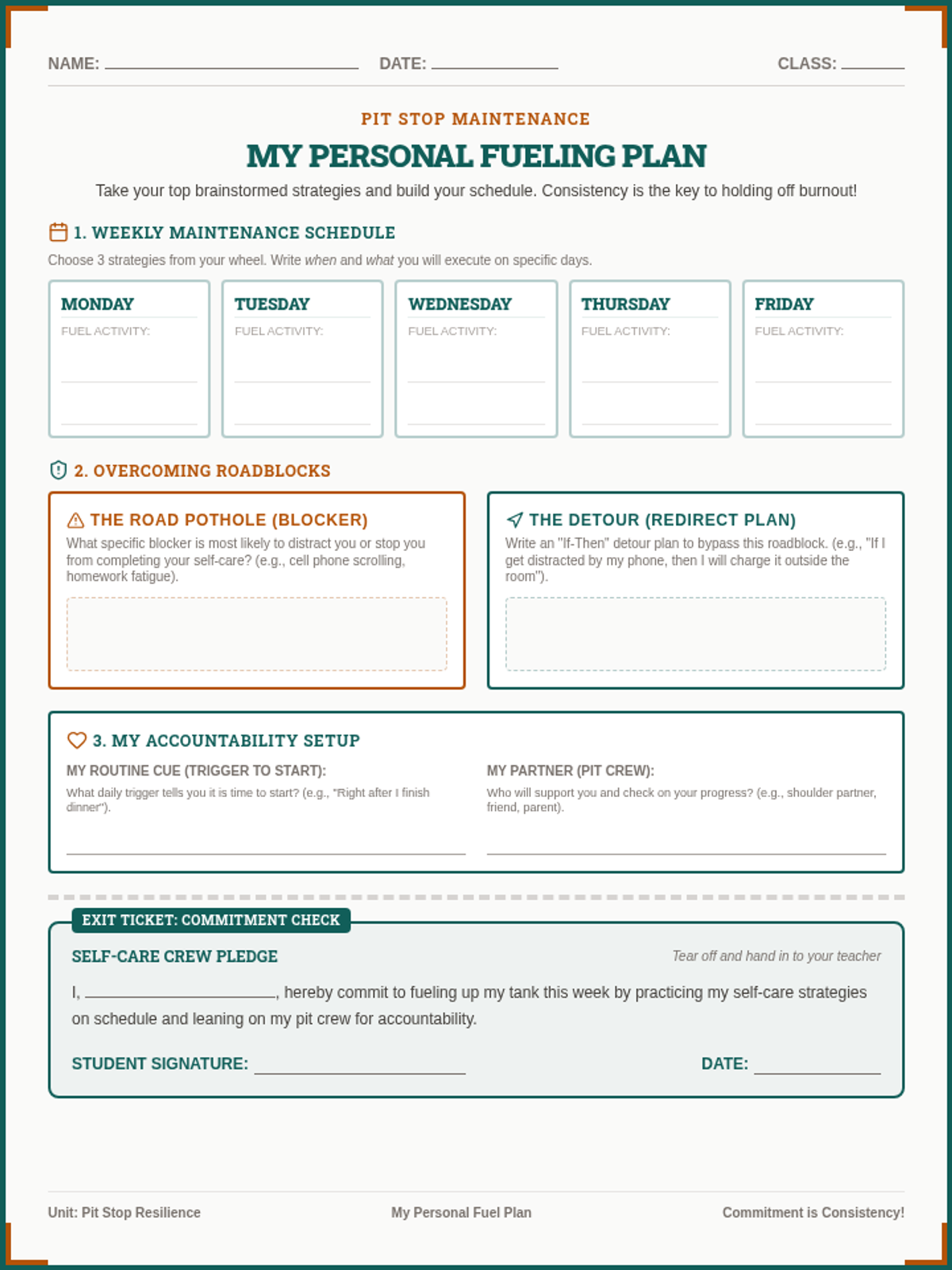
A 45-minute wellness lesson for 8th-grade students that introduces the concept of proactive self-care across different life domains and guides them in building a personalized, sustainable self-care action plan.
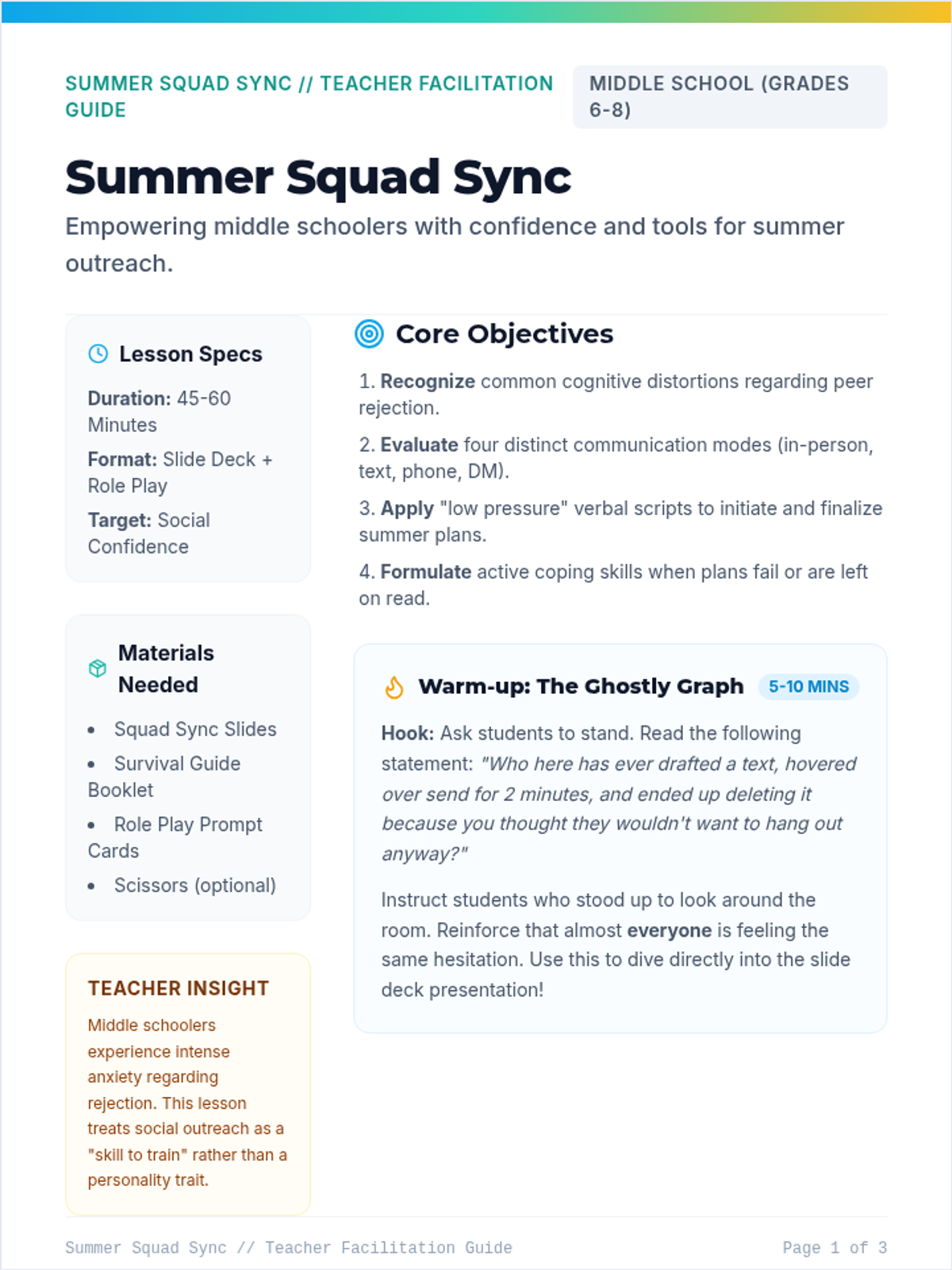
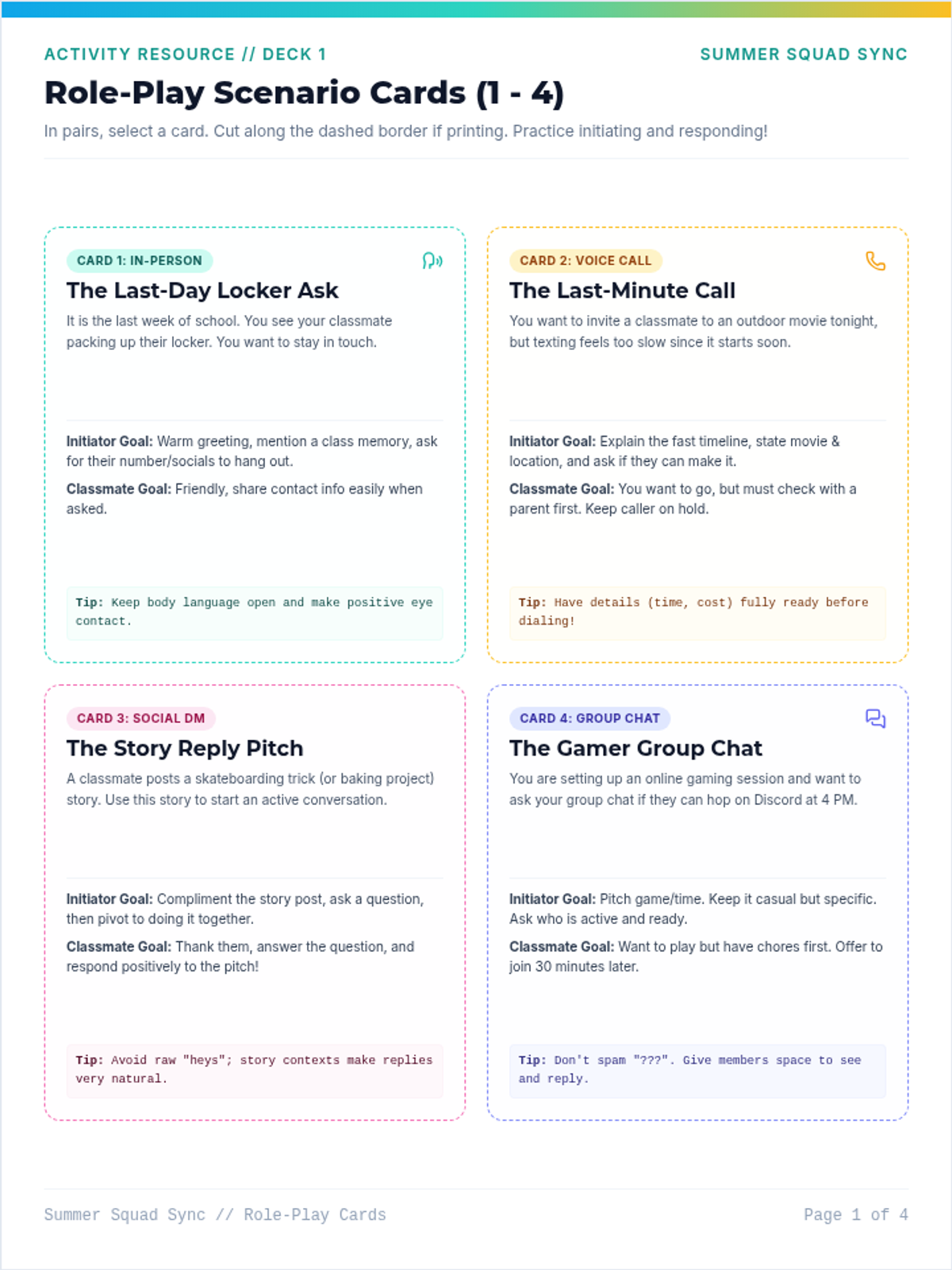
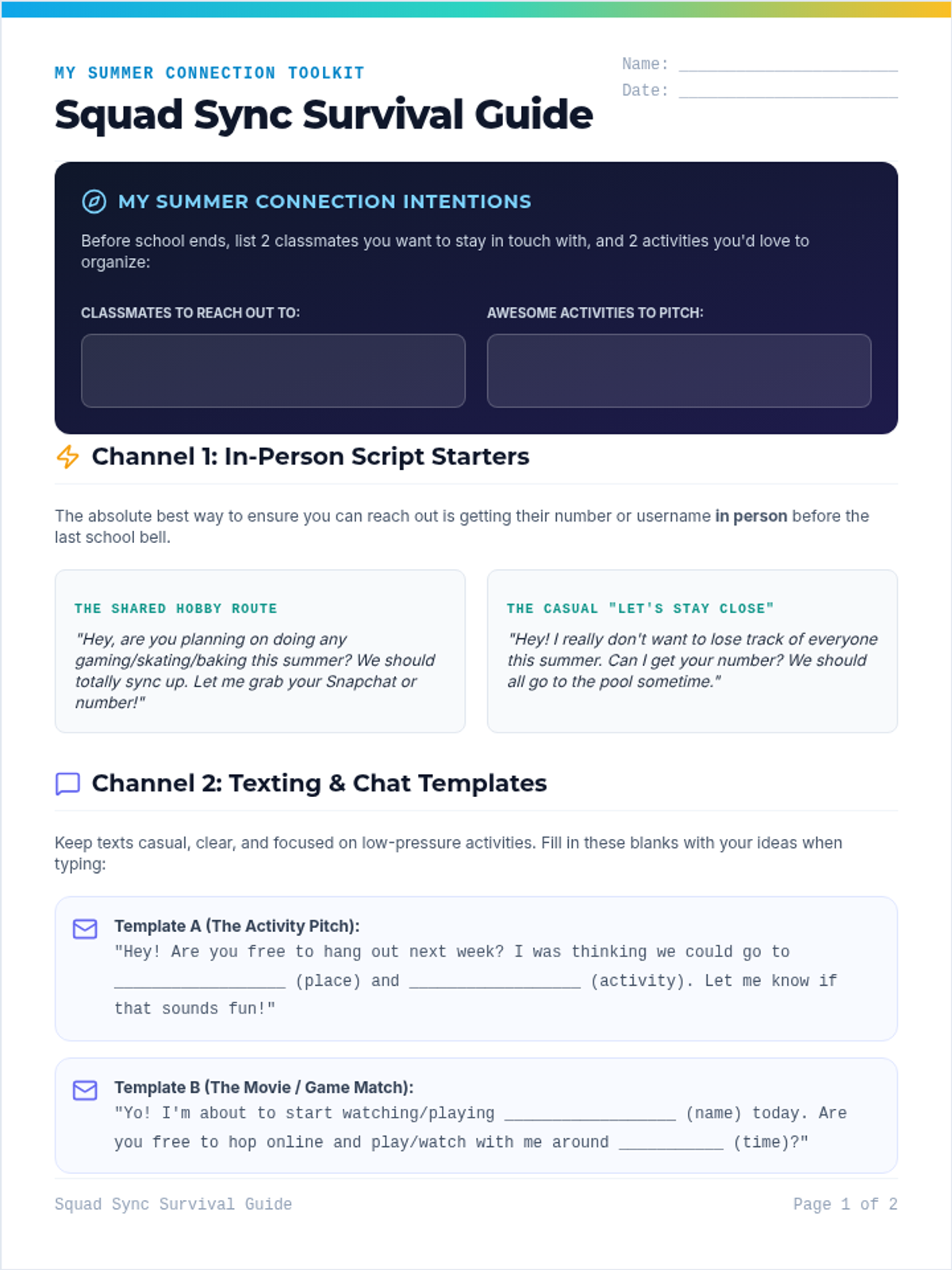
A comprehensive social skills lesson designed to help middle schoolers confidently reach out, initiate conversations, and coordinate summer hangout plans with classmates using various communication channels.
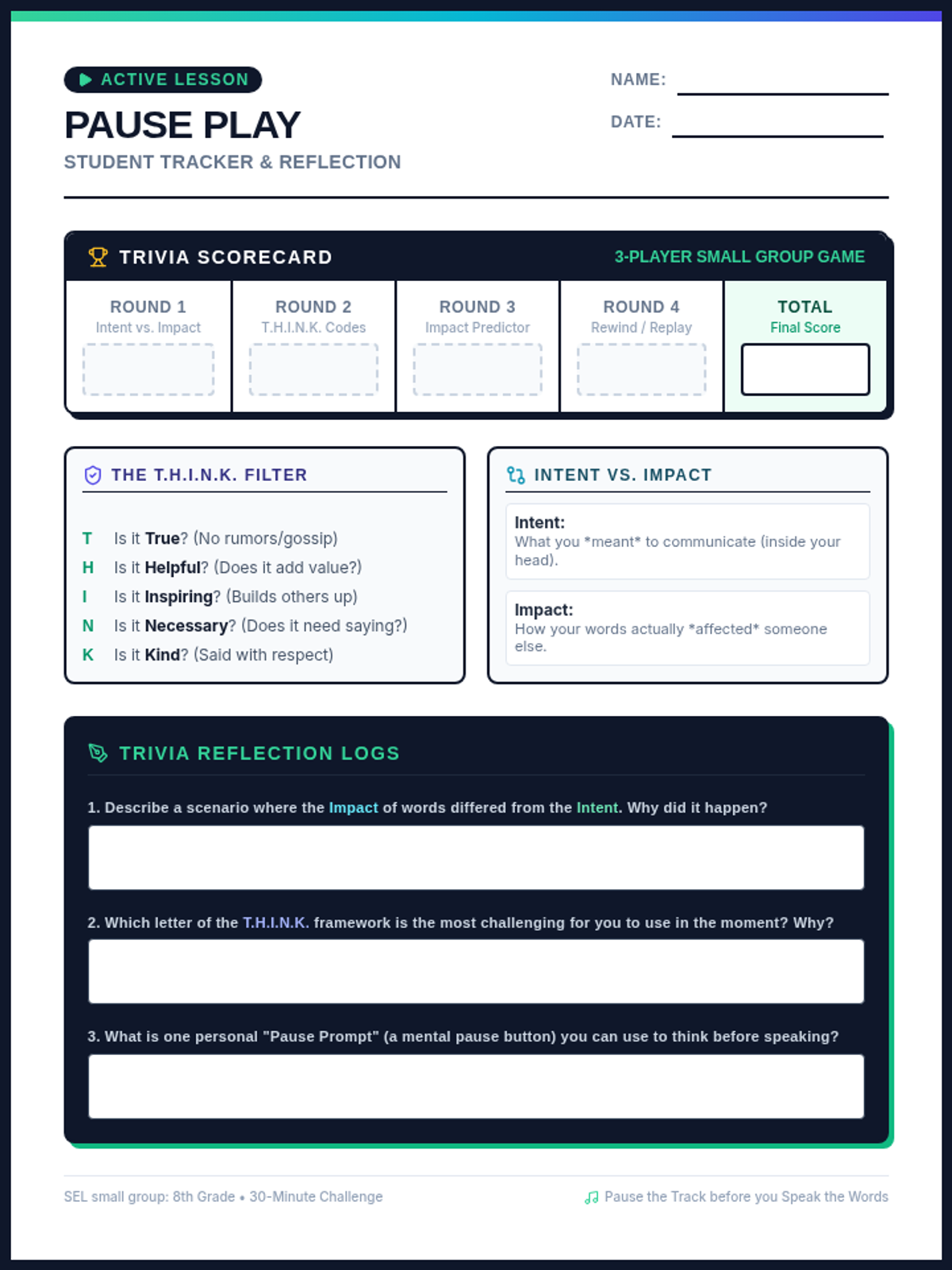
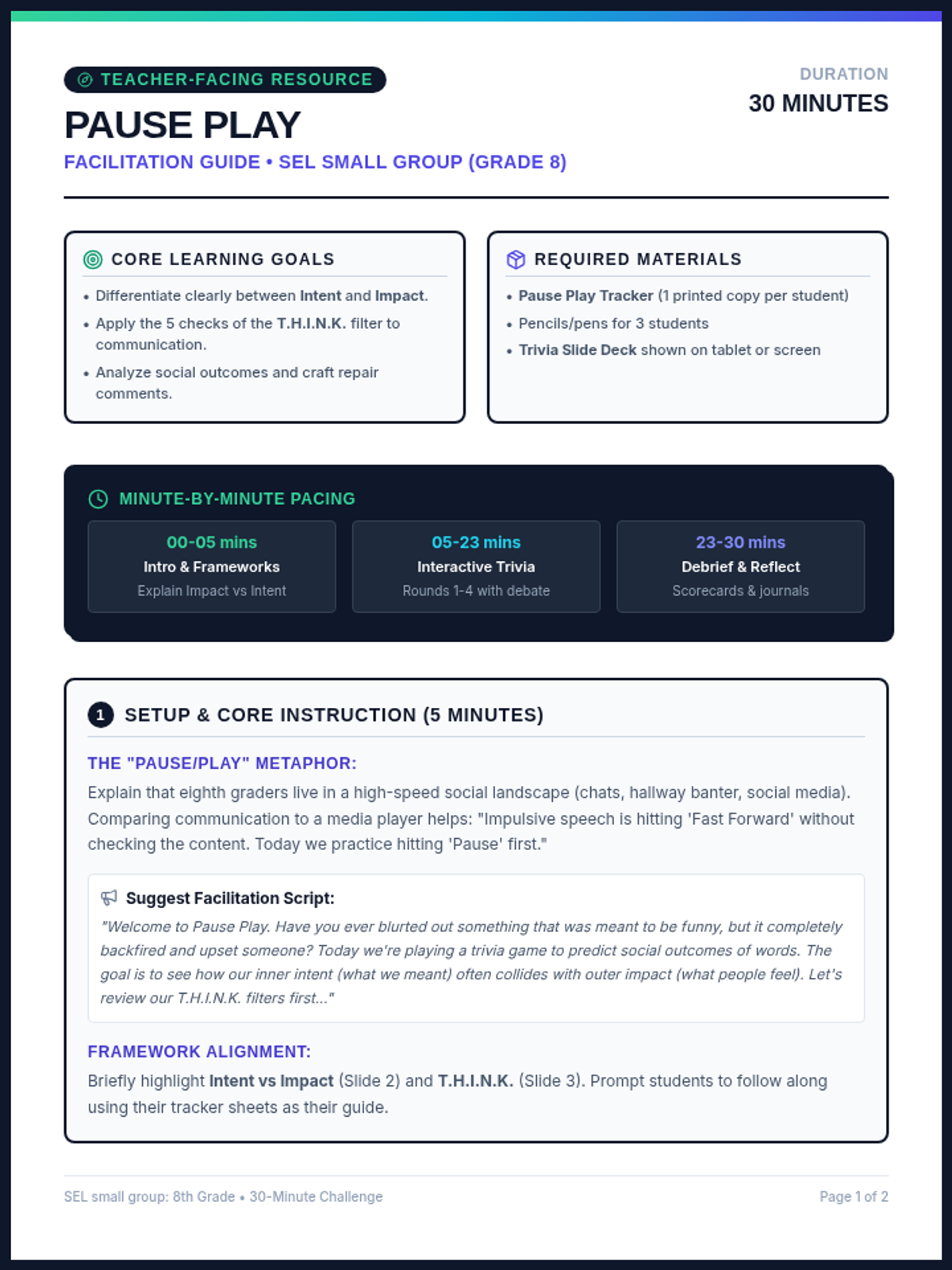
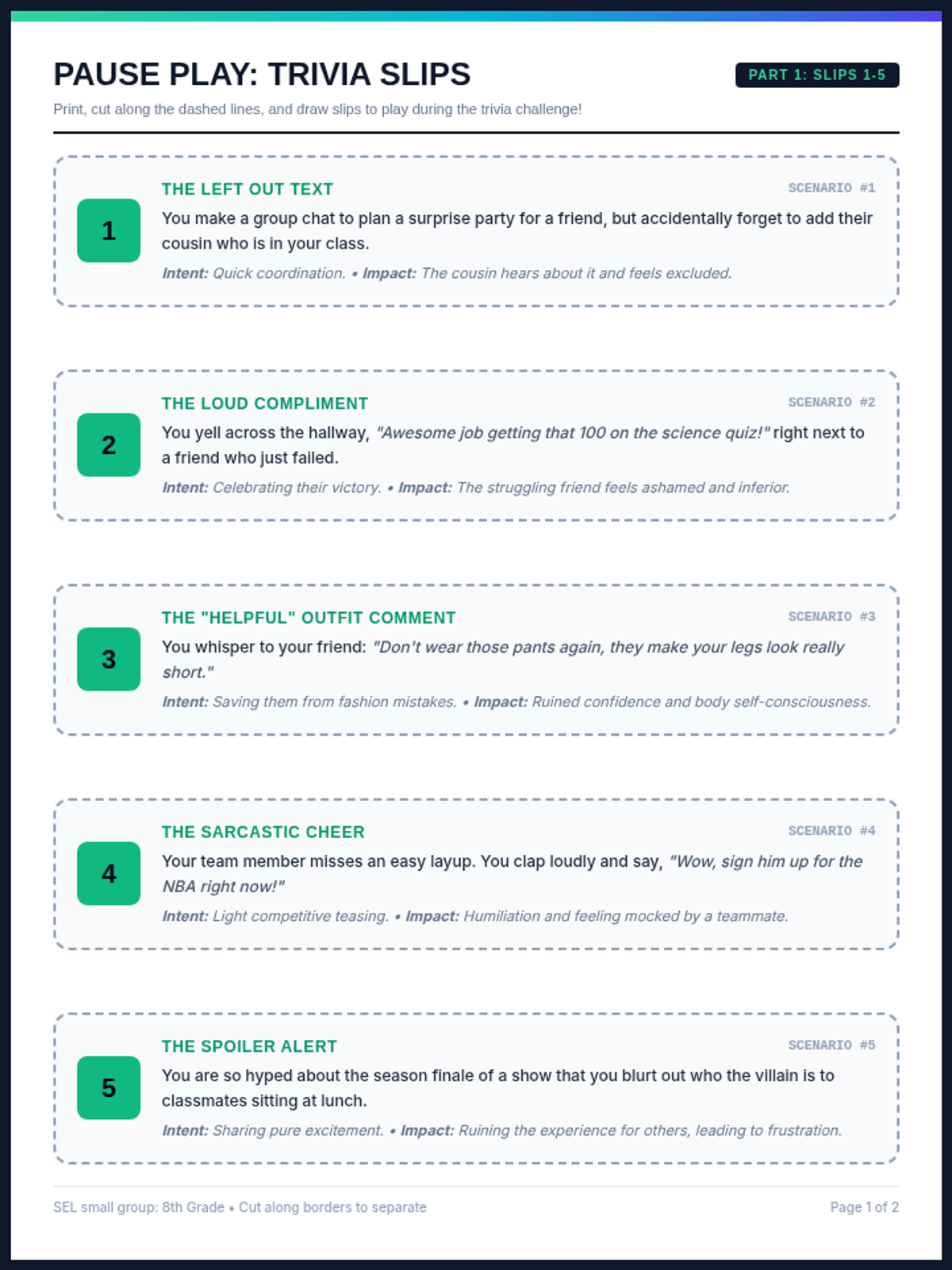
A 30-minute social-emotional lesson for 8th-grade small groups focusing on thinking before speaking. Features an interactive trivia game exploring the T.H.I.N.K. framework and the crucial distinction between intent and social impact.
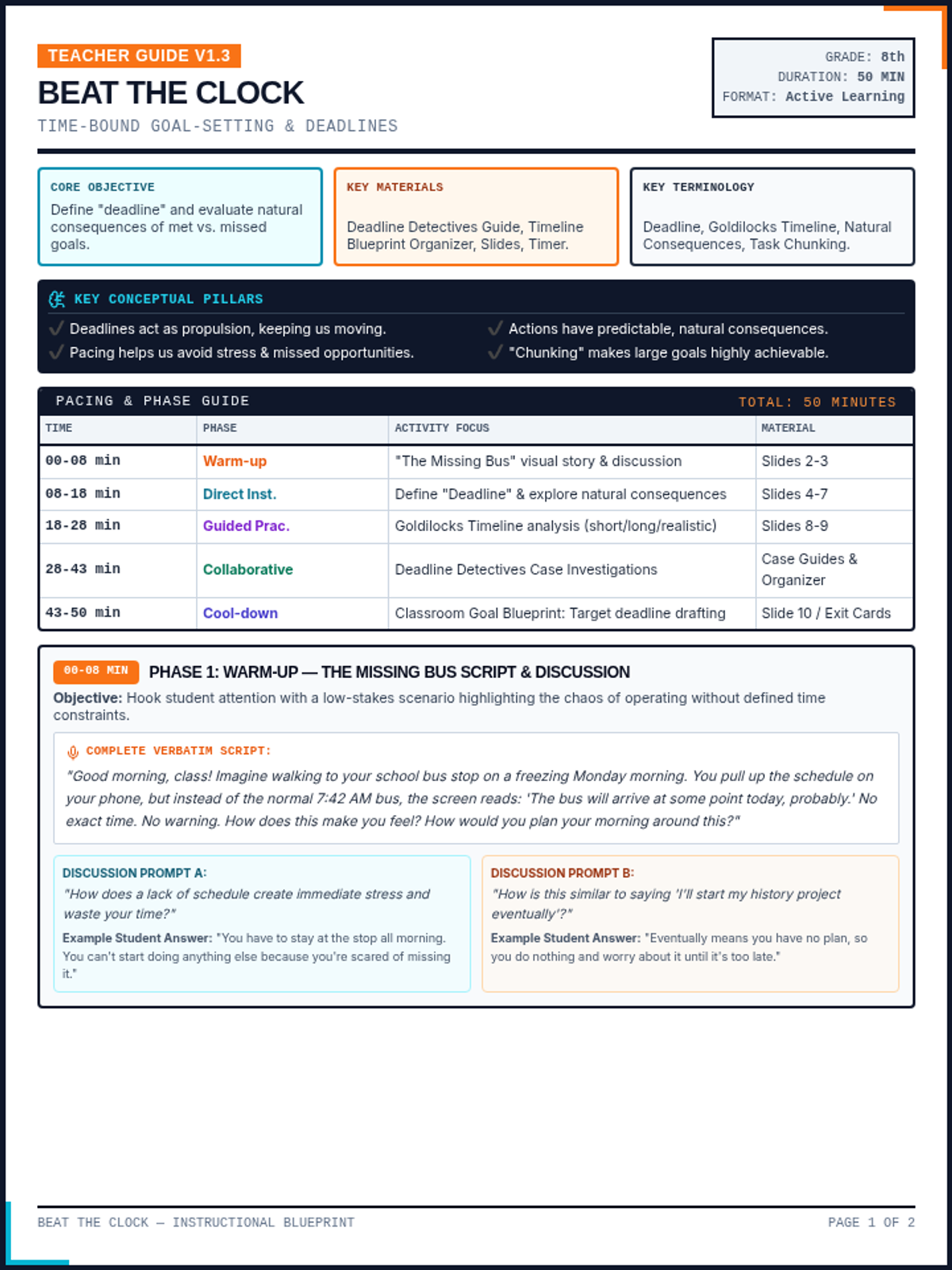
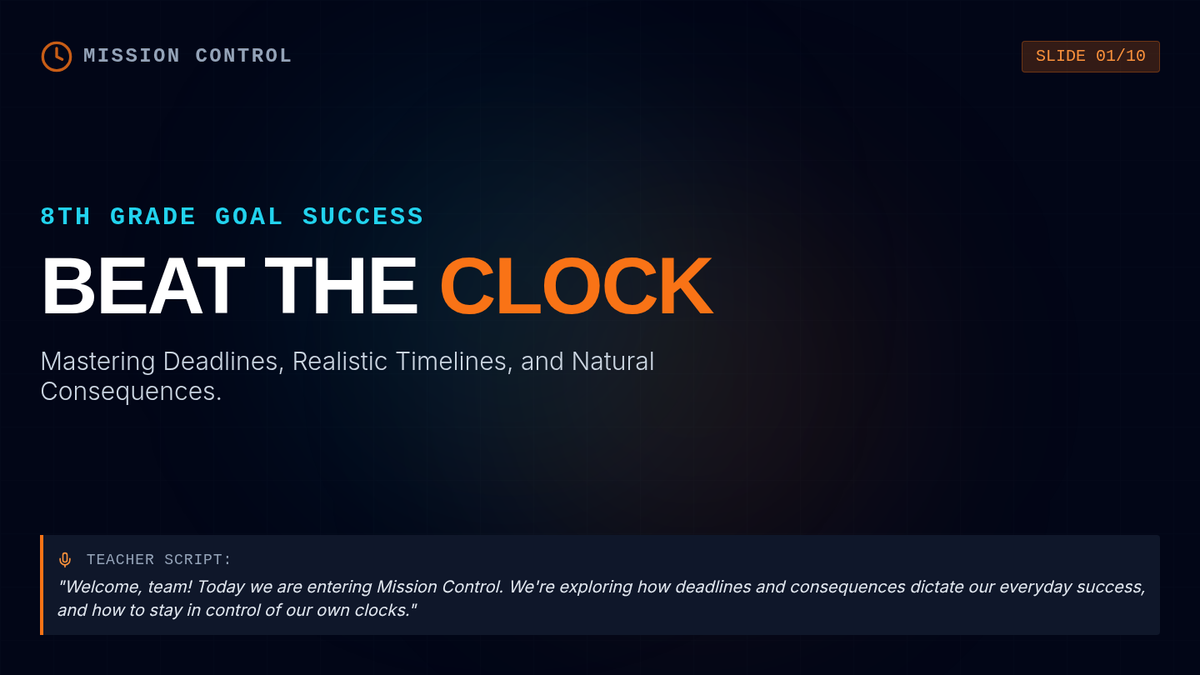
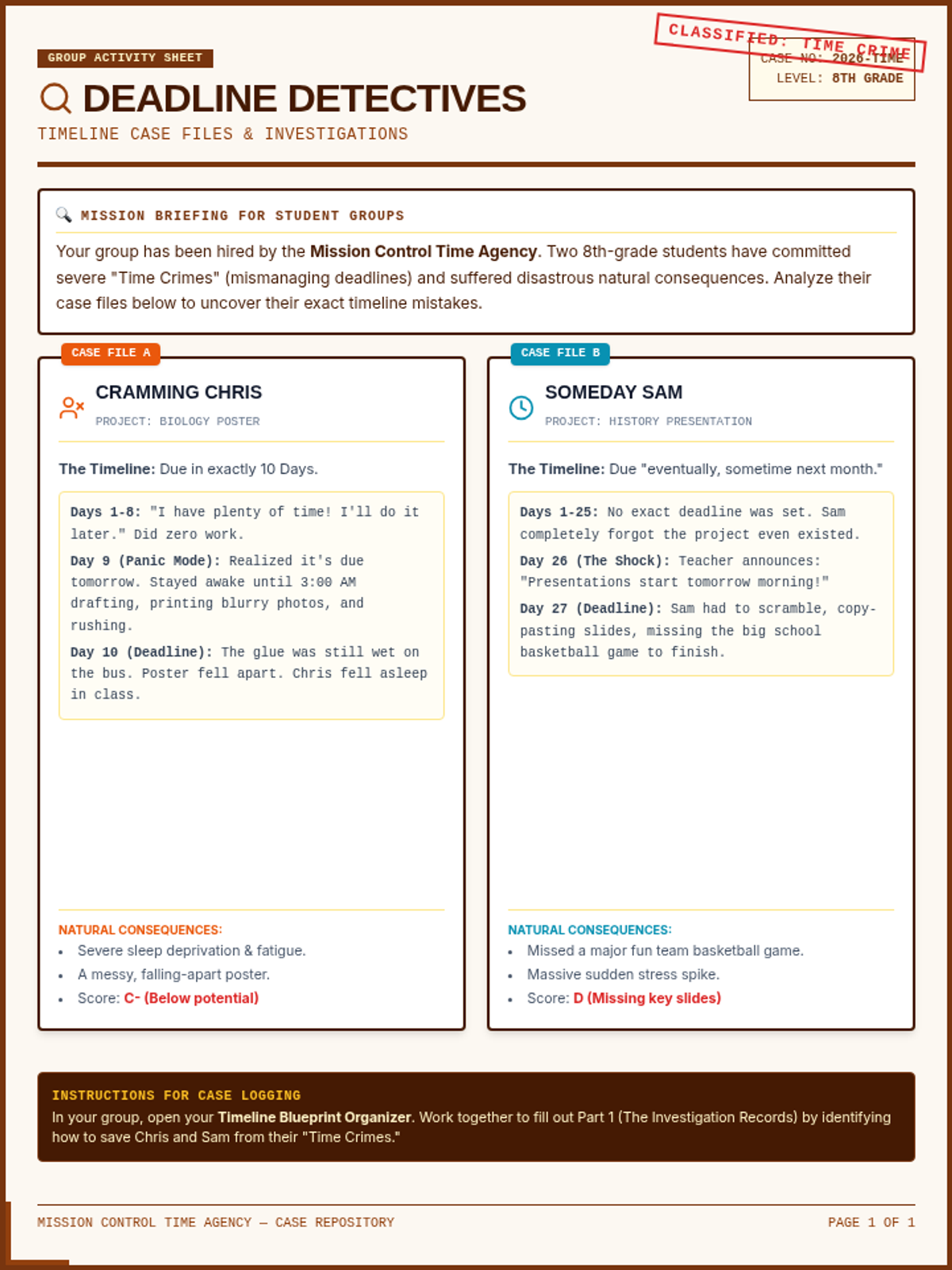
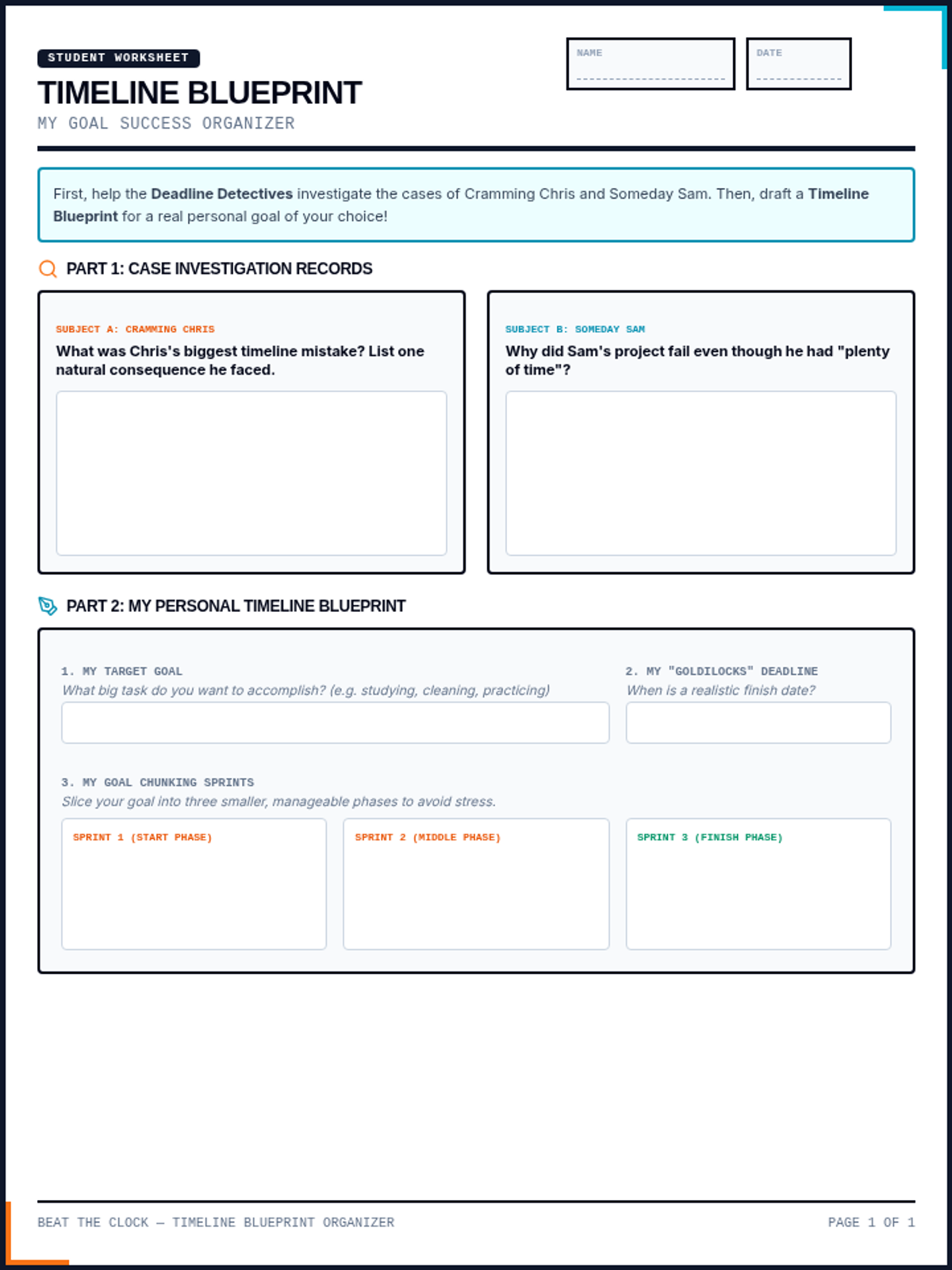
An interactive 8th-grade lesson exploring deadlines, realistic timelines, and the natural consequences of managing or mismanaging time through a collaborative board game and reflective graphic organizers.
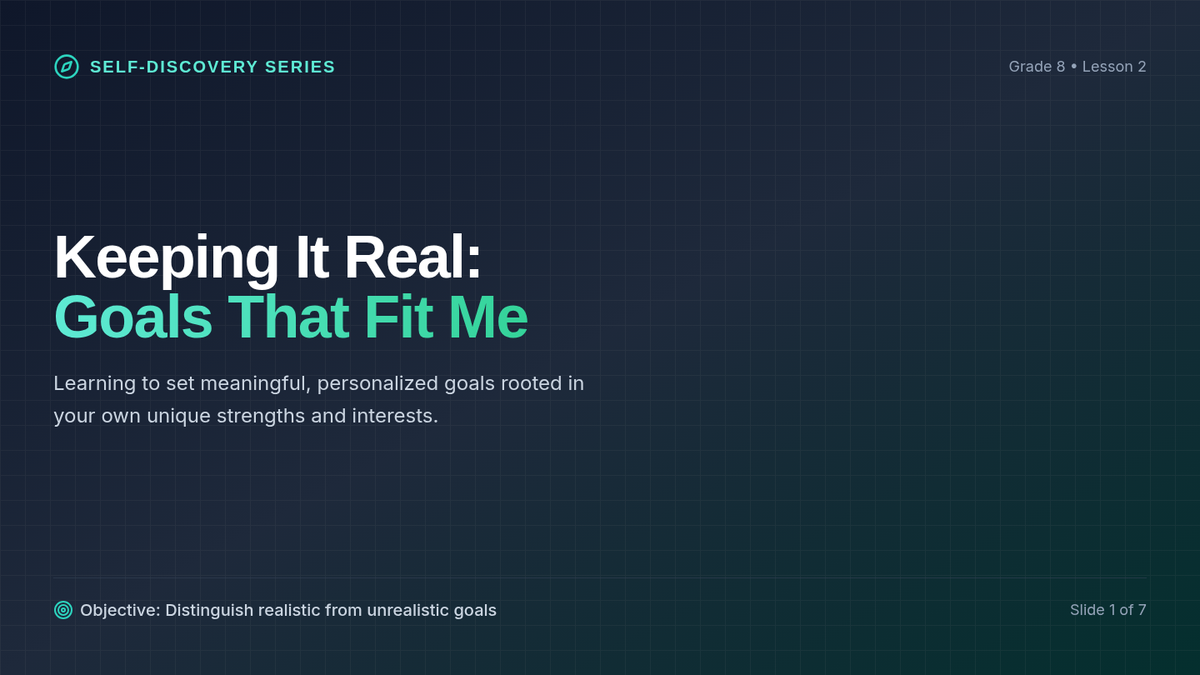
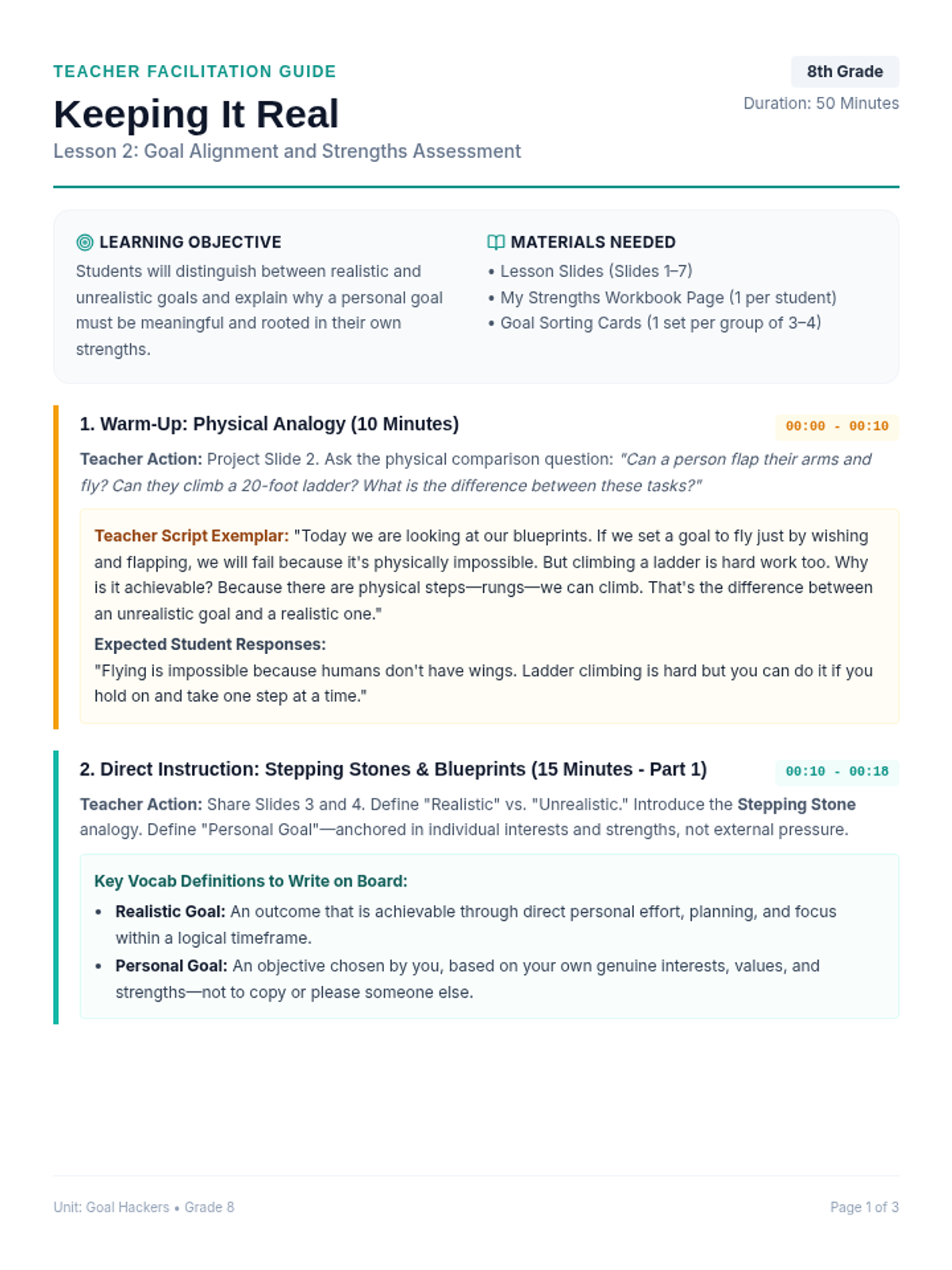
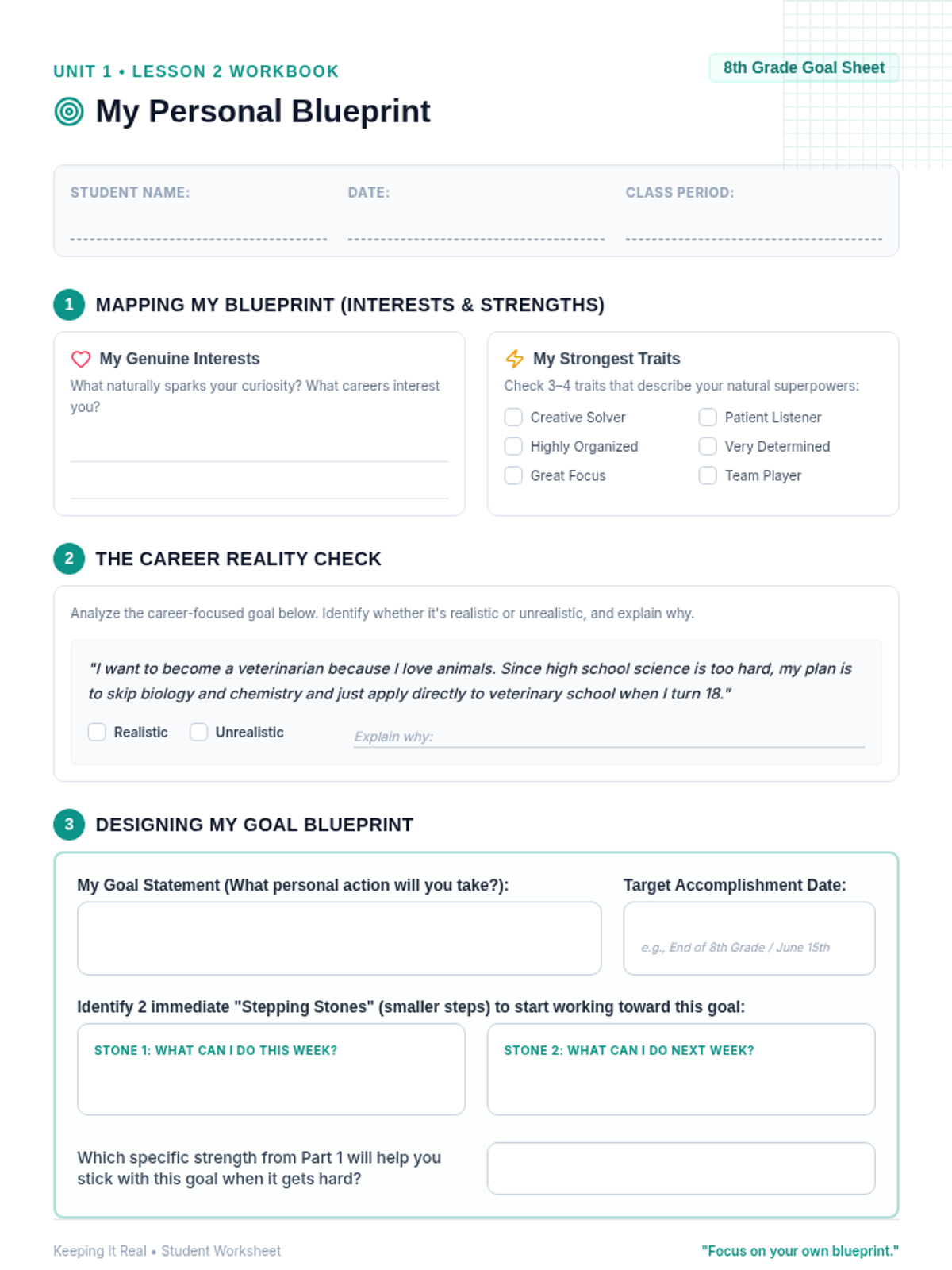
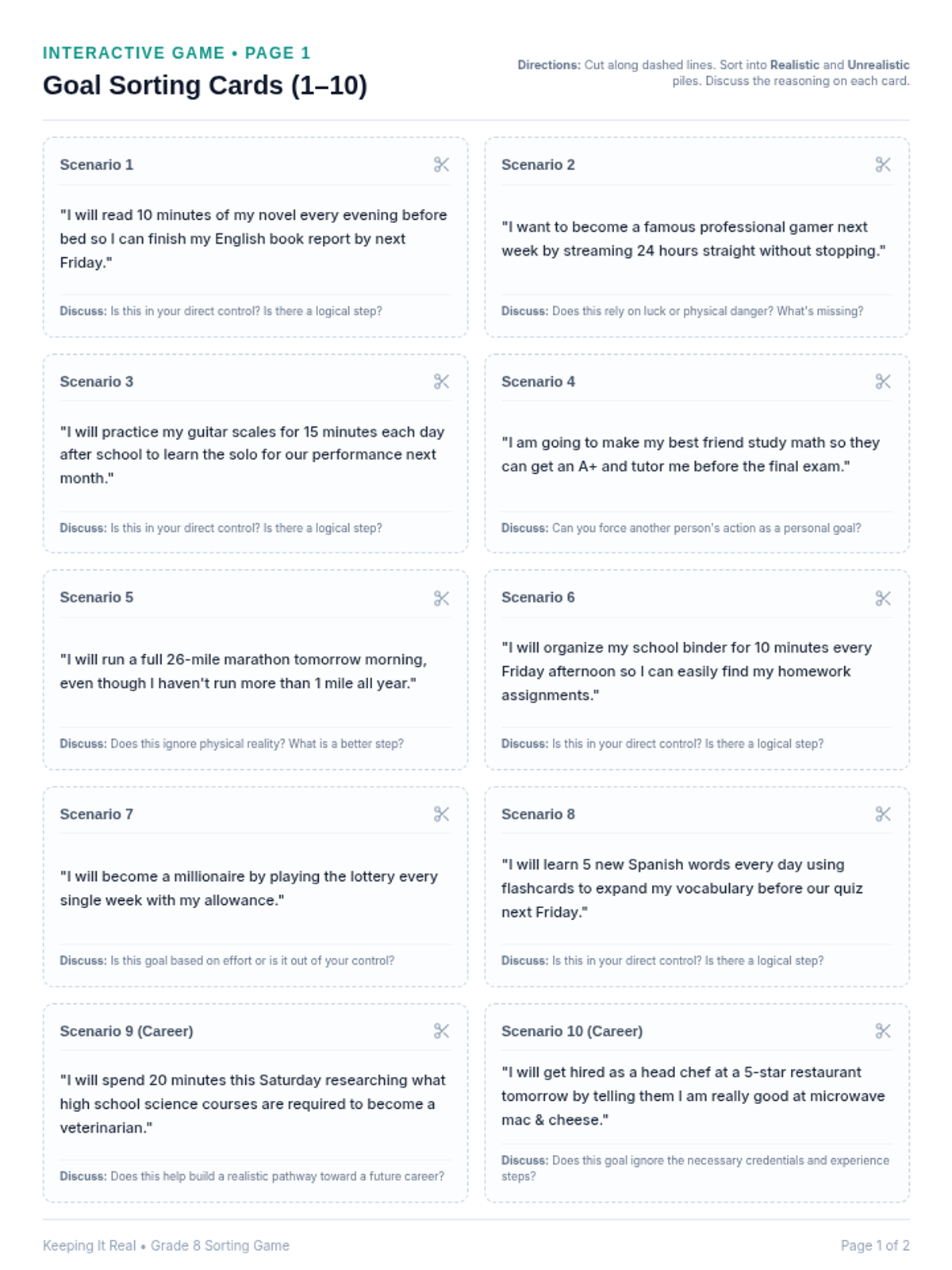
An 8th-grade lesson that helps students distinguish realistic from unrealistic goals and craft meaningful, personalized goals rooted in their individual strengths and interests.
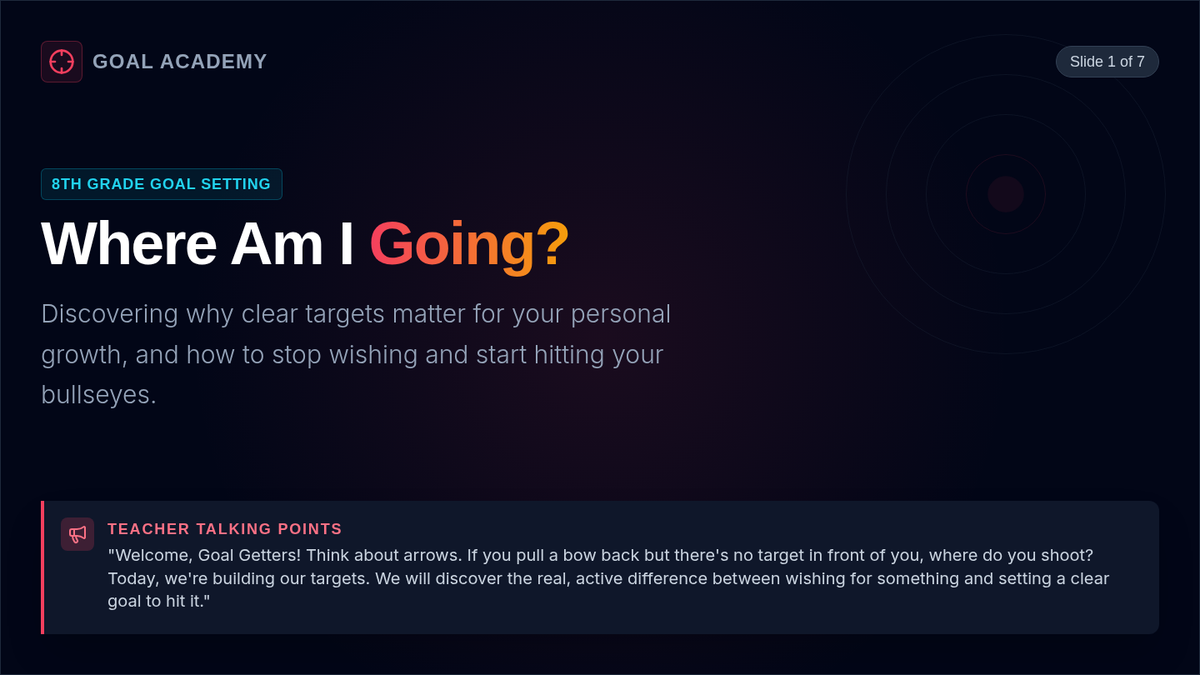
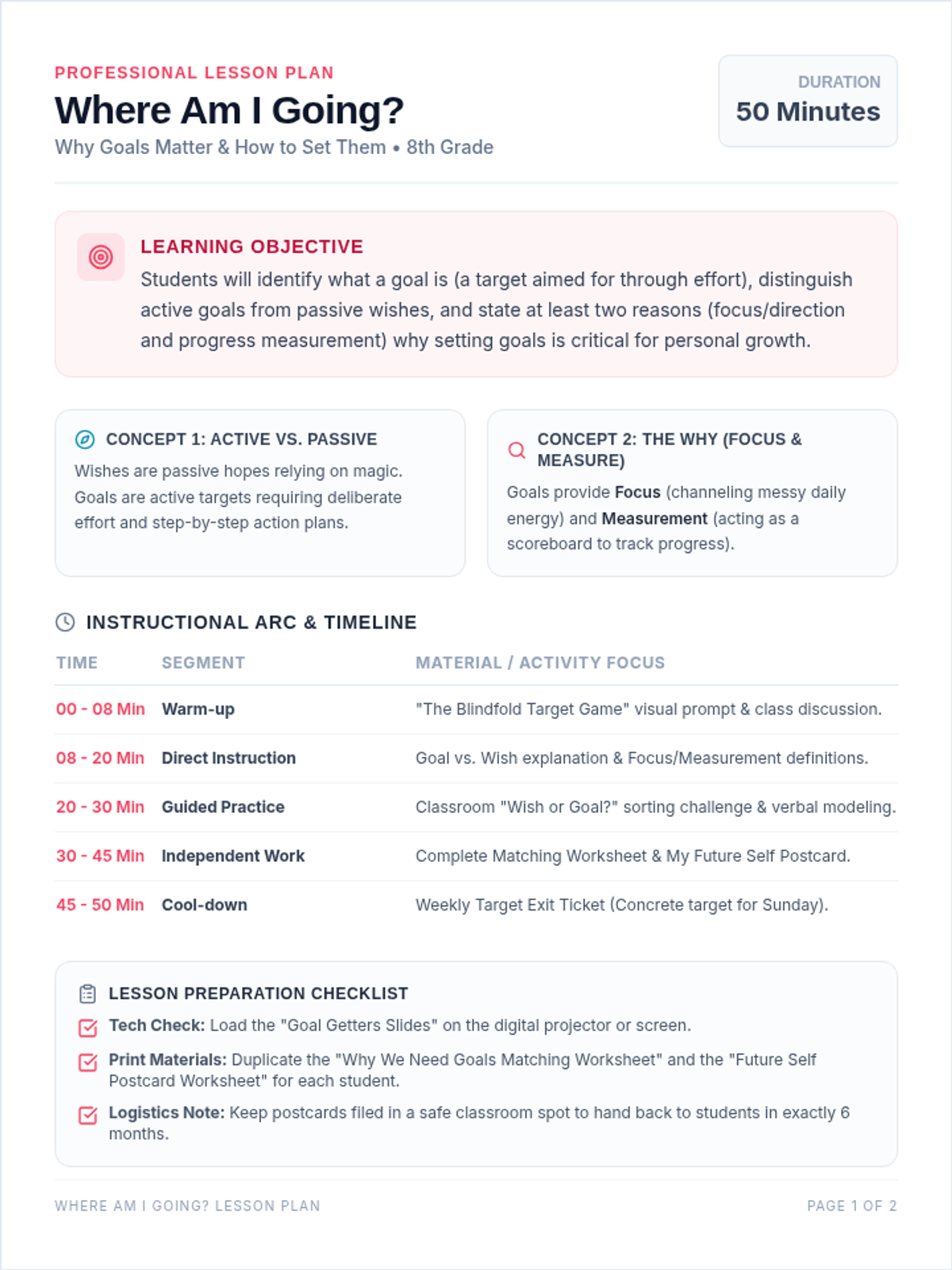
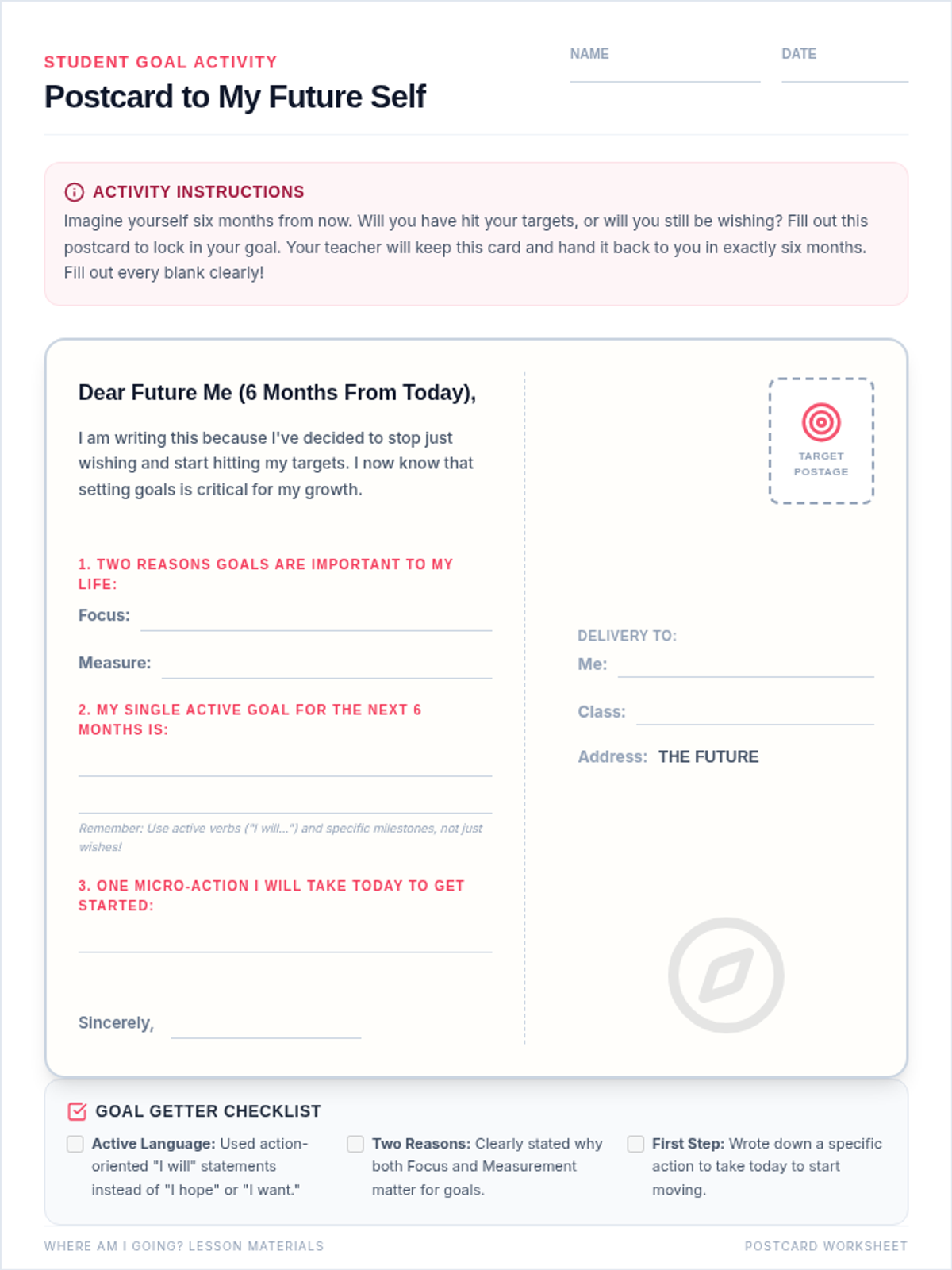
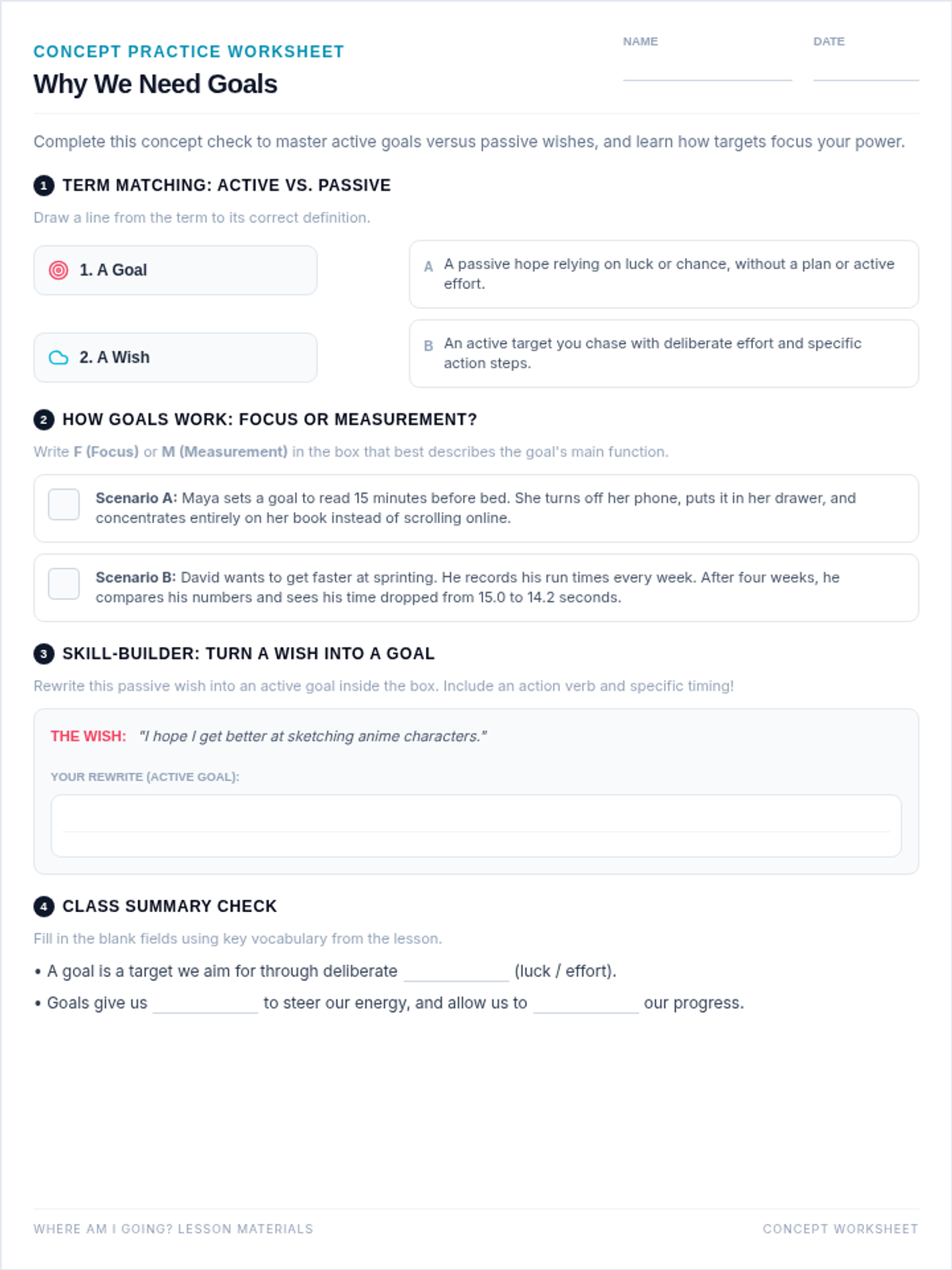
An engaging 8th-grade introductory lesson on goal setting that helps students distinguish active goals from passive wishes. Students discover the cognitive and practical reasons why setting clear targets matters for personal growth, completing reflective and hands-on activities to chart their own paths.
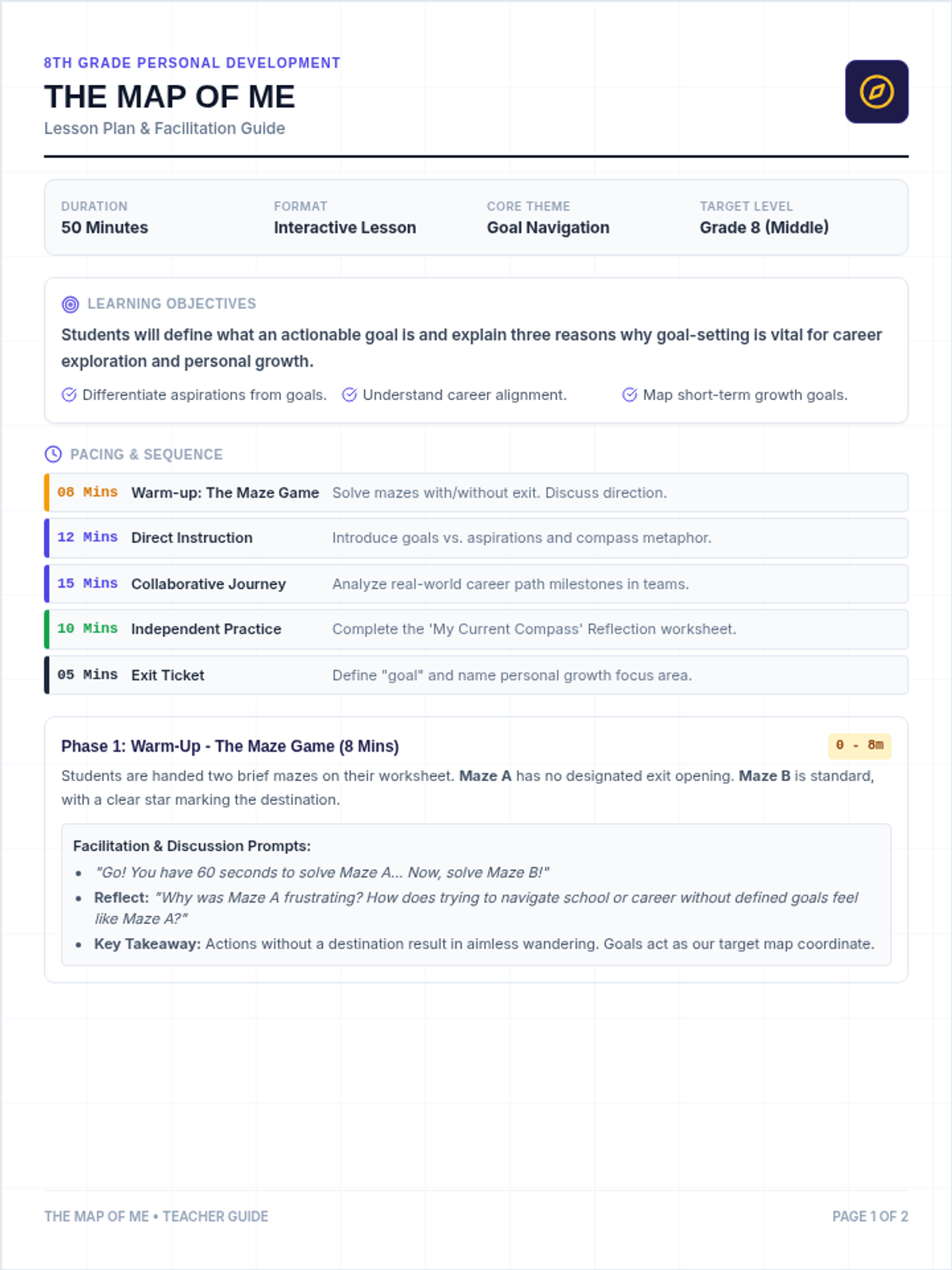
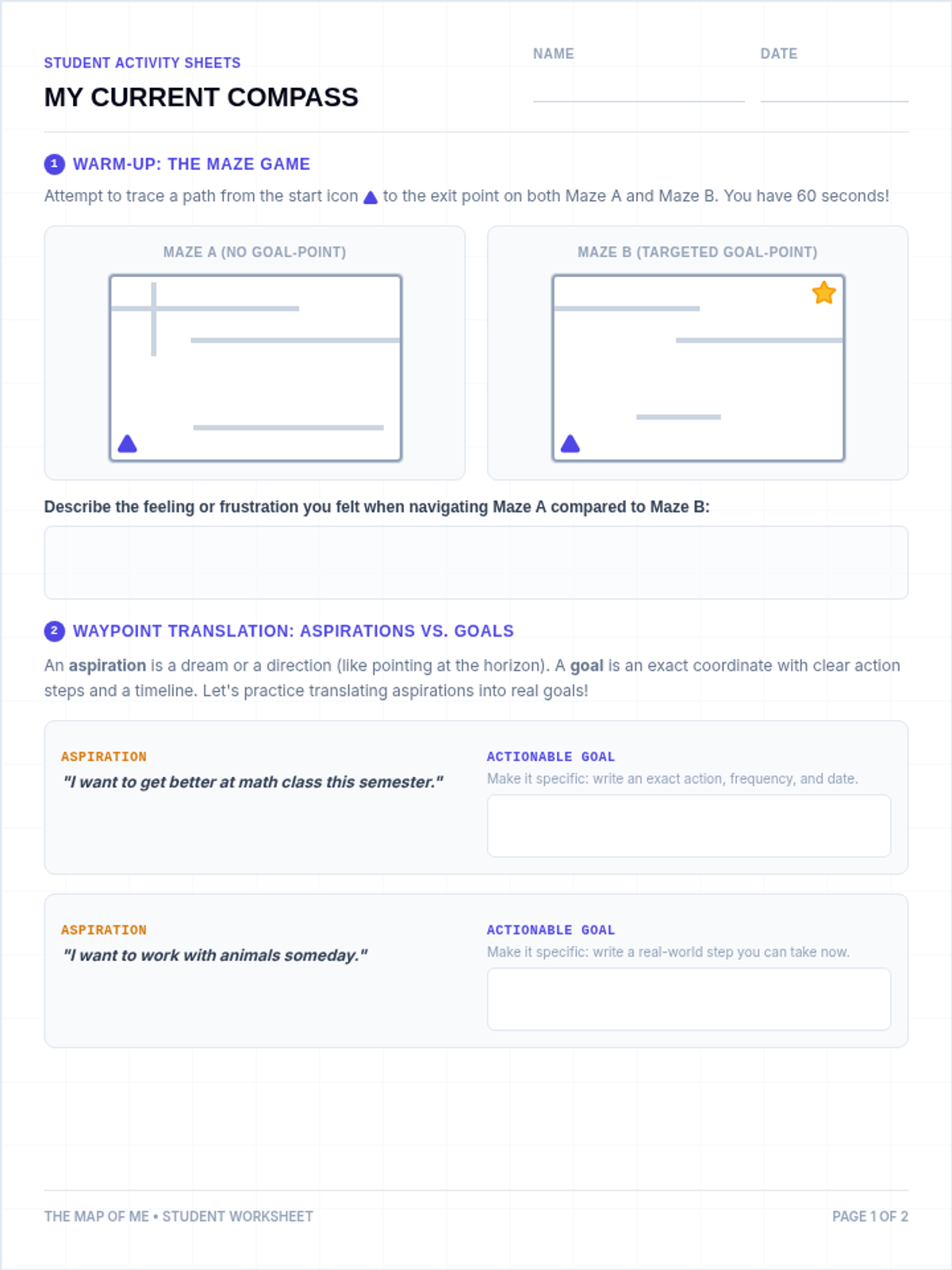
An eighth-grade lesson introducing students to goal-setting through the metaphor of a compass and map. Students differentiate between vague aspirations and actionable goals, explore how goals drive career alignment, and map out their own short-term personal and academic directions.
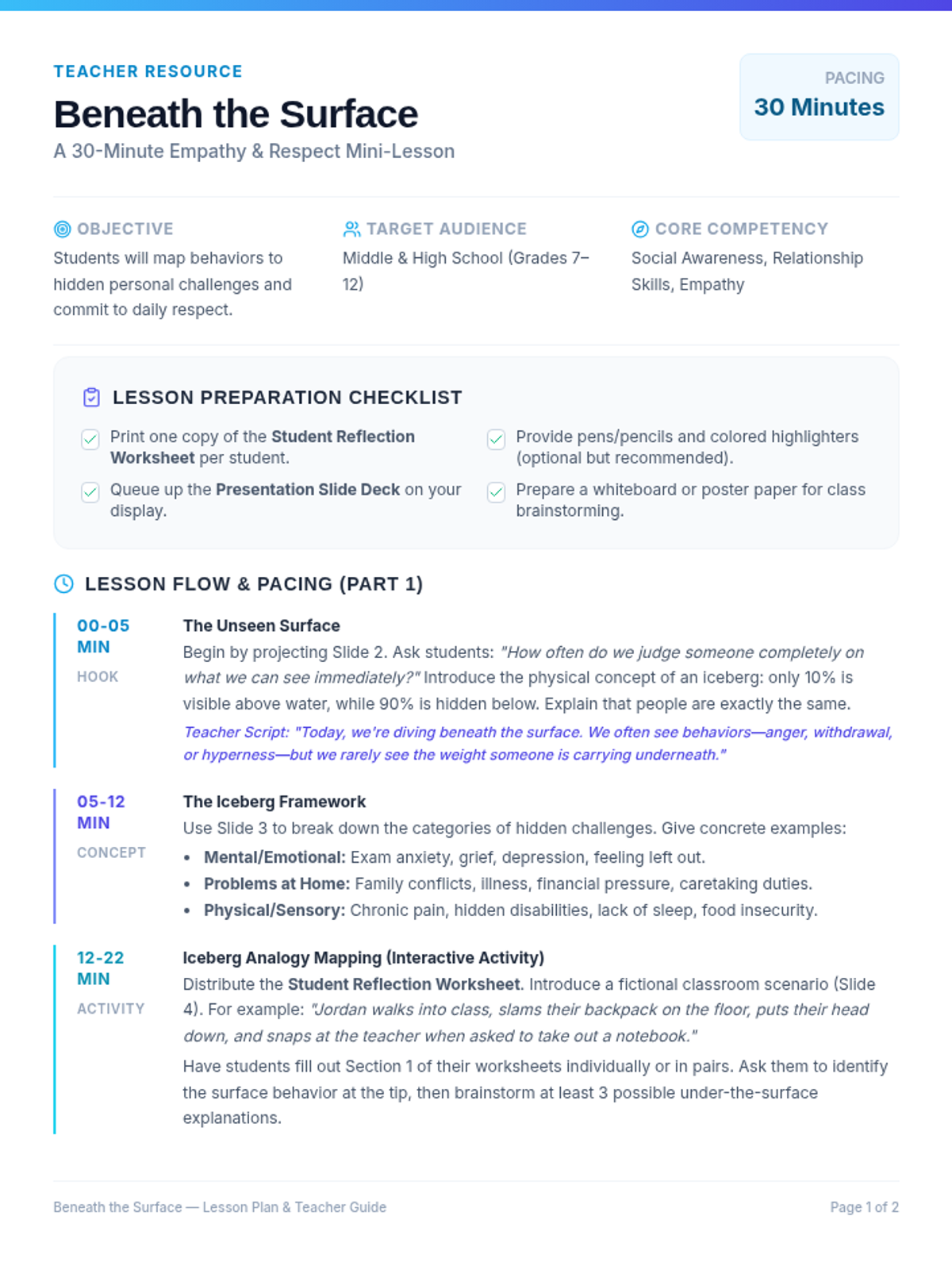
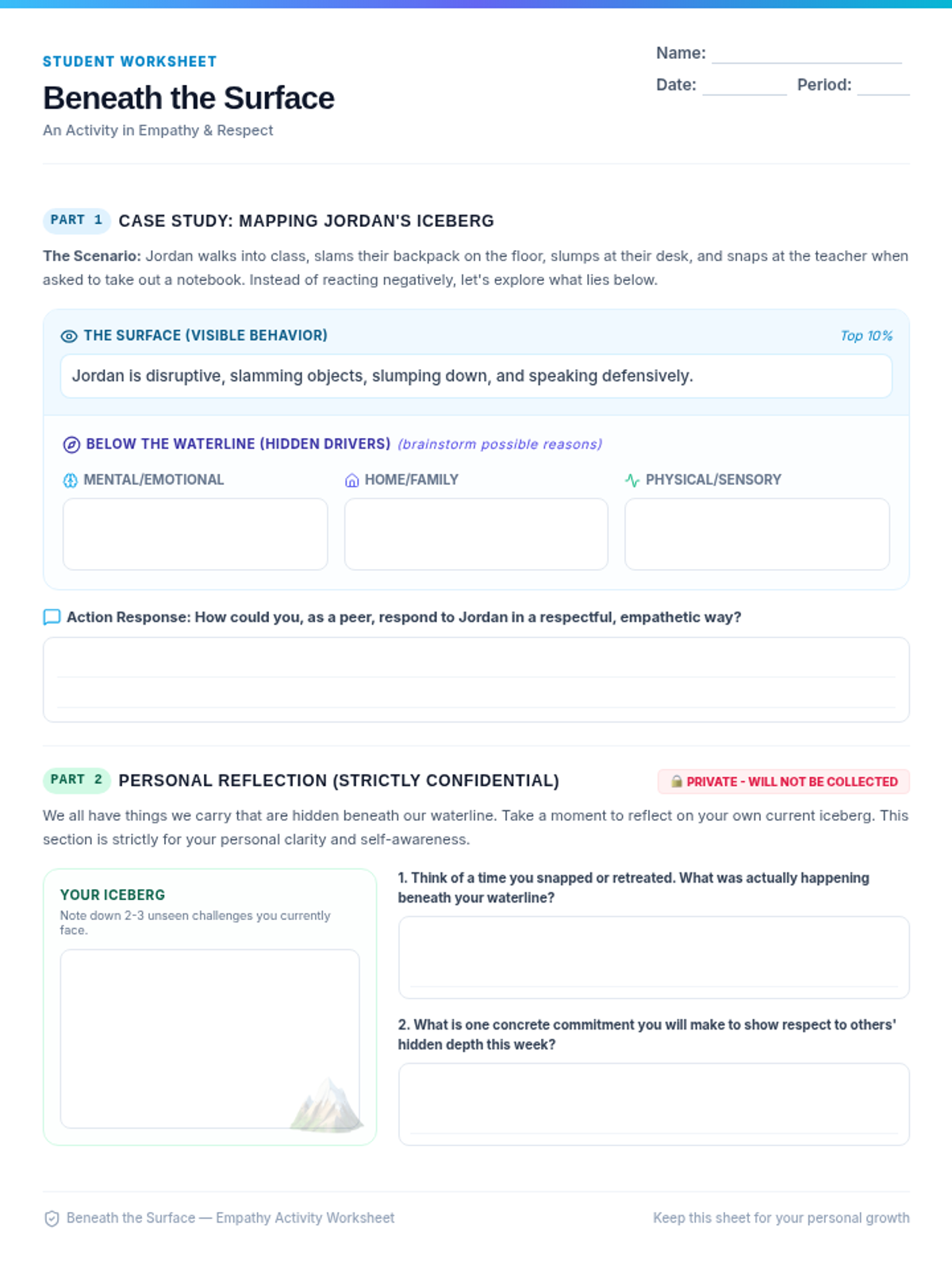
A 30-minute high school lesson focused on building empathy and respect by exploring the Iceberg Analogy. Students learn to recognize that visible behaviors (the tip of the iceberg) are driven by unseen mental, physical, or personal challenges (the submerged iceberg).
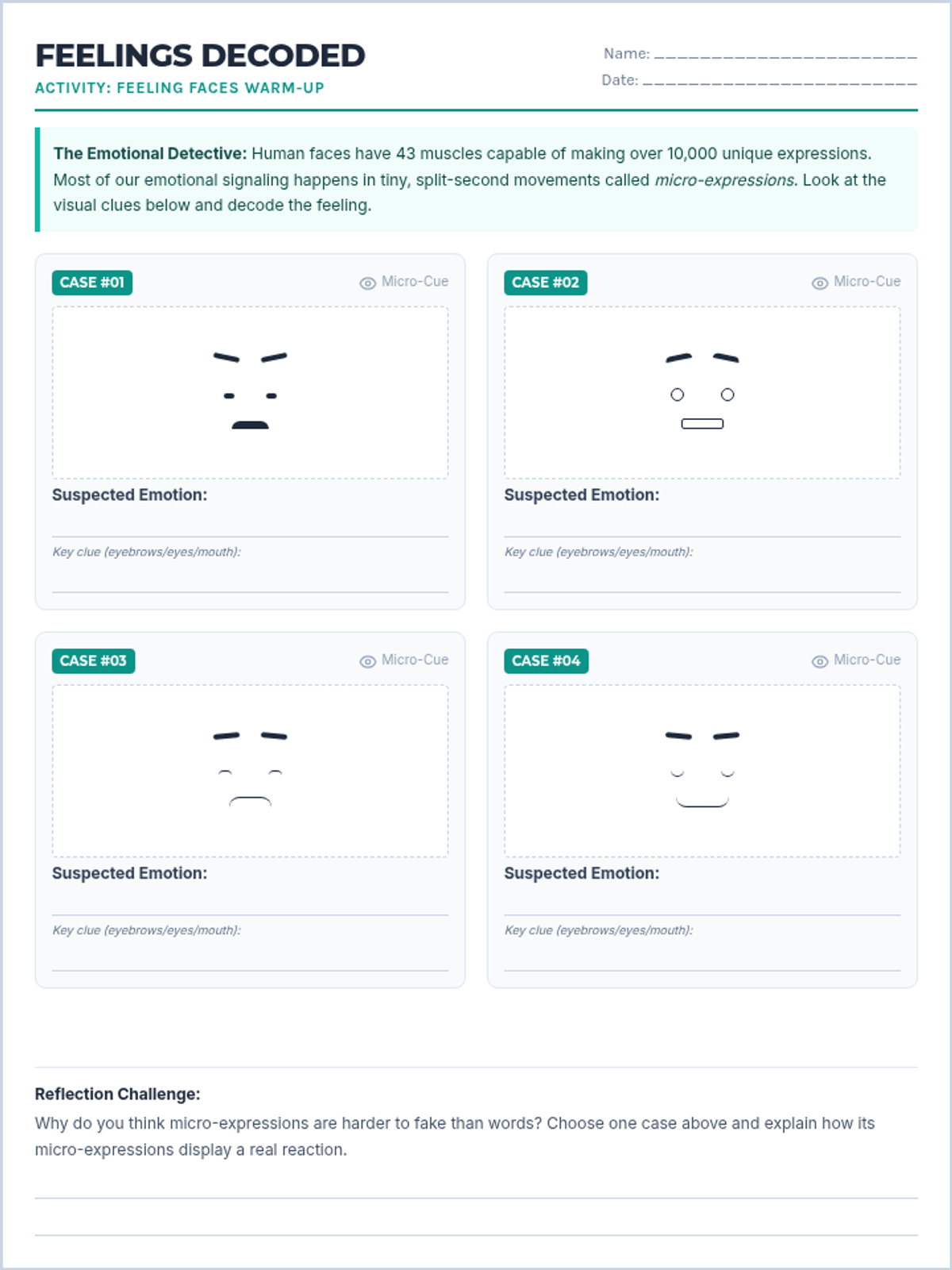
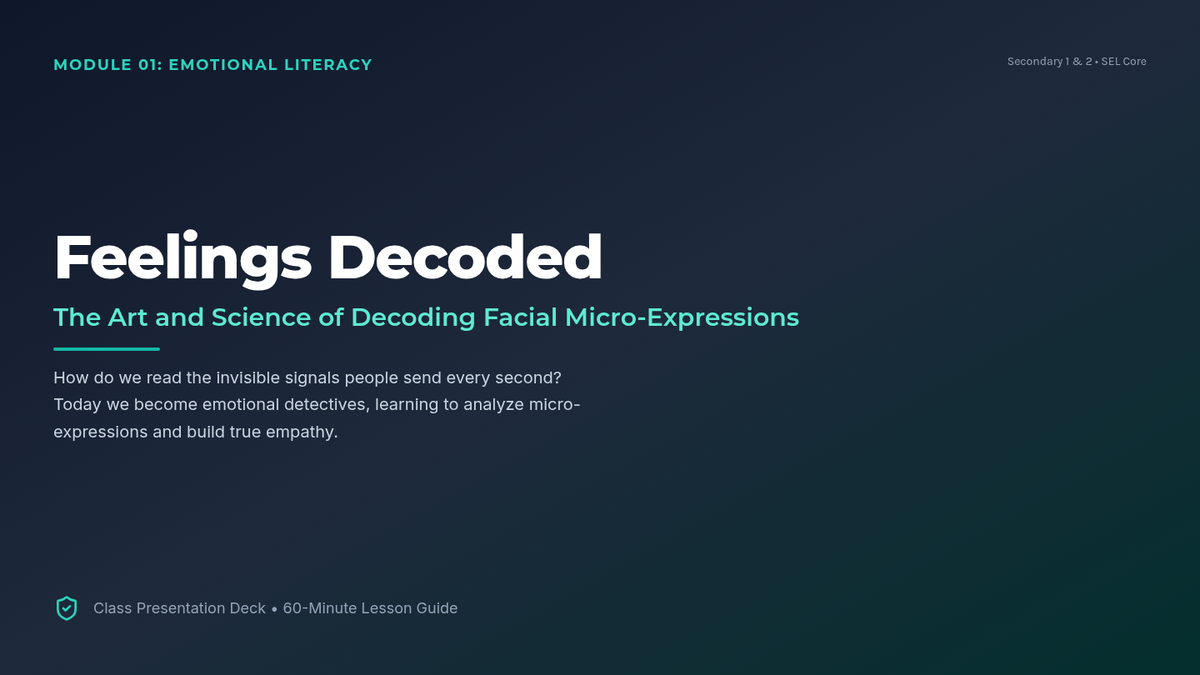
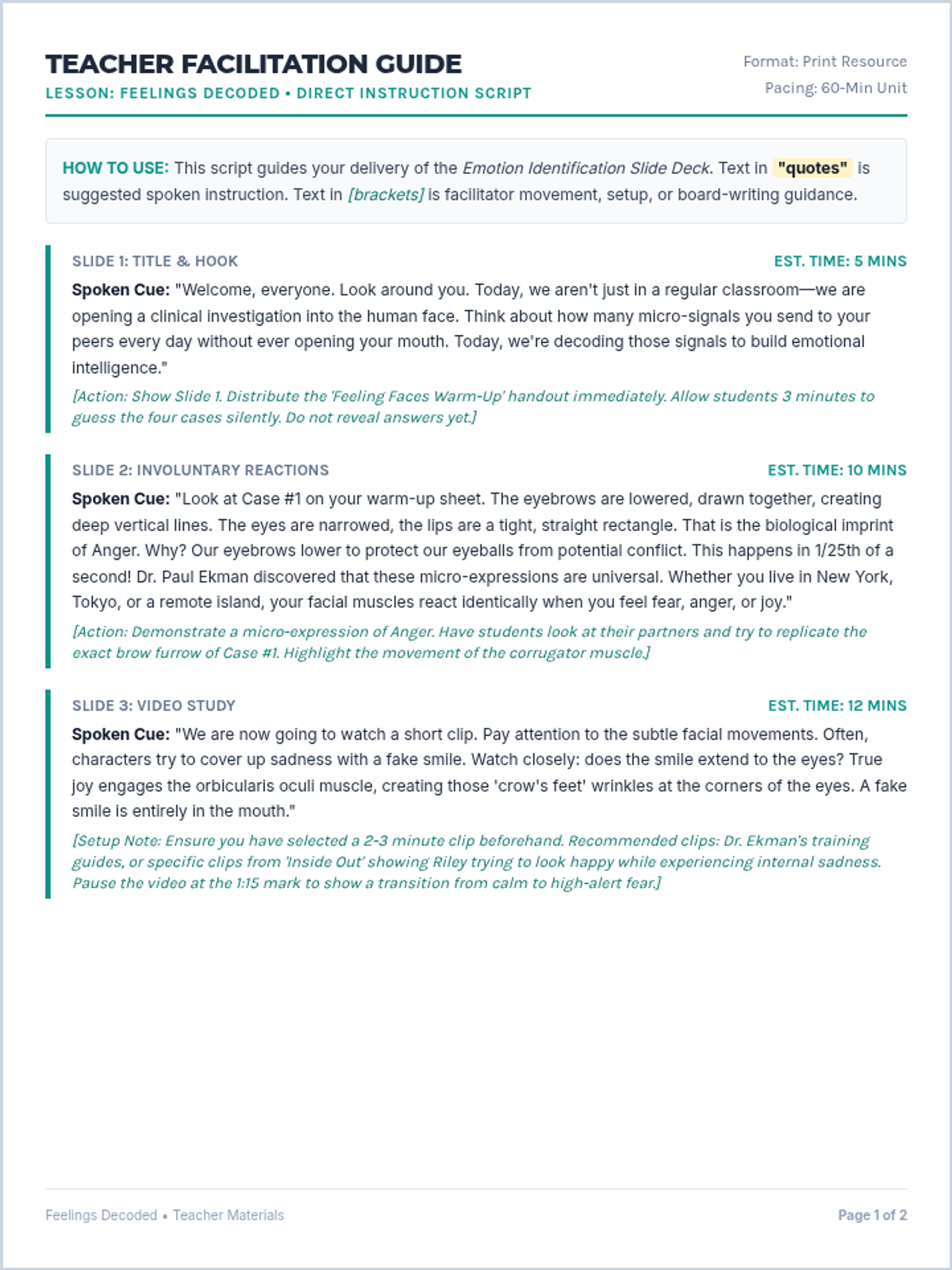
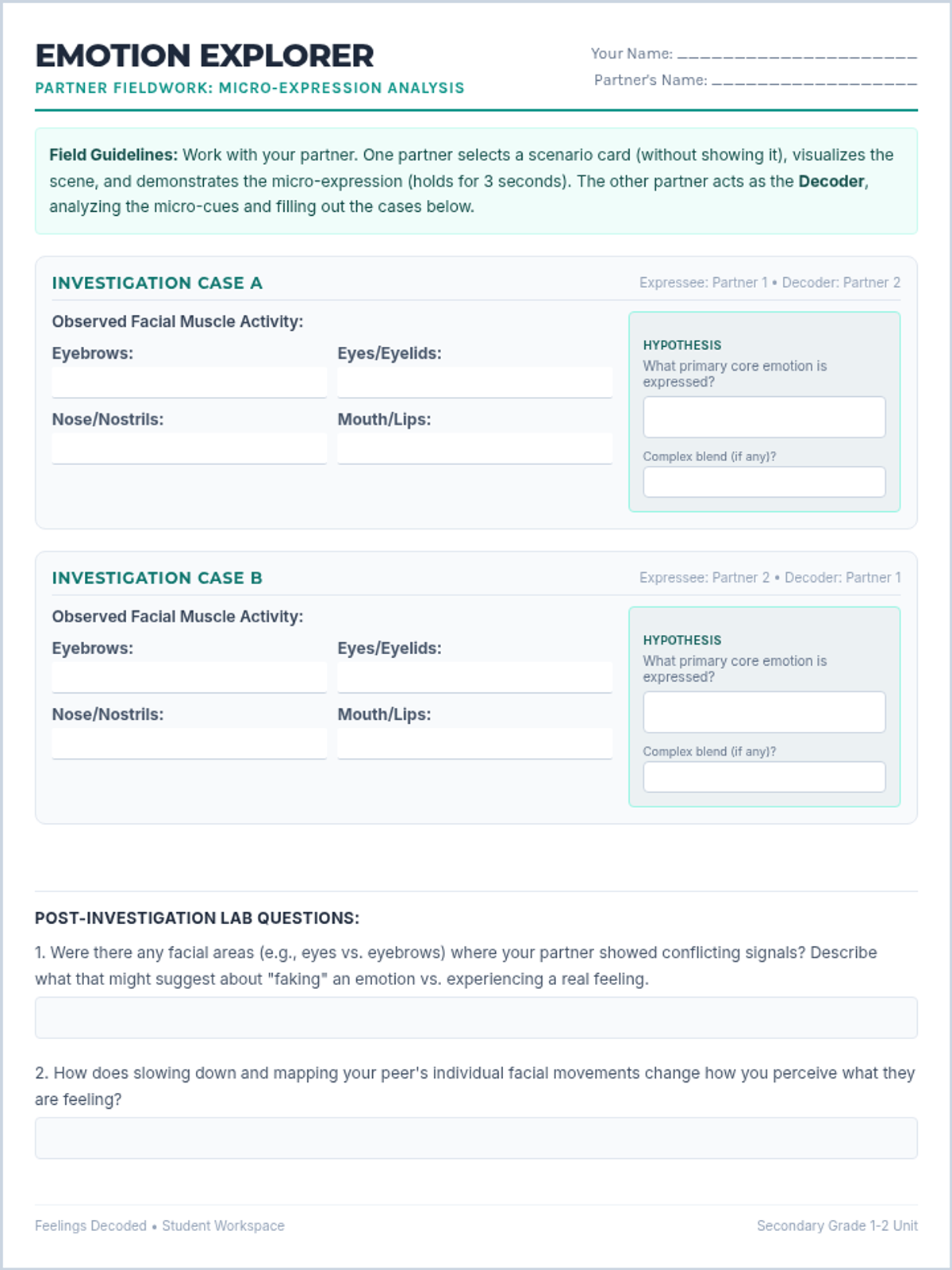
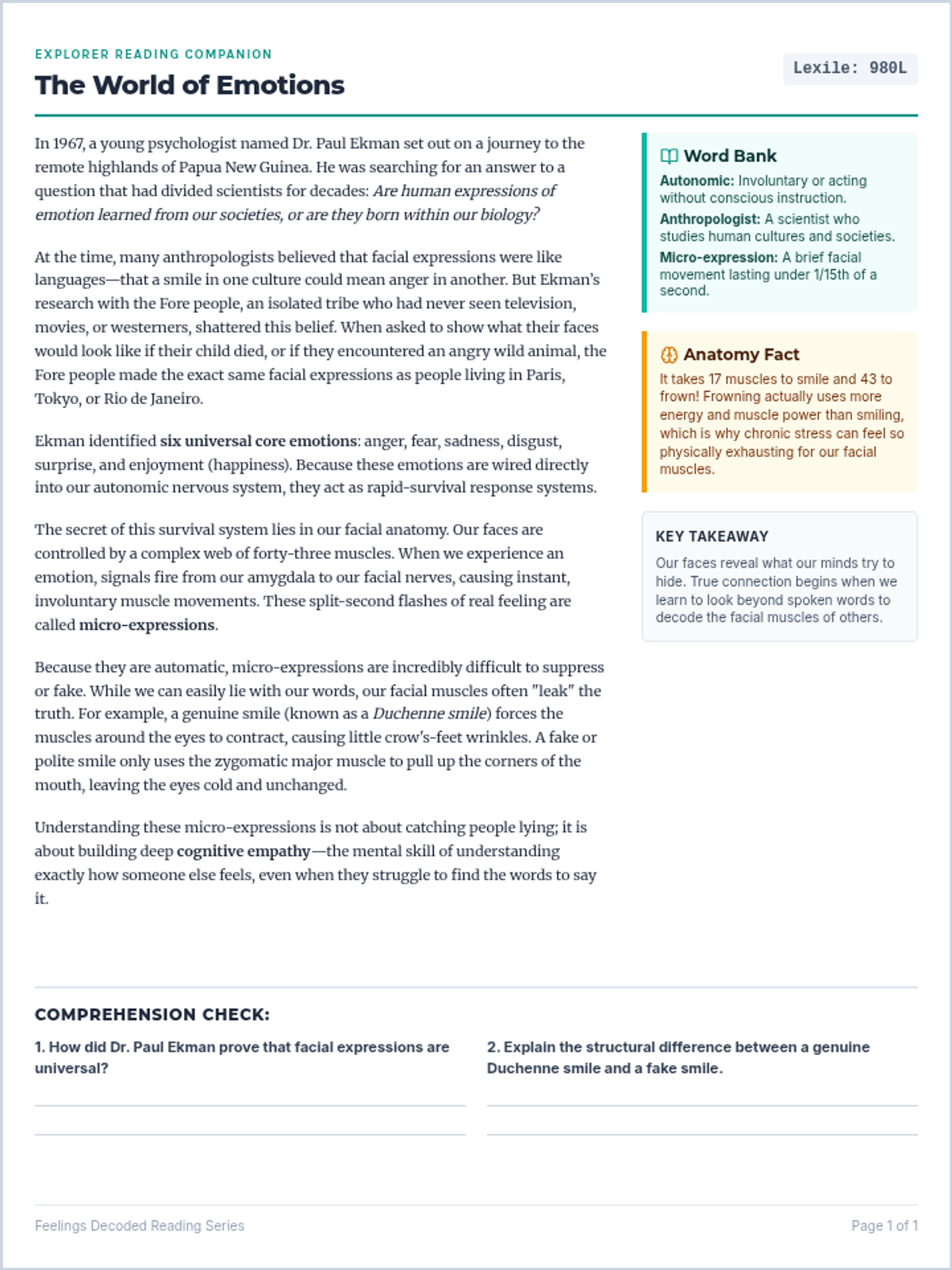
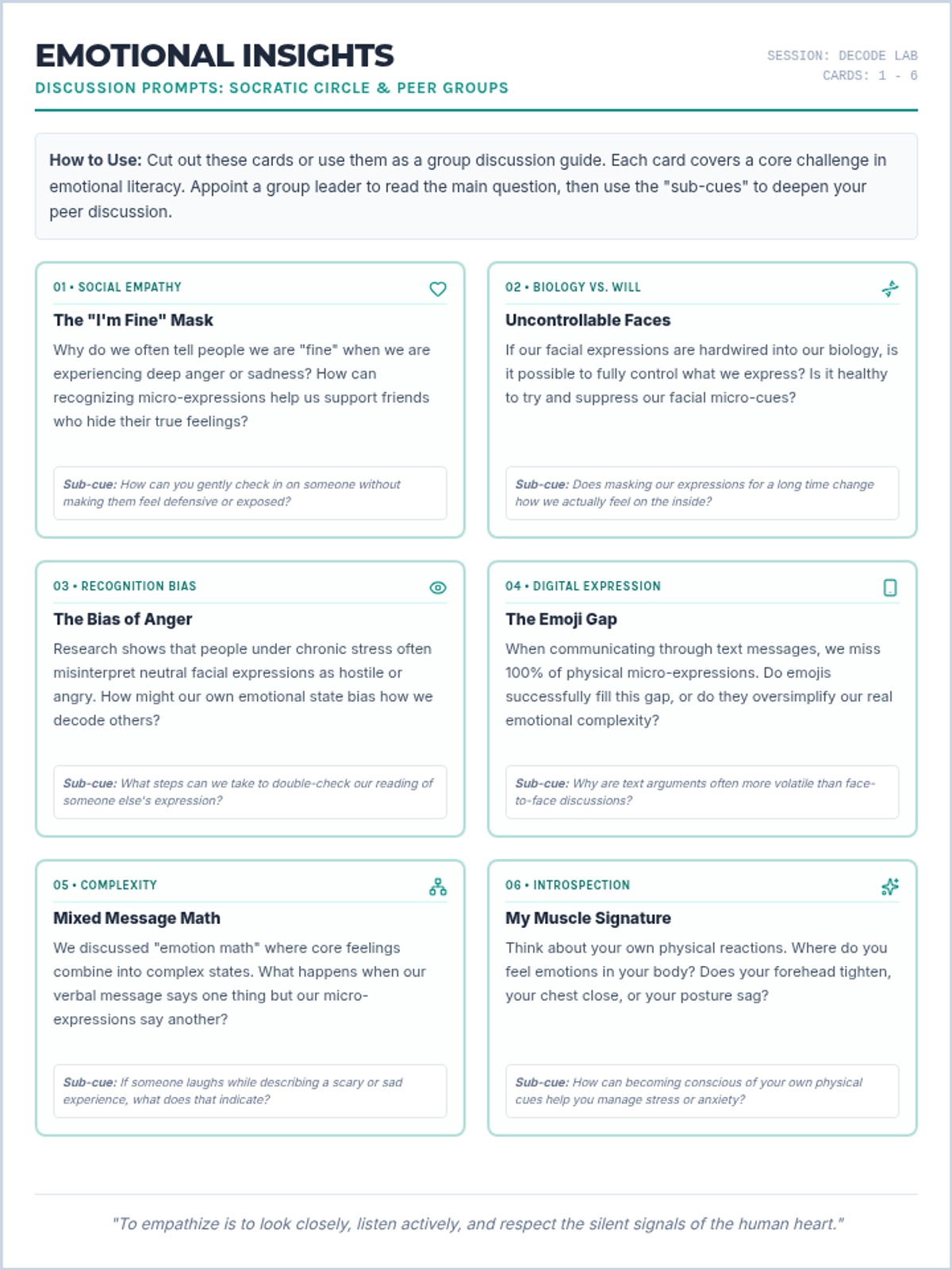
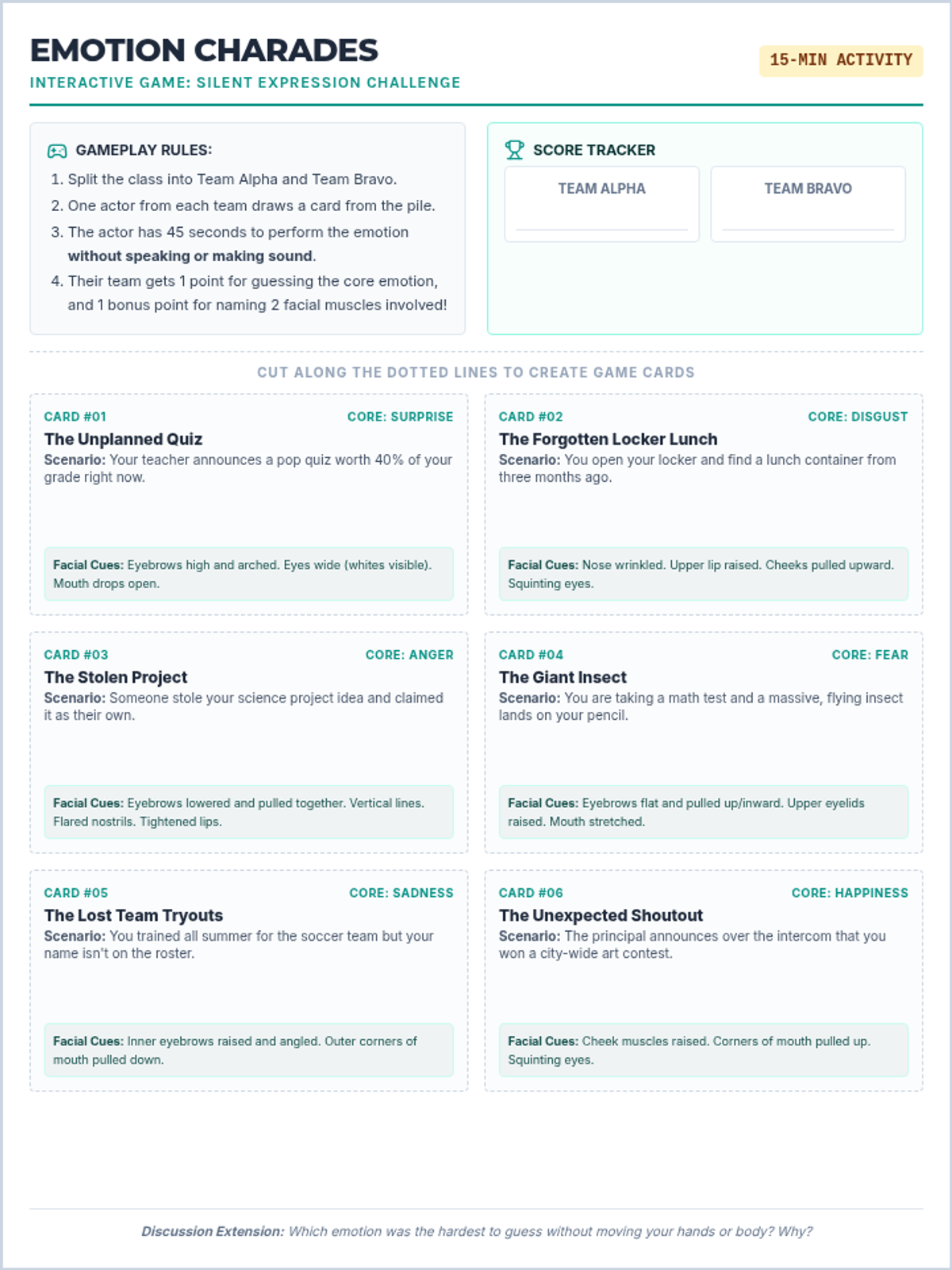
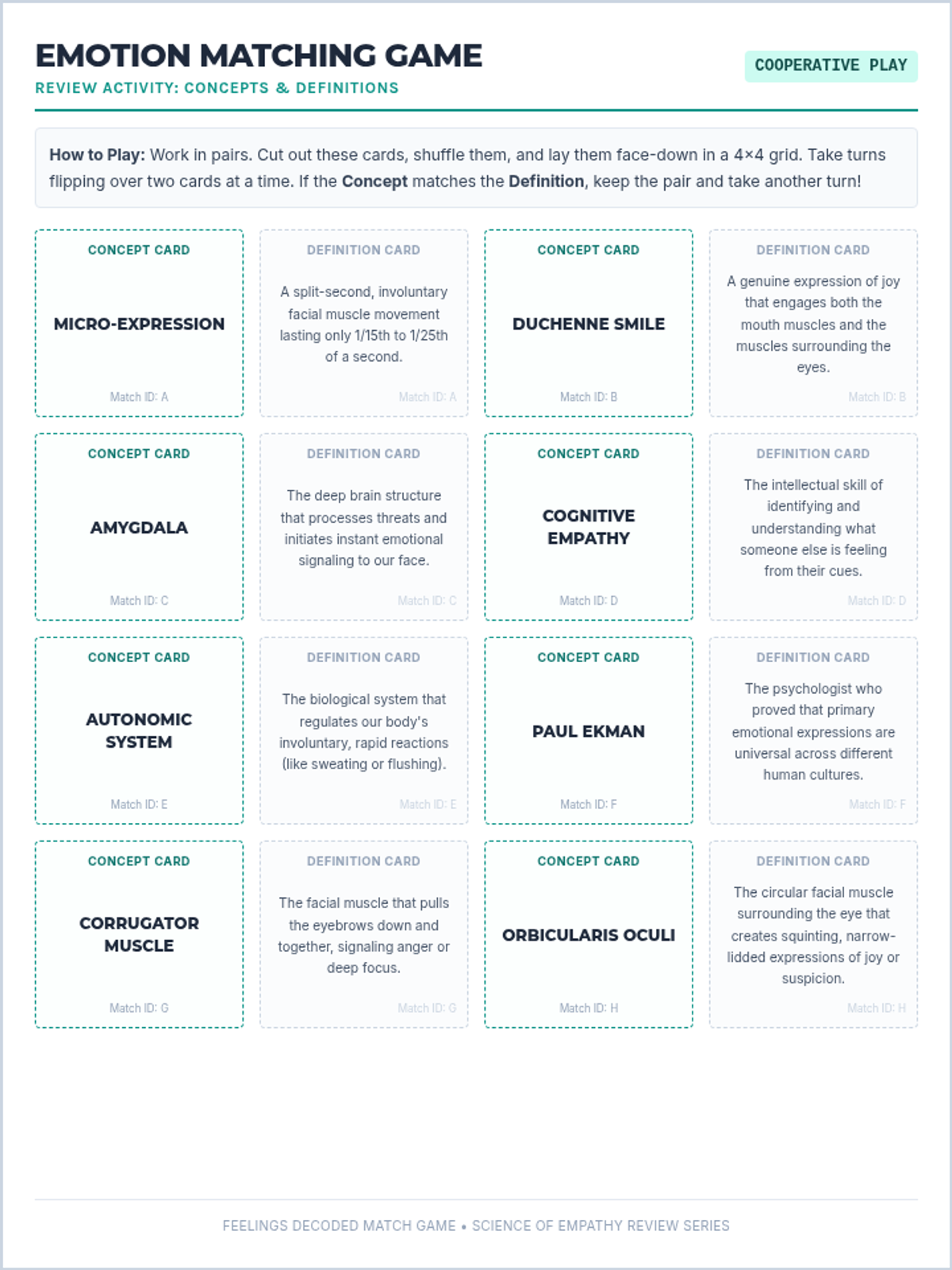
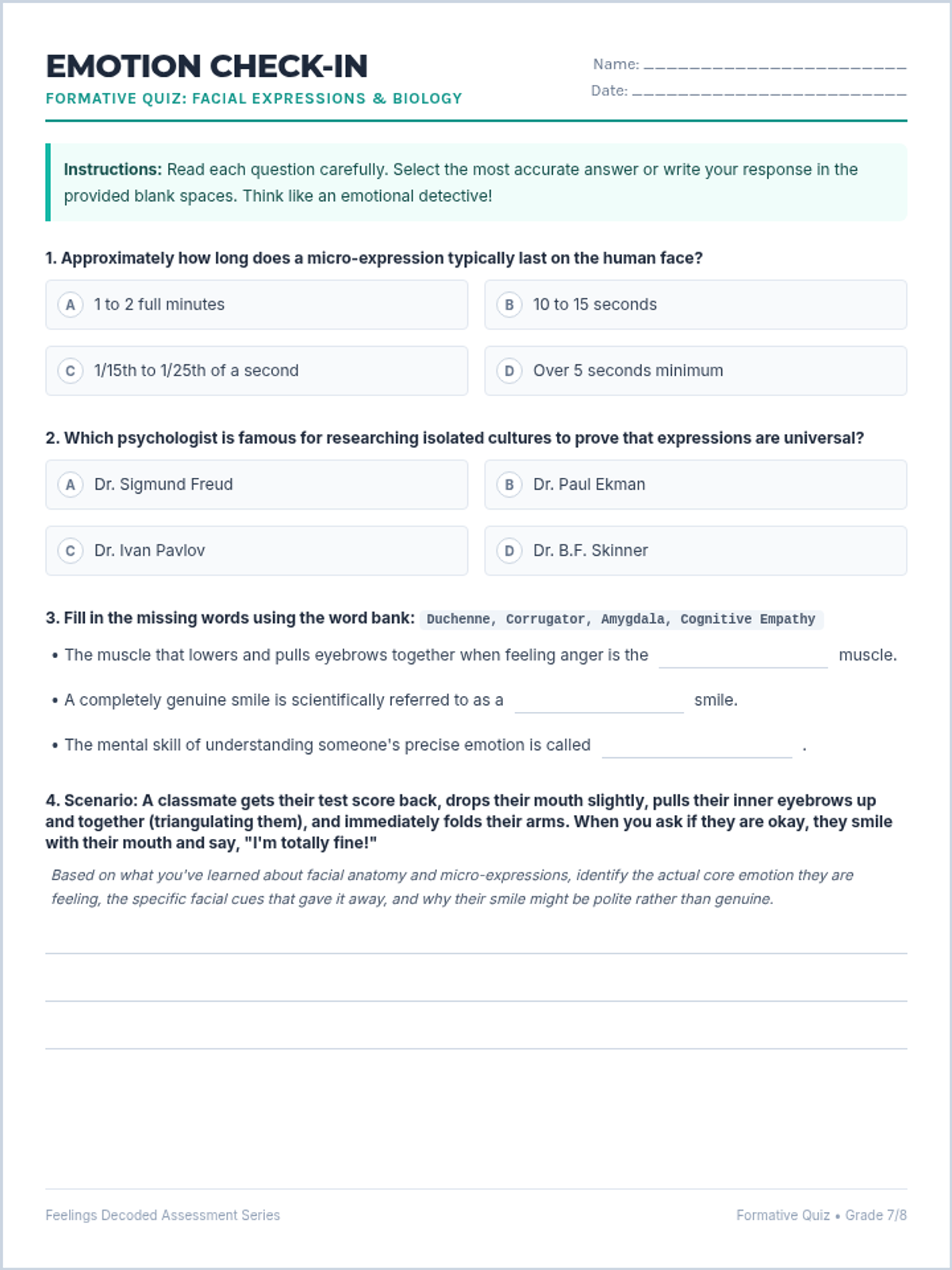
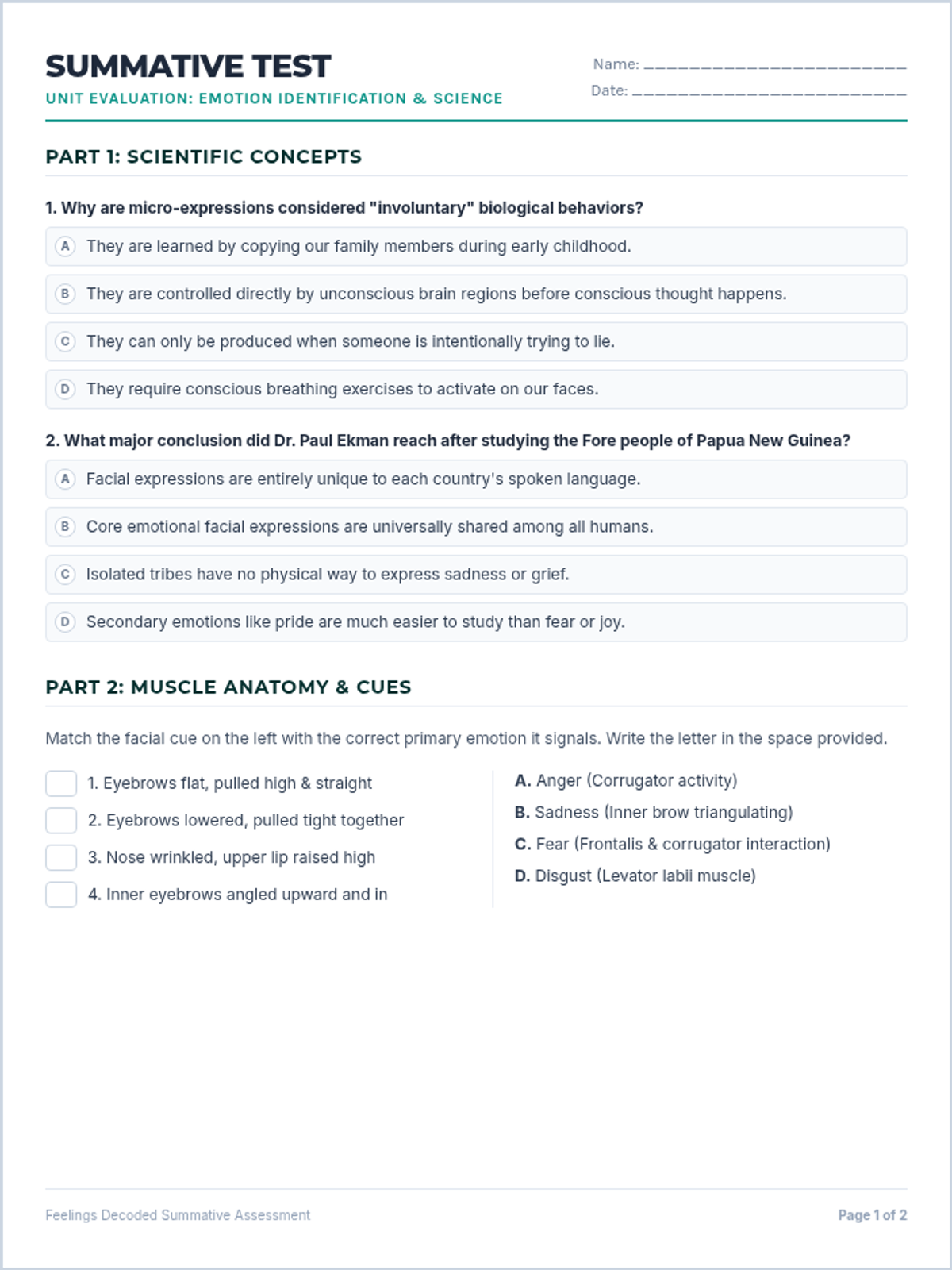
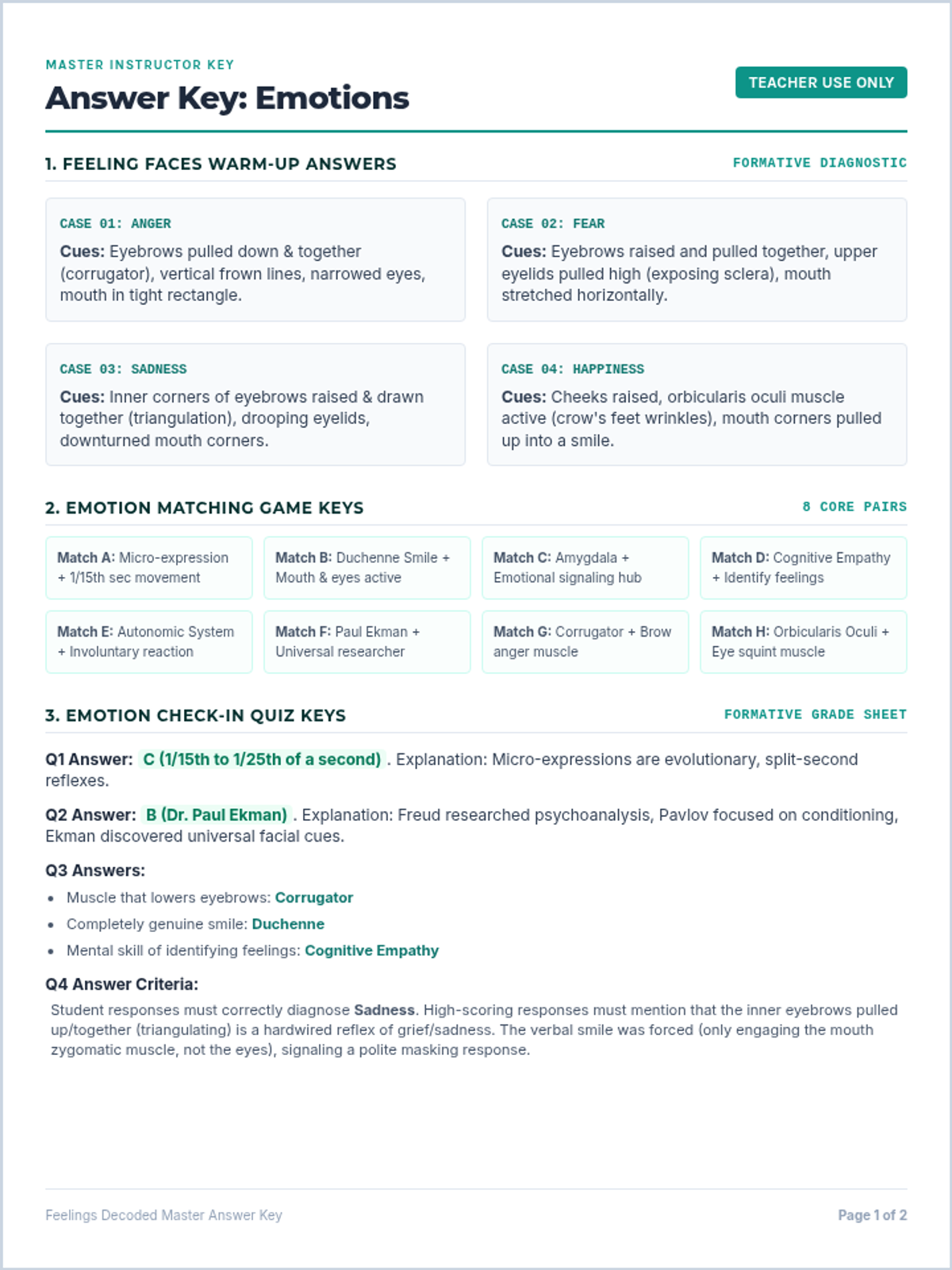
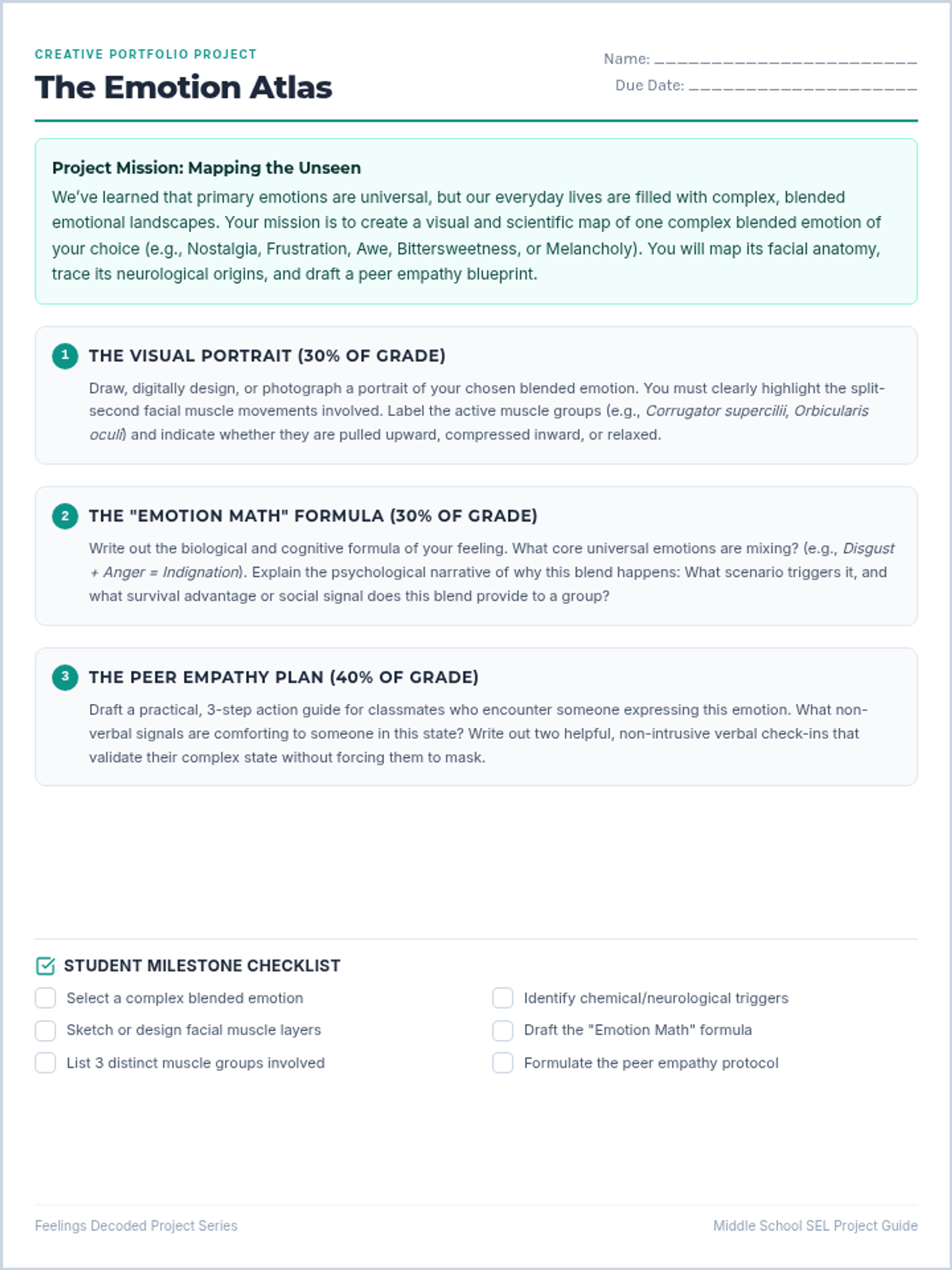
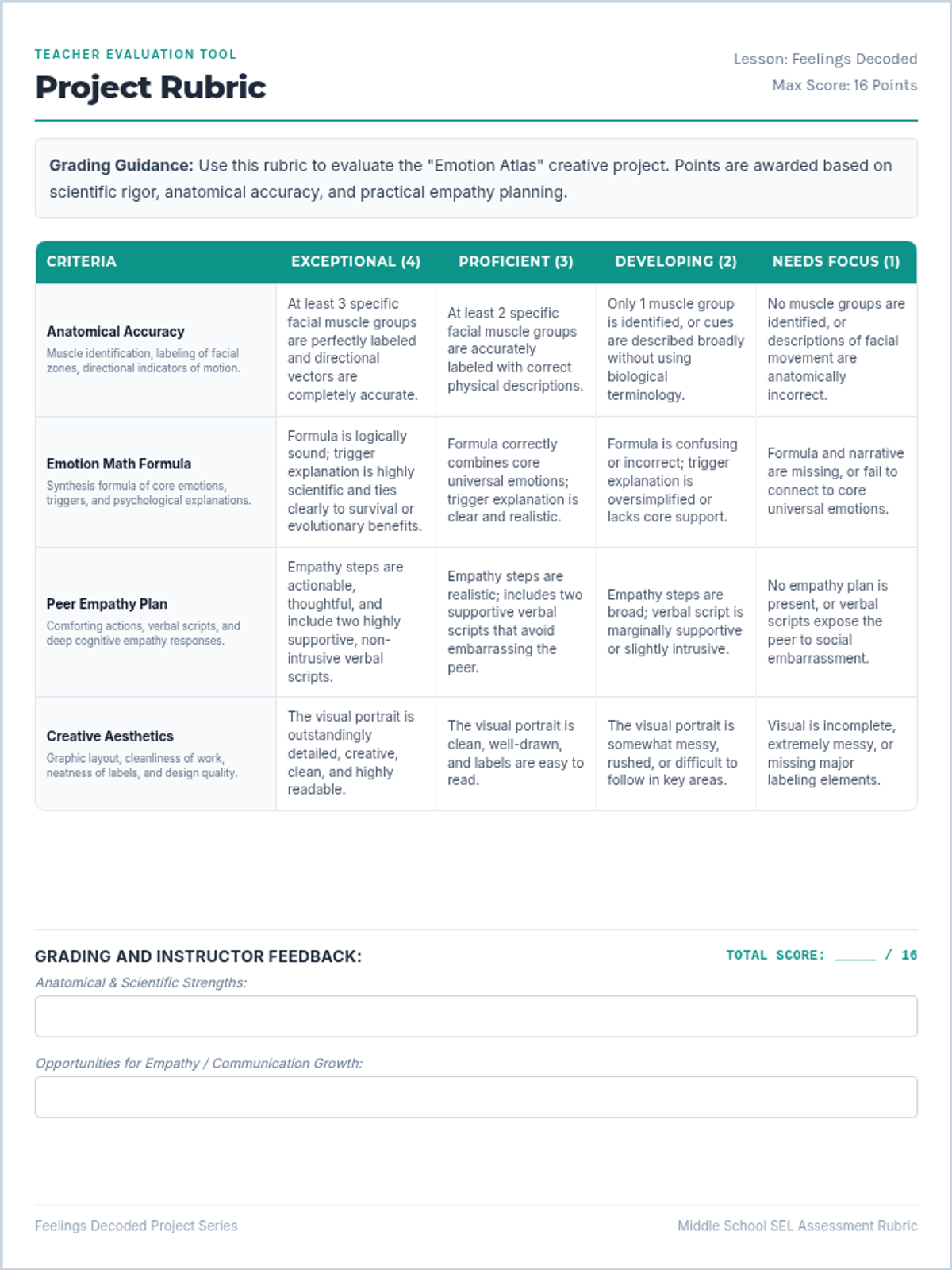
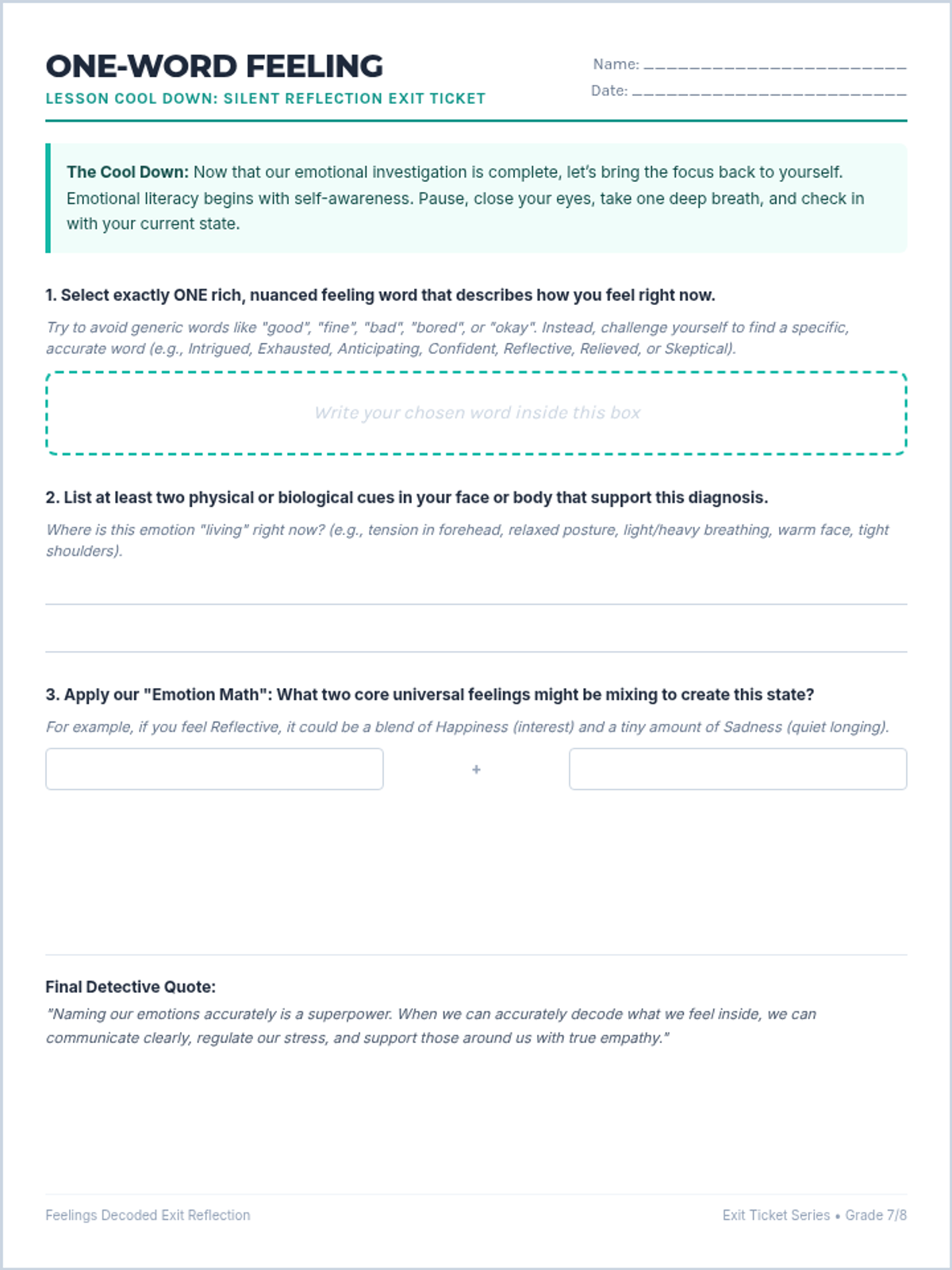
An interactive, psychologically grounded lesson for Secondary 1 and 2 students (ages 12-14) to develop emotional literacy, decode complex micro-expressions, and build social-emotional awareness. Through multi-sensory activities, presentation materials, and structured reflections, students learn to analyze emotional cues and articulate feelings accurately.
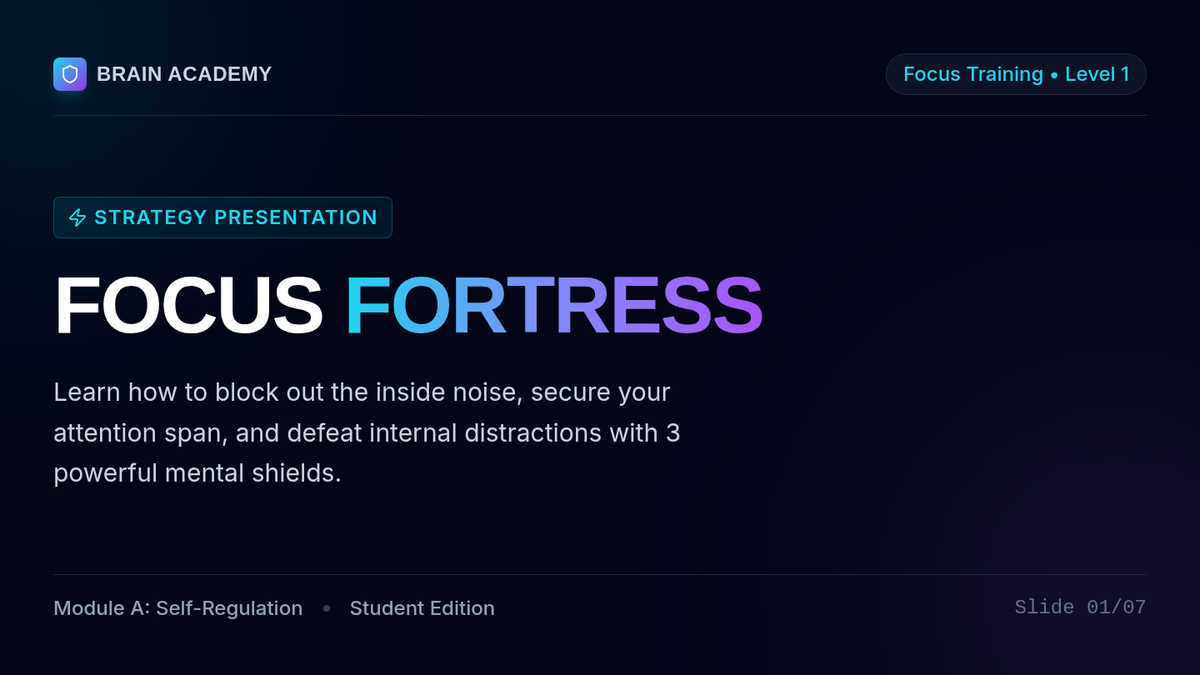
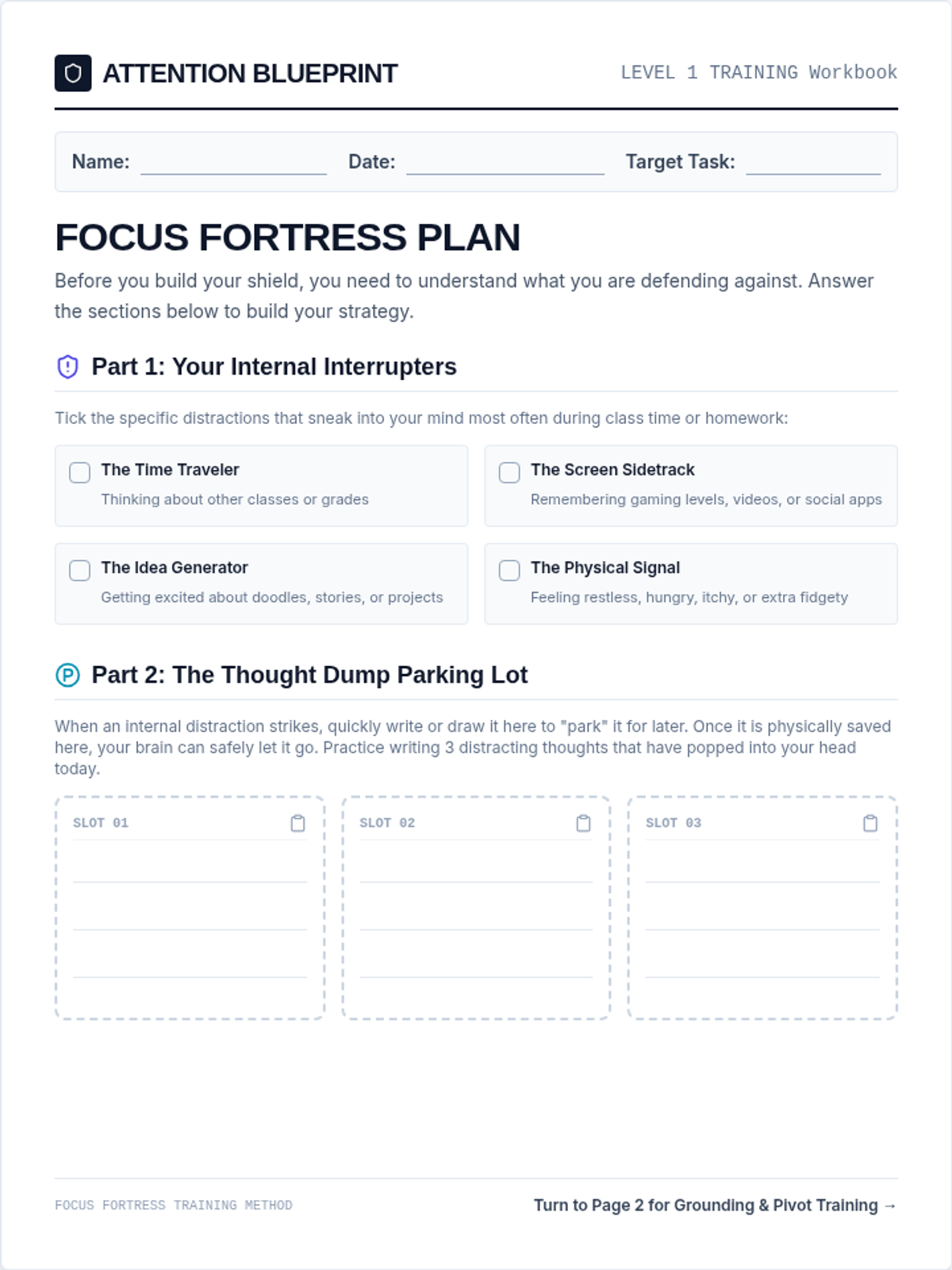
A lessons designed to teach students how to identify and conquer internal distractions using three core strategies: Thought Dumping, Mindful Grounding, and Self-Talk & Redirection.
A schoolwide PBIS curriculum designed for Grades 6-8 to establish, model, and reinforce positive behaviors across all settings. Includes Week 1 foundation, Week 2 location-specific routines, and Year-Long Monthly resets.
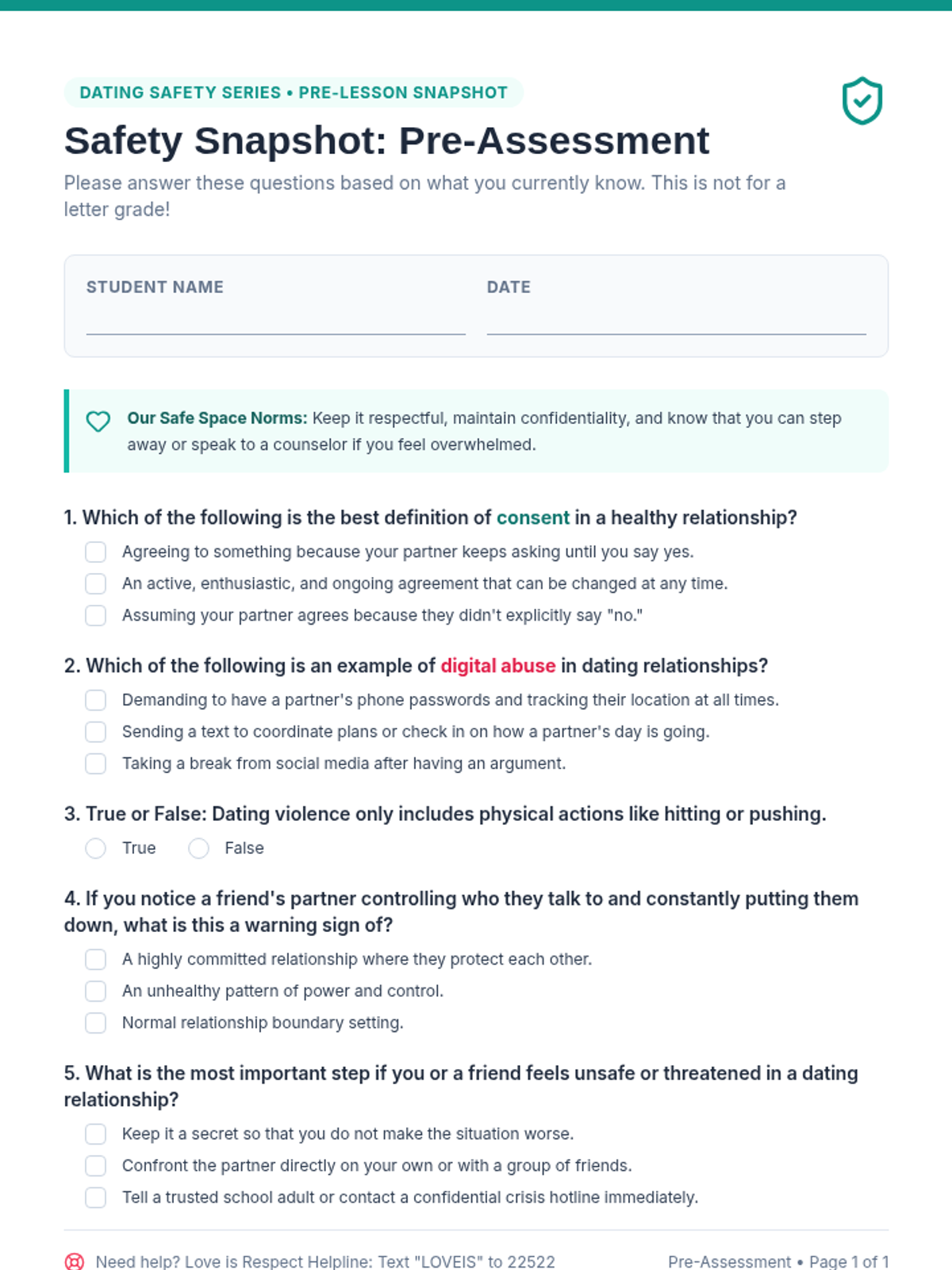
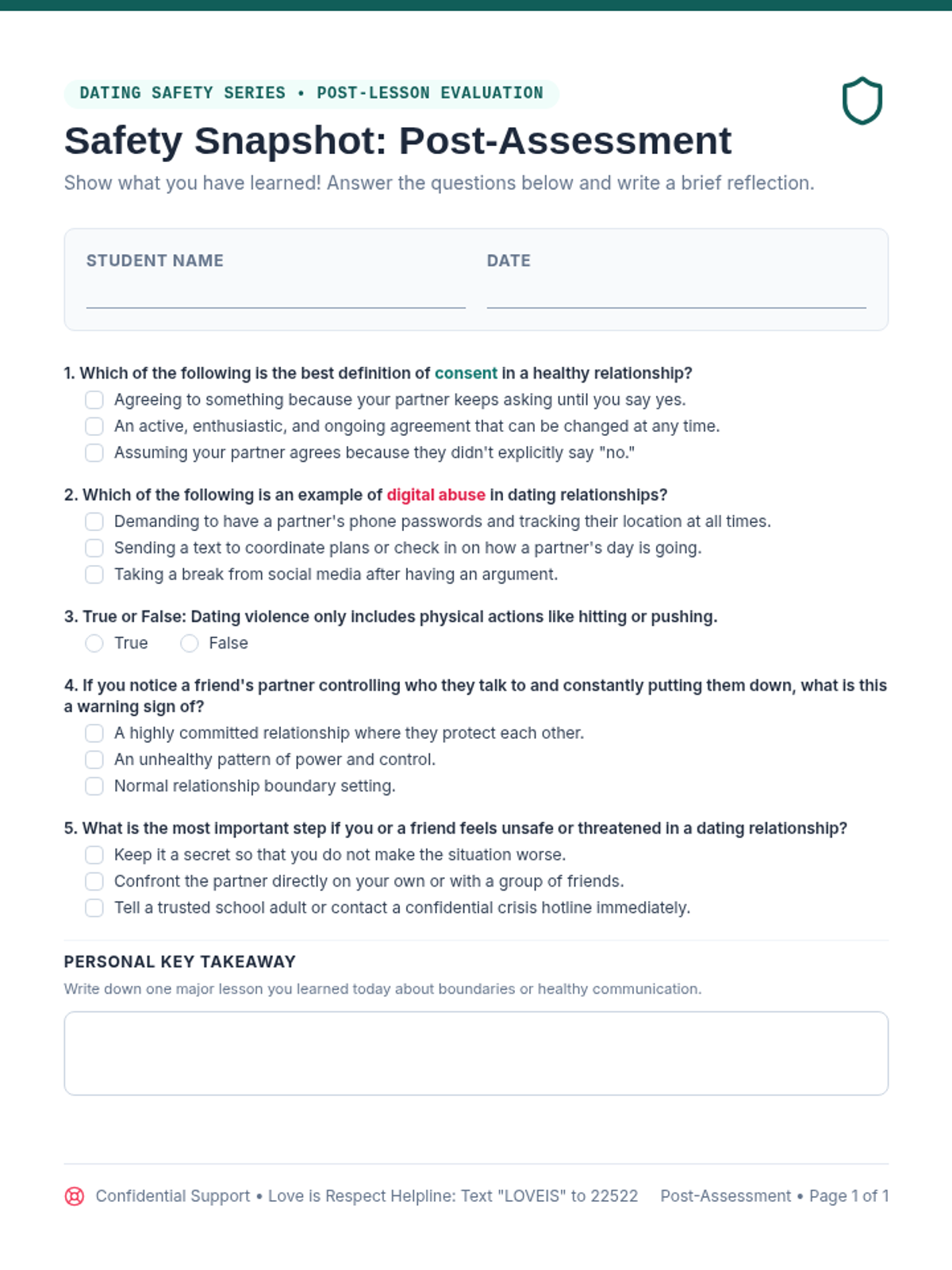
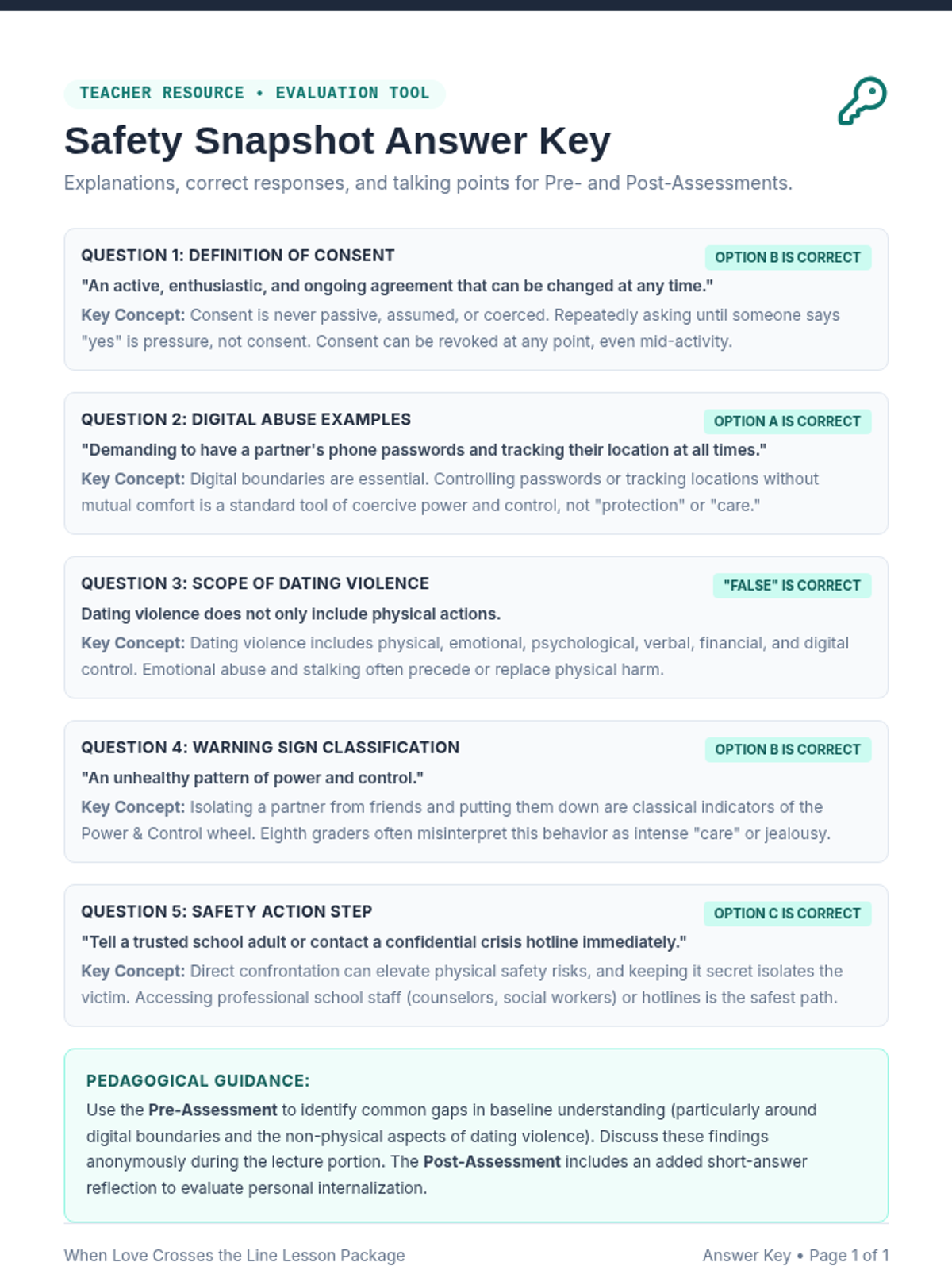
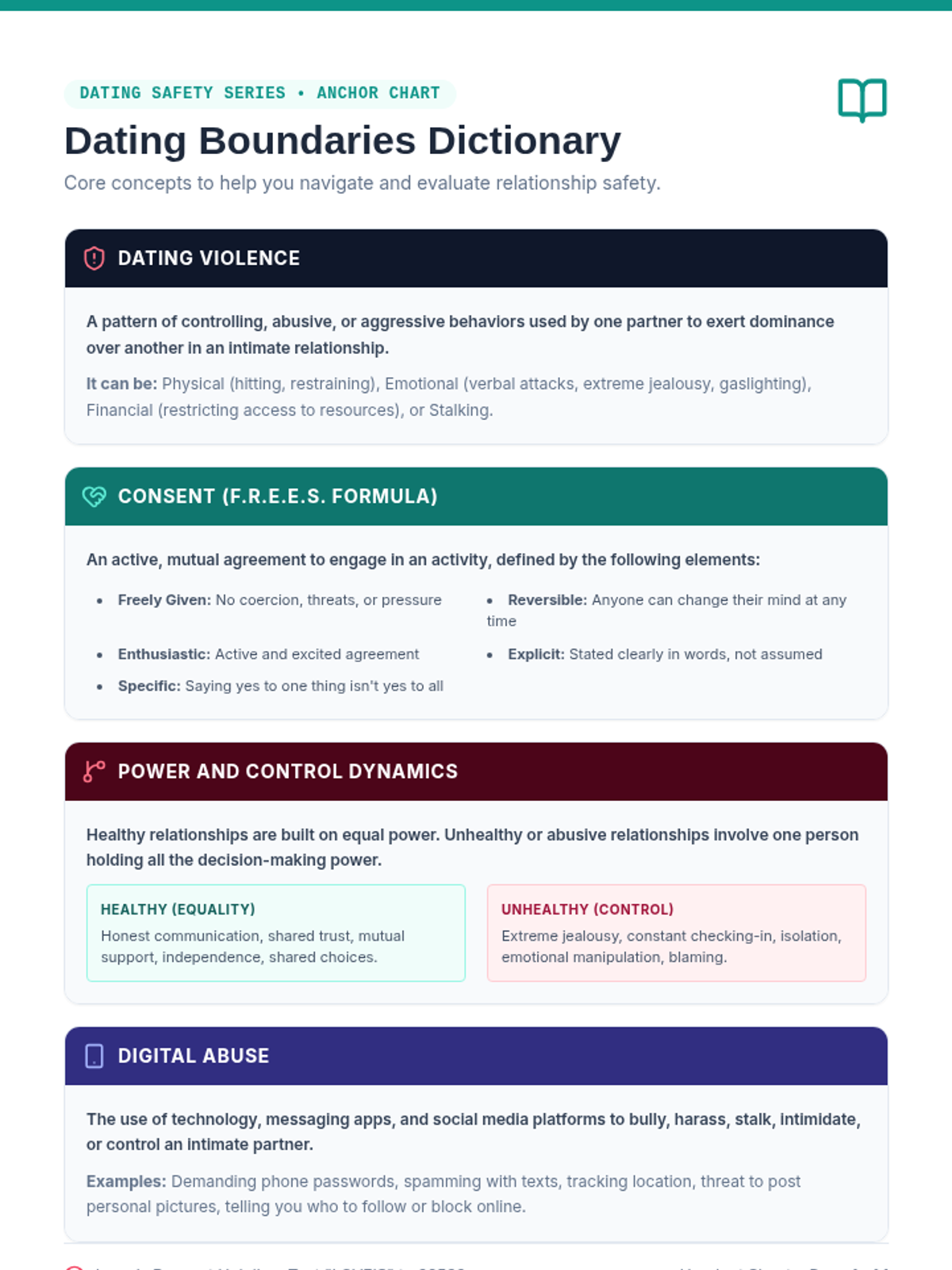
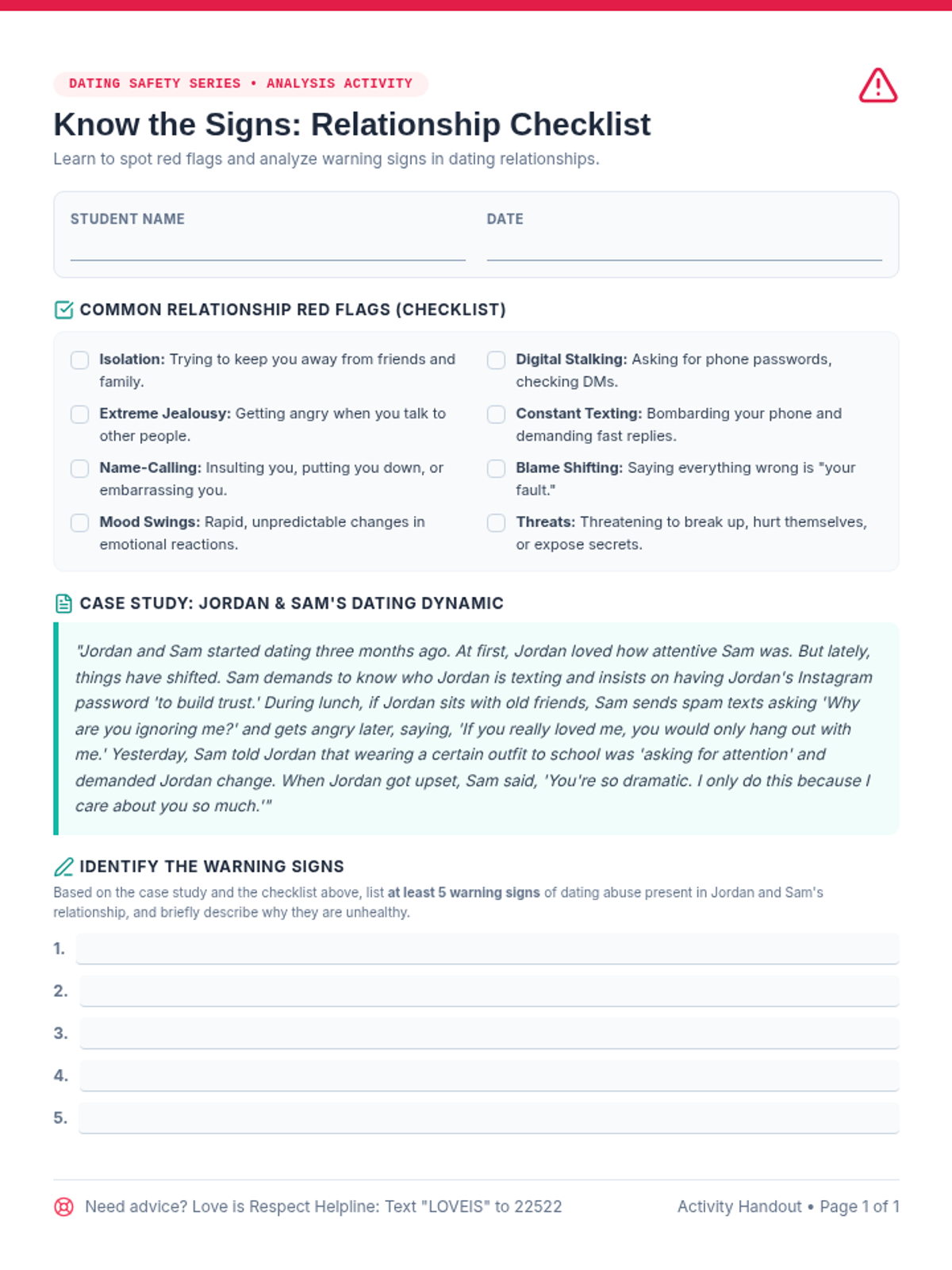
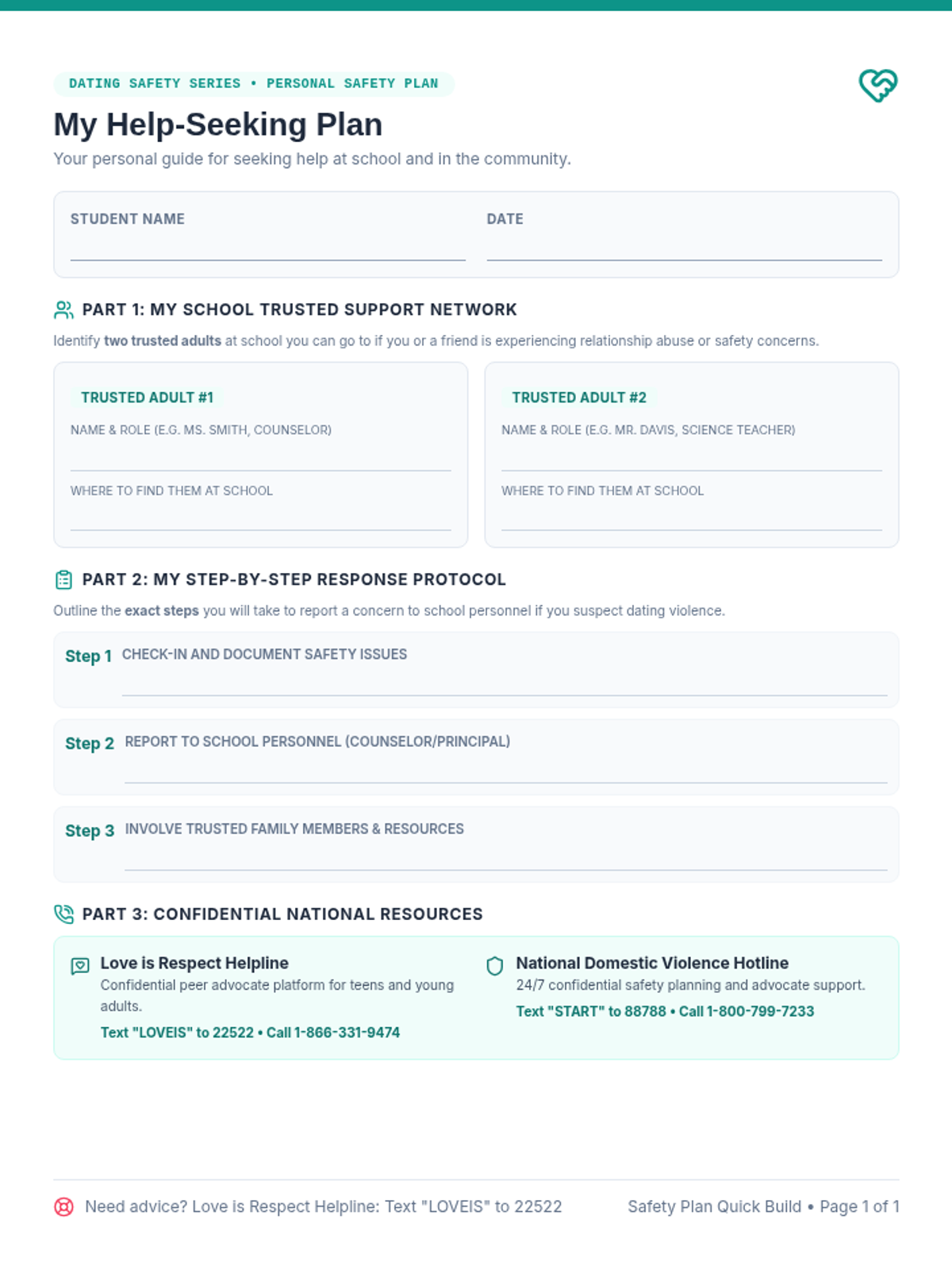
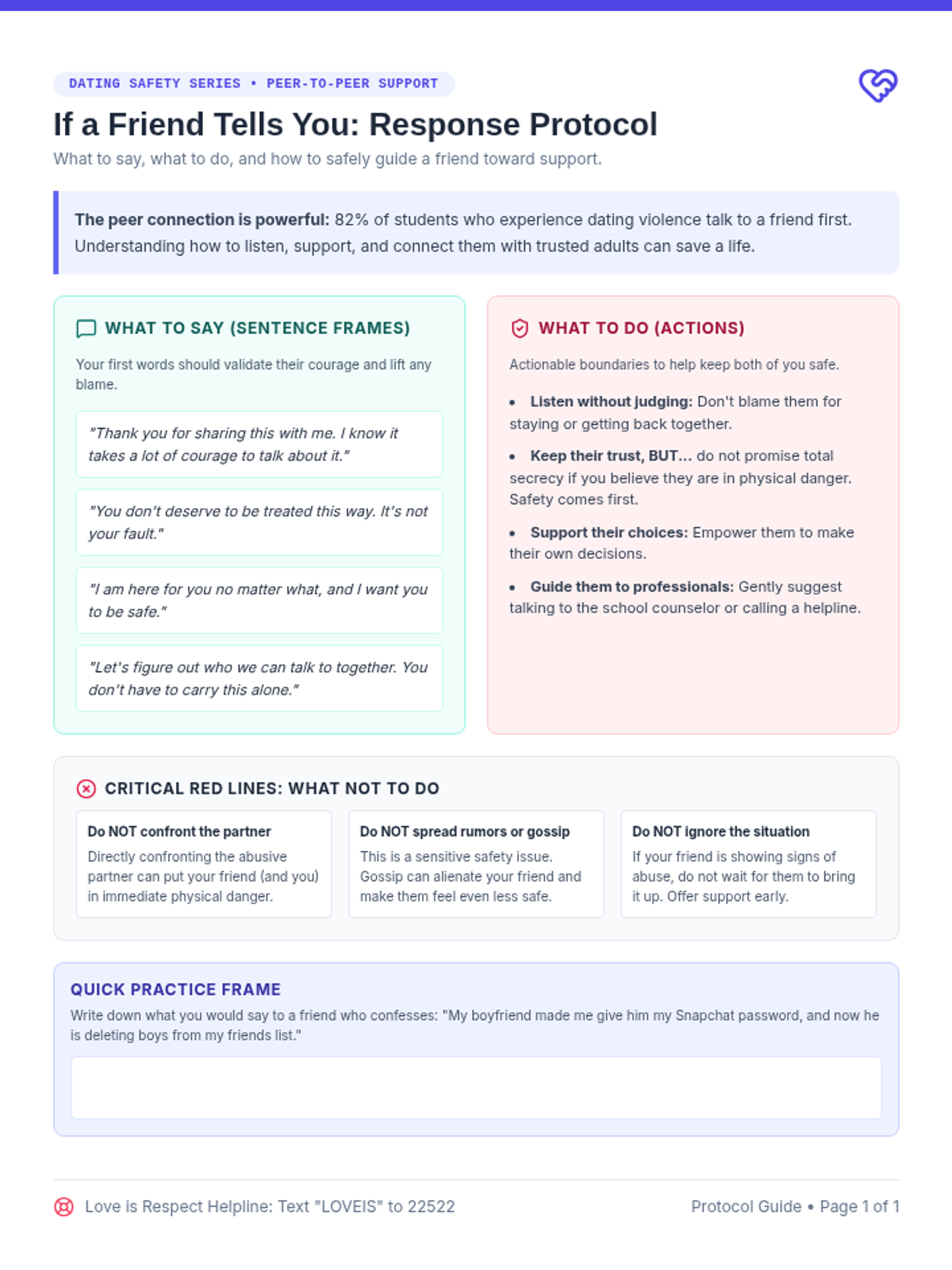
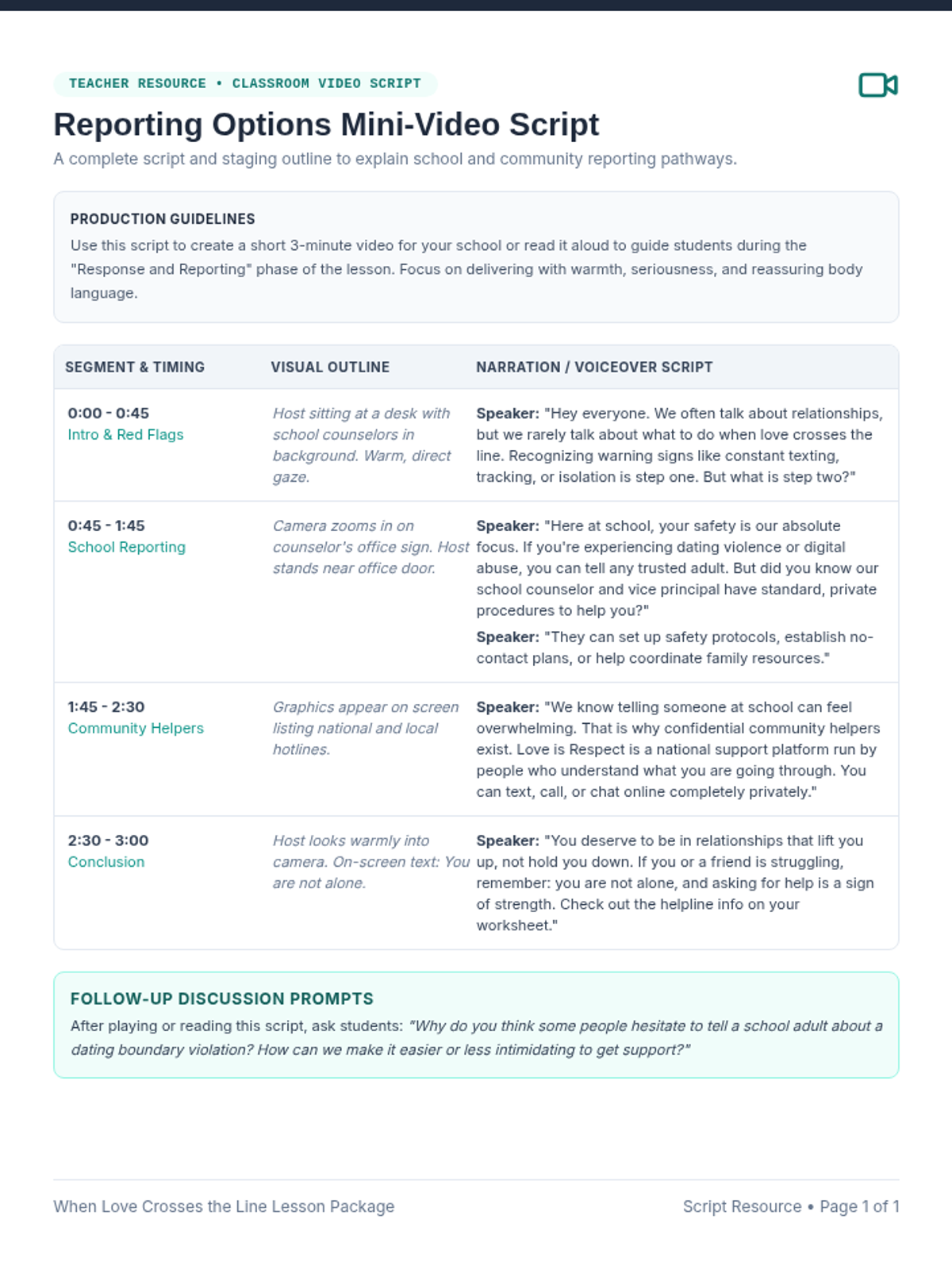
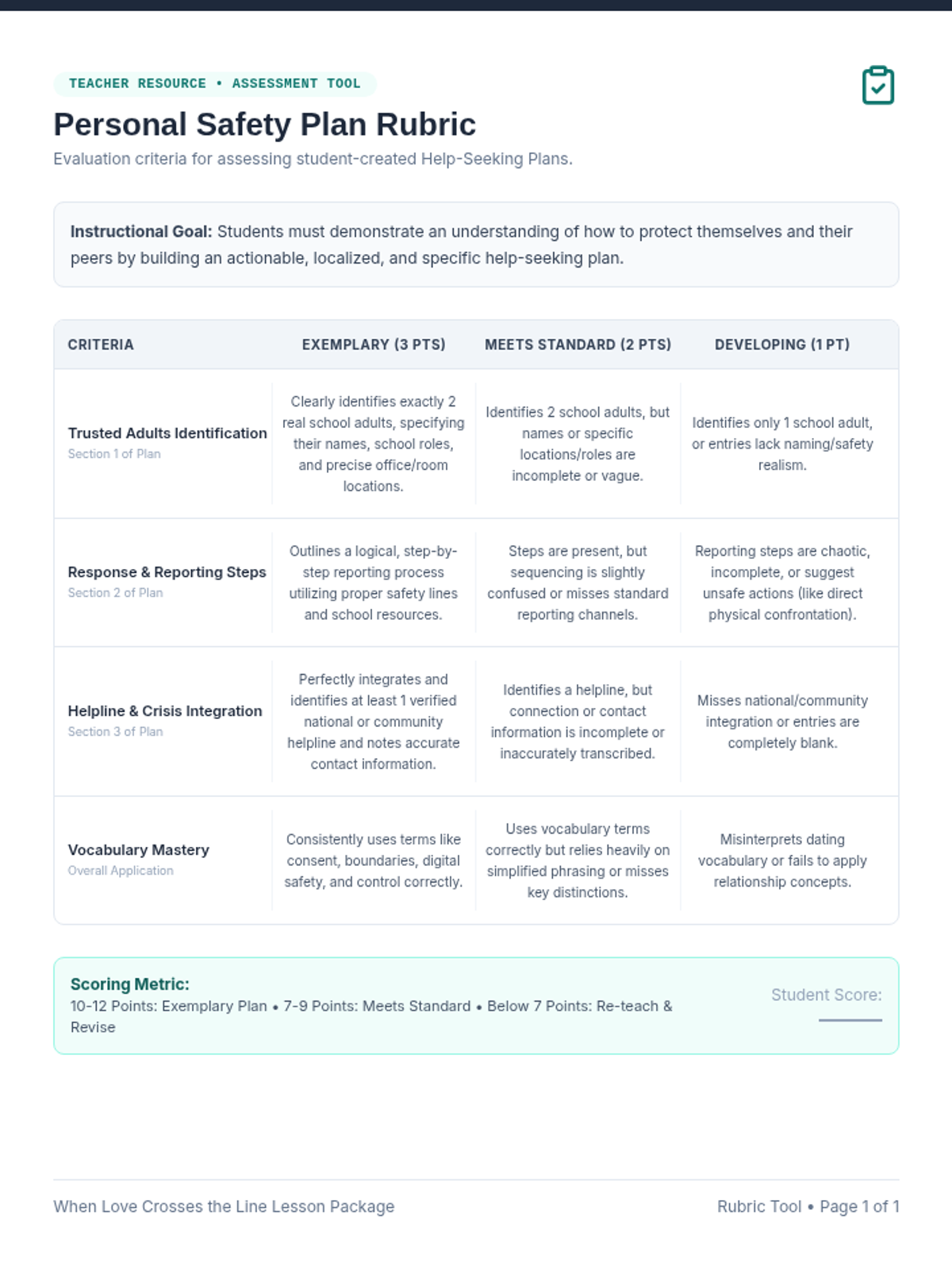
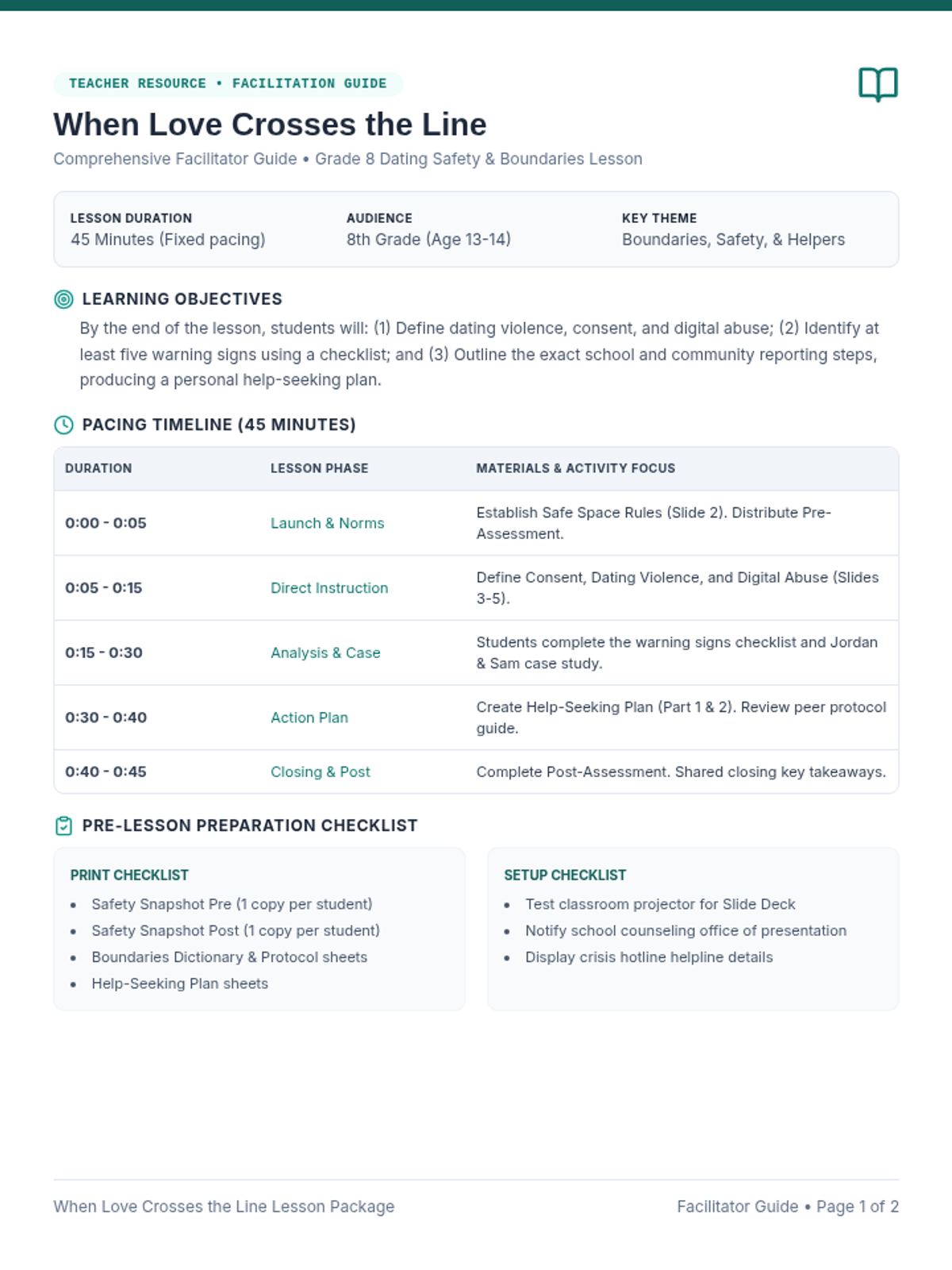
A comprehensive 45-minute lesson for 8th graders on recognizing dating violence, digital abuse, and boundaries, identifying warning signs, and creating a personalized school and community help-seeking plan.
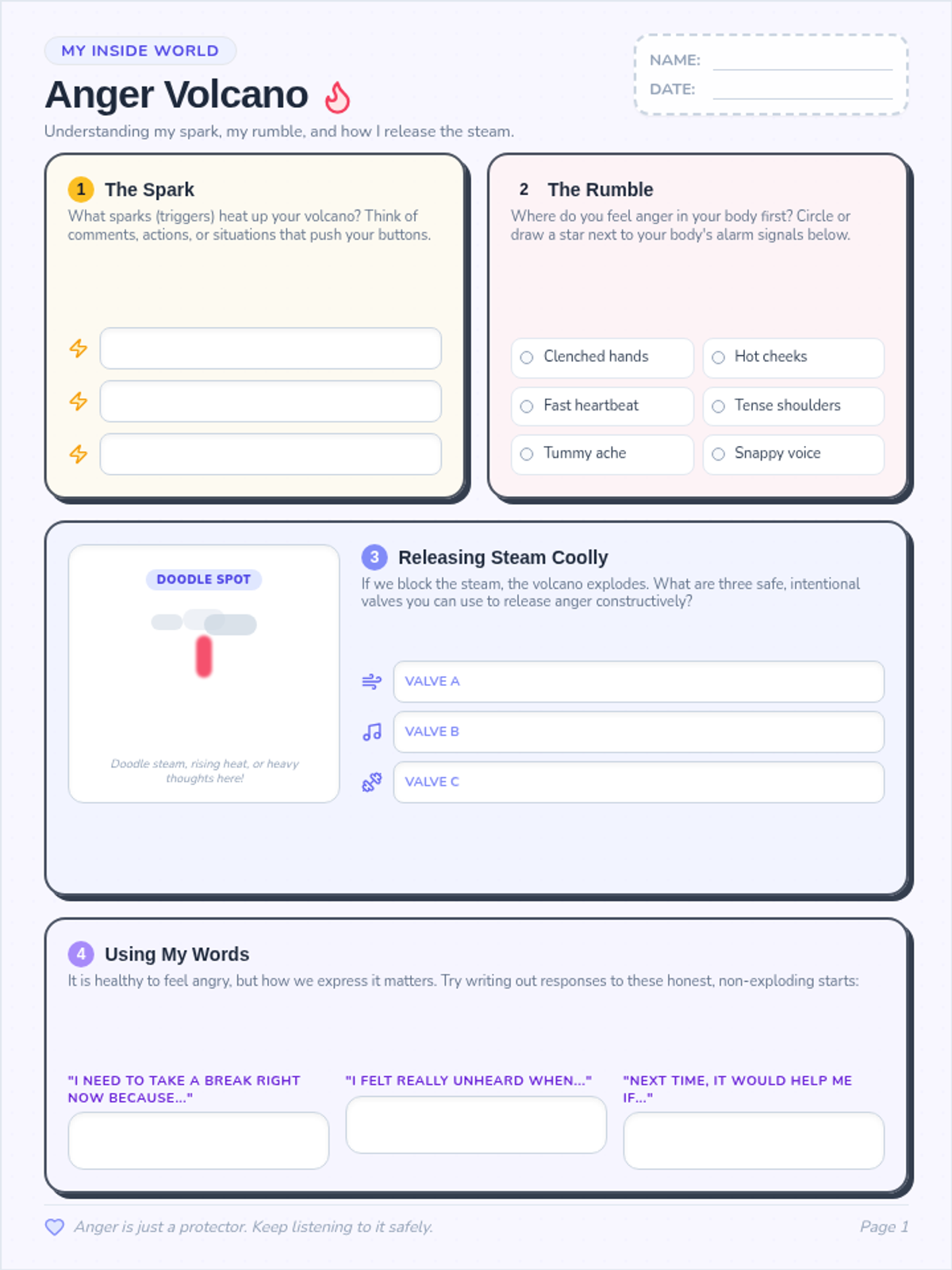
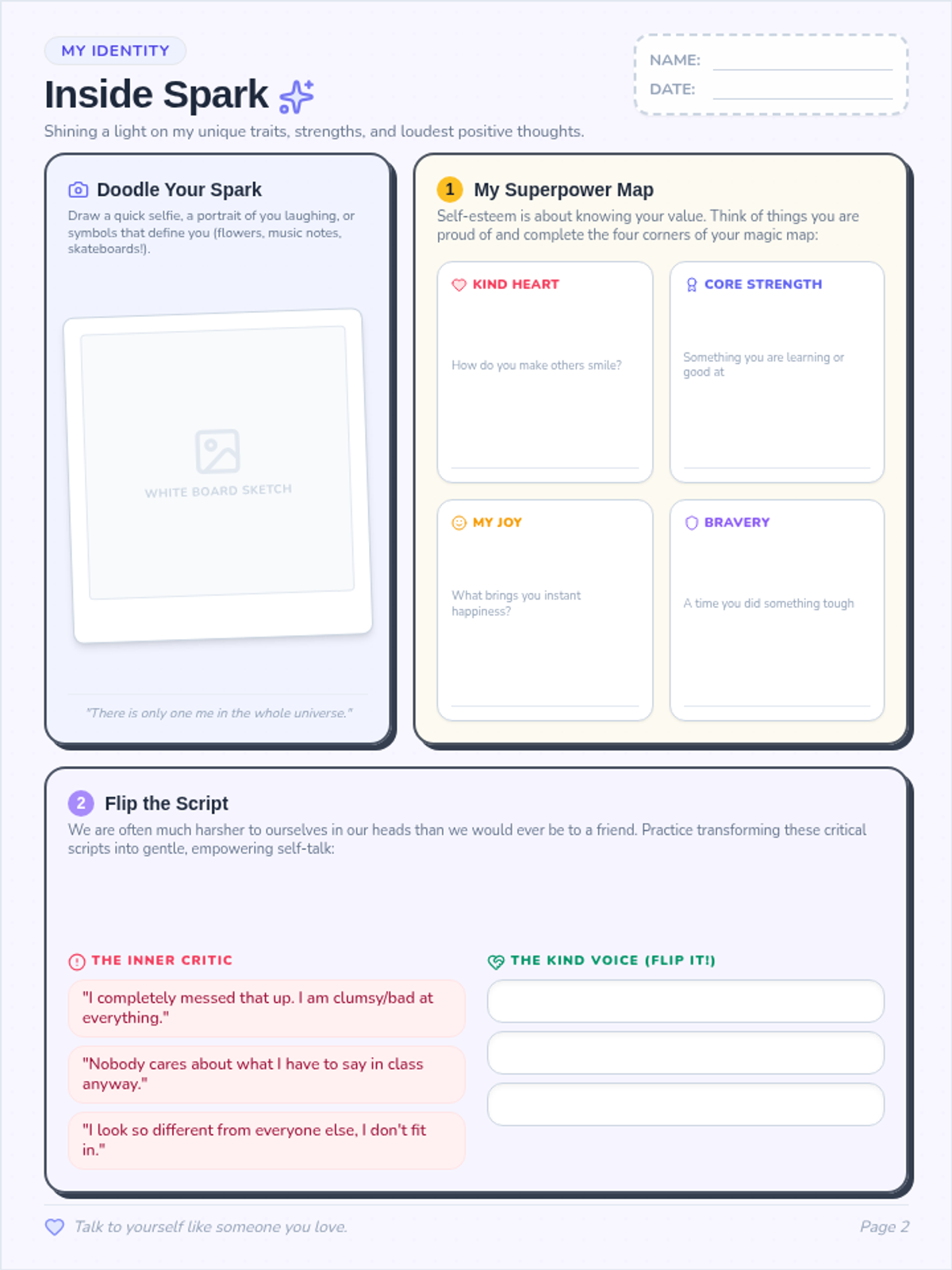
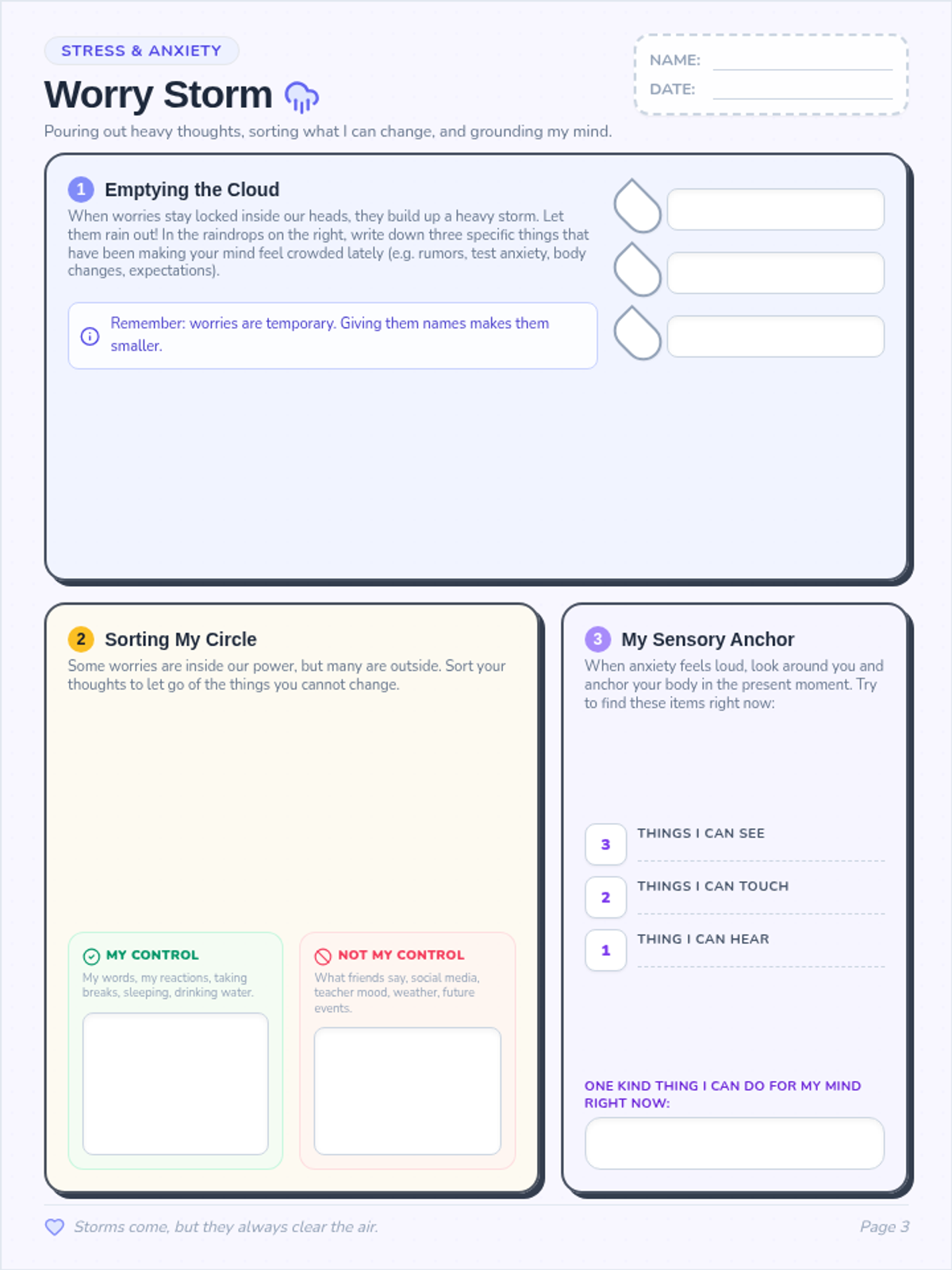
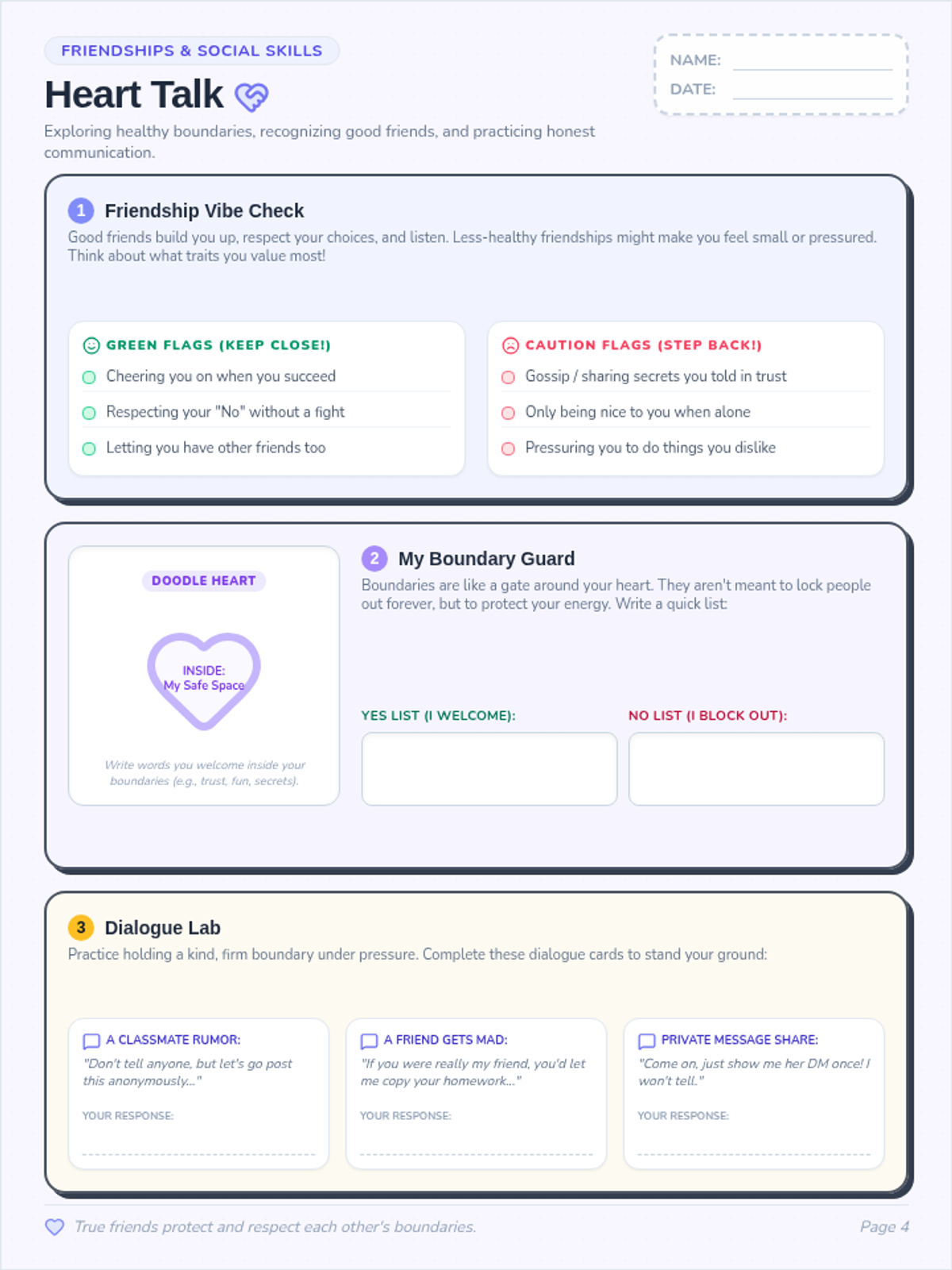
A collection of highly engaging, sketchbook-style journaling worksheets designed specifically for 12-year-old girls. This lesson focuses on self-esteem, managing stress and anxiety, navigating friendships, and constructively communicating and expressing anger.
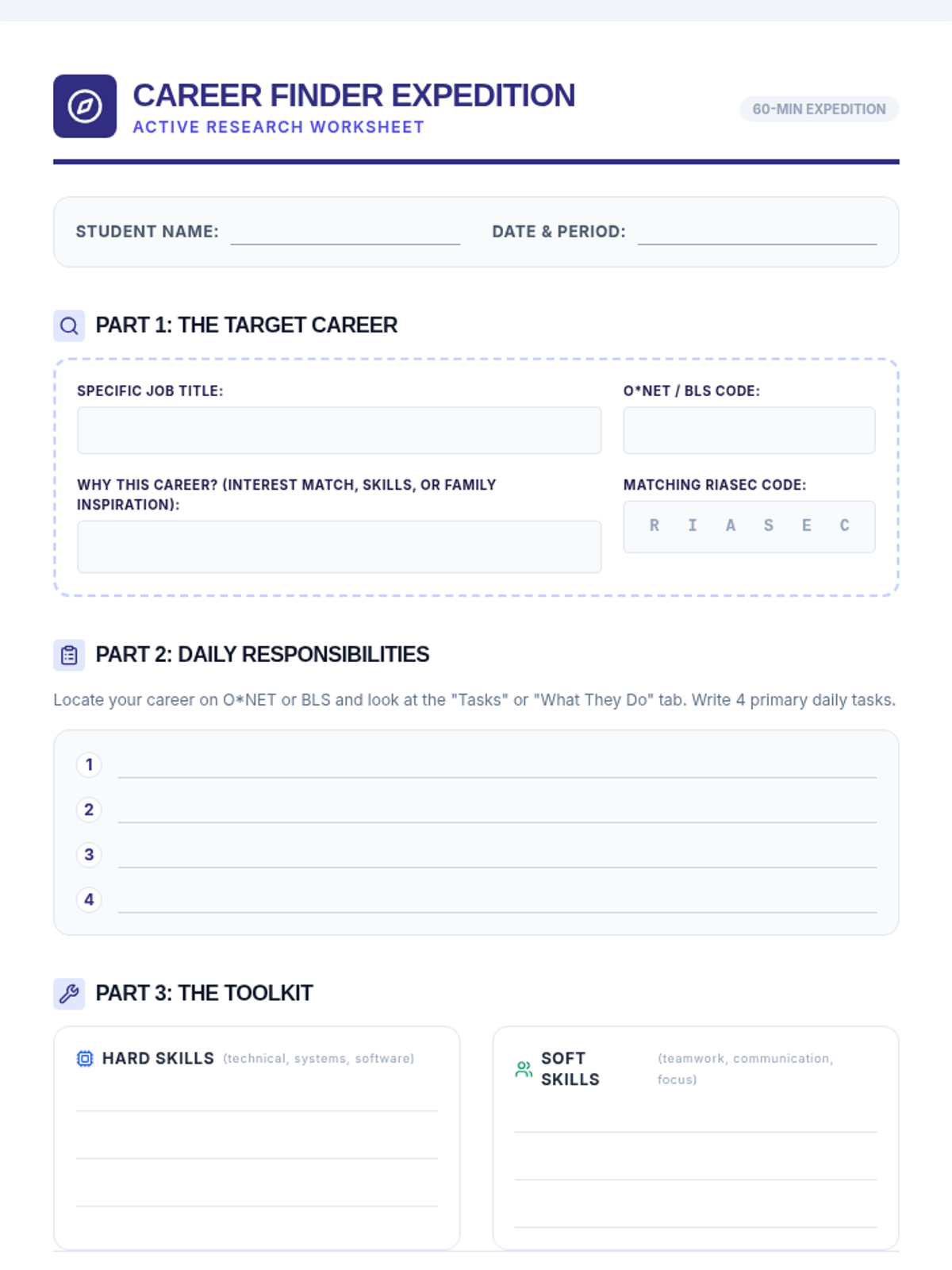
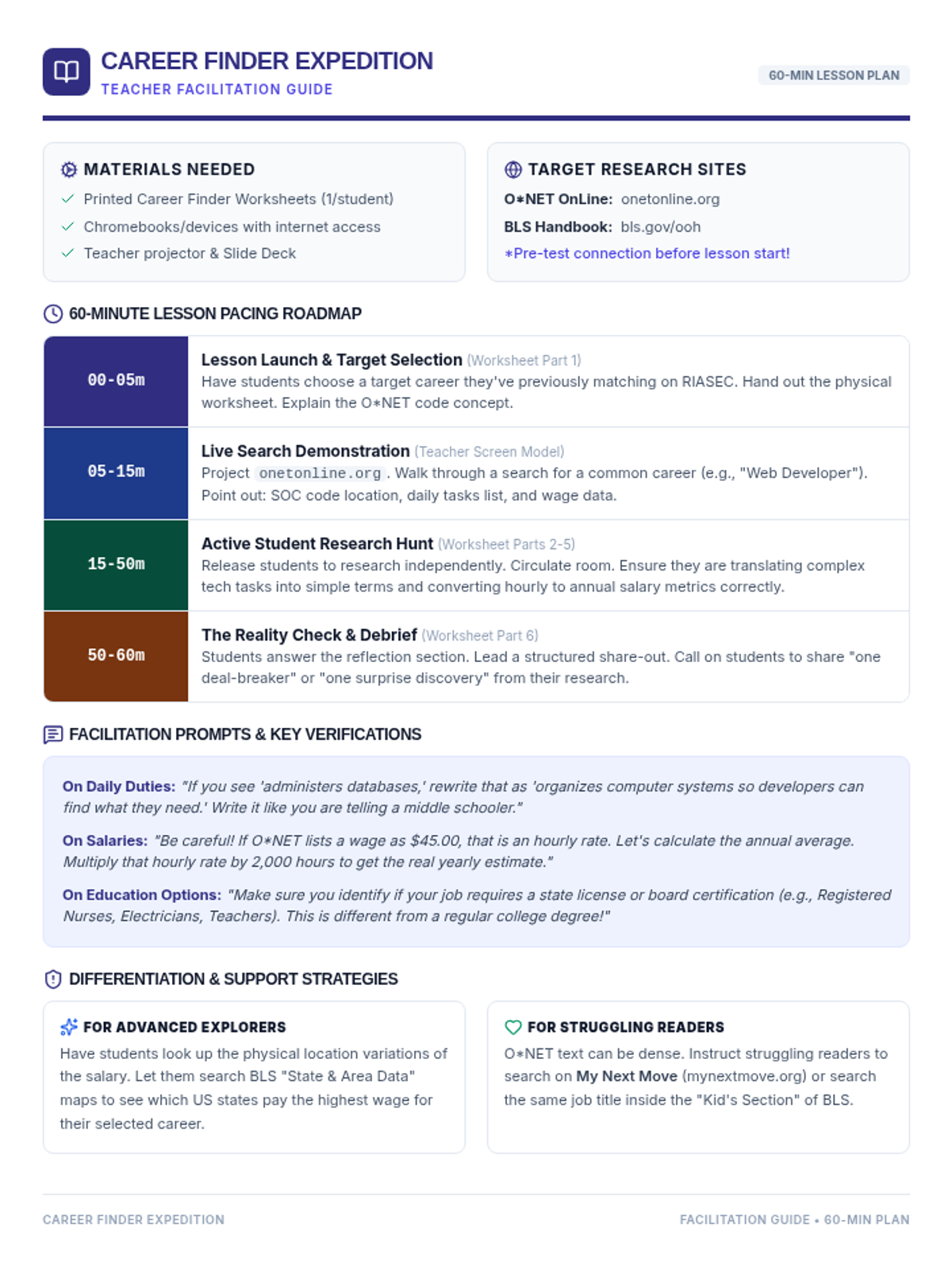
A 60-minute active career investigation lesson where students select a career matching their RIASEC interests, conduct live research using O*NET/BLS, and map out requirements, salary metrics, and key skills.
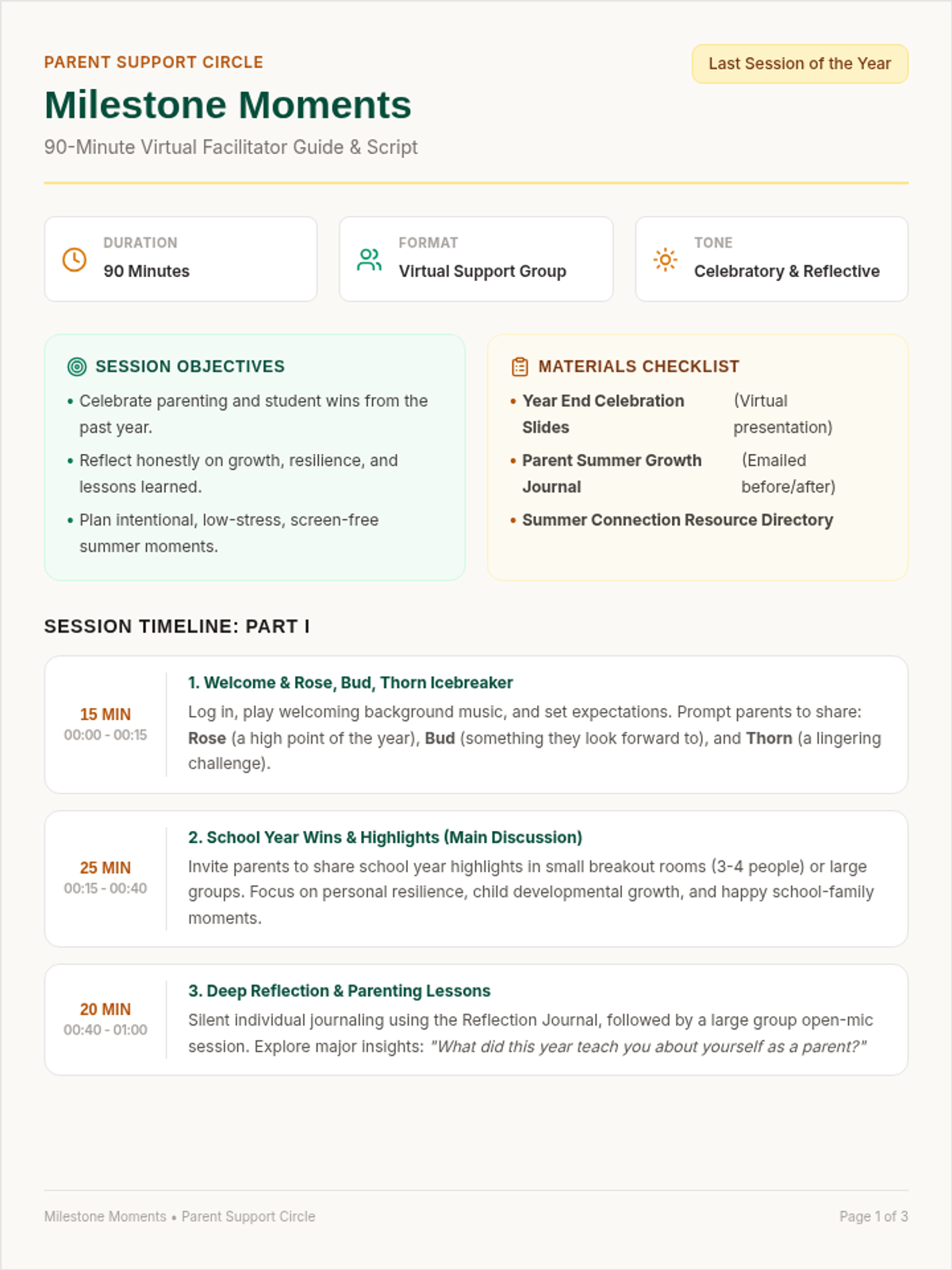
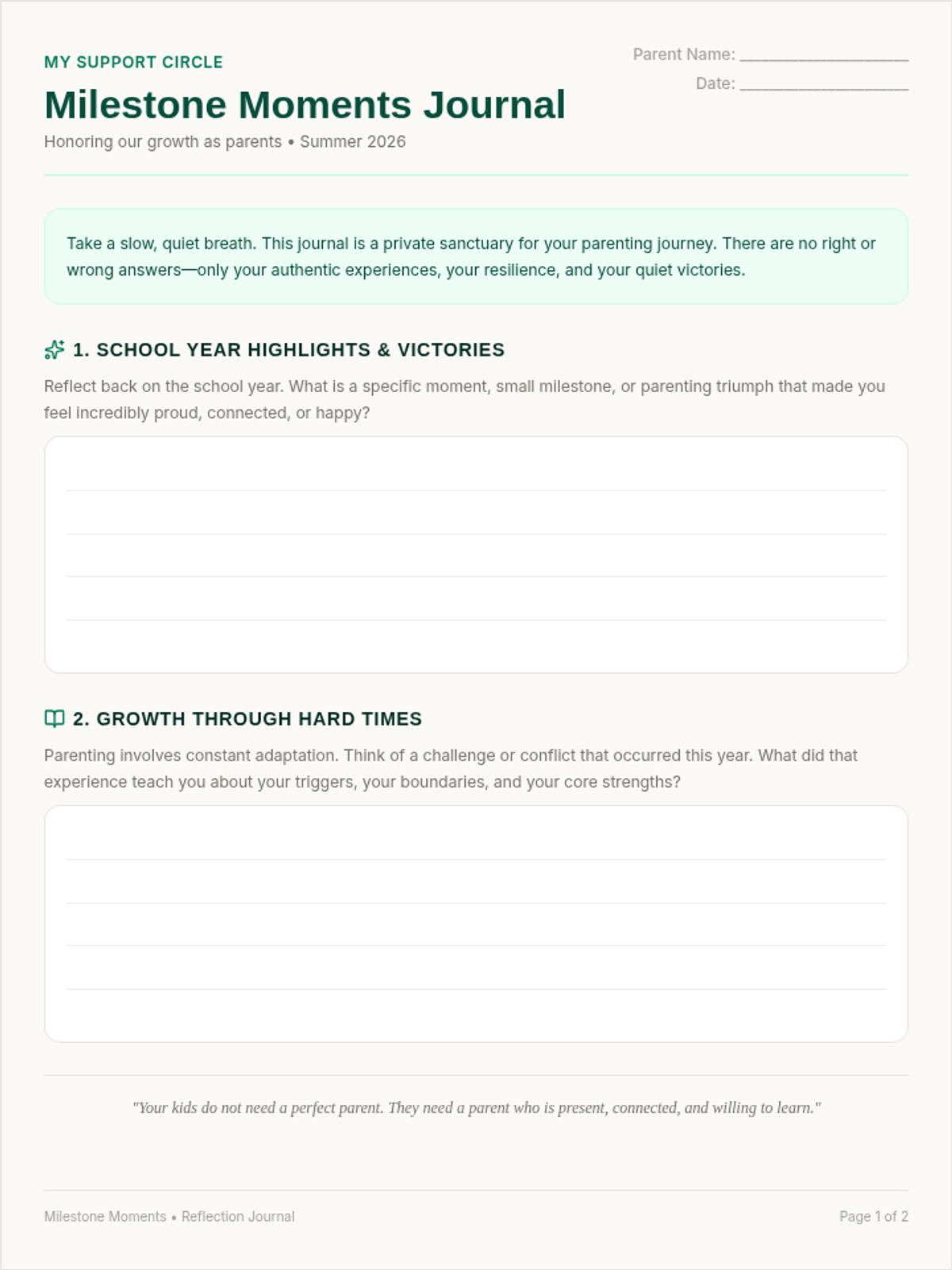
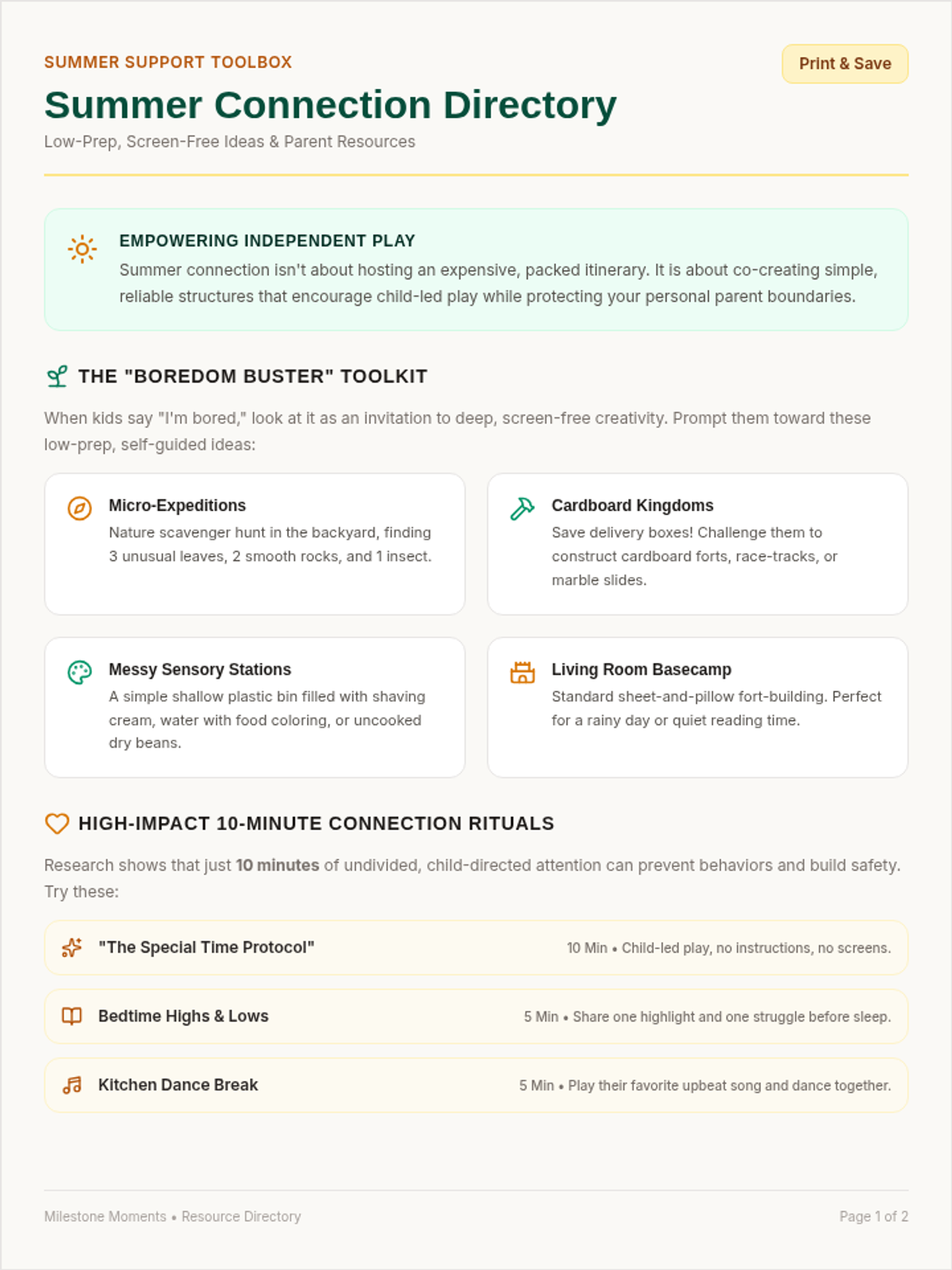
A warm, celebratory parent support group session focused on reflecting on school year successes, planning screen-free summer adventures, and setting growth goals.
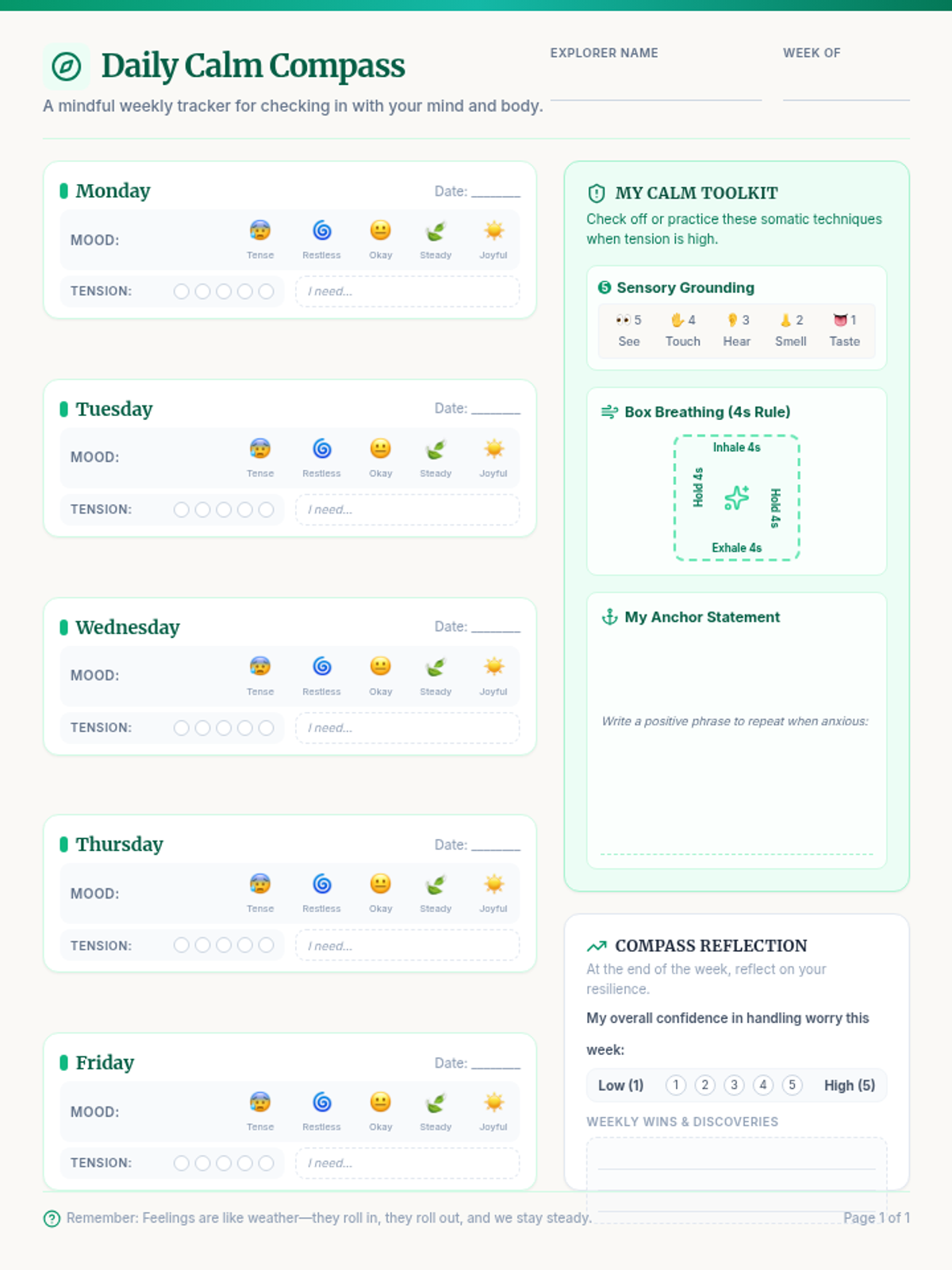
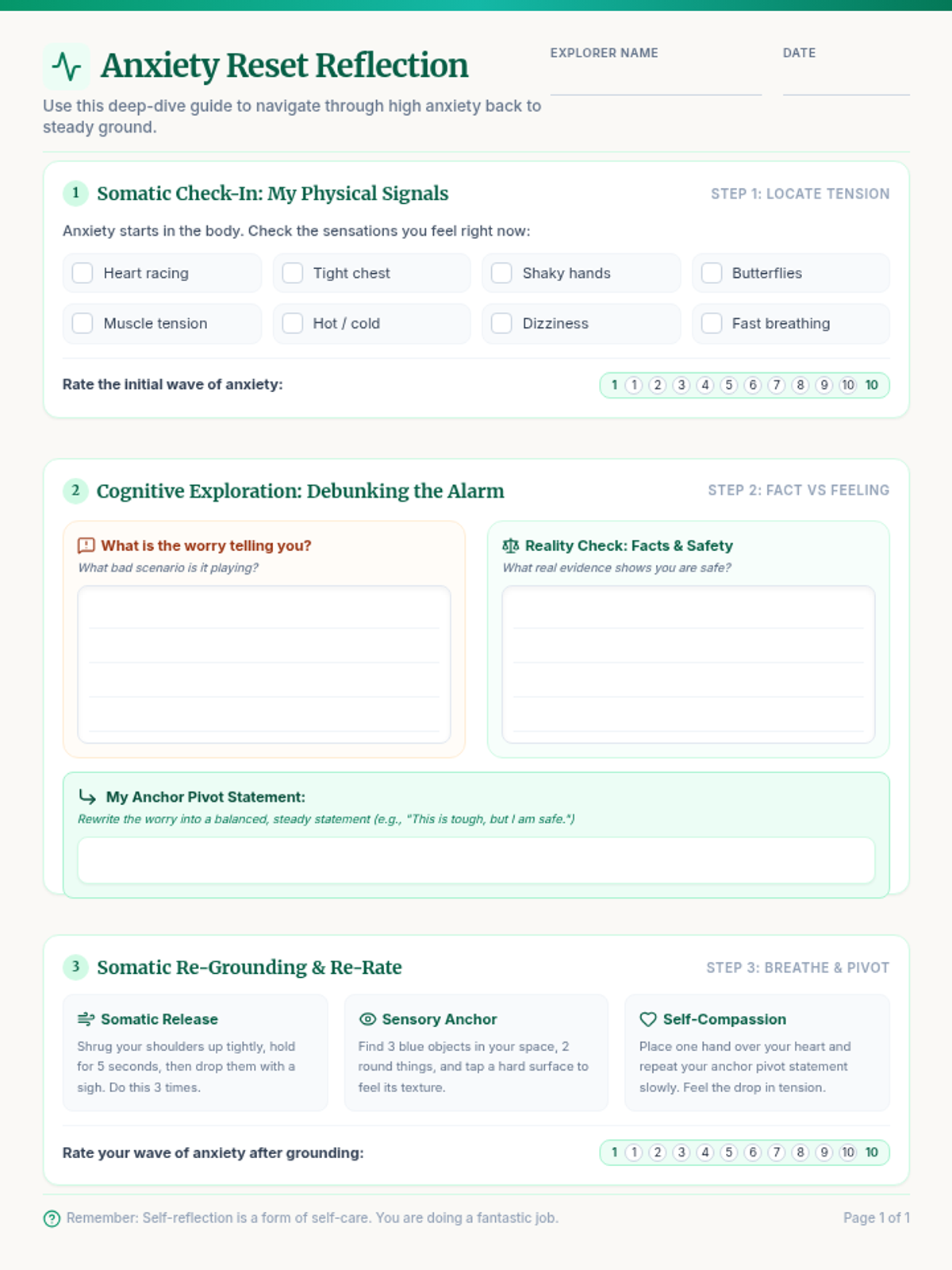
A therapeutic toolkit and instructional guide designed to help individuals understand, track, and navigate anxiety. This lesson combines daily visual tracking with cognitive-behavioral and somatic grounding techniques to build emotional resilience and self-regulation skills.
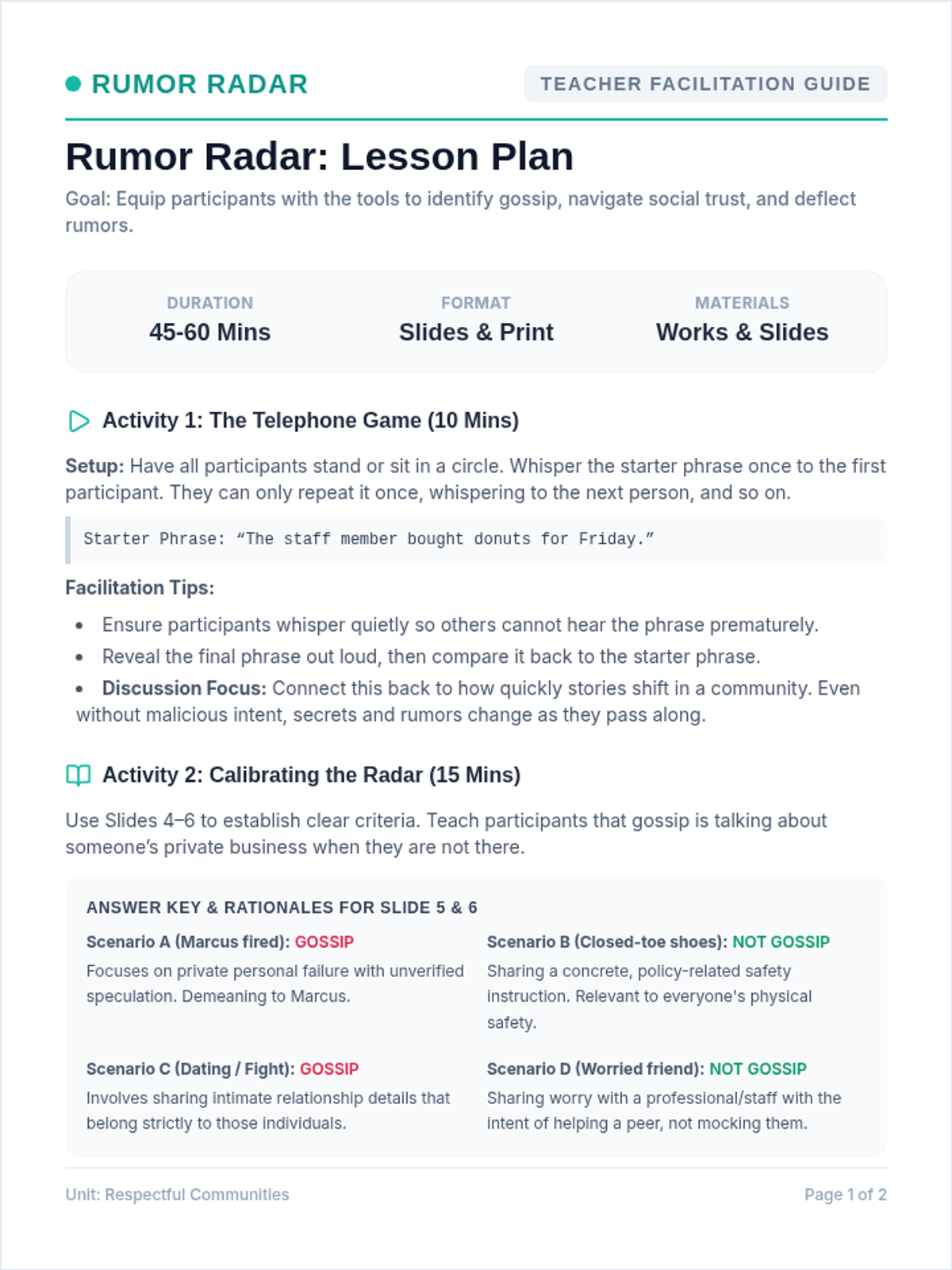
A dynamic lesson designed to help participants understand the impact of gossip, how rumors spread, and how to build healthy, respectful communication habits using visual scenarios and discussion prompts.