An inspiring 8th-grade lesson where students design and create a physical vision board on poster board, translating their goals and action steps into high-impact visual symbols to foster long-term motivation, positive self-image, and accountability.
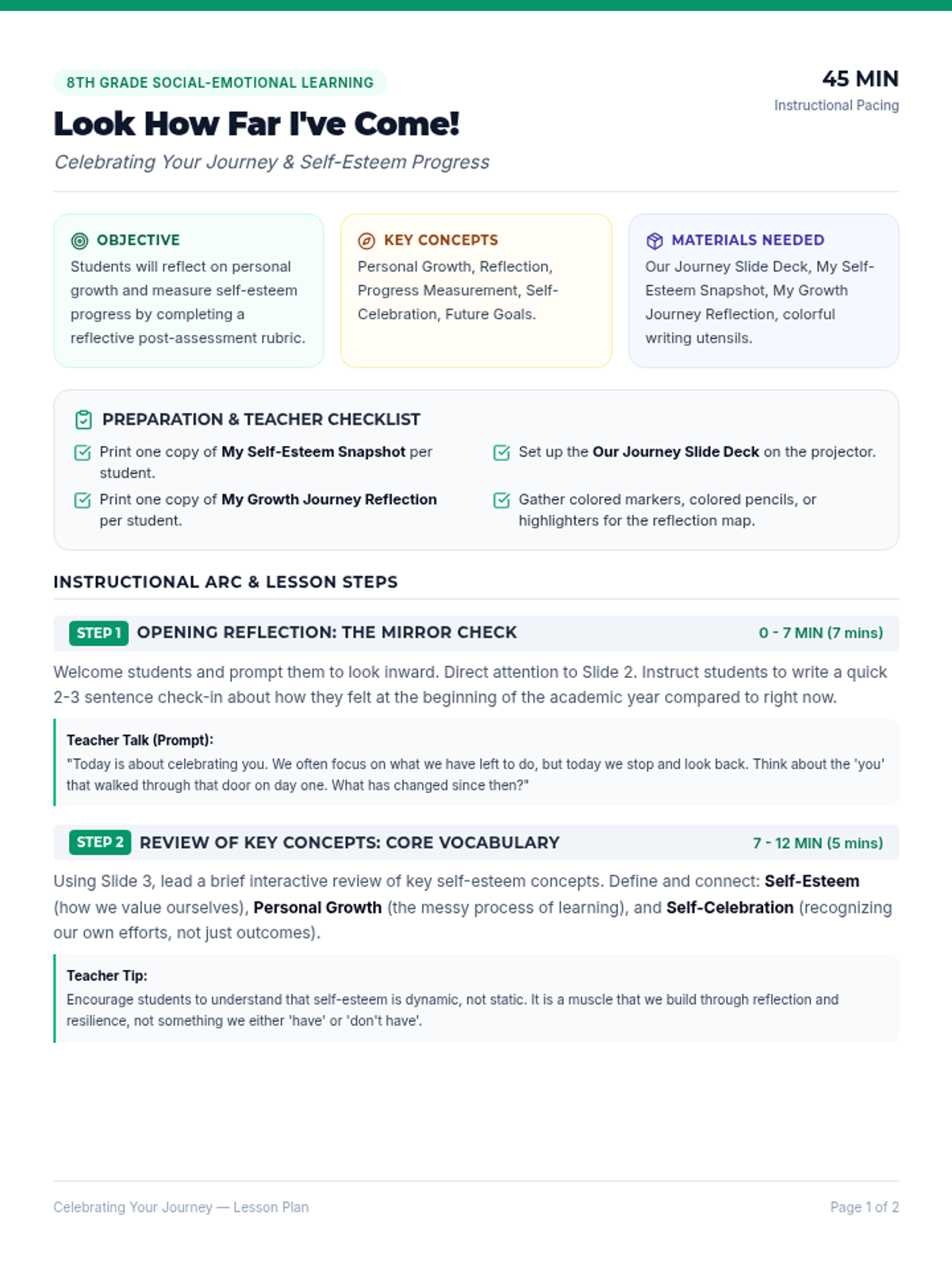
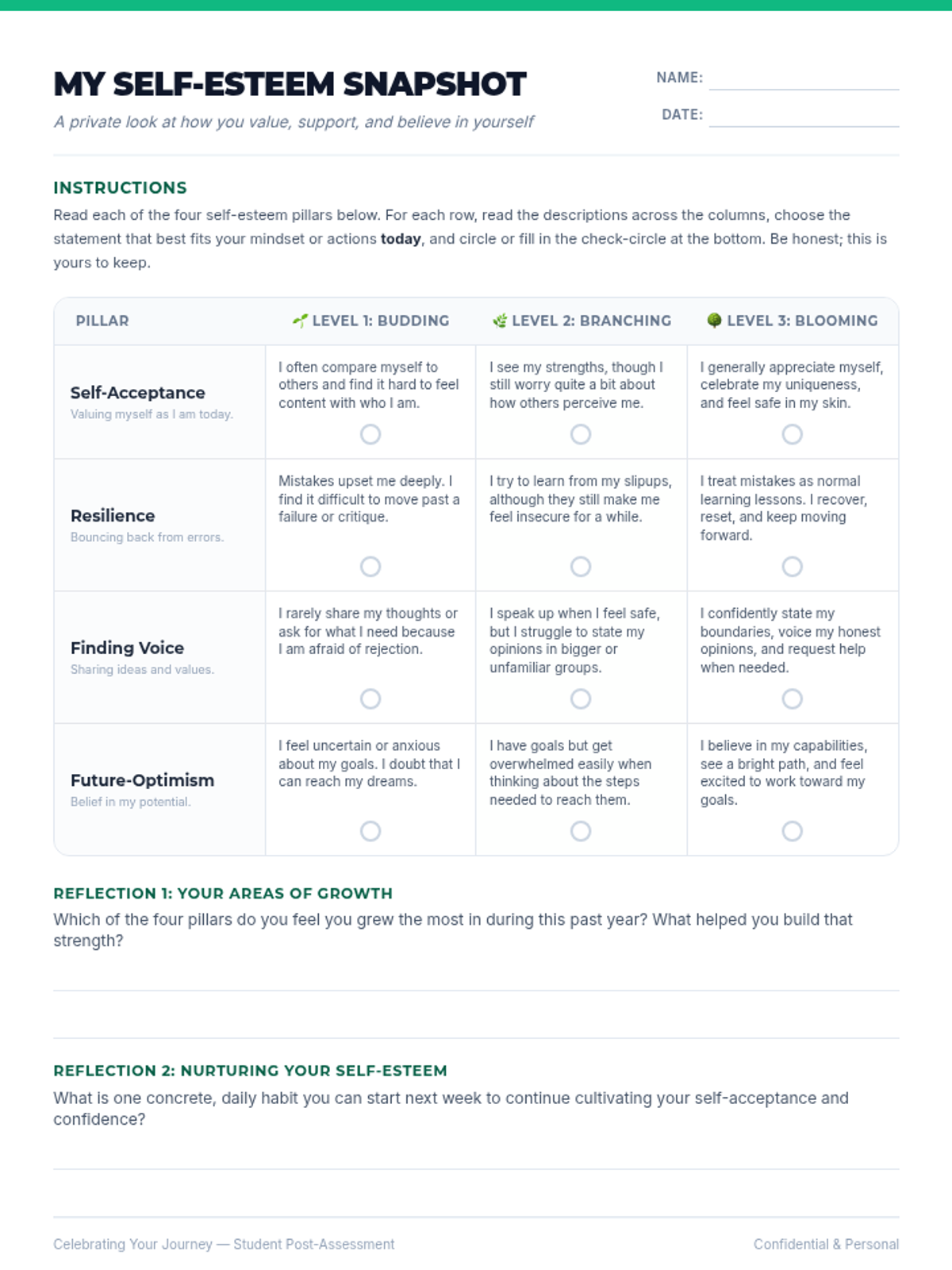
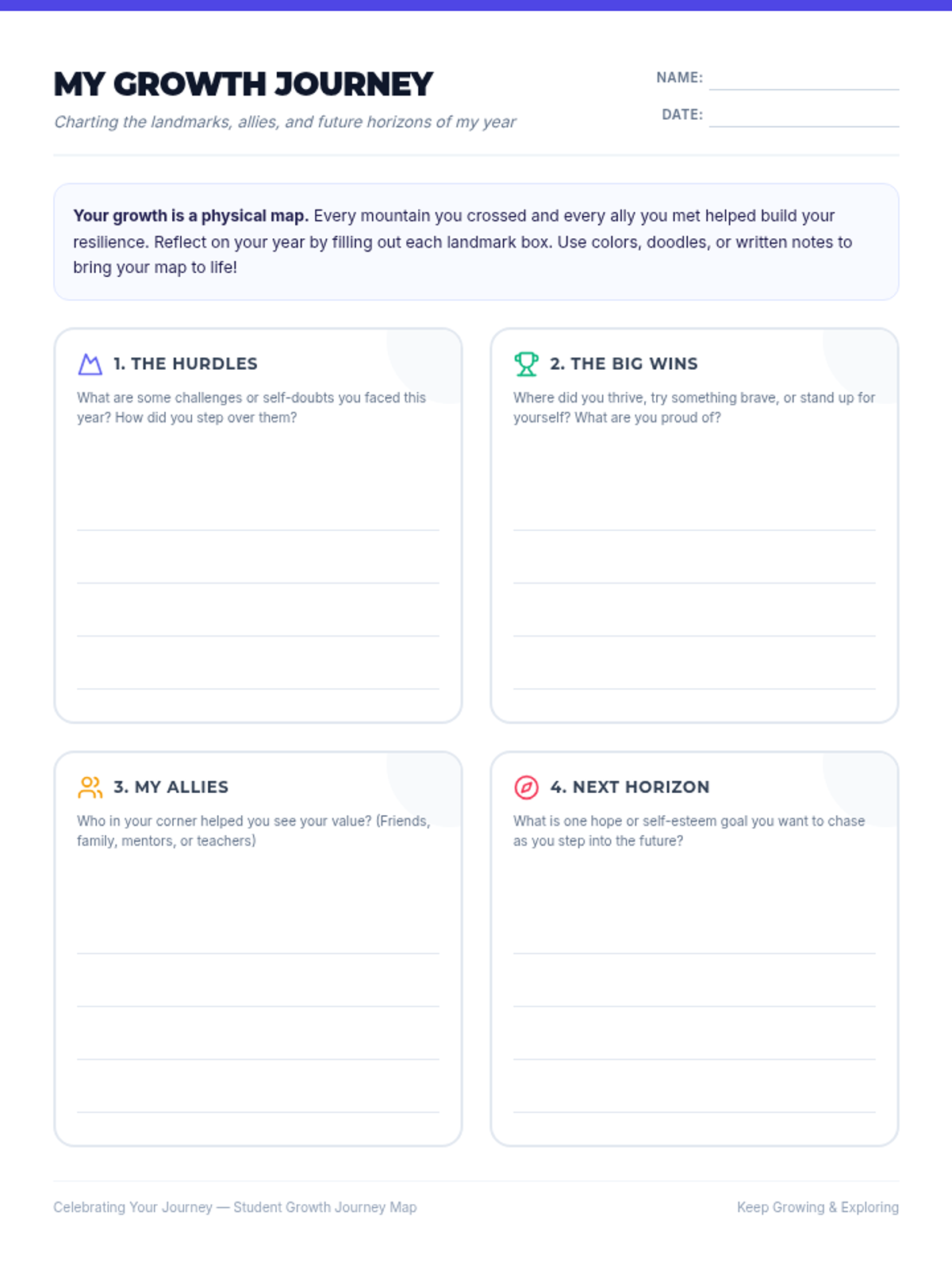
A reflective 45-minute lesson for 8th graders to measure their personal growth, self-esteem progress, and celebrate their learning journey with concrete self-assessments and creative mapping activities.
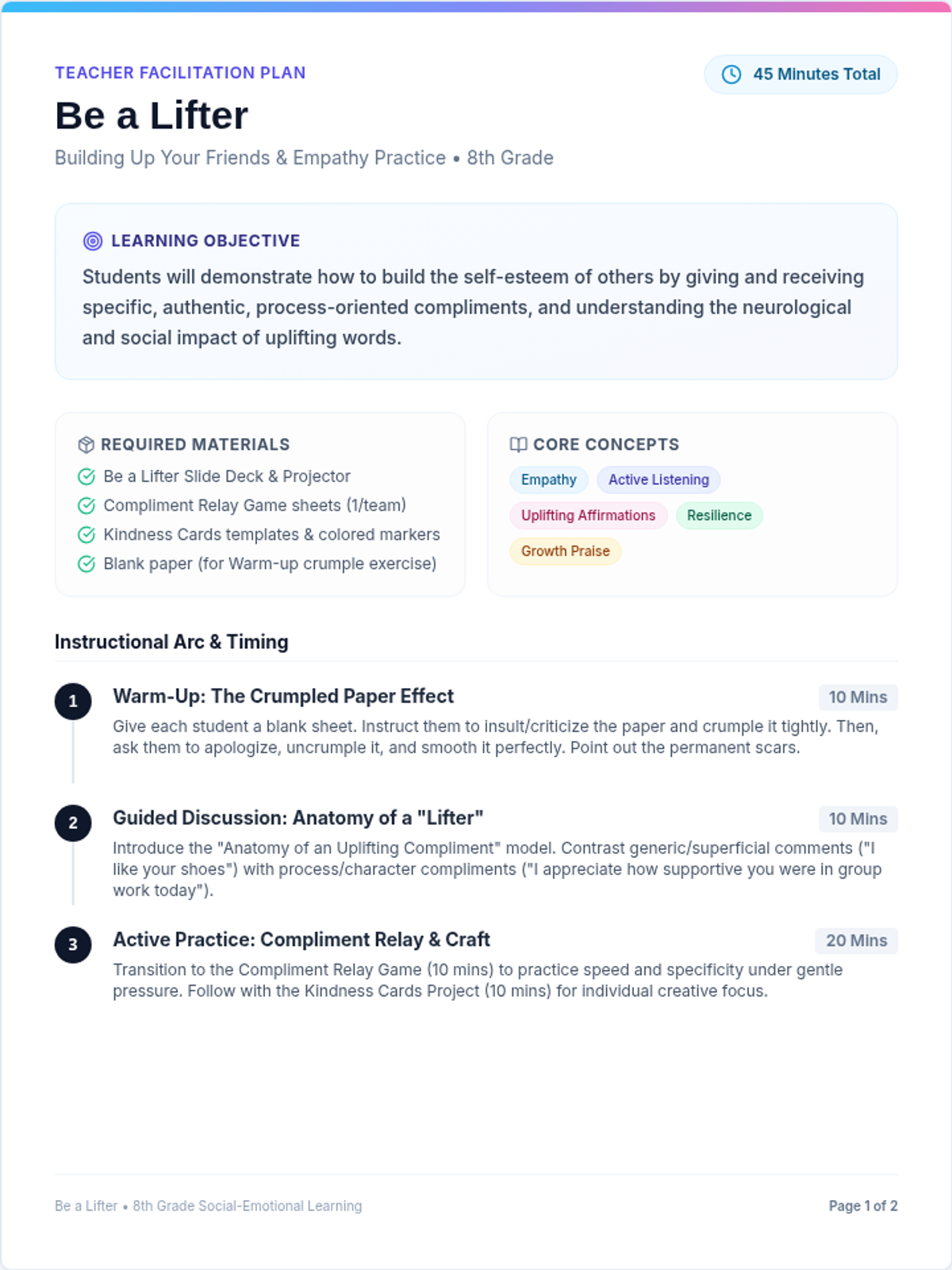
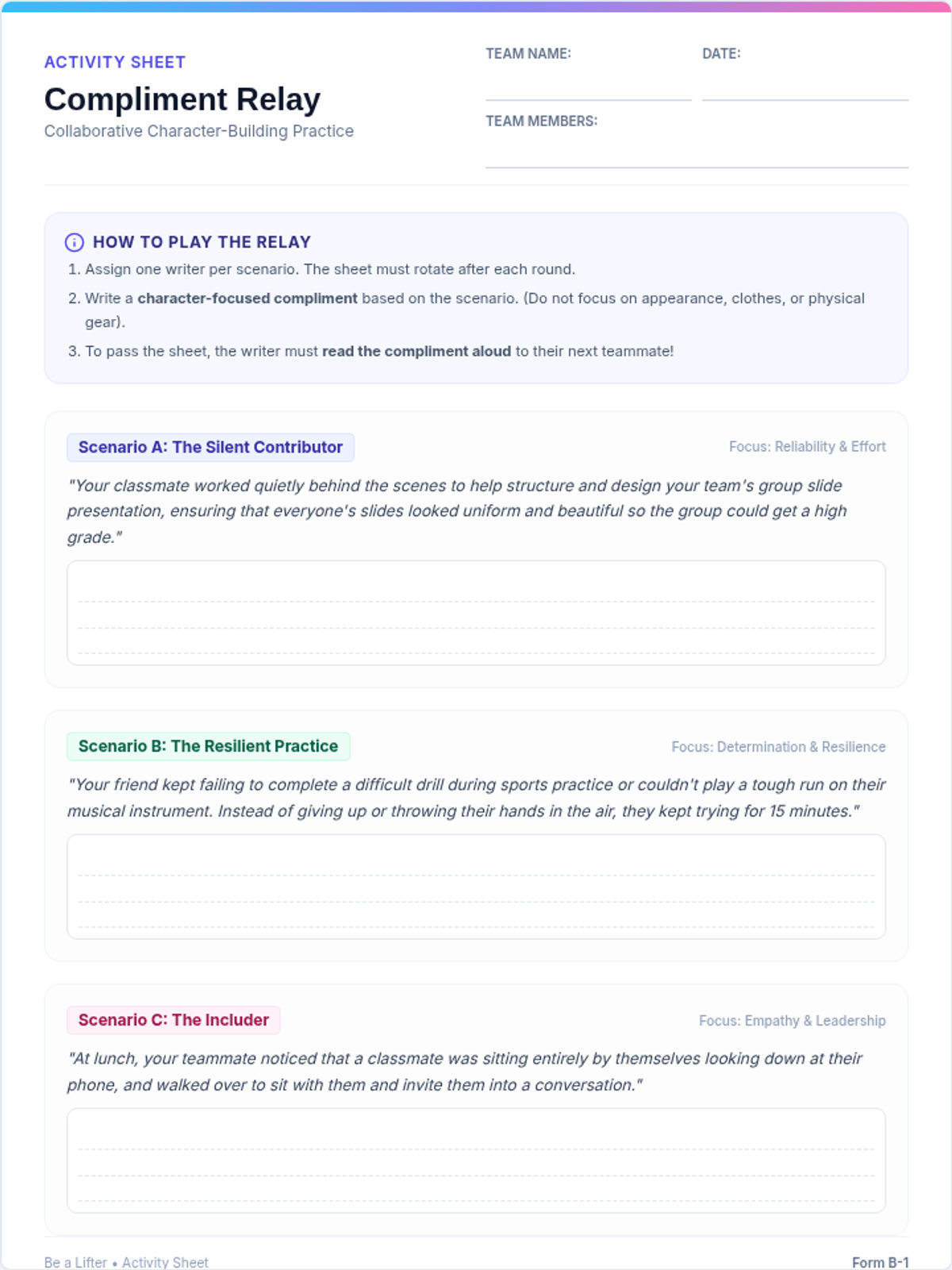
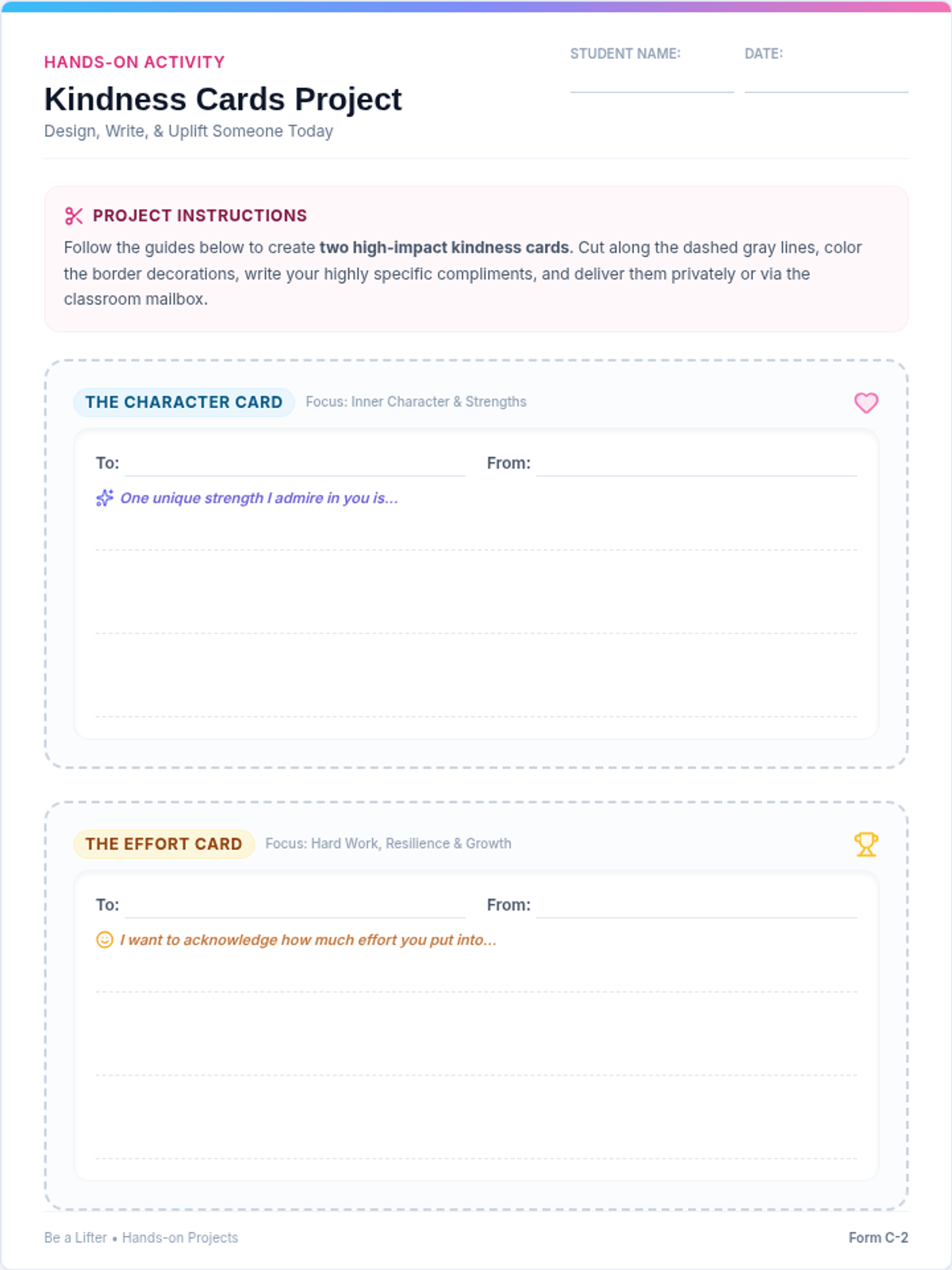
A 45-minute lesson designed for 8th graders to understand and practice uplifting others. Through discussion, a compliment relay, and crafting kindness cards, students learn the anatomy of a meaningful compliment and how to receive kindness with grace.
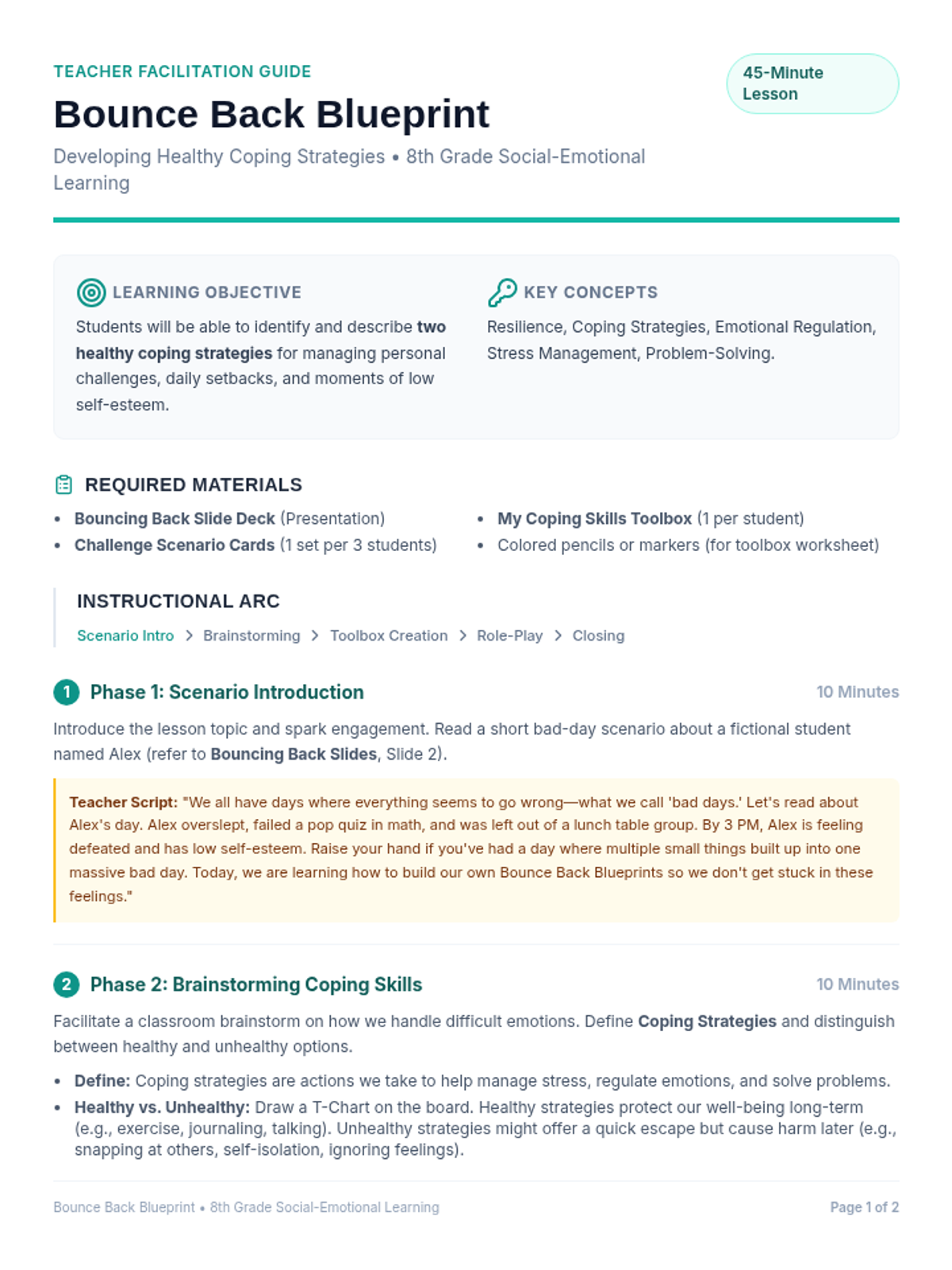
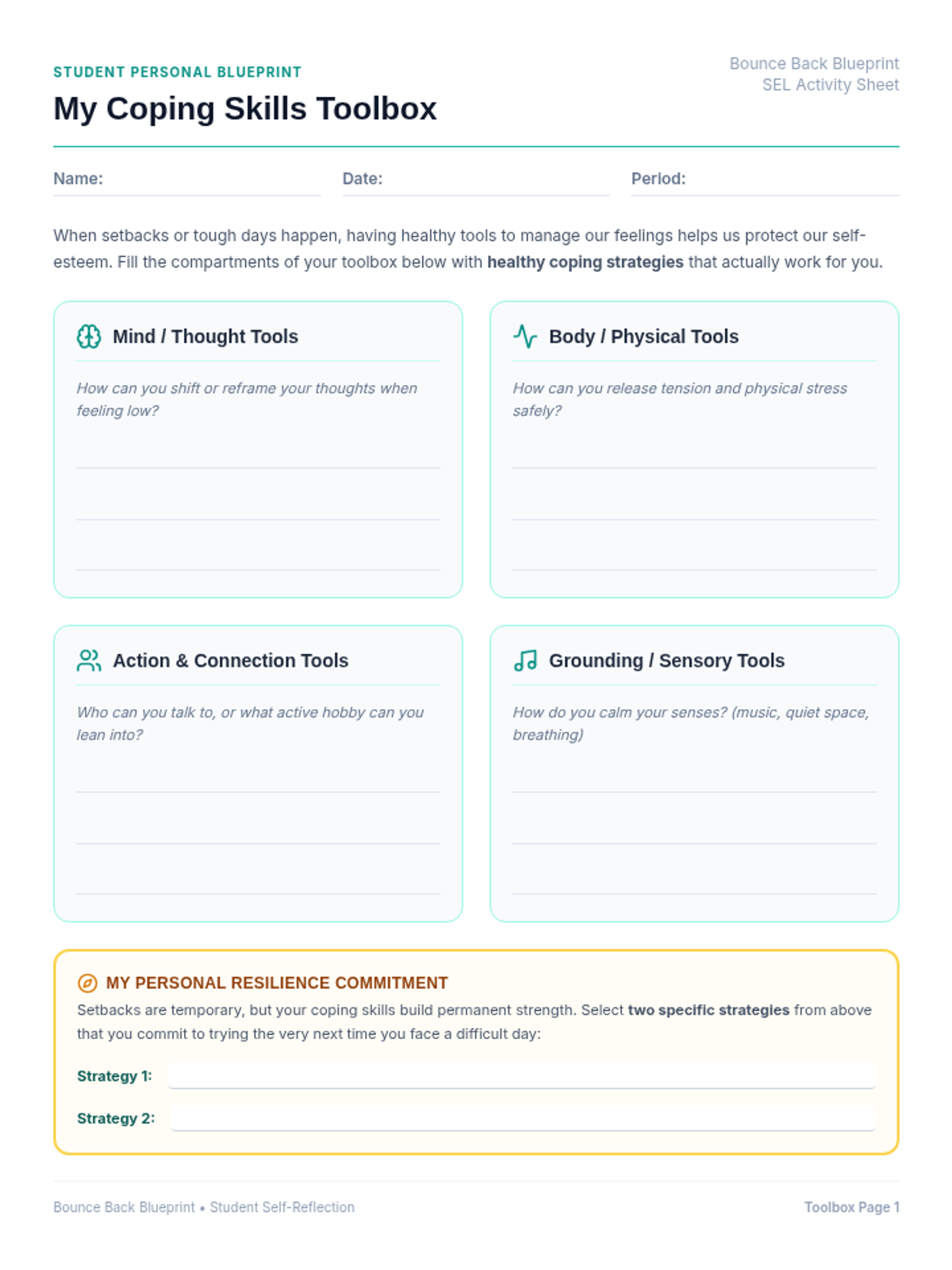
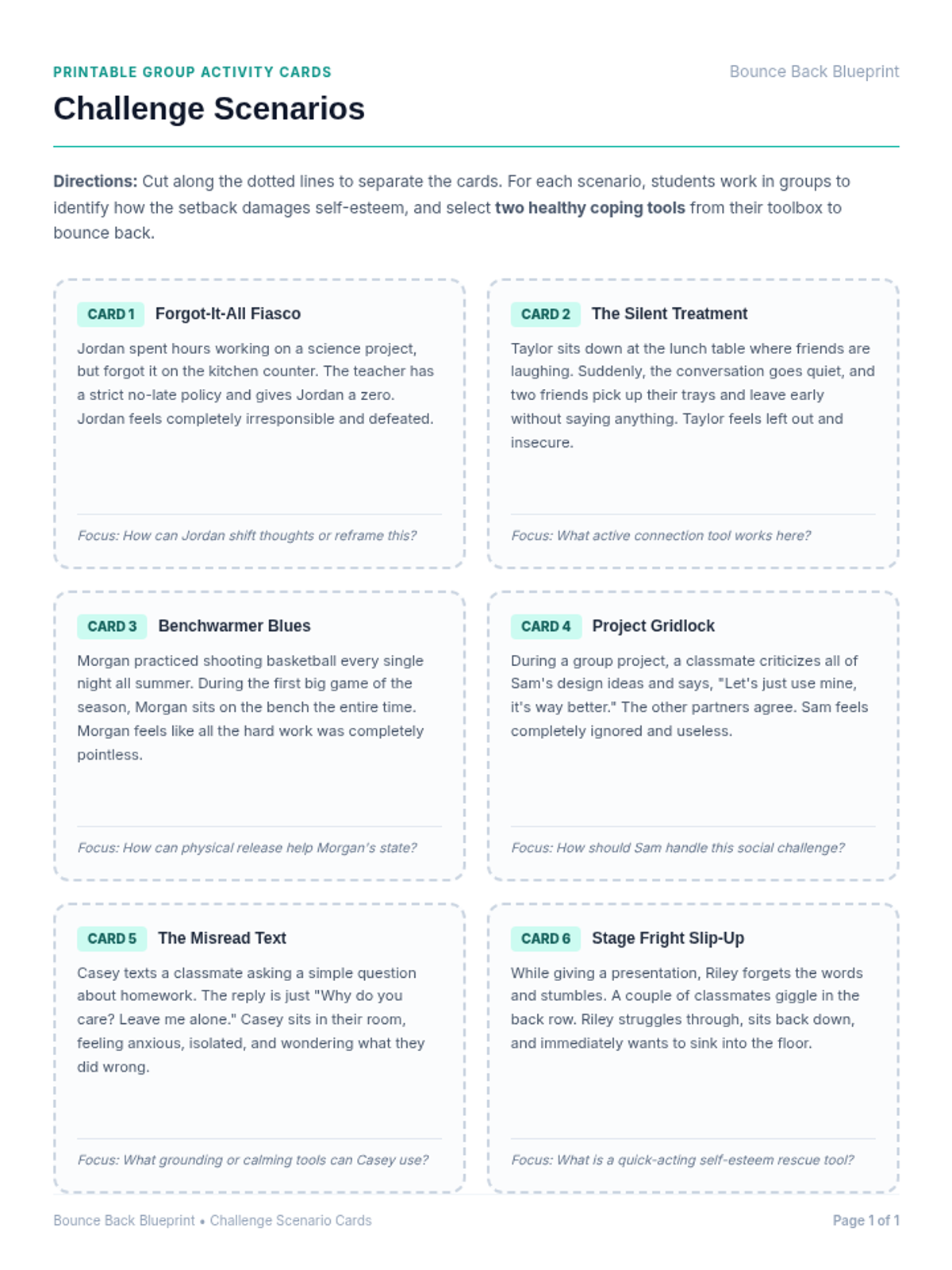
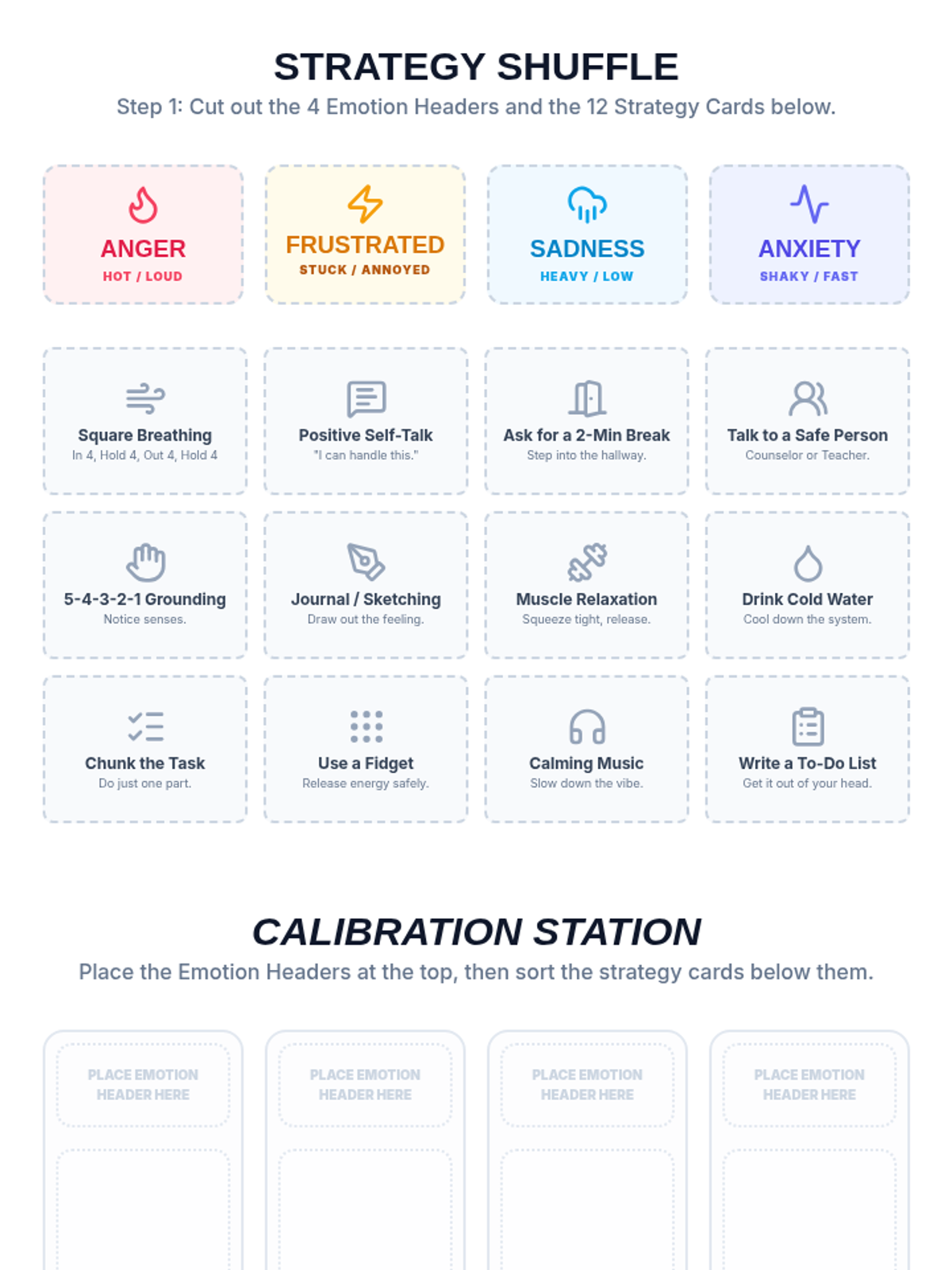
A 45-minute social-emotional learning lesson for 8th-grade students designed to help them identify and apply healthy coping strategies, building emotional resilience and self-esteem when facing daily setbacks.
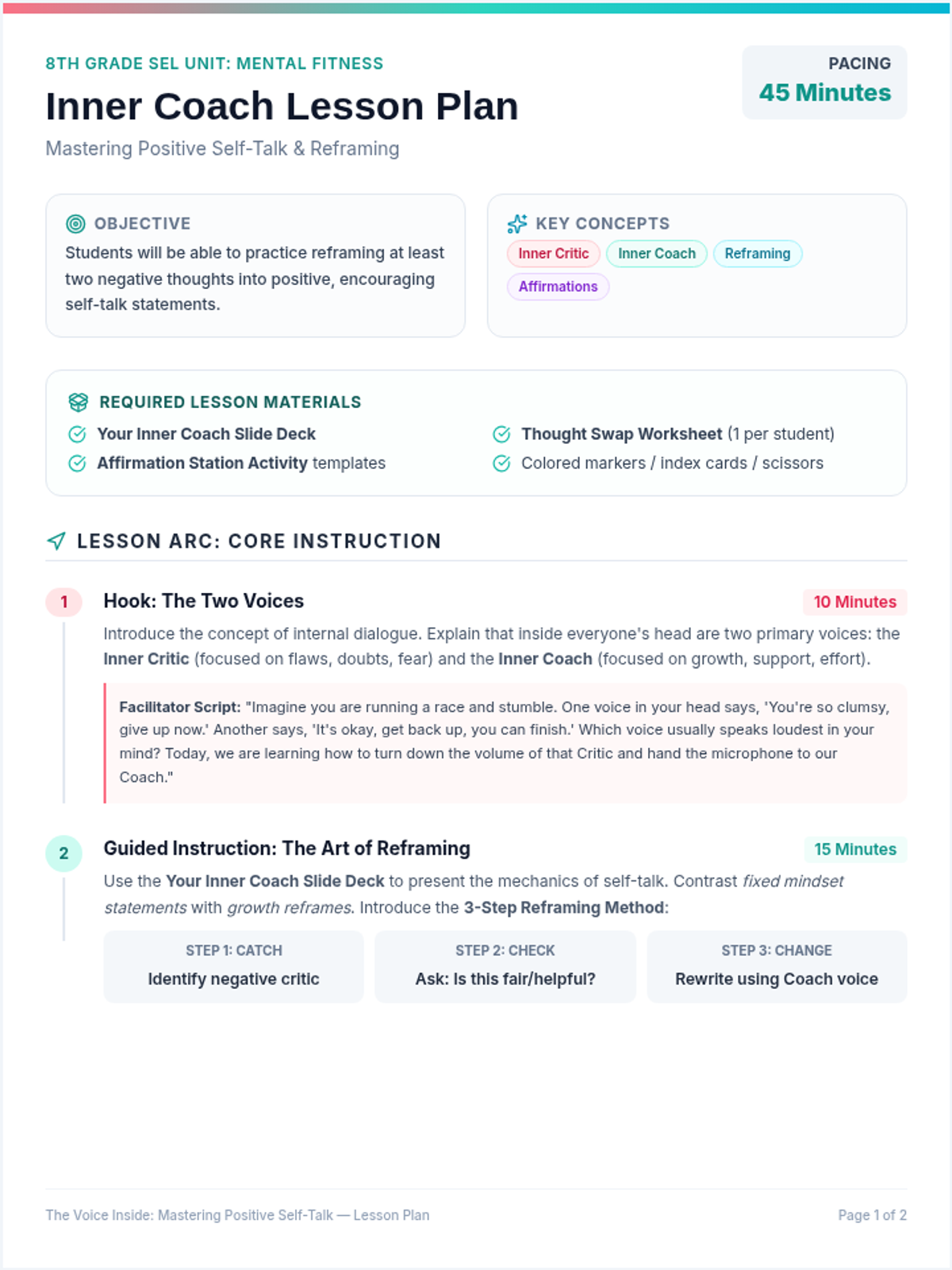
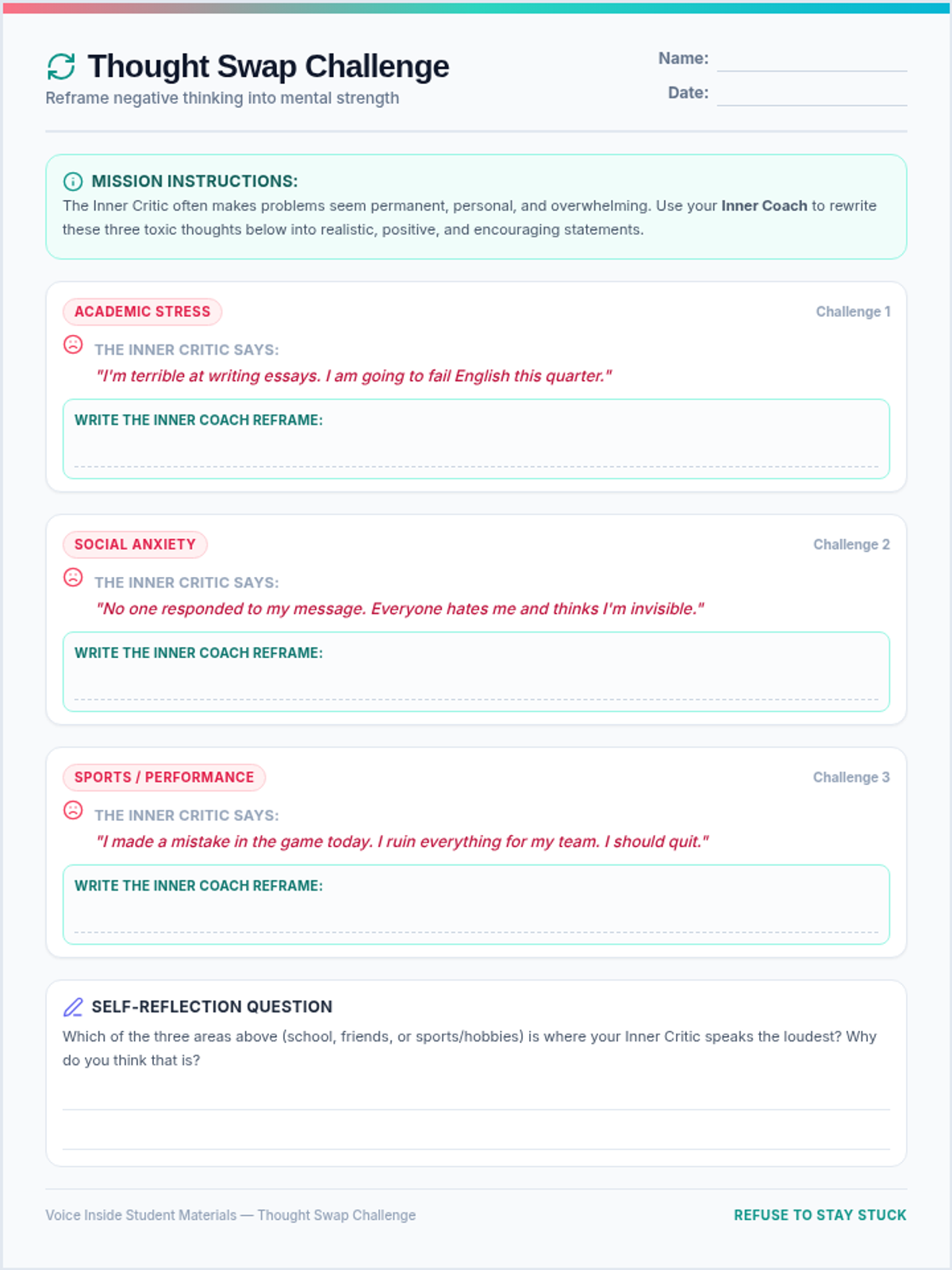
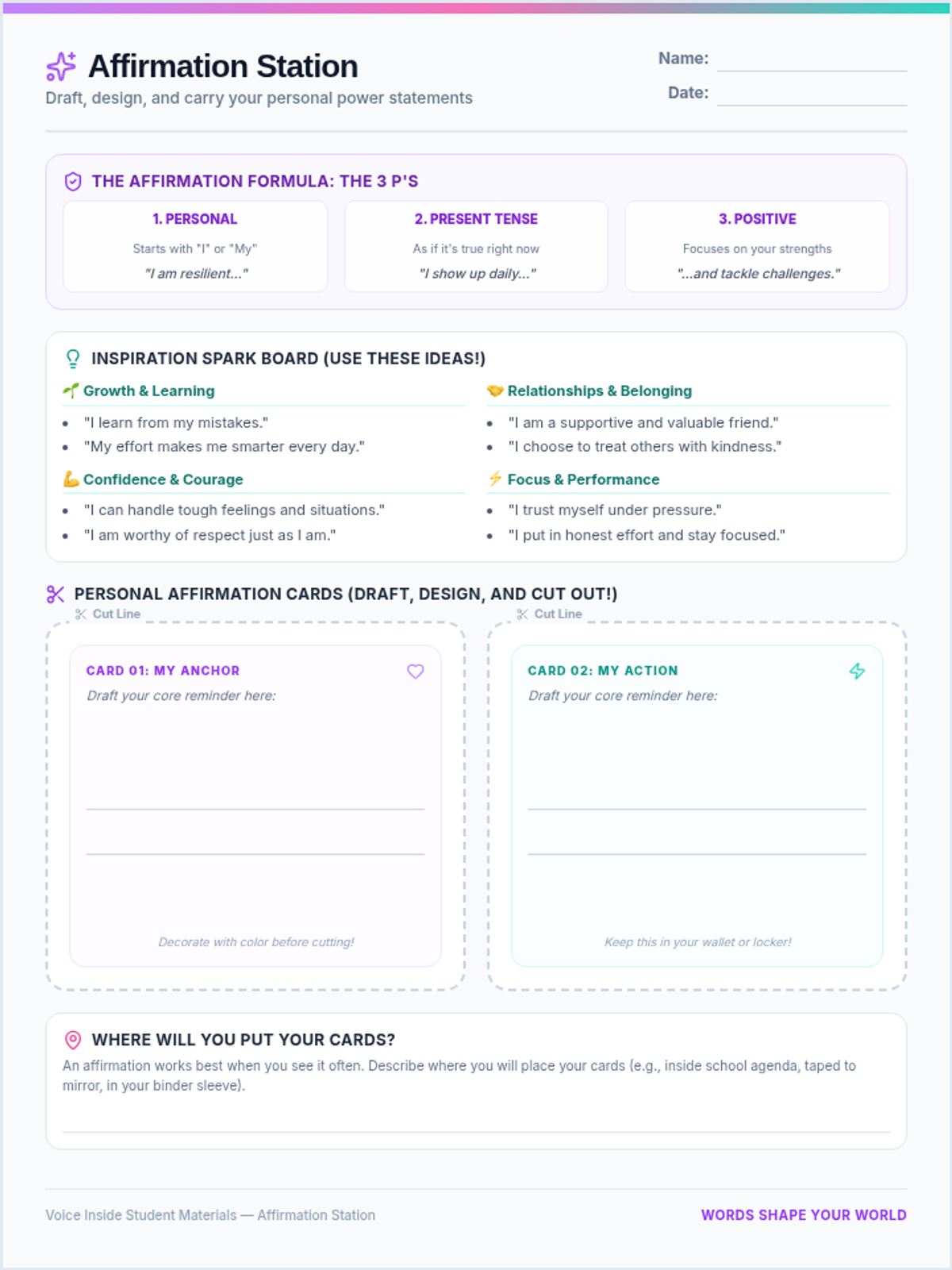
An 8th-grade social-emotional learning lesson focusing on identifying the inner critic, understanding cognitive reframing, and practicing positive self-talk through interactive activities and reflection.
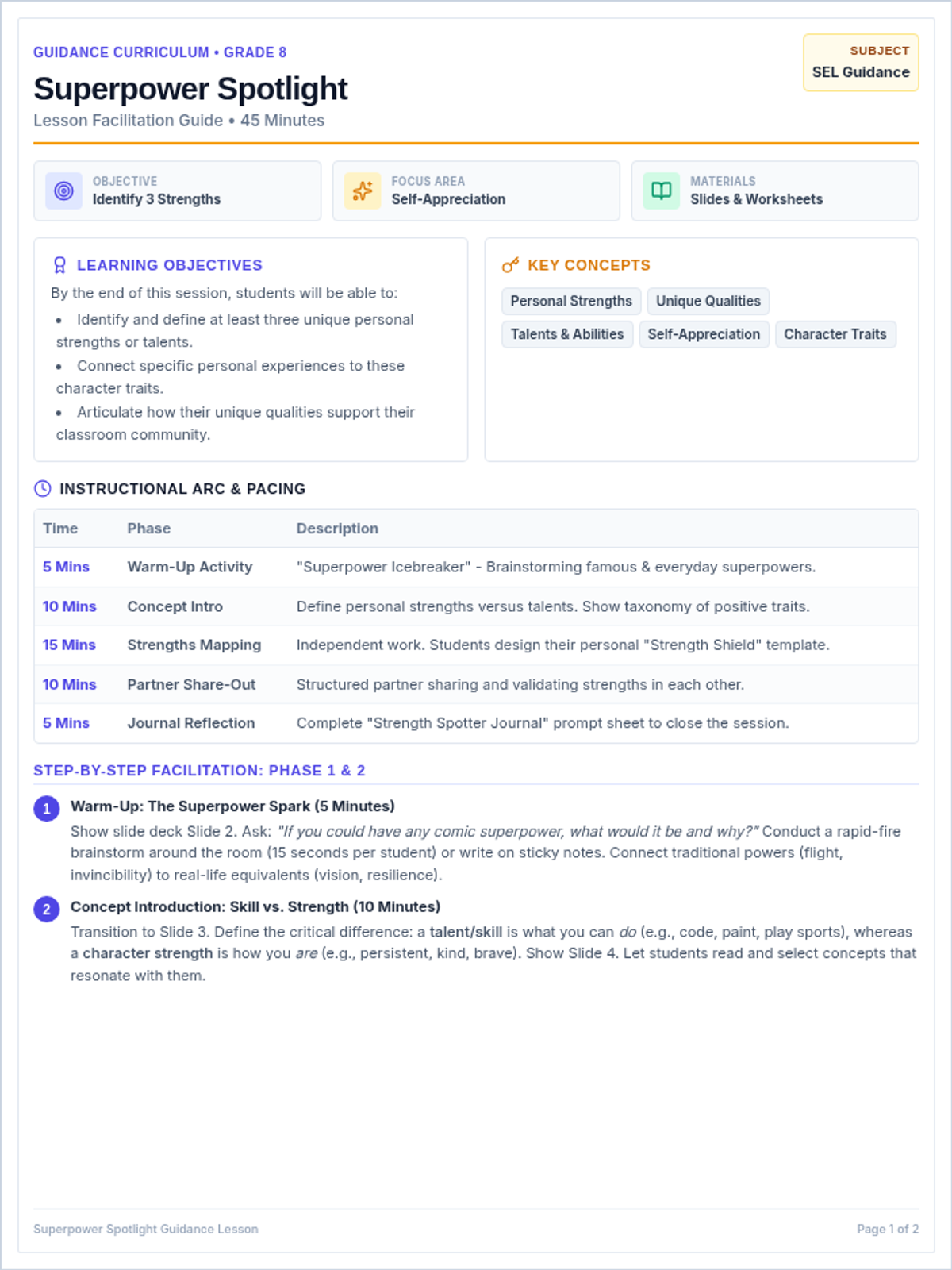
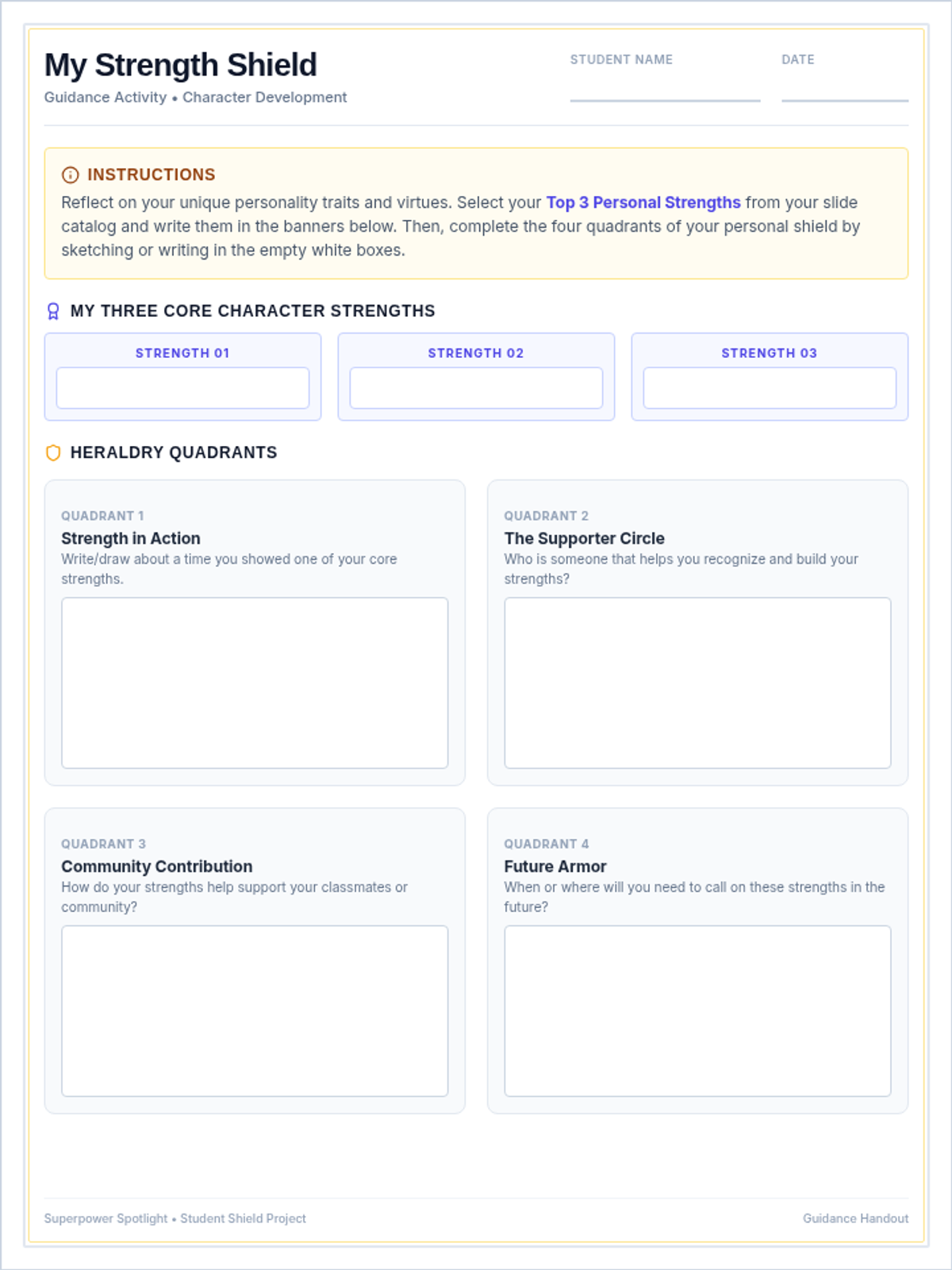
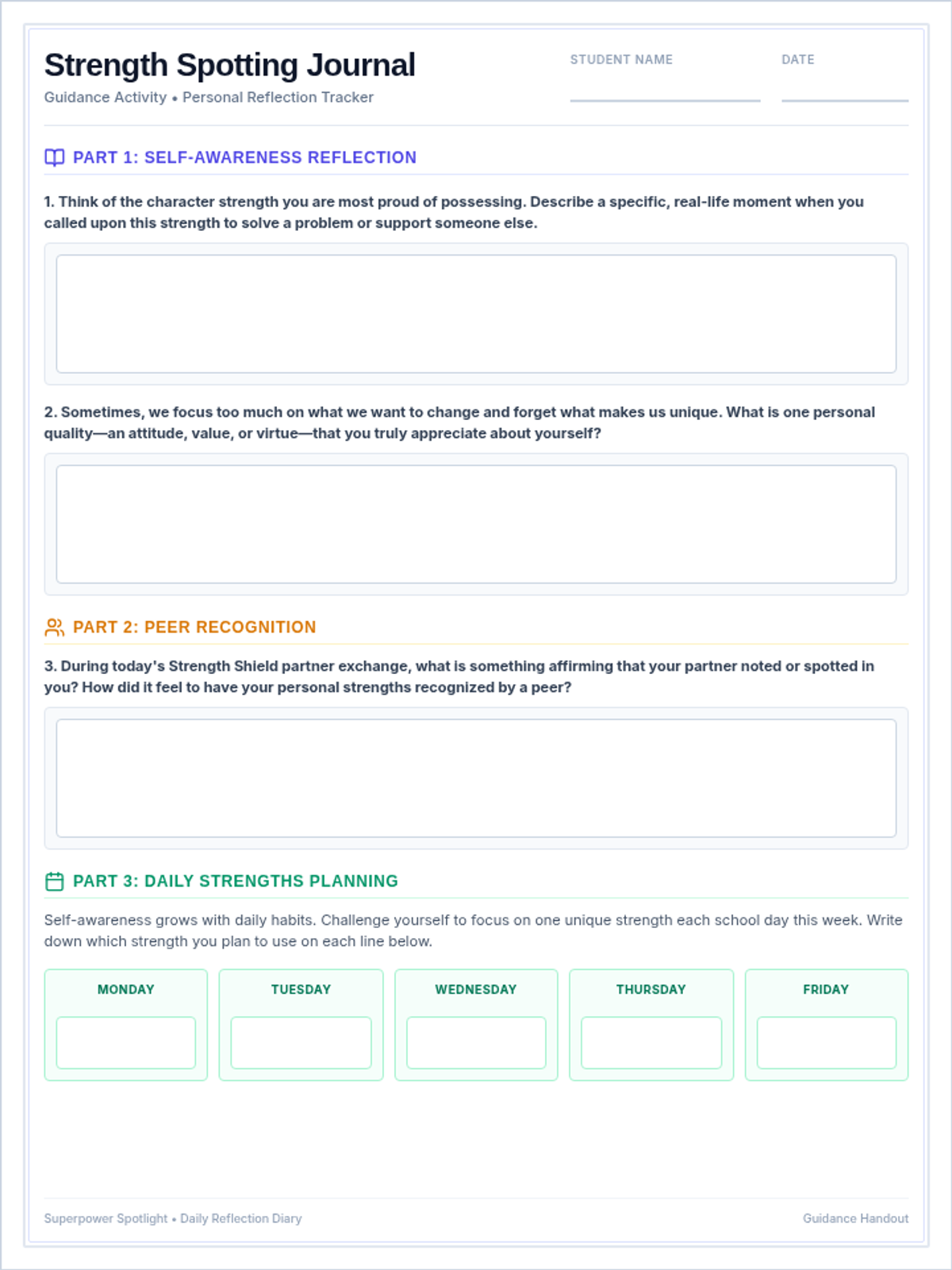
An interactive 8th-grade guidance lesson where students identify, map, and celebrate their personal strengths through interactive slides, a creative shield-design activity, and reflective journaling.
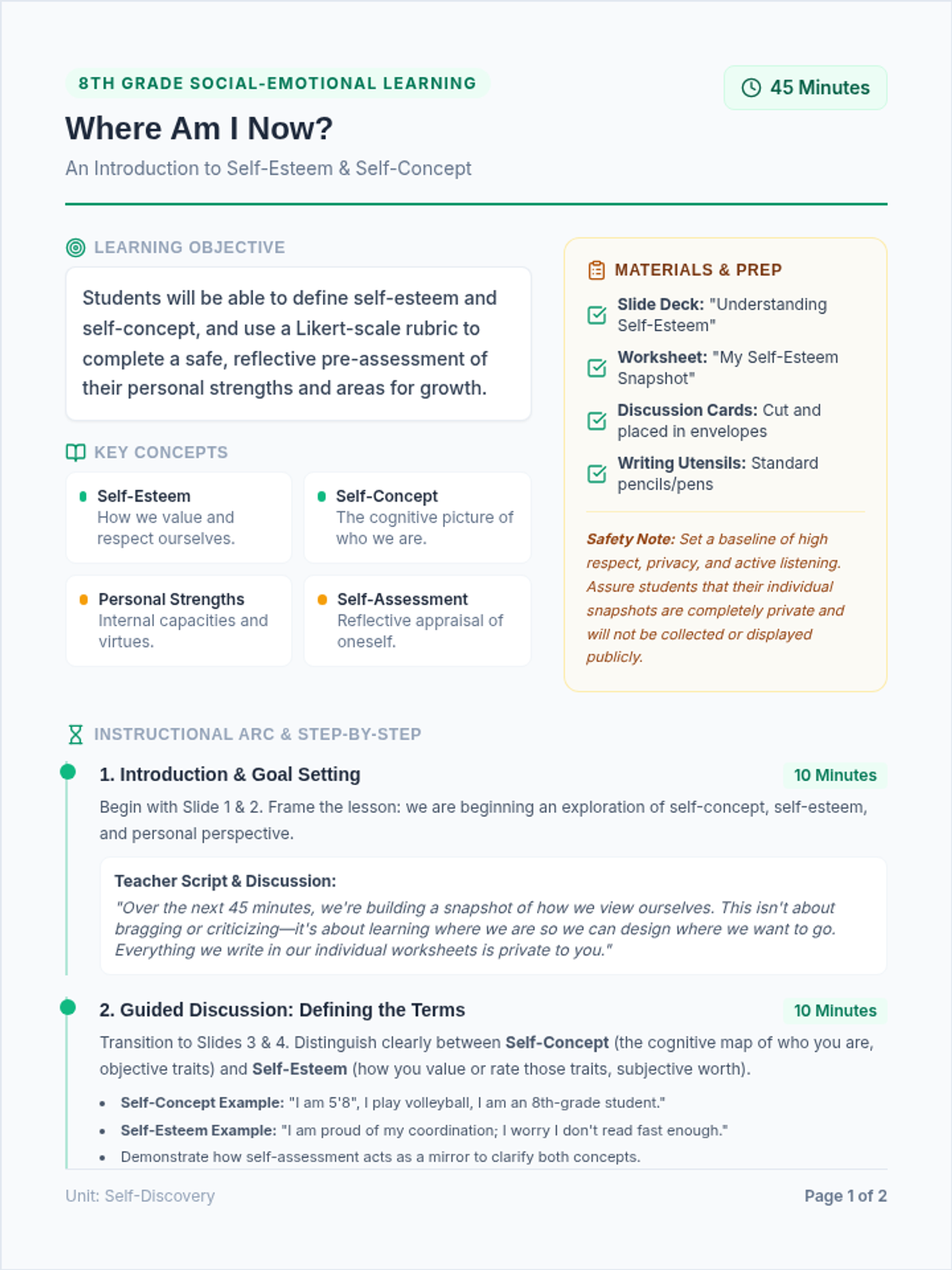
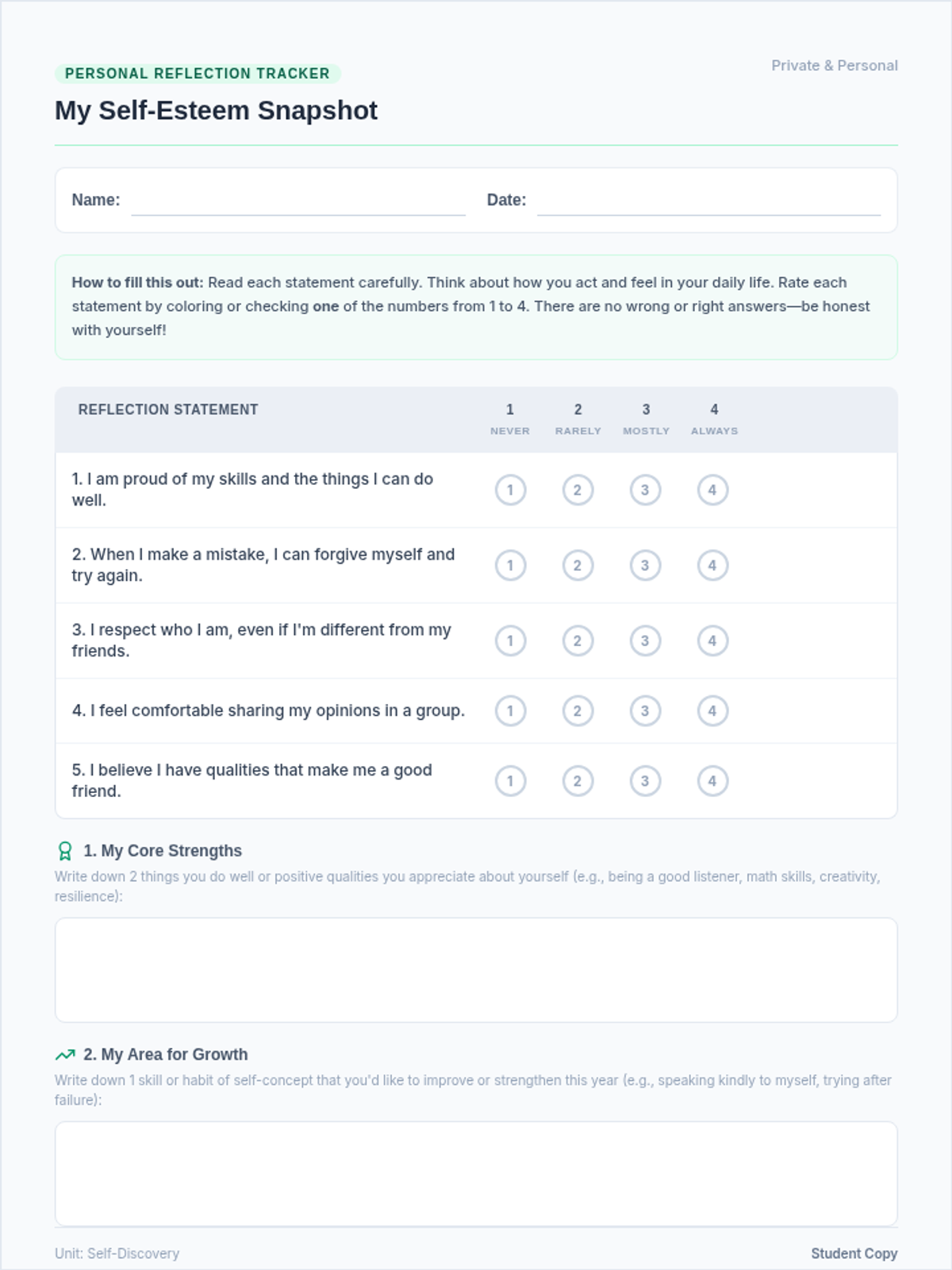
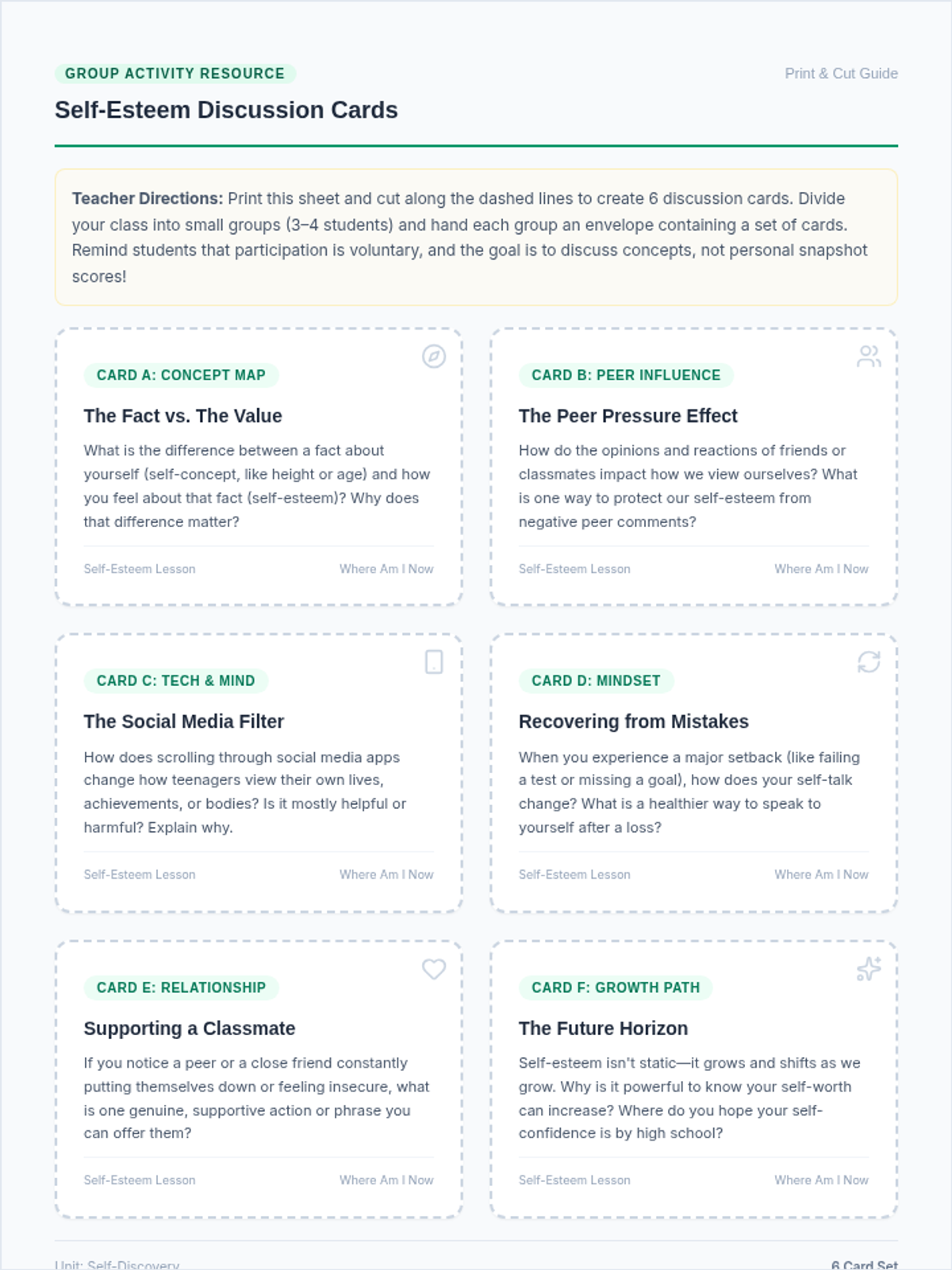
An introductory 8th-grade social-emotional learning lesson focused on defining self-esteem and self-concept, guiding students through a safe, reflective pre-assessment of their personal strengths and areas for growth.
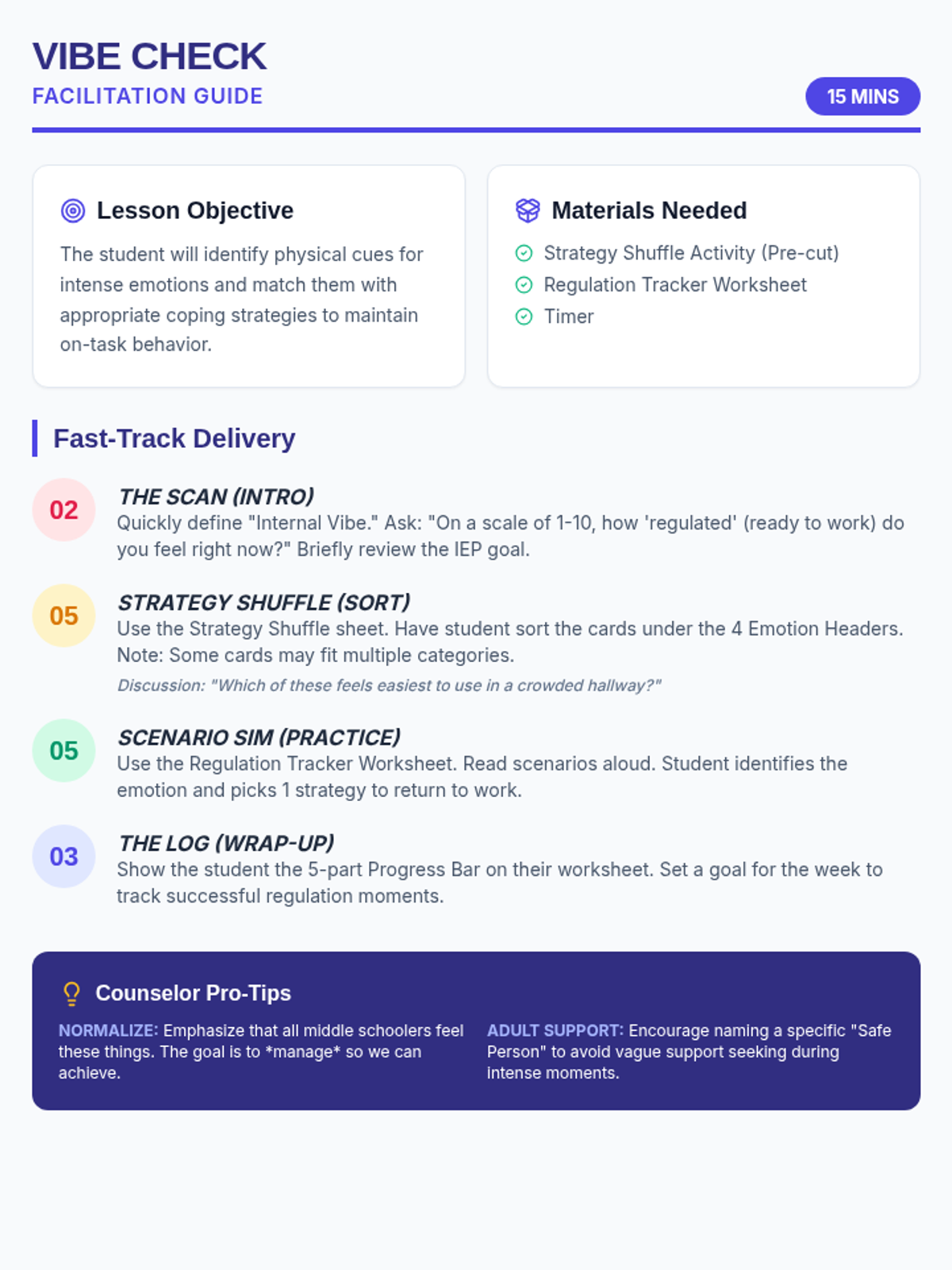
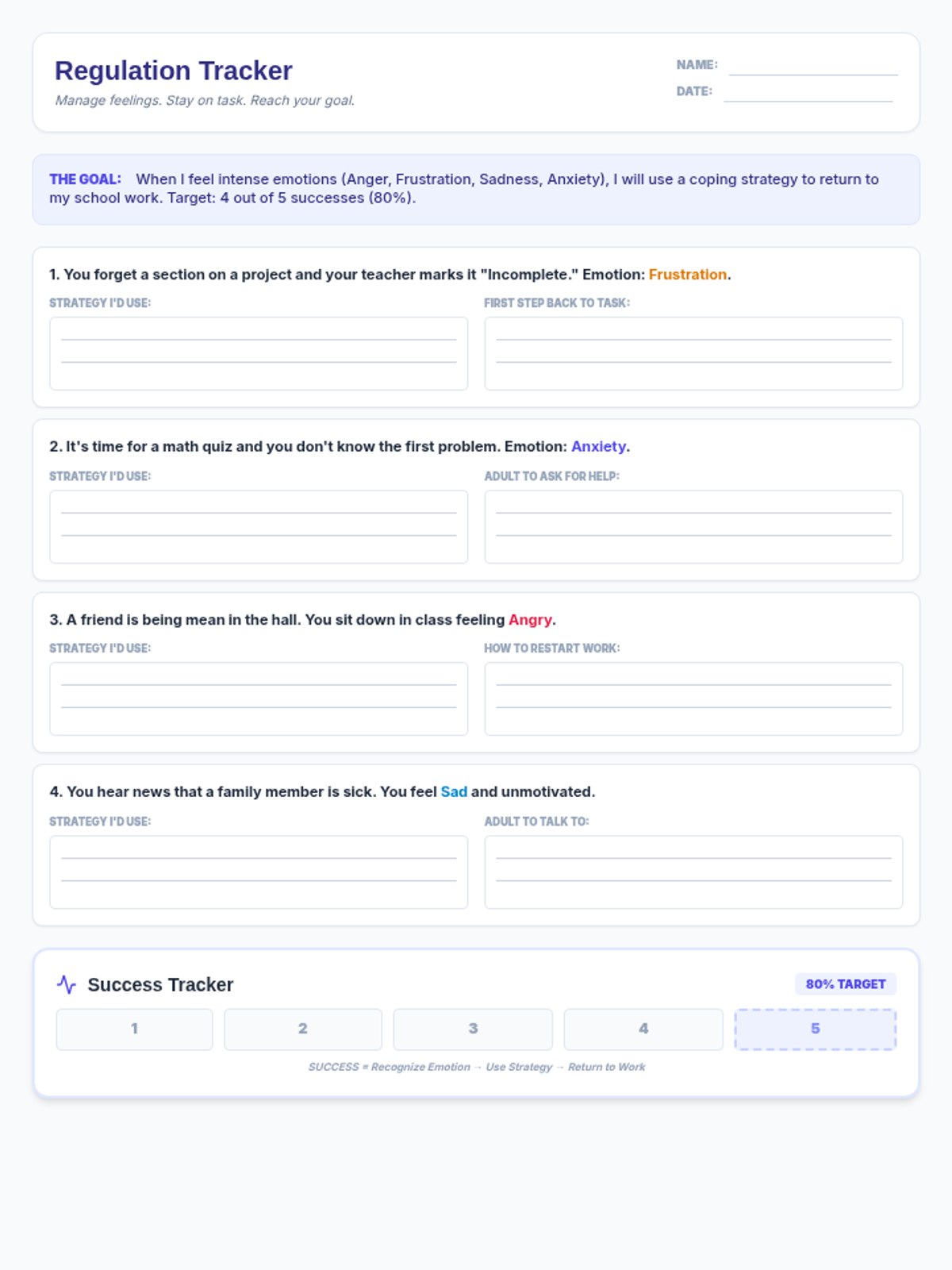
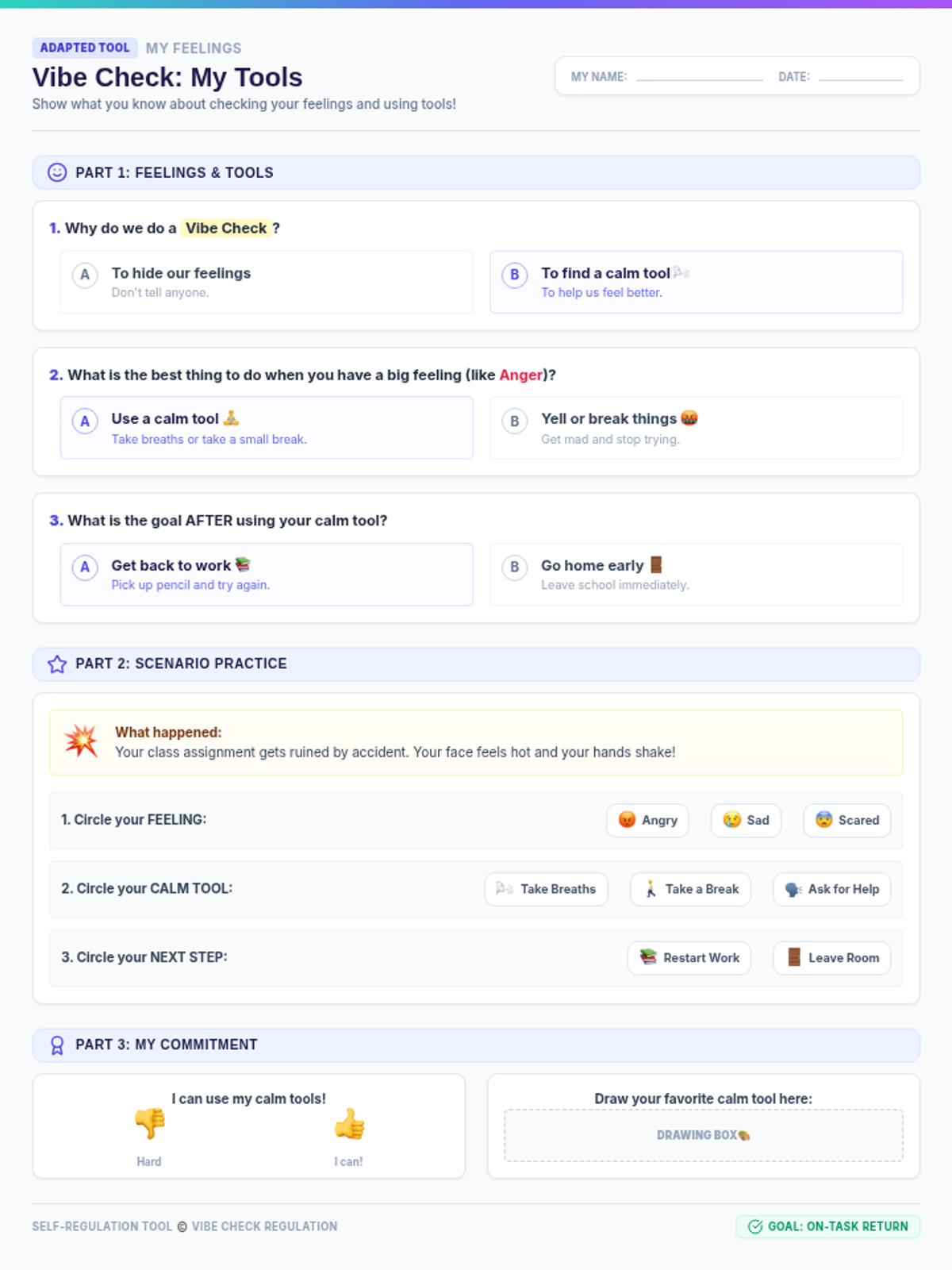
A 15-minute counseling lesson designed to help middle school students identify intense emotions and apply specific self-regulation strategies to return to on-task behavior.
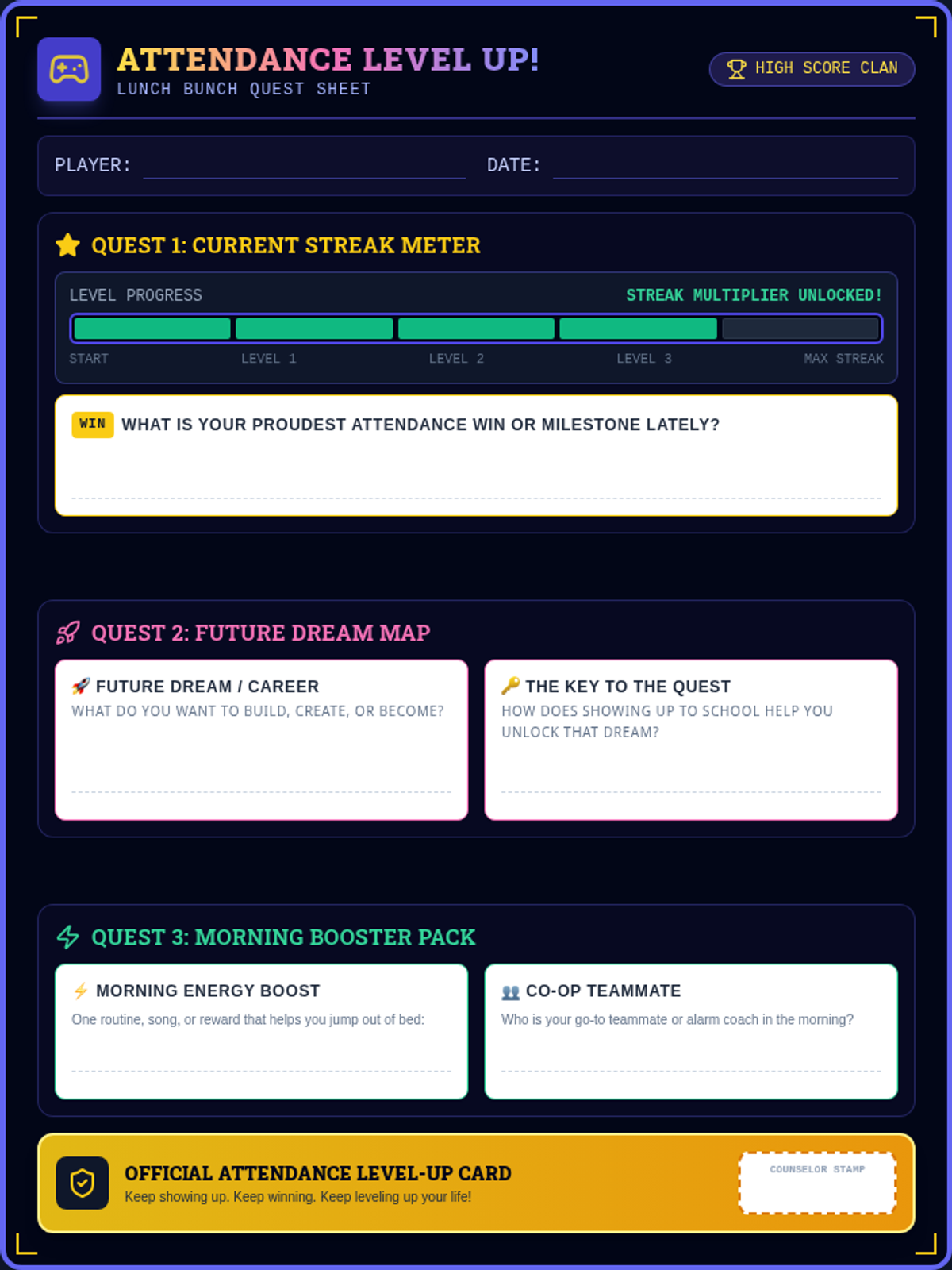
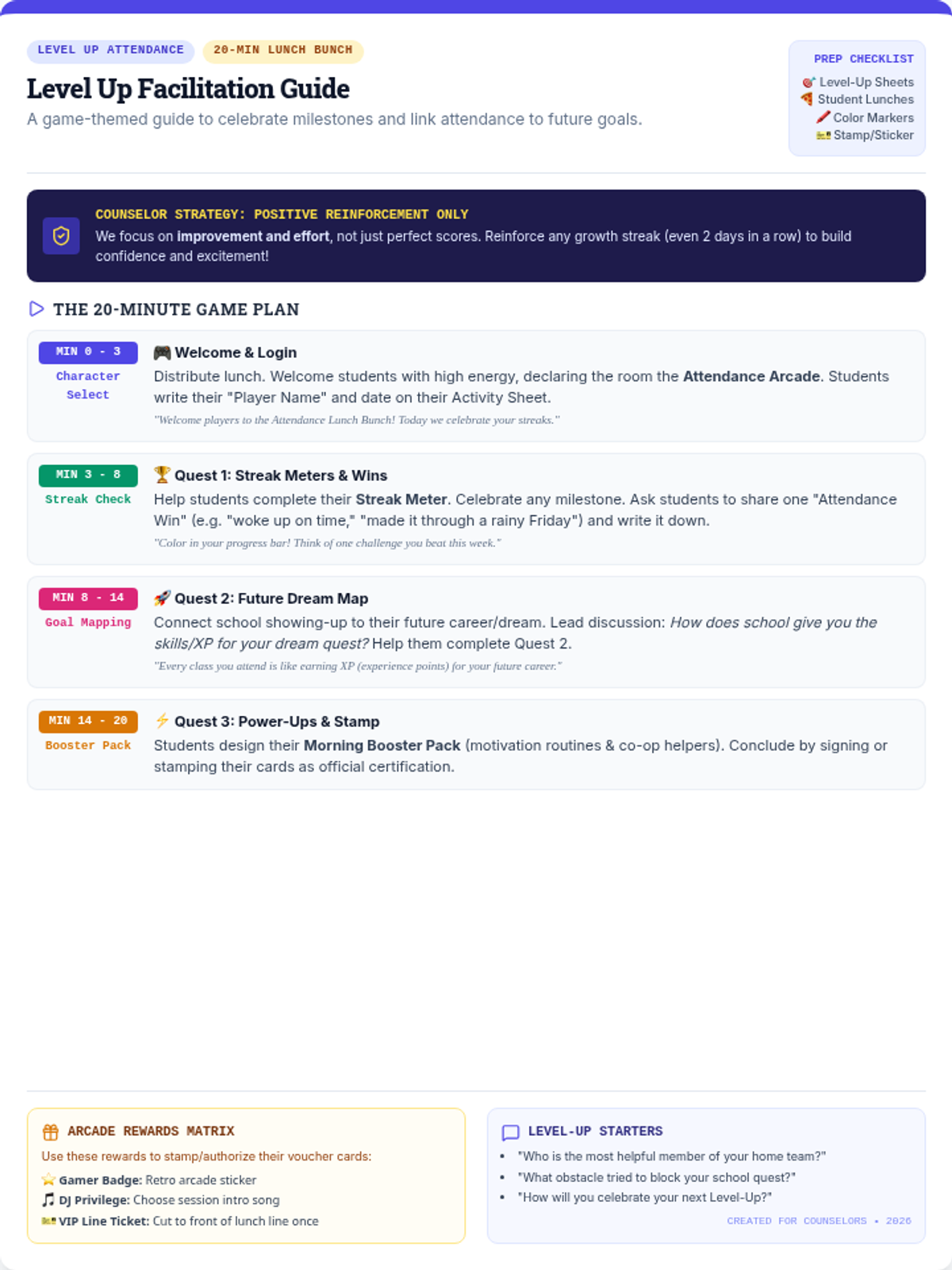
A 20-minute Lunch Bunch lesson plan and facilitation guide designed to celebrate attendance milestones, connect consistent attendance to future goals, and foster a high-energy, positive environment for students.
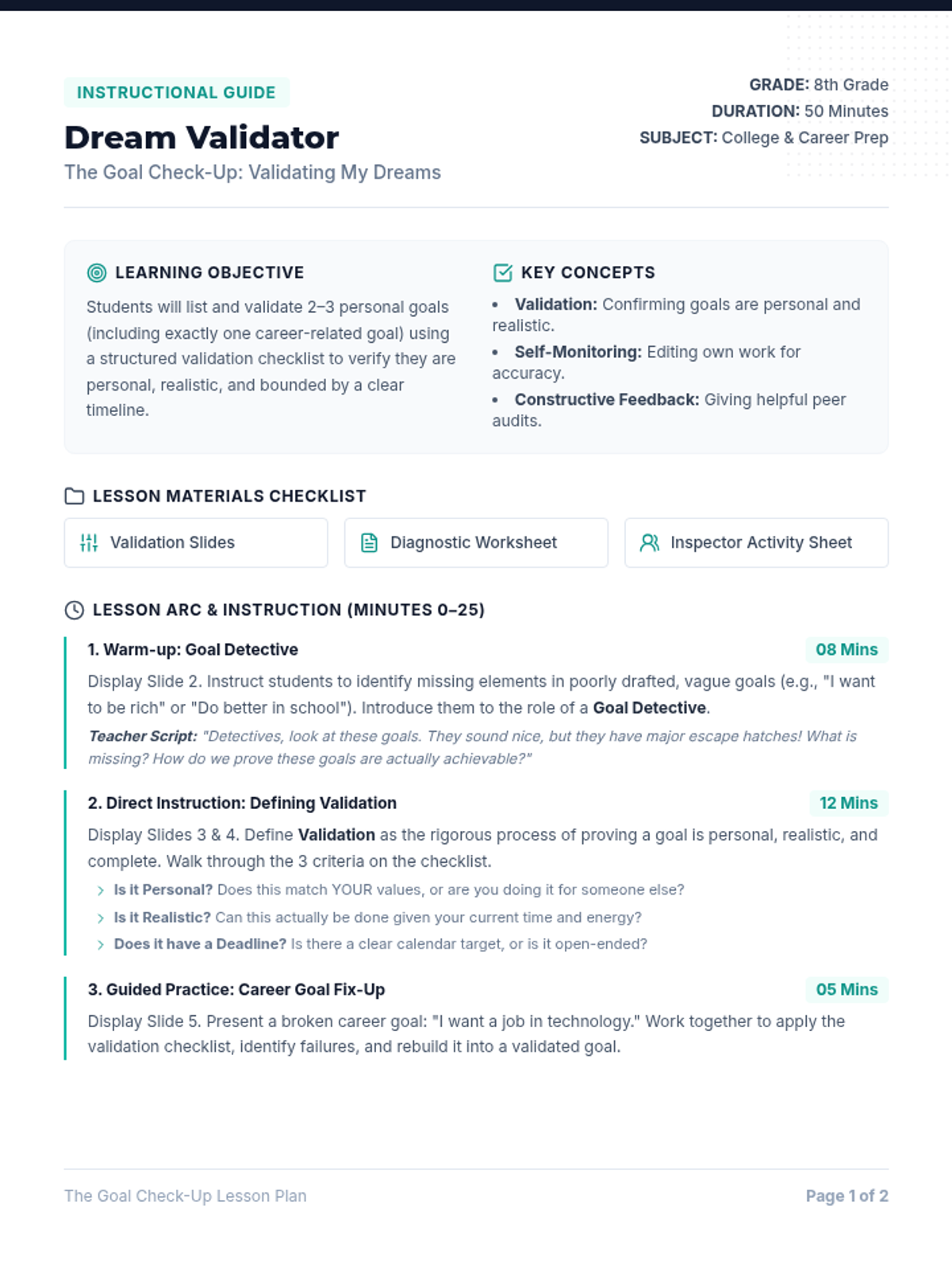
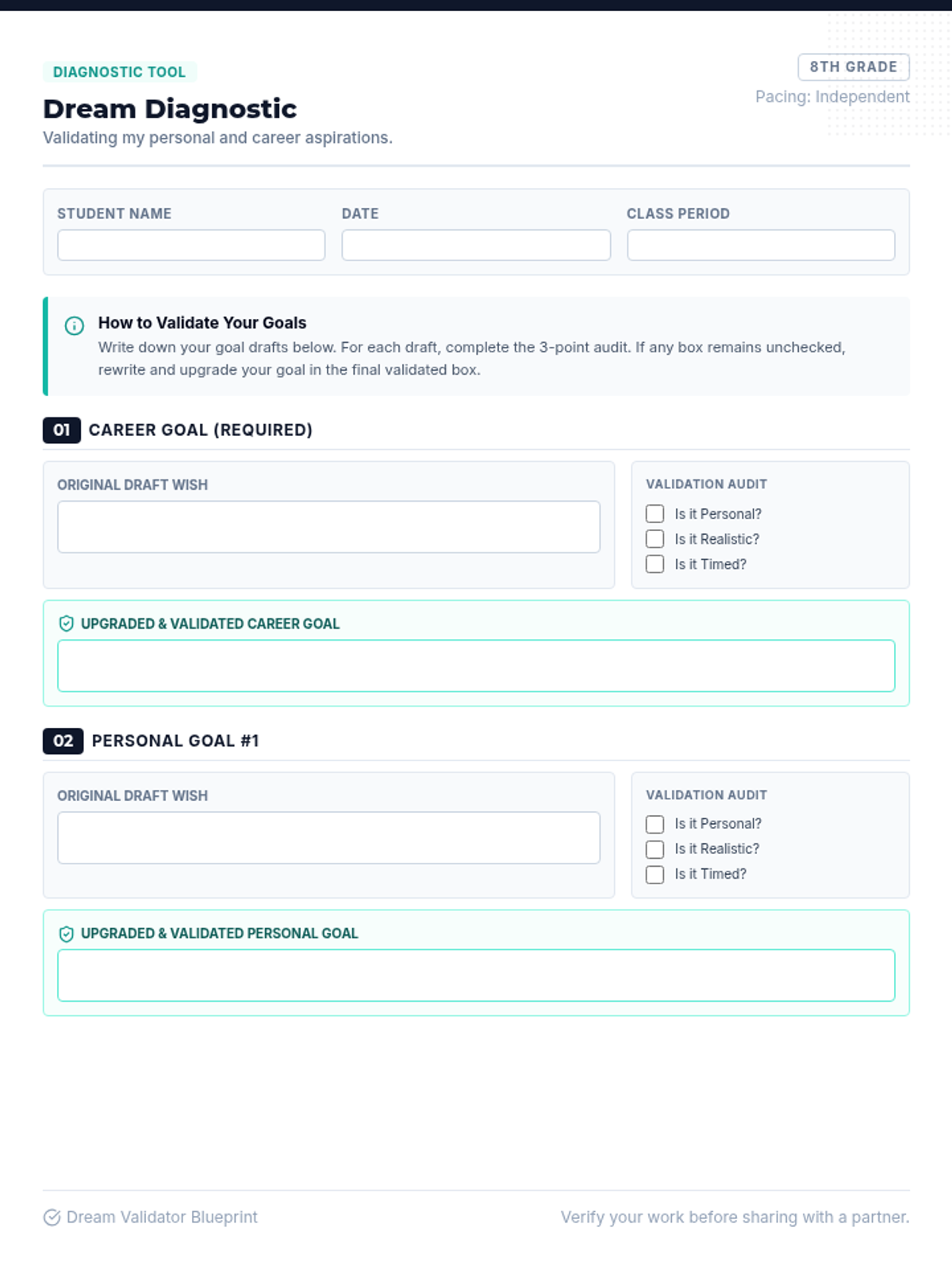
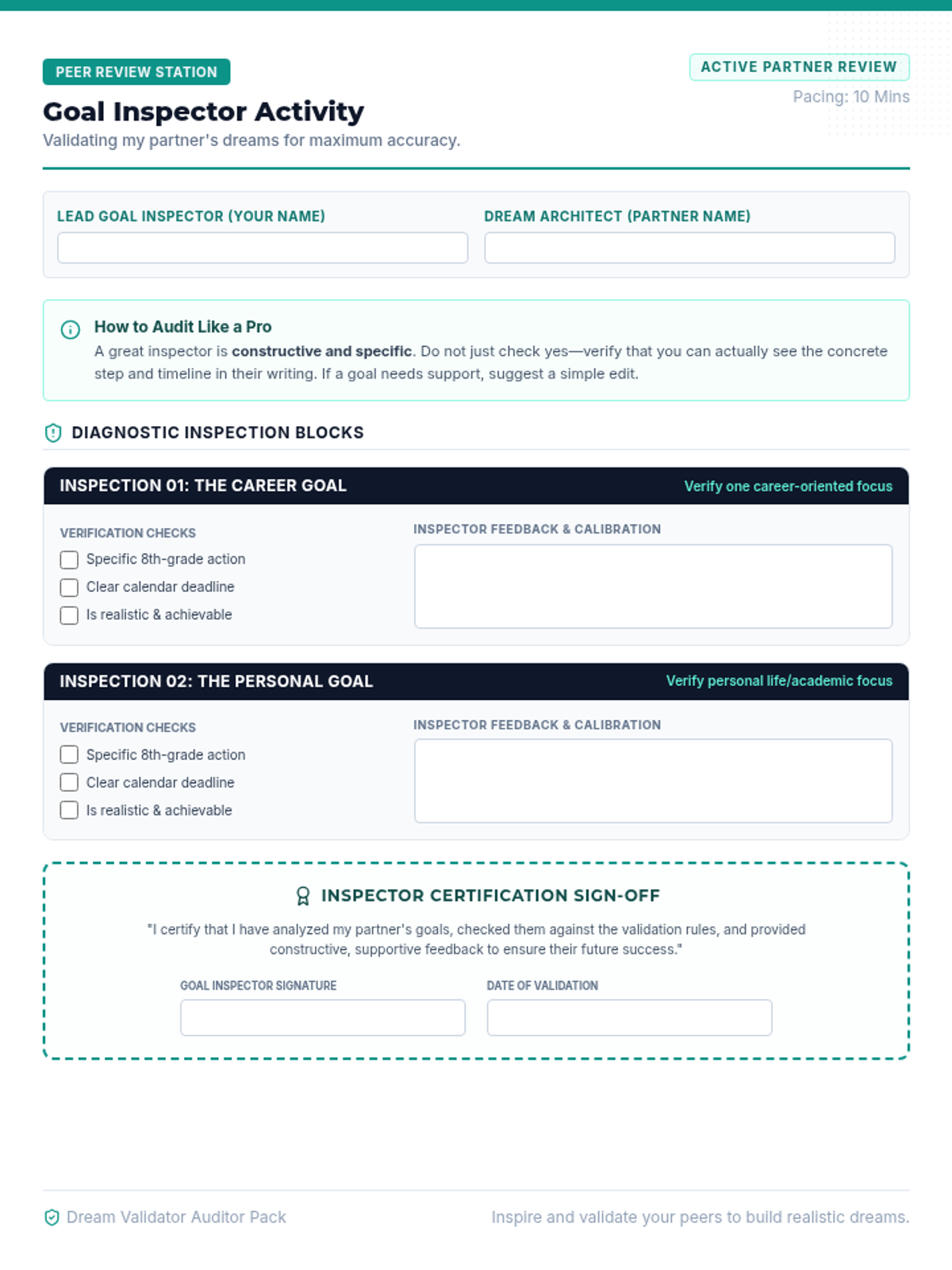
A 50-minute high-engagement lesson for 8th graders to draft, analyze, and validate 2-3 personal and career goals using a structured blueprint checklist. Students act as goal detectives and partner inspectors to ensure their dreams are realistic, personal, and timeline-bound.
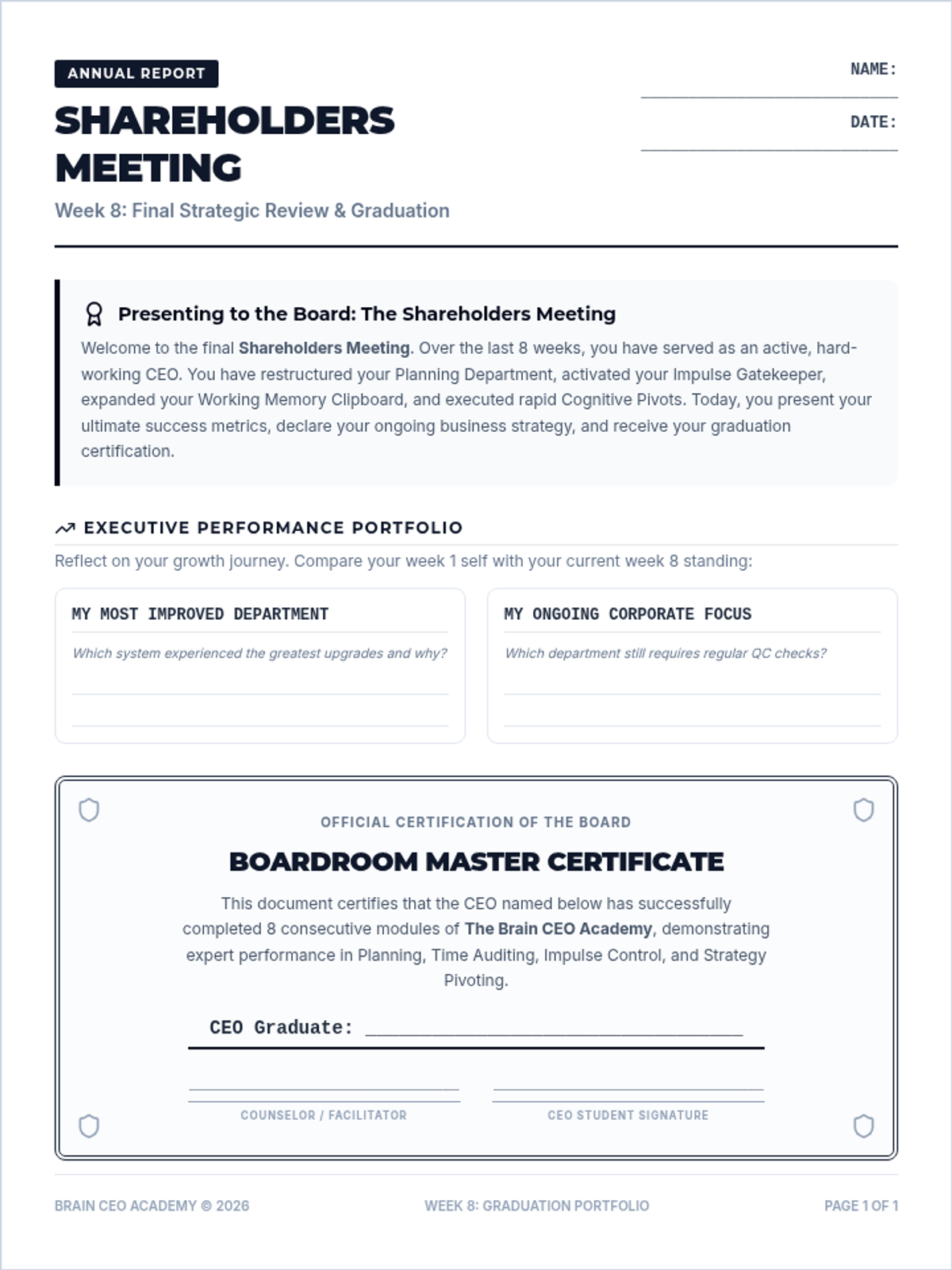
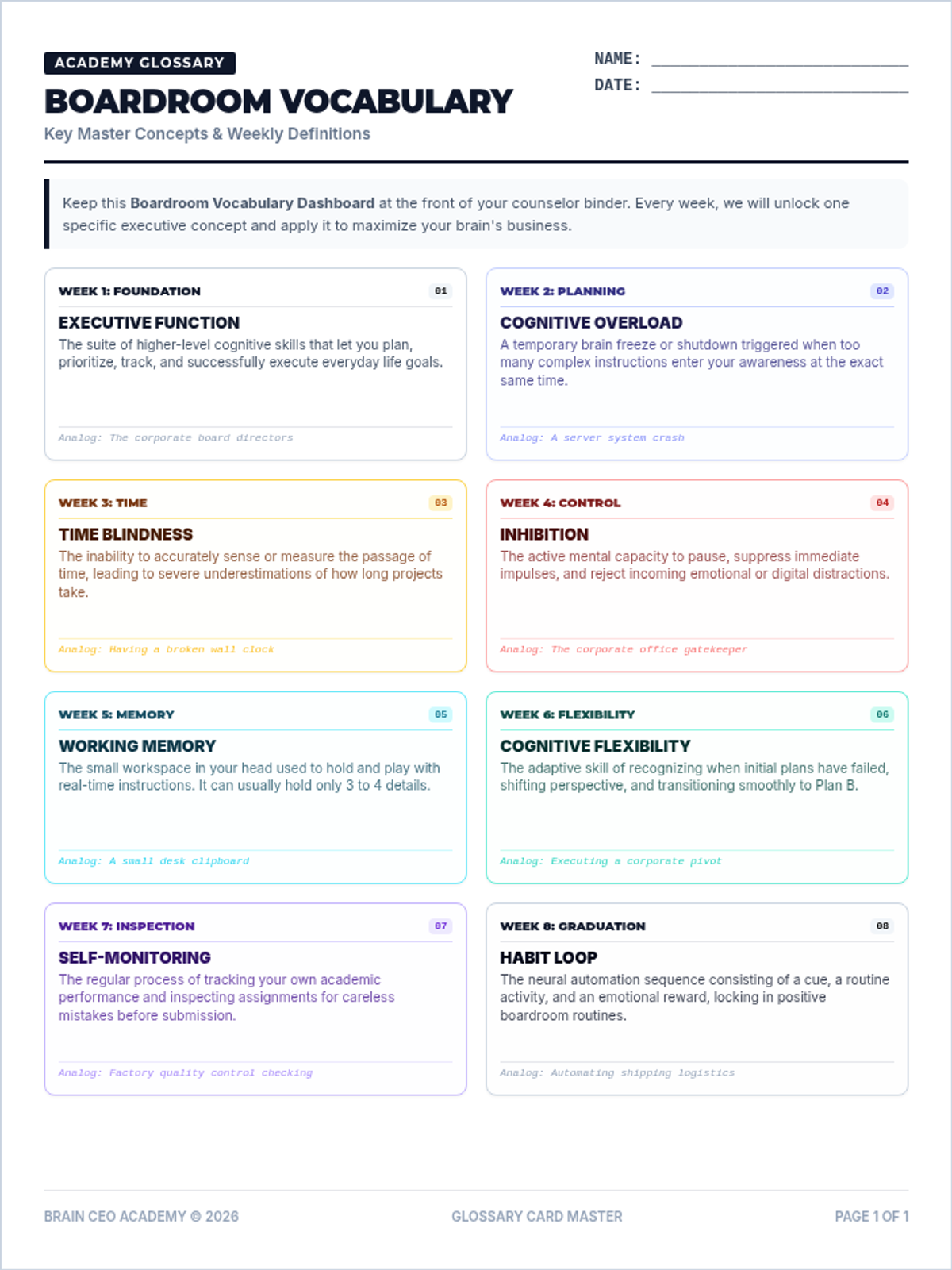
Students host their final Shareholders Meeting to present their executive progress. They receive their Brain CEO Certifications, consolidate their boardroom binders, and commit to long-term habits.
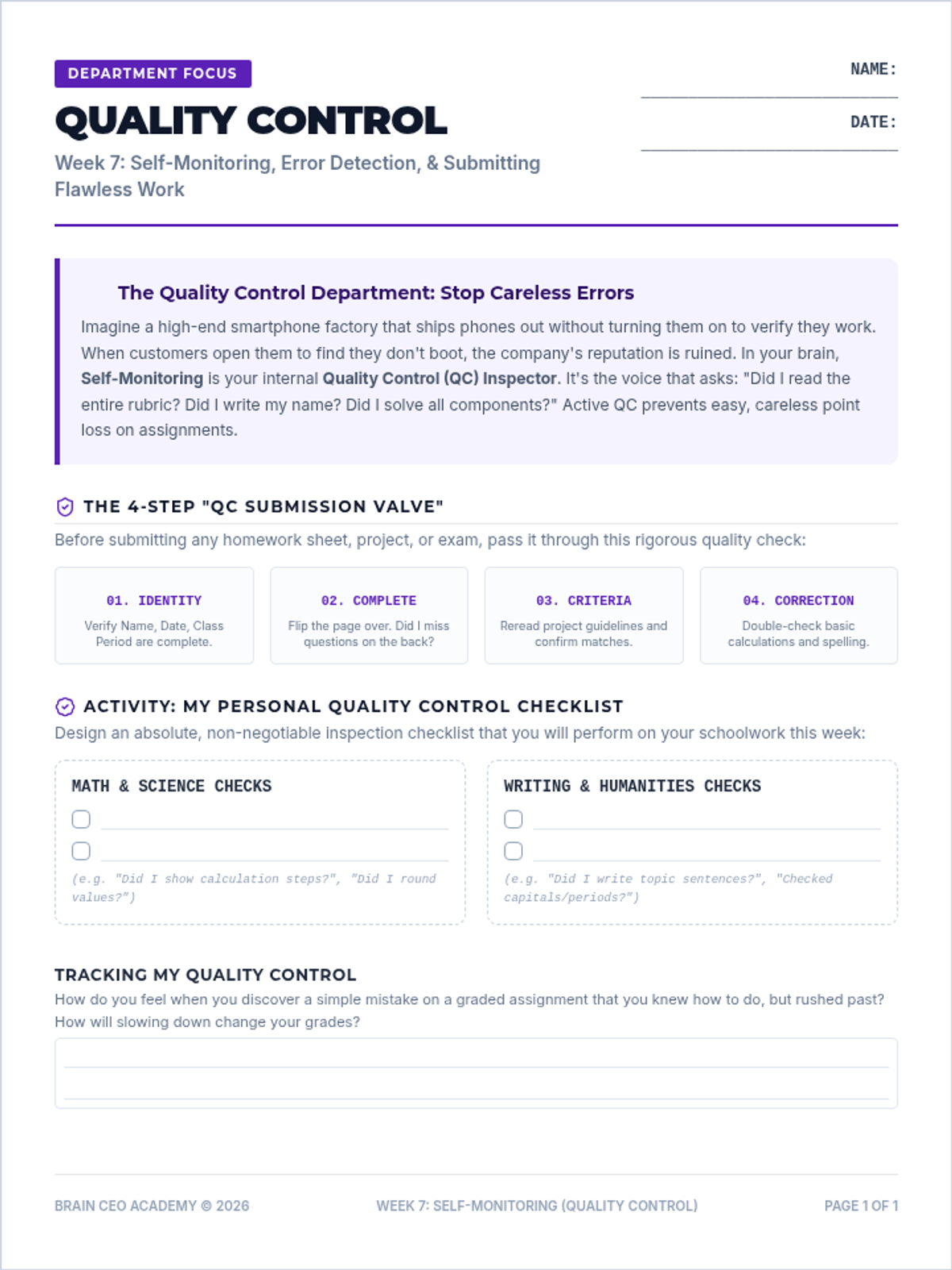
Students examine the brain's 'Quality Control' (self-monitoring). They review academic progress, track habit loops, and self-correct work before submitting it.
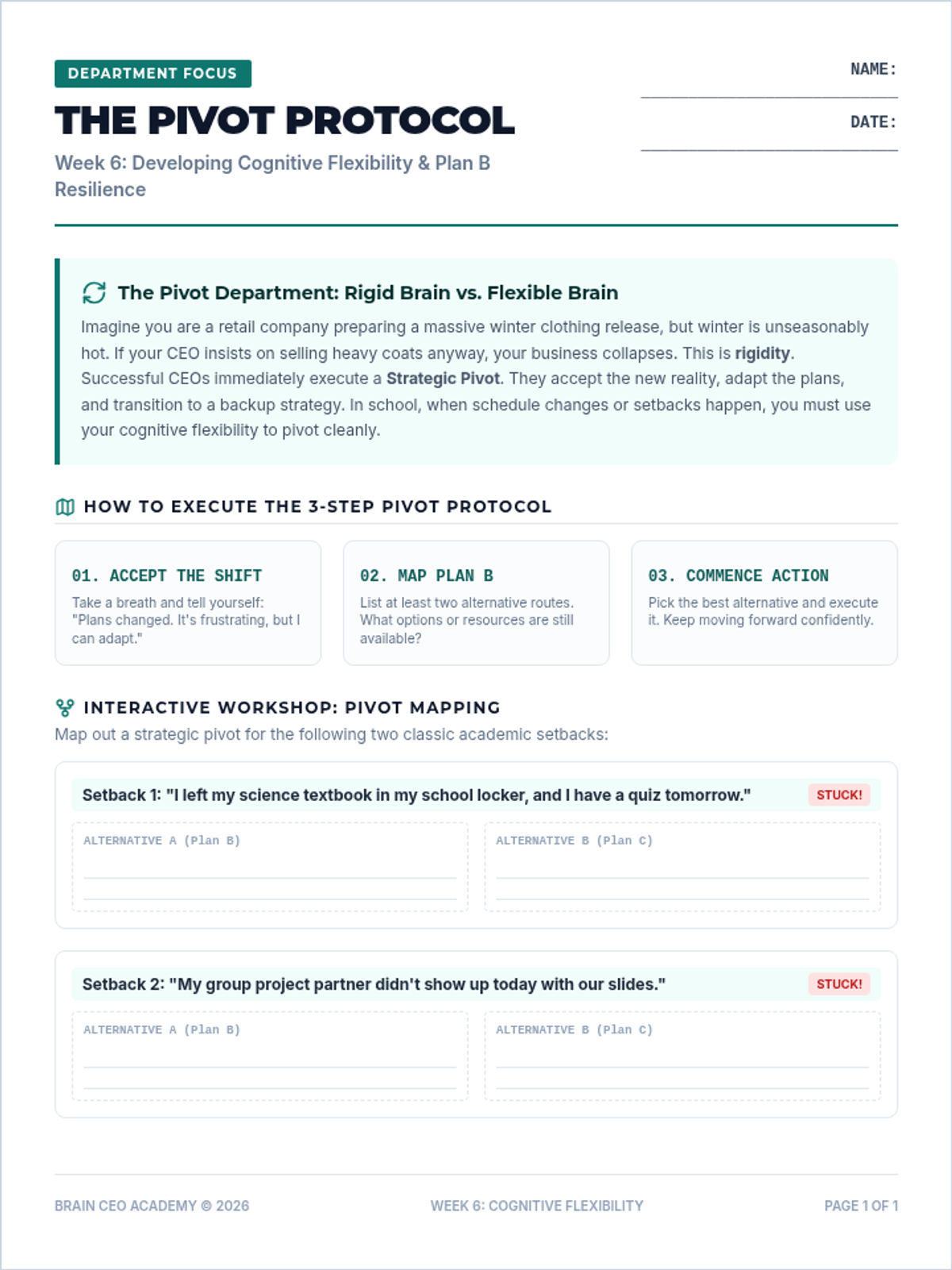
Students examine the brain's 'Pivot' (cognitive flexibility). They learn how to adapt to unexpected boardroom shifts, handle academic setbacks, and problem-solve when plans fail.
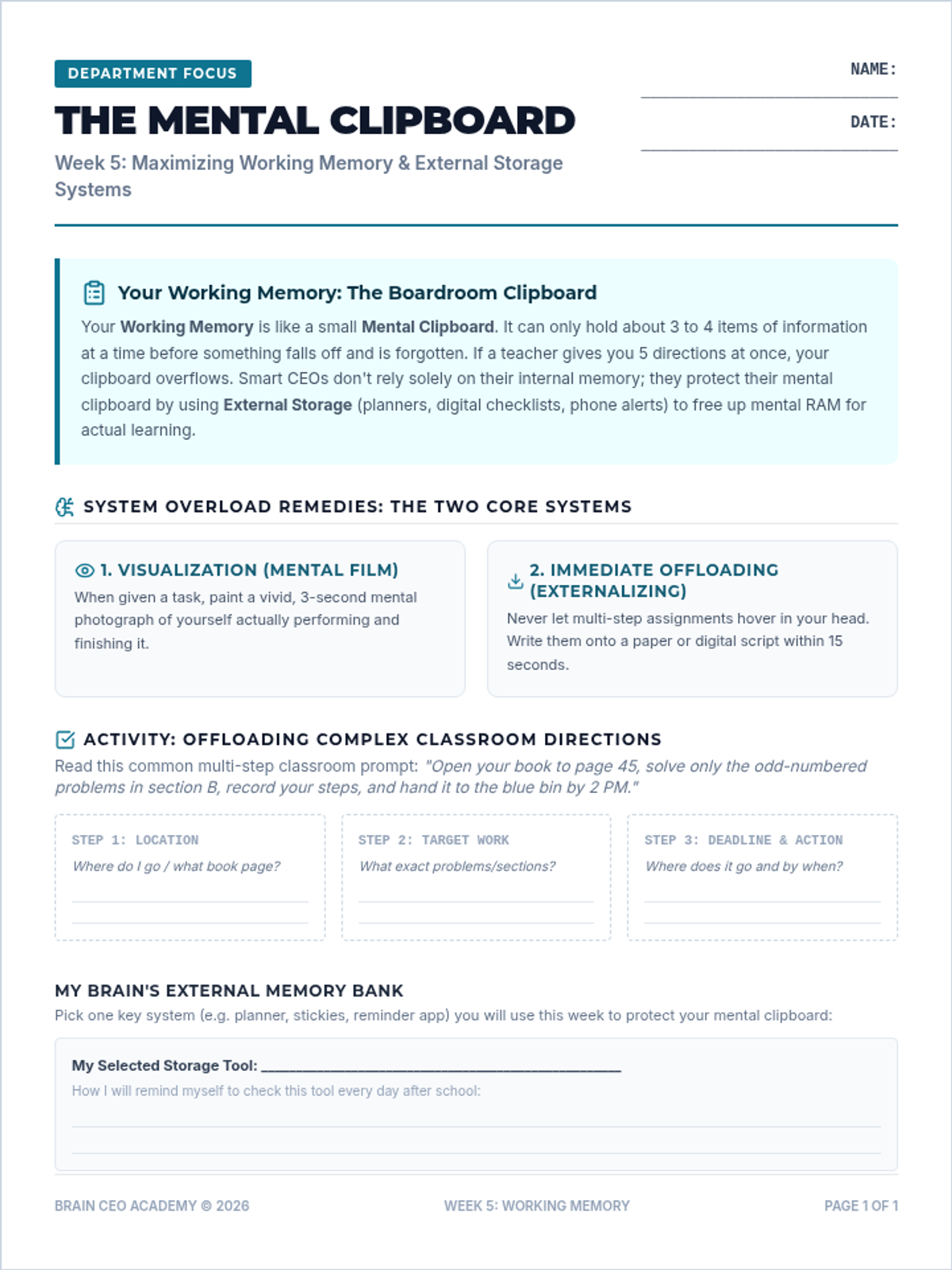
Students explore the brain's 'Mental Clipboard' (working memory). They practice visualization, externalization, and mnemonics to retain multi-step instructions and organize school information.
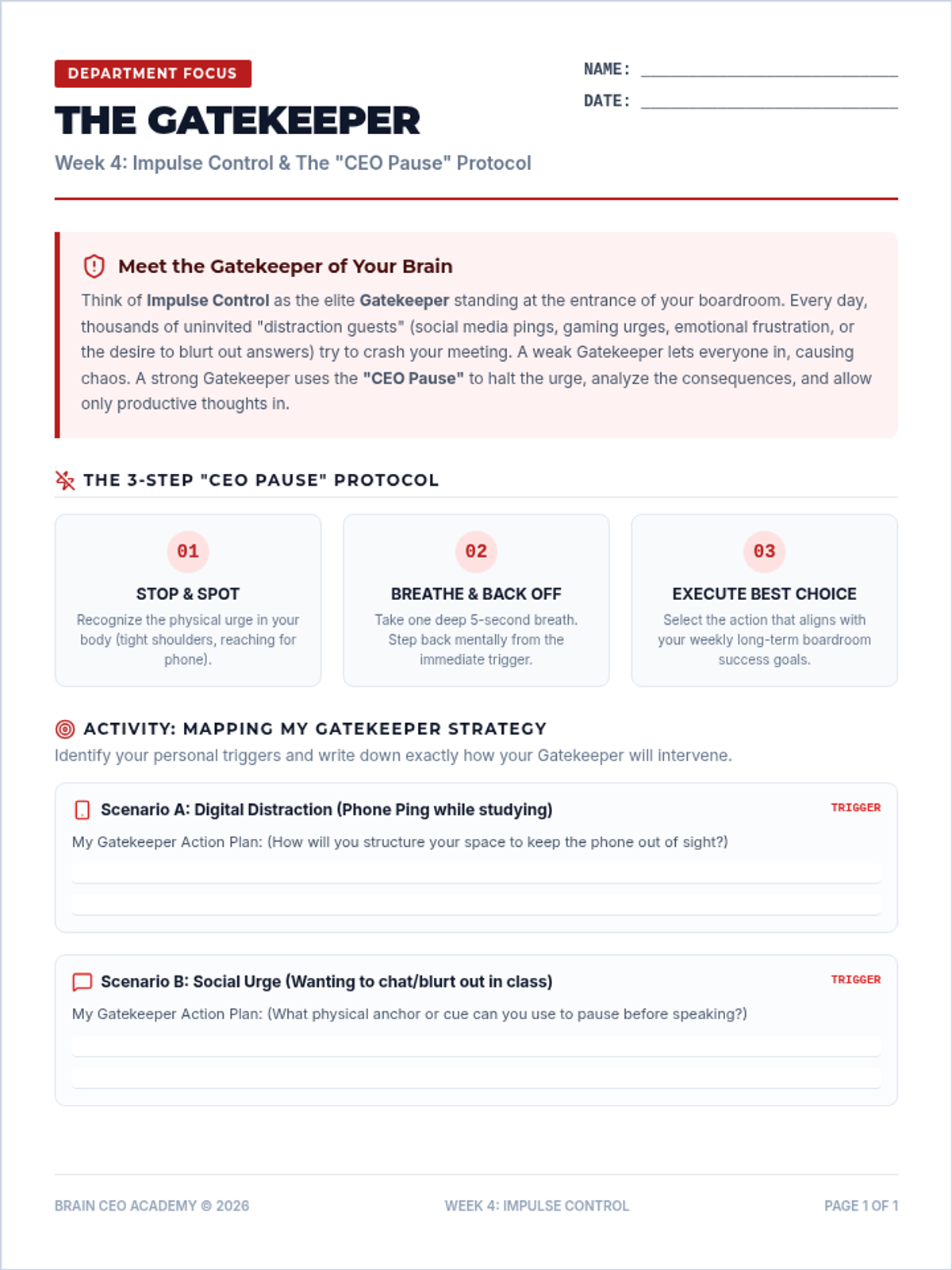
Students explore the brain's 'Gatekeeper' (impulse control), developing practical techniques like the 'CEO Pause' to resist high-tech distractions and control emotional impulses before acting.
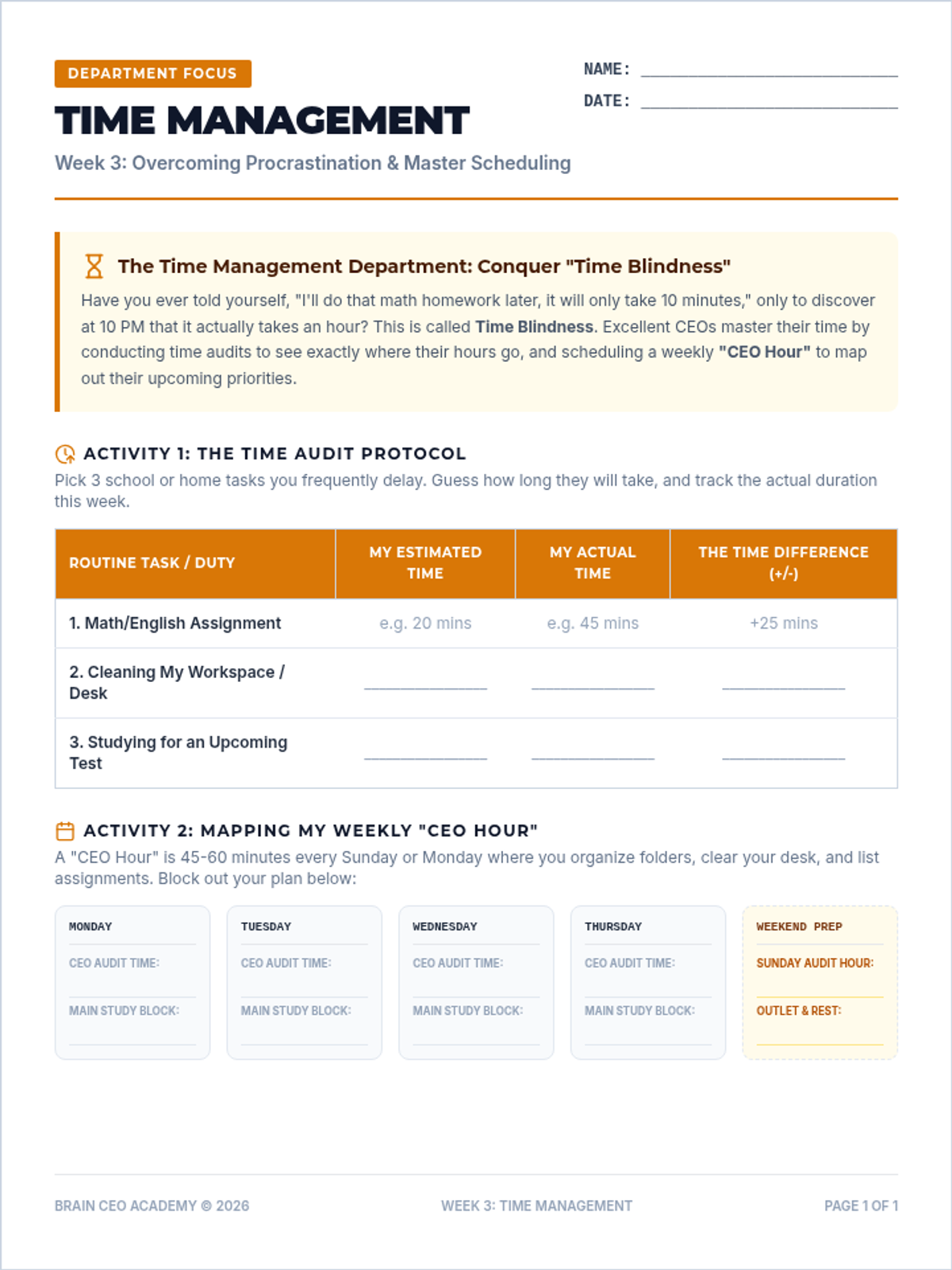
Students examine their brain's Time Management department, learning how to overcome procrastination, estimate task durations accurately, and implement the 'CEO Hour' weekly scheduling technique.
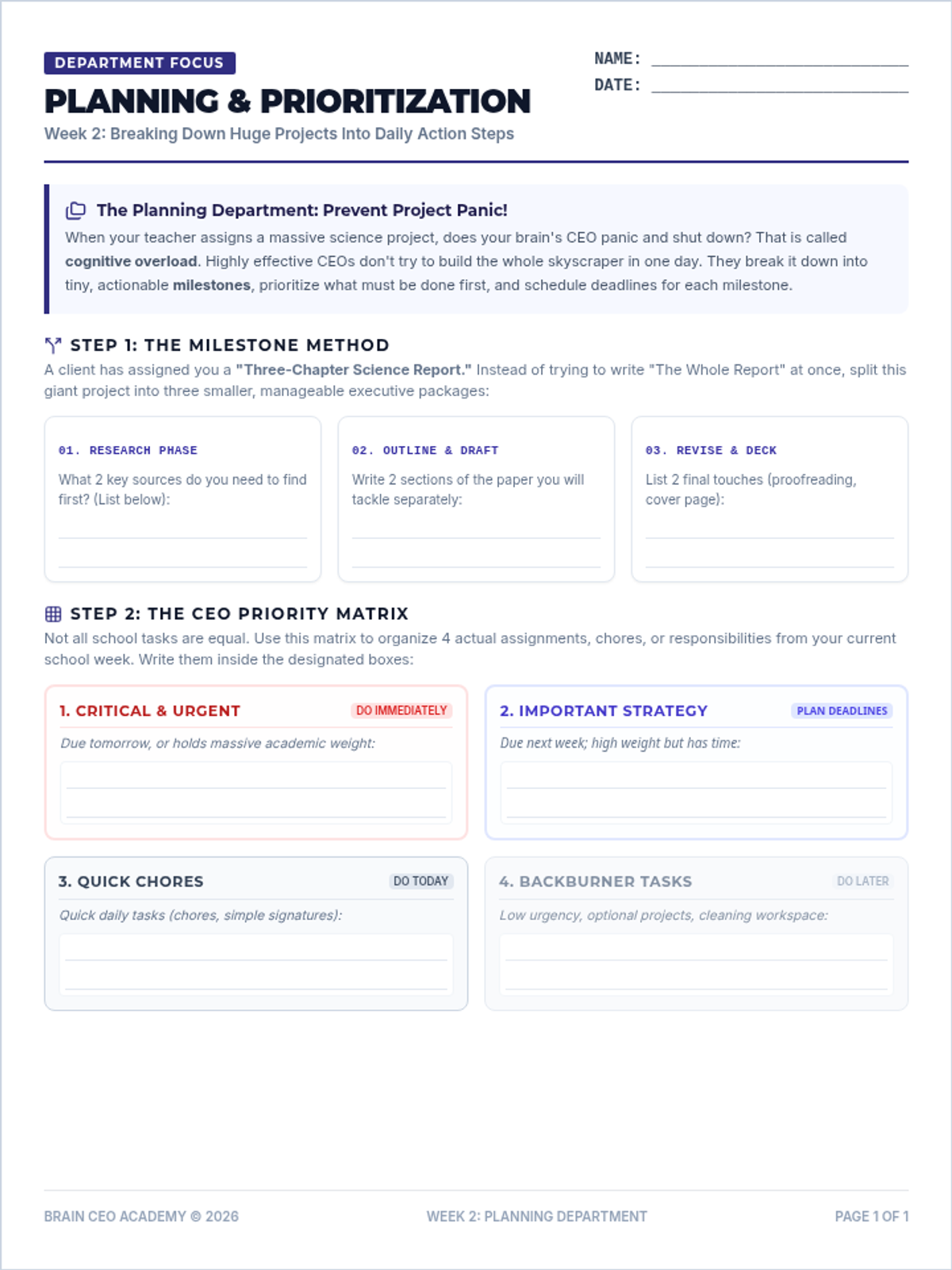
Students dive into the Planning & Prioritization Department, learning how to break down complex projects into actionable steps and organize tasks using the 'CEO Action Item' matrix.
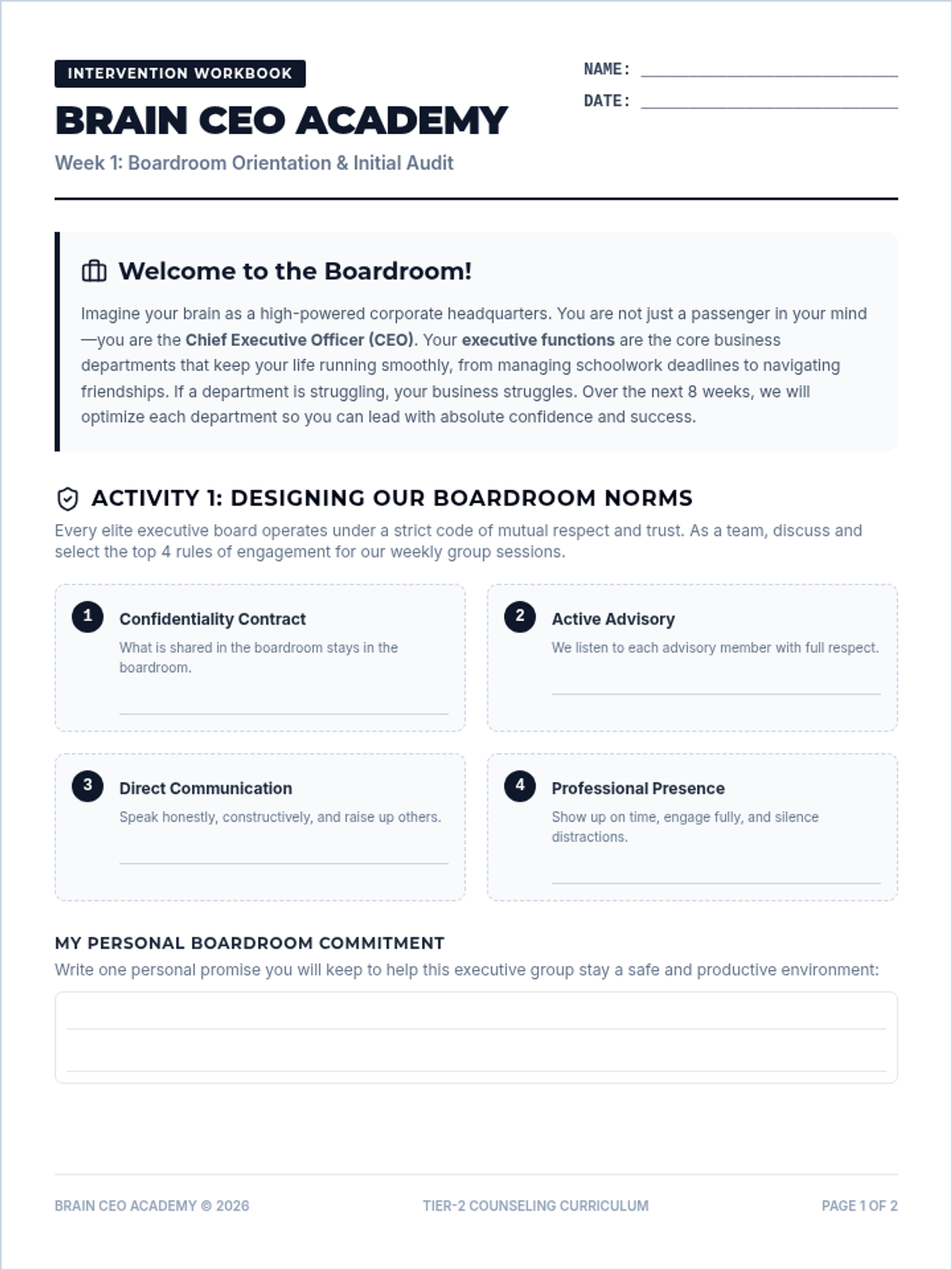
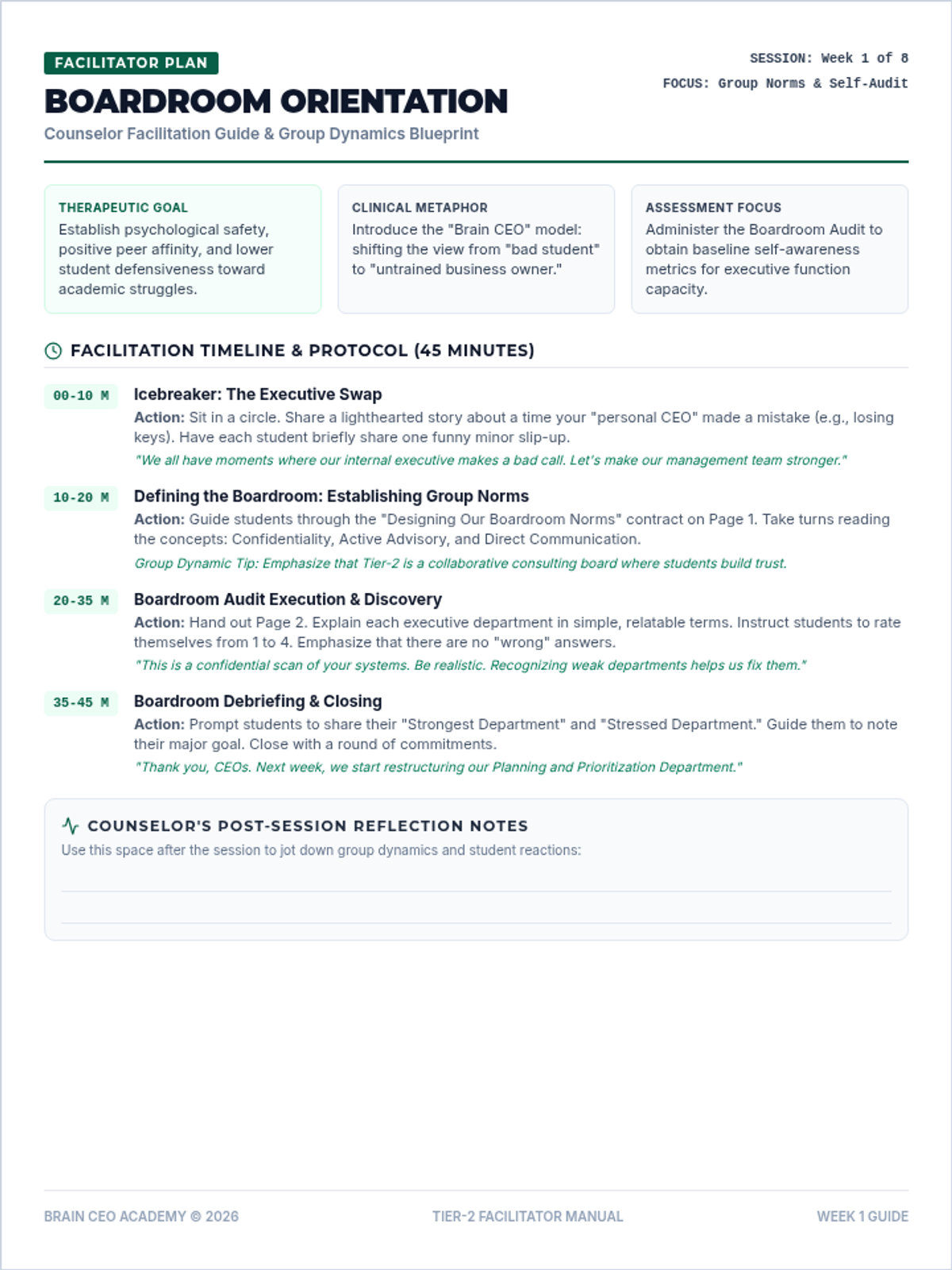
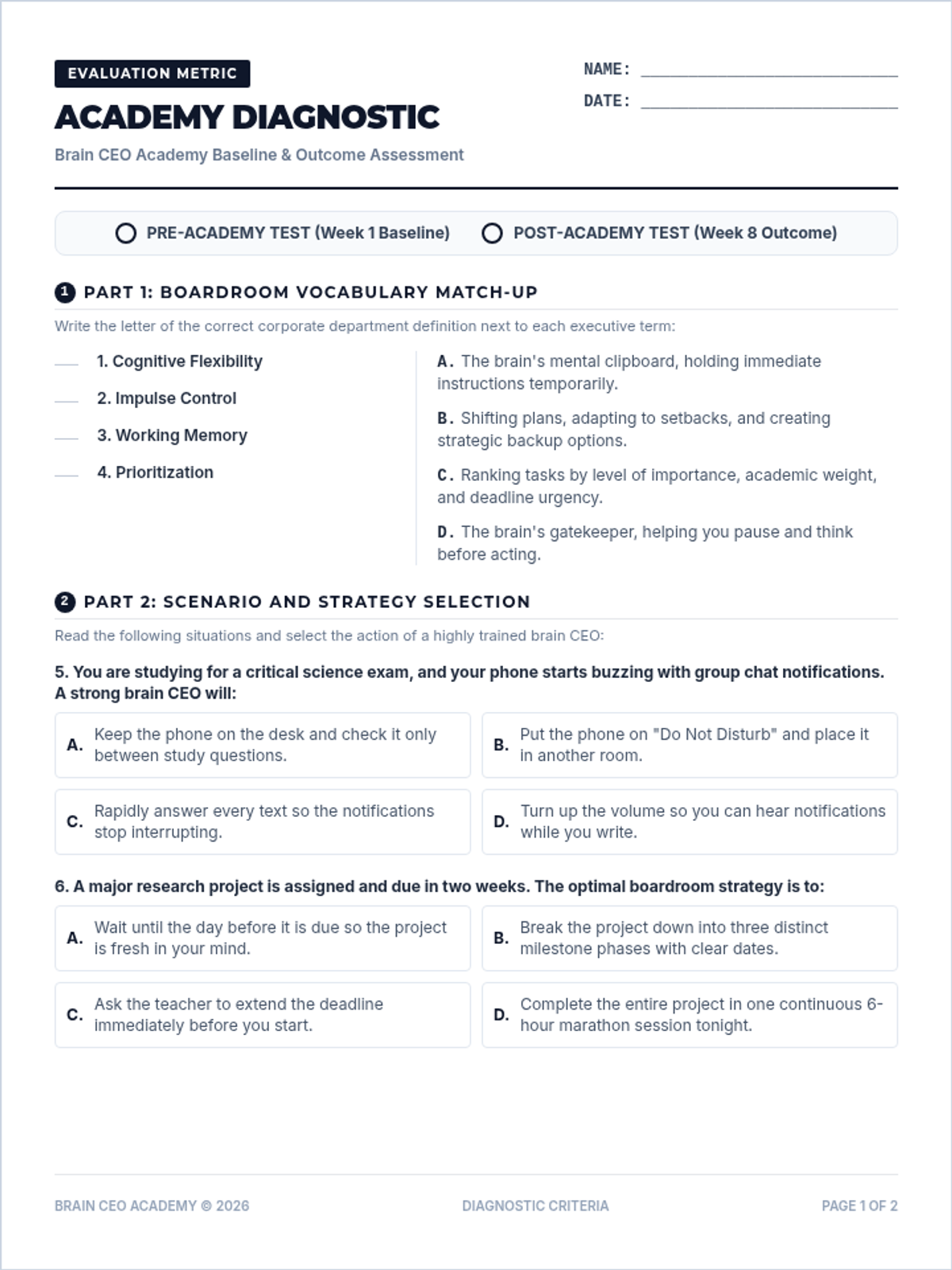
Students are introduced to the group, establish norms, and explore the 'Brain CEO' metaphor. They conduct an initial Boardroom Audit (Self-Assessment) to identify their brain's strongest and weakest executive departments.
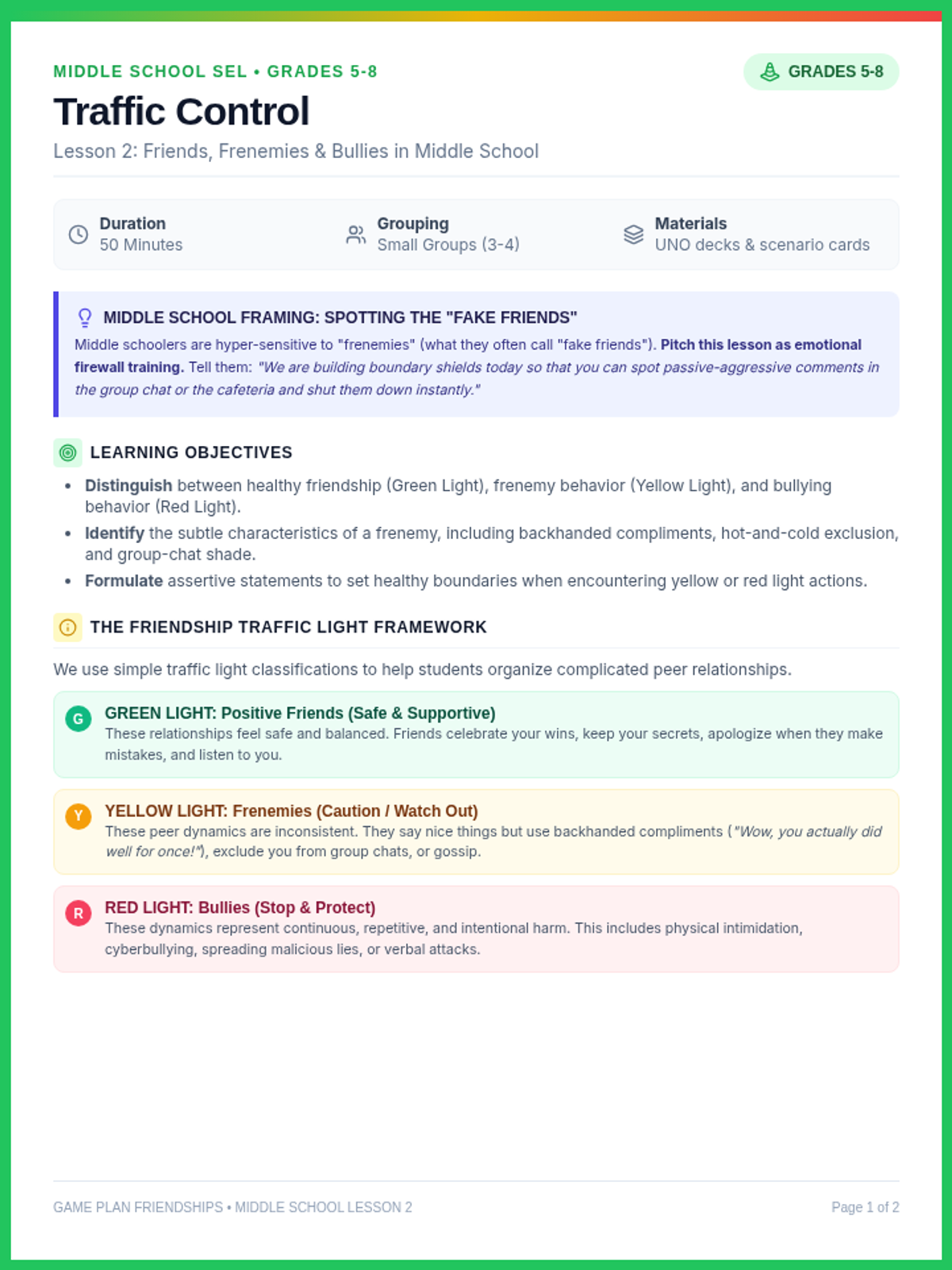
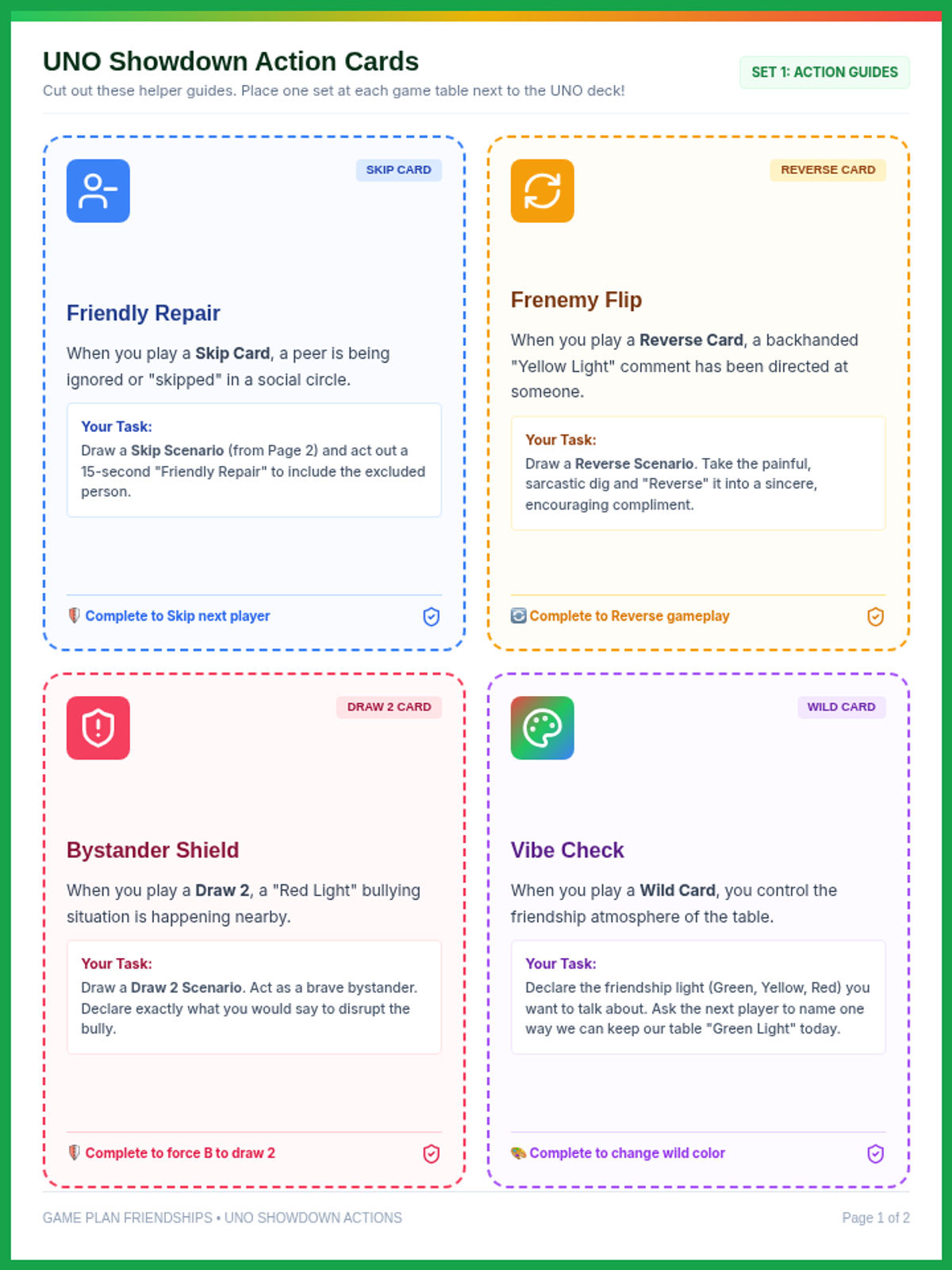
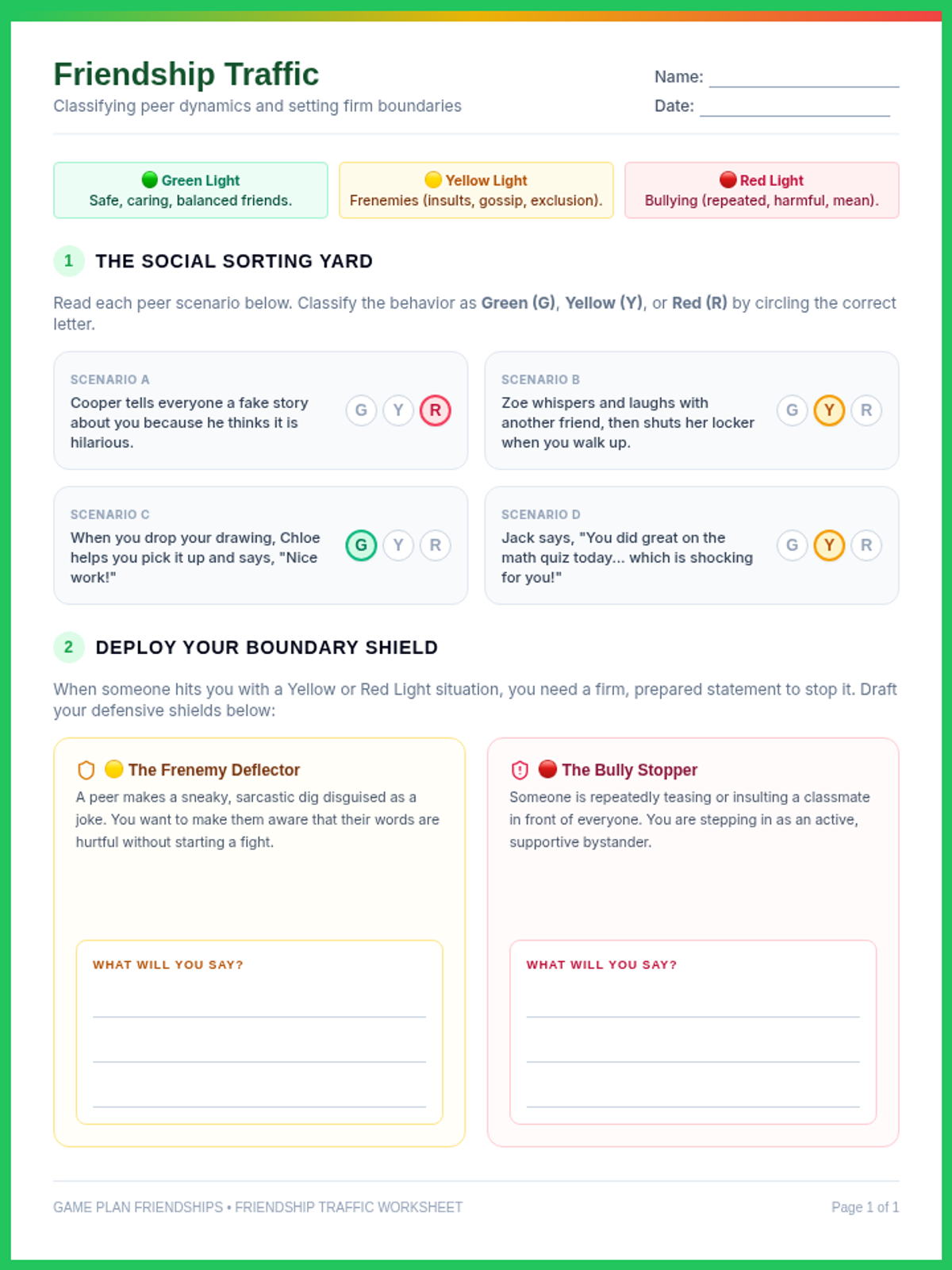
Students learn to classify peer dynamics as friends, frenemies, or bullies using "UNO Showdown" action cards to trigger role-play and conflict-resolution.