A tactical approach to emotional regulation, teaching students to match their emotional reactions to the actual scale of the problems they face through game-based simulation.
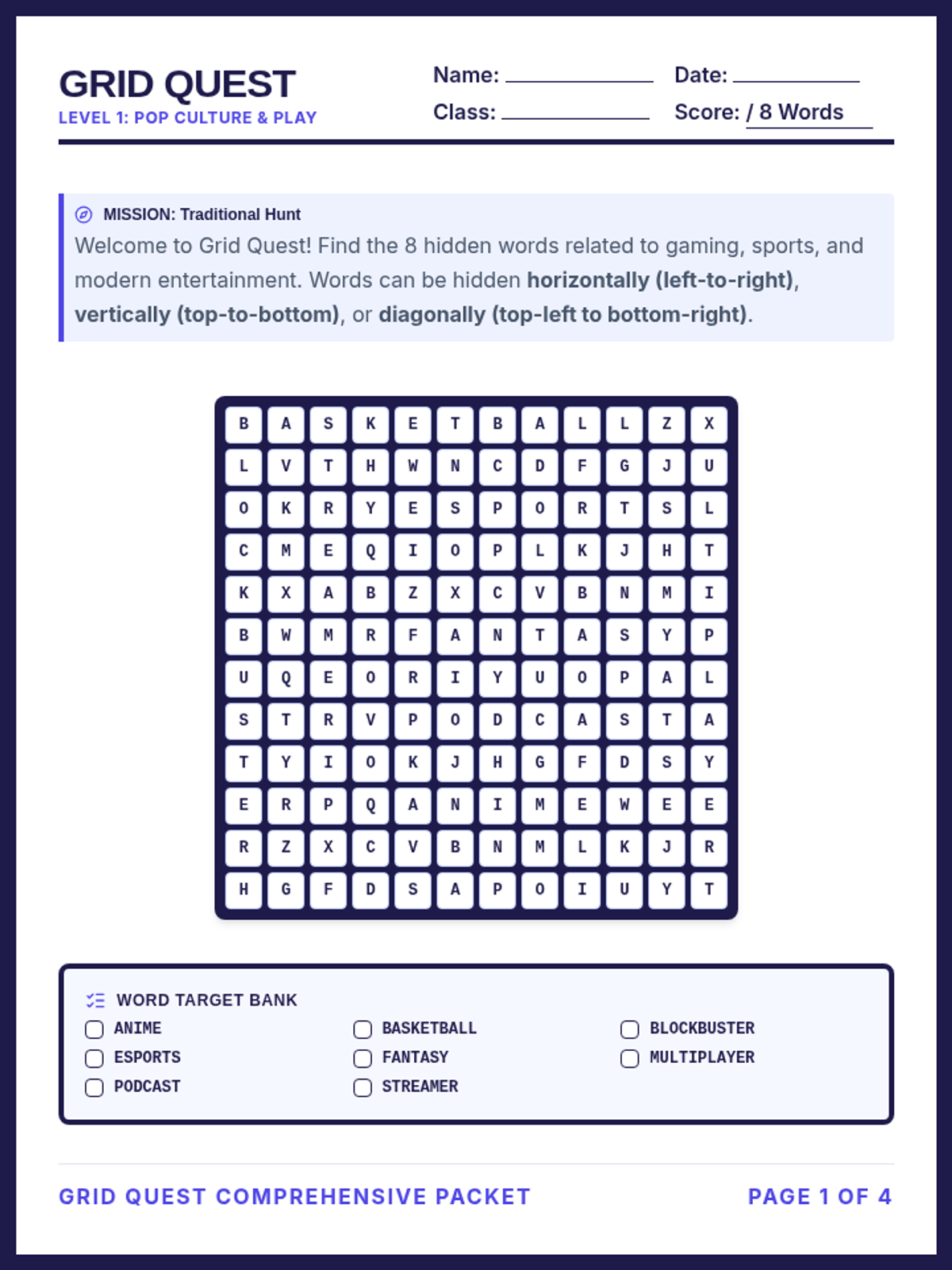
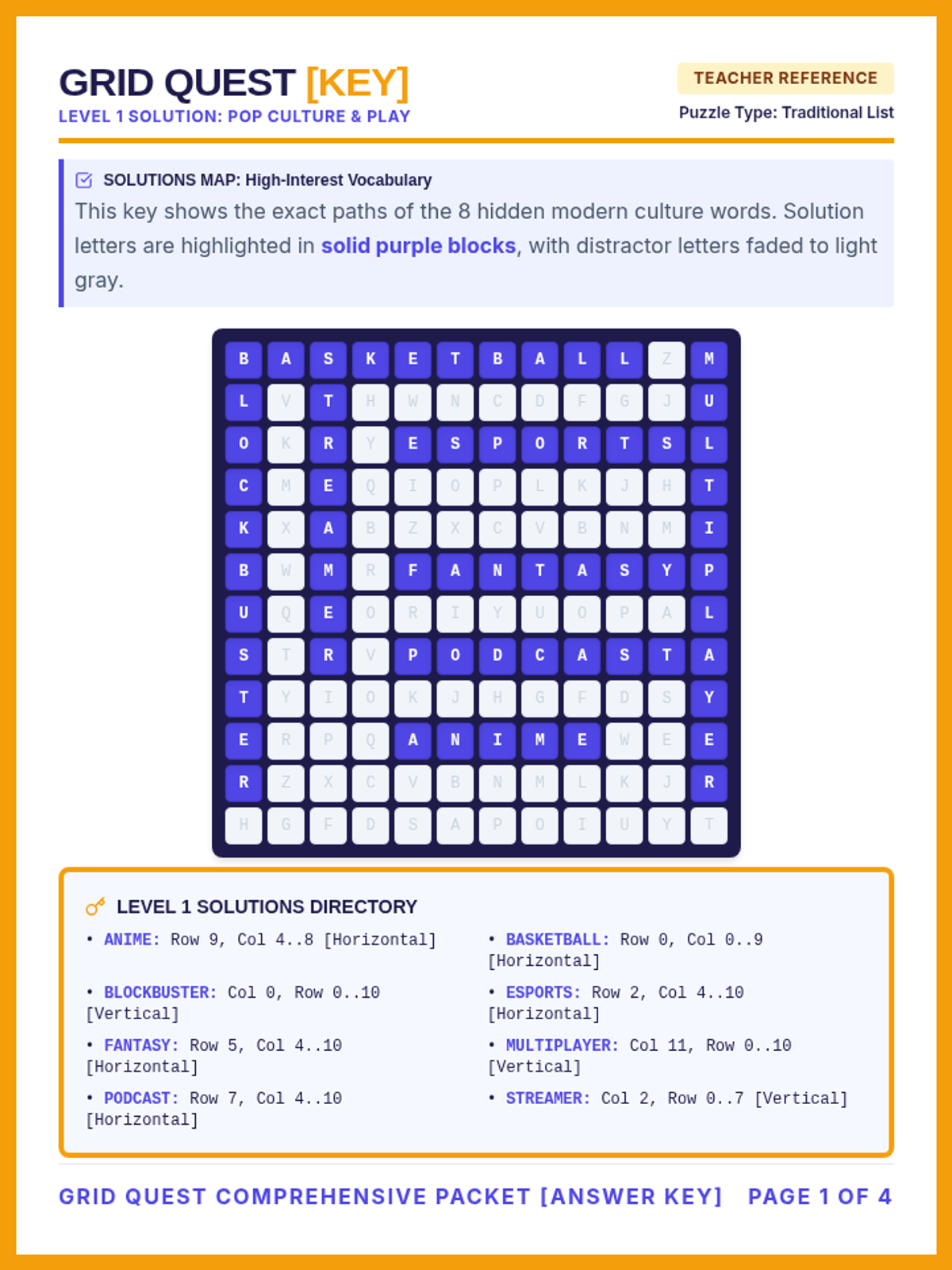
A collection of highly engaging, printable word searches designed for middle schoolers. The packet includes standard grids, definition and synonym searches, and secret message grids spanning pop culture, SEL, life skills, and academic subjects.
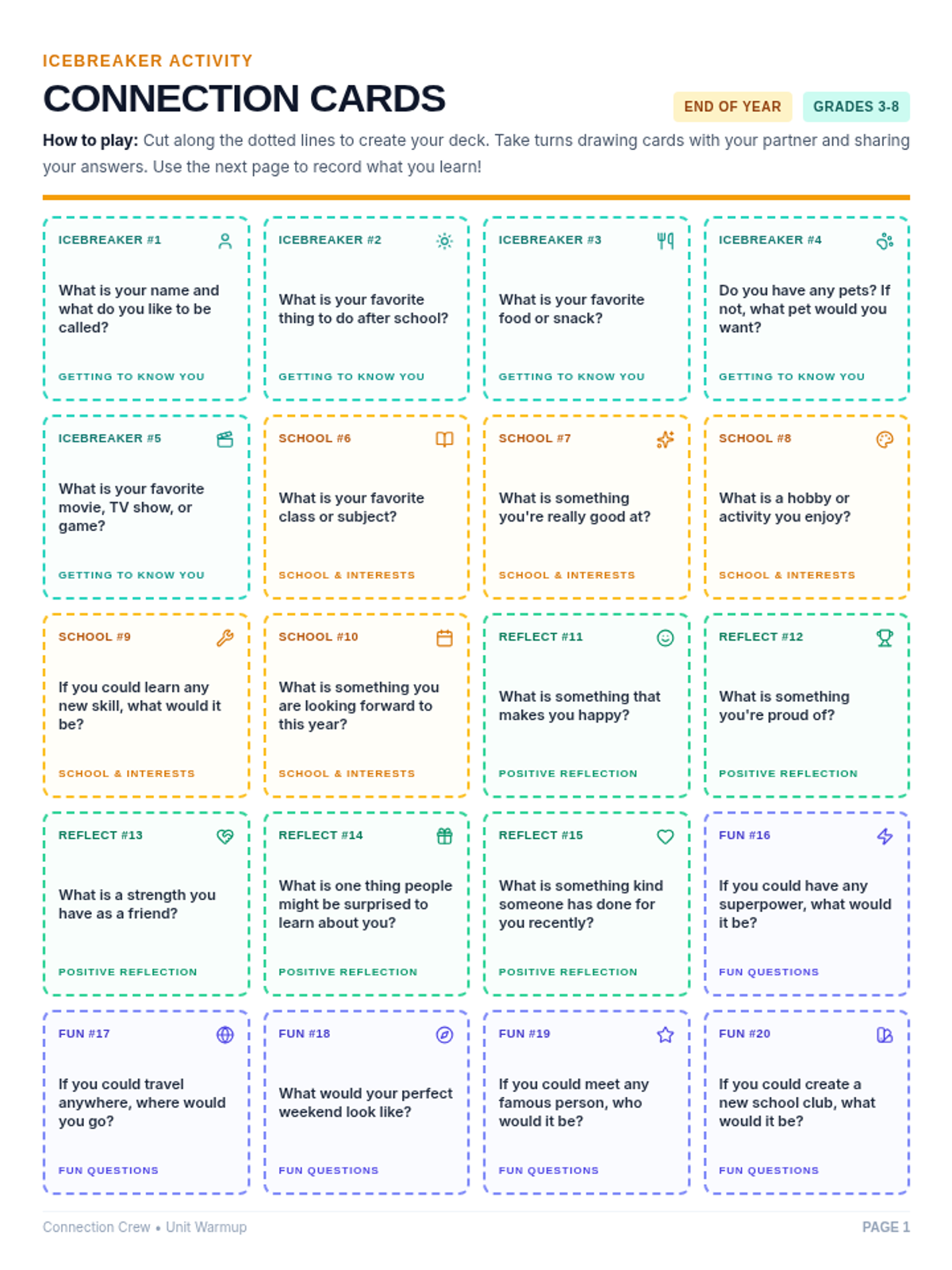
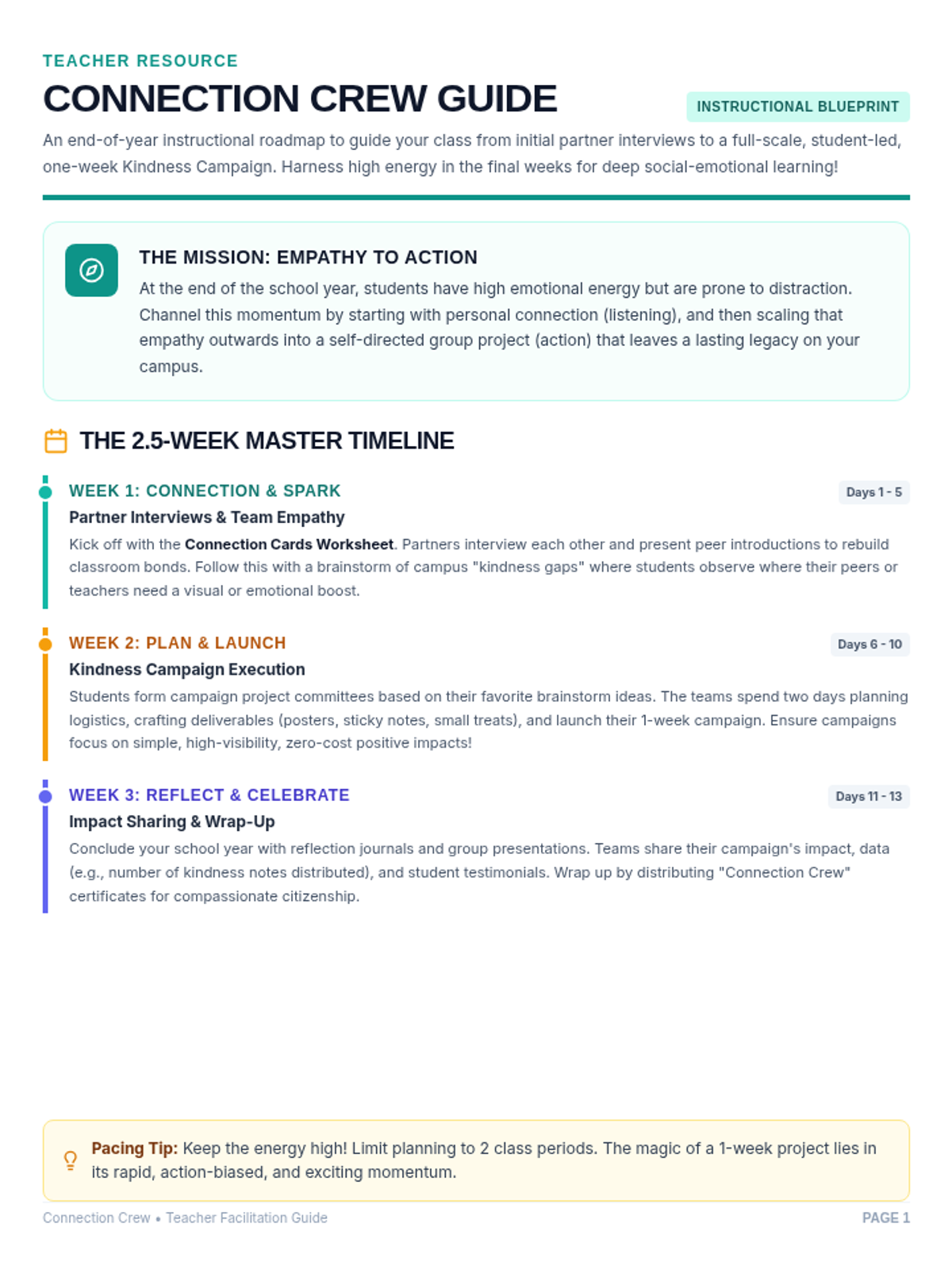
A quick-start end-of-year lesson plan and printable materials that utilize partner interviews to spark connection and transition students into planning a week-long Kindness Campaign.
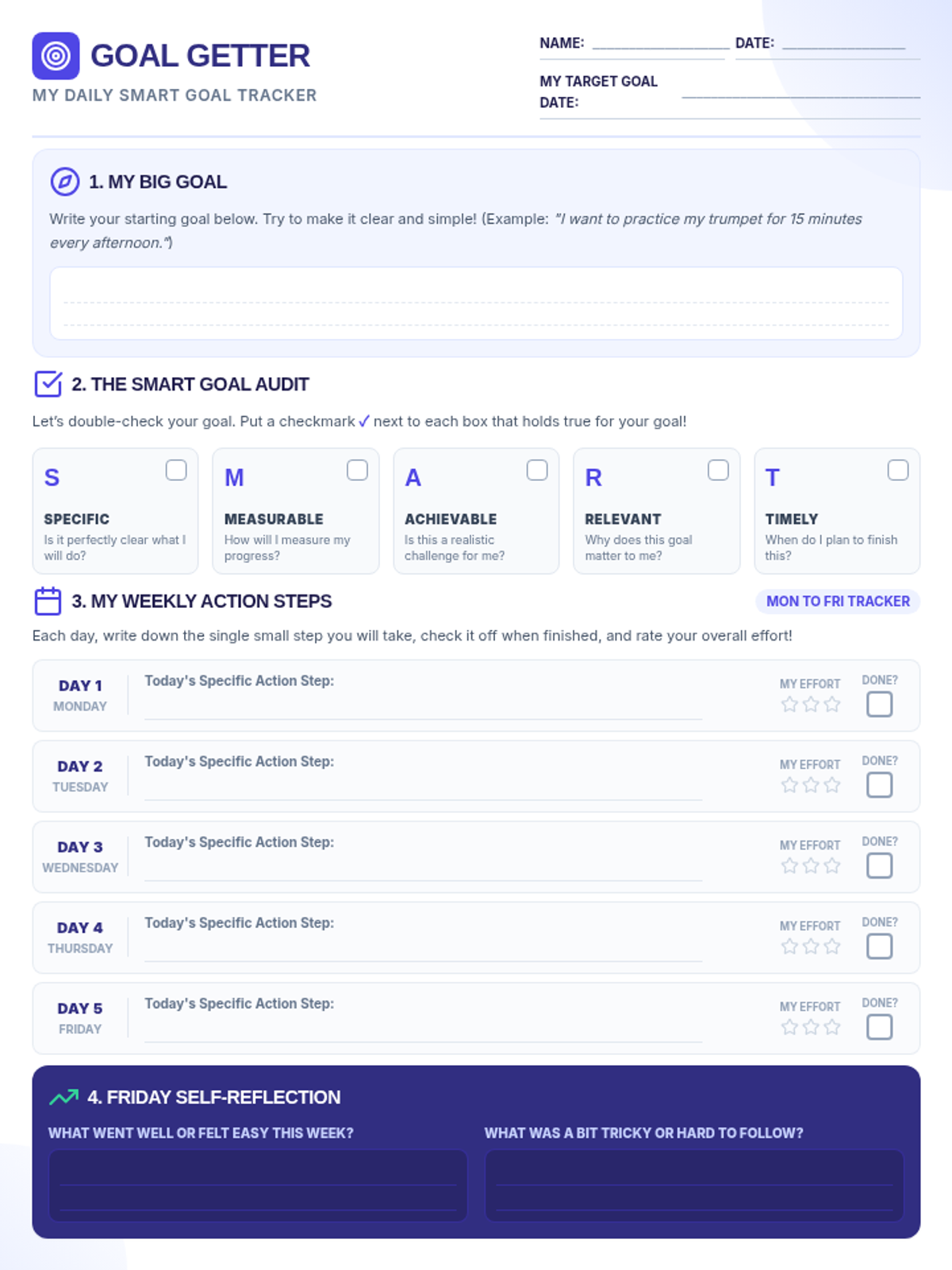
A starter lesson designed for middle school students to introduce, refine, and consistently track SMART goals with action-oriented daily checklists and reflection.
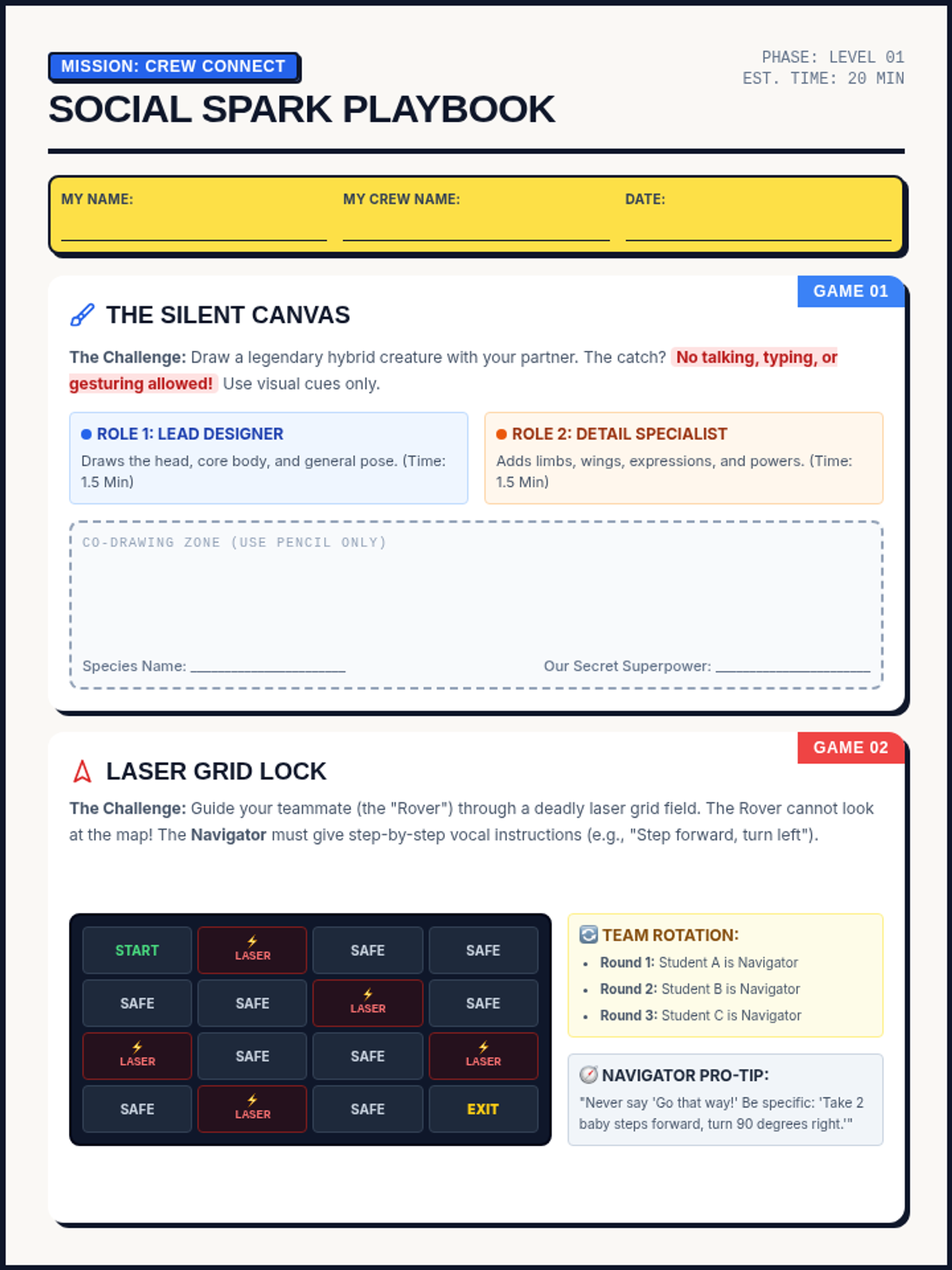
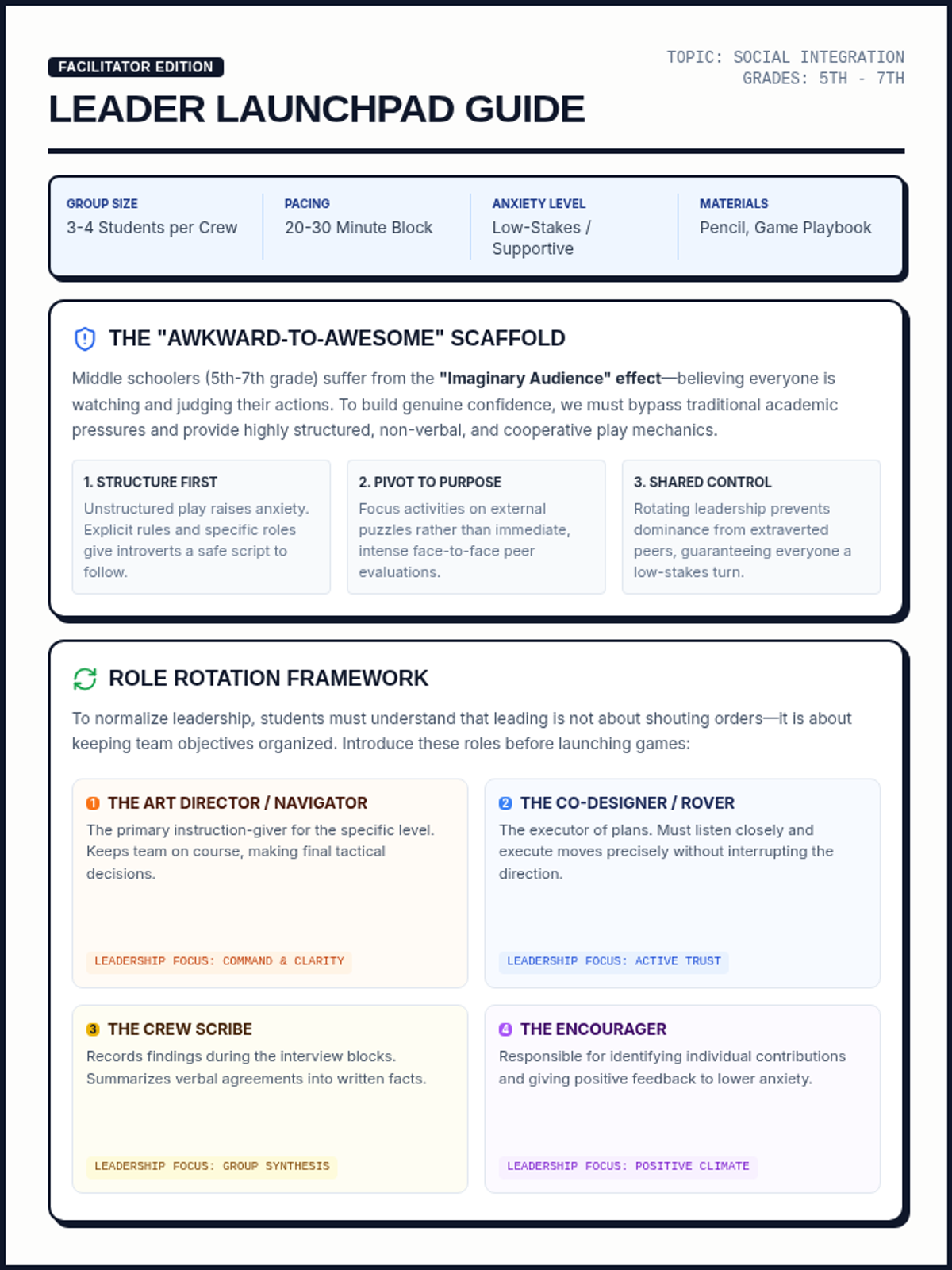
A targeted social-skills and leadership lesson designed for 5th-7th graders to build confidence, reduce social anxiety, and practice low-stakes peer leadership. The materials provide step-by-step, highly collaborative team-building games with rotational leadership roles and reflection prompts.
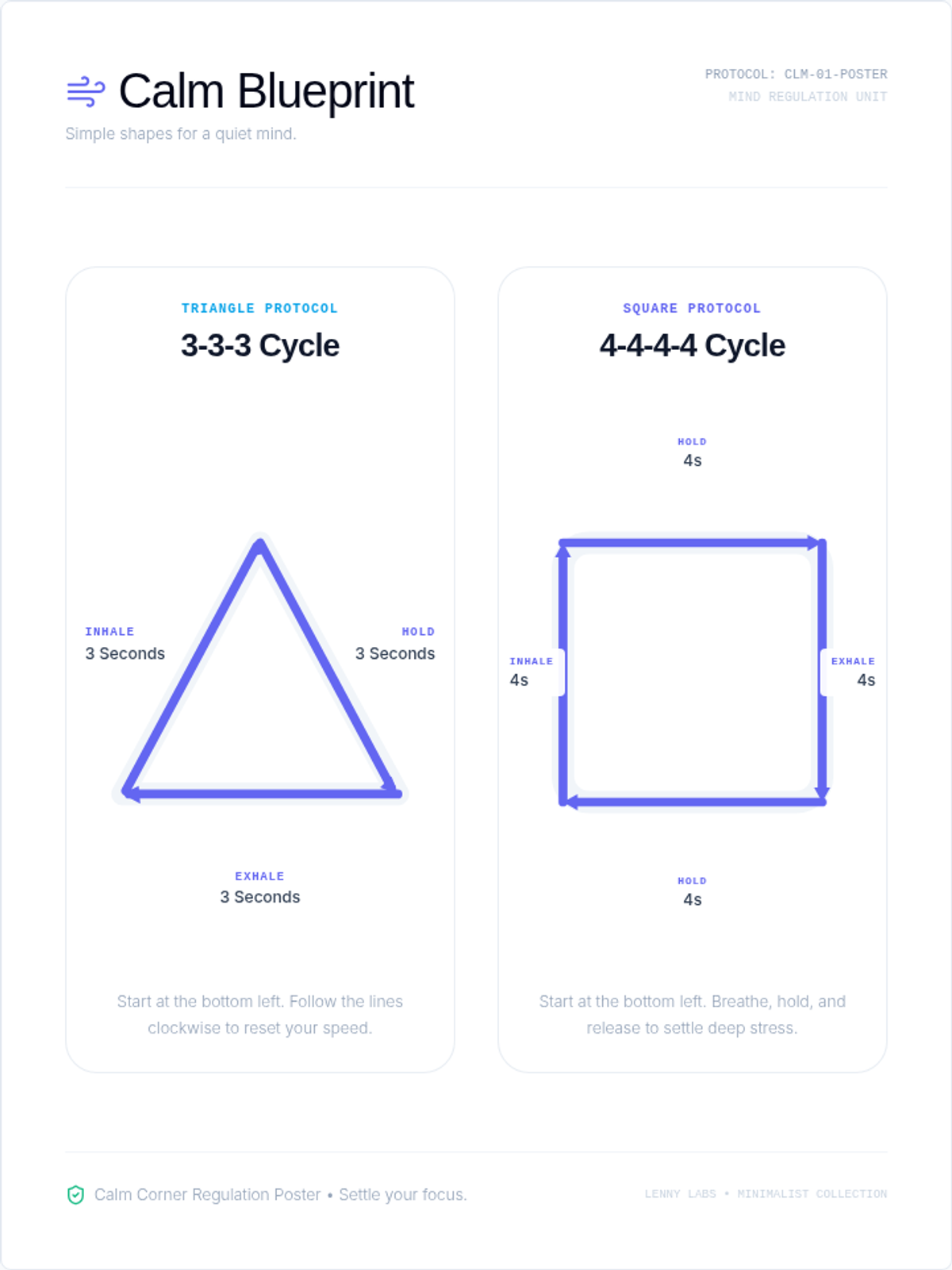
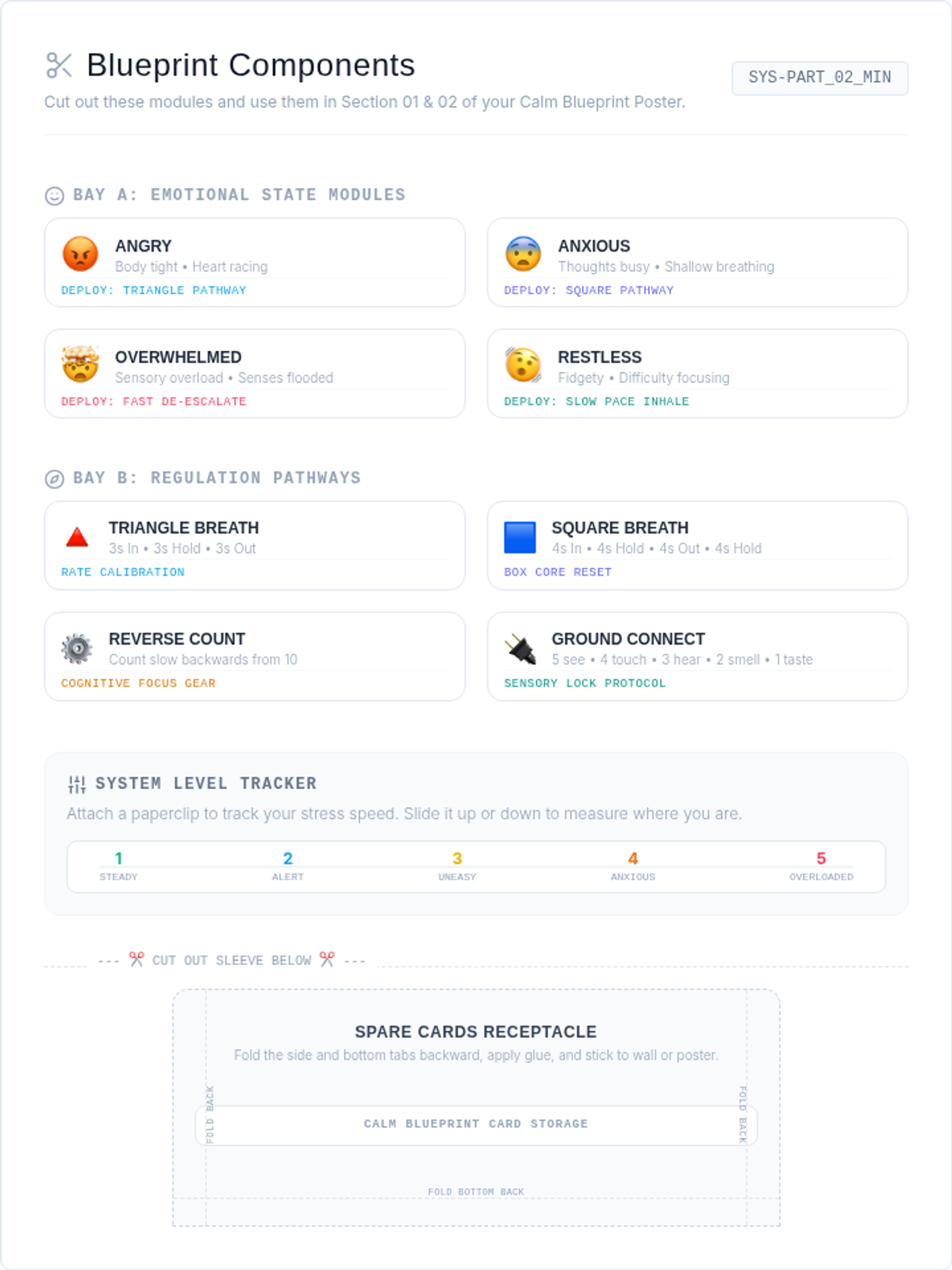
An interactive mental engineering toolkit that teaches children deep breathing exercises using concrete shapes. Students use the visual anchor chart and movable feeling/strategy blueprints to regulate their emotions.
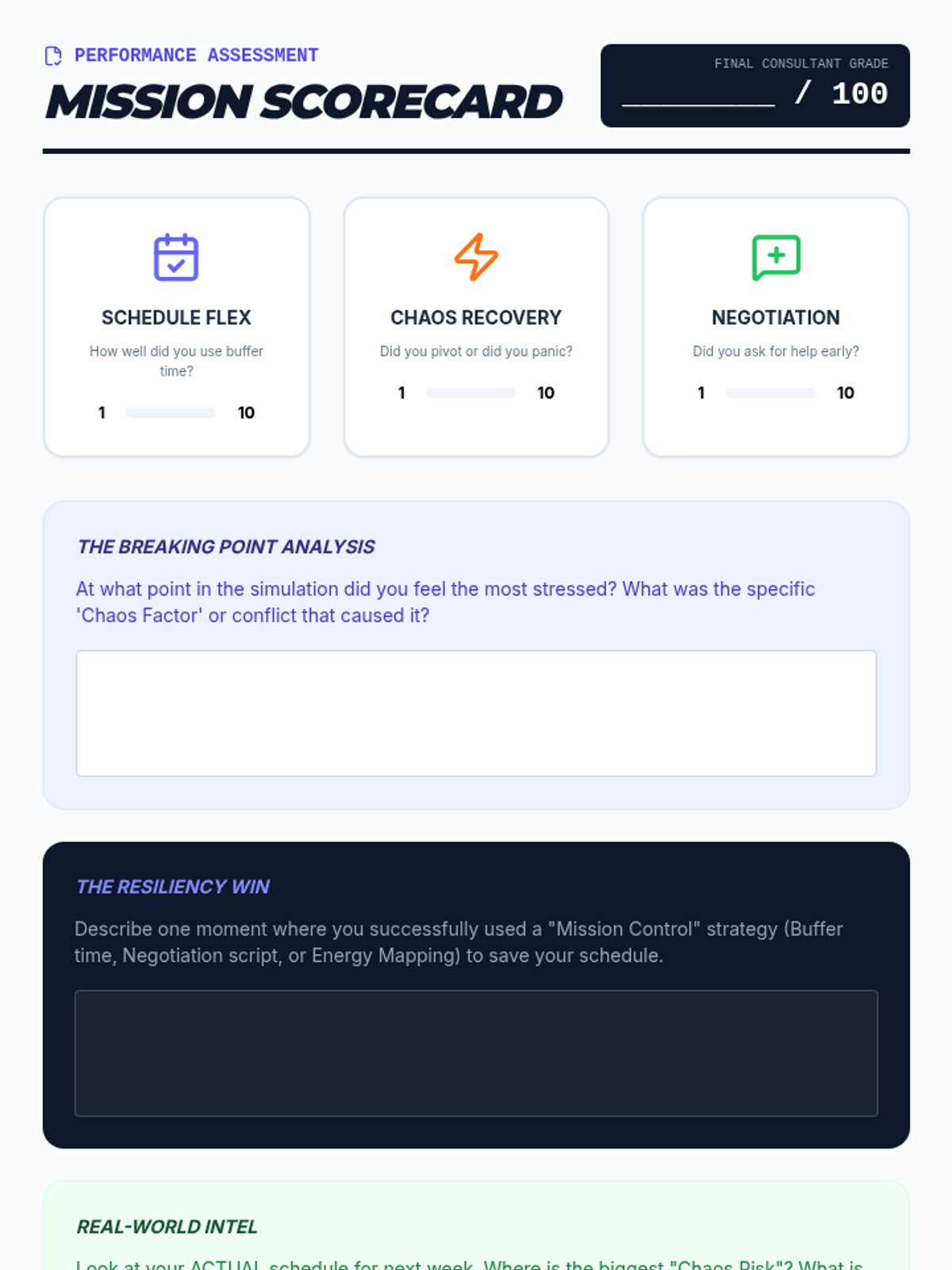
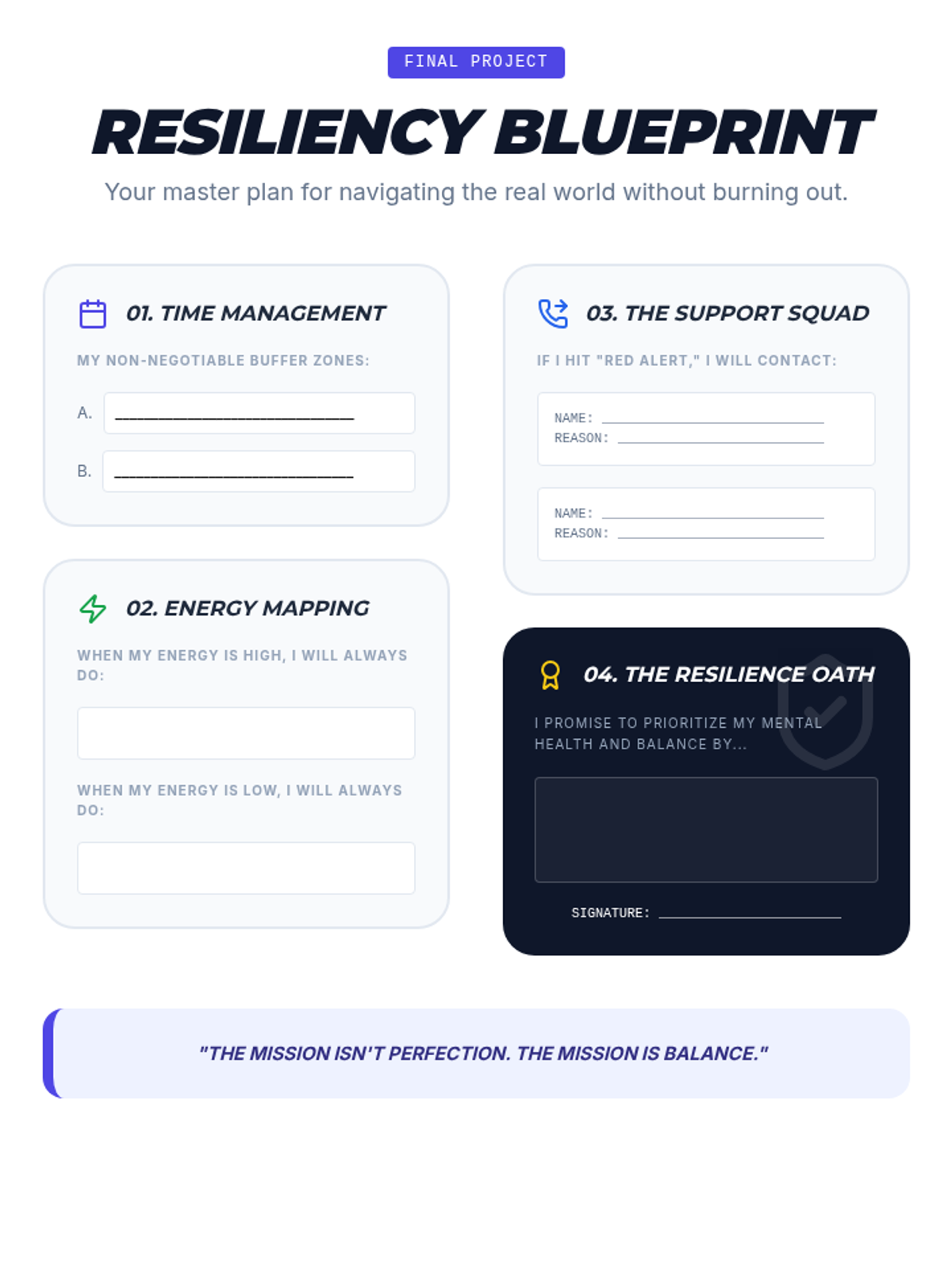
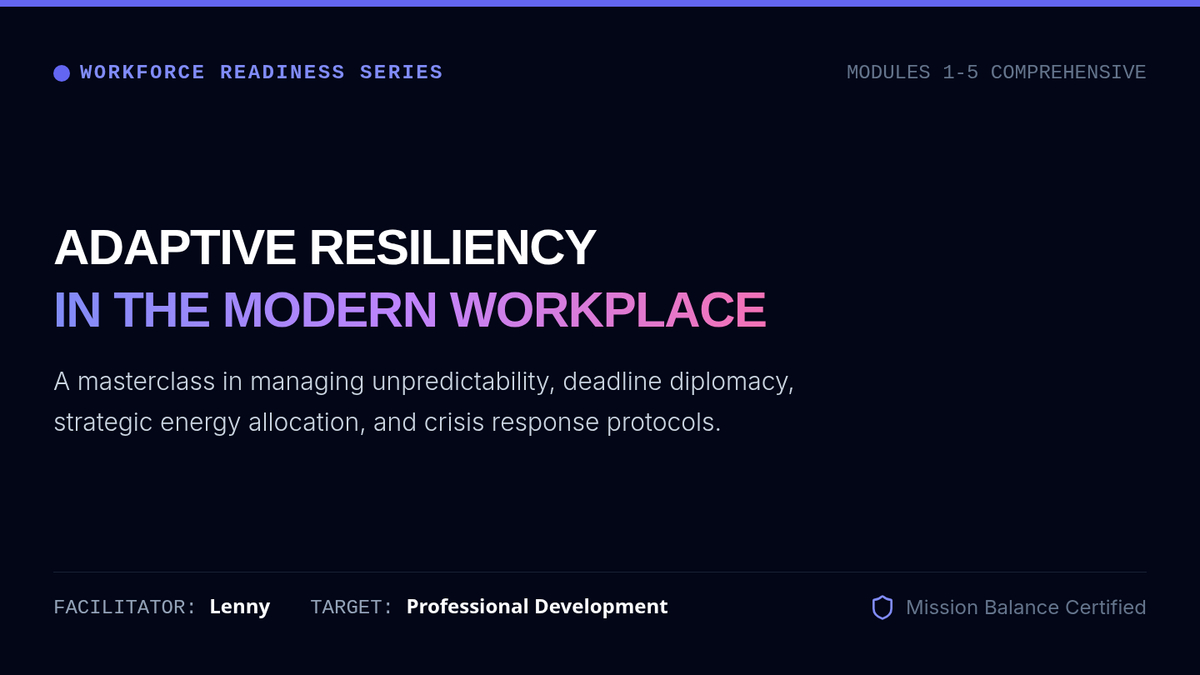
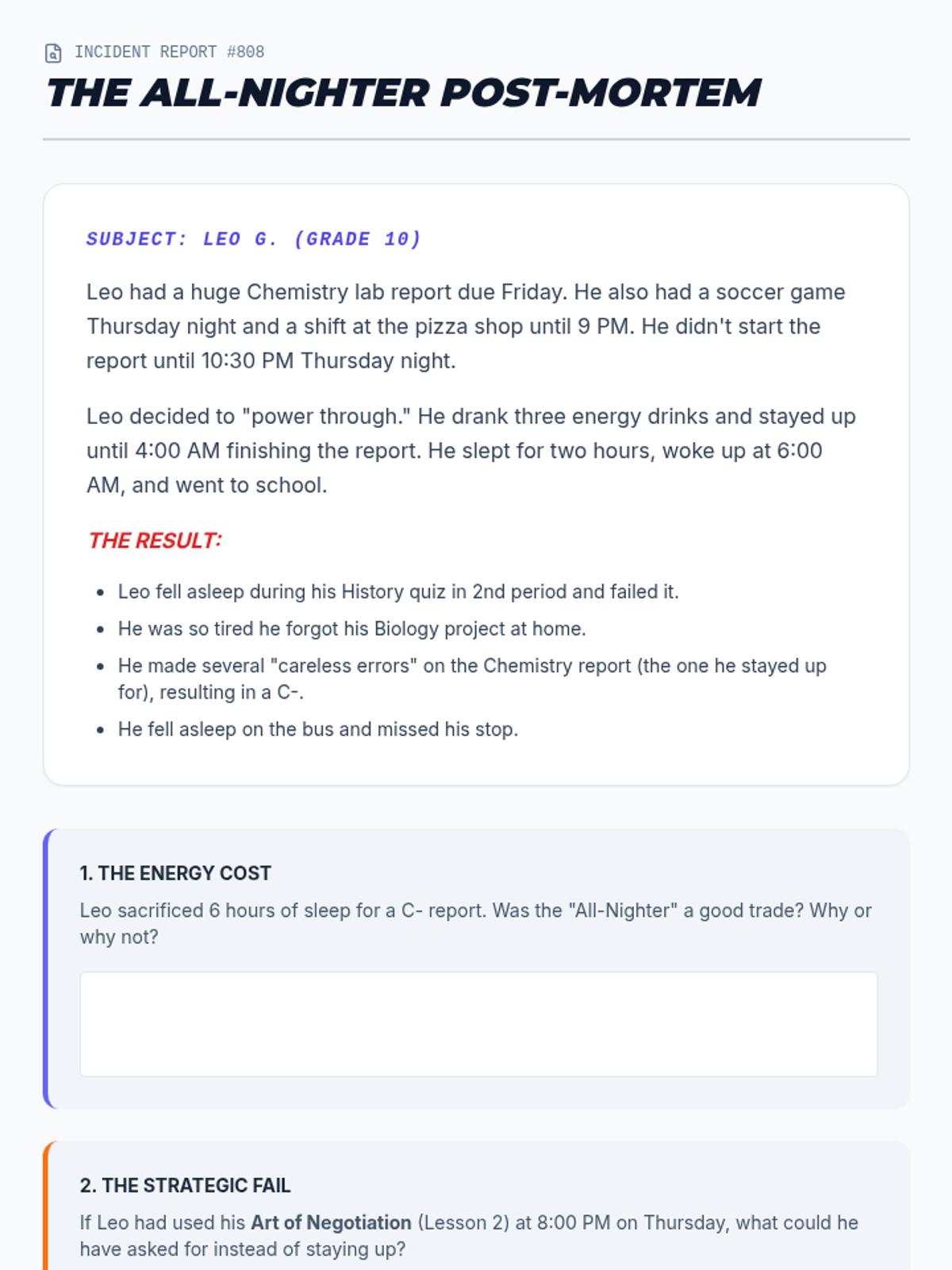
A final reflection on the simulation where students analyze their performance, identify breaking points, and create a long-term strategy for real-world balance.
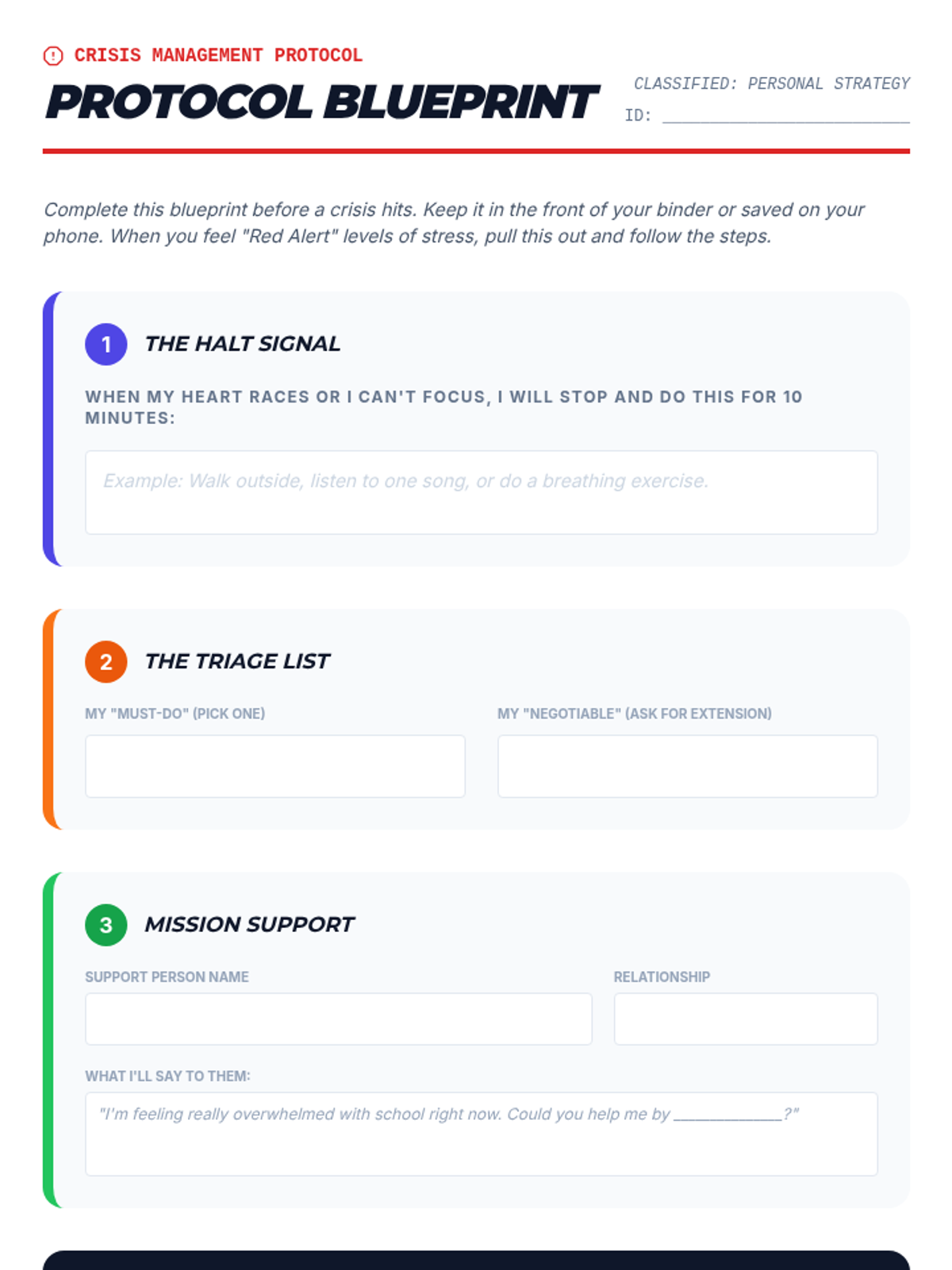
Students create a personal 'Emergency Protocol' for overwhelming situations, learning how to prioritize tasks to drop and identifying support systems for recovery.
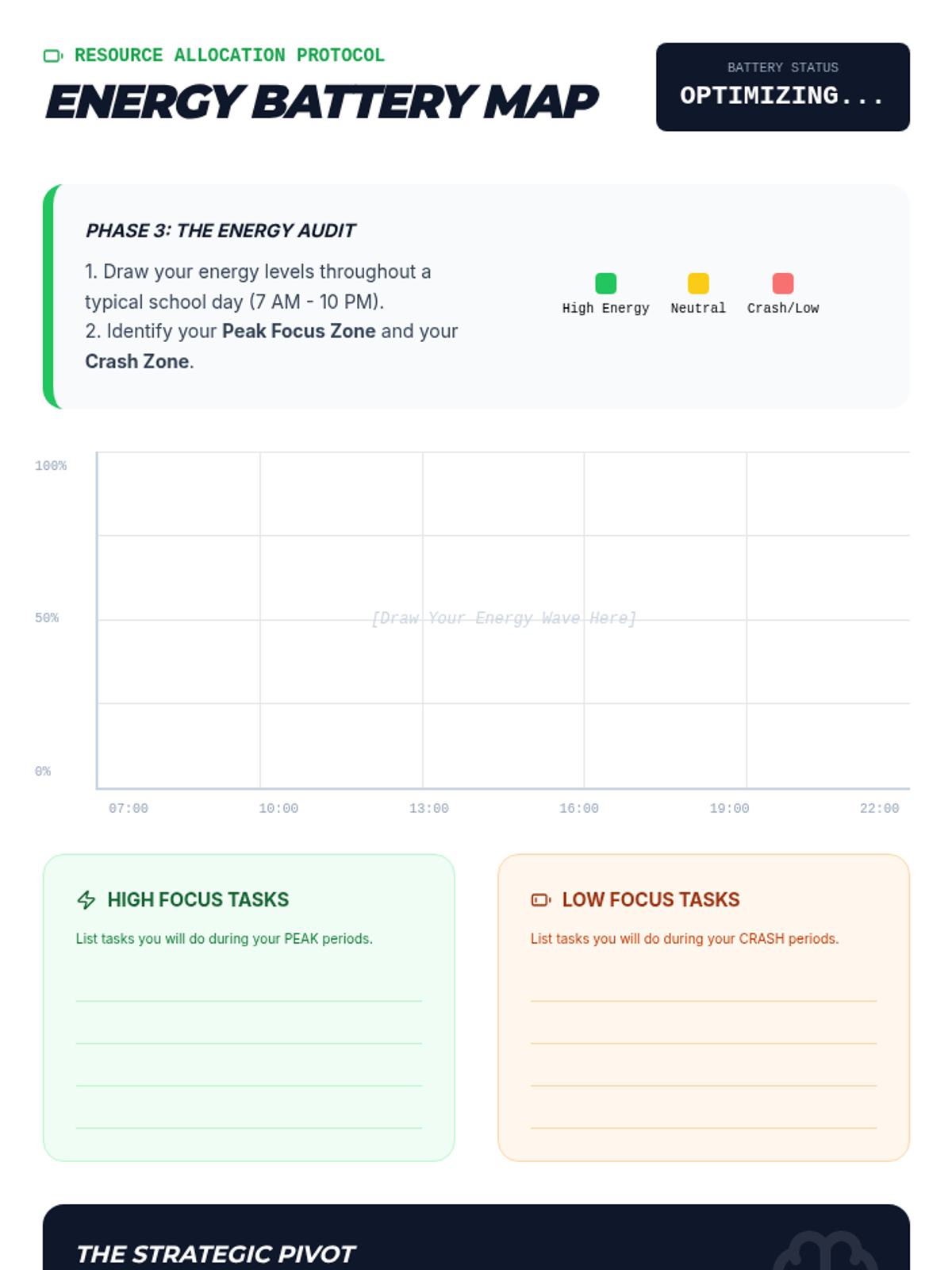
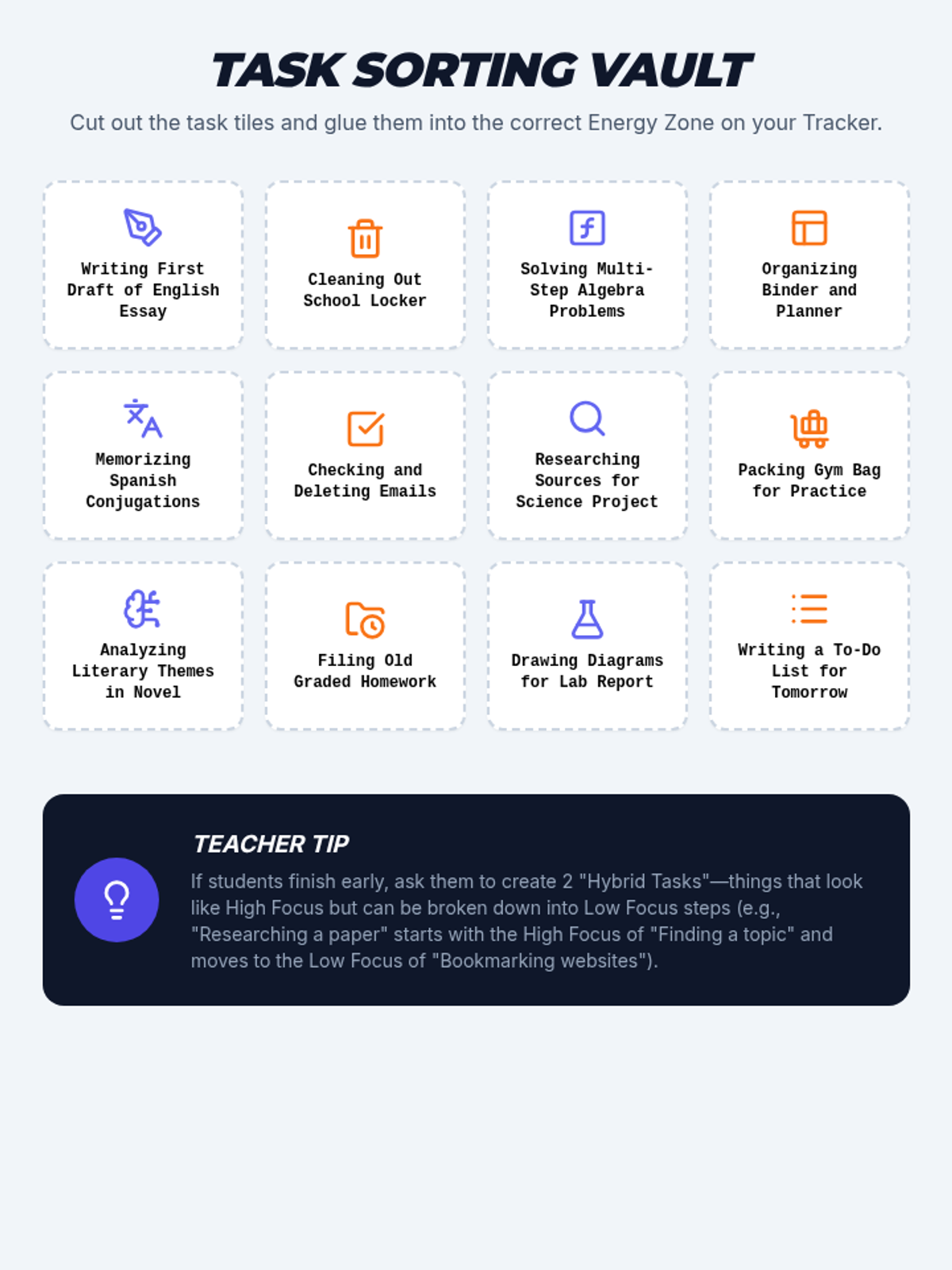
Students analyze their personal energy cycles to match high-demand tasks with high-energy periods, moving beyond simple time management to strategic resource allocation.
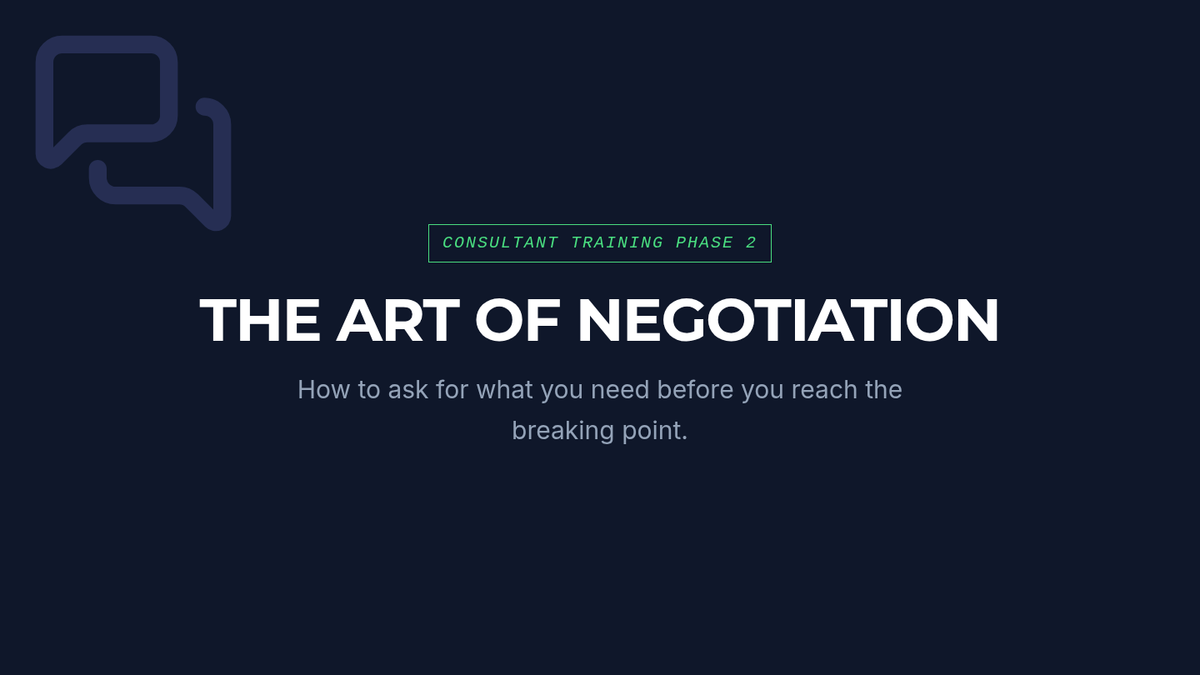
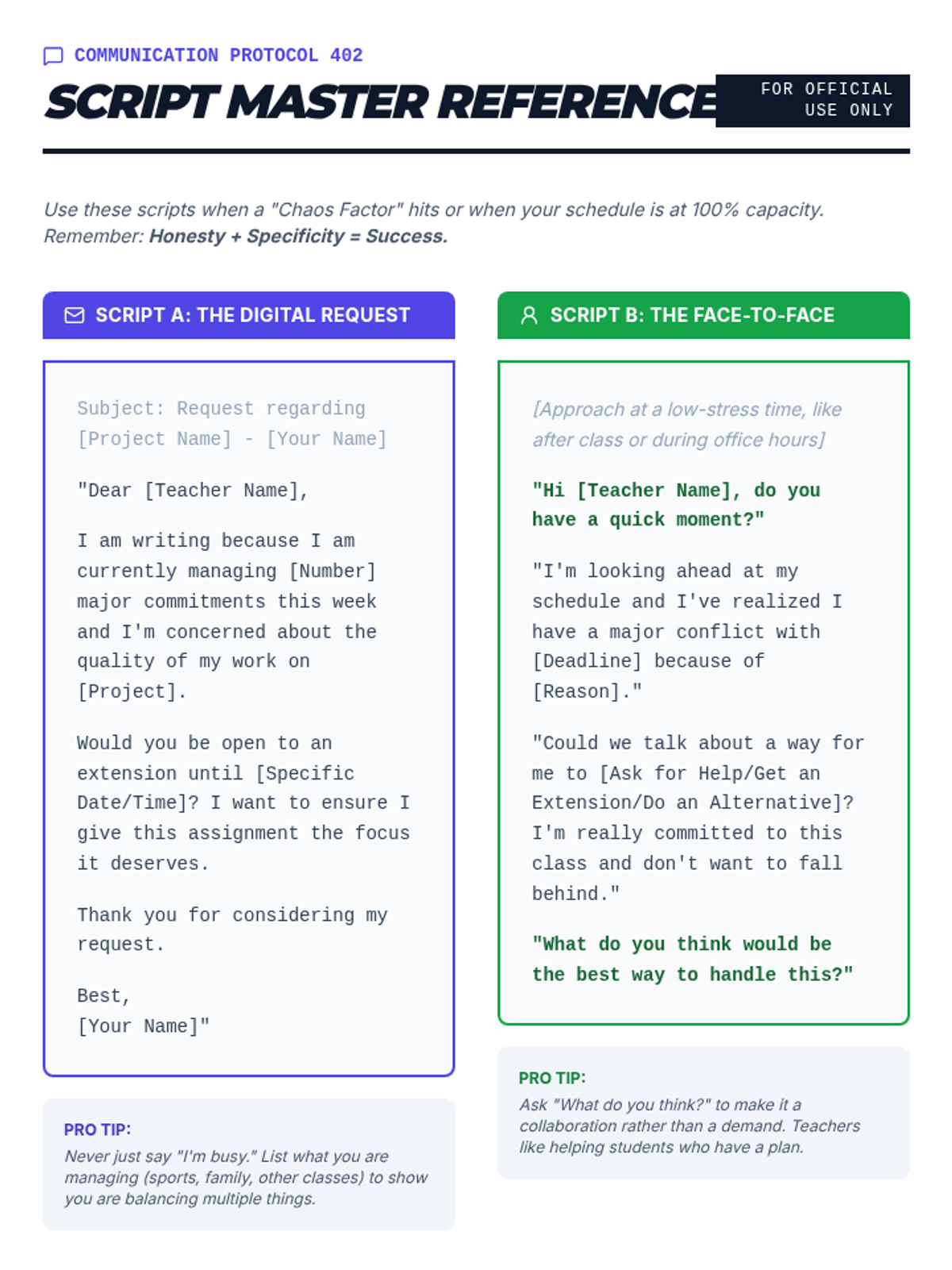
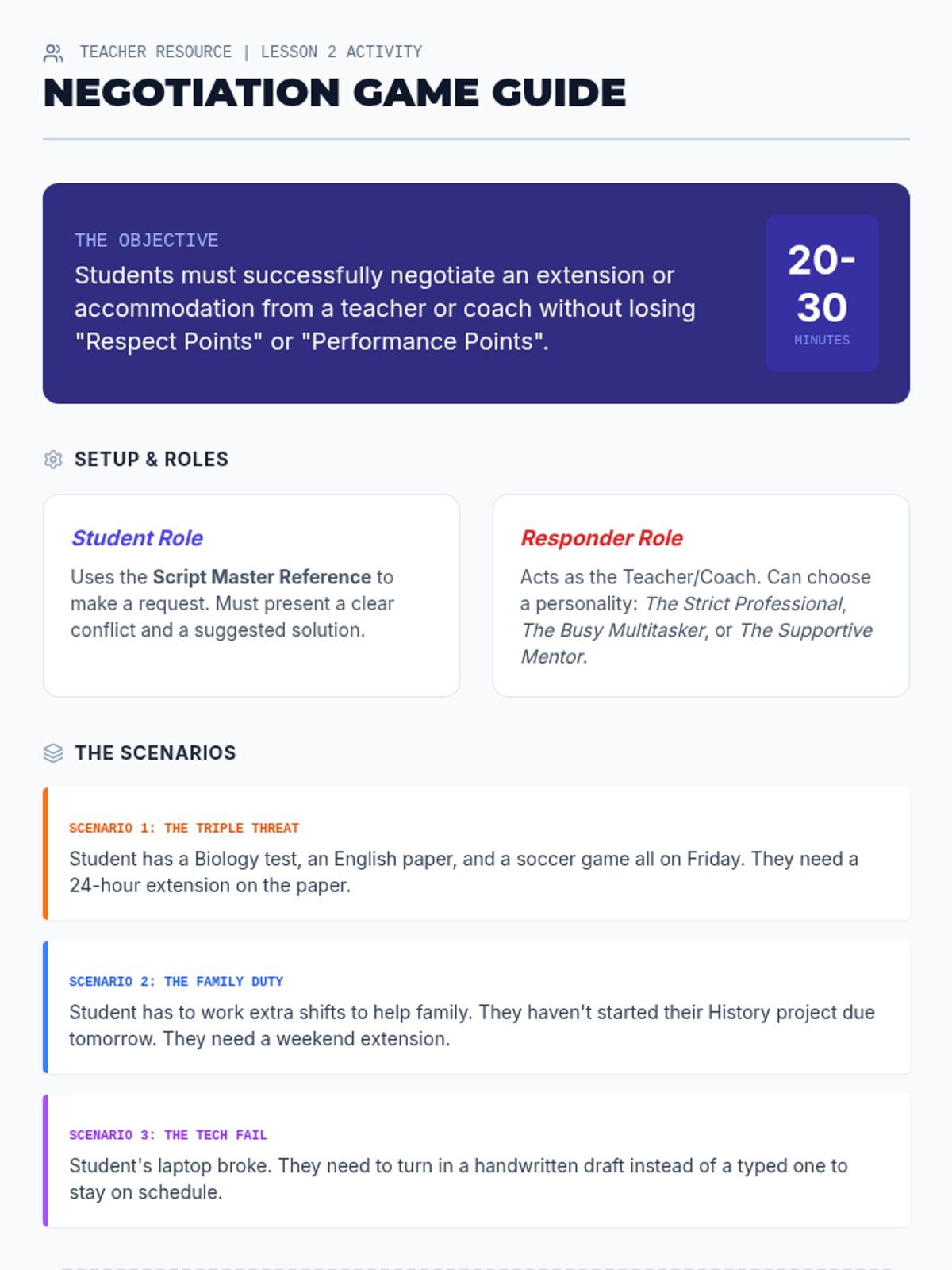
Focuses on professional communication and the distinction between hard and soft deadlines. Students practice scripts to negotiate extensions and help before a crisis occurs.
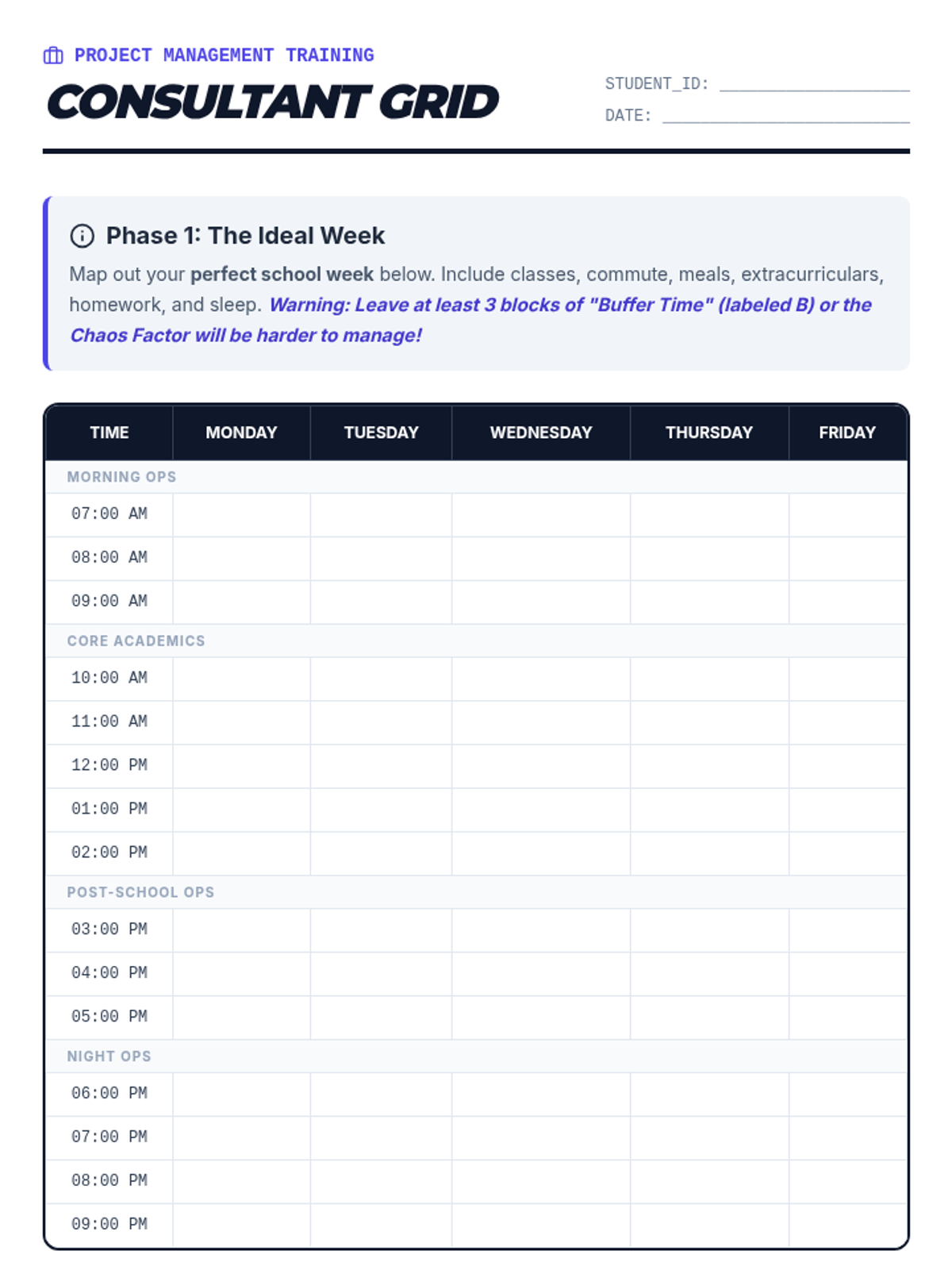
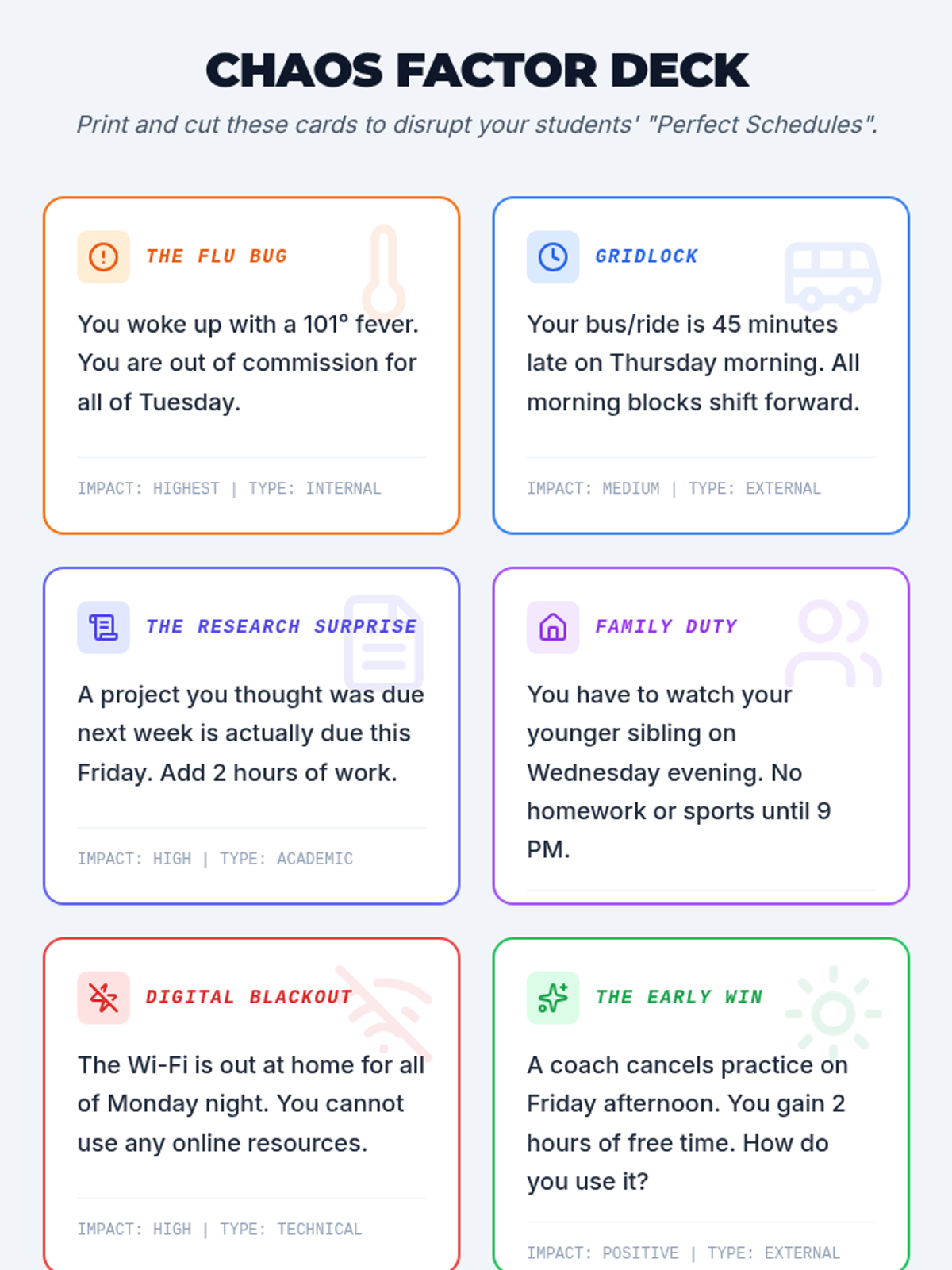
Students design an ideal weekly schedule and are immediately introduced to the 'Chaos Factor'—unpredictable life events that disrupt plans. They identify the need for buffer time and flexible scheduling.
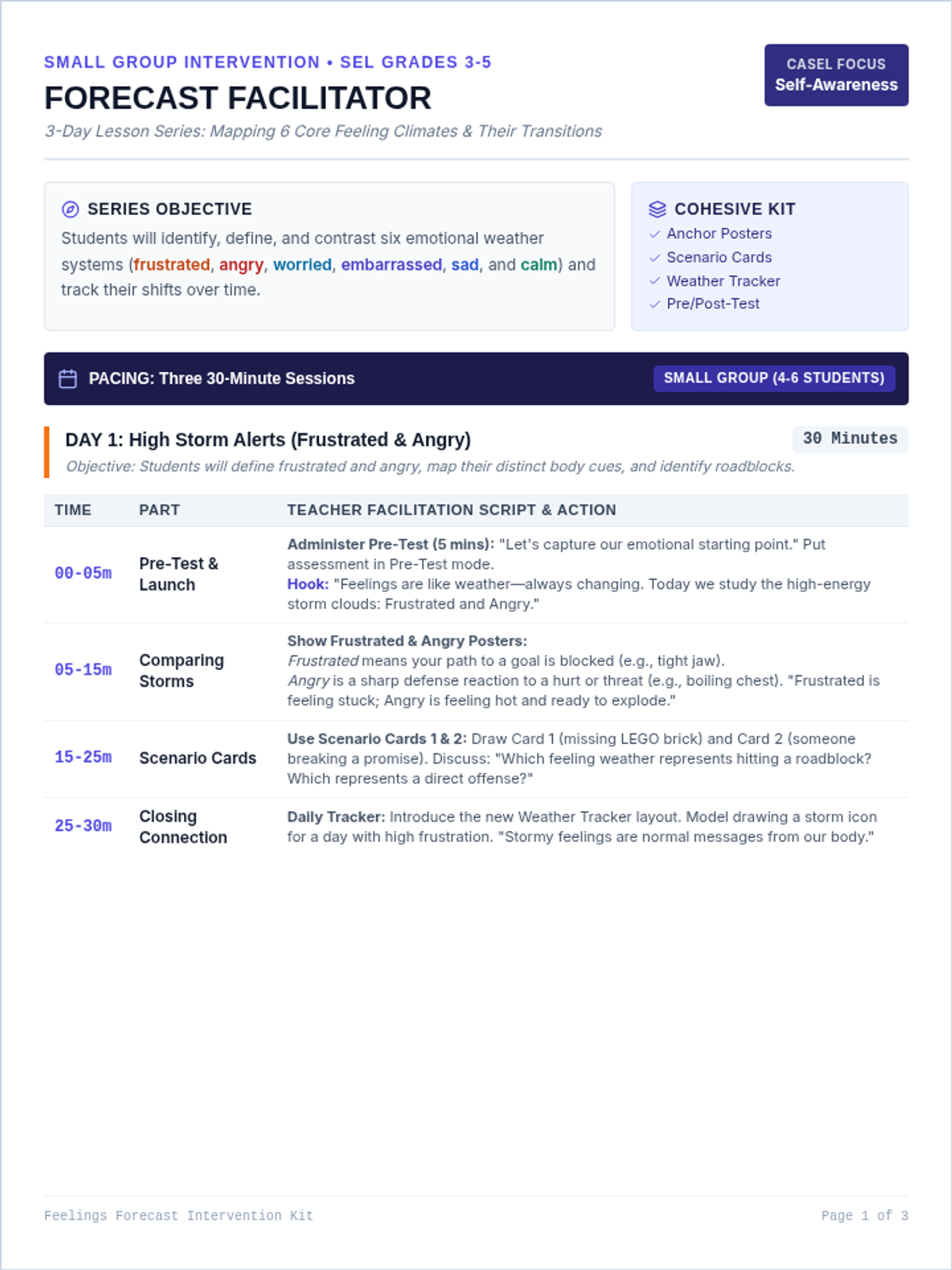
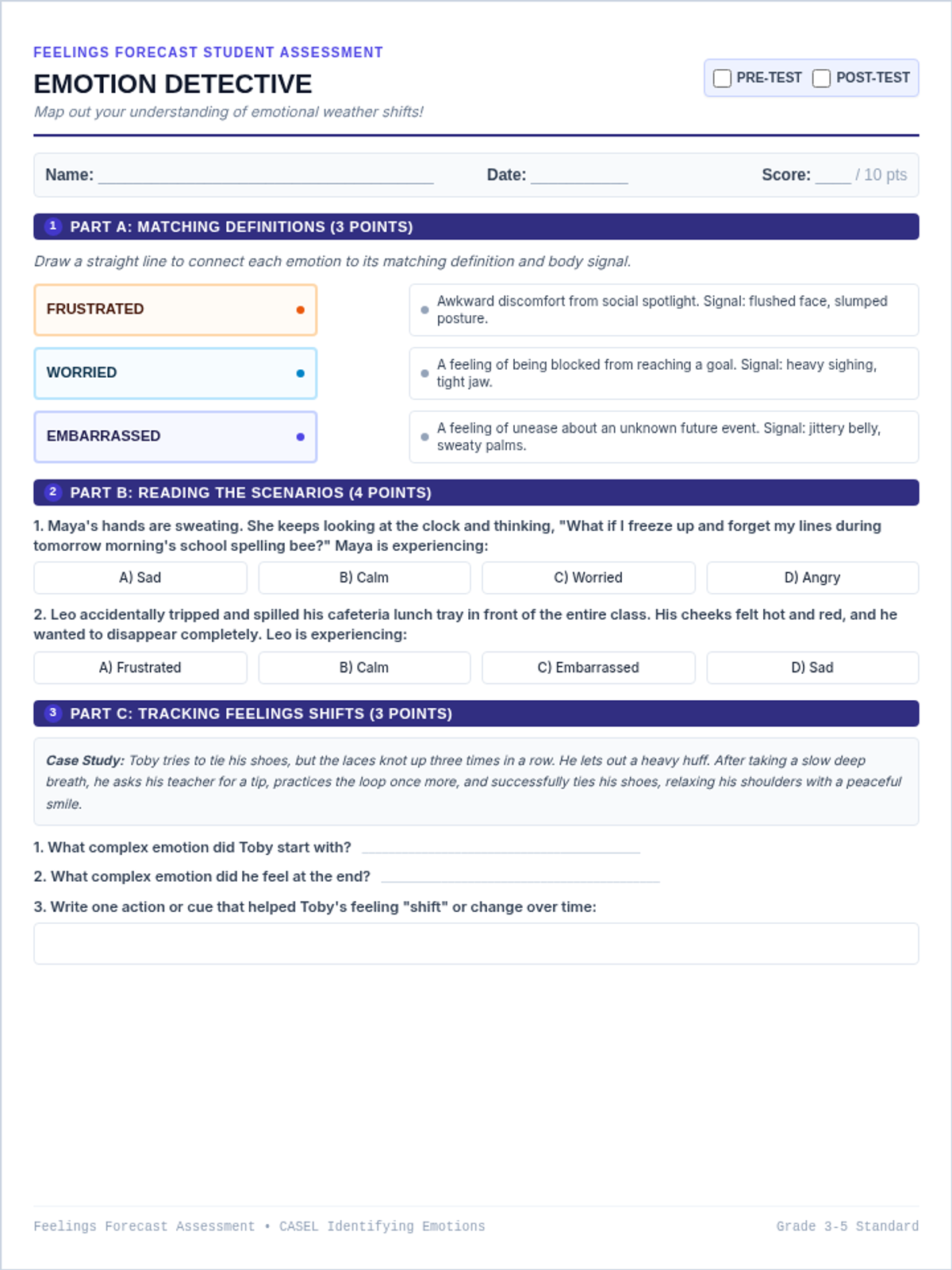
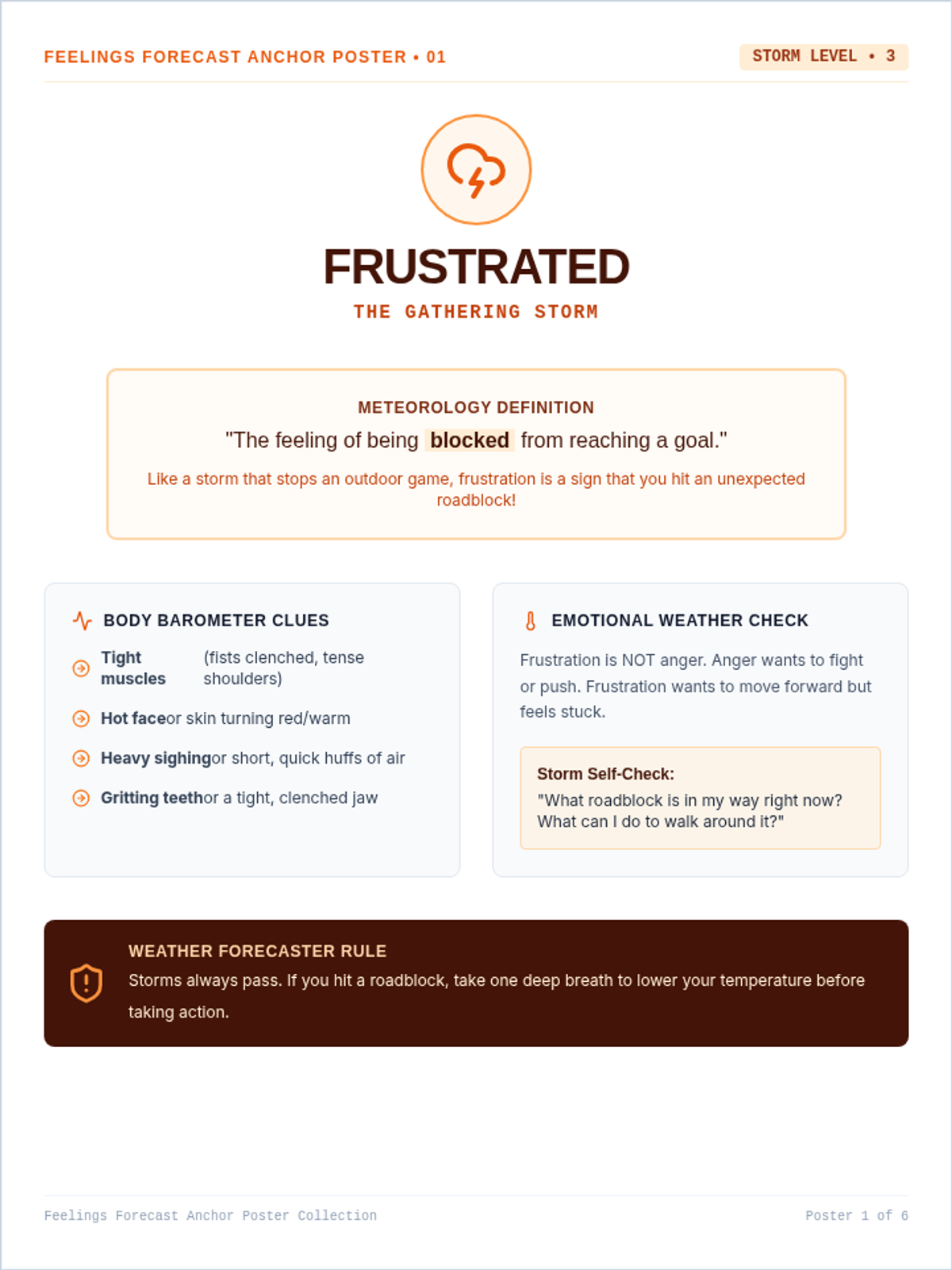
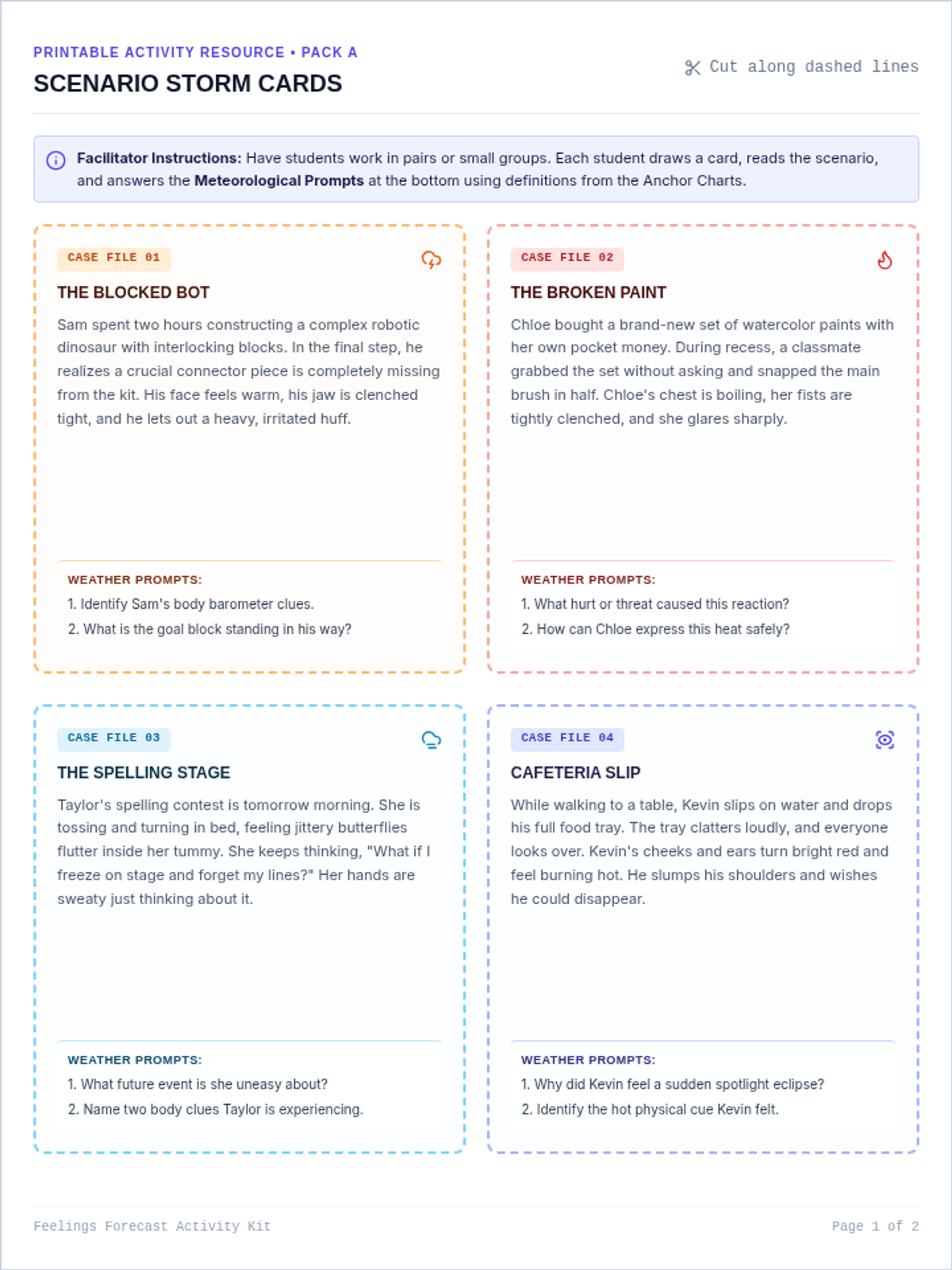
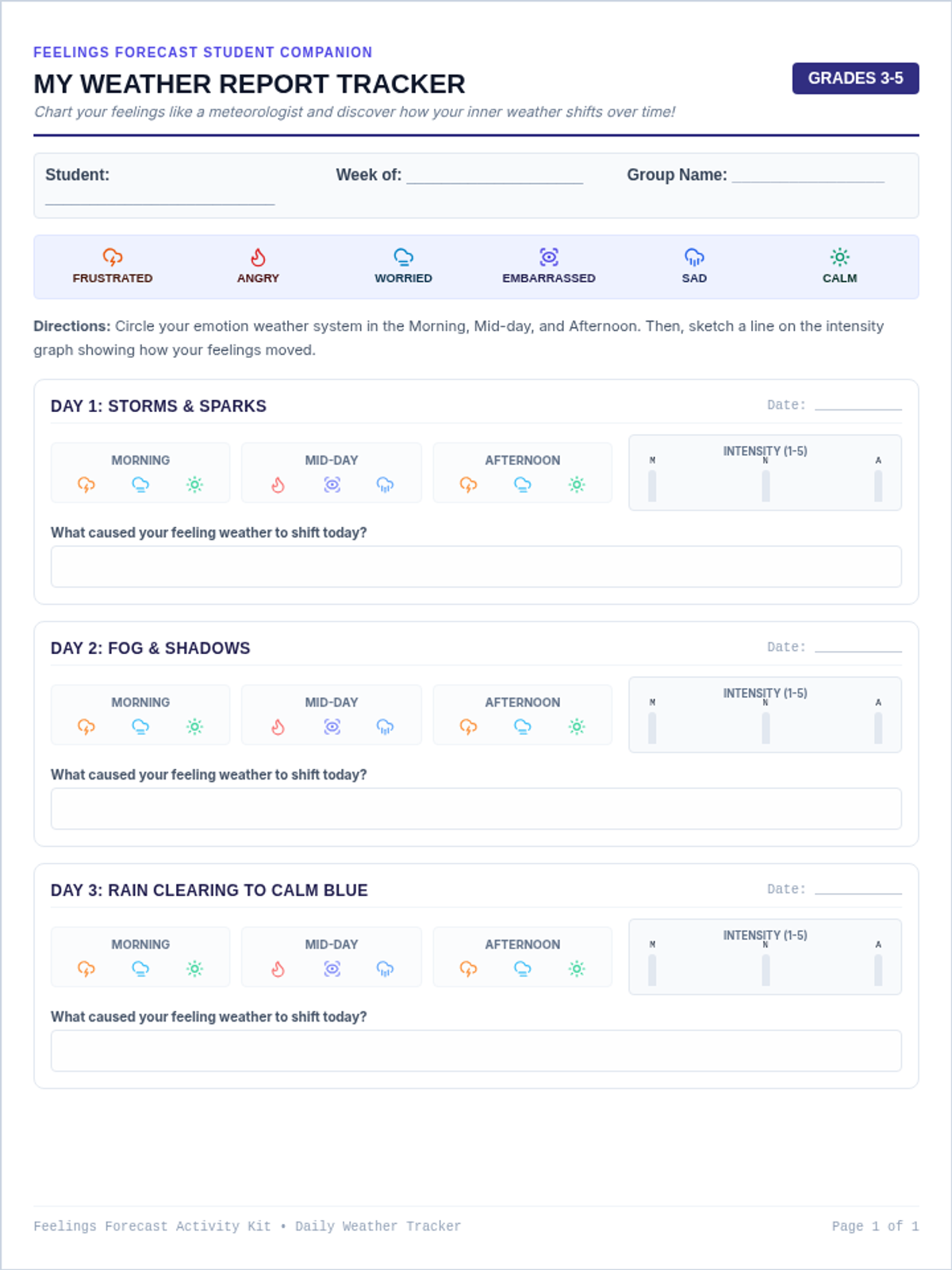
A 3-5 day small group social-emotional learning lesson series designed for upper elementary students (grades 3-5) to identify complex emotions (frustrated, angry, worried, embarrassed, sad, and calm) and explore how feelings change over time, using a meteorological weather-tracking theme.
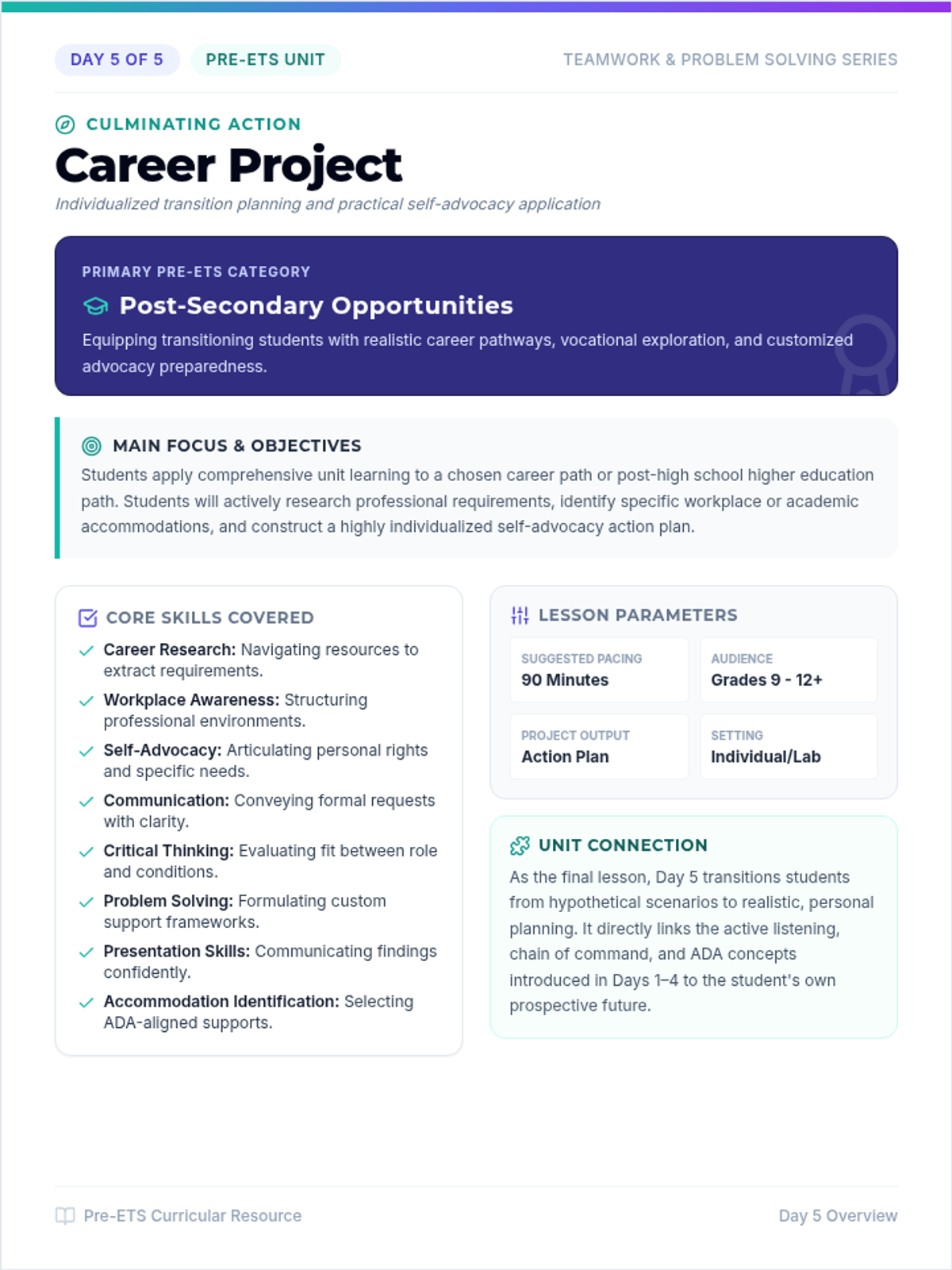
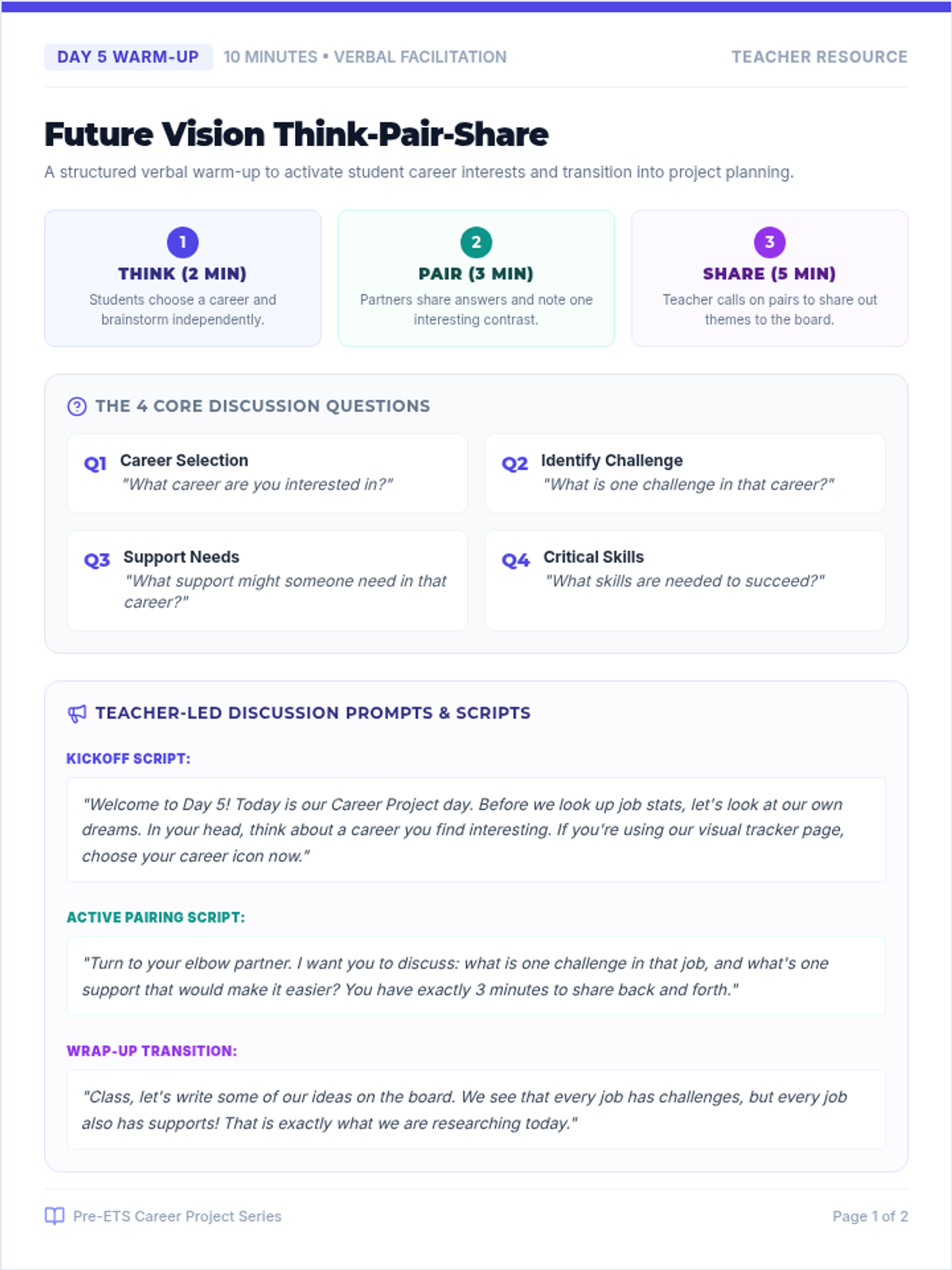
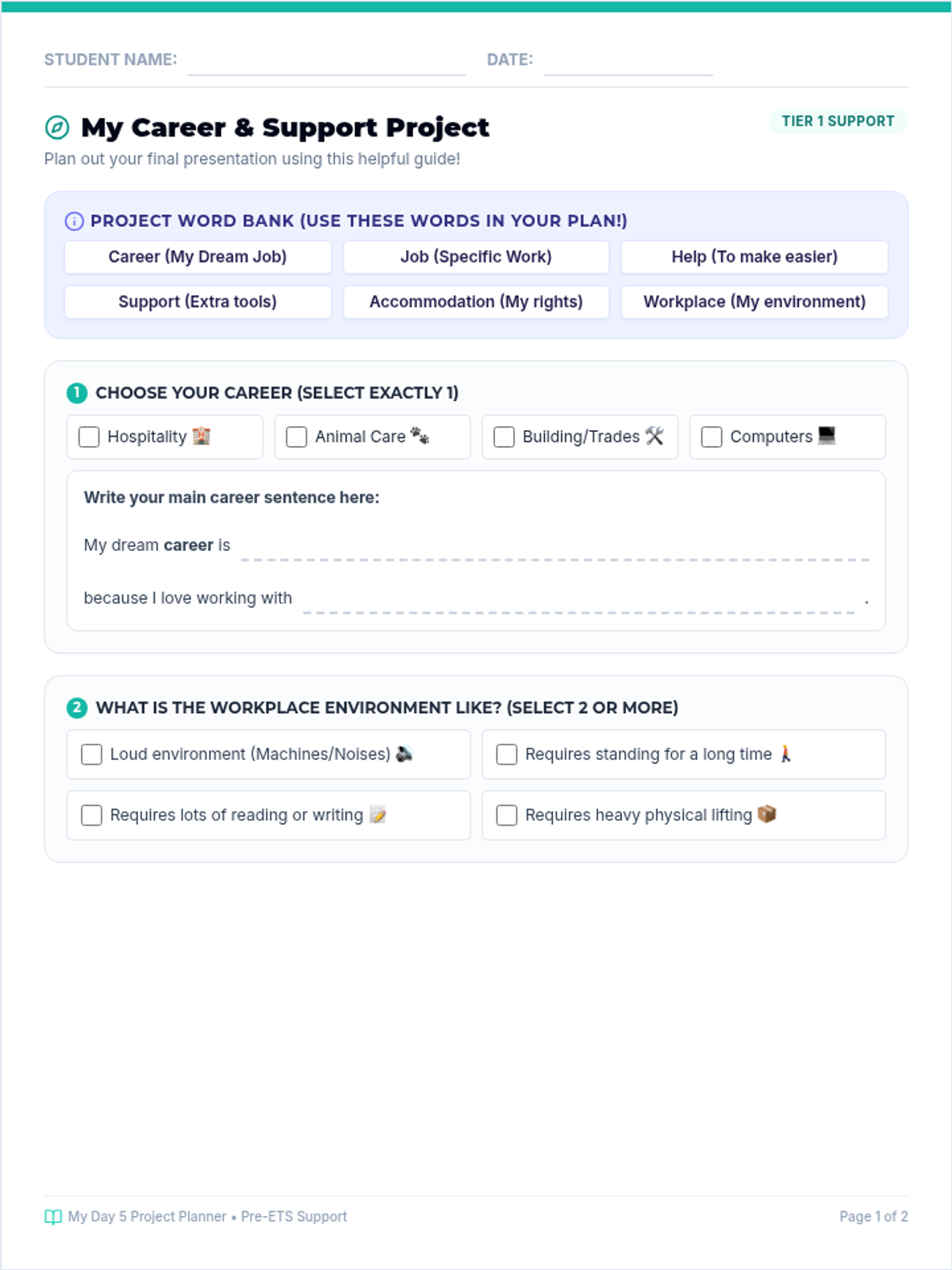
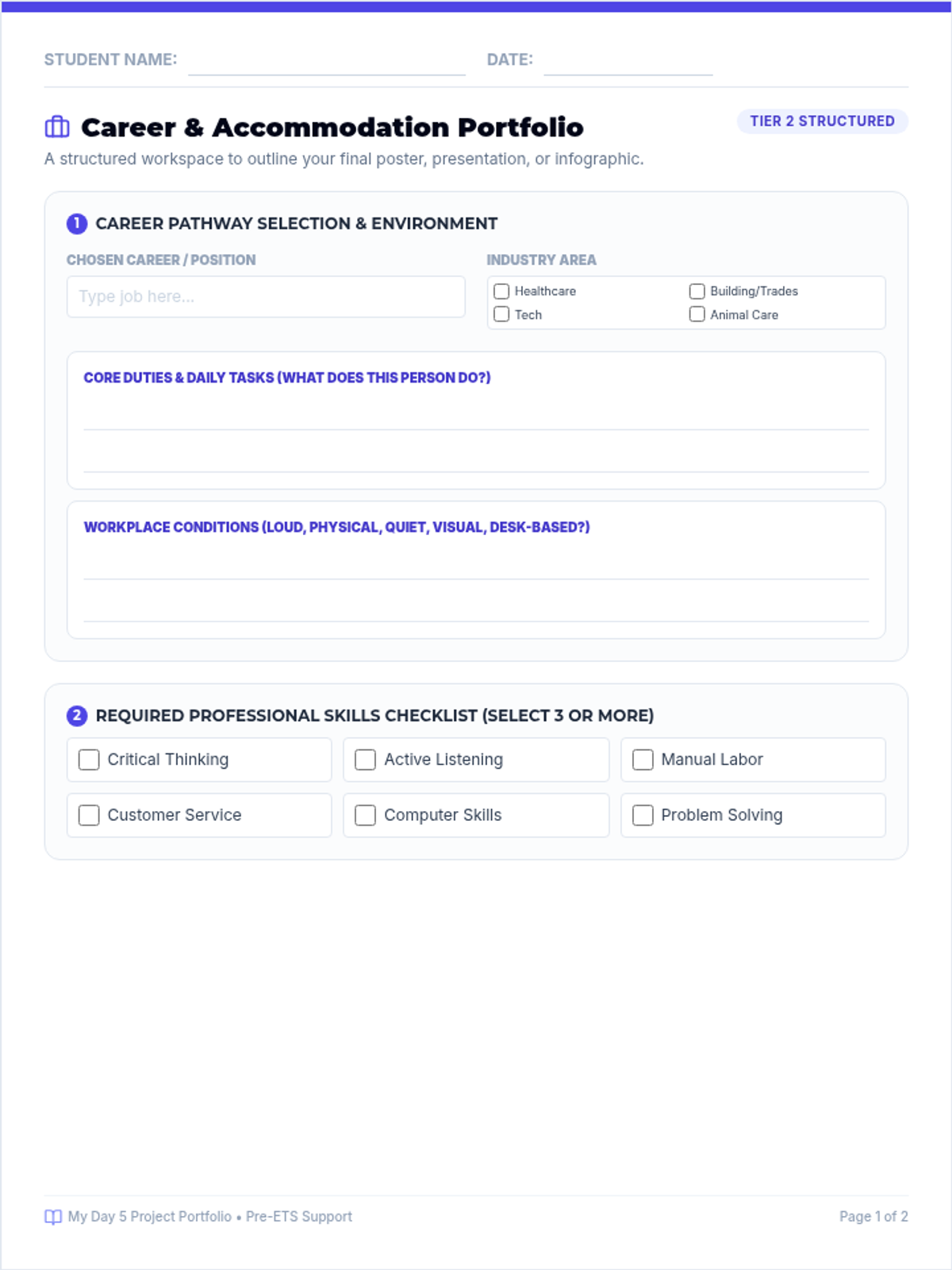
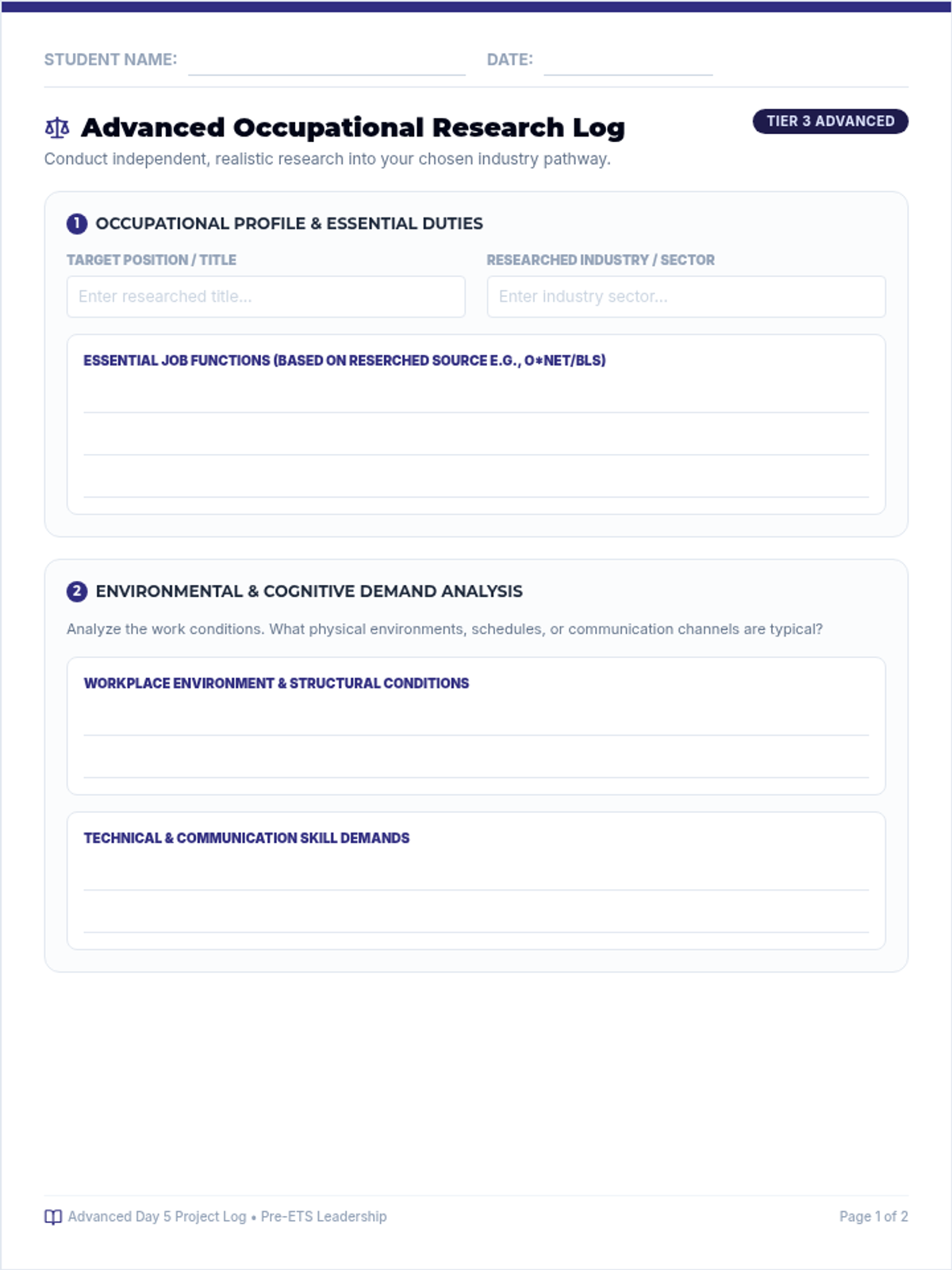
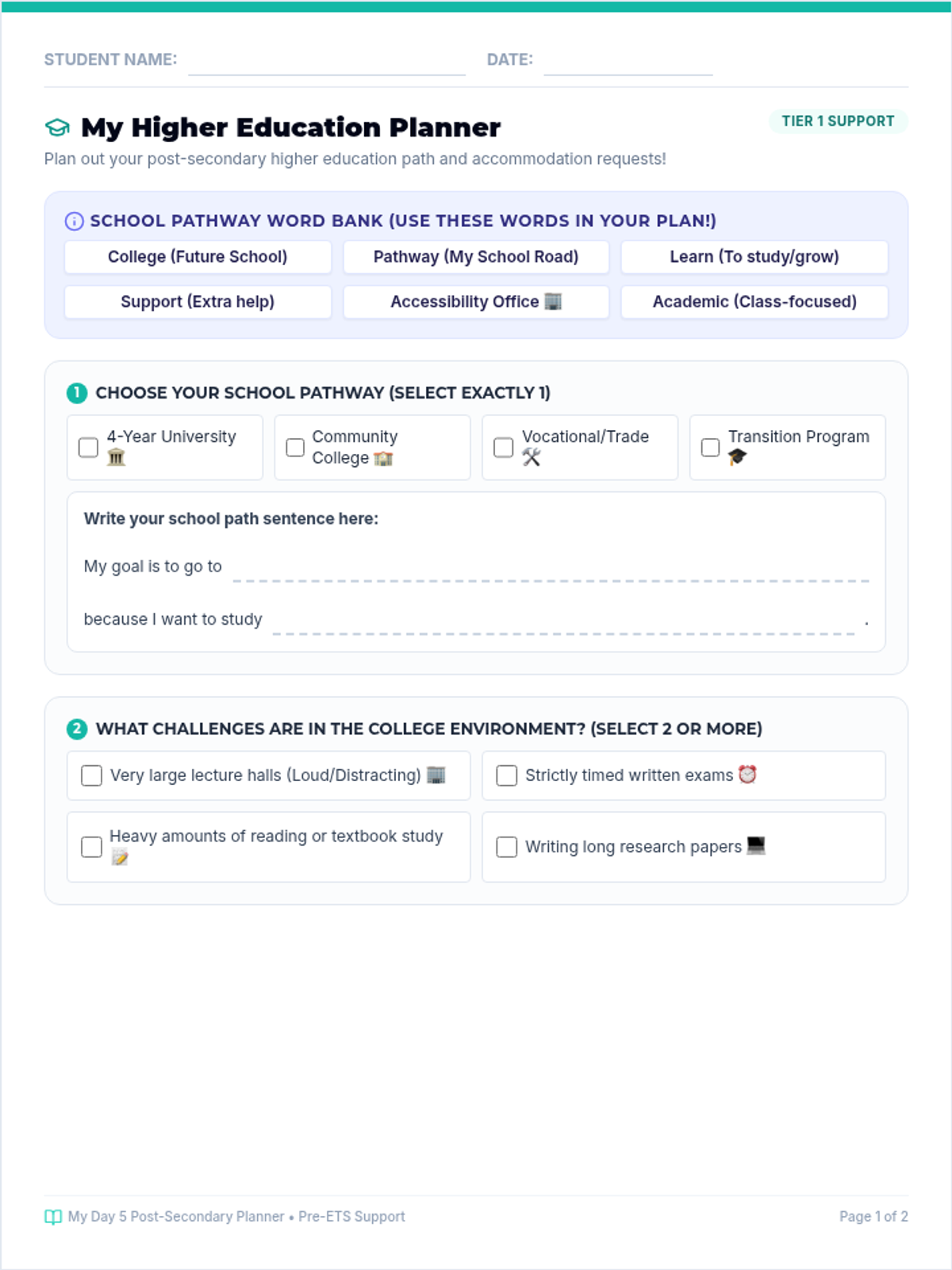
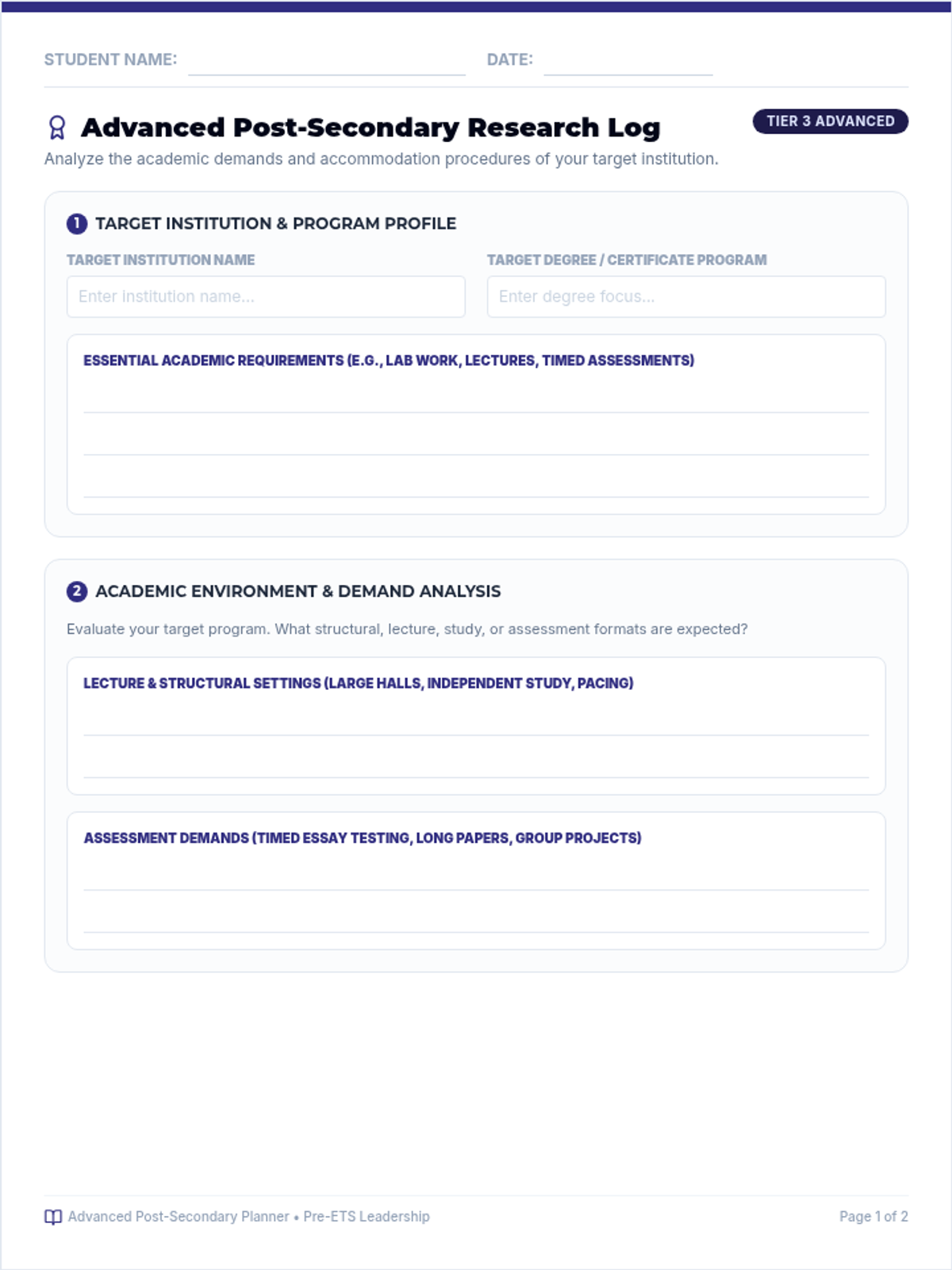
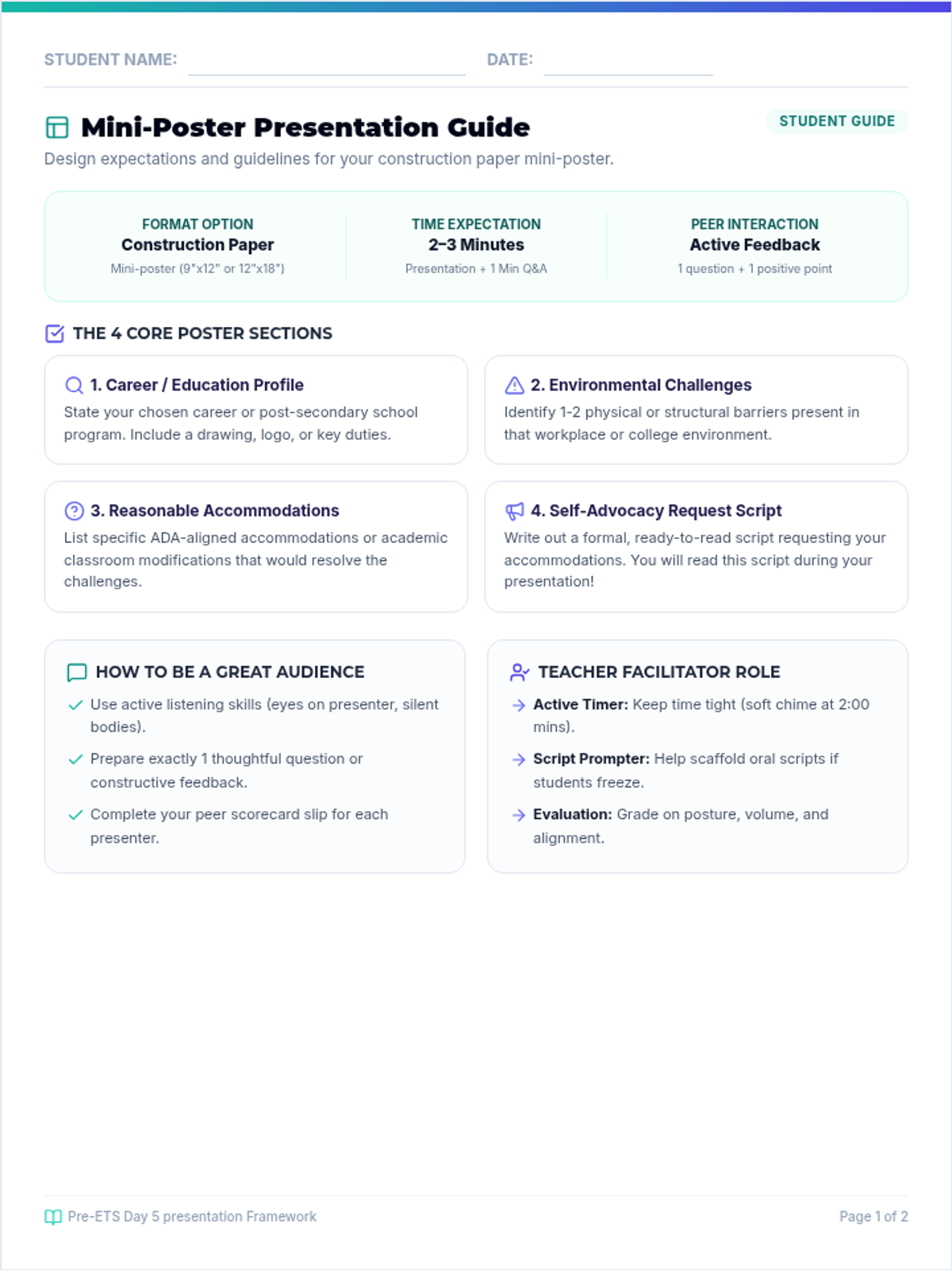
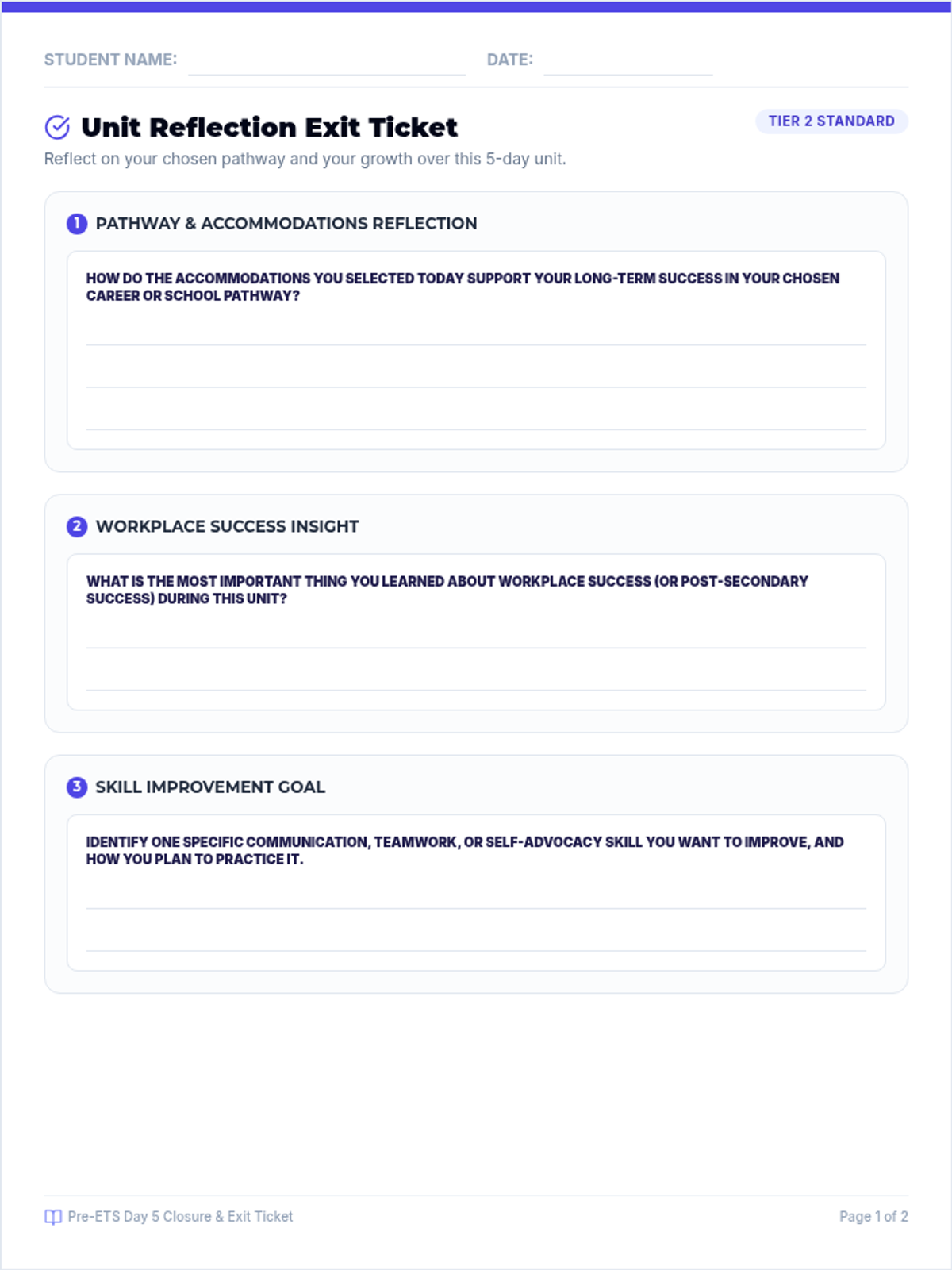
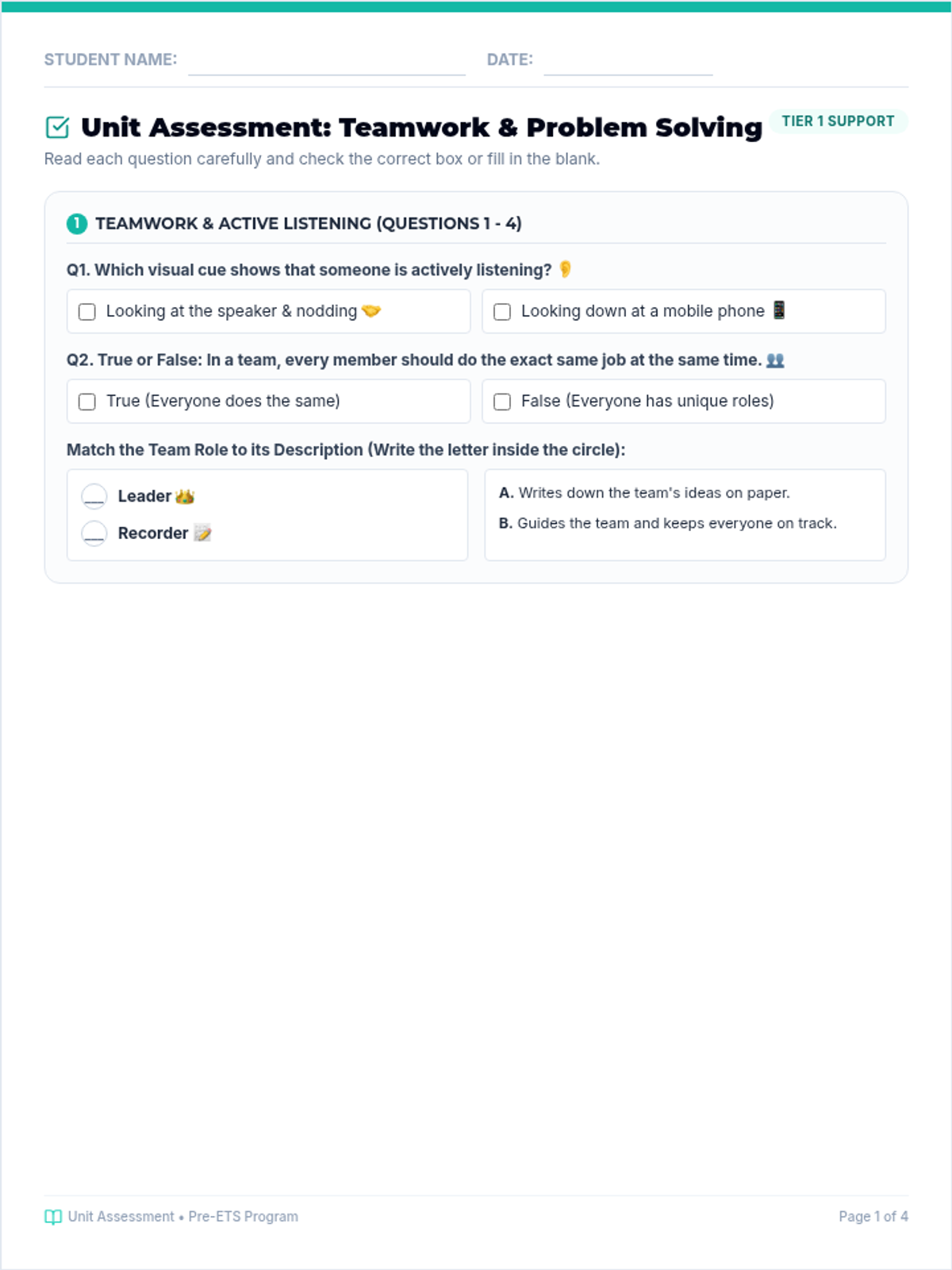
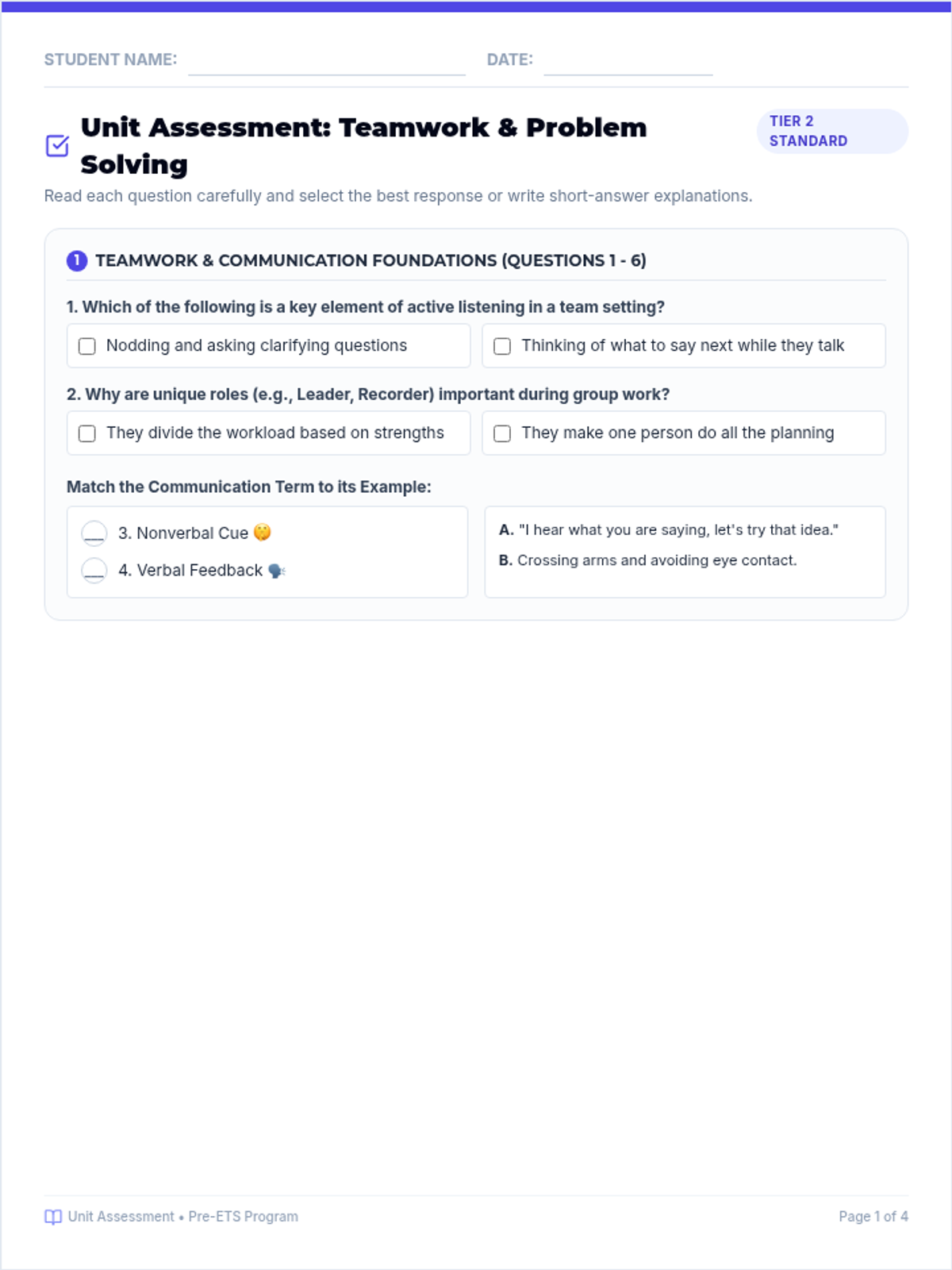
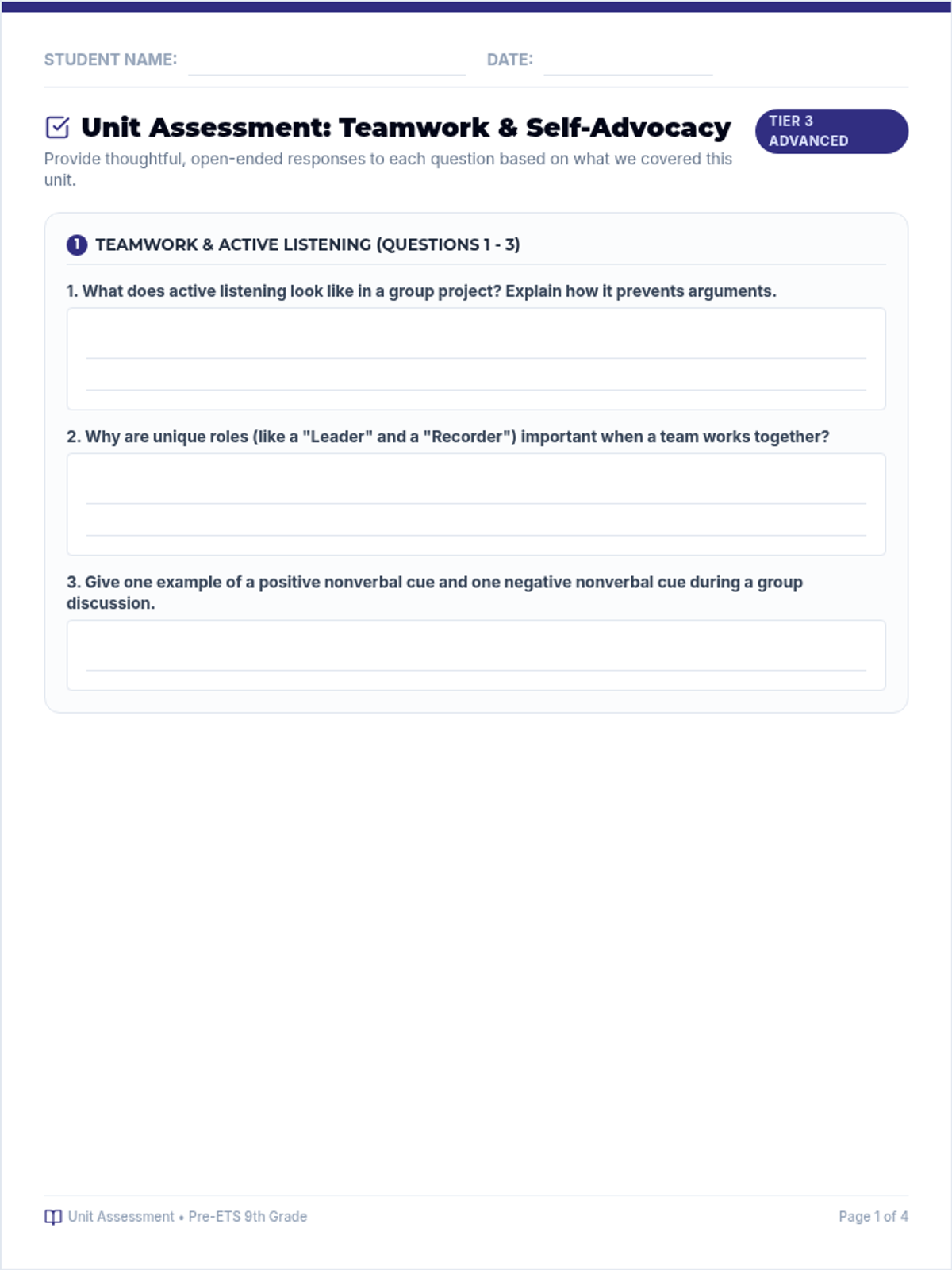
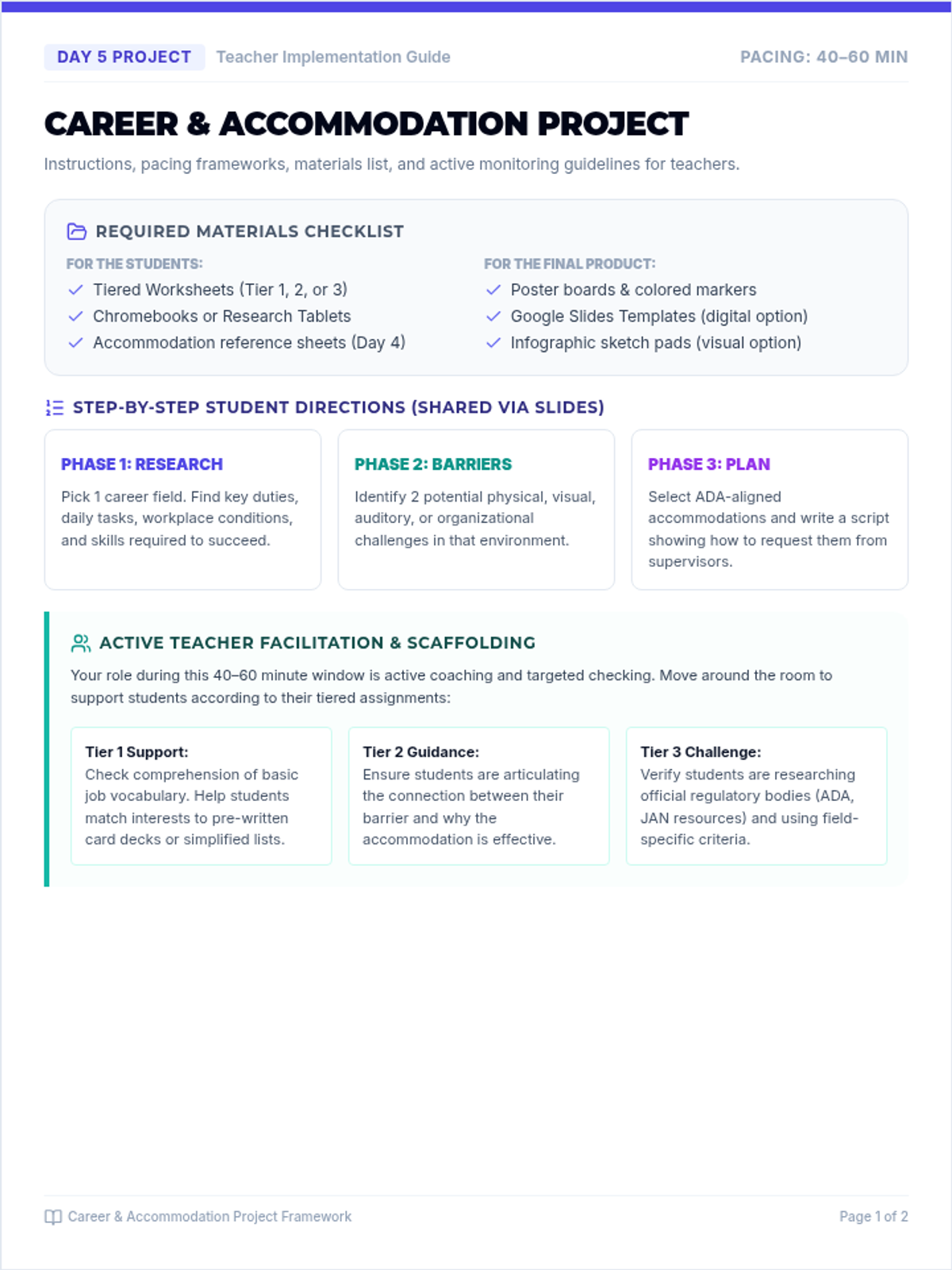
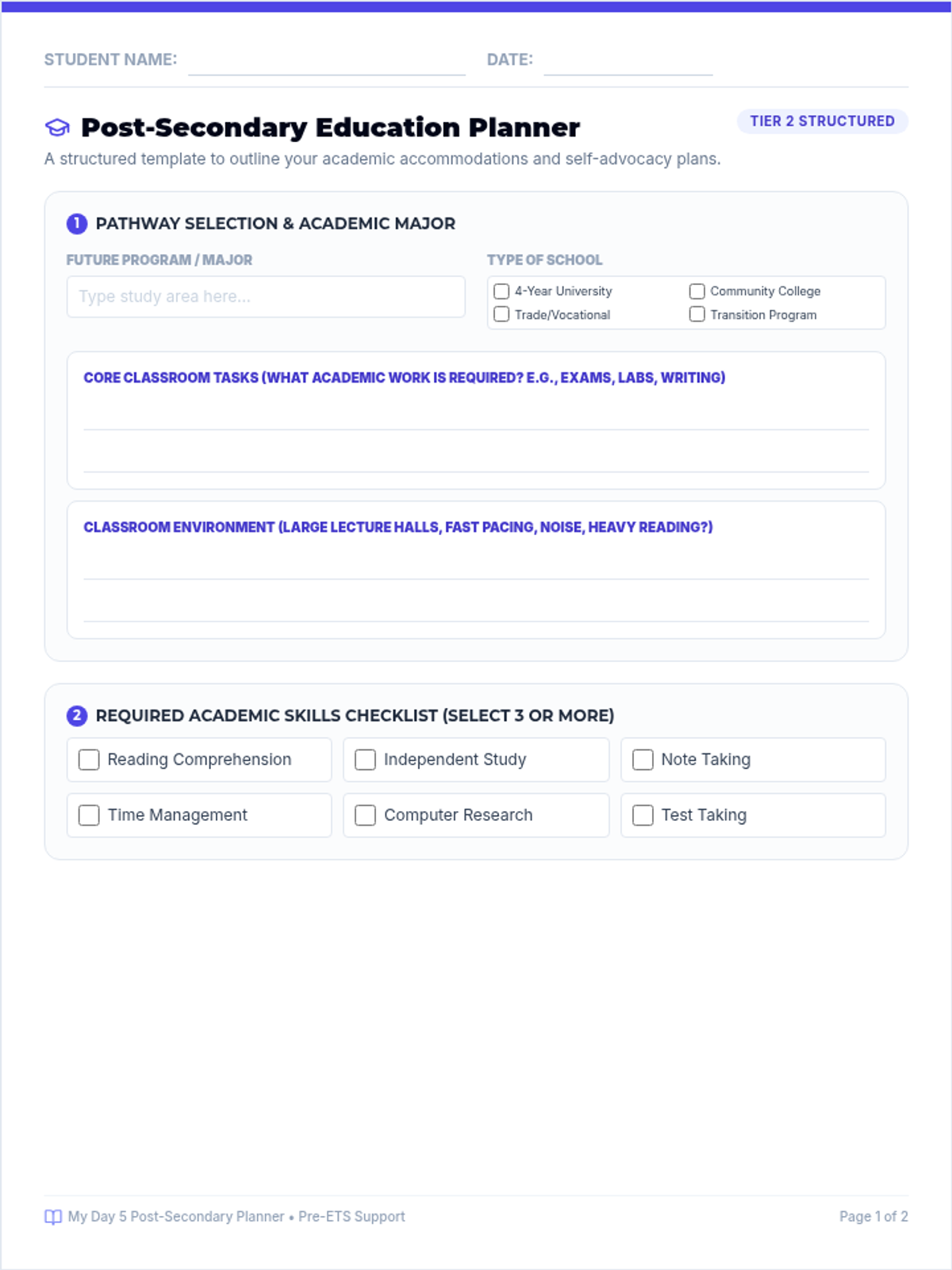
Students apply unit learning to a chosen career or post-secondary education path, identifying workplace accommodations and constructing a self-advocacy plan.