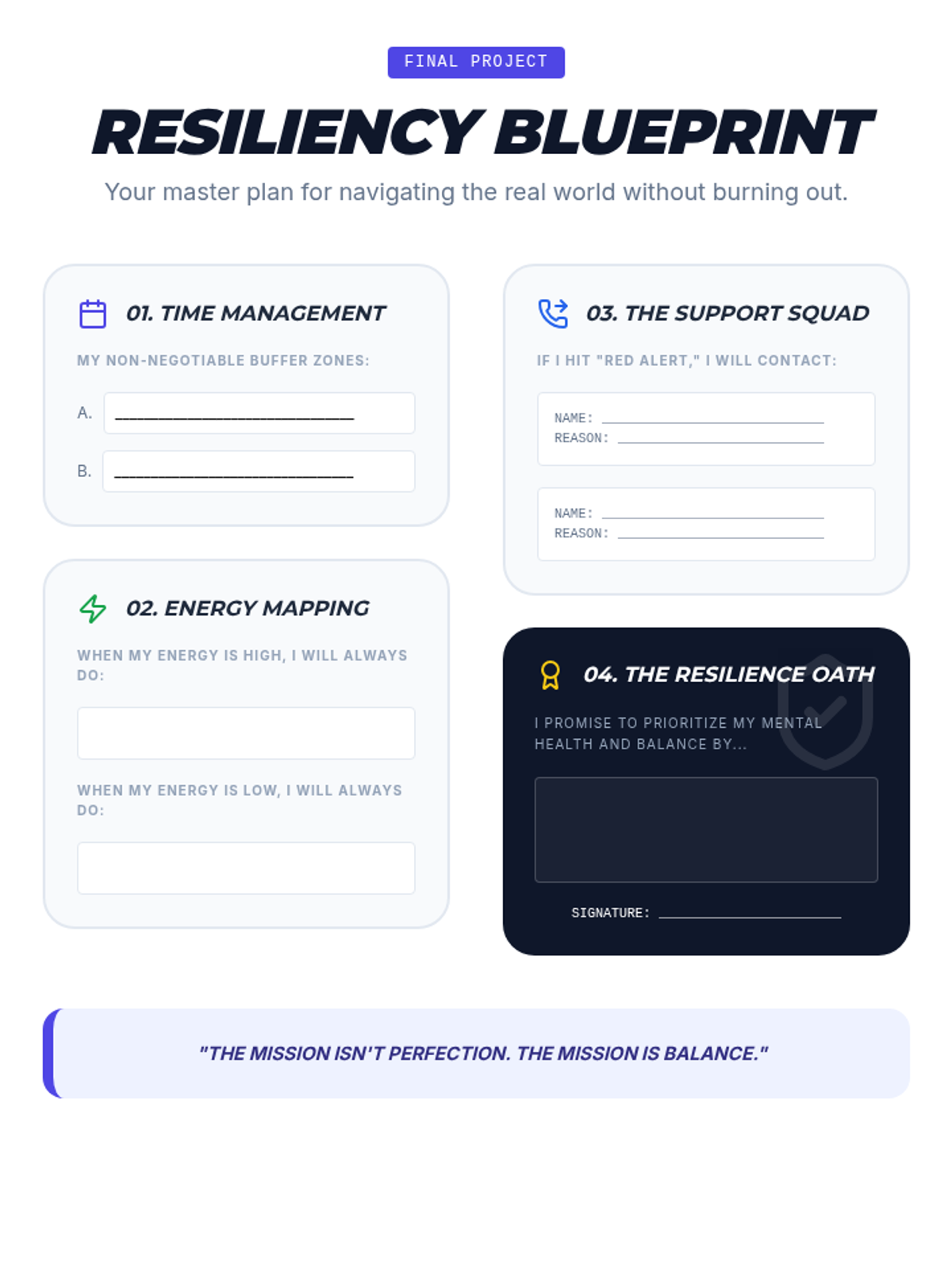
Students create a personal 'Emergency Protocol' for overwhelming situations, learning how to prioritize tasks to drop and identifying support systems for recovery.
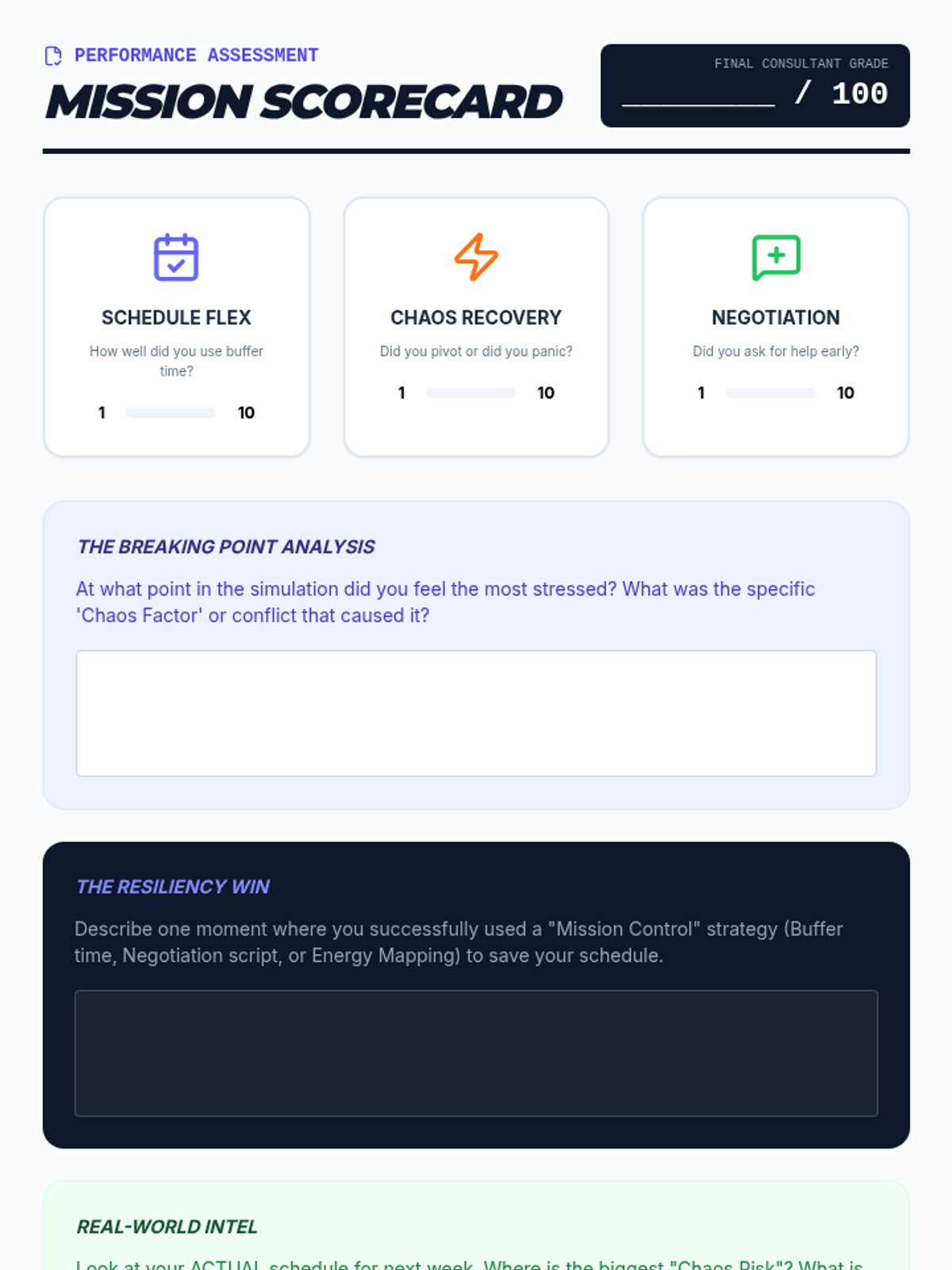
A final reflection on the simulation where students analyze their performance, identify breaking points, and create a long-term strategy for real-world balance.
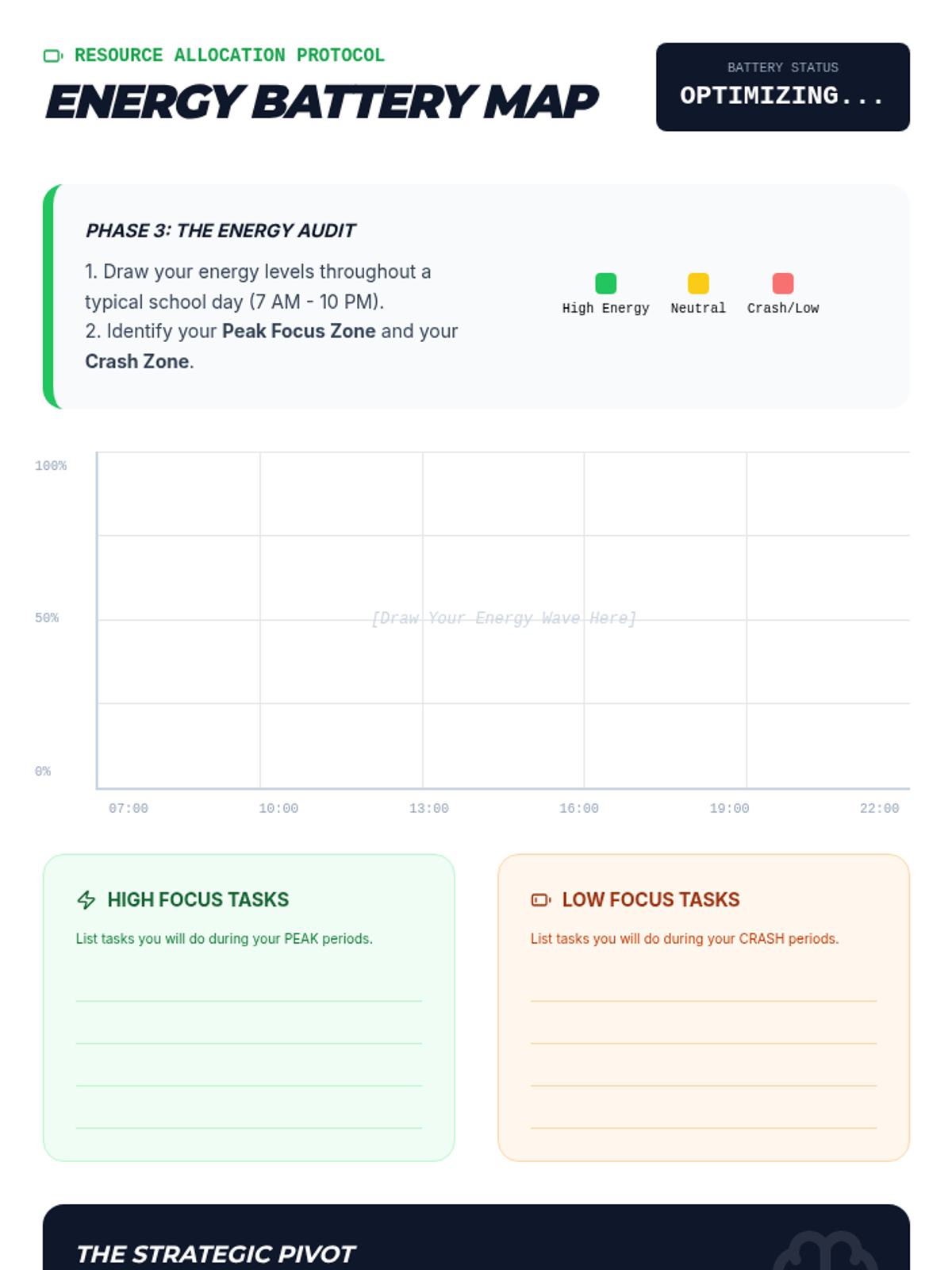
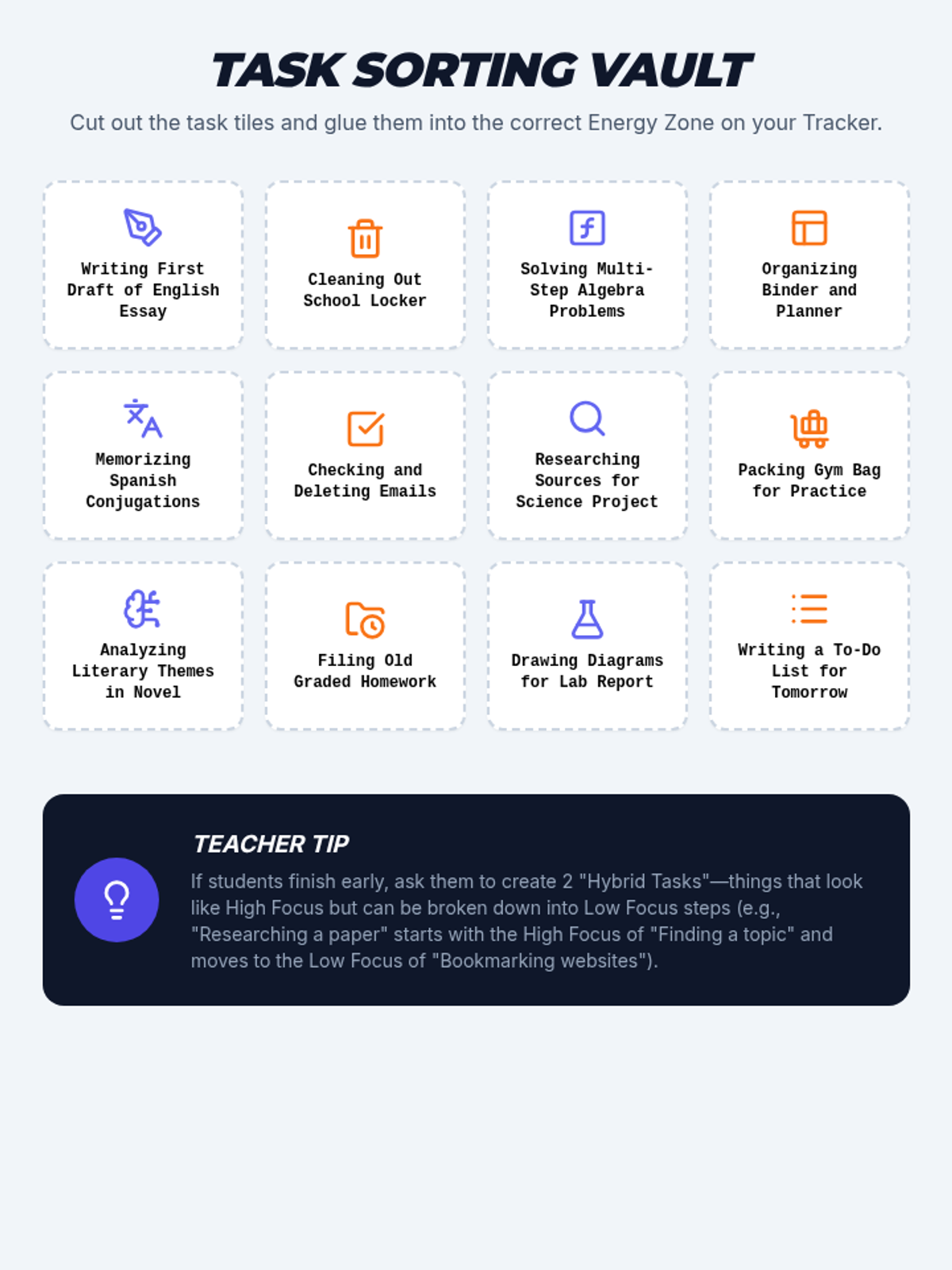
Students analyze their personal energy cycles to match high-demand tasks with high-energy periods, moving beyond simple time management to strategic resource allocation.
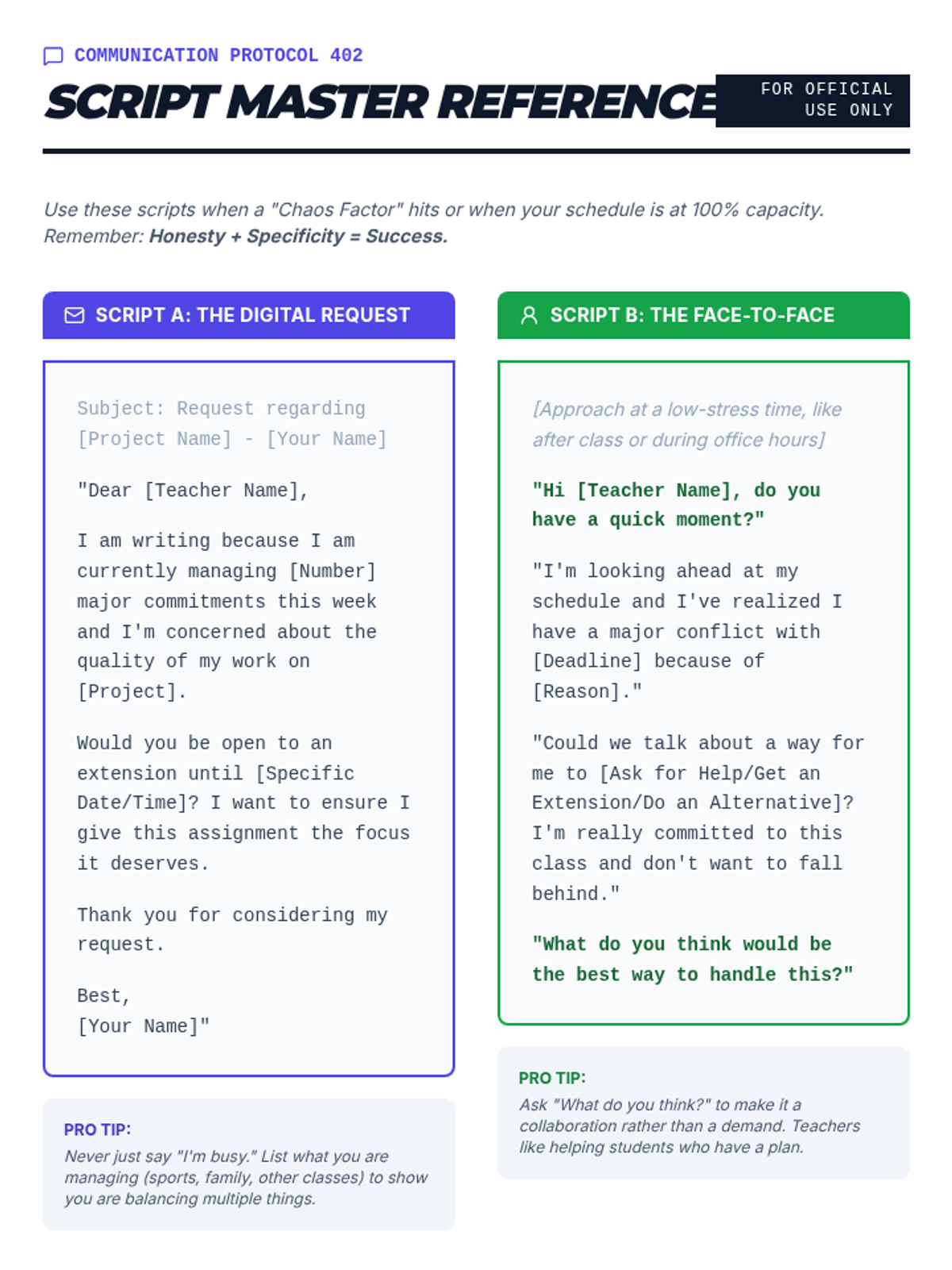
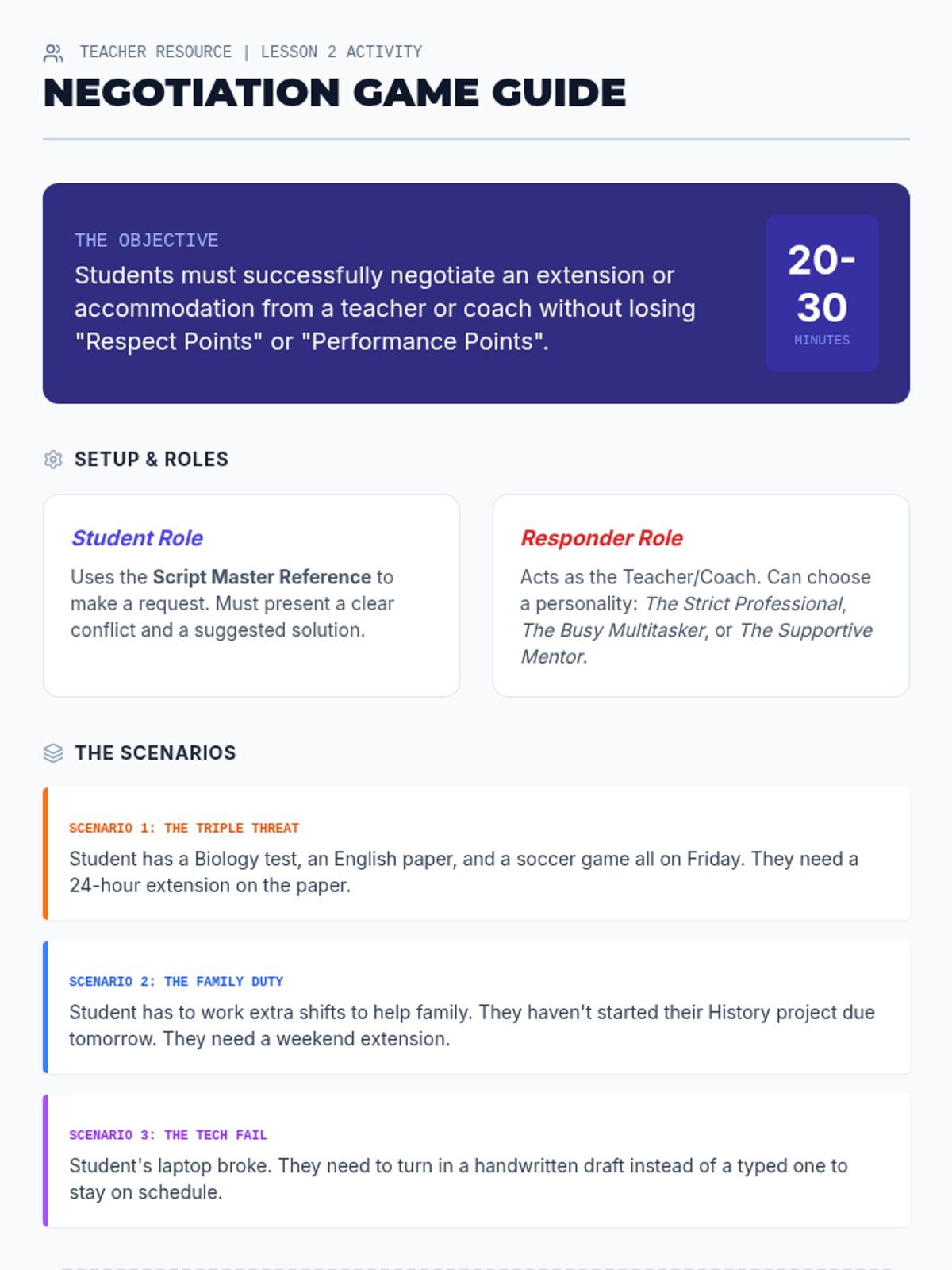
Focuses on professional communication and the distinction between hard and soft deadlines. Students practice scripts to negotiate extensions and help before a crisis occurs.
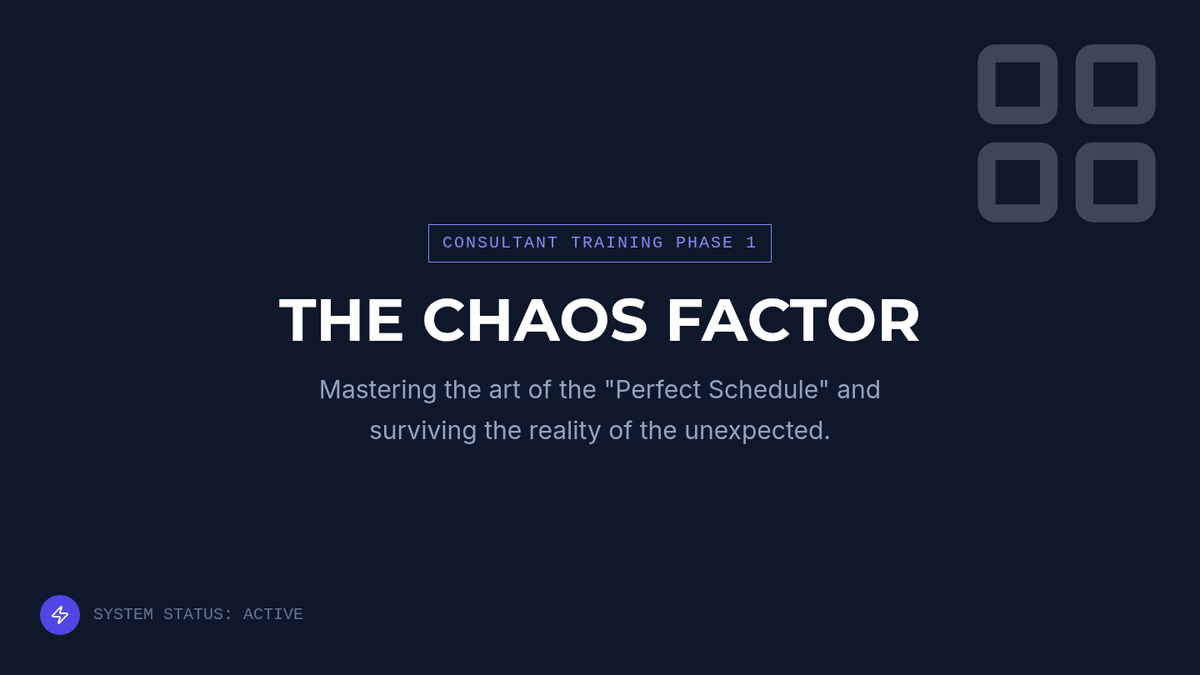
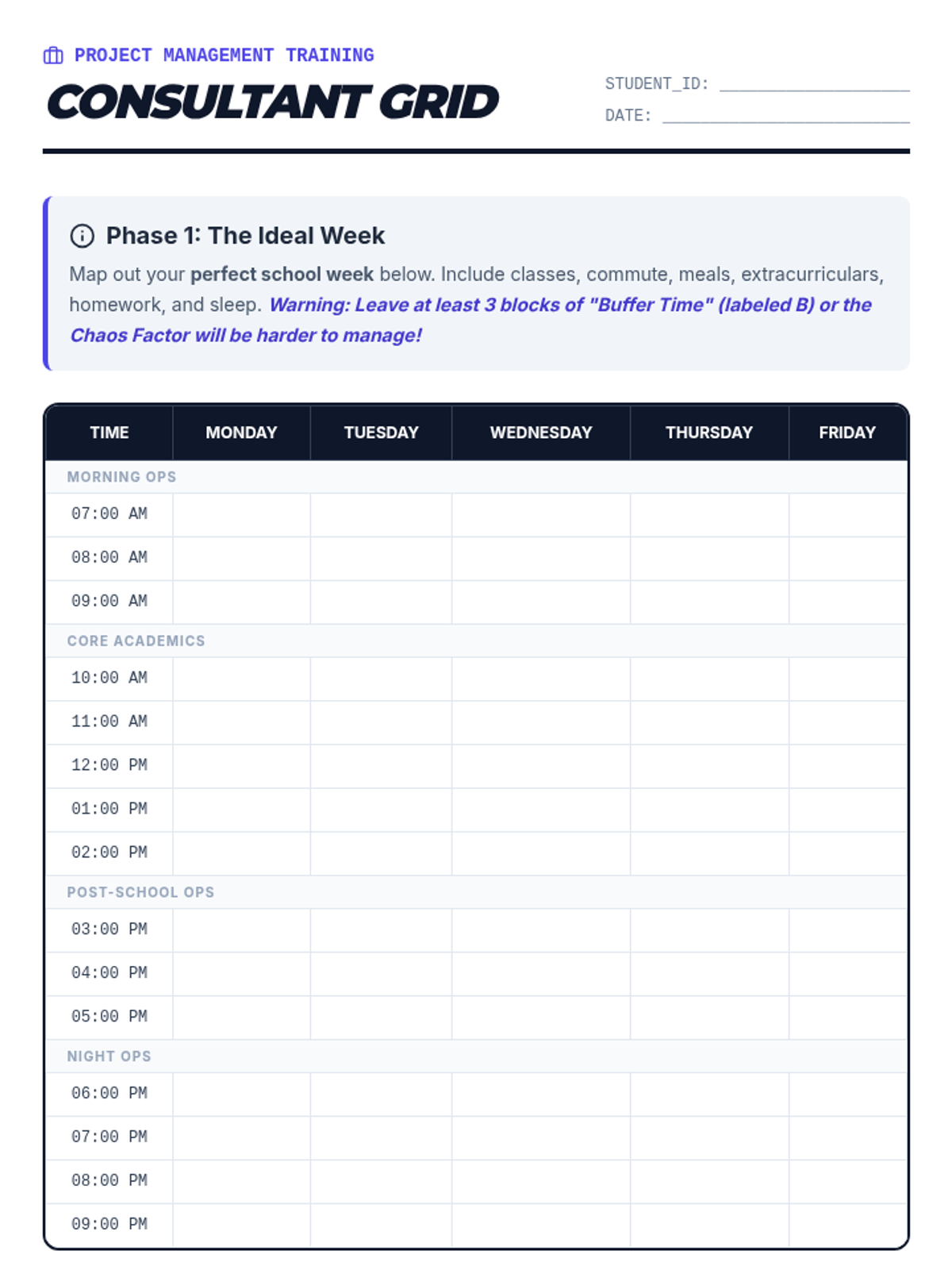
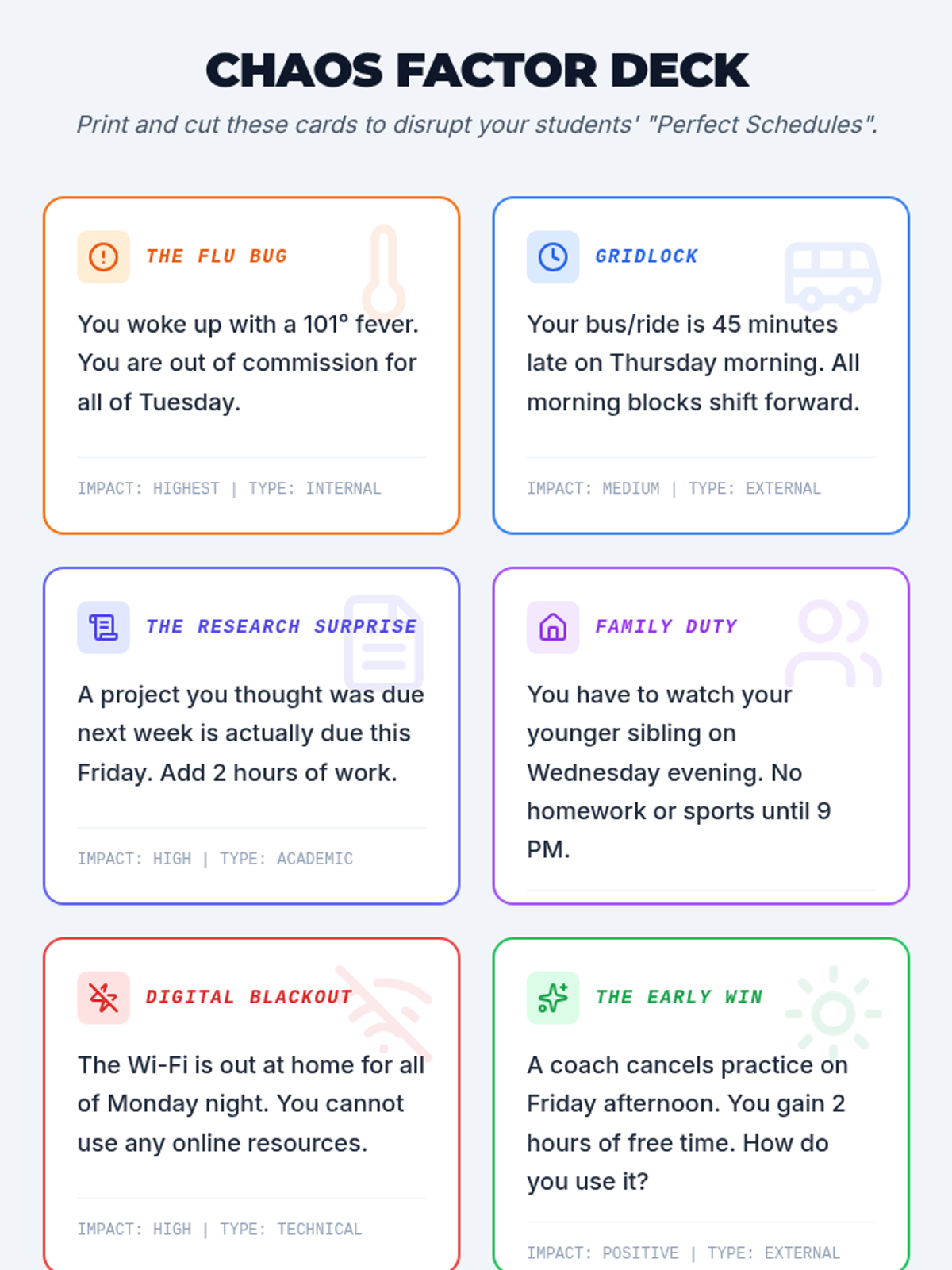
Students design an ideal weekly schedule and are immediately introduced to the 'Chaos Factor'—unpredictable life events that disrupt plans. They identify the need for buffer time and flexible scheduling.
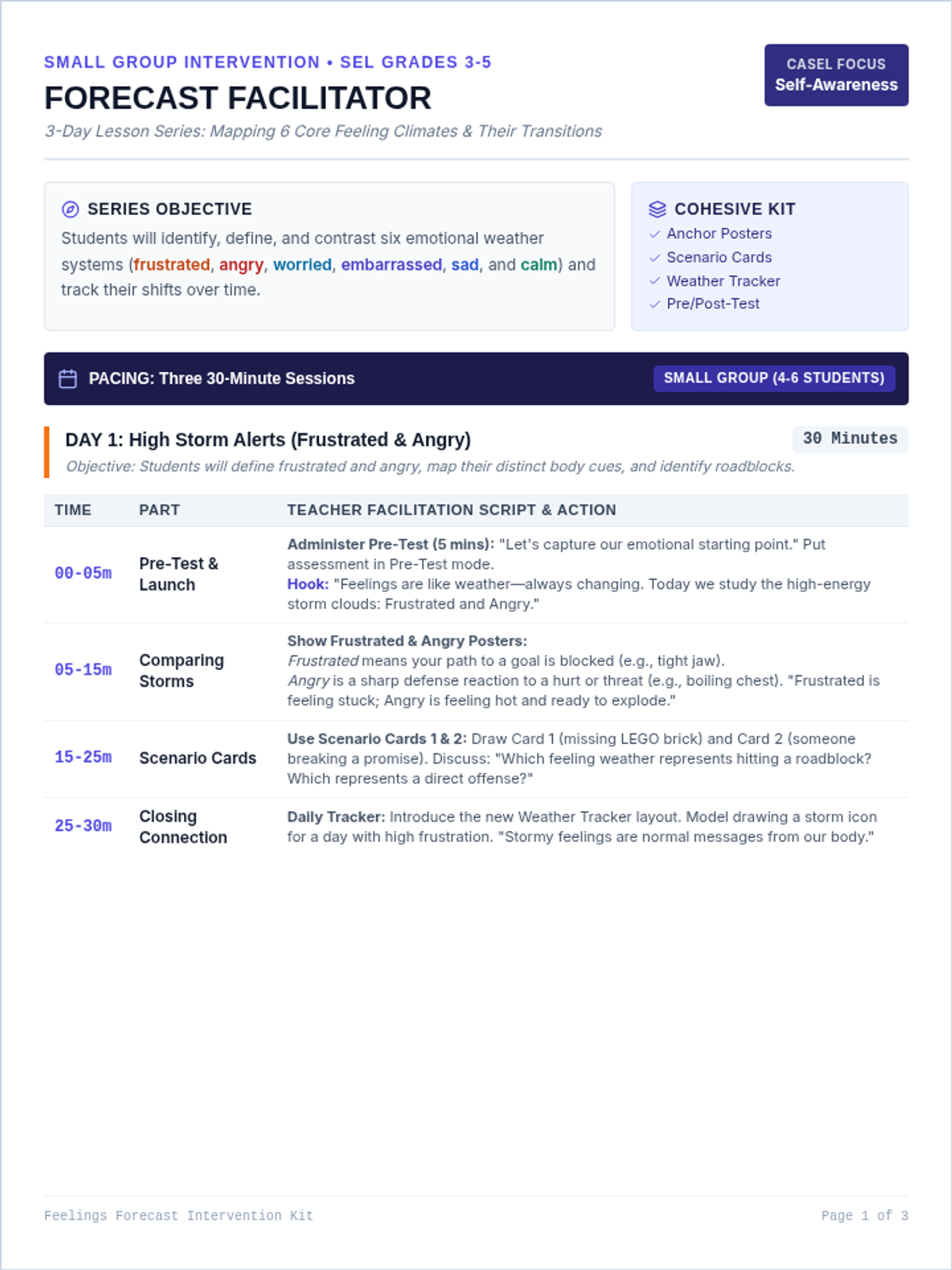
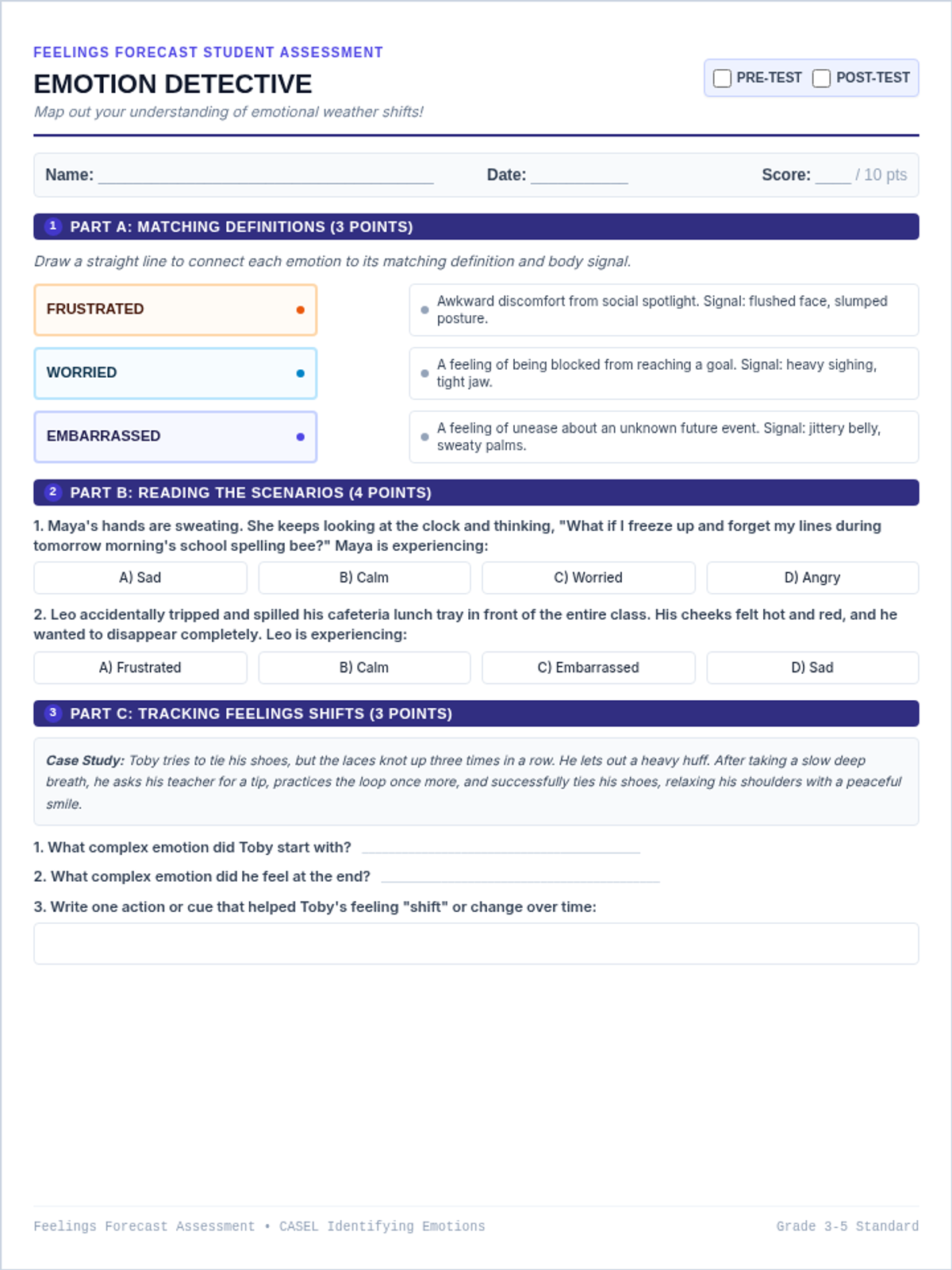
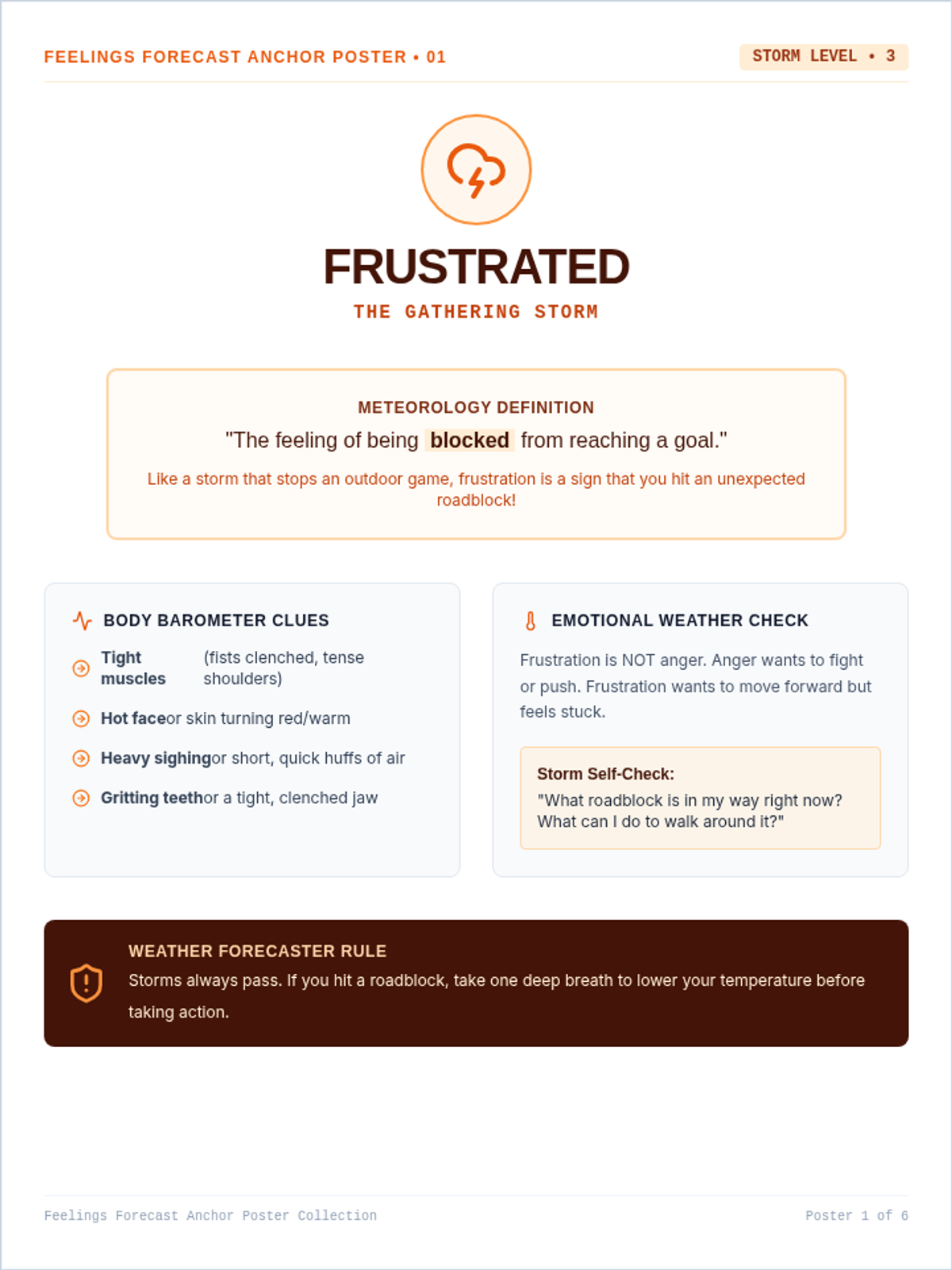
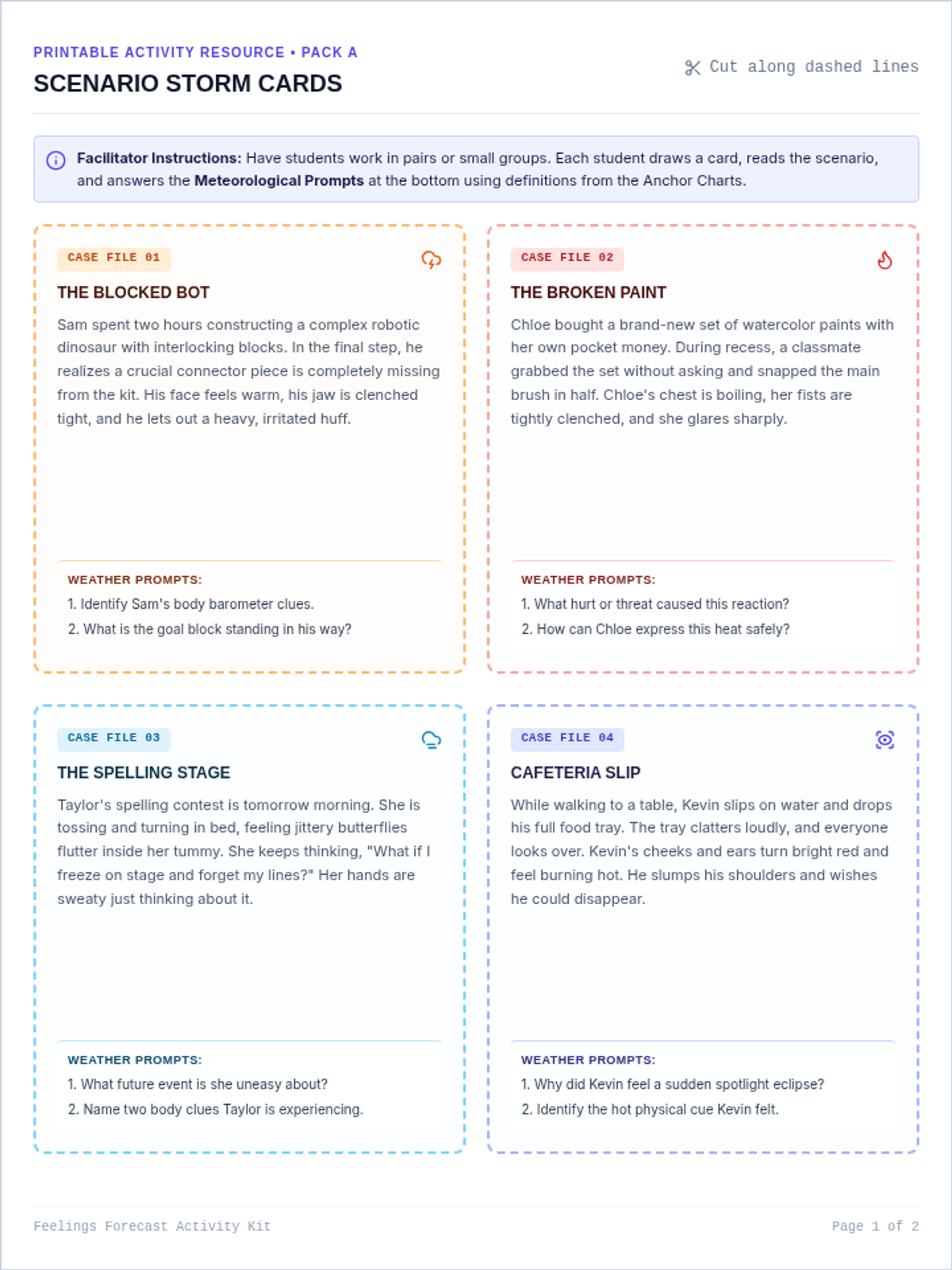
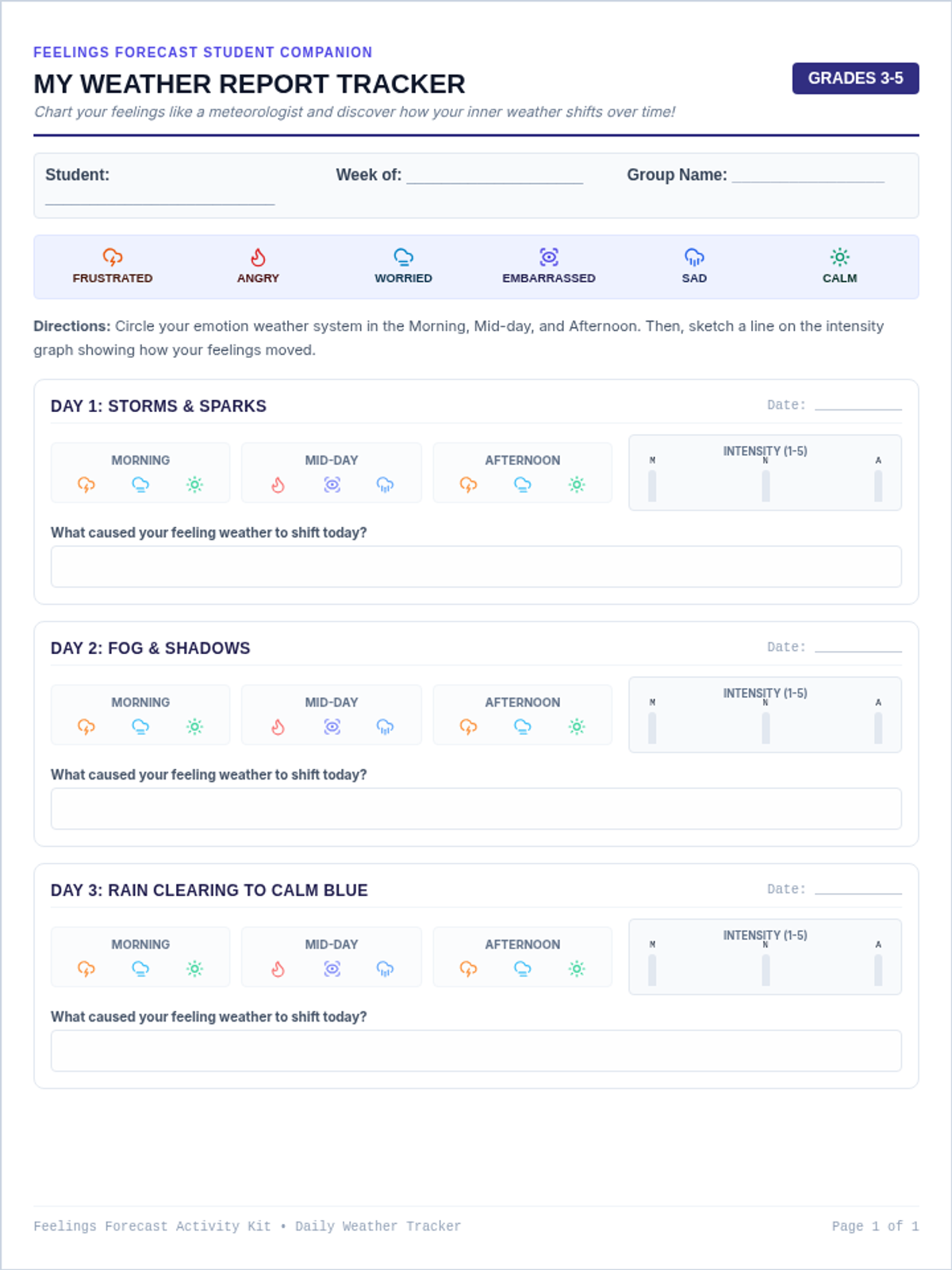
A 3-5 day small group social-emotional learning lesson series designed for upper elementary students (grades 3-5) to identify complex emotions (frustrated, angry, worried, embarrassed, sad, and calm) and explore how feelings change over time, using a meteorological weather-tracking theme.