Students apply unit learning to a chosen career or post-secondary education path, identifying workplace accommodations and constructing a self-advocacy plan.
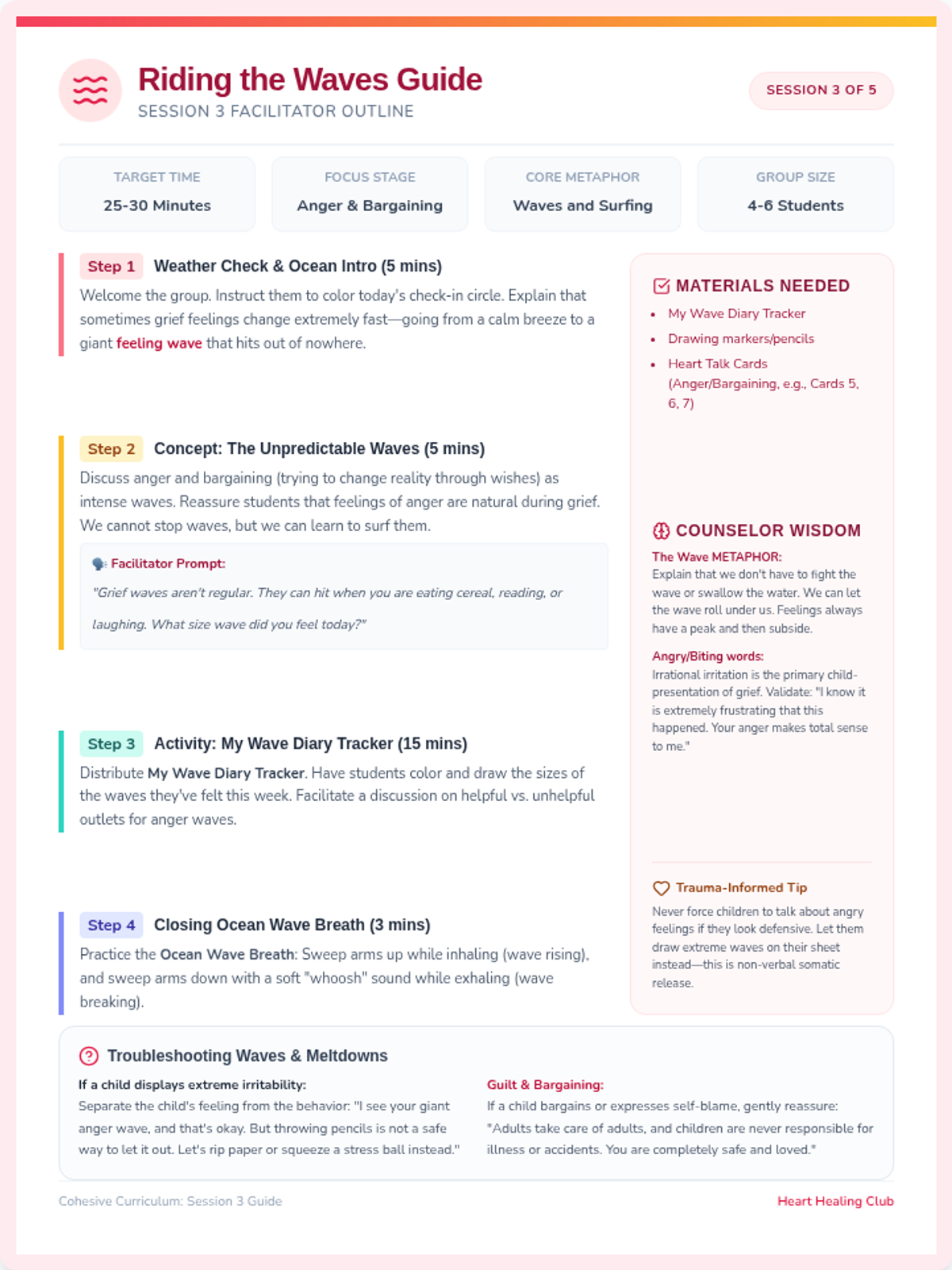
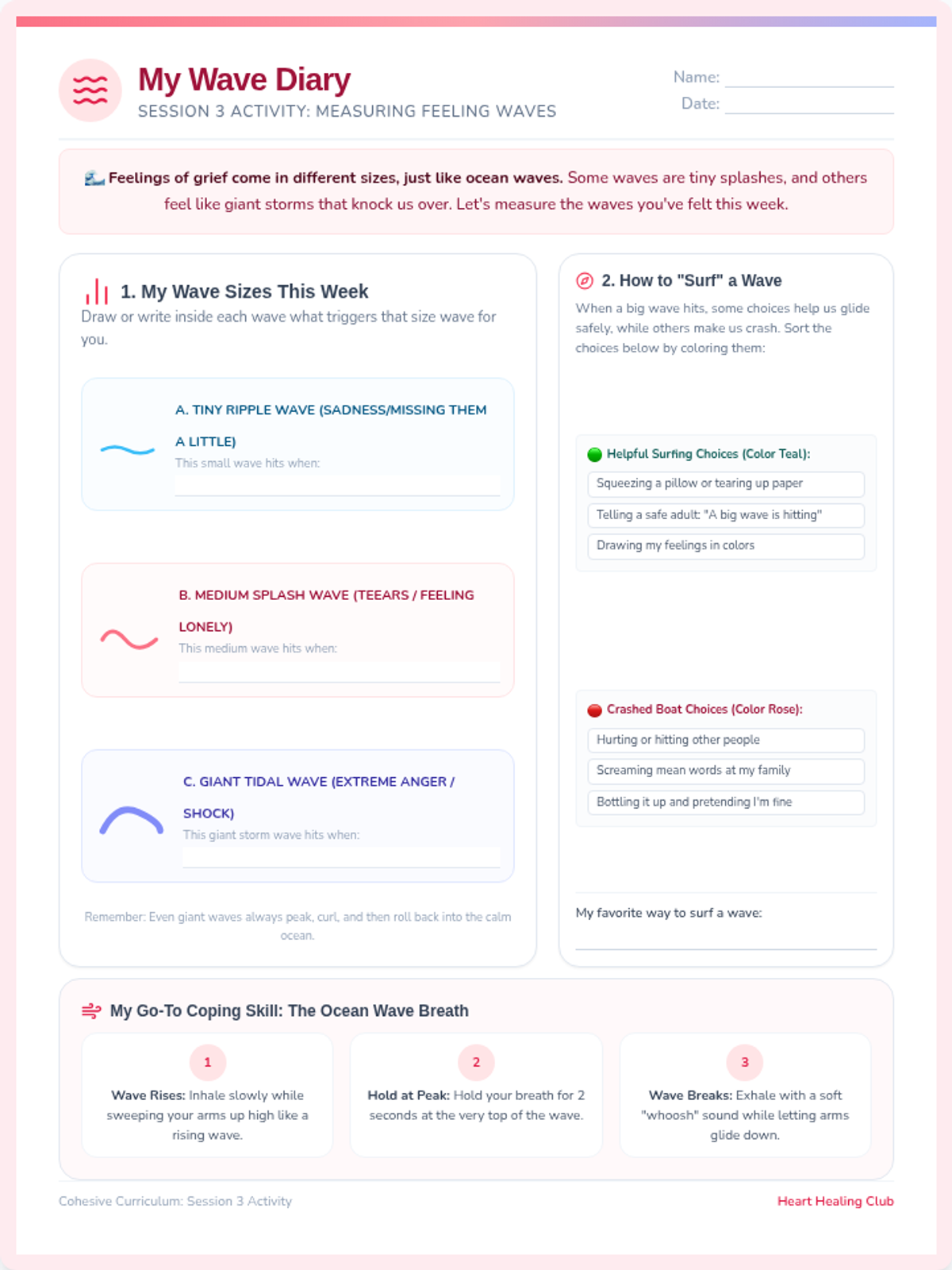
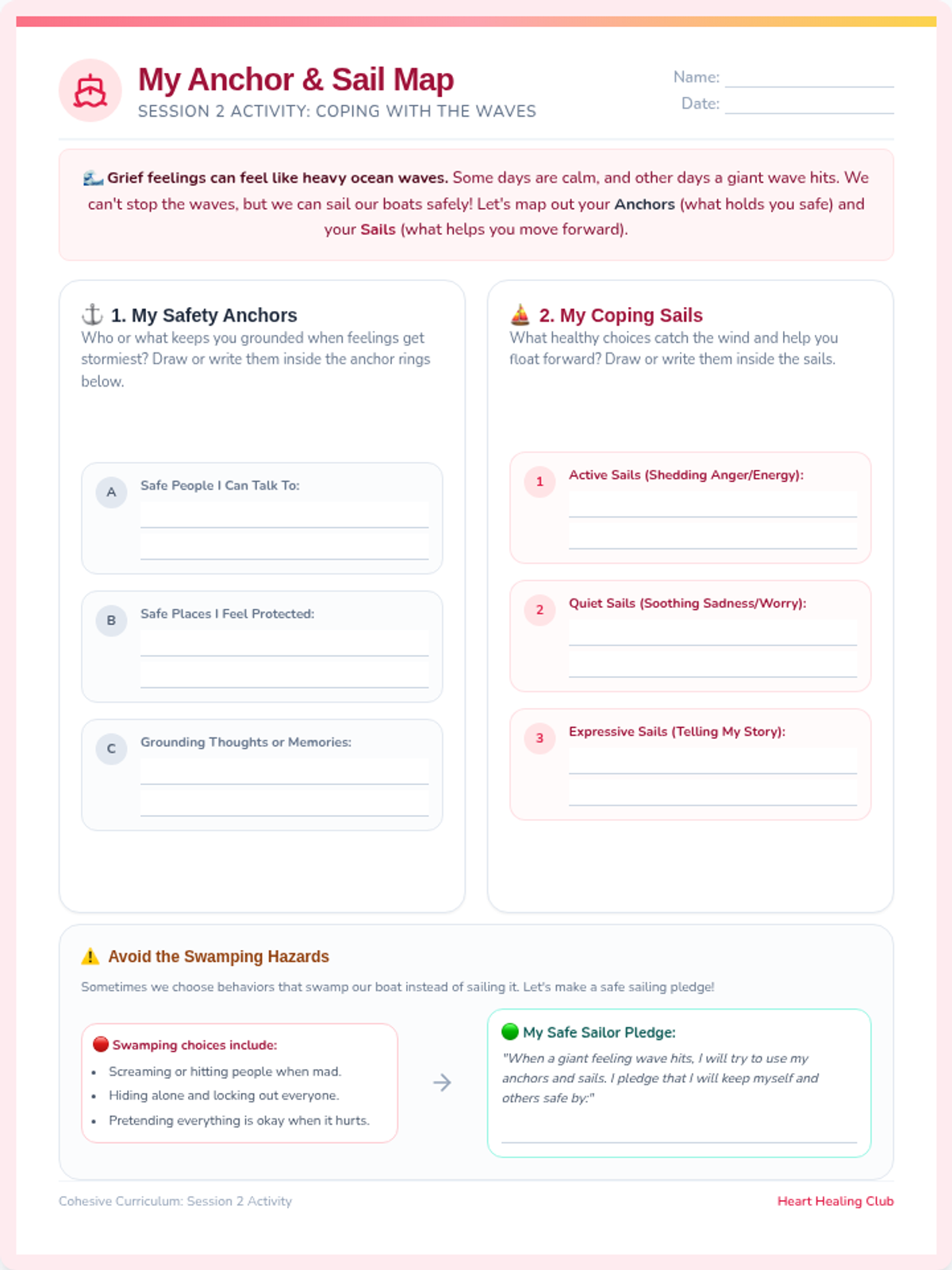
Session 3 introduces the metaphor of feelings as waves. Students explore the unpredictable nature of grief and learn to identify helpful vs. unhelpful outlets for strong waves like anger and bargaining.
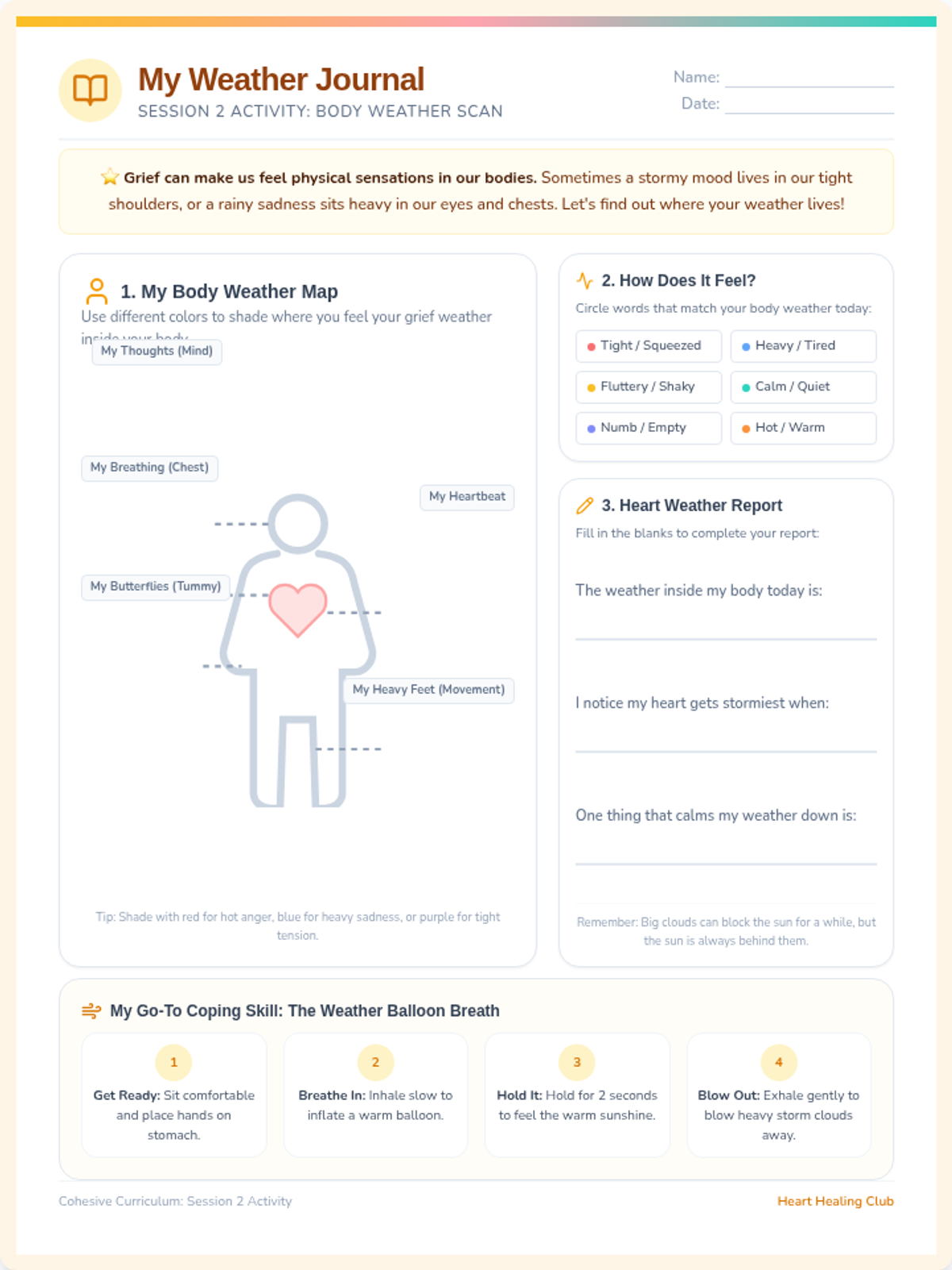
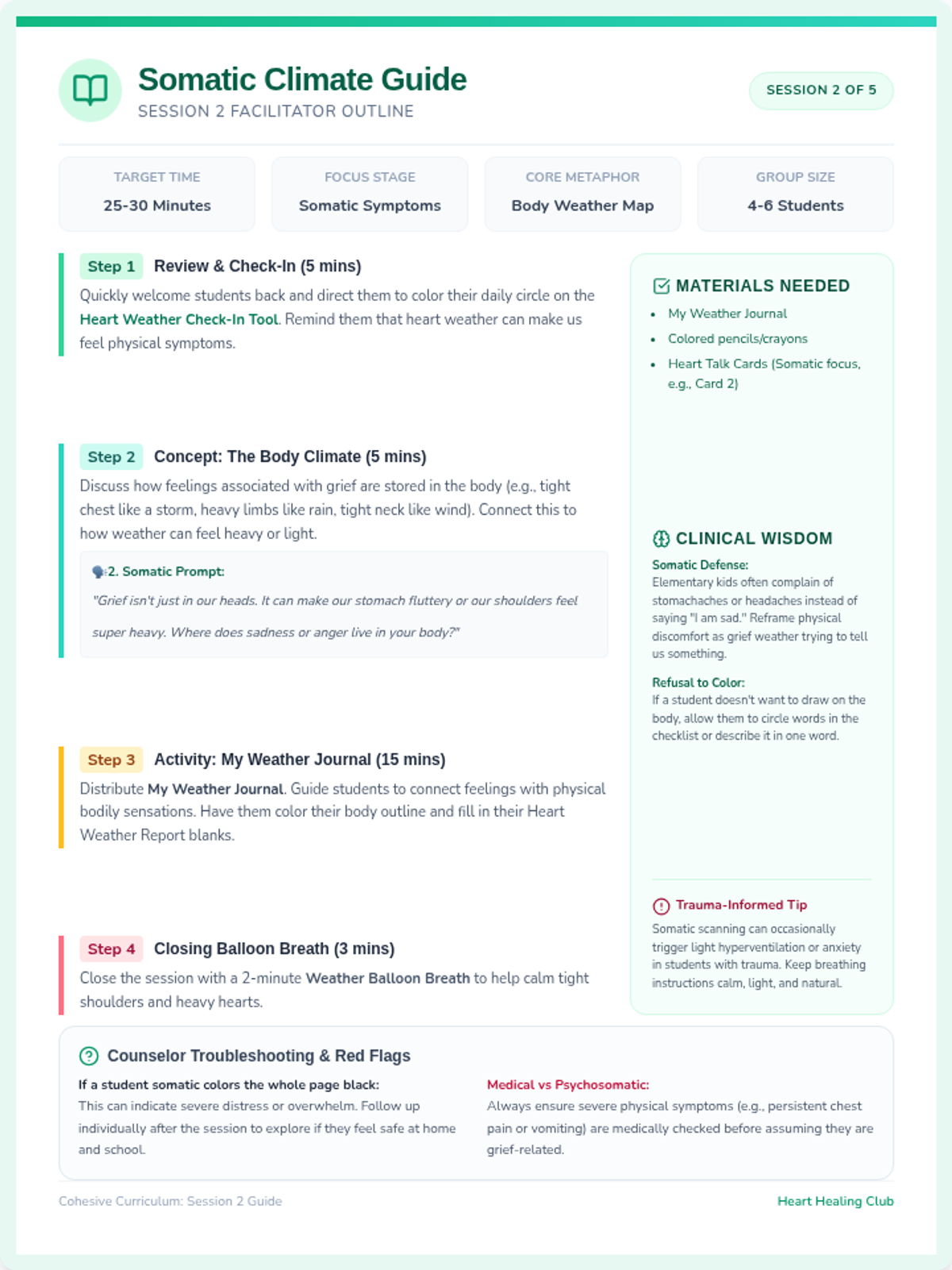
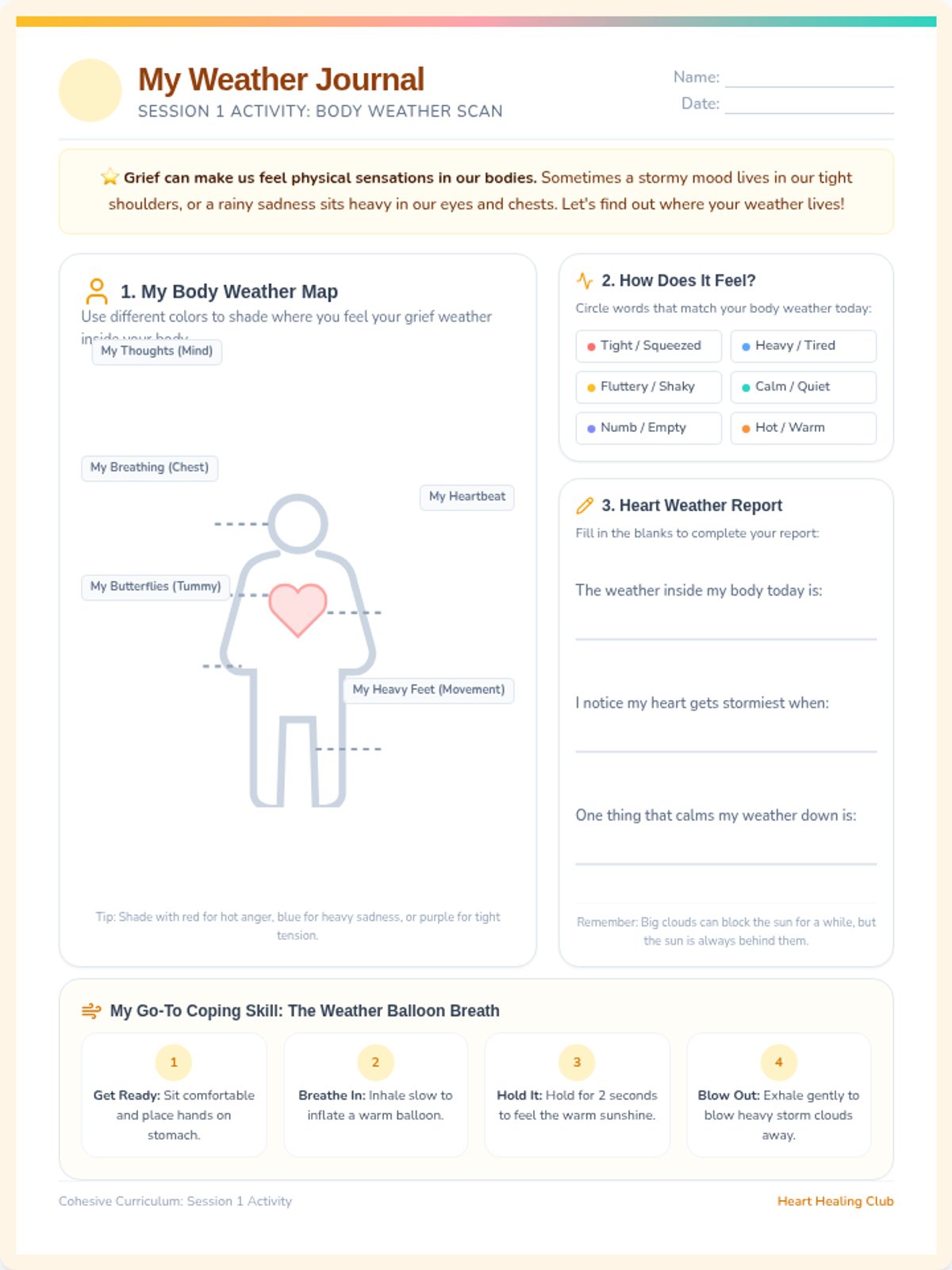
Session 2 connects emotions to bodily sensations. Students explore where big feelings 'live' in their bodies and practice scanning for physical clues using a somatic mapping activity.
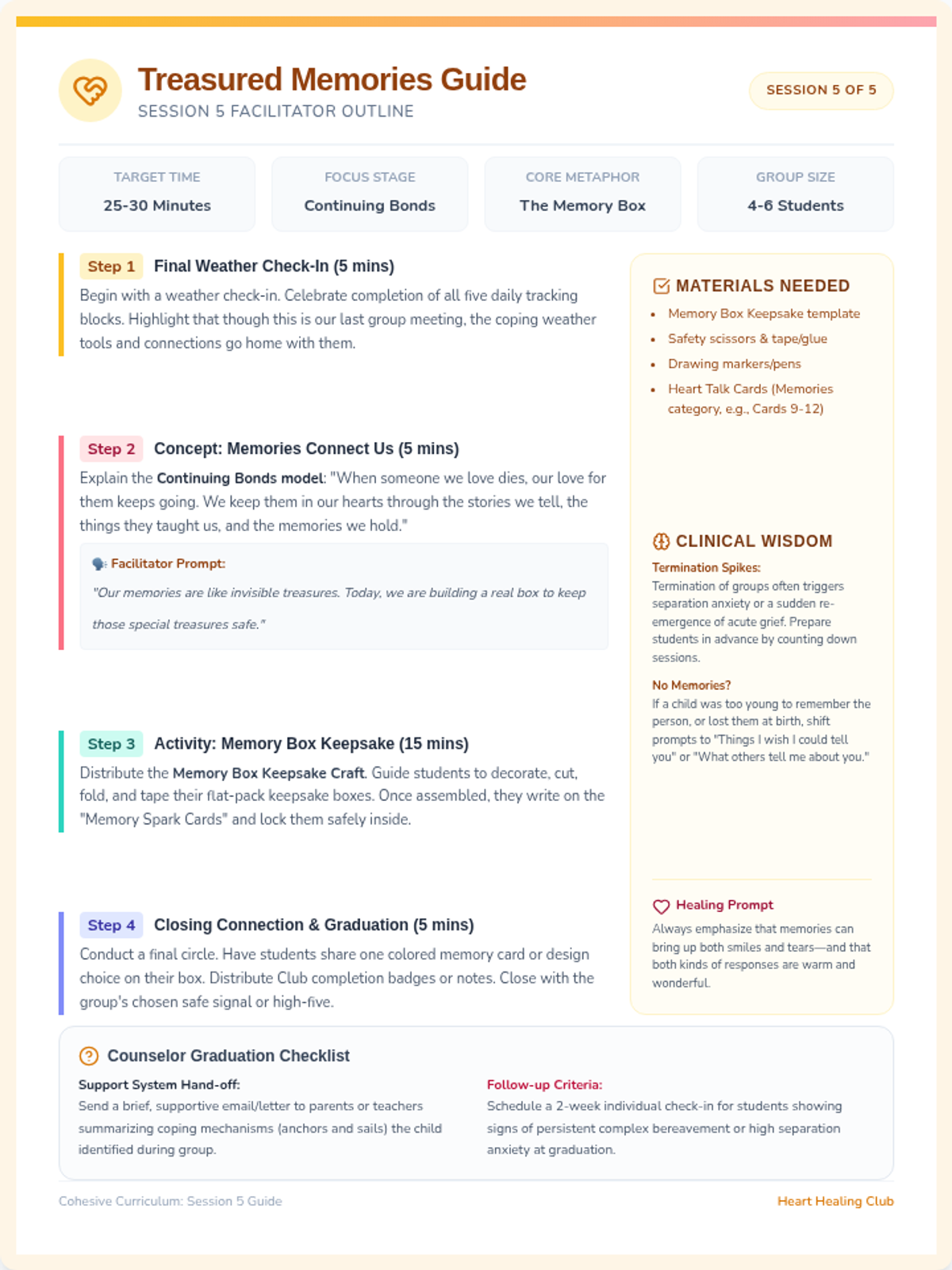
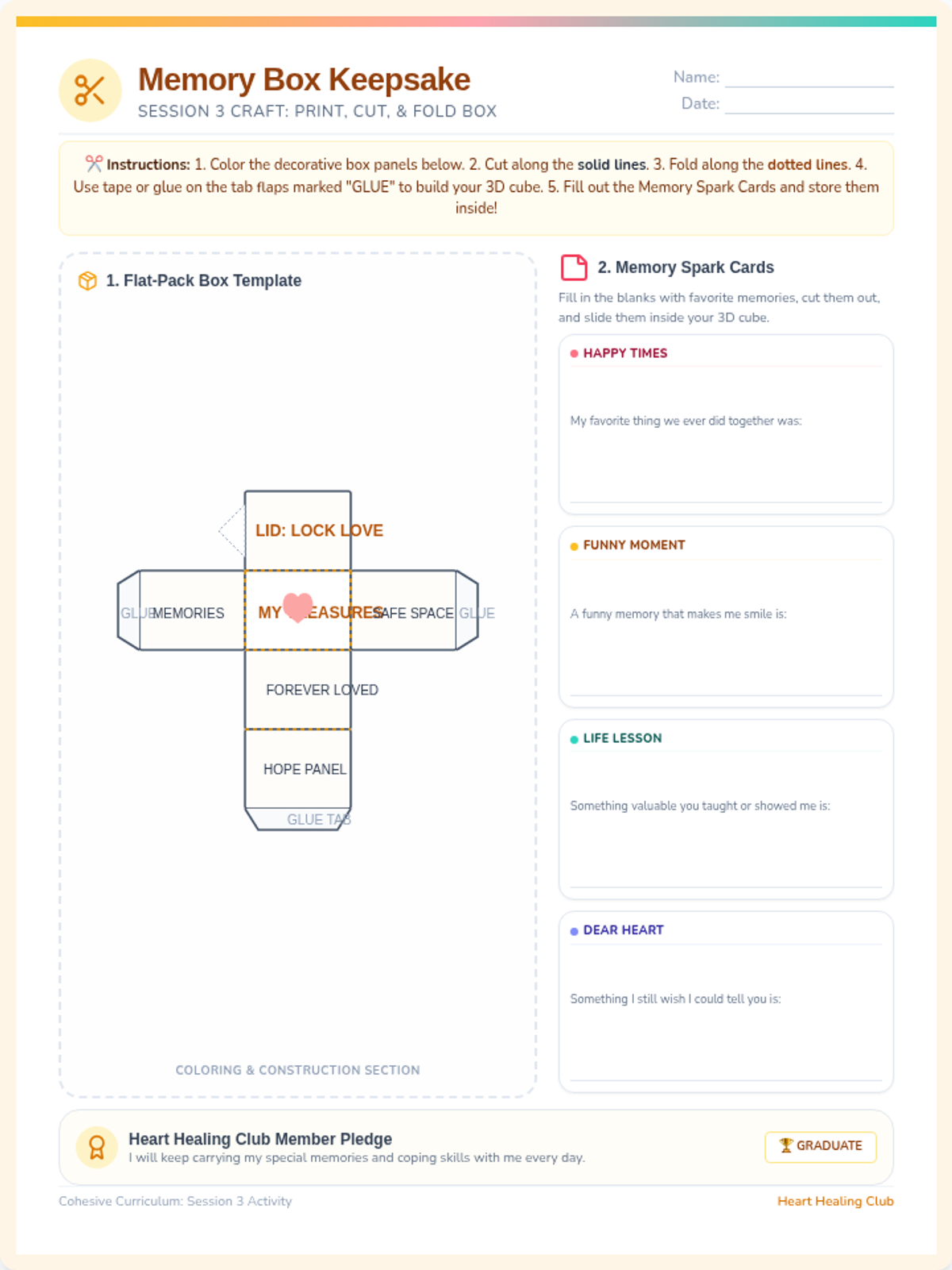
Session 5 centers on honoring the person who died, establishing enduring memories, and fostering long-term resilience and hope. Students create personal keepsake crafts.
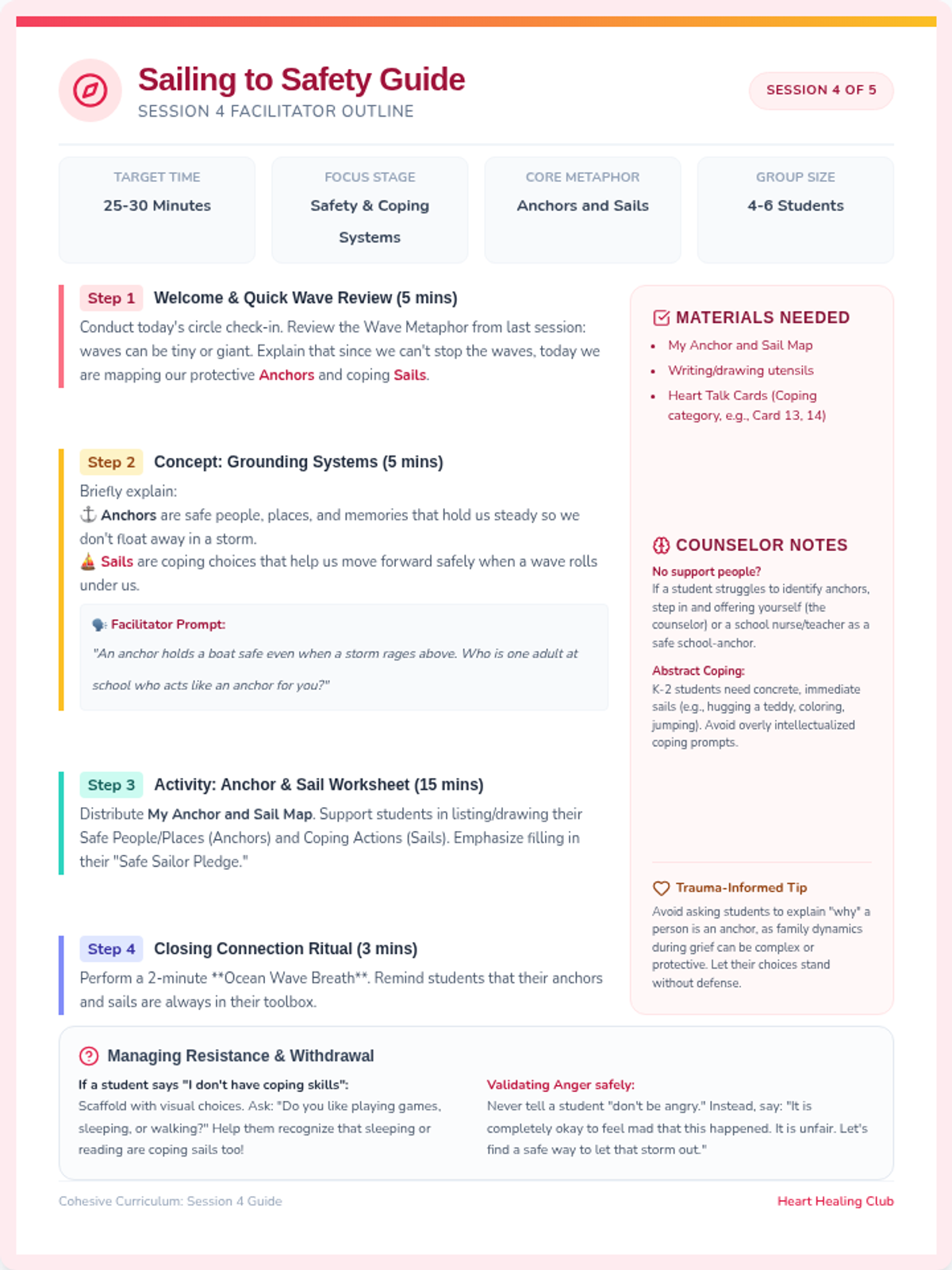
Session 4 focuses on identifying internal and external safety systems. Students map out their protective anchors (grounding people and memories) and their coping sails (healthy, self-soothing behaviors).
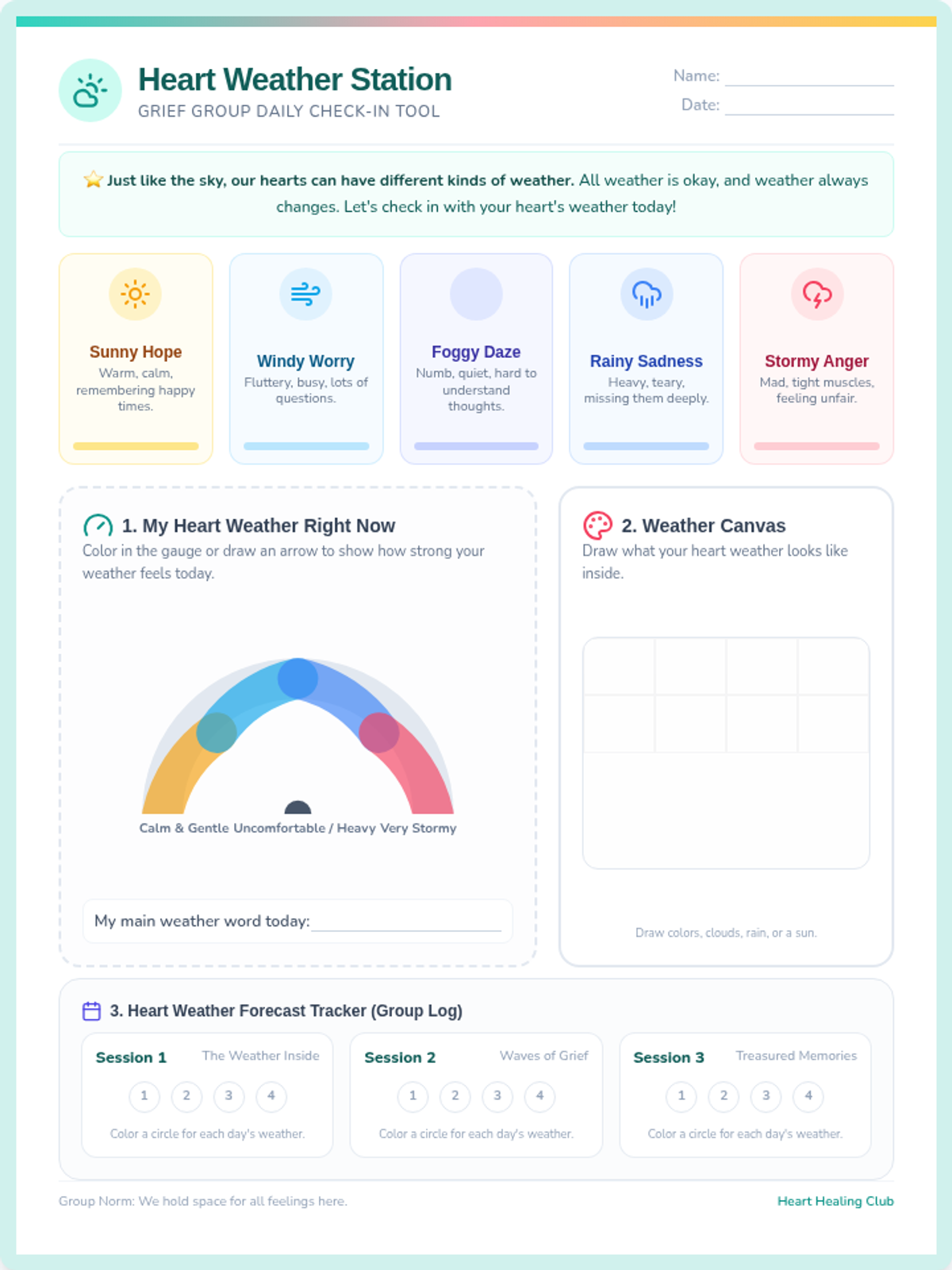
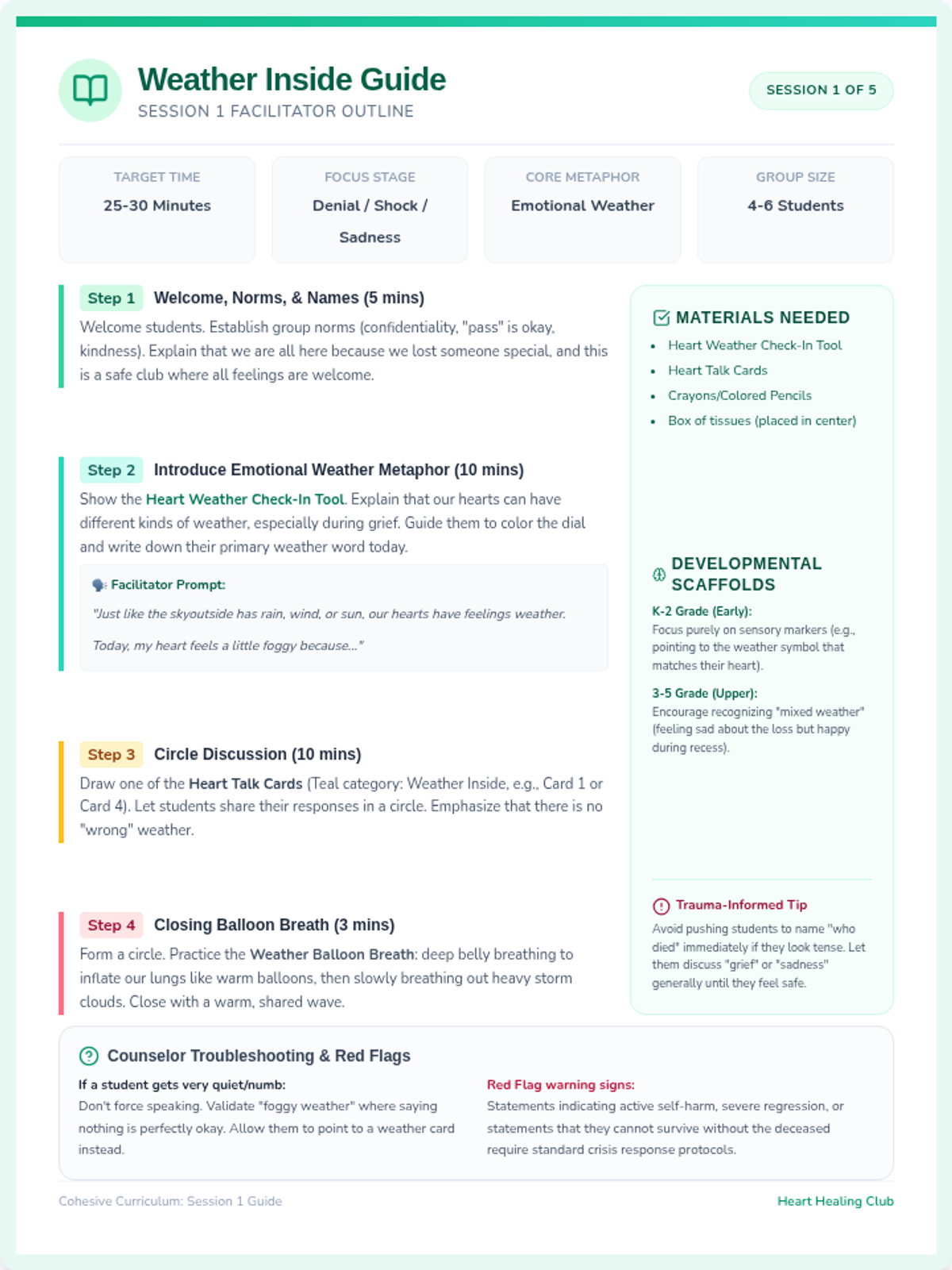
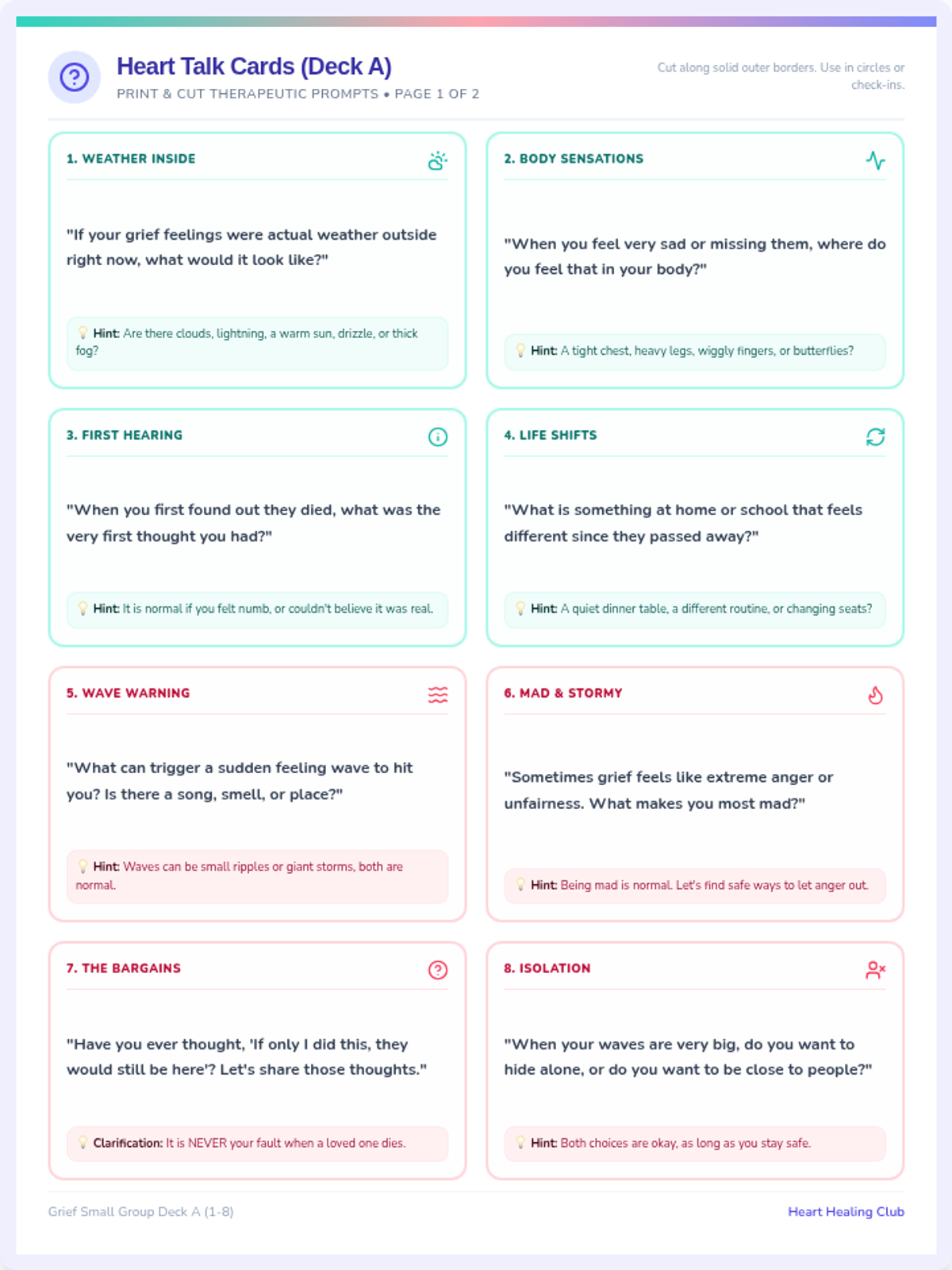
Session 1 focuses on identifying and naming complex emotions associated with grief. Students learn the 'emotional weather' metaphor, explore how grief feels in their bodies, and practice sharing in a safe circle.
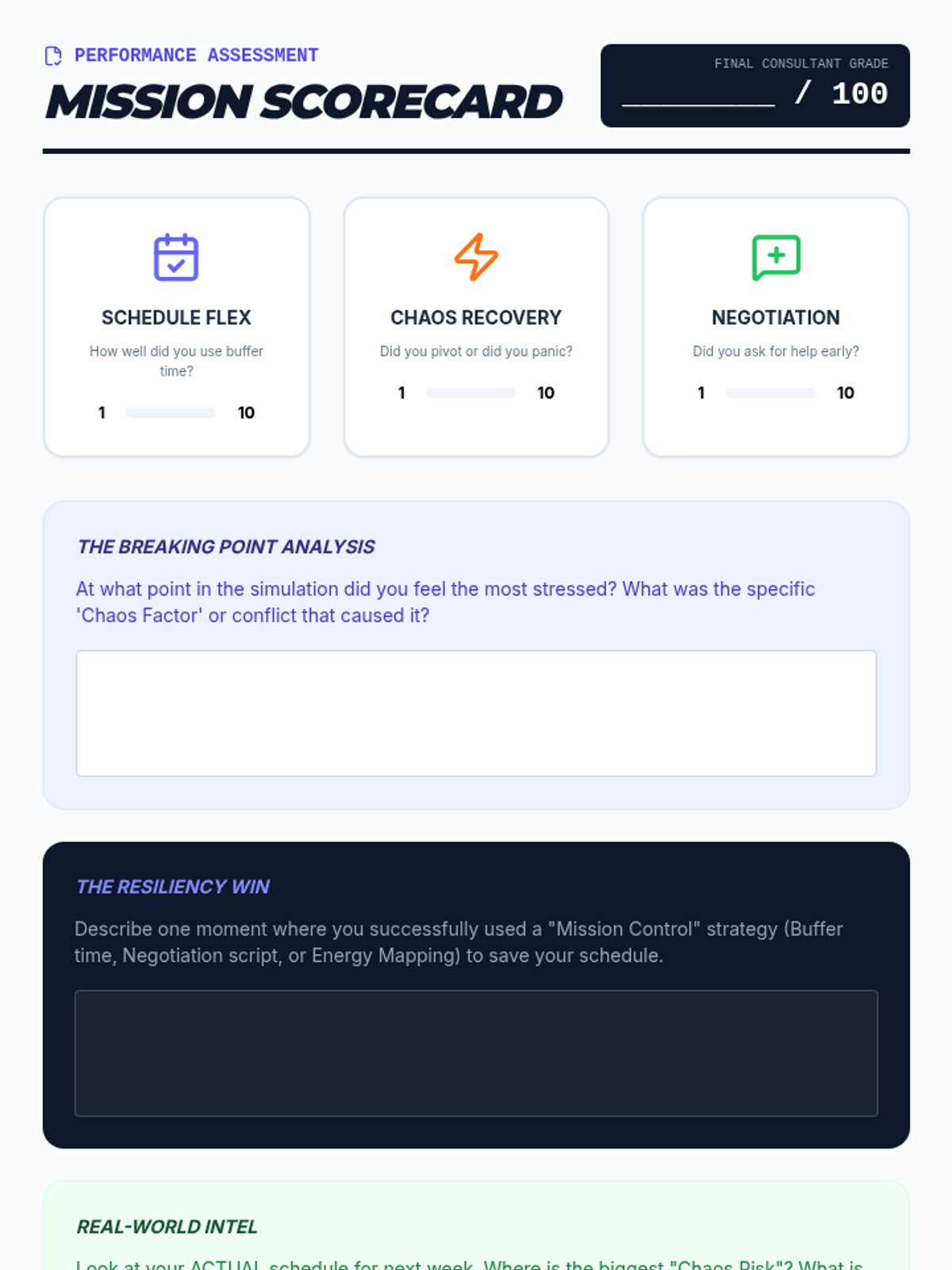
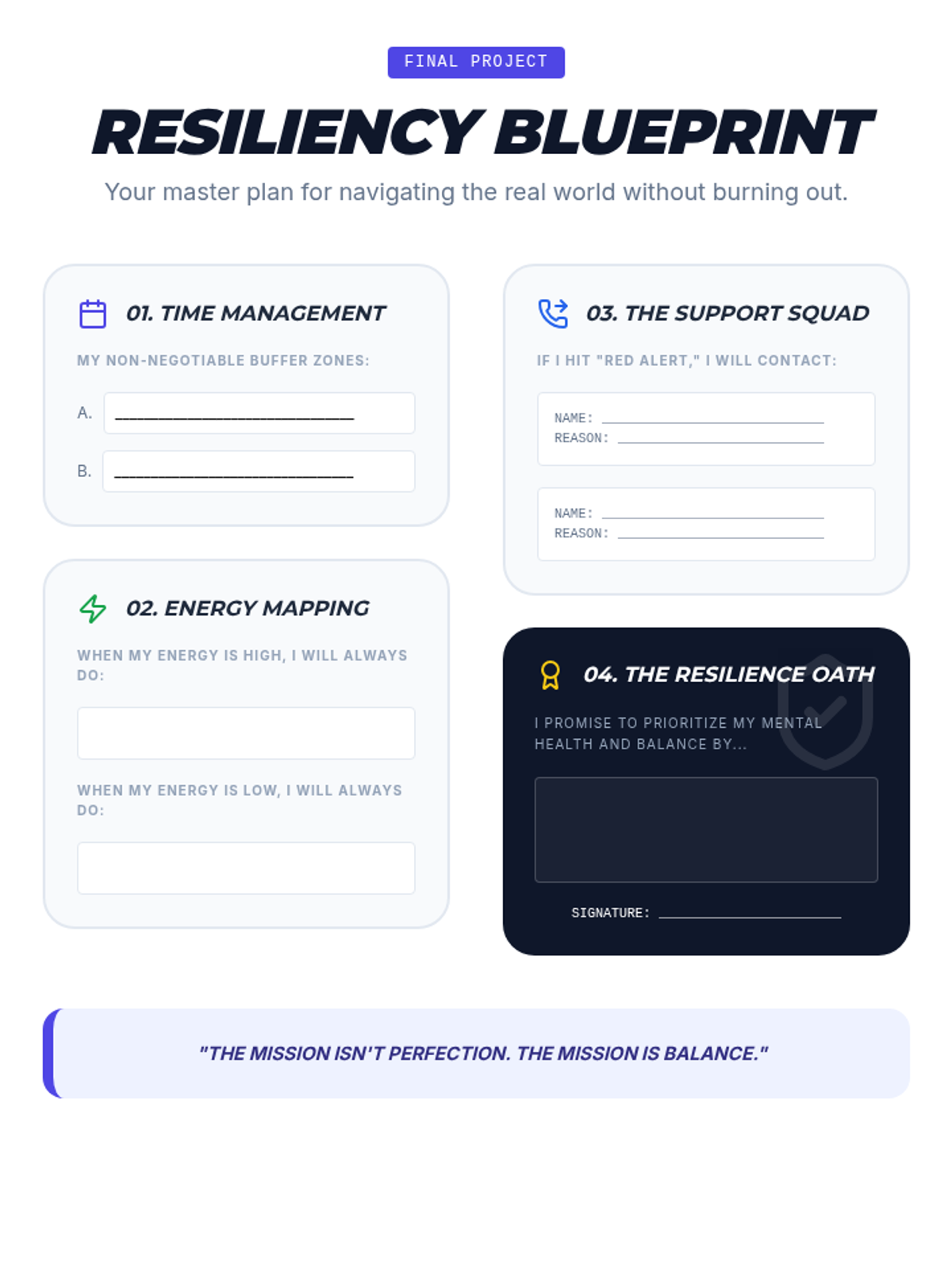
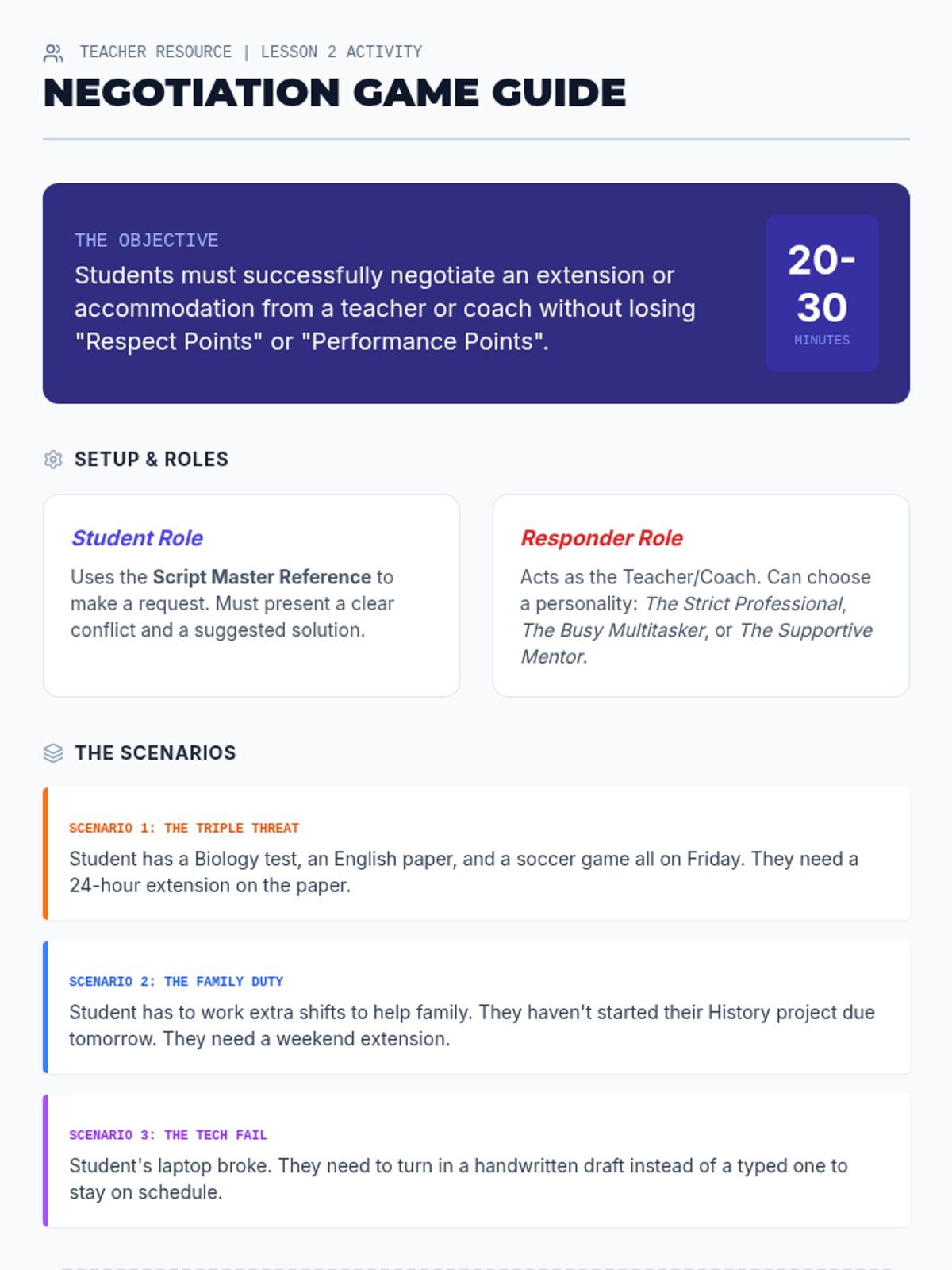
A final reflection on the simulation where students analyze their performance, identify breaking points, and create a long-term strategy for real-world balance.
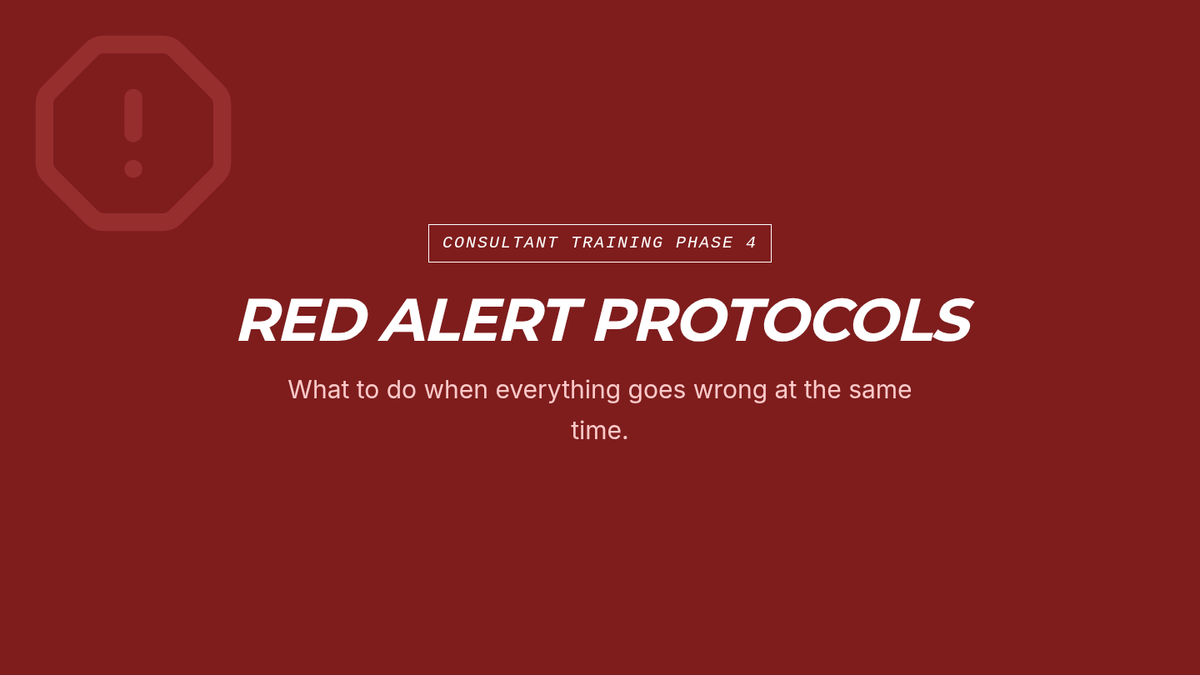
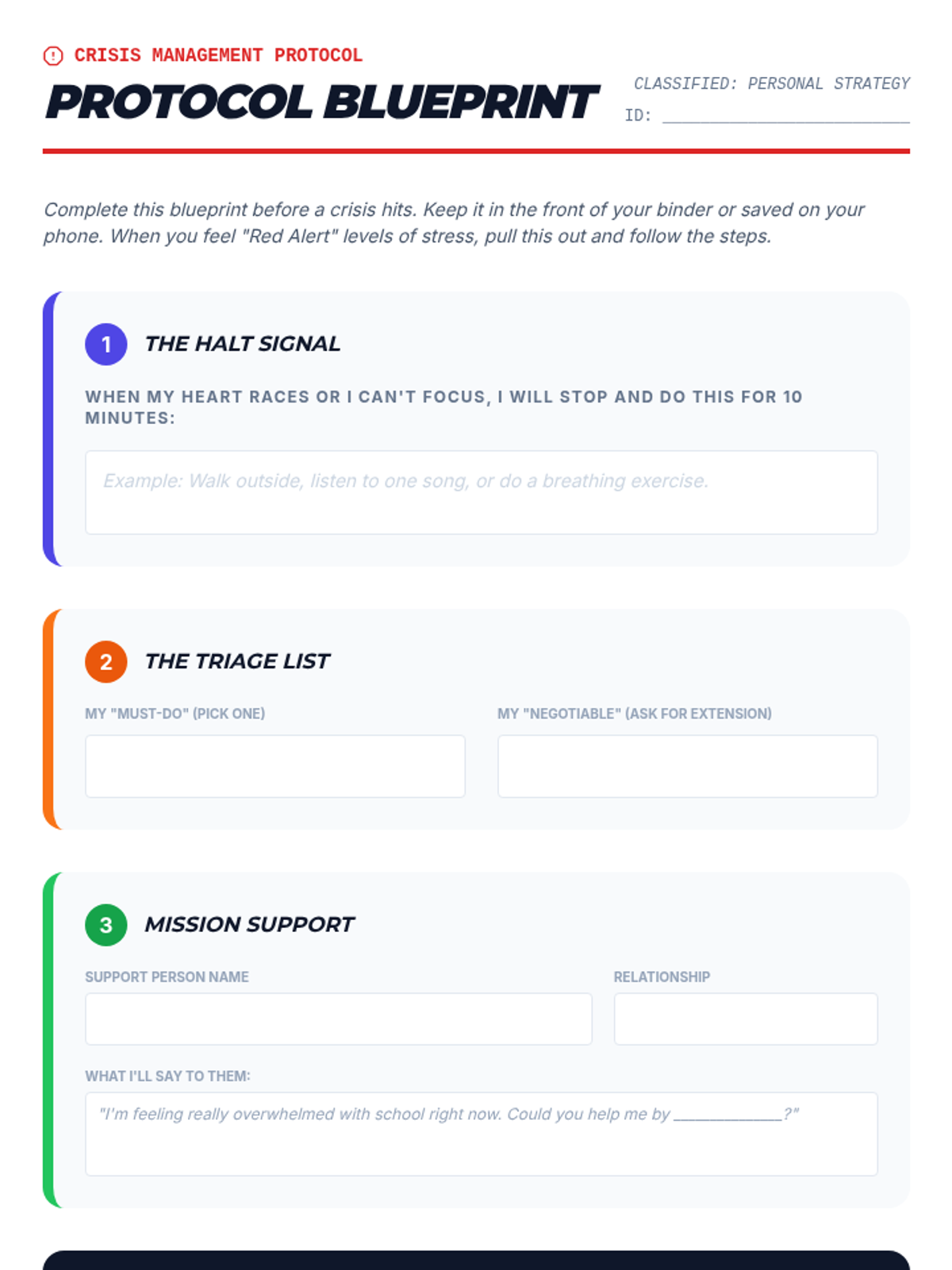
Students create a personal 'Emergency Protocol' for overwhelming situations, learning how to prioritize tasks to drop and identifying support systems for recovery.
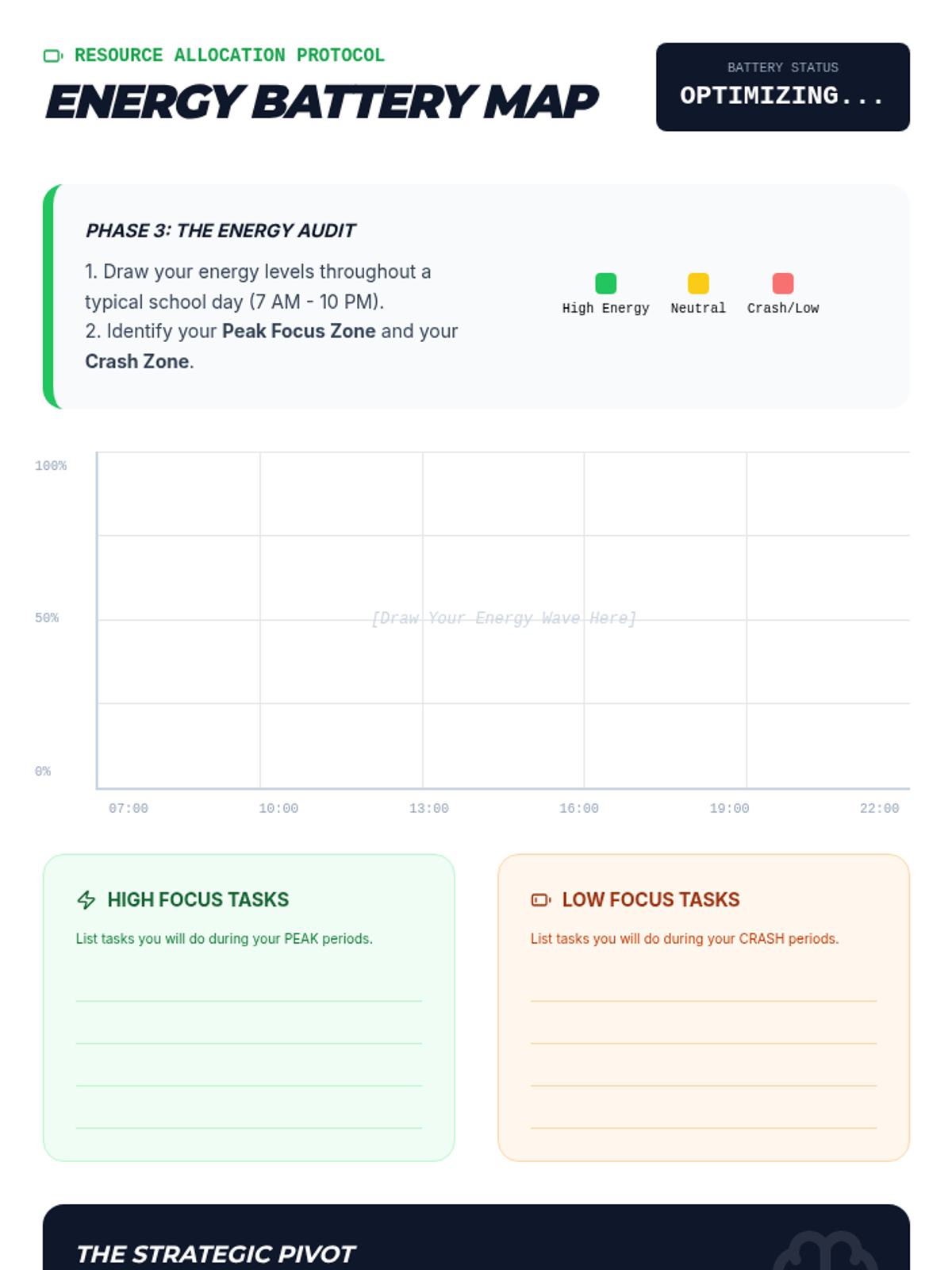
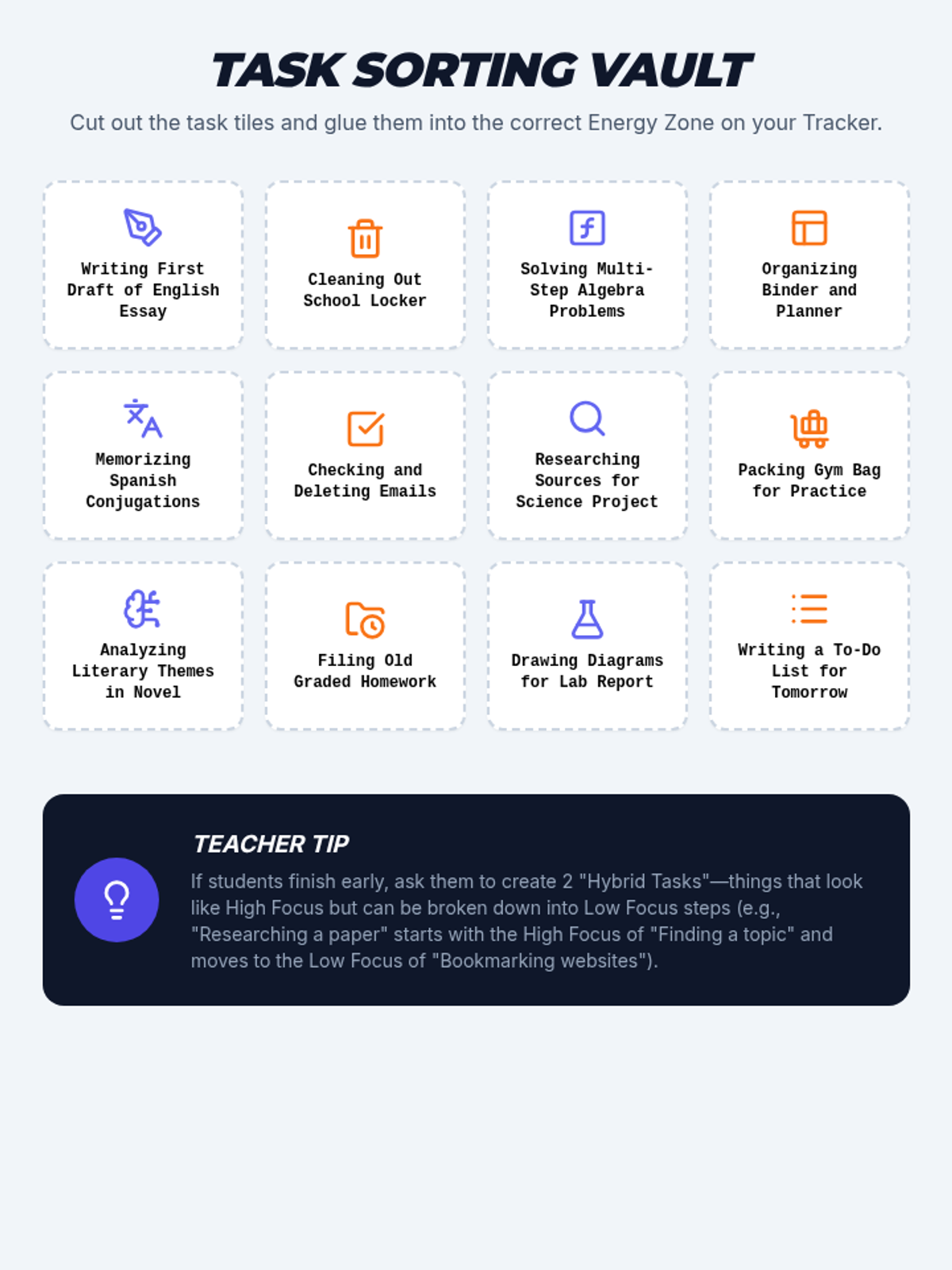
Students analyze their personal energy cycles to match high-demand tasks with high-energy periods, moving beyond simple time management to strategic resource allocation.
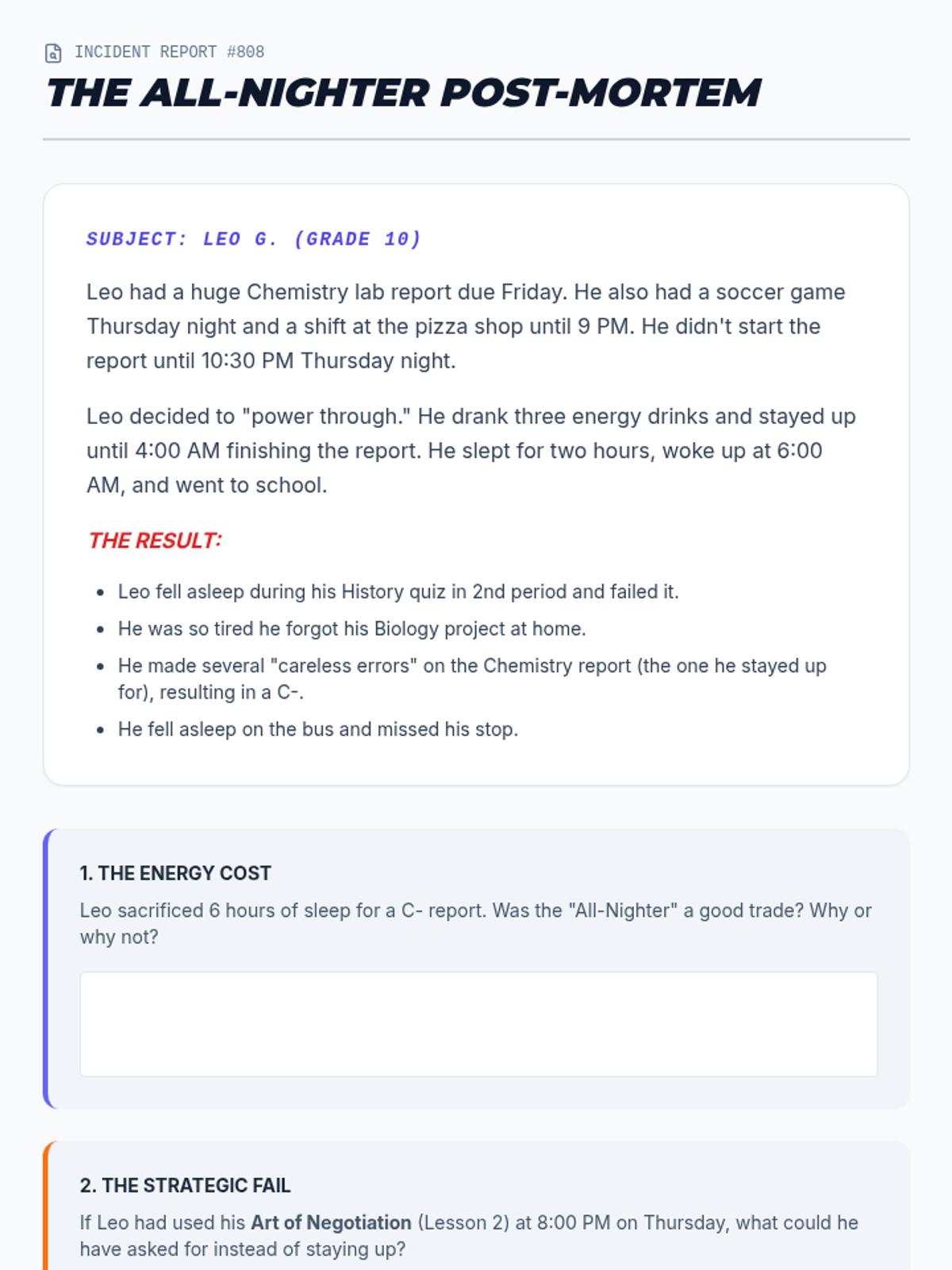
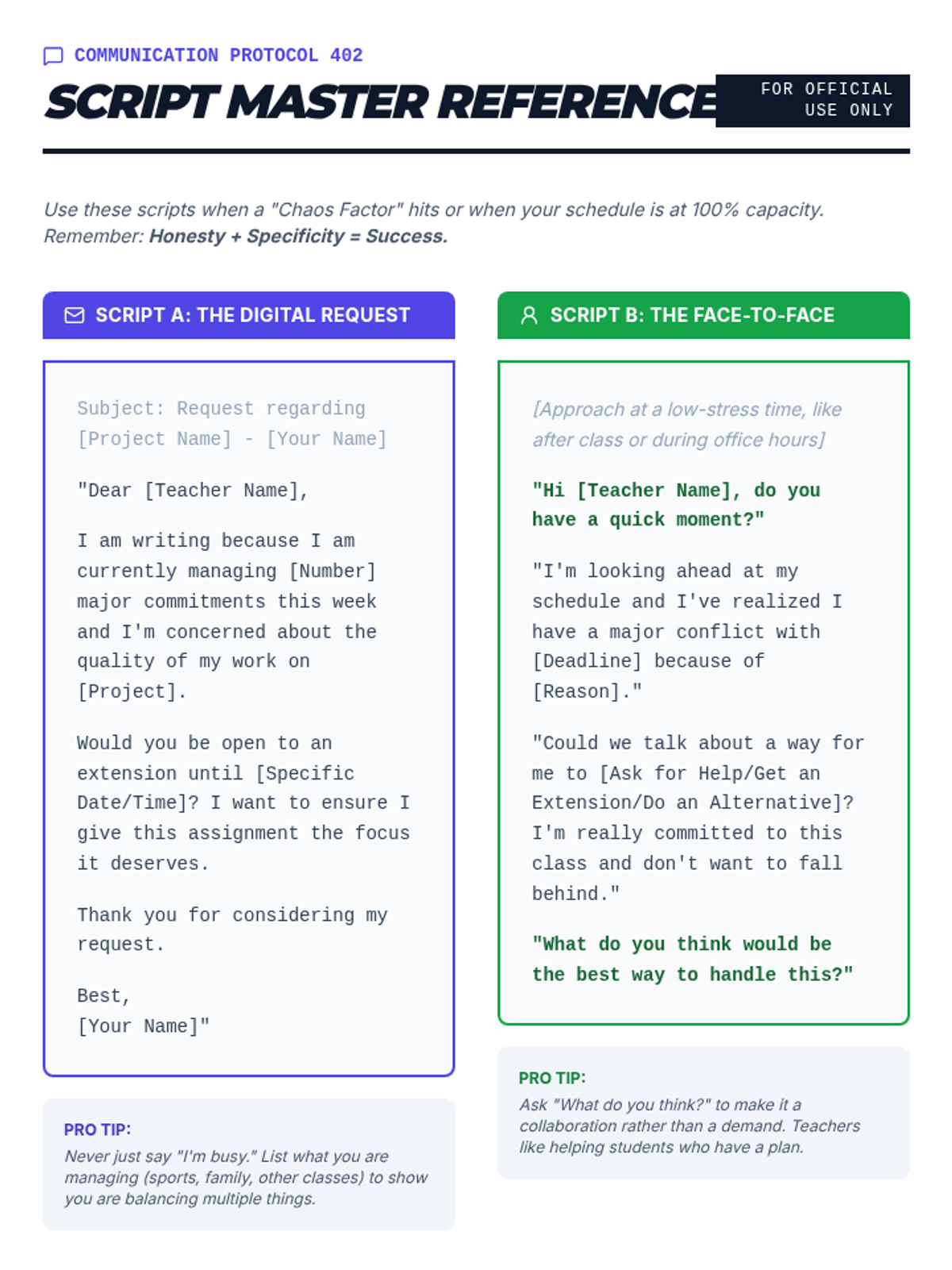
Focuses on professional communication and the distinction between hard and soft deadlines. Students practice scripts to negotiate extensions and help before a crisis occurs.
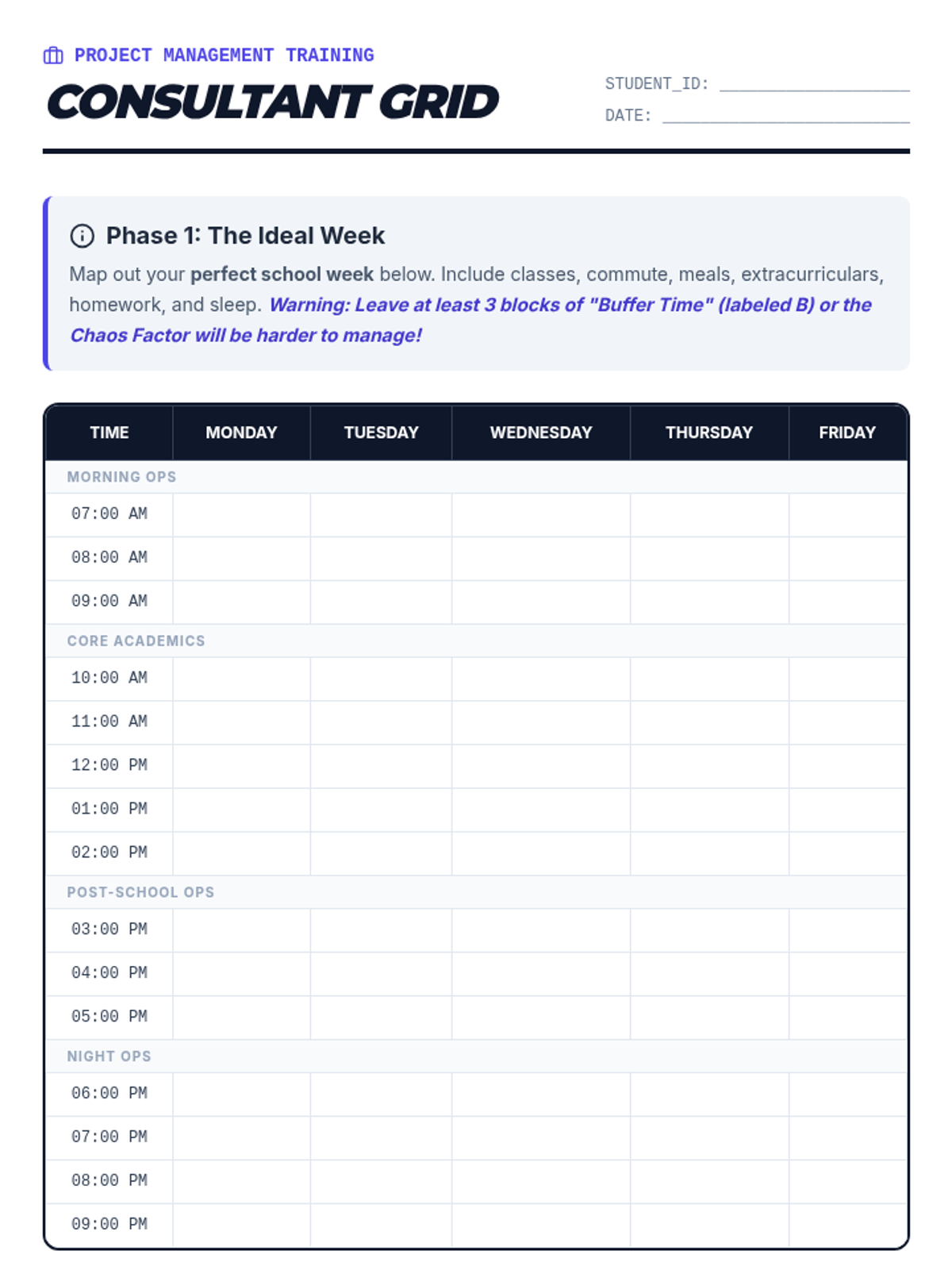
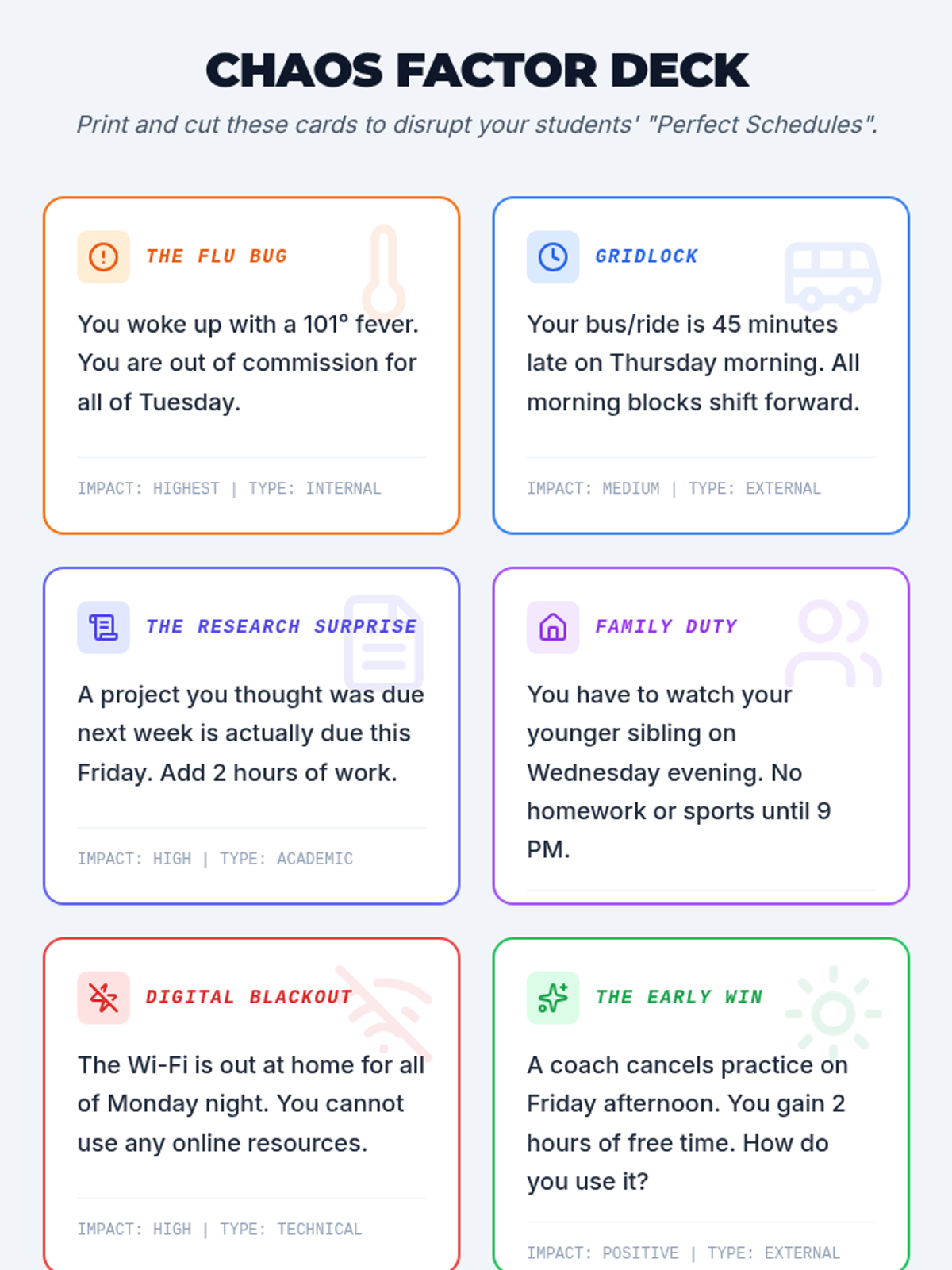
Students design an ideal weekly schedule and are immediately introduced to the 'Chaos Factor'—unpredictable life events that disrupt plans. They identify the need for buffer time and flexible scheduling.
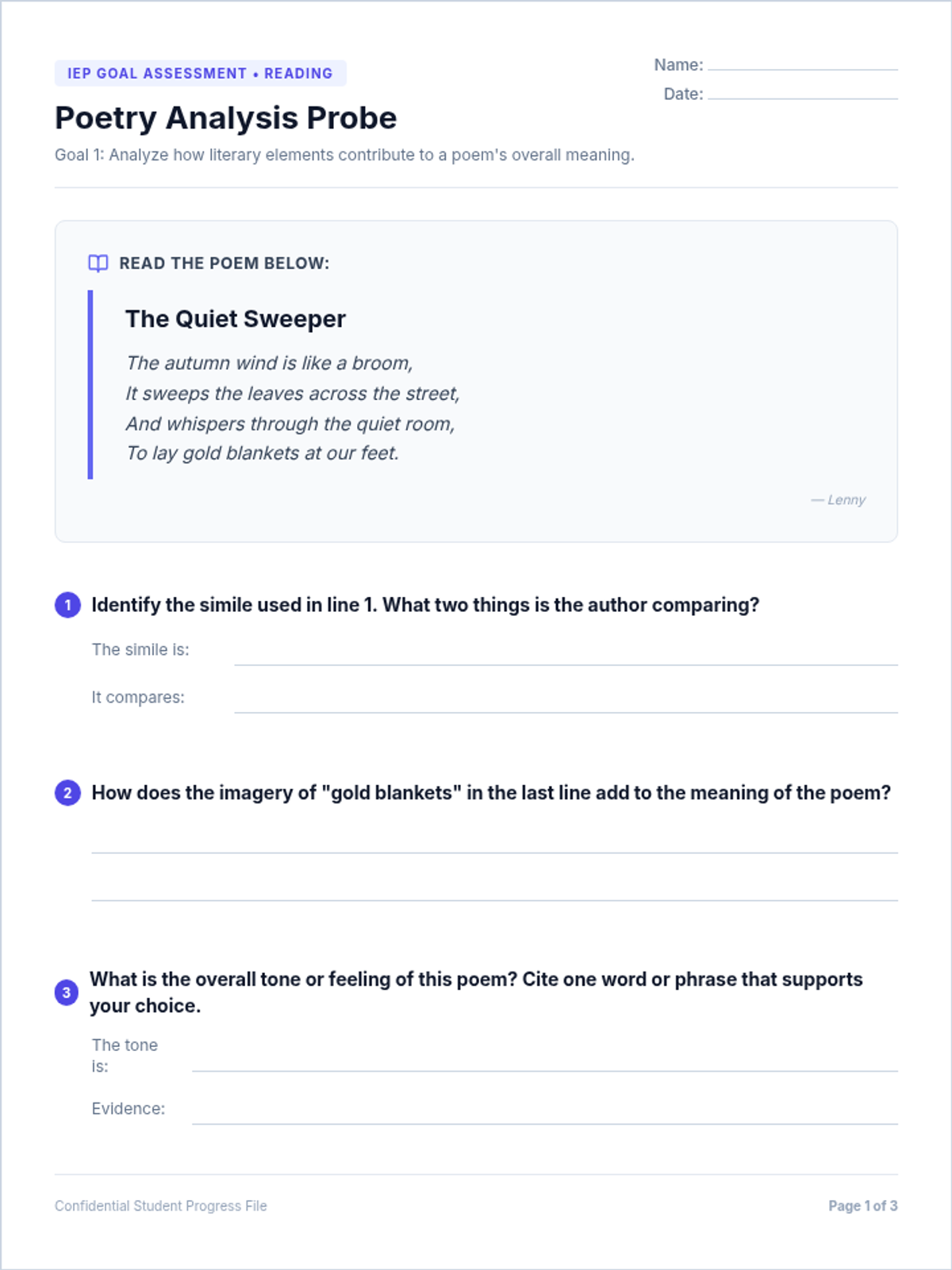
A bi-weekly assessment suite designed for rapid IEP goal progress monitoring across reading, writing, and mathematics.
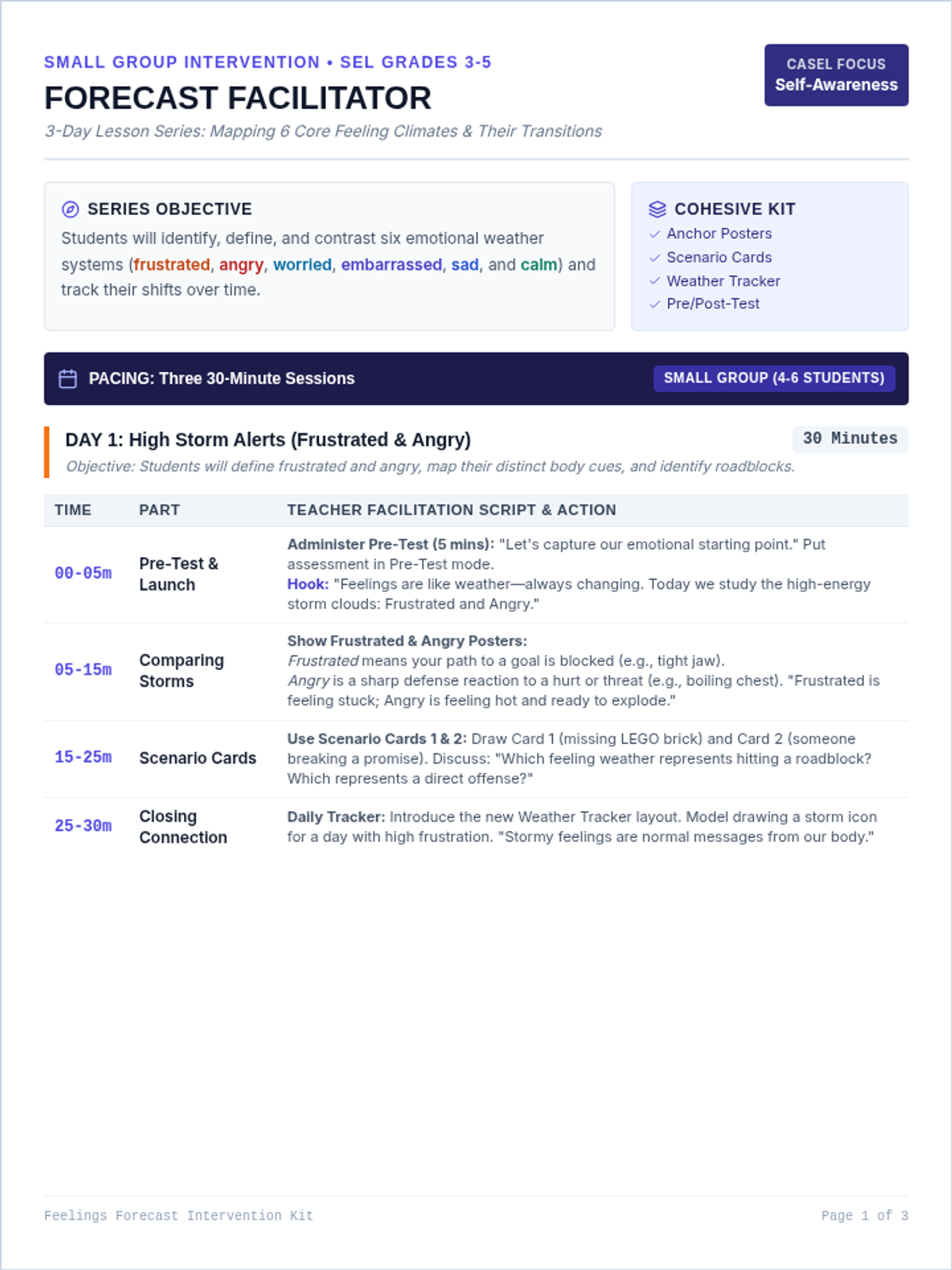
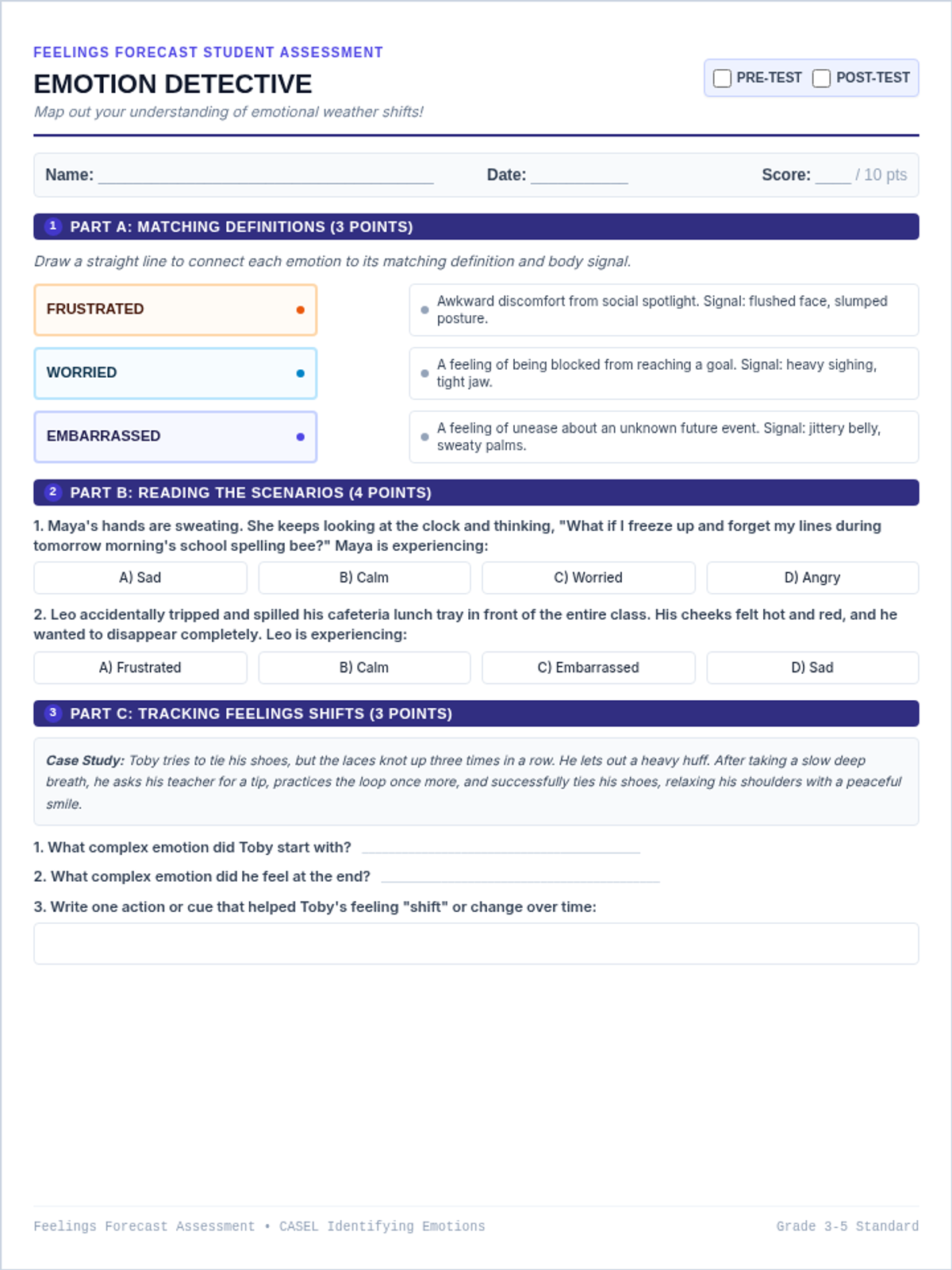
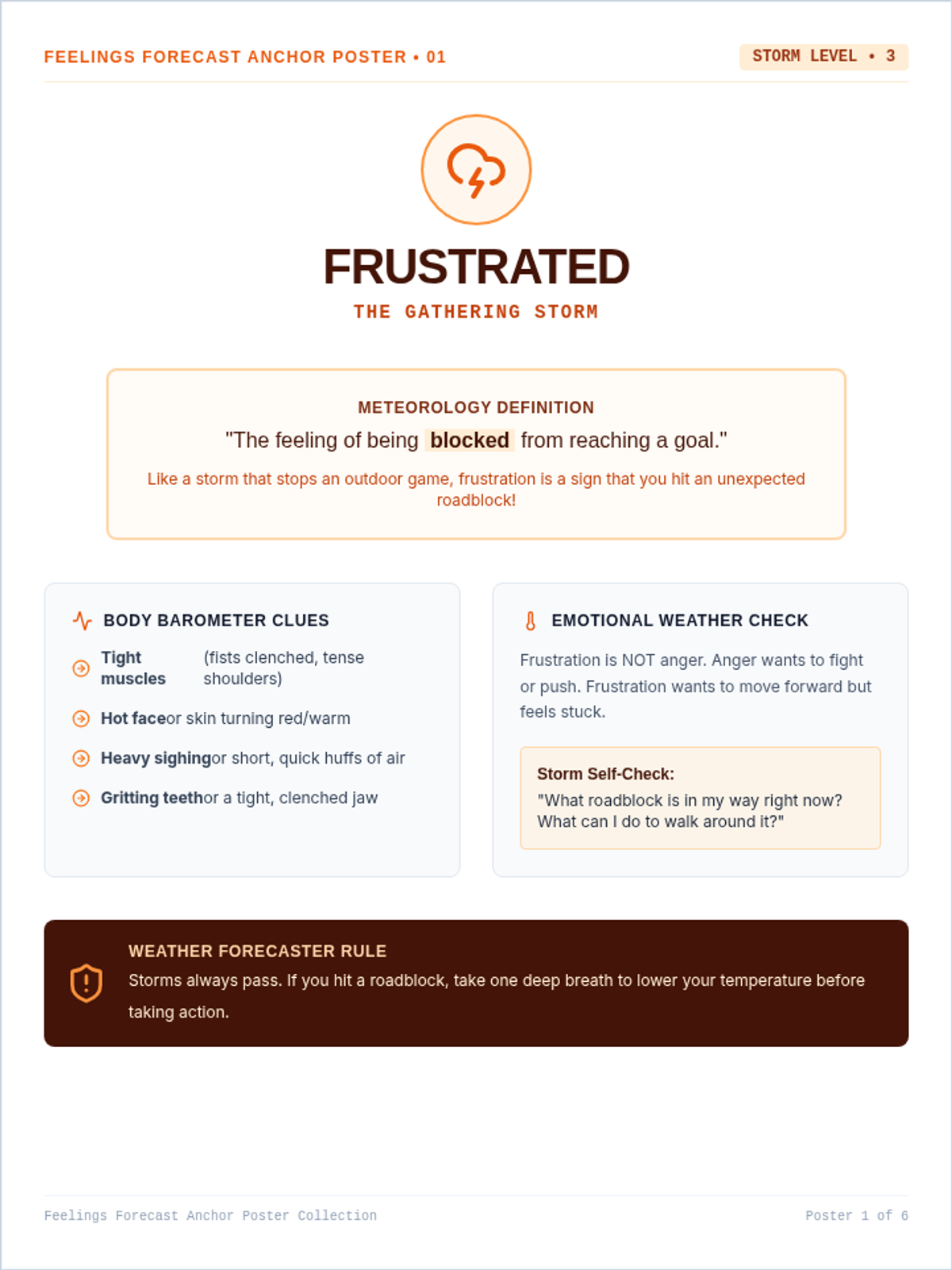
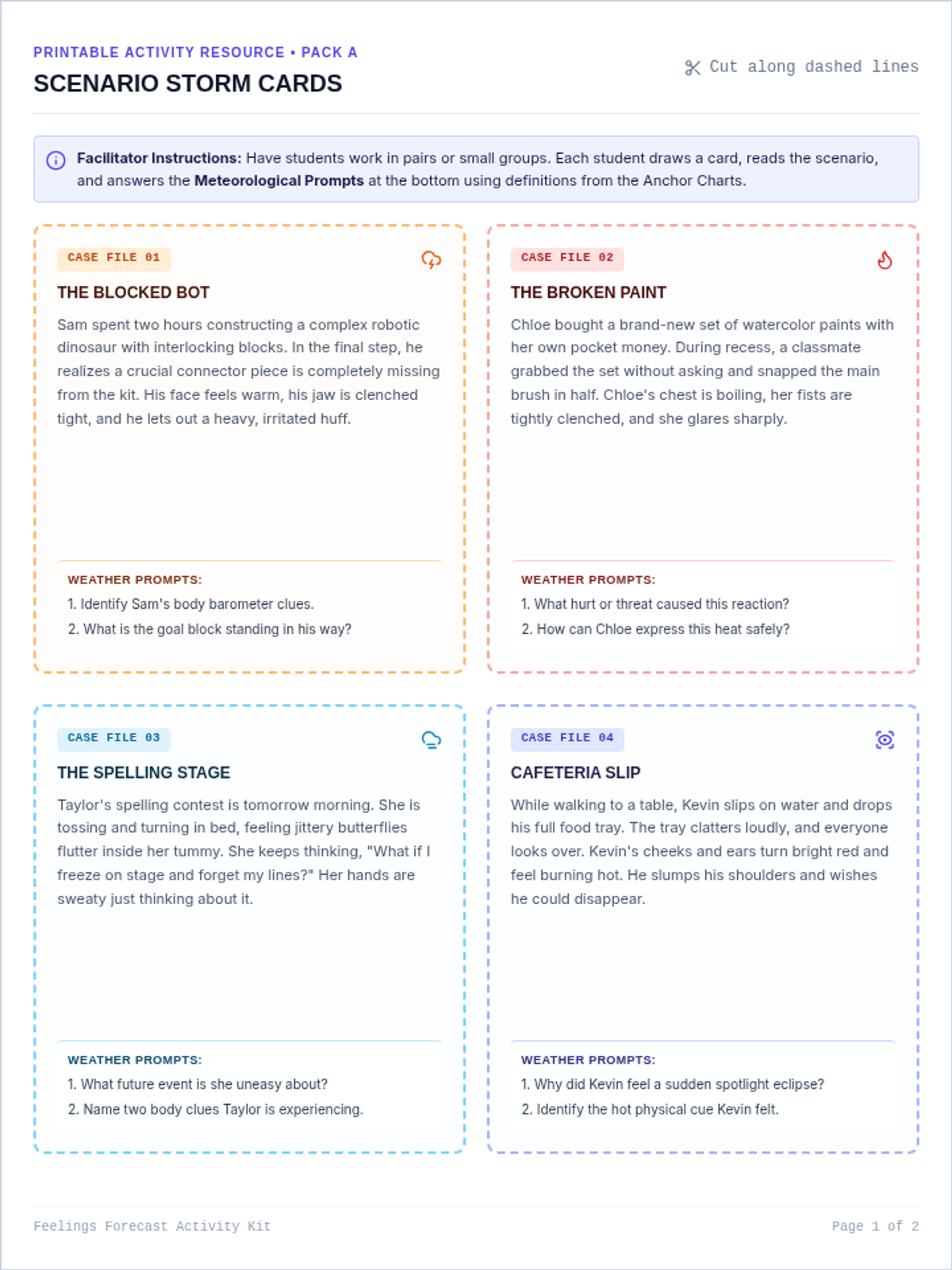
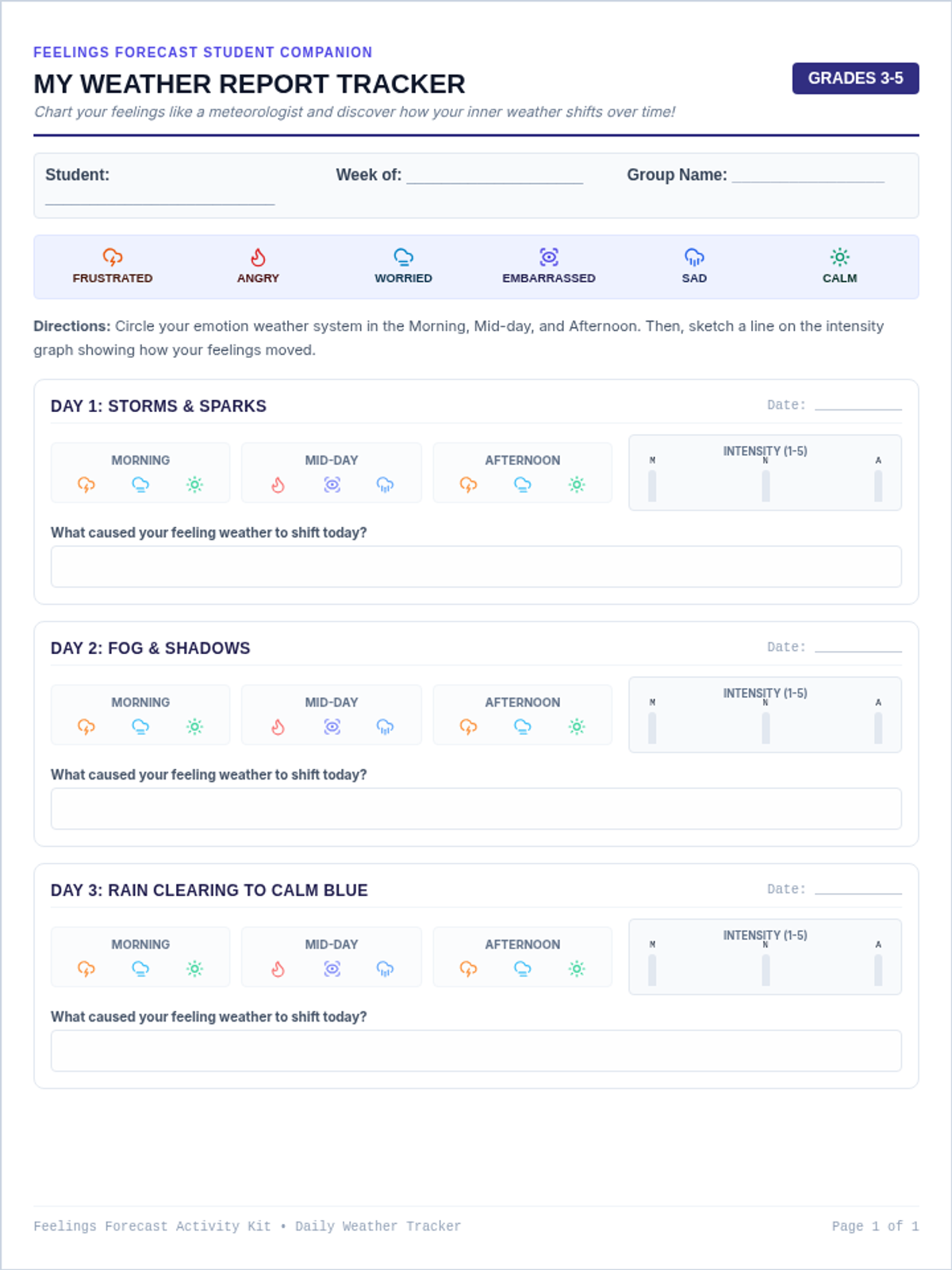
A 3-5 day small group social-emotional learning lesson series designed for upper elementary students (grades 3-5) to identify complex emotions (frustrated, angry, worried, embarrassed, sad, and calm) and explore how feelings change over time, using a meteorological weather-tracking theme.
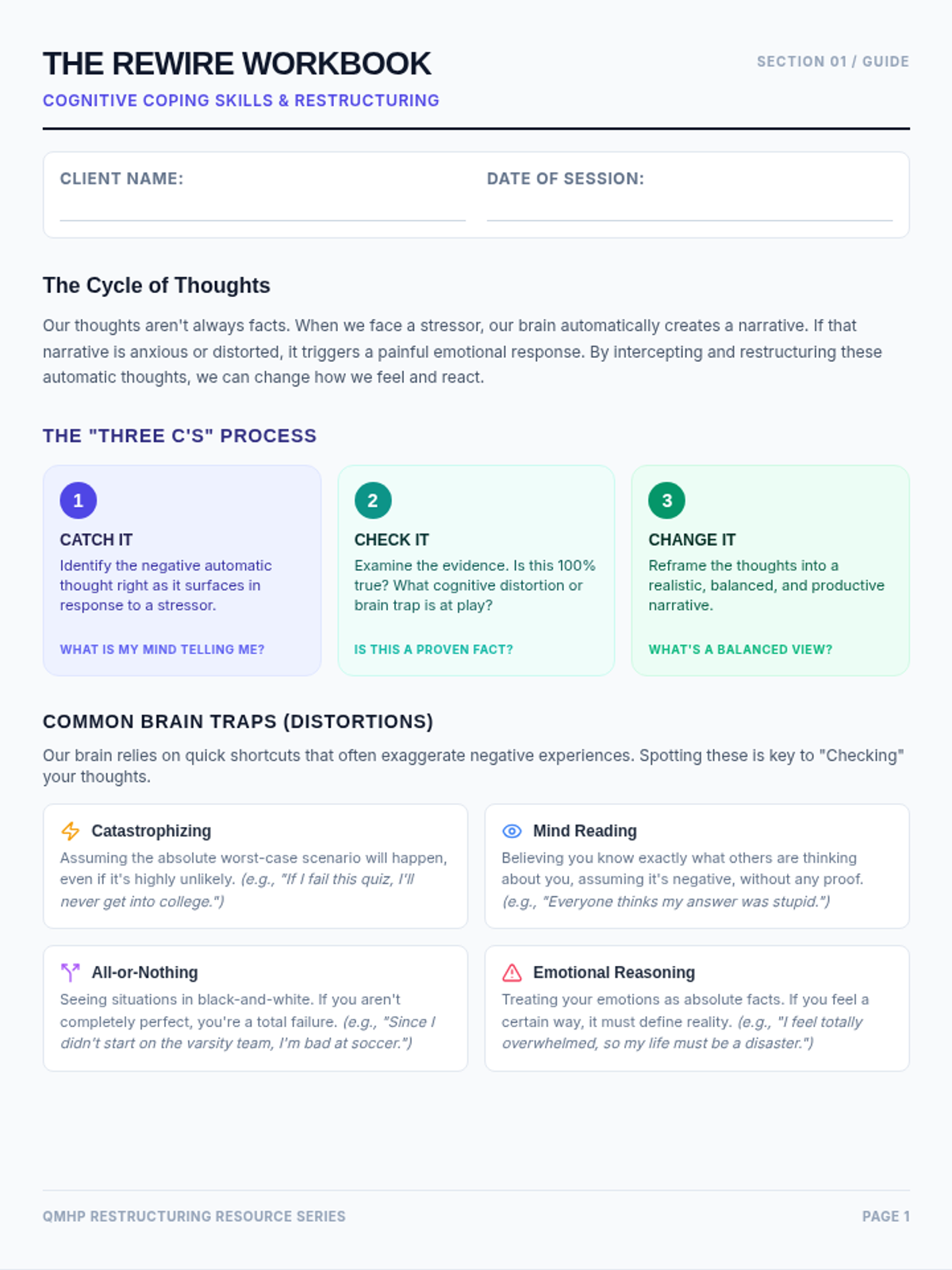
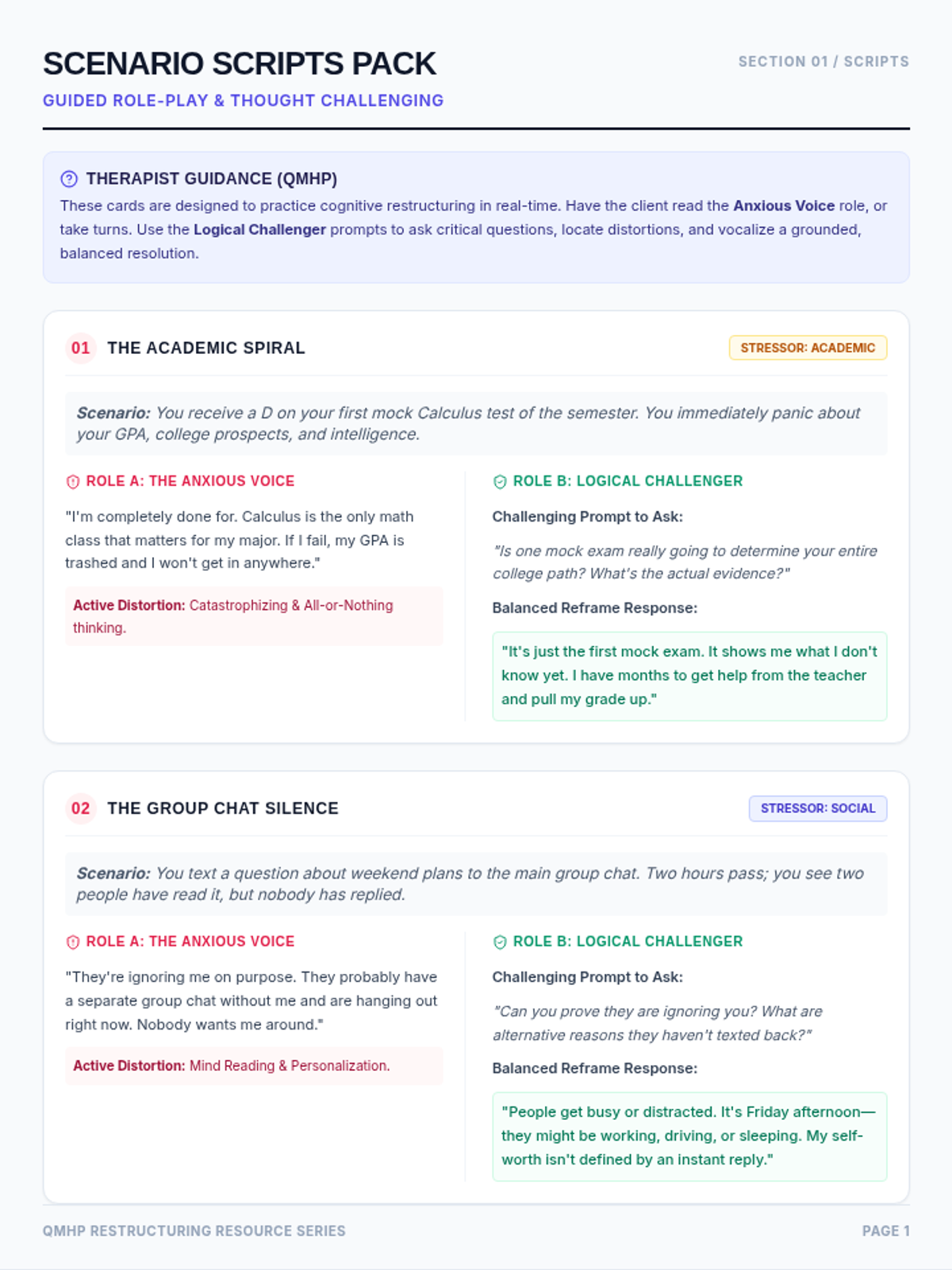
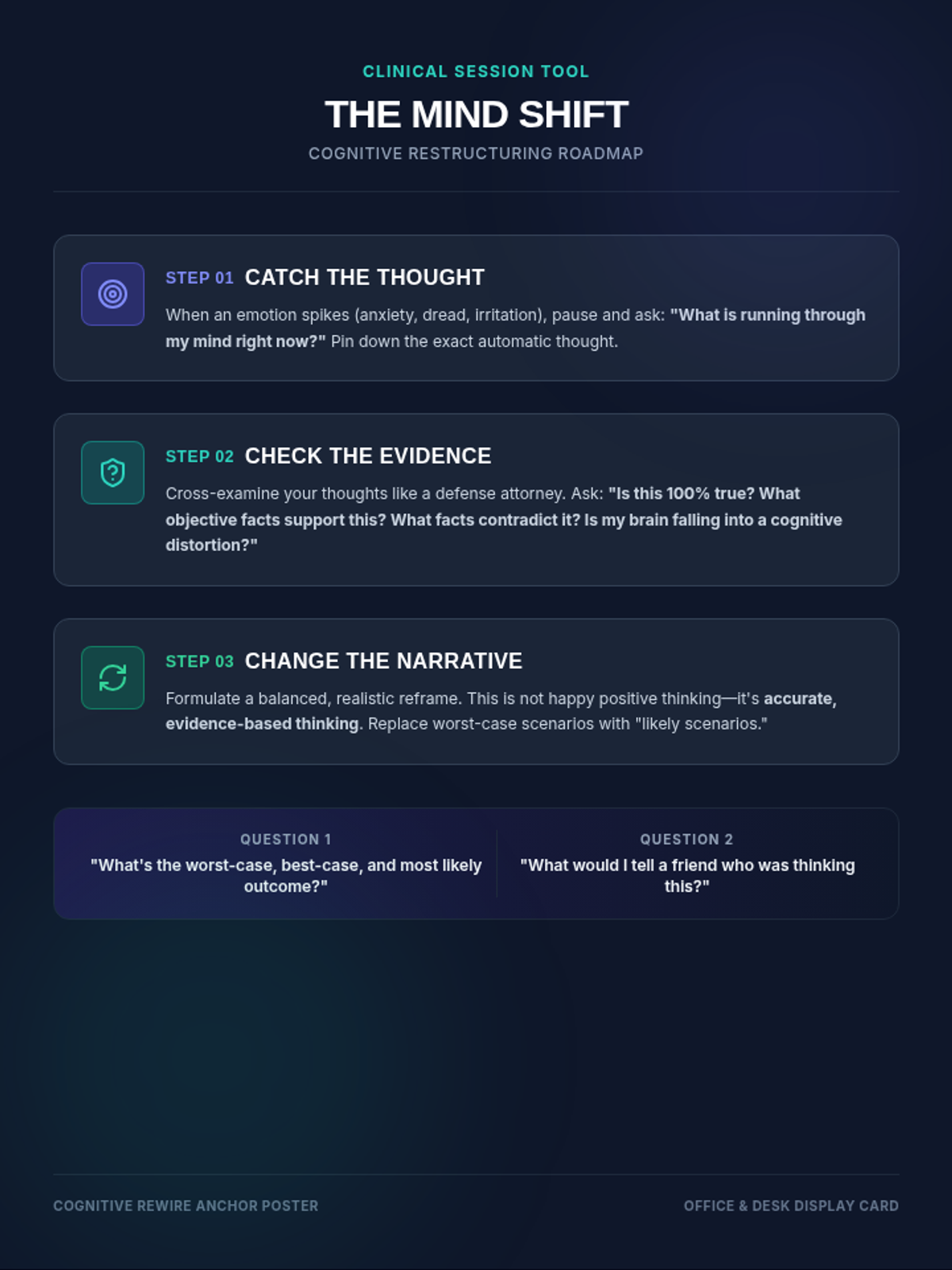
A comprehensive mental health lesson for high schoolers focusing on cognitive restructuring. Clients learn to identify cognitive distortions, challenge anxious thoughts, and reframe them into balanced perspectives through guided role-play and structured tracking.
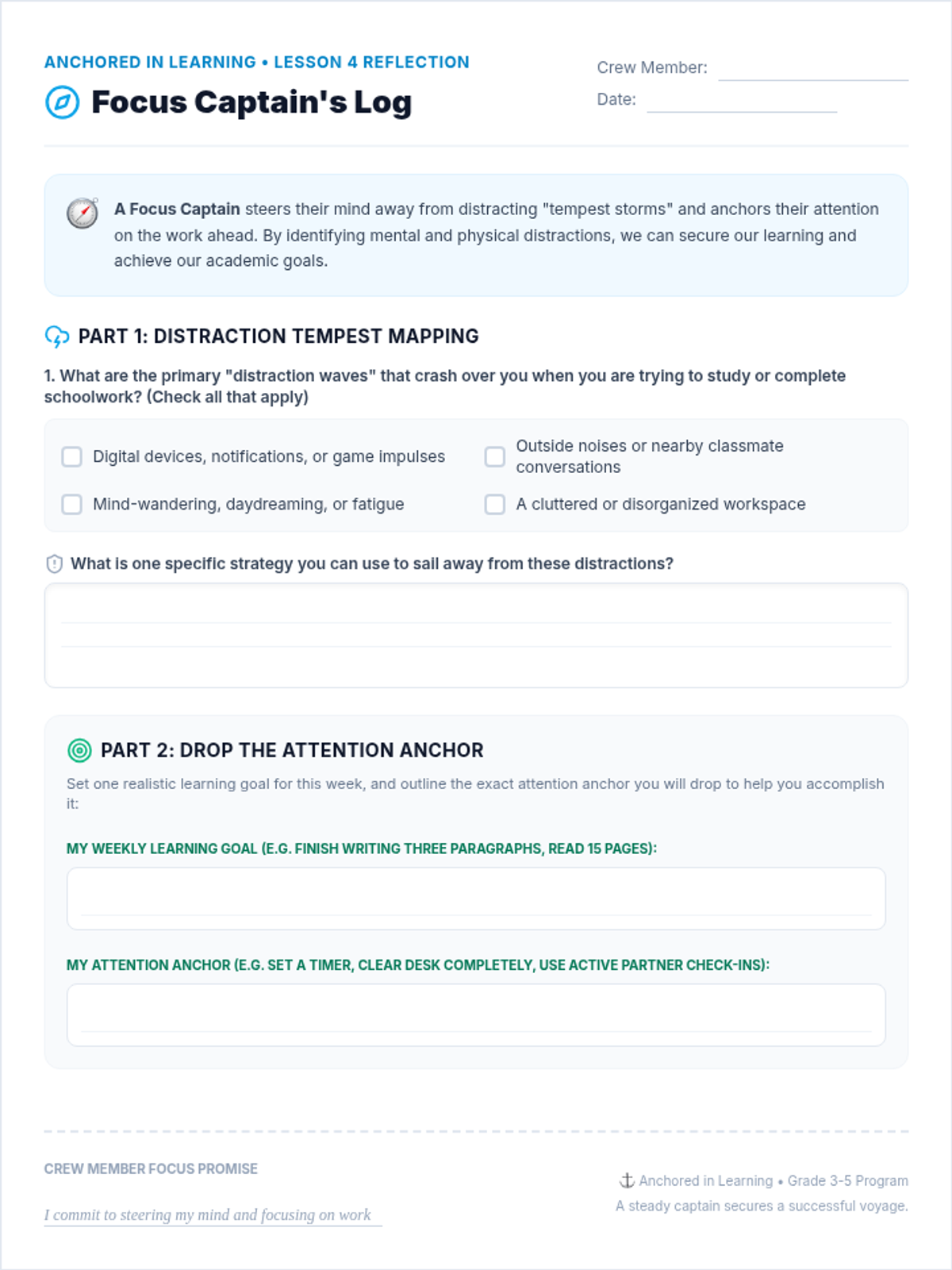
Lesson 4 of the SEL sequence. A complete, ready-to-go 15-minute lesson for 3rd-5th Grade students on focusing attention, managing digital/mental distractions, and anchoring executive attention.