Students learn the 'Pause and Think' strategy to handle unknown pop-ups or links, emphasizing the importance of checking with a trusted adult.
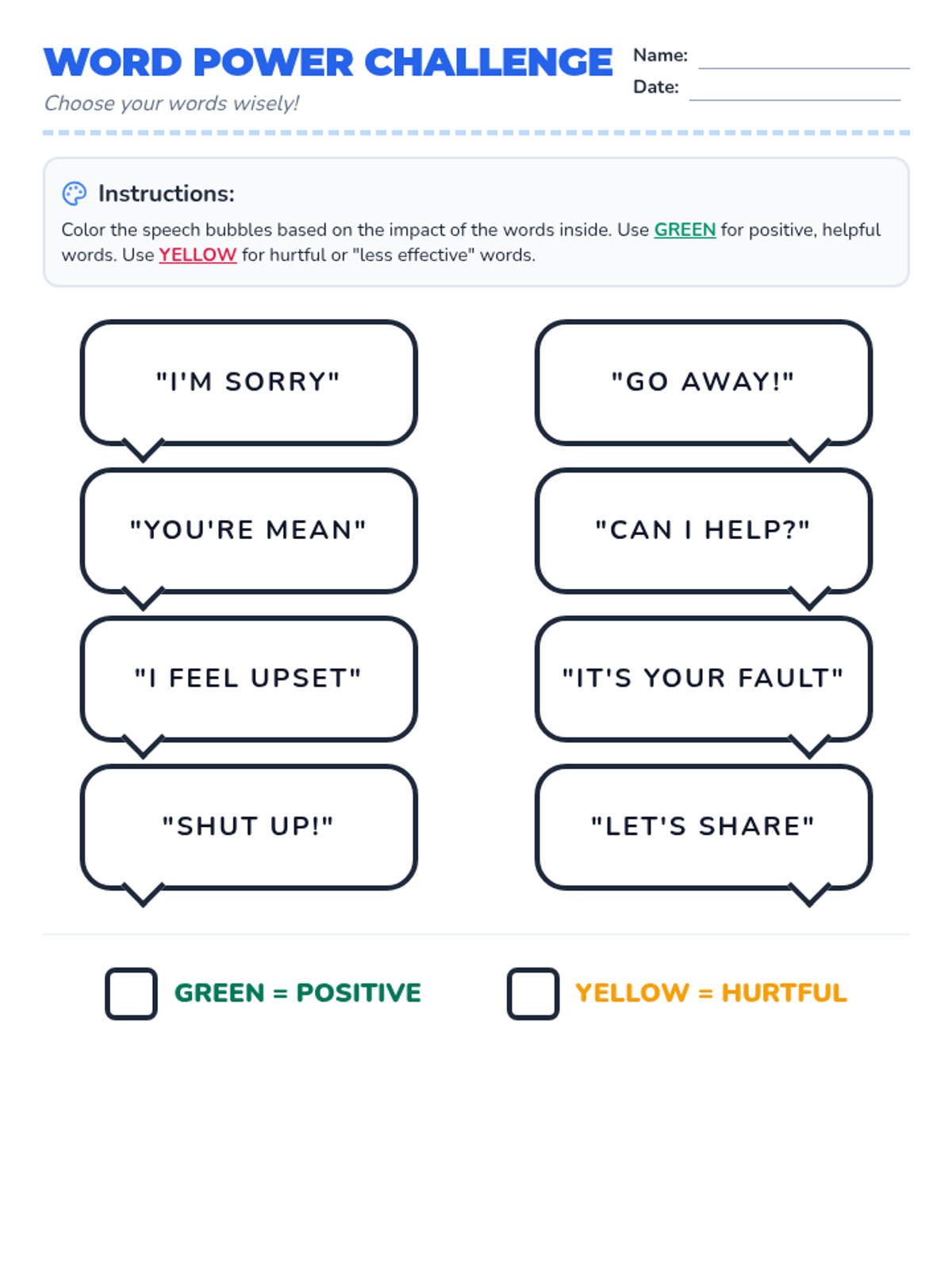
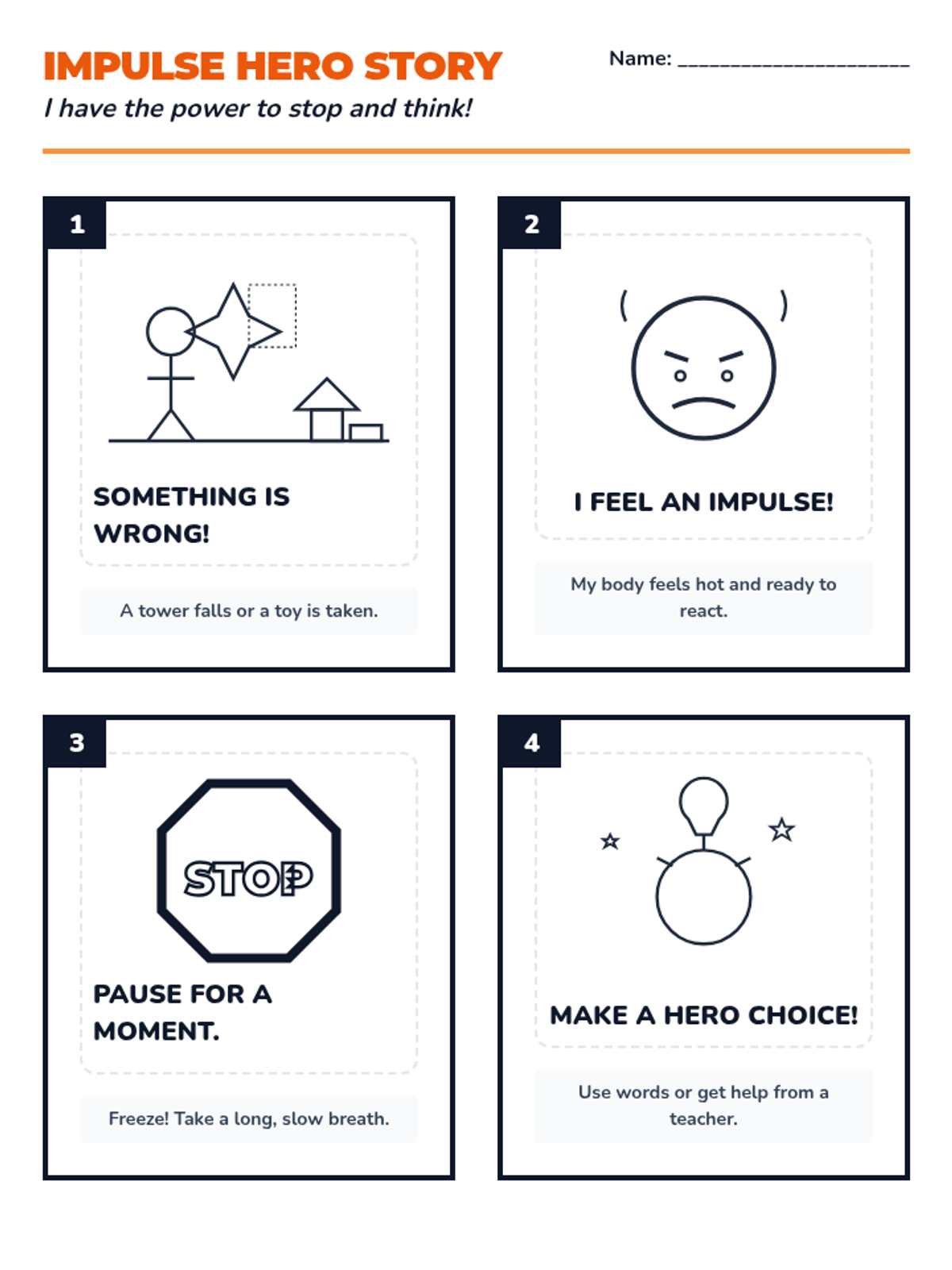
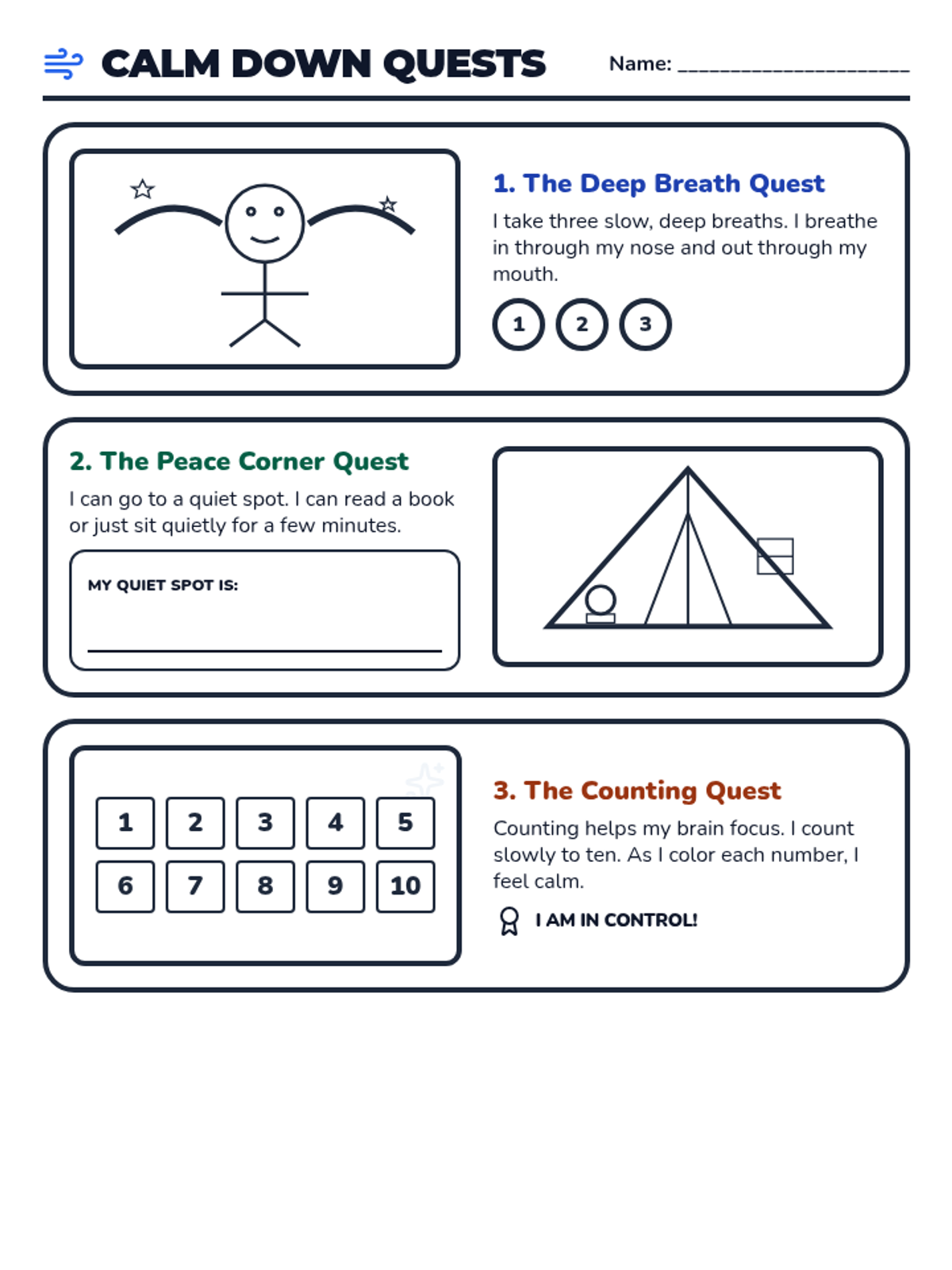
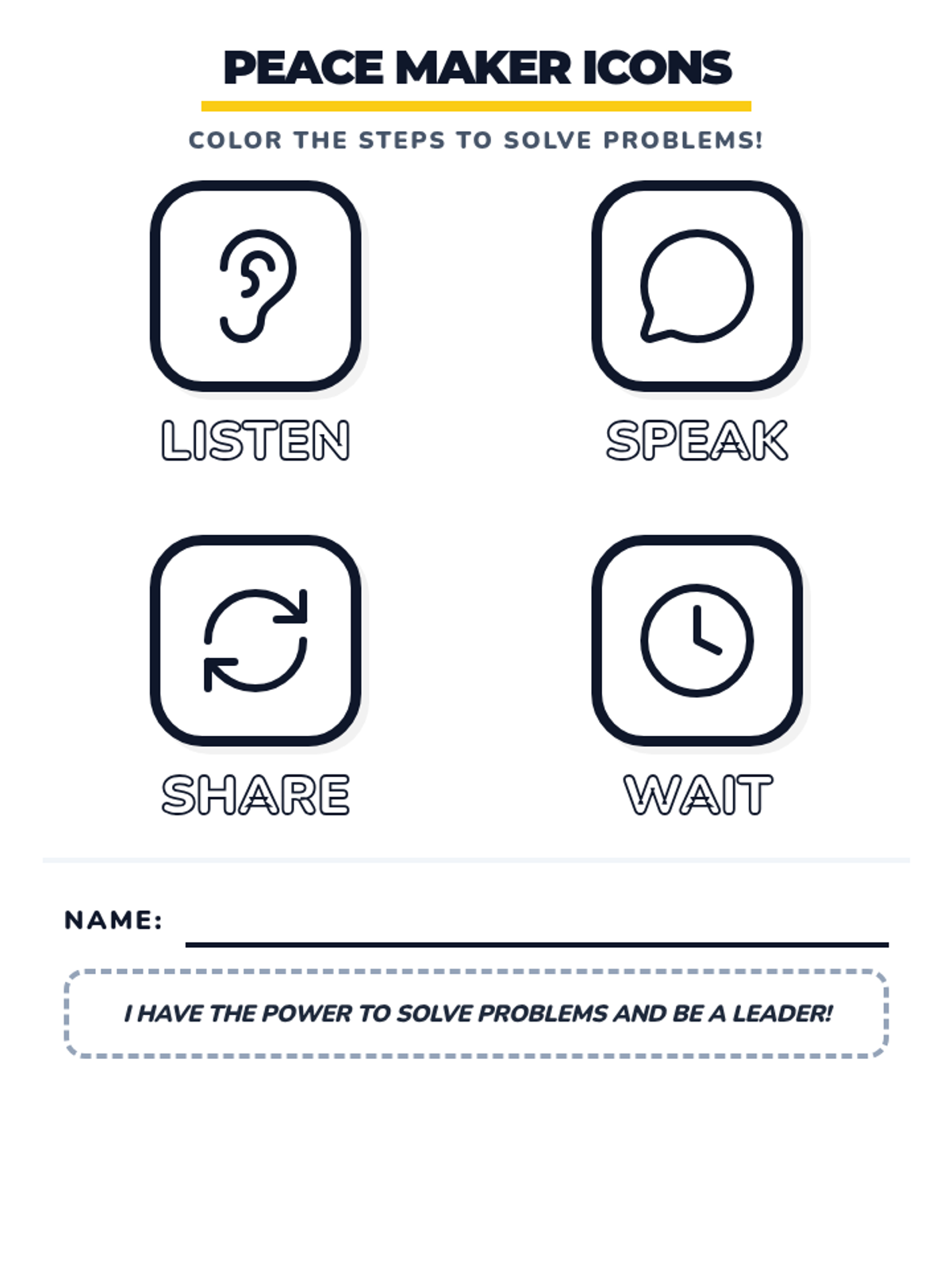
A collection of interactive coloring pages and visual guides focusing on impulse control, positive communication, and conflict resolution for social-emotional learning.
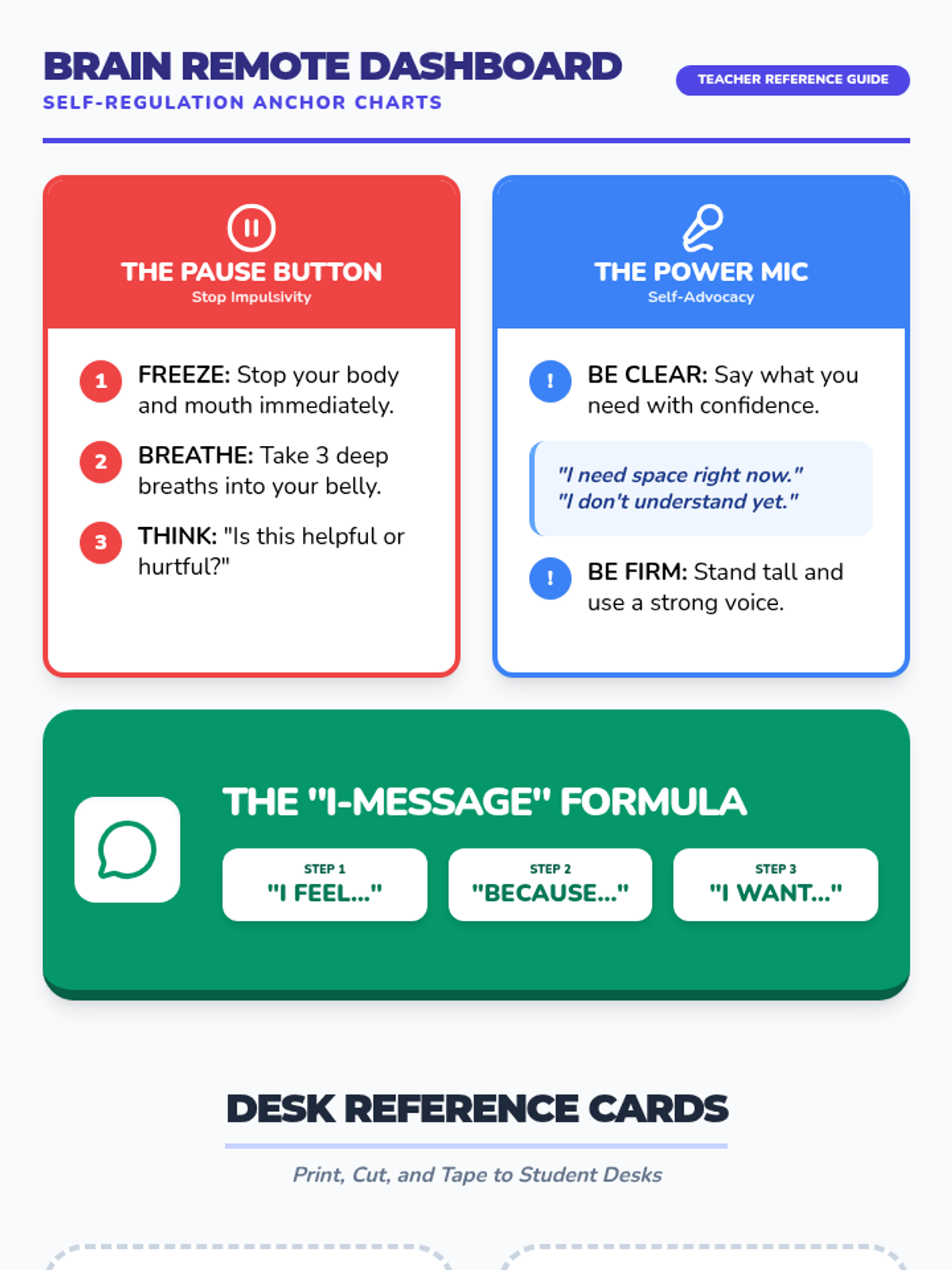
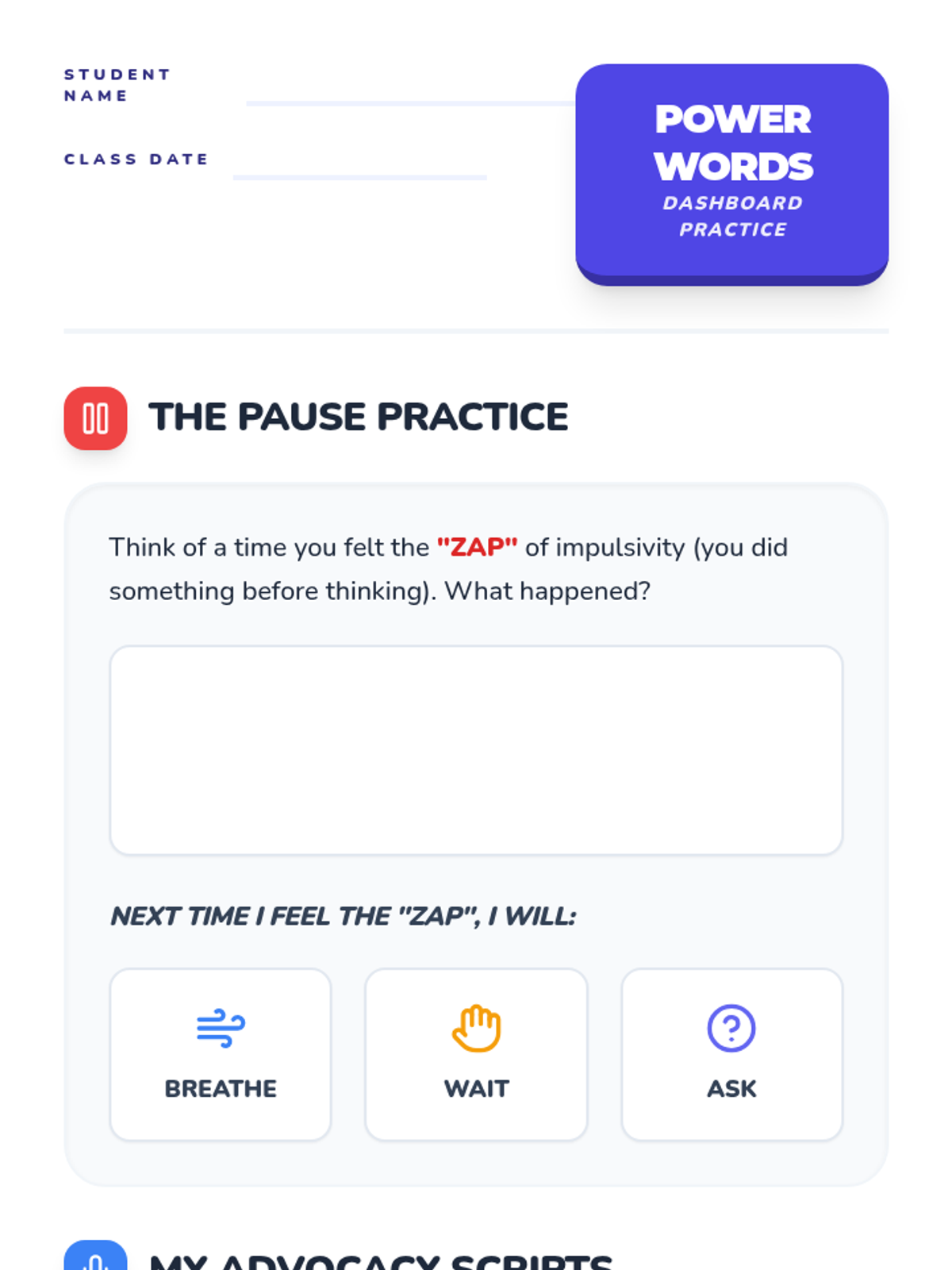
A comprehensive lesson exploring the 'Brain Remote' to manage impulsive urges and use 'Power Words' for self-advocacy and conflict resolution.
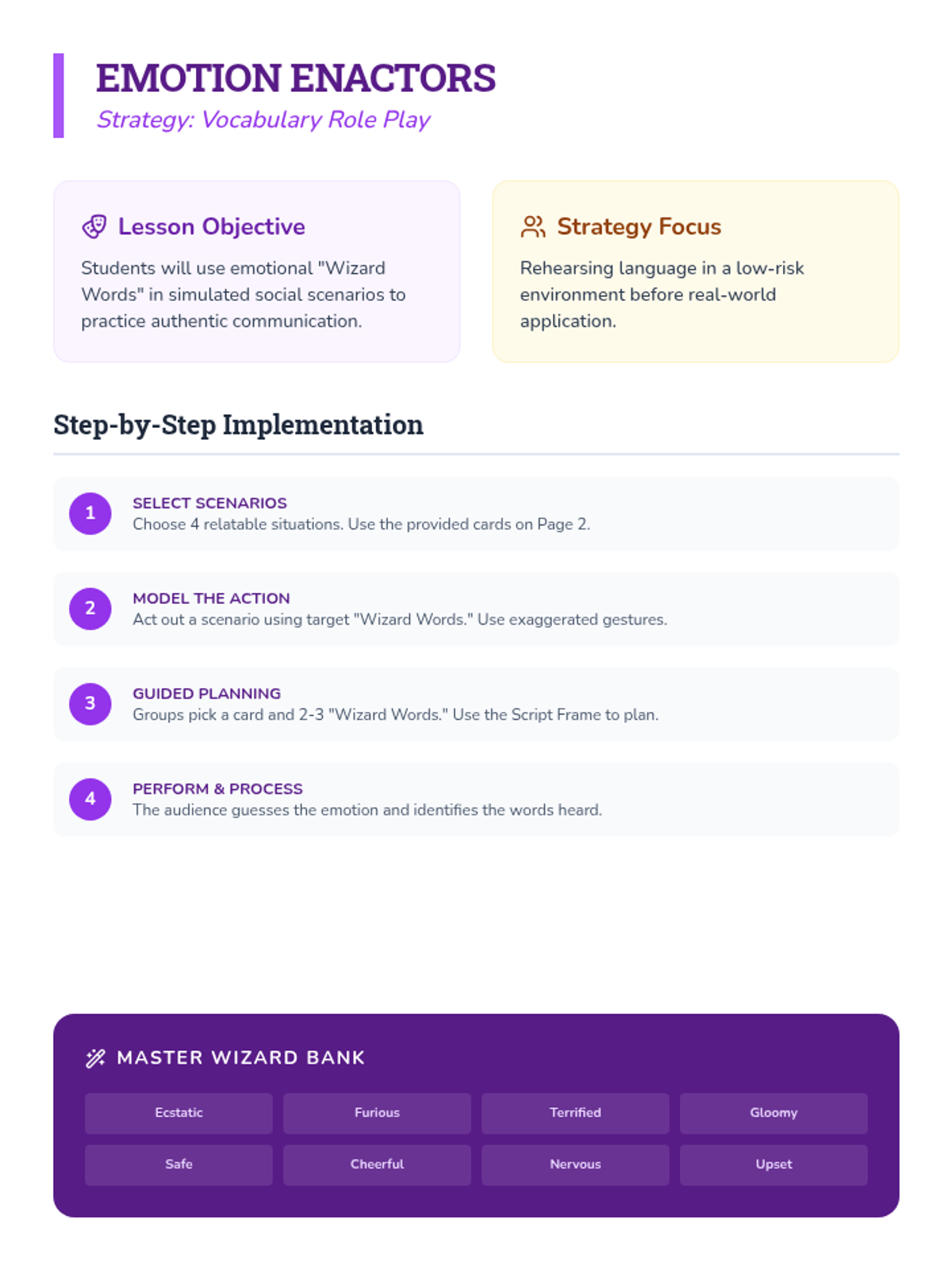
Students apply their expanded emotional vocabulary in simulated social situations, practicing the 'Vocabulary Role Play' strategy to solidify language acquisition through performance and interaction.
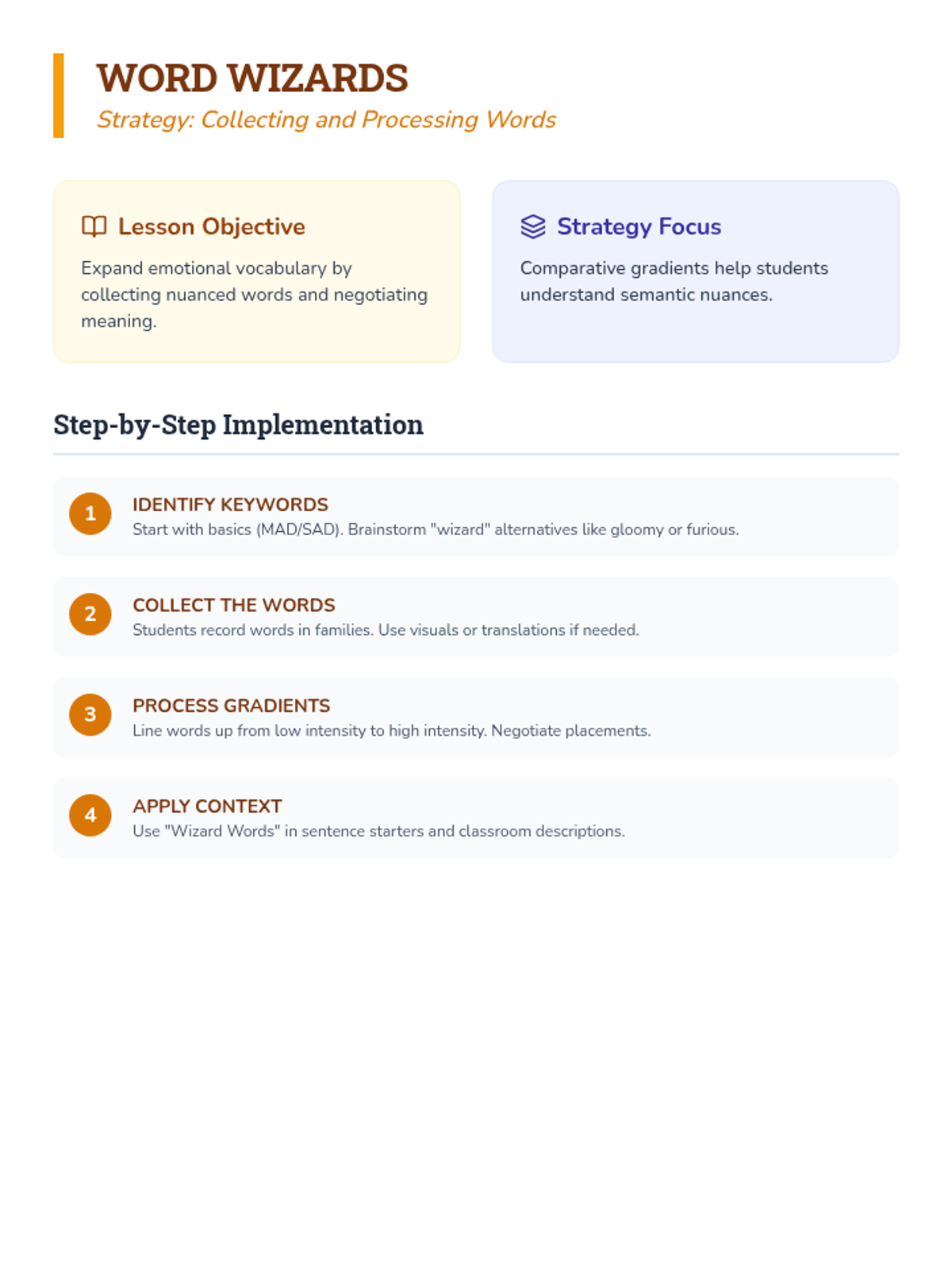
Builds a robust emotional vocabulary by systematically identifying, recording, and interacting with new words that describe complex feelings.
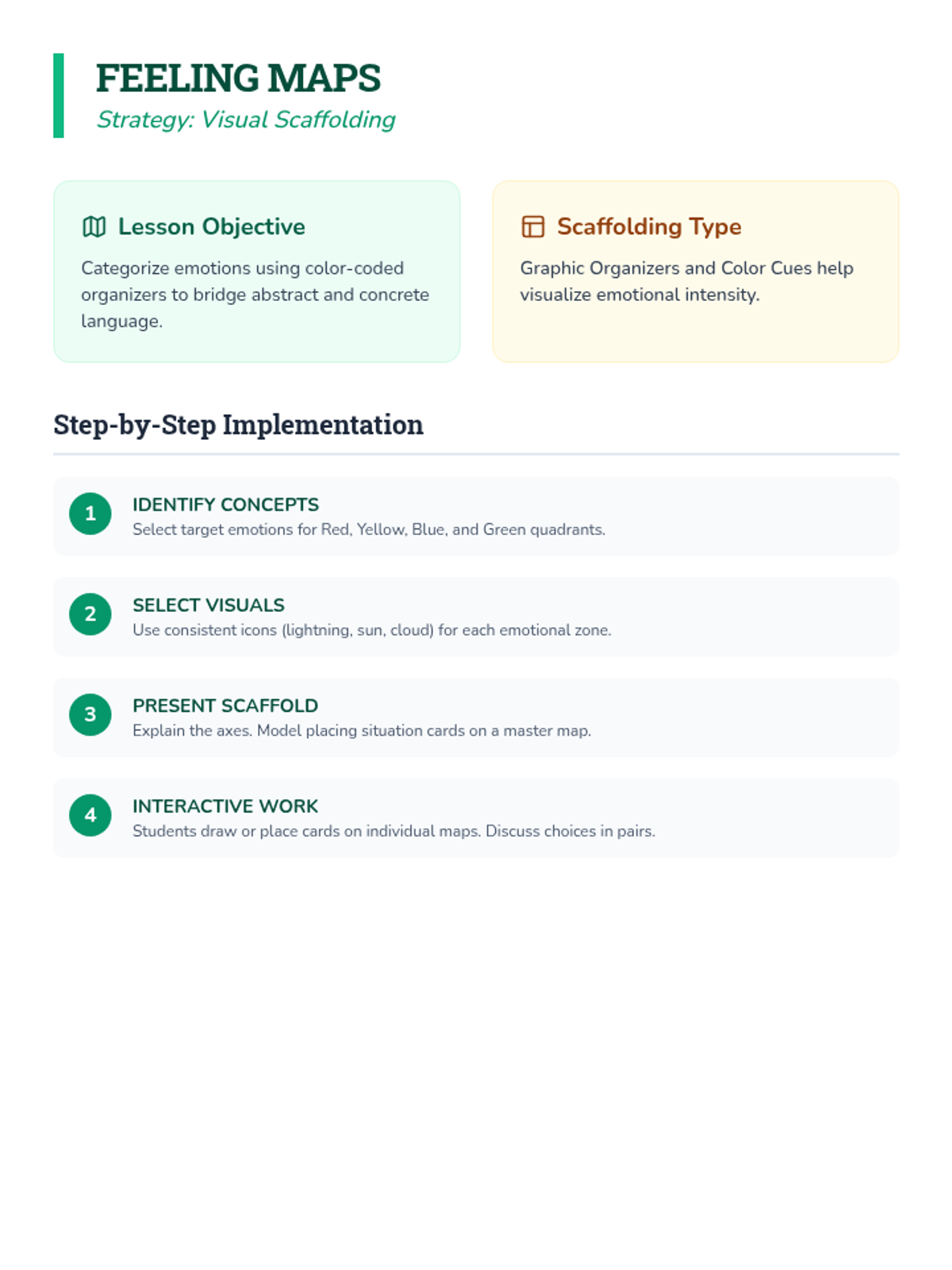
Employs graphic organizers, color-coding, and images to help students map the physical and situational connections to their feelings.
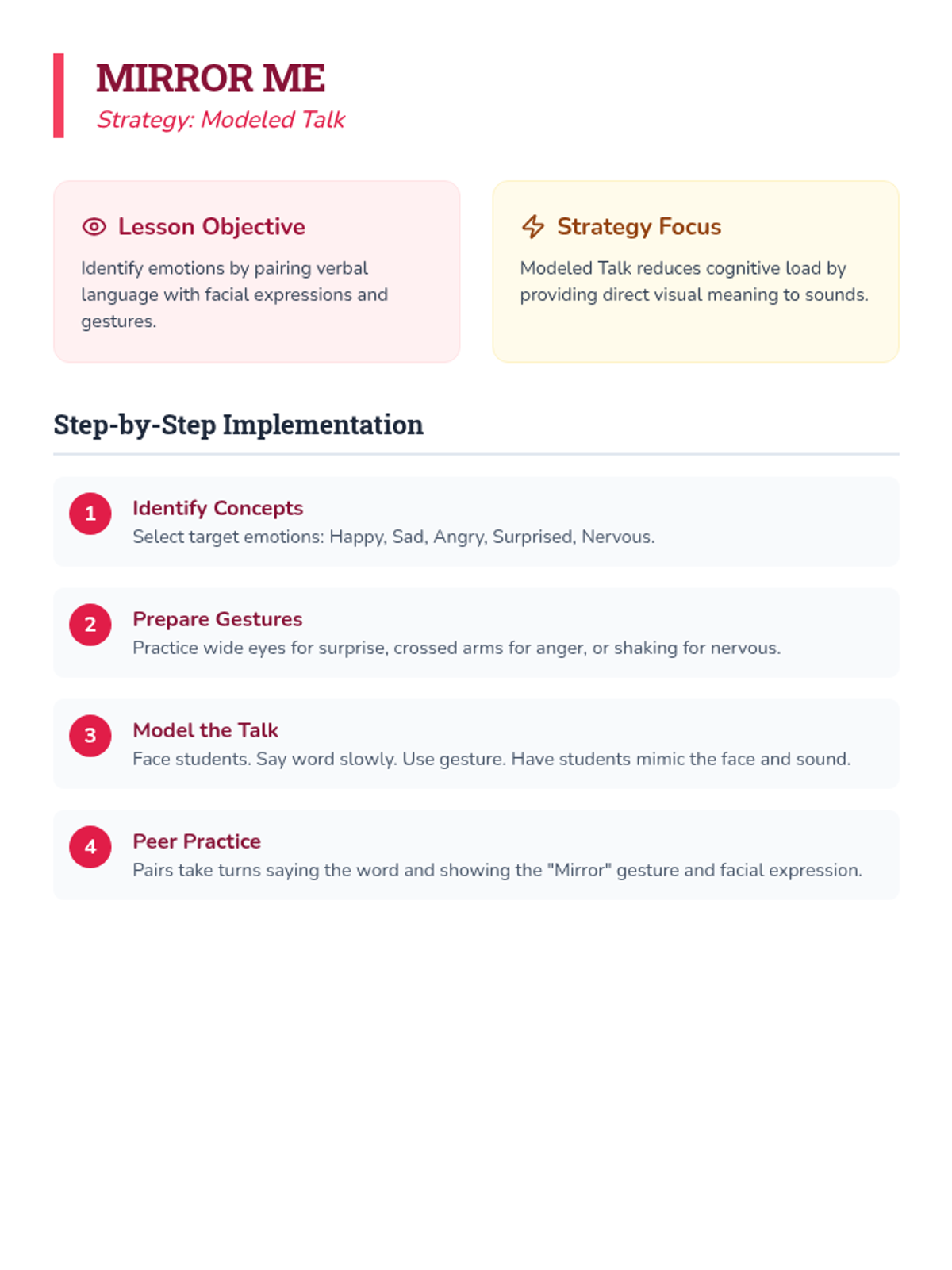
Uses gestures, facial expressions, and slowed speech to demonstrate emotional vocabulary and social interactions, making language comprehensible for ELLs.
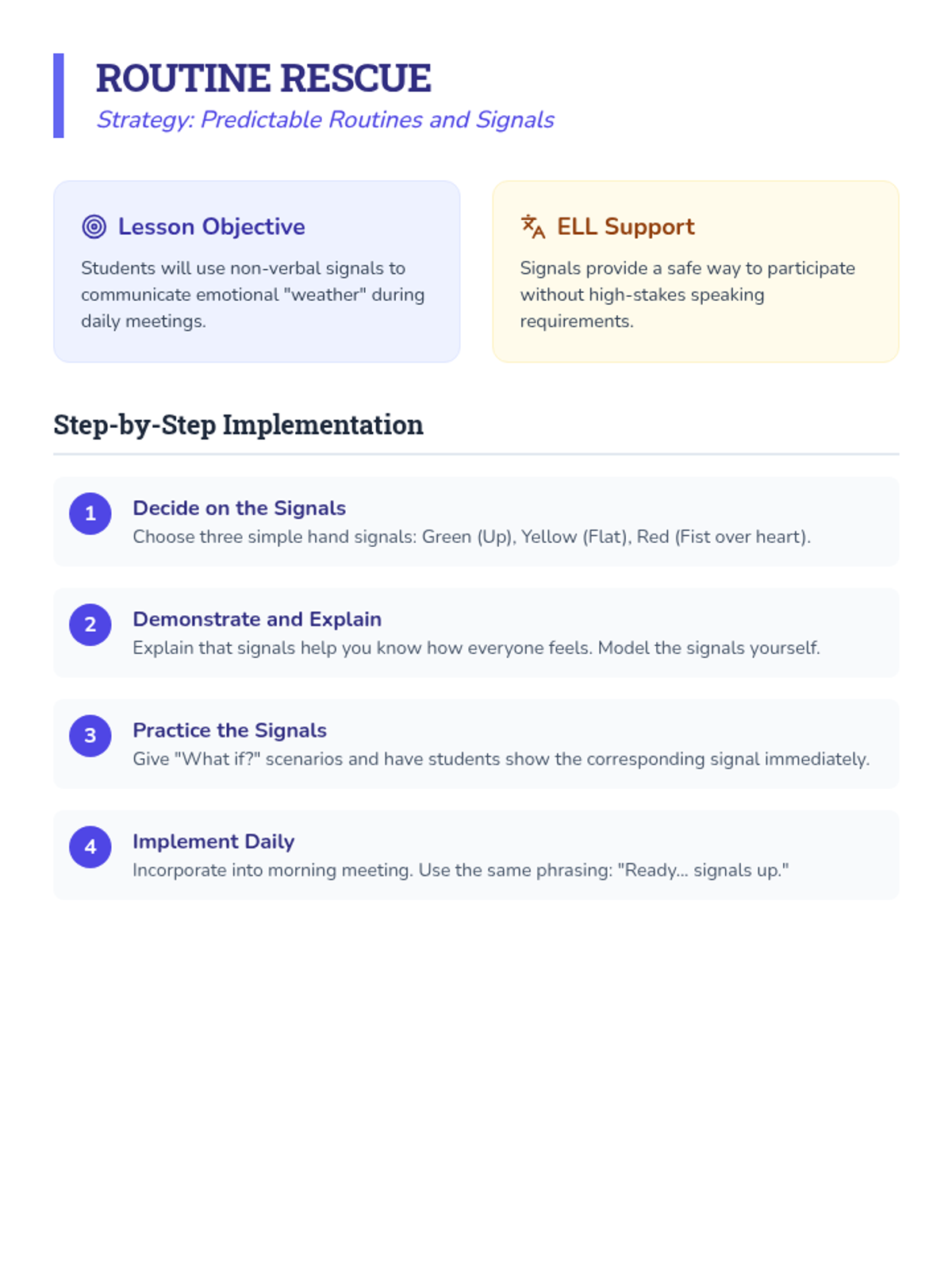
Establishes daily signals and routines for students to communicate their emotional state and readiness for learning, providing a safe and predictable classroom environment.
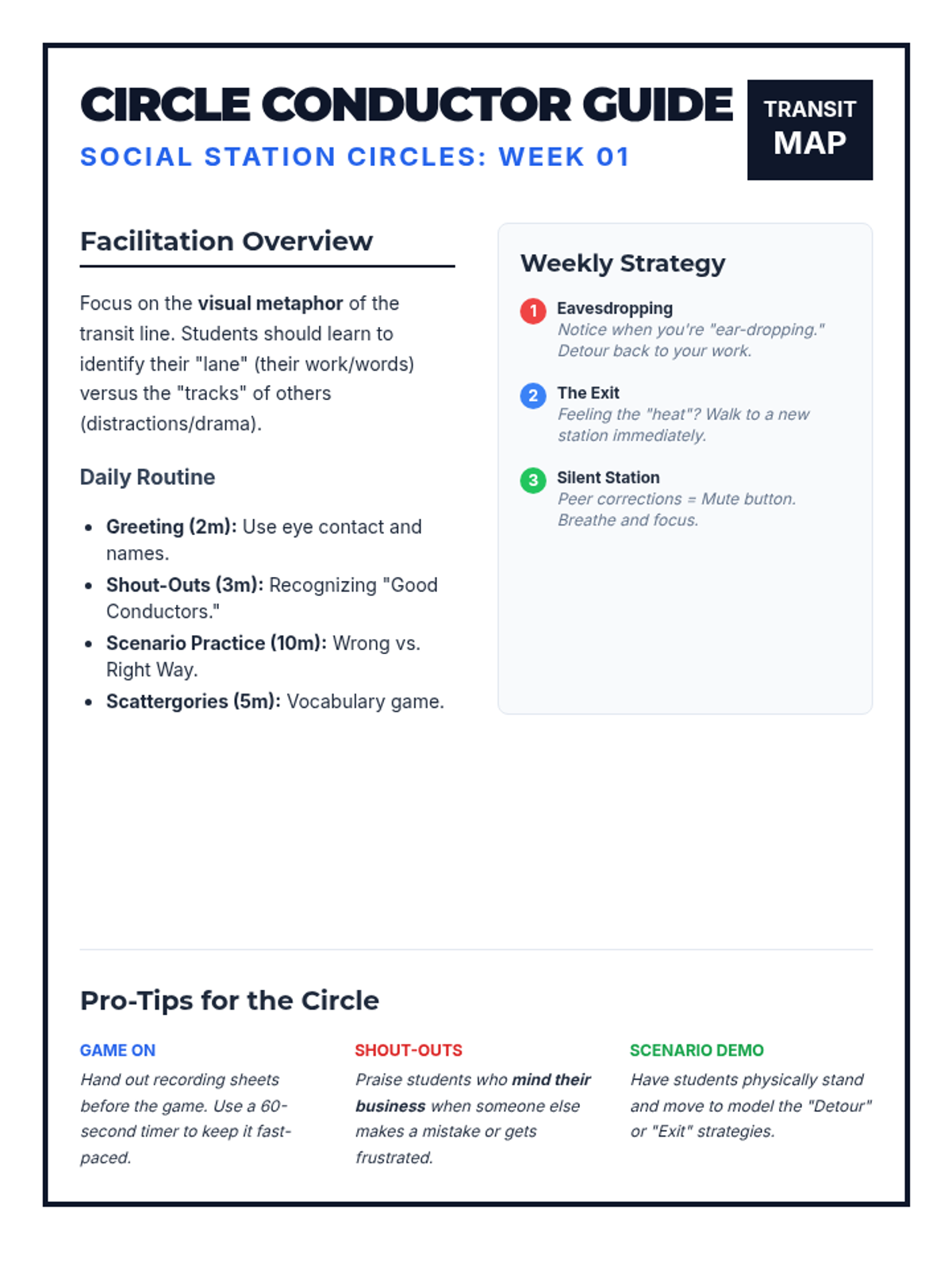
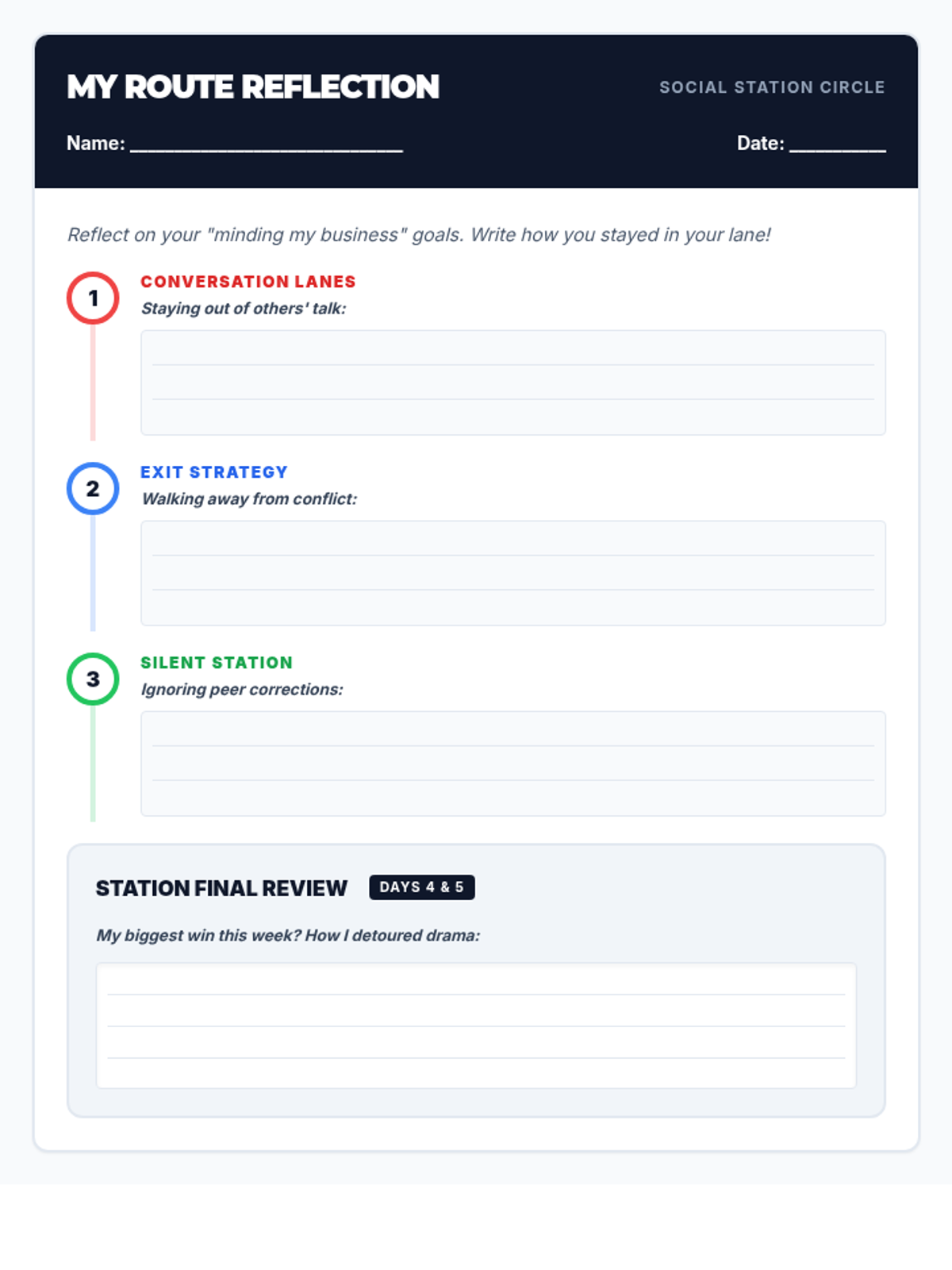
Day 5 covers staying focused and not contributing to classroom distractions.
Day 4 teaches students how to avoid drama and rumors by taking a 'detour'.
Day 3 addresses how to ignore peer corrections and focus on one's own work.
Day 2 focuses on the 'exit strategy' for walking away from rising conflict.
Day 1 focuses on staying out of others' conversations and 'ear-dropping' awareness.
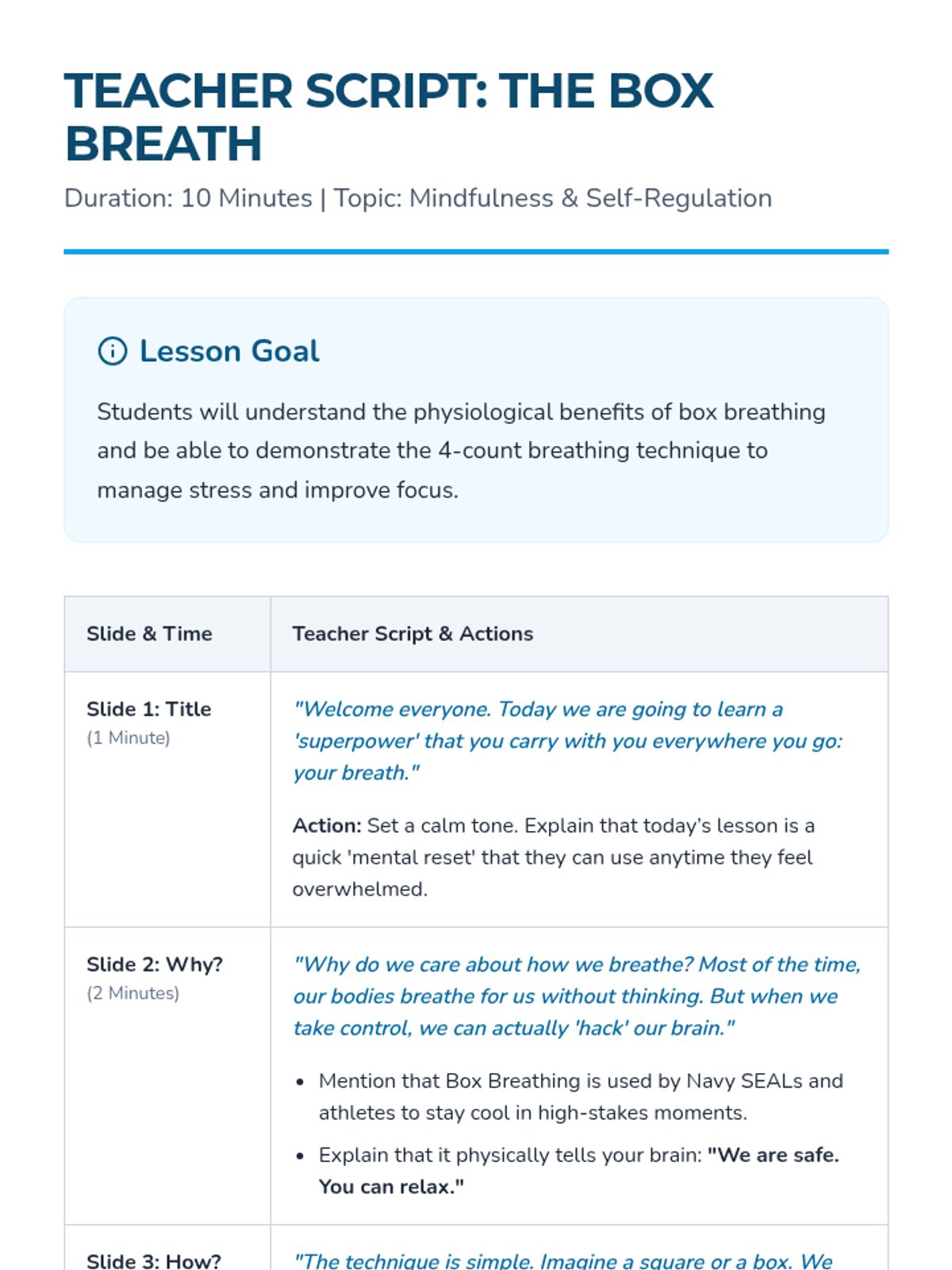
A quick 10-minute introduction to box breathing, a powerful stress-relief technique, featuring a guided video and classroom practice.
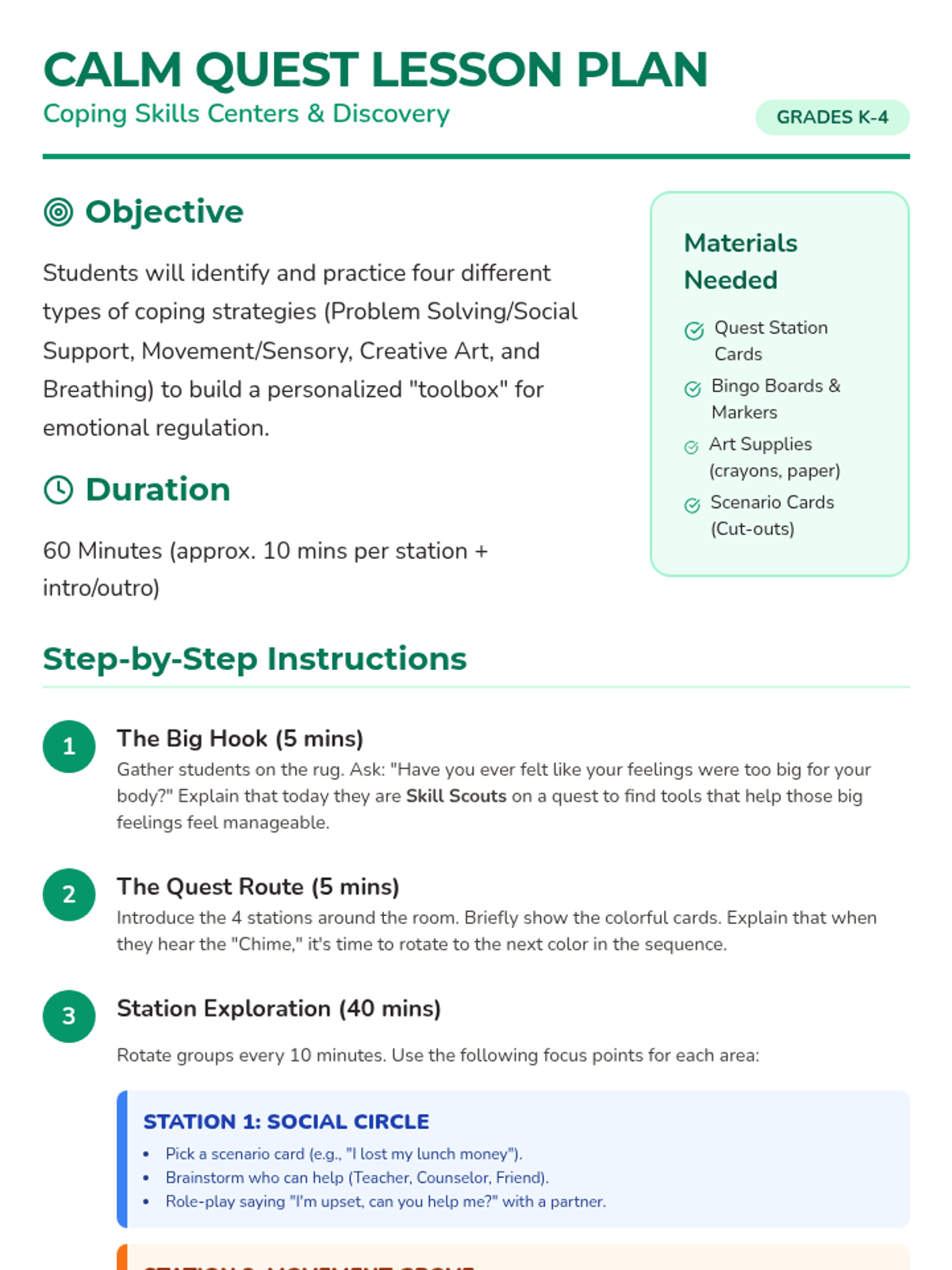
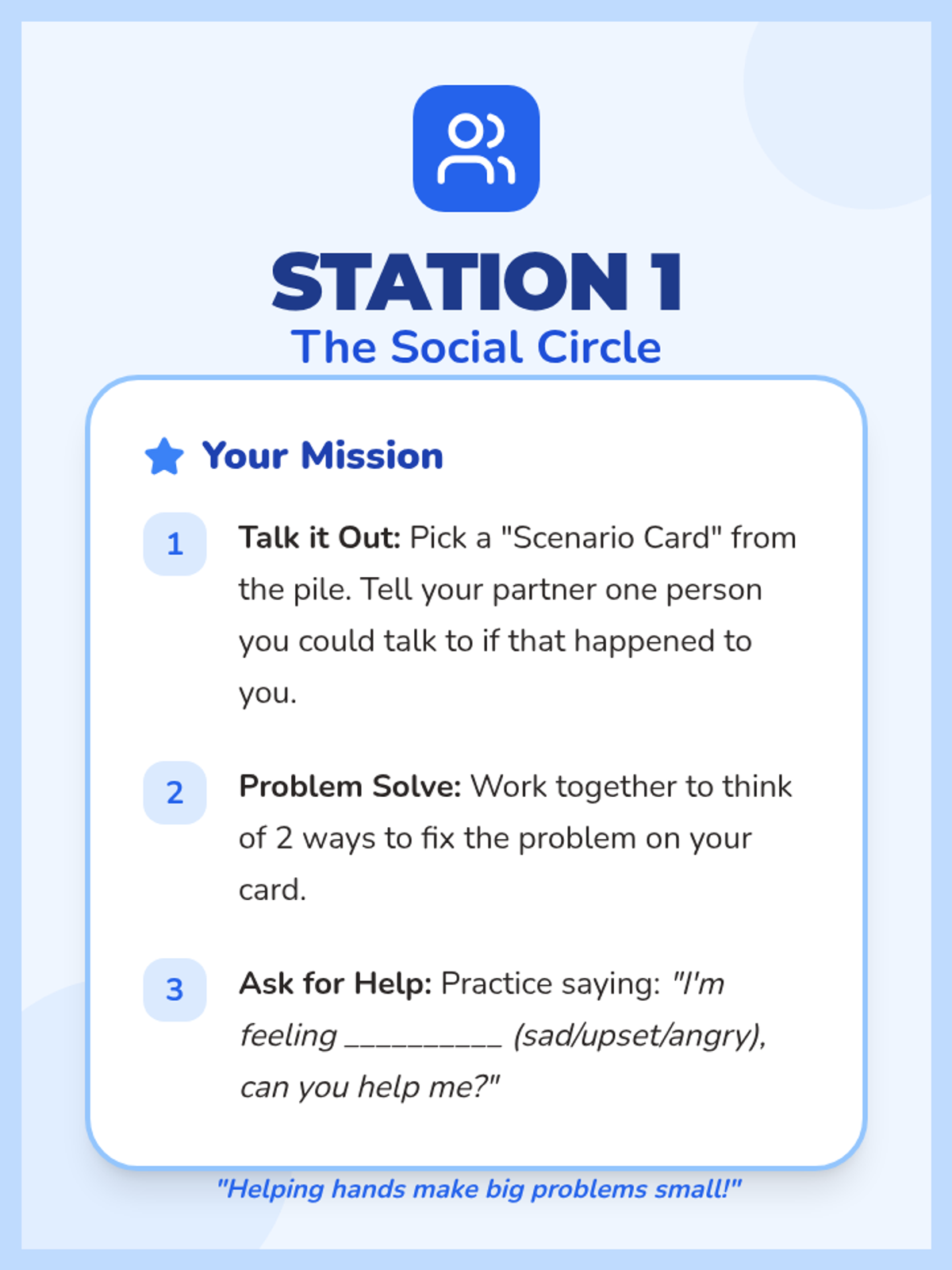
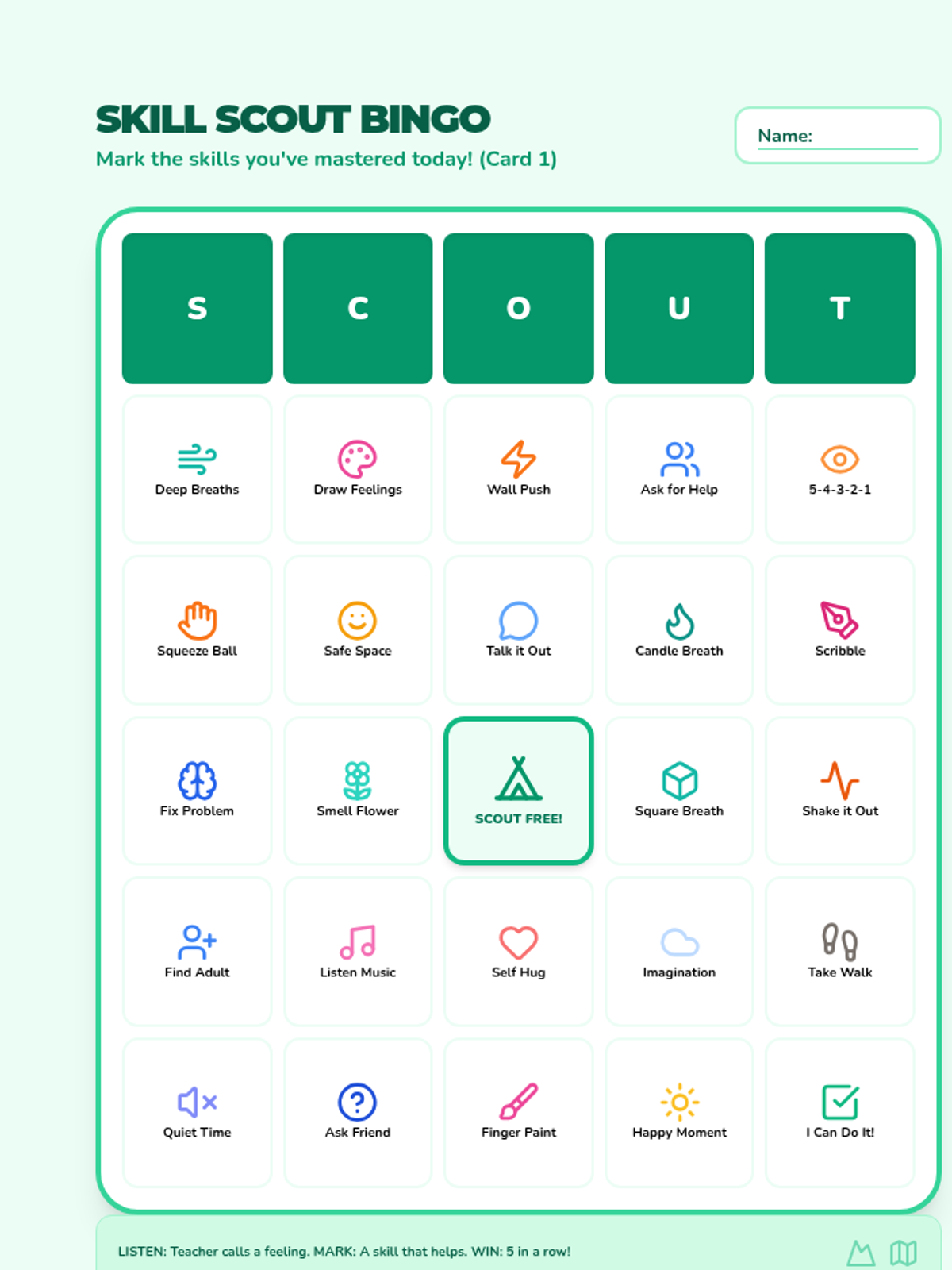
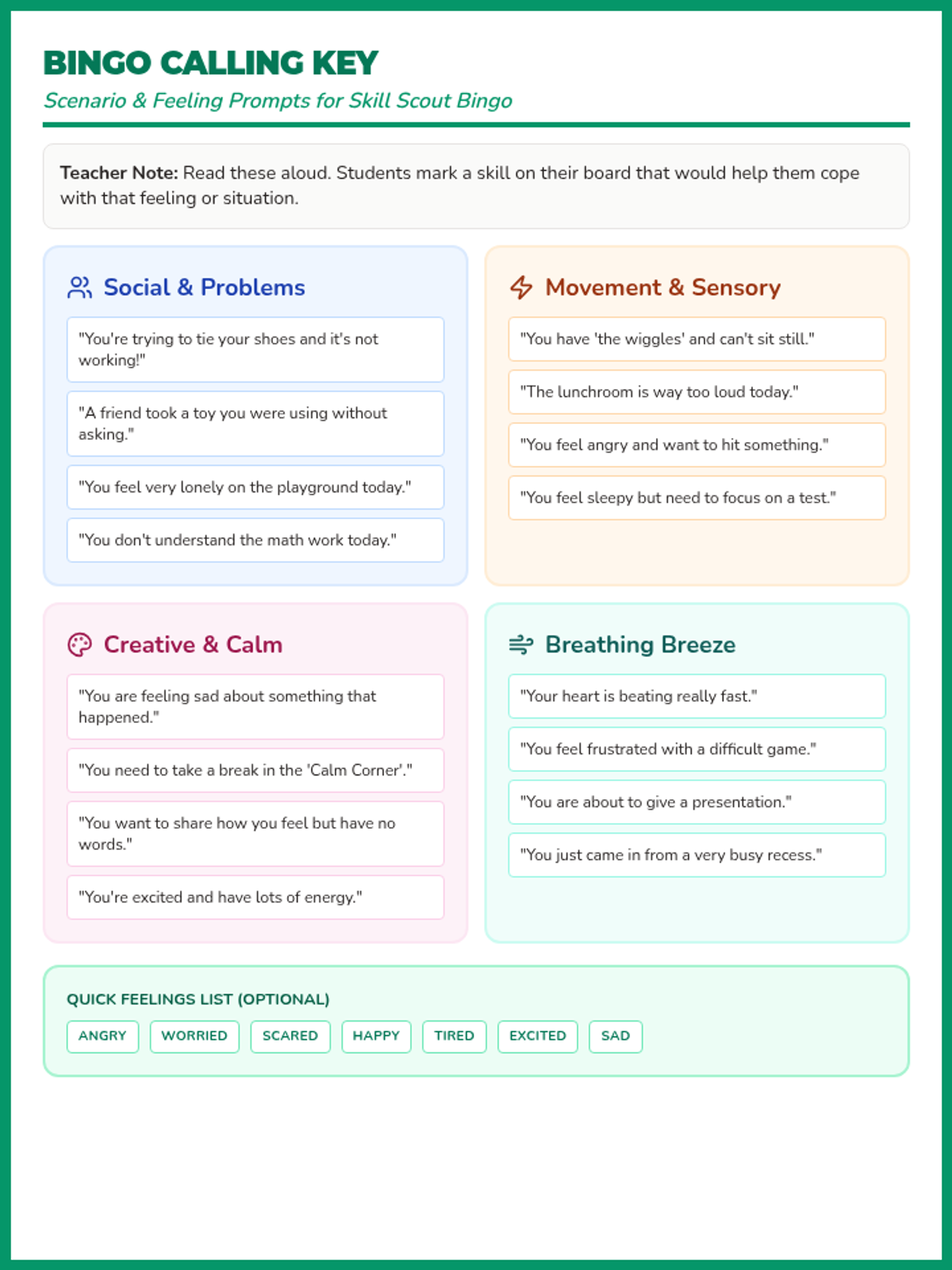
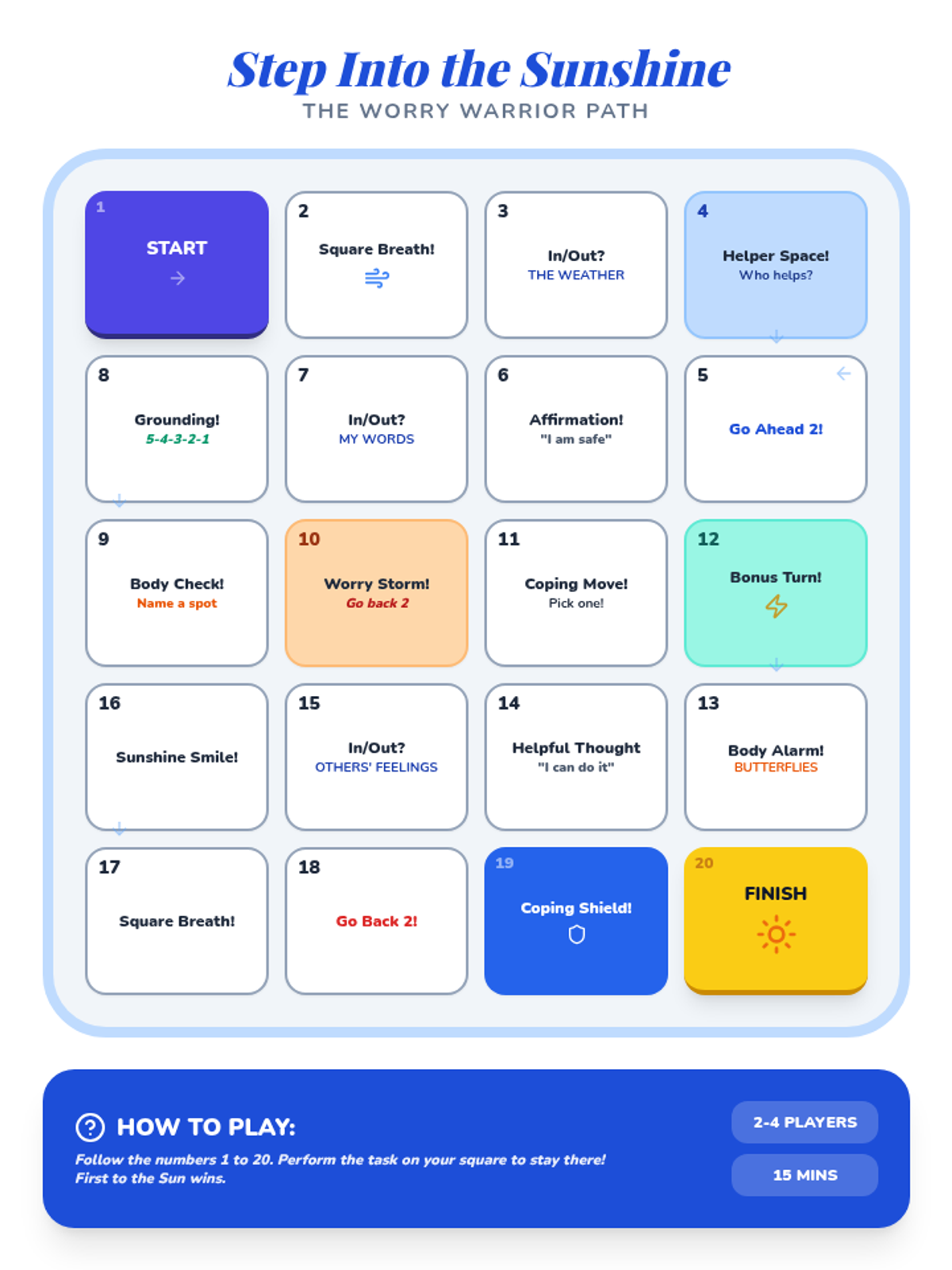
A comprehensive lesson introducing students to various coping strategies through interactive stations and a group bingo game. students will explore problem-solving, movement, art, and breathing techniques to manage their emotions.
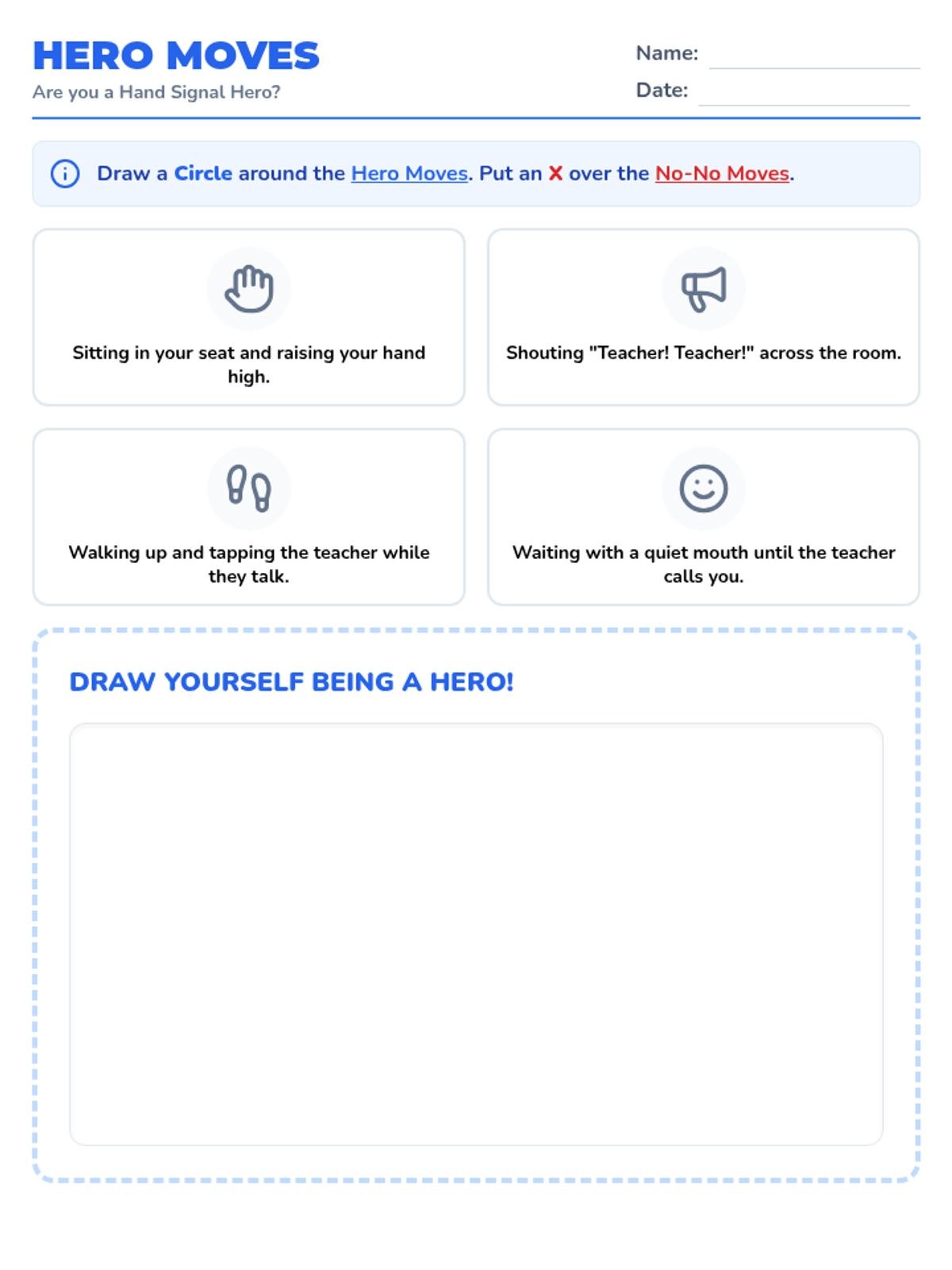
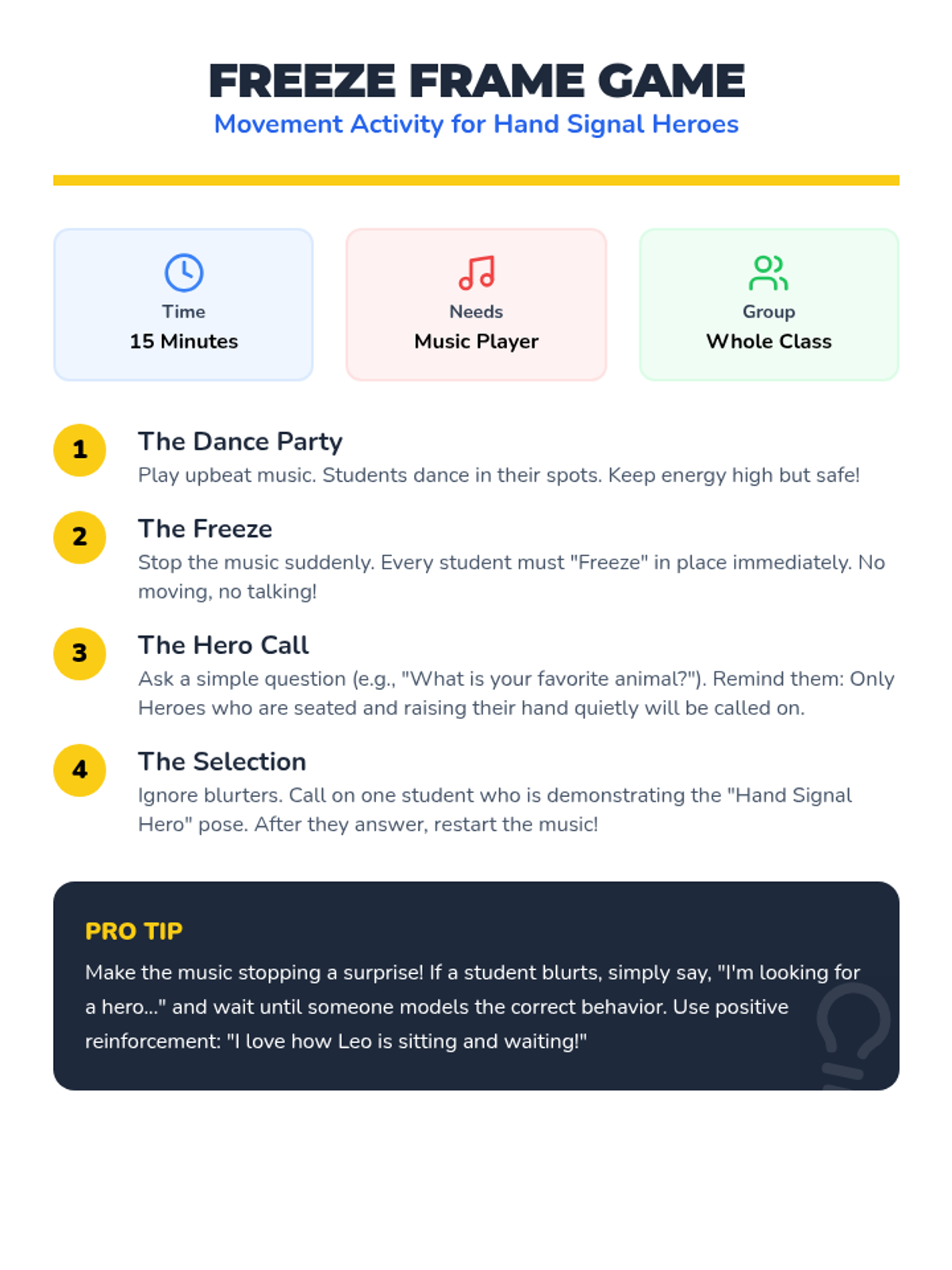
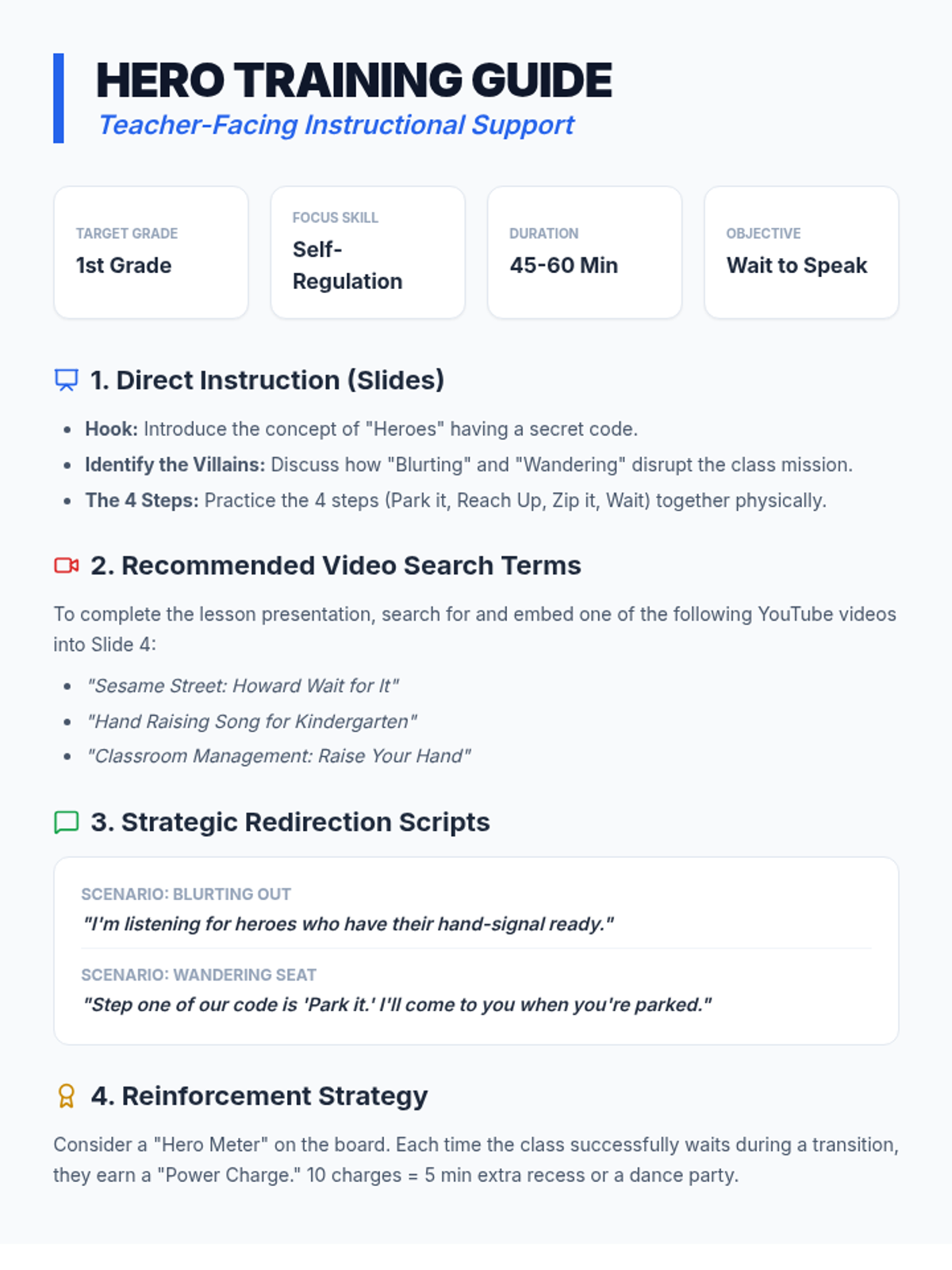
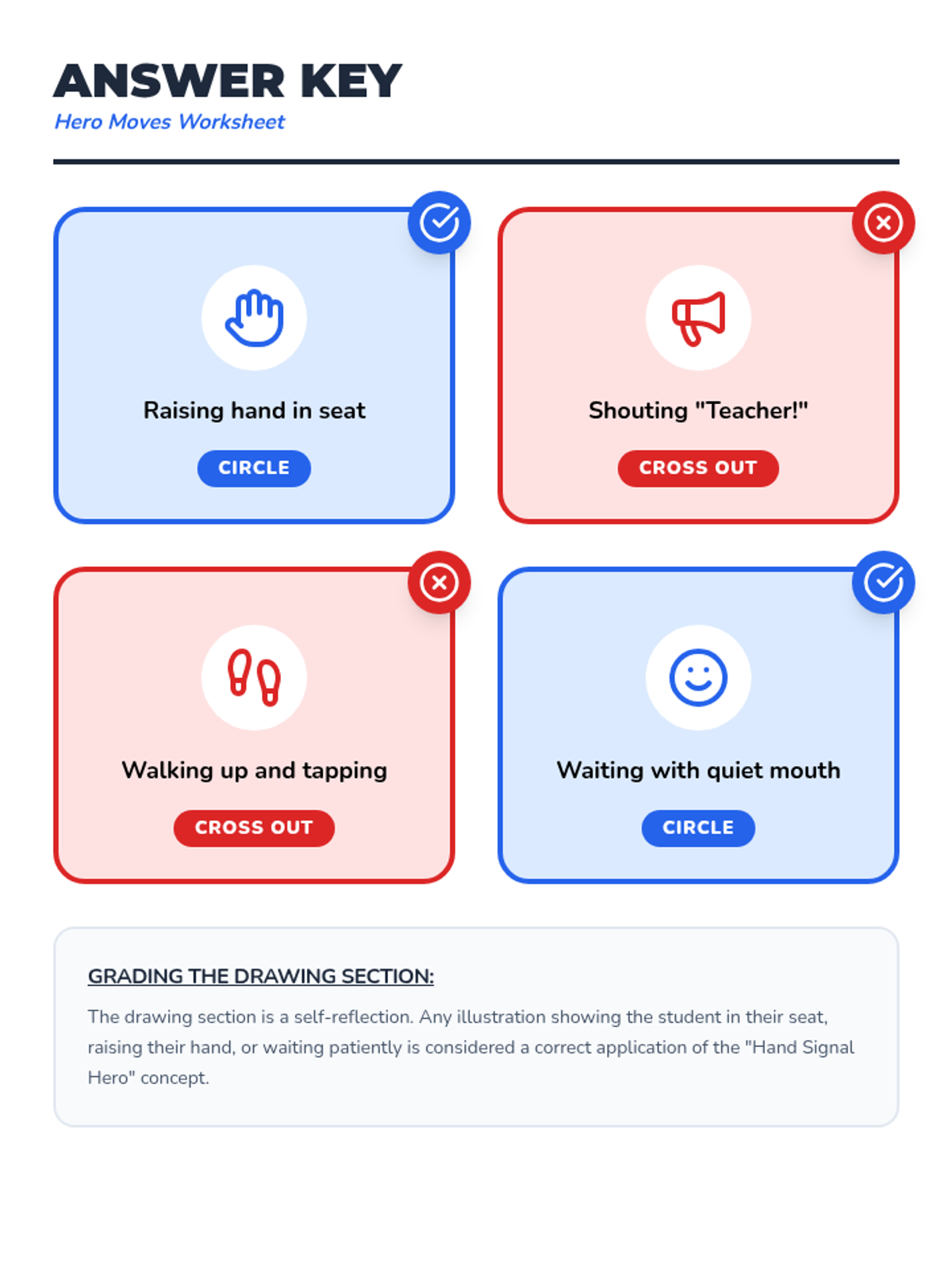
A social-emotional learning lesson for 1st graders focused on appropriate ways to get the teacher's attention, specifically replacing blurting and wandering with hand-raising and waiting.
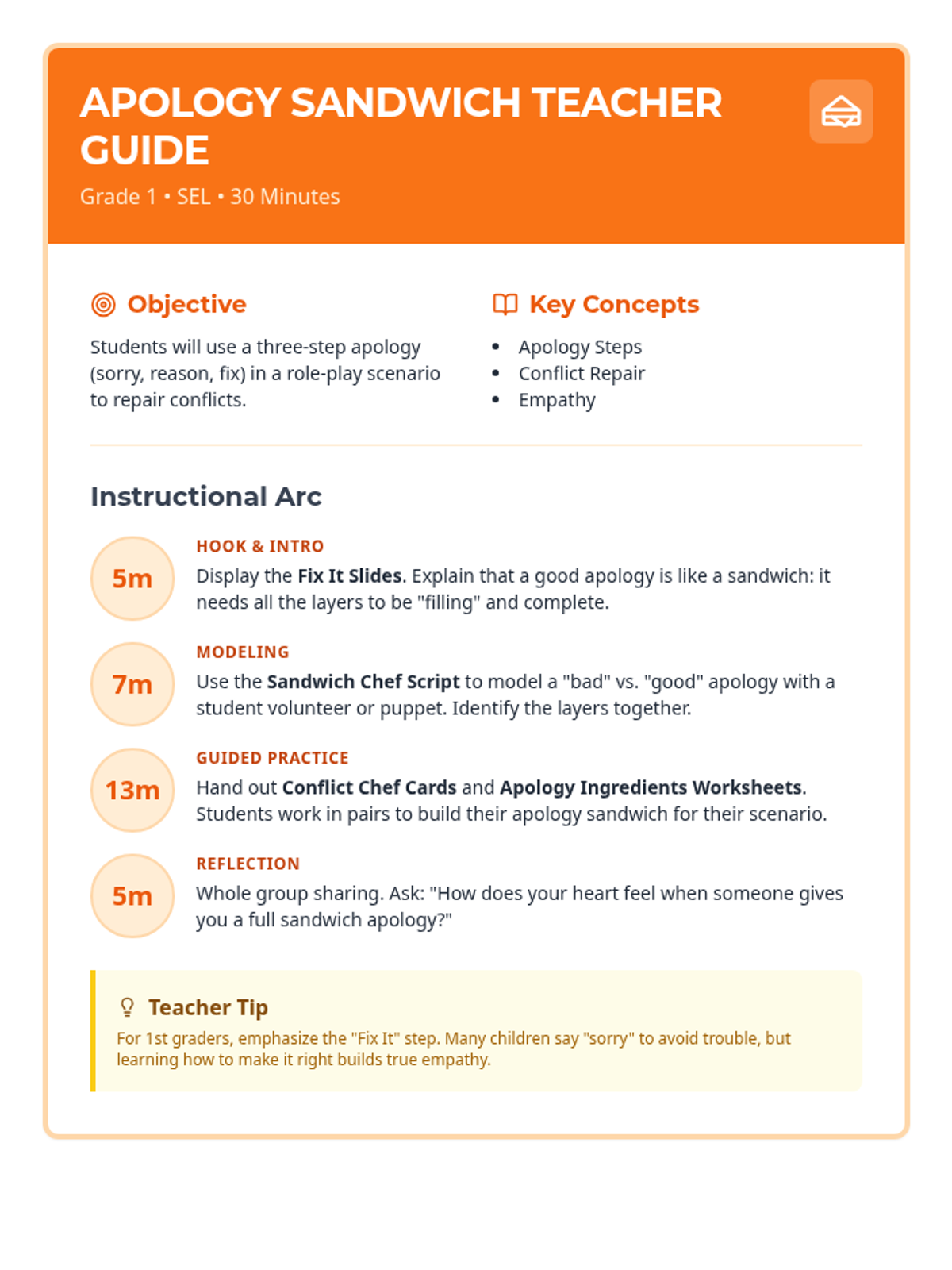
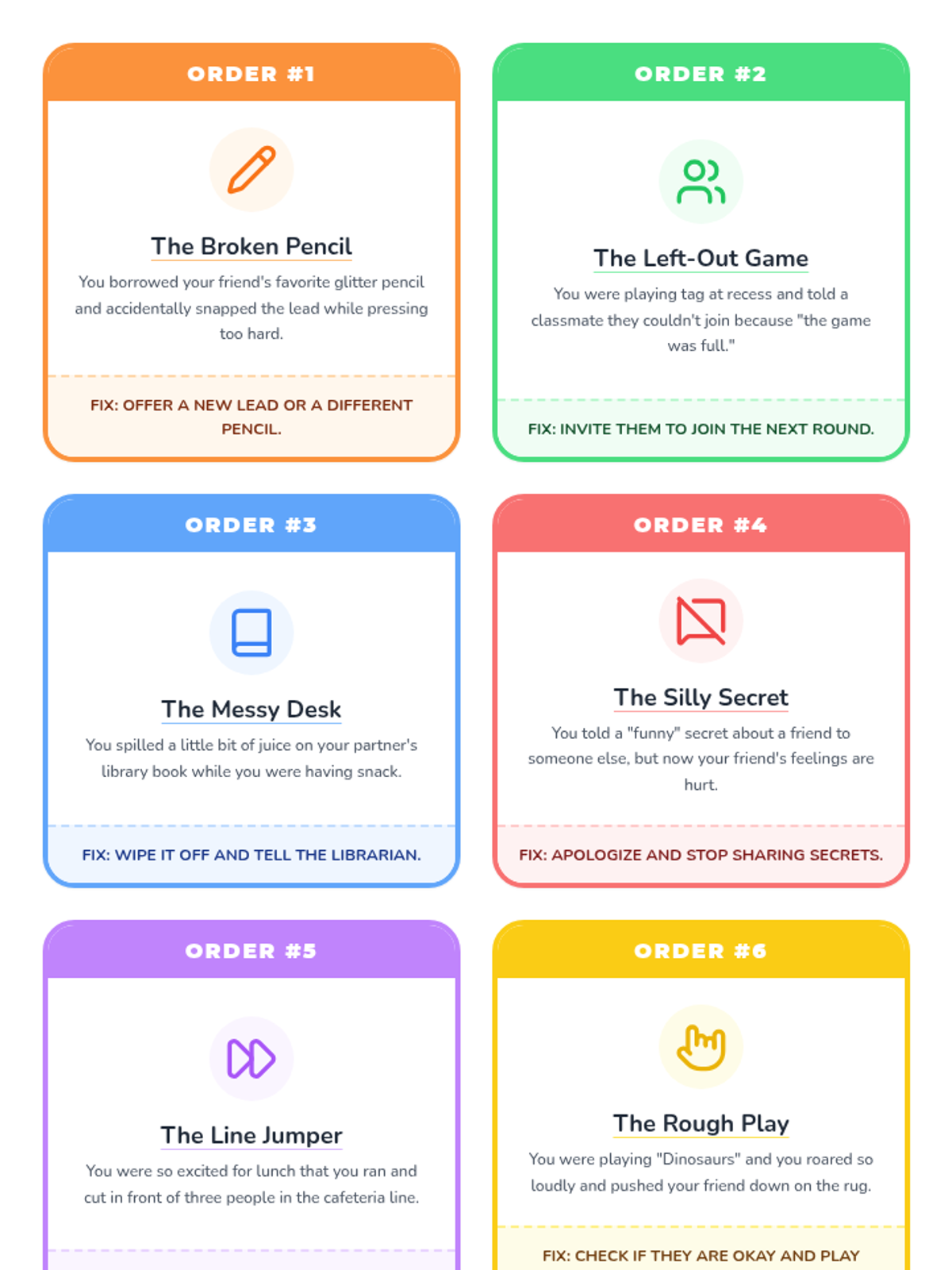
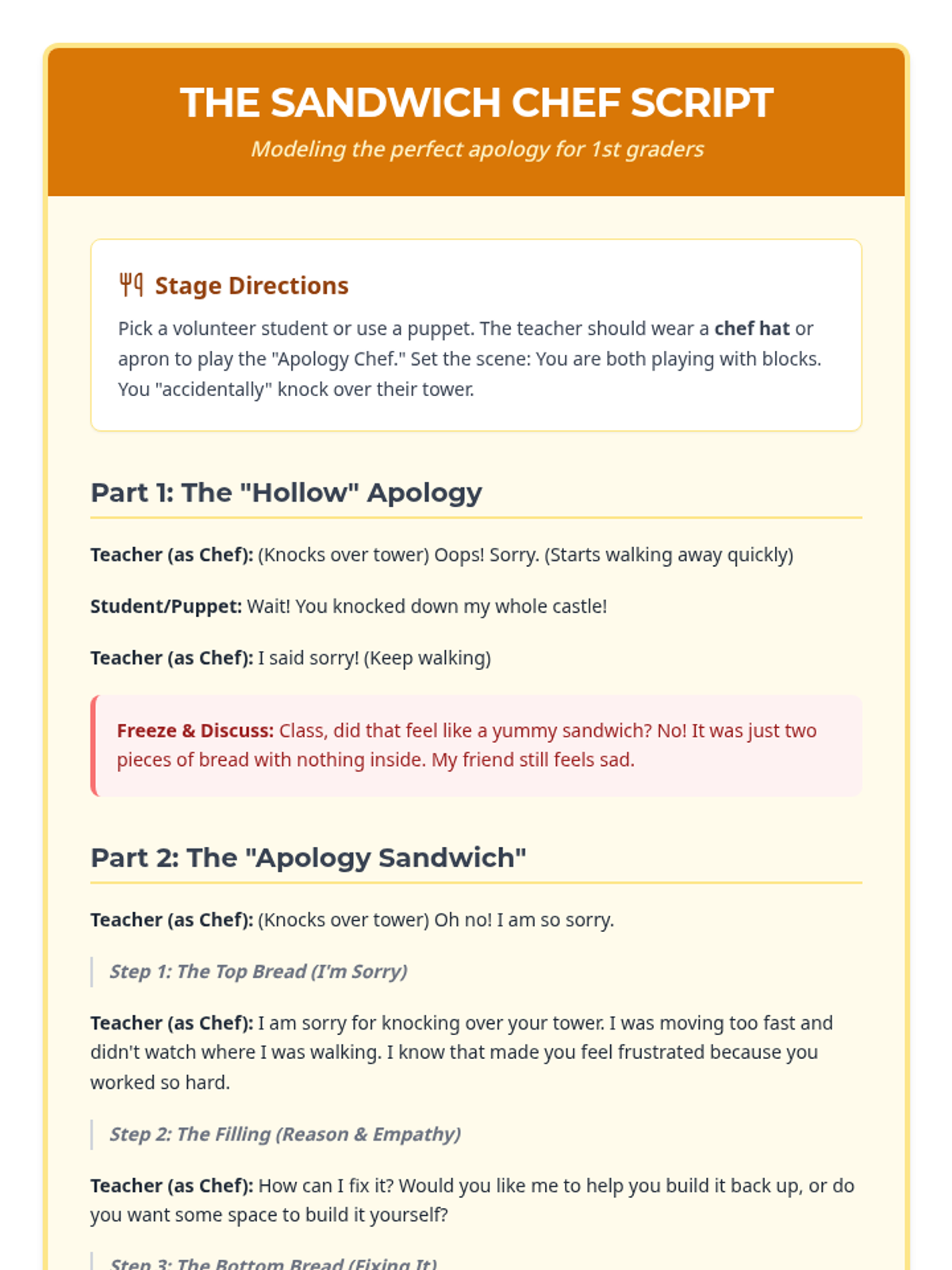
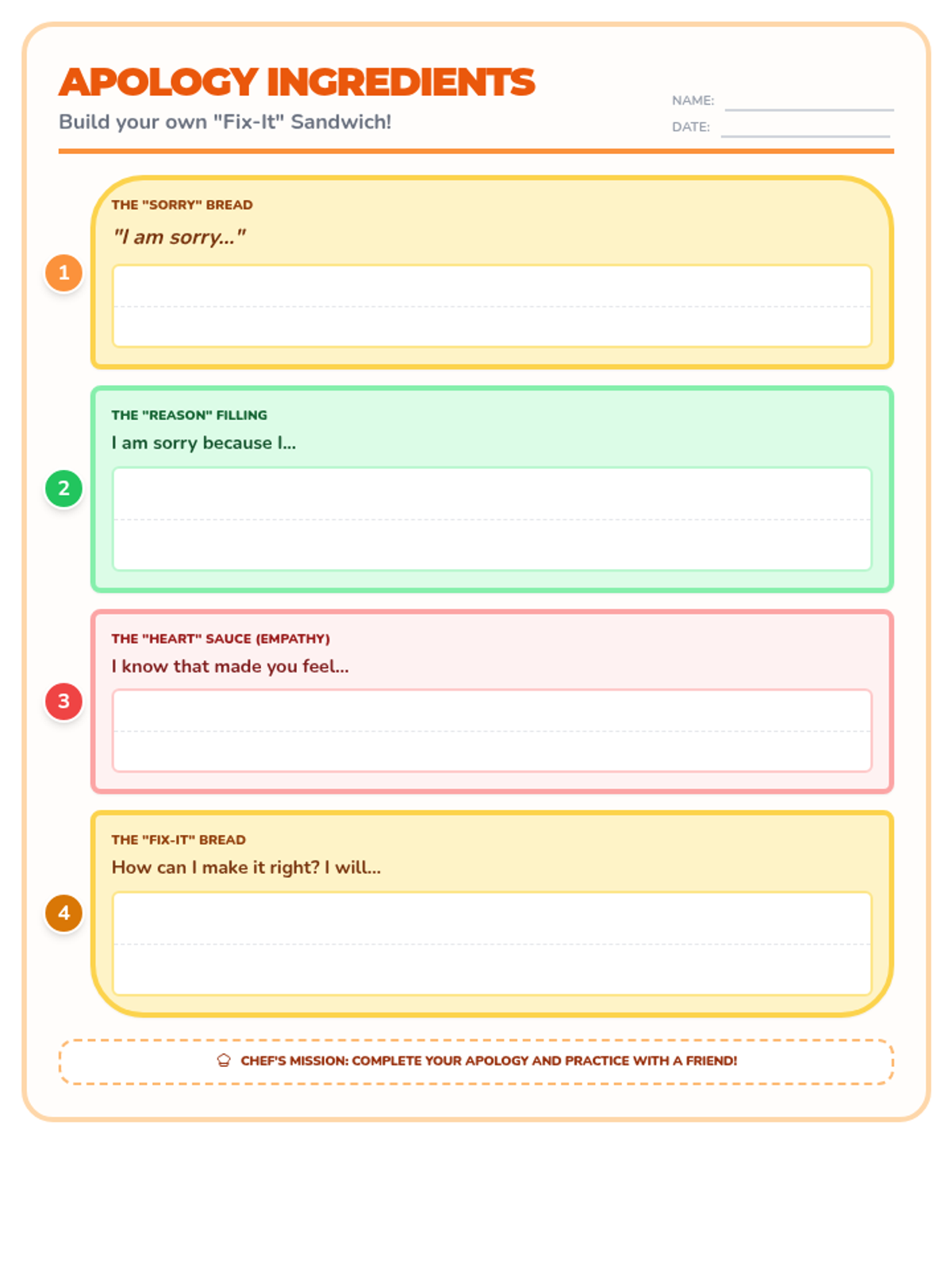
A social-emotional learning lesson for 1st graders that teaches a three-step apology process using a sandwich metaphor to build empathy and repair conflicts.
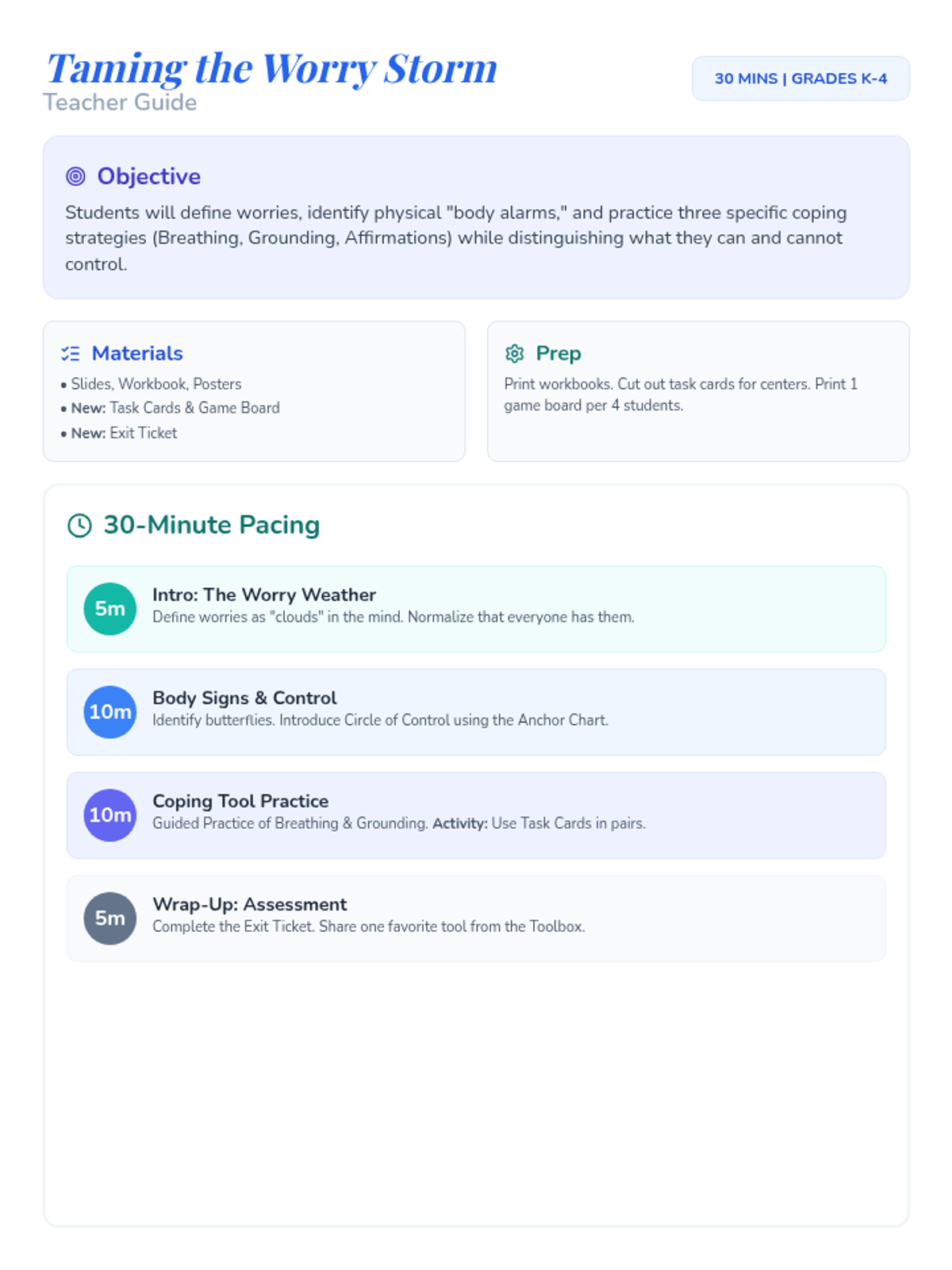
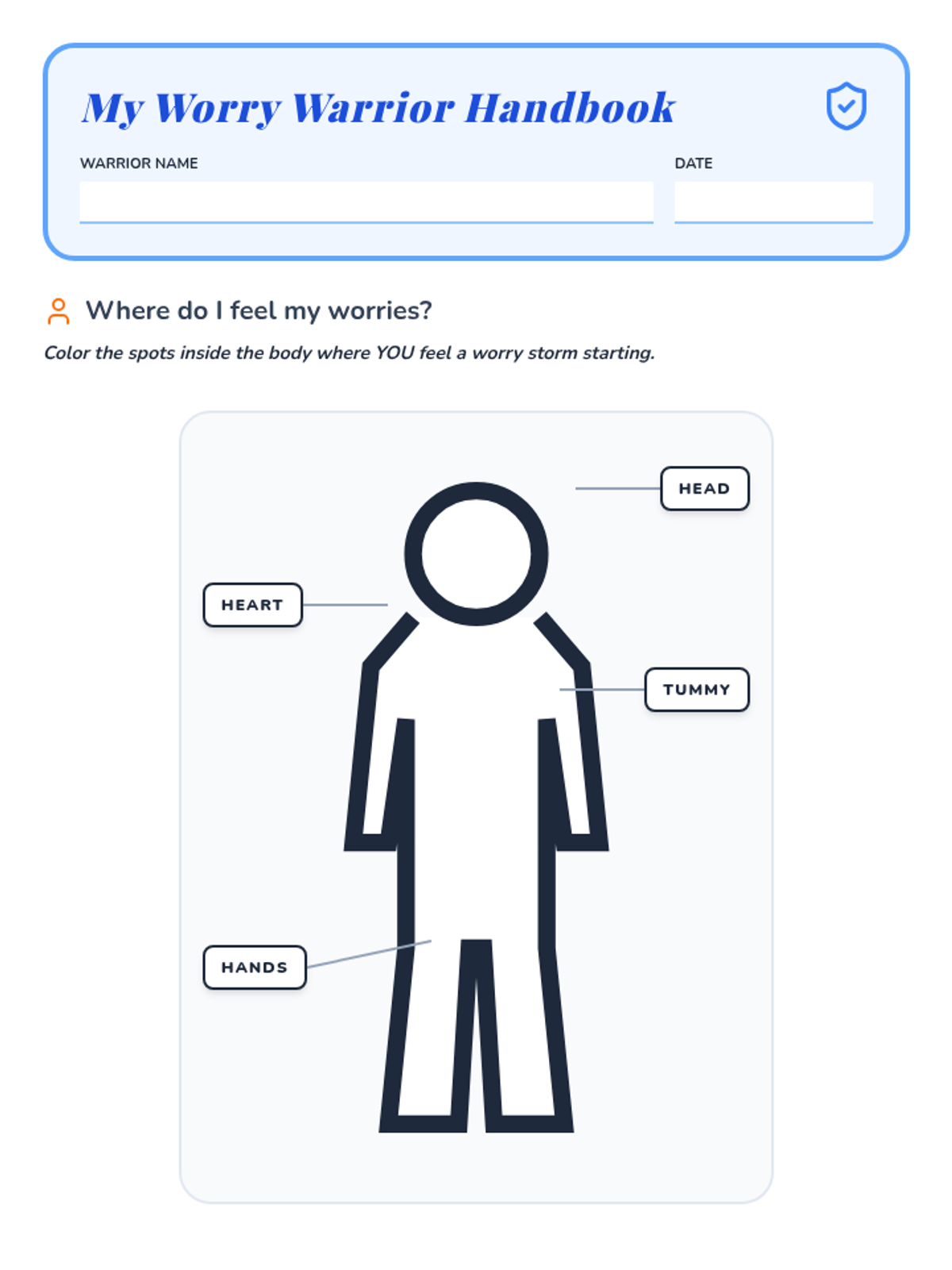
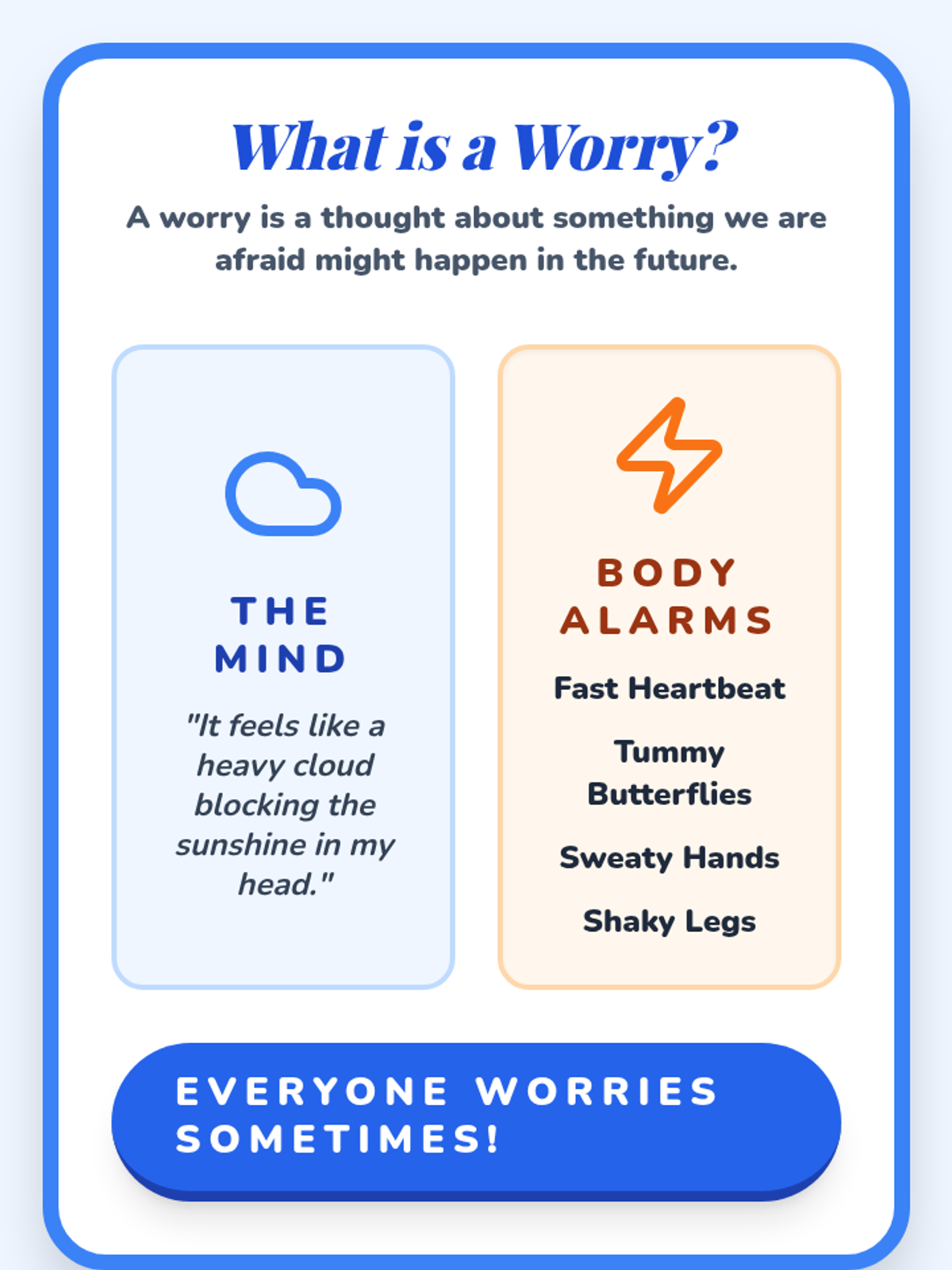
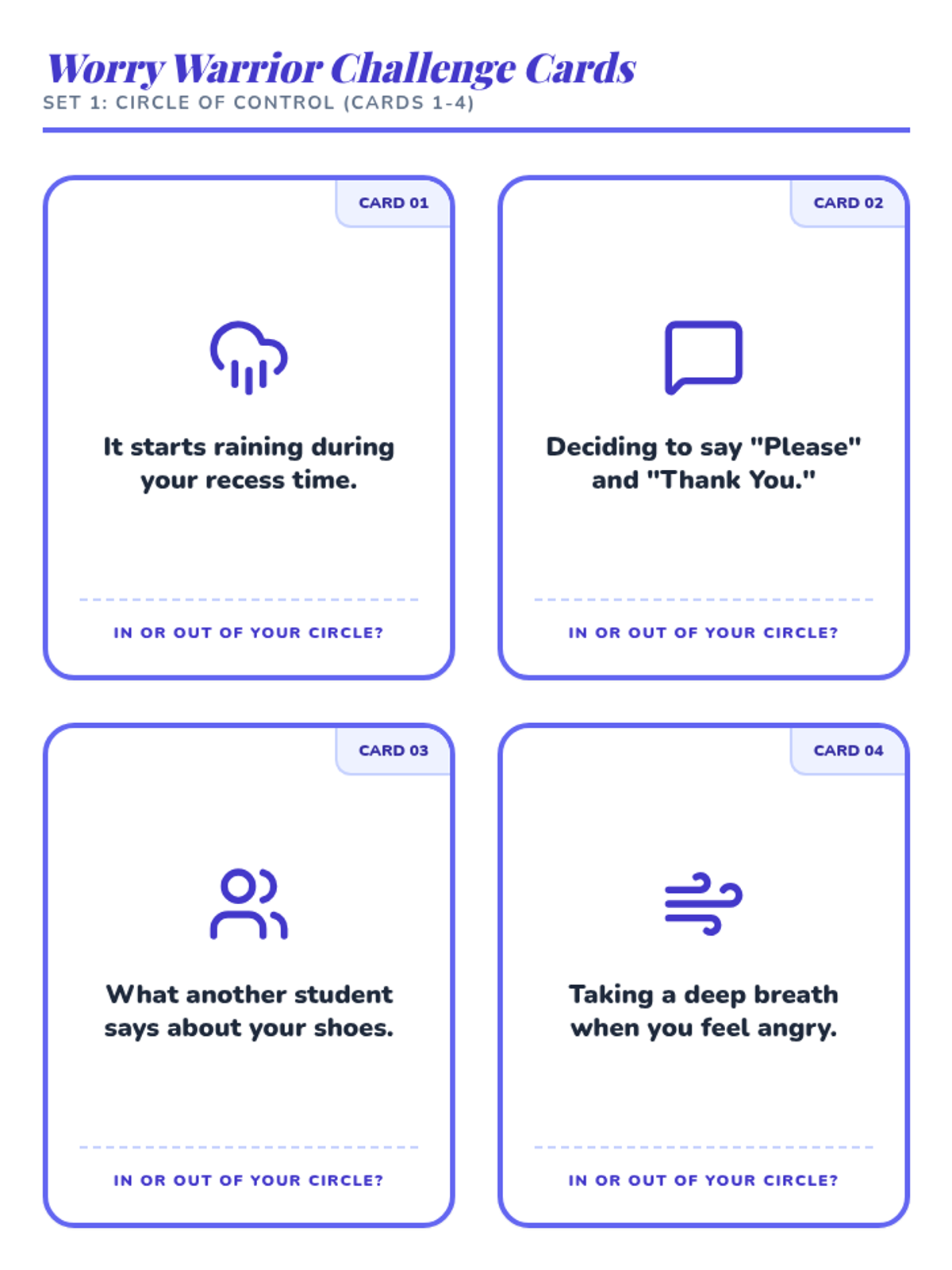
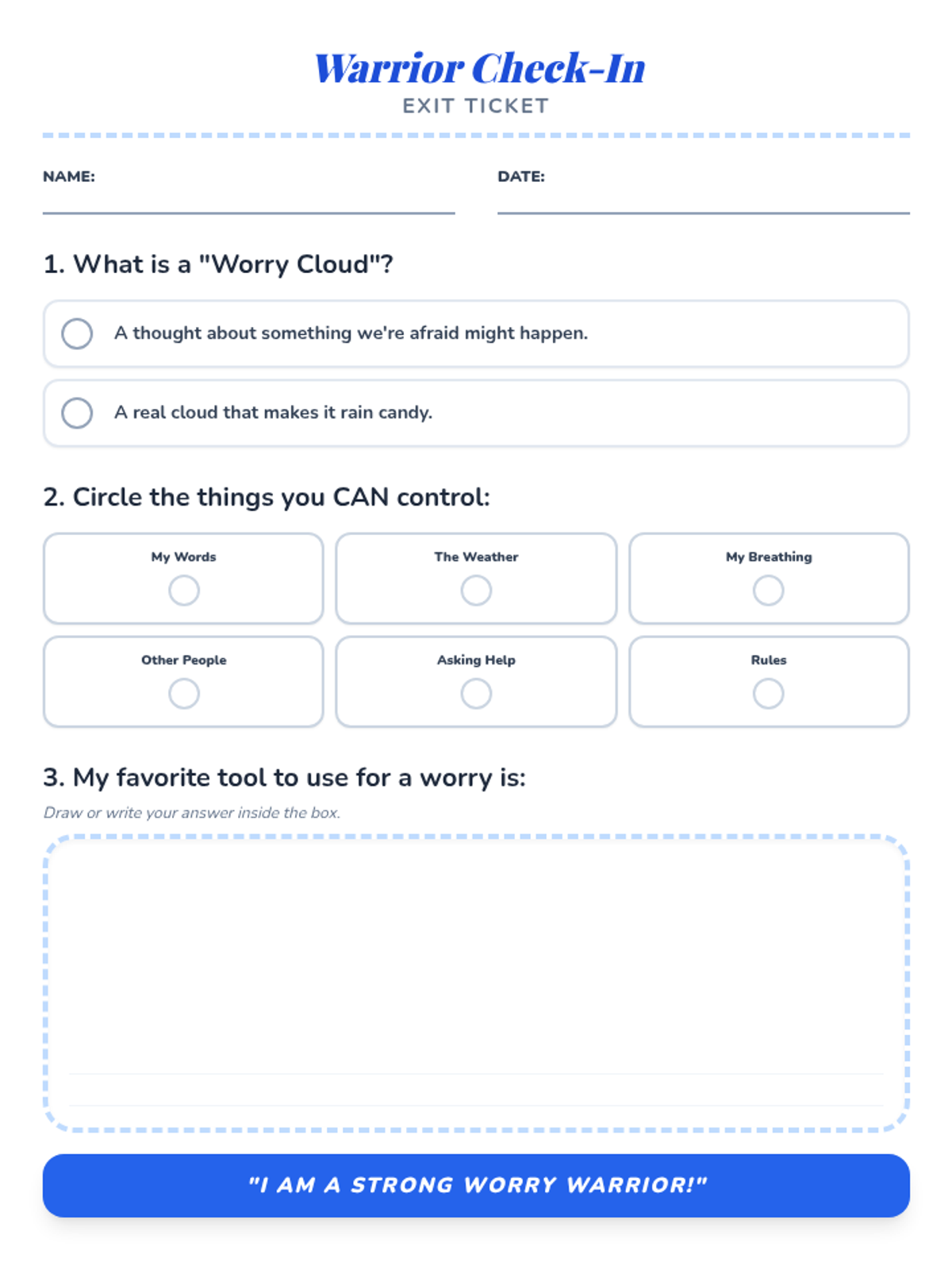
A comprehensive 30-minute lesson designed for grades K-4 to help students understand the nature of worries, recognize physical signs of anxiety, and learn to distinguish between what they can and cannot control. Students will explore practical coping strategies and build a personal 'Coping Toolbox'.
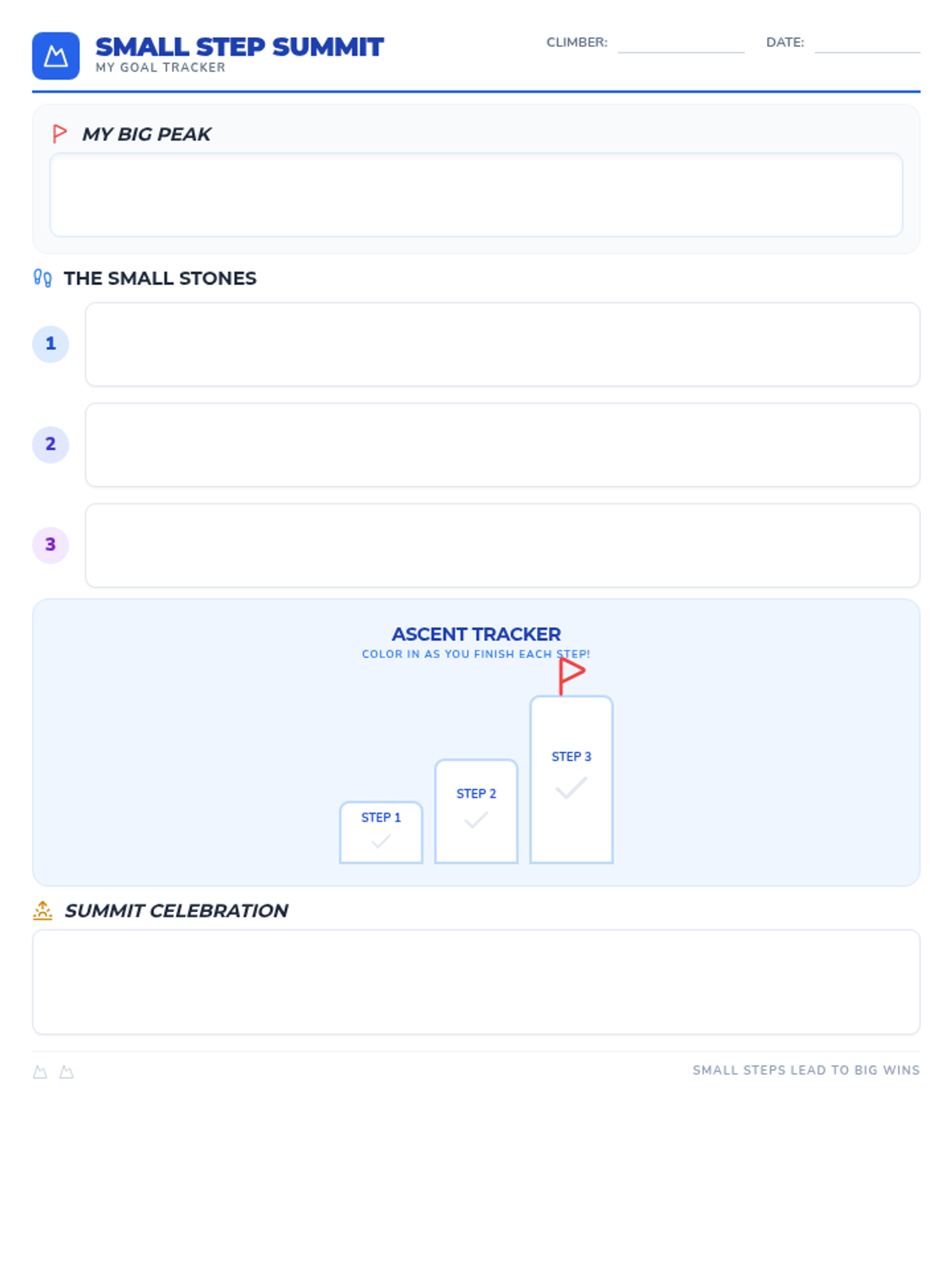
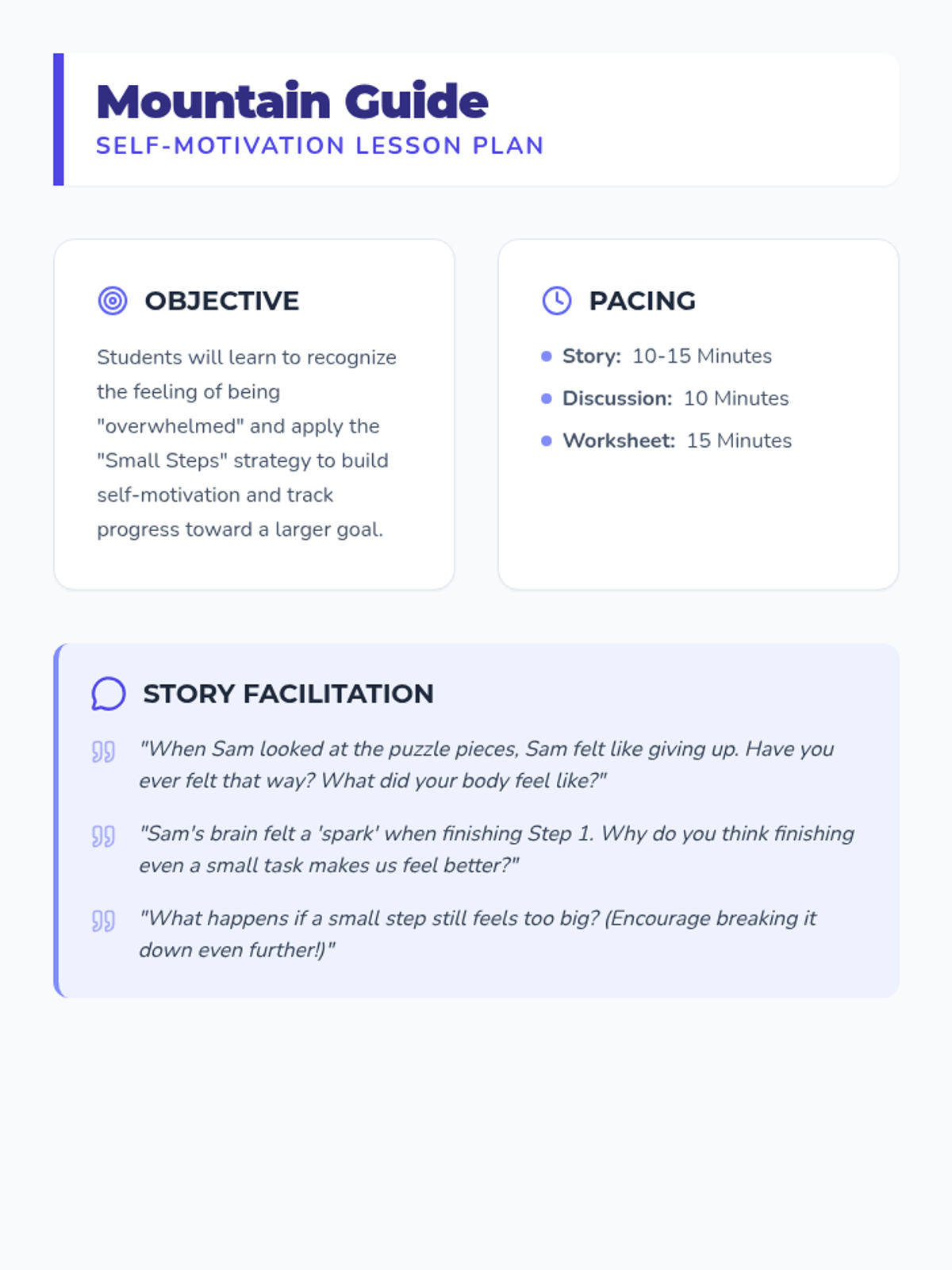
A lesson designed to help students understand self-motivation through the concept of breaking large, overwhelming tasks into small, manageable goals using a 'mountain climber' metaphor.
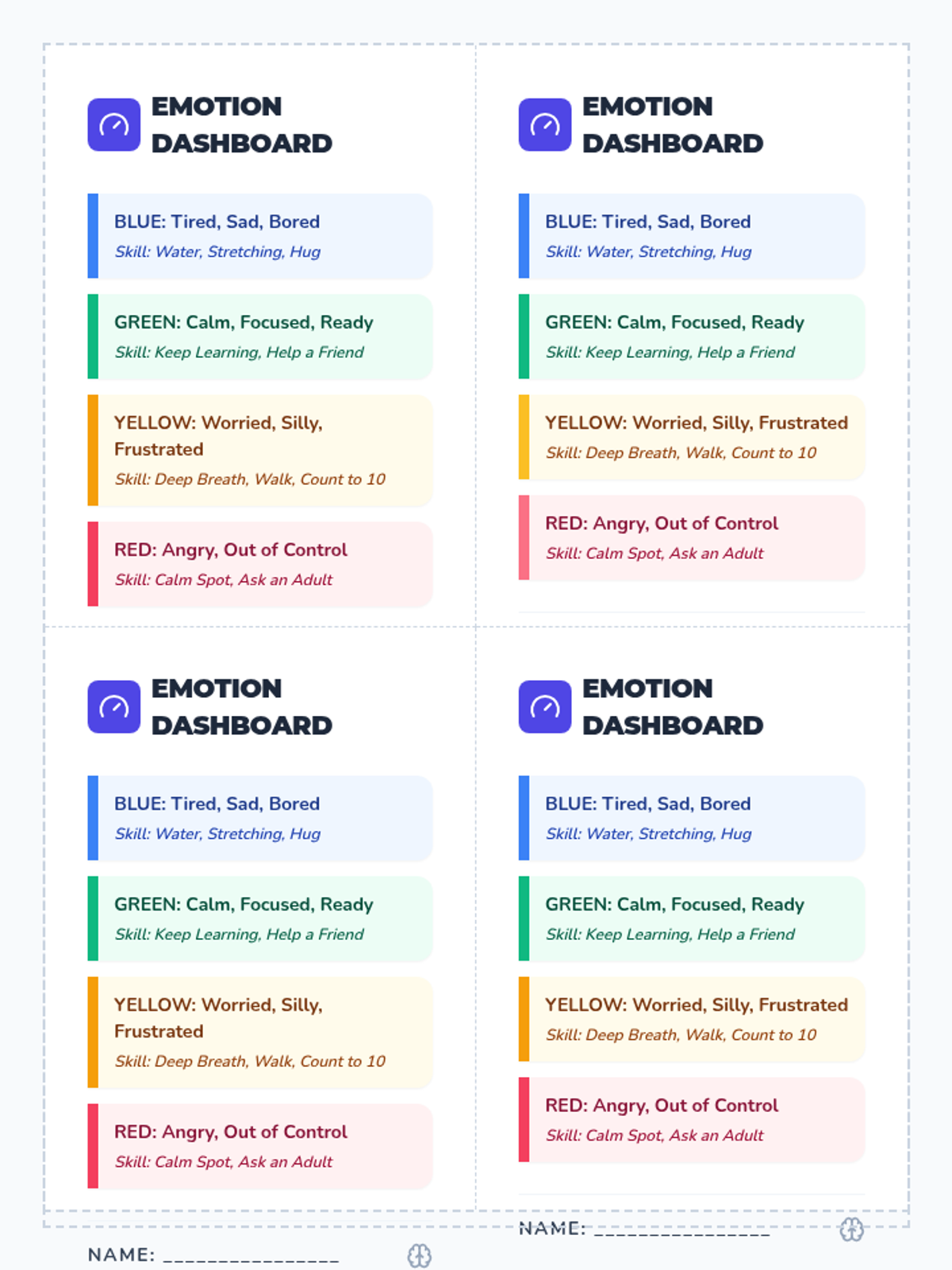
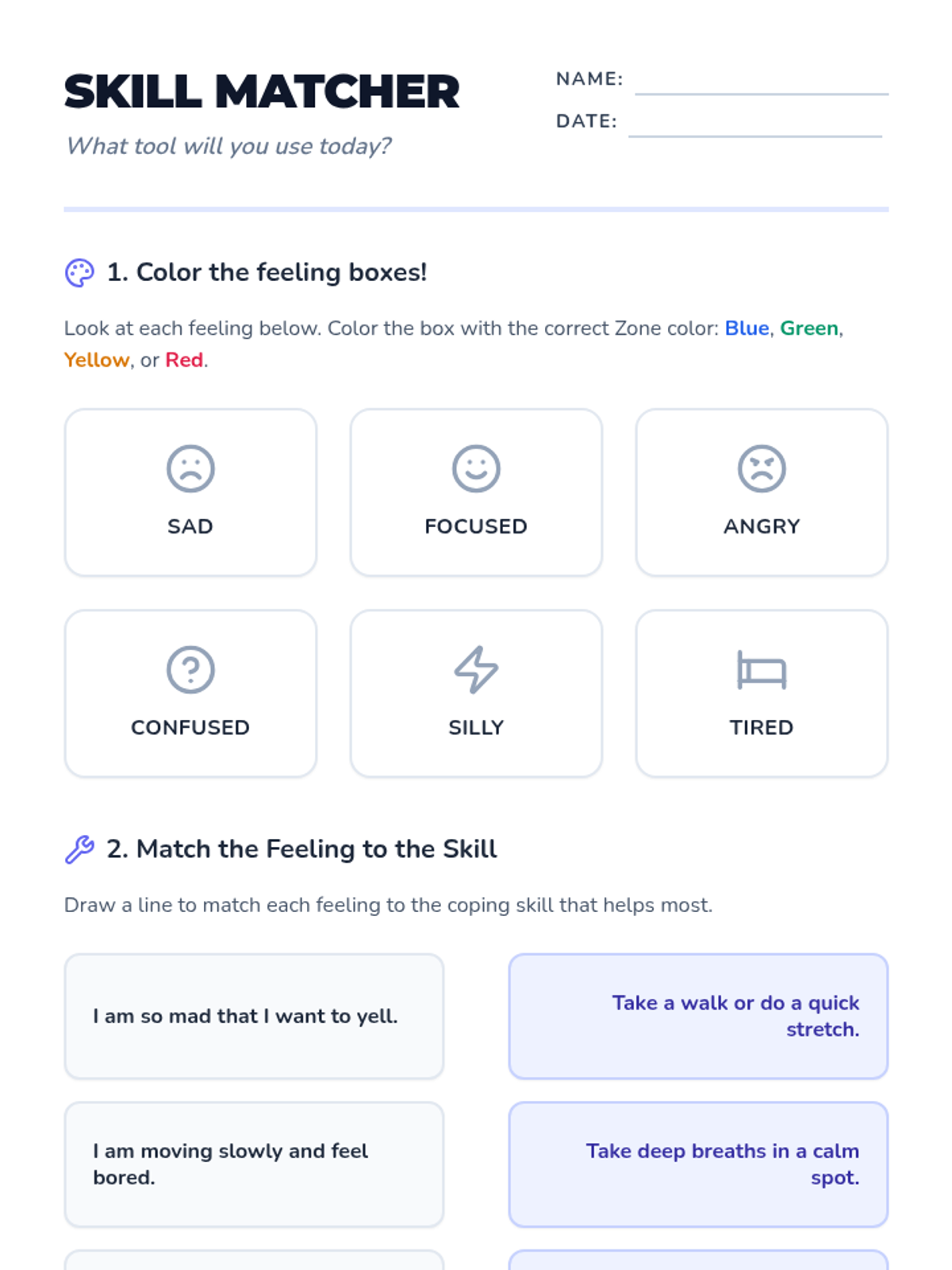
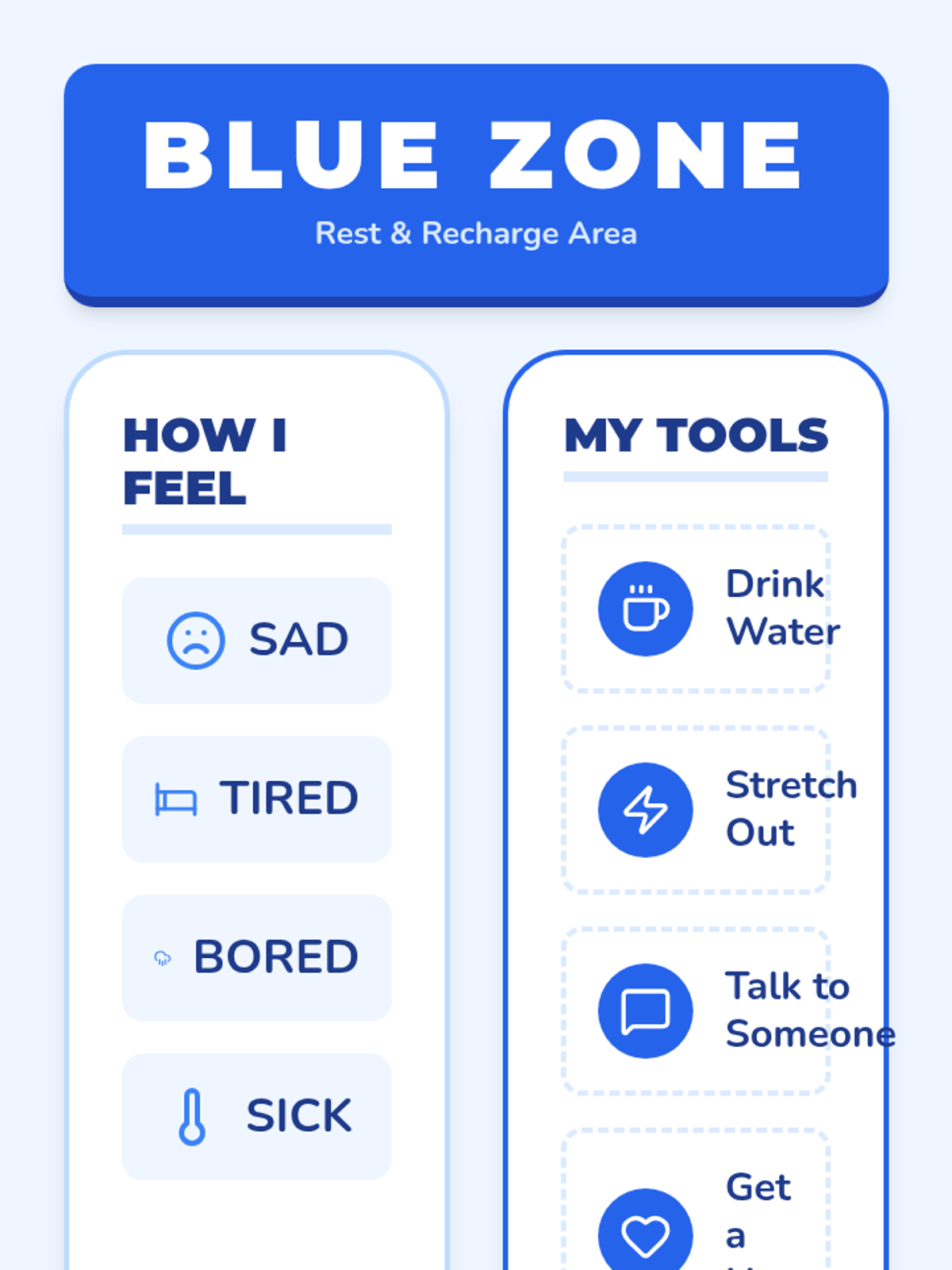
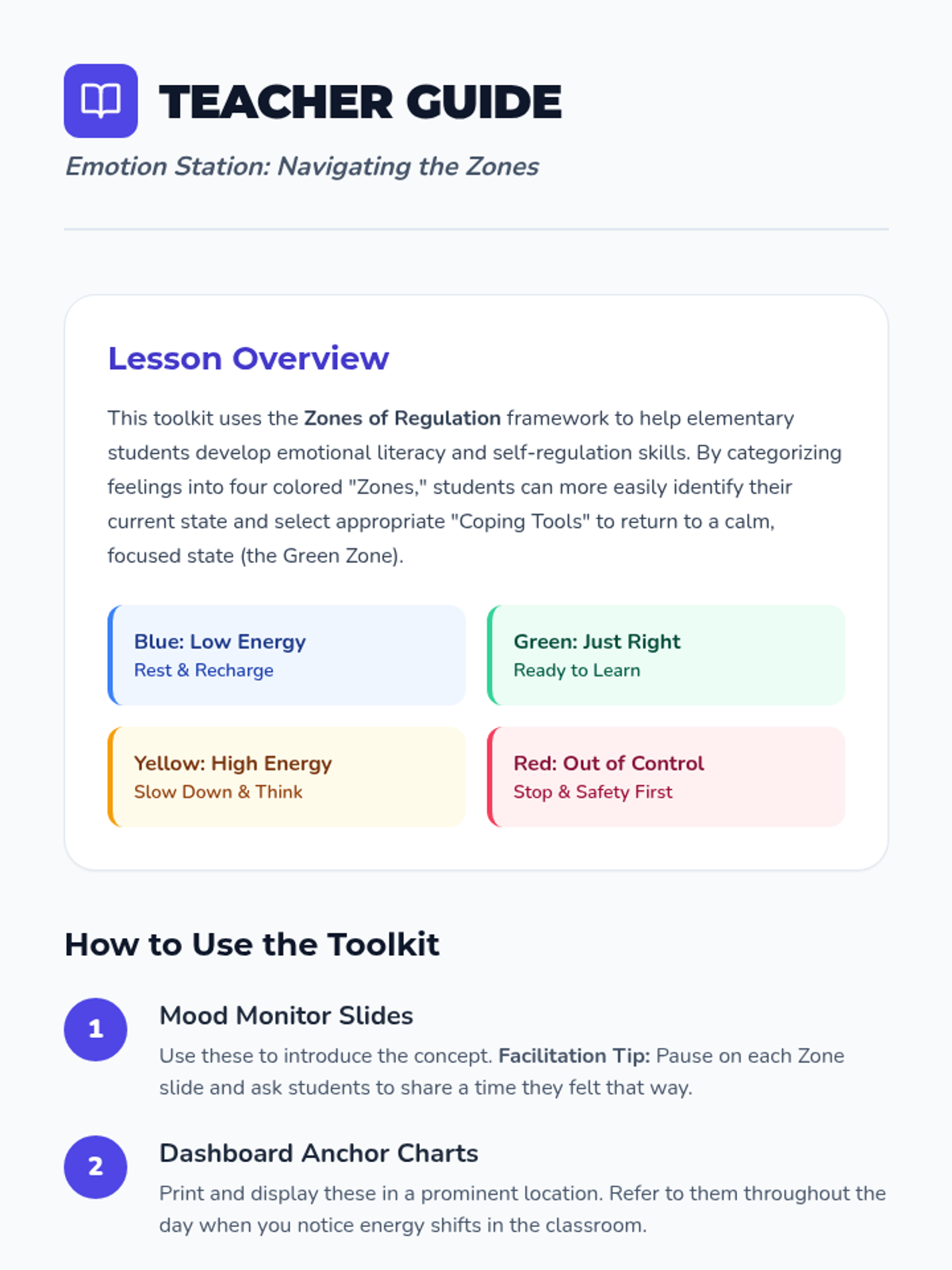
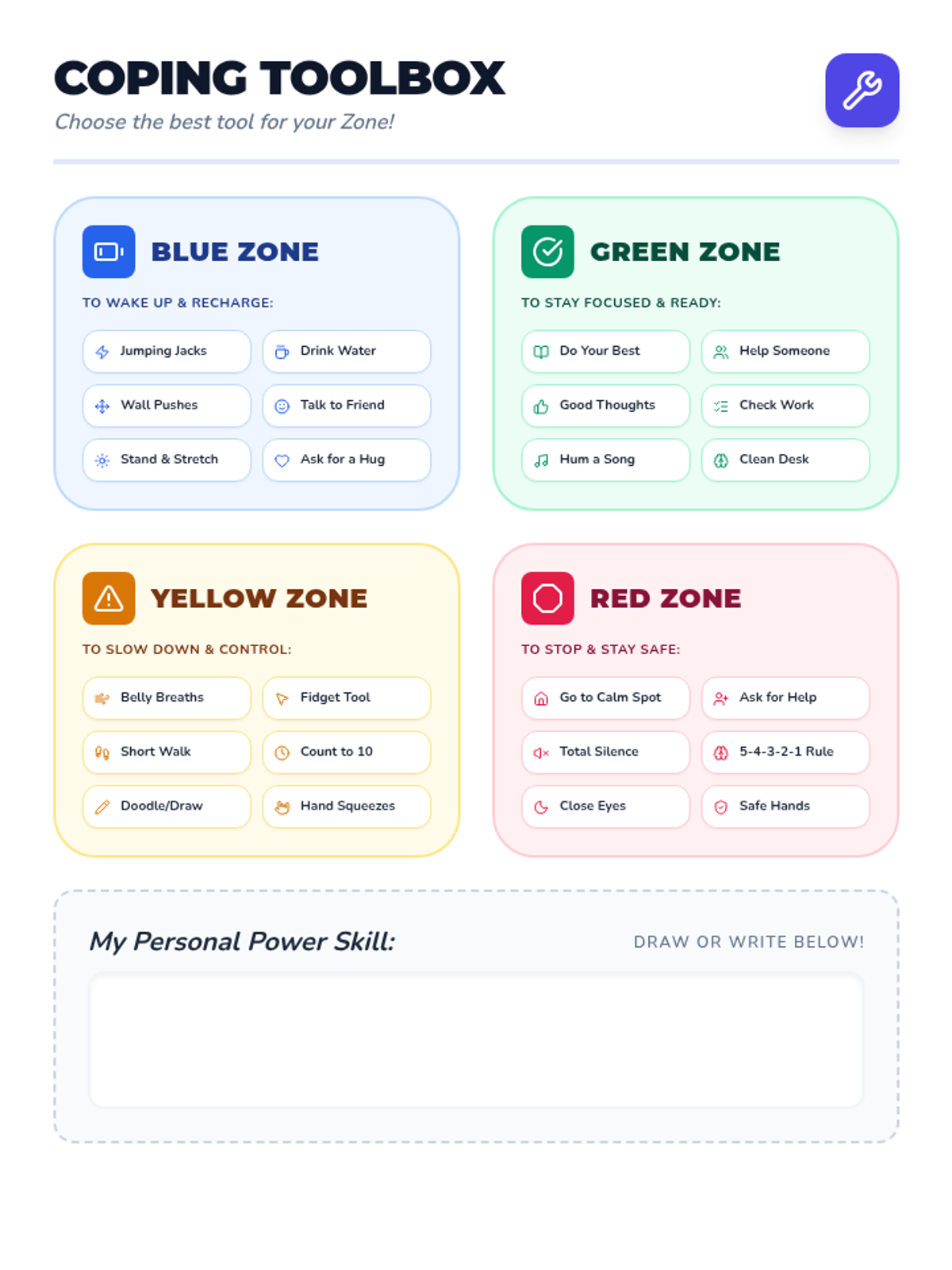
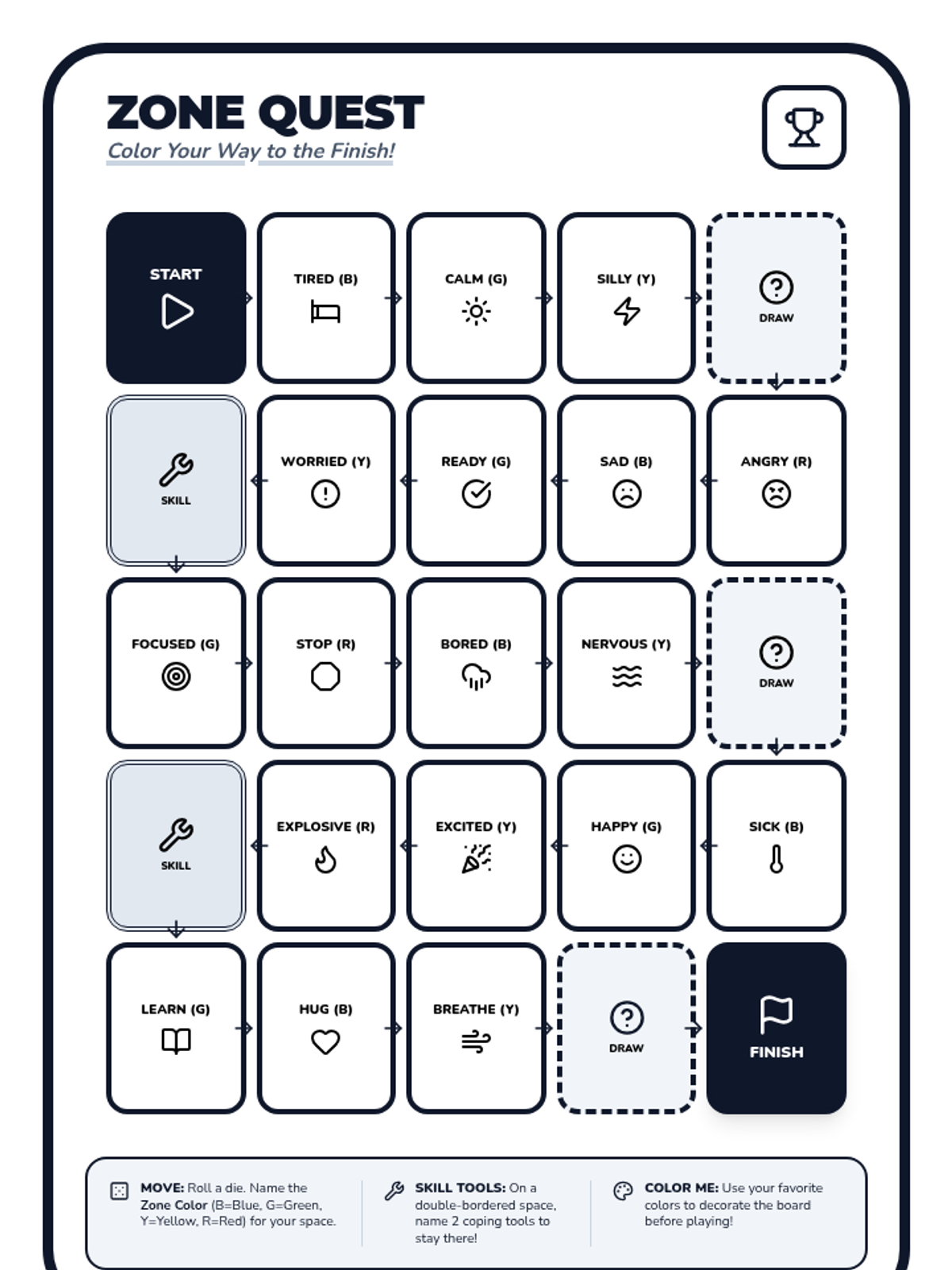
A comprehensive toolkit to help elementary students identify their emotional state using the Zones of Regulation framework and select appropriate coping strategies for each zone.
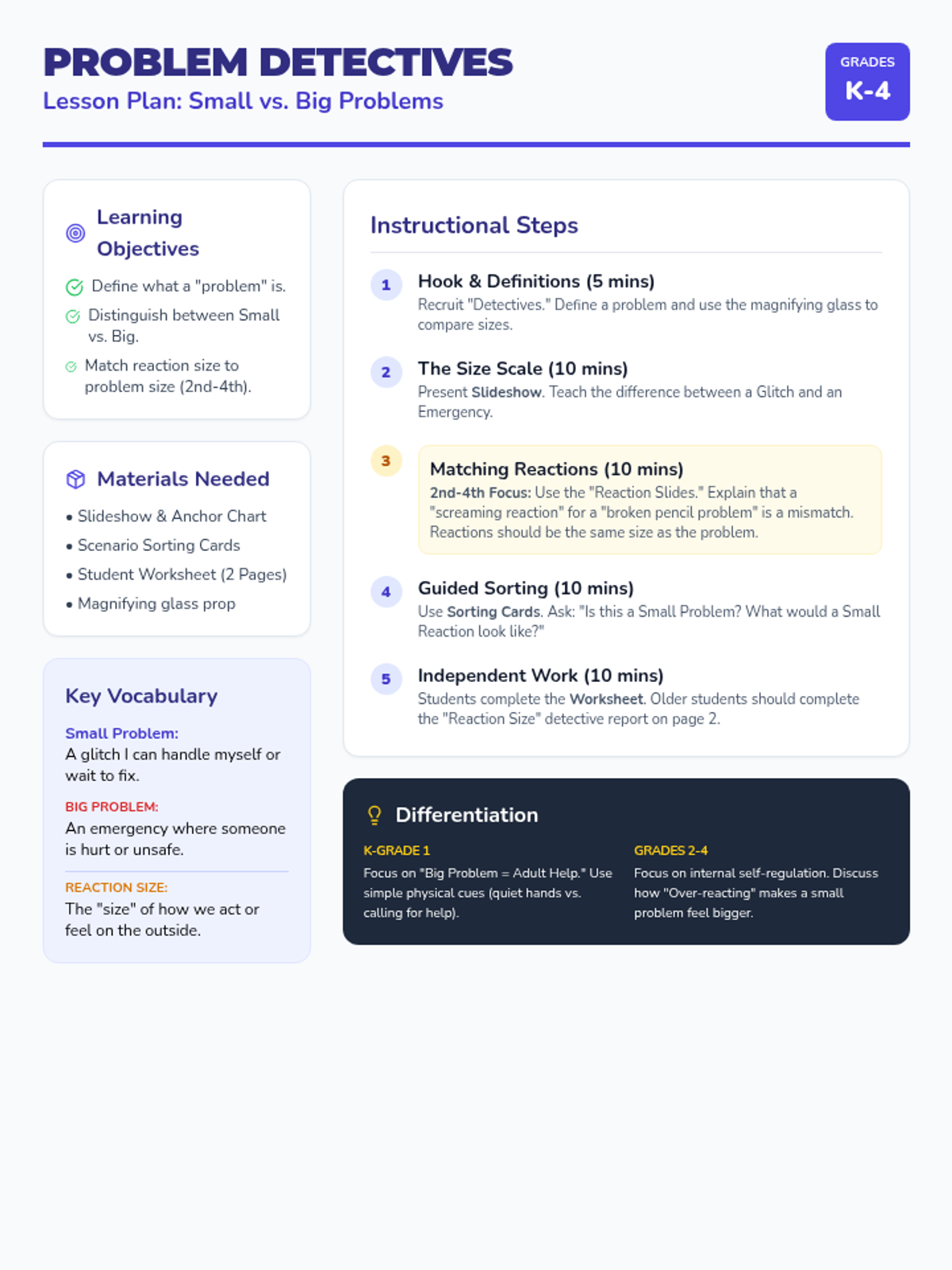
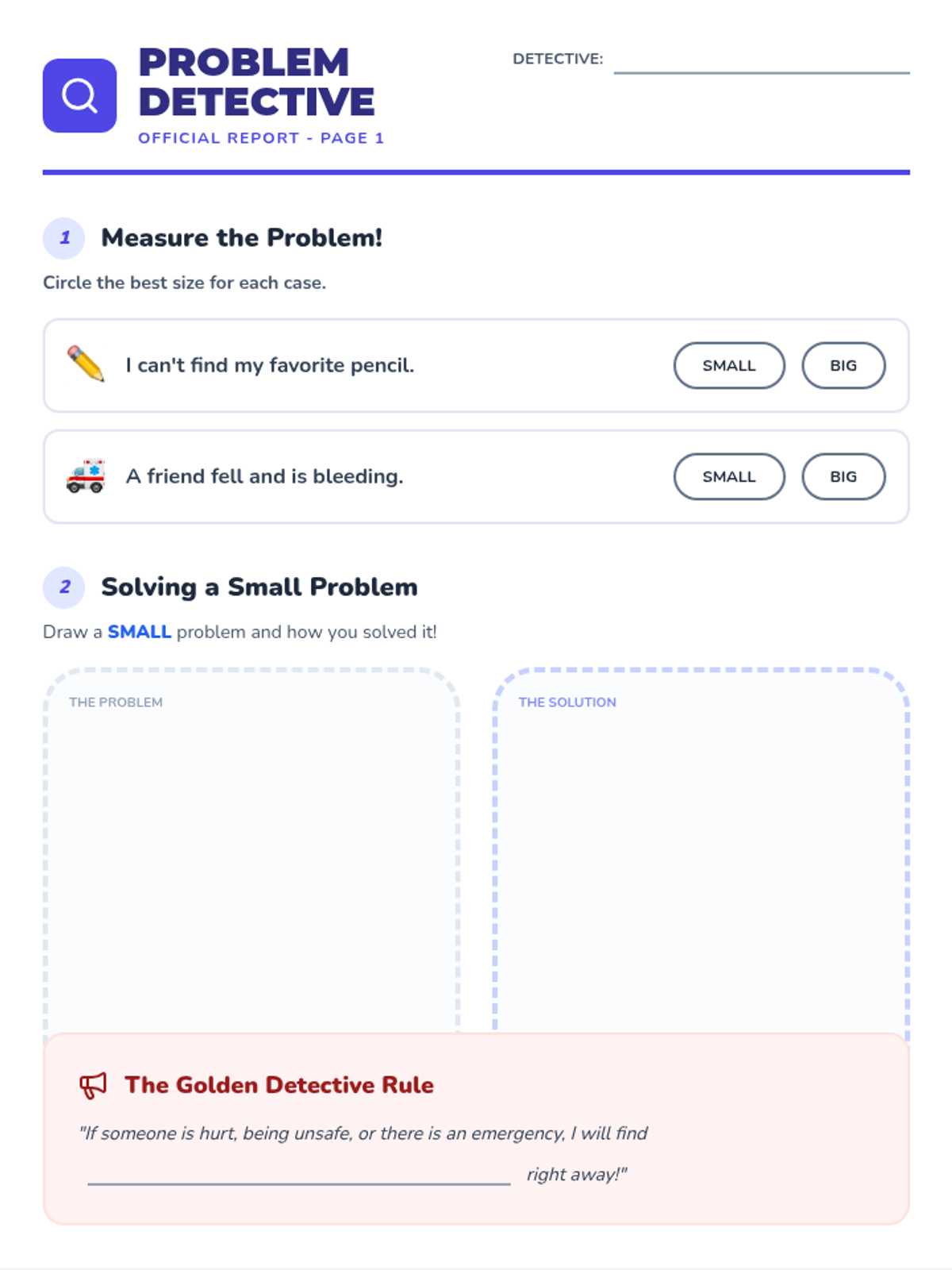
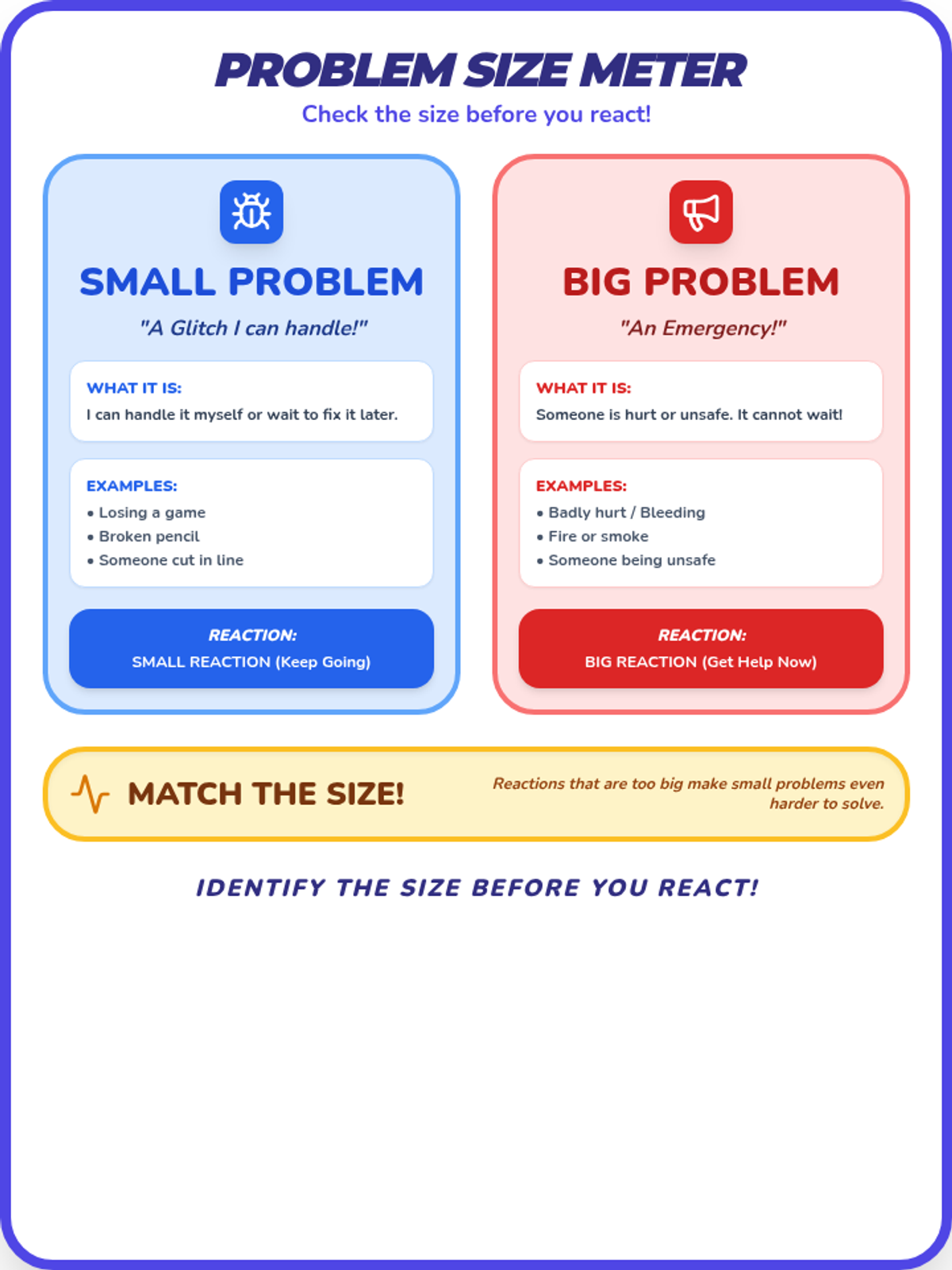
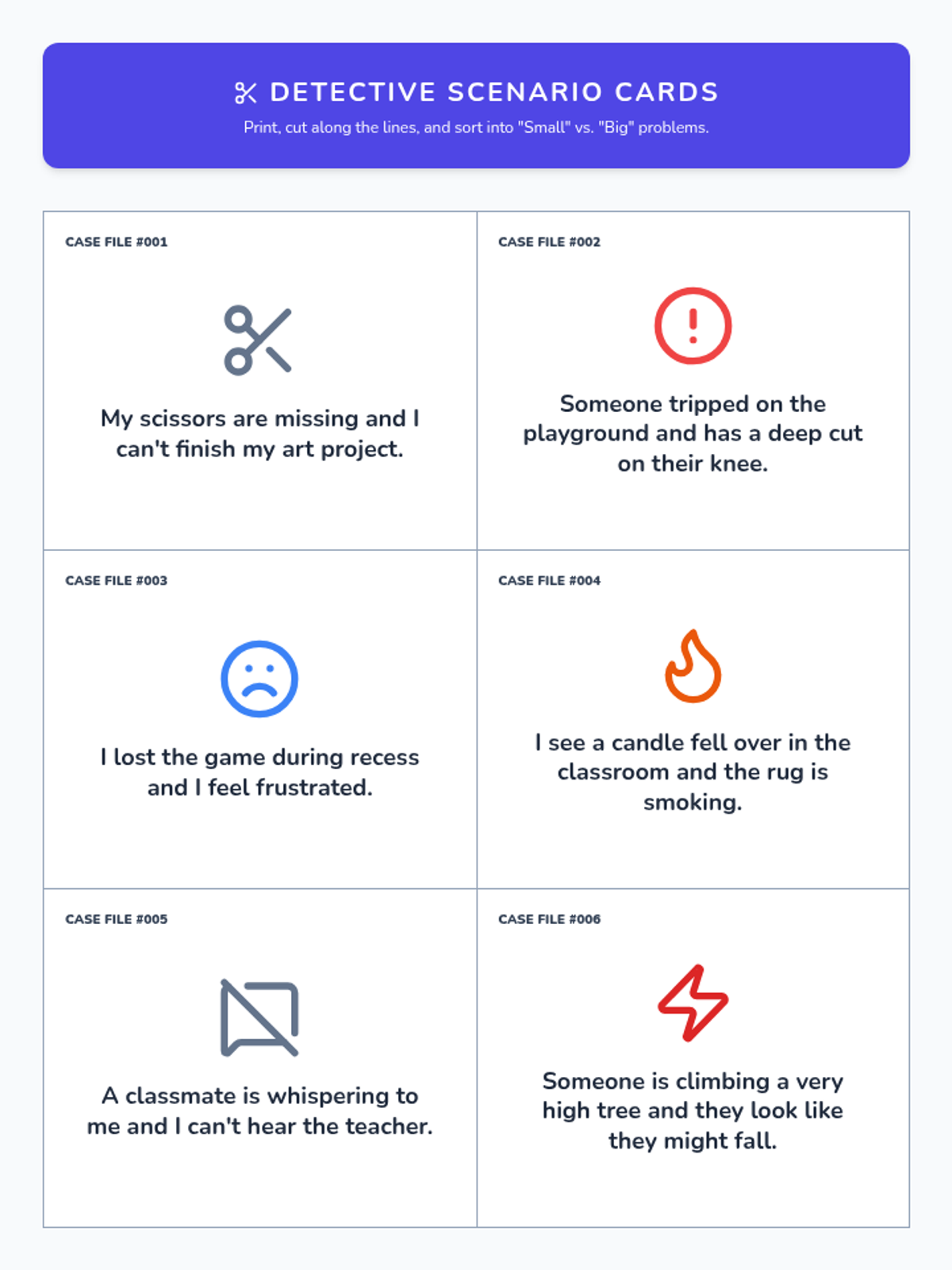
A lesson designed for K-4 students to distinguish between small problems they can handle independently and big problems that require immediate adult assistance. Students will learn to identify the 'size' of a problem to choose the appropriate reaction and coping strategy.
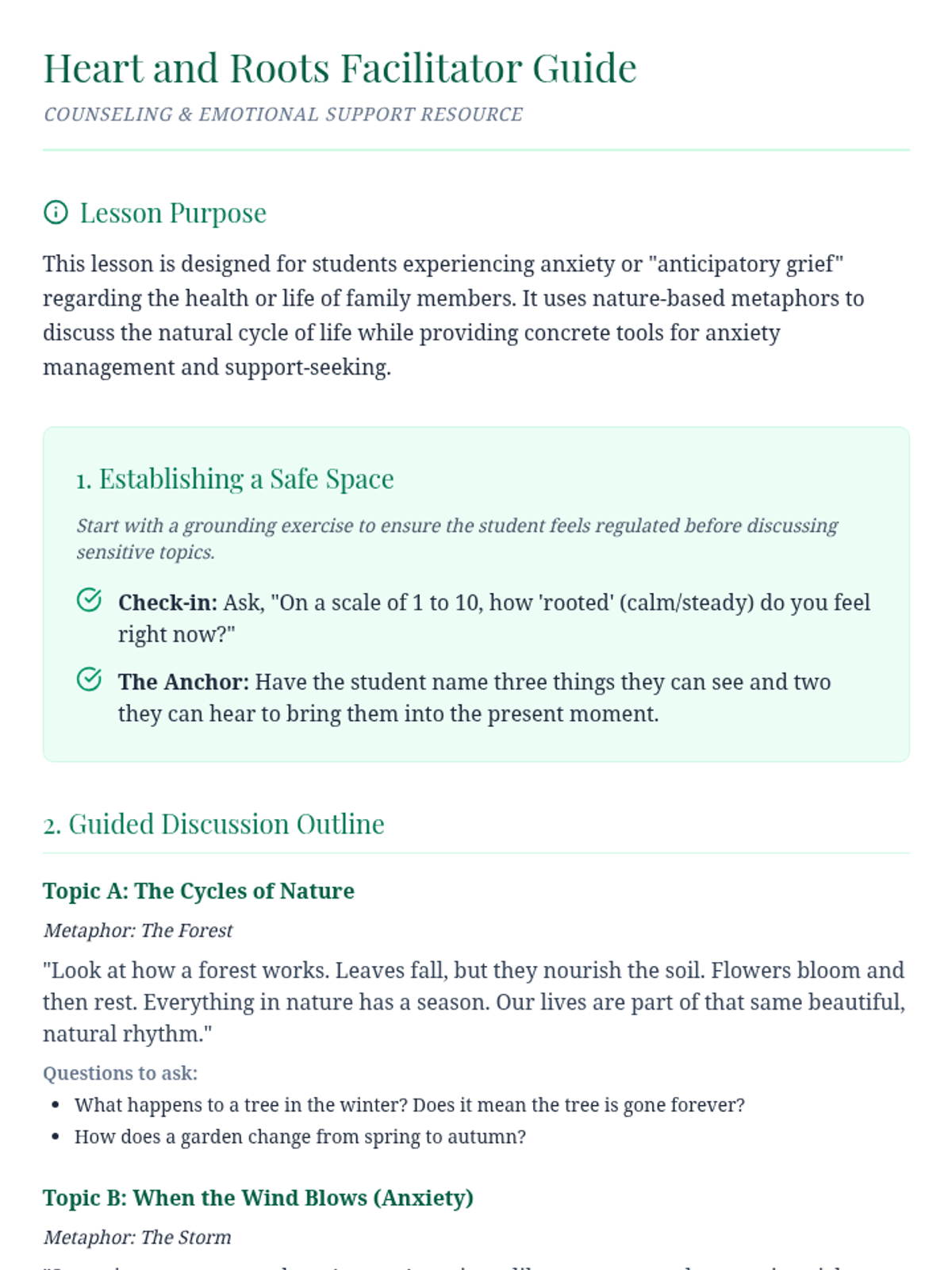
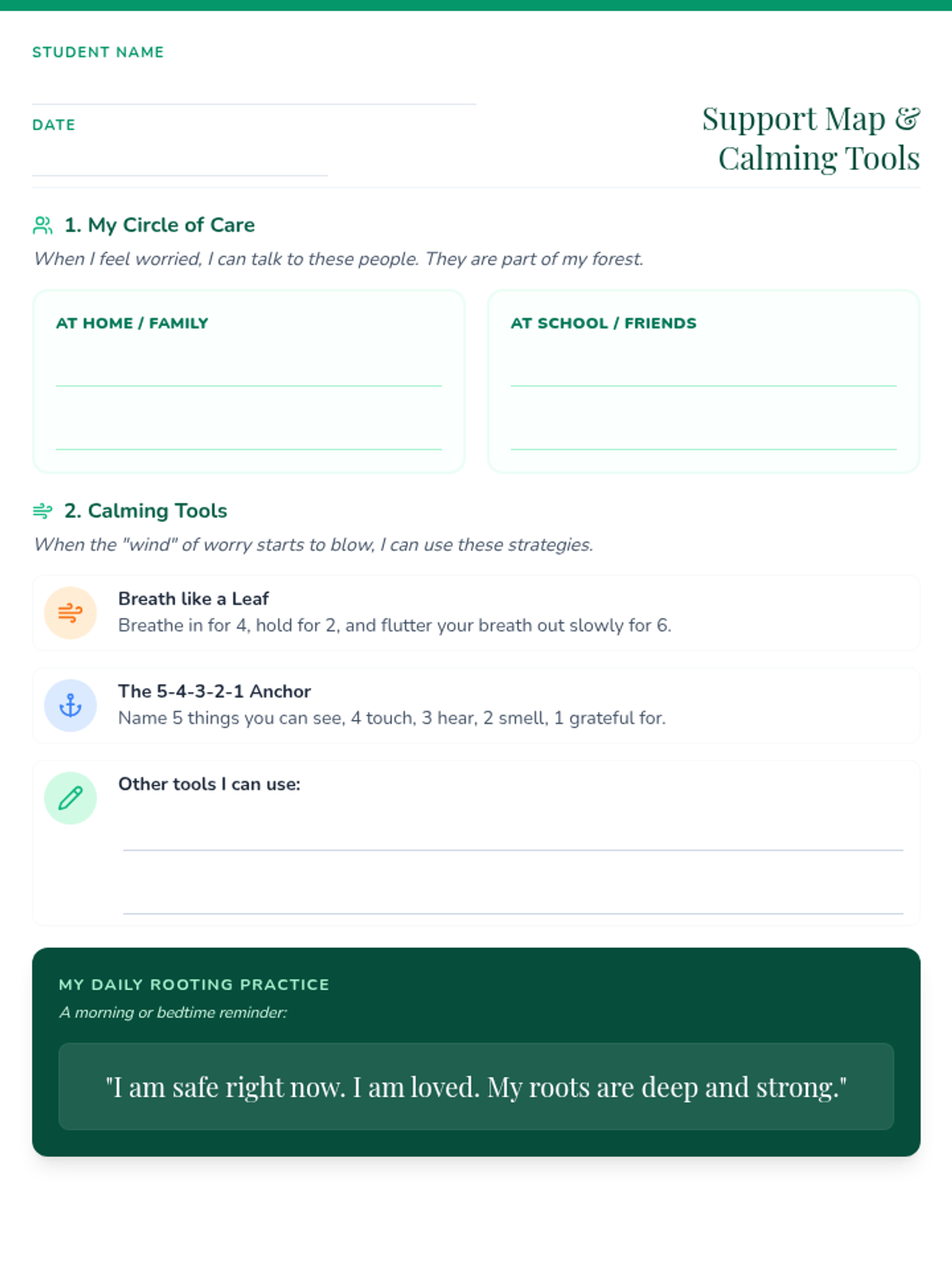
A sensitive and supportive lesson designed to help students navigate anxiety regarding the loss of loved ones through nature metaphors, expressive art, and identifying support systems.
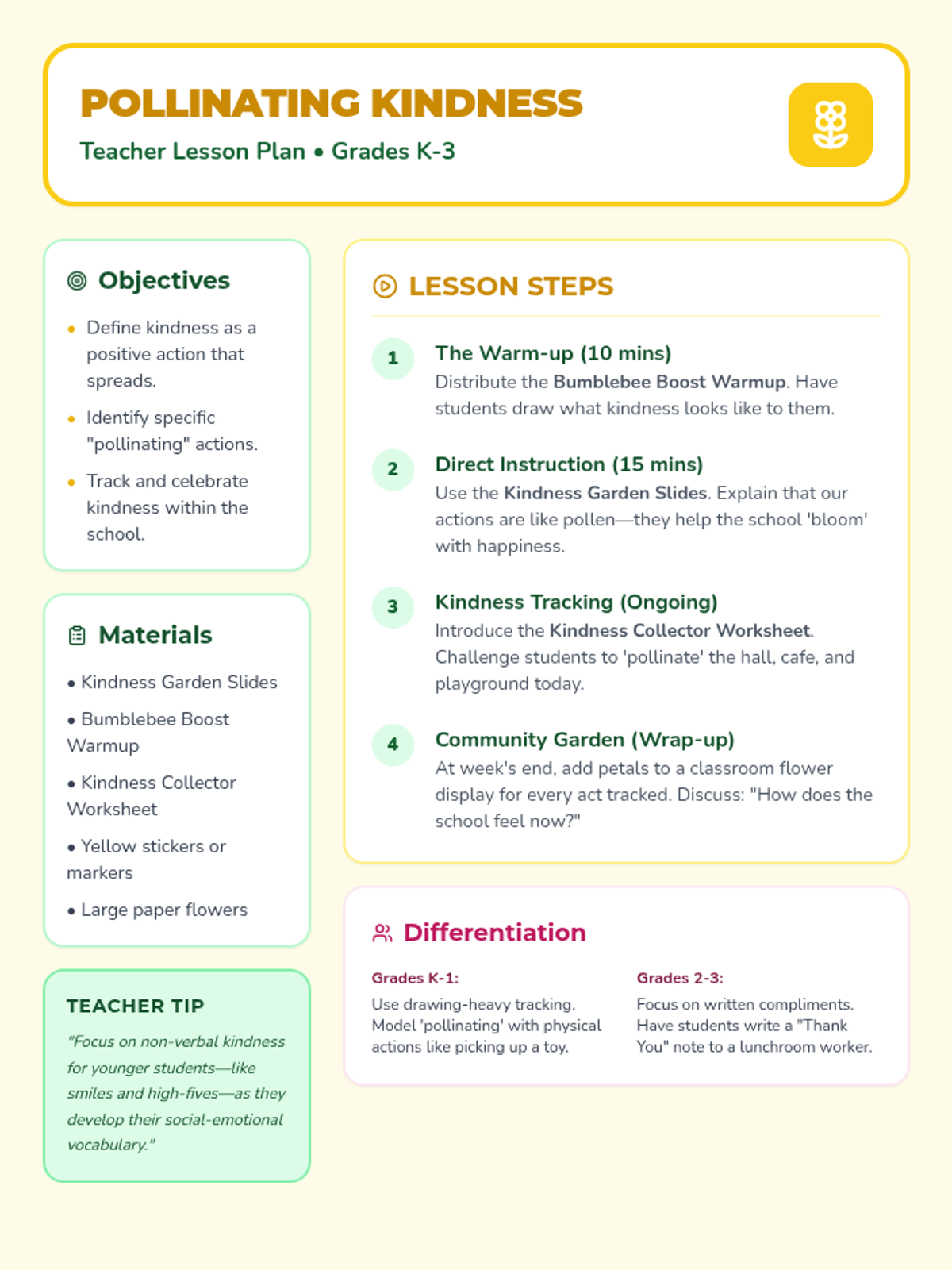
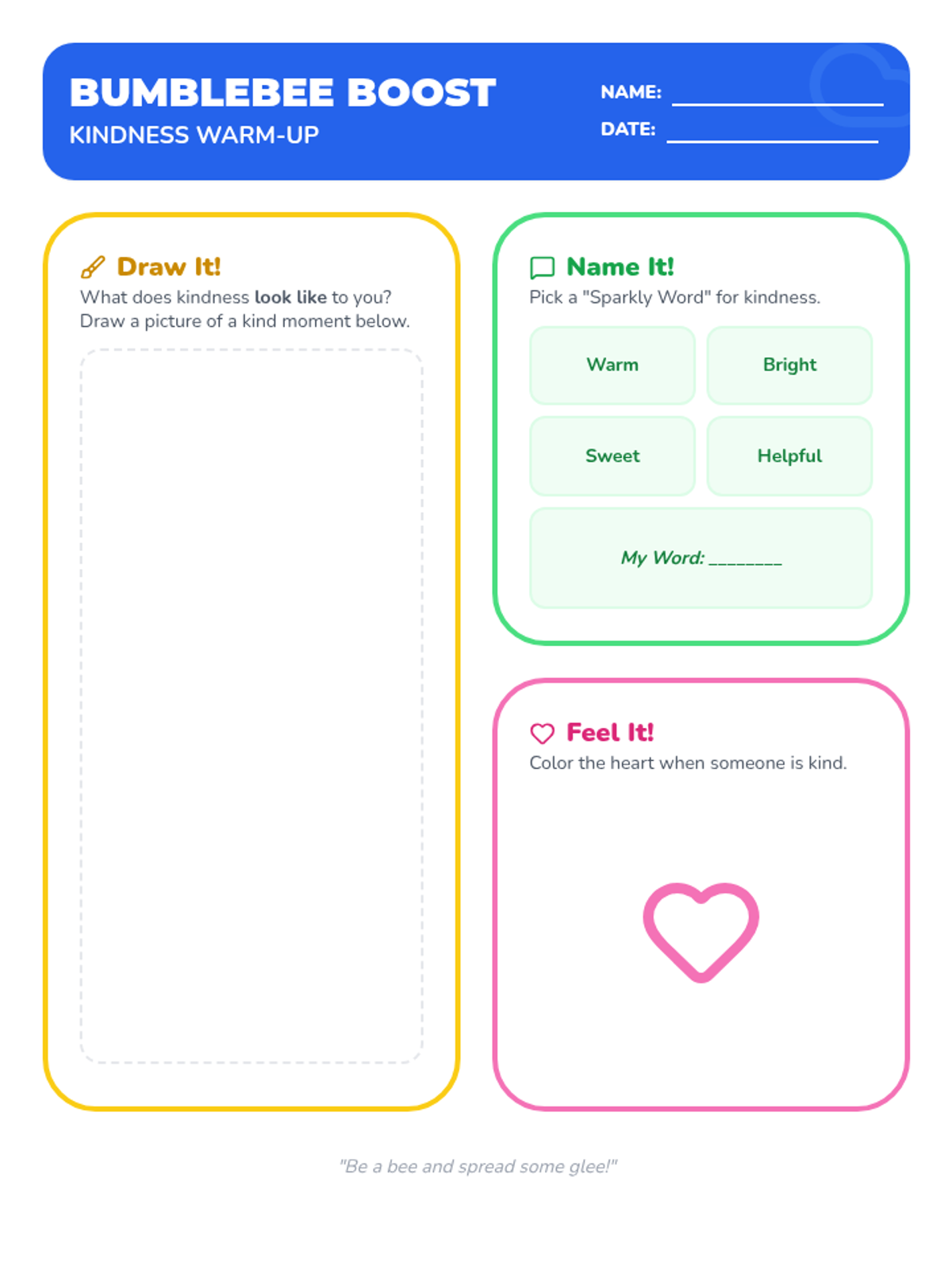
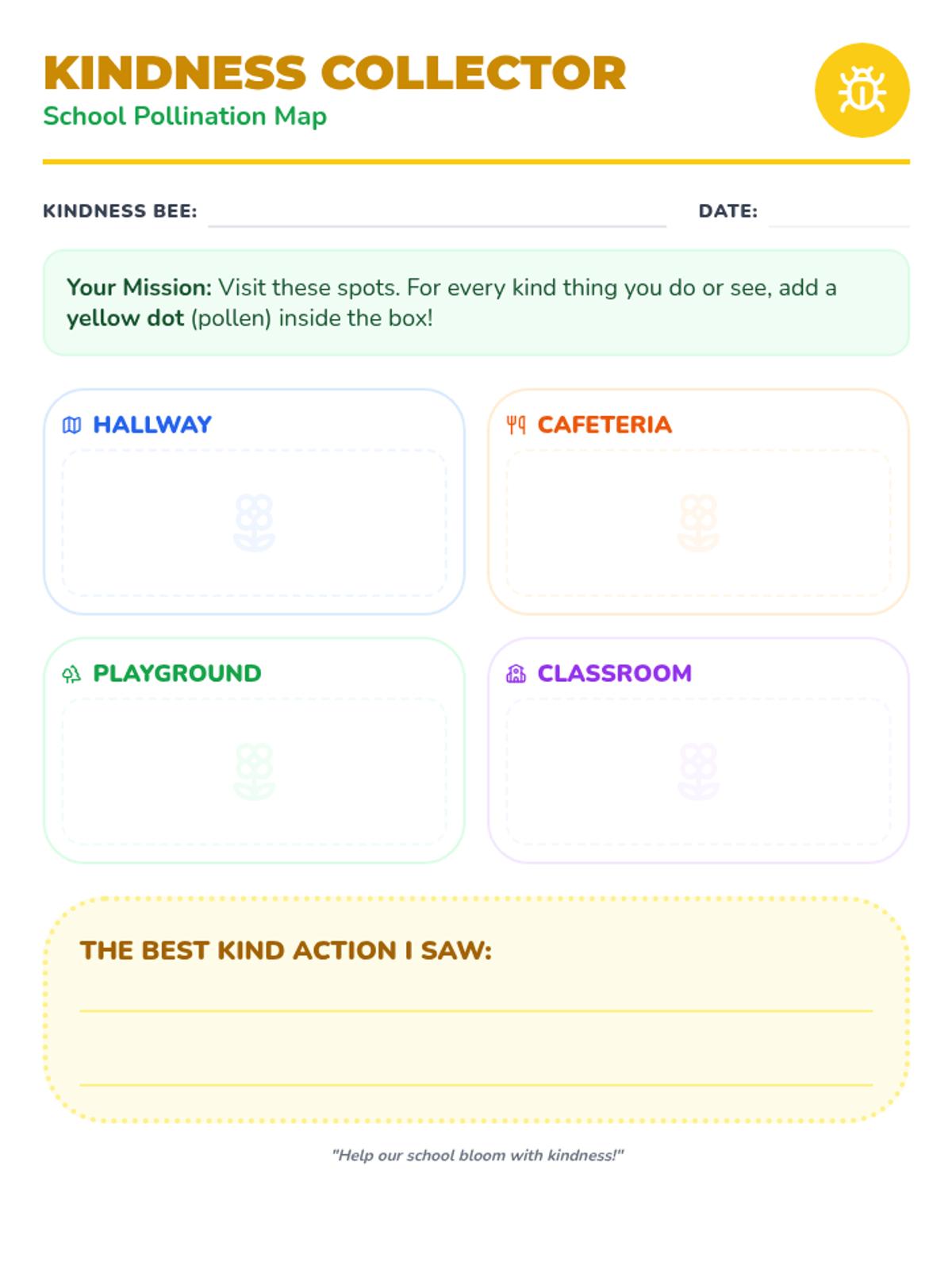
A project-based lesson for K-3 students that uses a garden analogy to teach the impact of kindness. Students learn how positive actions spread throughout a community like pollen in a garden.
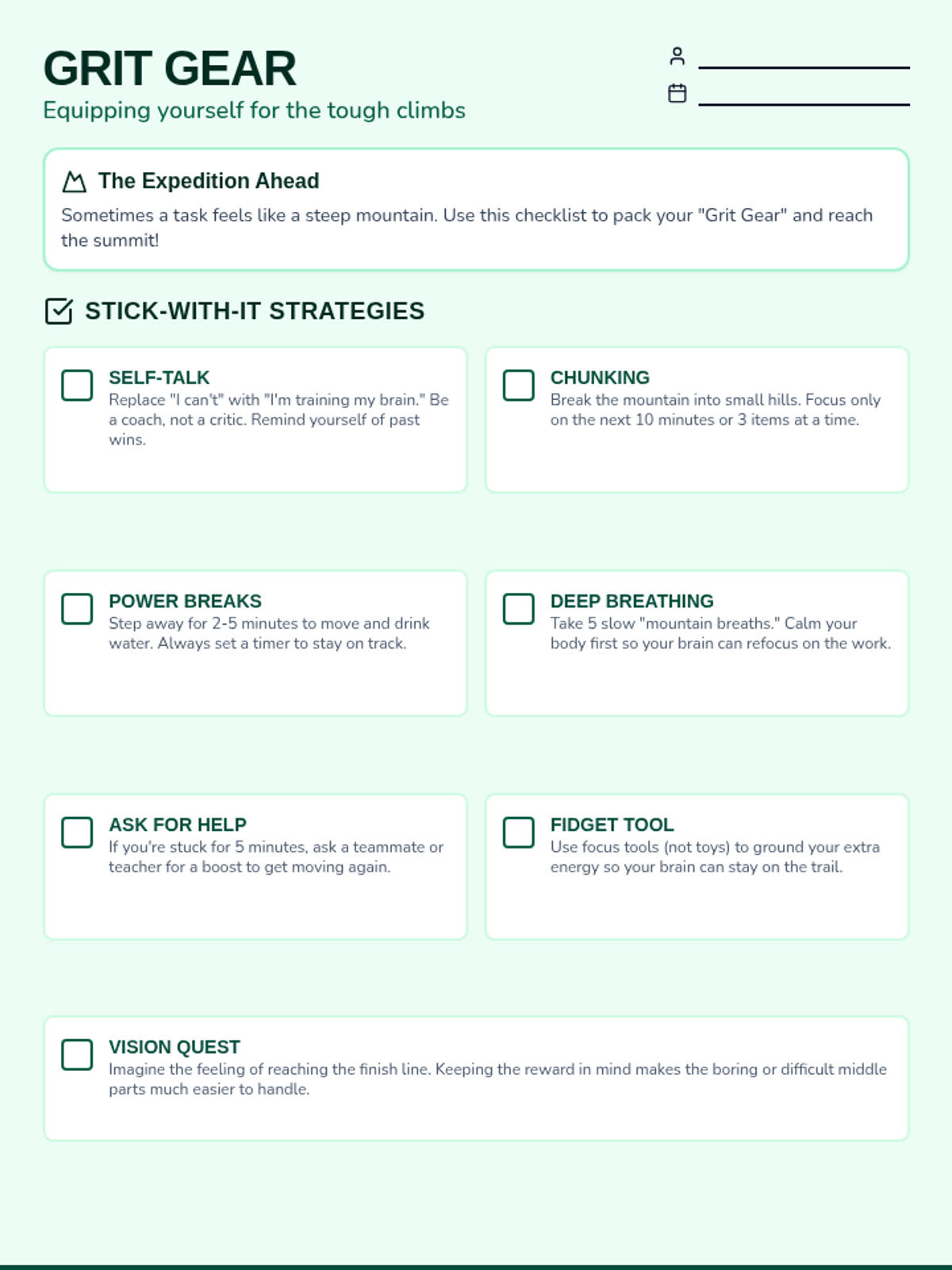
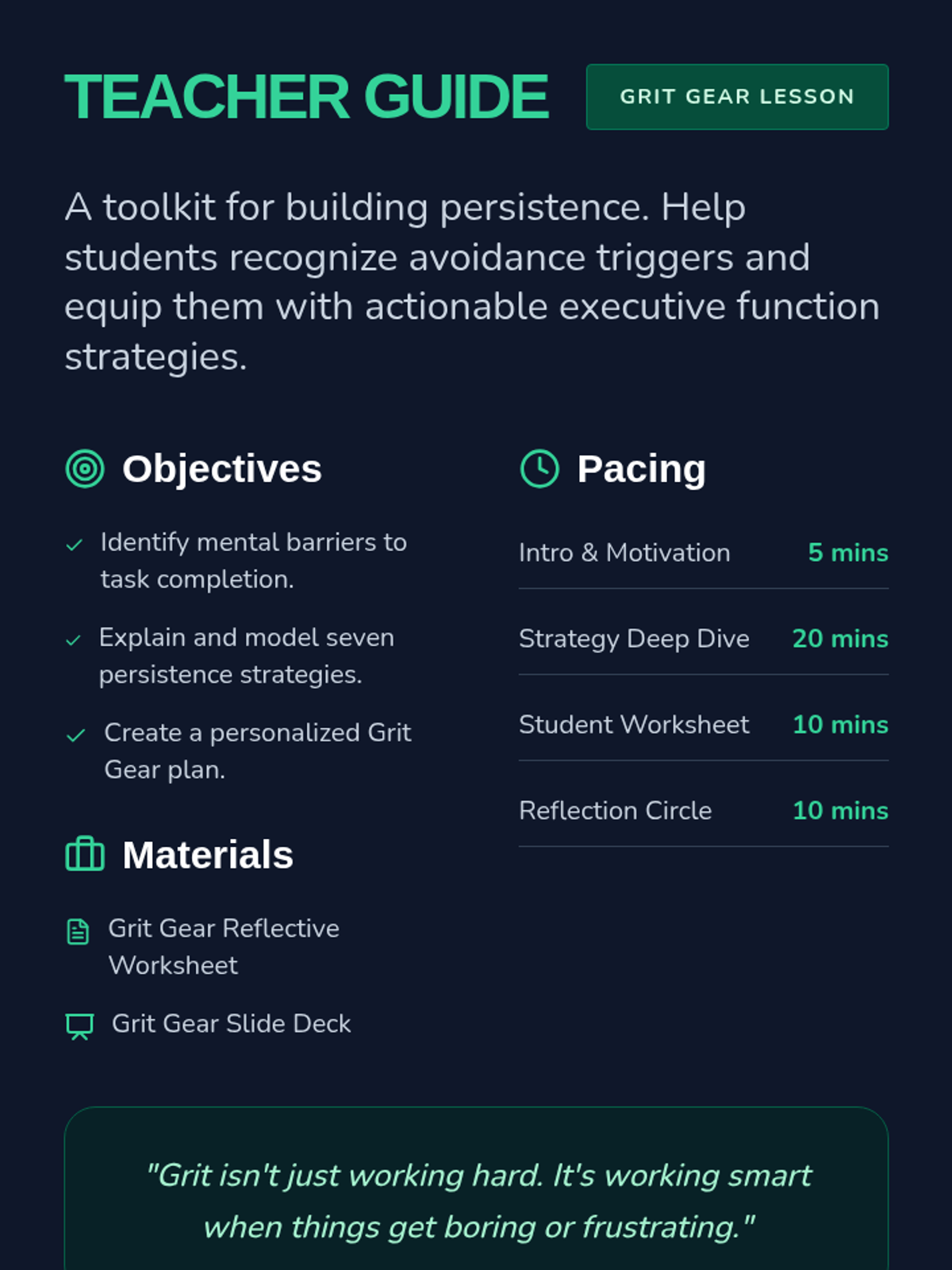
A lesson focused on equipping students with practical strategies to maintain focus and persistence during difficult or monotonous tasks.
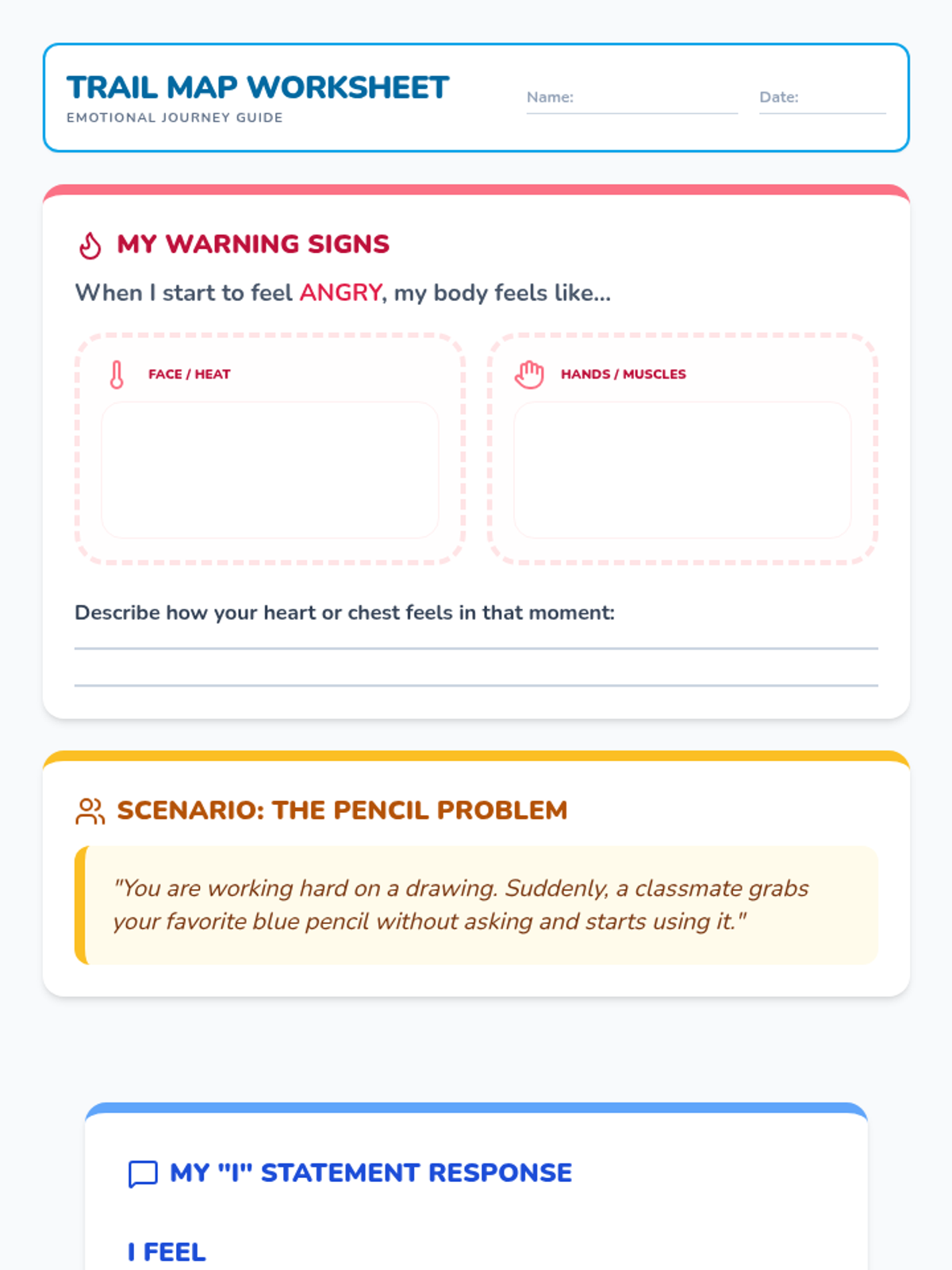
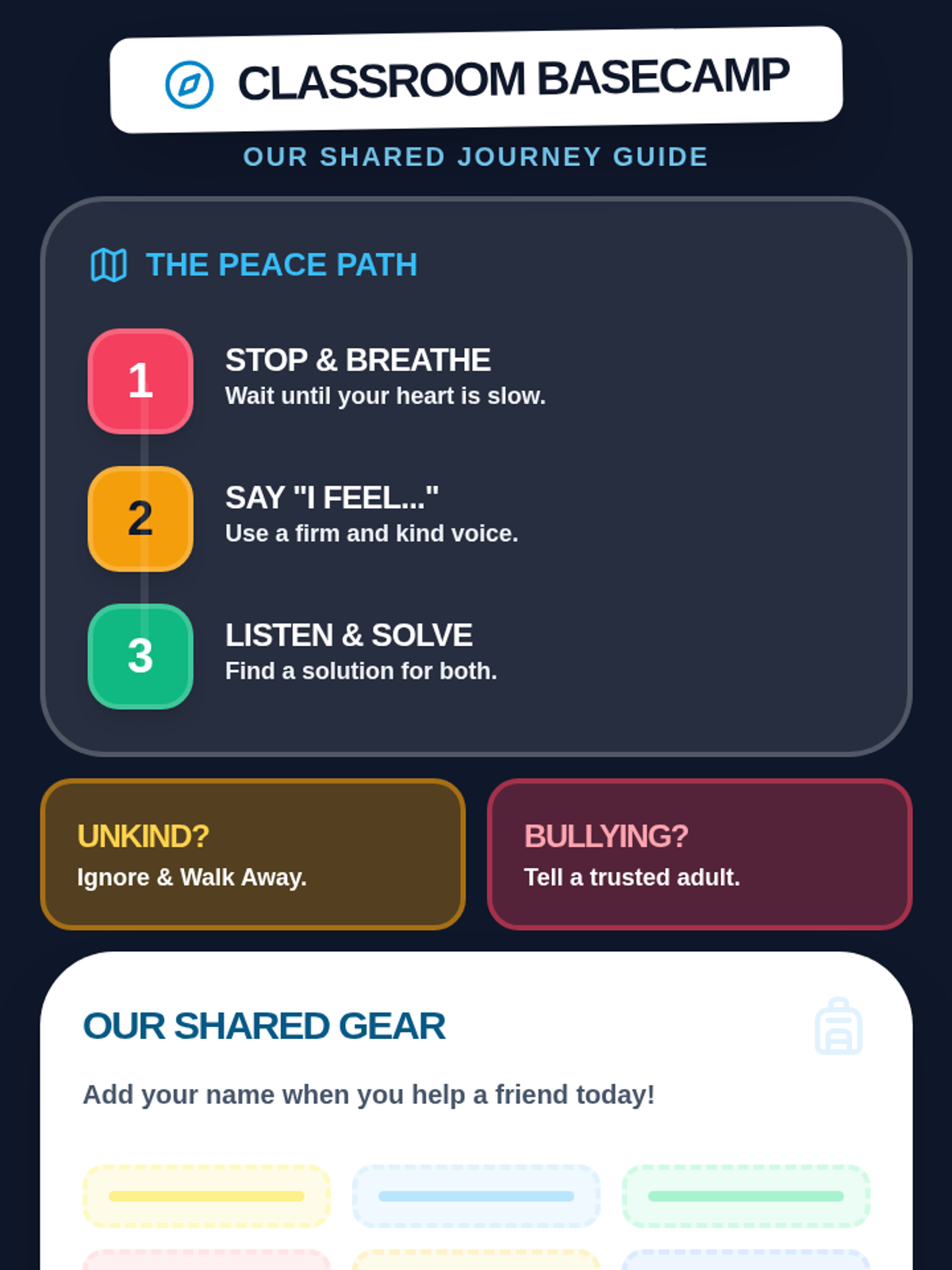
Applies regulation tools to social situations, including conflict resolution steps and handling unkind behavior or bullying.
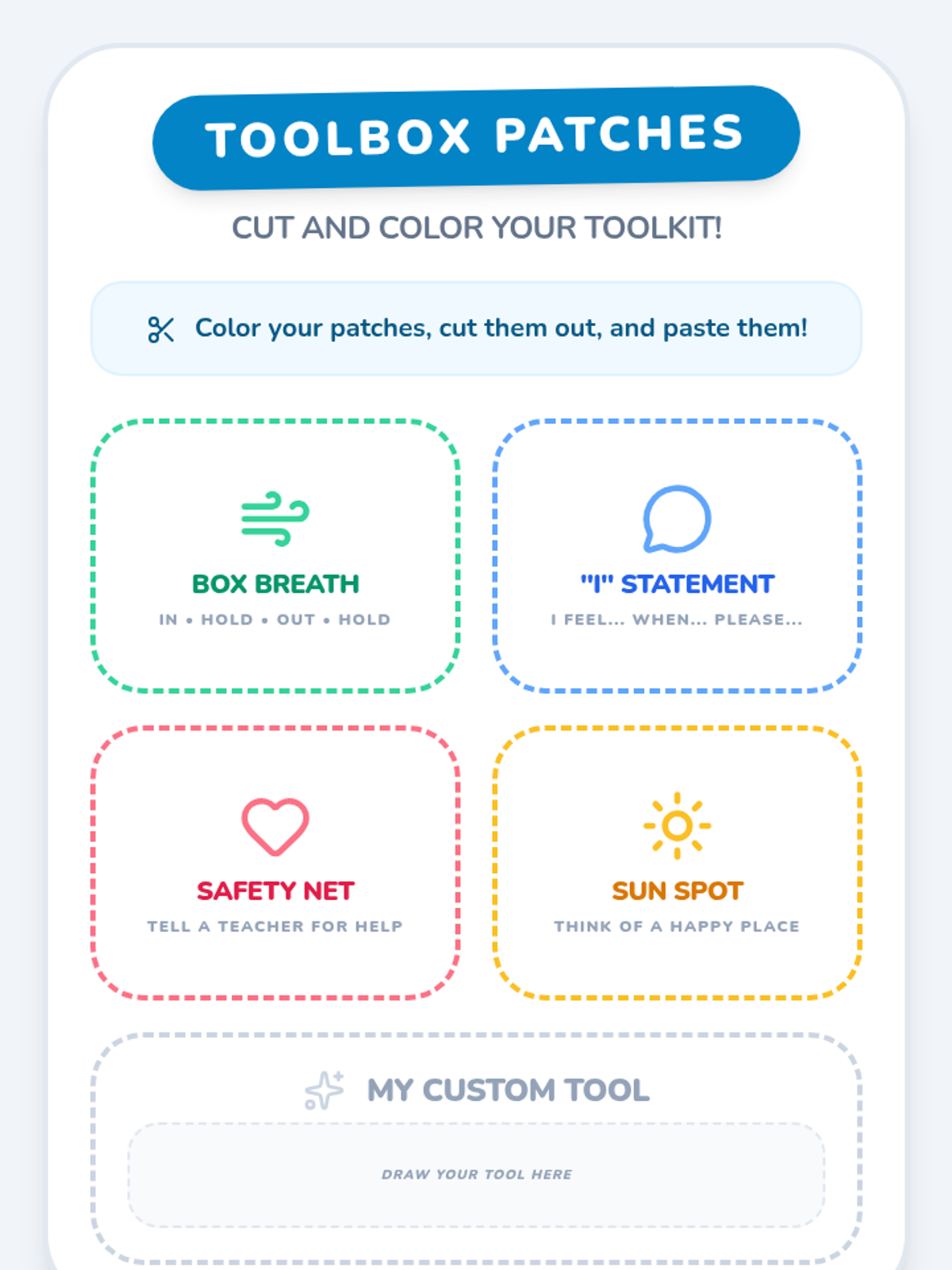
Focuses on practical tools for regulation: deep breathing, mindfulness, and the 'I' Statement tool.