Students explore the relationship between education, career choice, and income through a hands-on budgeting activity. 4th graders learn to prioritize needs versus wants while managing a monthly budget based on real-world career salaries.
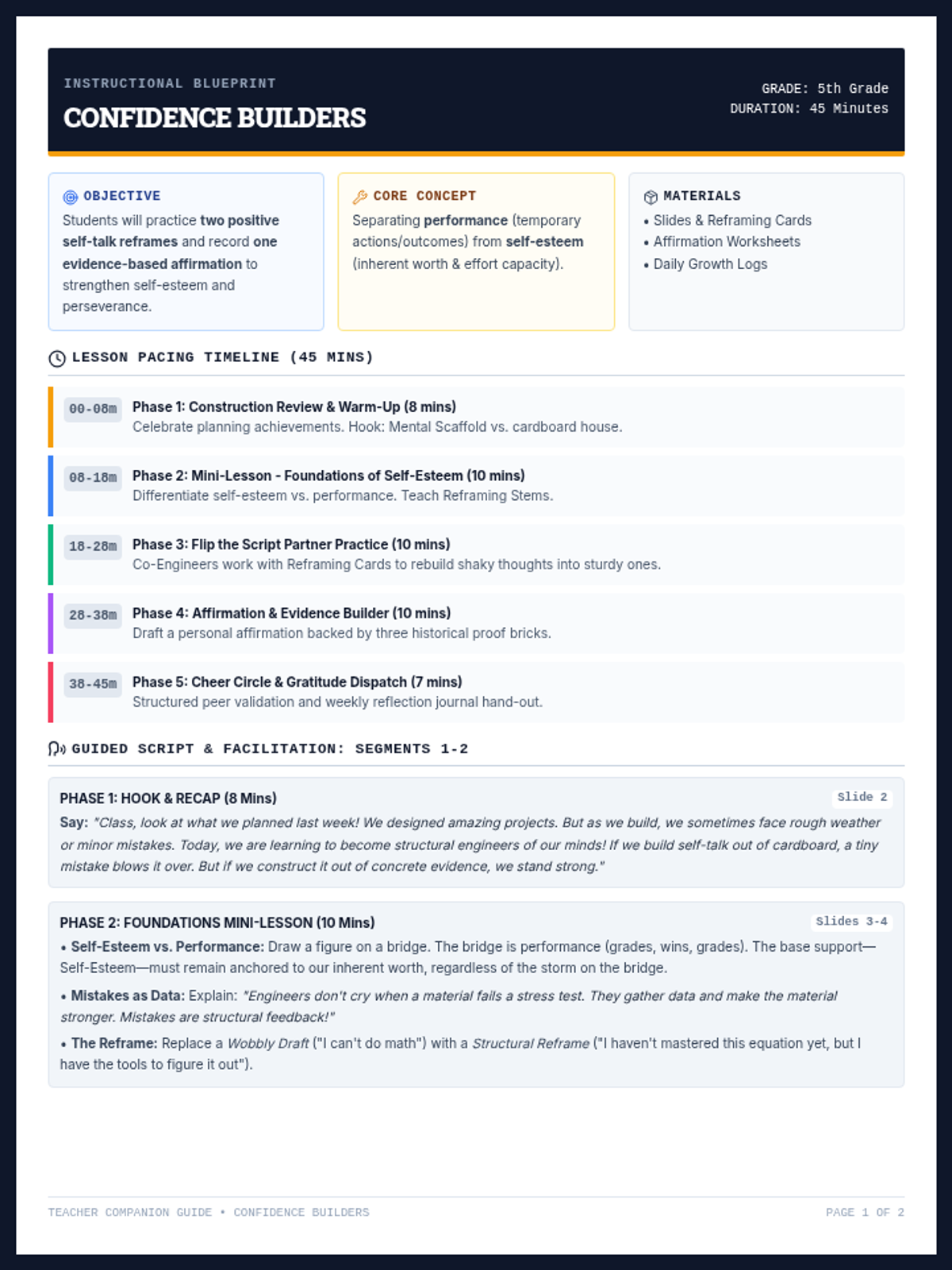
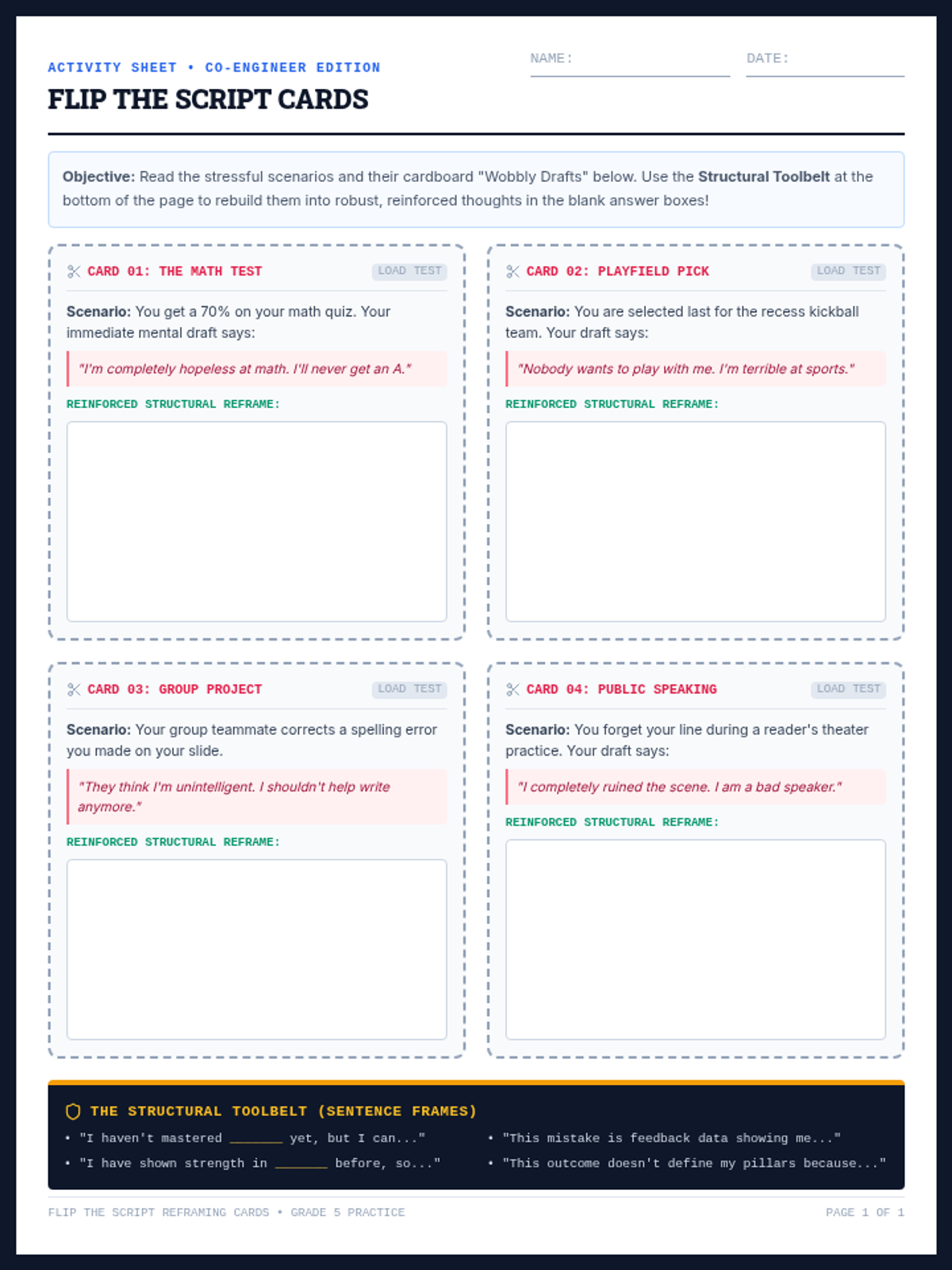
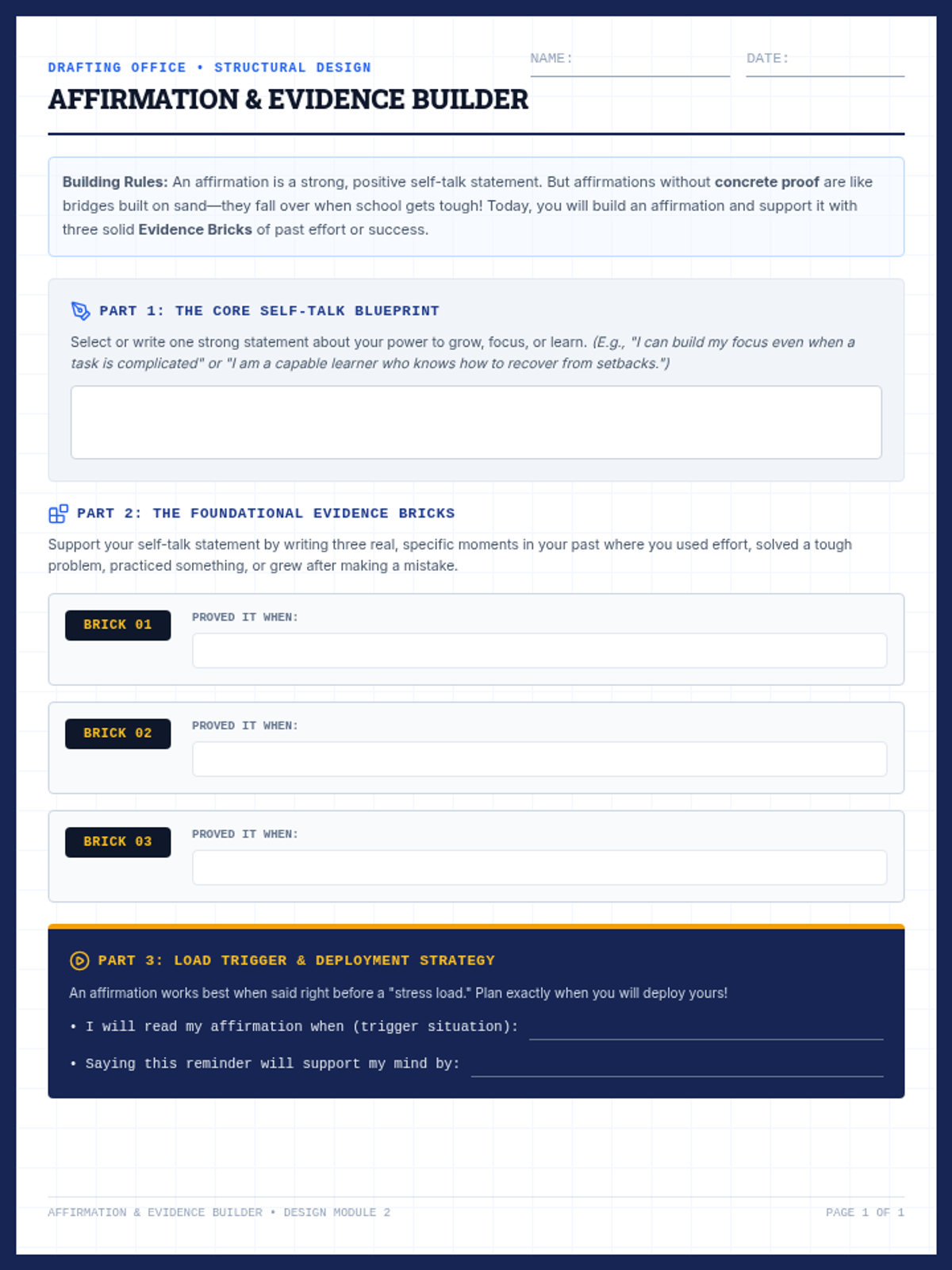
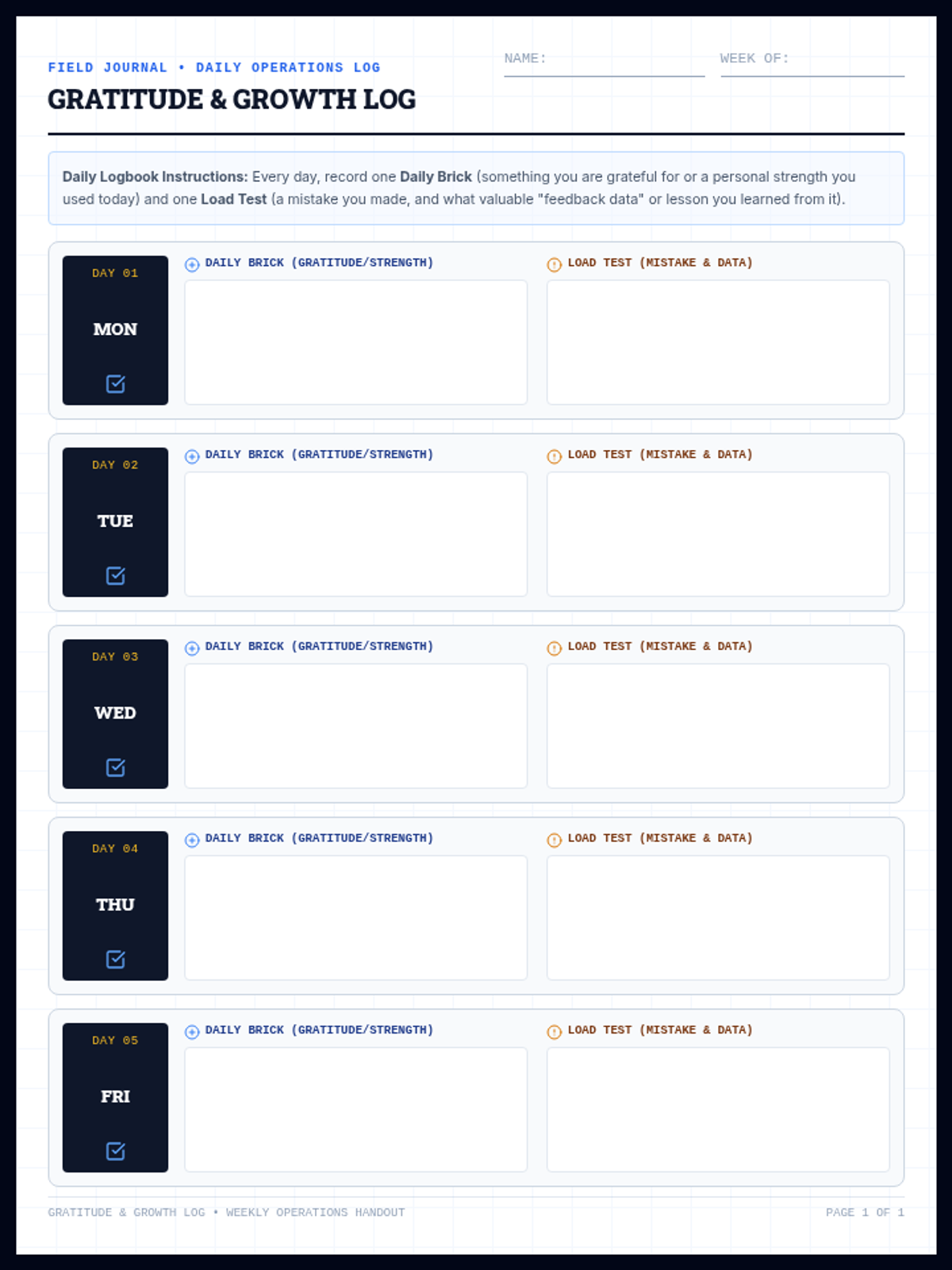
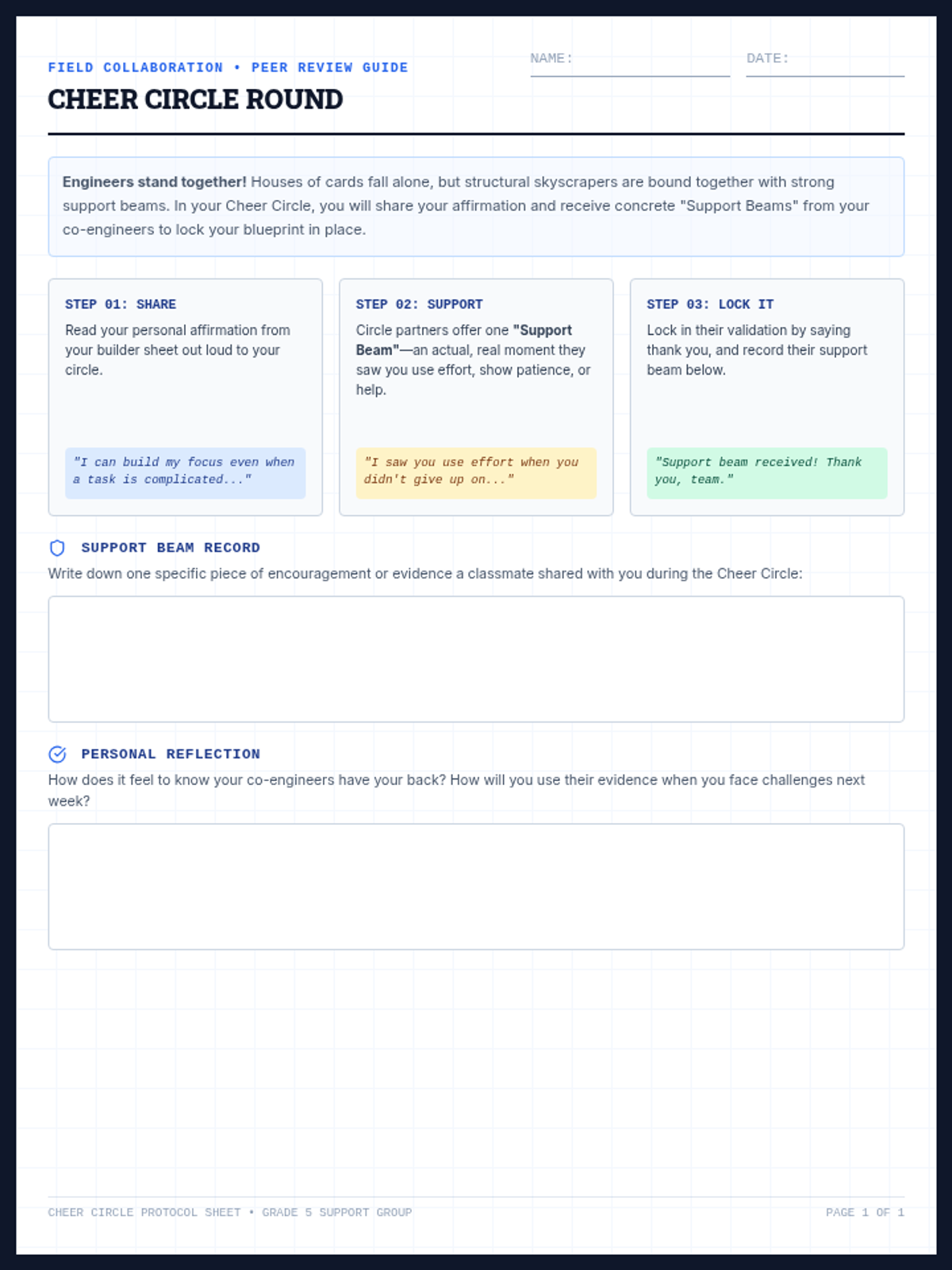
A comprehensive 45-minute lesson for 5th graders to build robust self-talk skills and establish evidence-based affirmations. Through blueprint-themed interactive activities, students learn to distinguish performance from self-esteem, reframe negative thoughts using concrete strategies, and give/receive peer encouragement.
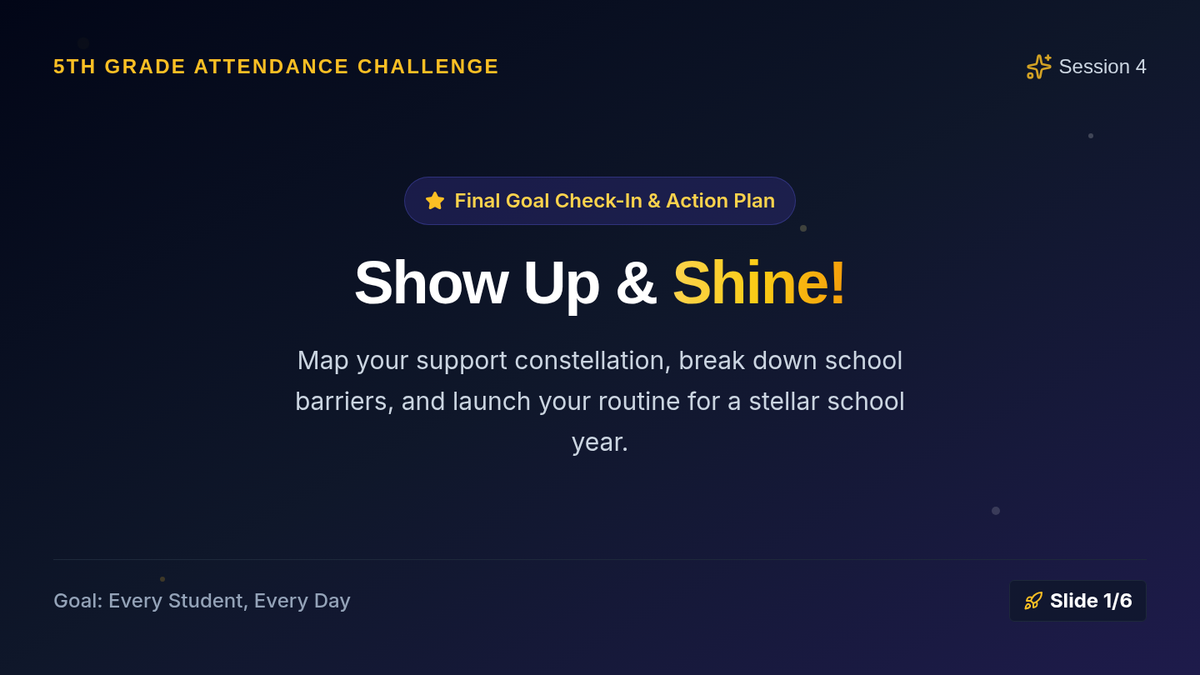
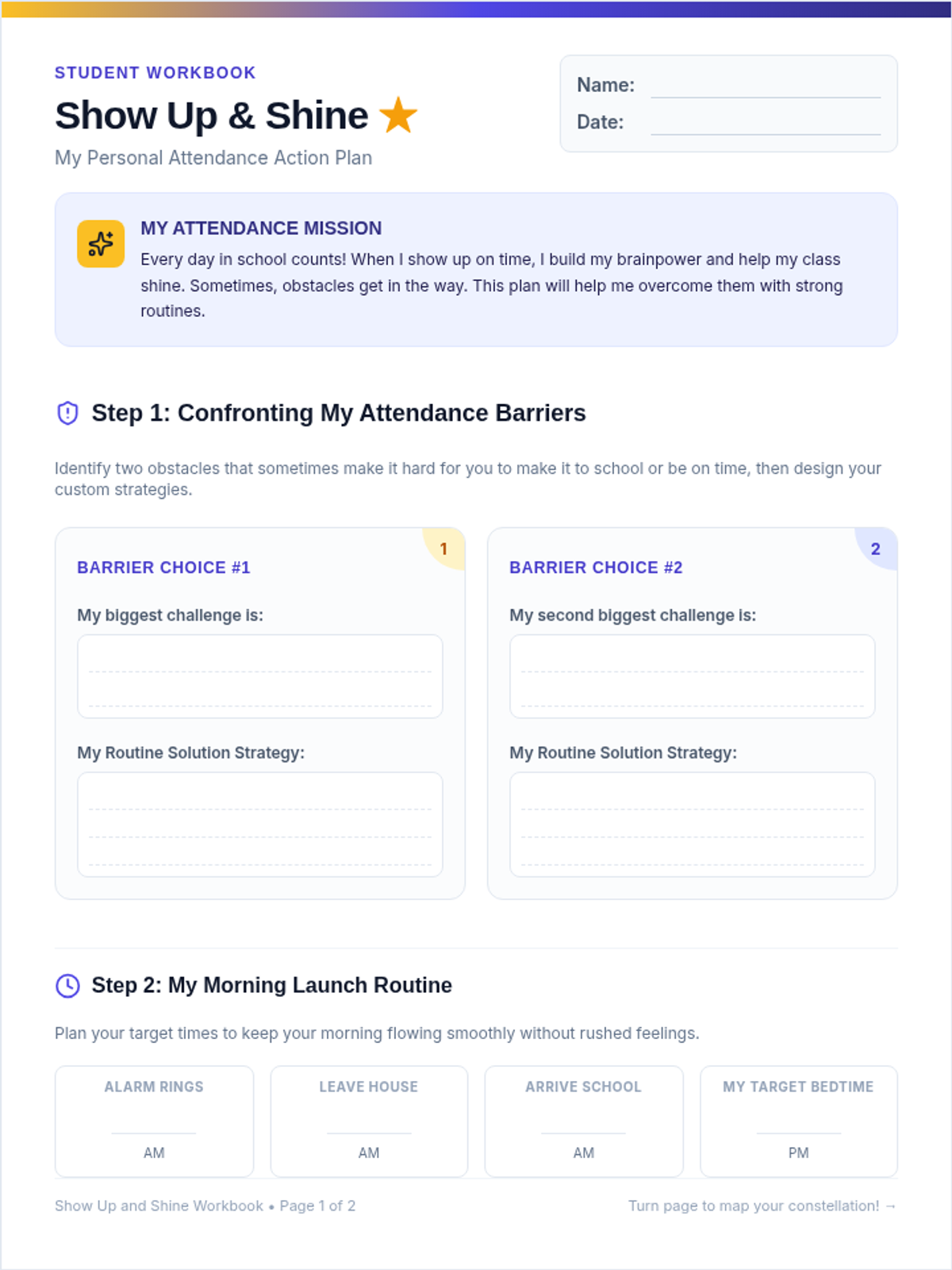
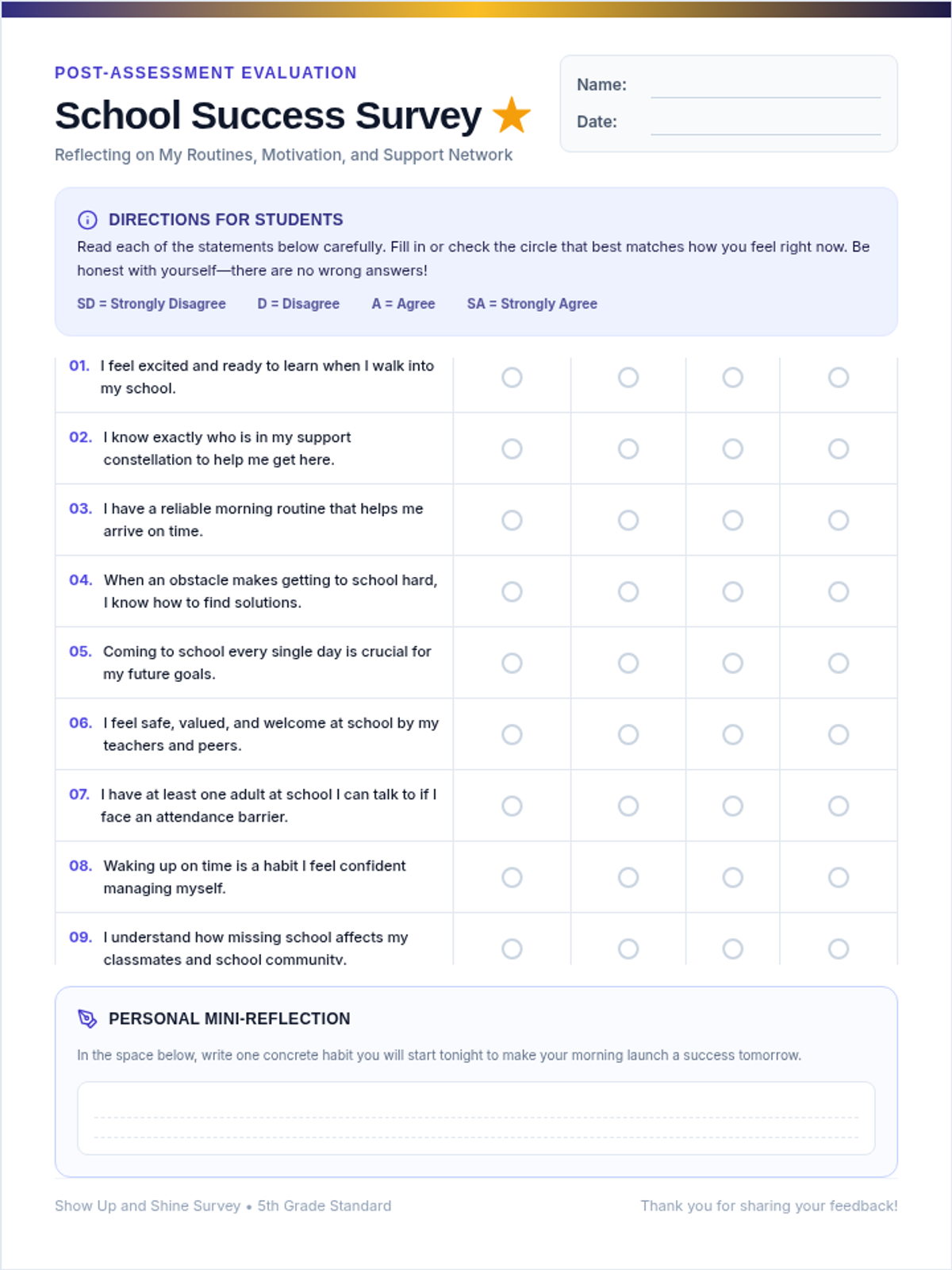
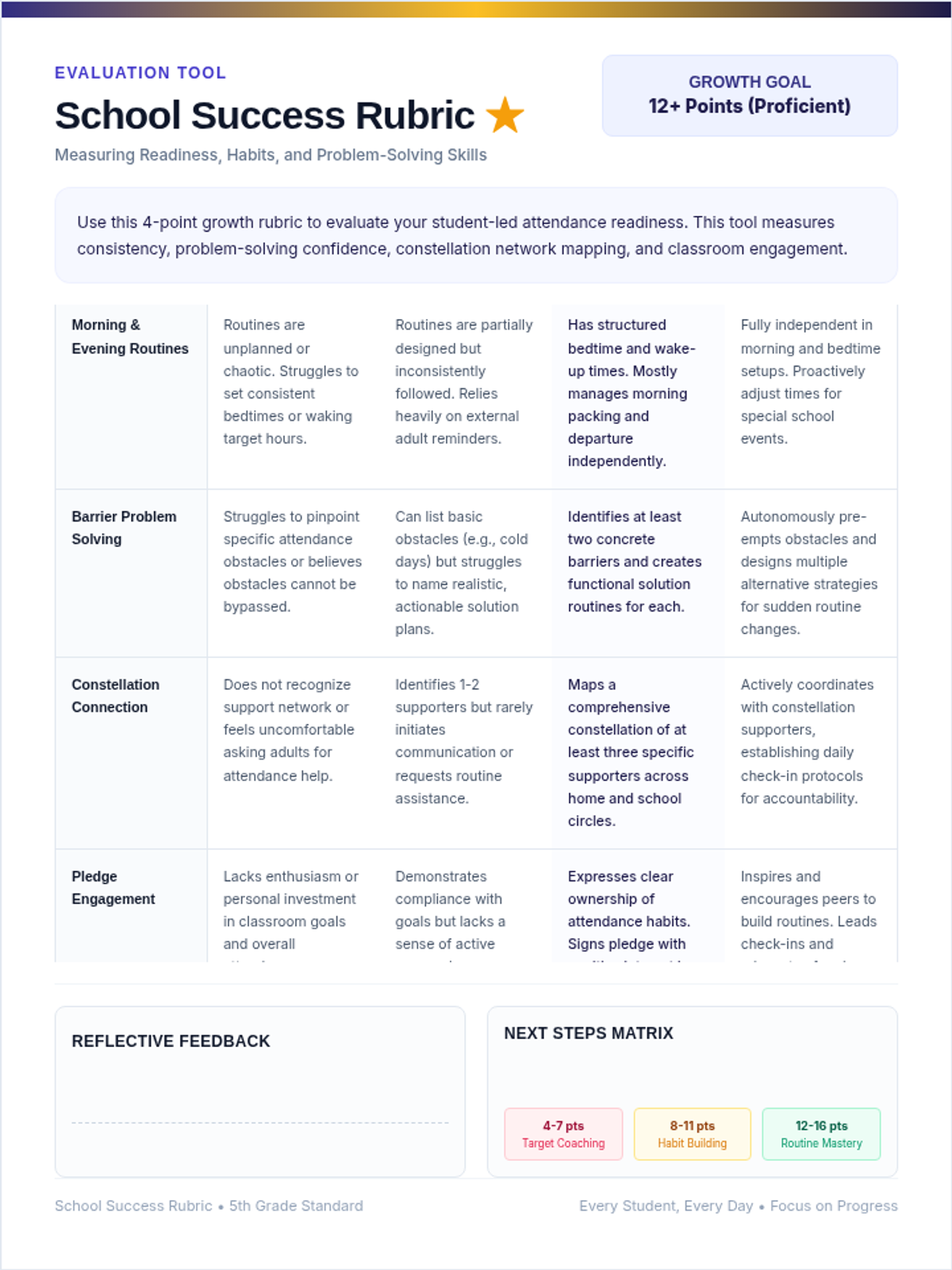
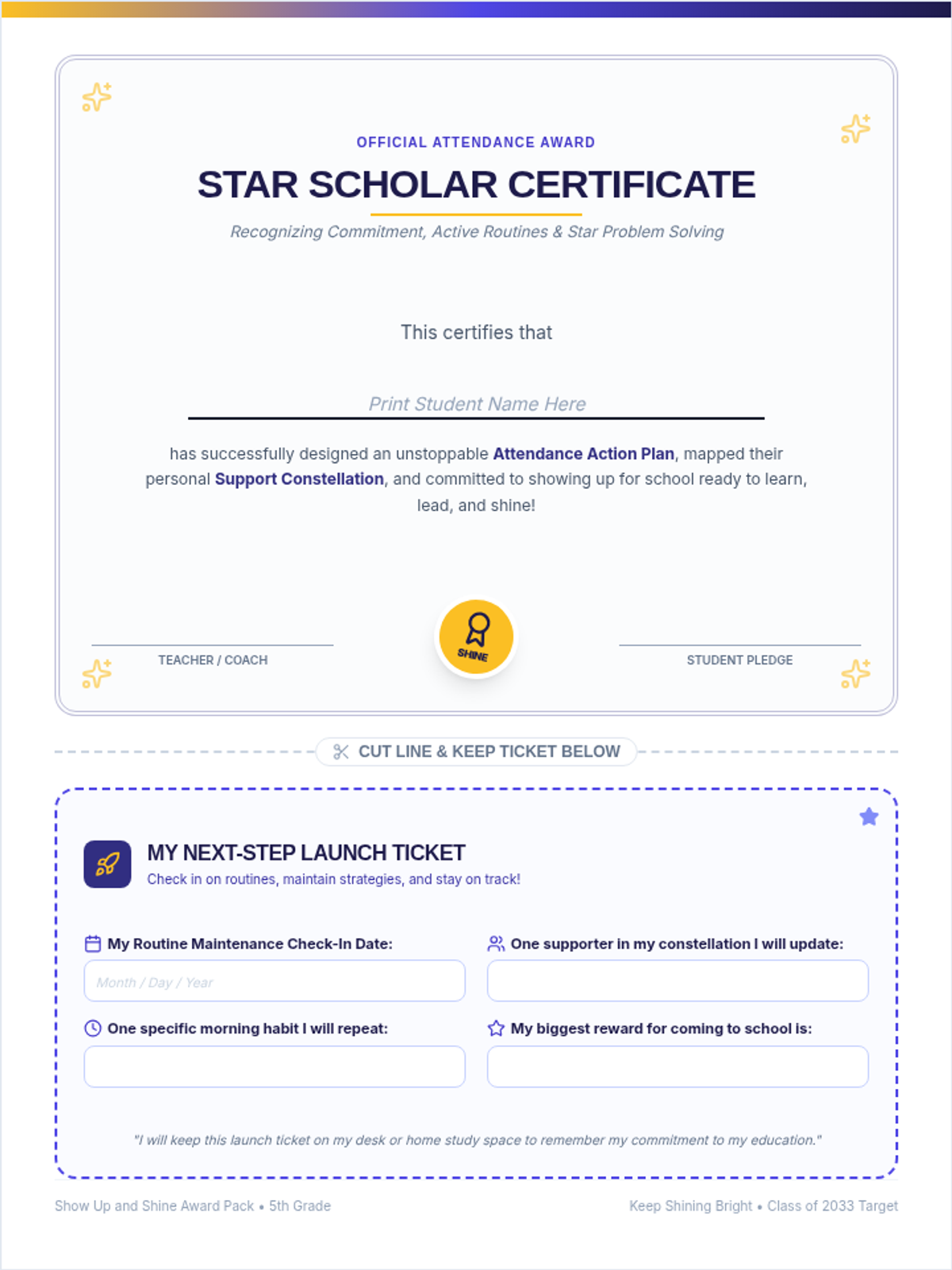
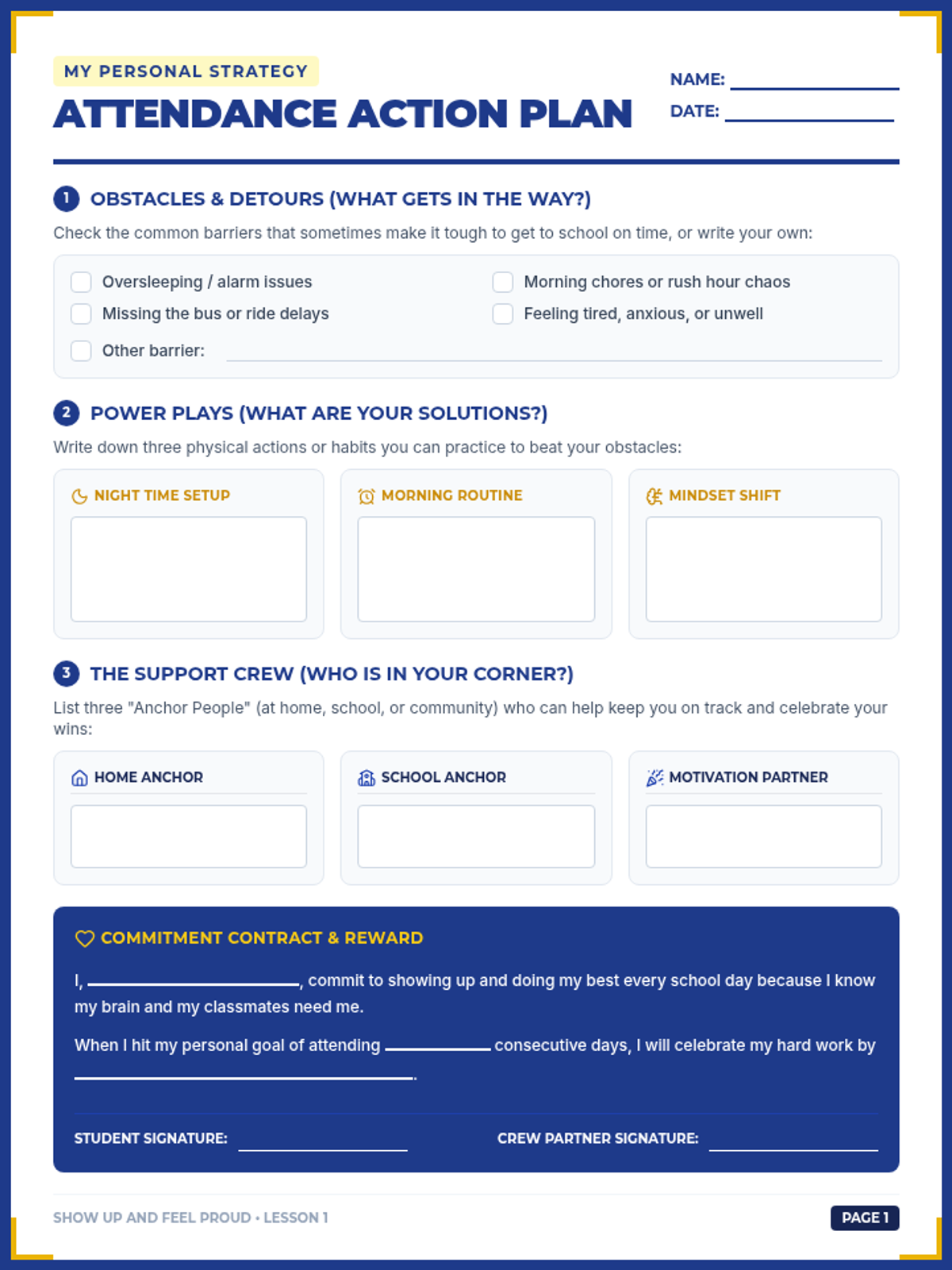
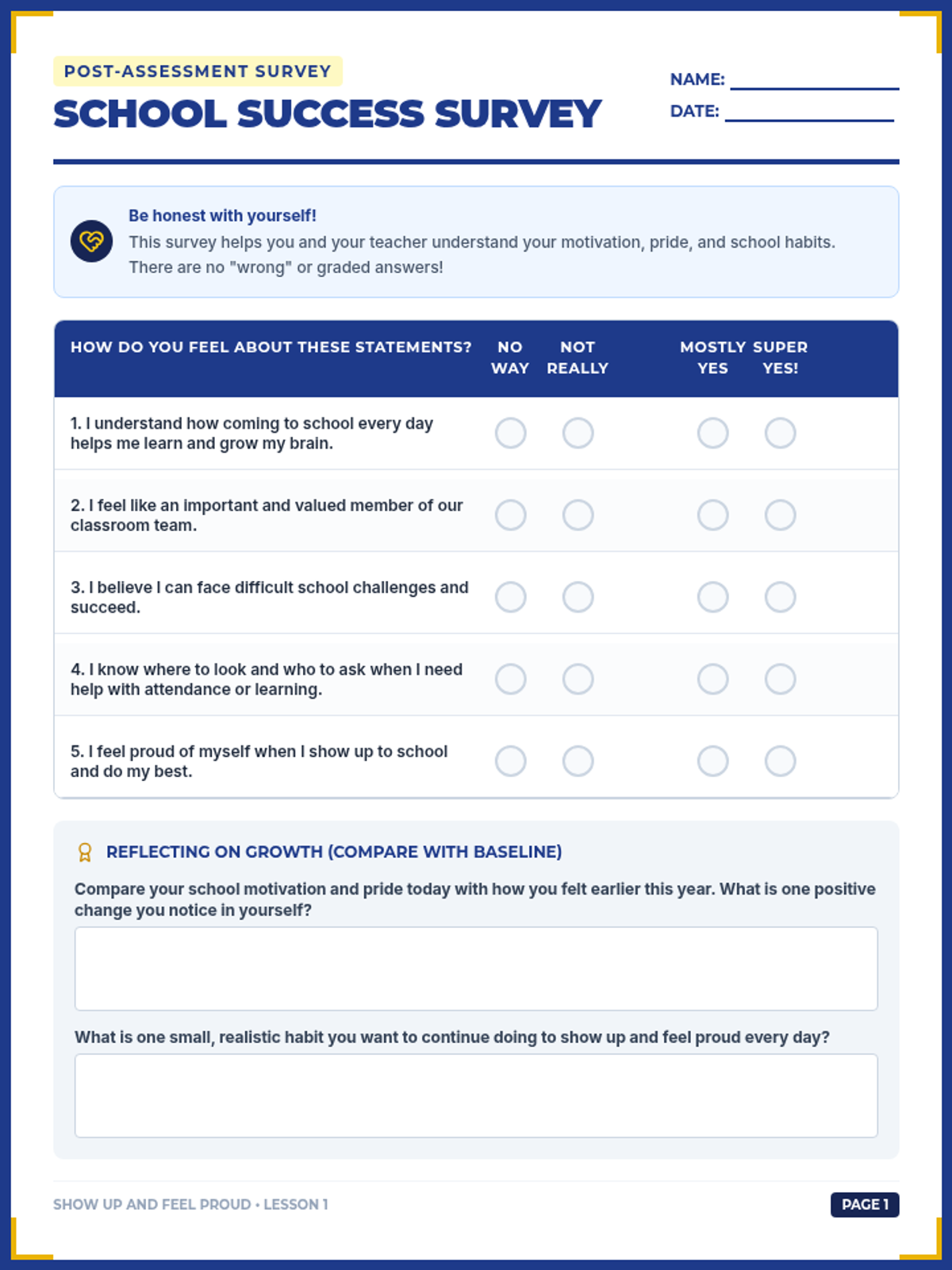
A high-impact 45-minute lesson for 5th grade that helps students overcome school attendance barriers, map their support networks, and celebrate growth using customized planning tools and reflection surveys.
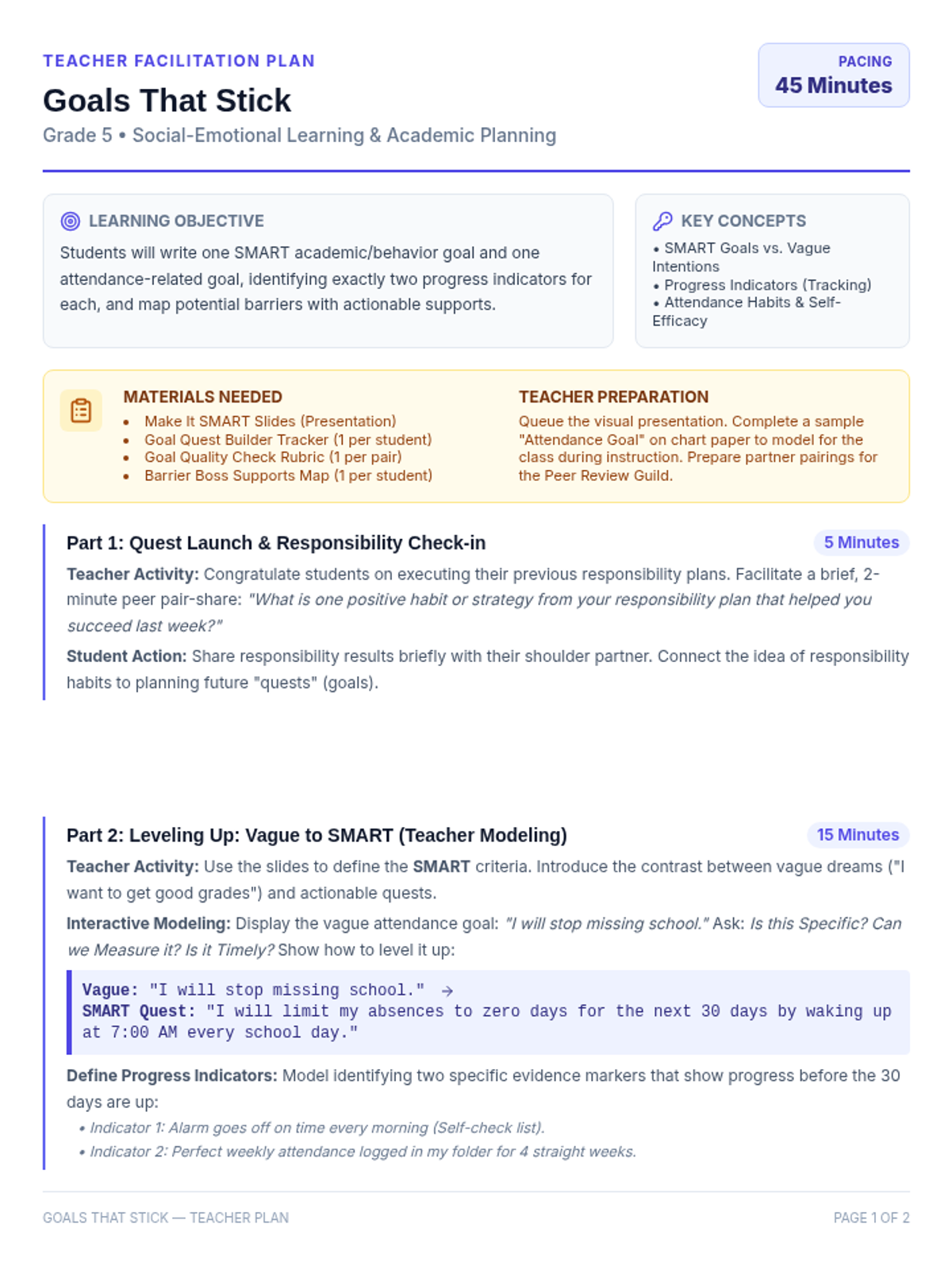
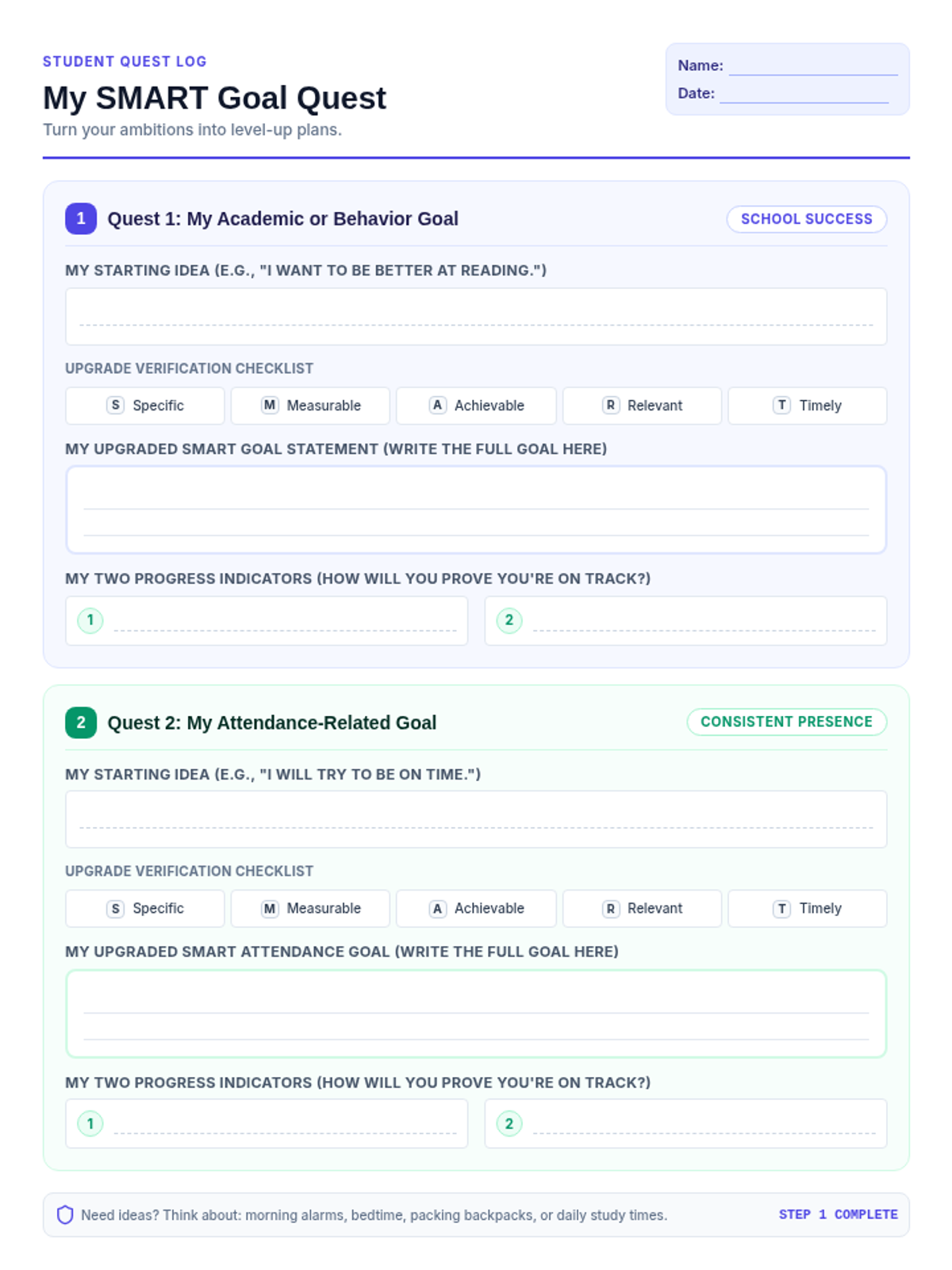
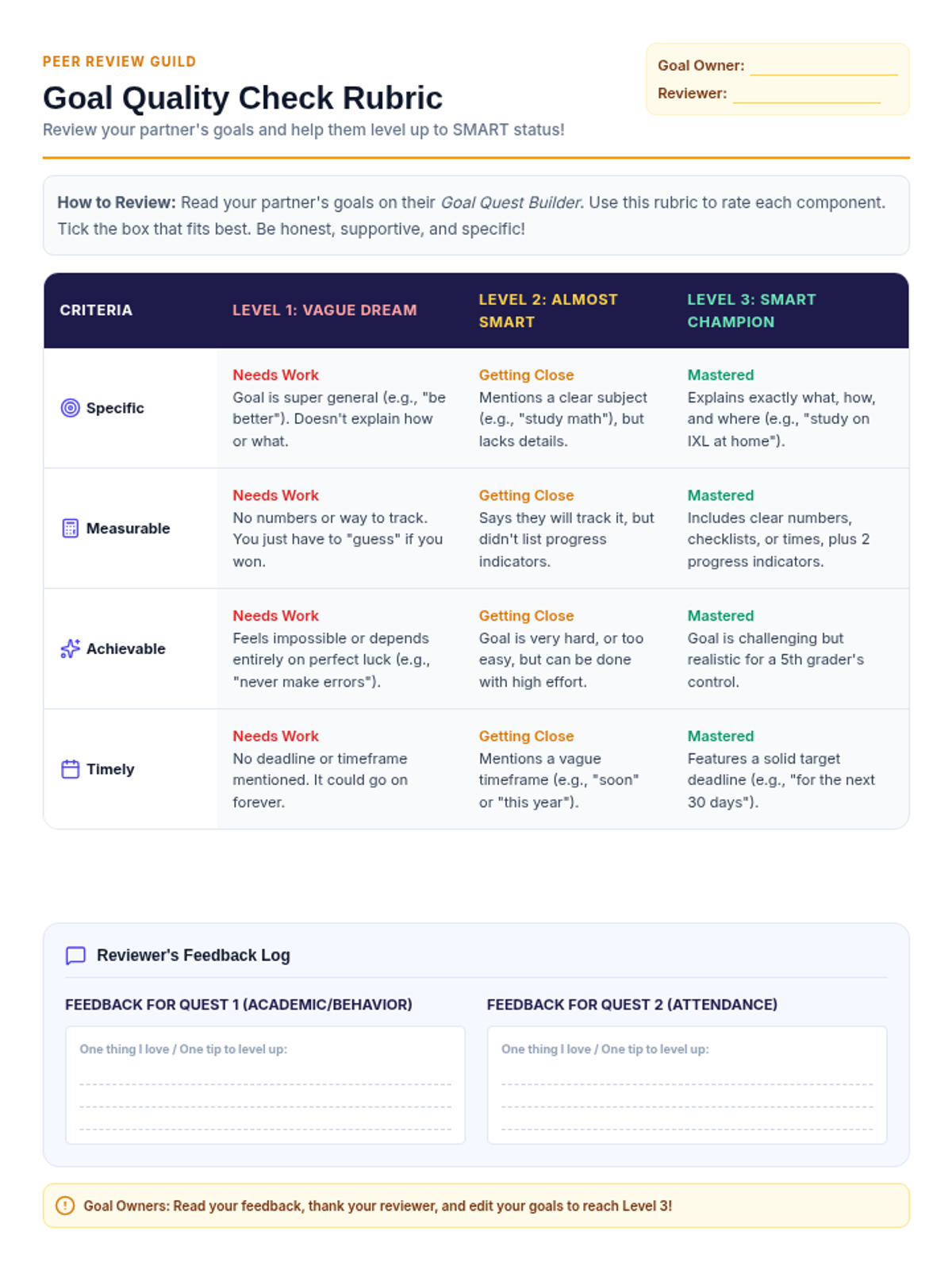
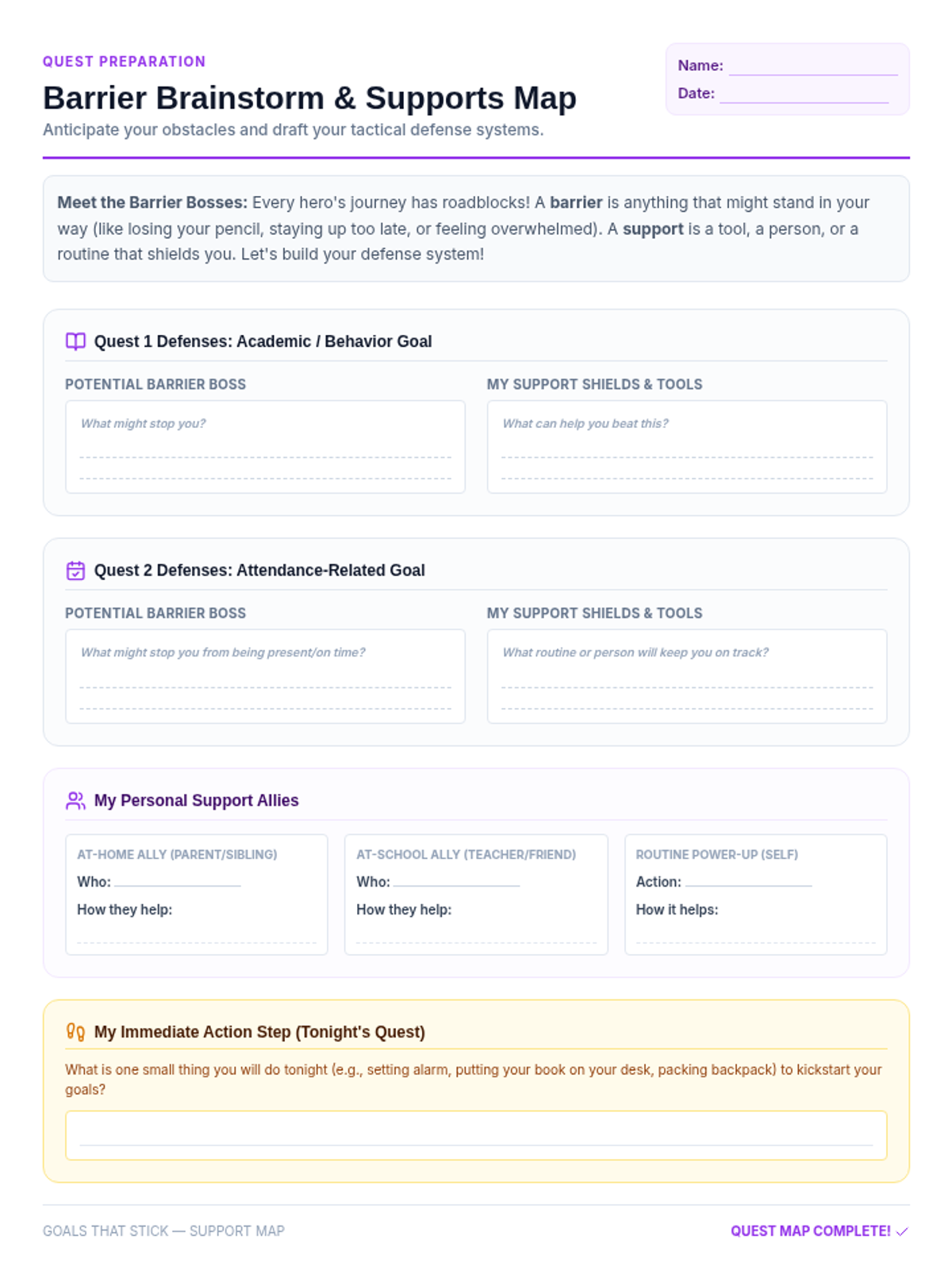
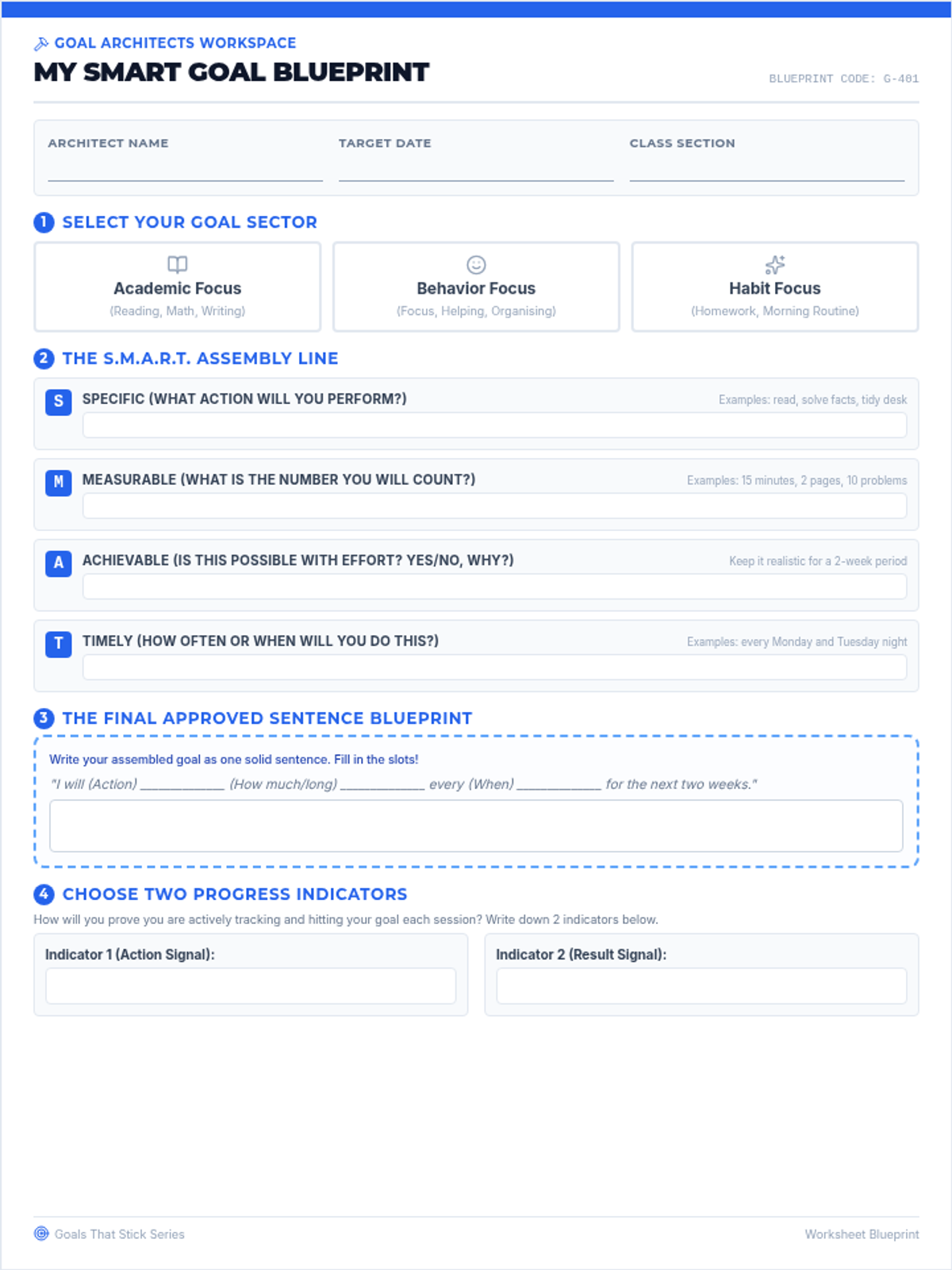
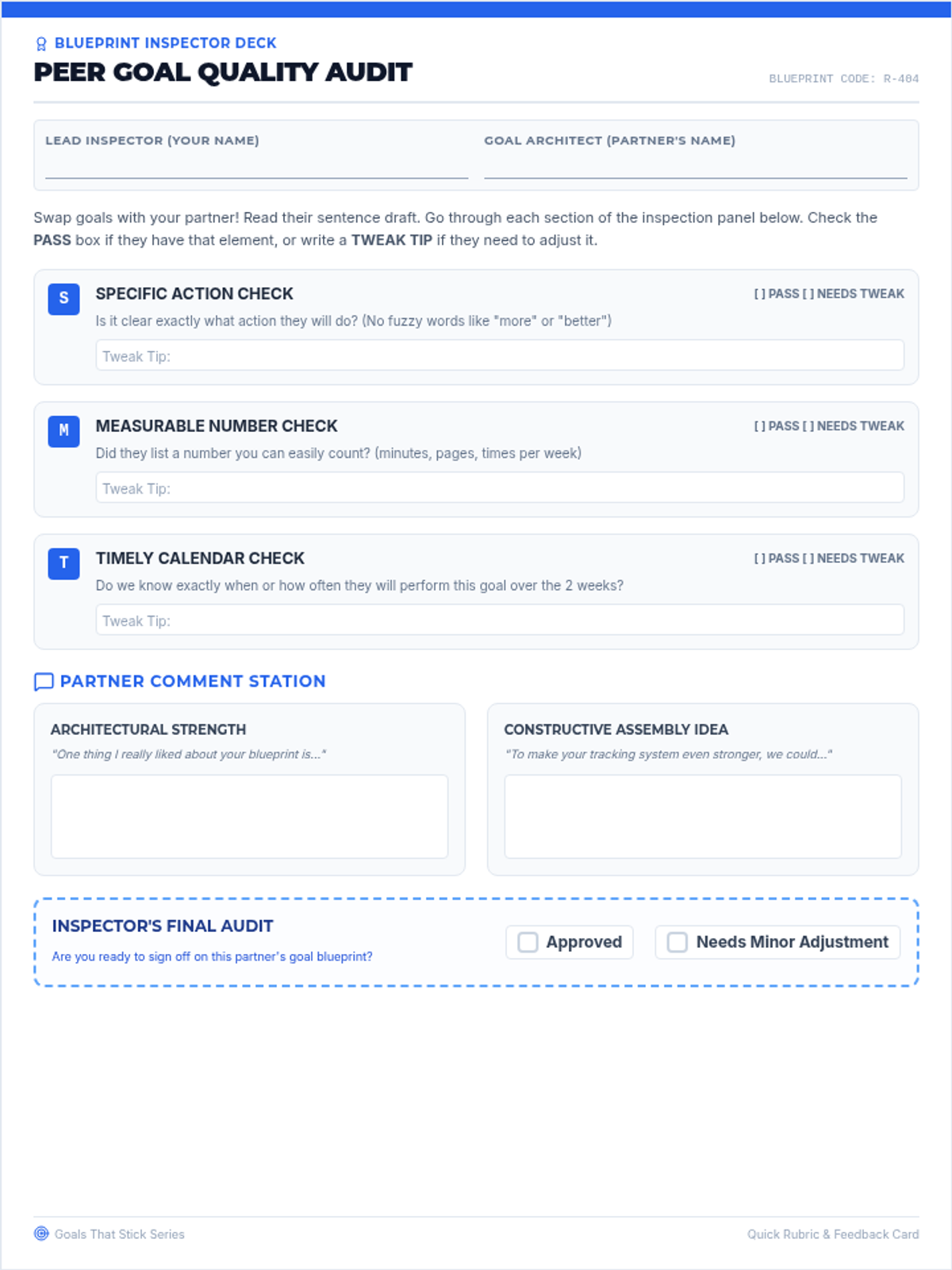
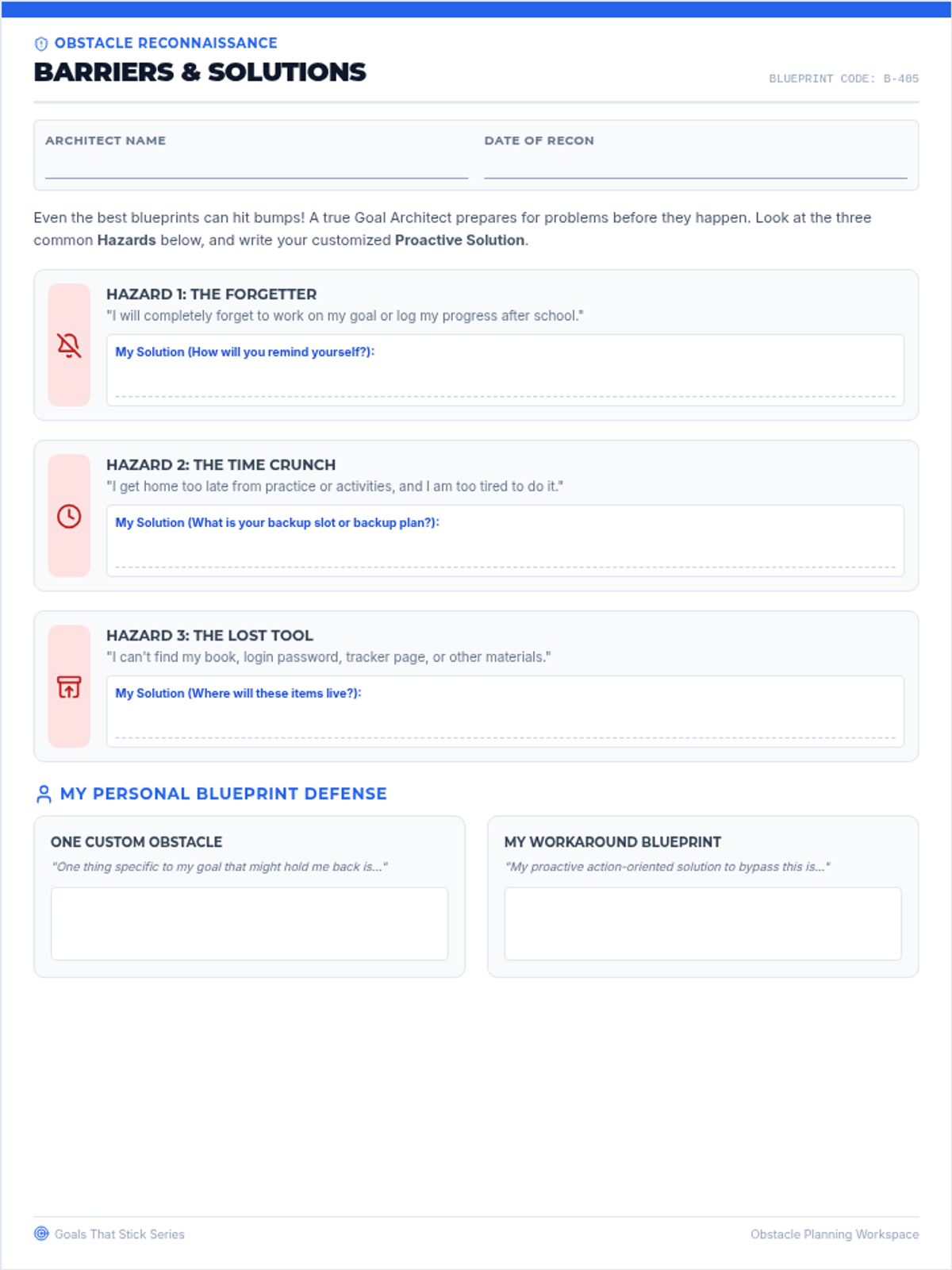
A 45-minute lesson designed for 5th-grade students to master the art of writing SMART academic/behavior and attendance goals. Students learn to define progress indicators, anticipate barriers, and use peer feedback to design achievable action plans.
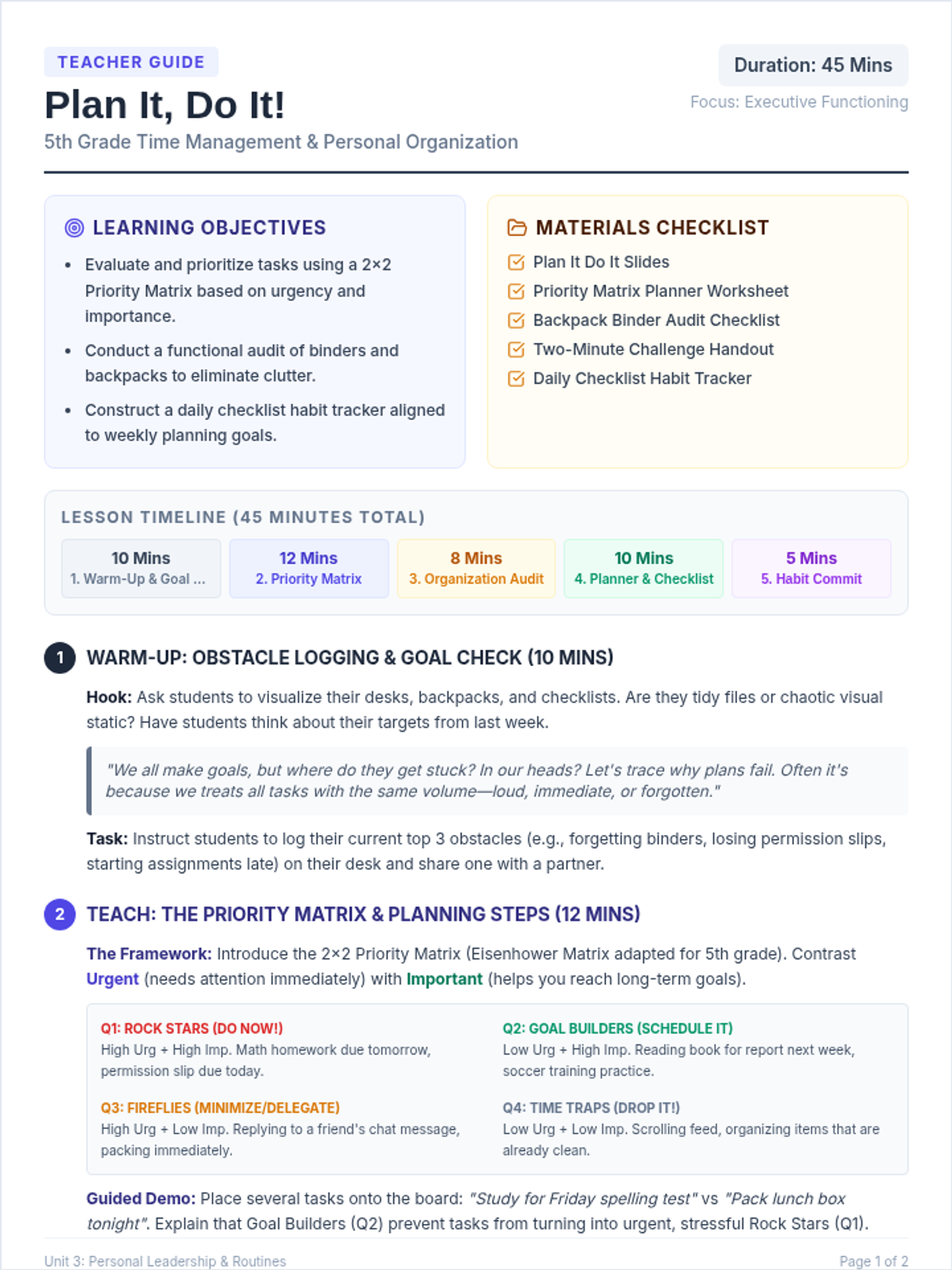
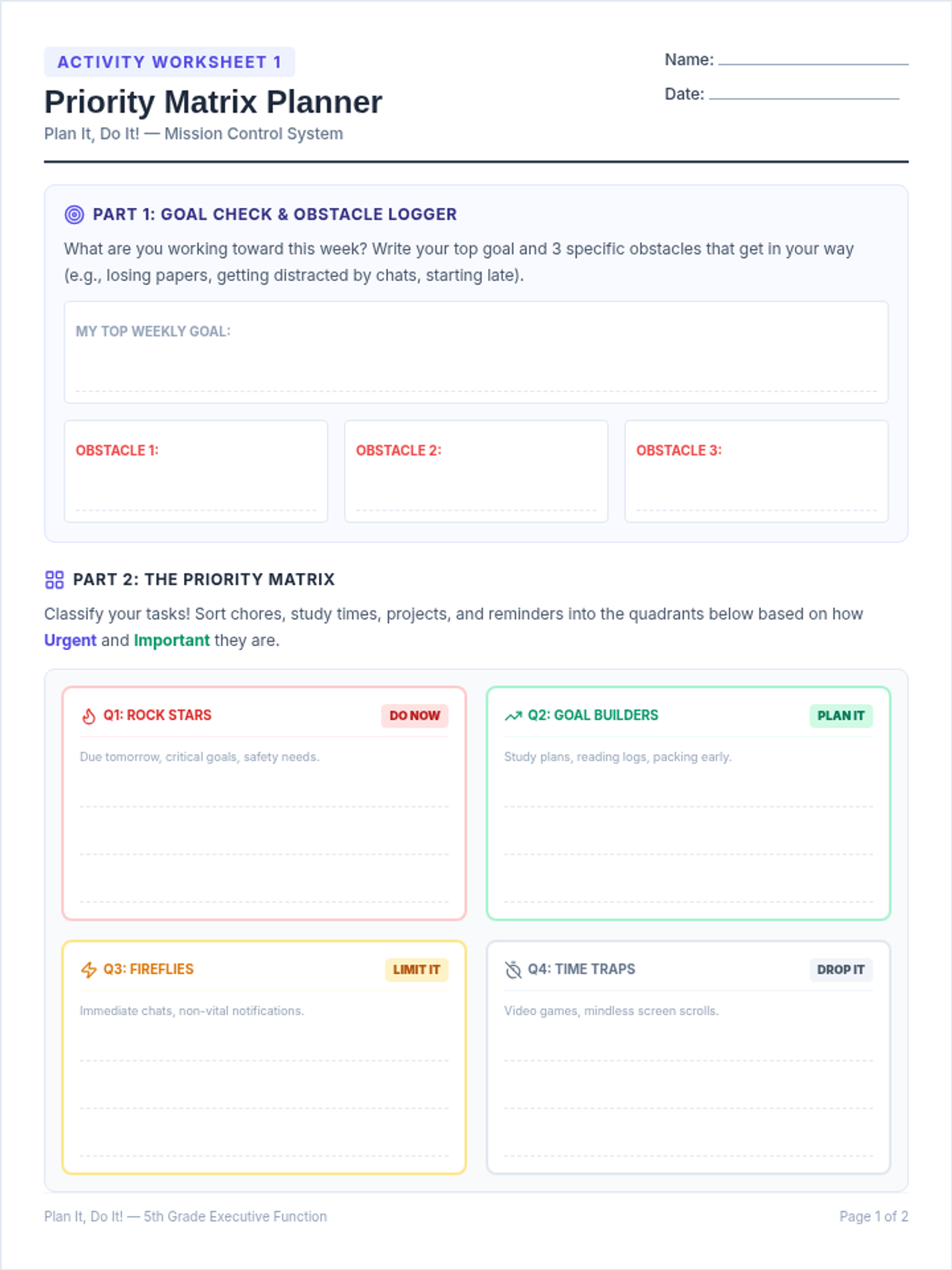
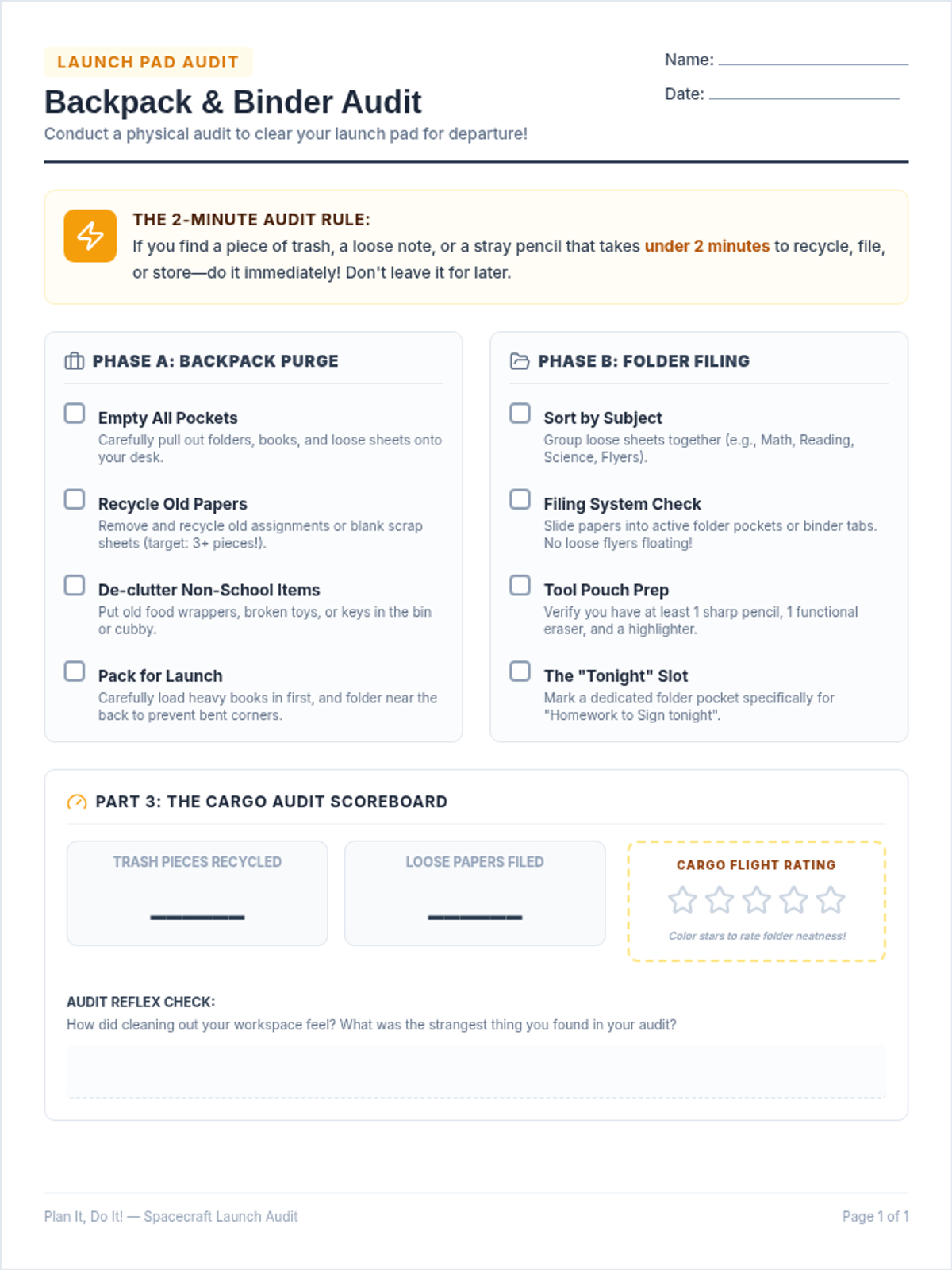
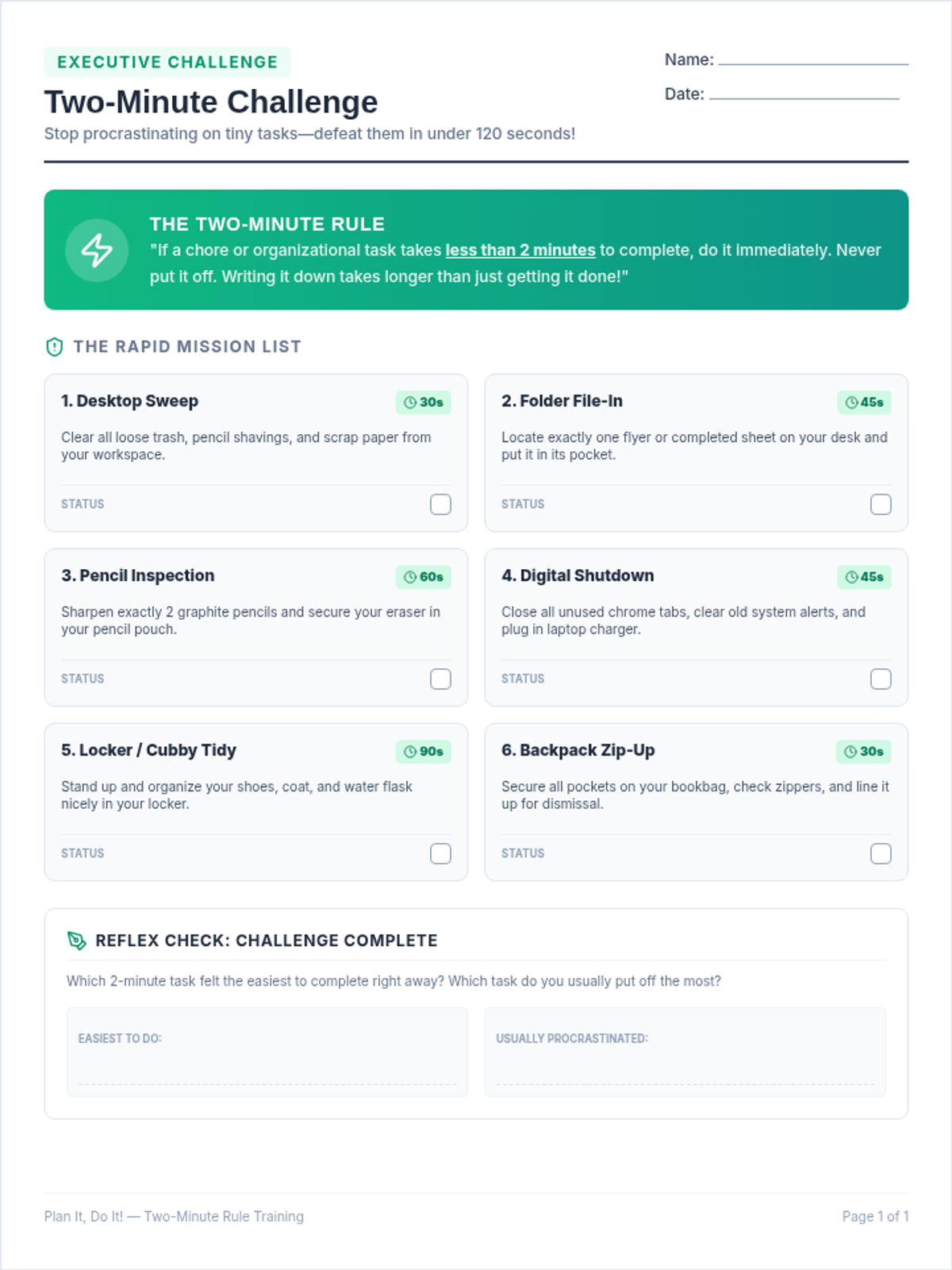
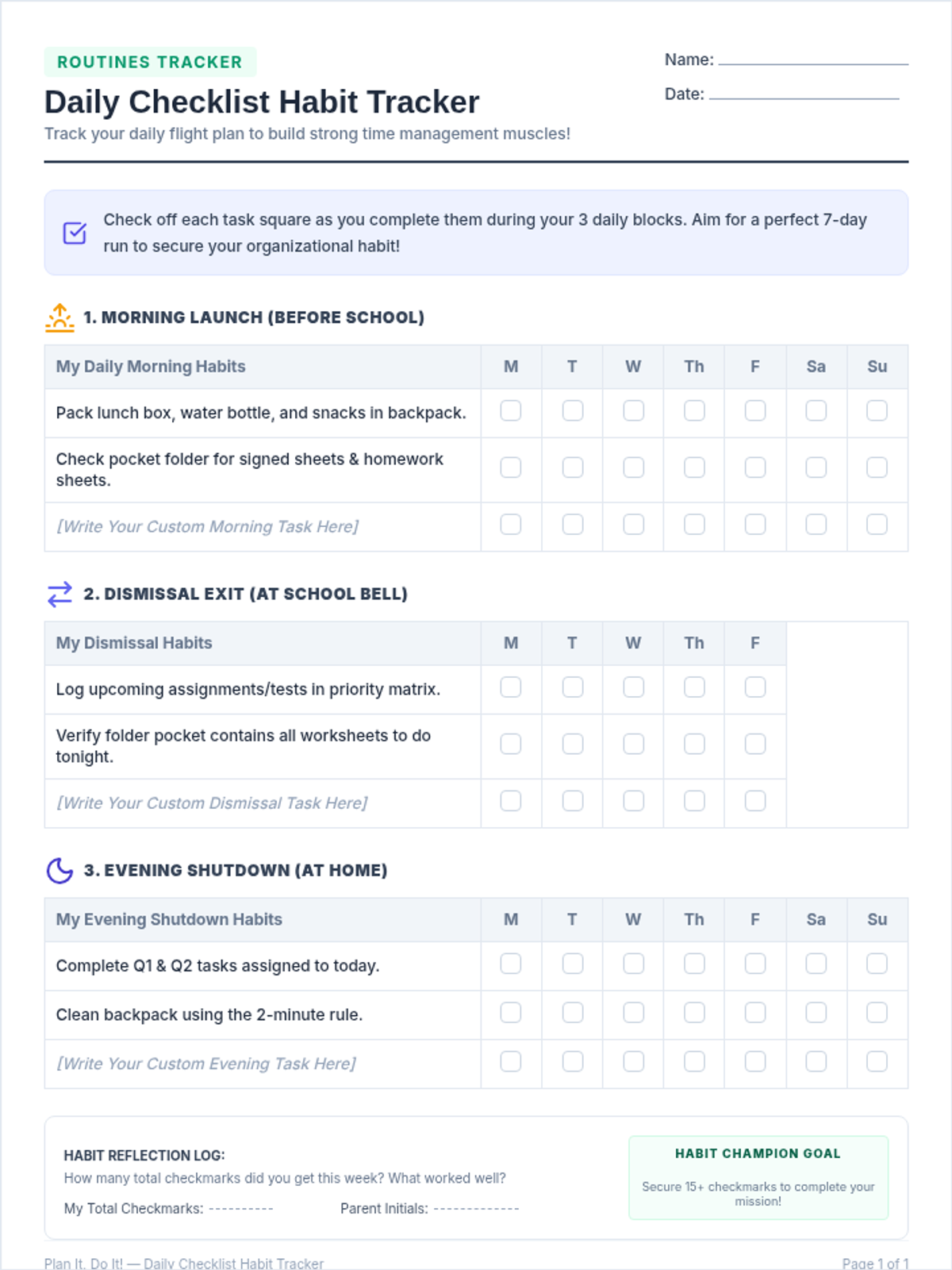
A hands-on lesson designed to teach 5th-grade students practical time management and organizational skills, including task prioritization with a matrix, binder/backpack auditing, and building sustainable daily checklists.
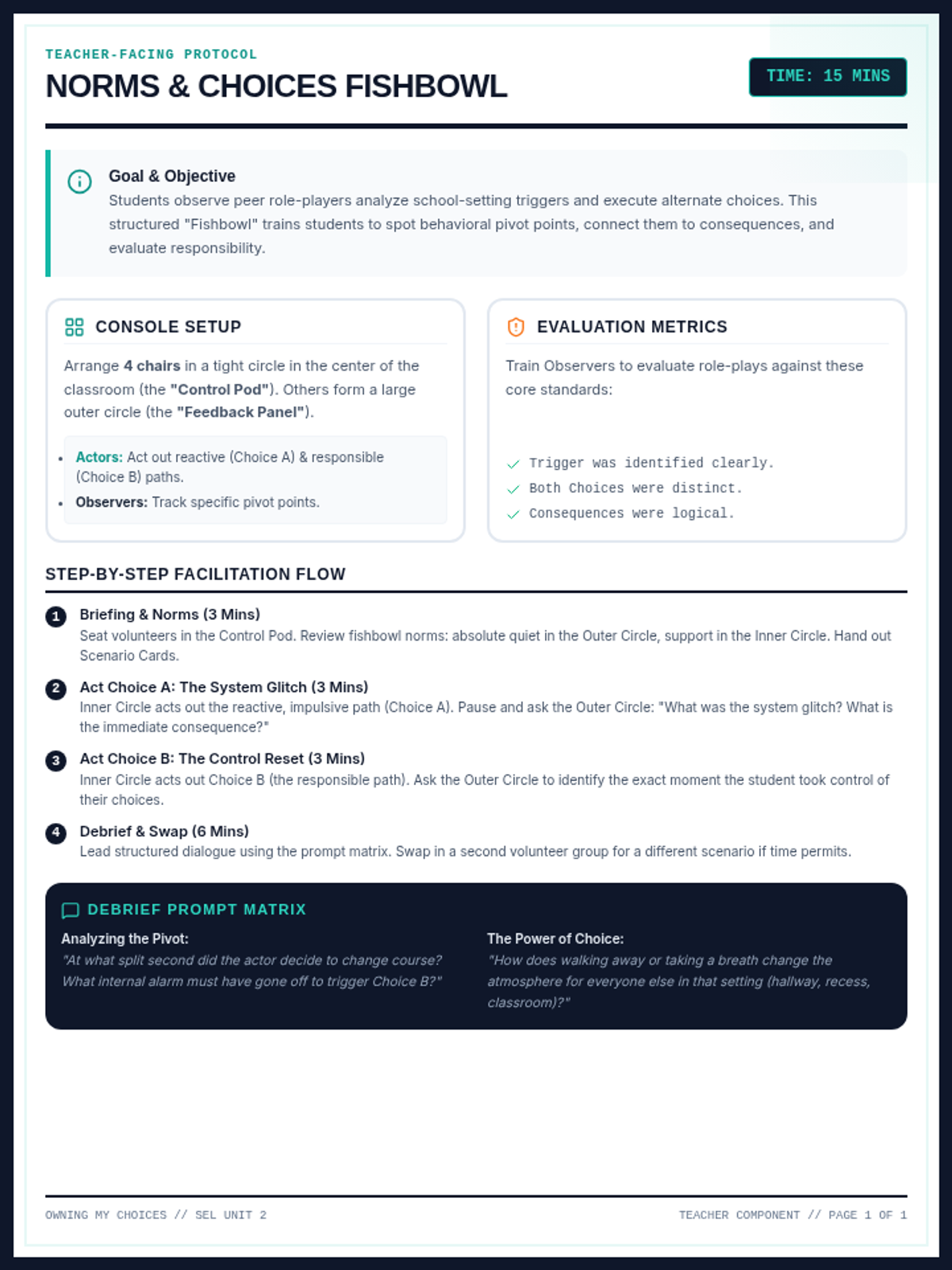
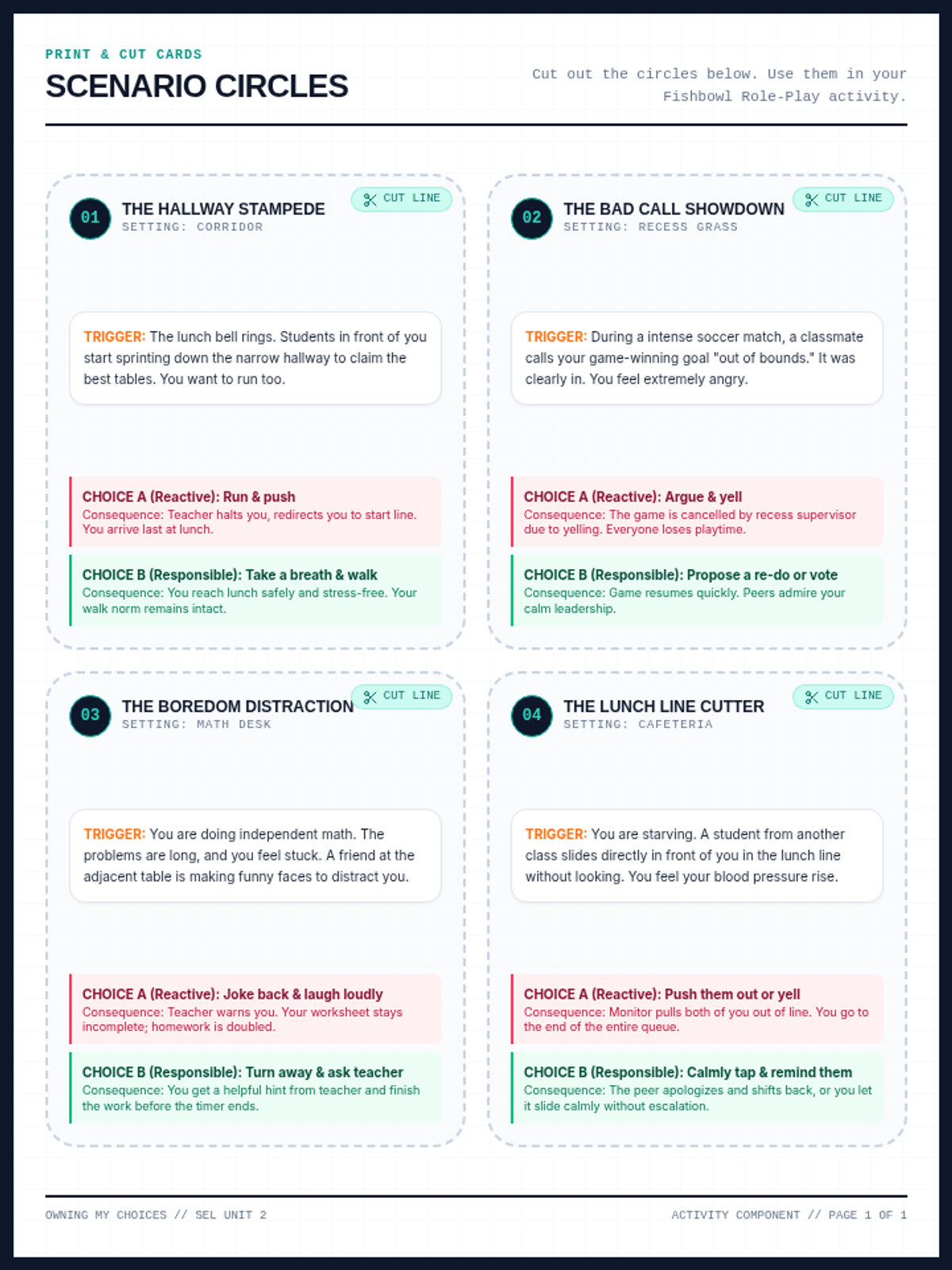
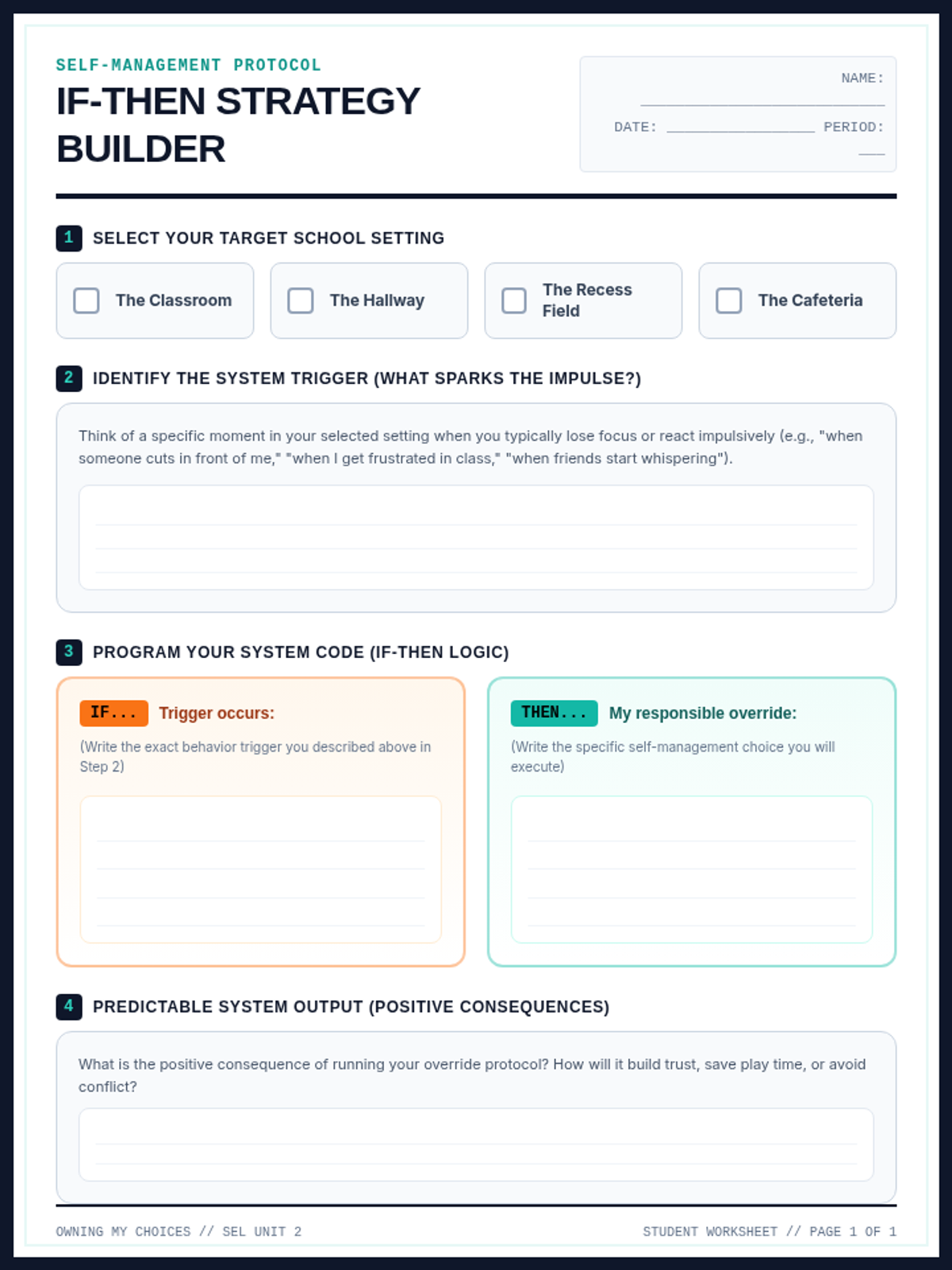
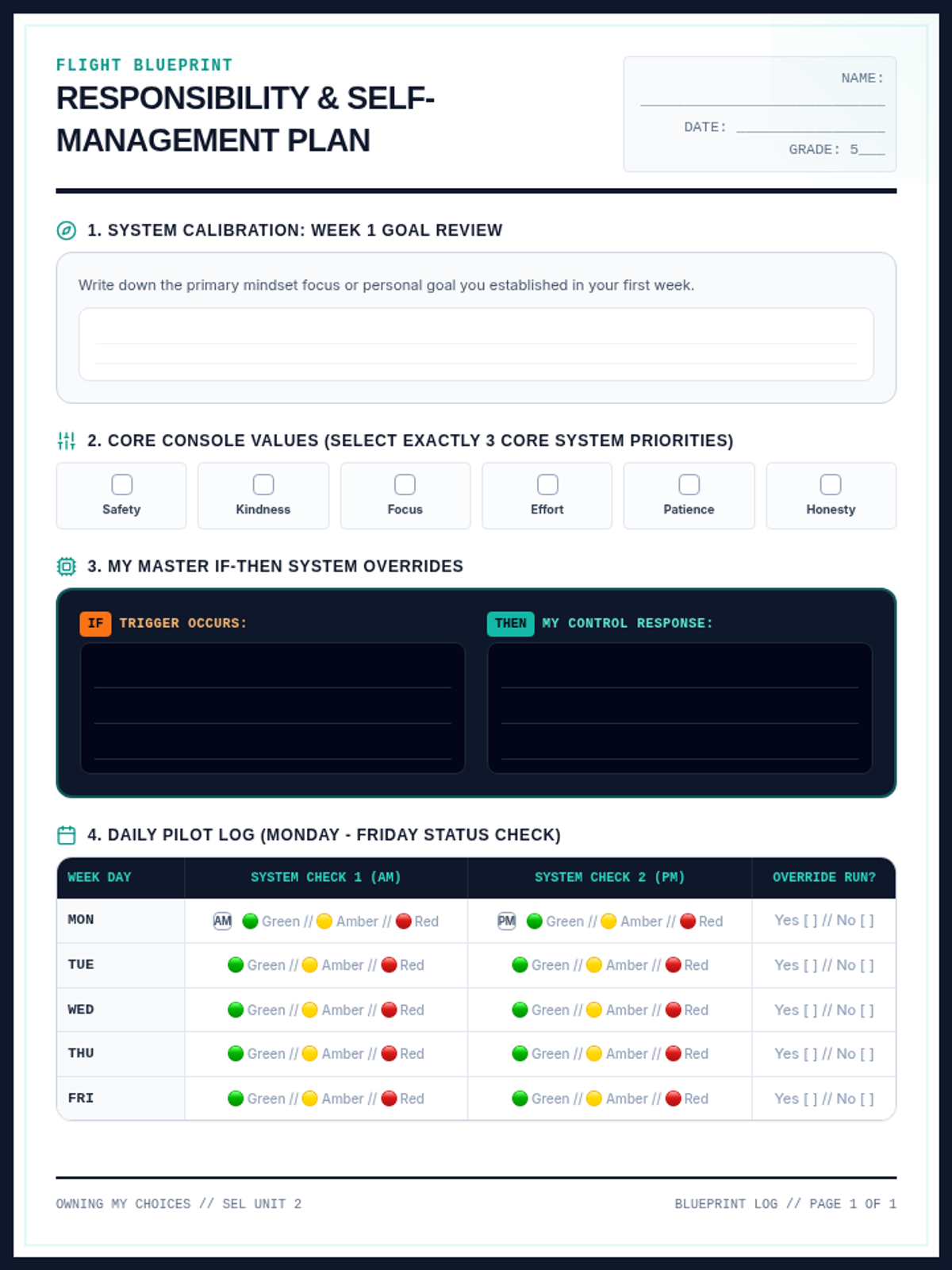
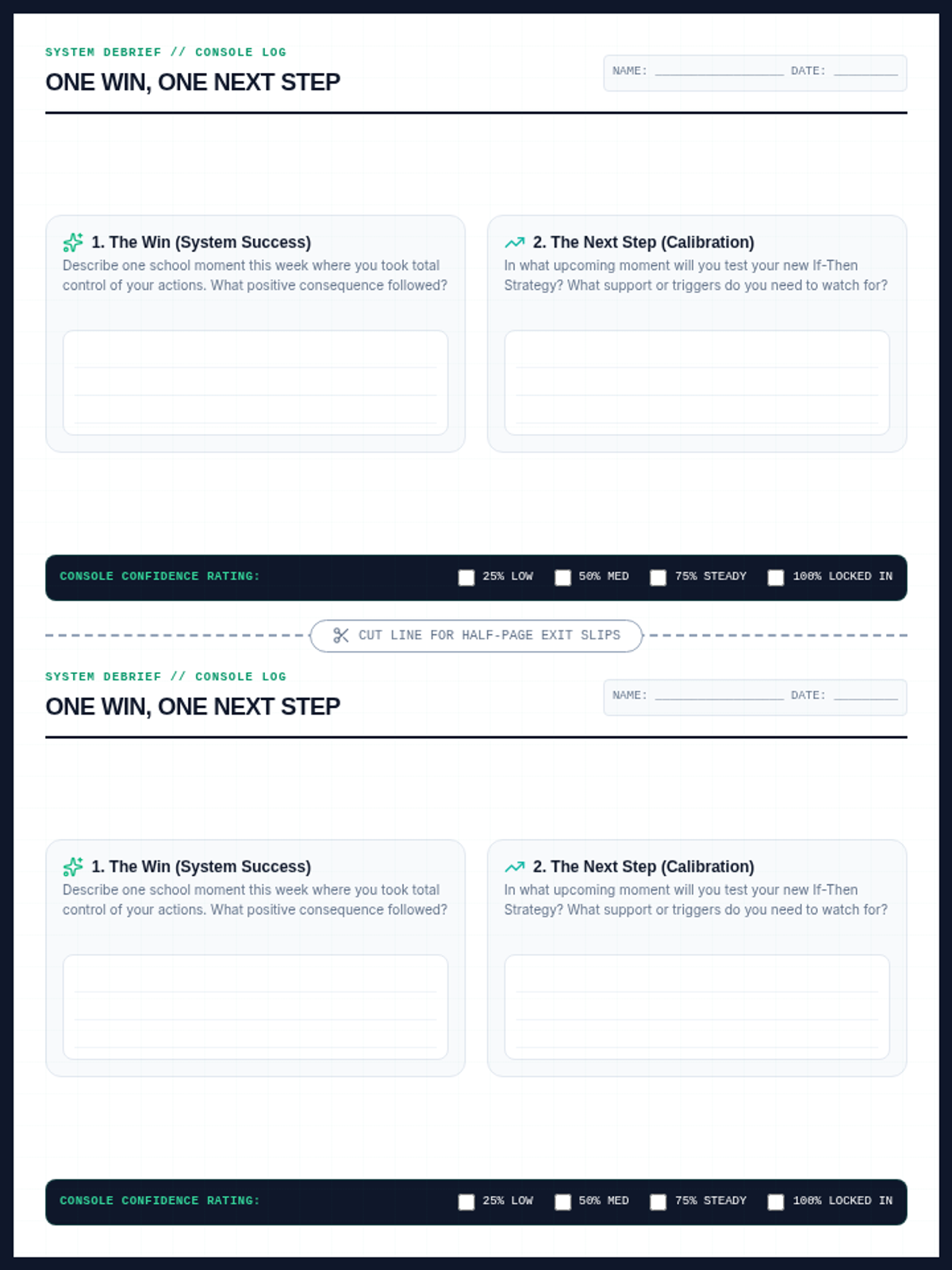
A 45-minute social-emotional learning lesson for 5th grade that explores the connection between behavior and consequences, helping students build personal responsibility. Through interactive role-play and a fishbowl discussion, students analyze school scenarios and draft their own actionable if-then strategy to navigate challenging settings like the hallway, recess, or classroom.
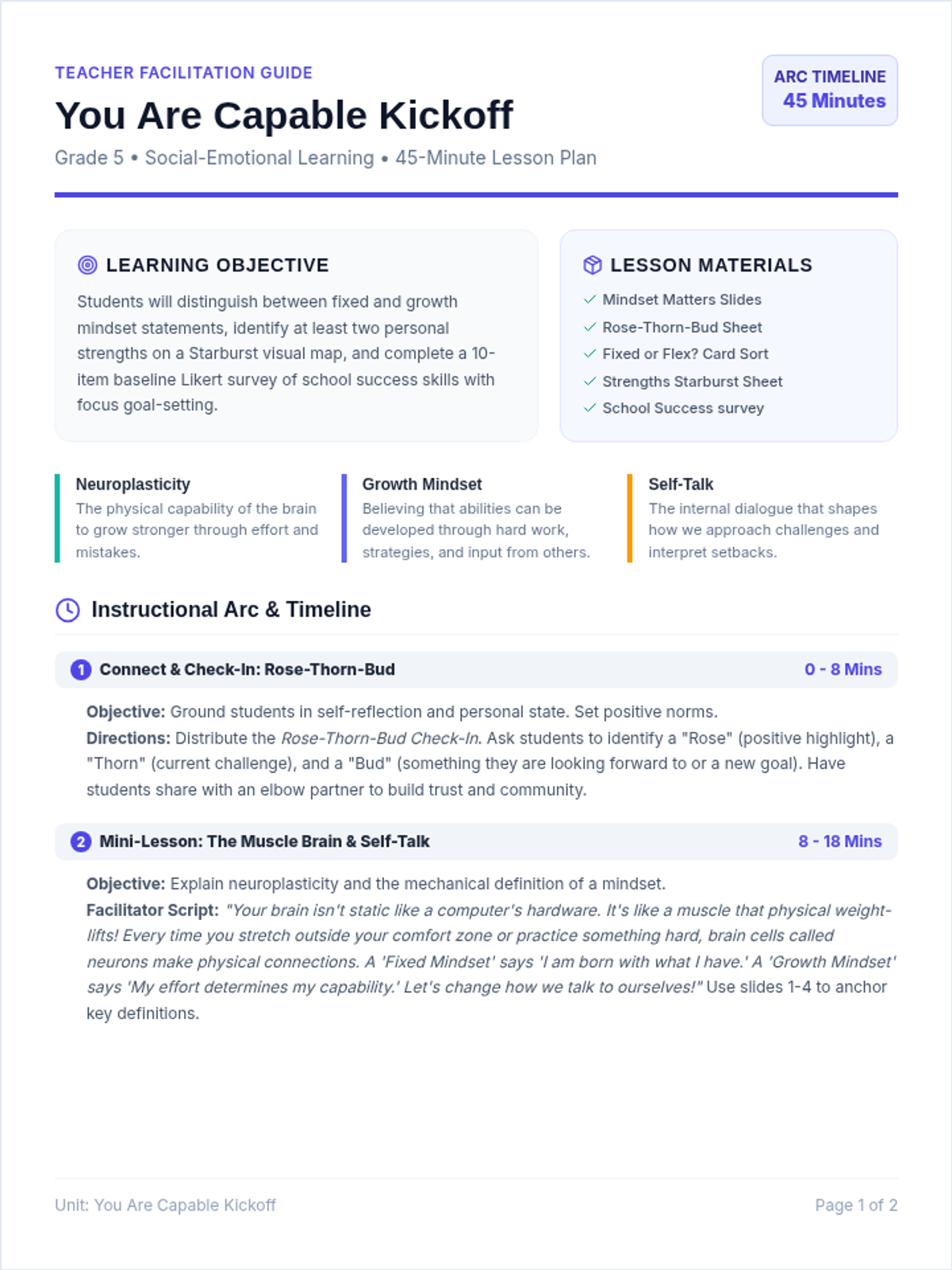
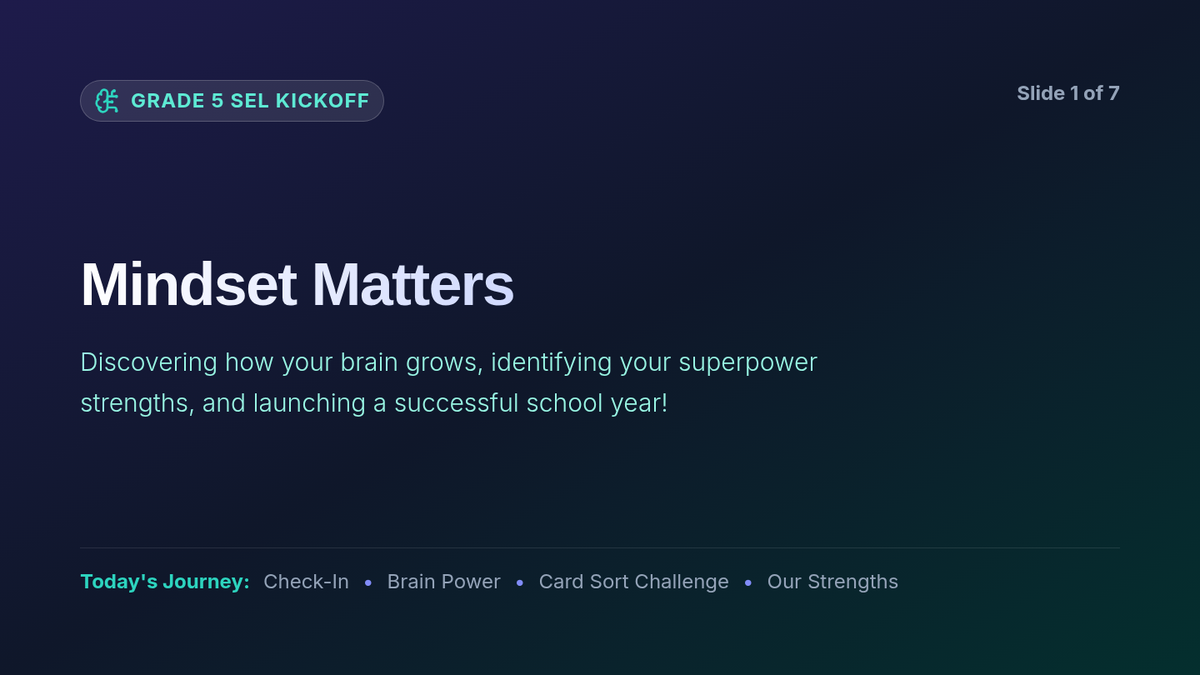
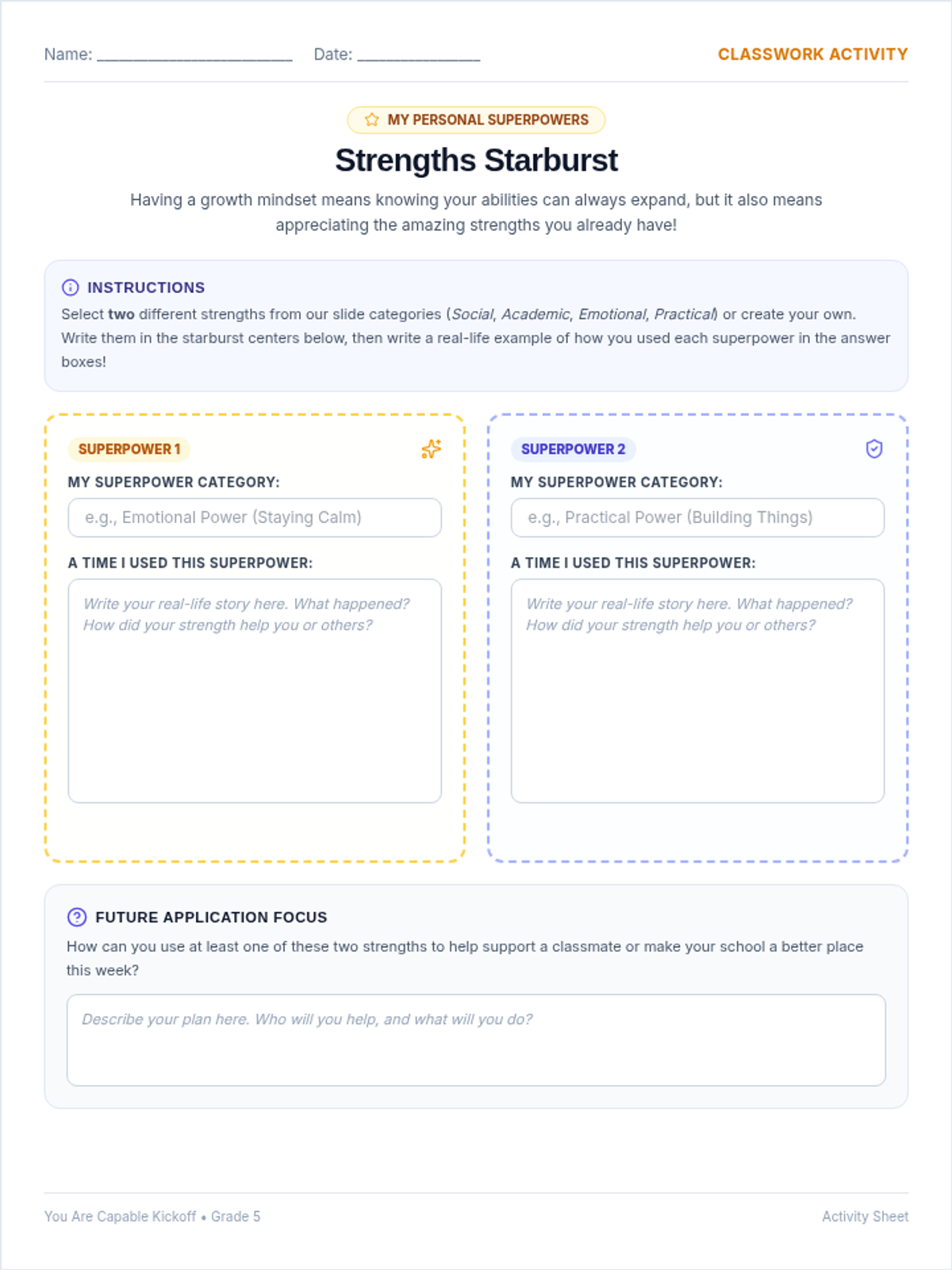
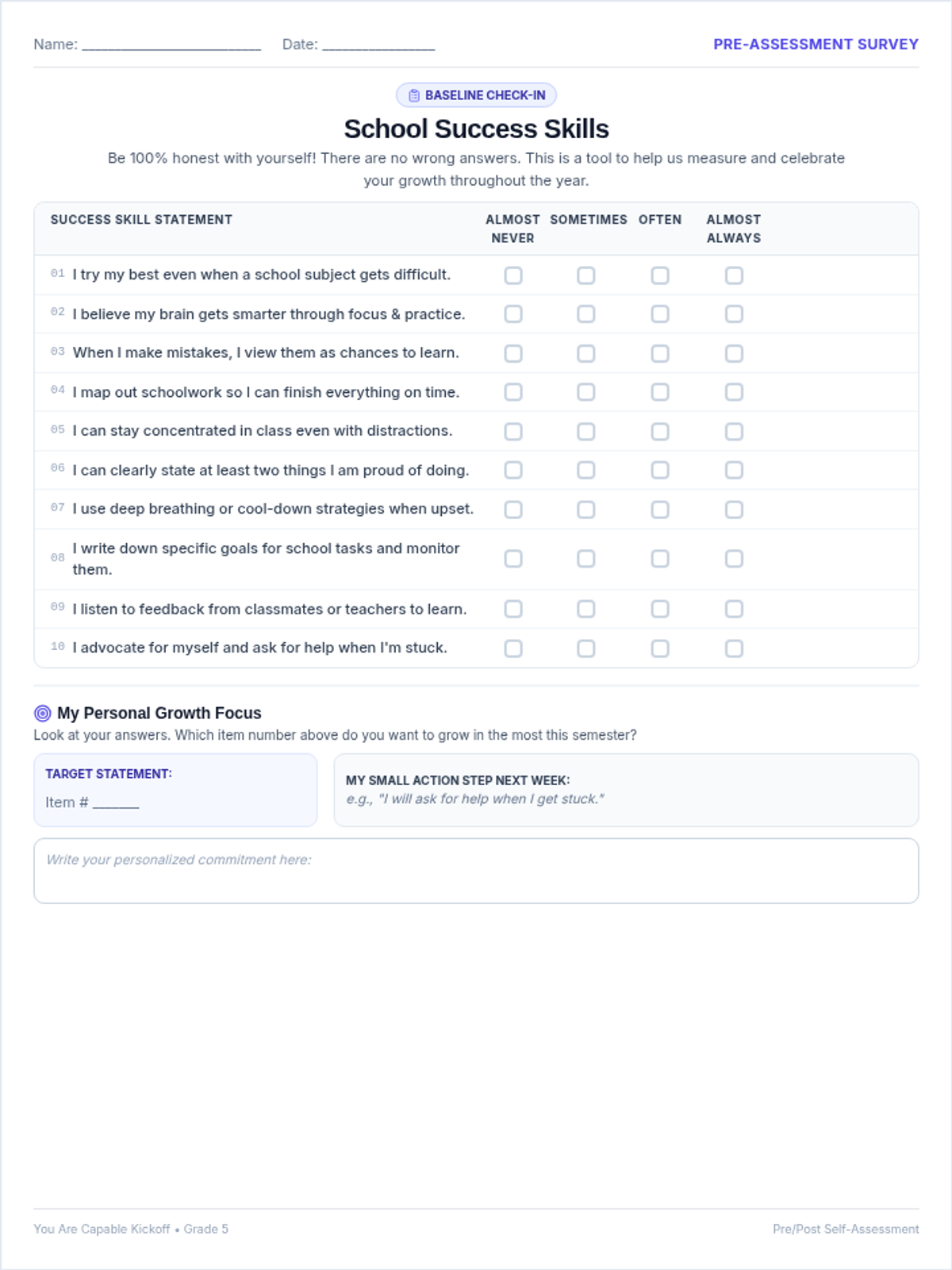
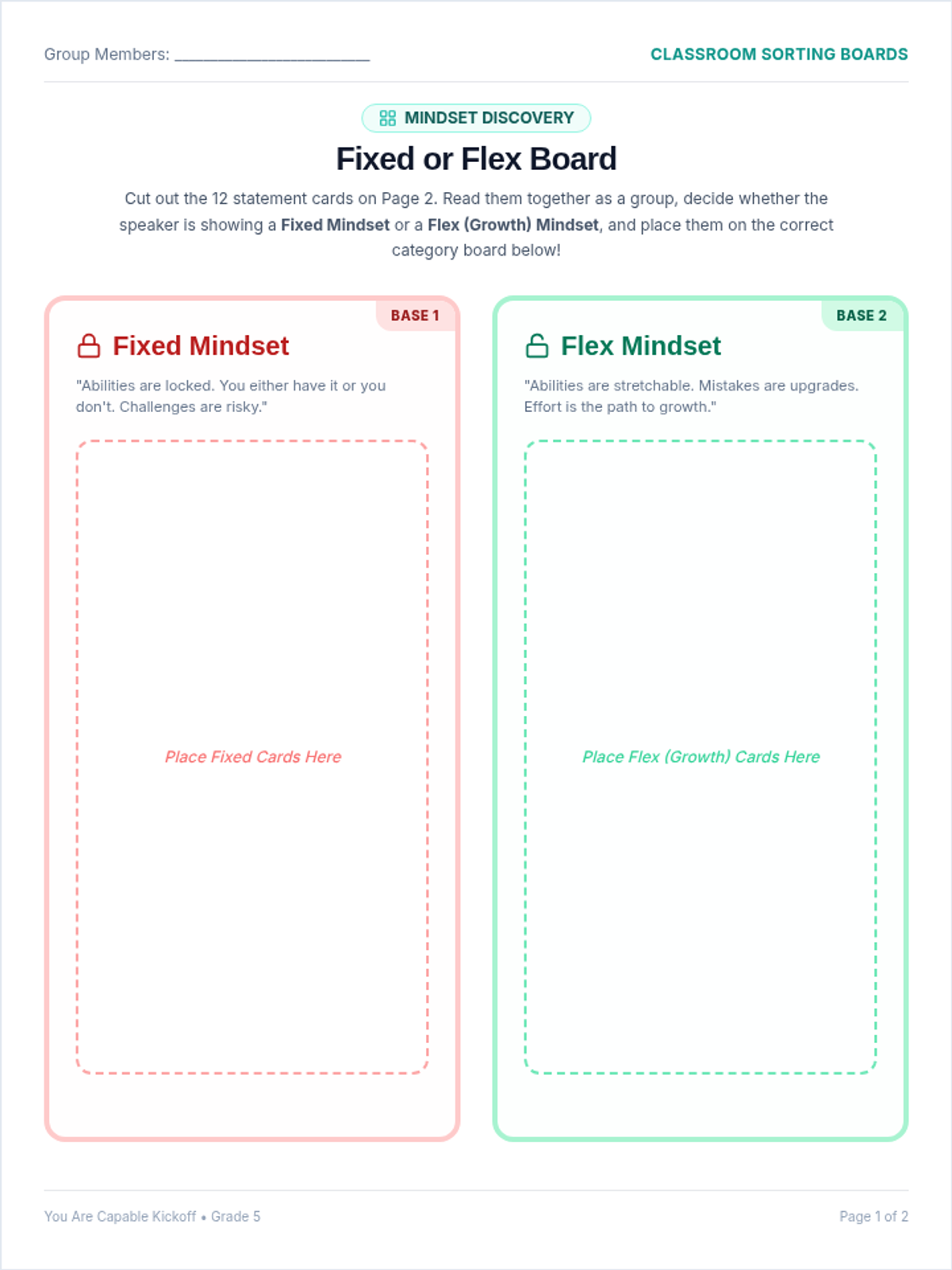
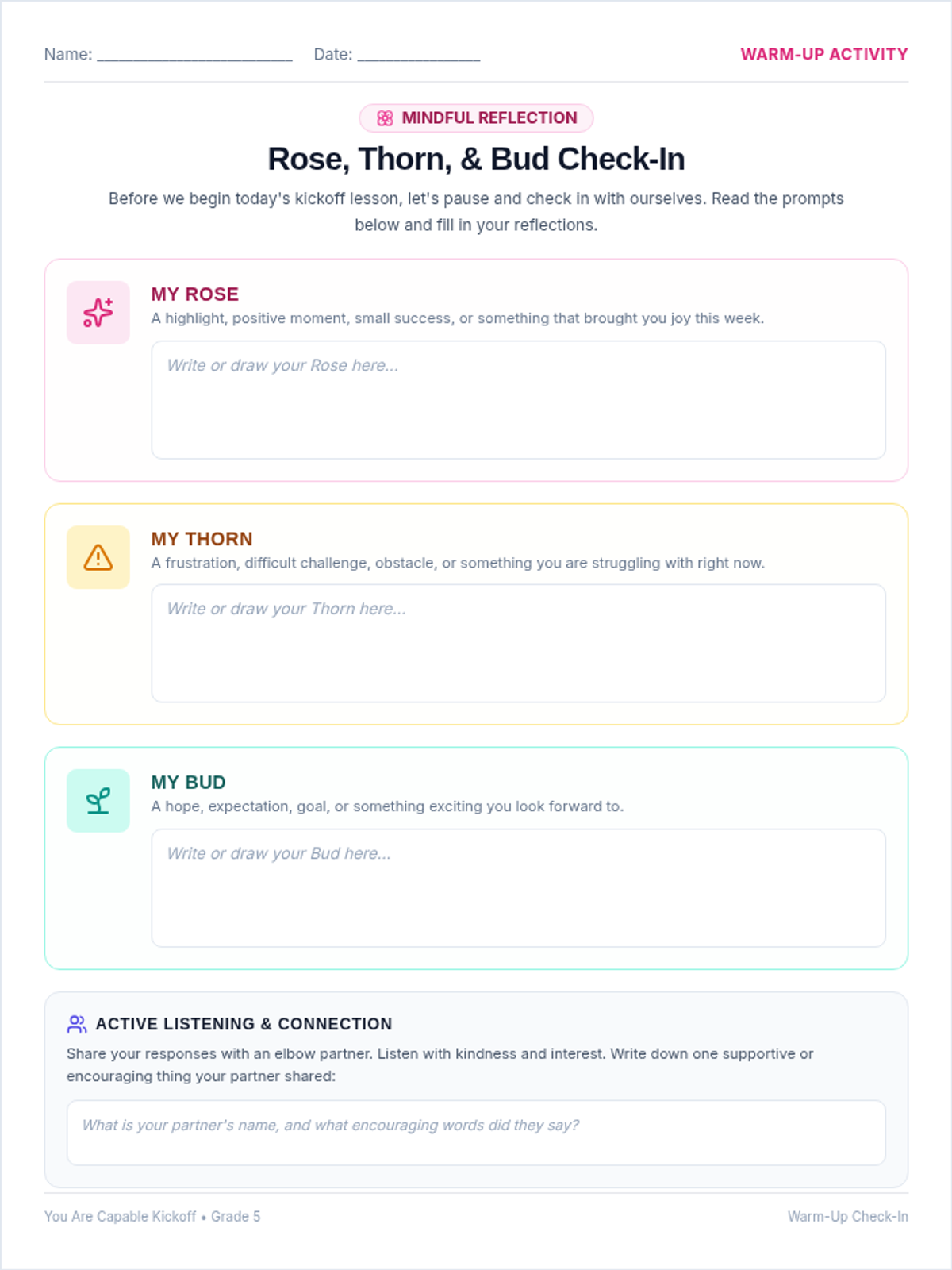
A 45-minute social-emotional learning kickoff lesson for 5th graders that introduces growth mindset, neuroplasticity, and personal strengths, culminating in a 10-item baseline survey of school success skills.
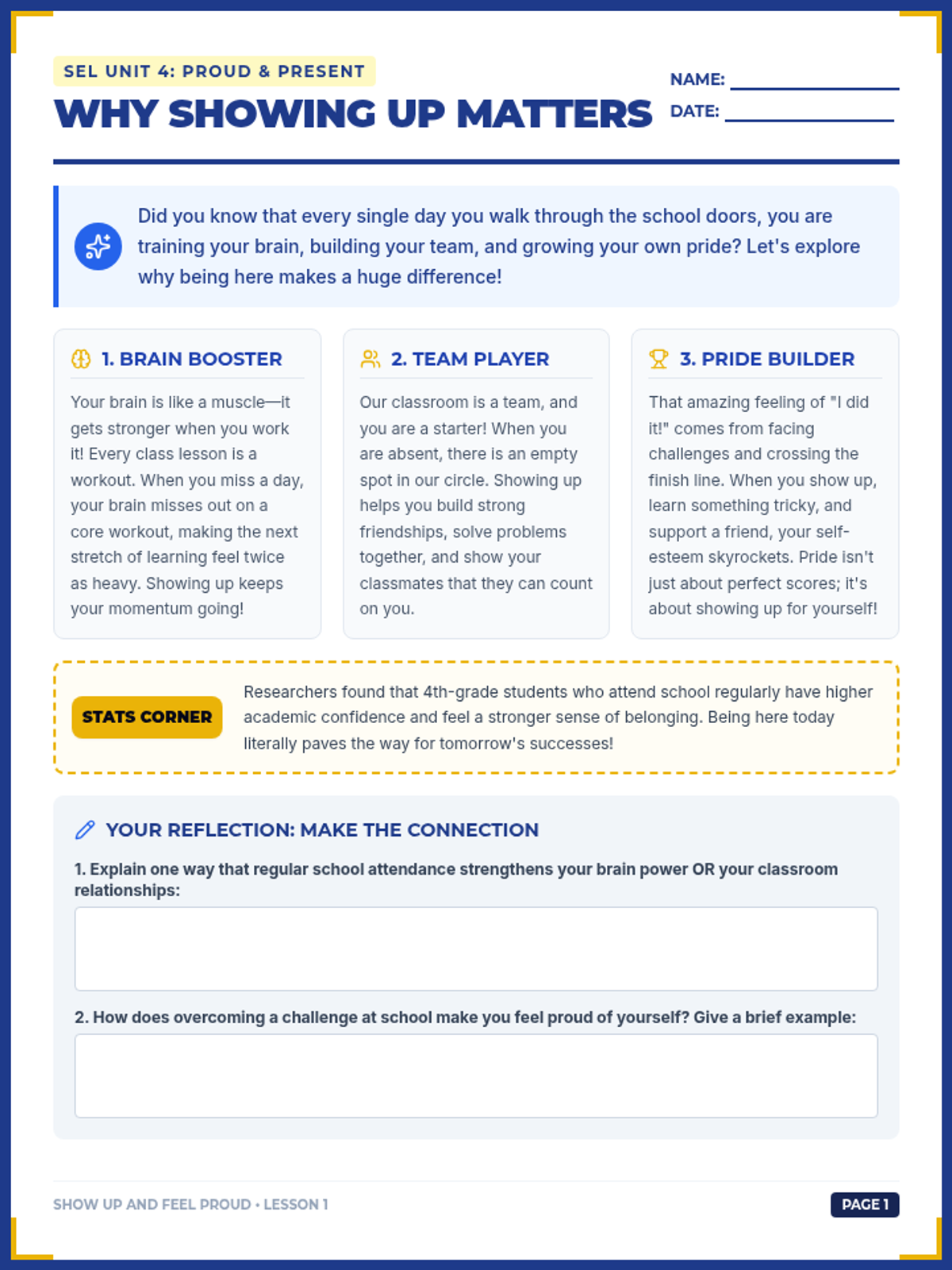
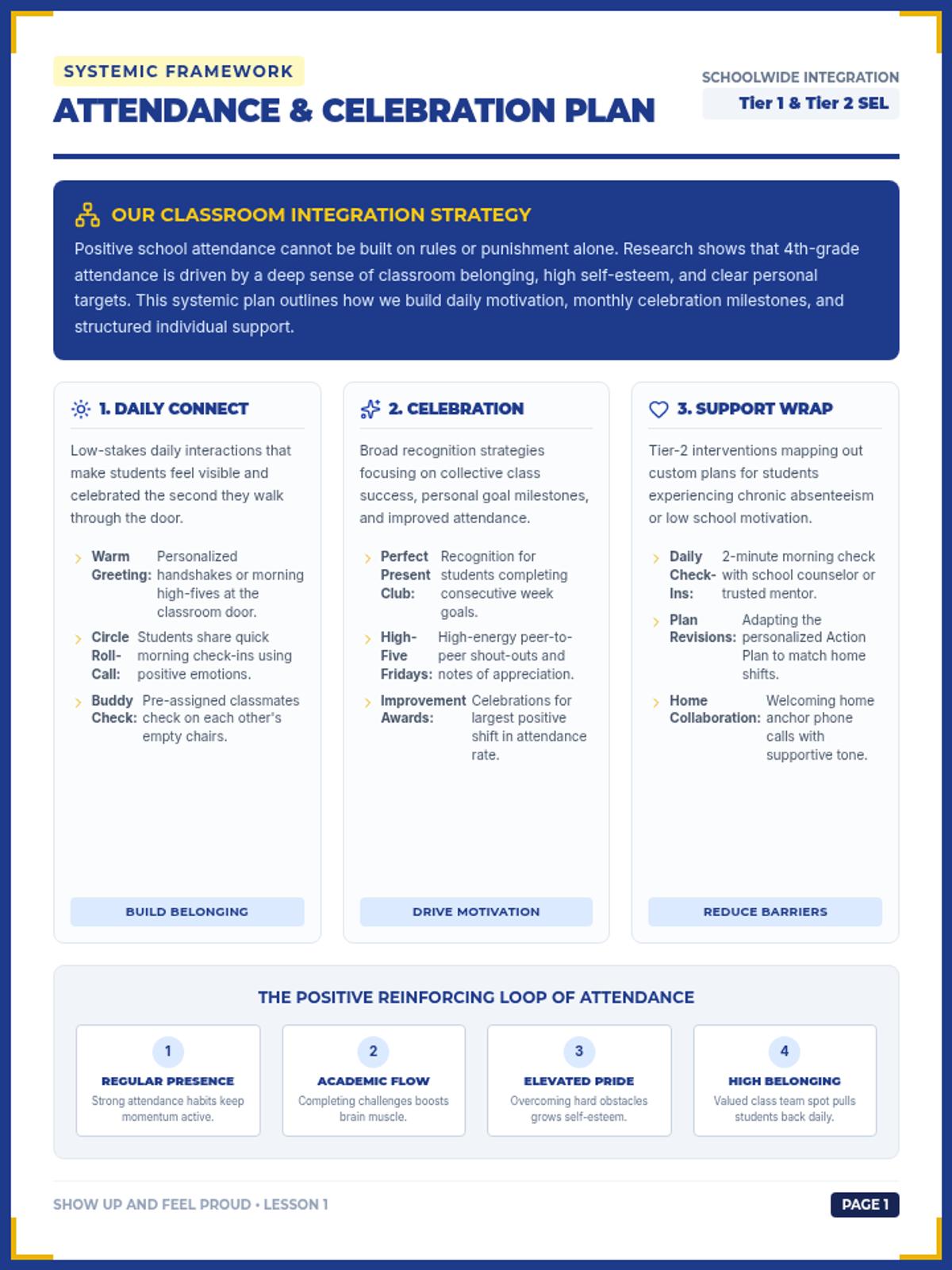
A 45-minute 4th-grade social-emotional learning lesson focusing on the connection between regular school attendance, academic success, and personal self-esteem. Students analyze a short text, design a personalized attendance action plan, complete a self-assessment, and celebrate their growth.
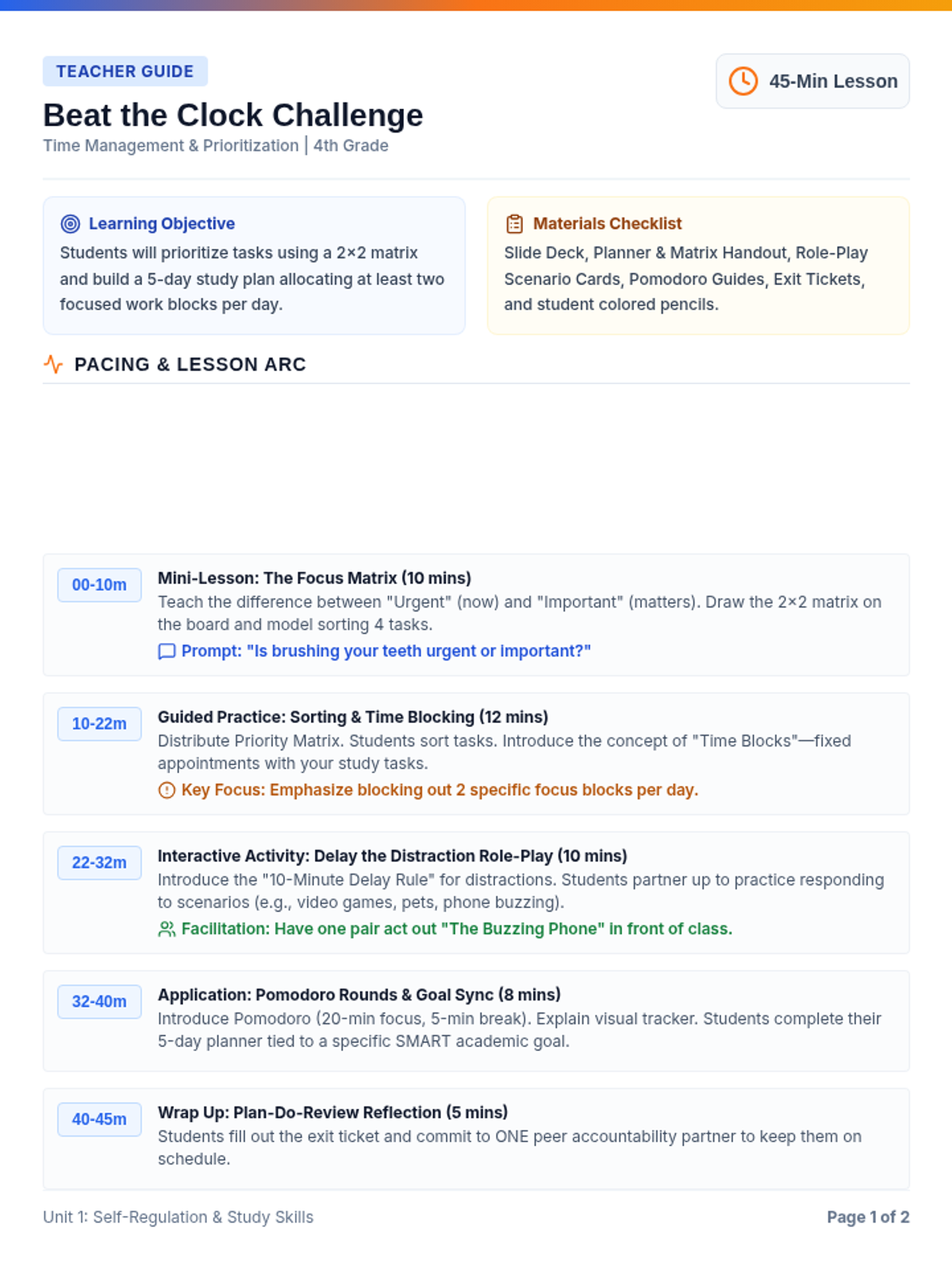
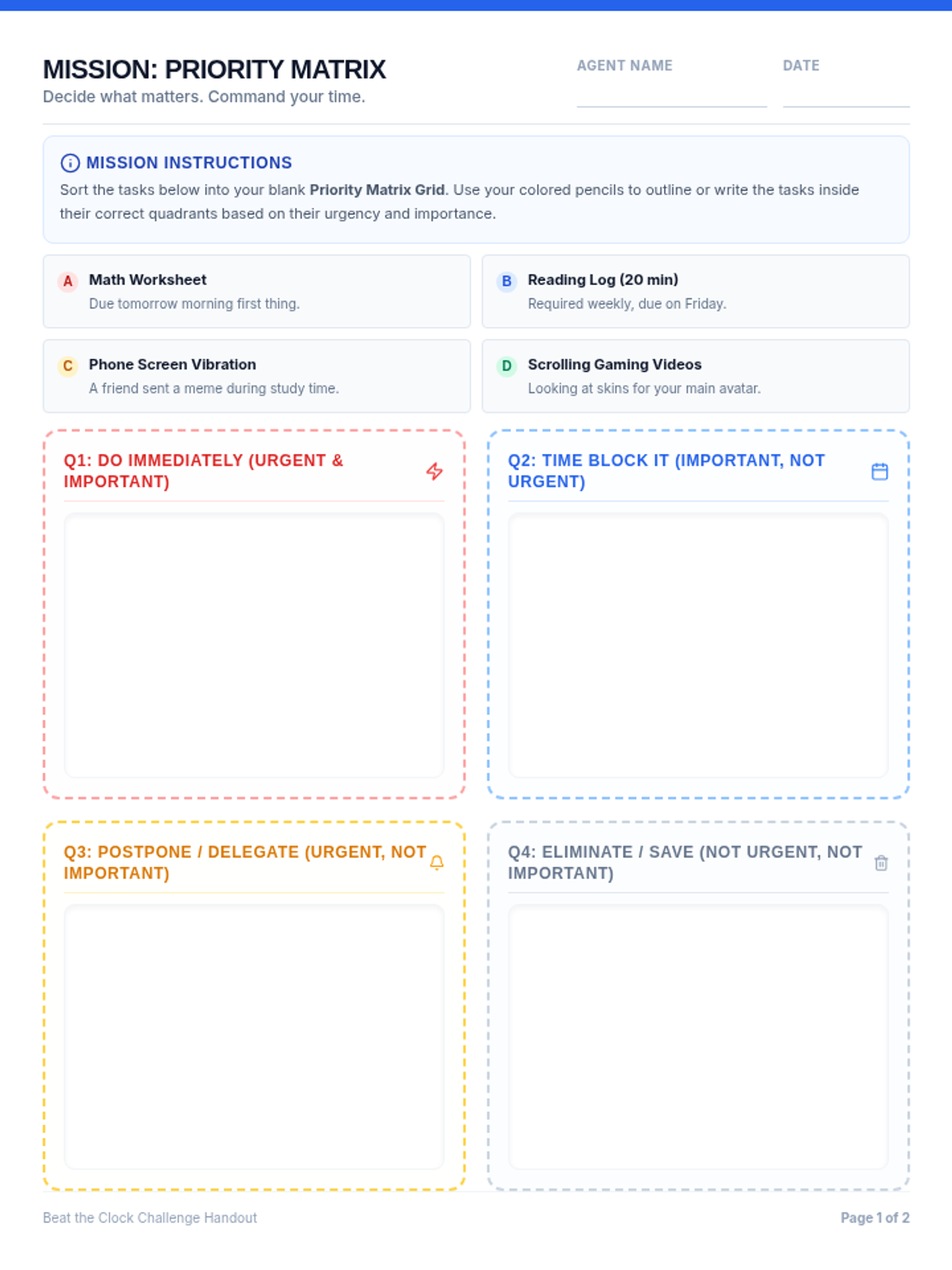
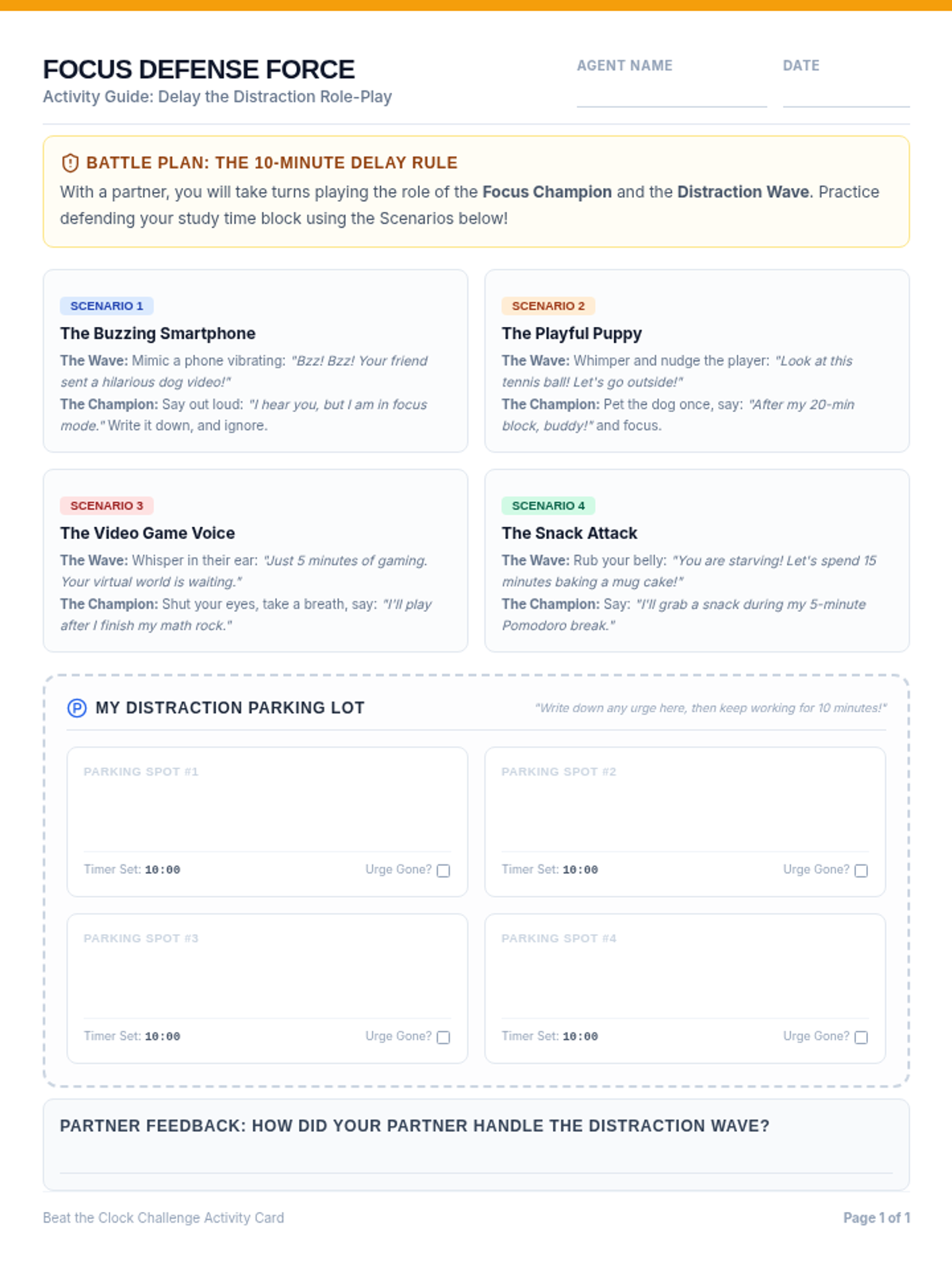
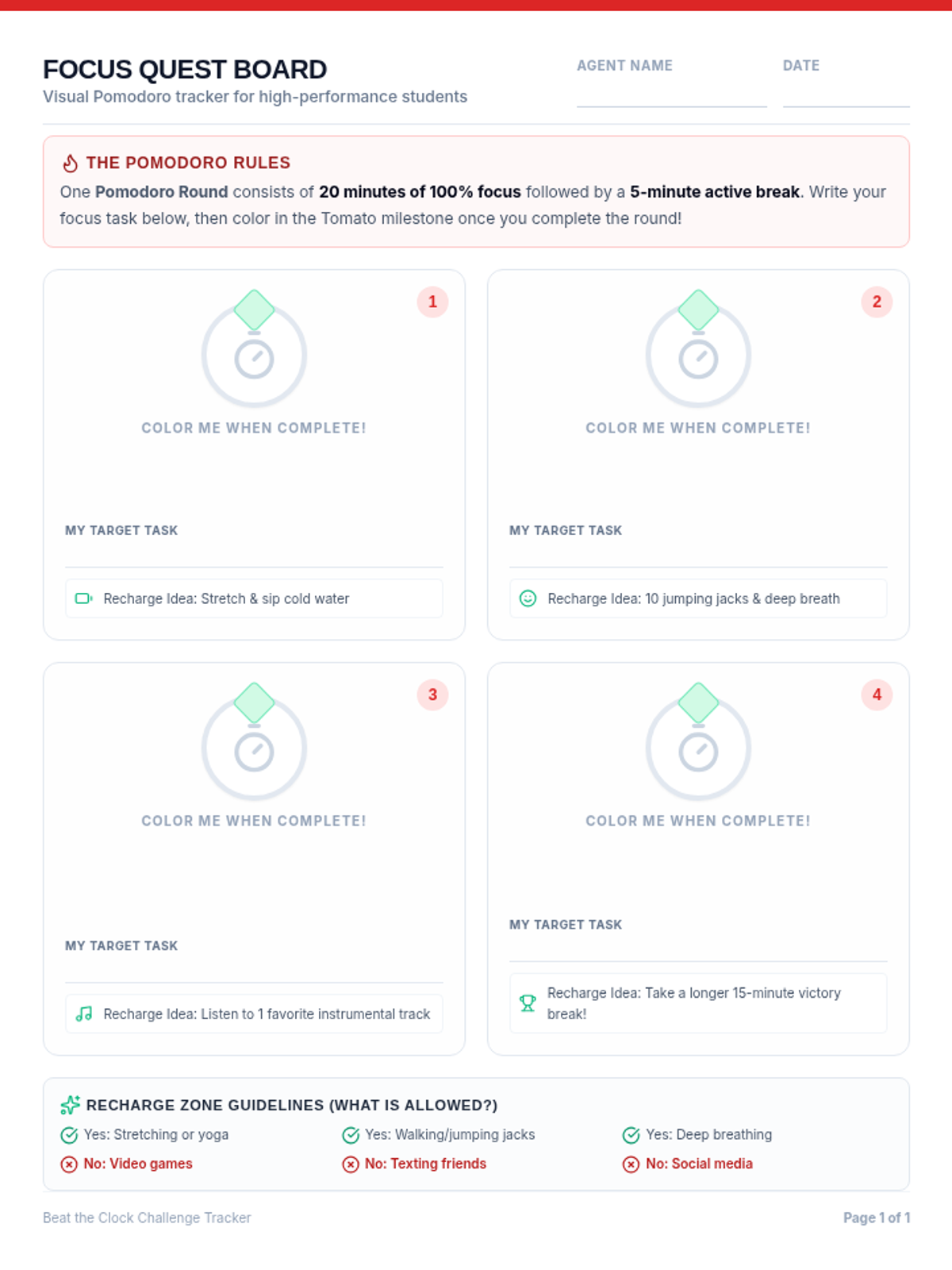
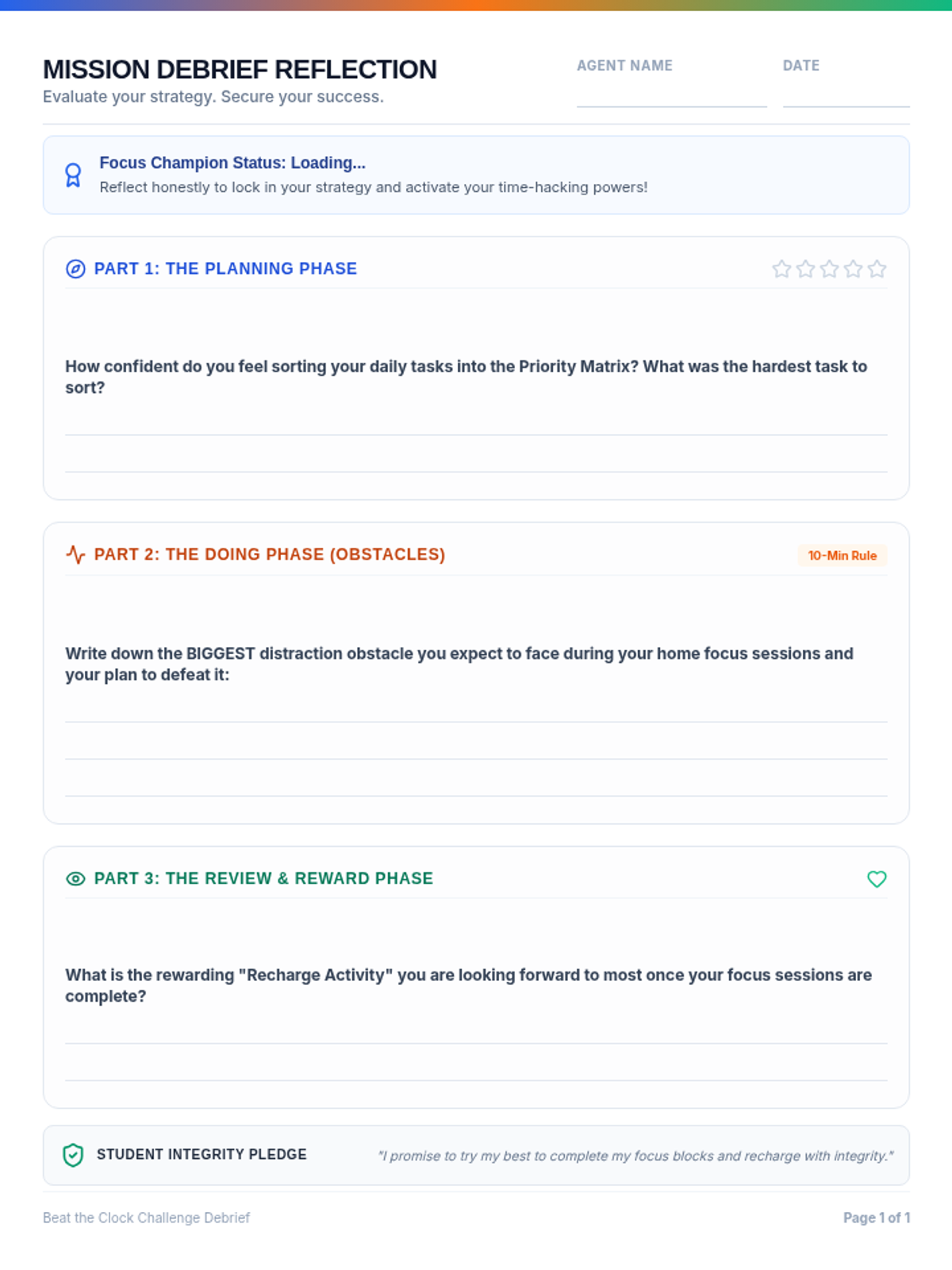
A highly interactive 4th-grade lesson on time management where students learn to prioritize tasks using a 2x2 importance/urgency matrix, block out study times, role-play distraction management, and create a realistic 5-day homework plan.
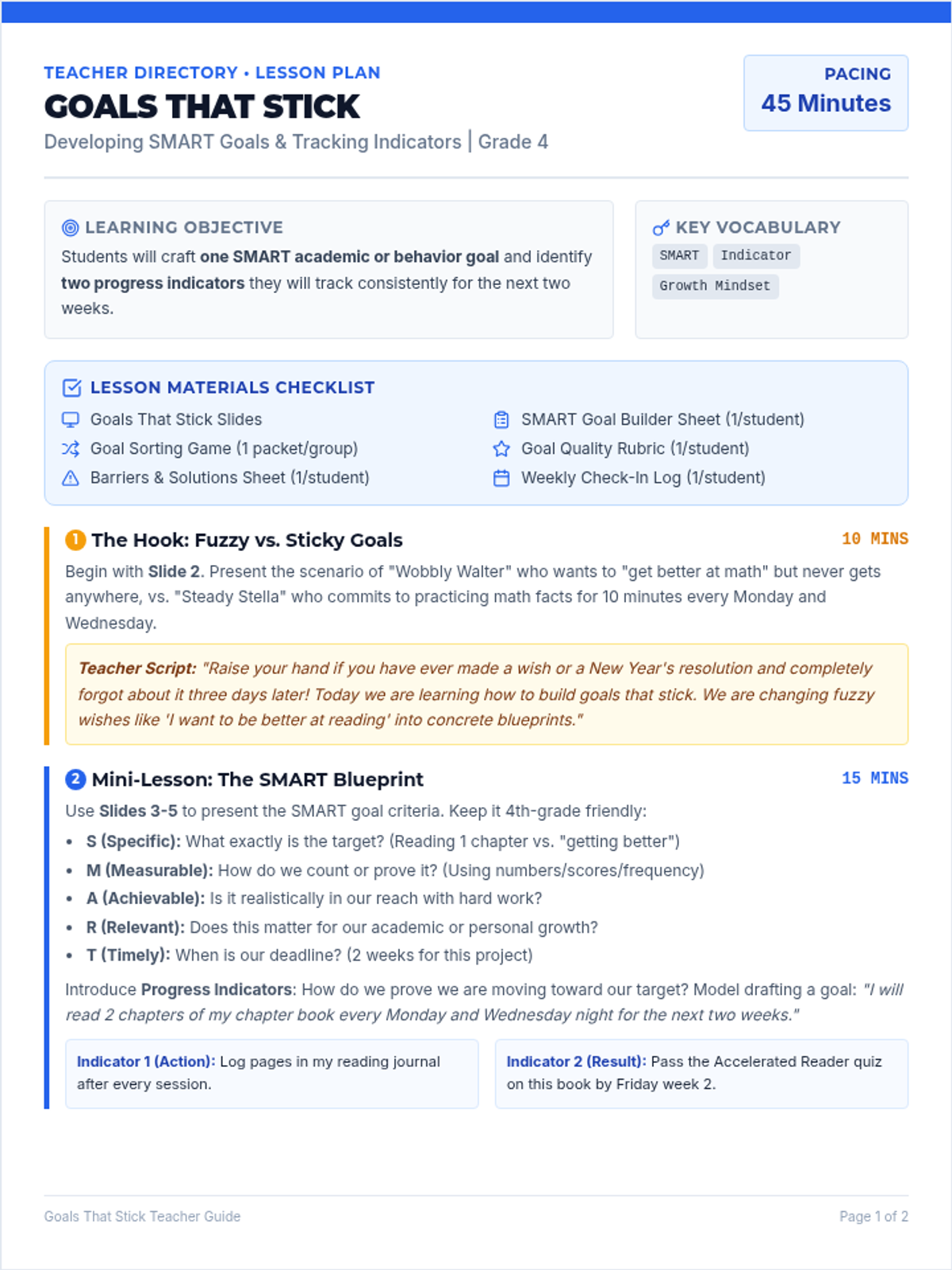
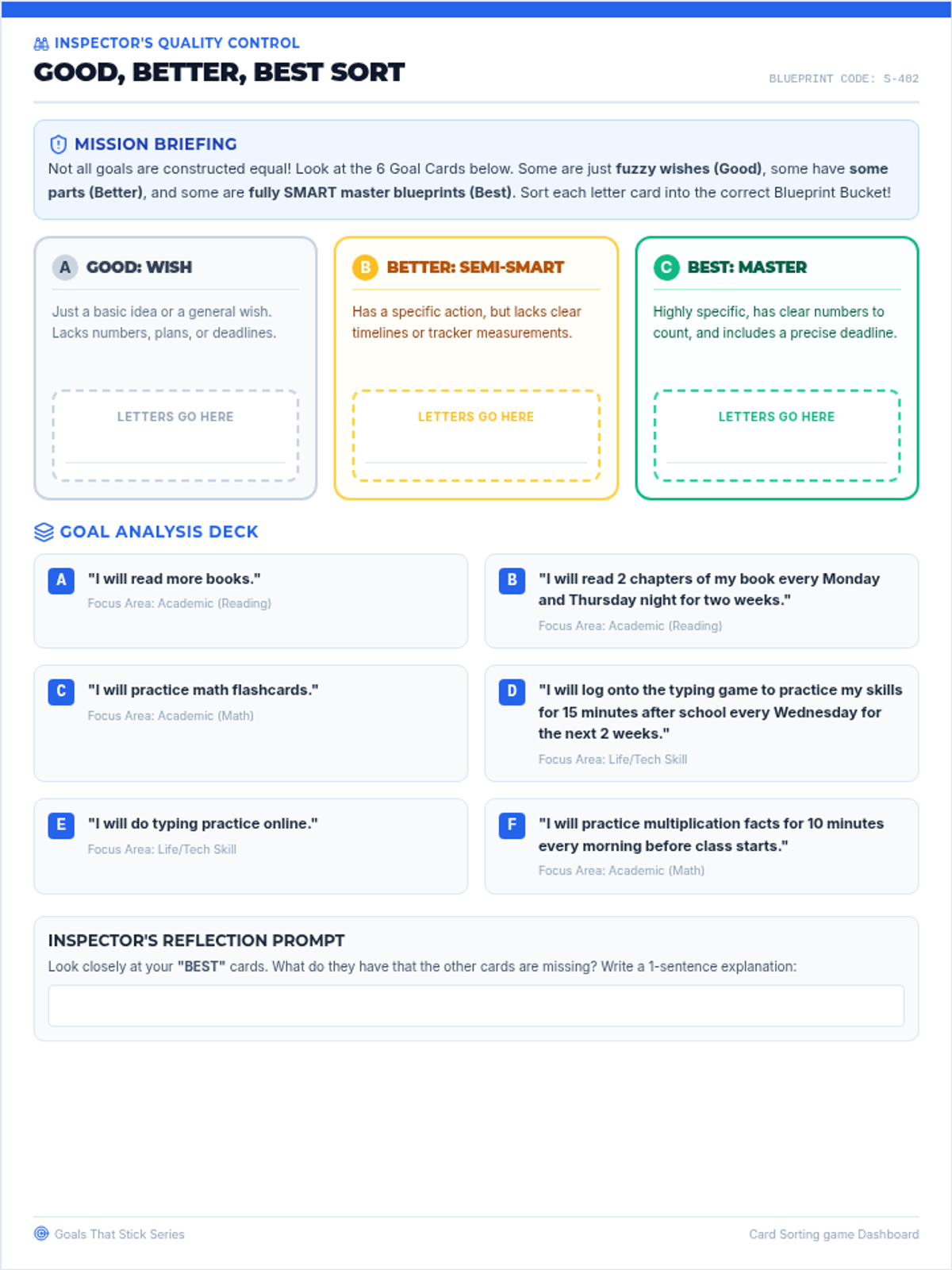
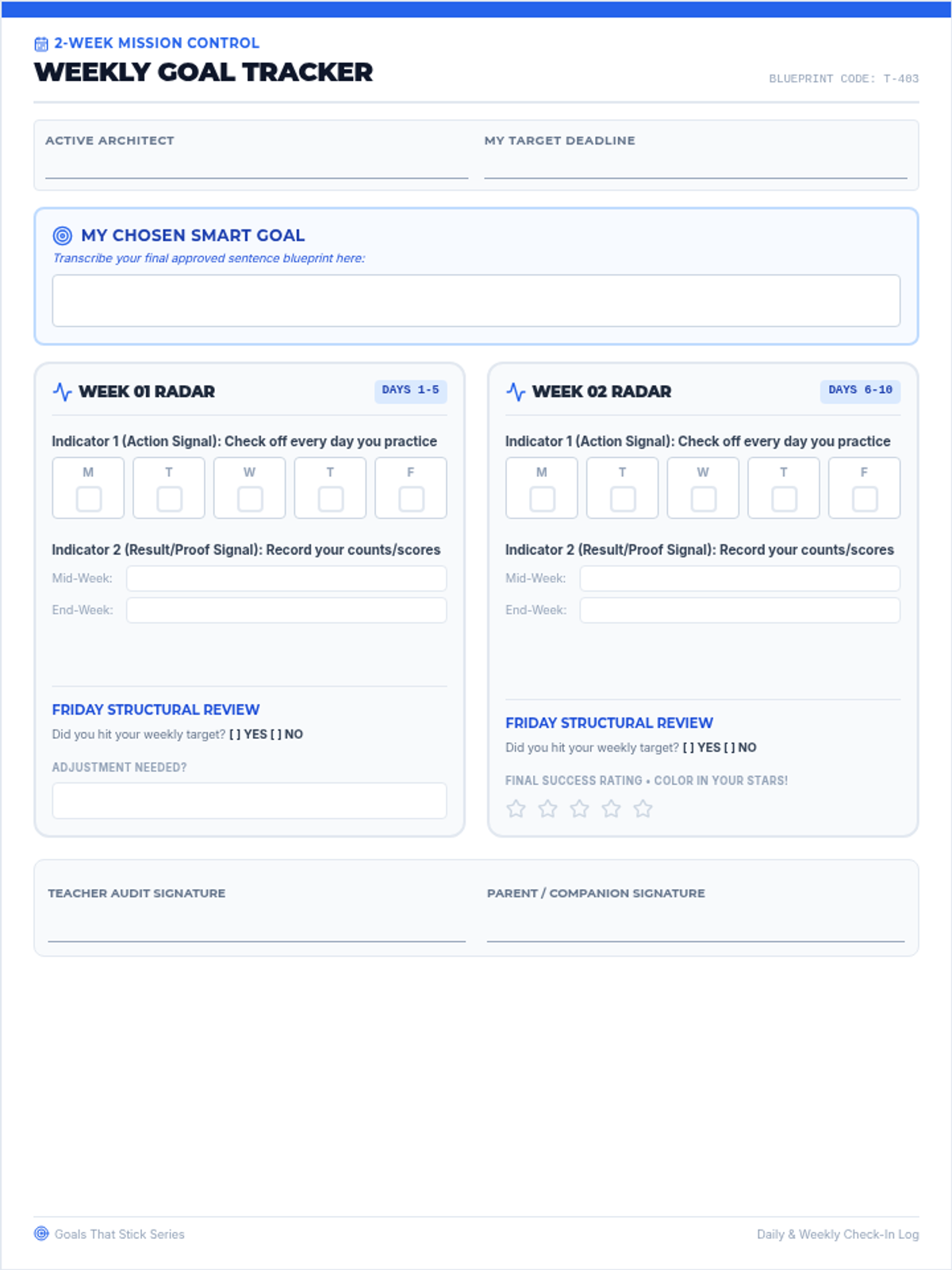
A 45-minute lesson designed for 4th graders to introduce the SMART goal framework. Students learn how to transform vague wishes into concrete, measurable goals, align them with tracking indicators, brainstorm solutions to barriers, and set up a two-week tracking routine.
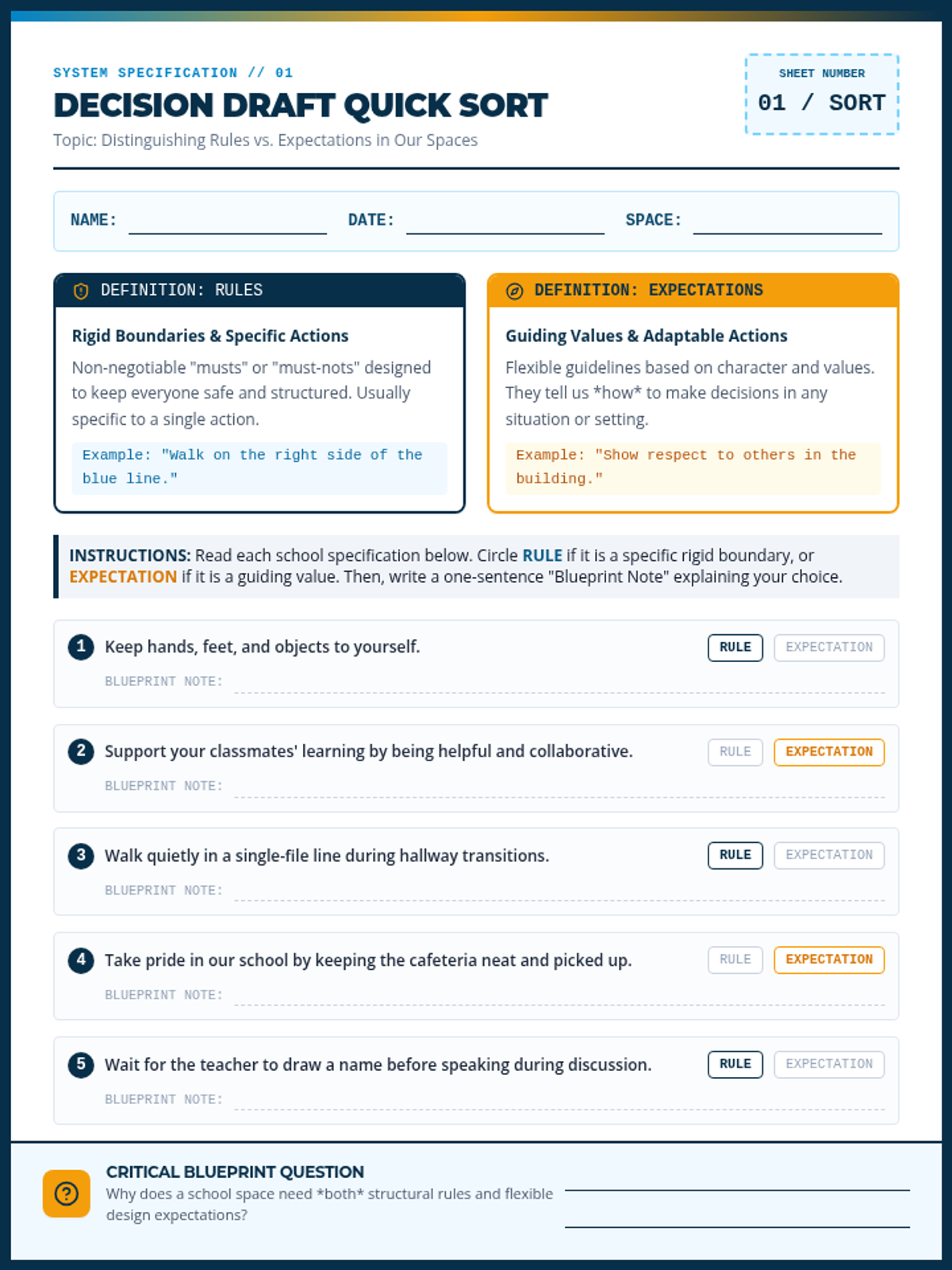
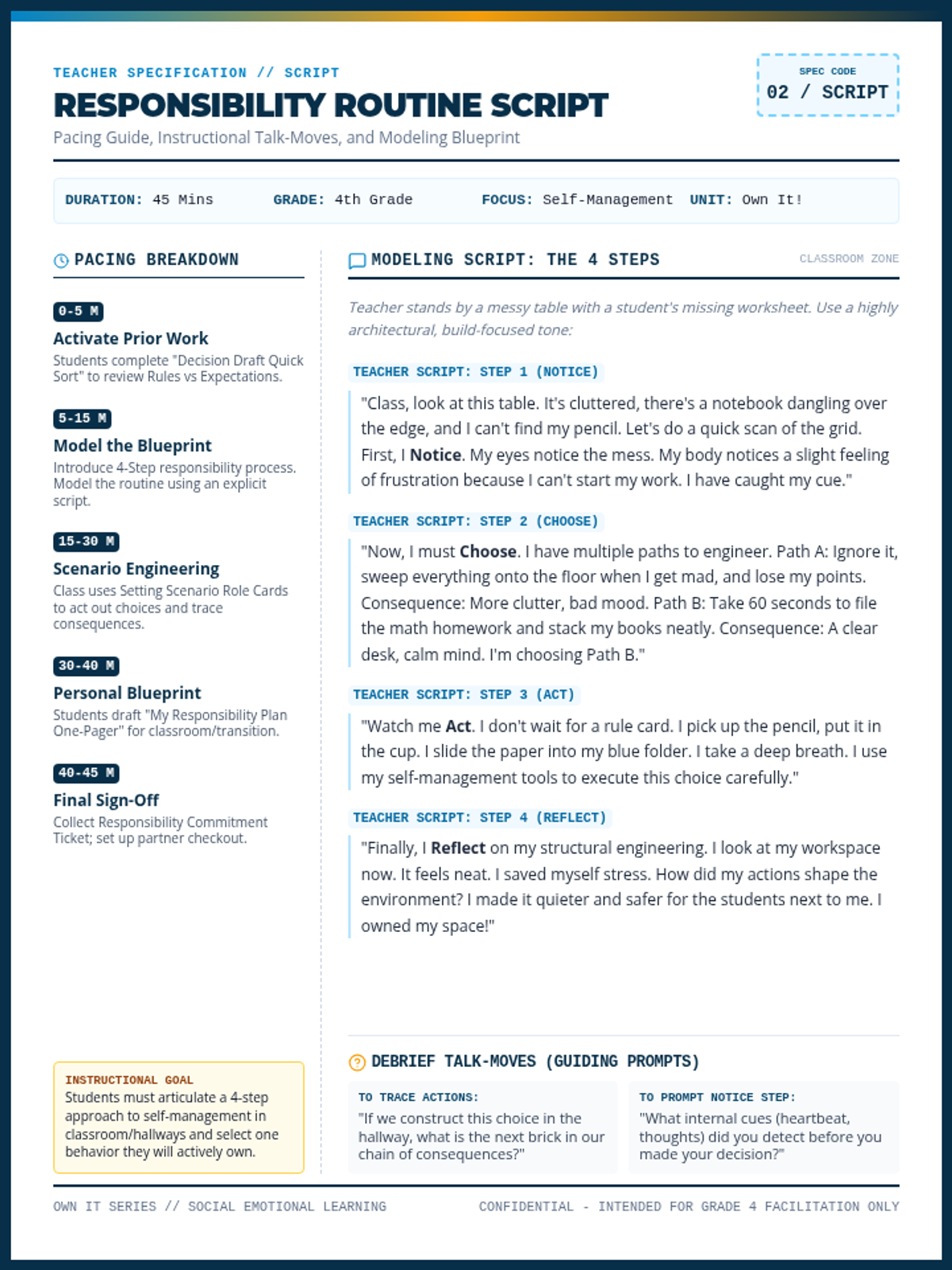
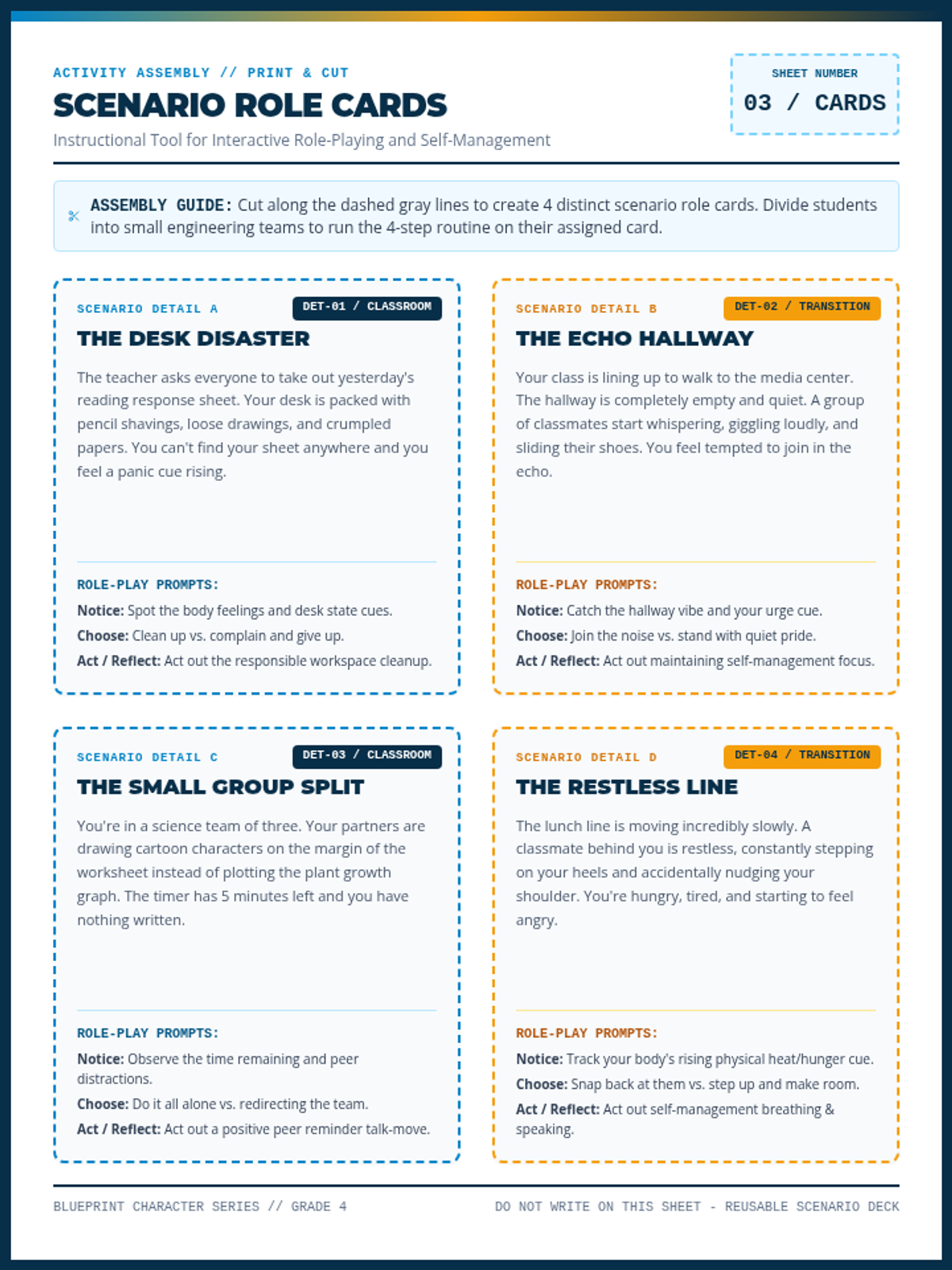
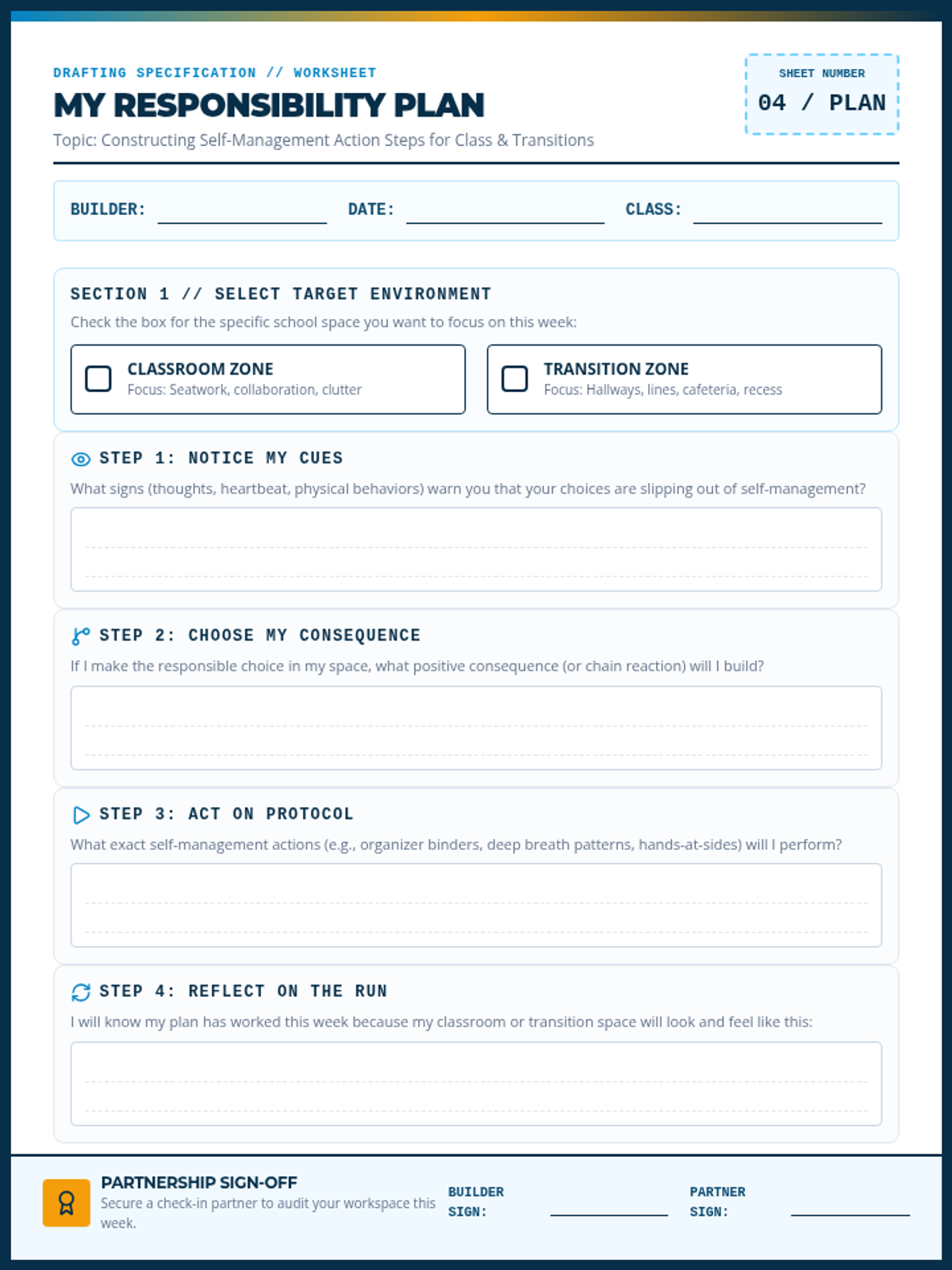
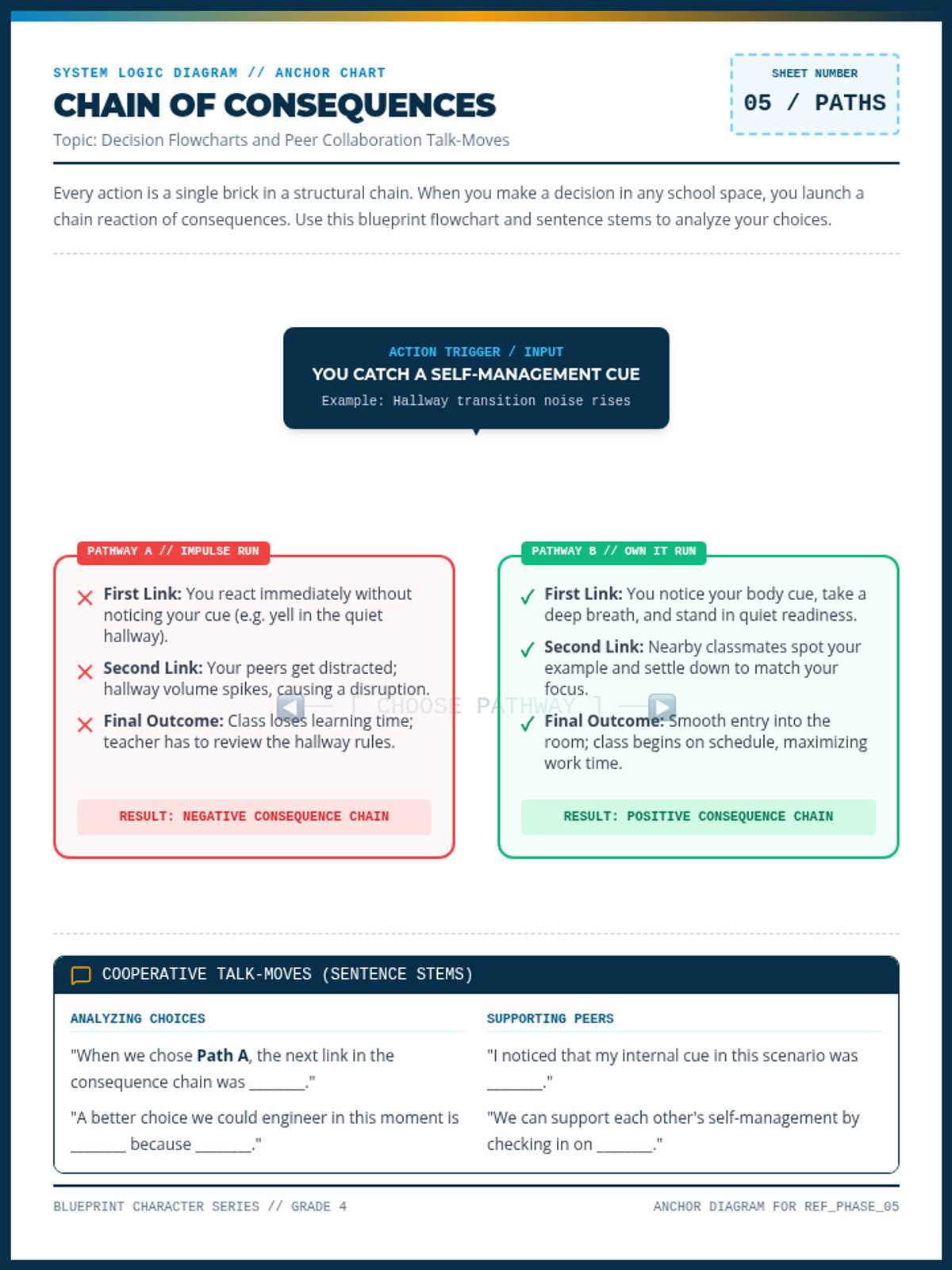
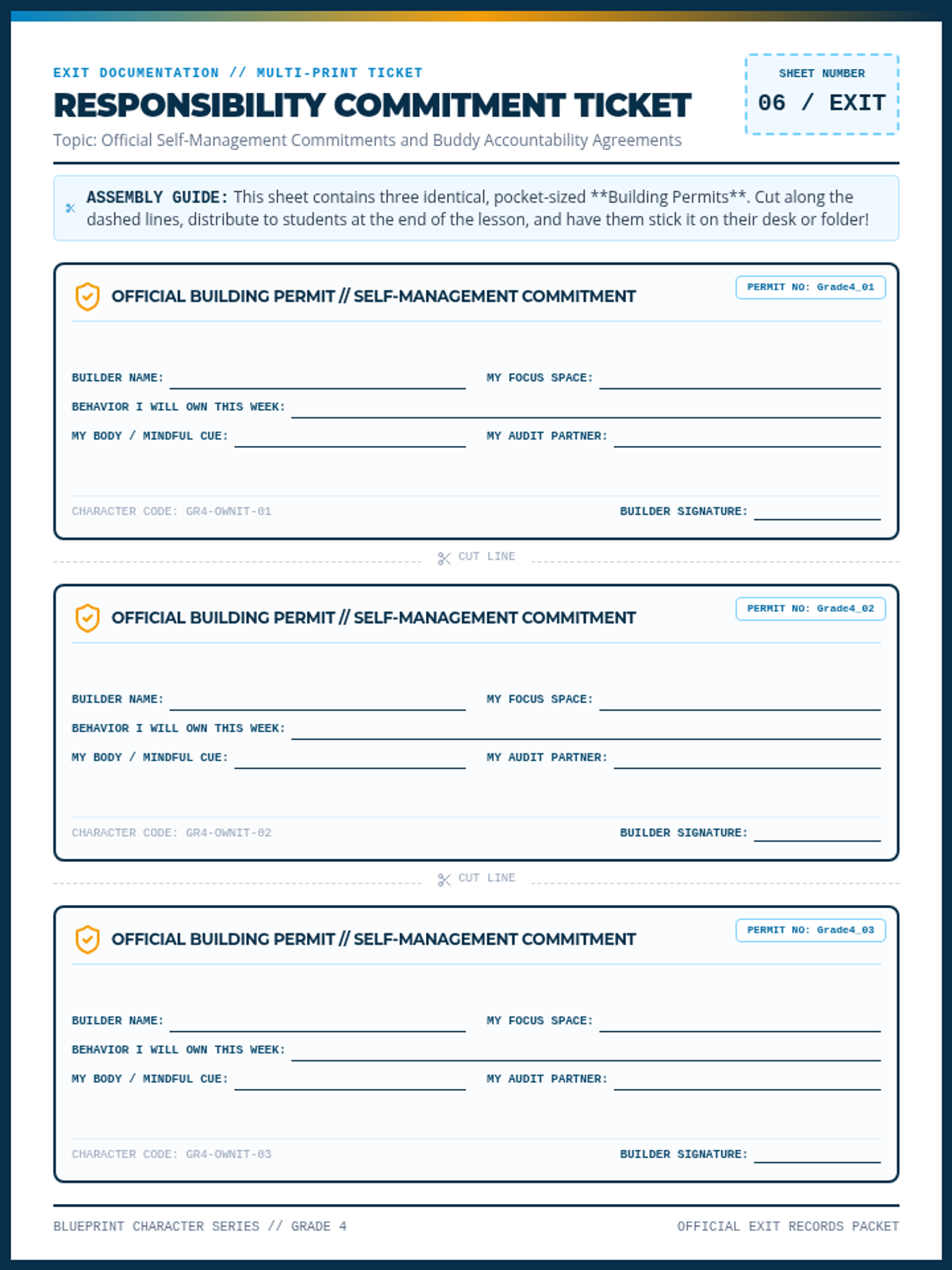
A 45-minute social-emotional learning lesson for 4th graders to master self-management and personal responsibility. Students analyze rules versus expectations, learn a 4-step responsibility process, and draft a personal action plan for classrooms and school transitions.
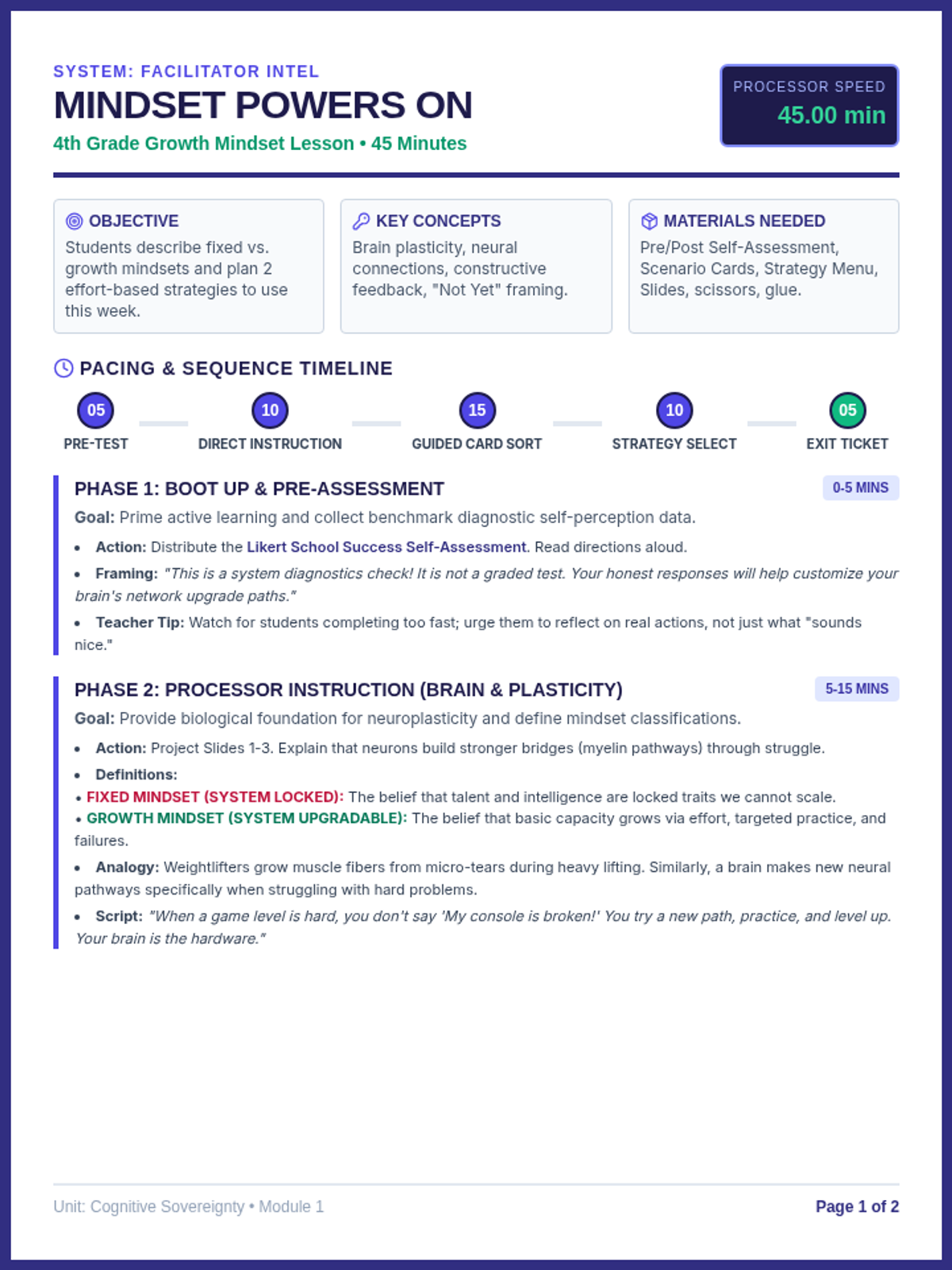
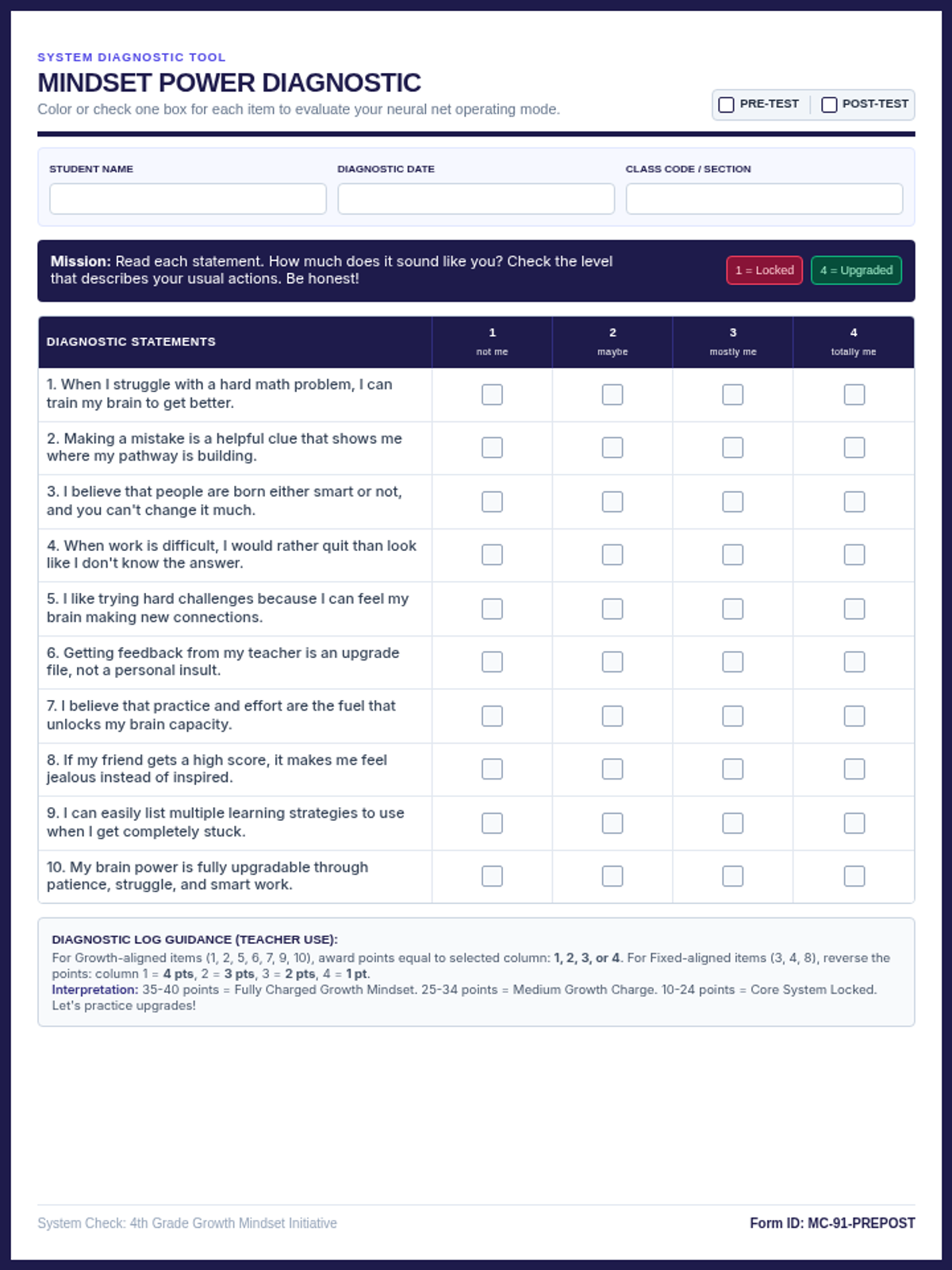
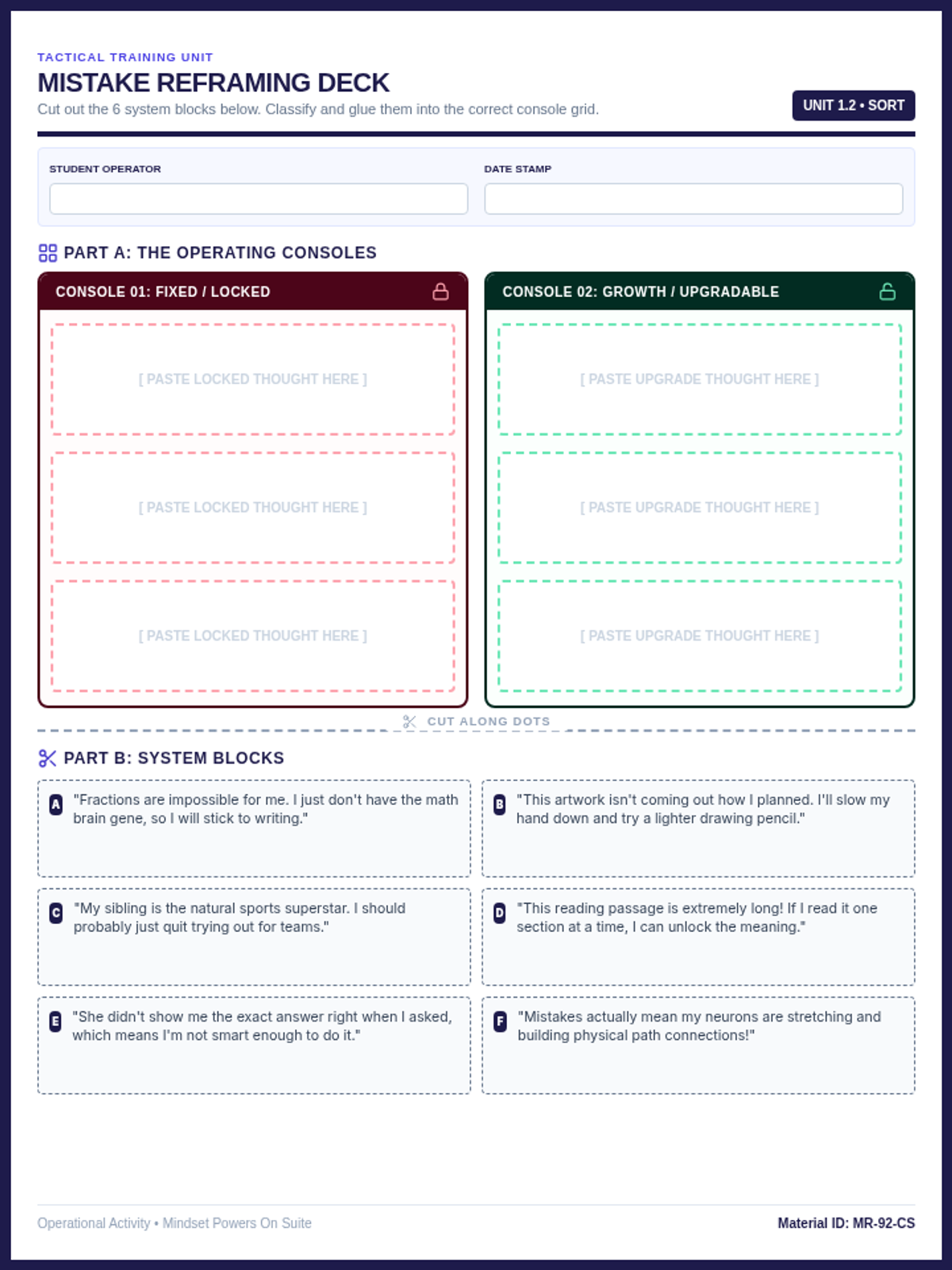
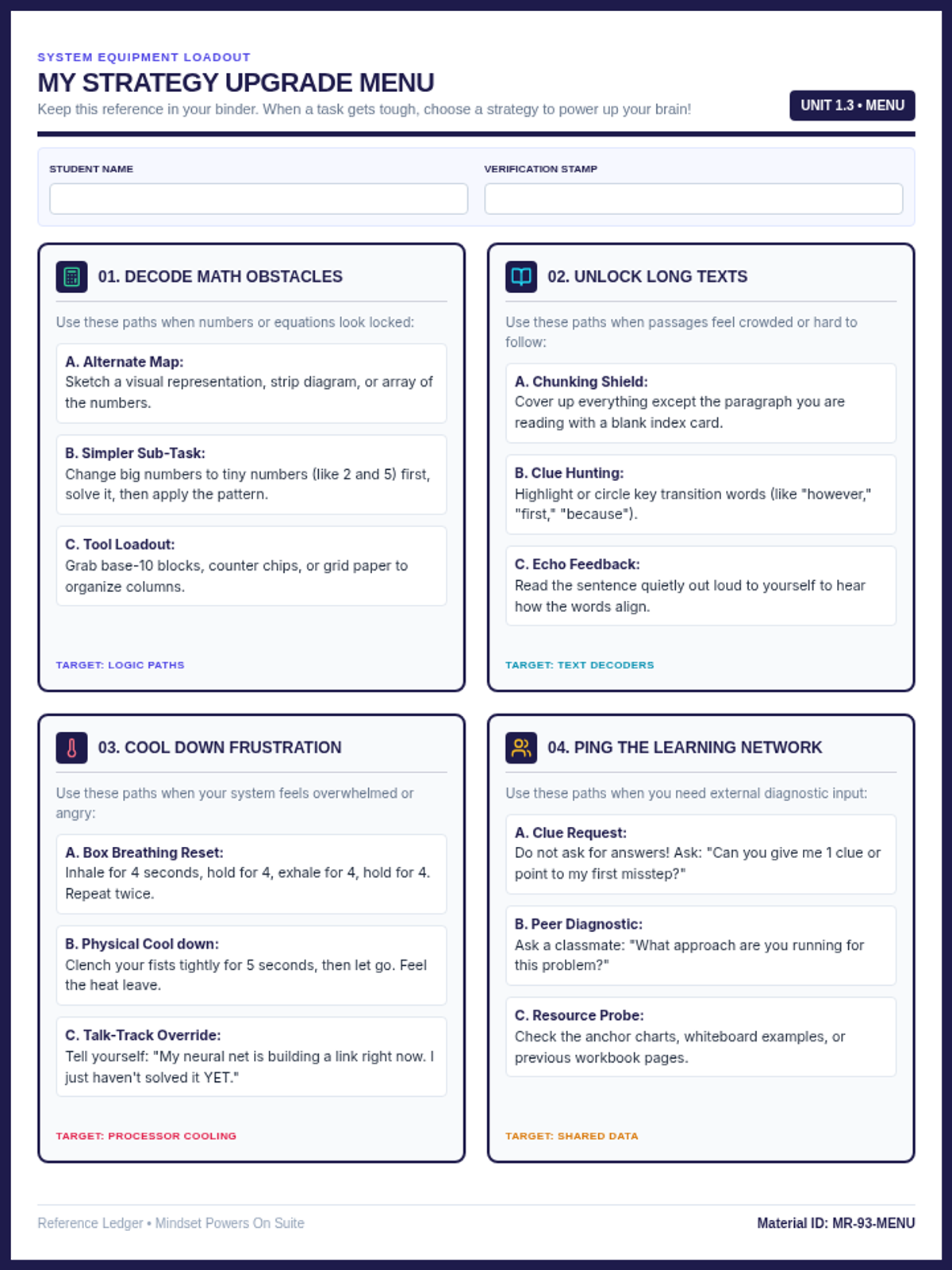
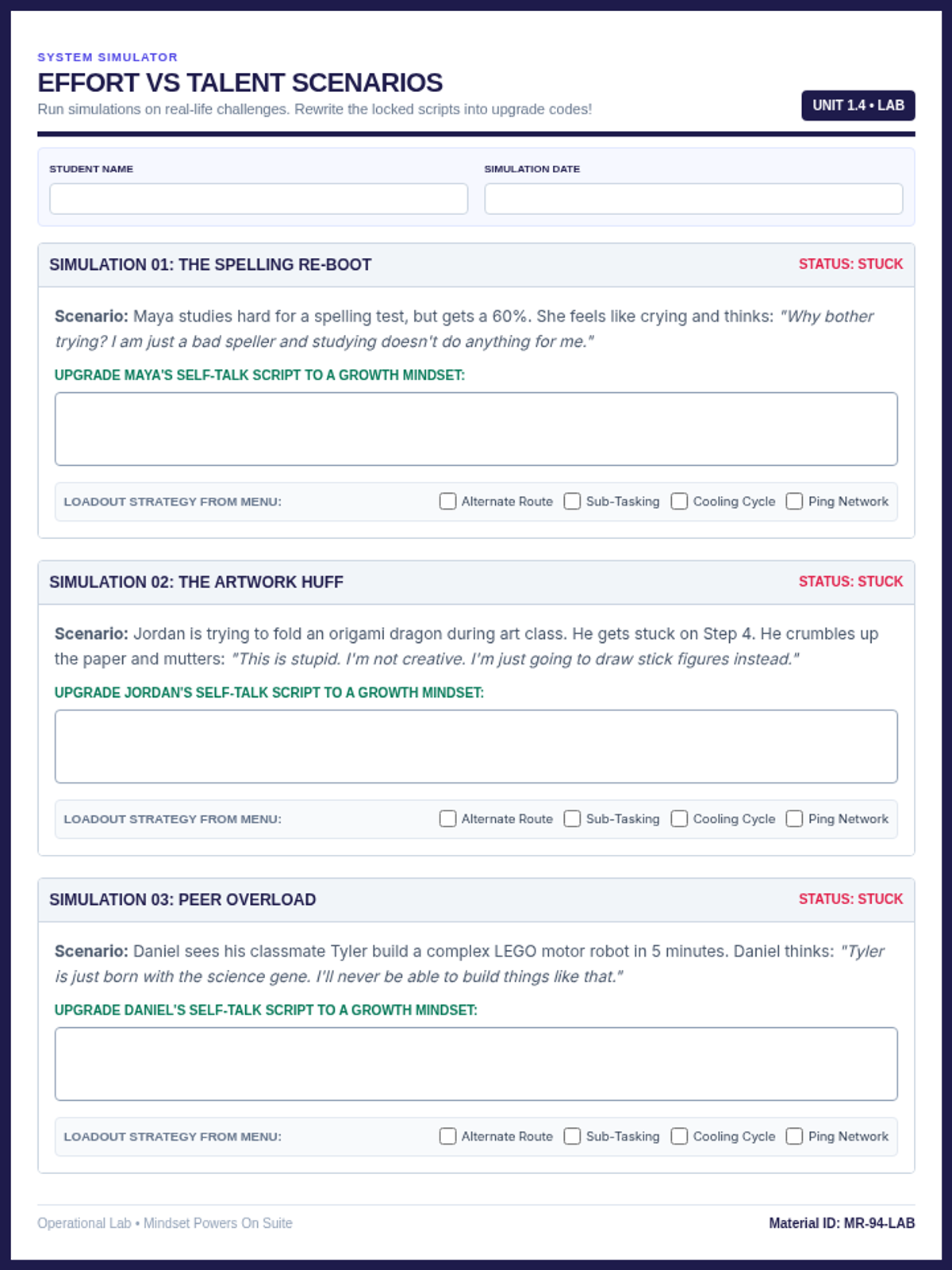
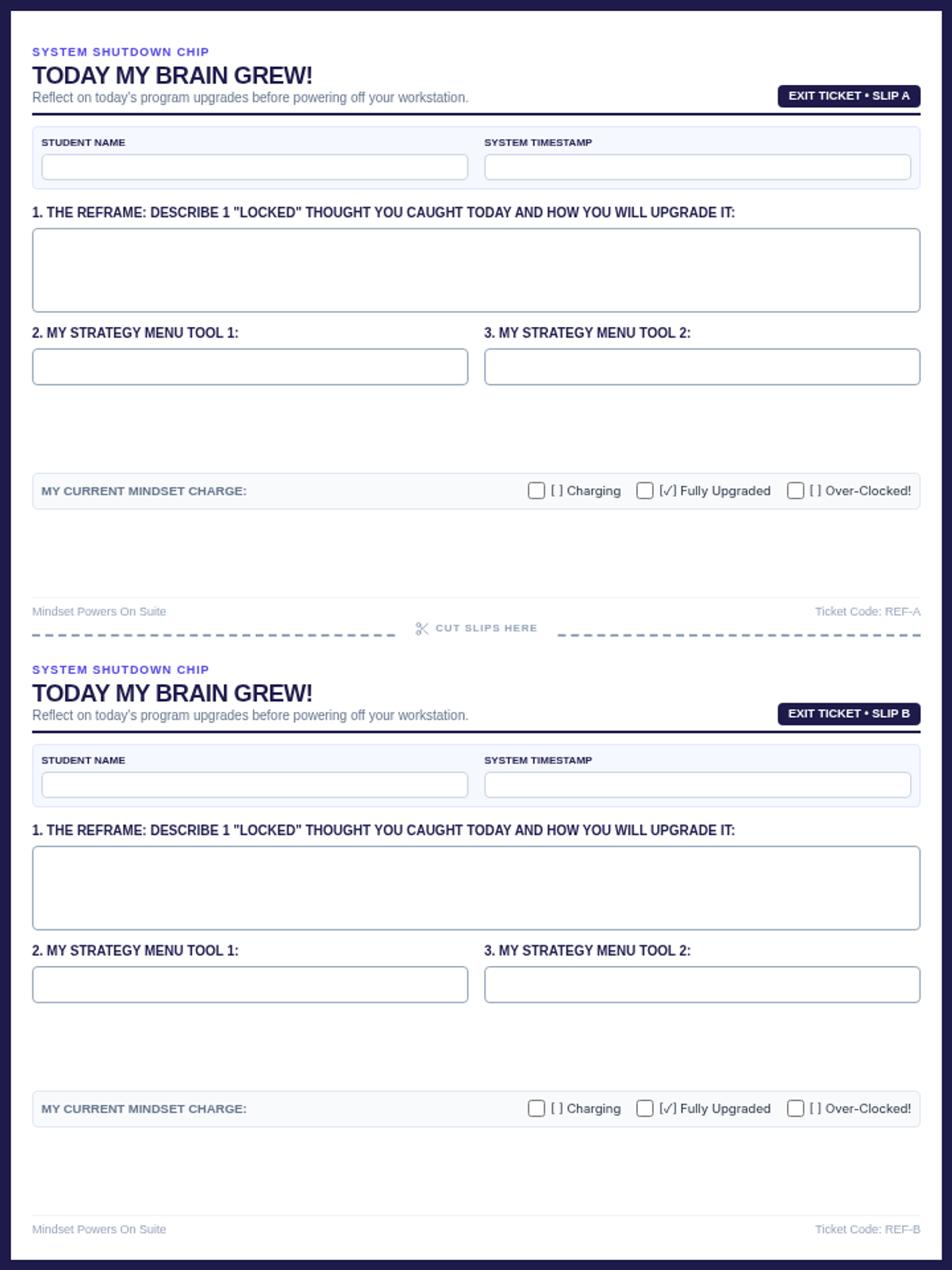
A 45-minute lesson for 4th graders on growth vs. fixed mindset. Students learn that effort and strategies build brain power, complete a self-assessment, sort growth mindset statements, and choose personal growth strategies.
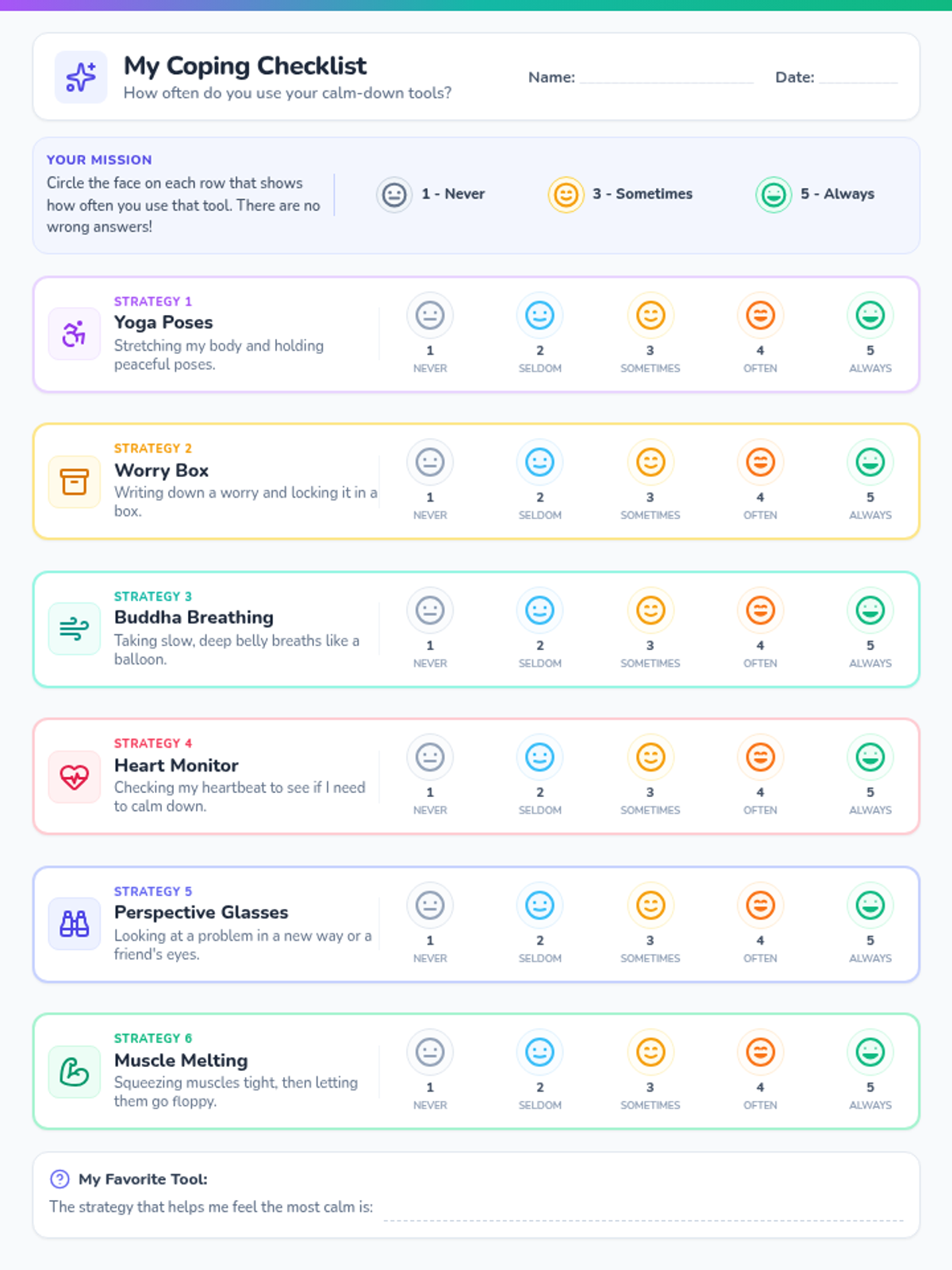
A lesson centered on evaluating student usage of coping strategies using visual checklists and rating scales, tailored for grade 4 learners with language-based learning differences.
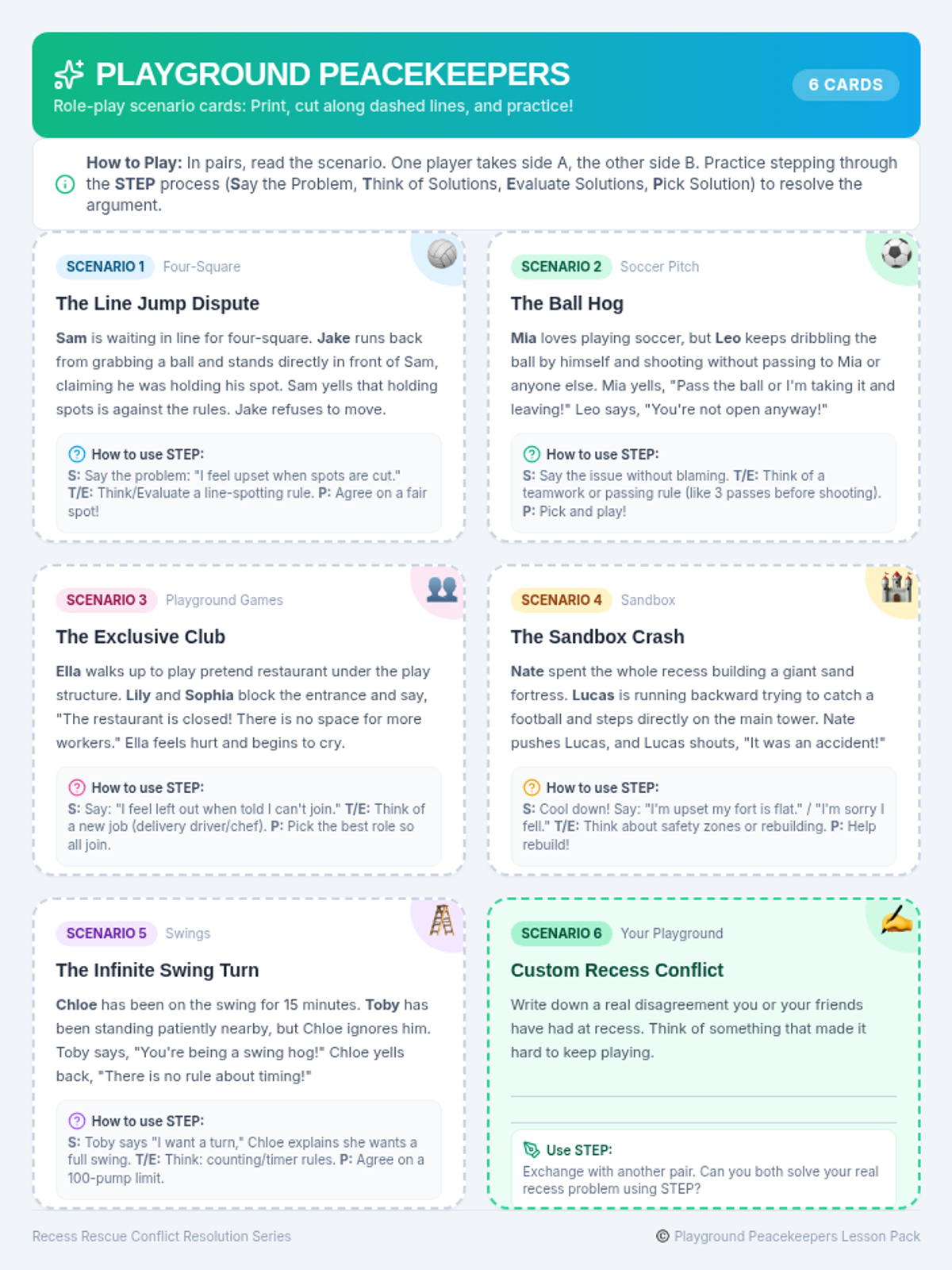
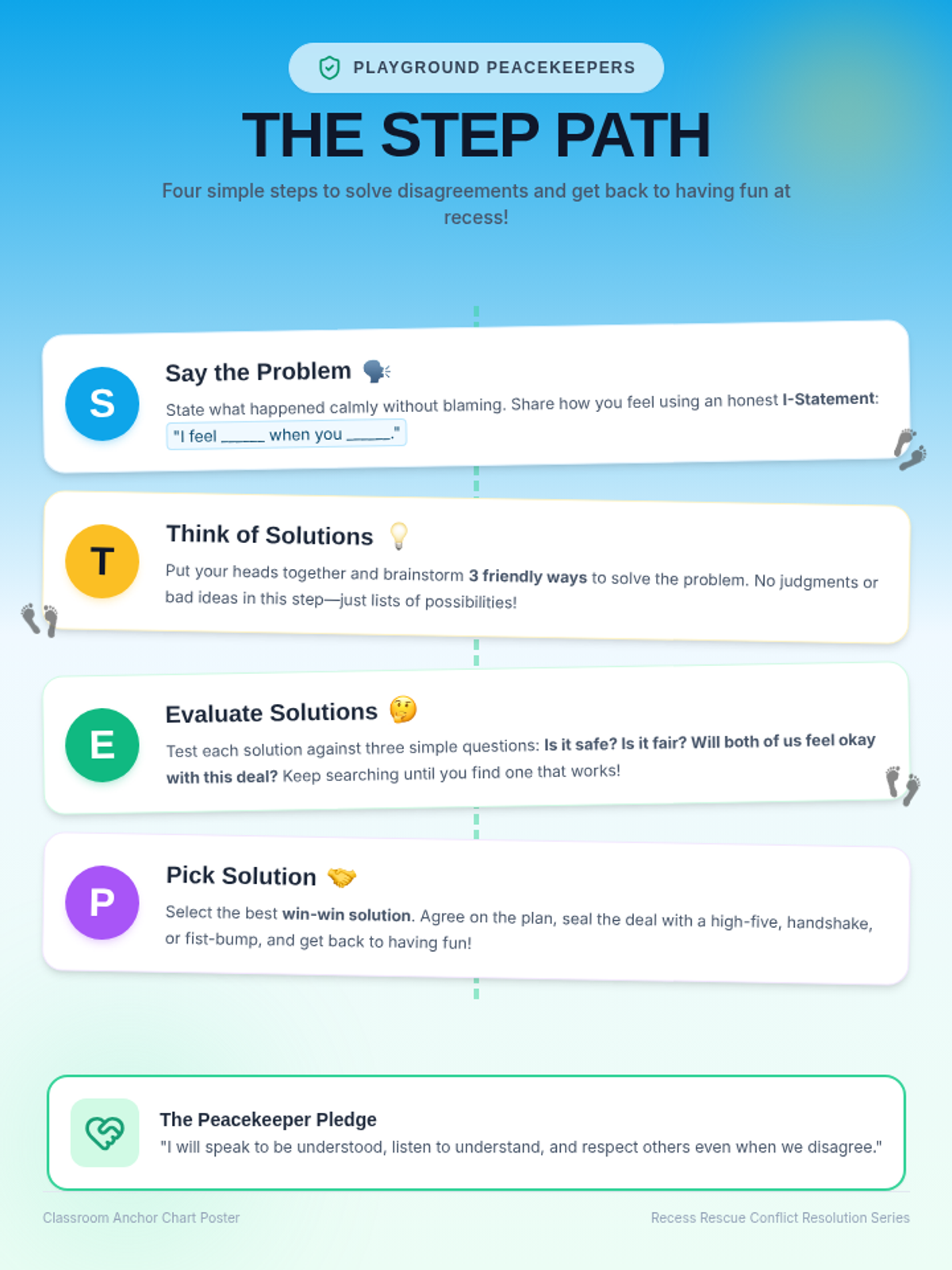
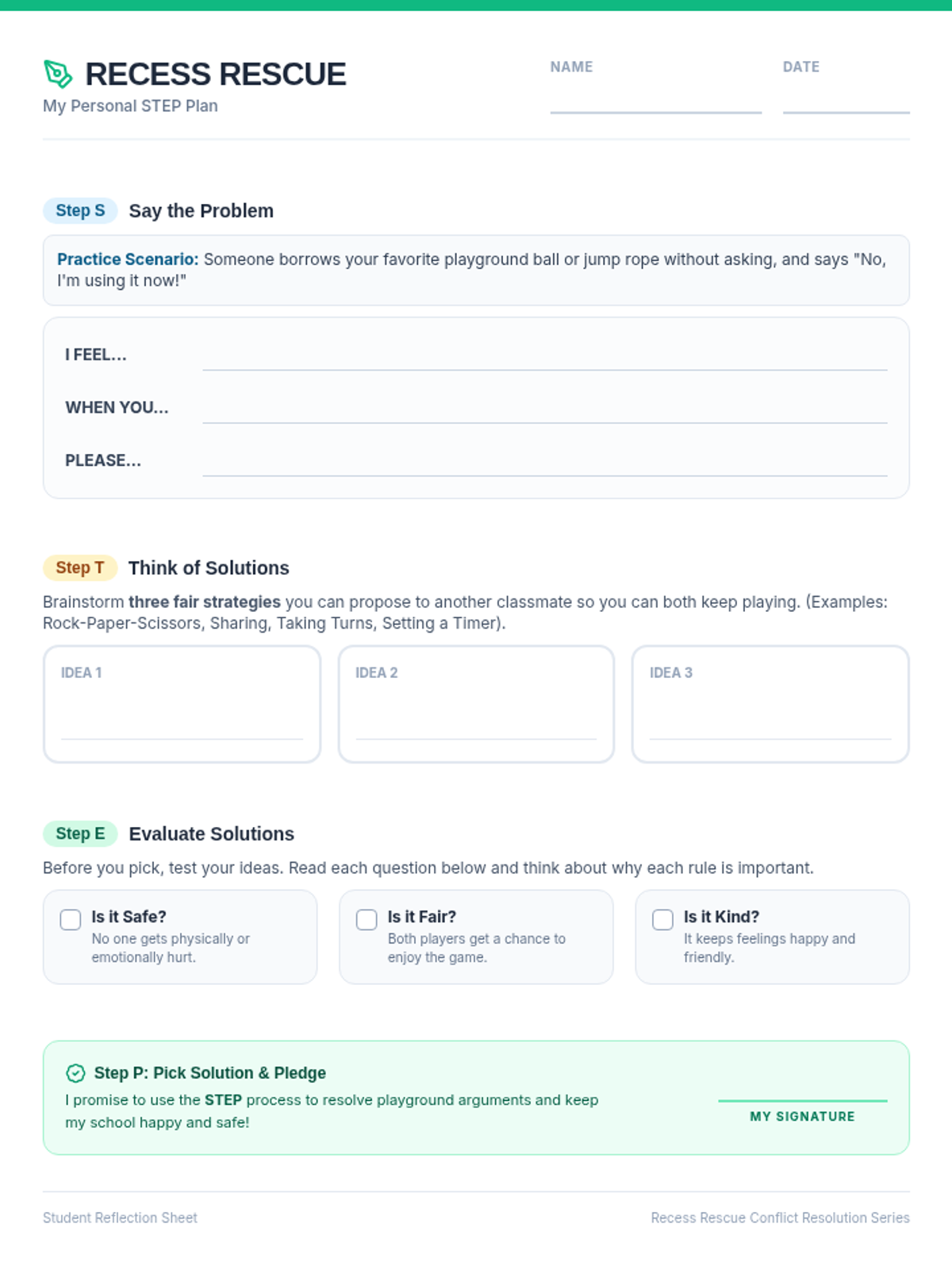
A lesson bundle designed to teach elementary students how to resolve playground conflicts using a structured, peer-to-peer 'Peace Path'. Students will learn self-regulation, active listening, and collaborative problem-solving through interactive slides, role-play scenario cards, a colorful classroom anchor chart, and an individual reflection worksheet.
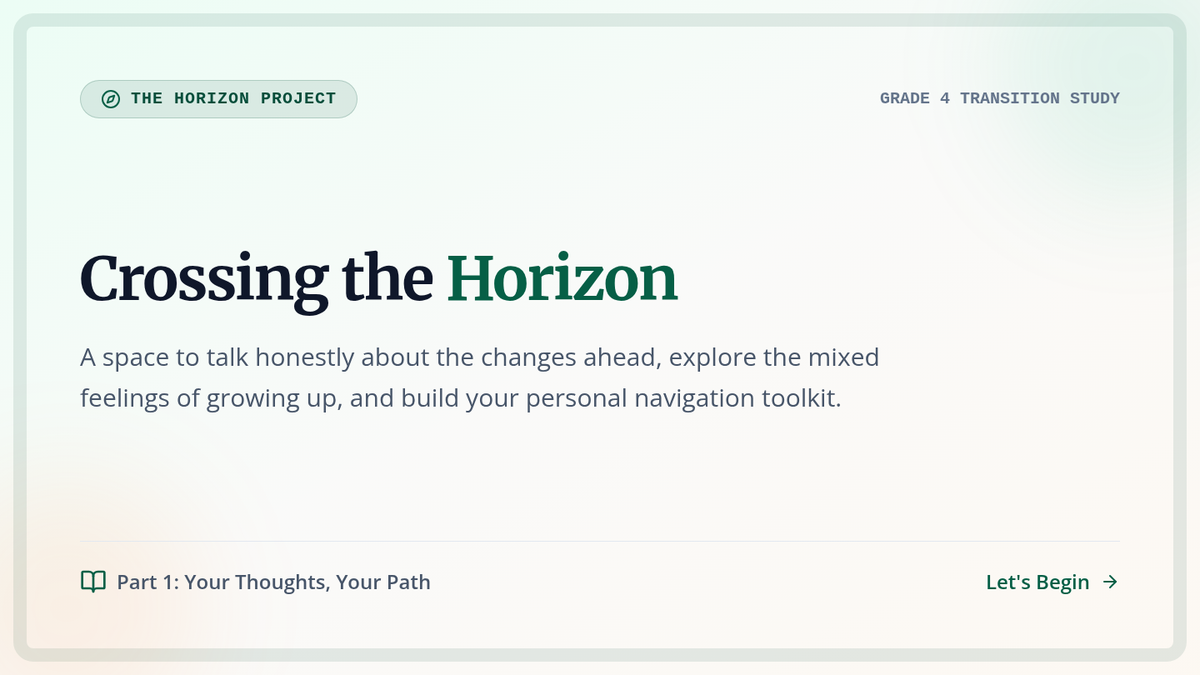
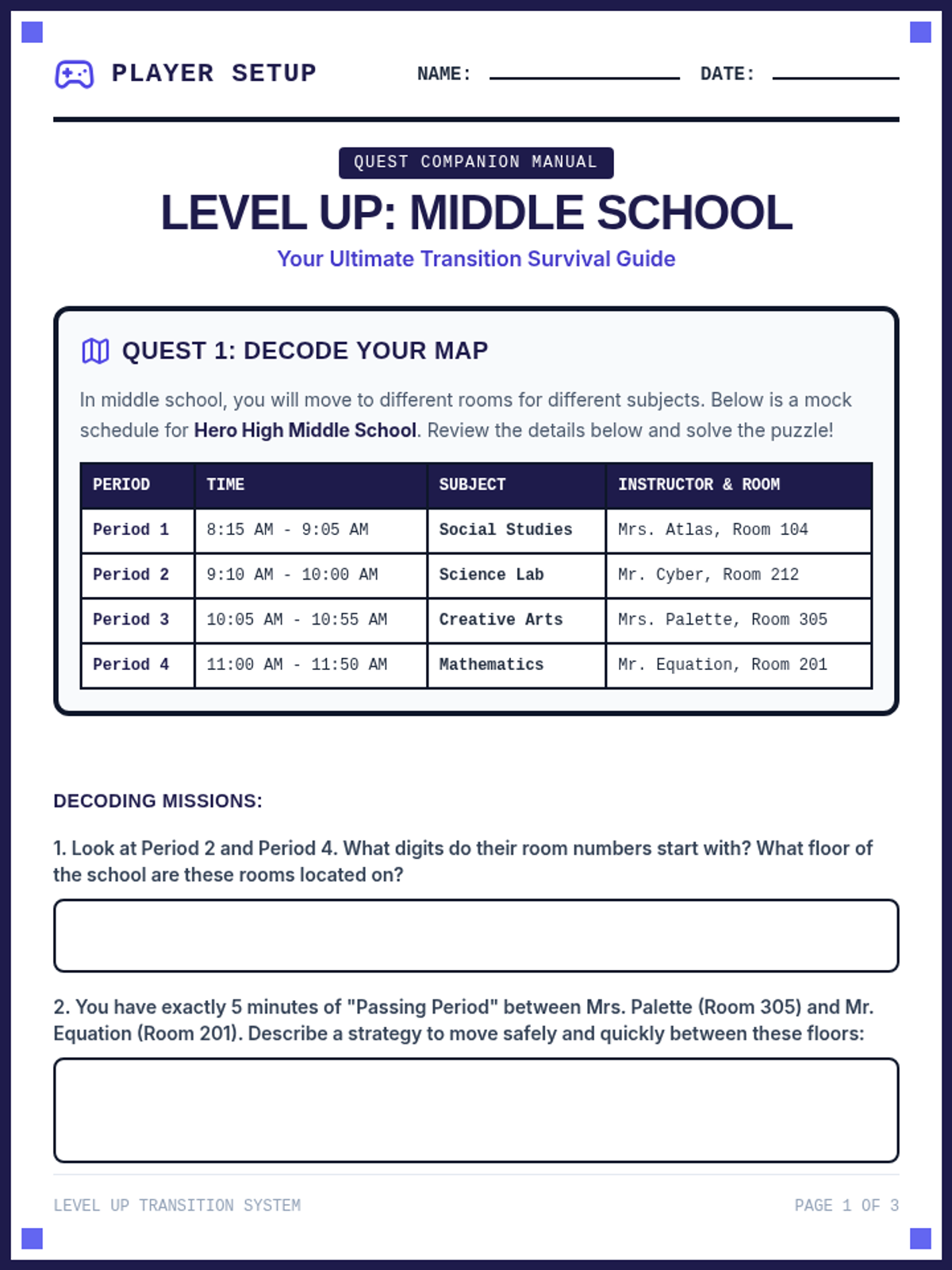
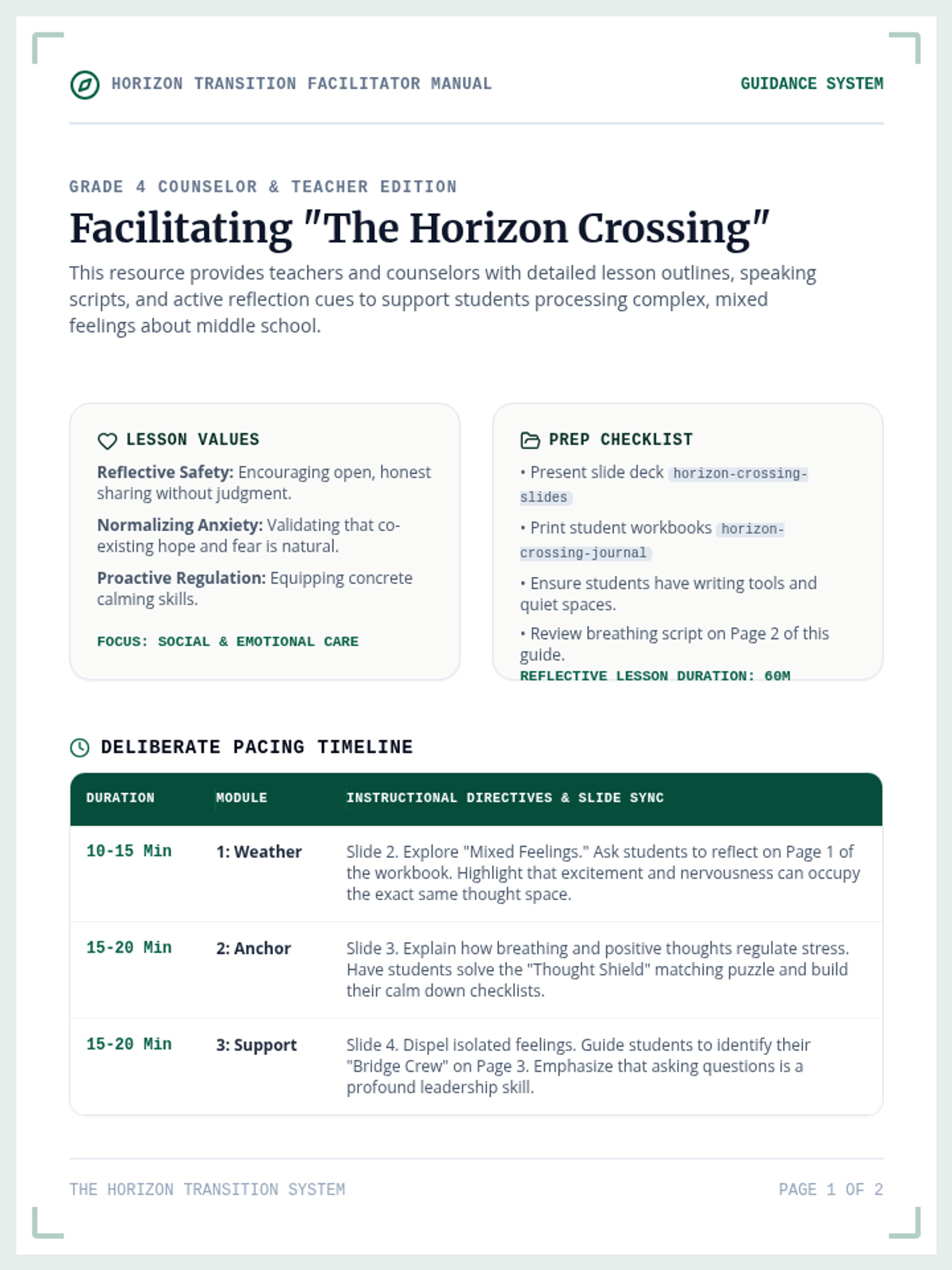
A reflective transition lesson designed for 4th-grade students preparing to enter middle school. It focuses deeply on identifying mixed emotions (excitement and anxiety), building emotional regulation/coping strategies, identifying trusted support networks, and navigating change.
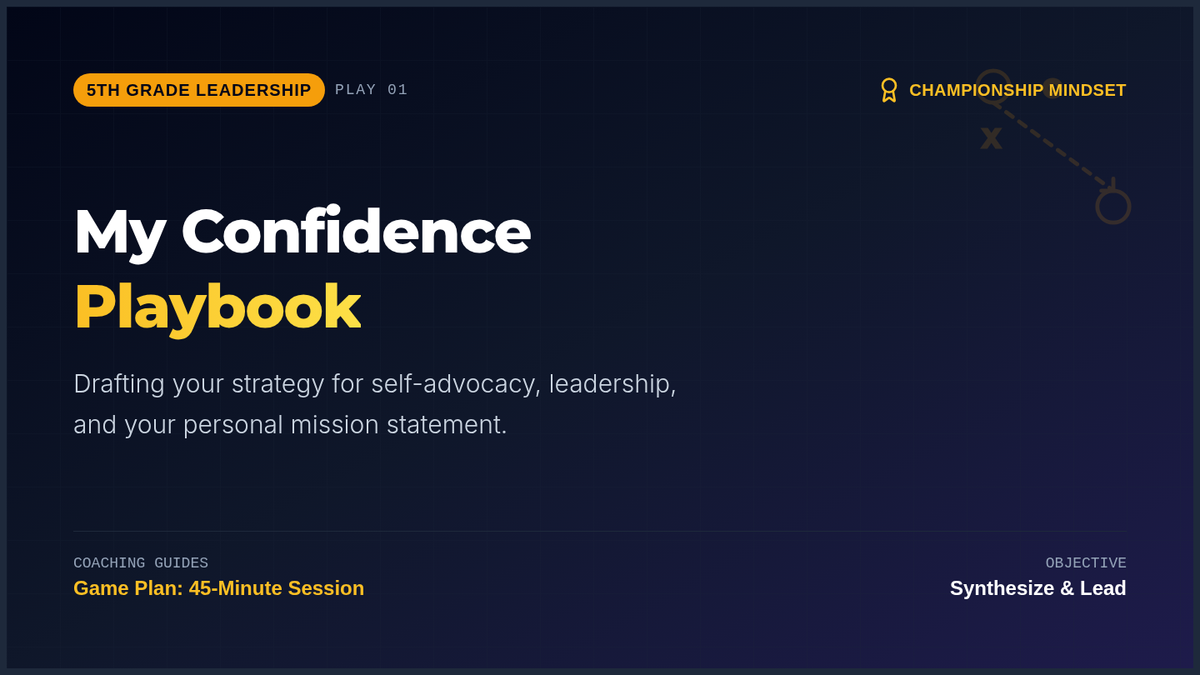
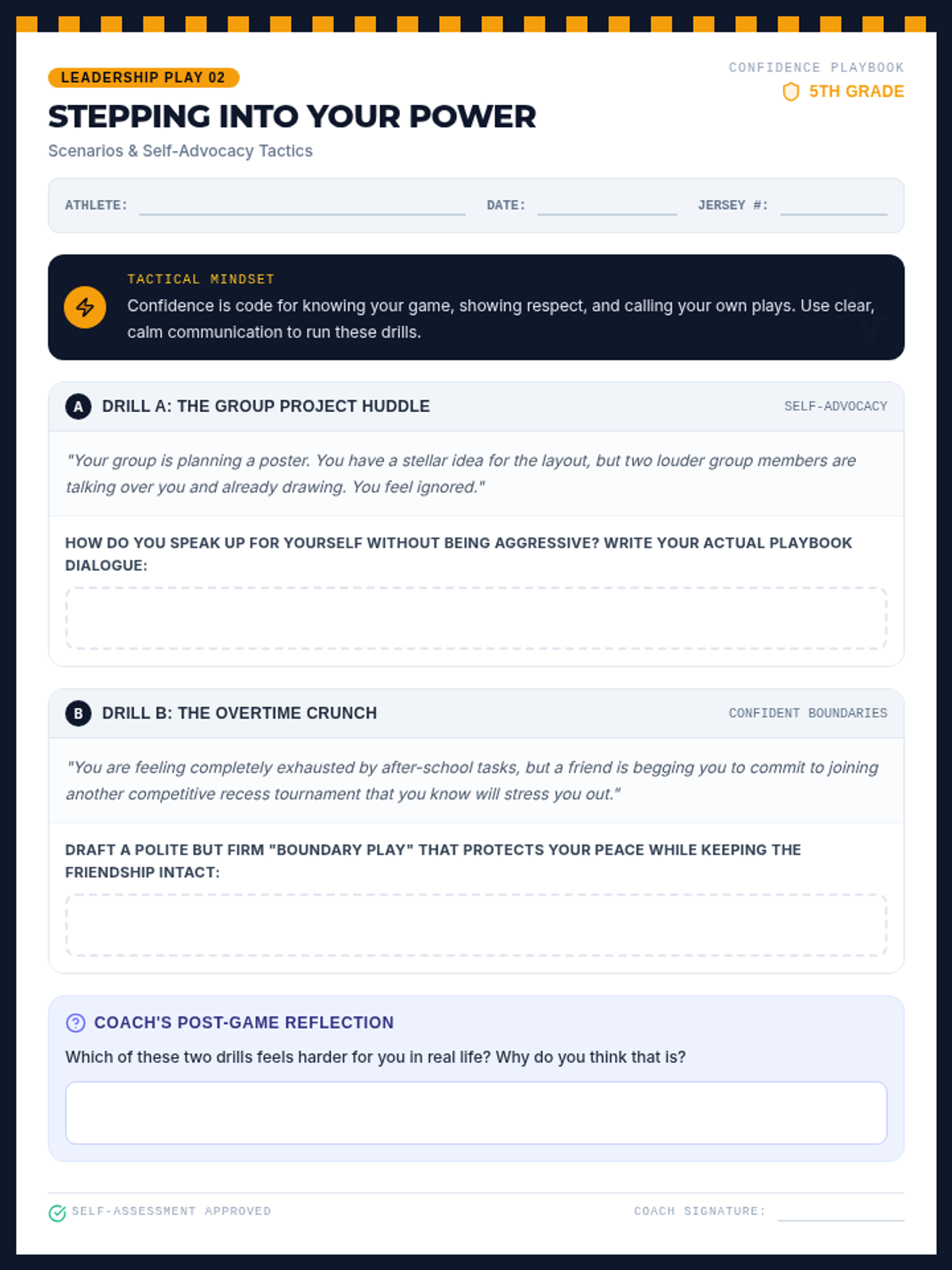
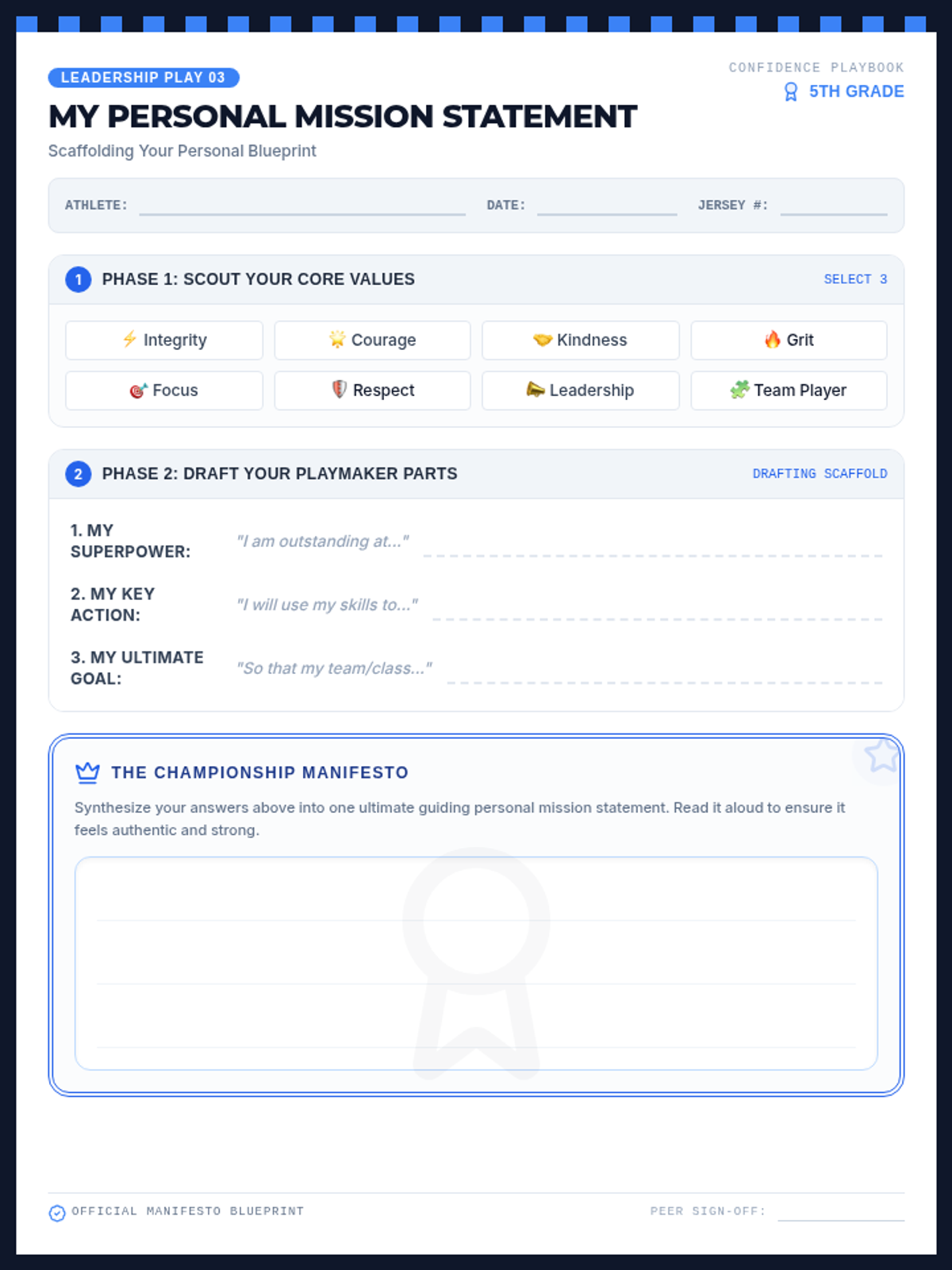
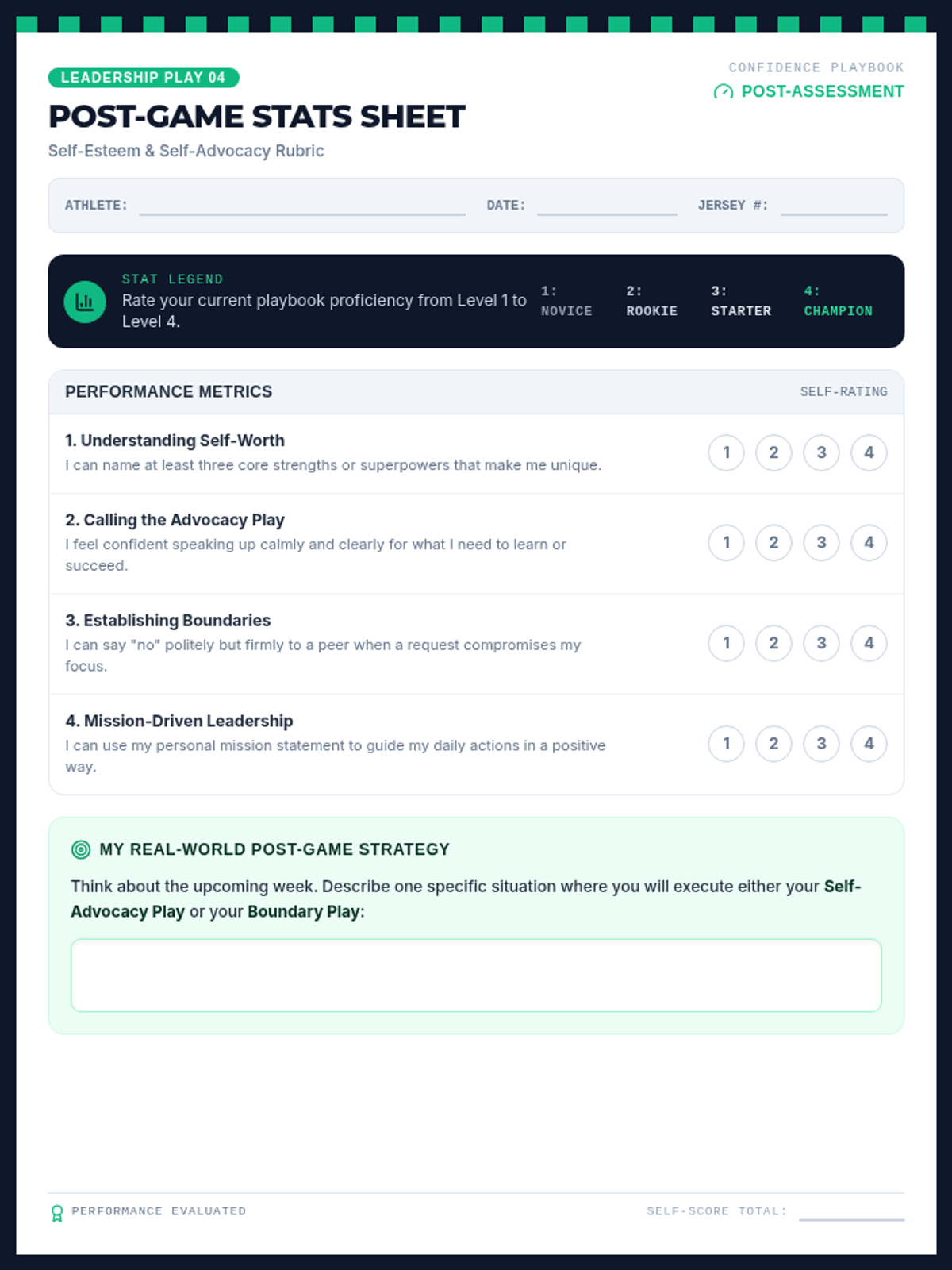
A sports-playbook-themed leadership lesson where 5th graders map out confidence strategies, analyze self-advocacy scenarios, and write their own personal mission statements.
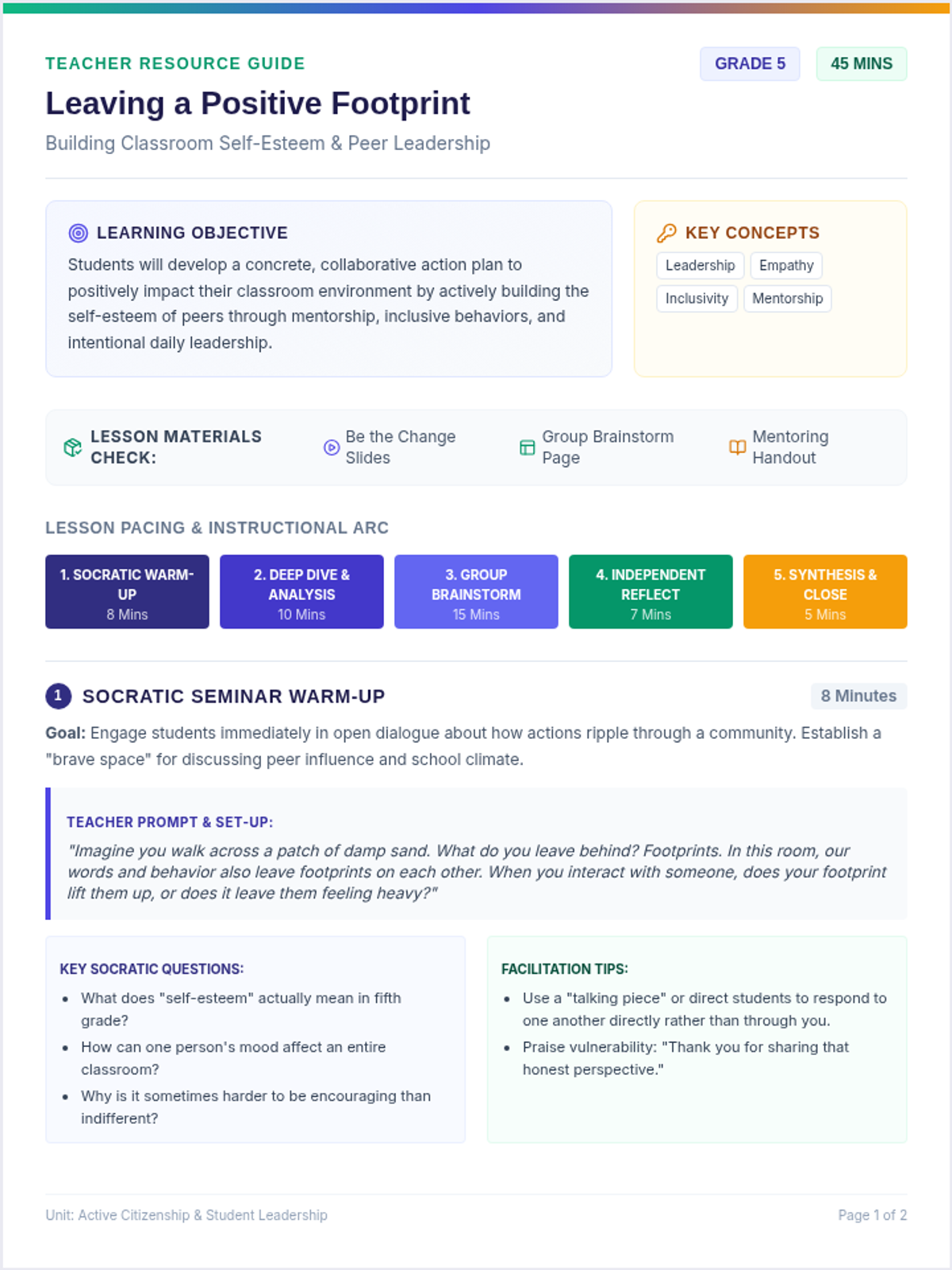
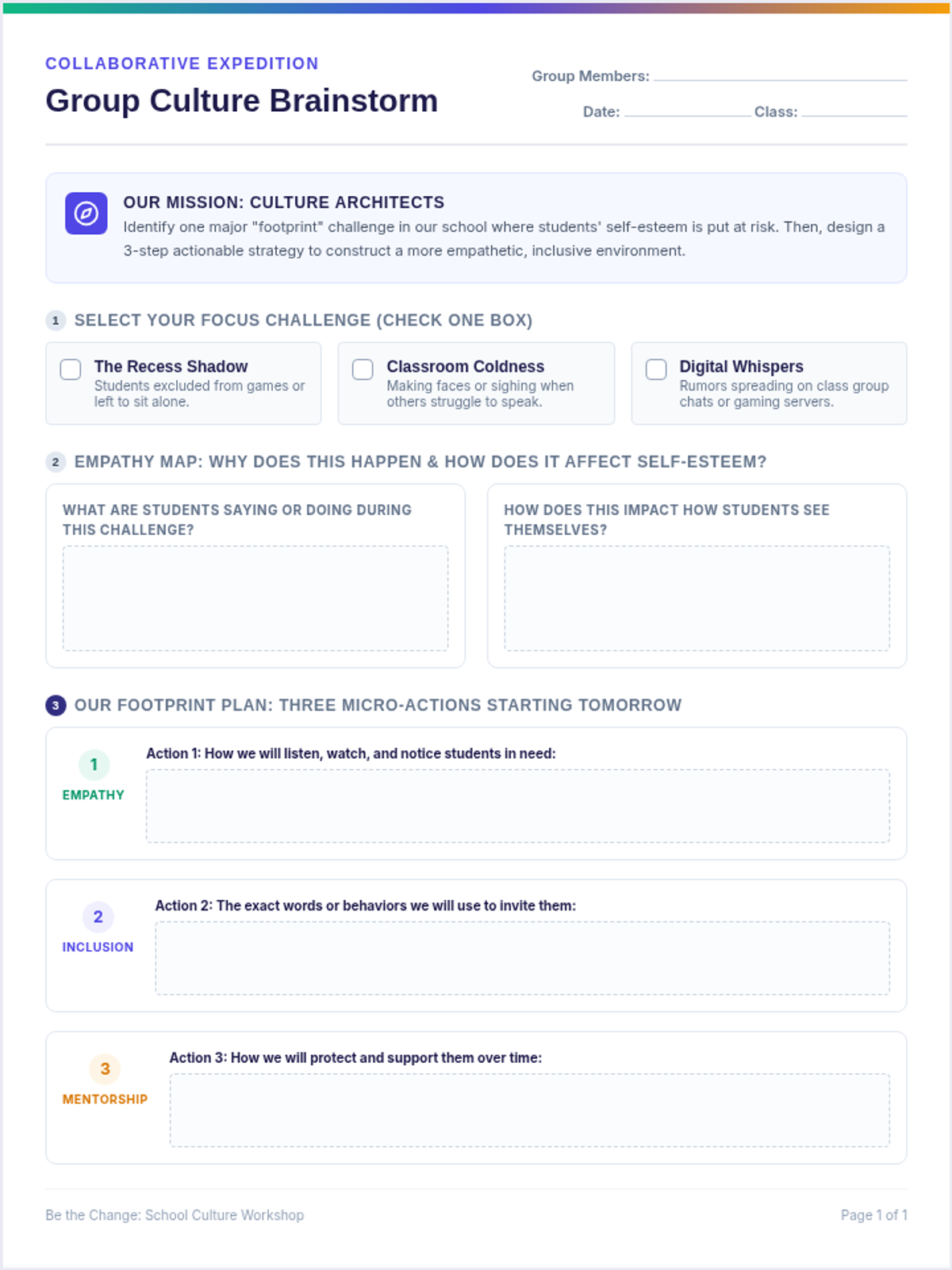
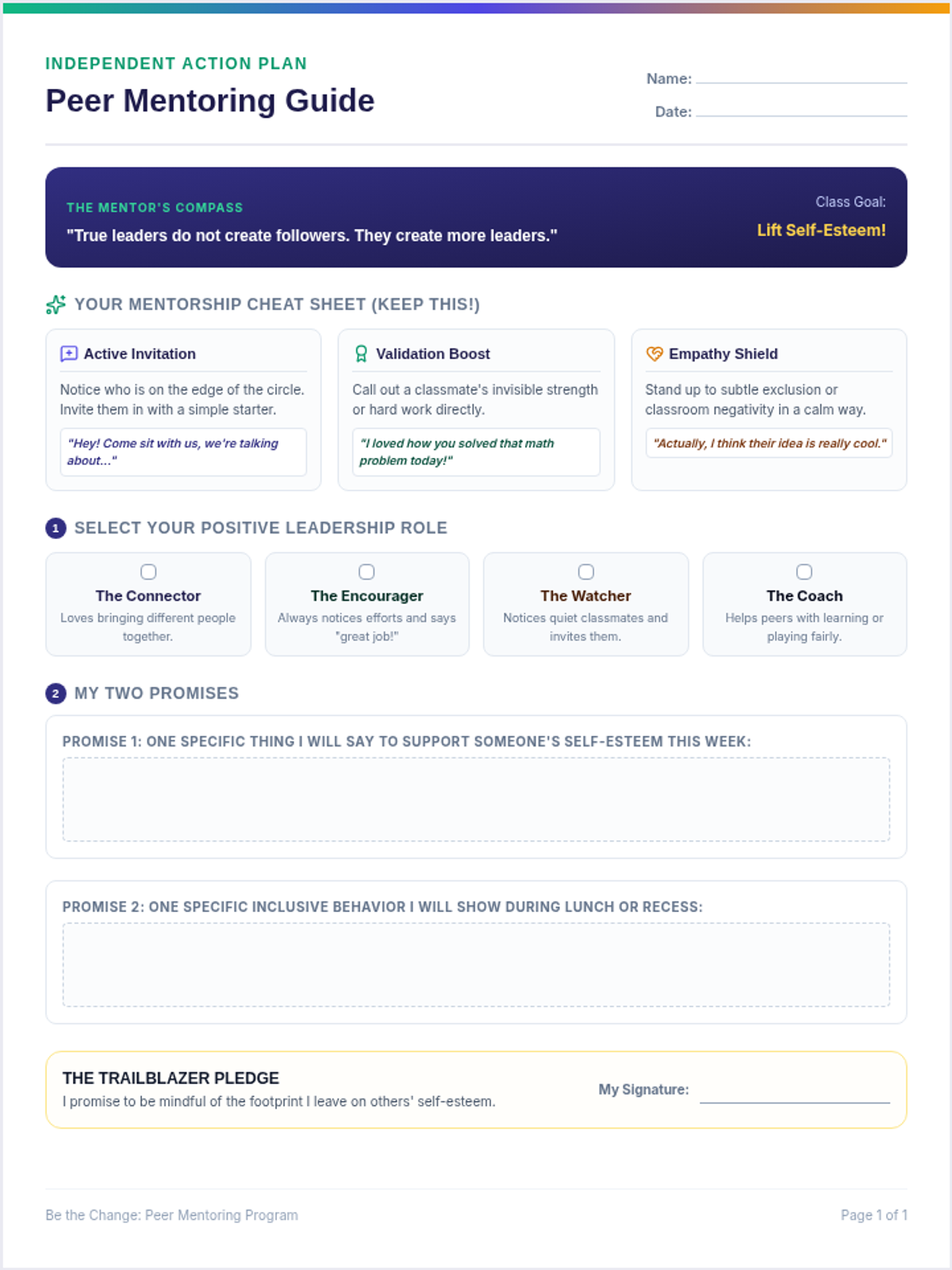
A 45-minute lesson for 5th graders focused on active leadership, empathy, inclusivity, and peer mentorship. Students learn how their daily actions influence others' self-esteem and design a concrete action plan to leave a positive footprint on their school community.
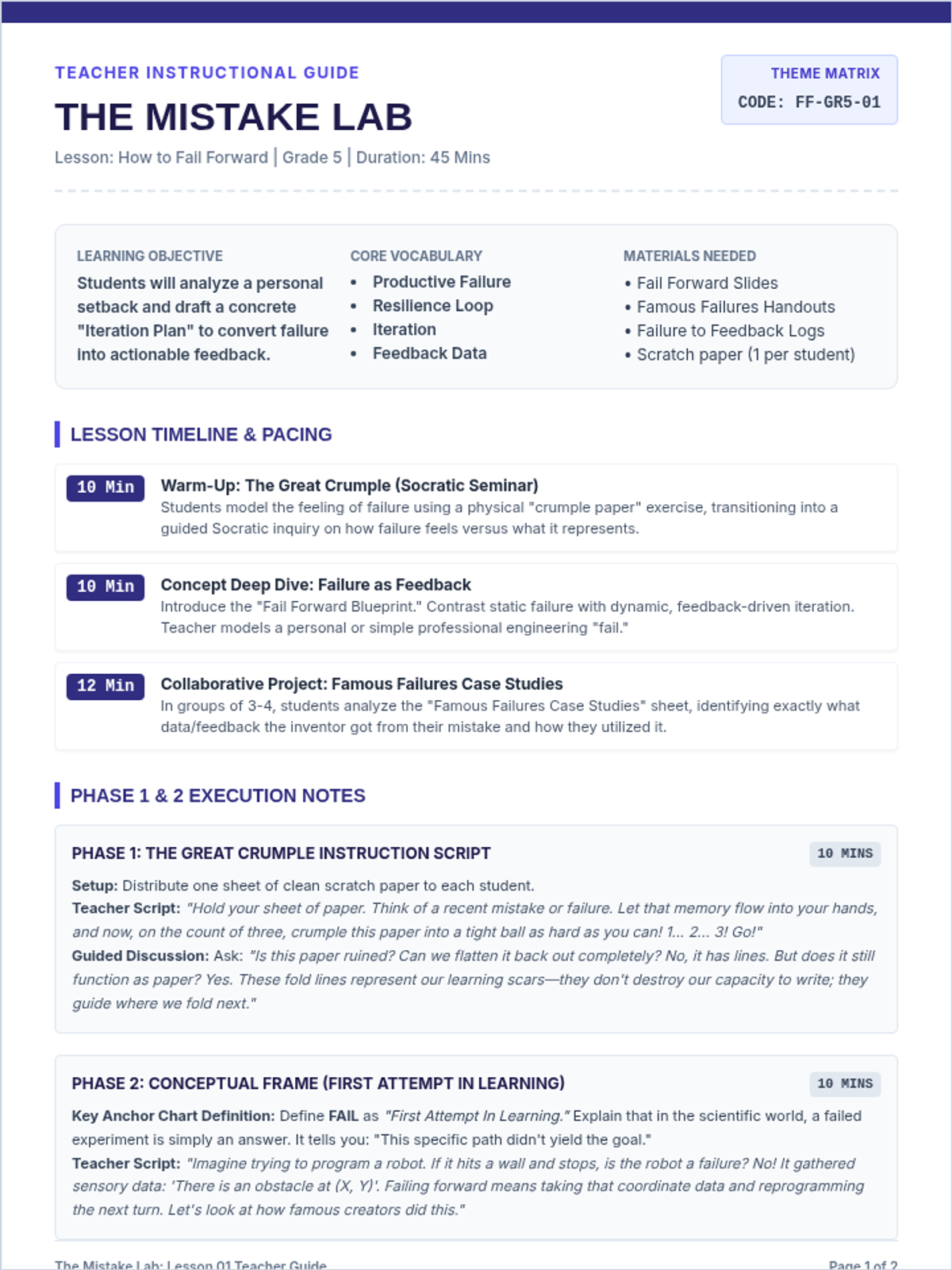
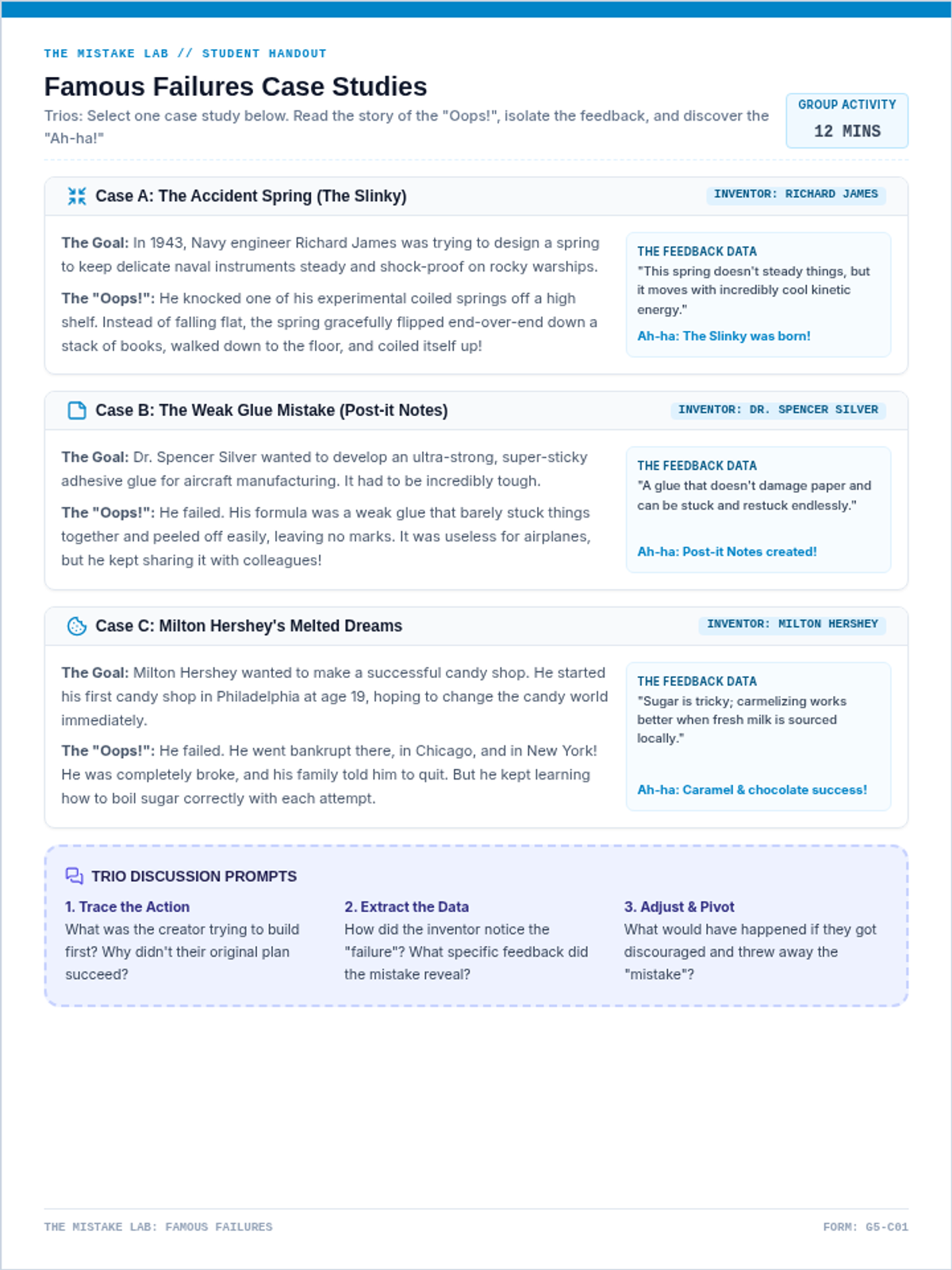
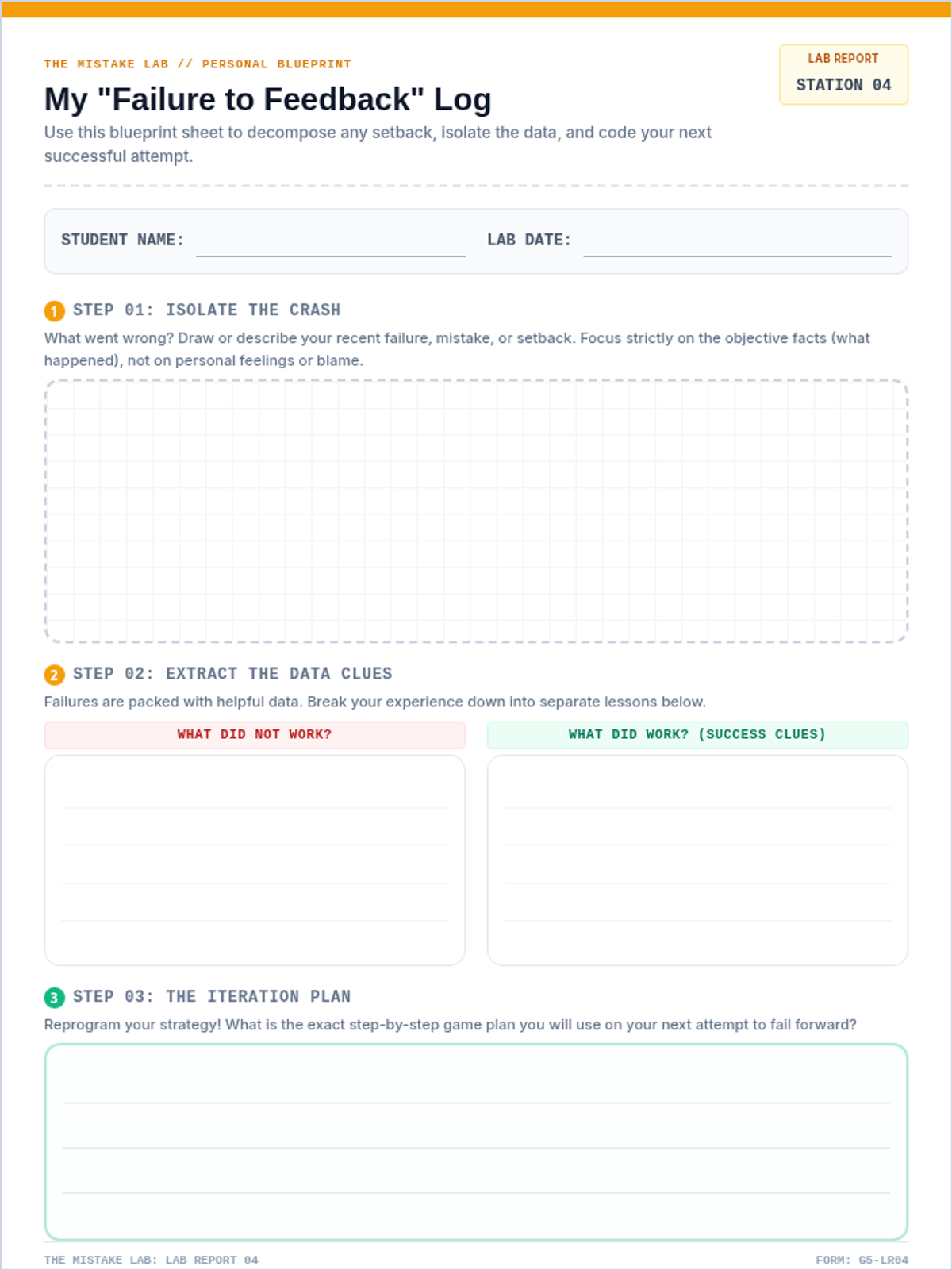
A 45-minute lesson for 5th graders designed to transform the perception of failure into a positive, informative feedback loop. Students will learn the concept of productive failure, analyze case studies of famous errors that led to success, and map out their own blueprint for personal resilience.
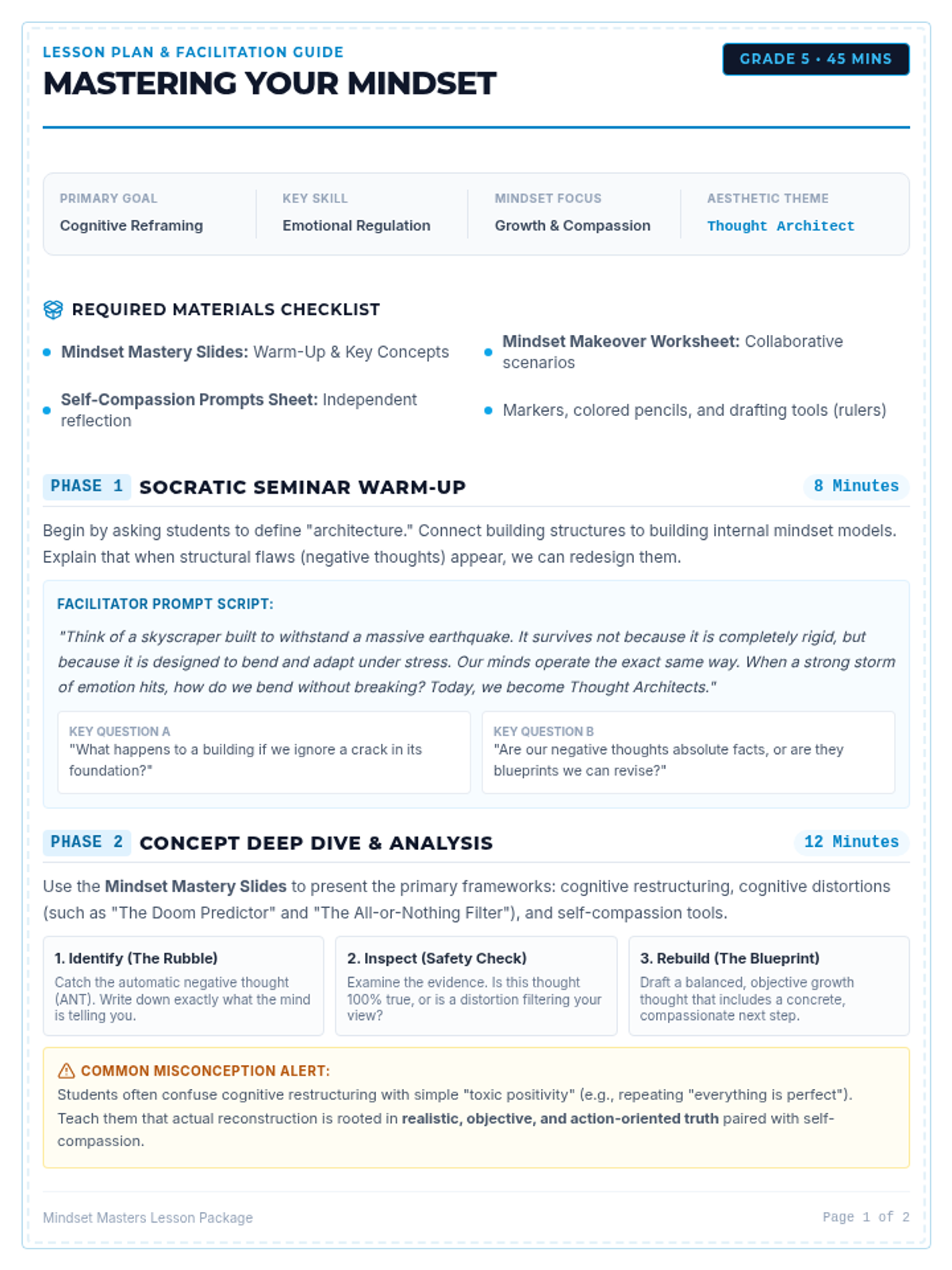
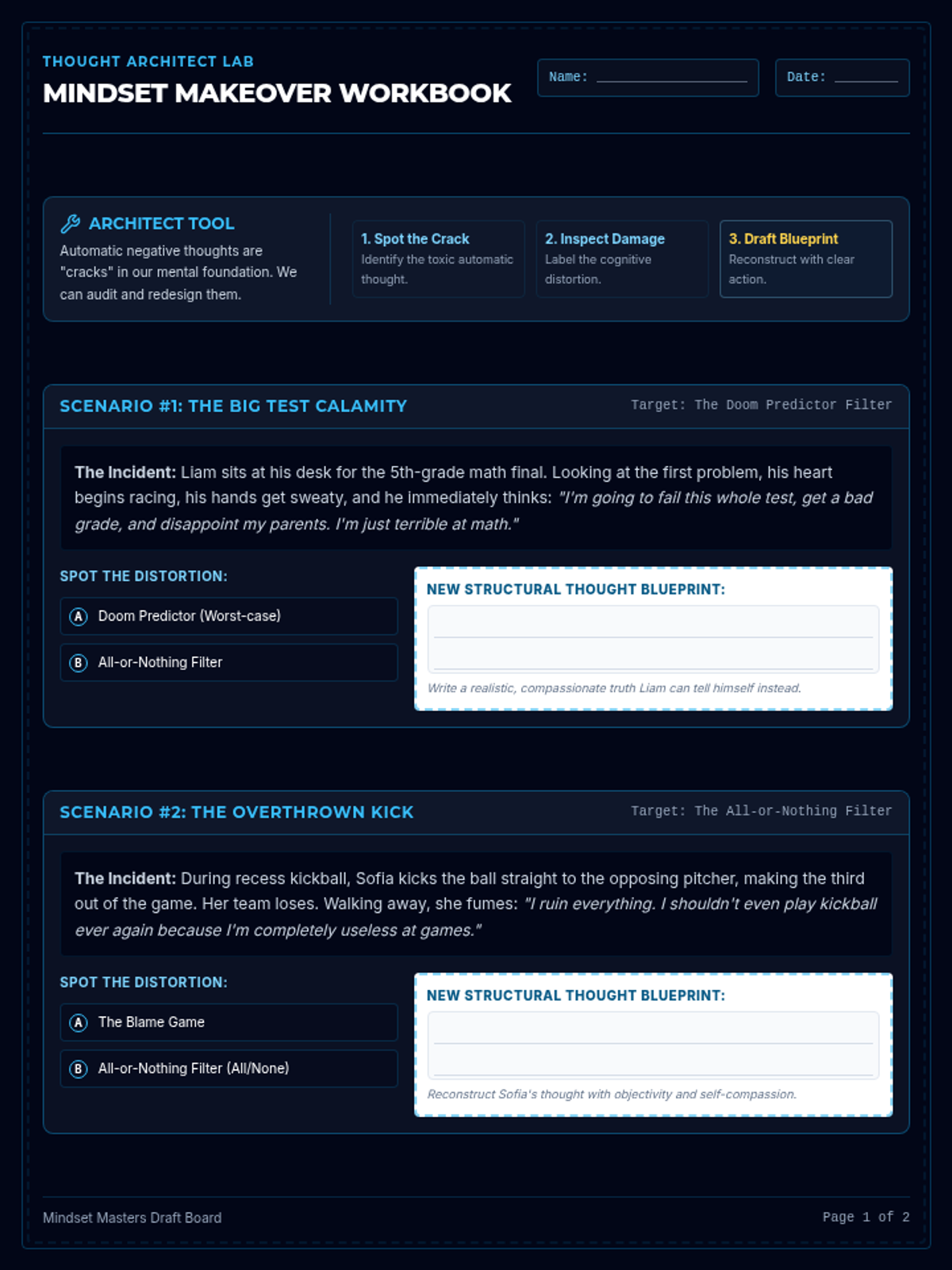
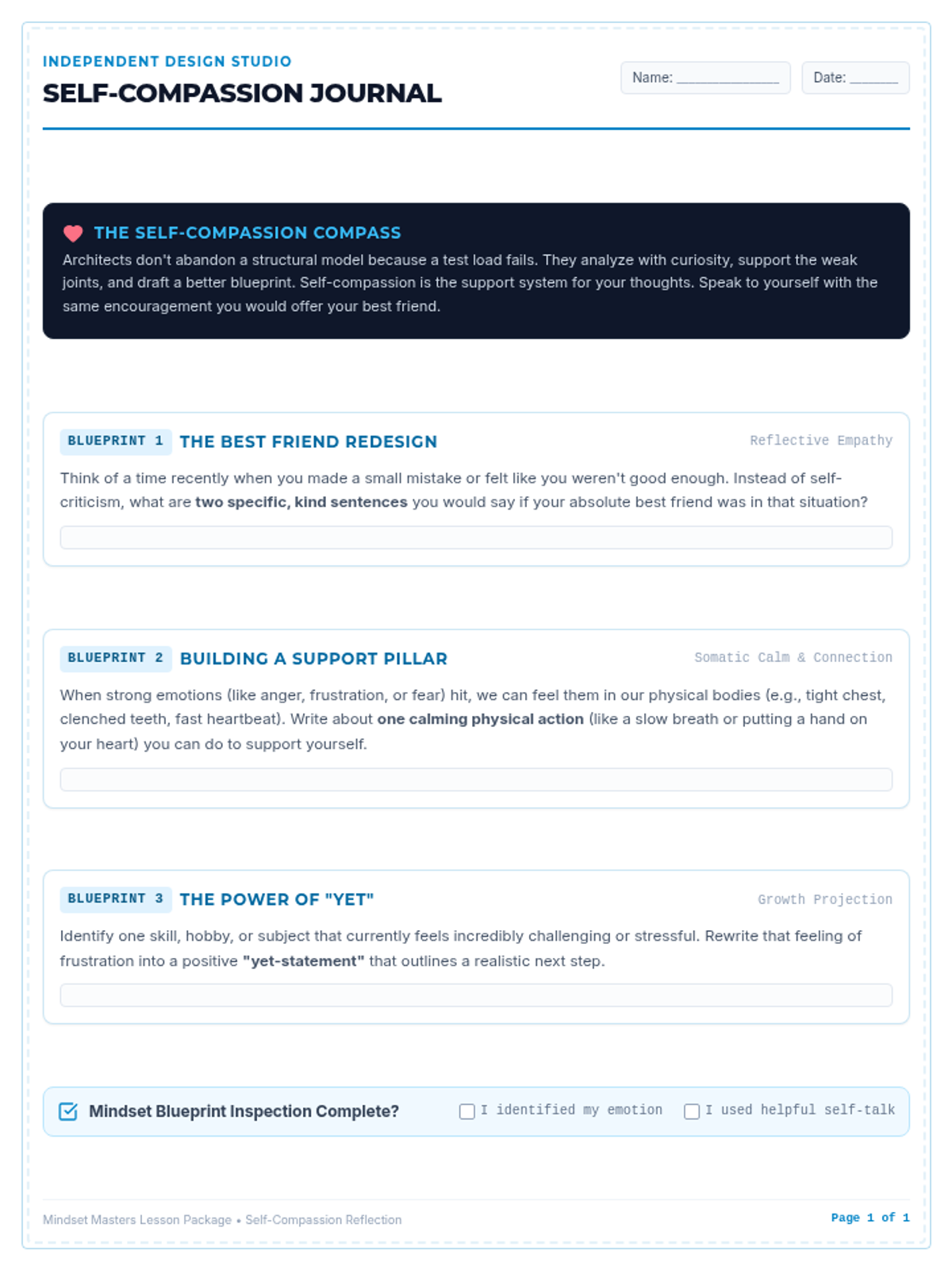
A 45-minute social-emotional learning lesson for 5th graders to master cognitive restructuring and emotional regulation. Students learn to reframe negative thoughts, use self-compassion, and design resilient mindsets using an interactive blueprint theme.
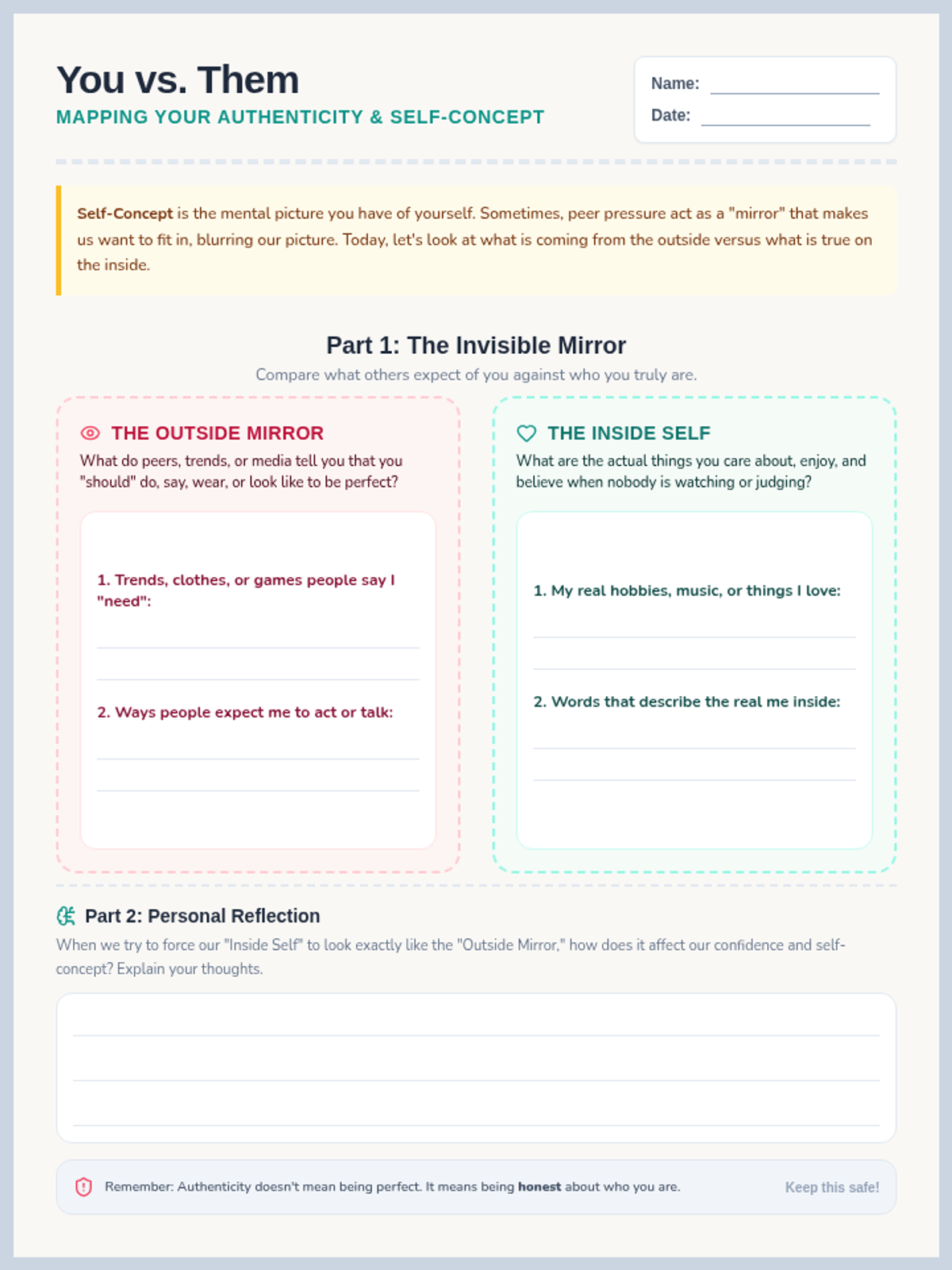
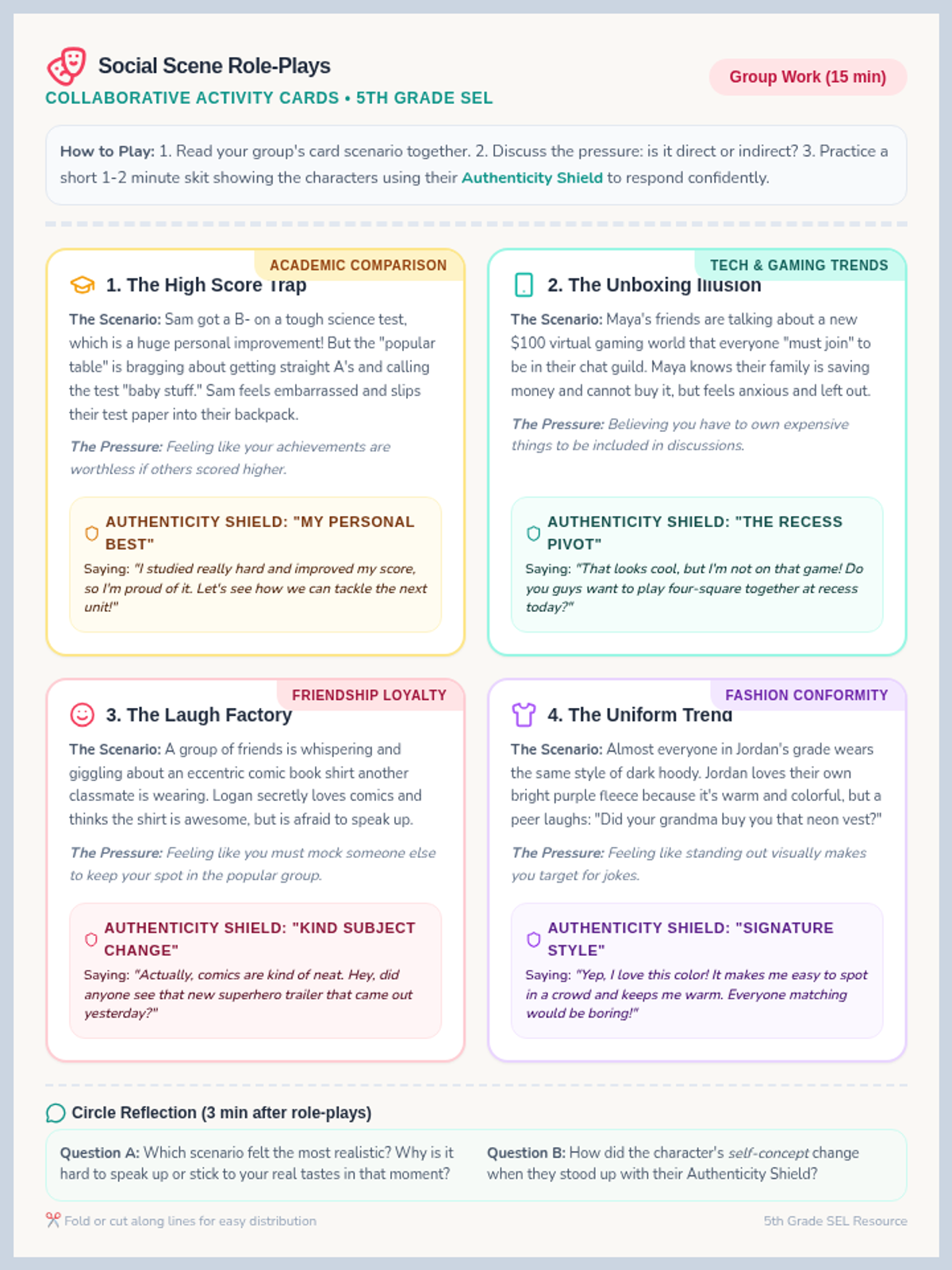
A 45-minute social-emotional learning lesson for 5th graders that guides them through exploring peer influence, social comparison, and authenticity. Students analyze how social relationships affect self-concept and build concrete strategies to protect and celebrate their authentic selves.
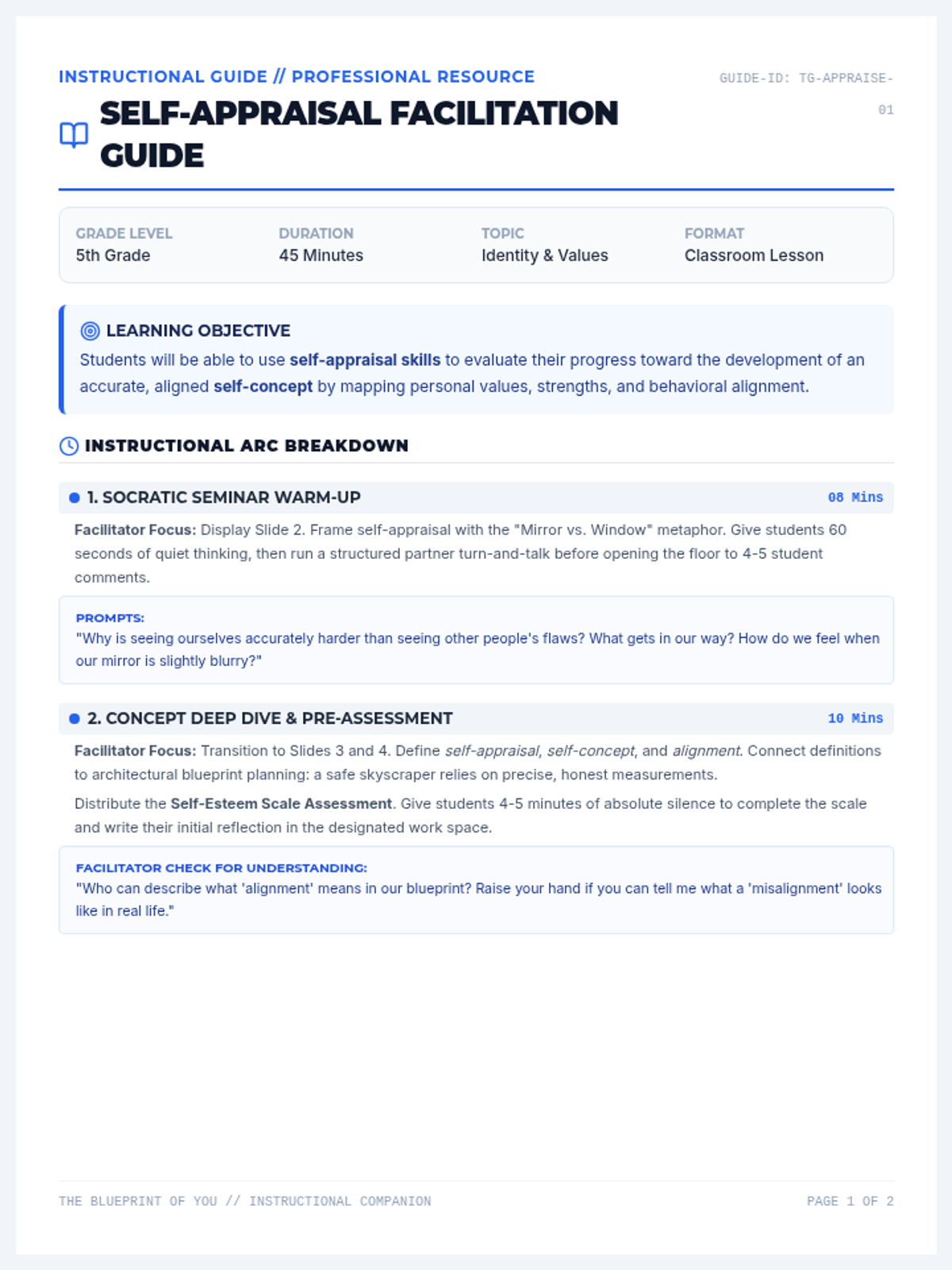
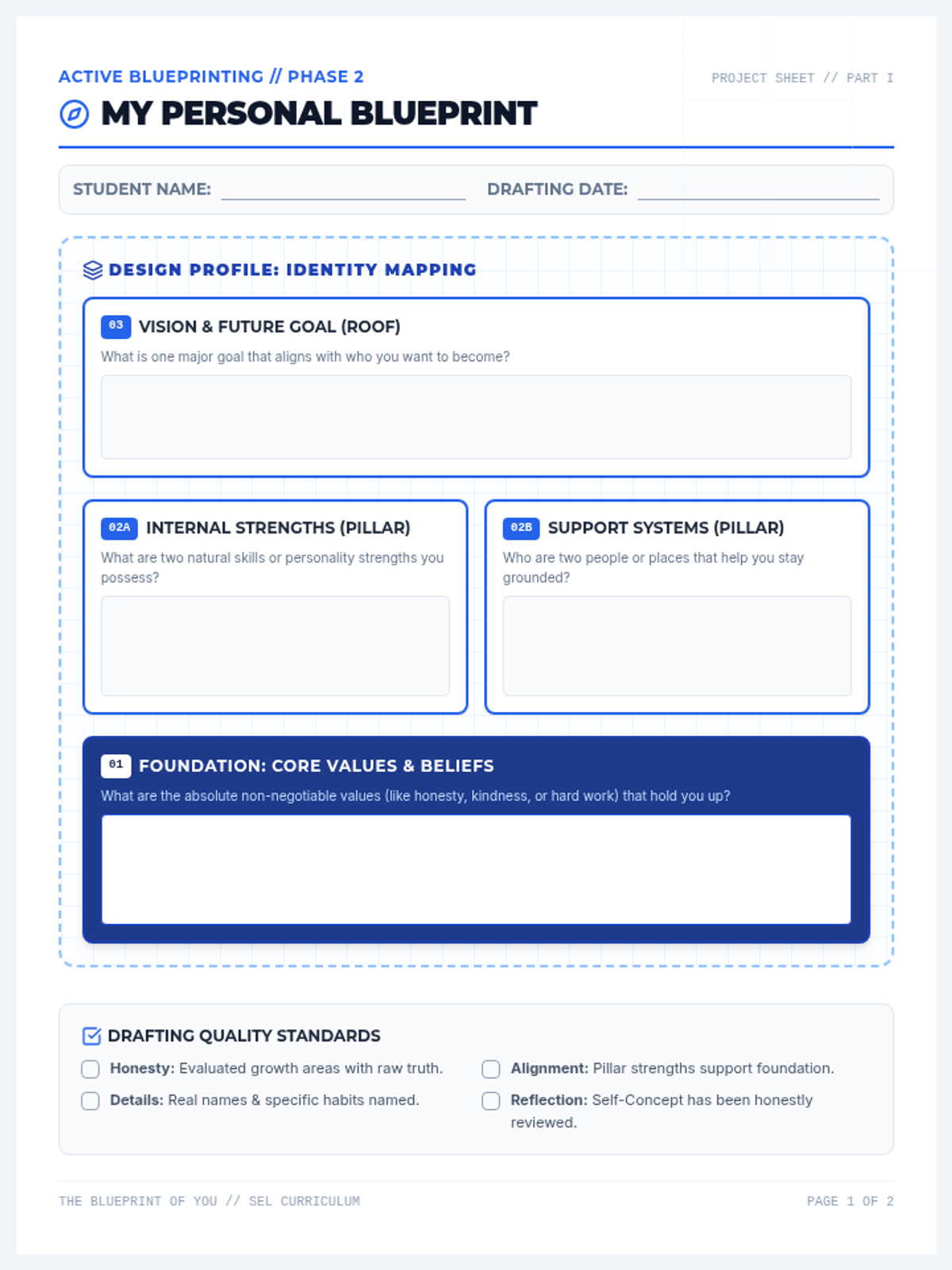
A 5th-grade social-emotional learning lesson focusing on self-appraisal, self-concept, and aligning actions with beliefs and values. Students evaluate their strengths and areas of growth, map out their personal identity blueprints, and participate in collaborative and independent self-reflection activities.
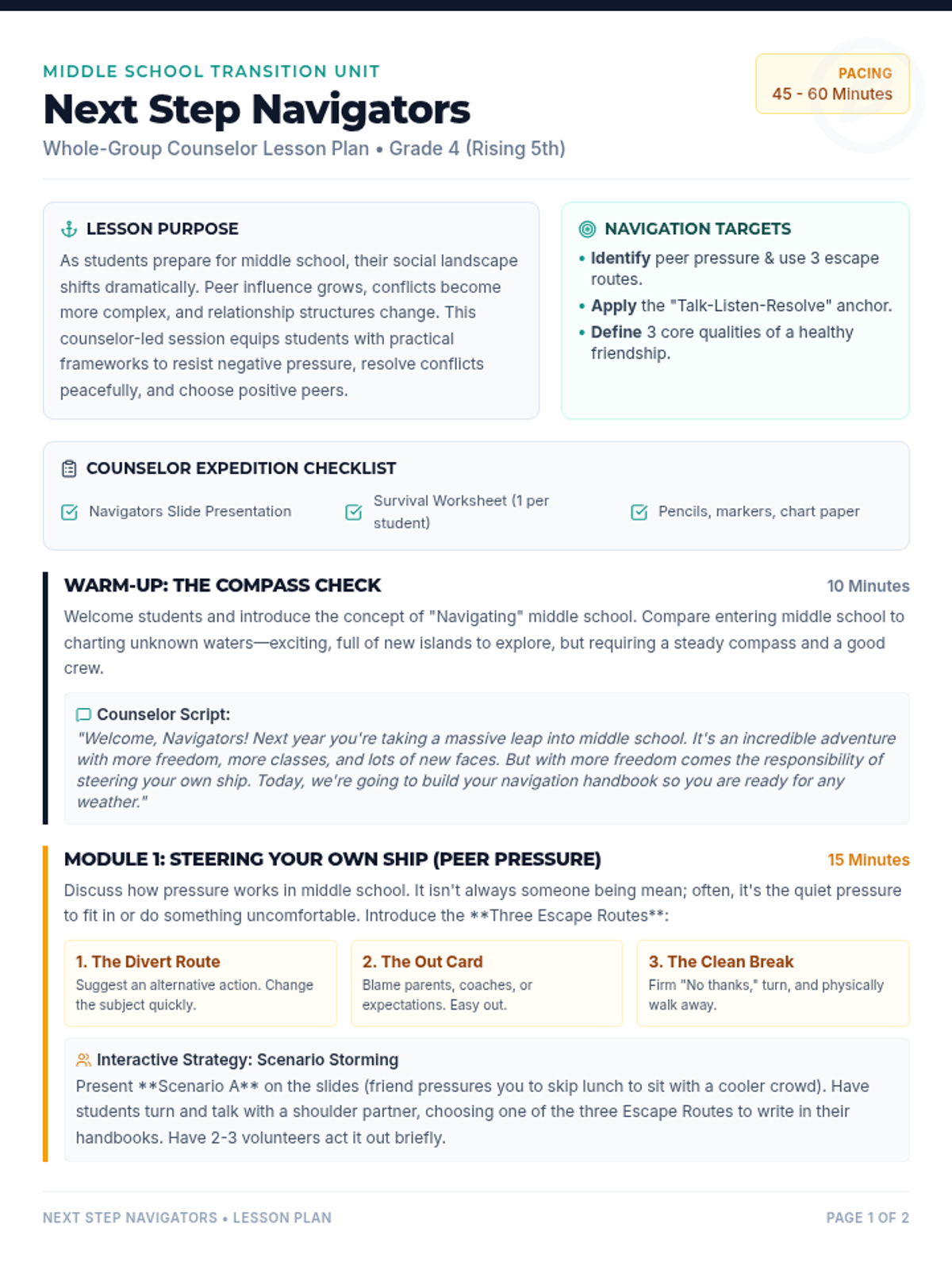
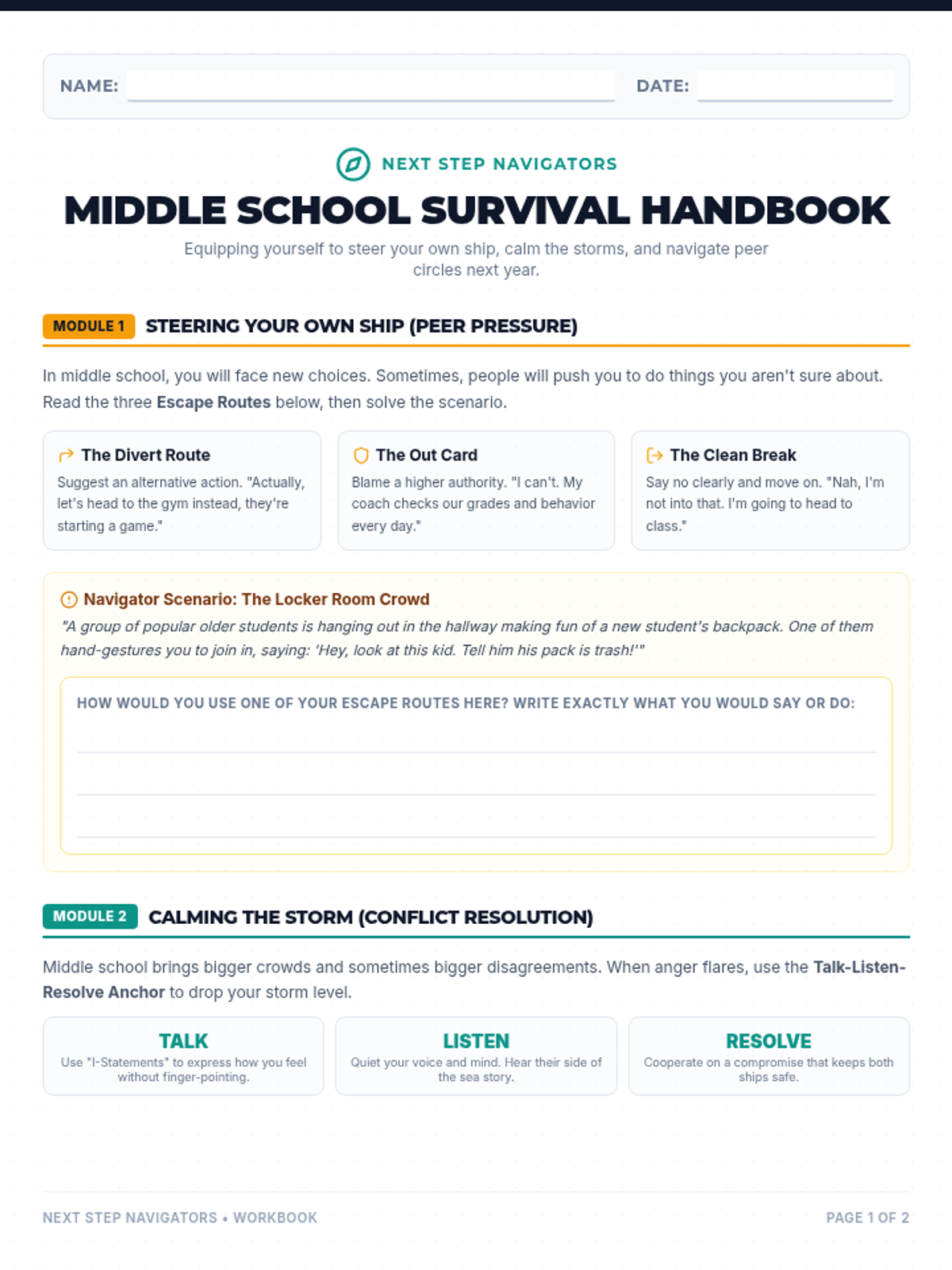
A transitional guidance lesson designed to help rising fifth graders navigate the social waters of middle school. Students explore peer pressure strategies, practice conflict resolution frameworks, and define the traits of healthy relationships through collaborative discussions.
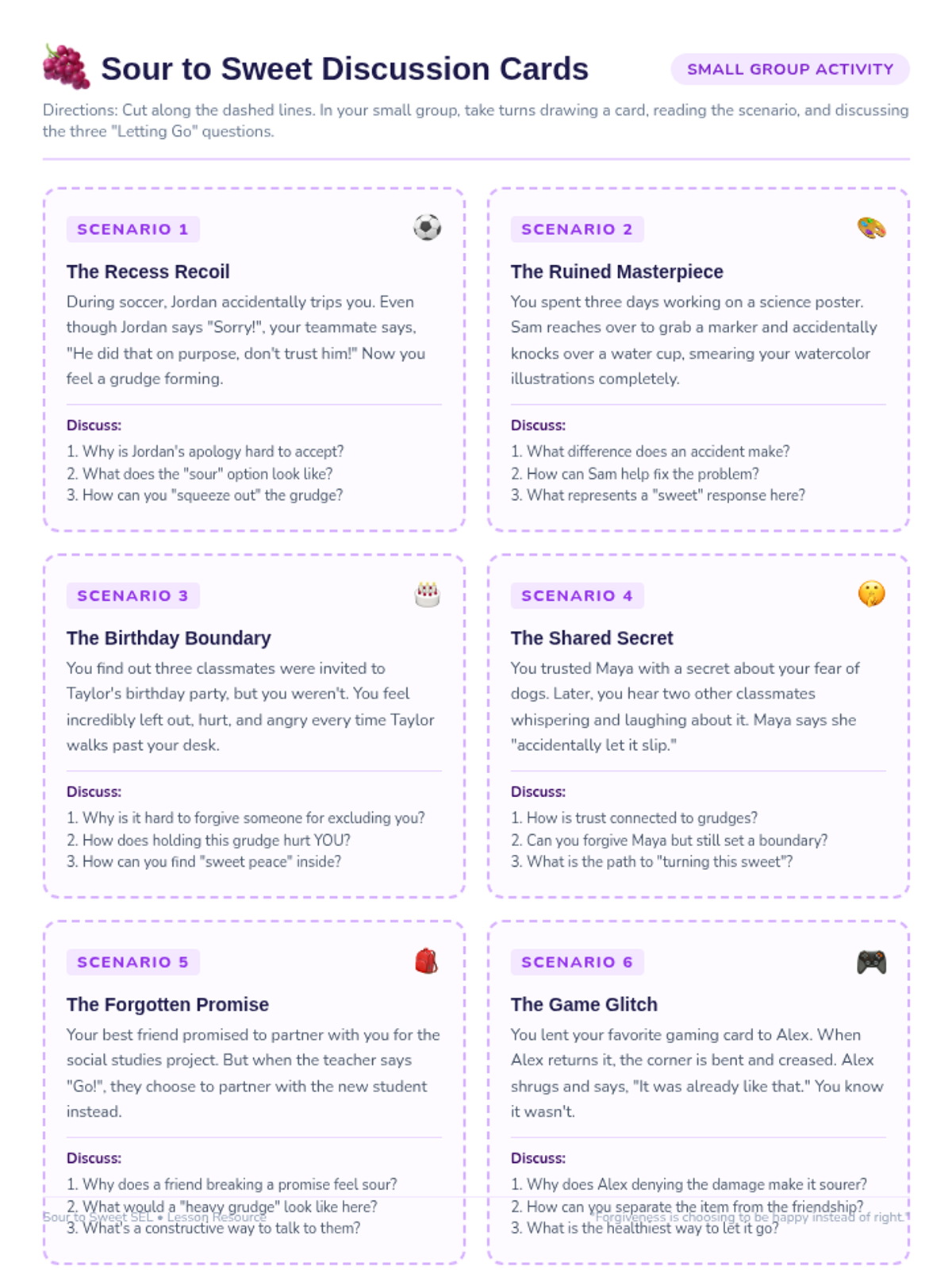
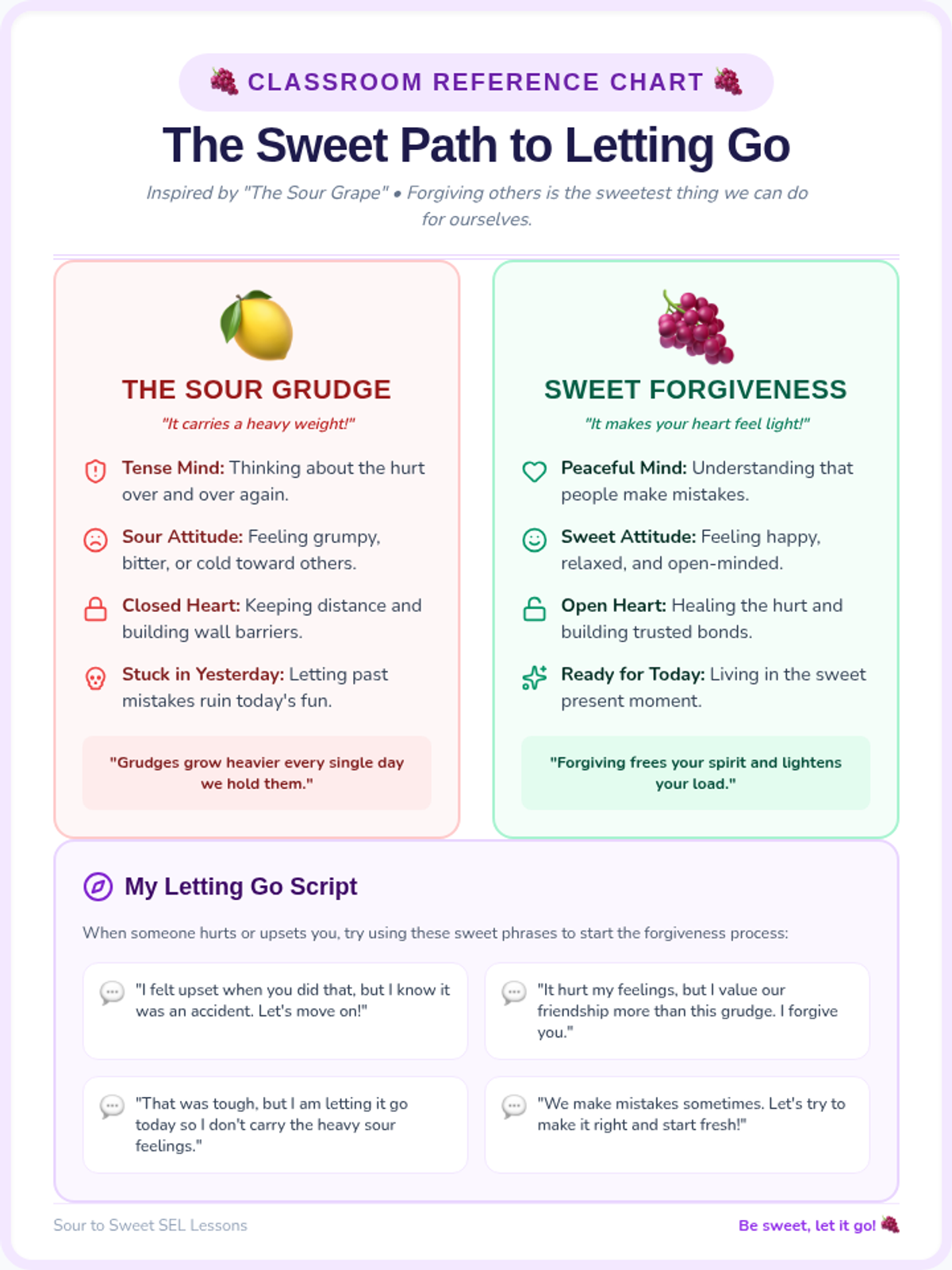
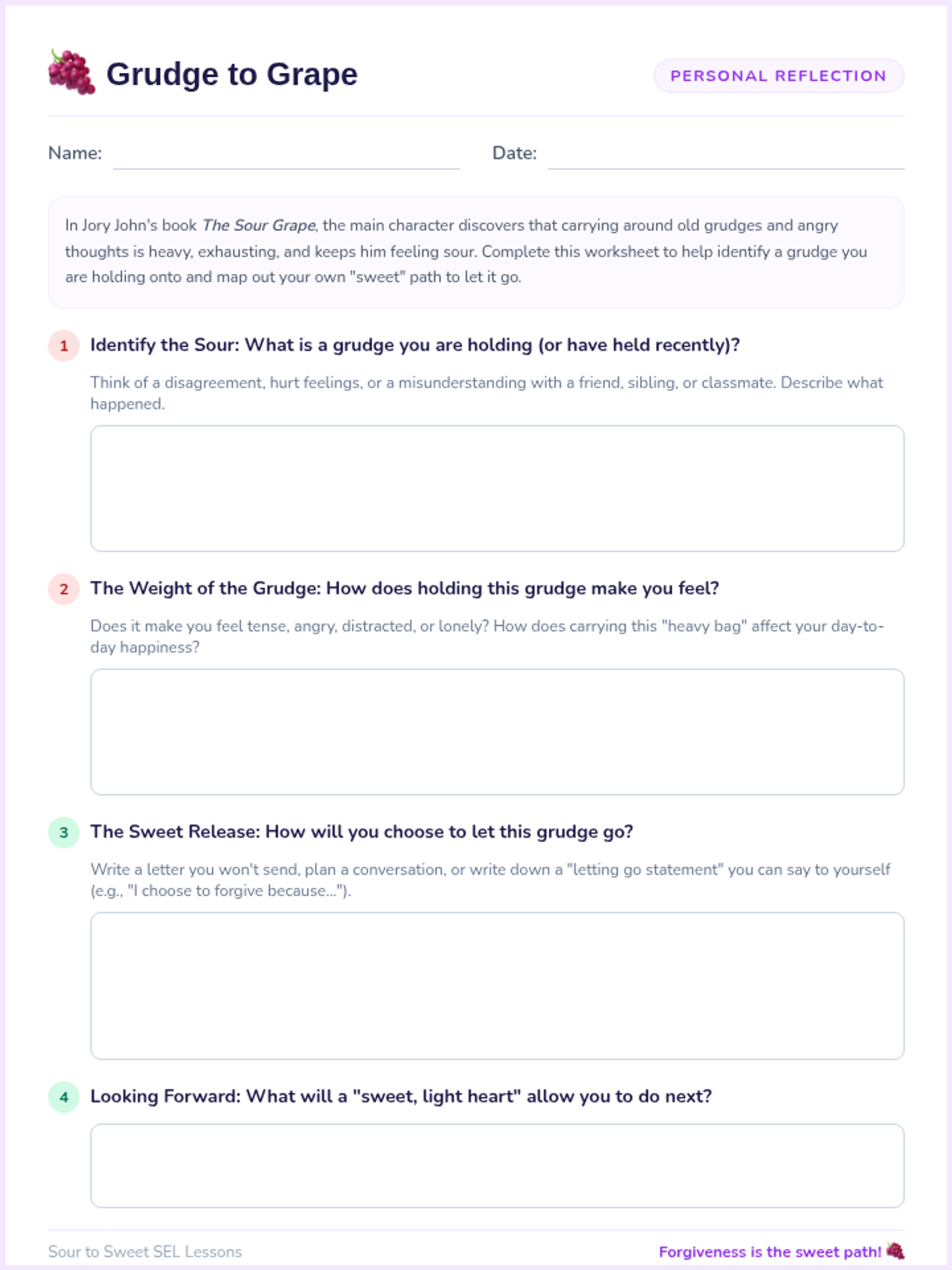
An interactive social-emotional learning lesson using the book 'The Sour Grape' by Jory John. Students learn to identify grudges, understand their emotional weight, and practice the power of forgiveness and letting go.
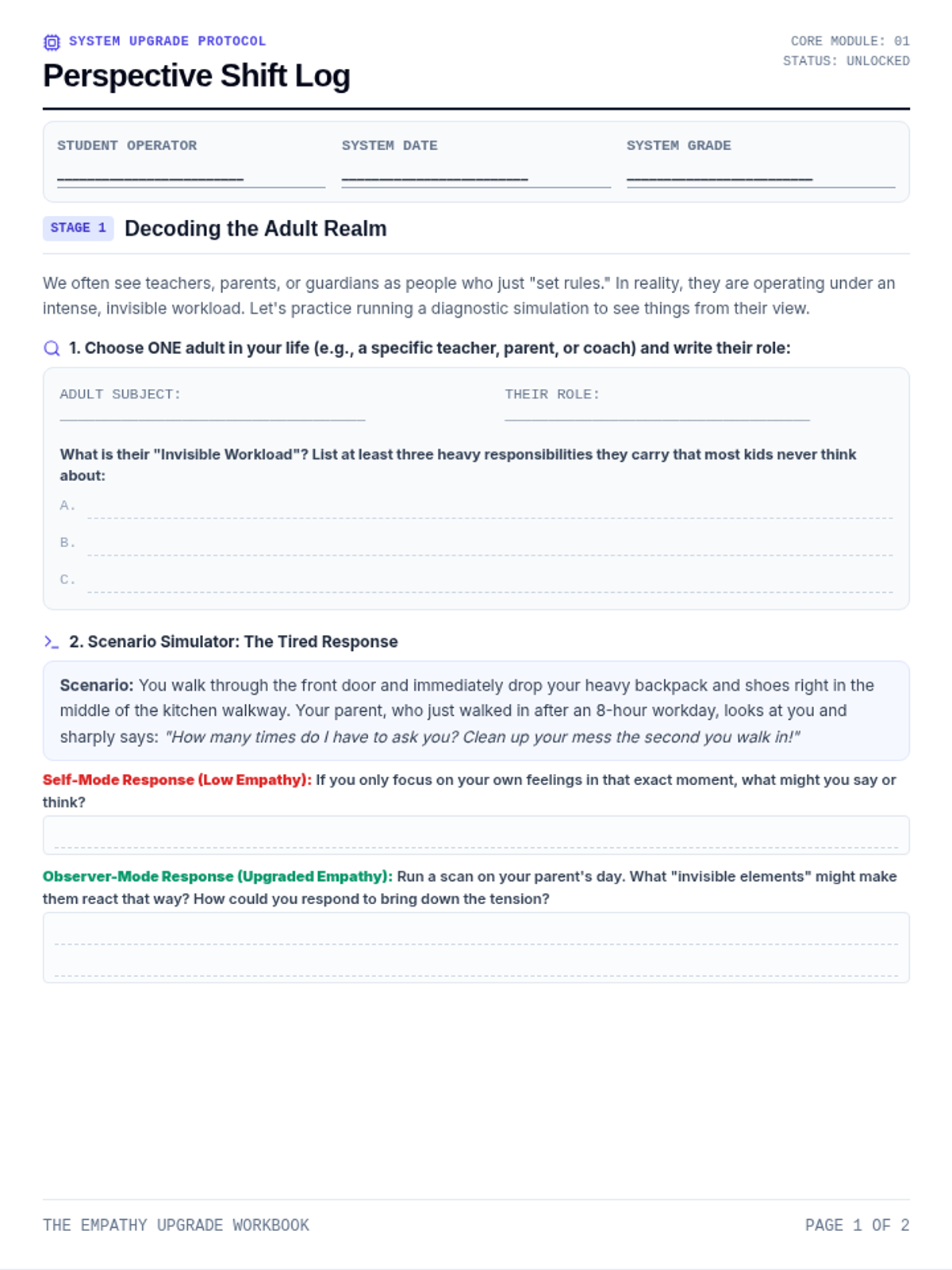
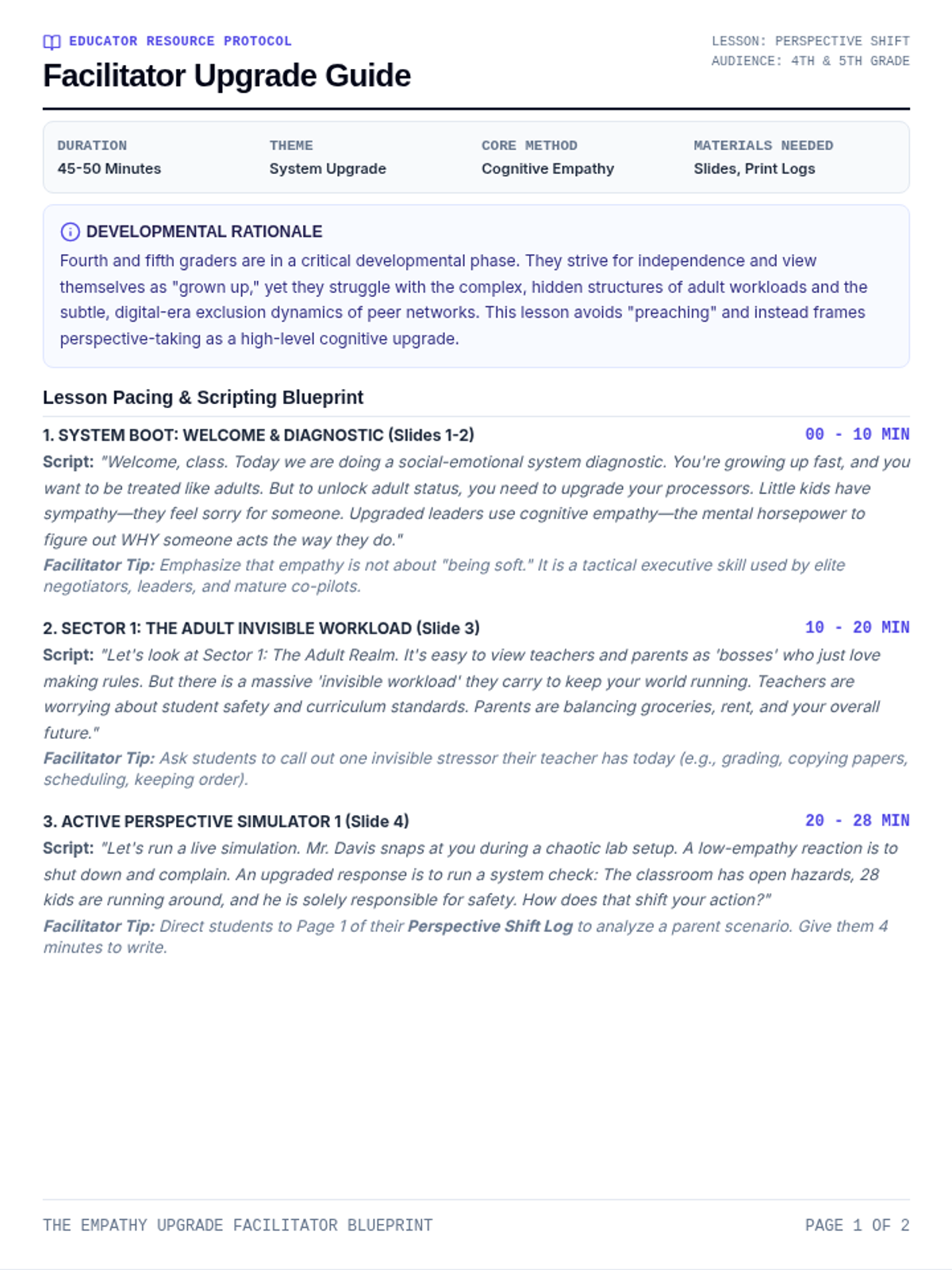
A Guidance Lesson designed for 4th and 5th graders to upgrade their empathy skills. This lesson focuses on perspective-taking, respecting adult workloads/perspectives, and navigating complex peer exclusion dynamics with maturity.
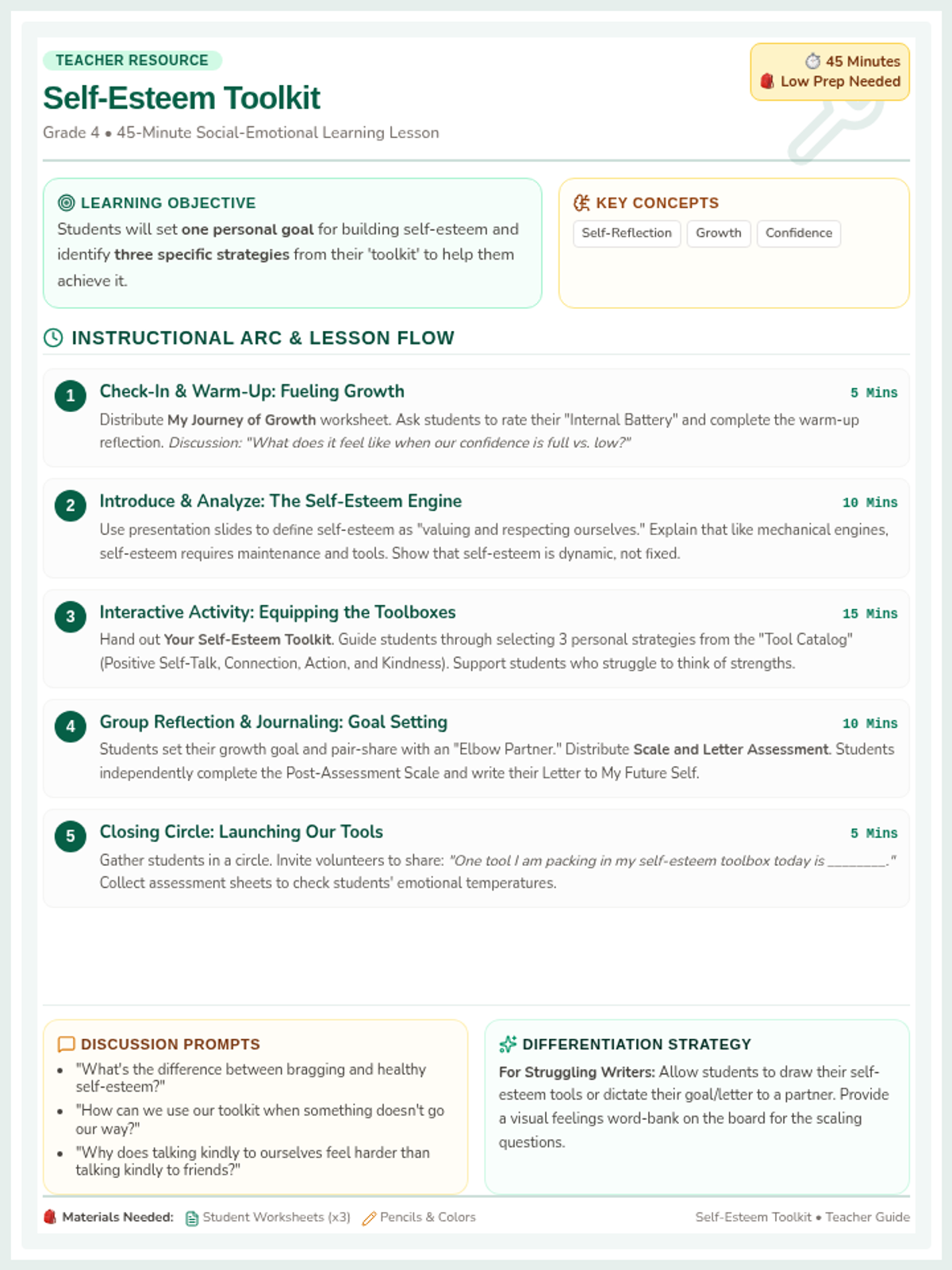
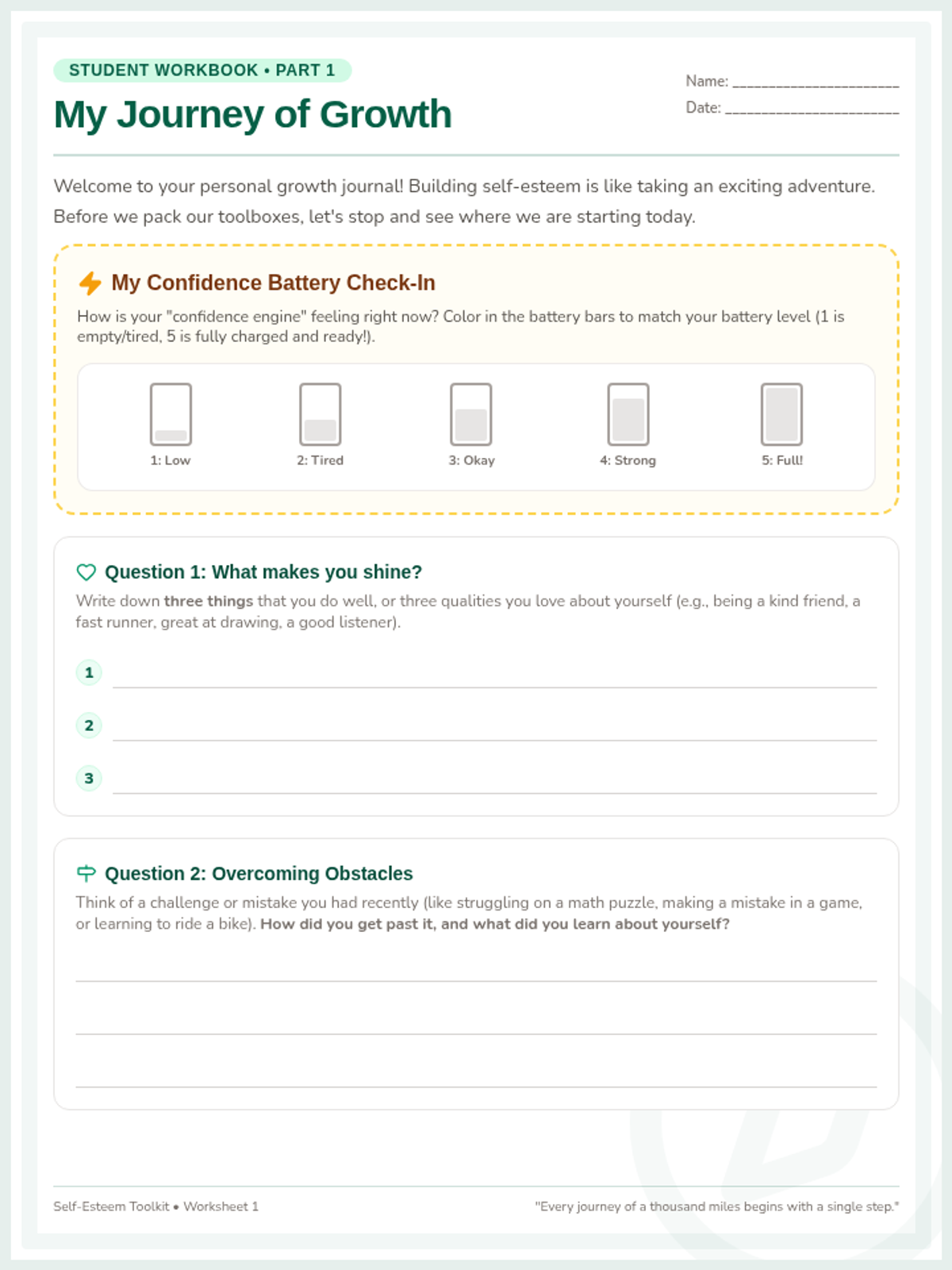
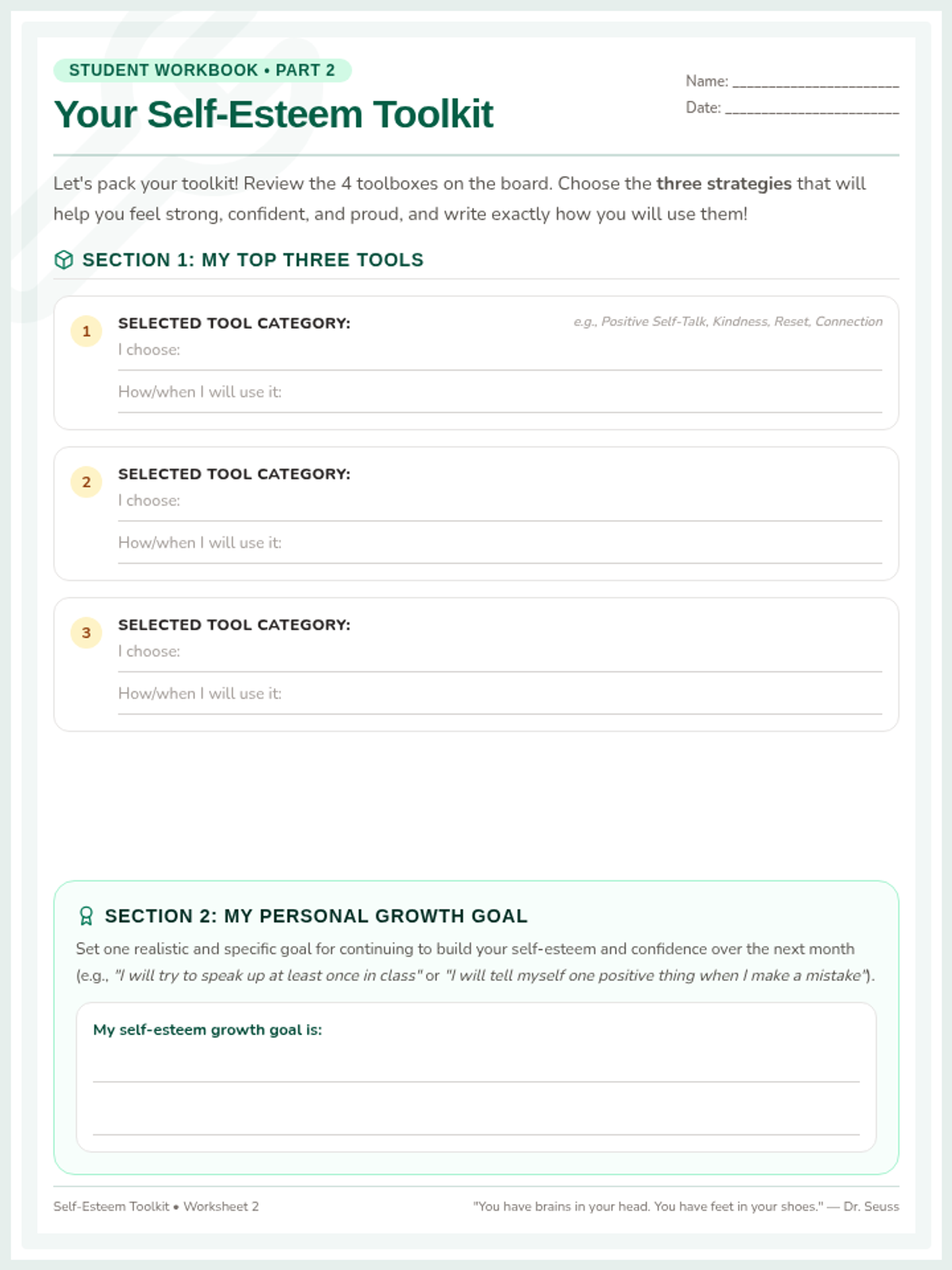
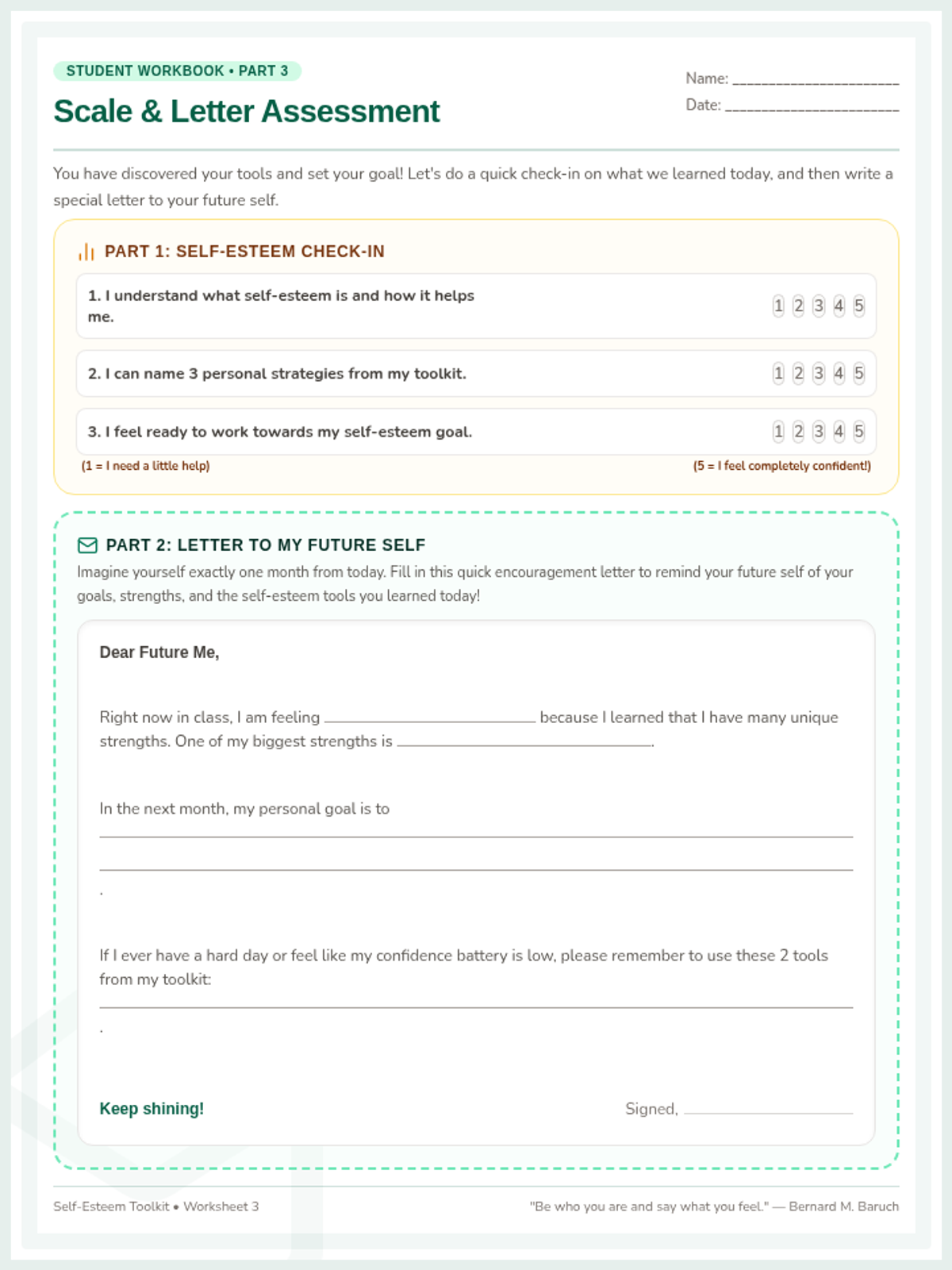
A 45-minute social-emotional learning lesson for 4th-grade students focused on building self-esteem, self-reflection, and personal growth. Students identify personal strengths, build a toolbox of positive self-talk and coping strategies, and set a specific goal for future growth.
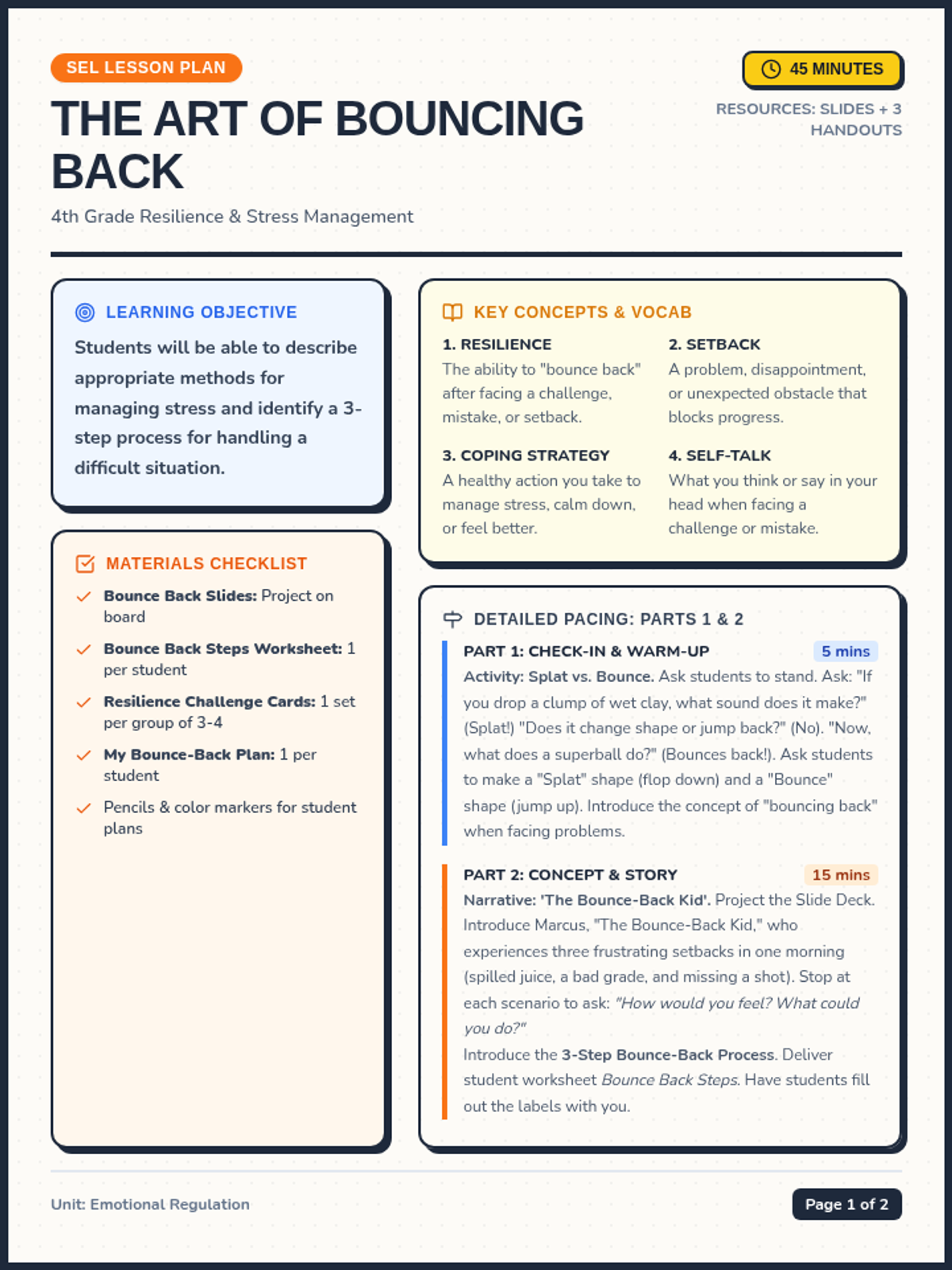
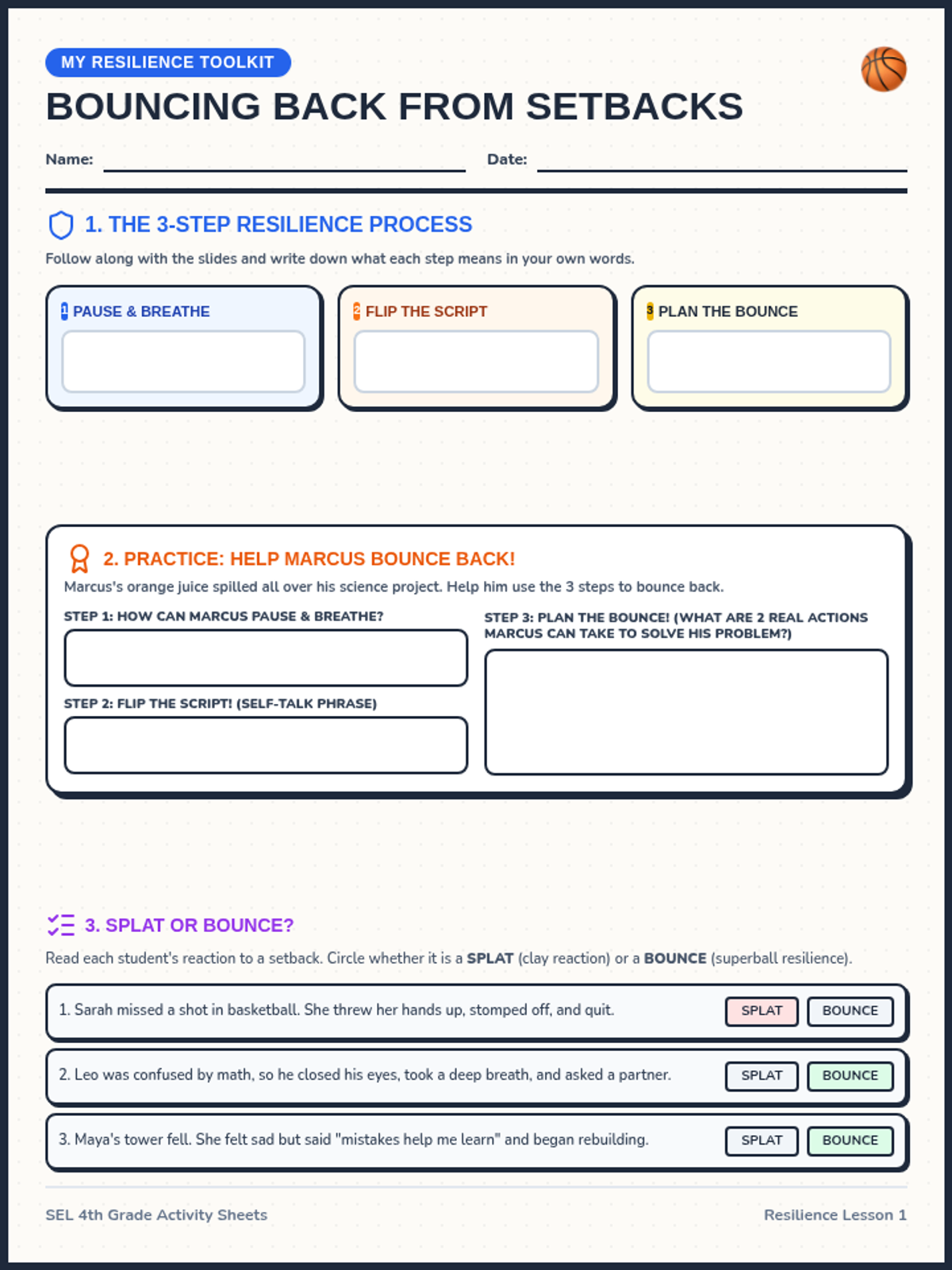
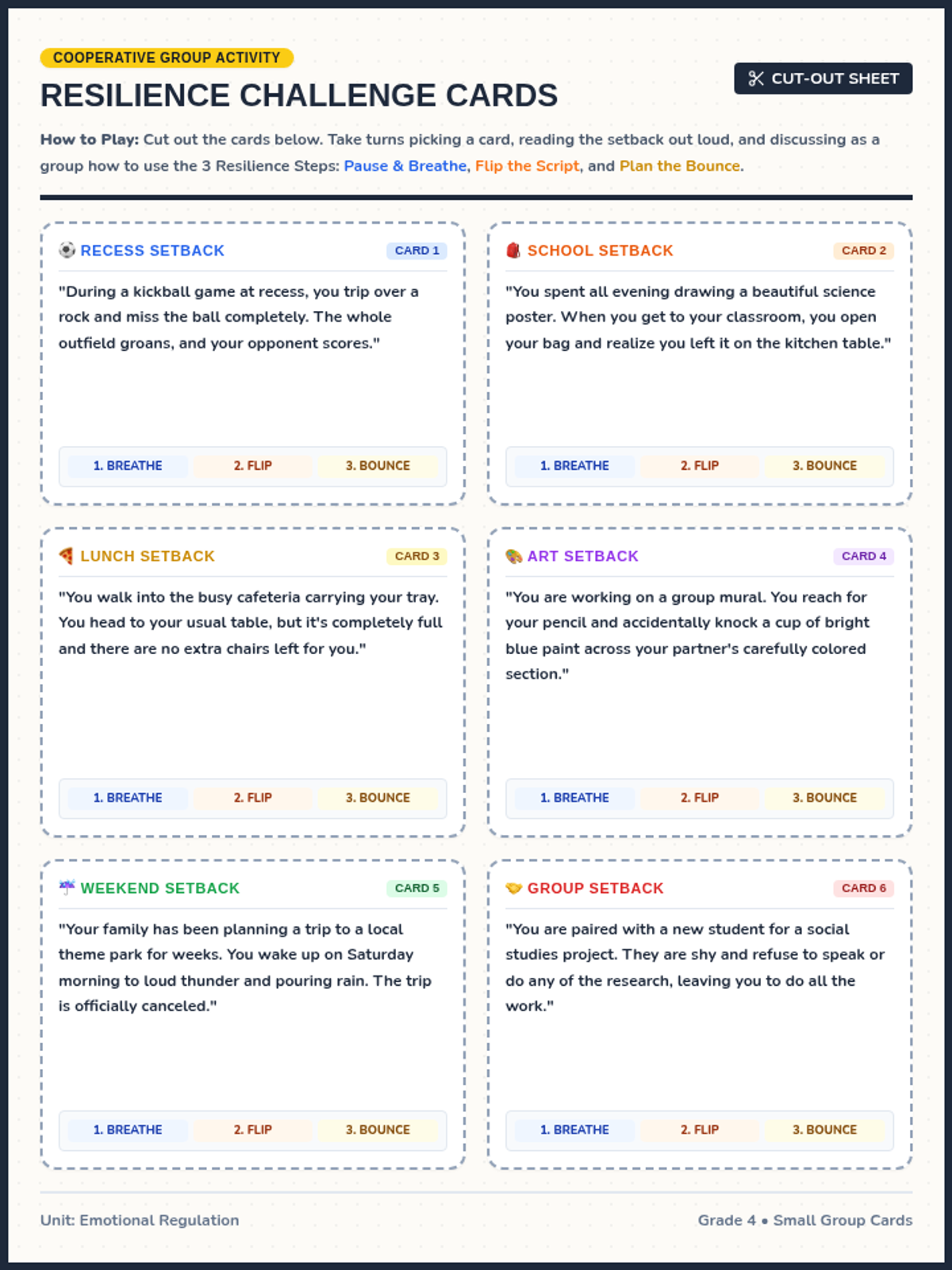
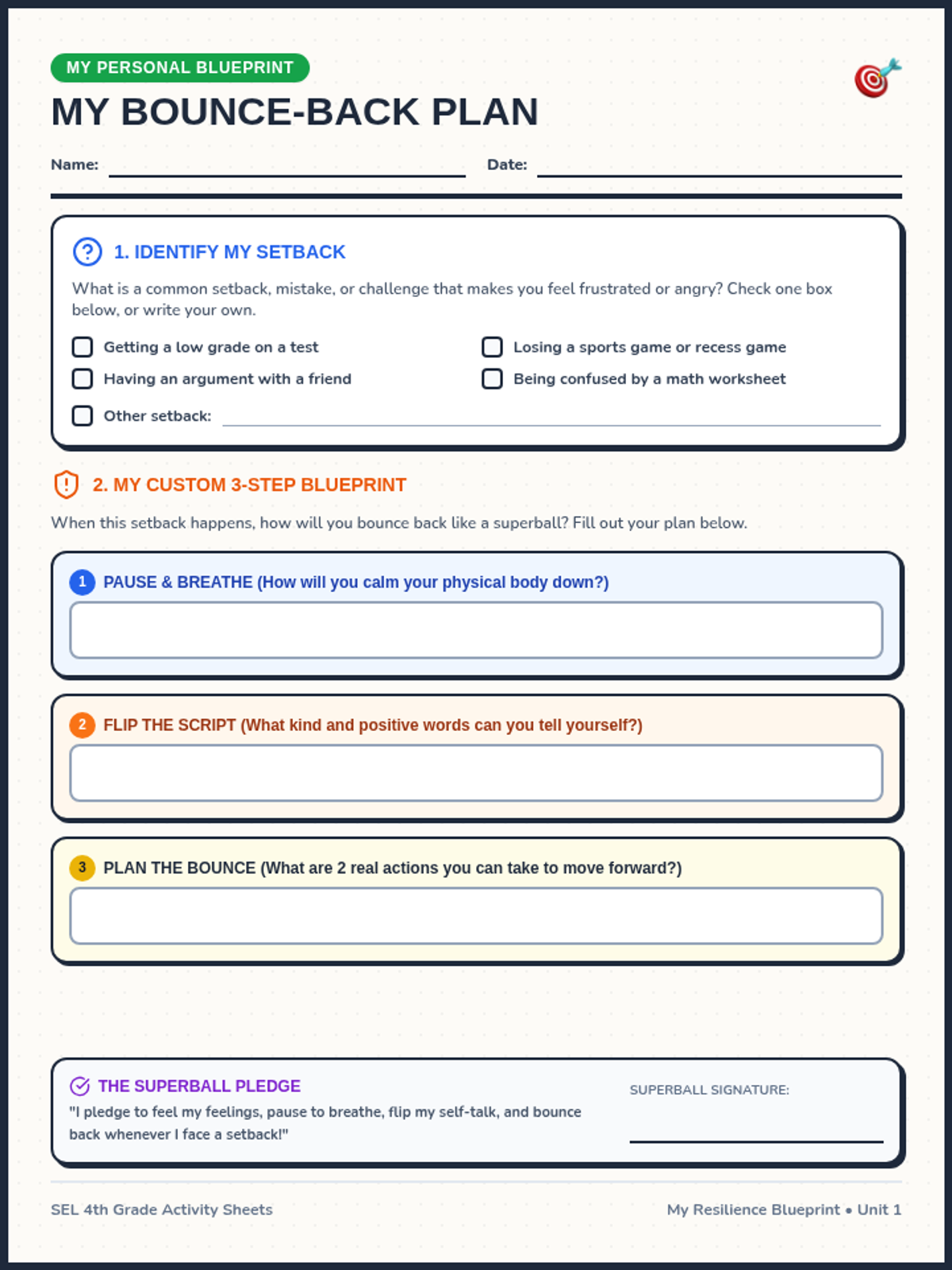
A 45-minute social-emotional learning lesson for 4th grade designed to teach resilience and a 3-step stress management/problem-solving process through the engaging narrative of 'The Bounce-Back Kid' and interactive challenge cards.
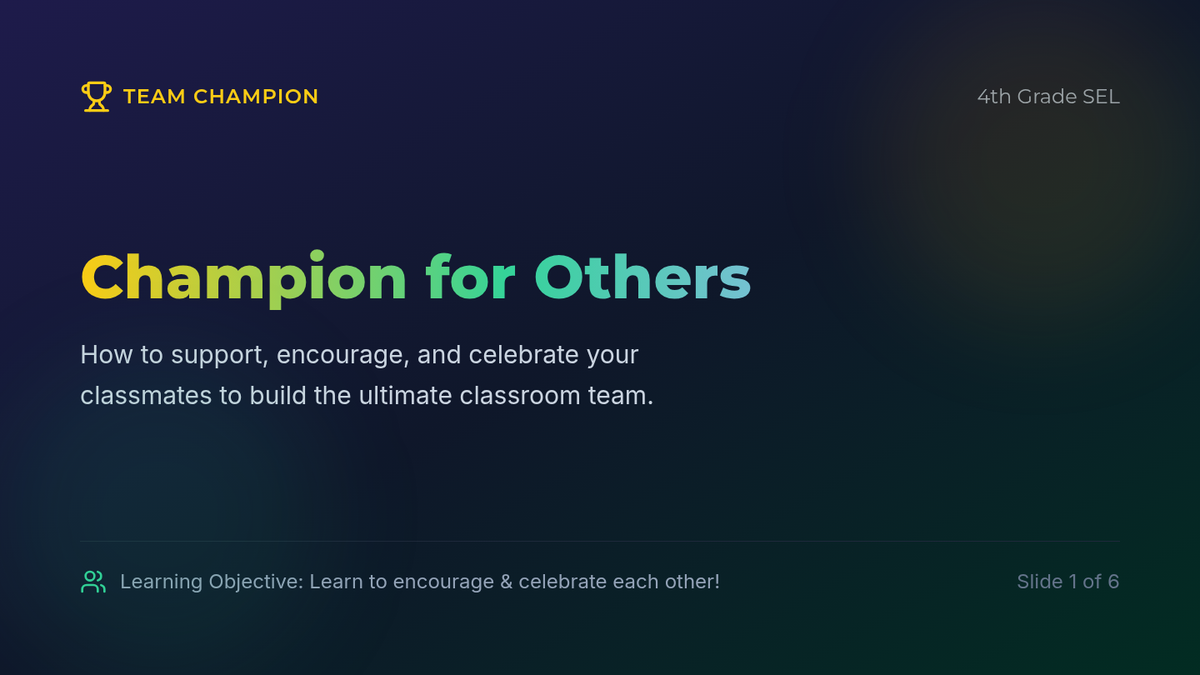
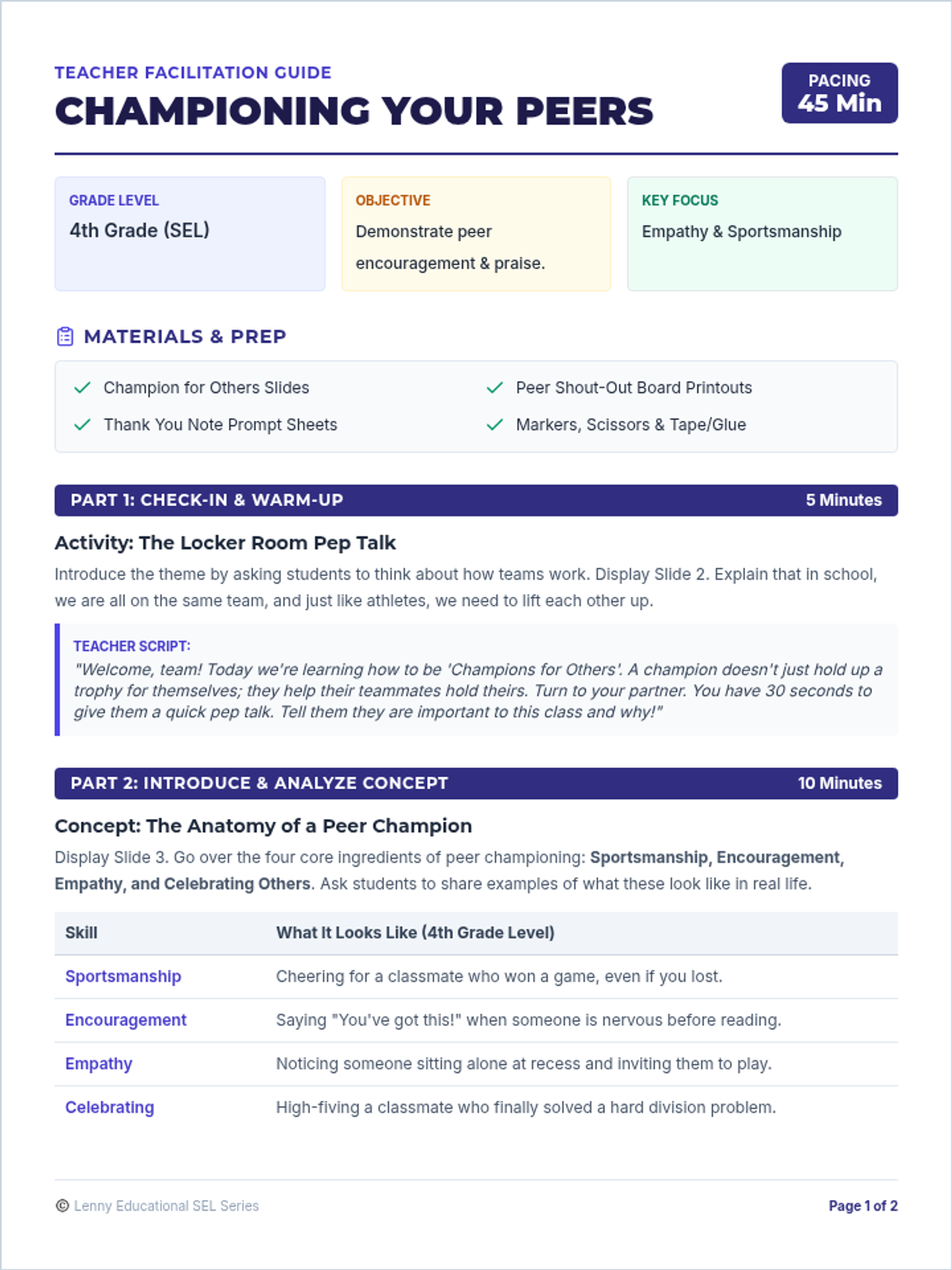
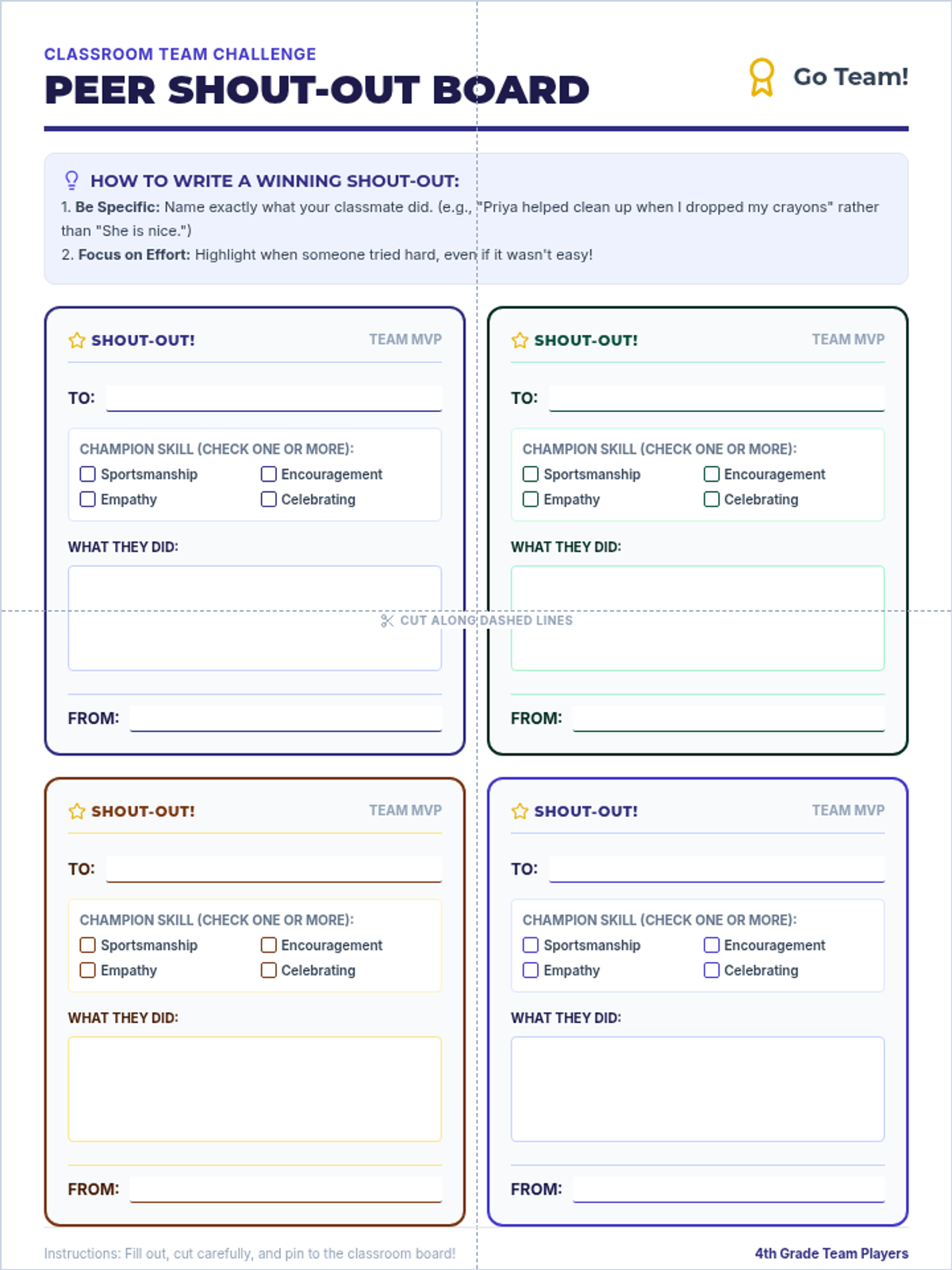
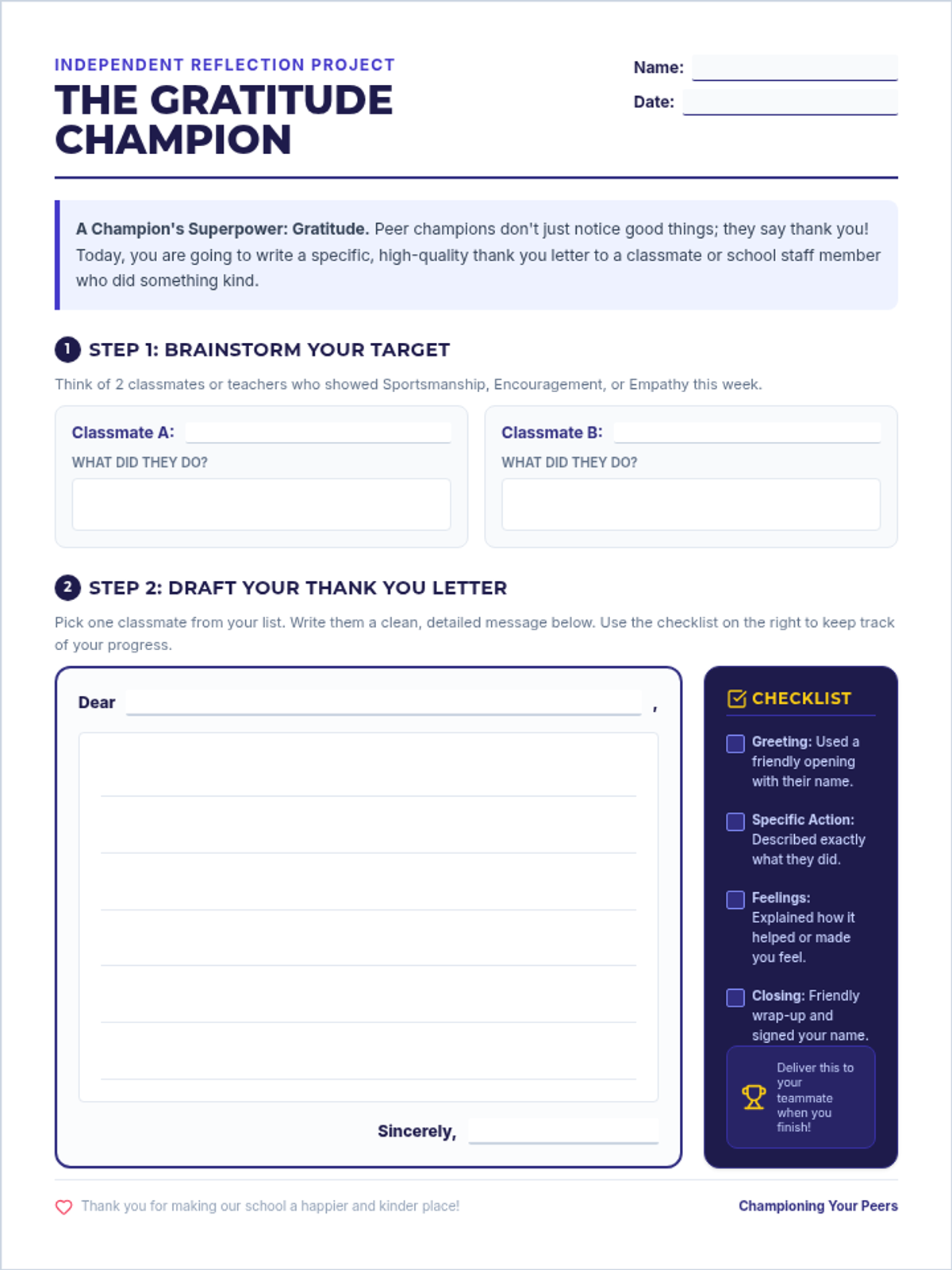
A 45-minute social-emotional learning lesson for 4th graders on how to support, encourage, and celebrate classmates. This lesson guides students from understanding empathy and sportsmanship to actively shouting out and writing thank you letters to their peers.
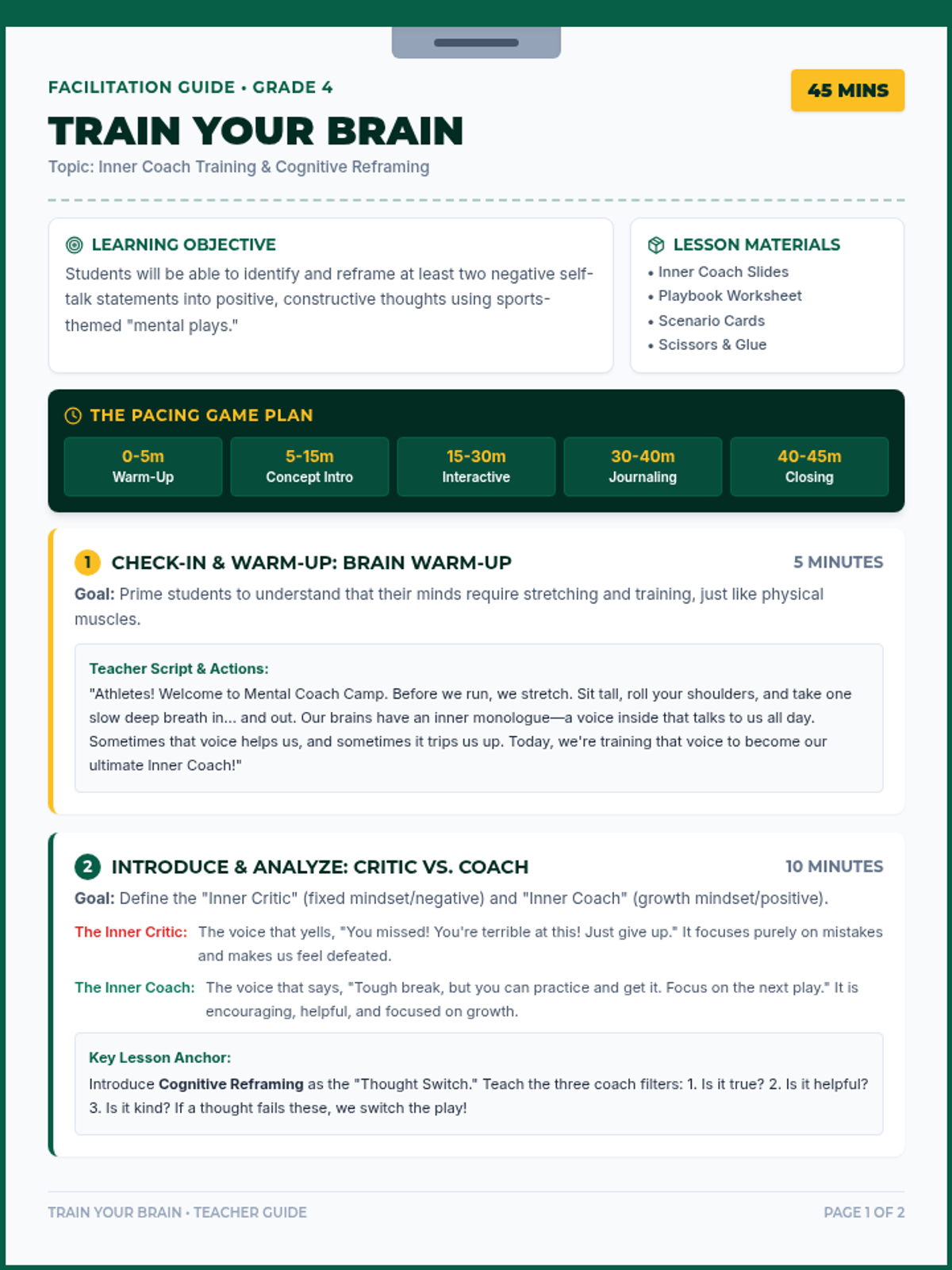
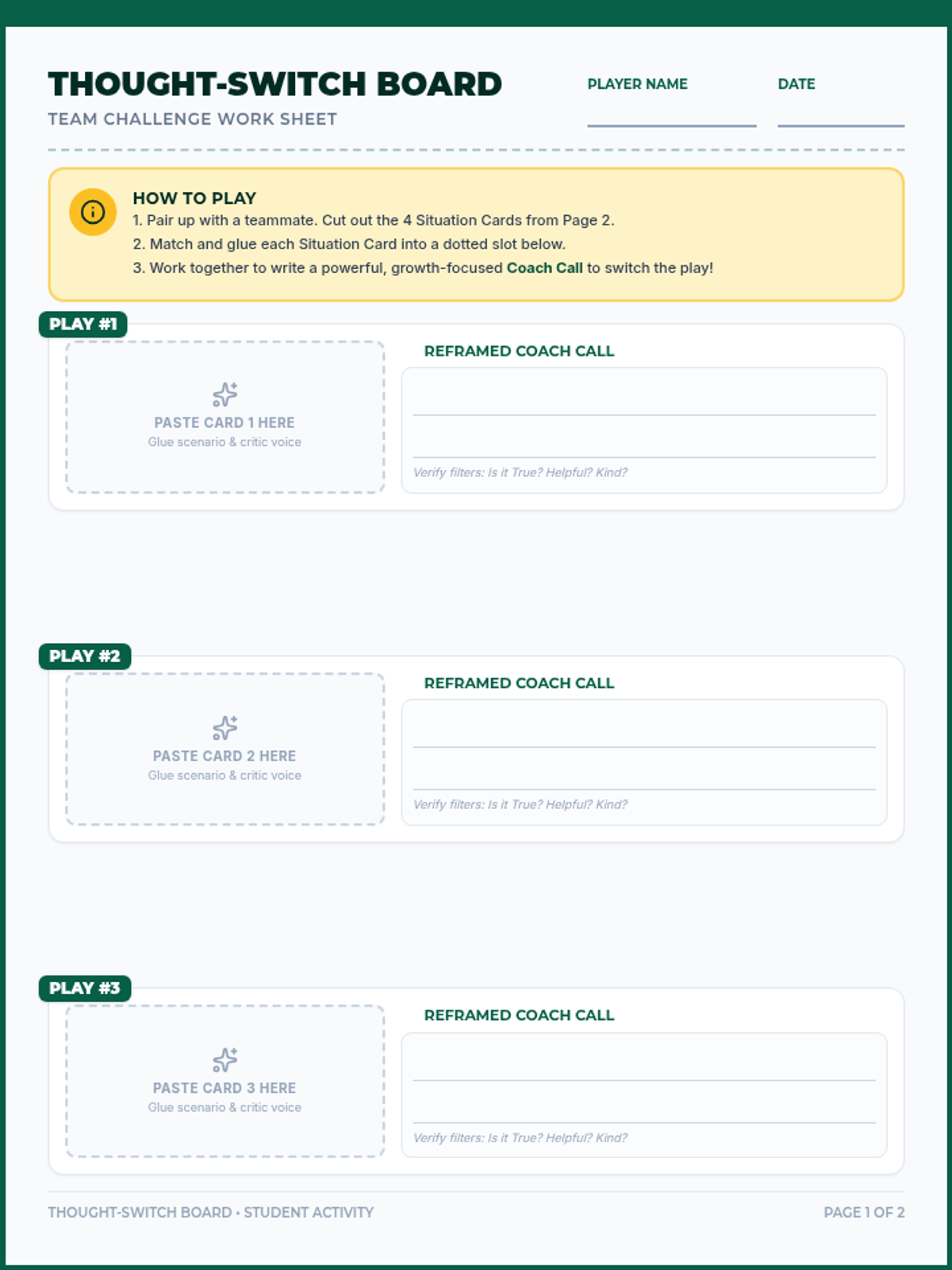
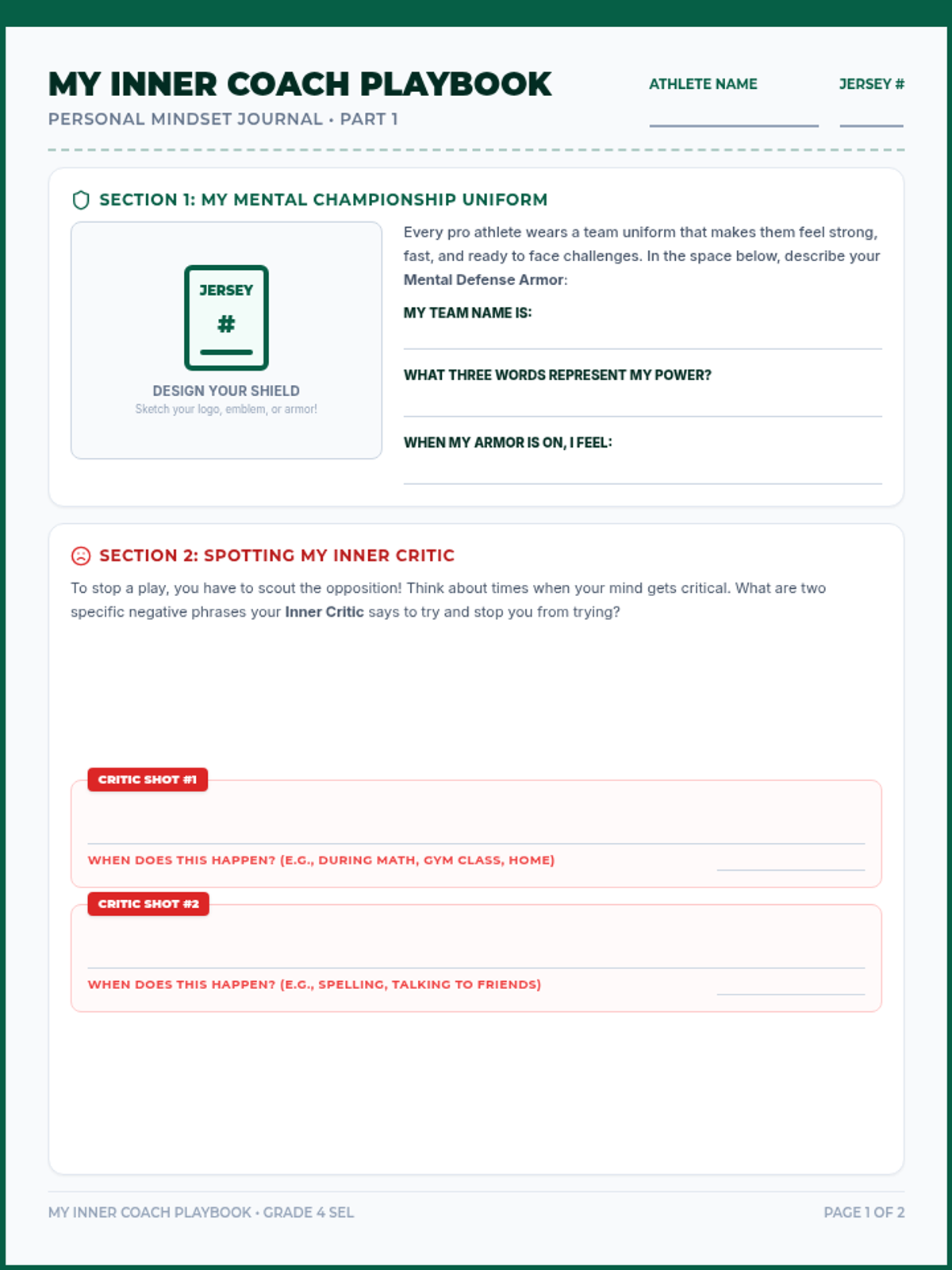
A 45-minute social-emotional learning lesson for 4th graders to discover and strengthen their "Inner Coach." Students learn to recognize the "Inner Critic," practice cognitive reframing through sports-themed mental plays, and build positive self-talk habits.
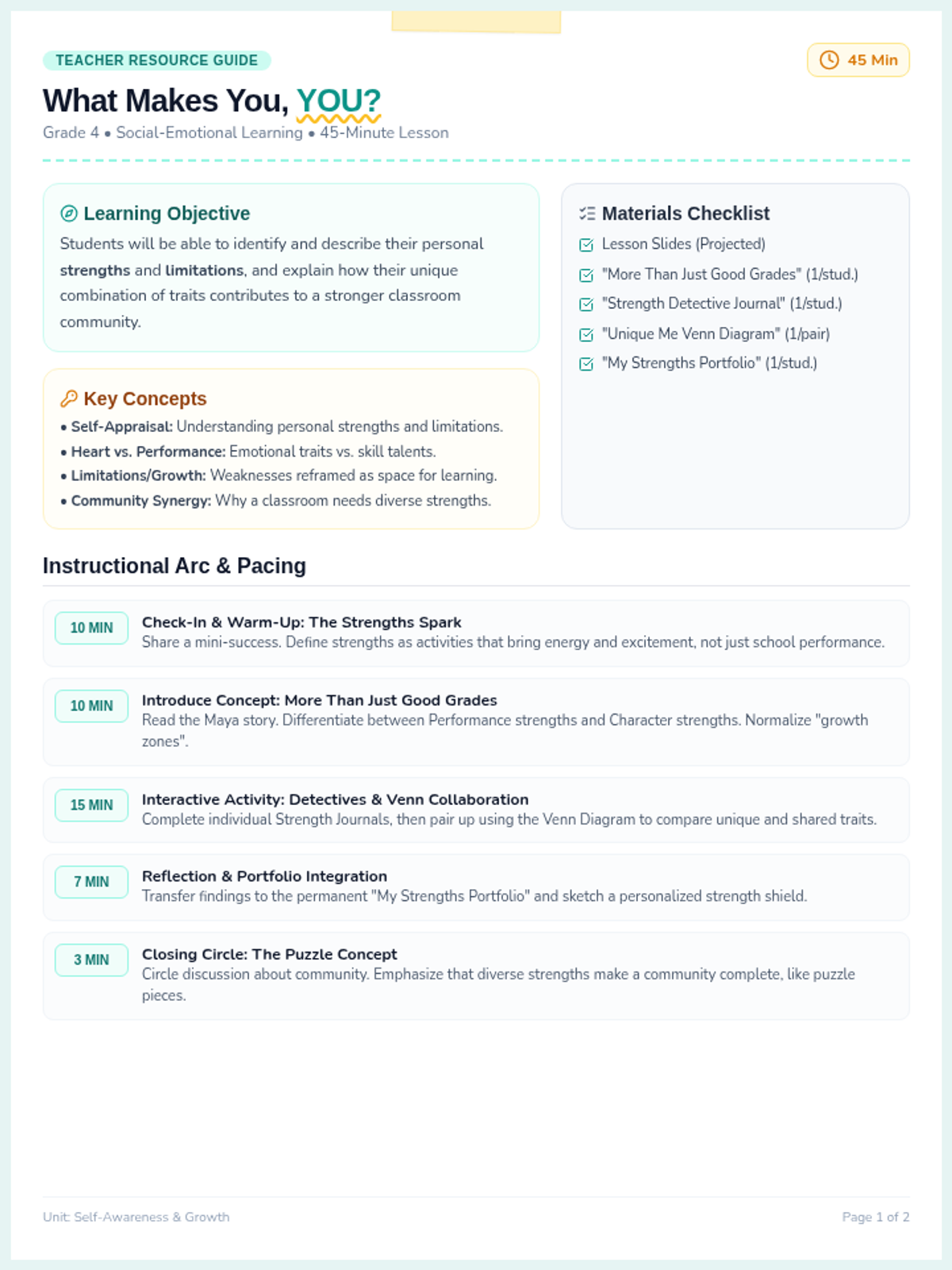
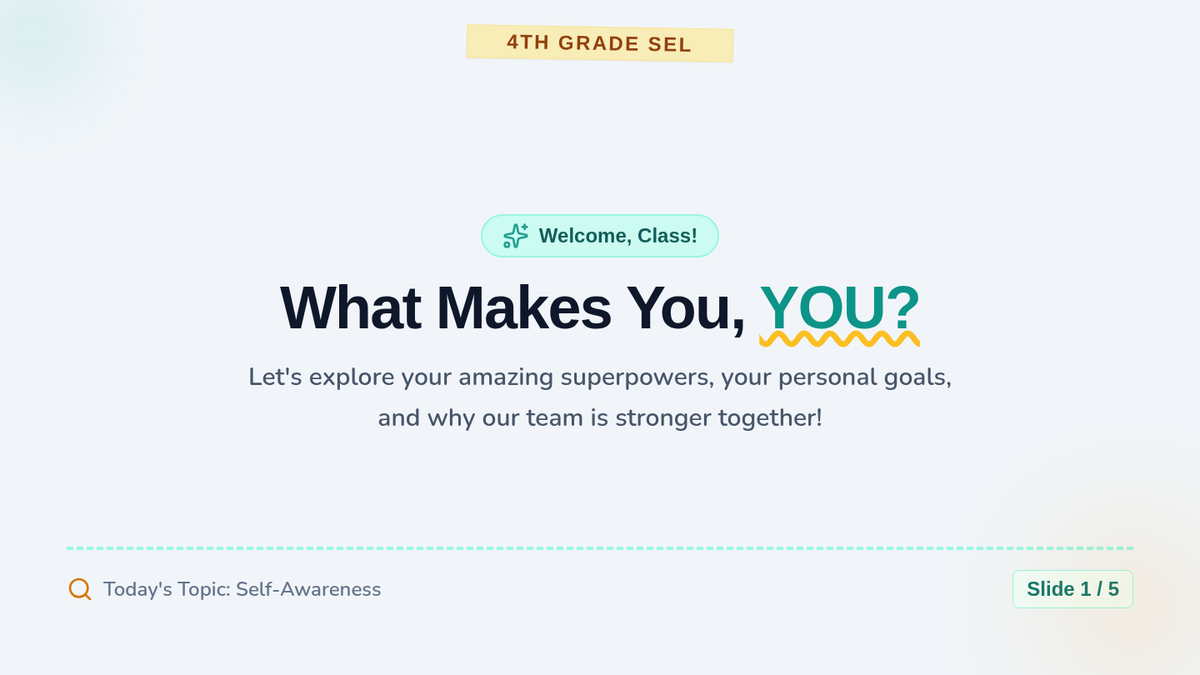
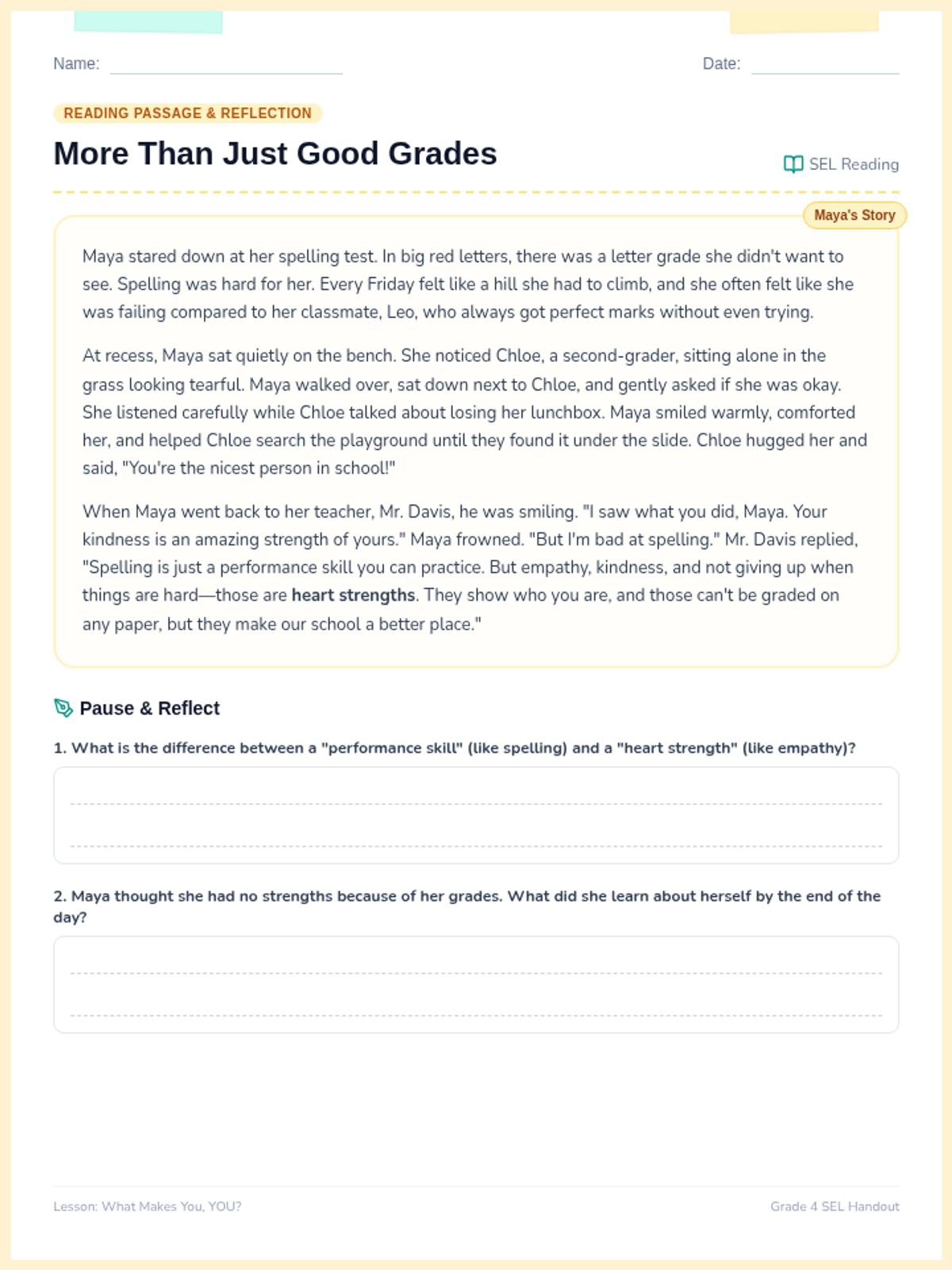
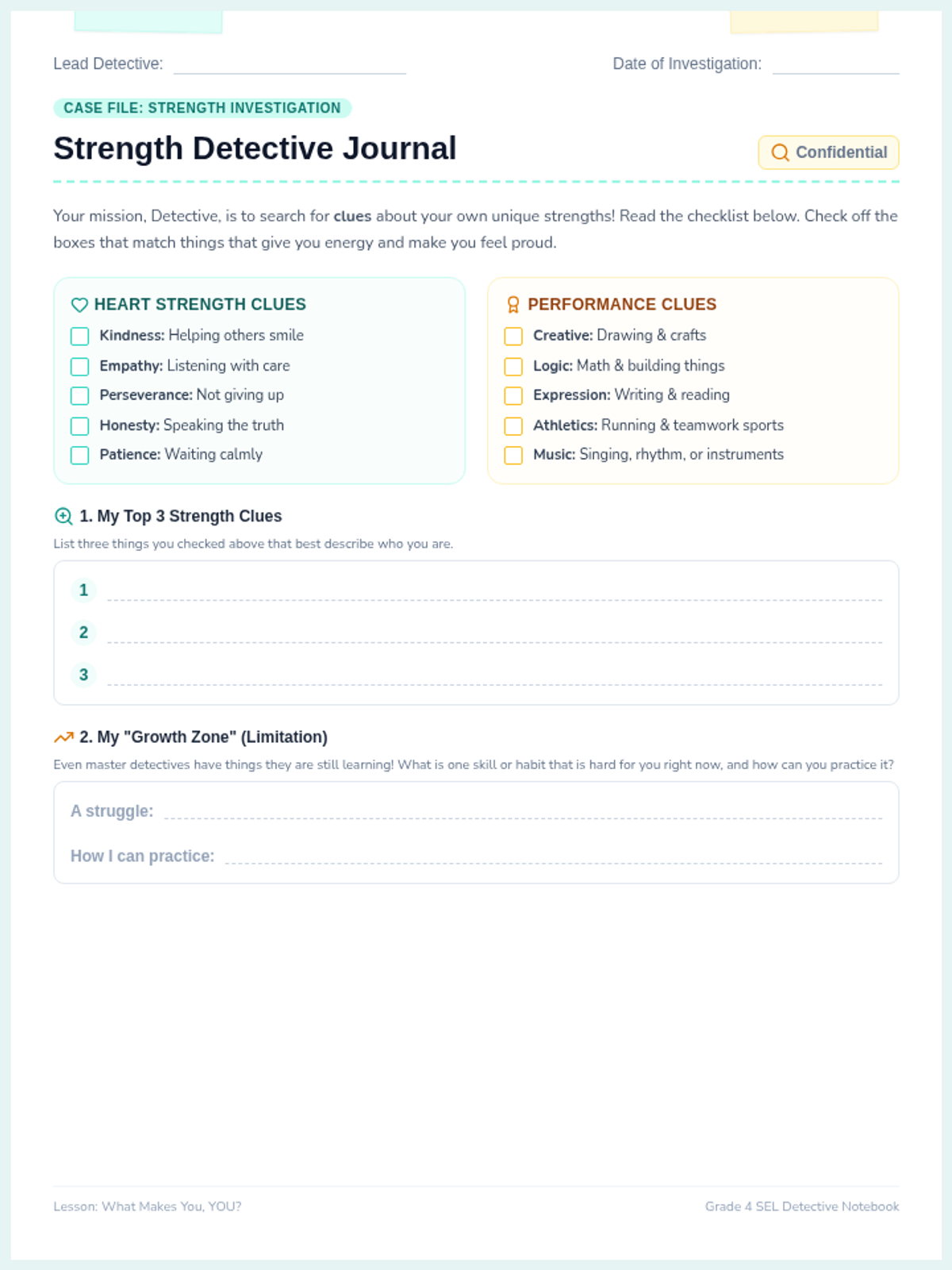
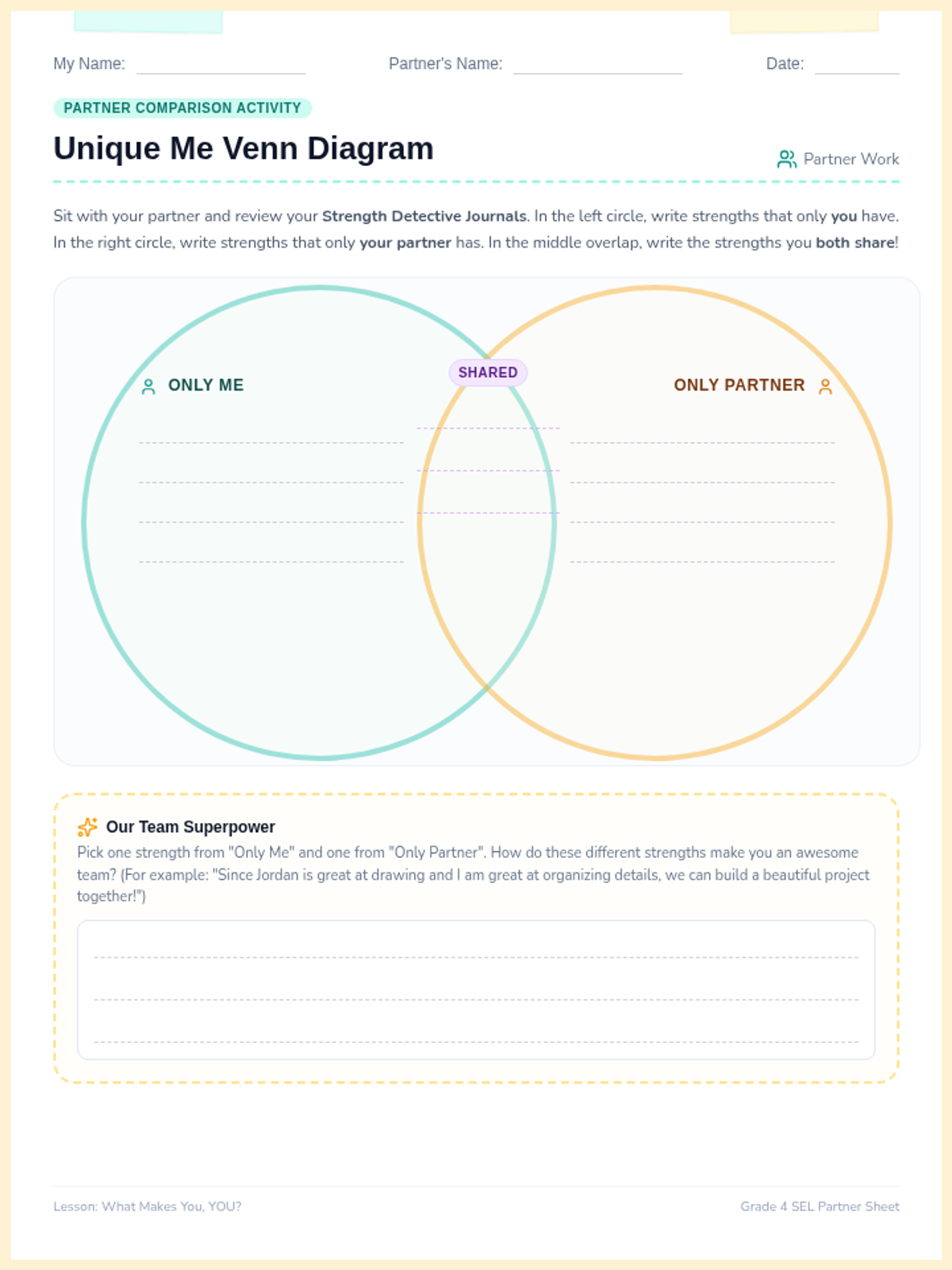
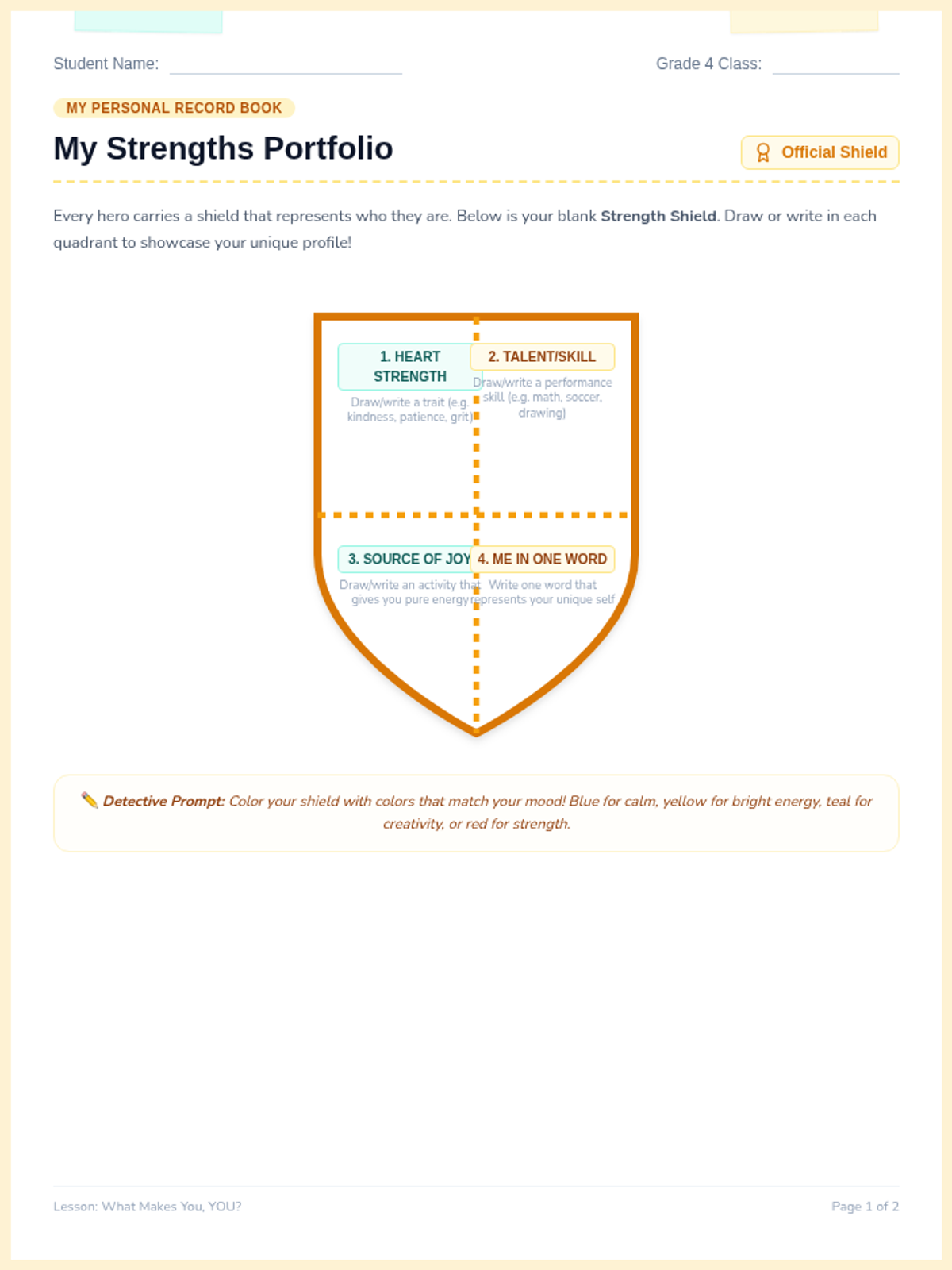
A 45-minute social-emotional learning lesson for 4th graders to explore their personal strengths and limitations. Students learn to self-appraise, appreciate their unique qualities, and understand how diverse strengths make their classroom community stronger.
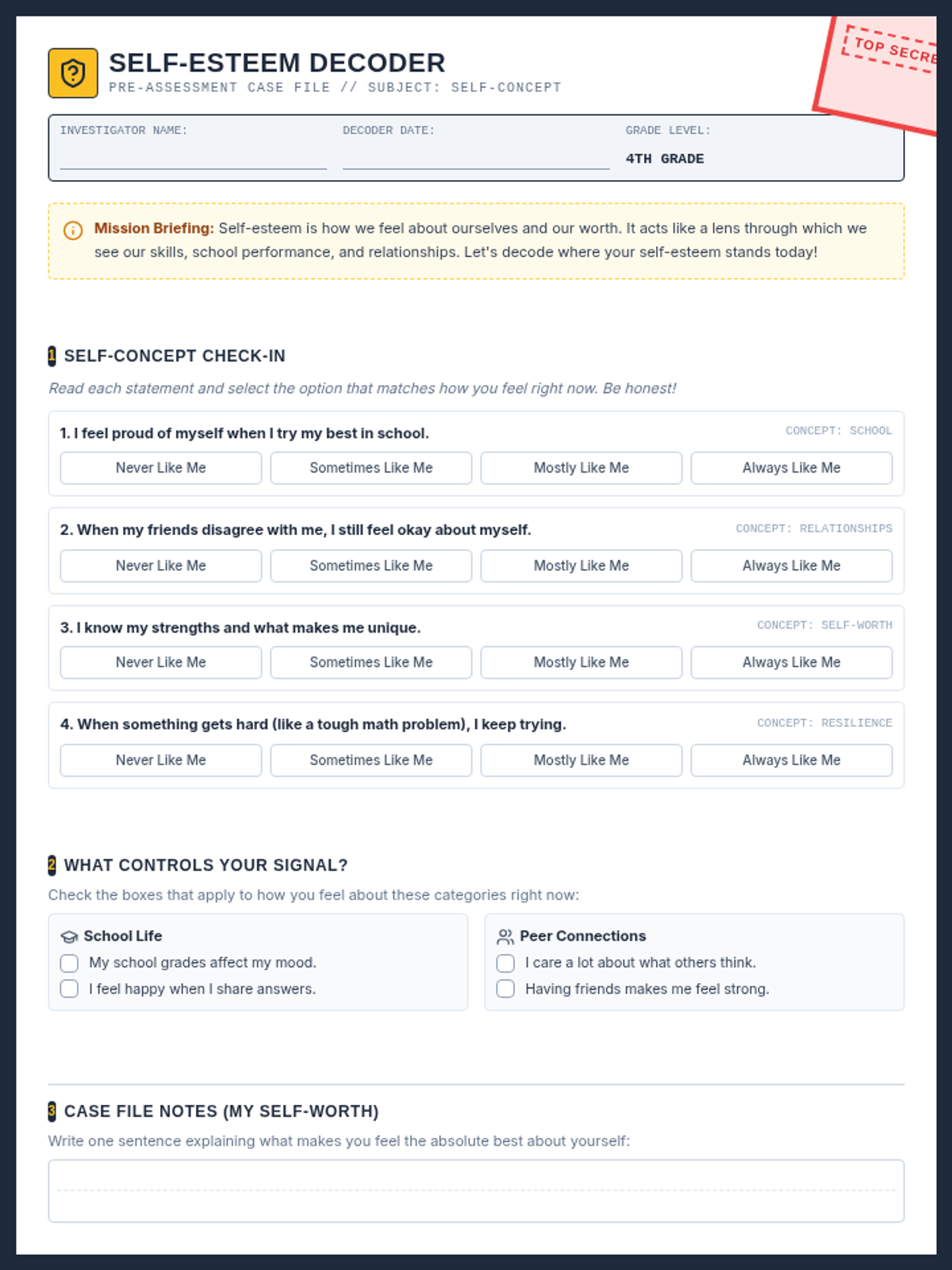
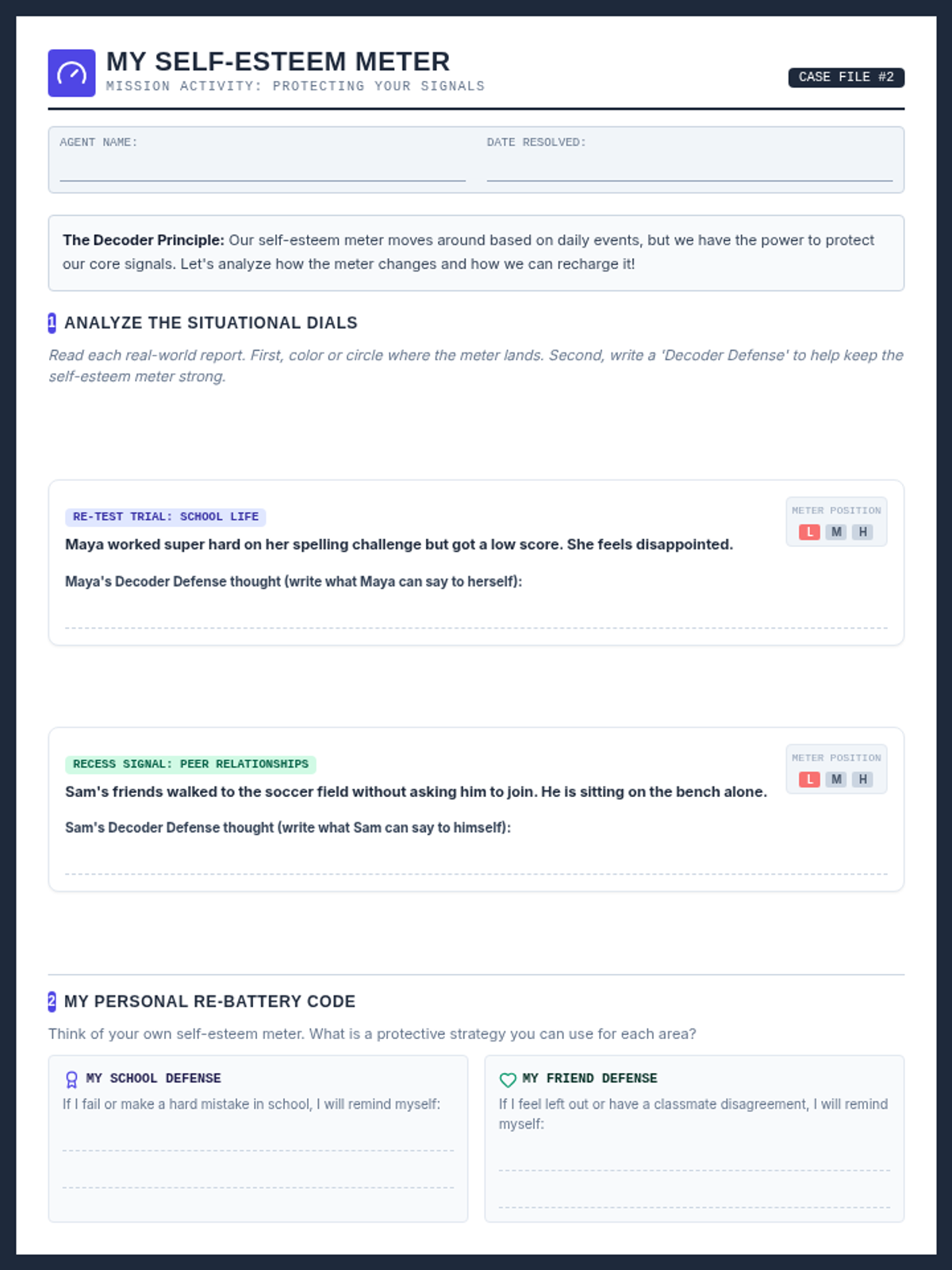
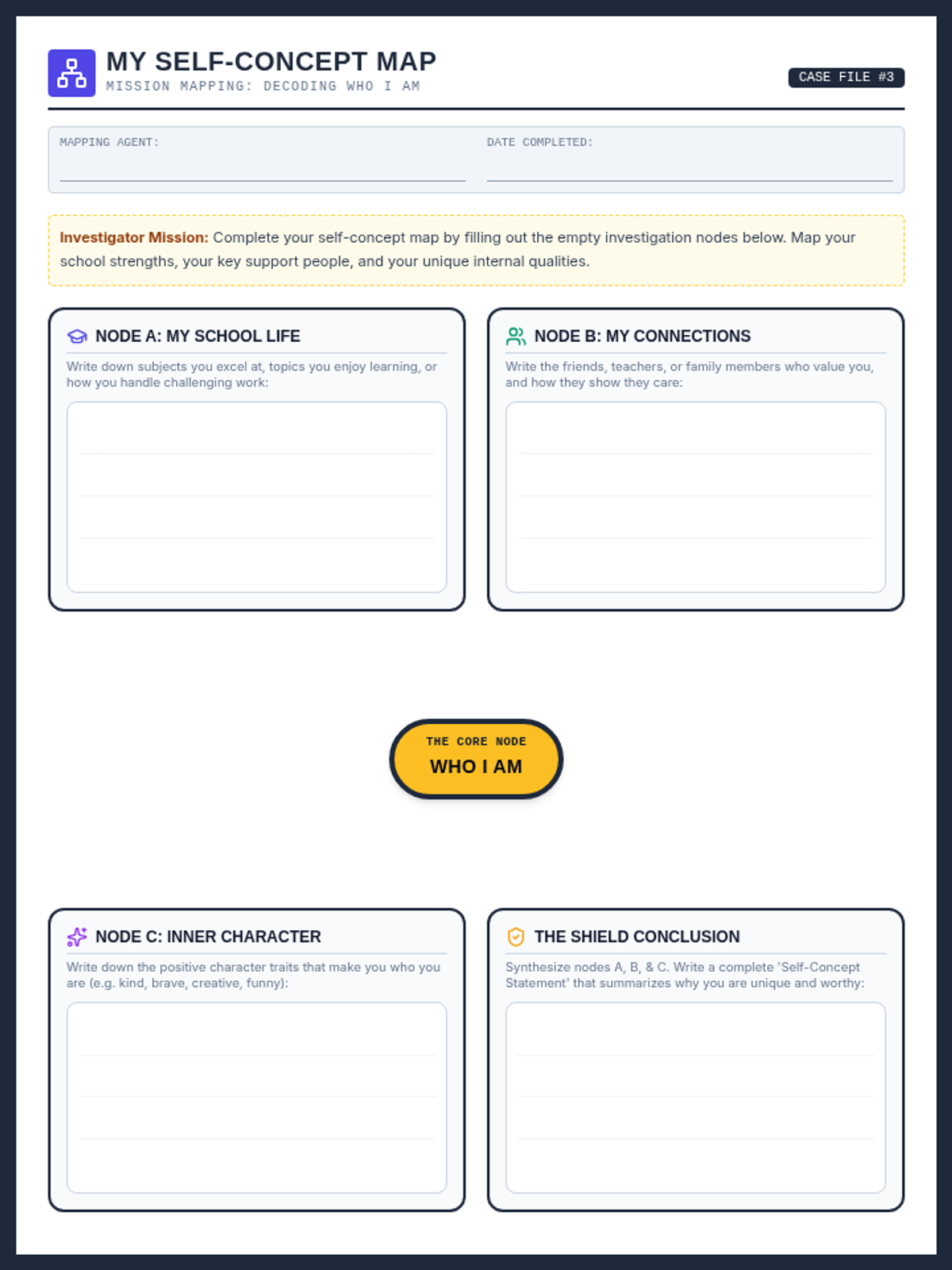
A 45-minute social-emotional learning lesson for 4th graders. Students investigate self-concept, exploring how school performance, peer relationships, and internal feelings shape their overall self-worth.
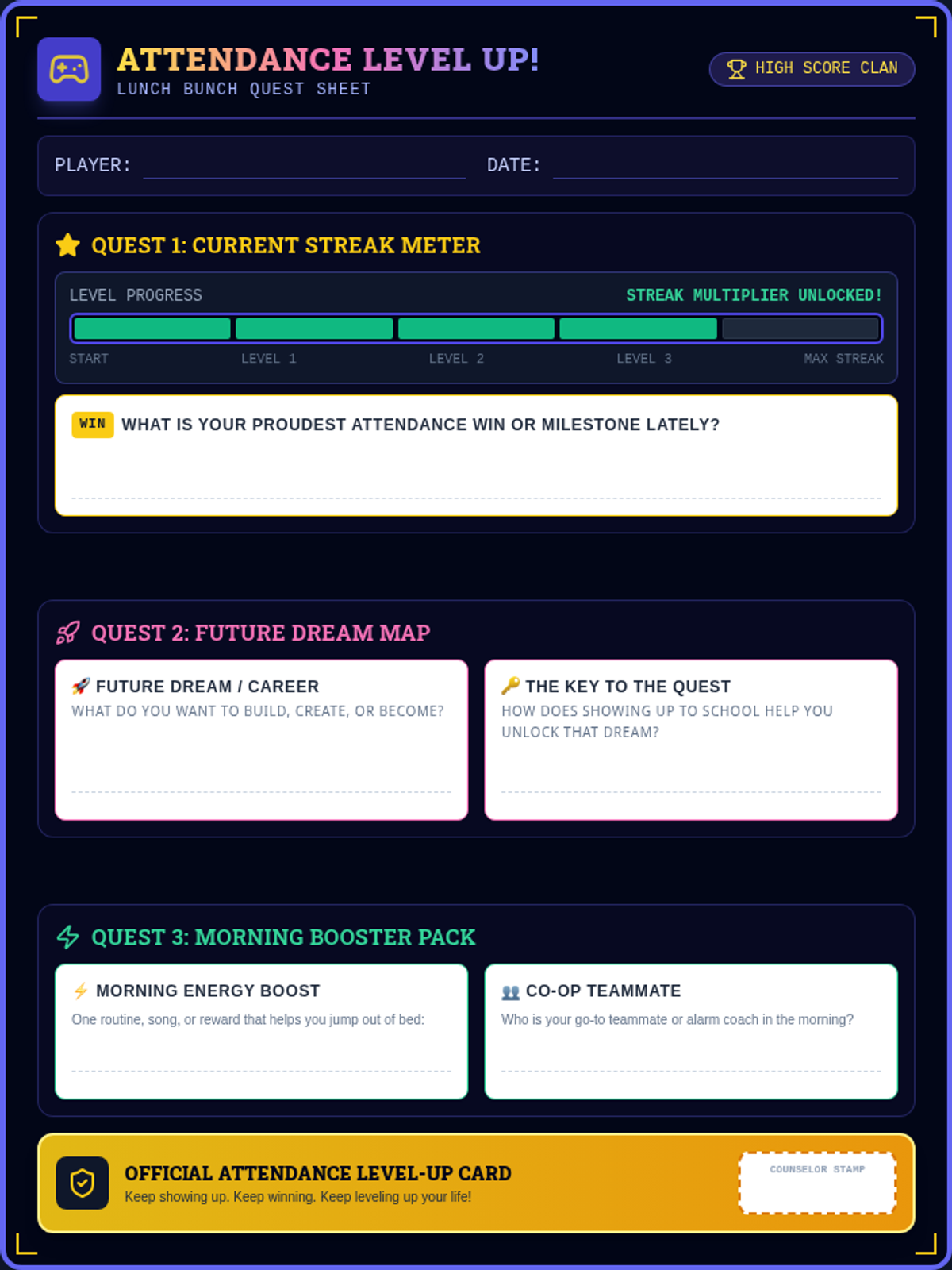
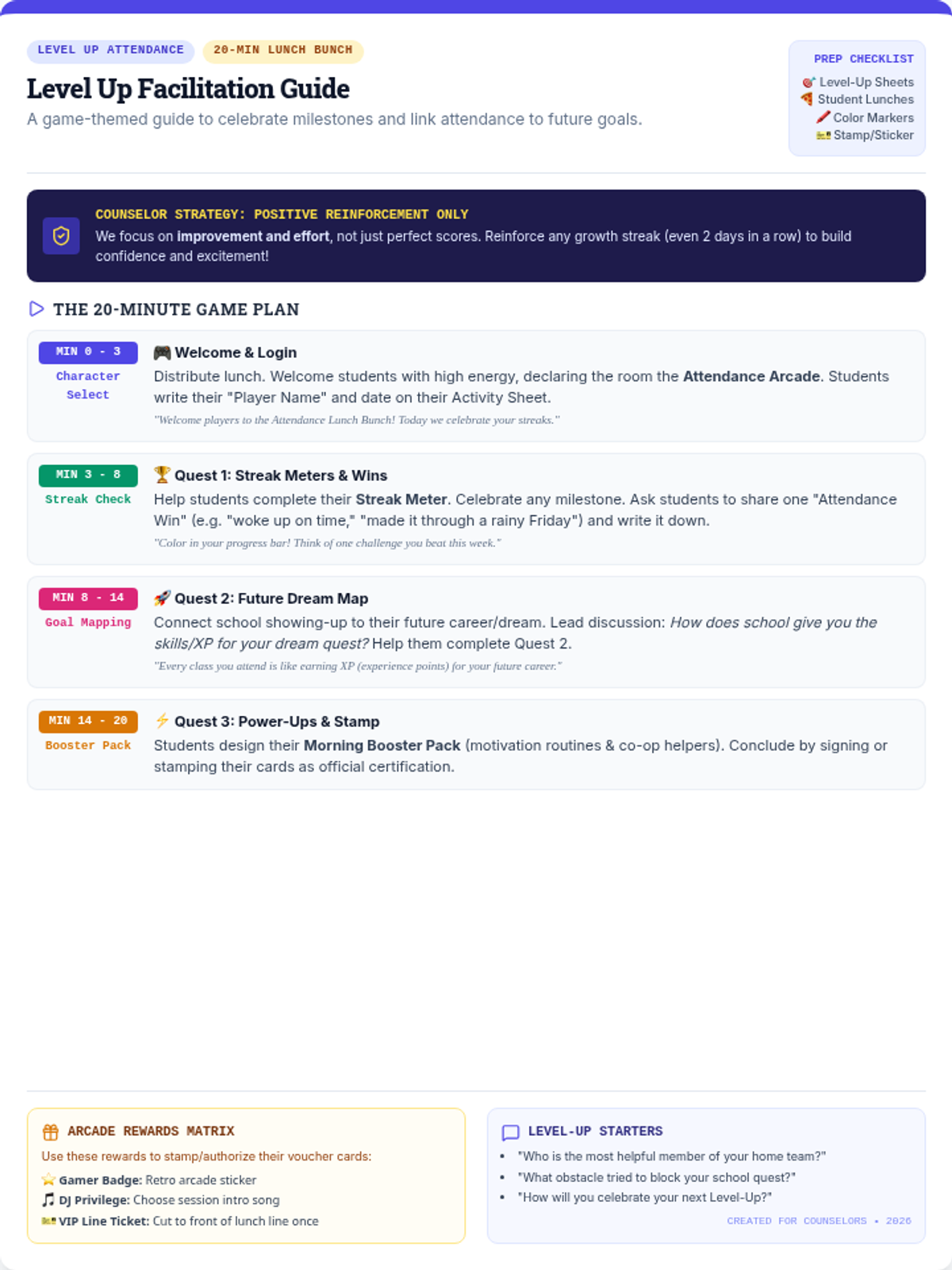
A 20-minute Lunch Bunch lesson plan and facilitation guide designed to celebrate attendance milestones, connect consistent attendance to future goals, and foster a high-energy, positive environment for students.
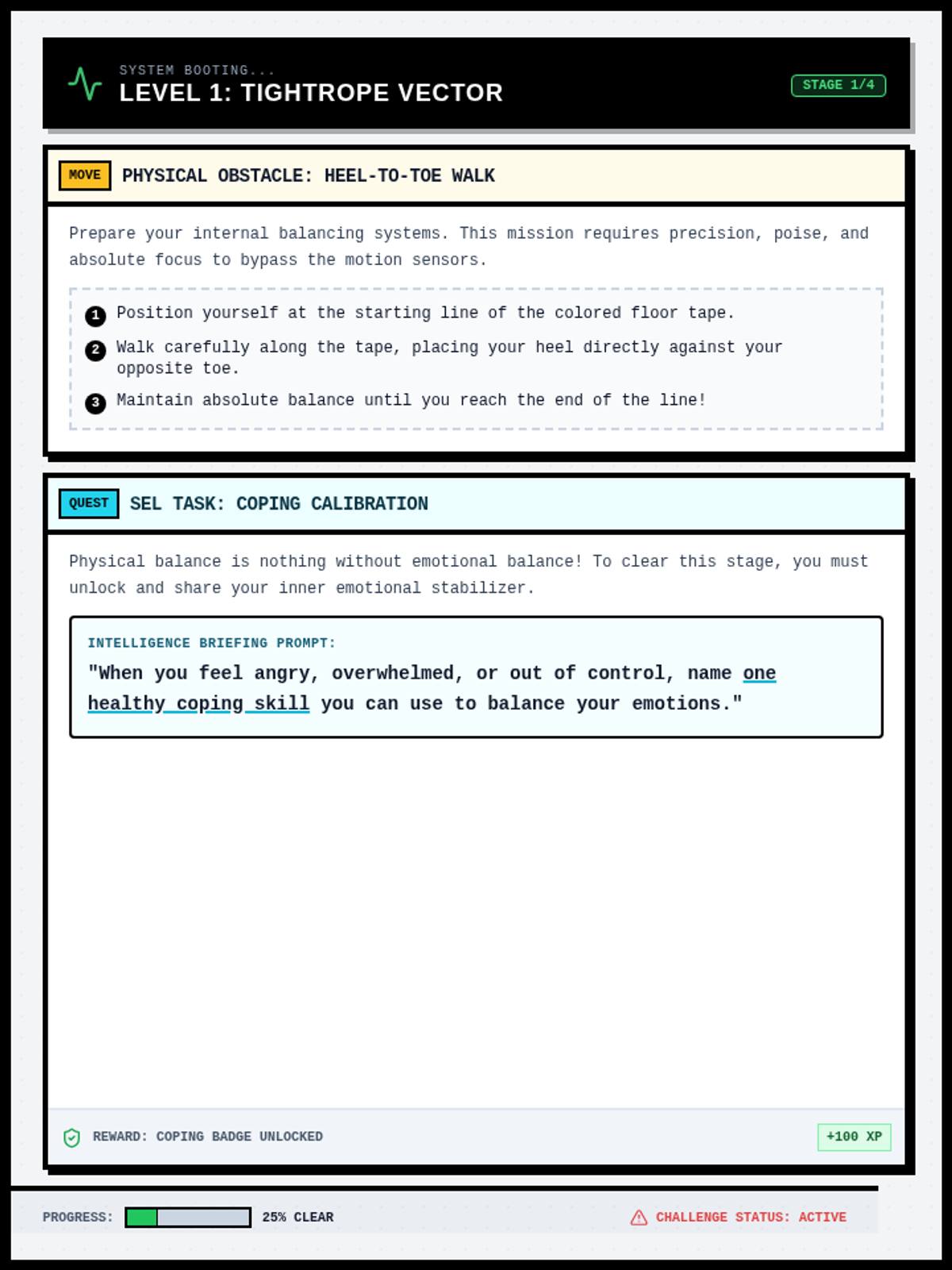
An action-packed obstacle course lesson where students complete physical challenges and social-emotional quests to graduate from their counseling group.
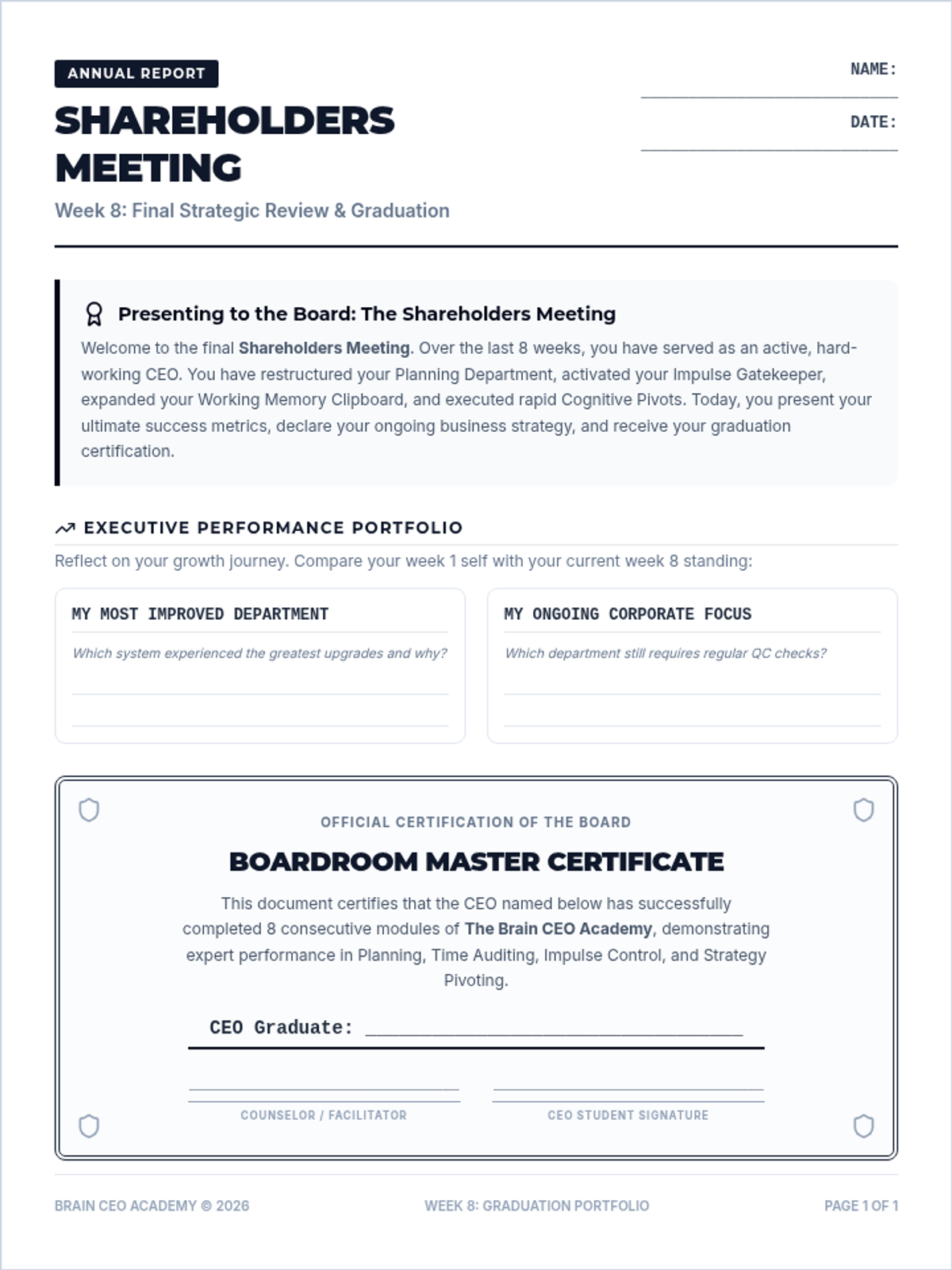
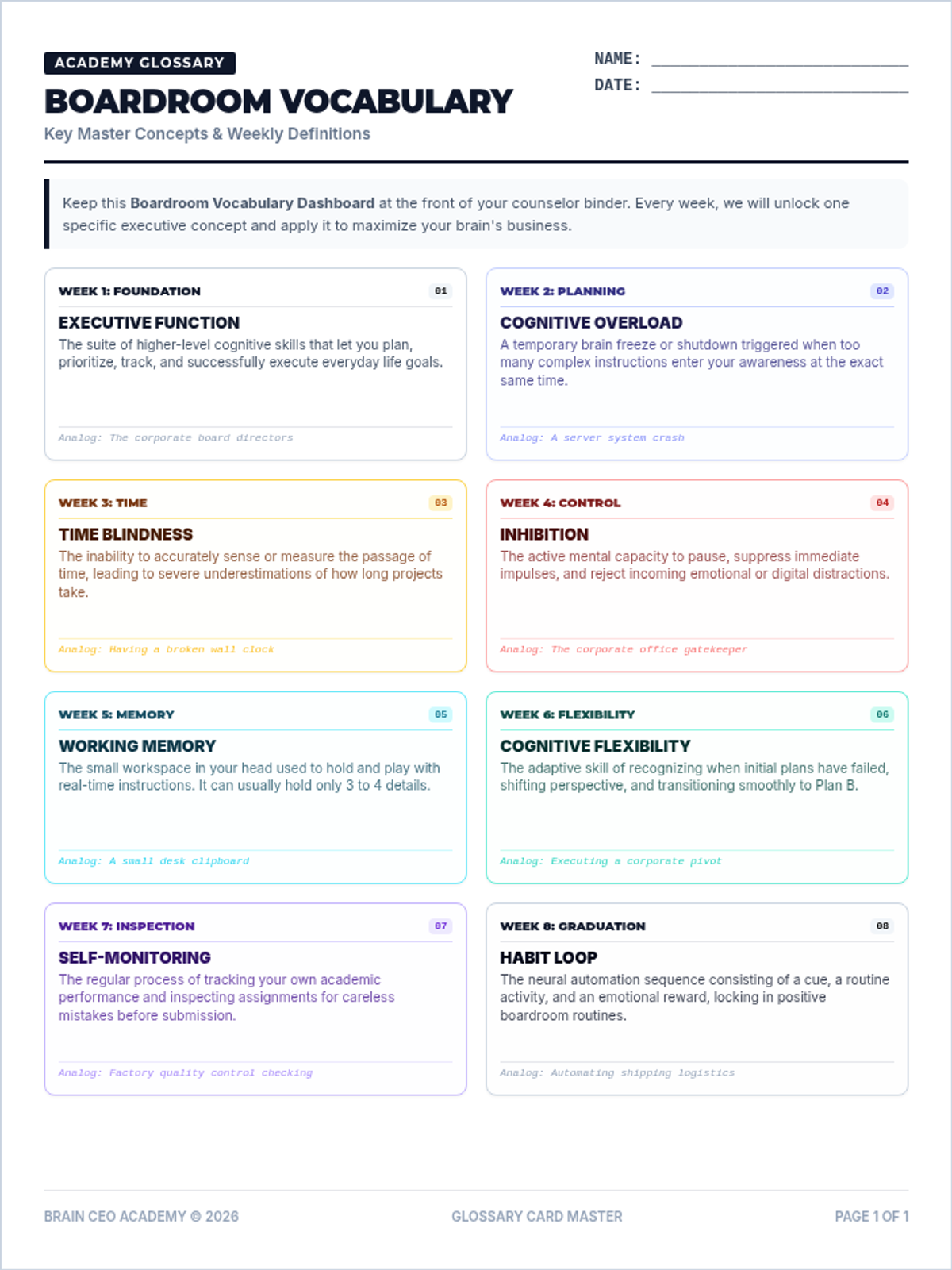
Students host their final Shareholders Meeting to present their executive progress. They receive their Brain CEO Certifications, consolidate their boardroom binders, and commit to long-term habits.
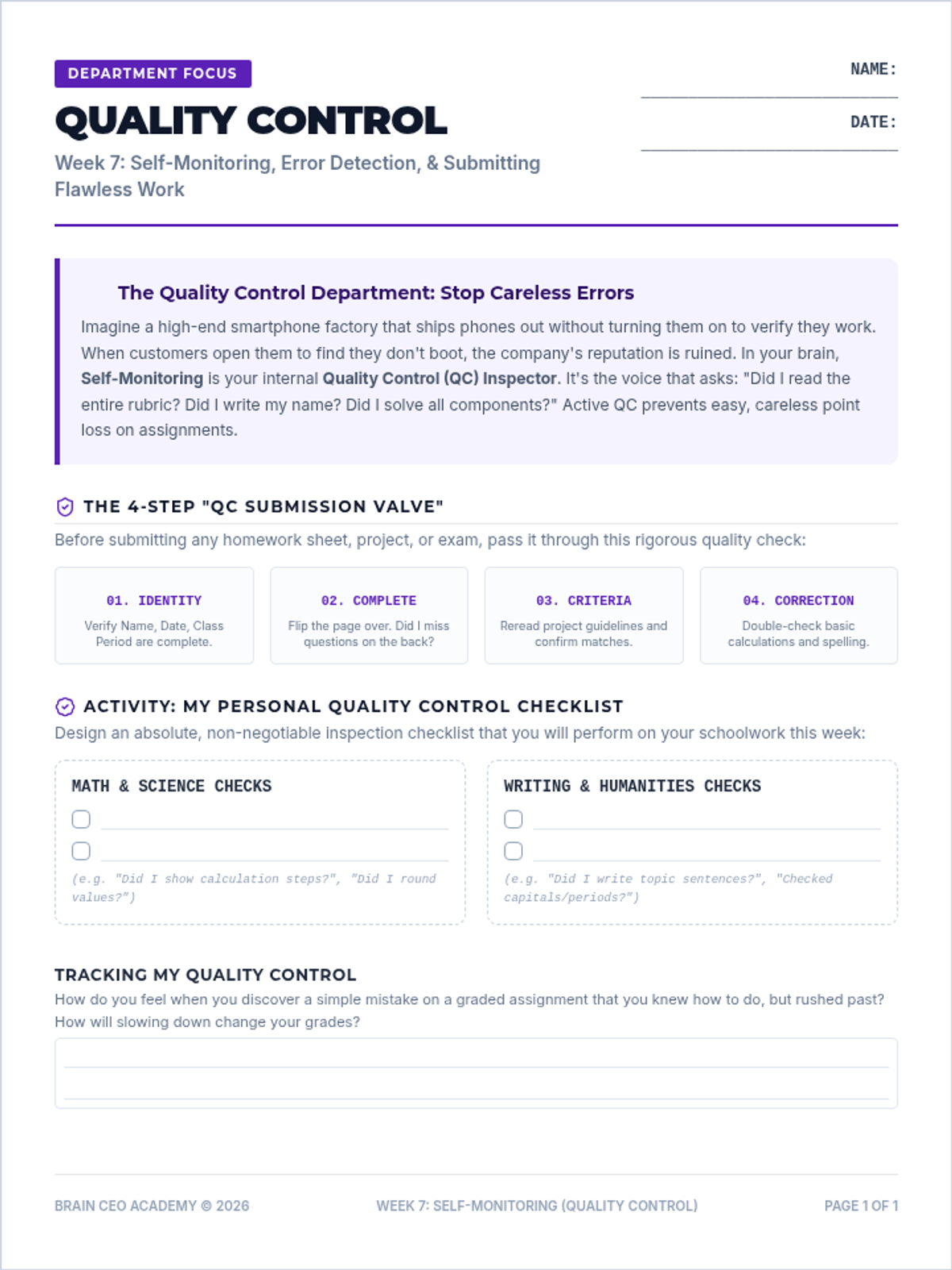
Students examine the brain's 'Quality Control' (self-monitoring). They review academic progress, track habit loops, and self-correct work before submitting it.
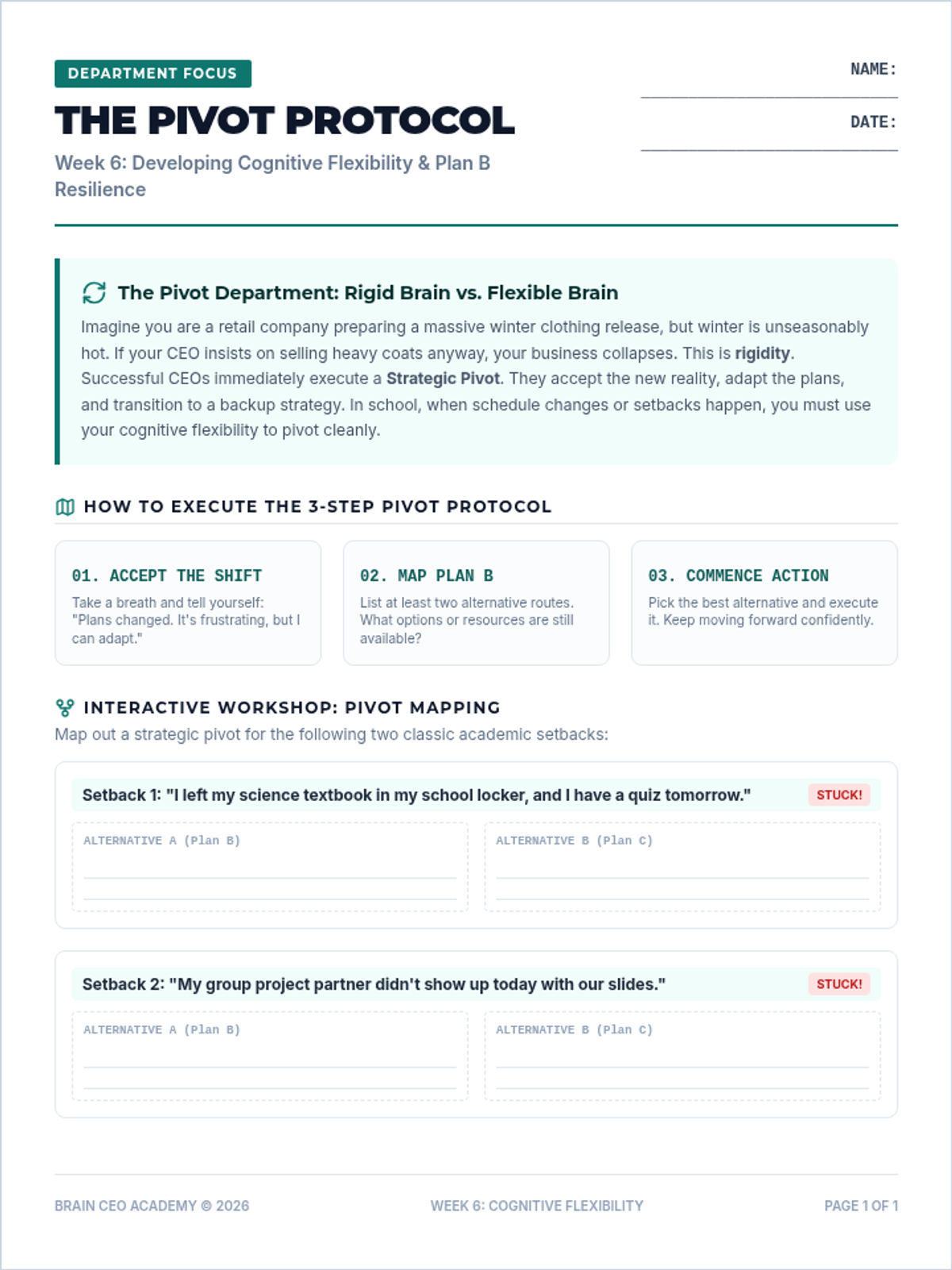
Students examine the brain's 'Pivot' (cognitive flexibility). They learn how to adapt to unexpected boardroom shifts, handle academic setbacks, and problem-solve when plans fail.
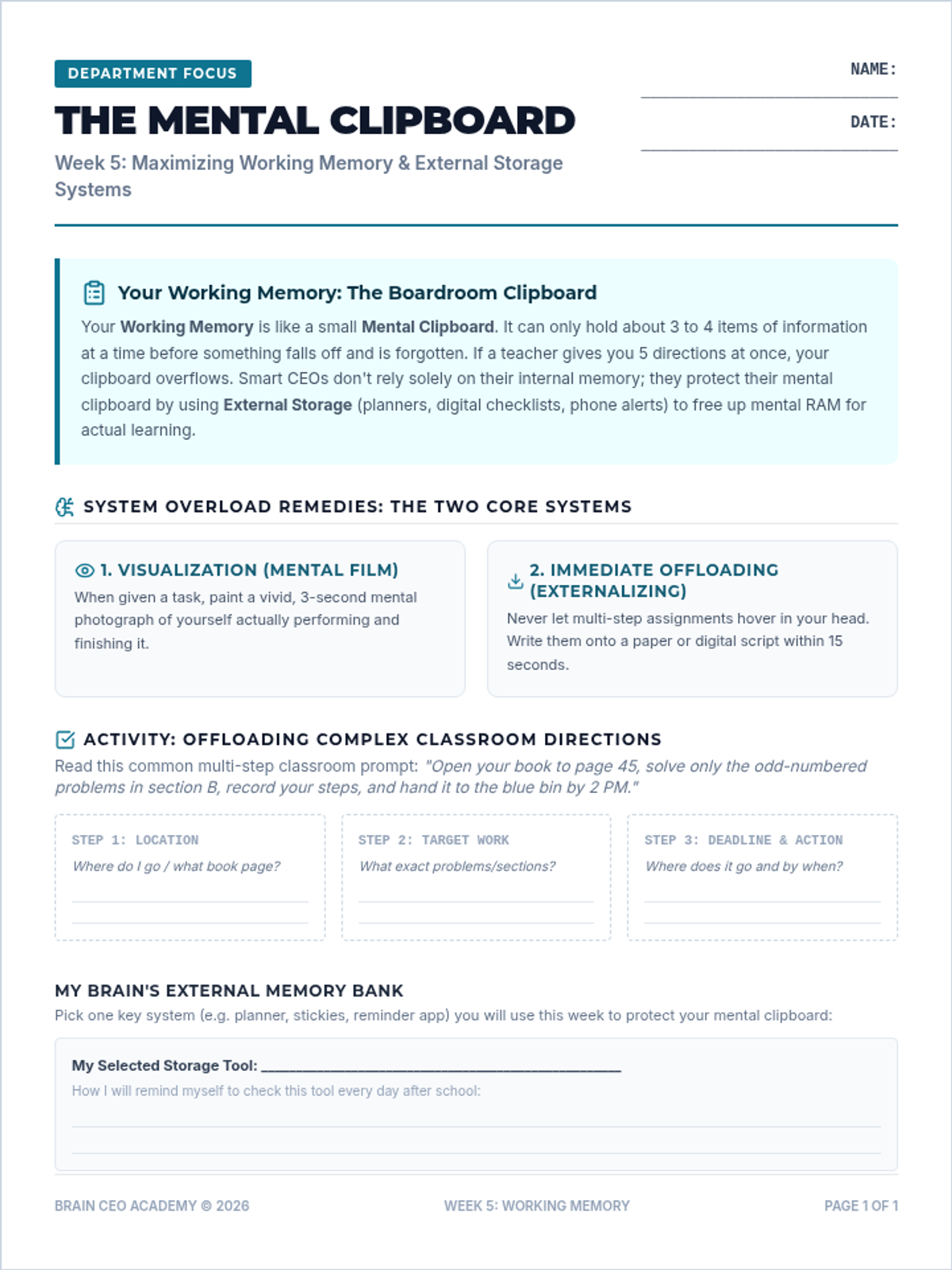
Students explore the brain's 'Mental Clipboard' (working memory). They practice visualization, externalization, and mnemonics to retain multi-step instructions and organize school information.
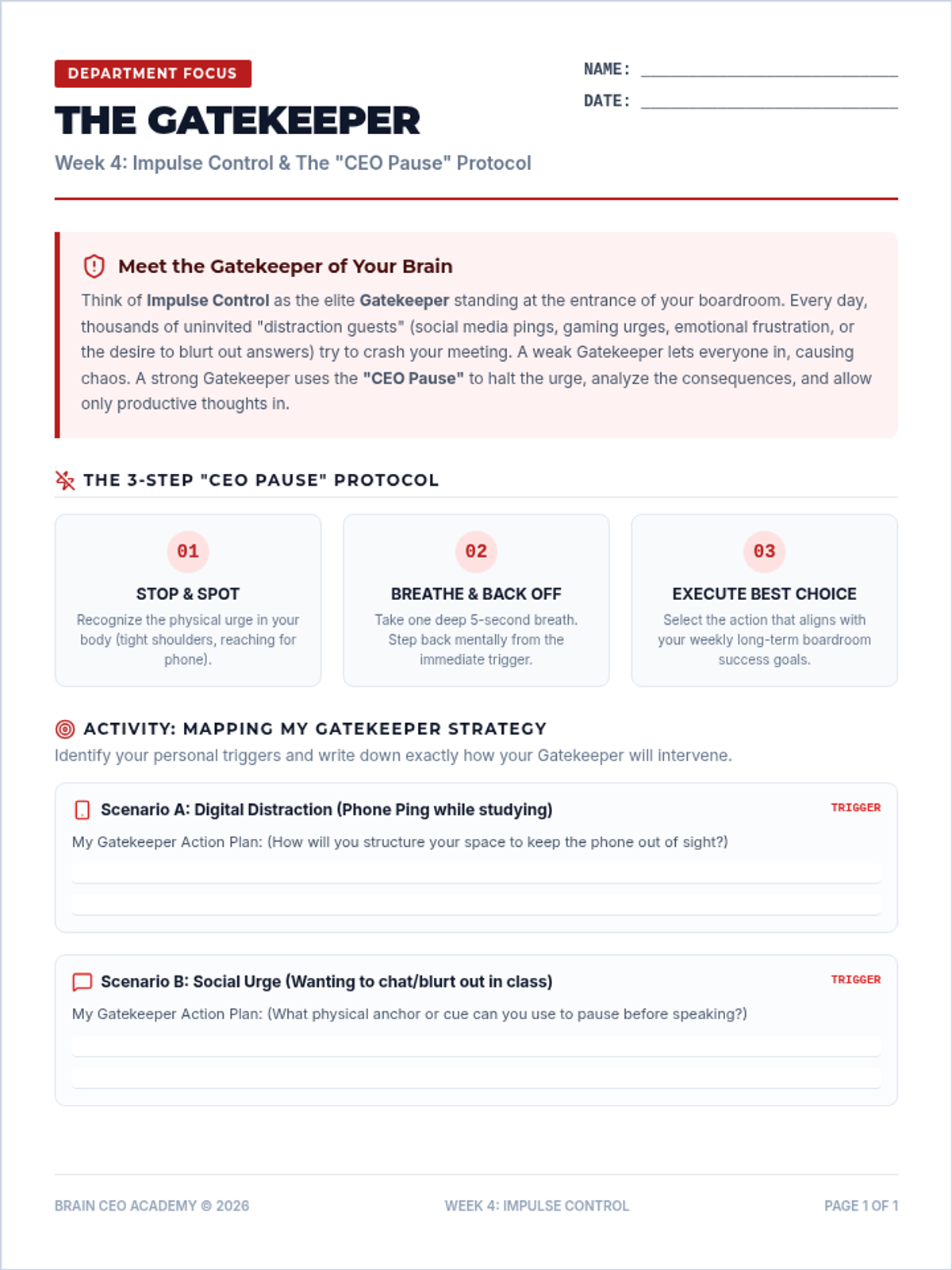
Students explore the brain's 'Gatekeeper' (impulse control), developing practical techniques like the 'CEO Pause' to resist high-tech distractions and control emotional impulses before acting.
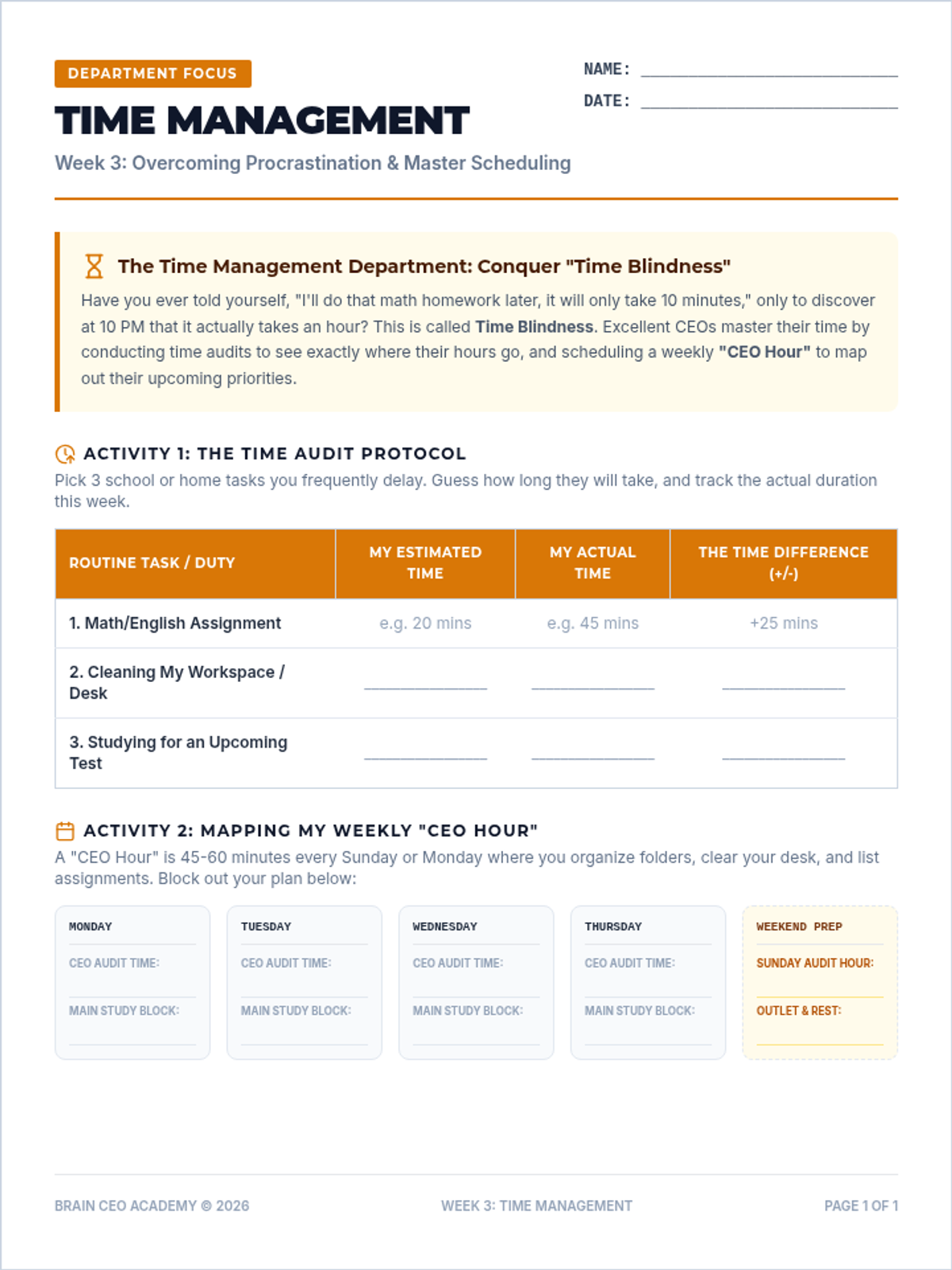
Students examine their brain's Time Management department, learning how to overcome procrastination, estimate task durations accurately, and implement the 'CEO Hour' weekly scheduling technique.
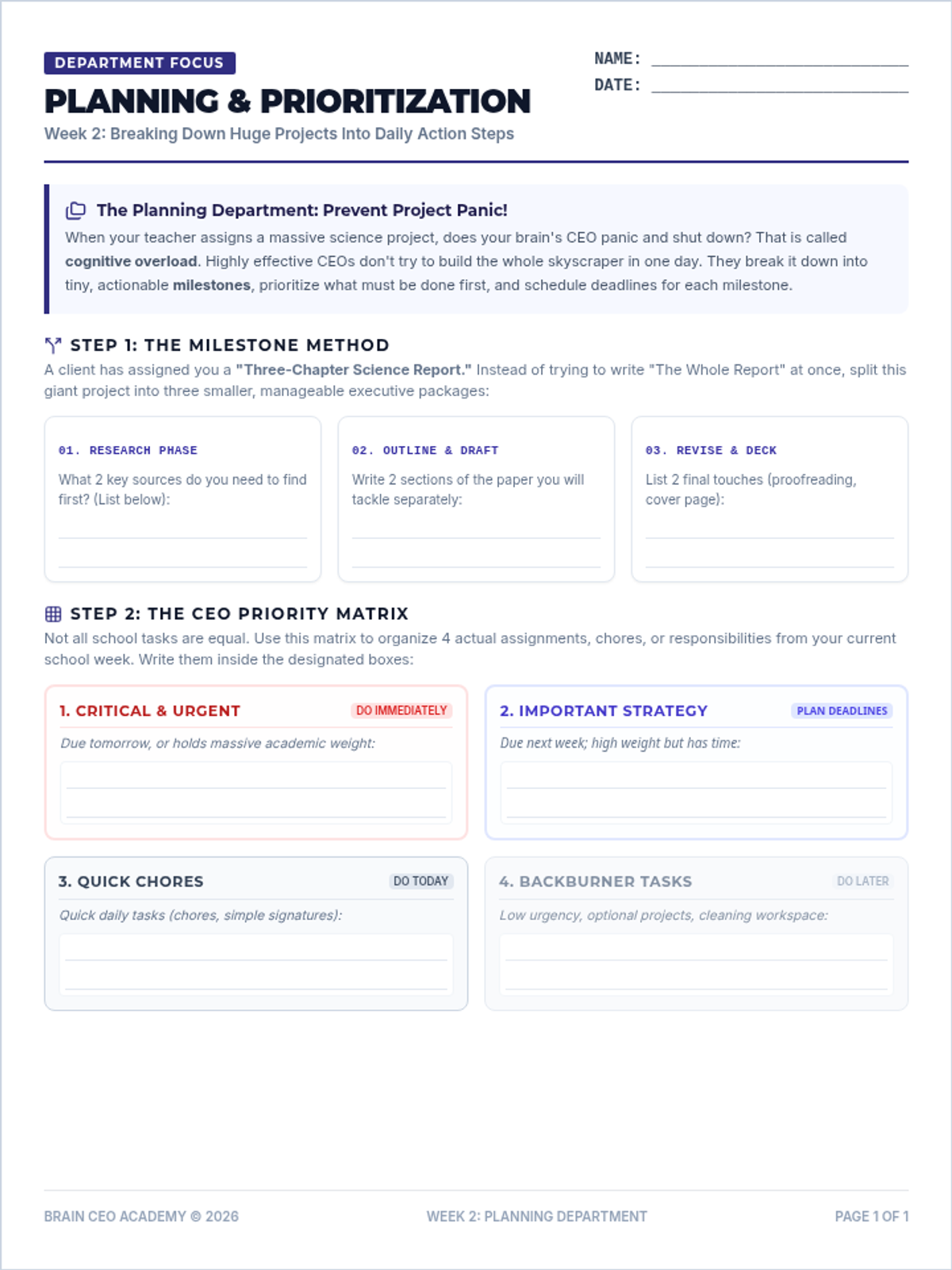
Students dive into the Planning & Prioritization Department, learning how to break down complex projects into actionable steps and organize tasks using the 'CEO Action Item' matrix.
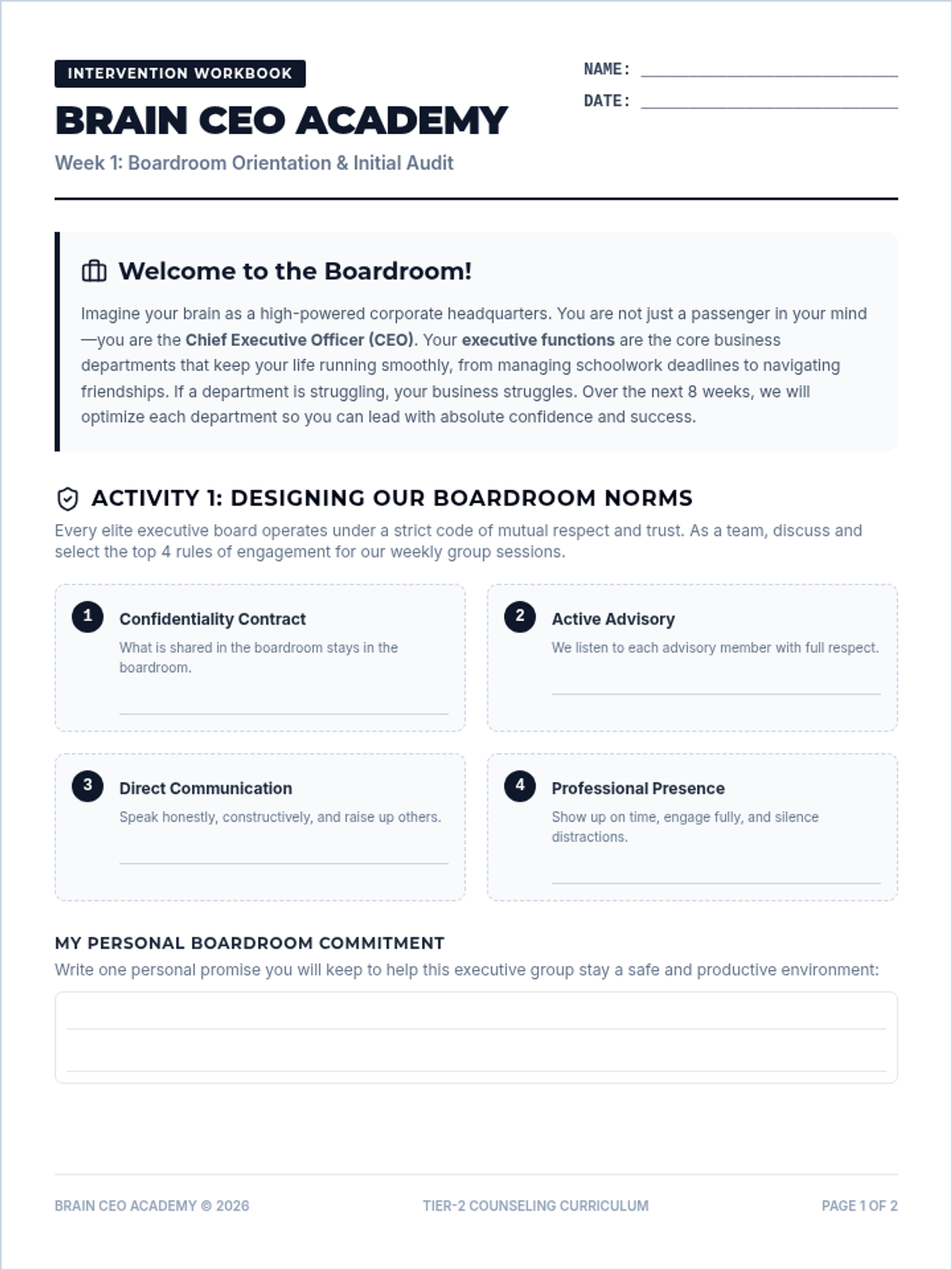
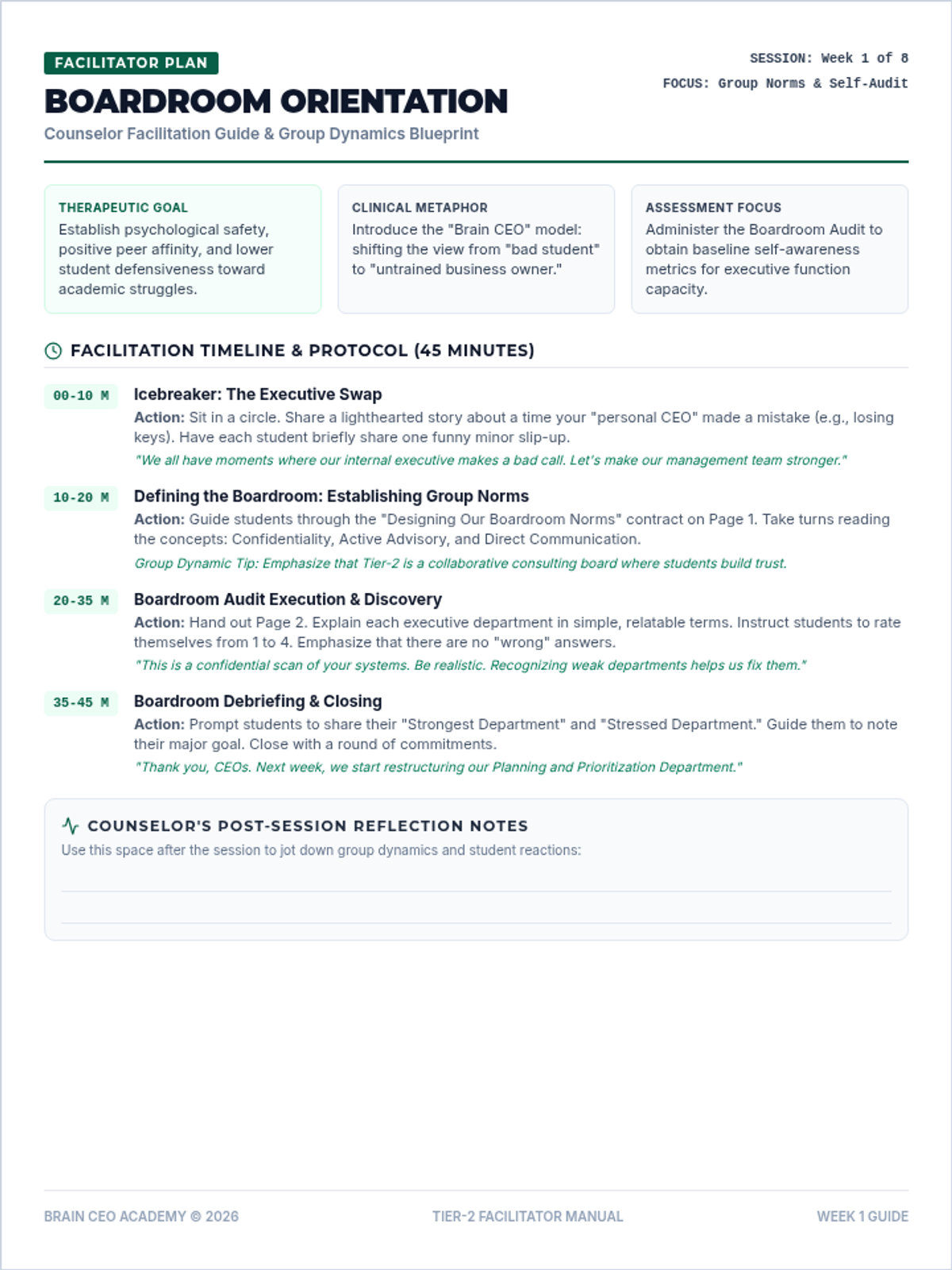
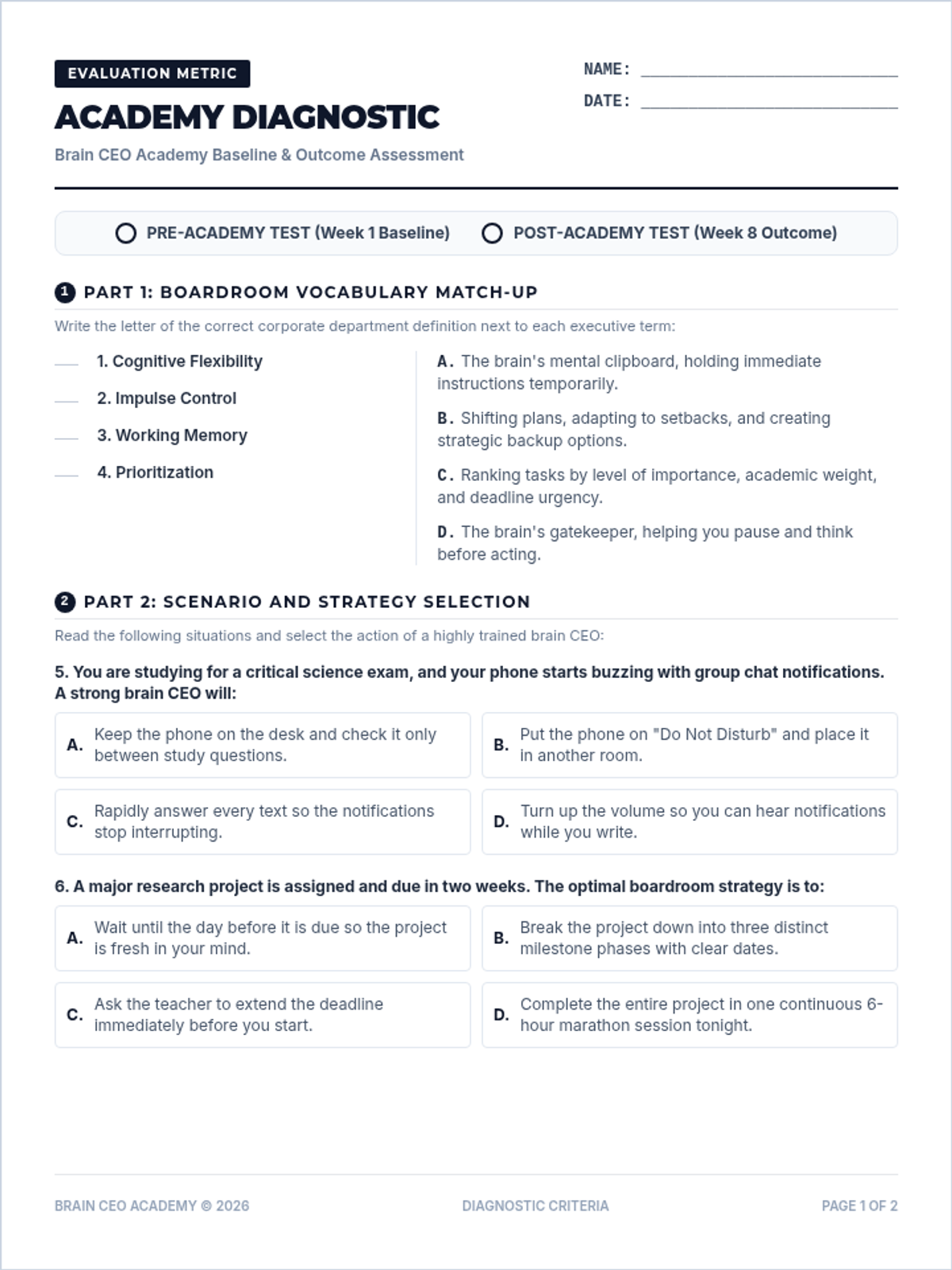
Students are introduced to the group, establish norms, and explore the 'Brain CEO' metaphor. They conduct an initial Boardroom Audit (Self-Assessment) to identify their brain's strongest and weakest executive departments.
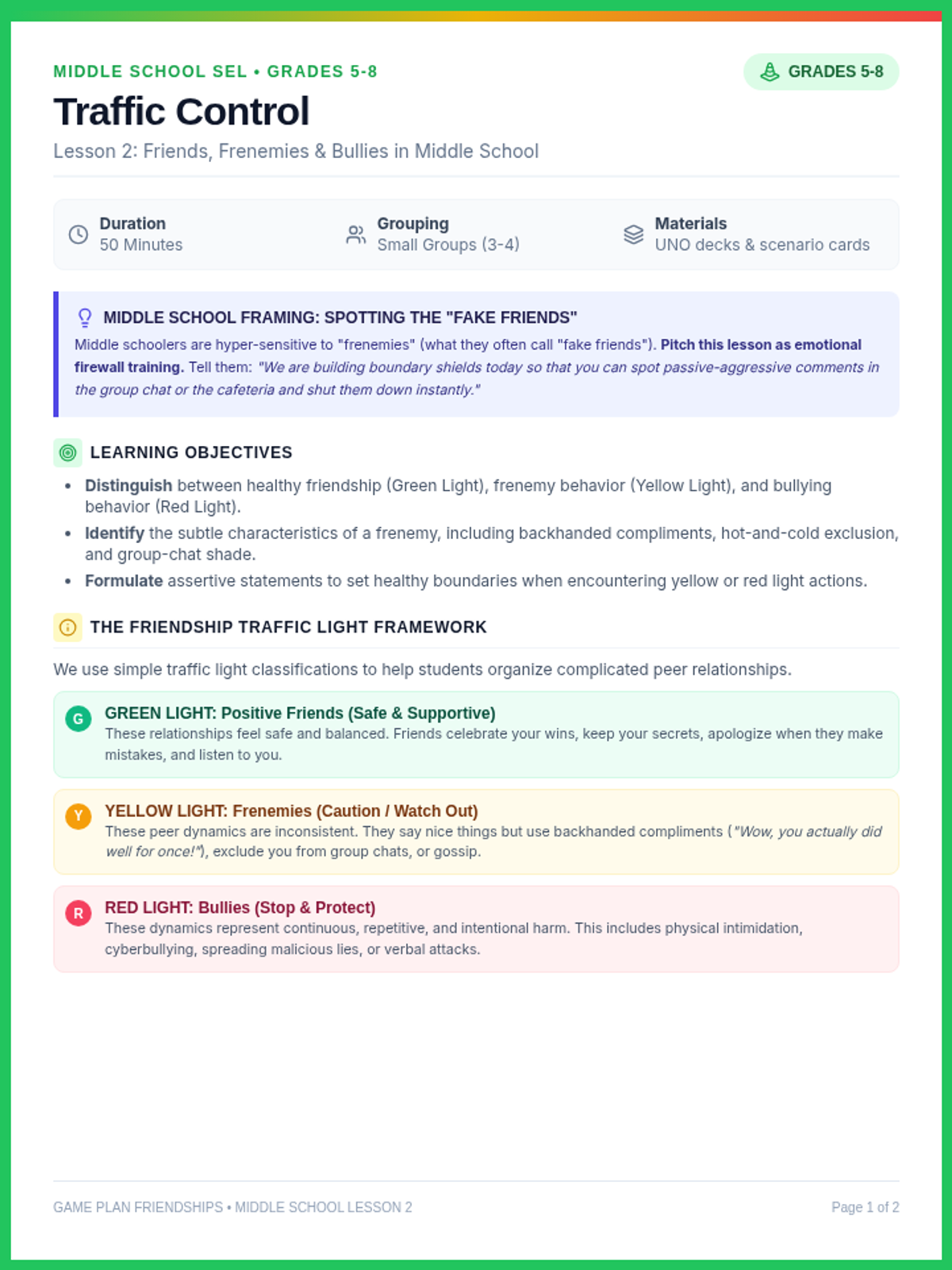
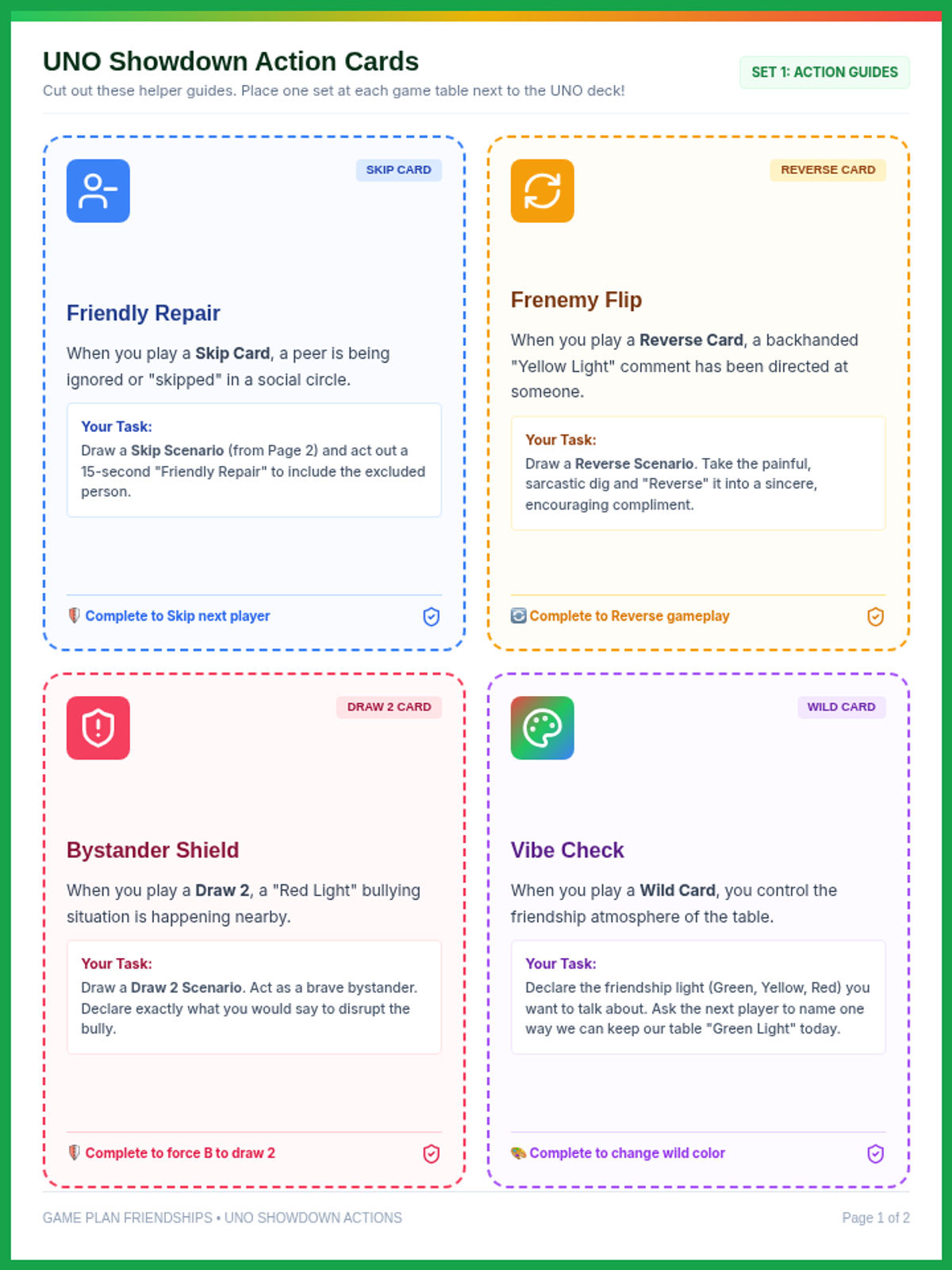
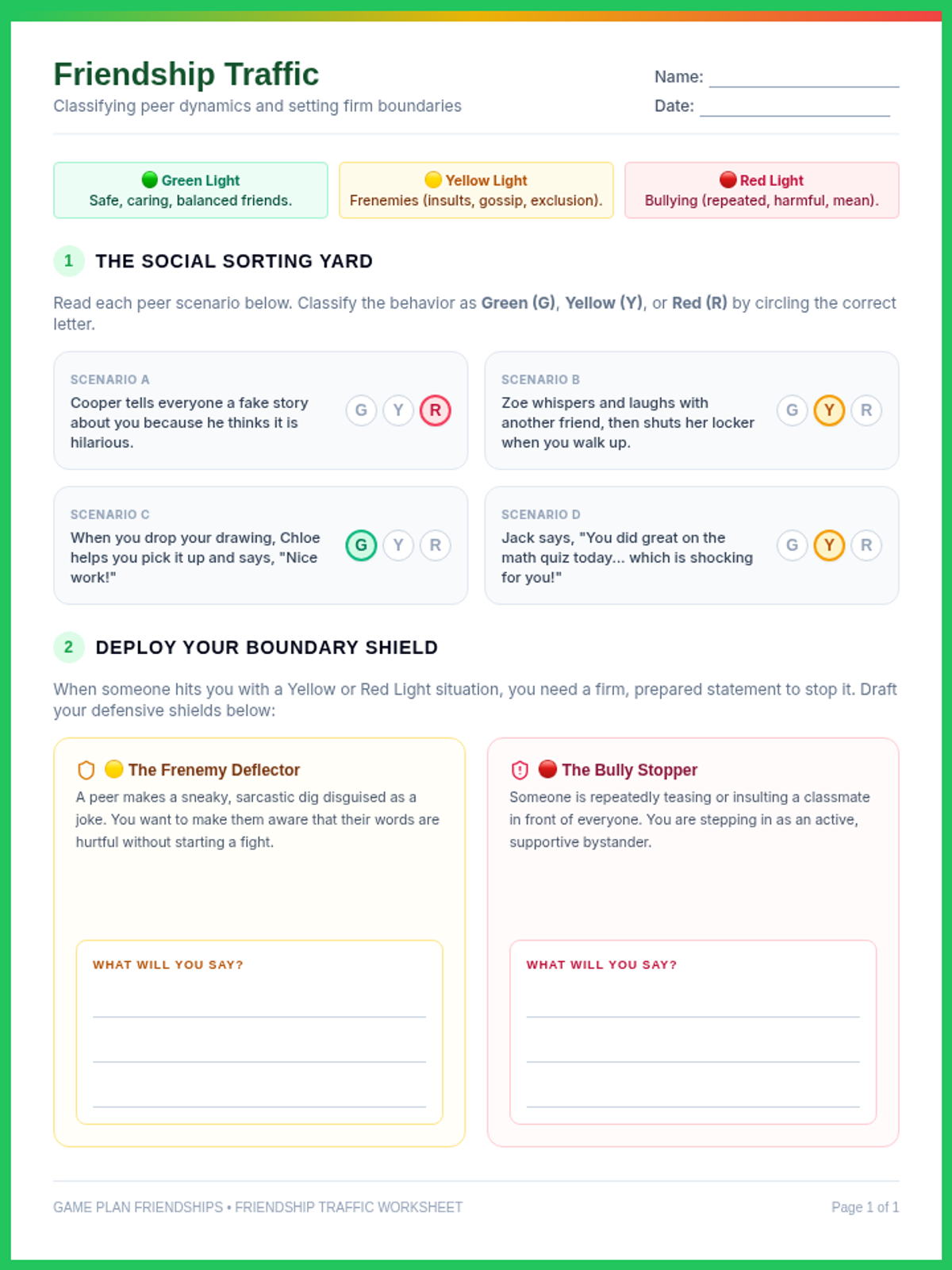
Students learn to classify peer dynamics as friends, frenemies, or bullies using "UNO Showdown" action cards to trigger role-play and conflict-resolution.
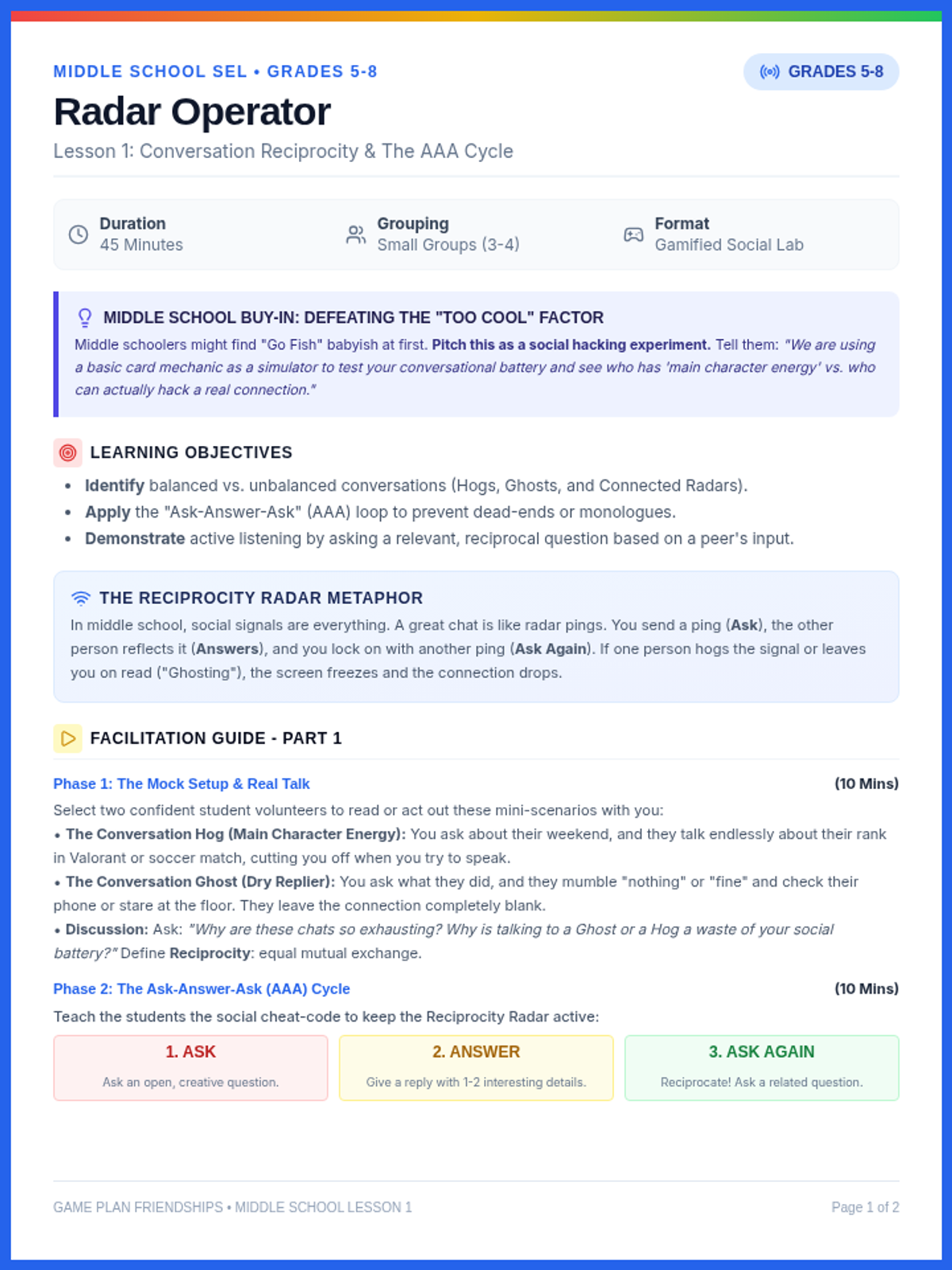
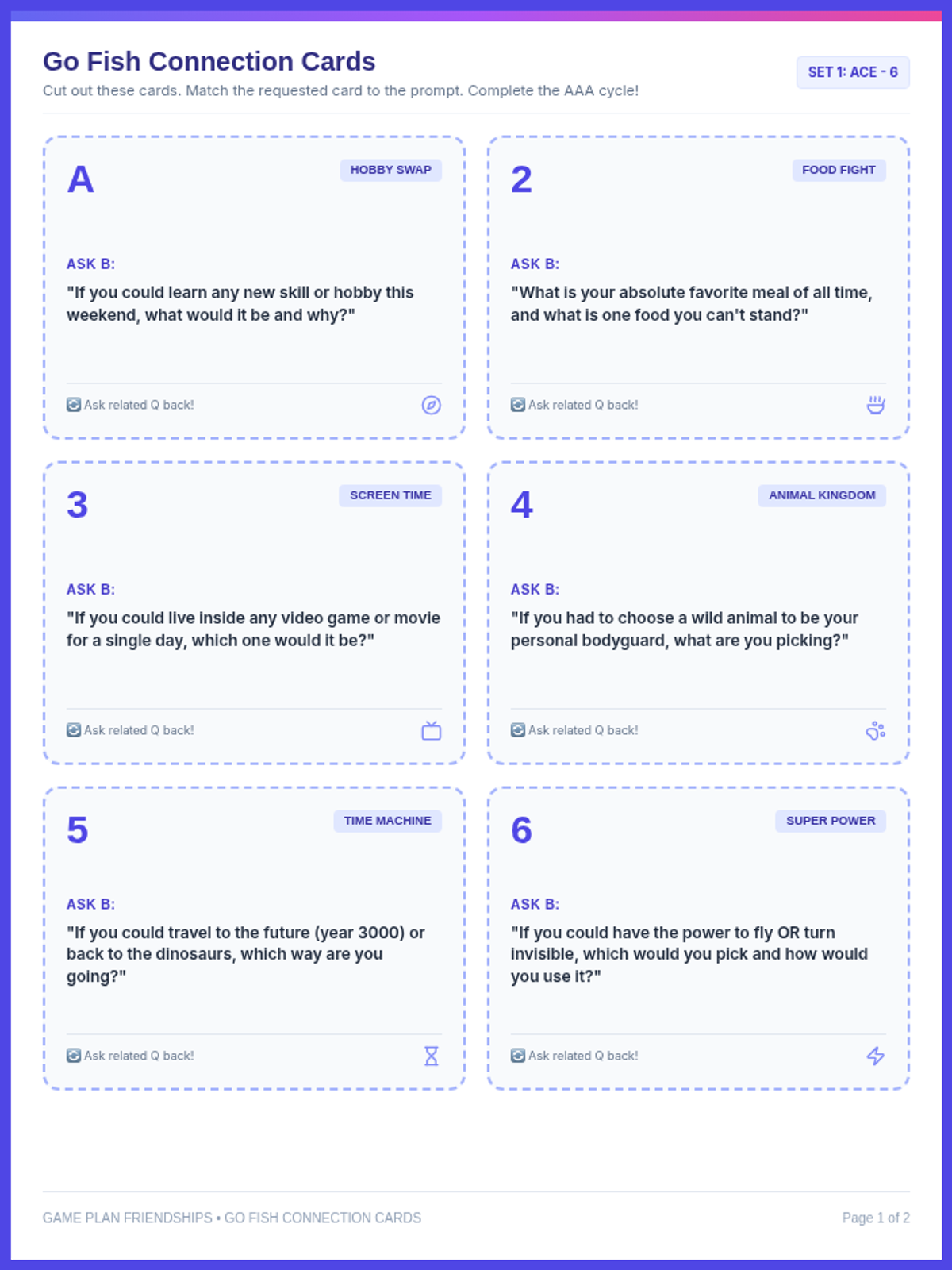
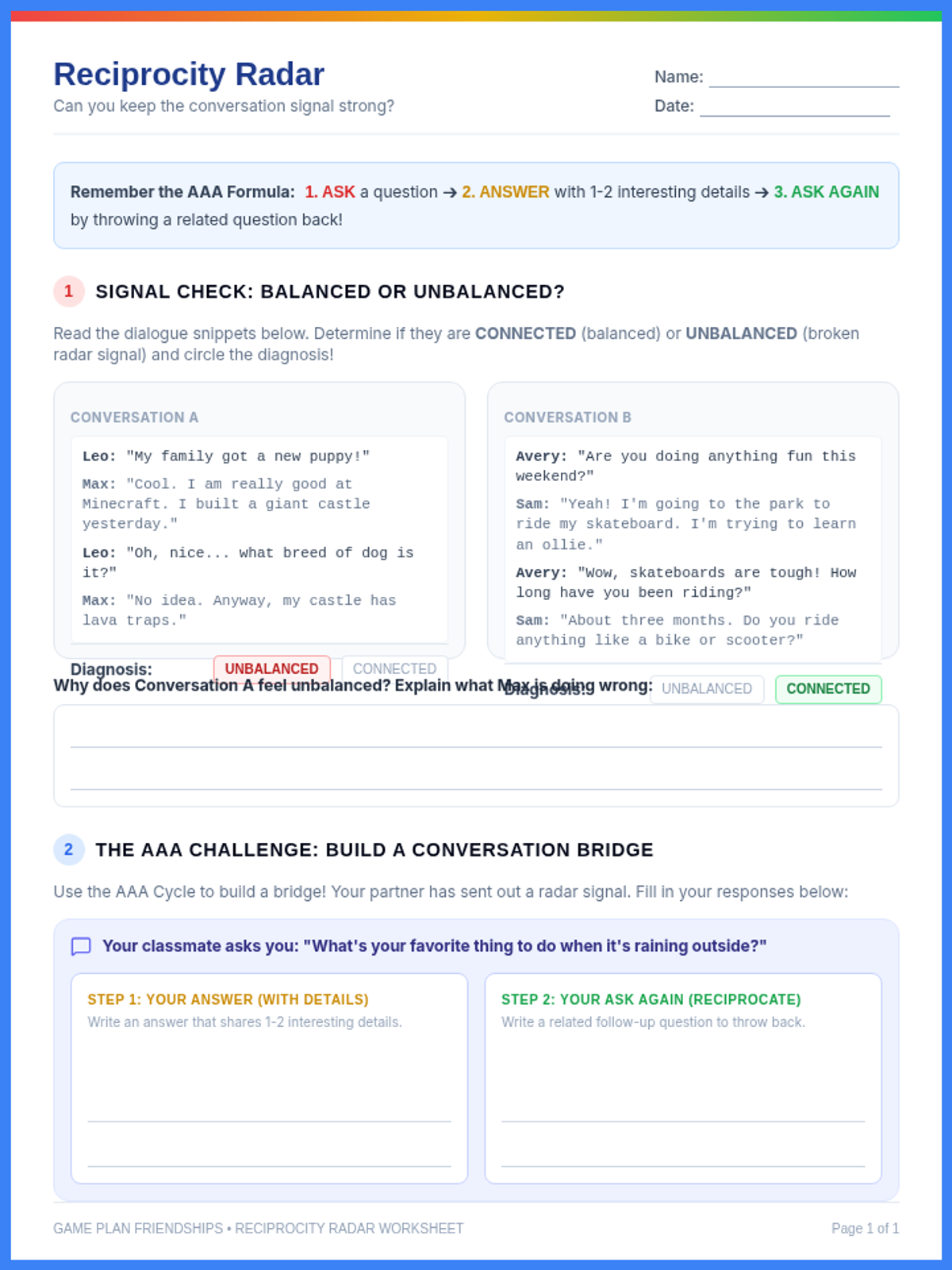
Students master conversation turn-taking and reciprocating by playing "Go Fish Connection," where asking for matches triggers targeted questions.
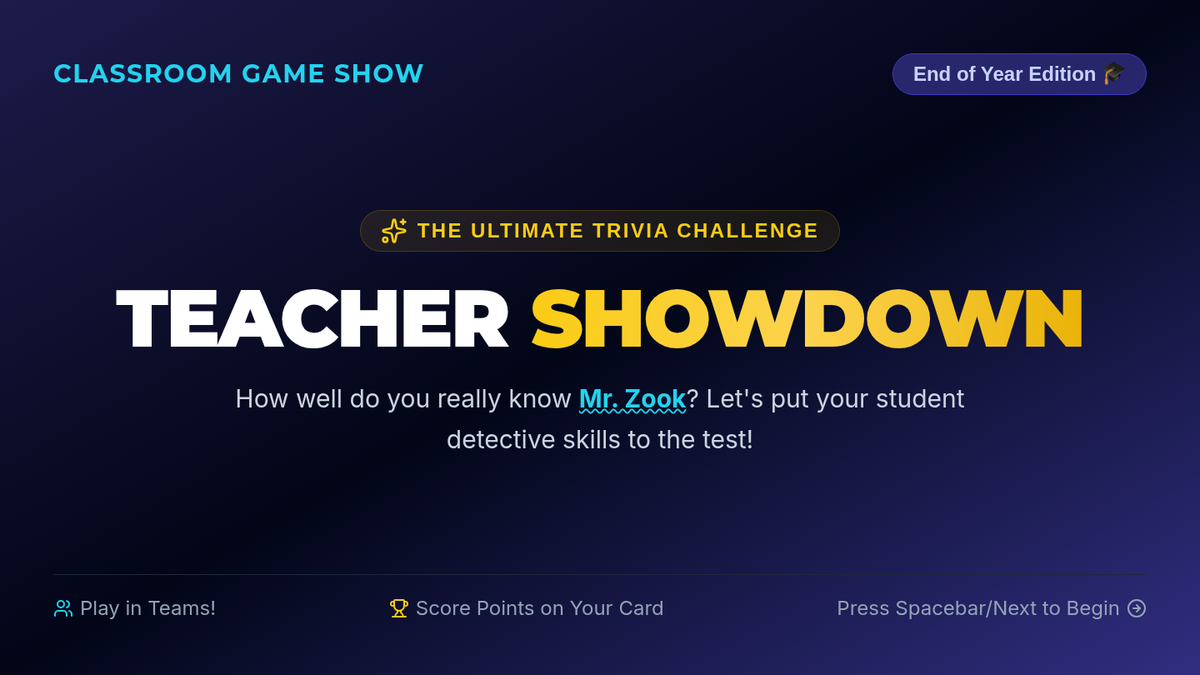
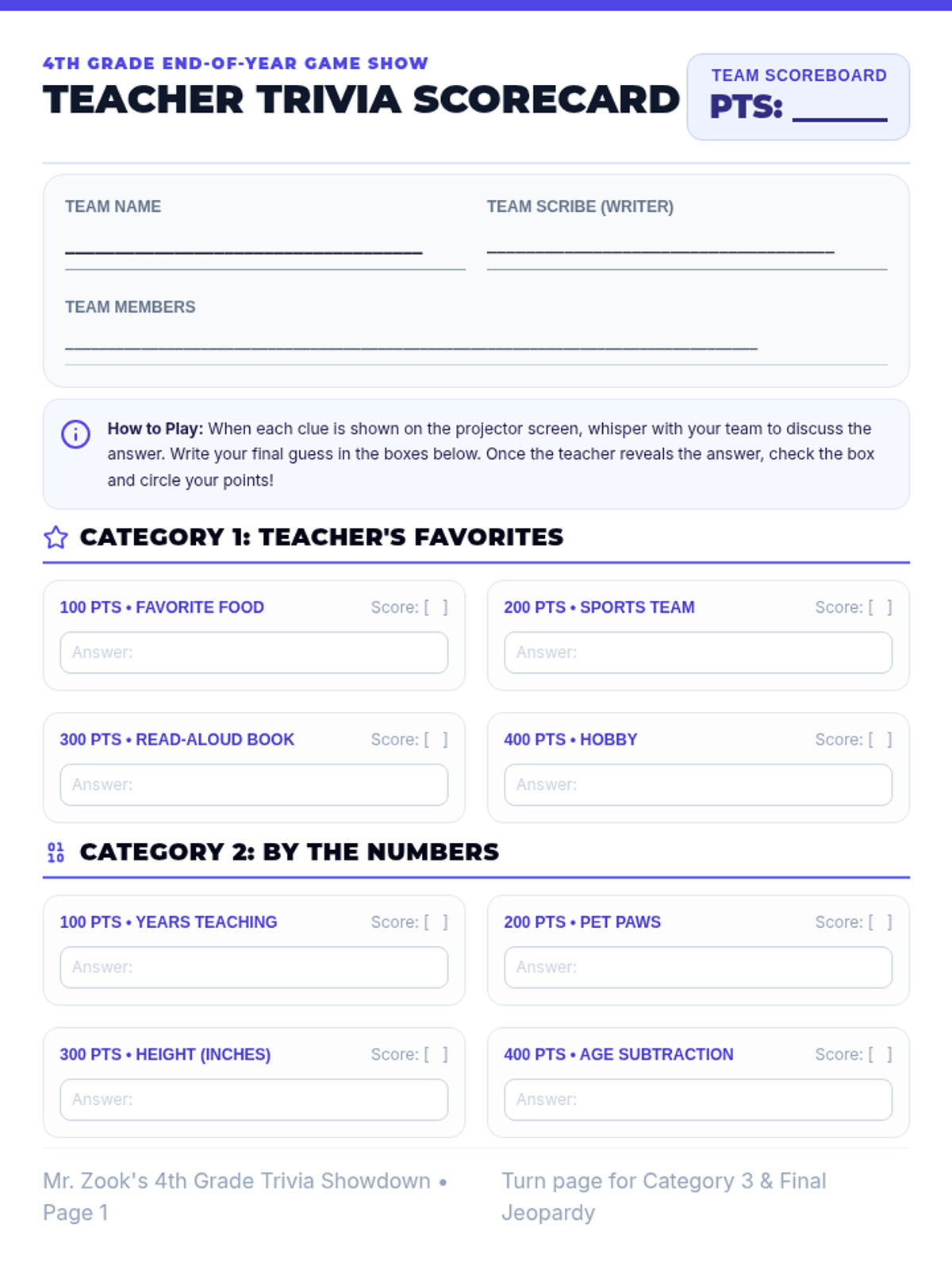
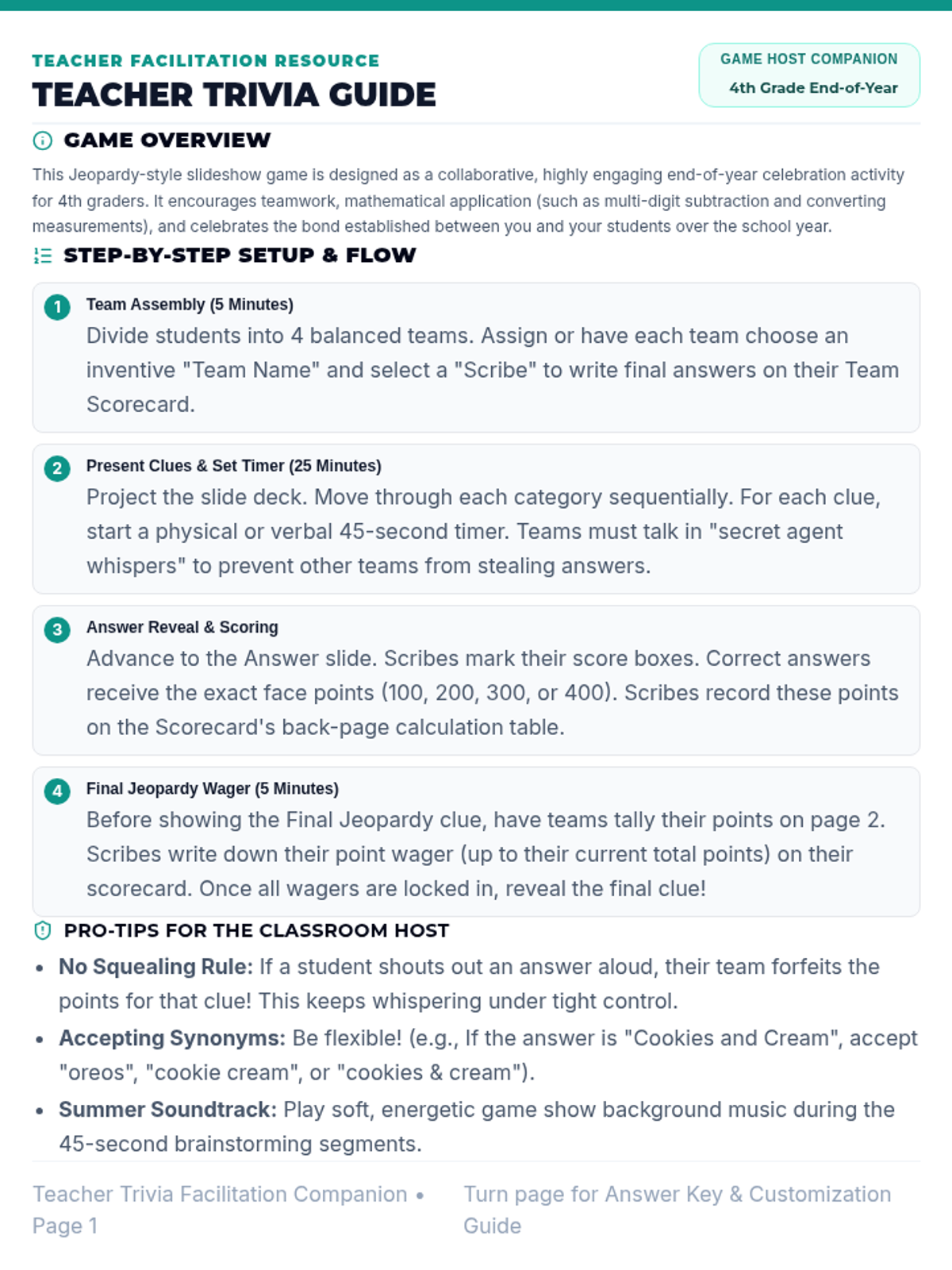
An exciting end-of-year Jeopardy-style game designed for 4th graders to test how well they know their teacher. Includes trivia categories on favorites, math-themed teacher numbers, and mysterious childhood facts.
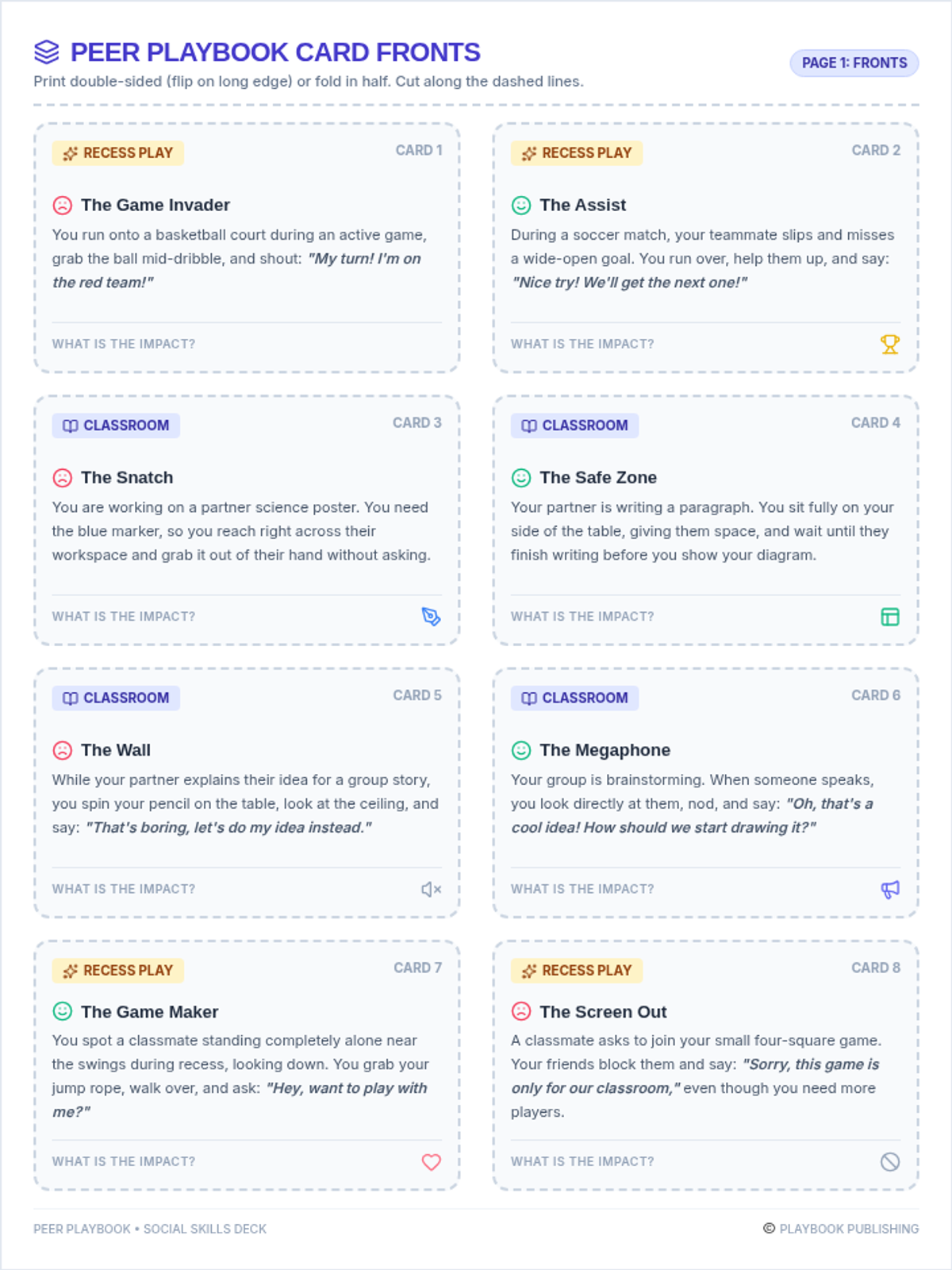
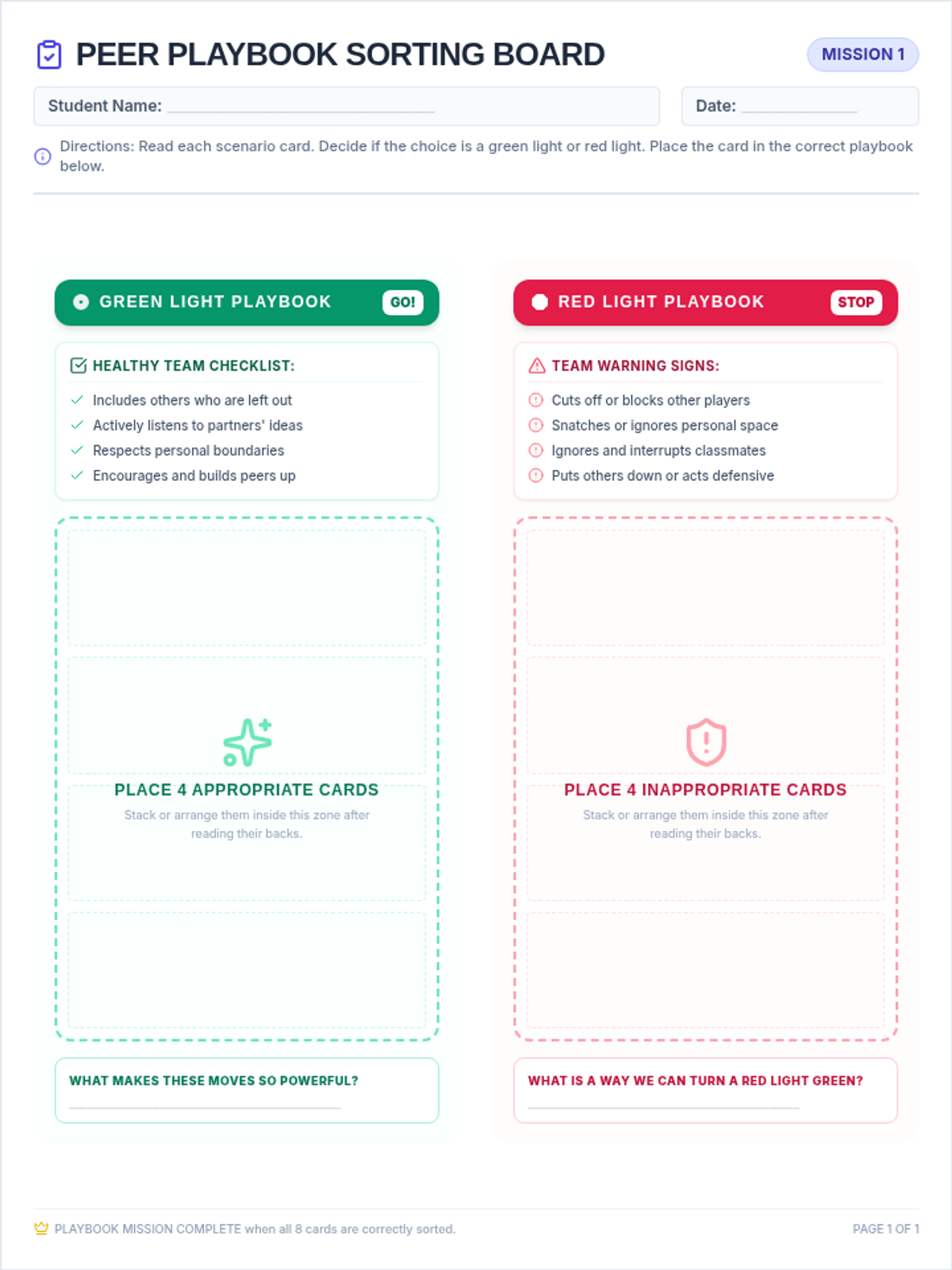
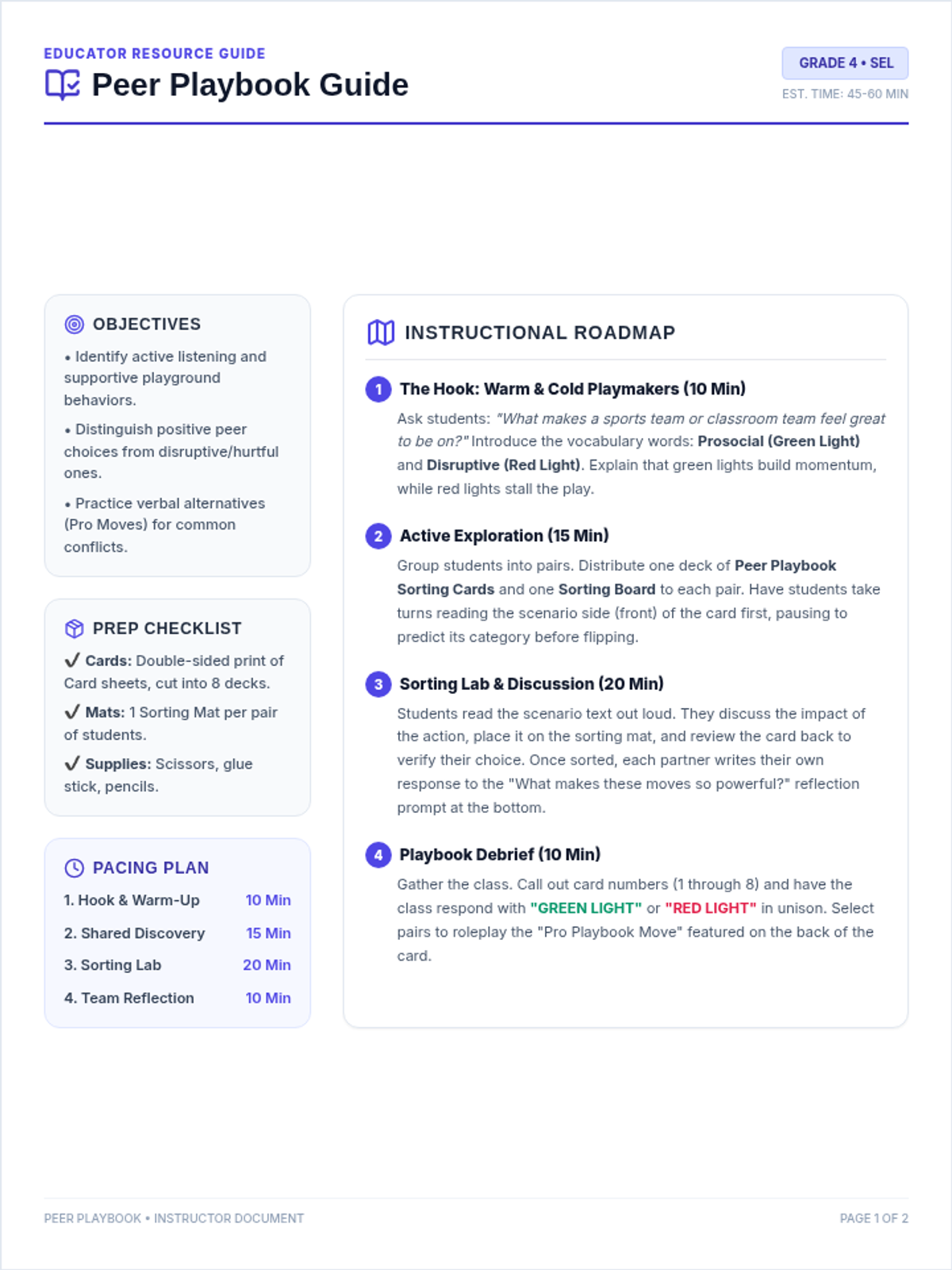
A highly interactive, hands-on lesson designed for 4th graders to distinguish between supportive, positive peer behaviors and disruptive or hurtful interactions. Students use sorting cards, discussion mats, and reflective prompts to build empathy and concrete communication skills for the playground and classroom.
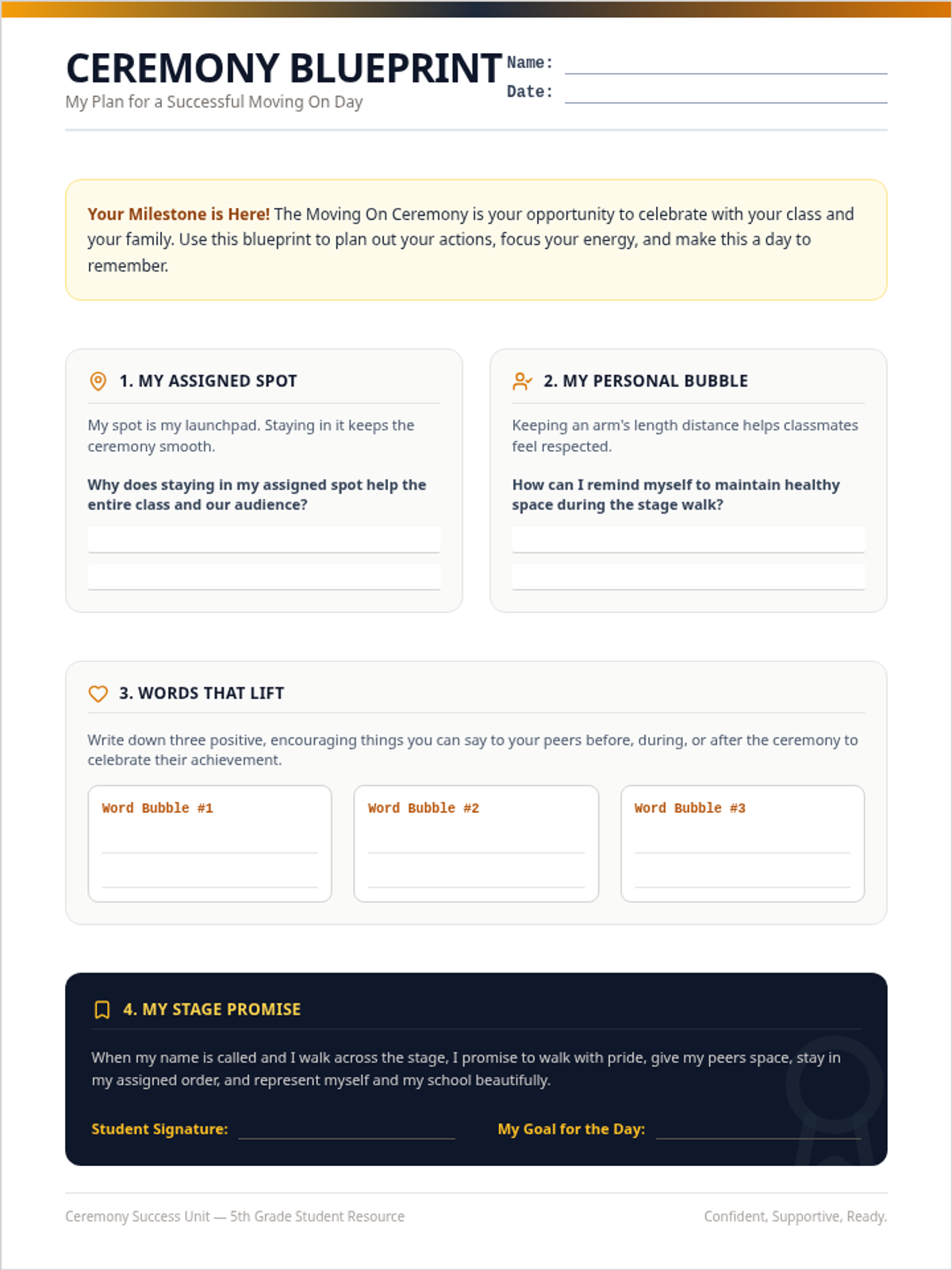
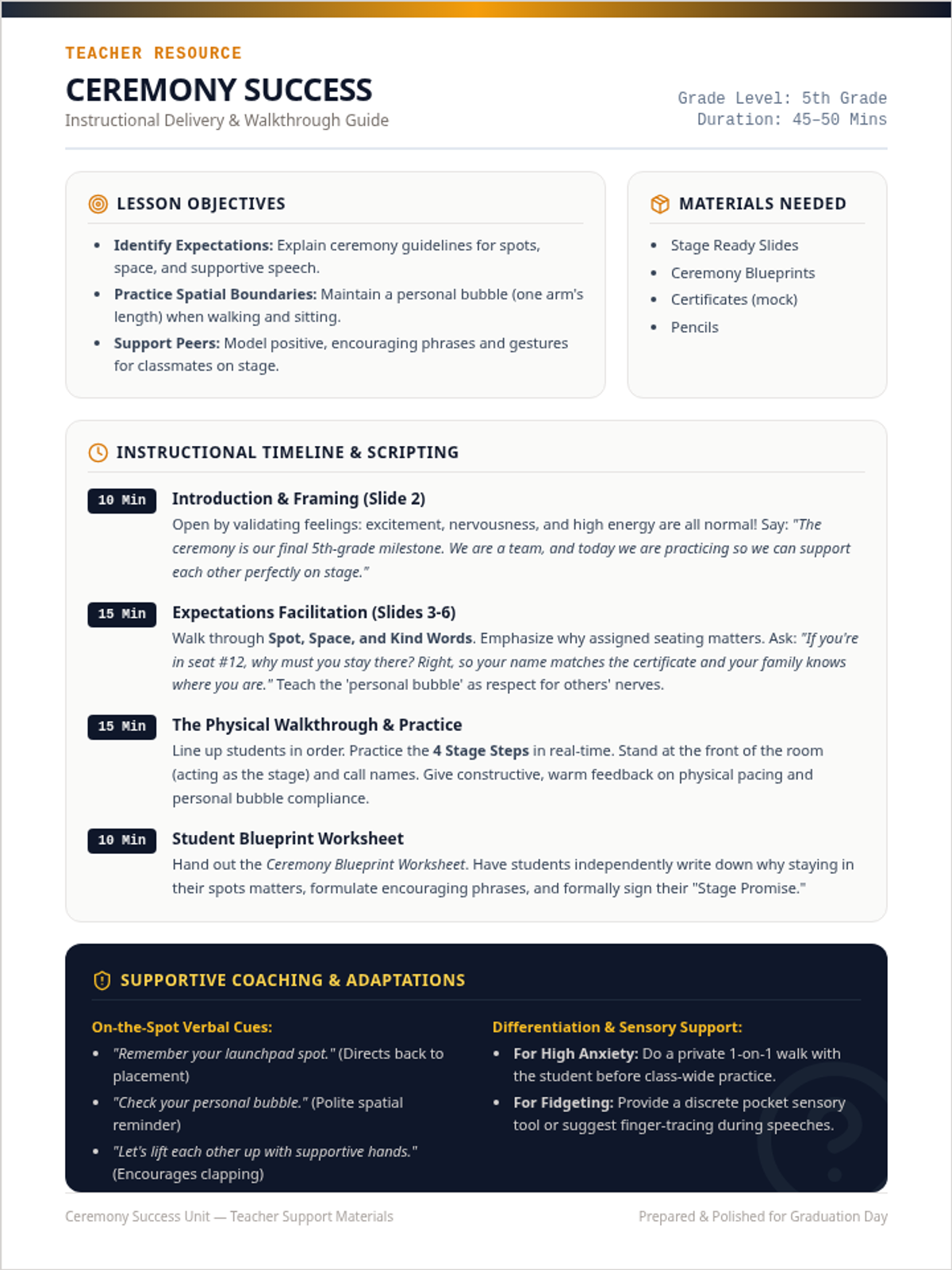
A structured preparation lesson designed to help 5th-grade students understand the transition, routines, and behavioral expectations of their upcoming moving on ceremony.
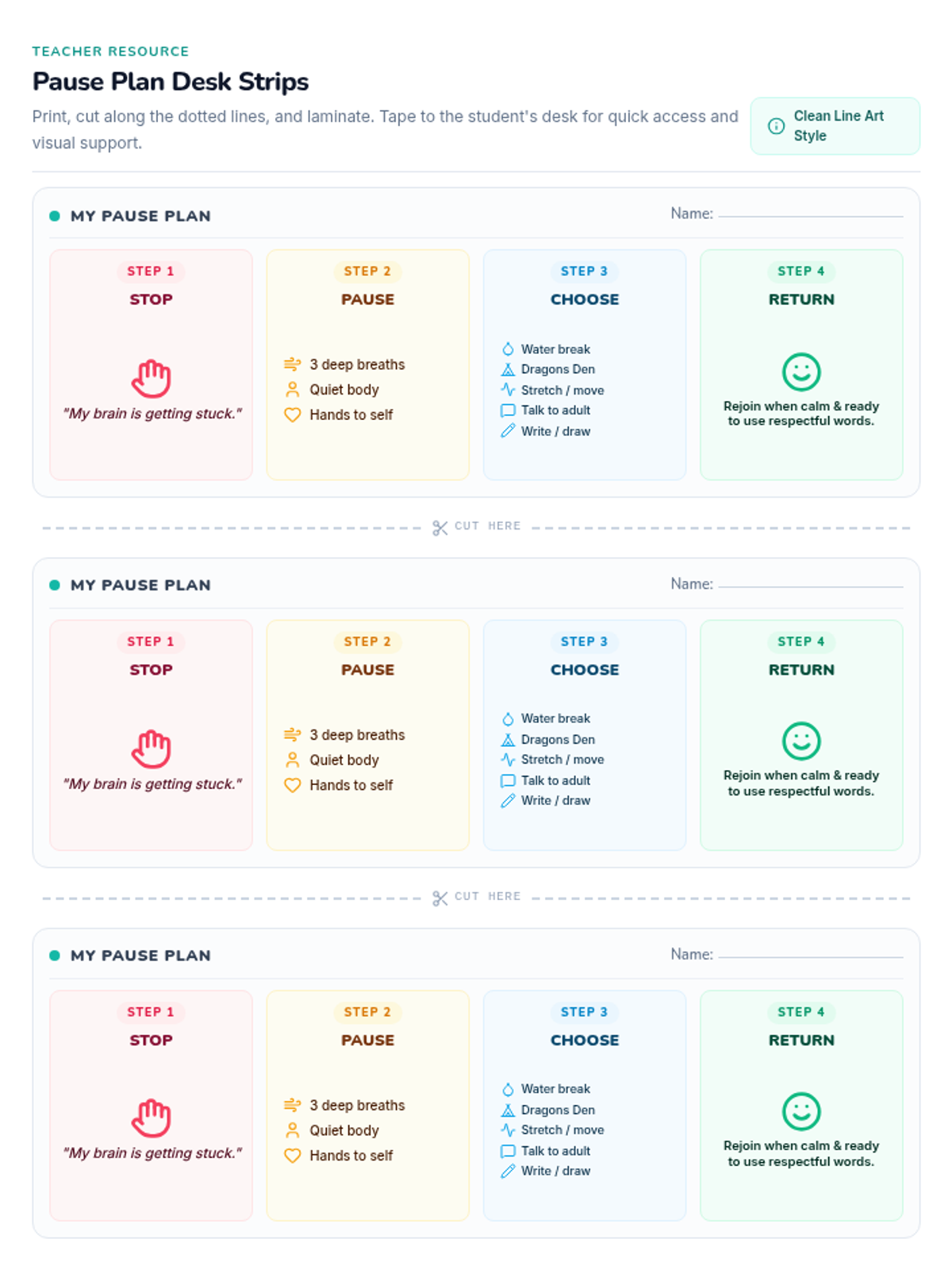
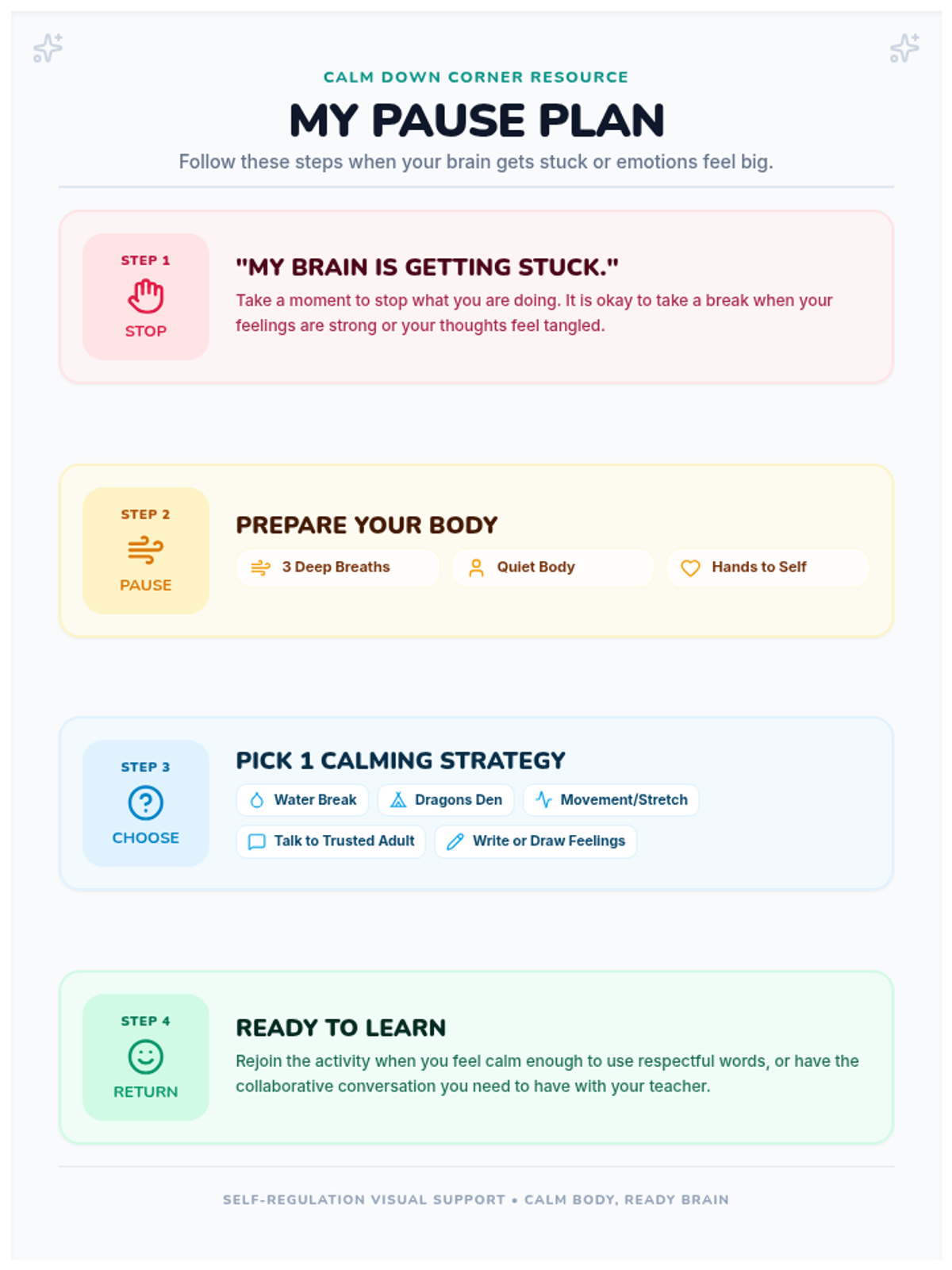
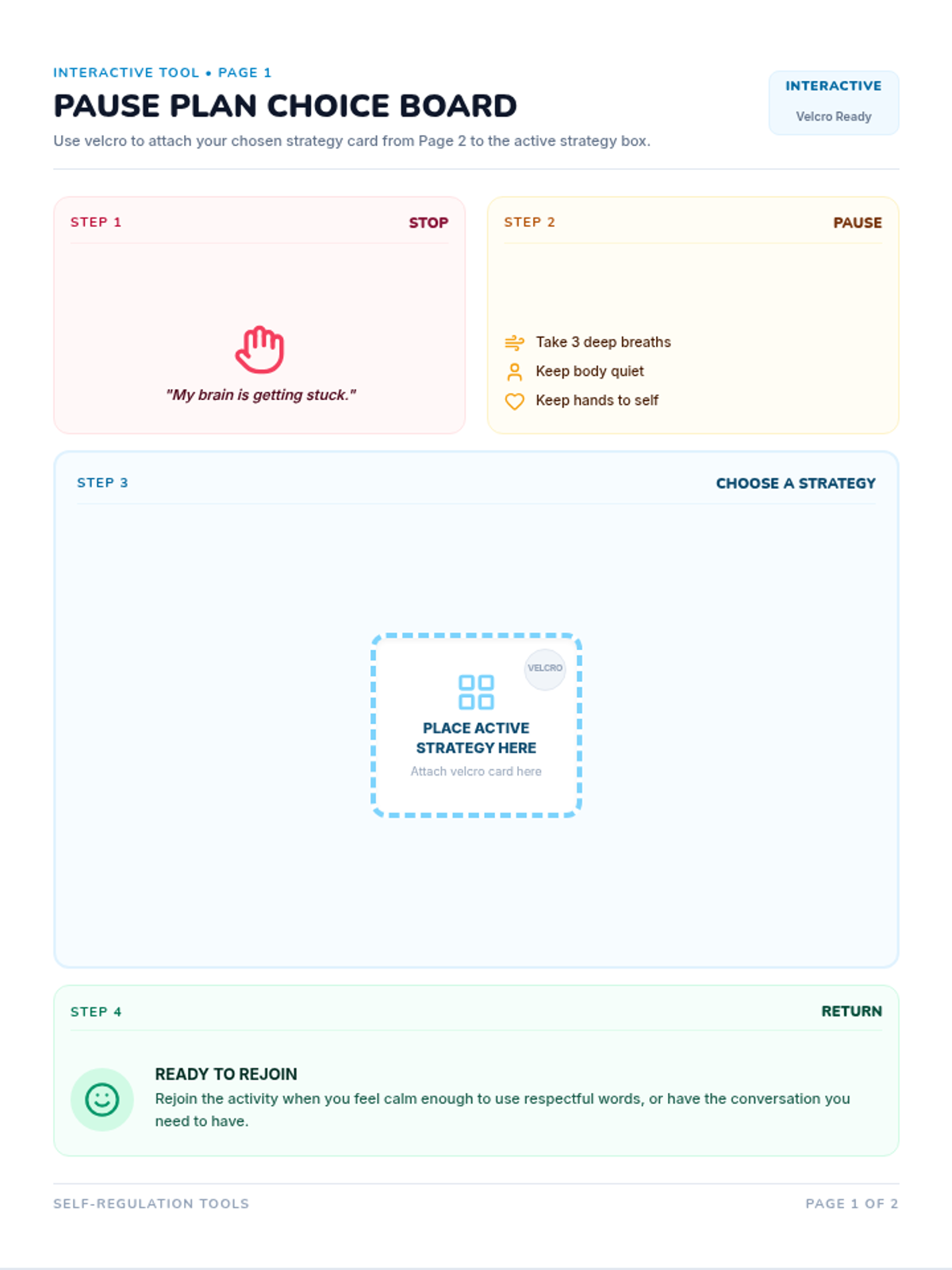
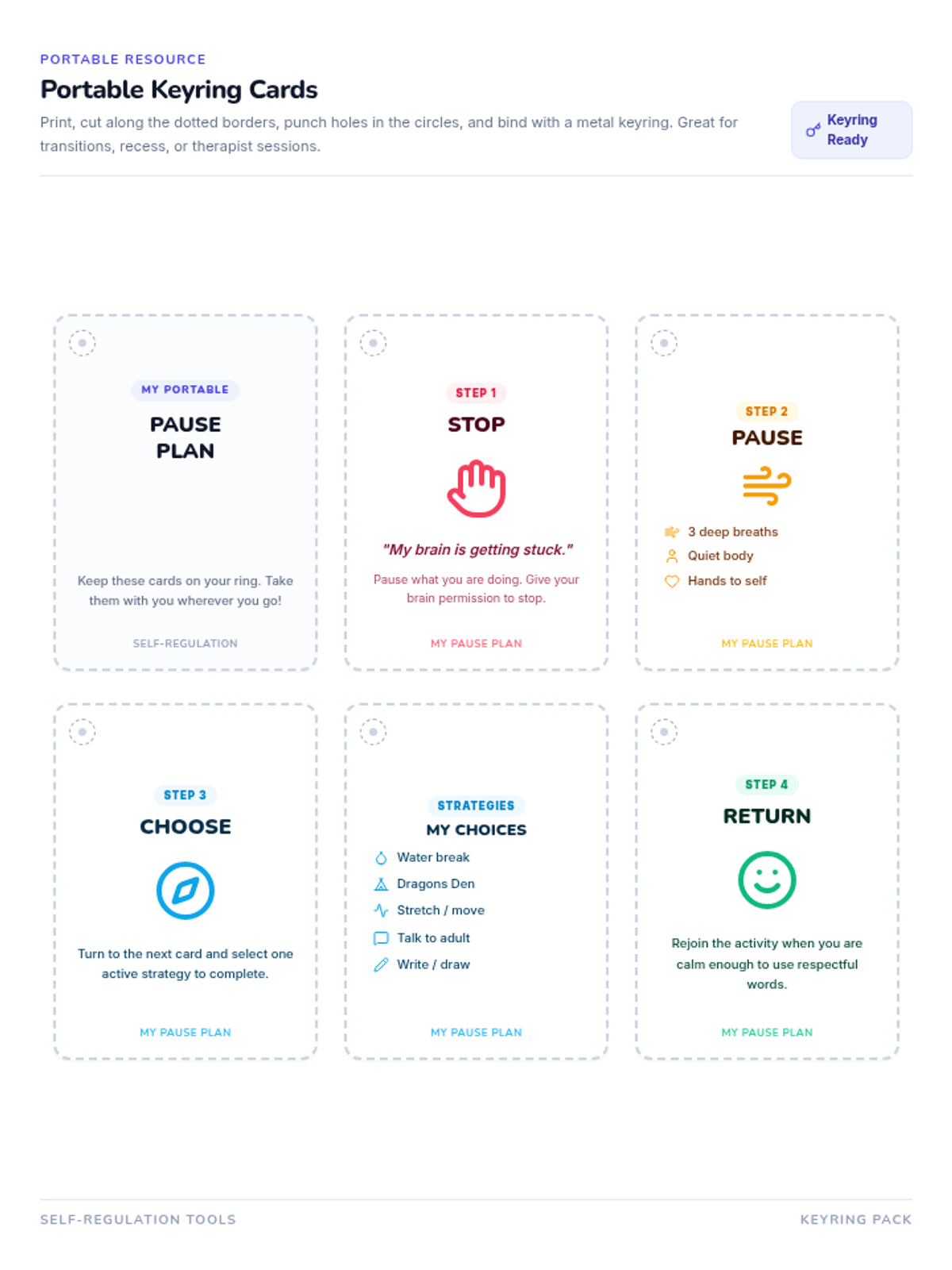
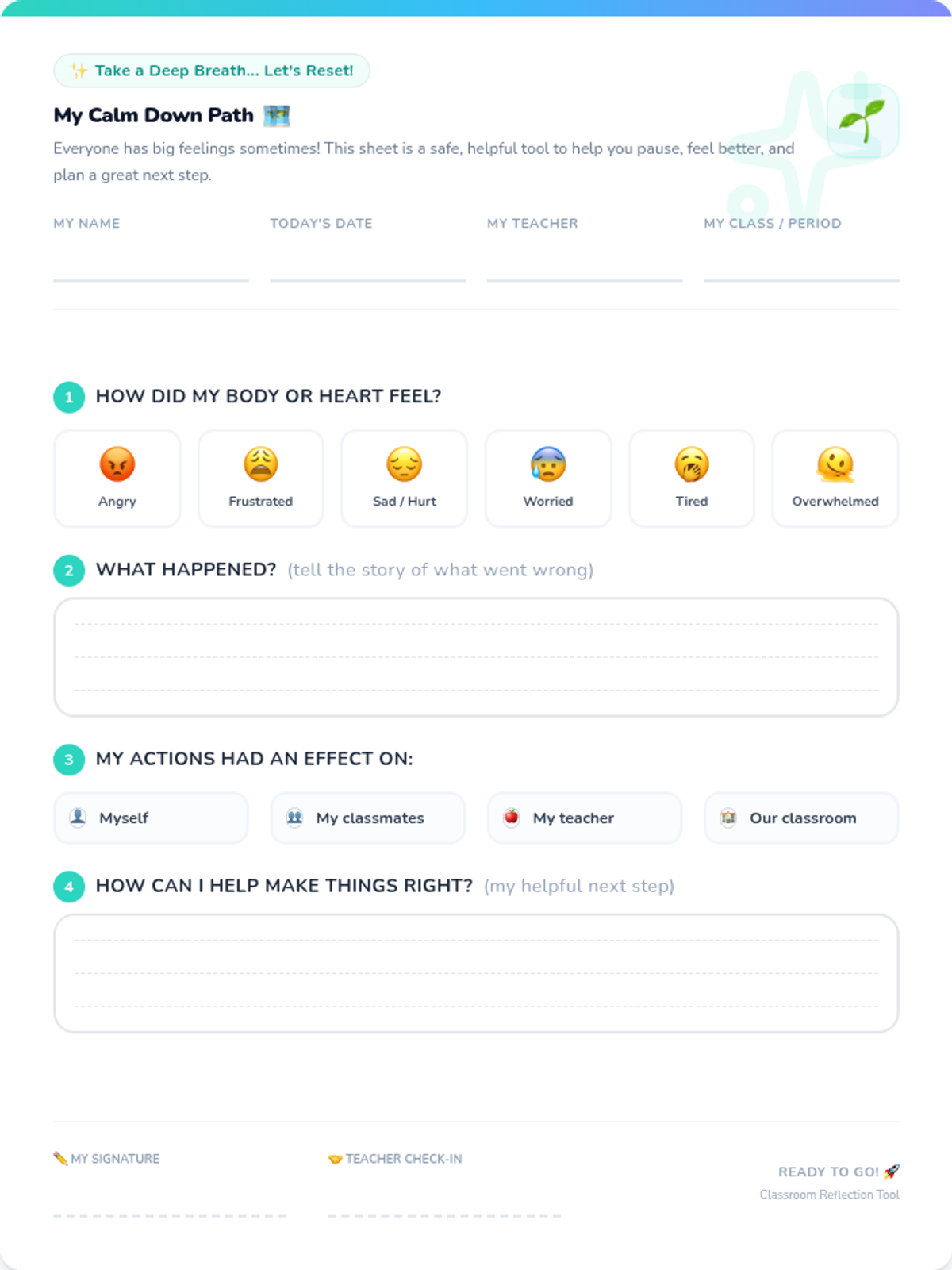
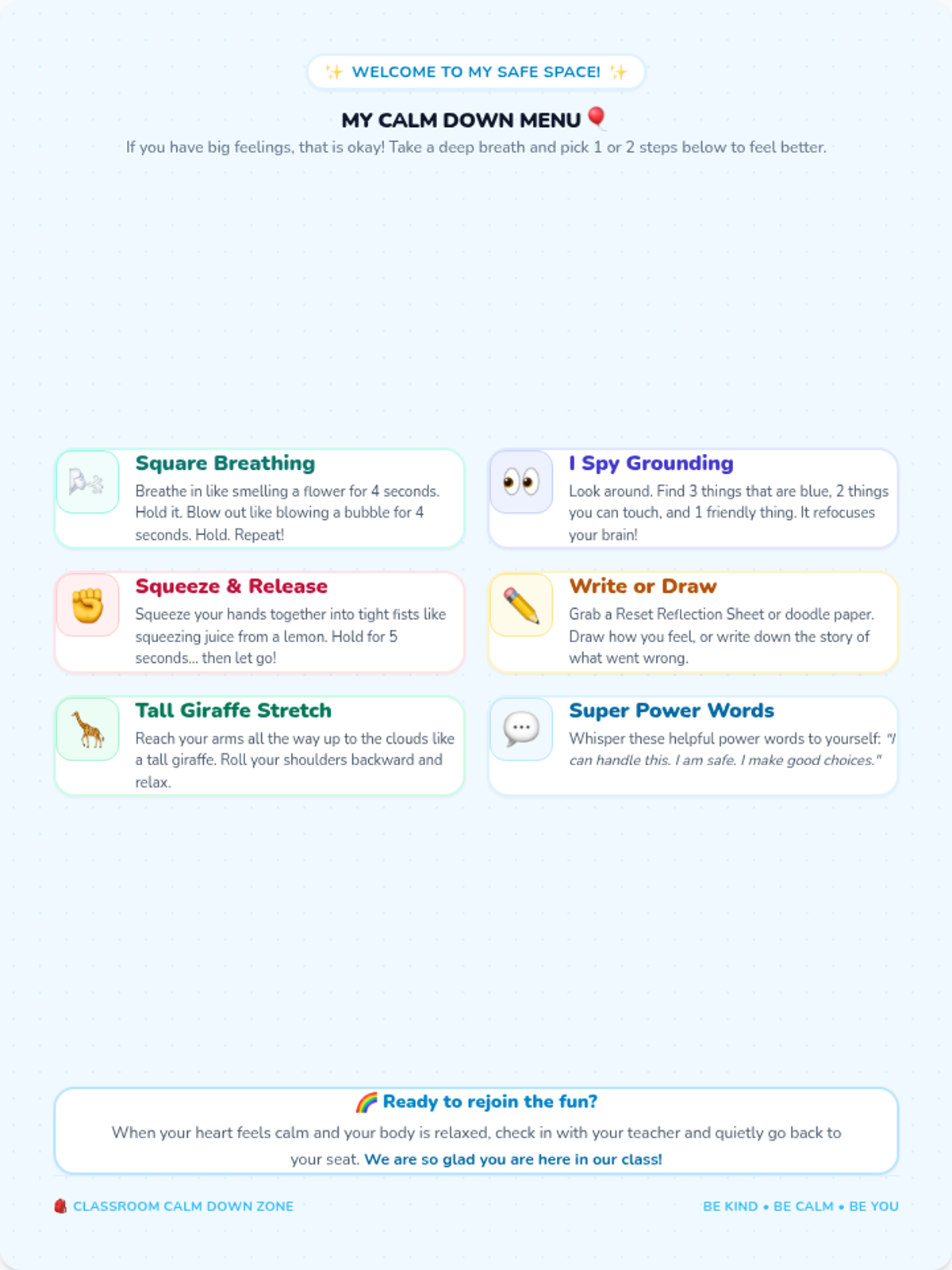
A collection of visual support tools and plans designed to help students self-regulate, manage big emotions, and transition back to learning.
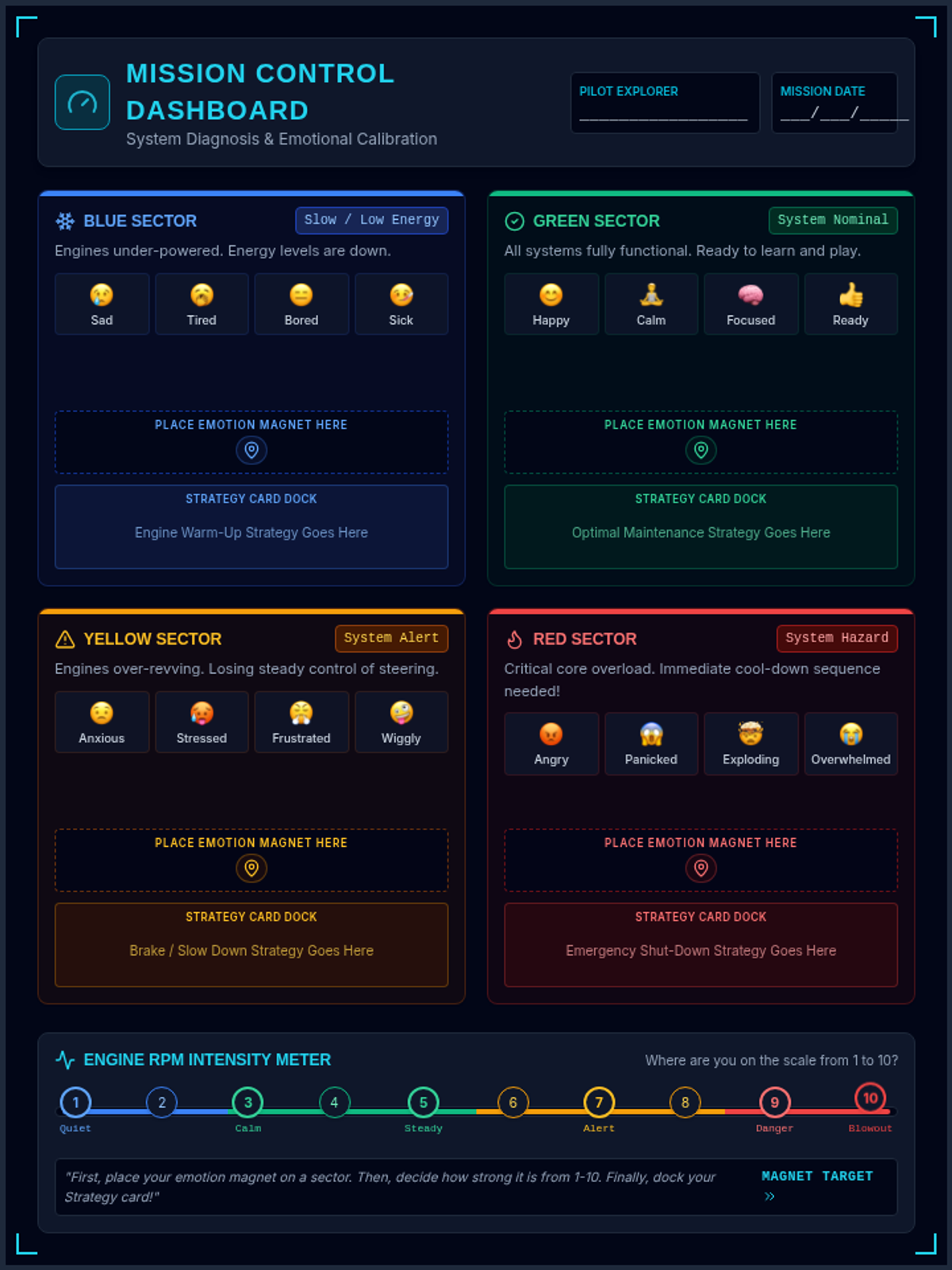
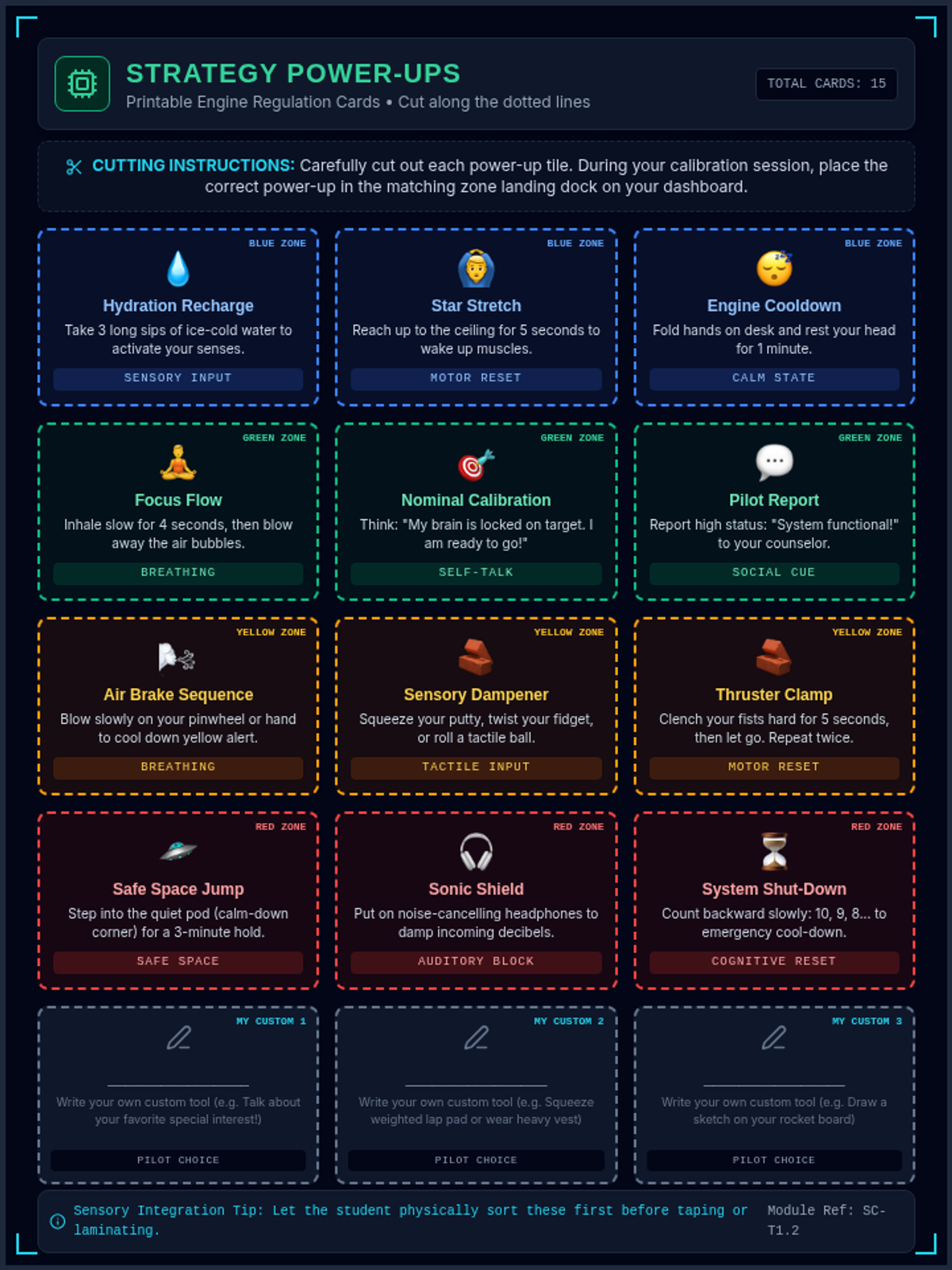
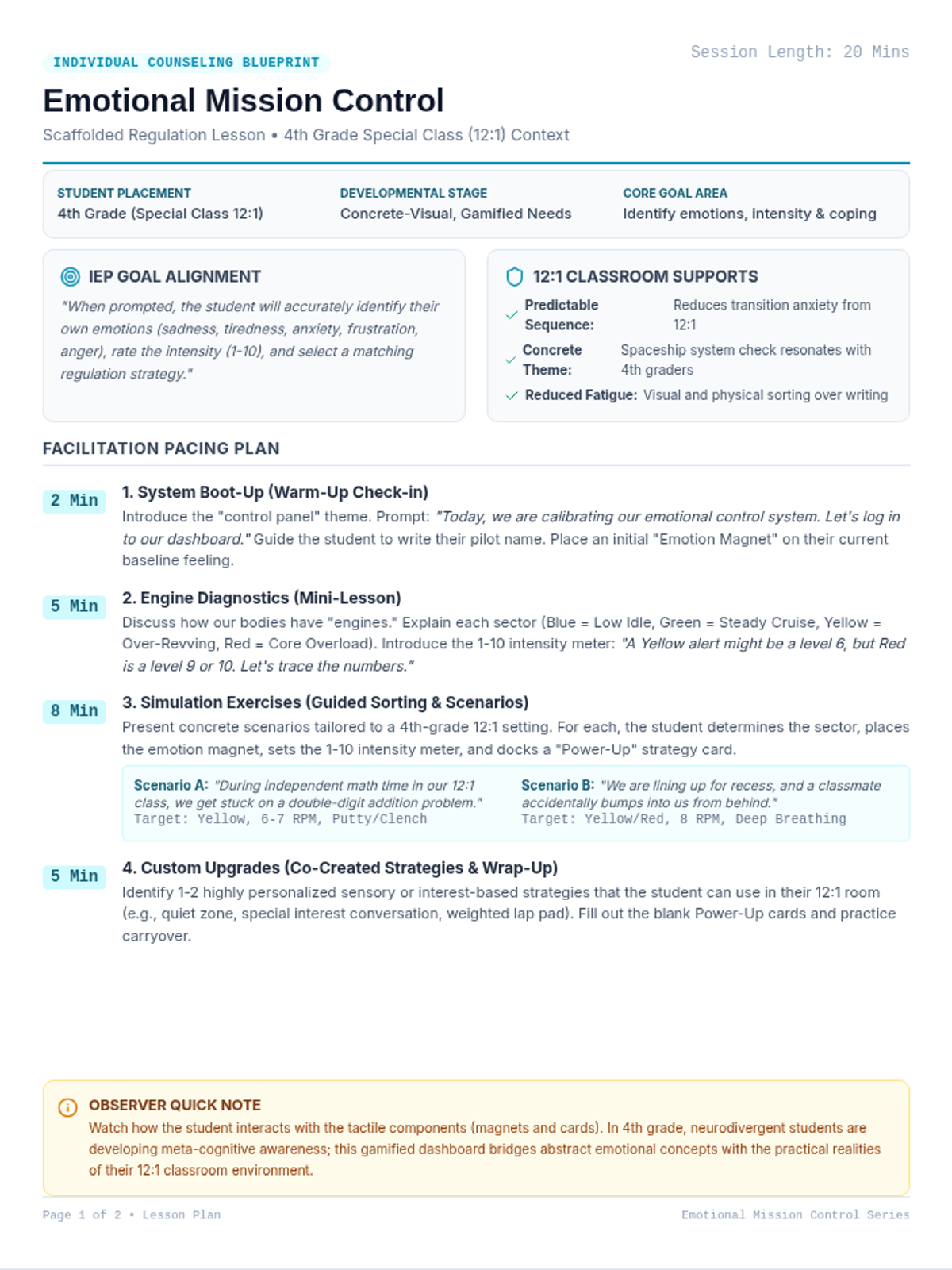
An individual counseling lesson aligned with the Zones of Regulation, designed for neurodivergent students (specifically on the autism spectrum). Includes an interactive student dashboard, strategy sorting cards, and a detailed session guide with an administrator observation rubrics.
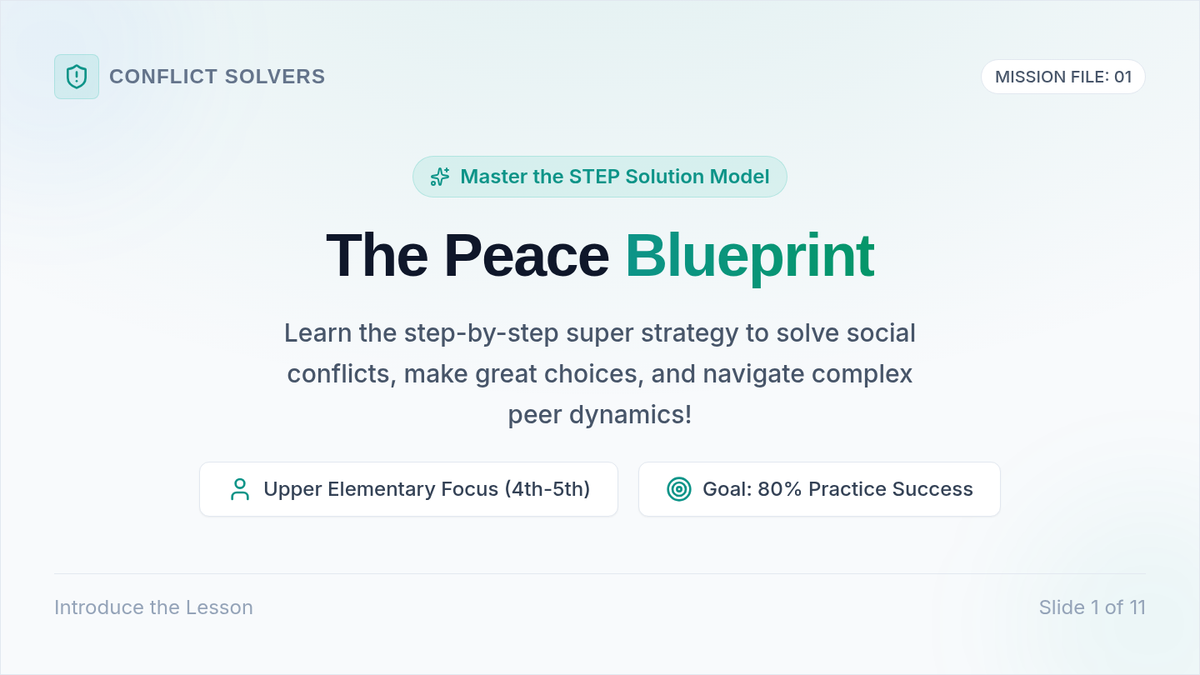
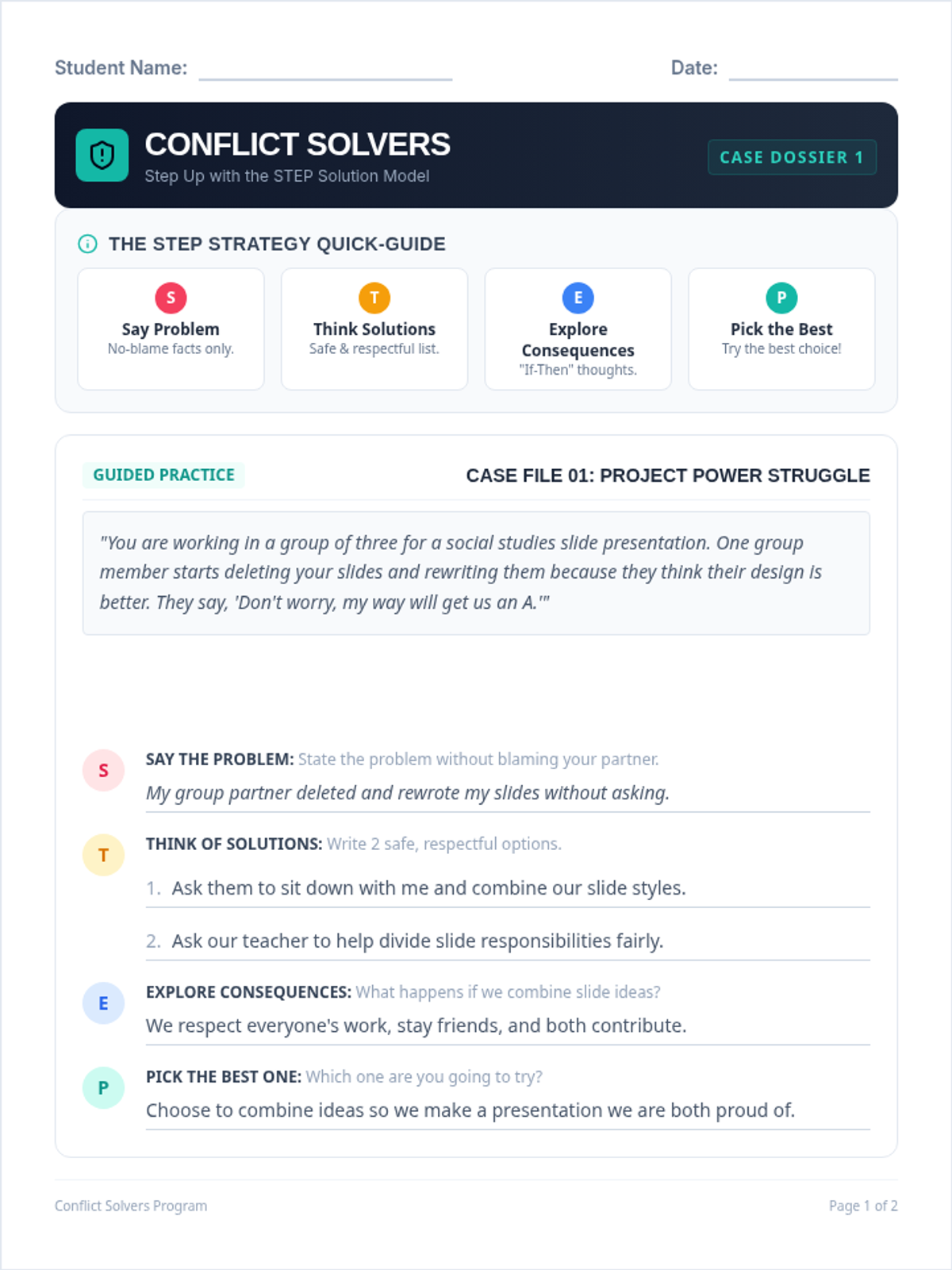
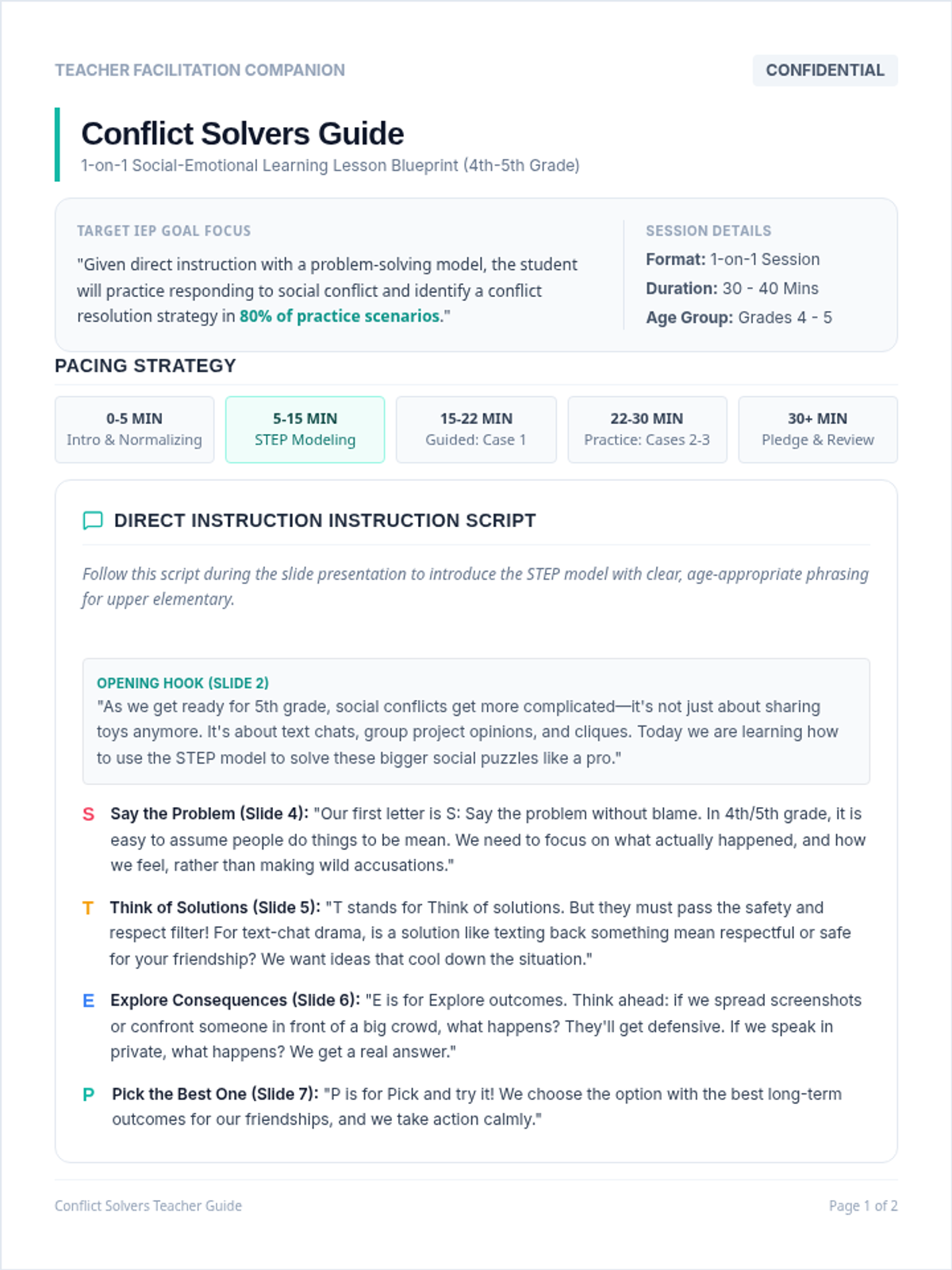
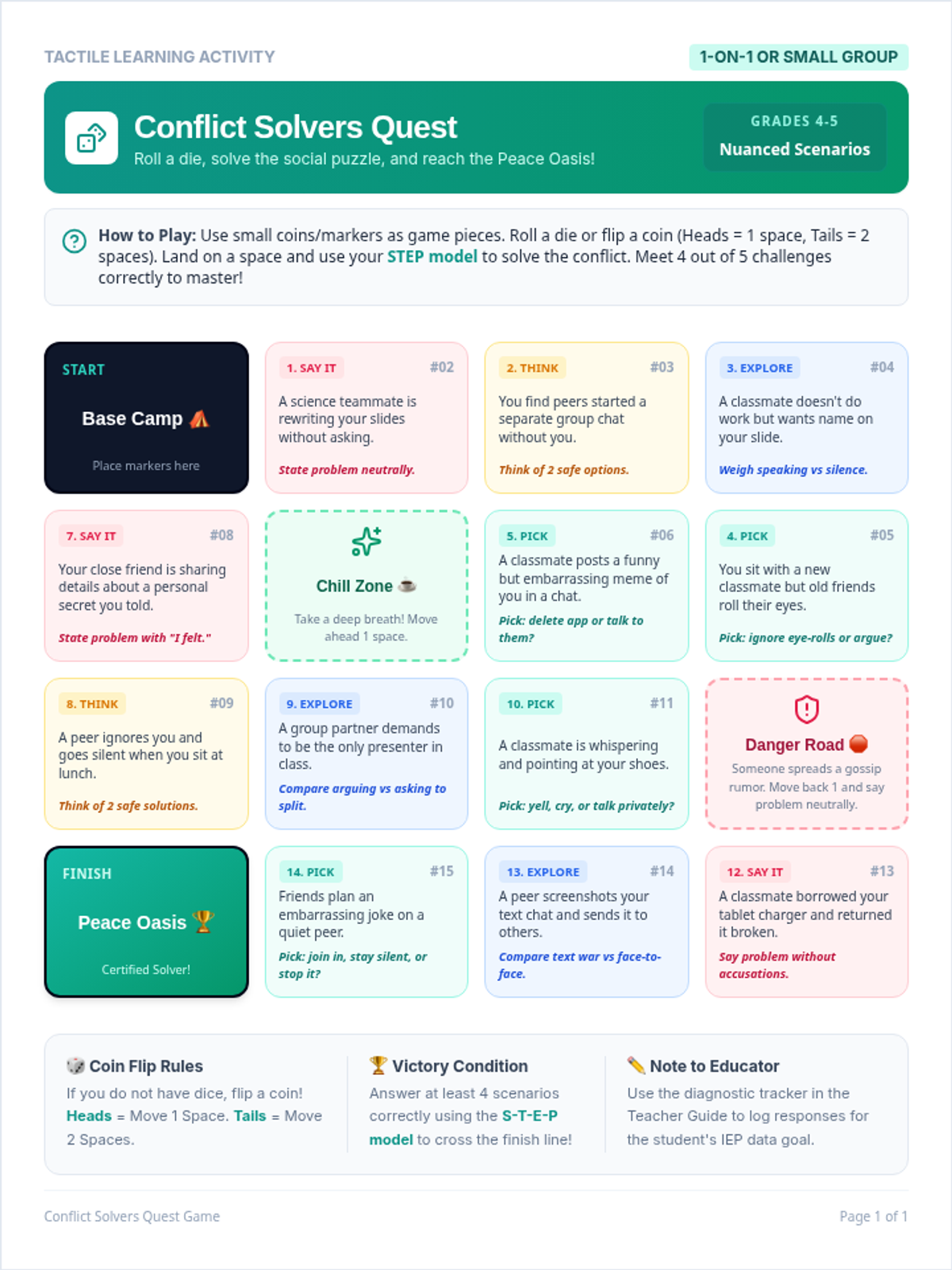
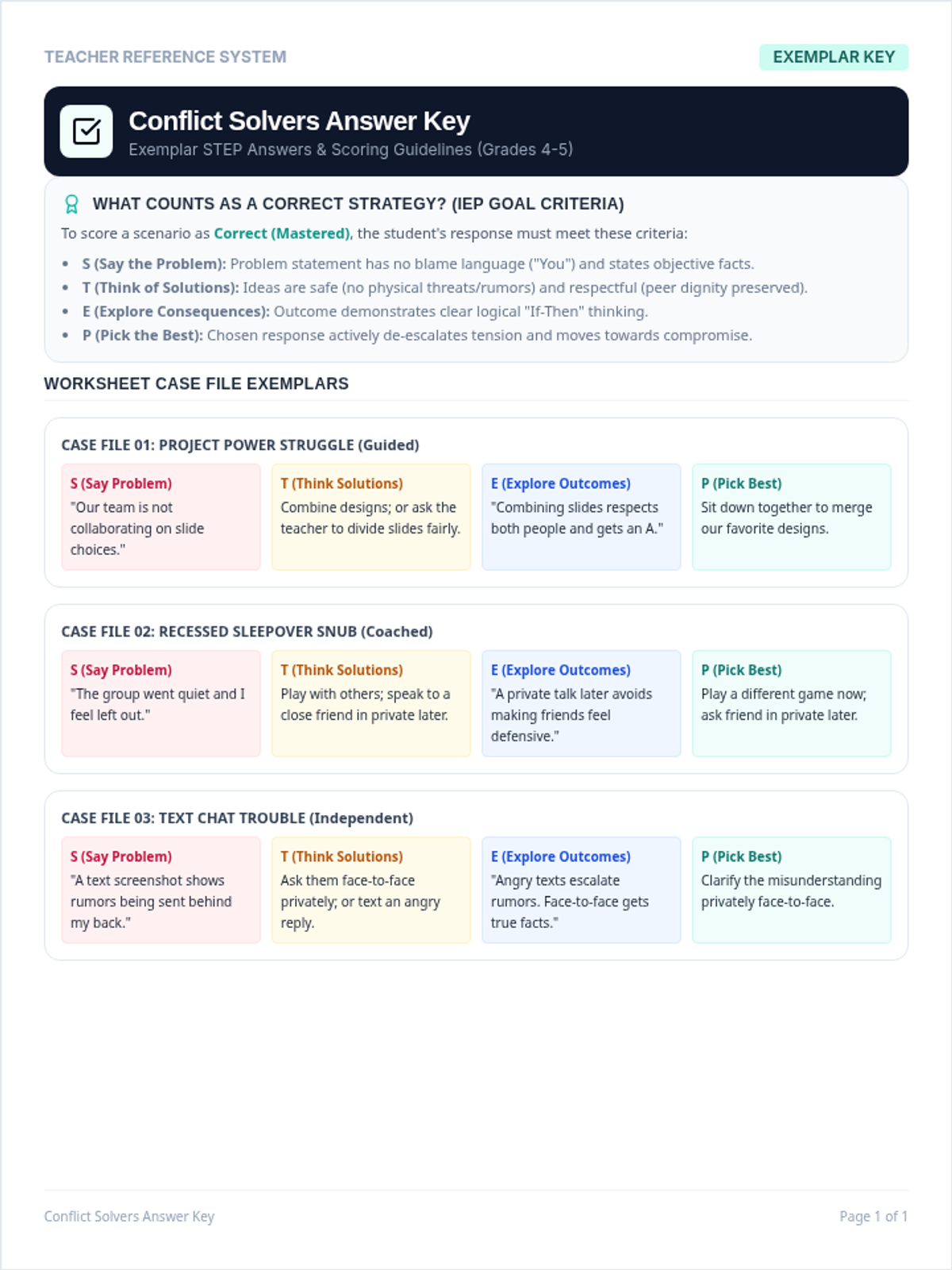
A structured social-emotional learning lesson introducing the STEP model for conflict resolution. Students learn to define problems, brainstorm solutions, weigh consequences, and select positive resolutions through interactive scenarios.
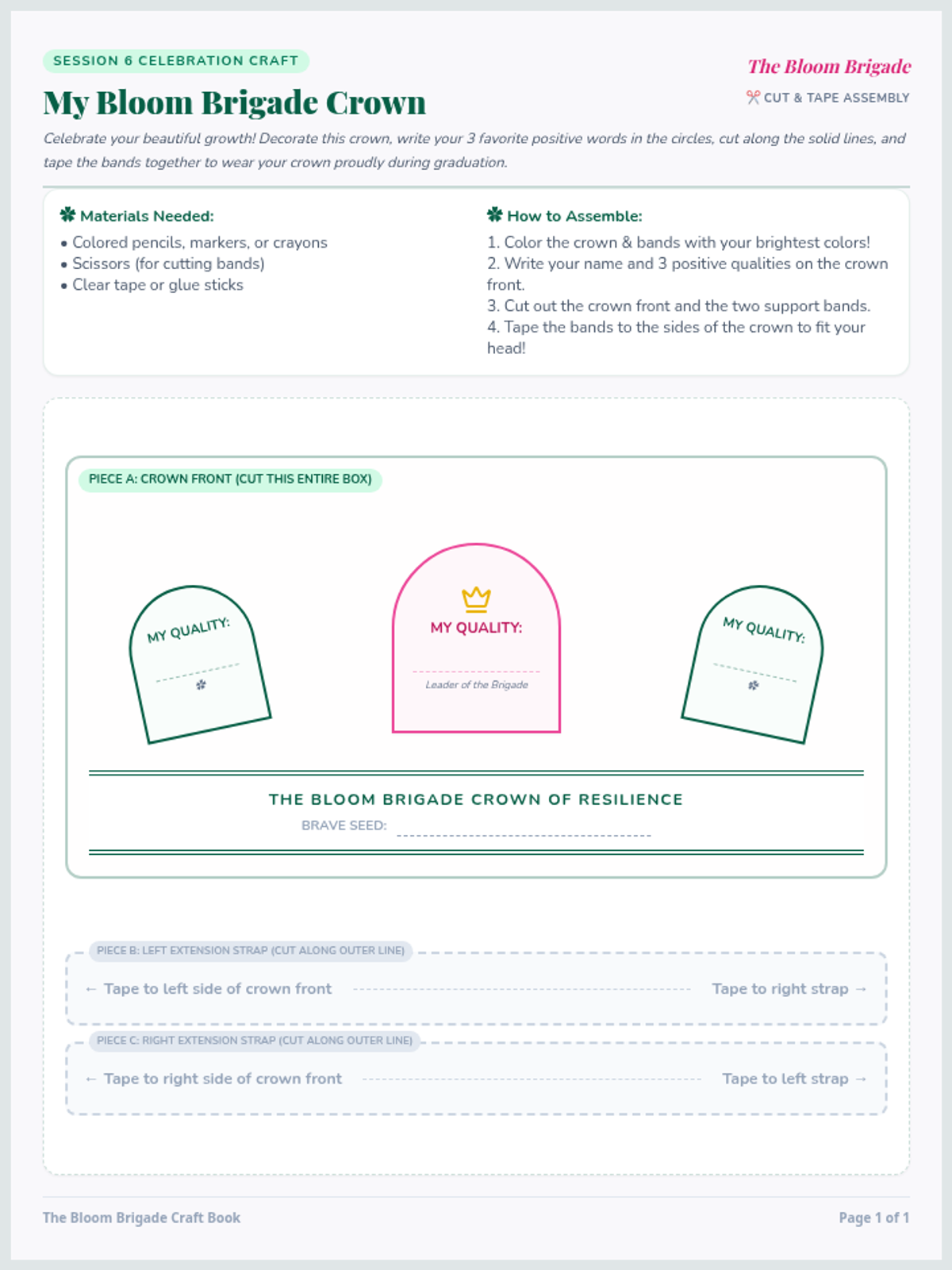
The final graduation and celebration session where girls assemble their 'Bloom Brigade Crown' and receive graduation certificates, celebrating their journey and resilience.
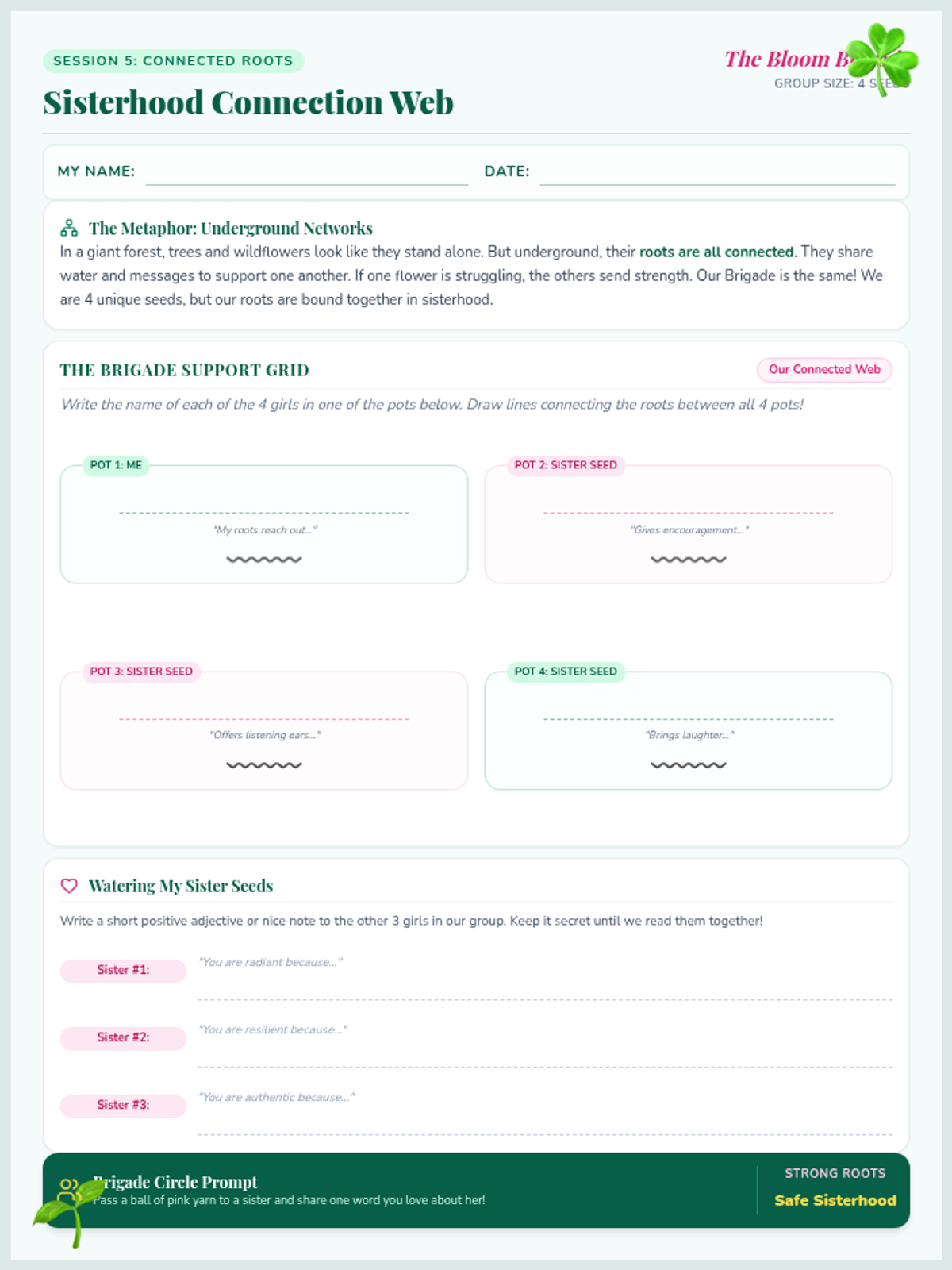
Focuses on developing peer support and positive relationships. Girls explore peer encouragement and create a shared 'sisterhood connection web' that shows how they support one another.
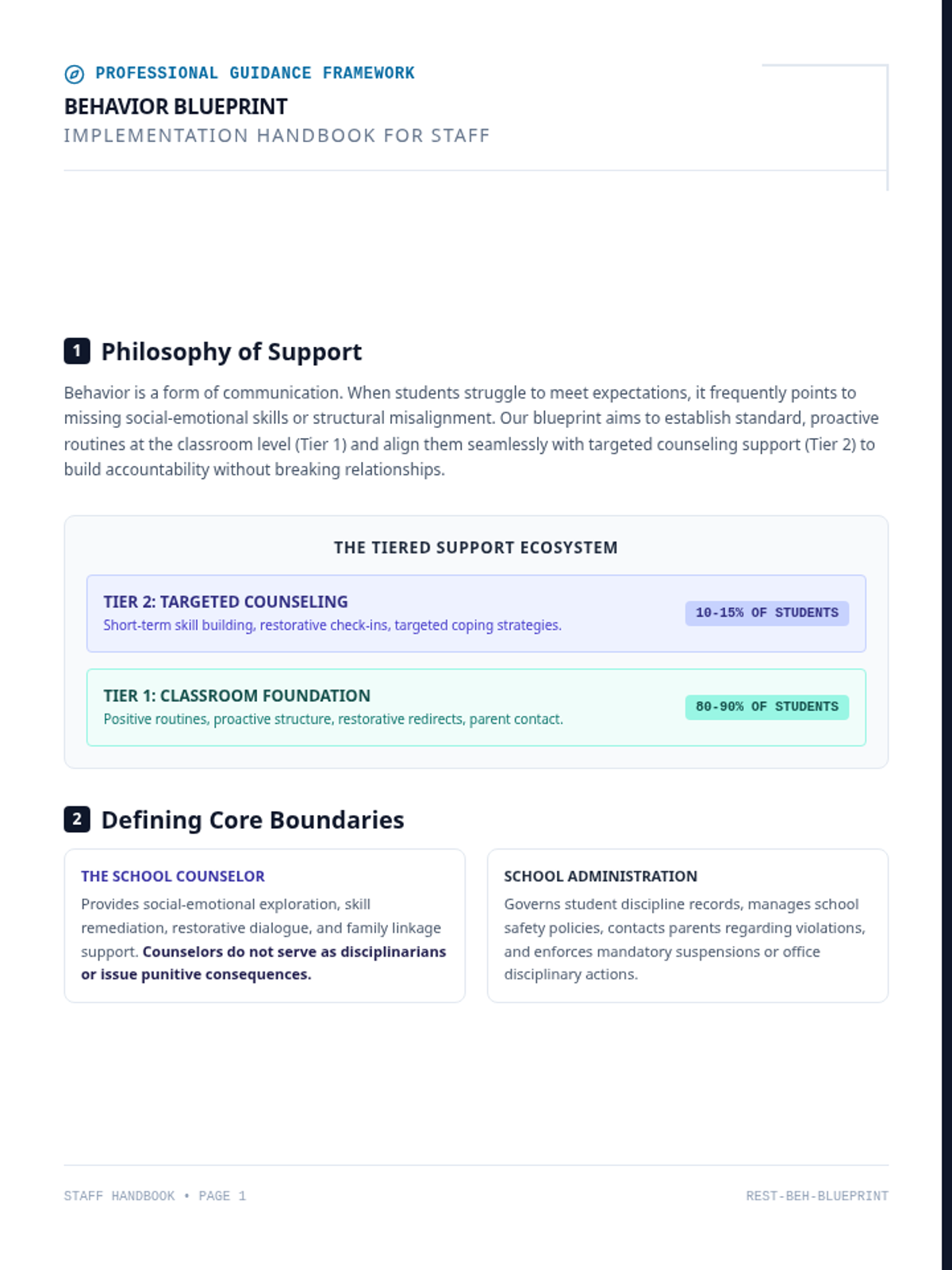
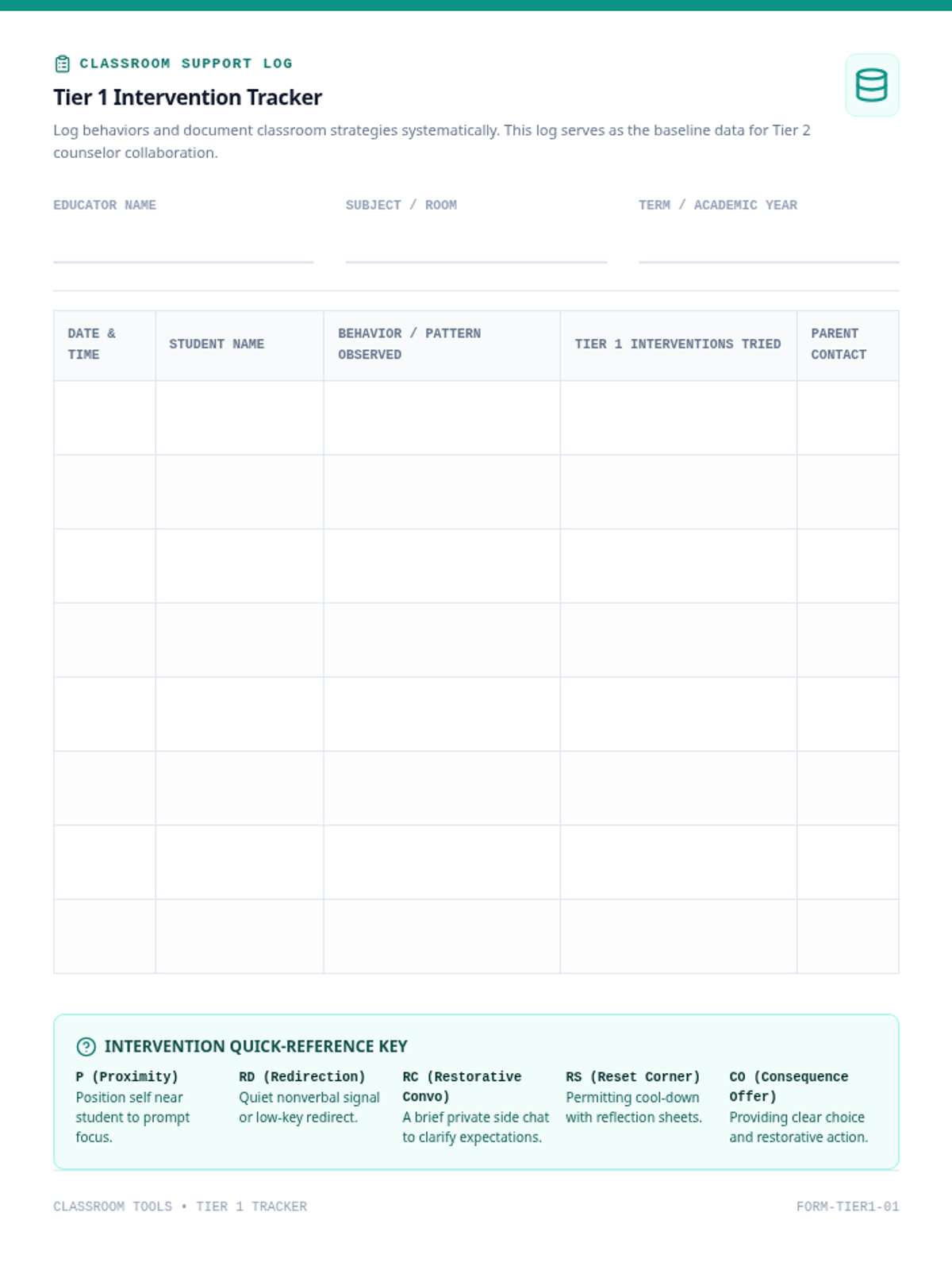
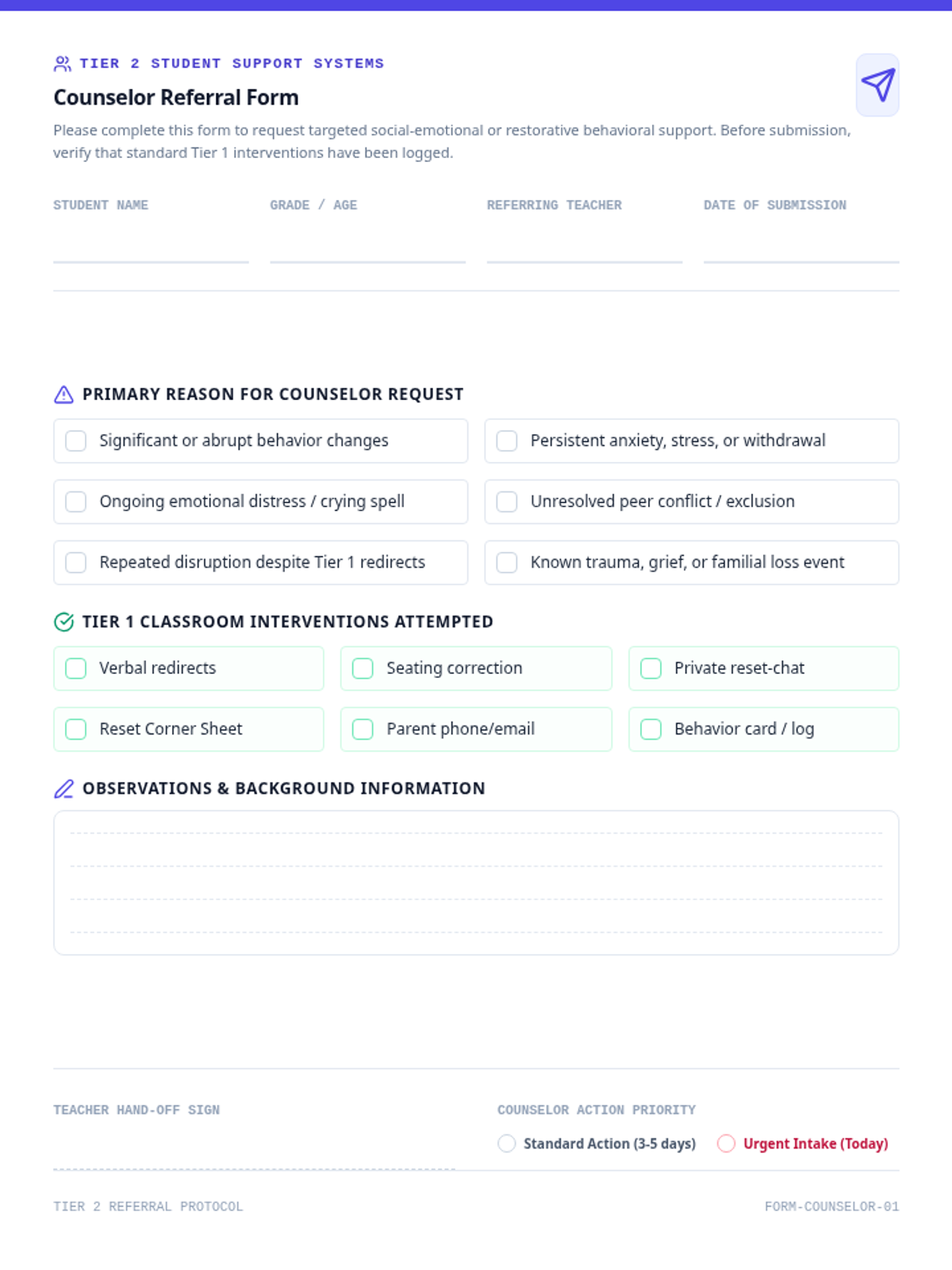
A comprehensive behavioral support and intervention rollout toolkit containing staff training materials, classroom de-escalation tools, student self-regulation resources, teacher tracking logs, and a structured counseling referral workflow.