Introduces the concept of the 'Control Compass' and helps students identify the specific thoughts, words, and actions that fall within their personal circle of control.
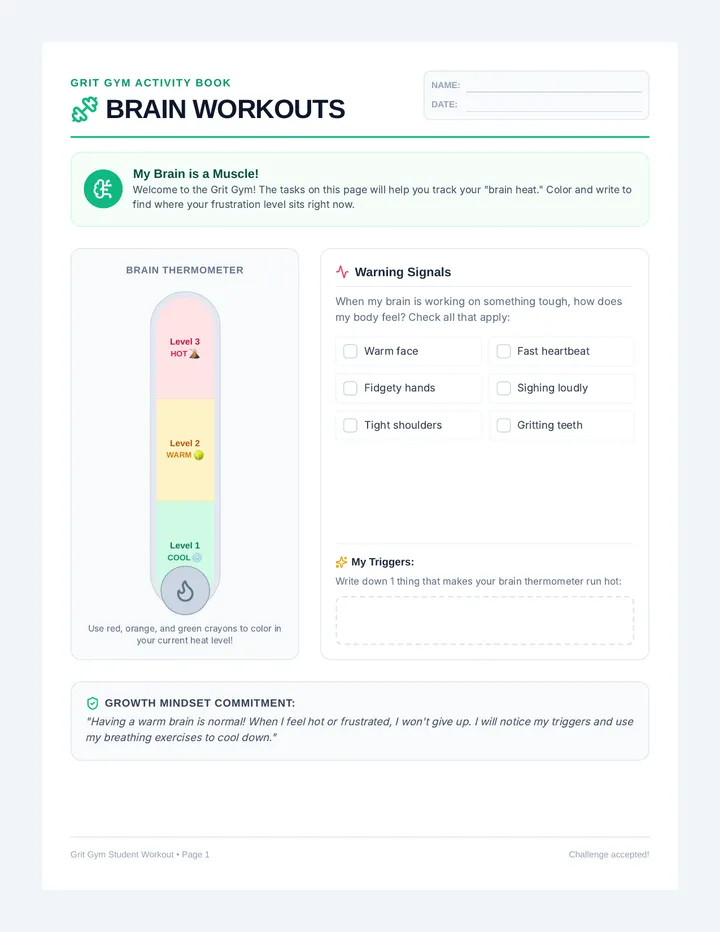
A cognitive coping strategy lesson for 4th graders focusing on sizing up problems using a stress gauge to prevent overreacting to small school-based stressors. Designed for an express 20-minute small group session.
A collection of Stranger Things themed encouragement letters for students facing state testing, each featuring a unique calming breathing technique.
A fast-paced, high-energy lesson where students evaluate their progress on long-term goals and make tactical adjustments to stay on track. Students use a racing pit-stop metaphor to identify barriers and refine their process.
A 30-minute workshop where 7th graders transform vague dreams into actionable blueprints using the SMART framework and peer coaching.
A comprehensive K-12 behavior management system that synthesizes best practices from MTSS, PBIS, and restorative justice frameworks. This lesson provides teachers with a clear decision-making flow and a detailed policy handbook for maintaining a positive school culture.
An interactive 8th-grade lesson focusing on self-management through the lens of processing constructive feedback and setting actionable goals. Students use a 'toolkit' approach to navigate challenges and persevere through academic and personal hurdles.
A high-energy lesson that transforms students into 'Audio Agents' to master active listening and following complex, multi-step instructions through interactive drawing challenges.
This lesson prepares 8th-grade students for the social and emotional transition to high school through reflection, goal-setting, and a letter to their future selves. Students explore their current strengths and anxieties while envisioning their future success.
Students learn the importance of professional document formatting and hierarchy, setting up a formal business proposal template with structured headings and standardized typography.
Students conduct a market research sprint, interviewing classmates to validate their product ideas and learning to 'pivot' based on real user feedback and data synthesis.
Students learn the difference between leading and open-ended questions, developing a research table and interview script to gather unbiased feedback from potential customers.
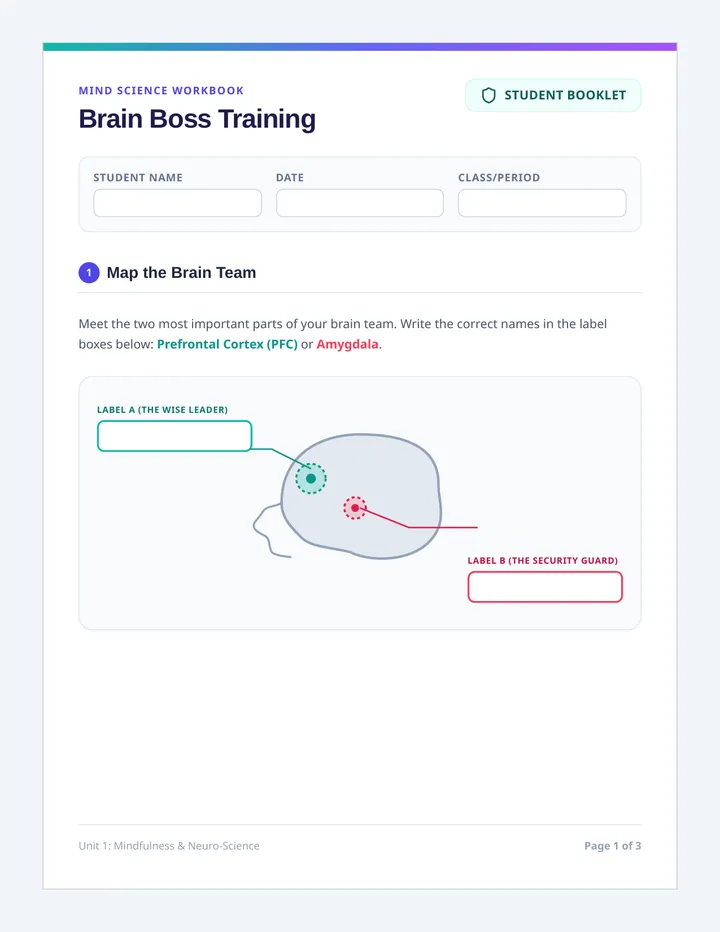
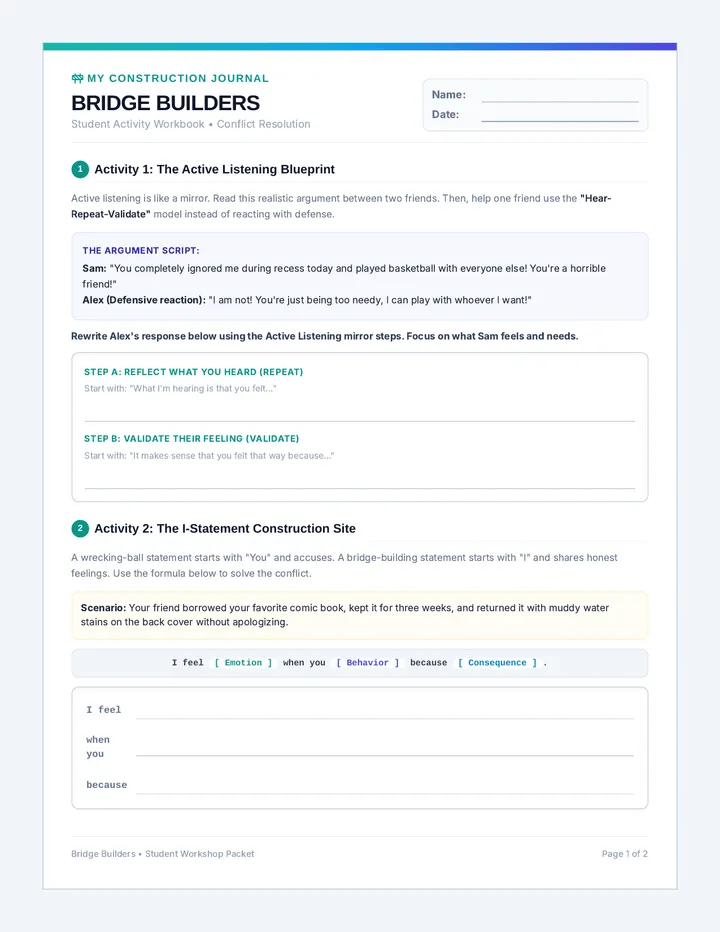
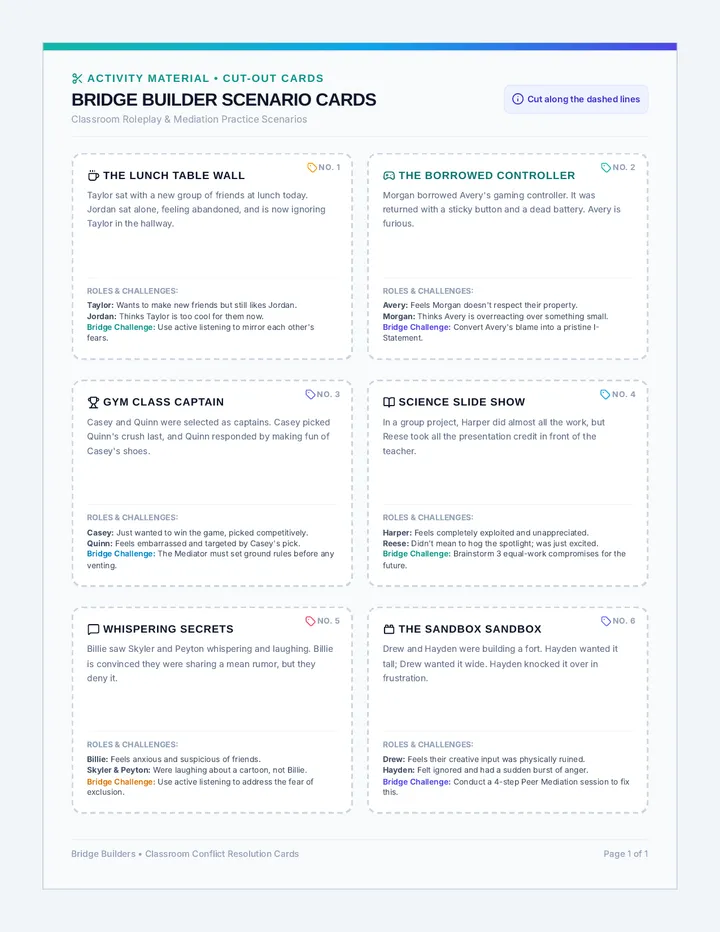
A lesson focused on identifying and navigating core emotions through real-world scenarios and guided reflection.