A culminating simulation where students practice the first two minutes of a job interview, integrating all learned greeting skills.
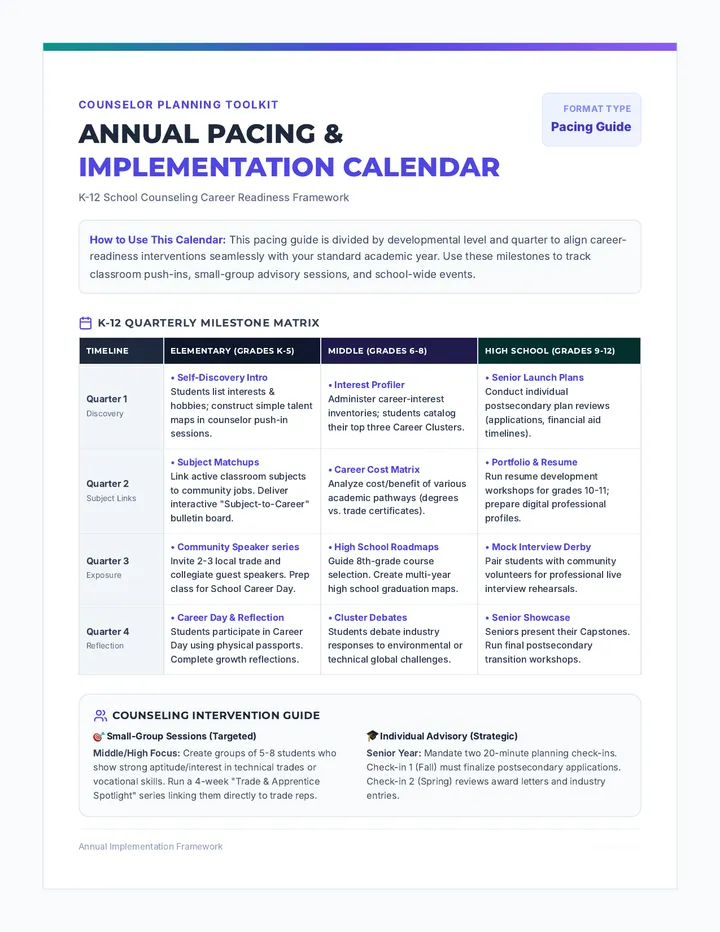
Actionable planning resources, school-wide career day guides, and implementation templates for school counselors to deploy career readiness curricula.
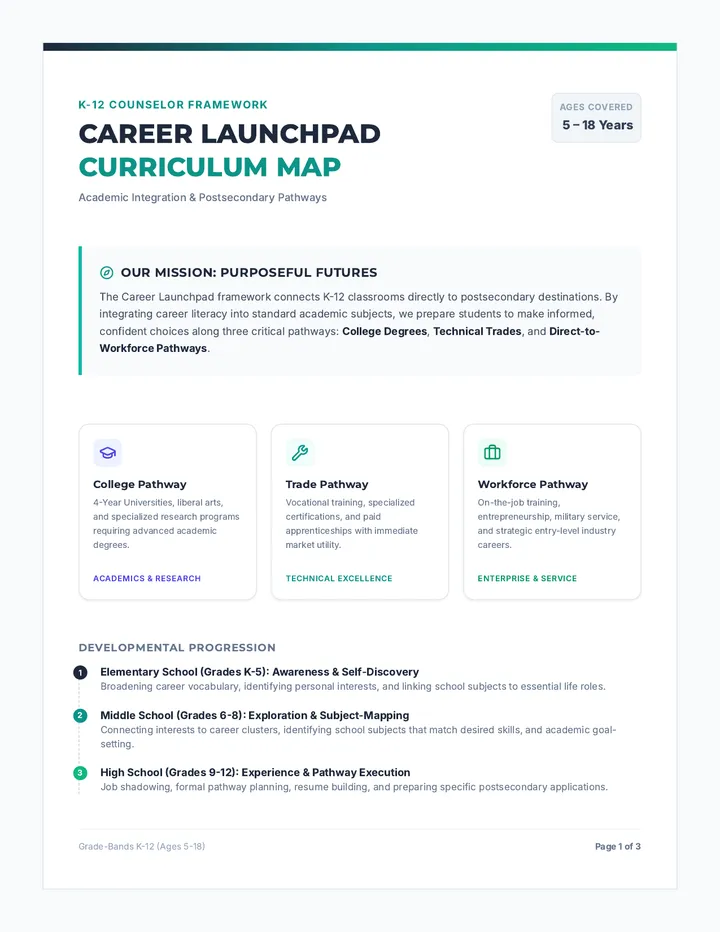
High-level scope, sequence, and developmental milestones for elementary, middle, and high school career exploration. This framework links classroom subjects to real-world college, trade, and workforce pathways.
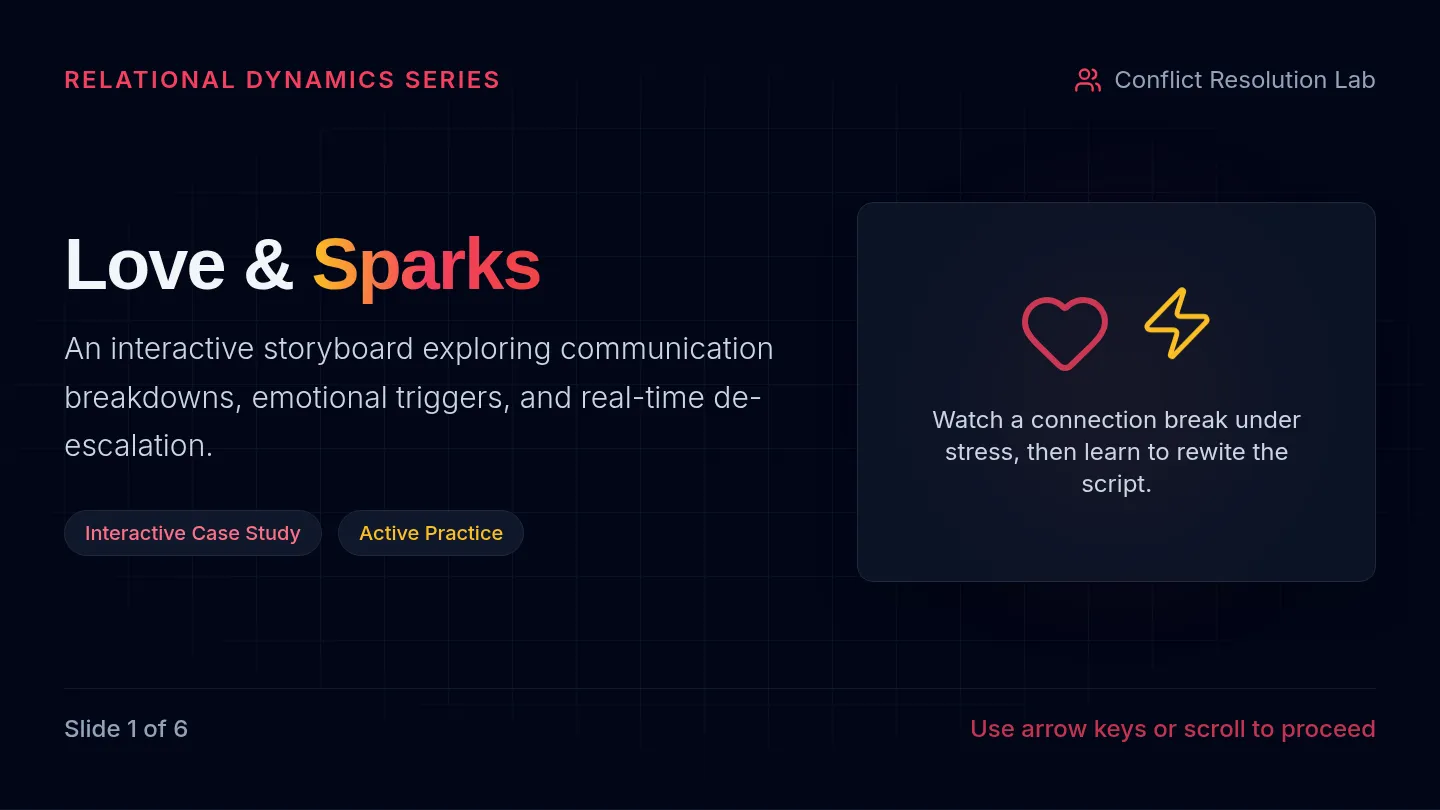
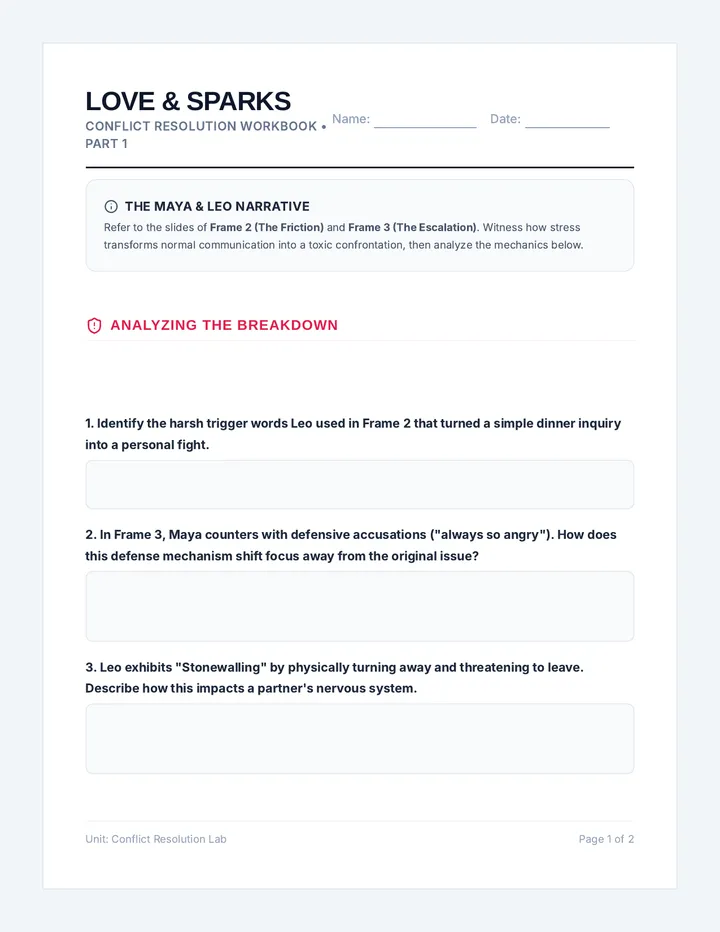
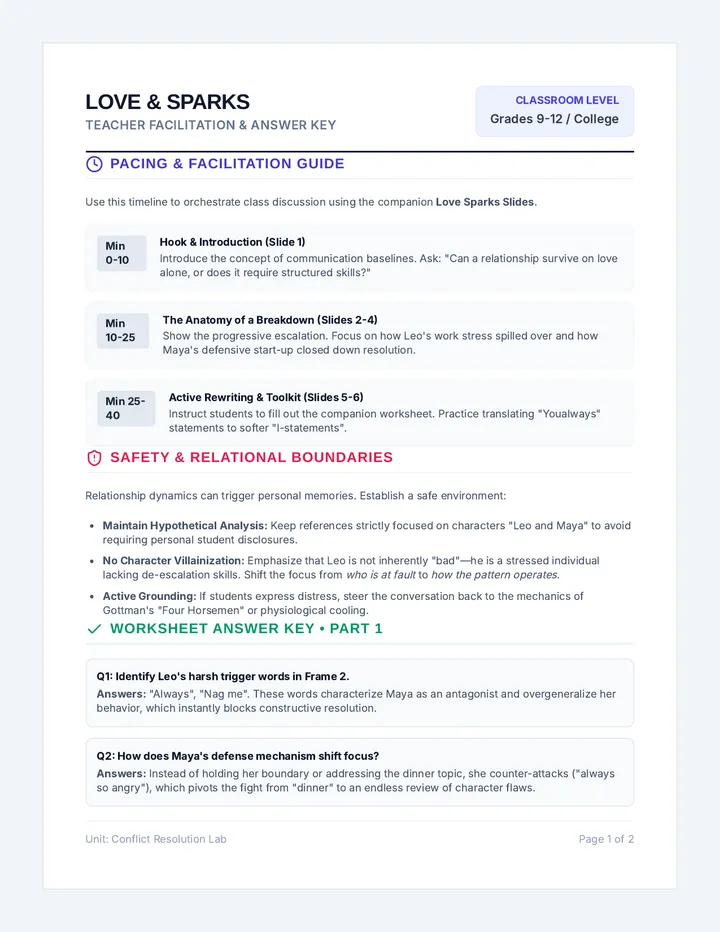
An instructional lesson centered on identifying communication breakdowns, analyzing relational friction, and applying active de-escalation strategies. Features interactive storyboard-driven slides and activities.
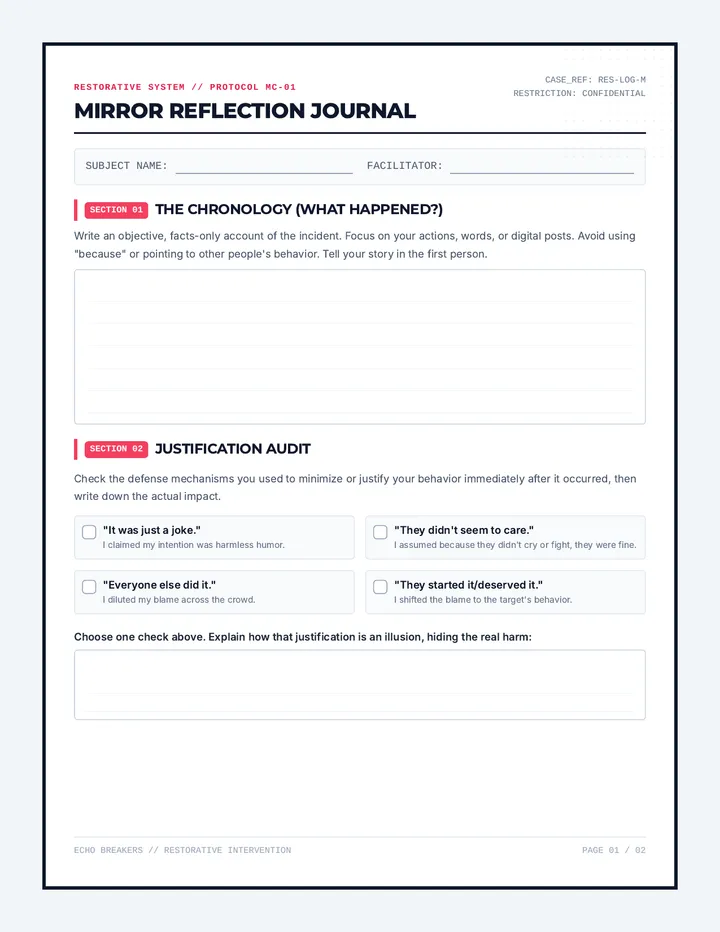
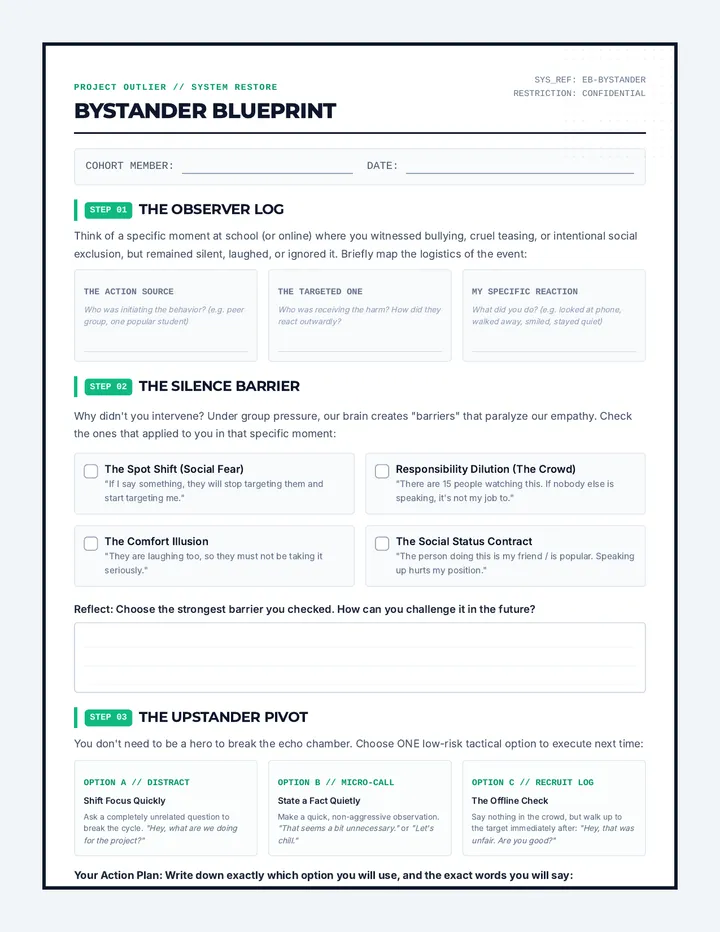
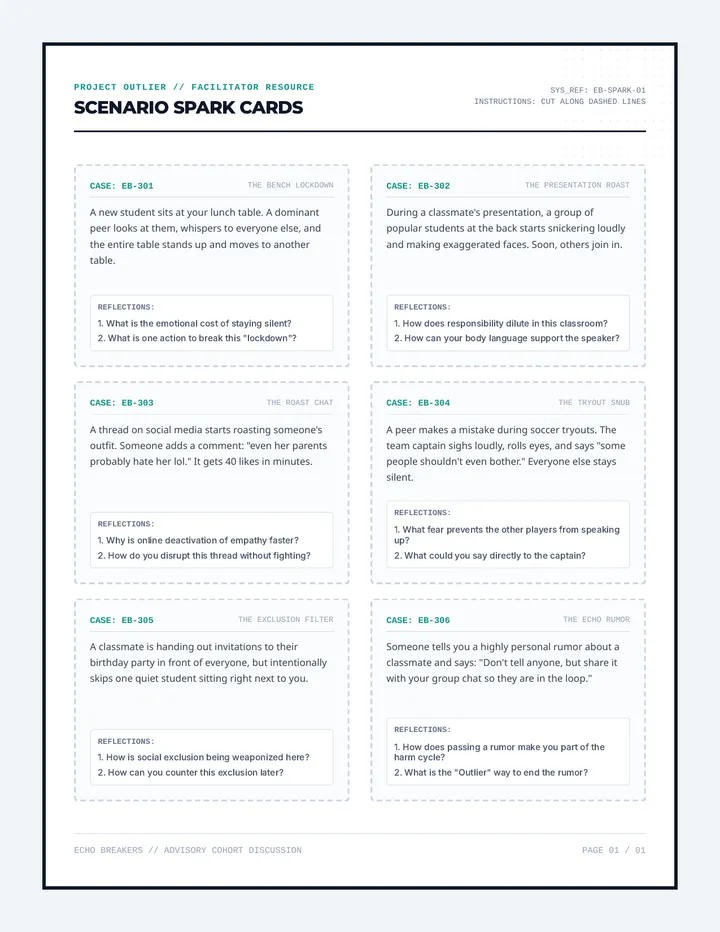
A restorative, intervention-focused lesson designed to address active bullying, social exclusion, or bystander behaviors. Provides a structured, objective, and deeply empathetic framework for restorative justice, self-reflection, and behavior correction.
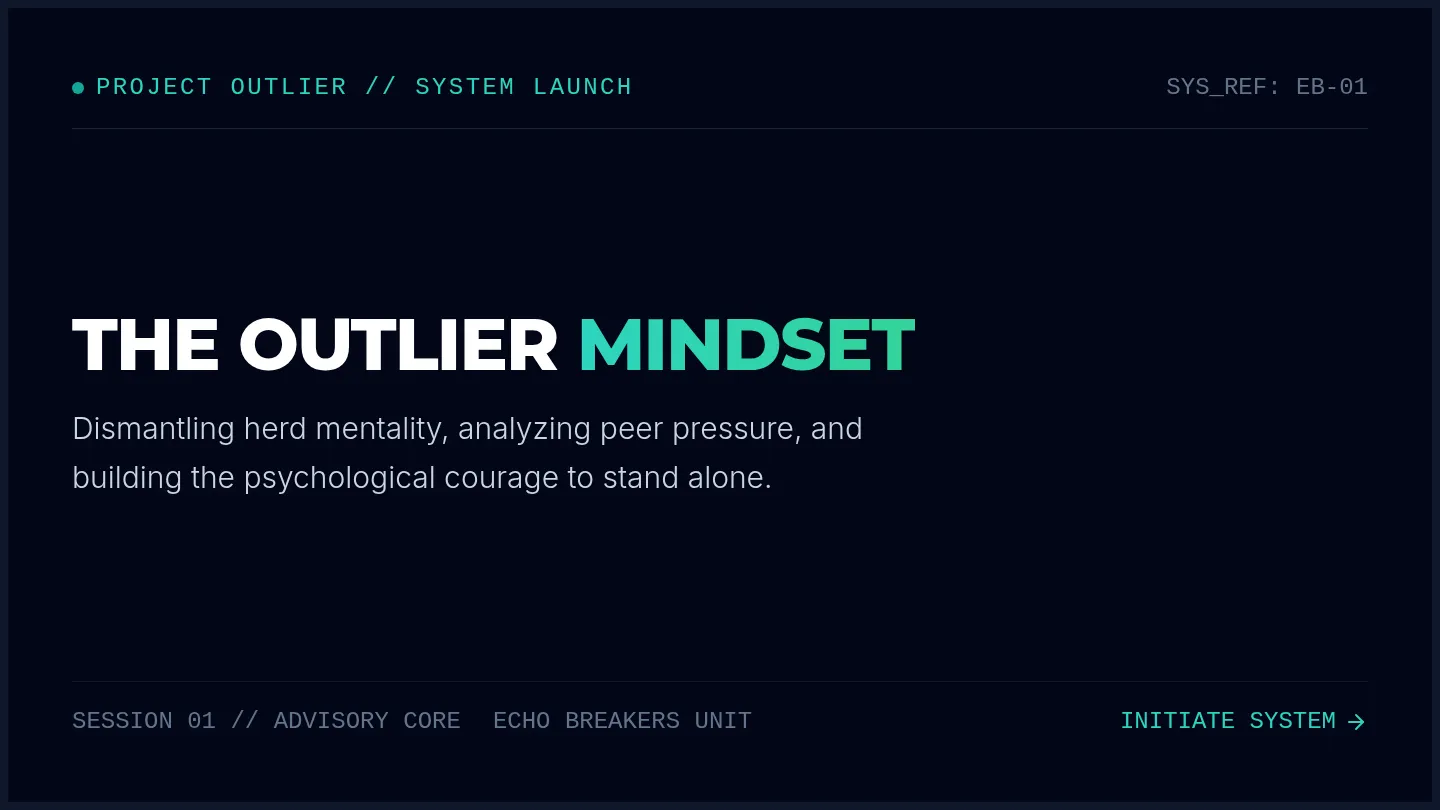
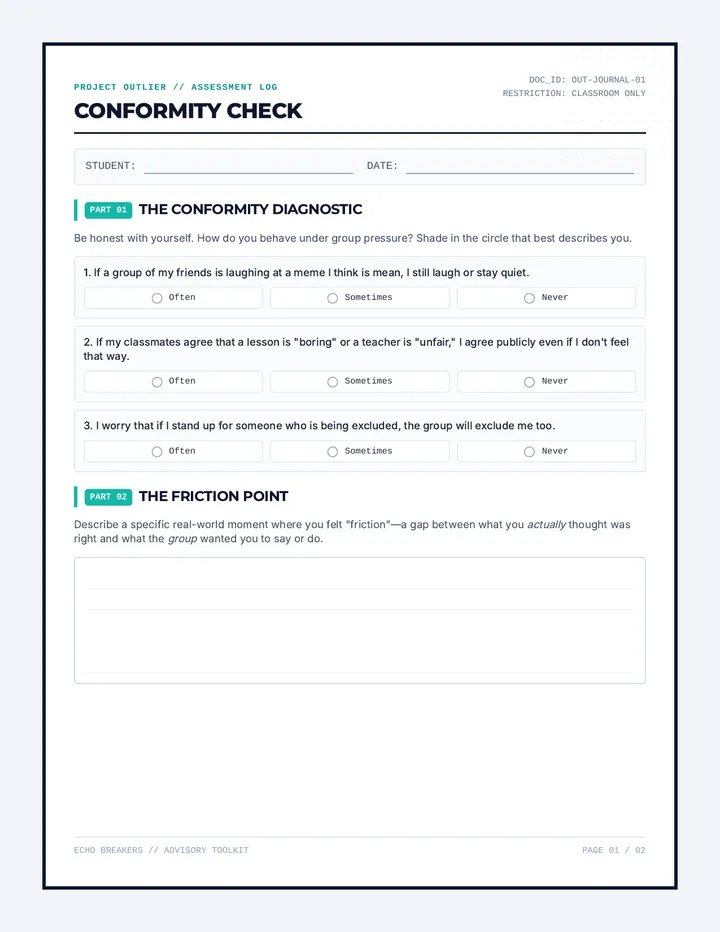
A preventative Advisory-focused lesson that analyzes peer pressure, the psychological mechanics of herd mentality, and the courage required to stand alone. Students engage in self-reflection, case analysis, and scenario-based writing prompts to develop an 'outlier' mindset.
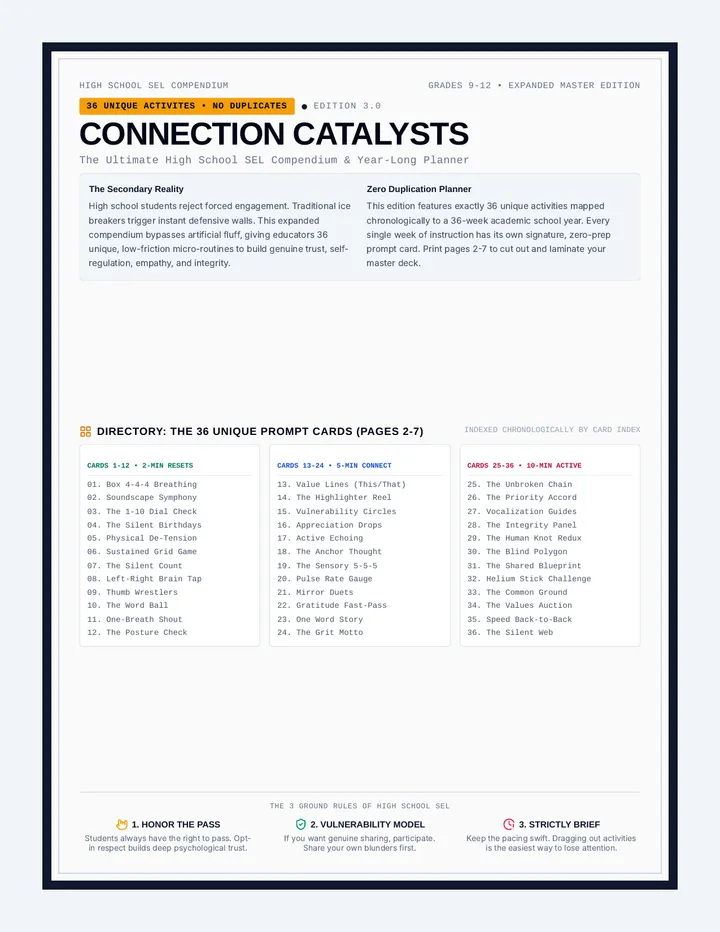
A powerful social-emotional learning lesson series designed for high school teachers to foster relationship-building, self-regulation, active communication, self-awareness, and integrity through quick daily classroom routines.
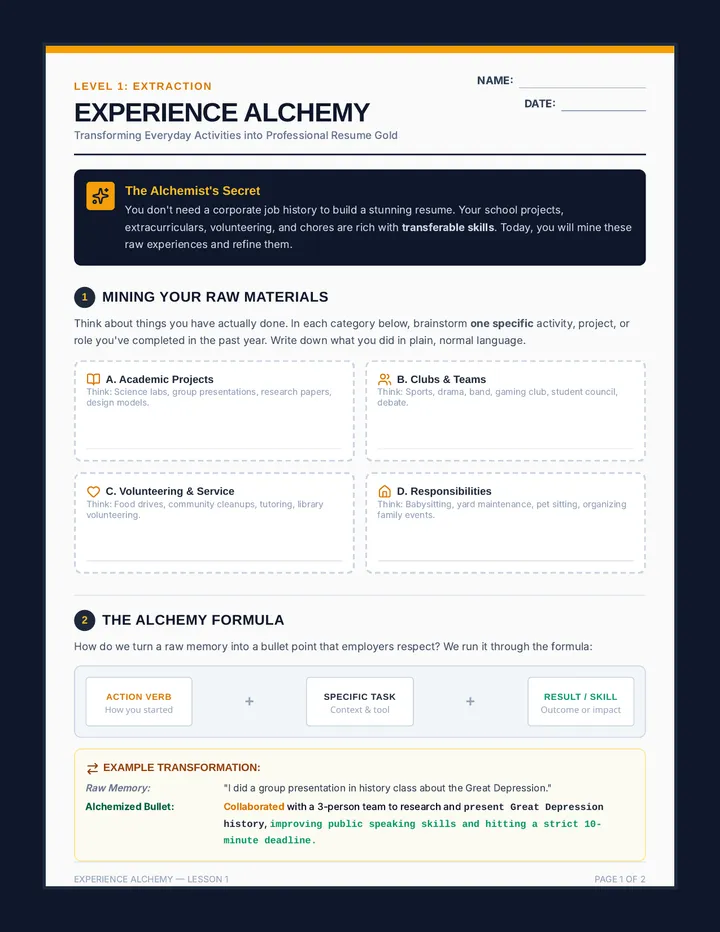
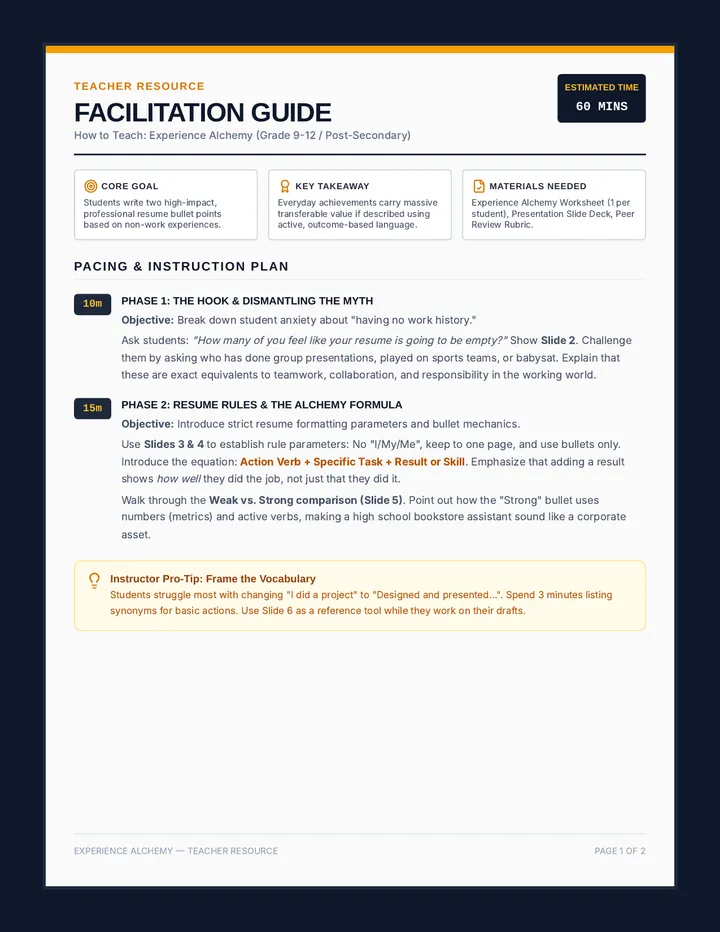
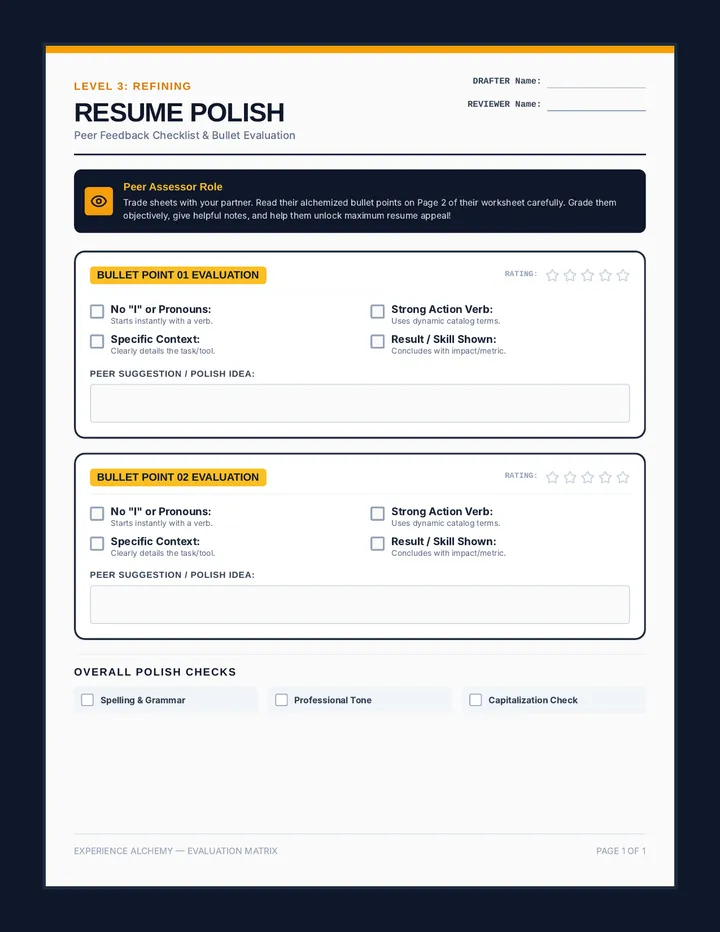
A complete lesson designed for first-time job seekers (students) to transform their school projects, volunteering, and extracurricular activities into professional resume bullet points. Includes a structured teacher guide, instructional presentation slides, a student drafting worksheet, and a peer feedback checklist.
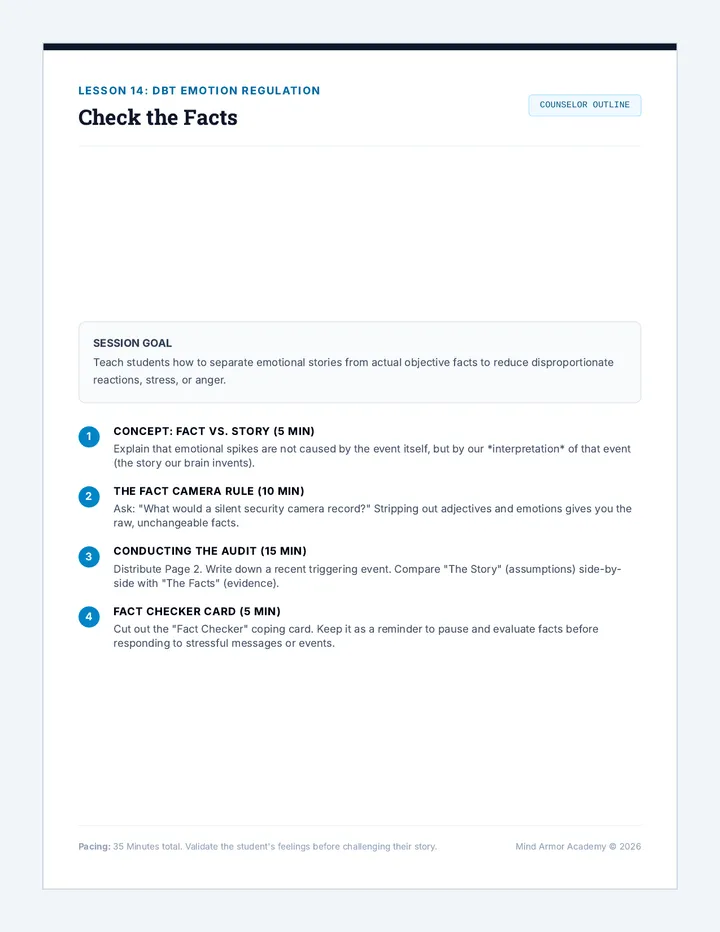
DBT emotion regulation session teaching 'Check the Facts' to verify if emotional reactions match the actual objective facts of a school or social situation.
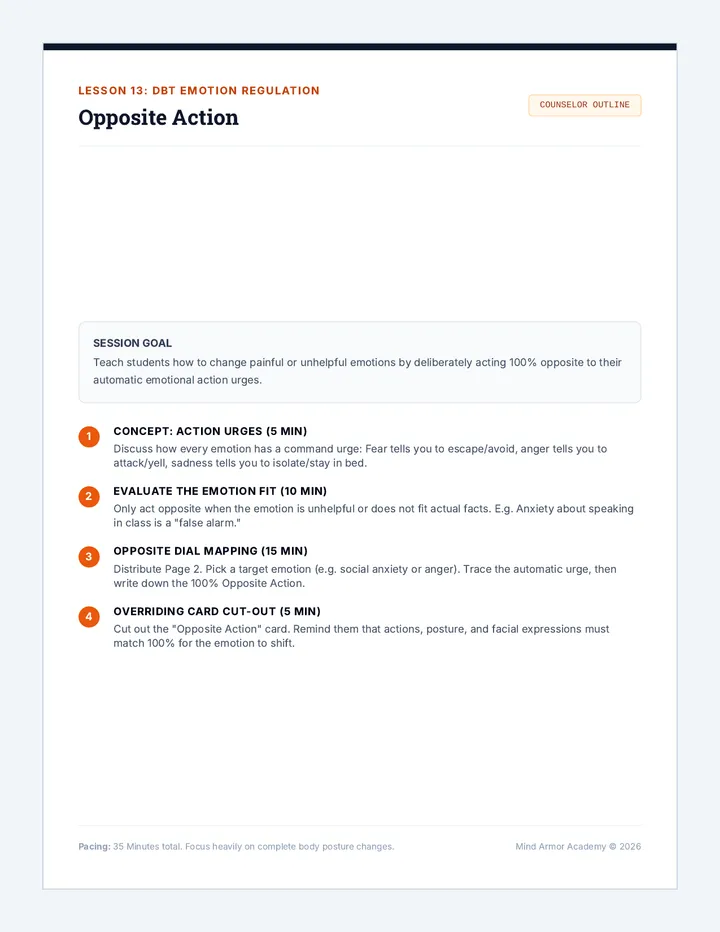
DBT emotion regulation session teaching 'Opposite Action' to change painful or unhelpful emotions by deliberately acting contrary to emotional urges.
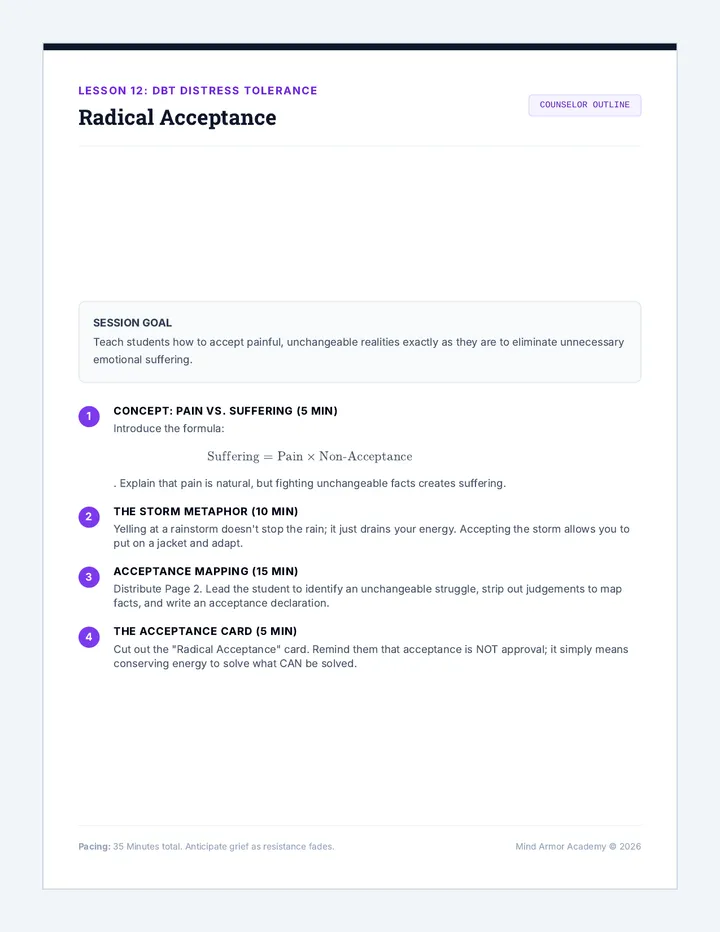
DBT distress tolerance session teaching 'Radical Acceptance' to tolerate painful realities that cannot be changed immediately without making them worse.
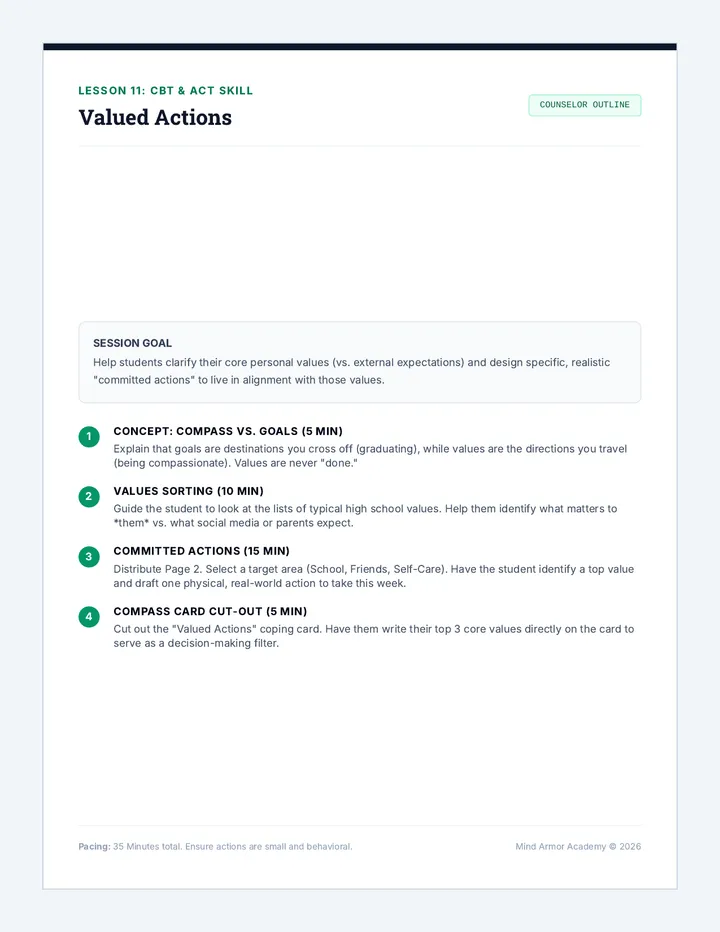
CBT and ACT session focusing on identifying core personal values and taking committed action steps toward them in school and life.
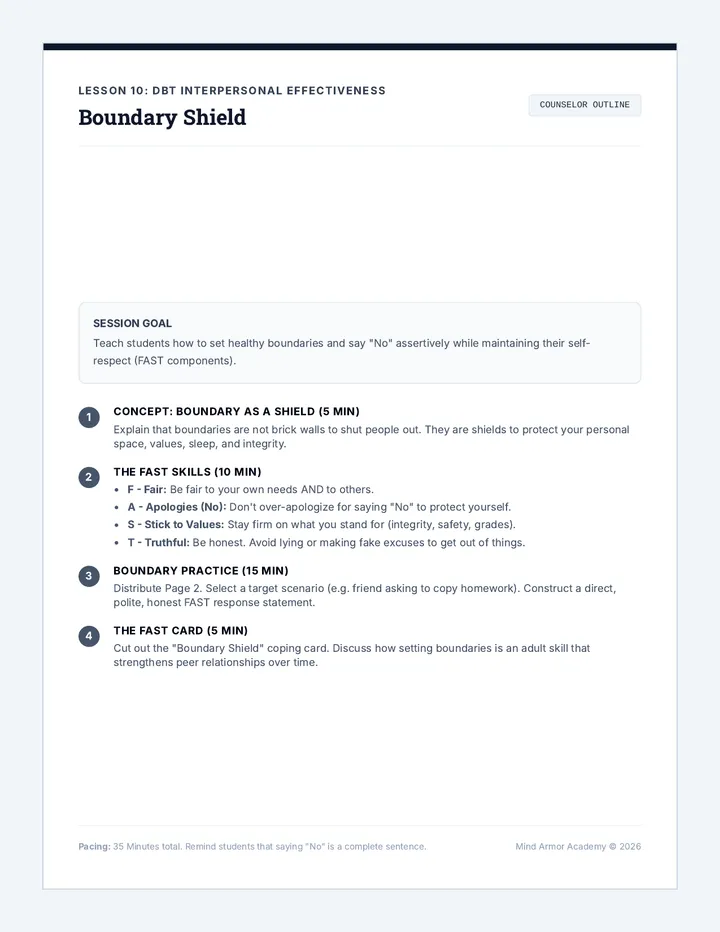
Interpersonal effectiveness session covering DBT FAST skills (Fair, Apologies, Stick to values, Truthful) to build self-respect and set healthy personal boundaries with peers.
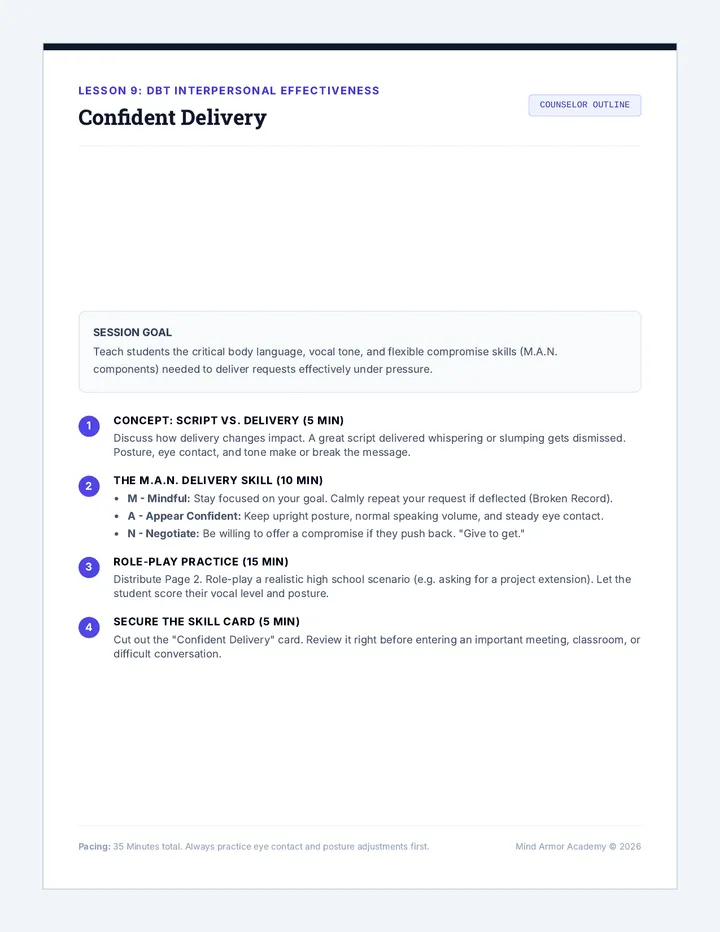
Interpersonal effectiveness session covering the second half of DBT DEAR MAN (Mindful, Appear confident, Negotiate) to guide active communication delivery and conflict negotiation.
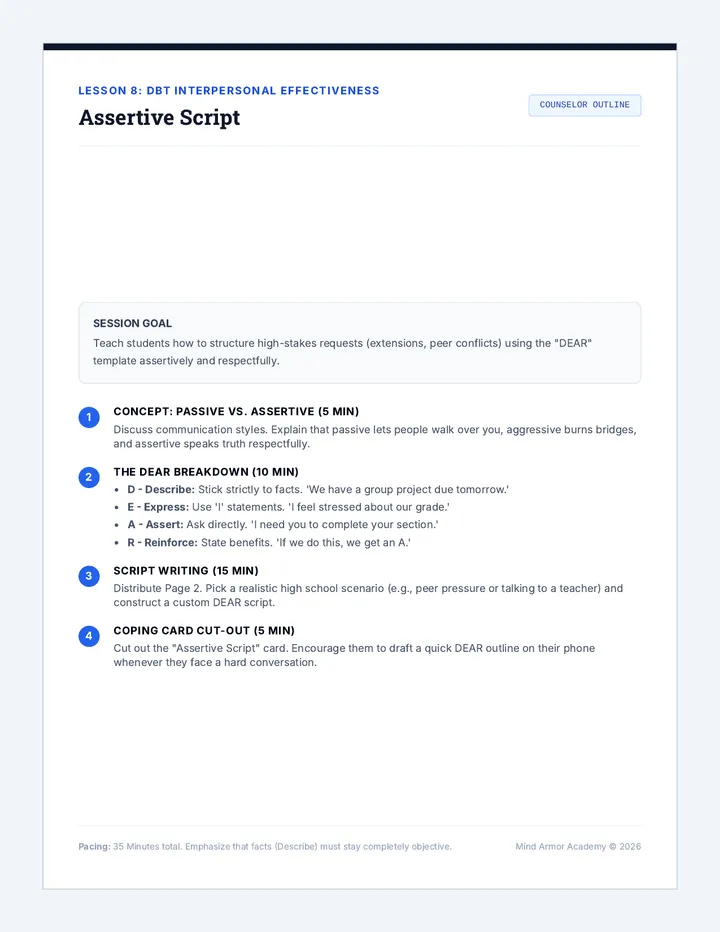
Interpersonal effectiveness session covering the first half of DBT DEAR MAN (Describe, Express, Assert, Reinforce) to teach structured assertive communication.
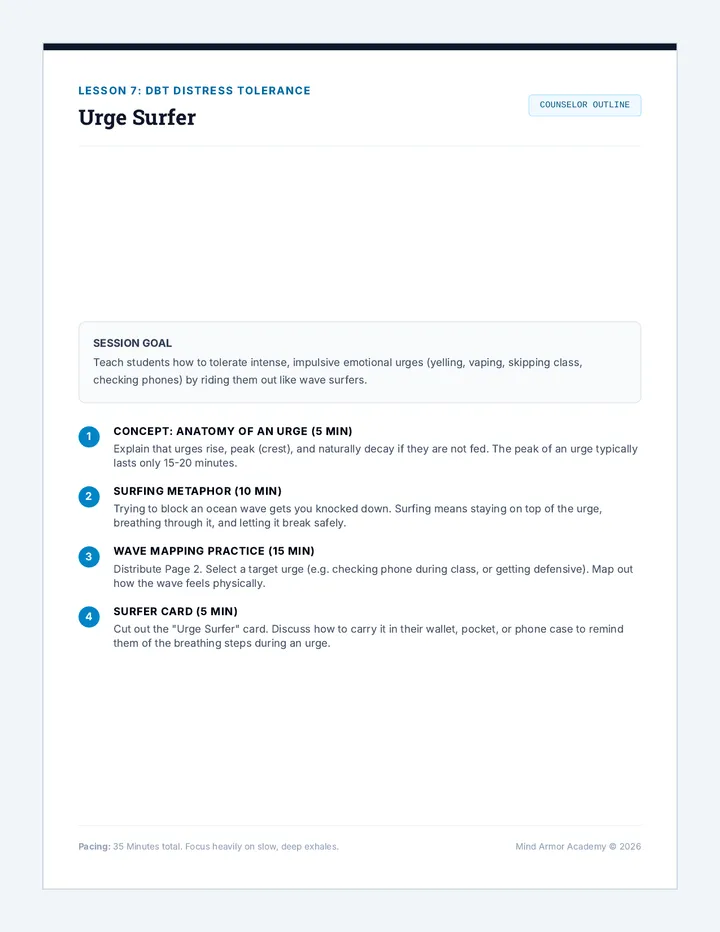
DBT session focusing on the 'Urge Surfing' technique to ride out intense emotional impulses and urges without acting on them destructively.
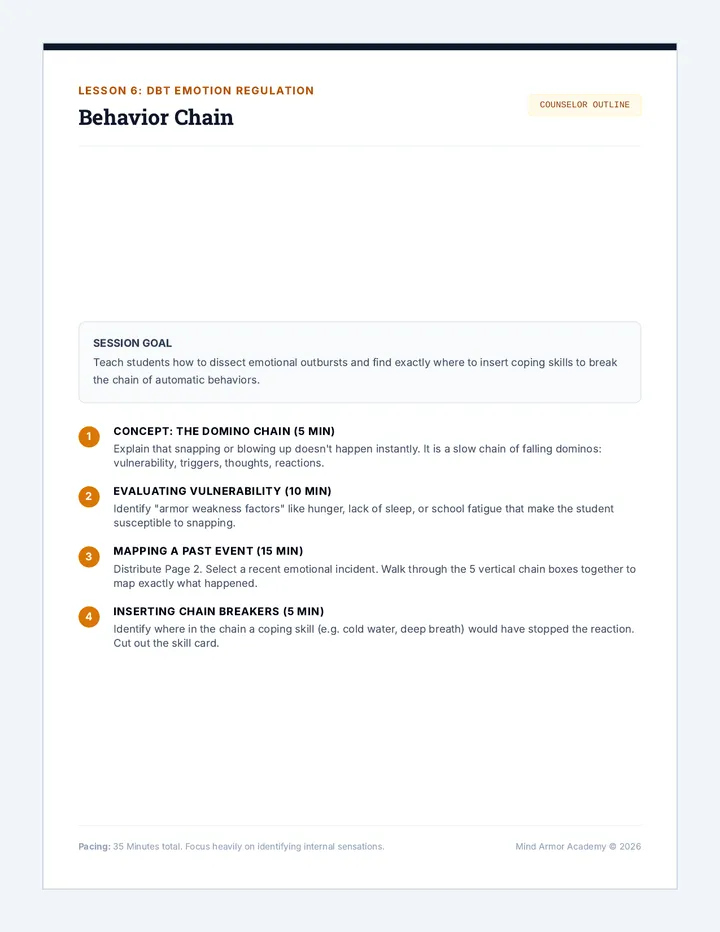
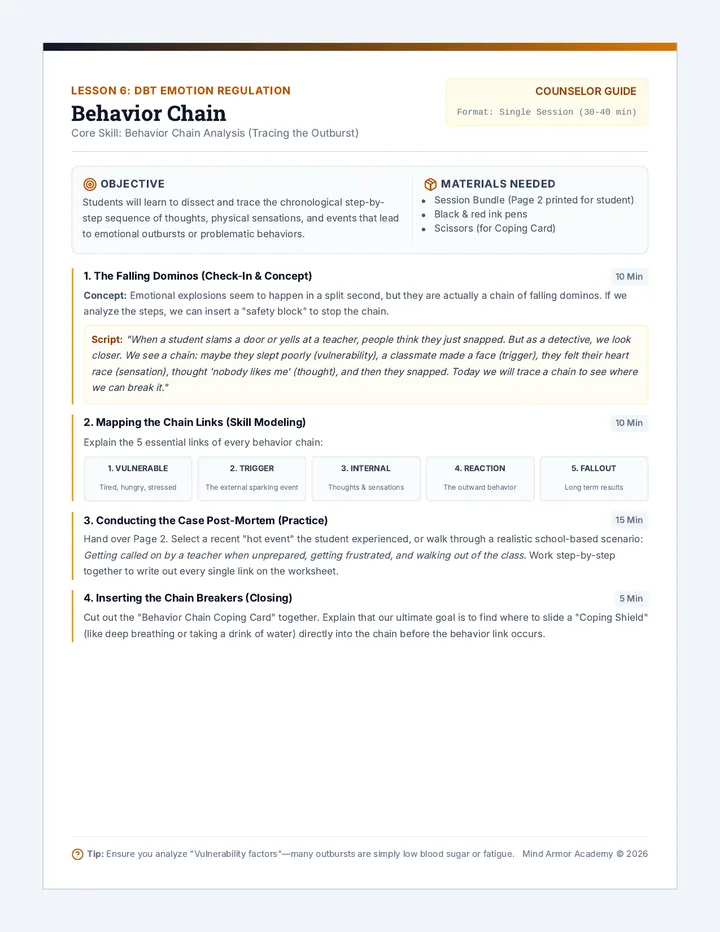
DBT session focusing on Behavior Chain Analysis to trace the sequence of events, thoughts, physical sensations, and actions that lead to emotional outbursts.
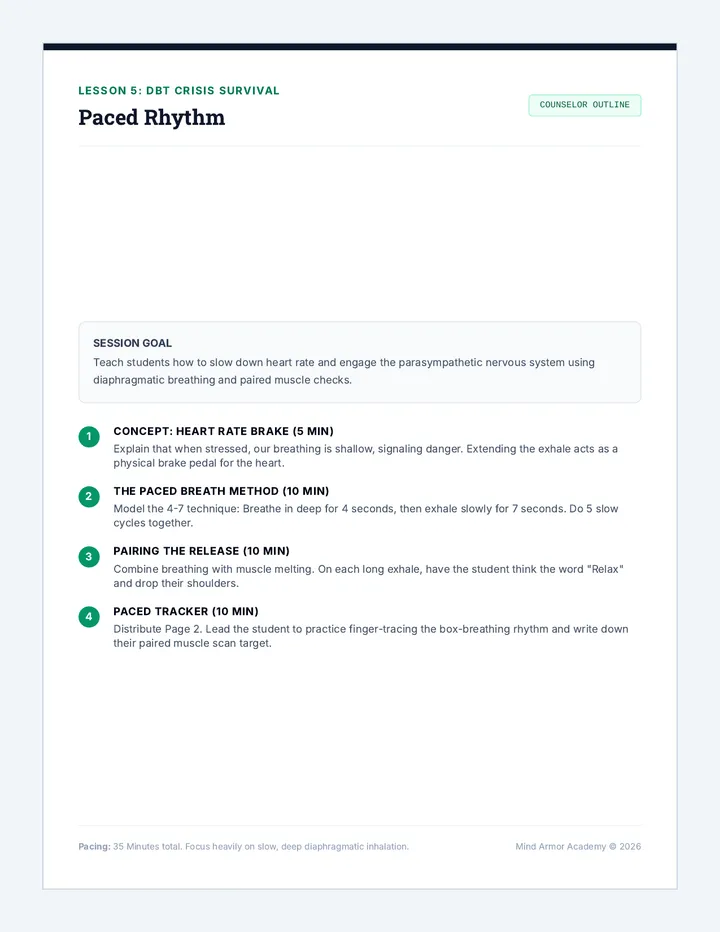
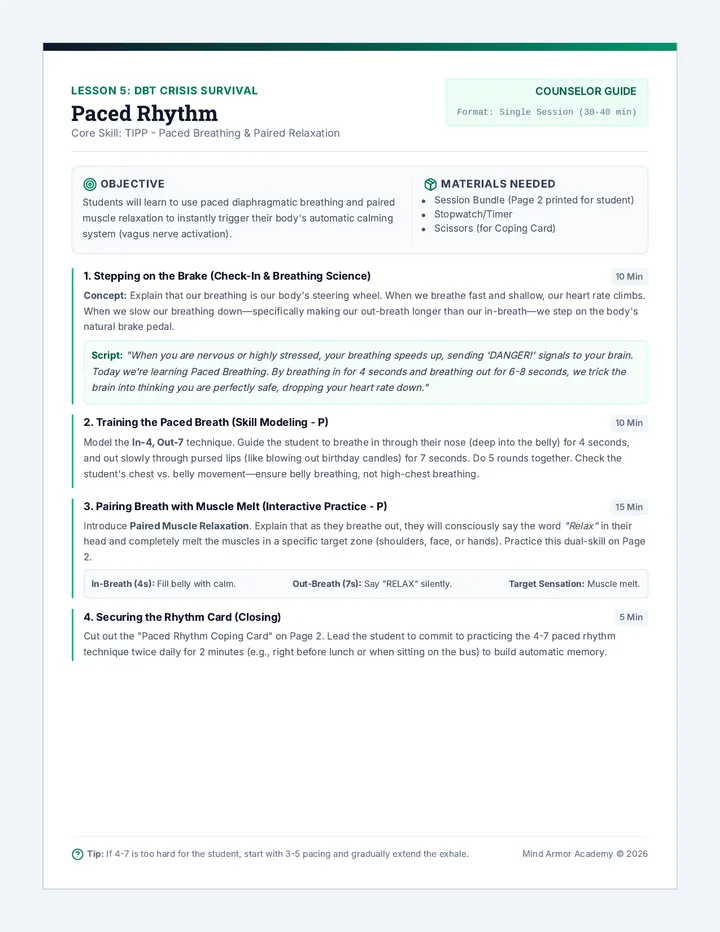
DBT crisis survival session focusing on the TIPP skills, specifically Paced breathing and Paired muscle relaxation to activate the parasympathetic nervous system.
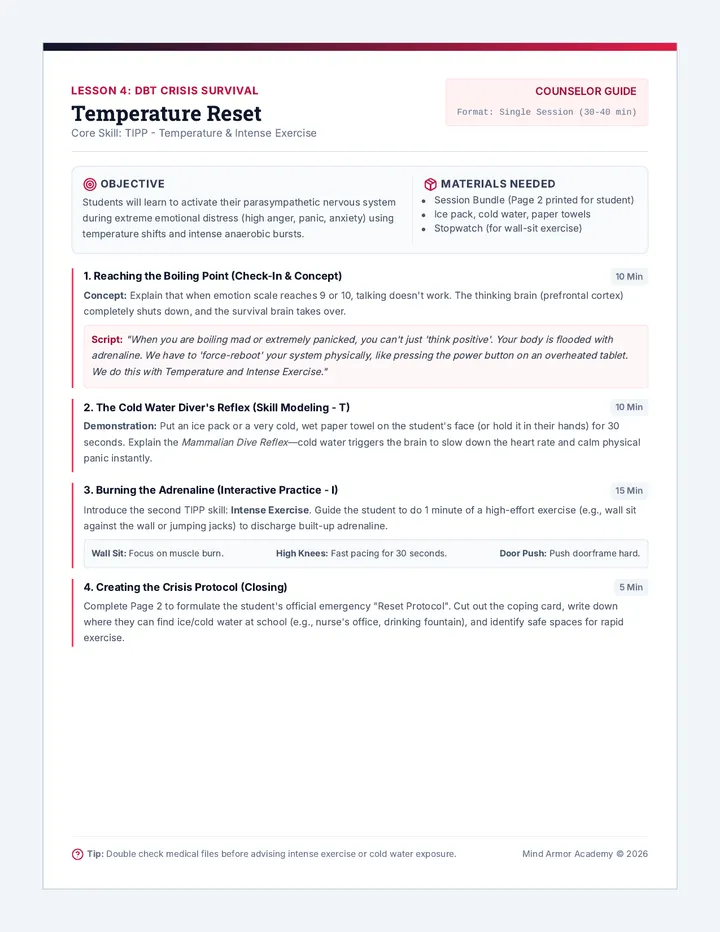
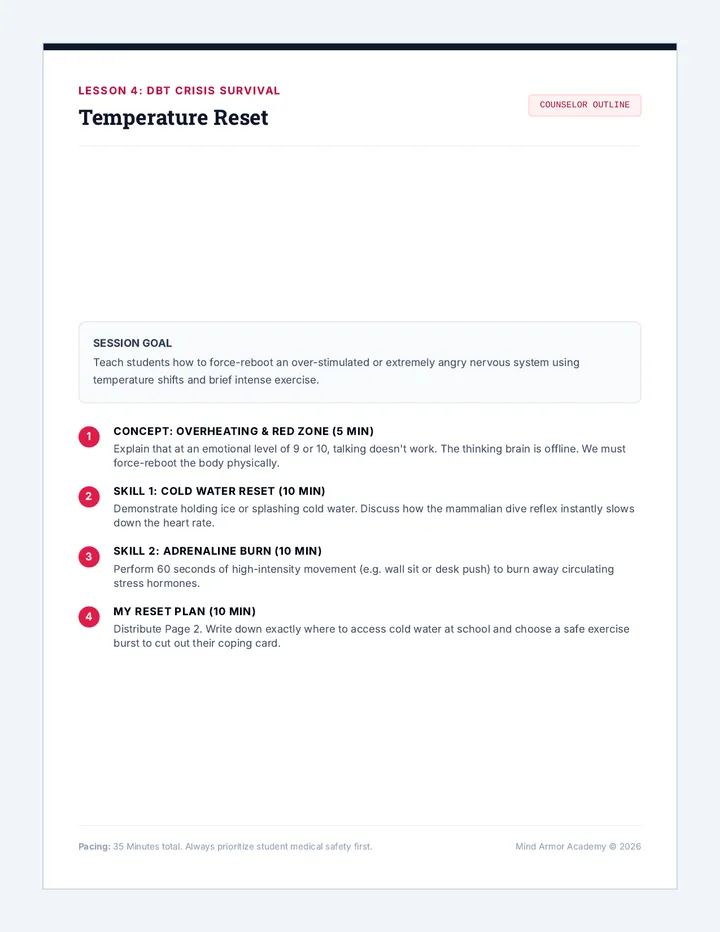
DBT crisis survival session focusing on the TIPP skills, specifically Temperature shift and Intense exercise to down-regulate the nervous system.
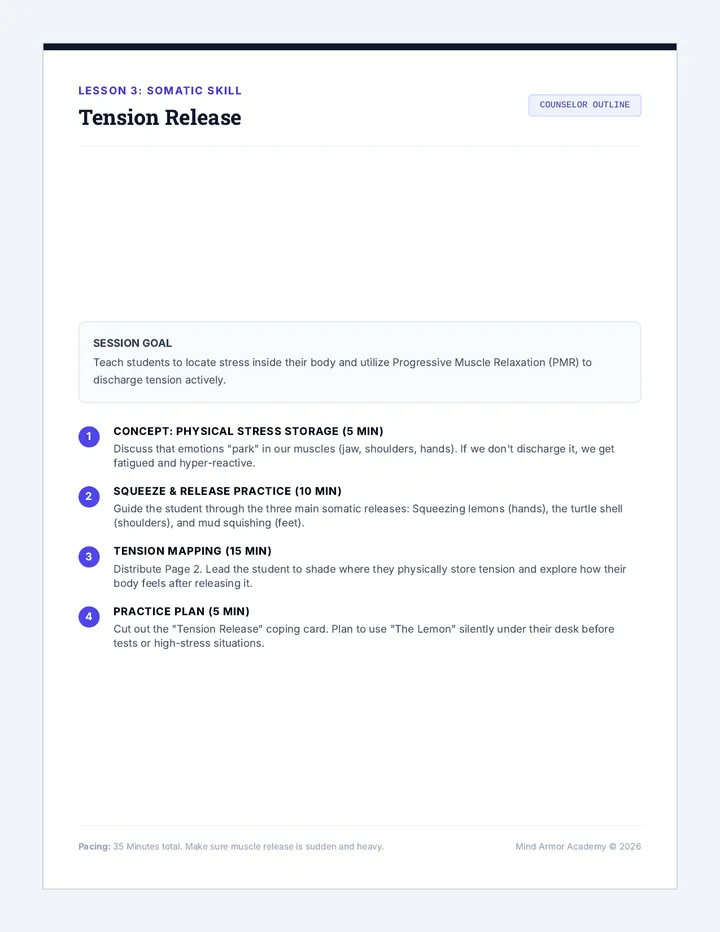
Somatic and relaxation session focusing on Progressive Muscle Relaxation (PMR) and diaphragmatic breathing to release physical stress.
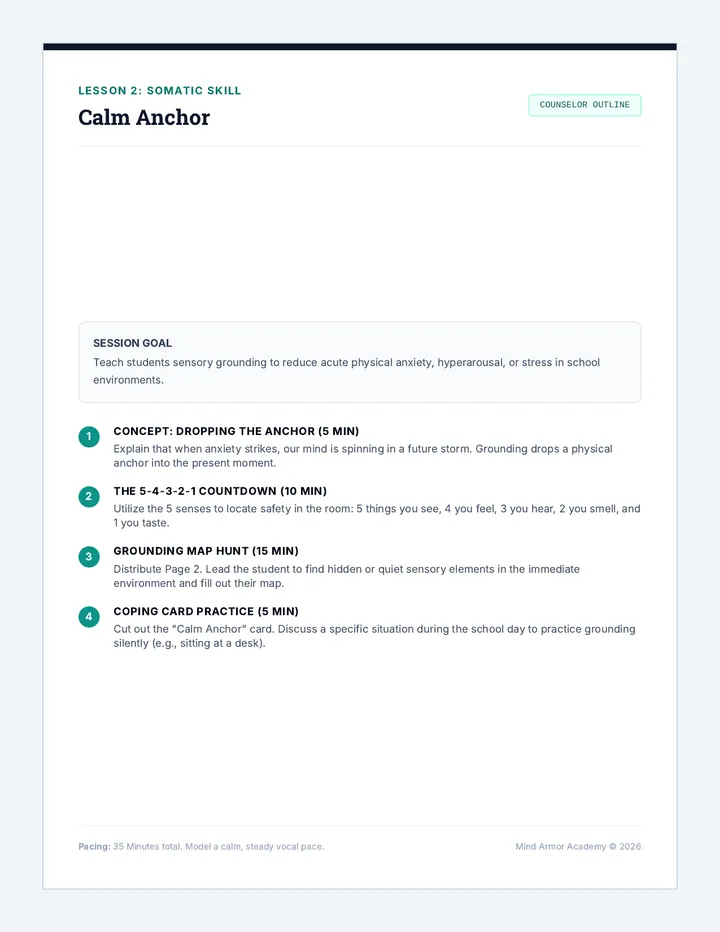
Somatic grounding session utilizing sensory-based techniques to de-escalate anxiety and hyperarousal in school situations.
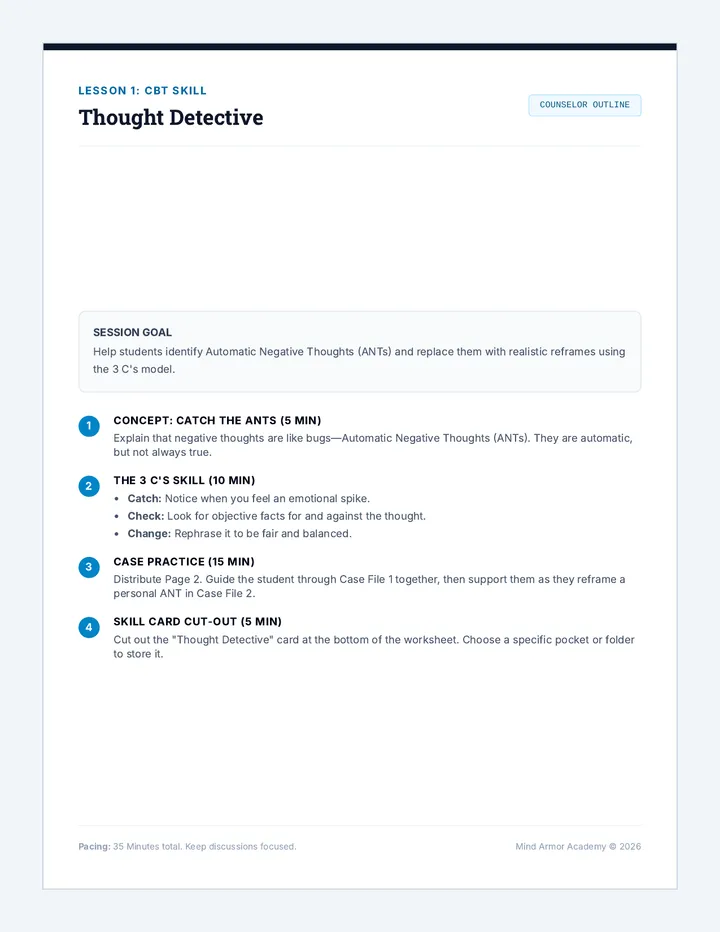
CBT session focusing on identifying automatic negative thoughts (ANTs) and cognitive reframing techniques using a 'Thought Detective' metaphor.
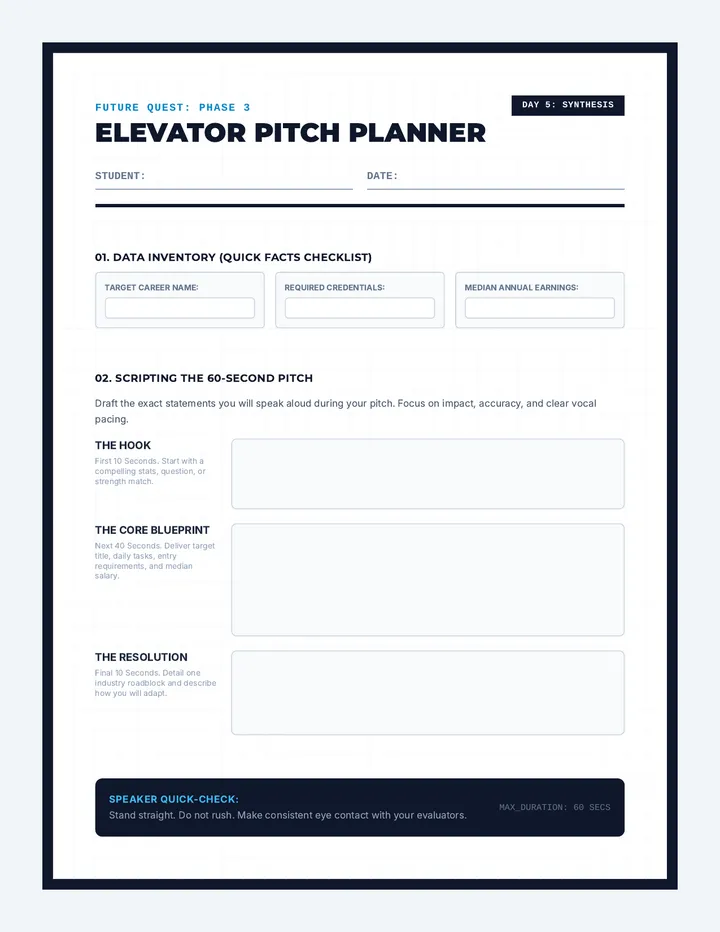
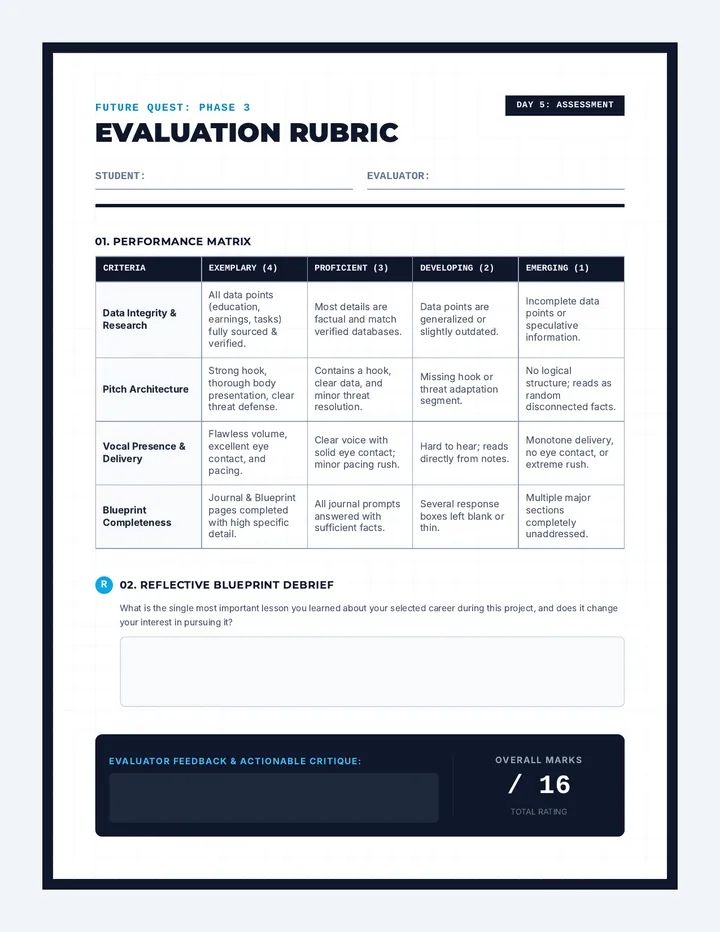
Day 5 of the Career Odyssey. Students synthesize their week-long research into a professional elevator pitch and deliver it to peers. Includes self-reflection and comprehensive rubric evaluation.
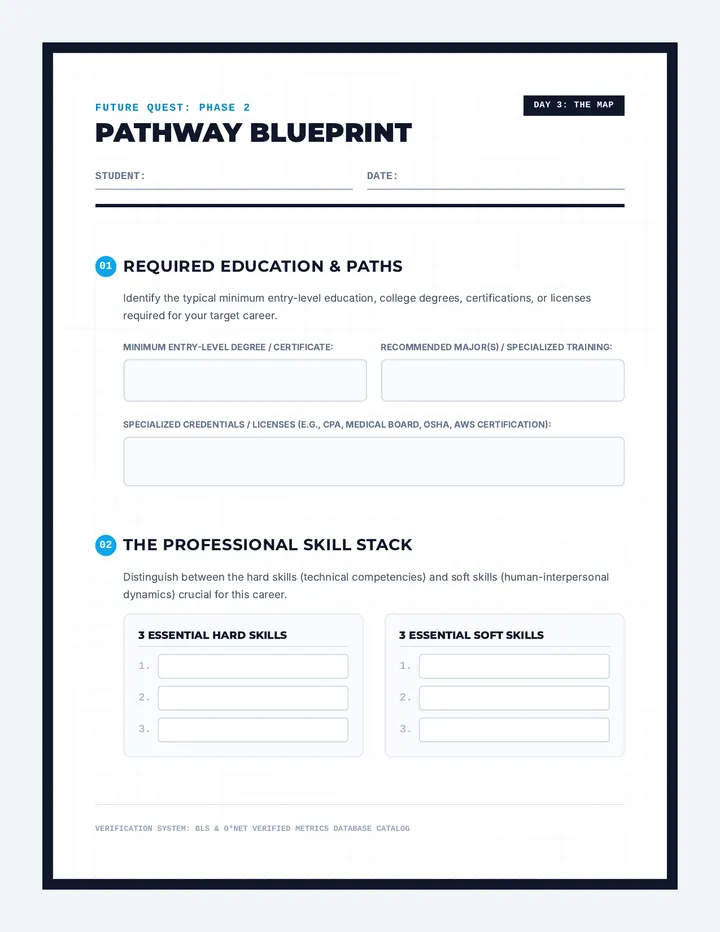
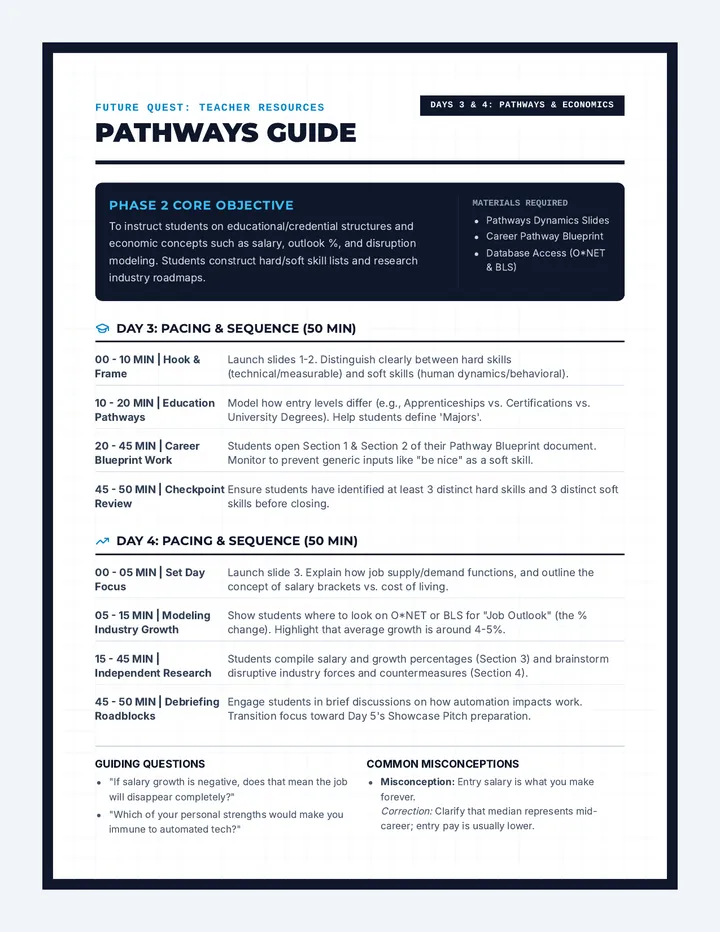
Days 3 and 4 of the Career Odyssey. Students map out educational and skill requirements, research economic factors like salary and job growth, and analyze major industry challenges.
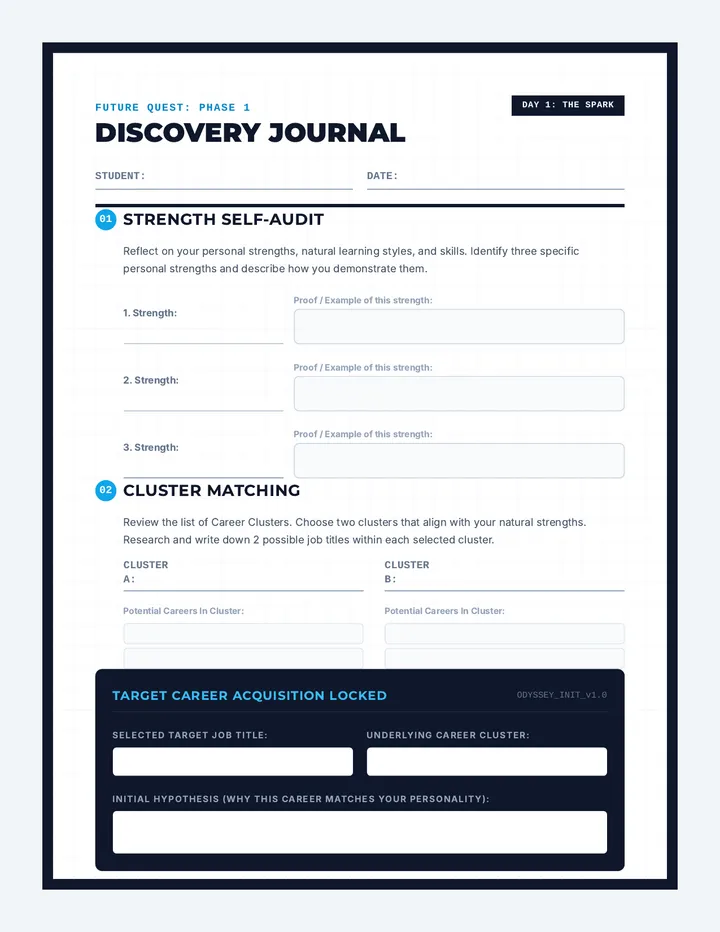
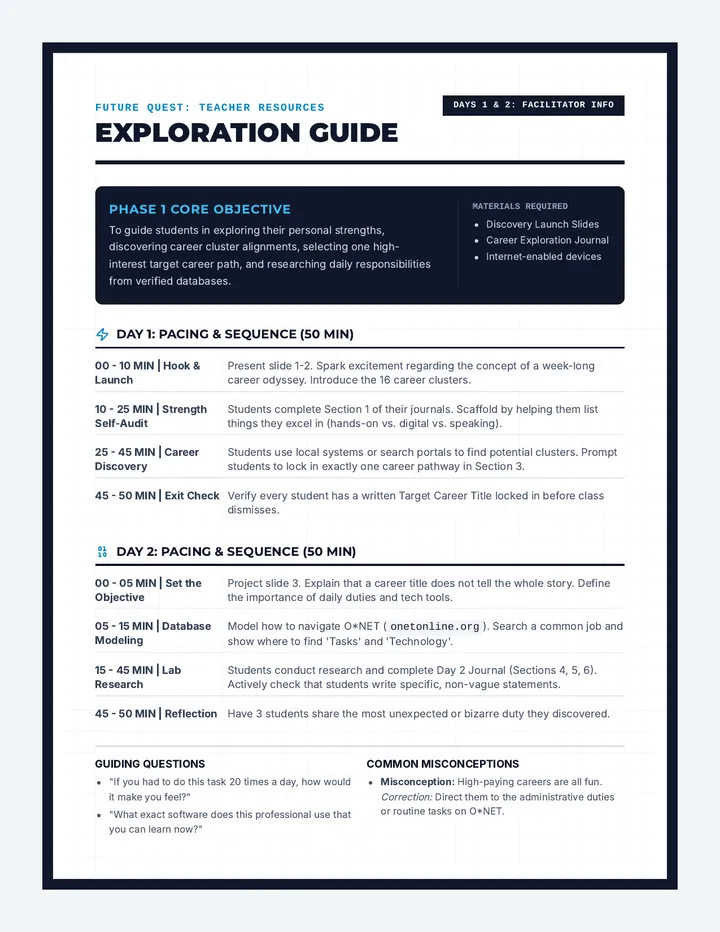
Days 1 and 2 of the Career Odyssey. Students identify personal strengths, explore career clusters, select a target career, and investigate the daily responsibilities and workplace environments associated with it.
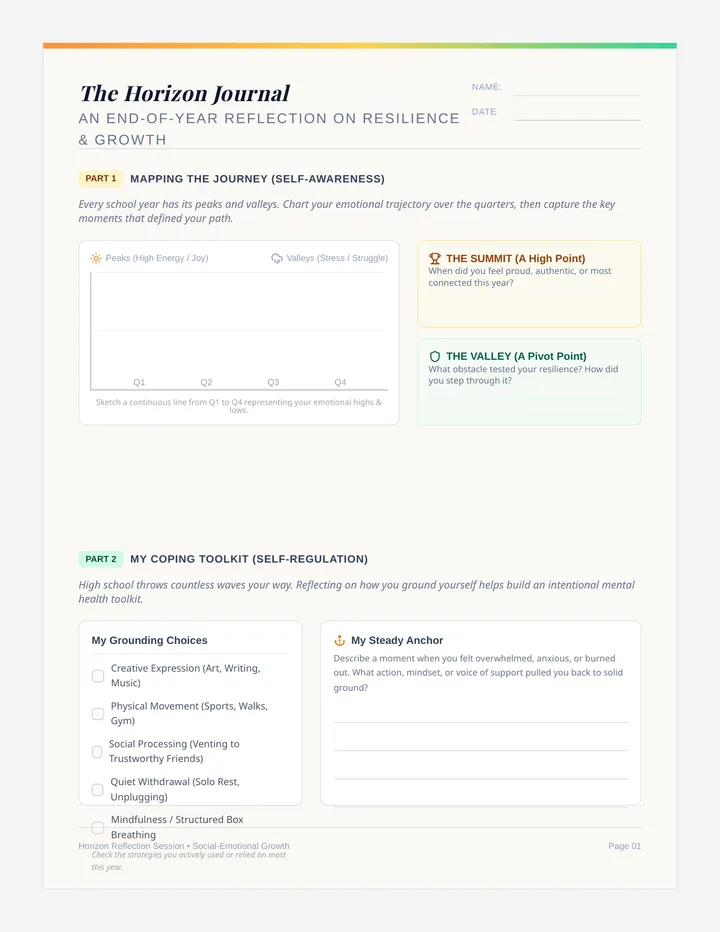
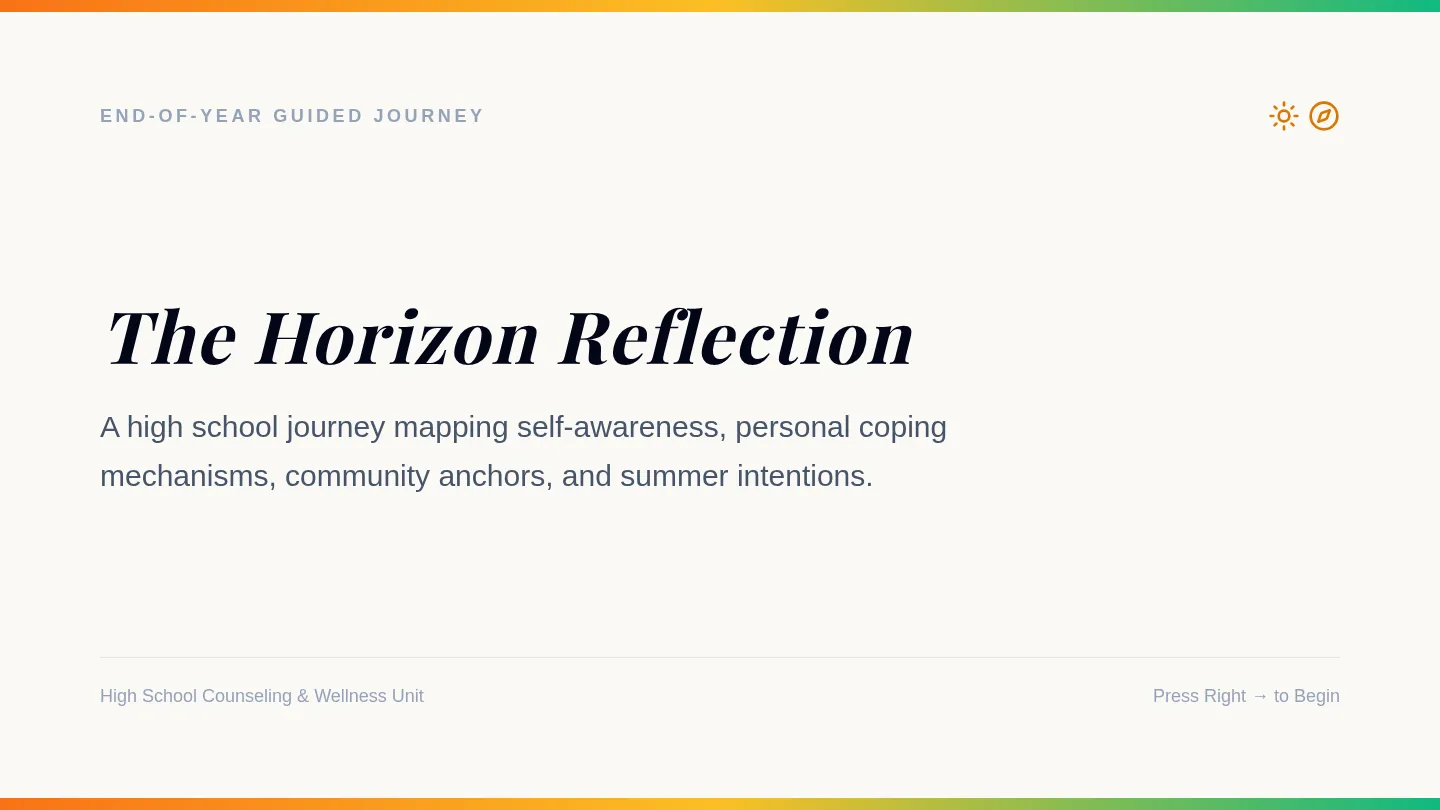
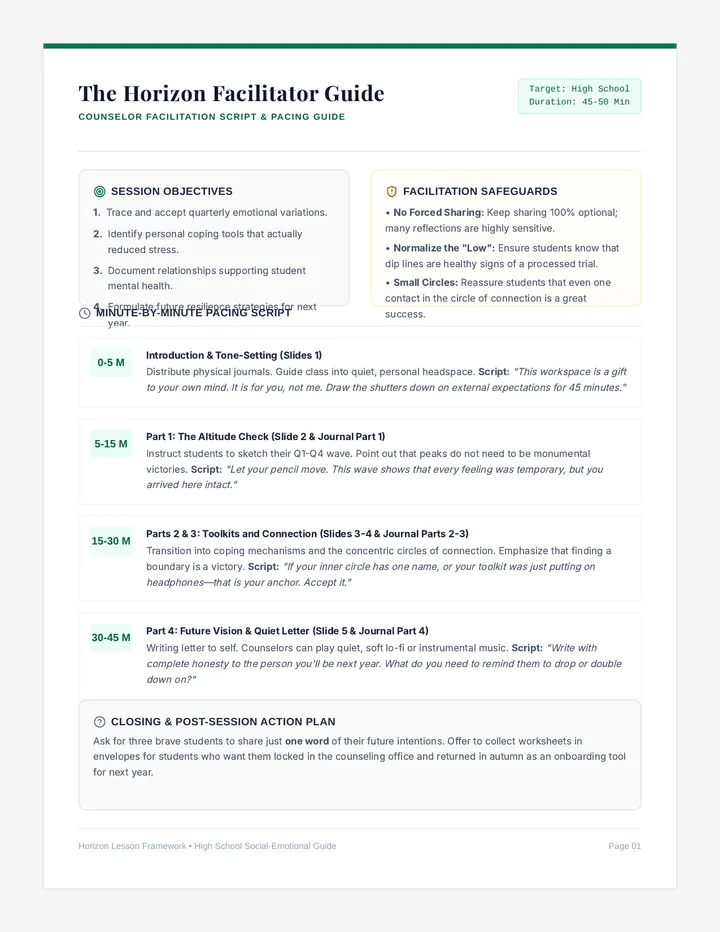
A high school counseling and reflection lesson focused on social-emotional growth, self-awareness, coping mechanisms, and planning for future resilience.
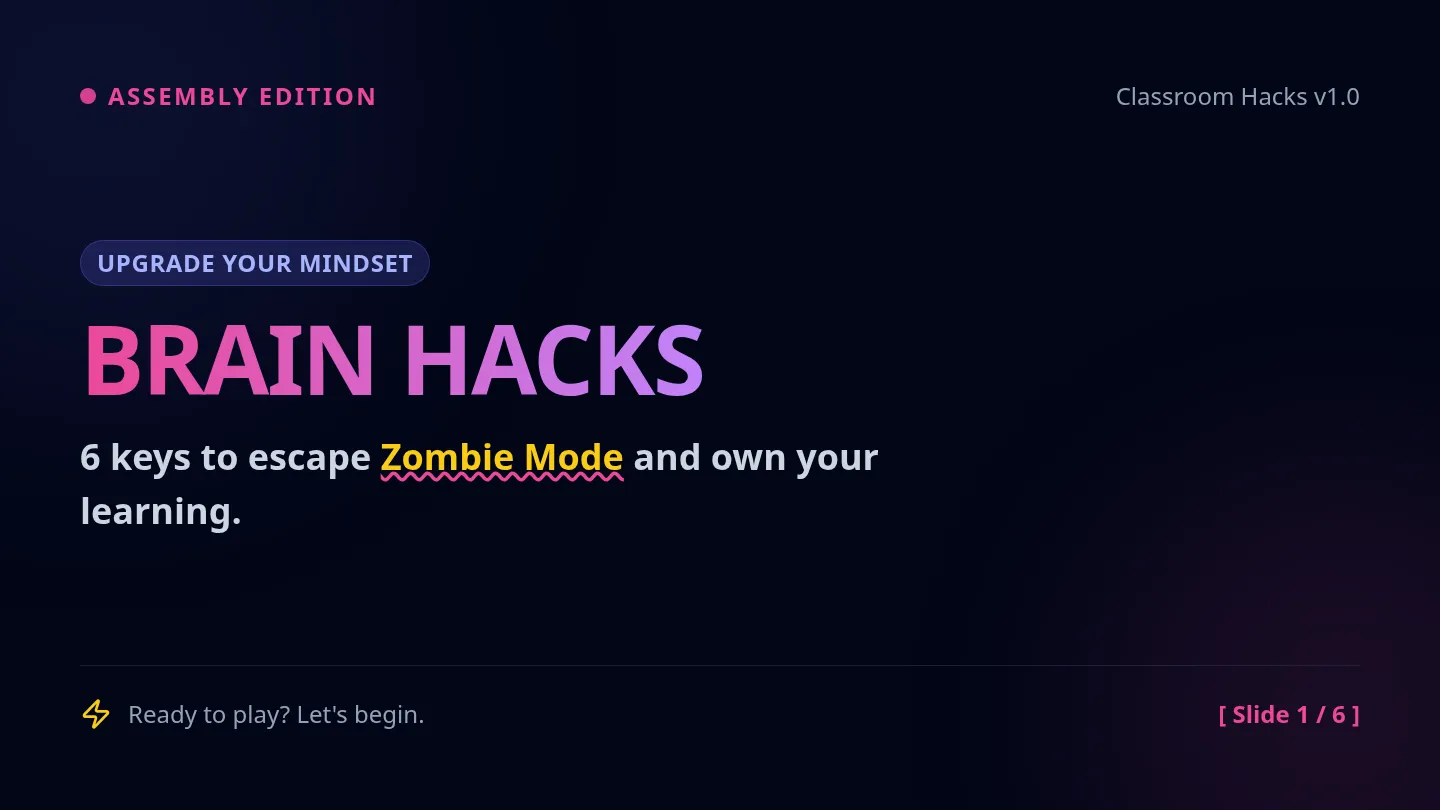
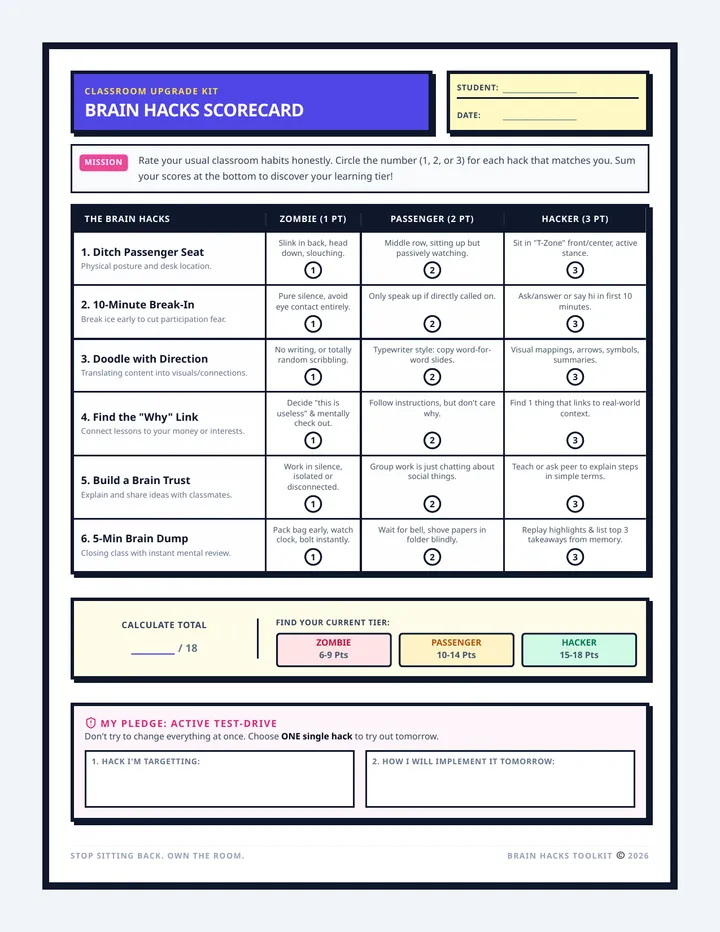
A high-energy, assembly-style lesson designed to shake up passive learning habits in high school students. It features a visually striking presentation packed with actionable 'brain hacks' and a self-assessment scorecard to help students audit and level up their engagement.
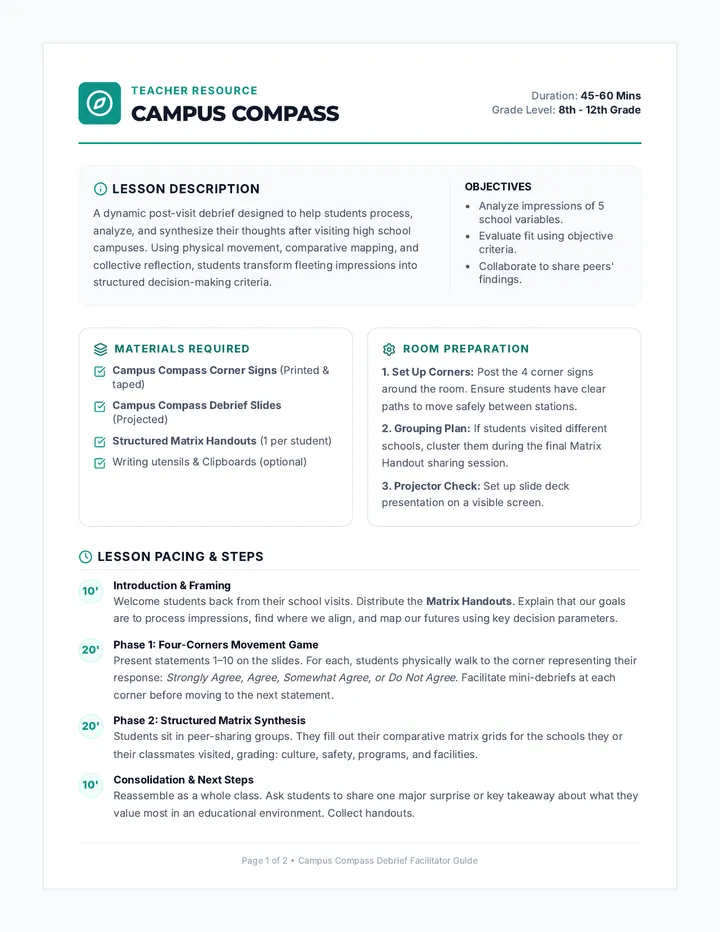
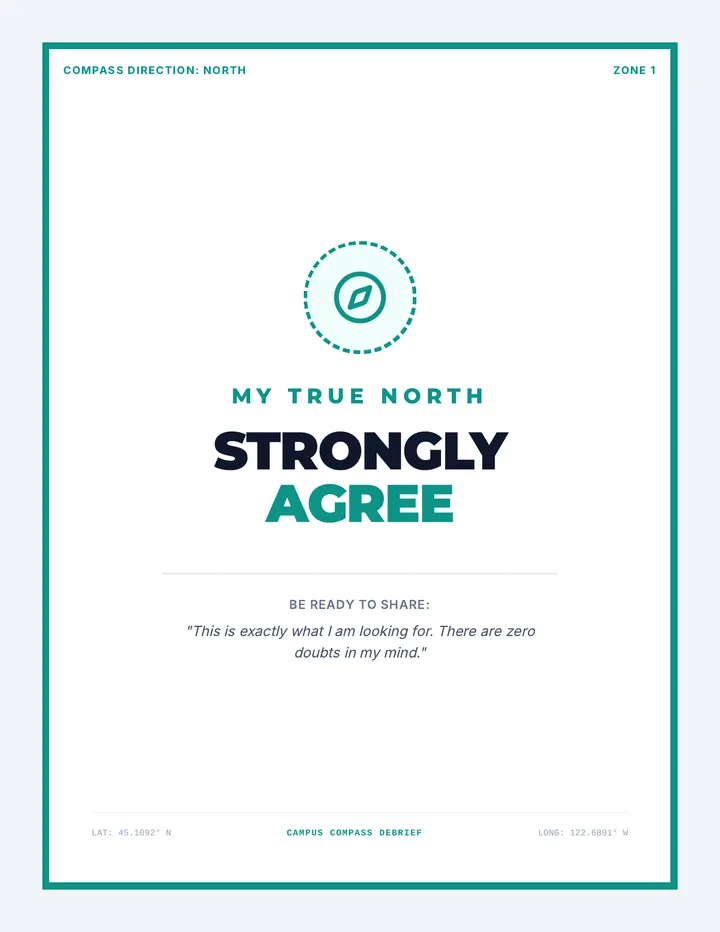
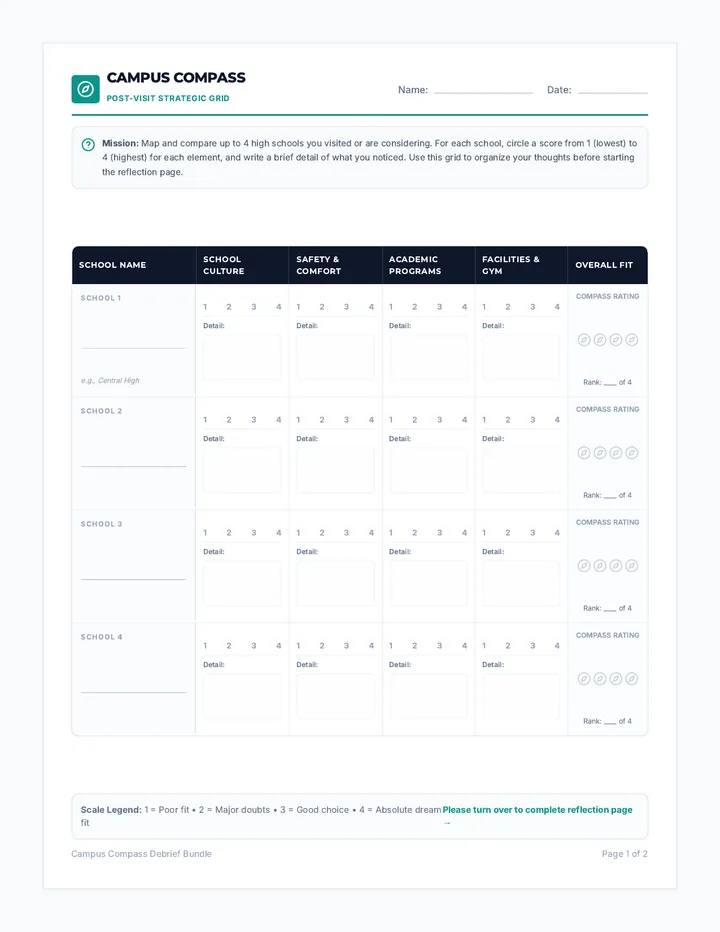
A dynamic debrief lesson designed for high school students returning from campus visits. It features a four-corners movement activity with 10 evaluation statements, a multi-school matrix analysis chart, and guiding presentation slides to synthesize their impressions of culture, safety, facilities, and academic programs.
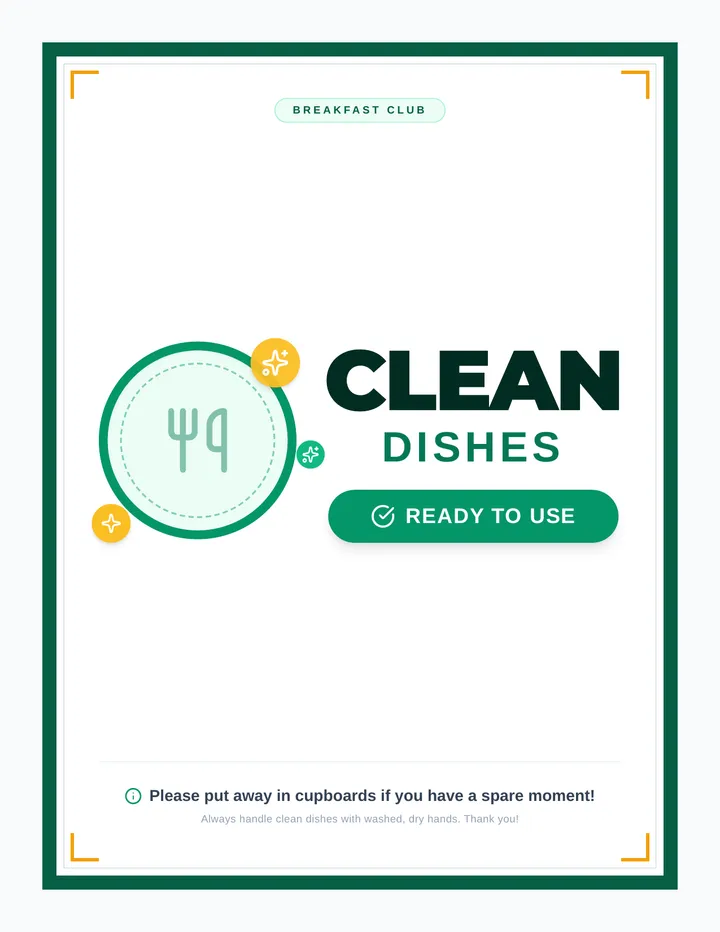
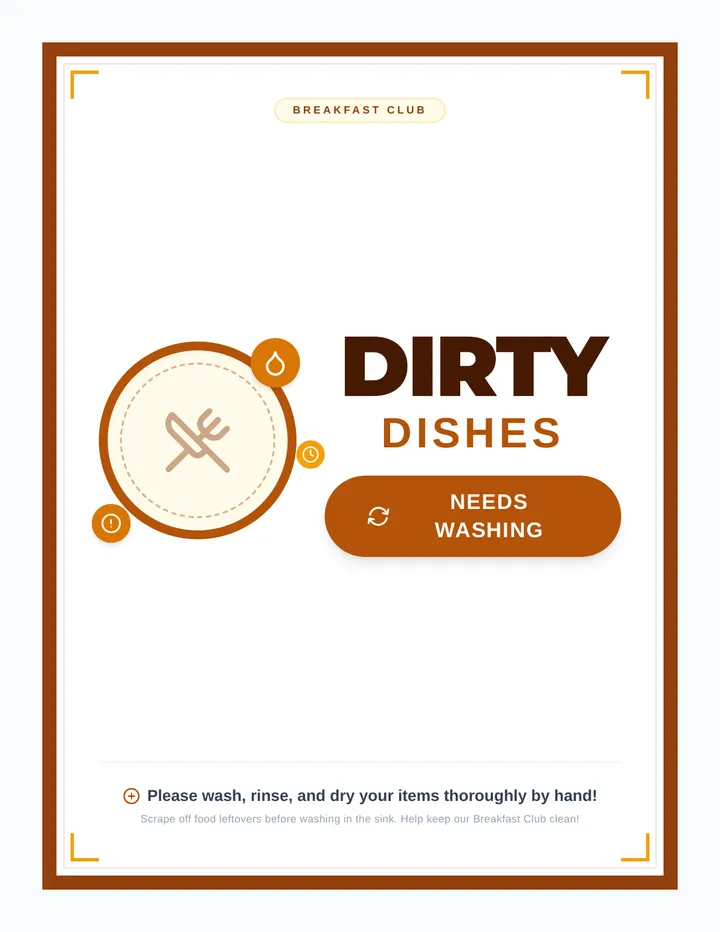
A pair of visually striking, high-contrast printable signs to organize any kitchen or classroom space. Features separate, elegant layouts for clean and dirty dishes to maintain perfect organization.
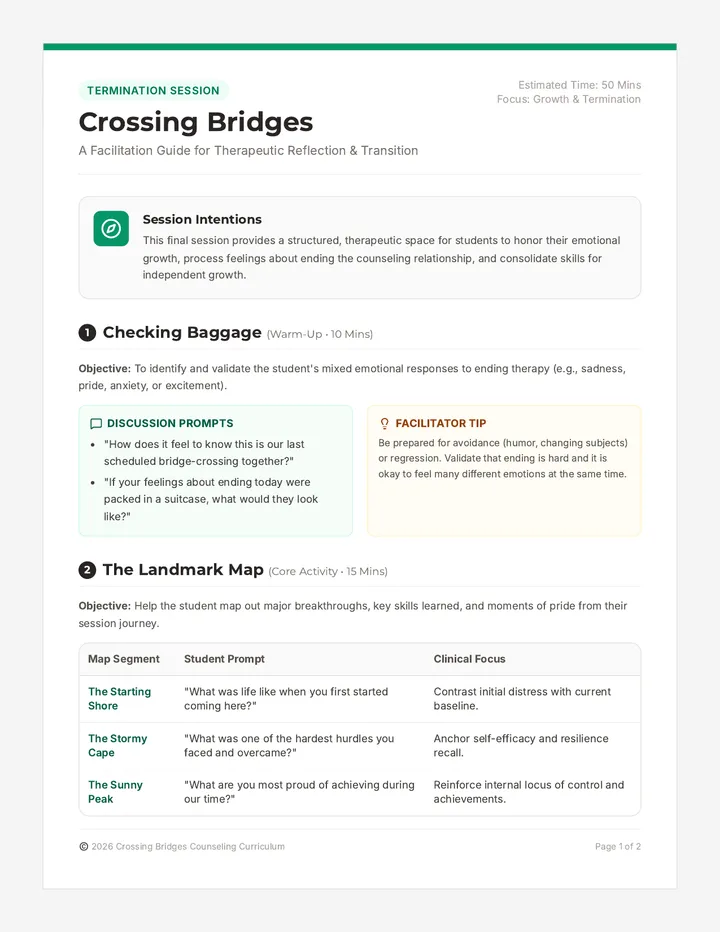
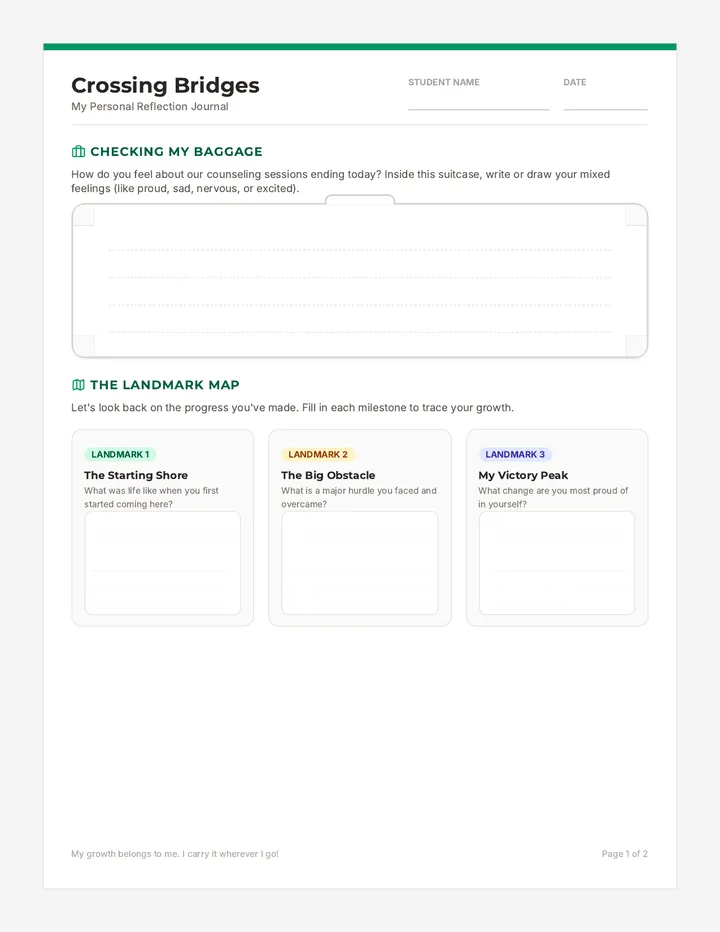
A comprehensive therapeutic counseling session designed to help students reflect on their growth, process feelings about termination, and prepare for the journey ahead.
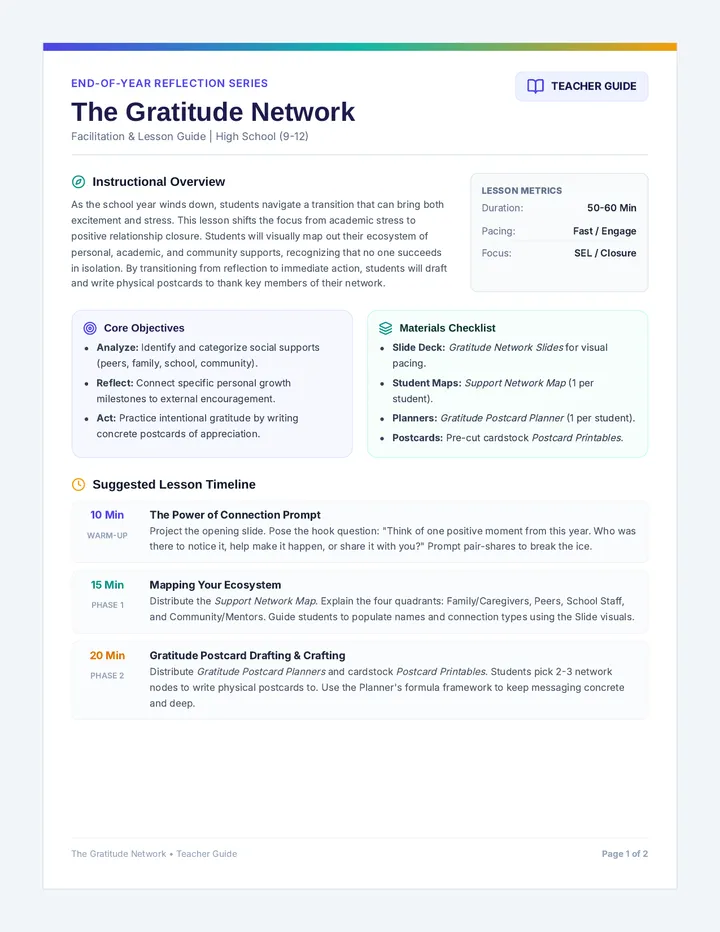
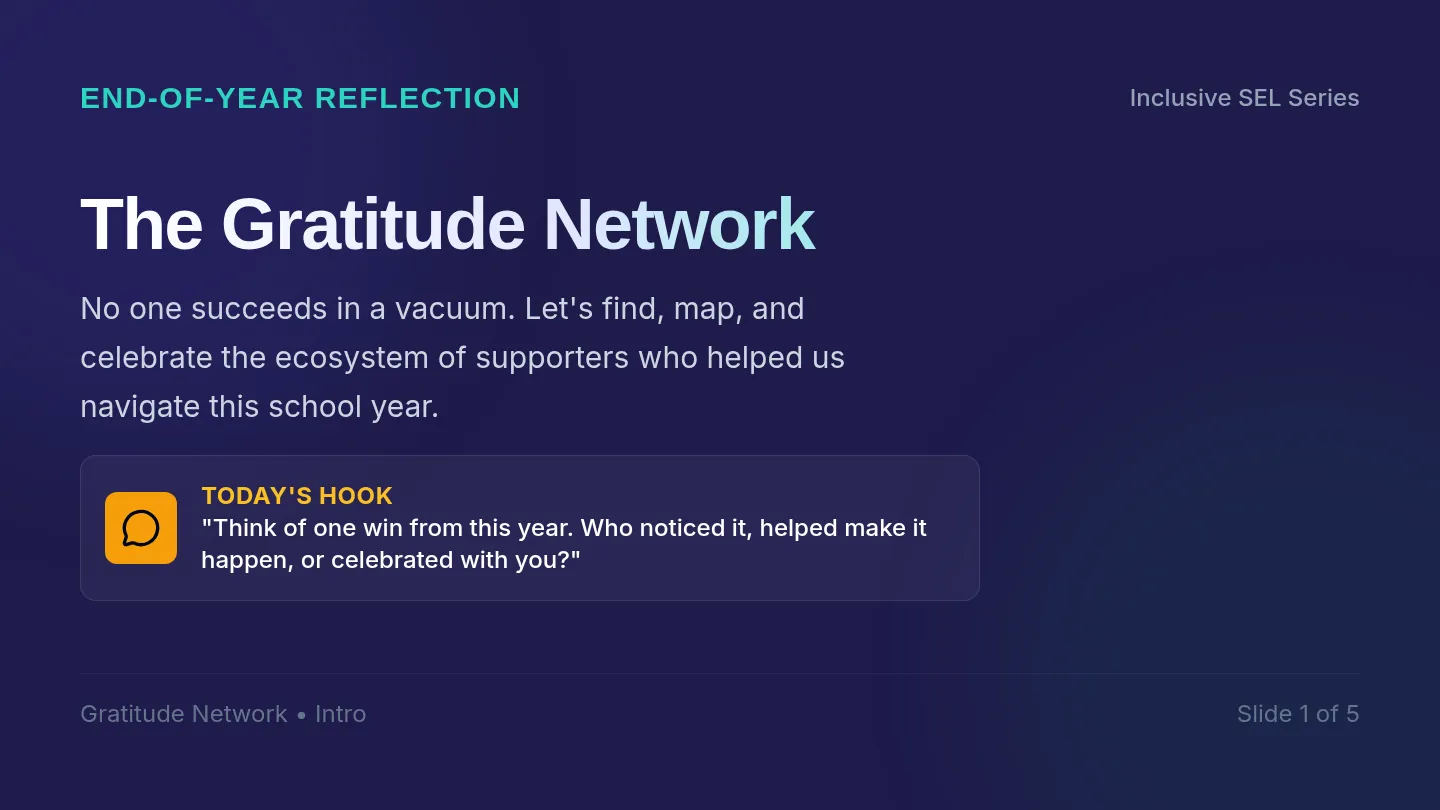
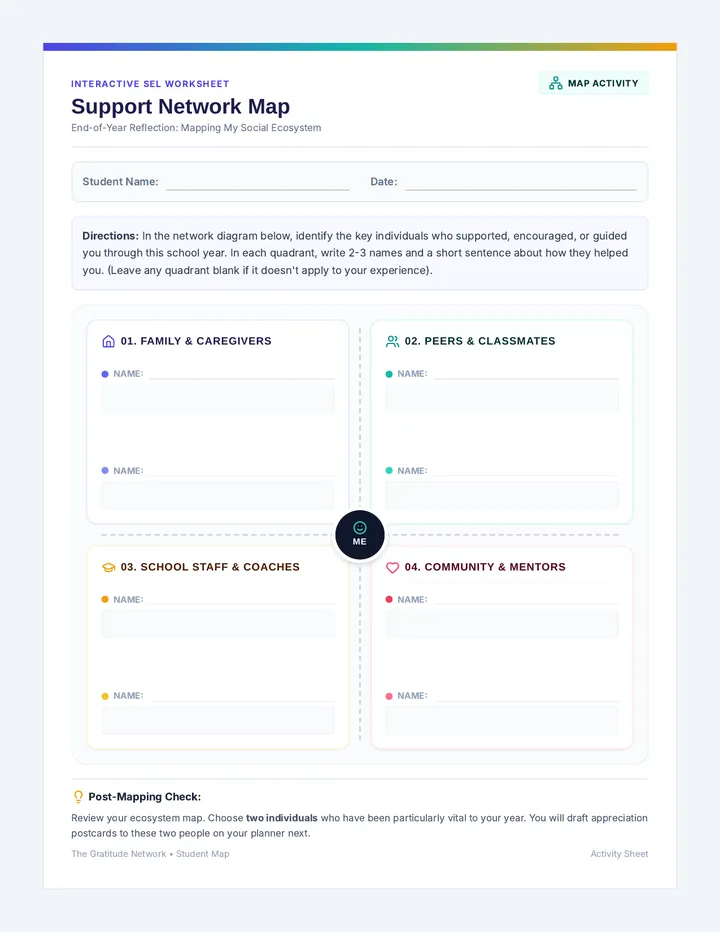
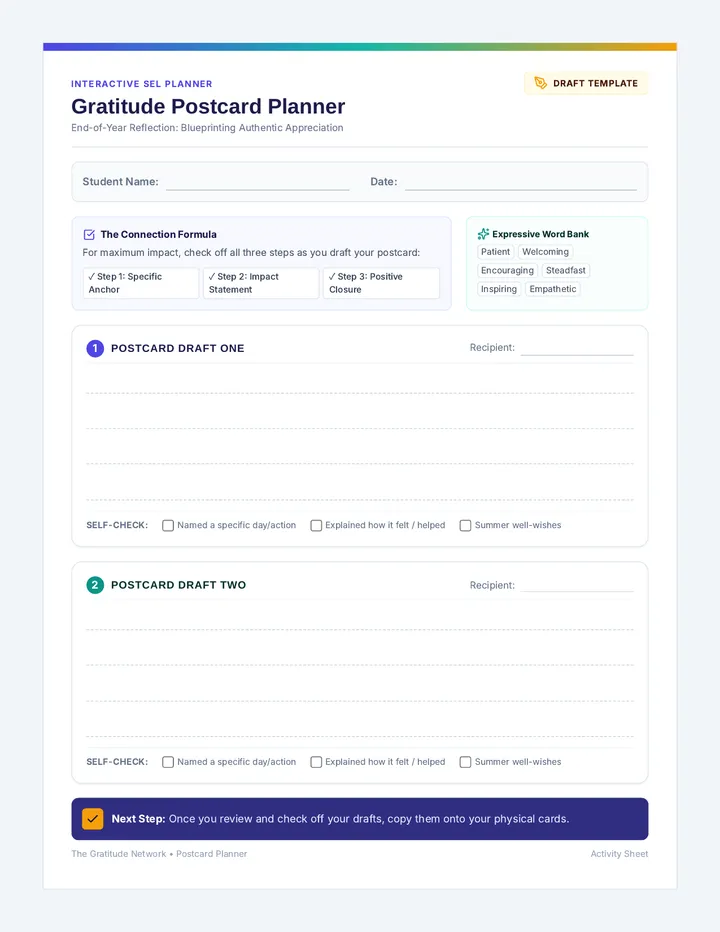
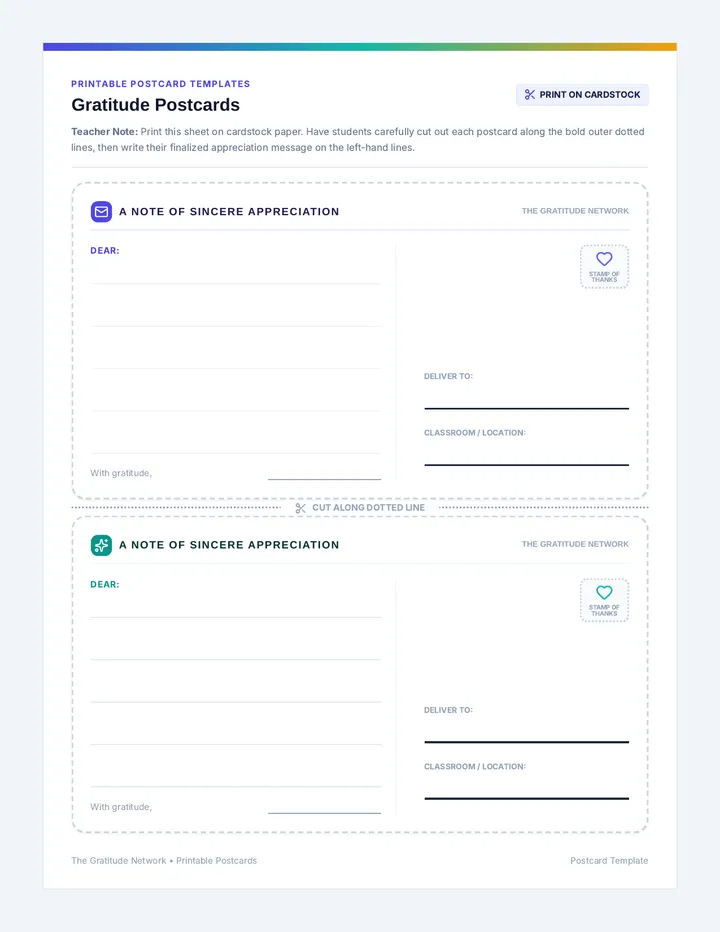
An end-of-year reflective lesson designed for inclusive high school classrooms, where students identify key social supports (peers, family, school staff, community) and write physical postcards of appreciation.
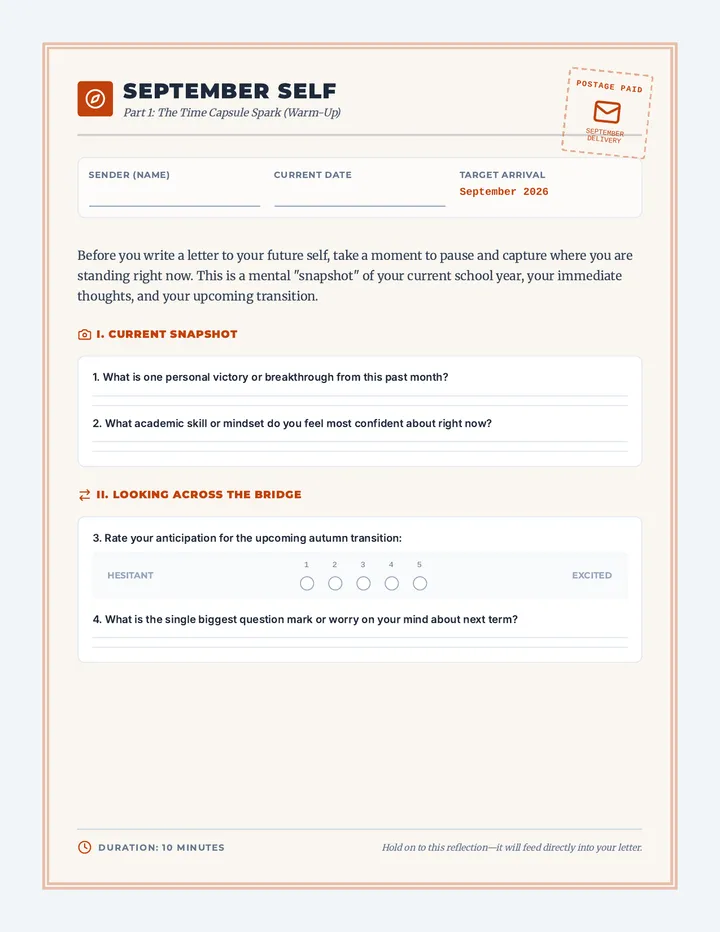
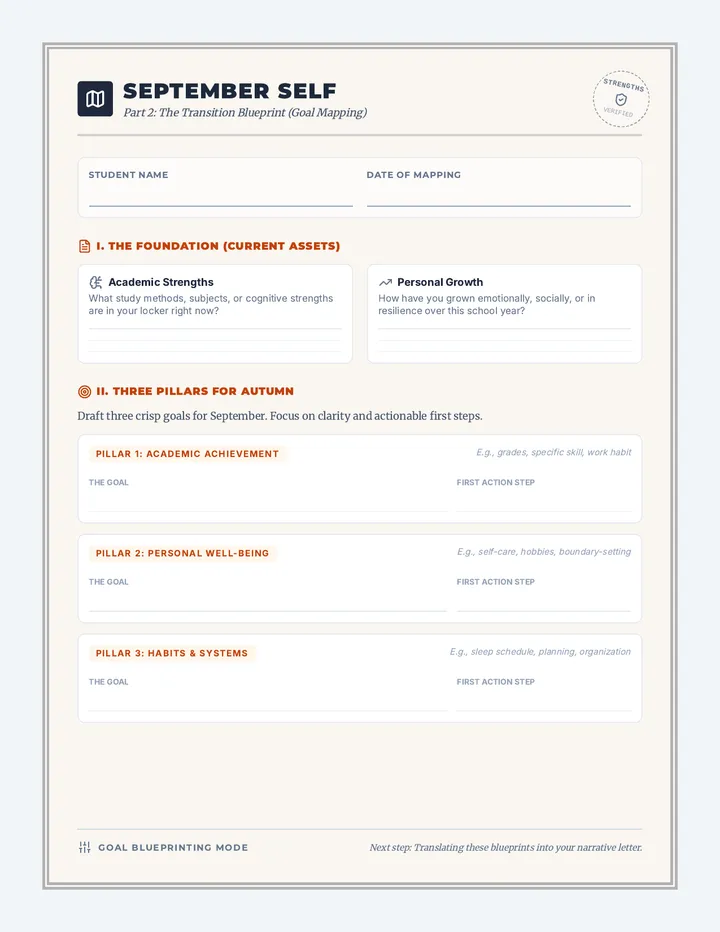
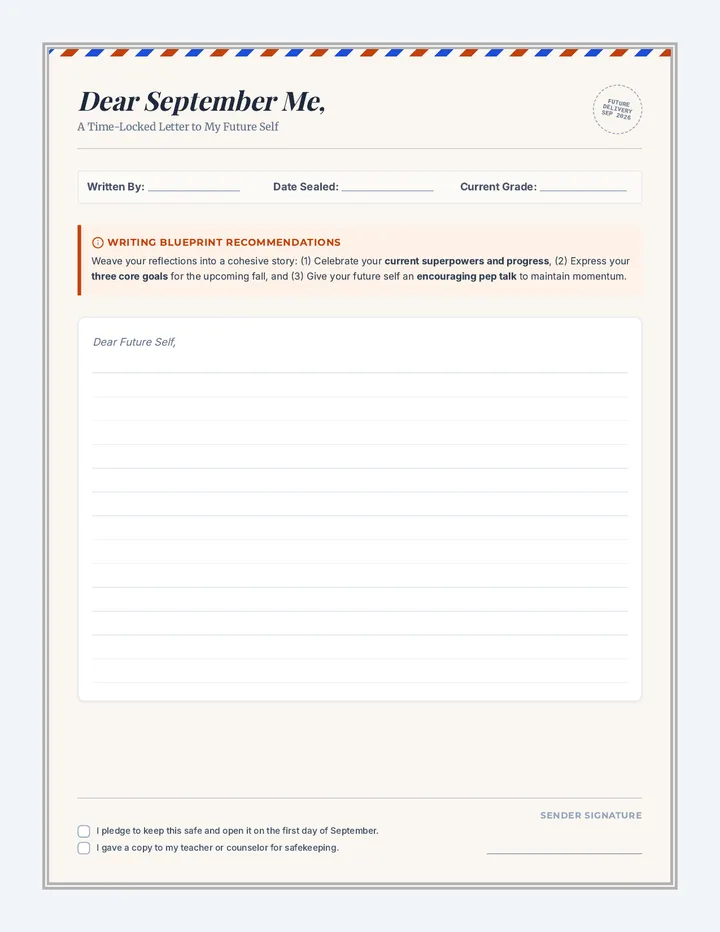
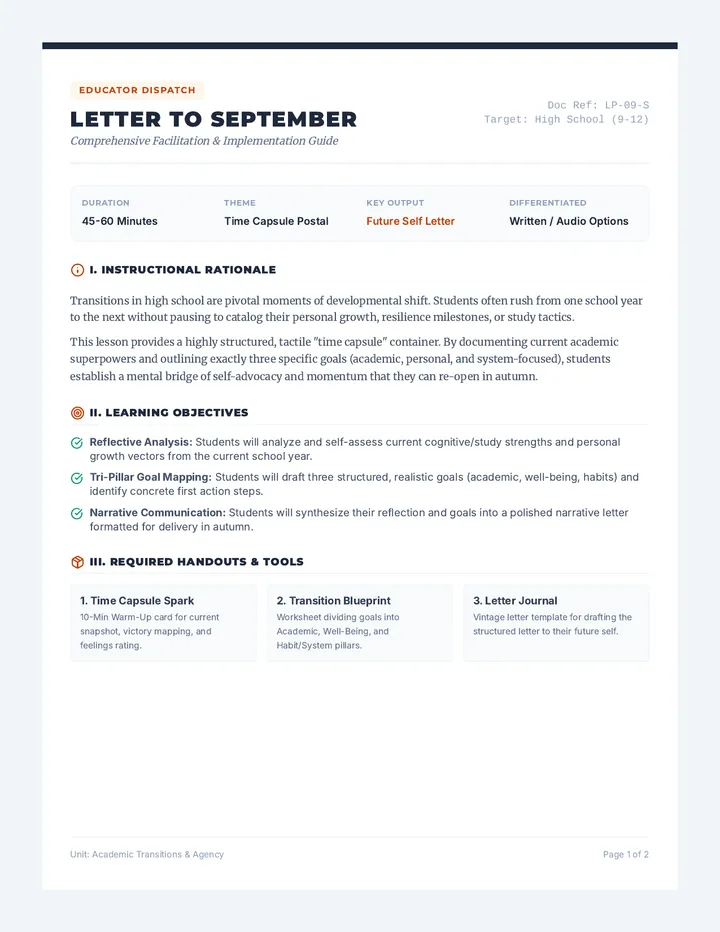
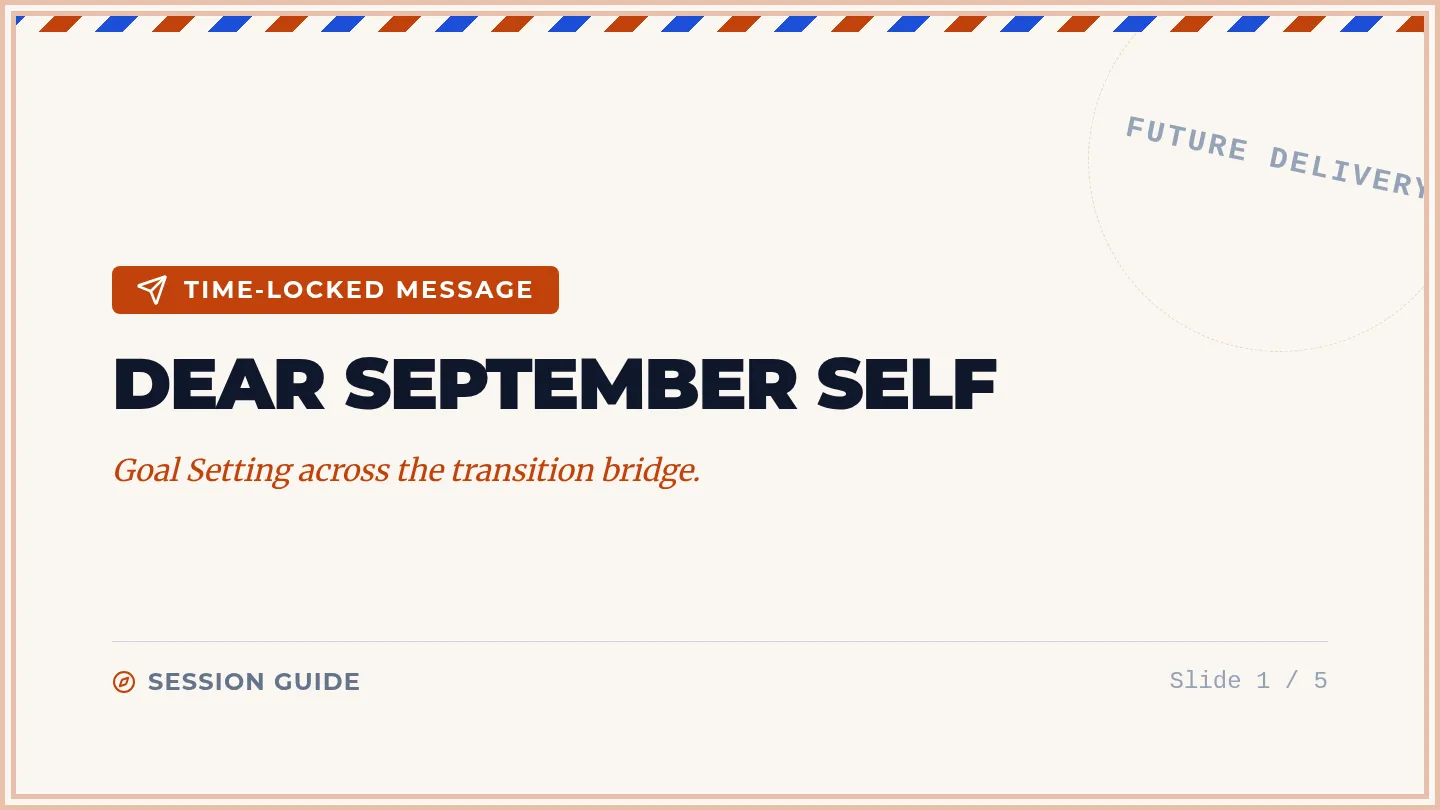
A reflective goal-setting lesson for high schoolers to capture their current strengths, growth, and autumn ambitions in a letter to their future selves.
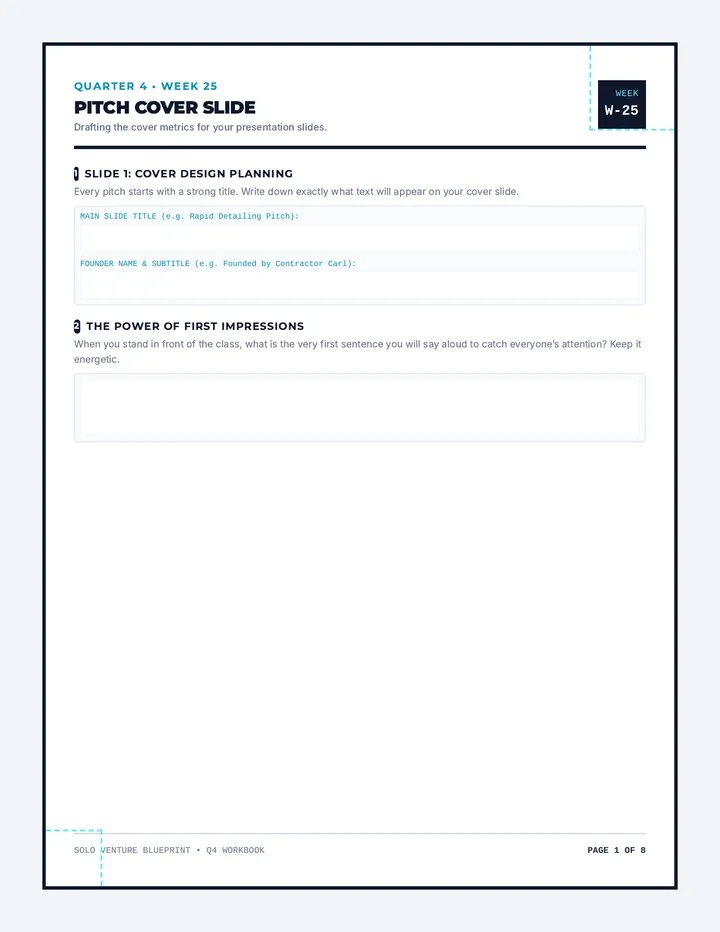
Weeks 25-32 of the year-long entrepreneurship blueprint. Students write elevator pitches, rehearse presentations, design their visual slide decks, and host the final business showcase.
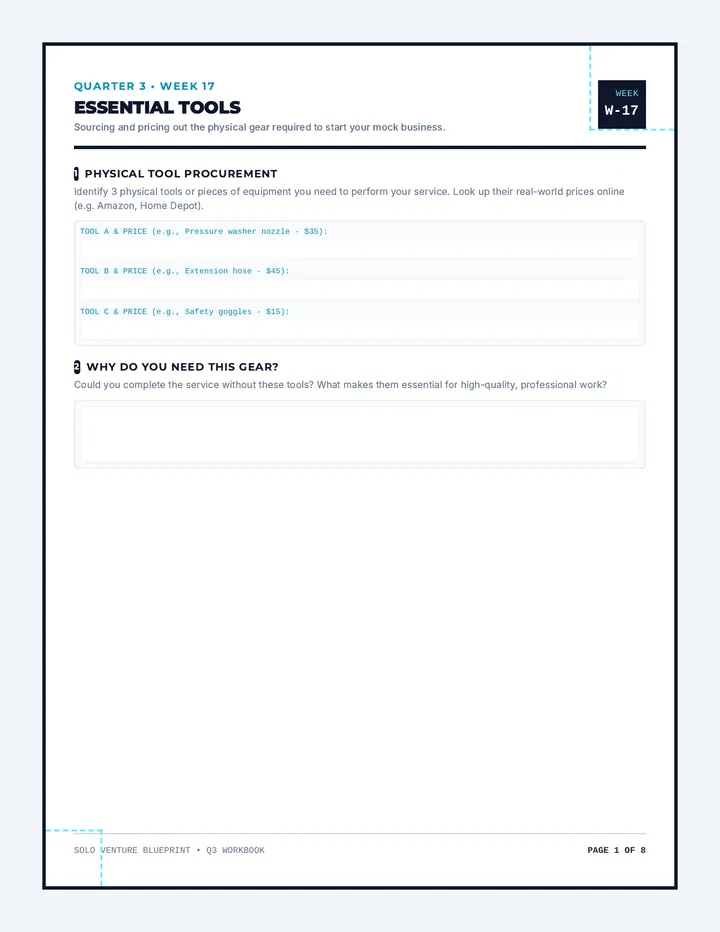
Weeks 17-24 of the year-long entrepreneurship blueprint. Students research local tool/equipment costs, calculate gas/fuel expenses, and establish business pricing structures.
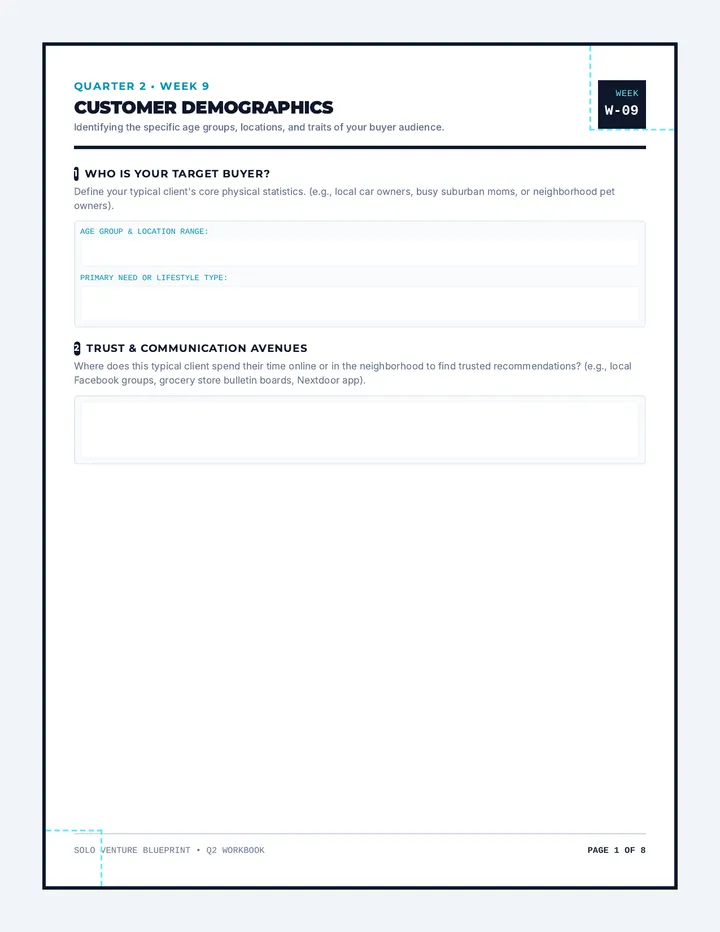
Weeks 9-16 of the year-long entrepreneurship blueprint. Students define their target audience demographics, create customer avatars, and build their core brand identity elements.
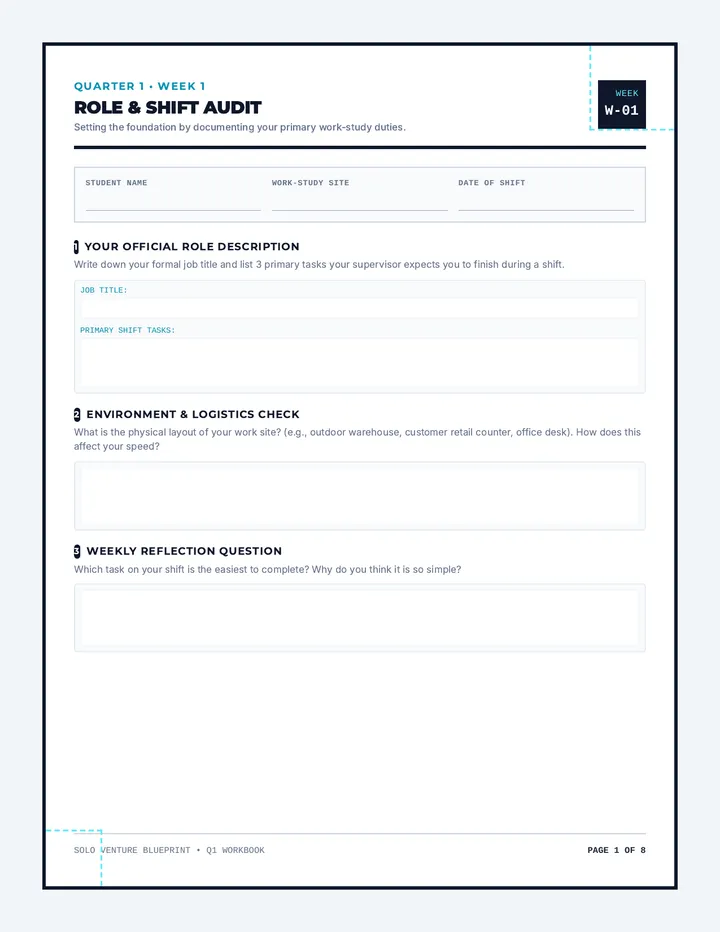
Weeks 1-8 of the year-long entrepreneurship blueprint. Students conduct research at their work-study placements, identify community bottlenecks, and brainstorm their core business concept.