This Tier 2 intervention lesson introduces 7th-grade students to practical working memory strategies, specifically chunking and visualization, through direct instruction, guided practice, and a competitive recall game.
A comprehensive exploration of neuroplasticity and growth mindset designed for middle schoolers. Students will learn the biological basis of learning and how to apply brain science to overcome challenges.
Teaches the mindset and language of self-correction to handle communication errors without loss of confidence.
Developing advanced listening skills, including paraphrasing and validating others' perspectives in English.
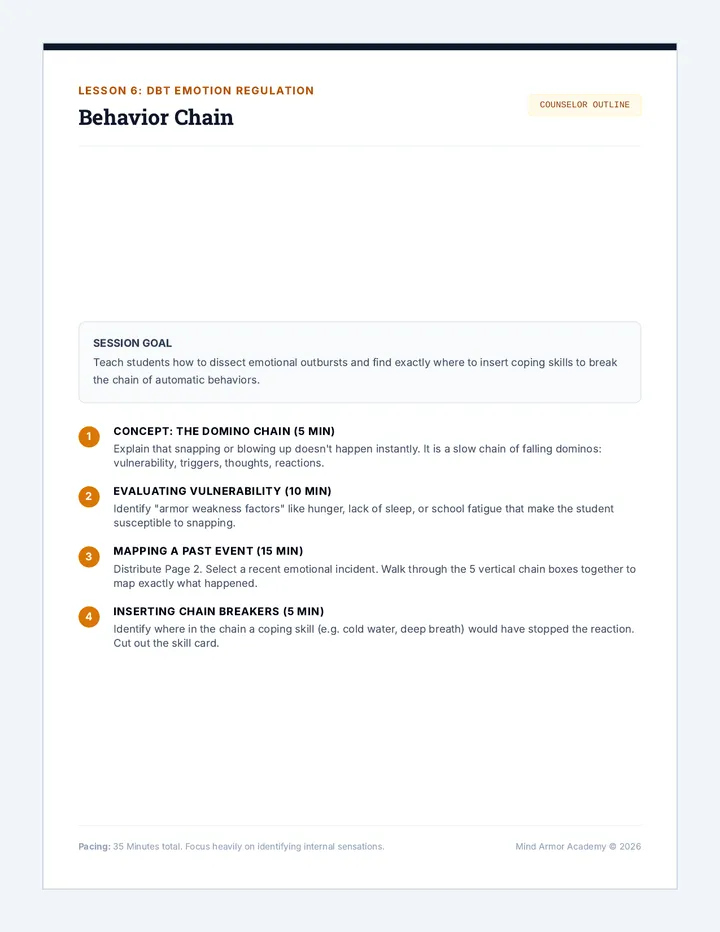
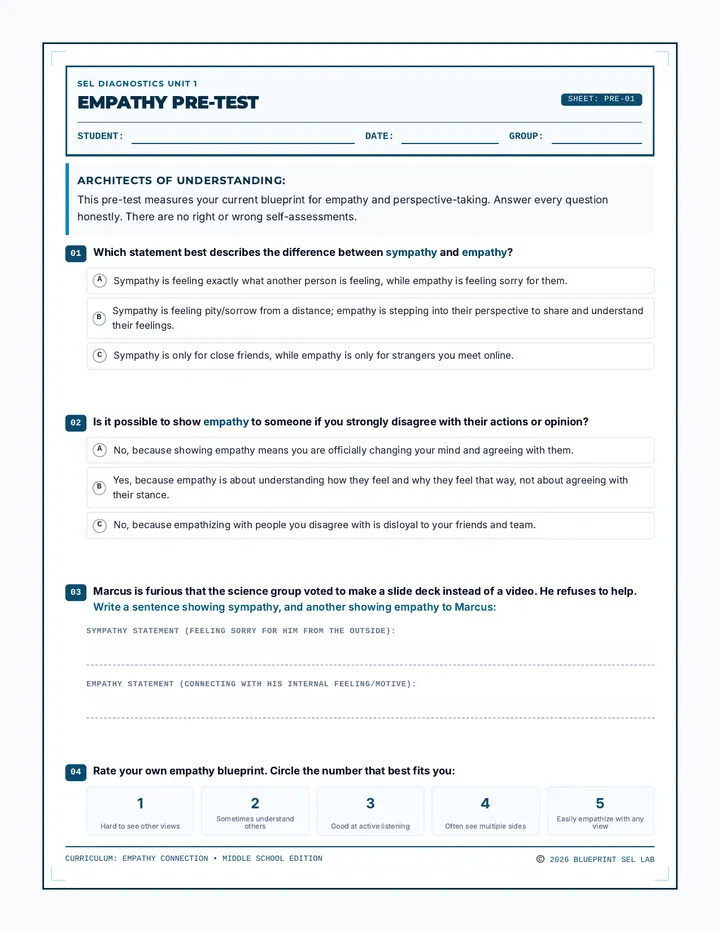
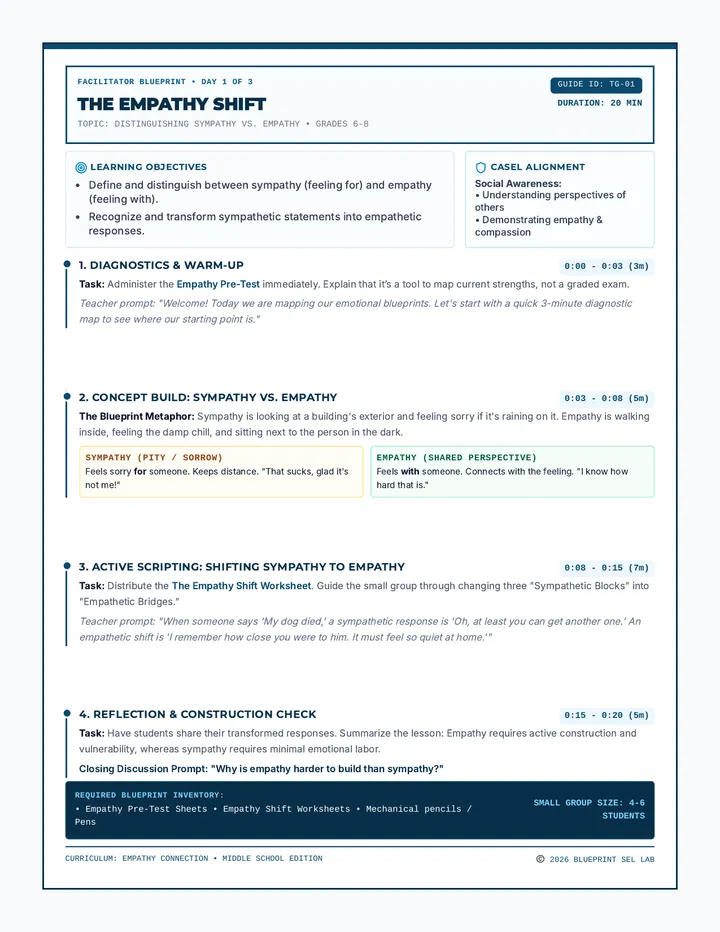
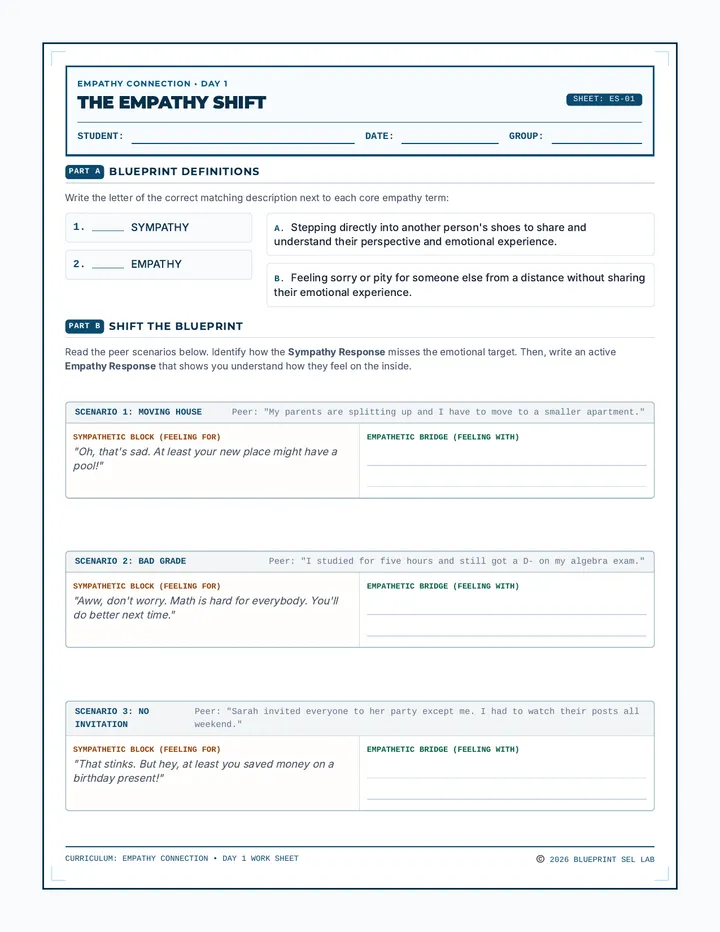
Focuses on empathetic response language in English to build stronger social connections.
Synthesizing personal mission statements with bicultural identity and global goals.
Scaffolding self-advocacy and clarification strategies for students navigating an English-speaking environment.
Understanding non-verbal communication, personal space, and social cues across different cultures.
Expanding emotional vocabulary for ESL students to express nuance and intensity in English.
Final review, celebration of growth, and official program mastery certification.
Practical team-based synergy challenges to apply collaborative problem-solving skills.
Explores proactive responses to social media and digital habits to protect self-esteem and focus.
Teaches the concept of the Emotional Bank Account and how to build trust through small deposits.
Finalizes skills with conflict resolution strategies (Stop-Drop-Solve) and long-term goal planning.
Develops assertive communication skills using I-Statements and empathetic listening techniques.
Focuses on focus, Will vs. Won't power, and active recall strategies for academic success.
Teaches prioritization using the Eisenhower Matrix and managing the 'Big Rocks' of life.
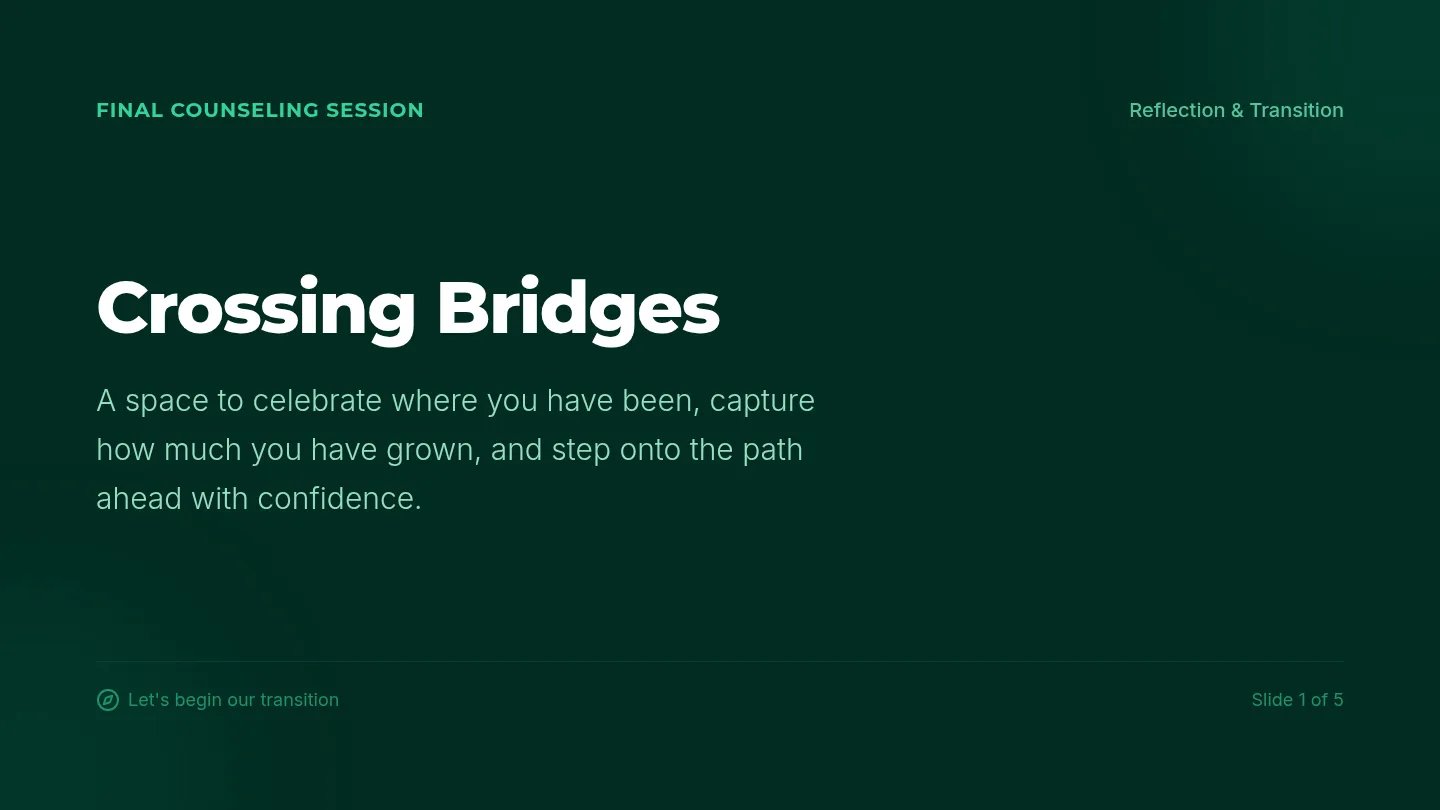
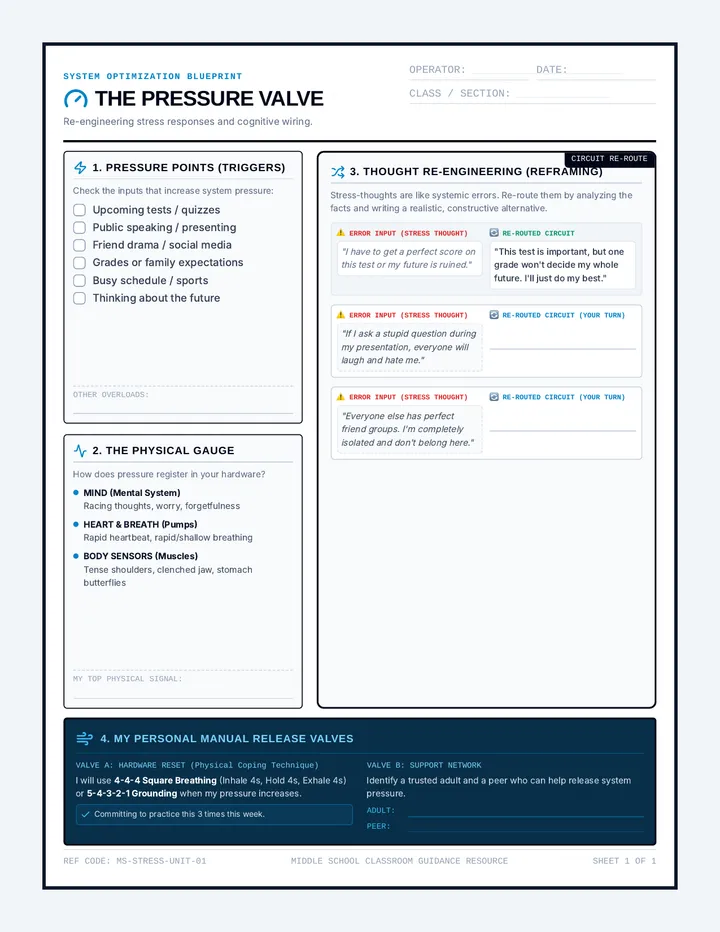
Teaches emotional regulation through the Notice-Name-Breathe method and building a resilience toolkit.
Explores growth mindset, the power of 'Yet', and understanding neuroplasticity during challenges.
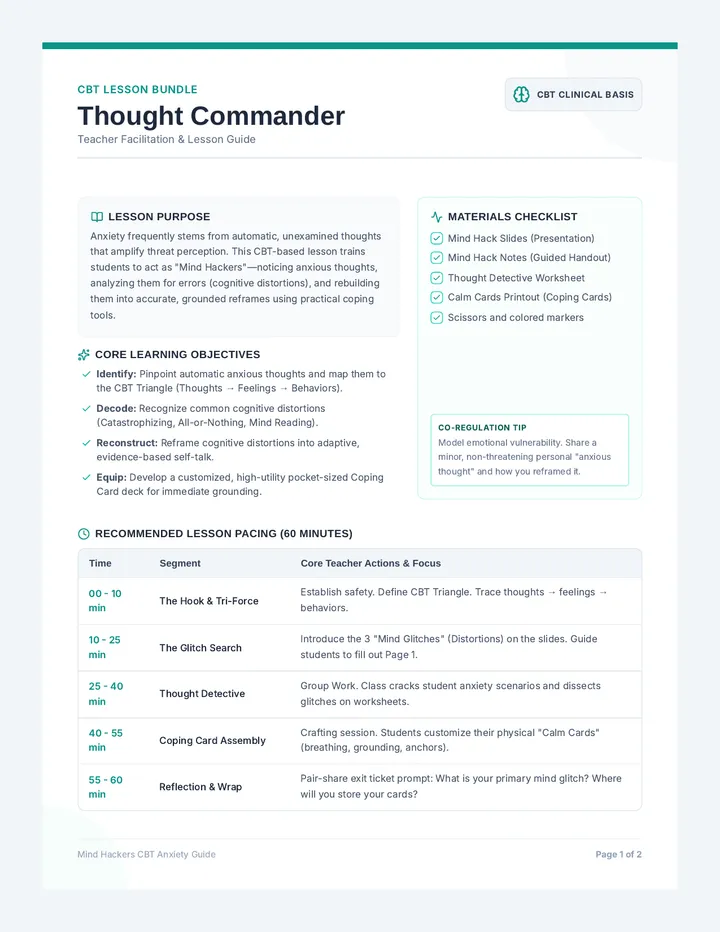
Focuses on building confidence and self-esteem by identifying and 'patching' negative self-talk glitches.
Introduction to self-awareness and identifying personal values to build an internal 'Source Code'.
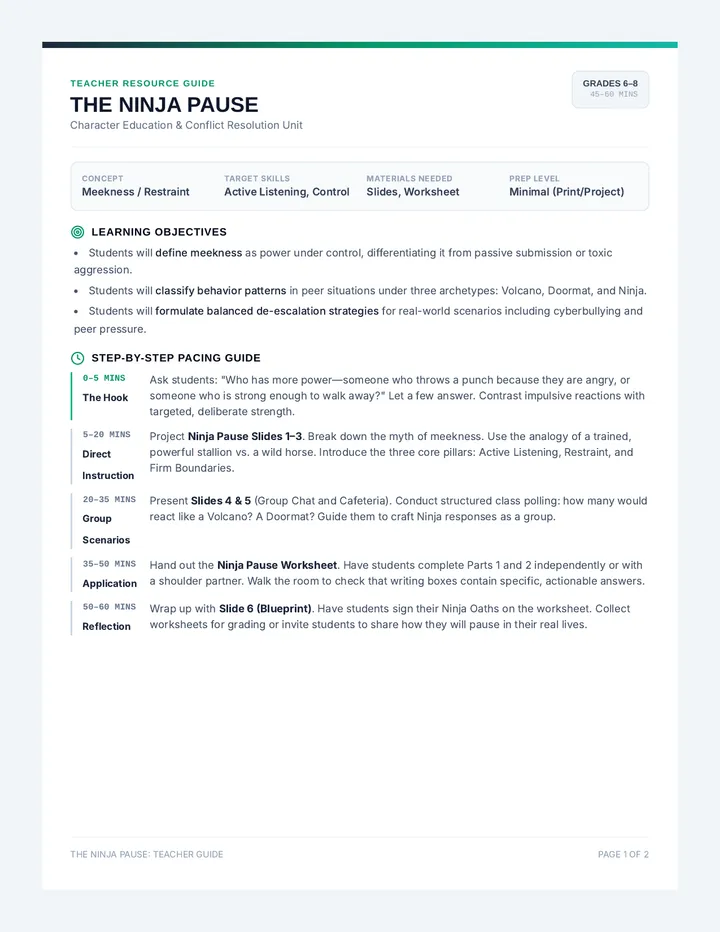
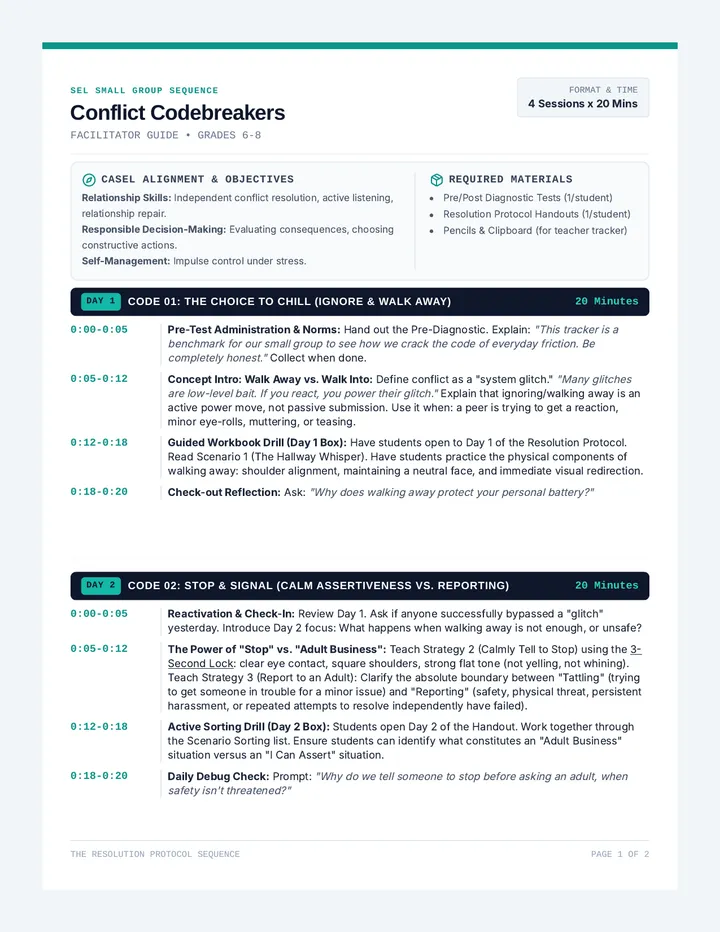
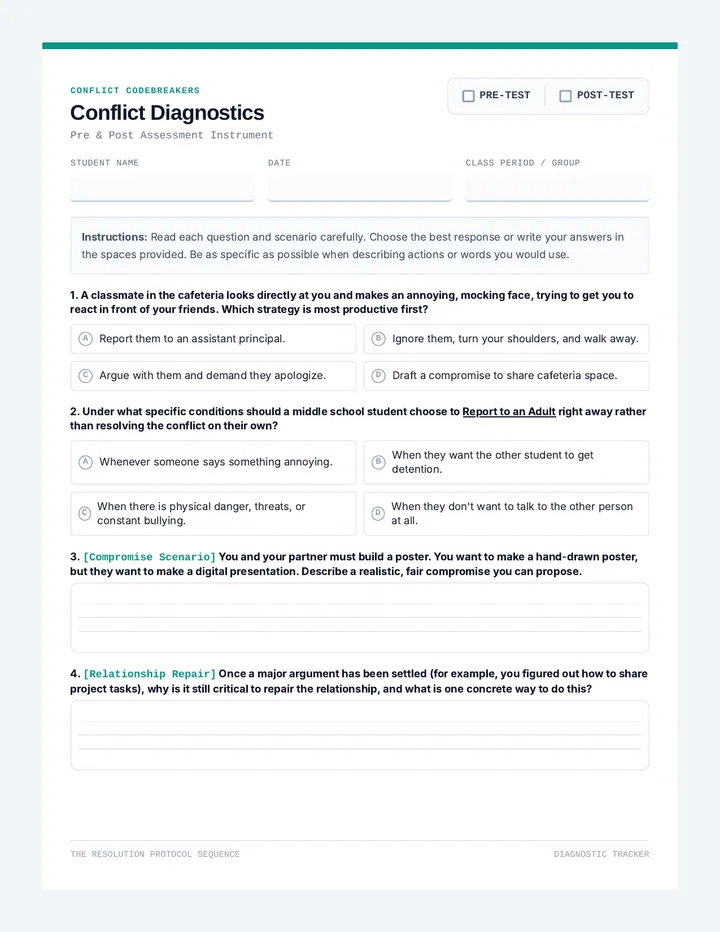
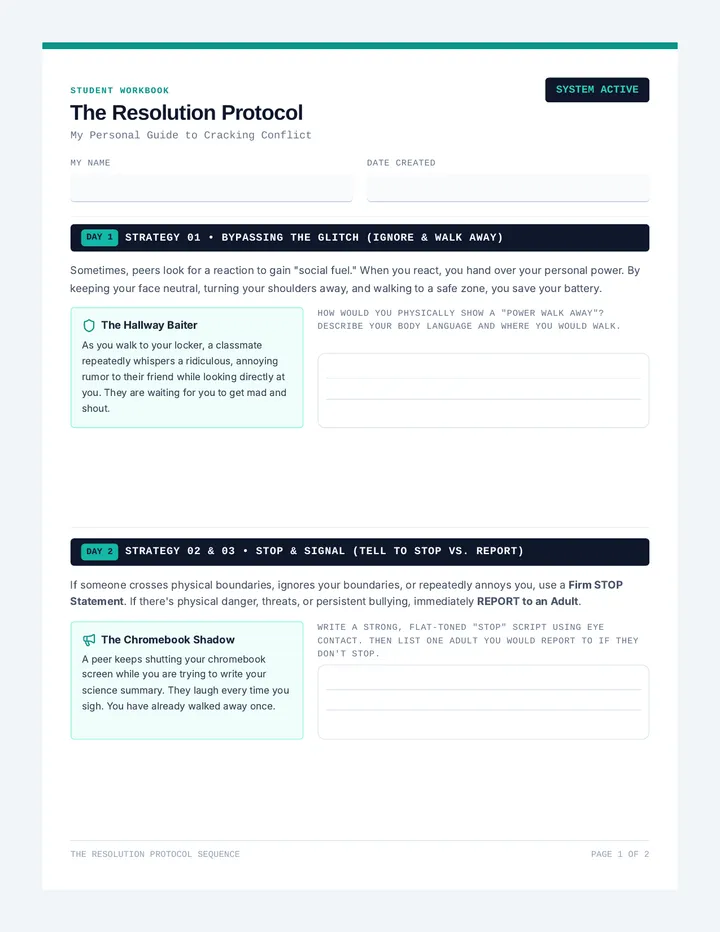
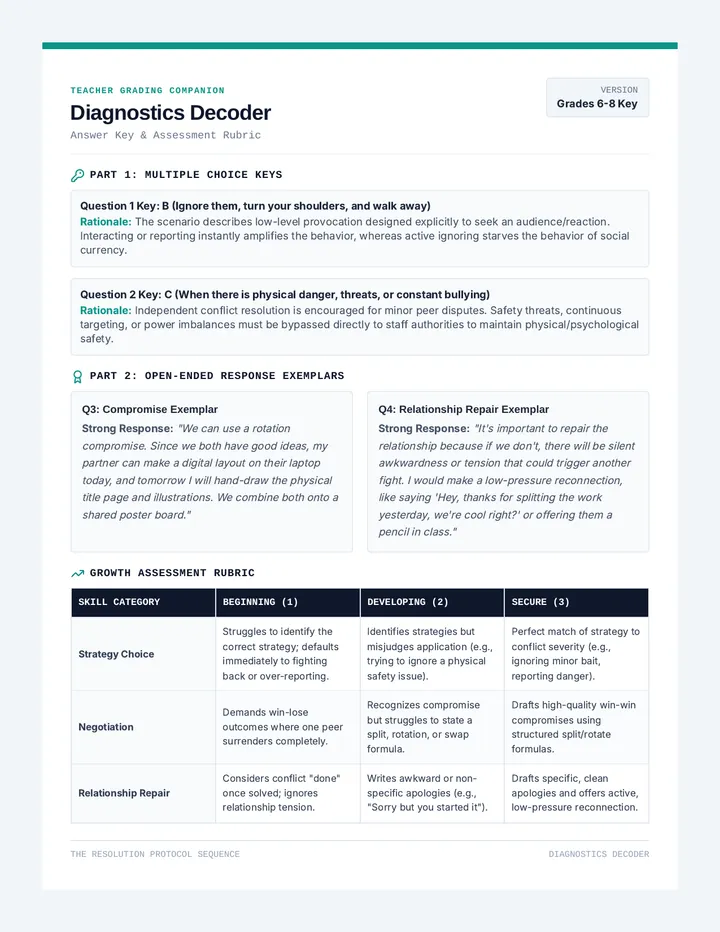
Develops social communication skills, conflict resolution strategies, and stress management techniques.
Teaches practical strategies for time management, prioritization, and effective study habits.
Focuses on developing a growth mindset and building emotional resilience to handle setbacks effectively.
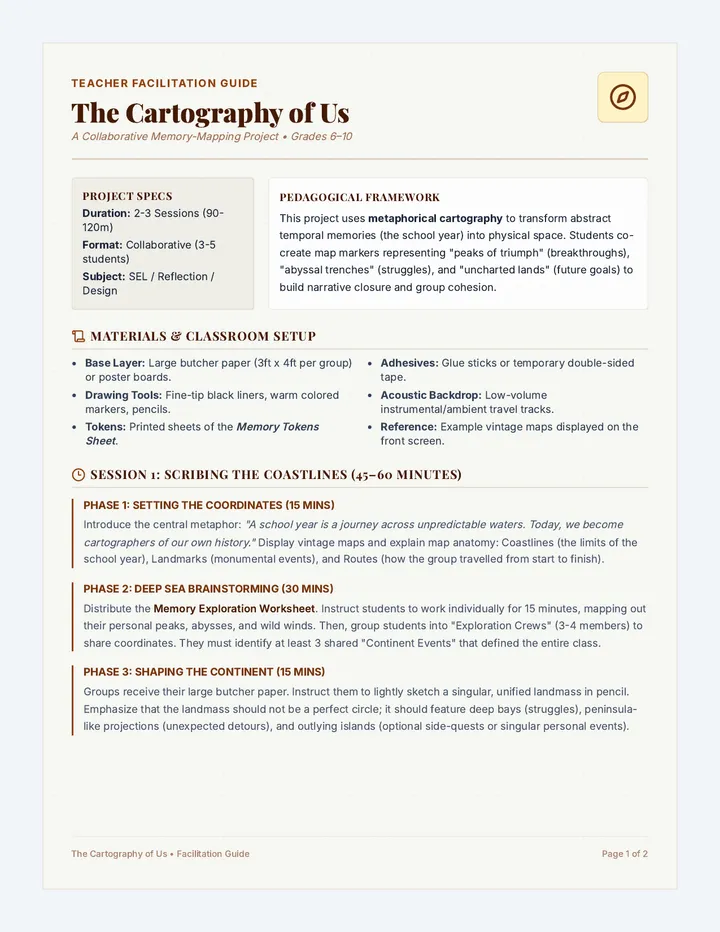
Explores self-awareness and self-esteem to help students understand their strengths and build a positive self-image.
This lesson introduces the fundamentals of somatic tracking, a technique used to re-train the brain's response to physical sensations by observing them through a lens of safety and curiosity. Students will learn the four-step process of anchoring, noticing, describing, and reassuring to build foundational body awareness.
High schoolers align their device habits with professional workplace standards, focusing on agency and self-regulation.
Eighth graders develop peer accountability allies and set community standards for focused digital collaborative work.
Seventh graders explore the difference between compliance and agency, evaluating how their digital navigation builds their personal brand.
Sixth graders analyze the attention economy and map out personal accountability safe-zones for any classroom environment.
Fifth graders model digital leadership by sharing navigation strategies and mentoring peers in responsible device use.
Fourth graders master the art of switching between digital tasks efficiently using the '3-2-1 Switch' protocol.
Third graders identify 'navigation hazards' and use a collaborative 'Focus Shield' to stay on their learning path.
Second graders practice communicating their focus through physical 'Readiness Signals' to show they are prepared for the digital landscape.
First graders distinguish between 'Learning Tools' and 'Toys' and practice navigating only to the path shown by the teacher.
Kindergarten students learn that their device is a special tool for learning and practice listening for 'Red Light/Green Light' signals to know when to navigate.
A 30-minute professional development session for preschool and K-8 staff focusing on restorative circles, affective statements, and re-entry reflection tools.
High school students develop agency and professional digital habits, demonstrating Accountability by aligning their device use with academic goals and professional communication.
Middle school students focus on the JHawk Way value of Accountability by managing their digital attention and communicating respect through focused device use.
Elementary students explore how to be Responsible JHawks by navigating to the right learning tools at the right time and communicating their readiness to learn.
Students learn the fundamentals of financial forecasting, calculating revenue vs. profit, and using absolute cell referencing ($) to project business growth over time.