A 30-minute lesson for 4th graders on self-control, teaching the 'Stop, Think, Act!' strategy to help students manage impulses and make smart choices.
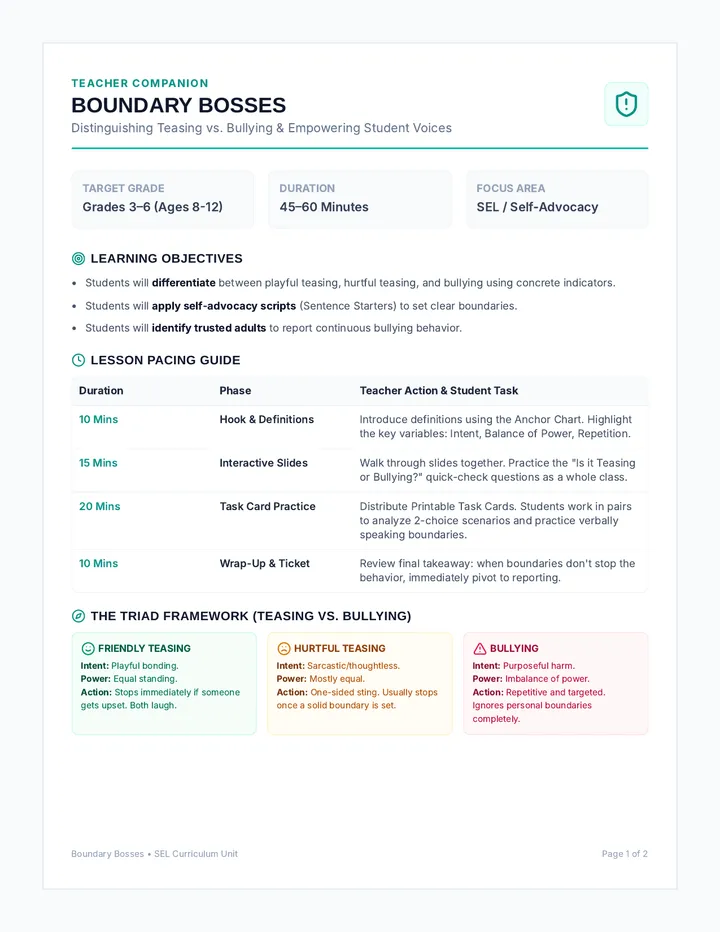
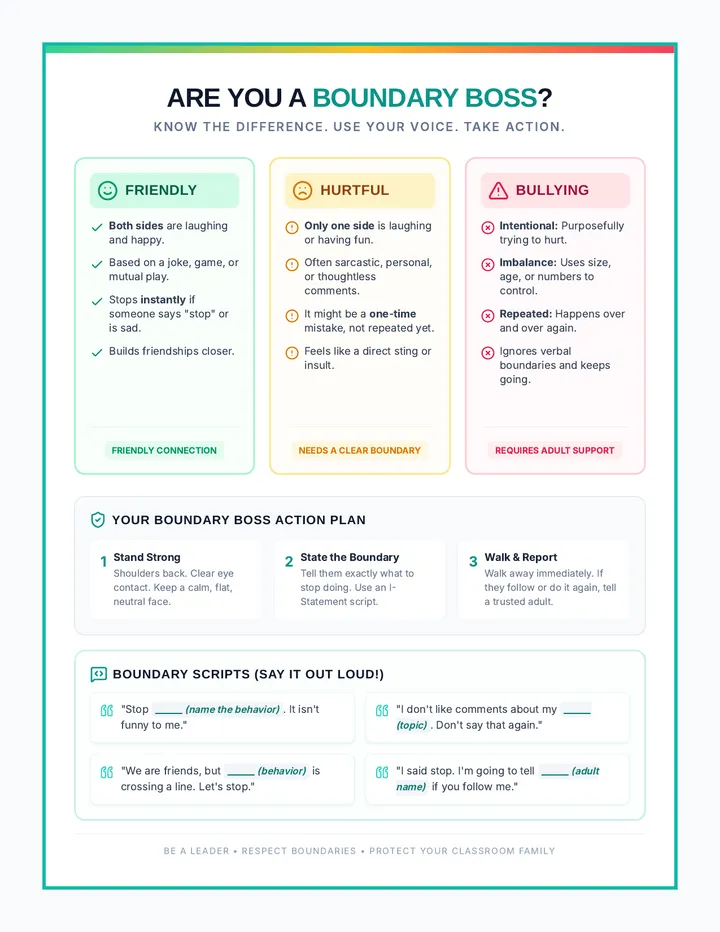
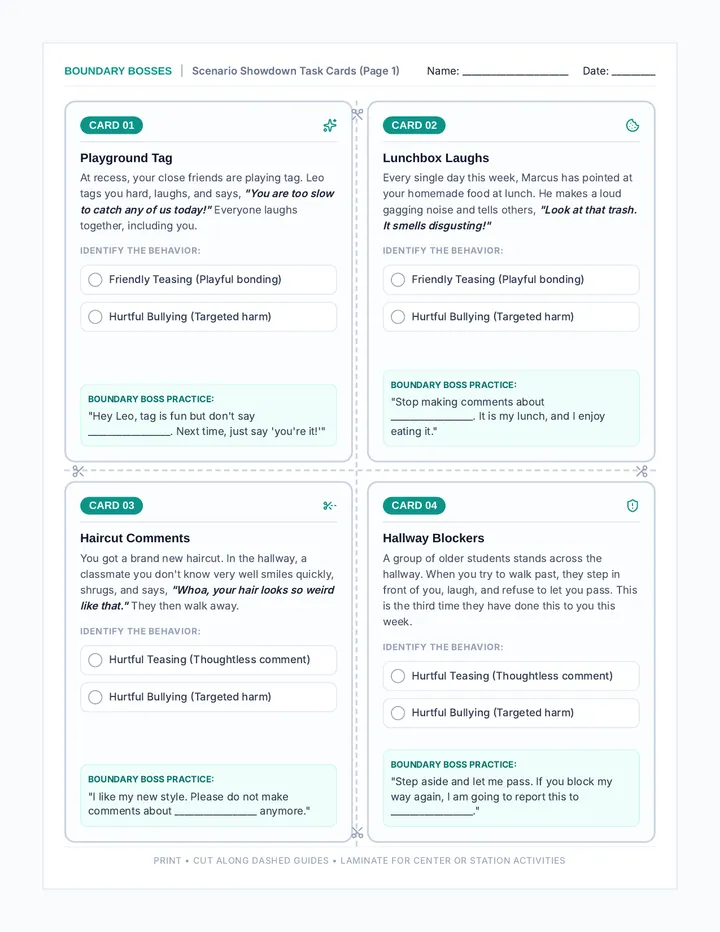
A comprehensive lesson helping students distinguish between friendly teasing, hurtful teasing, and bullying, while teaching concrete self-advocacy strategies and verbal boundary setting.
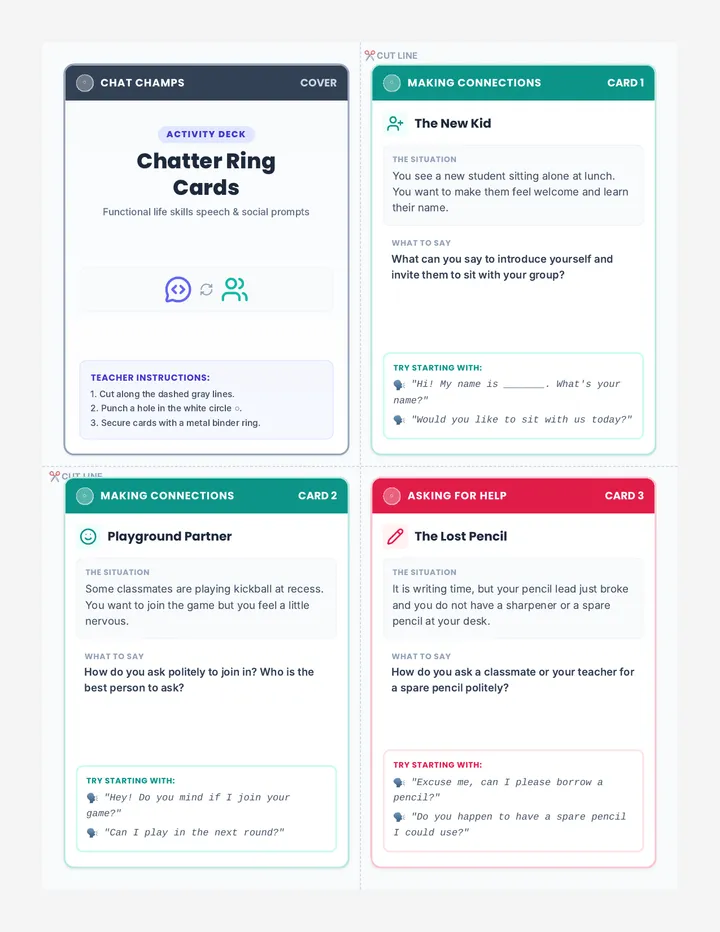
A lesson focused on equipping elementary students with functional verbal communication skills for everyday real-world interactions. Students practice through guided peer discussions, roleplays, and task cards.
Consolidates learning with a collaborative micro-build challenge, group self-reflection, and administration of the identical post-test.
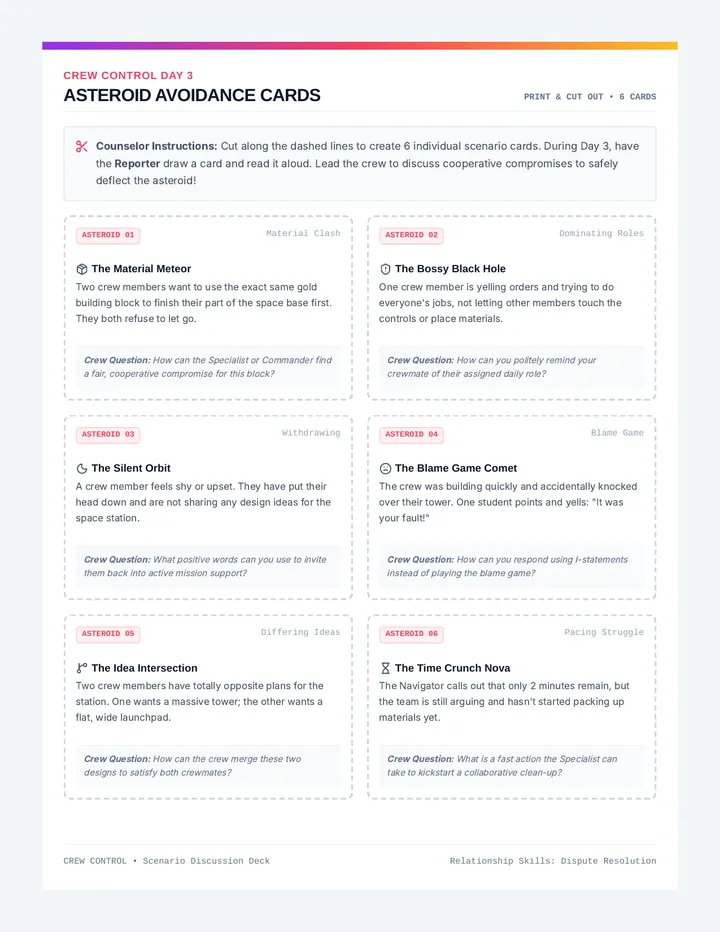
Focuses on identifying and navigating group conflicts (such as disagreements or resource sharing) using interactive discussion cards.
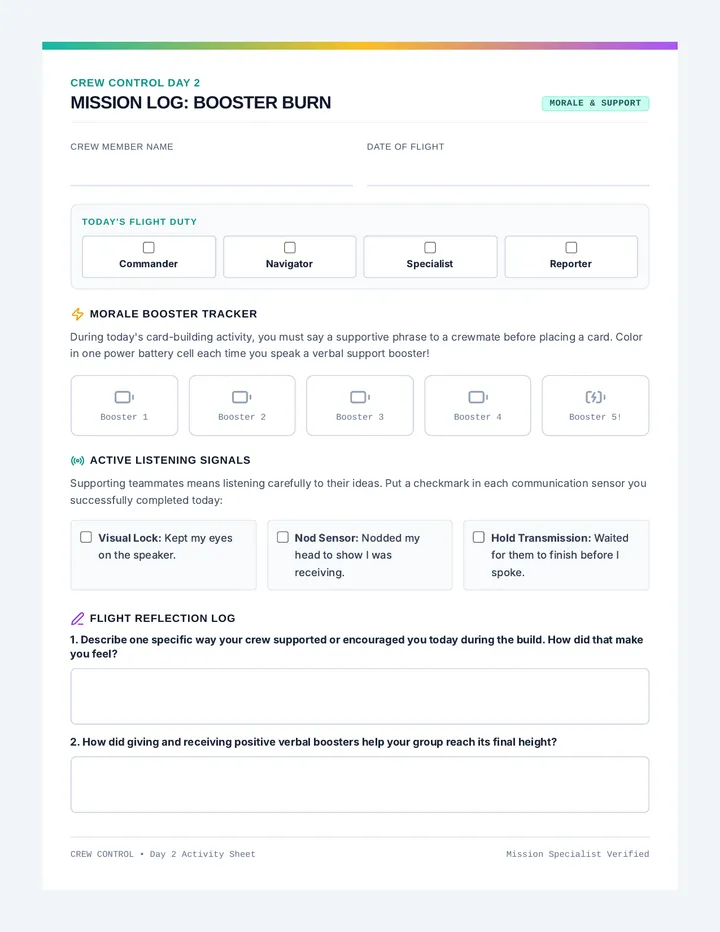
Focuses on positive peer reinforcement, active listening, and supporting teammates through verbal encouragement and collaborative challenge completion.
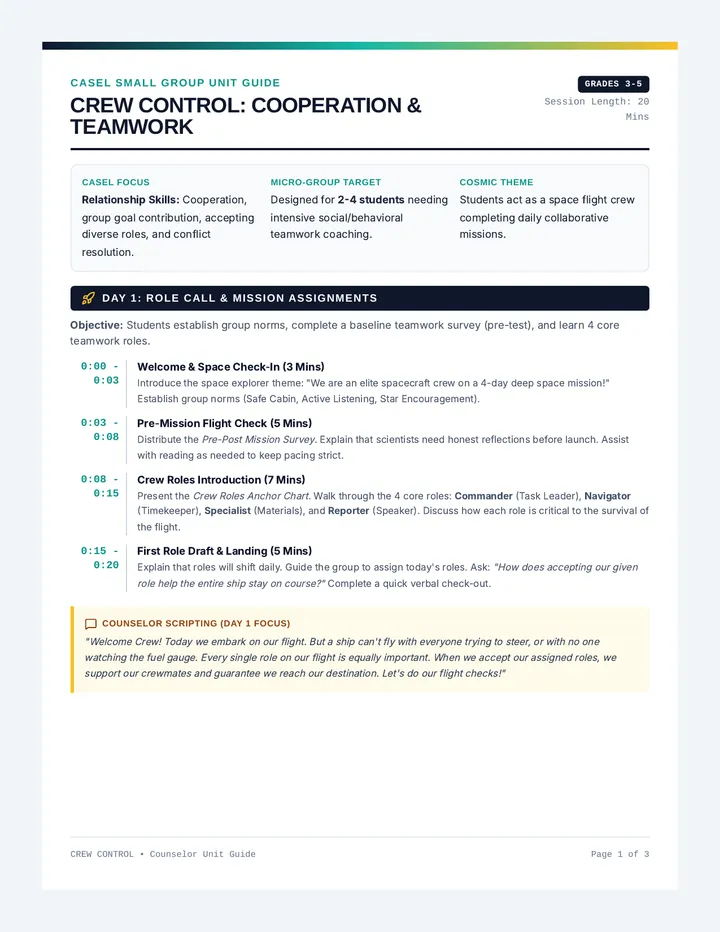
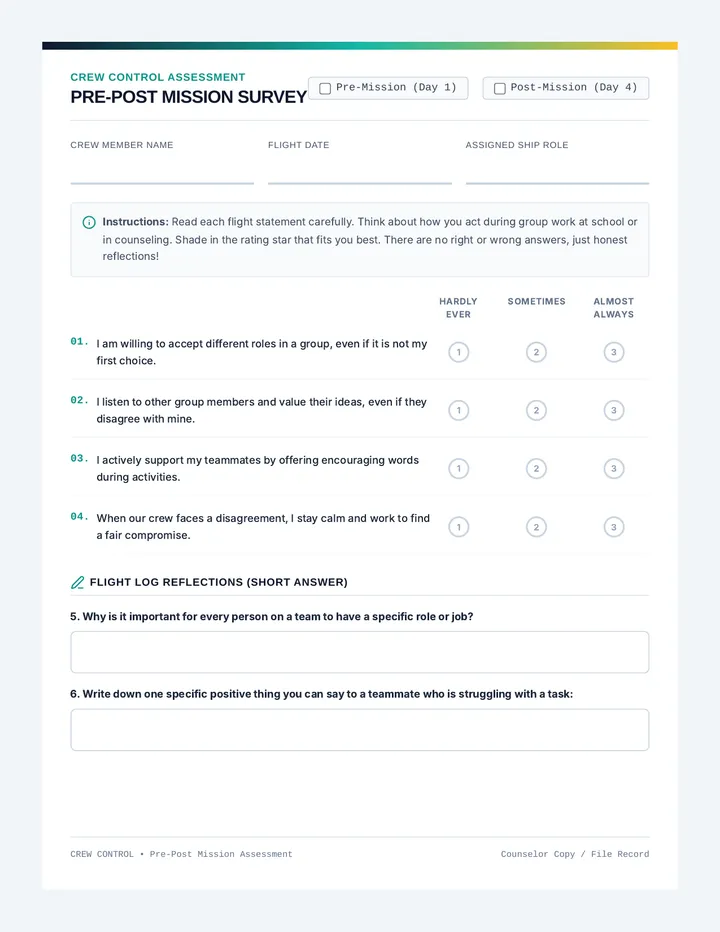
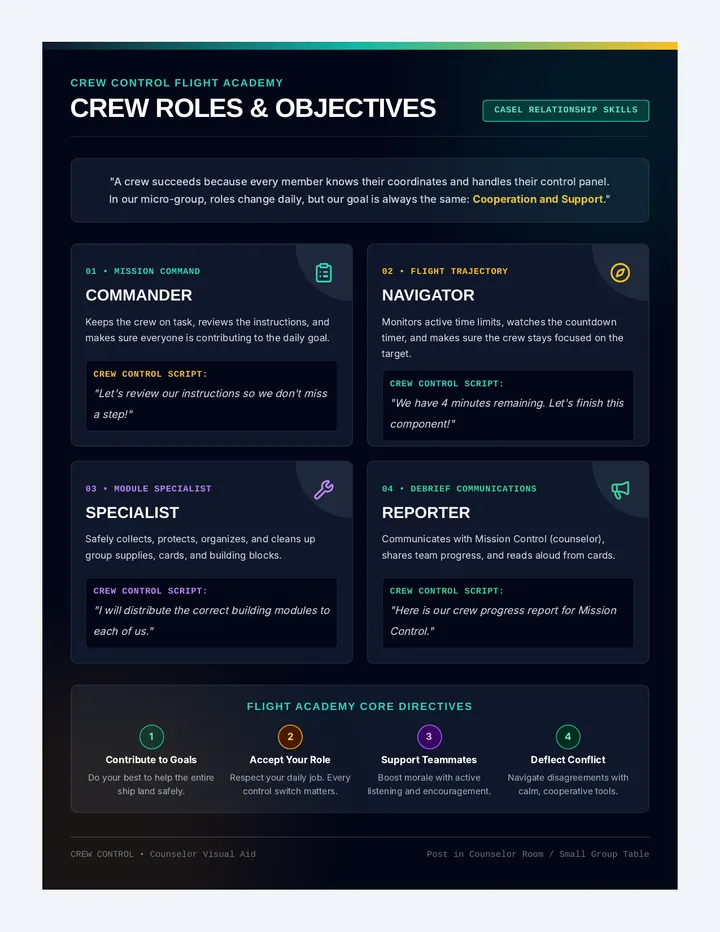
Focuses on setting group norms, administering the pre-test, and introducing the core teamwork roles (Commander, Navigator, Specialist, Reporter) using a retro space-explorer theme.
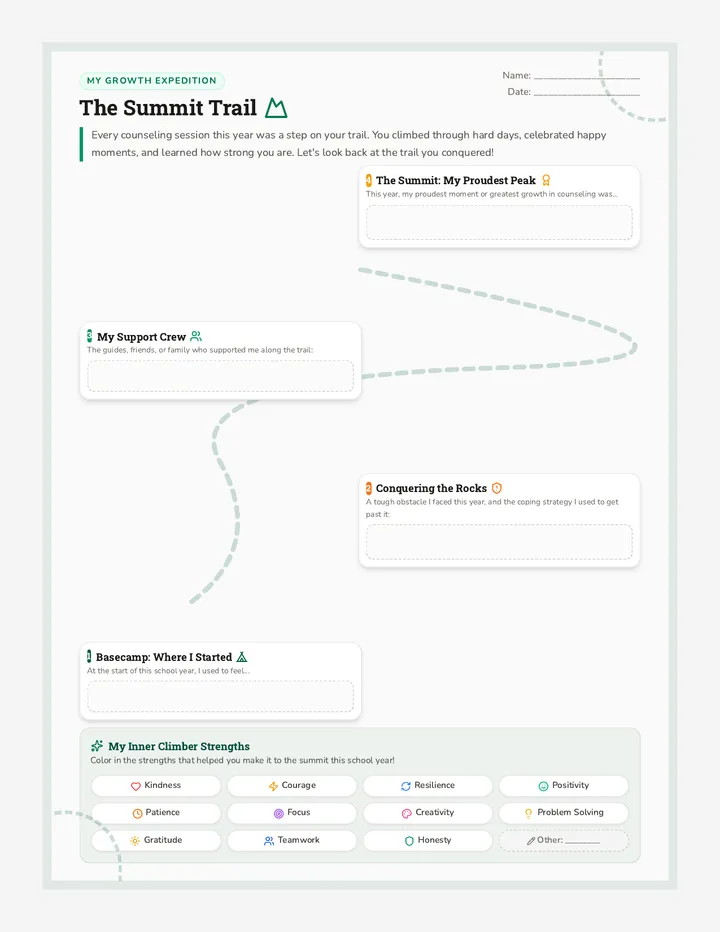
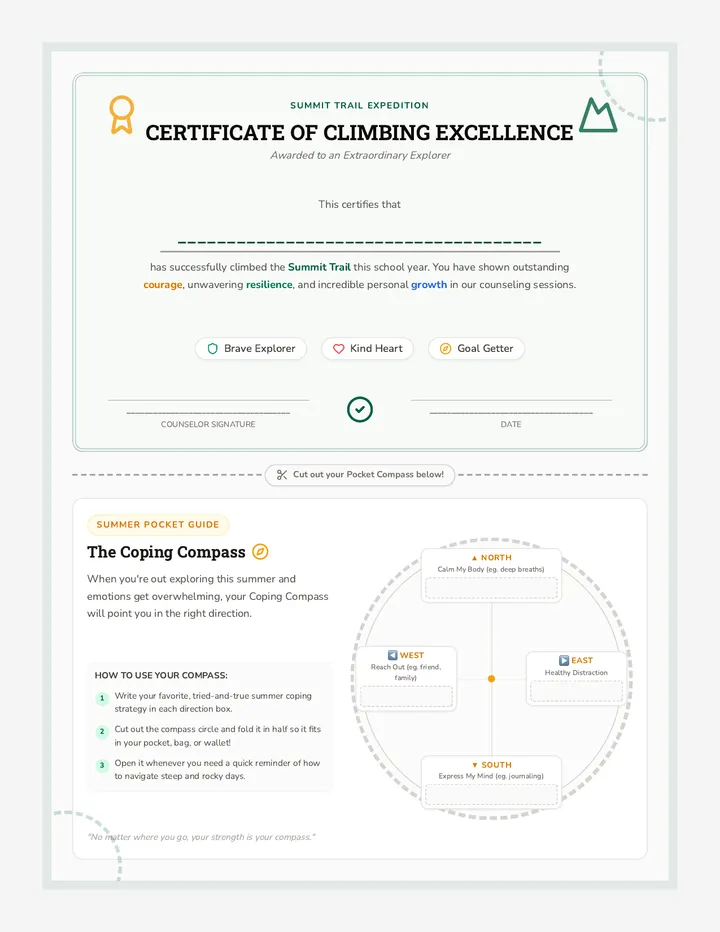
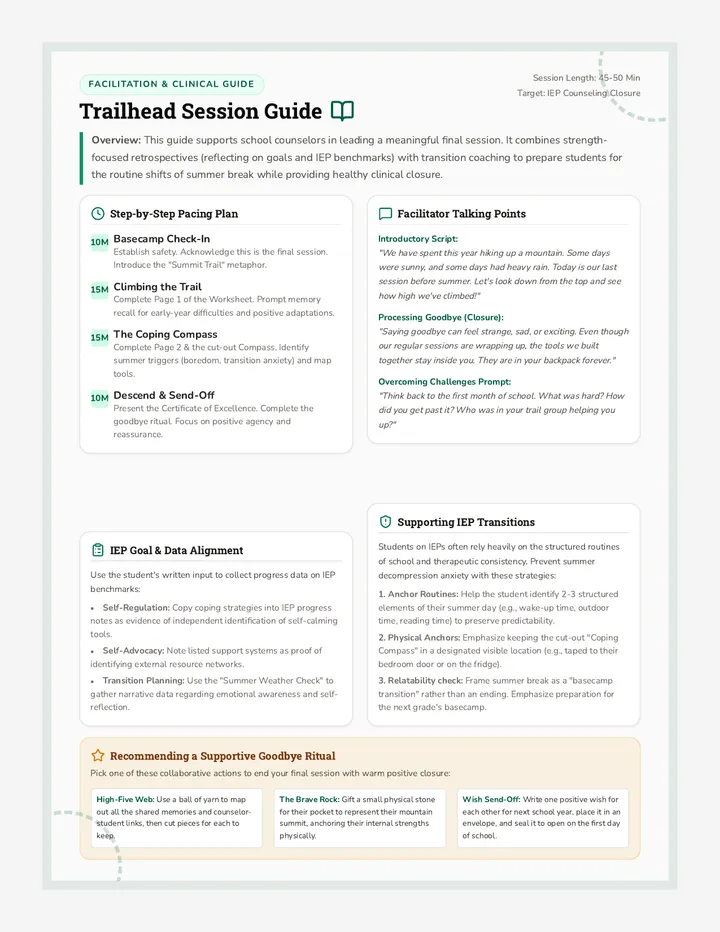
A supportive, mountain-trail-themed final counseling session designed for students on IEPs to celebrate their personal growth, develop summer coping strategies, set future goals, and process closure with their counselor.
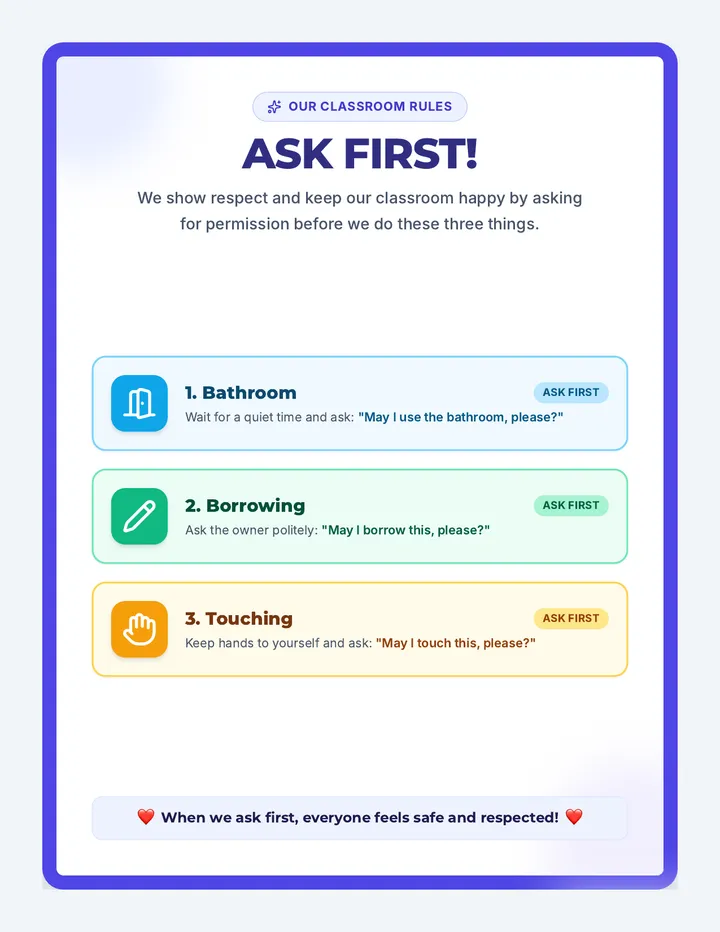
A collection of visual guides and posters to teach and remind elementary students how and when to ask for permission for daily routines.
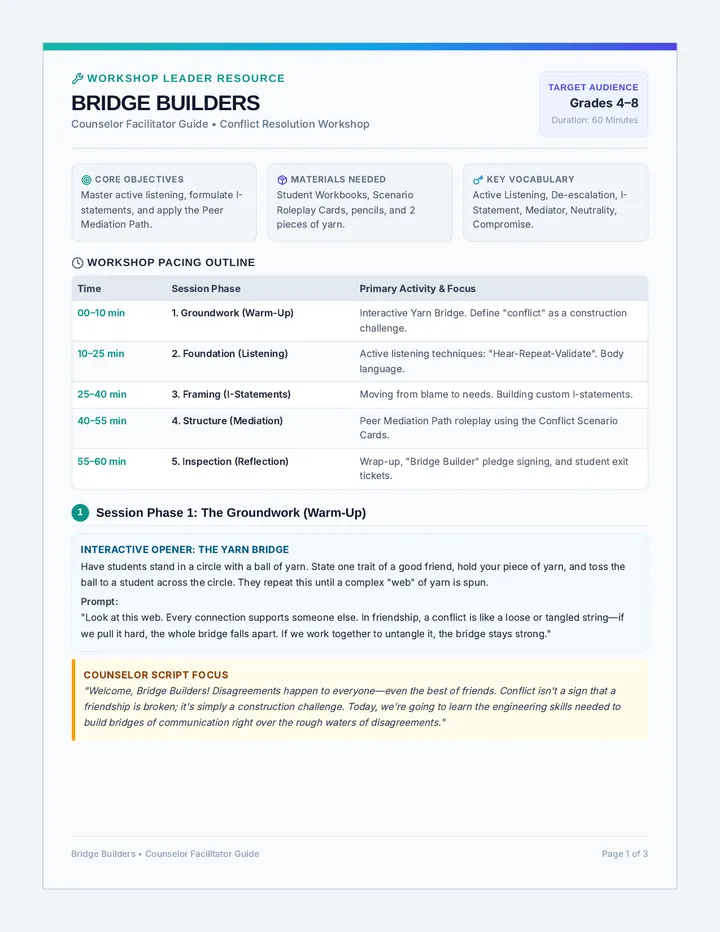
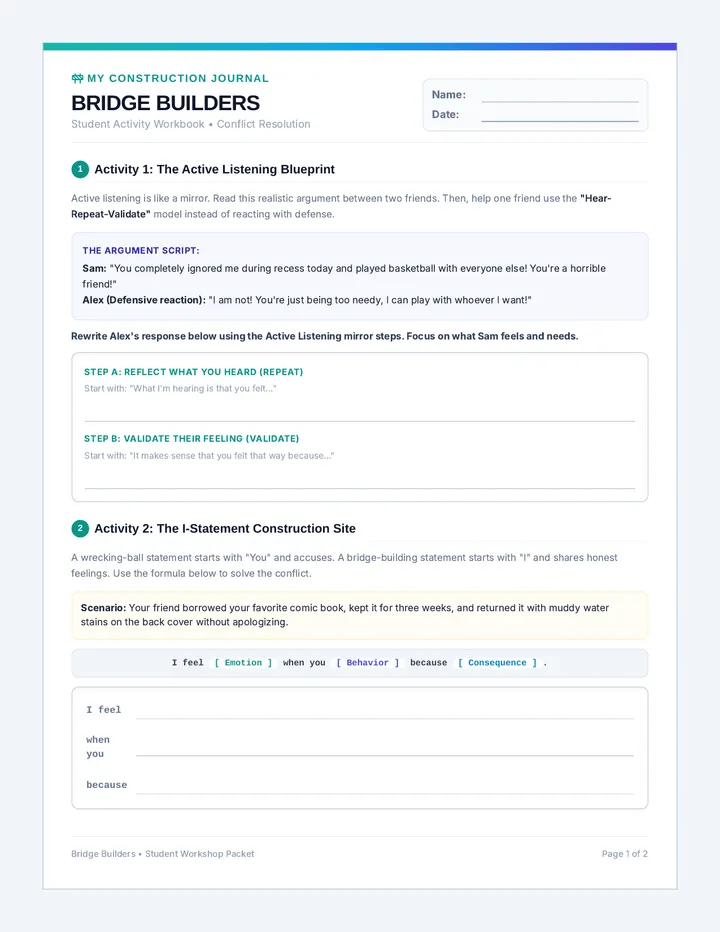
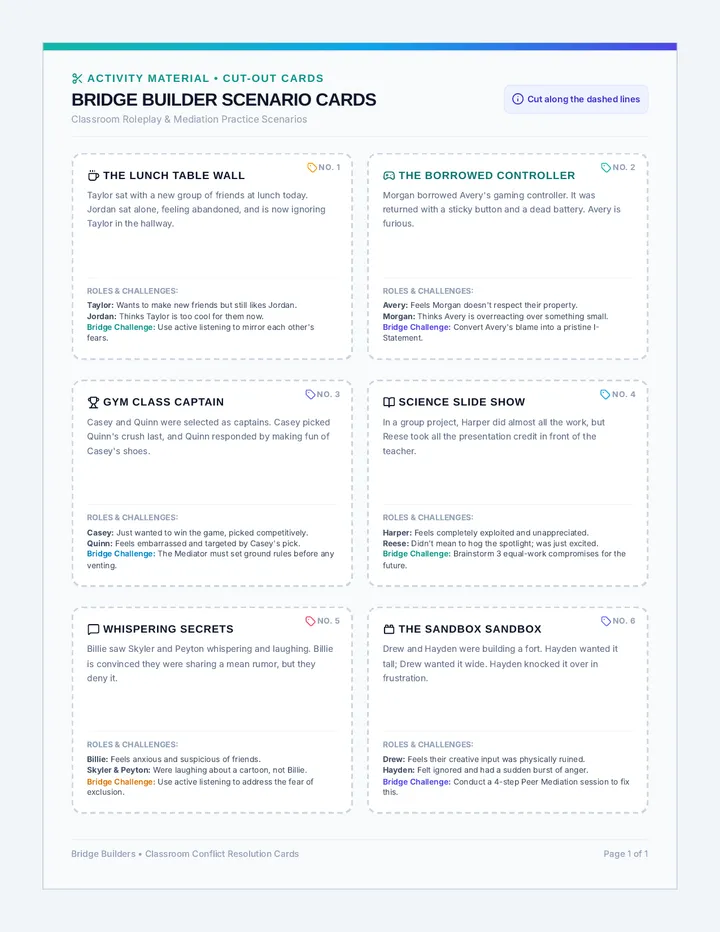
An interactive workshop teaching students essential conflict resolution skills, active listening techniques, and peer mediation frameworks to build stronger, more empathetic friendships.
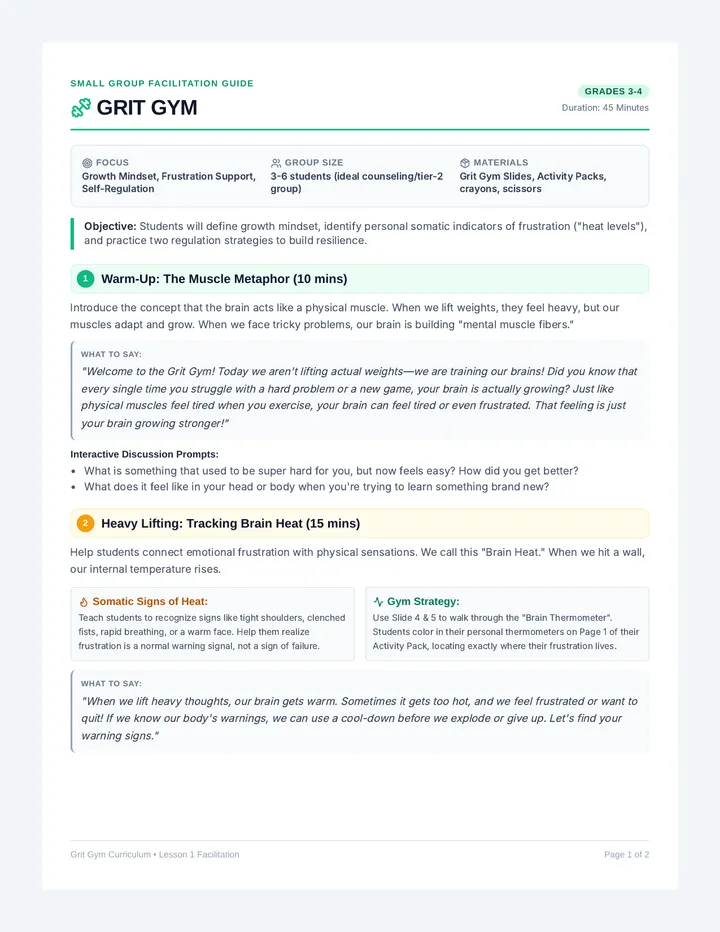
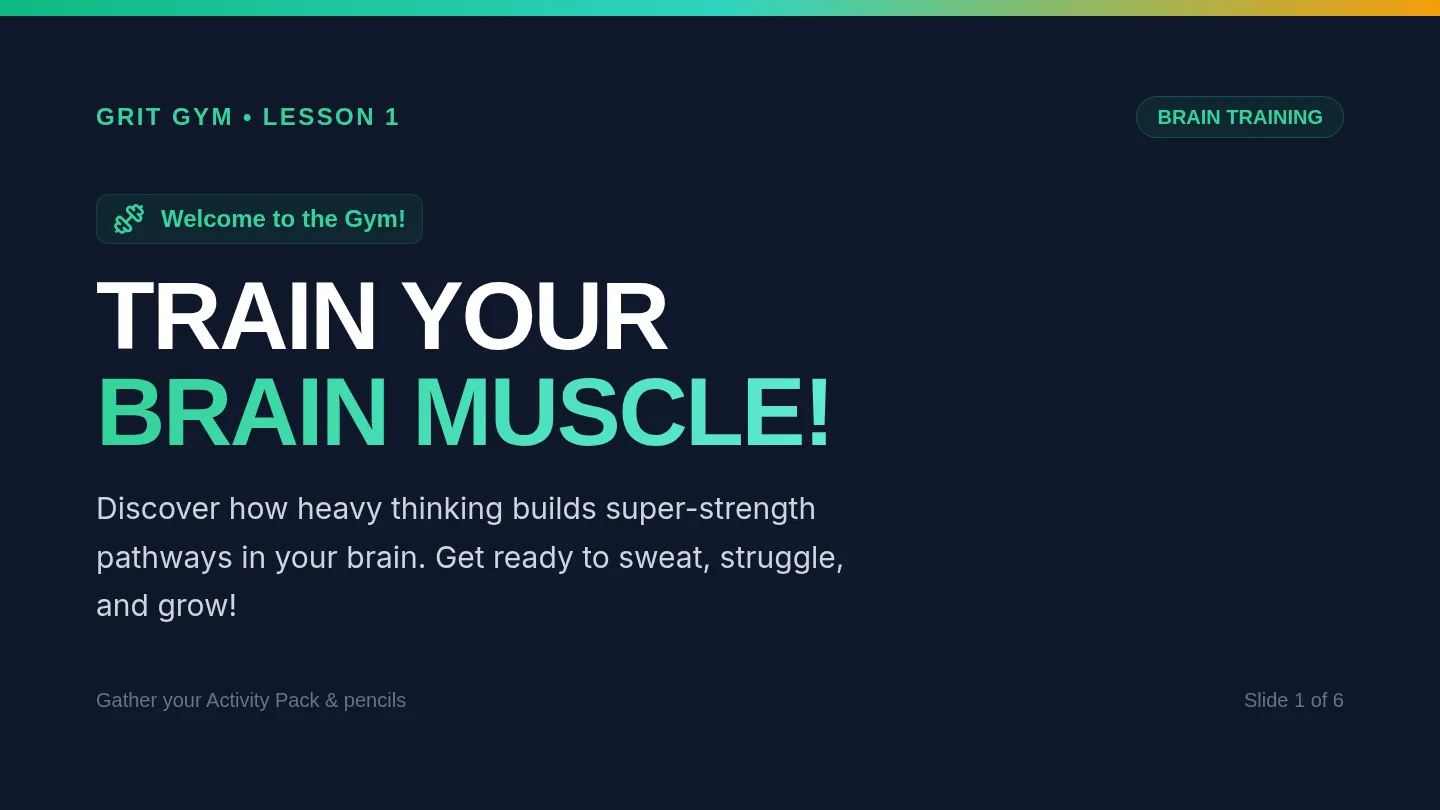
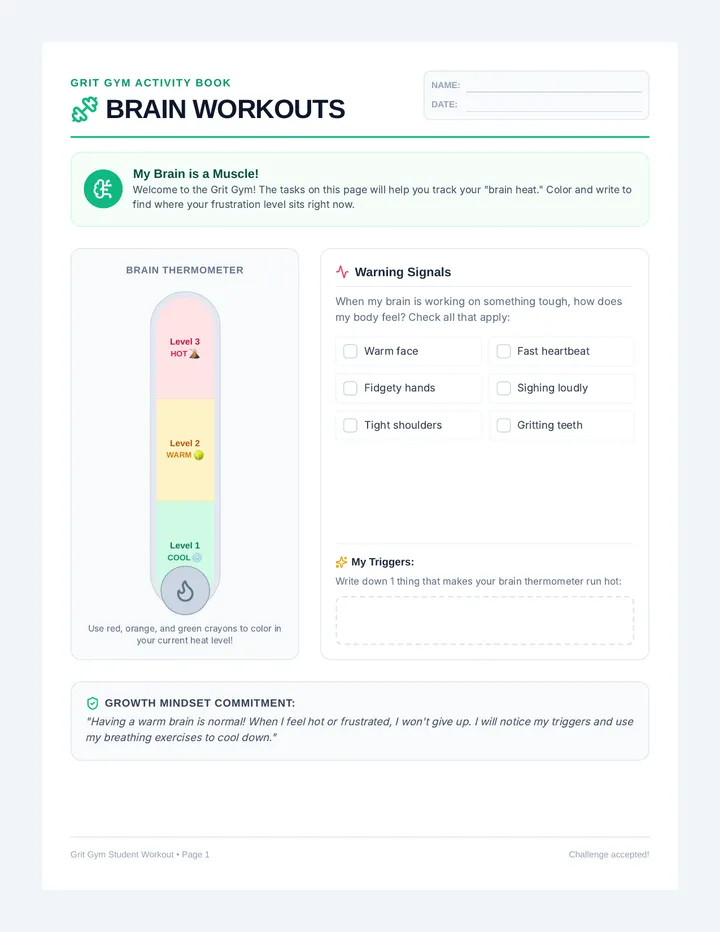
A growth mindset and emotional regulation lesson designed for 3rd and 4th-grade small groups. Students discover how the brain strengthens through challenge, identify their frustration 'heat level', and practice concrete self-regulation exercises like tactical breathing and constructive self-talk.
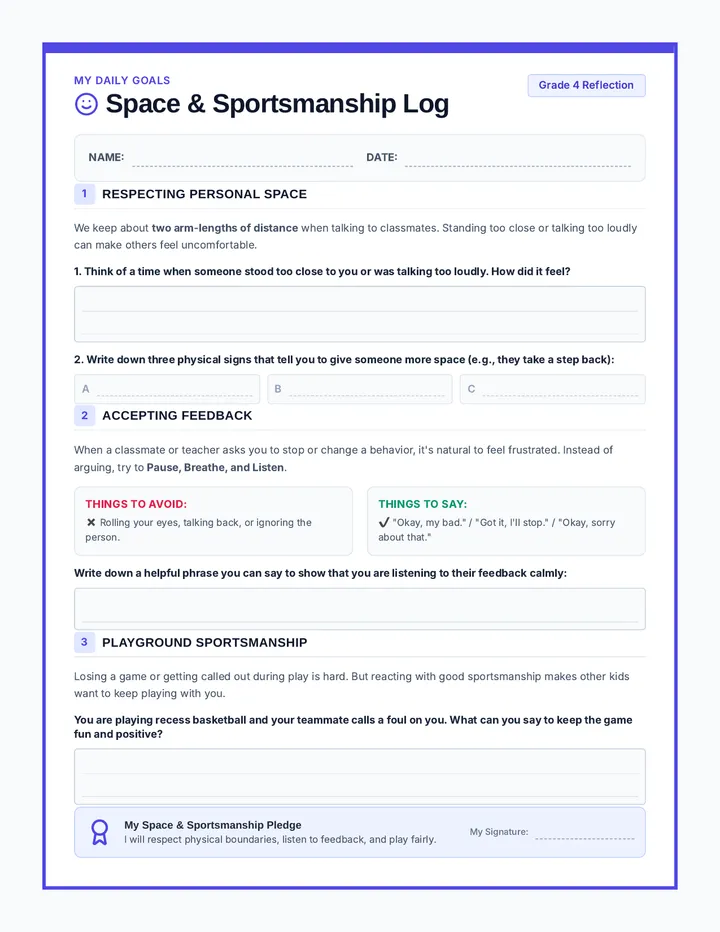
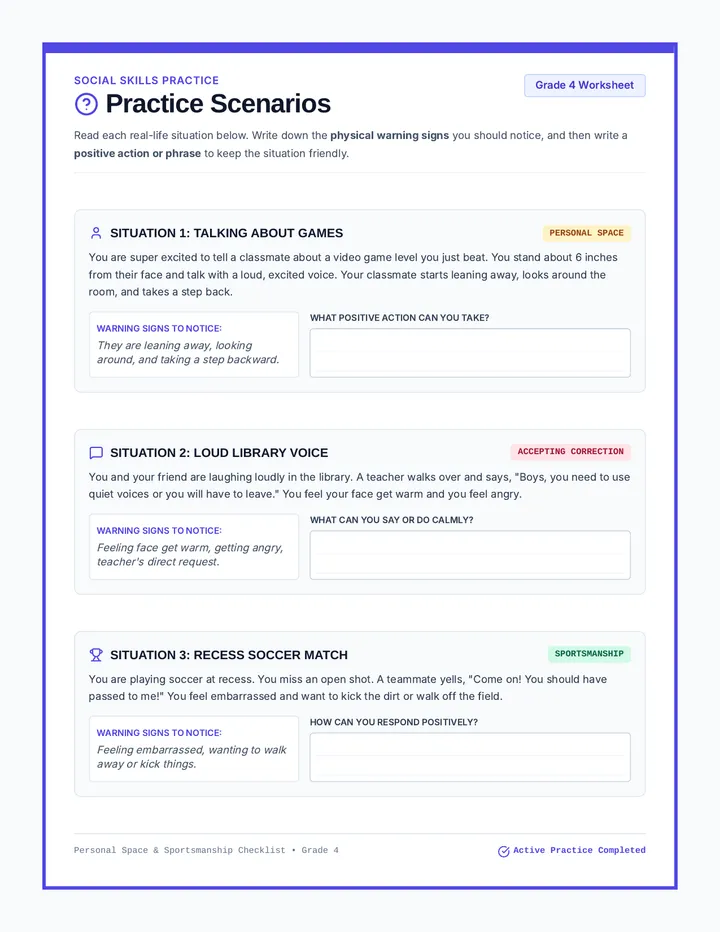
A game-themed social-emotional learning lesson for 4th-grade students to master conversational boundaries, accept feedback, and handle sportsmanship during play using the concept of a 'Social Radar'.
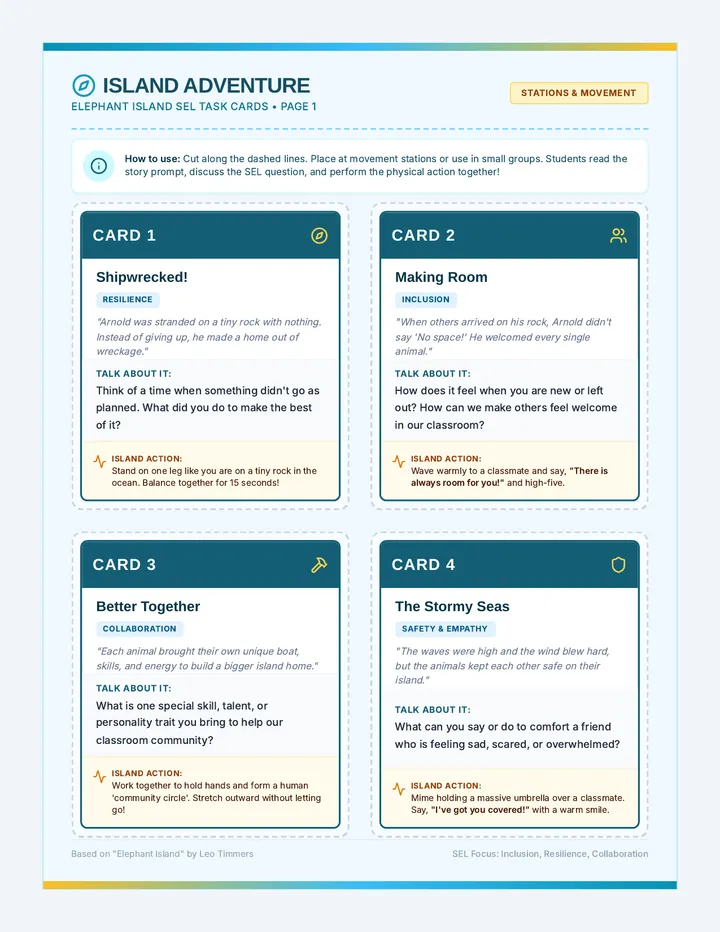
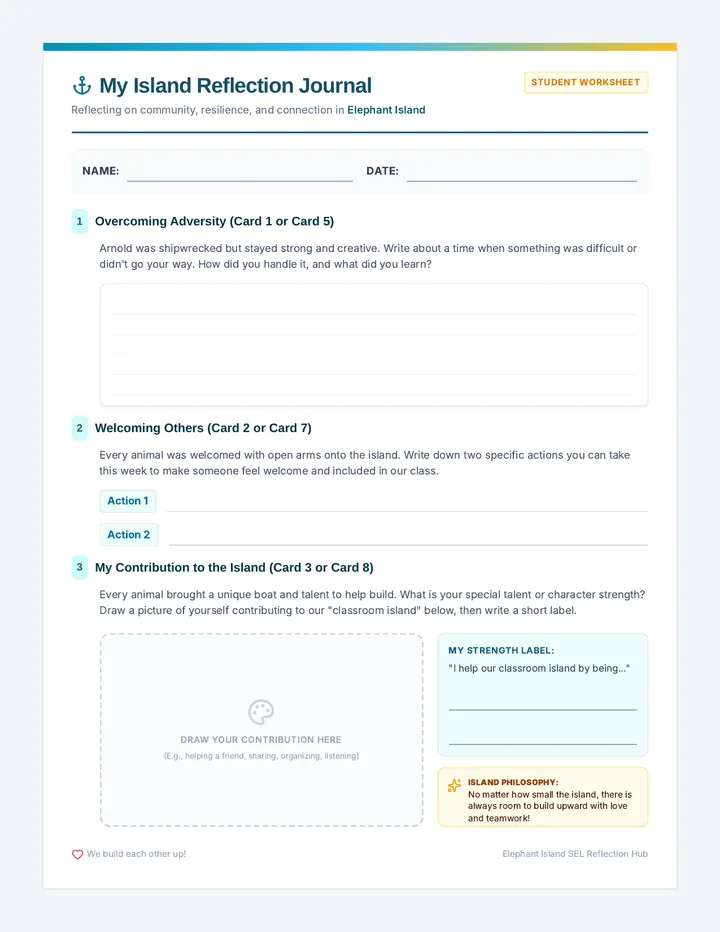
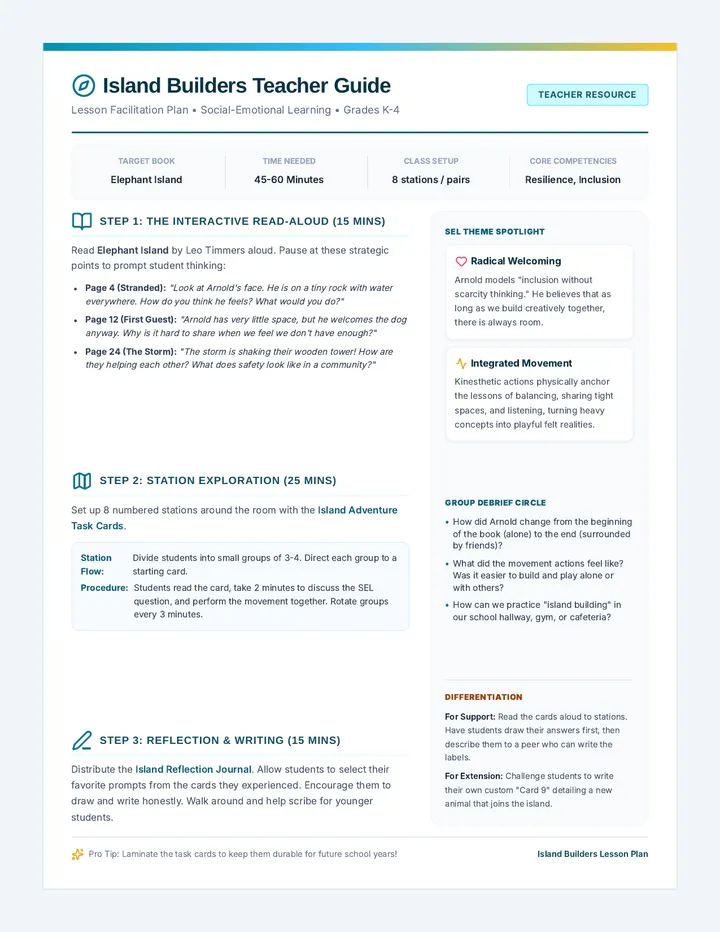
An SEL-focused lesson based on the book 'Elephant Island' by Leo Timmers, exploring community-building, resilience, and welcoming others through movement-based task cards and collaborative reflection.
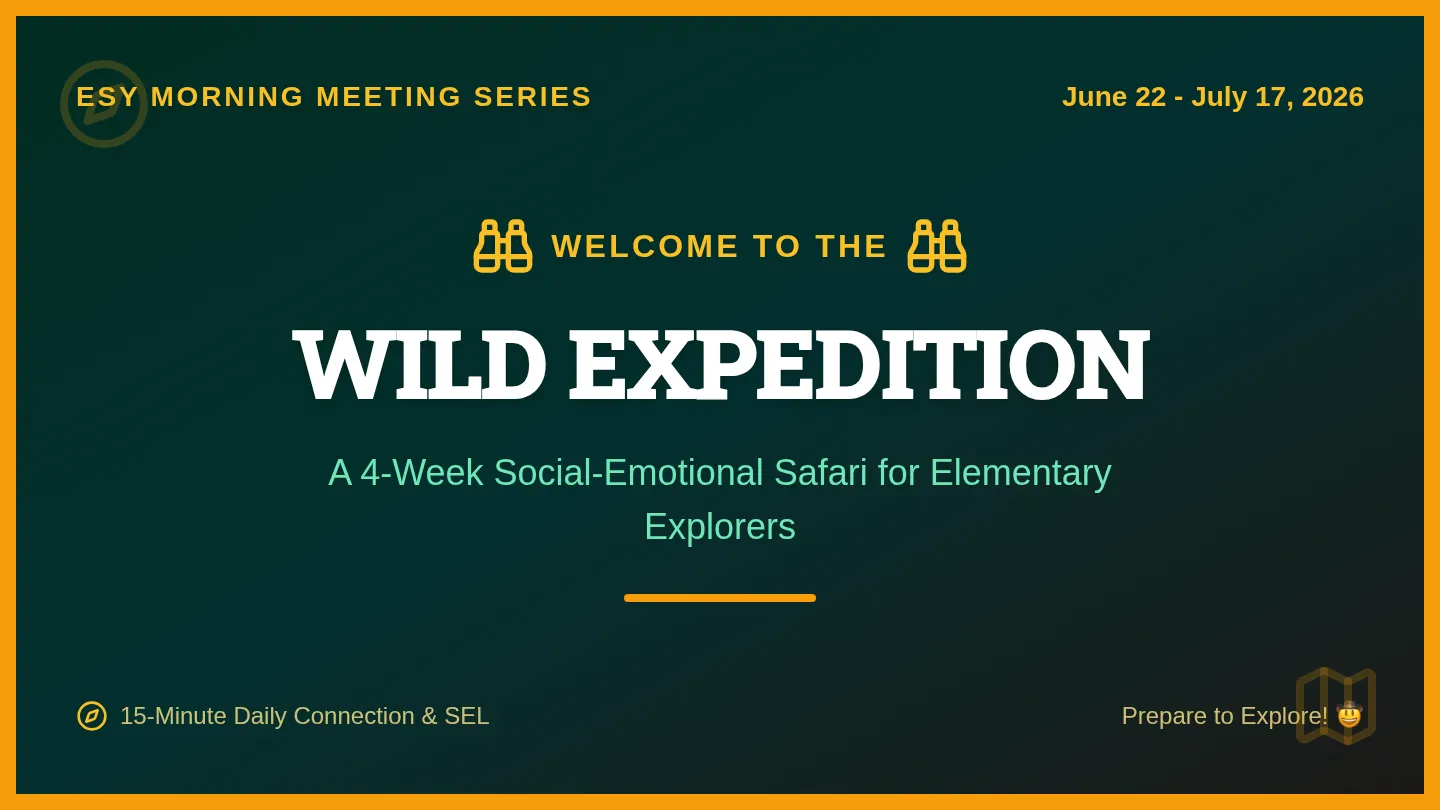
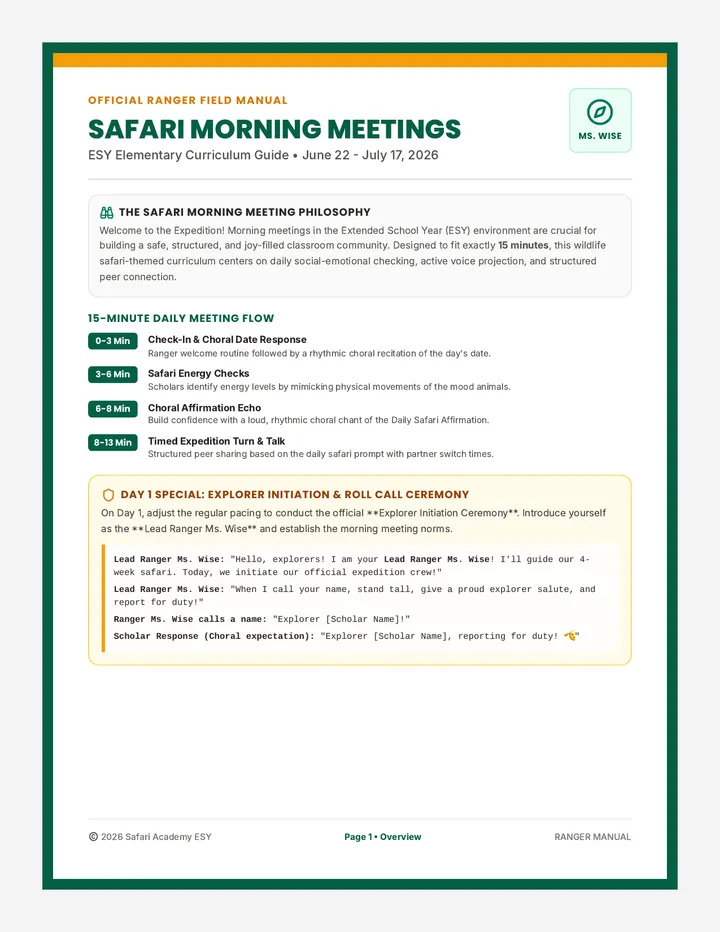
A 4-week wildlife safari themed morning meeting series for ESY elementary school scholars. Covers Savannah, Jungle, Desert, and Ocean habitats with daily welcomes, mood checks, date trackers, affirmations, and interactive social-emotional sharing prompts.
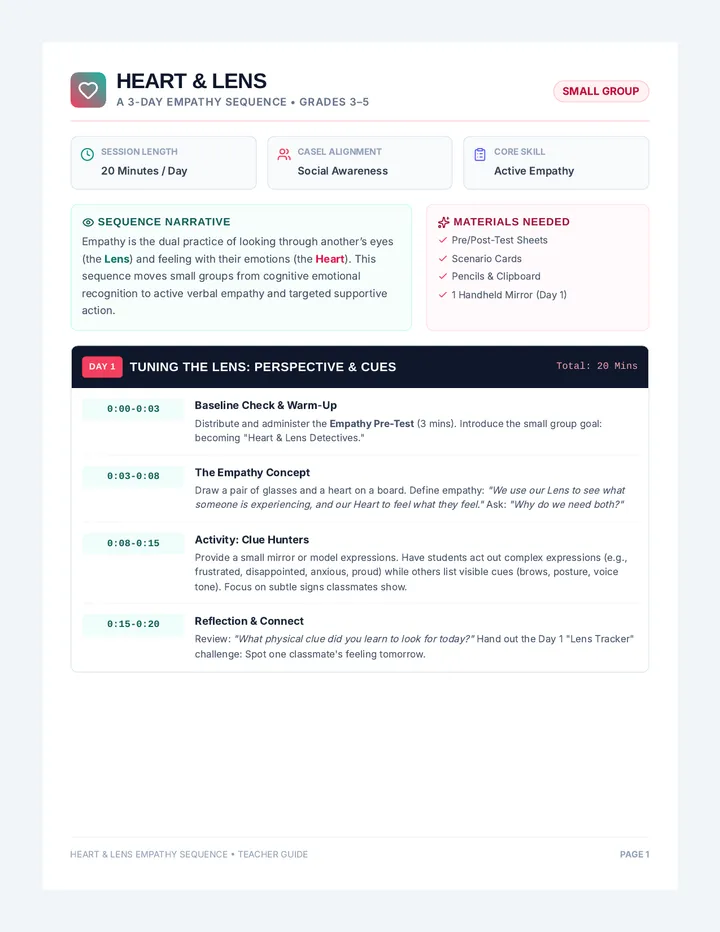
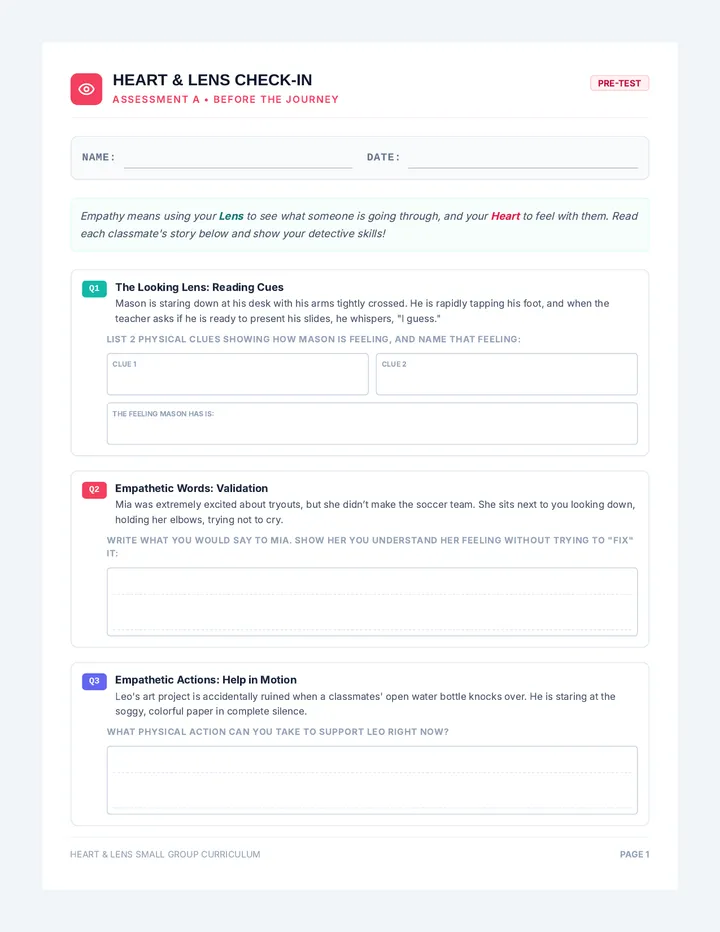
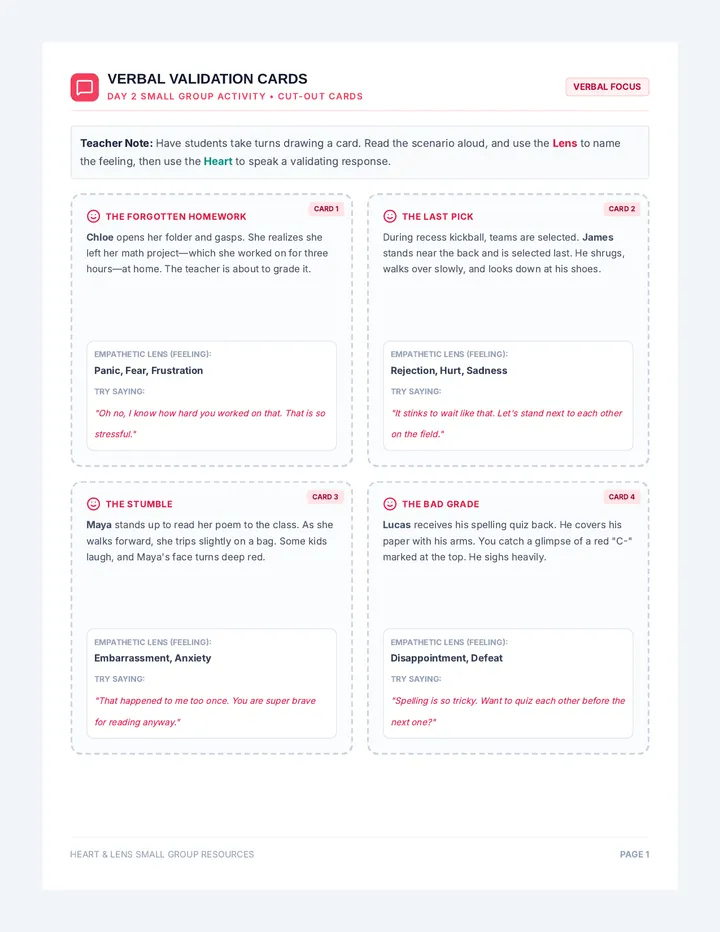
A 3-day SEL curriculum for small groups (grades 3-5) focused on active listening, perspective-taking, and compassionate communication. Each 20-minute daily session includes warm-ups, direct instruction, partner practice, and self-reflection.
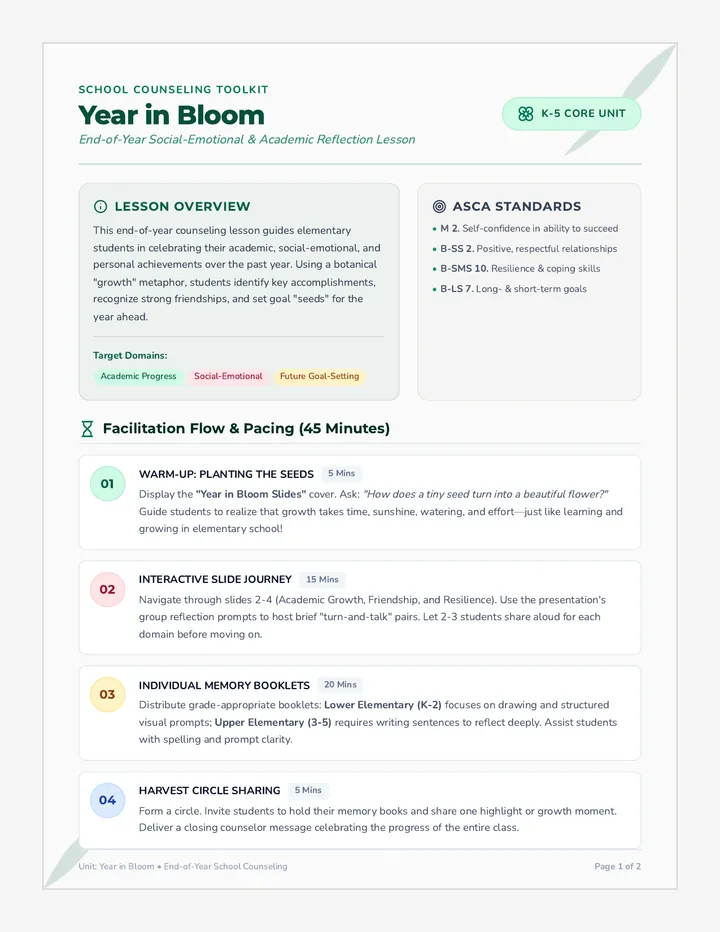
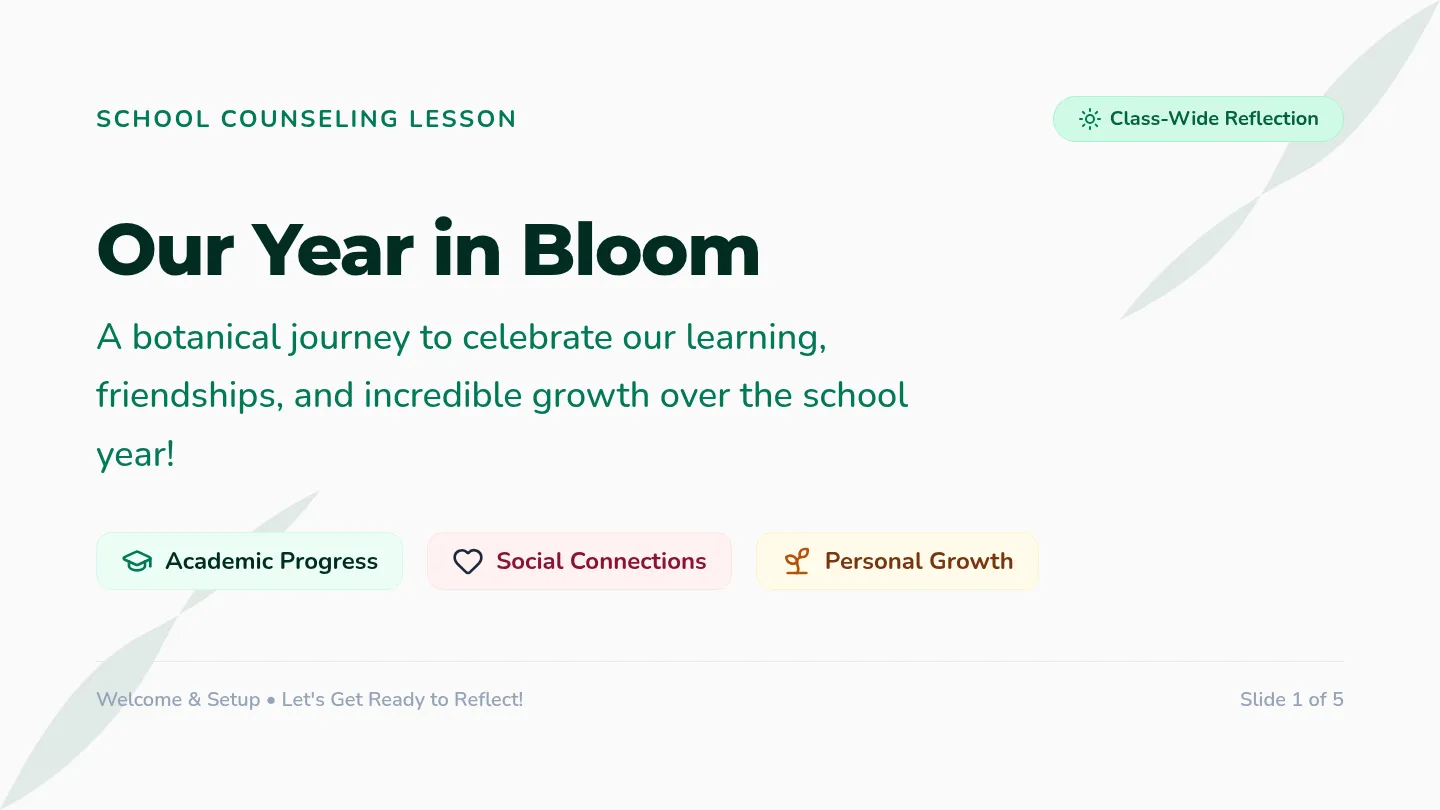
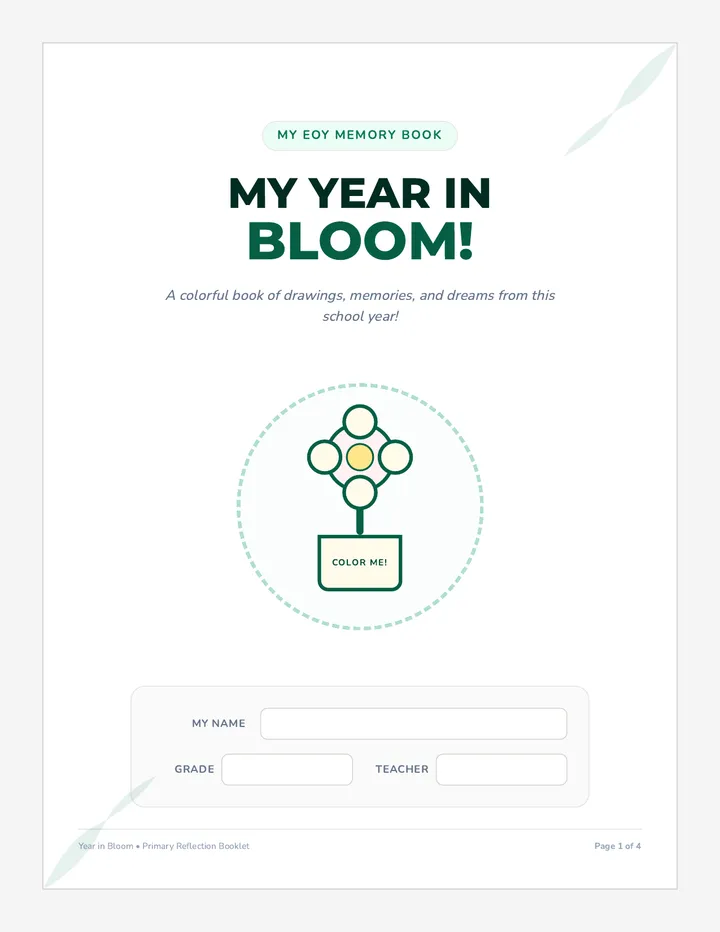
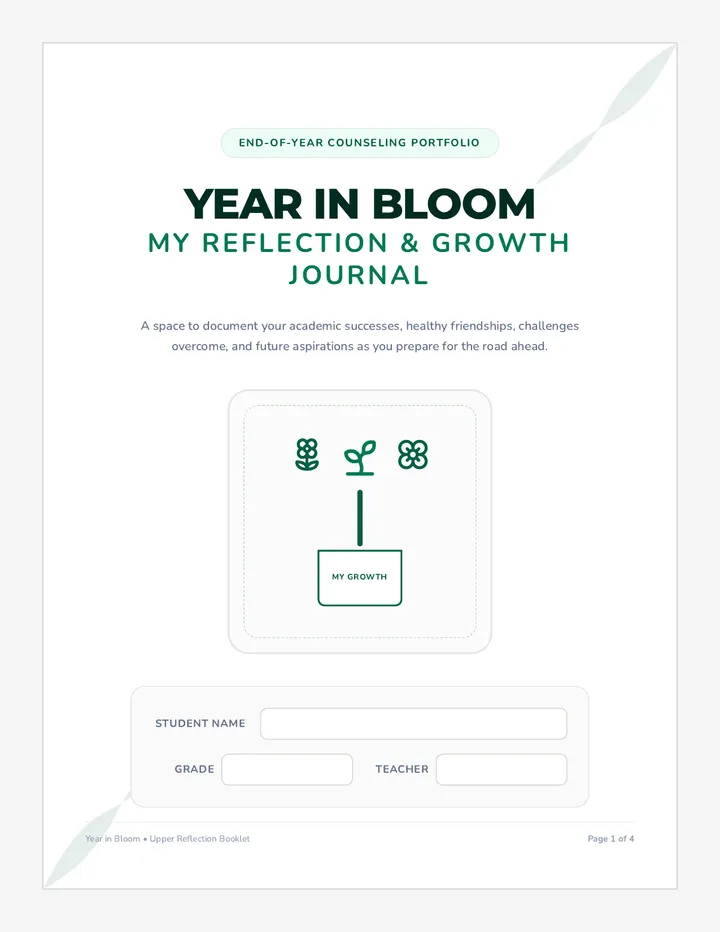
An end-of-year counseling unit and toolkit designed to guide elementary students through academic, social, and personal-emotional reflection. Contains a comprehensive Counselor Facilitation Guide, a class-wide interactive Slide Presentation, a drawing-focused memory booklet for lower elementary (K-2), and a writing-focused portfolio booklet for upper elementary (3-5).
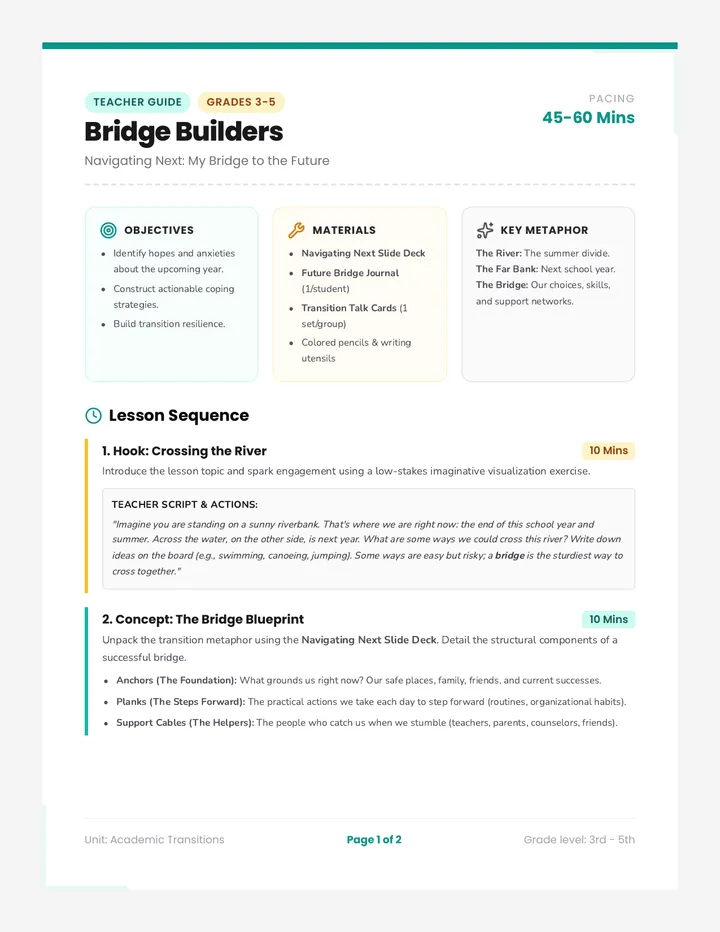
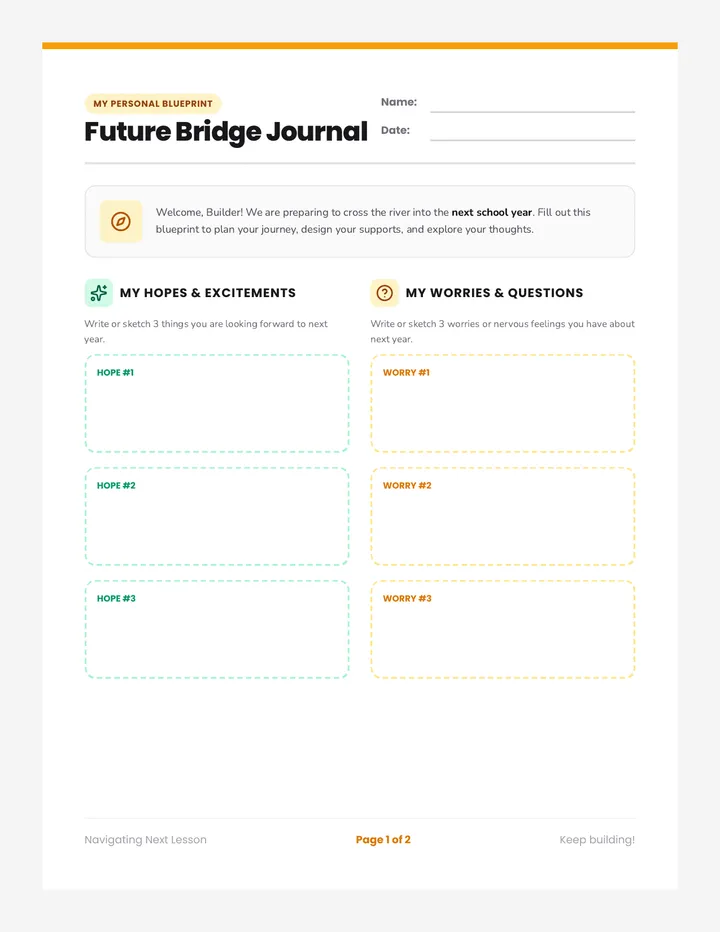
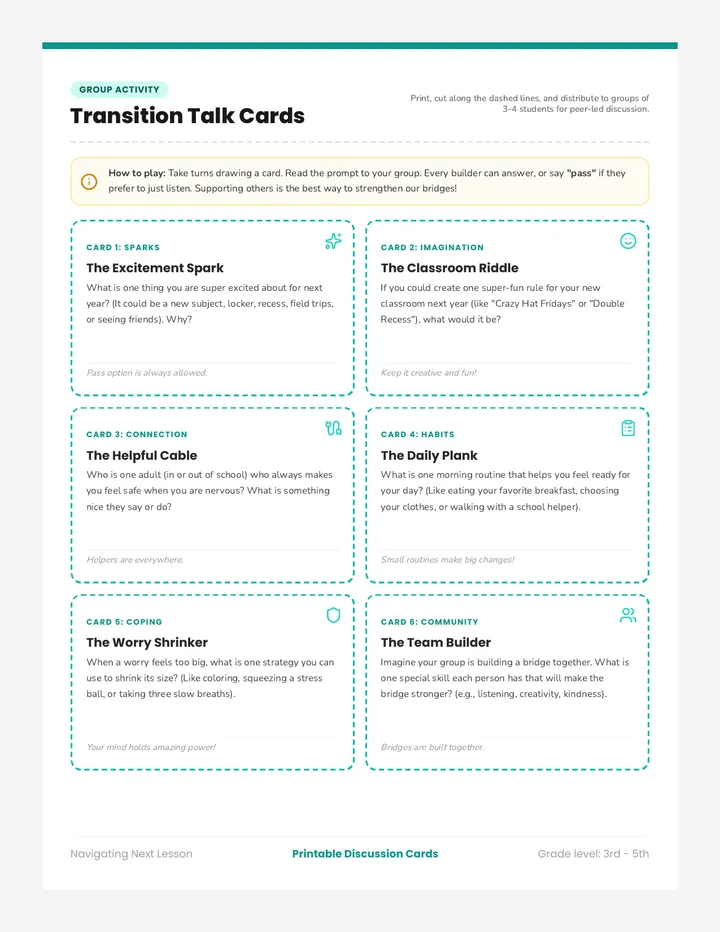
This transition lesson helps 3rd to 5th graders navigate the leap into the upcoming school year. Through the metaphor of designing and building a 'bridge to the future,' students explore their hopes, address their anxieties, and construct practical, resilience-boosting coping strategies for a successful academic transition.
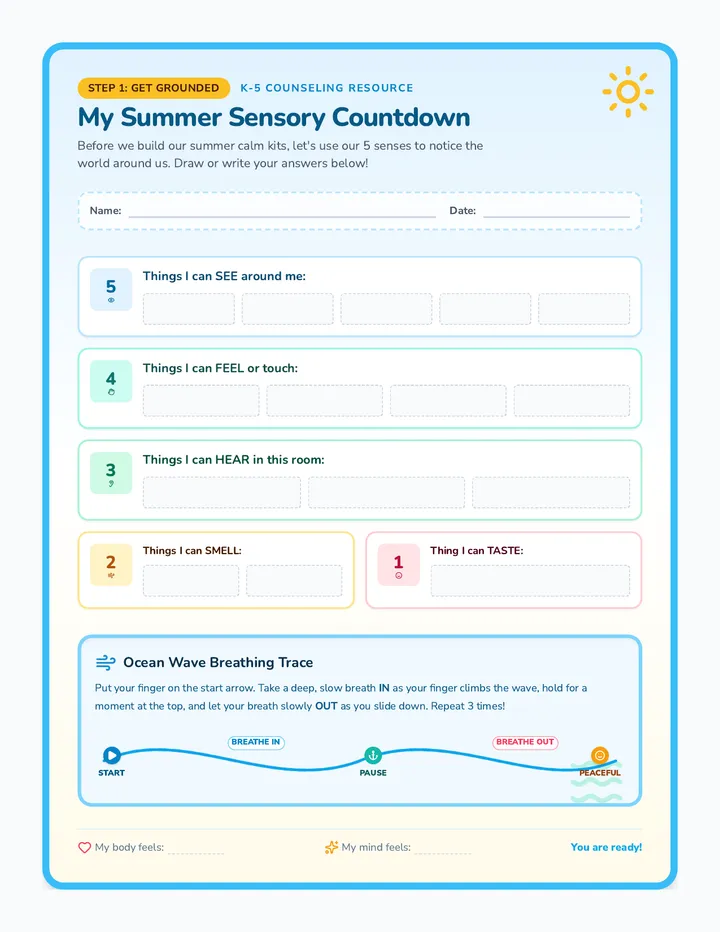
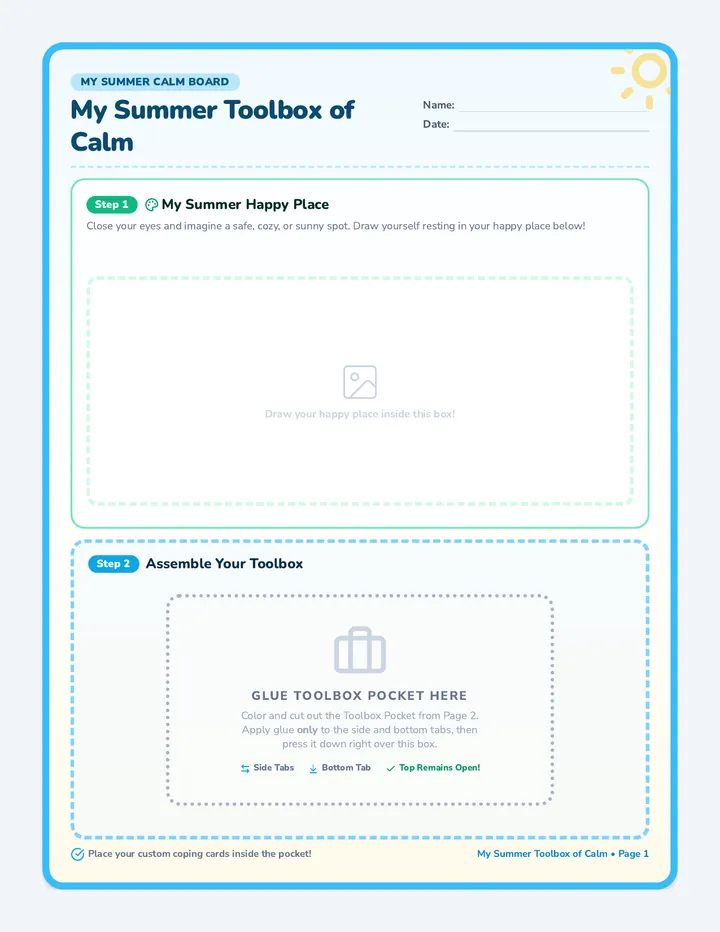
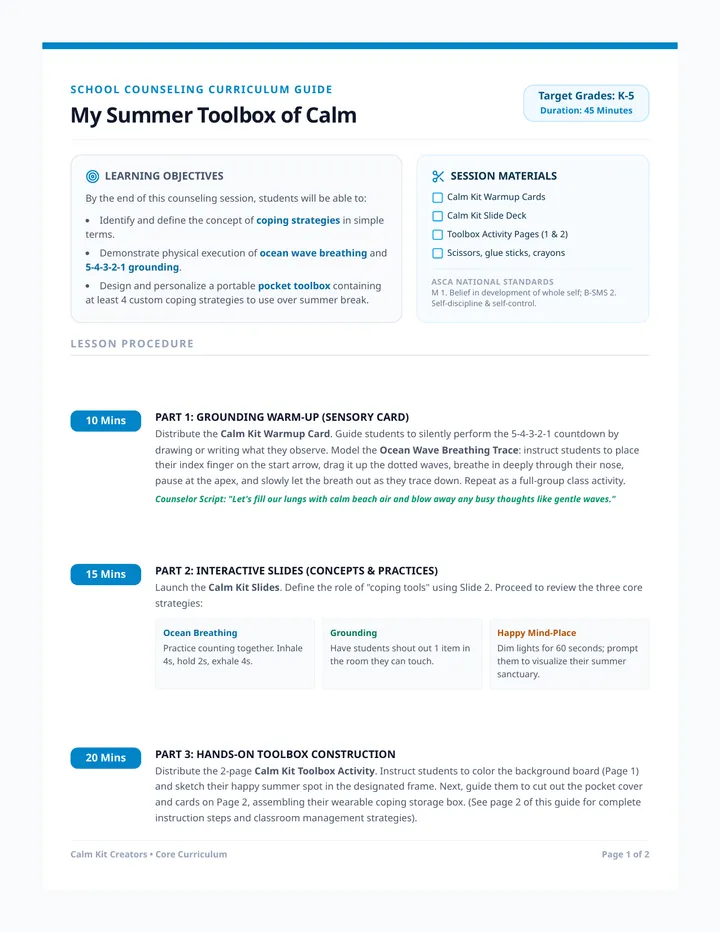
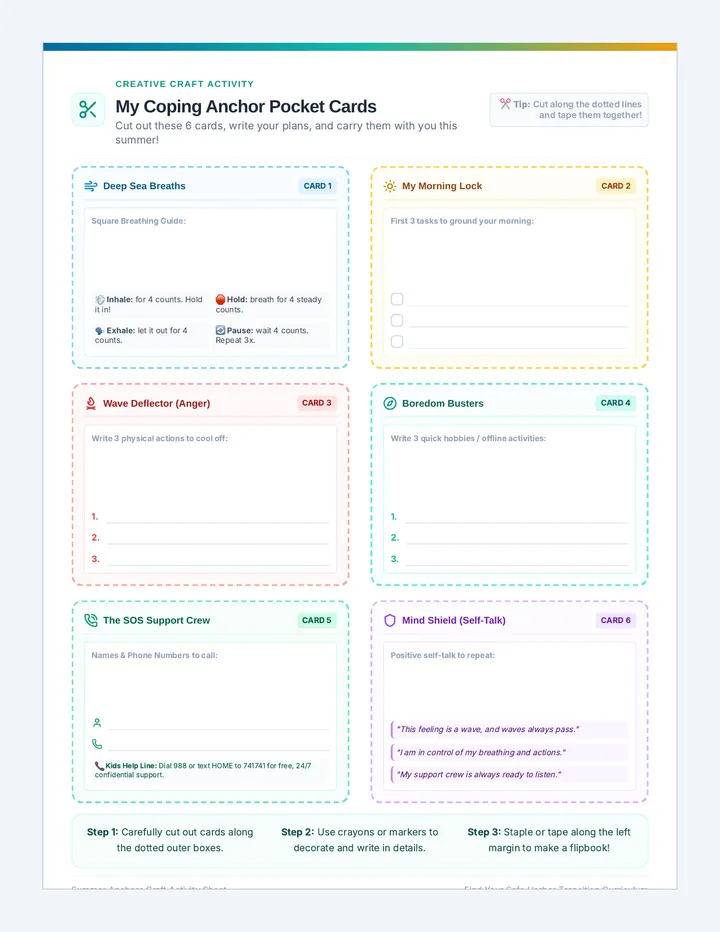
A school counseling lesson for K-5 students to identify positive coping strategies and mindfulness techniques to keep in their emotional toolbox for a peaceful, safe, and happy summer break. Includes a detailed lesson plan, instructional slides, a hands-on toolbox construction activity, and an interactive sensory warm-up.
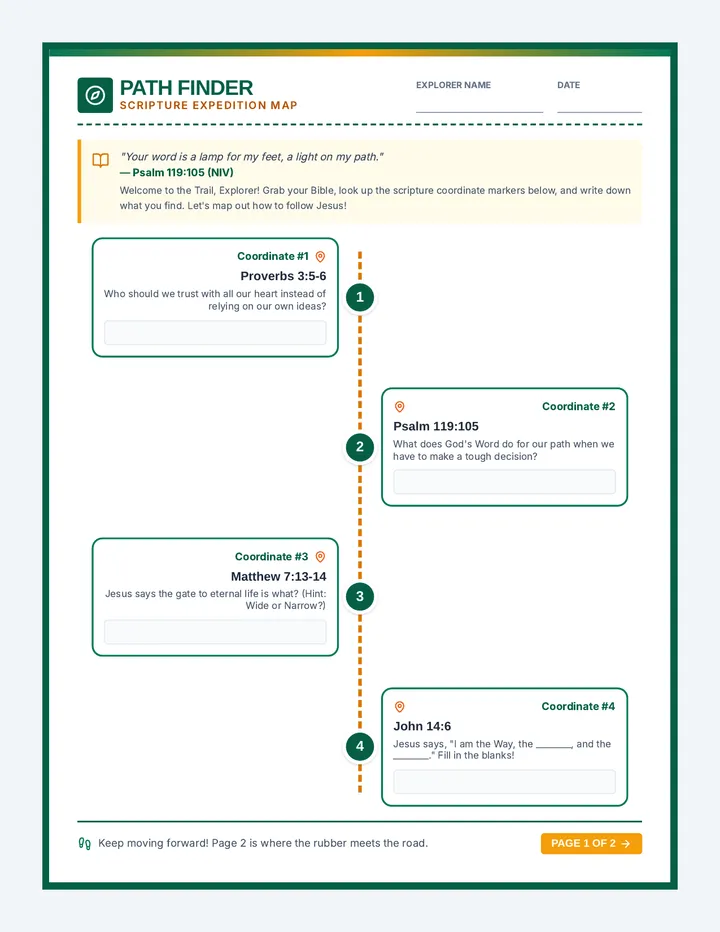
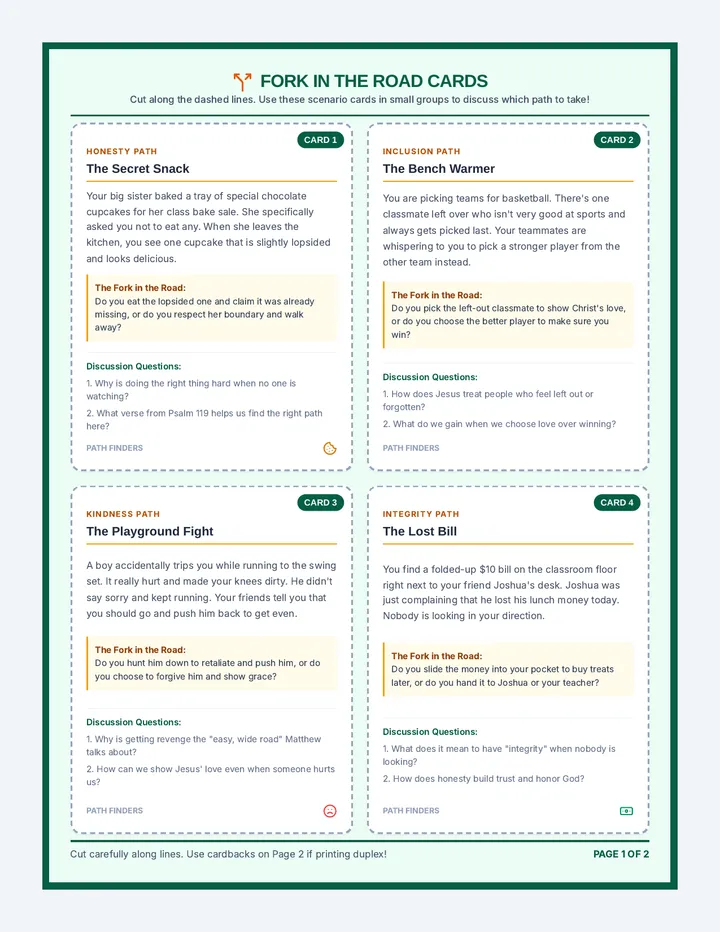
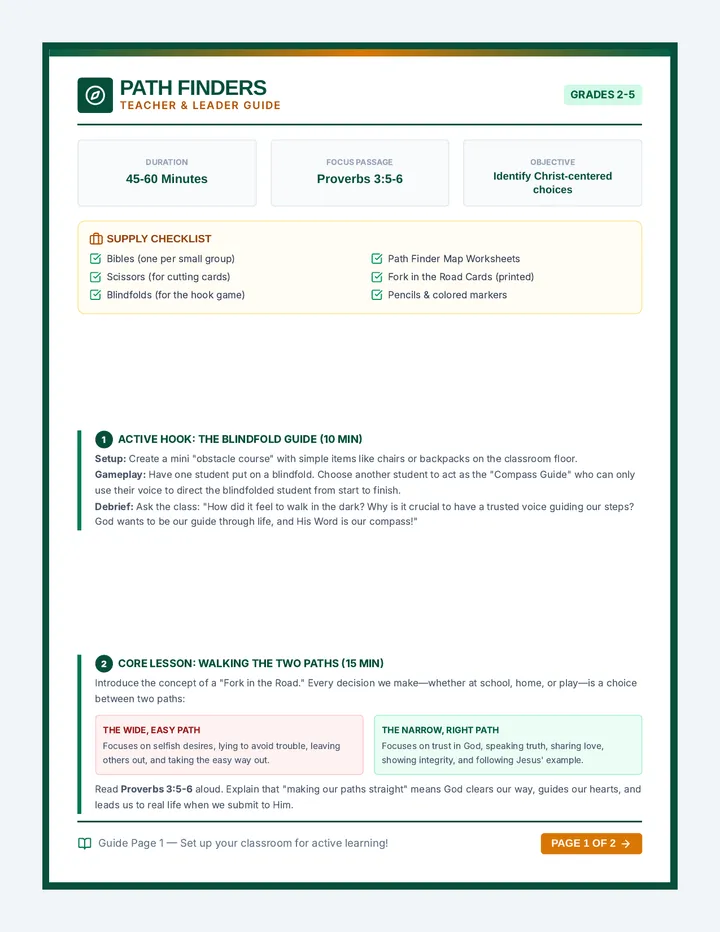
A hands-on, scripture-based exploration of making wise, Christ-centered choices in daily life. Students navigate real-world scenarios and map out what it looks like to follow Jesus' path.
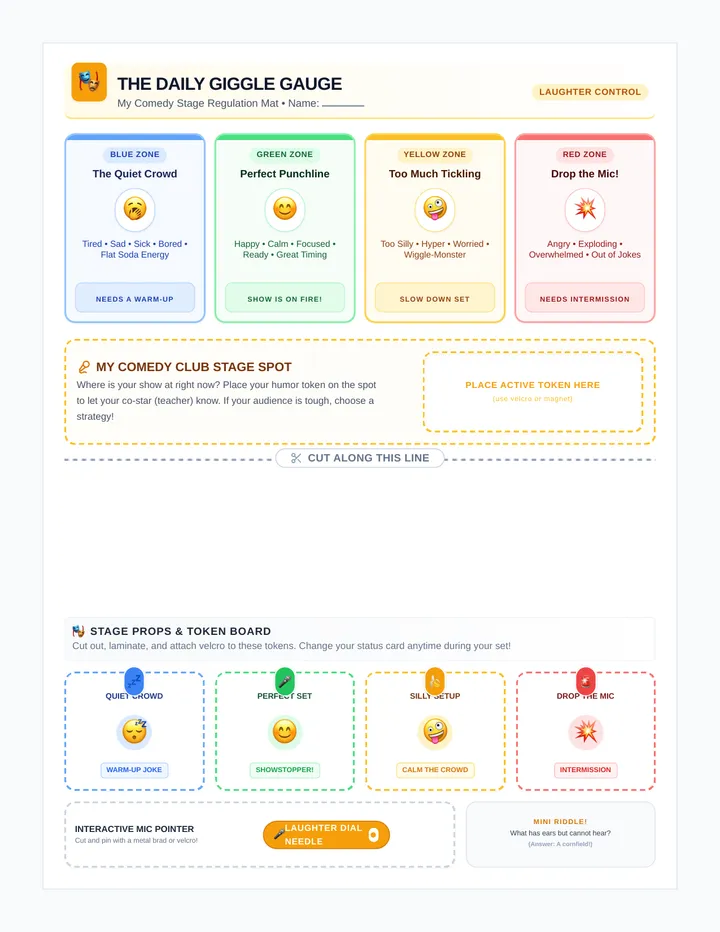
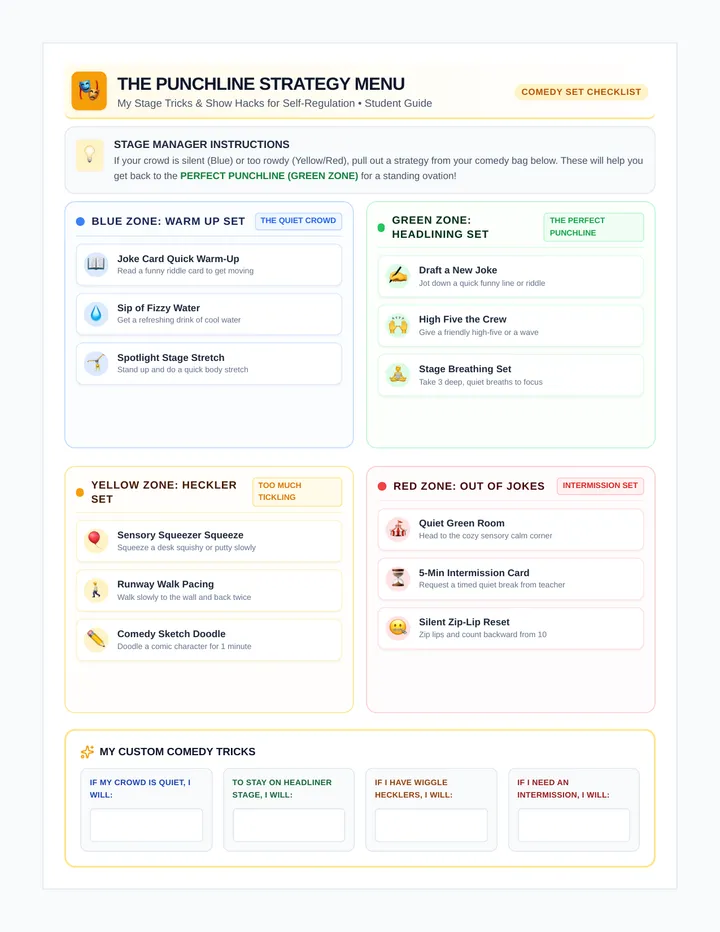
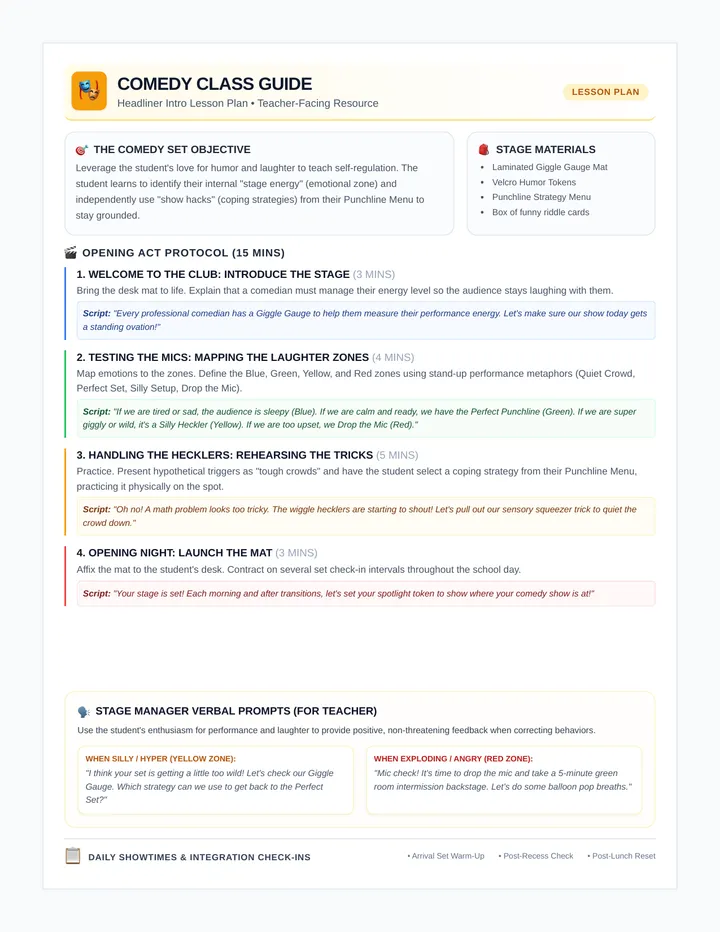
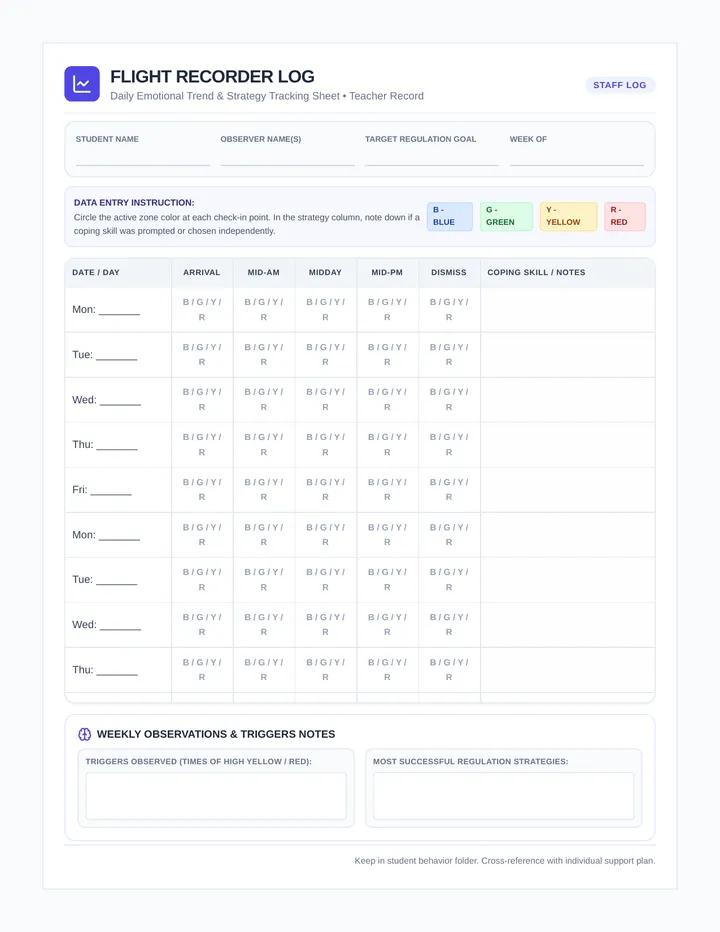
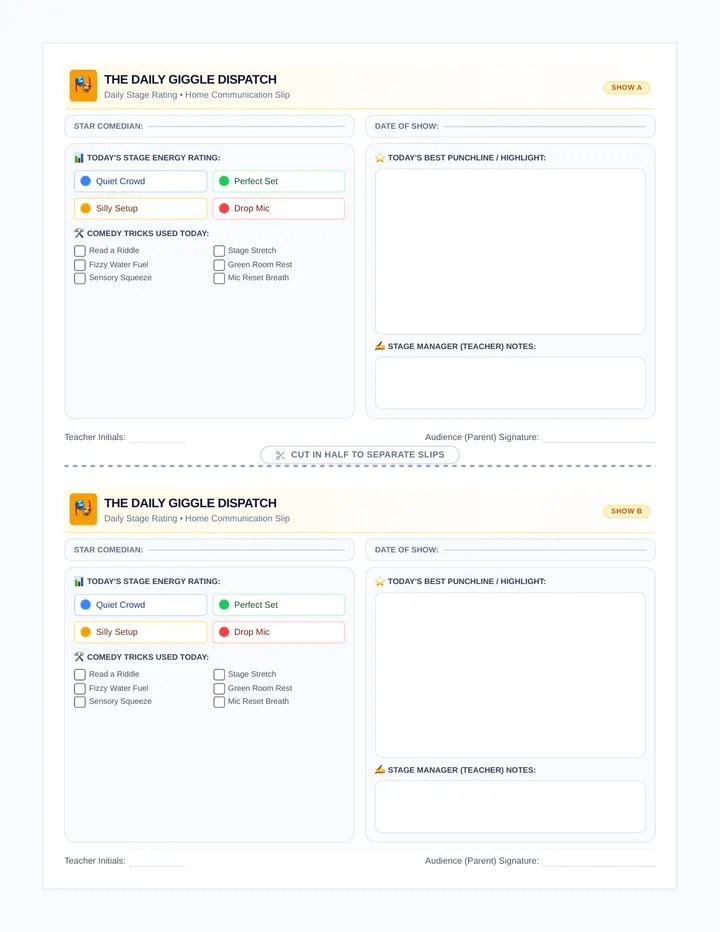
A simple, kid-friendly daily emotional regulation check-in system based on the Zones of Regulation model. Features a clean student desk mat, a coping strategy menu, a teacher instruction guide, and tracking logs.
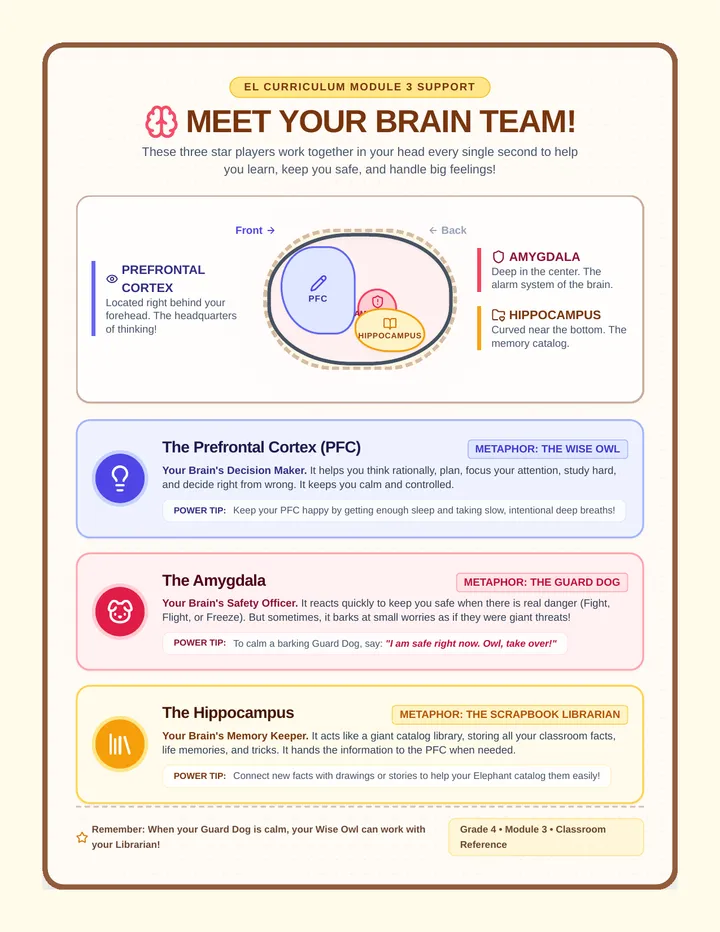
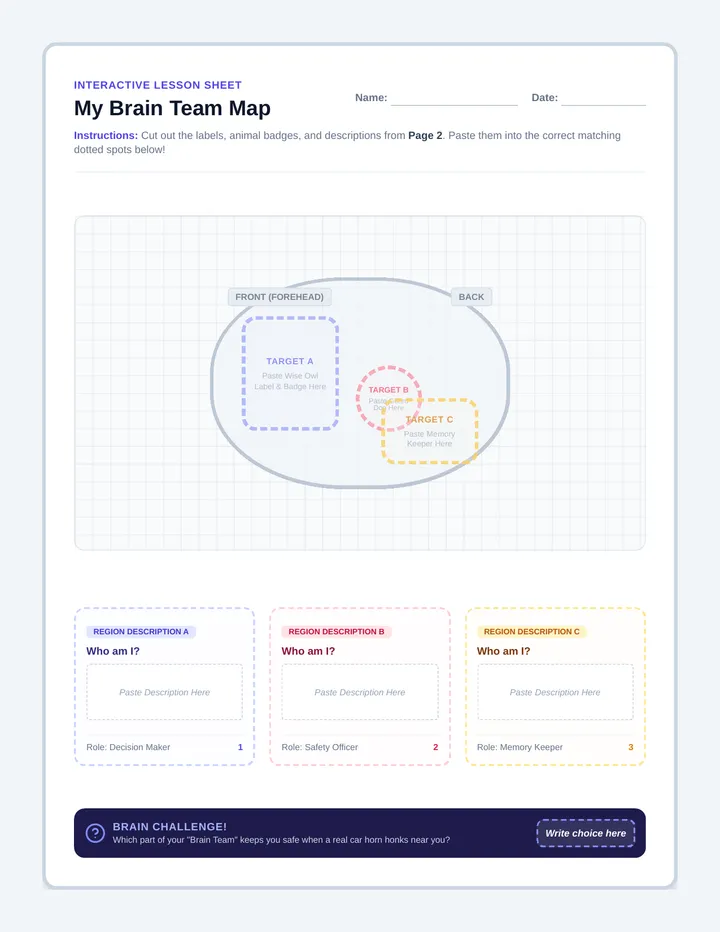
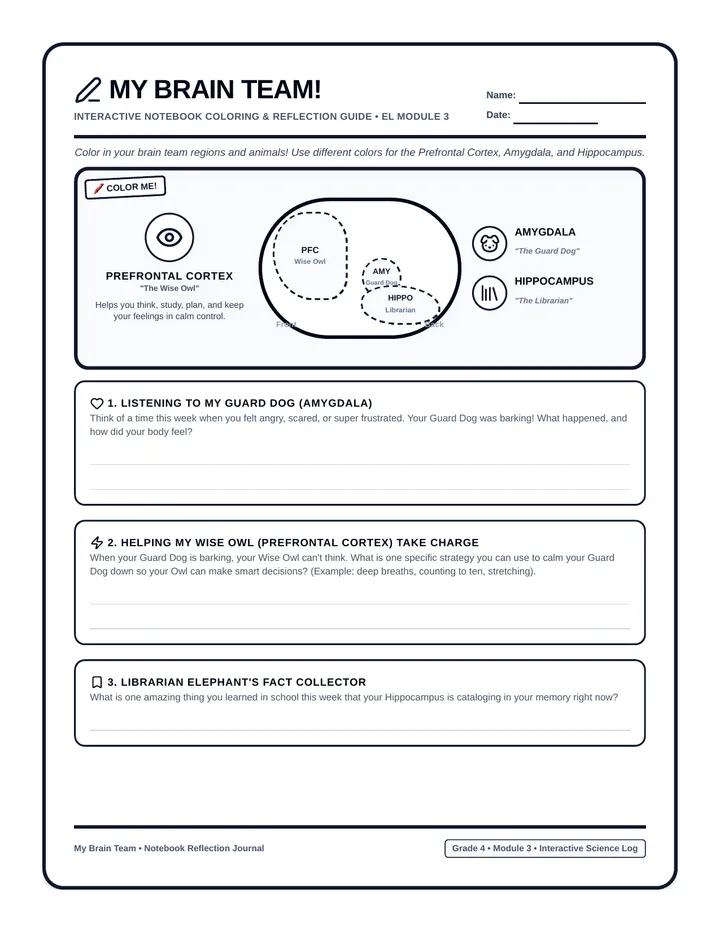
A fourth-grade lesson exploring the core parts of the brain (Amygdala, Hippocampus, and Prefrontal Cortex) using metaphors from the EL Education curriculum. Students learn how their 'Brain Team' works together to handle emotions, store memories, and make smart decisions.
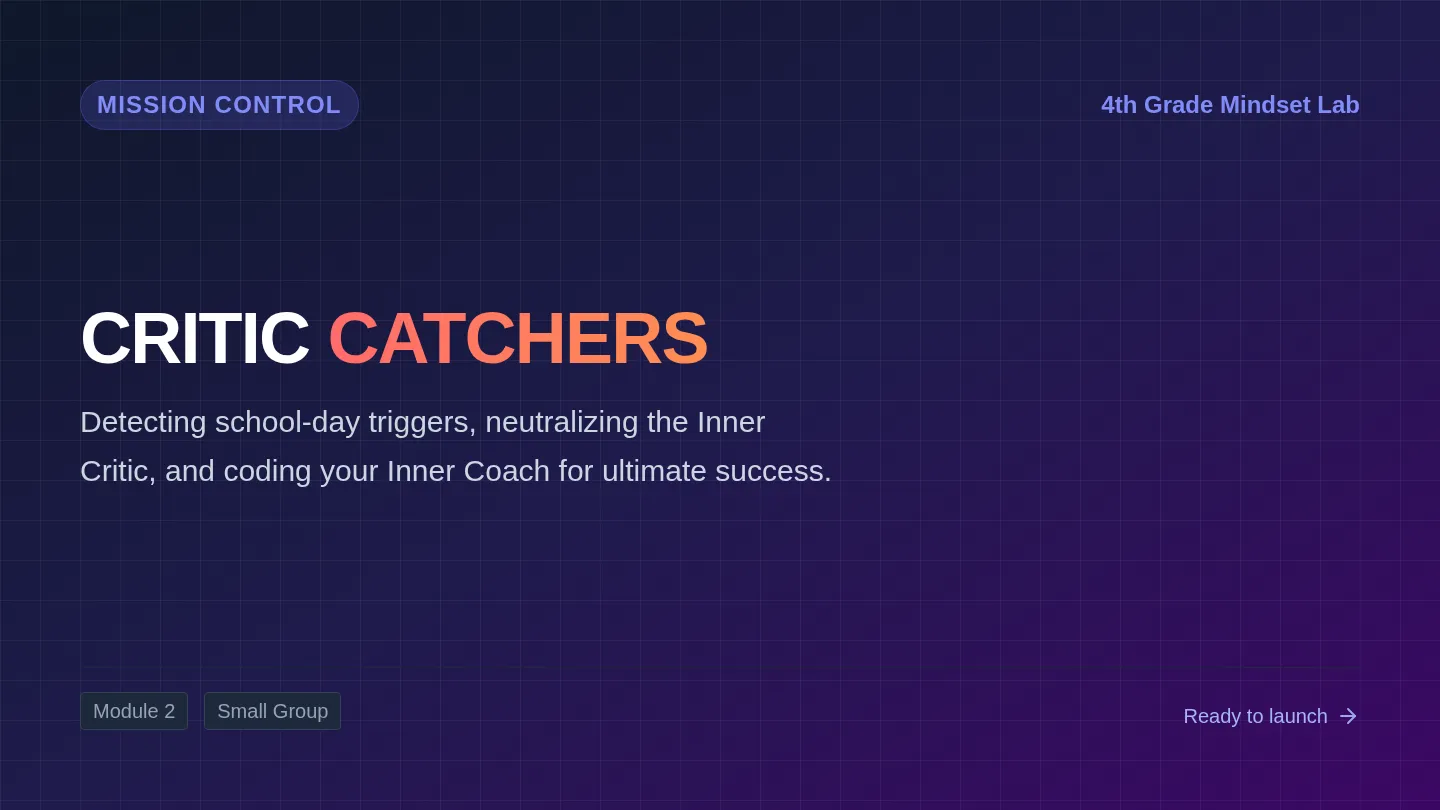
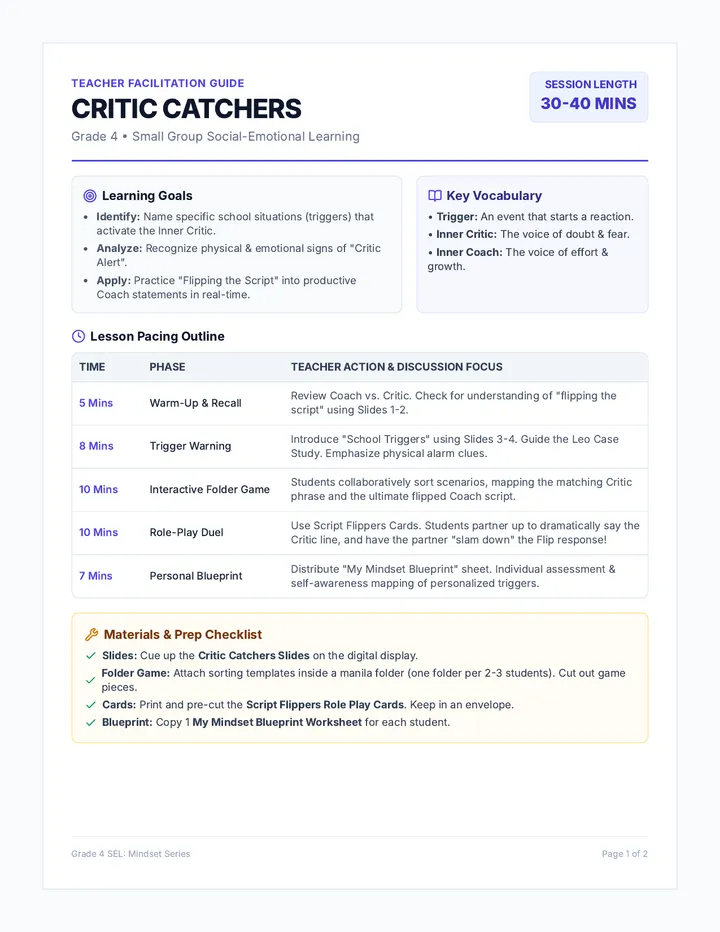
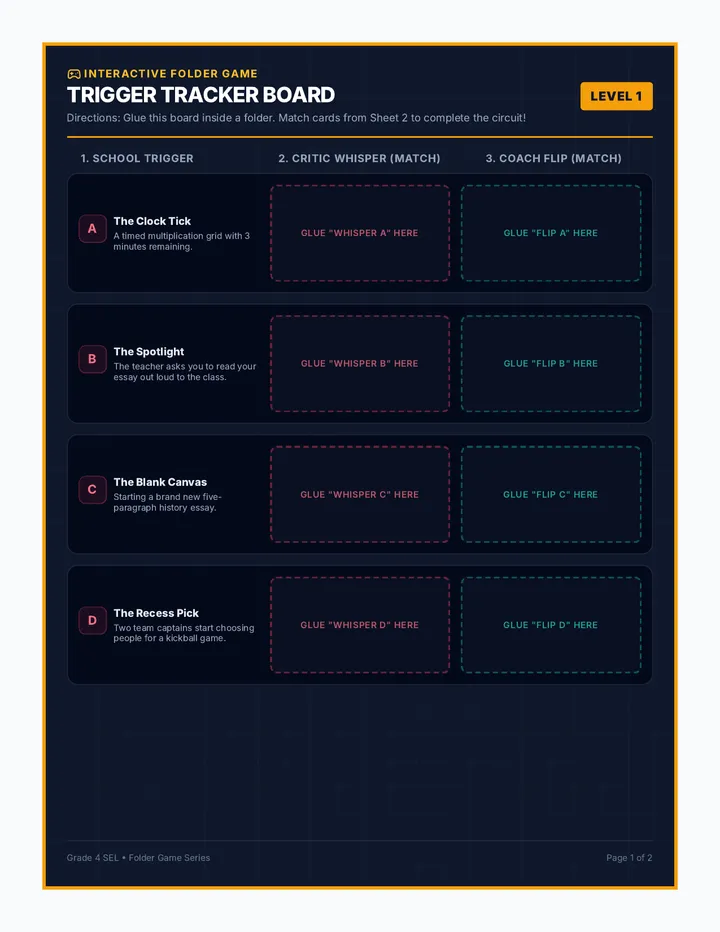
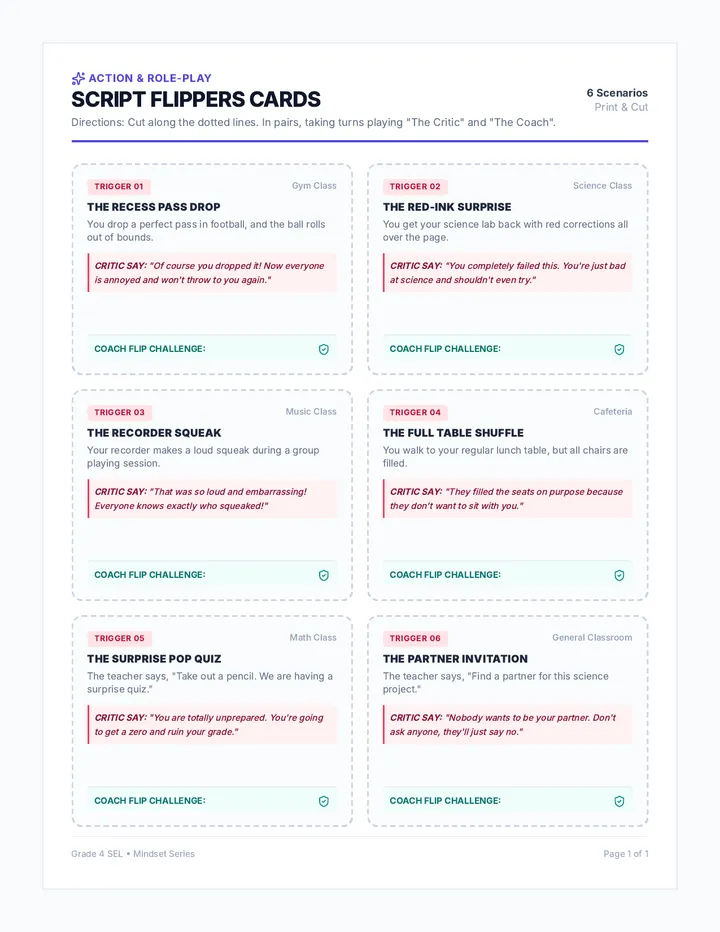
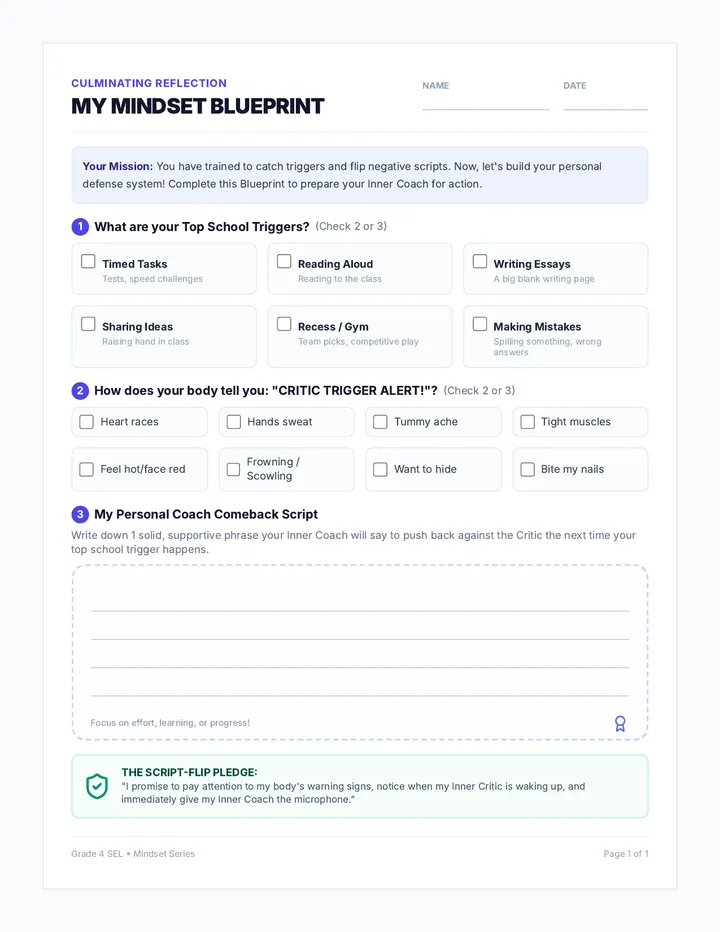
A high-engagement small group lesson for fourth graders focused on identifying school-based triggers that wake up the Inner Critic and using 'flipping the script' strategies to activate the Inner Coach.
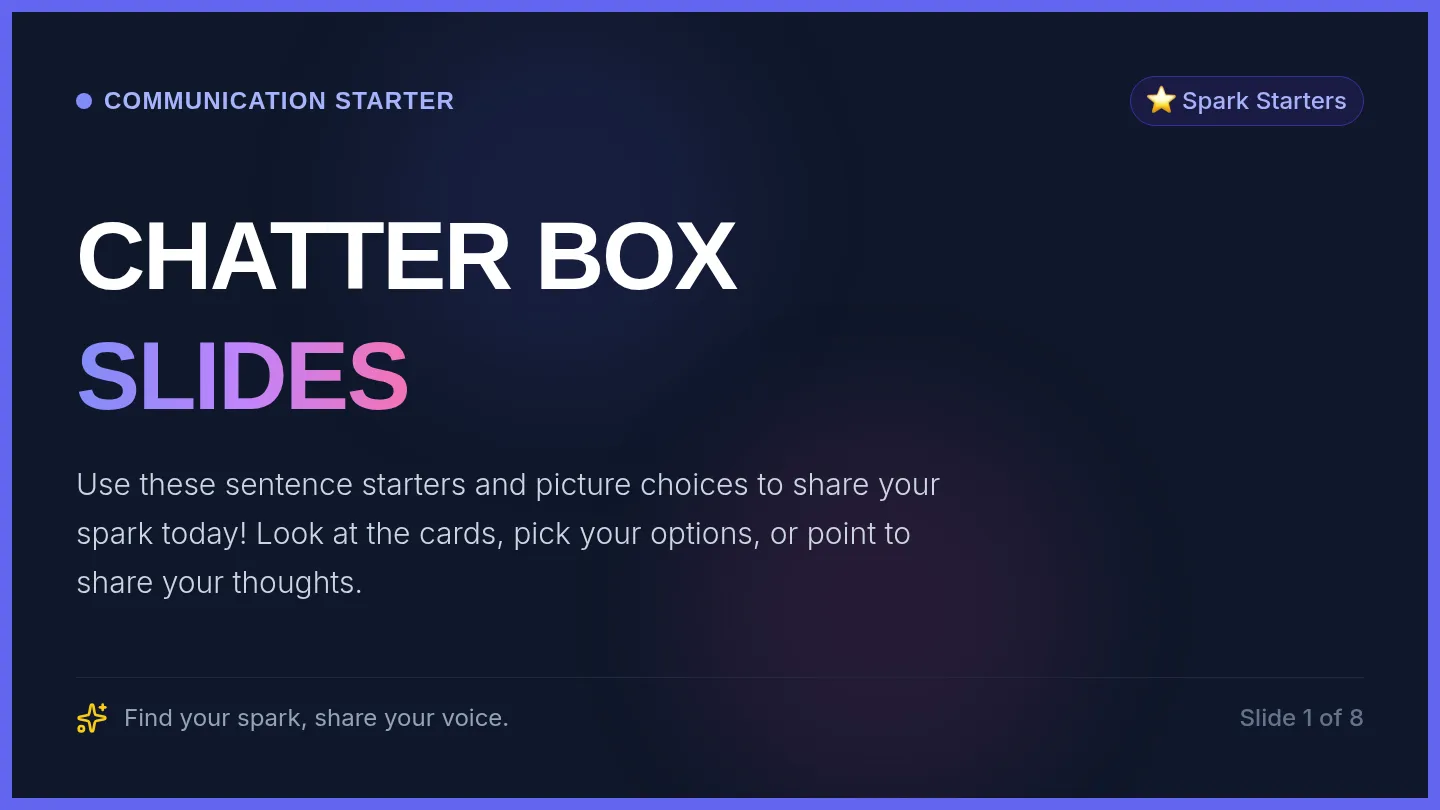
An introductory get-to-know-you lesson utilizing visual sentence starters and structured options to support students of all communication styles in sharing their preferences, feelings, and strengths.
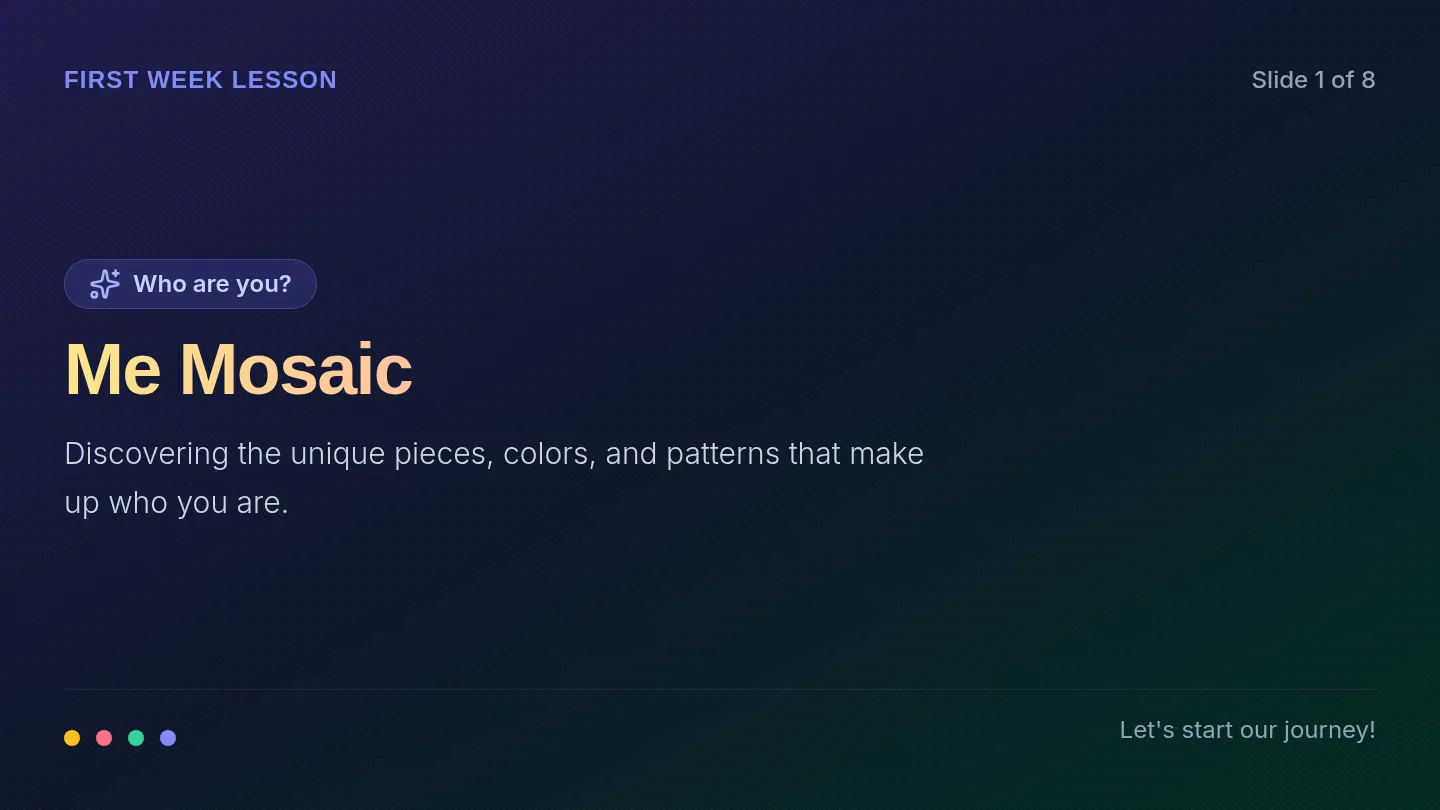
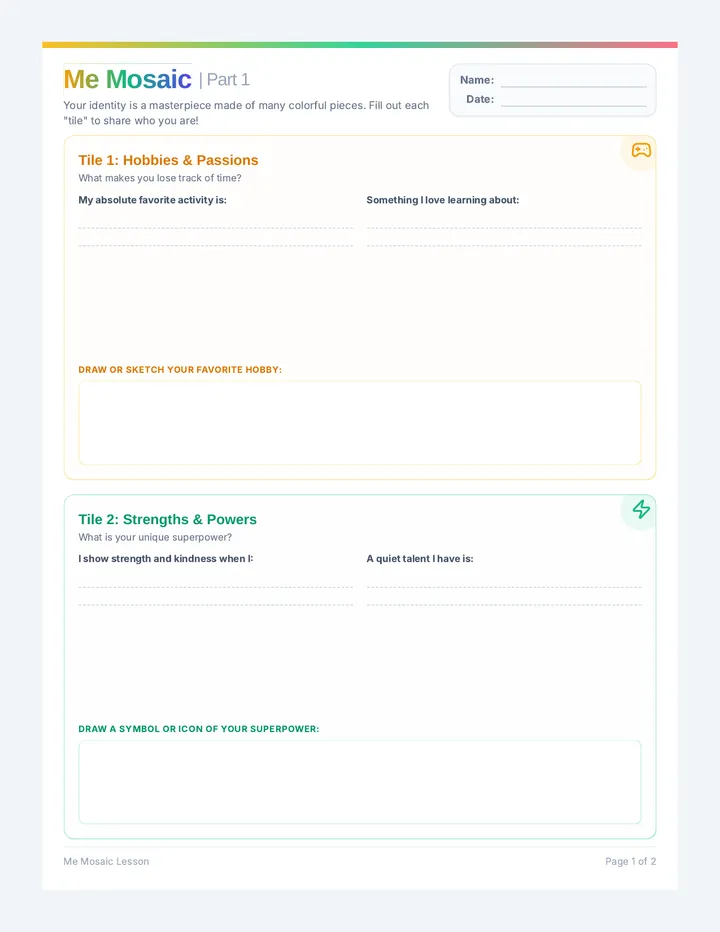
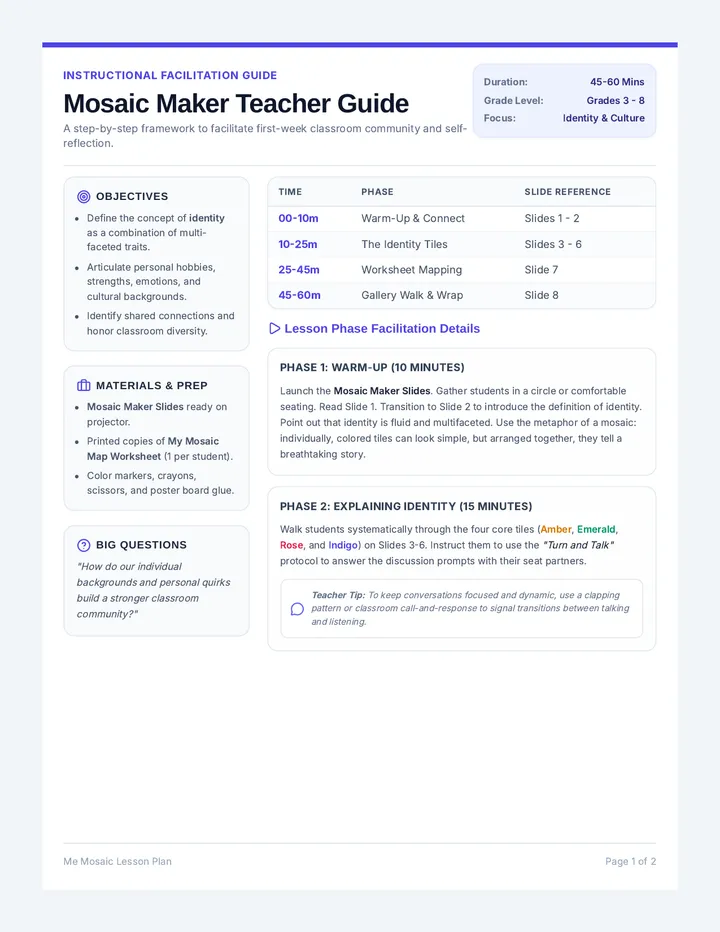
A welcoming first-week lesson designed to help students define identity and explore their unique traits. Through collaborative slides, a personal worksheet, and guided reflections, students share their hobbies, strengths, feelings, and backgrounds to build a connected classroom community.
A pair of visually striking, high-contrast printable signs to organize any kitchen or classroom space. Features separate, elegant layouts for clean and dirty dishes to maintain perfect organization.
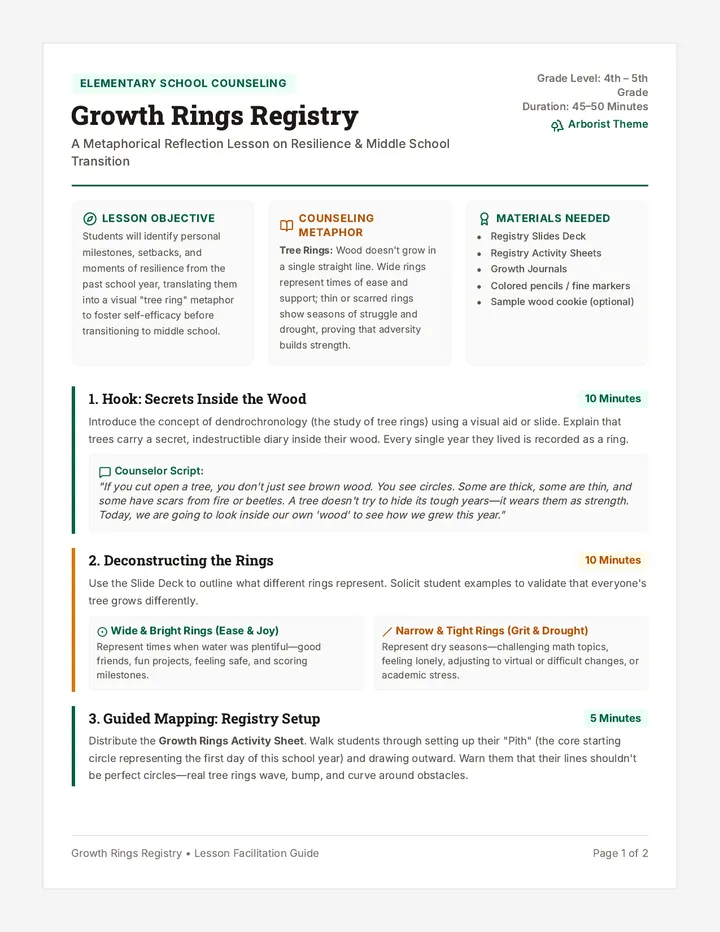
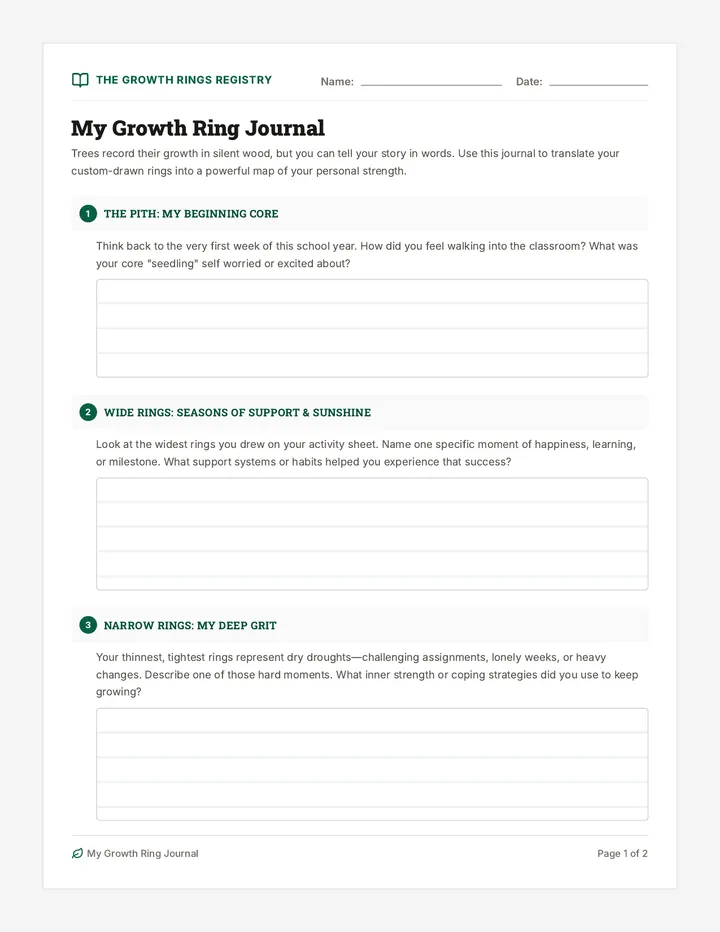
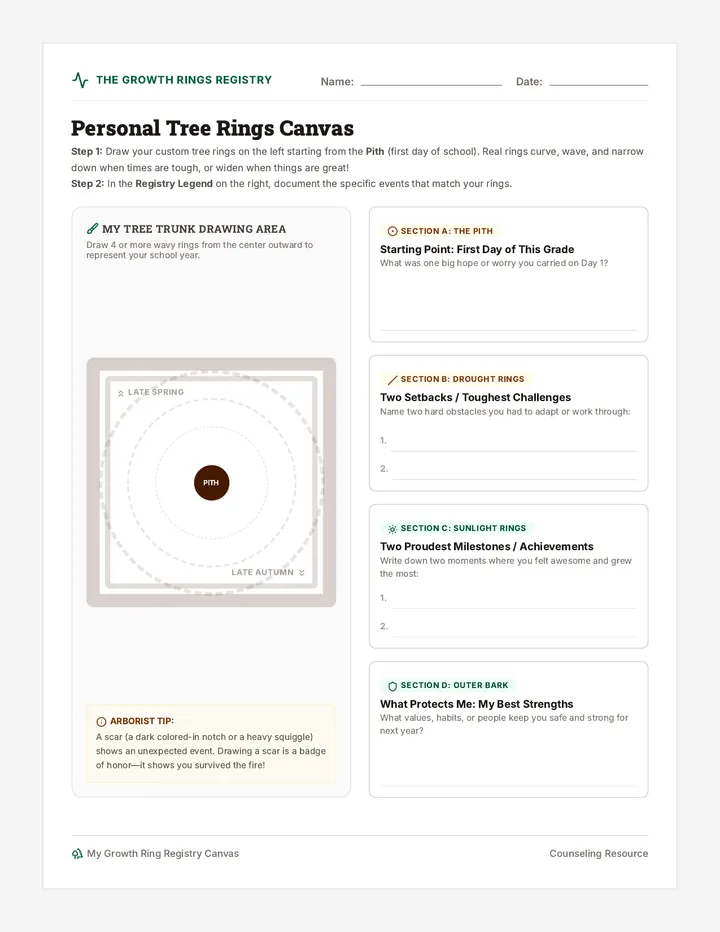
A reflective counseling lesson using the metaphor of tree rings to help older elementary students map their personal growth, setbacks, and resilience milestones over the past school year, building a positive self-narrative before middle school.
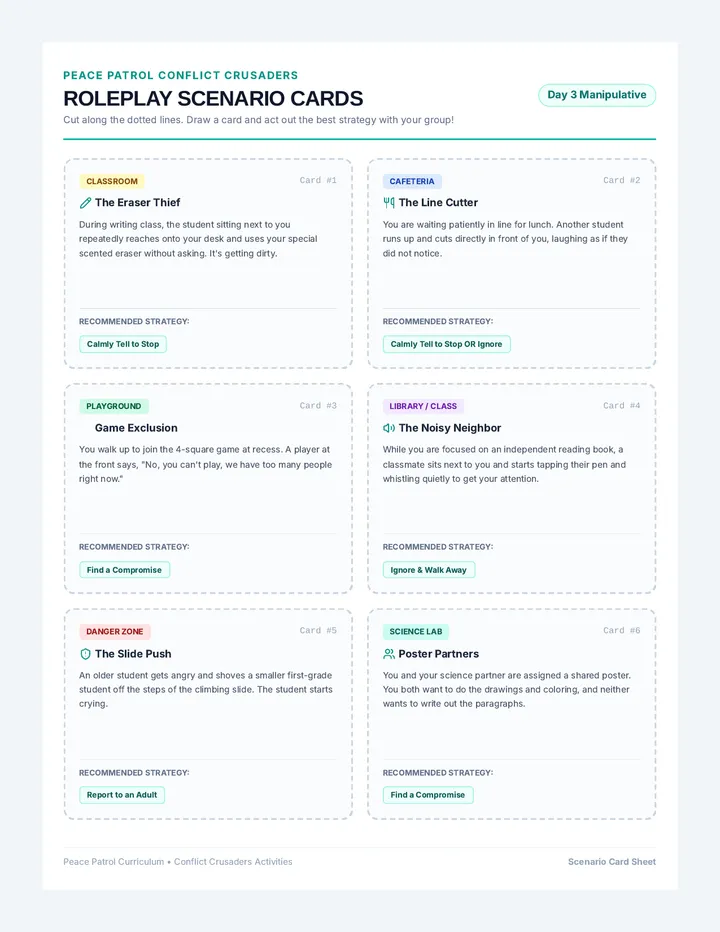
Day 3 of the Peace Patrol curriculum. Students use roleplay cards to practice selecting and demonstrating the four healthy problem-solving strategies in real-world scenarios.
Day 2 of the Peace Patrol curriculum. Students explore 'Find a Compromise' and 'Report to an Adult' with hands-on practice and workbook activities.
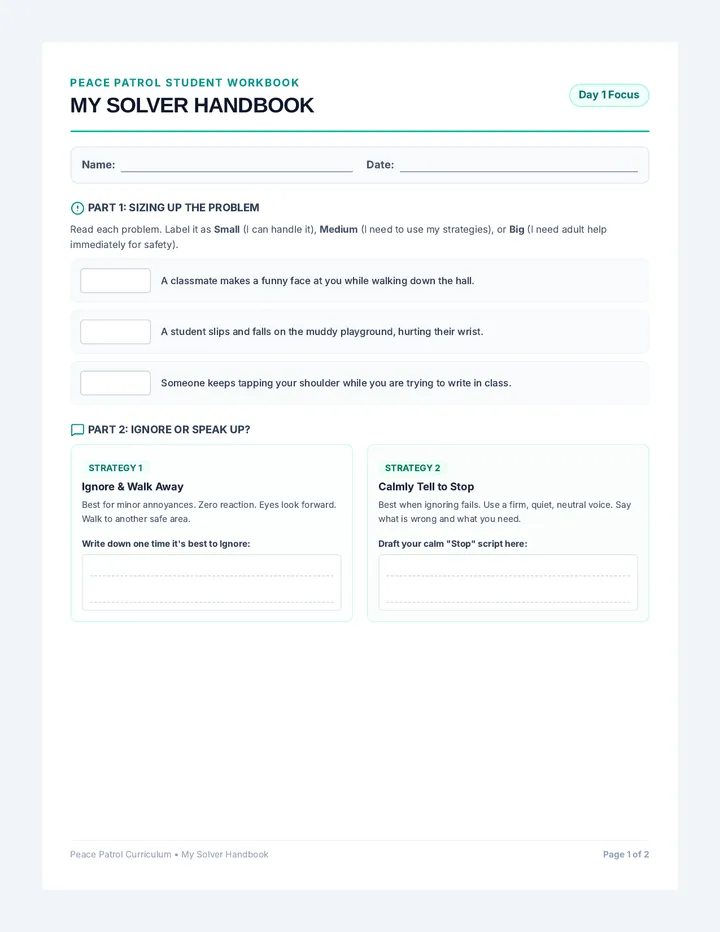
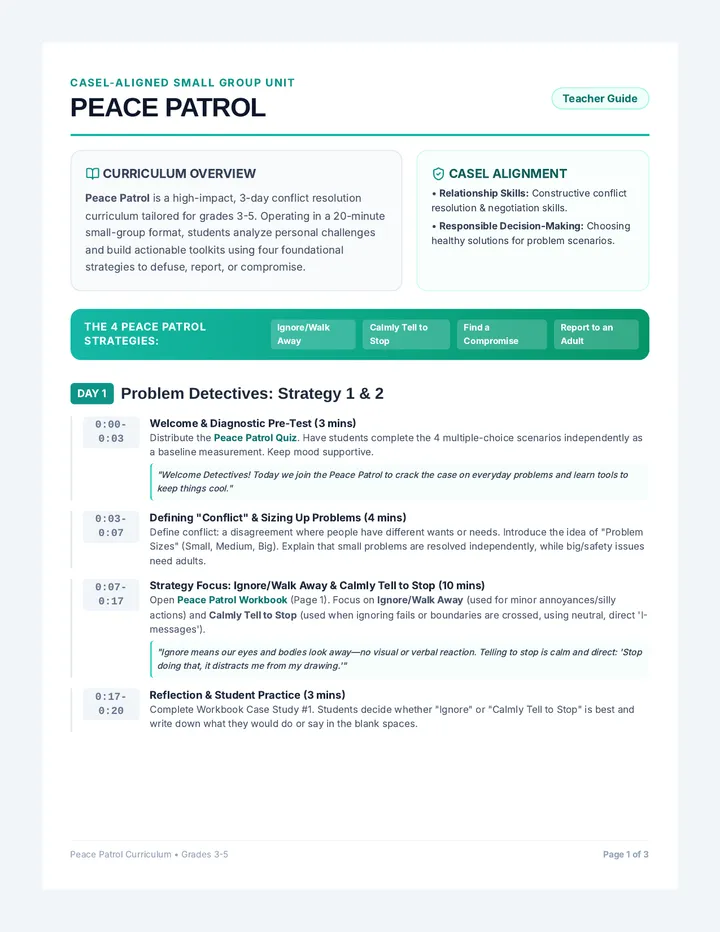
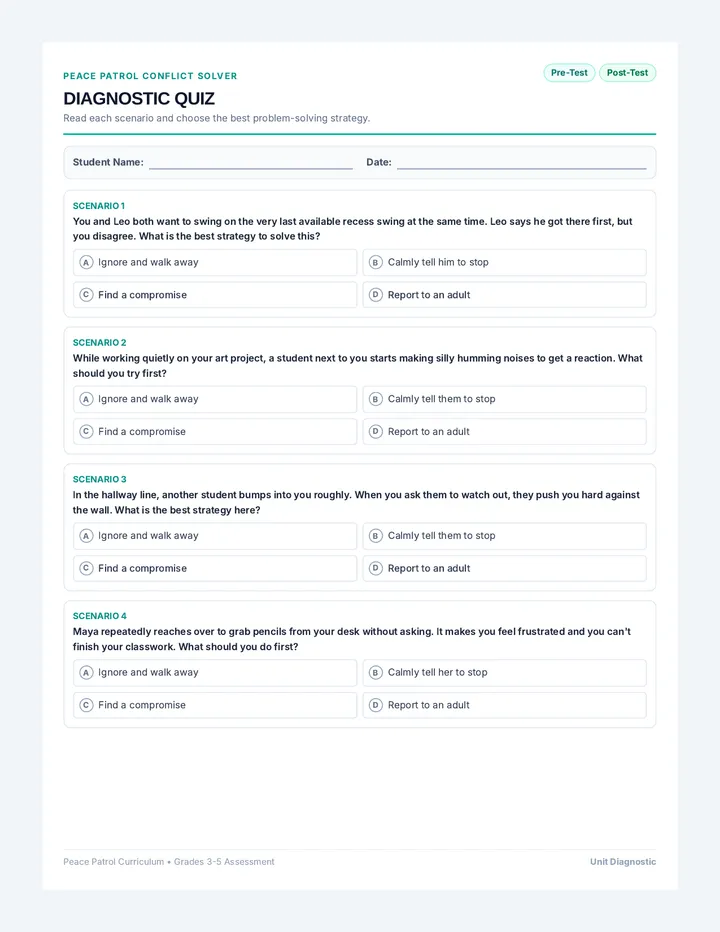
Day 1 of the Peace Patrol curriculum. Students take the pre-test, learn to identify conflict sizes, and explore the 'Ignore/Walk Away' and 'Calmly Tell to Stop' strategies.
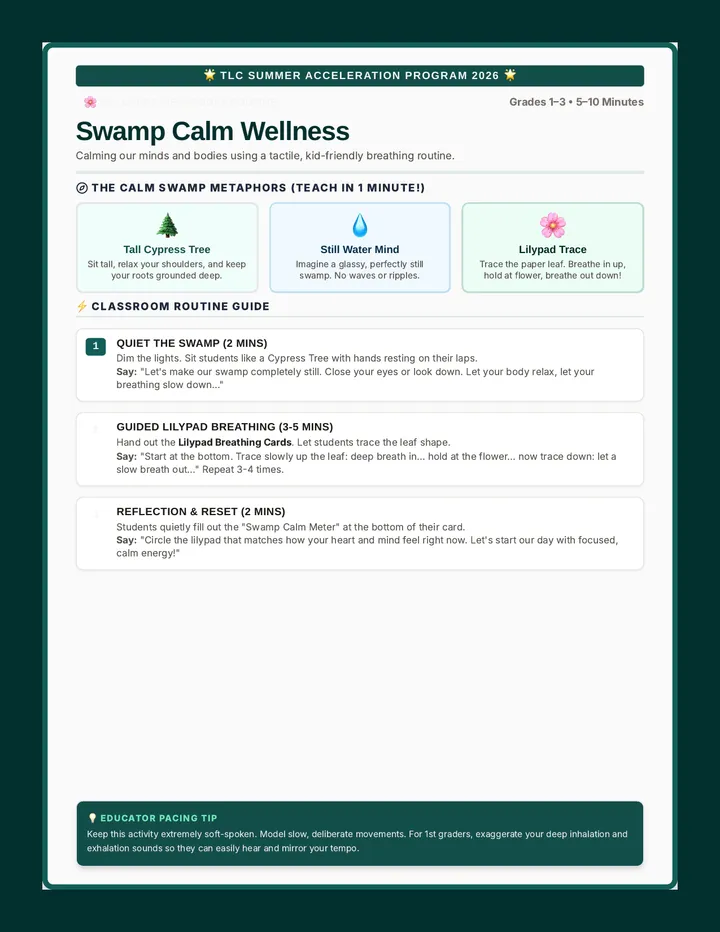
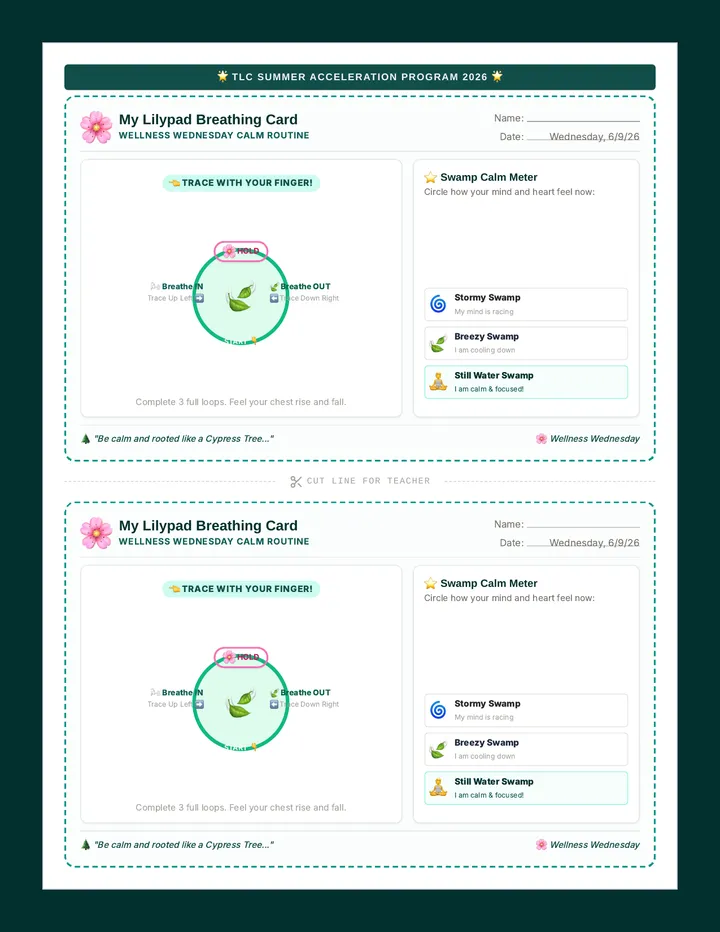
A Wellness Wednesday mindfulness routine for grades 1-3. Through sensory deep breathing and finger-tracing on a 'Lilypad Breathing' path, students learn self-regulation, calming techniques, and emotional focus.
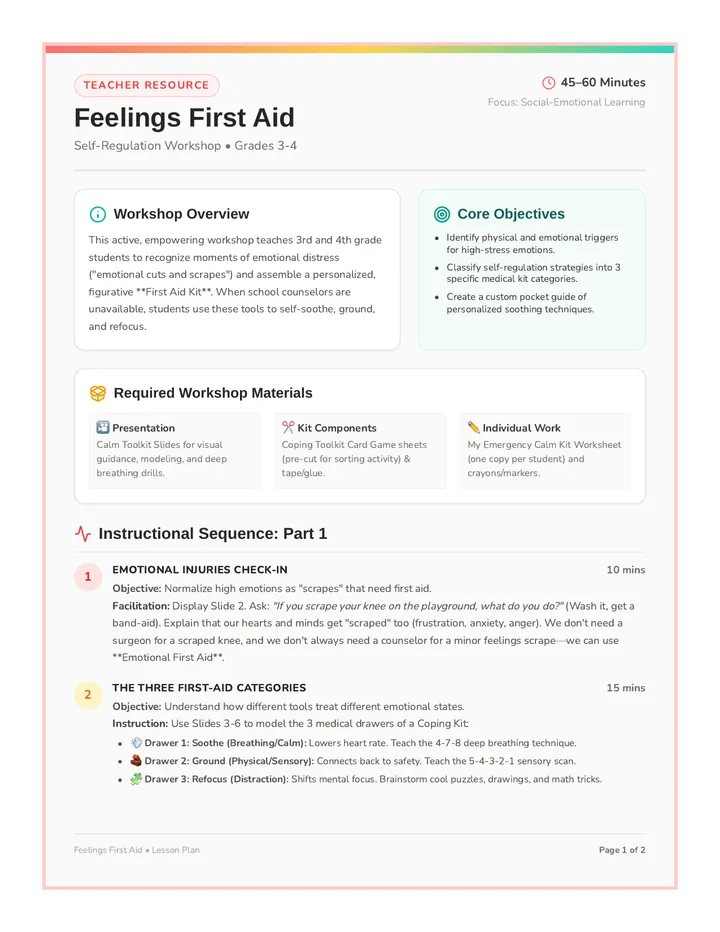
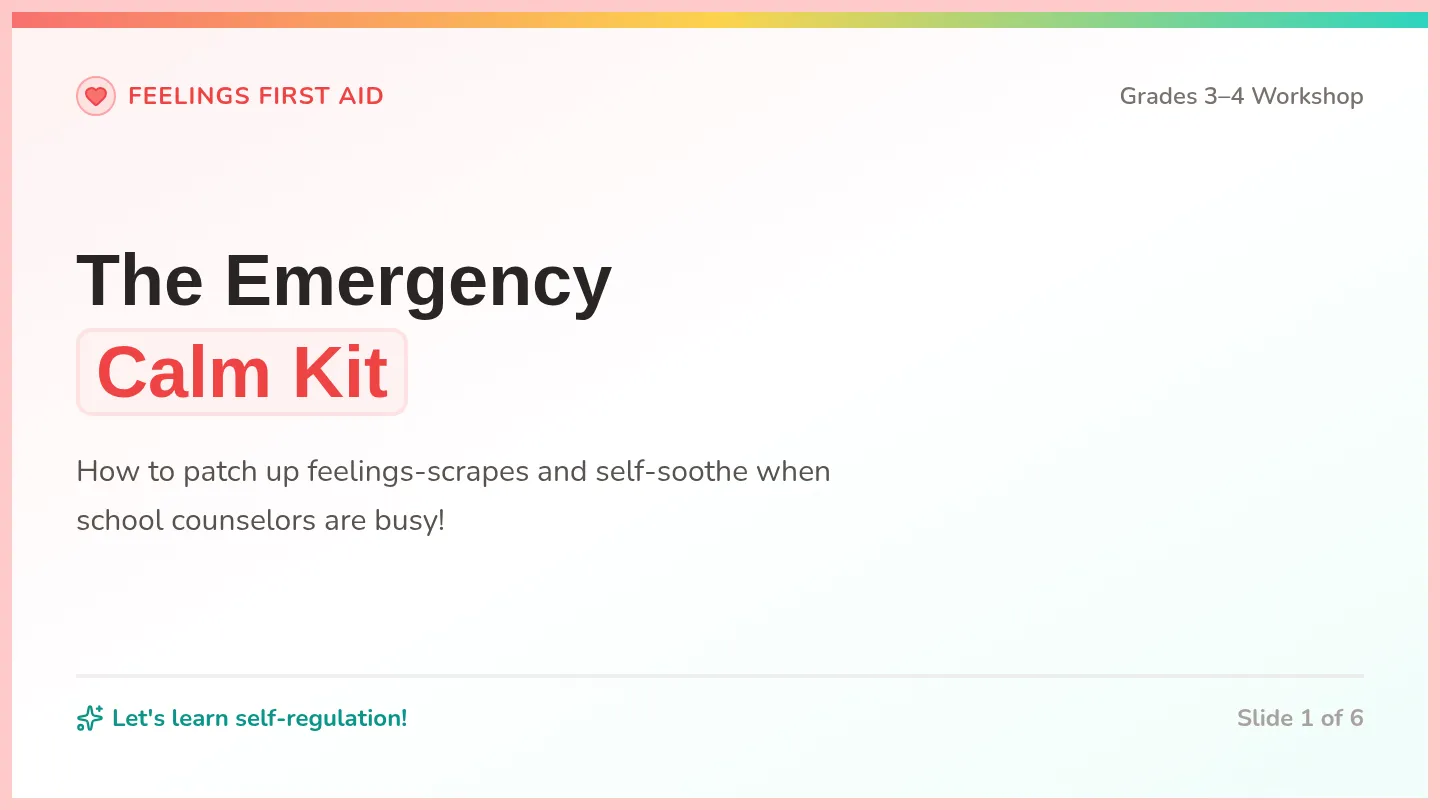
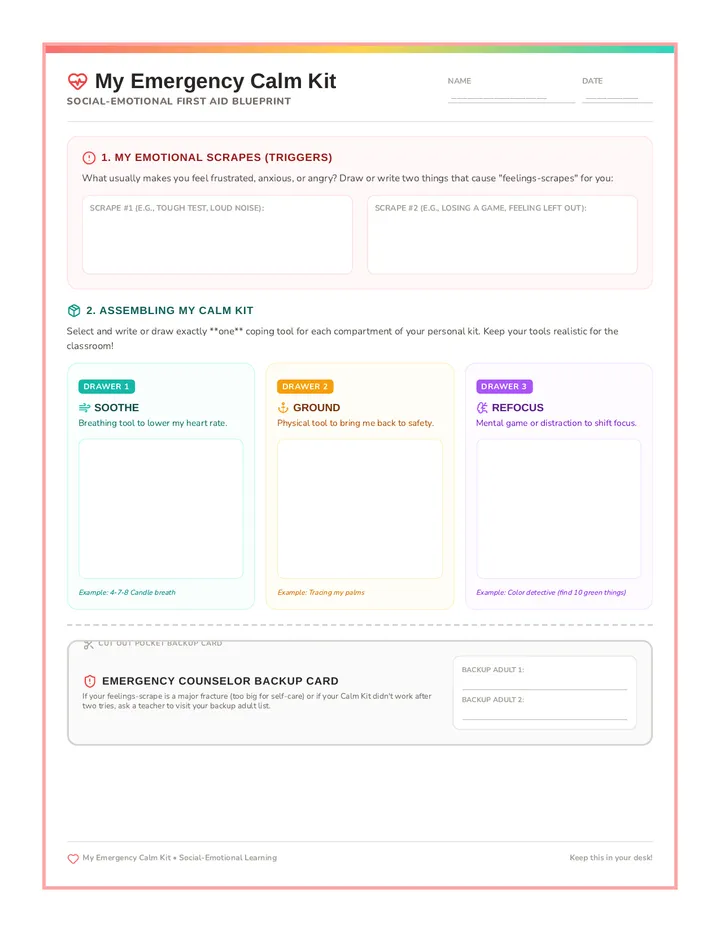
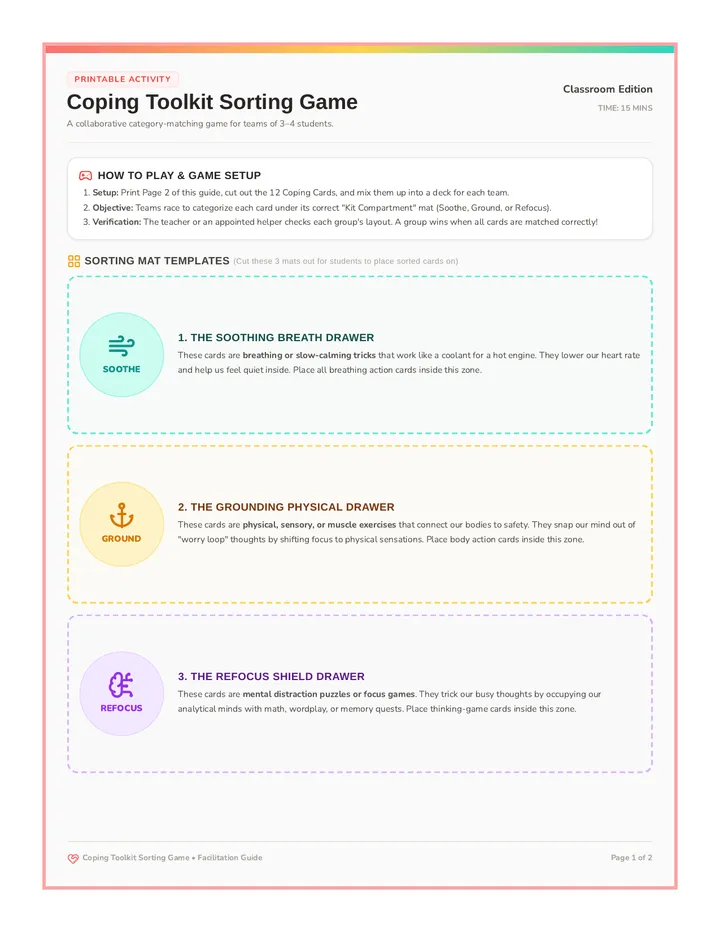
An empowering self-regulation workshop tailored for 3rd and 4th graders. Students learn to assemble a figurative first-aid kit containing self-soothing tools, deep breathing techniques, and personal distraction activities to utilize during moments of distress when school counselors are unavailable.
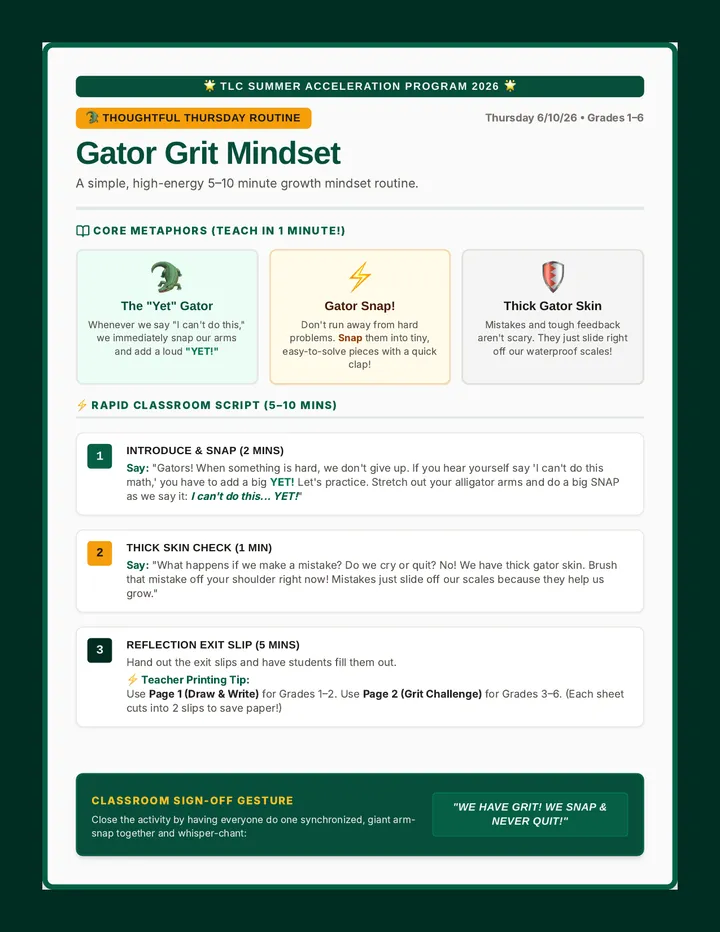
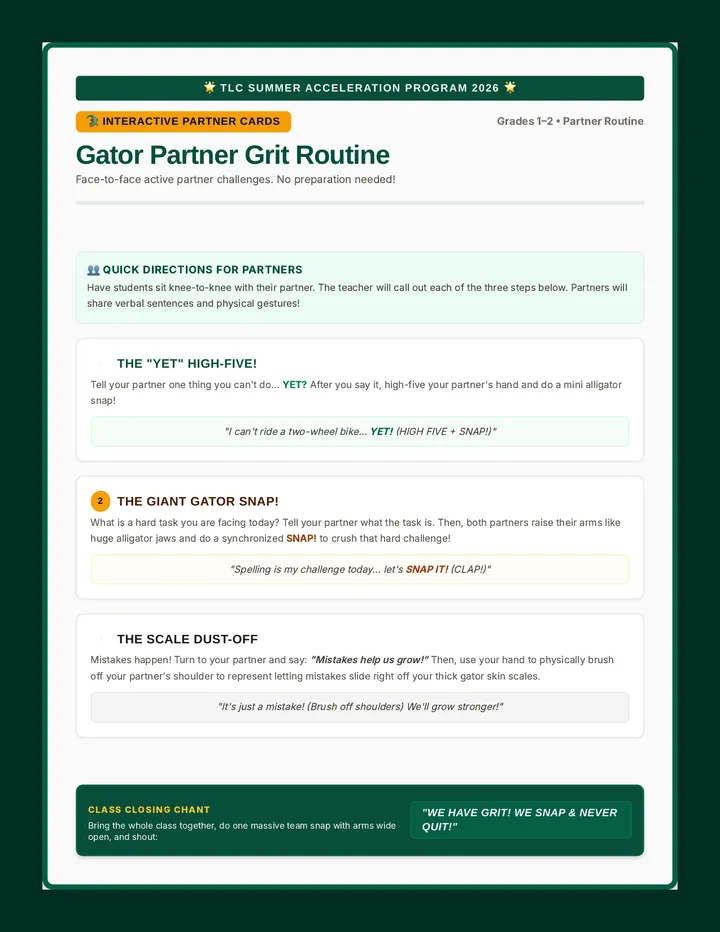
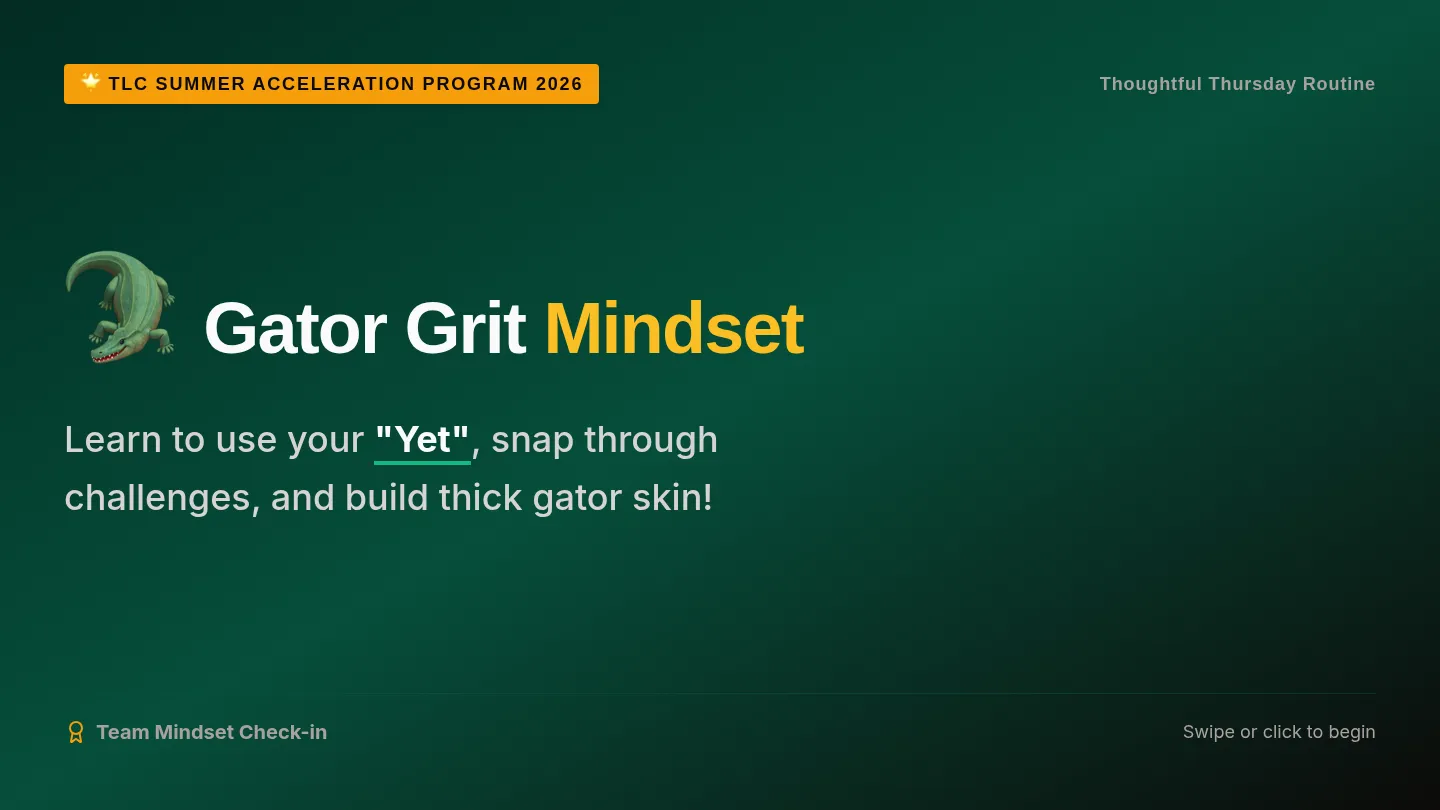
A 5-10 minute Thoughtful Thursday activity designed to shift students in grades 1-6 from a fixed to a growth mindset. Using engaging alligator metaphors like the 'Yet' Gator, 'Chomping' through challenges, and 'Thick Gator Skin' resilience, this quick routine builds emotional grit and reflection.
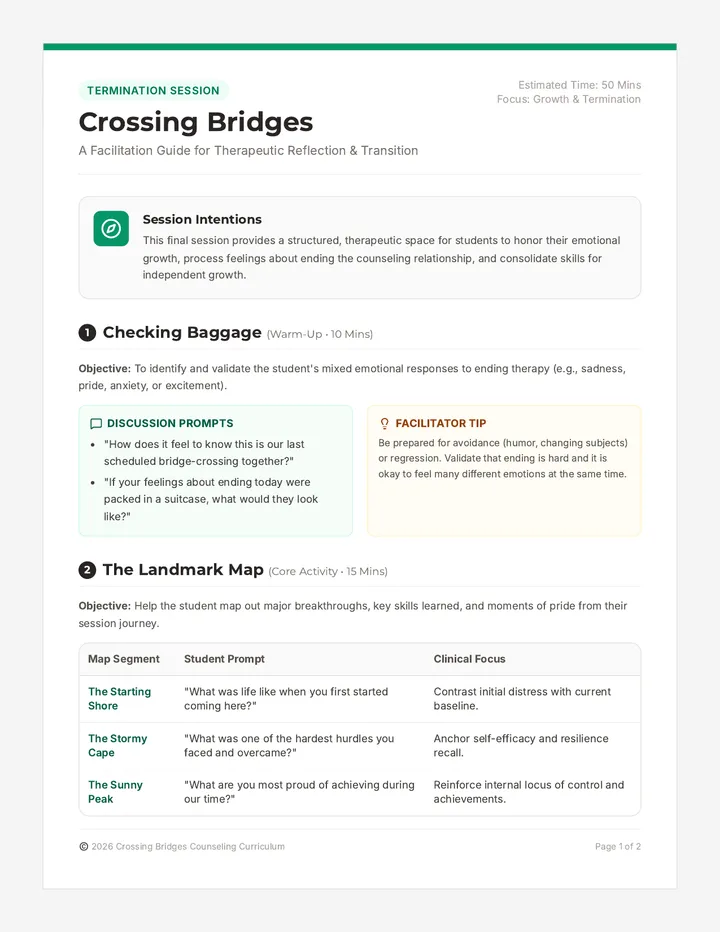
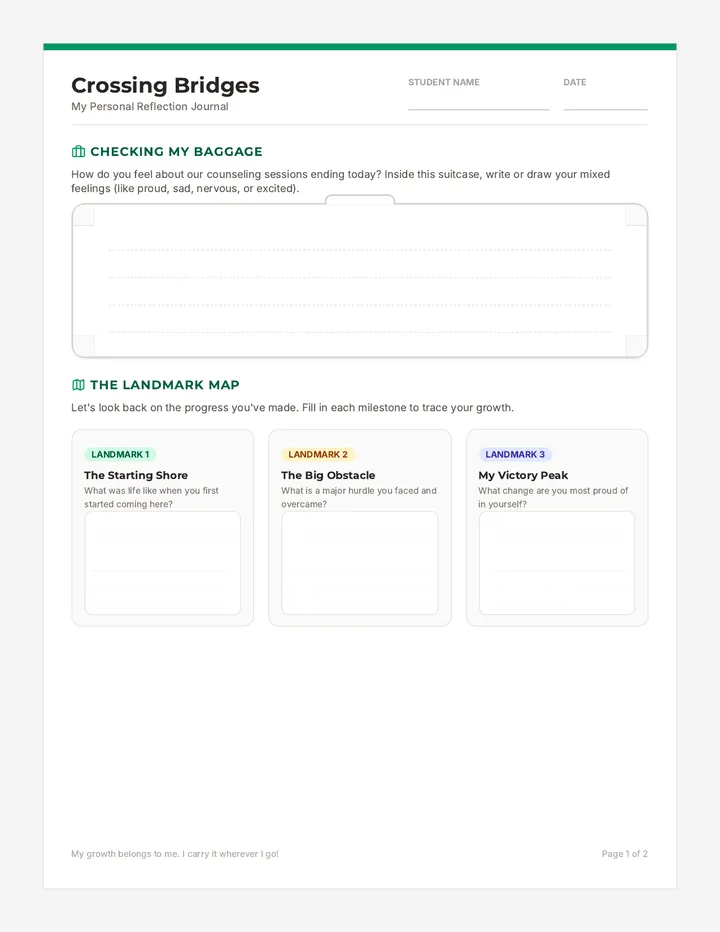
A comprehensive therapeutic counseling session designed to help students reflect on their growth, process feelings about termination, and prepare for the journey ahead.
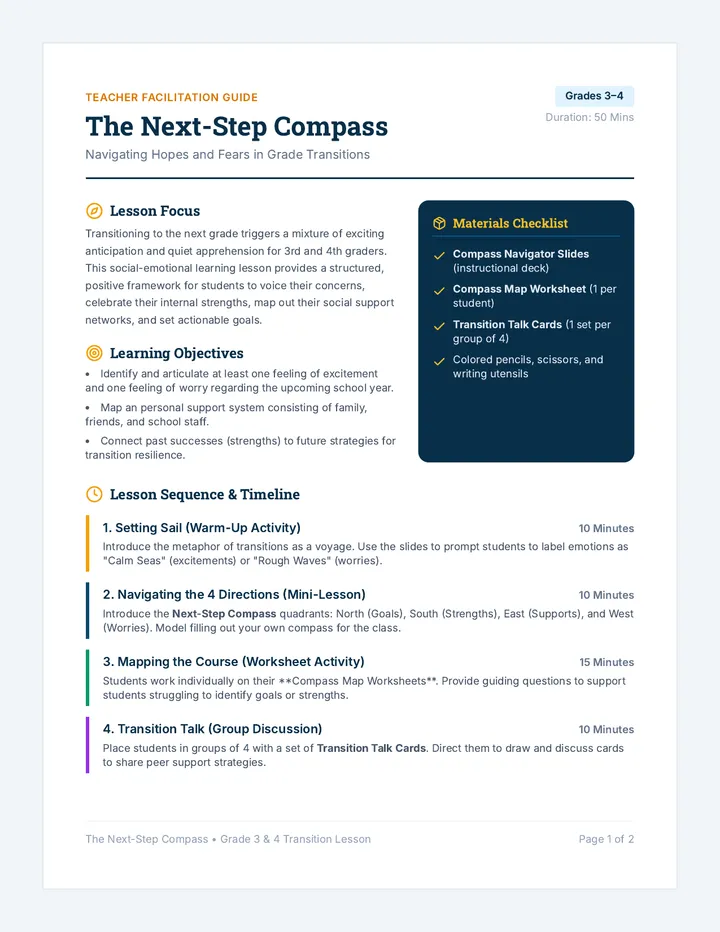
A goal-oriented lesson helping third and fourth graders navigate their excitement and fears about transitioning to the next grade. Students explore emotional management, identify strengths and support networks, and sketch a personal compass to guide their path forward.
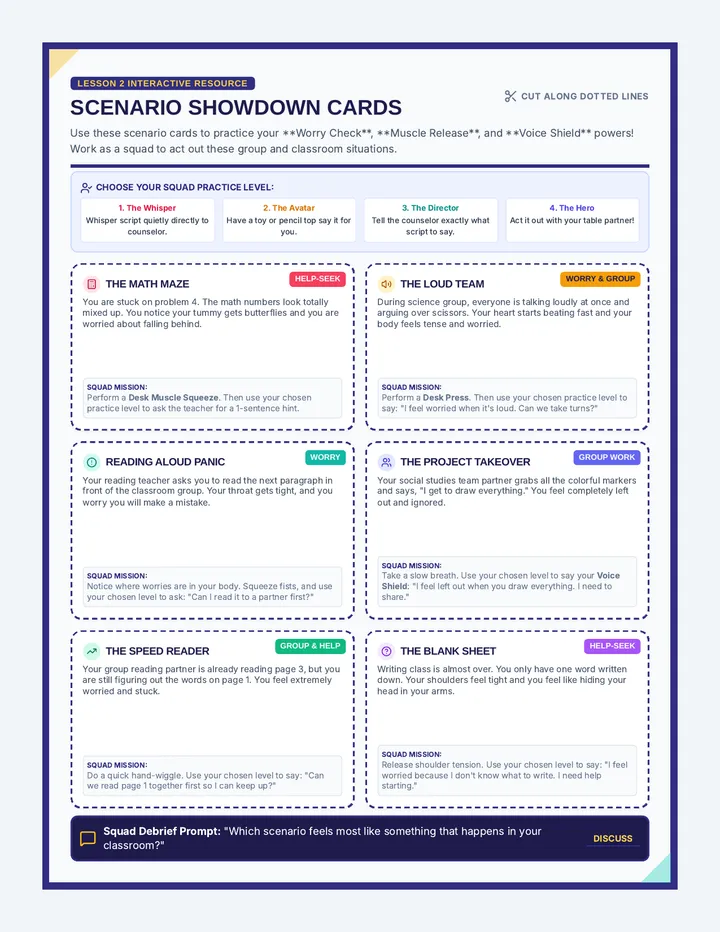
Lesson 2 focuses on active self-advocacy using 'I-Statements' (I feel..., because..., I need...) and executing specific scripts for help-seeking and requesting a break during structured role-play scenarios.
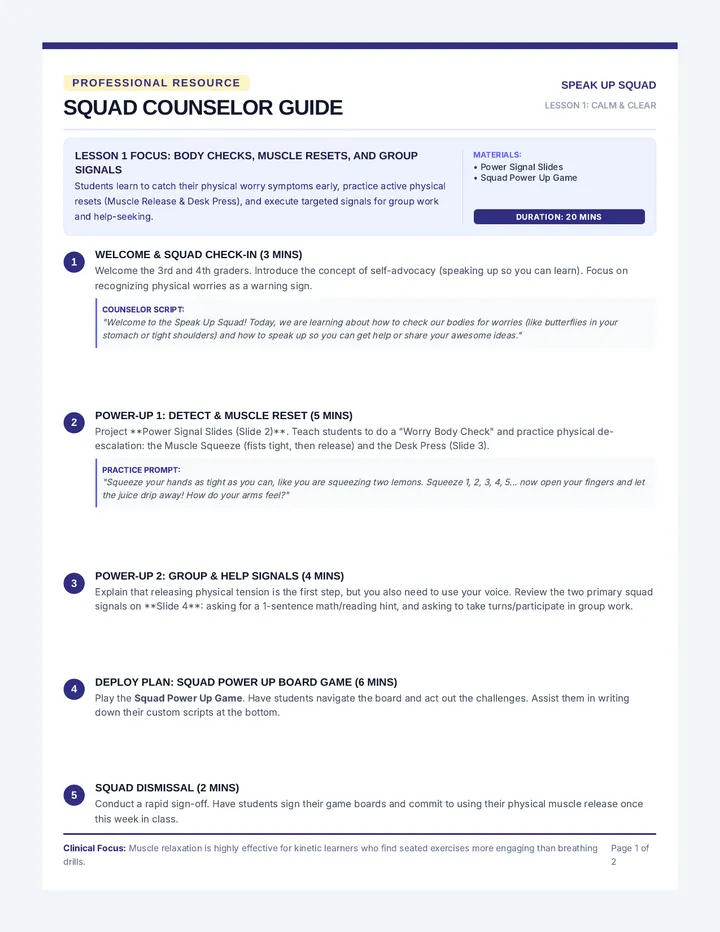
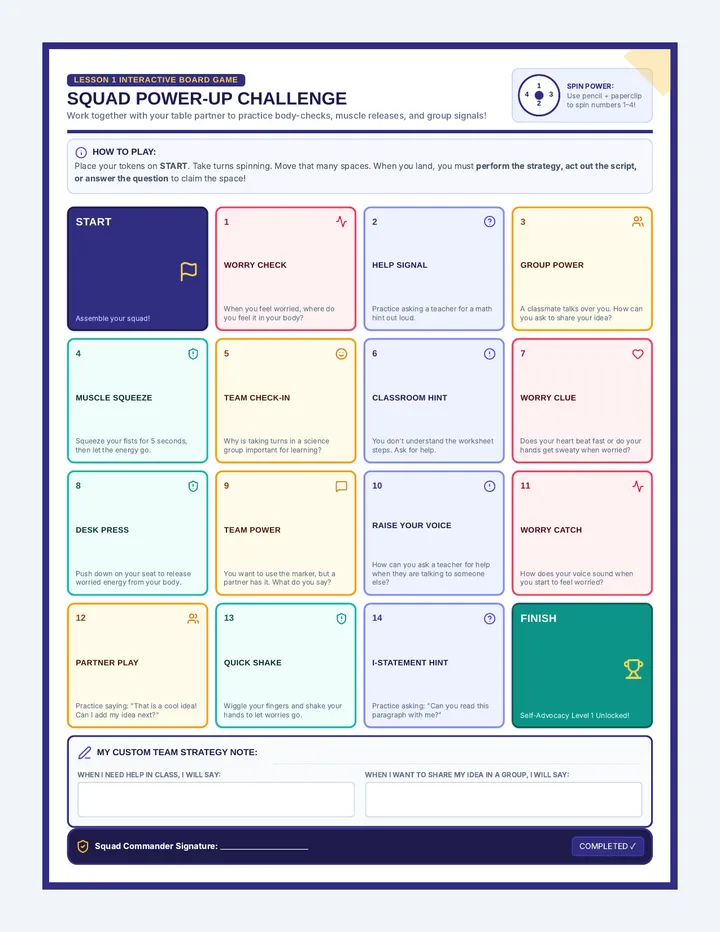
Lesson 1 focuses on pre-advocacy de-escalation (Deep Breathing and 5-4-3-2-1 Grounding) and identifying when to use self-advocacy signals (asking for help or requesting a break) in a small group setting.
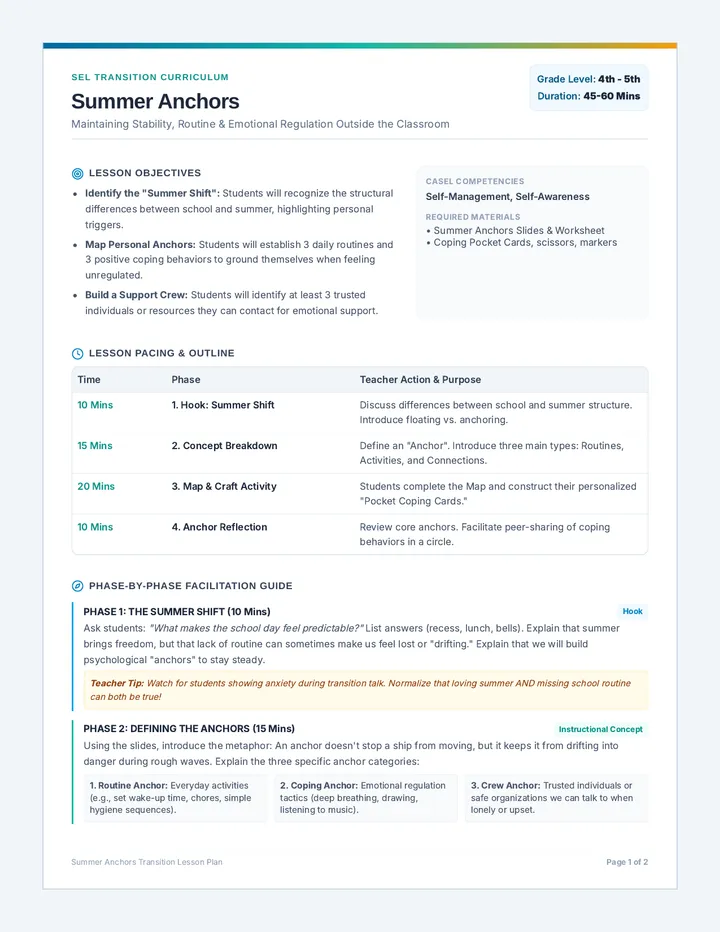
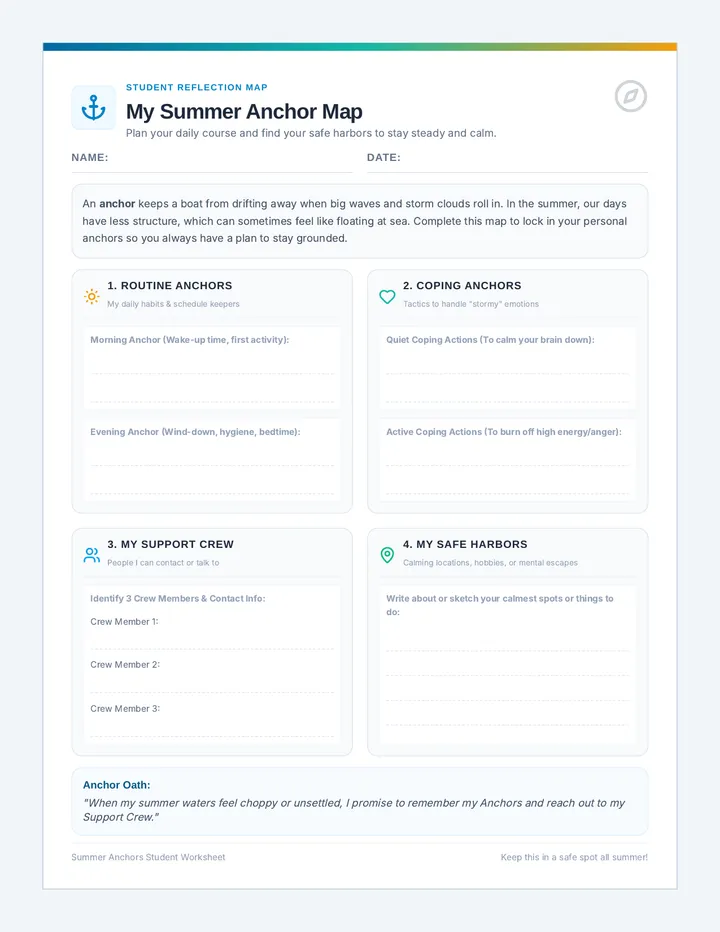
A transition-focused lesson designed for 4th and 5th graders to identify coping strategies, daily routines, and support systems to maintain emotional regulation during the summer months when regular school structures are absent.
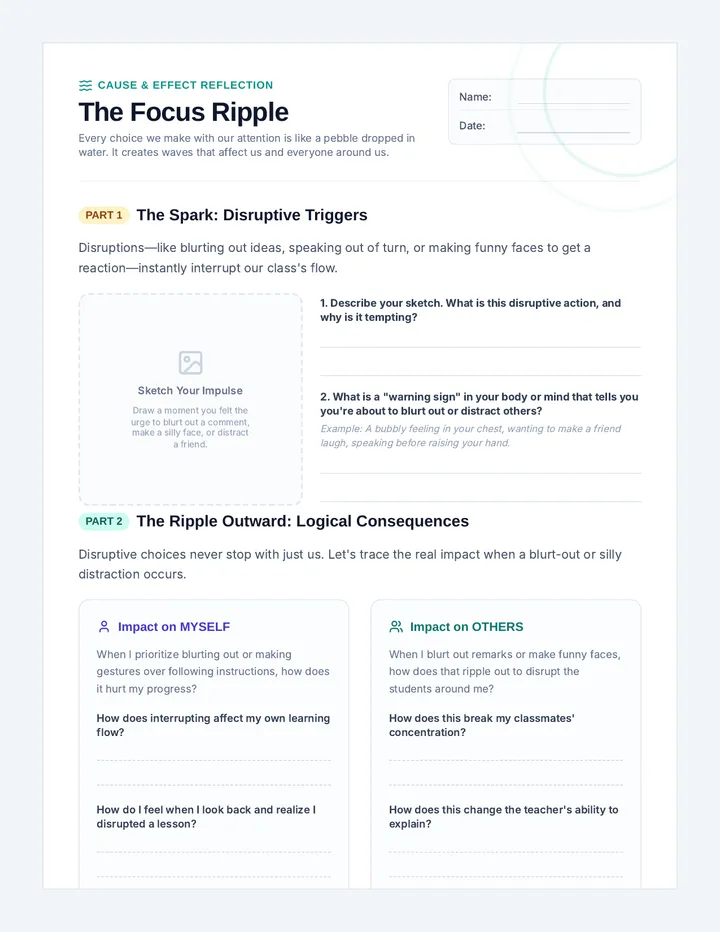
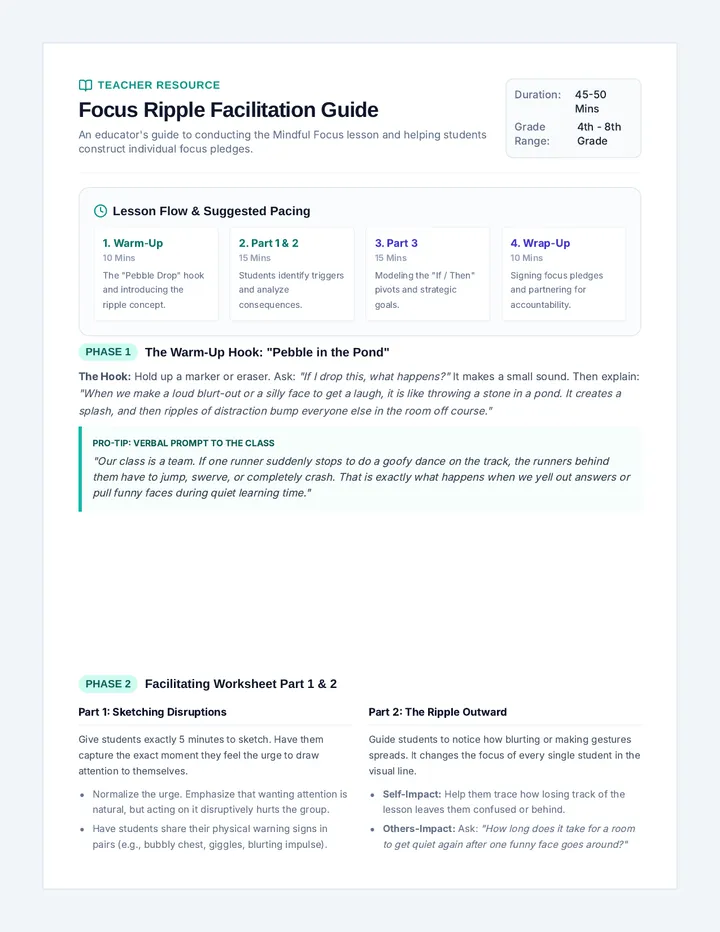
A reflective and proactive lesson designed to guide students through understanding classroom distractions, analyzing their cause-and-effect impact, and developing personalized focus strategies.
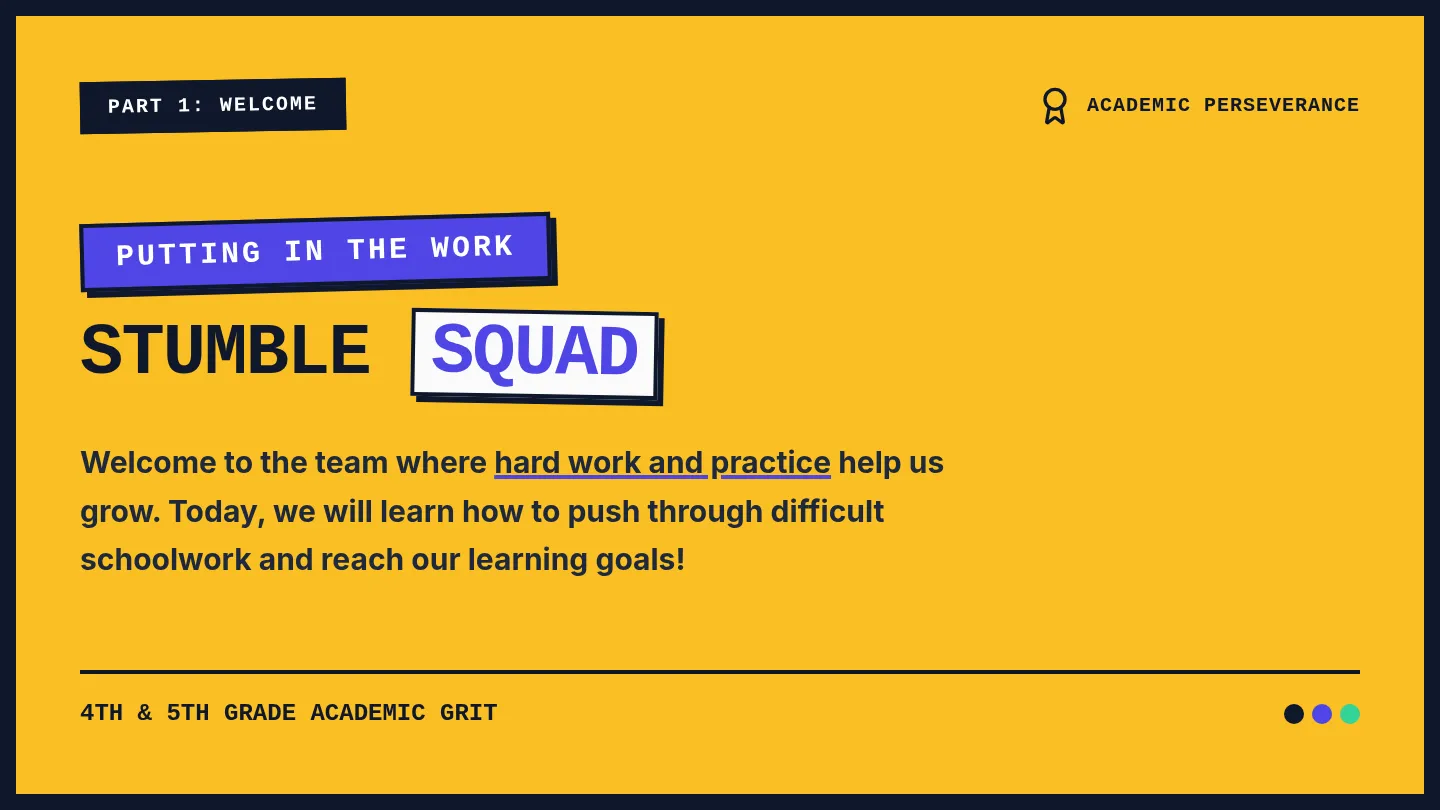
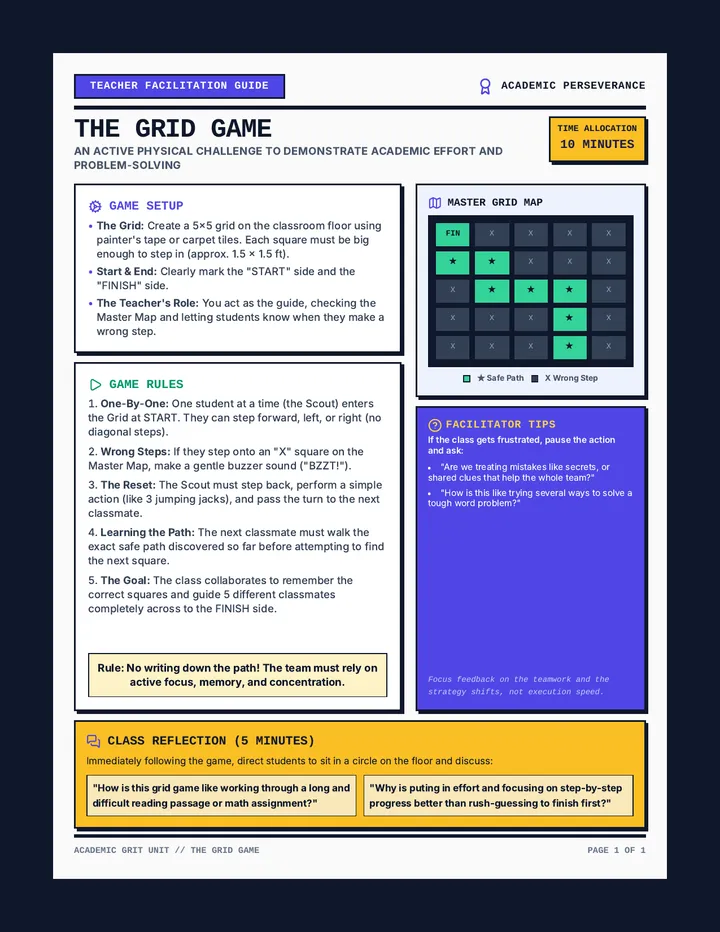
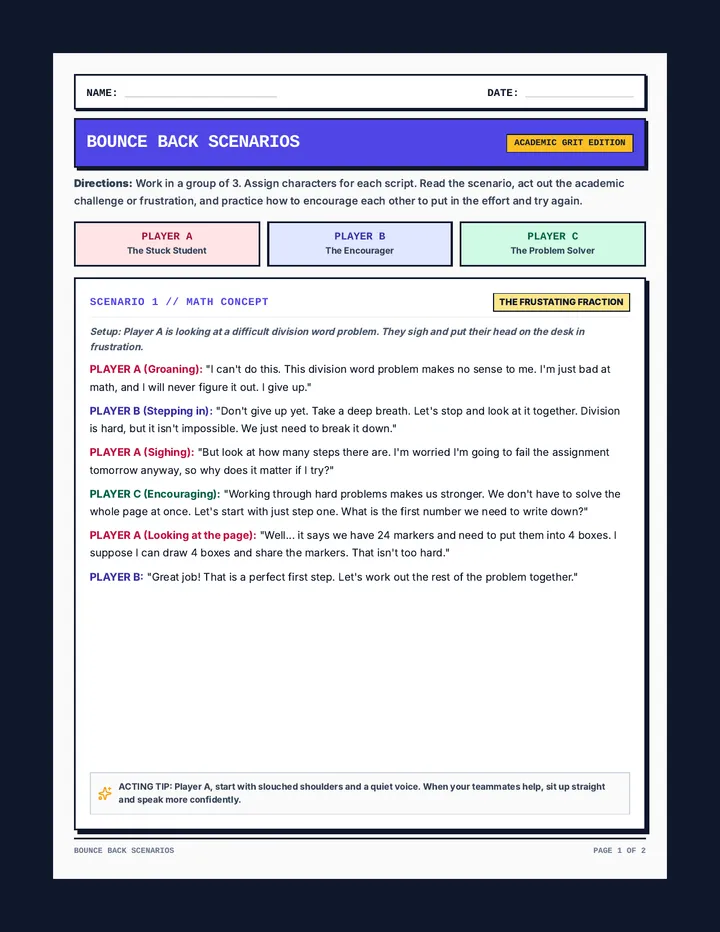
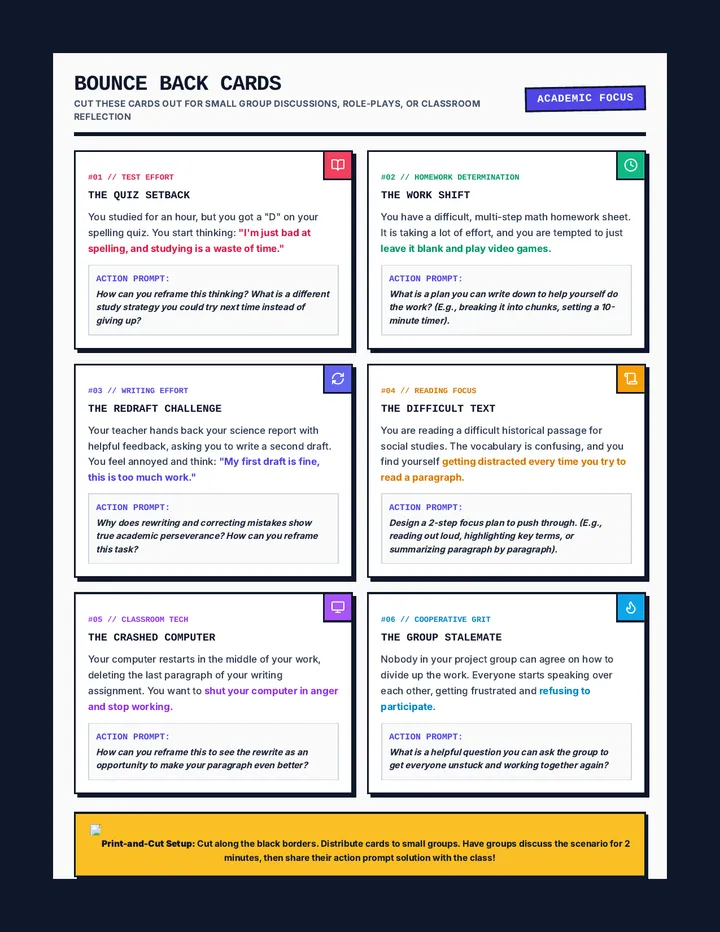
A high-energy, 30-minute interactive lesson for 4th and 5th graders designed to teach perseverance through movement, role-play, and growth mindset reflections. Students learn to reframe setbacks, practice bouncing back from common obstacles, and build collaborative grit.
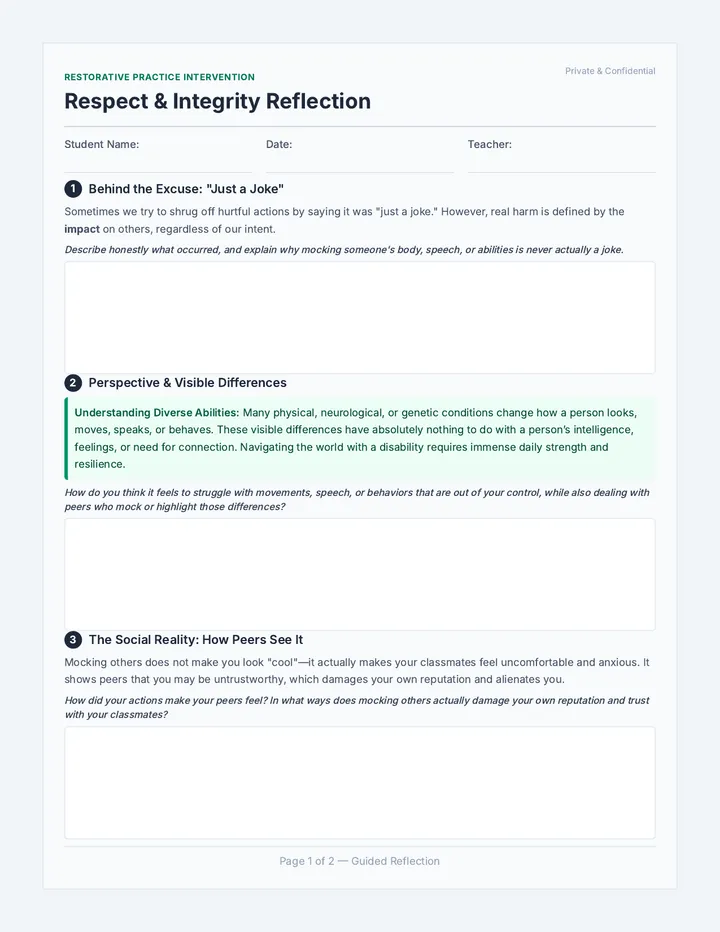
A restorative intervention lesson designed for students who have engaged in mocking or exclusionary behavior toward peers with disabilities. It focuses on perspective taking, social repositioning, impact vs. intent, and establishing concrete behavioral agreements.