This lesson focuses on using Tab and Shift+Tab to move through links and form fields on a webpage. Students will navigate a specially designed 'obstacle course' webpage and learn to use Spacebar and arrow keys for scrolling.
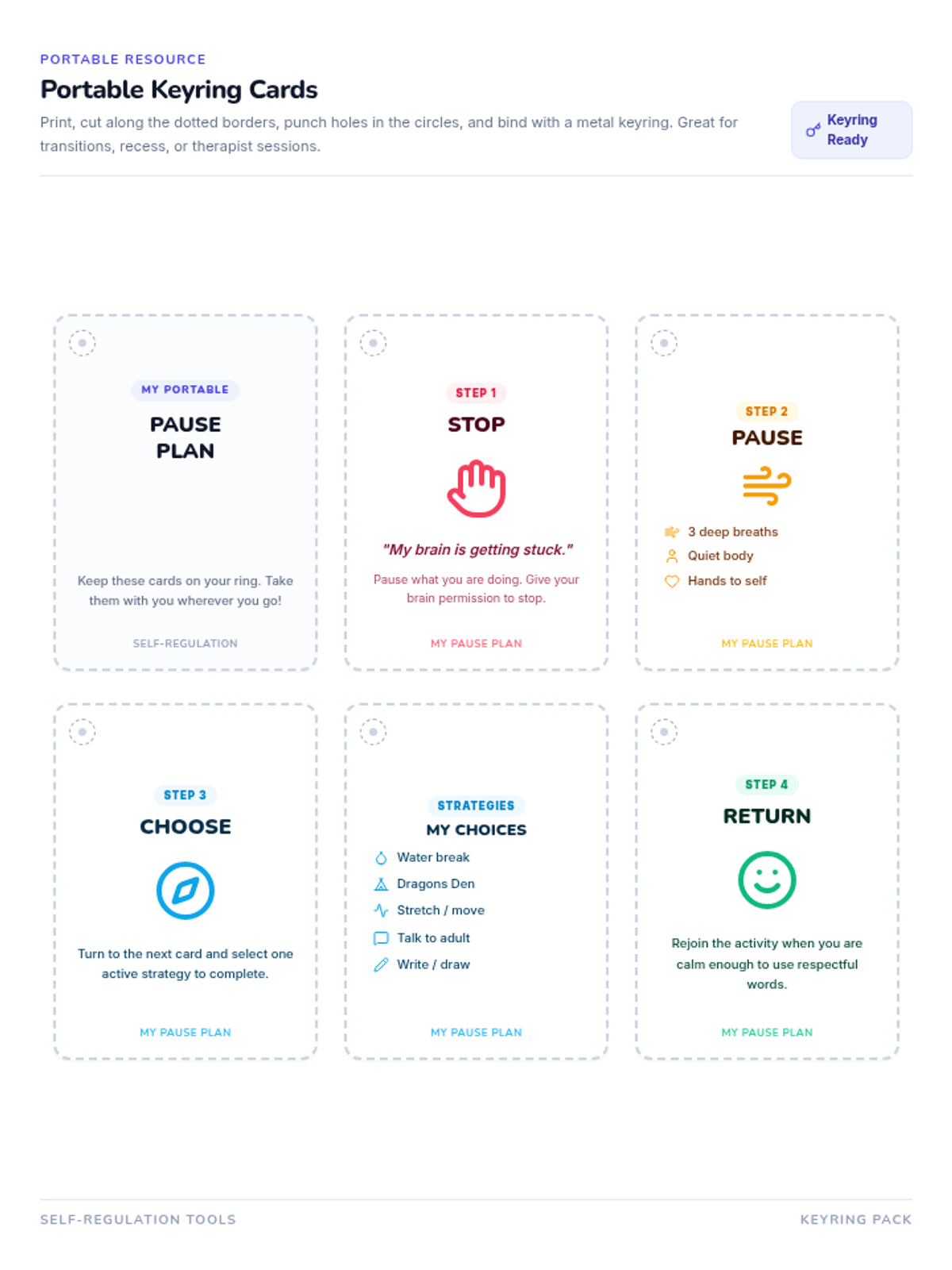
A collection of visual support tools to help students identify and communicate their emotions using portable keyring cards.
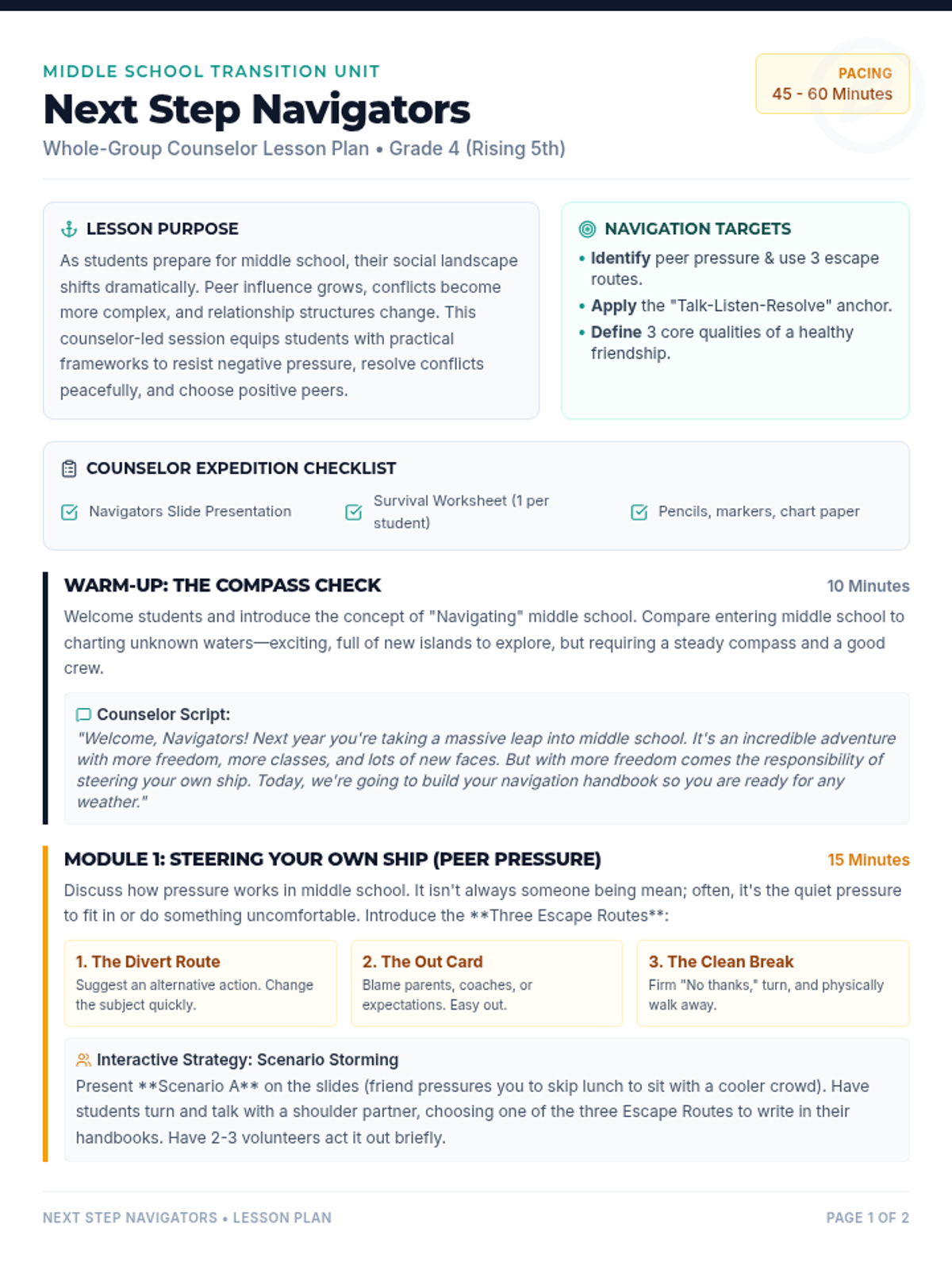
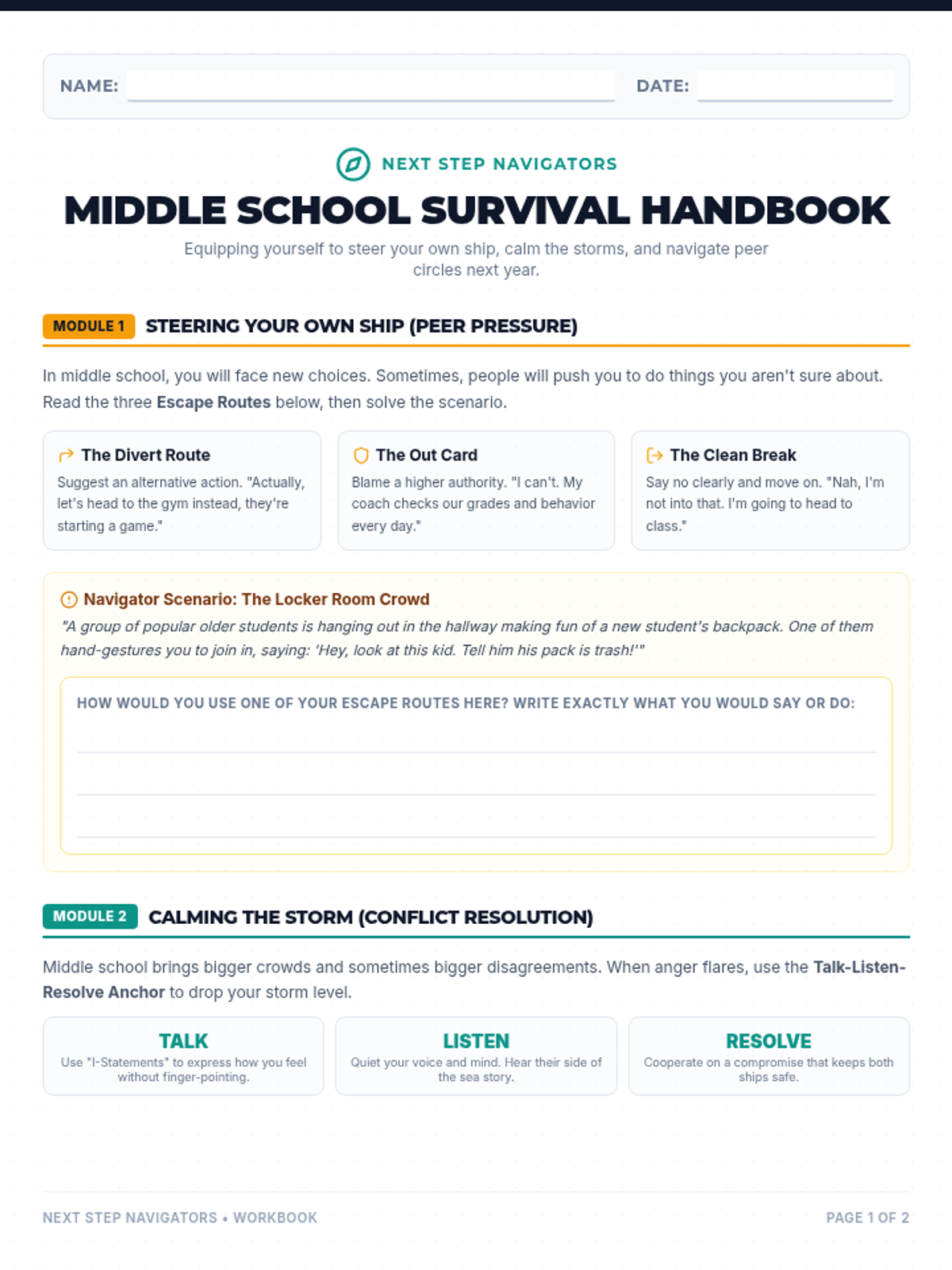
A presentation-based game designed to help incoming middle schoolers navigate the social and logistical changes of their new school. Students will face scenarios, build their 'character stats,' and learn strategies for making friends and managing transitions.
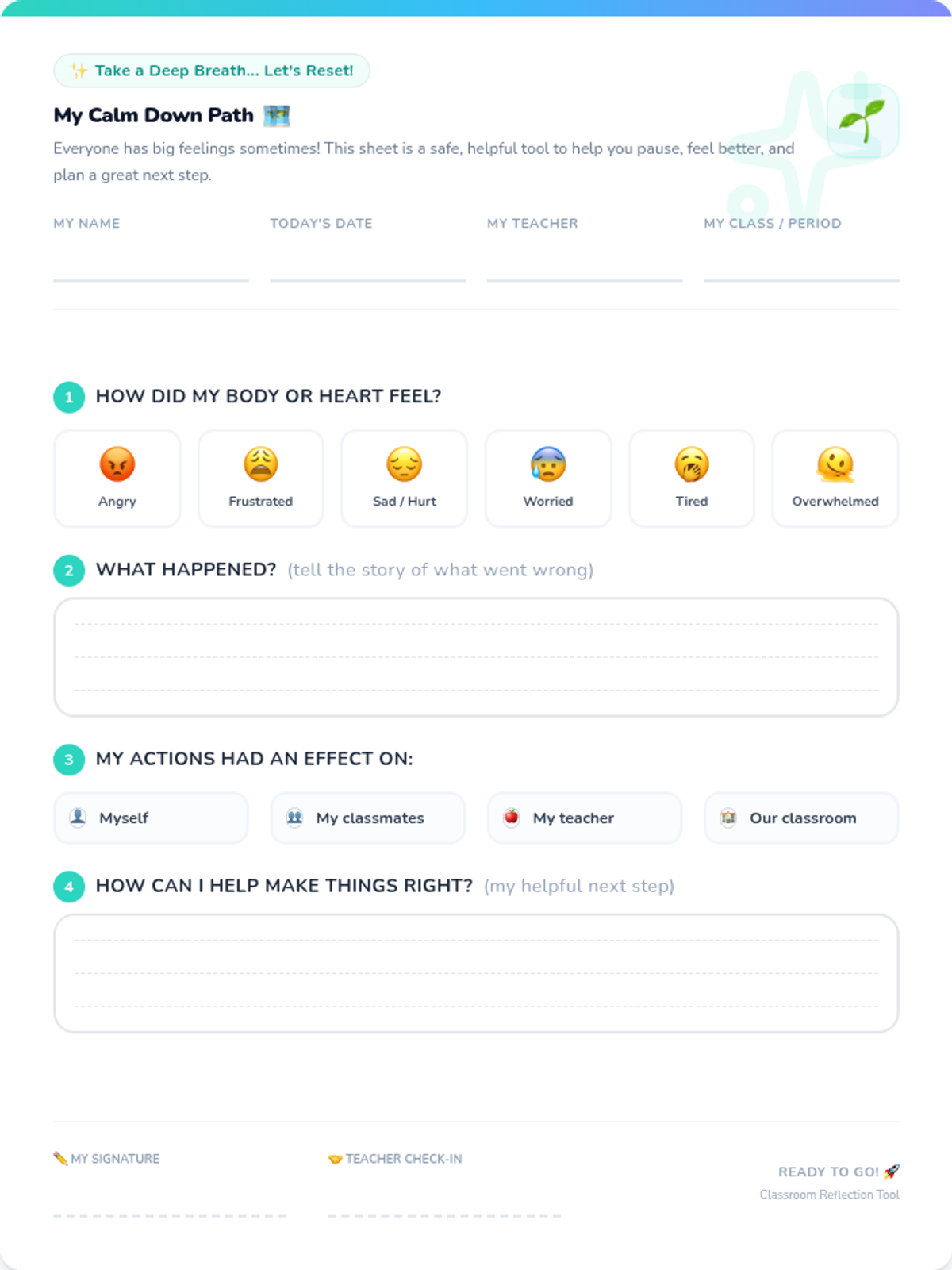
A social-emotional learning lesson focusing on identifying and managing frustration when things don't go as planned in the classroom, using a comic strip scenario.
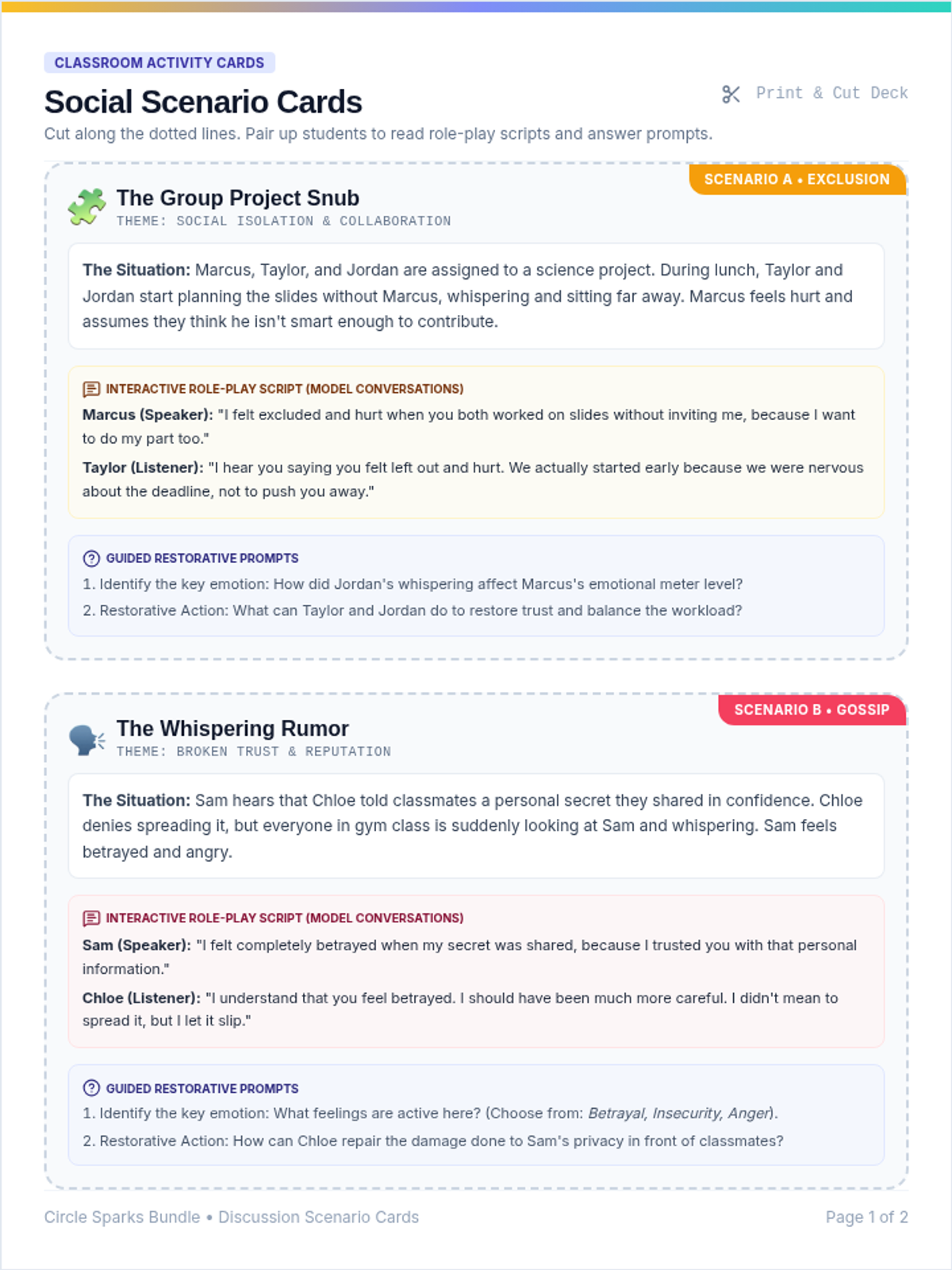
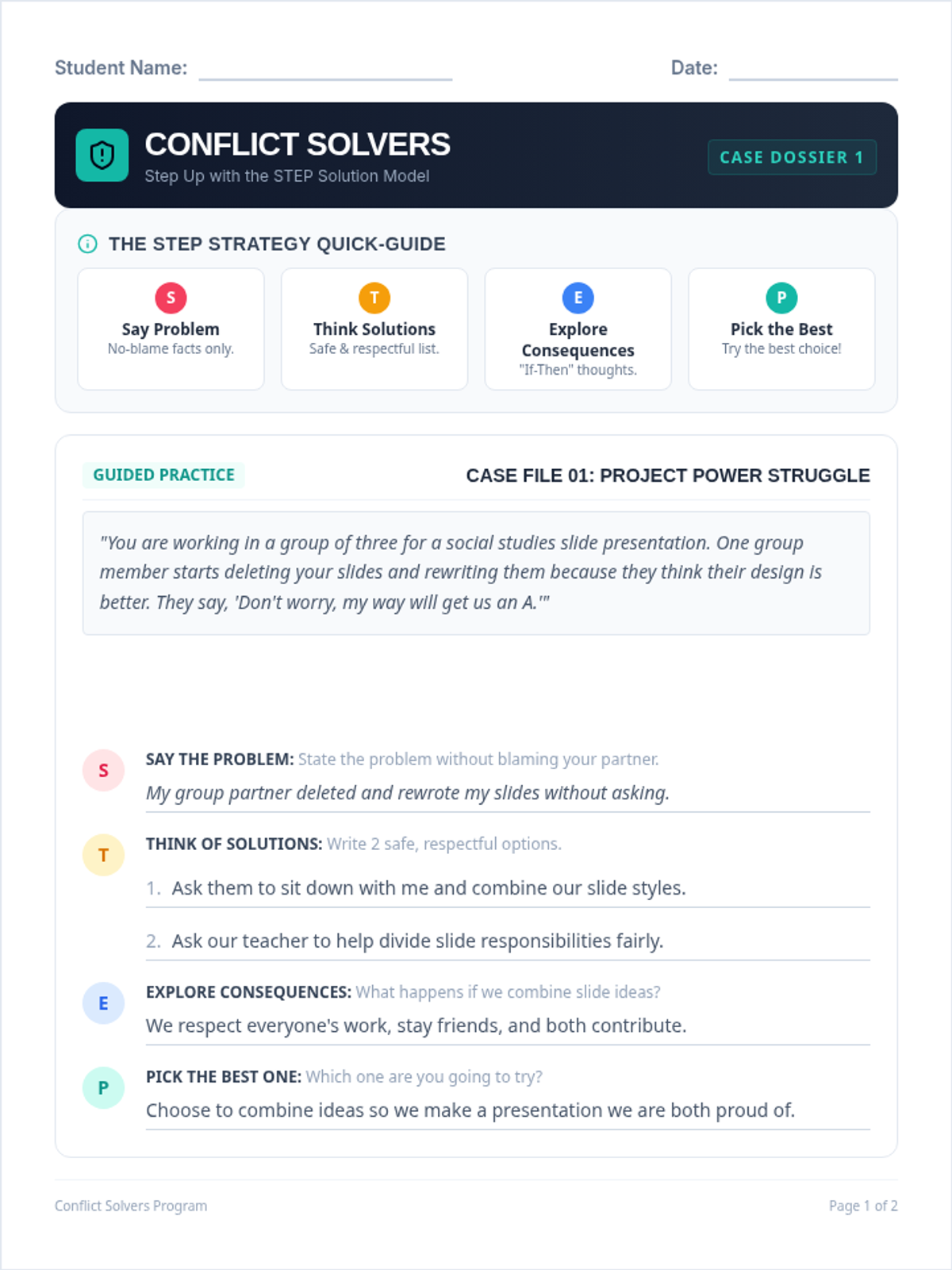
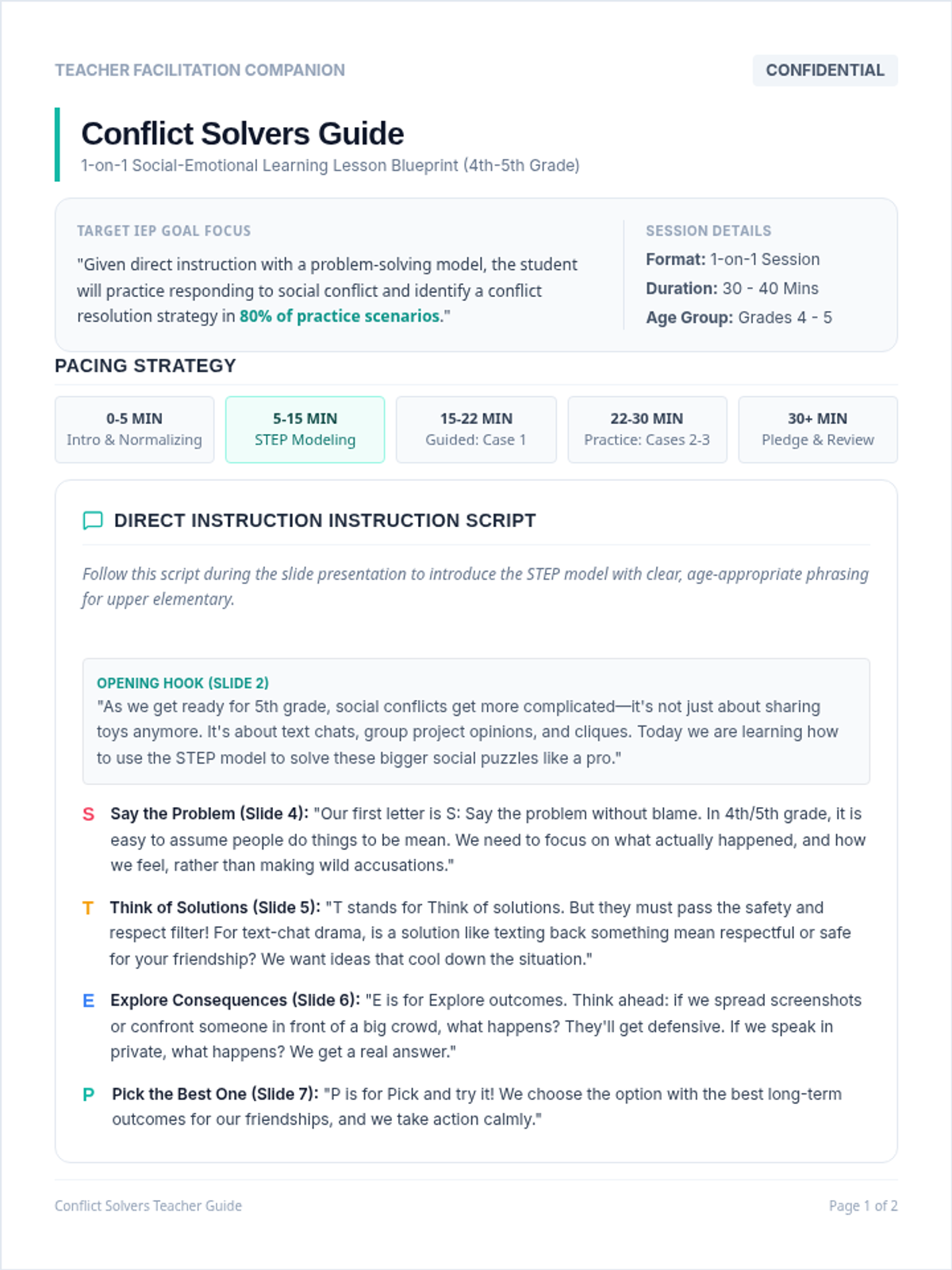
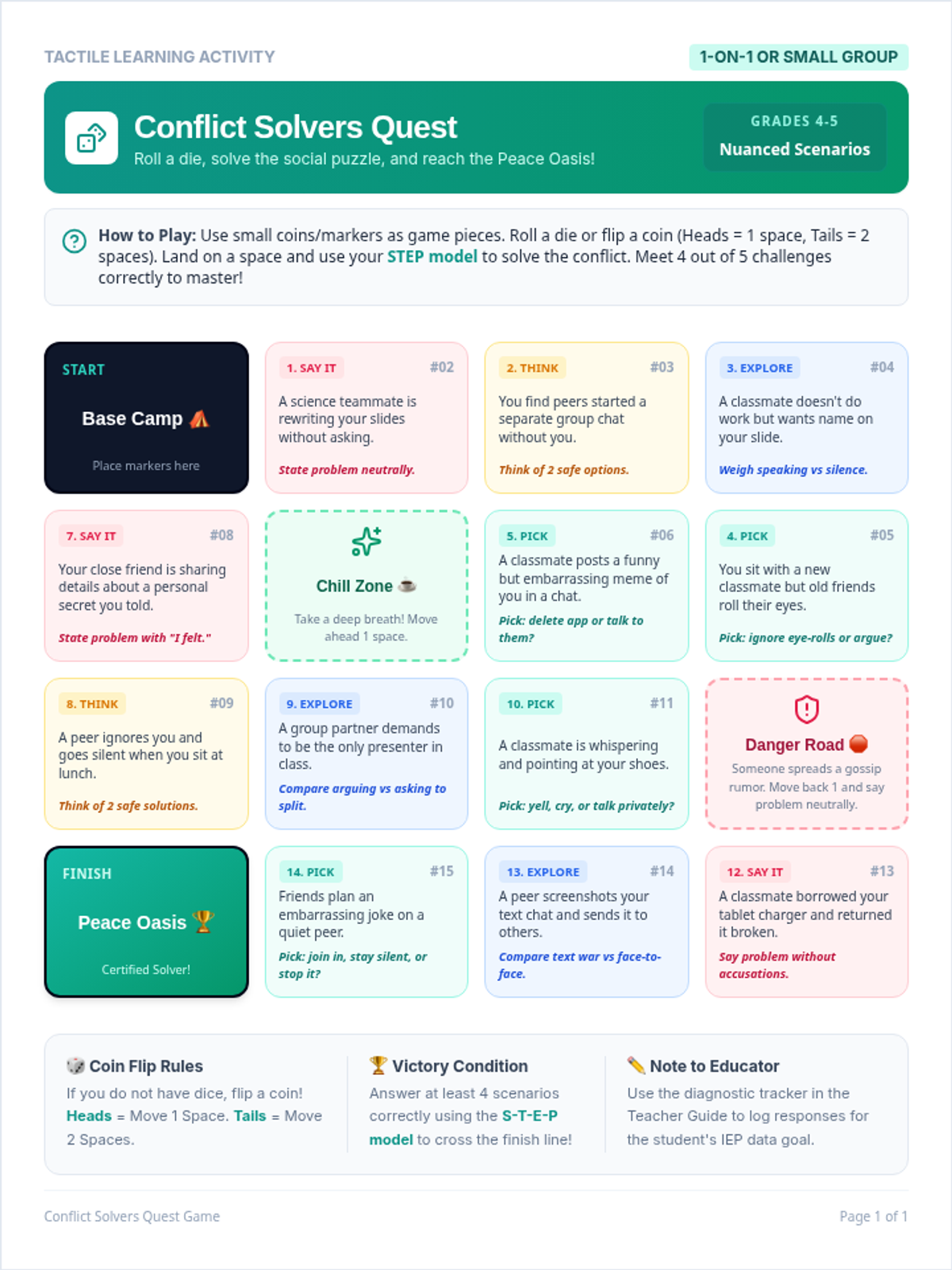
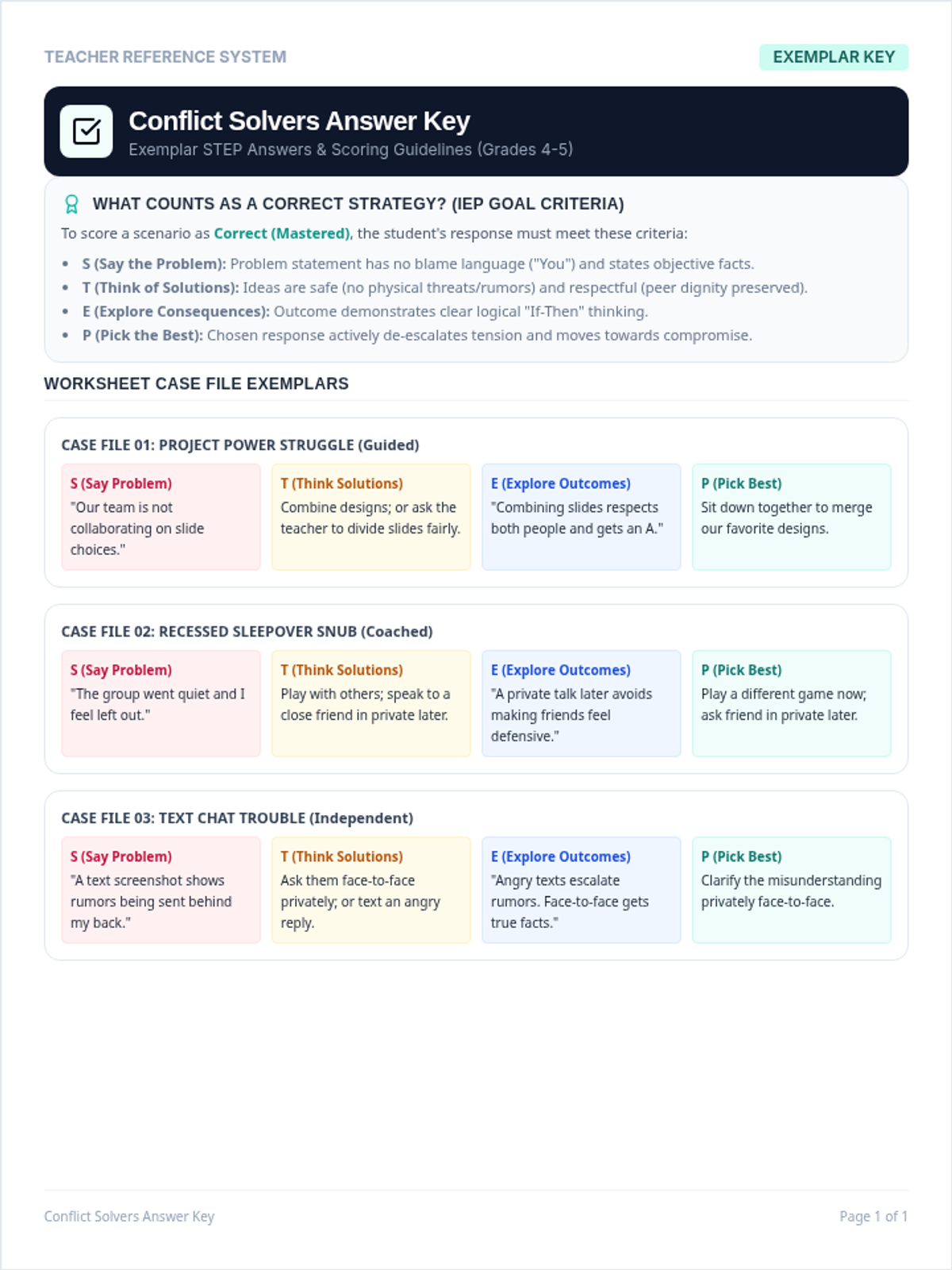
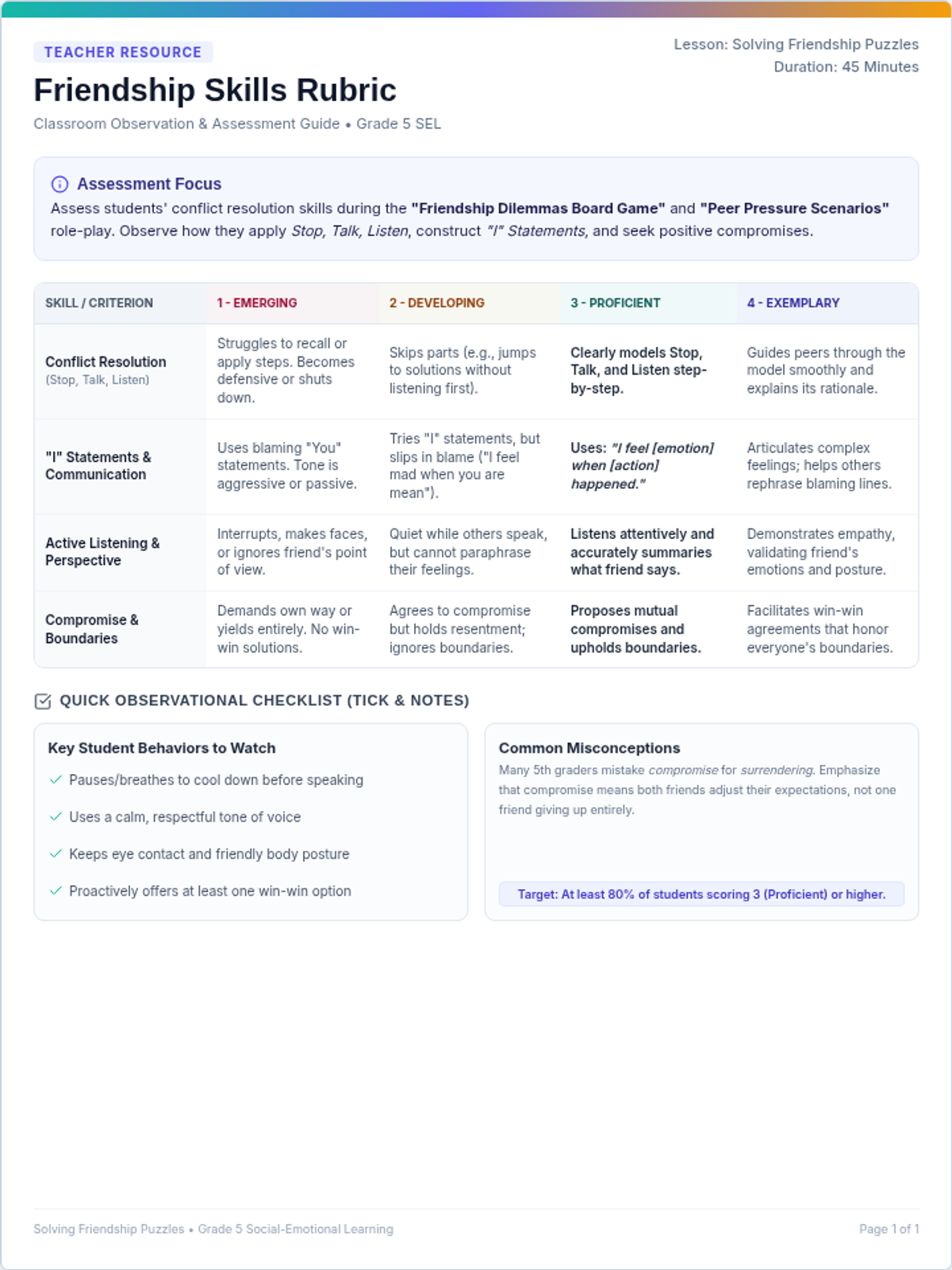
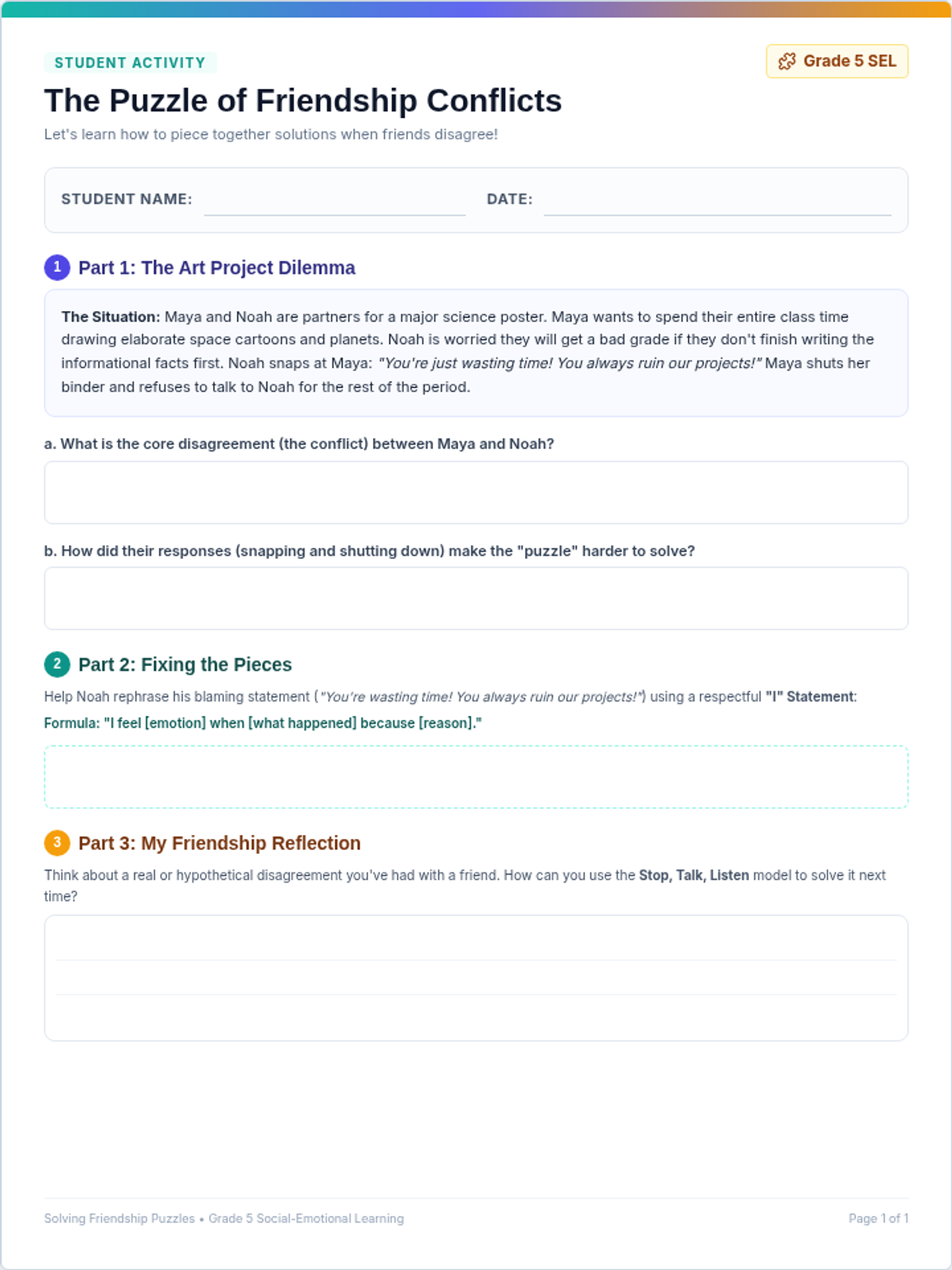
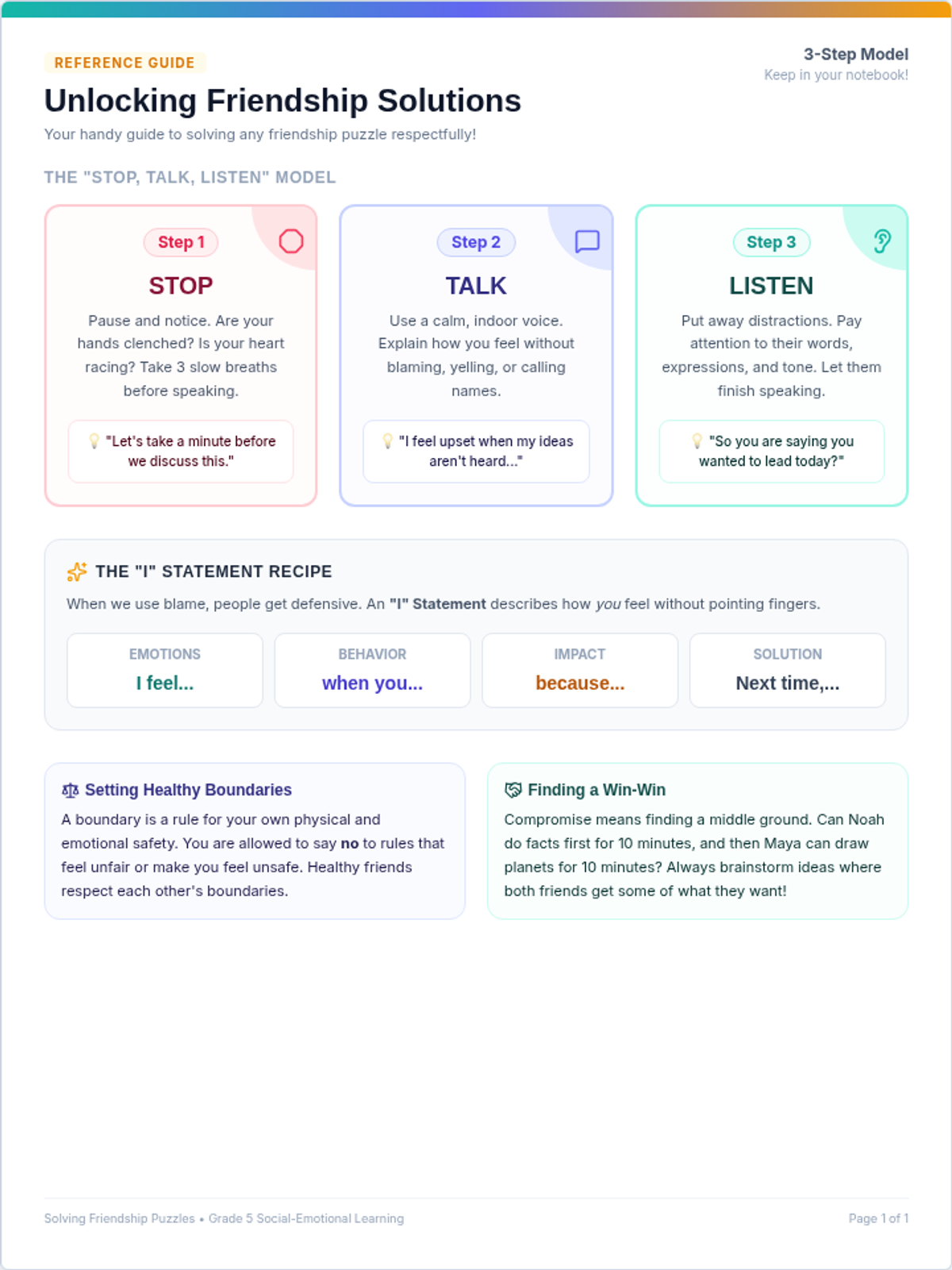
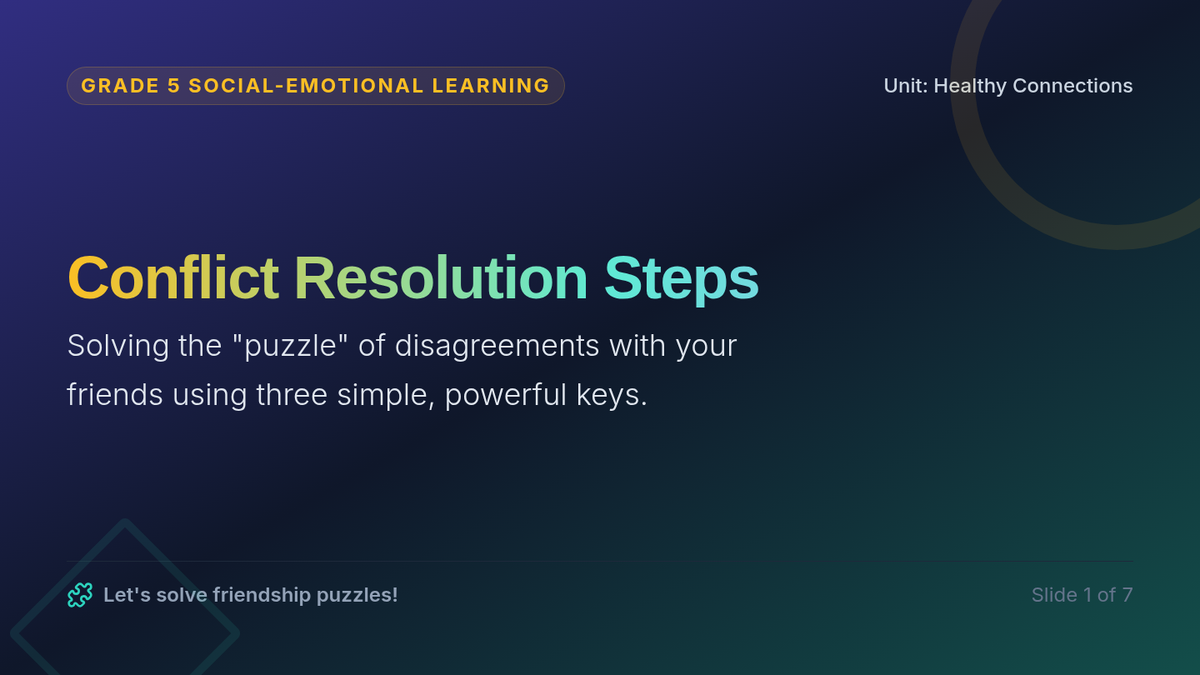
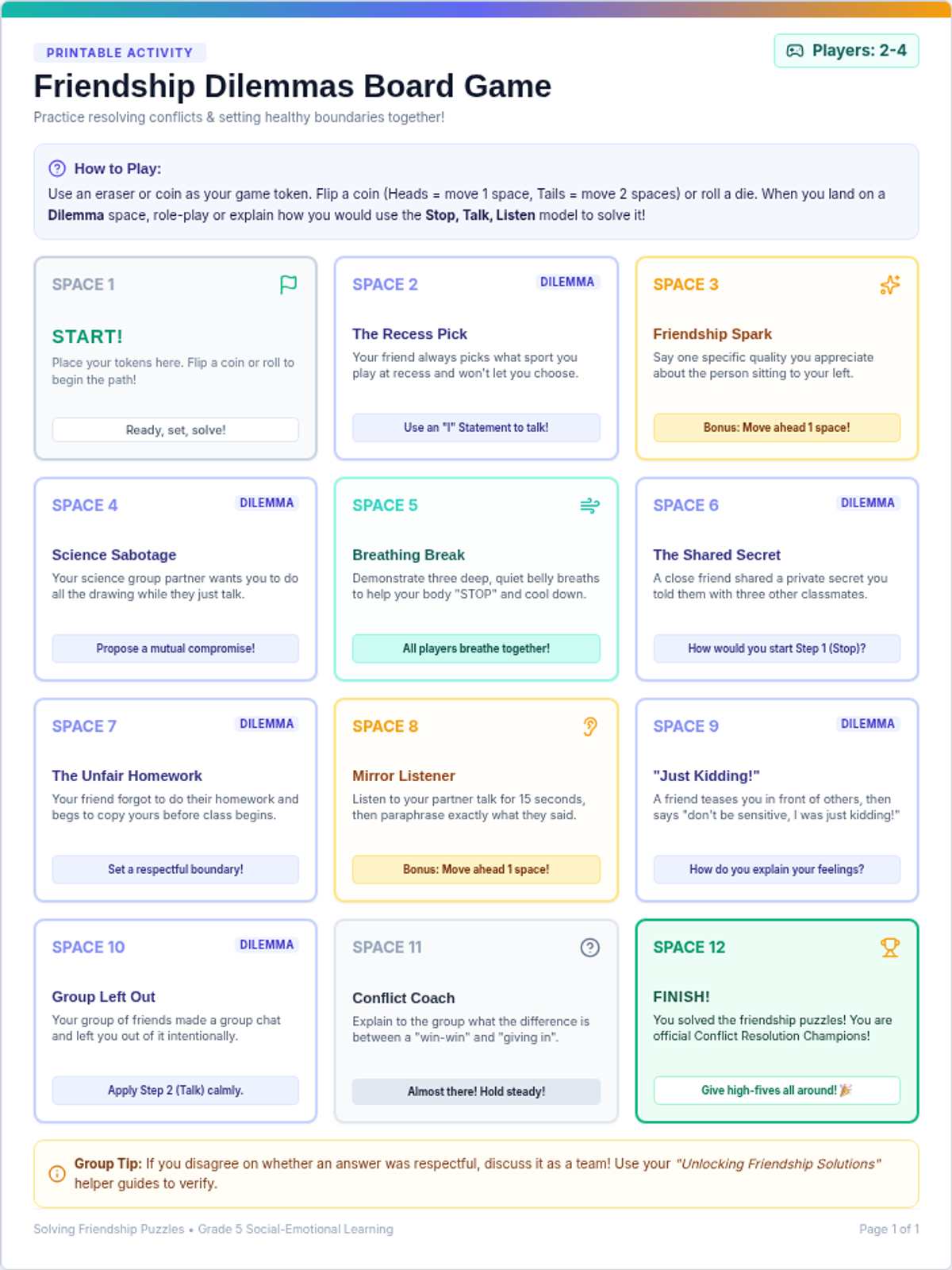
A comprehensive lesson on conflict resolution for grades 3-5, using the metaphor of bridge-building to teach "I" statements, empathy, and compromise.
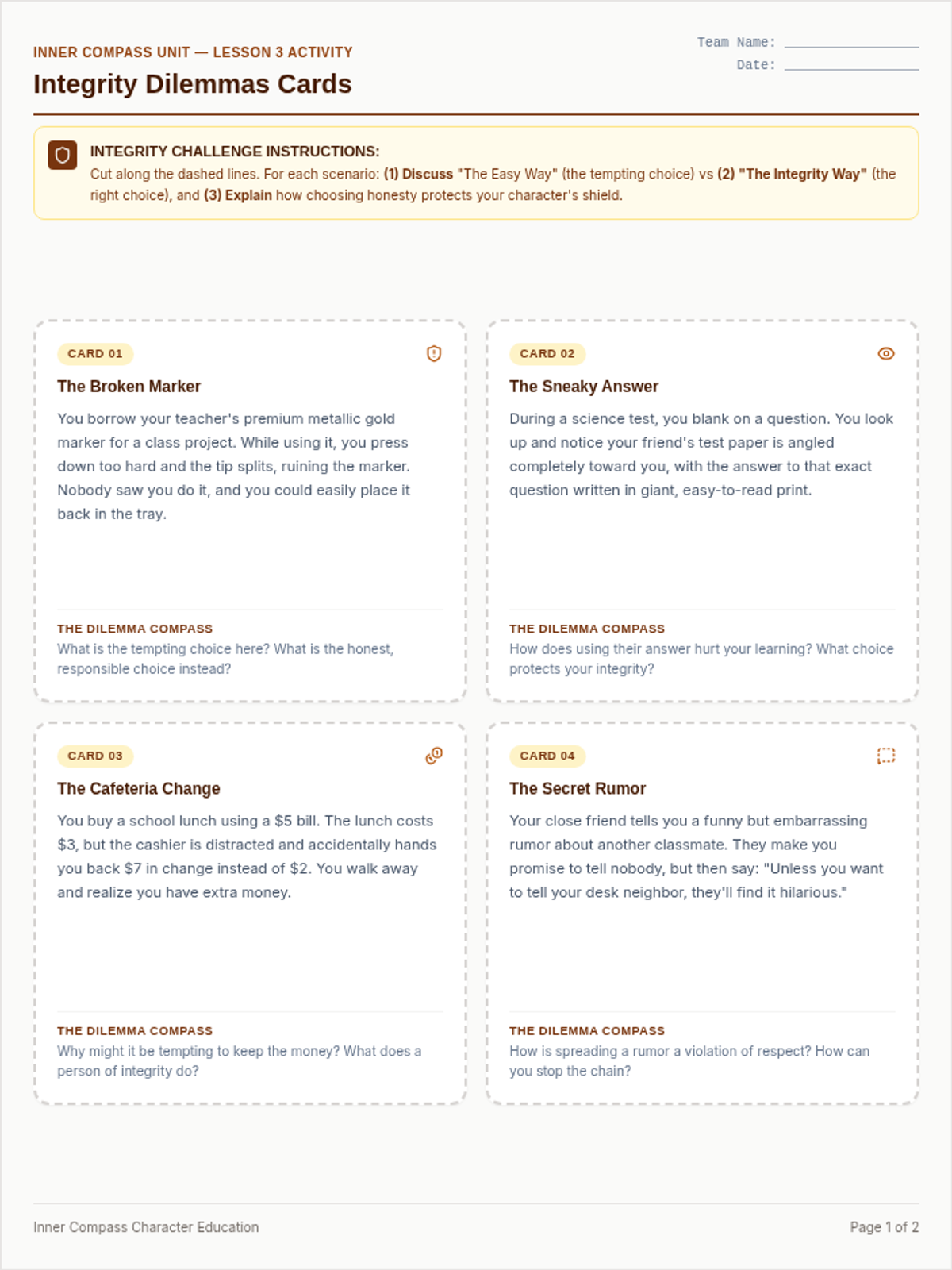
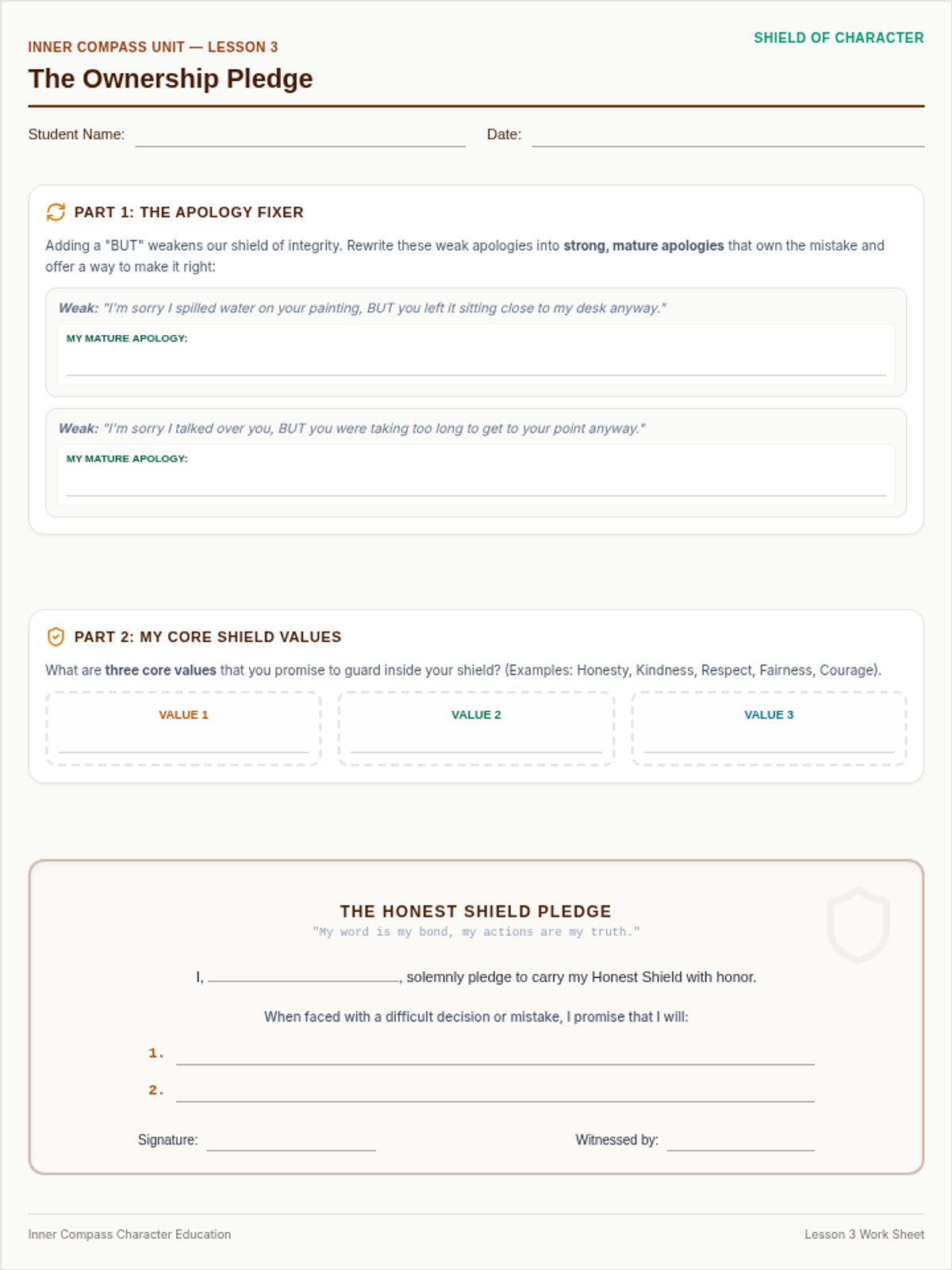
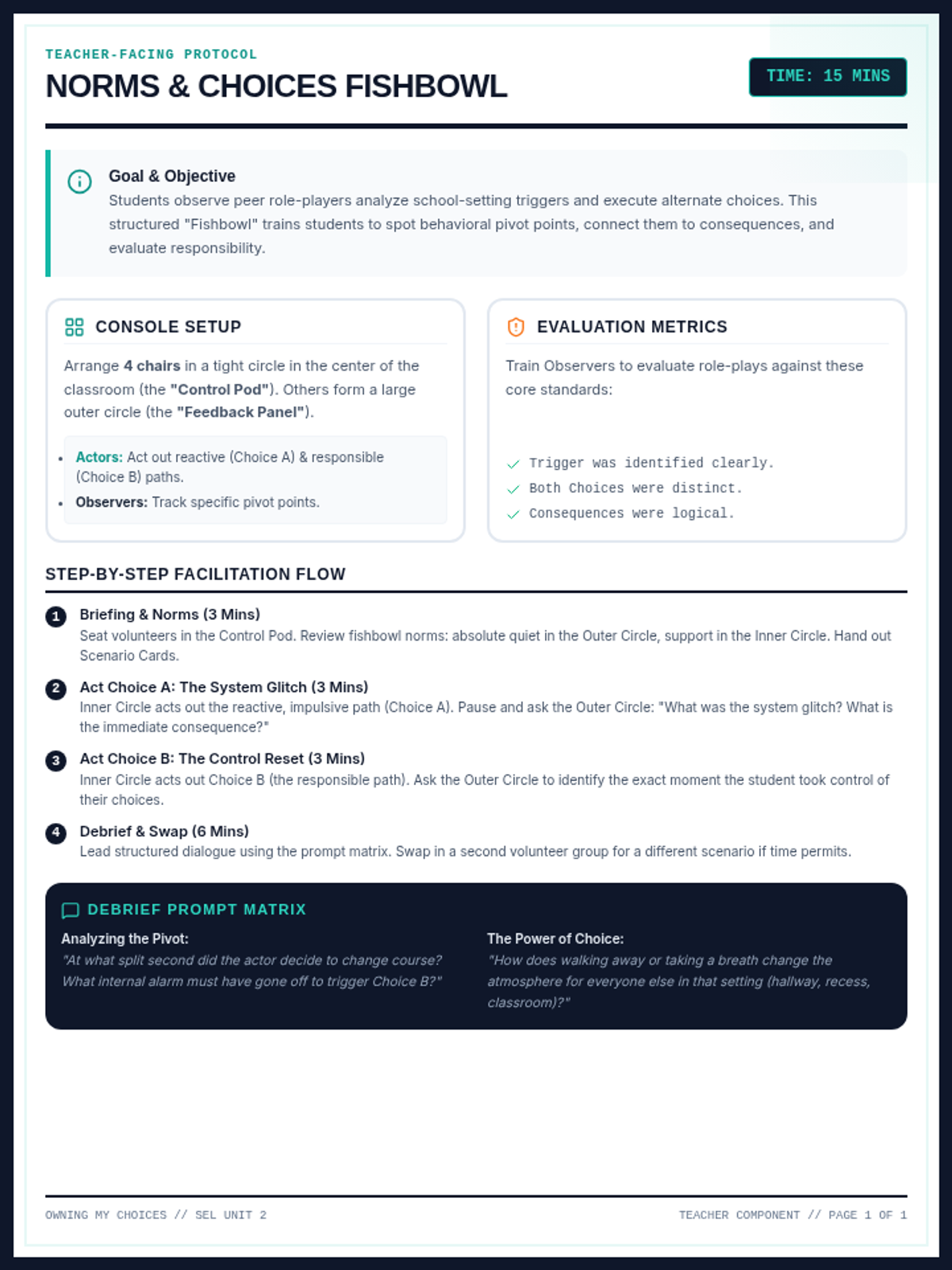
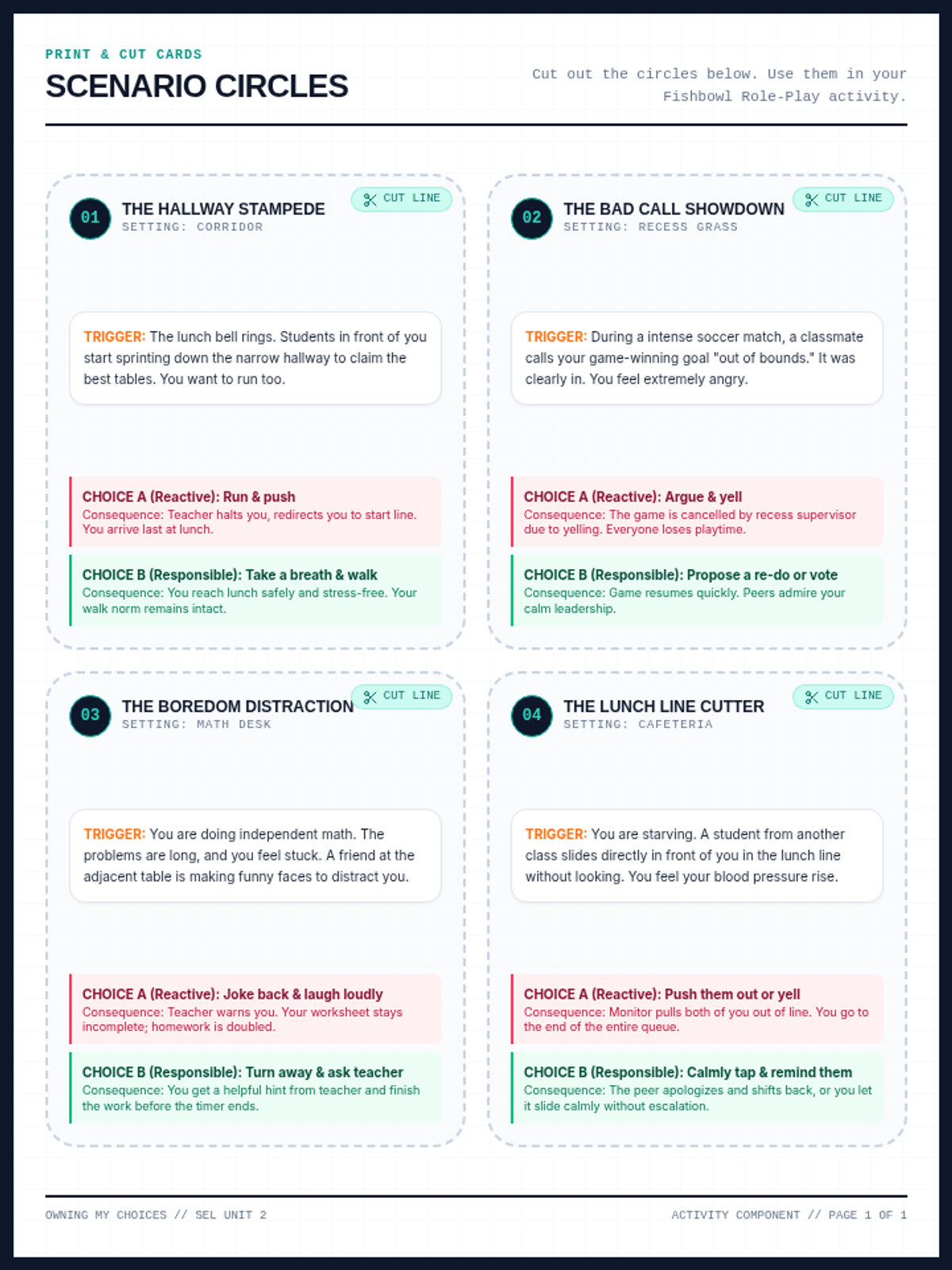
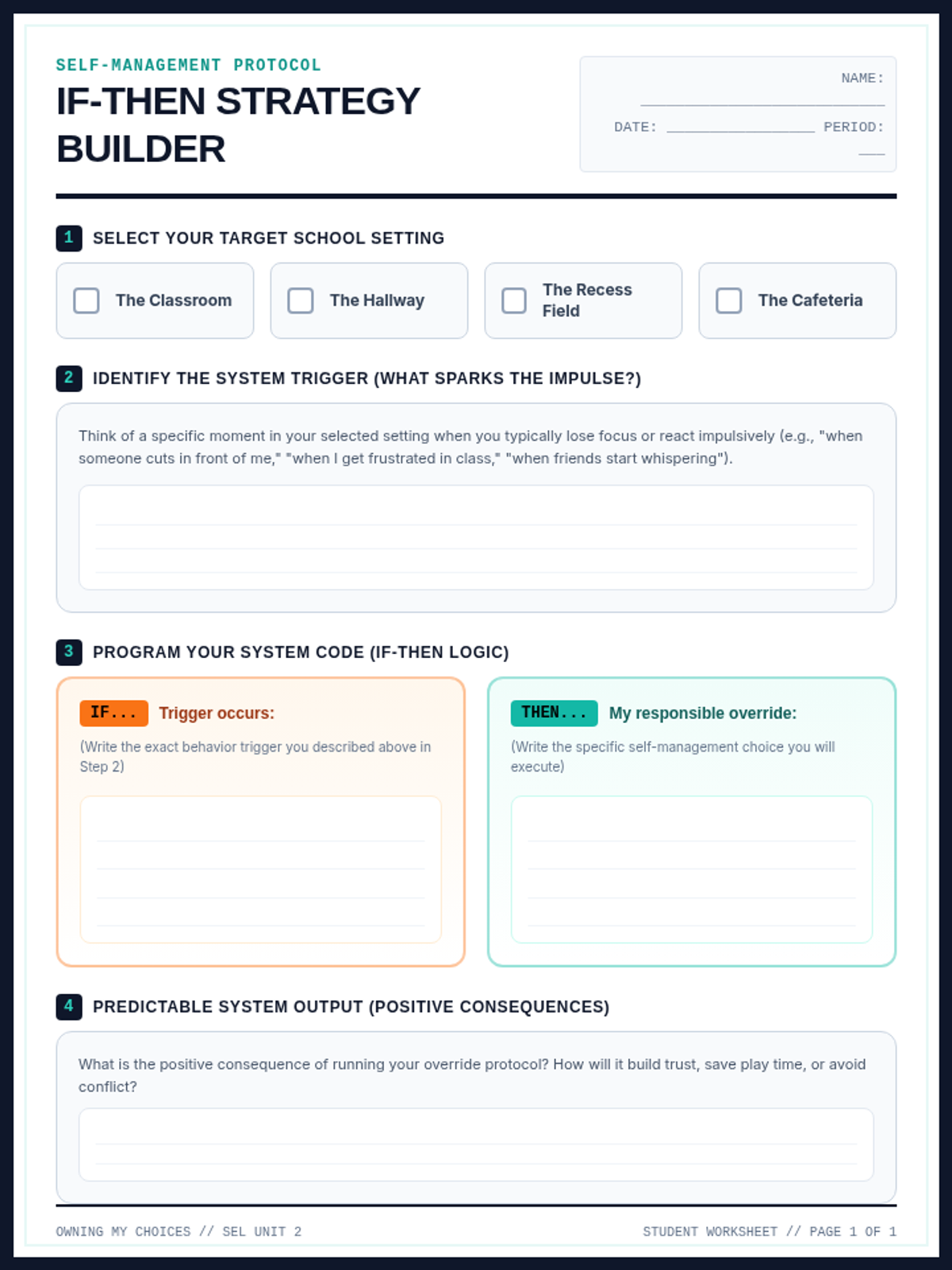
A character-building lesson centered around a board game where students navigate real-life scenarios to practice taking ownership of their actions and choices.
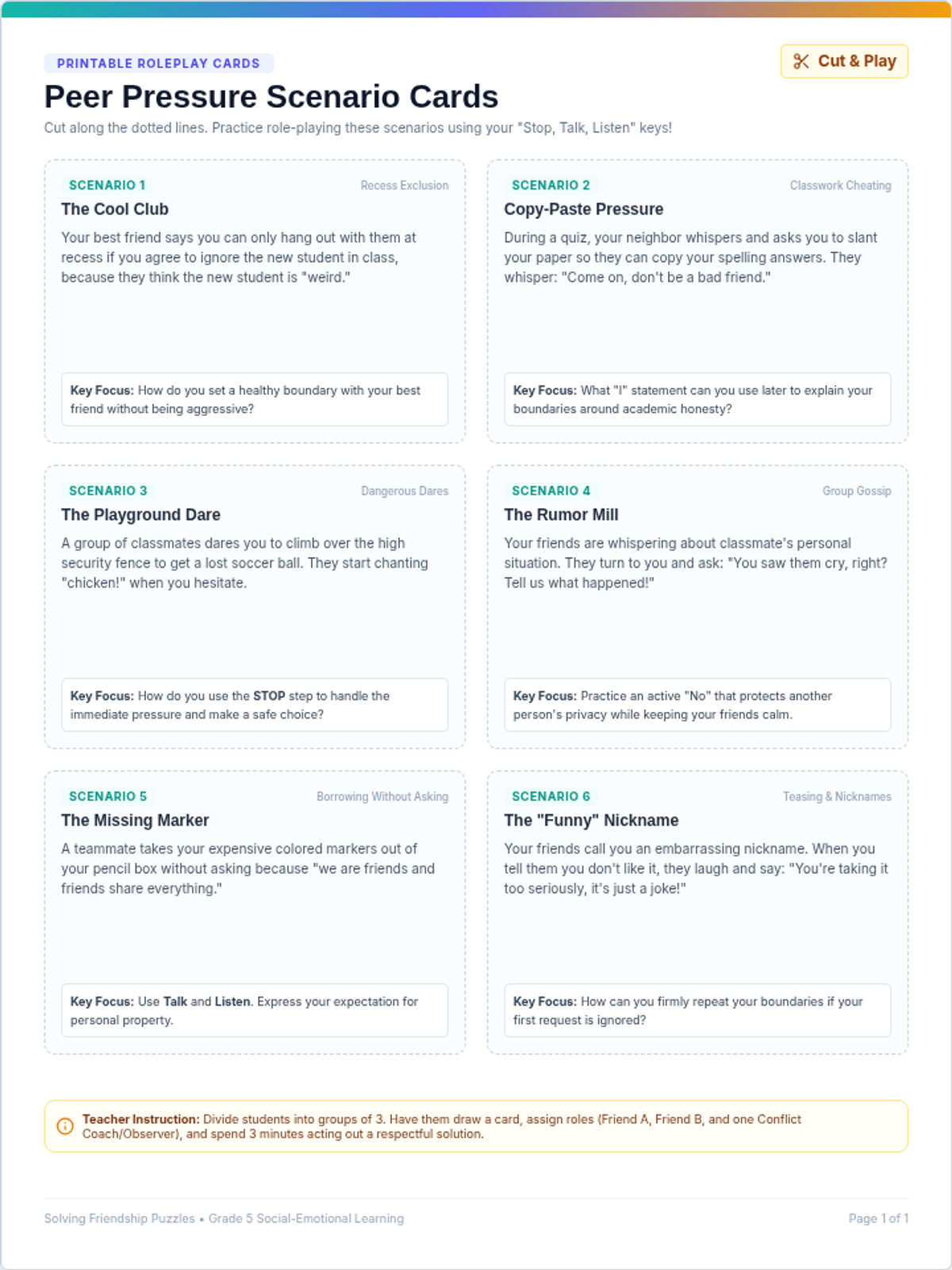
A comprehensive small-group session guide and set of resources designed to help students navigate peer pressure in social, academic, and physical safety situations.
A lesson designed to help newcomer Portuguese students and native English speakers master the art of assertive communication using 'I' statements in classroom settings.
A comprehensive lesson designed to help 5th-grade students, particularly boys, develop and apply coping strategies for common academic stressors like testing, public speaking, and difficult assignments.
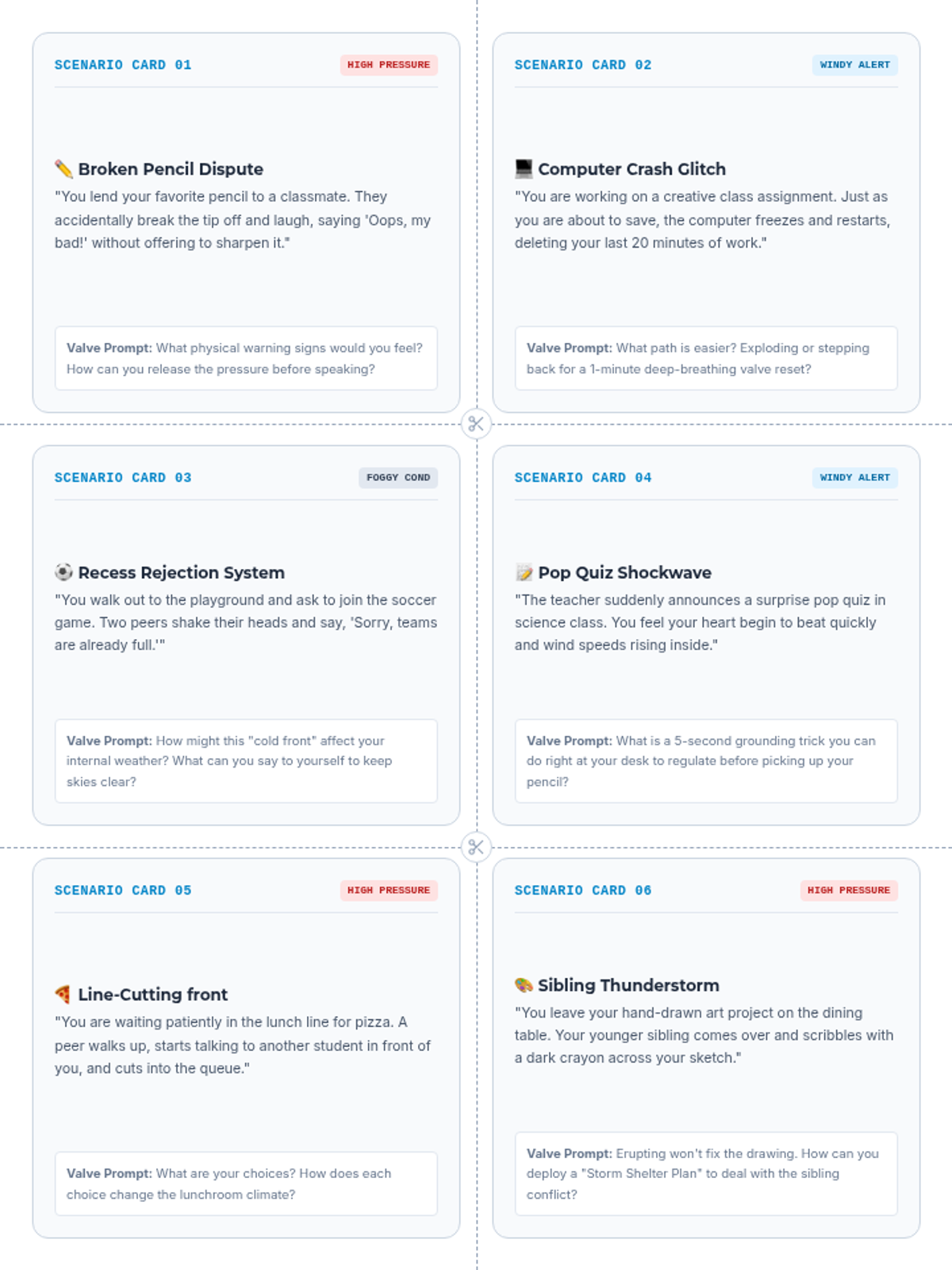
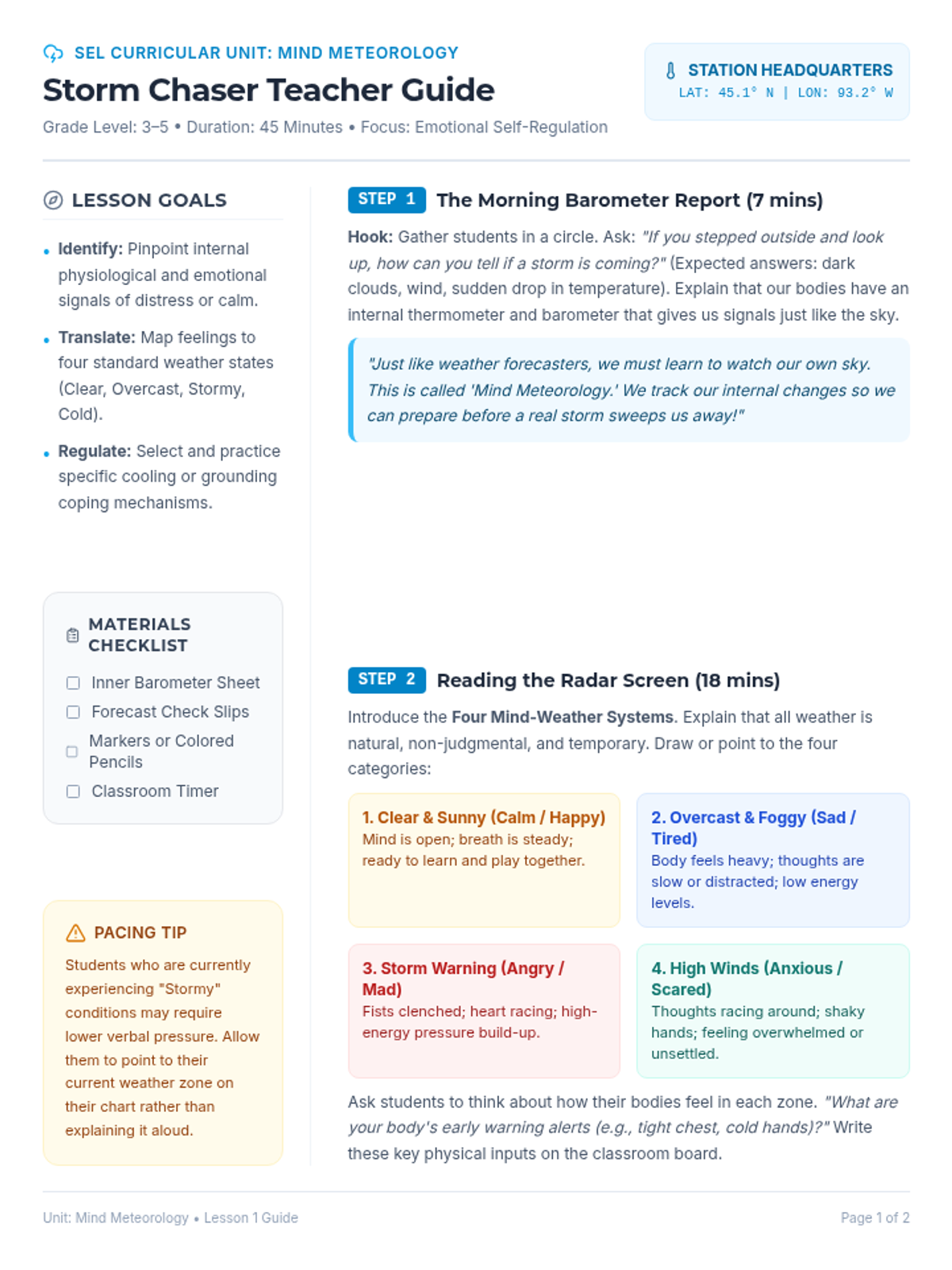
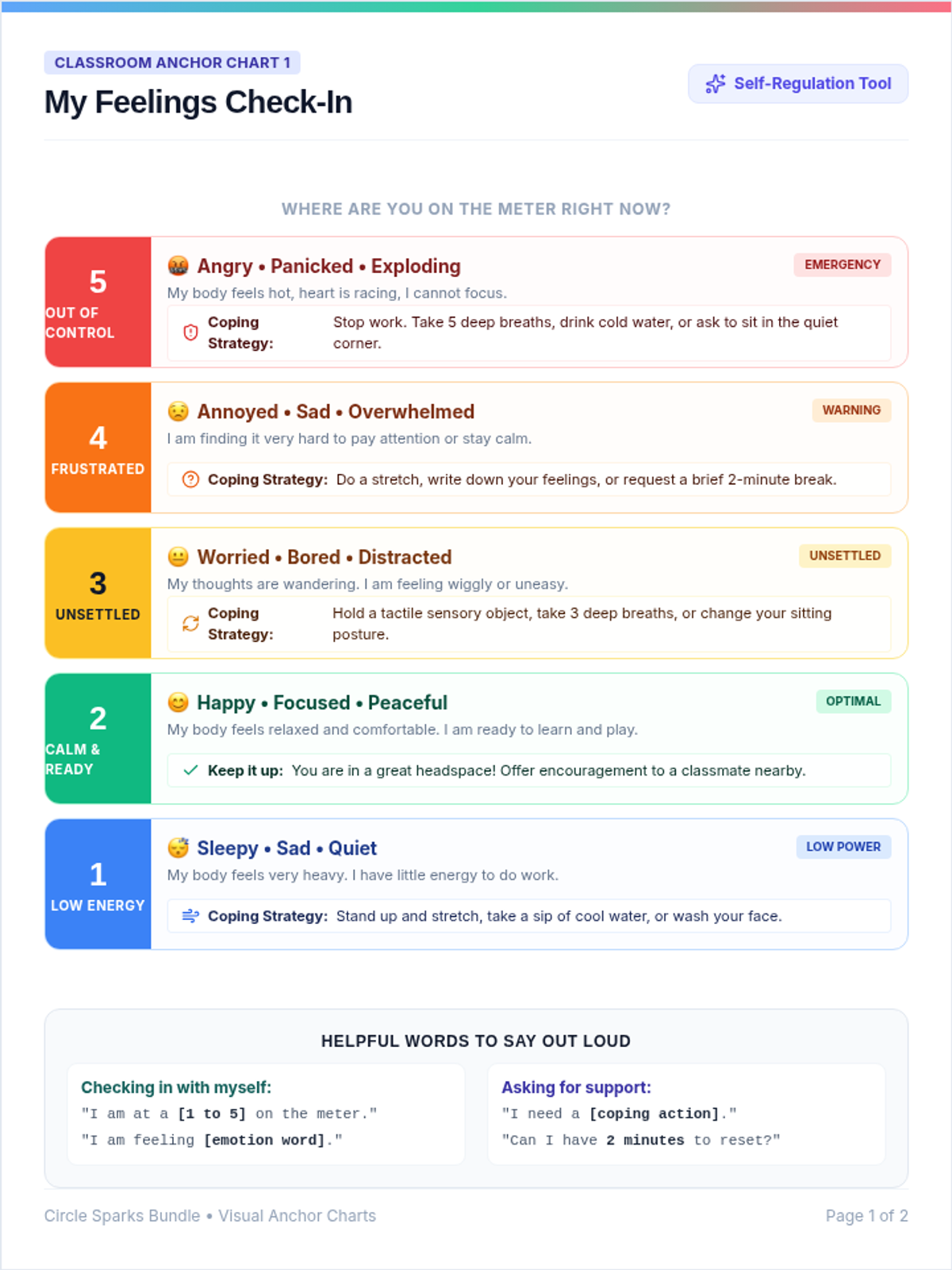
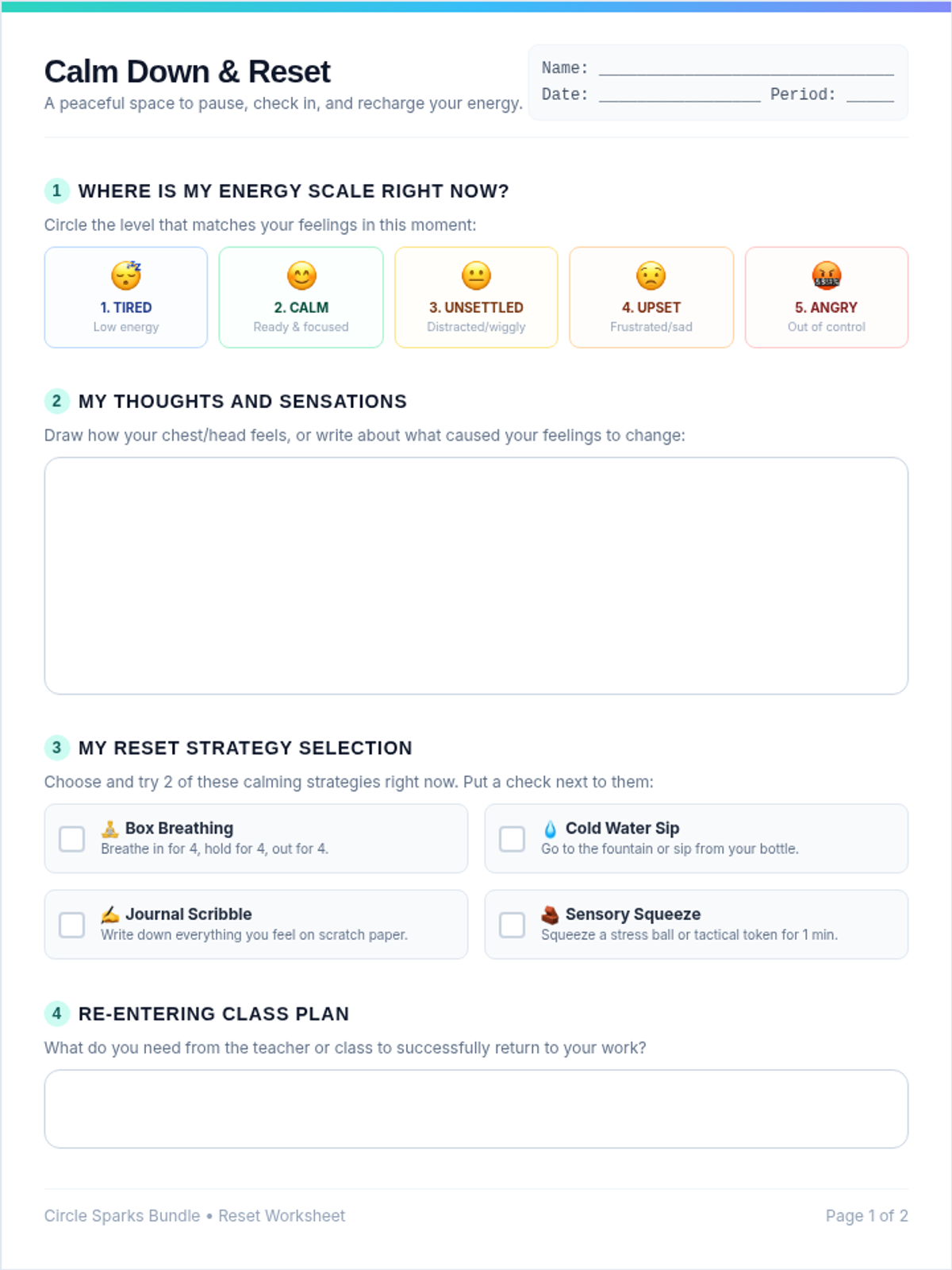
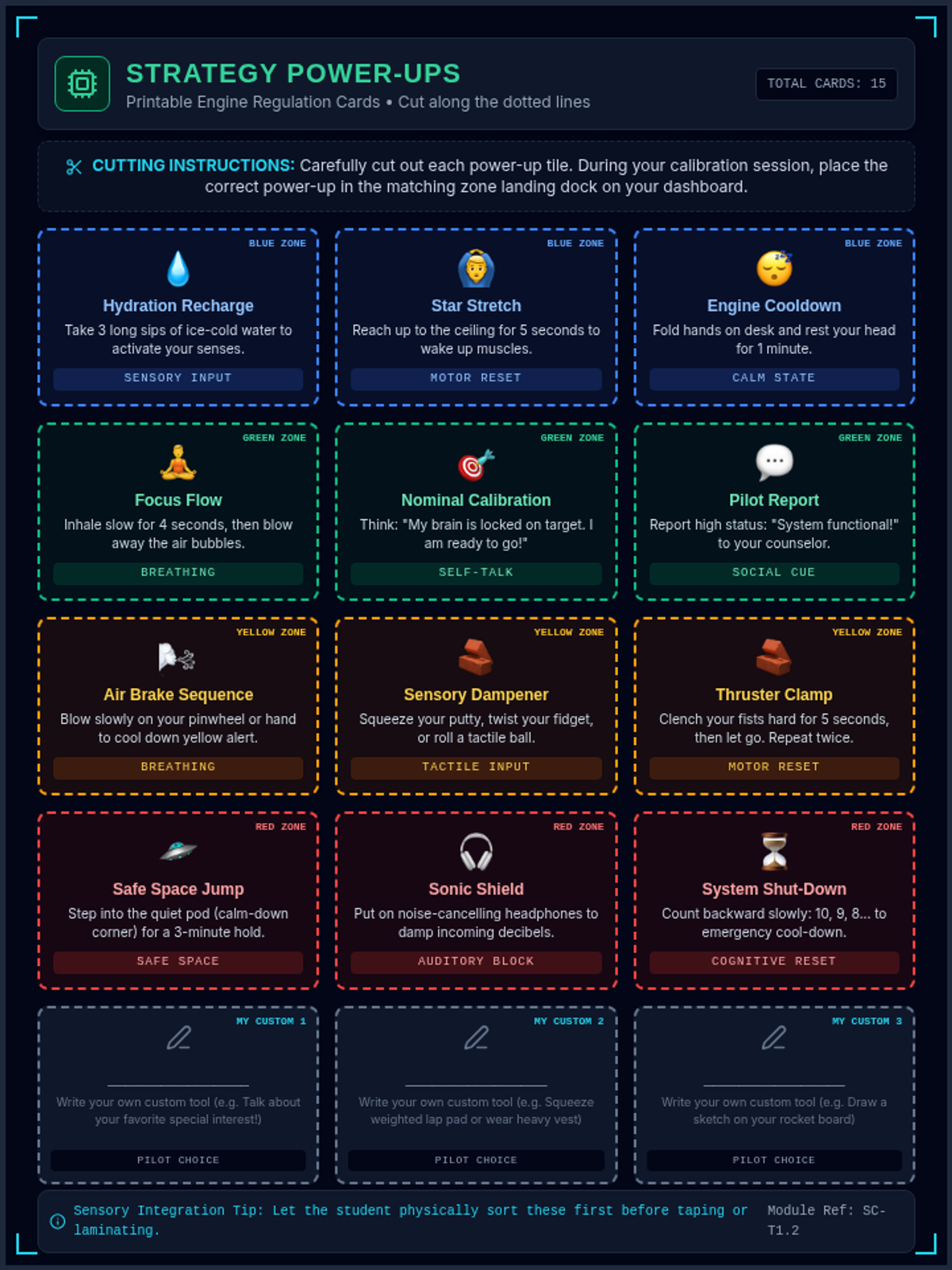
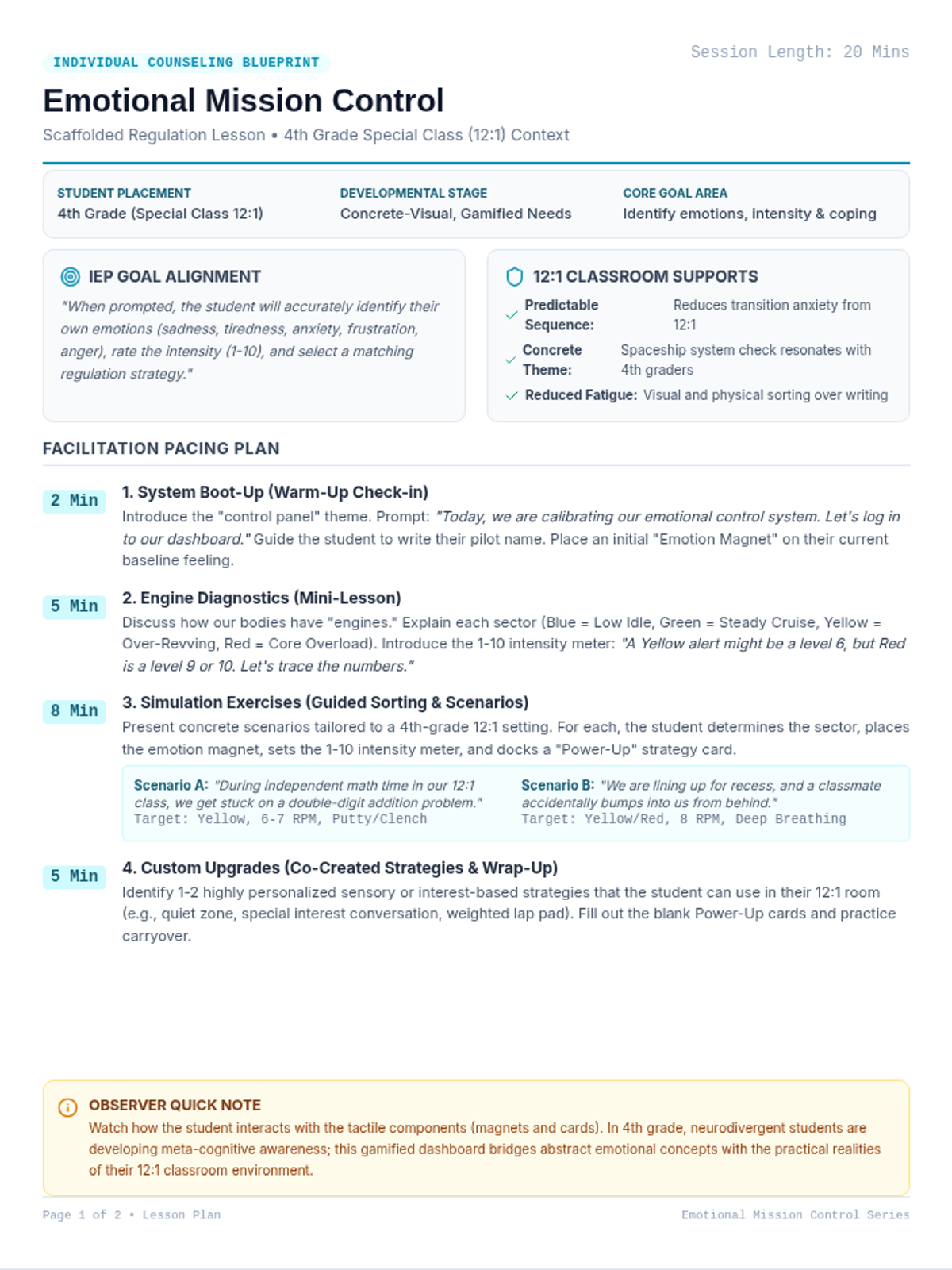
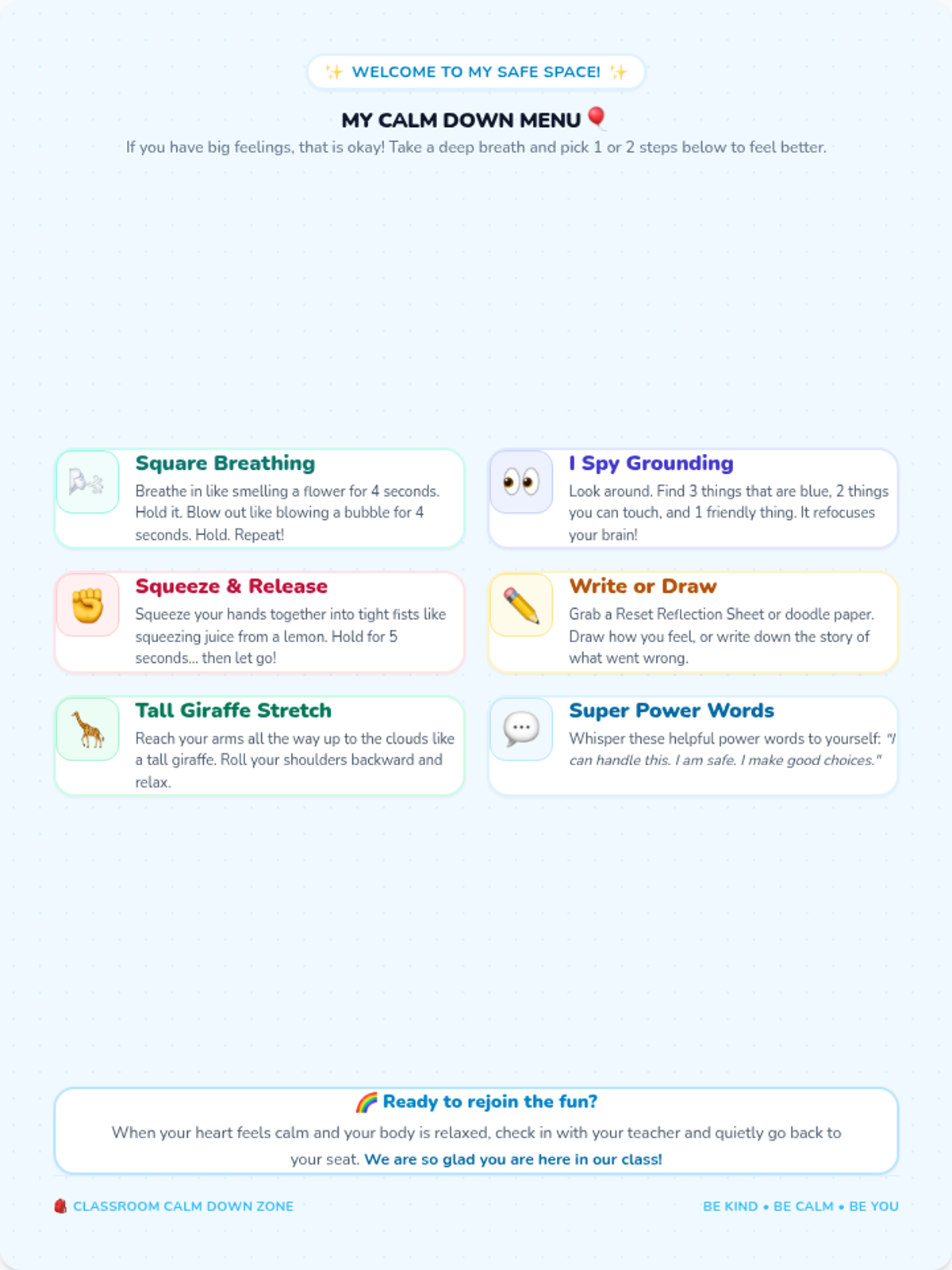
A lesson focused on identifying emotional zones and selecting appropriate self-regulation strategies for classroom and social scenarios.
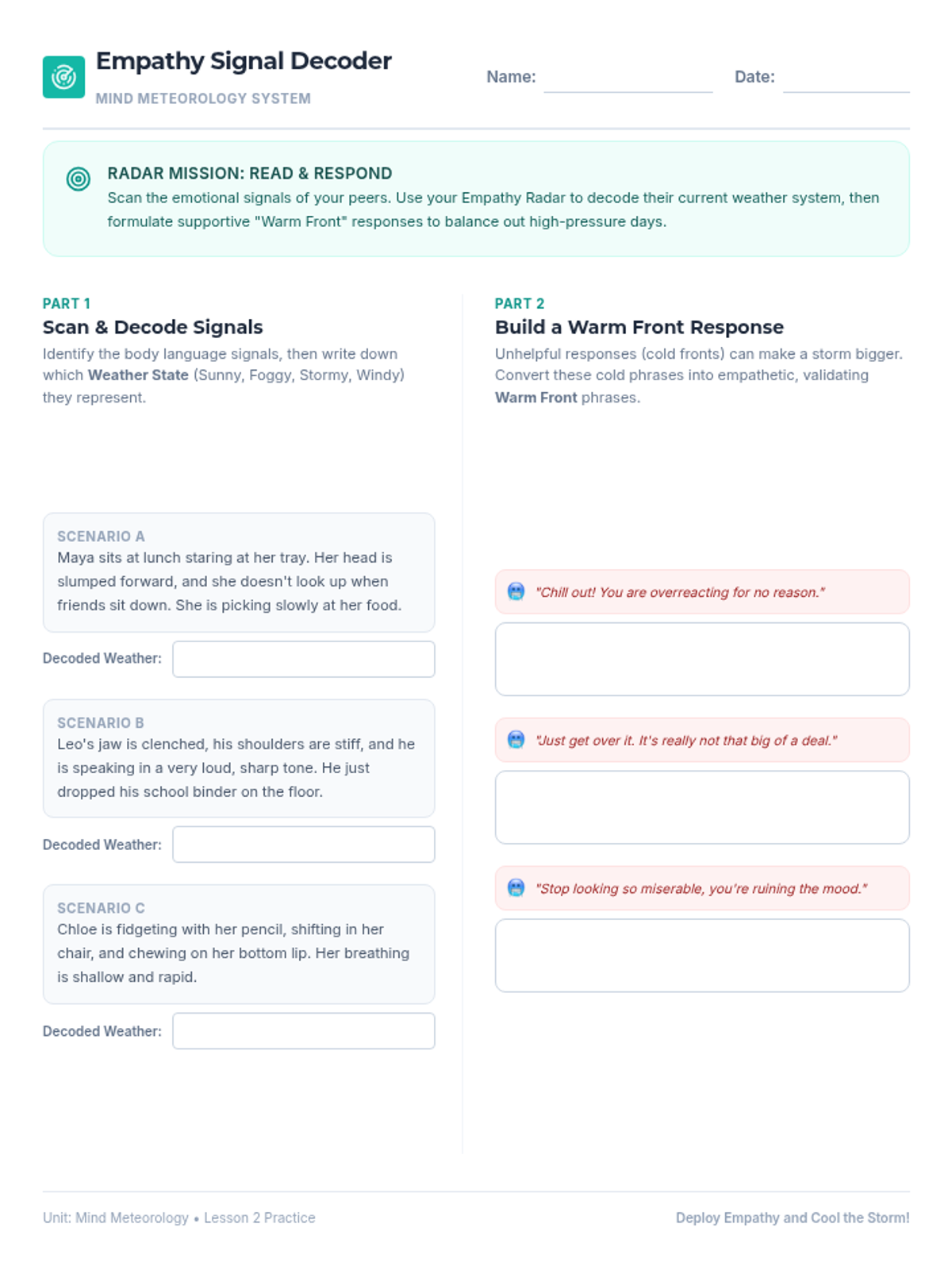
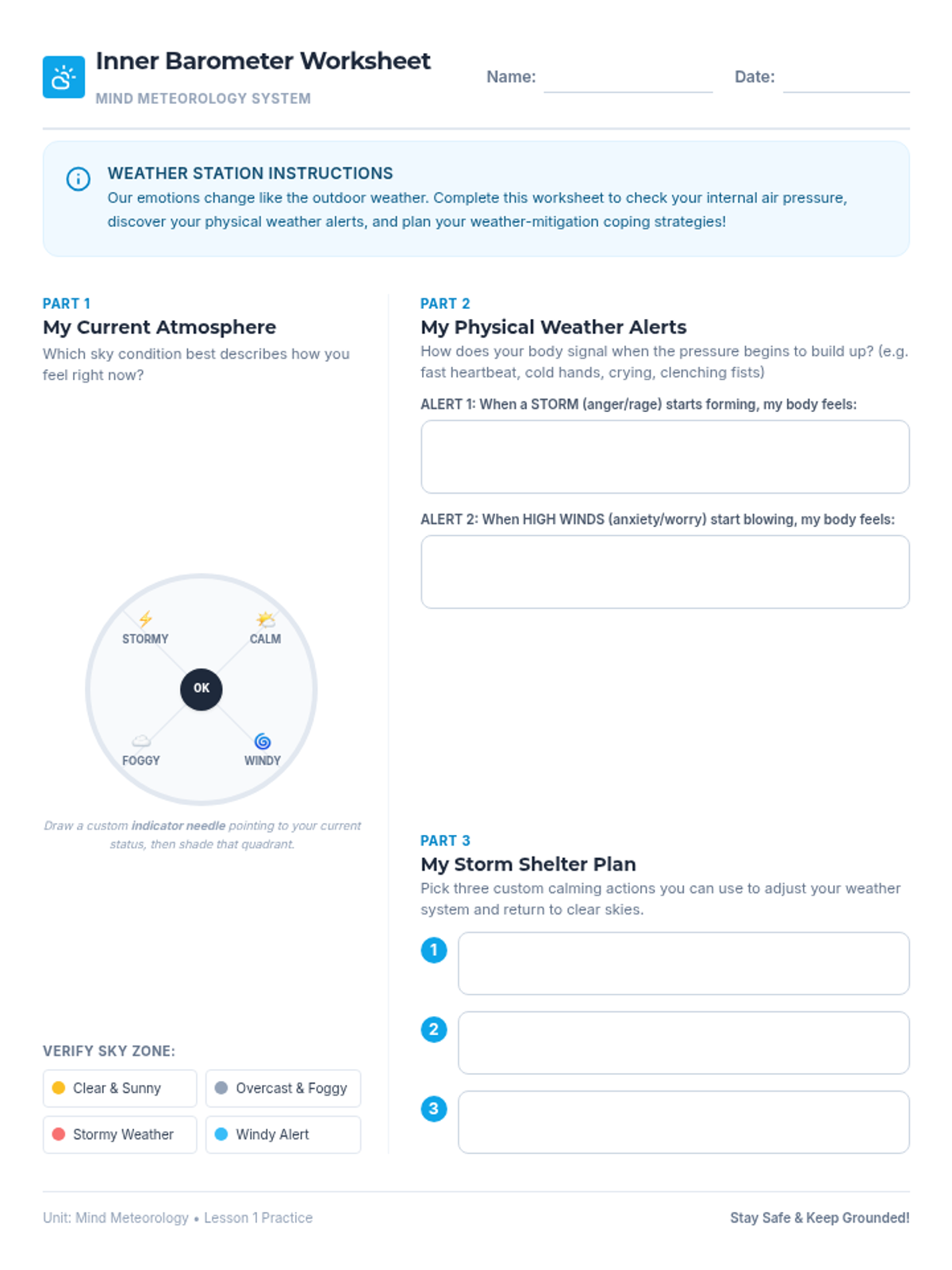
A lesson designed to help students identify and understand the physical signals their bodies send during different emotional states, using a 'Signal Scouts' theme to encourage self-awareness and emotional regulation.
A comprehensive training session for school counselors on teaching effective grounding techniques to students, focusing on sensory, movement, nature-based, and breathing strategies.
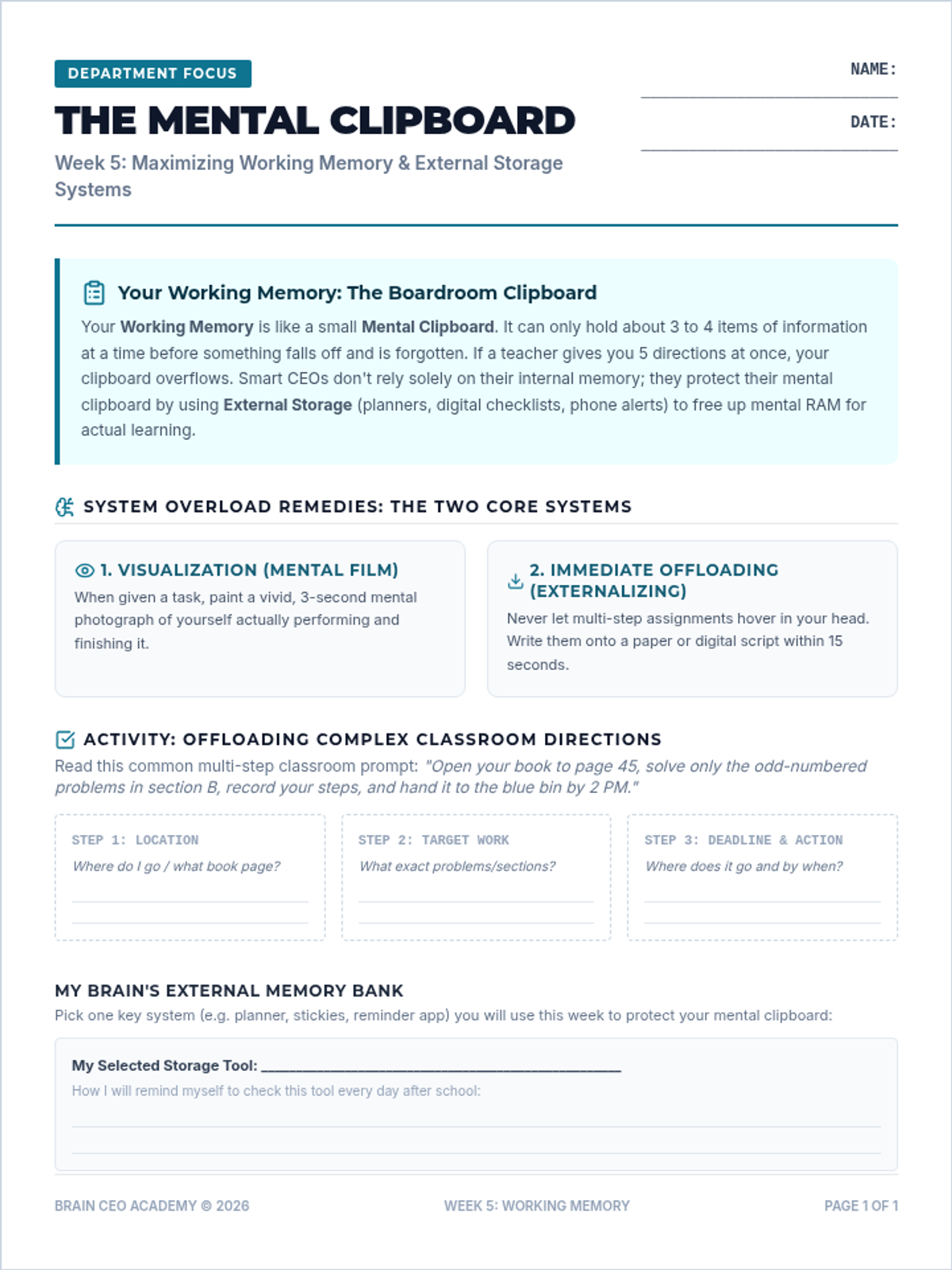
Focuses on future-oriented thinking and the "Miracle Morning." Solidifies the home-school connection and celebrates small wins with a "Gold Medal" mindset.
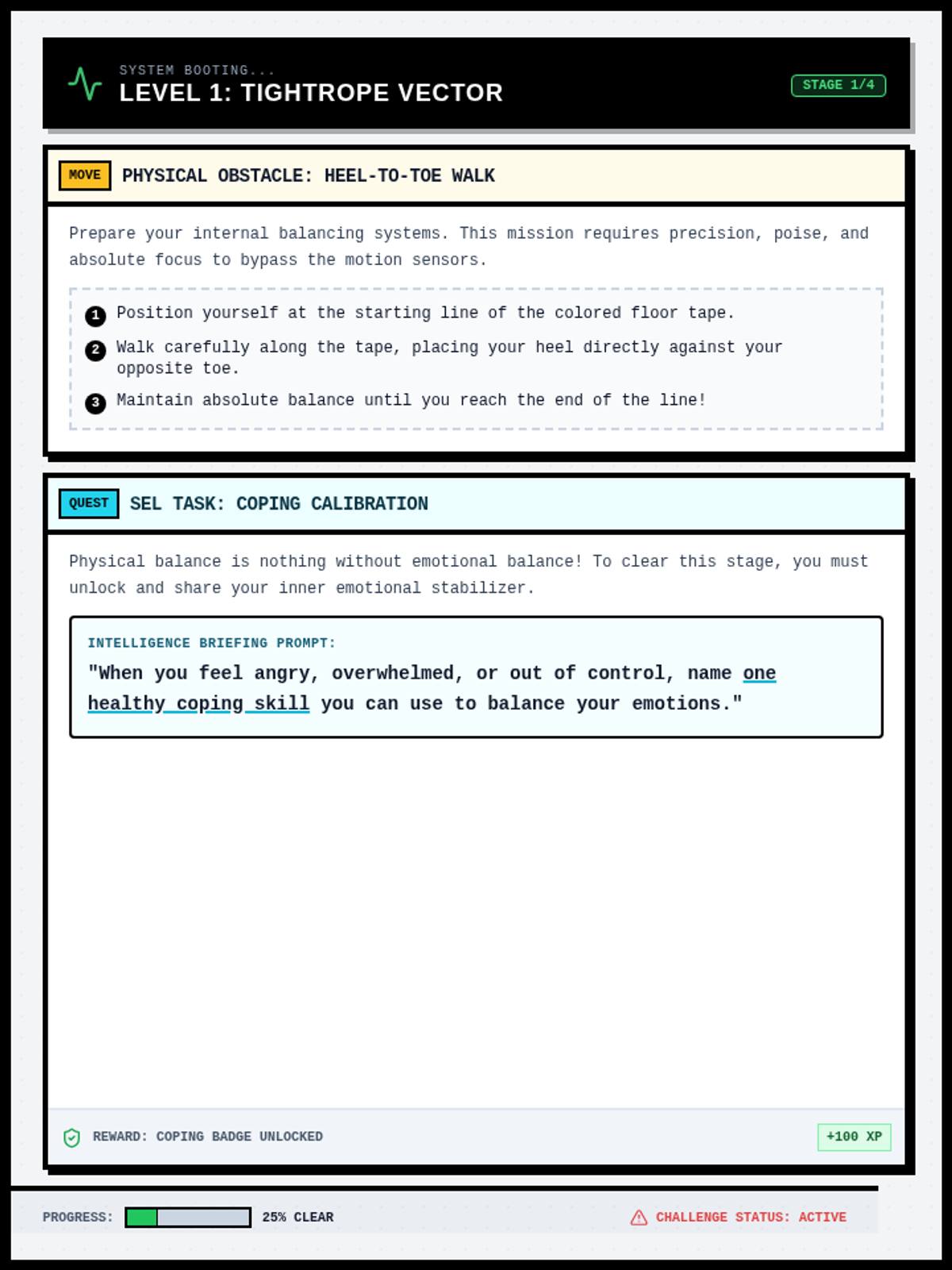
Focuses on developing specific coping skills and "routines" for the transition. Uses the metaphor of "spotting" and "flexibility" to manage big emotions in the morning.
Focuses on identifying current challenges and finding "exceptions" to the morning struggle using the metaphor of a balance beam. Introduces scaling questions and strengths-based goal setting.
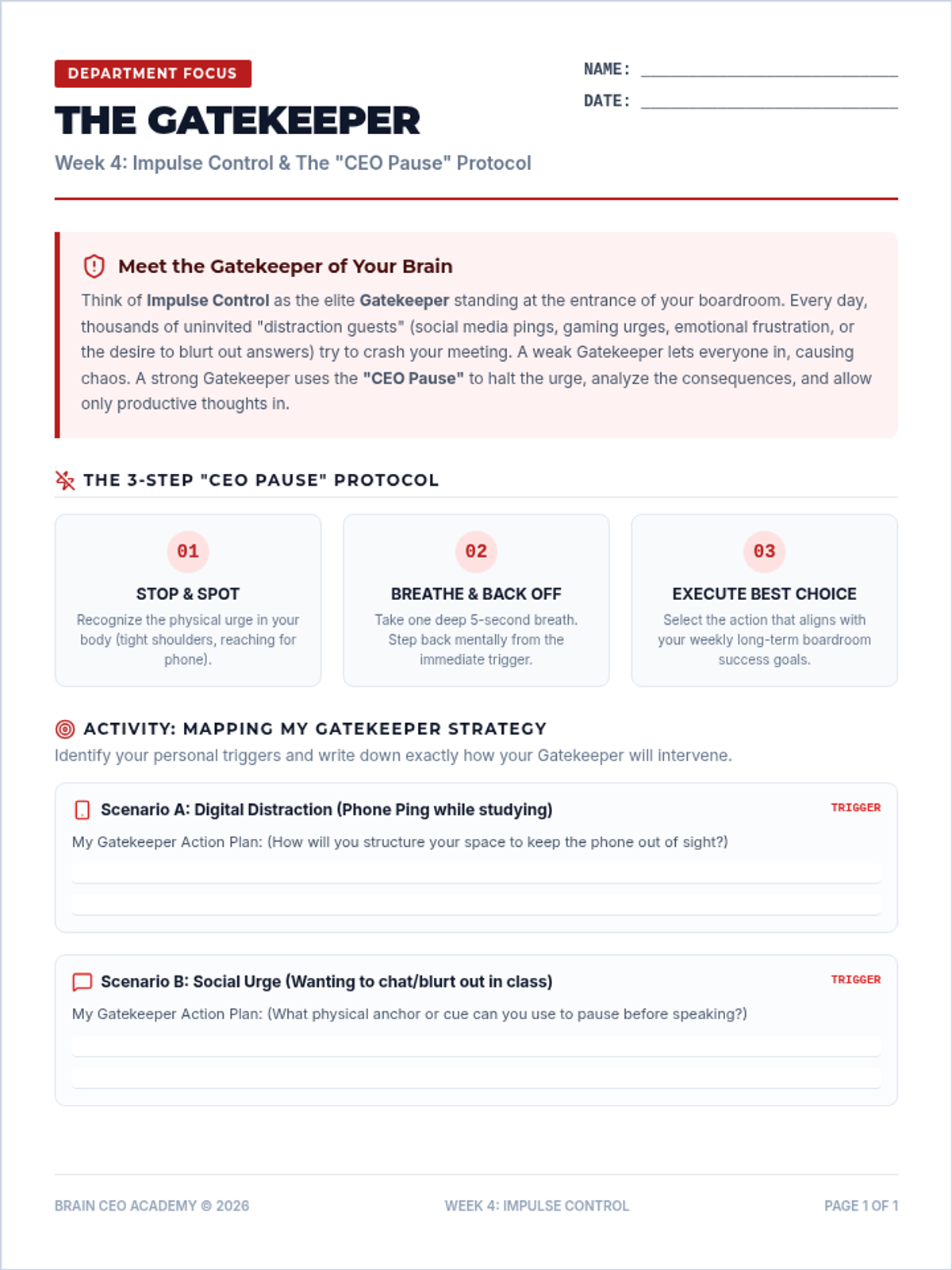
A comprehensive lesson exploring the 'Brain Remote' to manage impulsive urges and use 'Power Words' for self-advocacy and conflict resolution.
Students apply their expanded emotional vocabulary in simulated social situations, practicing the 'Vocabulary Role Play' strategy to solidify language acquisition through performance and interaction.
Builds a robust emotional vocabulary by systematically identifying, recording, and interacting with new words that describe complex feelings.
Employs graphic organizers, color-coding, and images to help students map the physical and situational connections to their feelings.
Uses gestures, facial expressions, and slowed speech to demonstrate emotional vocabulary and social interactions, making language comprehensible for ELLs.
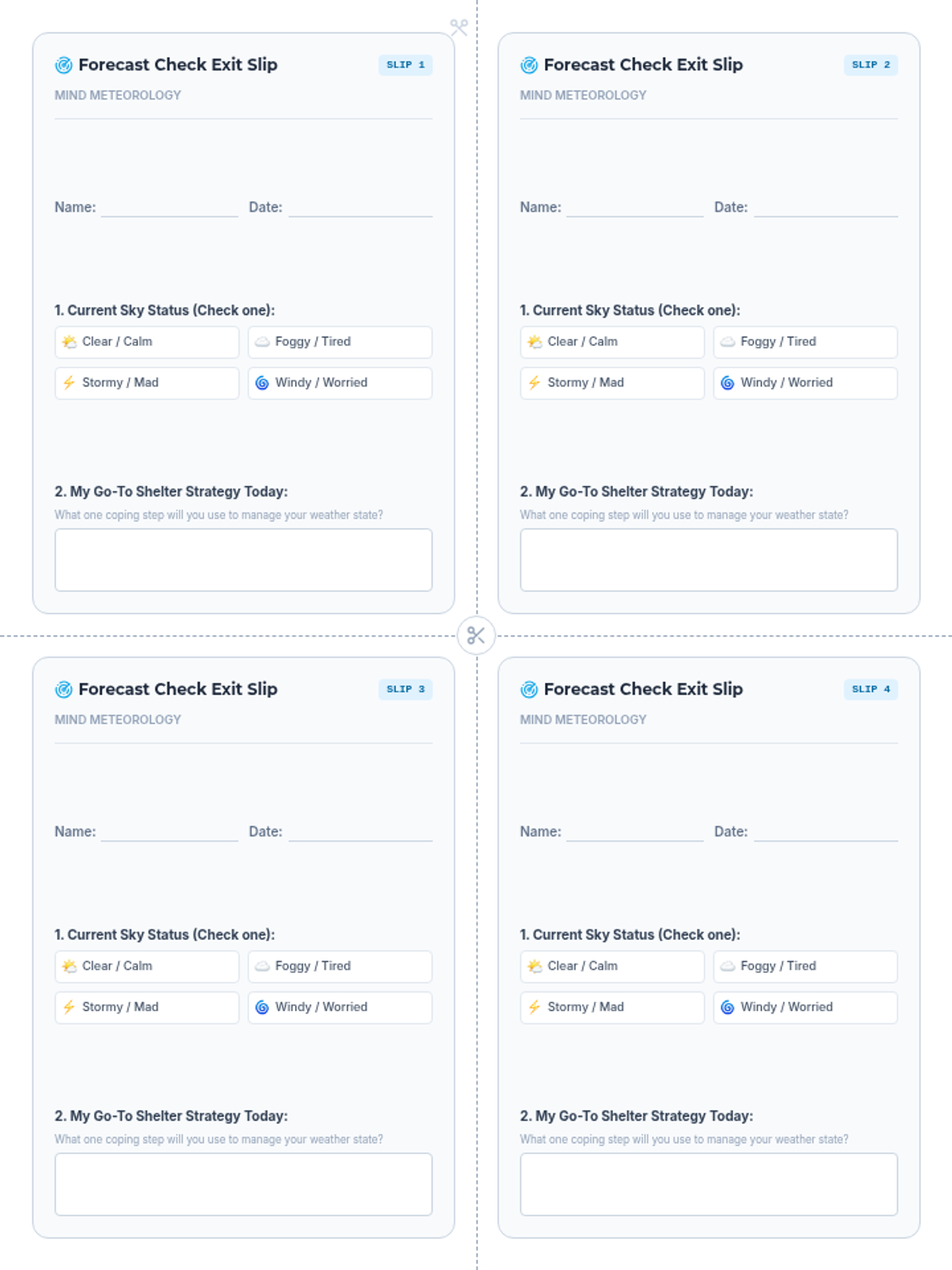
Establishes daily signals and routines for students to communicate their emotional state and readiness for learning, providing a safe and predictable classroom environment.
Day 5 covers staying focused and not contributing to classroom distractions.
Day 4 teaches students how to avoid drama and rumors by taking a 'detour'.
Day 3 addresses how to ignore peer corrections and focus on one's own work.
Day 2 focuses on the 'exit strategy' for walking away from rising conflict.
Day 1 focuses on staying out of others' conversations and 'ear-dropping' awareness.
A comprehensive emotional regulation toolkit for students to manage testing anxiety using maritime-themed grounding techniques and cognitive reframing.
A quick 10-minute introduction to box breathing, a powerful stress-relief technique, featuring a guided video and classroom practice.
A 10-minute lesson for 5th graders on self-efficacy, focusing on how personal choices and actions build trustworthiness and ethics through a relatable story-based approach.
A 30-minute lesson for 5th graders focused on moving from a bystander to an upstander. Students learn to use assertive statements and create a personal action plan for showing courage and respect in bullying situations.
A reflection on what has been learned and a call to action to practice acceptance every day.
Practical skills for including neurodivergent peers in play and conversation, focusing on kindness and patience.
Understanding different communication styles and how to connect with others who may communicate in unique ways.
Exploring the five senses and beyond, focusing on how different brains process sensory information and the tools that help.
An introduction to neurodiversity, exploring how every brain is unique and wired differently, using the 'Brain Lab' concept.
A science-themed lesson that teaches students to manage test anxiety by treating their physical stress responses as laboratory experiments, testing different 'calm-down formulas' to find their personal best stress-neutralizers.
Students explore a futuristic high school hallway and tech lab to identify 'glitches' in social communication. They learn to decode body language and facial expressions in complex social situations.
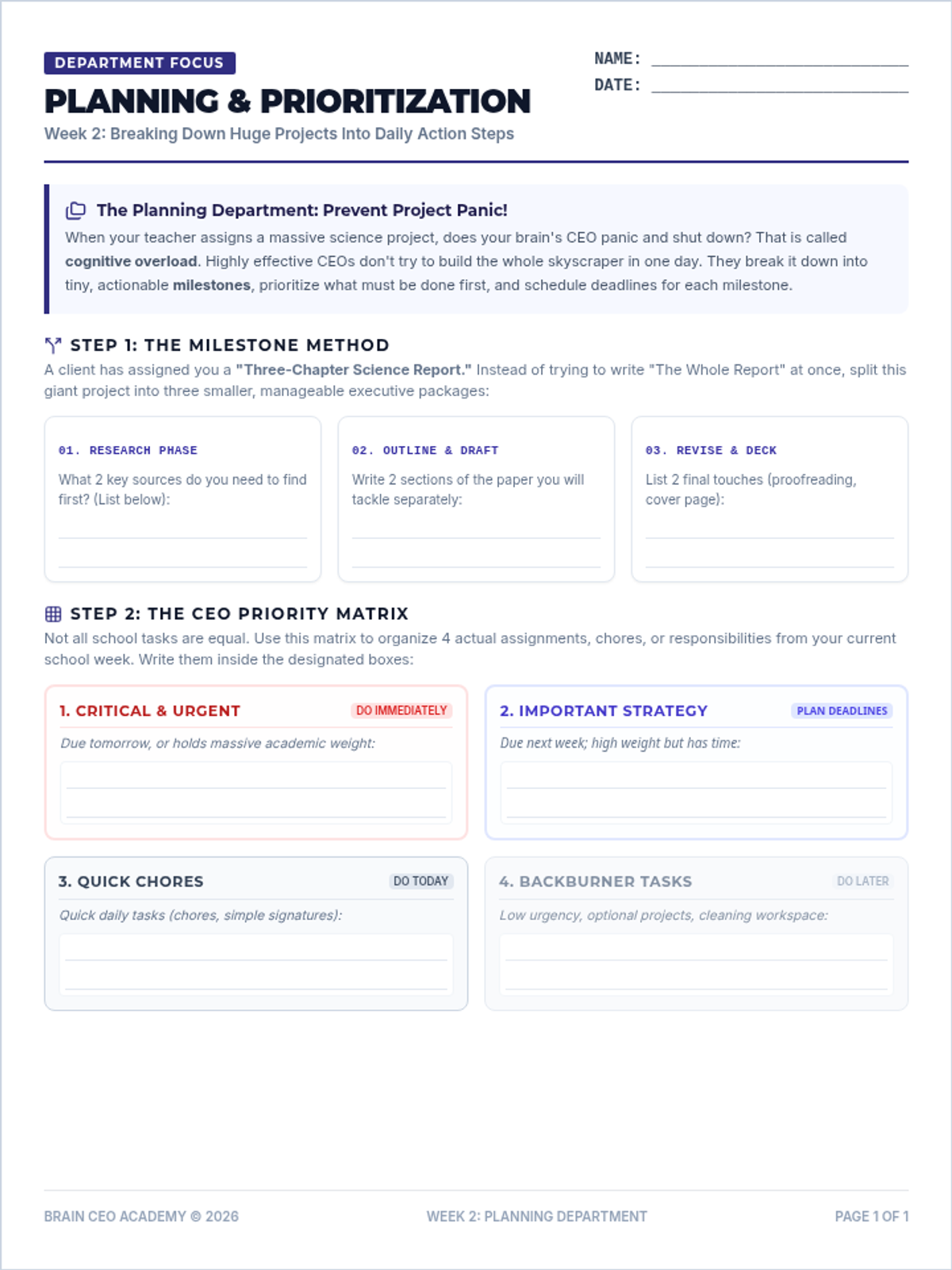
A lesson designed to help students understand self-motivation through the concept of breaking large, overwhelming tasks into small, manageable goals using a 'mountain climber' metaphor.
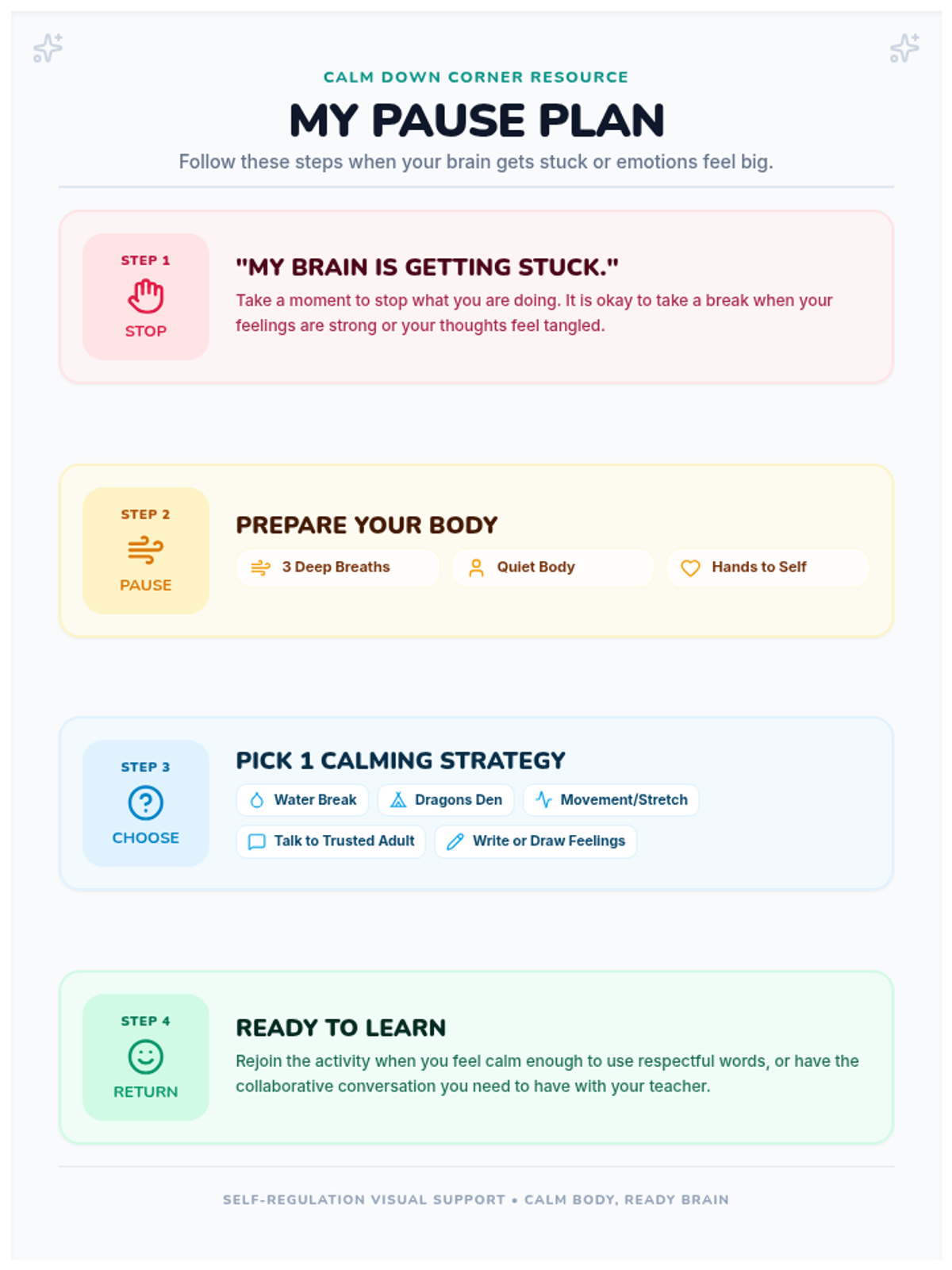
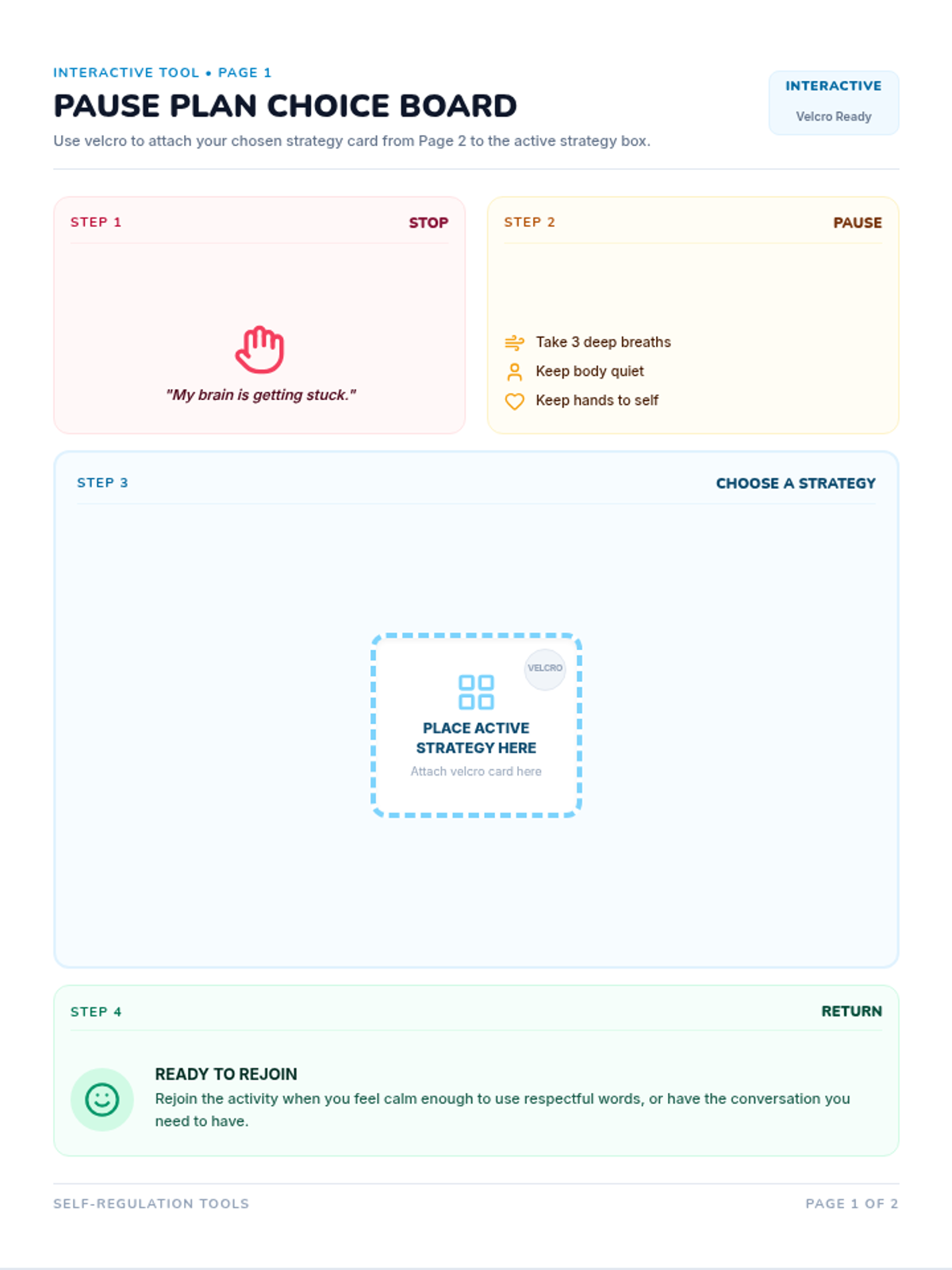
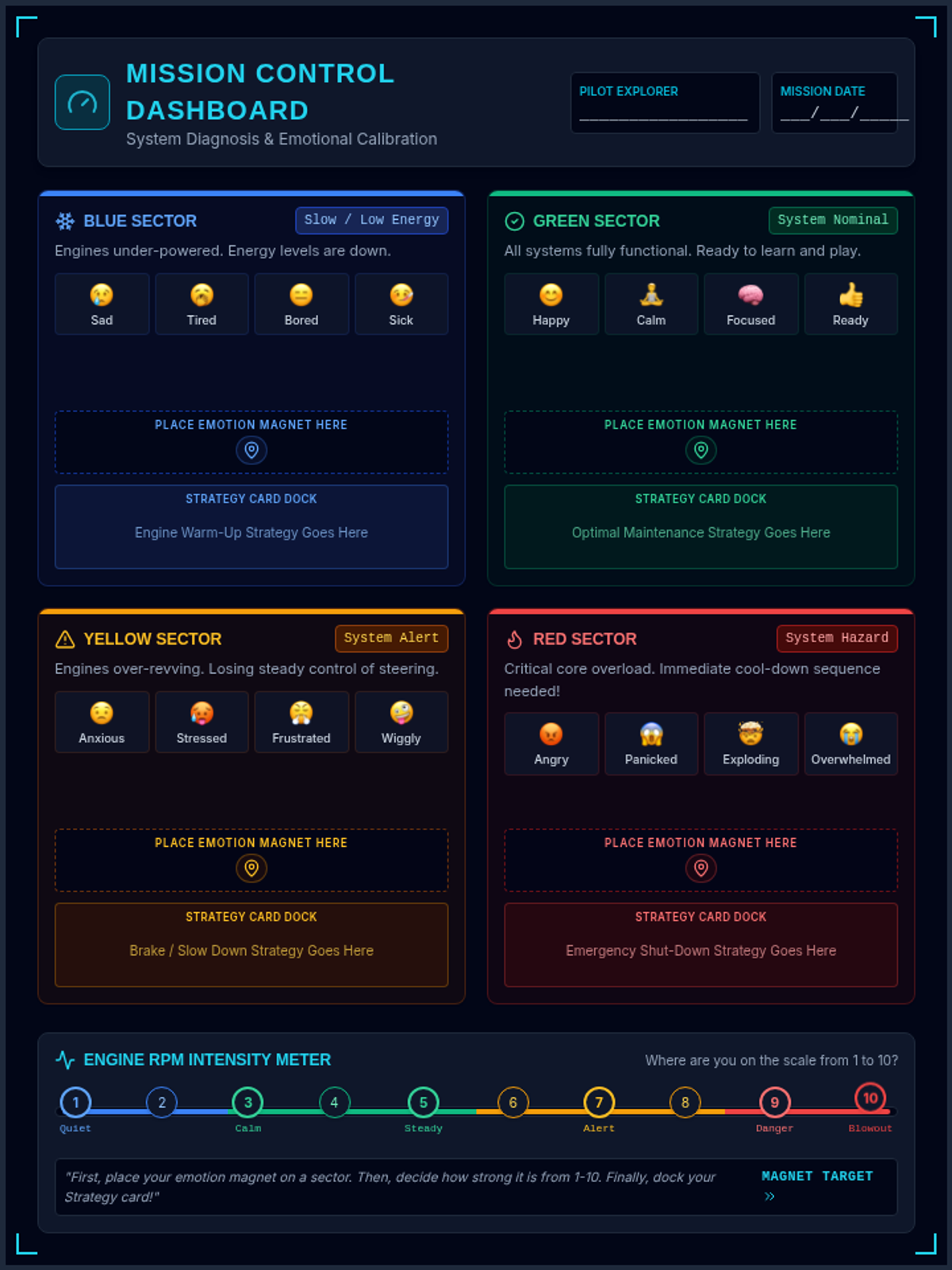
A comprehensive toolkit to help elementary students identify their emotional state using the Zones of Regulation framework and select appropriate coping strategies for each zone.
Students become investigative reporters to document and publish acts of kindness within their school community, creating a collaborative class newspaper.
Students explore personal stress triggers and develop a personalized toolkit of mindfulness and grounding strategies through hands-on stations and reflective journaling.
A sensitive and supportive lesson designed to help students navigate anxiety regarding the loss of loved ones through nature metaphors, expressive art, and identifying support systems.
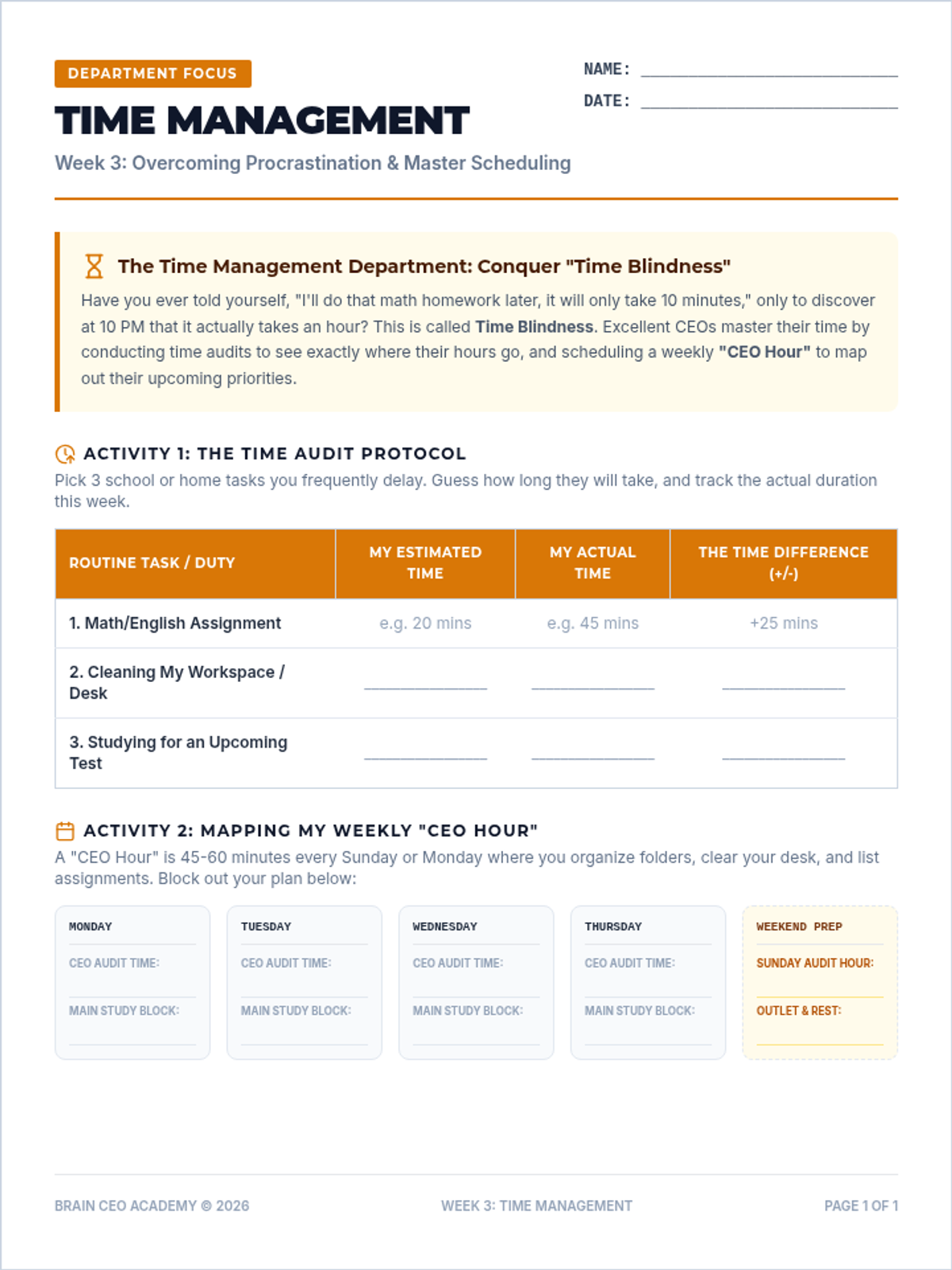
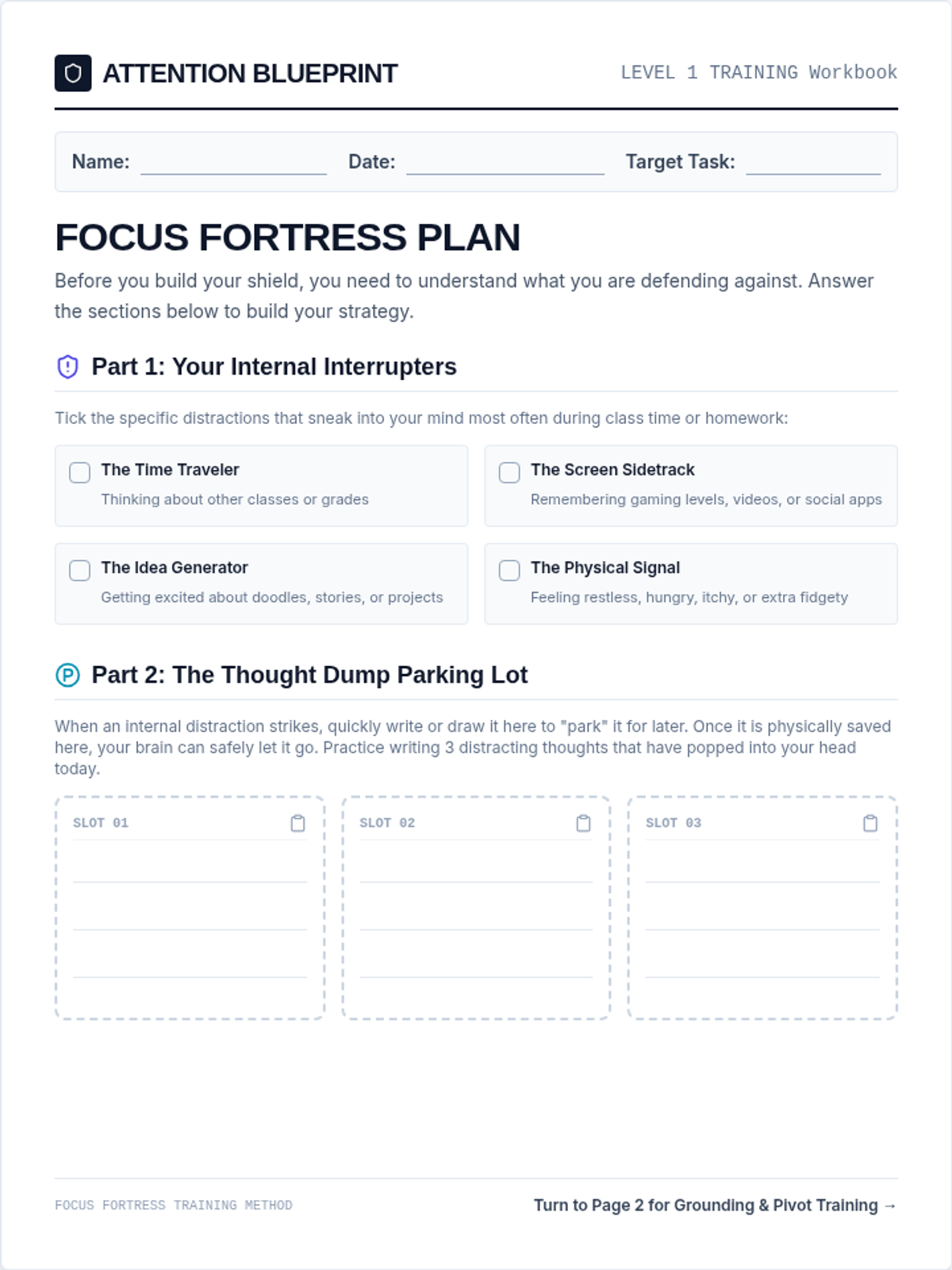
A lesson focused on equipping students with practical strategies to maintain focus and persistence during difficult or monotonous tasks.
A comprehensive mindfulness workshop designed to equip 3rd-6th grade students with practical tools to manage testing anxiety, focusing on physiological awareness and cognitive reframing.
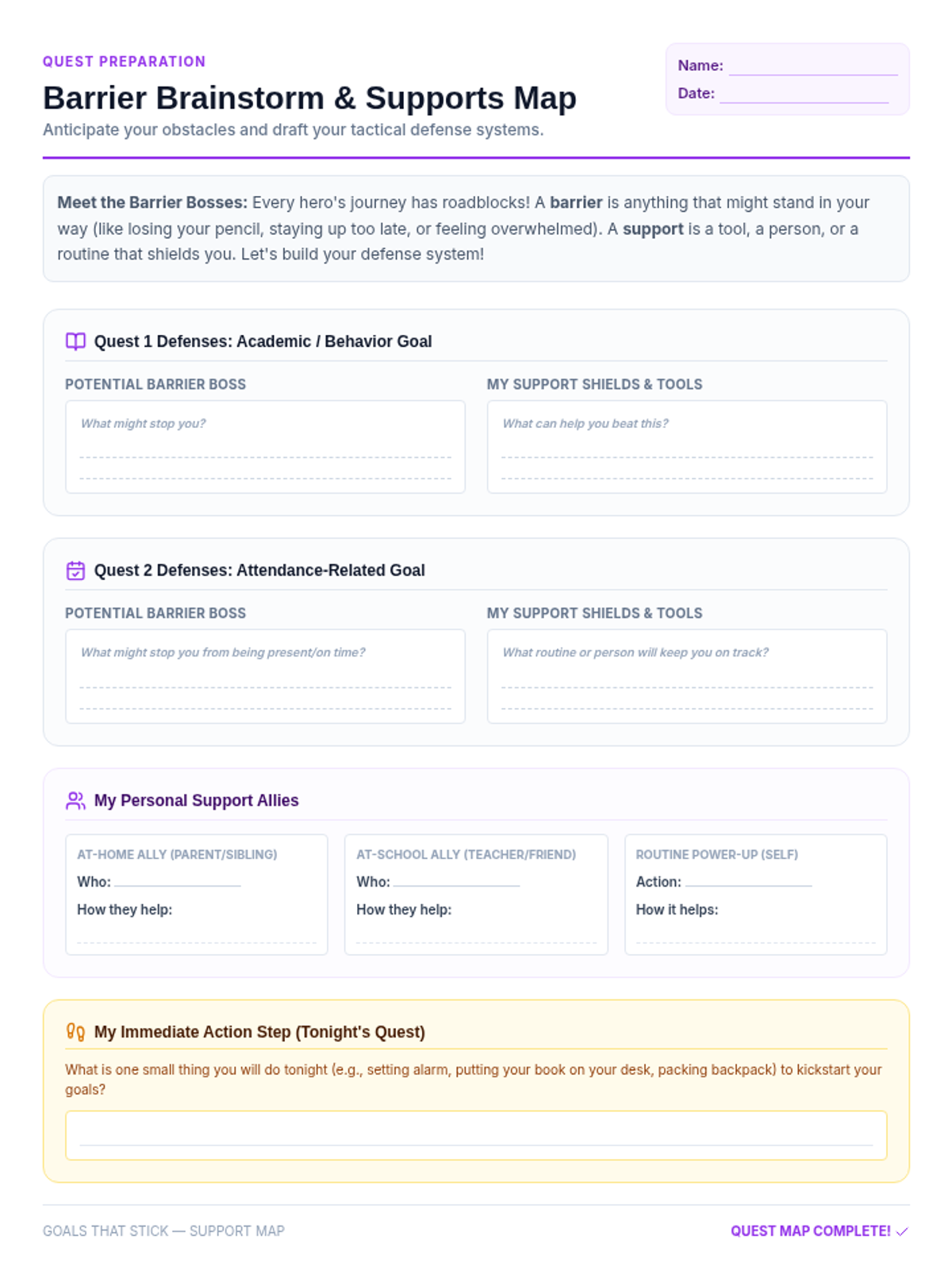
Applies regulation tools to social situations, including conflict resolution steps and handling unkind behavior or bullying.
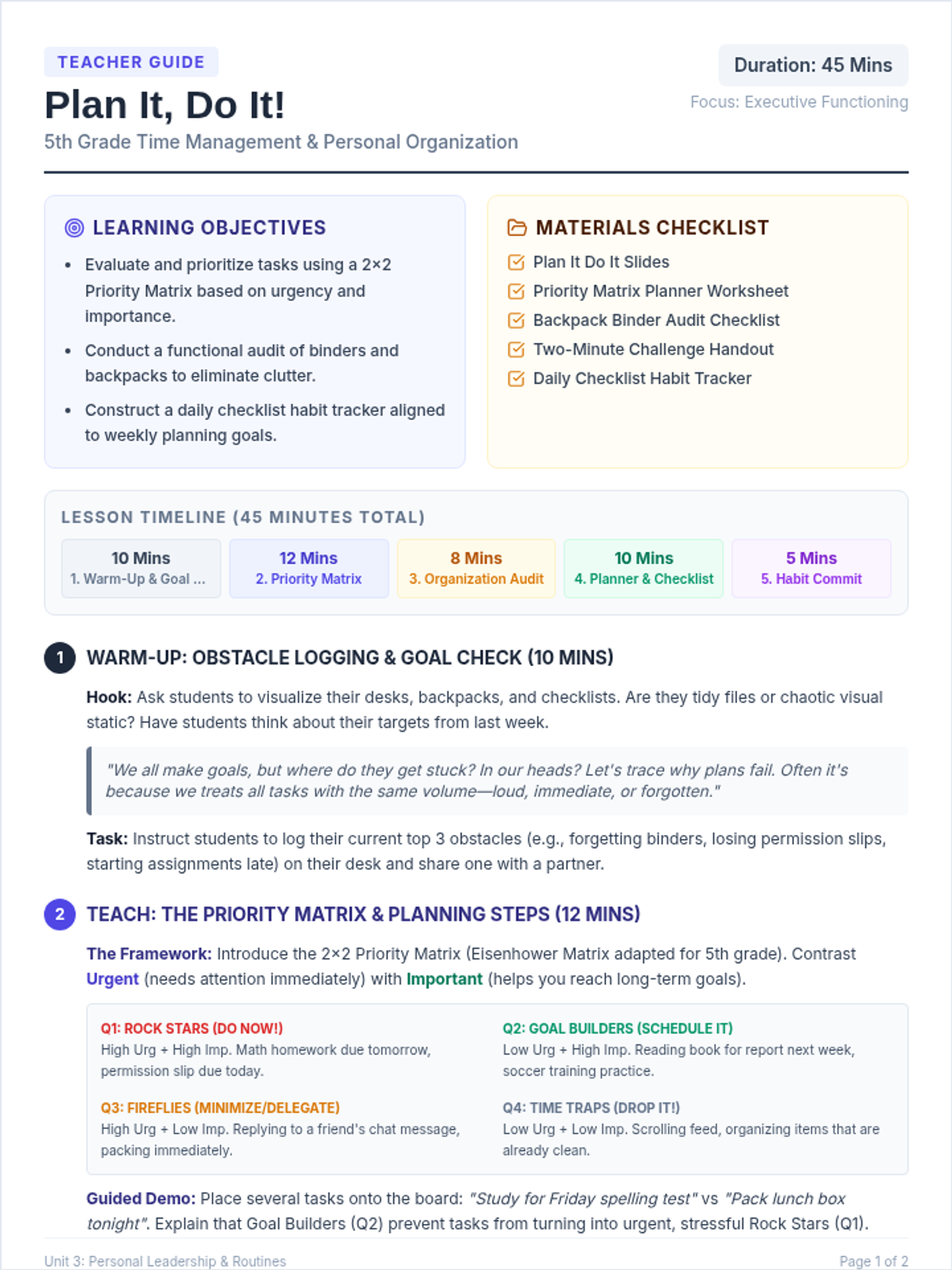
Focuses on practical tools for regulation: deep breathing, mindfulness, and the 'I' Statement tool.
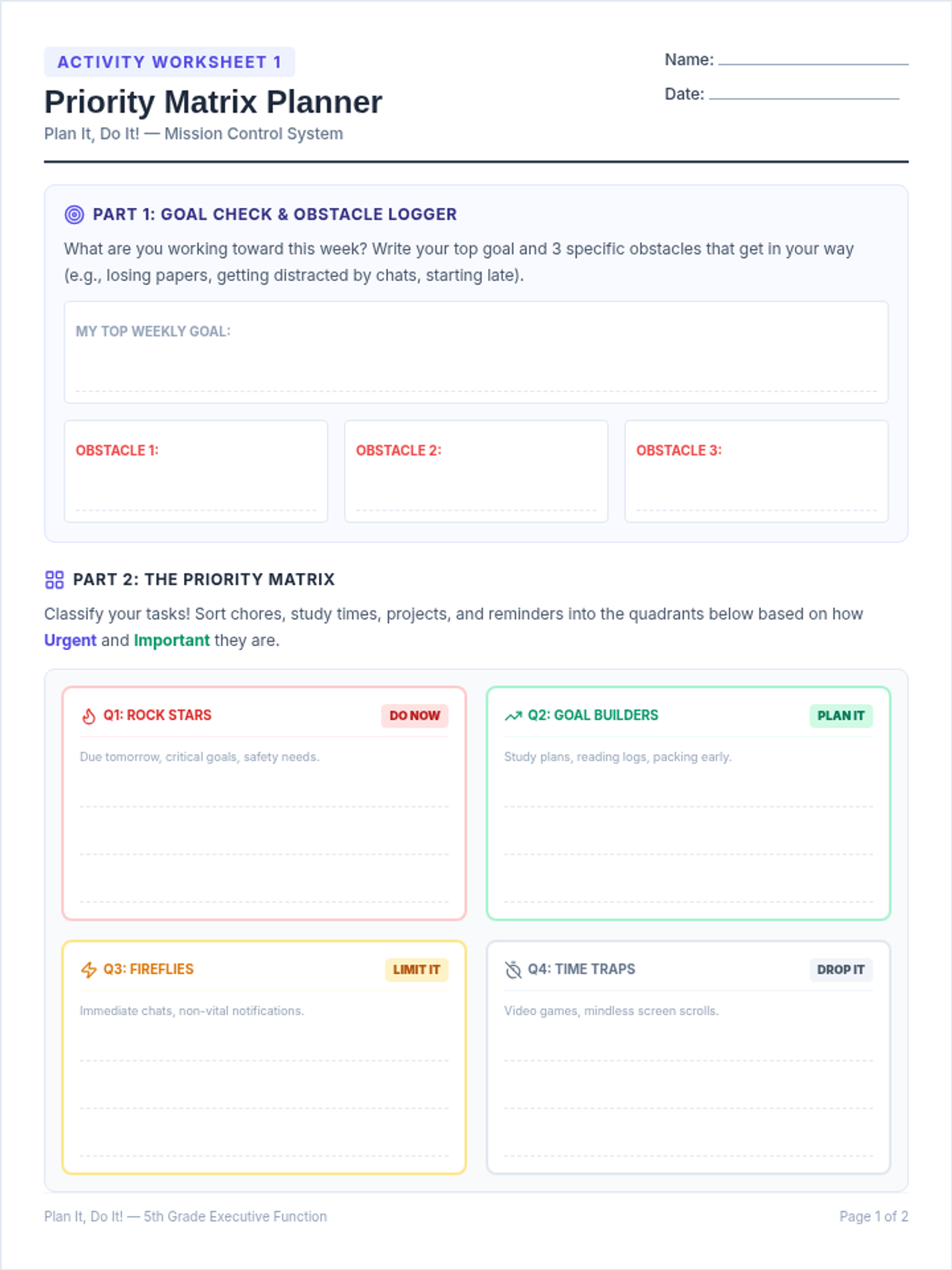
Students learn to identify physical signs of anger and use the 'Emotional Backpack' metaphor to understand that everyone carries feelings.
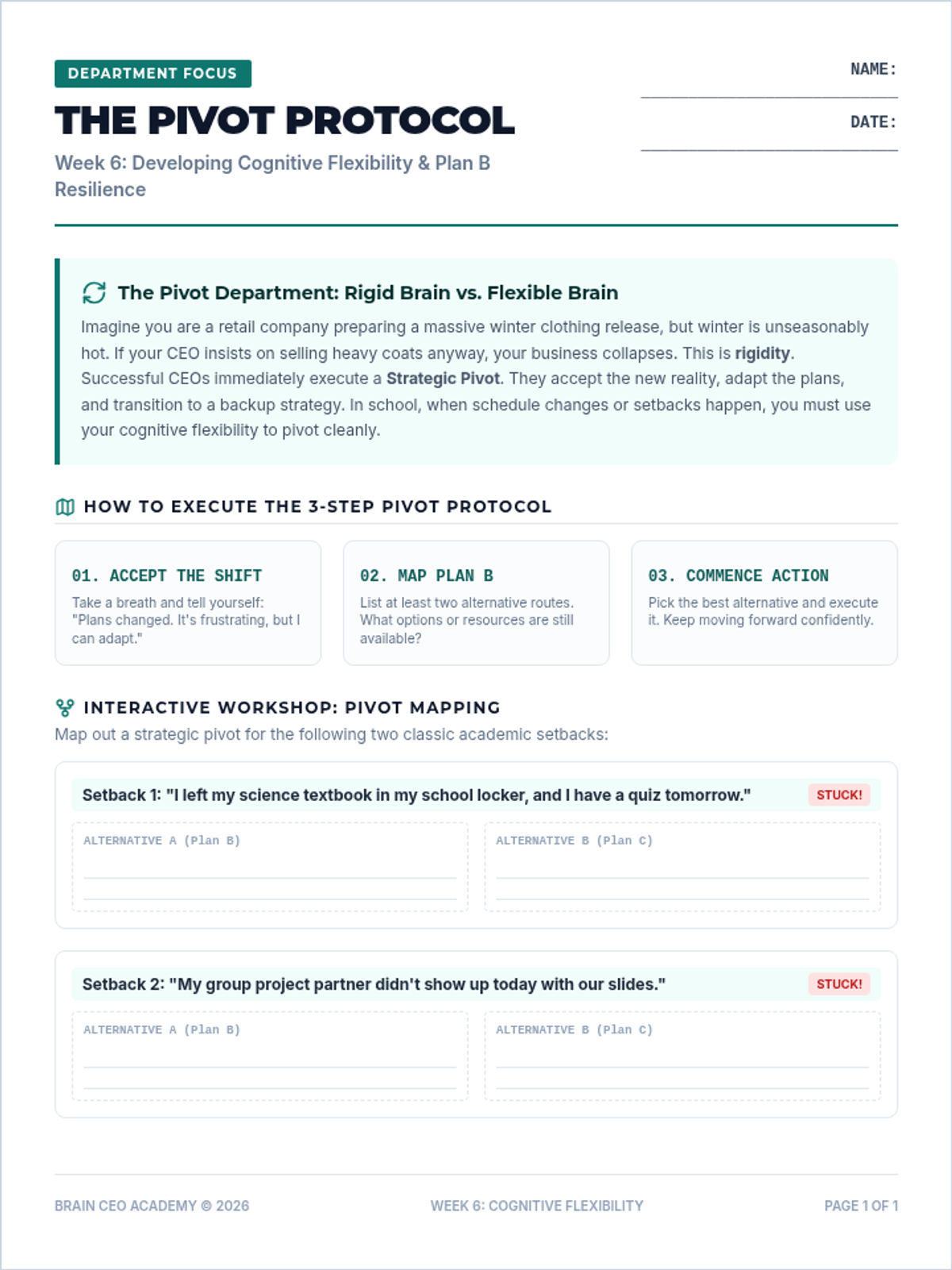
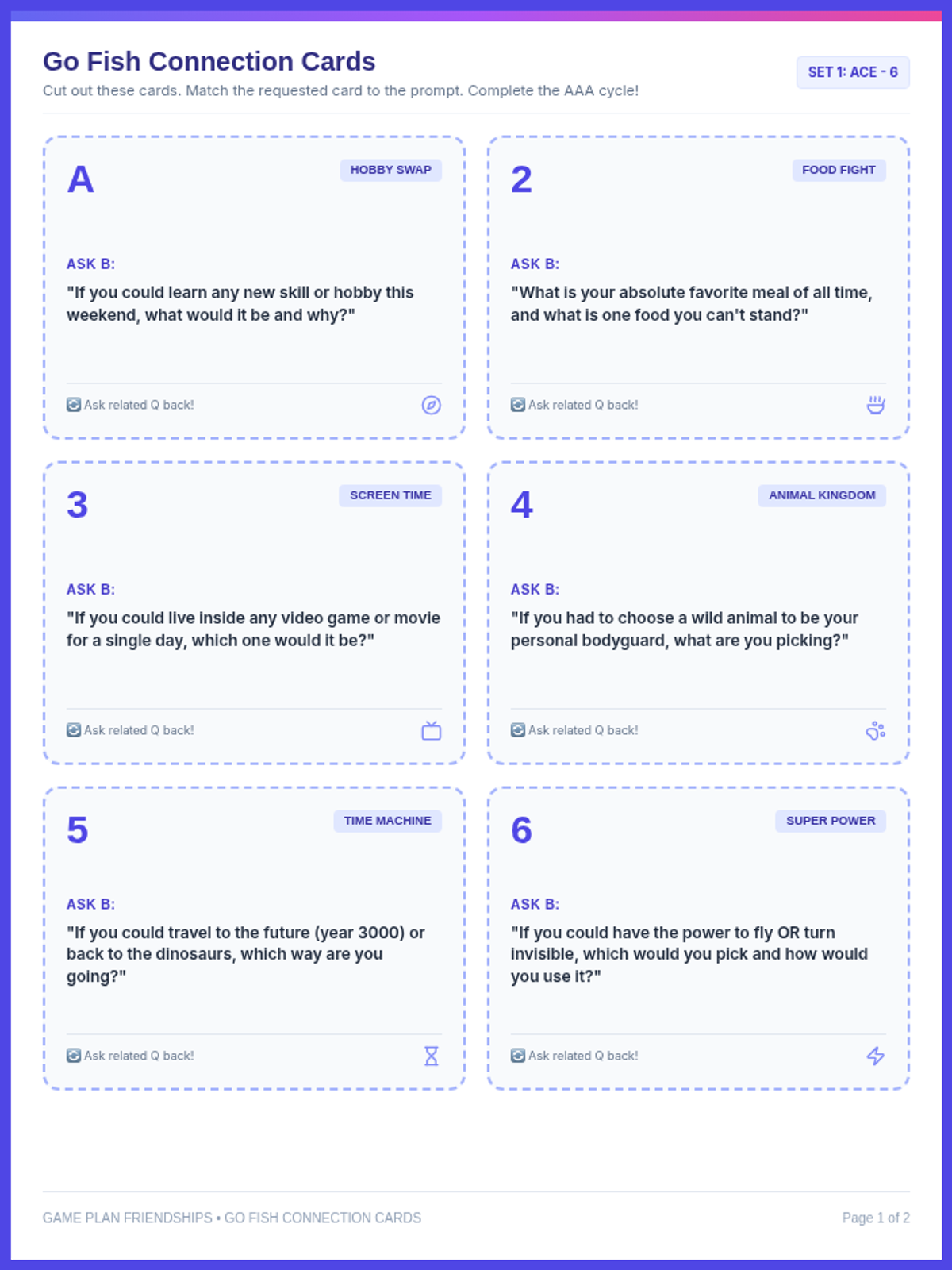
A social-emotional learning lesson focused on finding commonalities with peers through structured conversation. Students use conversation cards to discover shared interests and build connections.
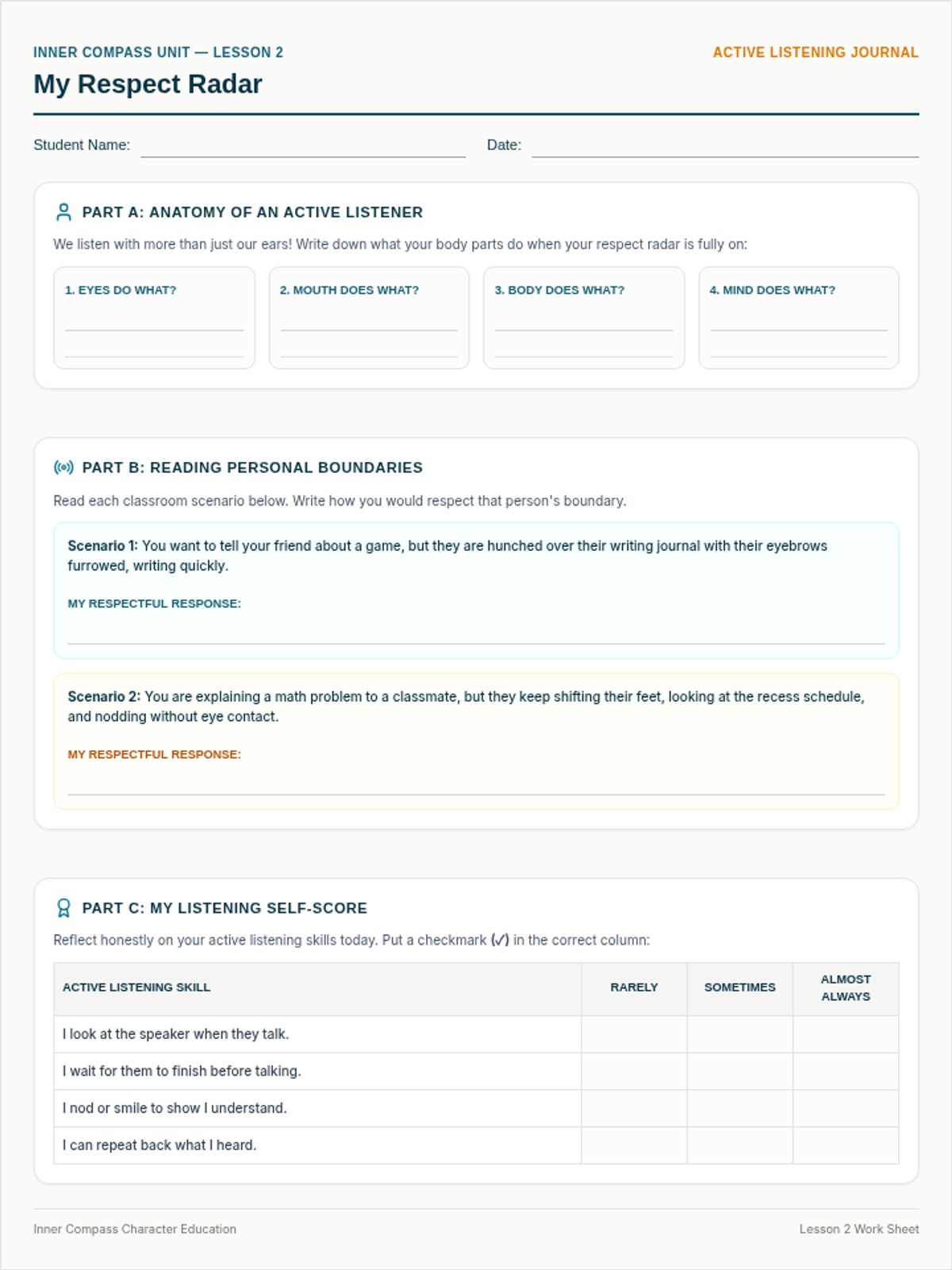
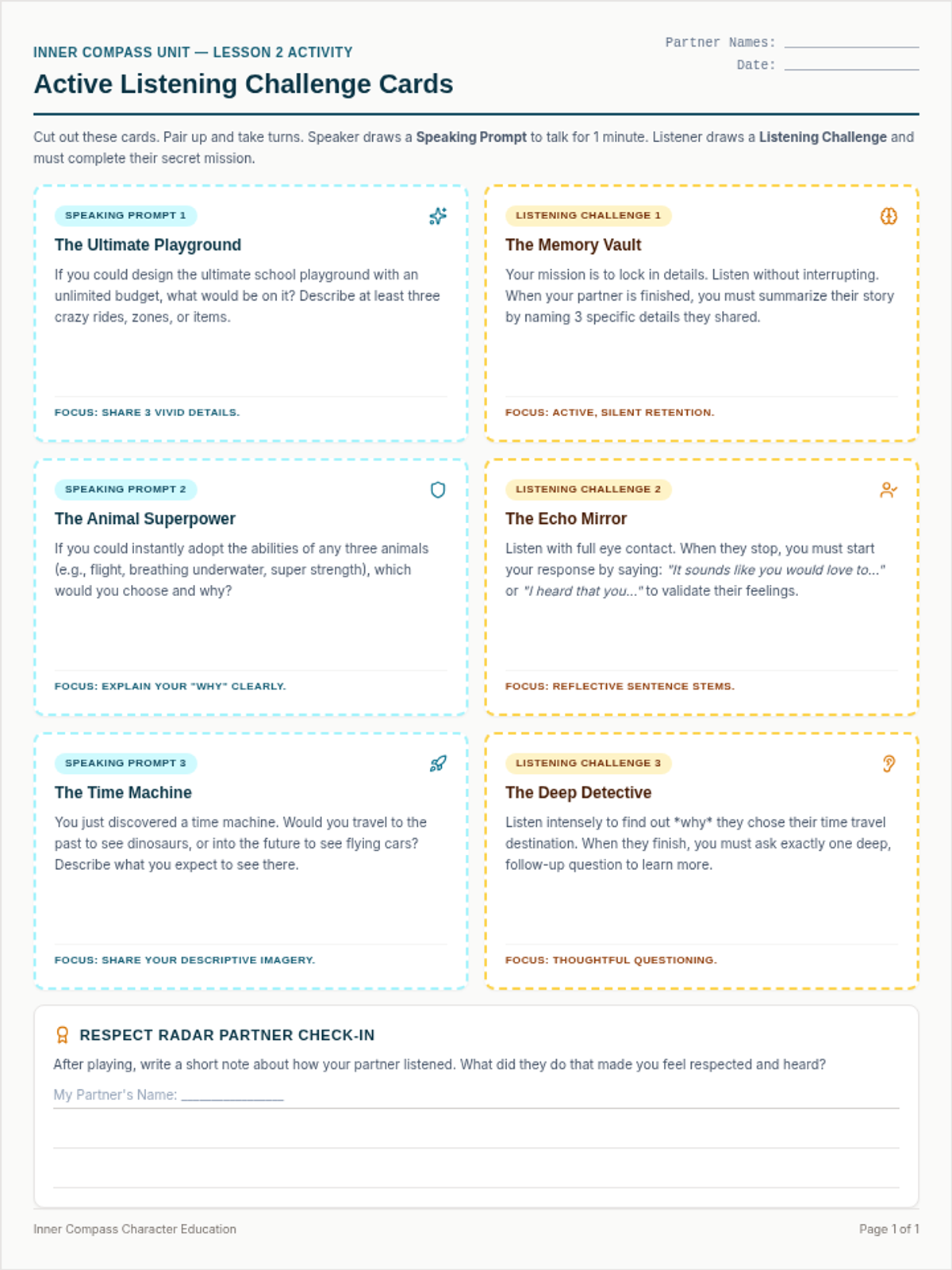
A dynamic conversation game where students practice active listening and non-verbal communication through 'Talker' prompts and 'Listener' challenges. Students learn to recognize and use body language to show they are truly engaged in a conversation.
A gentle 15-minute lesson helping children navigate the big feelings of parental separation due to divorce or deportation, focusing on maintaining emotional connections.