A social-emotional learning lesson for grades K-2 that uses a garden metaphor to teach the qualities of a good friend. Students identify positive behaviors and create a 'Friendship Flower' to visualize how kindness helps relationships grow.
Empowers students to find their voice through assertiveness training, focusing on "I" statements, personal boundaries, and distinguishing between passive, aggressive, and assertive behaviors.
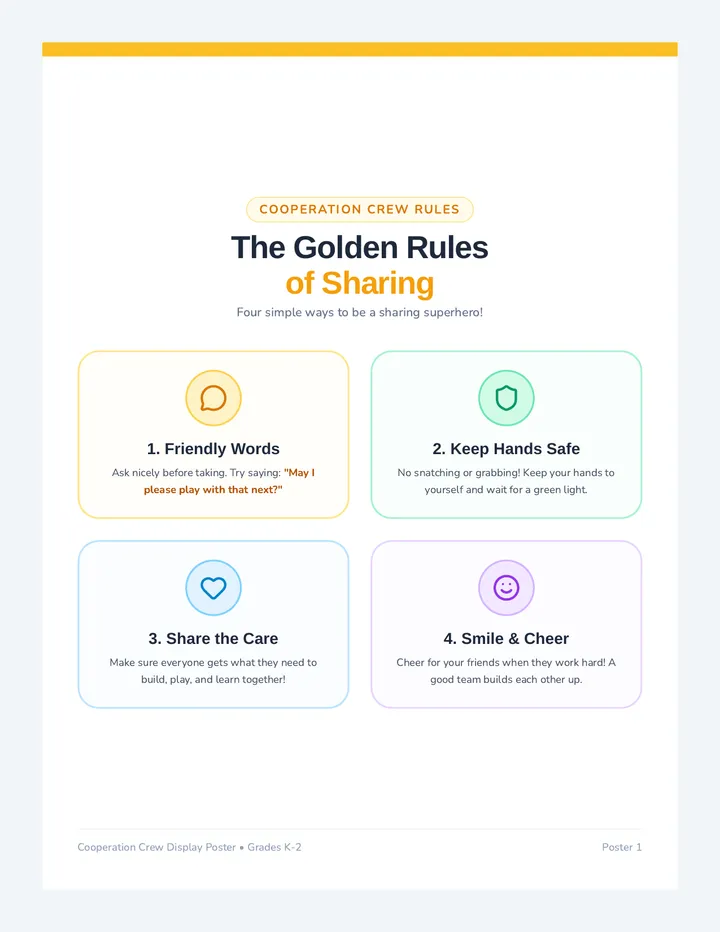
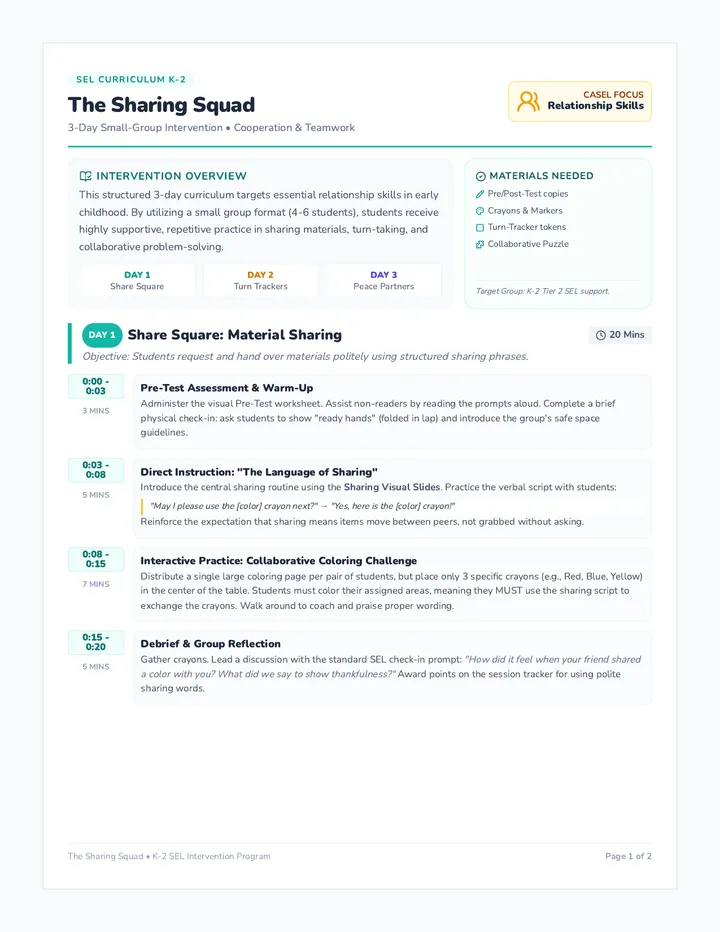
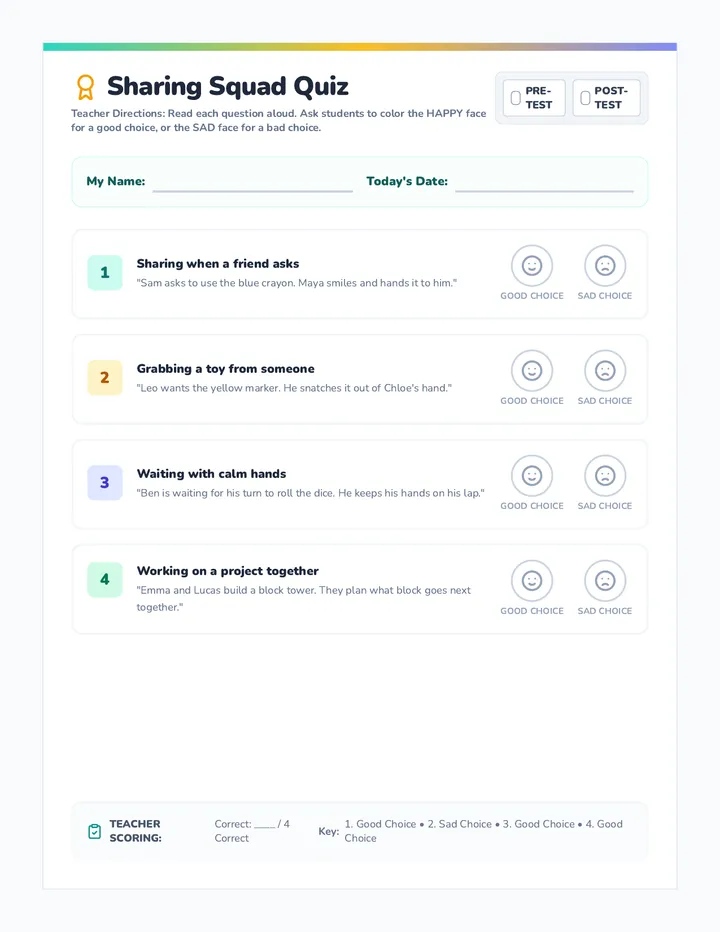
Focuses on the mechanics of teamwork, conflict resolution, and shared goal-setting, helping students understand their role within a group dynamic.
Introduces students to the concepts of empathy and perspective-taking, laying the foundation for strong interpersonal relationships through active listening and emotional recognition.
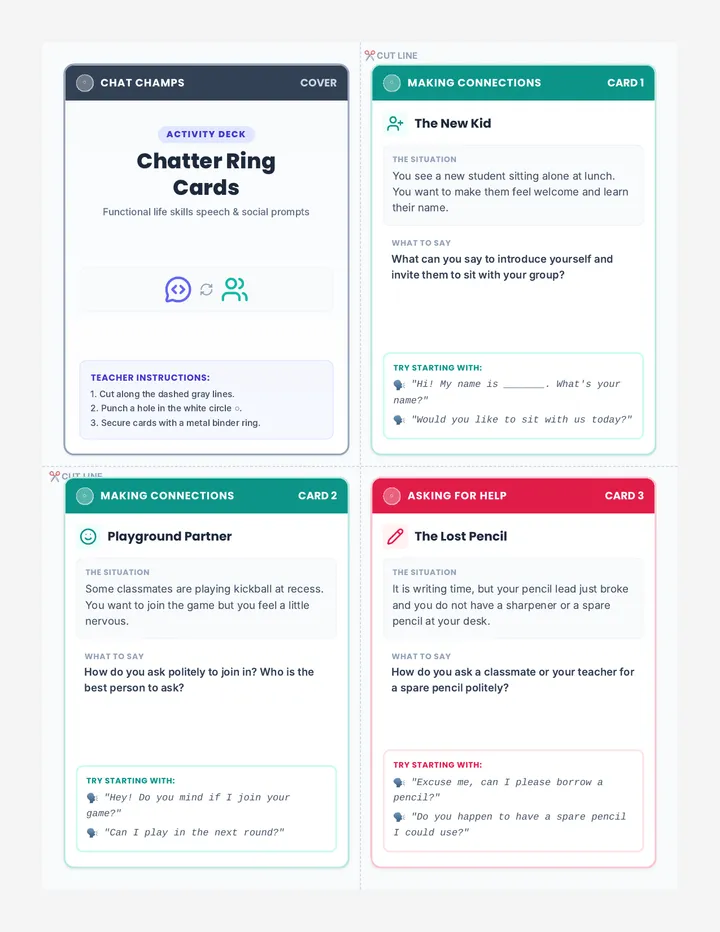
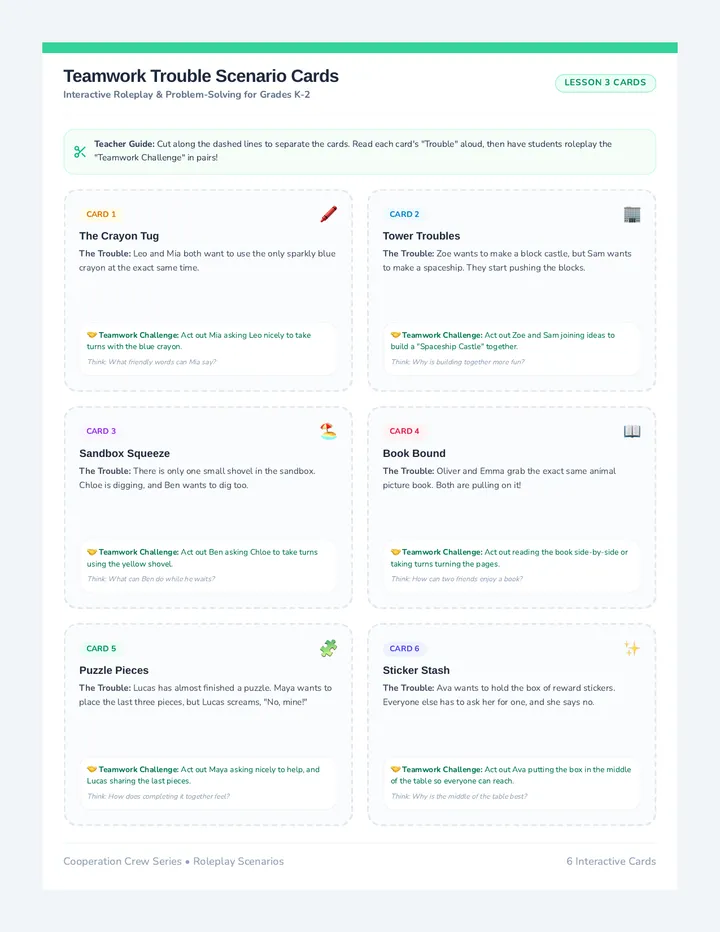
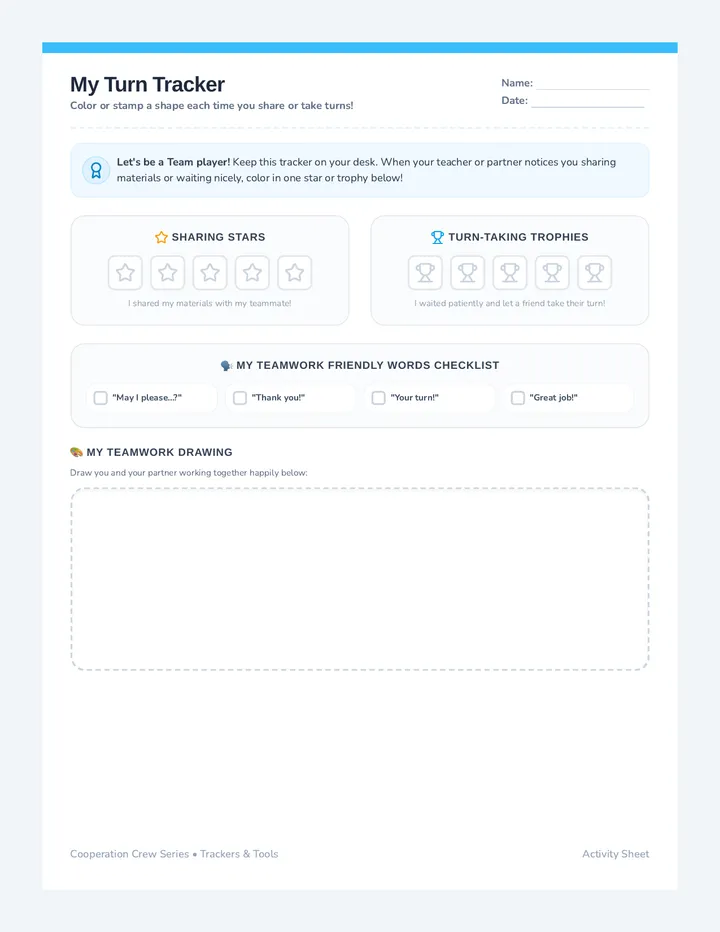
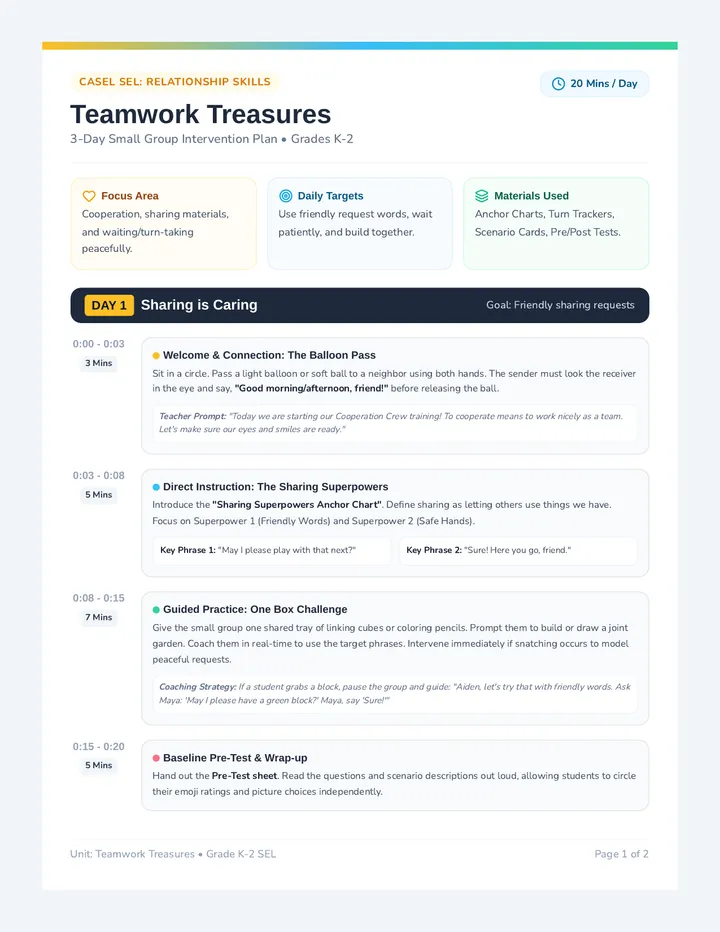
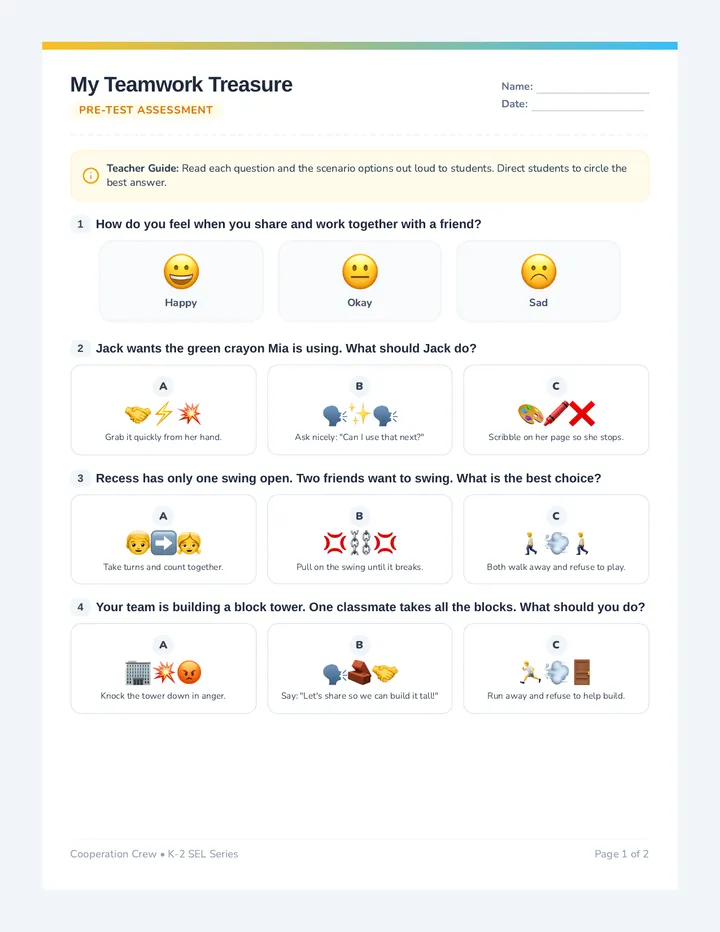
A 120-minute immersive lesson where students practice collaborative problem-solving, role-playing, and a shared group project to master the art of cooperation.
Students explore their individual strengths and how they contribute to a group's success.
A quick, engaging 20-minute lesson for K-3 students focusing on integrity as 'doing the right thing even when no one is watching' through the 'Heart Hero' concept.
A second-grade SEL lesson focused on making reasoned judgments using the 'Safe, Kind, Right Choice' framework while fostering curiosity and community well-being.
A foundational lesson for 2nd graders to define and identify "good decisions" using the Safe, Kind, and Right framework while exploring the emotional impact of their choices.
A 15-minute interactive social-emotional learning lesson designed to help 1st graders identify and manage physical impulses through movement and practice. Students explore the concept of 'wiggles' and learn concrete strategies like deep breathing to maintain self-control.
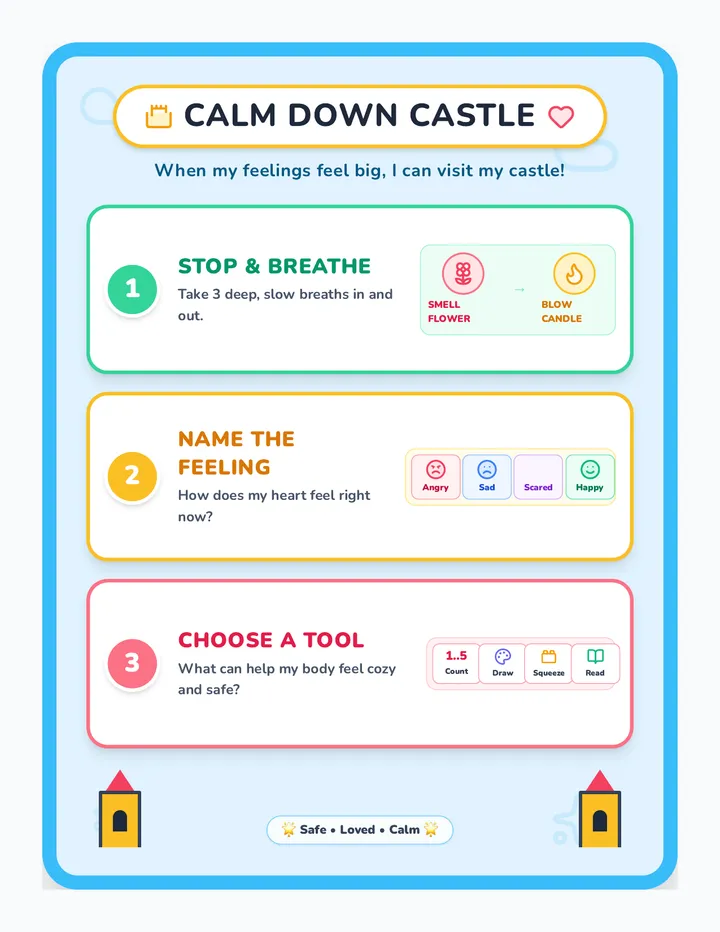
A 15-minute introductory lesson for 1st graders to help them recognize the physical sensations of strong emotions and practice 'Riding the Wave' through deep breathing to manage impulses.
A 15-minute introductory lesson for 1st graders on the Stop-Think-Act model for self-regulation and problem-solving. Students learn to pause before reacting, consider their options, and choose the best action.
A 15-minute social-emotional learning lesson for 1st graders focused on recognizing intense emotions as 'waves' and using deep breathing to manage impulsive reactions.
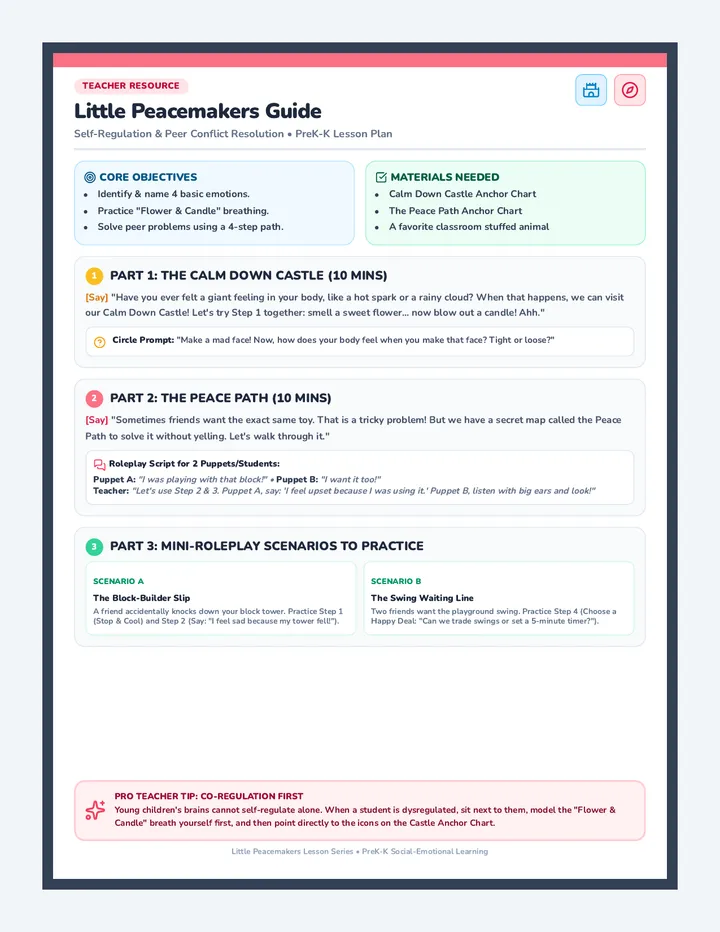
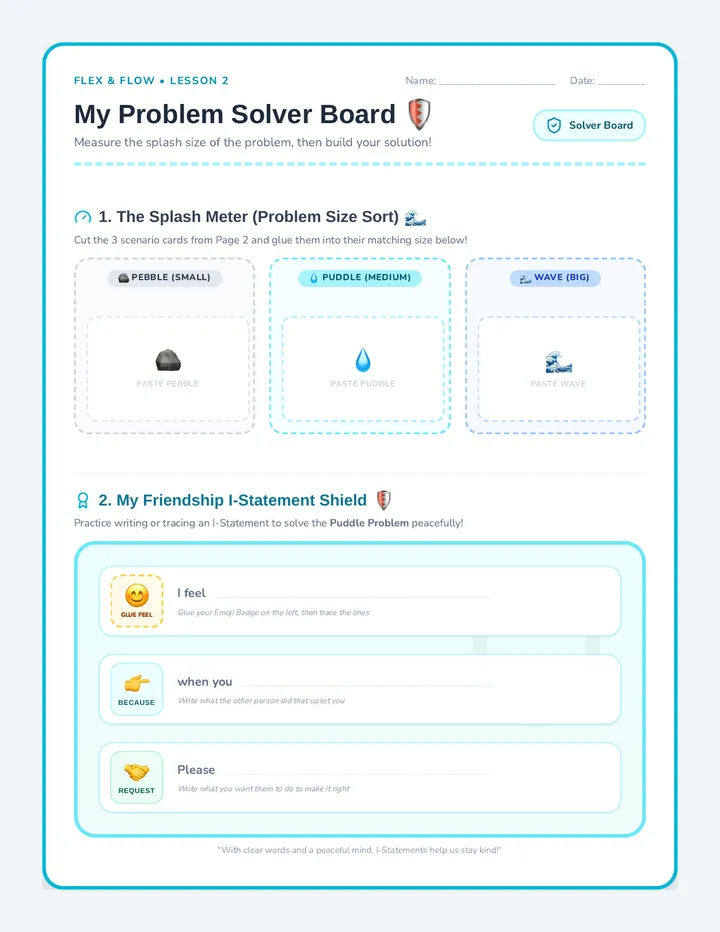
A social-emotional learning lesson for K-2 students to identify the scale of different problems and match them with appropriate emotional reactions and calming strategies.
A lesson focused on identifying and stating a problem neutrally without blame, using a festive spring-themed scenario.
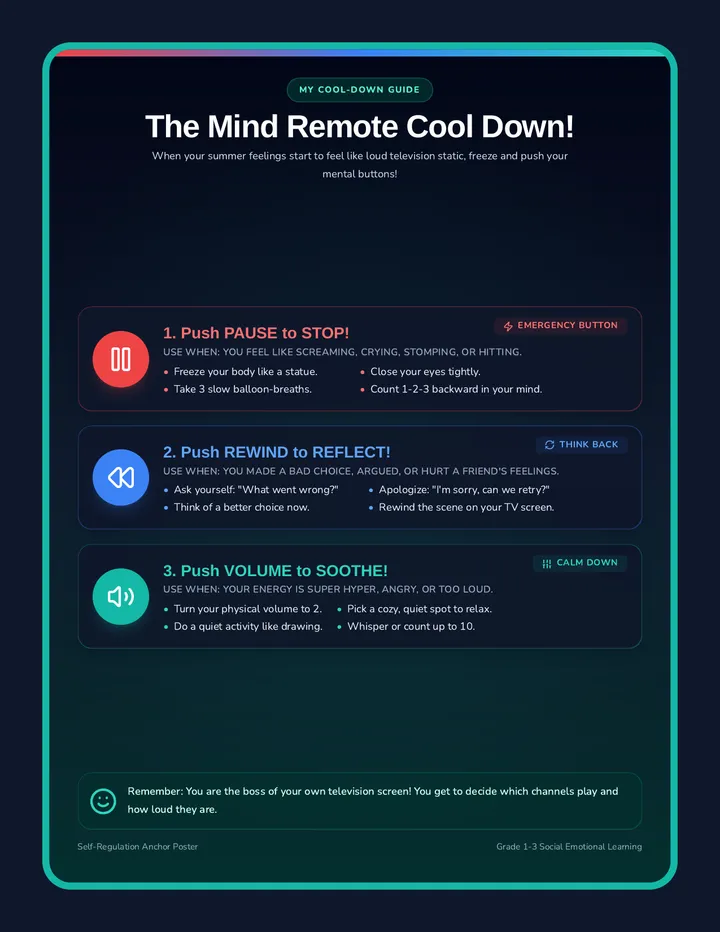
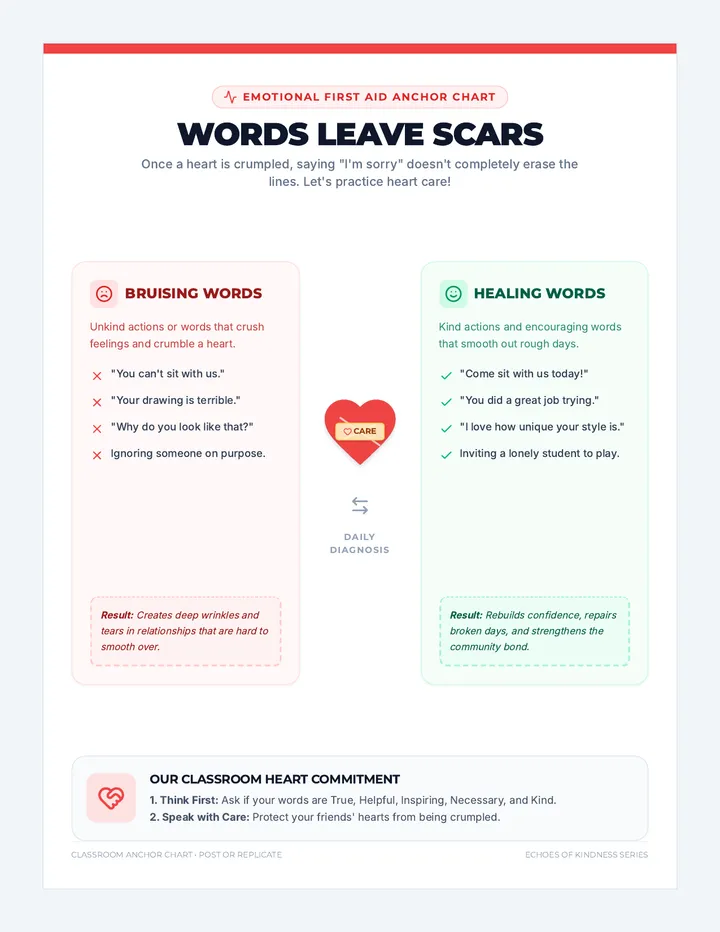
A set of resources designed to help students identify stress triggers and build a personalized toolkit of healthy coping strategies. Includes a visual anchor chart, a student reflection worksheet, and a teacher facilitation guide.
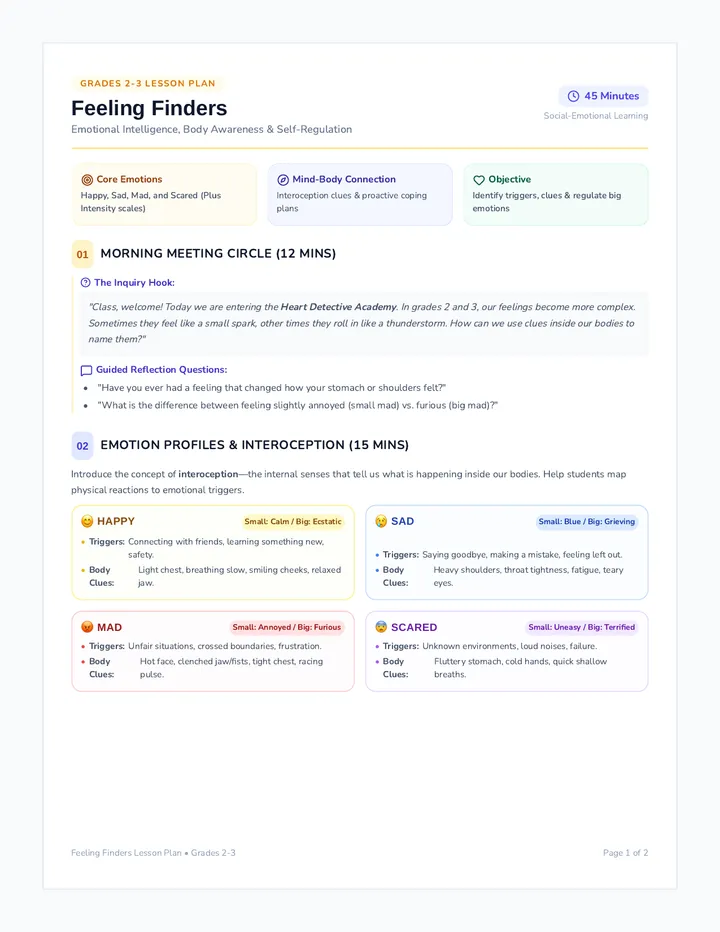
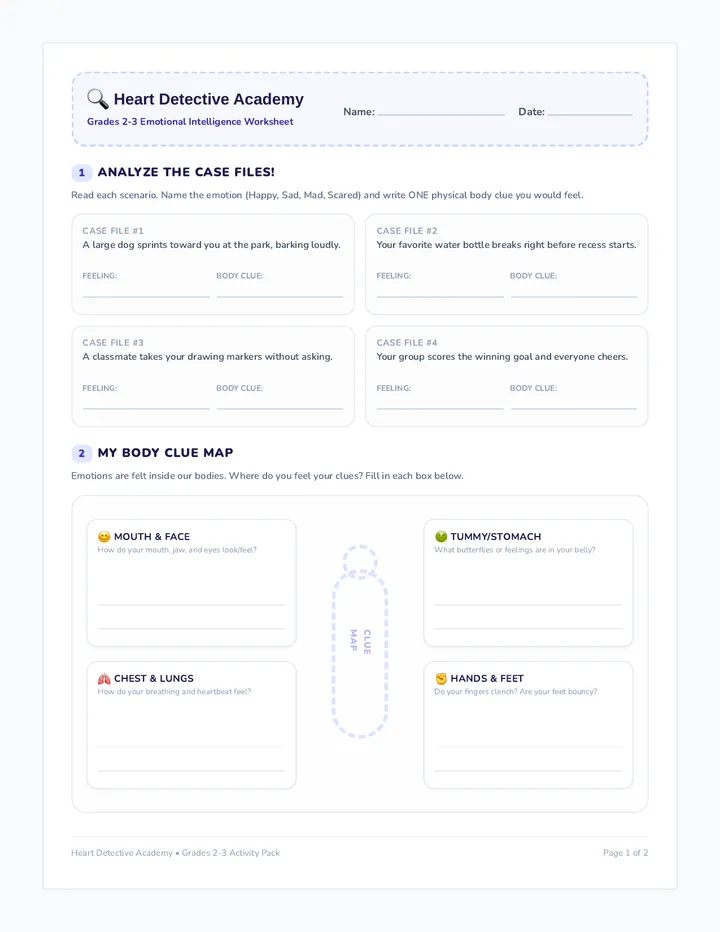
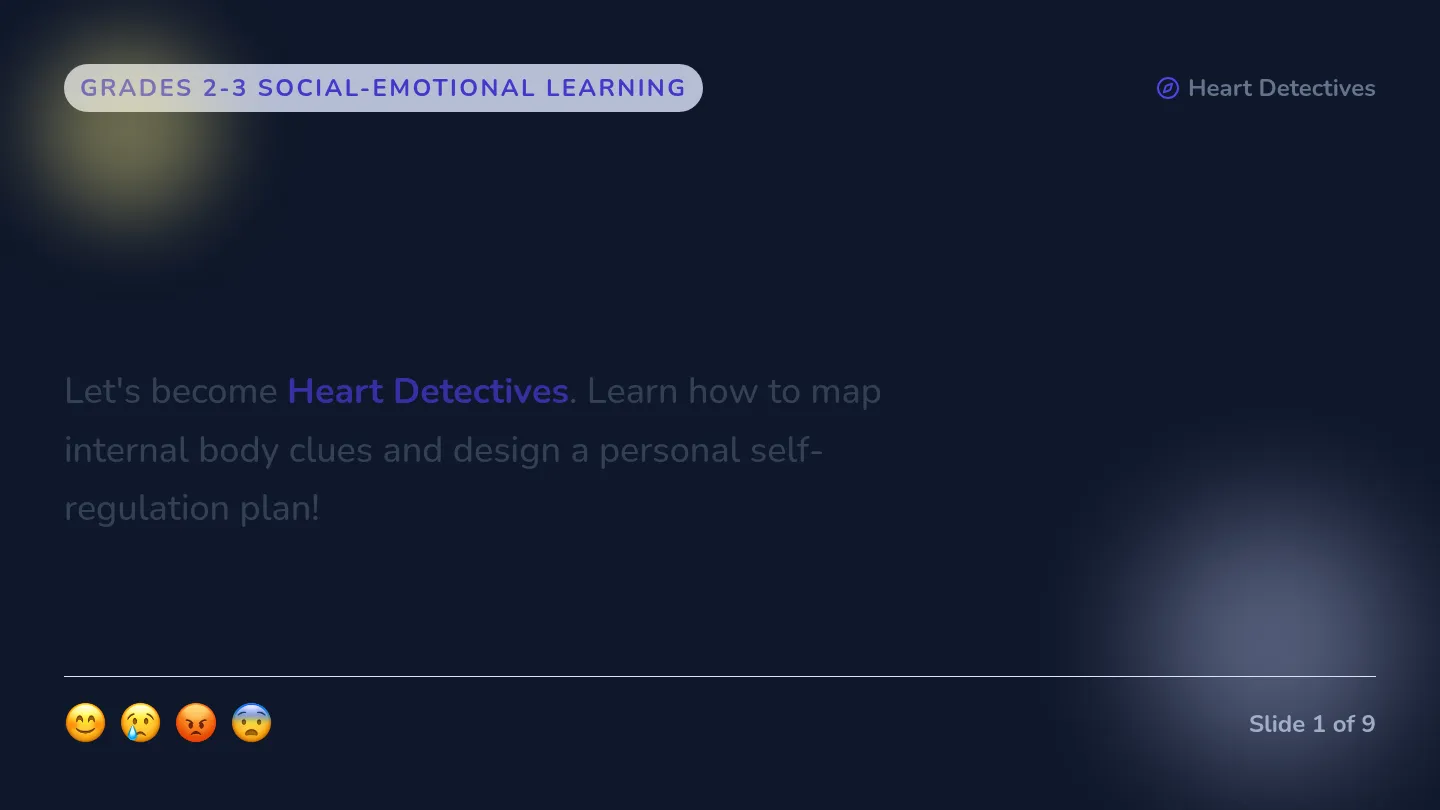
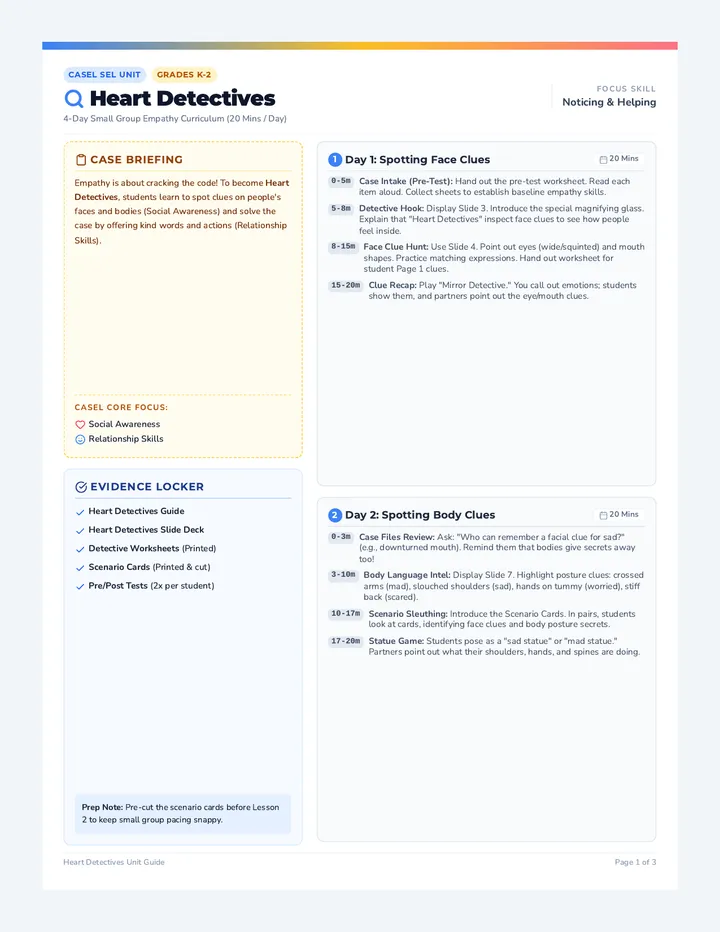
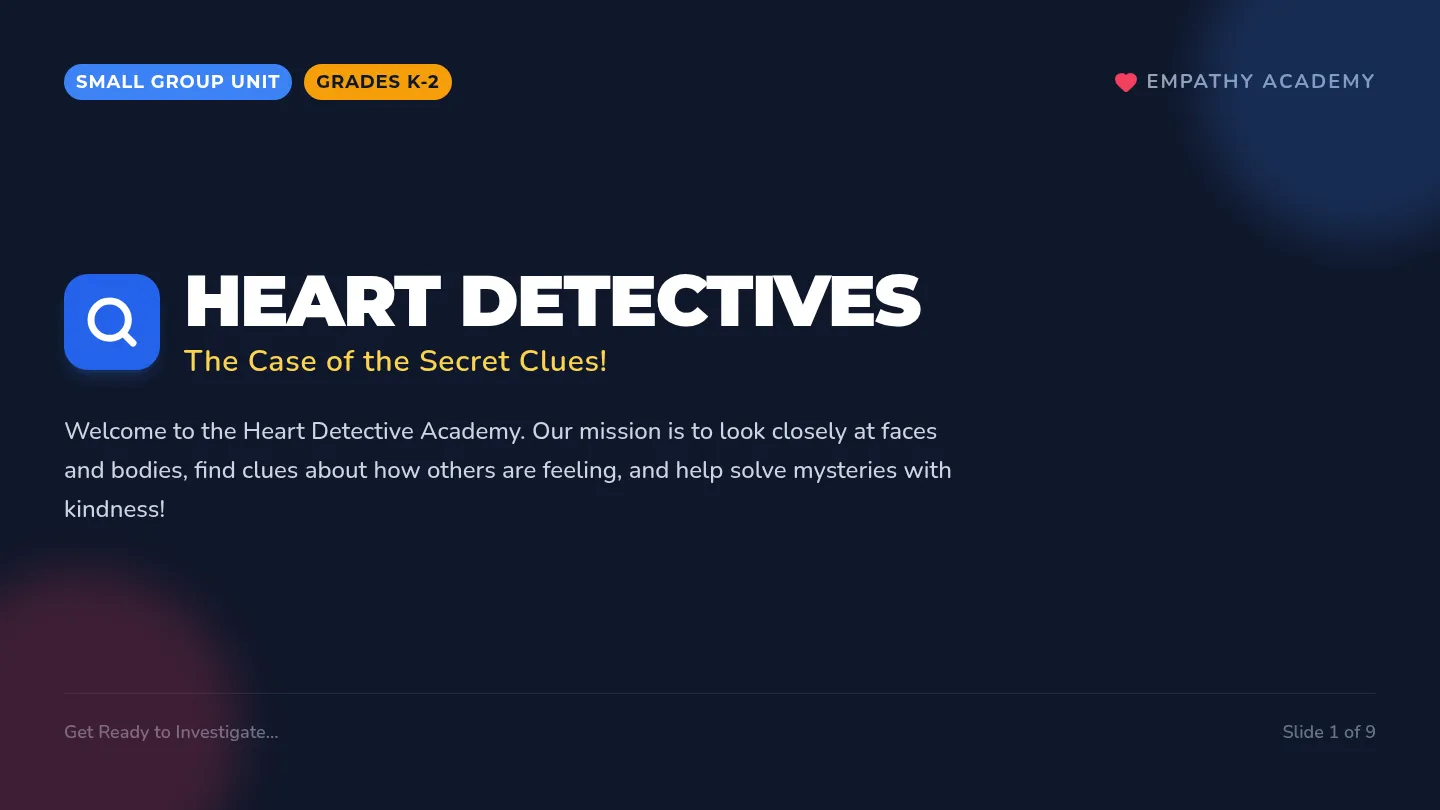
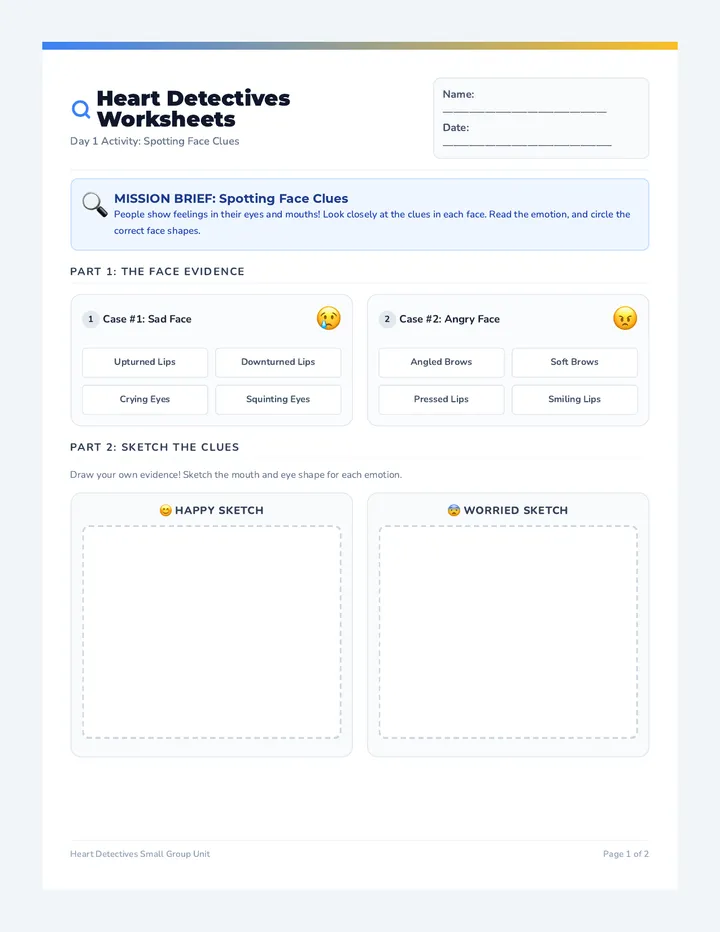
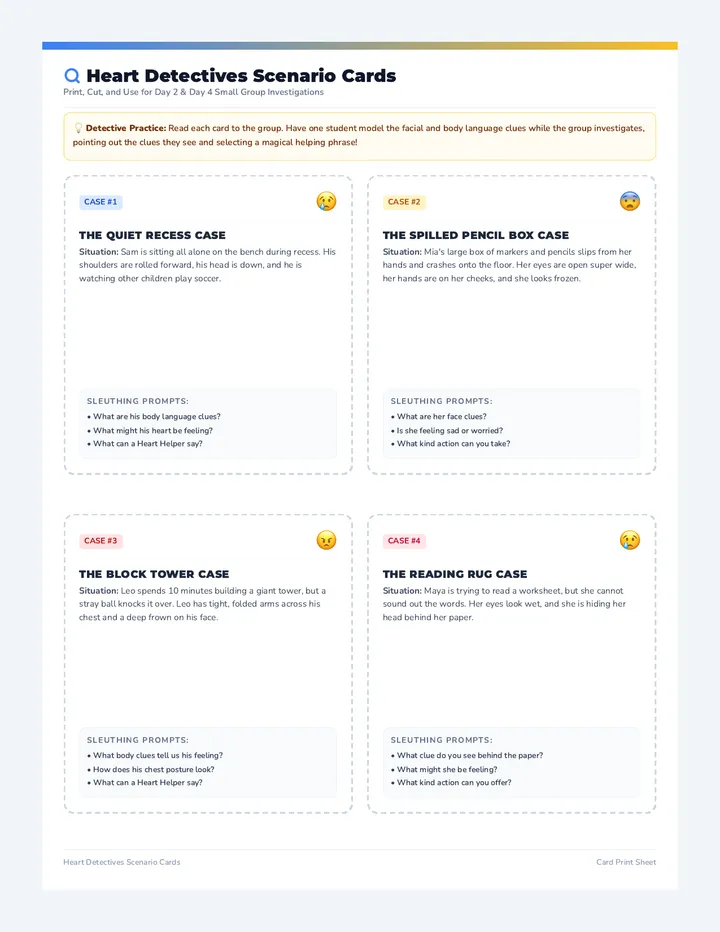
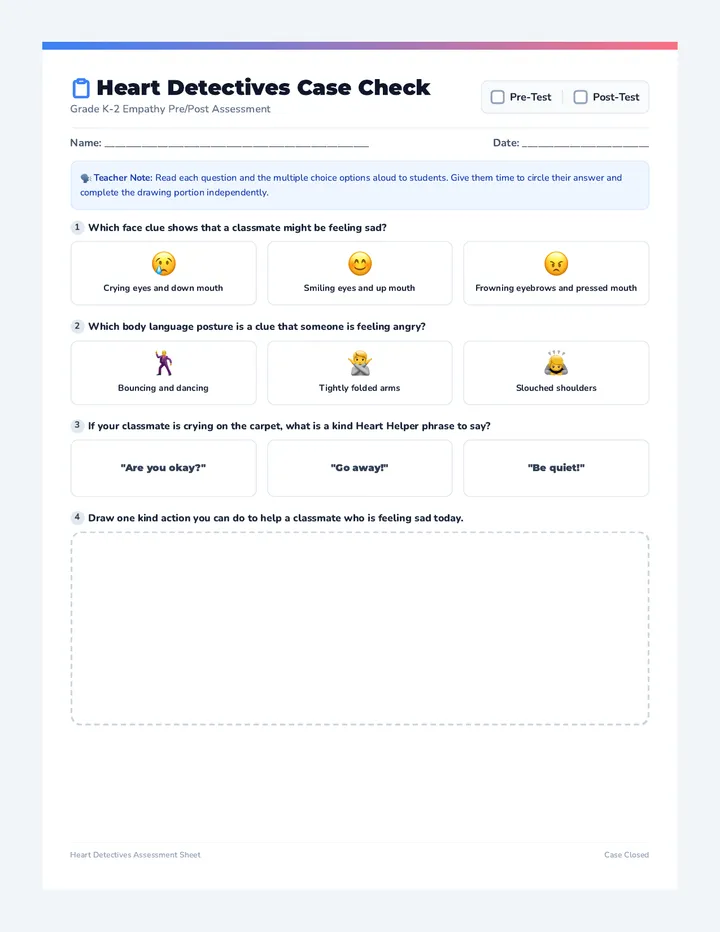
A comprehensive lesson on active listening and emotional intelligence, using a detective theme to help students identify social clues and respond with empathy.
A 30-minute lesson on self-regulation and accountability, teaching students how to 'repair the ripple' after making an unexpected choice. Includes a 'Recovery Lab' slide deck and a 'Ripple Repair Kit' reflection guide.
A 30-minute lesson on positive social engagement, teaching students the difference between 'Big Reactions' (unexpected attention) and 'Friendly Sparks' (expected social interaction). Includes an 'Attention Anchor' slide deck and a 'Friendly Spark' card activity.
A 30-minute lesson on vocal volume and classroom noise, teaching students to adjust their volume 'ripple' based on the classroom environment. Includes a 'Volume Lab' slide deck and a 'Volume Meter' activity.
A 30-minute lesson on personal space, teaching students to identify 'expected' vs. 'unexpected' physical distance and how their physical ripples affect others' comfort levels. Includes a 'Bubble Detective' slide deck and a 'Space Bubble' worksheet.
A comprehensive social-emotional learning lesson that teaches students how to categorize the 'size' of problems and match them with proportional reactions and effective solutions through interactive role-play and visual scales.
A hands-on lesson teaching students to identify their emotional zones and practice self-regulation strategies, specifically using 'break cards' to navigate the Yellow Zone.
A lesson teaching students to prioritize academic tasks and manage impulses using a 'Mission Control' theme, including a self-monitoring checklist and guided instruction.
A collection of resources to help a first-grade student understand personal space, navigate classroom transitions, and build healthy boundaries with friends.