A lesson focused on empathy and intergenerational connection where students write letters to local nursing home residents. Students explore the concept of empathy, the value of cross-generational friendships, and the impact of written communication.
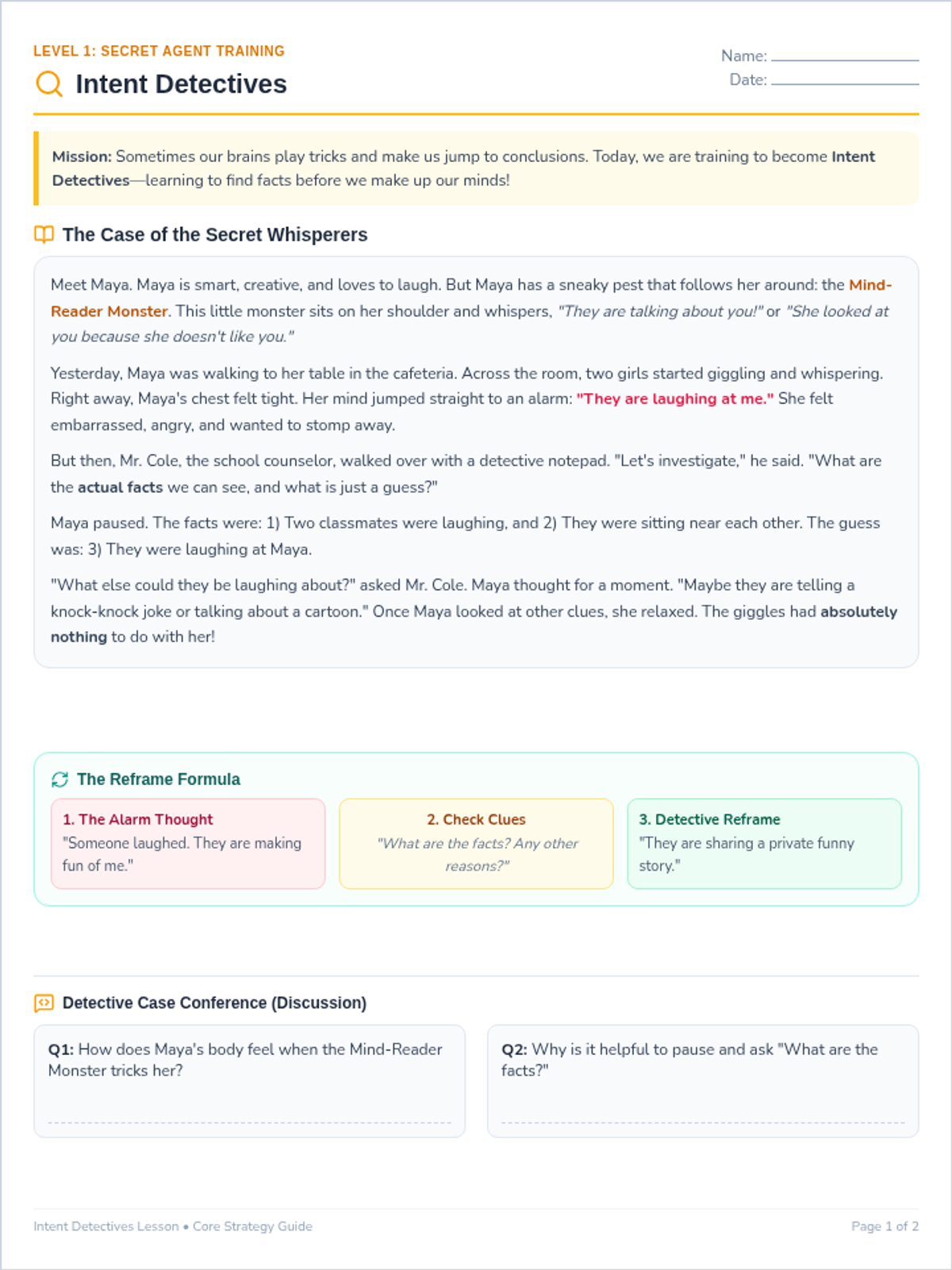
A 10-minute 1-to-1 social-emotional learning lesson designed to help students stop assuming negative intentions in others. The lesson uses a personalized social story and active role-play scenarios to practice reframing common social situations, like hearing laughter or seeing someone look their way.
A 1-to-1 social-emotional learning lesson focusing on empathy and perspective-taking through real-world scenarios. Students practice putting themselves in the shoes of both classmates and teachers to understand different feelings and actions.
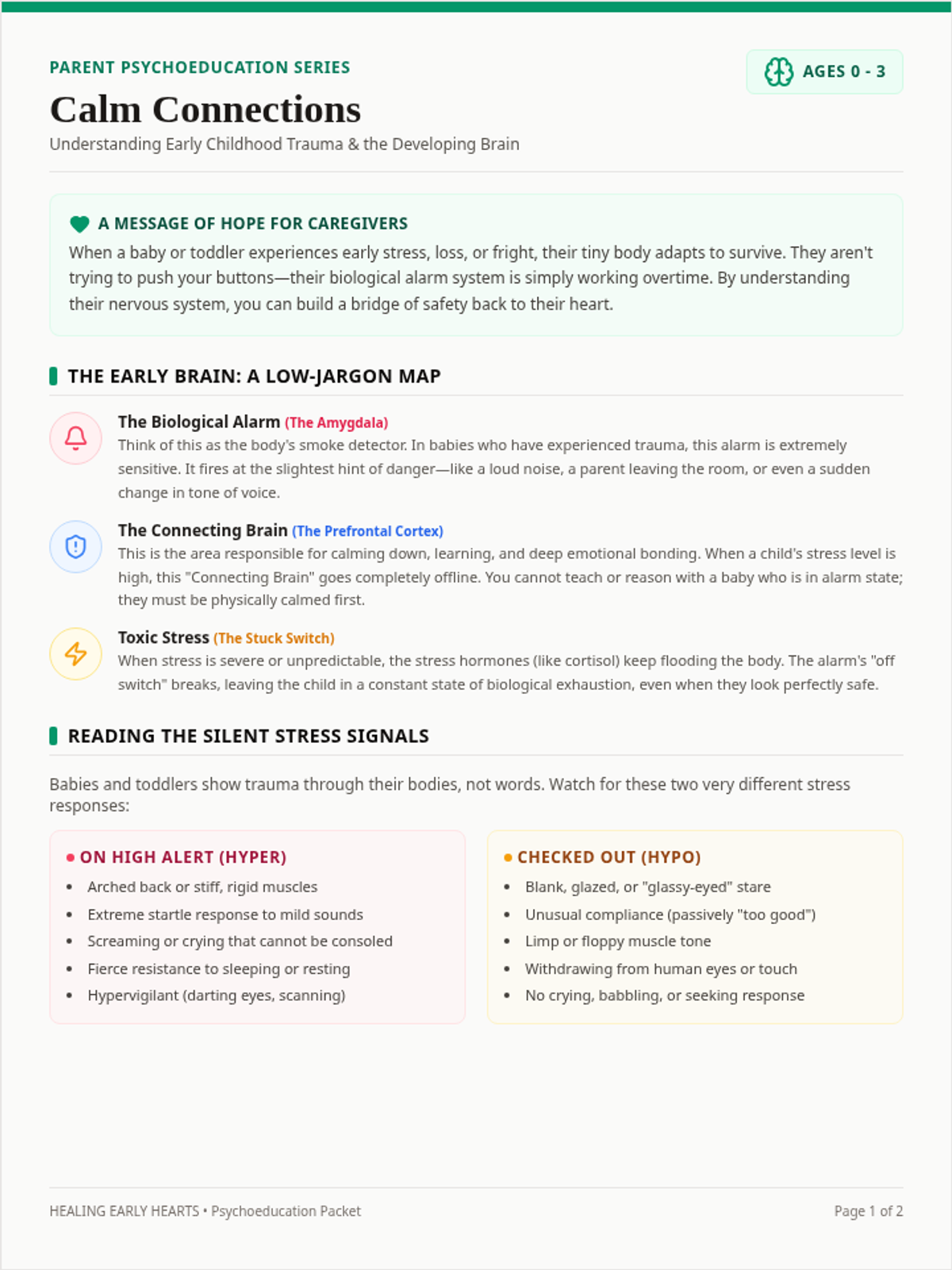
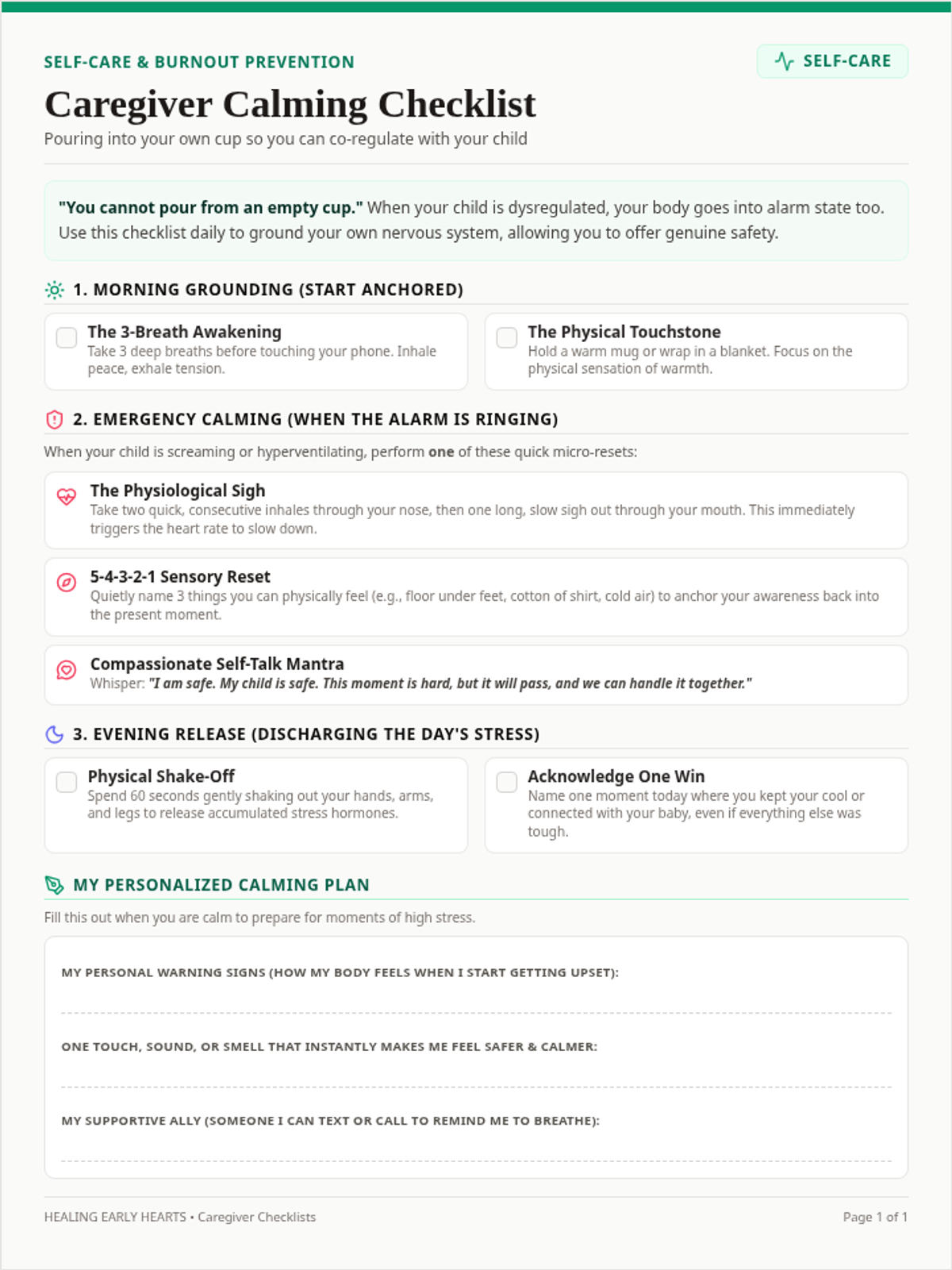
A compassionate parent psychoeducation resource packet focusing on the neurobiology of early childhood trauma (ages 0-3). It translates complex brain science into accessible, low-jargon concepts like toxic stress and nervous system dysregulation, providing practical caregiver co-regulation strategies and a dedicated self-care checklist.
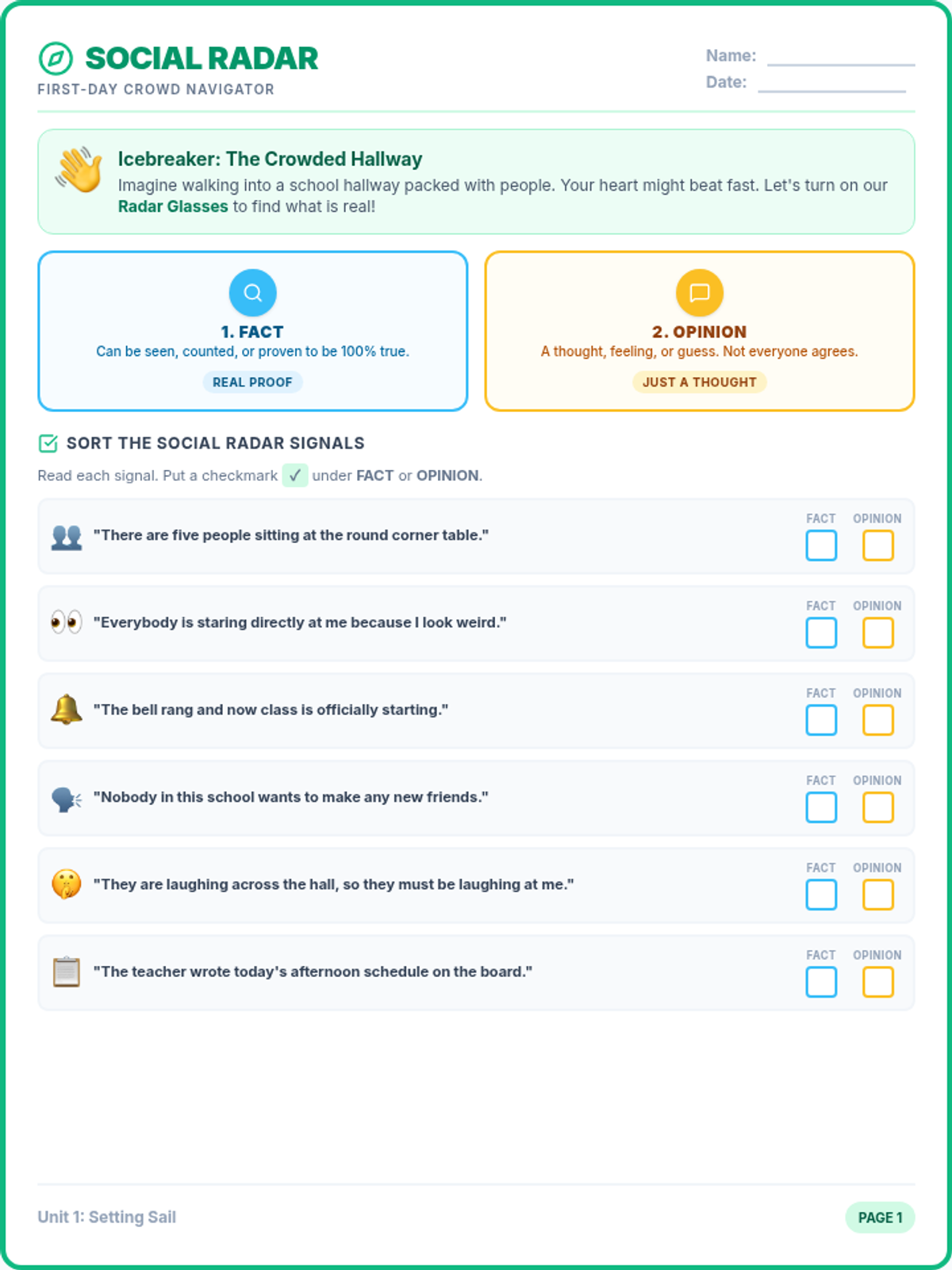
A highly visual lesson helping students navigate social anxiety in new environments by distinguishing facts from opinions to make empathetic, responsible choices.
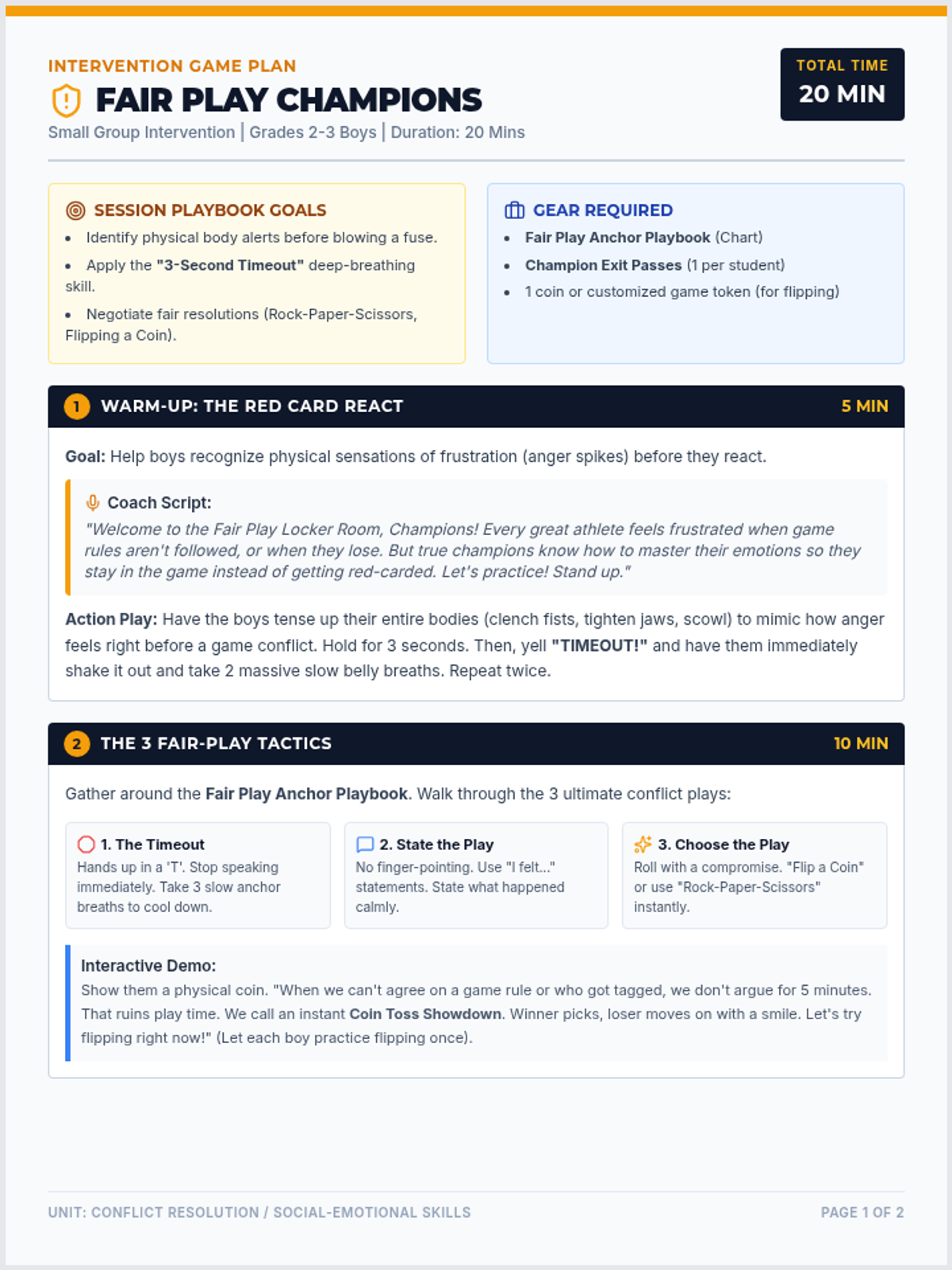
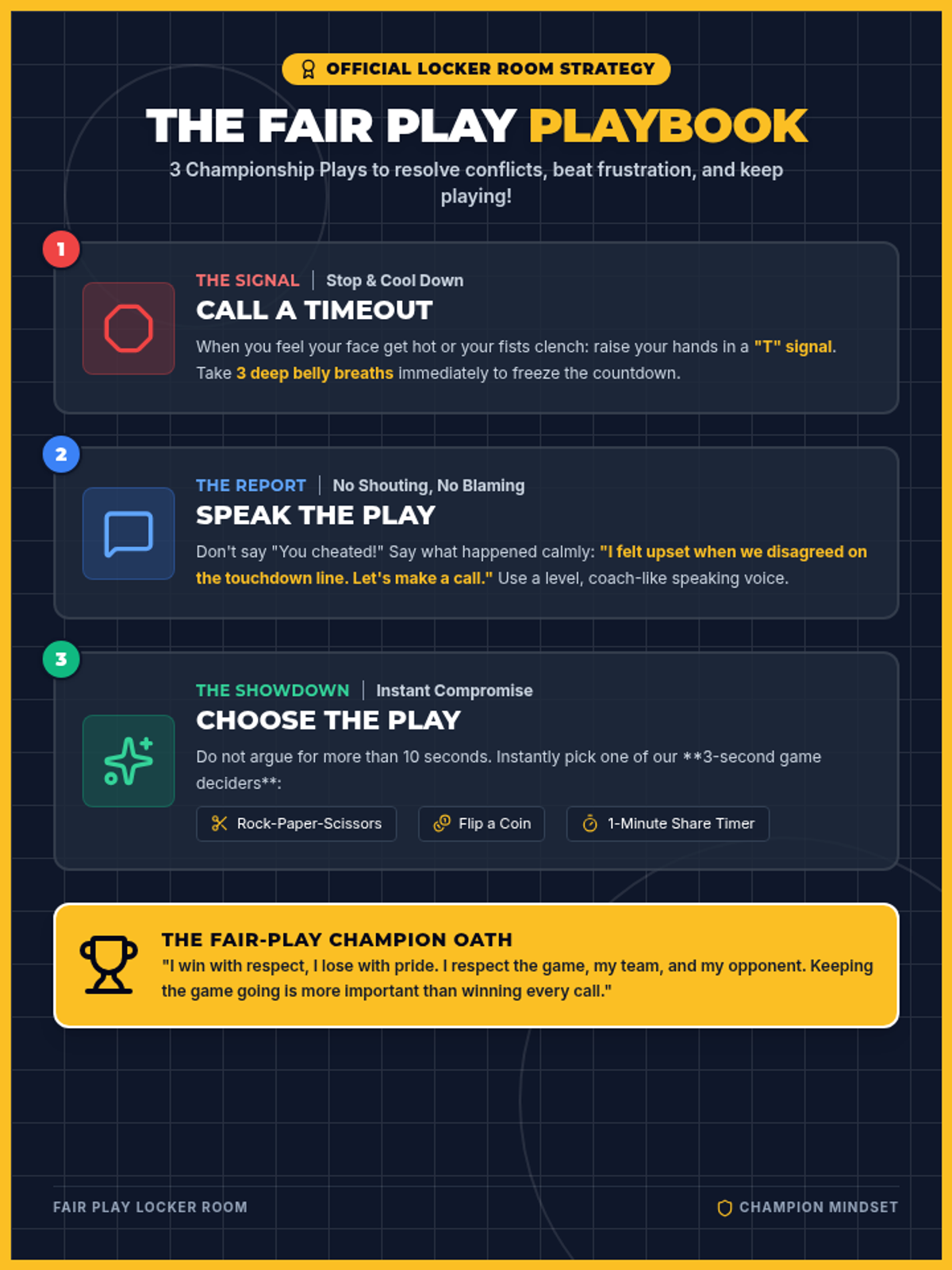
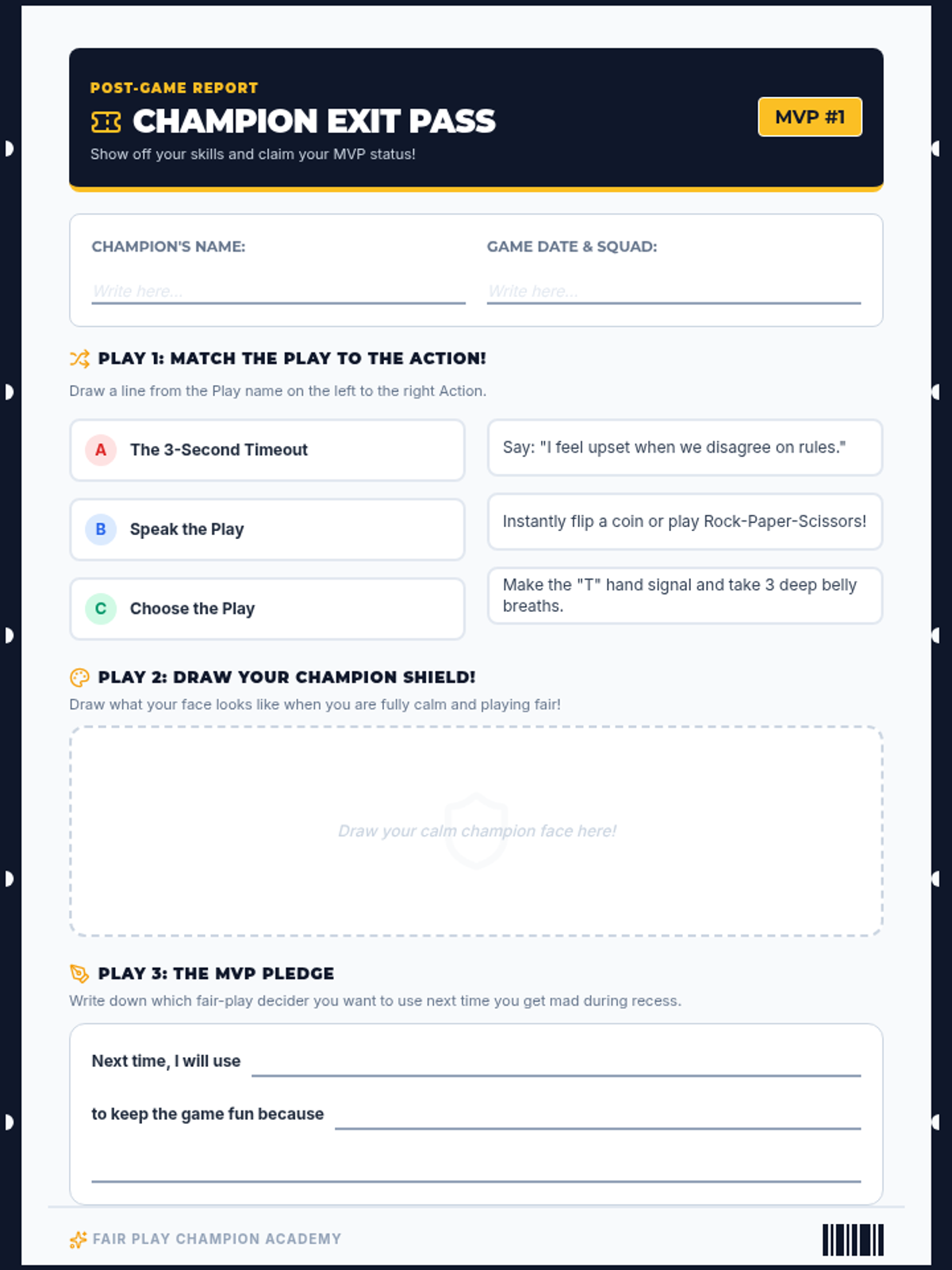
A highly interactive, 20-minute small group intervention lesson kit for grade 2-3 boys focusing on resolving game-time conflicts and cooling down using a sports-playbook theme.
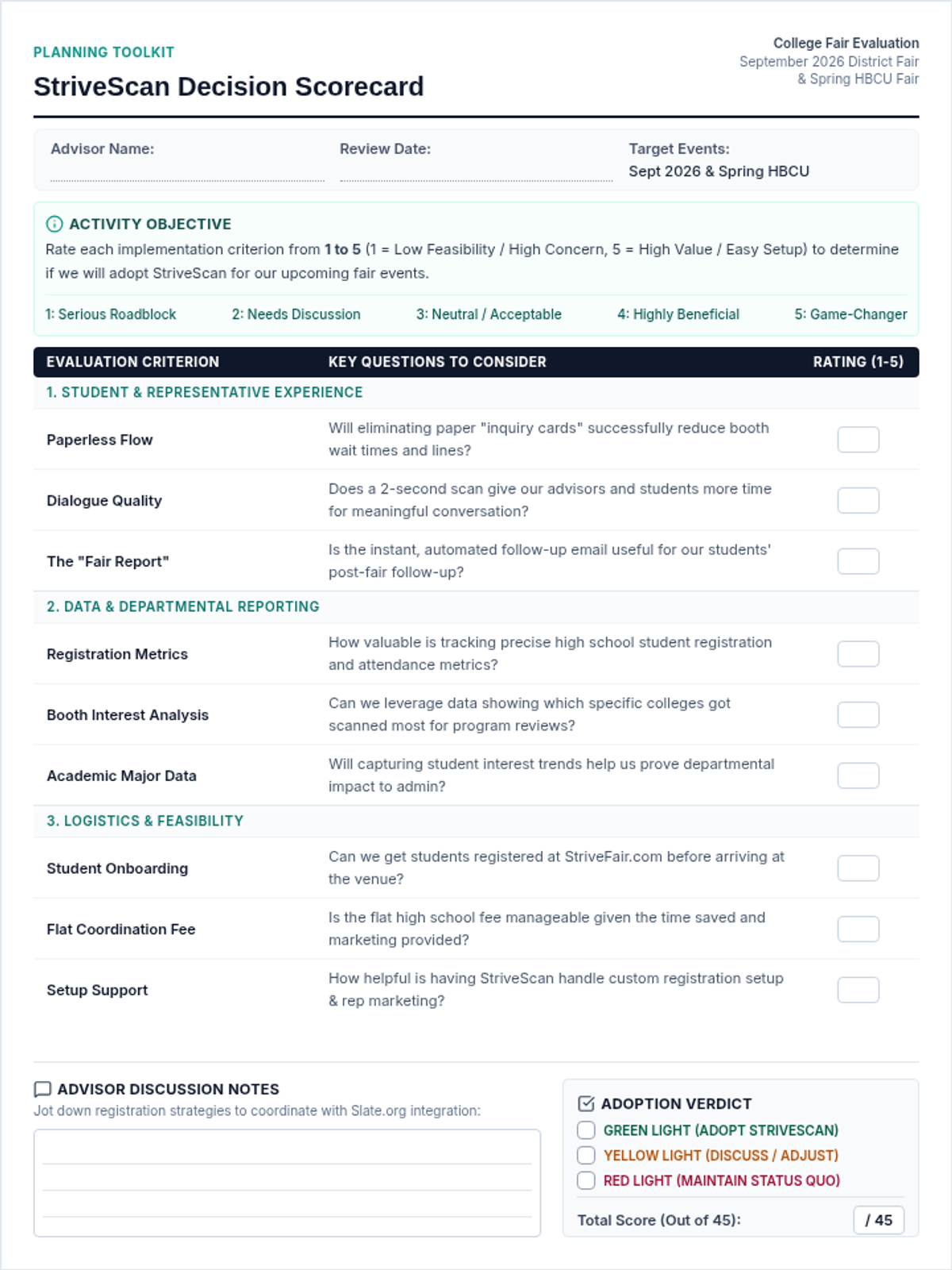
A brief lesson to help college and career advisors evaluate and plan the implementation of StriveScan for their upcoming fall college fair.
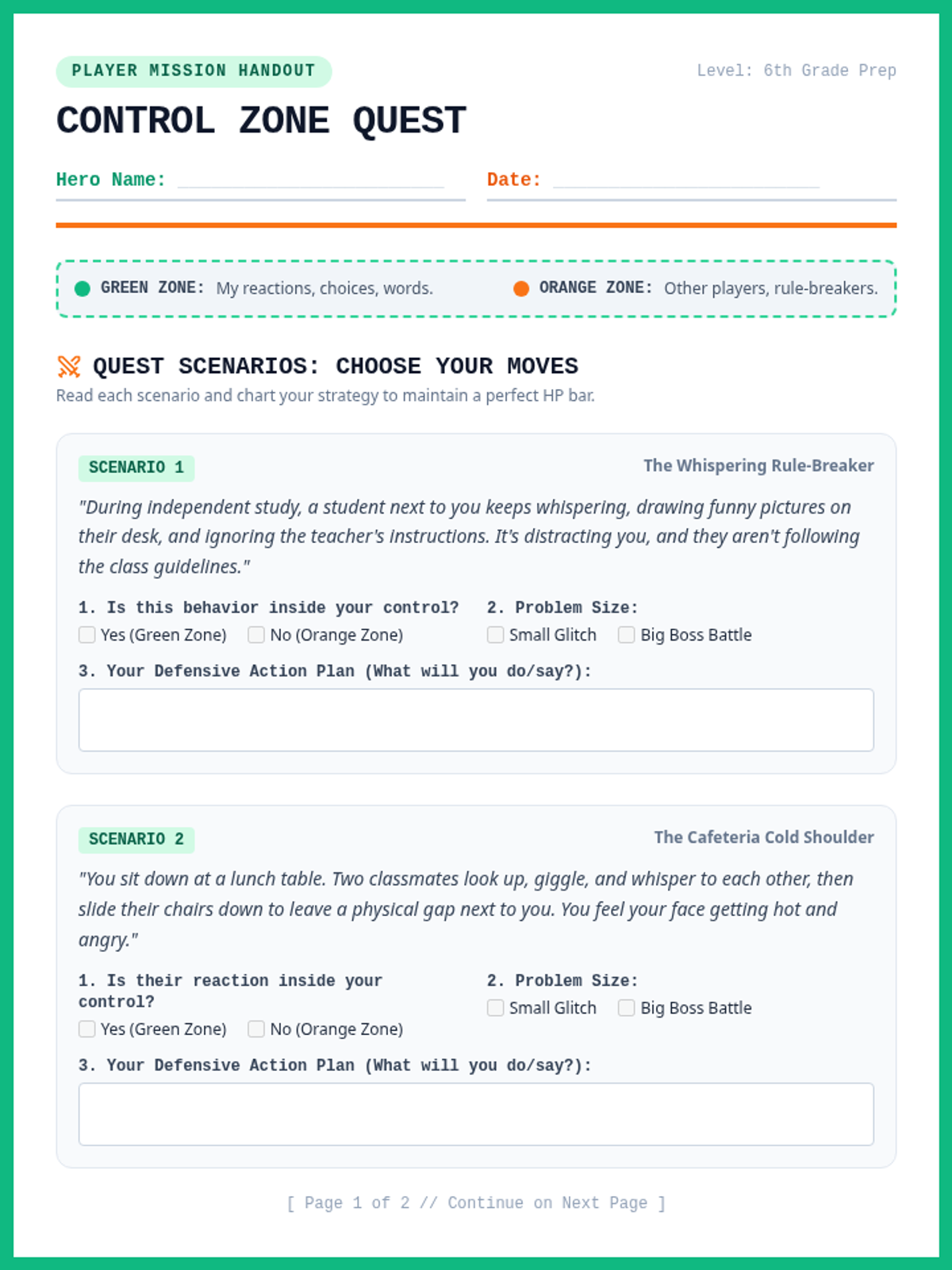
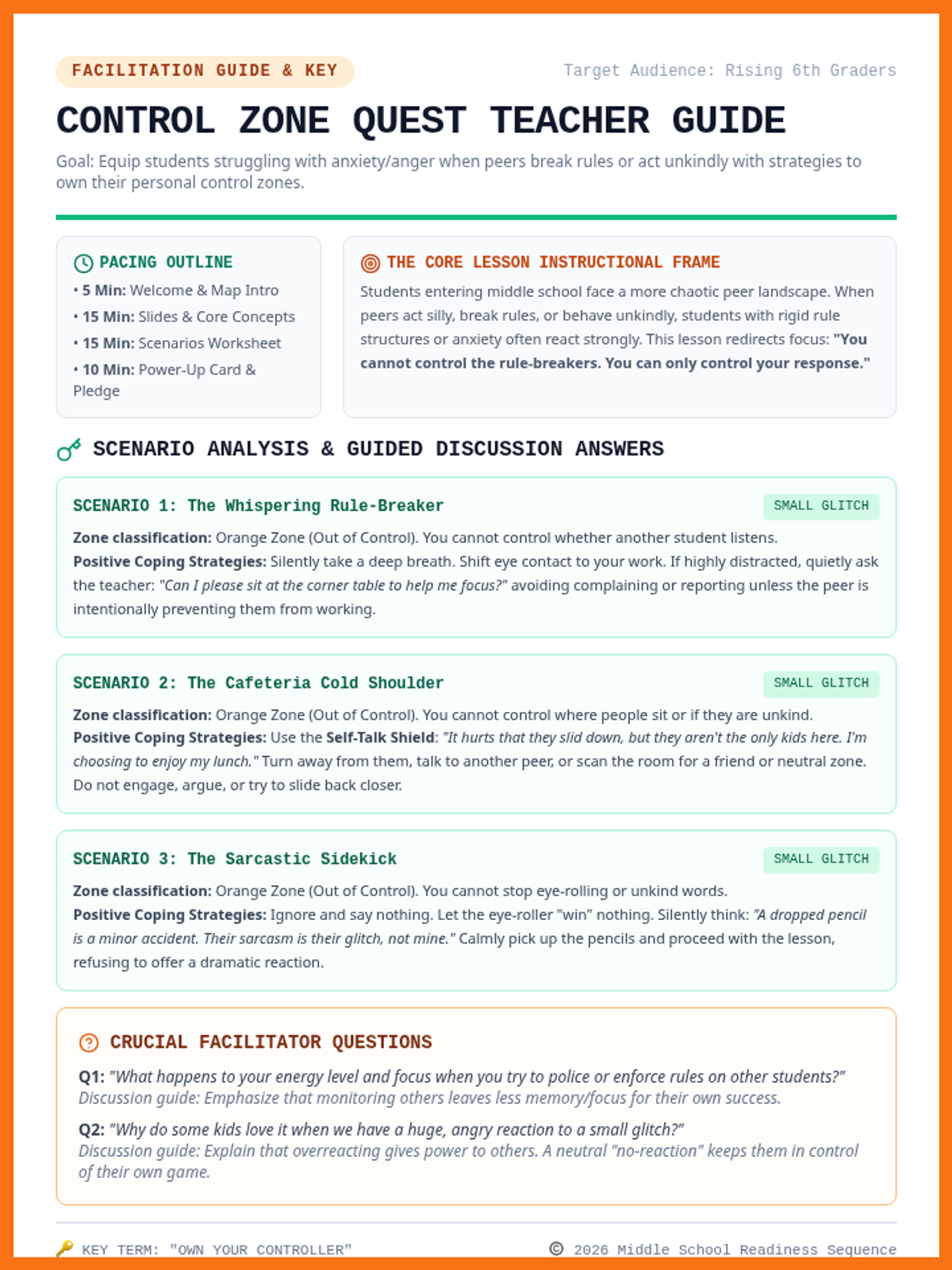
A transition lesson for rising sixth graders to master the Circle of Control and distinguish between big and small problems. Students learn practical coping strategies for peer conflicts and rule-breaking using a gamified quest theme.
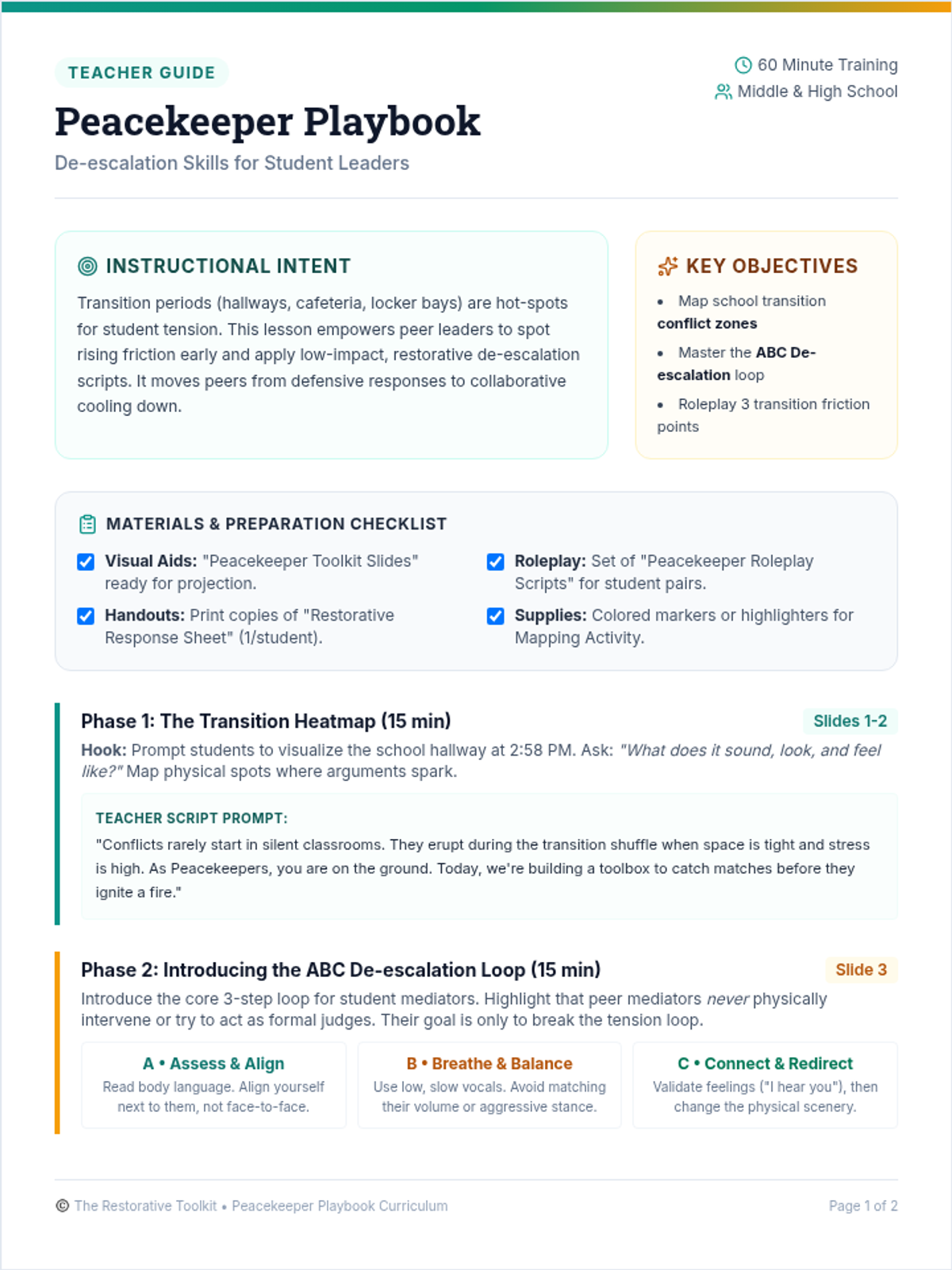
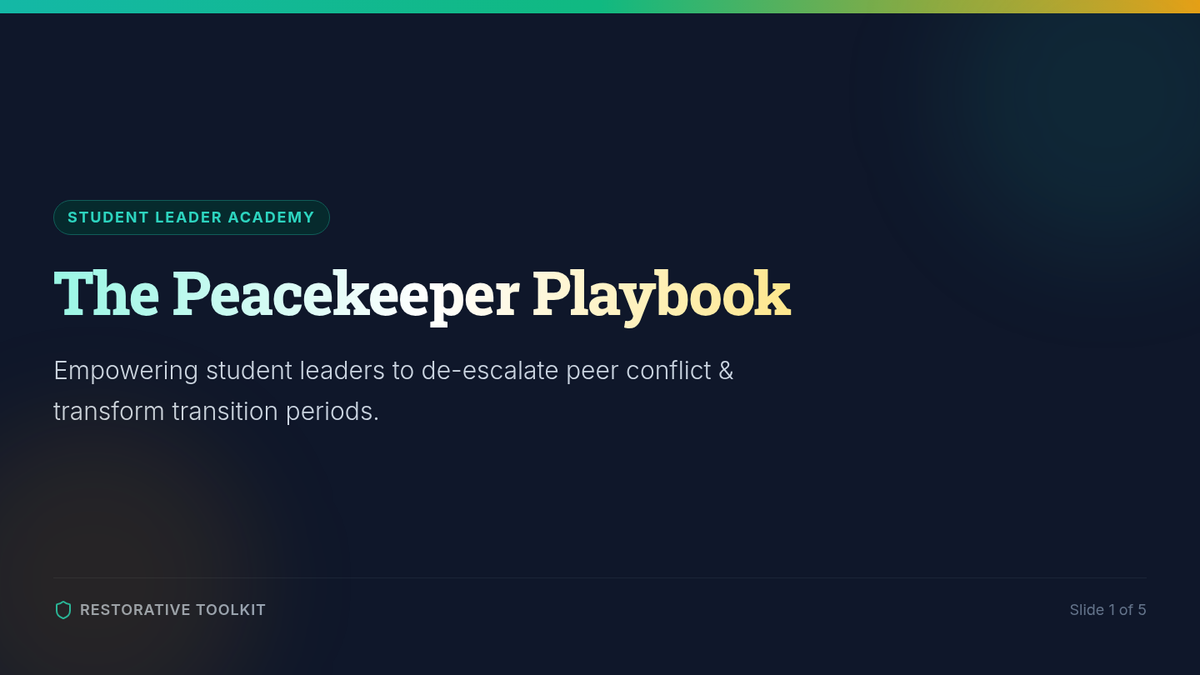
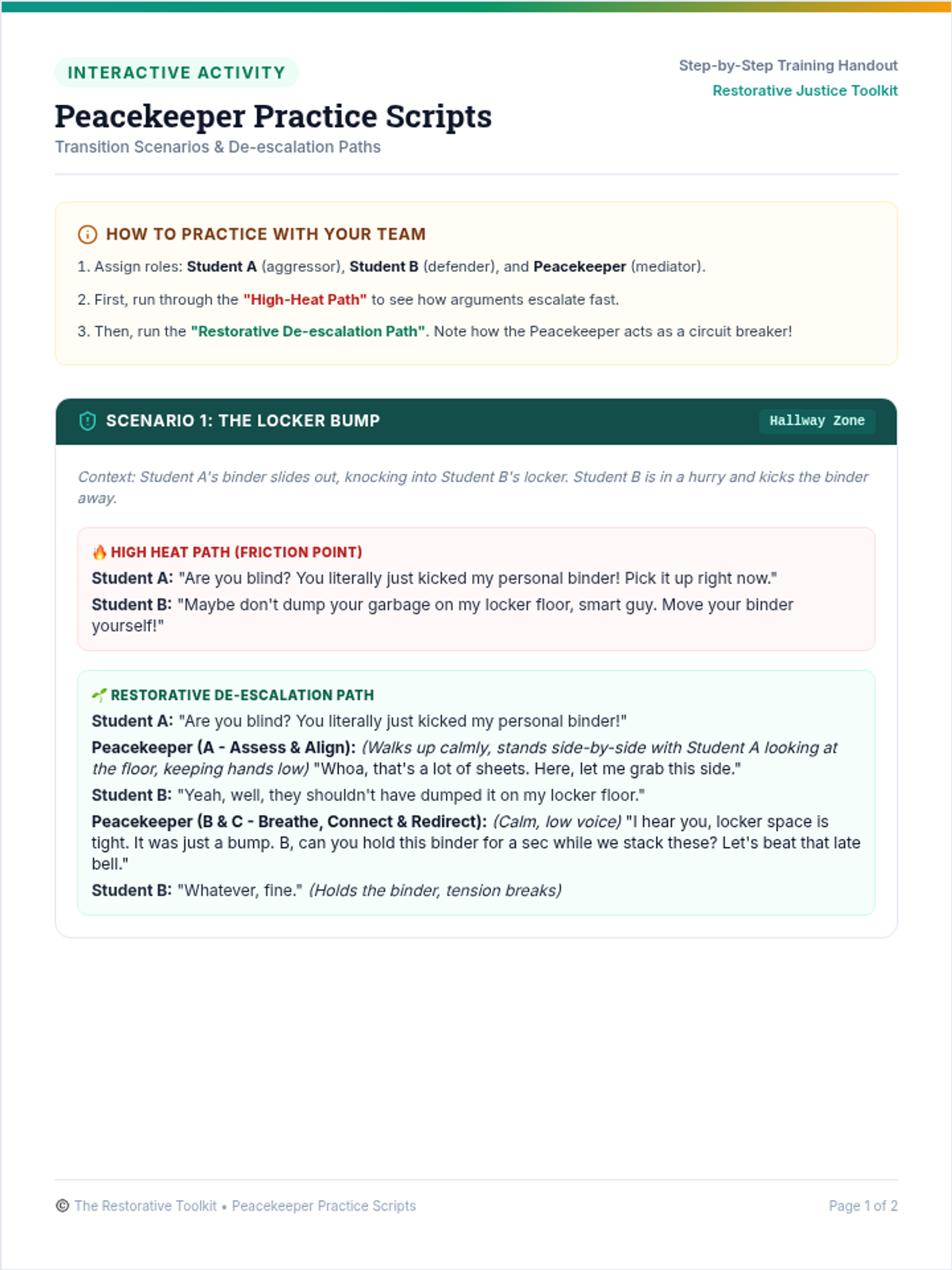
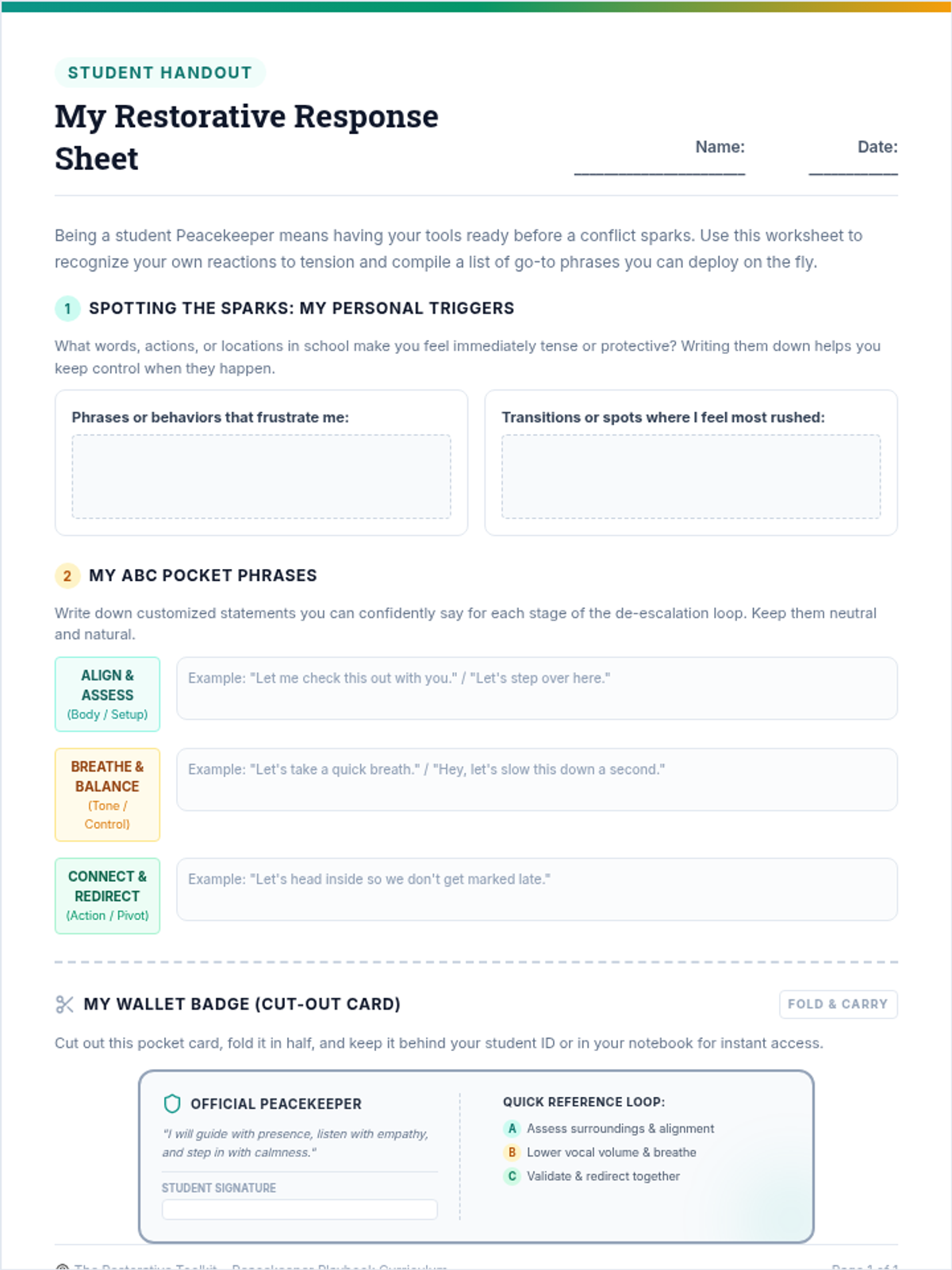
An interactive, student-led curriculum empowering middle and high school leaders to de-escalate minor peer conflicts during high-stress transition periods, building sustainable restorative justice skills.
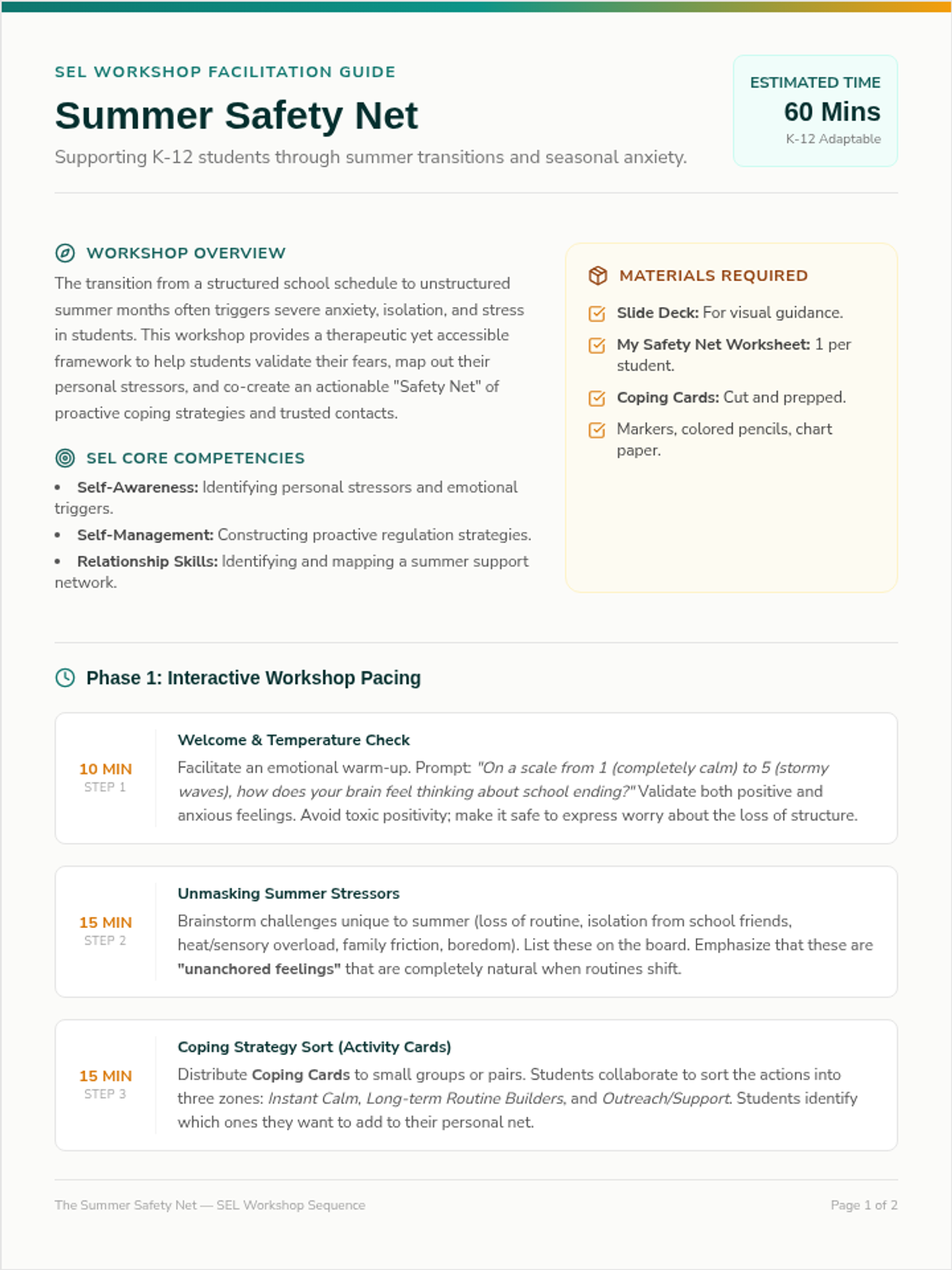
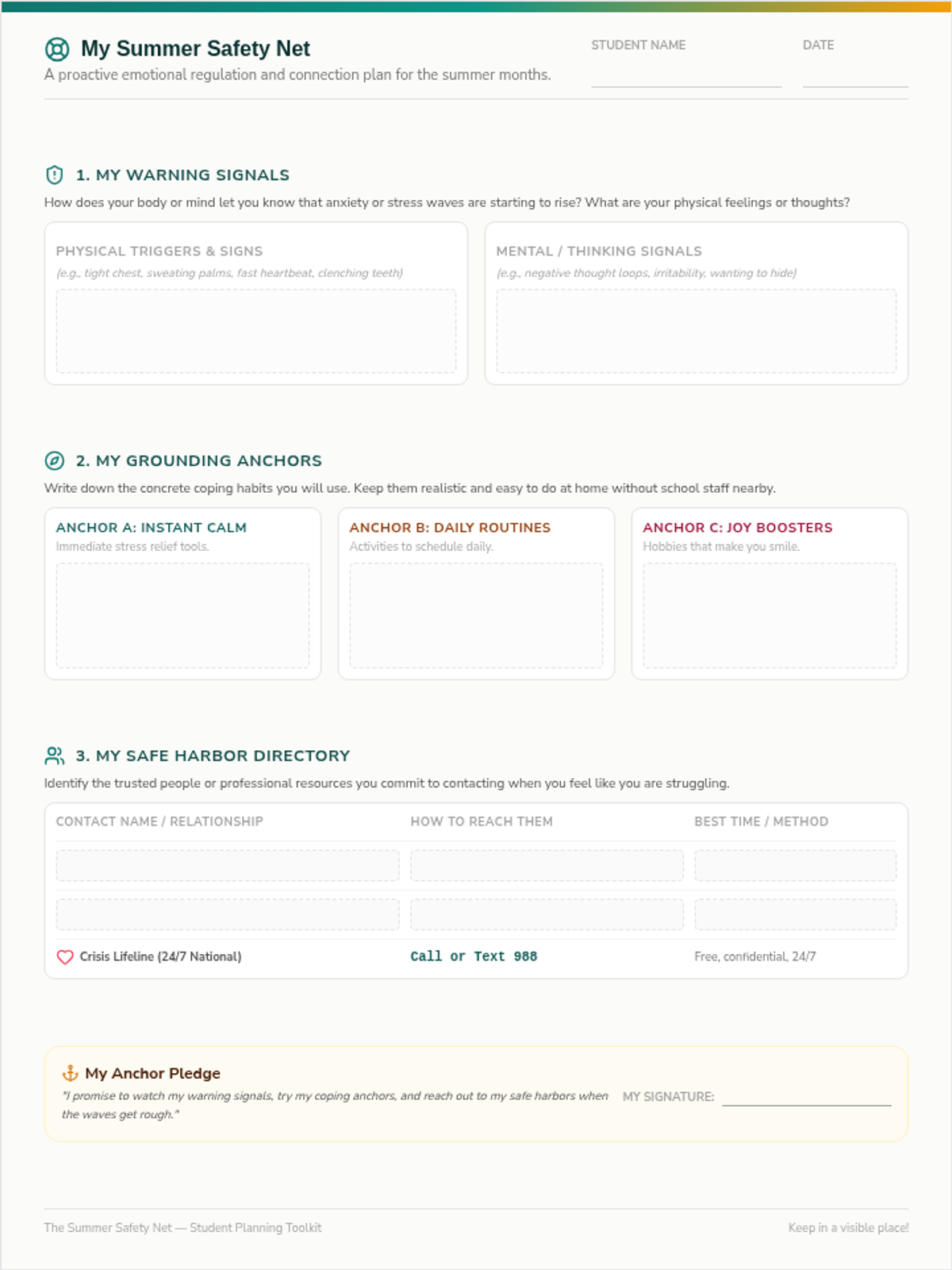
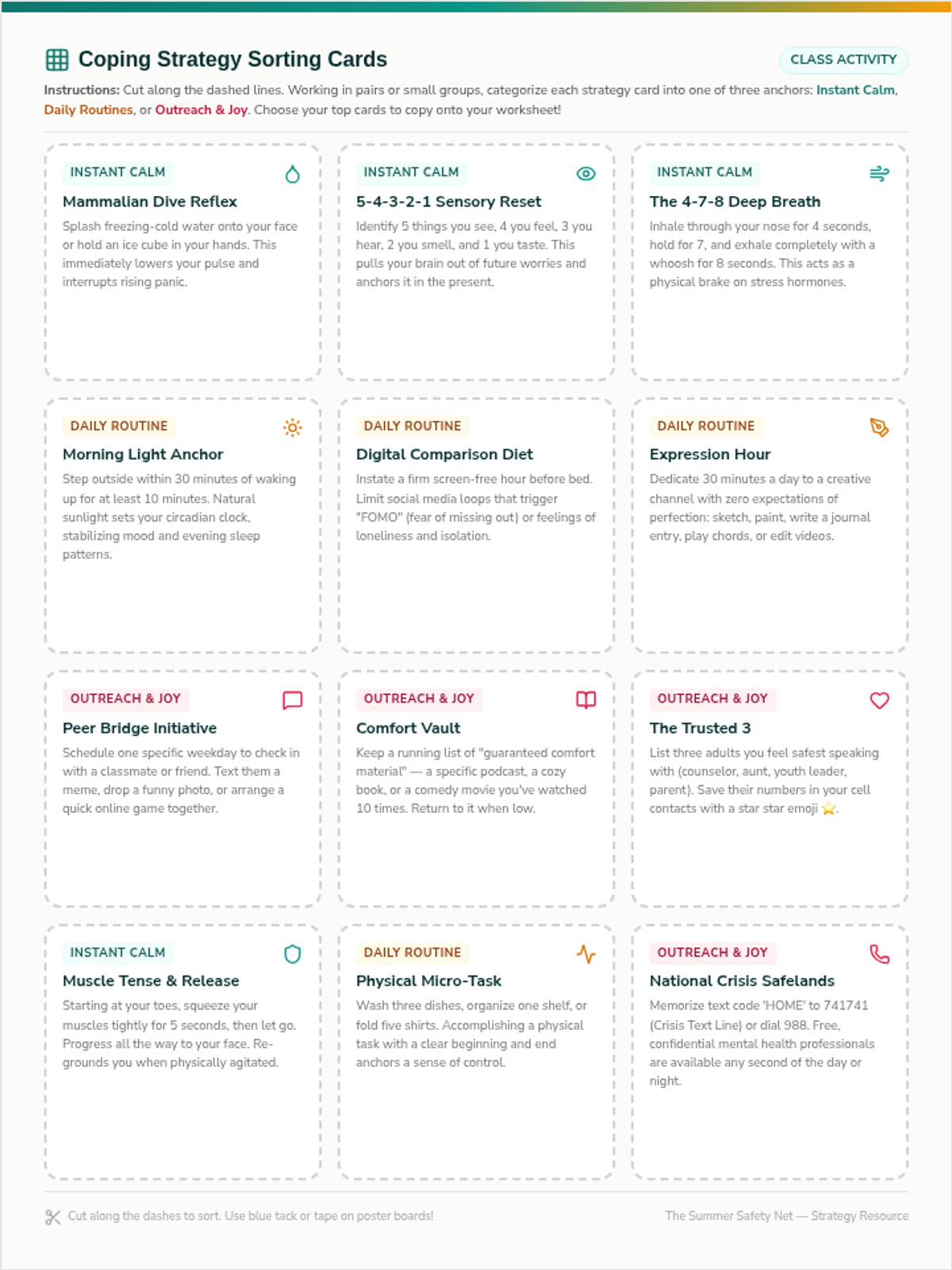
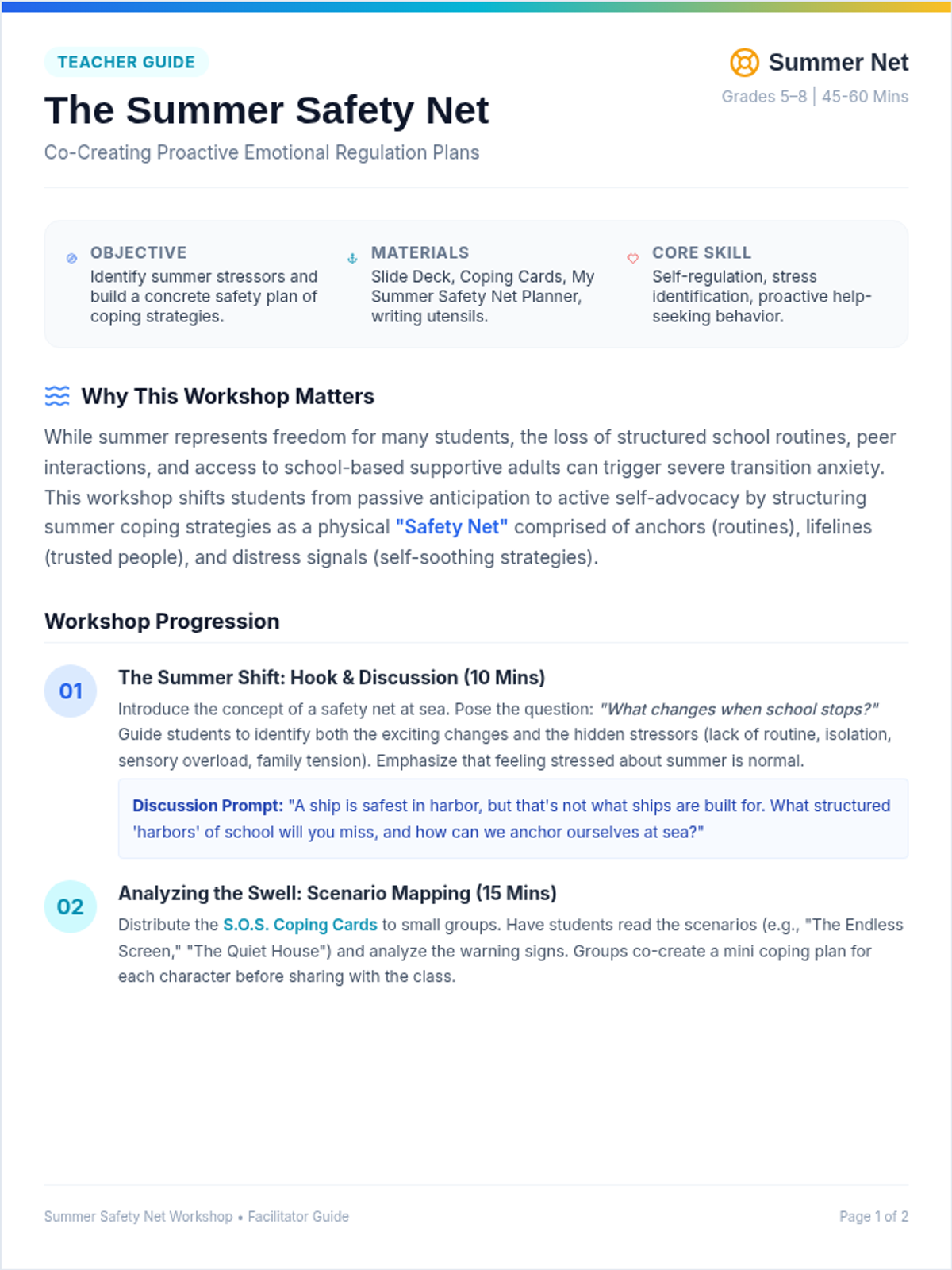
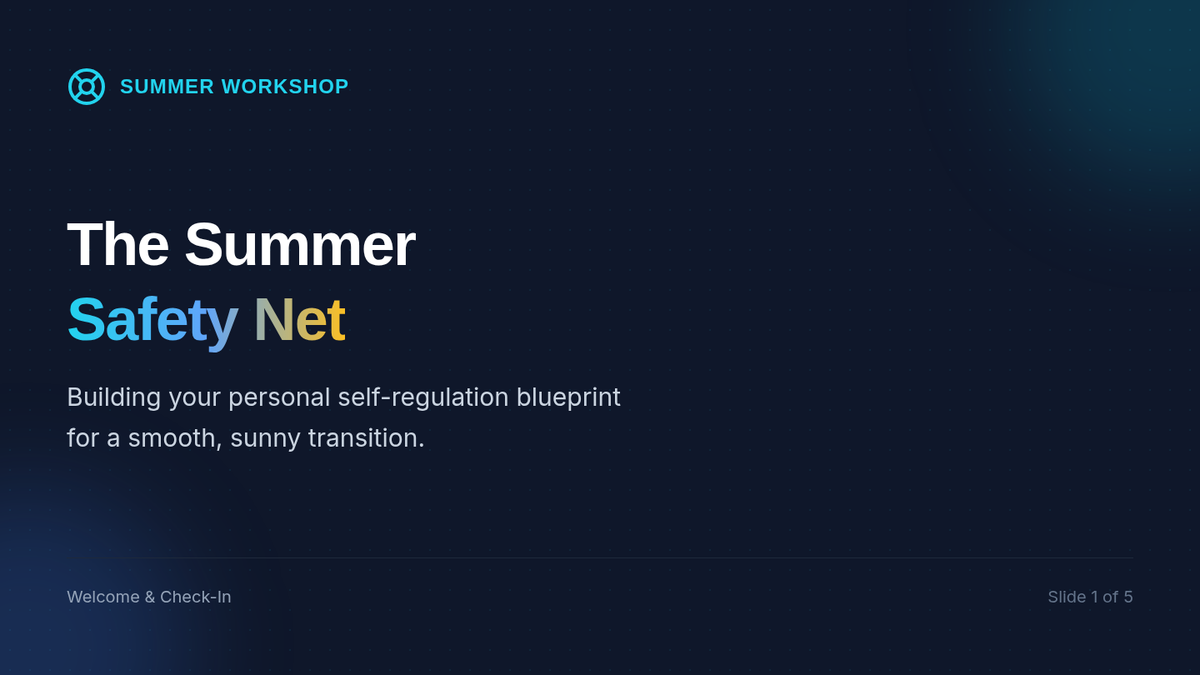
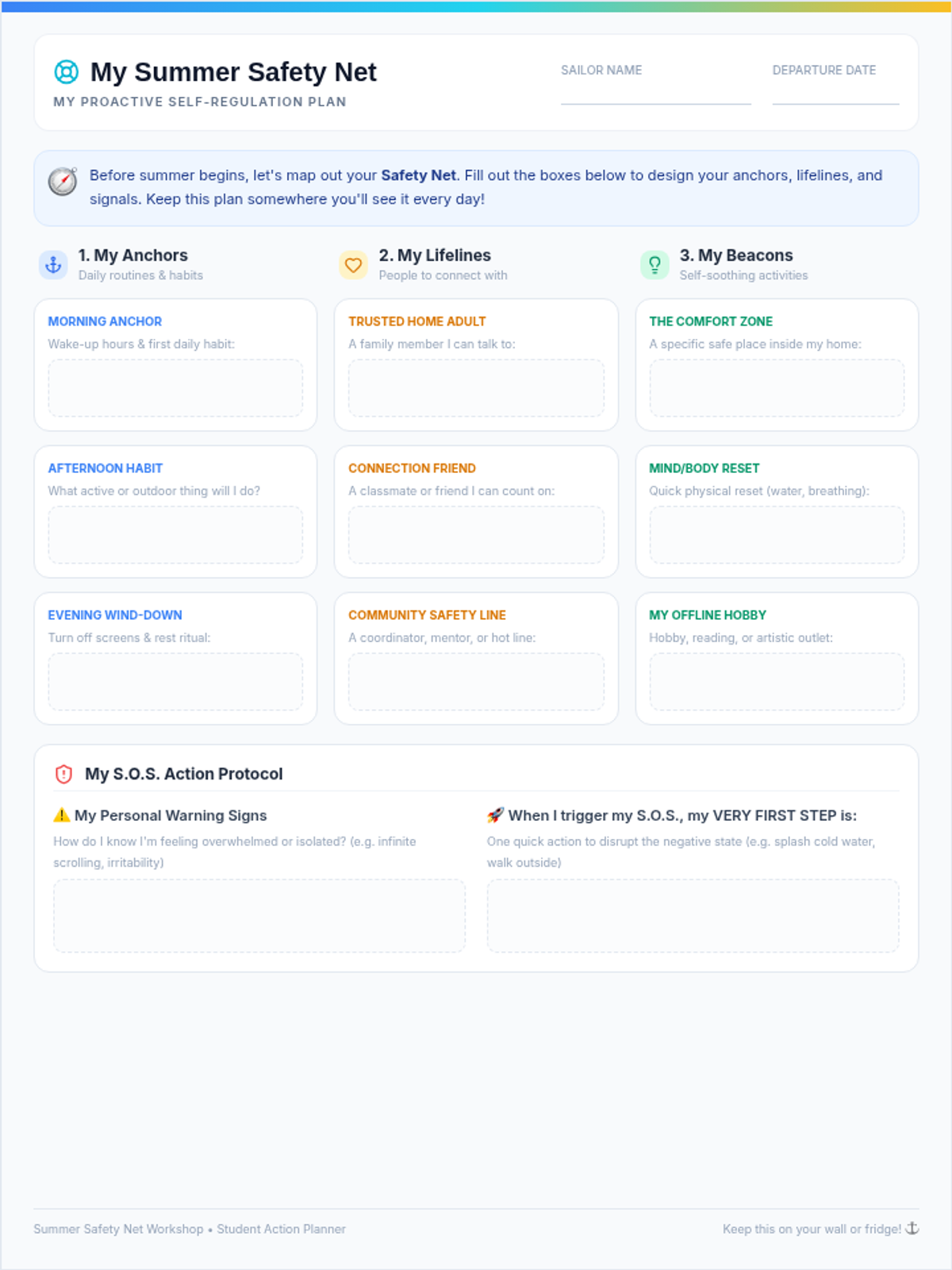
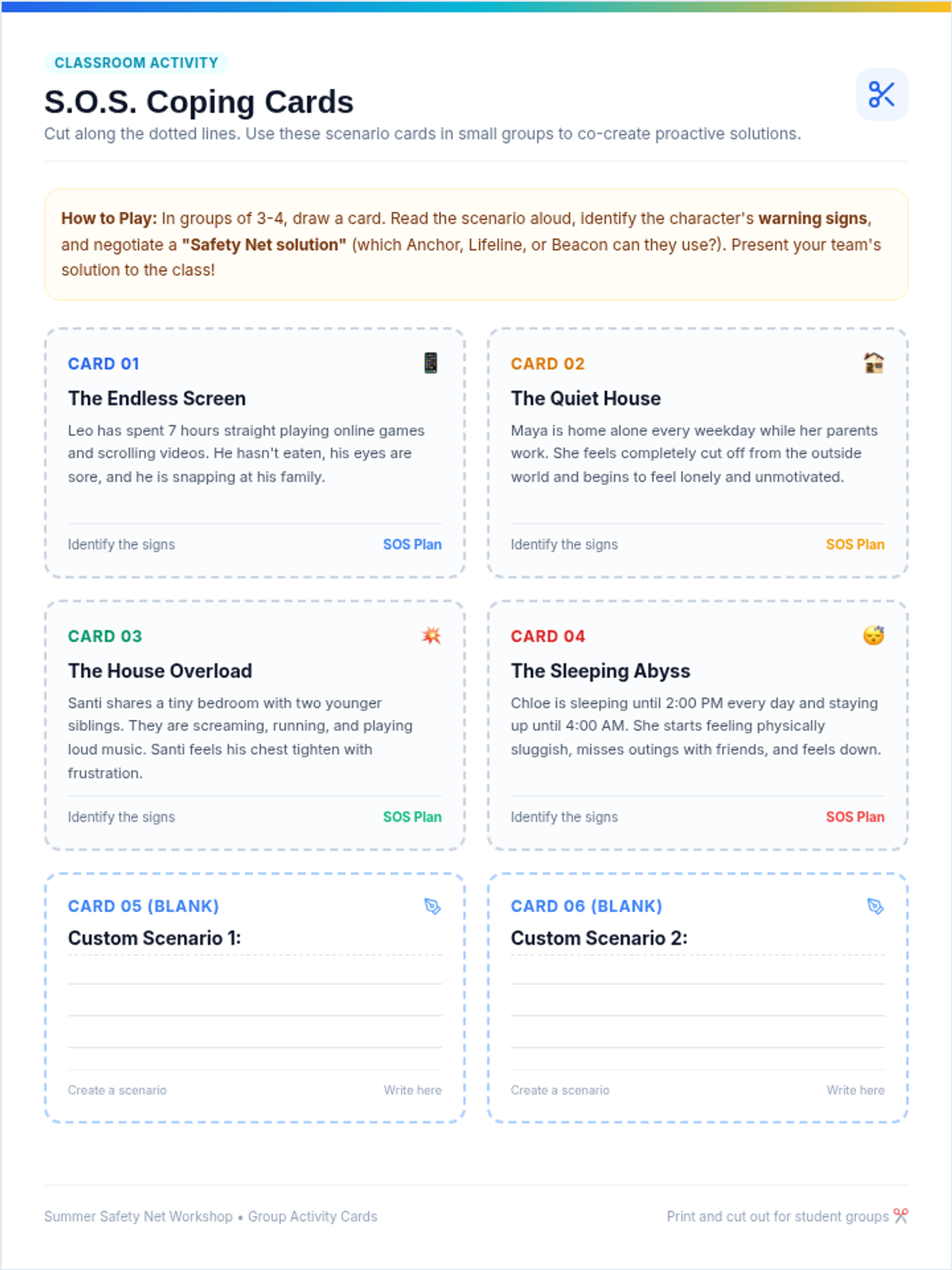
A collaborative mental health workshop designed to help students navigate summer transition anxiety by identifying stressors, mapping coping strategies, and co-creating a personalized proactive emotional regulation plan.
A collaborative workshop designed to help students identify summer stressors and co-create proactive plans for emotional regulation outside of school. This lesson builds concrete coping strategies and 'safety nets' for students transitioning to summer break.
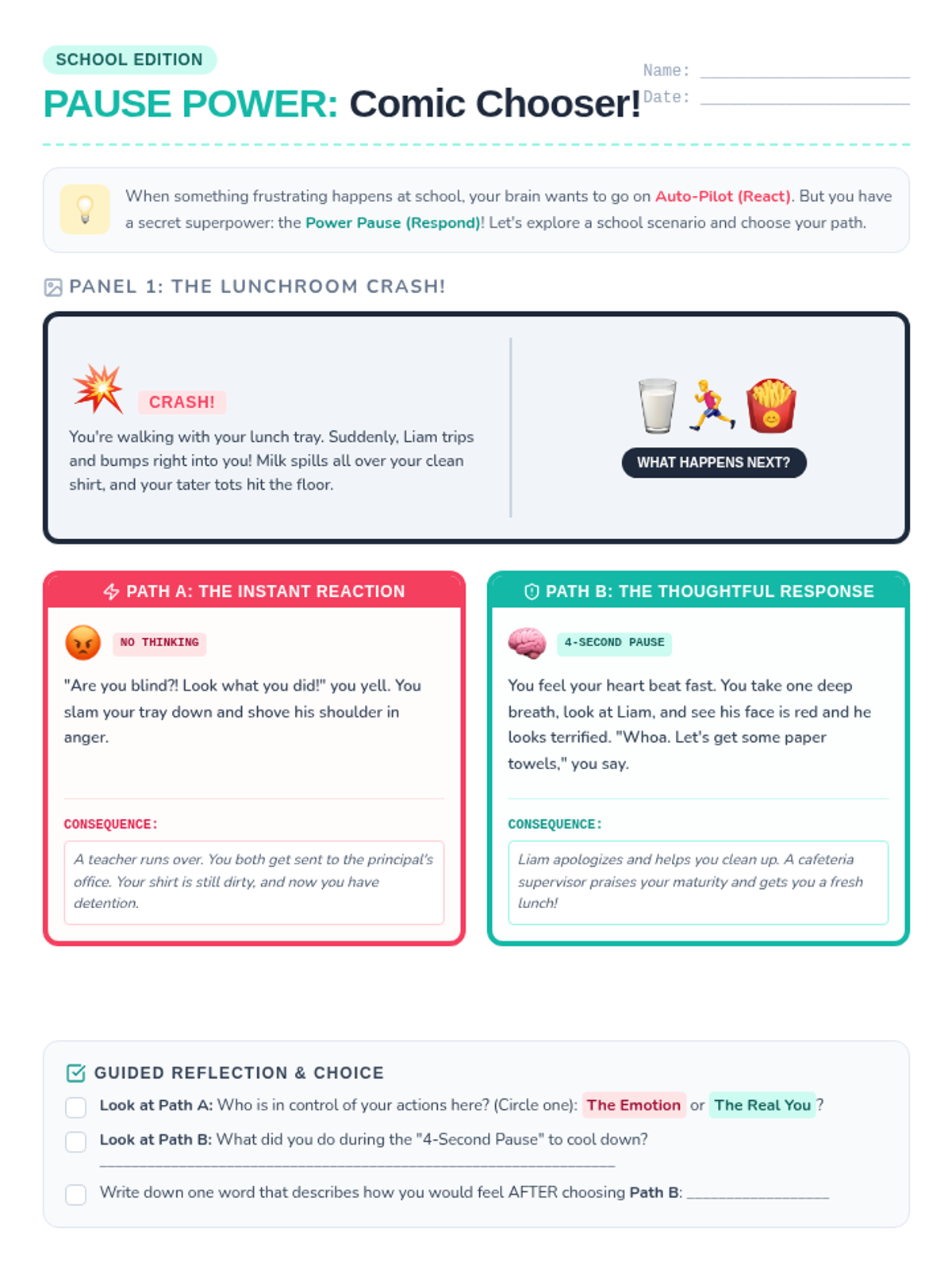
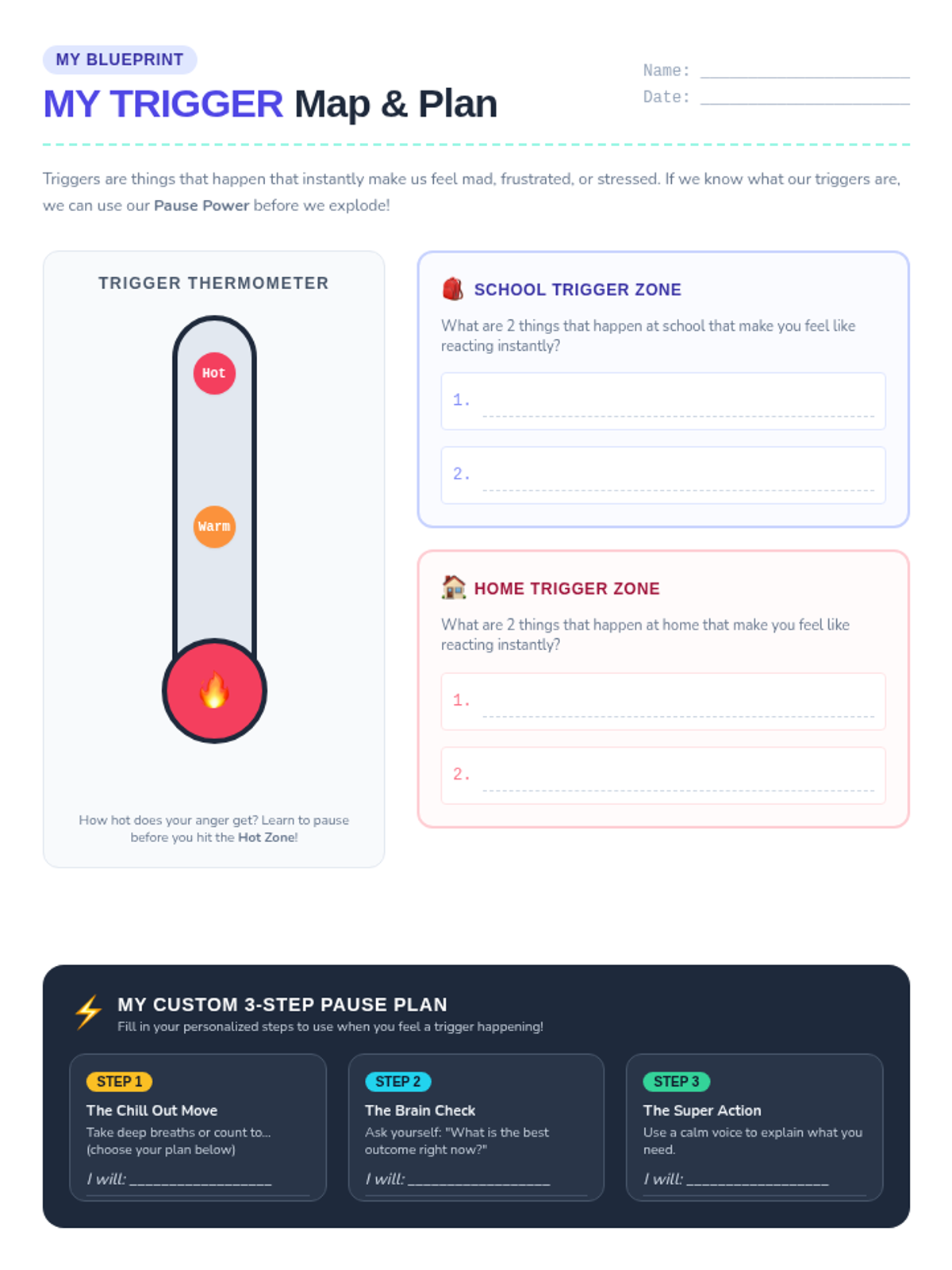
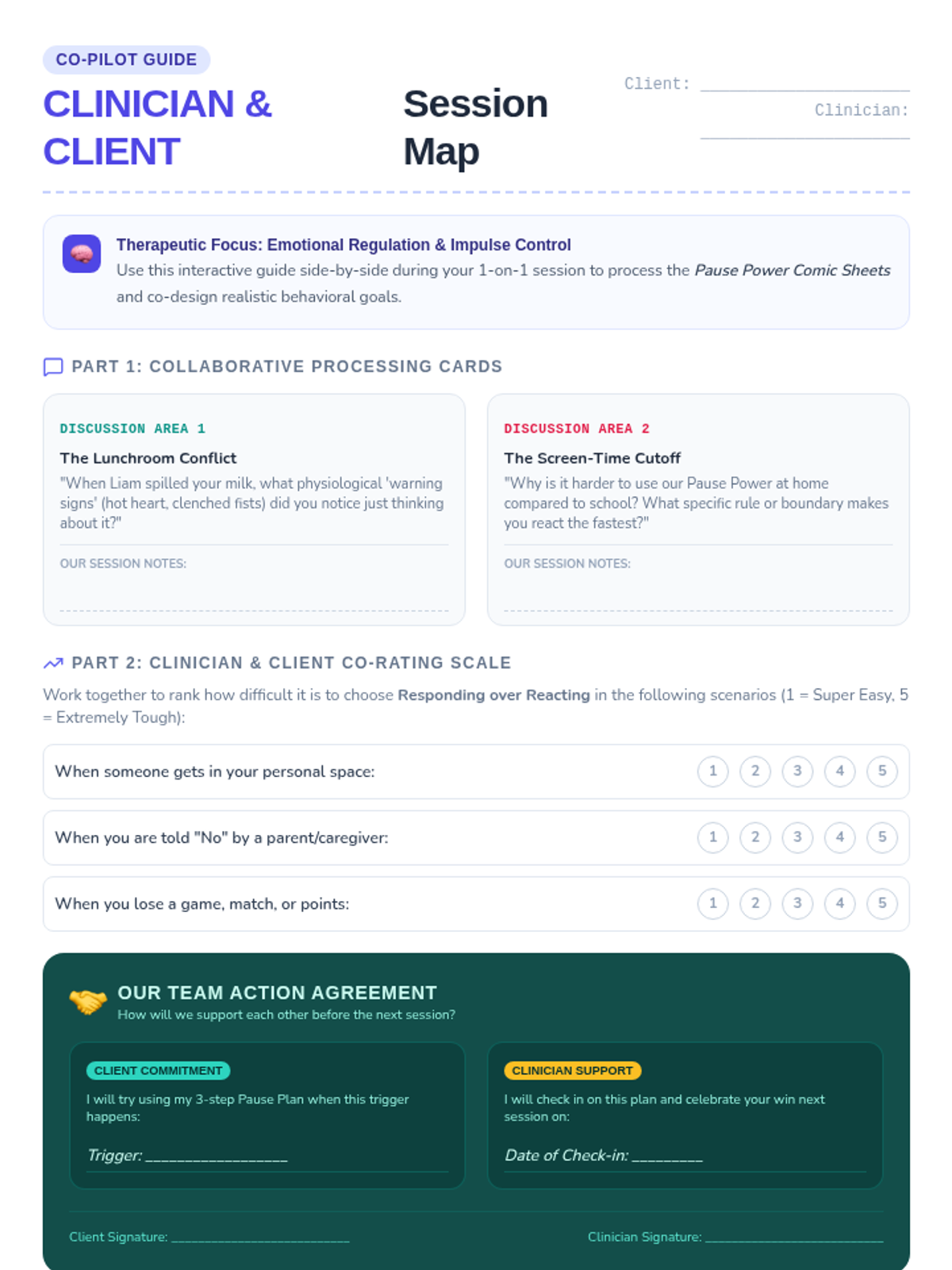
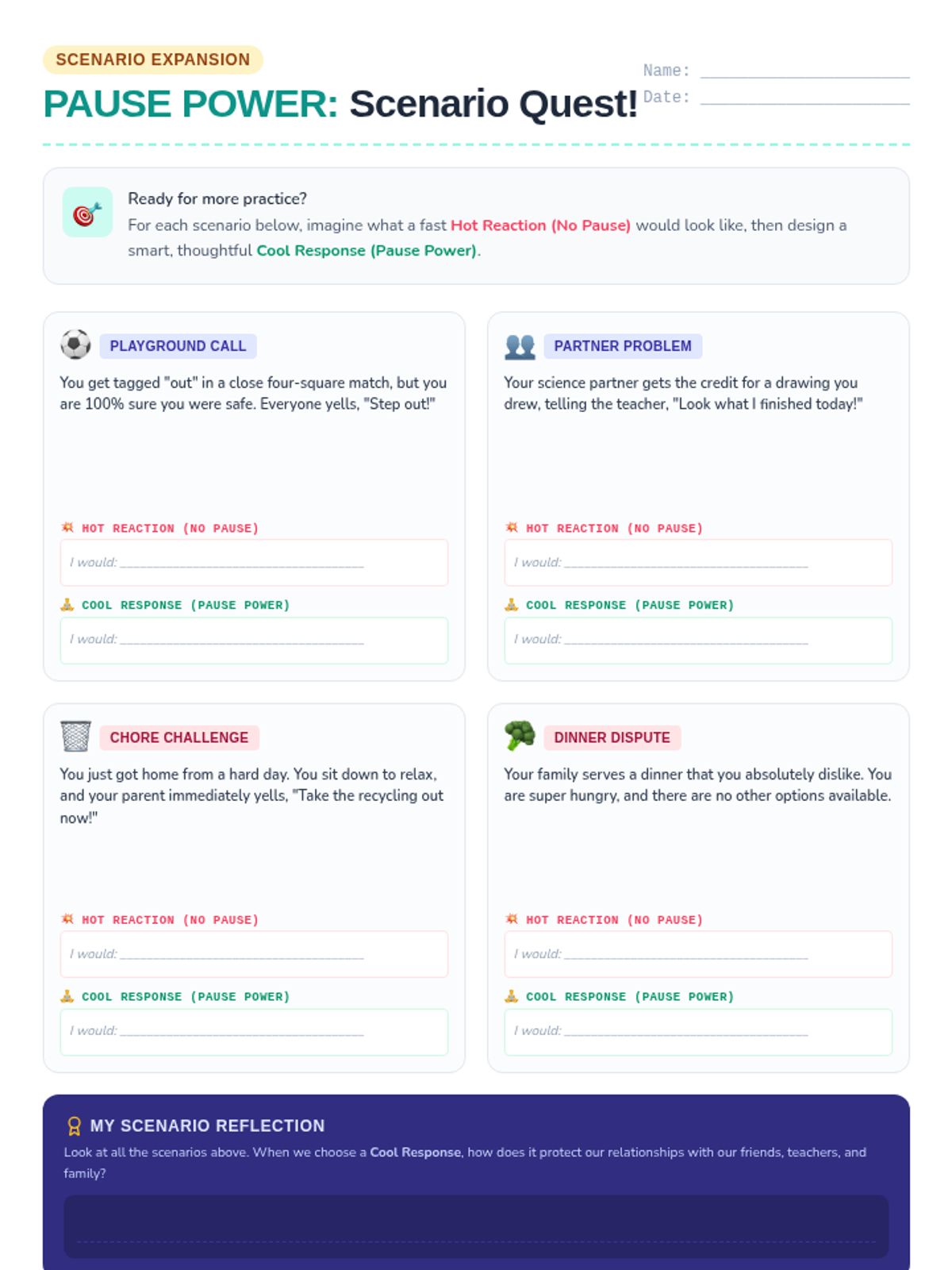
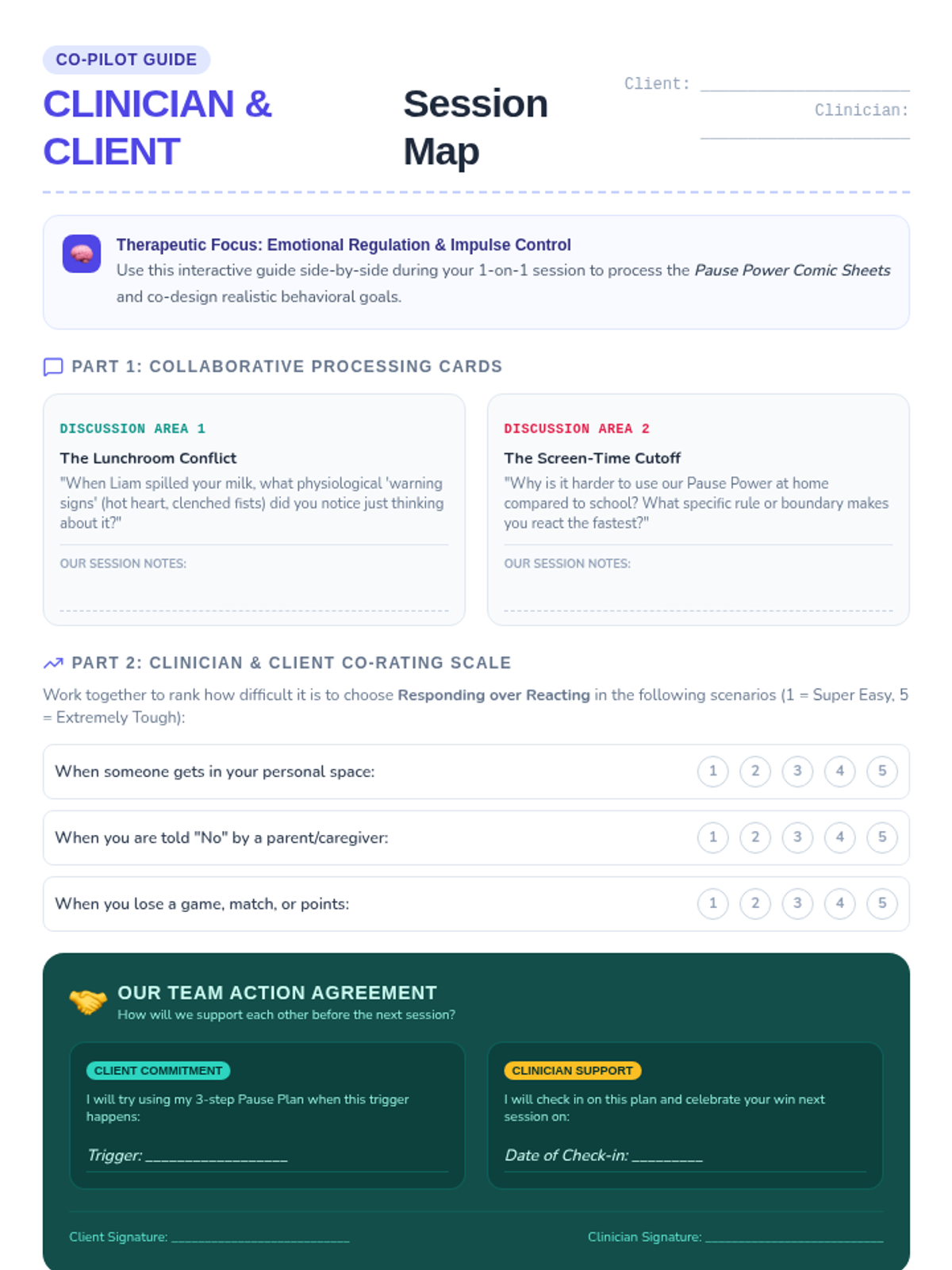
A visual, guided lesson for 5th graders to learn the difference between automatic reactions and thoughtful responses in school and home environments, using comic strips, scenario paths, and personal trigger maps.
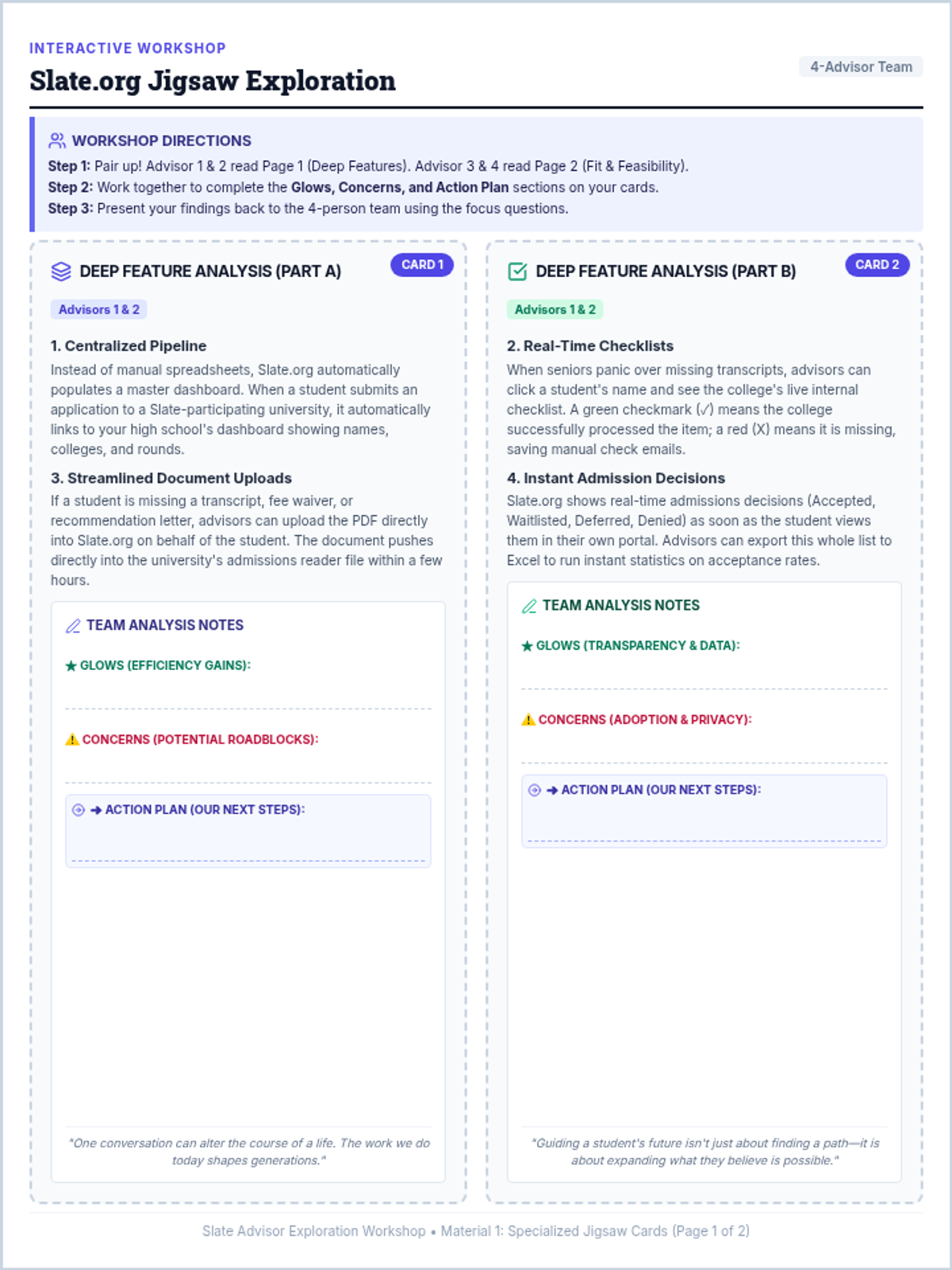
A focused workshop session for College and Career Advisors (CCAs) to evaluate and master Slate.org for senior tracking, comparing it to existing district tools and analyzing its core backend features.
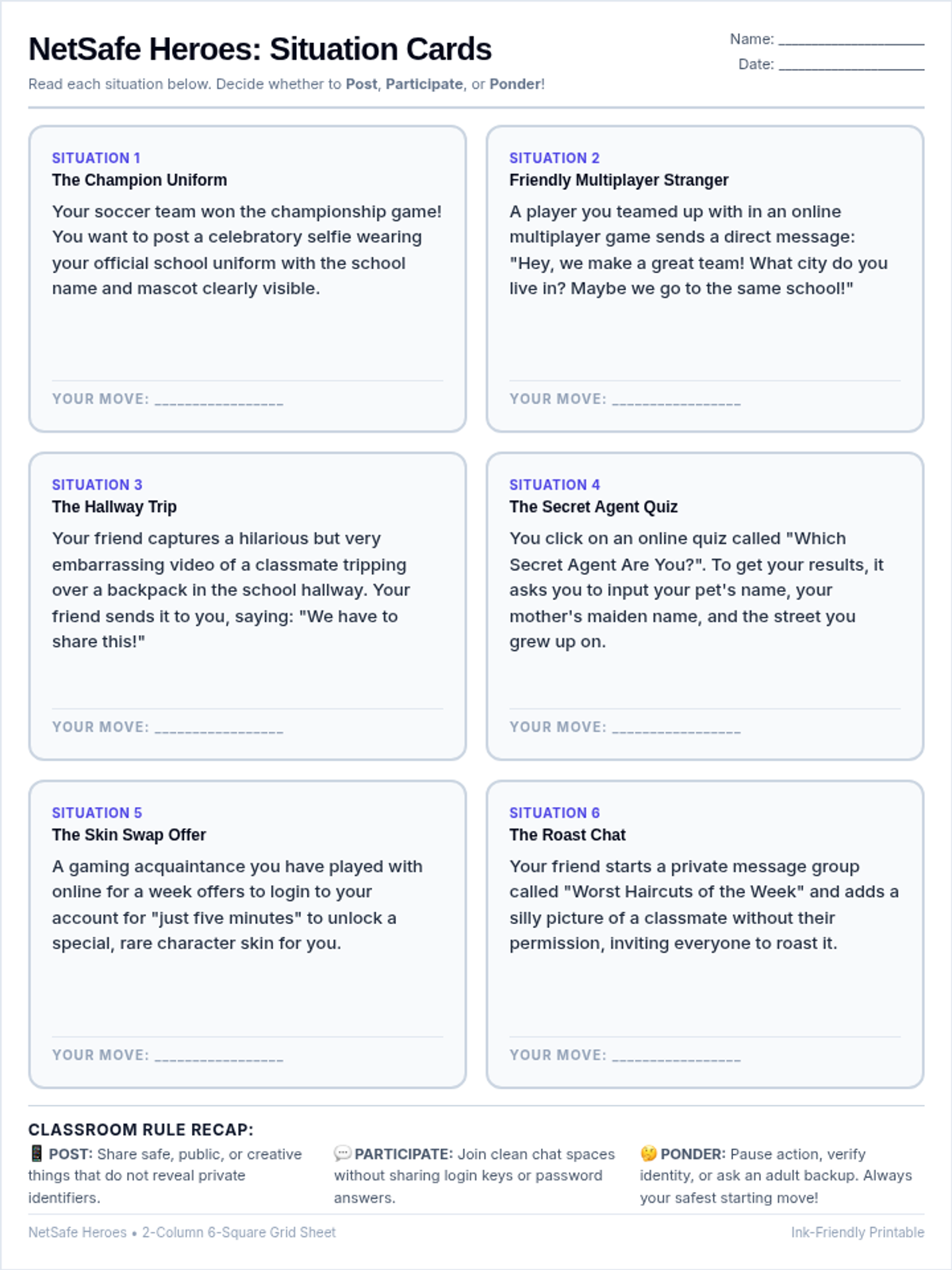
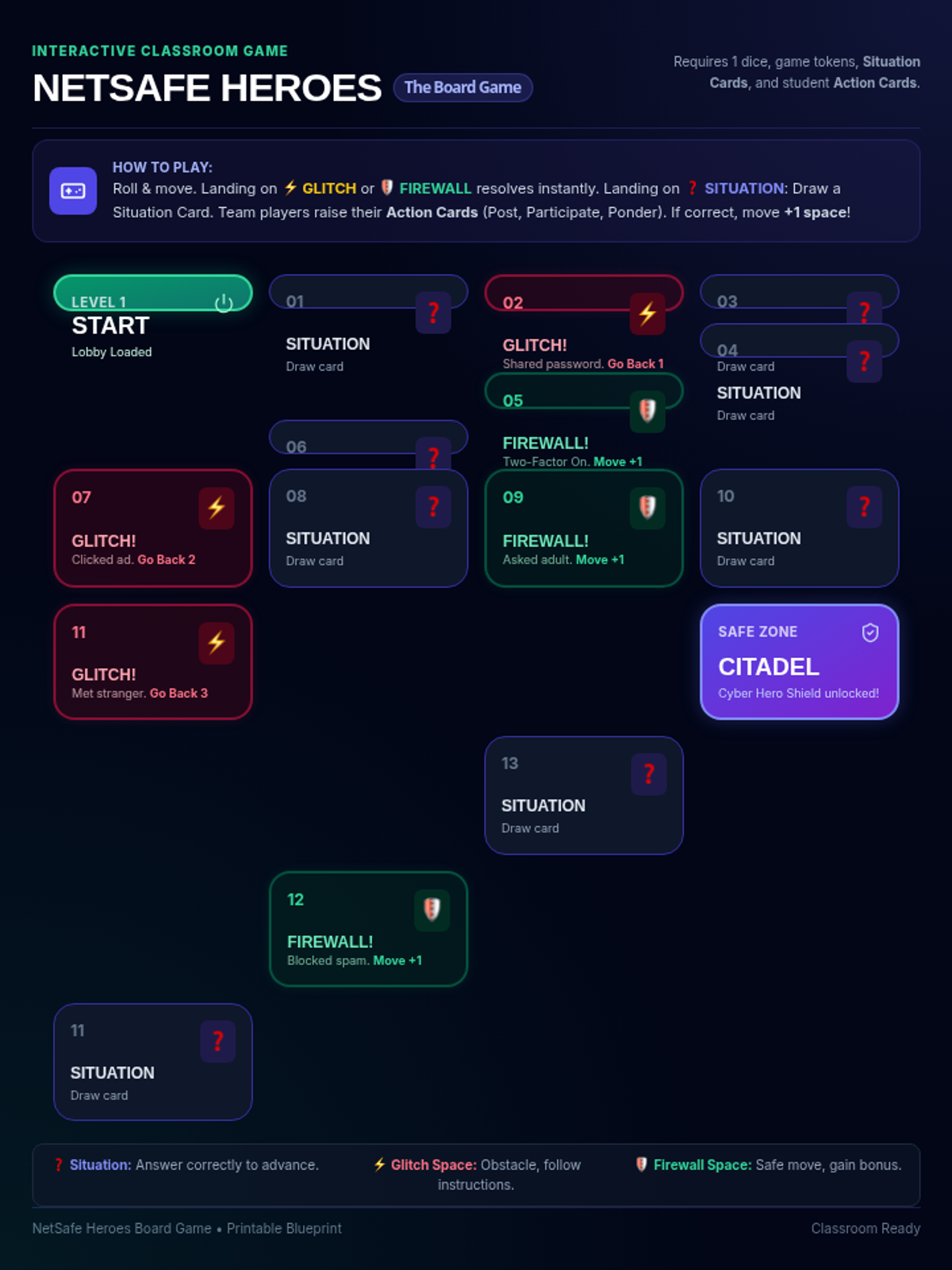
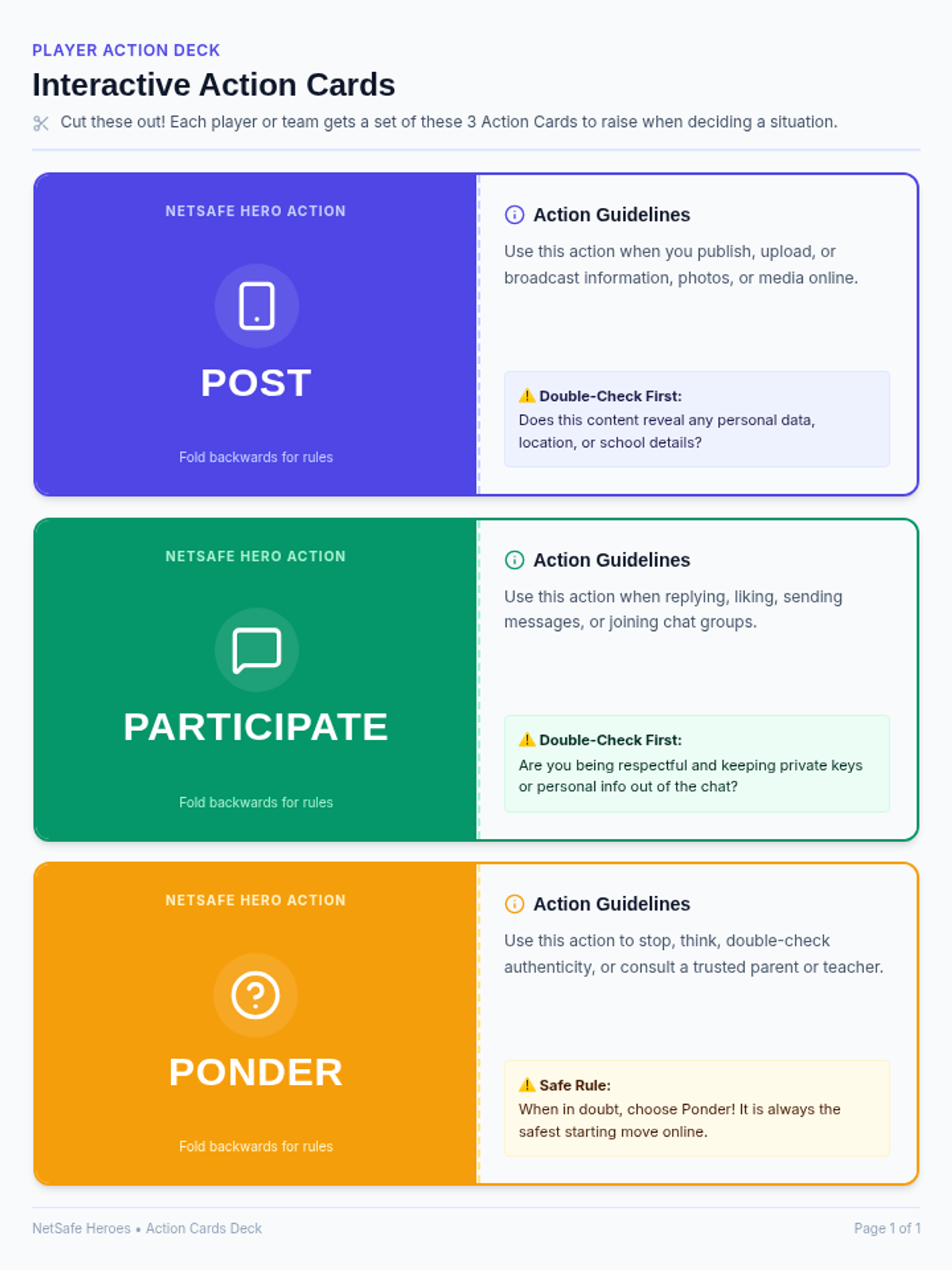
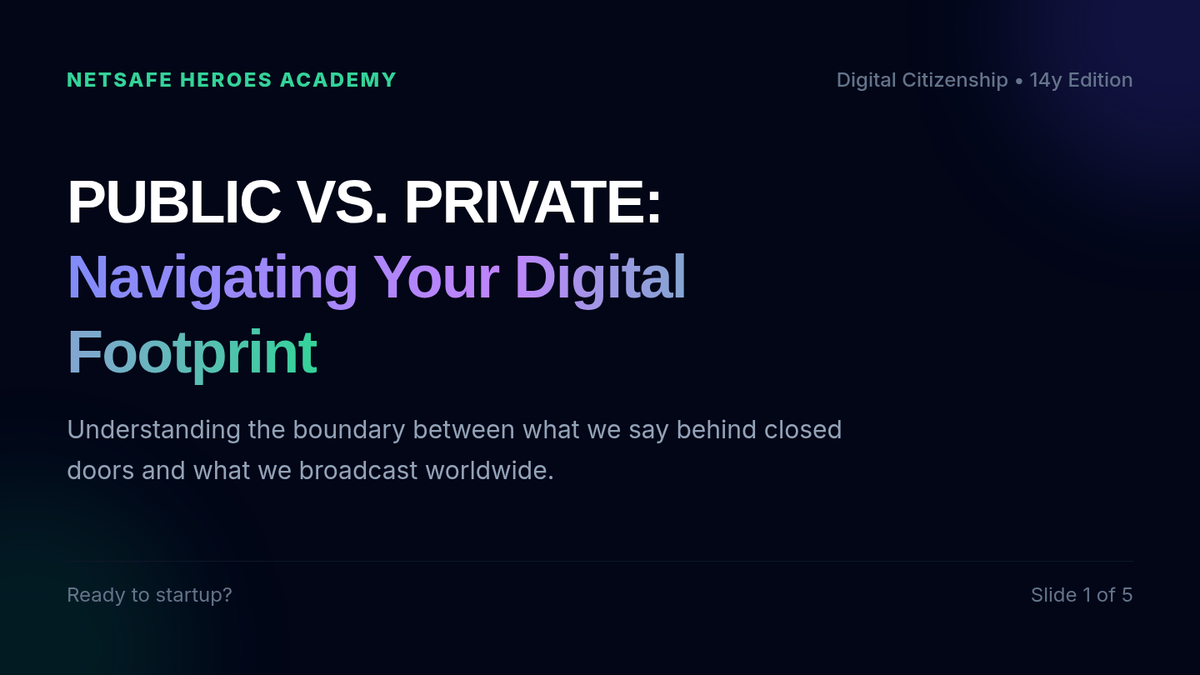
A lesson focusing on critical digital citizenship skills, helping students navigate the web safely and make informed choices when posting, interacting, or pondering online situations.
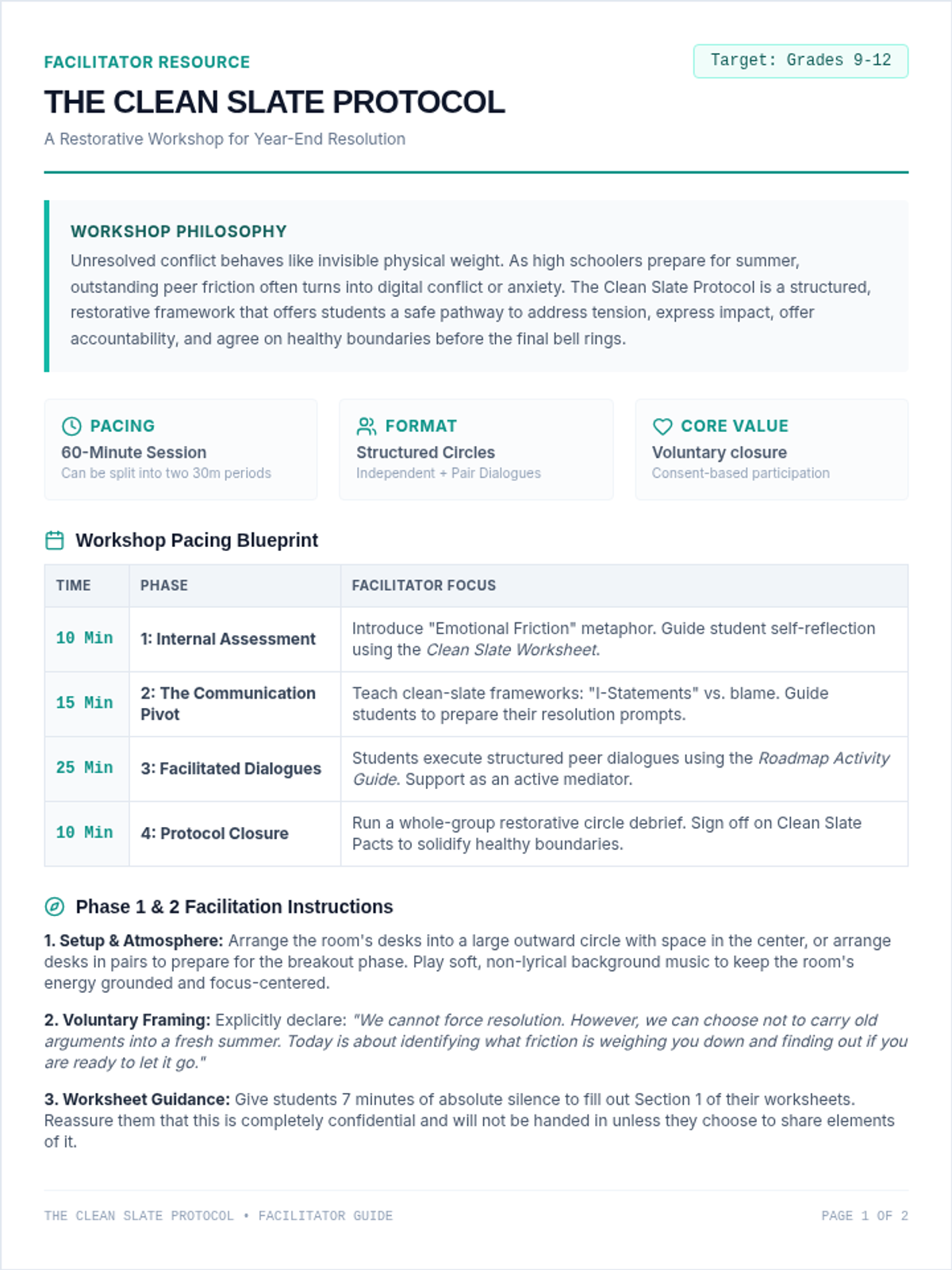
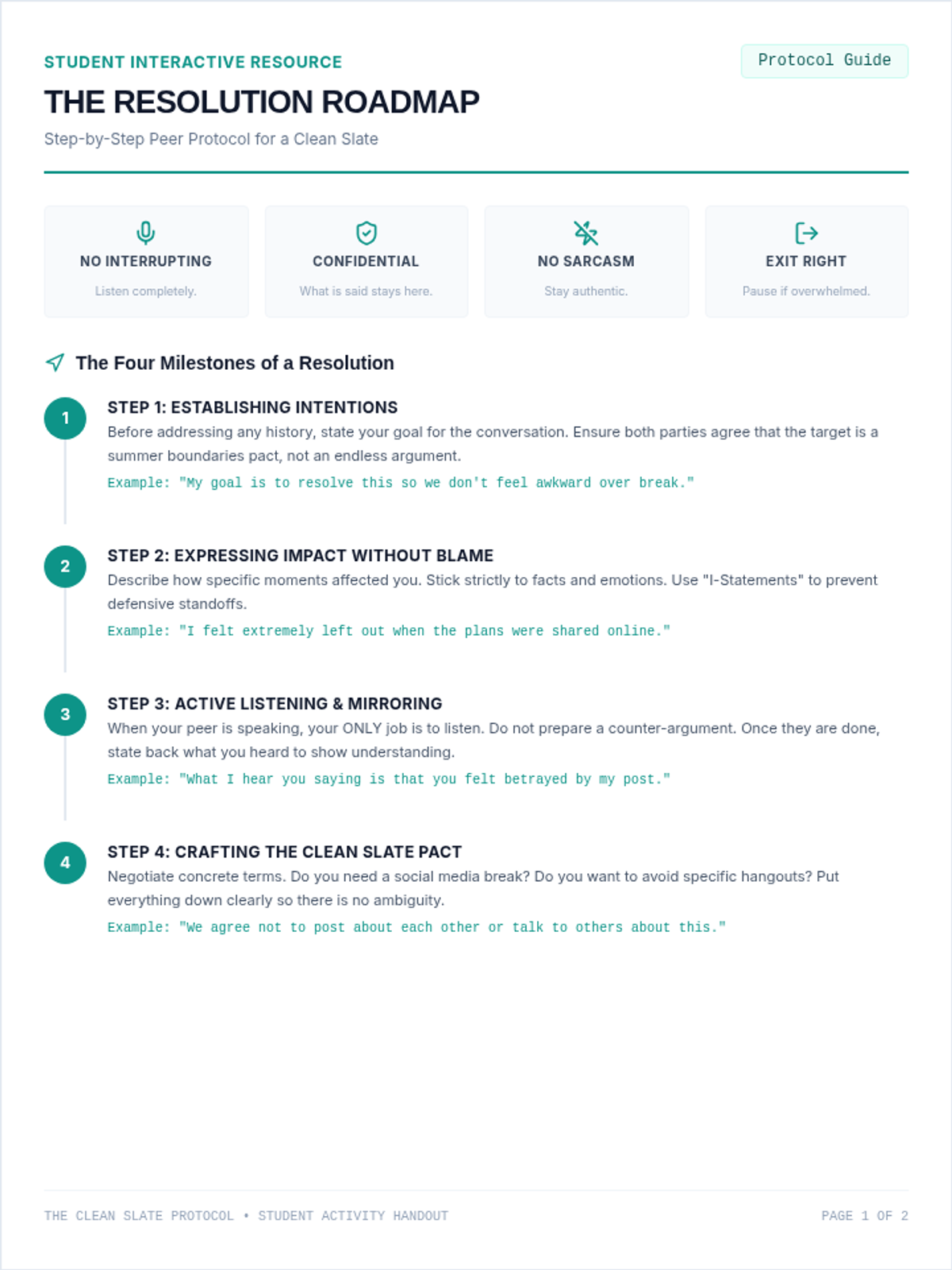
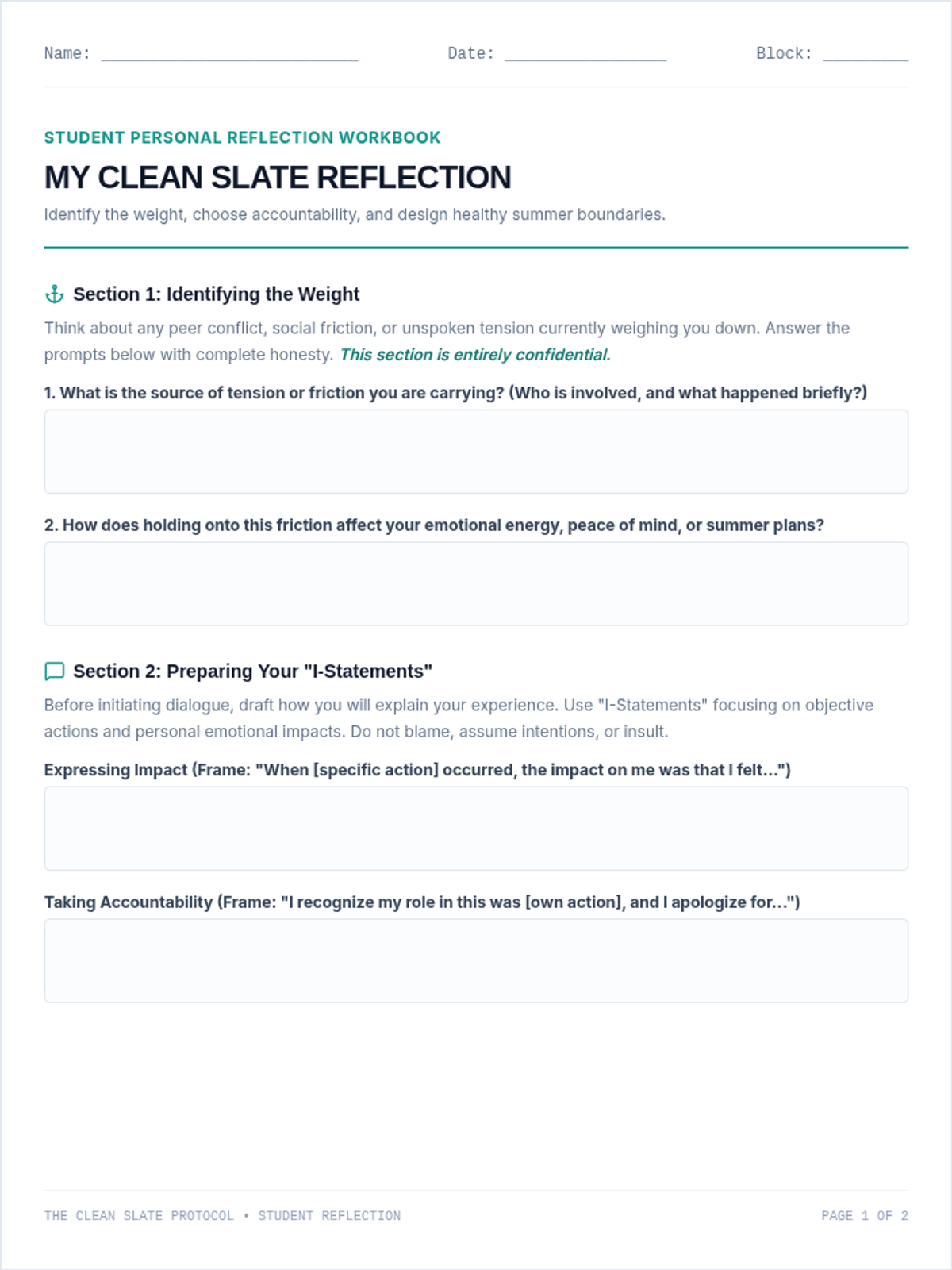
A restorative conflict-resolution workshop designed to help high schoolers resolve outstanding peer friction before summer break, allowing them to depart with a sense of peace and closure. This workshop provides step-by-step guidance, structured reflection, and concrete resolution tools.
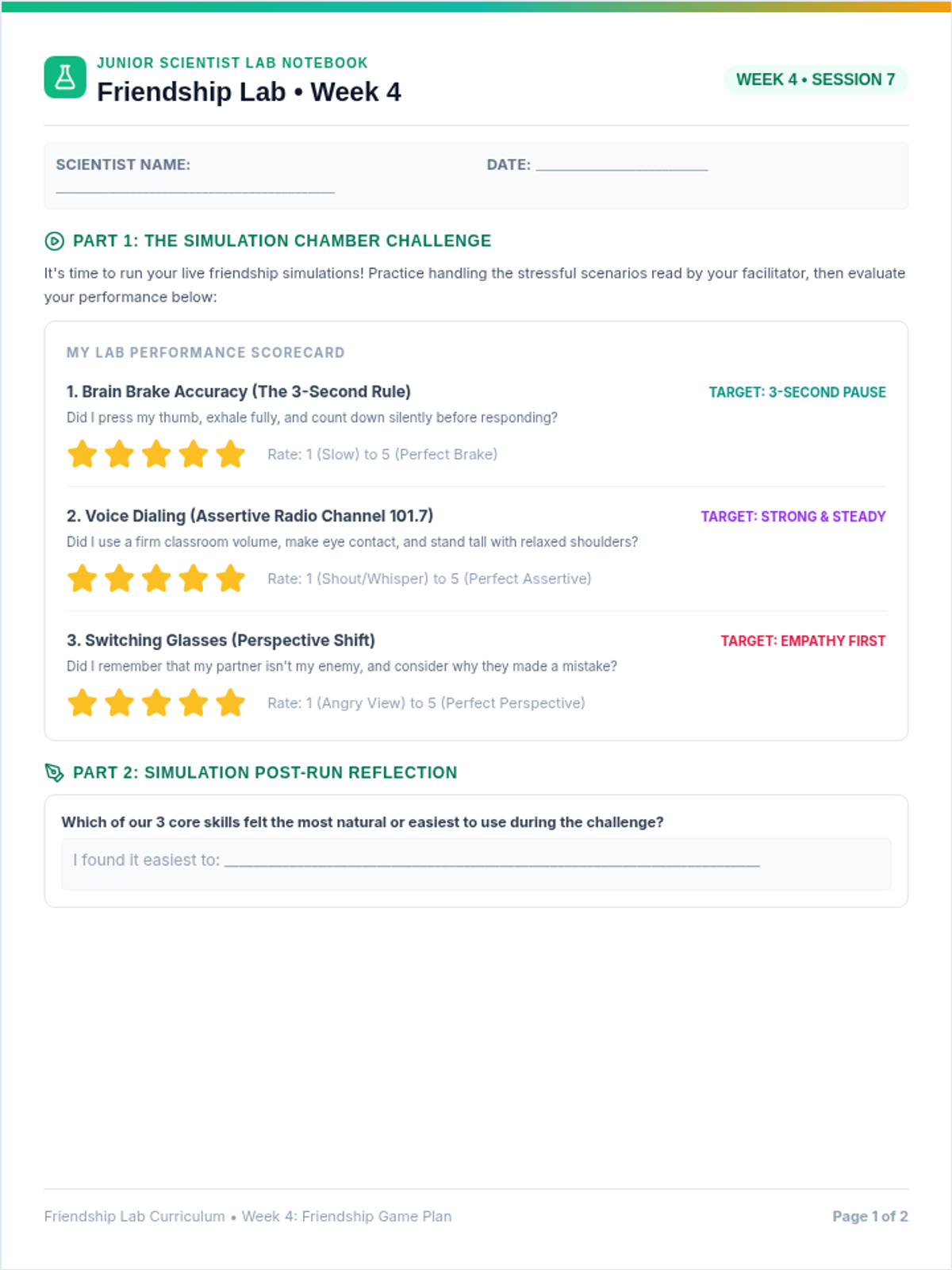
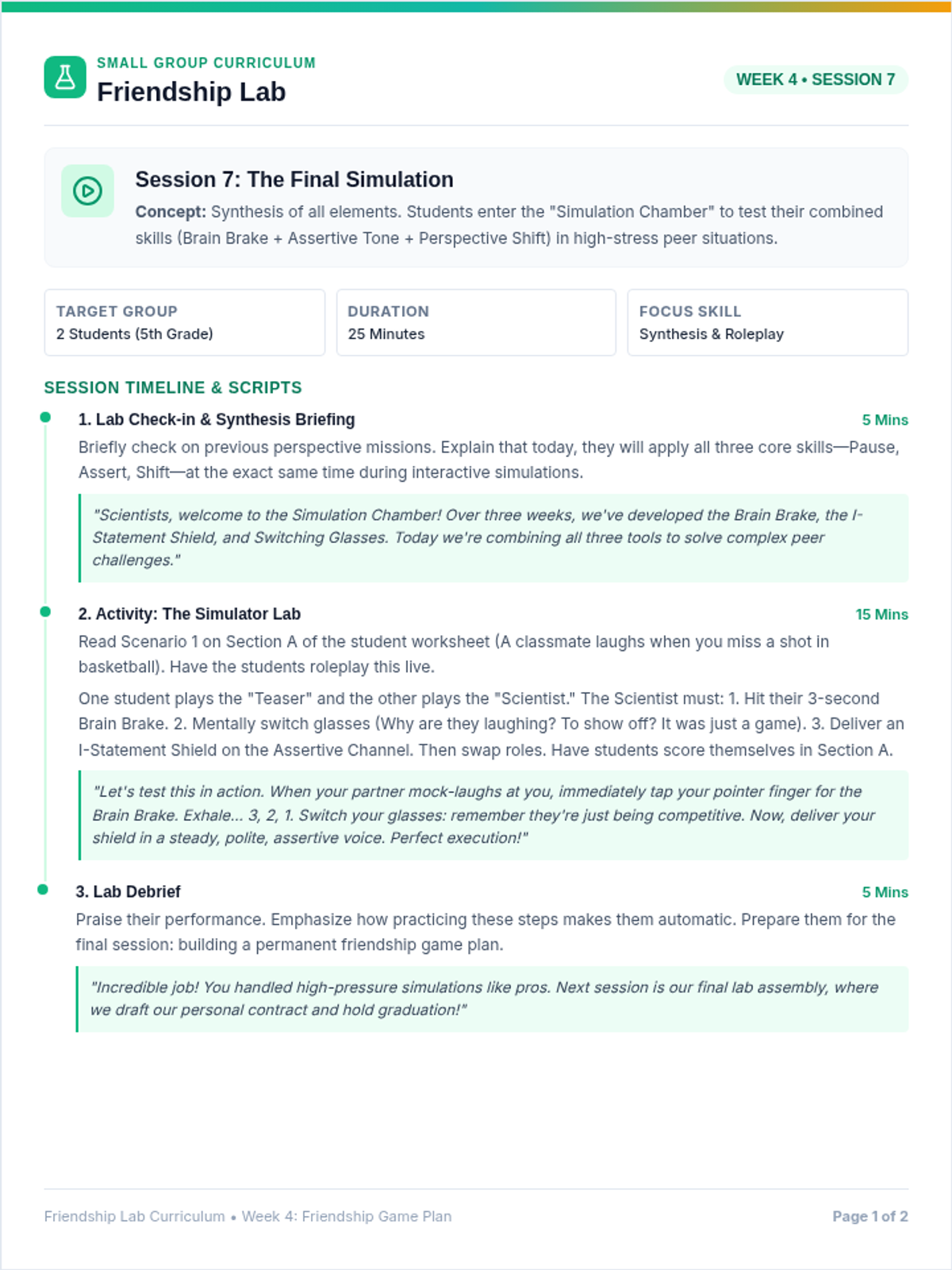
Week 4 of the program, focusing on real-world practice, synthesizing pause strategies and assertive communication, and creating a shared friendship blueprint for future interactions.
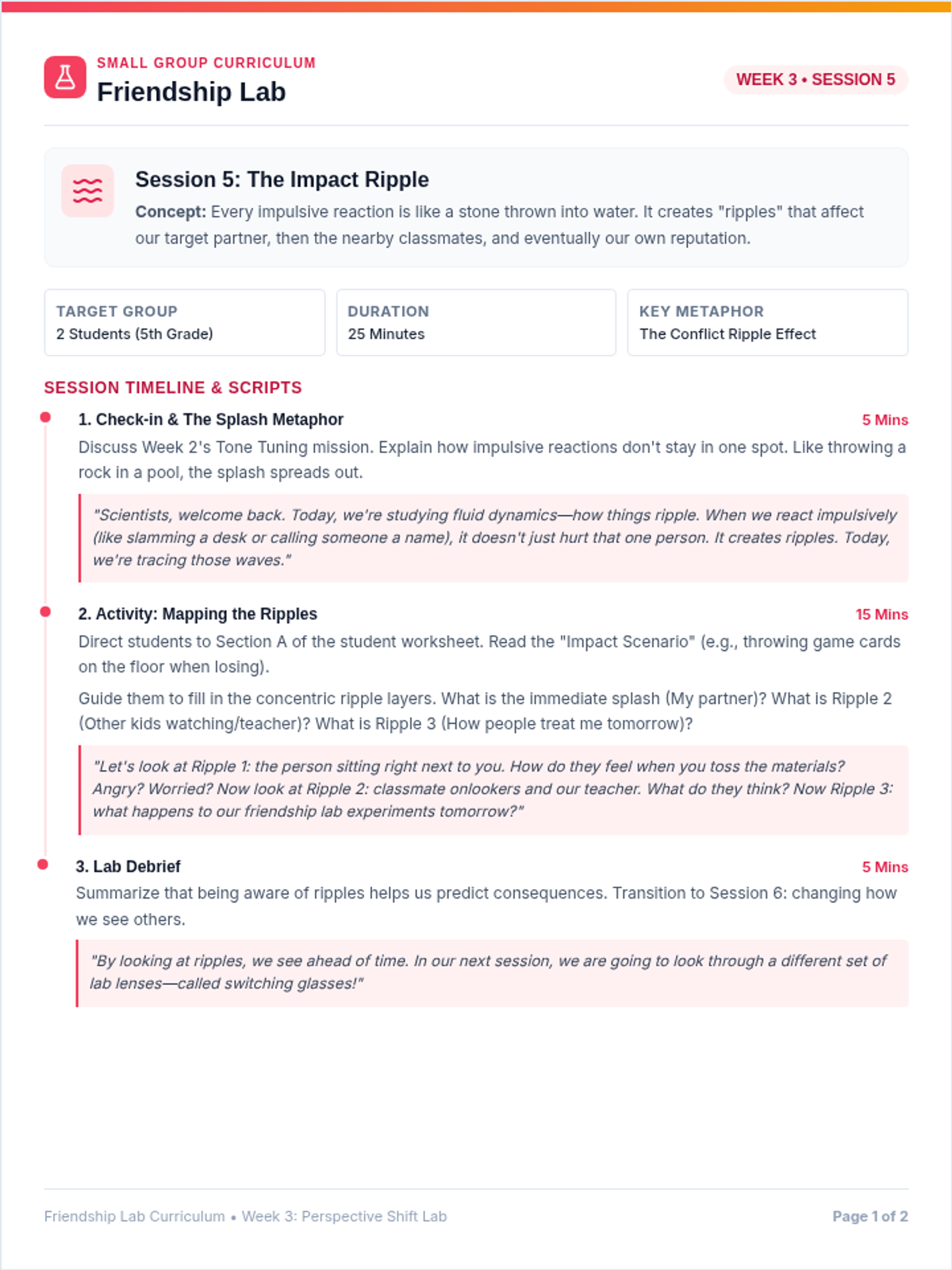
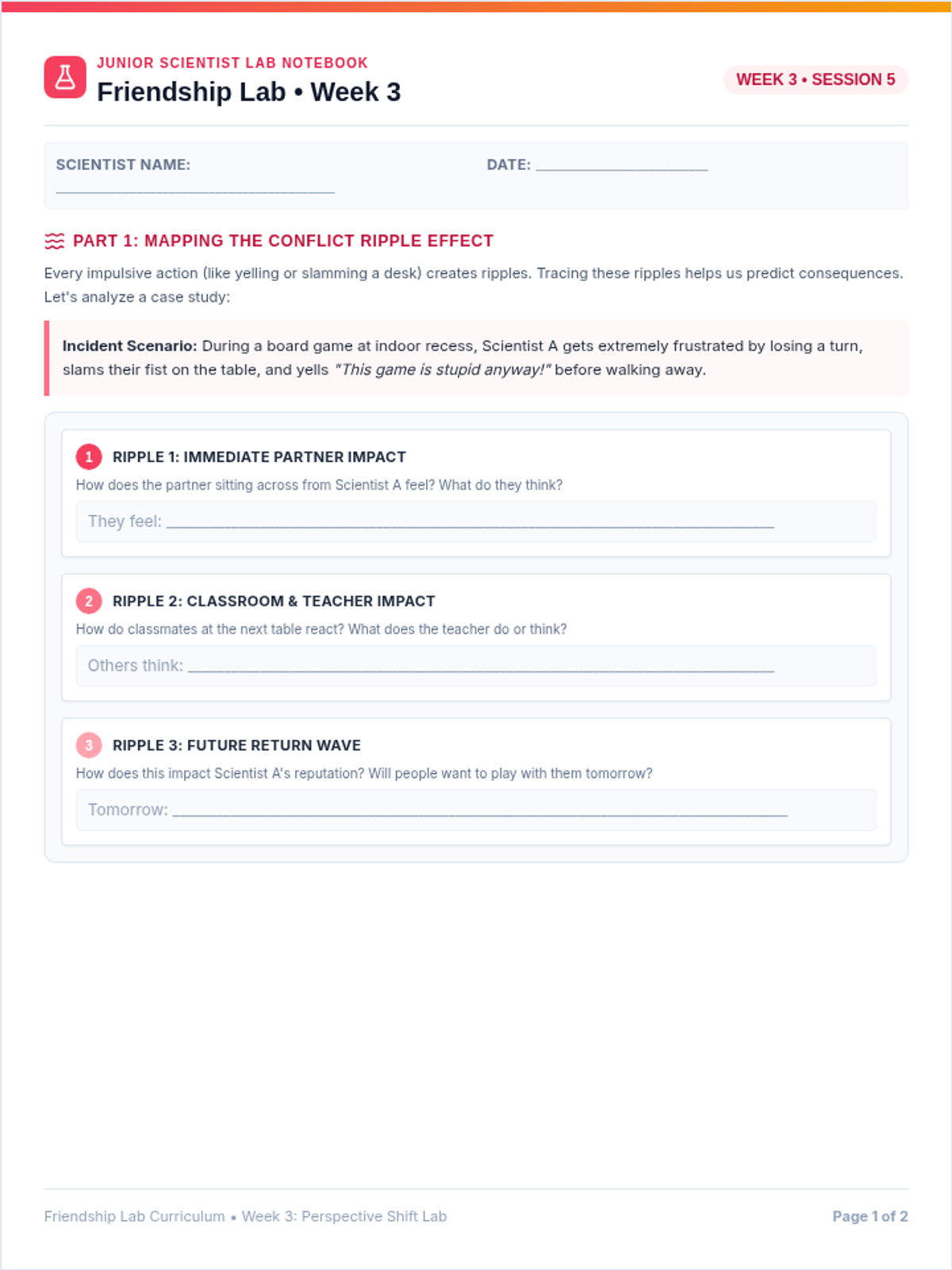
Week 3 of the program, focusing on perspective-taking activities to help students understand how their impulsive actions affect their partner's feelings and ripple out.
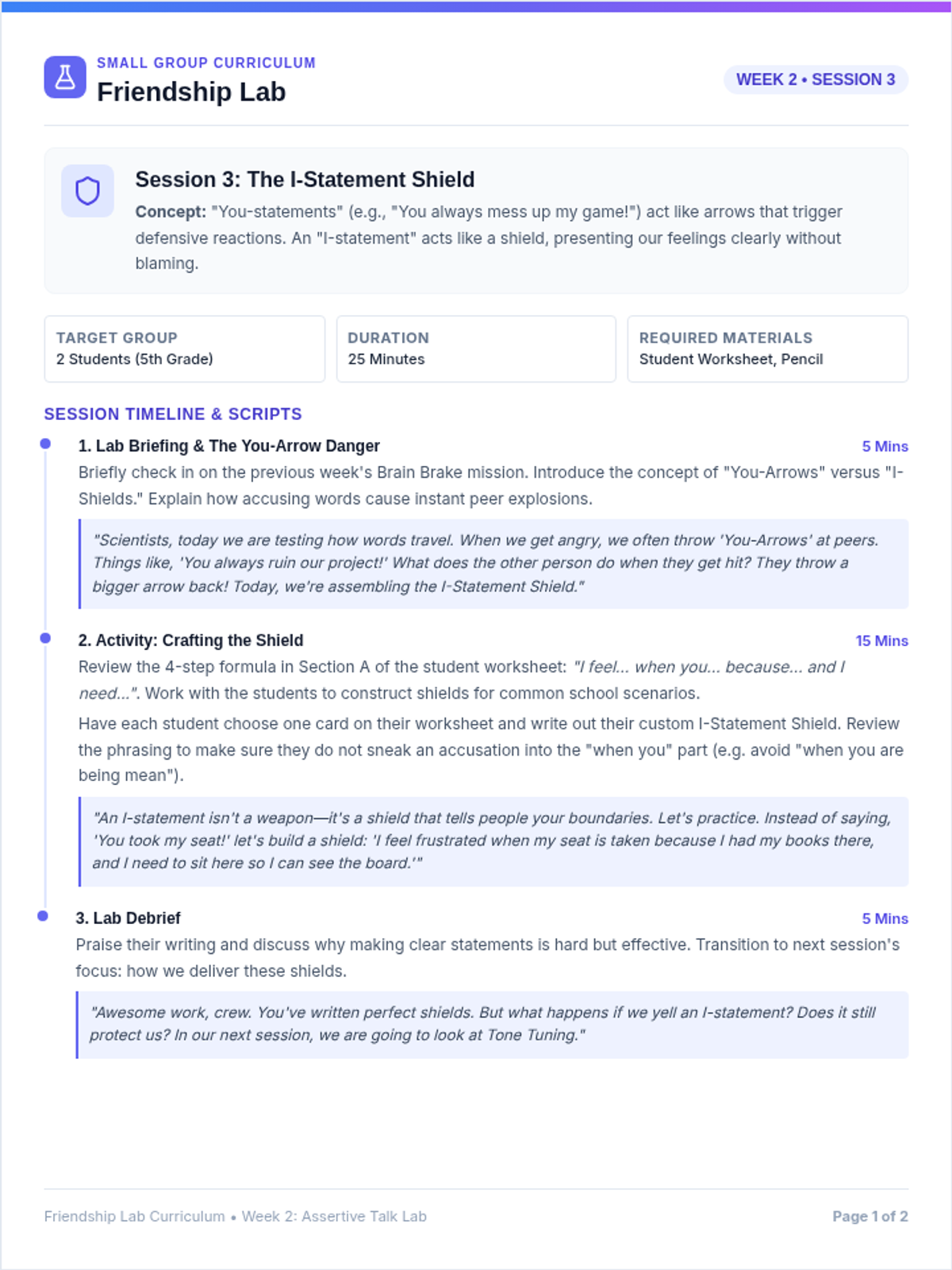
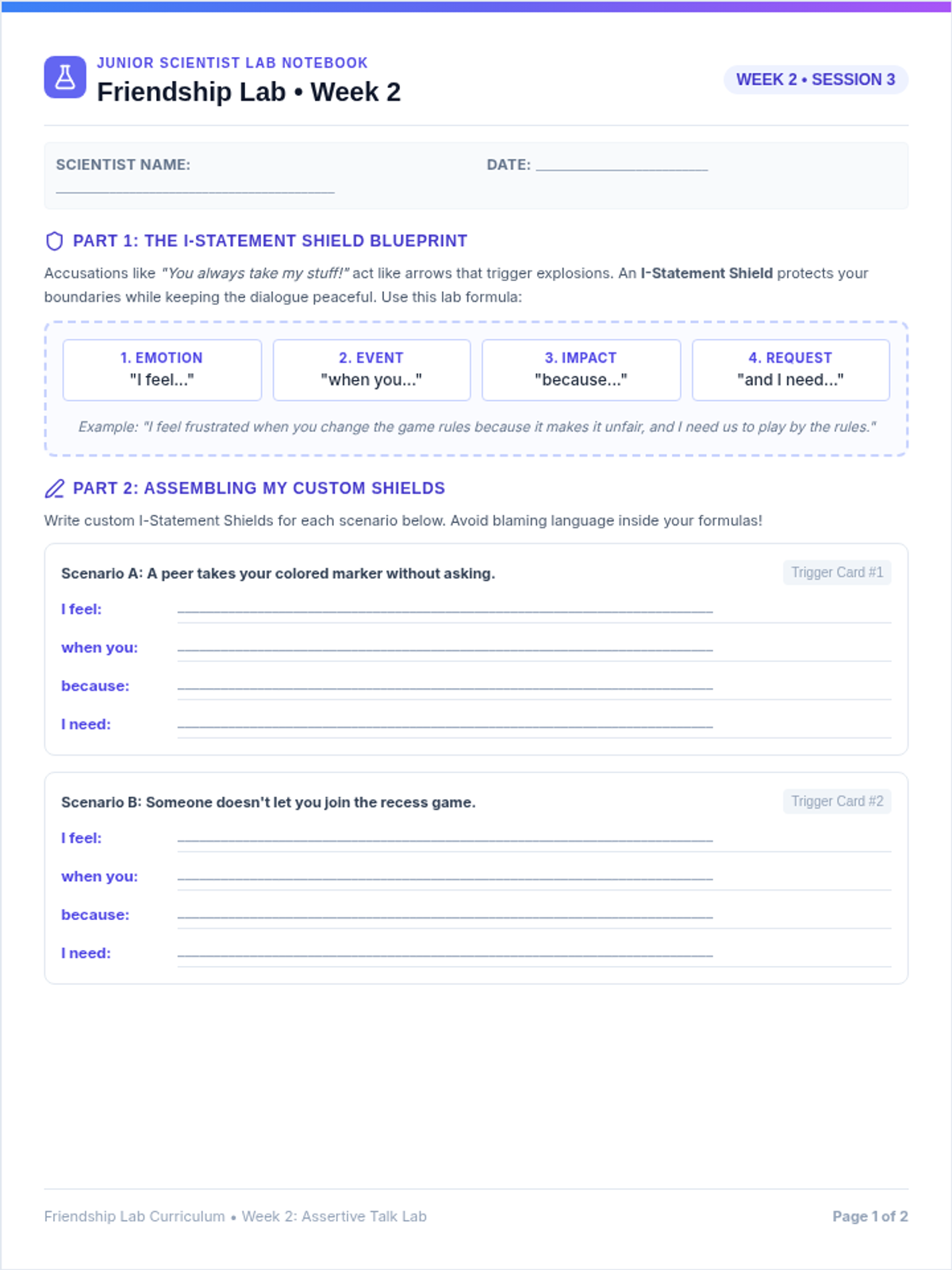
Week 2 of the program, focusing on learning and practicing assertive communication skills, specifically crafting and using 'I-statements' and modulating tone/posture to prevent conflicts.
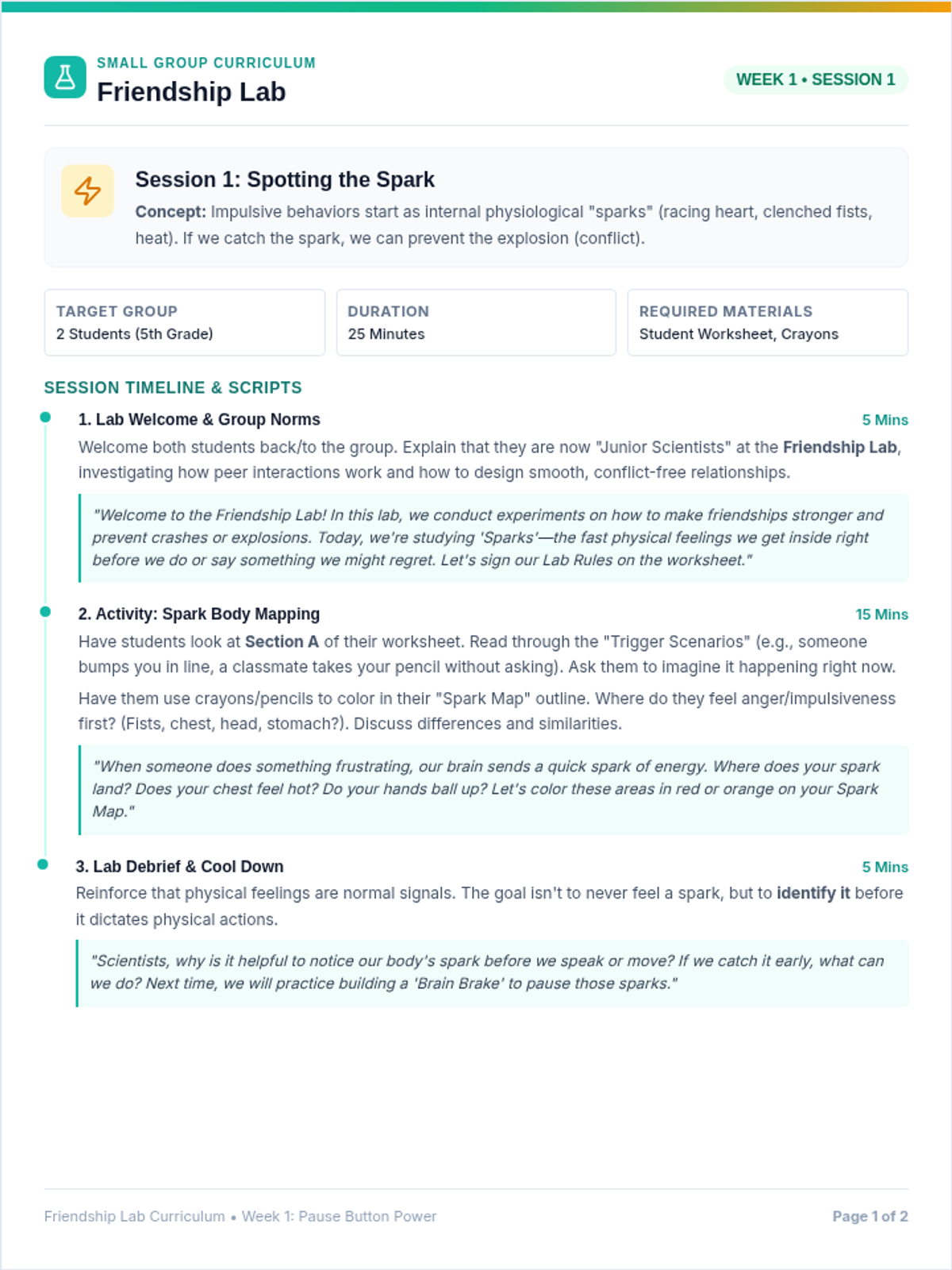
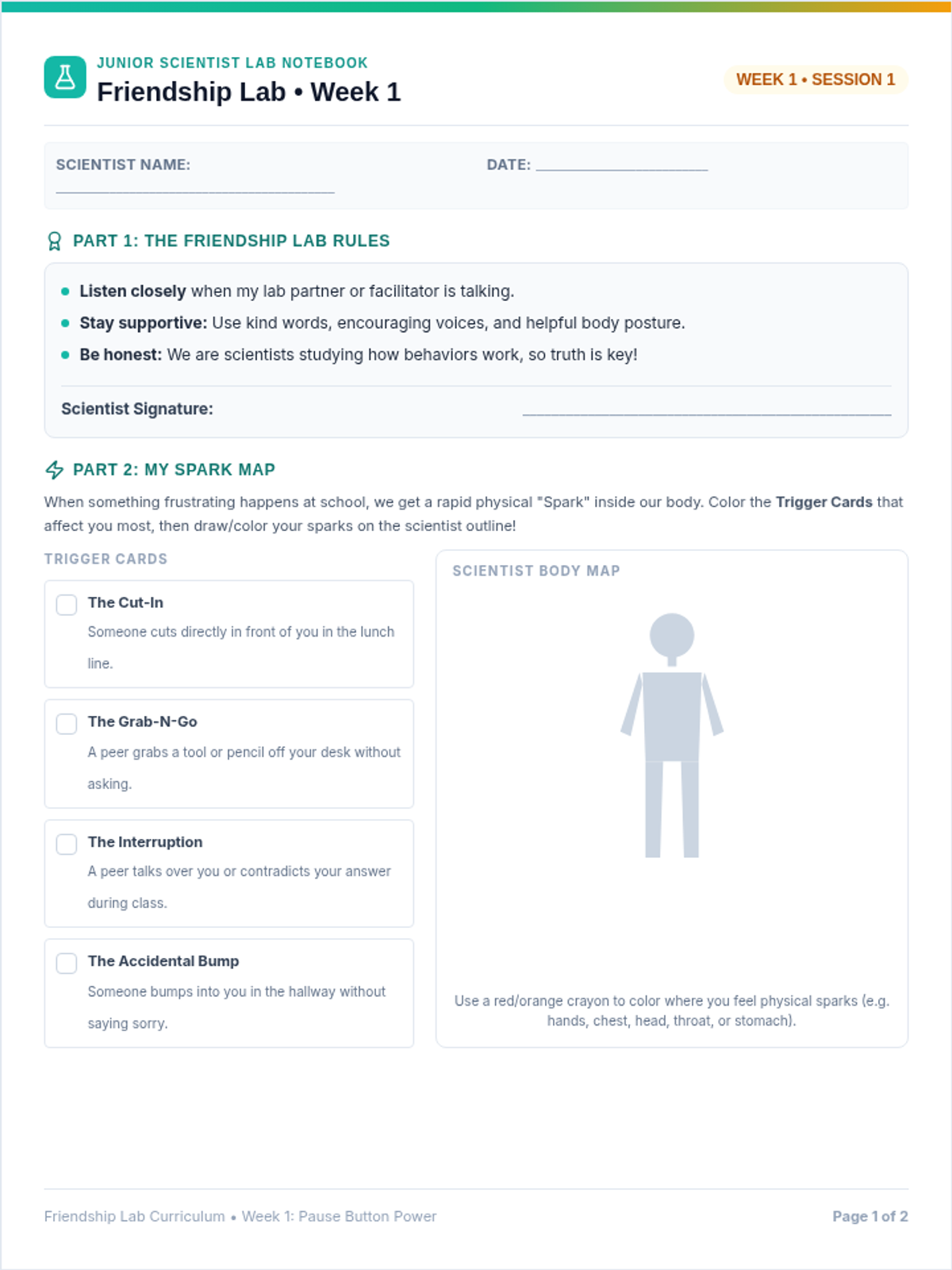
Week 1 of the program, focusing on identifying internal physical 'sparks' of anger/impulsivity and applying physical and mental 'stop' cues (the 3-second pause) before reacting to peers.
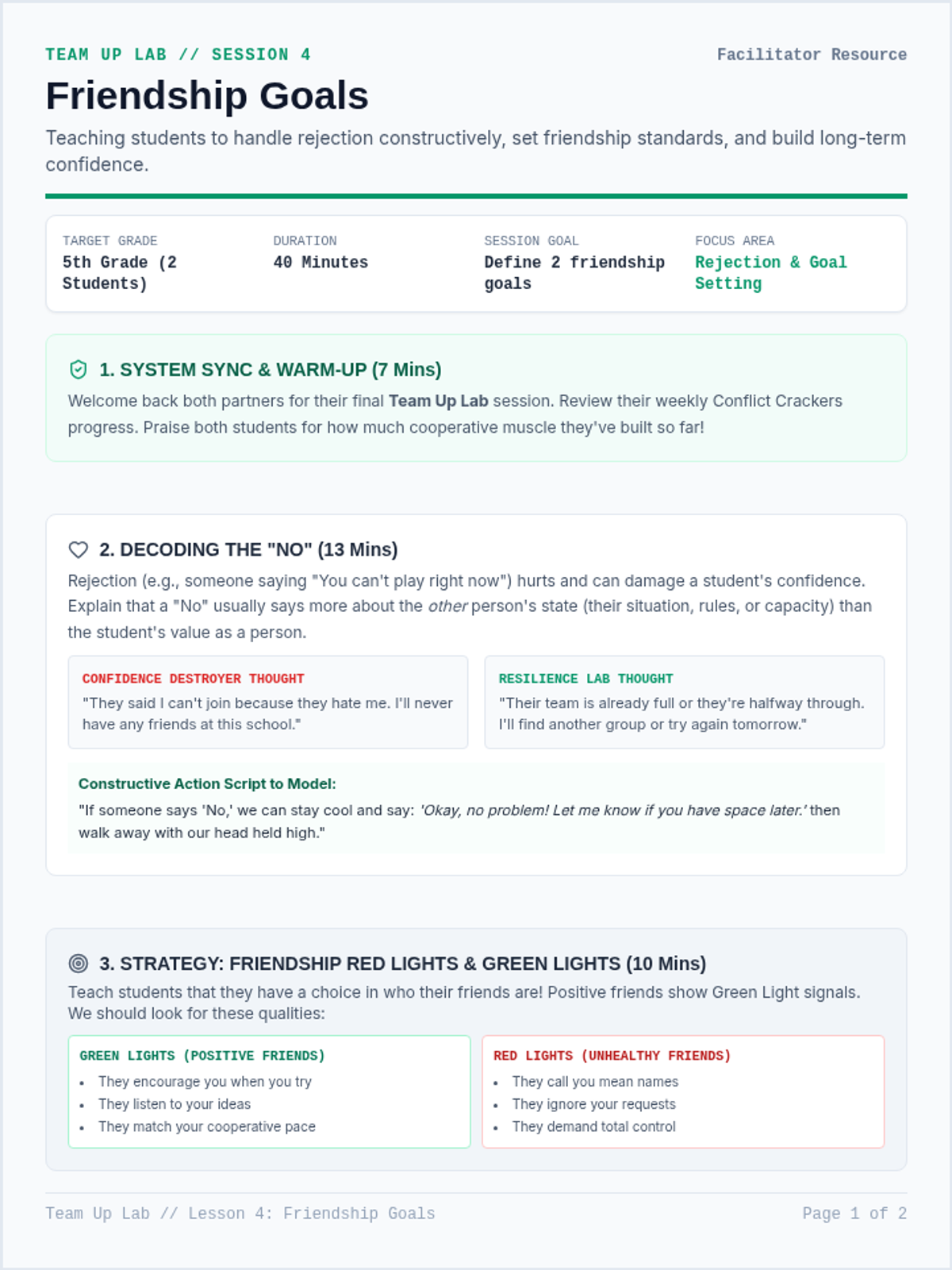
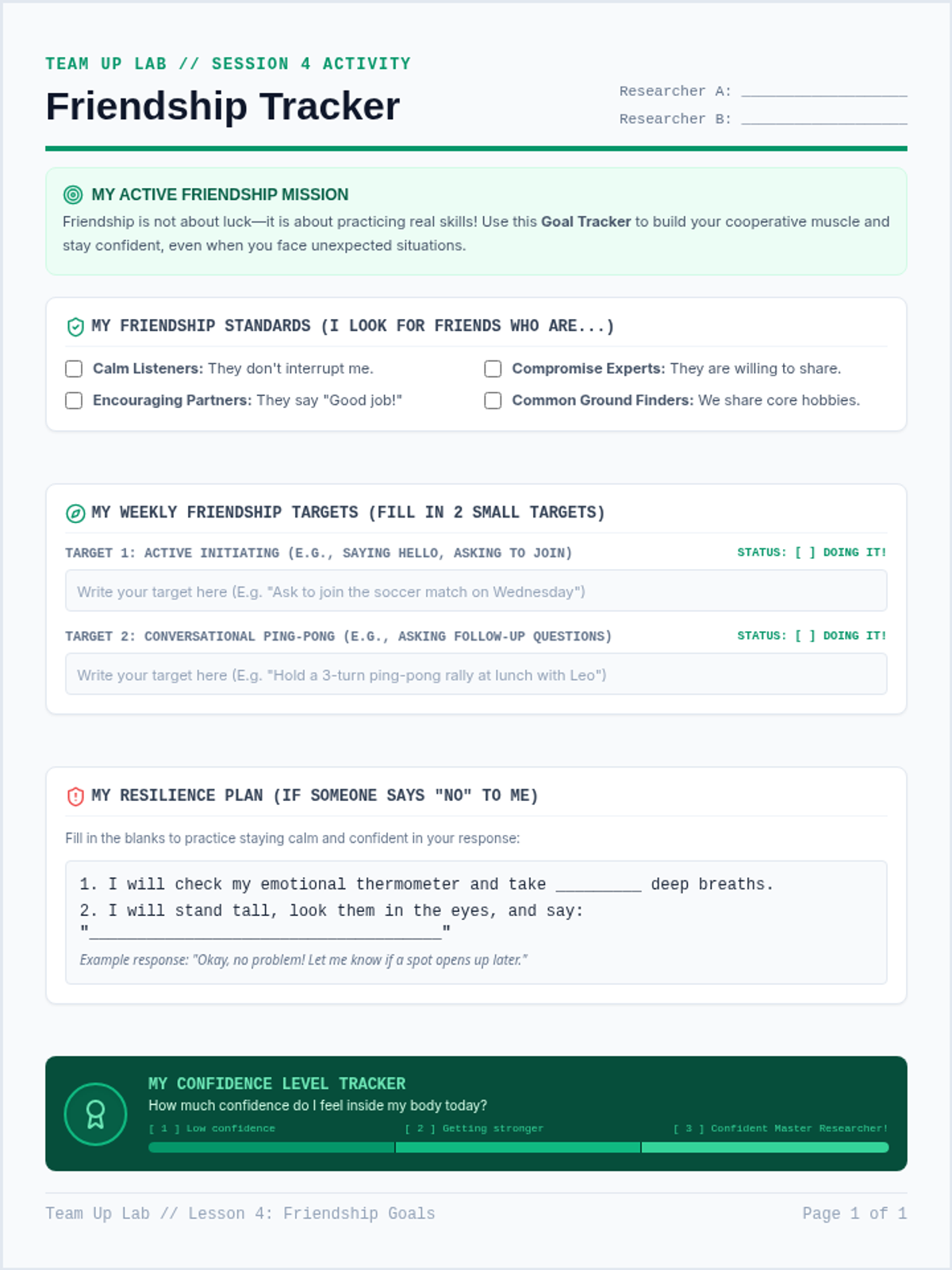
Empowers students to respond constructively to peer rejection, set realistic friendship goals, and track their self-confidence.
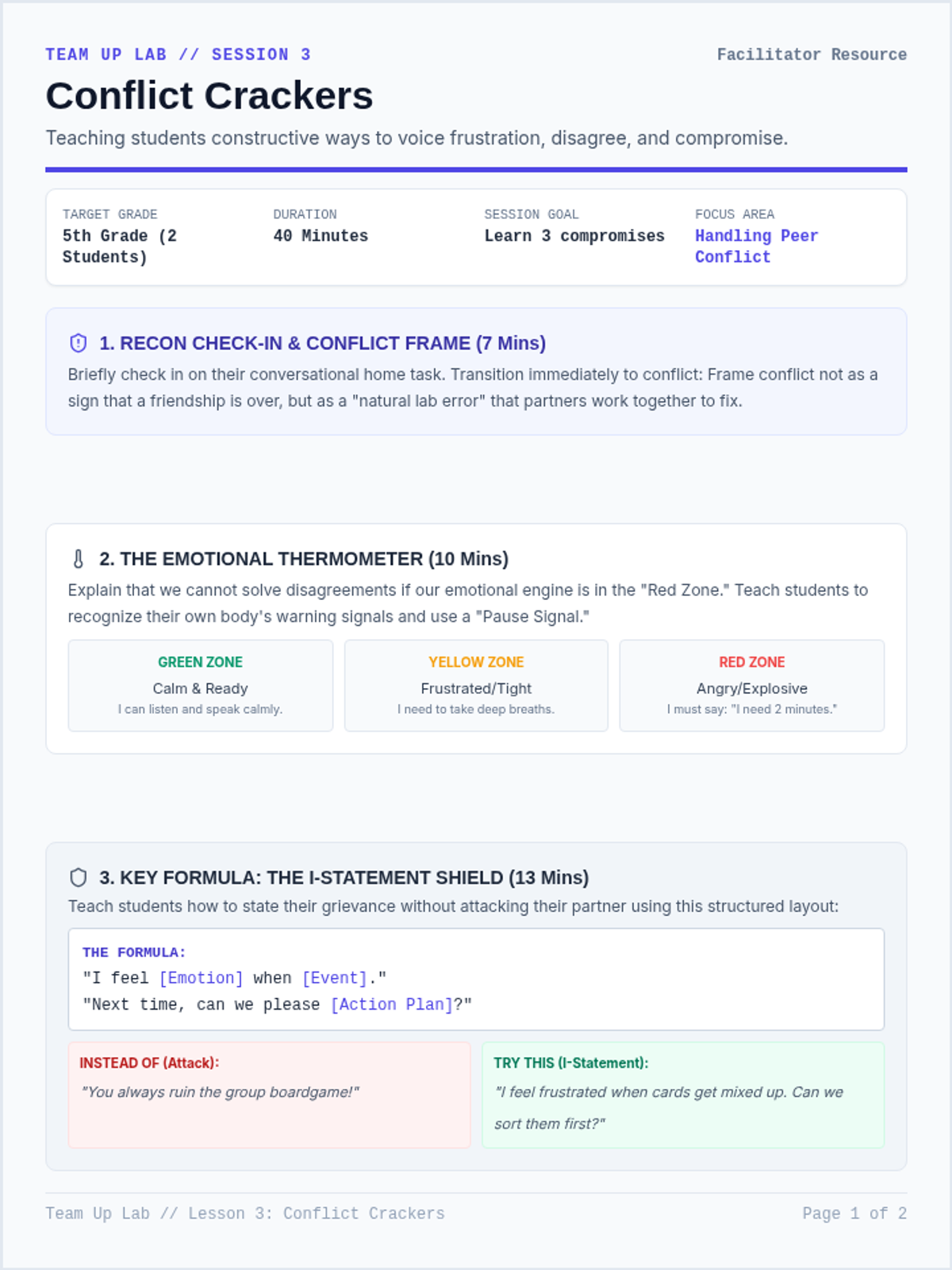
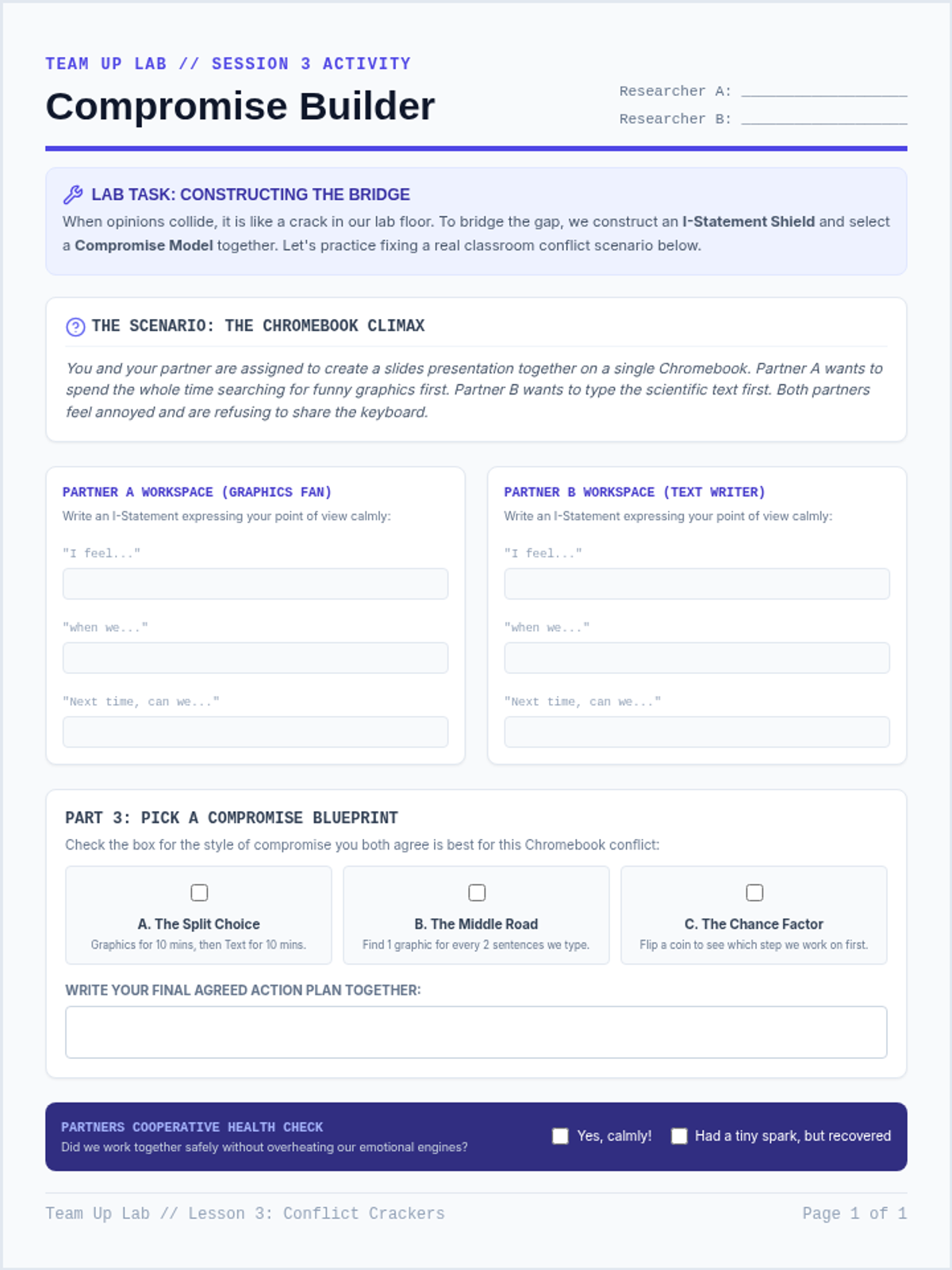
Equips students with practical tools to manage disagreements, practice compromise, and express frustration constructively.
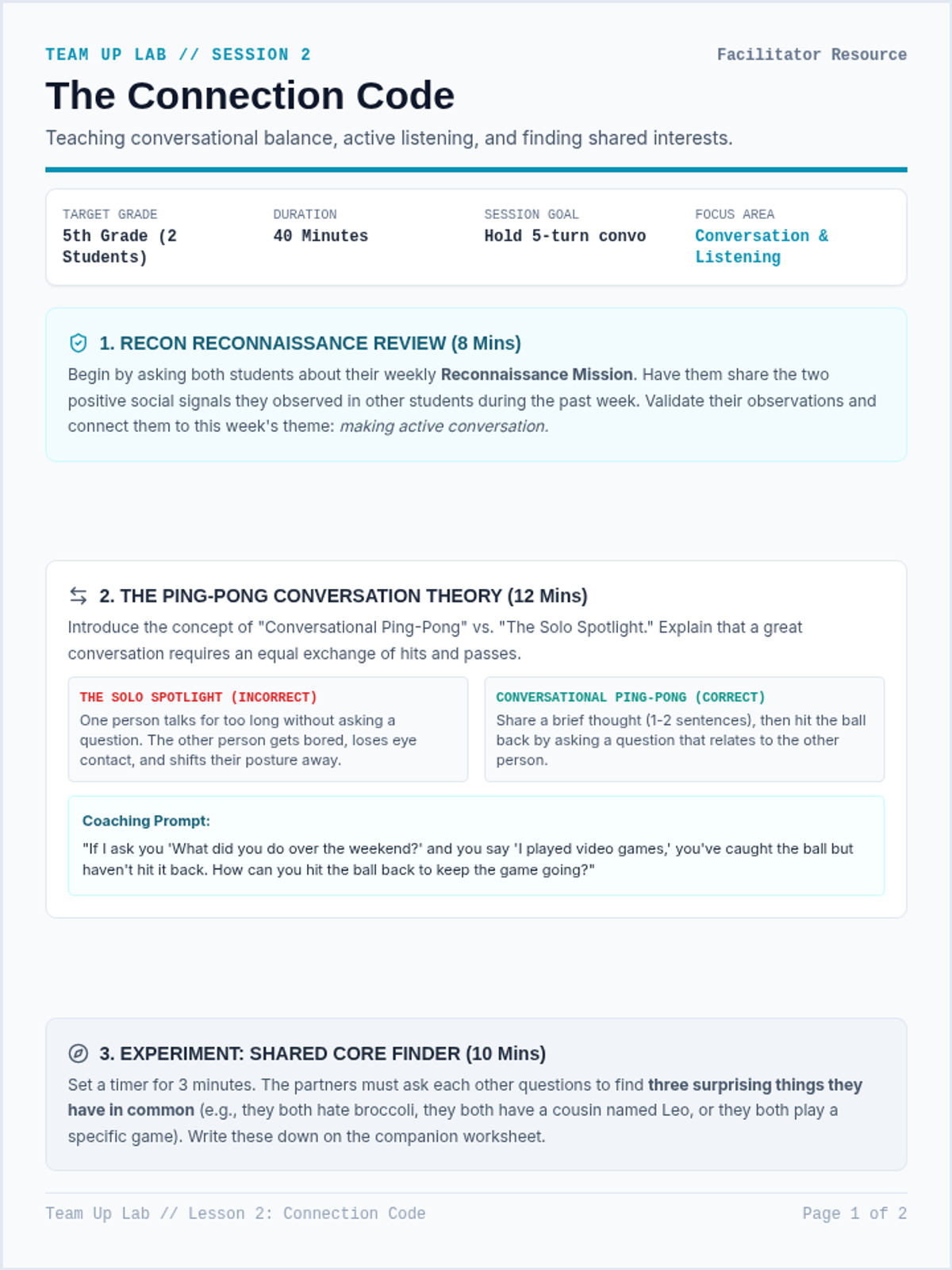
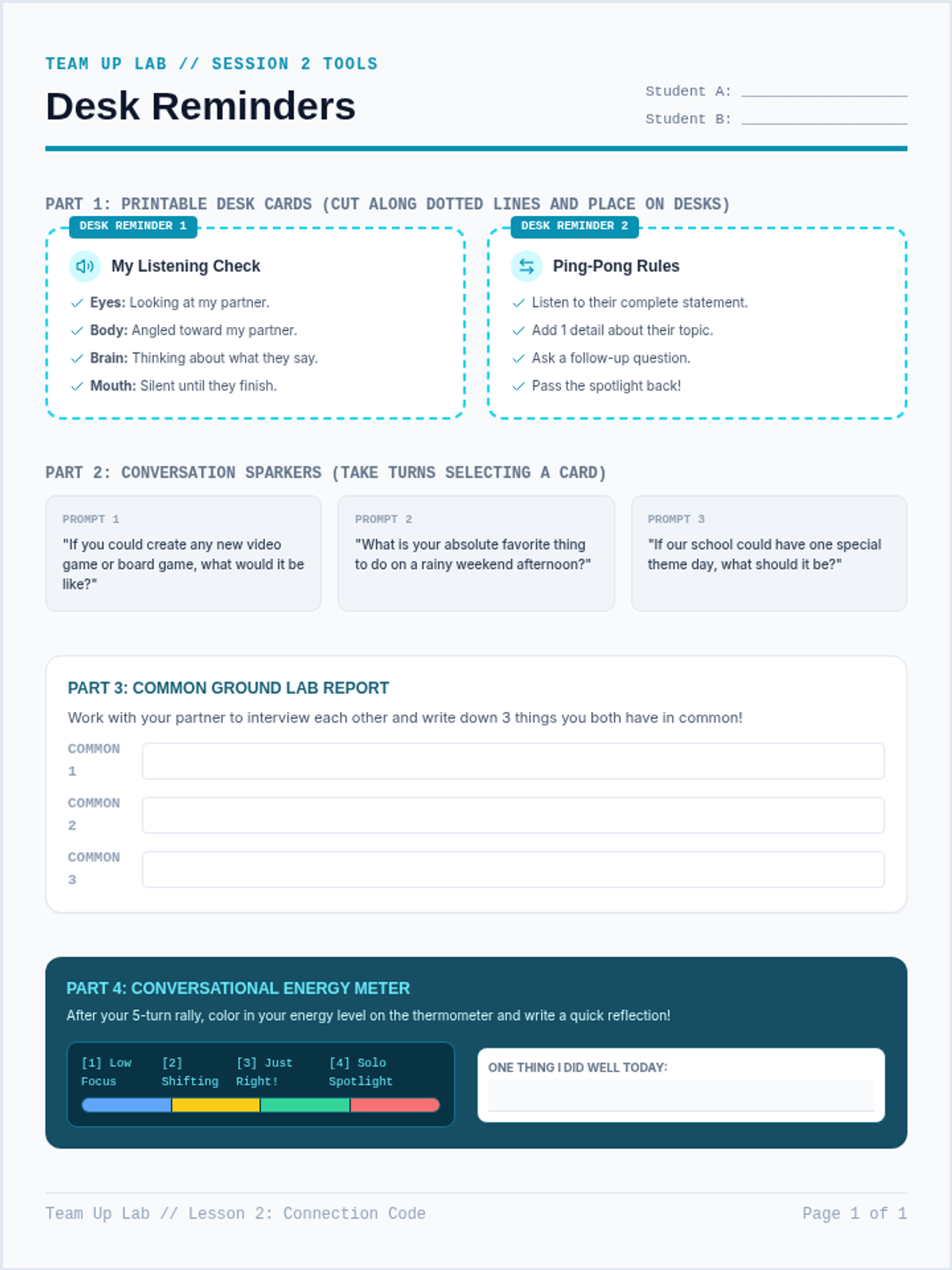
Teaches the mechanics of conversational exchange, finding common interests, and using visual desk reminders for active listening.
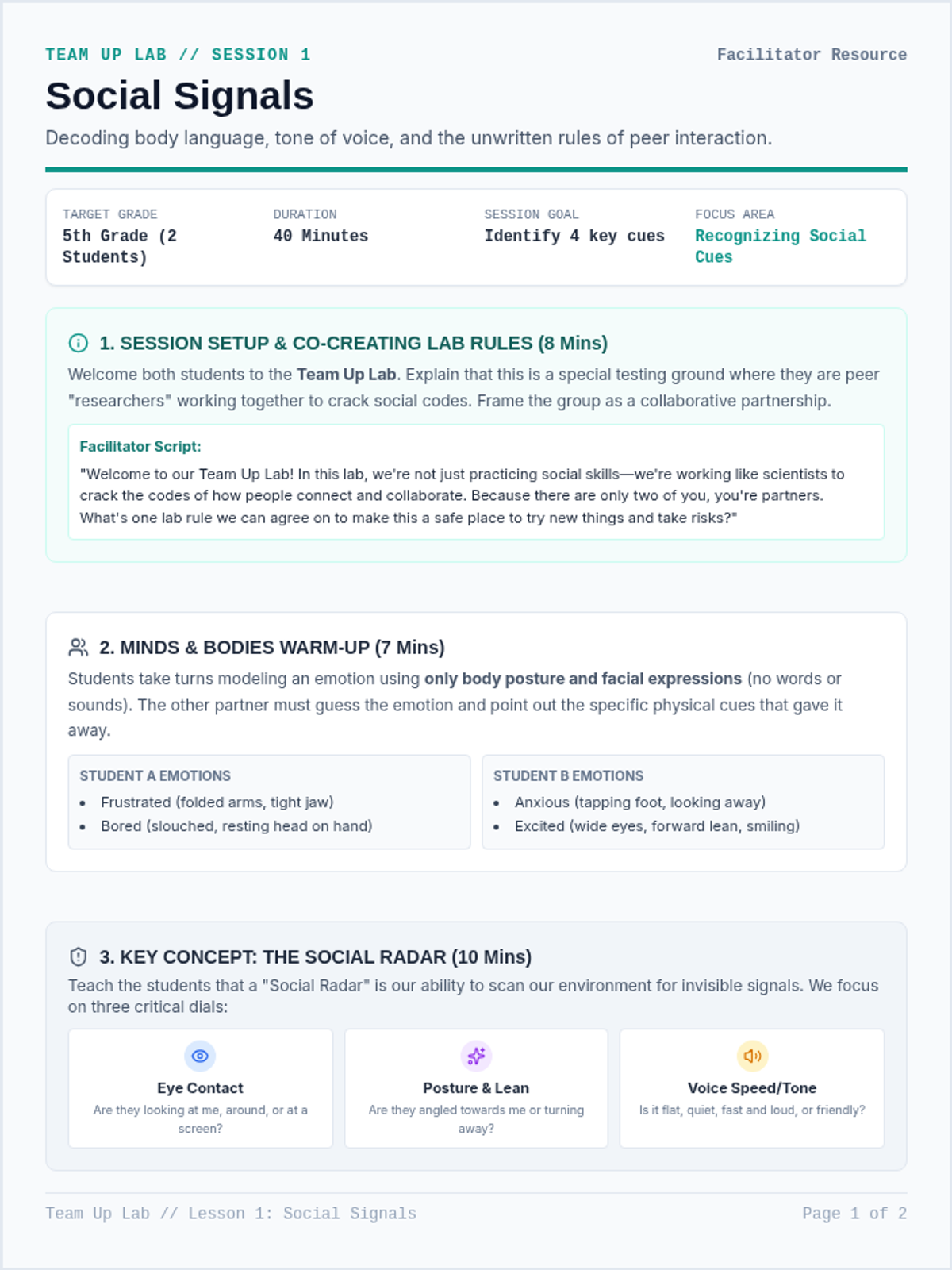
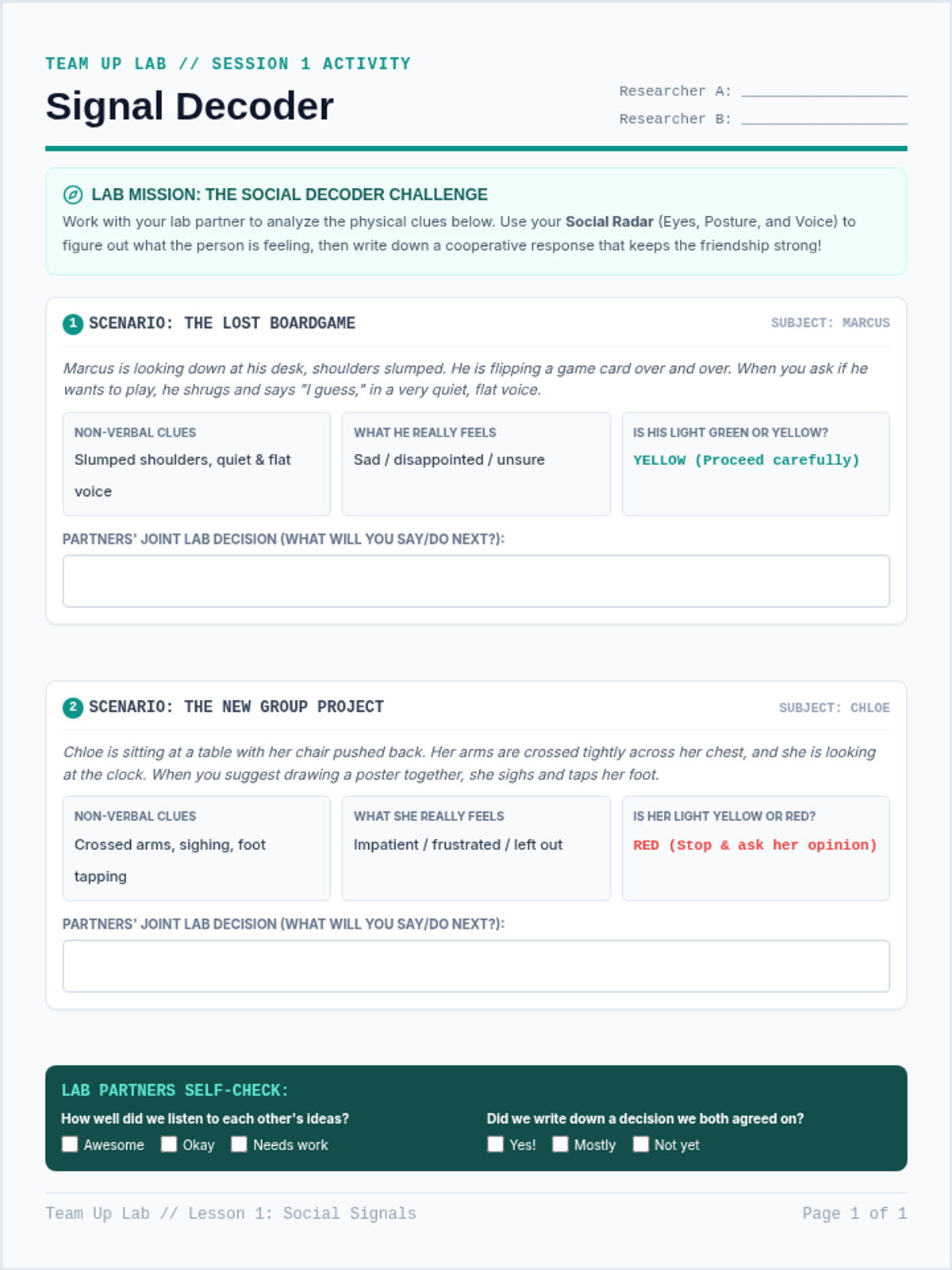
Focuses on reading non-verbal cues (body language, facial expressions, tone of voice) and understanding unwritten social rules in small group settings.
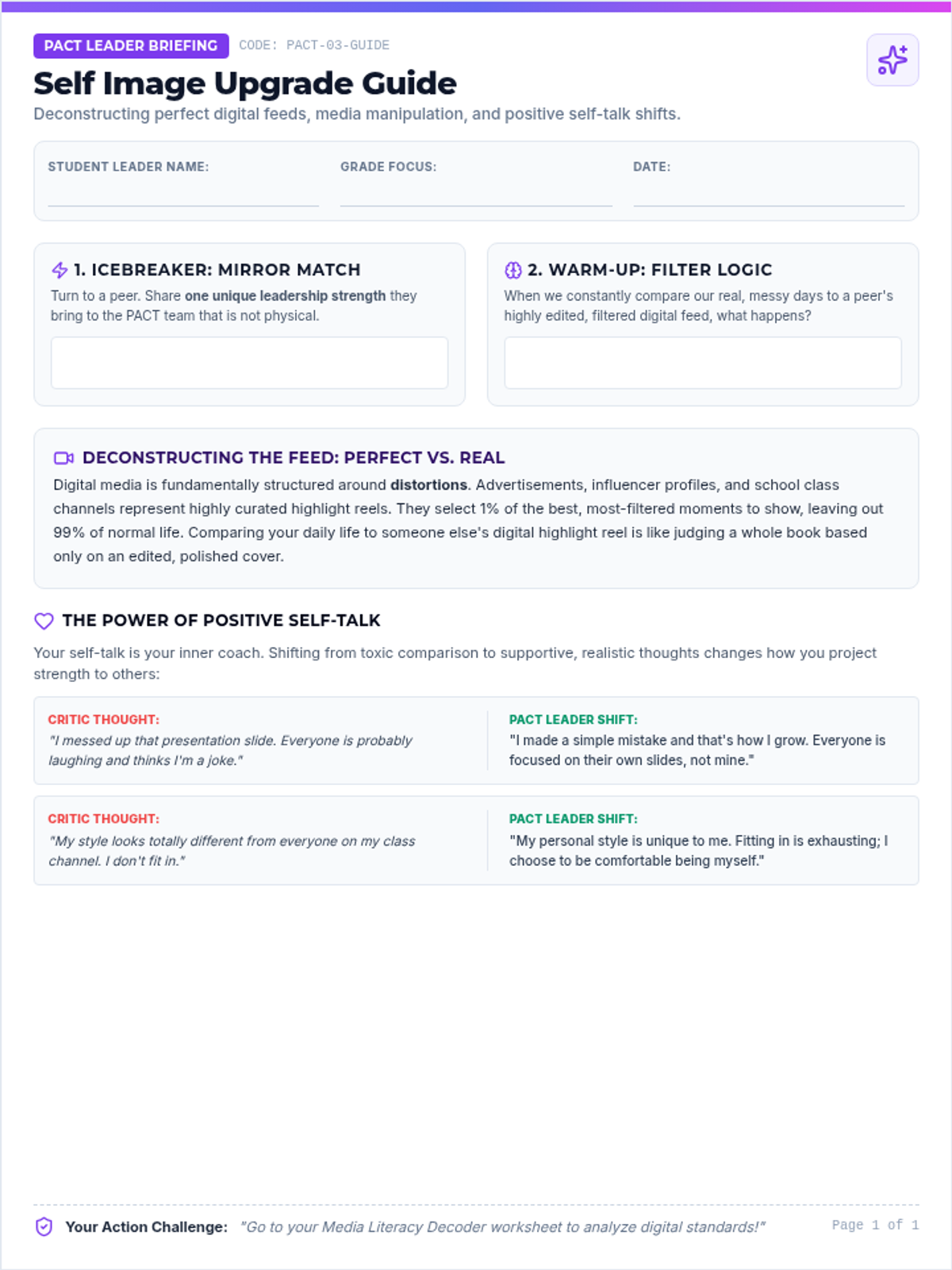
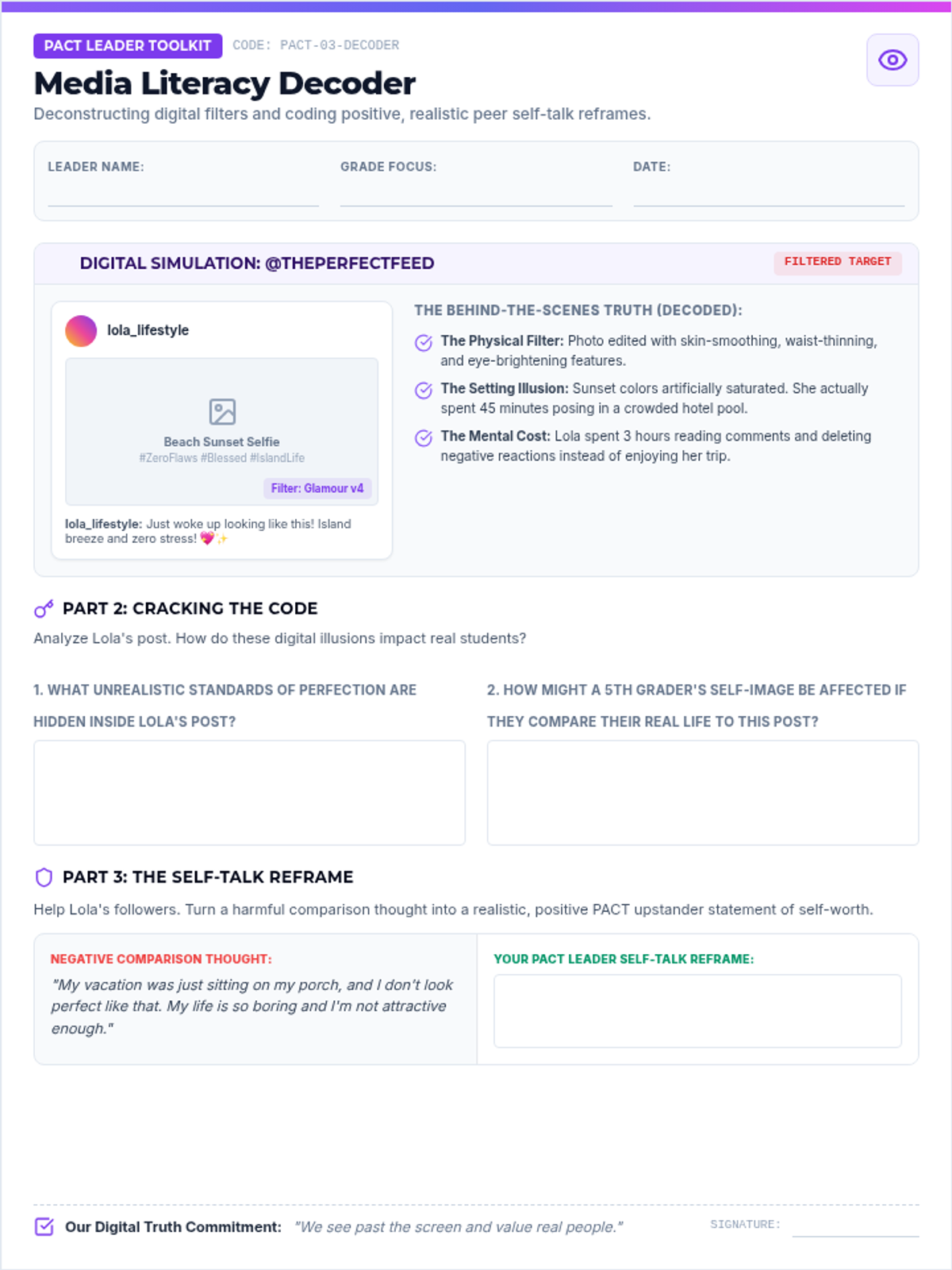
Focuses on building self-worth, identifying negative media messages, and shifting personal and peer narratives through positive self-talk strategies.
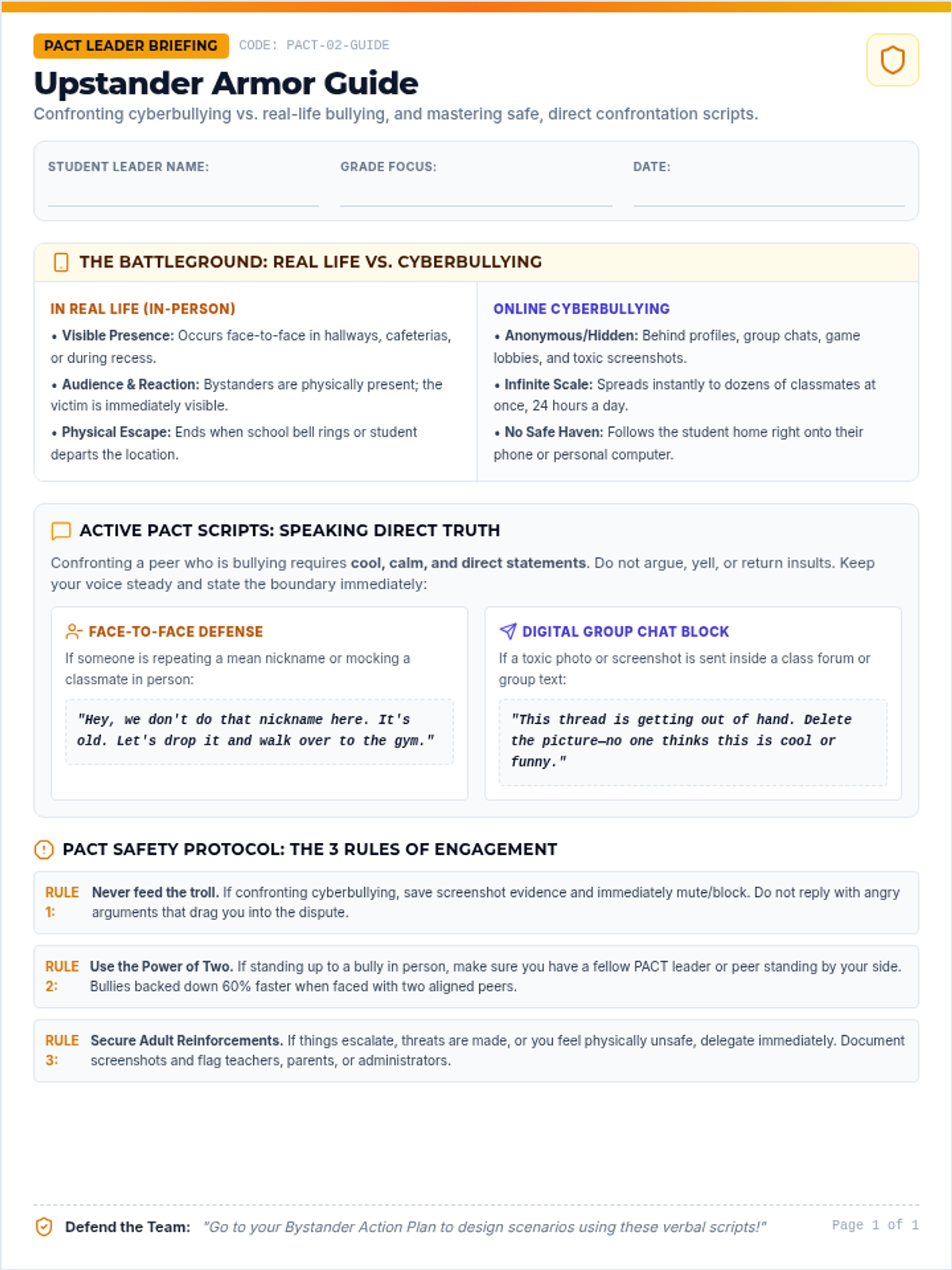
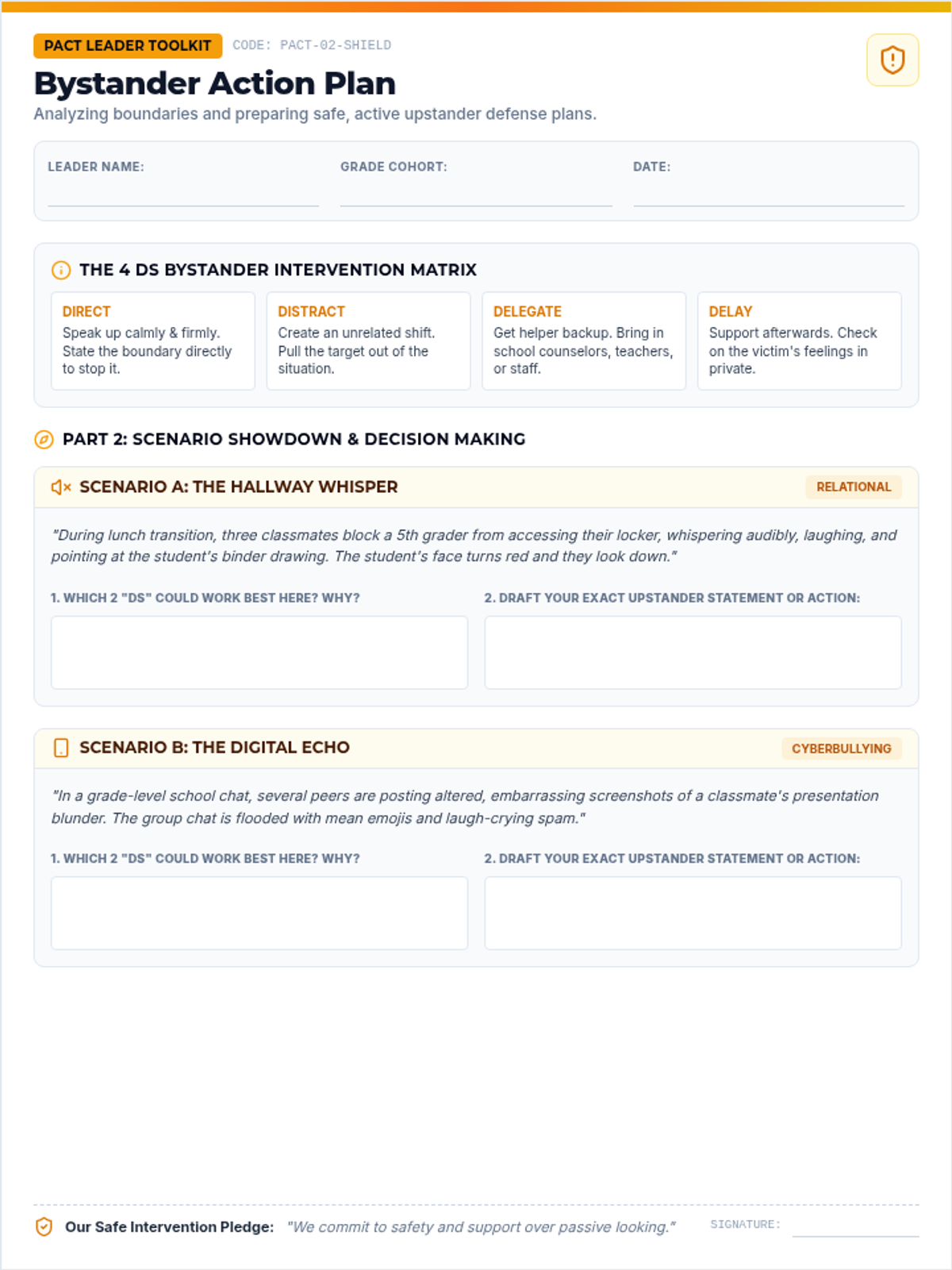
Teaches student leaders to identify the fine line between teasing and bullying, and equips them with safe, practical upstander intervention and peer support frameworks.
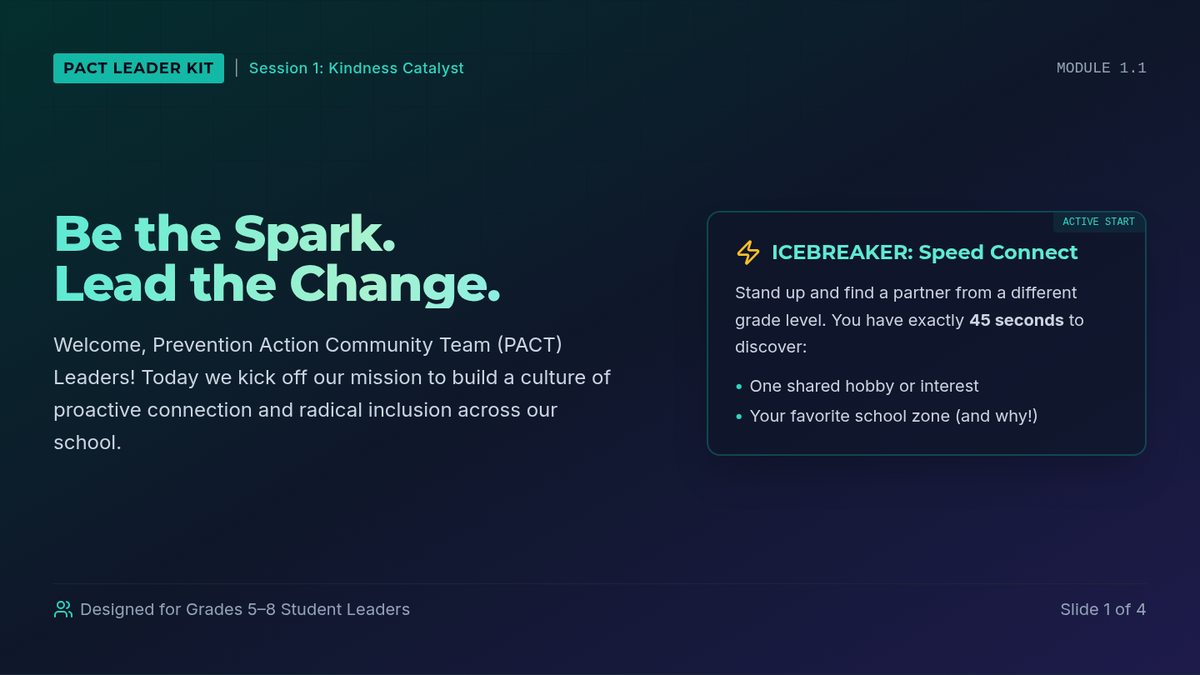
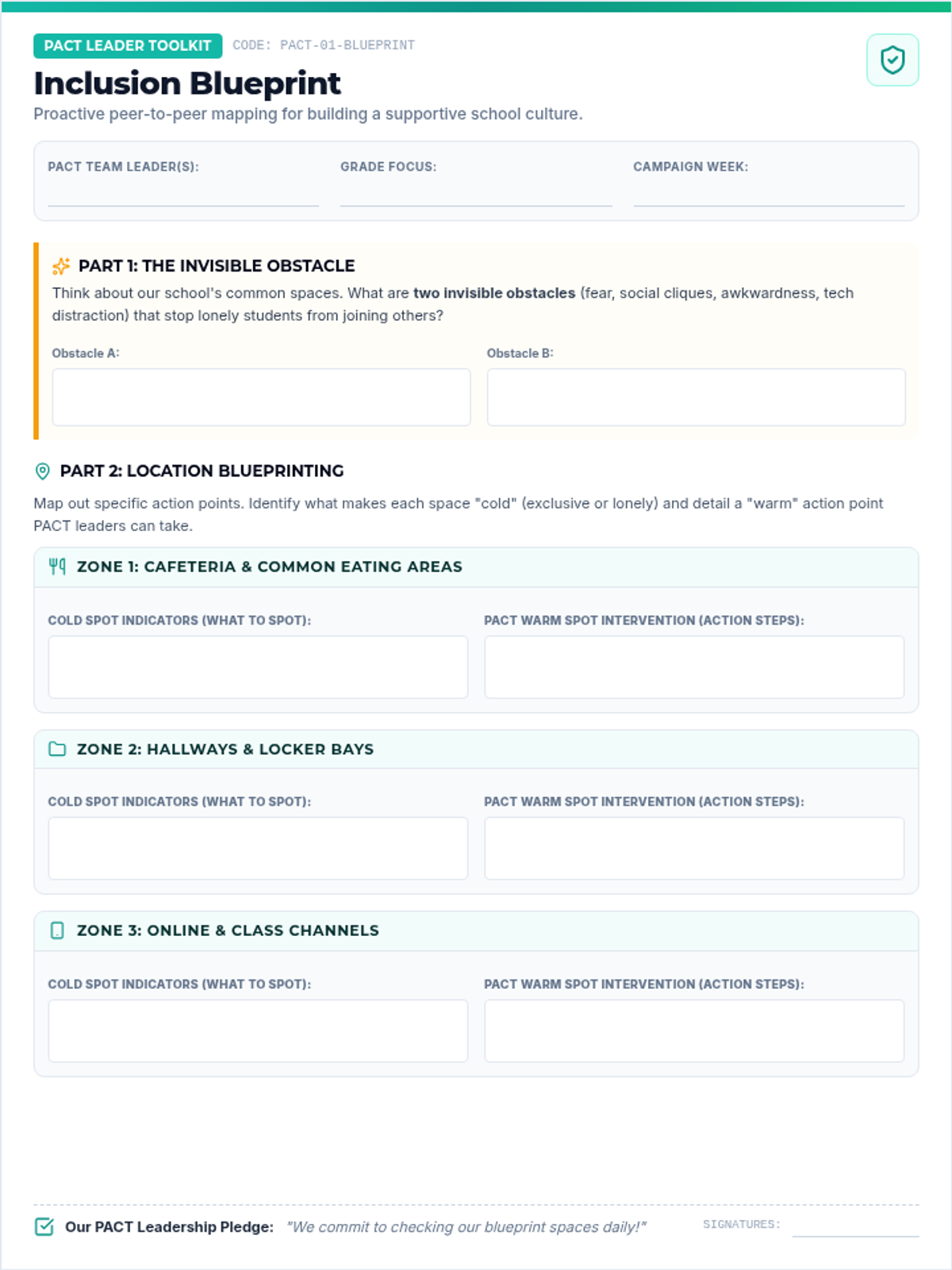
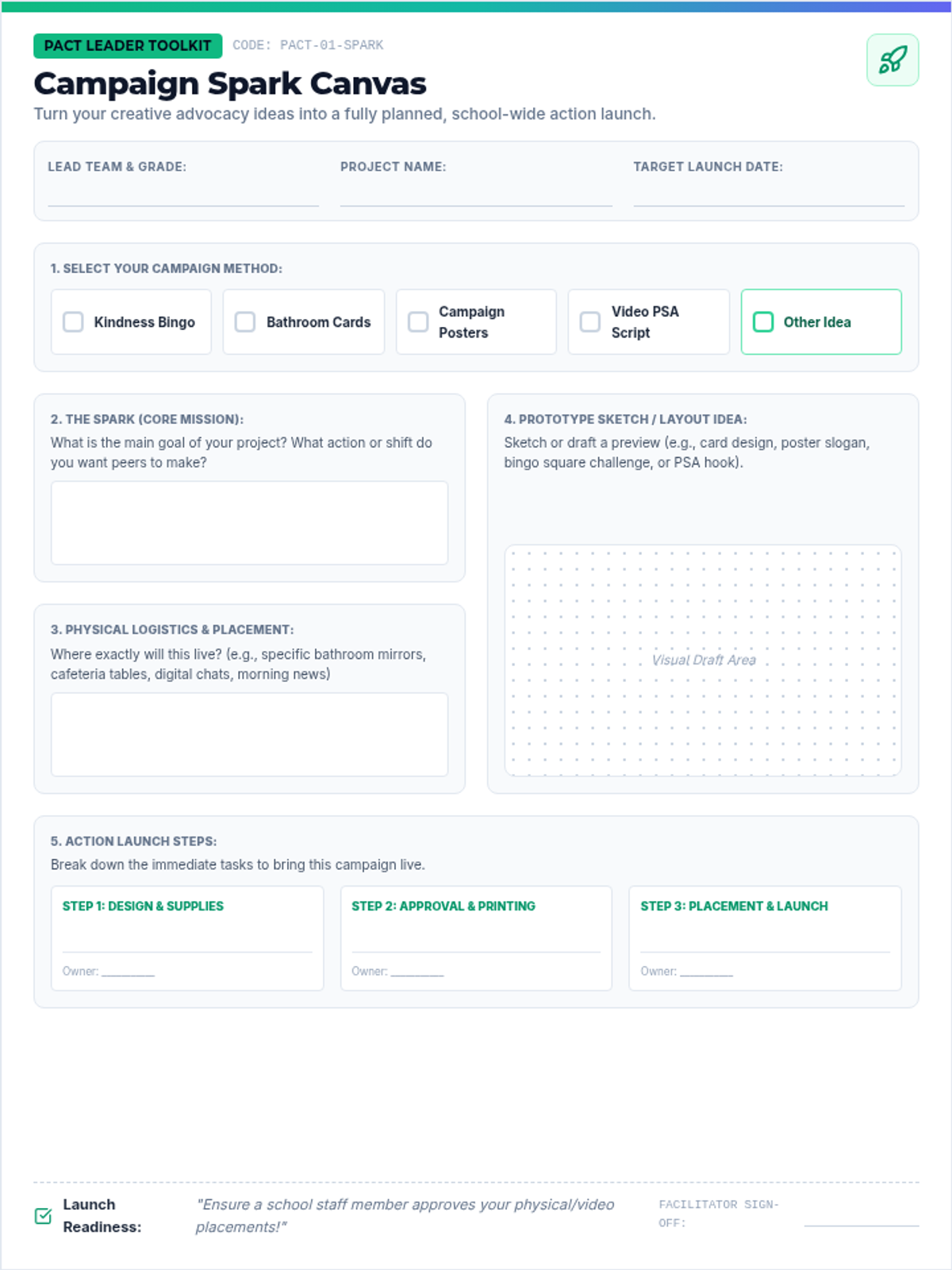
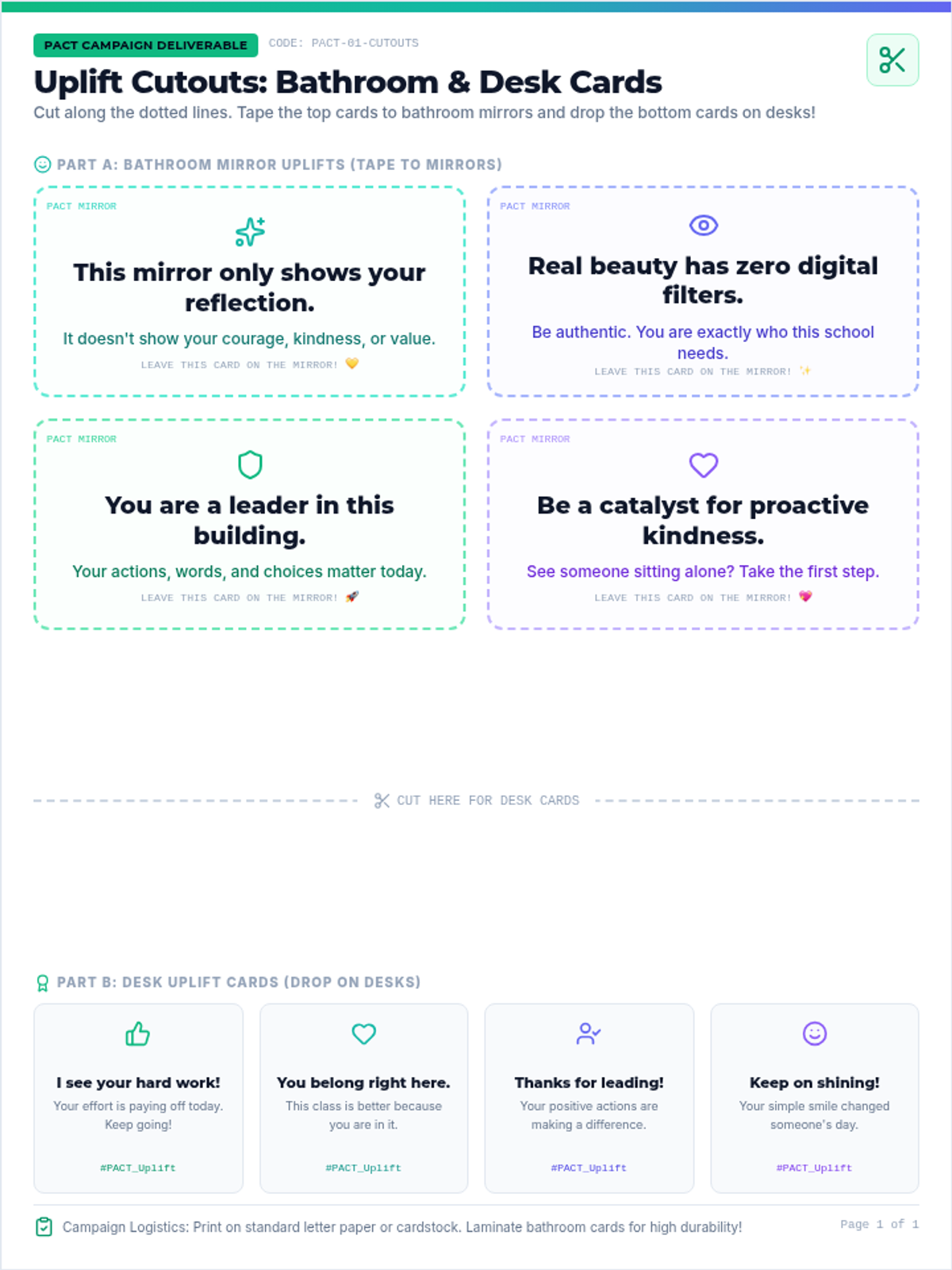
Equips PACT student leaders with core concepts of proactive inclusion, empathy, and positive peer-to-peer connection. Features a hands-on inclusion blueprint worksheet and peer training presentation.
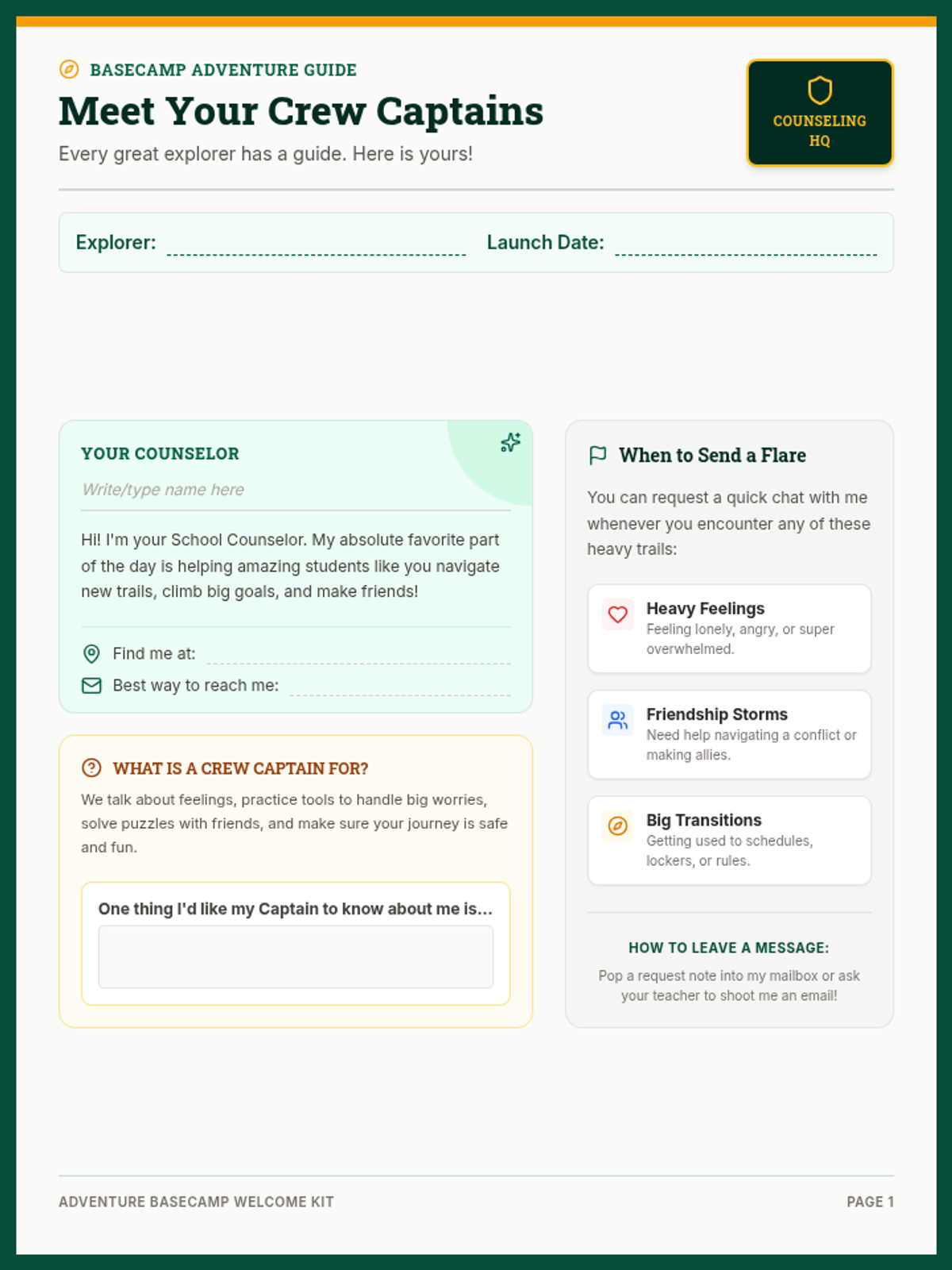
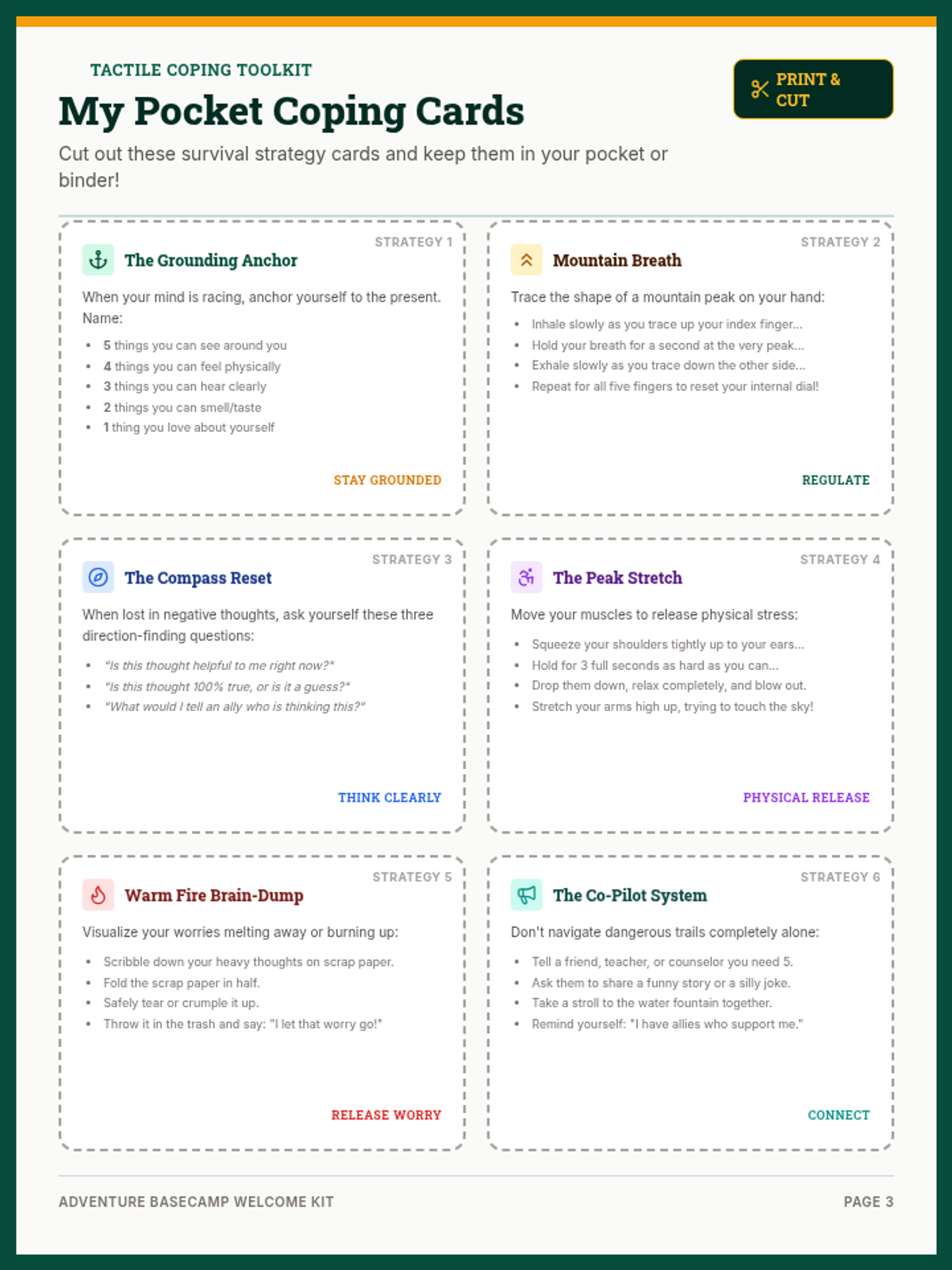
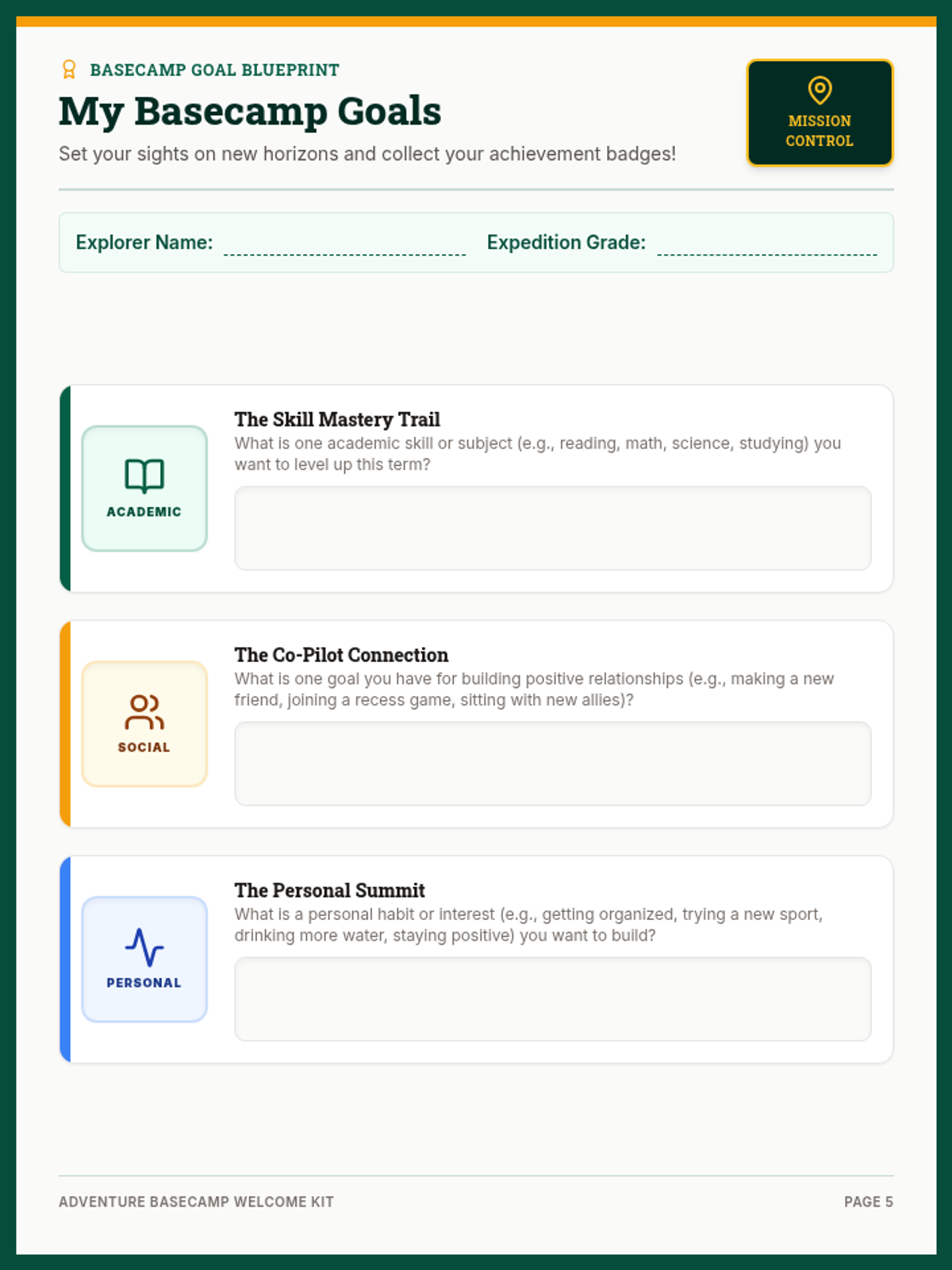
A welcome packet designed for new upper elementary students transitioning to a new school. Features counselor introductions, interactive feelings trackers, physical coping strategy cards, anxiety-relief exercises, goal setting templates, and school activities organizers.
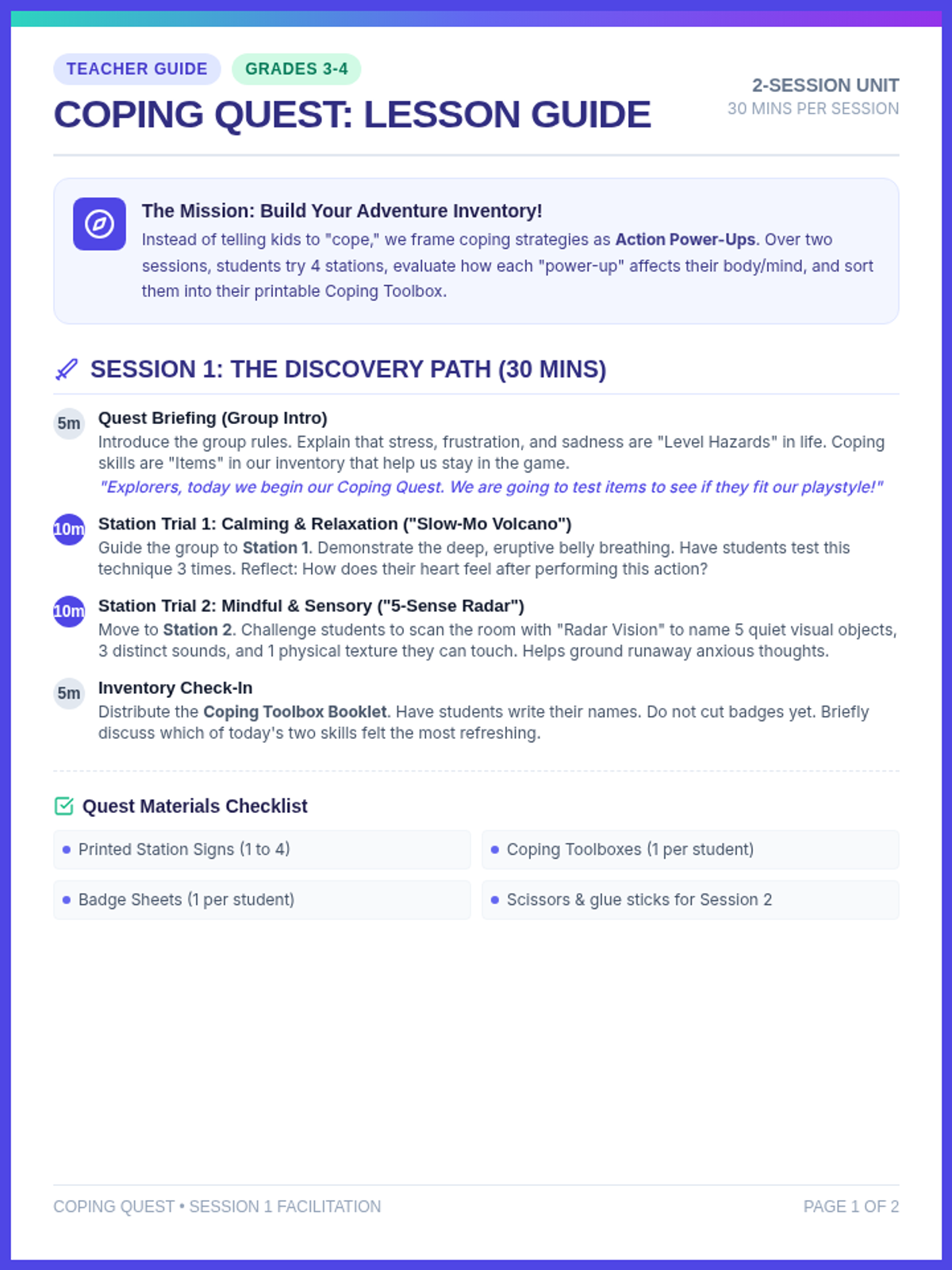
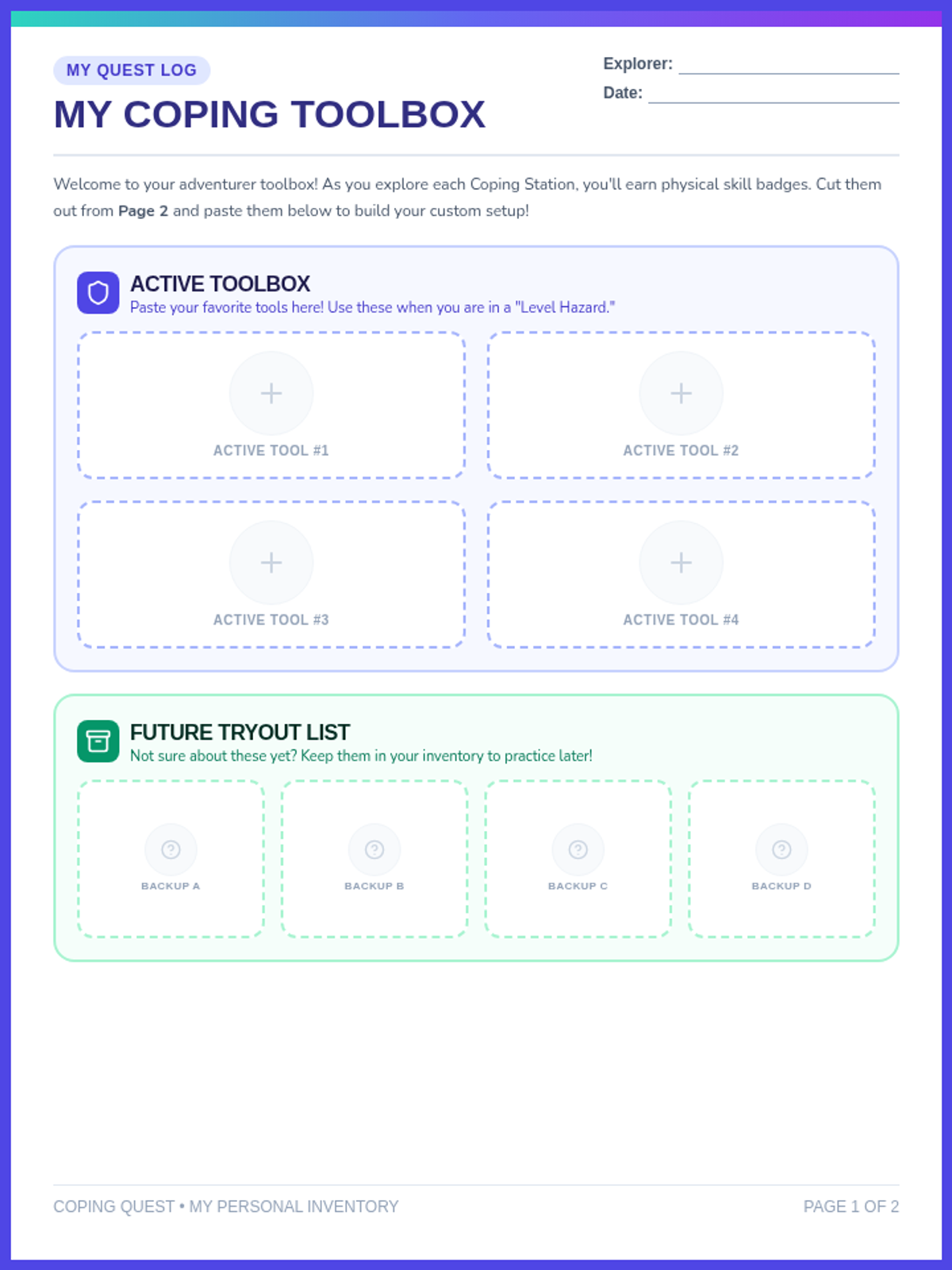
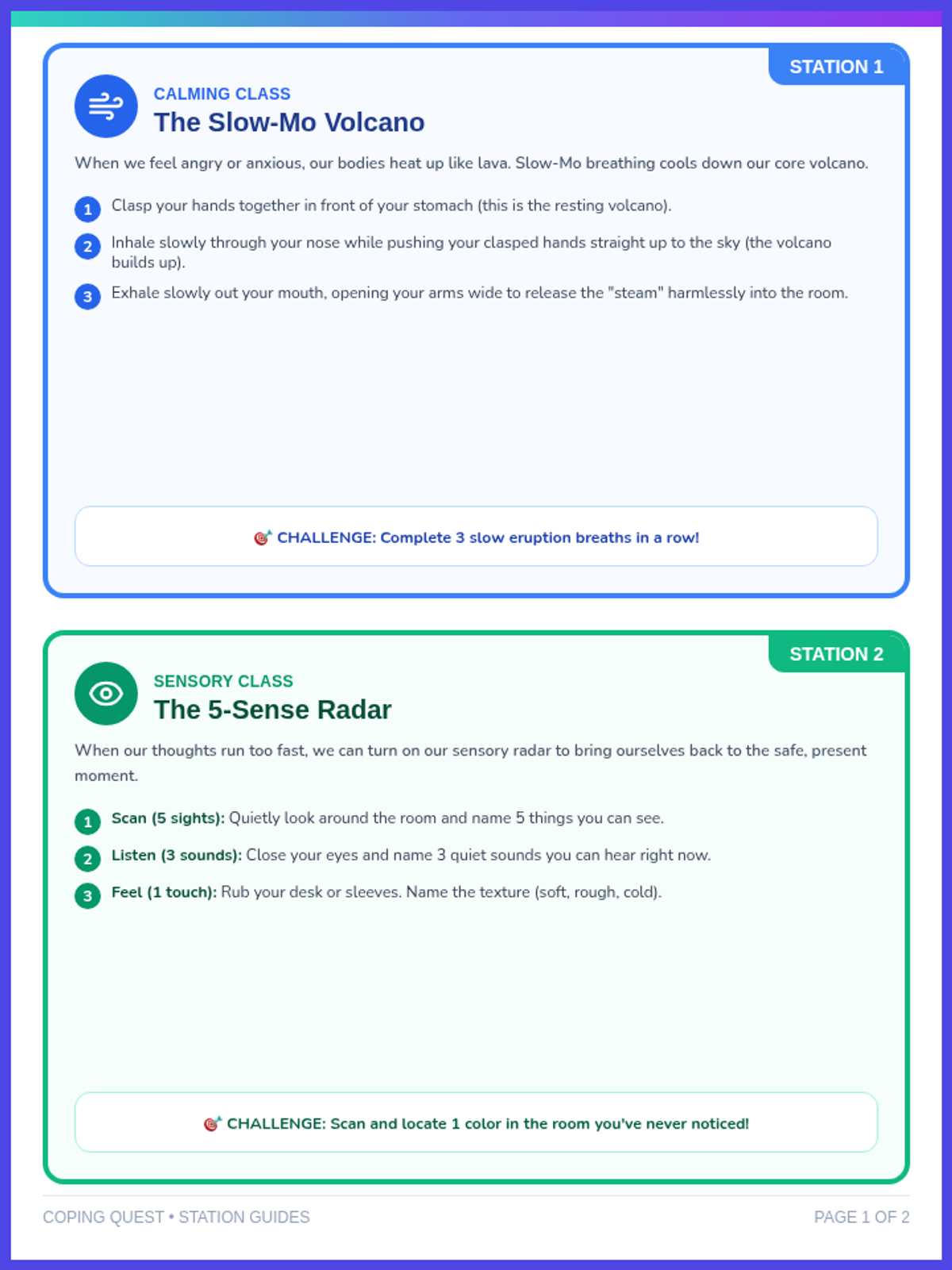
A gamified 2-session SEL small group unit where 3rd and 4th grade students explore, try out, and collect coping skills for their personal Coping Toolboxes.
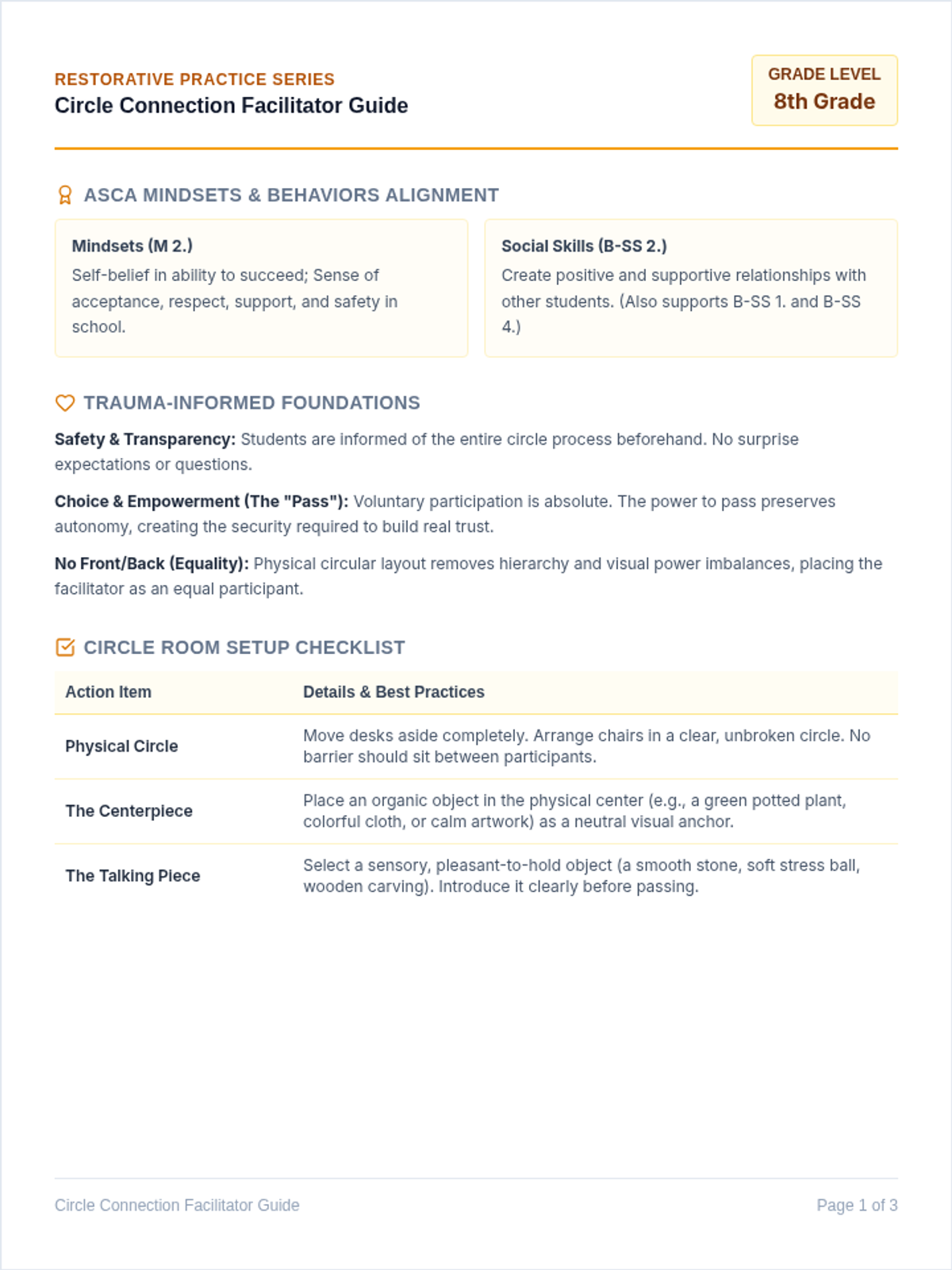
An introductory lesson designed to demystify restorative justice circles for 8th-grade students in California, building trust and encouraging voluntary participation using an ASCA-aligned, trauma-informed lens.
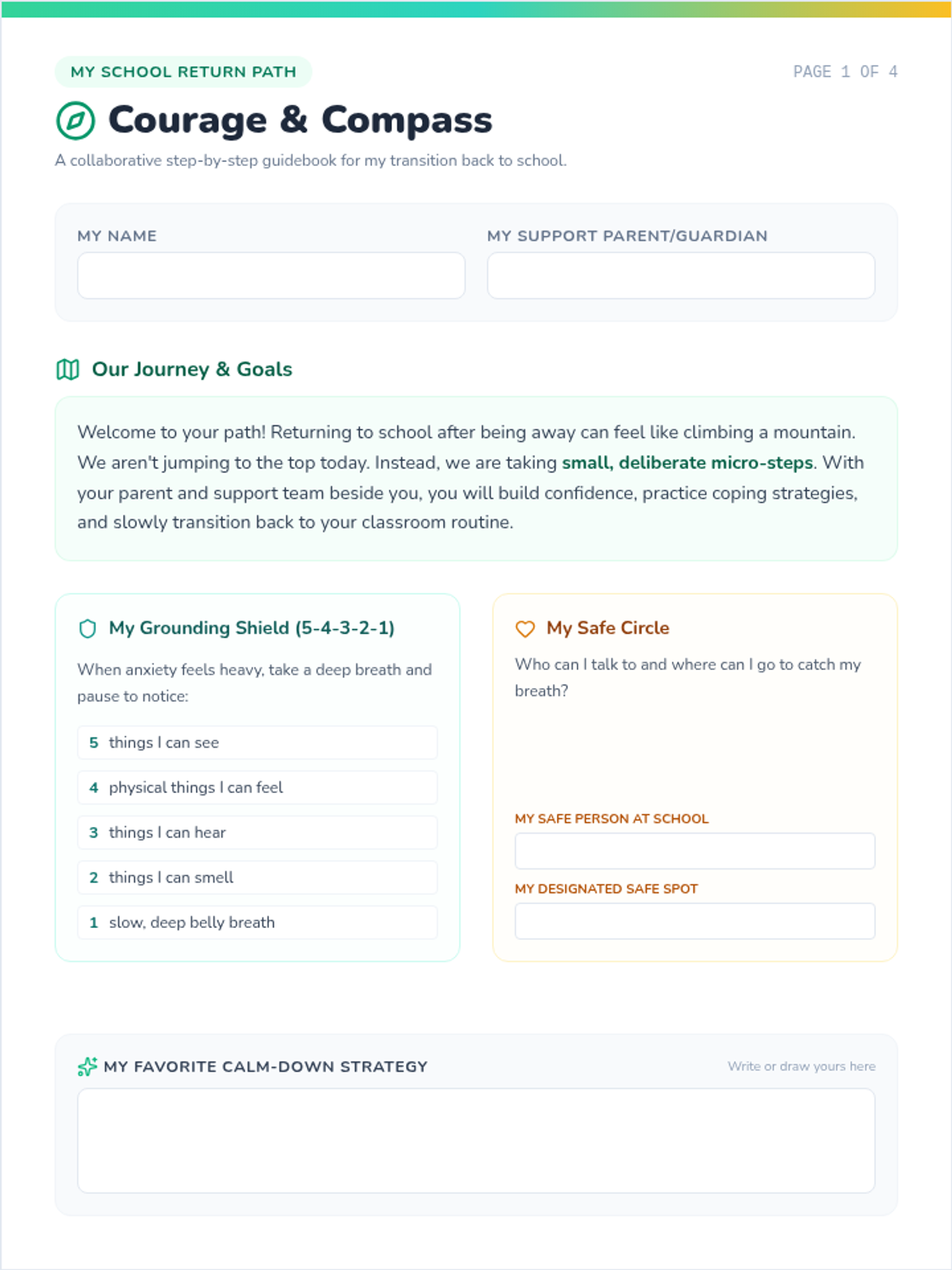
A collaborative, student-centered lesson framework to support students transitioning back to school after anxiety-related absences using a graduated exposure pathway.
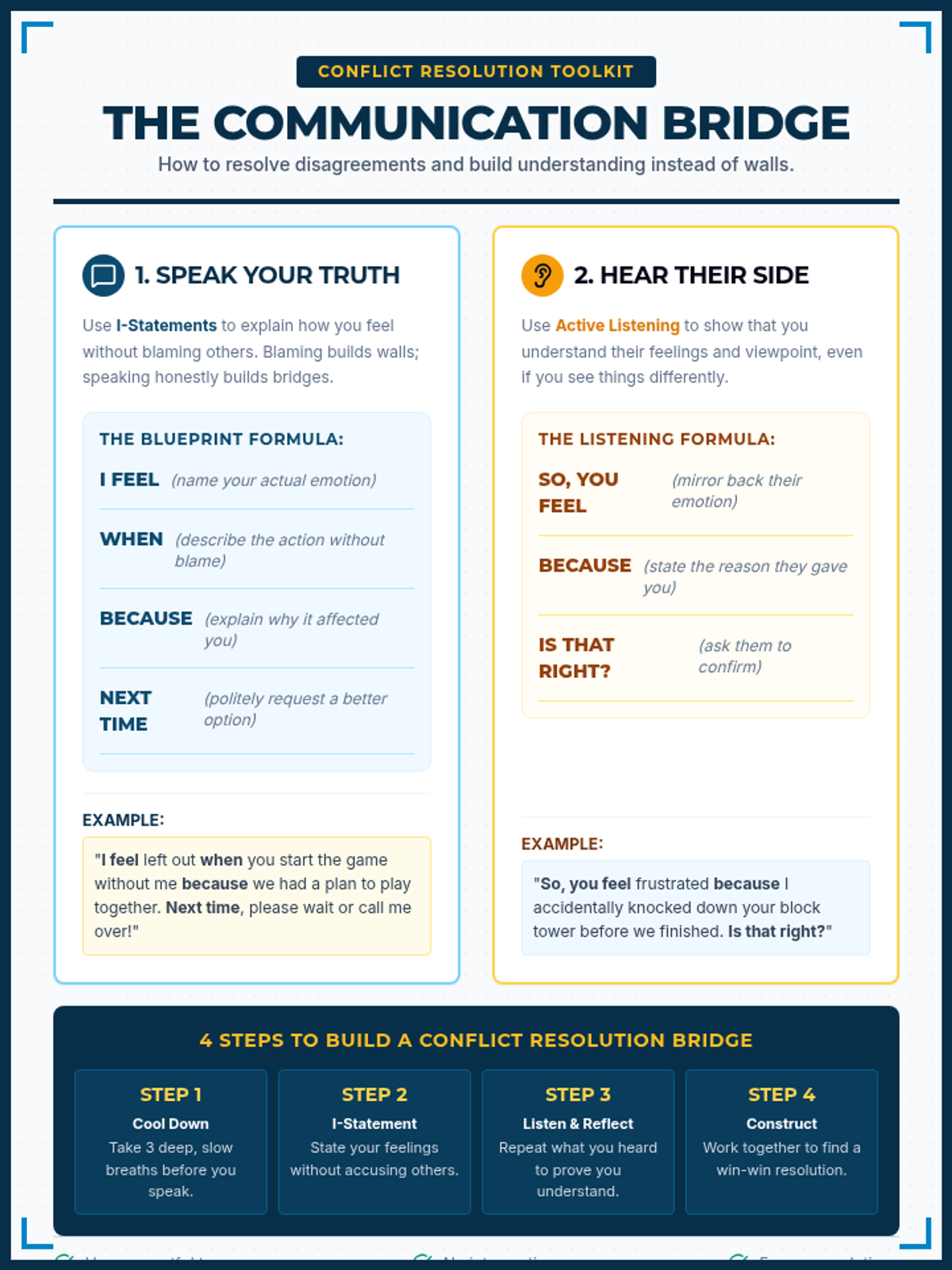
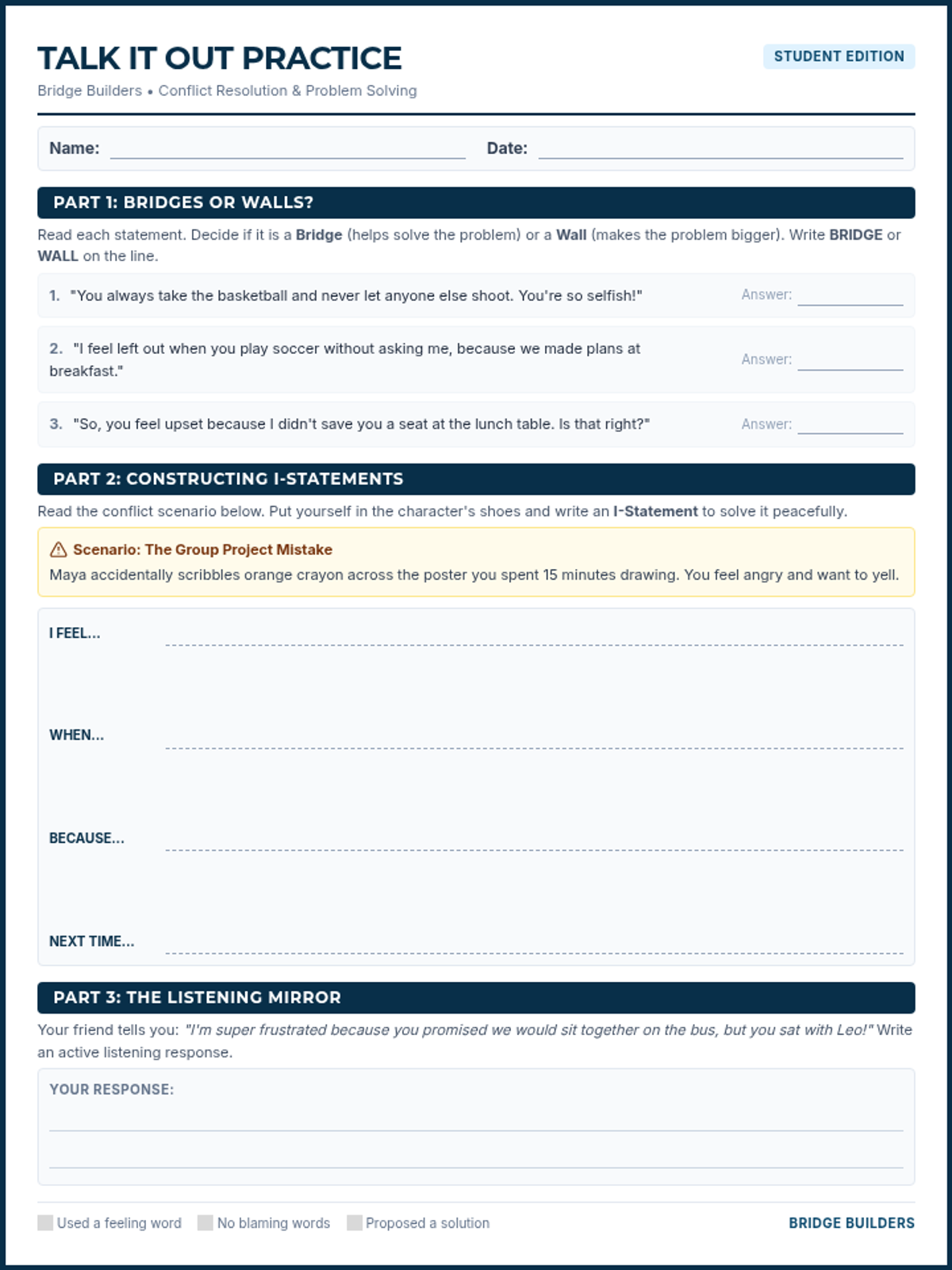
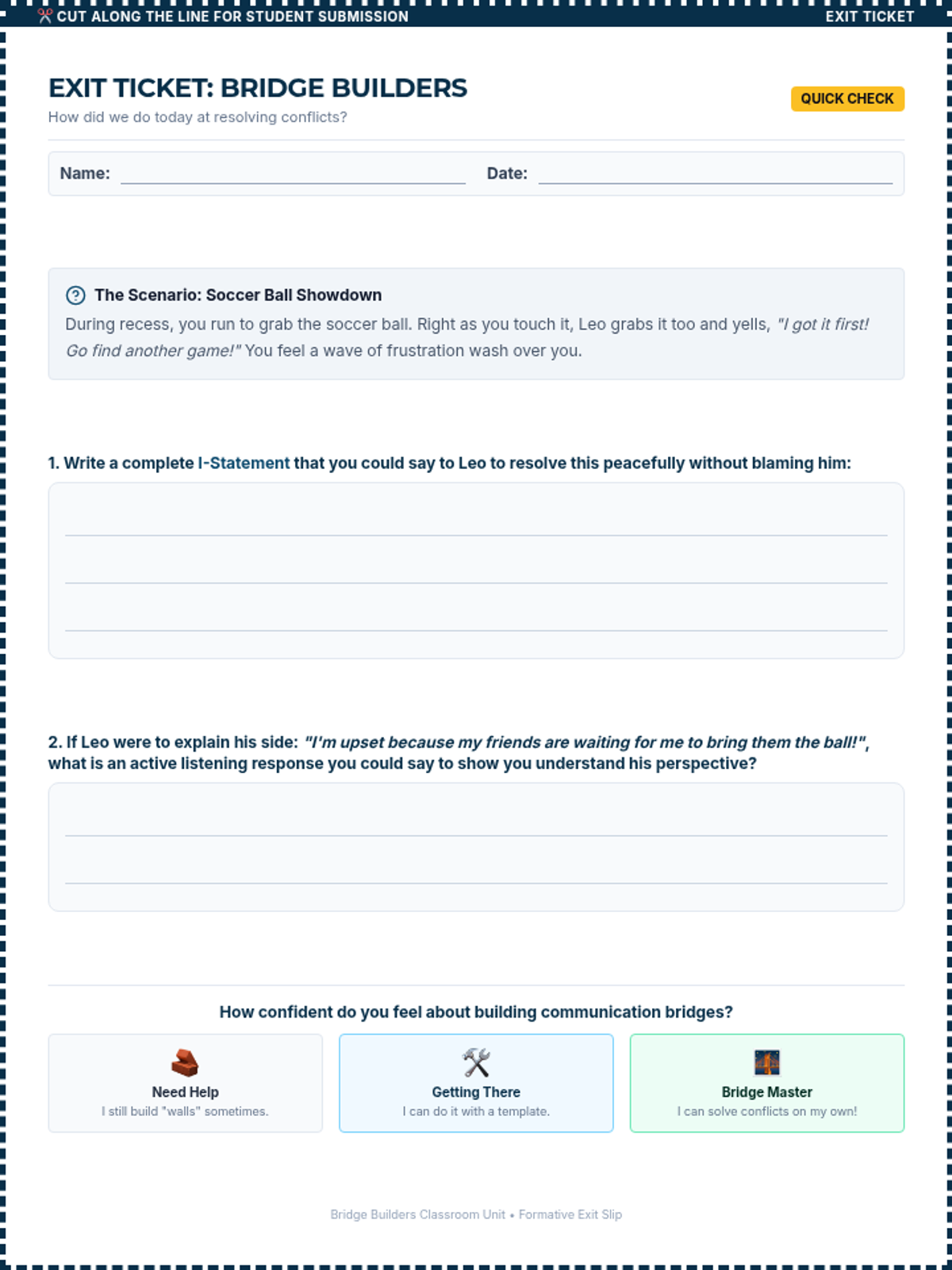
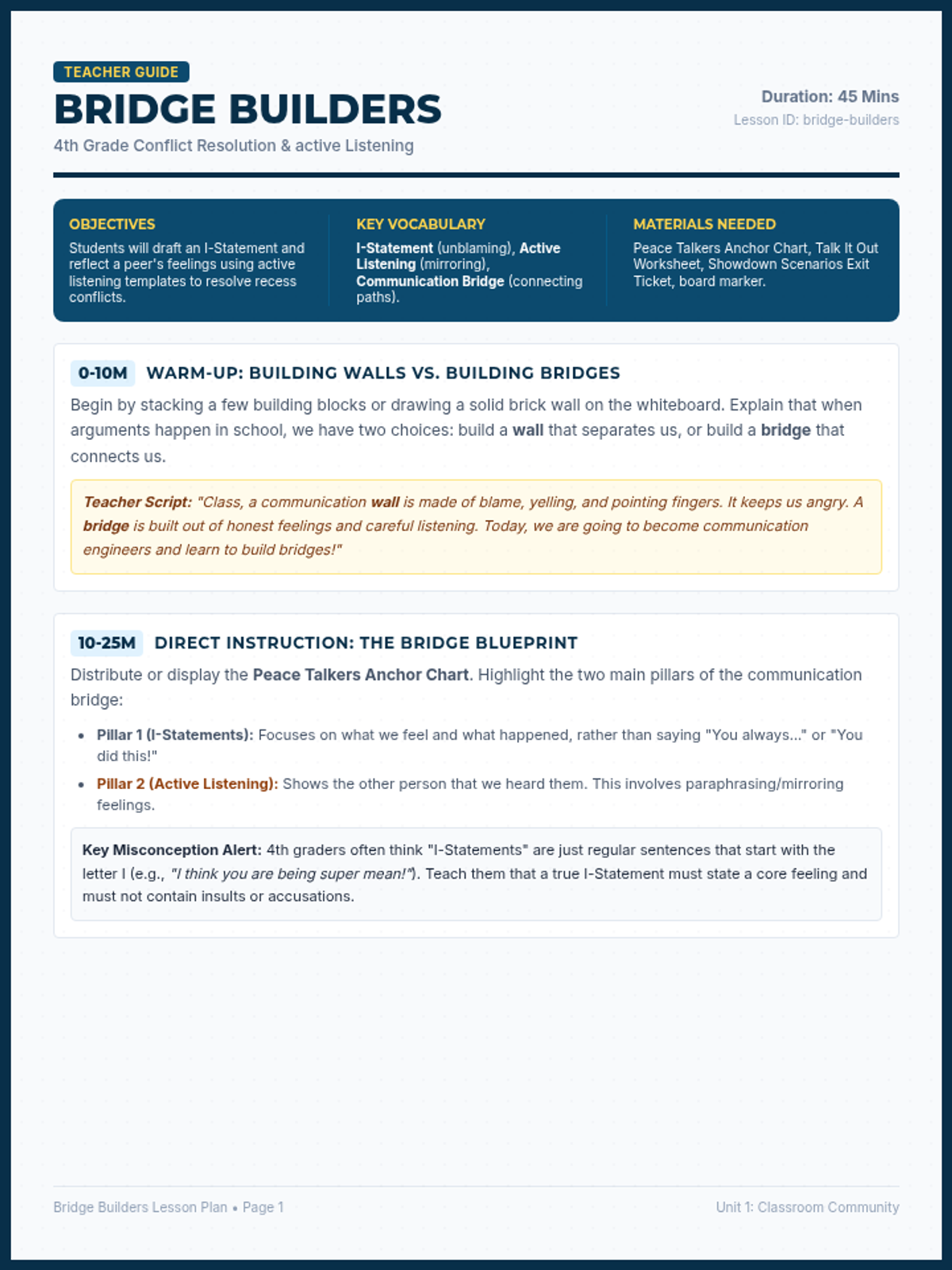
A complete conflict resolution lesson for 4th graders focused on mastering I-Statements and active listening. Students learn to build communication bridges instead of walls, practicing with real-world school conflicts and reflective activities.