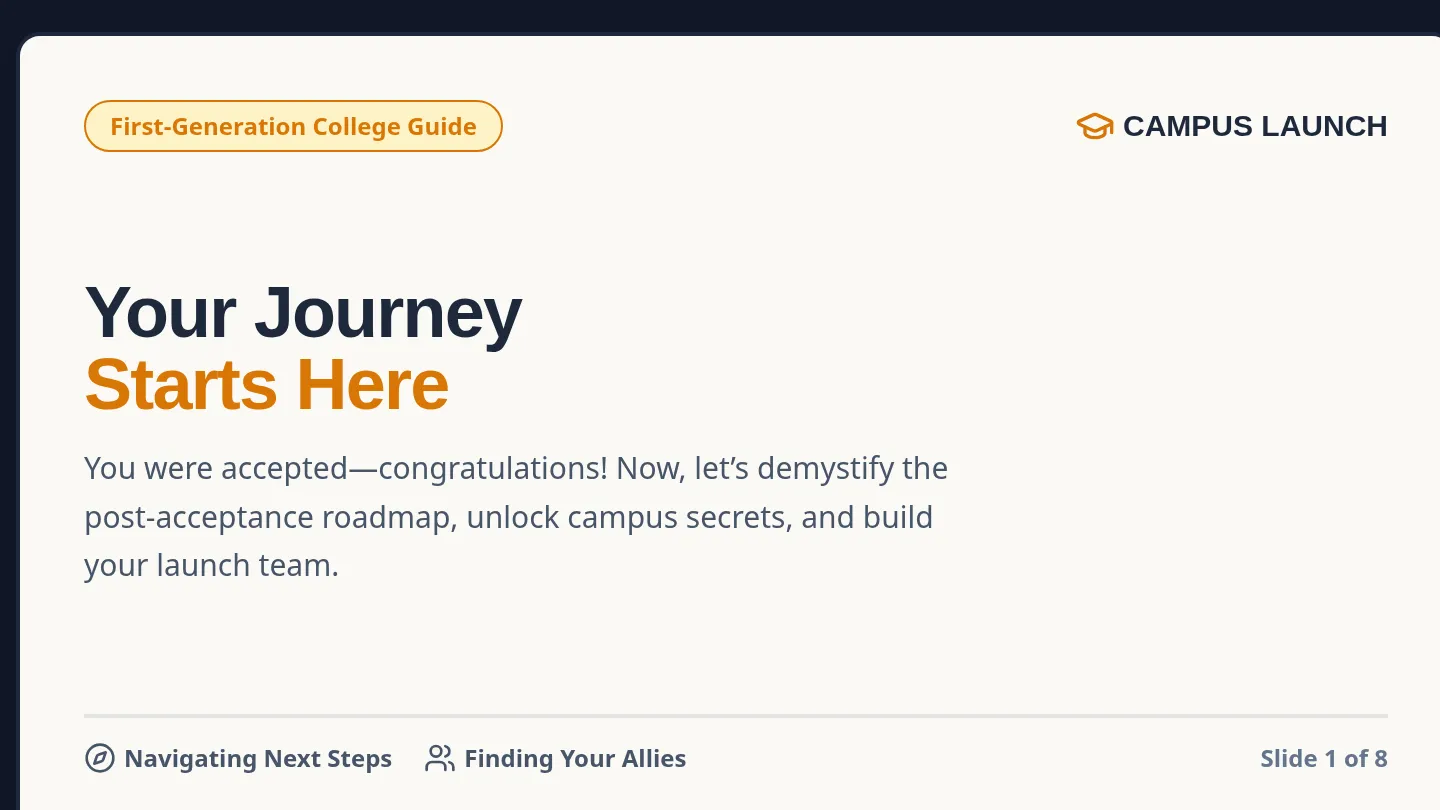
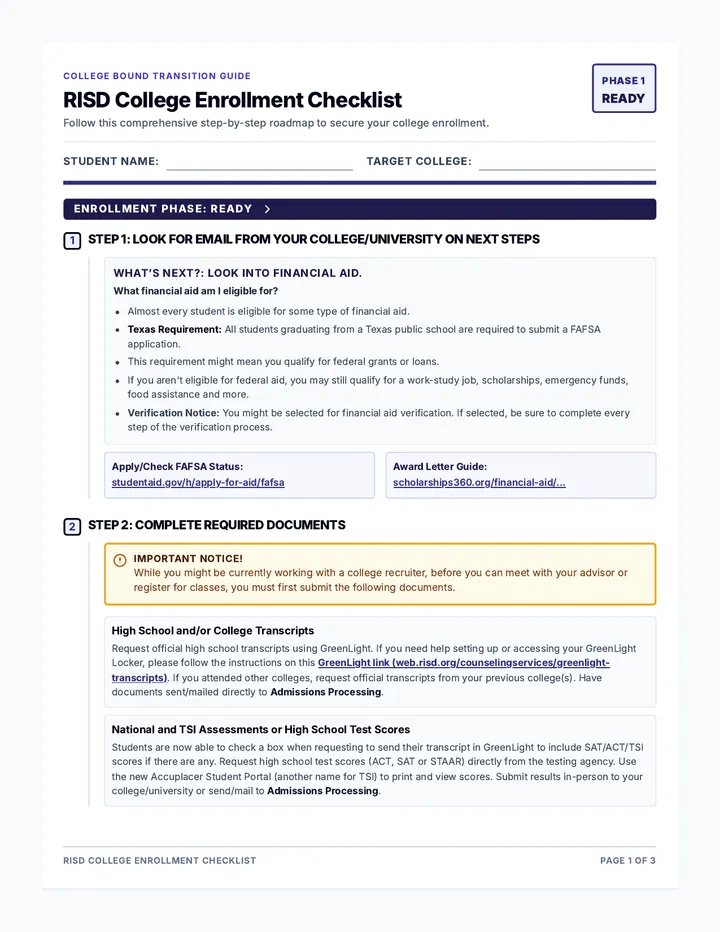
A first-year seminar lesson designed to help undergraduate students audit their degree plans and identify opportunities to accelerate their education through CLEP exams, saving both time and money.
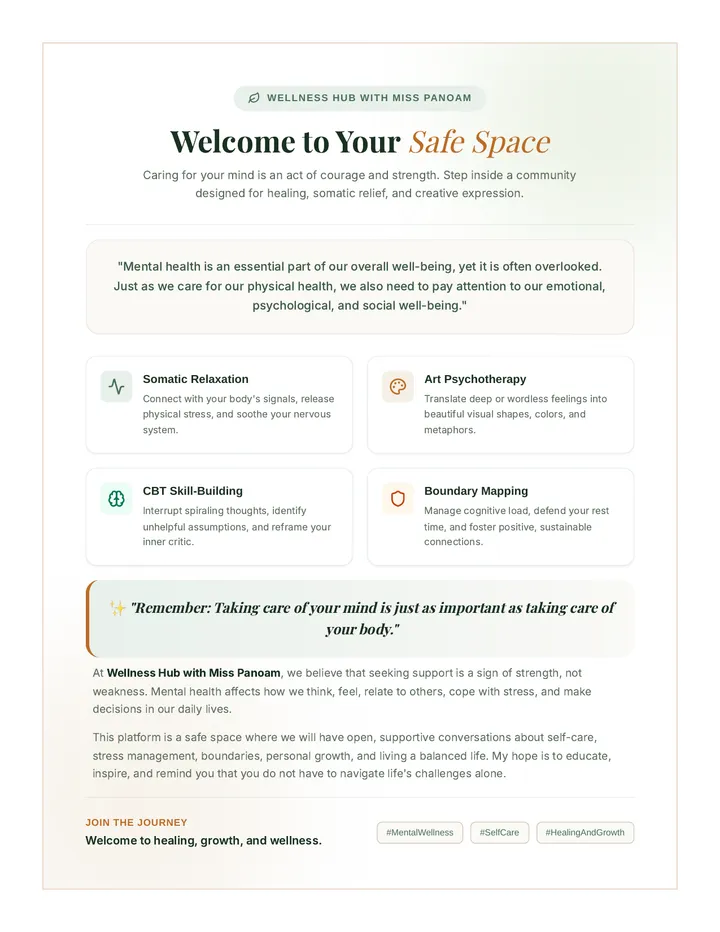
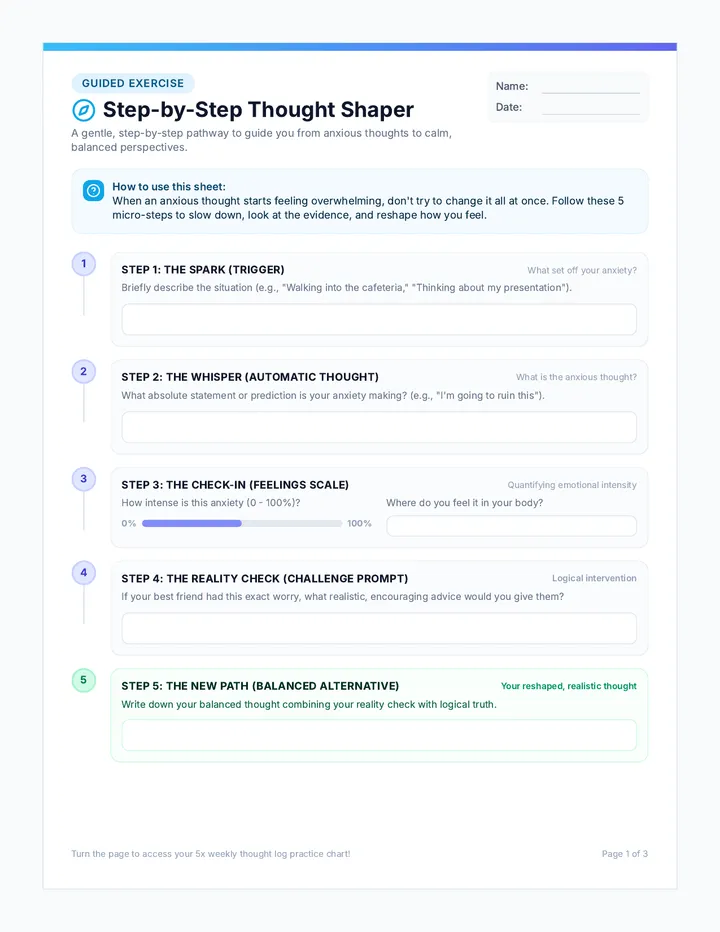
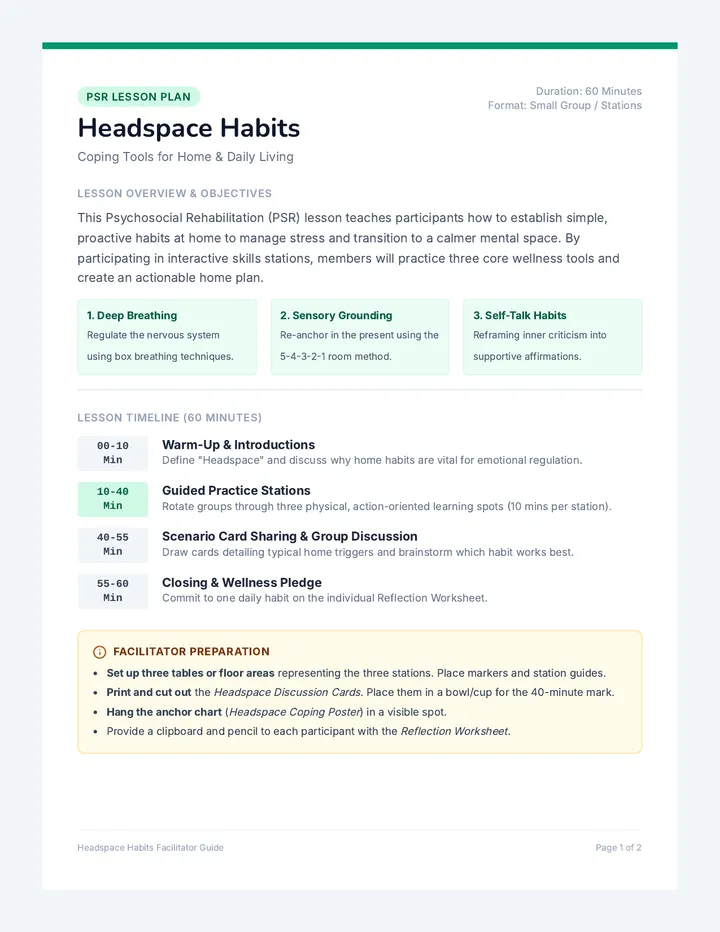
This lesson introduces the fundamentals of somatic tracking, a technique used to re-train the brain's response to physical sensations by observing them through a lens of safety and curiosity. Students will learn the four-step process of anchoring, noticing, describing, and reassuring to build foundational body awareness.
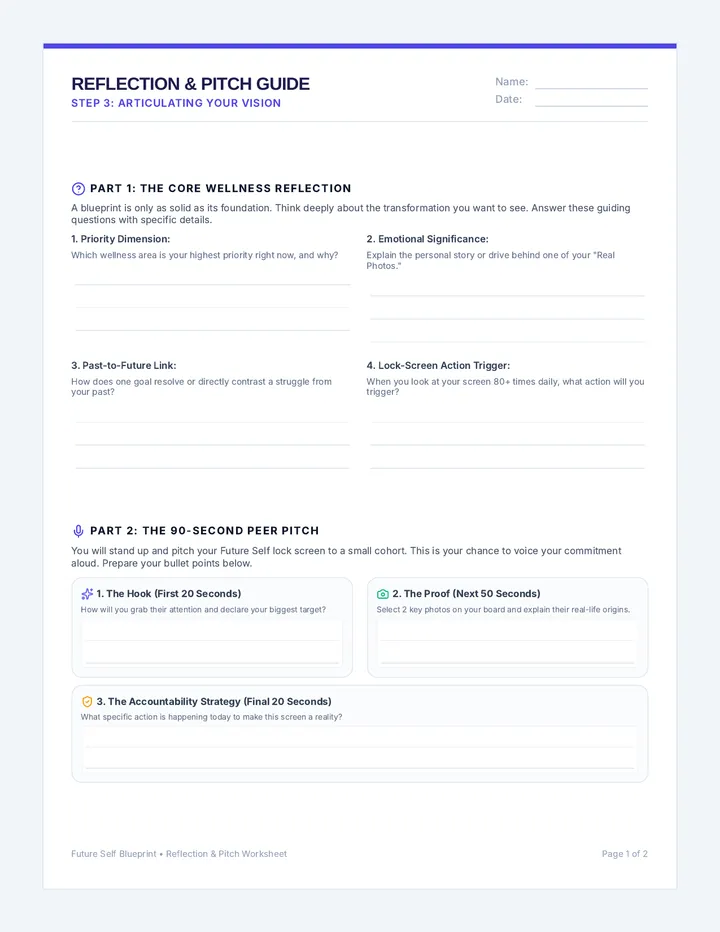
A lesson focused on post-pitch reflection and strategic iteration. Students conduct a SWOT analysis of their own performance and draft a 'Pivot' plan to refine their business concept based on audience feedback.
The unit capstone experience where students present their marketing campaigns as founders. Includes a two-day formal pitch event with peer judging, Shark Tank-style Q&A, and 'Class Cash' investment reflections.
A lesson focused on public speaking and professional presentation etiquette. Students learn non-verbal communication techniques, projection, and how to use digital slides as a backdrop rather than a teleprompter.
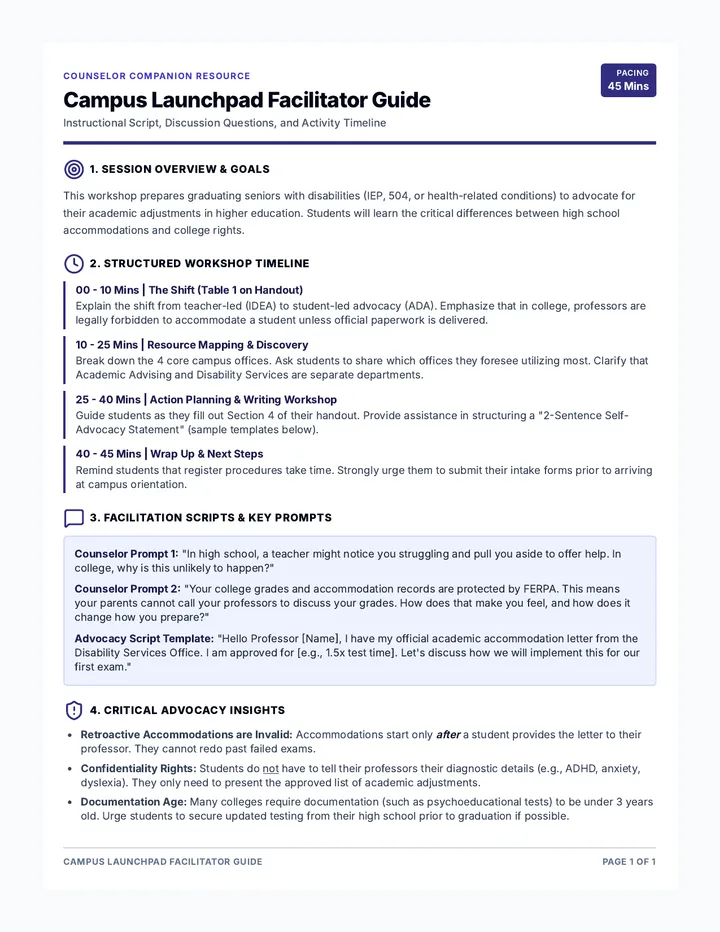
A high-energy, 30-minute coaching session focused on five critical self-advocacy scenarios. Includes role-play, visual aids, and practical toolkits for immediate application in real-world settings.
A lesson focused on data visualization and presentation flow. Students learn to simplify complex spreadsheets into high-impact slides, animate charts for storytelling, and finalize their full pitch deck.
A lesson focused on visual consistency and branding in pitch decks. Students learn to use master slides, image masking, and brand-aligned assets to create the first half of their digital marketing pitch.
A lesson focused on business storytelling and pitch deck structure. Students learn to frame their marketing campaign as a problem-solving narrative using the 10-Slide Rule and 'invisible' design principles.
A lesson focused on designing large-format print advertisements. Students learn the differences between RGB and CMYK color modes, resolution requirements, and how to design for 'glanceability' using the Drive-By Test.
A lesson focused on creating high-impact vertical social media advertisements. Students learn the 'Thumb-Stop' rule, the 60/20/20 anatomy of mobile ads, and design safe-zone techniques in Canva.
A lesson focused on the core marketing message: the Value Proposition. Students learn the formula for persuasive messaging and how to design high-impact 'Hero Text' for digital landing pages.
A comprehensive unit preparing students for the financial and logistical realities of post-secondary life, covering education pathways, housing, vehicle maintenance, and budgeting.
An analysis of the financial decisions made in the film Goodfellas, focusing on high-risk income, the "bust-out" business model, and the long-term costs of illicit wealth.
Analyze workplace culture, professional communication, and business ethics through the lens of the high-stakes fashion industry in 'The Devil Wears Prada'. Students will explore how technology facilitates modern business and the ethical dilemmas of rapid-fire corporate environments.
Students learn the importance of professional document formatting and hierarchy, setting up a formal business proposal template with structured headings and standardized typography.
Students conduct a market research sprint, interviewing classmates to validate their product ideas and learning to 'pivot' based on real user feedback and data synthesis.
Students learn the difference between leading and open-ended questions, developing a research table and interview script to gather unbiased feedback from potential customers.
Students explore the concepts of target markets and customer empathy, moving from personal preferences to identifying specific user needs and mapping out a "Day in the Life" for their ideal customer.
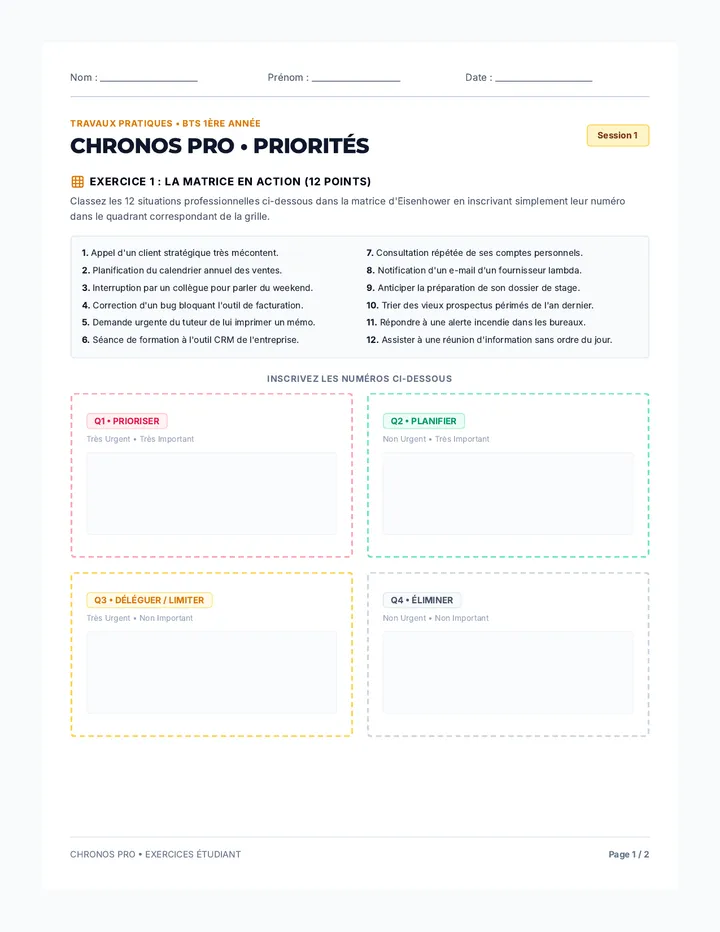
Students explore the fundamental economic concepts of scarcity and opportunity cost, applying them to product development by making difficult trade-offs between competing features within a limited resource budget.