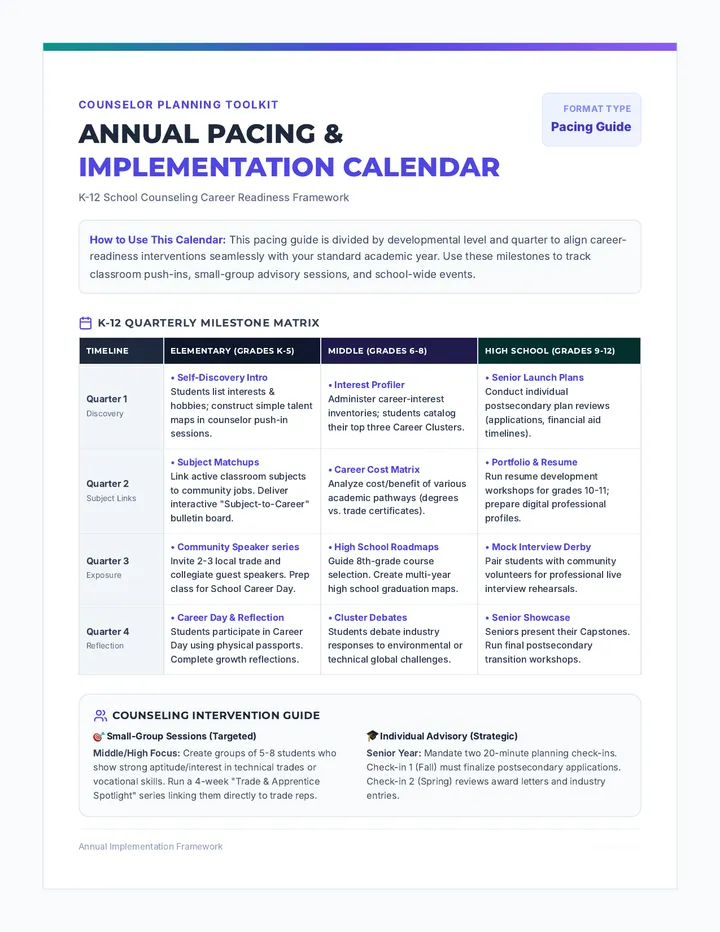
A high school lesson designed to help 12th graders analyze college financial aid award letters, calculate out-of-pocket costs, and compare offers across different institutions.
Consolidating resources and creating a concrete, personalized safety plan for life after graduation.
An interactive workshop day where students map out personal hurdles and the resources needed to clear them.
Specifically addressing the psychological challenges of leaving high school and the loss of routine.
An exploration of depression symptoms, breaking stigma, and how to support friends in crisis.
A comprehensive lesson on mental health awareness focusing on anxiety, depression, and the transition from high school, featuring a guided presentation and self-reflection activities.
A comprehensive lesson for high school seniors focused on identifying, mapping, and cultivating social capital as they transition to new post-secondary environments. Students will perform a networking audit and practice cold outreach techniques to build their professional and personal support systems.
A transition-focused lesson for high school seniors to help them identify, audit, and build a new network of mentors and peers in their upcoming post-secondary environments.
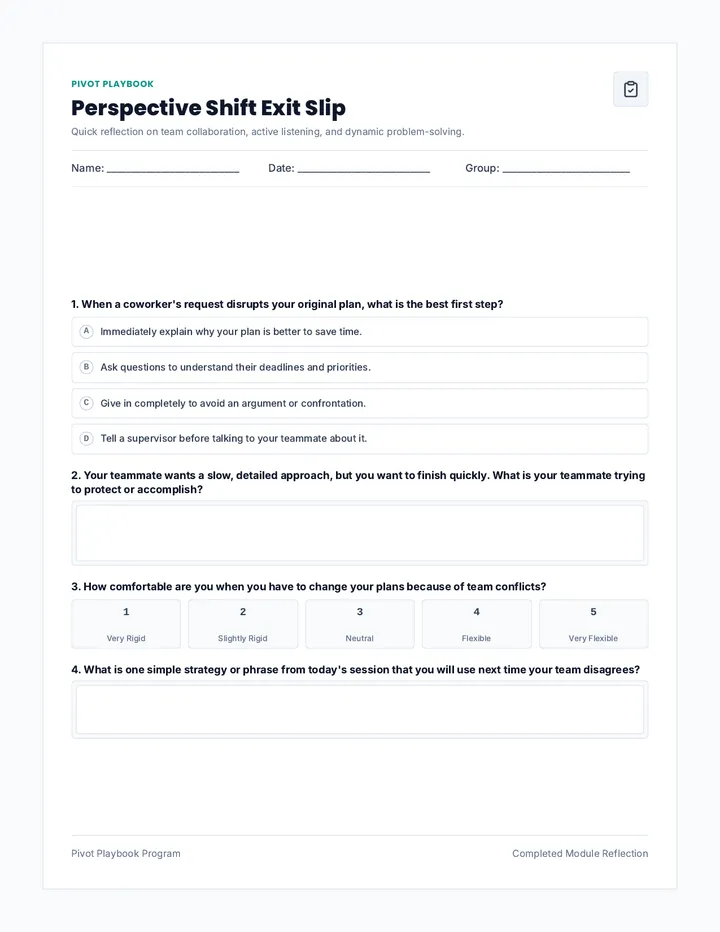
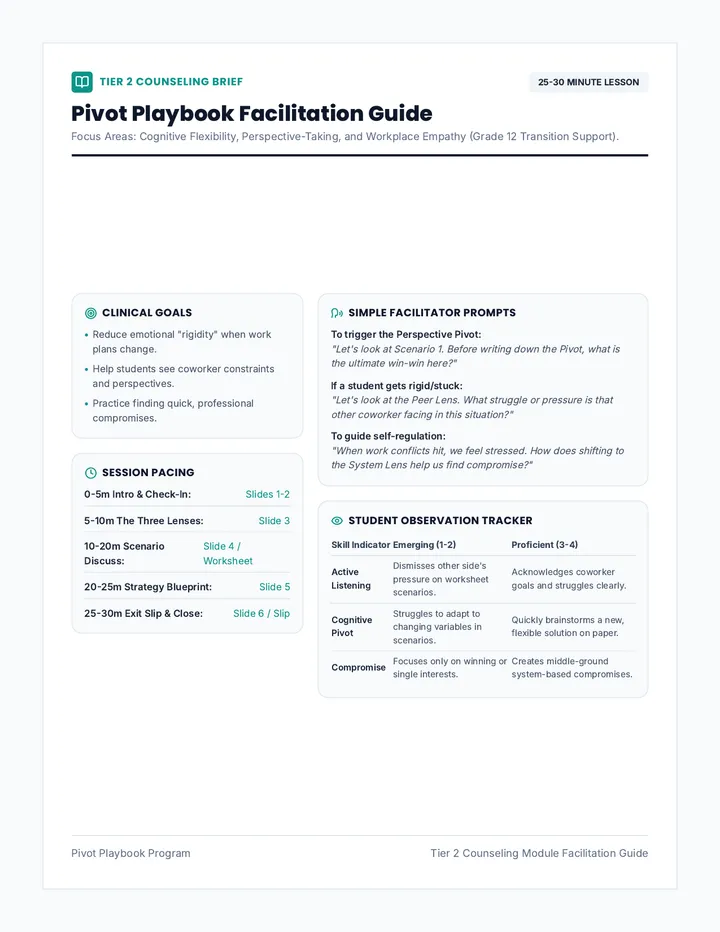
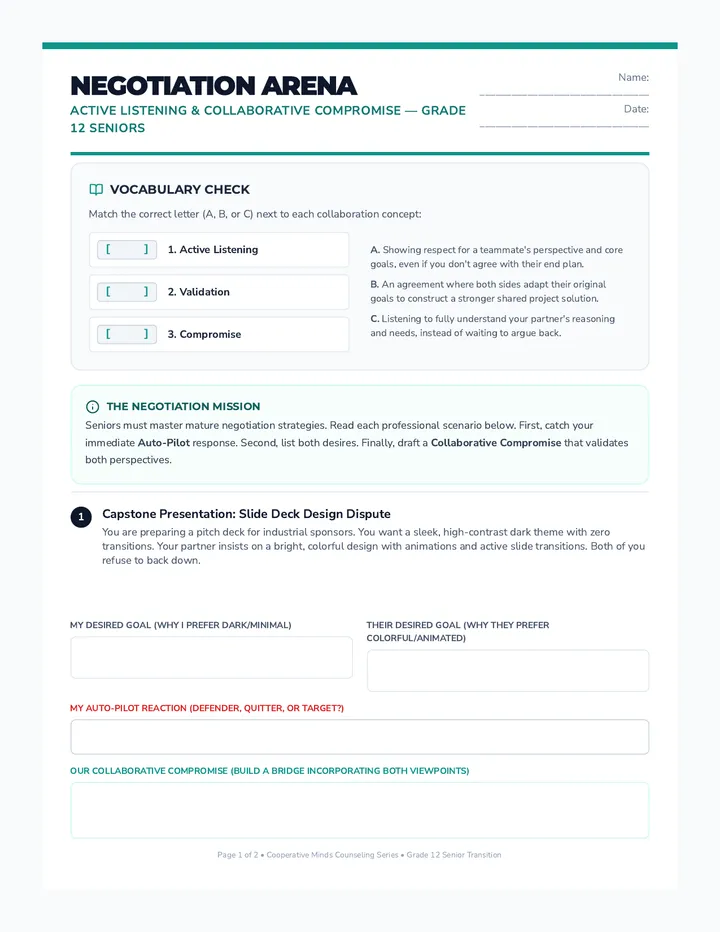
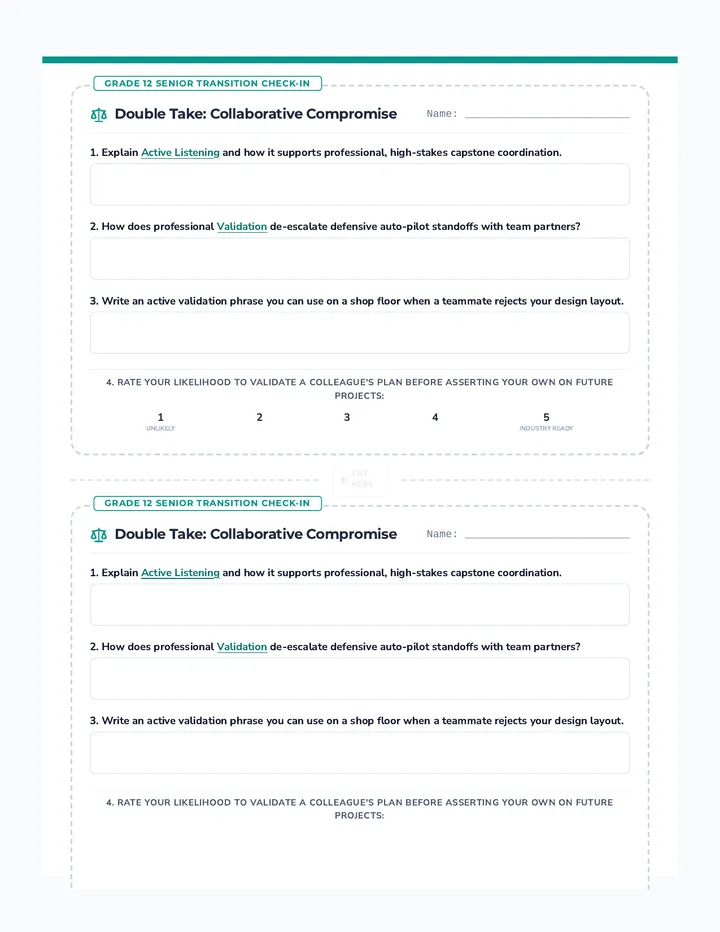
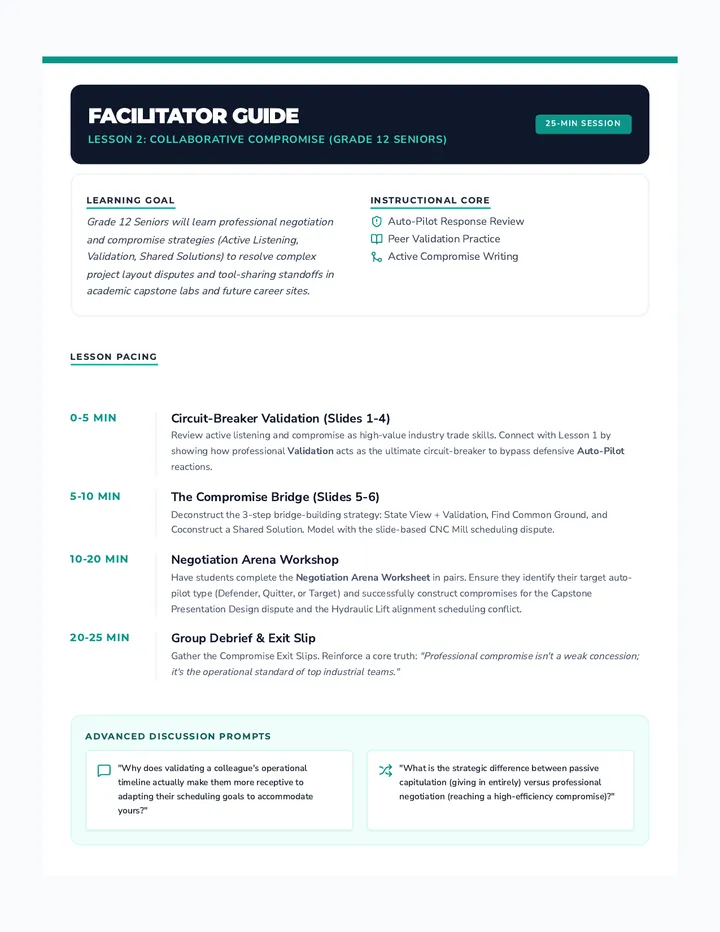
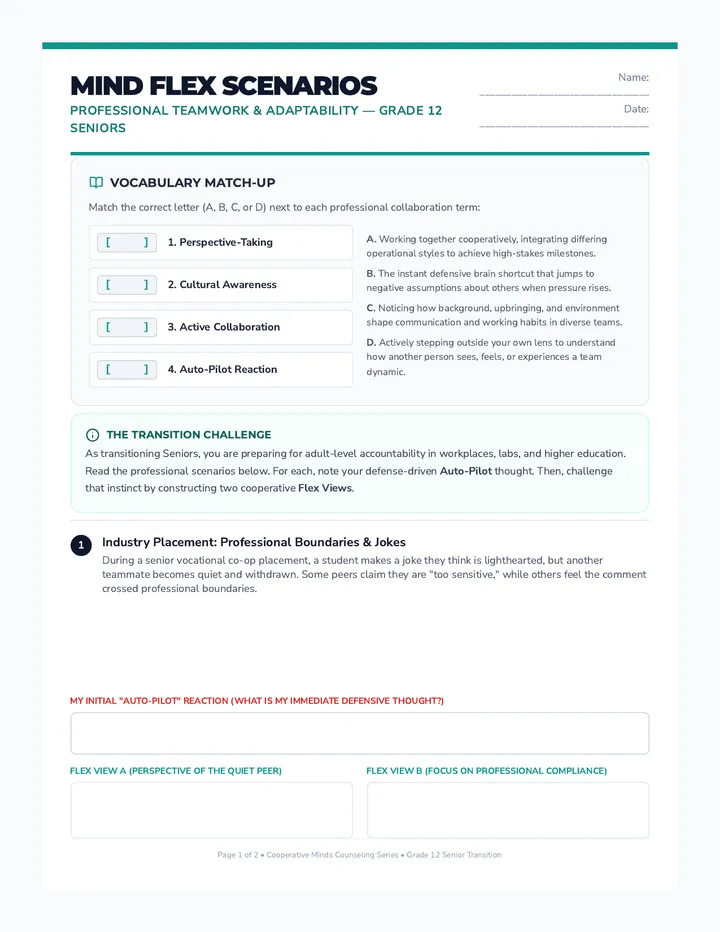
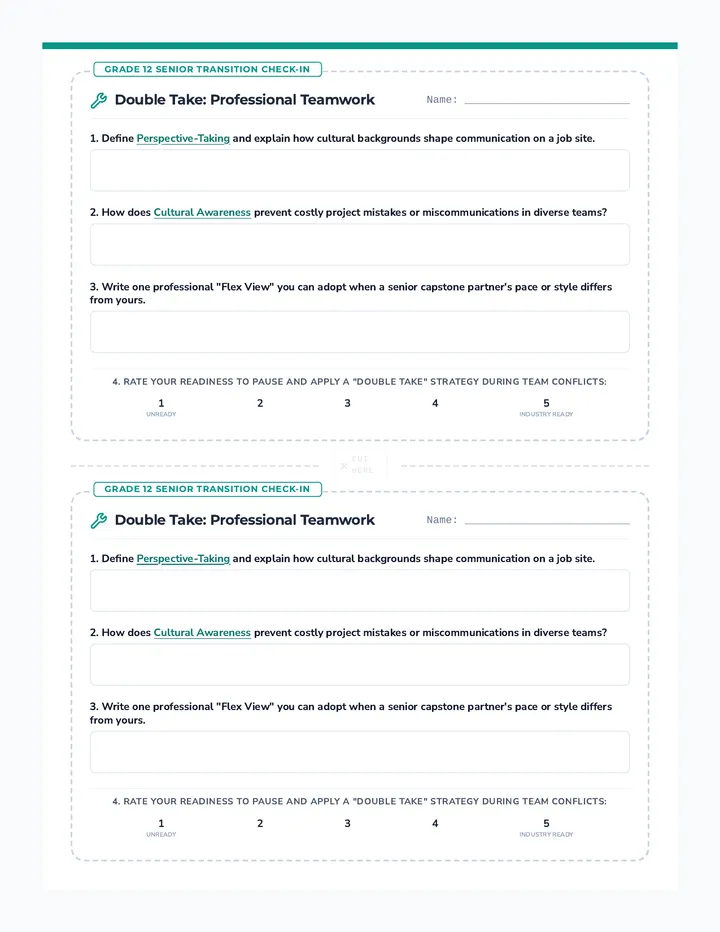
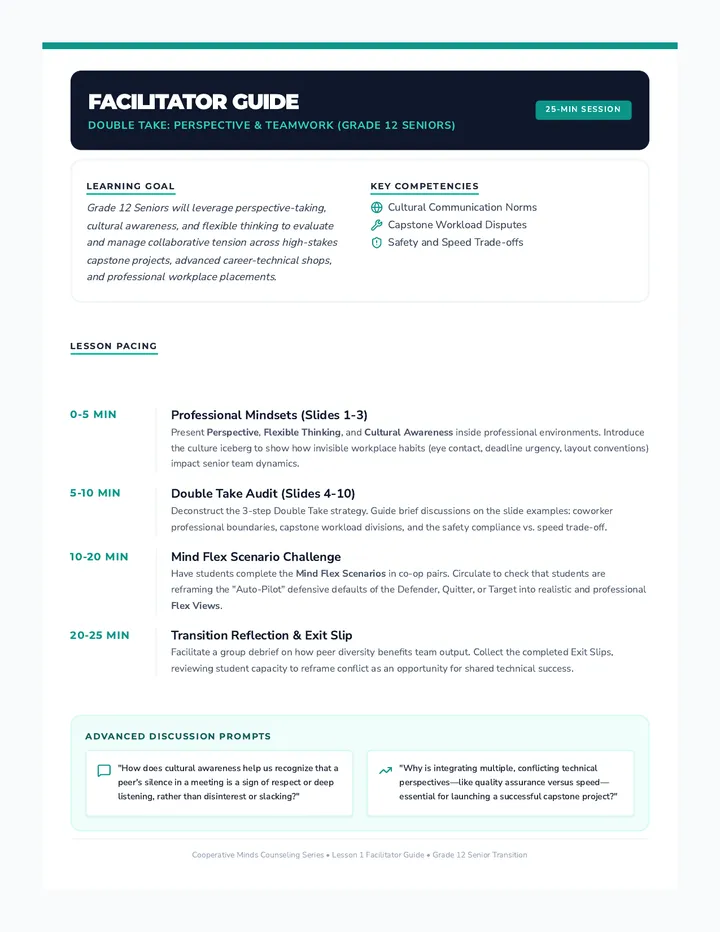
An advanced conflict resolution lesson for 12th graders preparing for shared living. Students will explore the psychology of interpersonal friction, practice effective communication through I-statements, and draft a comprehensive Roommate Constitution.
A sophisticated workshop for graduate students and clinical staff focused on navigating complex ethical dilemmas during the high-stress end-of-year school transition using a maritime-themed framework.
A comprehensive lesson on identity theft designed for high school special education students, focusing on recognizing red flags and protecting personal information through practical scenarios and visual aids.
A comprehensive summative assessment and reference guide for graduating seniors, covering essential financial, career, and interpersonal skills needed for independent adulthood.
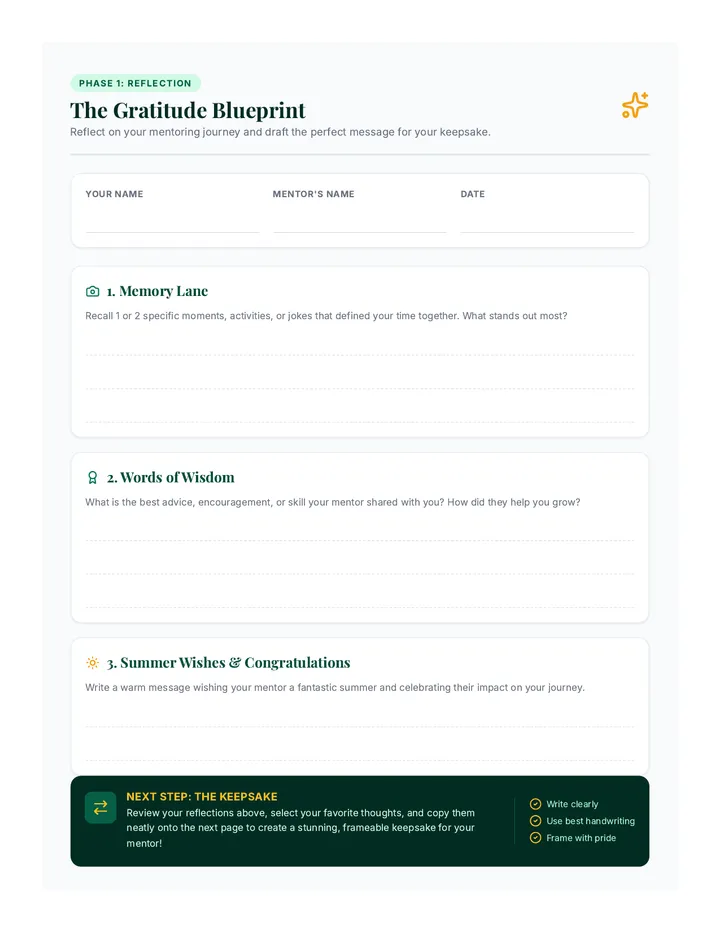
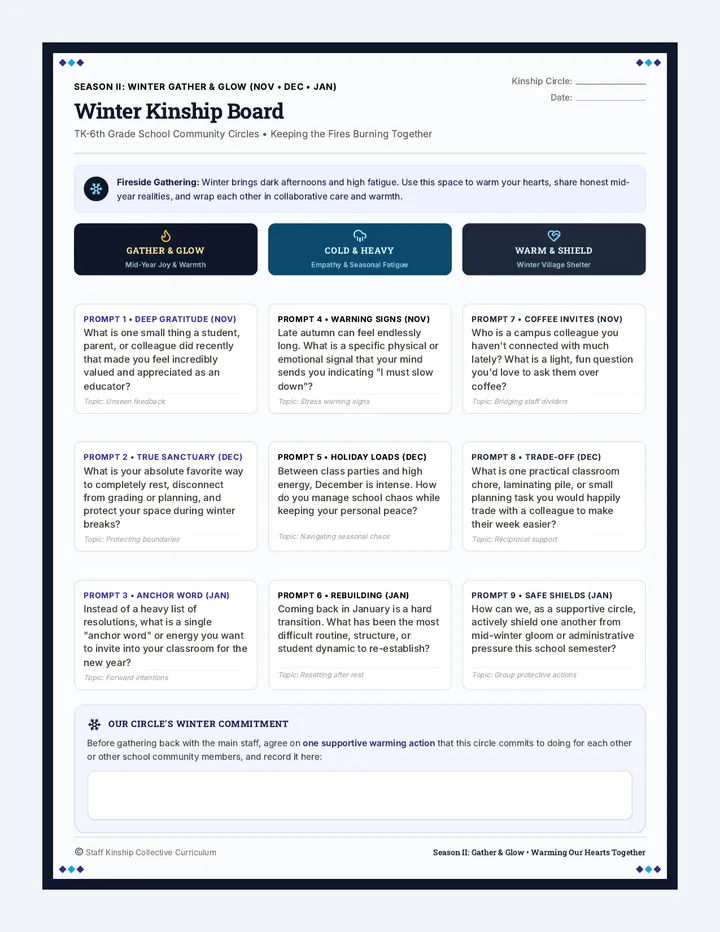
Reflects on personal growth and celebrates the classroom community.
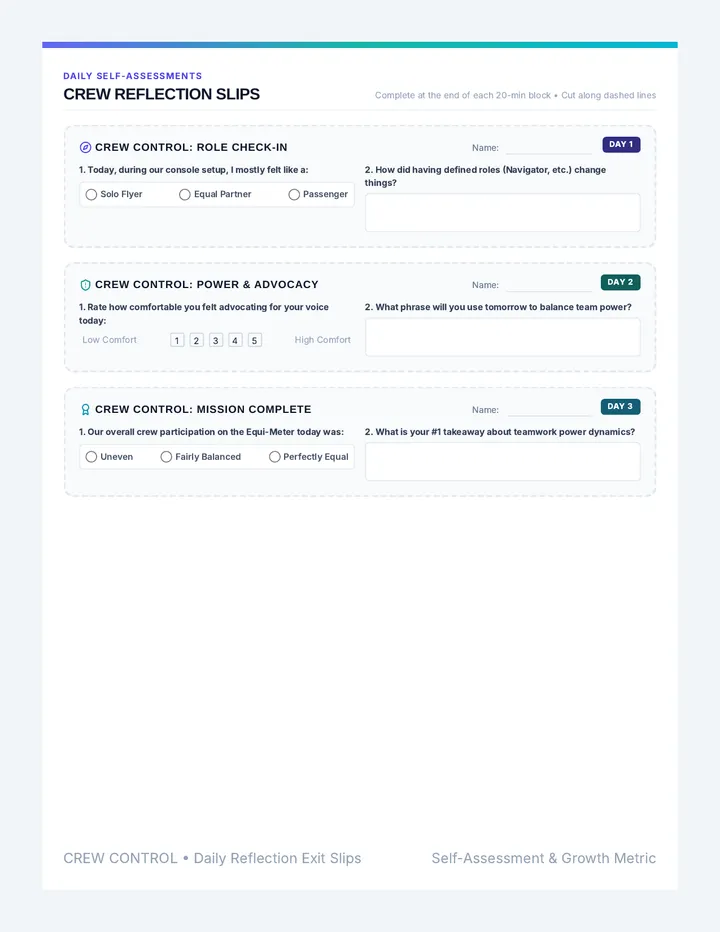
Builds self-confidence and the courage to try new things.
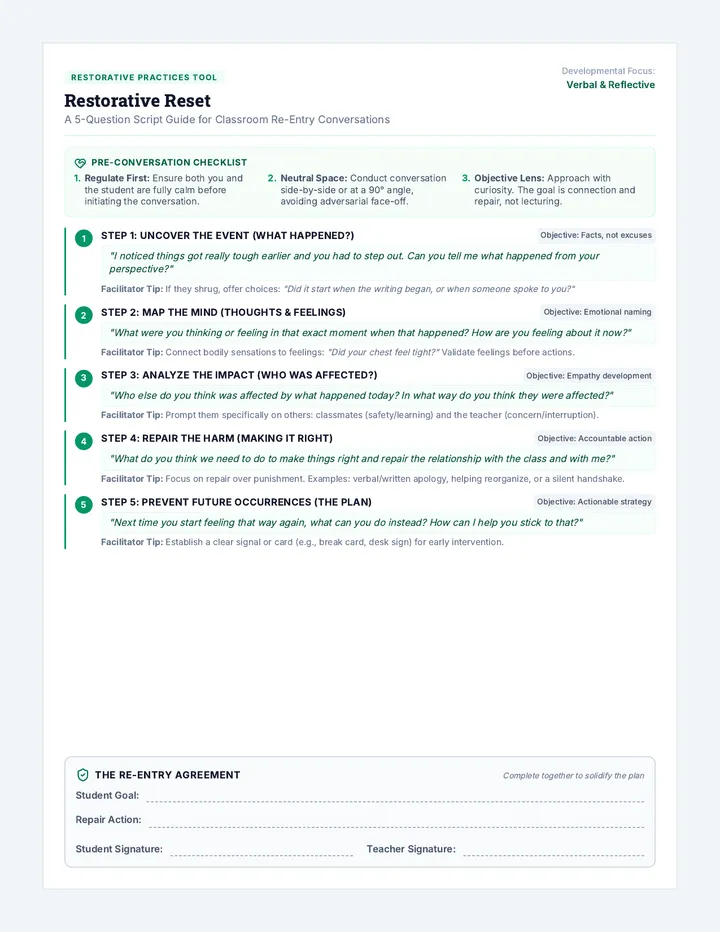
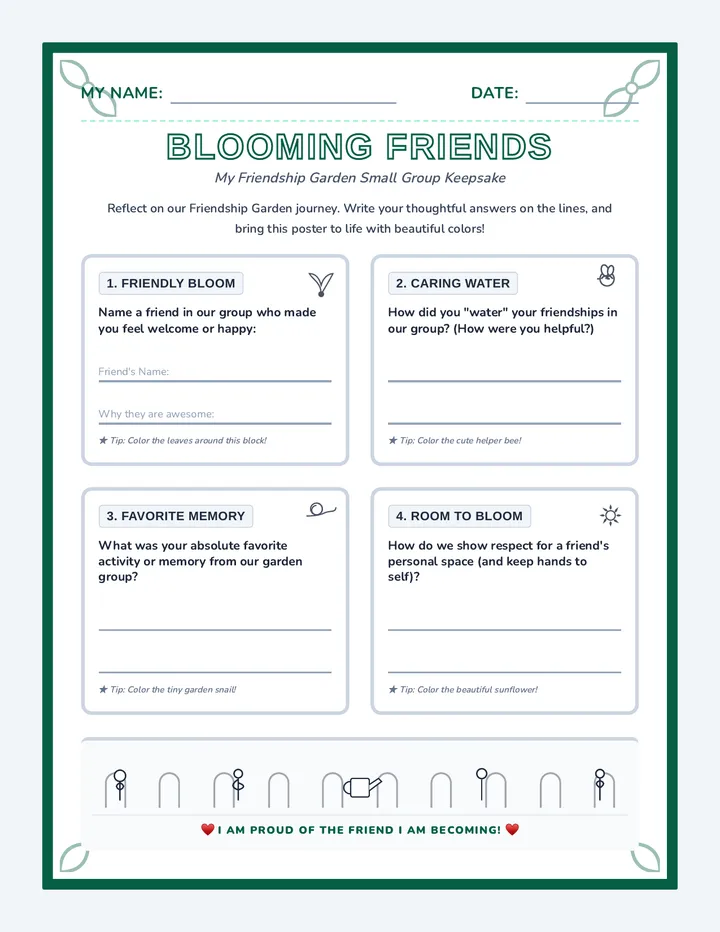
Introduces simple steps for solving conflicts and making fair choices.
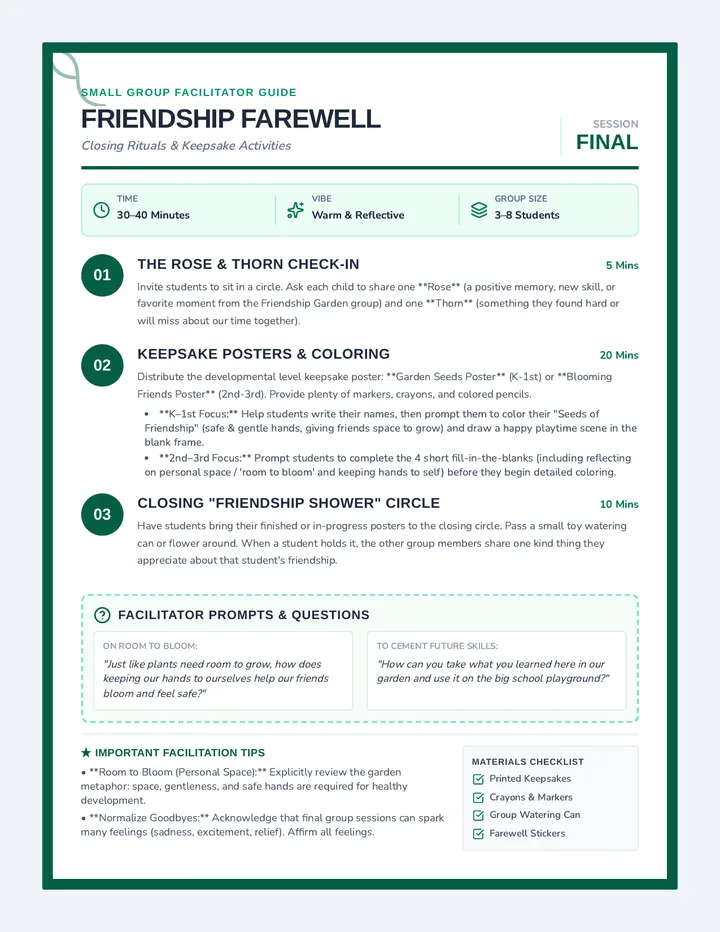
Deepens understanding of others' feelings and how to be a helpful friend.
Encourages a growth mindset by learning that mistakes help our brains grow.
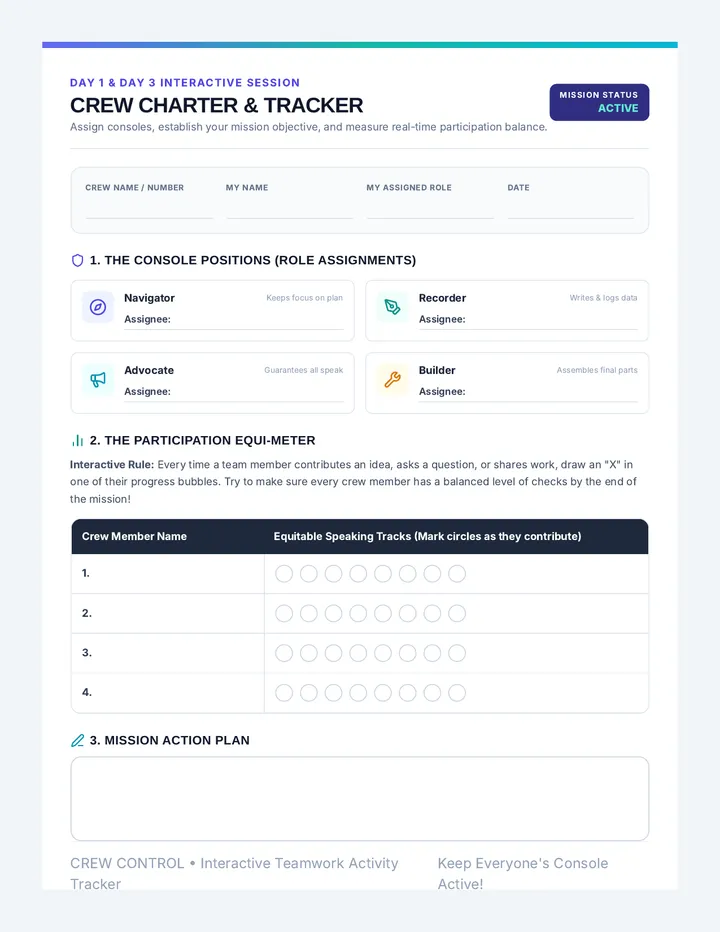
Focuses on social skills like sharing, taking turns, and cooperative play.
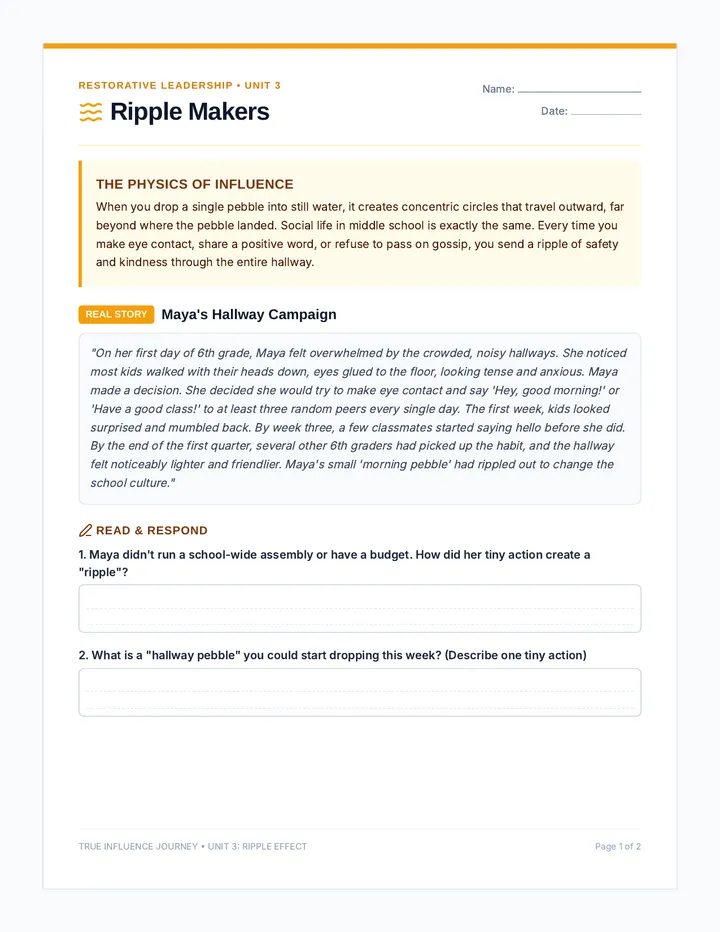
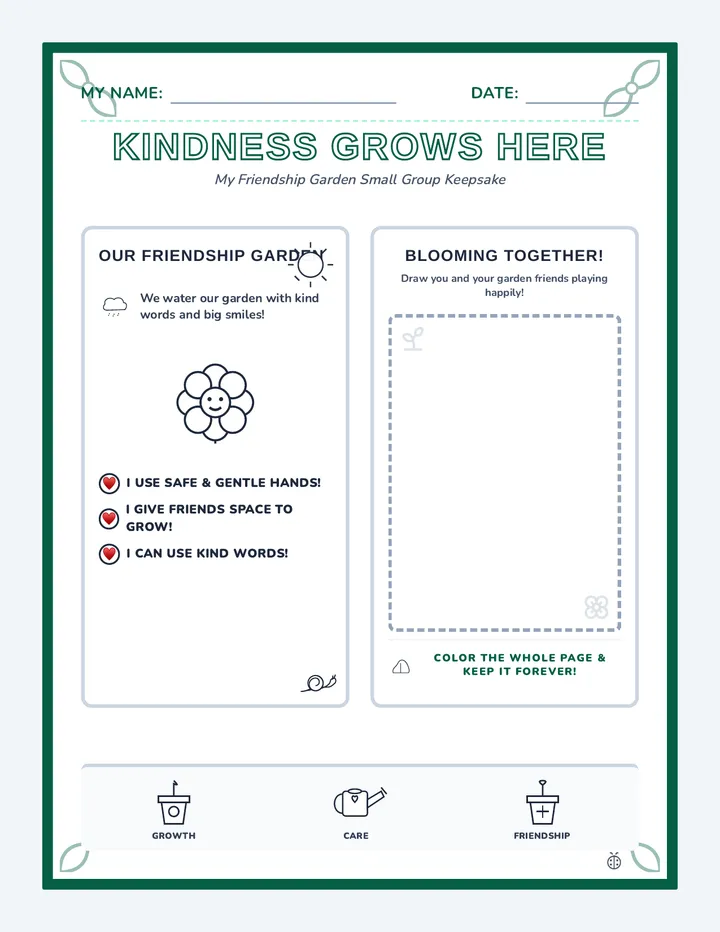
Teaches the power of small acts of kindness and expressing gratitude.
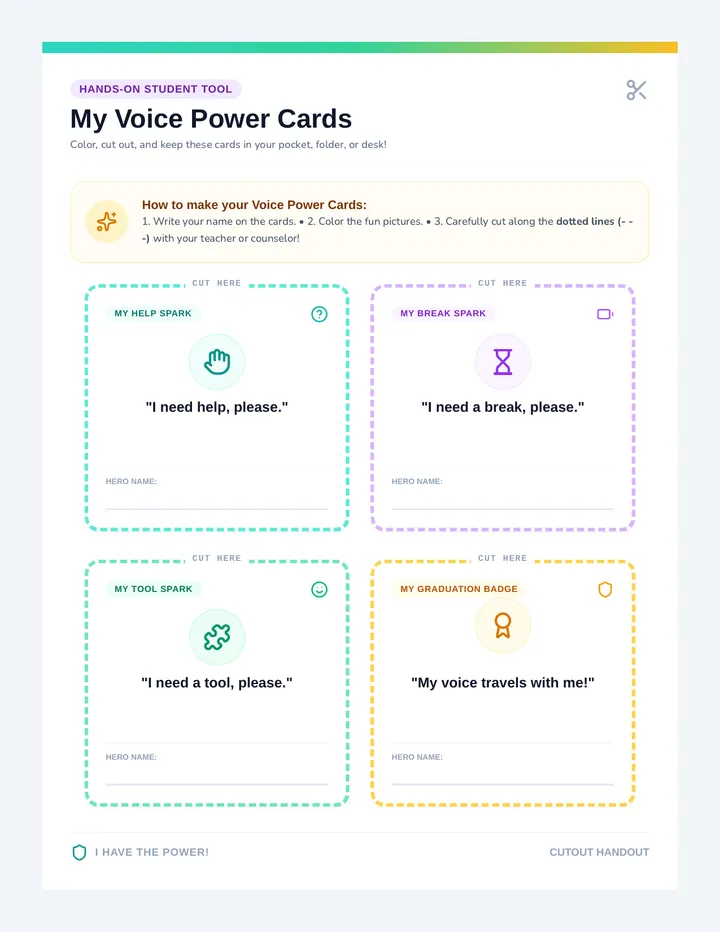
Introduces basic self-regulation strategies and 'calm down' tools for when feelings get big.
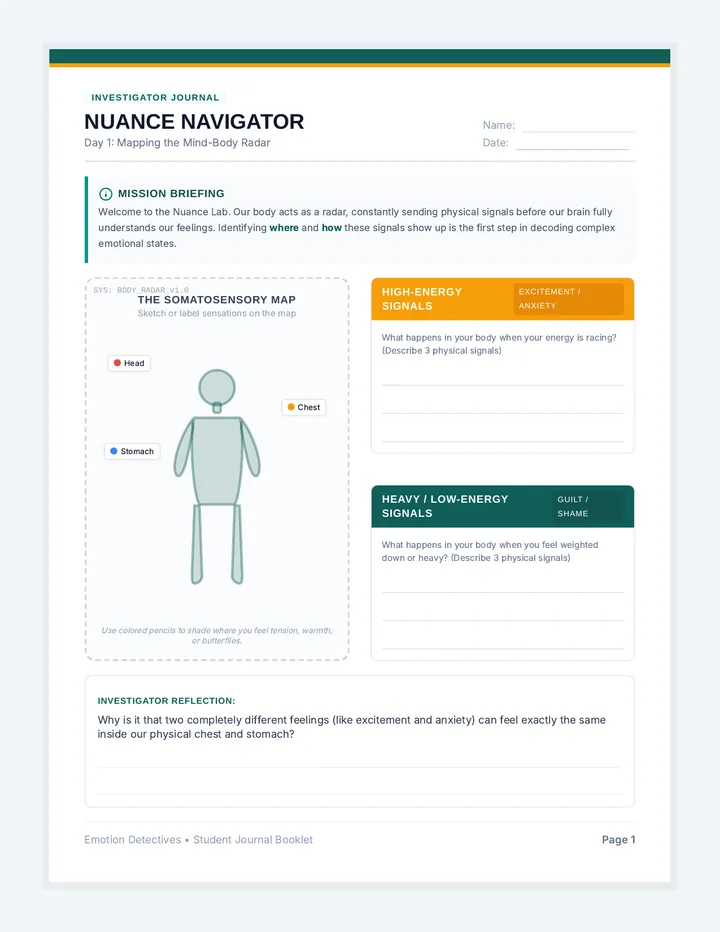
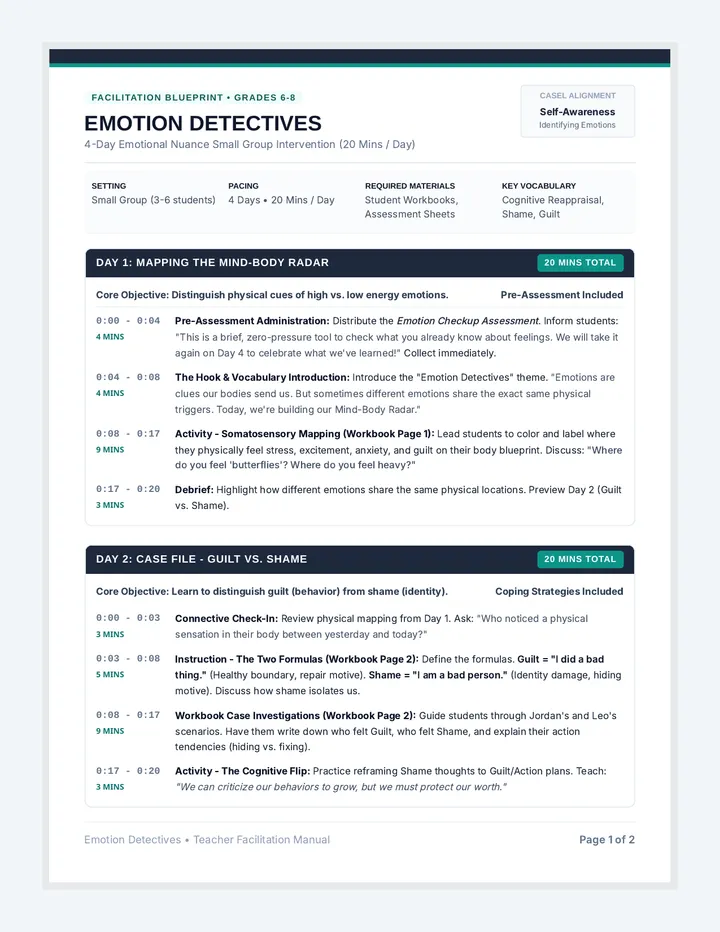
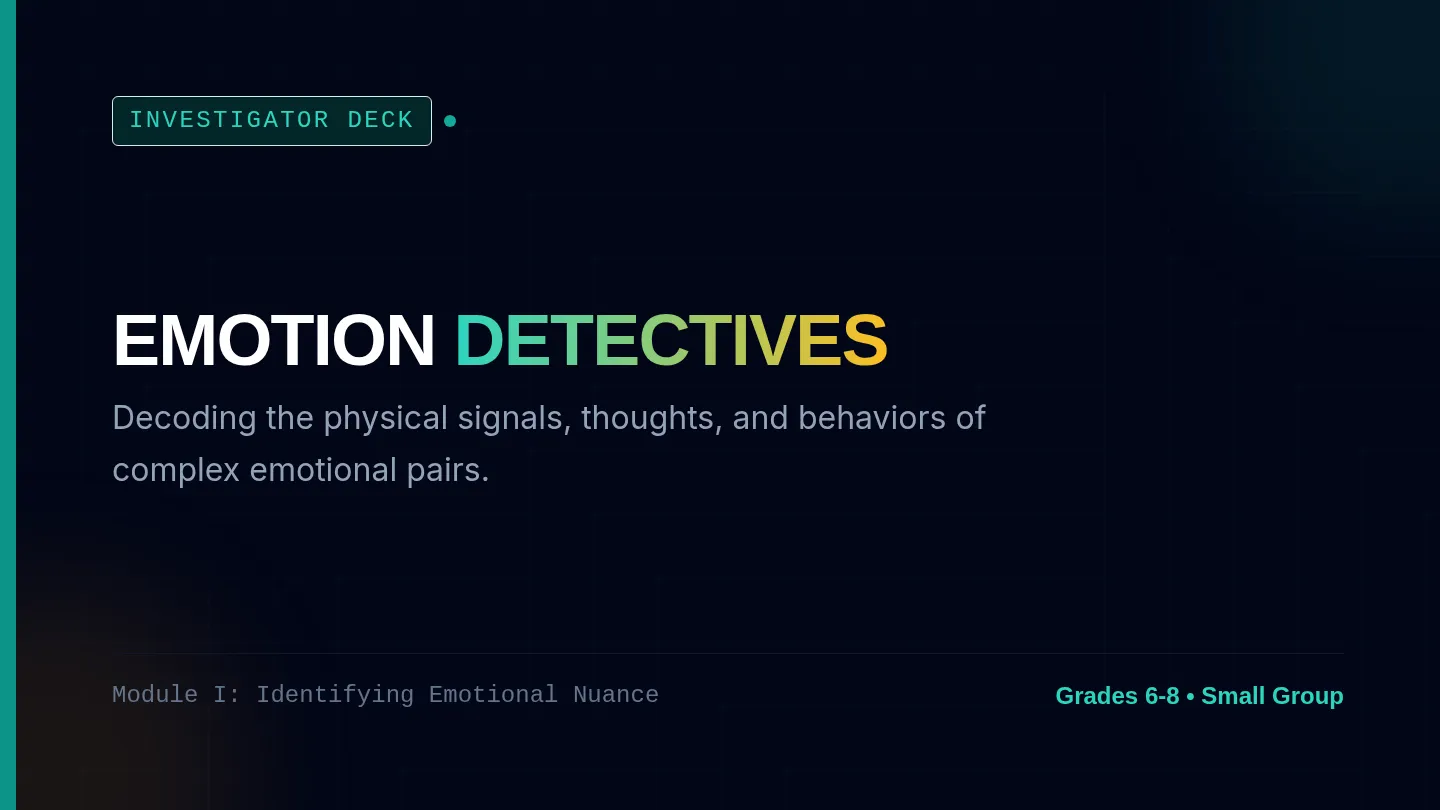
Focuses on identifying and naming basic emotions to build the foundation of self-awareness.
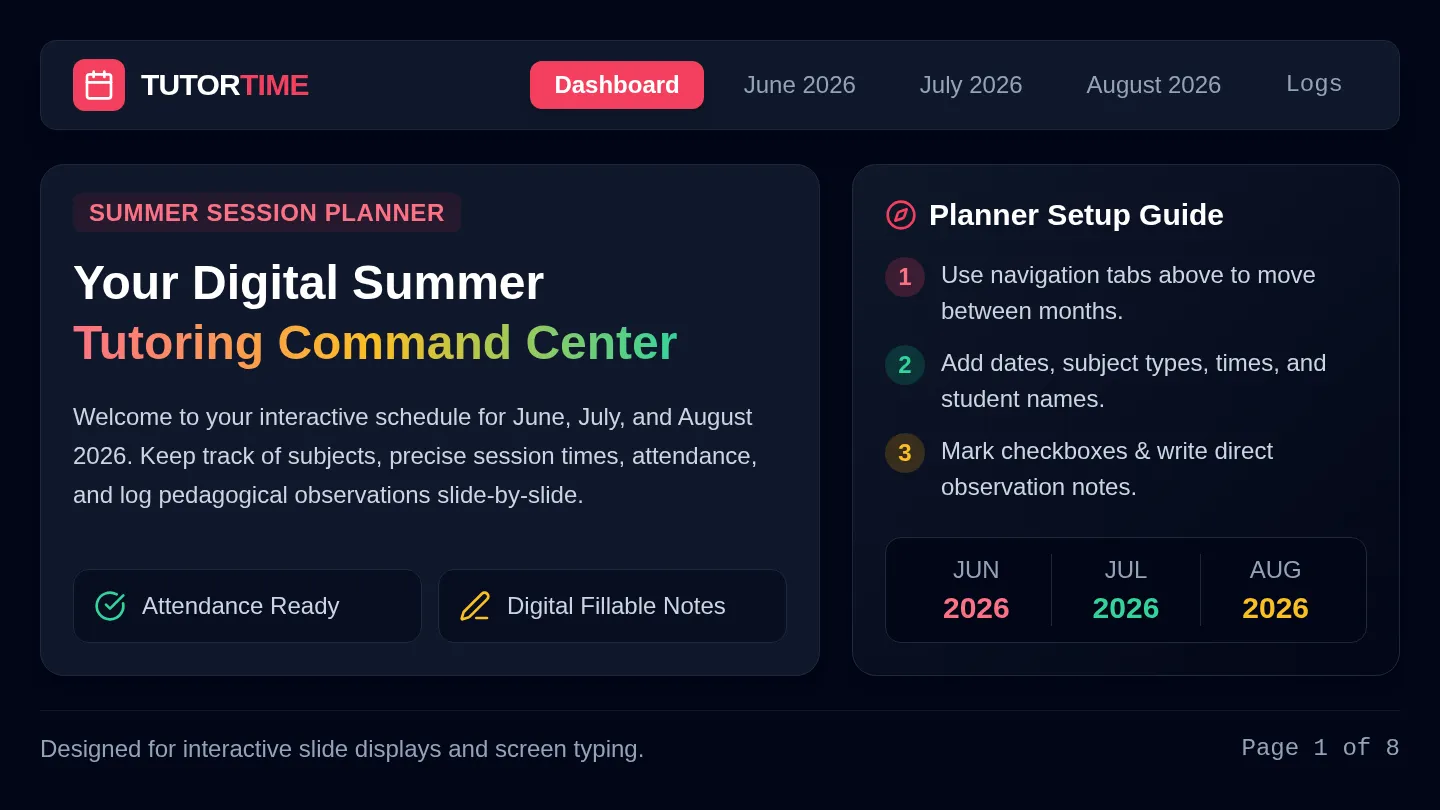
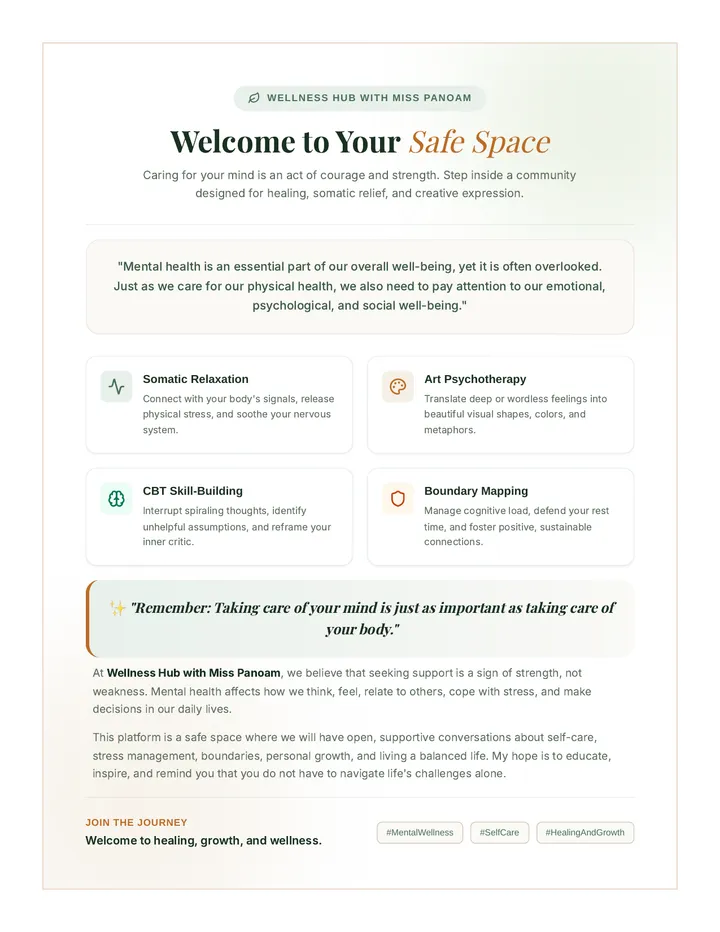
A 20-minute lesson focused on emotional regulation through the metaphor of 'internal weather,' helping students identify feelings and practice self-care strategies.
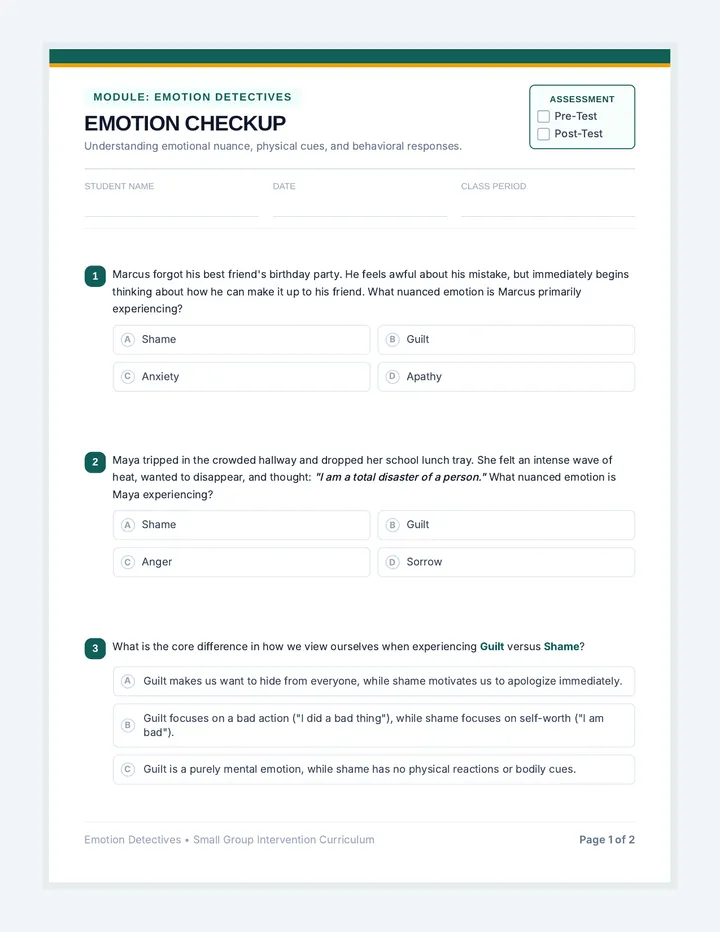
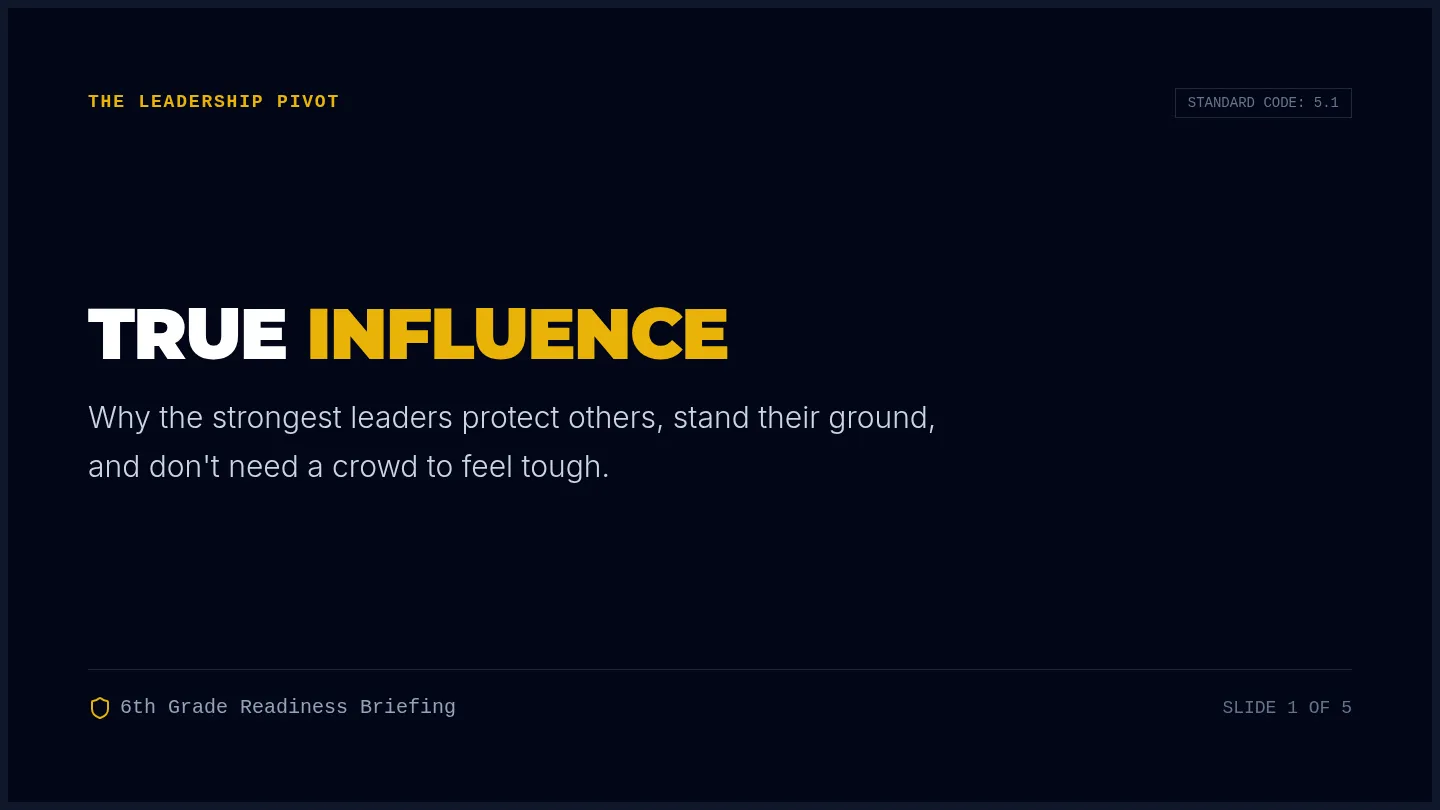
A fast-paced, high-impact 25-minute lesson focusing on the pillars of accountability: owning mistakes, supporting peers, and setting concrete academic goals. Students take on the role of 'Accountability Architects' to build a stronger classroom culture.
A 25-minute lesson on overcoming the 'Spotlight Effect' and reducing self-consciousness across social, physical, and performance-based situations. Students explore why we feel watched and practice 'flipping the script' through scenario-based role-play.
A 30-minute Social Emotional Learning lesson for high school life skills students focusing on understanding personal boundaries, personal space, and identifying appropriate versus inappropriate physical contact using a 'Boundary Blueprint' framework.
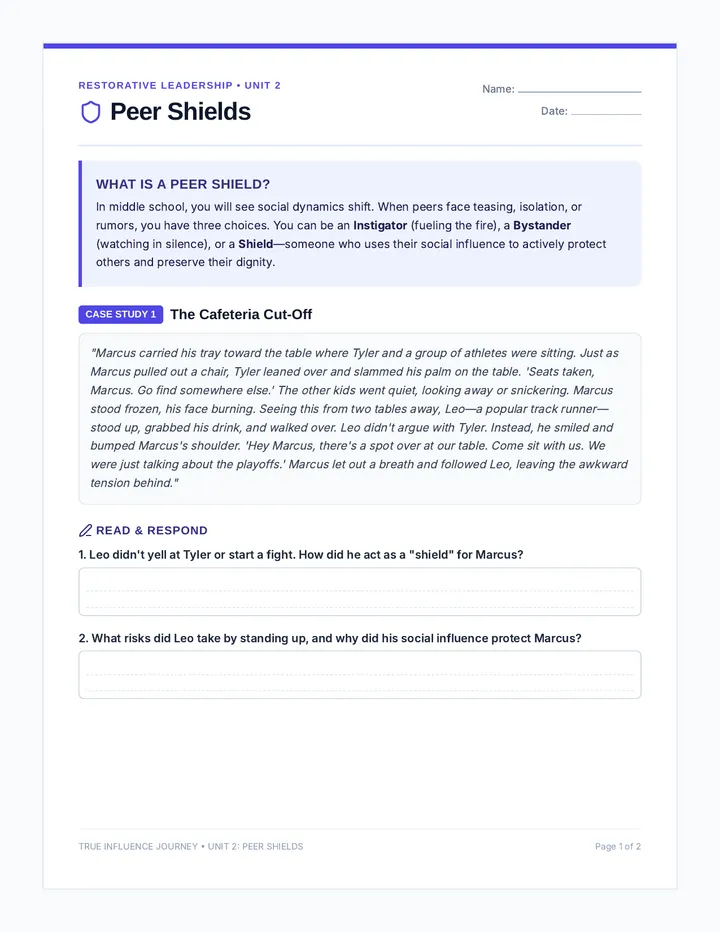
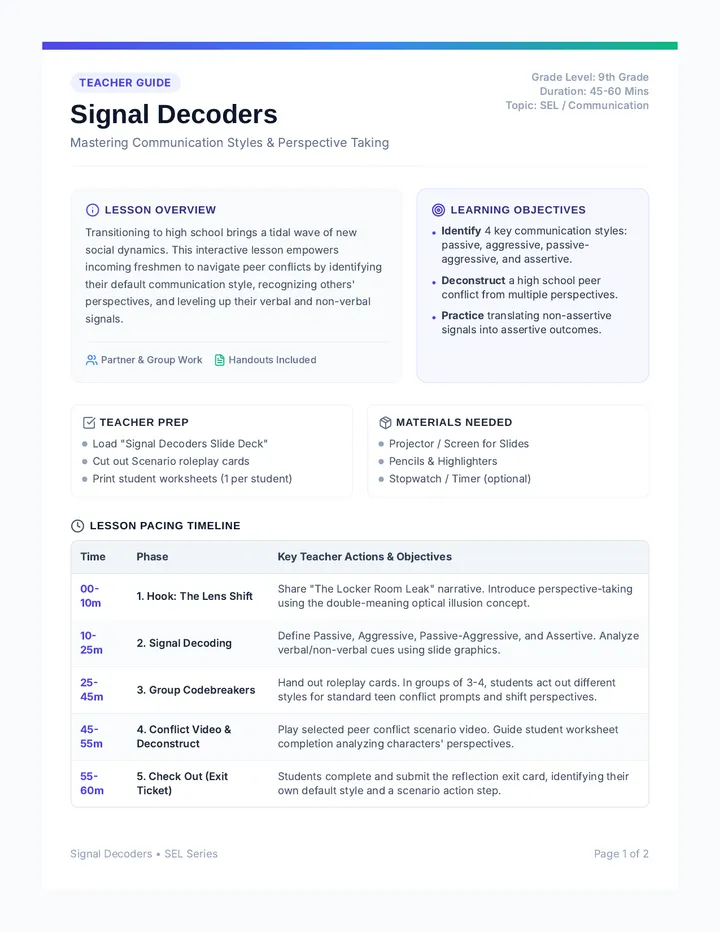
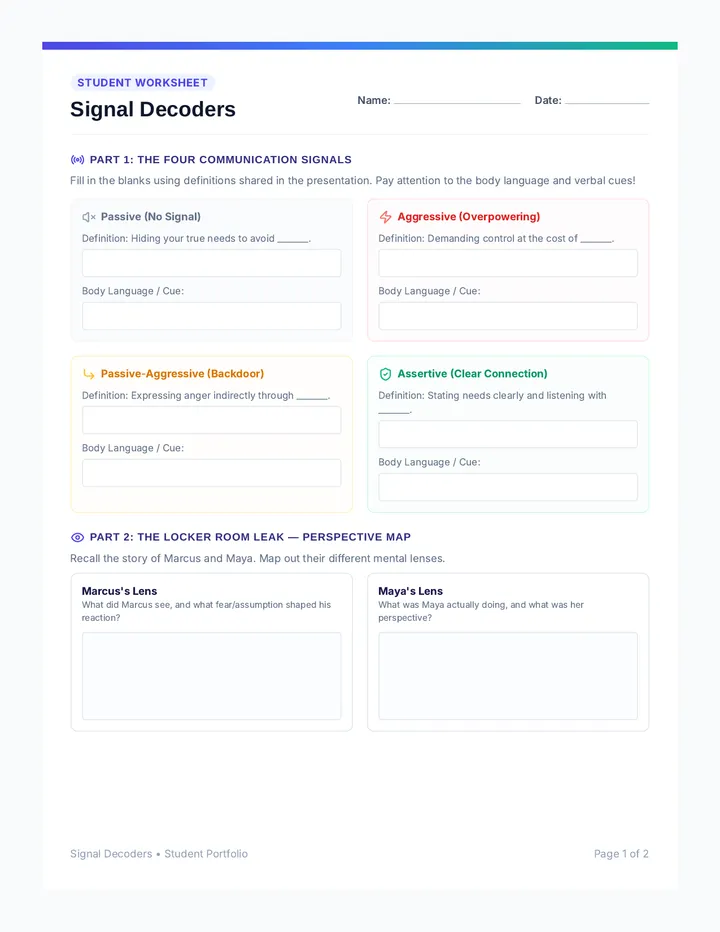
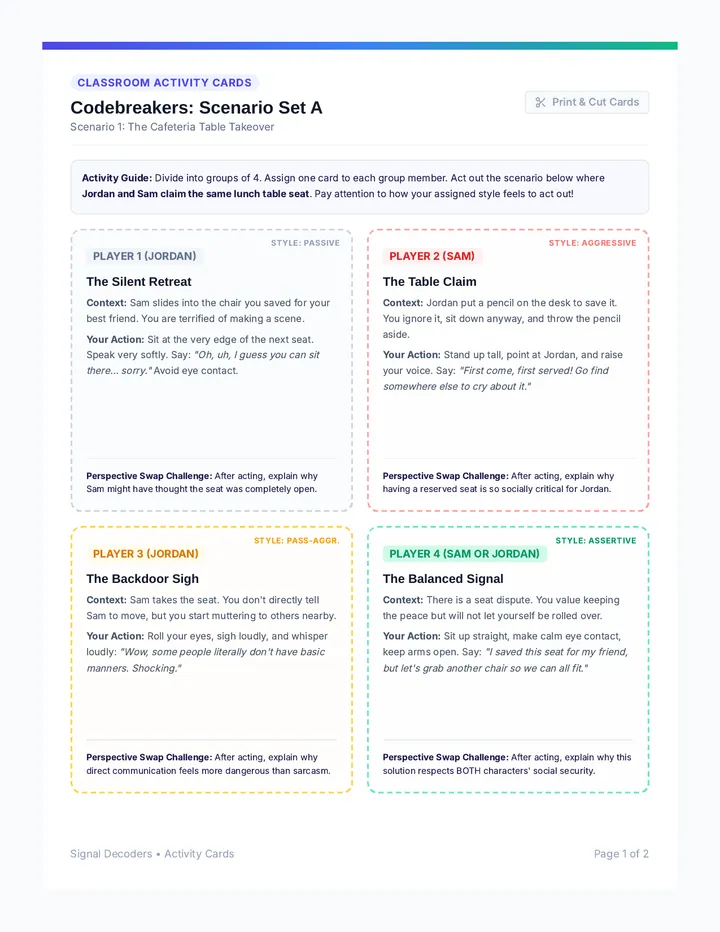
A high-school level lesson focused on navigating the complexities of friendships through the lens of social cues and healthy boundaries. Students analyze social 'blueprints' to build stronger, more empathetic connections.
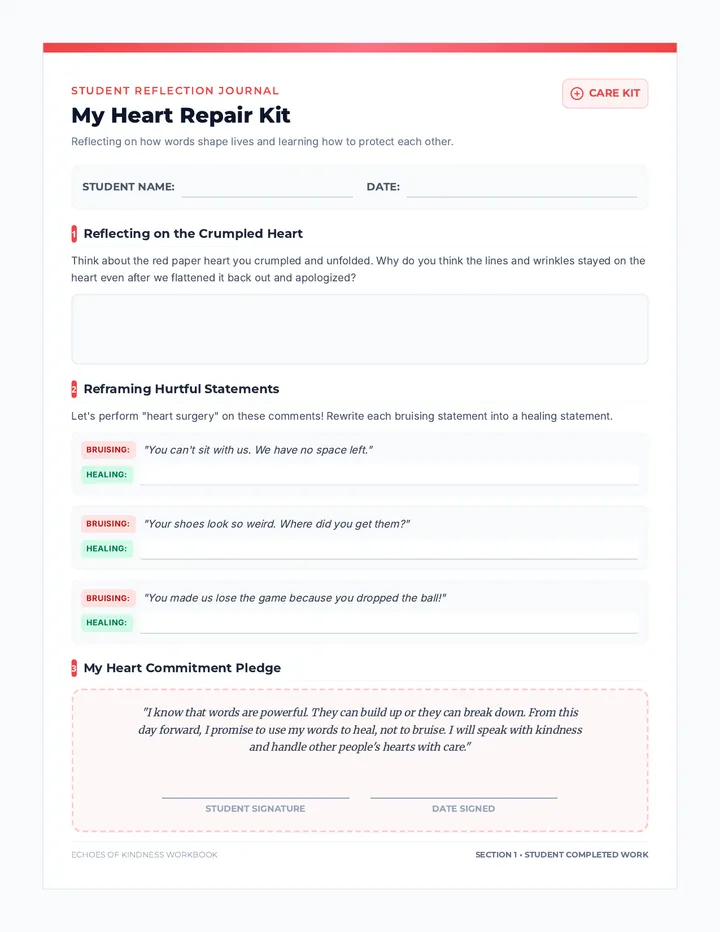
Comprehensive review and graduation from the Survival and Salvage DBT program.
Committing to a new path (Turning the Mind) using the decision to pivot from salvage to survival.
Accepting reality without judgment (Radical Acceptance) using Shackleton's Endurance survival story.
Using distraction and ACCÈS skills to manage distress, using the radar jamming metaphors of the Flight 19 mystery.
Developing self-soothing techniques (Self-Soothe) using the survival of Aloha Flight 243 after losing its roof.
Using the TIPP skill for high-intensity distress, using the deep-sea pressure metaphors of the USS Thresher.
Reducing emotional vulnerability (ABC PLEASE) using the maintenance checklists of the Concorde fleet.
Practicing Opposite Action for intense emotions using the survival story of the USS Indianapolis.
Distinguishing between facts and emotions (Check the Facts) using the investigation of the Roswell 'crash' and other weather balloon incidents.
Focusing on the GIVE and FAST skills for maintaining relationships and self-respect, using the black box recovery of Air France 447 as a metaphor for retrieving valuable connection data.