A social-emotional learning lesson that helps students distinguish between normal peer conflict and bullying using the 'RIP' criteria (Repeated, Imbalance of power, Purposeful).
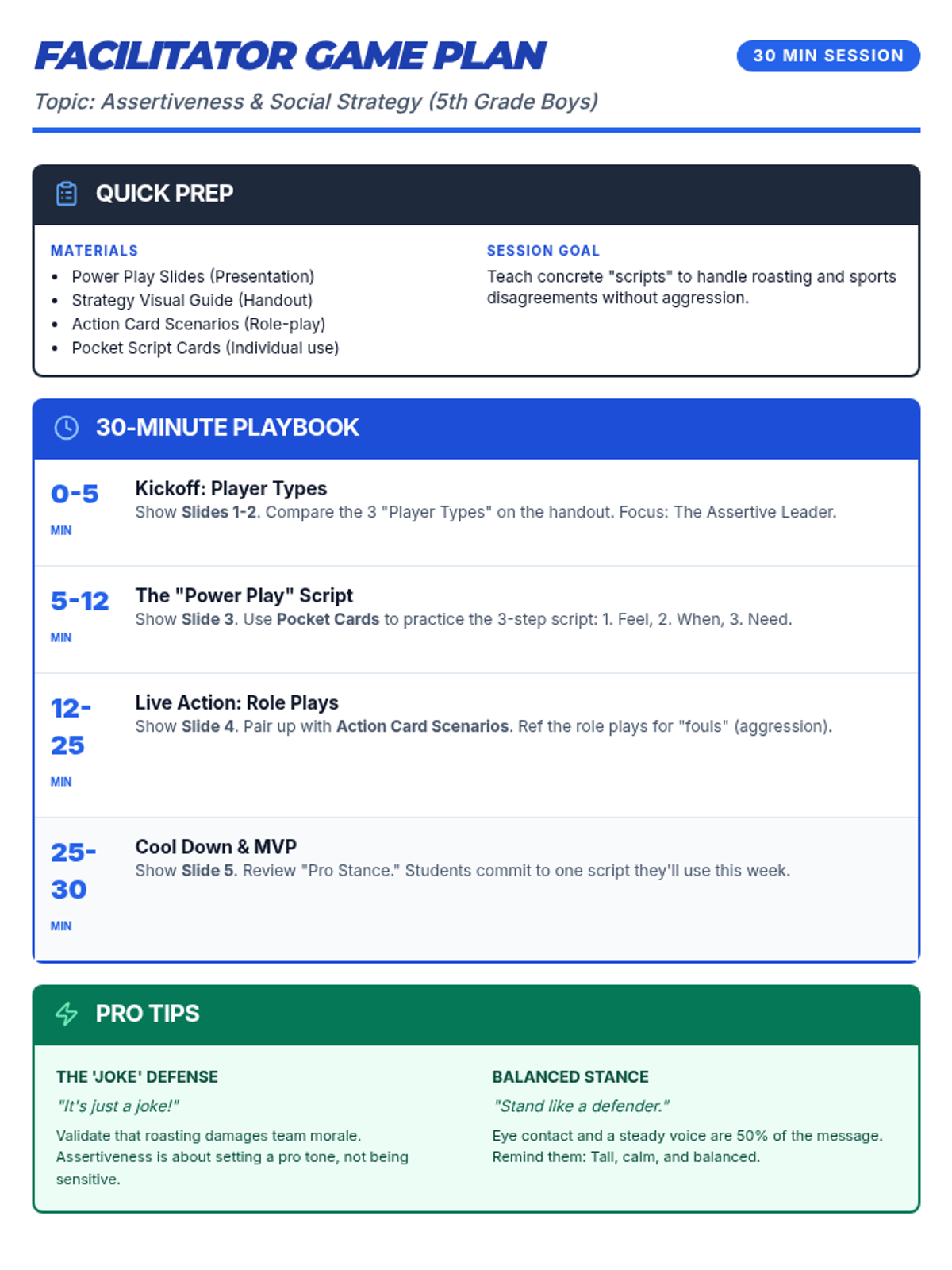
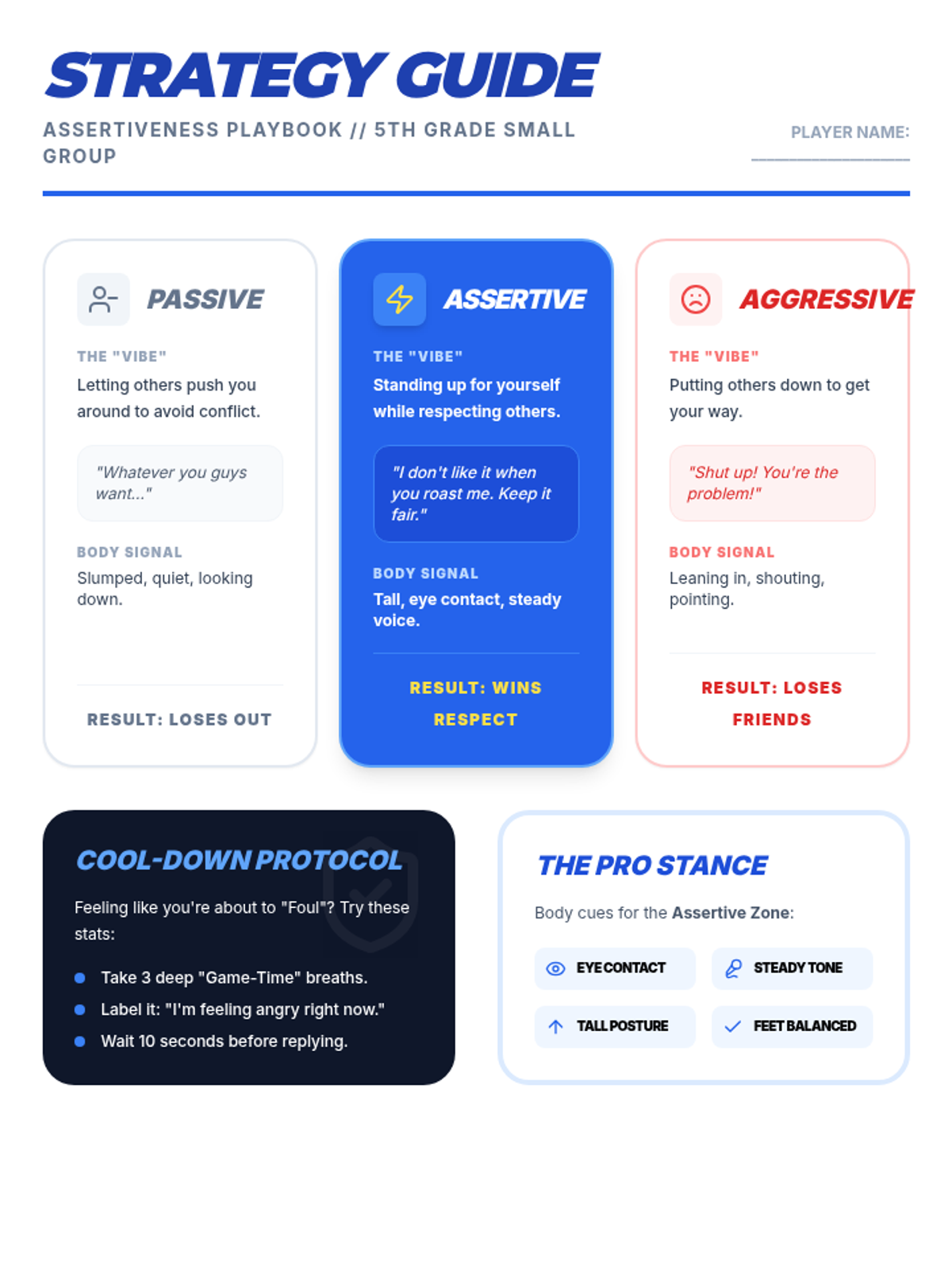
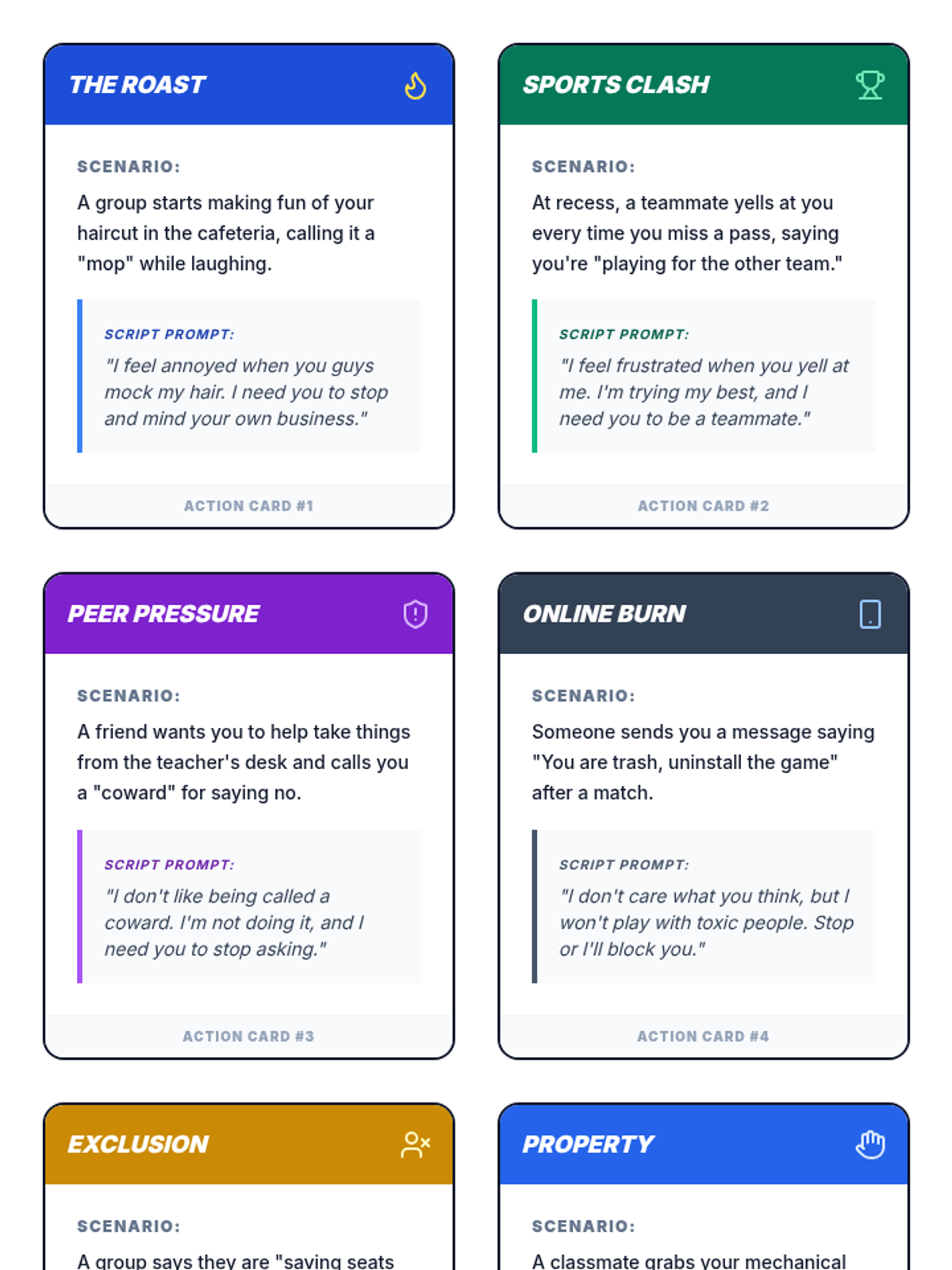
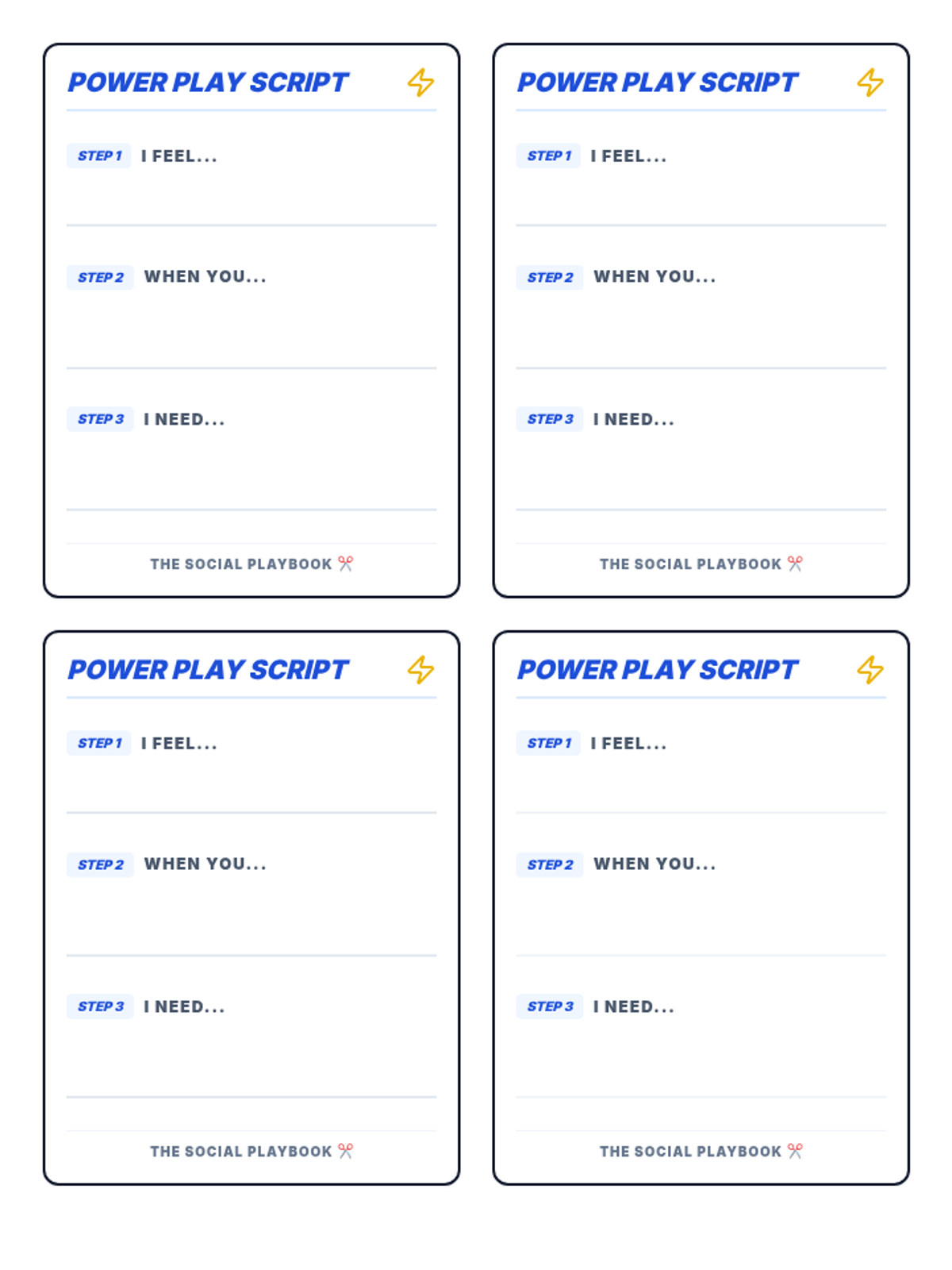
A high-energy, 30-minute small group session for 5th-grade boys focused on mastering assertive communication in social, sports, and online scenarios. Students will learn the 'Power Play' strategy to stand up for themselves without being aggressive.
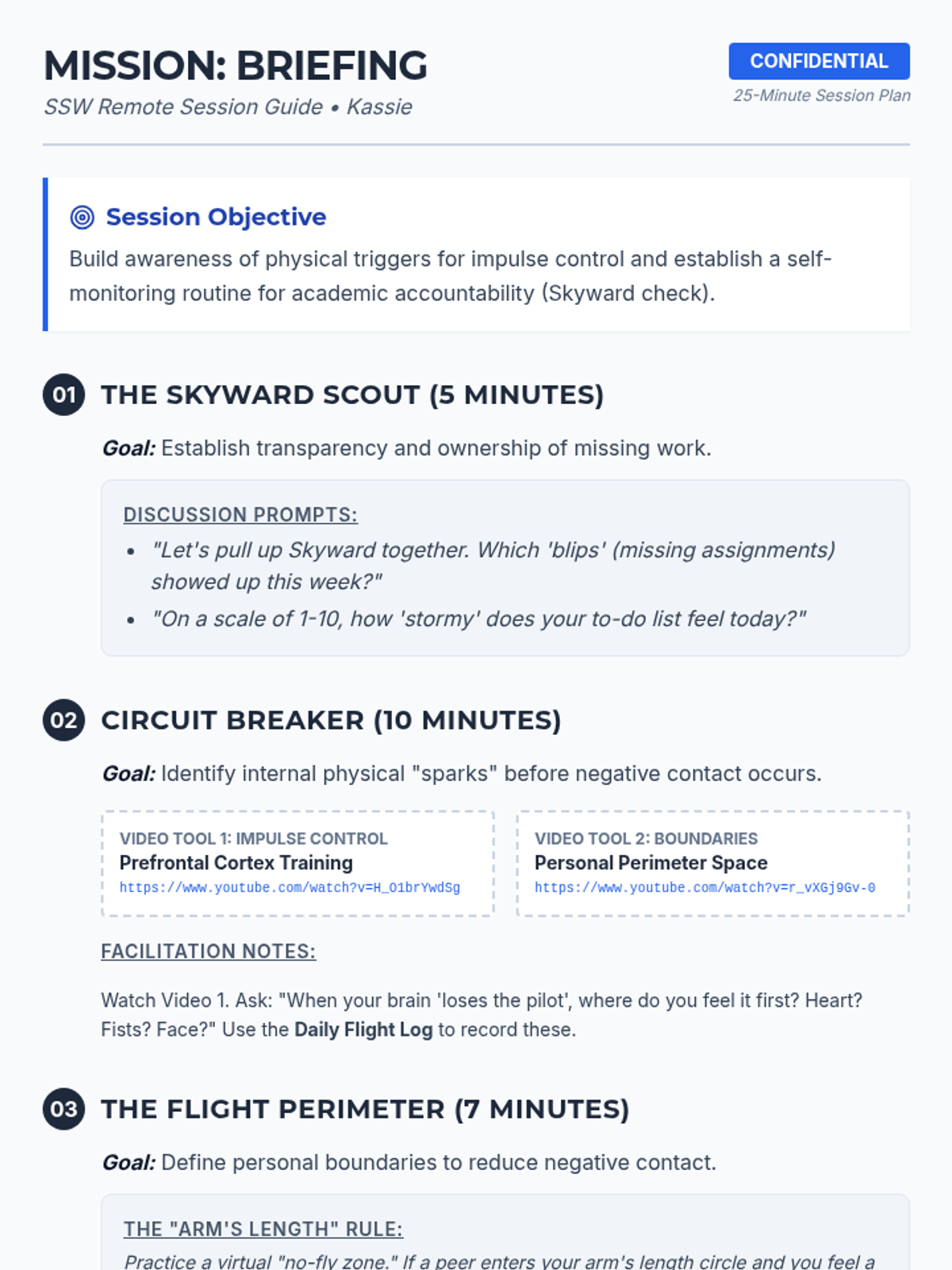
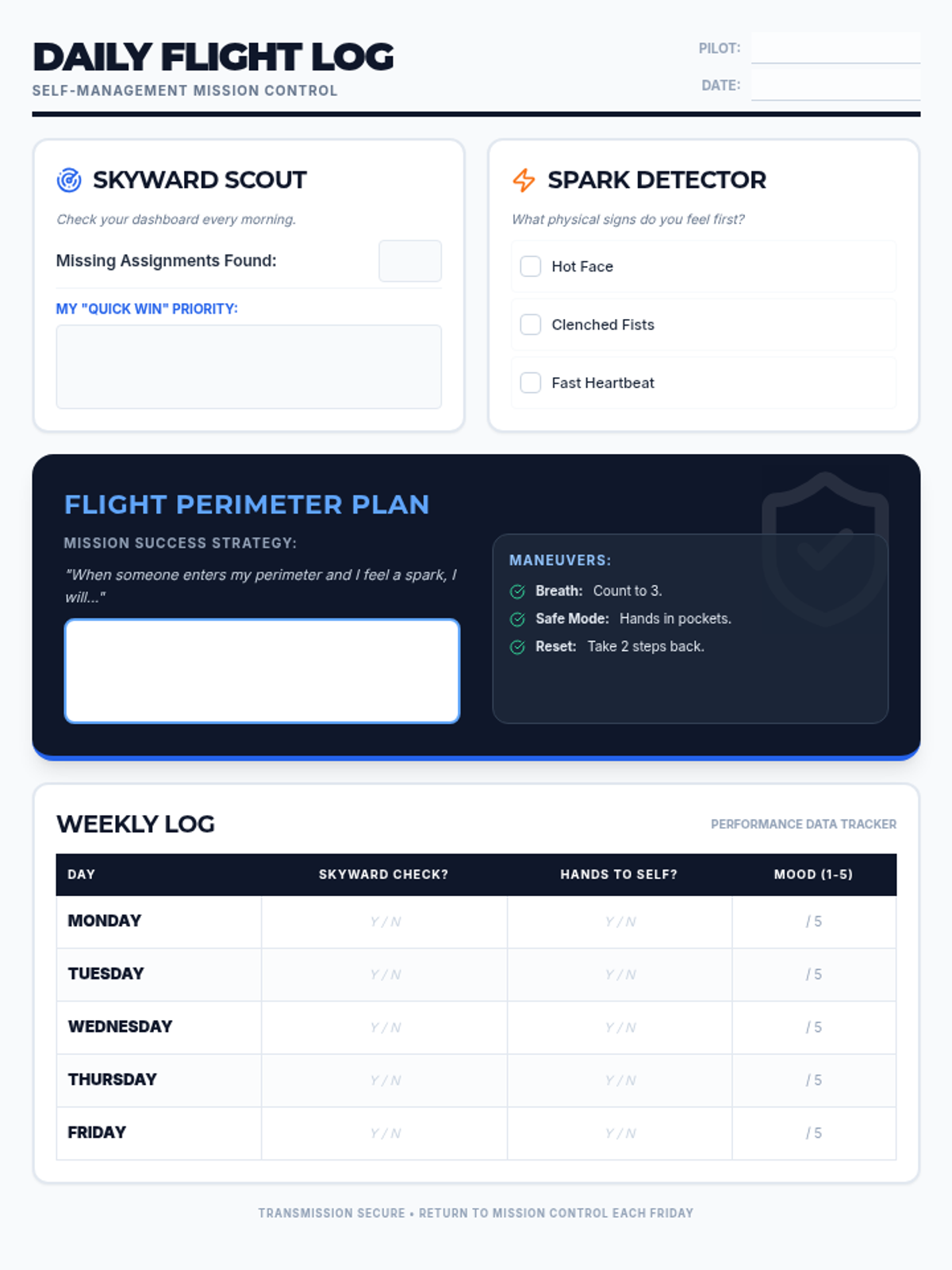
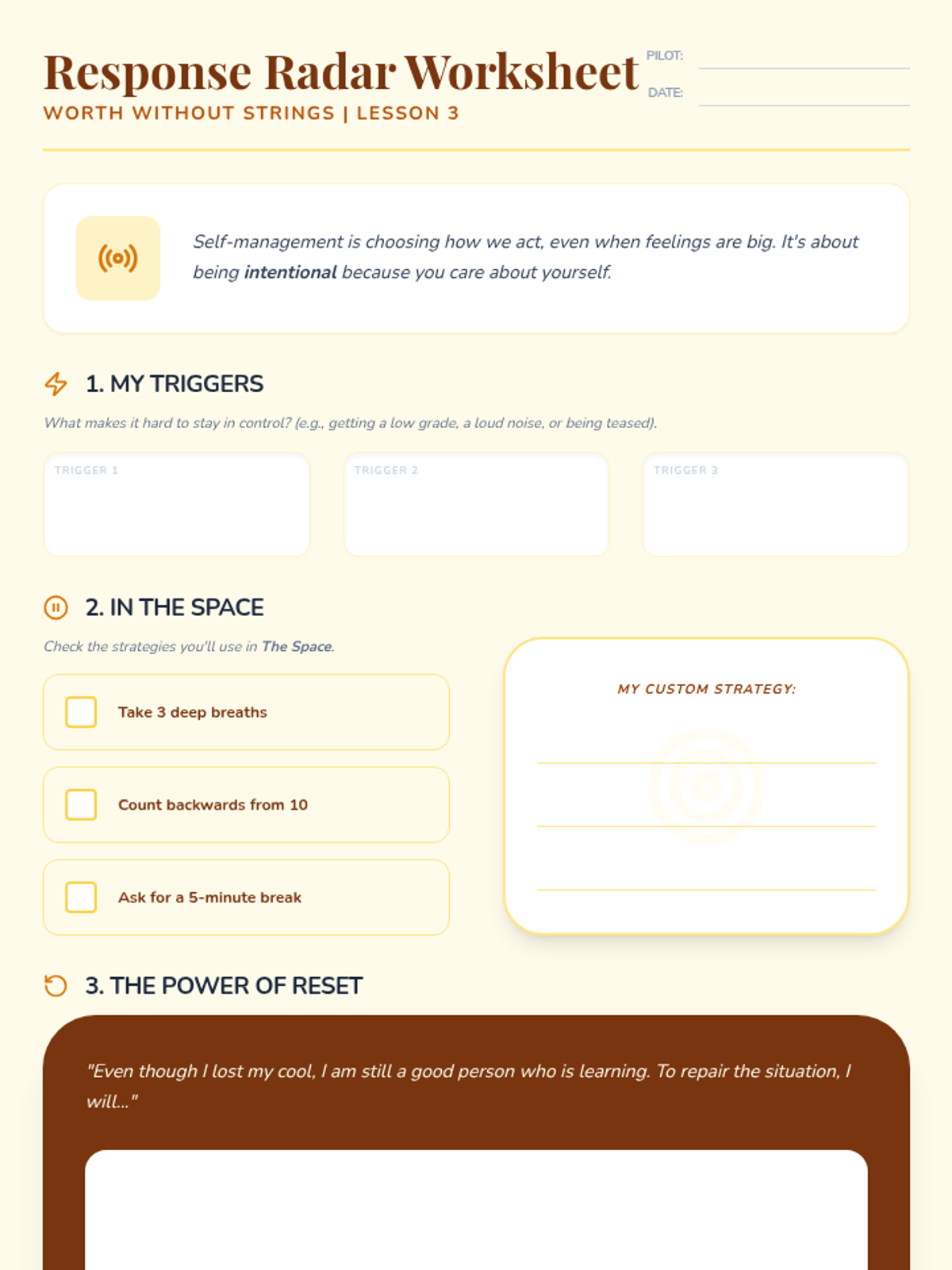
A remote-friendly social work lesson focusing on impulse control, personal boundaries, and academic self-monitoring for middle school students. It uses an aviation/pilot theme to help students visualize 'steering' their own actions and responsibilities.
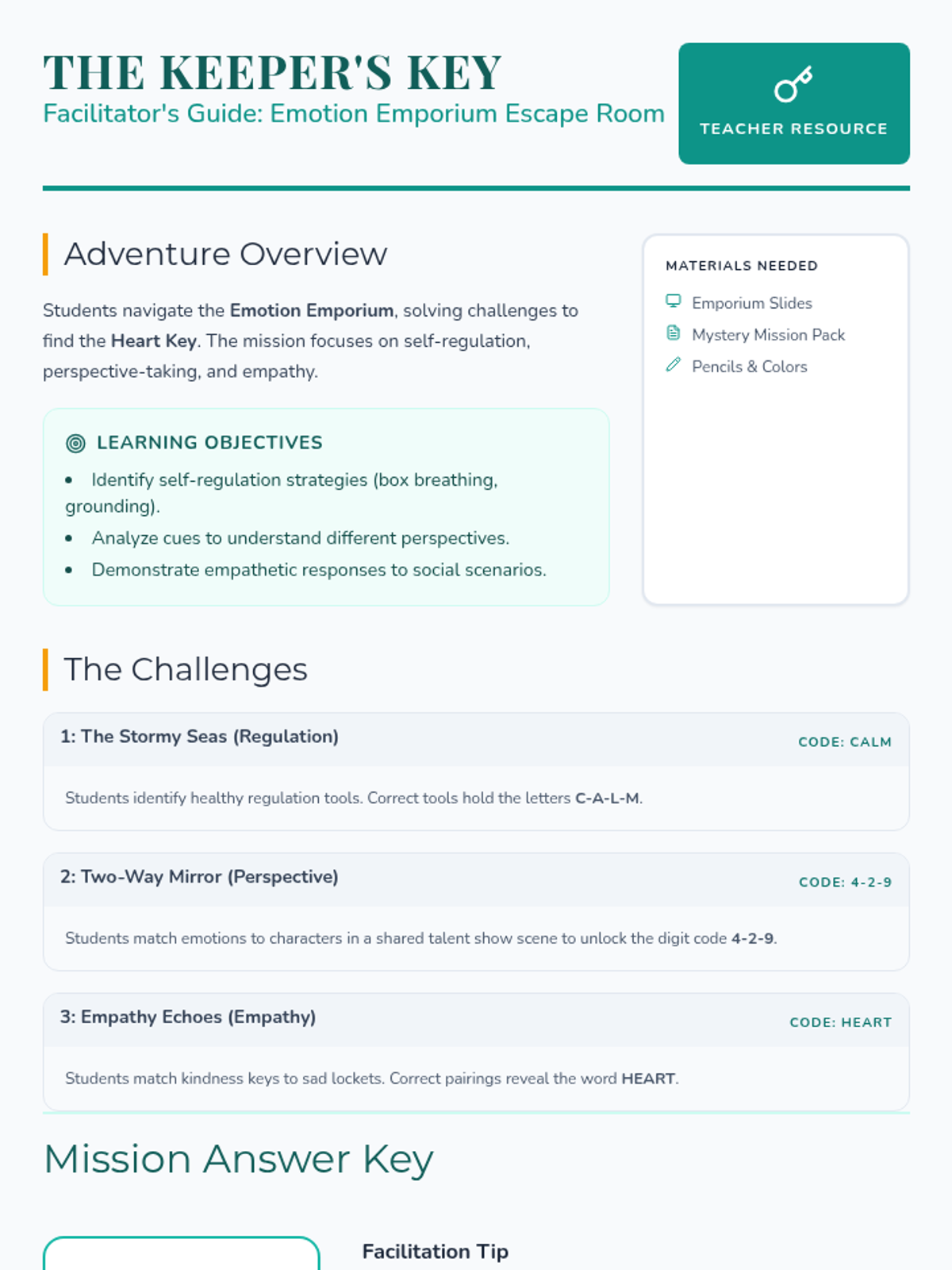
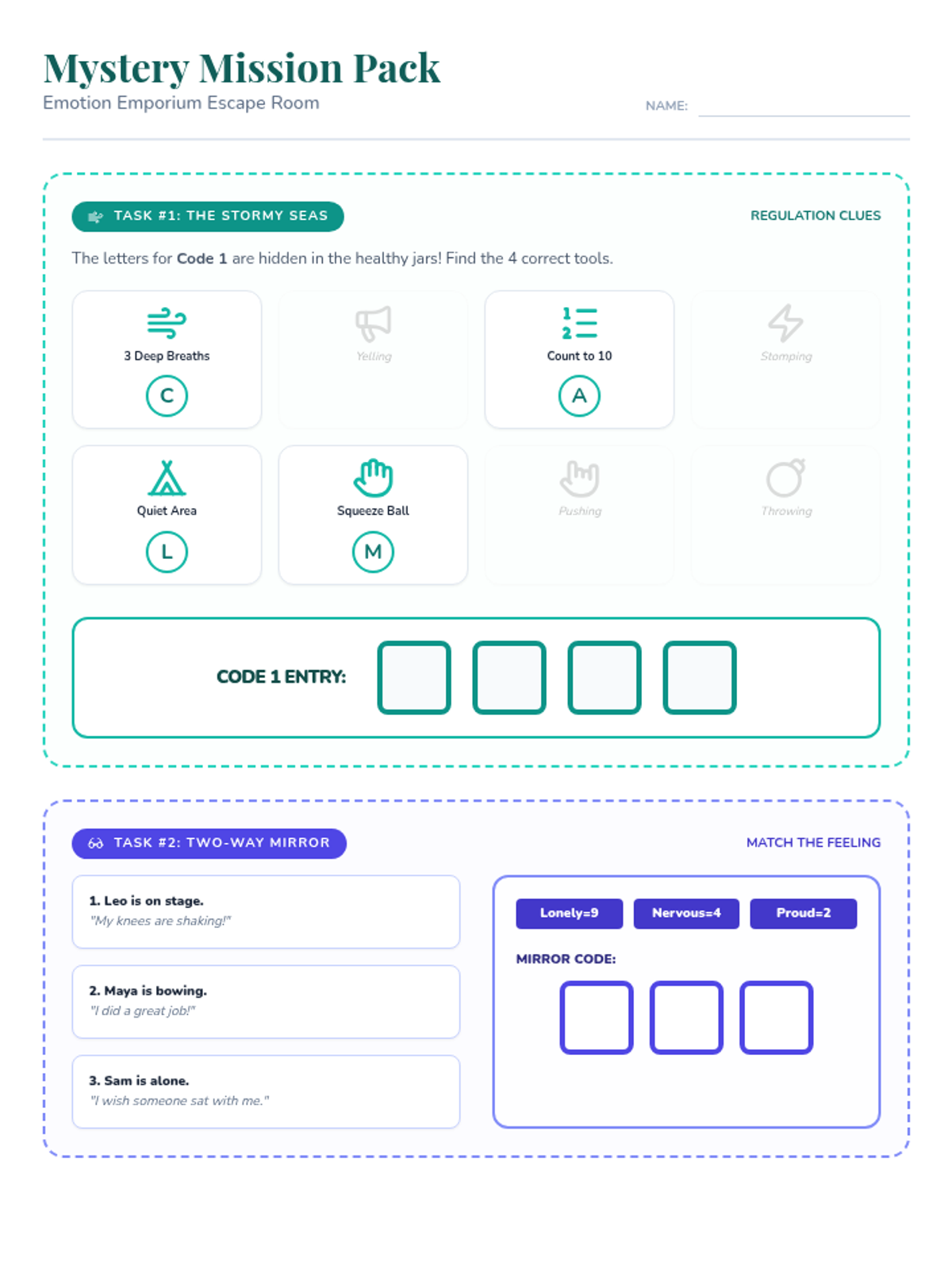
An immersive SEL escape room where students navigate the 'Emotion Emporium' to recover the Heart Key by mastering self-regulation and empathy. Students work together to solve visual puzzles and perspective-taking challenges.
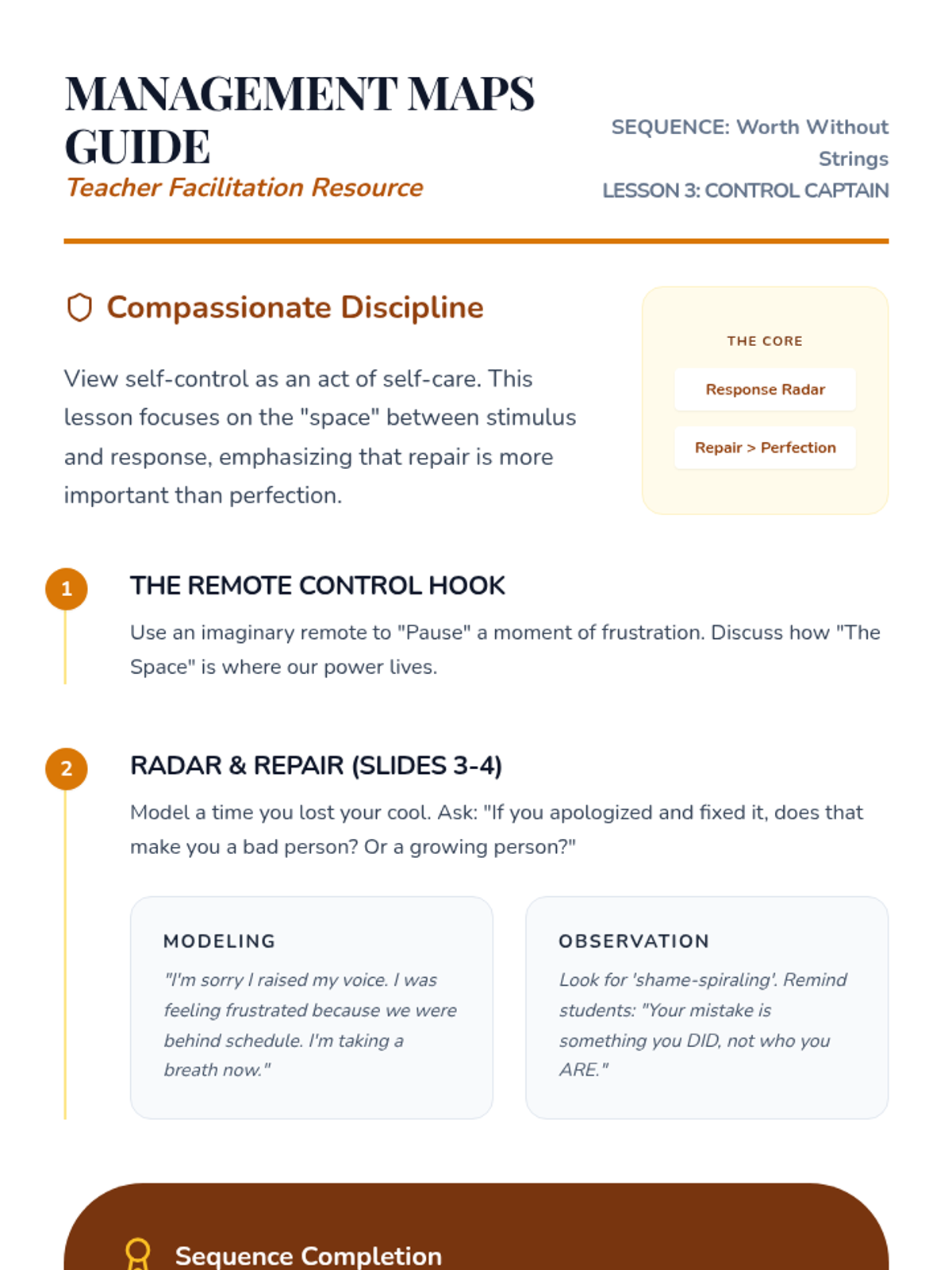
Focuses on self-control and self-management through the lens of self-care rather than self-correction, helping students navigate challenges with grace.
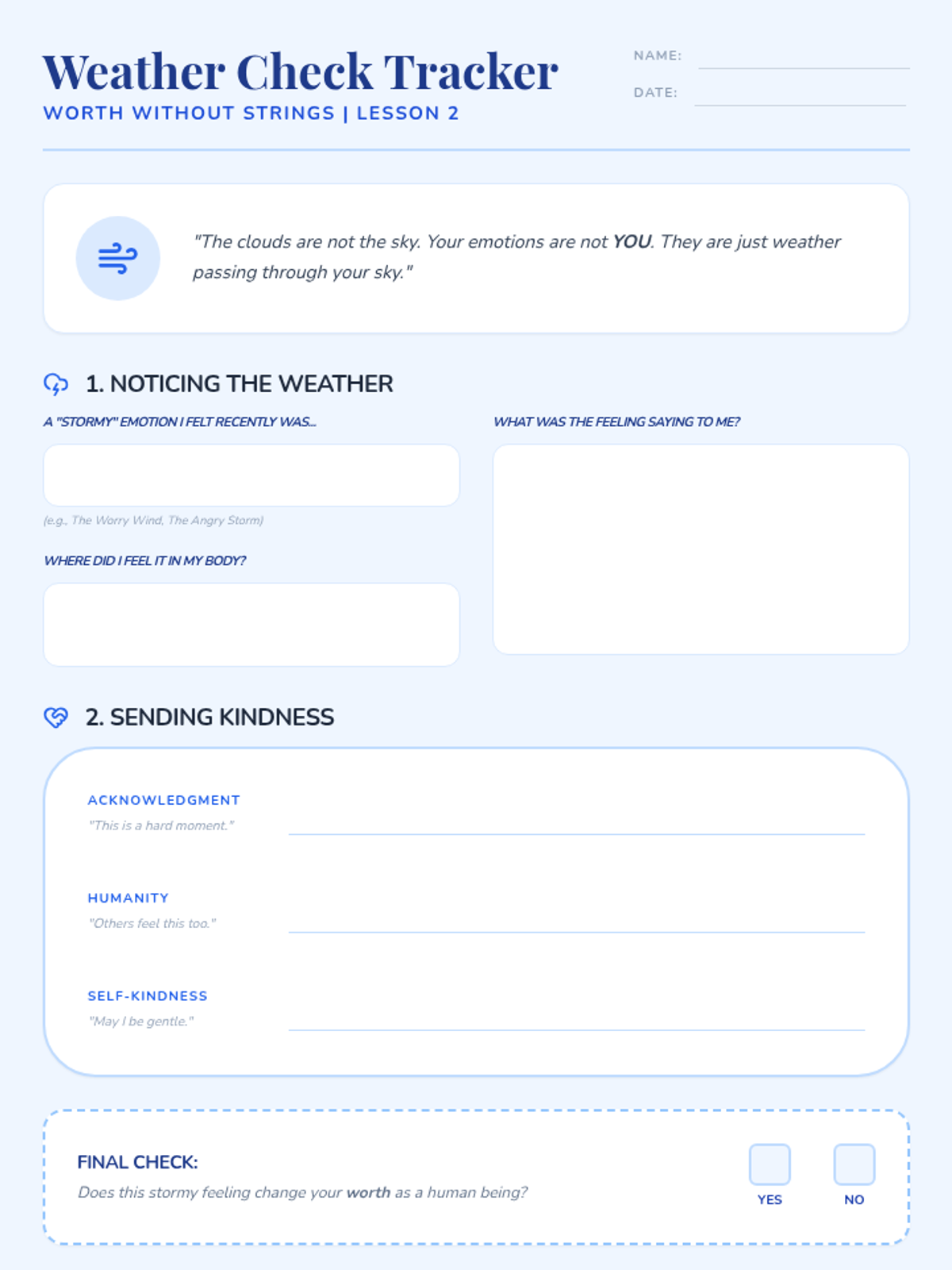
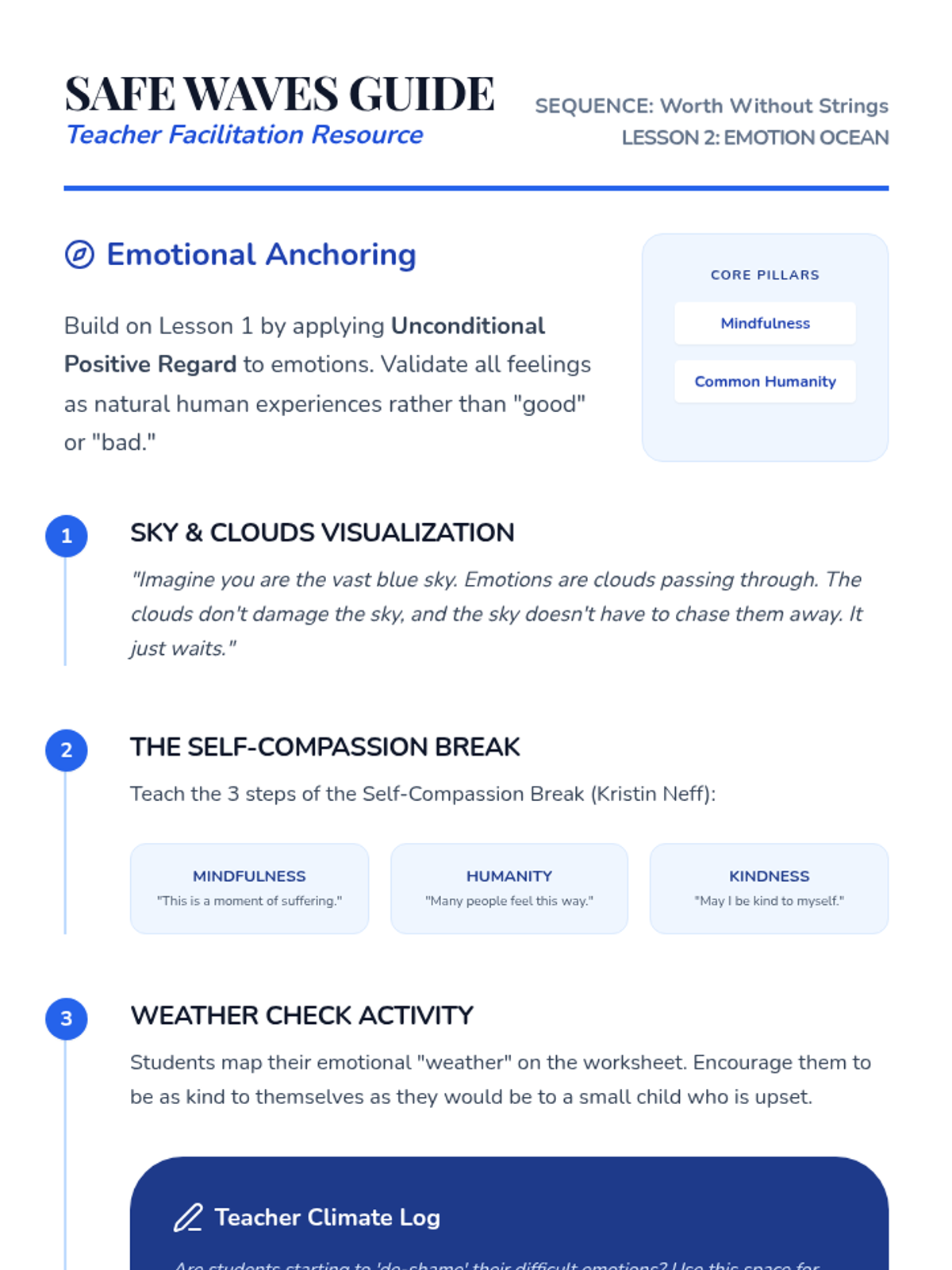
A deep dive into emotional awareness and self-compassion, teaching students to welcome all feelings with curiosity and kindness.
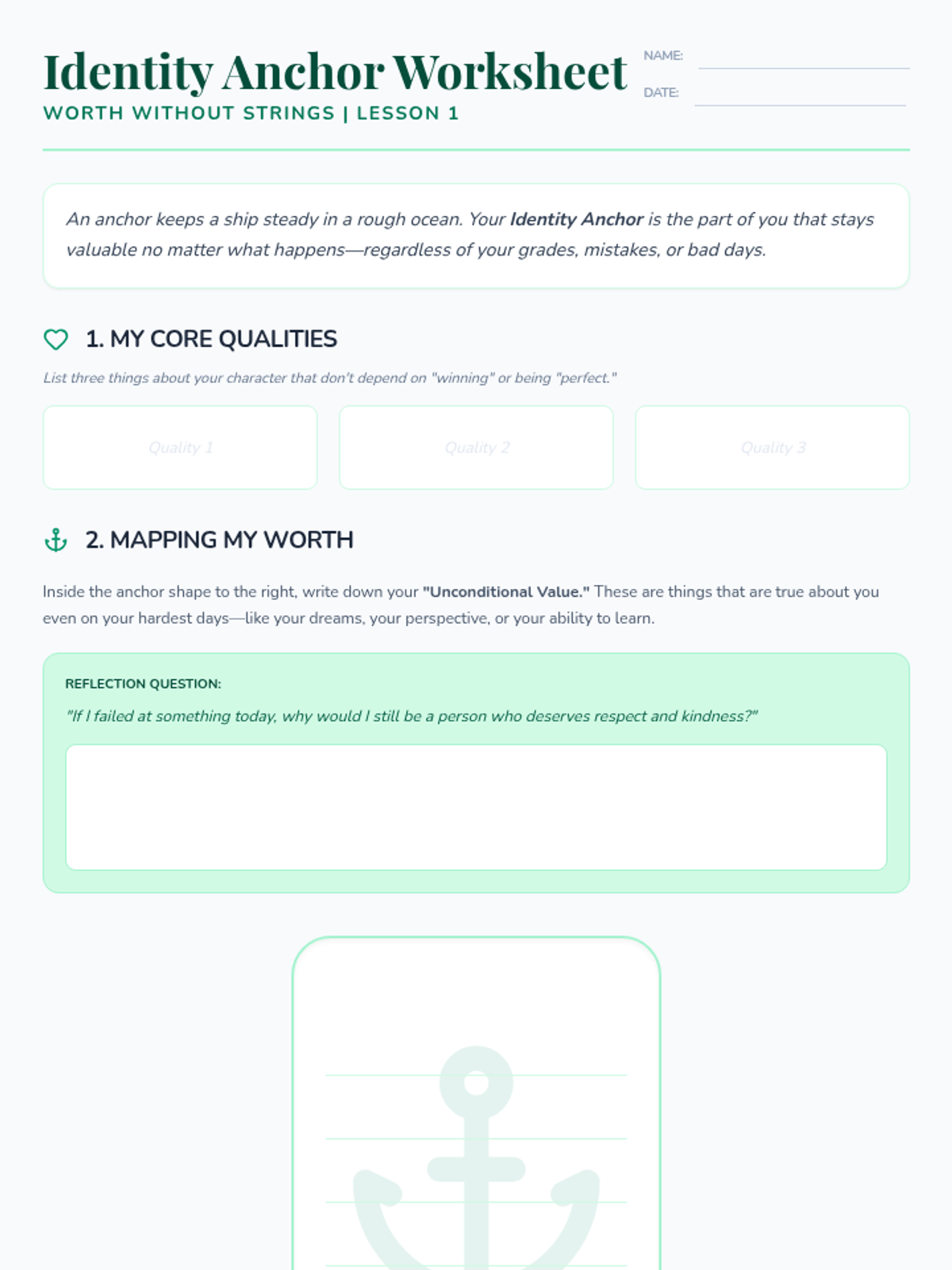
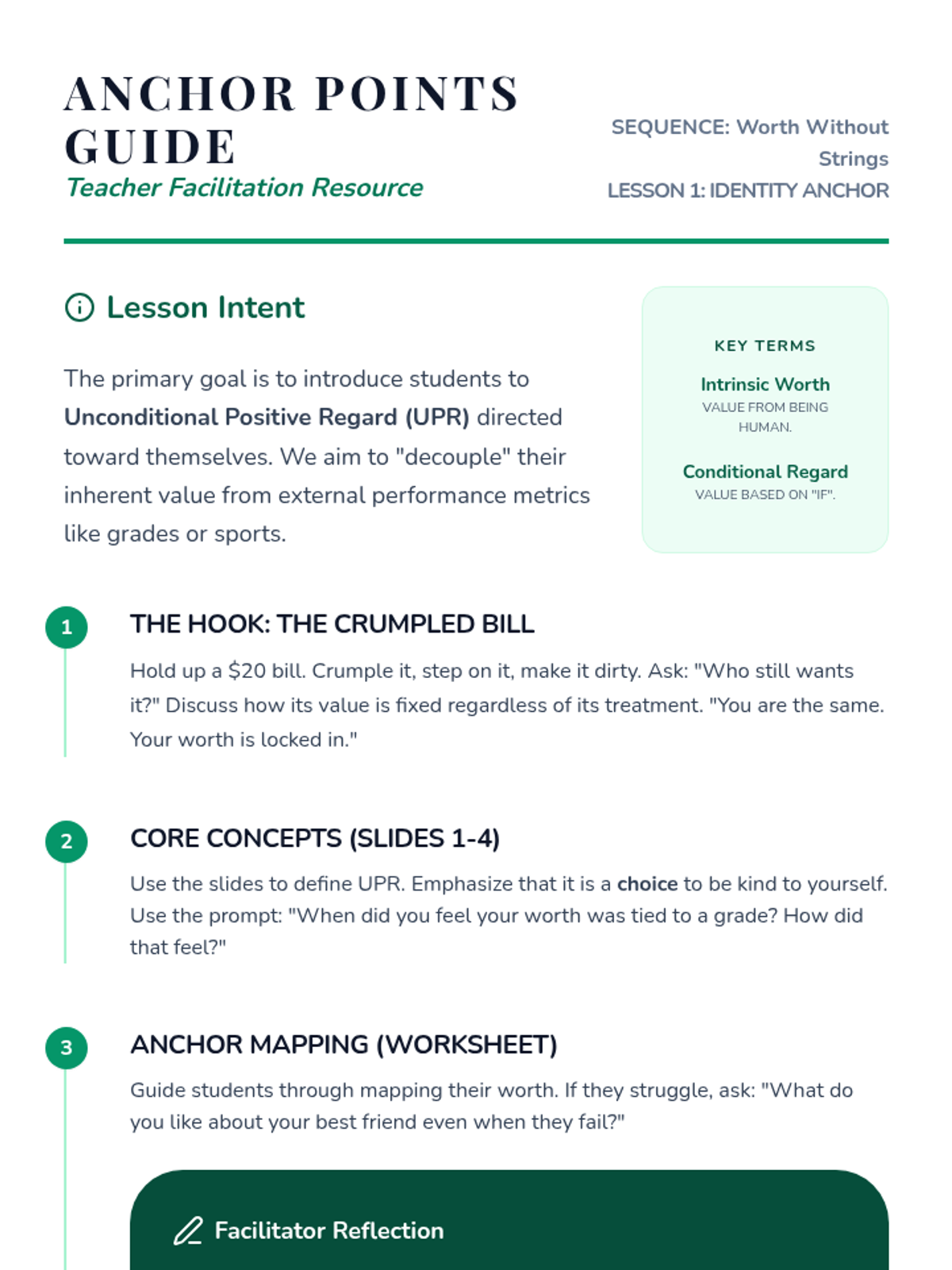
Students explore the concept of intrinsic value and identity, learning that their worth is separate from their achievements or behaviors.
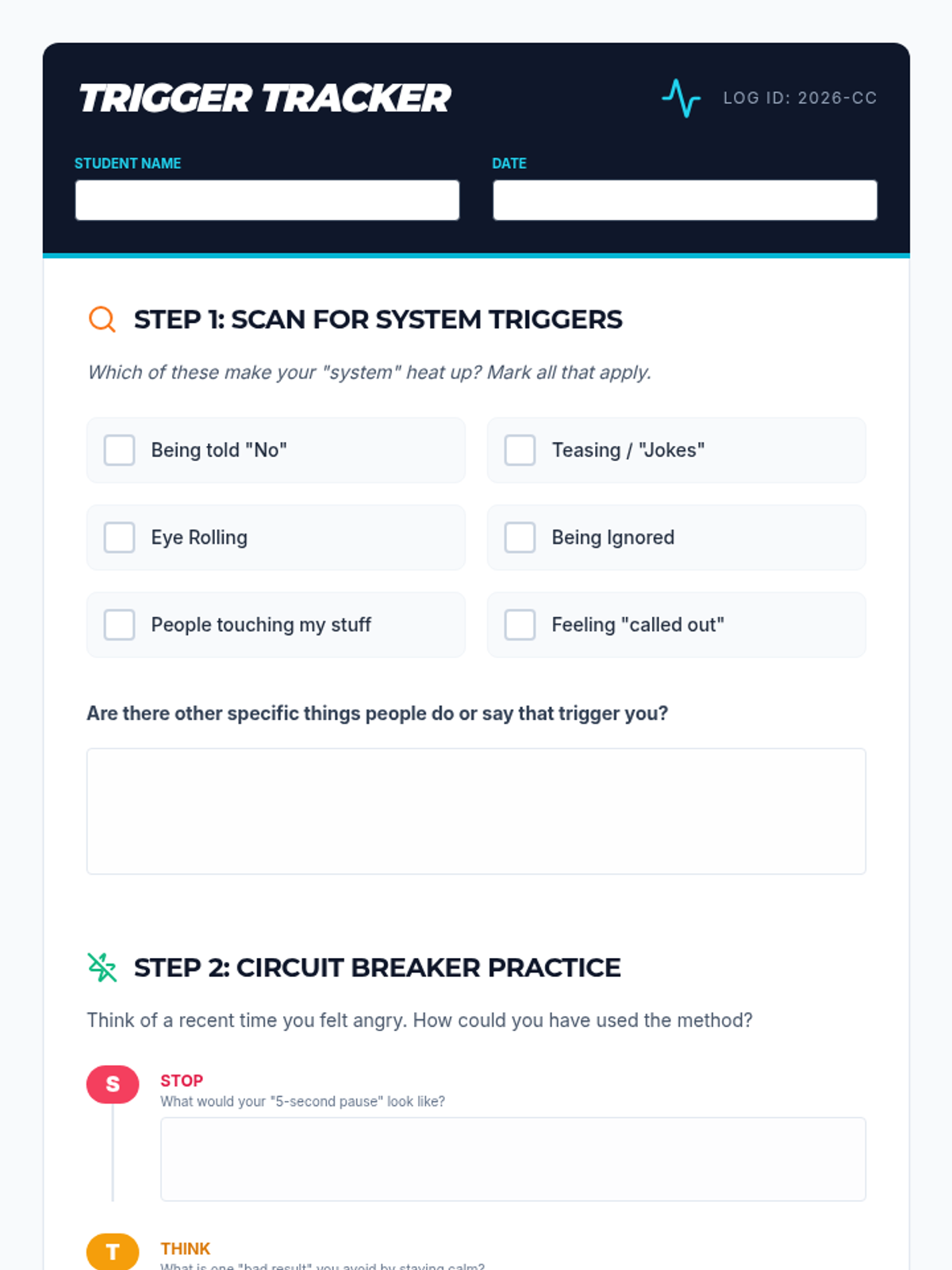
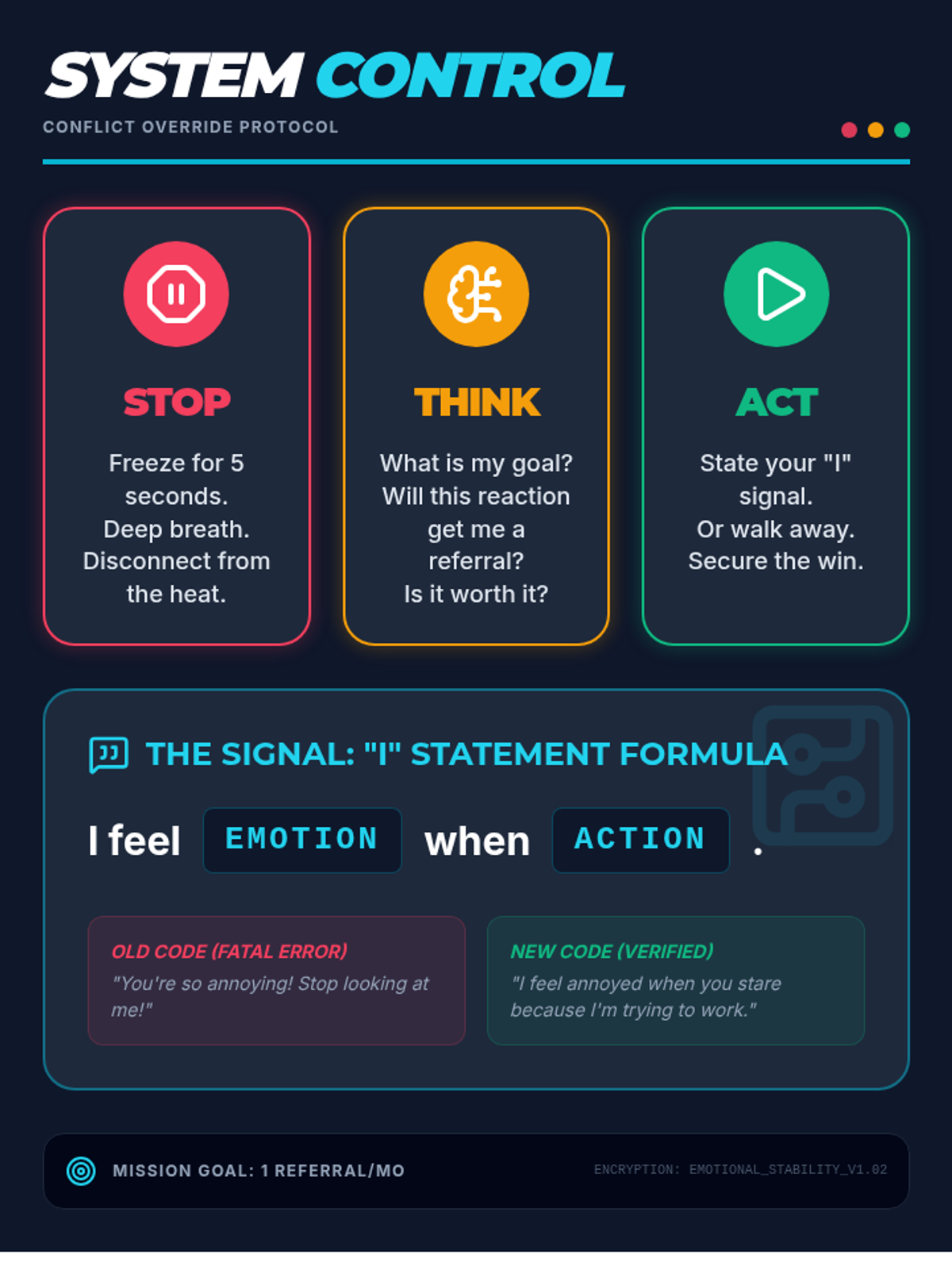
A 20-minute remote session designed for middle school students to master conflict prevention through trigger identification, the 'Stop, Think, Act' method, and 'I' statements. This lesson aims to reduce behavioral referrals by providing concrete technical tools for emotional regulation.
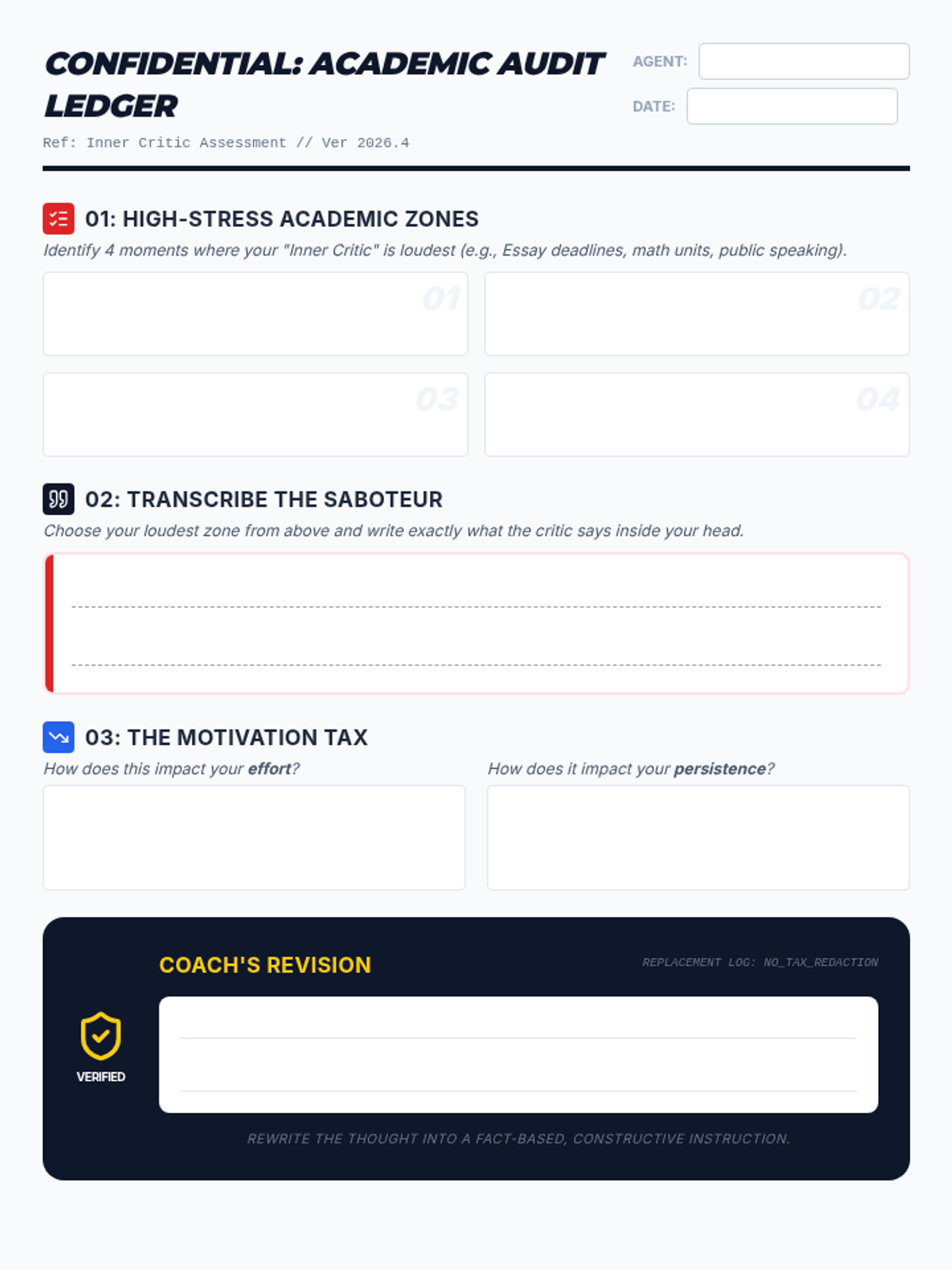
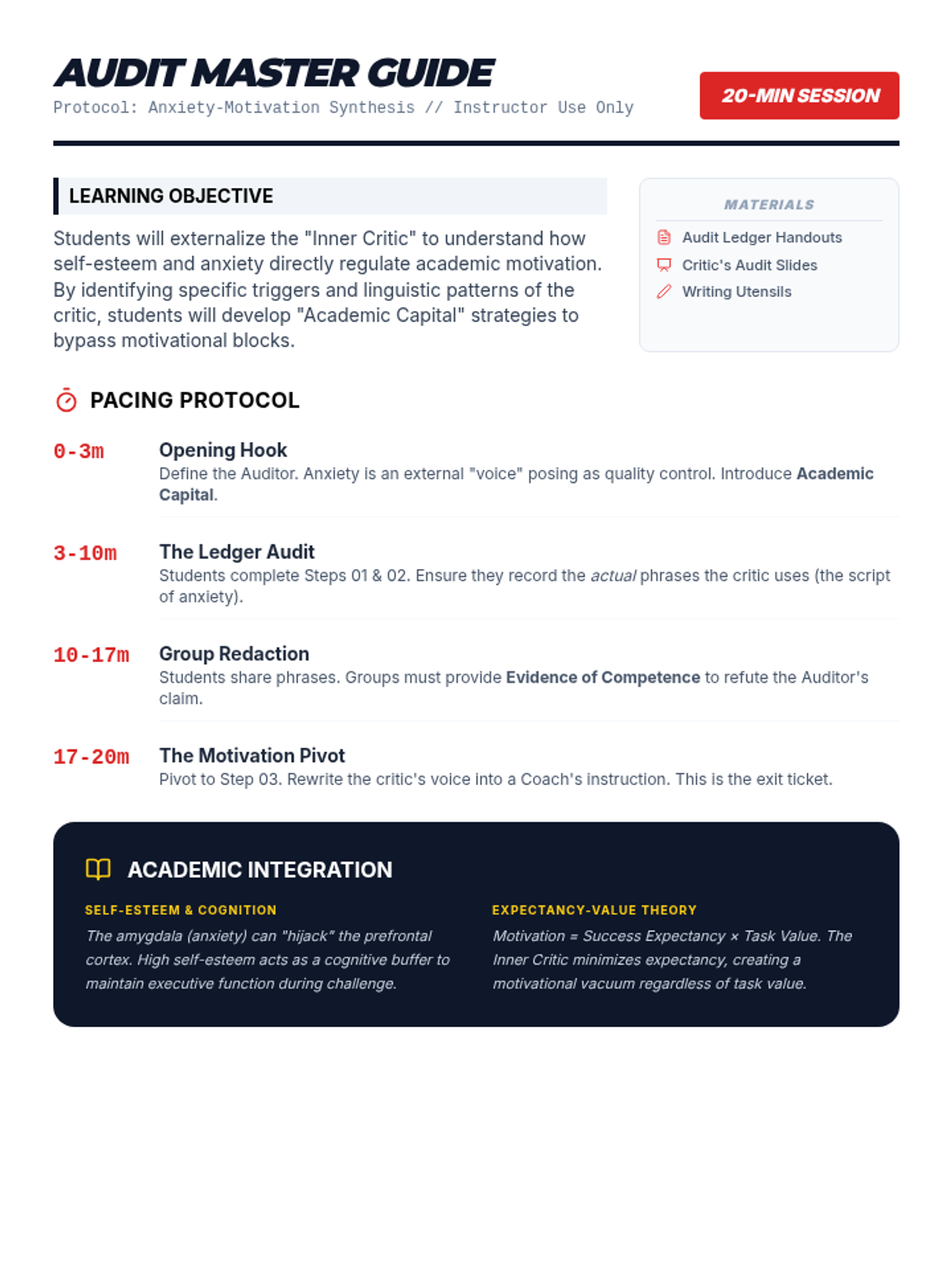
A high-impact 20-minute group activity that identifies the 'inner critic' in academic settings and explores how it impacts motivation and self-esteem. Students will conduct an 'academic audit' to transform anxious thoughts into motivational strategies.
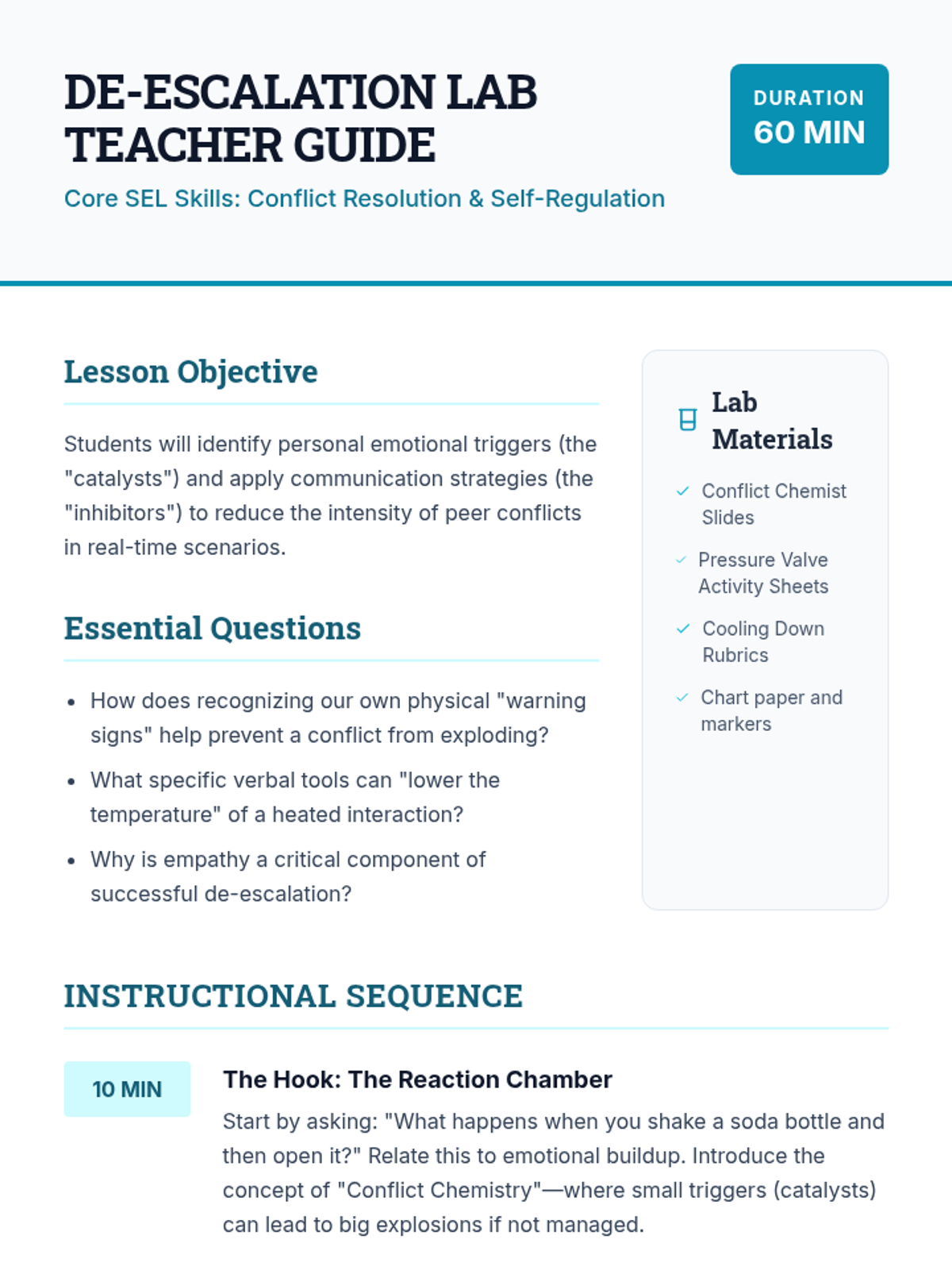
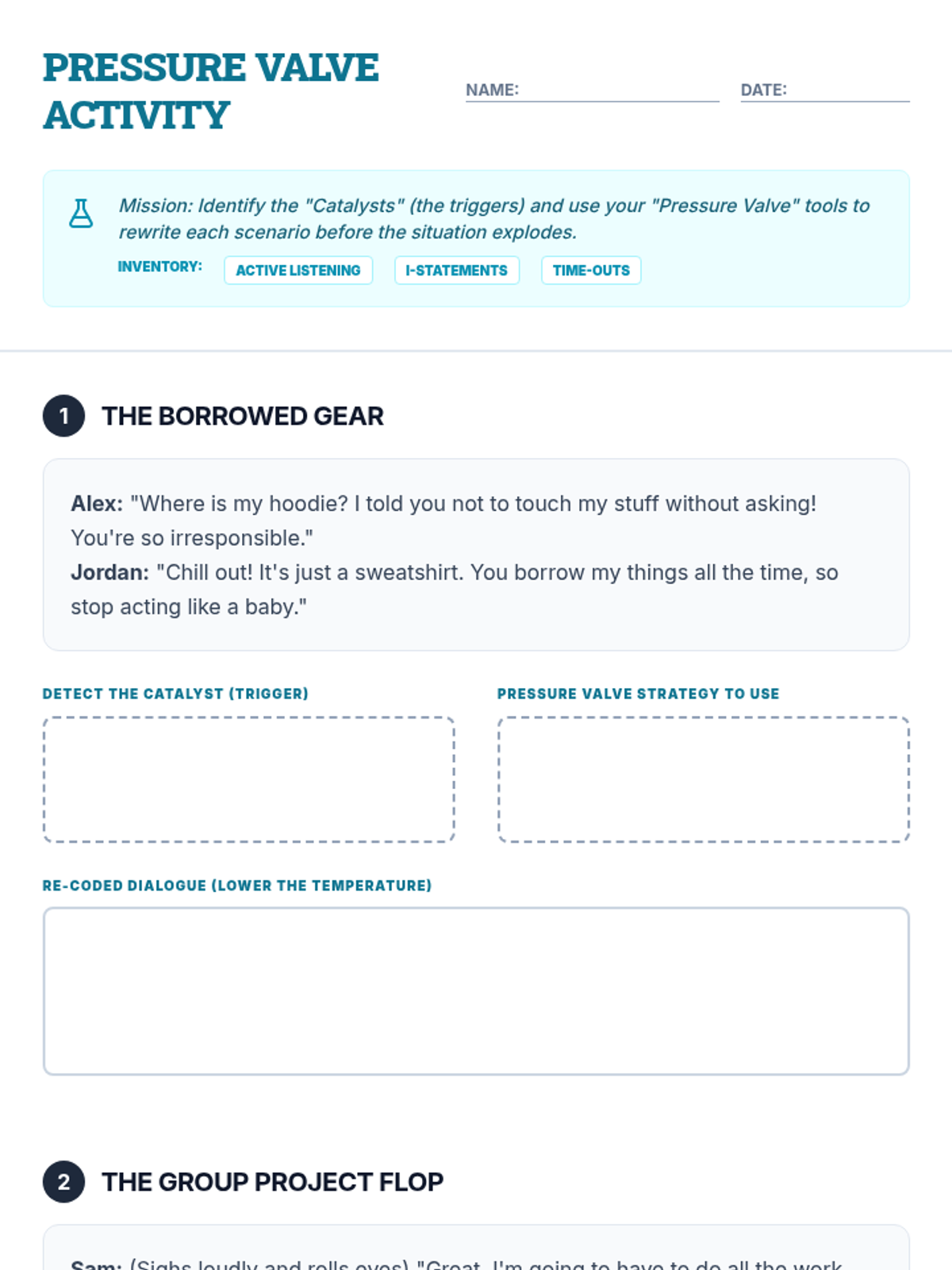
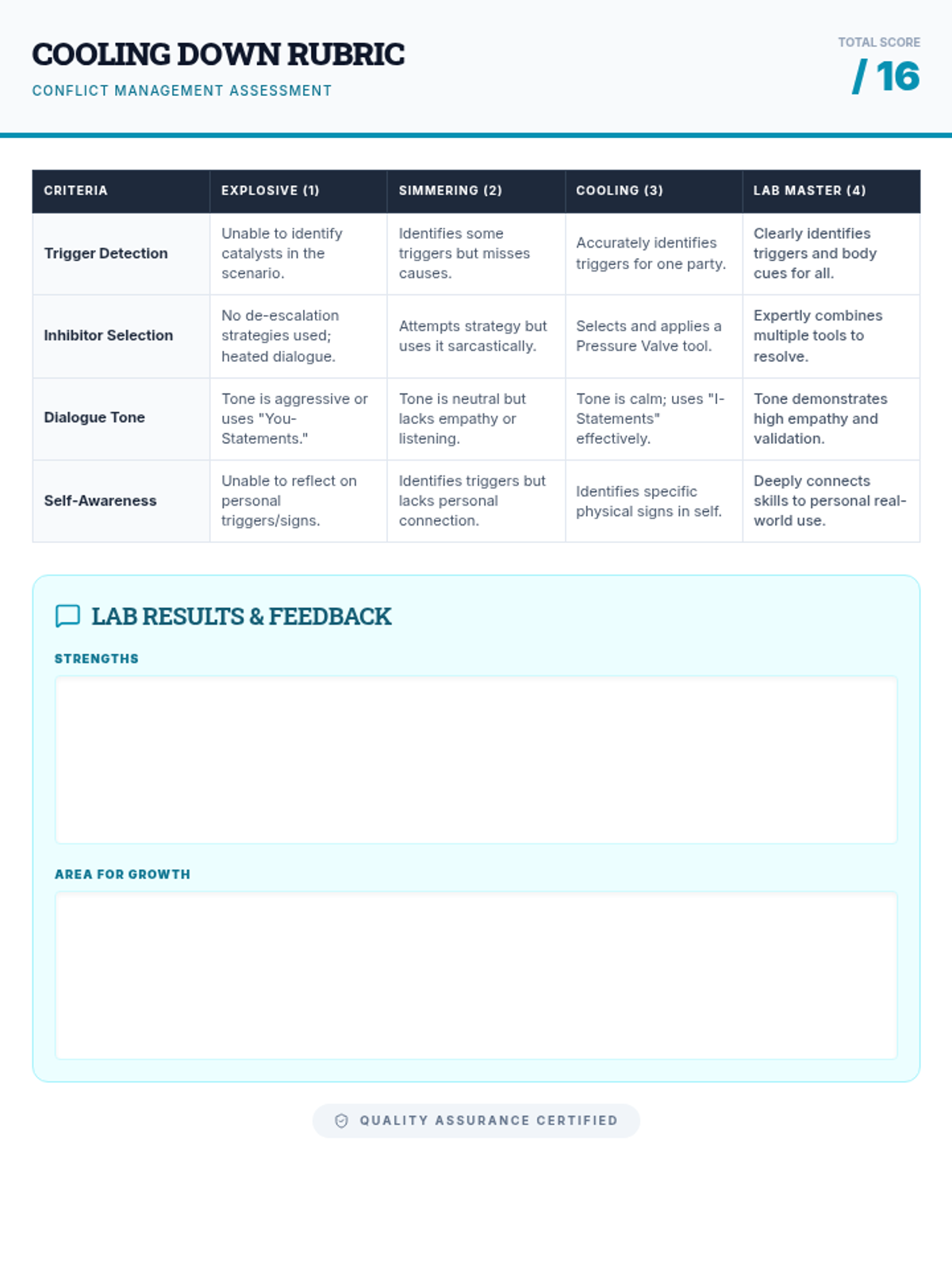
A social-emotional learning lesson focused on identifying emotional triggers and mastering communication techniques to de-escalate peer conflict. Students analyze the 'chemistry' of conflict and practice specific verbal tools to lower the emotional temperature of tense situations.
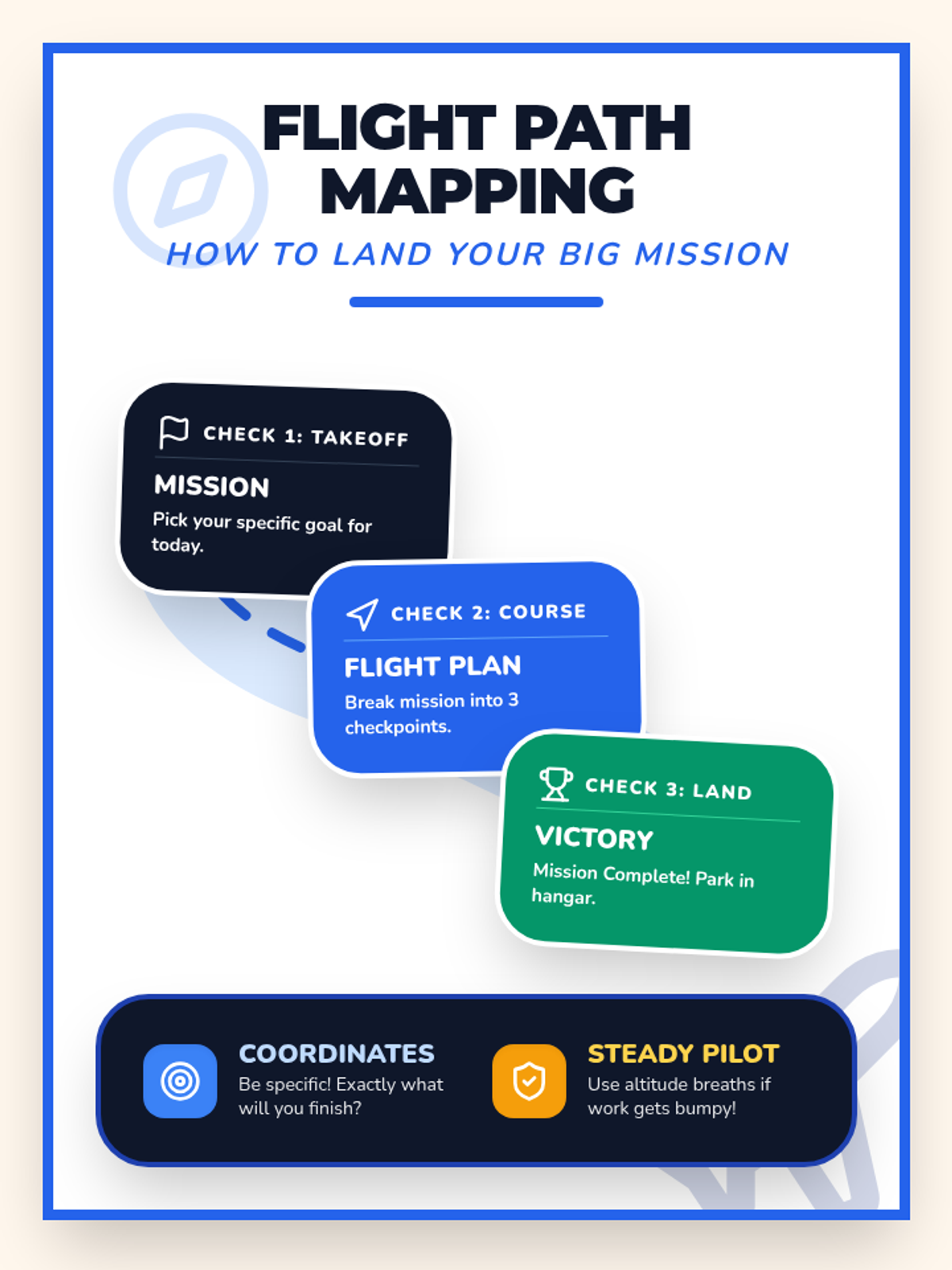
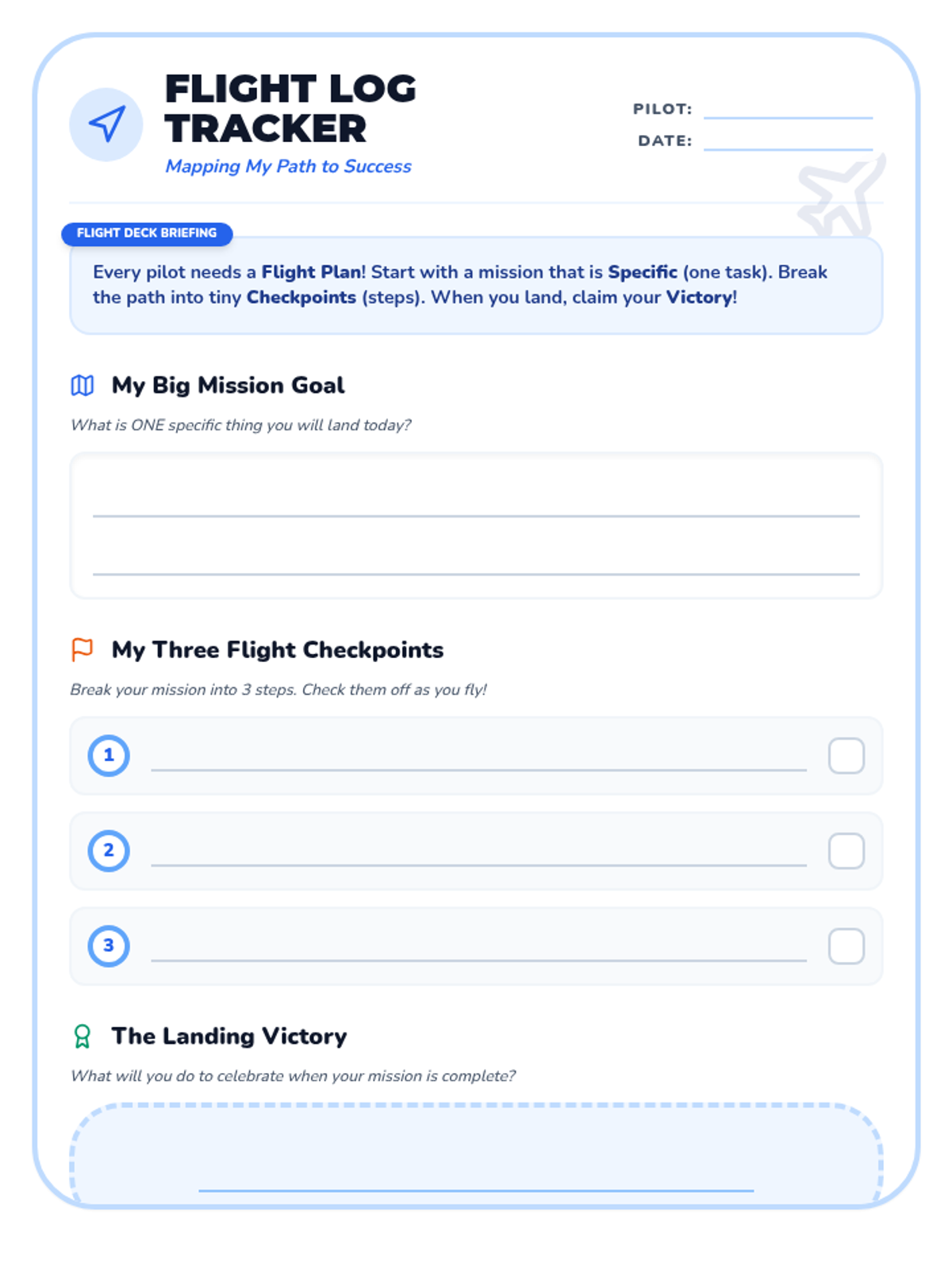
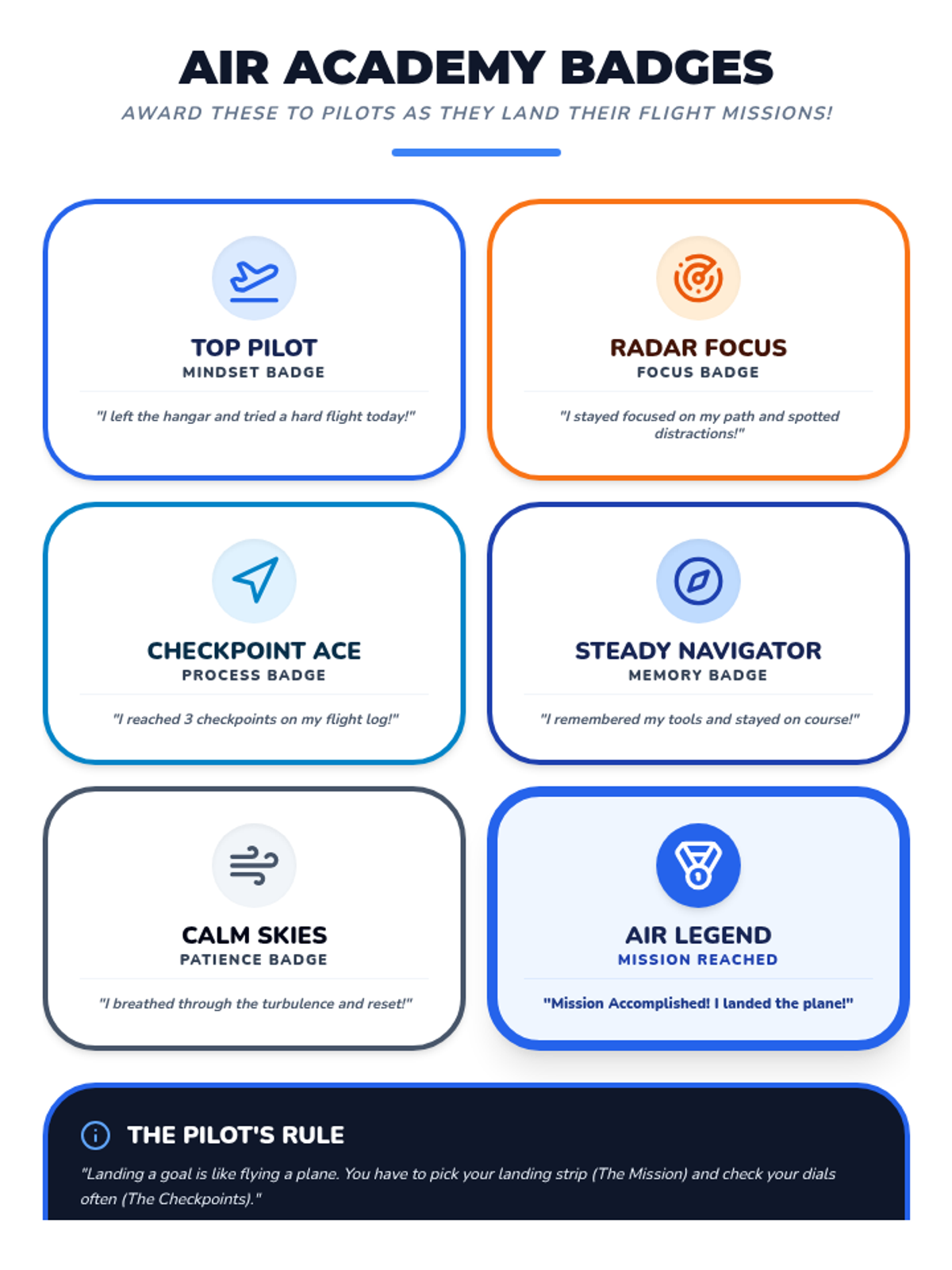
Mastering flight coordinates by setting specific academic missions and tracking progress through checkpoints.
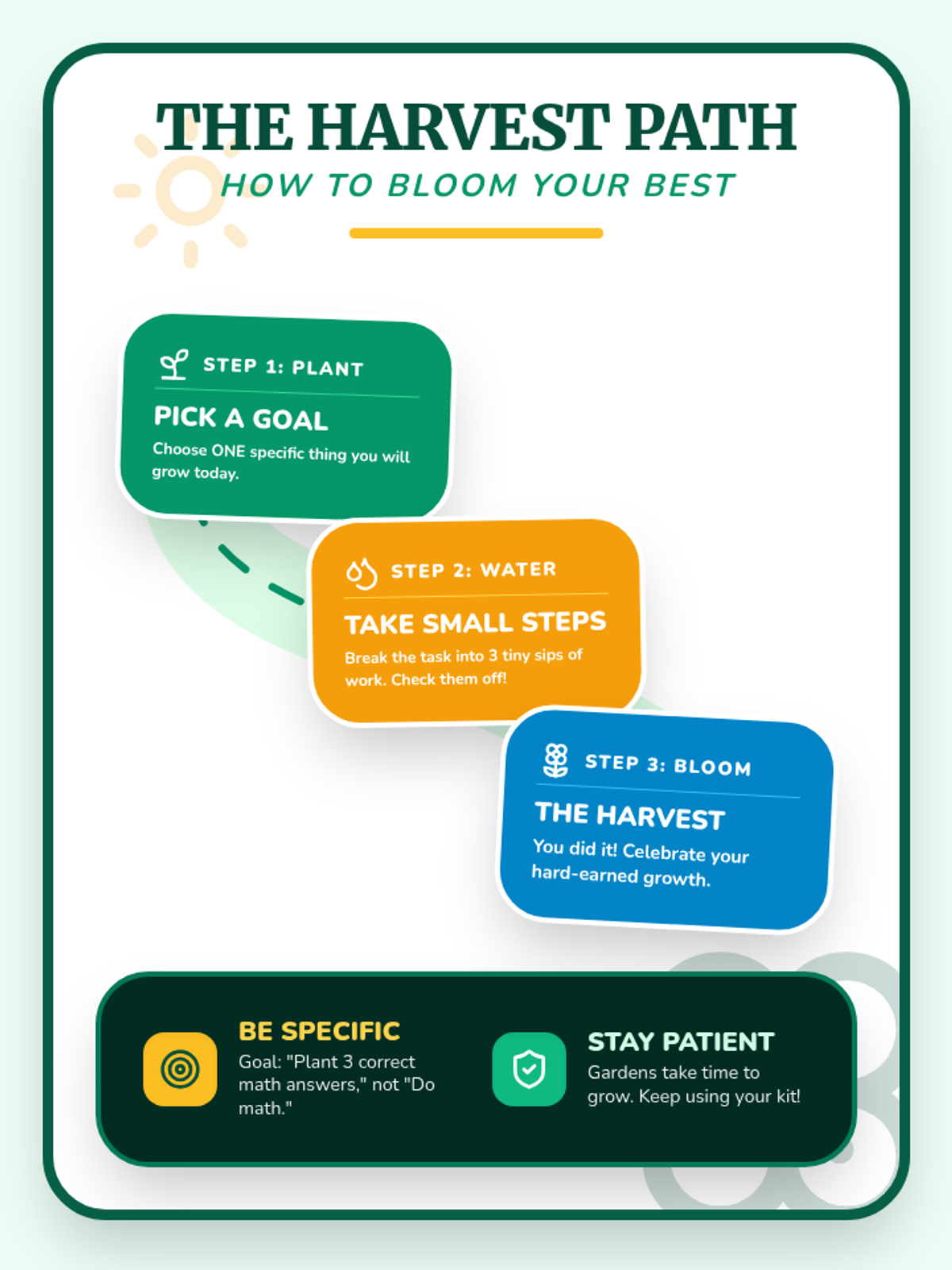
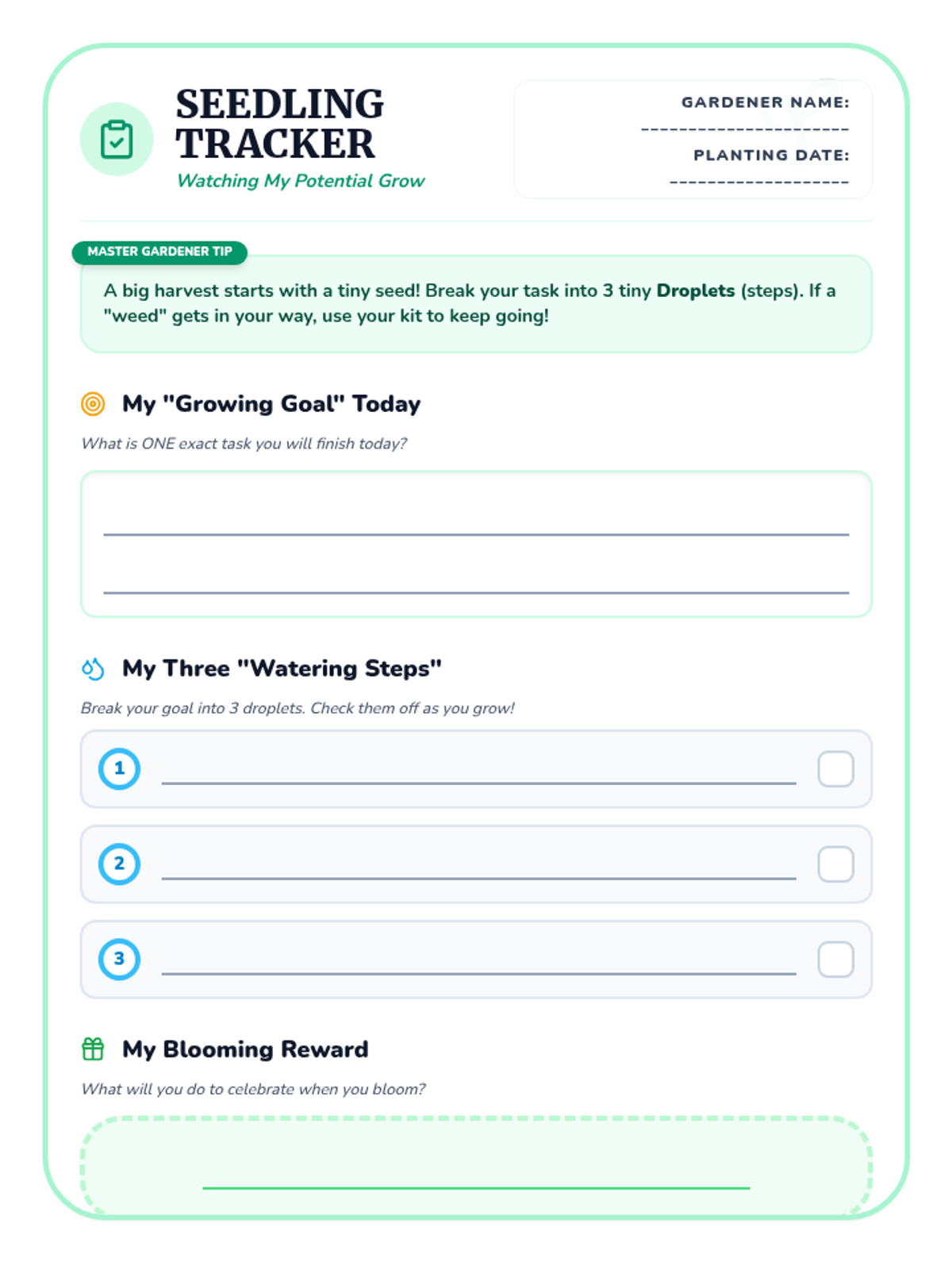
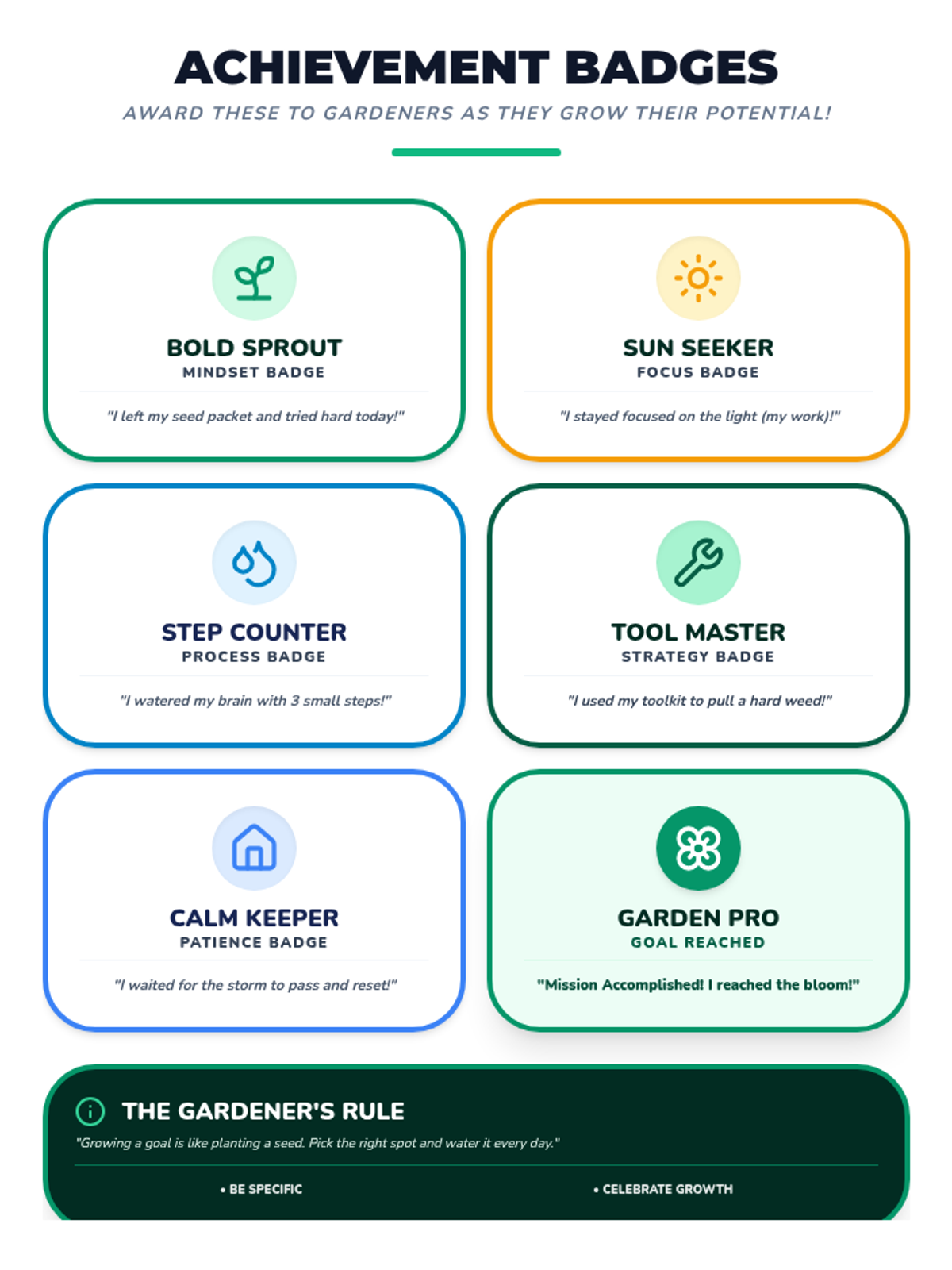
Planning for growth by setting specific academic goals and breaking them into 'root-sized' steps for the week.
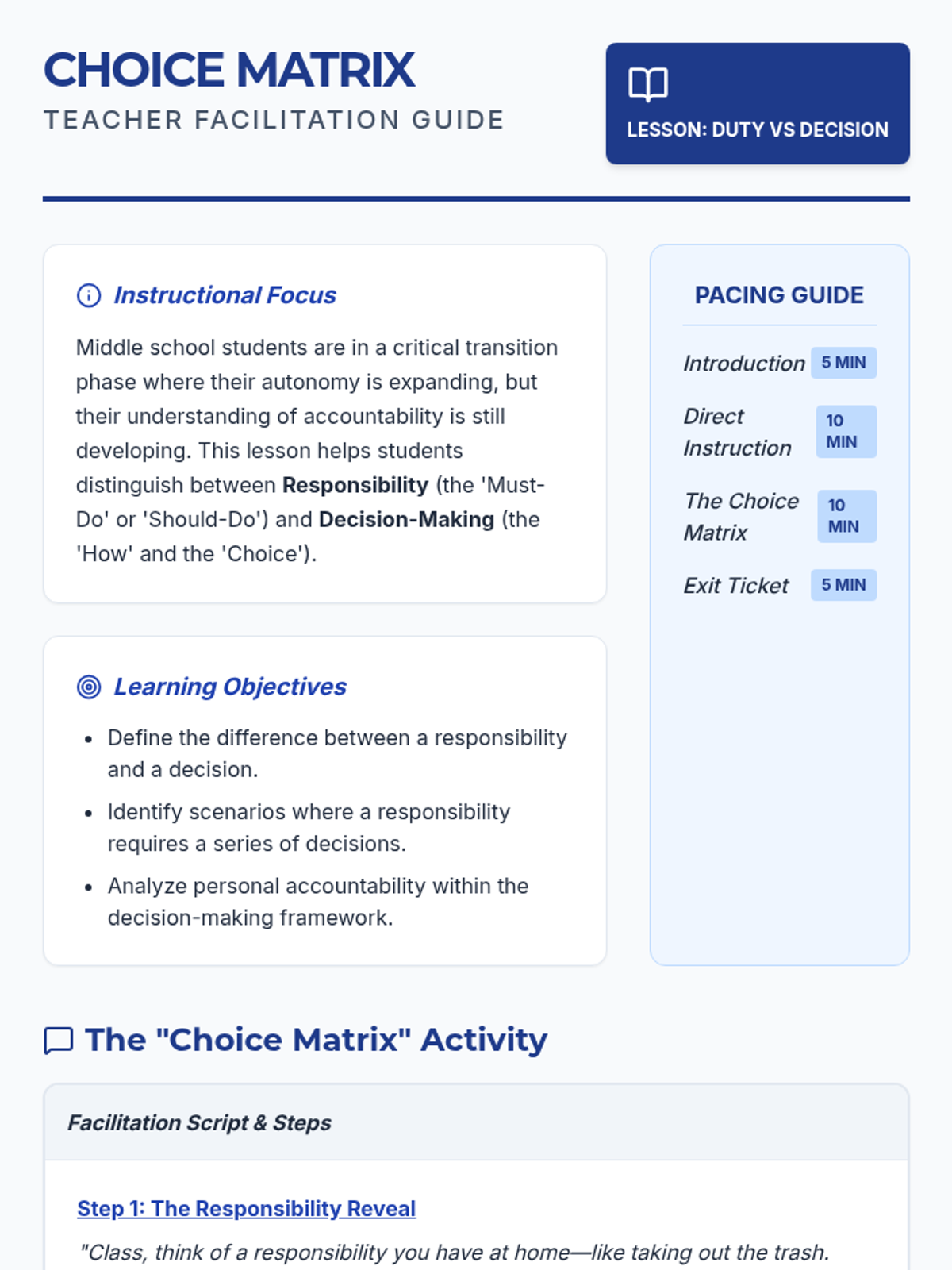
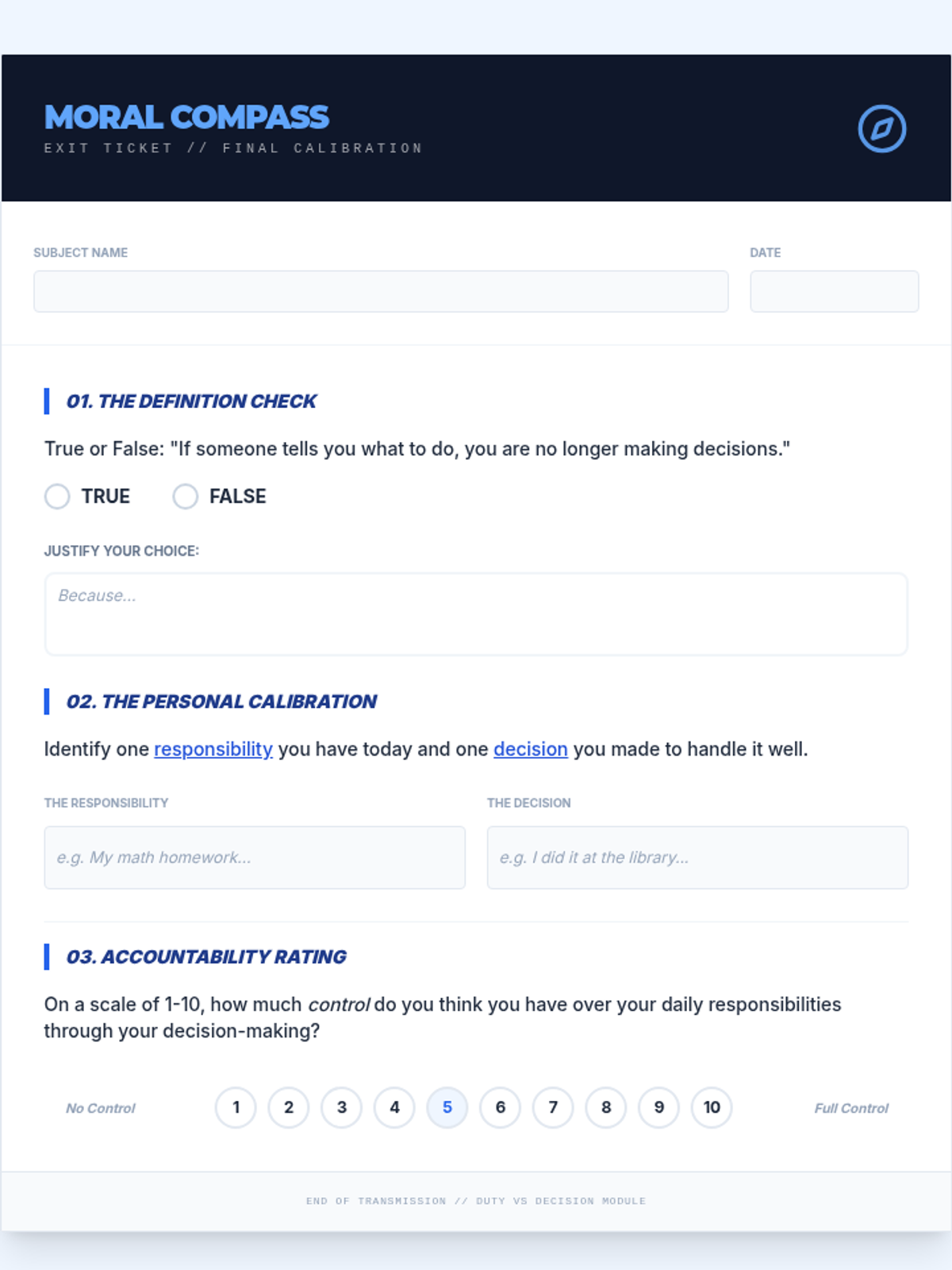
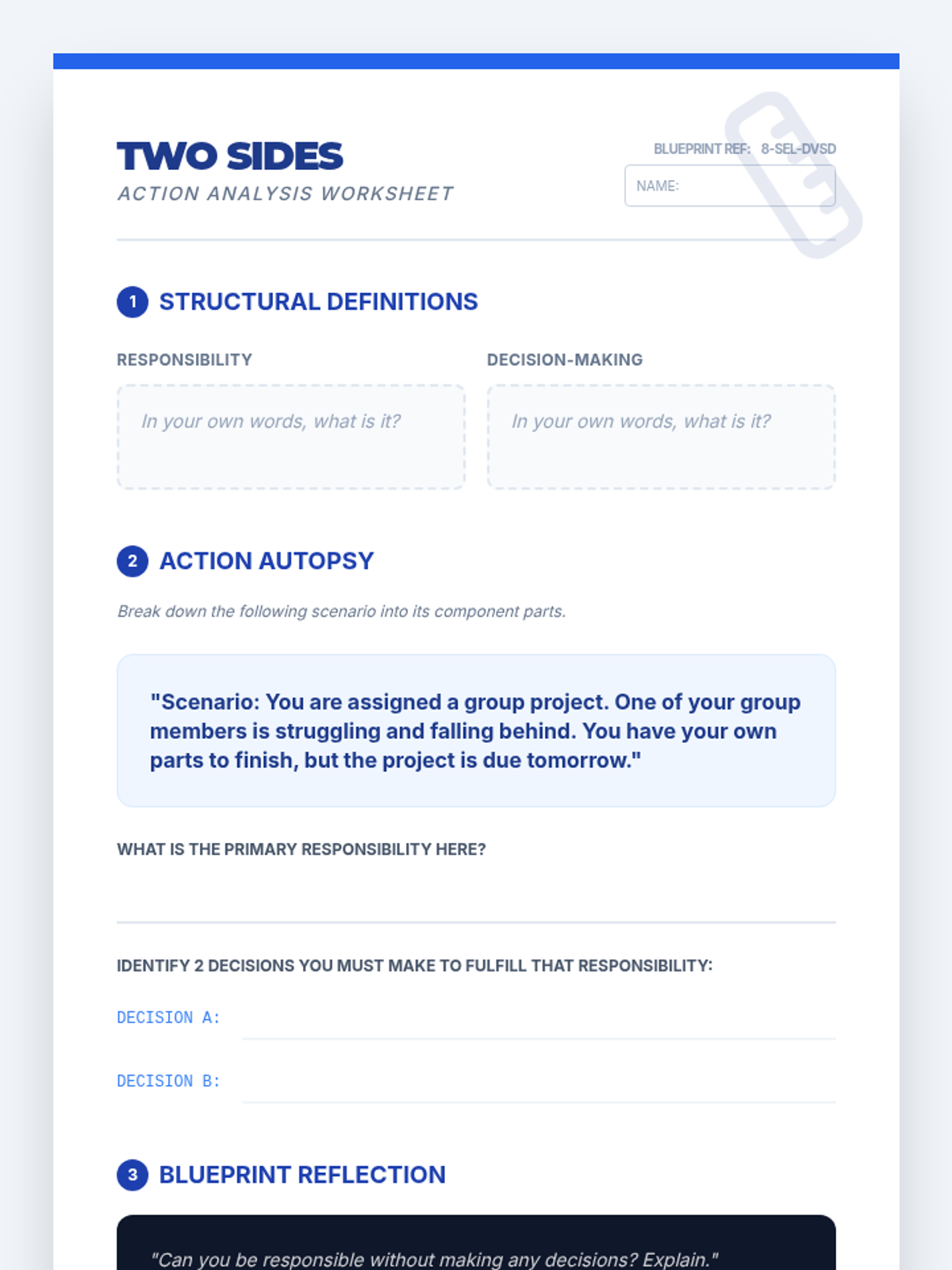
Students explore the critical distinction between personal responsibility and the decision-making process, learning to identify when they are fulfilling an obligation versus making a choice. Through case studies and a 'choice matrix' activity, they analyze how these two concepts interact in real-world scenarios.
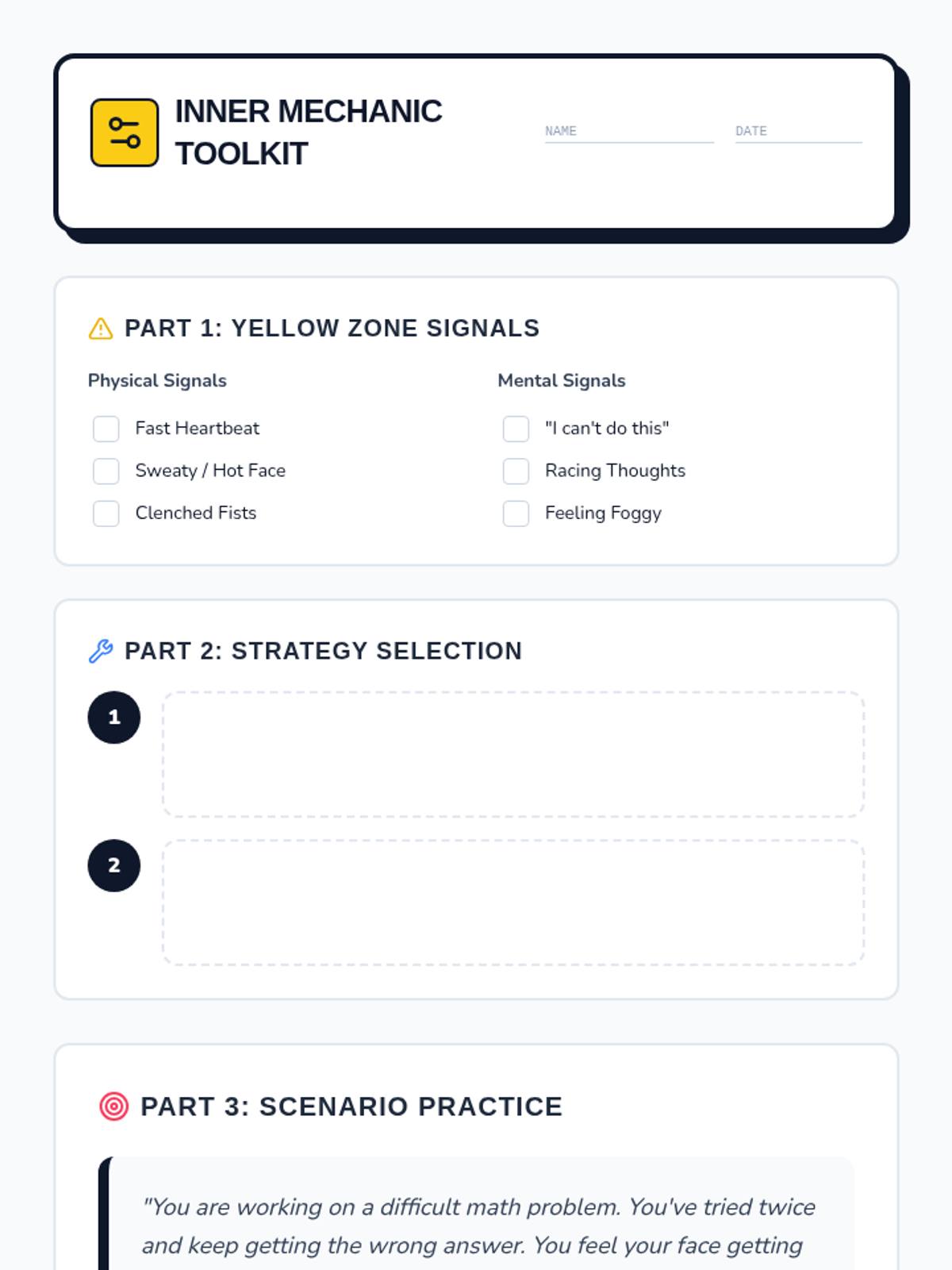
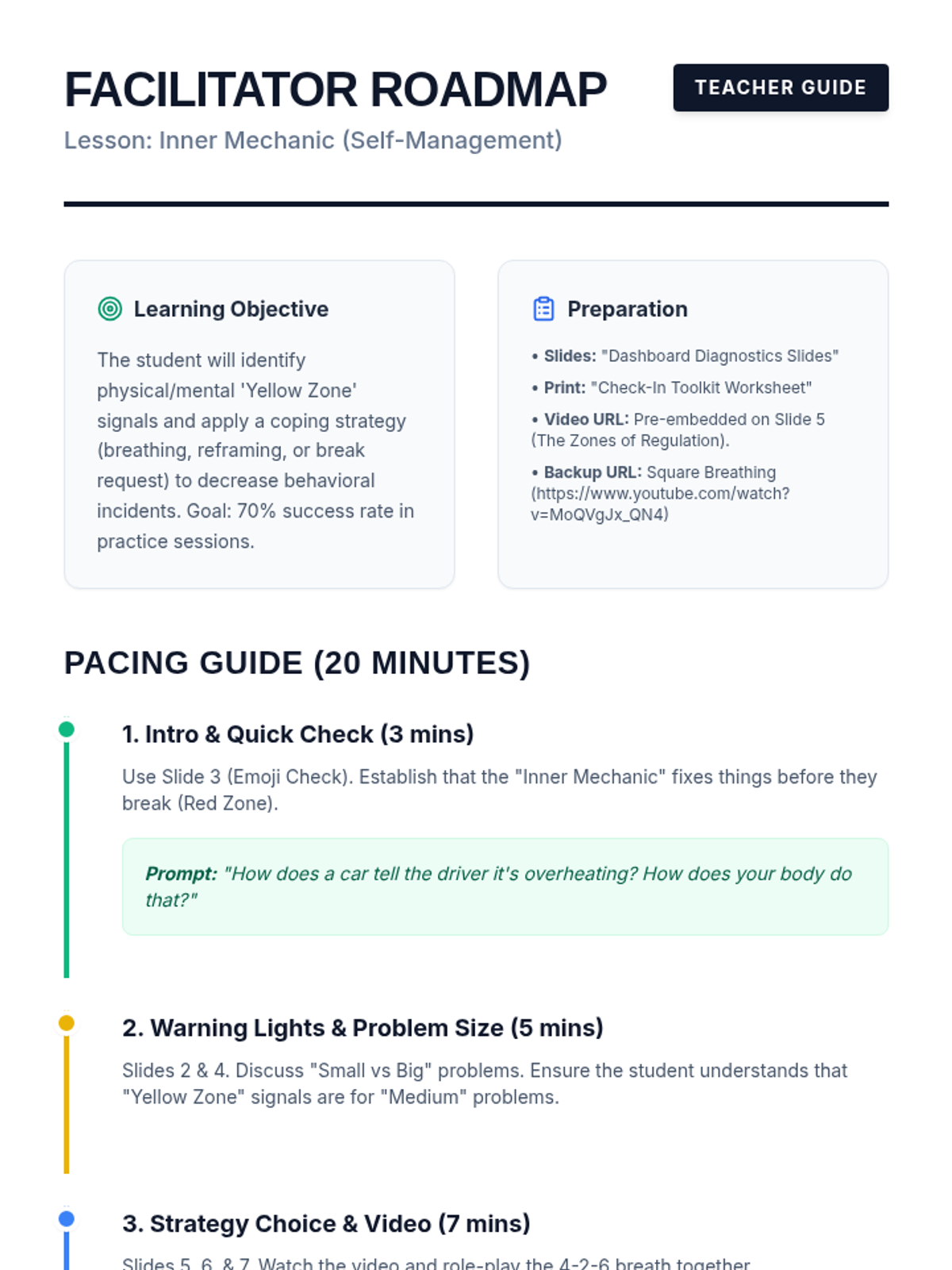
A lesson designed to help students identify their 'Yellow Zone' physical signals and implement self-regulation strategies like deep breathing and mental reframing before escalating to the 'Red Zone'. Students will build a personal dashboard of coping tools and practice applying them to real-world scenarios.
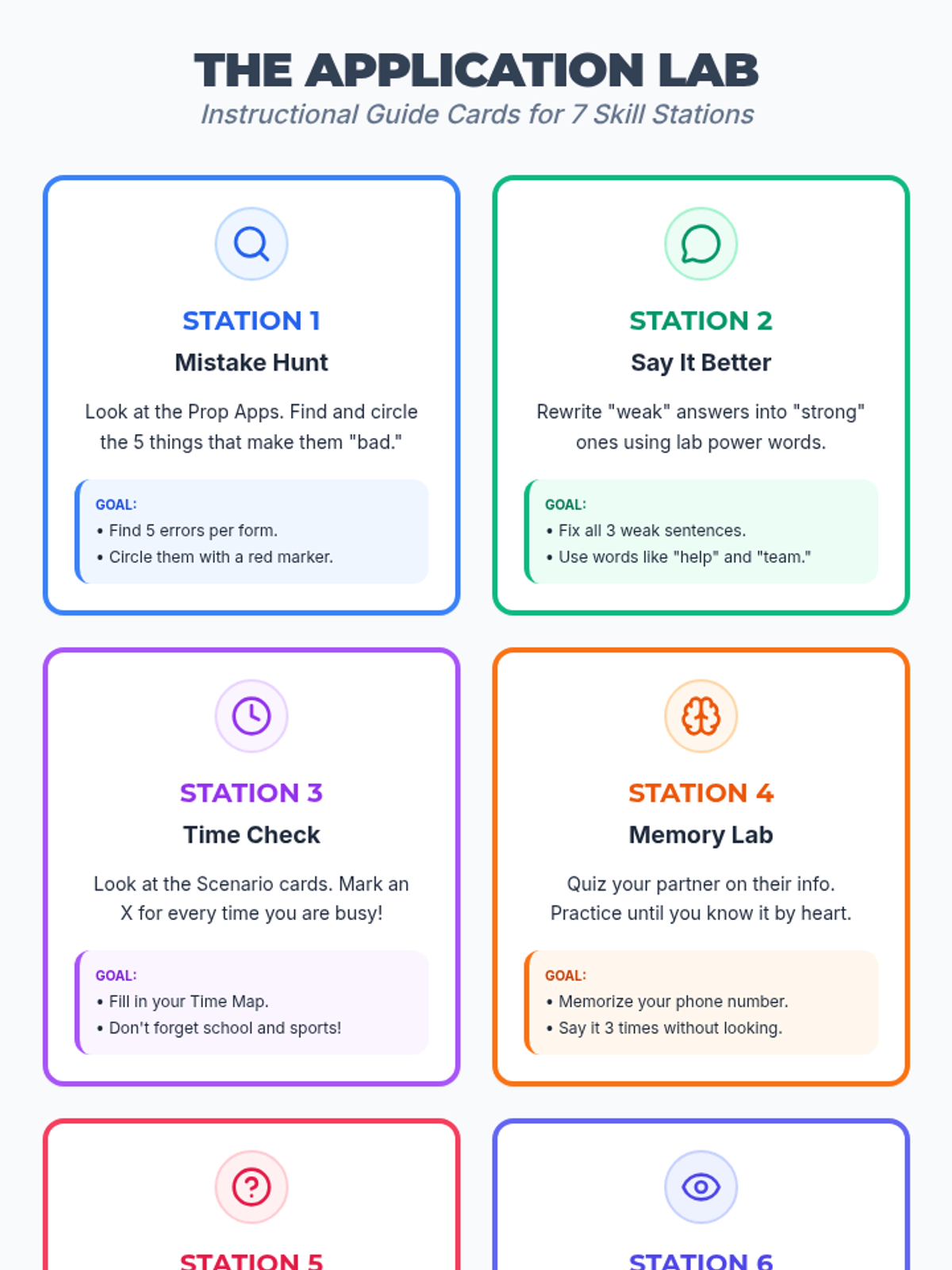
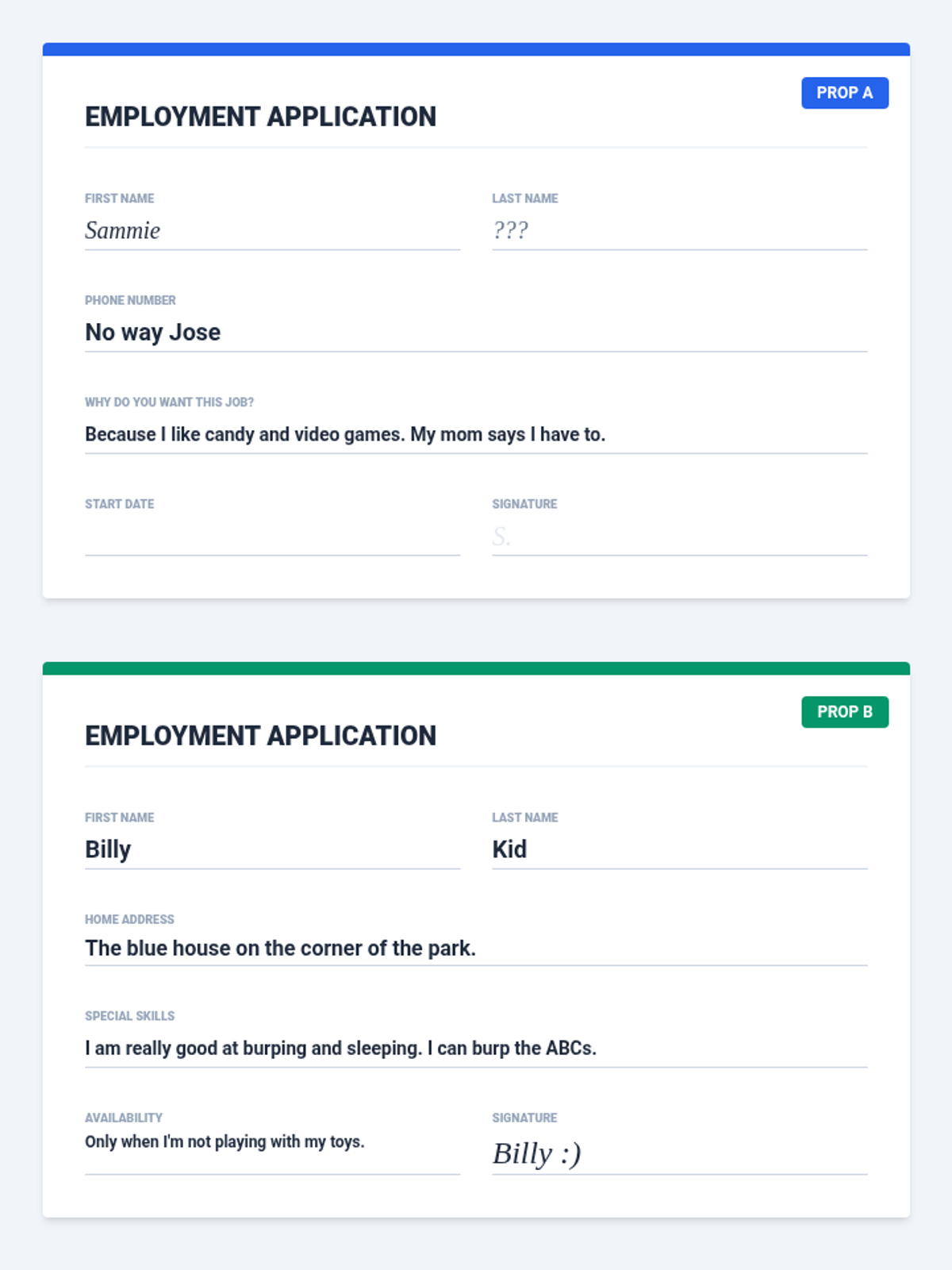
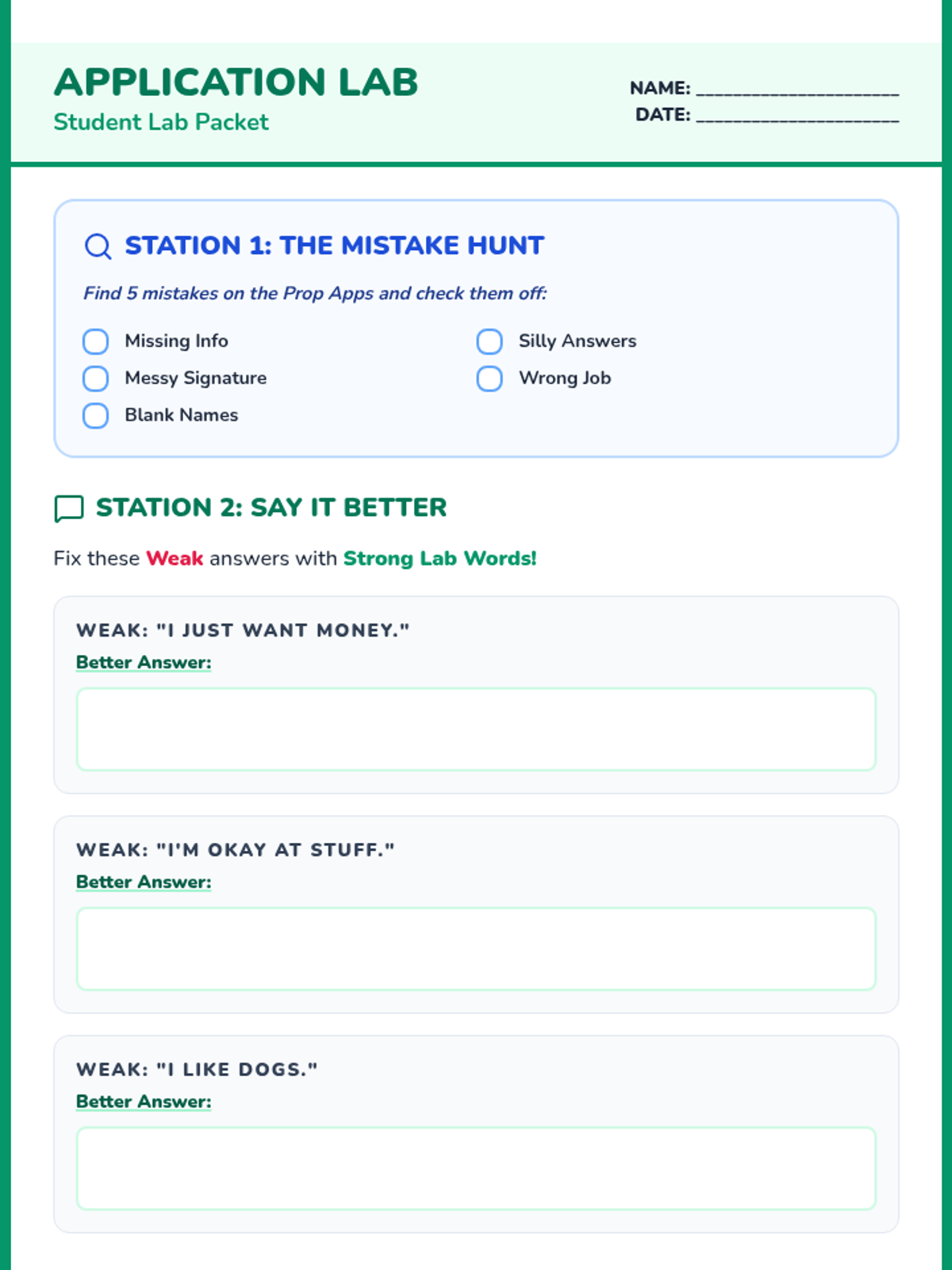
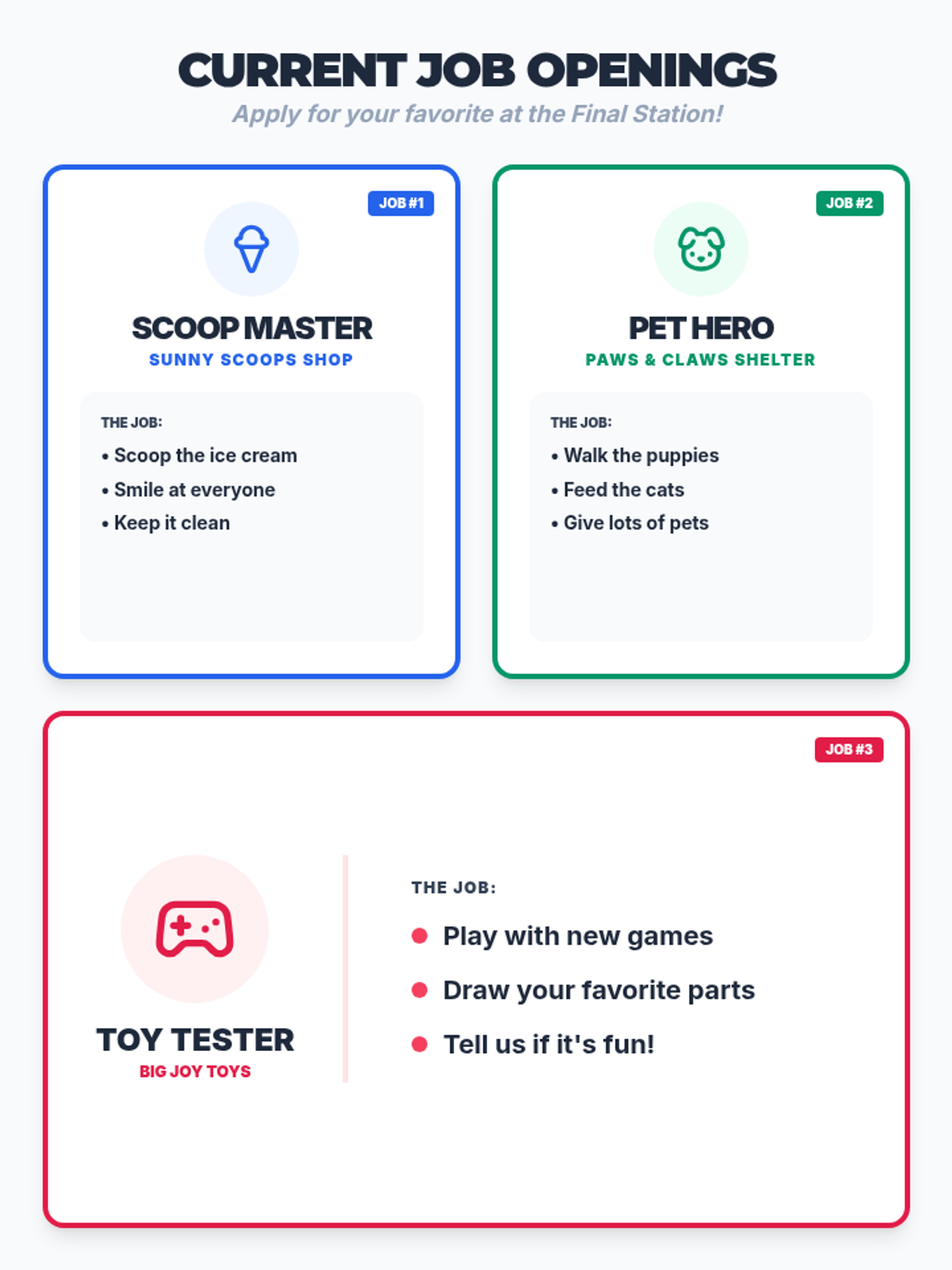
A hands-on, station-based lesson where students practice the component skills of filling out a job application using a science lab theme. Includes simplified text suitable for 2nd-3rd grade literacy levels.
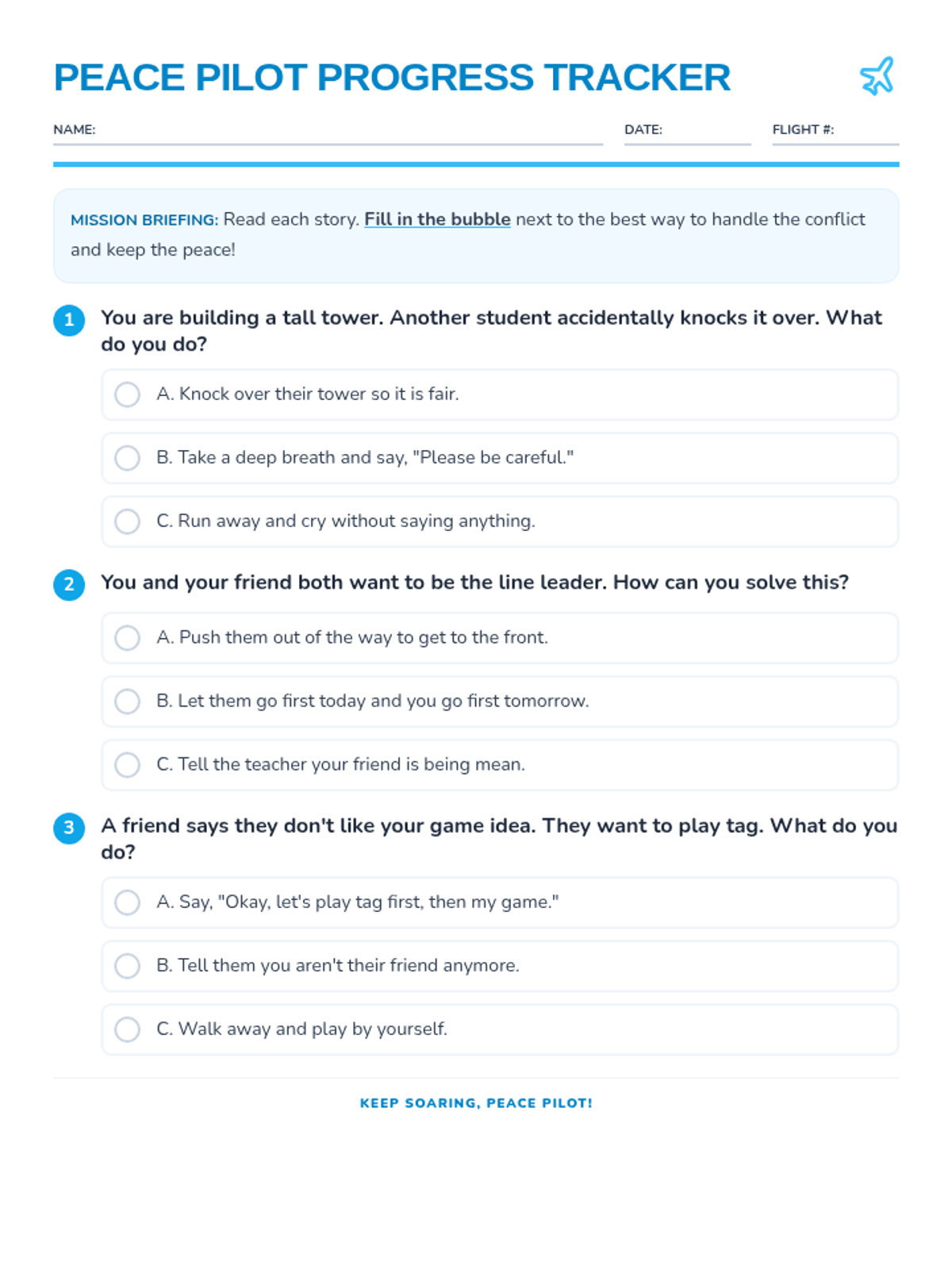
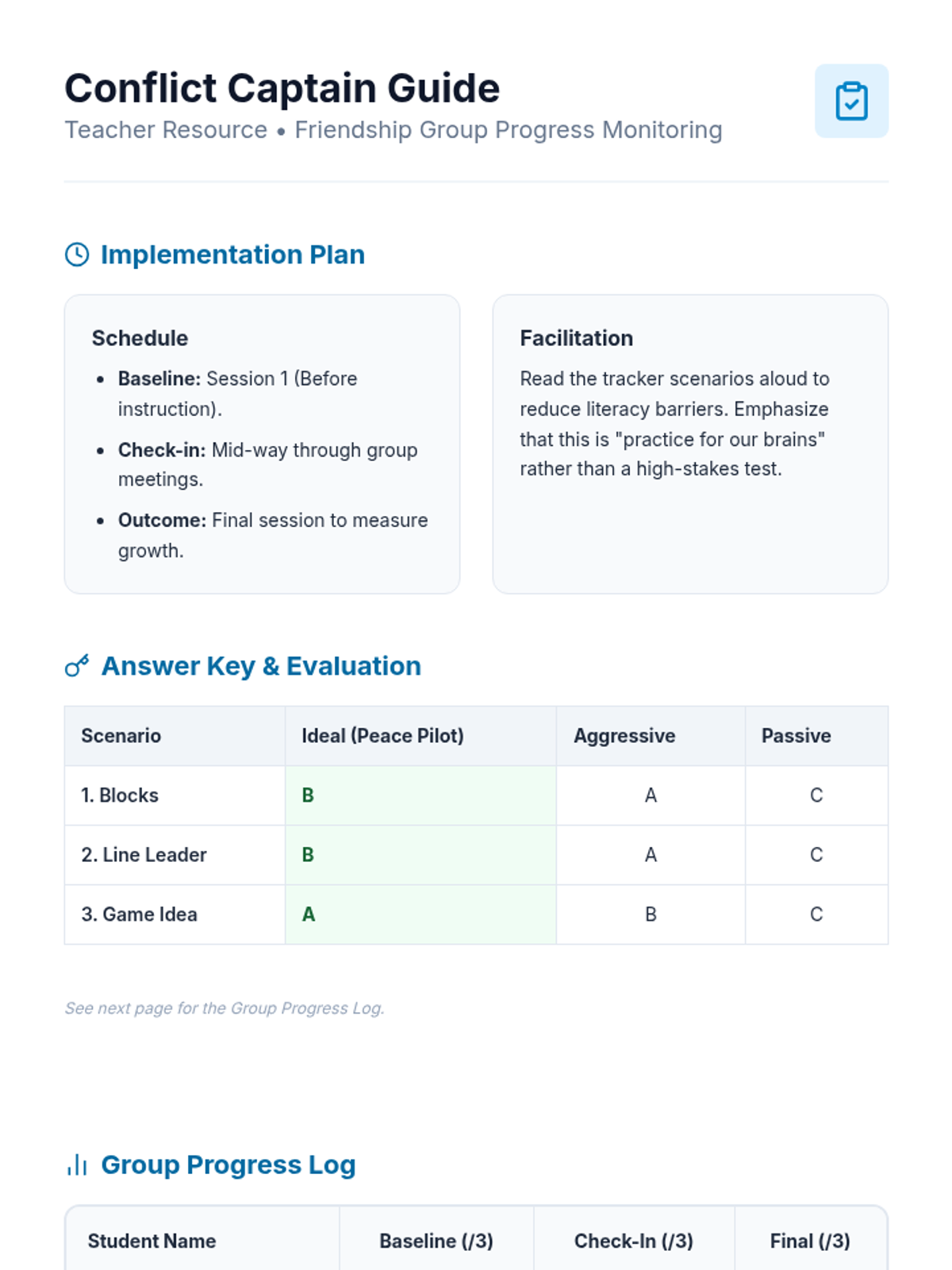
A set of tools for tracking and teaching conflict resolution skills in a 2nd-grade friendship group, focusing on identifying positive solutions to common social disagreements.
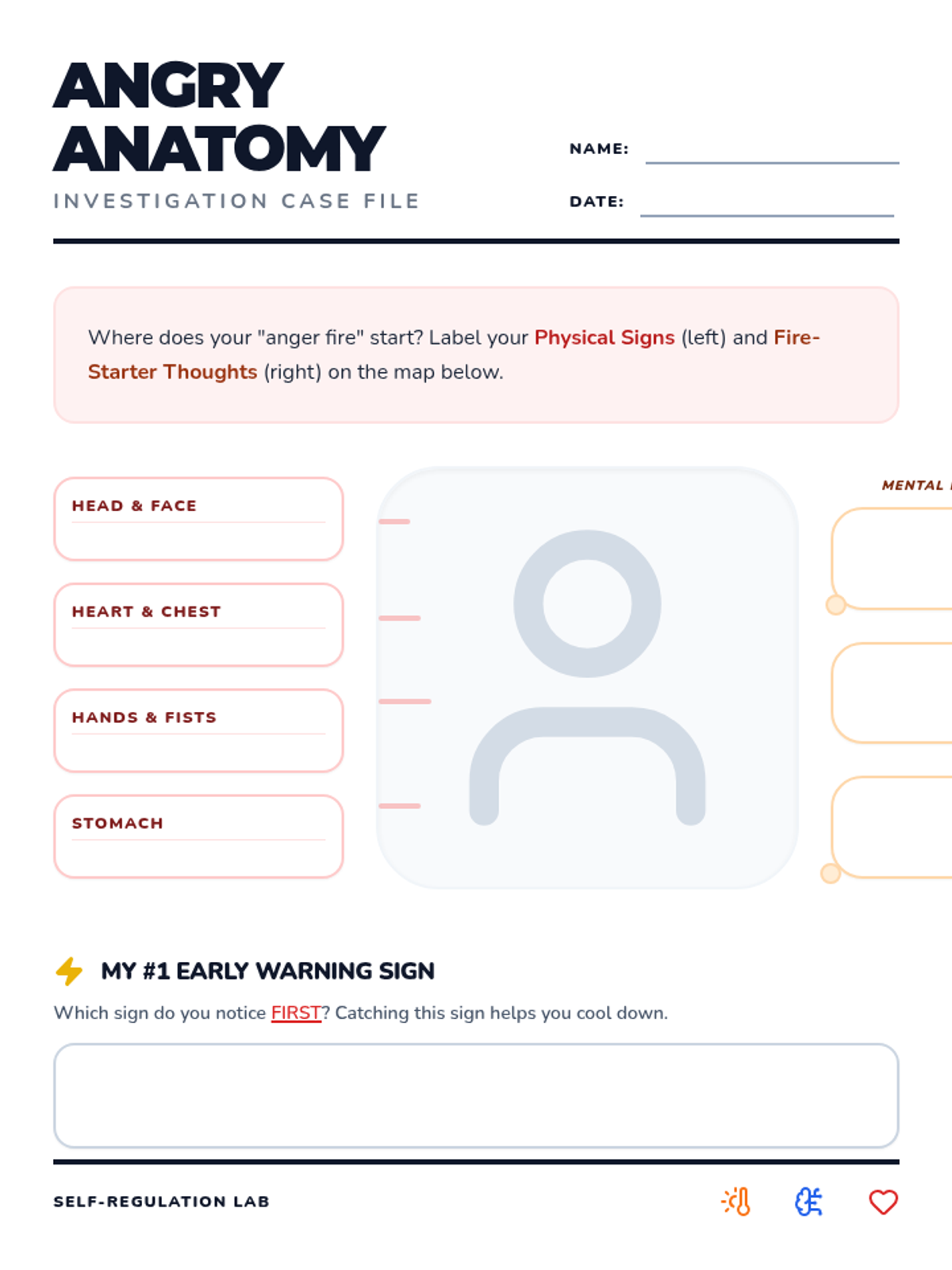
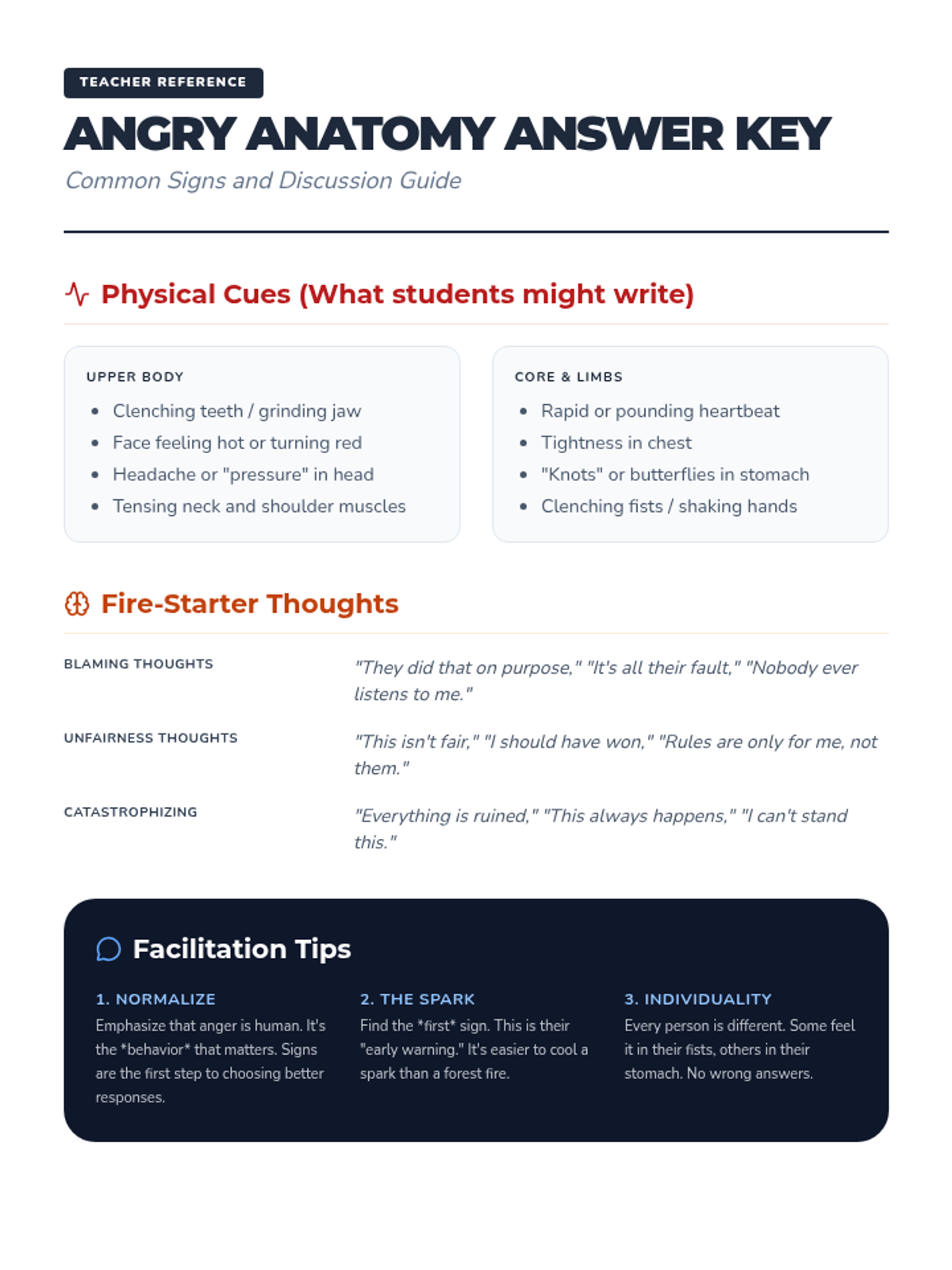
A lesson focused on helping students recognize the early physical and mental warning signs of anger to improve emotional self-regulation.
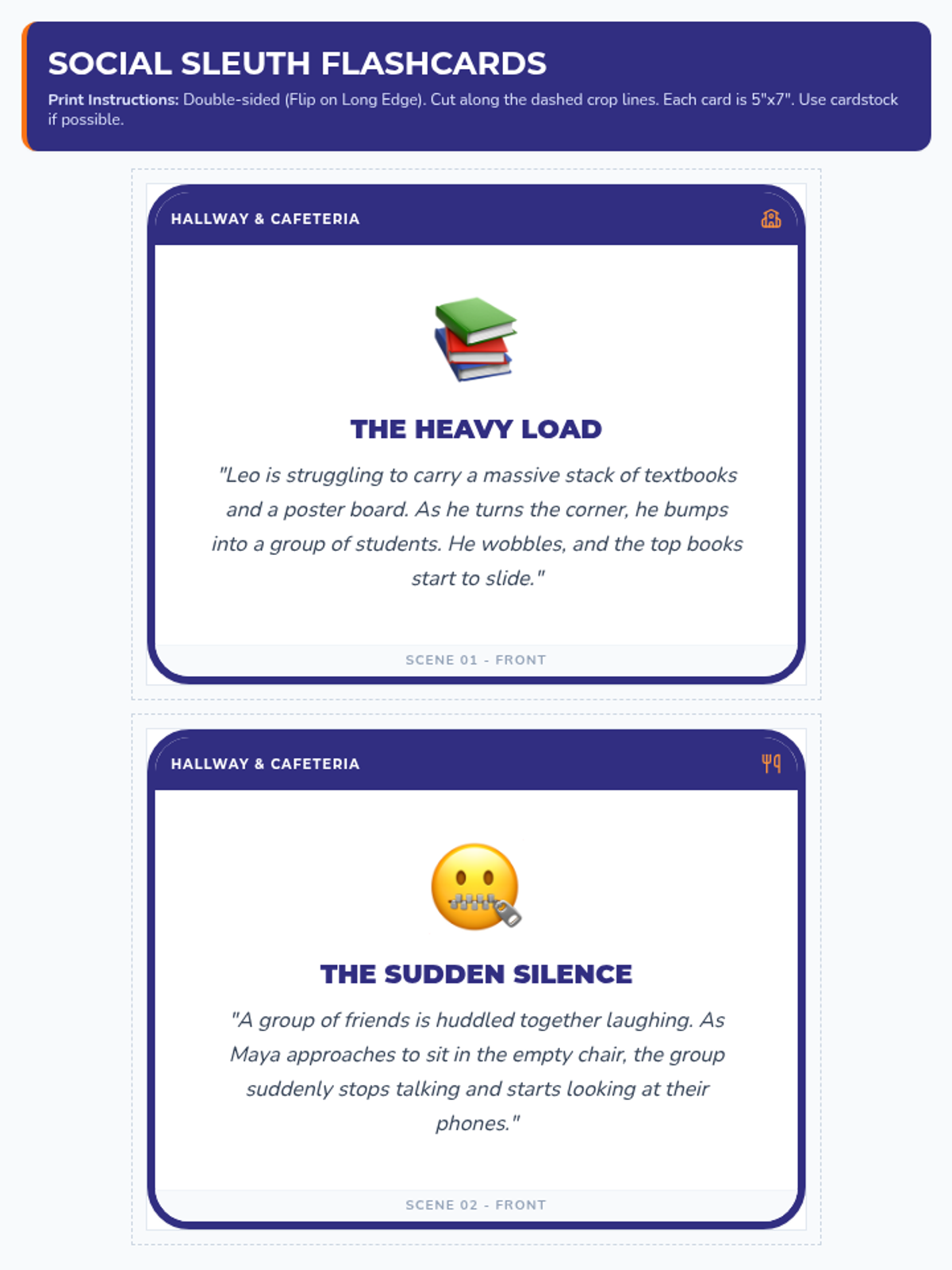
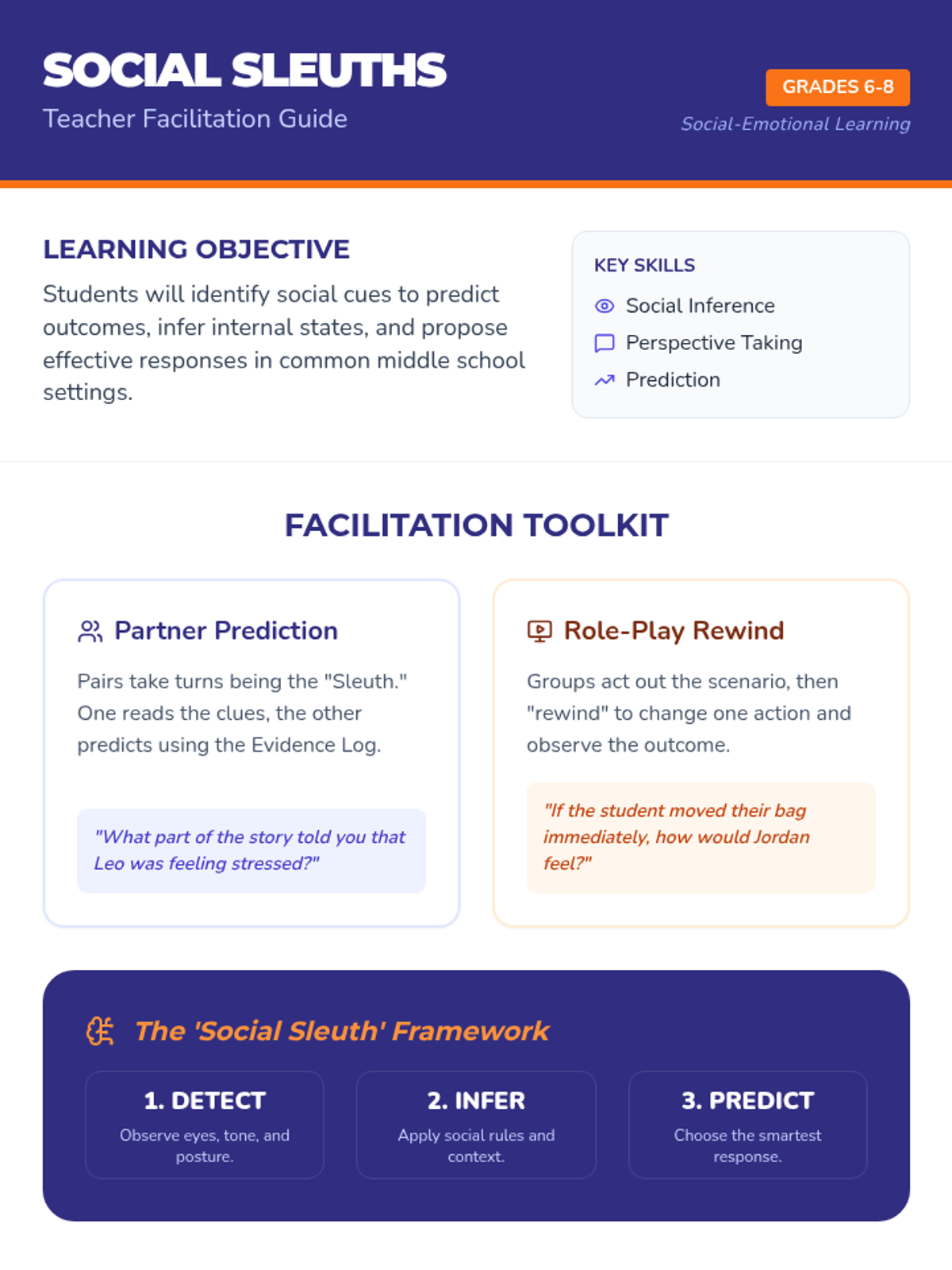
A lesson focused on developing social inference and prediction skills for middle schoolers, focusing on common social settings like school, the bus, and online gaming environments.