Students engage in rapid-fire drills to build motor memory and recall for common commands like Save, Print, and Select All.
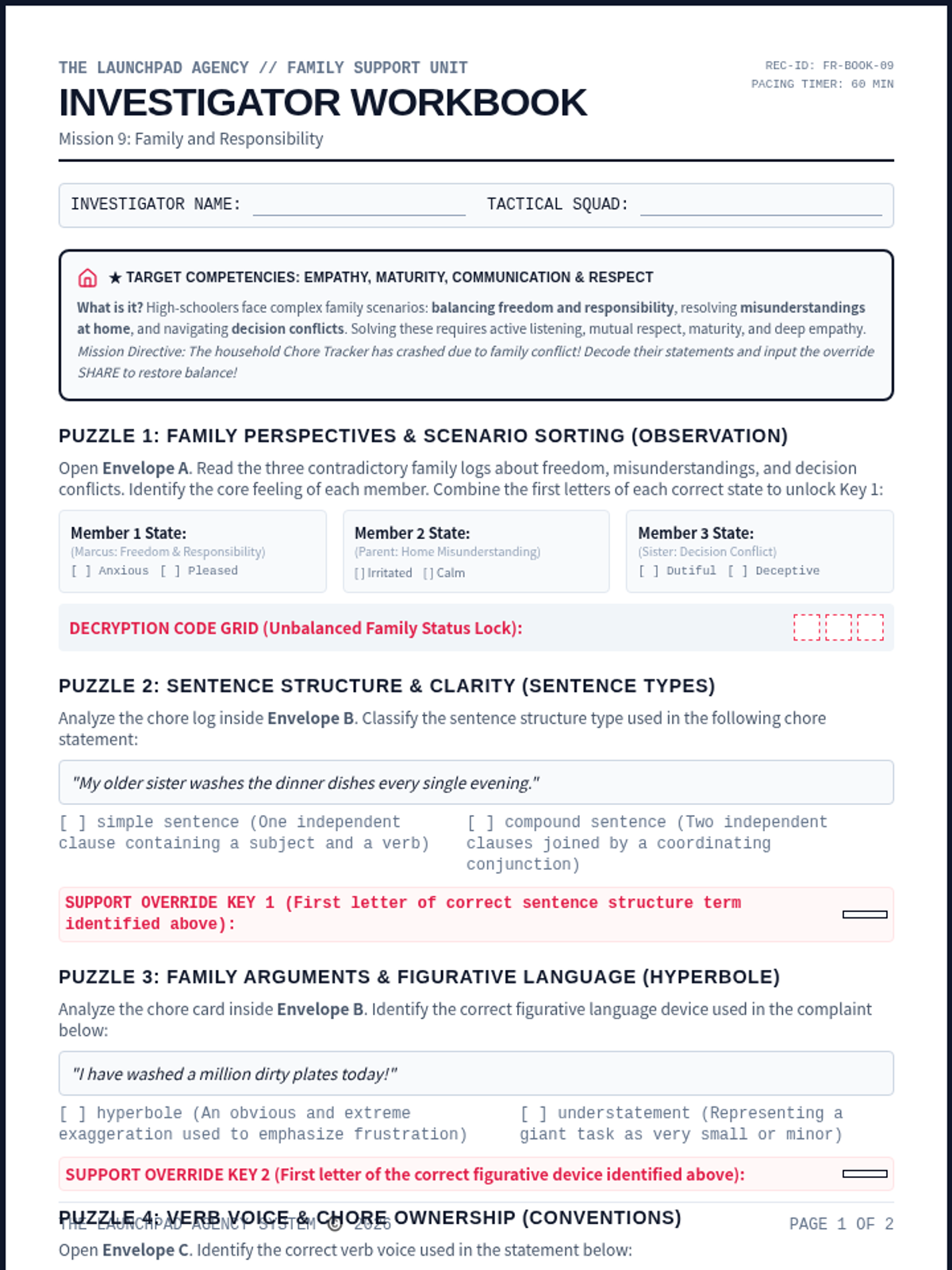
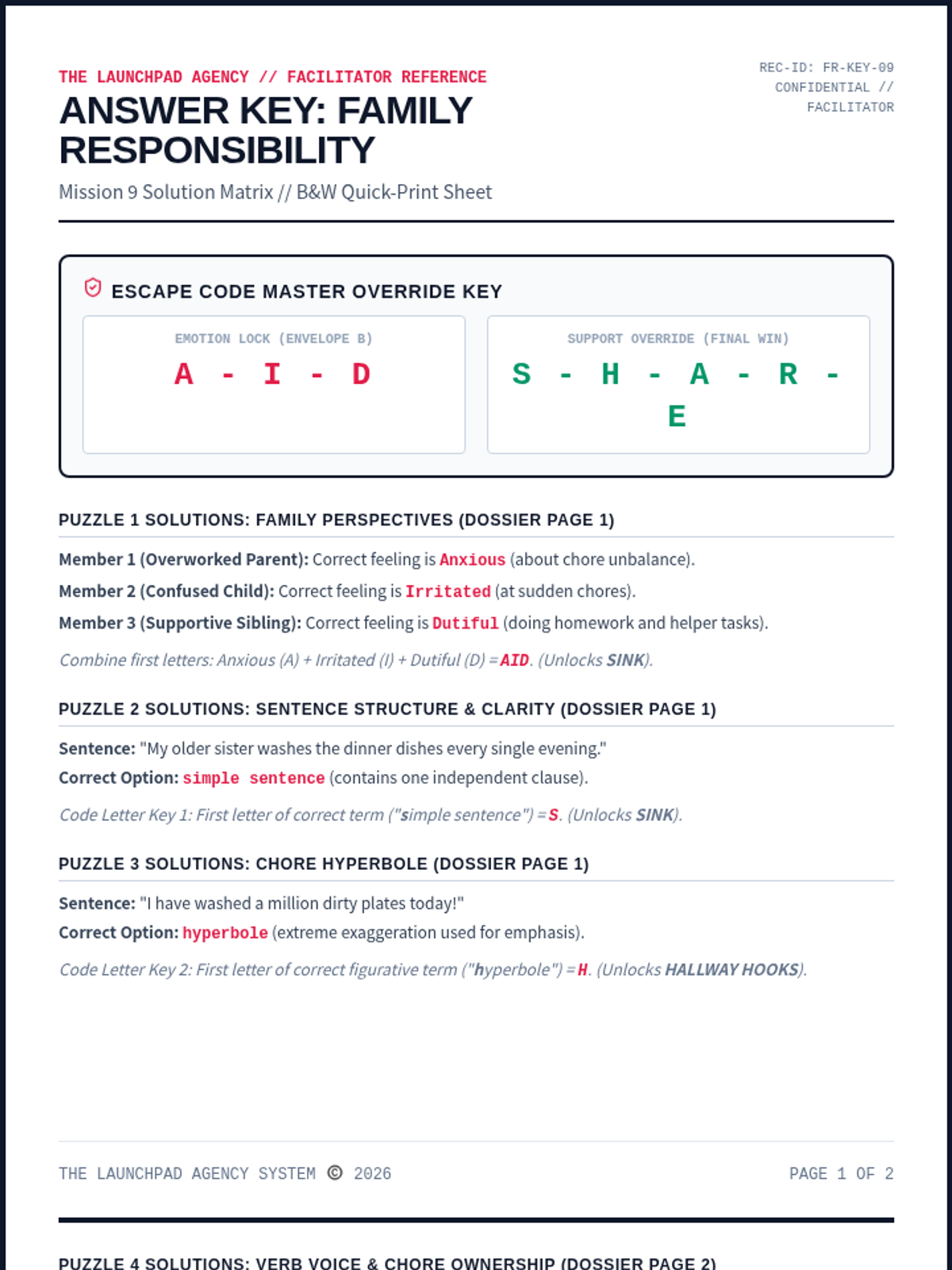
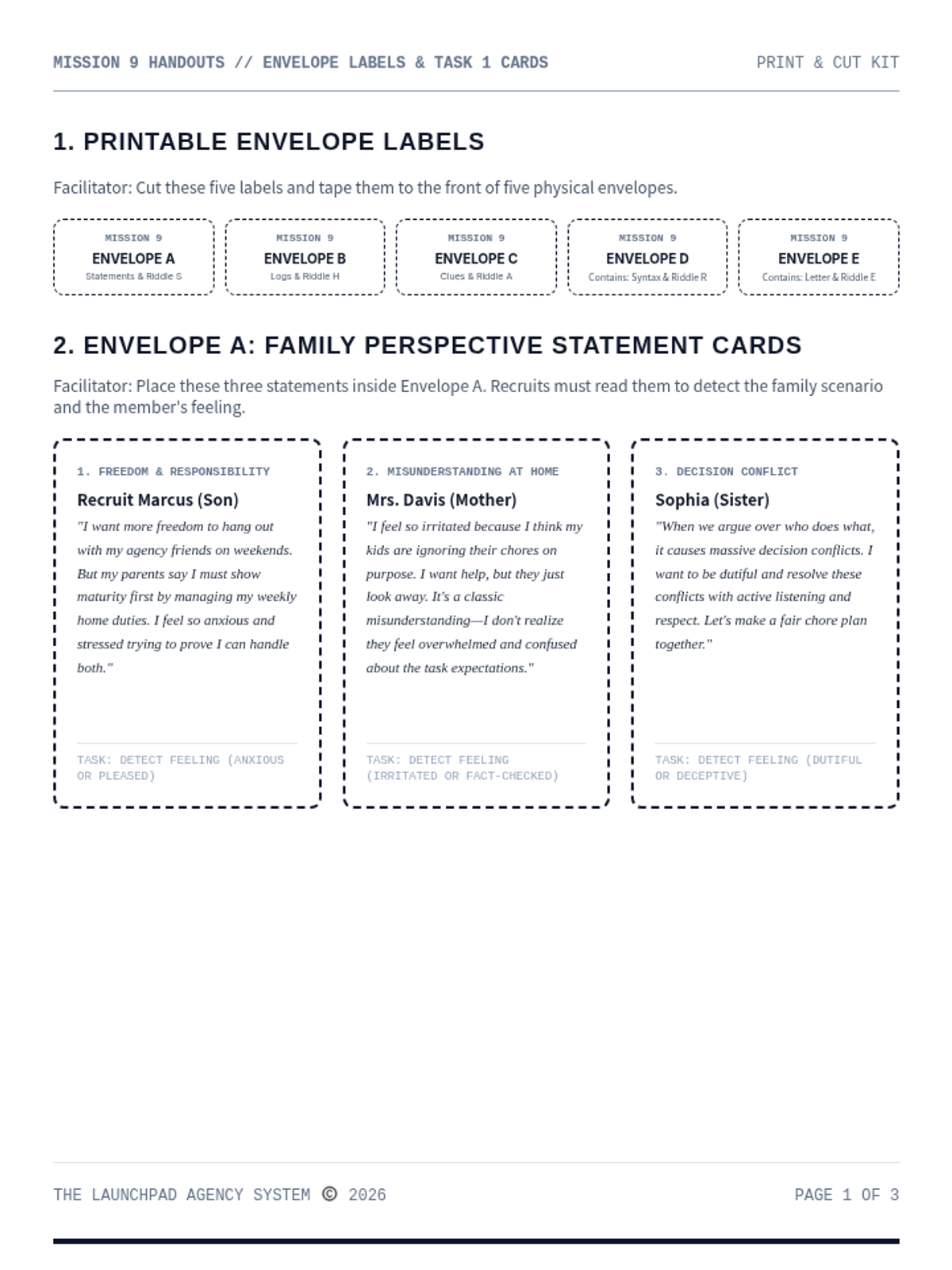
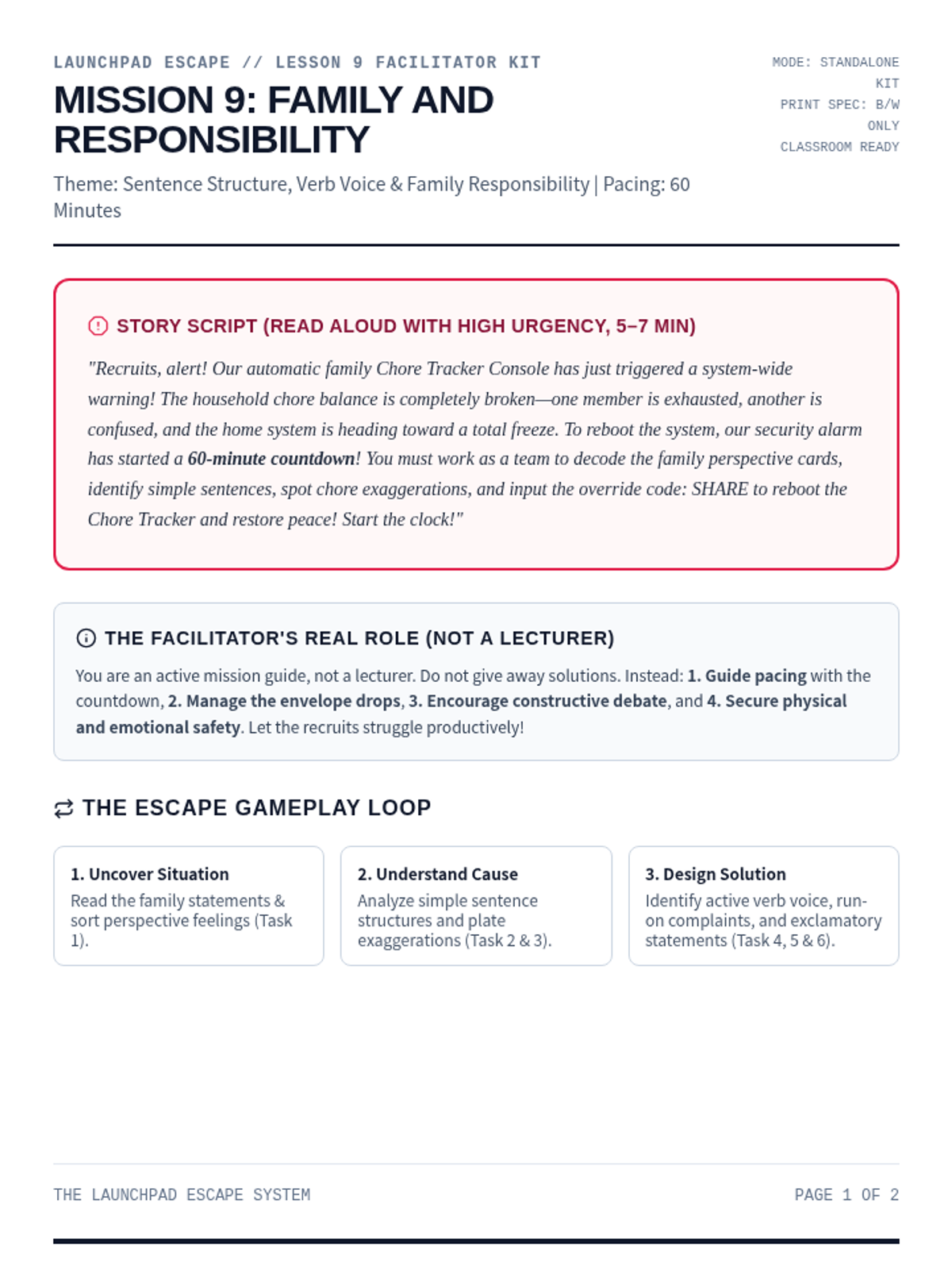
A cooperative and empathetic escape room focused on managing family duties and household balance. Recruits analyze parent/child perspective claims, organize daily chores timelines, and decode the final compromise override.
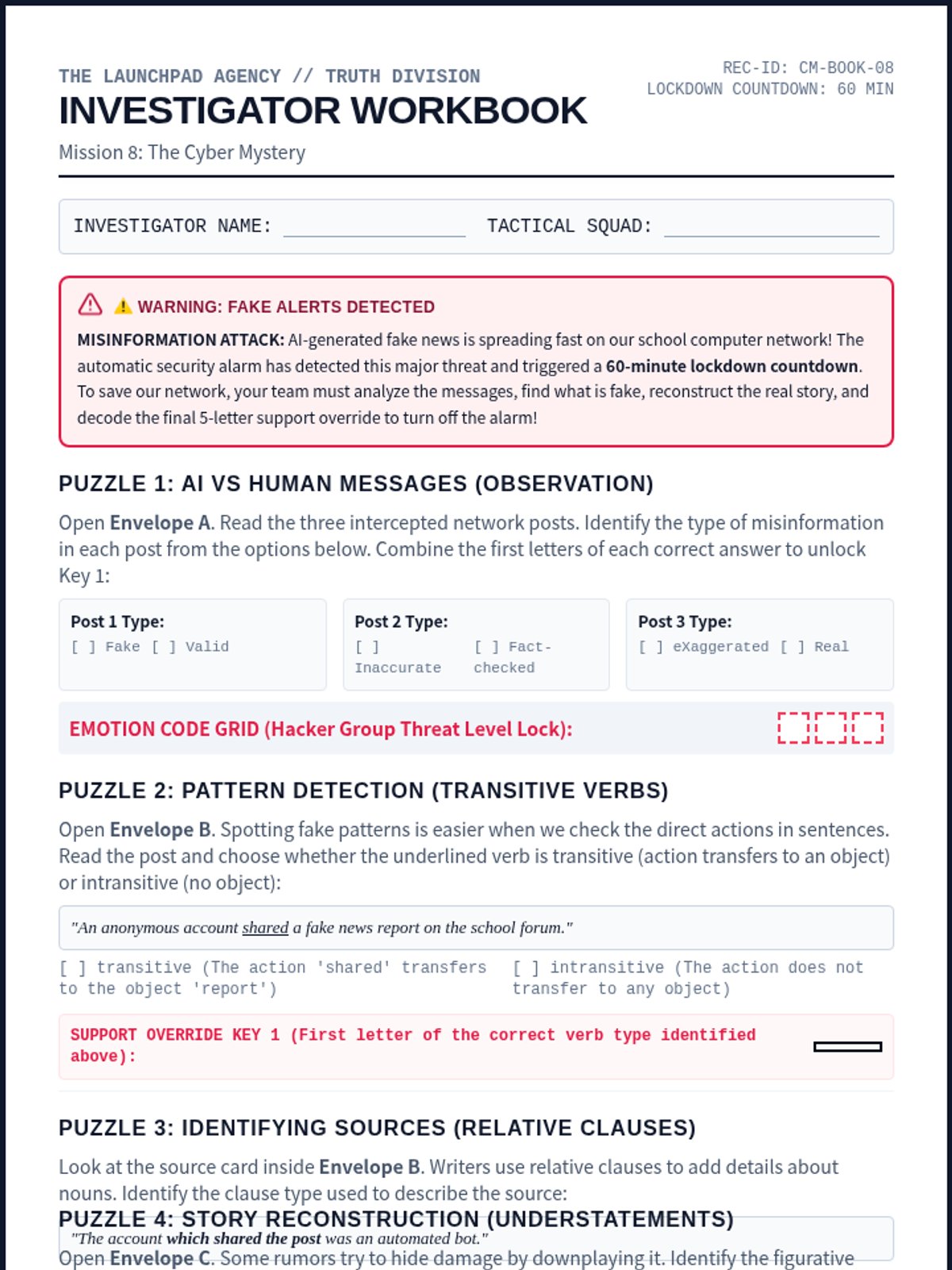
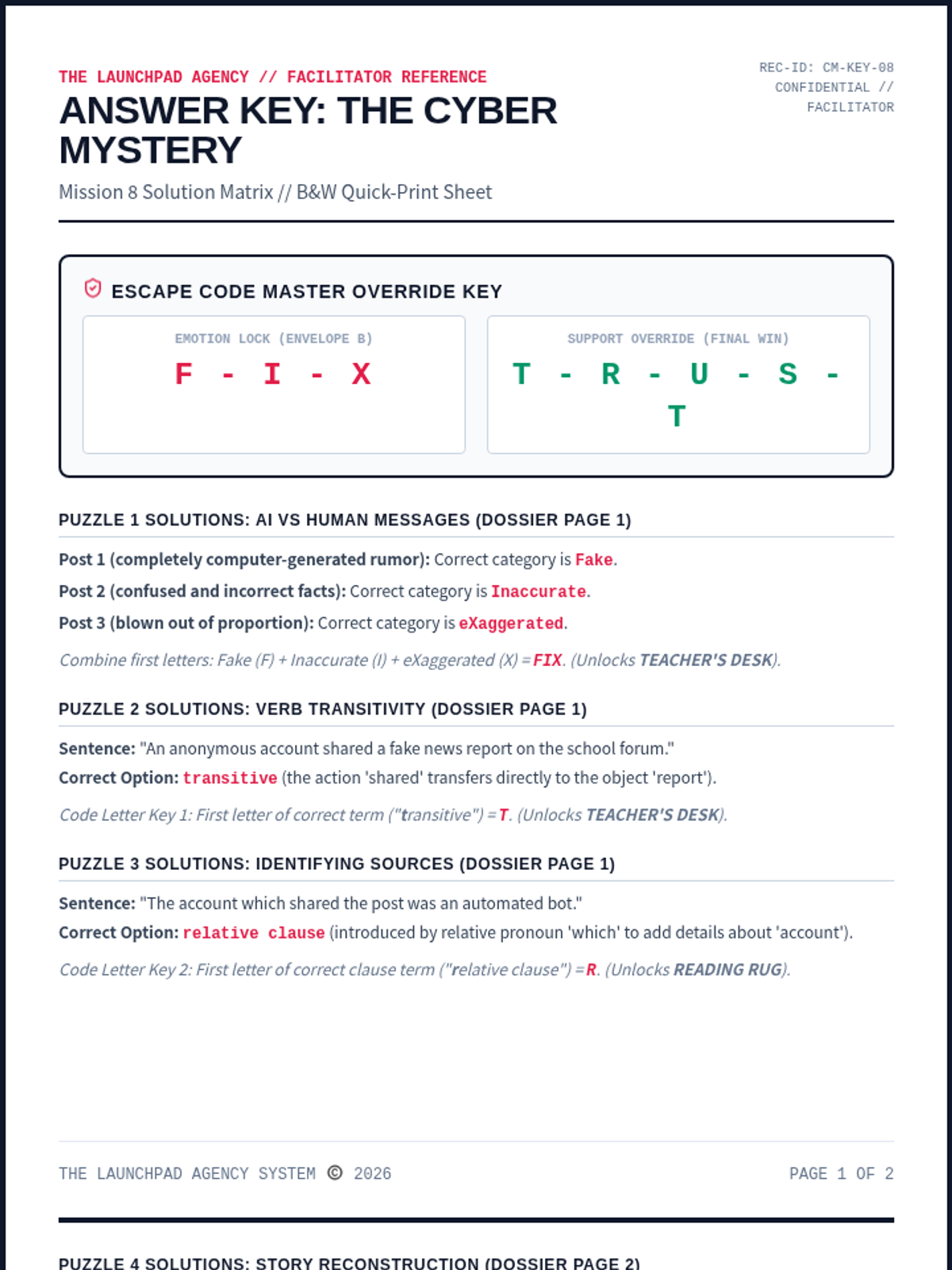
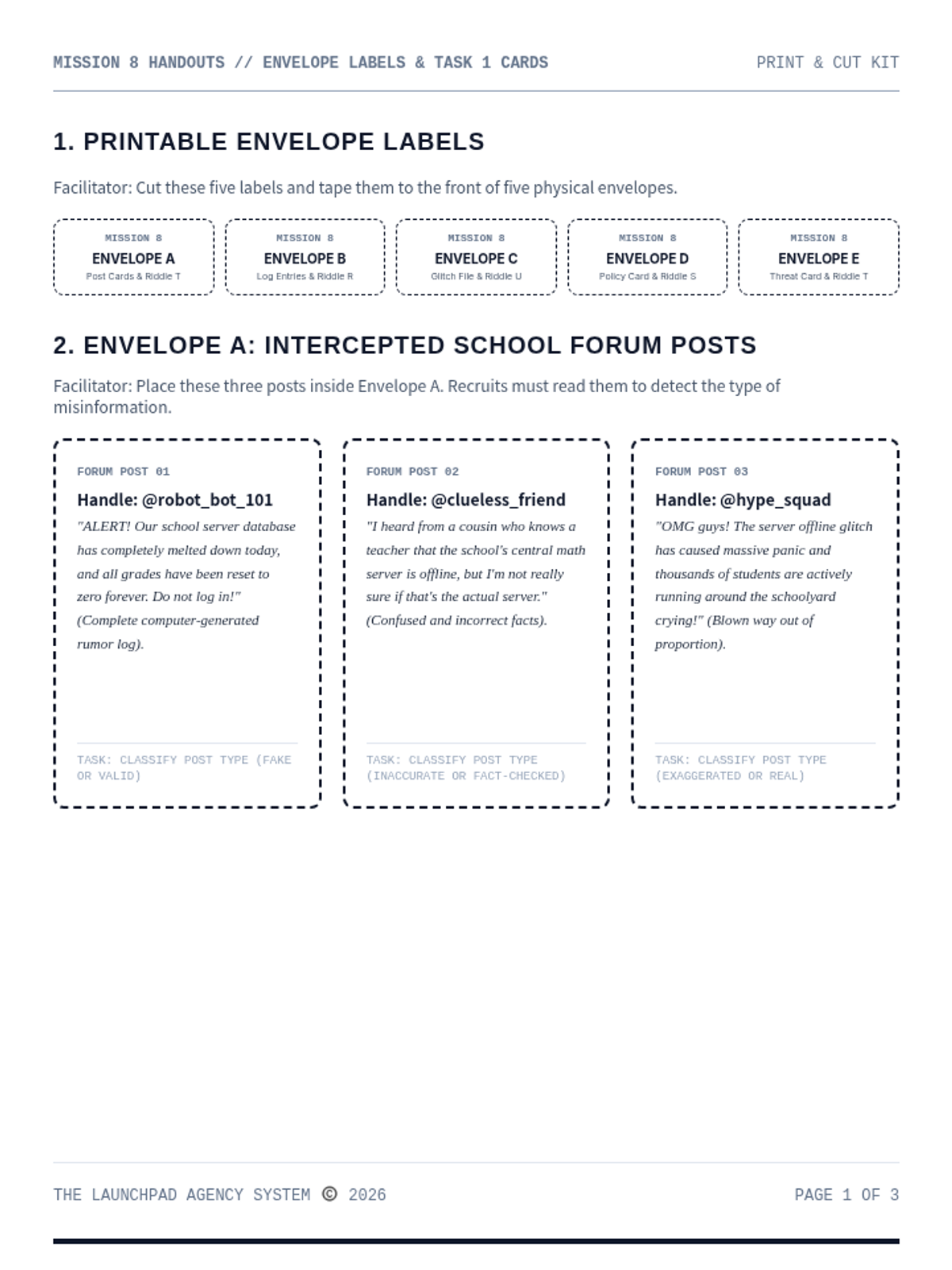
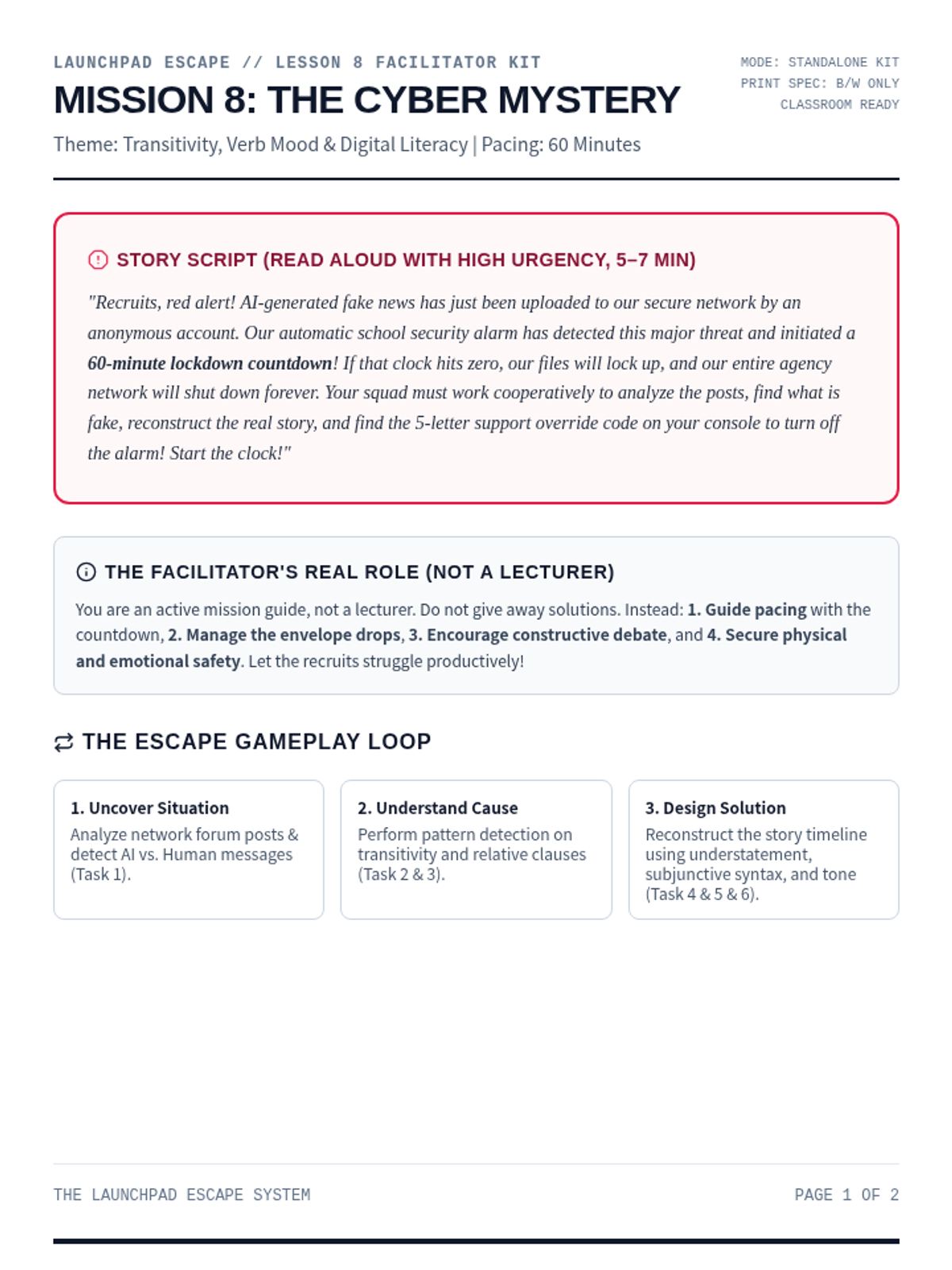
An advanced digital literacy and collaborative cryptography escape room for Ages 14-16. Recruits analyze verb transitivity, relative clauses, subjunctive moods, and tone to stop a school database wipe.
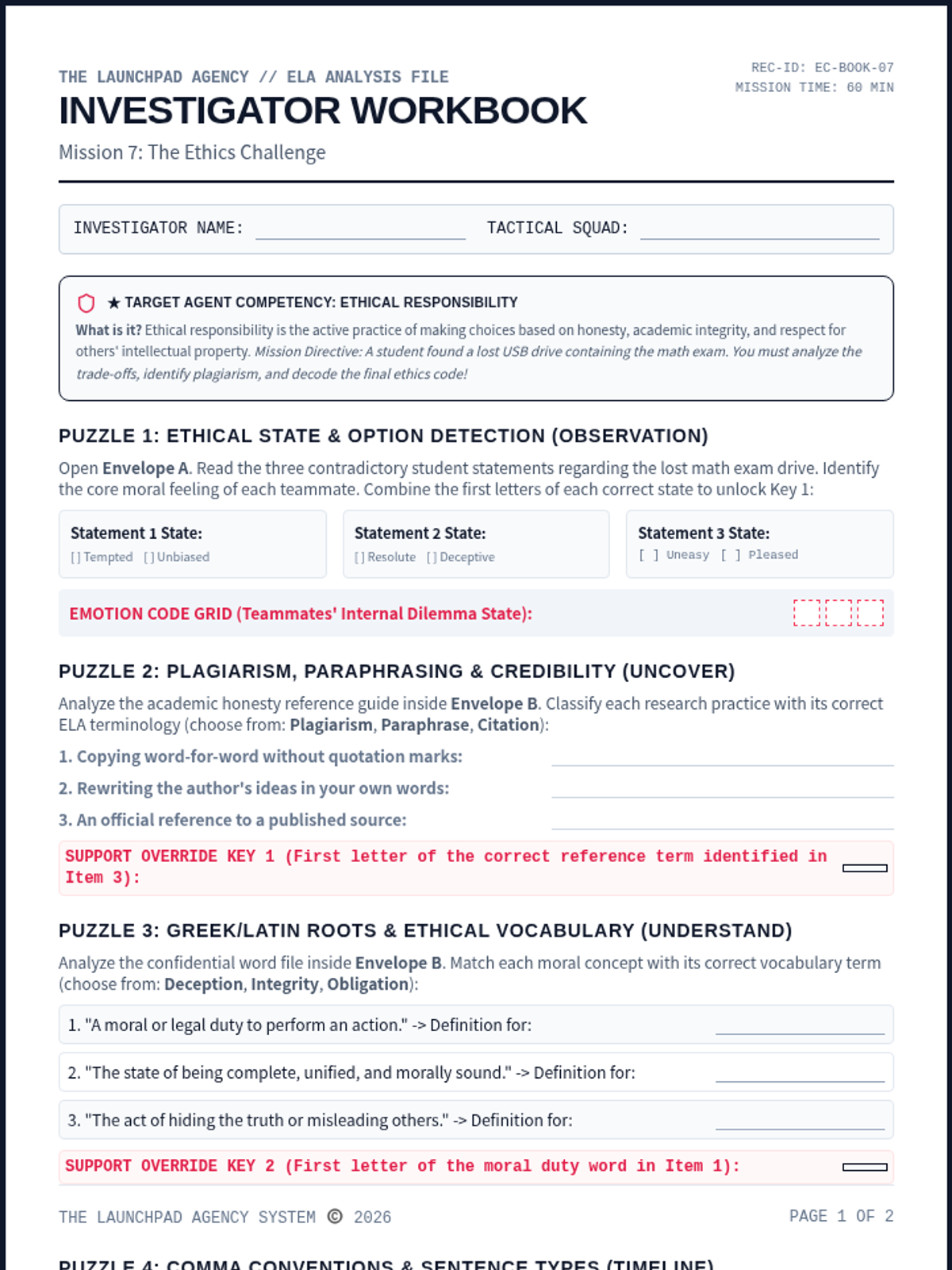
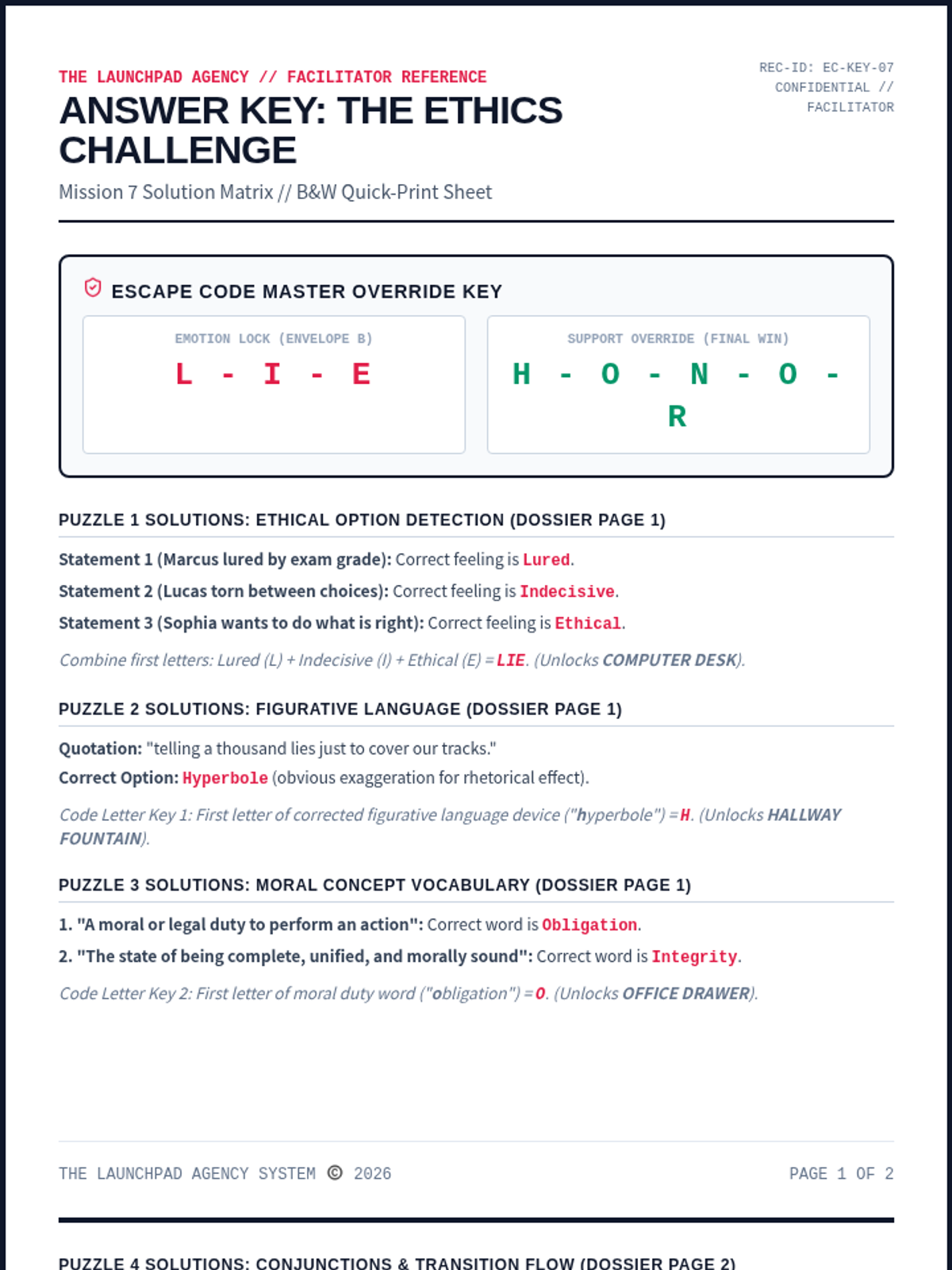
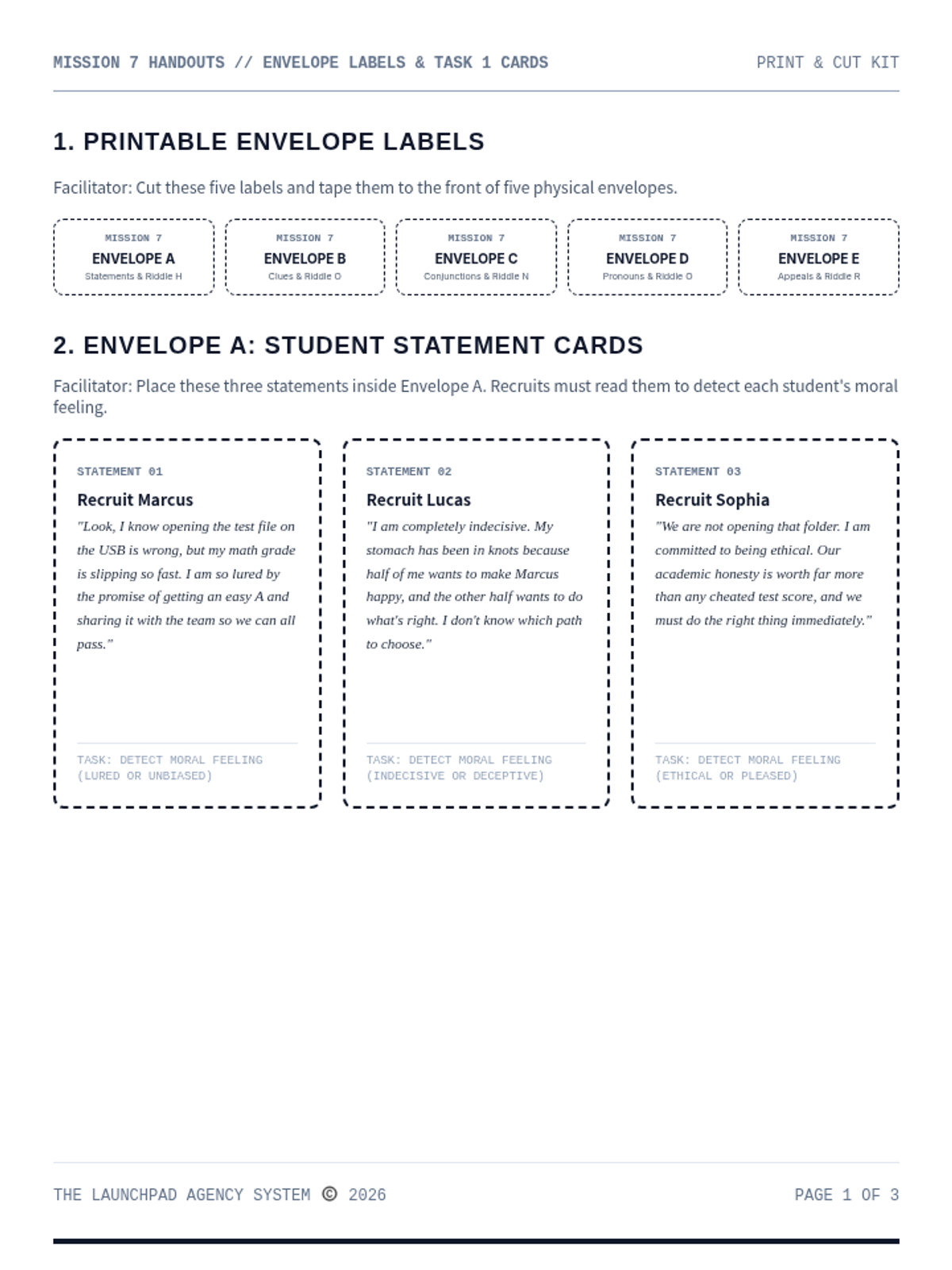
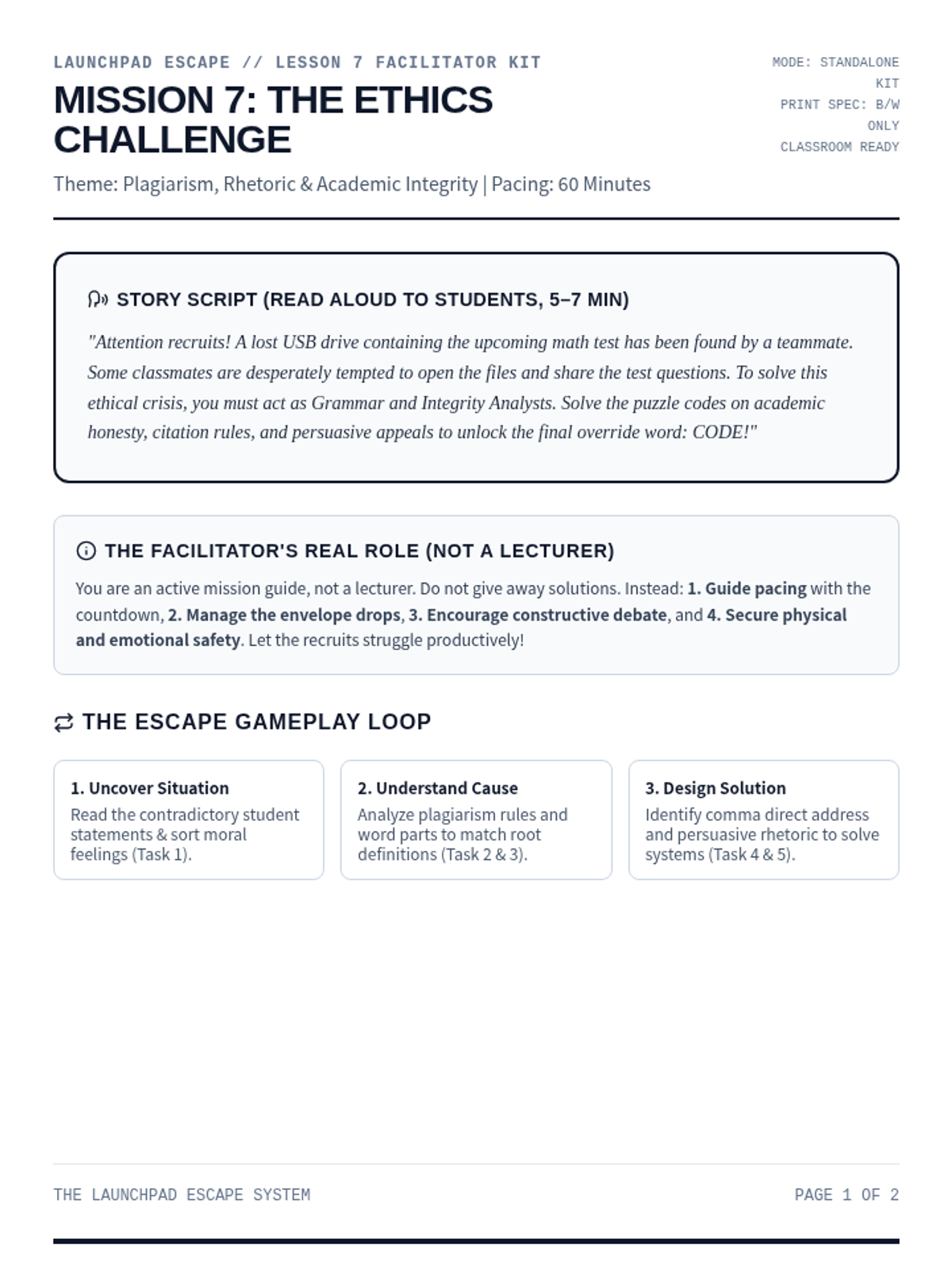
A high-stakes moral dilemma escape room for Ages 11-13. Recruits evaluate the trade-offs of academic honesty, identify plagiarism, analyze persuasive appeals, and decode the final ethics code.
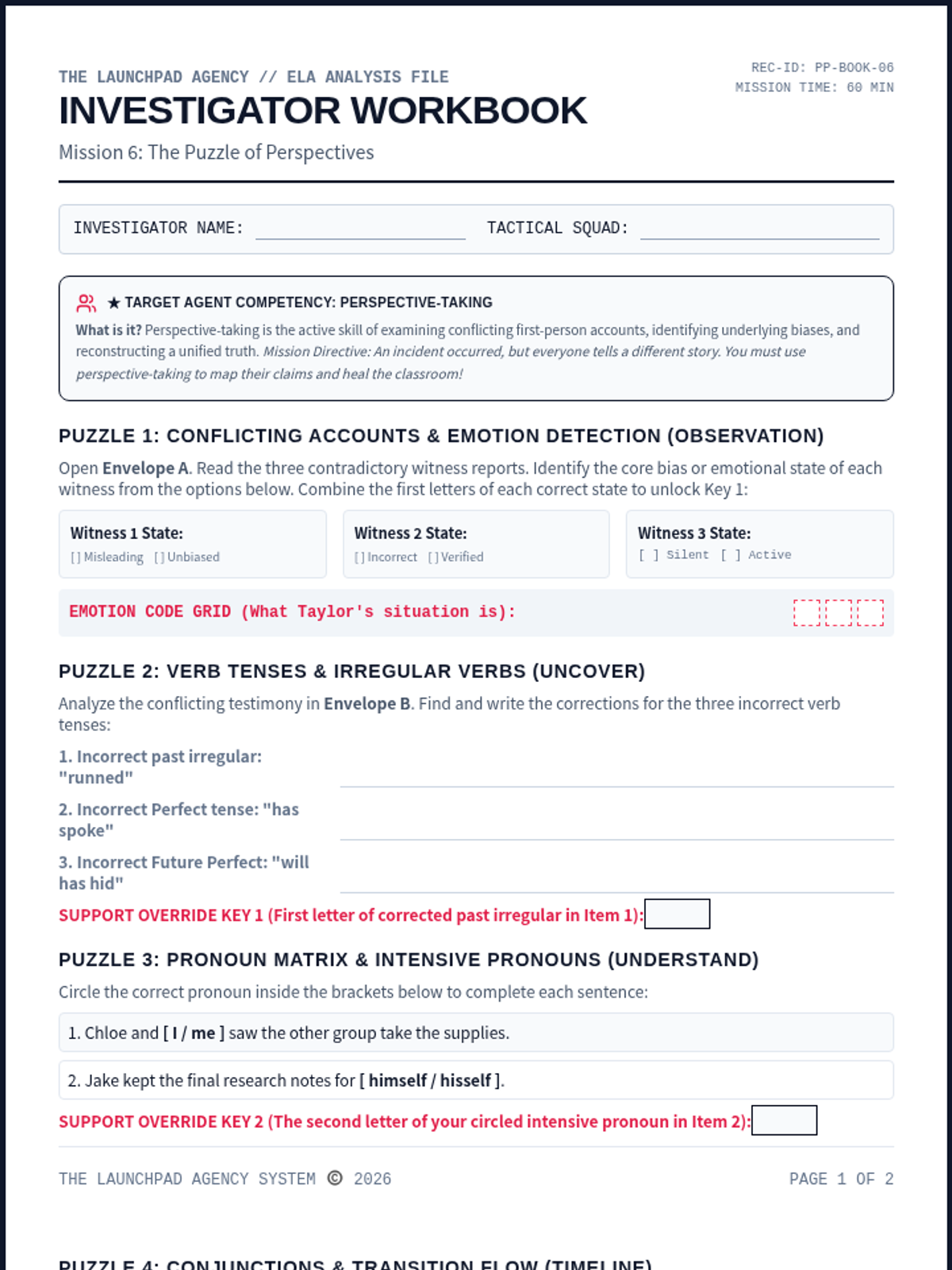
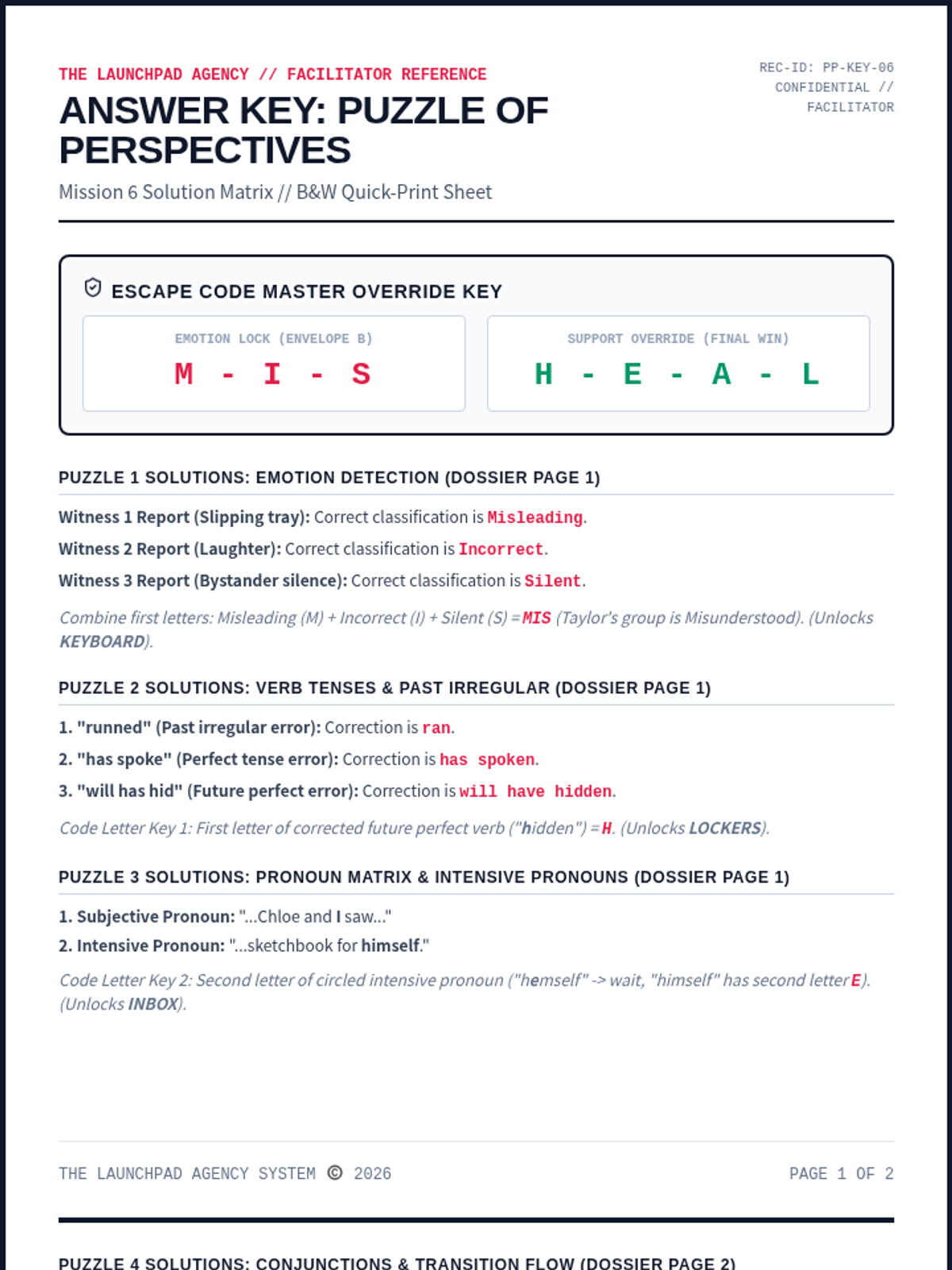
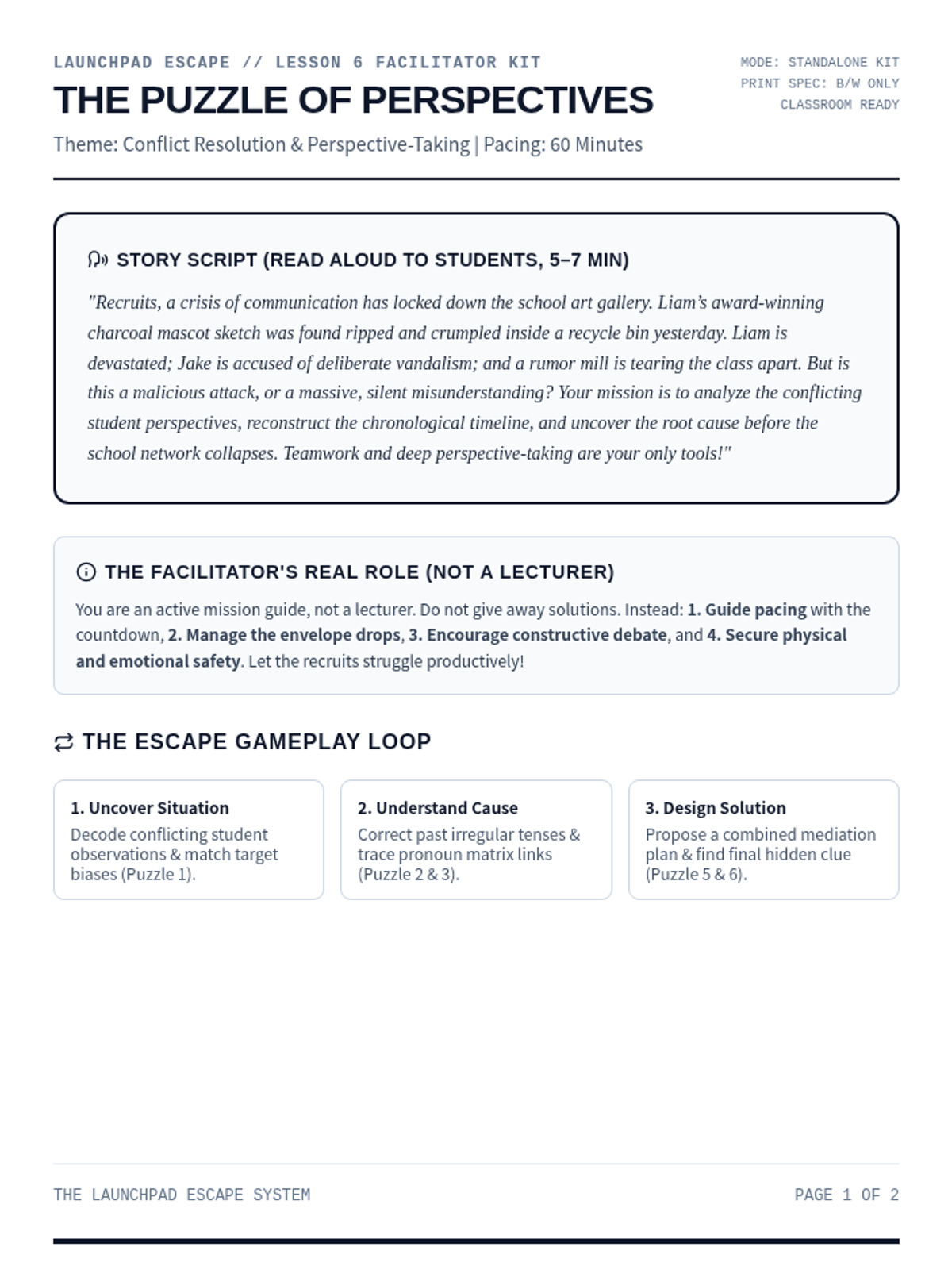
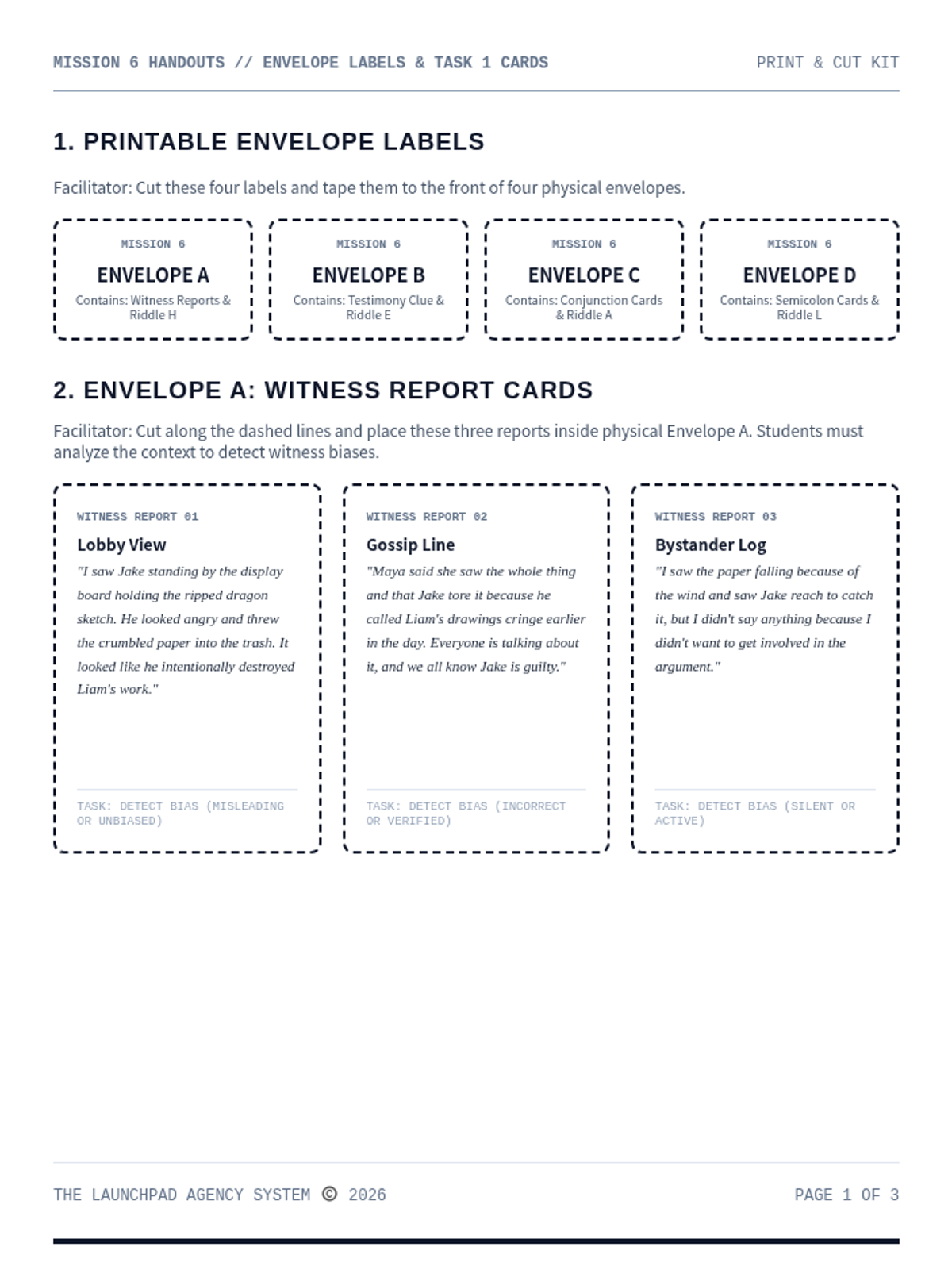
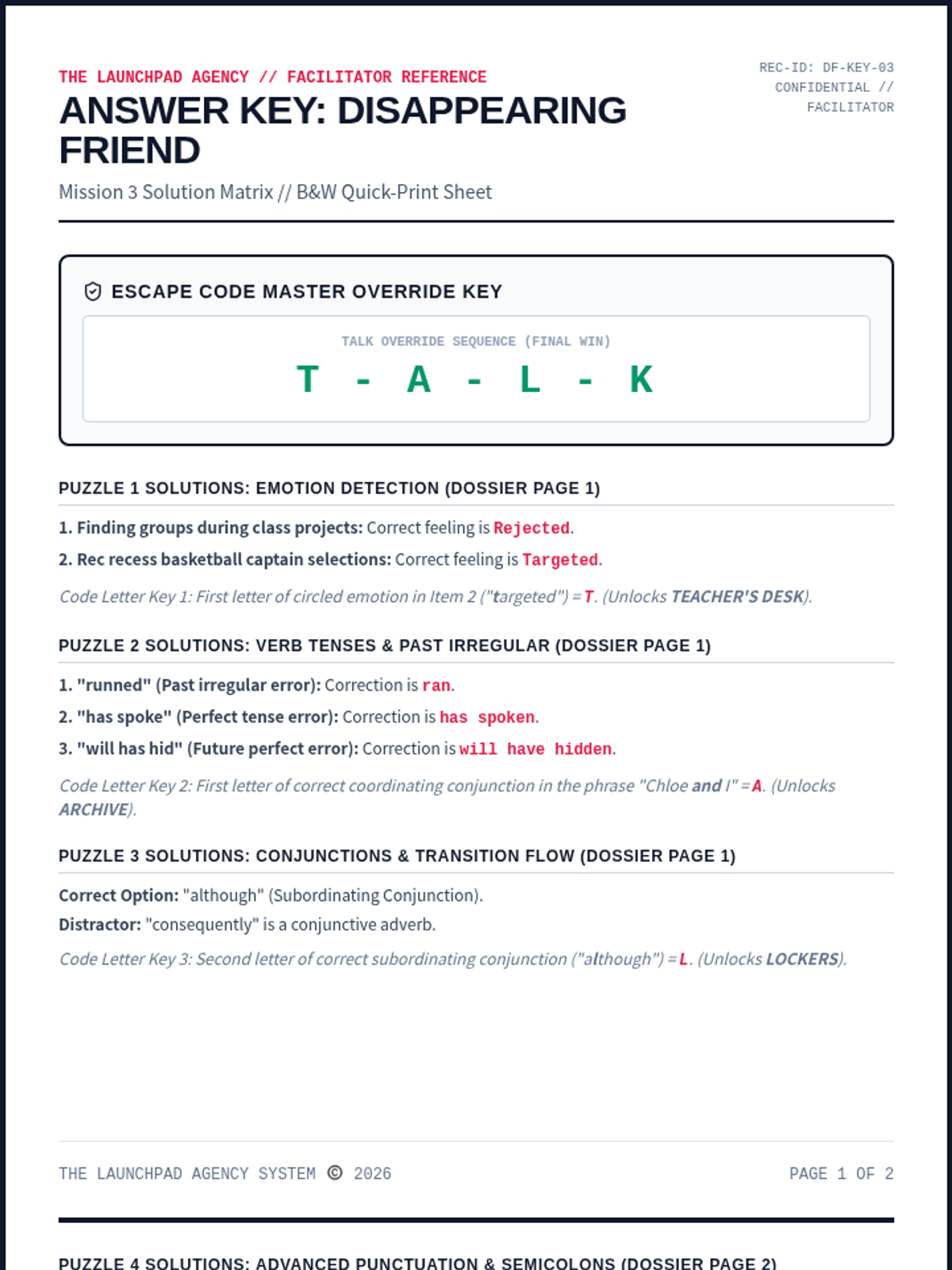
A high-stakes perspective-taking escape room. Recruits examine conflicting first-person accounts, analyze bias, reconstruct a unified timeline, and solve the override code.
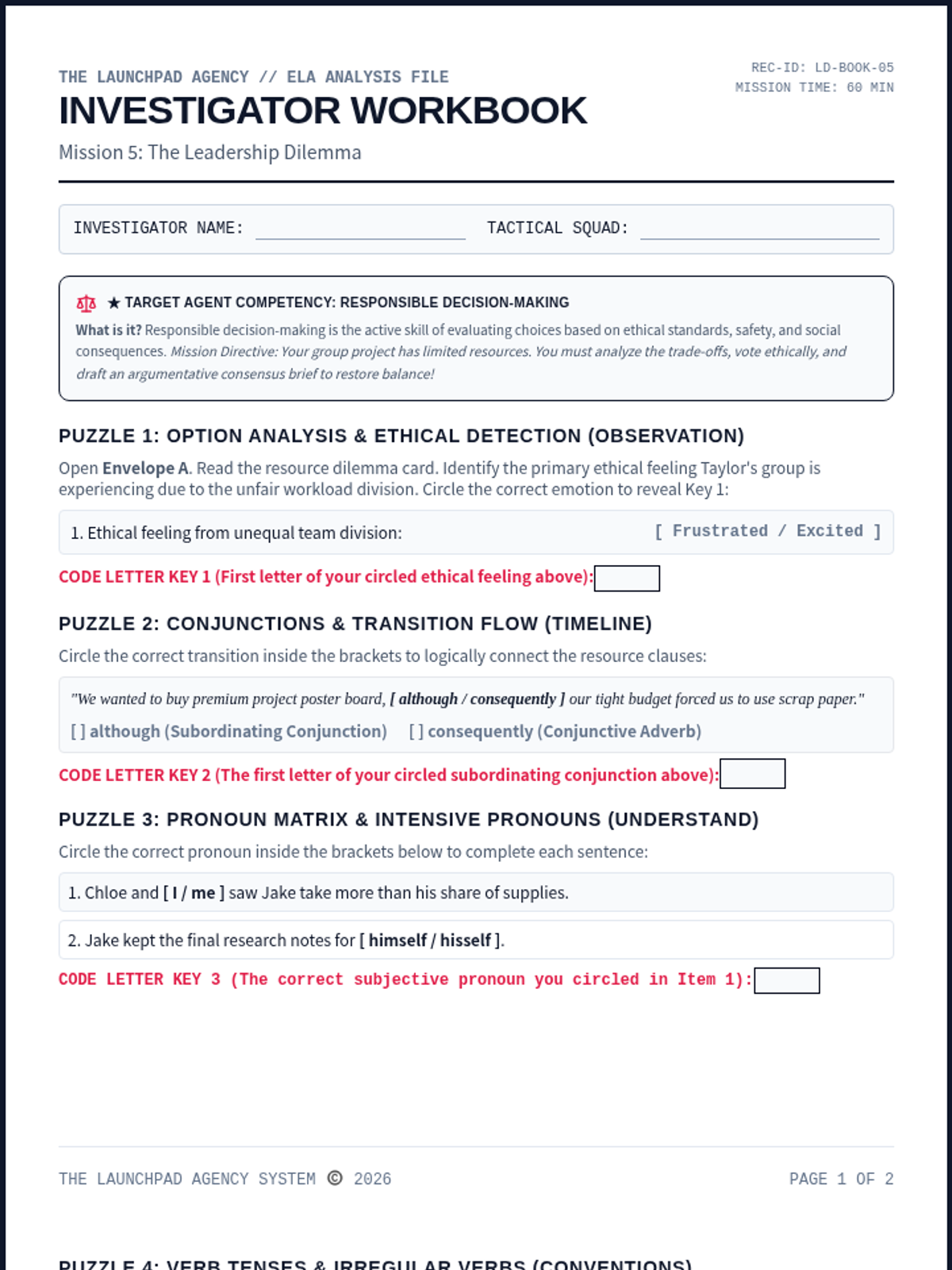
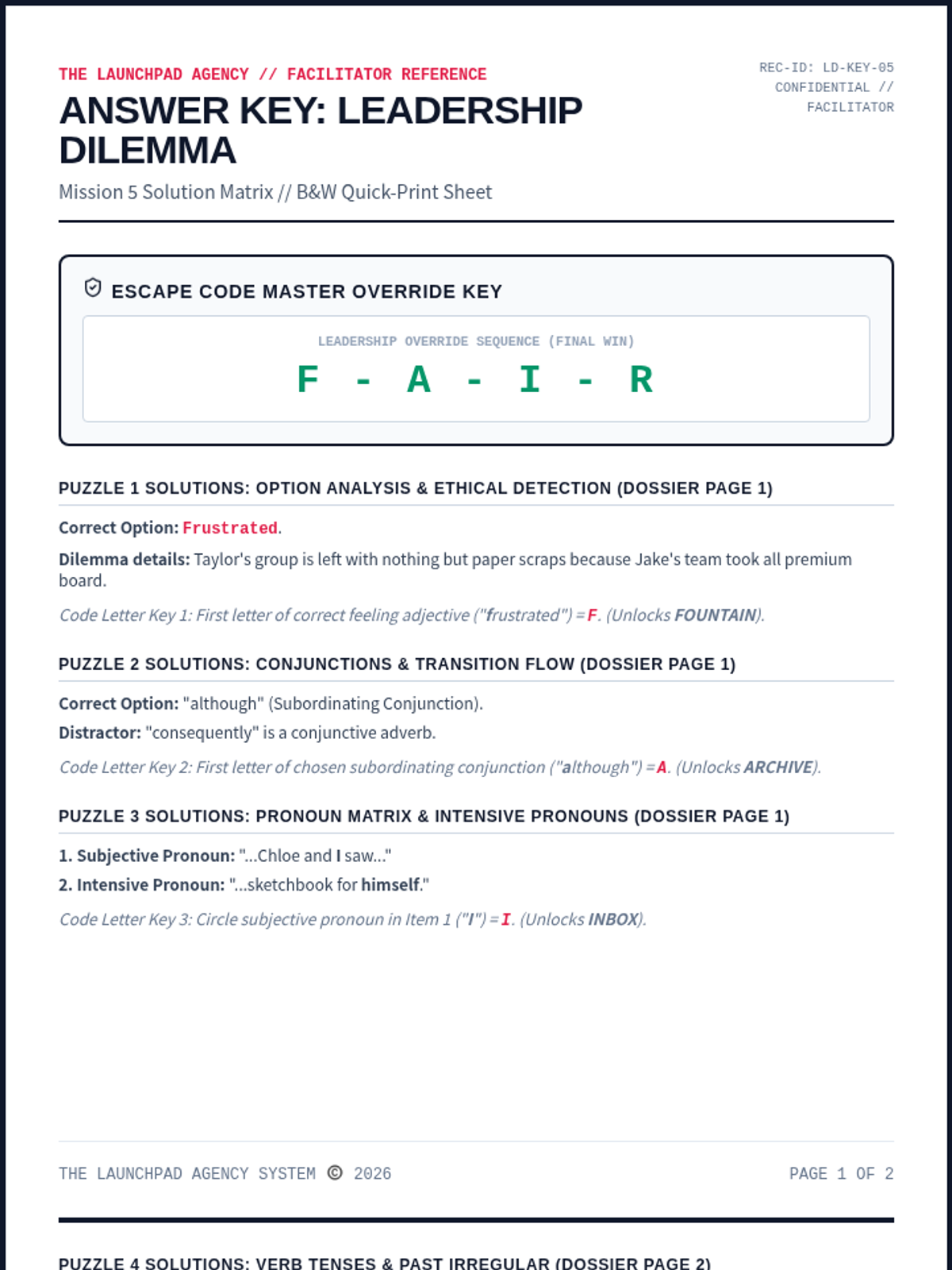
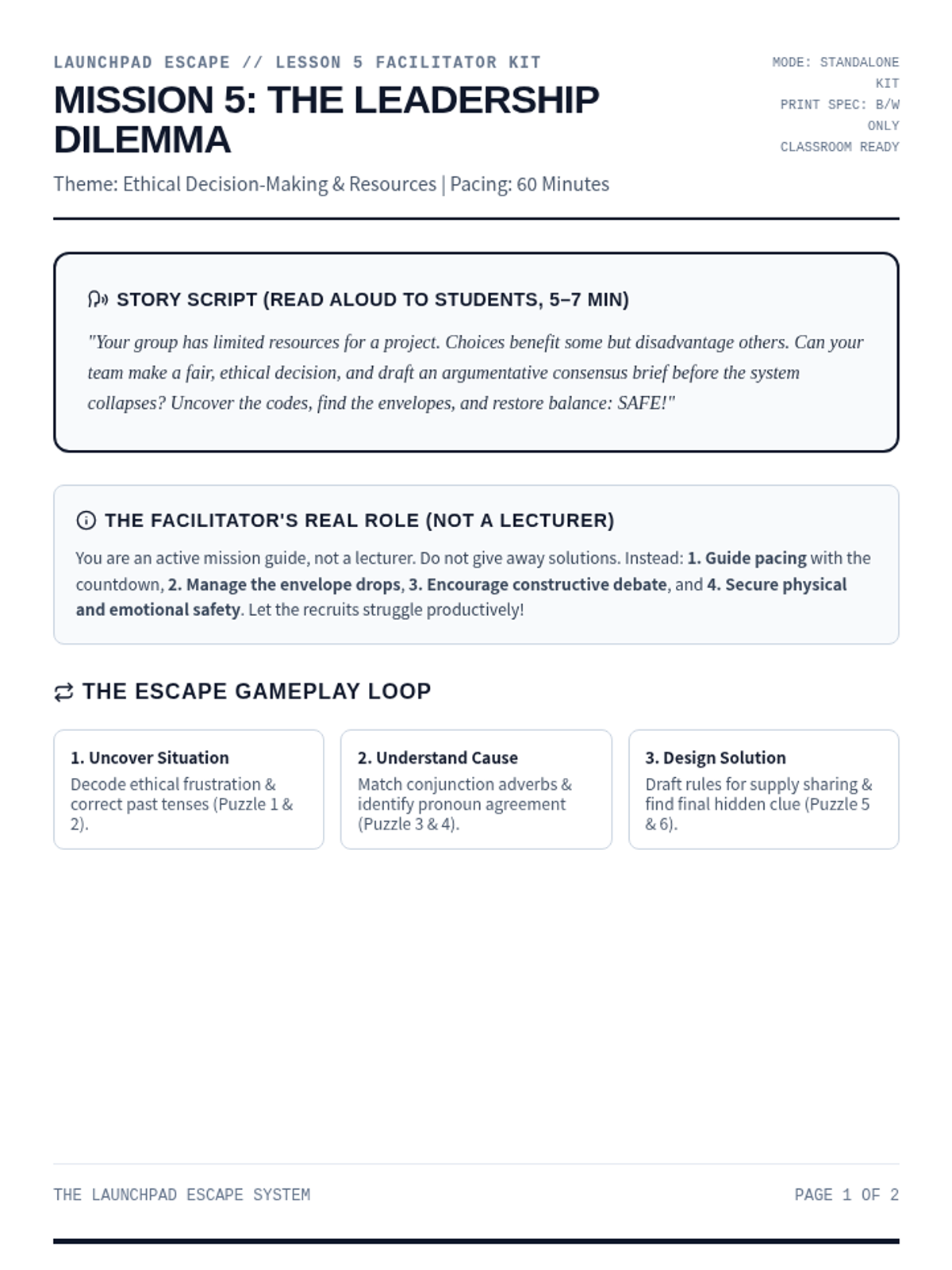
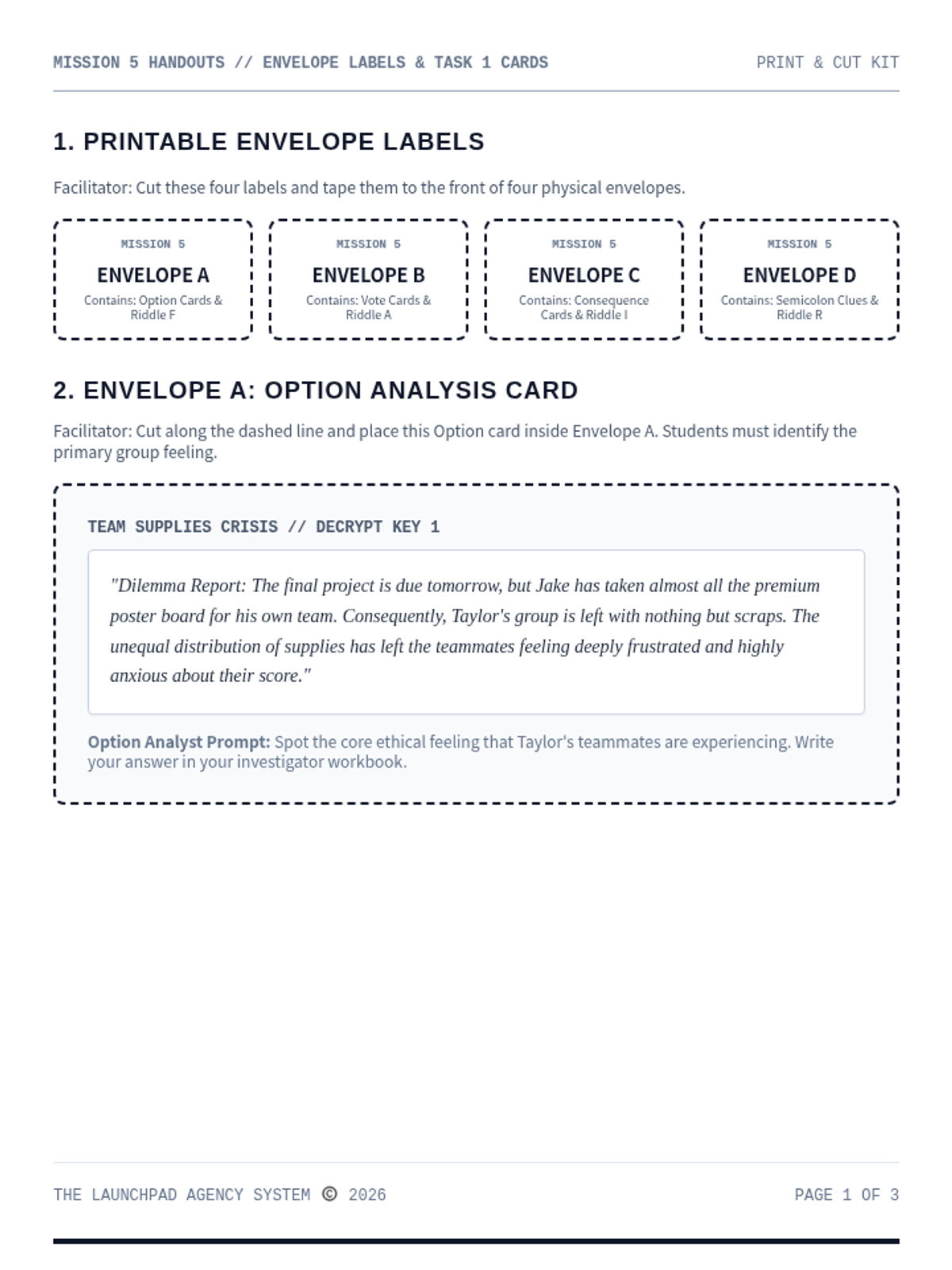
An ethical decision-making and systems-thinking escape room. Recruits analyze resource allocation options, vote on complex tradeoffs, map cascading social consequences, and draft an argumentative consensus brief to restore balance.
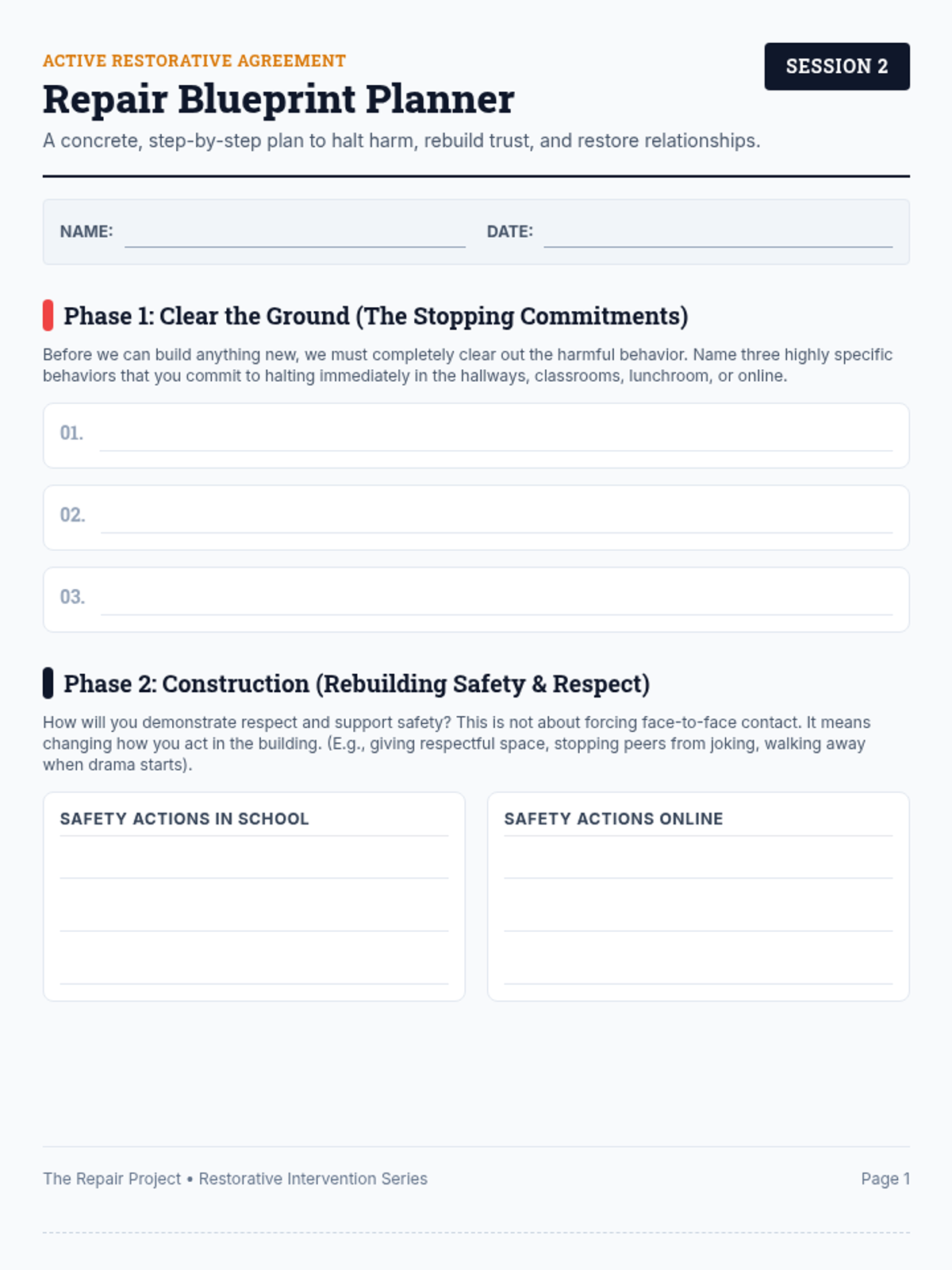
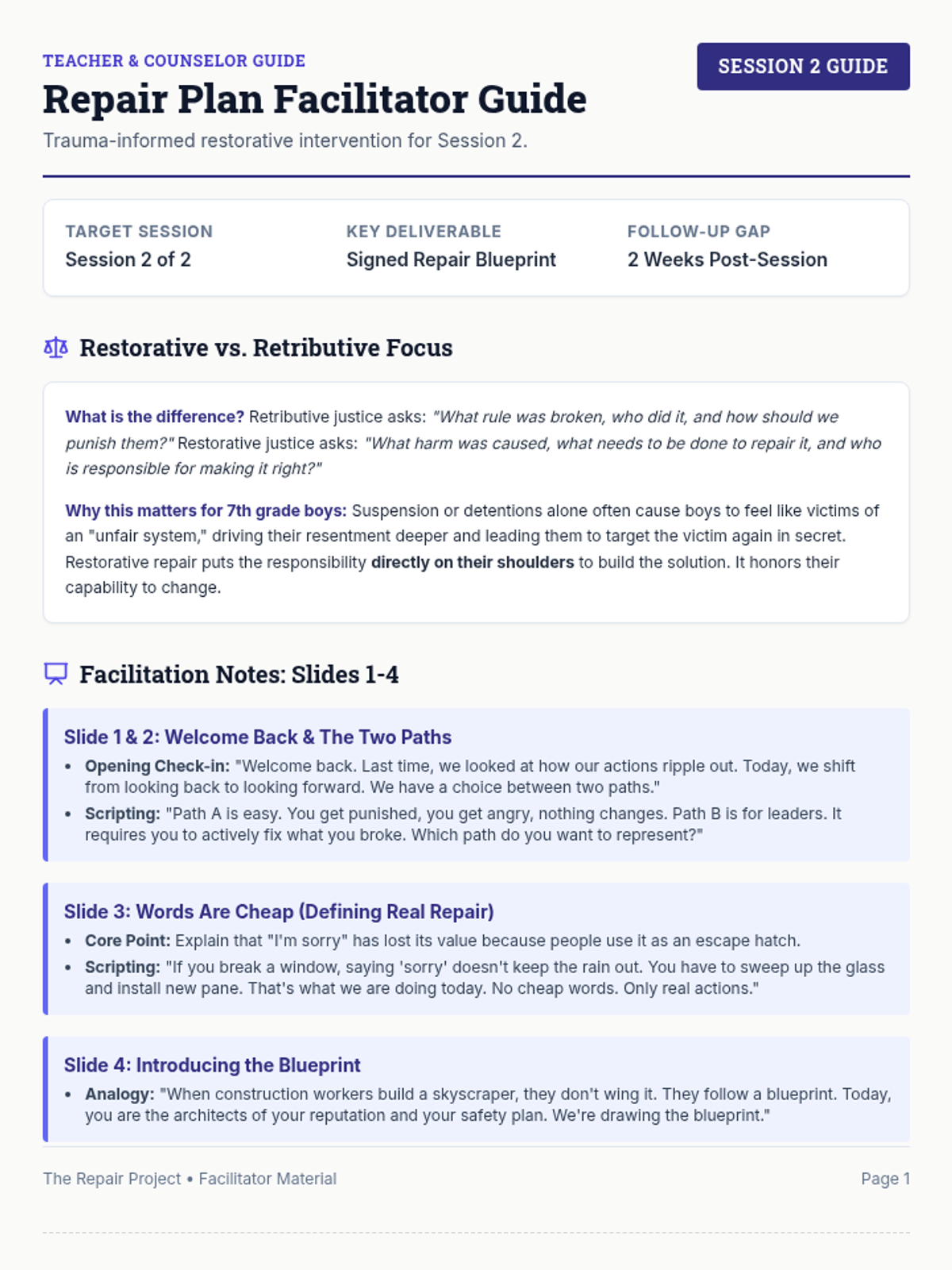
In this second session, students shift from analyzing impact to taking active accountability. They explore restorative justice and draft a concrete "Repair Blueprint" detailing specific actions to rebuild trust and repair the harm.
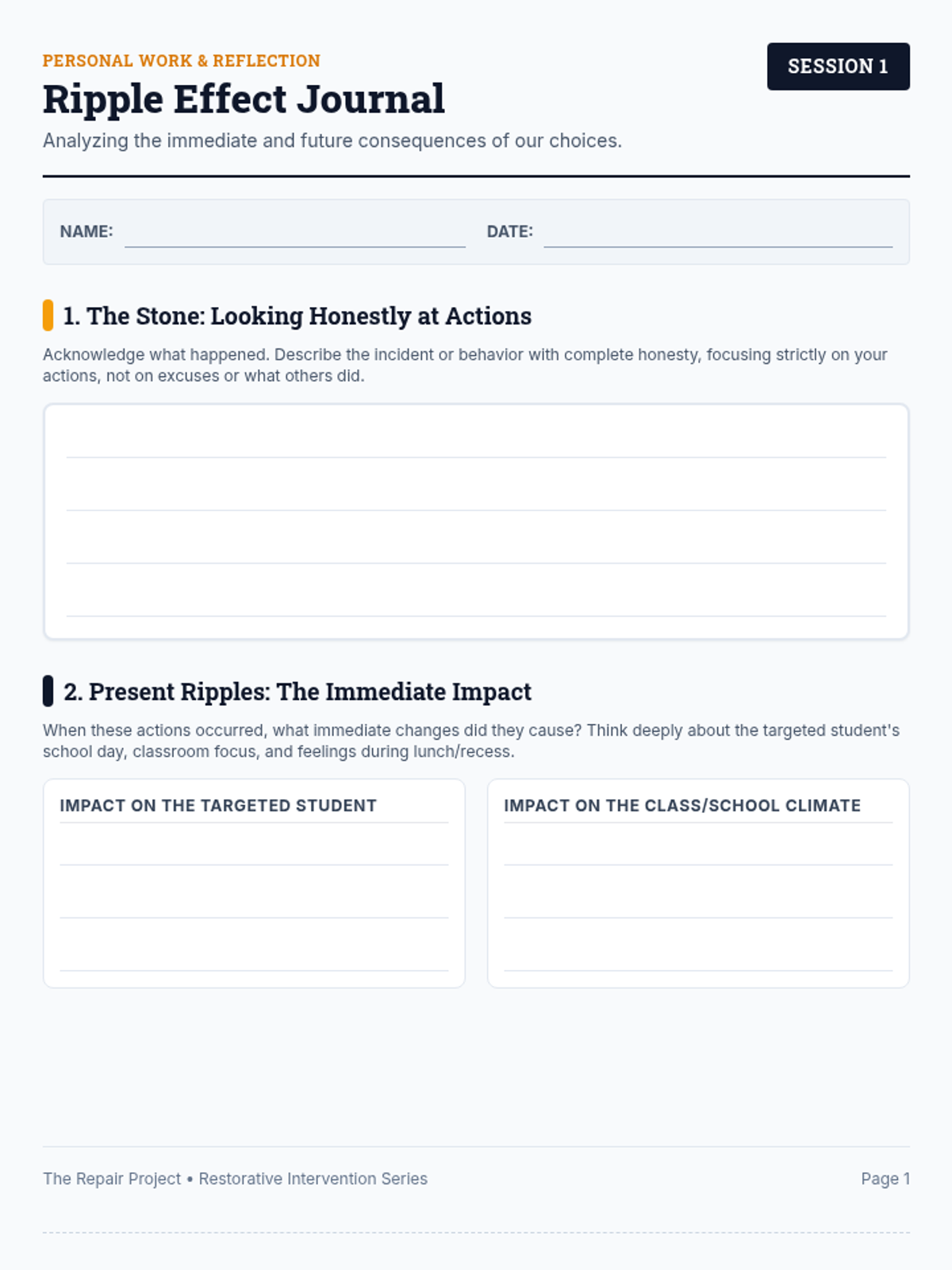
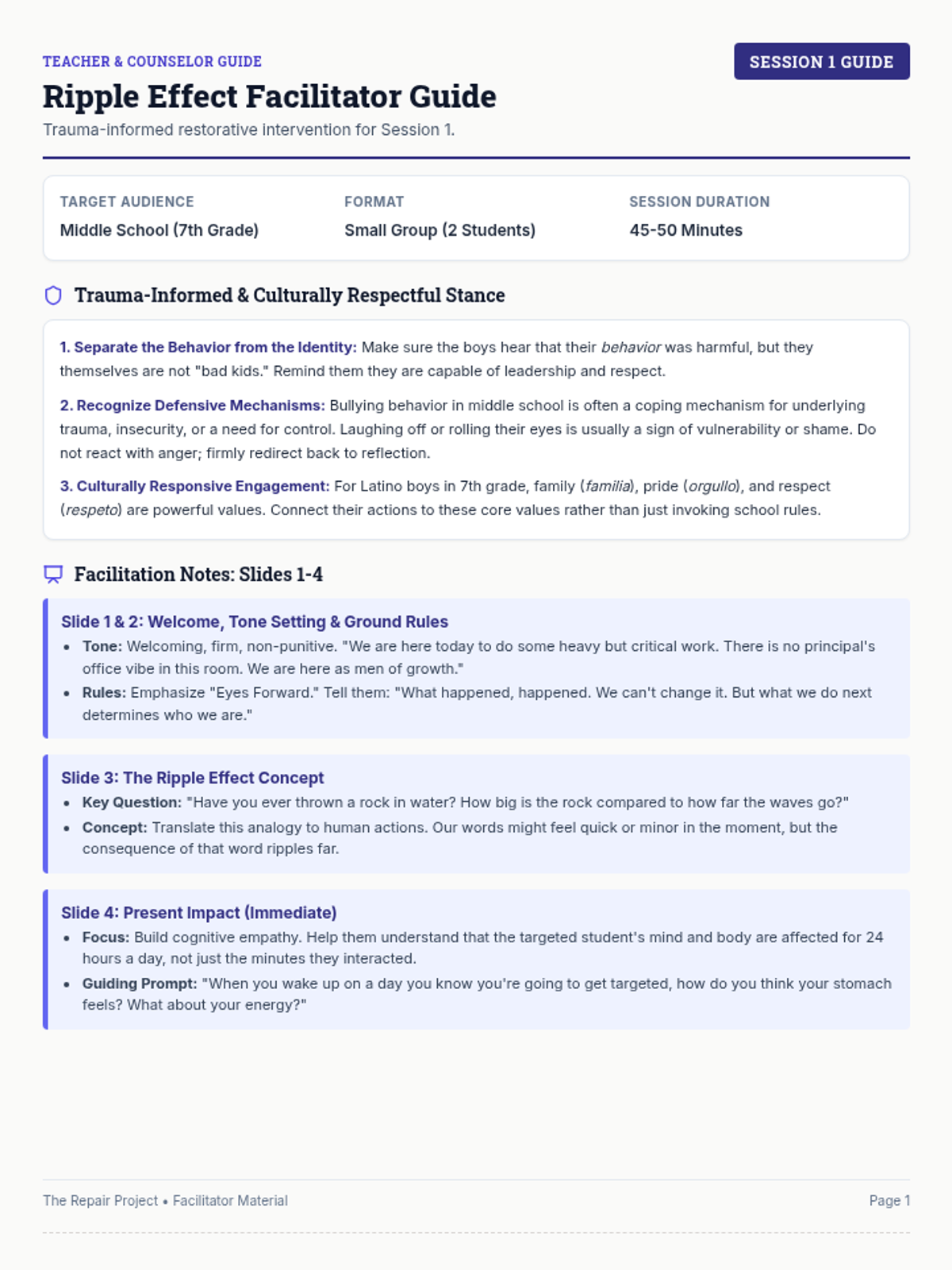
In this first session, students explore the concepts of cause and effect, analyzing how behavior ripples outward to affect the targeted student, their families, the school community, and themselves, both now and in the future.
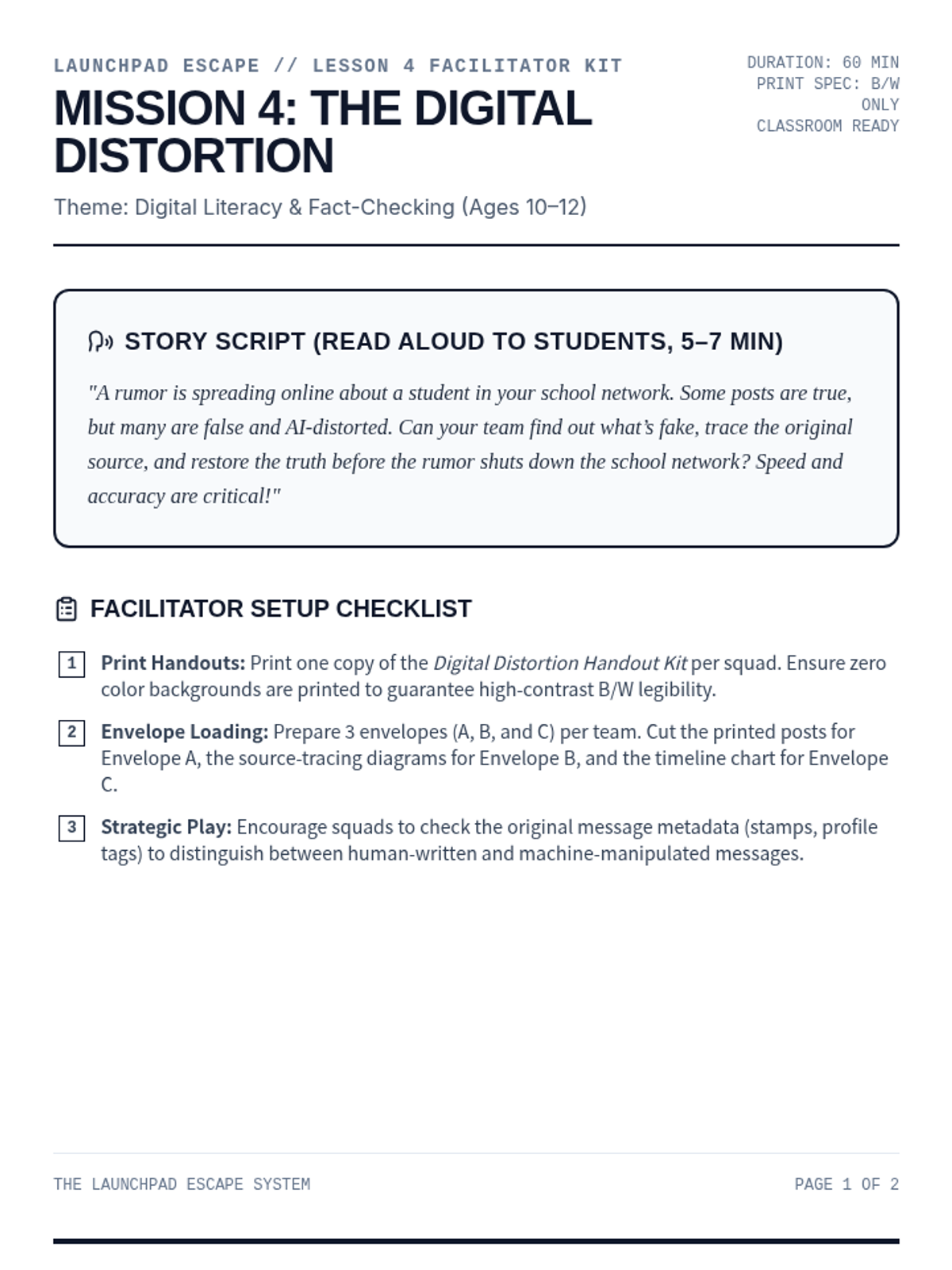
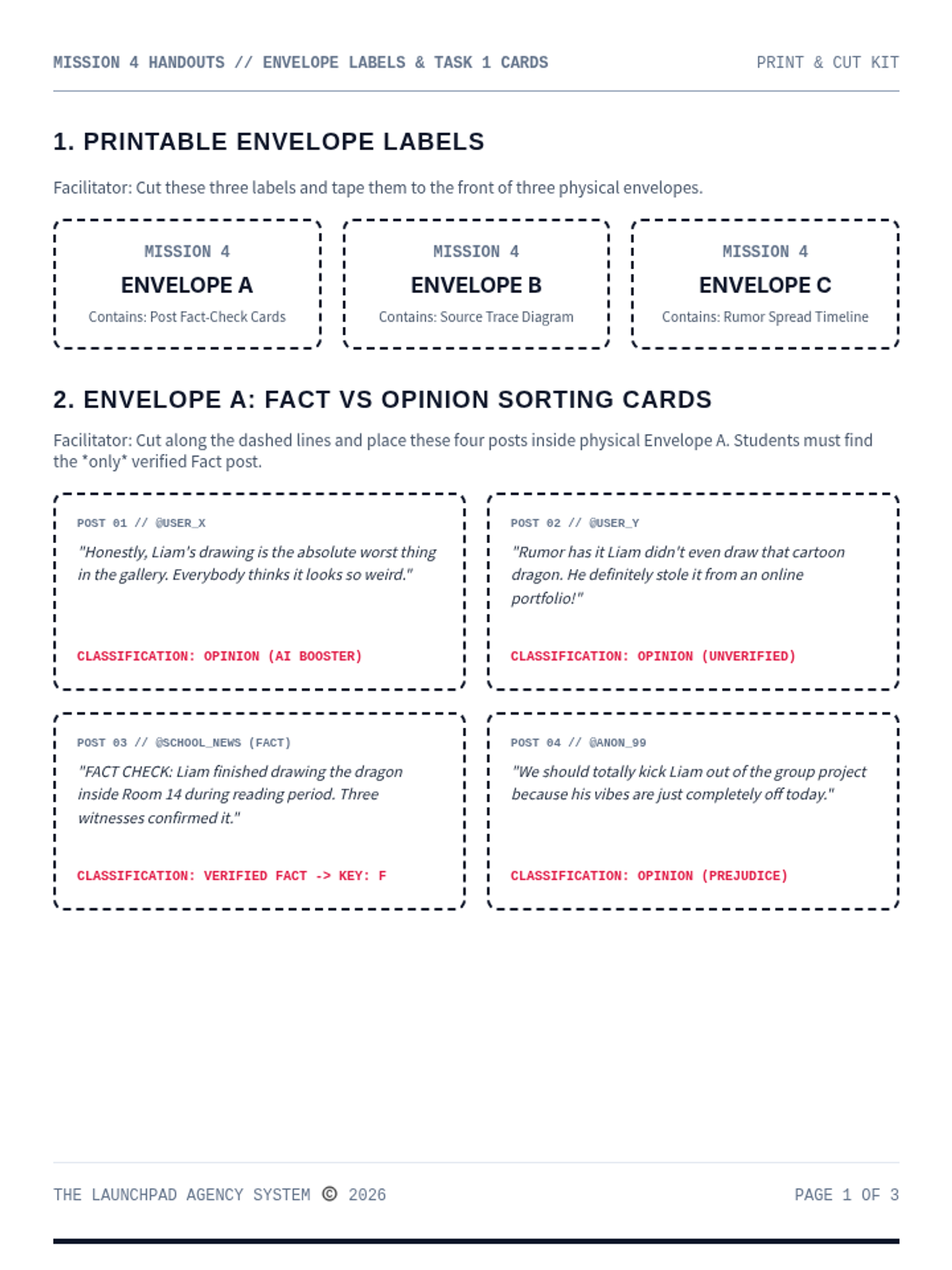
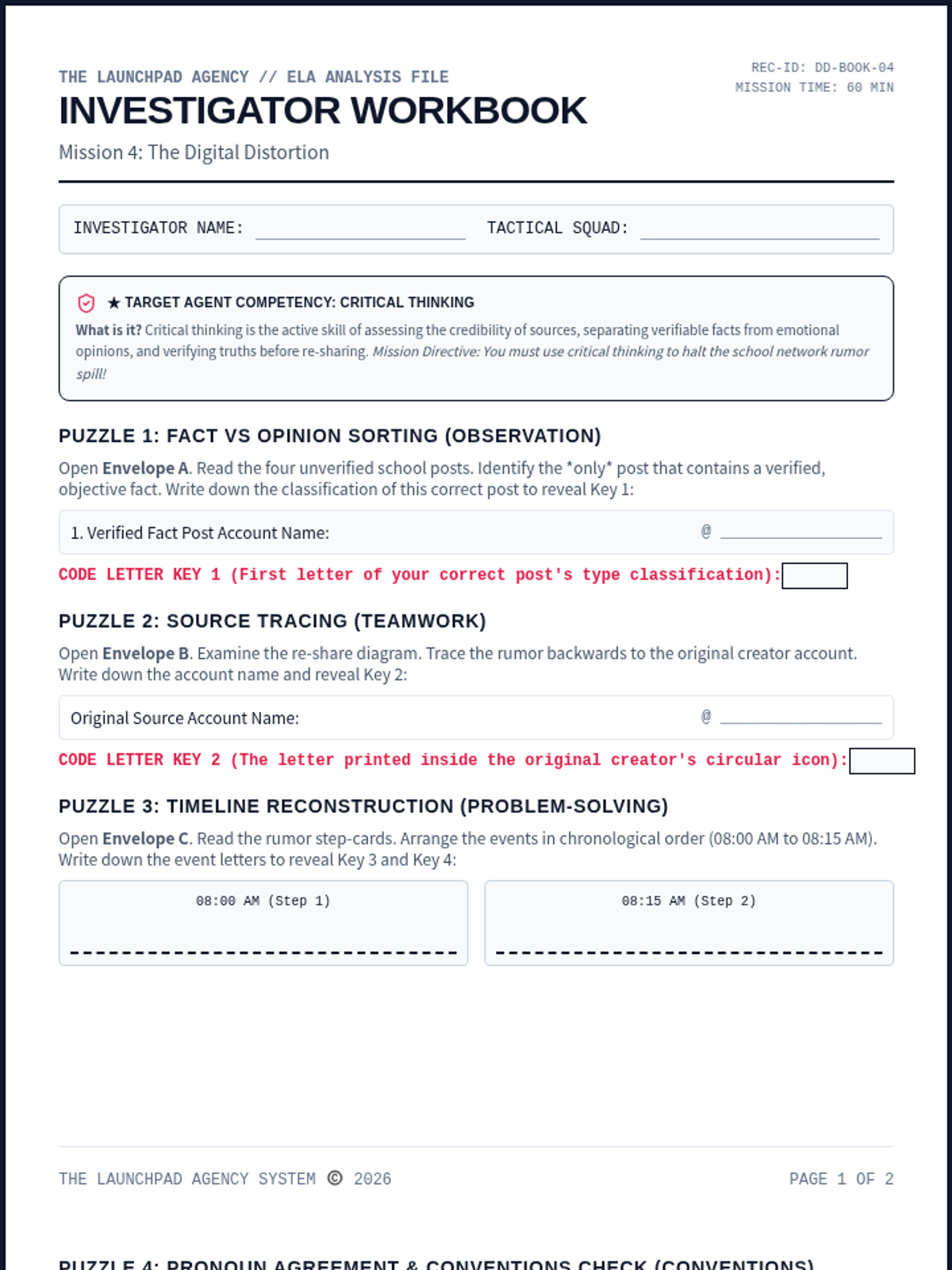
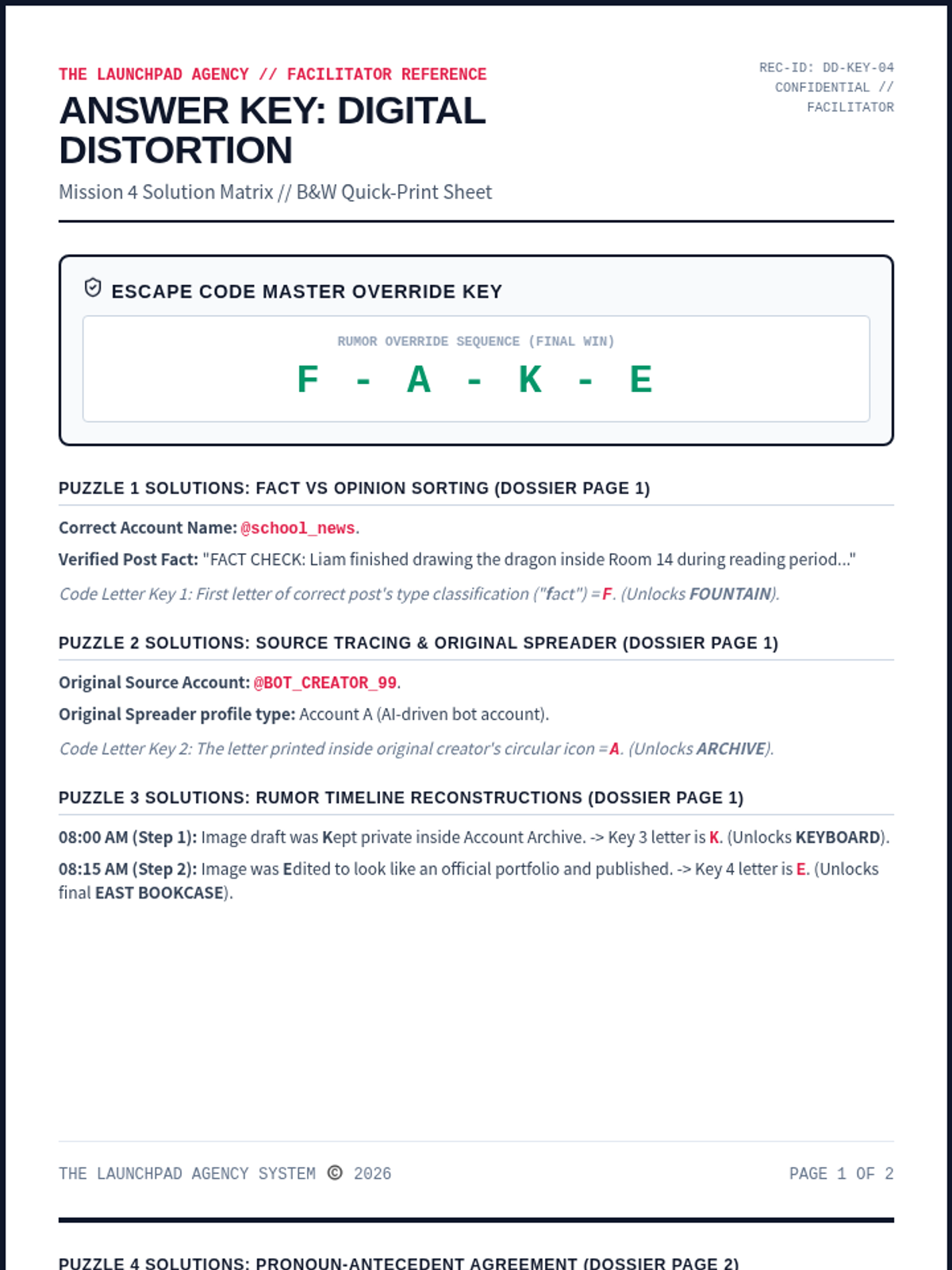
An online misinformation and fact-checking escape room for Ages 10-12. Recruits sort fact vs. opinion, trace original message sources, and reconstruct truth timelines to stop rumors.
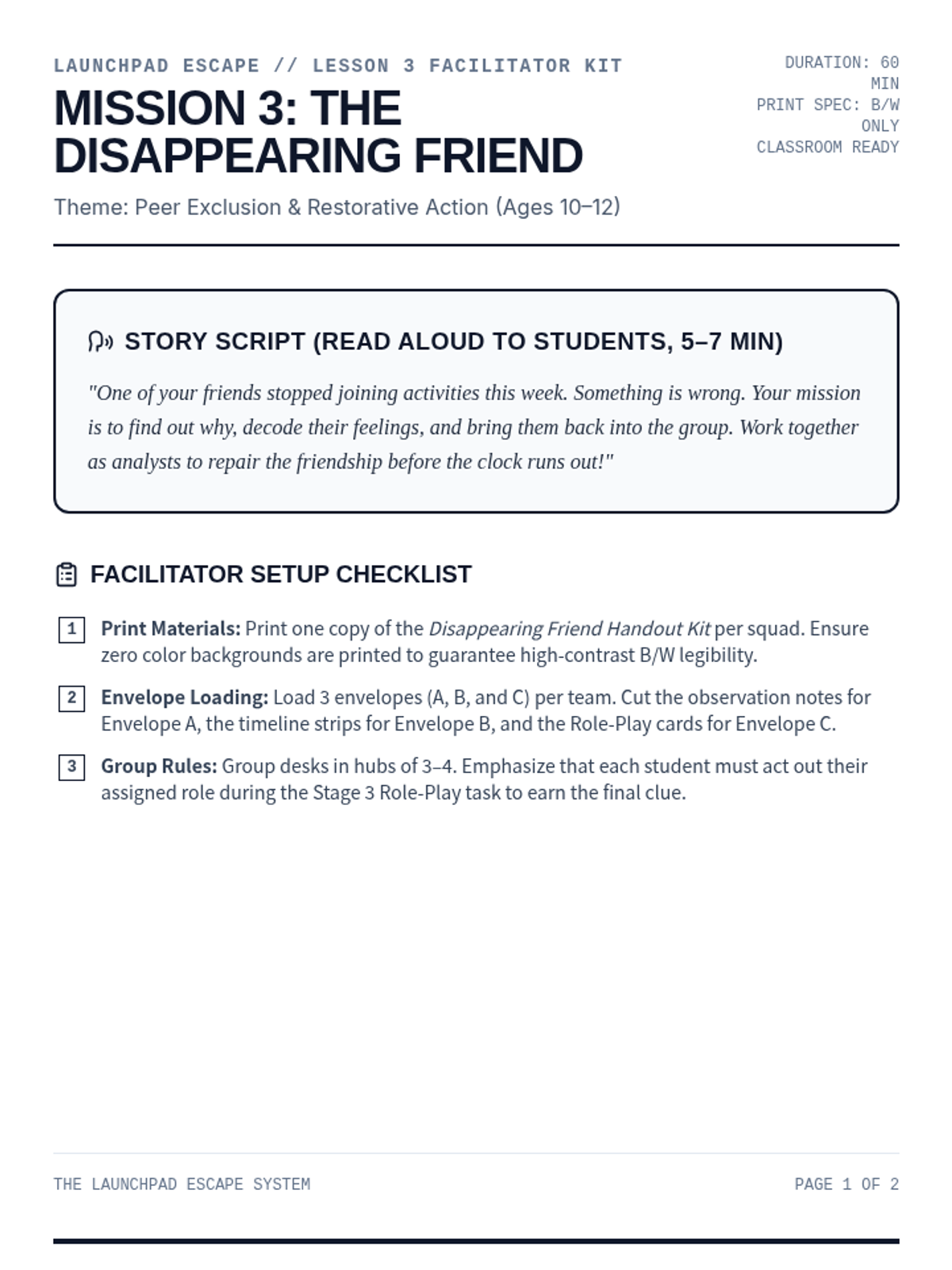
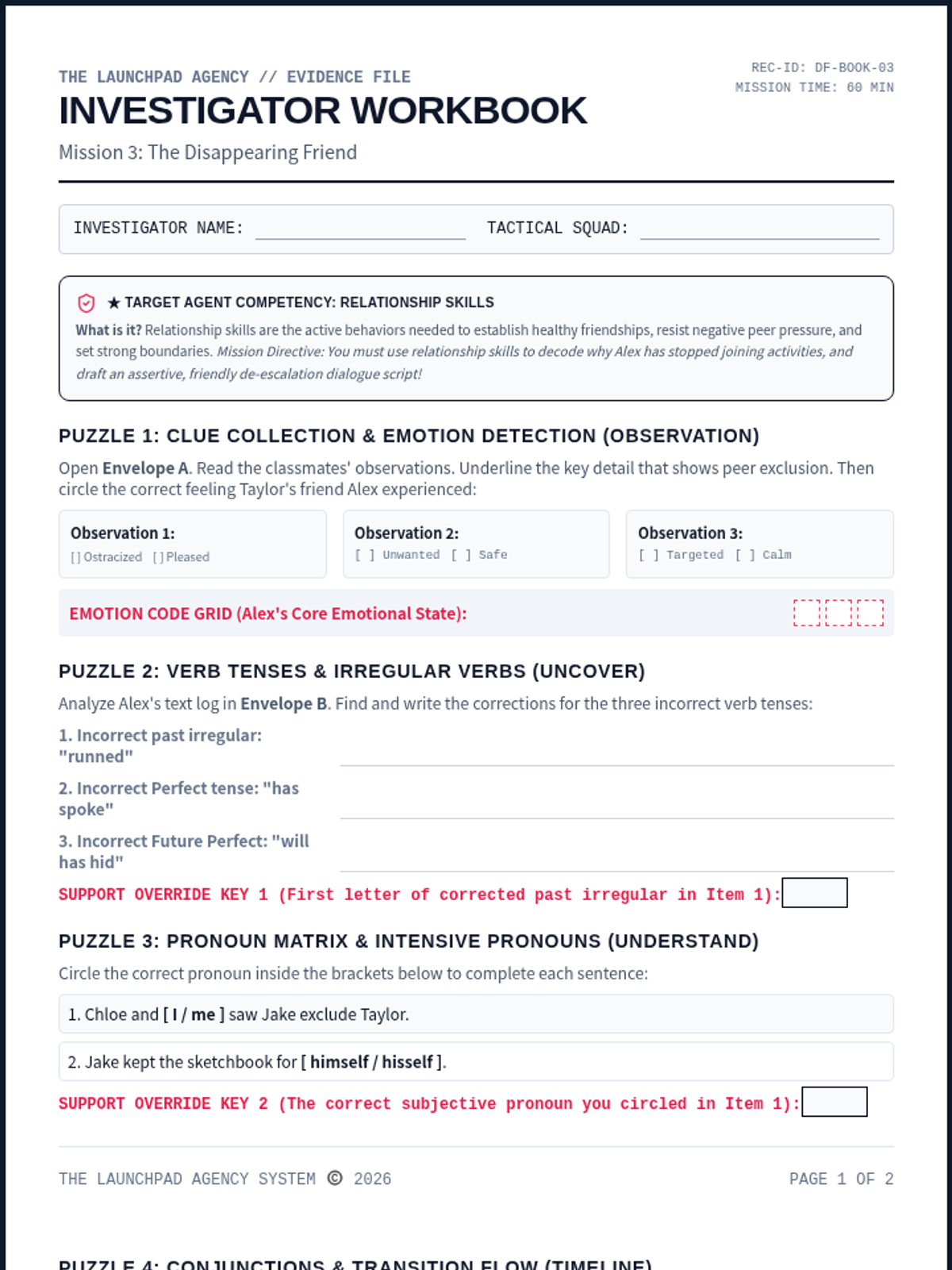
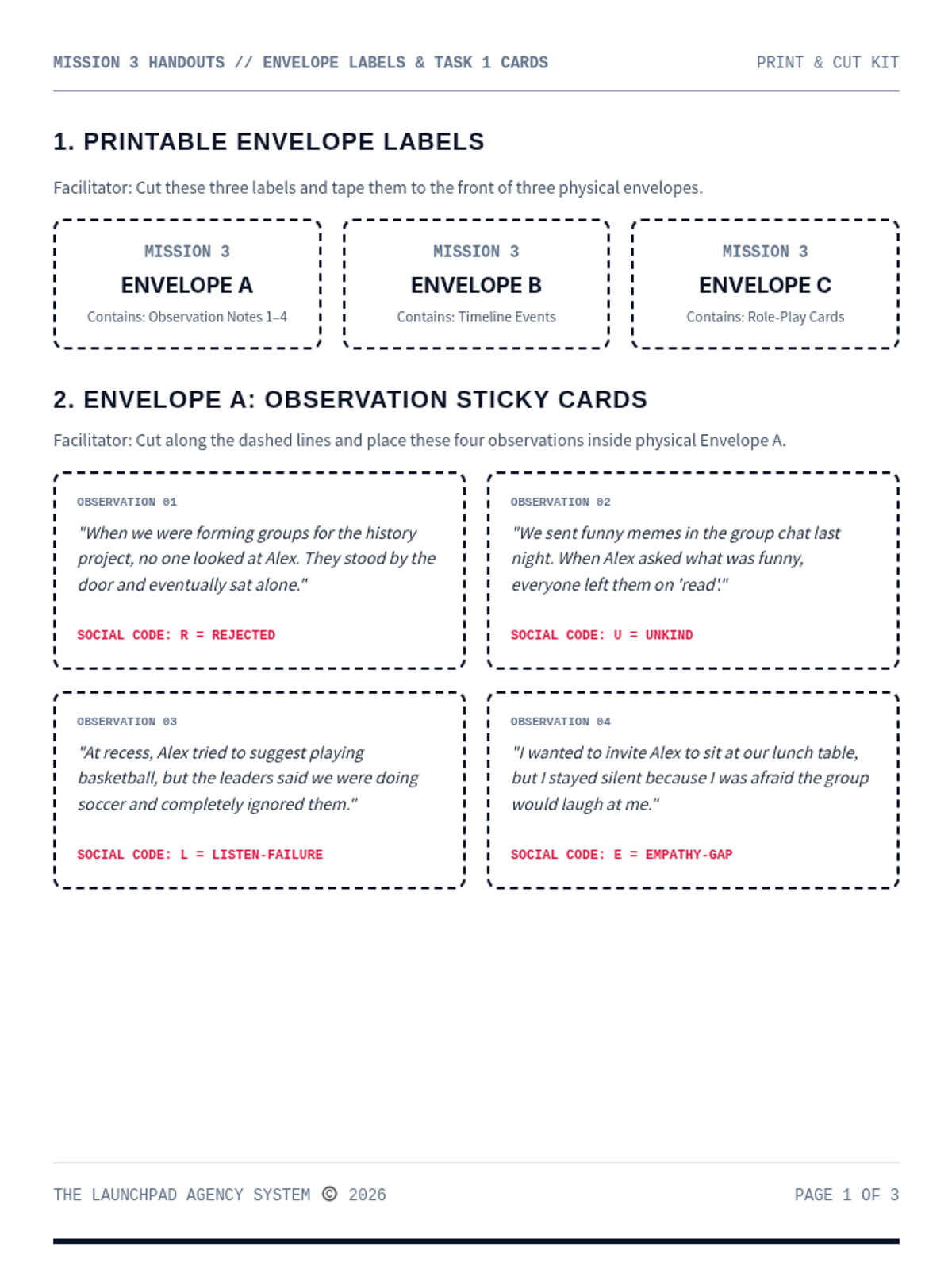
A chronological reconstruction and peer exclusion escape room for Ages 10-12. Recruits analyze sticky-note observations, identify missed social interactions, and role-play restorative de-escalation scripts.
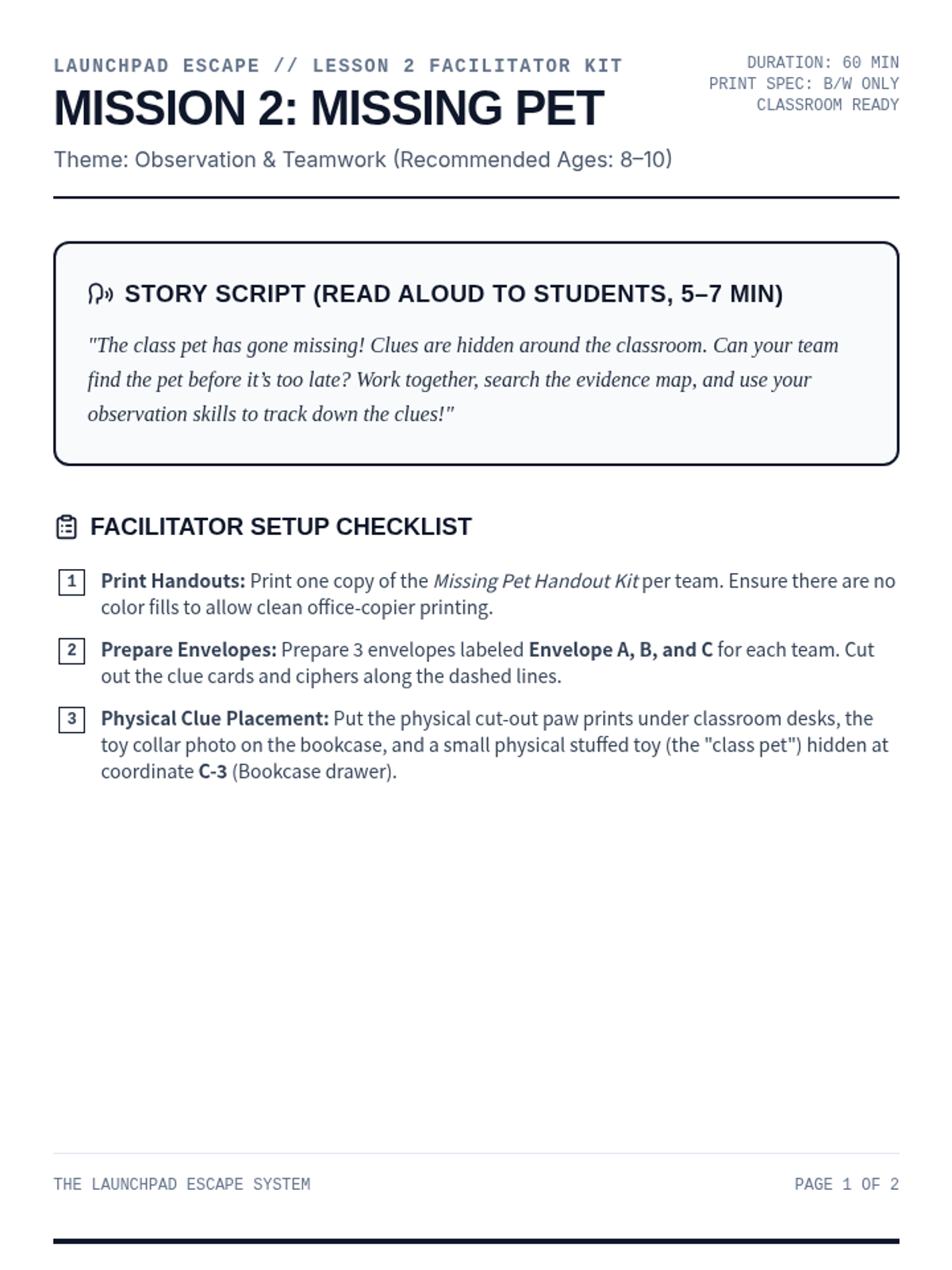
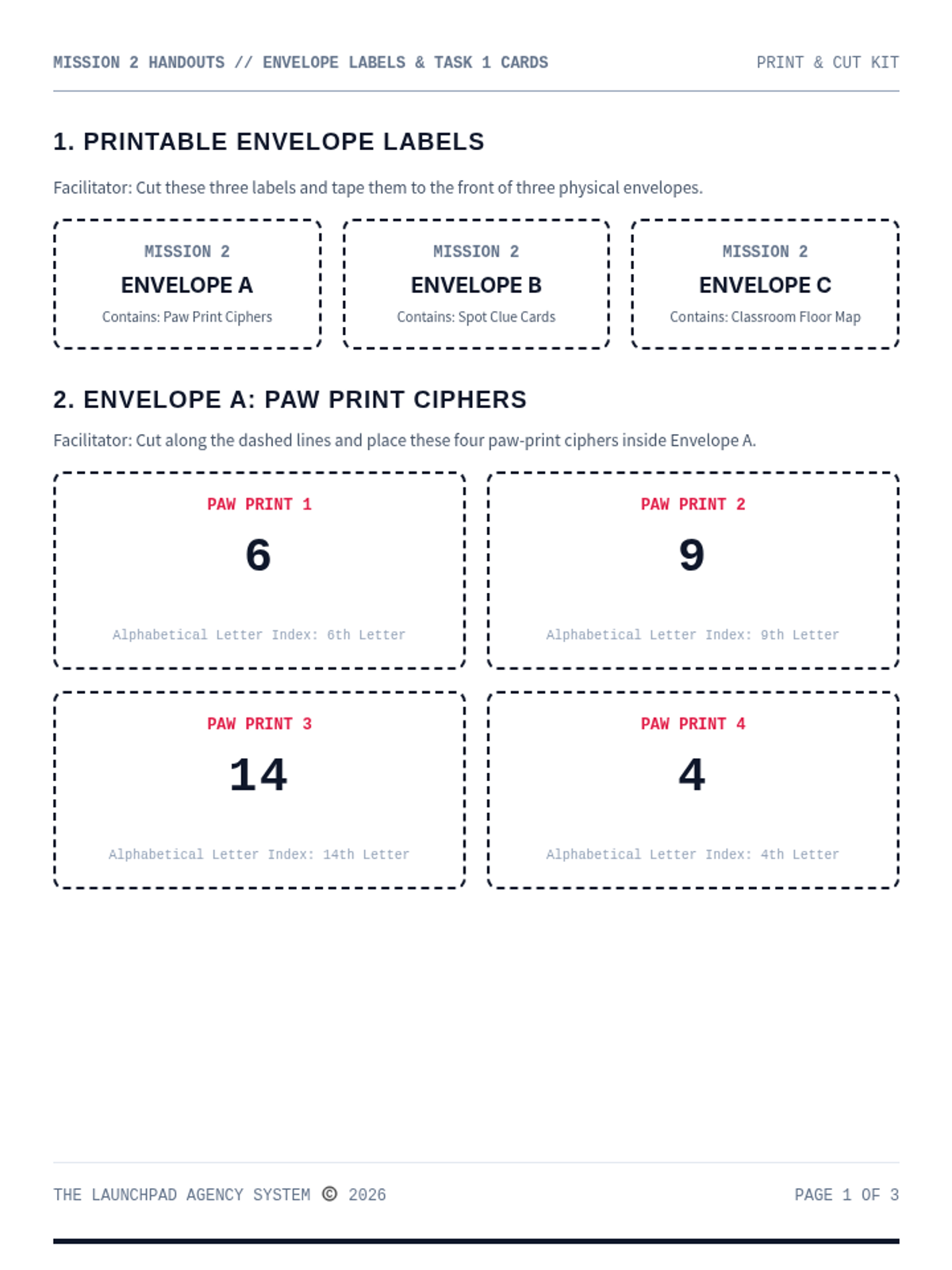
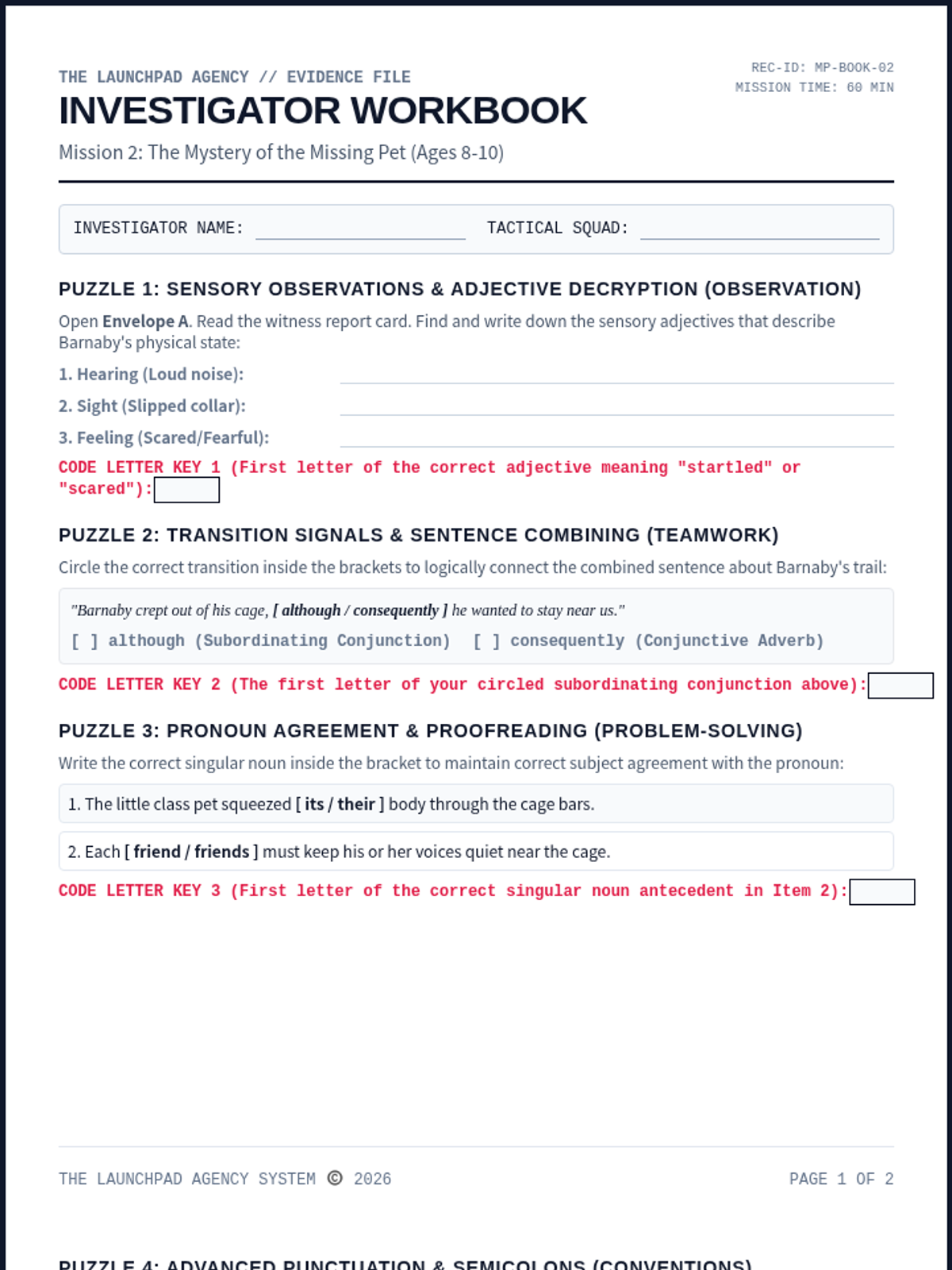
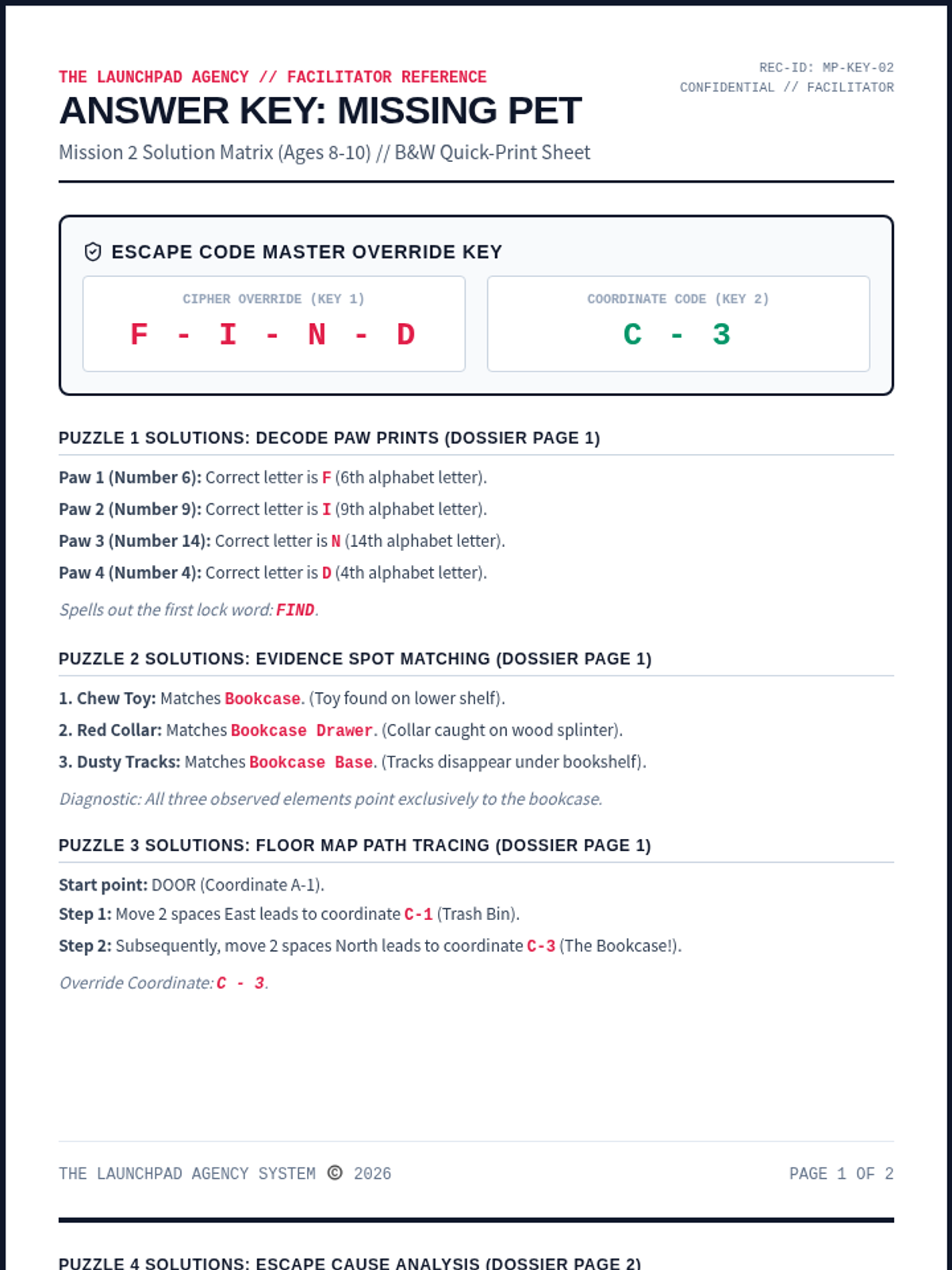
An observation-based escape mission for Ages 8-10. Recruits decode paw ciphers, match footprint evidence to classroom hiding spots, and compile a team map to find the missing class pet.
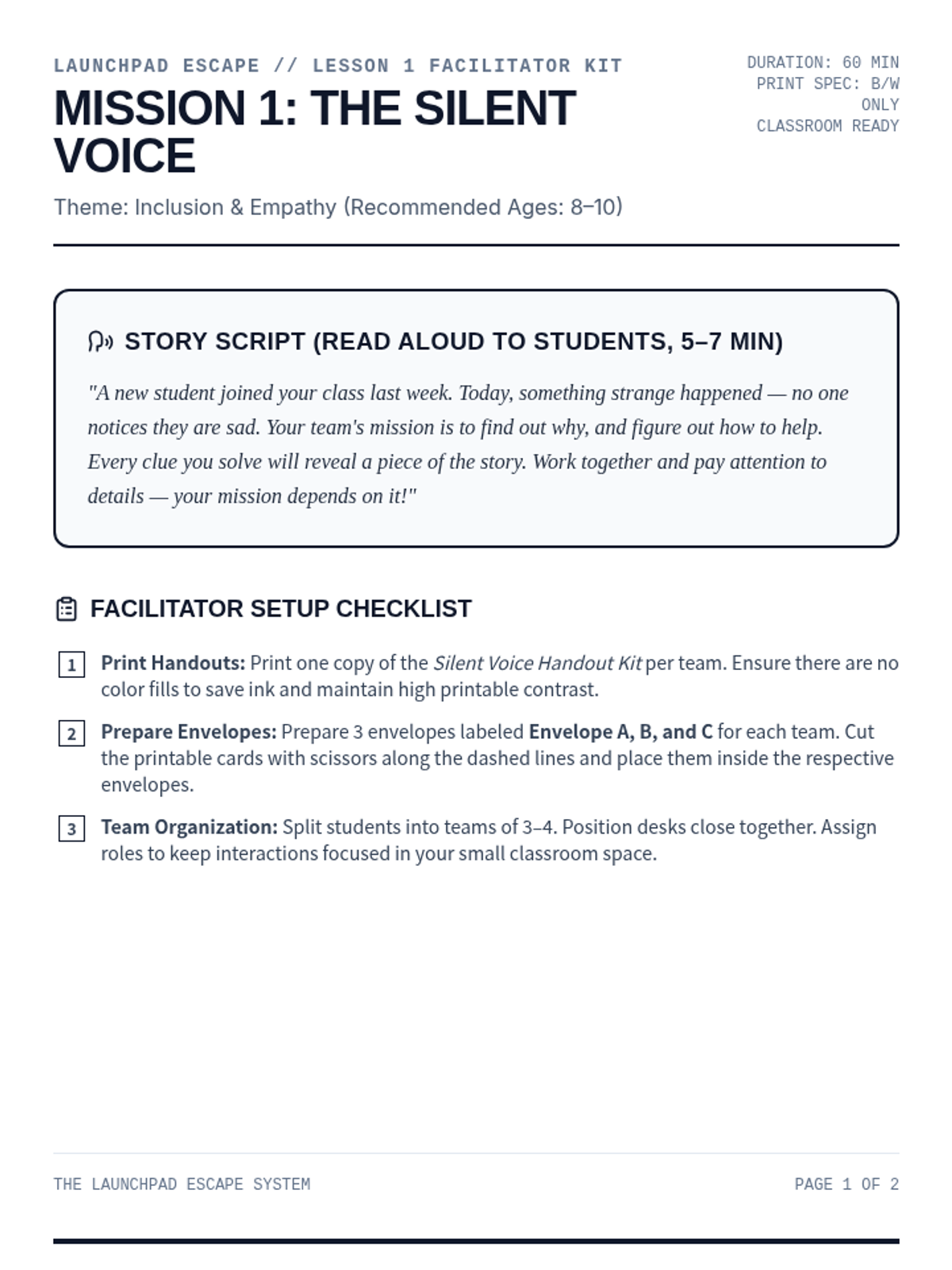
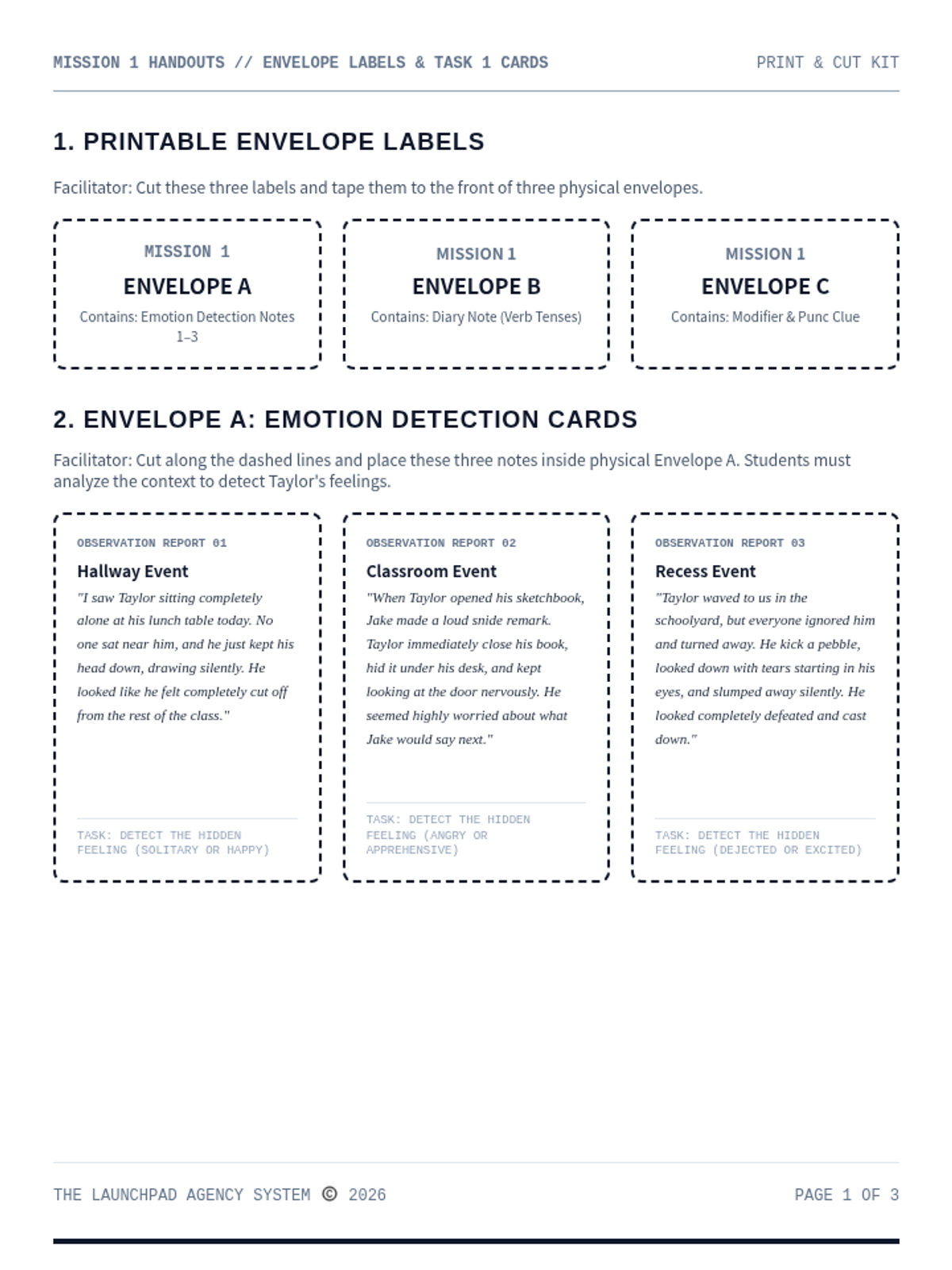
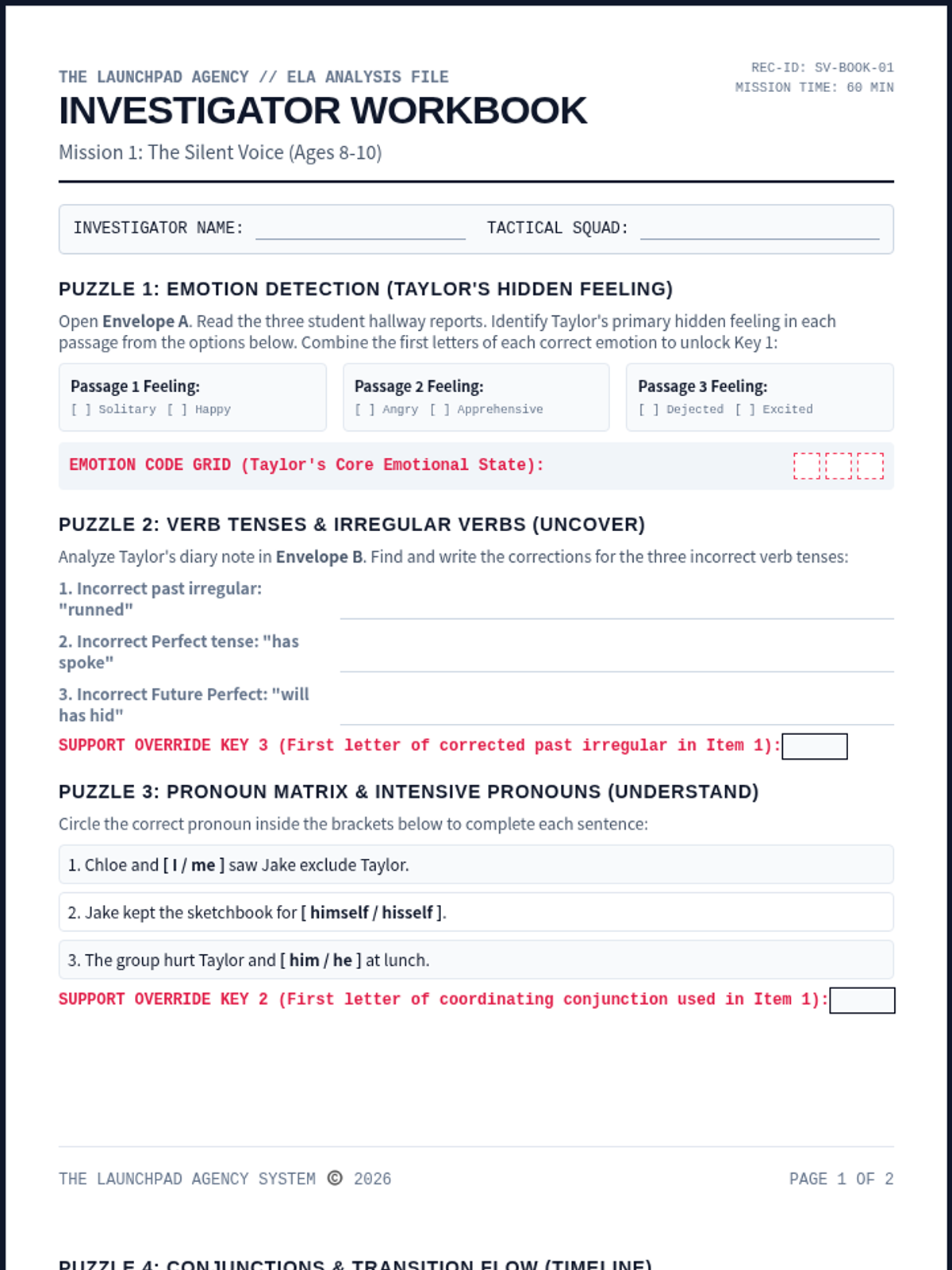
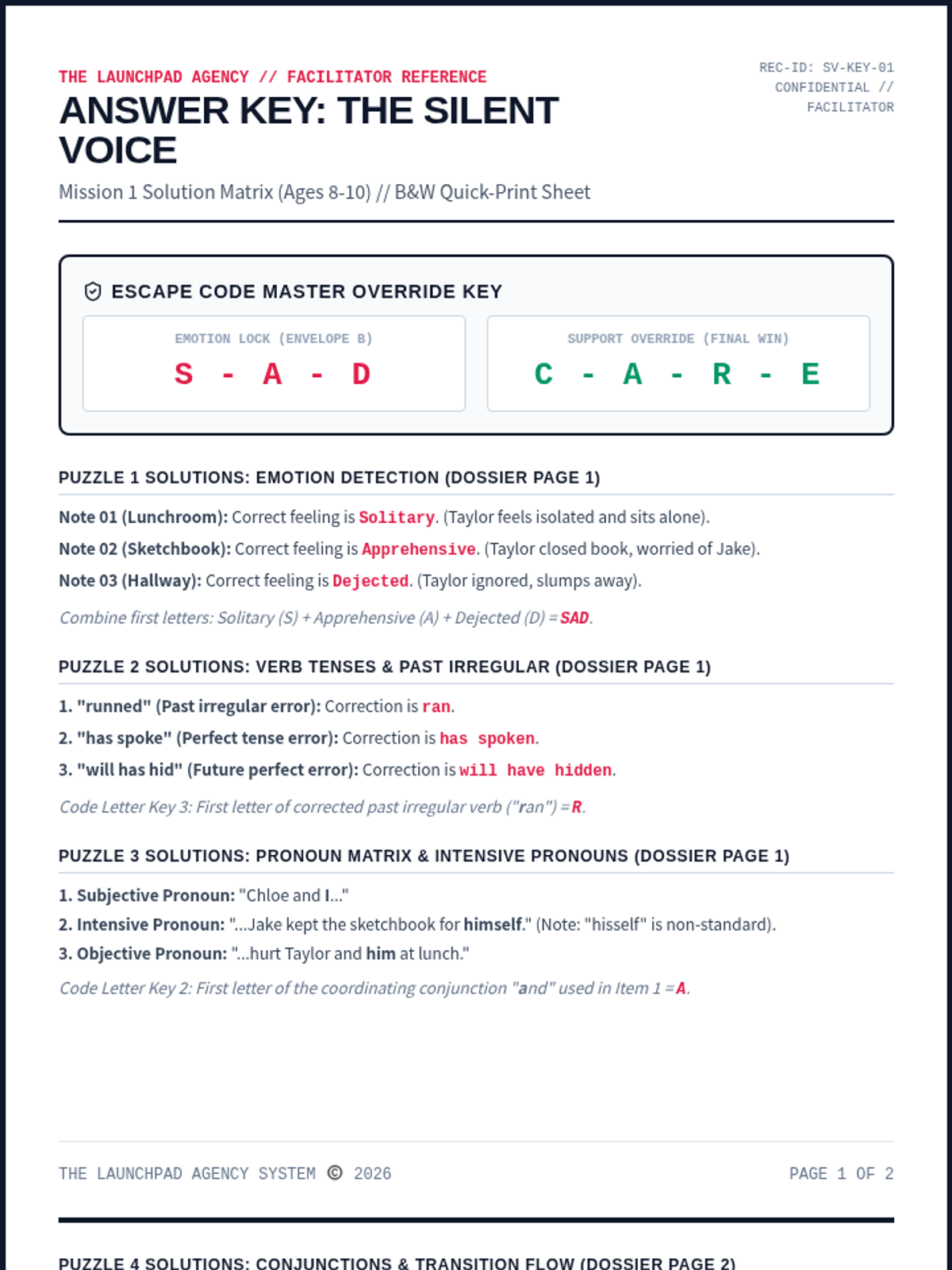
A cooperative social escape room for Ages 8-10 focused on inclusion and empathy. Recruits sort desk messages, build a timeline, and decode perspective cards to support a lonely classmate.
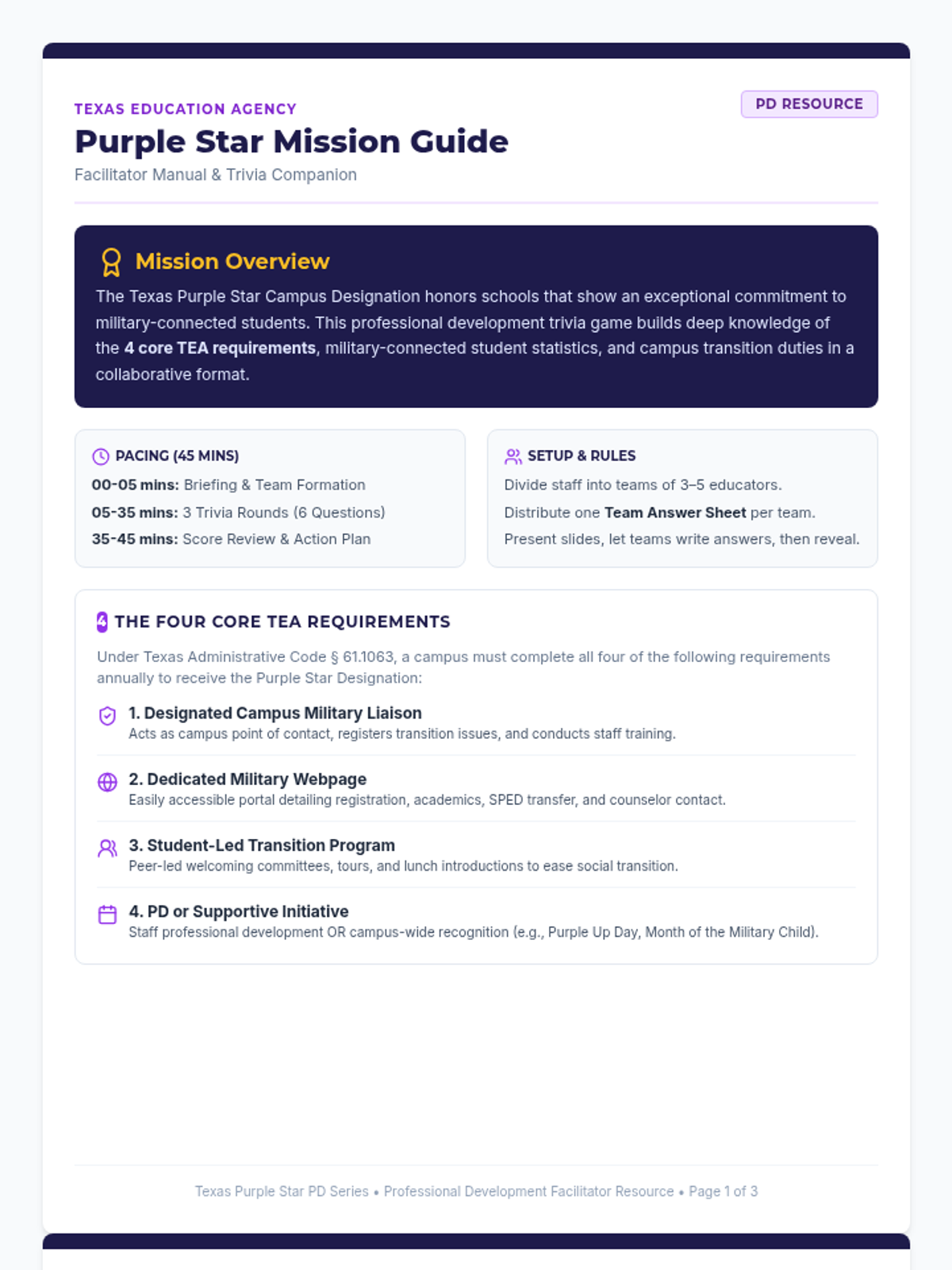
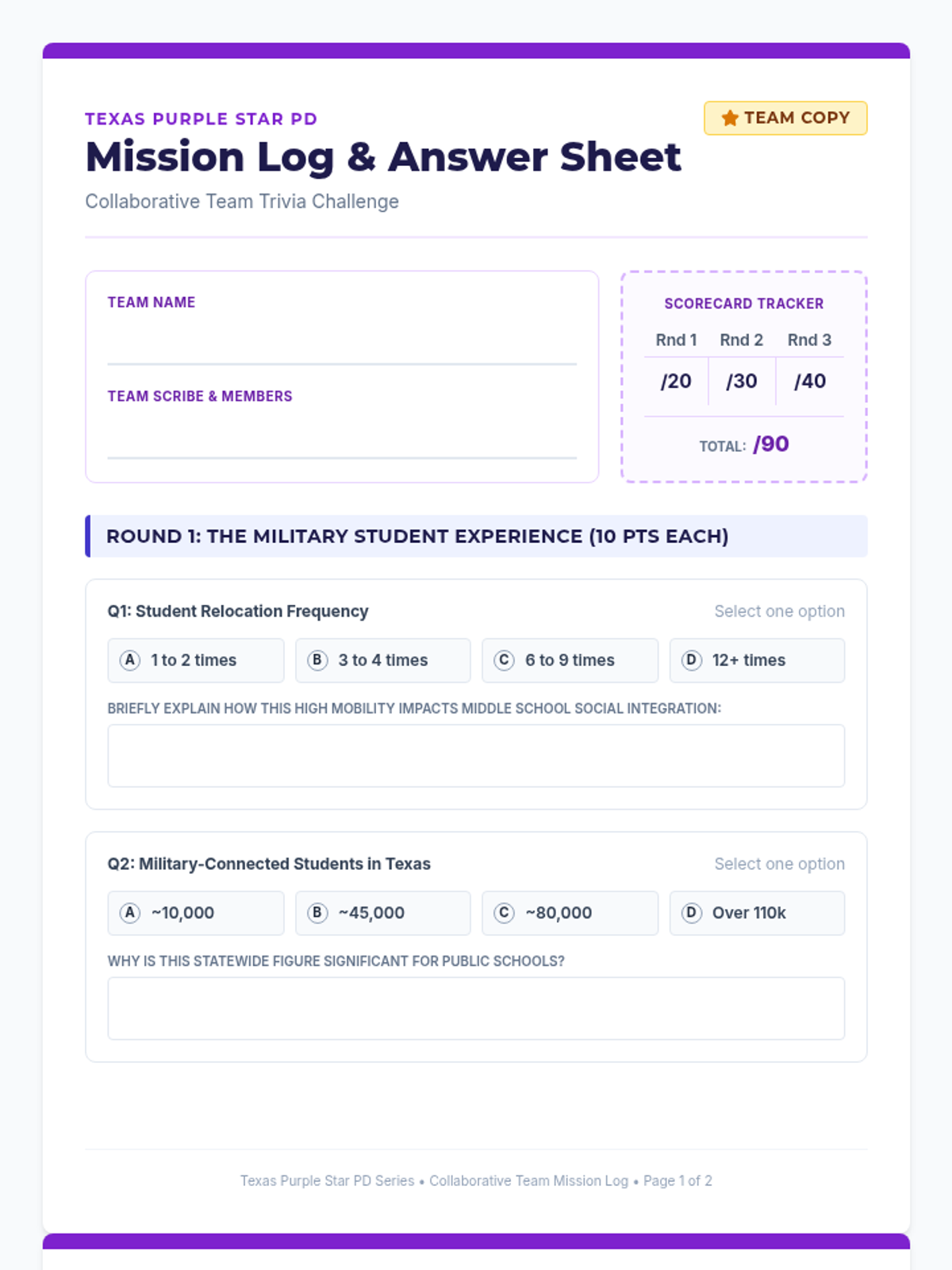
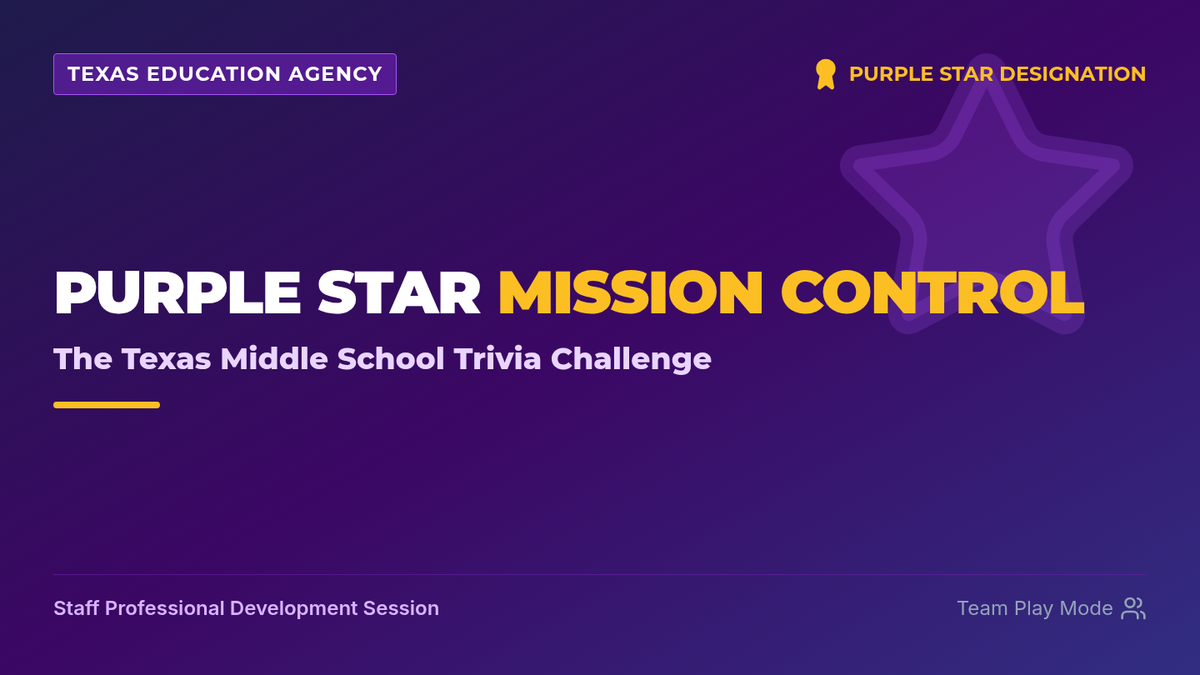
An interactive professional development lesson designed for Texas middle school educators to master the Texas Education Agency (TEA) Purple Star Designation requirements, student transition challenges, and military liaison duties through a competitive team trivia game.
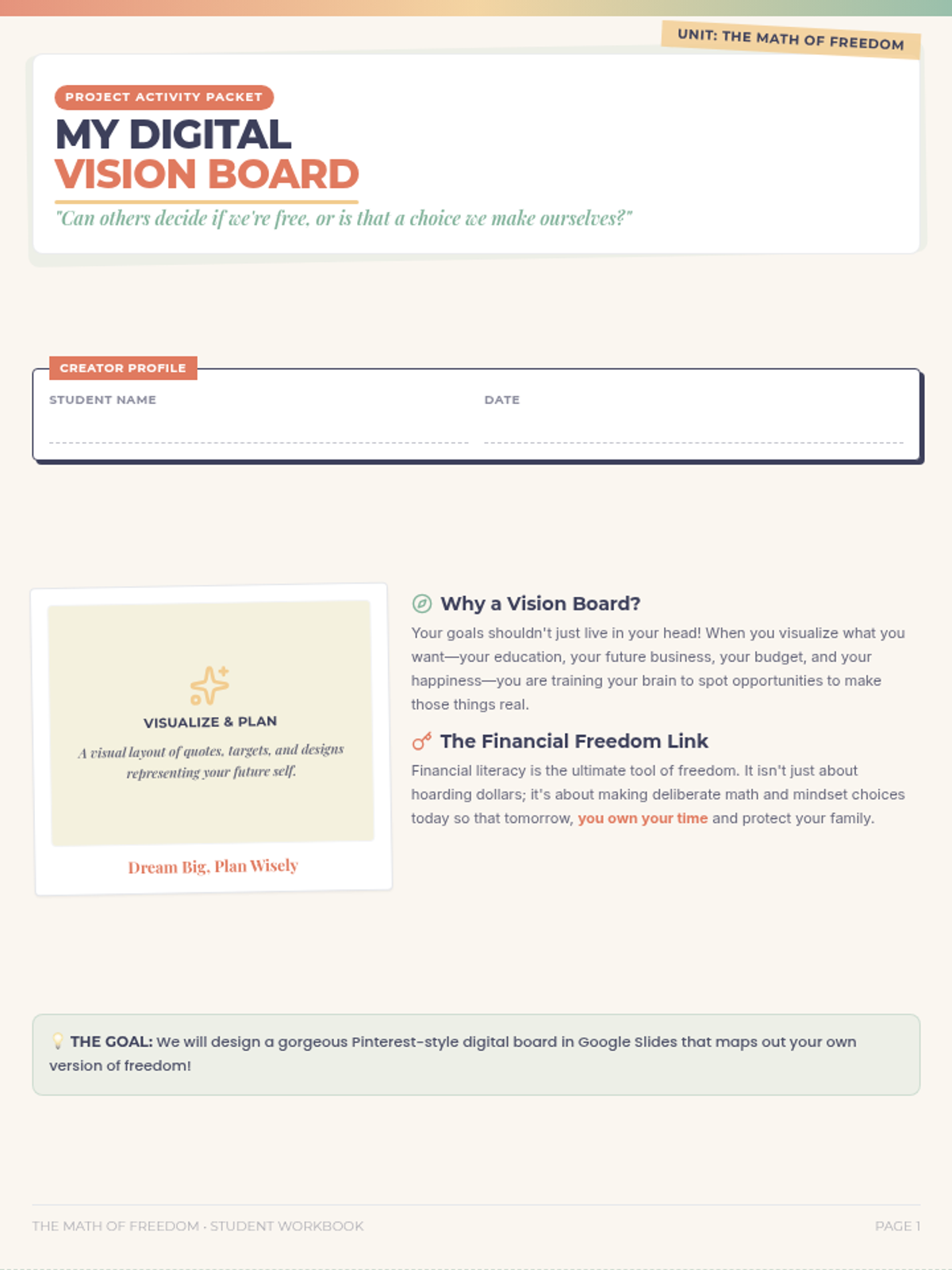
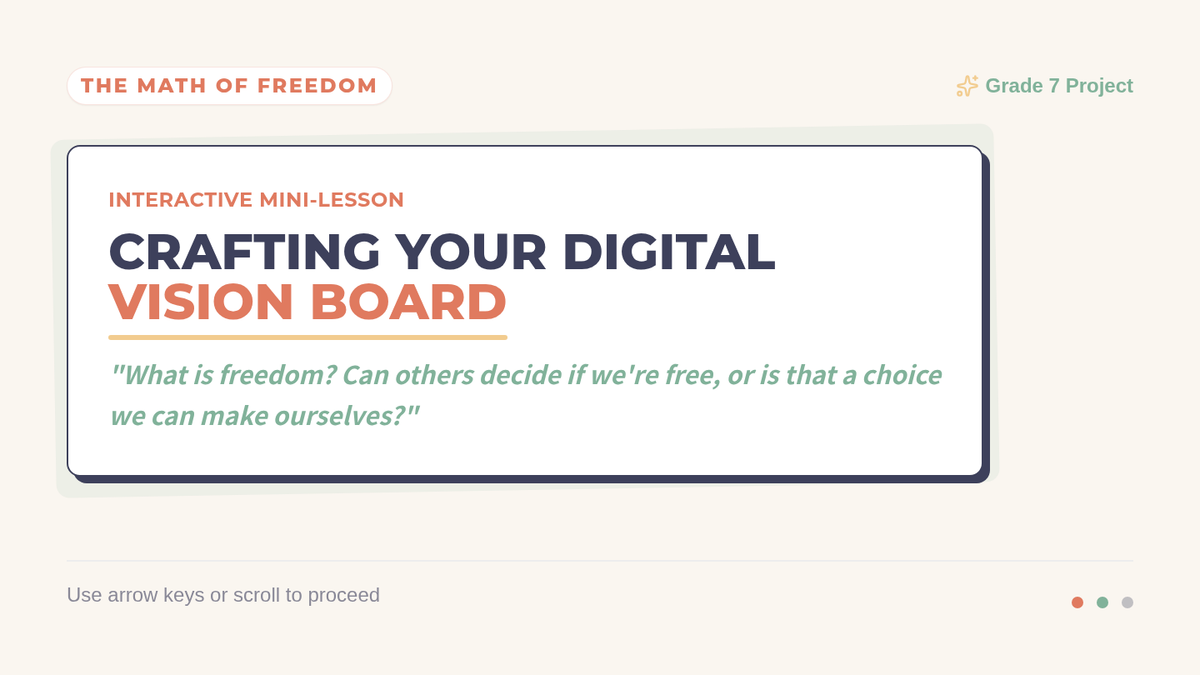
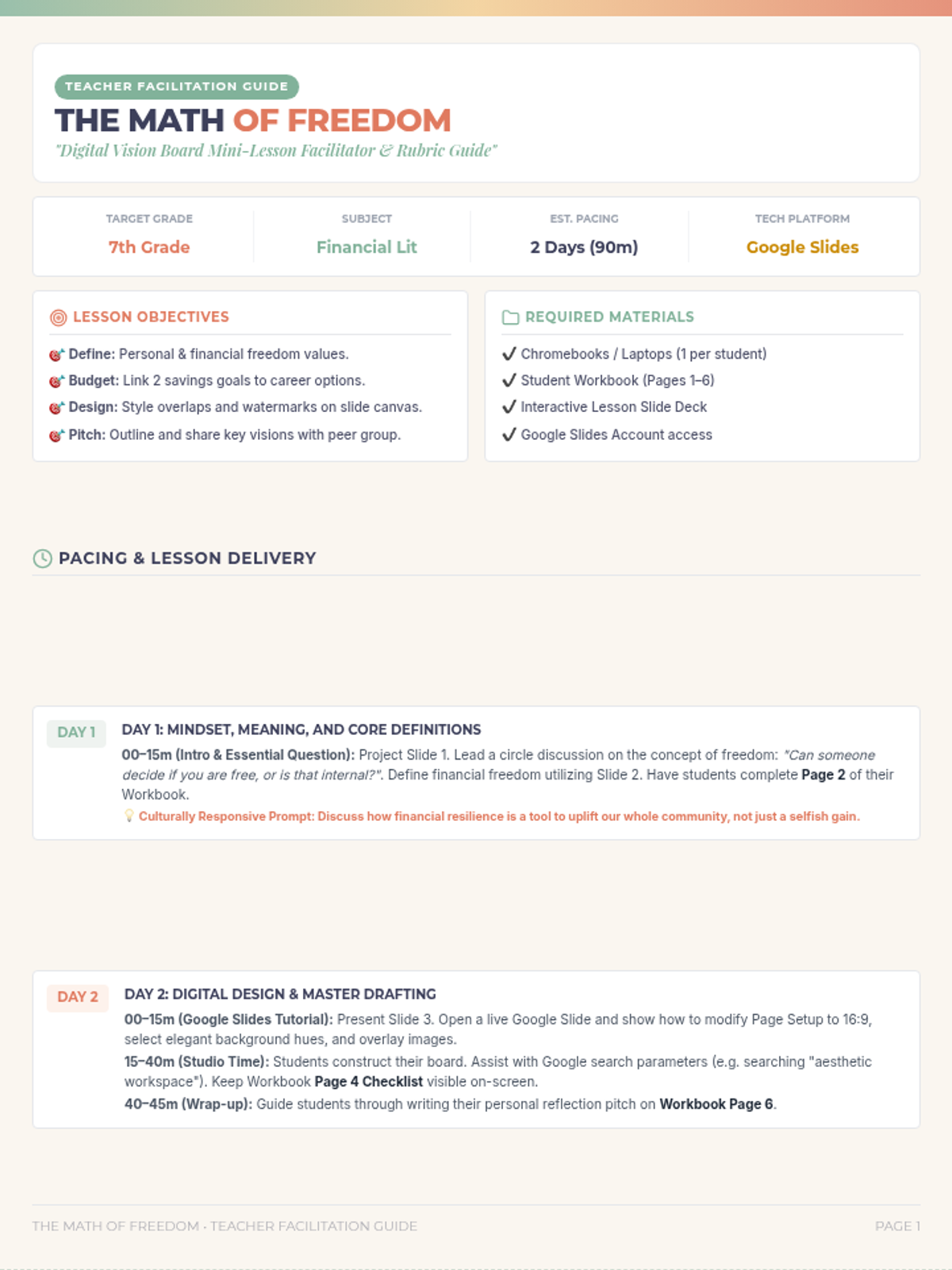
An empowering financial literacy lesson where 7th-grade students define personal and financial freedom, learn digital design skills, and create an aesthetic digital vision board in Google Slides representing their future goals.
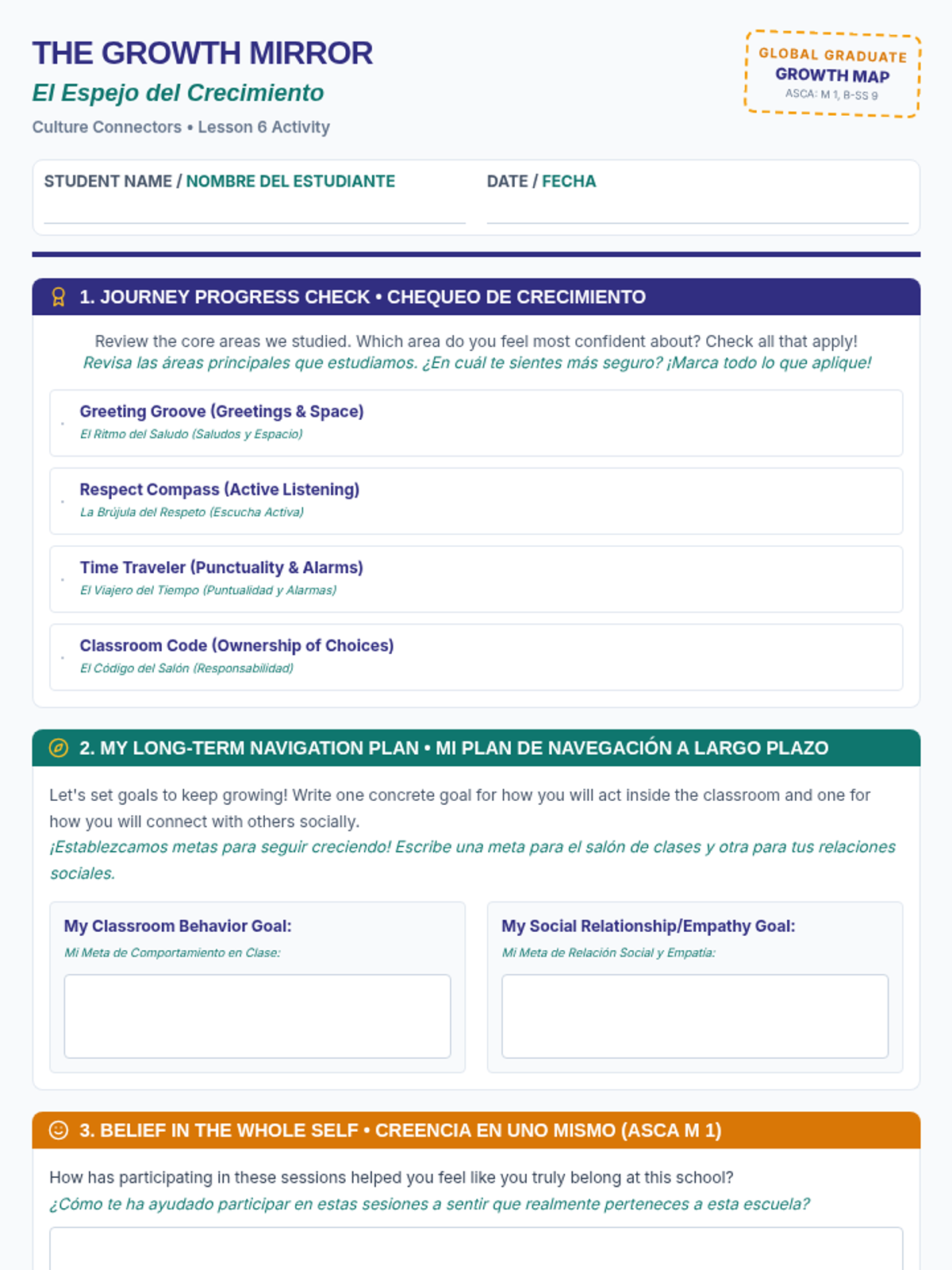
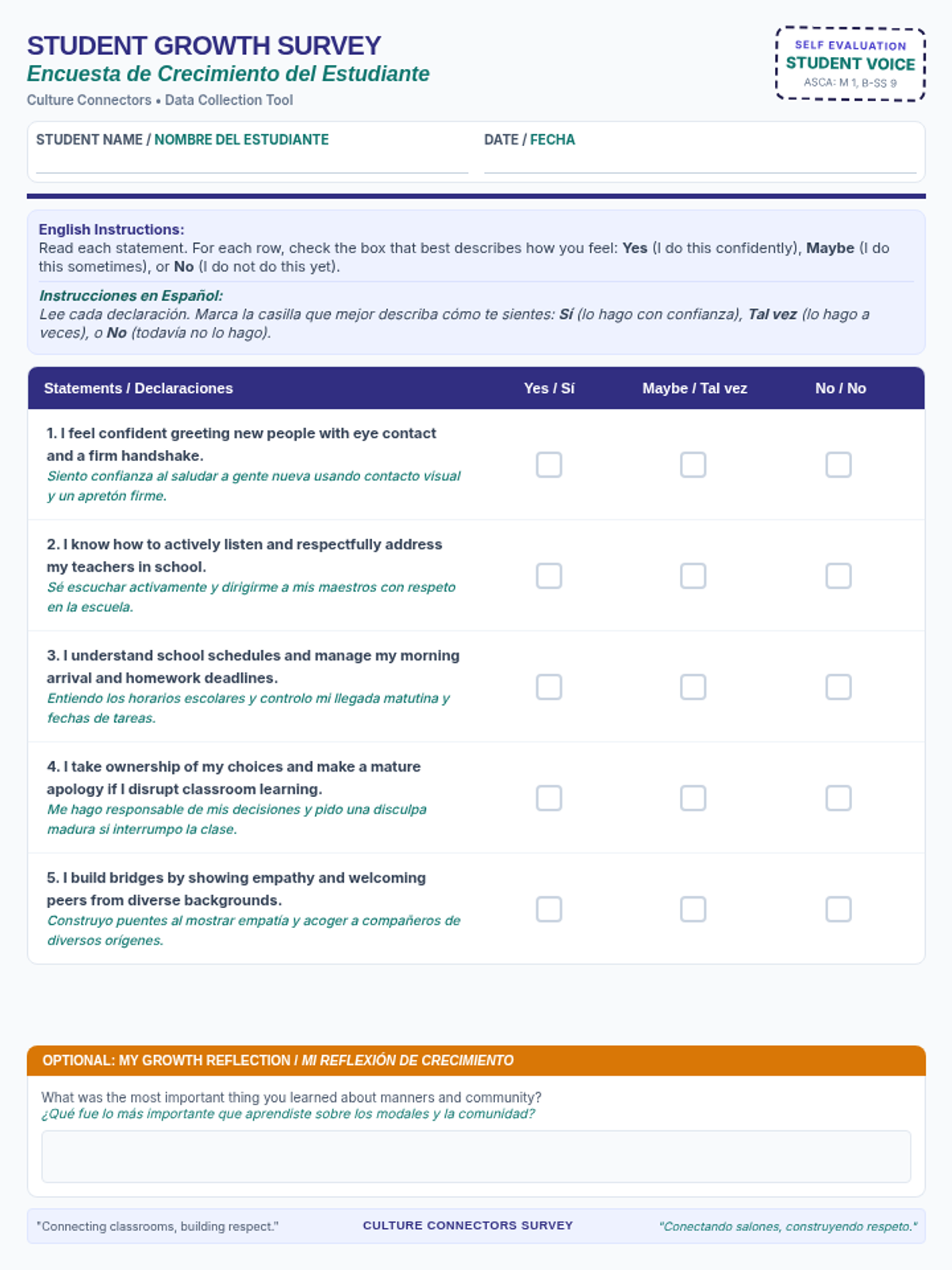
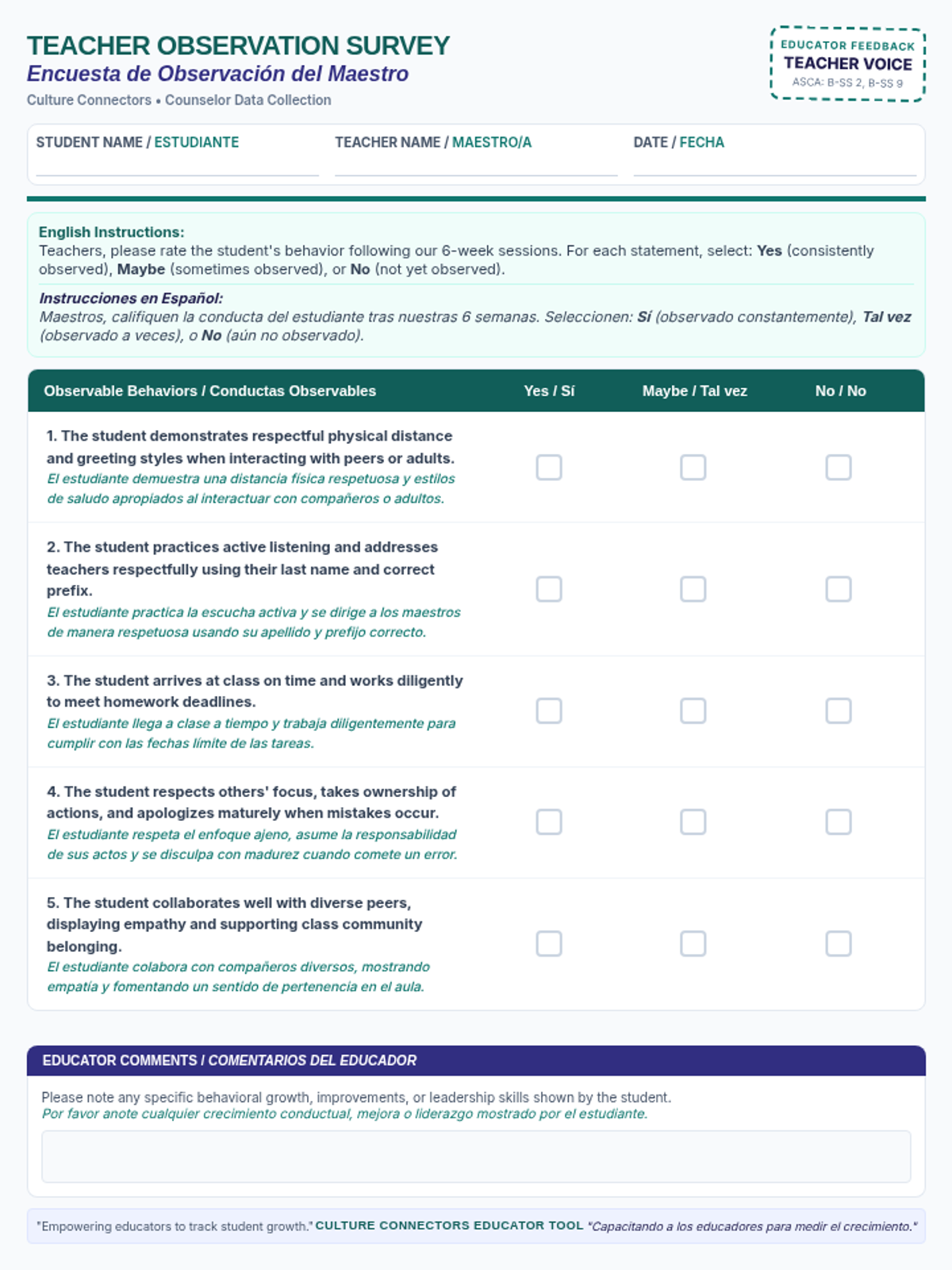
Encourages self-reflection and belief in the development of the whole self. Students reflect on their growth throughout the curriculum and complete personal goal-setting plans. Includes bilingual Likert scales for data collection.
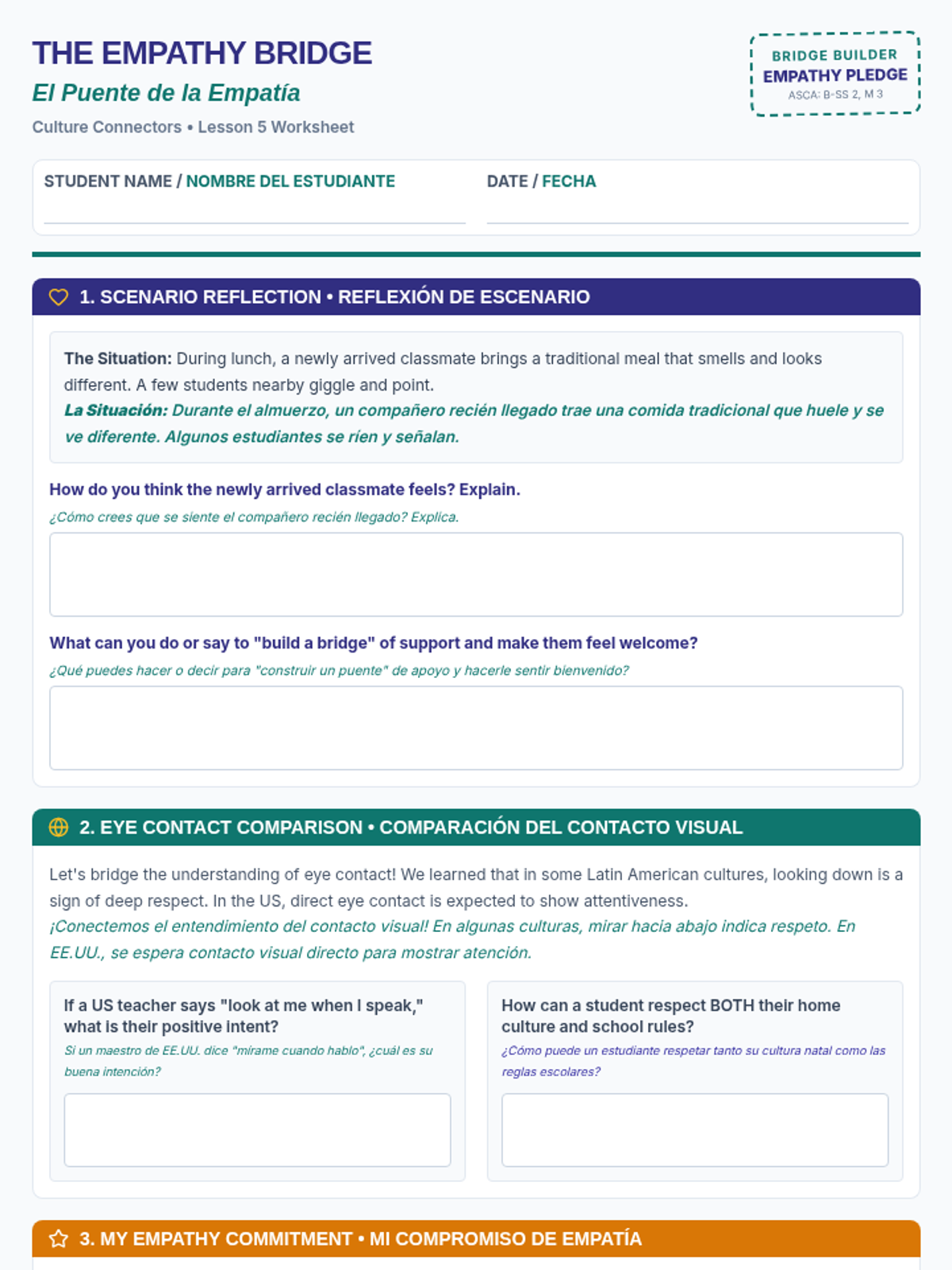
Explores perspective-taking, diversity, understanding cultural differences in expectations, and resolving social conflicts respectfully. Helps students find common ground while celebrating unique cultural identities.
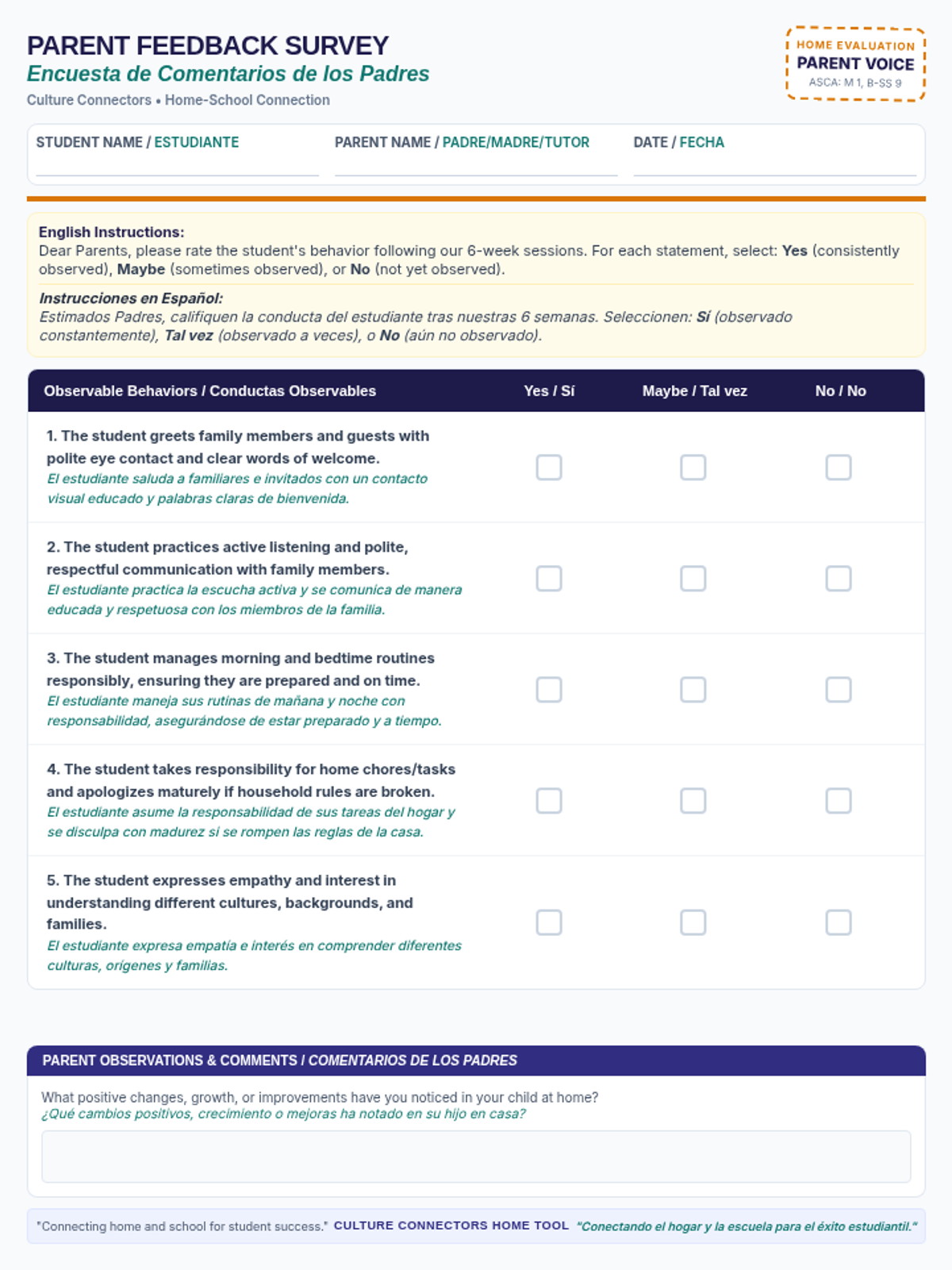
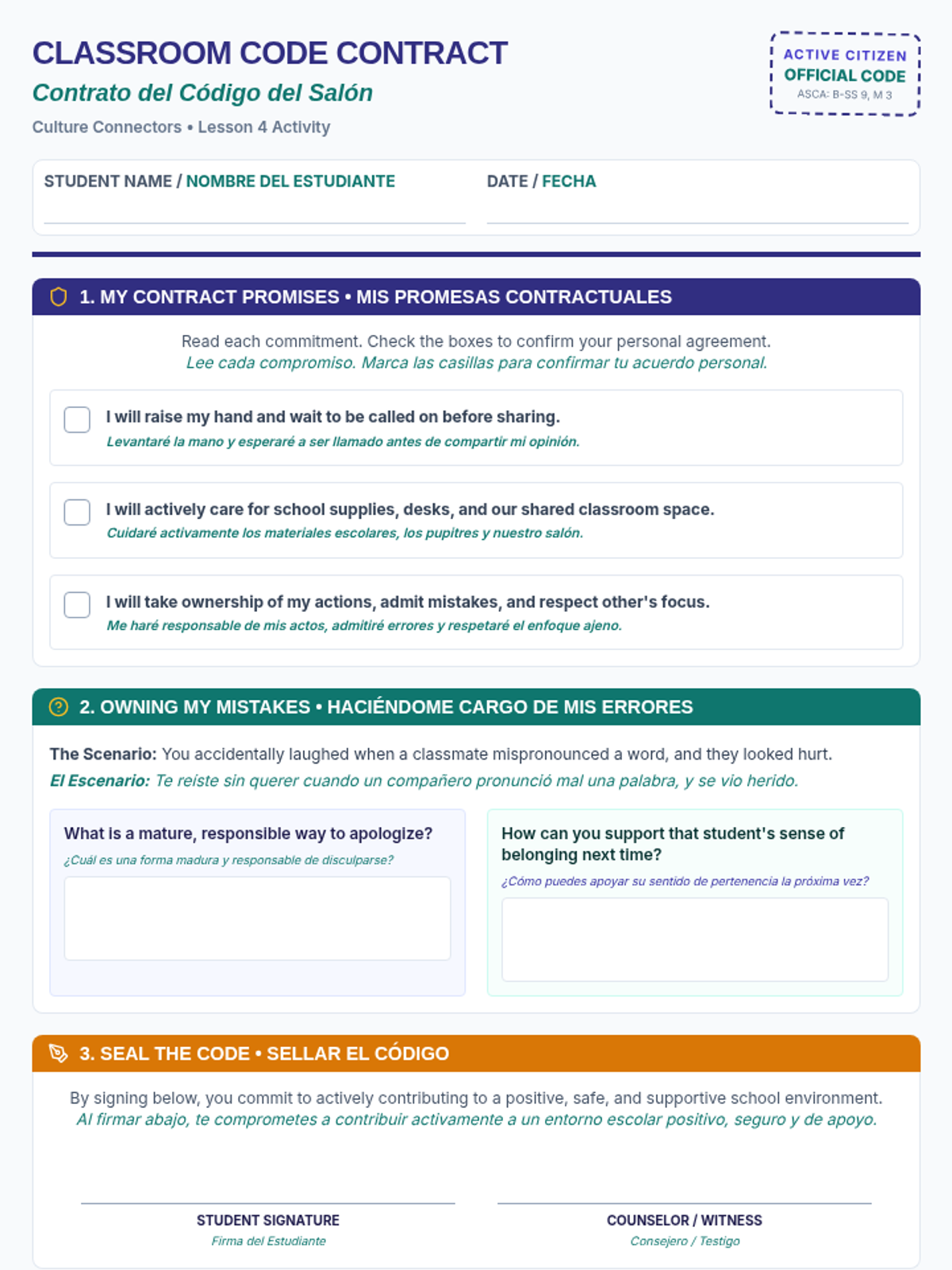
Guides students through classroom behavior expectations, raising hands, active participation, and taking ownership of school behavior to foster a strong sense of school community belonging.
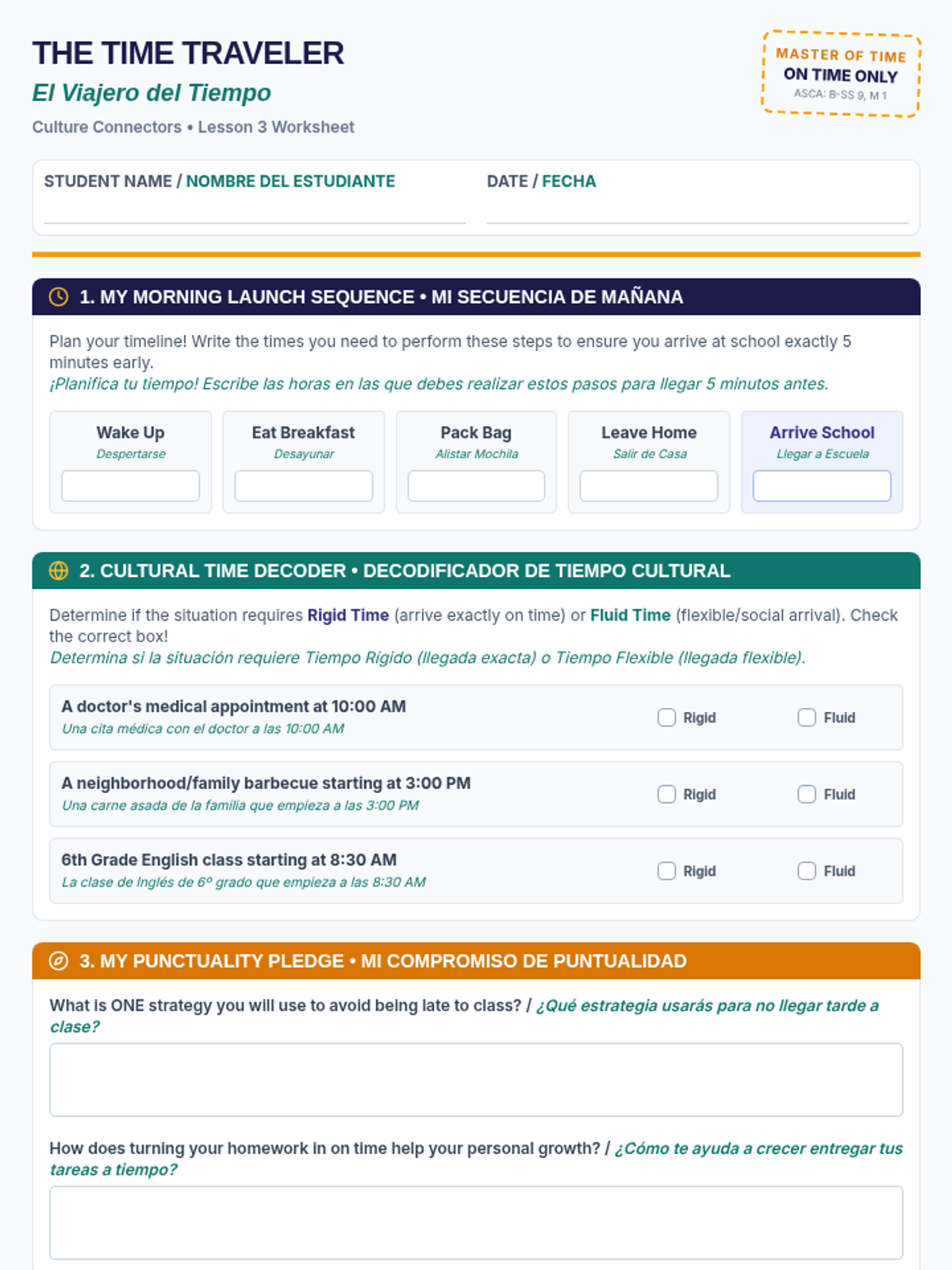
Covers punctuality, deadlines, and time expectations in academic and social settings. Helps students understand the cultural differences in time concepts while developing school success habits.
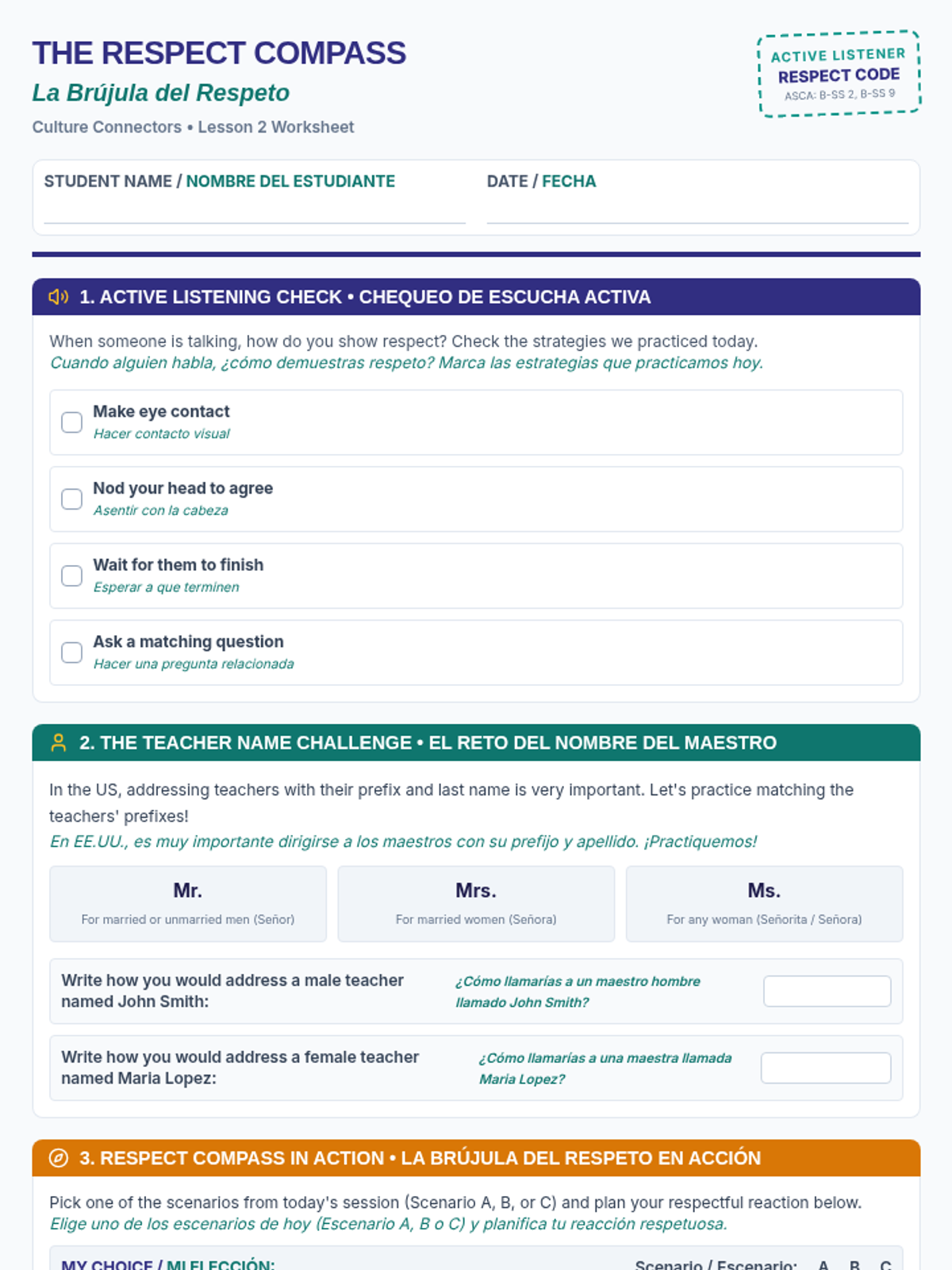
Explores active listening, manners, and showing respect to teachers, peers, and authority figures. Students practice bilingual courtesy terms and cross-cultural respectful communication.
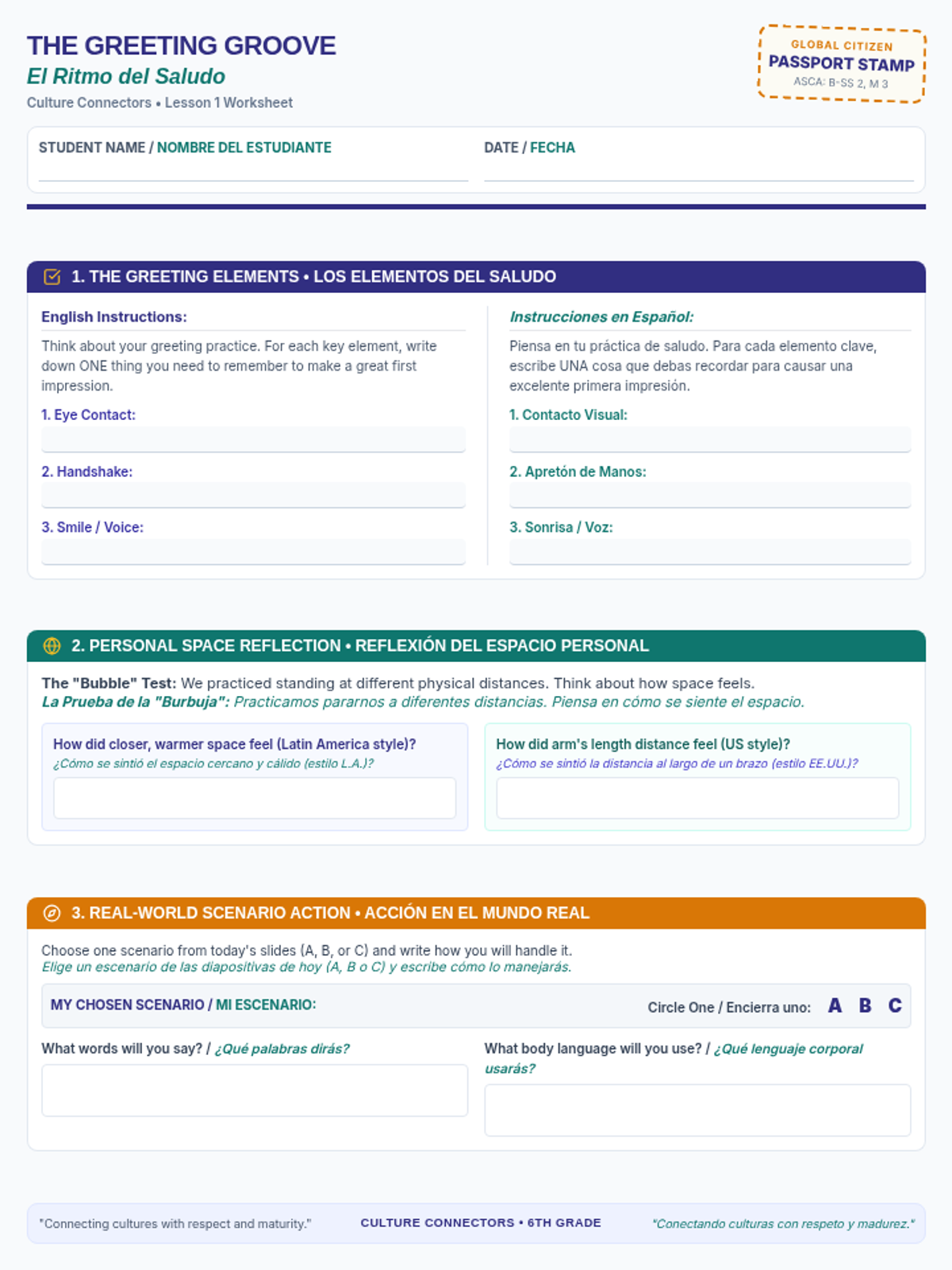
Focuses on greetings, eye contact, handshakes, and physical space in the US vs. Latin America. Students learn the mechanics of a positive first impression in various cultural contexts.
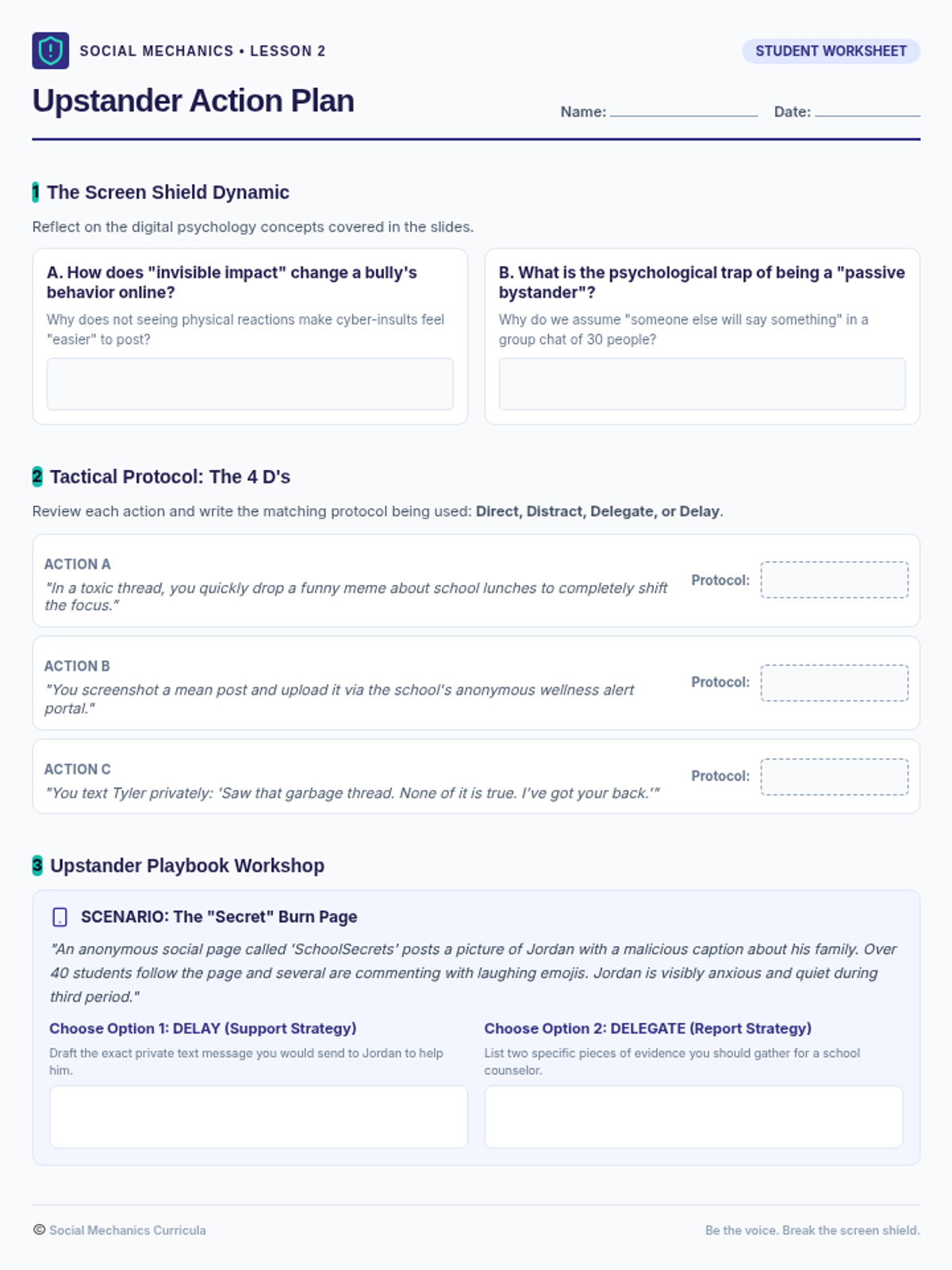
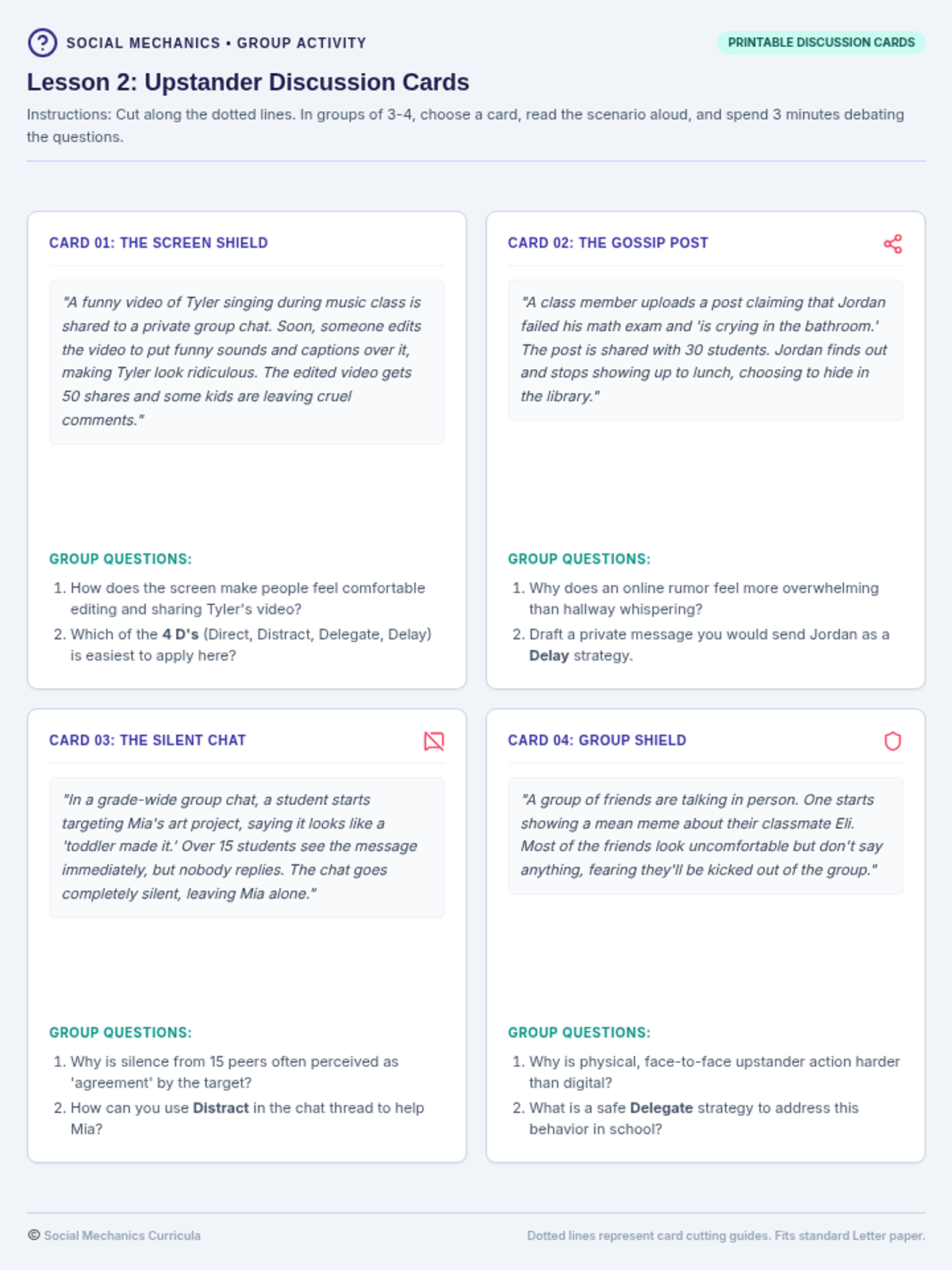
Focuses on the dynamics of cyberbullying, social media responsibility, and the critical transition from silent bystander to proactive upstander.
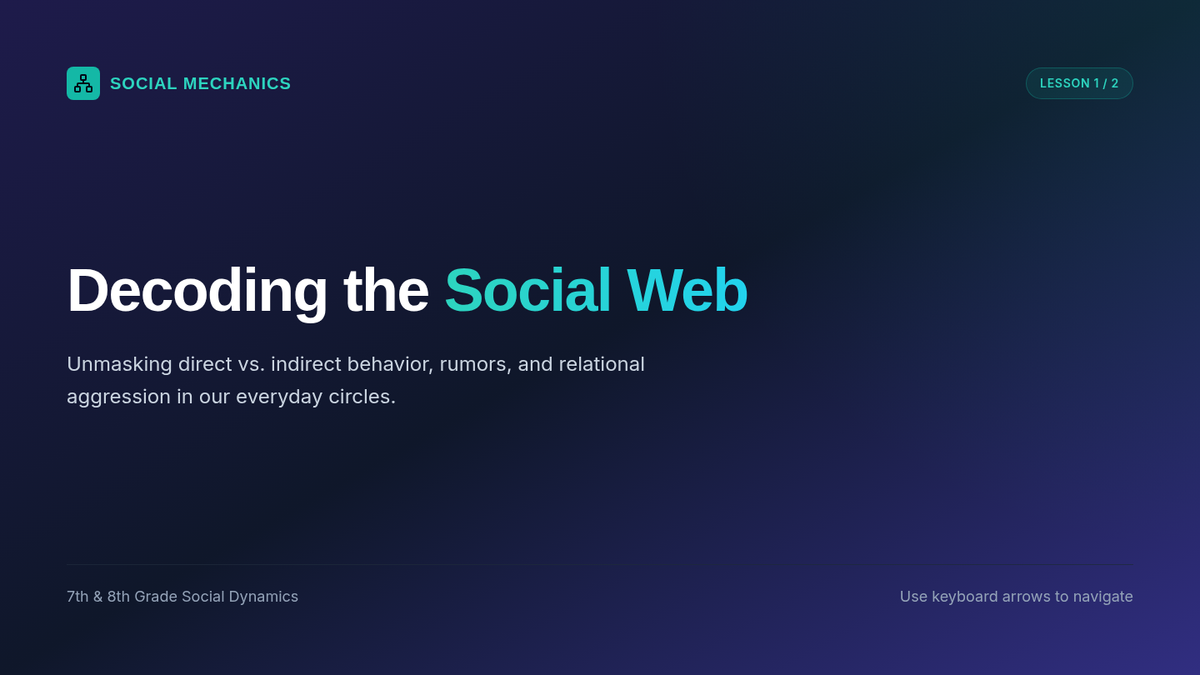
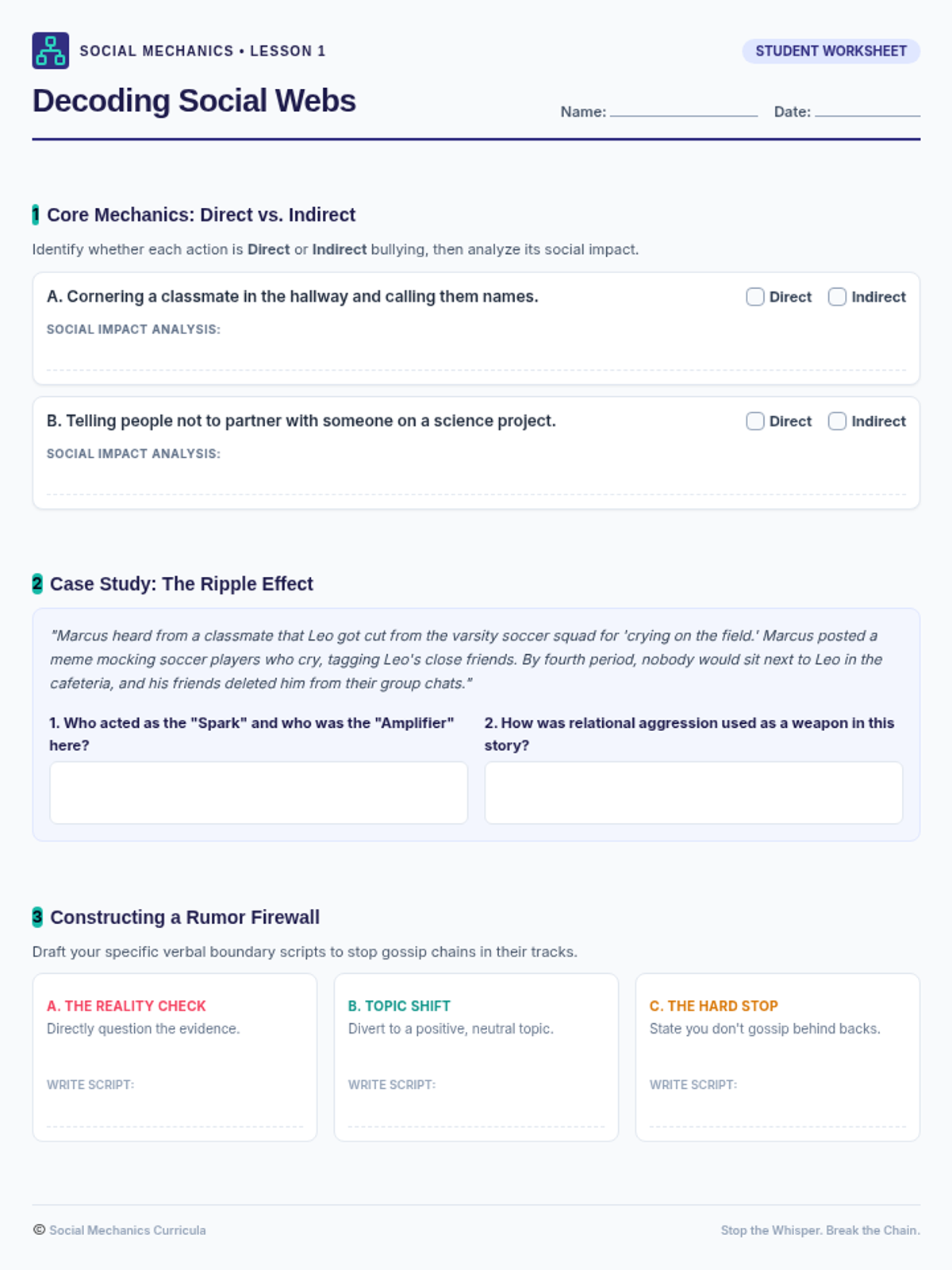
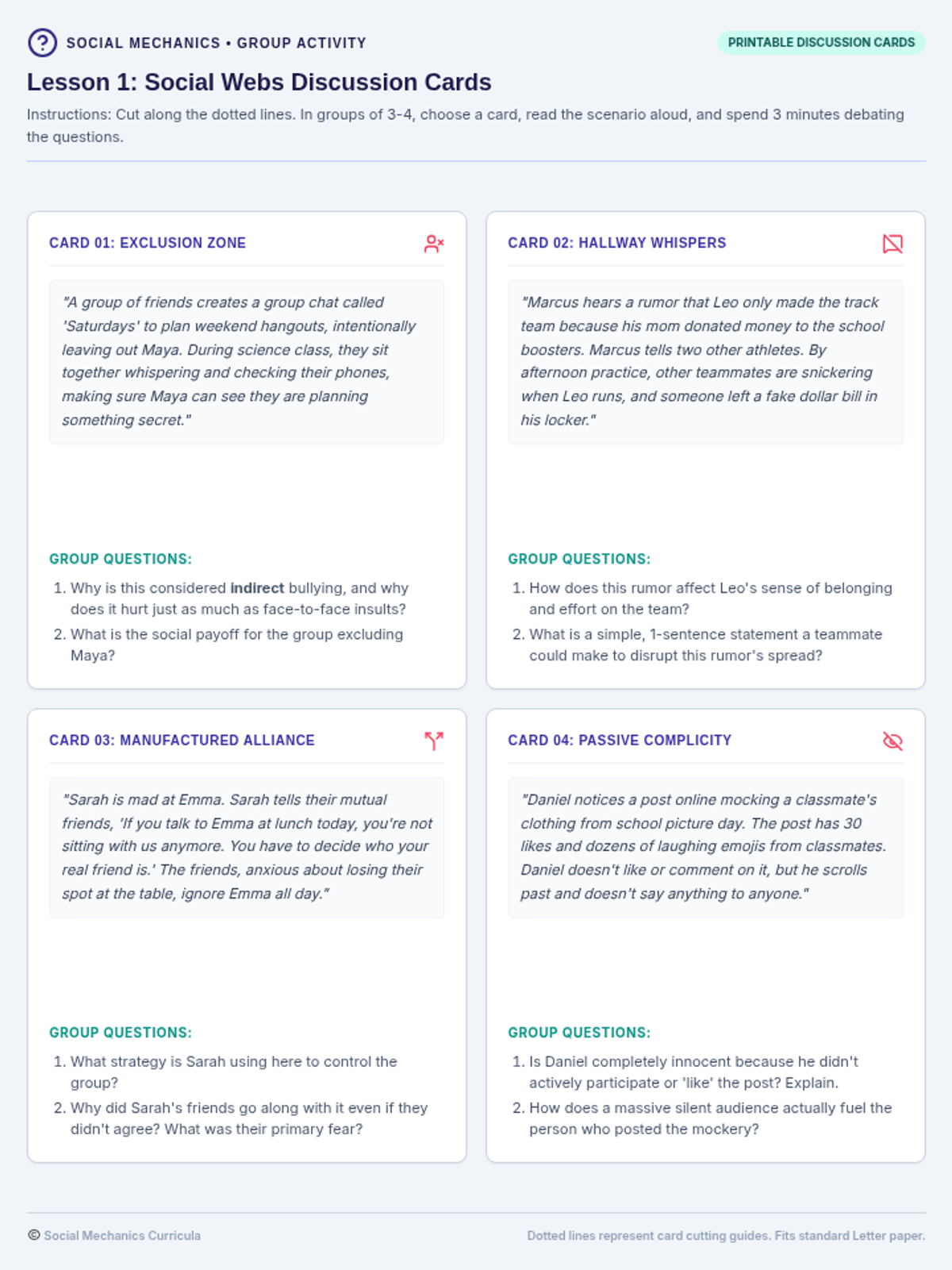
Focuses on identifying direct vs. indirect bullying, recognizing relational aggression and rumors, and understanding how these behaviors impact middle school communities in person and online.
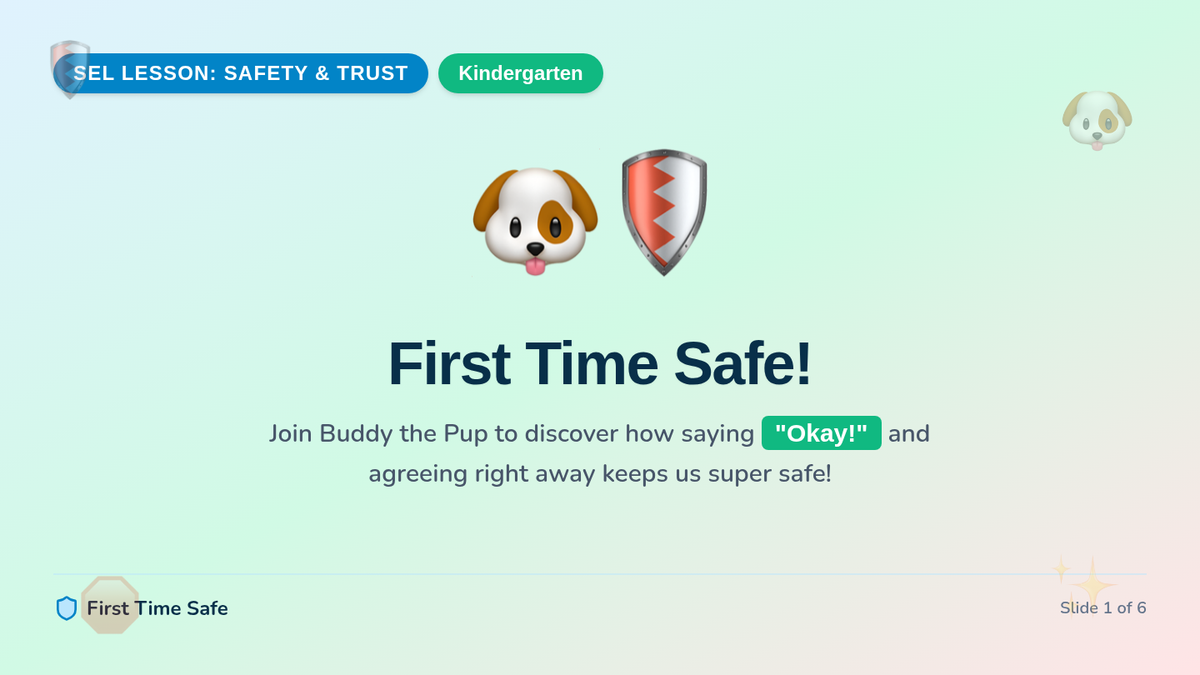
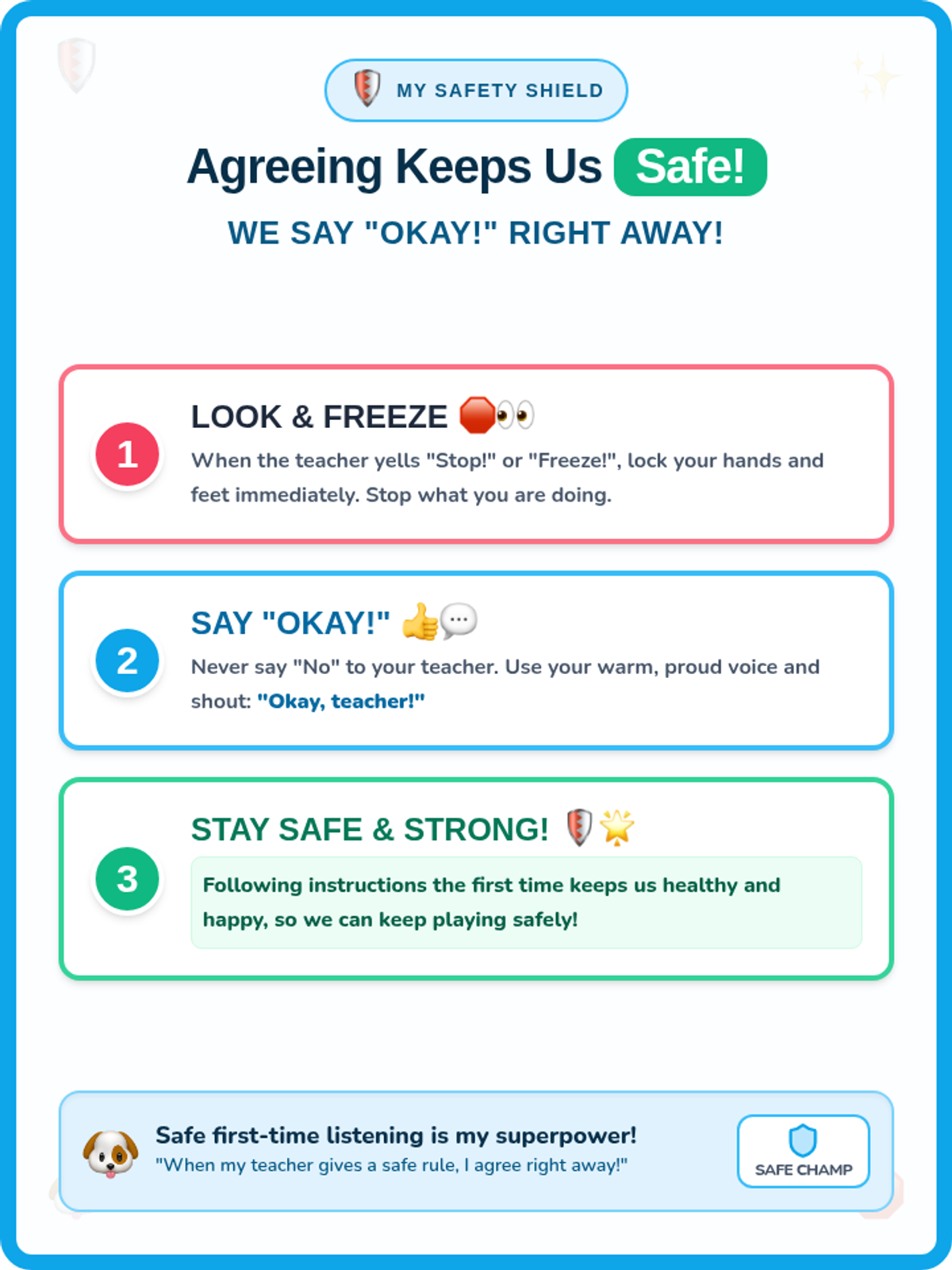
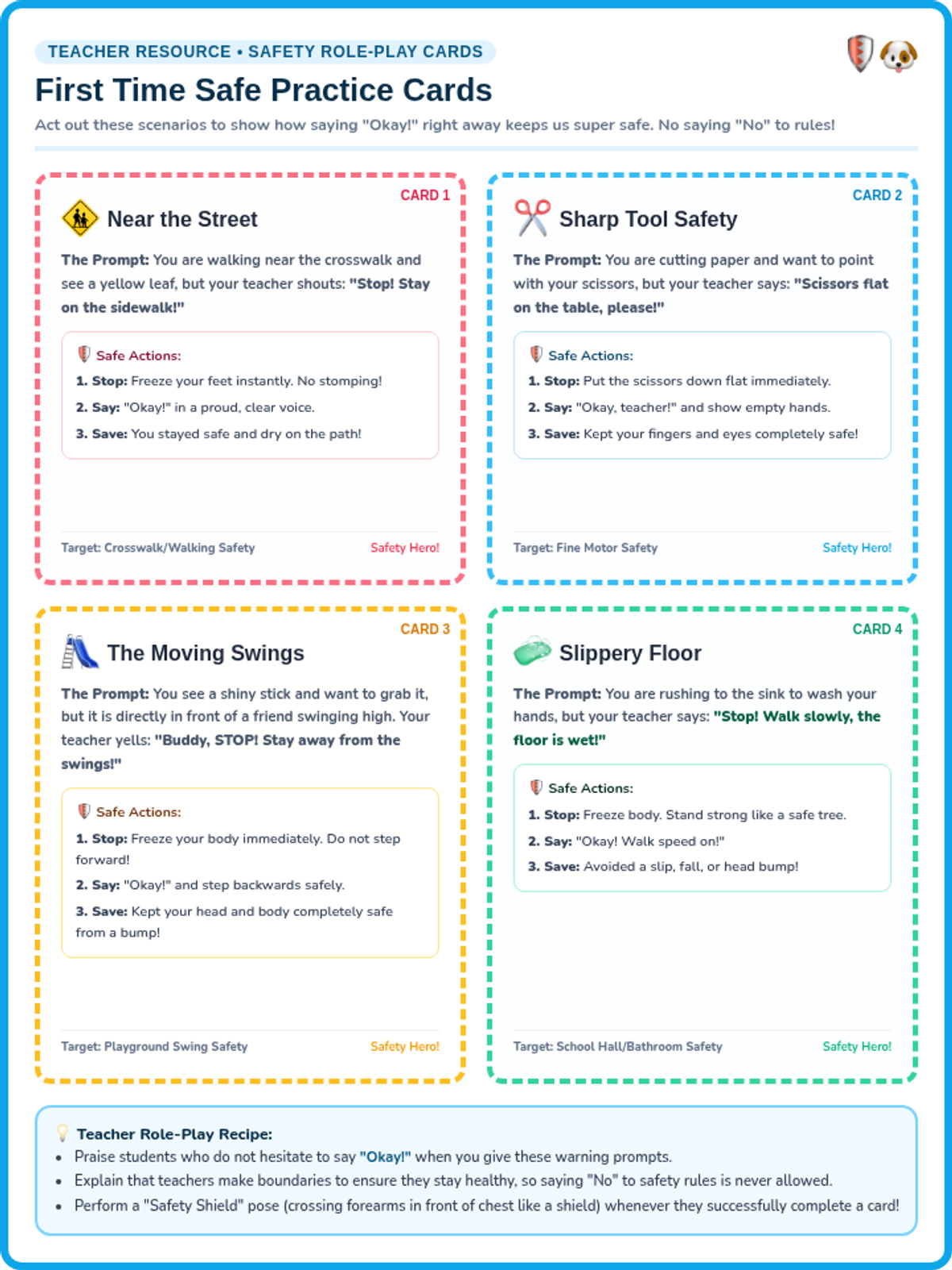
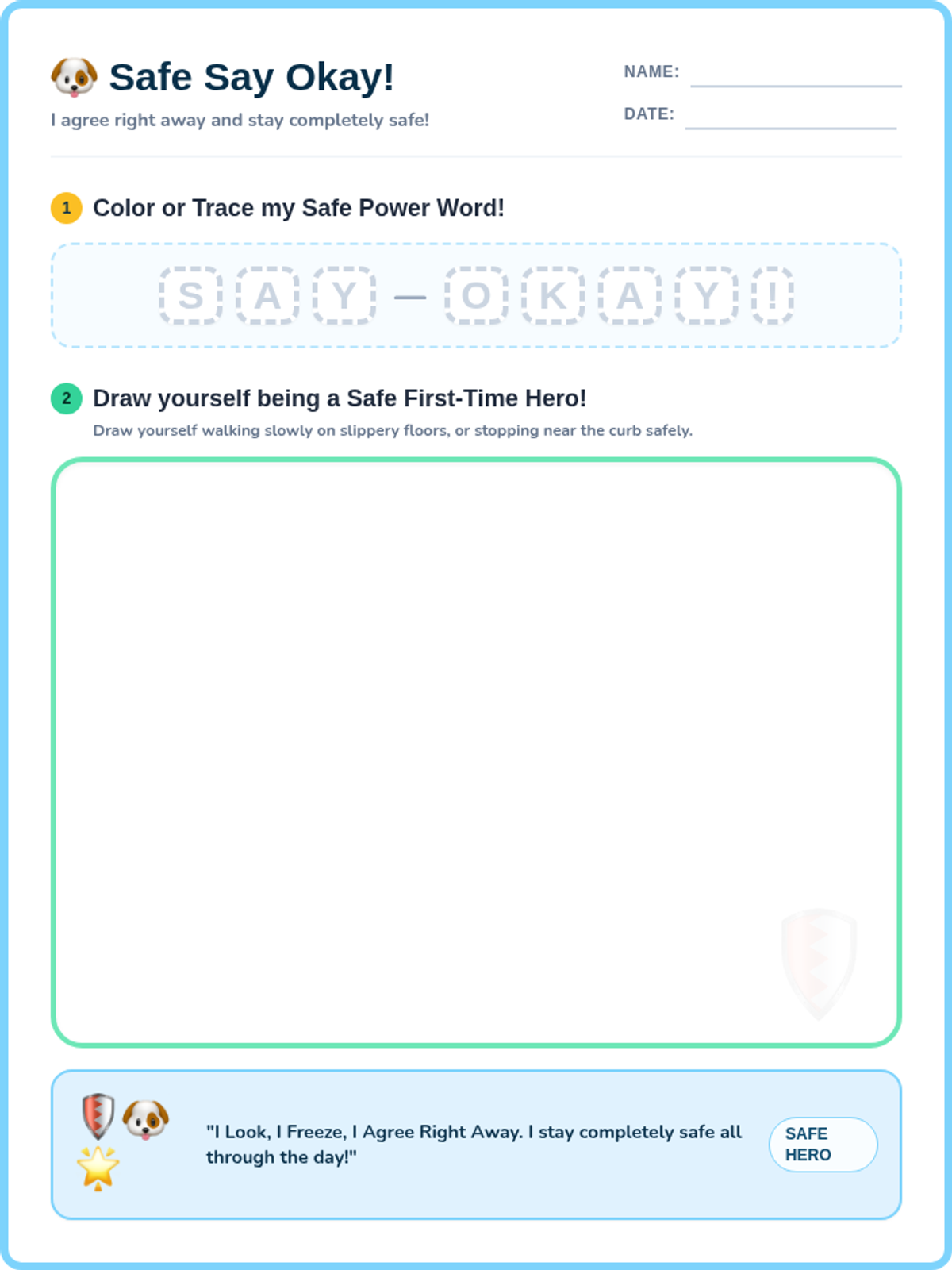
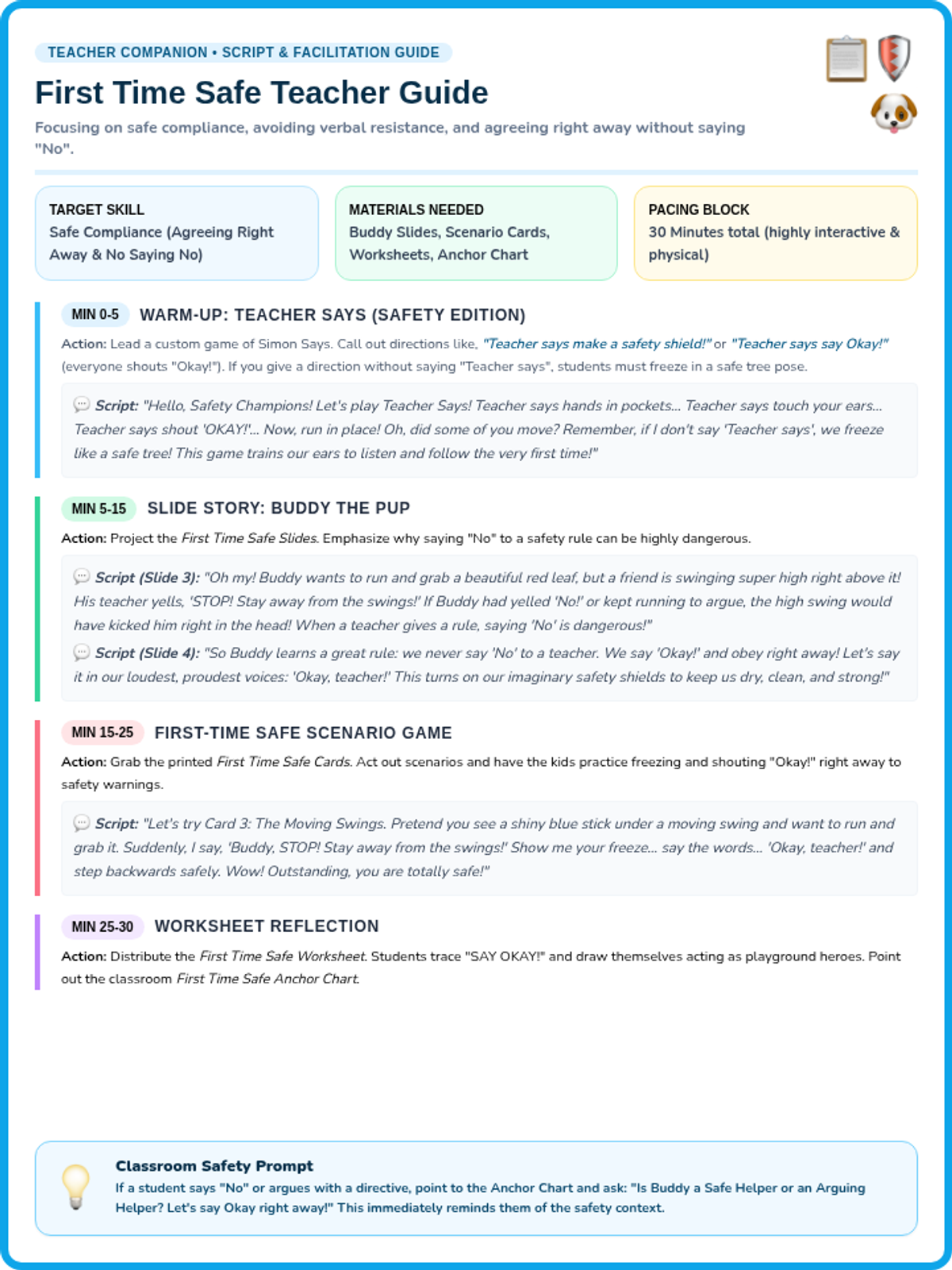
A 30-minute social-emotional learning lesson focusing on the safety and importance of following a teacher's directions right away without saying 'No'. Includes a slide story about Buddy the Pup, a visual safety anchor chart, printable role-play cards, a student tracing sheet, and a teacher guide.
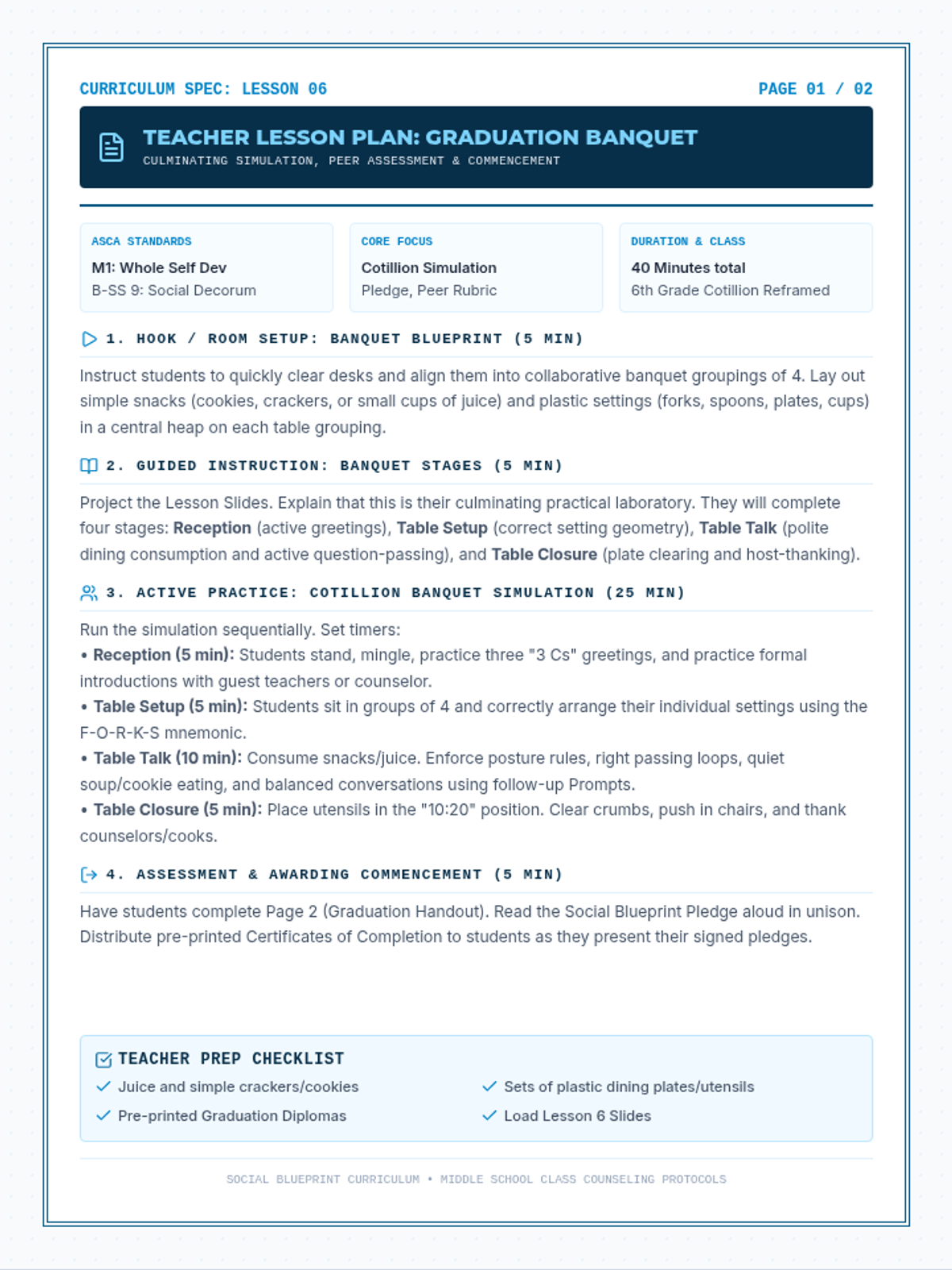
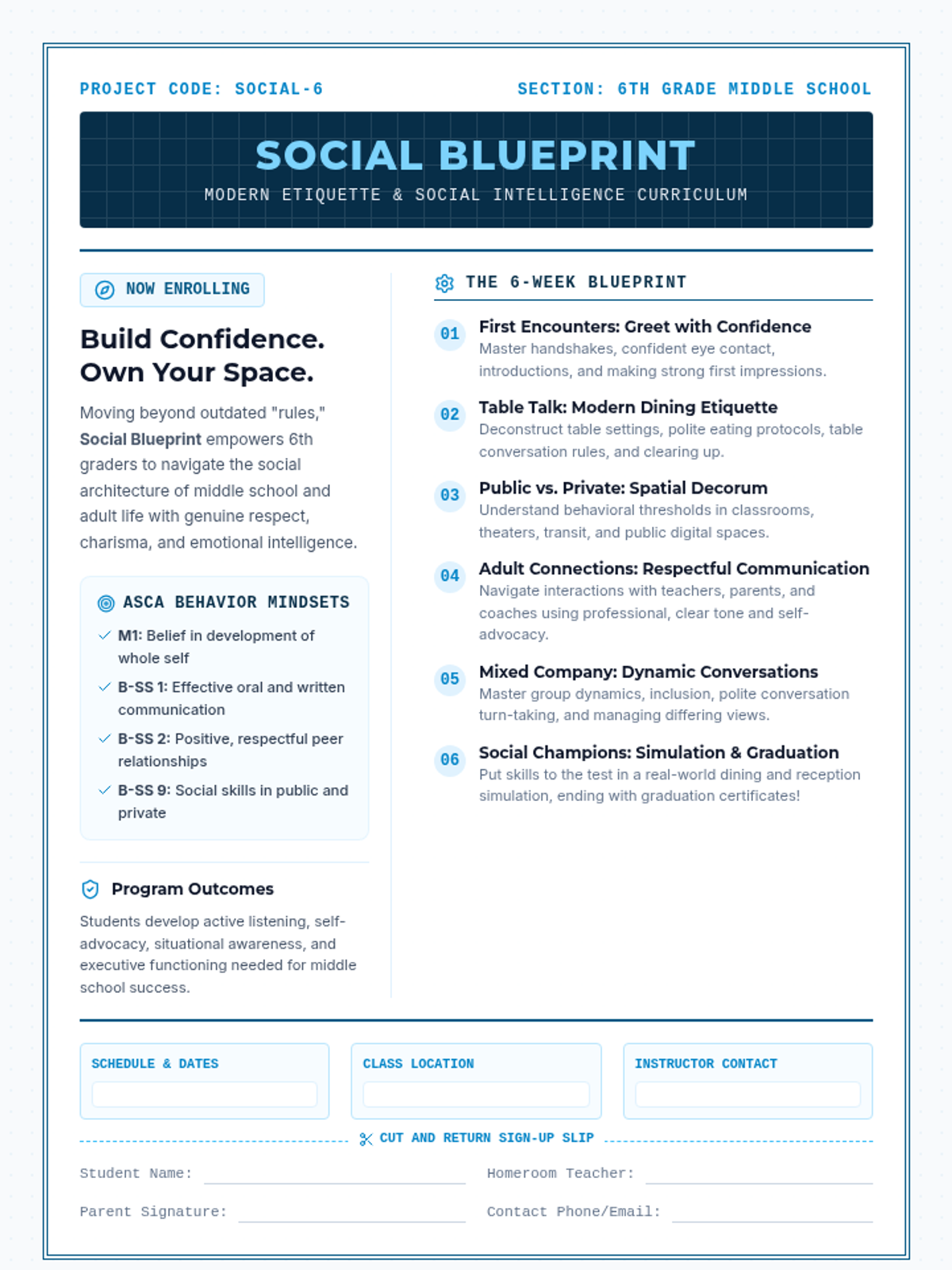
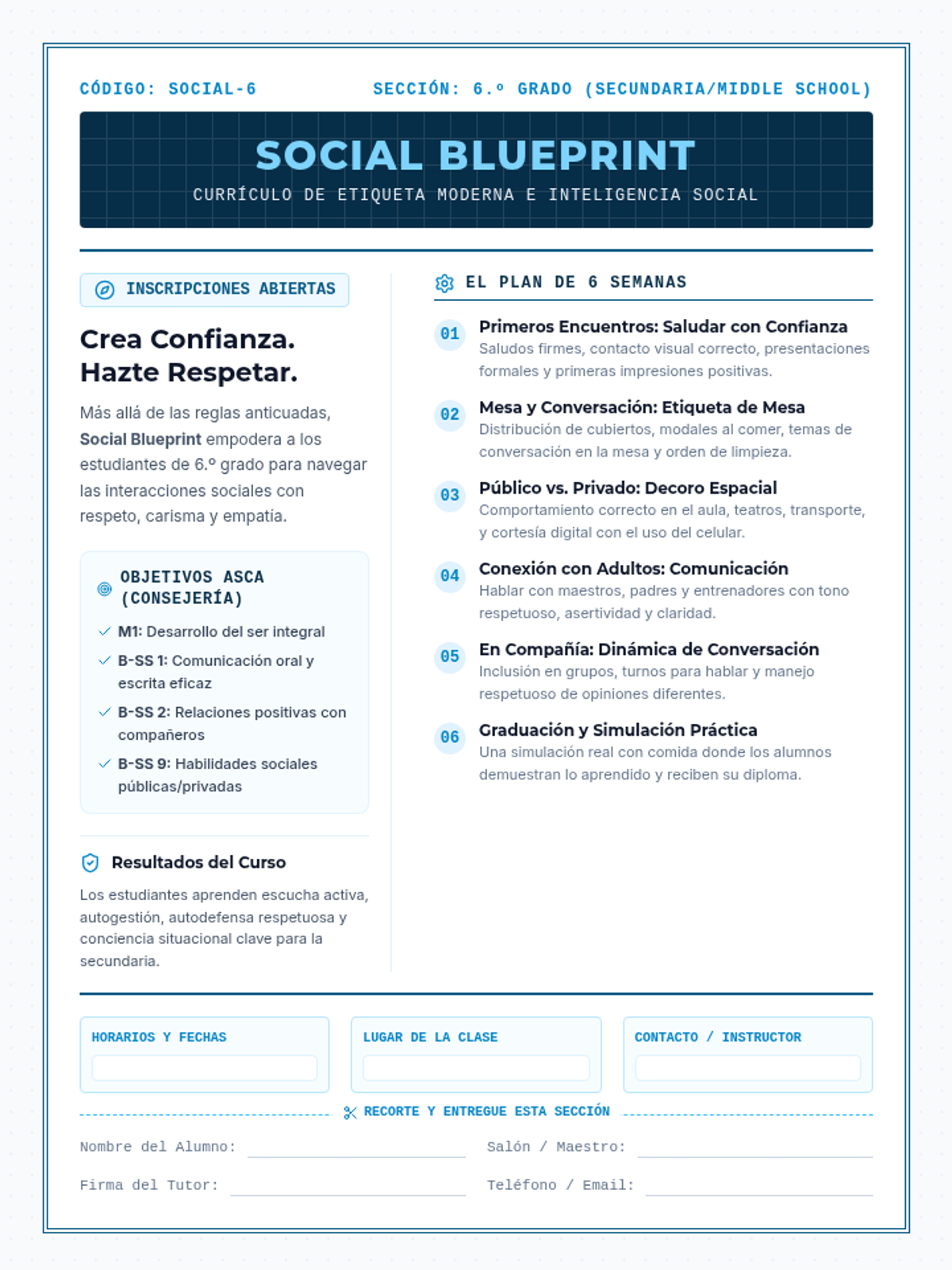
A culminating interactive simulation and graduation ceremony where students showcase all skills learned (dining, introductions, public deportment) and receive certificates of completion.
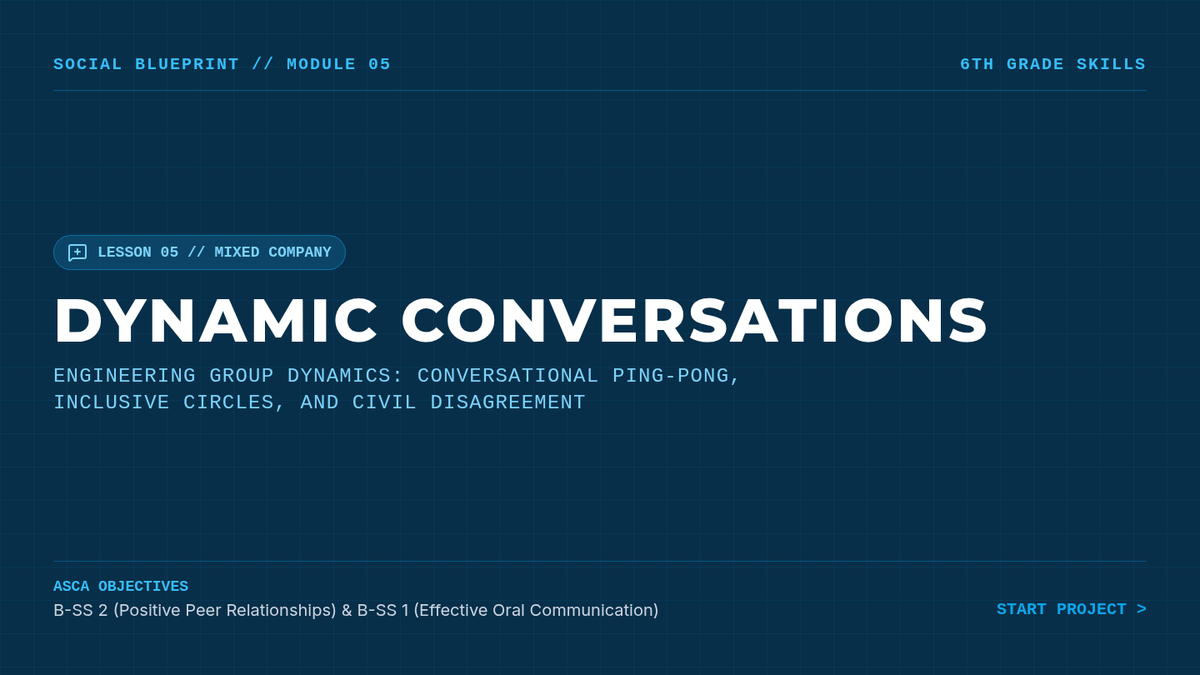
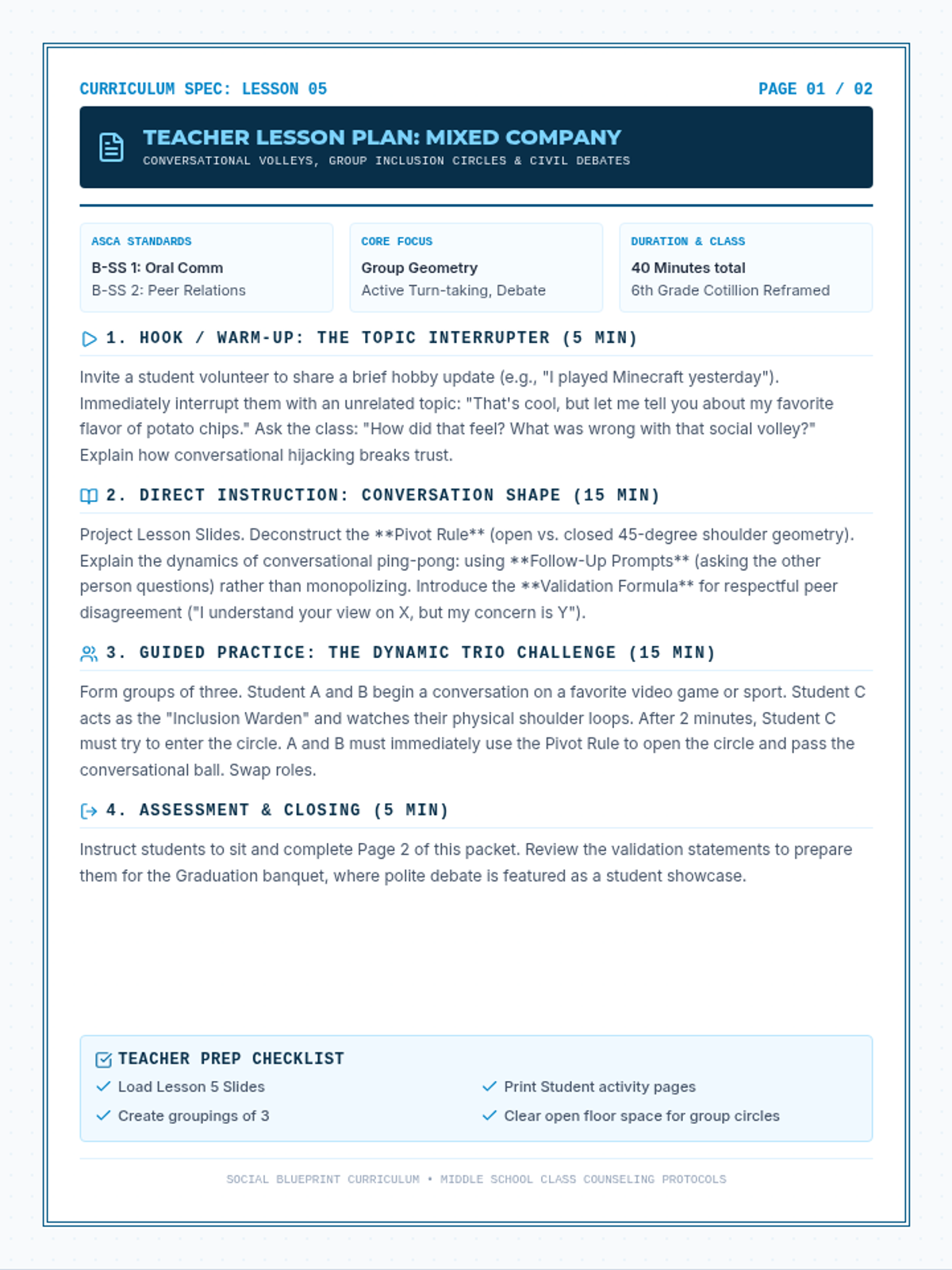
Students explore social dynamics in mixed peer groups, practicing inclusive conversations, group introductions, handling differing opinions, and the art of polite conversational turn-taking.
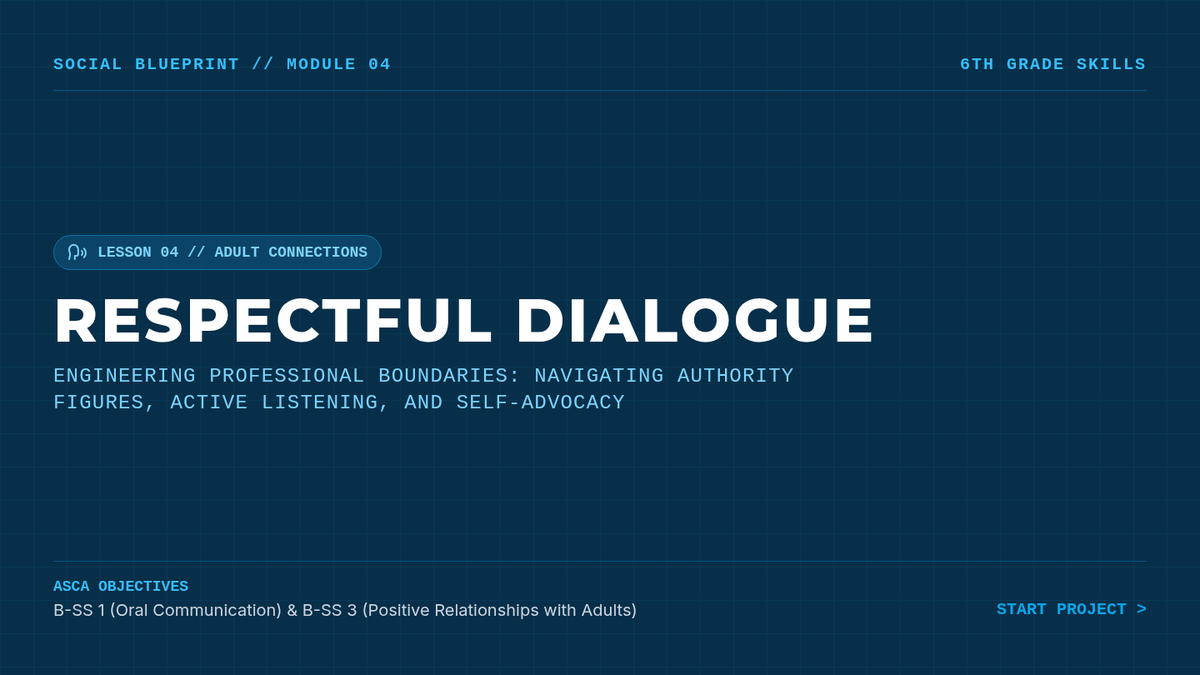
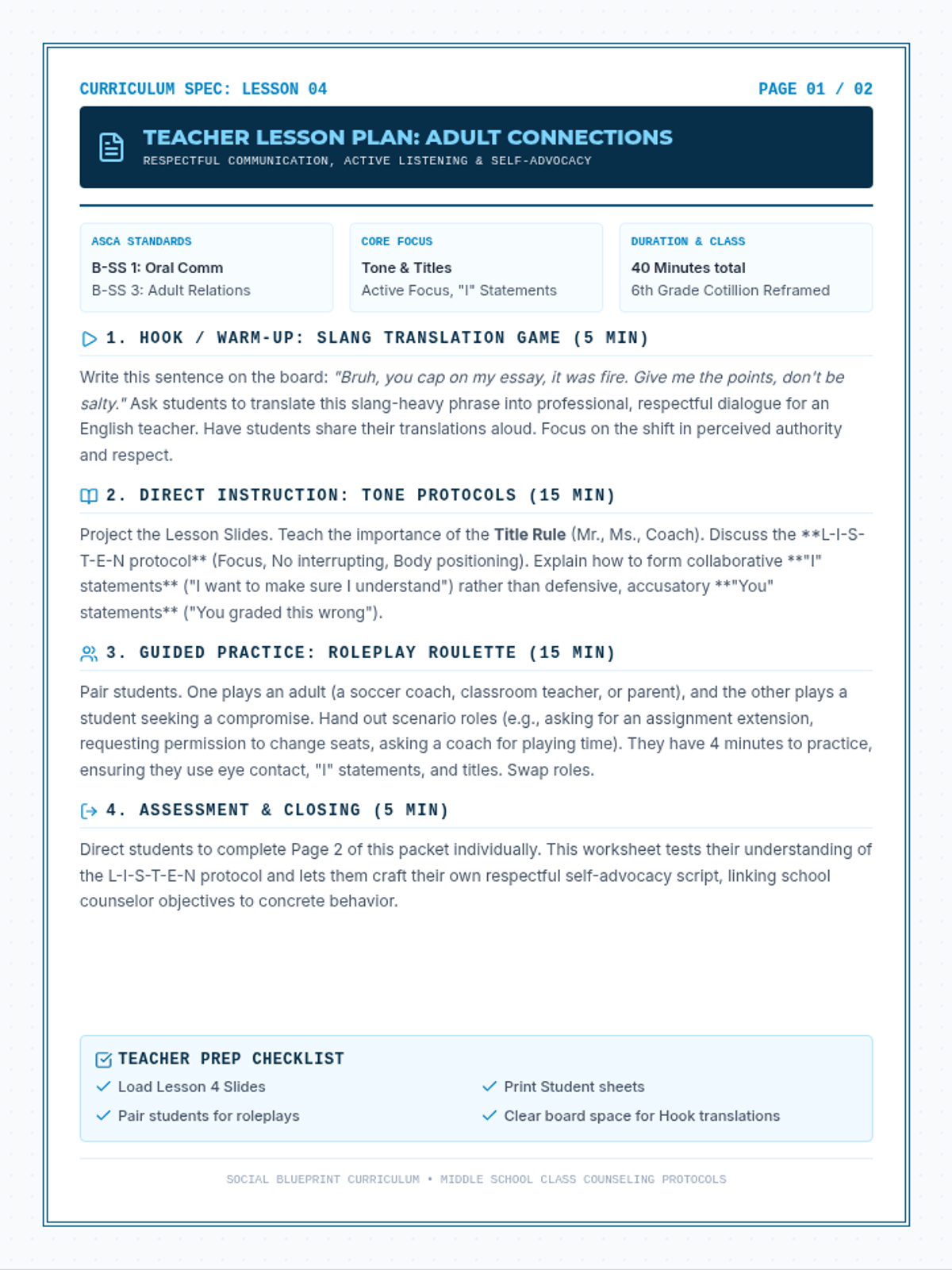
Students develop skills for respectful communication with teachers, parents, coaches, and administrators, focusing on tone of voice, active listening, requesting help, and body language.
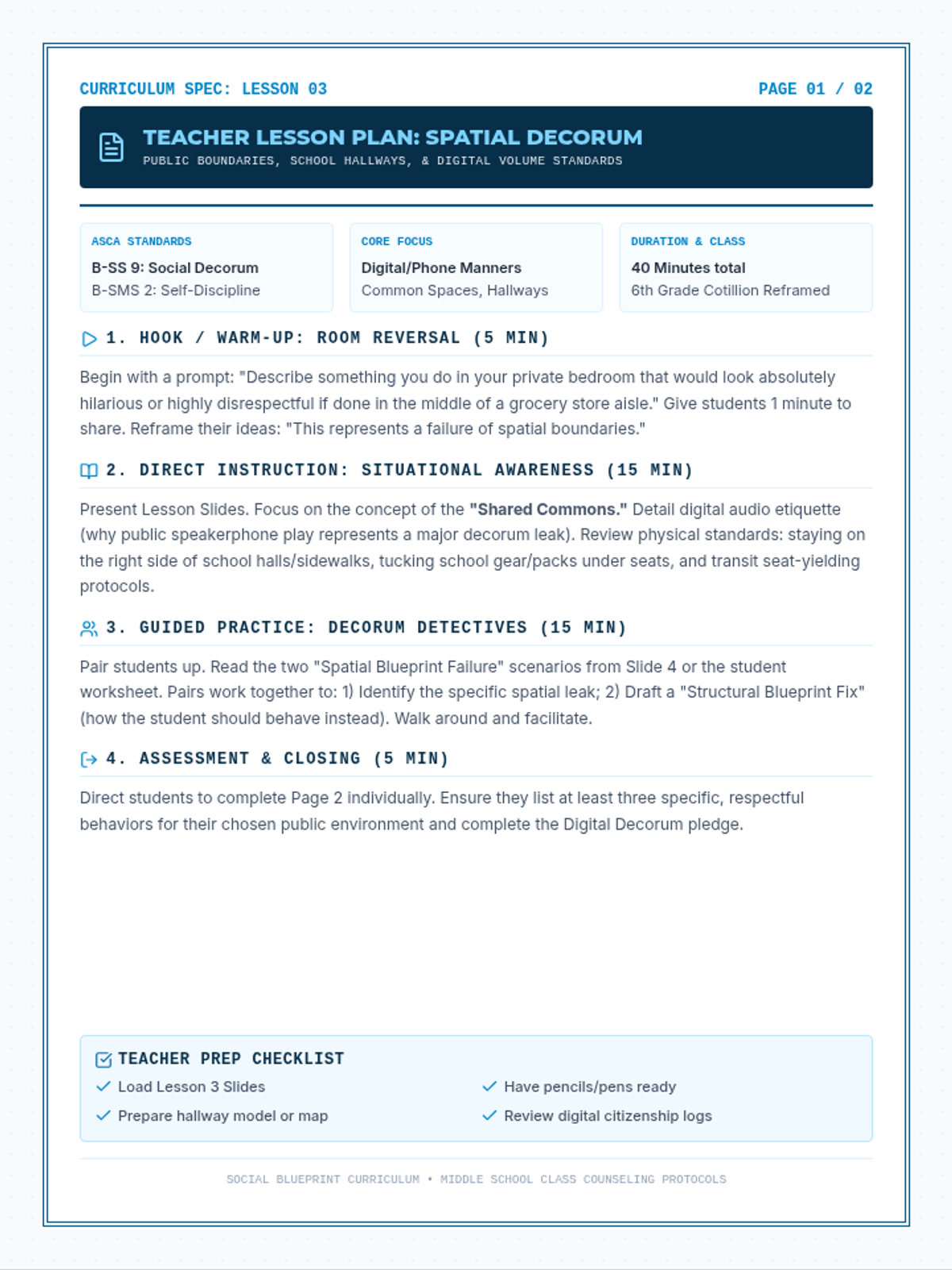
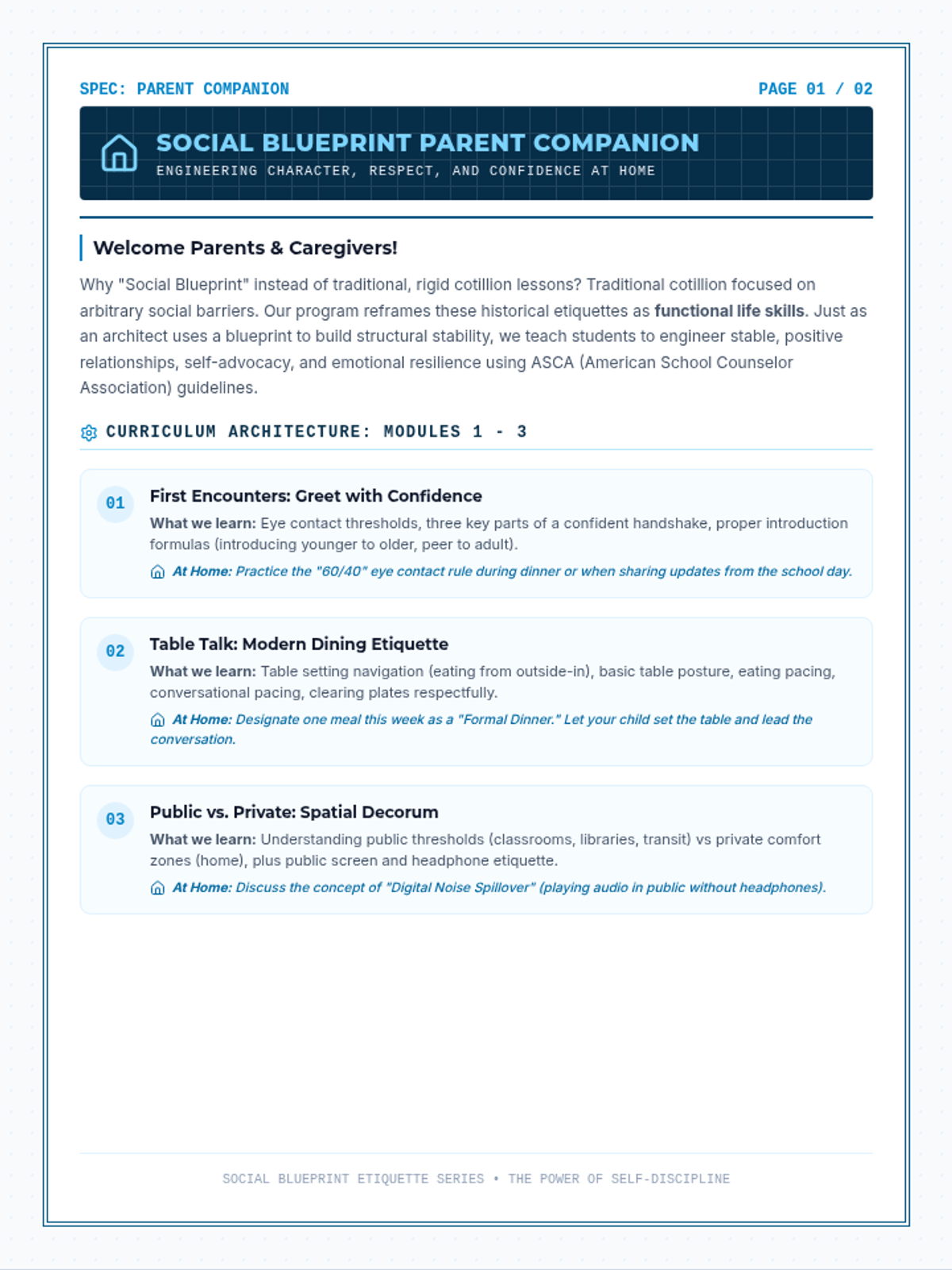
Students distinguish between appropriate behaviors in public spaces (classrooms, theaters, transit, stores) versus private spaces (home), including public digital etiquette and respect for shared spaces.
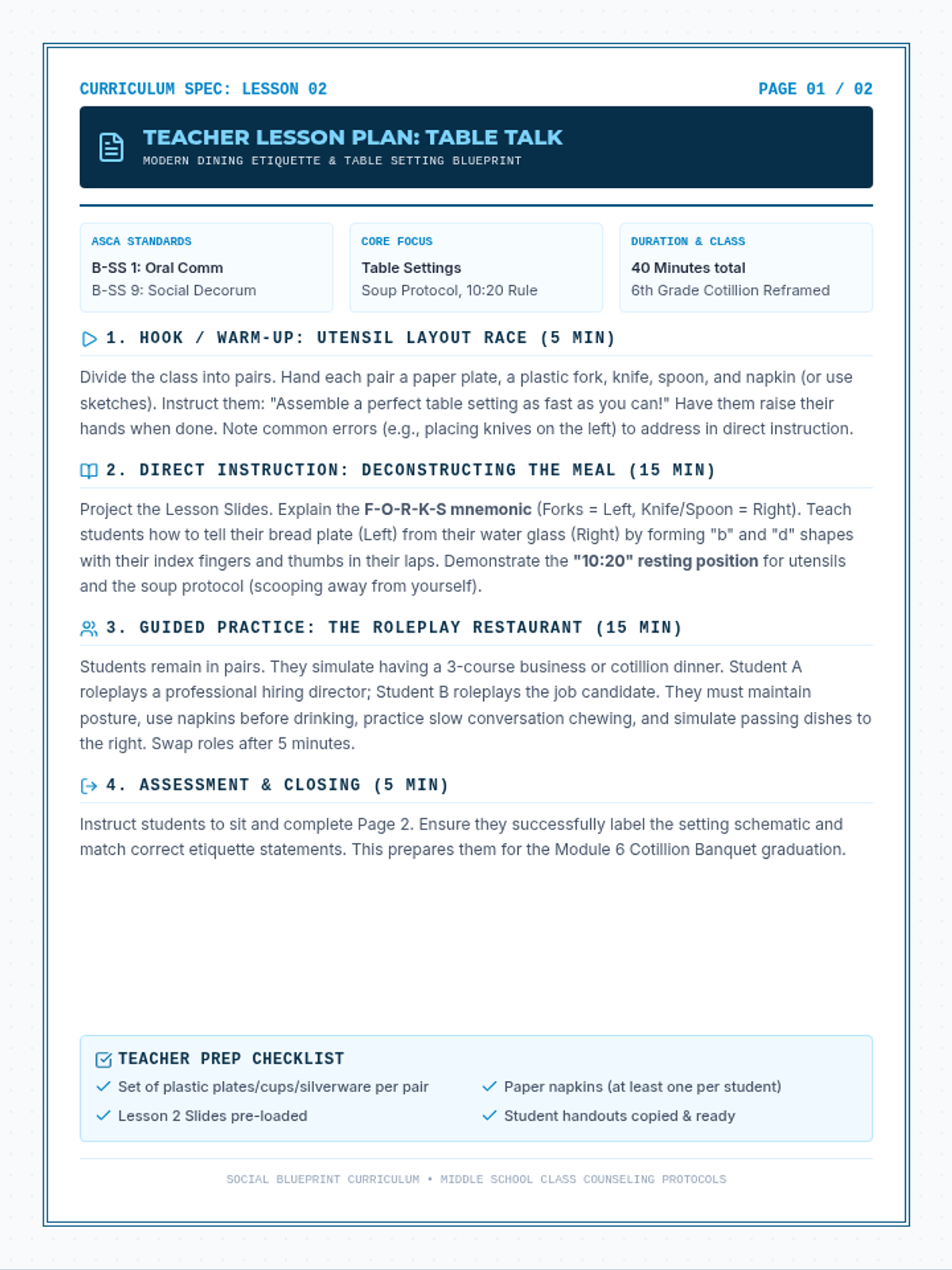
Students master table manners and dining etiquette, exploring the anatomy of a standard table setting, polite eating habits, conversational respect, and table cleanup.
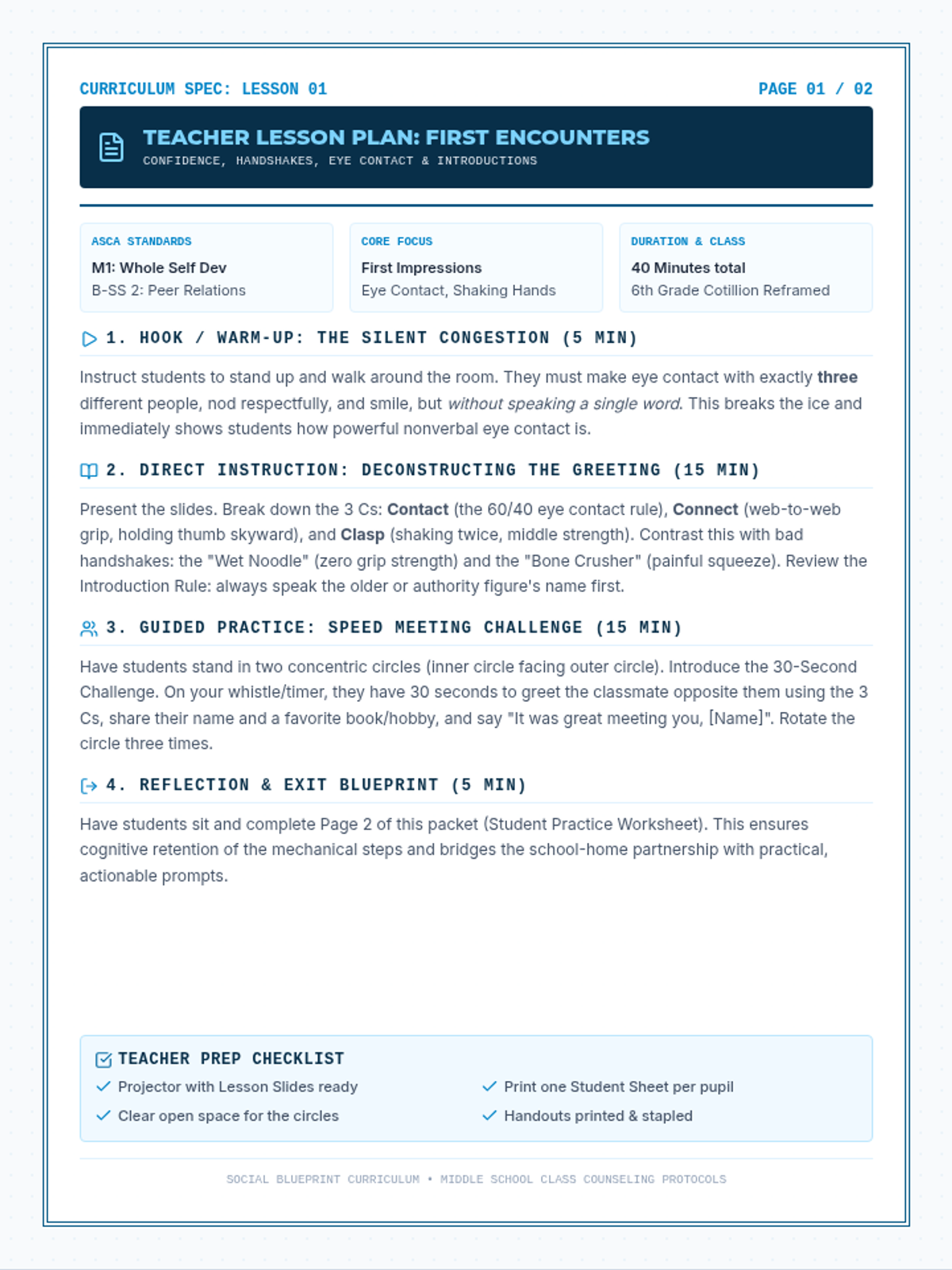
Students learn the art of first impressions, including confident introductions, appropriate eye contact, firm handshakes, and representing themselves respectfully to adults and peers alike.
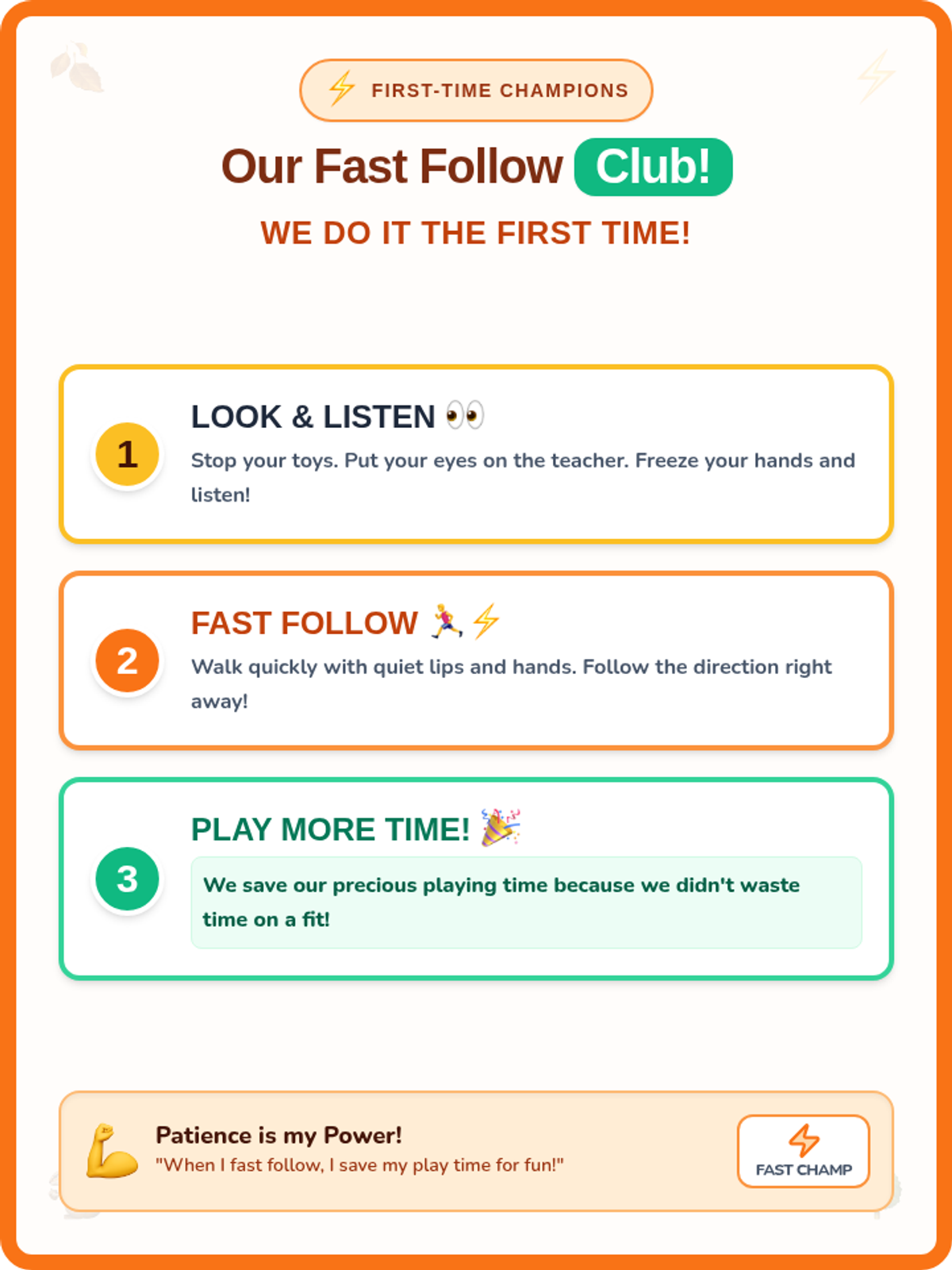
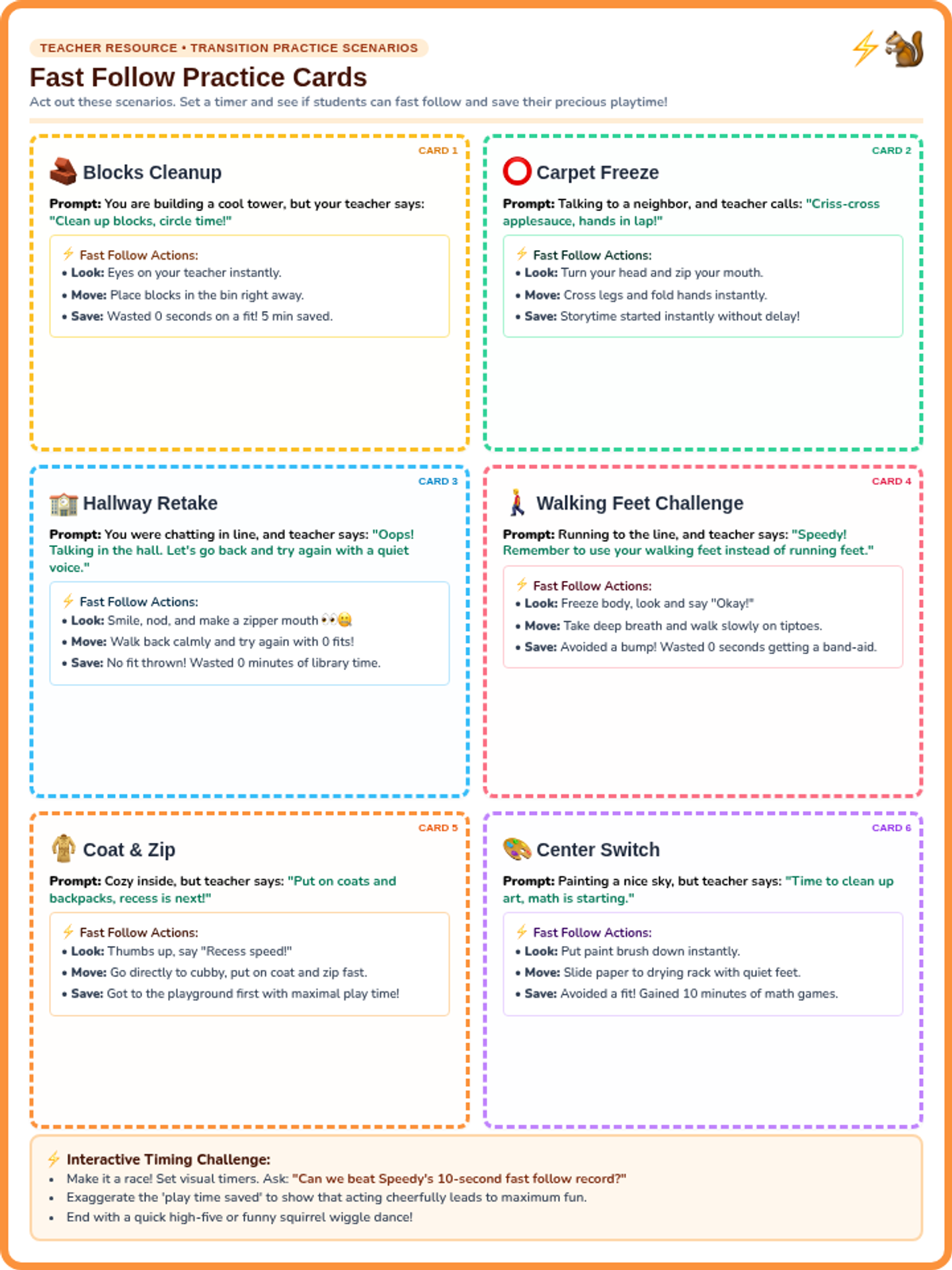
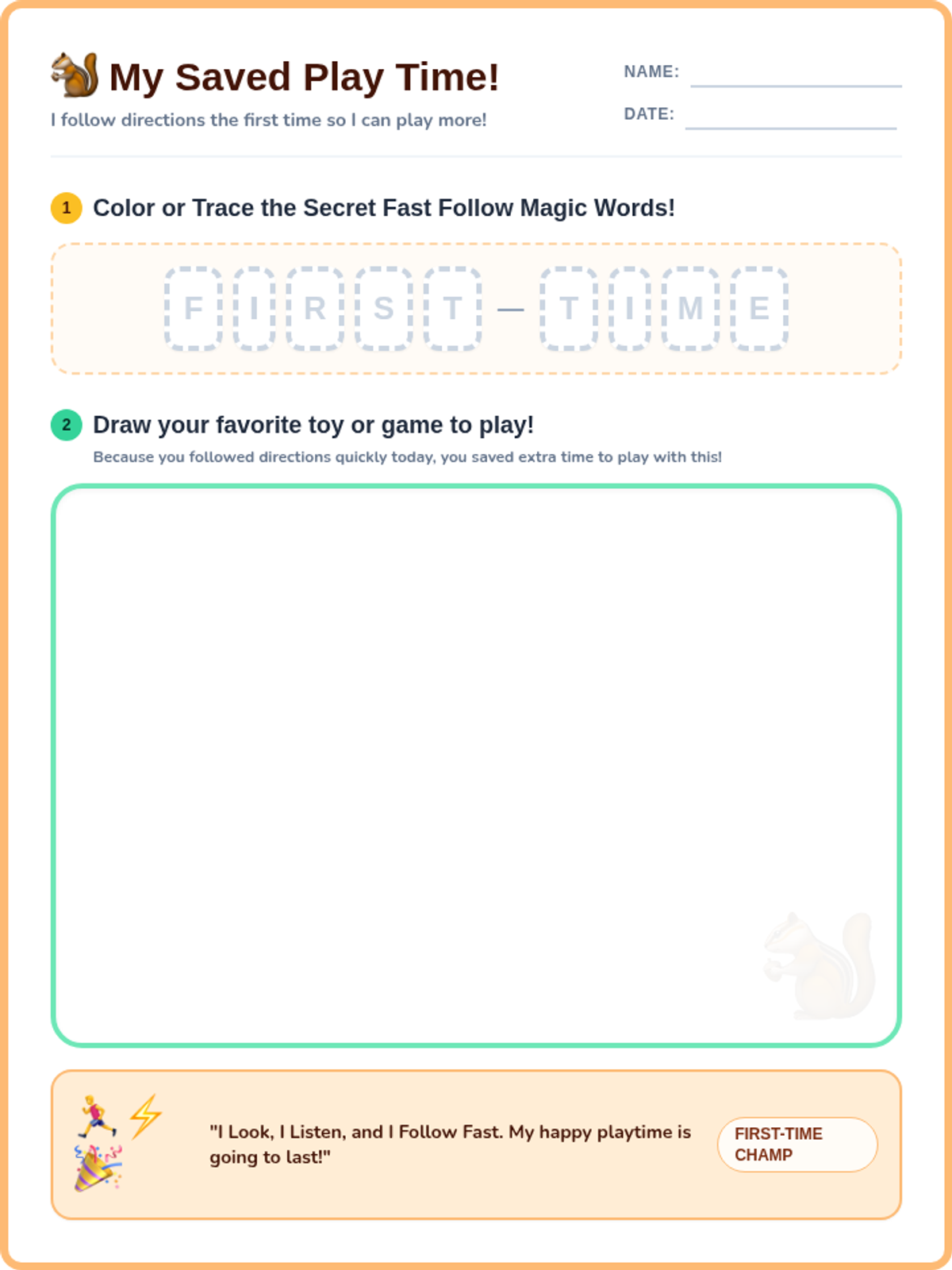
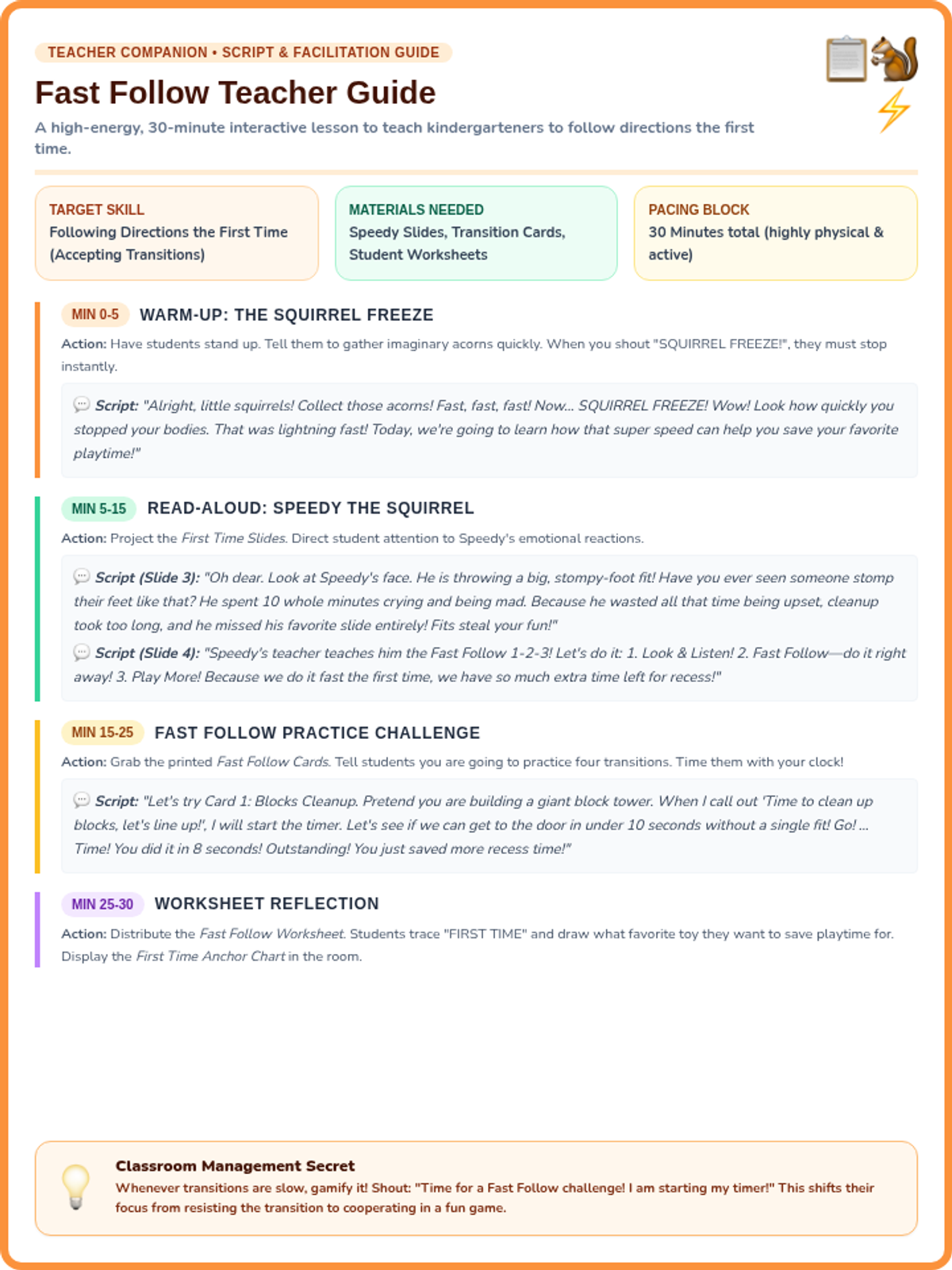
A 30-minute social-emotional learning lesson teaching kindergarteners how to follow directions the first time. It teaches them that following instructions quickly means they have more time for play and fun, rather than wasting time on big fits. Includes slides, games, an anchor chart, a worksheet, and a teacher guide.
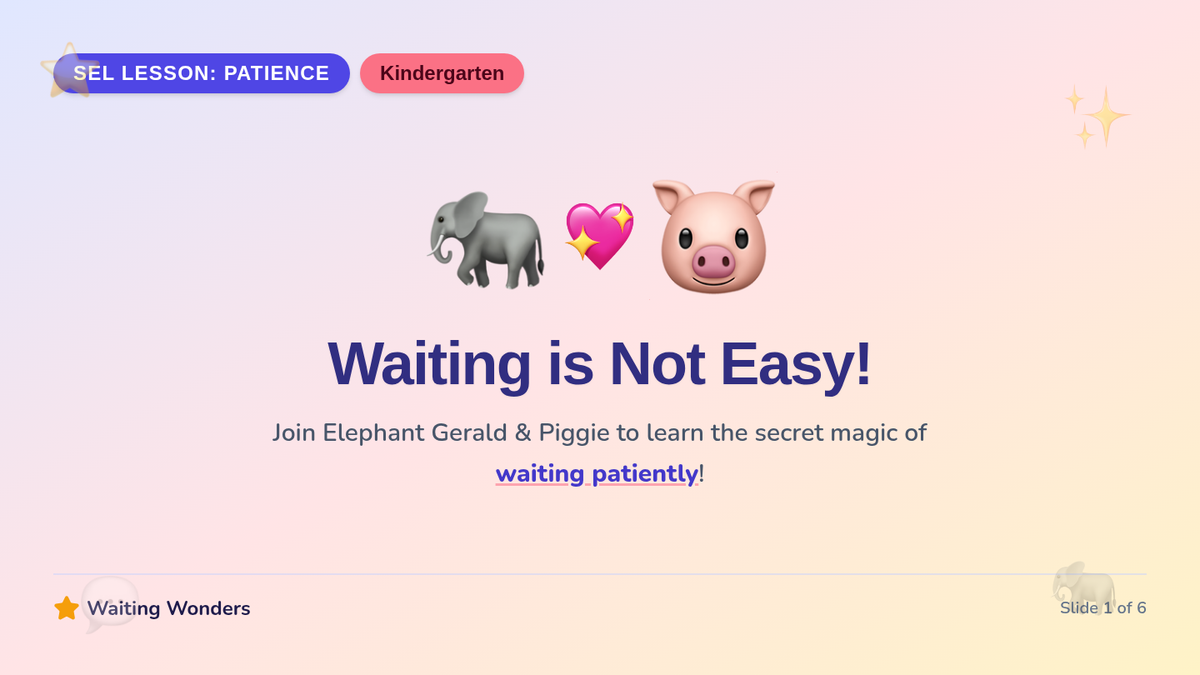
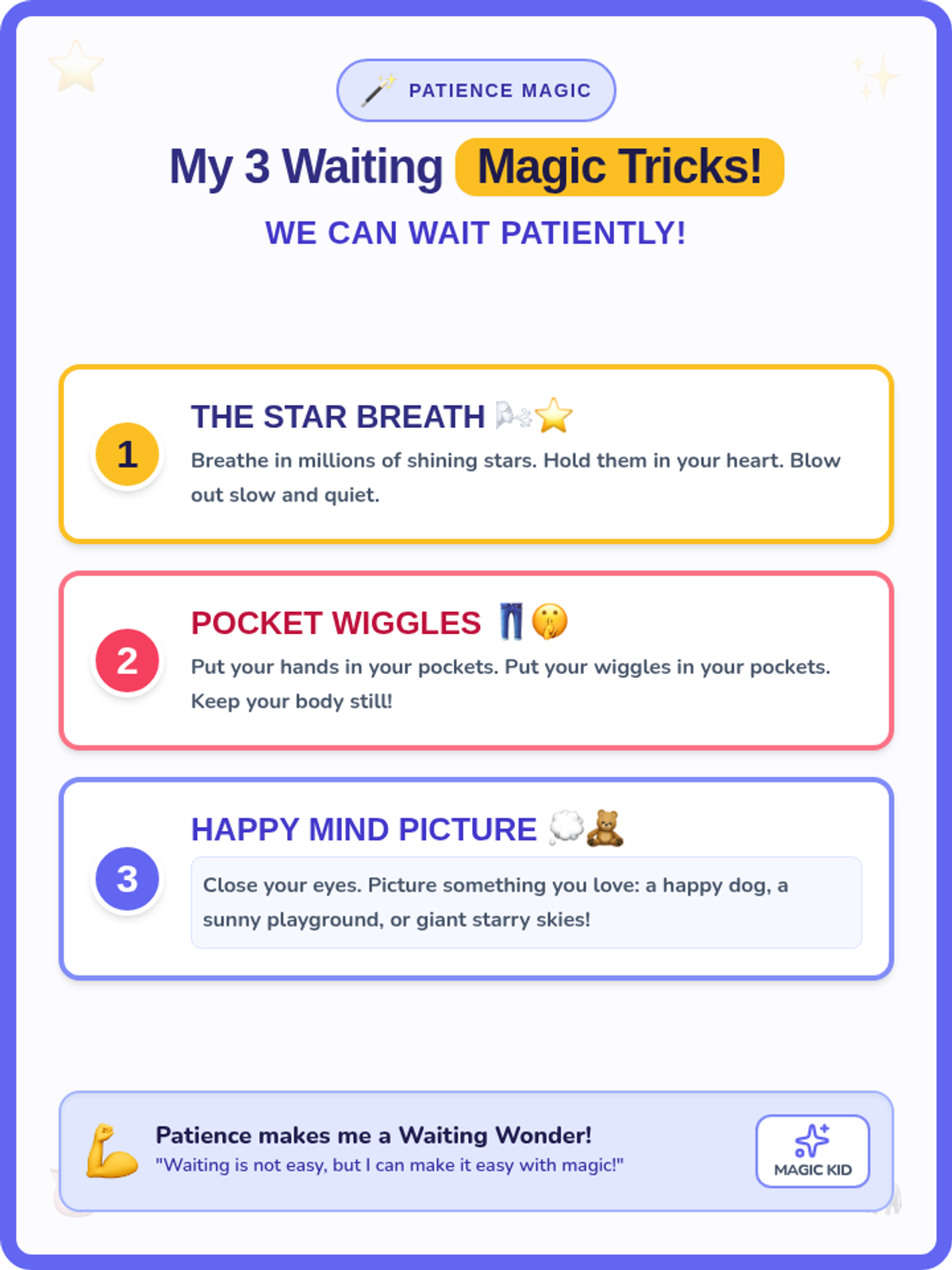
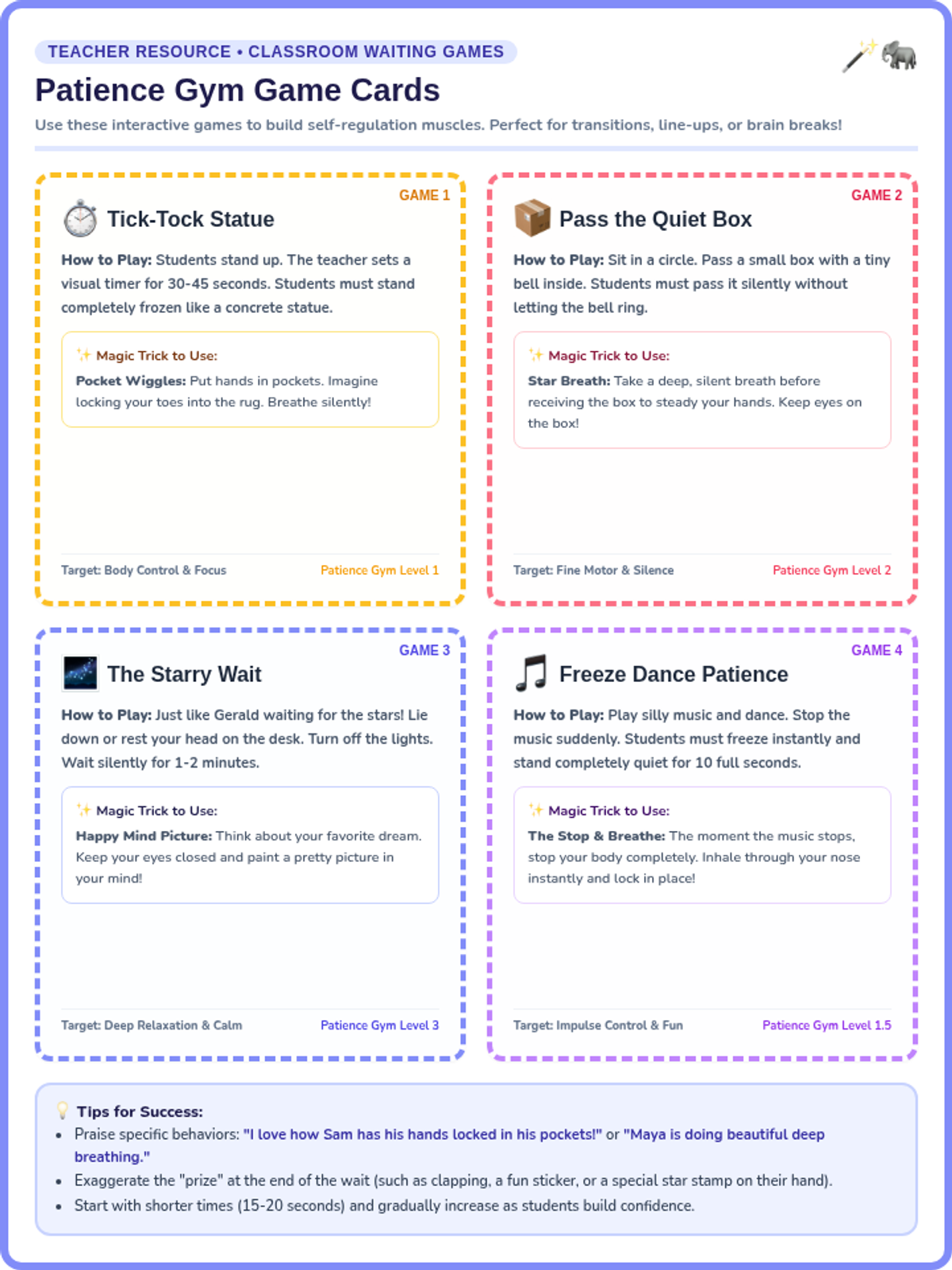
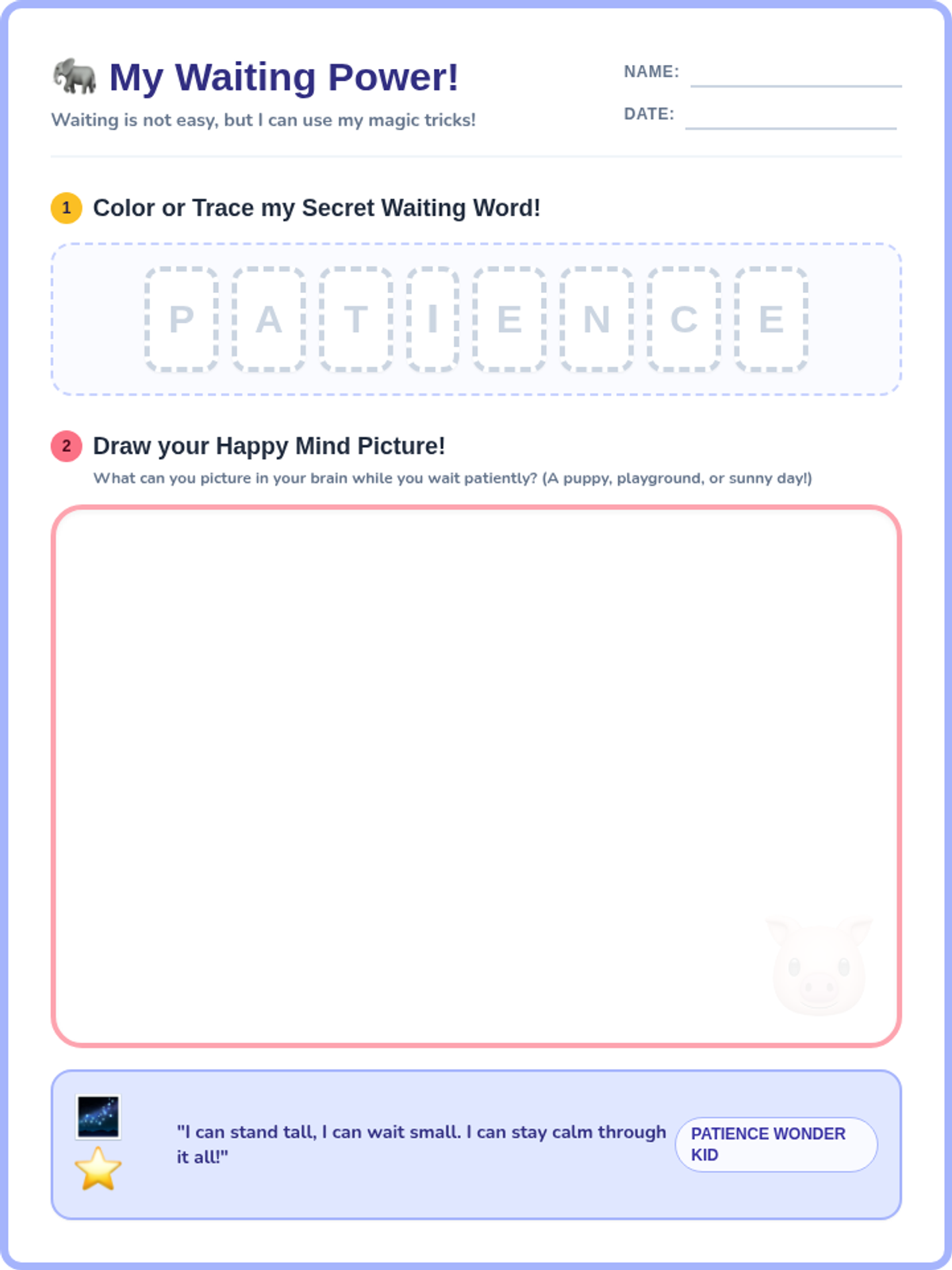
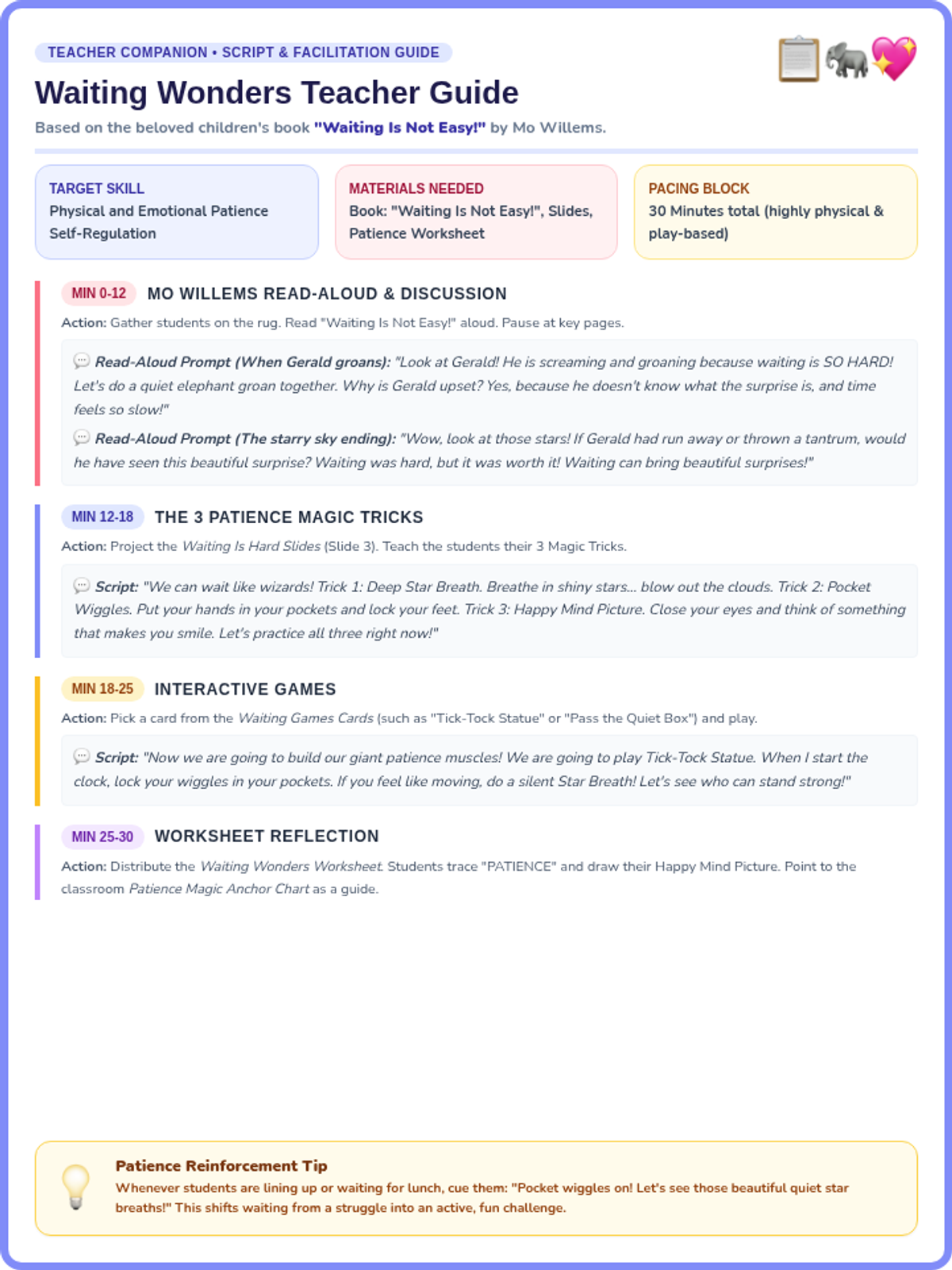
A 30-minute social-emotional learning lesson focusing on teaching kindergarteners how to wait patiently using self-regulation strategies inspired by the popular children's book 'Waiting Is Not Easy!' by Mo Willems. Includes a slide presentation, interactive waiting games, a classroom anchor chart, a teacher guide, and a student activity sheet.
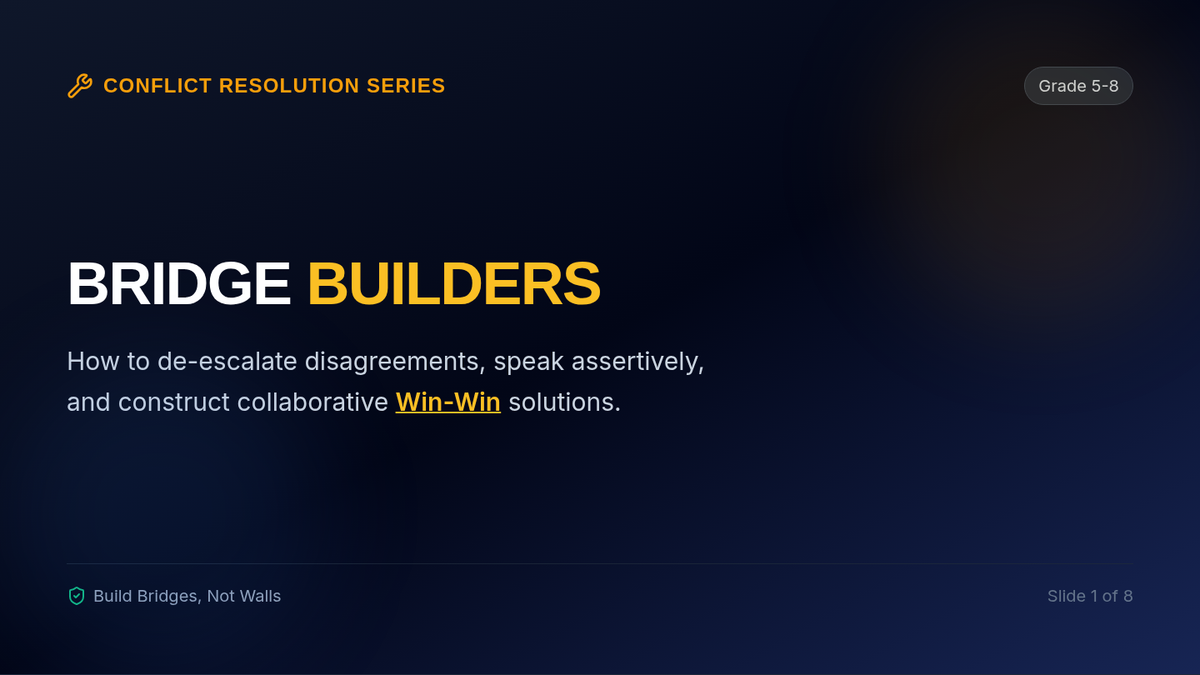
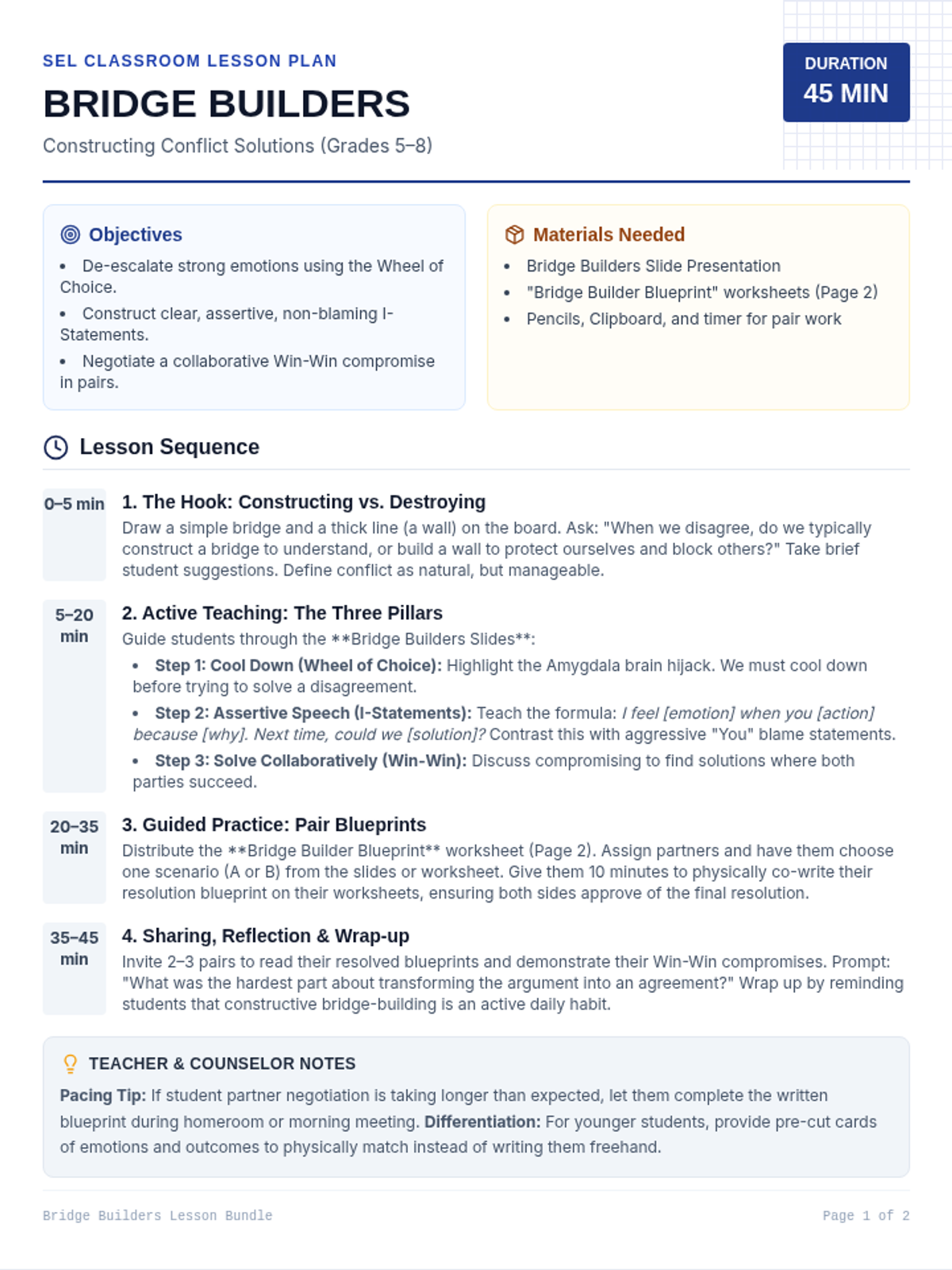
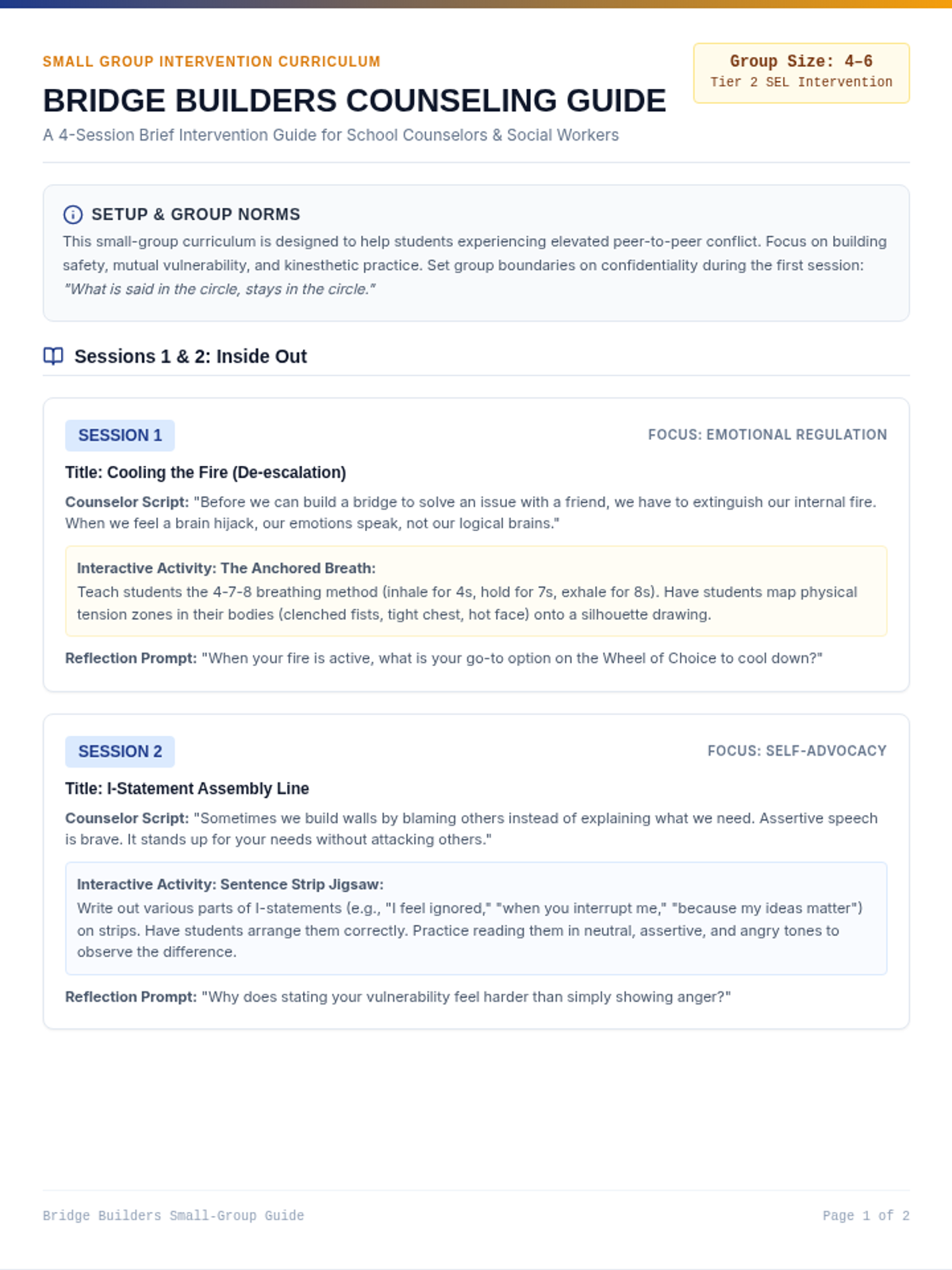
A comprehensive social-emotional learning lesson package designed to teach middle-grade students how to de-escalate conflicts, communicate assertively using I-Statements and Active Listening, and negotiate collaborative Win-Win solutions. Includes visual presentation slides, a complete 45-minute classroom lesson plan with an integrated student activity sheet, and a specialized small-group counseling guide.
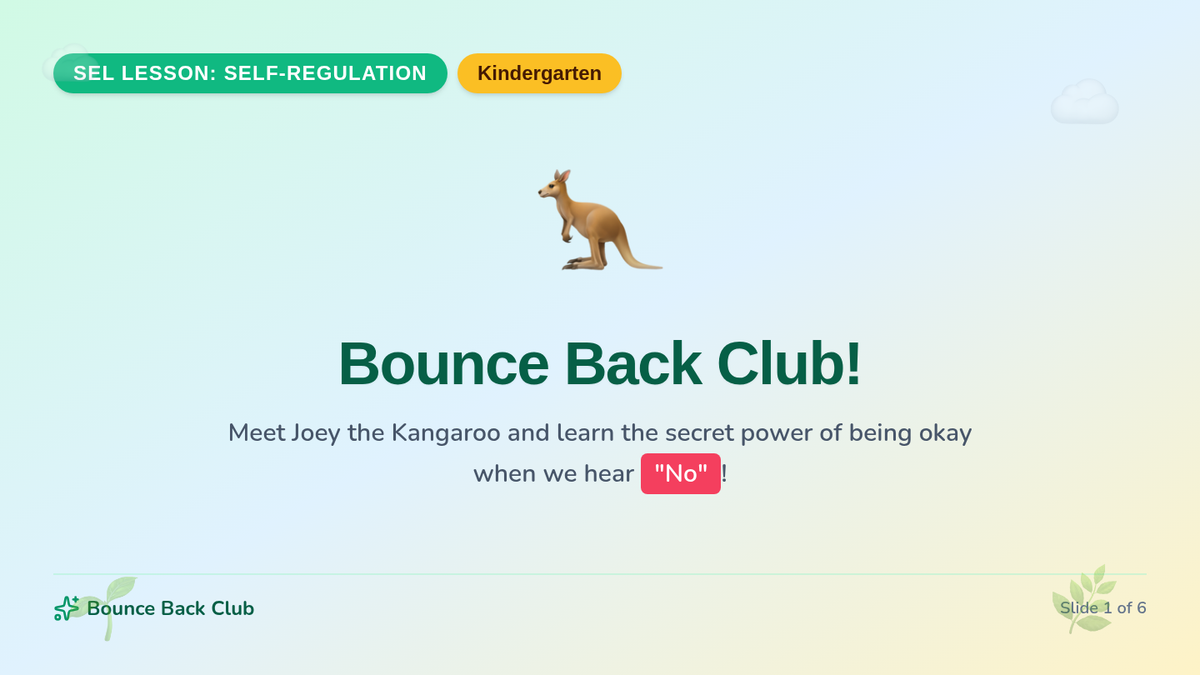
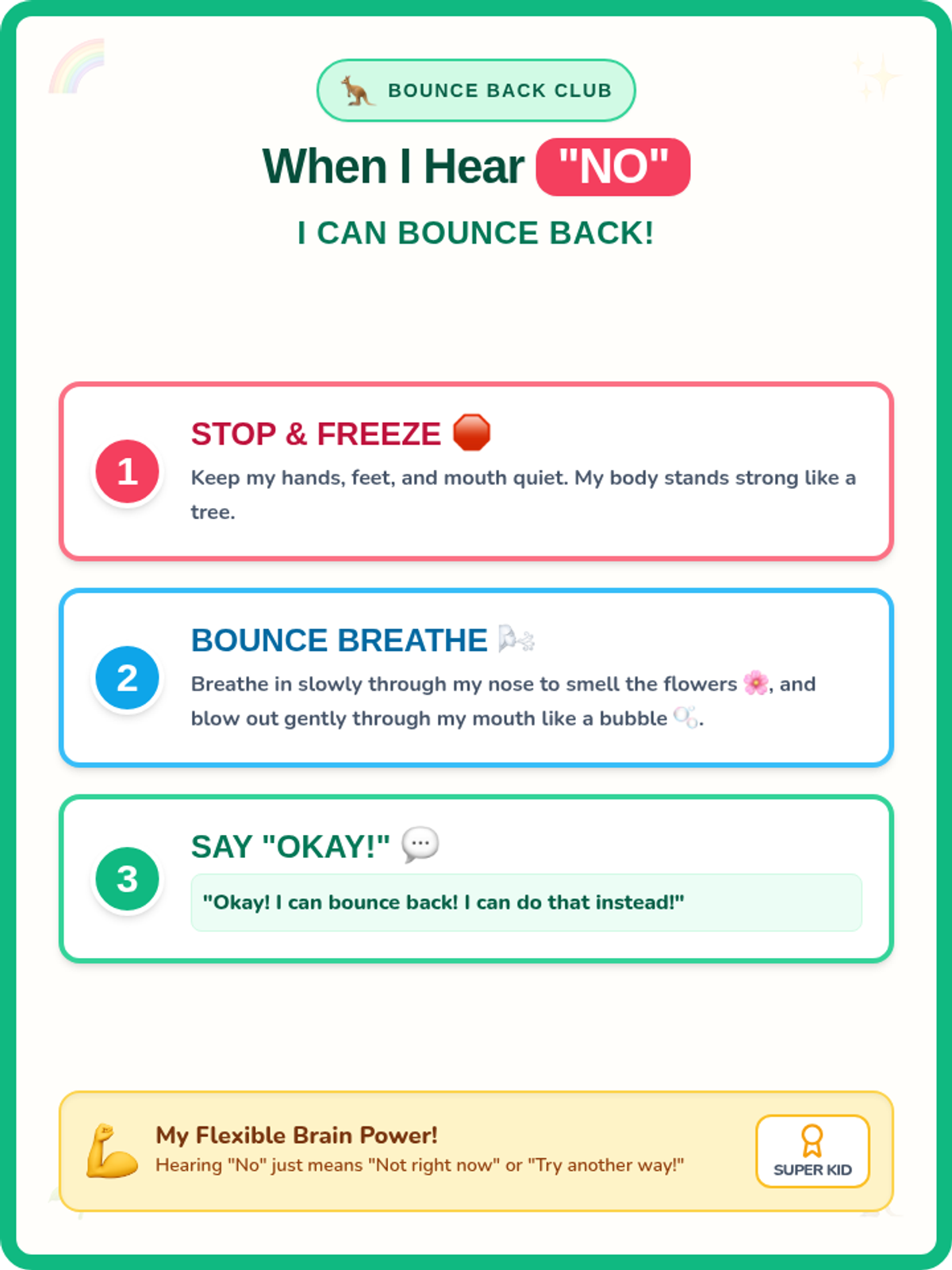
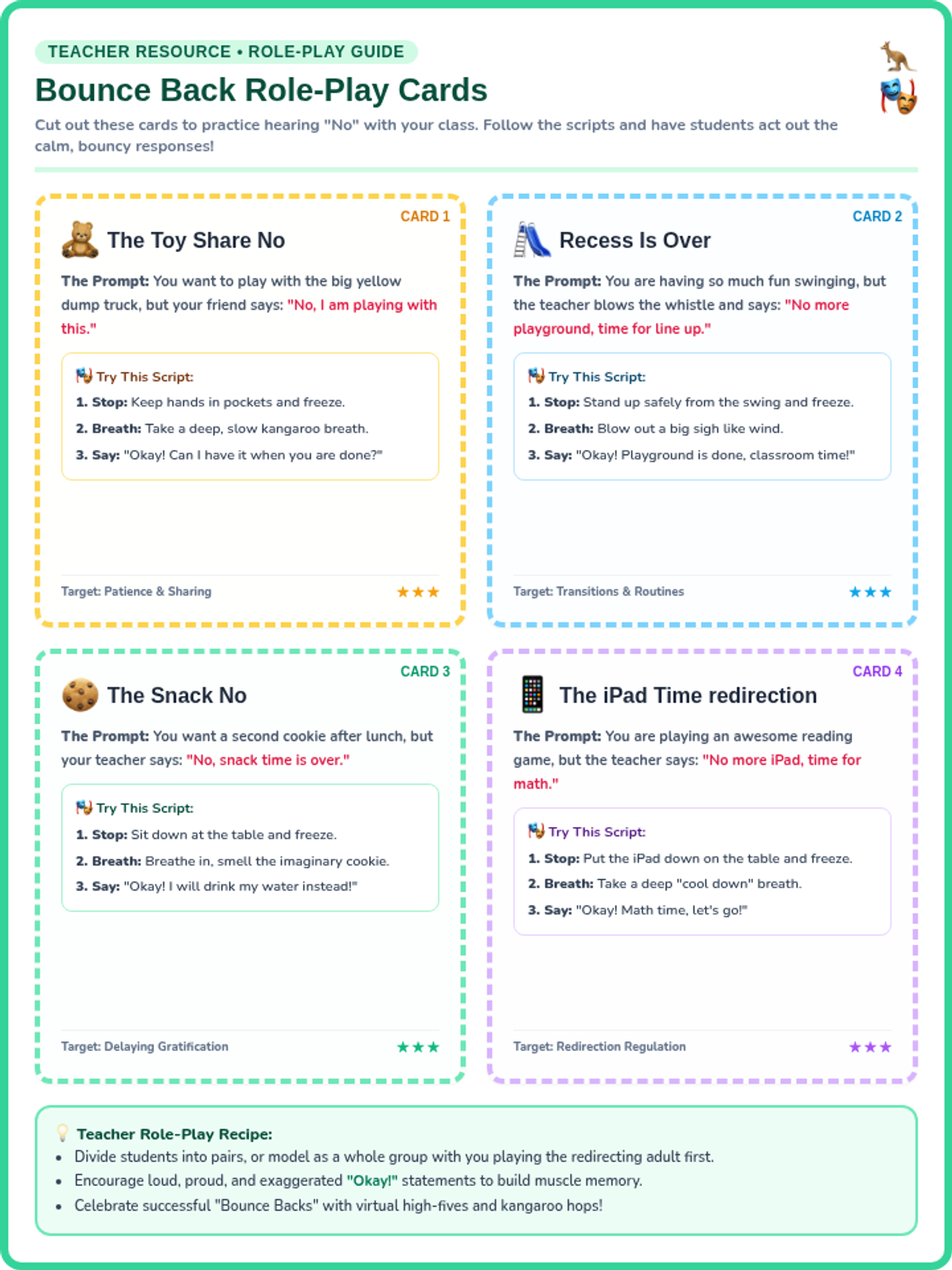
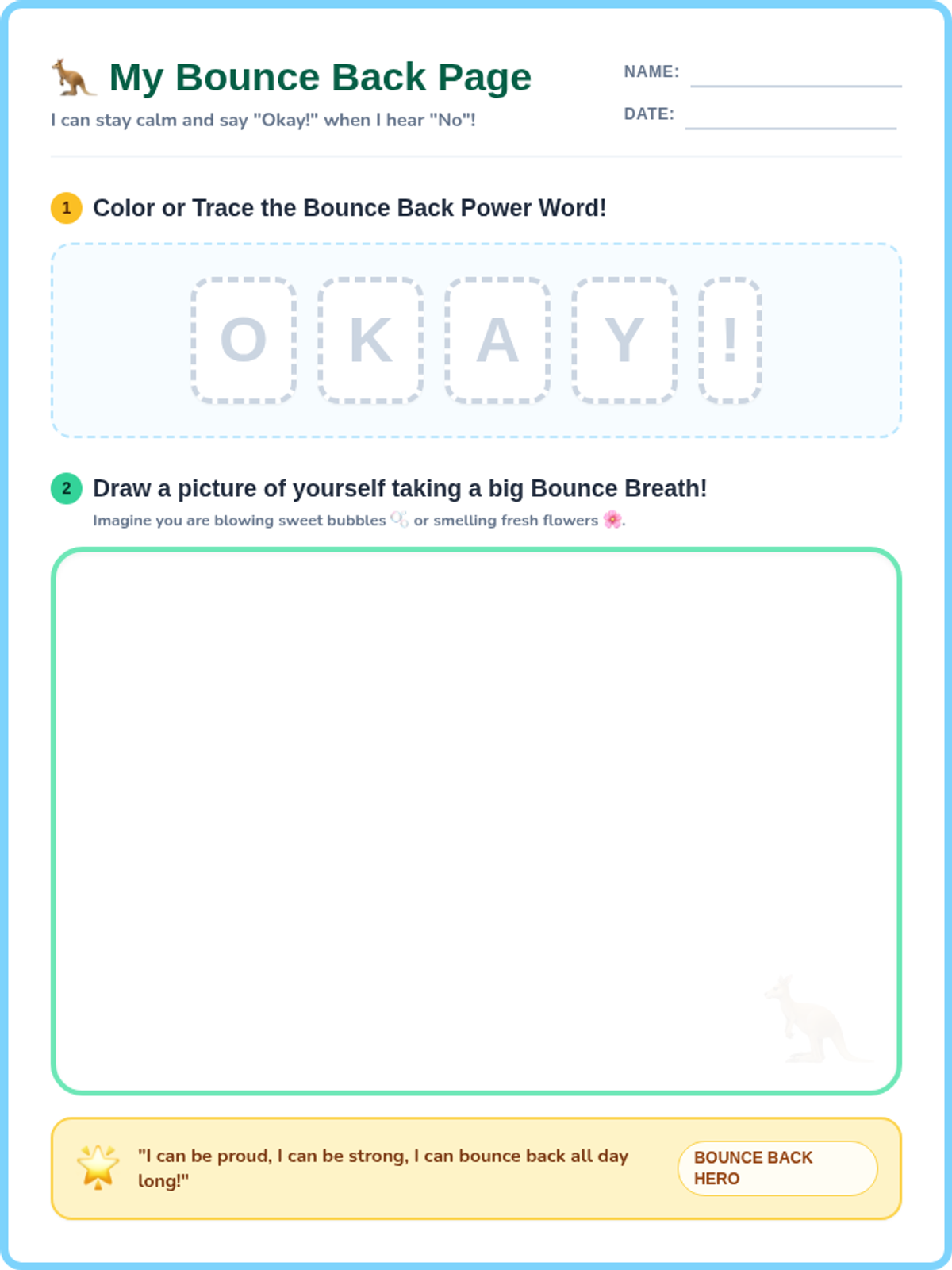
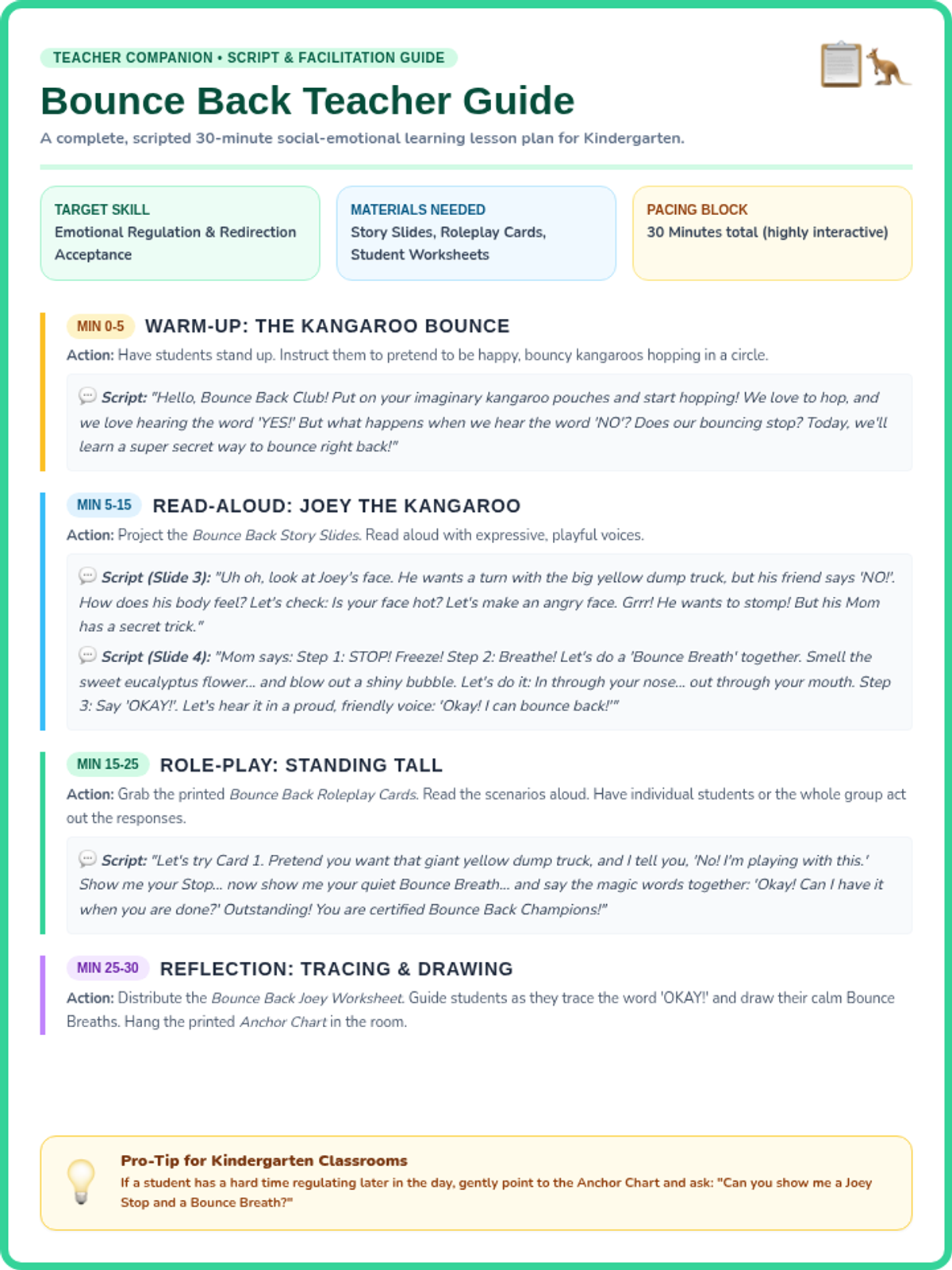
A 30-minute social-emotional learning lesson designed for kindergarteners to help them regulate and stay calm when hearing 'no' or receiving redirections. The lesson includes an interactive story about a bouncing kangaroo, role-playing practice, and a colorful classroom anchor chart.
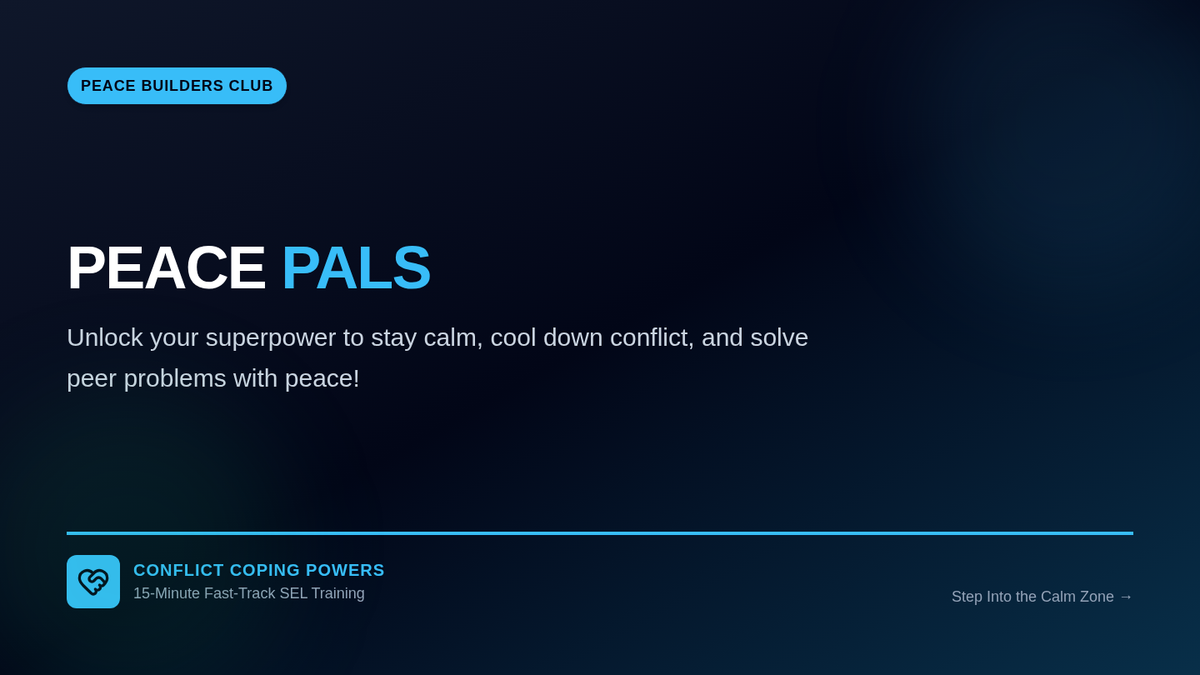
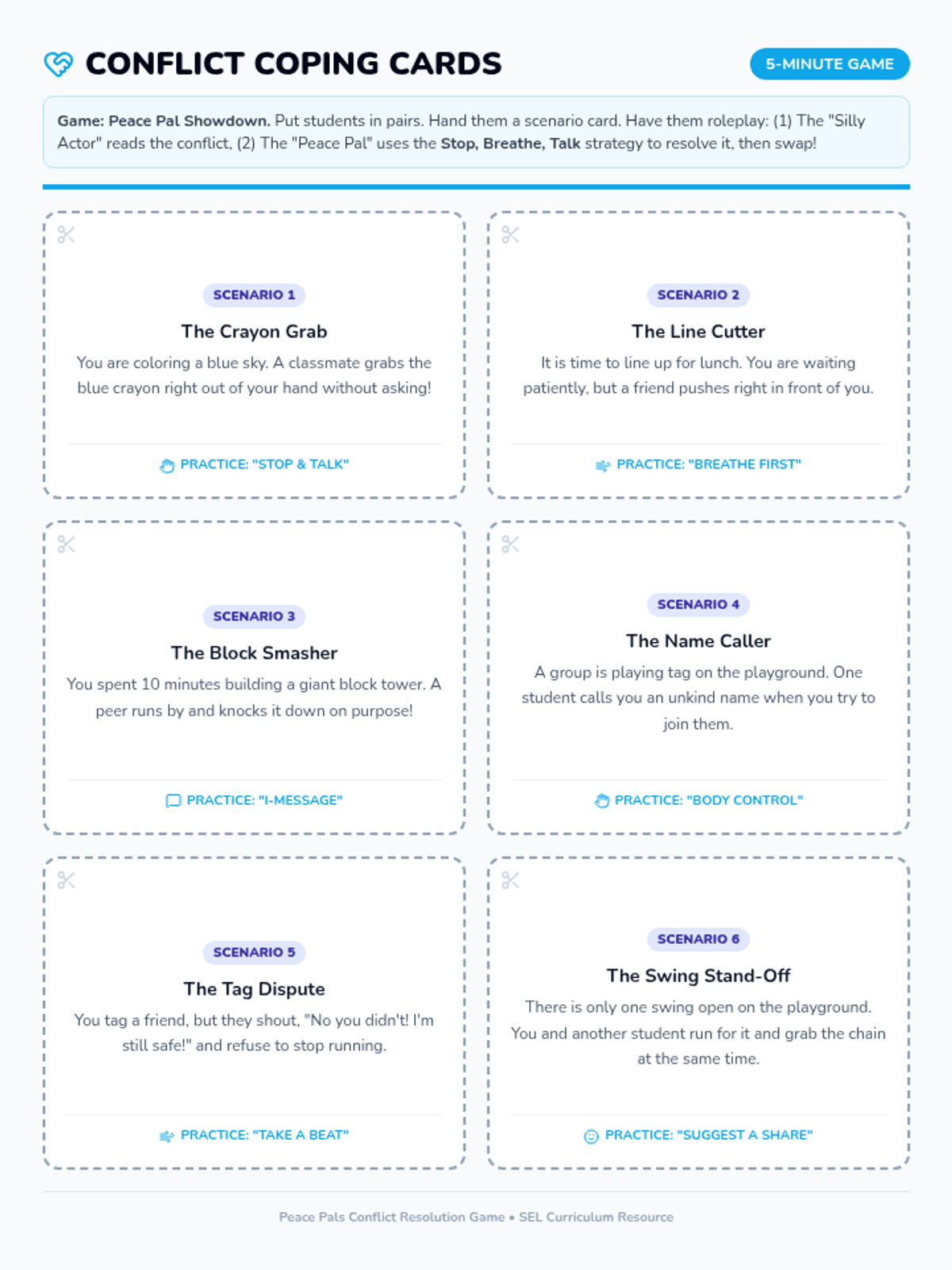
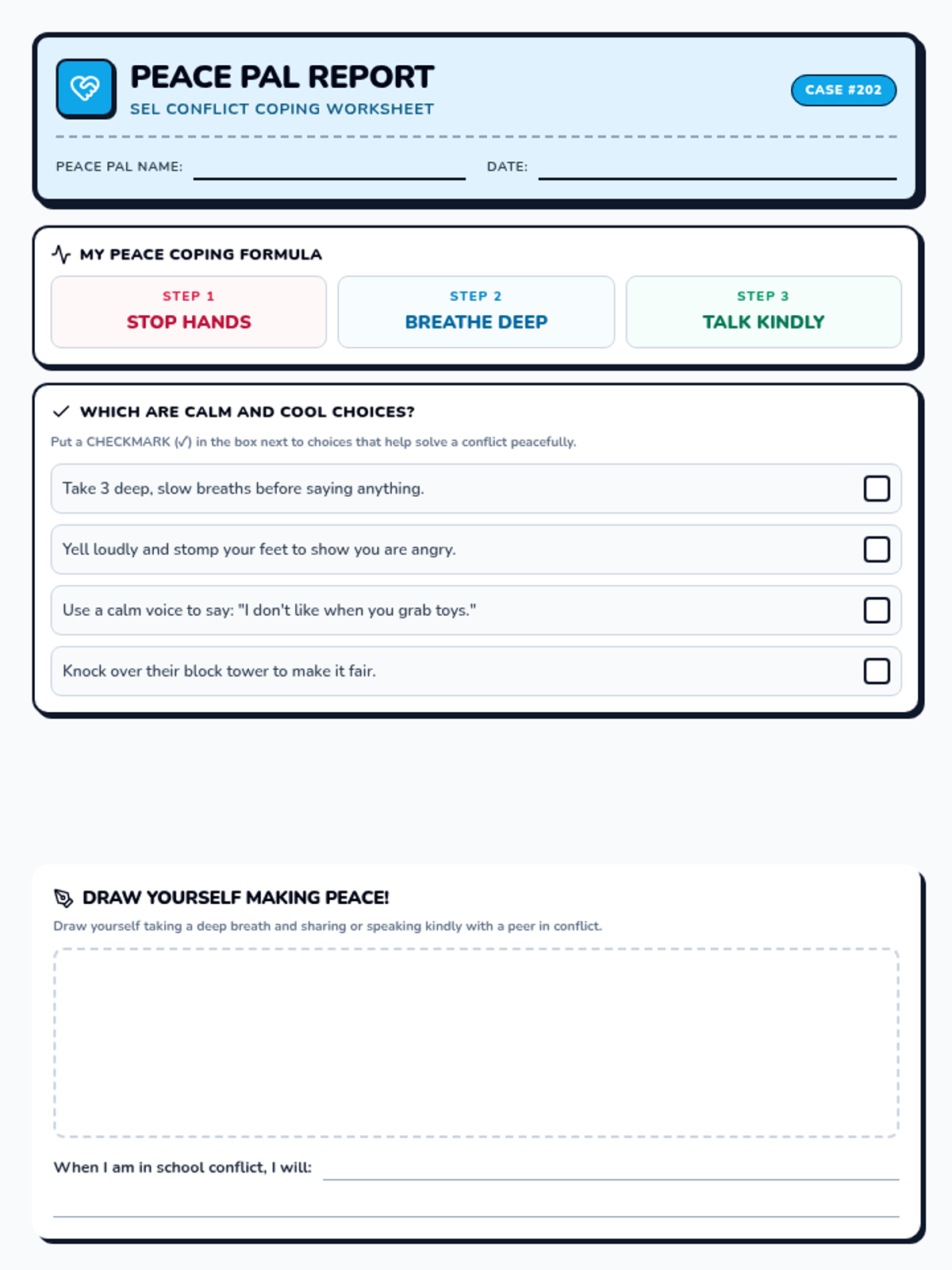
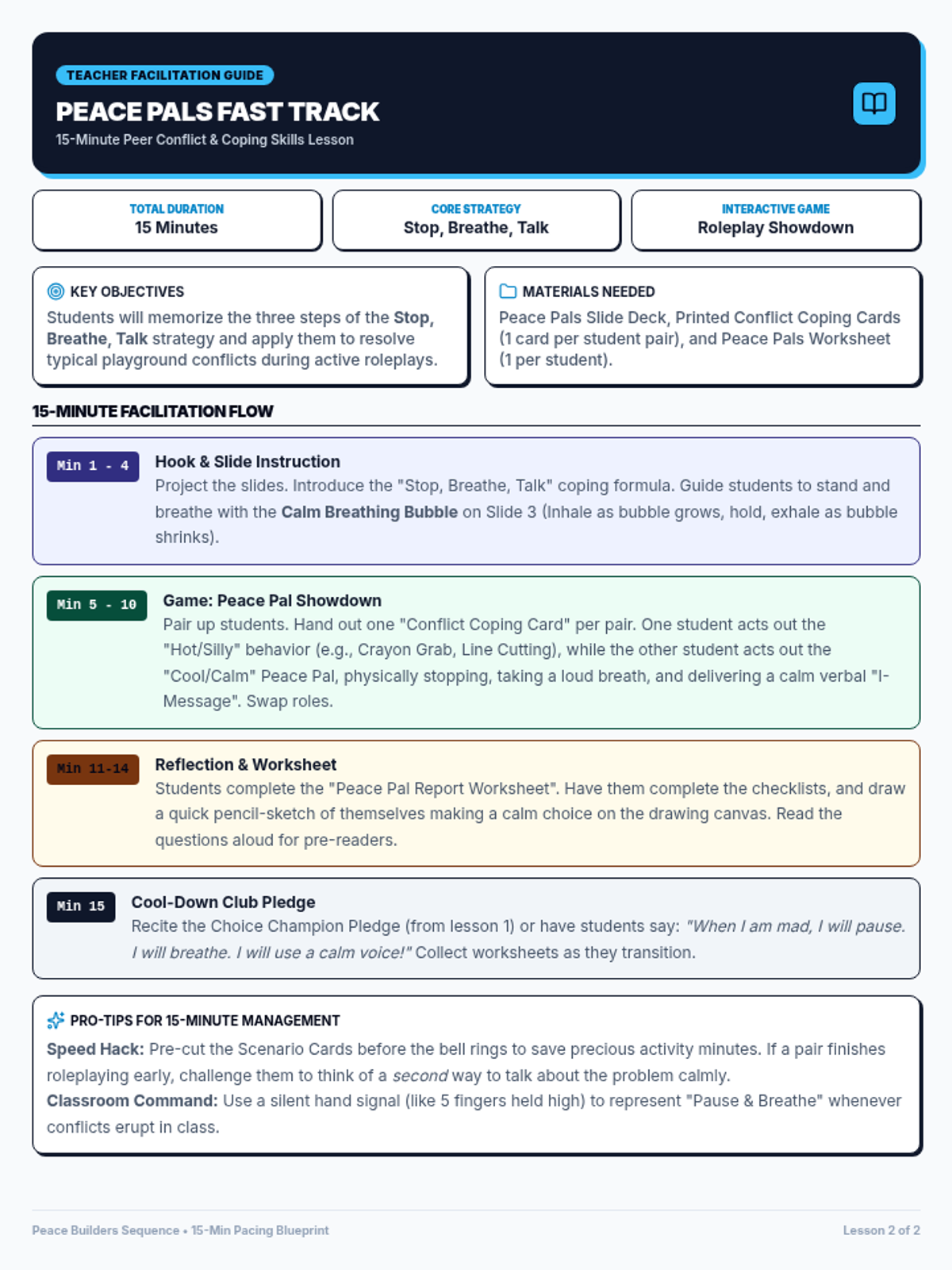
A fast-paced, 15-minute SEL lesson targeting early elementary students to resolve peer conflict and practice emotional regulation. It introduces the "Stop, Breathe, Talk" coping strategy with interactive slides, role-playing scenario cards, and a reflection worksheet.
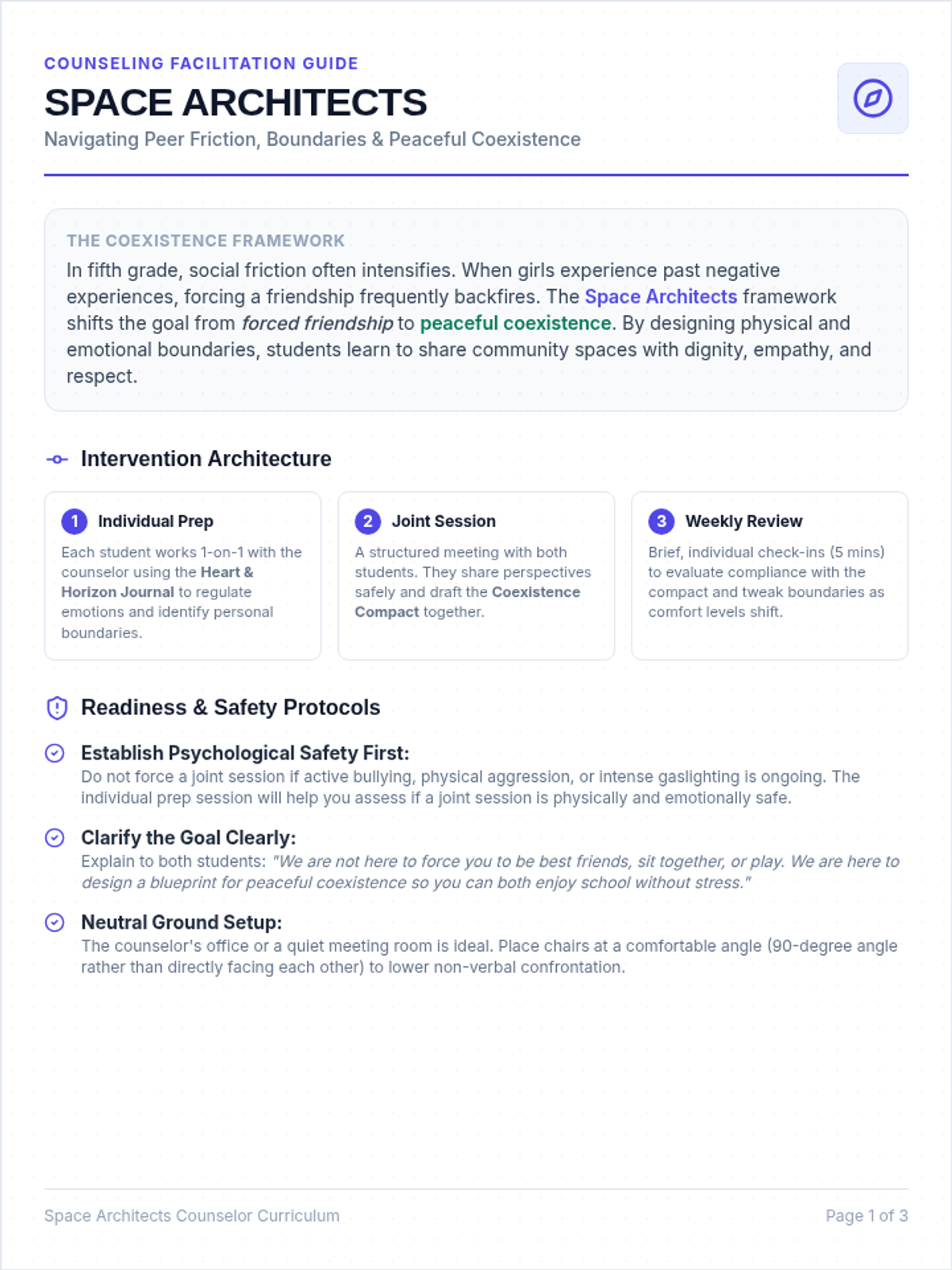
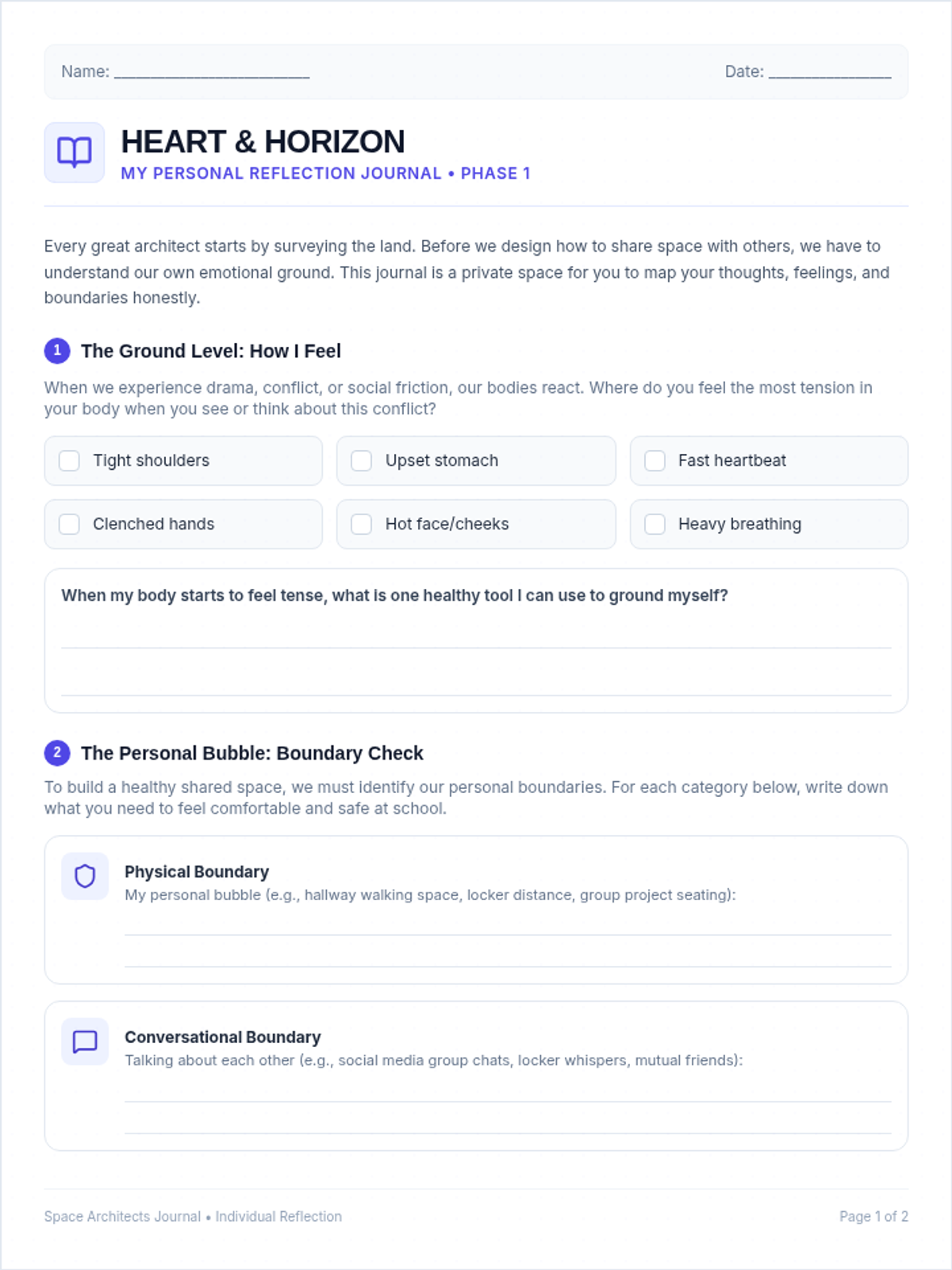
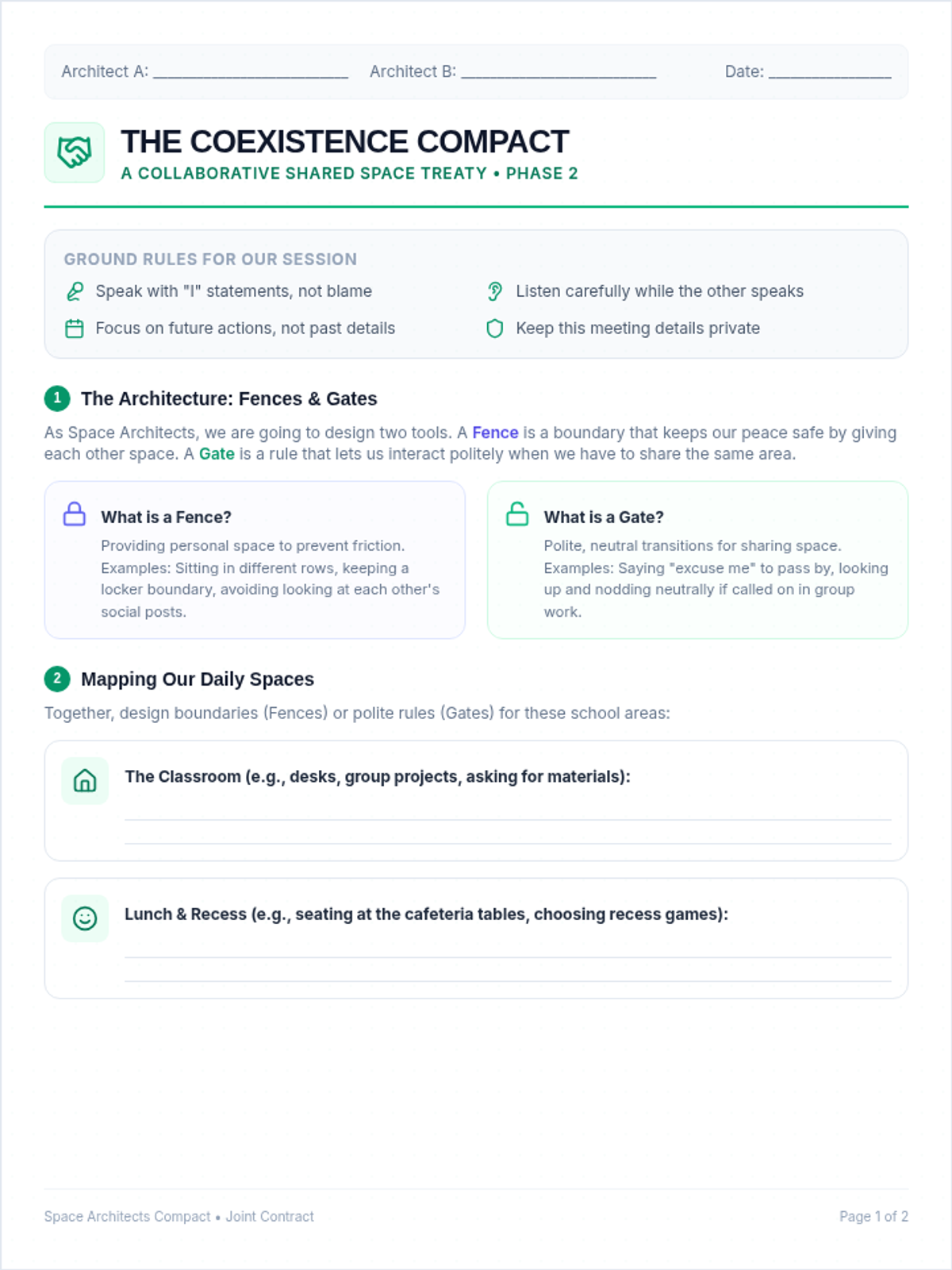
A structured counseling intervention designed for fifth-grade girls experiencing peer conflict and social friction. This lesson guides students through individual emotional regulation, perspective-taking, and a collaborative boundary-setting contract to establish peaceful coexistence.
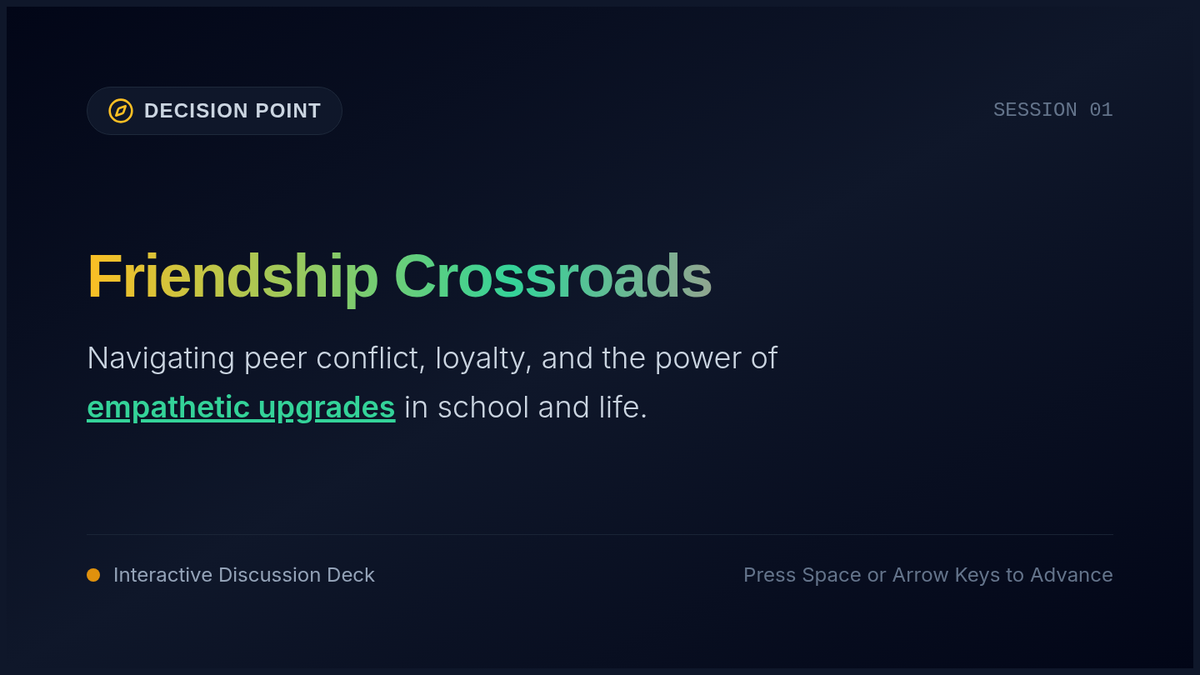
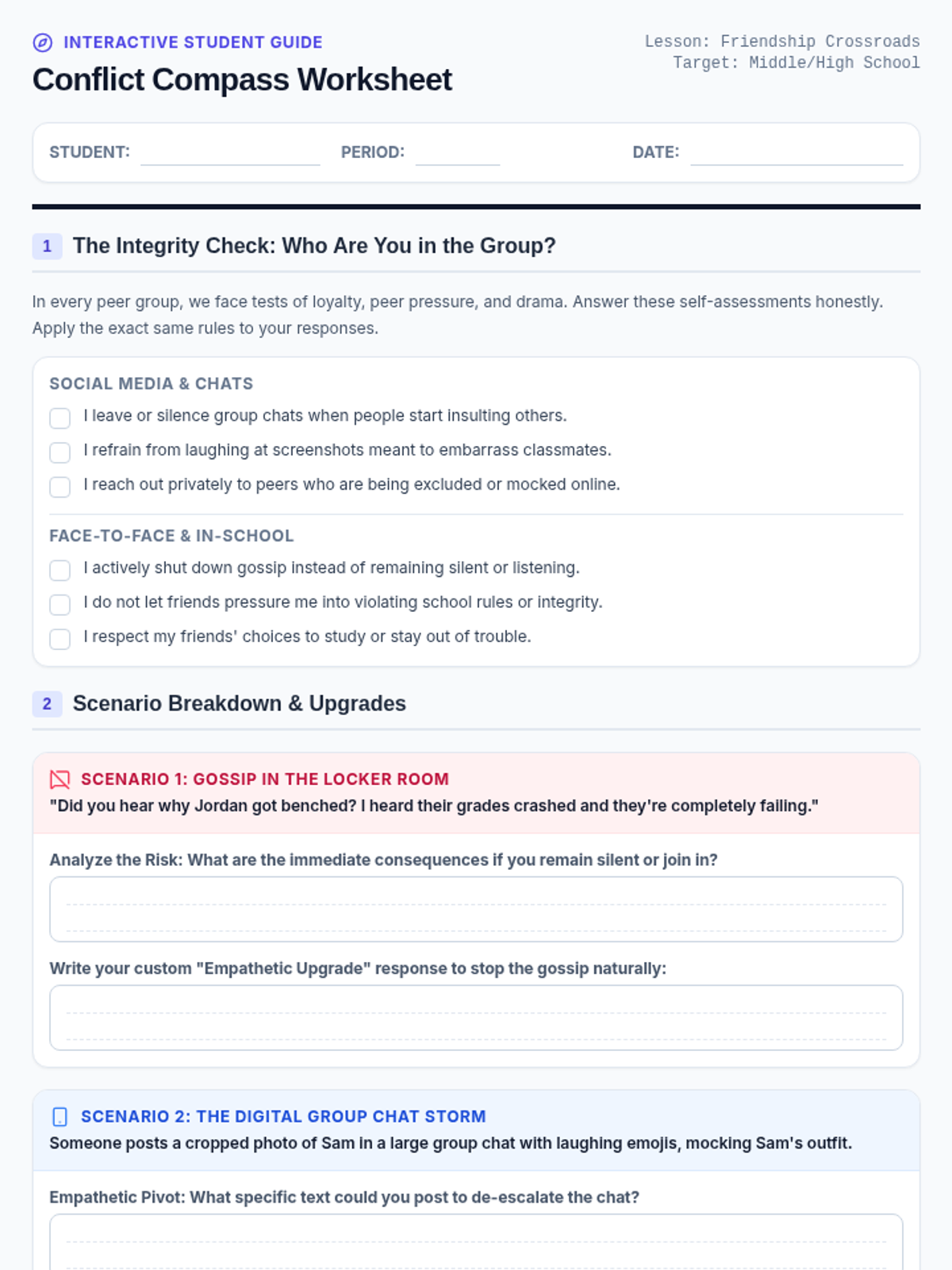
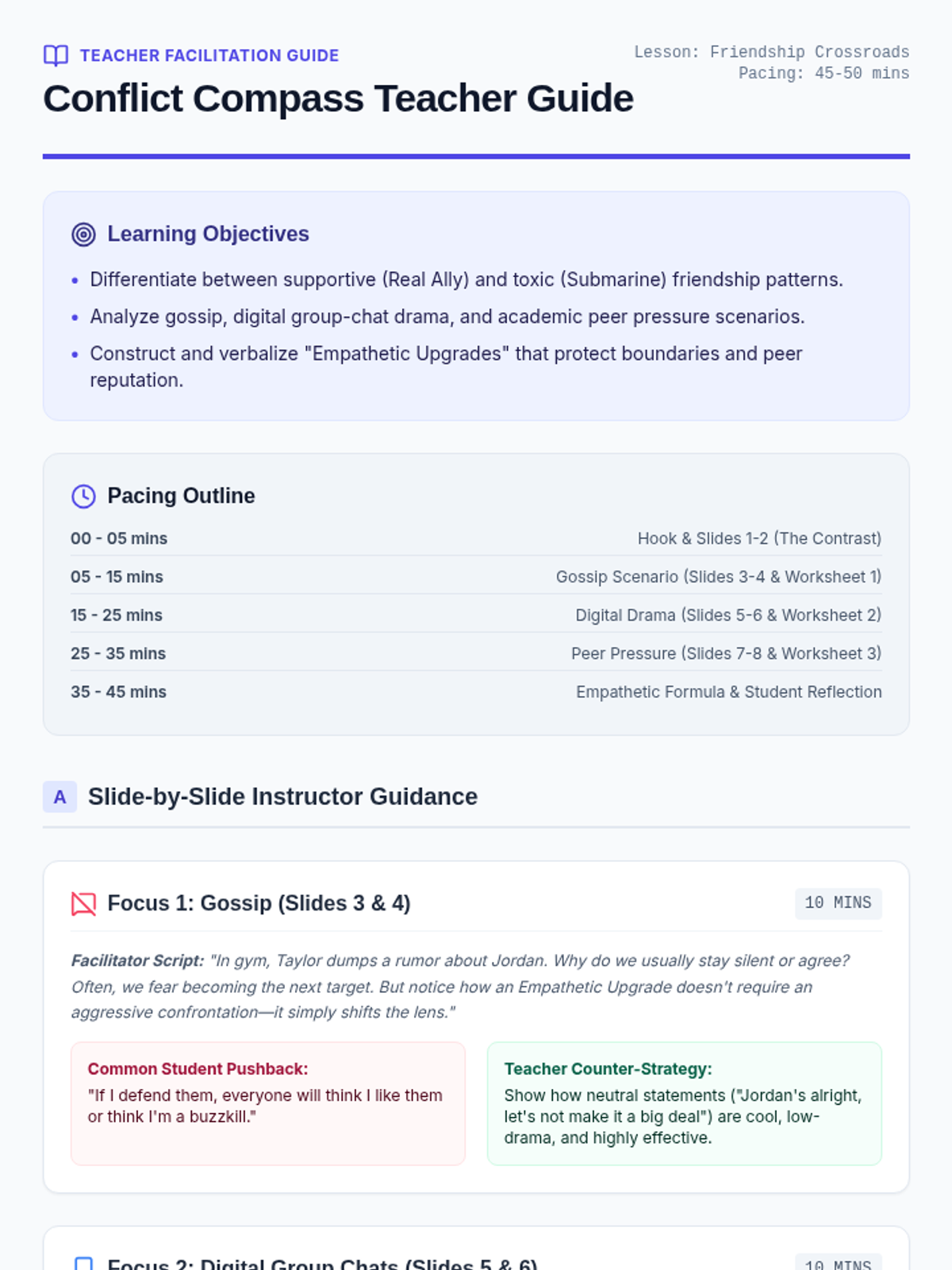
An interactive, highly engaging lesson designed to help middle and high school students navigate complex peer conflicts. Through realistic scenarios involving gossiping, social media drama, and peer pressure, students analyze the differences between supportive and harmful friendship behaviors and practice direct, empathetic communication.
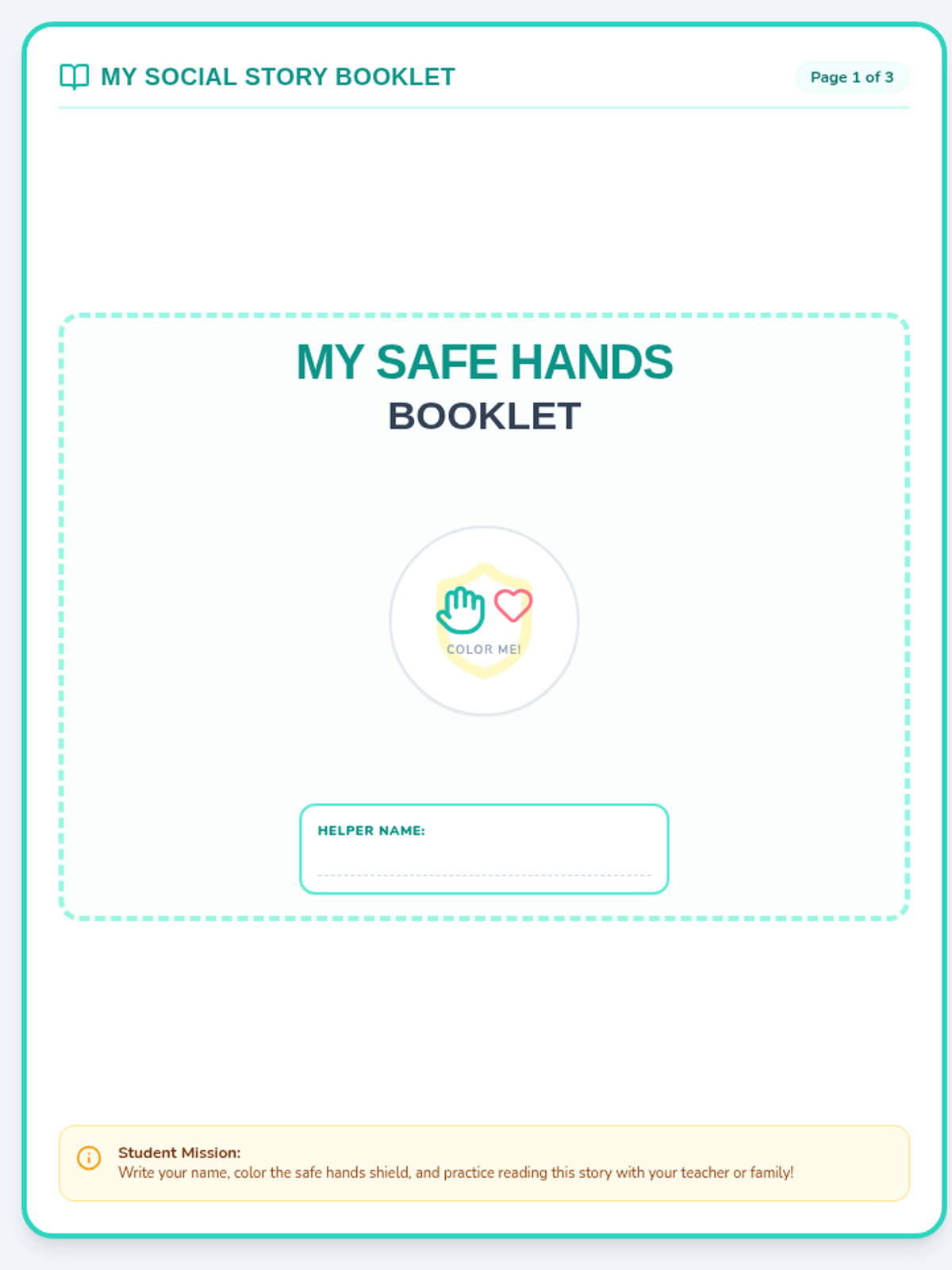
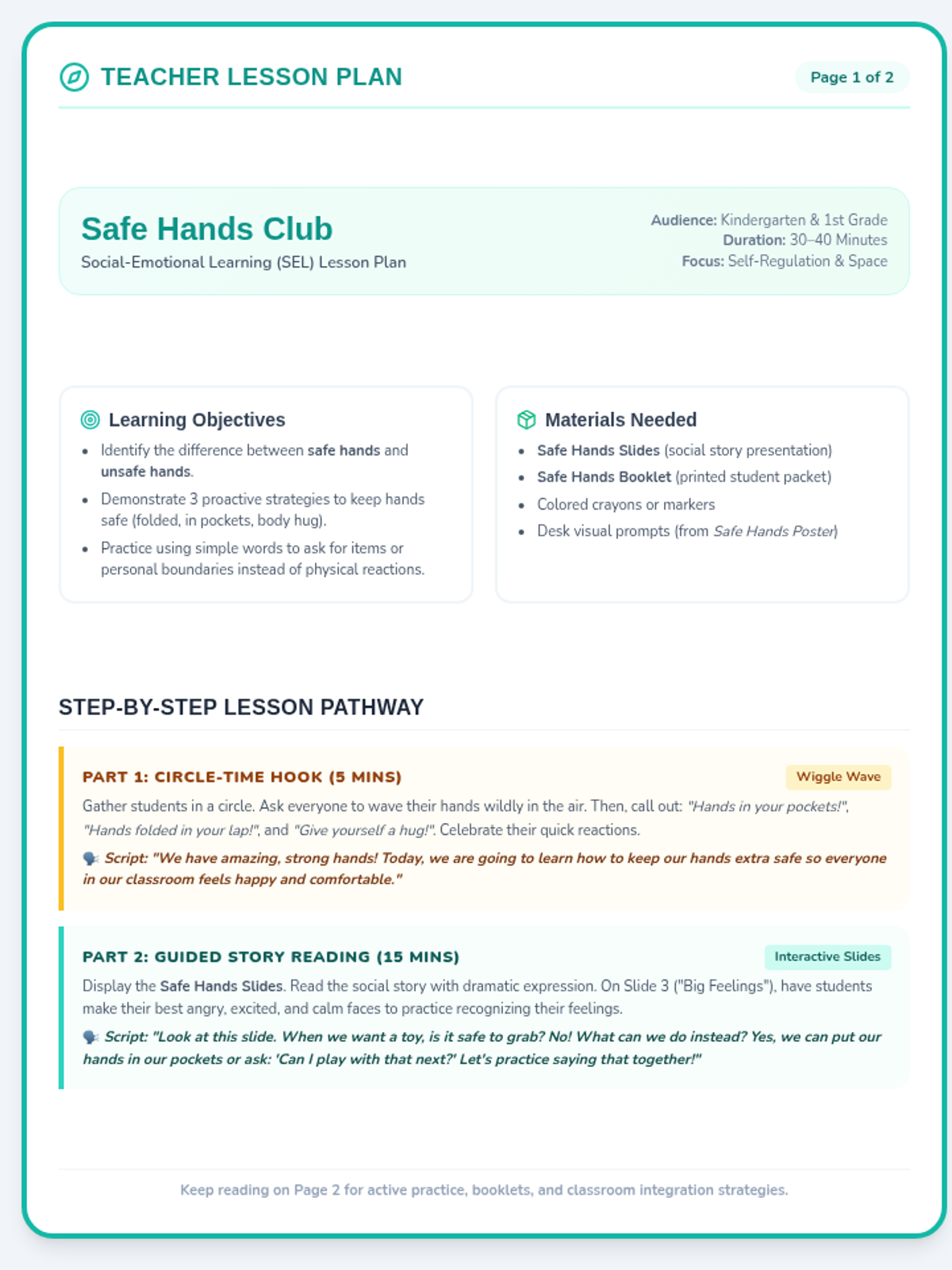
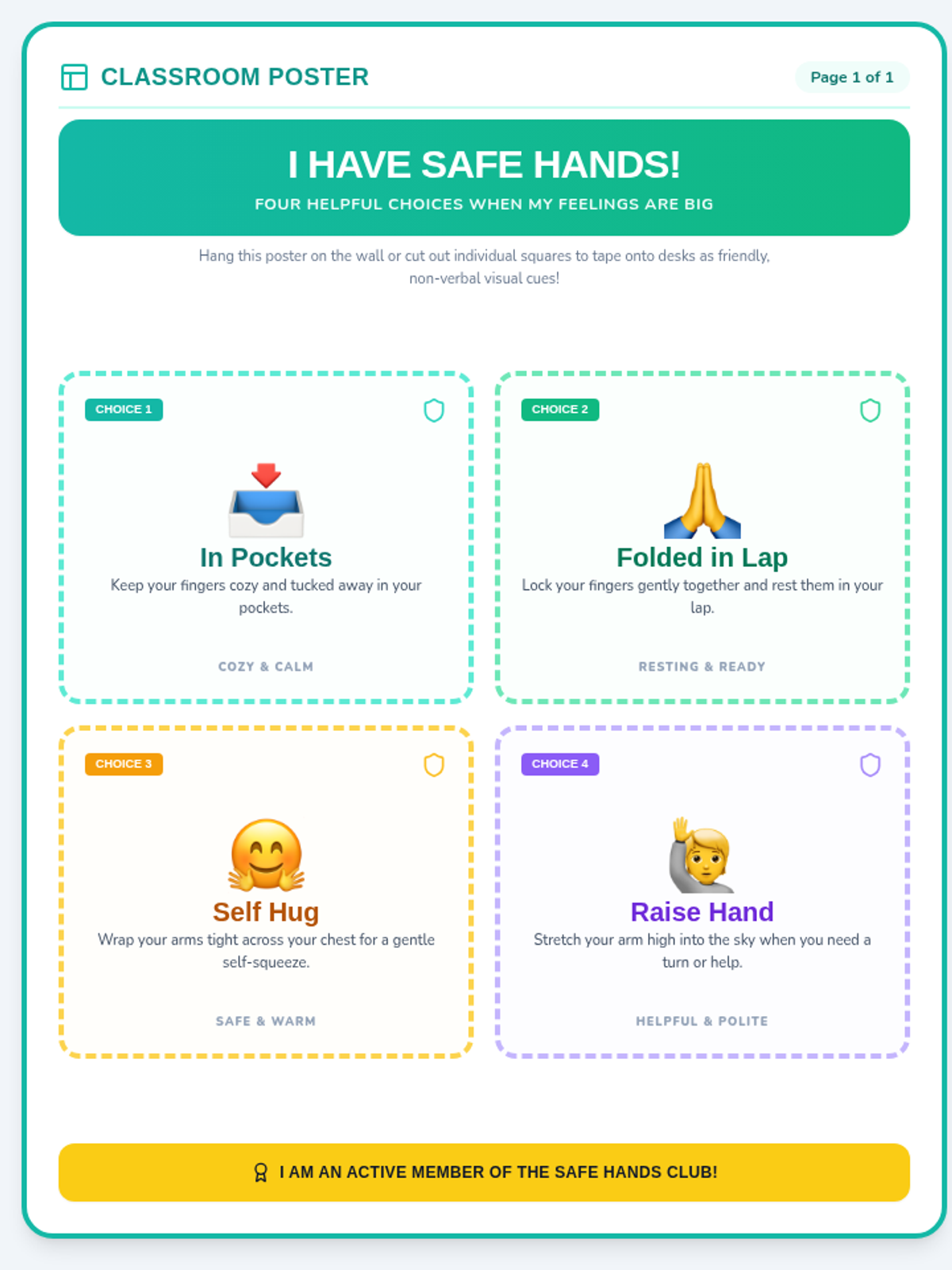
A complete social-emotional learning lesson for Kindergarten and 1st Grade students on keeping hands to themselves. This lesson features a colorful, visual social story slide deck, a printable take-home mini-book, a structured teacher guide with circle-time activities, and a visual anchor chart poster for classroom desks or walls.
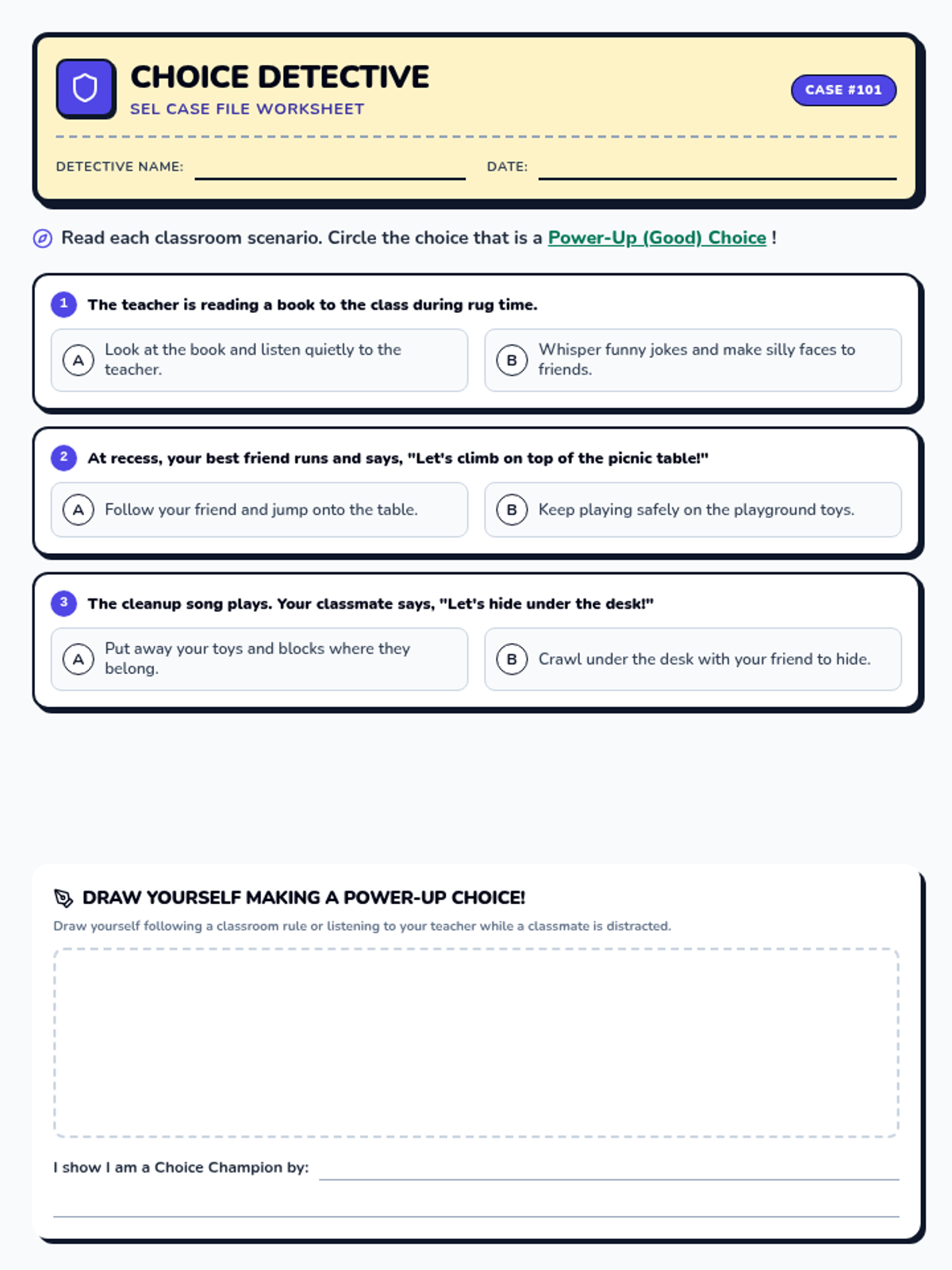
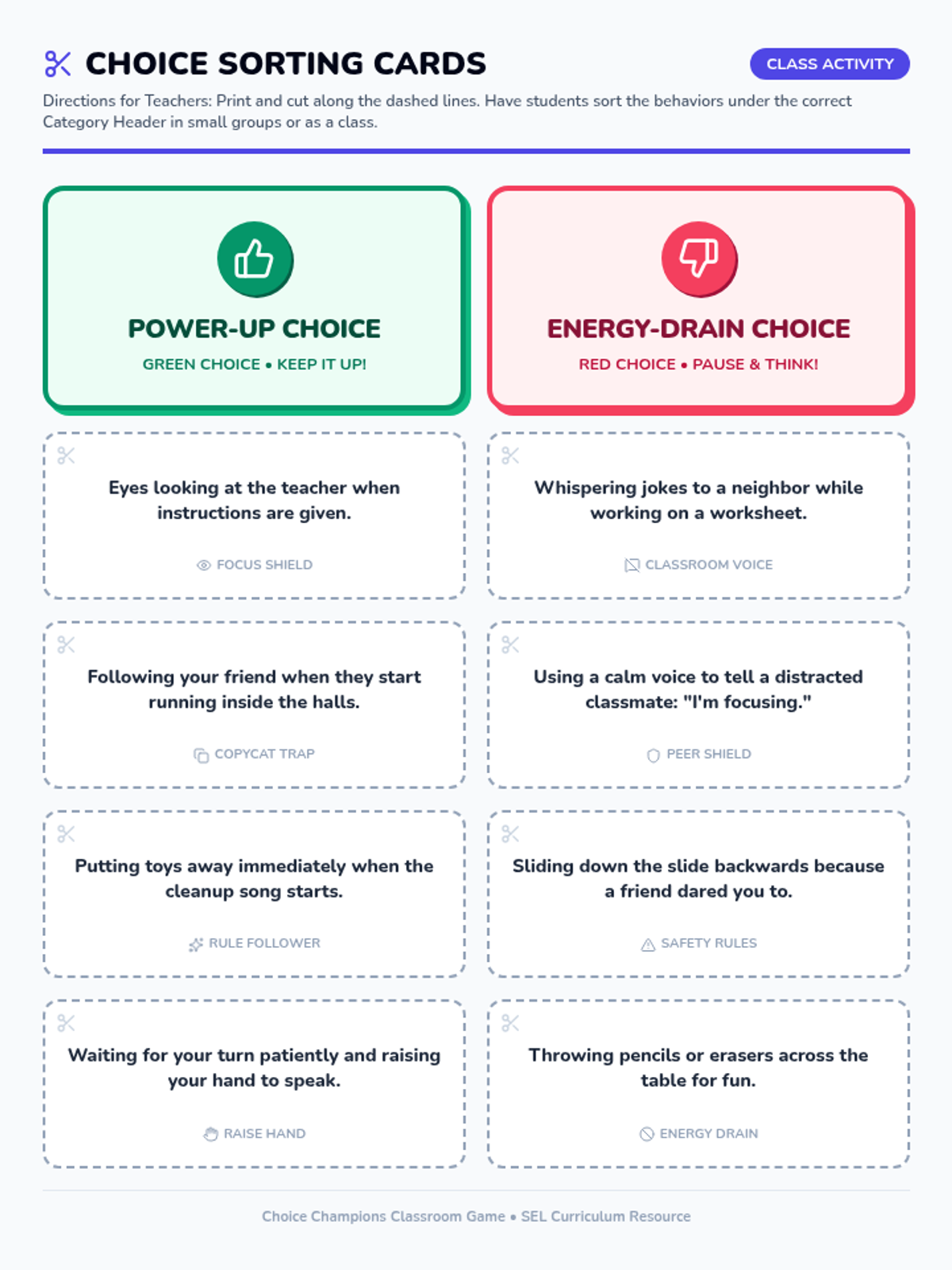
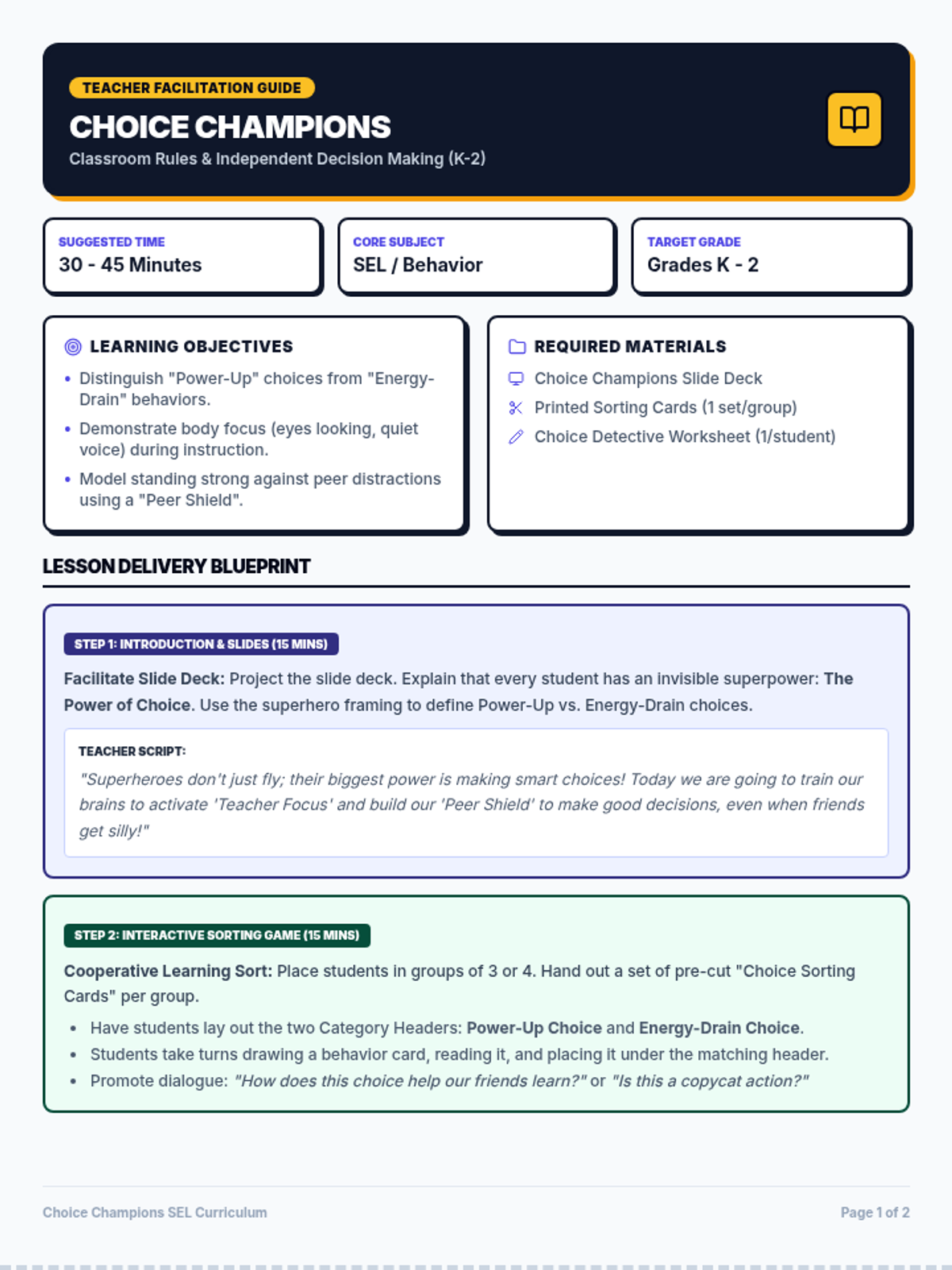
A social-emotional learning lesson designed for early elementary students (K-2) to teach the difference between good and bad classroom choices. It focuses on listening to the teacher, following rules, and maintaining independent positive behavior despite peer distractions.
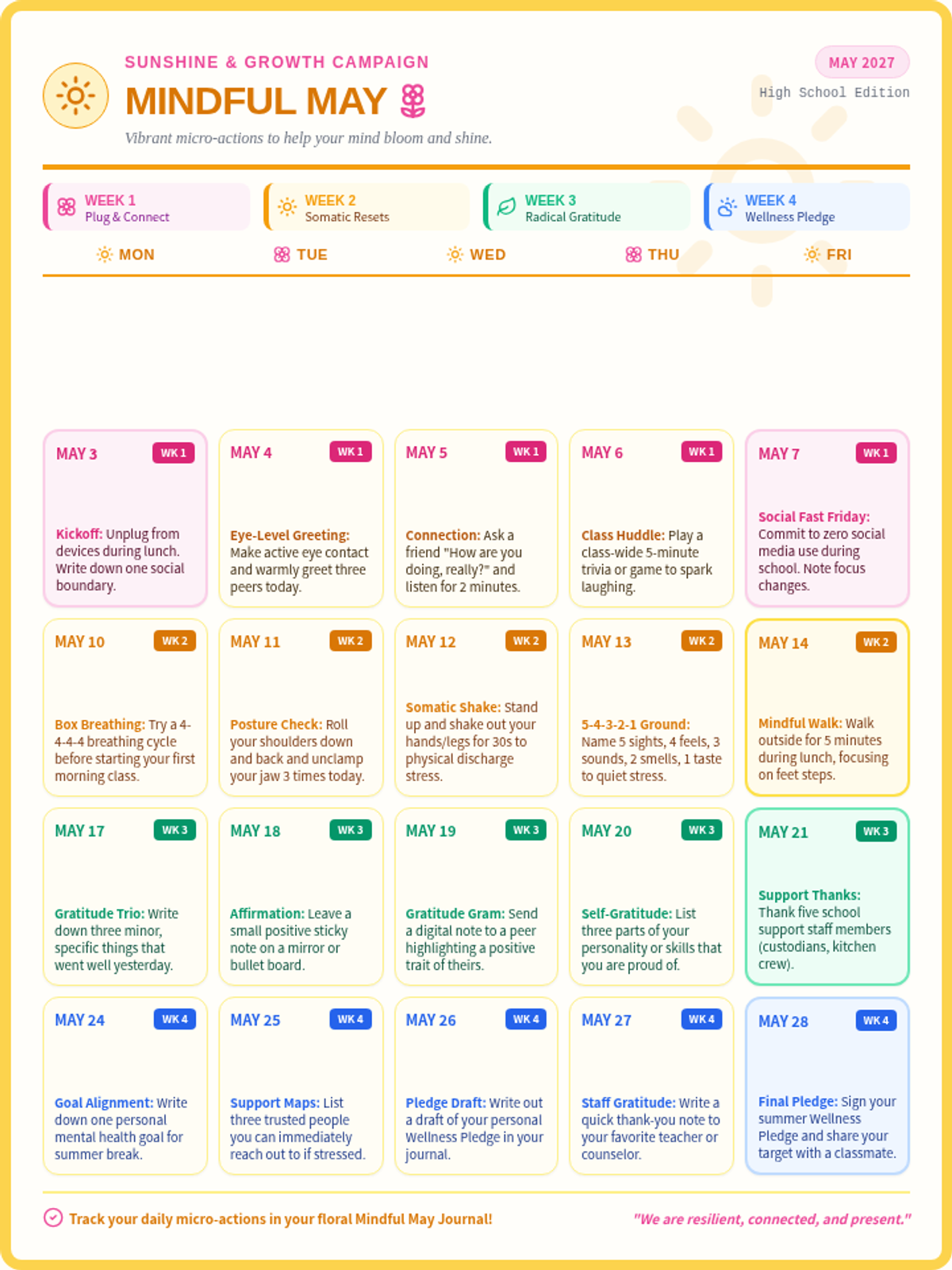
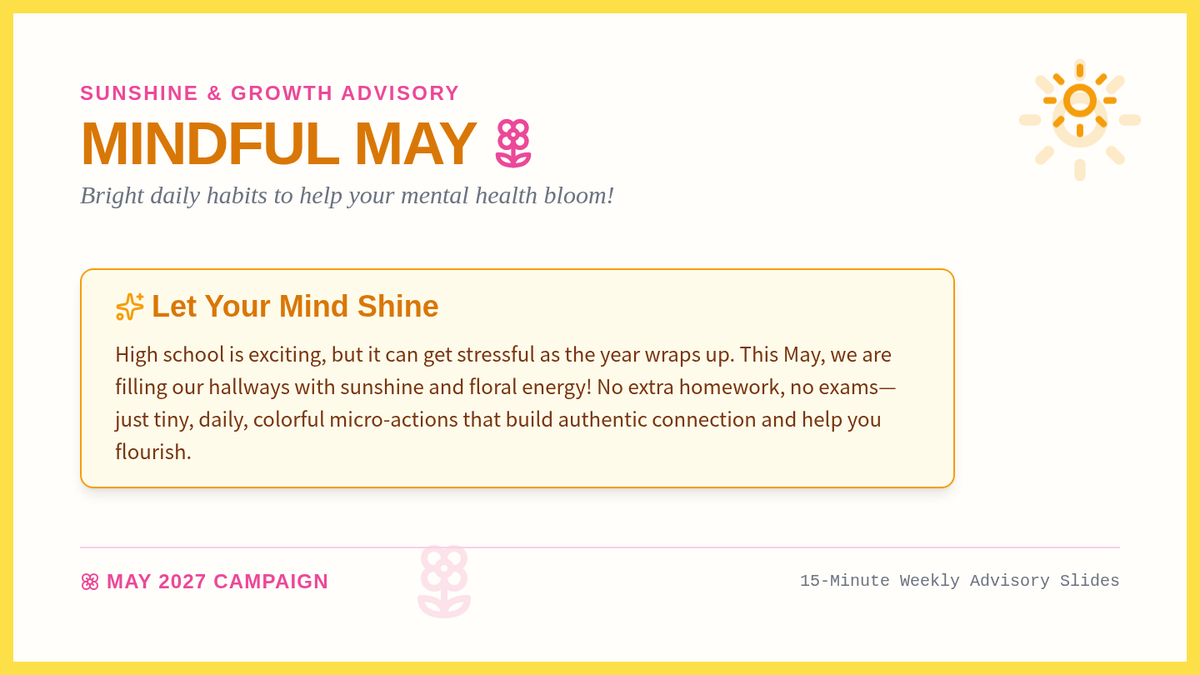
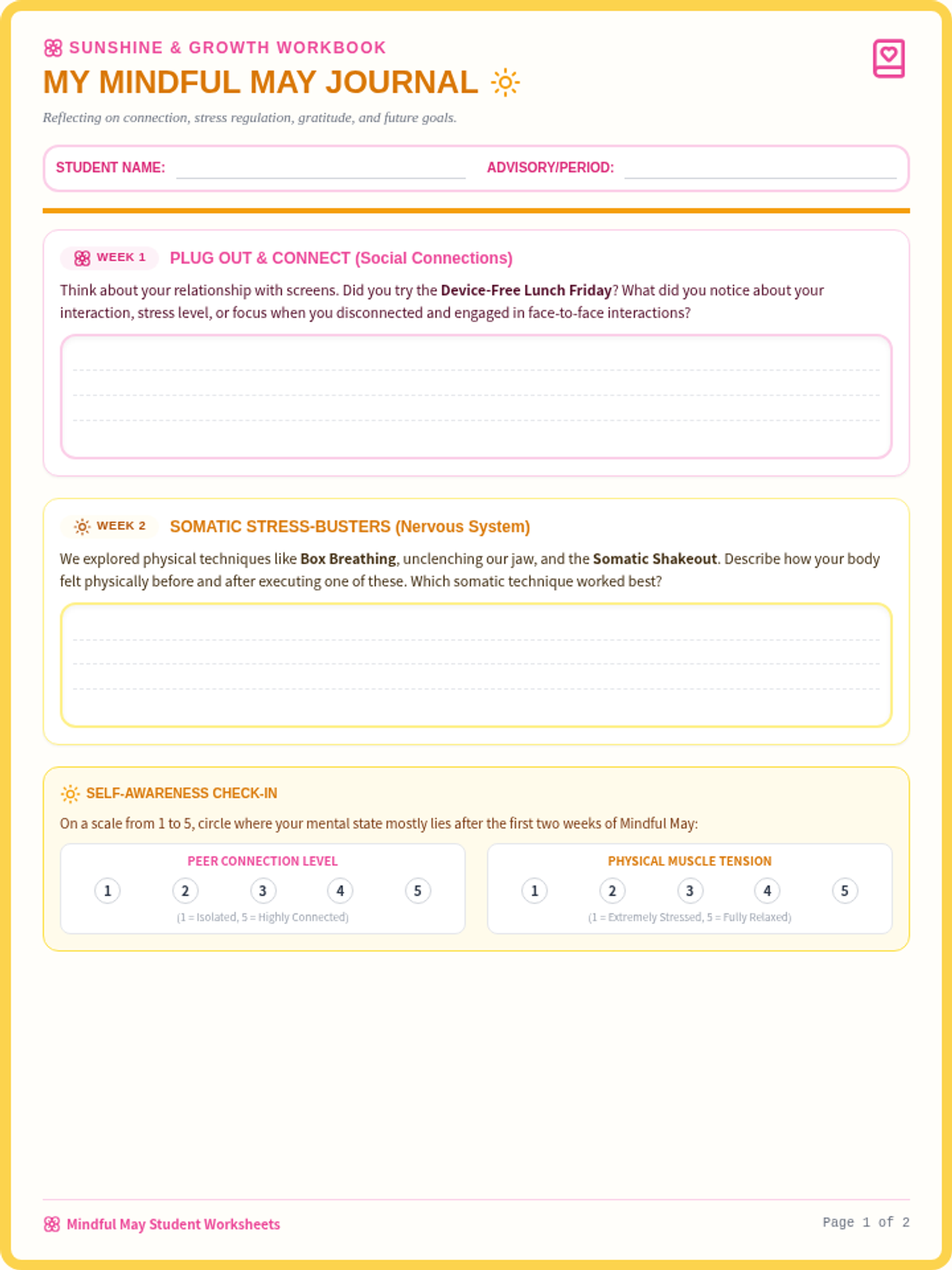
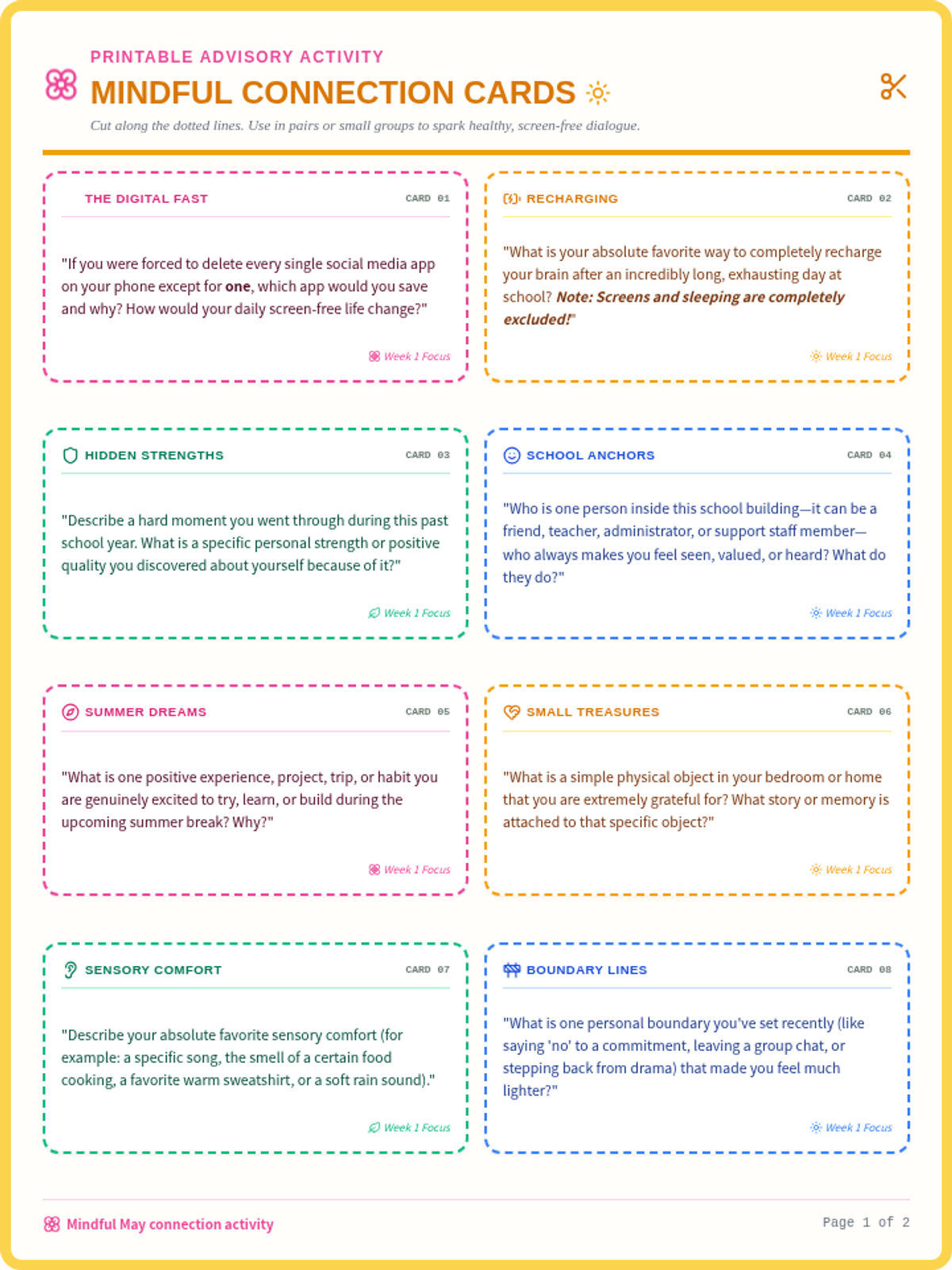
A complete, high-school-focused mental health awareness program for May. Includes a master daily calendar, weekly advisory lesson outlines, kickoff slides, a personal reflection journal, and collaborative connection cards.