Students compile their favorite active recall strategies into a 'Retrieval Menu' and reflect on which methods helped them remember the most difficult words.
A social-emotional learning lesson for 3rd graders focused on empathy, specifically addressing the impulse to laugh when others make mistakes or have accidents. Students explore the 'Giggle Trap' and learn to identify the feelings of others to choose kindness instead.
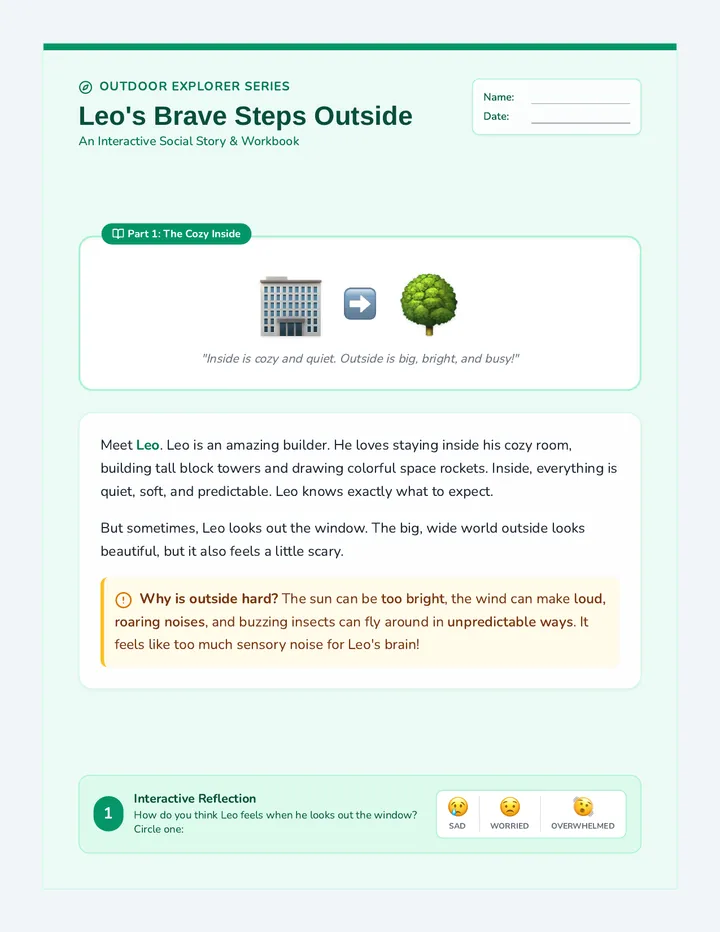
This lesson helps middle school students identify when they need help and practice self-advocacy through a relatable social story, checklists, and sentence starters.
Connects financial literacy with stress management, teaching students how to handle money-related anxiety through basic budgeting and awareness.
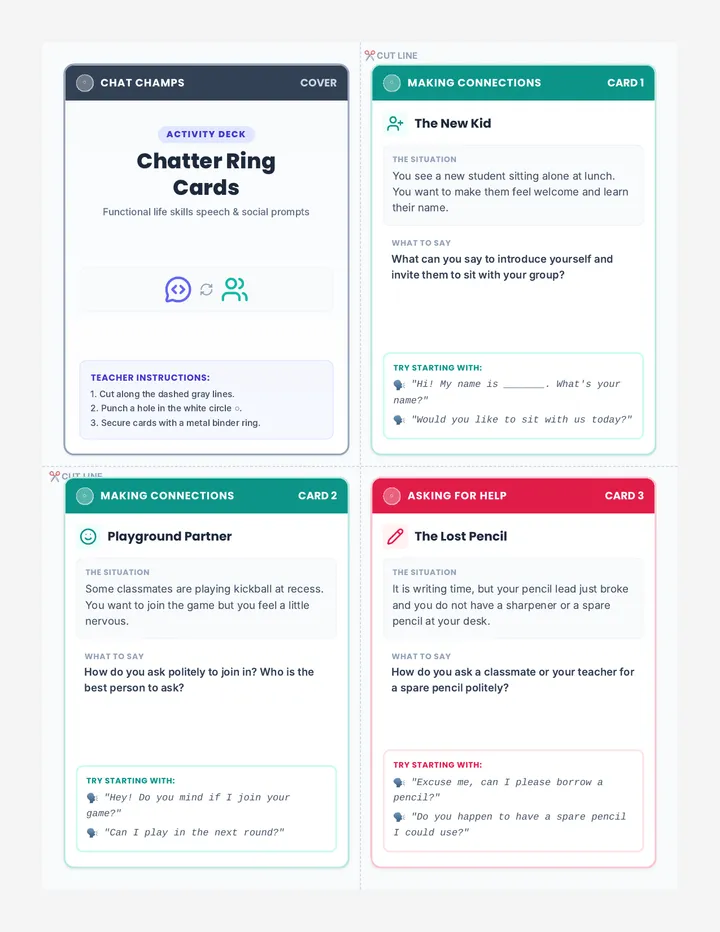
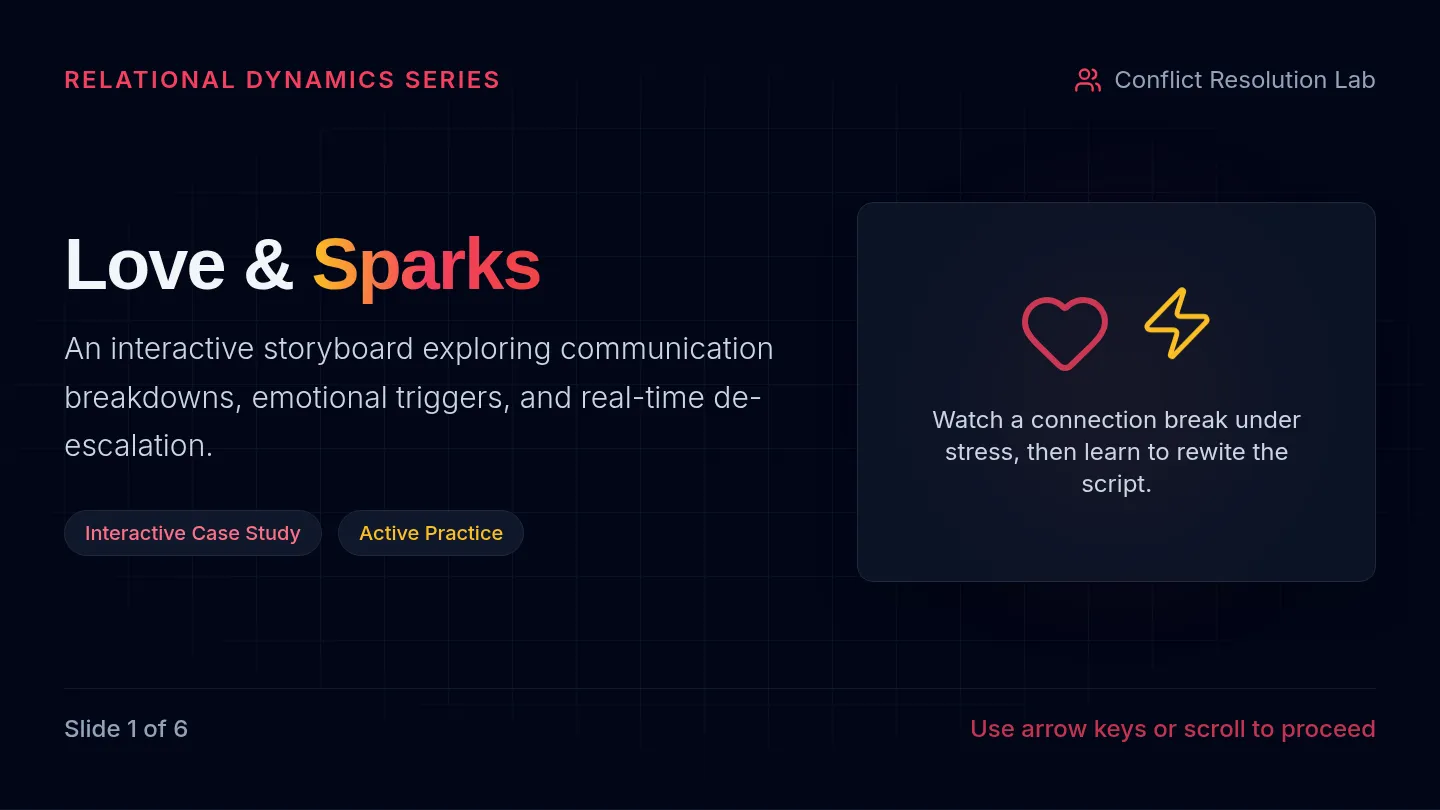
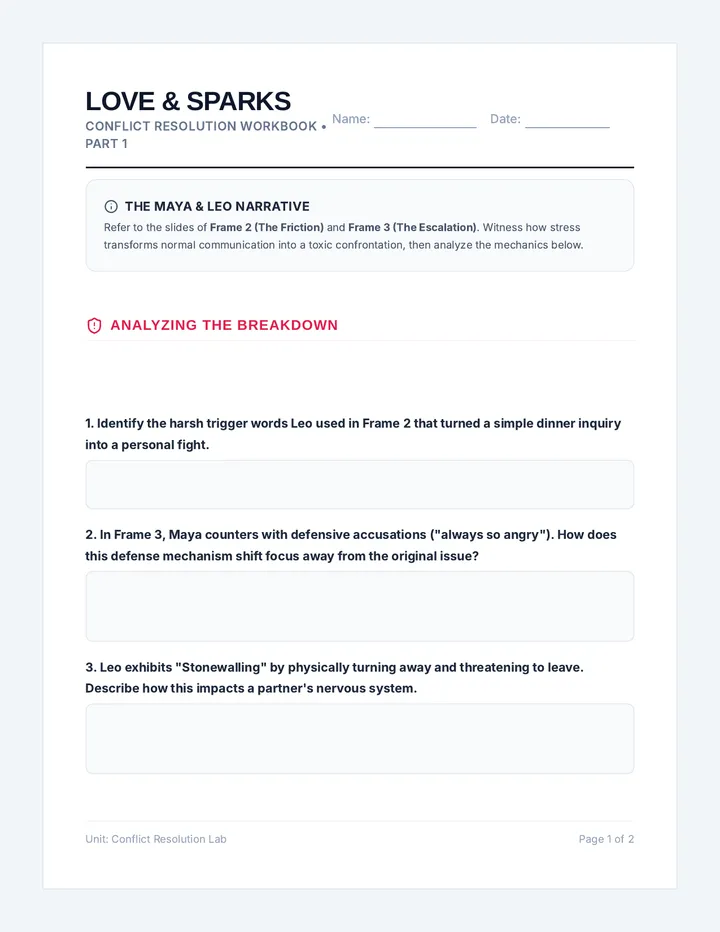
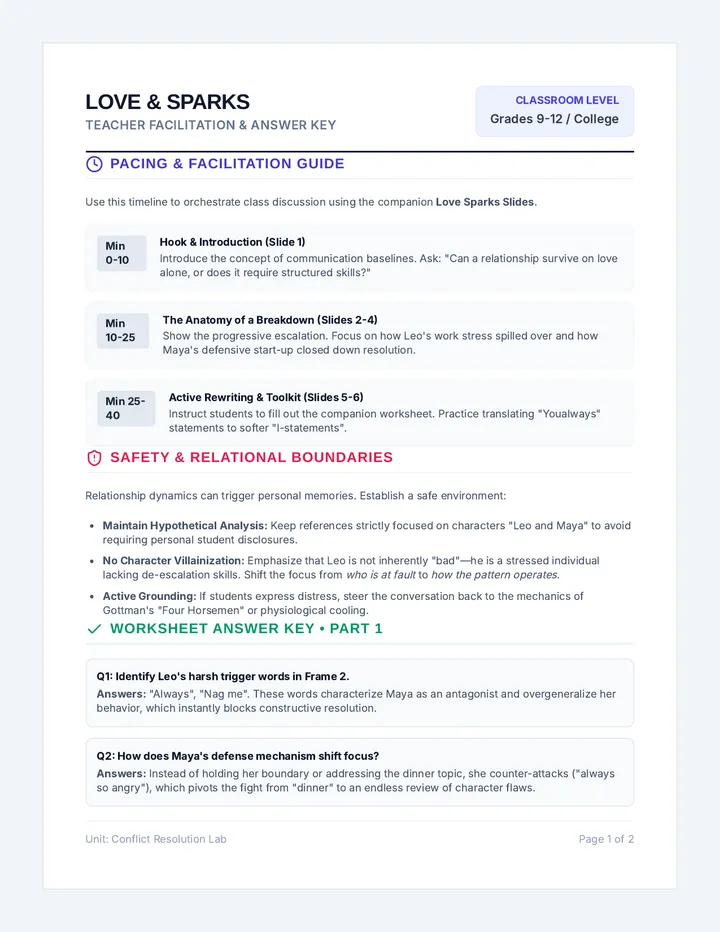
Teaches communication skills and conflict resolution as vital tools for navigating social stress and maintaining support networks.
Covers physical and mental wellness strategies, including breathing exercises and healthy habits, to maintain a resilient body and mind.
Explores how effective scheduling and prioritization can reduce stress and prevent burnout.
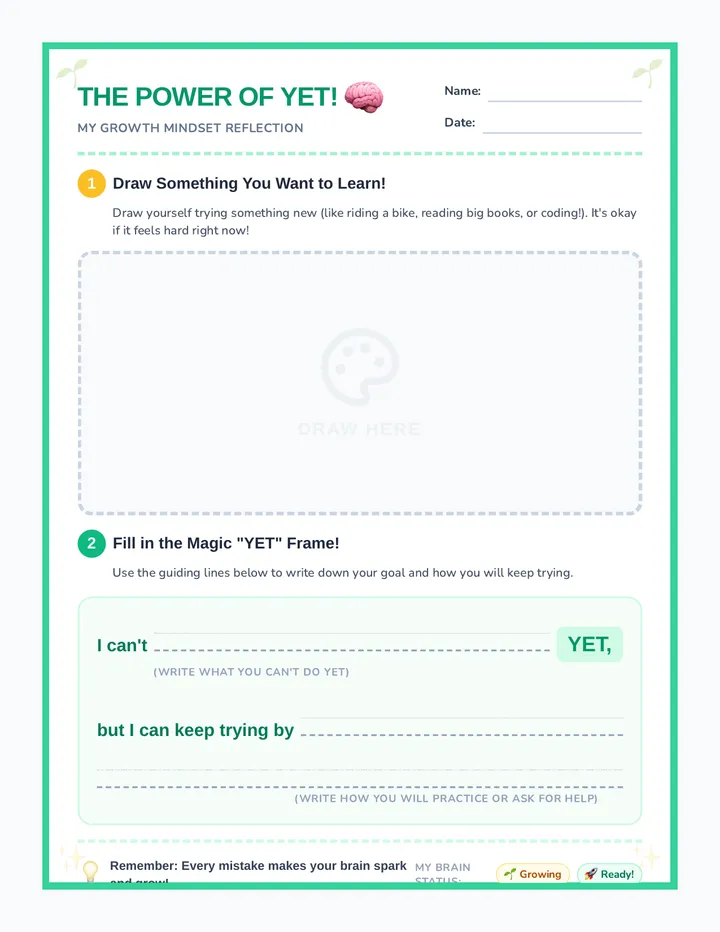
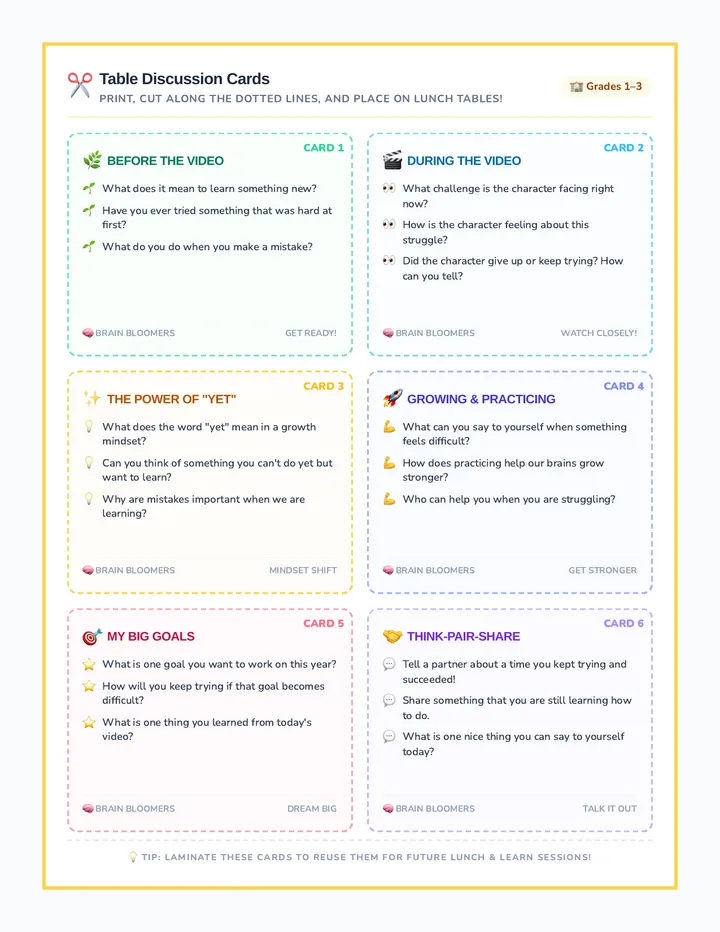
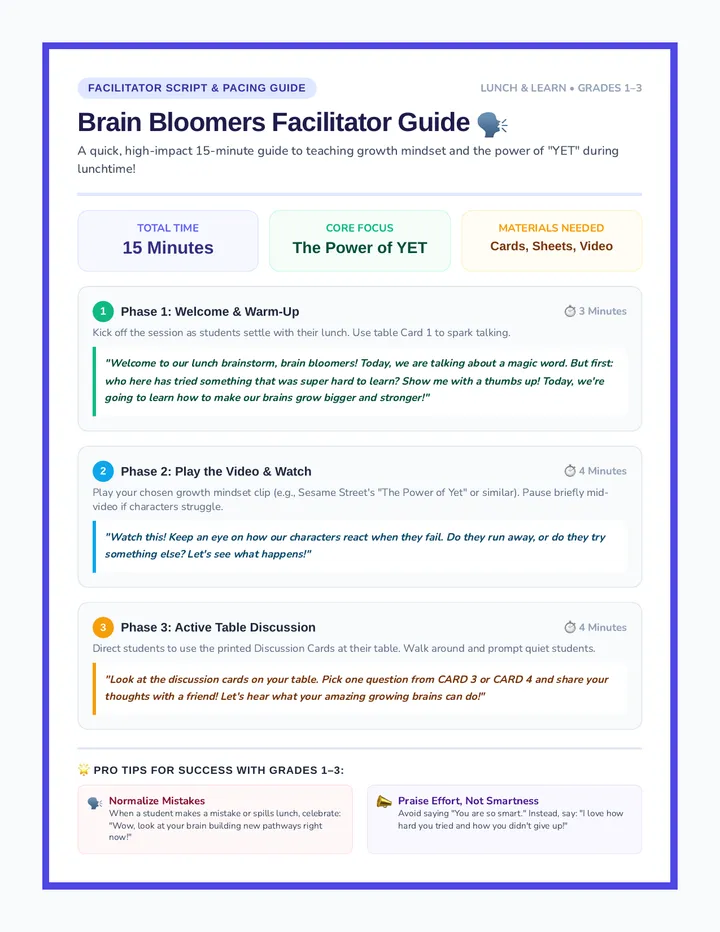
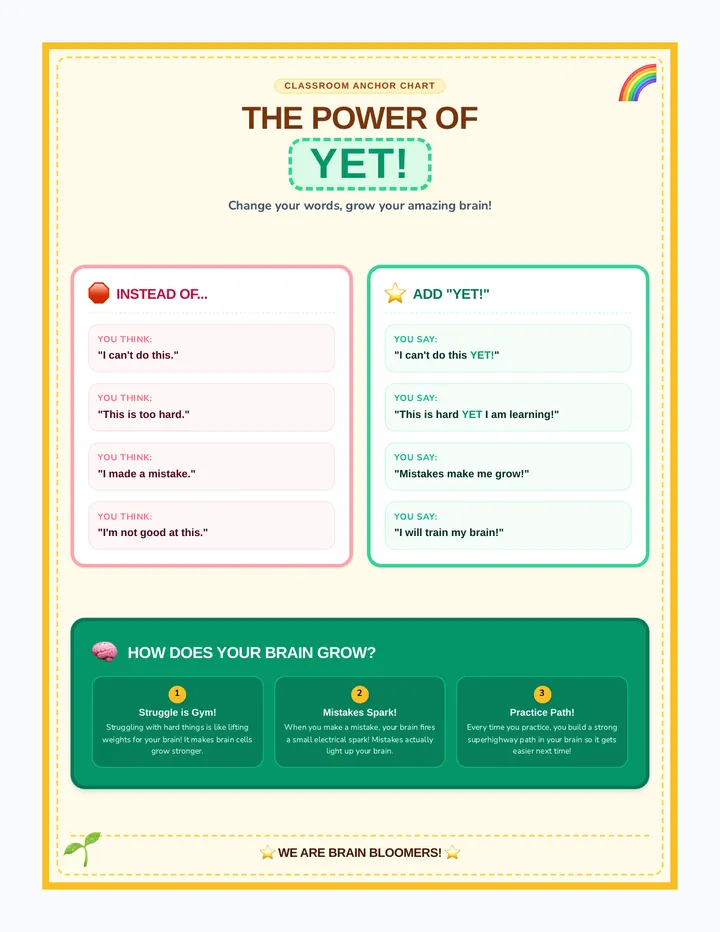
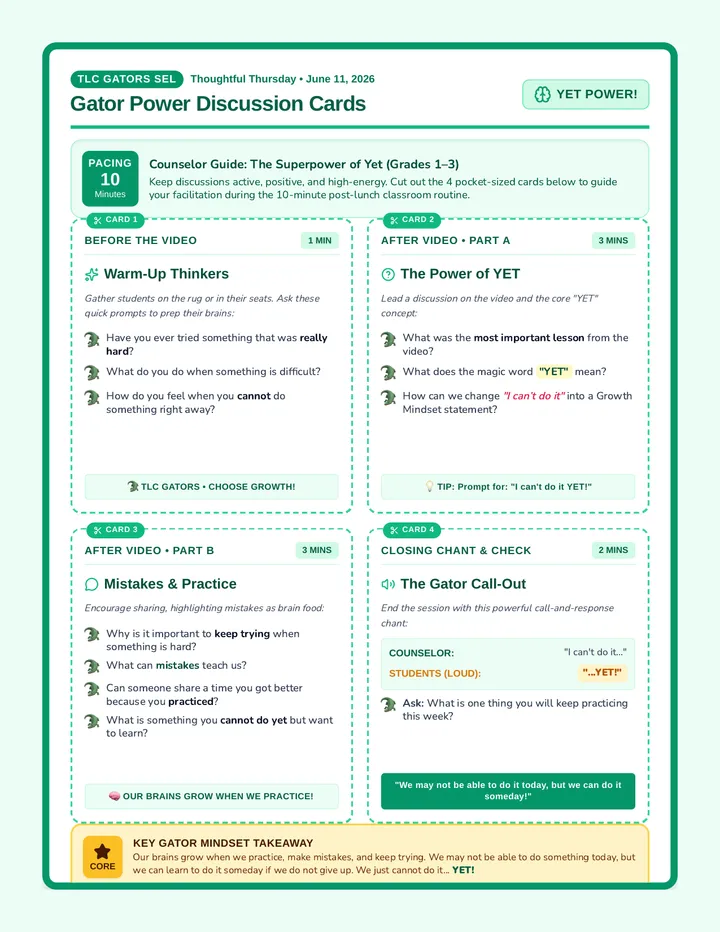
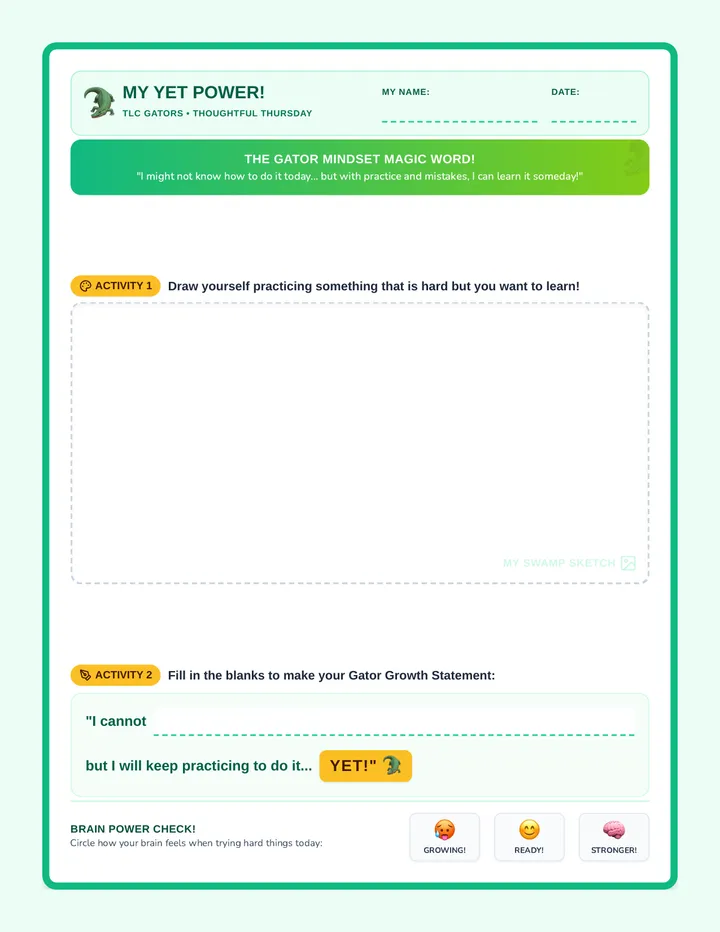
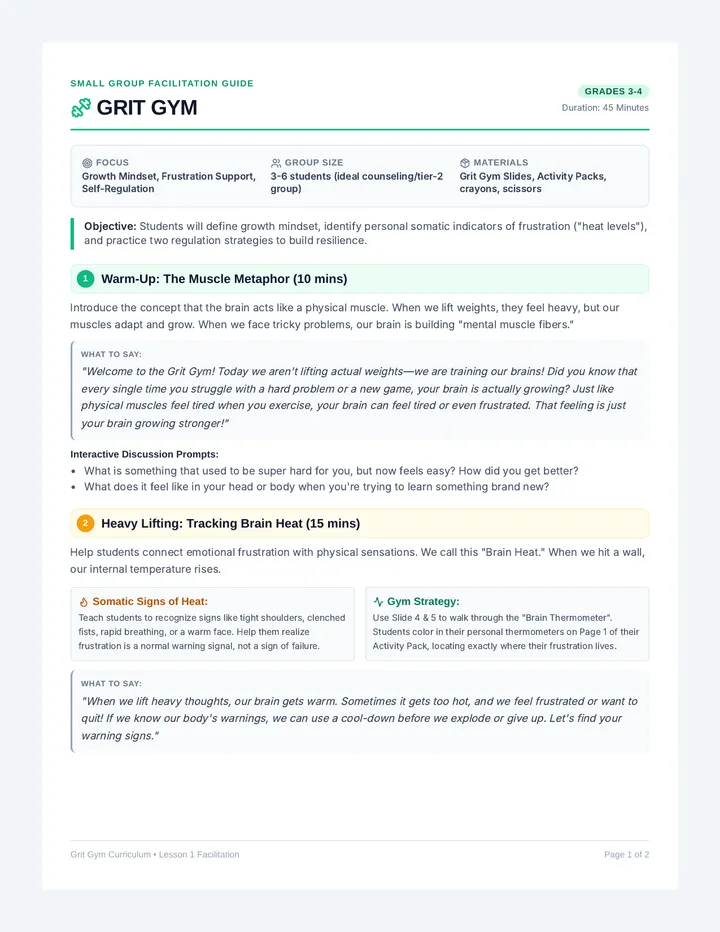
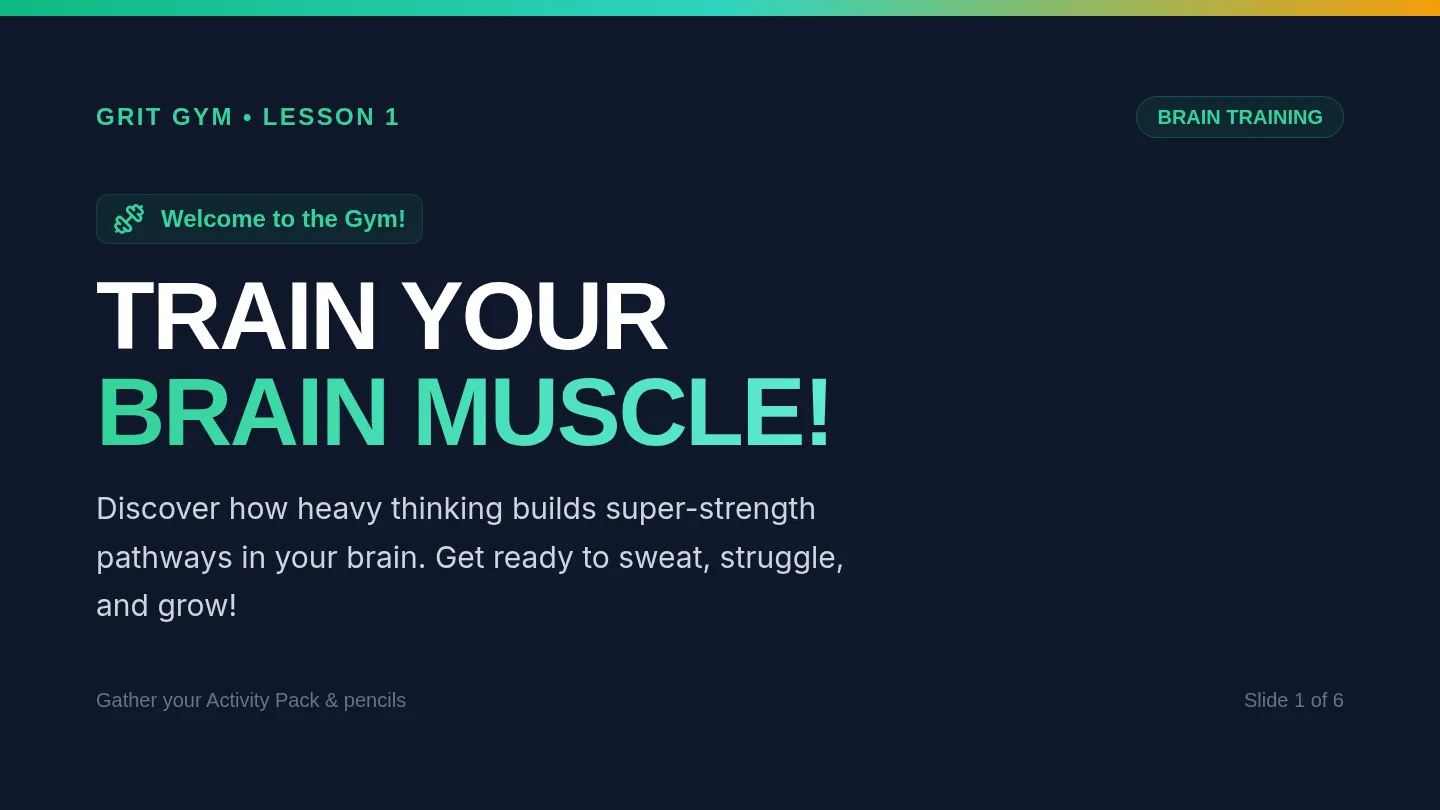
Focuses on developing a growth mindset and the 'Power of Yet' to build mental toughness and perspective when facing setbacks.
A small group session for 6th-grade girls focused on building self-confidence by navigating social dynamics, understanding peer pressure, and identifying healthy friendship traits.
This lesson provides middle and high school teachers with actionable strategies for managing students who sleep in class, moving from frustration to empathetic problem-solving. It covers root causes, immediate intervention techniques, and long-term support systems.
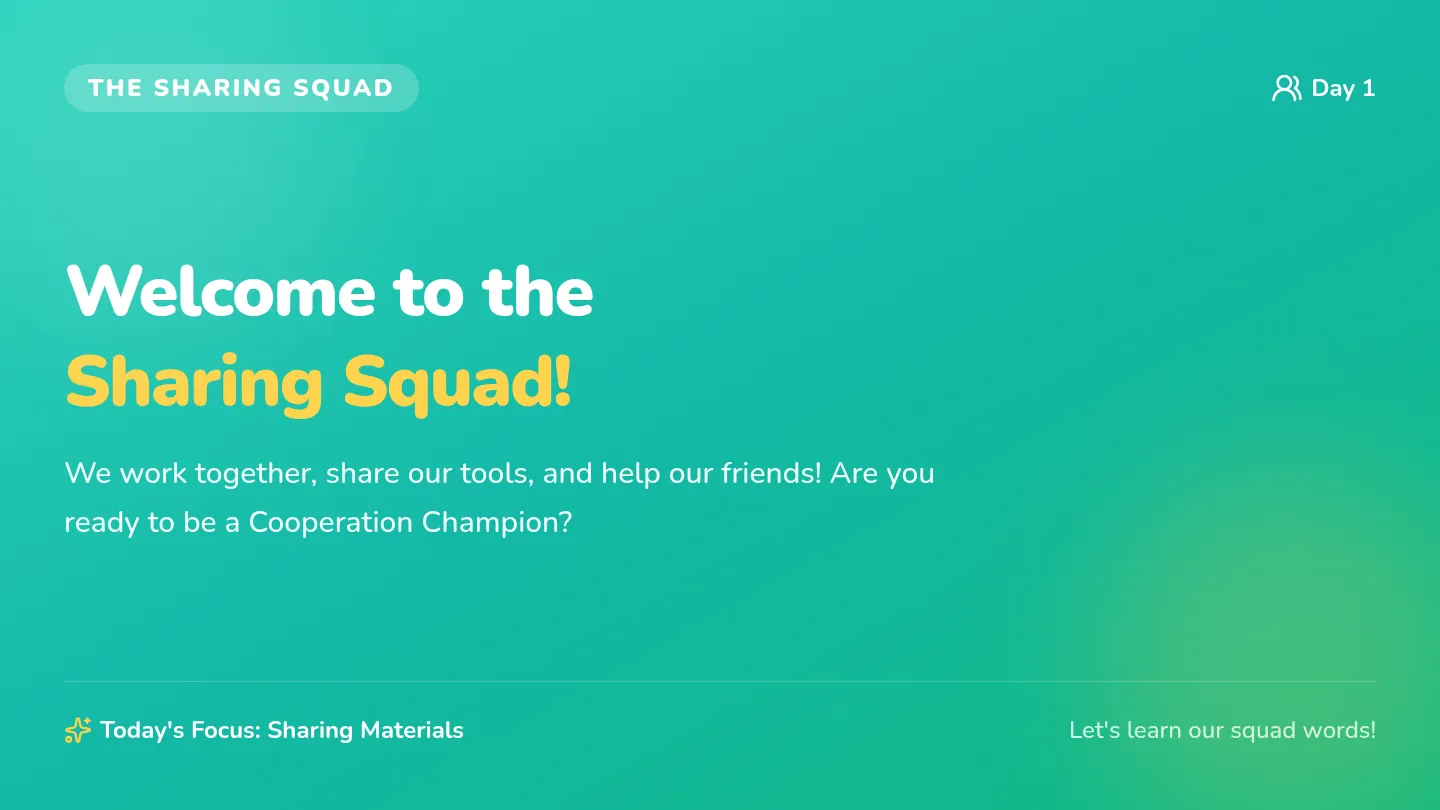
A comprehensive visual behavior management system for a home daycare, featuring a 'Super Squad' theme to engage young boys through visual expectations and a no-cost incentive program.
The final session focuses on maintaining healthy social boundaries, the role of forgiveness in growth, and group closure.
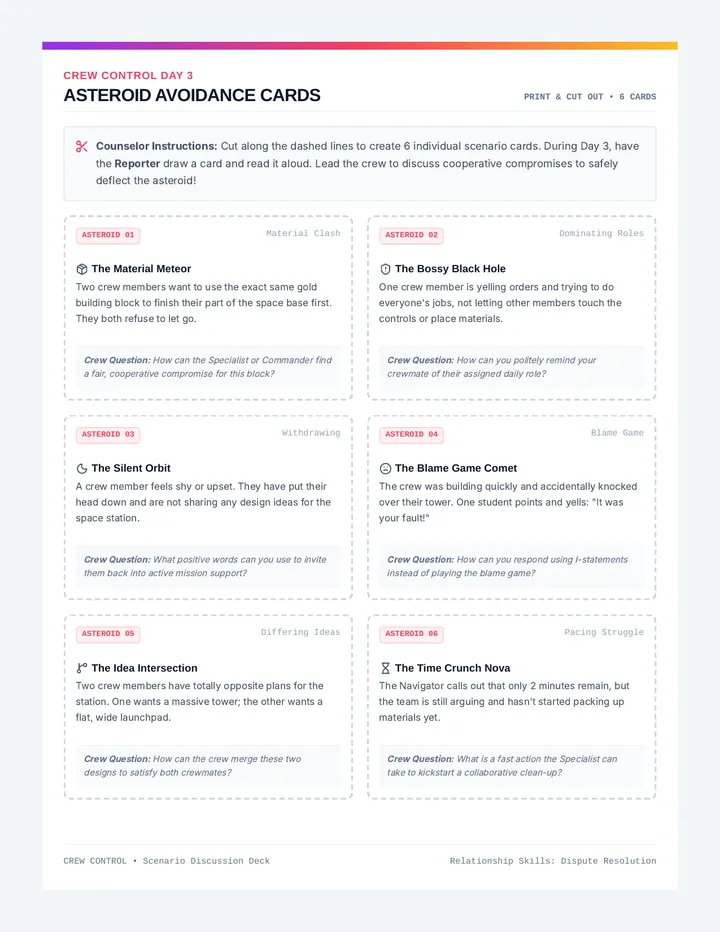
Students apply a conflict mediation model to realistic middle school scenarios, focusing on sustainable compromise and healthy boundaries.
Students practice advanced perspective-taking to navigate complex social situations and understand the role of perception in peer groups.
This lesson focuses on assertive communication and the impact of digital tone, teaching students to advocate for their needs without aggression.
Students analyze common middle school conflict triggers, including digital drama and social hierarchy, distinguishing between surface behaviors and underlying needs.
Students identify the core values that ground healthy friendships and analyze the difference between 'situational friends' and 'value-based friends.'
A practical budgeting lesson focused on selecting essential apartment items within a $100 limit, supporting IEP goals for functional math and decision-making.
A lesson designed for first-grade students to understand the impact of impulsive shouting and threats on their classroom environment and adult responses. It uses the metaphor of 'Word Weather' to help students navigate their emotions and language choices.
A mindful art session where students paint smooth stones with personal mantras, symbols, or intricate patterns to serve as portable 'calm reminders.'
A creative session for building miniature desktop zen gardens using sand, stones, and succulents to create a permanent 'calm corner' for students.
An exploration of how smell and sound affect the nervous system, featuring DIY aromatherapy sachets and personalized focus playlists.
A workshop focused on creating physical tools like custom stress balls and kinetic sand to manage fidgeting and provide tactile relief.
A gentle 20-minute lesson designed to help kindergarten students manage separation anxiety through social storytelling, visual routines, and calming coping strategies.
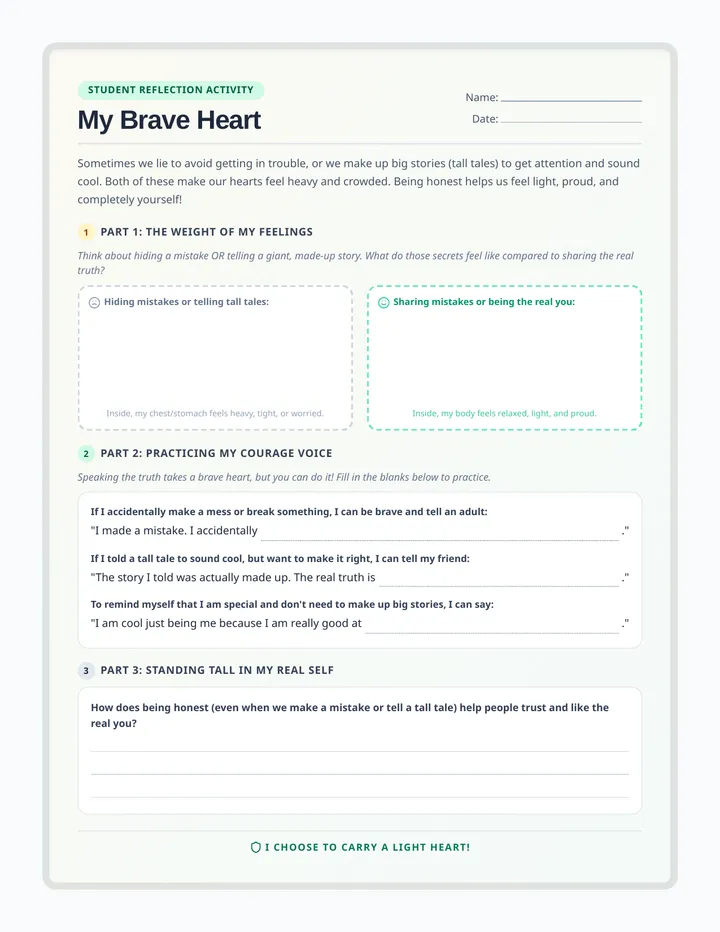
A social-emotional learning lesson focusing on identifying and managing frustration when things don't go as planned in the classroom, using a comic strip scenario.
A pitch deck and supplementary handout designed to help educators present the 'Scroll to Action' program to school leadership for integration into the curriculum.
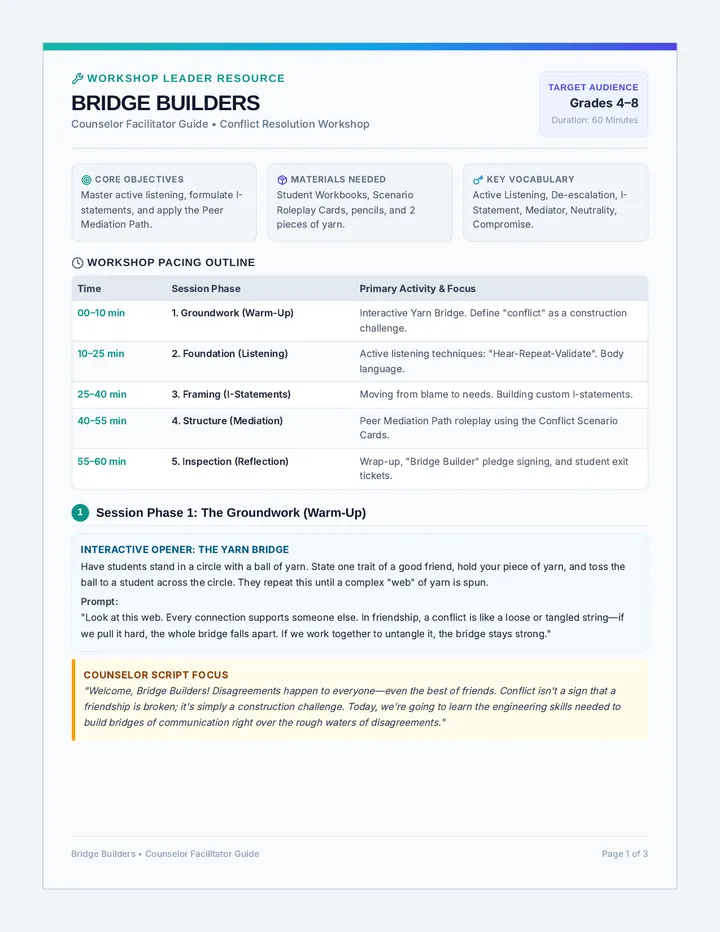
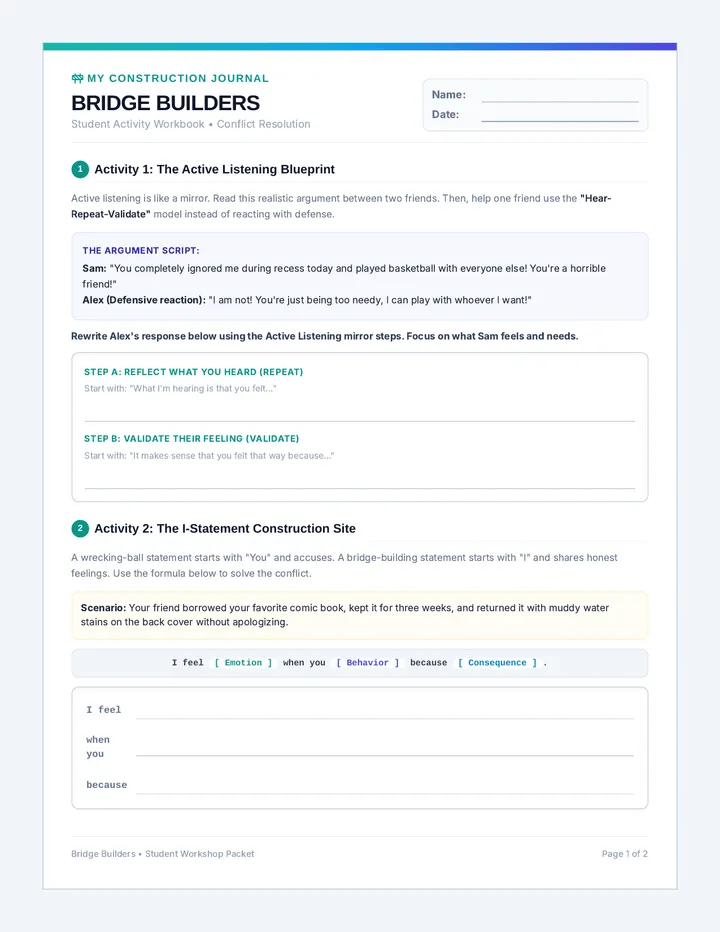
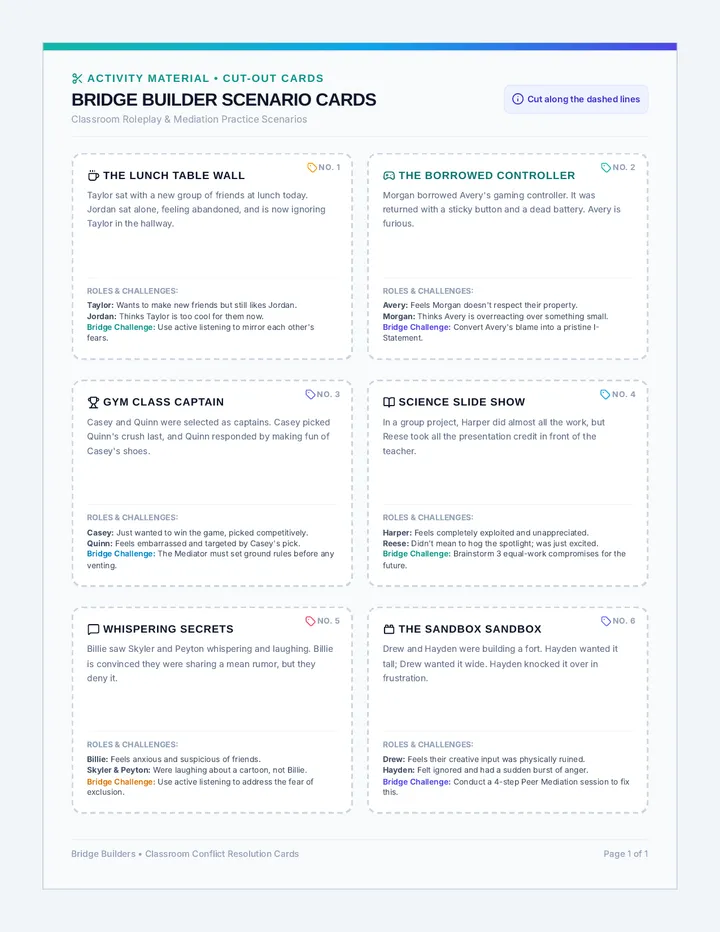
A comprehensive lesson on conflict resolution for grades 3-5, using the metaphor of bridge-building to teach "I" statements, empathy, and compromise.
A series of rotational stations designed for high school students to practice mindfulness, emotional regulation, and stress management in a 30-minute session.
A Tier 2 intervention lesson designed to help 3rd-grade students manage math anxiety through positive affirmations and task-chunking strategies. This lesson provides a structured approach to building confidence and emotional regulation before high-stakes testing.
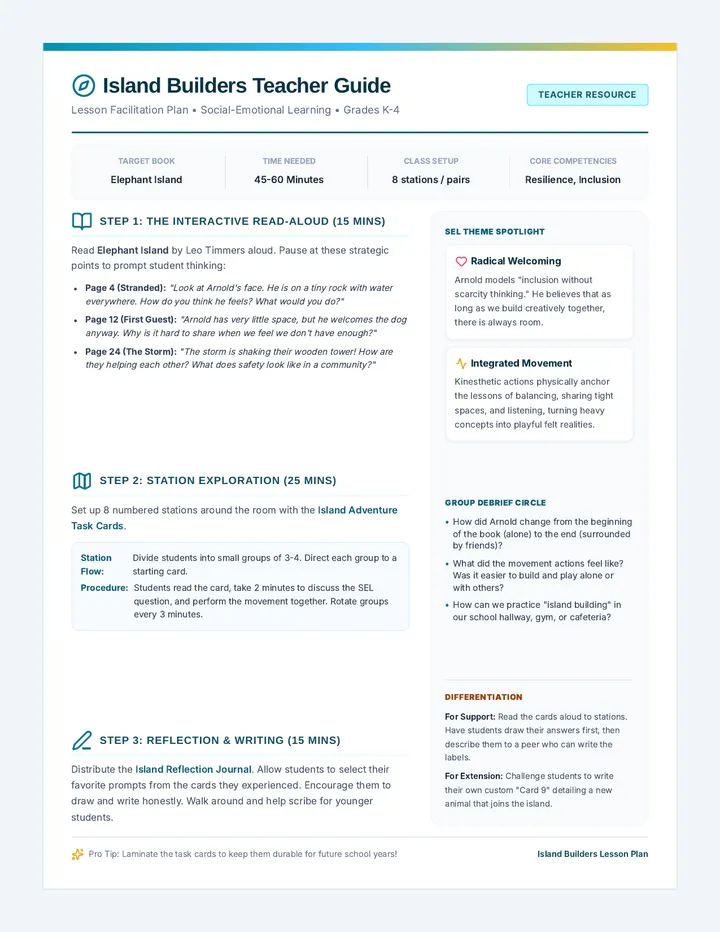
A construction-themed lesson for 2nd-3rd grade students where they transition from identifying kindness to proactively "building" it. Students use blueprints to design solutions for social challenges and participate in a collective building project.
A character-building lesson centered around a board game where students navigate real-life scenarios to practice taking ownership of their actions and choices.
A gentle 15-minute social-emotional lesson designed for kindergarten students experiencing separation anxiety. The lesson uses a 'Heart Bridge' metaphor to teach positive self-talk, visual schedules, and the use of comfort objects.
A comprehensive small-group session guide and set of resources designed to help students navigate peer pressure in social, academic, and physical safety situations.
A lesson designed to help newcomer Portuguese students and native English speakers master the art of assertive communication using 'I' statements in classroom settings.
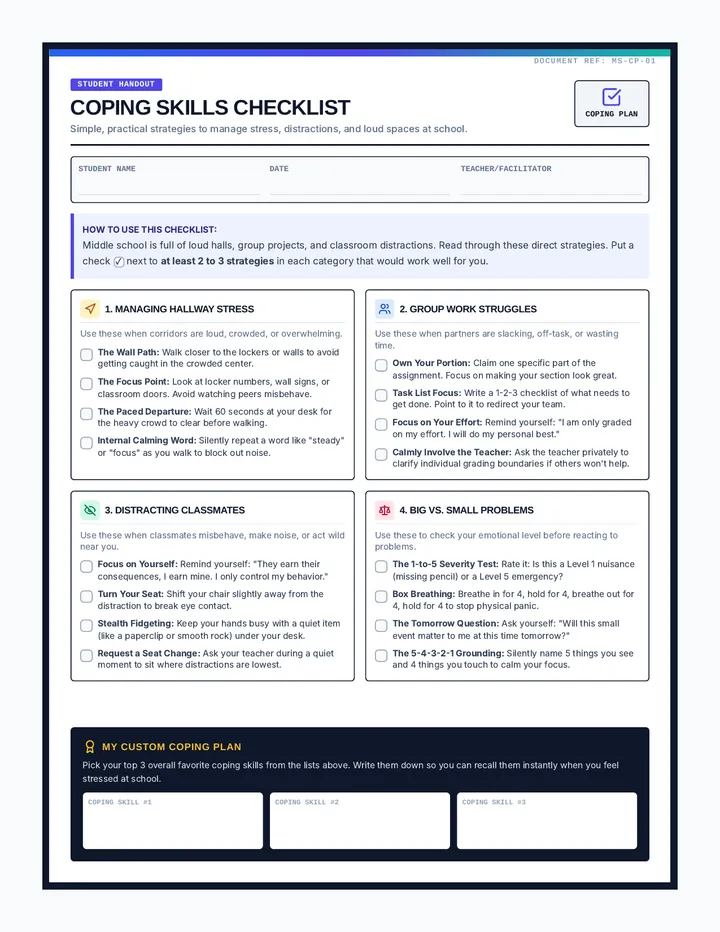
A comprehensive lesson designed to help 5th-grade students, particularly boys, develop and apply coping strategies for common academic stressors like testing, public speaking, and difficult assignments.
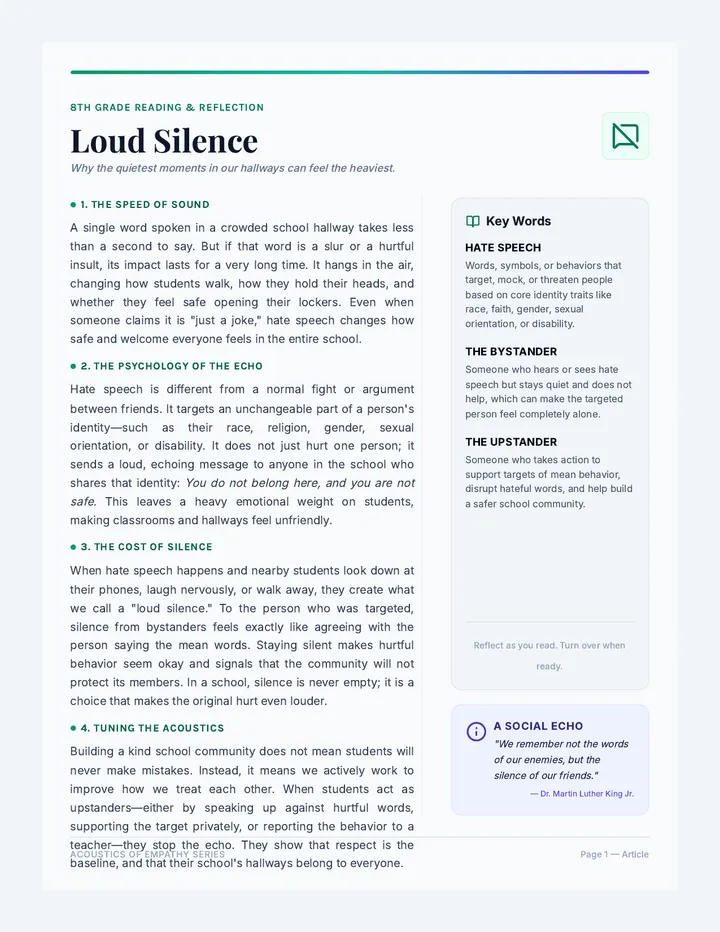
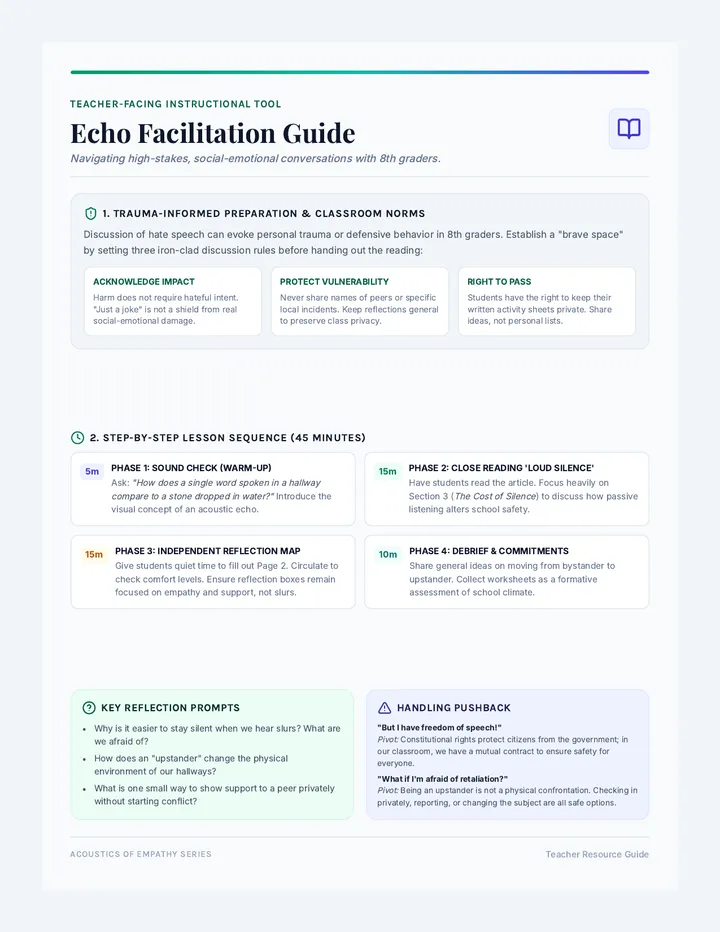
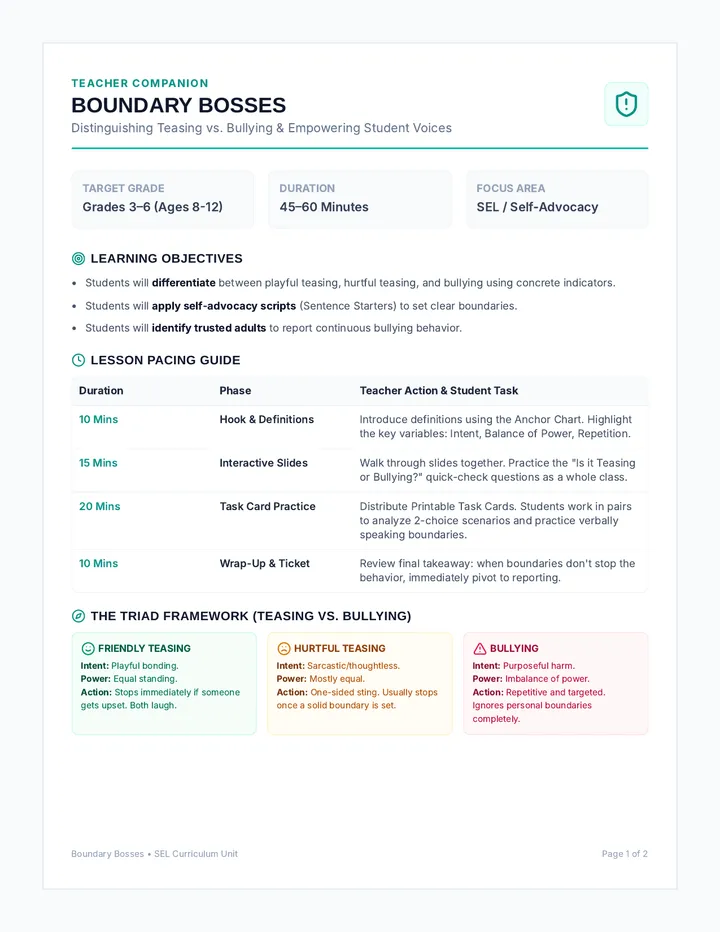
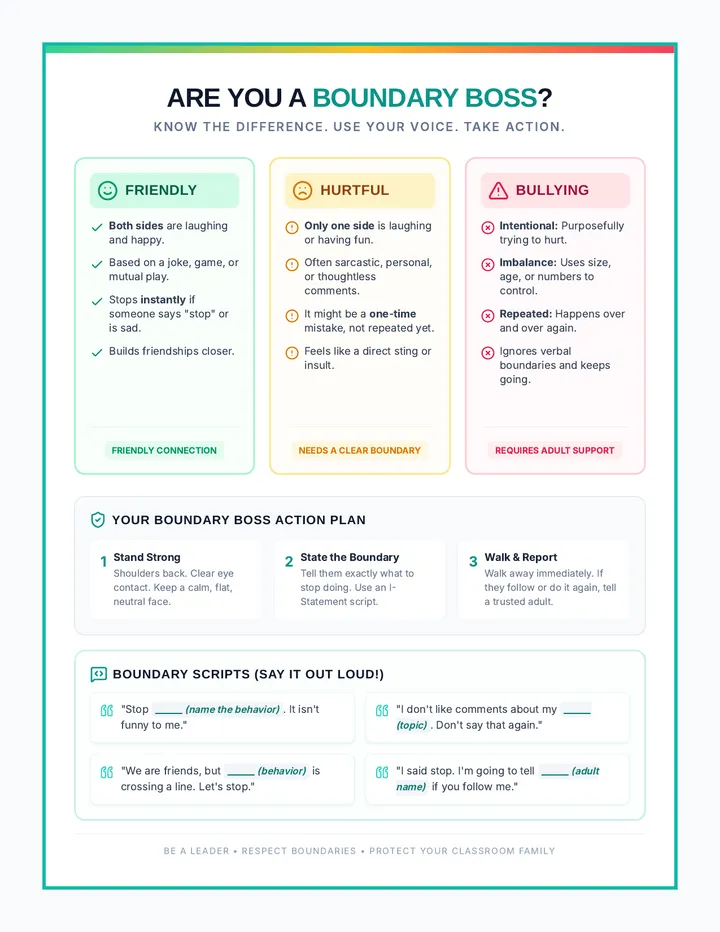
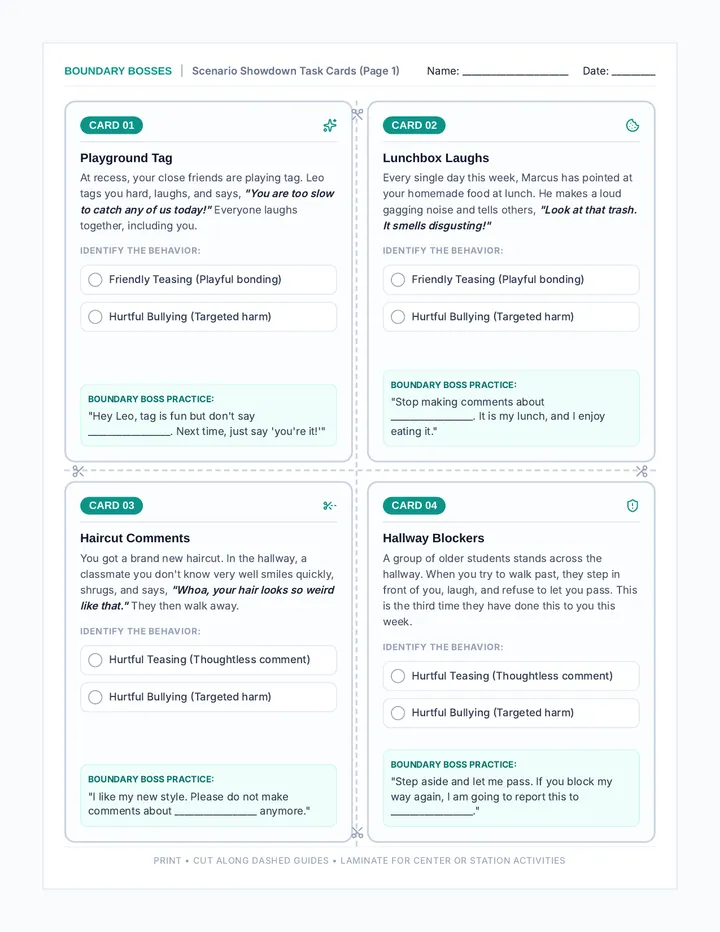
A social skills lesson for 6th grade students focused on empathy and distinguishing between playful joking and mean-spirited behavior using the 'Intent vs. Impact' perspective-taking model.
A forensic-themed lesson for 2nd grade students that delves deeper into social cues, empathy, and the "ripple effect" of kind and unkind actions.
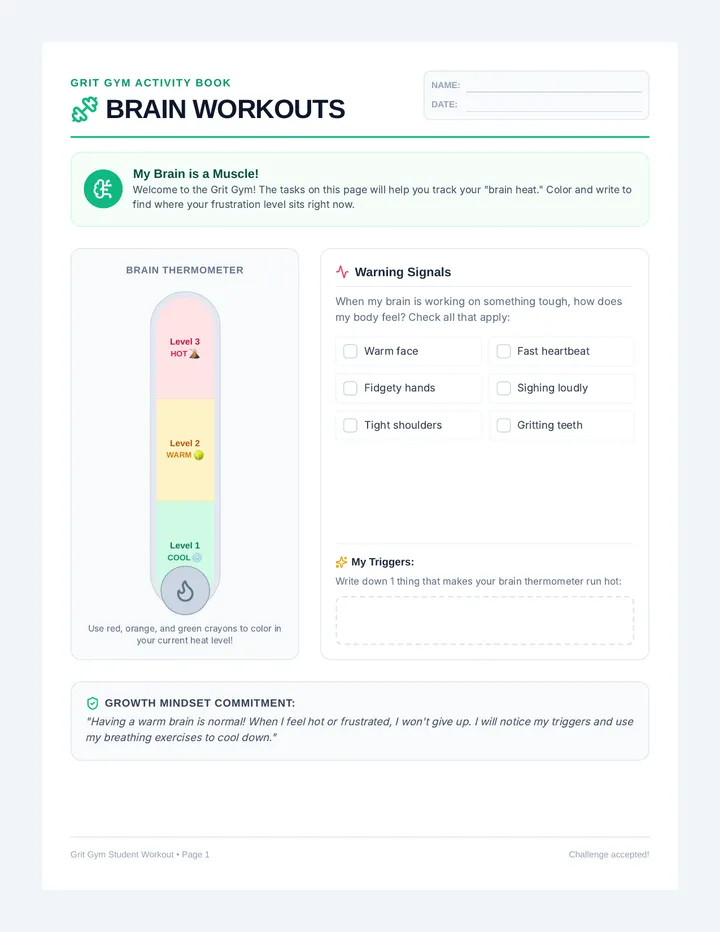
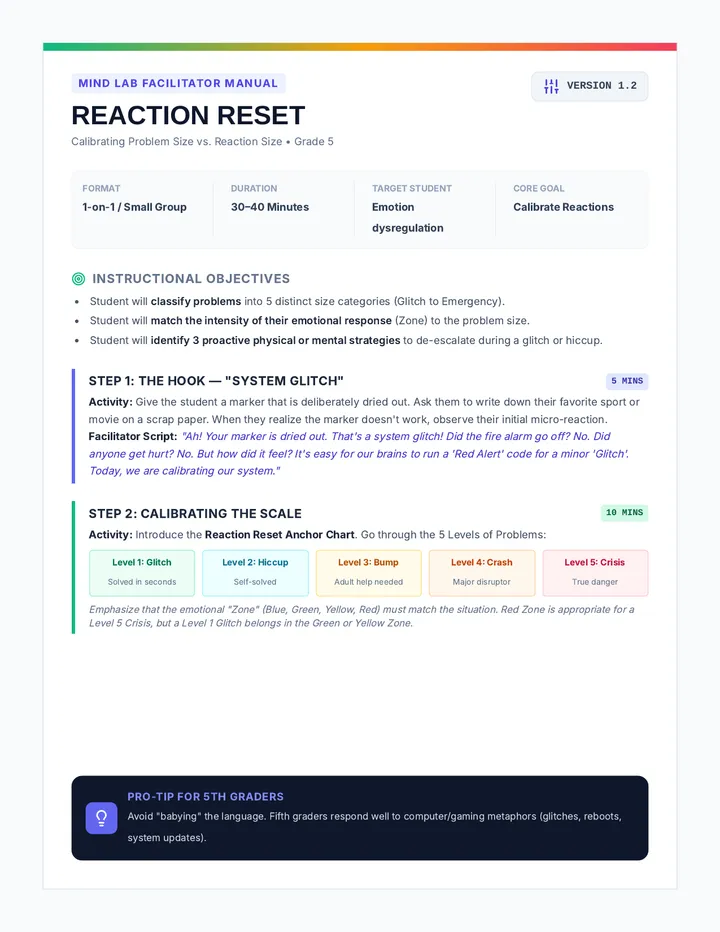
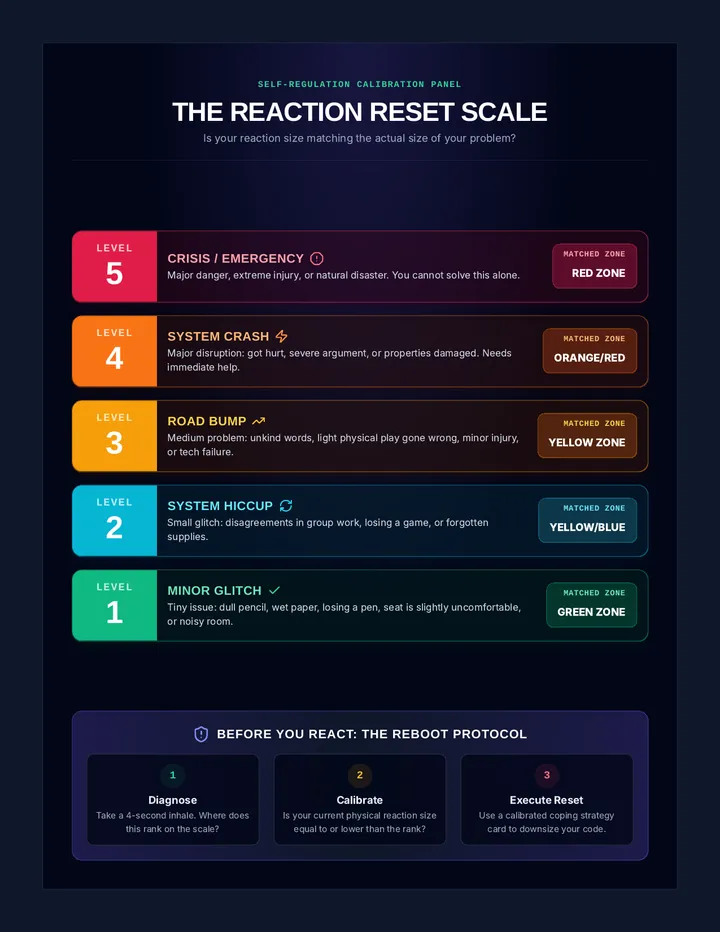
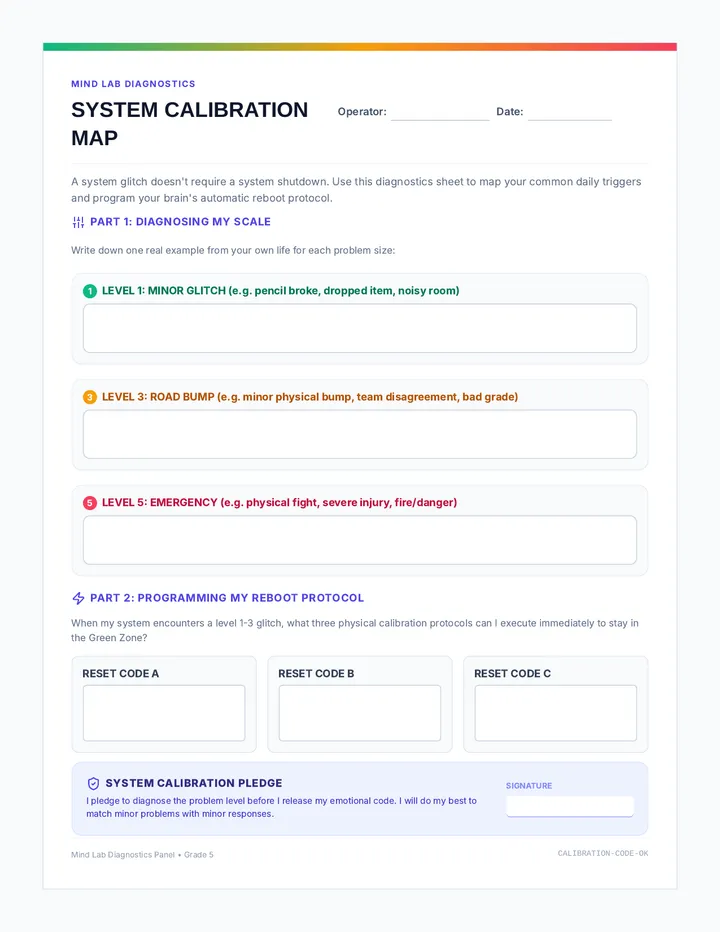
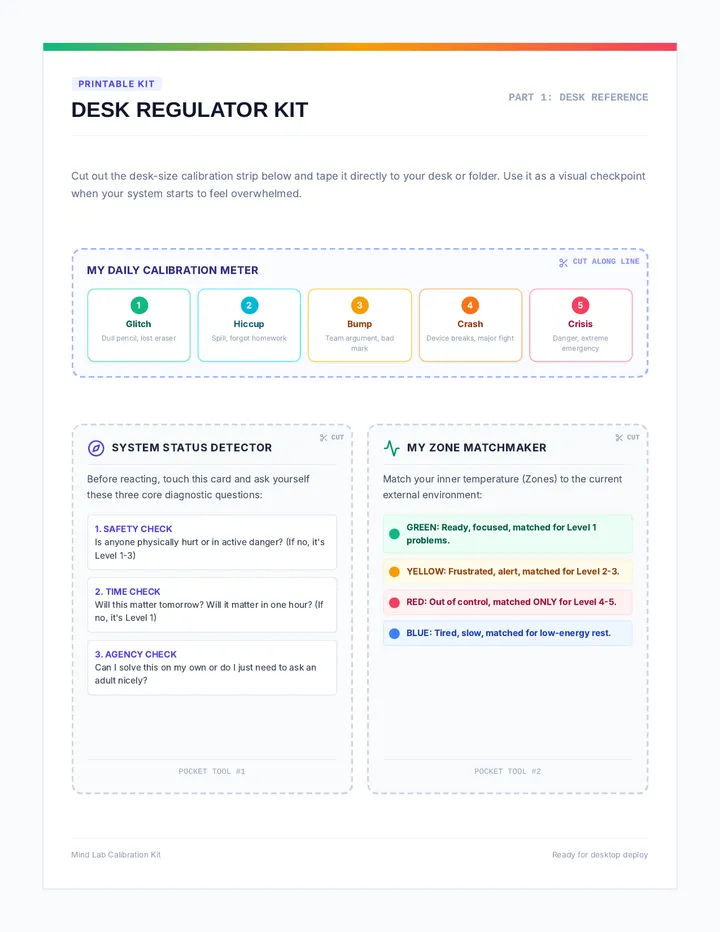
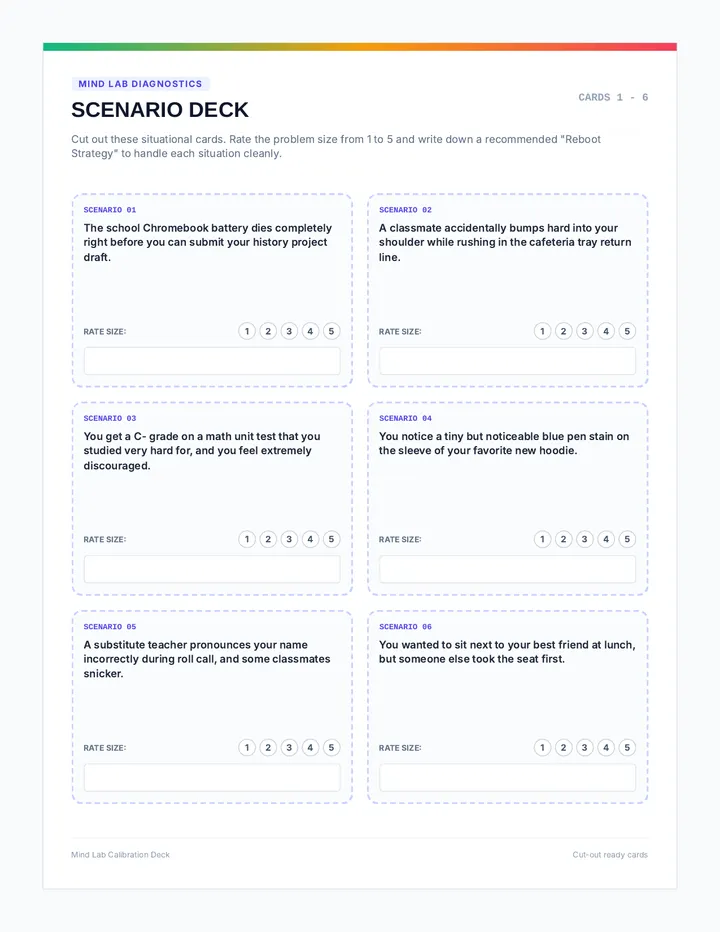
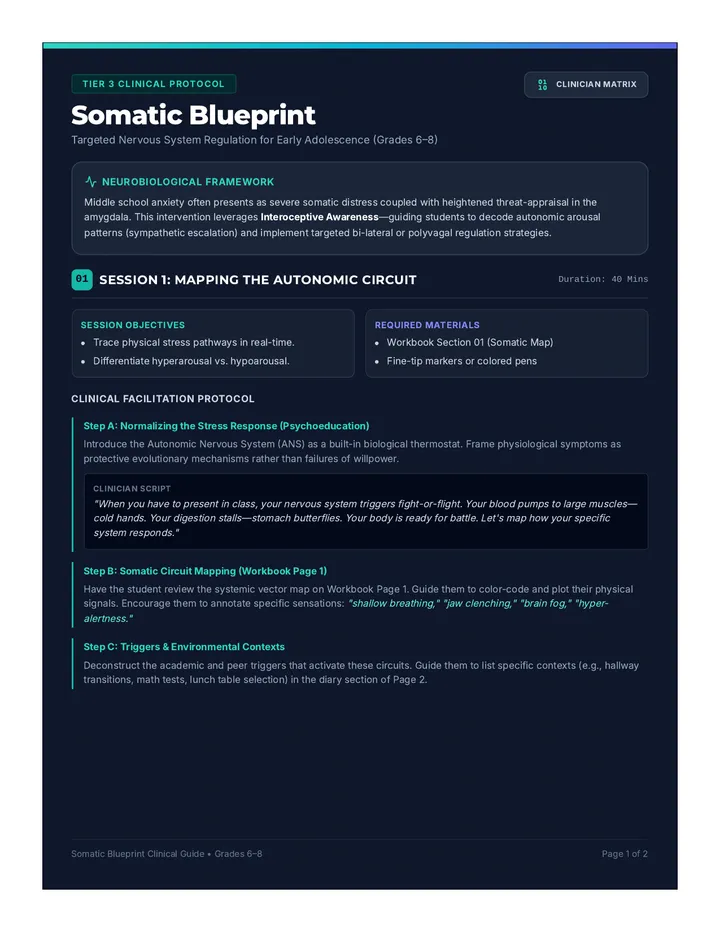
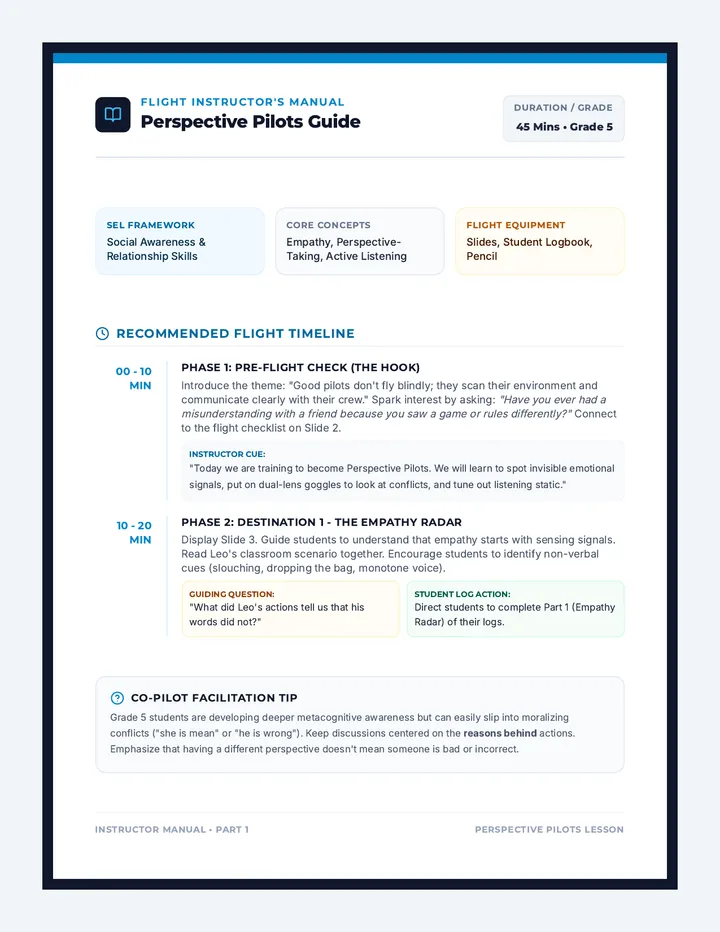
A lesson focused on identifying emotional zones and selecting appropriate self-regulation strategies for classroom and social scenarios.
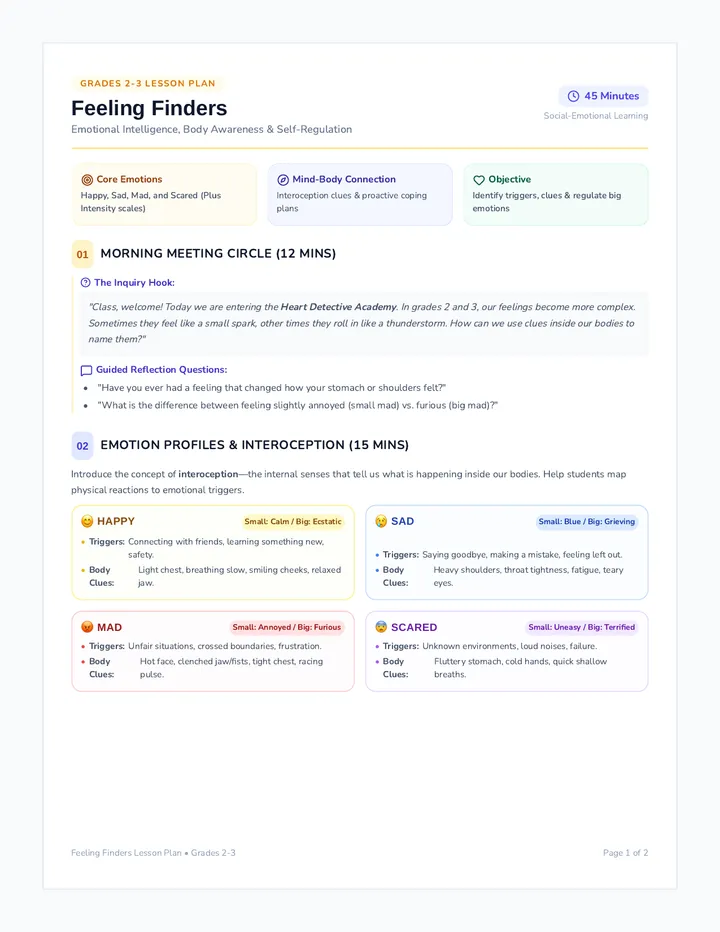
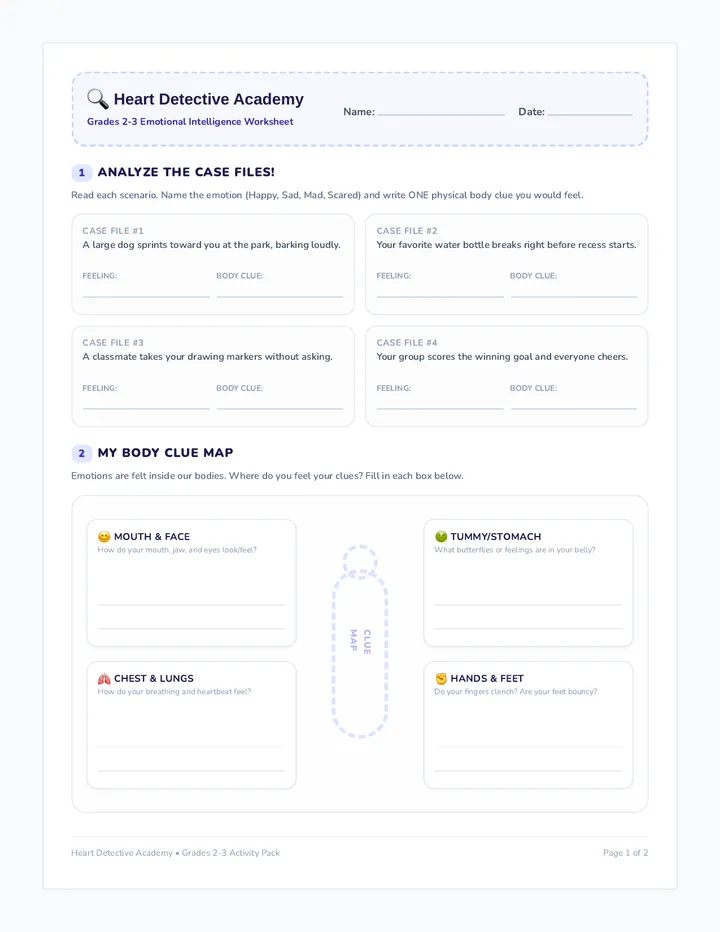
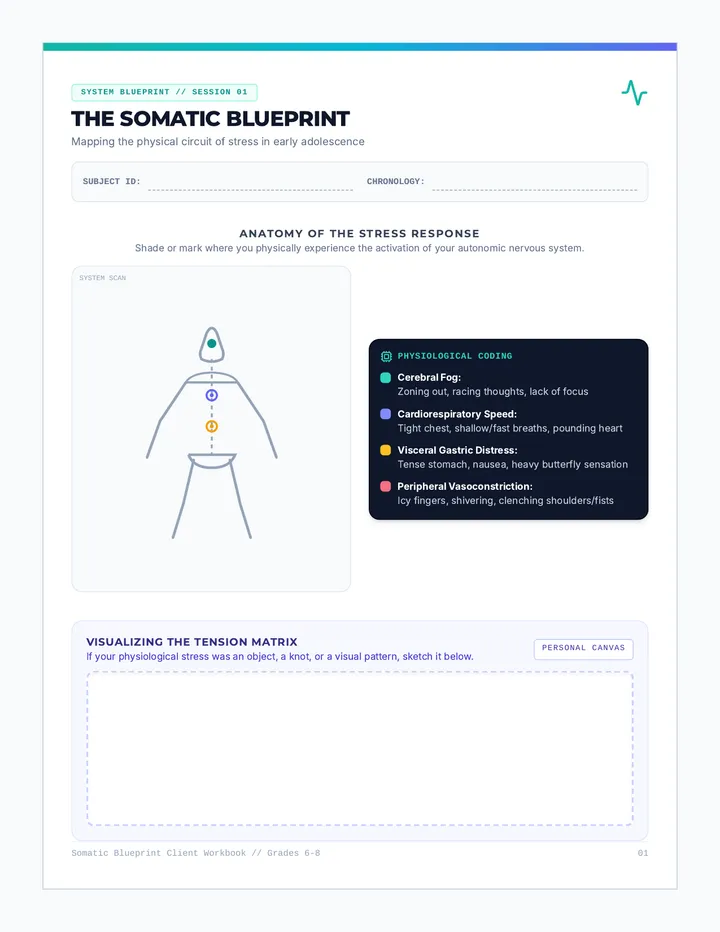
A lesson designed to help students identify and understand the physical signals their bodies send during different emotional states, using a 'Signal Scouts' theme to encourage self-awareness and emotional regulation.
A comprehensive training session for school counselors on teaching effective grounding techniques to students, focusing on sensory, movement, nature-based, and breathing strategies.
Students learn and practice specific strategies for task initiation, self-monitoring, and independence to finish their 'game' strong.
Students learn to choreograph their success by setting specific, manageable goals using dance and theater metaphors.
Students identify 'Time Robbers' (distractions) that interfere with work completion and develop defensive strategies to stay on task.
Students identify their executive functioning 'stats' by recognizing their strengths and areas for growth using a 'Scouting Report' metaphor.
A detective-themed lesson for K-2 students focused on identifying and distinguishing between kind and unkind behaviors through interactive games and a hands-on sorting activity.
A 30-minute individual counseling session designed for a middle school student navigating the challenges of living with a sibling with mental illness. The session focuses on validation, identifying circles of control, and practical coping strategies.
A 30-minute social skills lesson for 6th graders focused on using 'Fear vs. Fact' self-talk to overcome the anxiety of asking for help in the classroom.
The final session celebrates the student's progress. They create a 'Highlight Reel' of successful school moments and a 'Resilience Ribbon' to remind them of their inner strength.
Focuses on specific school-day challenges that might be causing morning anxiety. Using 'the vault' metaphor, the student learns to identify 'speed bumps' and practices 'vaulting' over them with quick strategies.
Focuses on building a 'support squad' at school. Using the metaphor of parallel bars, the student identifies people at school who can act as 'spotters' when they feel wobbly during the day.
The final session focuses on creating a 'Championship Routine,' building a concrete plan and confidence-boosting strategies for a smoother transition to school.