Cooperative Learning Blueprint Lesson Plan Cooperative Learning Blueprint
Lesson: Building Bonds • Grade 2 • Relationship Skills
50 MINUTE SESSION
Why This Matters
This lesson builds essential social-emotional competencies by guiding 2nd graders through cooperative play and reflection. Students learn to empathize, communicate, and trust peers, fostering a positive classroom climate and stronger bonds.
Learning Objective
Students will strengthen relationship skills—empathy, teamwork, and trust—by engaging in cooperative games and reflecting on their experiences through journaling, building social awareness and collaborative problem-solving.
Materials List
Teamwork Tips Slides
Soft balls and cones (Trust Toss)
Partner Puzzle Challenge Kits
Friendship Reflection Journals
Pencils
Prep Work (10 Minutes)
Review CASEL relationship skills
Preview Teamwork Tips Slides
Gather balls and set cones for Trust Toss
Sort & package Partner Puzzle pieces
Print Reflection Journal handouts
Lesson Flow & Pacing
5 Min
Introduction
Gather students in a circle and explain the lesson objective.
Introduce CASEL’s relationship skills (empathy, communication, trust).
Outline today’s flow: slides, two games, then journaling reflection.
10 Min
Teamwork Tips Presentation
Display Teamwork Tips Slides .
Discuss each tip: empathizing, active listening, encouragement.
Invite 2–3 students to share examples of using each tip.
10 Min
Trust Toss Game
Form pairs and stand about 5 feet apart with a soft ball.
Student A tosses gently while Student B catches, then switch roles.
Encourage partners to give verbal praise and reminders ("Ready? Catch!").
Rotate pairs after 5 minutes to experience new teammates.
15 Min
Partner Puzzle Challenge
Create new pairs and hand out materials.
Partners assemble the puzzle without speaking , using gestures and eye contact.
Circulate to prompt students to reflect on nonverbal teamwork strategies.
Ask pairs to describe one strategy that helped them cooperate.
8 Min
Friendship Reflection
Distribute Reflection Journal and pencils.
Prompt: “Write or draw one way you showed teamwork or trust today.”
Encourage students to add details: who, how, and how it felt.
2 Min
Closing
Reconvene whole class, share takeaways, and reinforce how empathy and trust make teamwork stronger. Praise participation!
Teamwork Tips Slides Building Strong Teams
Welcome to our Teamwork Tips! Today we’ll learn ways to work together with kindness and respect.
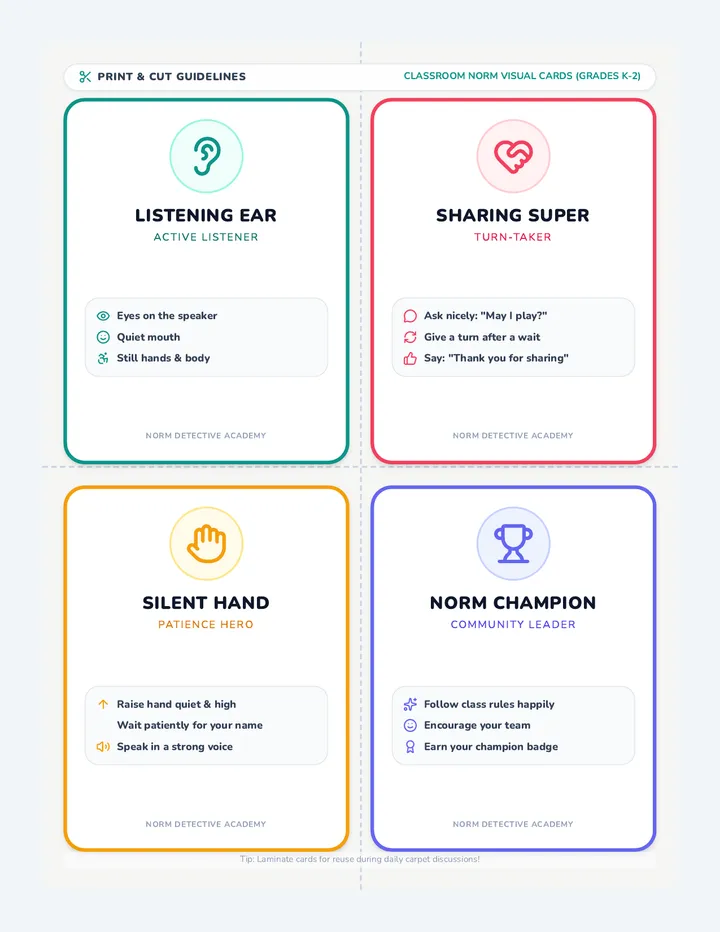
Teacher Note: Introduce the four tips: empathy, listening, encouragement, and trust.
Tip 1: Show Empathy
1
Notice how others feel
2
Ask questions like “Are you OK?”
3
Use kind words and gentle actions
Tip 2: Active Listening
1
Look at your partner when they speak
2
Nod or say “uh-huh” to show you’re listening
3
Repeat back what you heard
Tip 3: Give Encouragement
Use positive words:
“You can do it!”
Praise effort:
“Nice try!” “Well done!”
Smile and clap for each other!
Tip 4: Build Trust
Keep your promises
Be honest when you make a mistake
Do what you say you will do
Tip 5: Show You Care
Help classmates when they need it
Stand up for friends
Share and include everyone
Let’s Practice!
Choose one tip to use today:
EMPATHY ACTIVE LISTENING ENCOURAGEMENT TRUST-BUILDING
Who will share their example later?
Trust Toss Game Guide Trust Toss Game
Building Bonds Activity Guide
Duration 10 MIN
Purpose
Build trust and relationship skills through cooperative tossing and catching using verbal cues and positive praise.
Materials
Soft balls or beanbags
Cones or tape to mark spots
Setup
Mark pairs of spots about 5 feet apart using cones or tape.
Assign each student a partner and have them stand at the marked spots facing each other.
Provide one ball per pair.
Game Instructions
5 Min
Round 1: Toss & Catch
Student A holds the ball and says “Ready?” before tossing gently.
Student B replies “Ready!” and catches the ball.
After each catch, both say a word of encouragement (e.g., “Great catch!”).
Switch roles every 5 tosses.
Rotate
Switch partners to work with new classmates and build group trust.
3 Min
Round 2: Quick Catch Challenge
Increase the pace of tosses. Use partner names (e.g., “Sarah, ready?”).
Celebrate every success with a quick cheer or clap!
Teacher Guidance
Model clear verbal cues: "Ready?" and "Got it!"
Praise specific efforts: "I like how you waited for the signal."
Highlight positive moments for the whole class to see.
Reflection Prompts
How did saying "Ready?" help you feel confident?
What did it feel like when your partner praised you?
How do words help us build trust?
Partner Puzzle Challenge Activity Partner Puzzle Challenge
A Silent Teamwork Adventure
Activity Purpose
Strengthen nonverbal communication and teamwork by challenging partners to assemble a jigsaw puzzle without using any words. Students must rely on gestures, eye contact, and shared focus to succeed.
Materials Needed
24-piece puzzles
Resealable baggies
Flat tables/surfaces
Timer (optional)
Step-by-Step Guide
01
Setup
Place each puzzle’s pieces into a baggie. Arrange pairs at tables with one baggie and ensure they have a clear workspace.
The Core Challenge
02
Silent Puzzle Solve (15 Minutes)
No Talking: Partners must work in complete silence throughout the assembly.
Use Cues: Use gestures, eye contact, and pointing to signal where pieces might go.
One by One: Encourage taking turns placing pieces to ensure equal participation.
03
Debrief & Reflection
Ask each pair to share one nonverbal strategy (e.g., "I pointed to the blue pieces first") that helped them succeed. Connect this to real-life: How do we help others without using words?
Discussion Prompts What gestures did you use to let your partner know which piece to pick? How did it feel to complete a task without speaking? What nonverbal skills will you try in other teamwork activities?
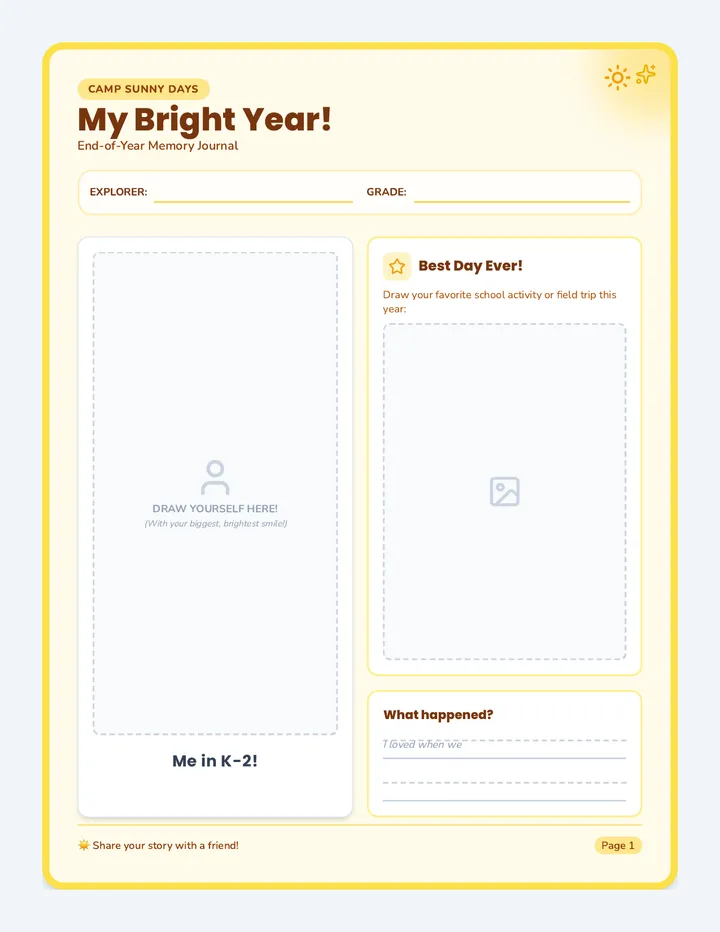
Friendship Reflection Journal Handout Friendship Reflection Journal
Reflecting on Our Teamwork Today
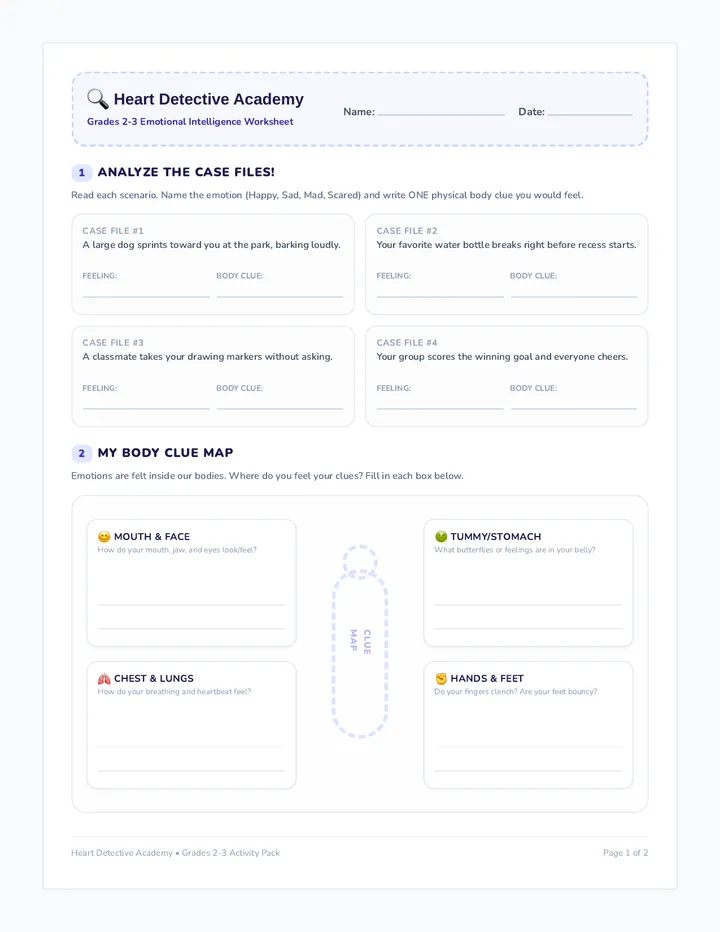
Name:
Date:
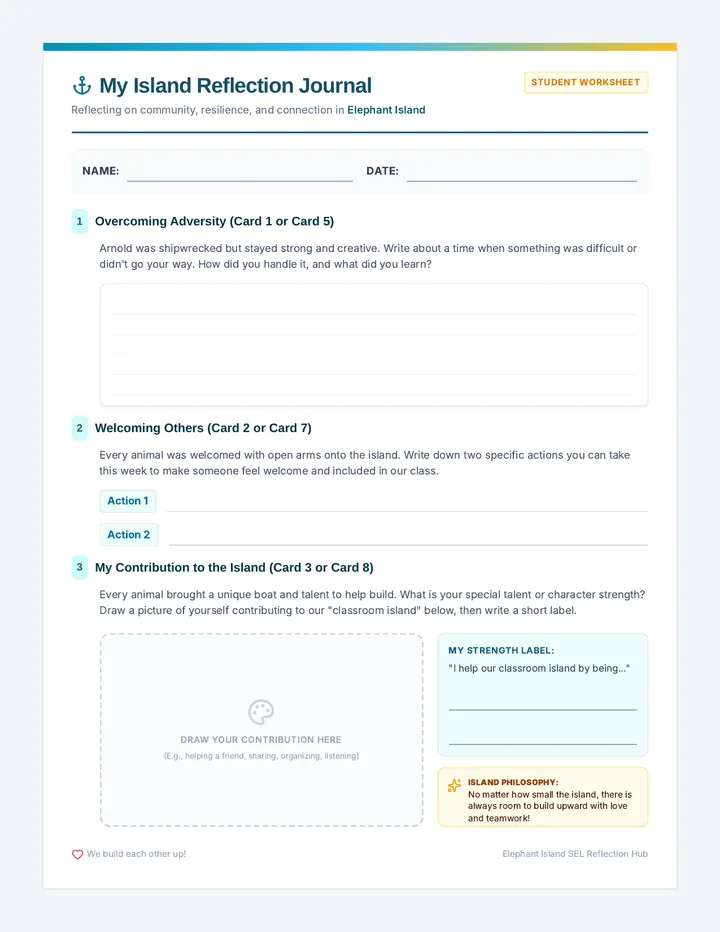
1. My Teamwork Moment
Think about a time today when you worked with a friend or classmate. Write about what happened, who you were with, and how you helped each other.
2. Draw Your Cooperation
Draw a picture of you and your partner playing a game or solving the puzzle together. Show how you communicated or encouraged each other.
3. How I Felt and What I Learned
What did it feel like when your partner praised you or you made a team promise? What is one thing you will remember about working together?
Bonus:
Share your reflection with a partner and tell them one thing you’re proud of today!