Students will explore the concept of "attention" as a basic human need and identify how their current behaviors (fighting) are attempts to meet that need, while evaluating the long-term costs of negative attention.
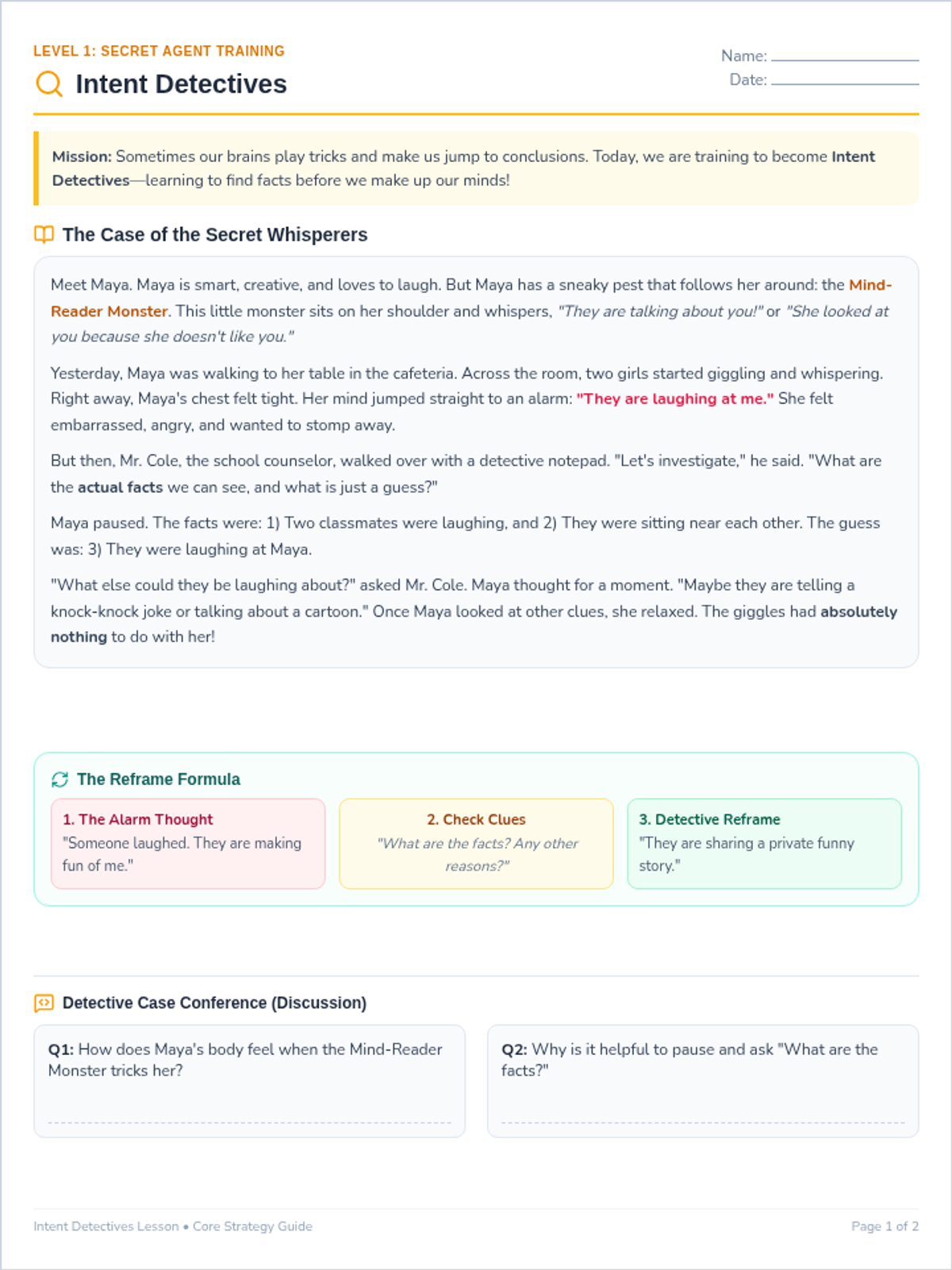
A 10-minute 1-to-1 social-emotional learning lesson designed to help students stop assuming negative intentions in others. The lesson uses a personalized social story and active role-play scenarios to practice reframing common social situations, like hearing laughter or seeing someone look their way.
A 1-to-1 social-emotional learning lesson focusing on empathy and perspective-taking through real-world scenarios. Students practice putting themselves in the shoes of both classmates and teachers to understand different feelings and actions.
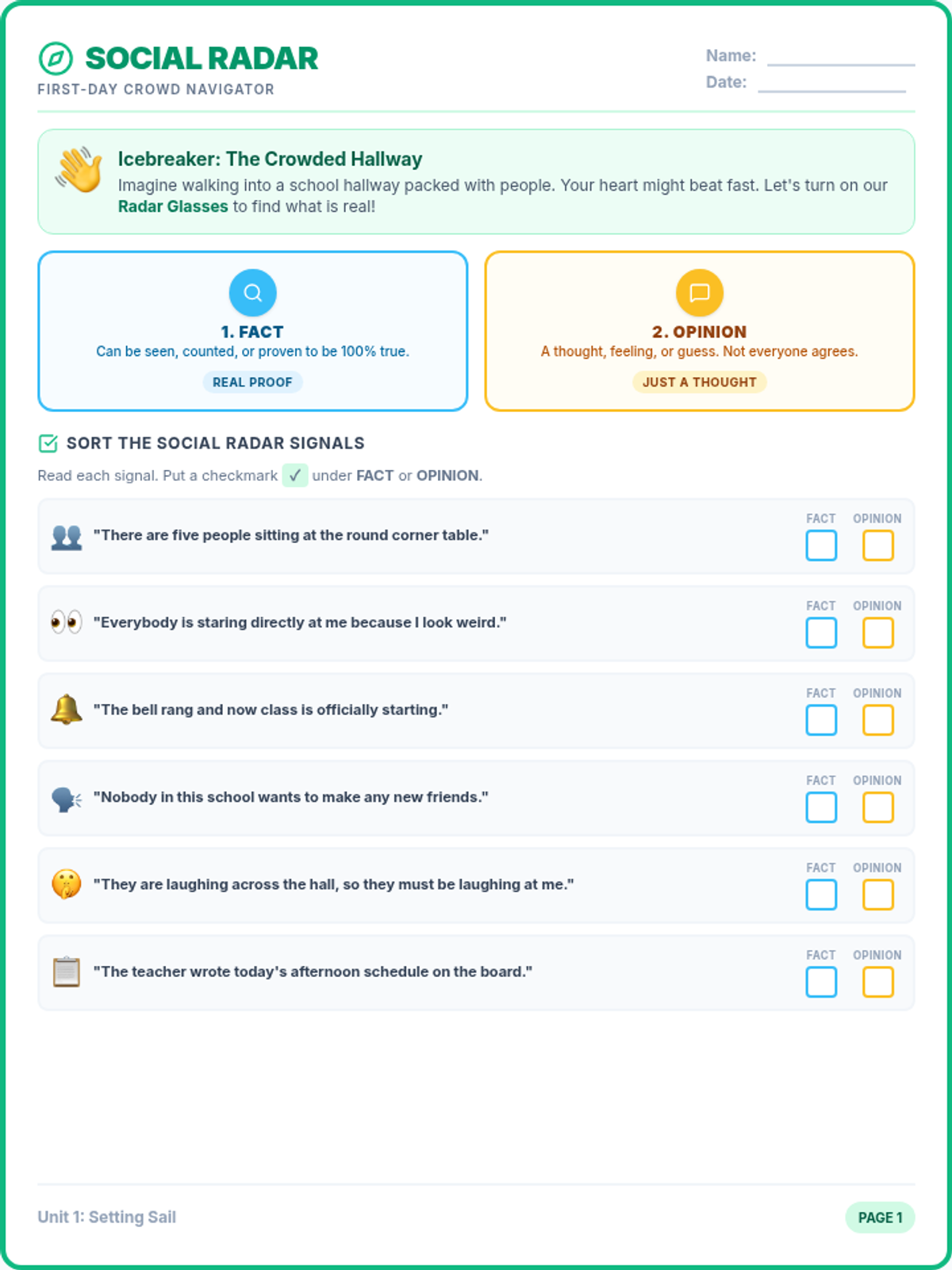
A highly visual lesson helping students navigate social anxiety in new environments by distinguishing facts from opinions to make empathetic, responsible choices.
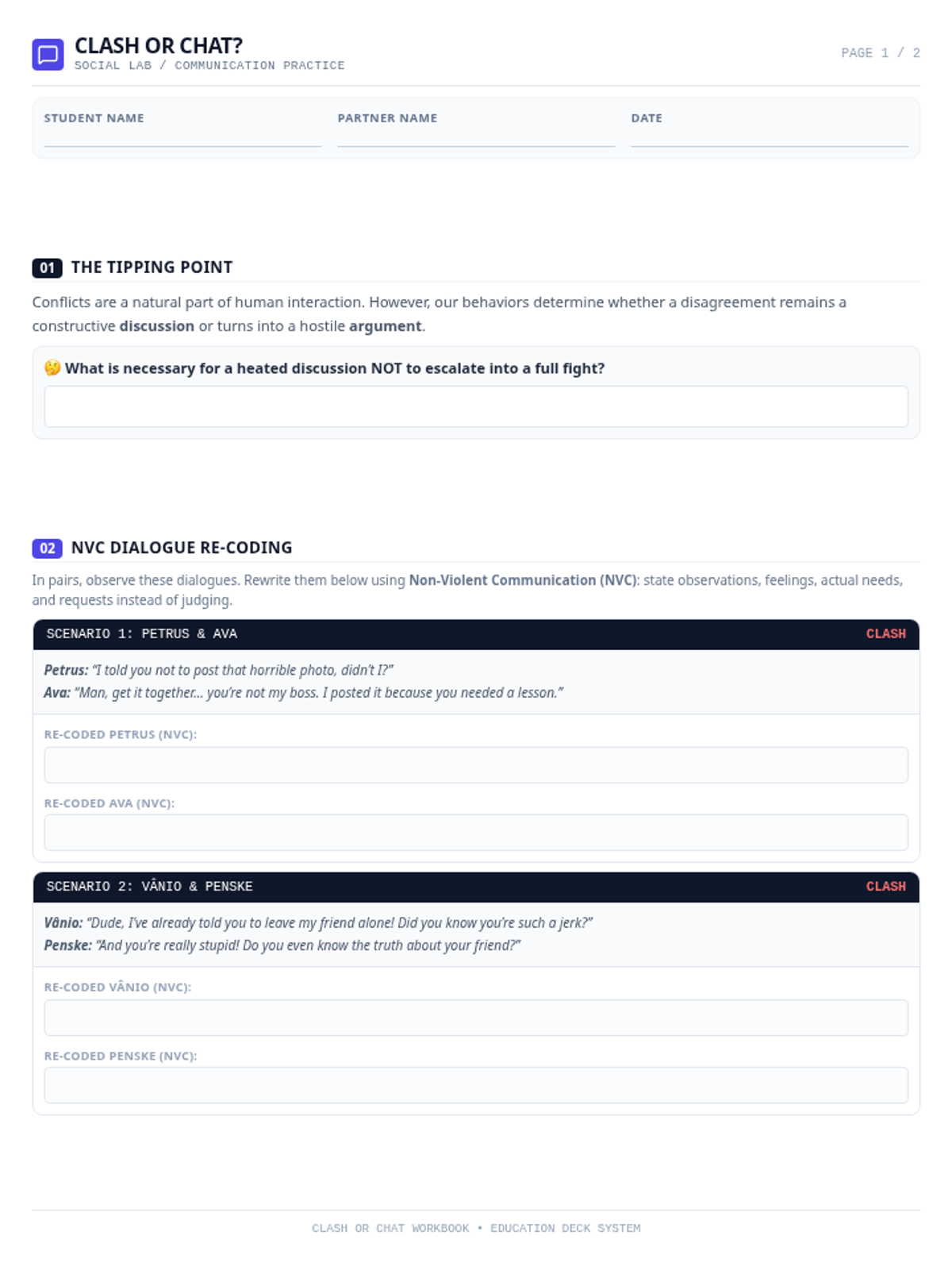
A communication and social-emotional learning lesson for middle schoolers designed to teach constructive dialogue, active listening, and healthy conflict resolution.
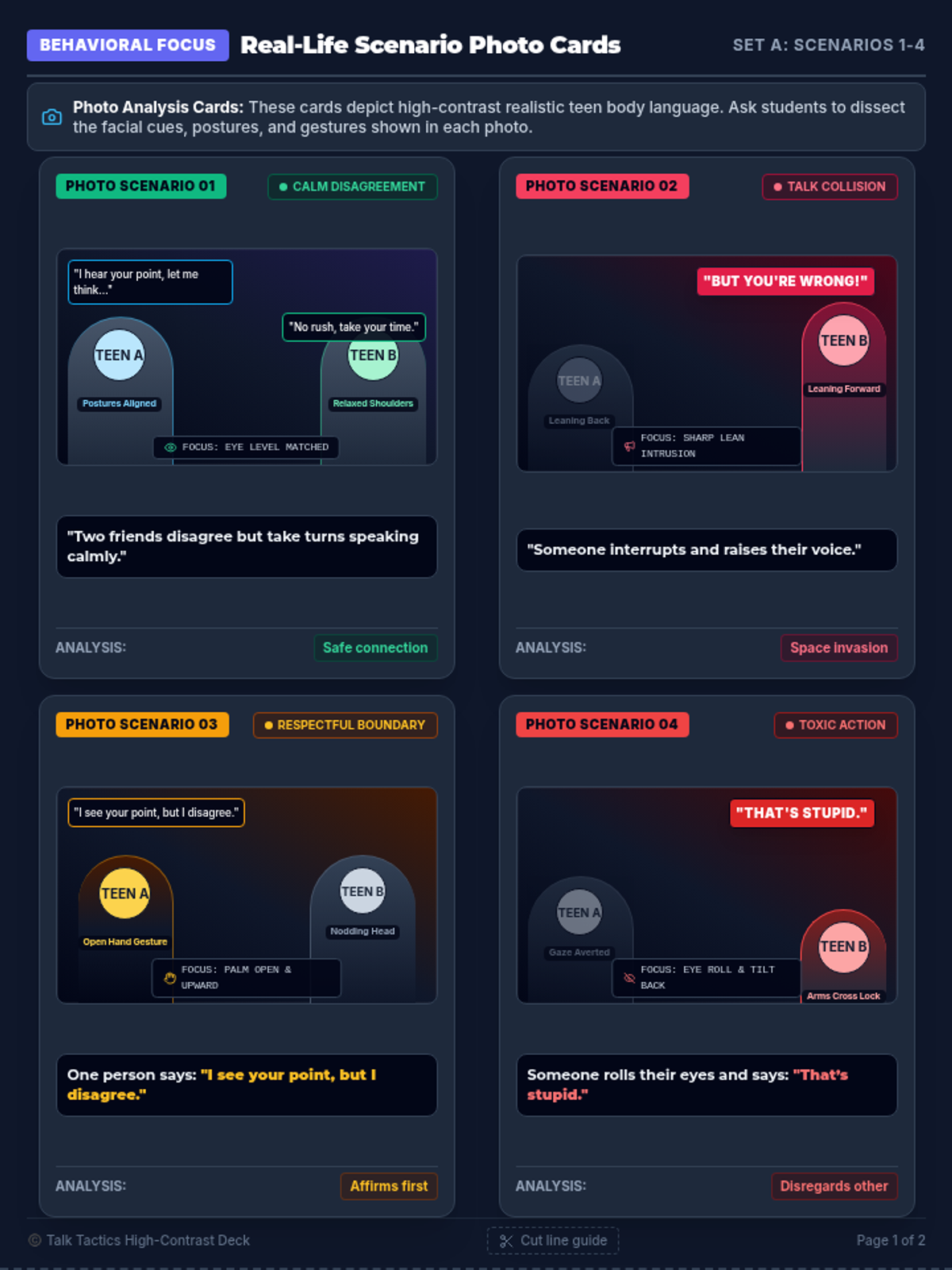
An interactive lesson designed for 16-year-olds to explore the thin line between a healthy discussion and a destructive argument. Students practice non-violent communication, analyze body language, and learn how to challenge ideas without attacking individuals.
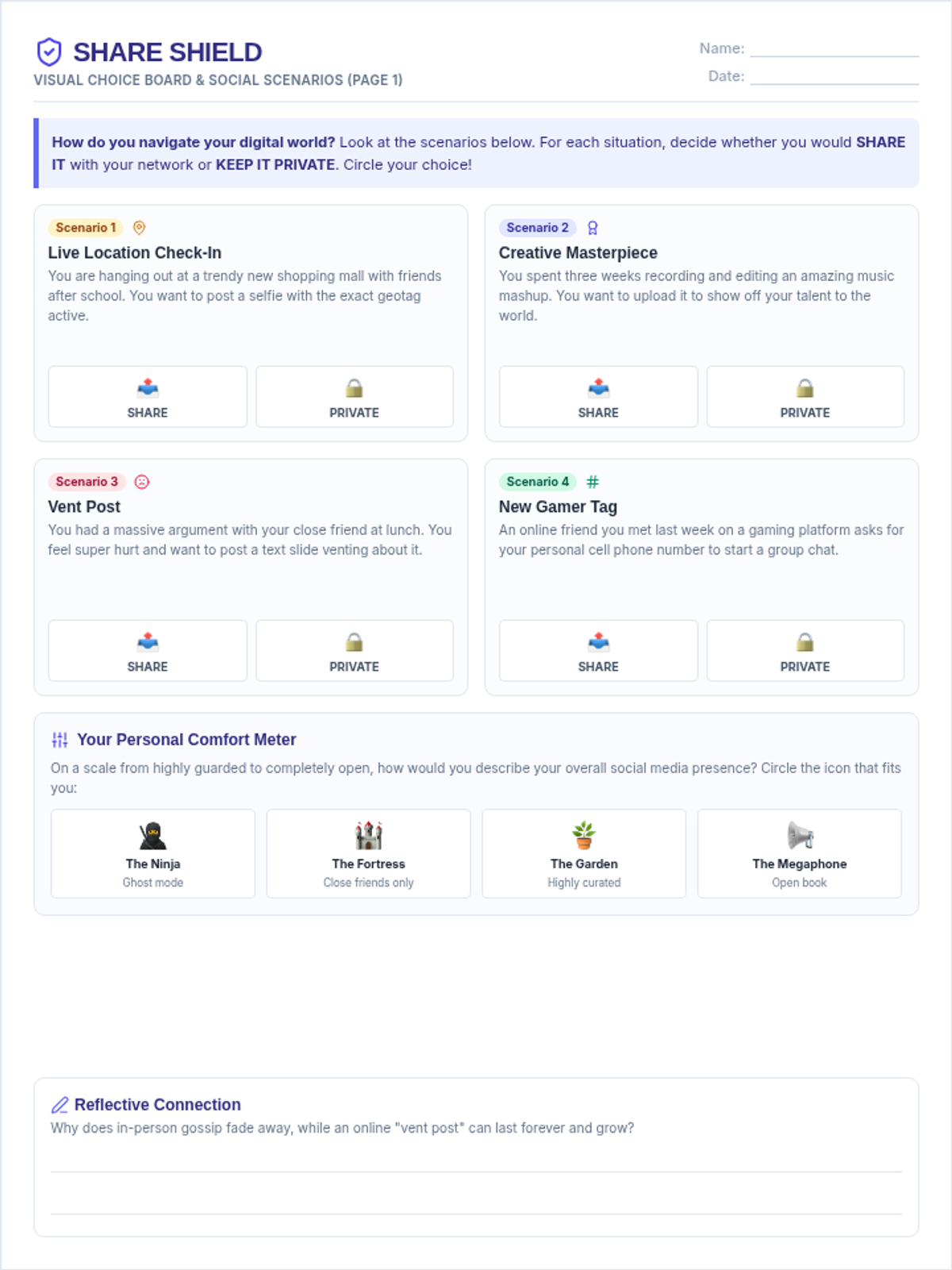
A lesson exploring the boundary between public and private spaces on social media, using a visual choice board icebreaker, concrete social scenarios, and a video reflection to build digital citizenship.
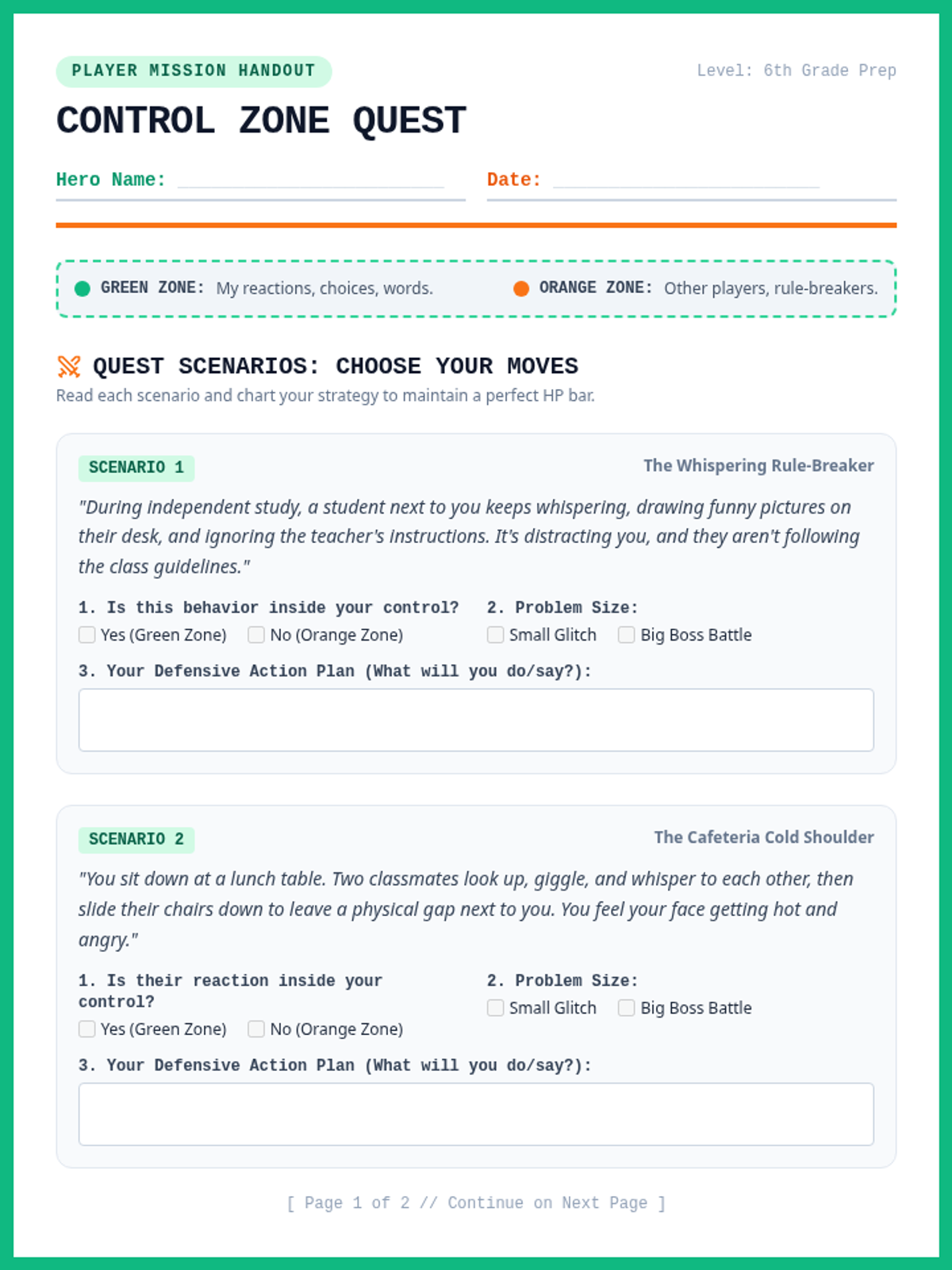
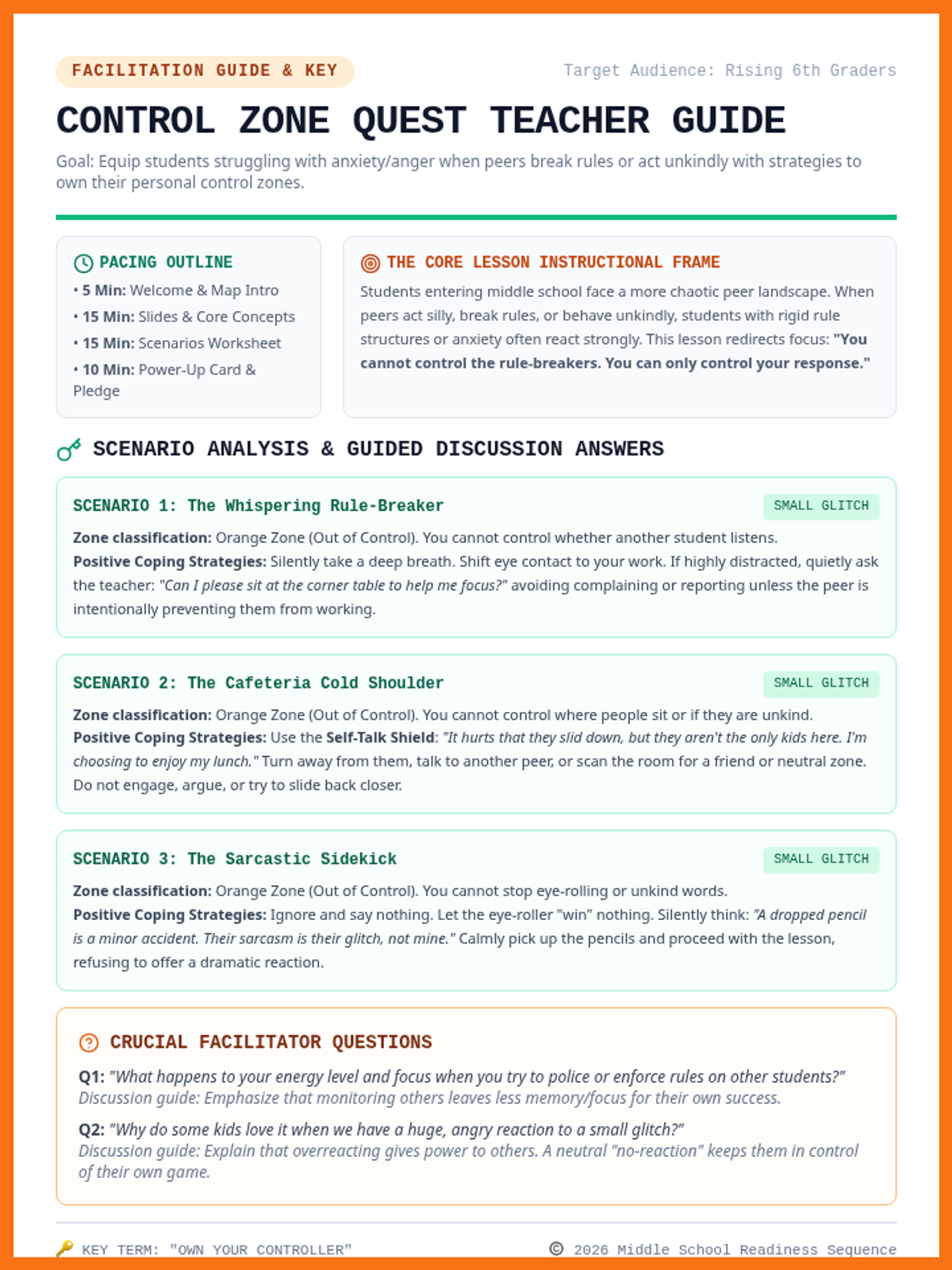
A transition lesson for rising sixth graders to master the Circle of Control and distinguish between big and small problems. Students learn practical coping strategies for peer conflicts and rule-breaking using a gamified quest theme.
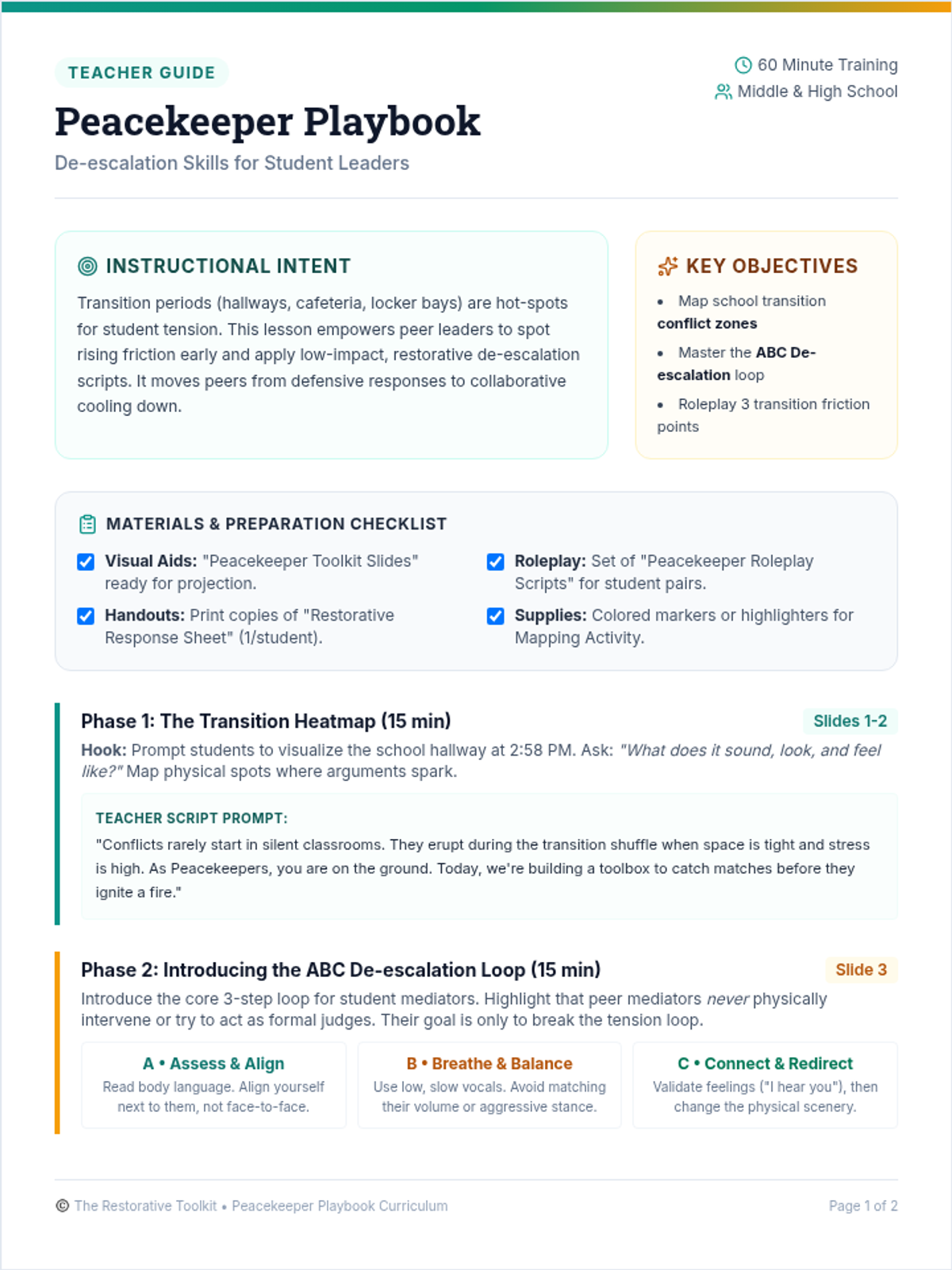
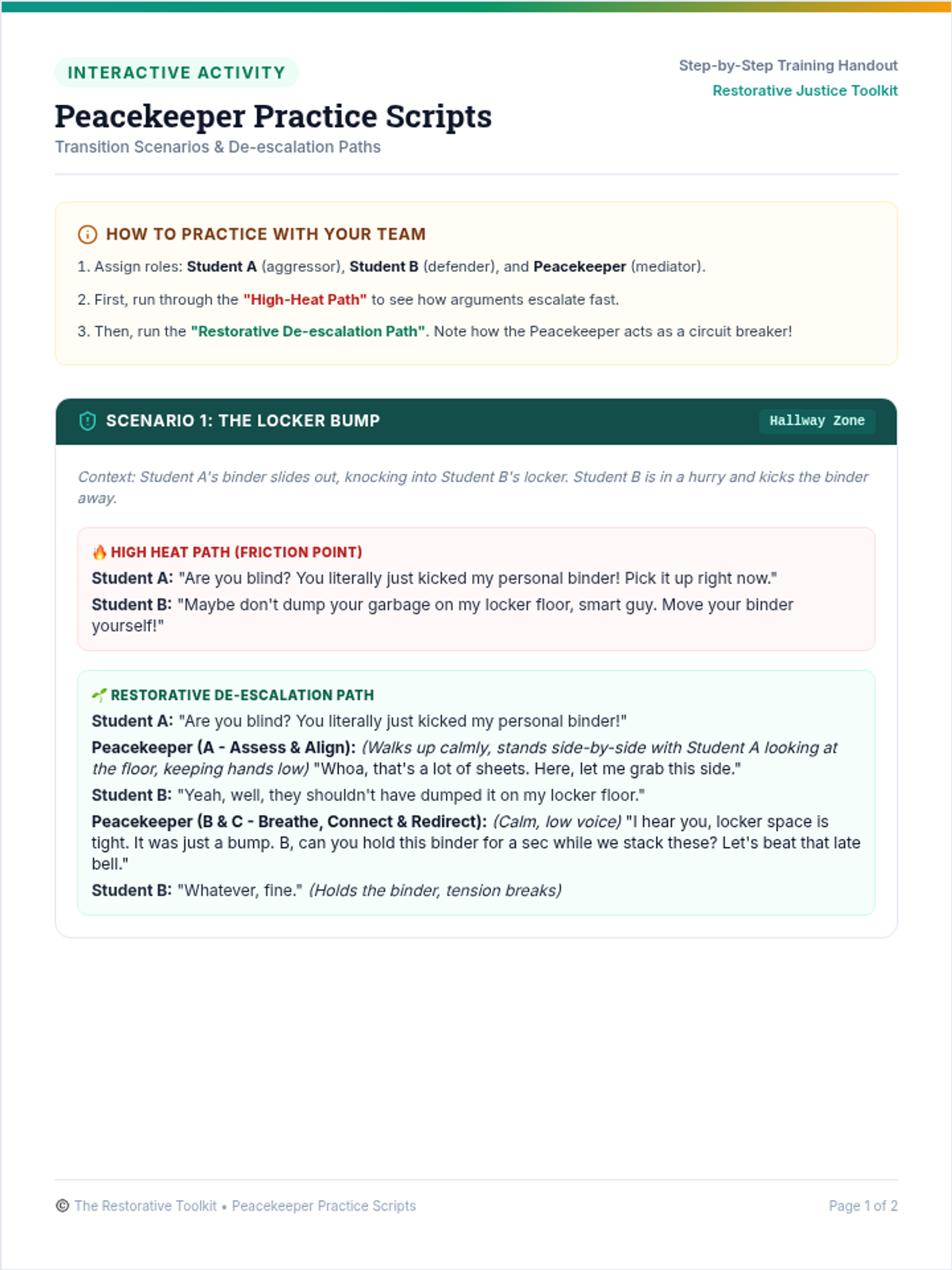
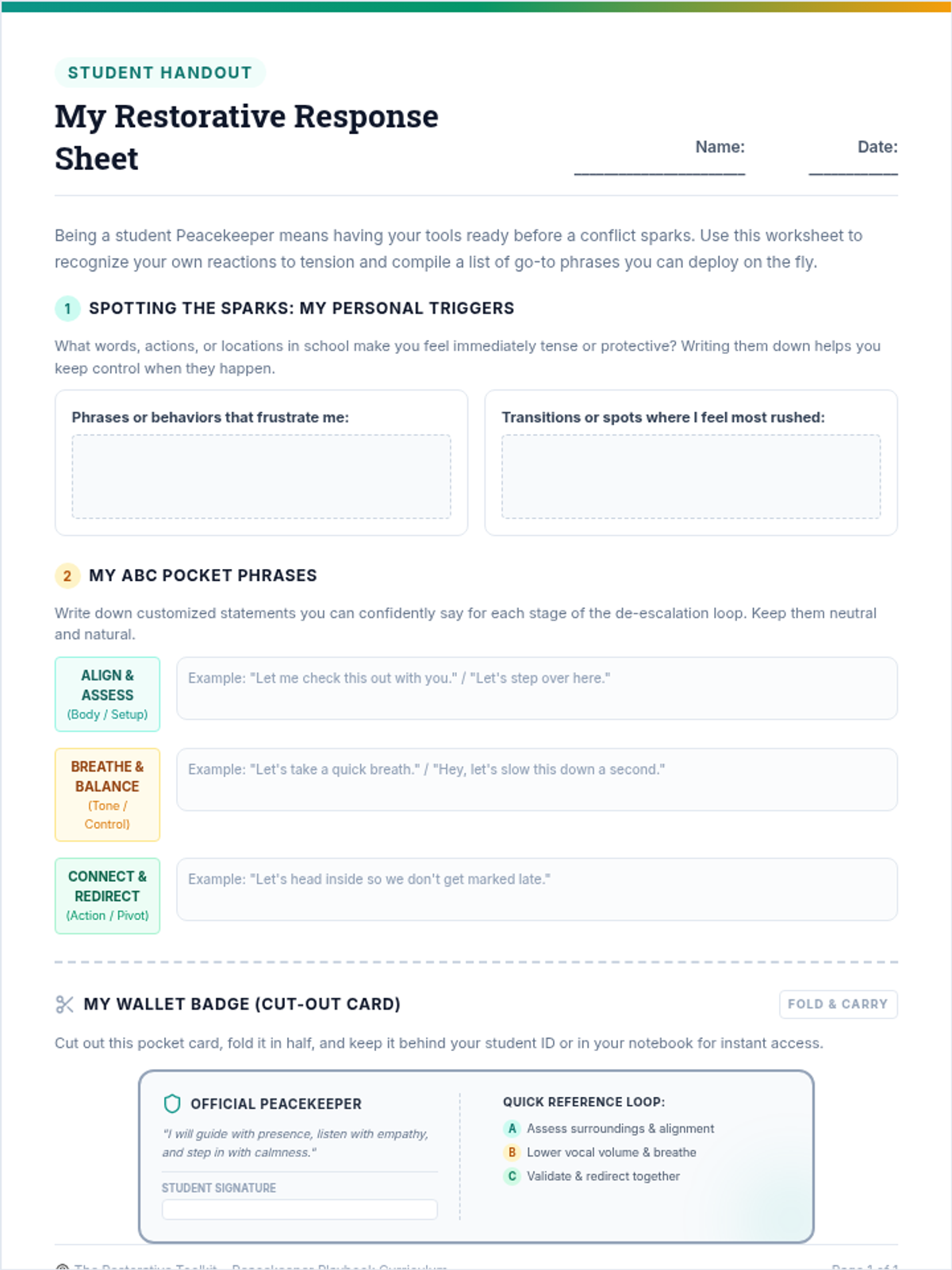
An interactive, student-led curriculum empowering middle and high school leaders to de-escalate minor peer conflicts during high-stress transition periods, building sustainable restorative justice skills.
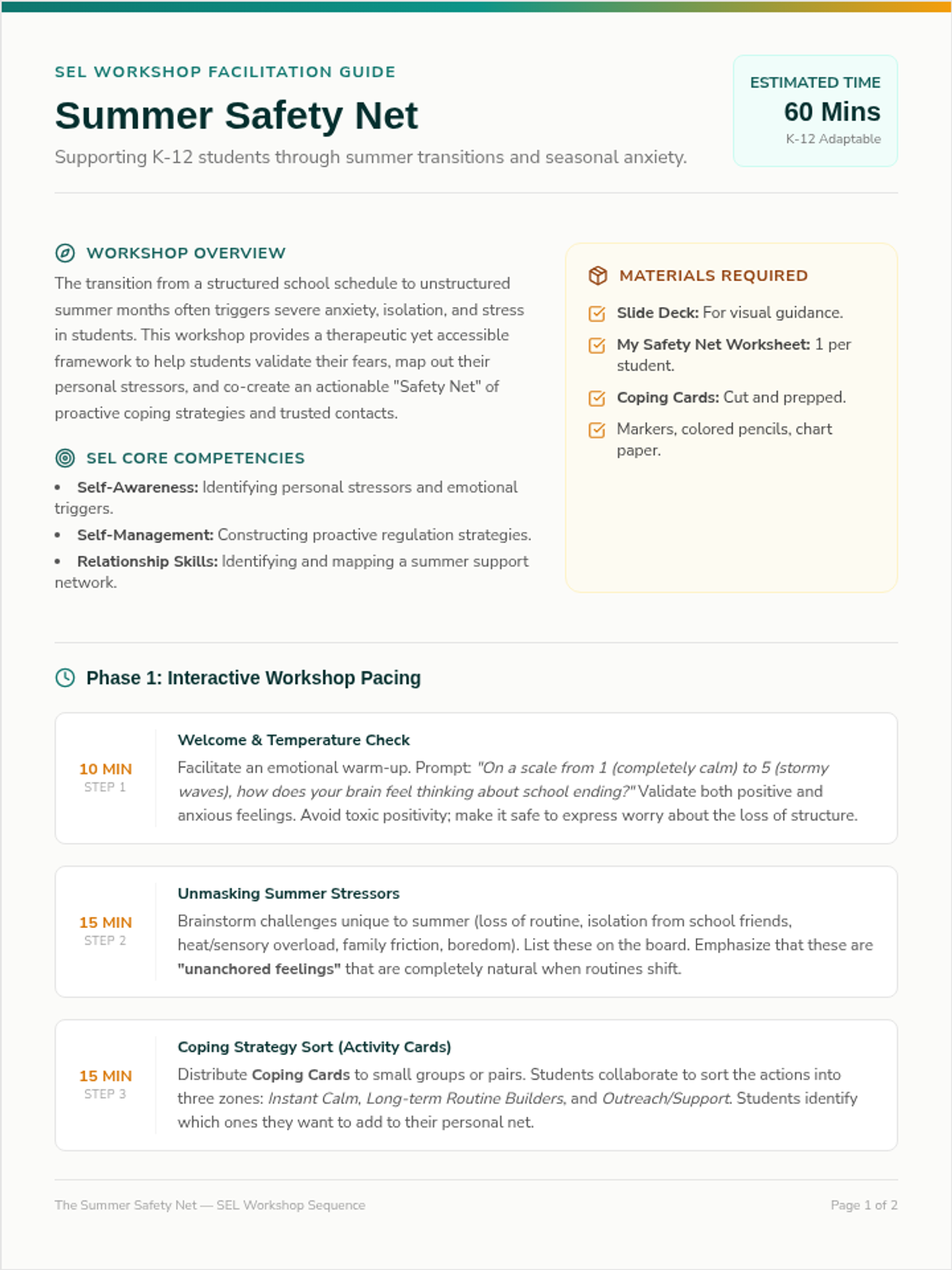
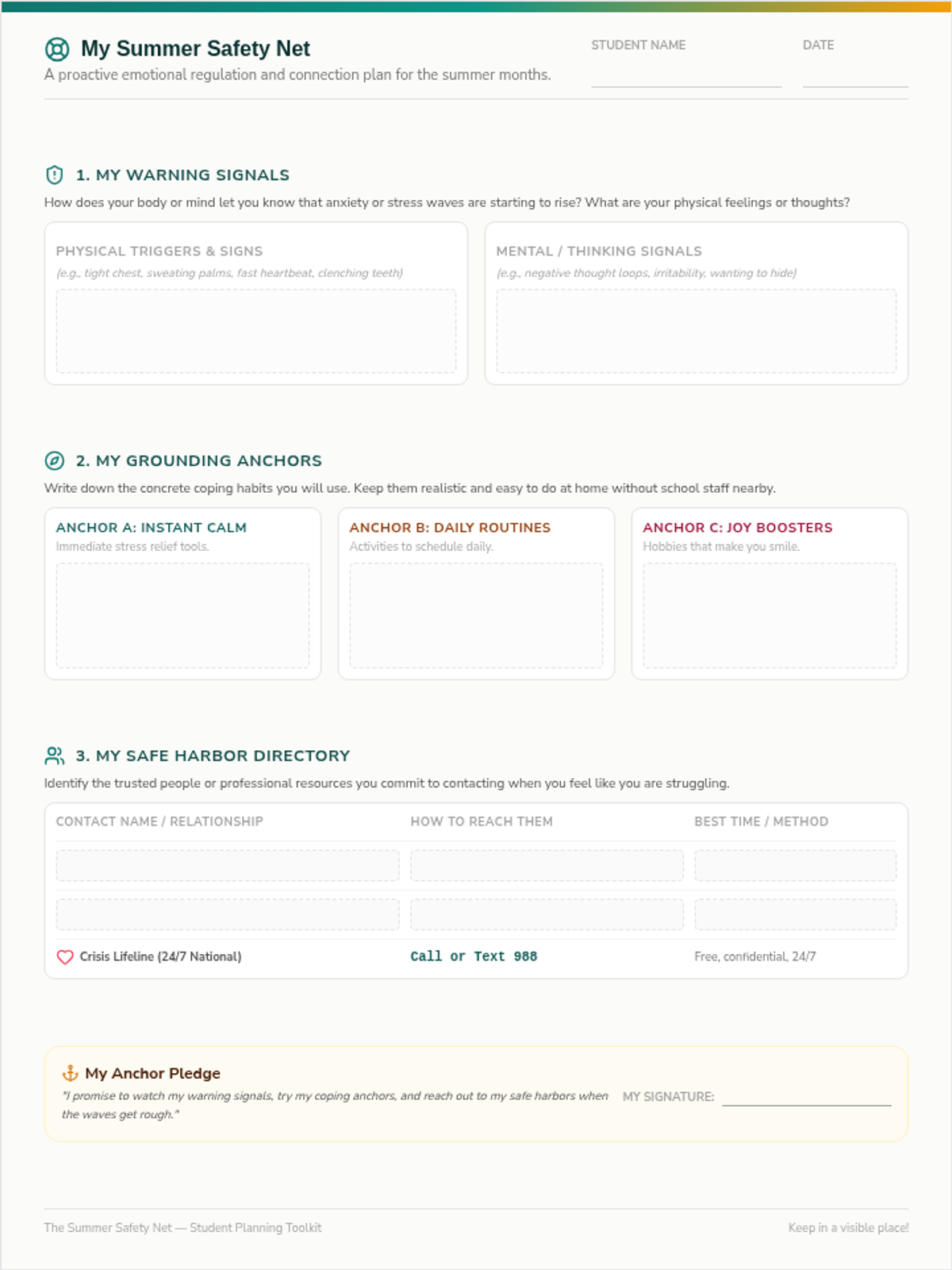
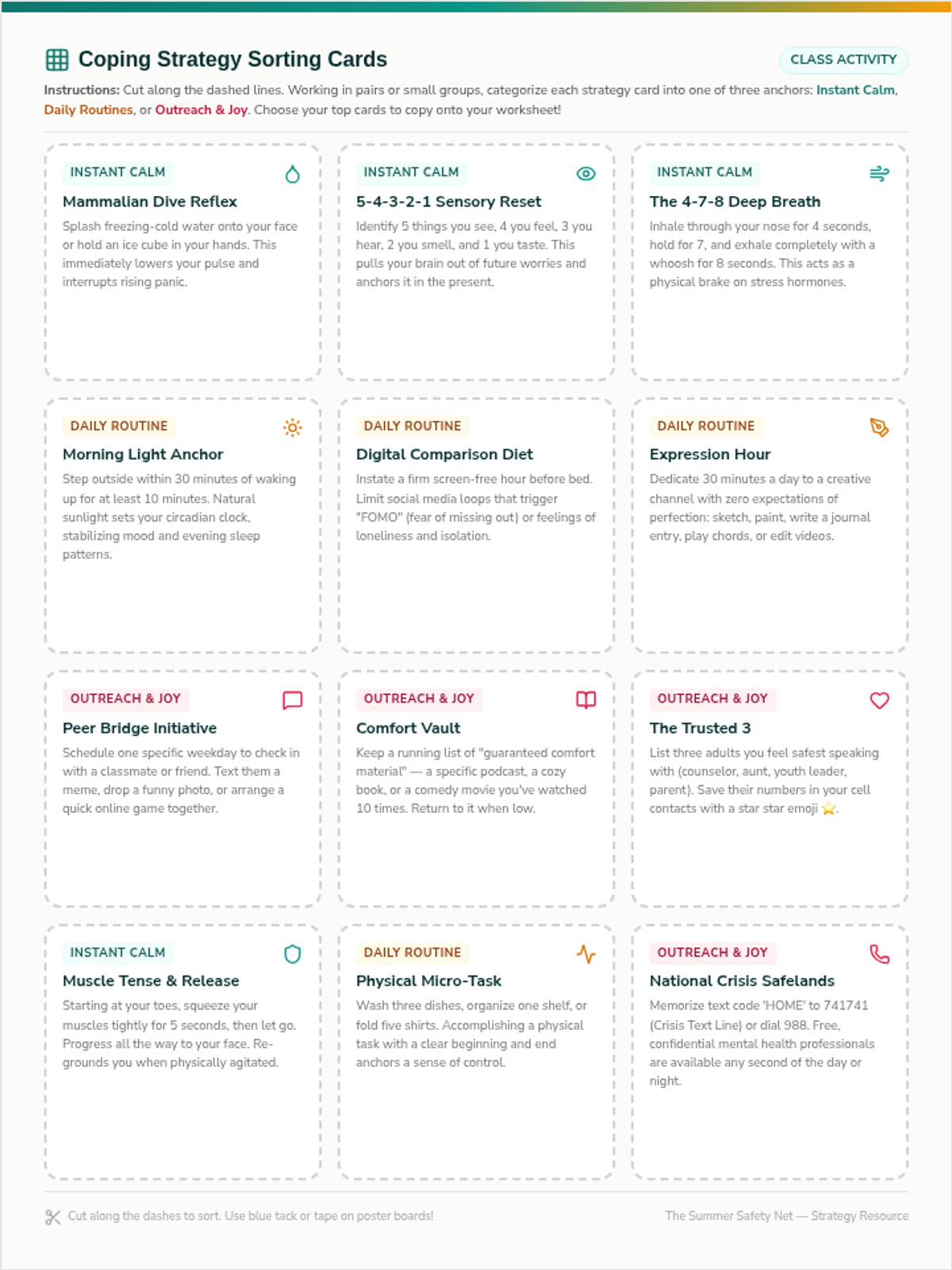
A collaborative mental health workshop designed to help students navigate summer transition anxiety by identifying stressors, mapping coping strategies, and co-creating a personalized proactive emotional regulation plan.