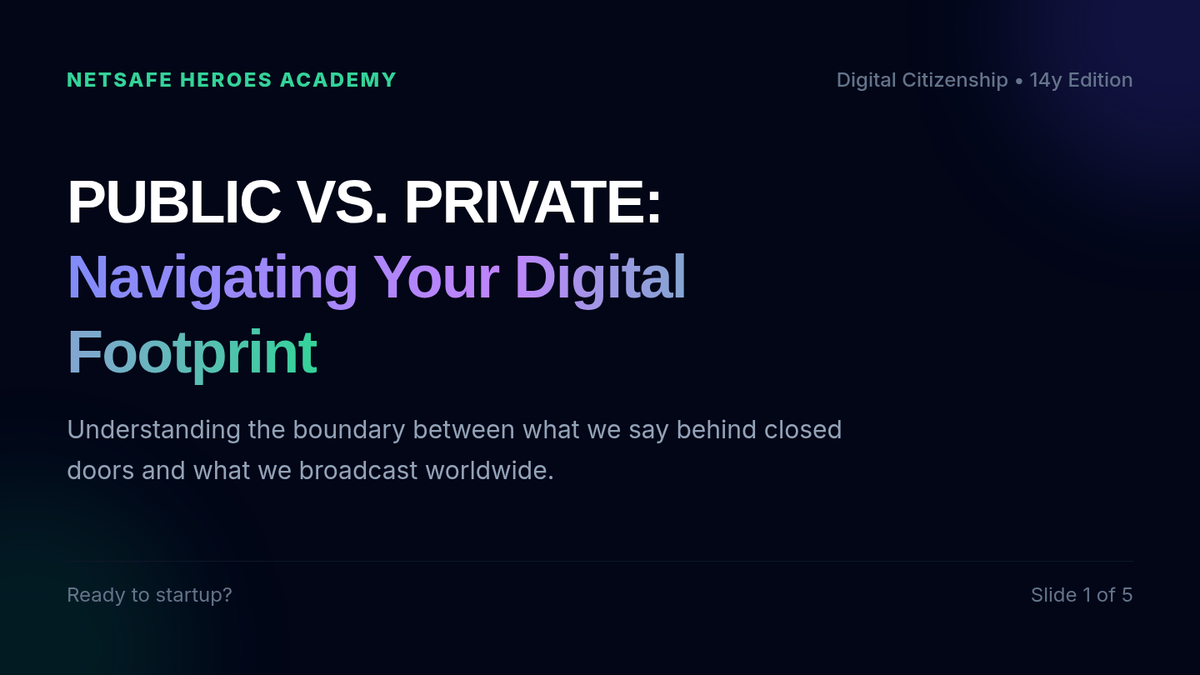
A lesson exploring the boundary between public and private spaces on social media, using a visual choice board icebreaker, concrete social scenarios, and a video reflection to build digital citizenship.
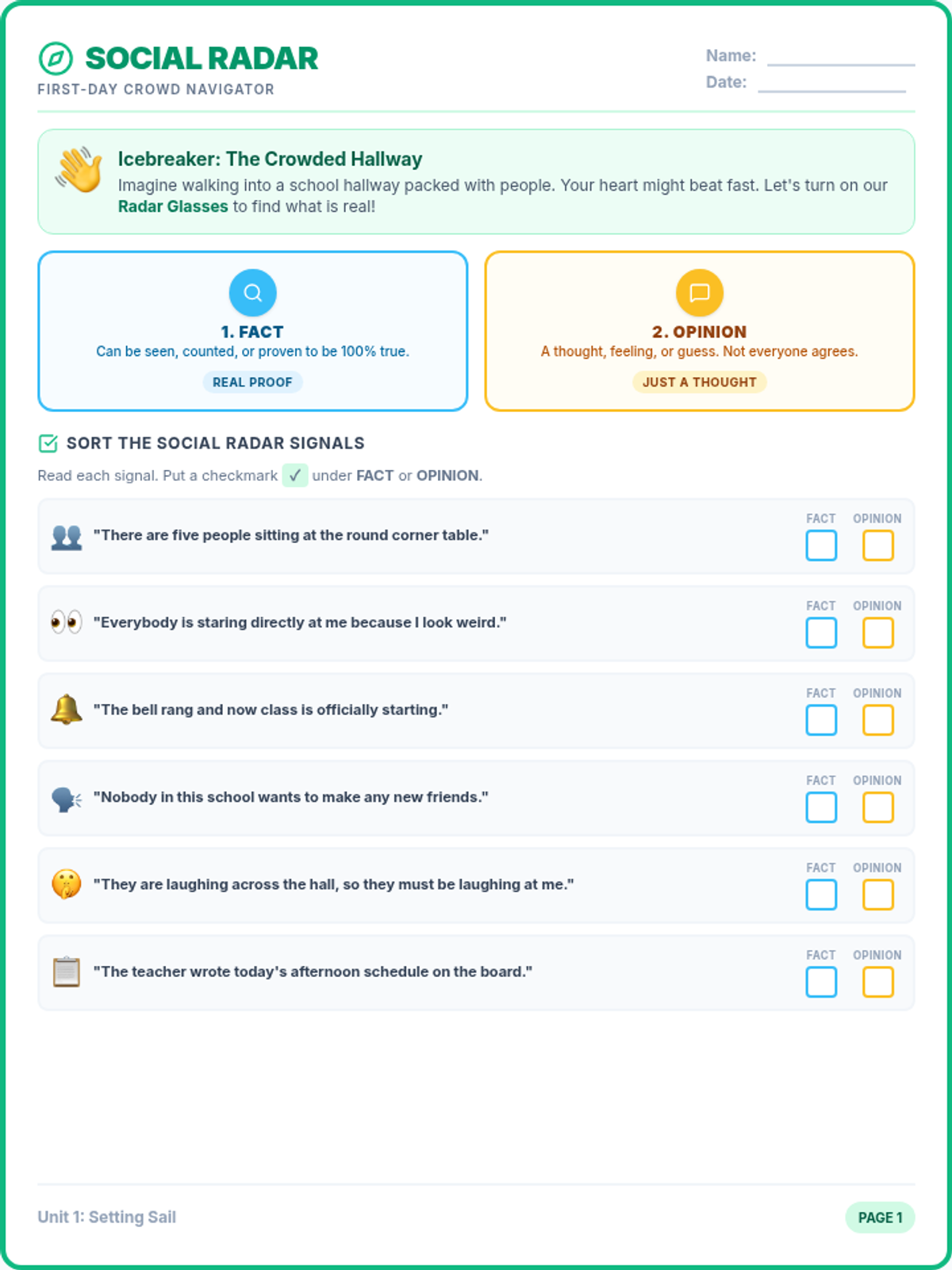
A highly visual lesson helping students navigate social anxiety in new environments by distinguishing facts from opinions to make empathetic, responsible choices.
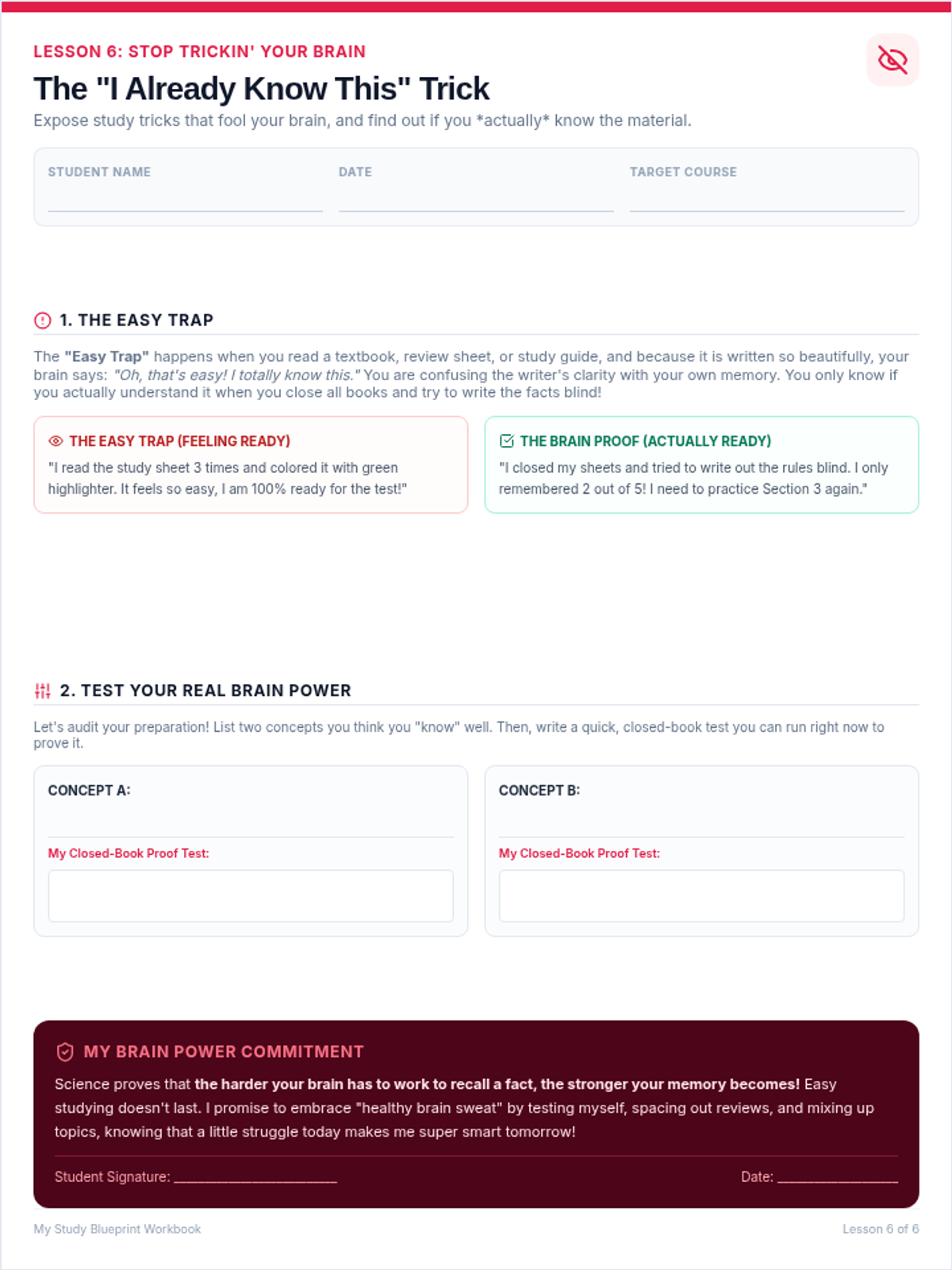
A lesson exposing cognitive biases in studying. Students learn to calibrate their progress honestly, avoid the fluency illusion, and build an error-correcting growth mindset.
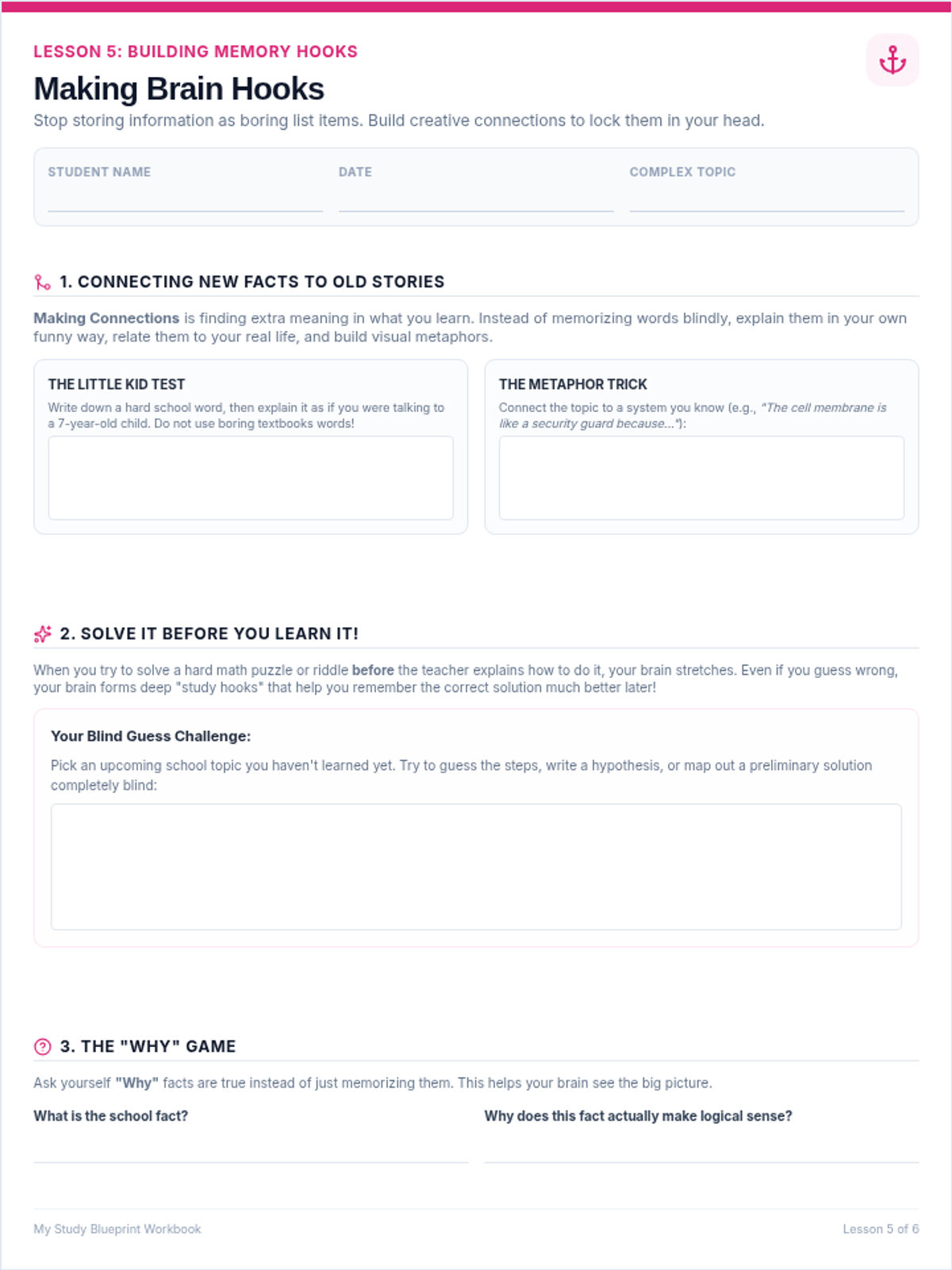
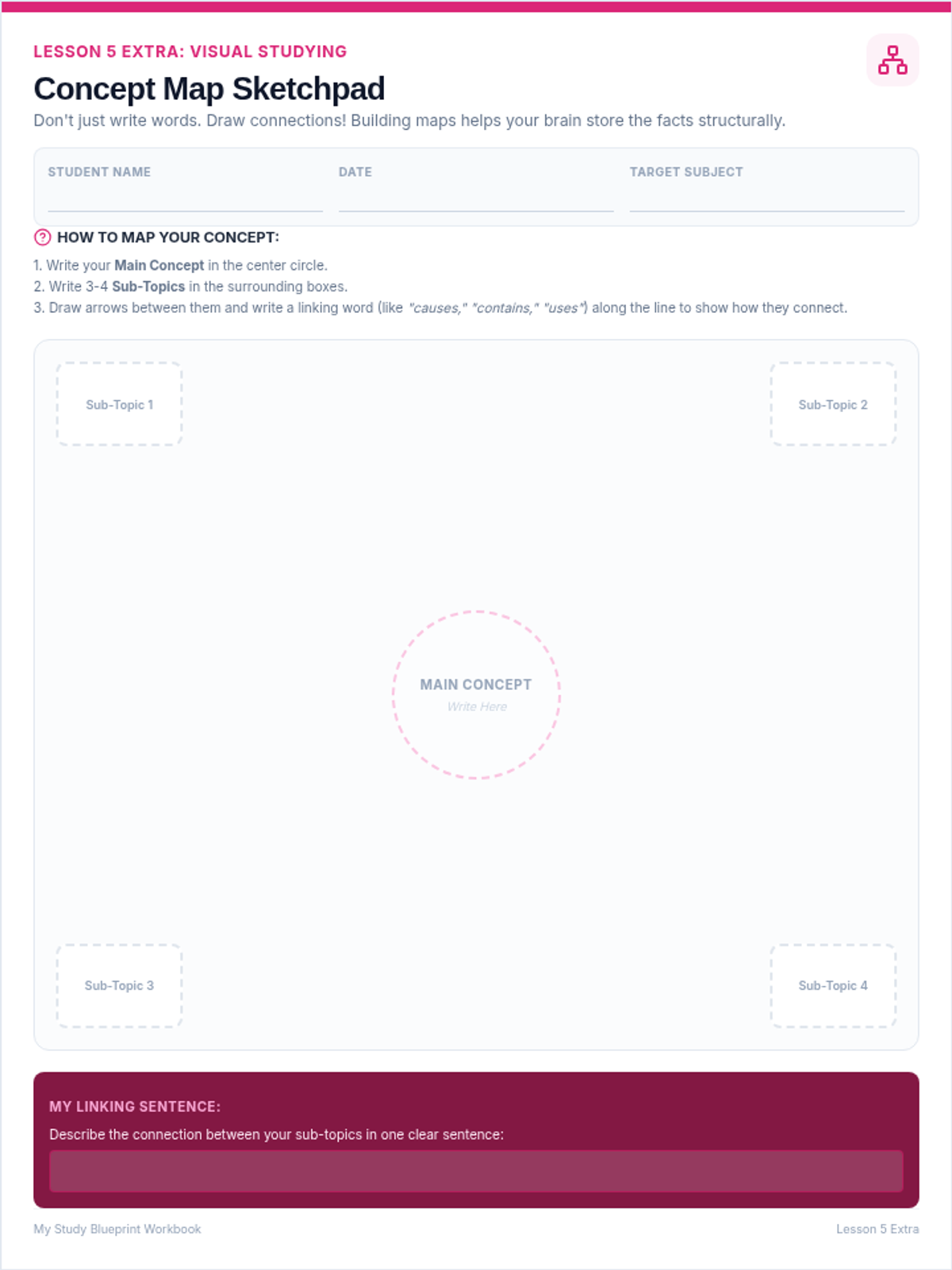
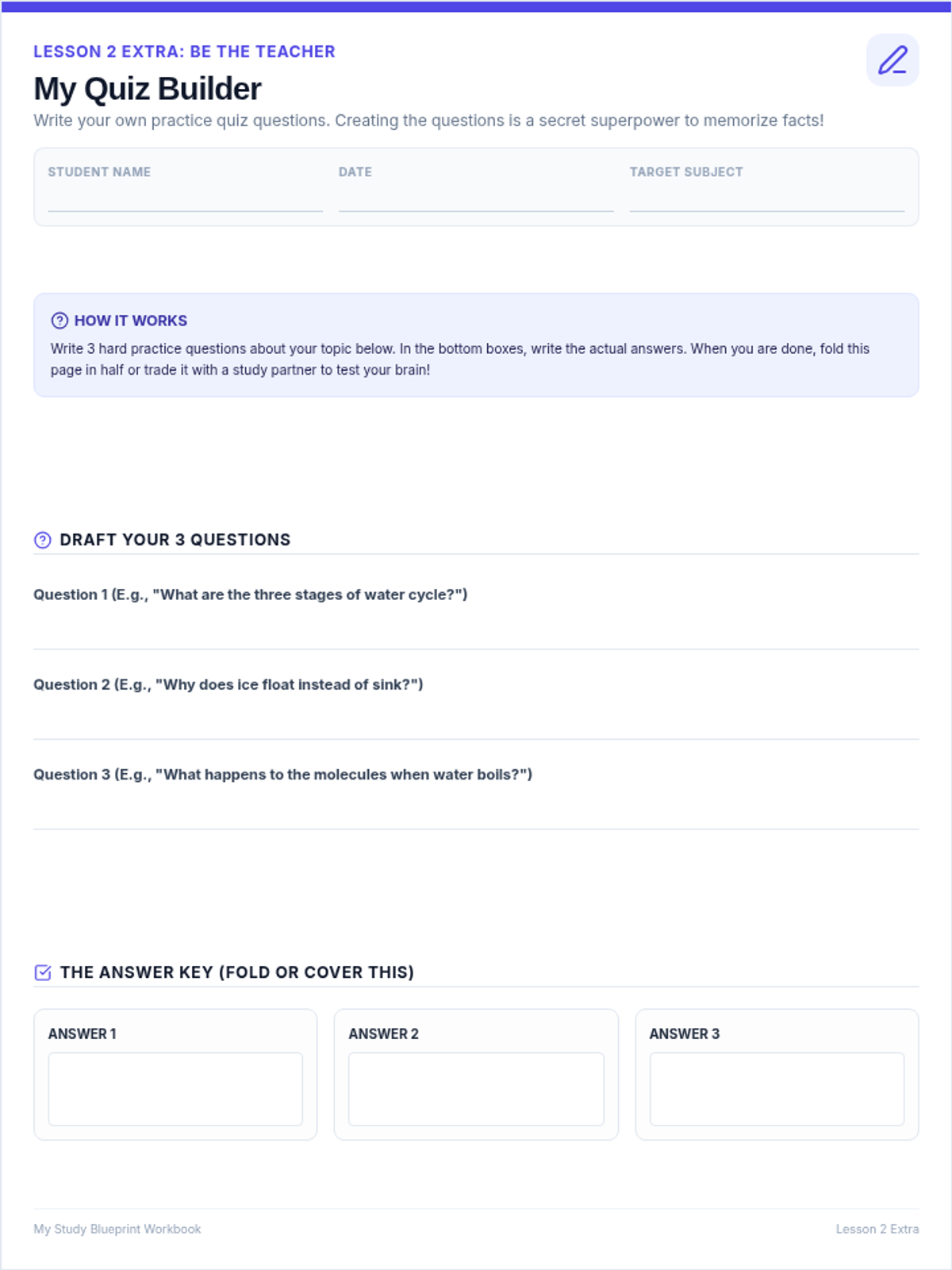
A lesson on elaboration and generation. Students learn how to build memory hooks by connecting concepts to real-world analogies and solving problems before being taught.
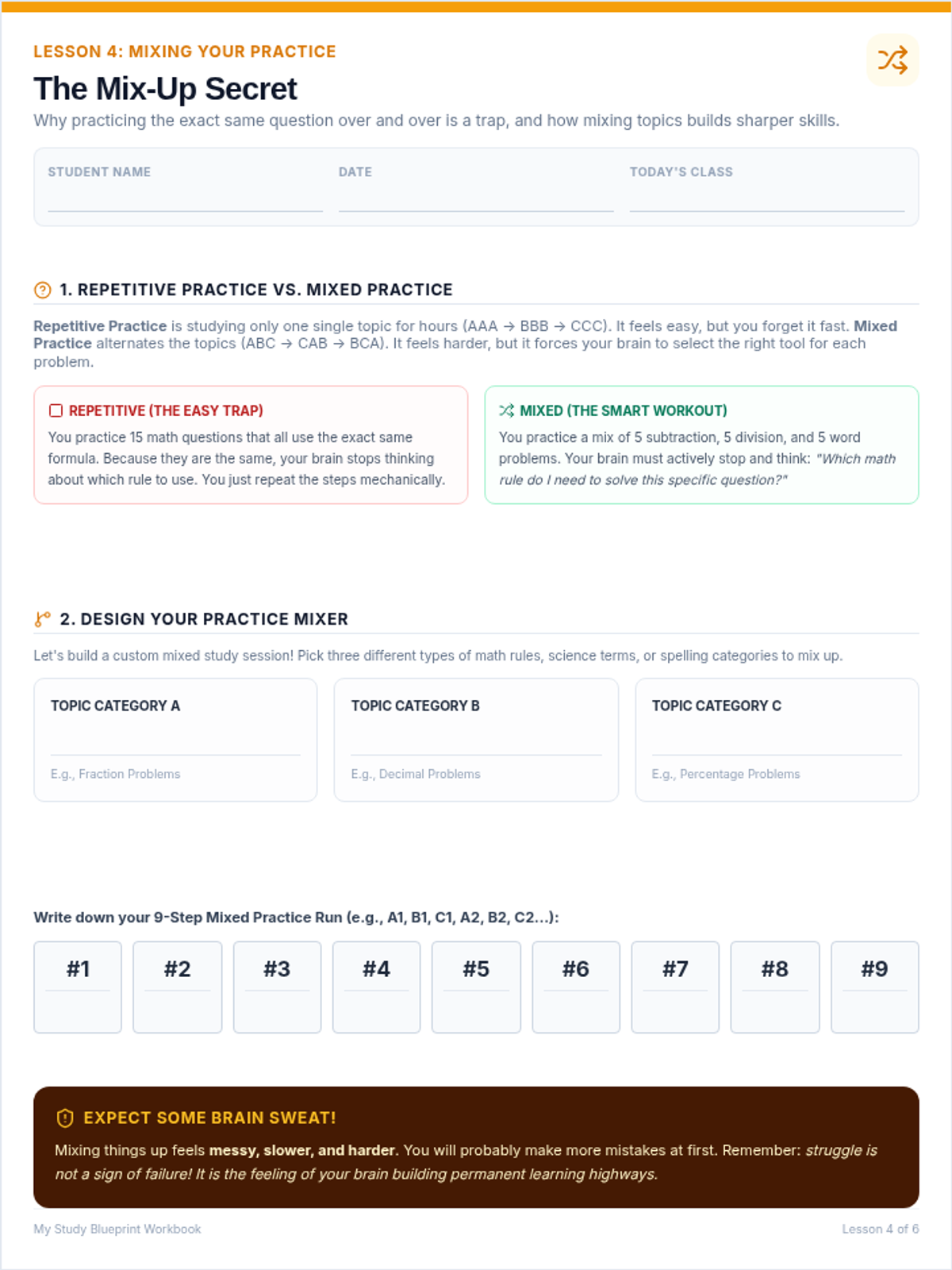
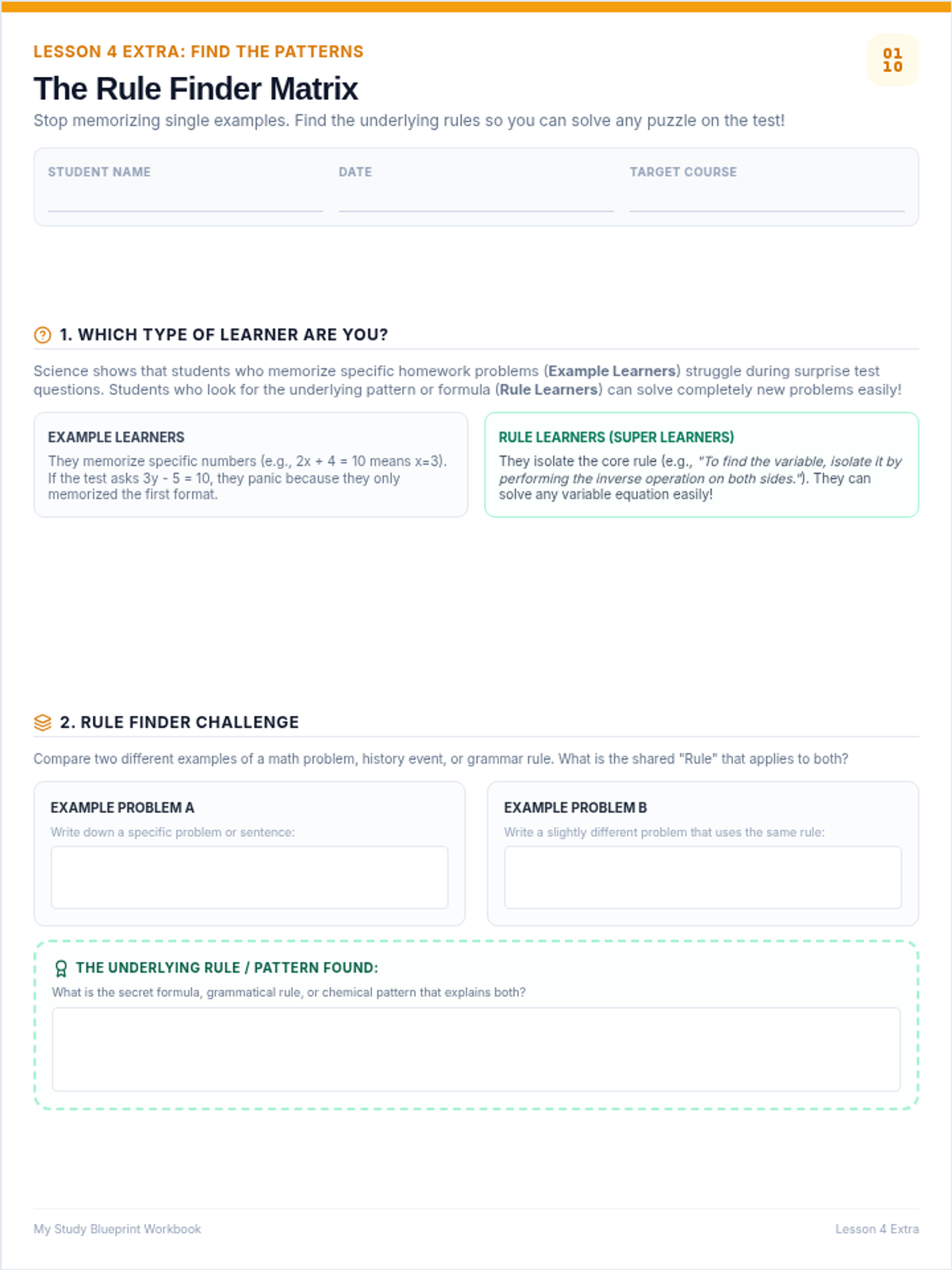
A lesson introducing interleaving and variation. Students learn why blocking practice feels productive but fails, and how mixing up skills builds durable real-world mastery.
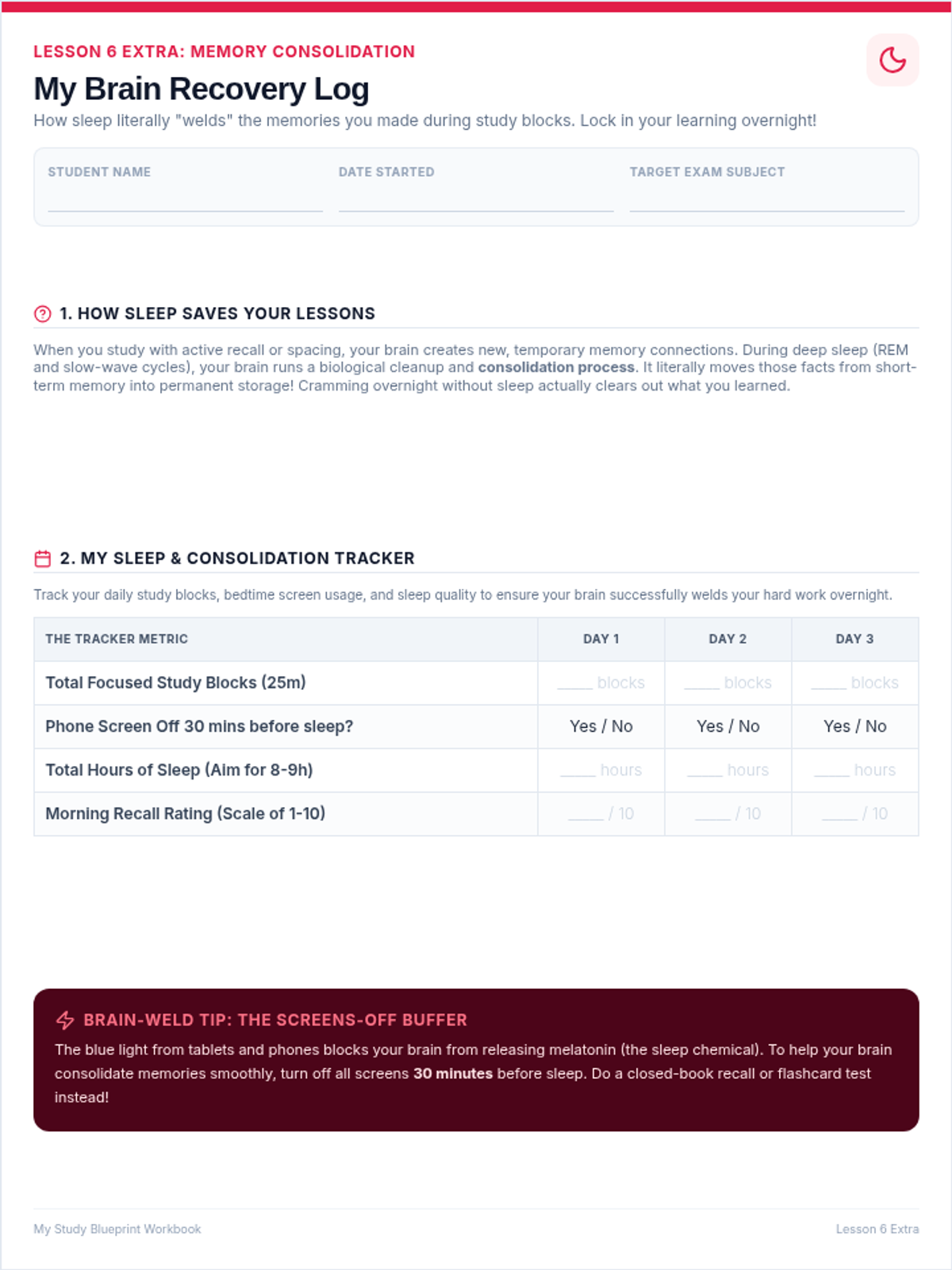
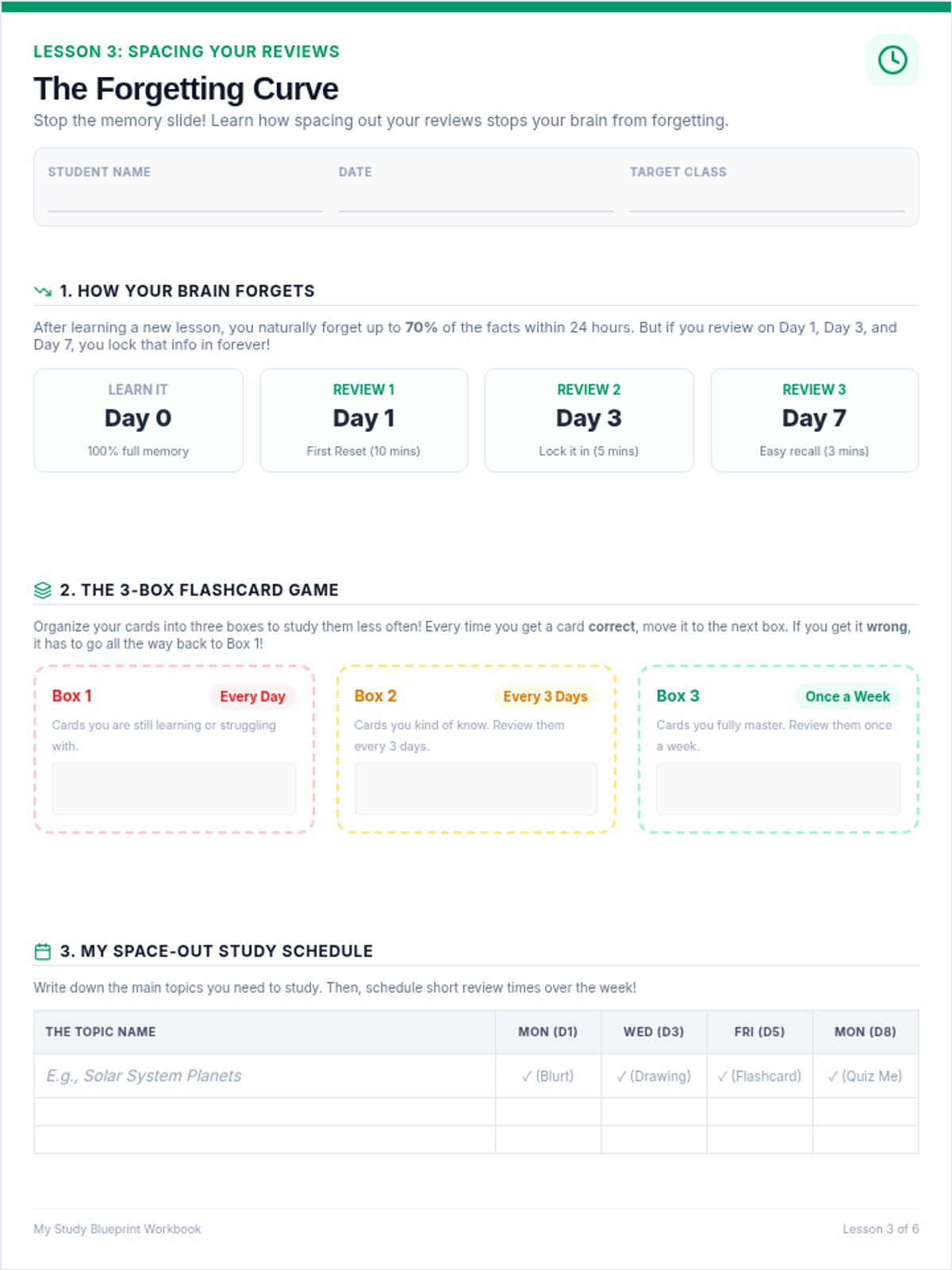
A lesson focused on beating the natural forgetting curve. Students learn how spacing out their study blocks triggers memory consolidation and how to schedule long-term retention.
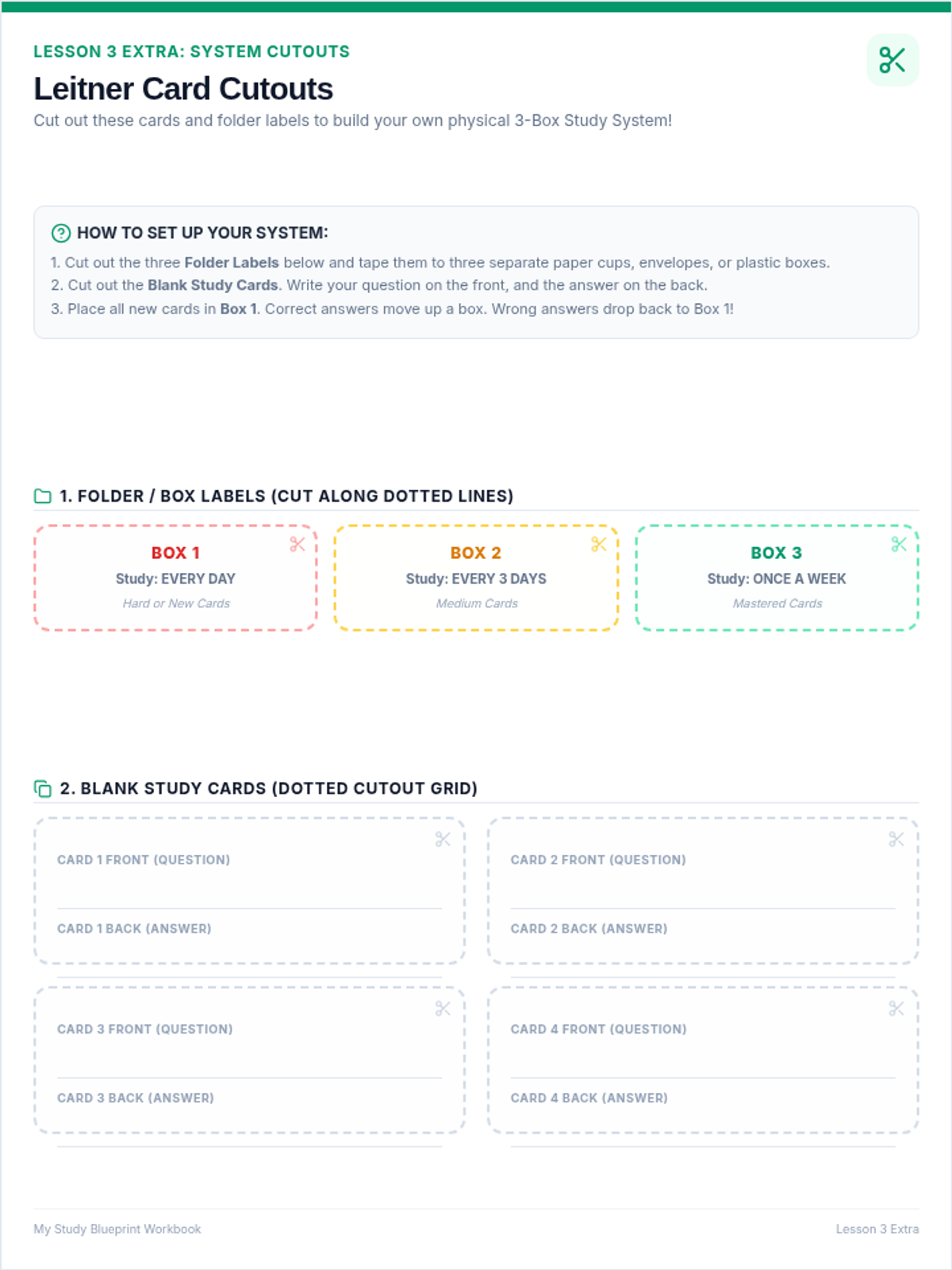
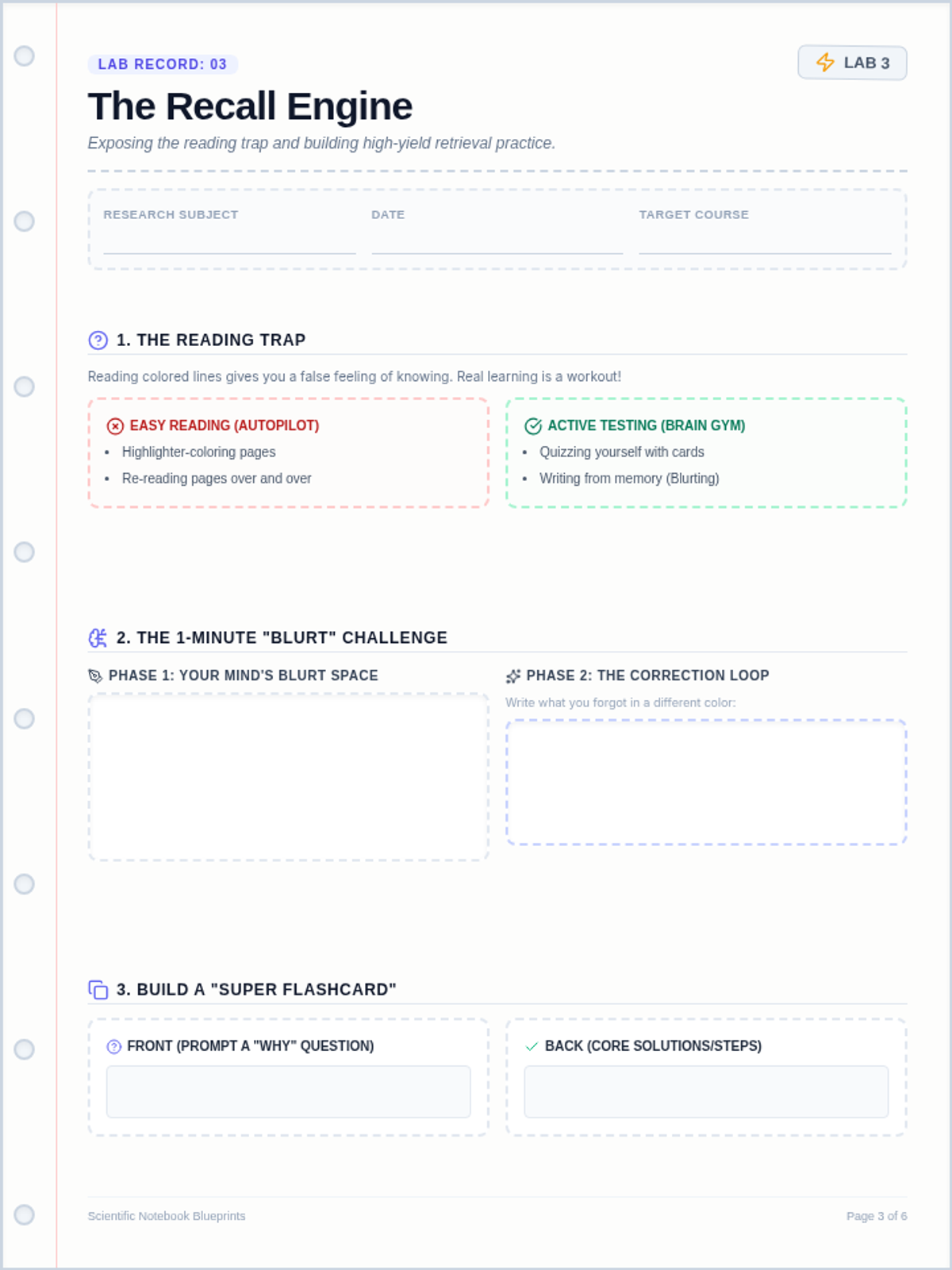
A lesson centered on the primary driver of memory retention: retrieval practice. Students discover why passive reading is a cognitive illusion and learn to build effortful self-testing habits.
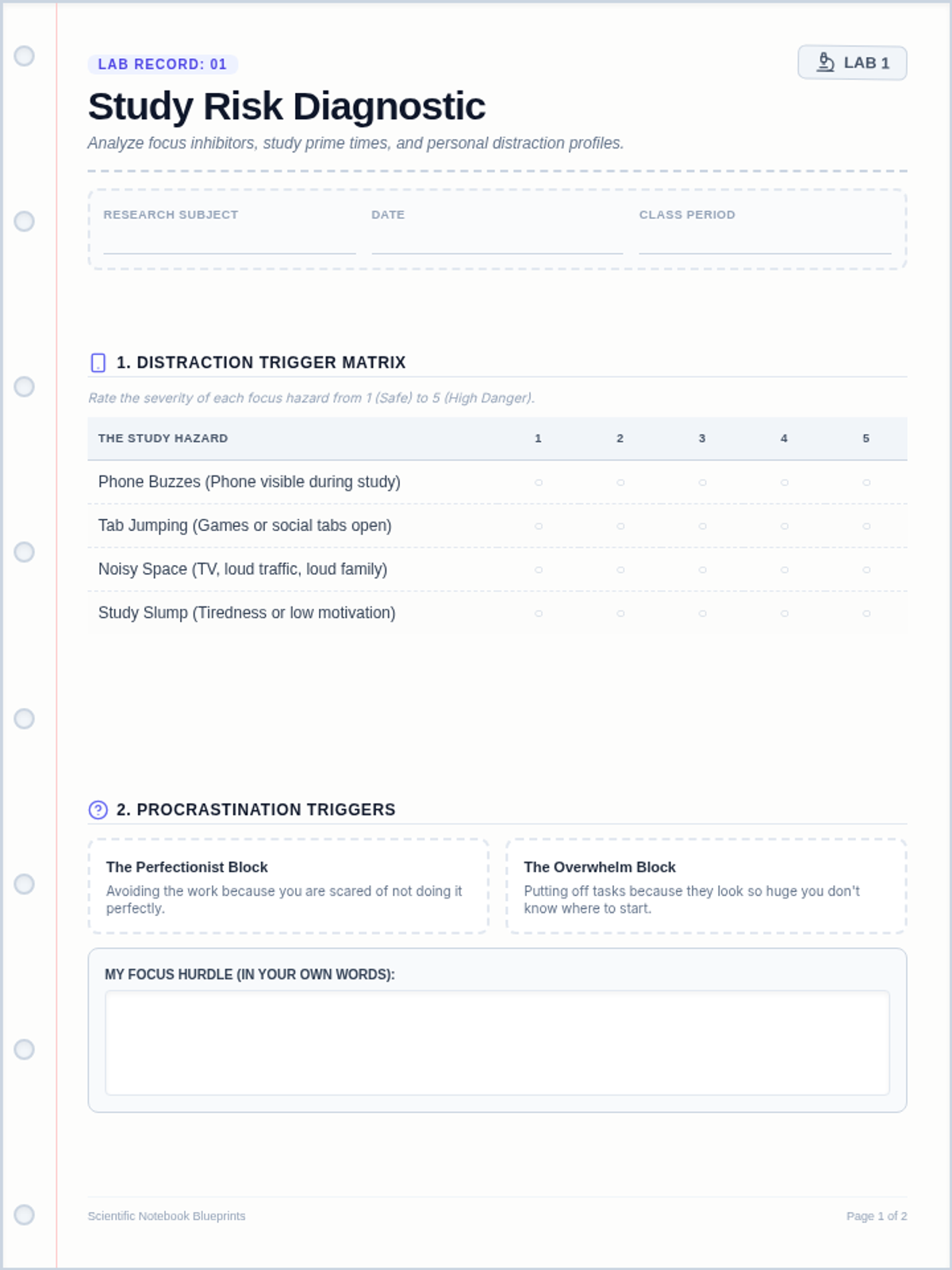
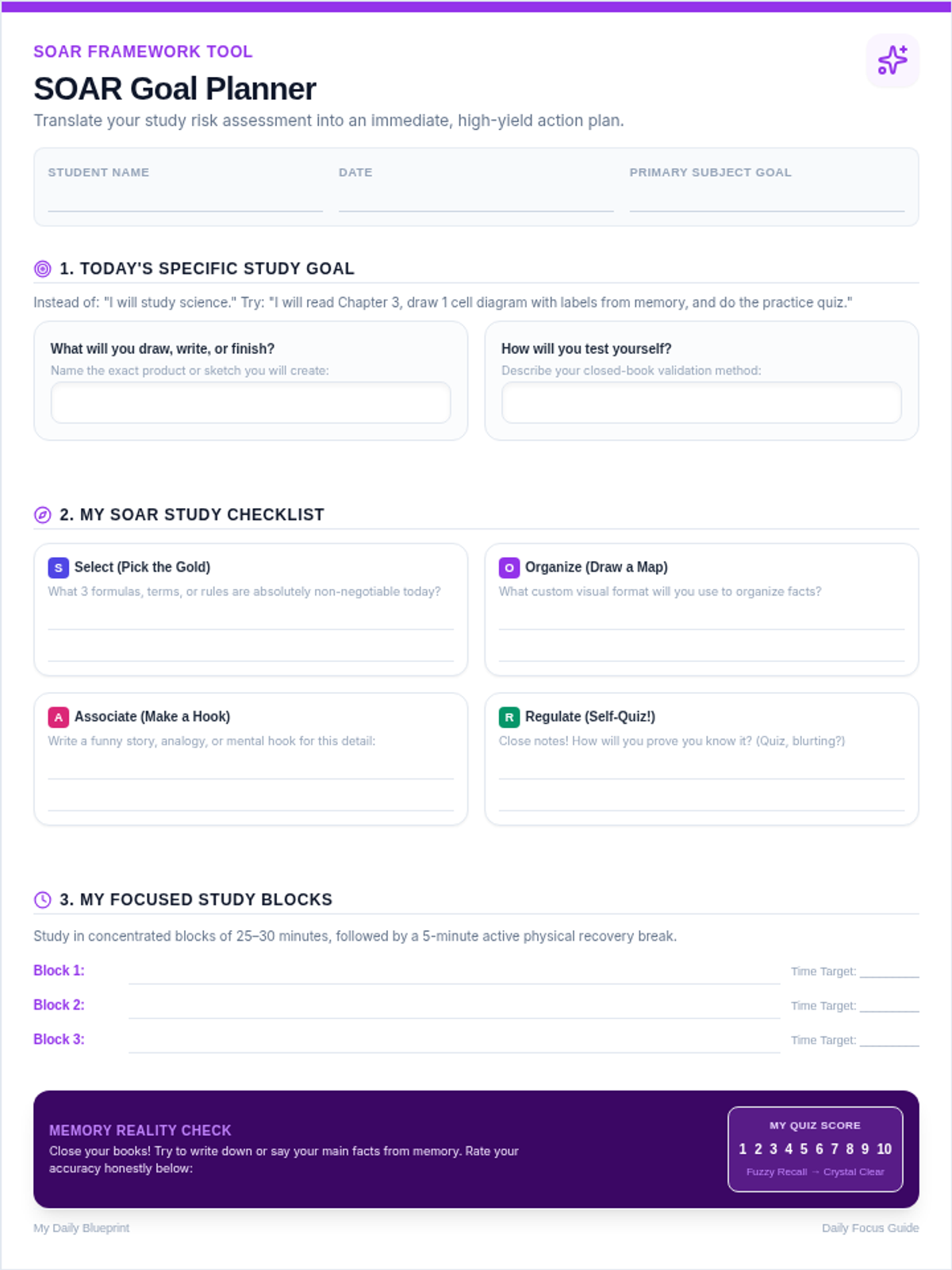
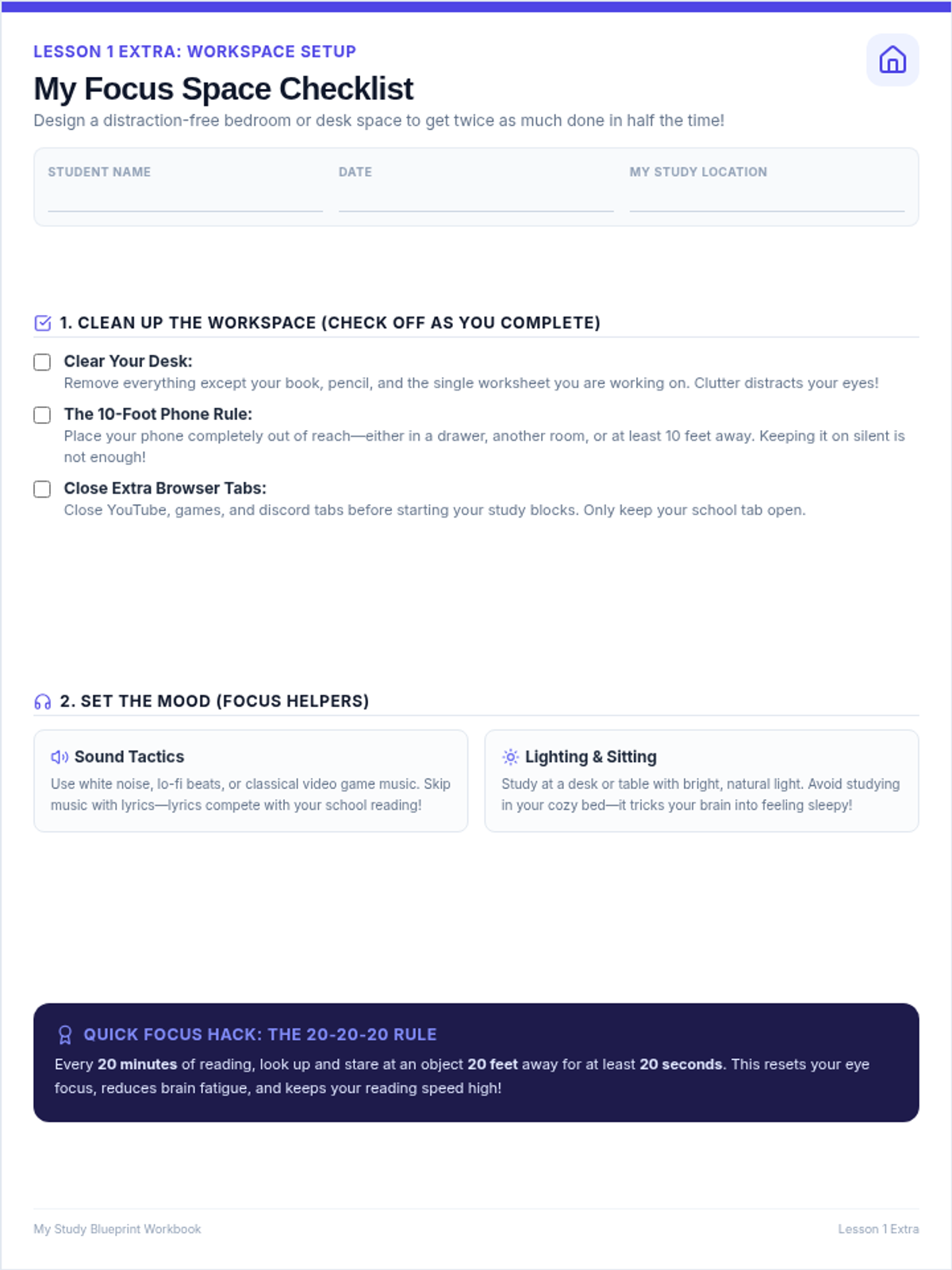
A complete mini-unit lesson designed to help students master study skills, identify personal academic risk factors (why they can't focus), discover their study prime time, and apply the SOAR framework through a structured study risk assessment and goal planning process.
A communication and social-emotional learning lesson for middle schoolers designed to teach constructive dialogue, active listening, and healthy conflict resolution.
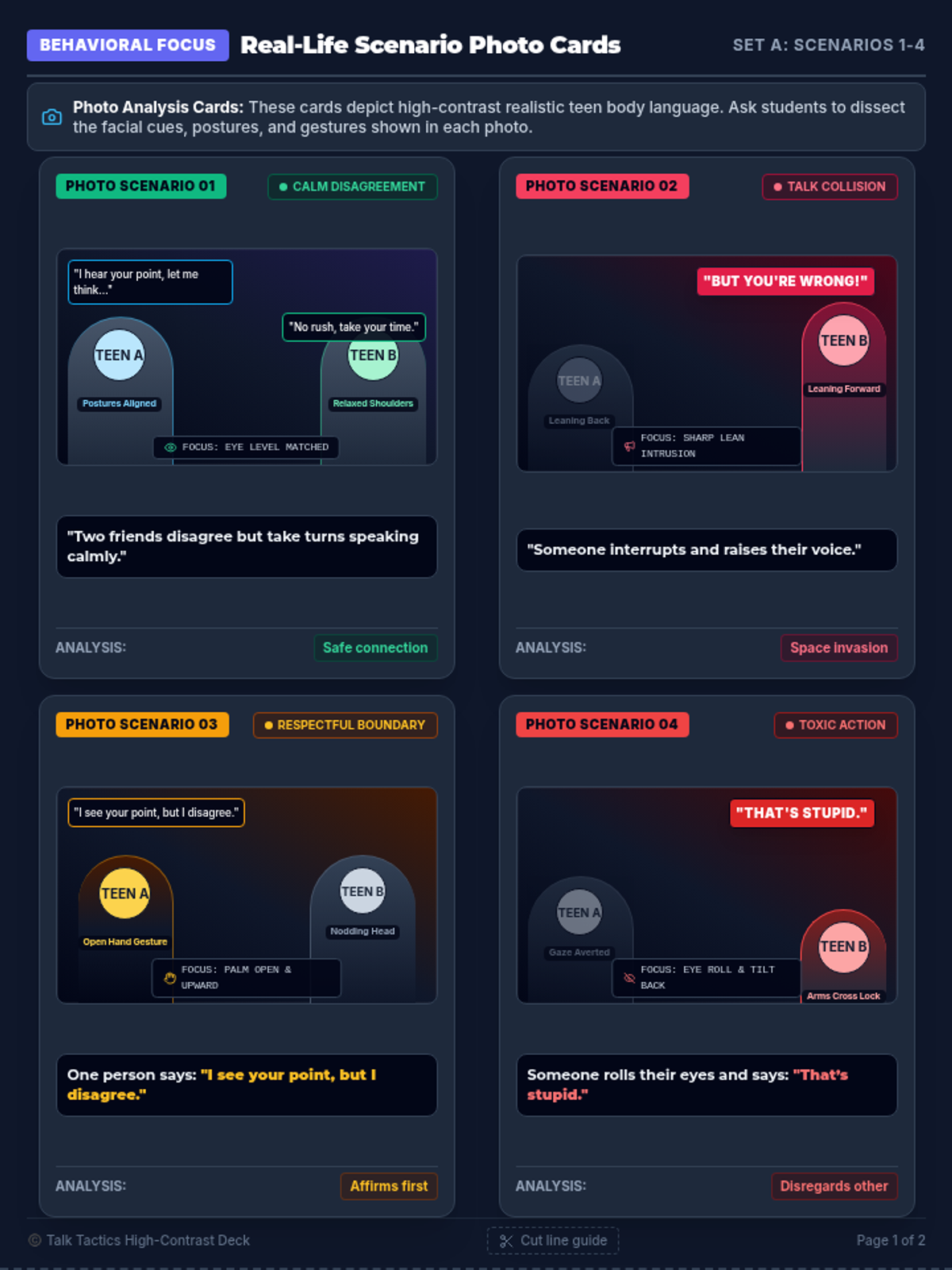
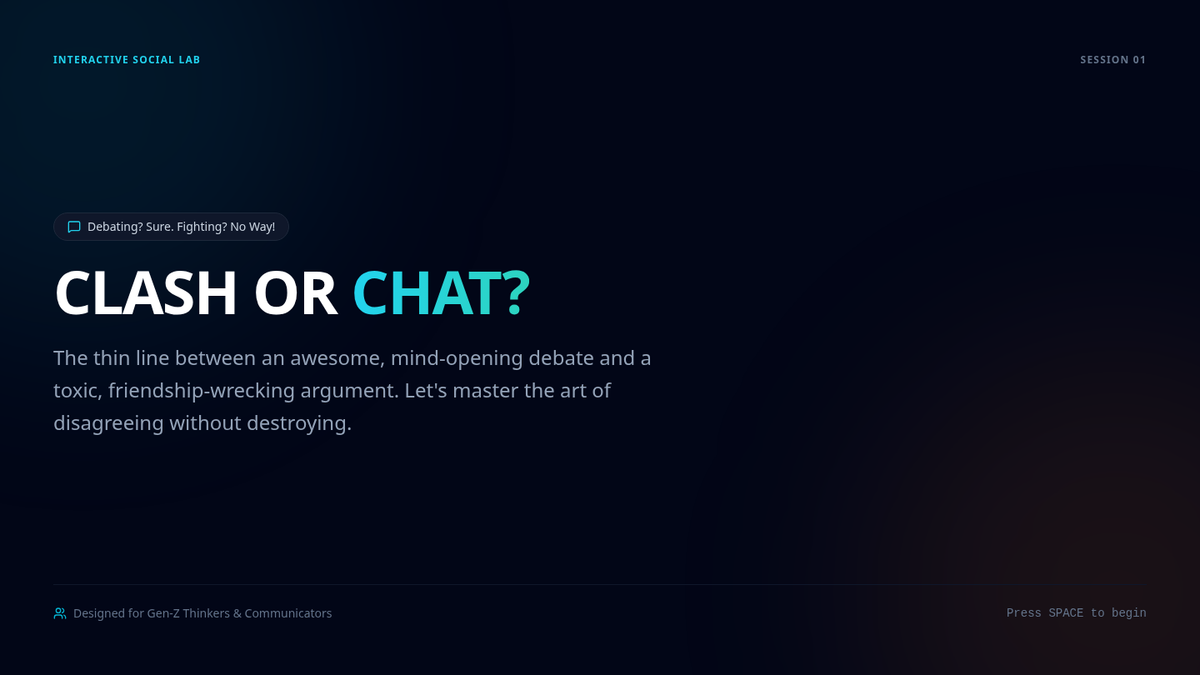
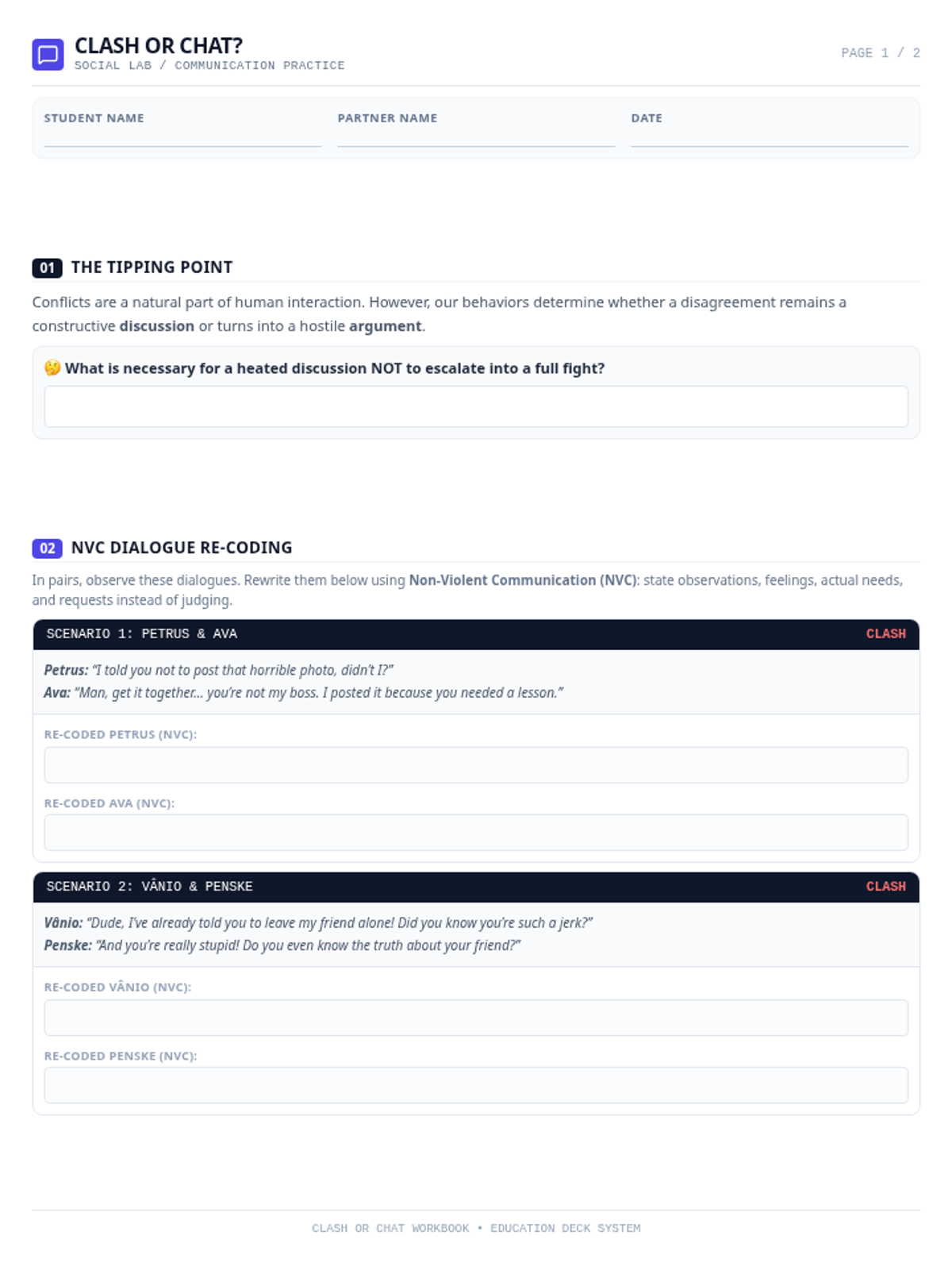
An interactive lesson designed for 16-year-olds to explore the thin line between a healthy discussion and a destructive argument. Students practice non-violent communication, analyze body language, and learn how to challenge ideas without attacking individuals.
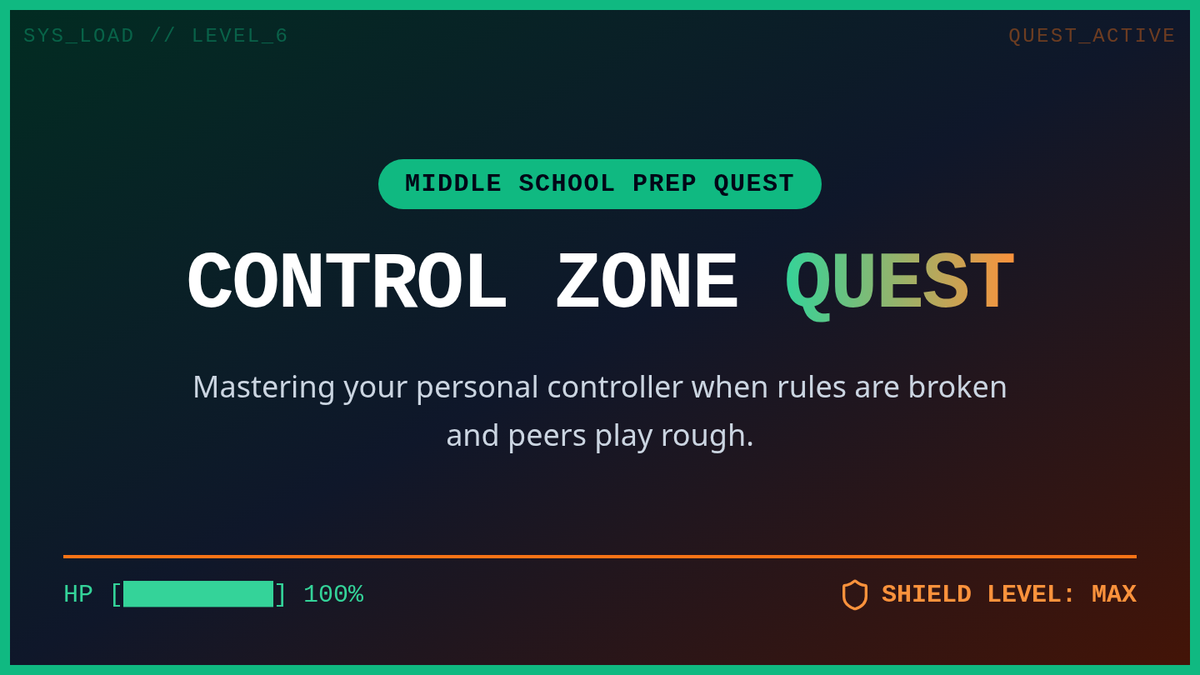
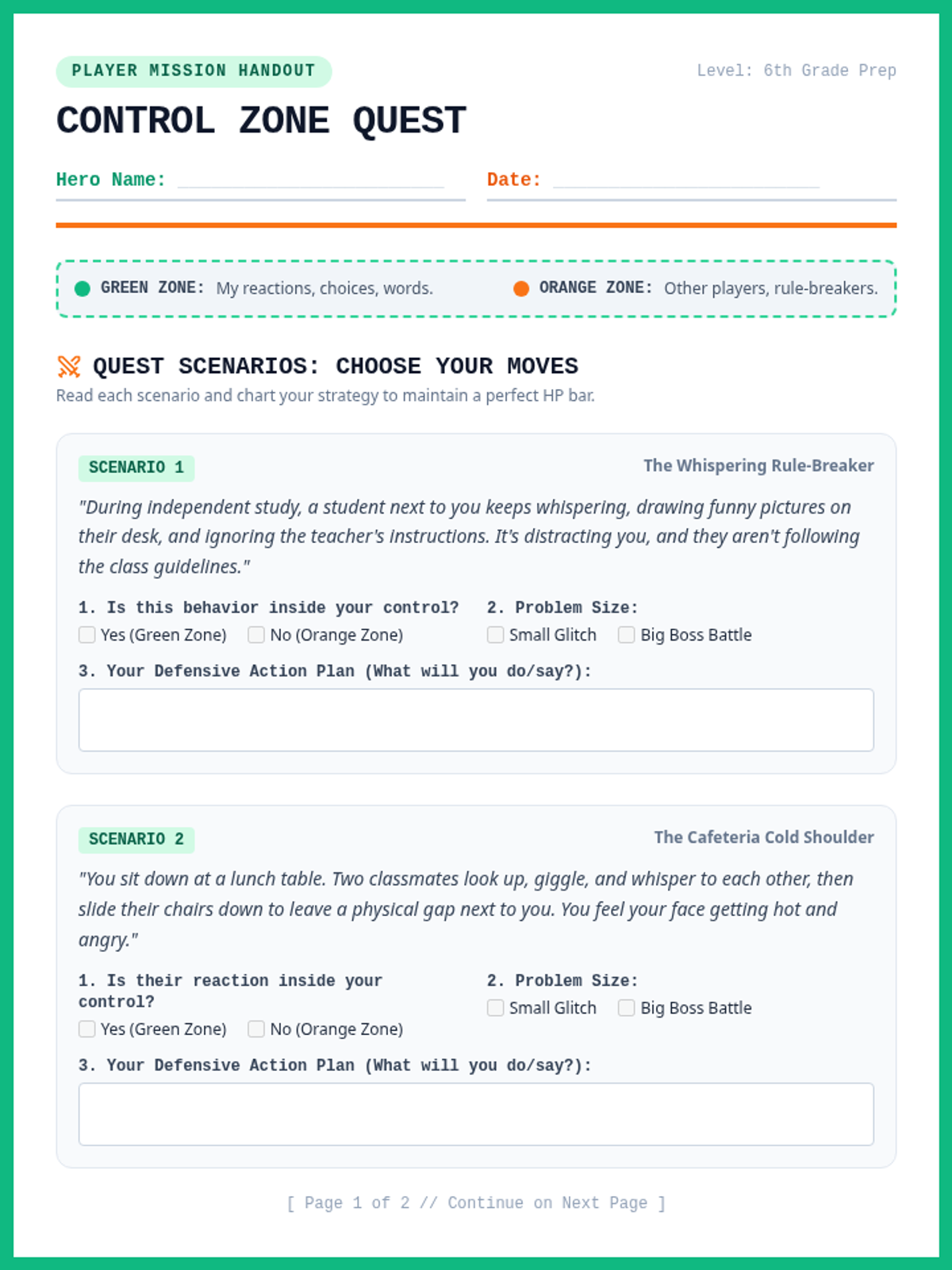
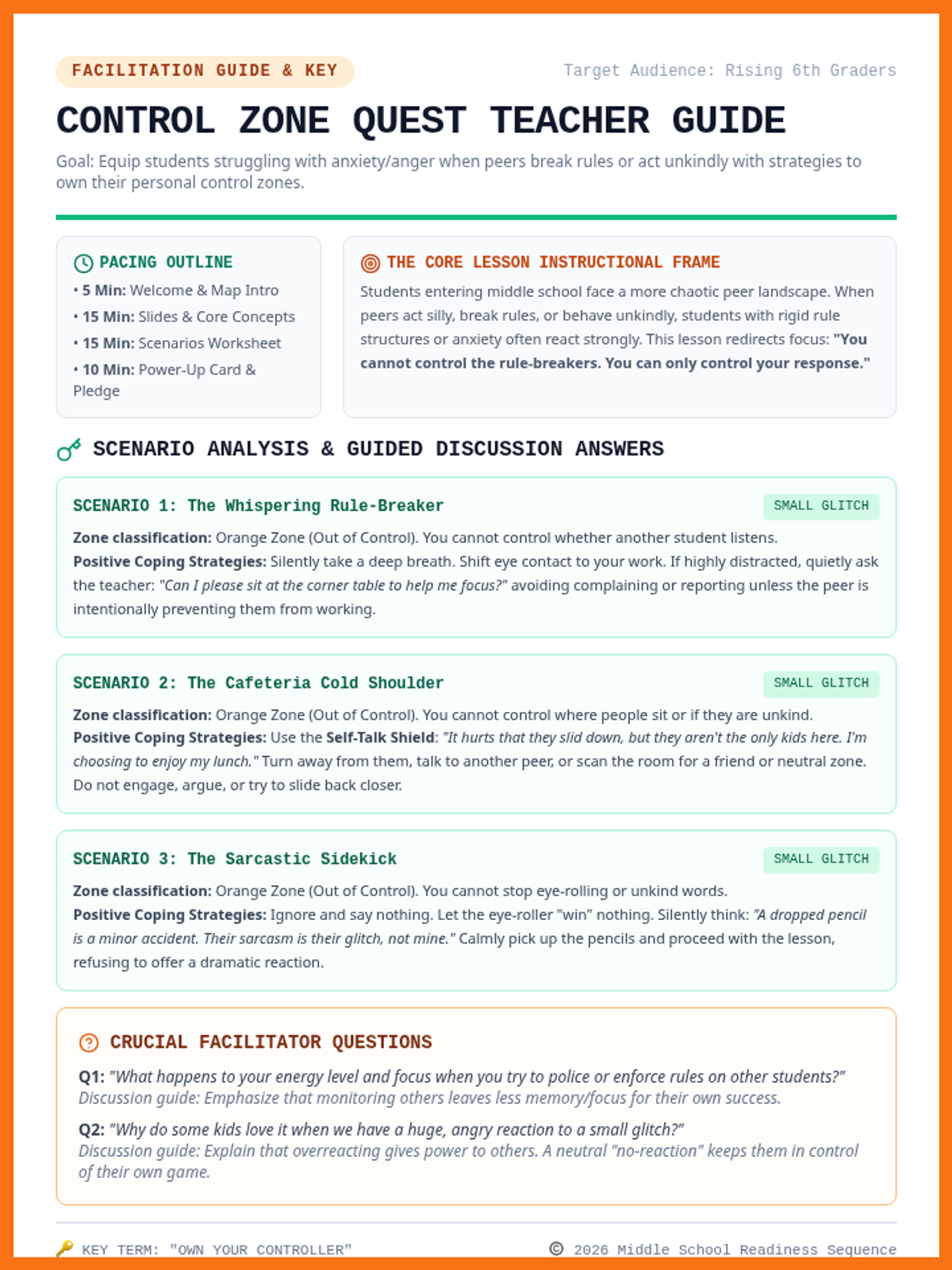
A transition lesson for rising sixth graders to master the Circle of Control and distinguish between big and small problems. Students learn practical coping strategies for peer conflicts and rule-breaking using a gamified quest theme.
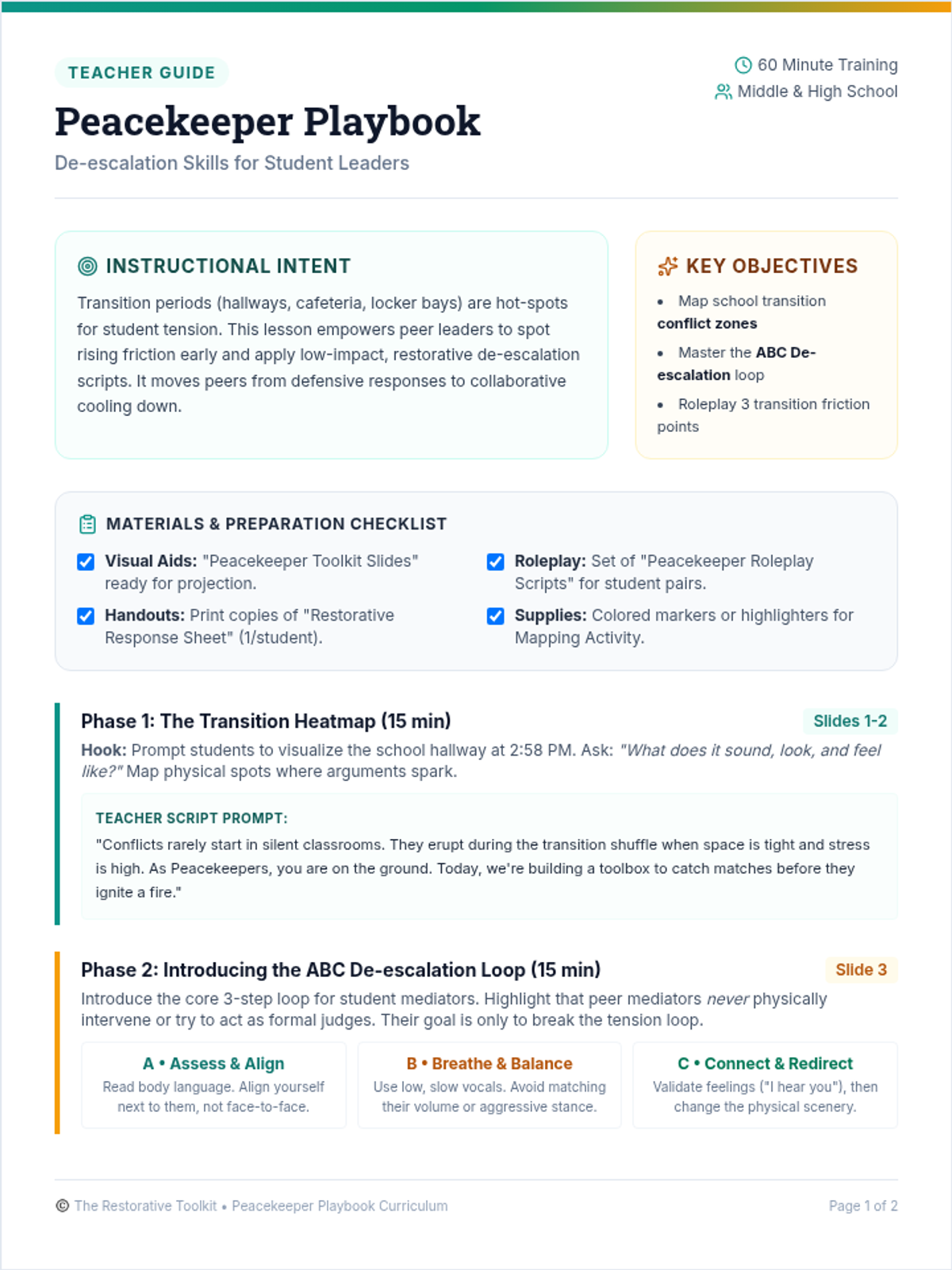
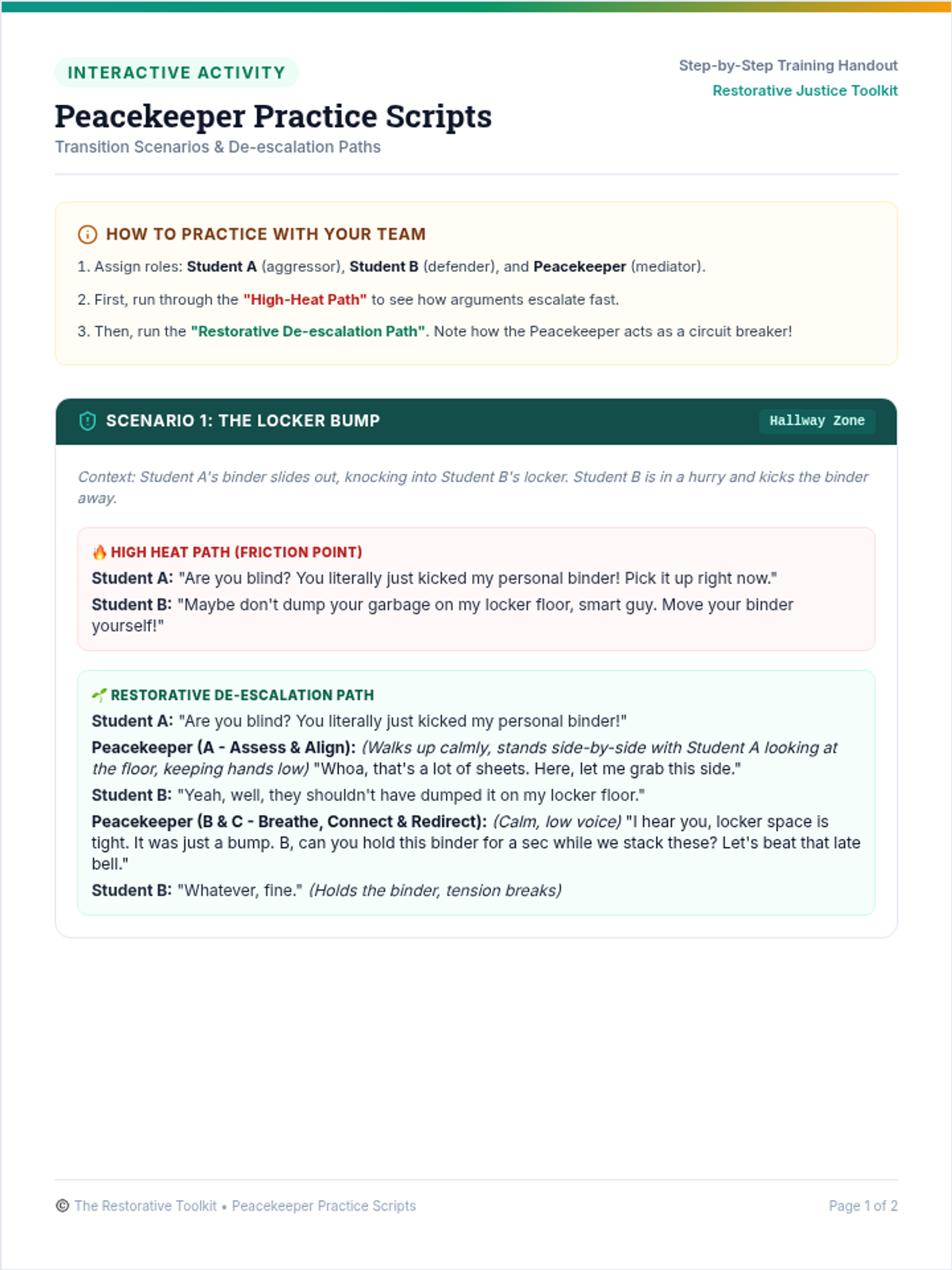
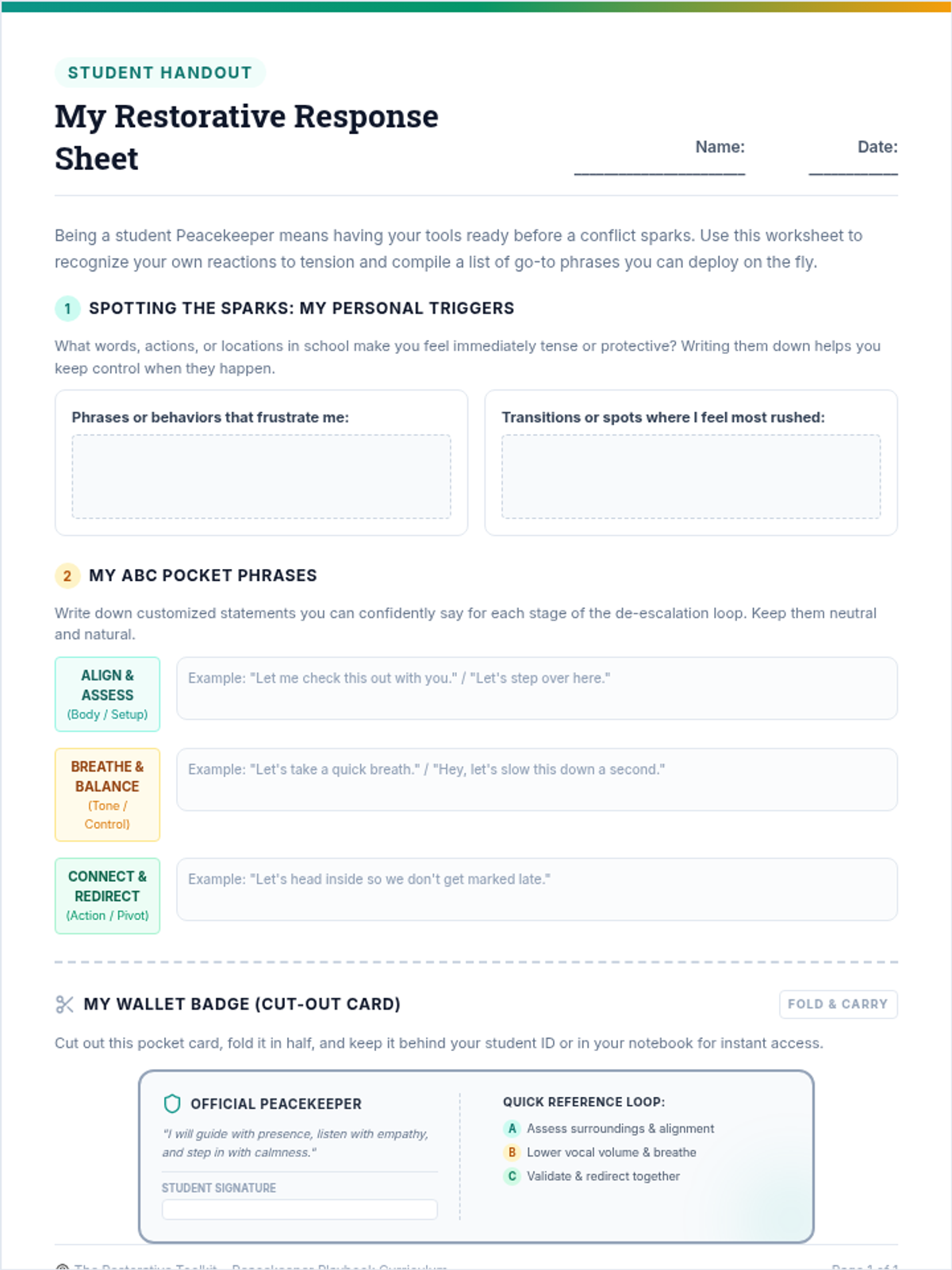
An interactive, student-led curriculum empowering middle and high school leaders to de-escalate minor peer conflicts during high-stress transition periods, building sustainable restorative justice skills.
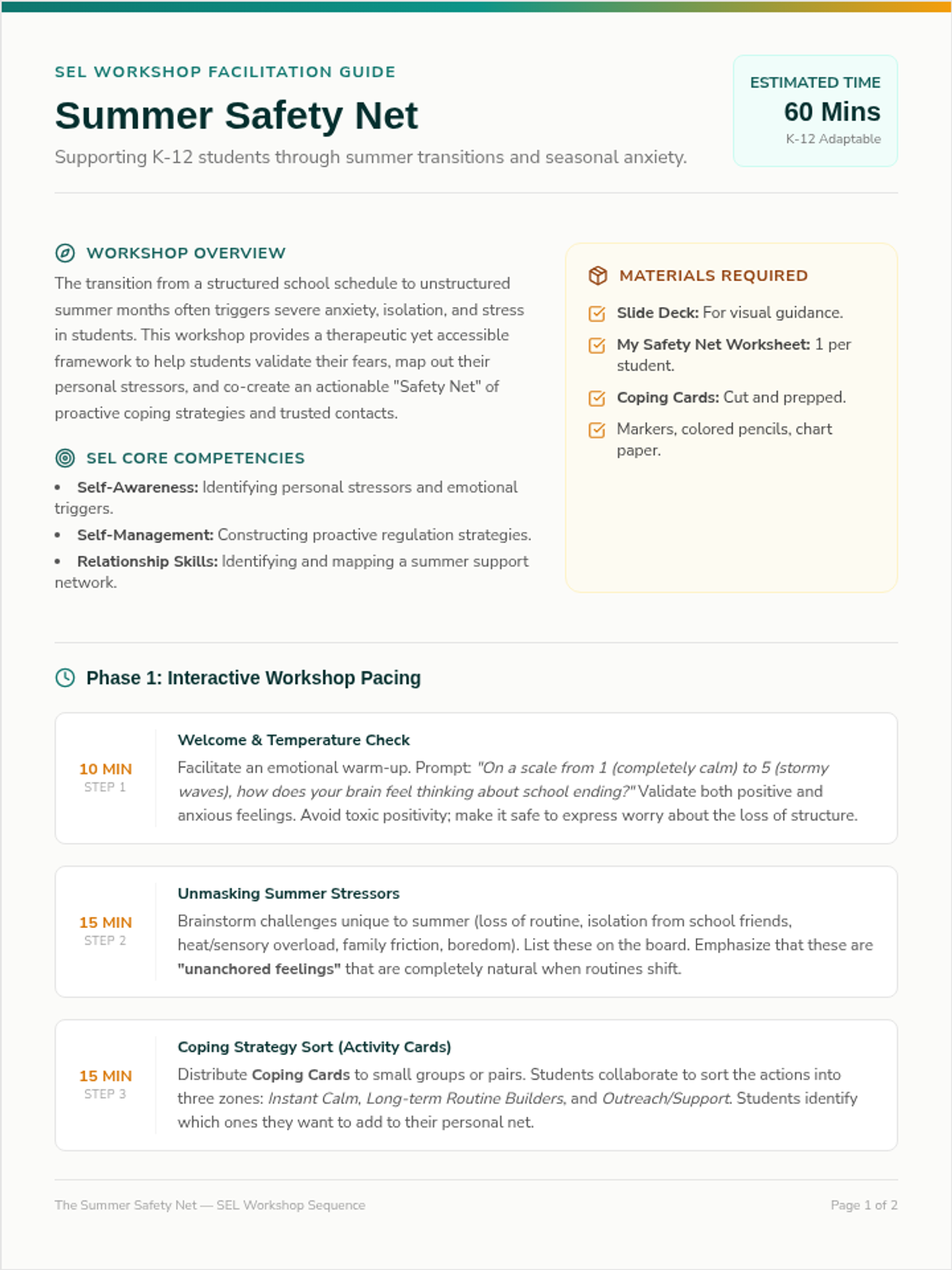
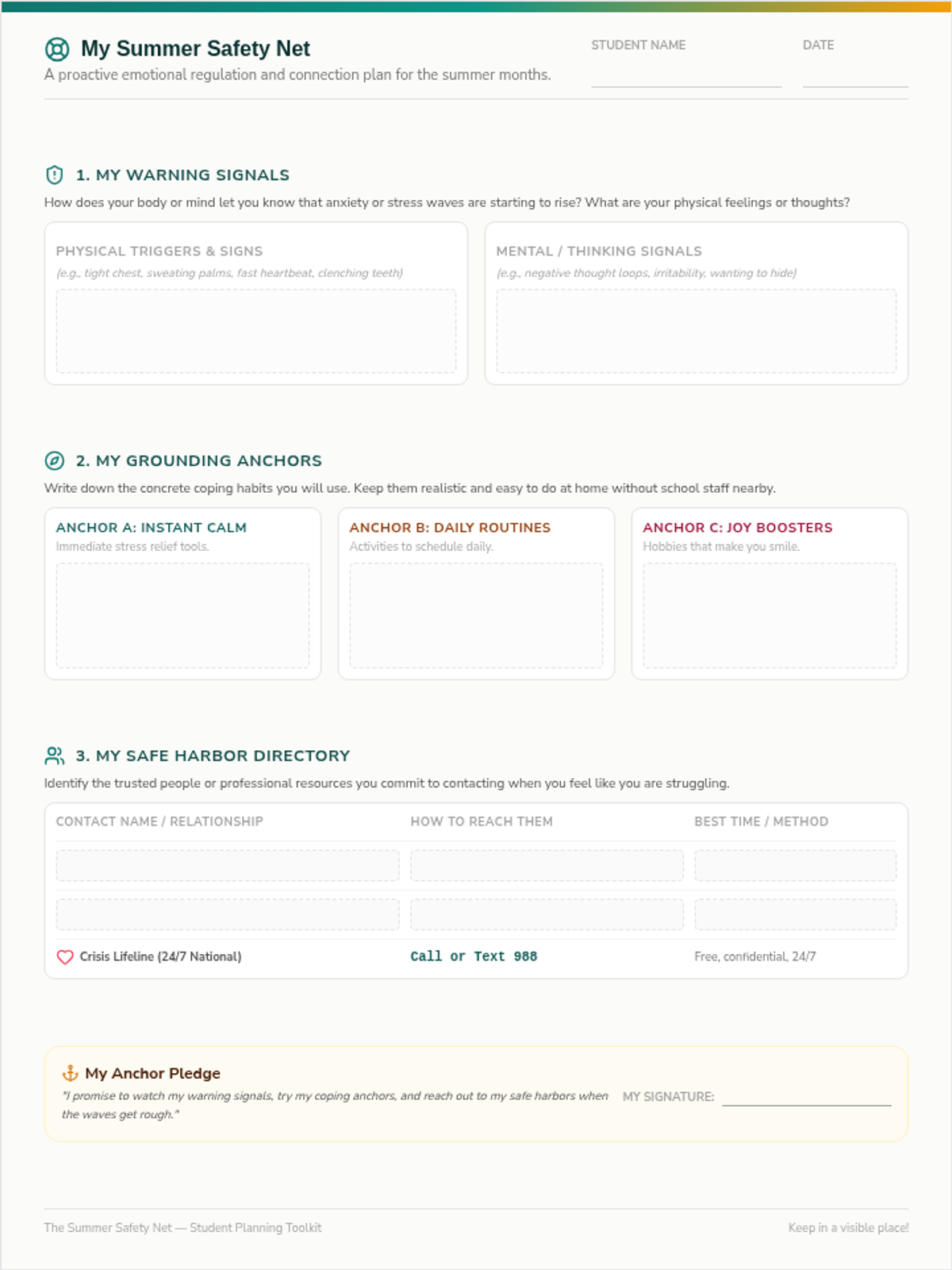
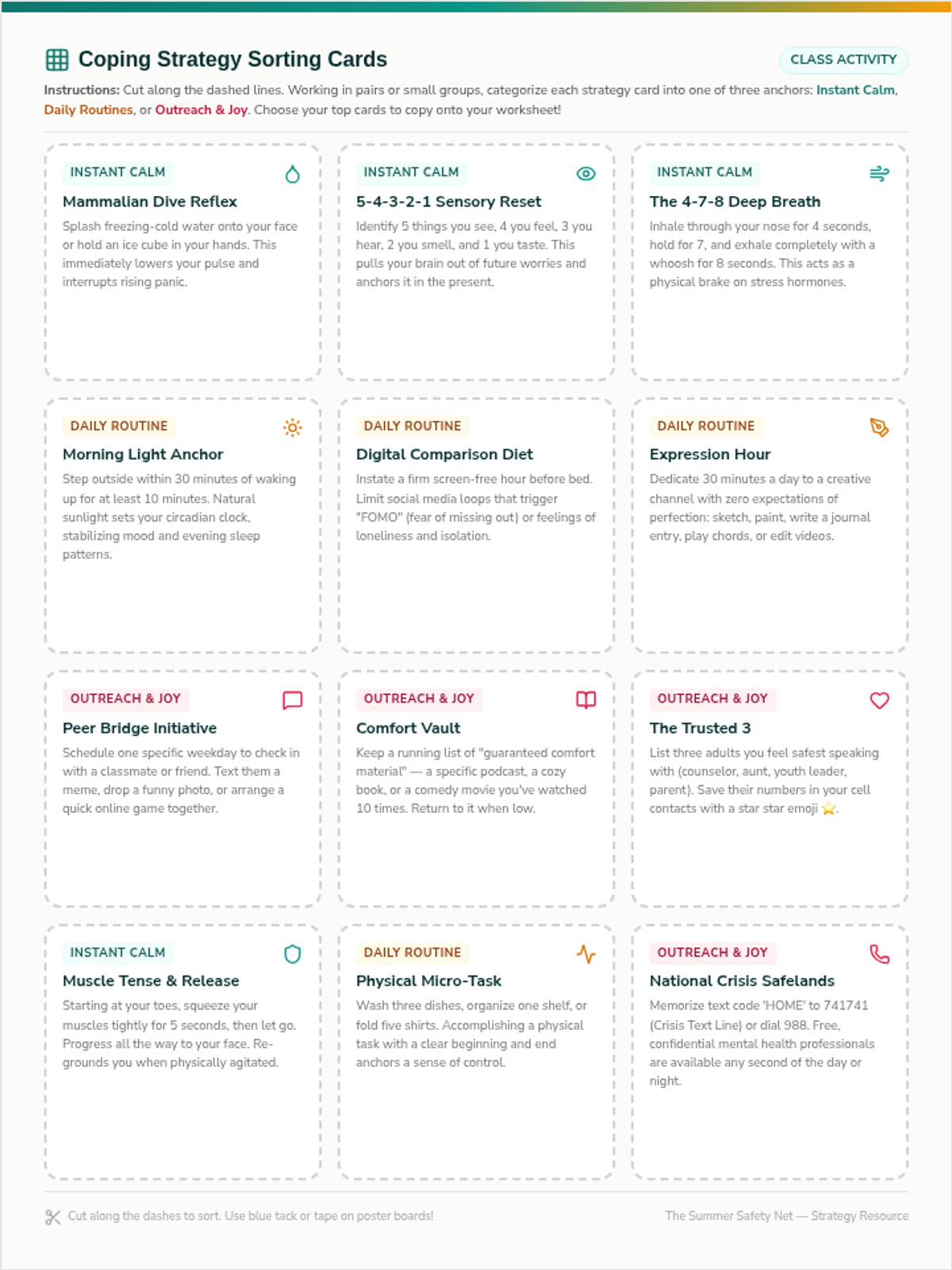
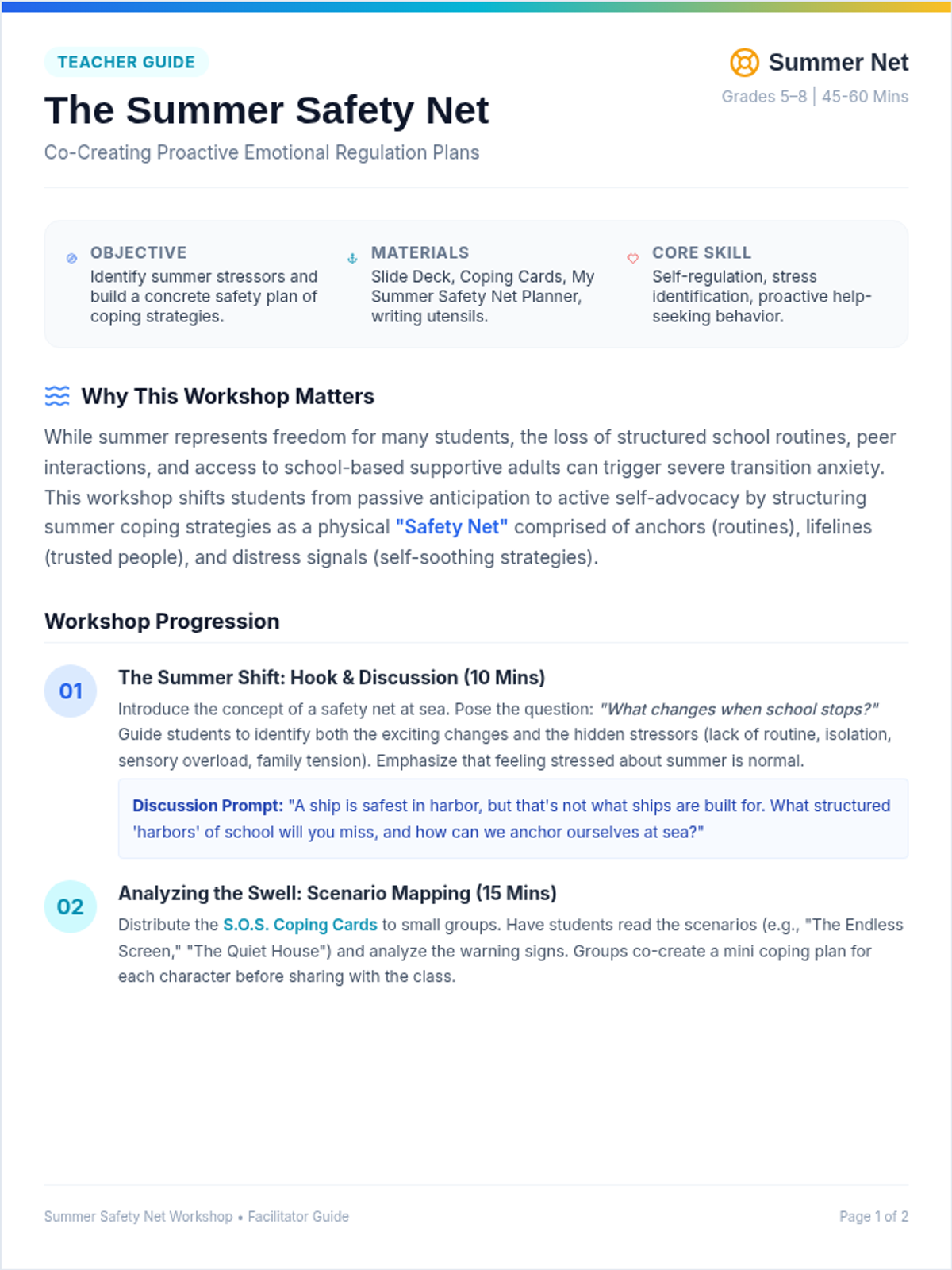
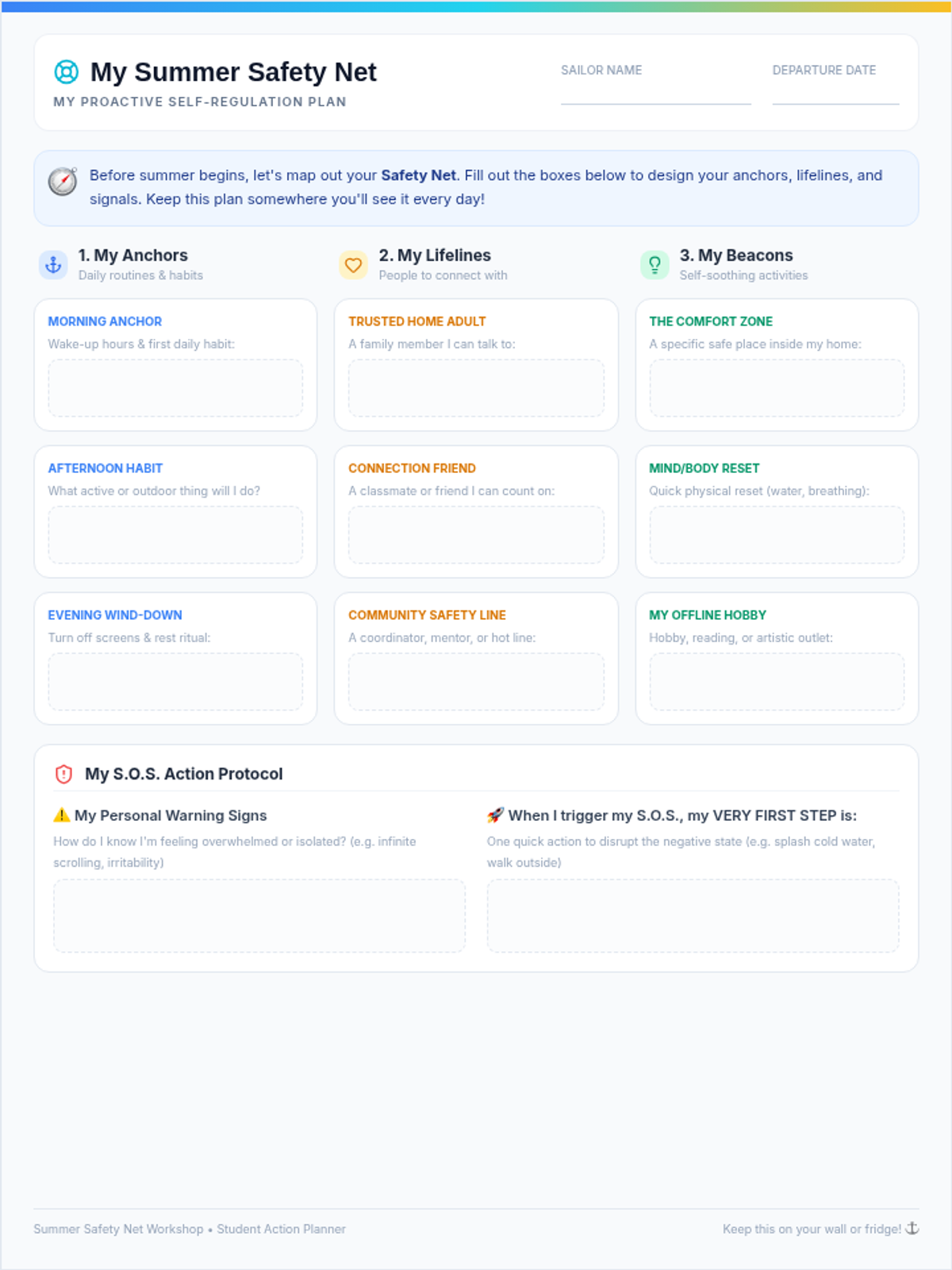
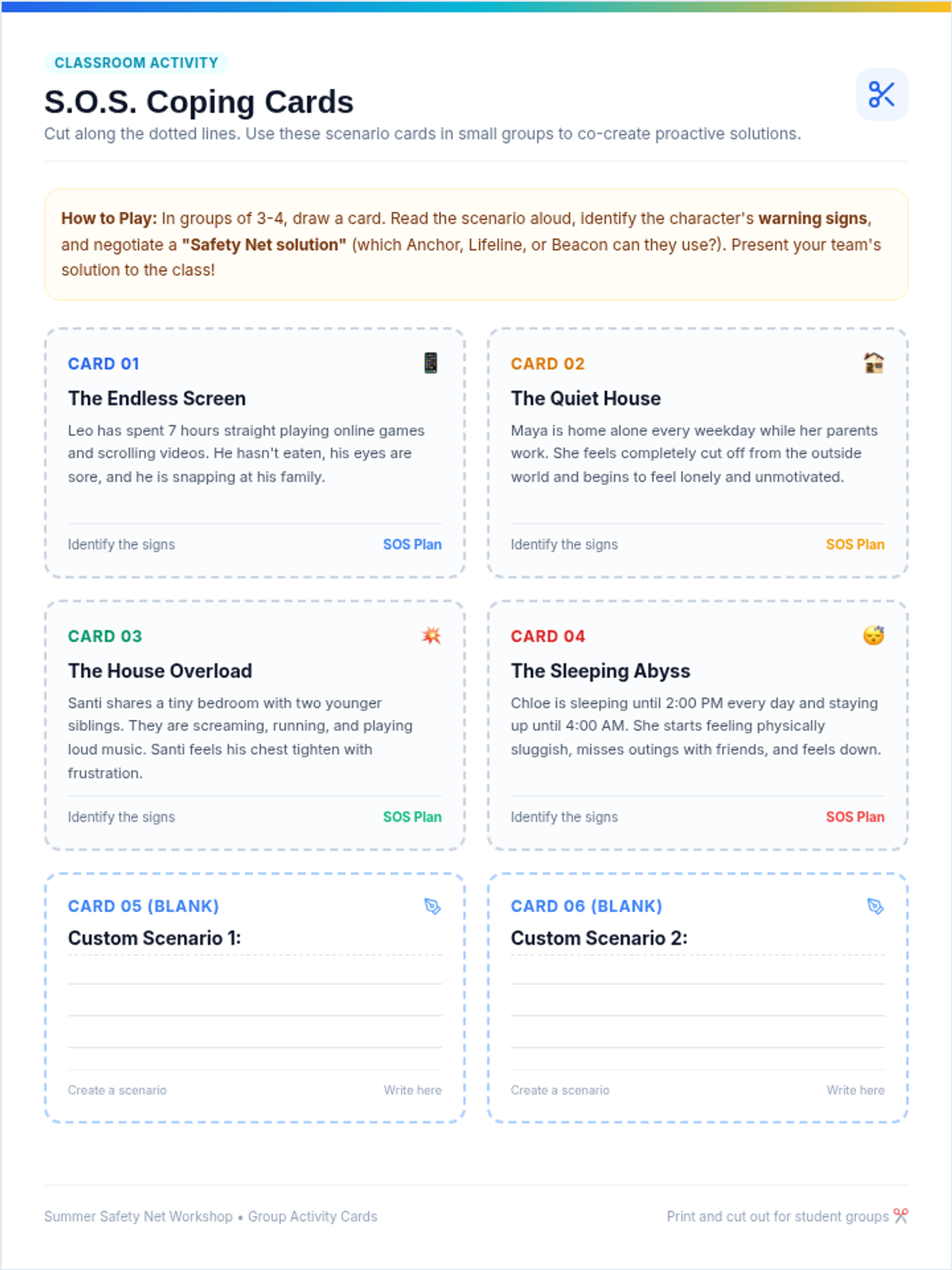
A collaborative mental health workshop designed to help students navigate summer transition anxiety by identifying stressors, mapping coping strategies, and co-creating a personalized proactive emotional regulation plan.
A collaborative workshop designed to help students identify summer stressors and co-create proactive plans for emotional regulation outside of school. This lesson builds concrete coping strategies and 'safety nets' for students transitioning to summer break.
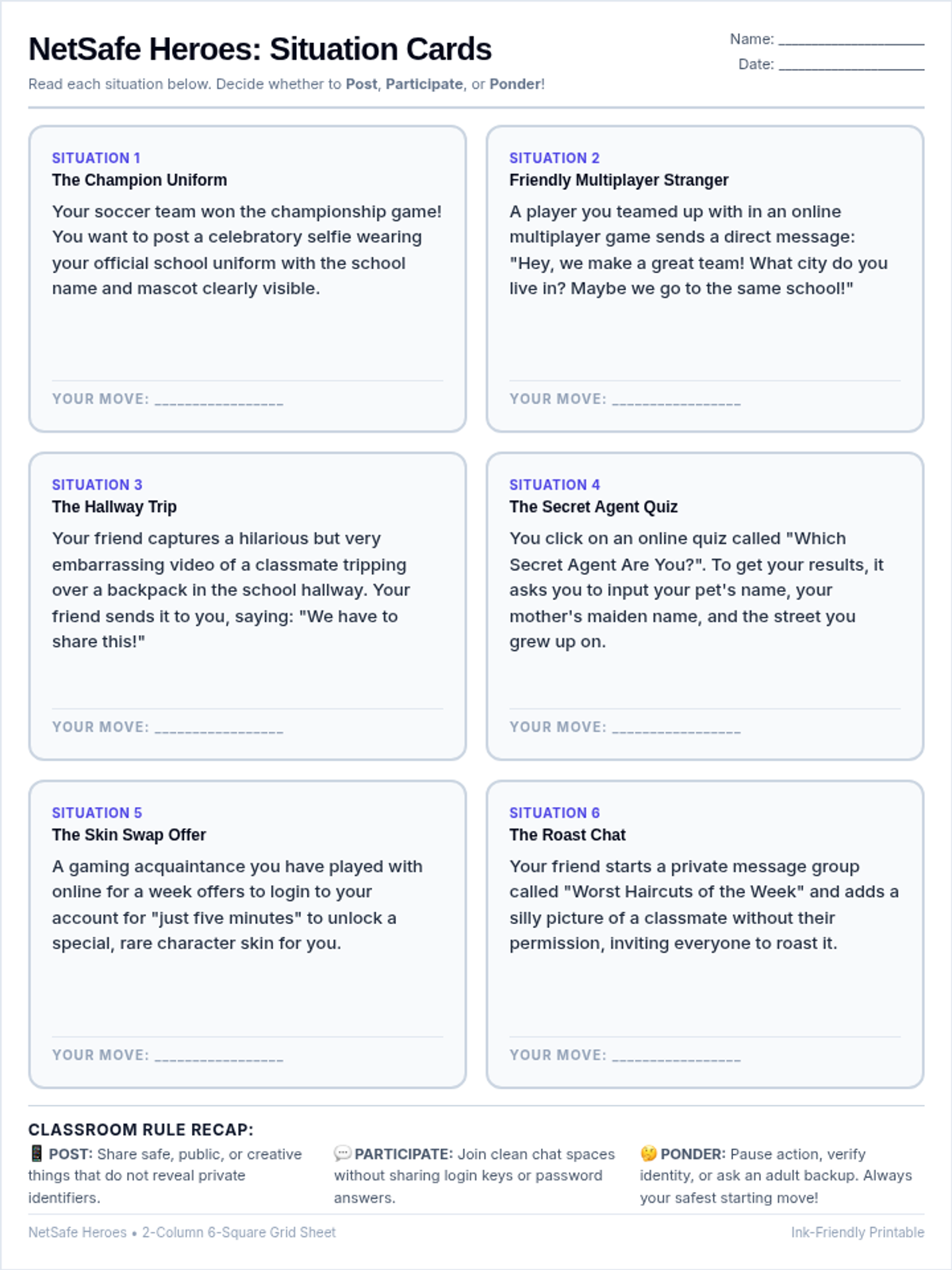
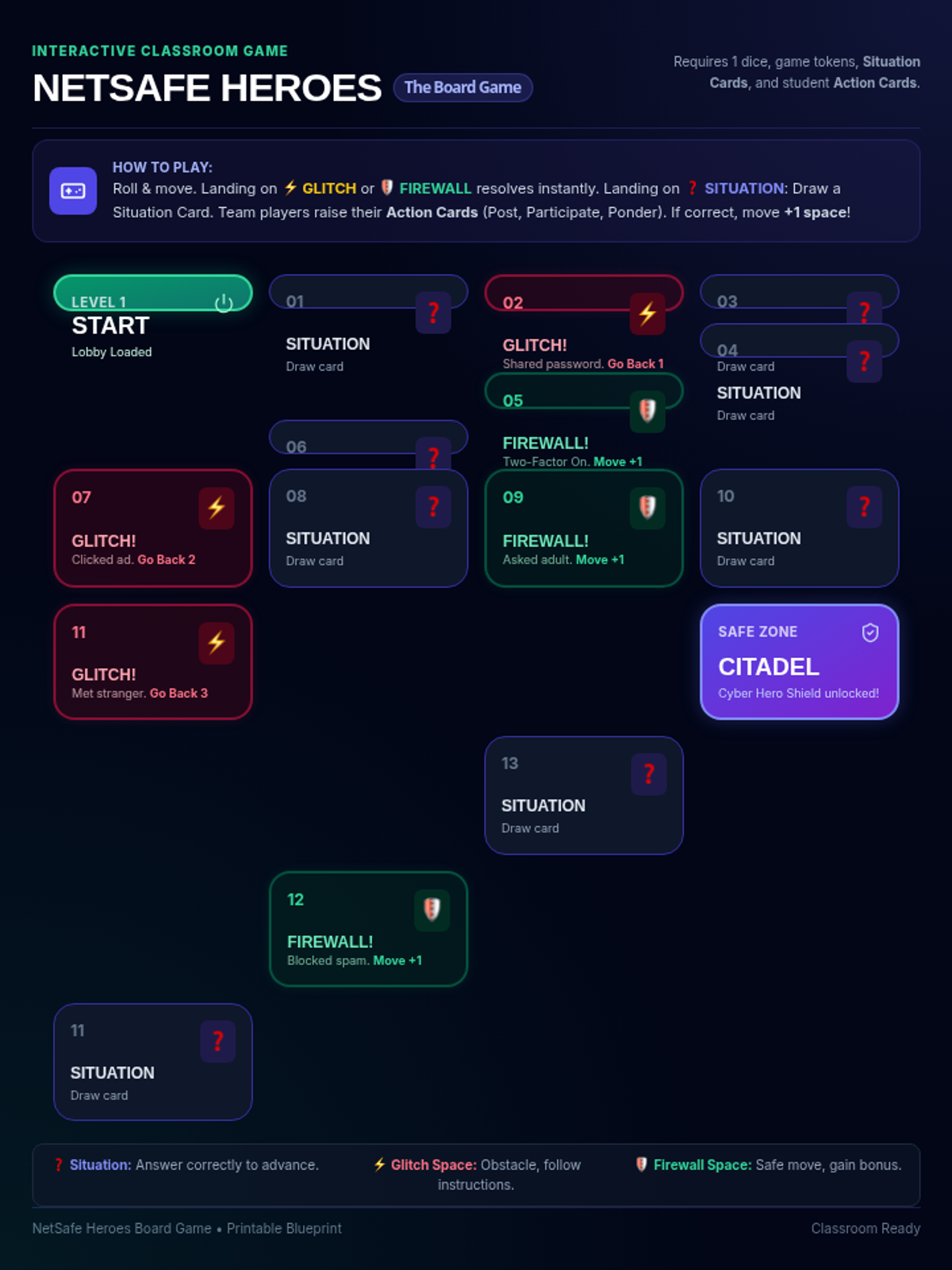
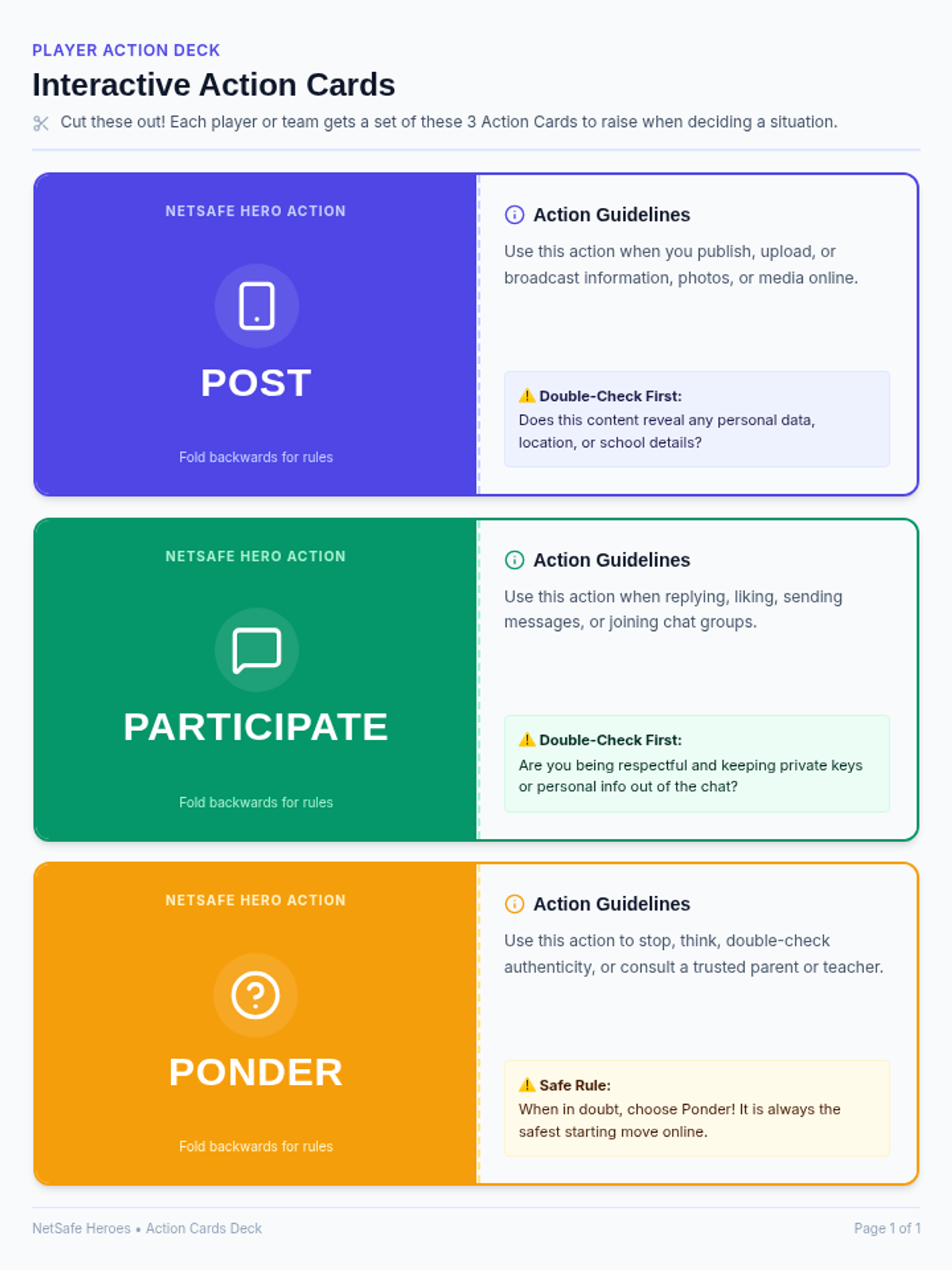
A lesson focusing on critical digital citizenship skills, helping students navigate the web safely and make informed choices when posting, interacting, or pondering online situations.
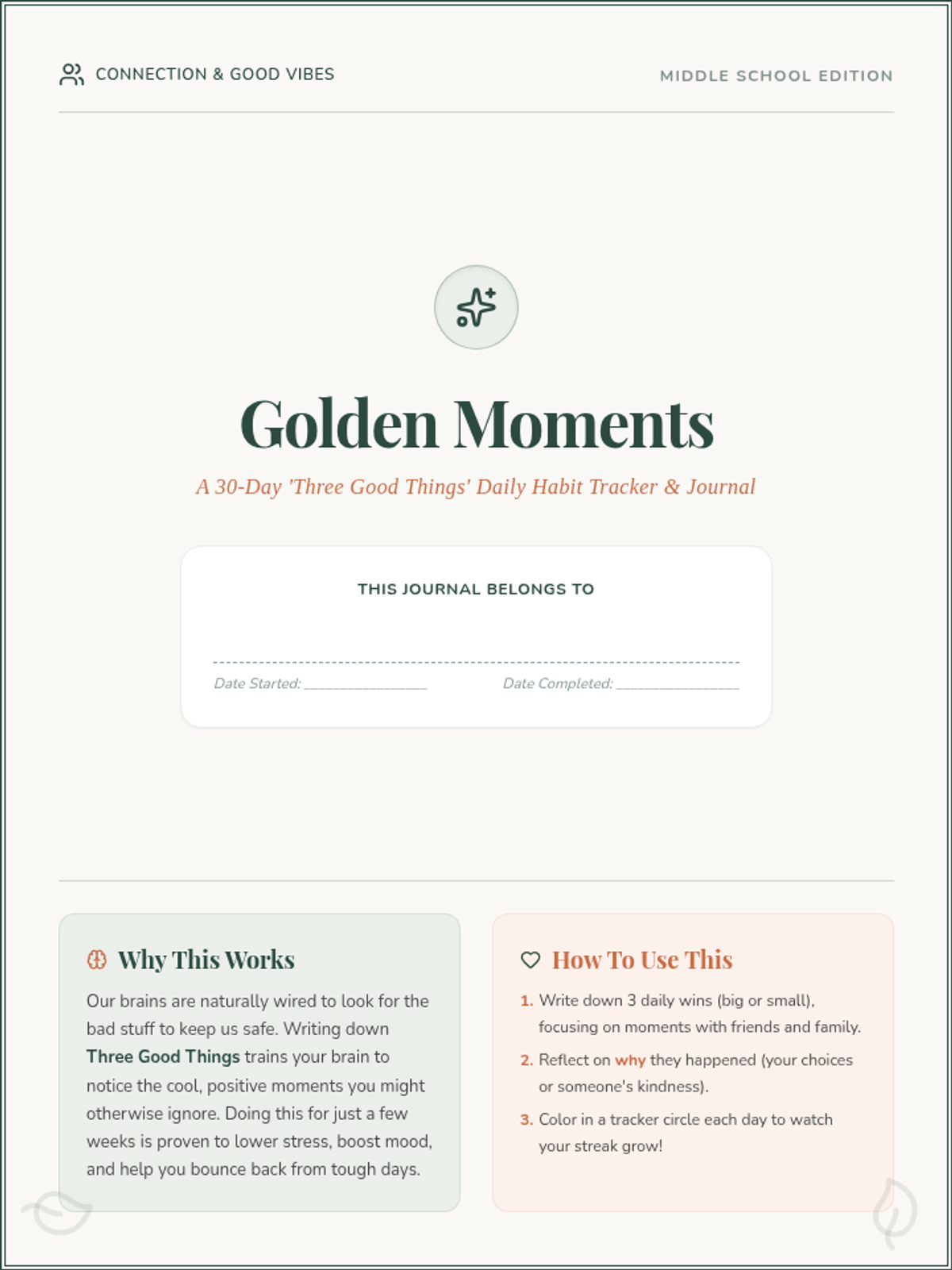
A transformative lesson introducing students to the psychological science of gratitude, centered on the 'Three Good Things' daily habit to build mental resilience, optimism, and emotional wellbeing.
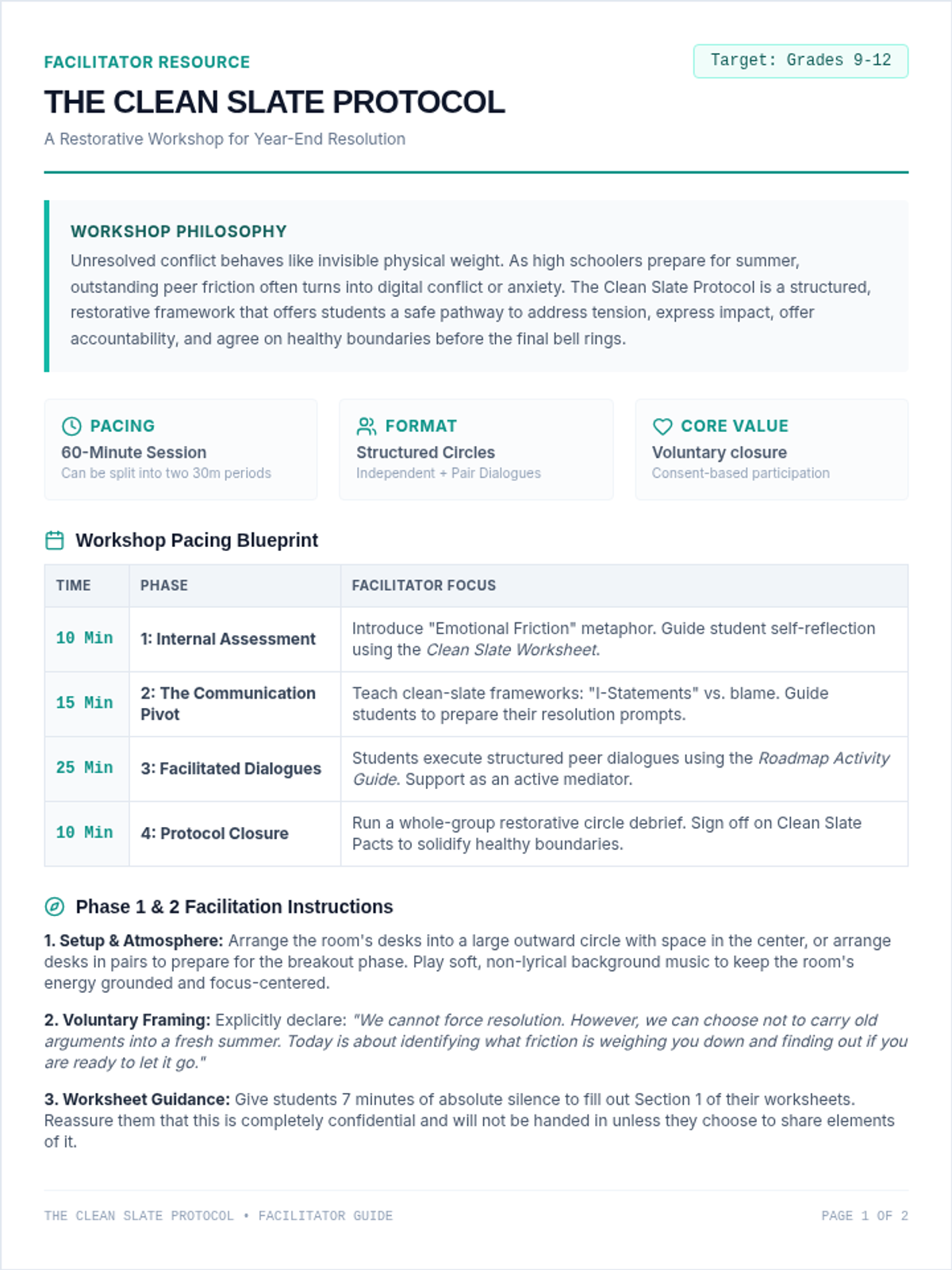
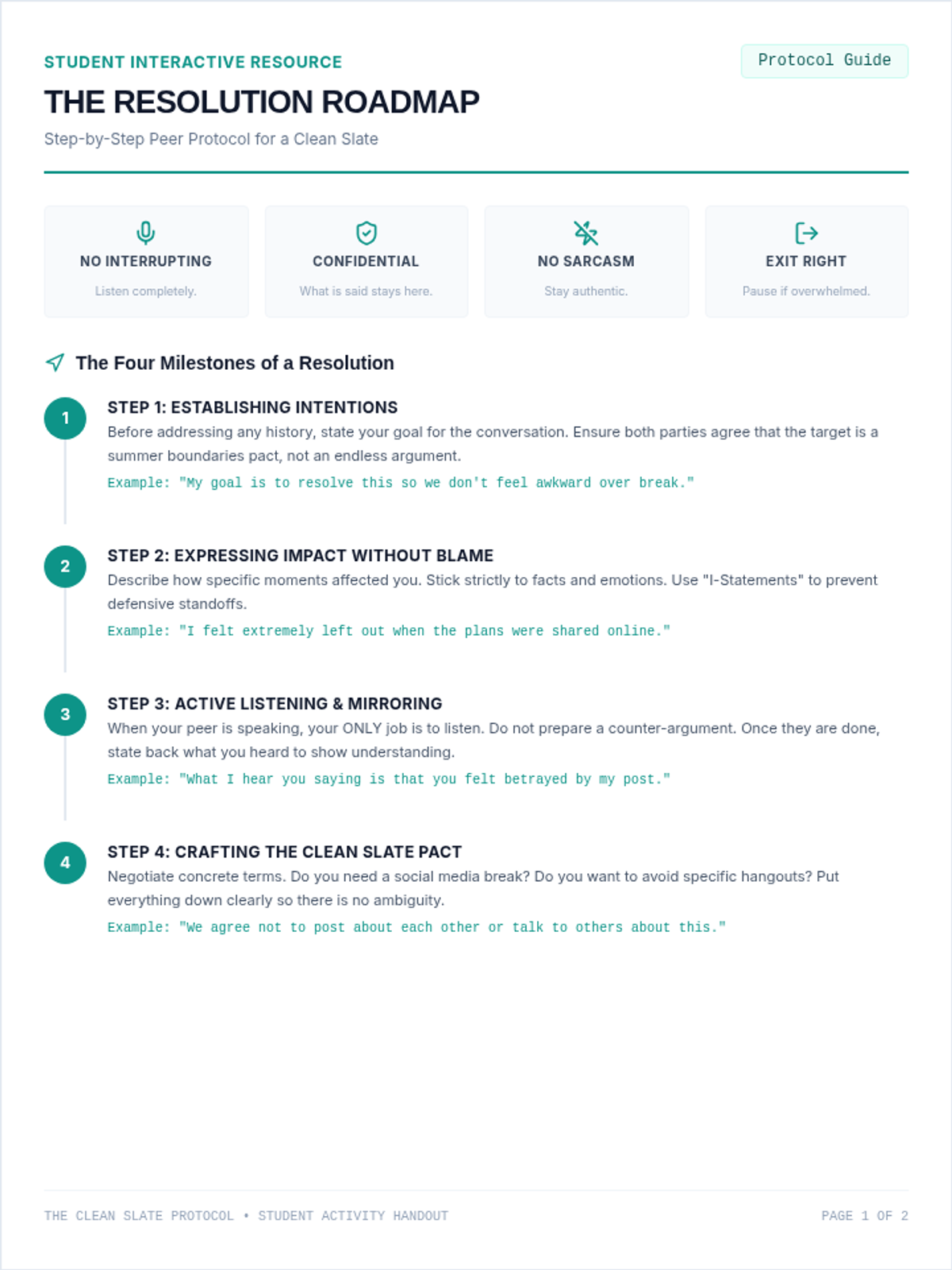
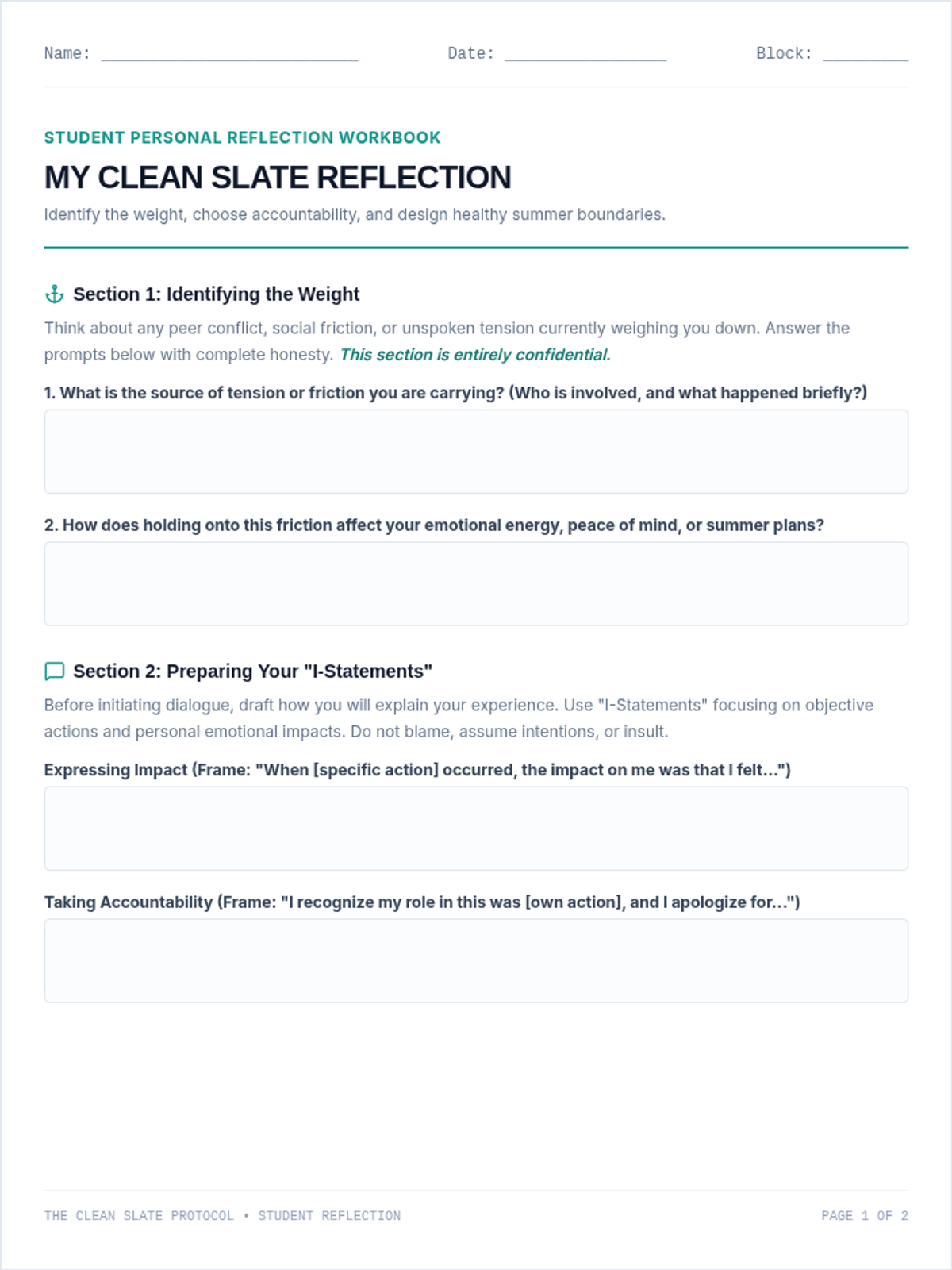
A restorative conflict-resolution workshop designed to help high schoolers resolve outstanding peer friction before summer break, allowing them to depart with a sense of peace and closure. This workshop provides step-by-step guidance, structured reflection, and concrete resolution tools.
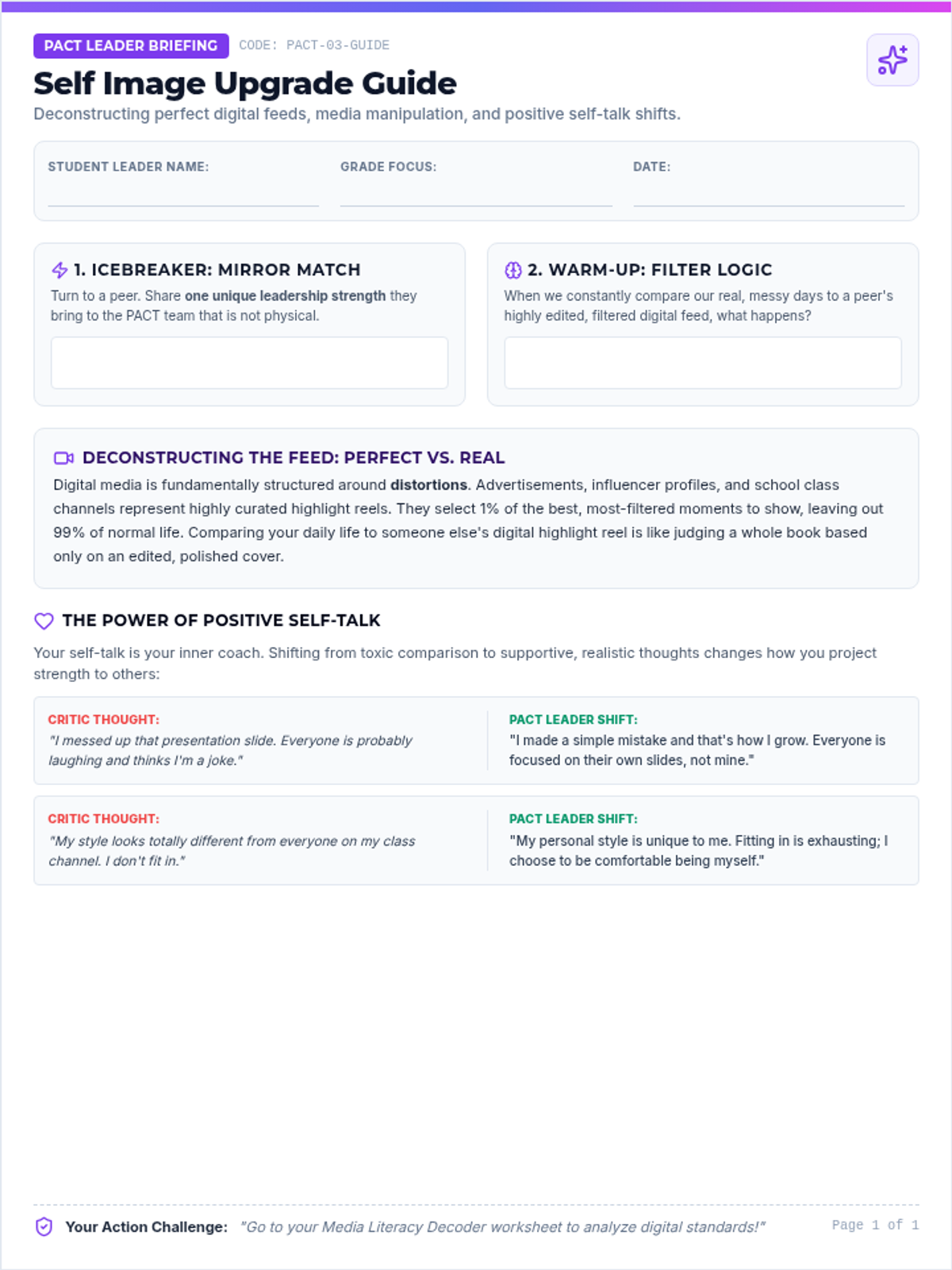
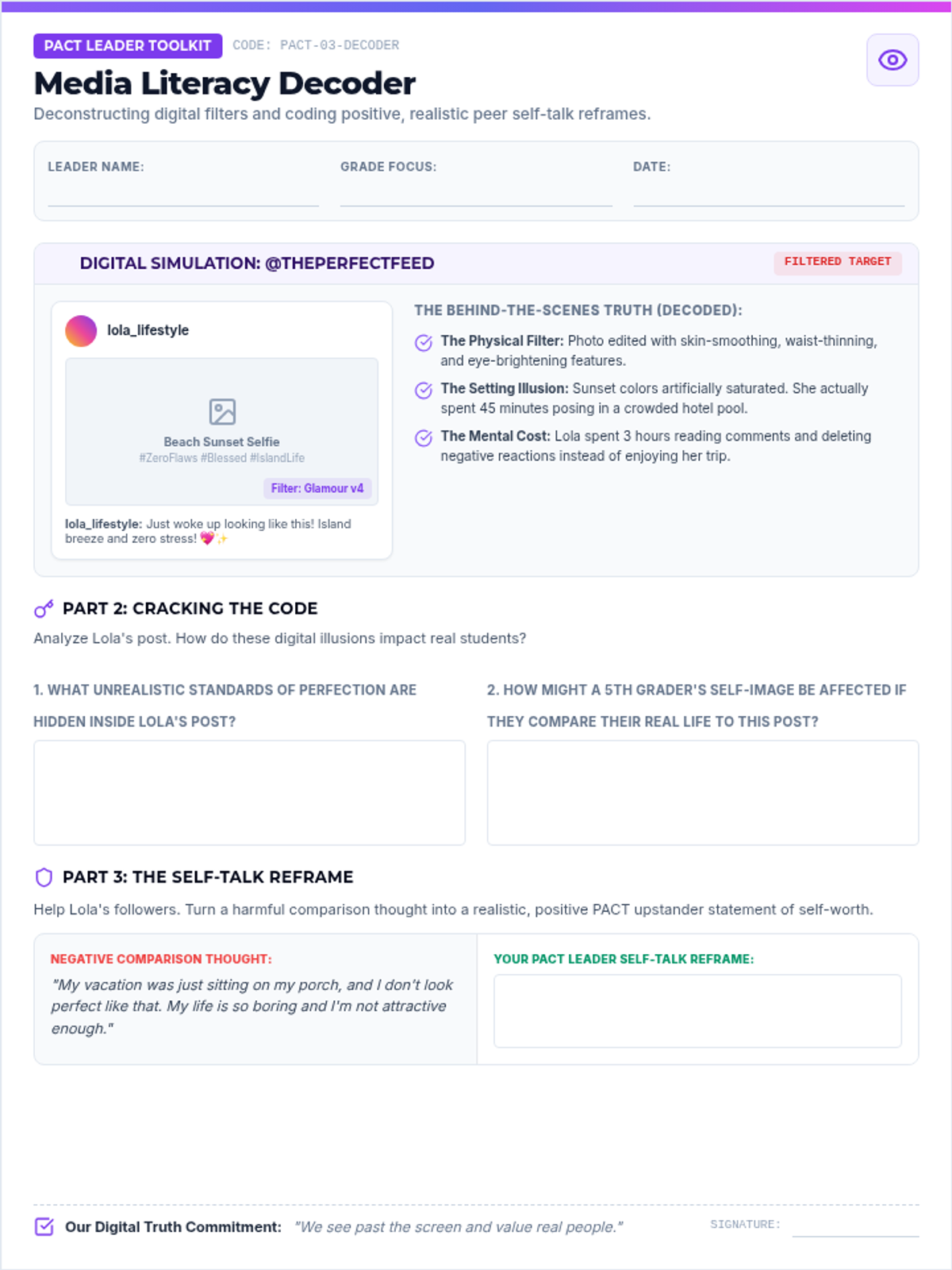
Focuses on building self-worth, identifying negative media messages, and shifting personal and peer narratives through positive self-talk strategies.
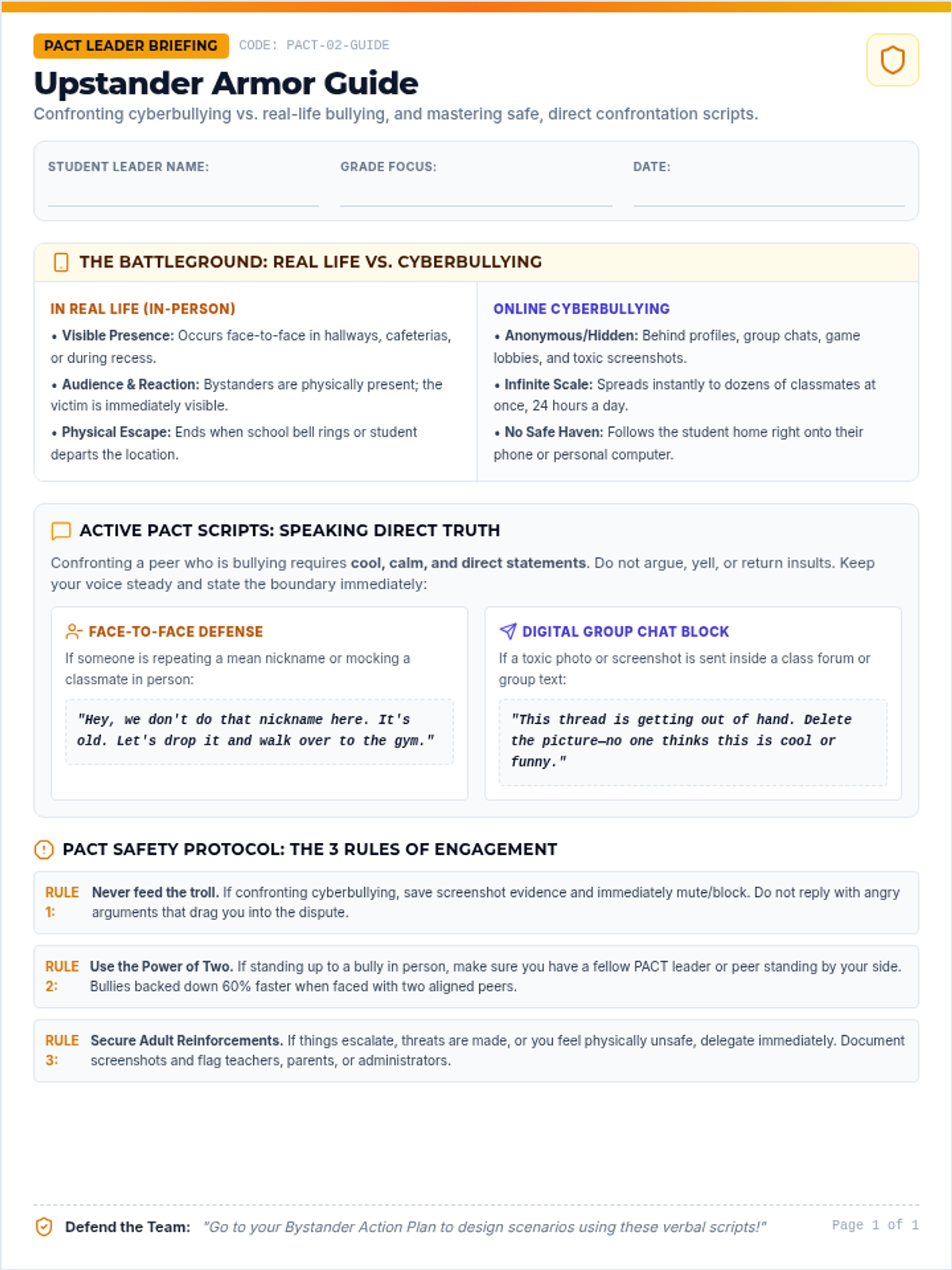
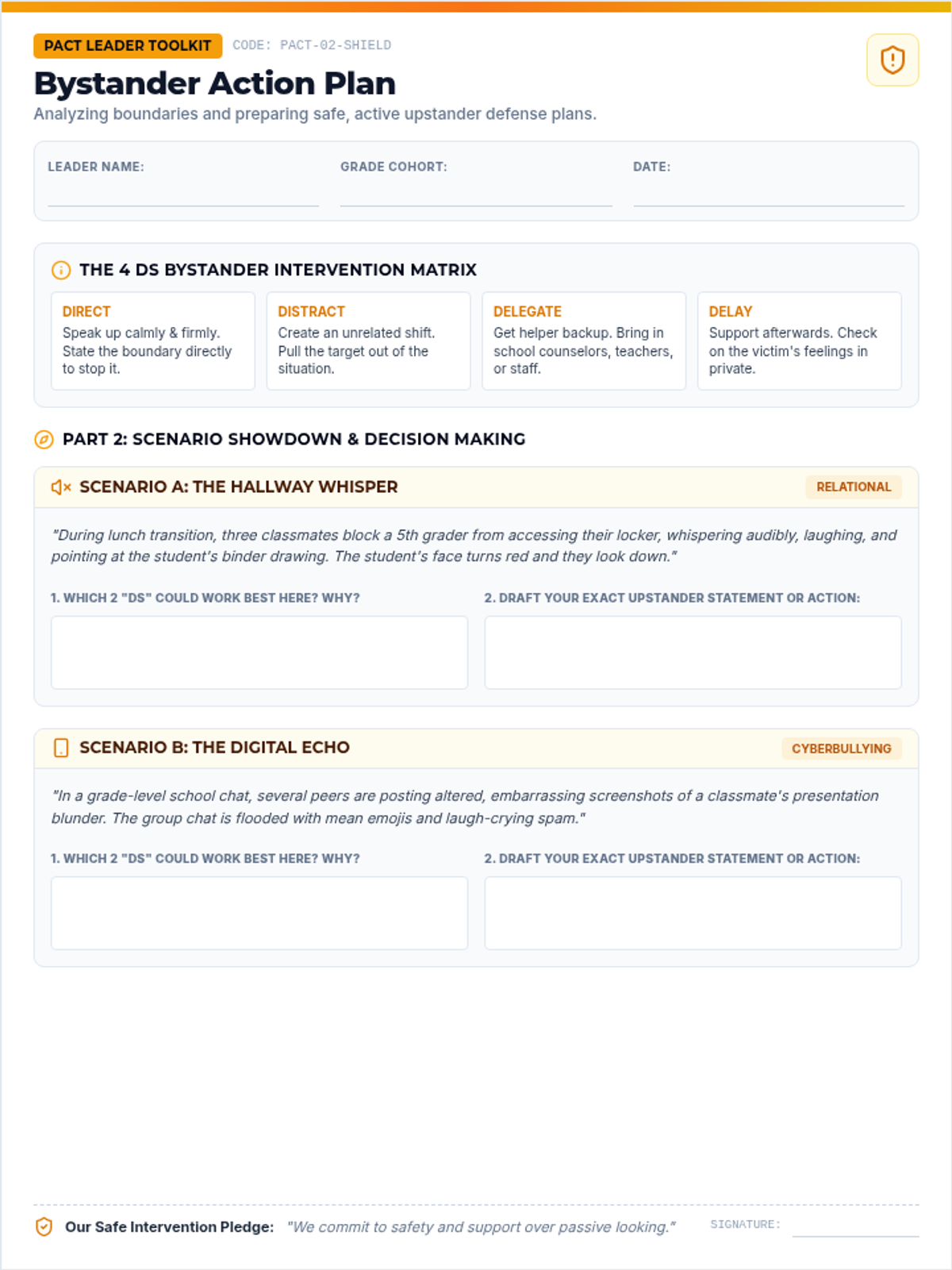
Teaches student leaders to identify the fine line between teasing and bullying, and equips them with safe, practical upstander intervention and peer support frameworks.