A streamlined lesson where students identify their unique strengths through a collaborative card sort and a comprehensive reflection/branding worksheet. Reduced to two core phases for better focus and pace.
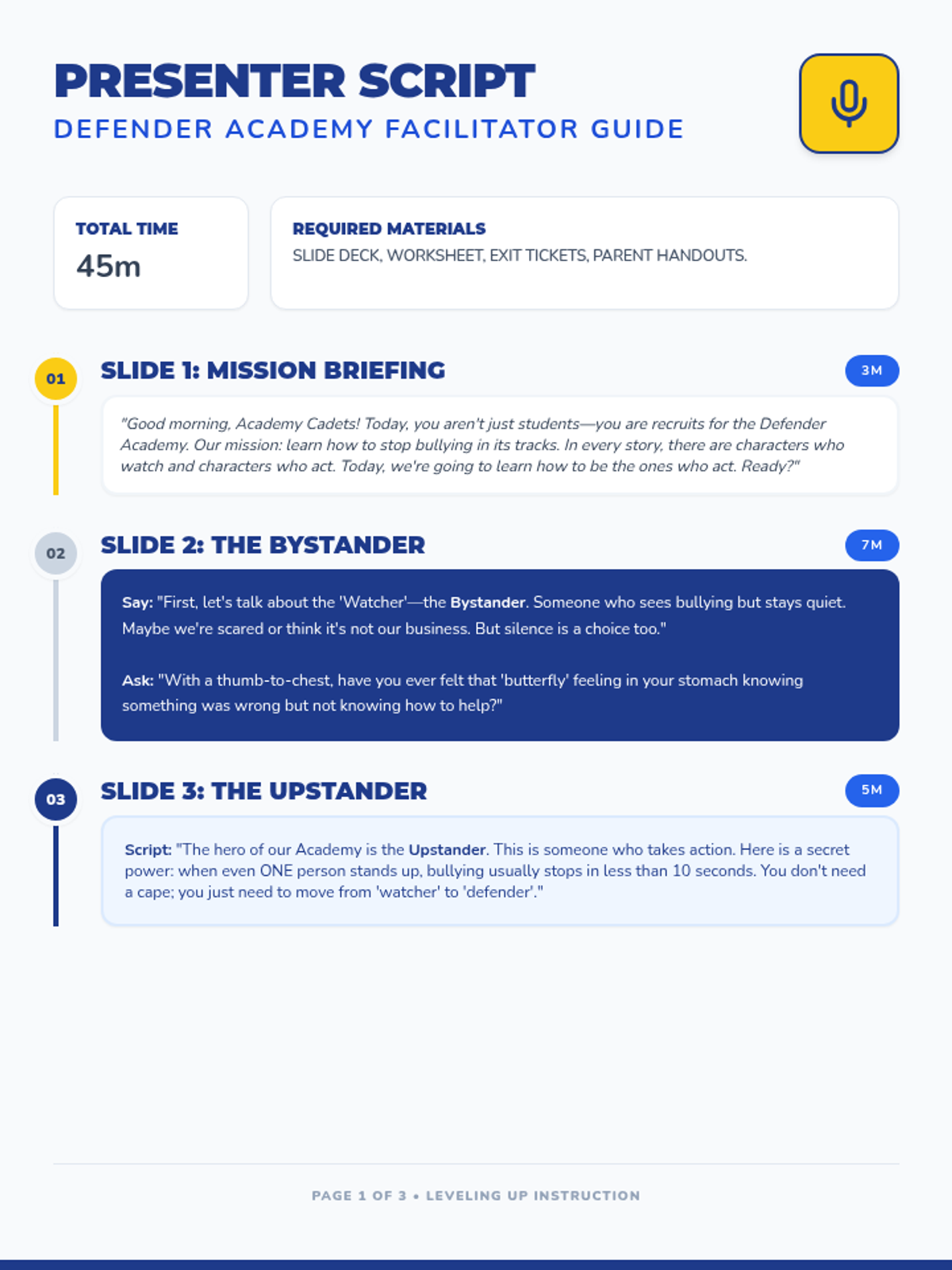
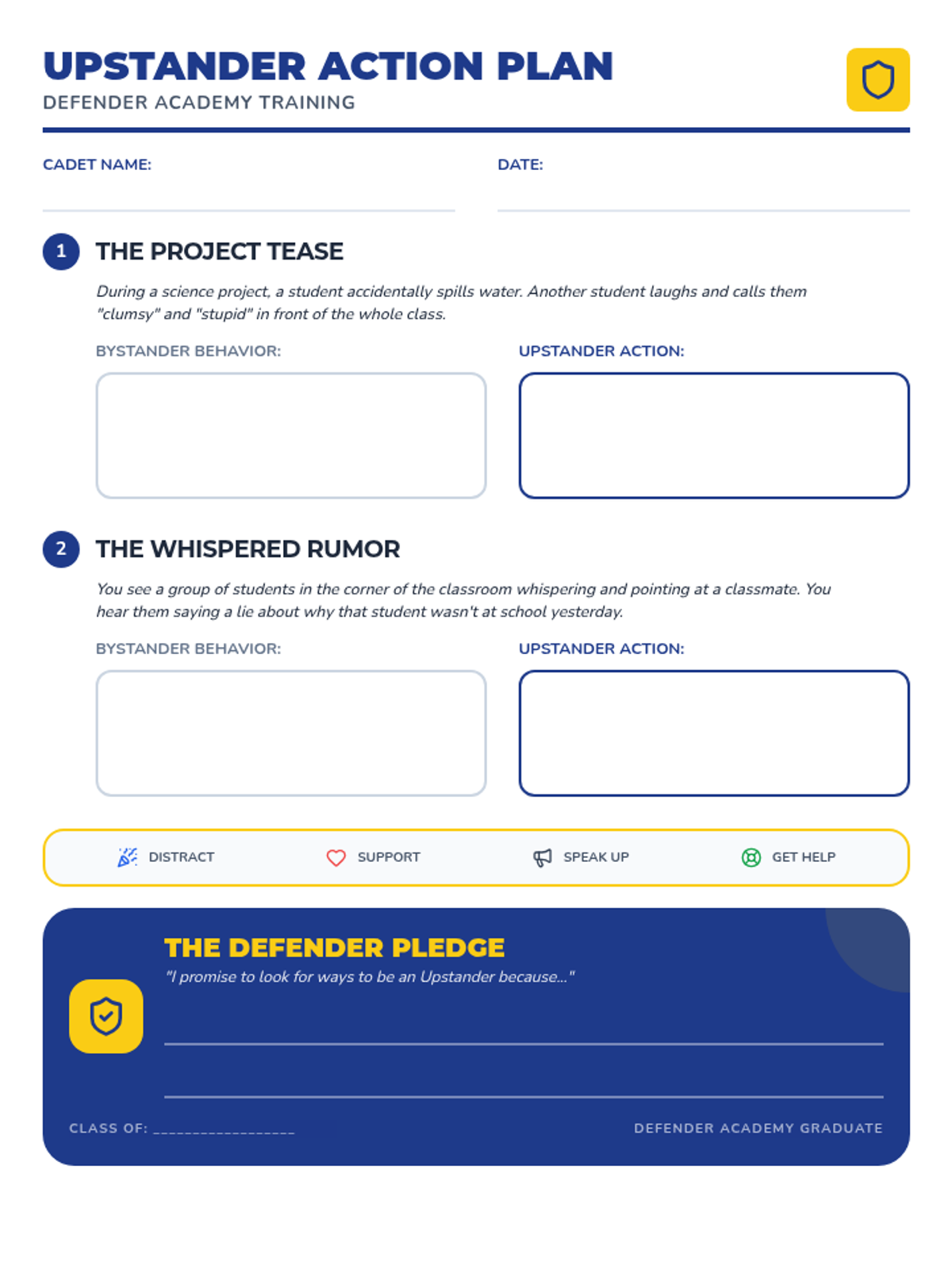
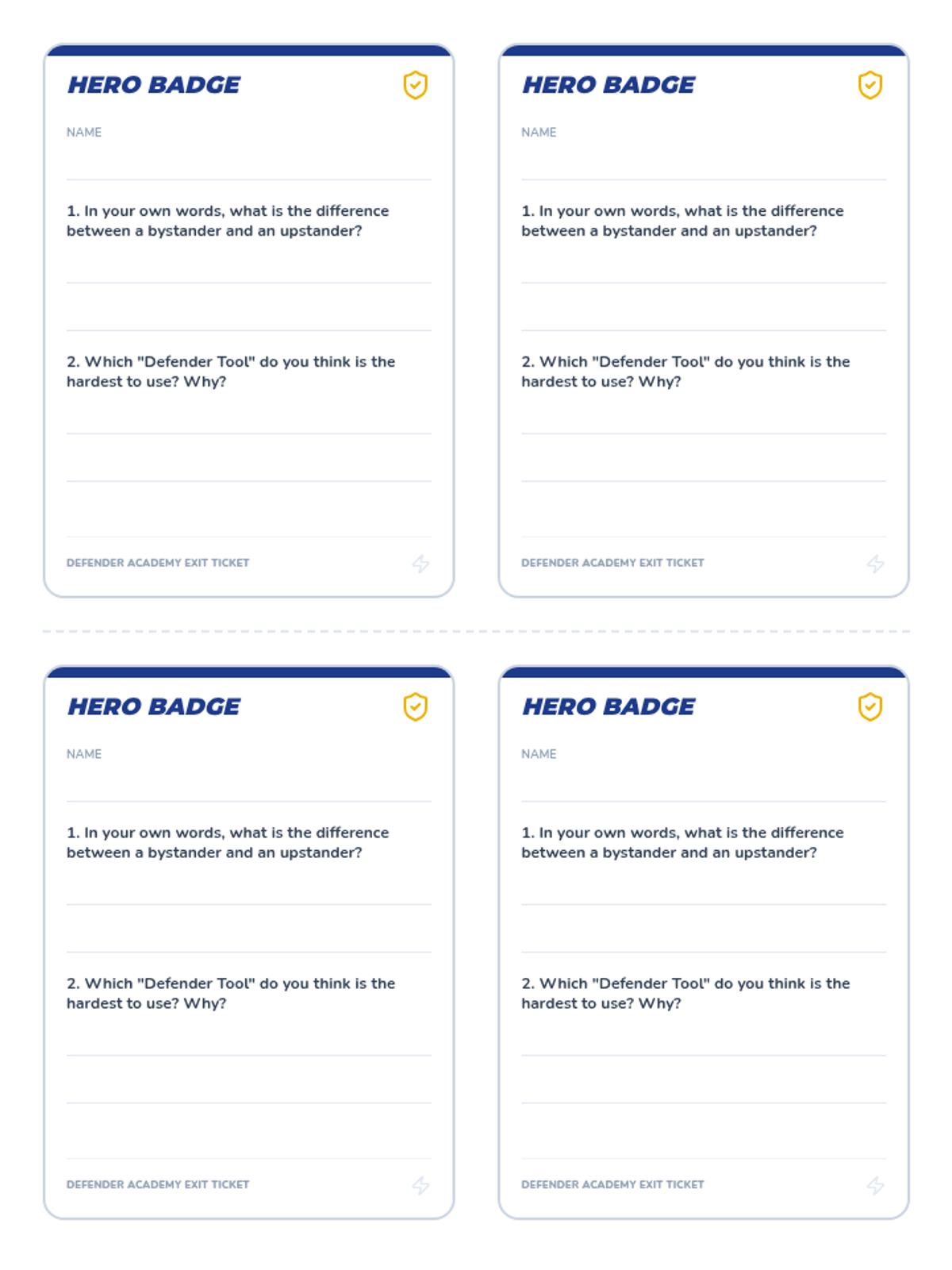
An interactive lesson teaching 4th graders the difference between bystanders and upstanders through 'Defender Academy' training scenarios and actionable strategies.
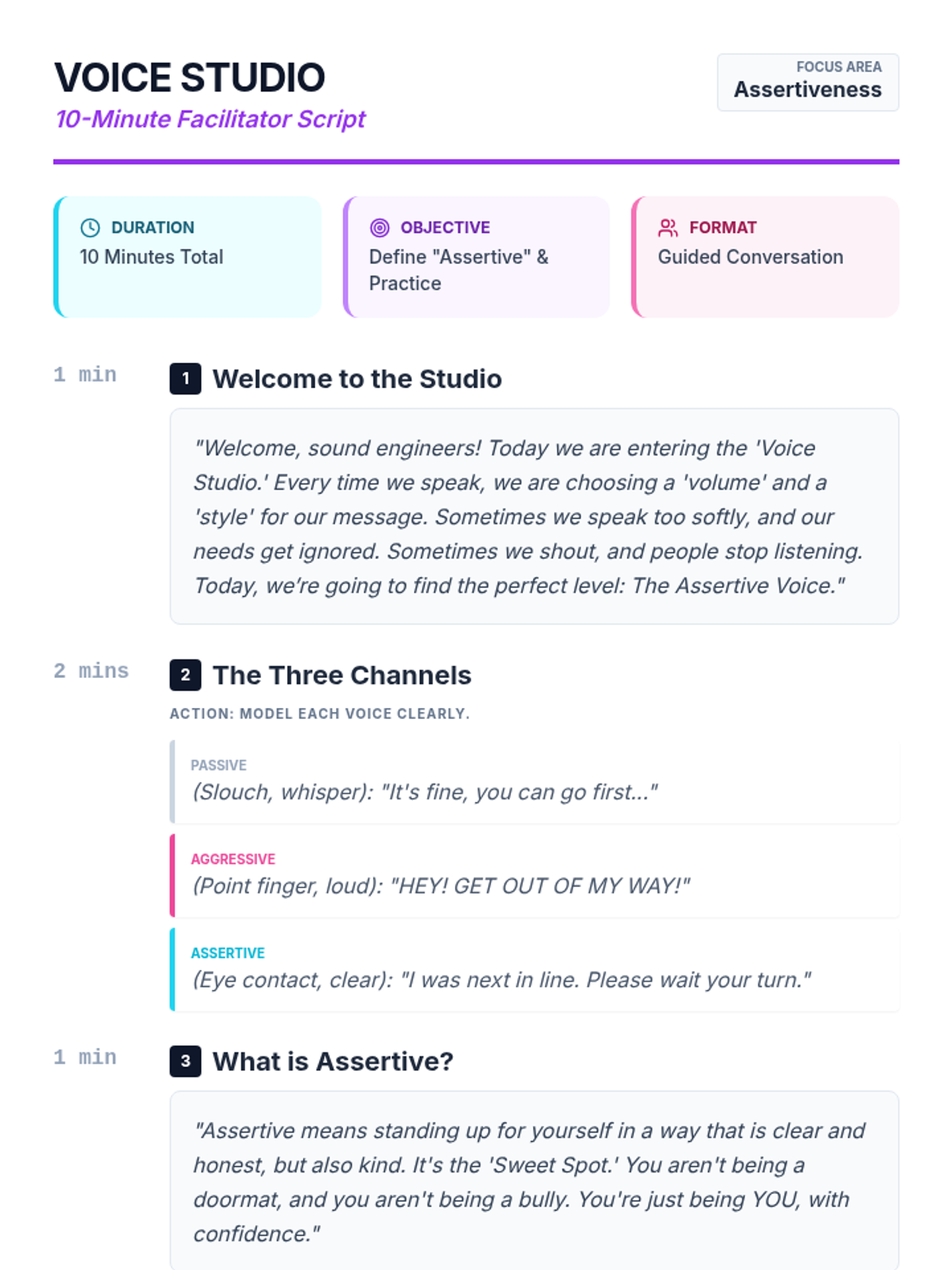
A 10-minute interactive session focused on understanding and practicing assertiveness through the metaphor of a 'Voice Studio'. Students learn to distinguish between passive, aggressive, and assertive communication styles.
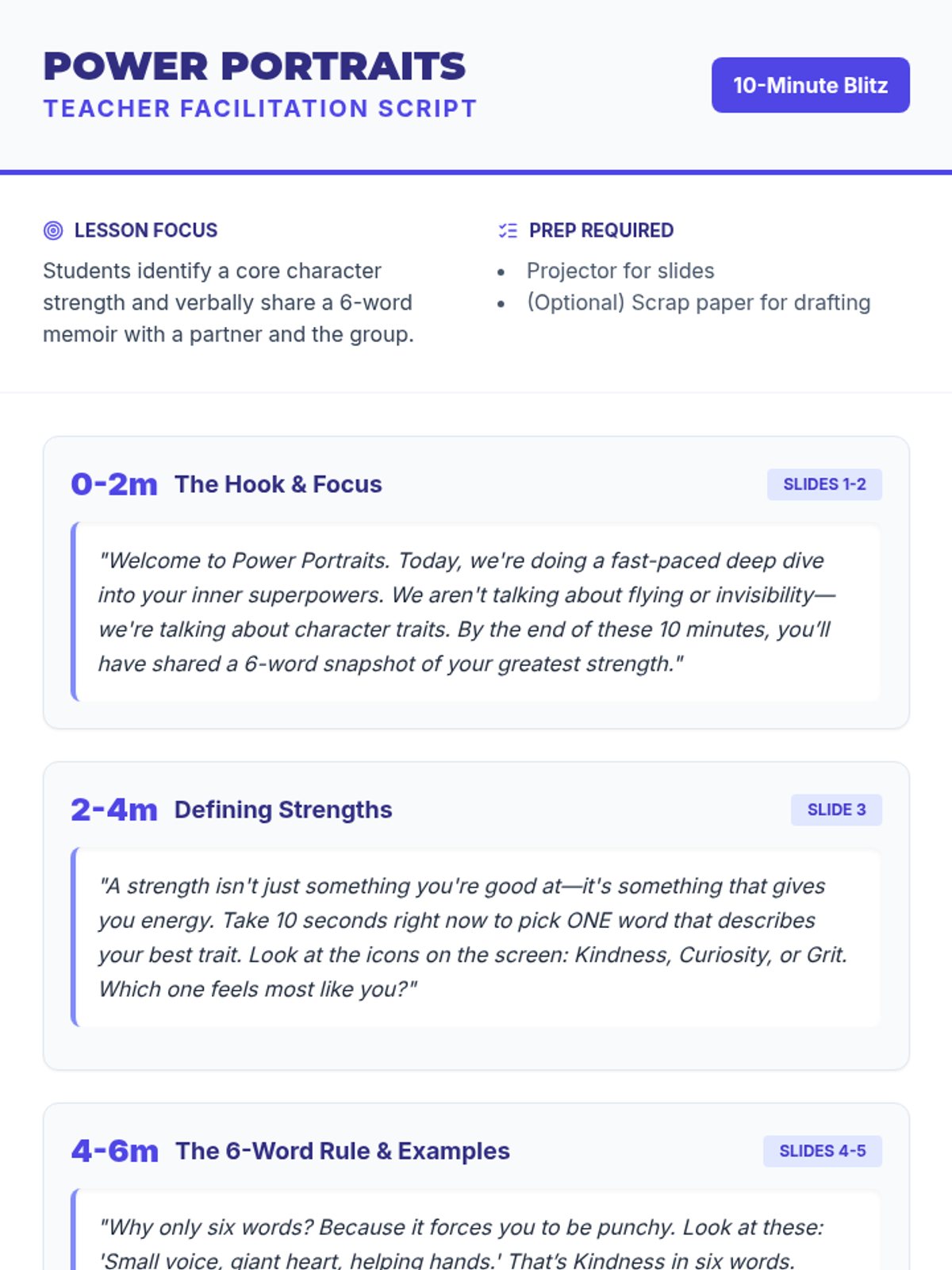
A quick 10-minute session focused on identifying personal character strengths and crafting a concise 6-word memoir to celebrate them.
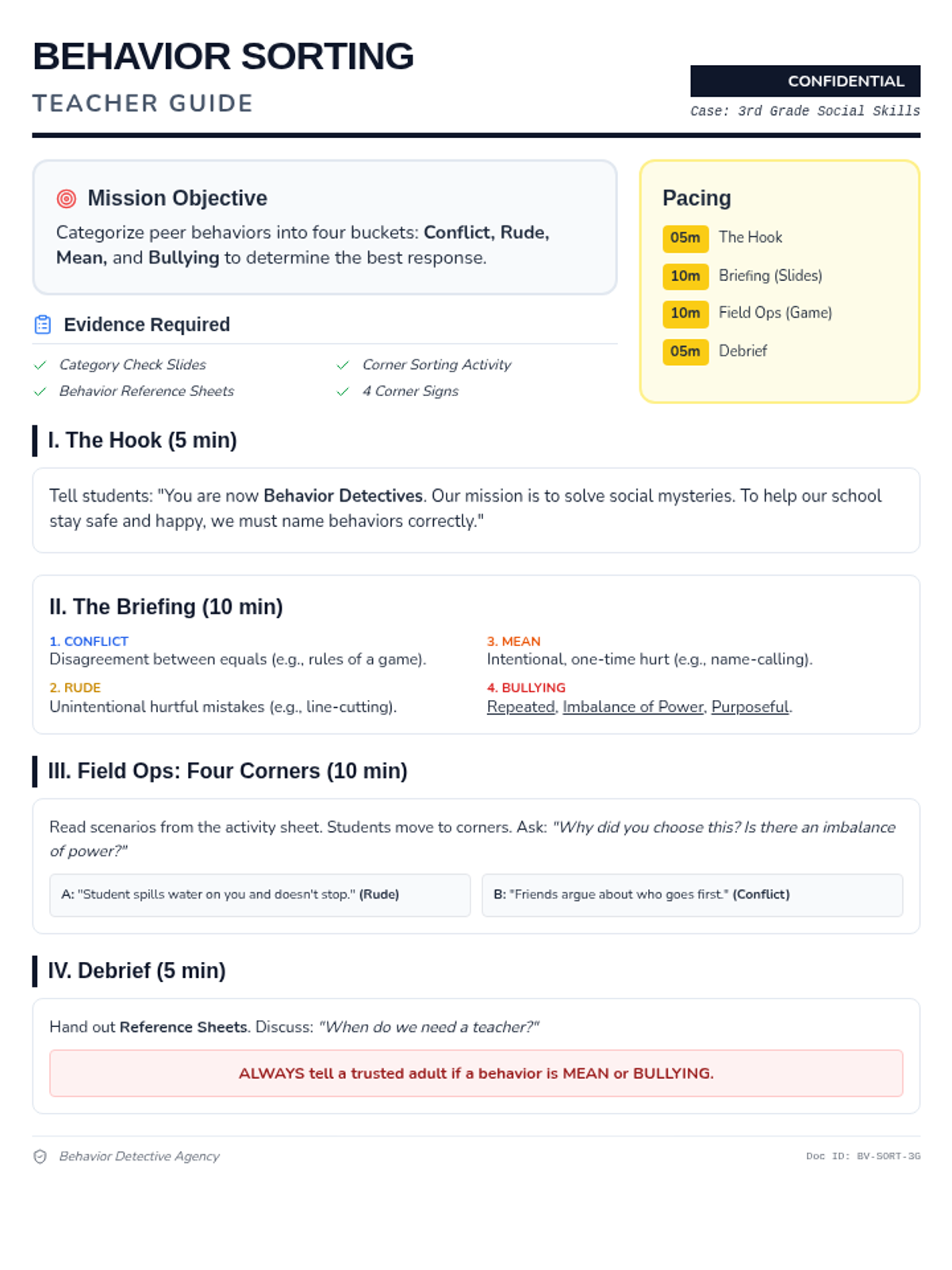
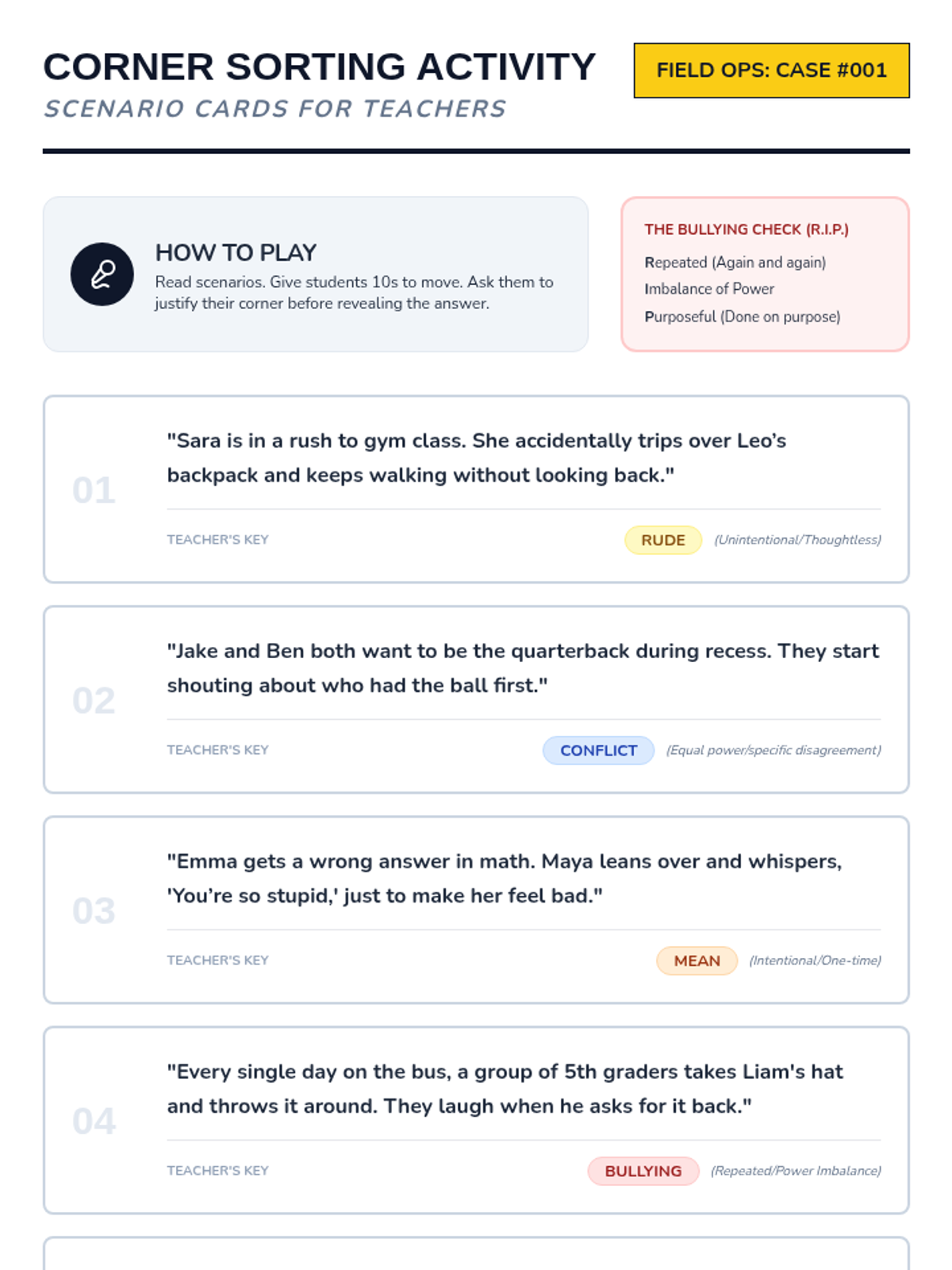
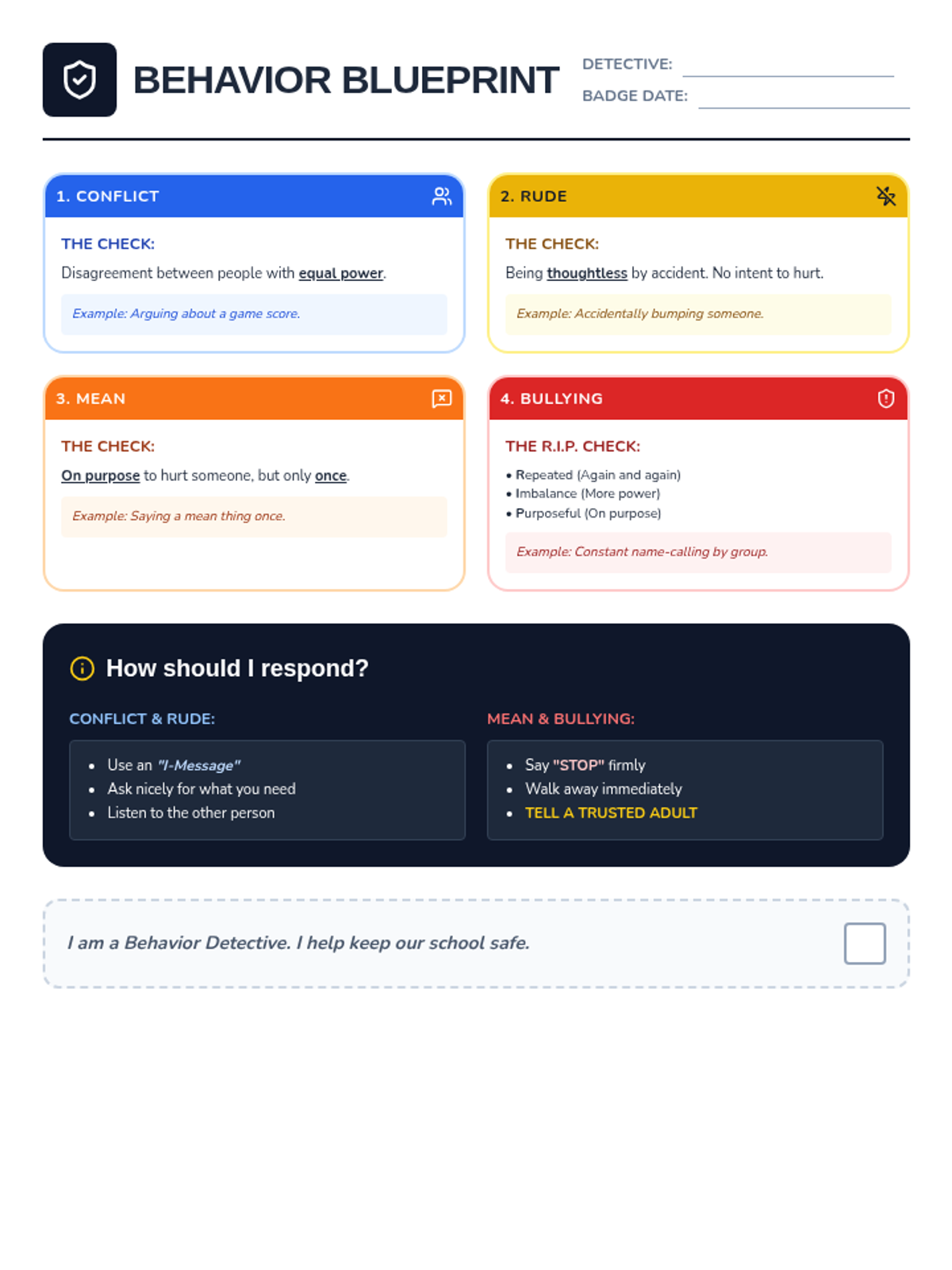
A 30-minute lesson where students learn to distinguish between conflict, rudeness, meanness, and bullying through a 'Behavior Detective' framework. Includes definitions, interactive scenarios, and a reference guide for appropriate responses.
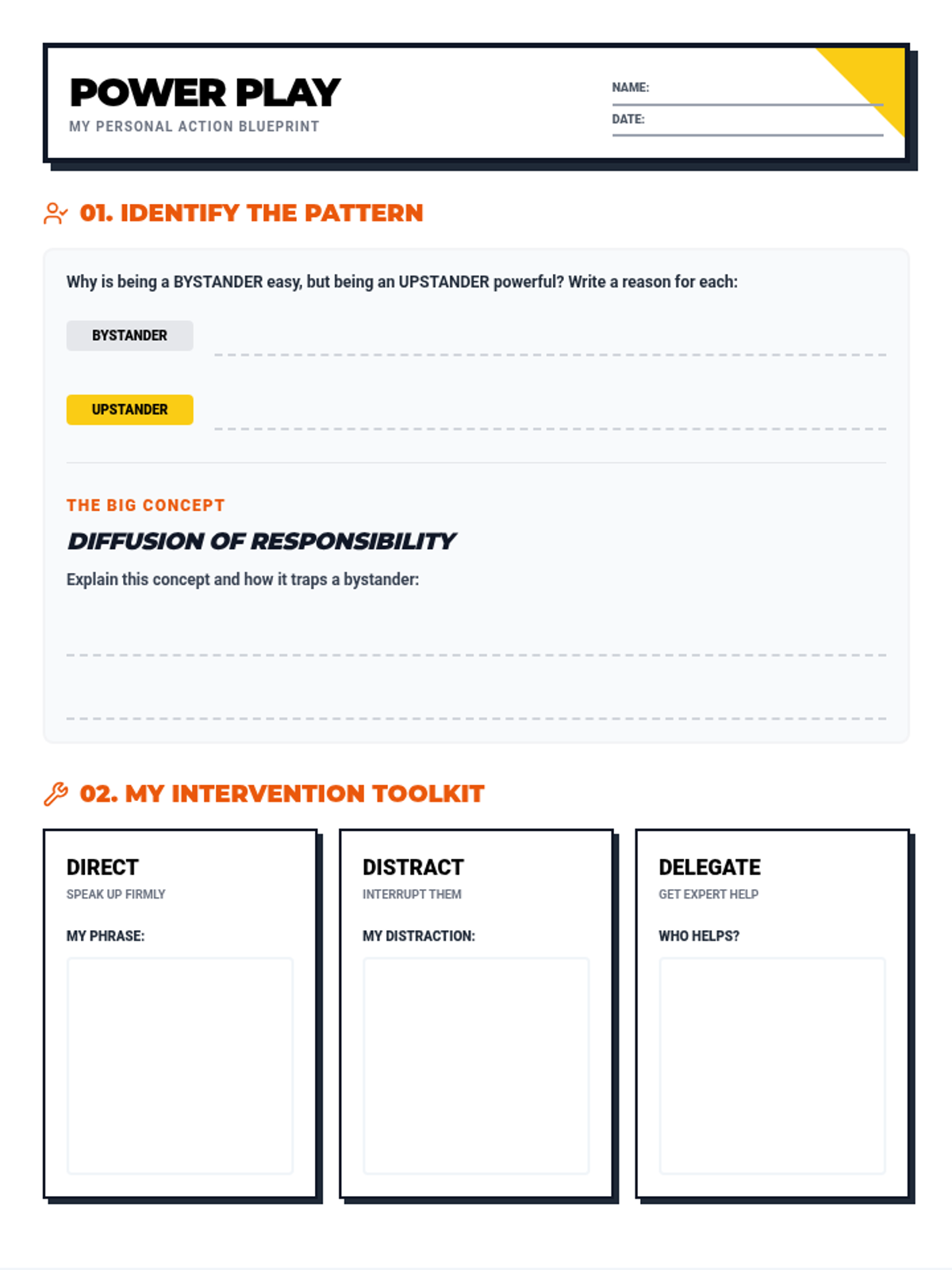
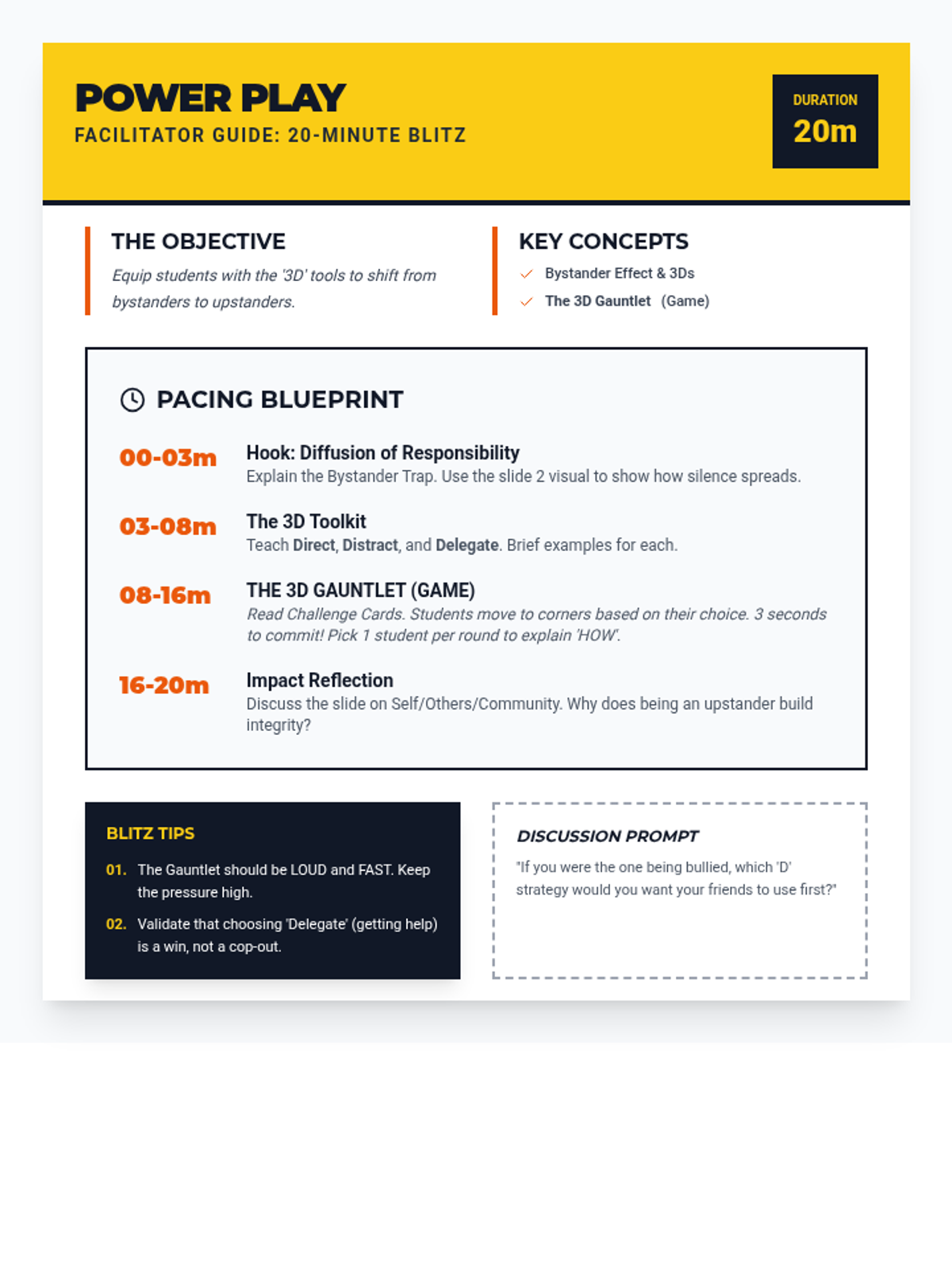
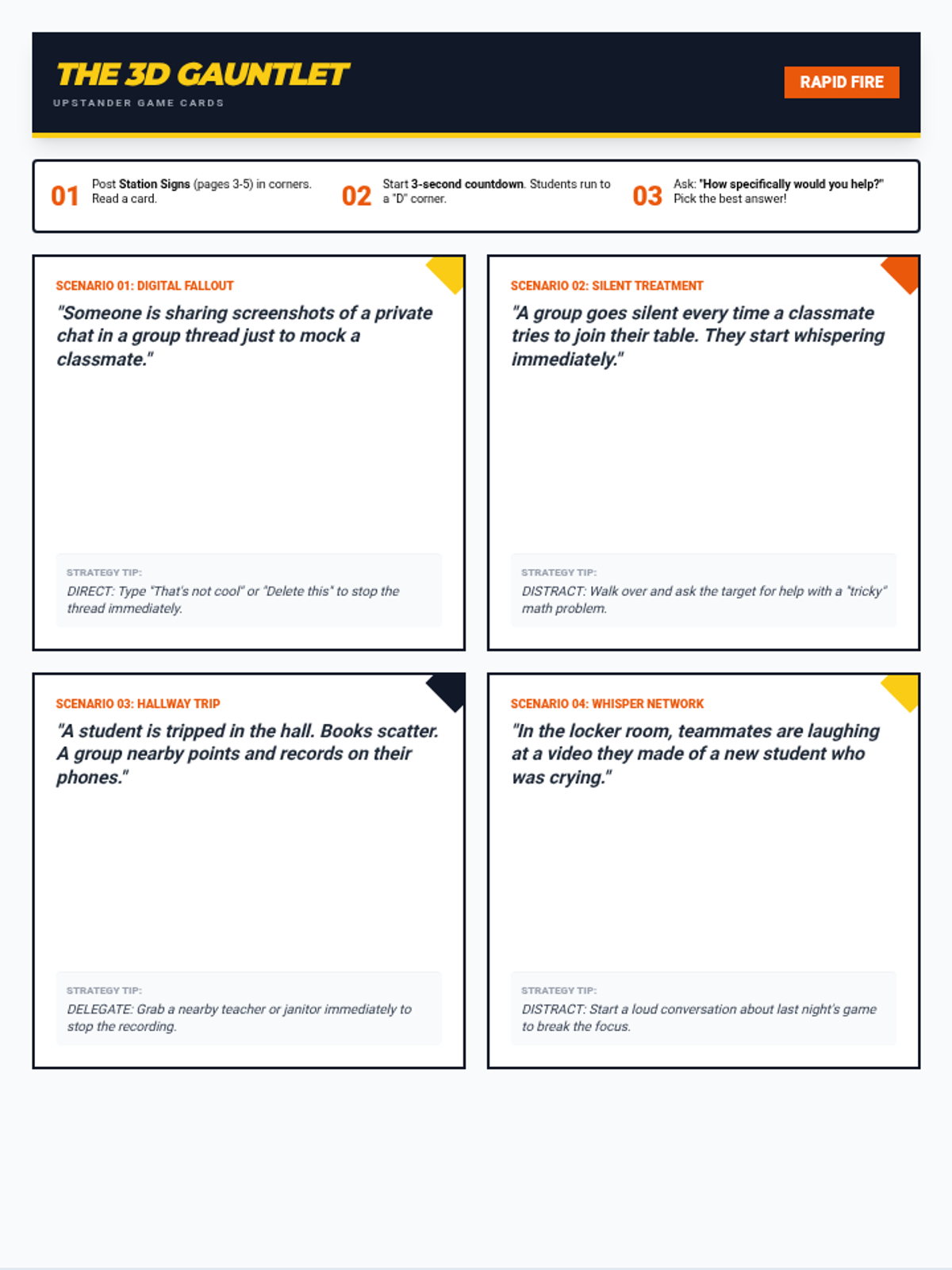
A high-impact 20-minute session for middle schoolers focusing on conflict resolution strategies and the critical role of being an upstander rather than a bystander. Students will learn the '3D' strategy for intervention and practice analyzing social scenarios.
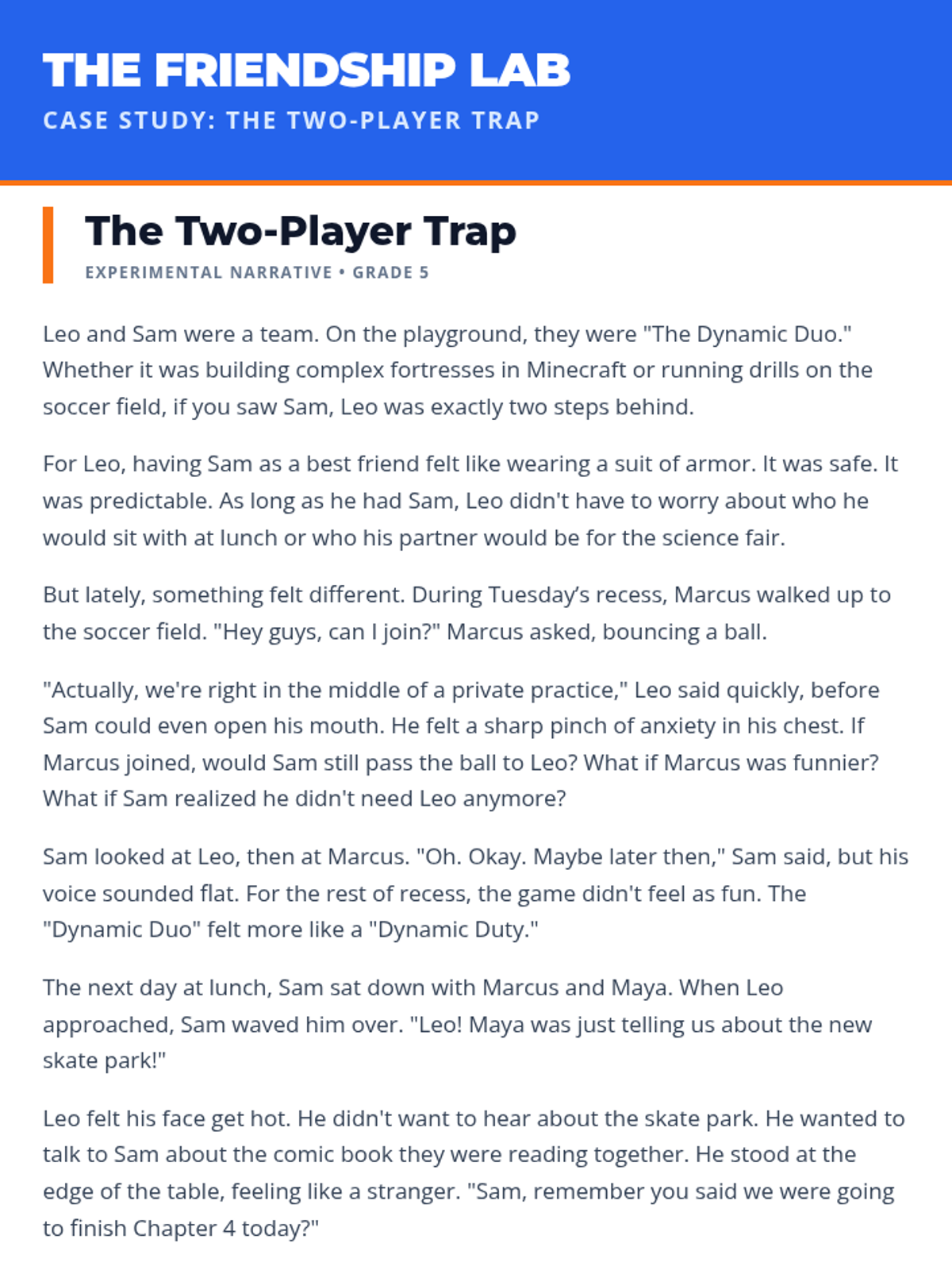
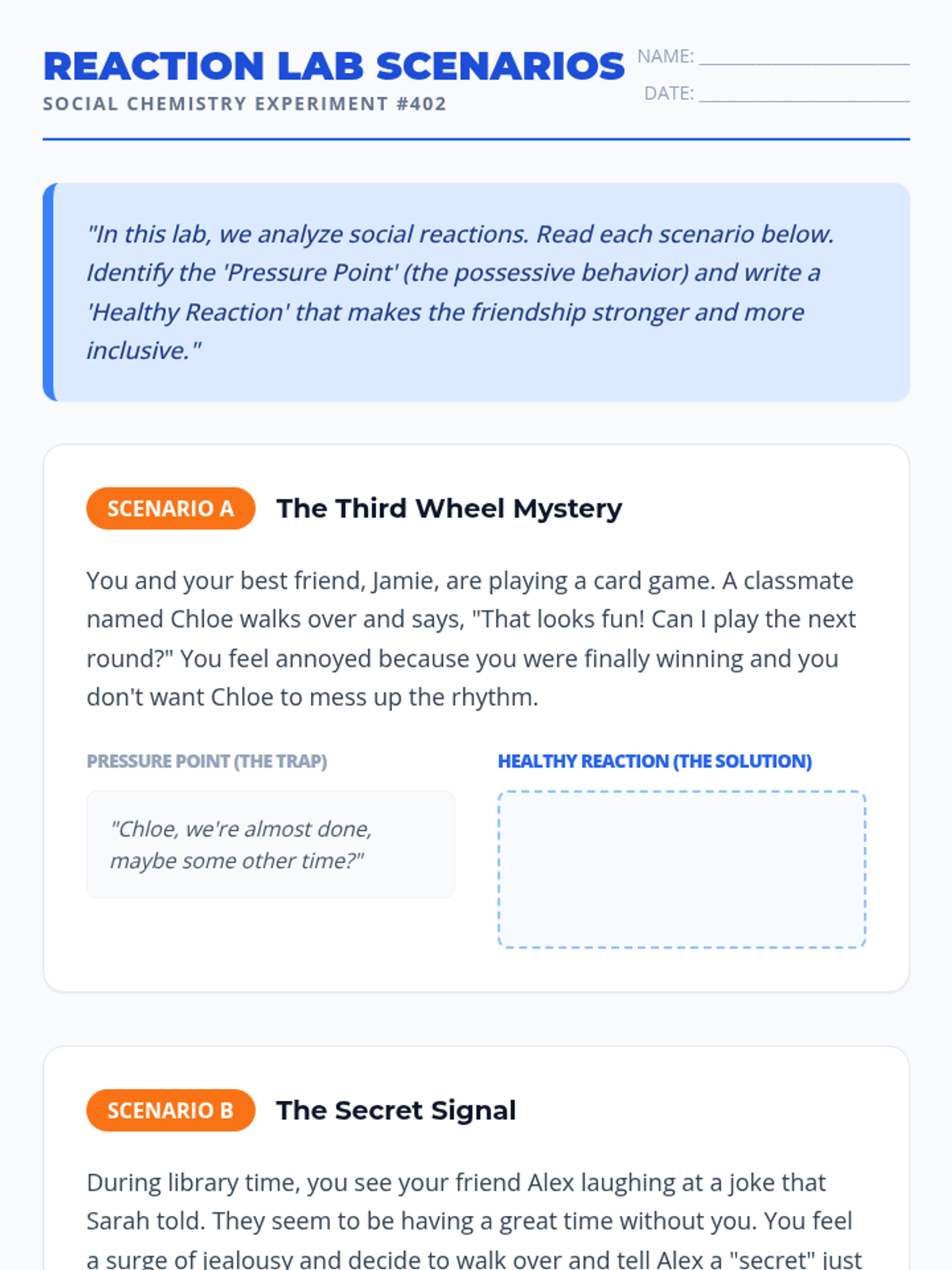
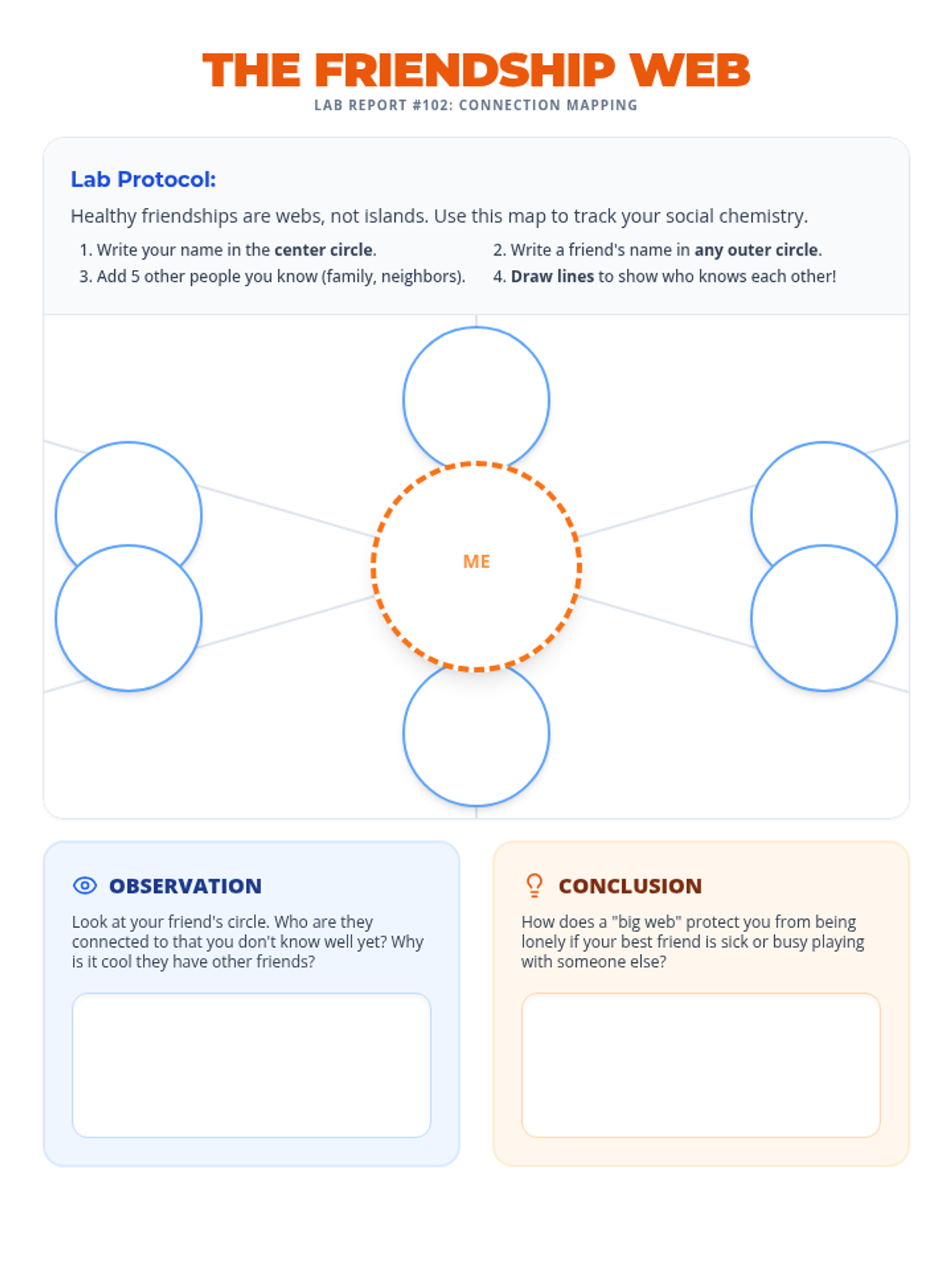
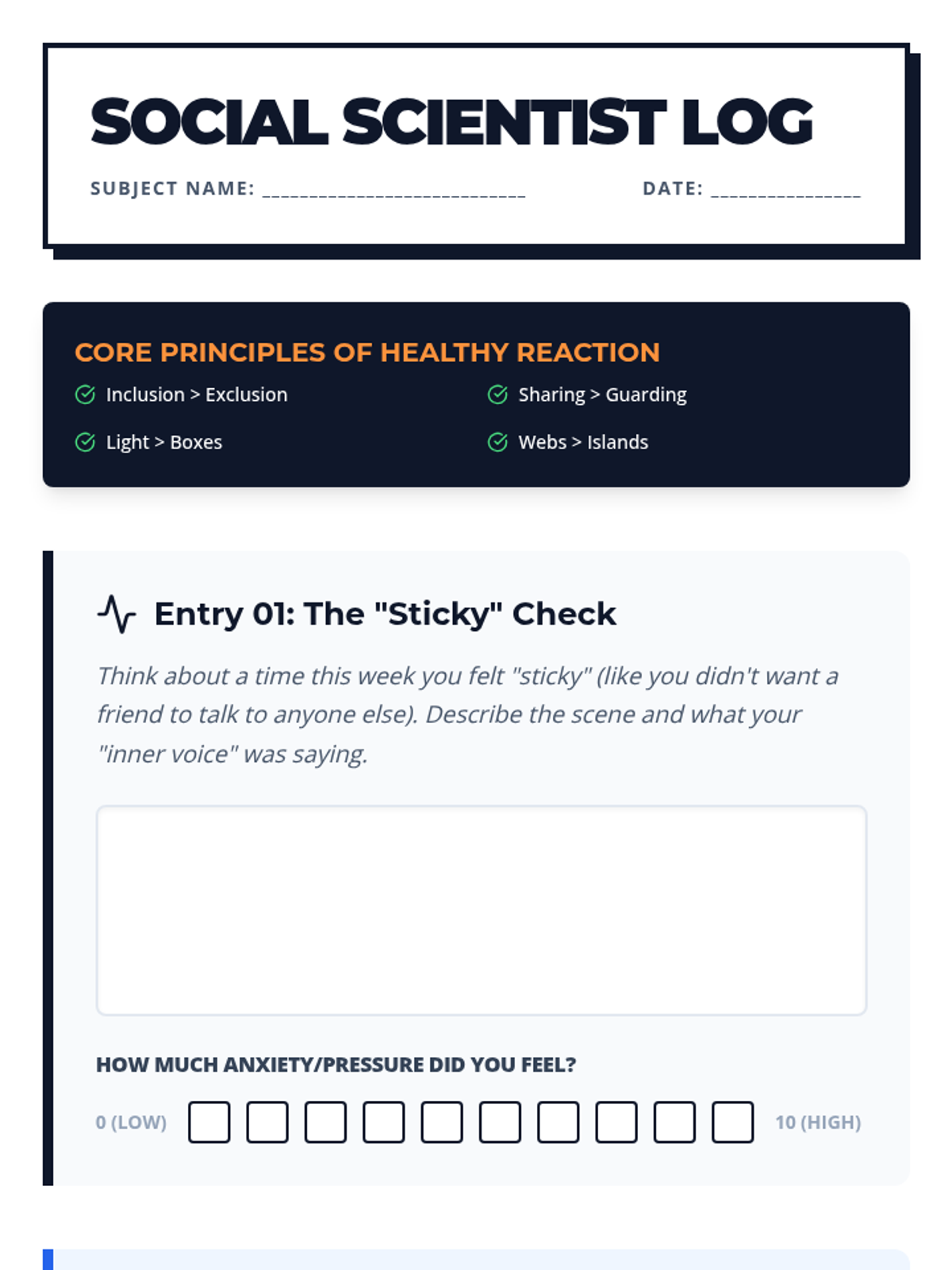
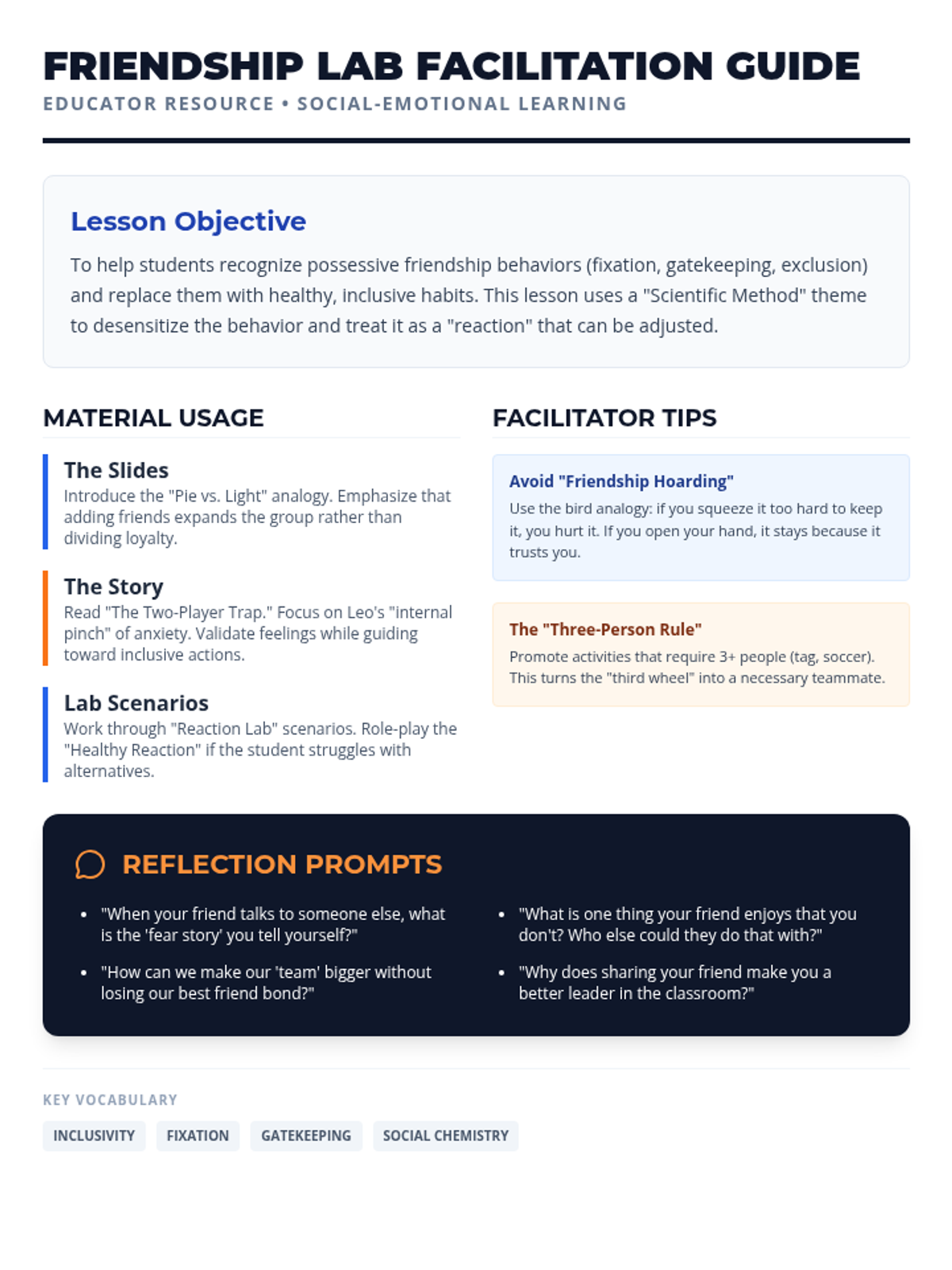
A social-emotional learning lesson designed to help students understand the difference between healthy, inclusive friendships and possessive or fixated behaviors. Through a 'Friendship Lab' theme, students analyze social 'reactions' and learn the value of expanding their social circles.
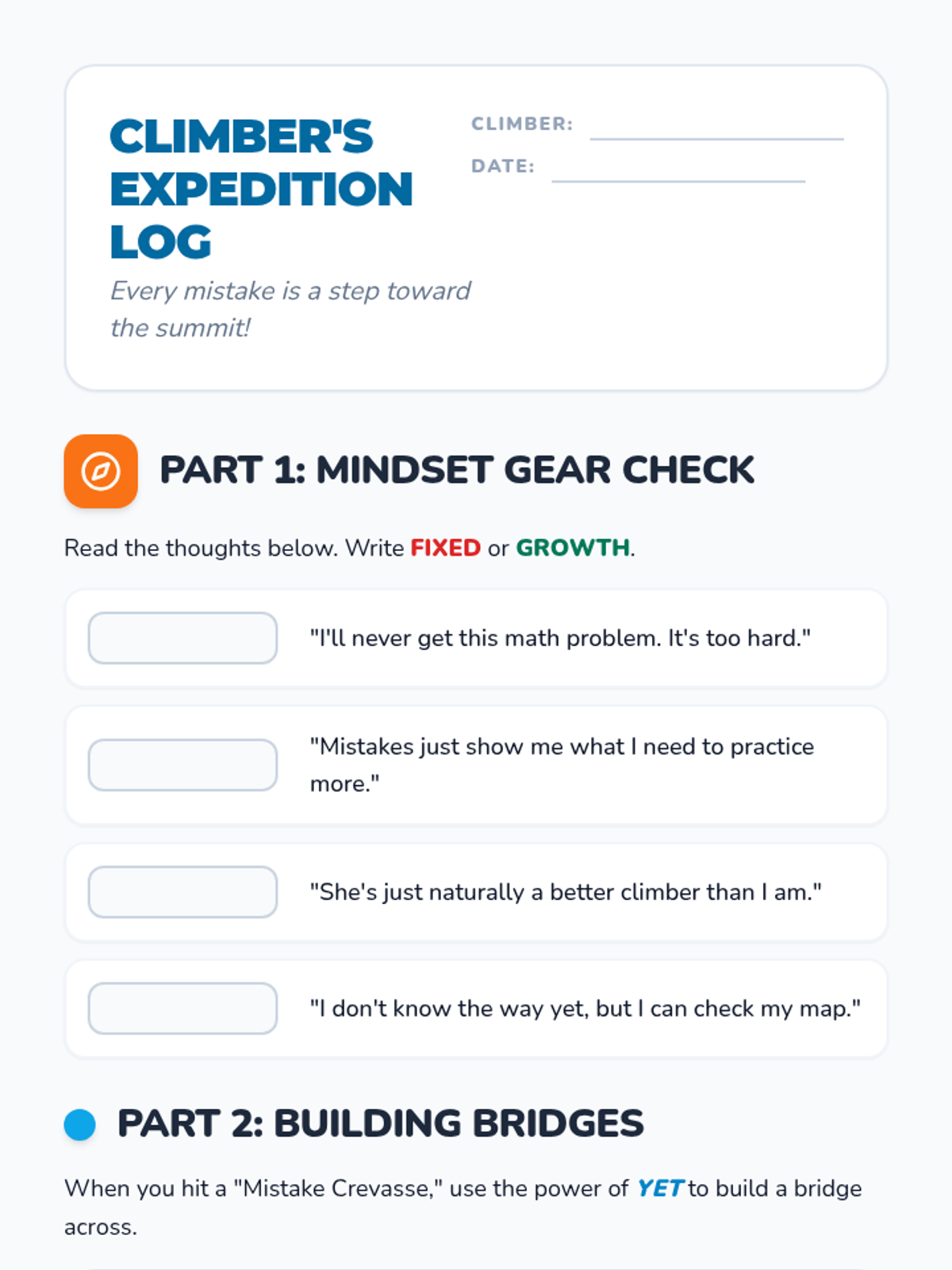
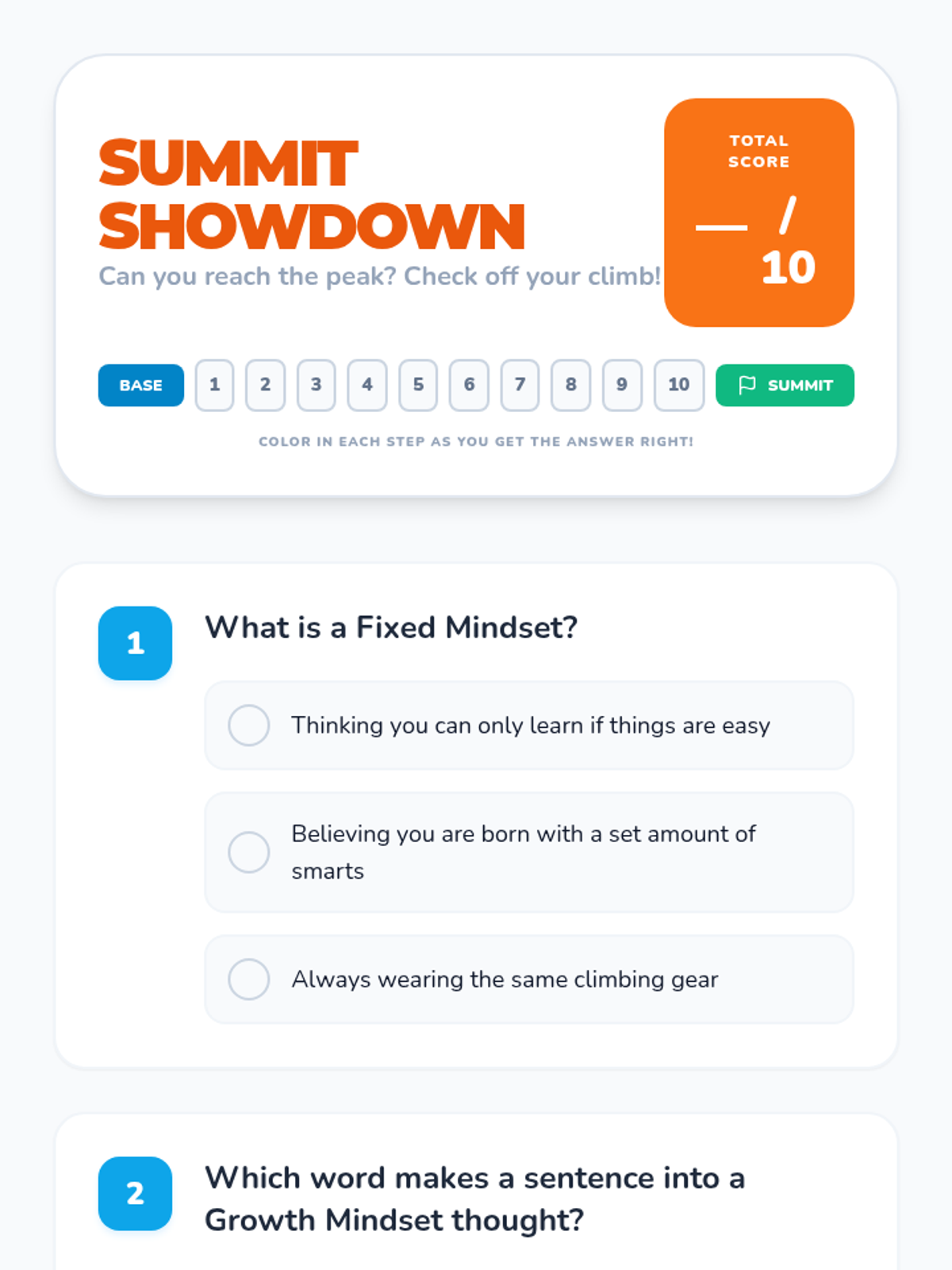
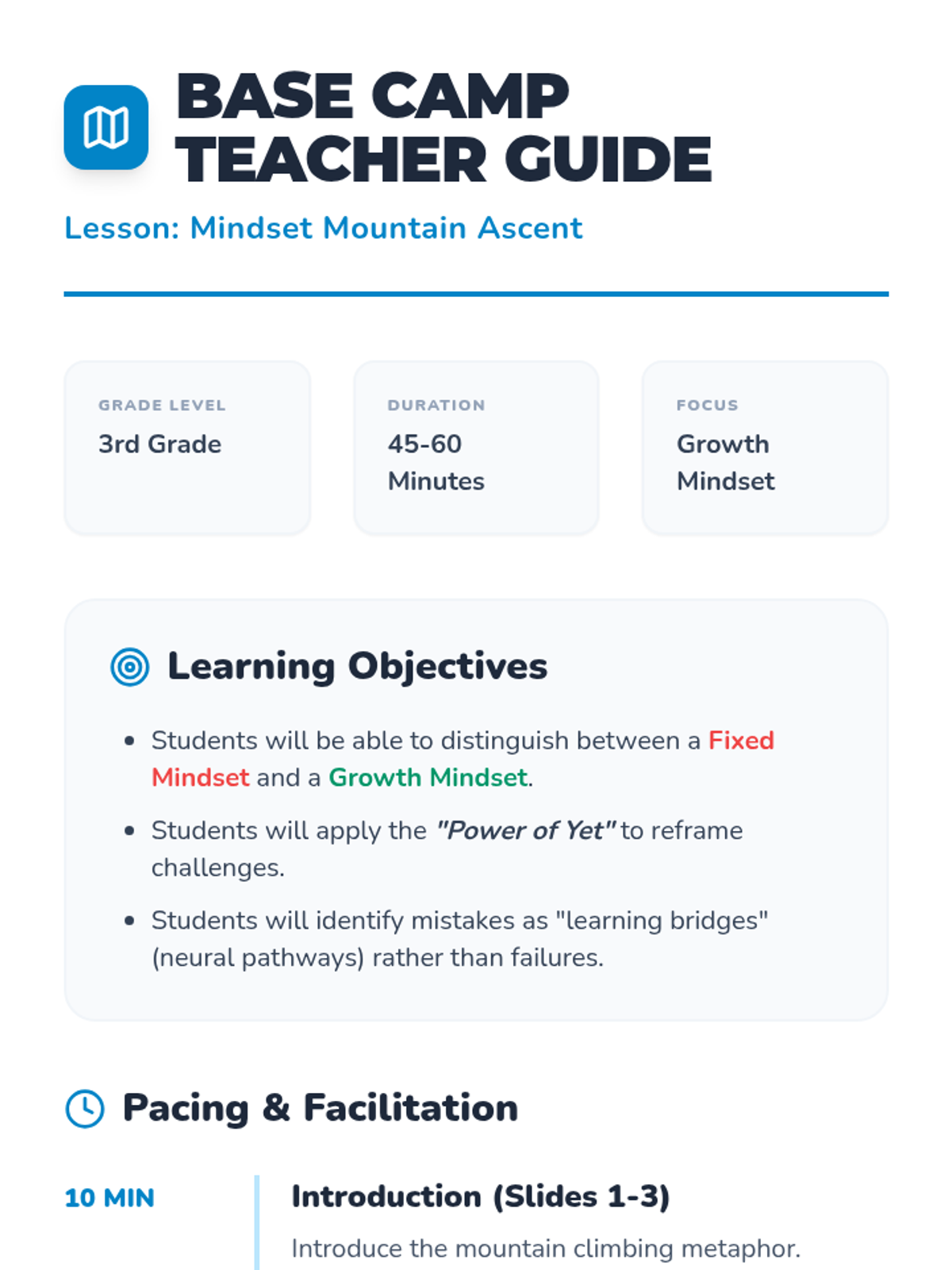
A mountain-climbing themed lesson for 3rd graders on Growth Mindset, focusing on overcoming mistakes and the difference between fixed and growth mindsets. Students explore how to reframe challenges as steps toward the summit.
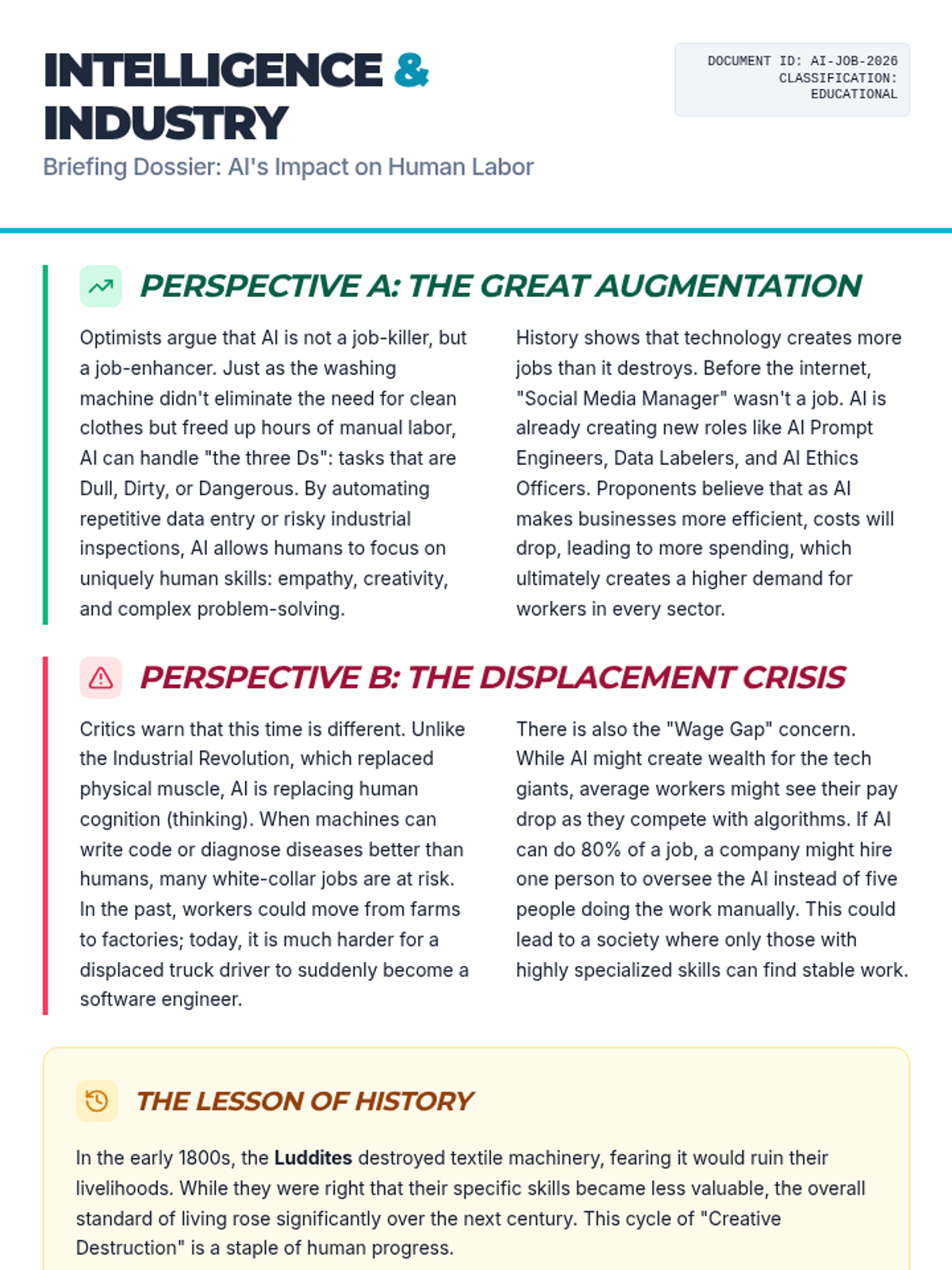
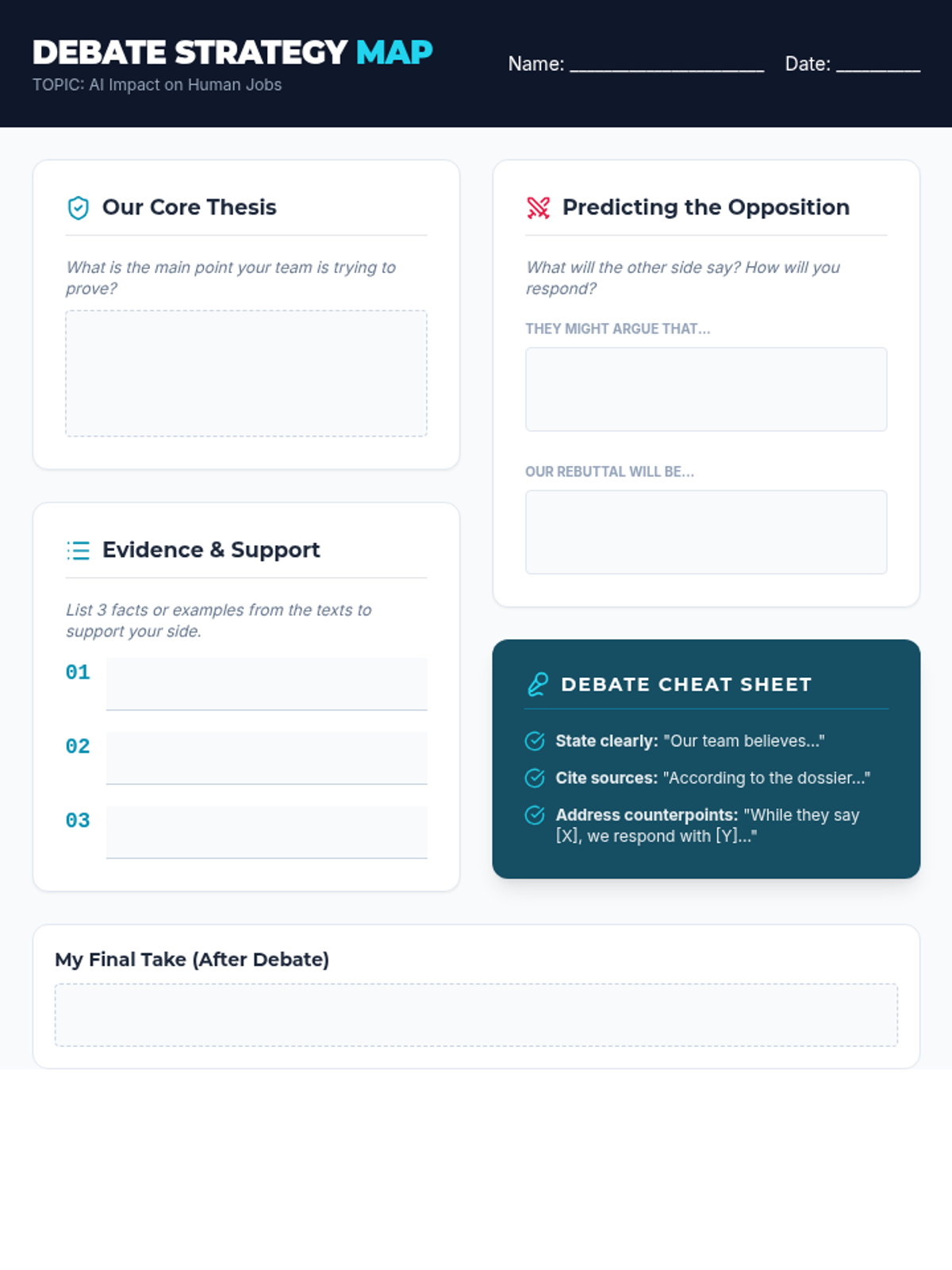
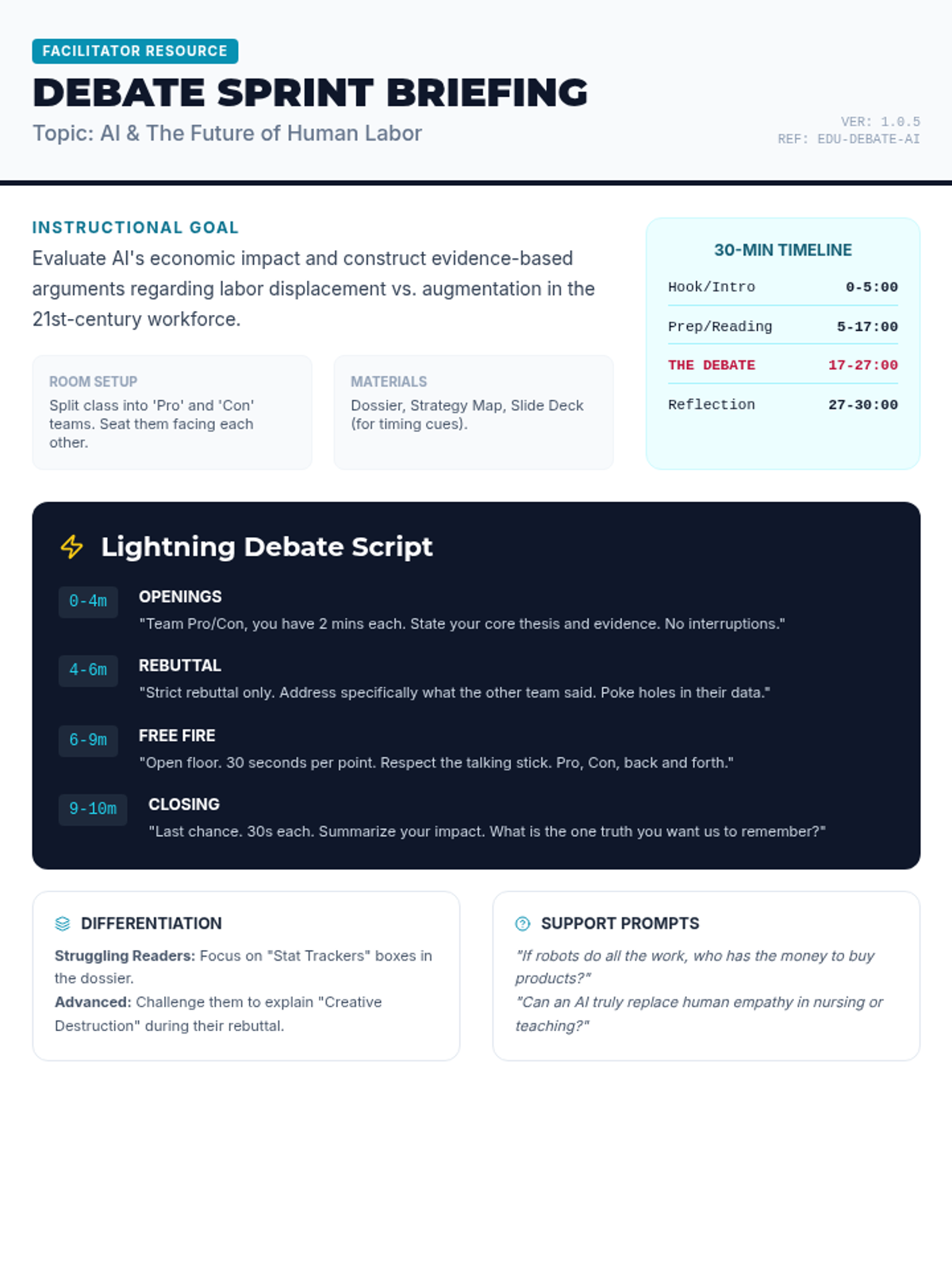
A fast-paced, 30-minute debate activity where students explore the complex impact of Artificial Intelligence on the future of human employment. Students analyze evidence, prepare arguments, and engage in a structured 'lightning' debate.
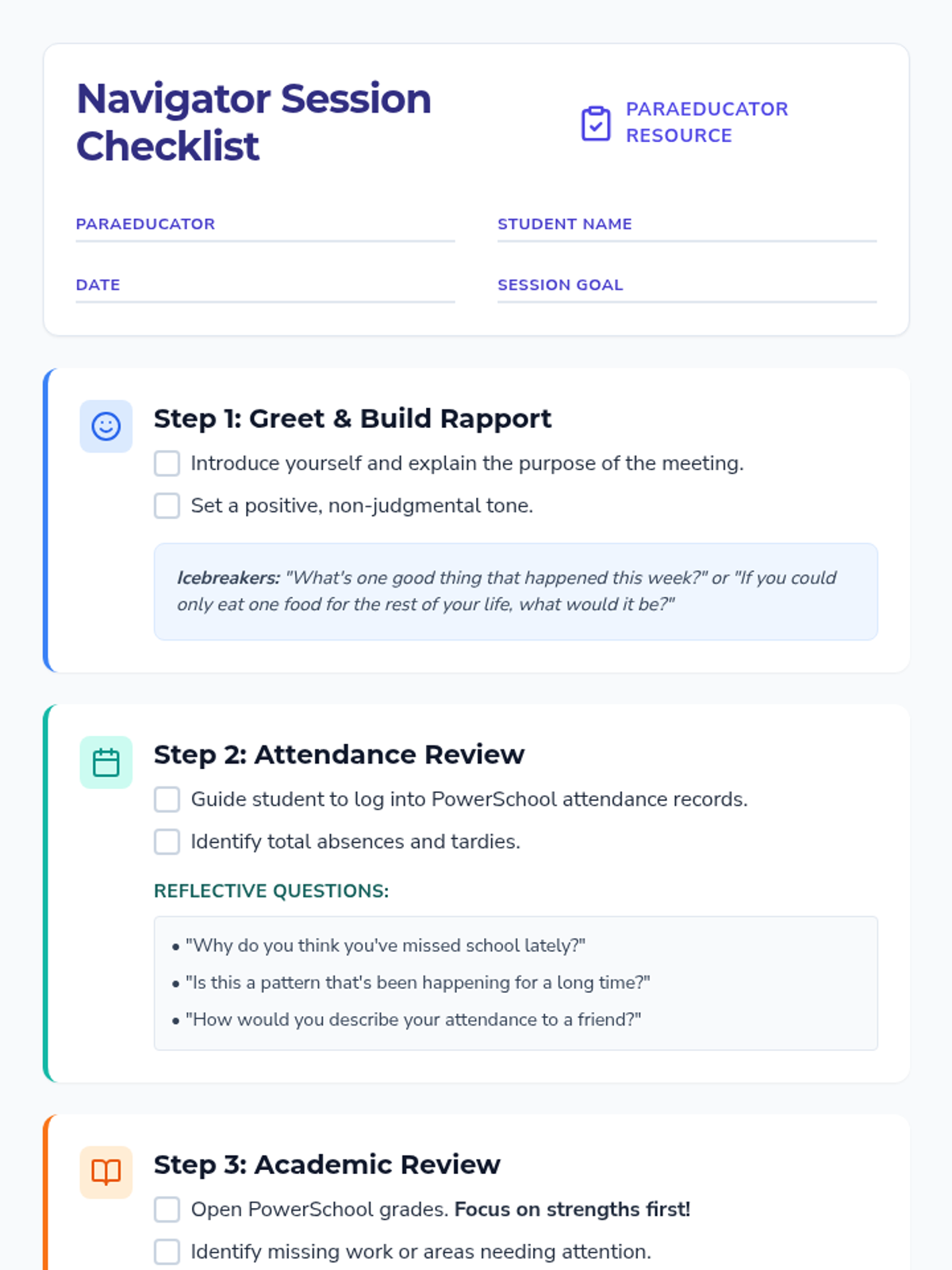
A structured check-in process for paraeducators to support 5th and 6th grade students with attendance and academic goal-setting. Includes a facilitation guide for the educator and a visual presentation for the student.
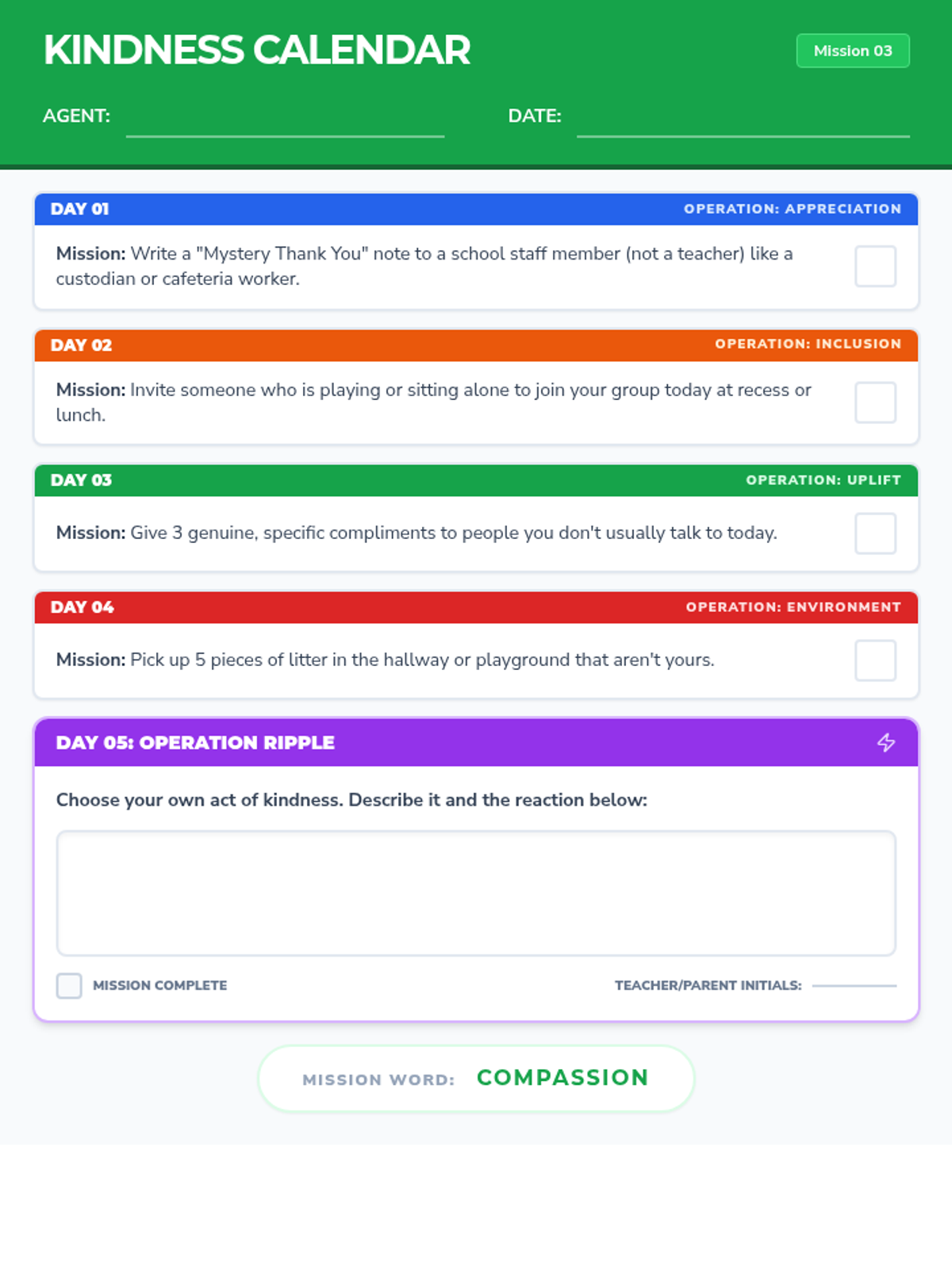
Students identify ways to improve school culture and execute a week-long kindness initiative.
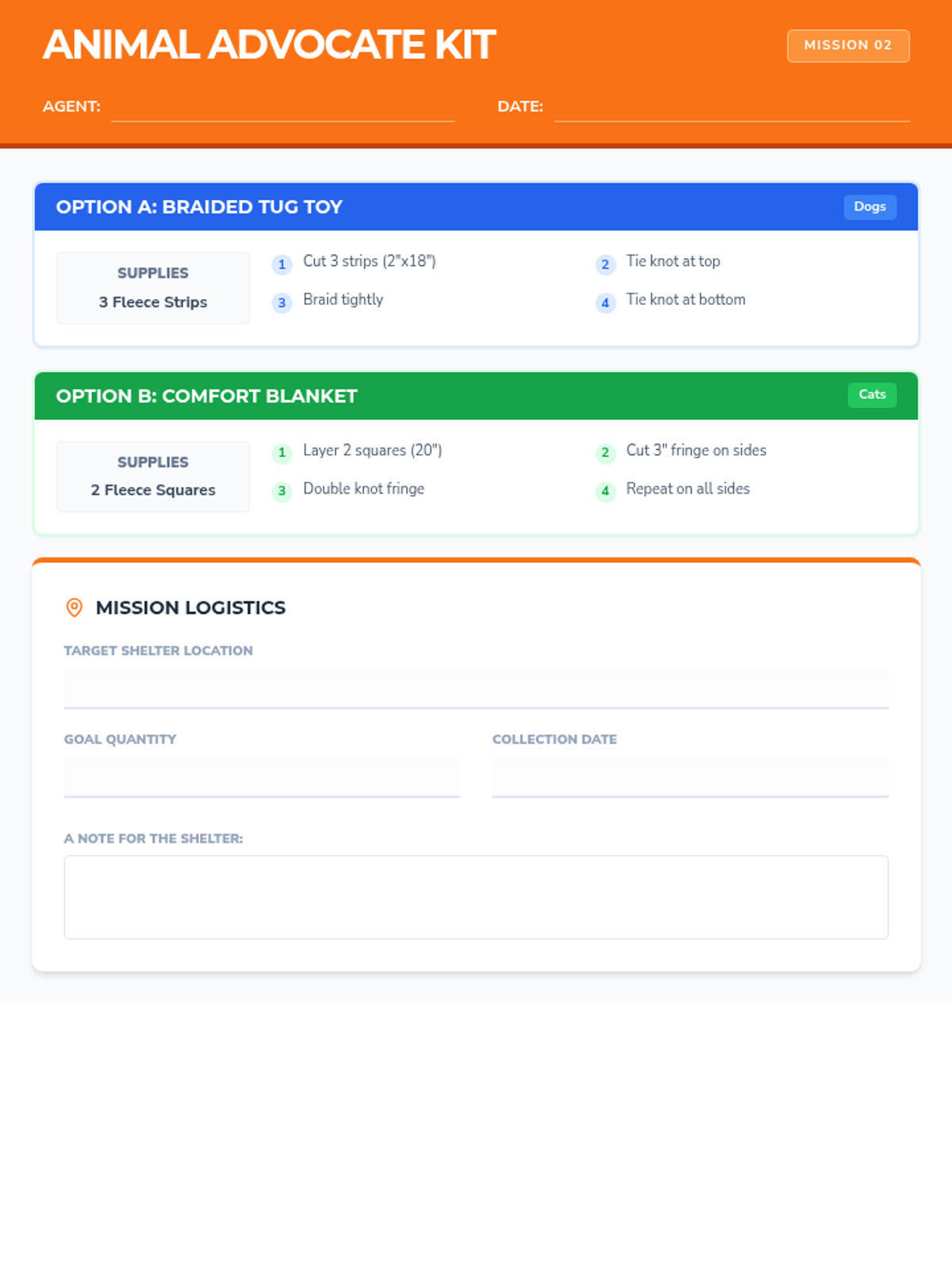
Students learn about animal shelter needs and create a guide for making enrichment items for local pets.
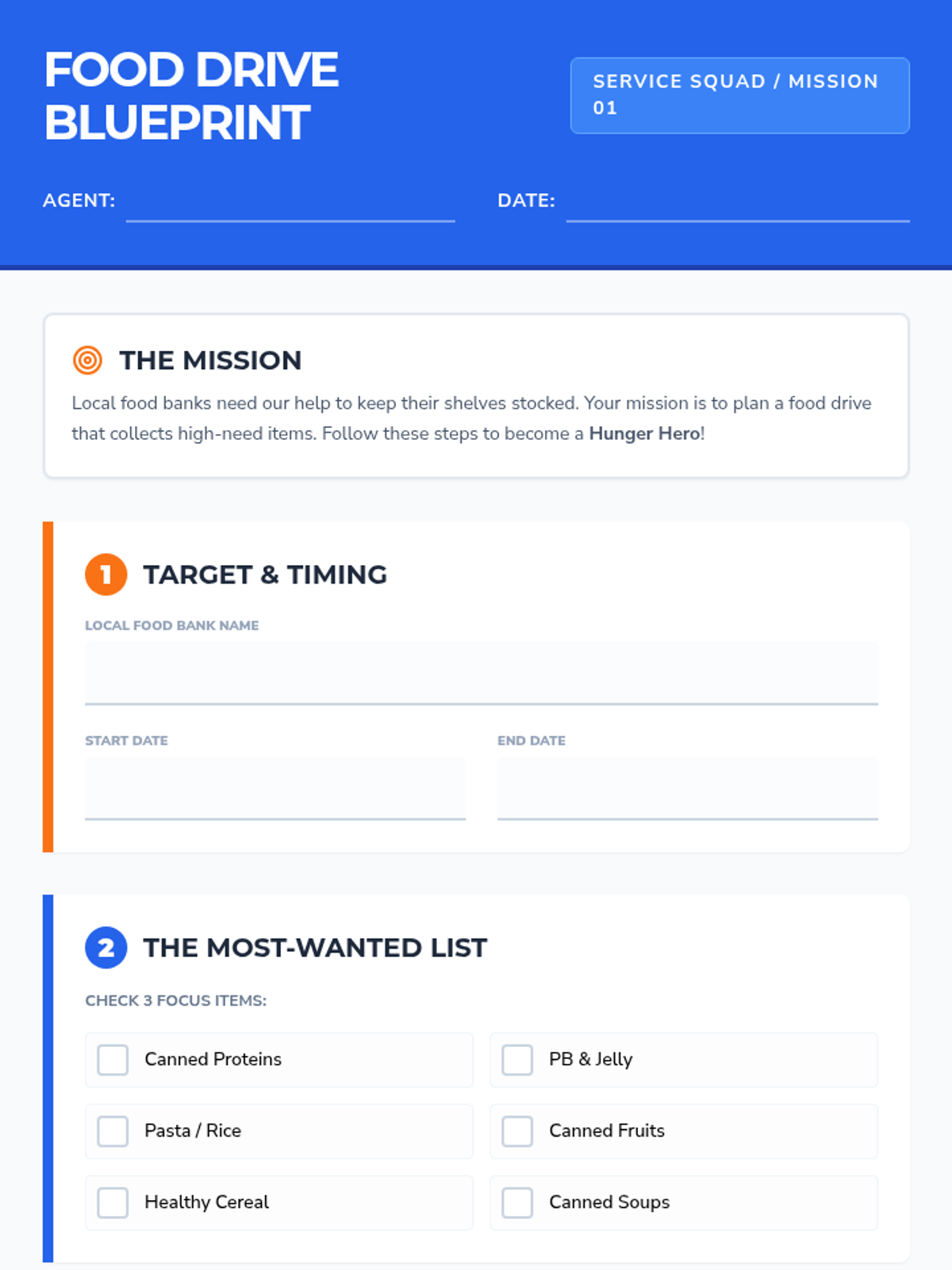
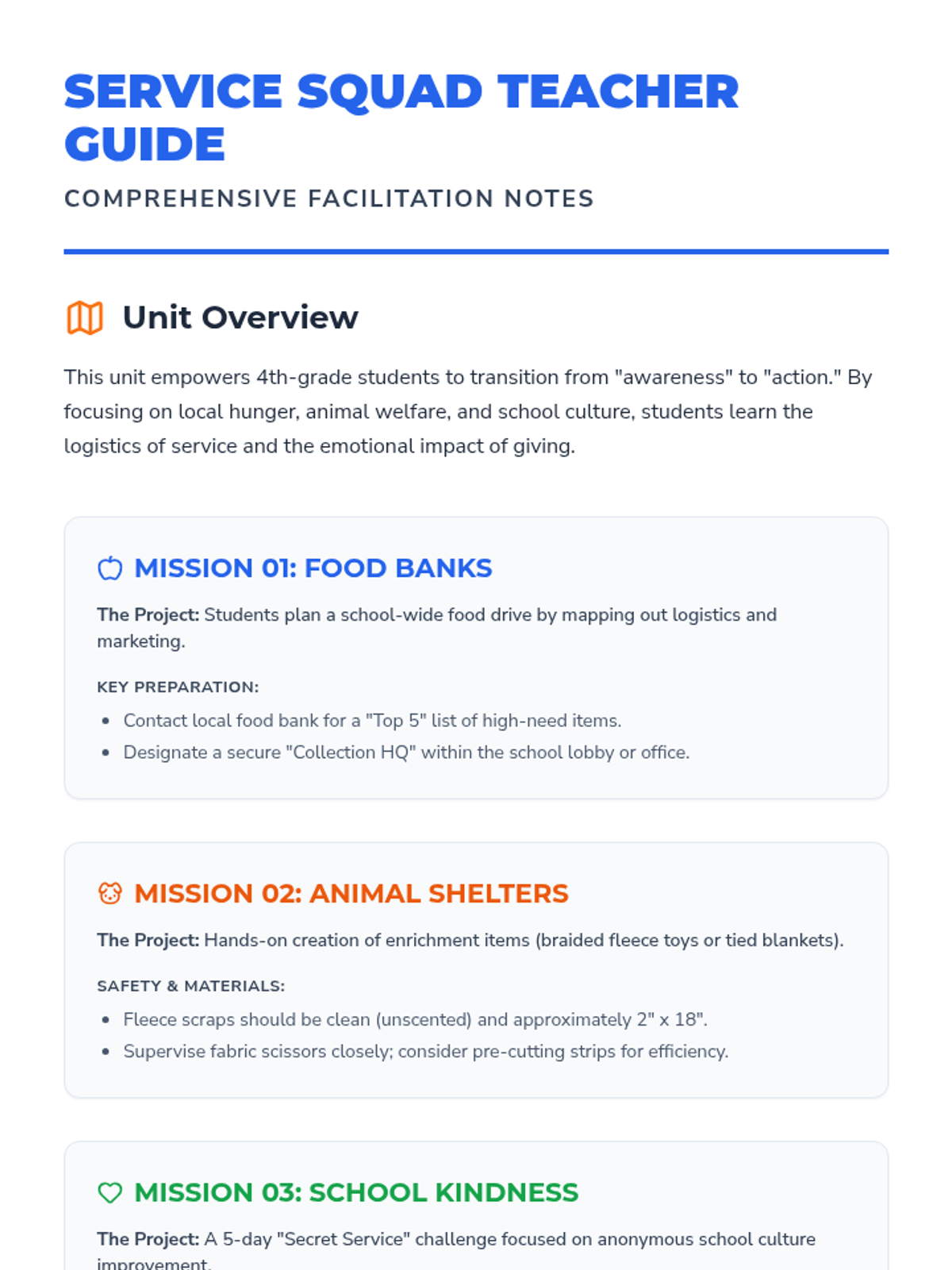
Students explore the impact of food banks and design a step-by-step plan for a successful community food drive.