A visual presentation for students defining the qualities of healthy friendships through the metaphor of green, yellow, and red flags.
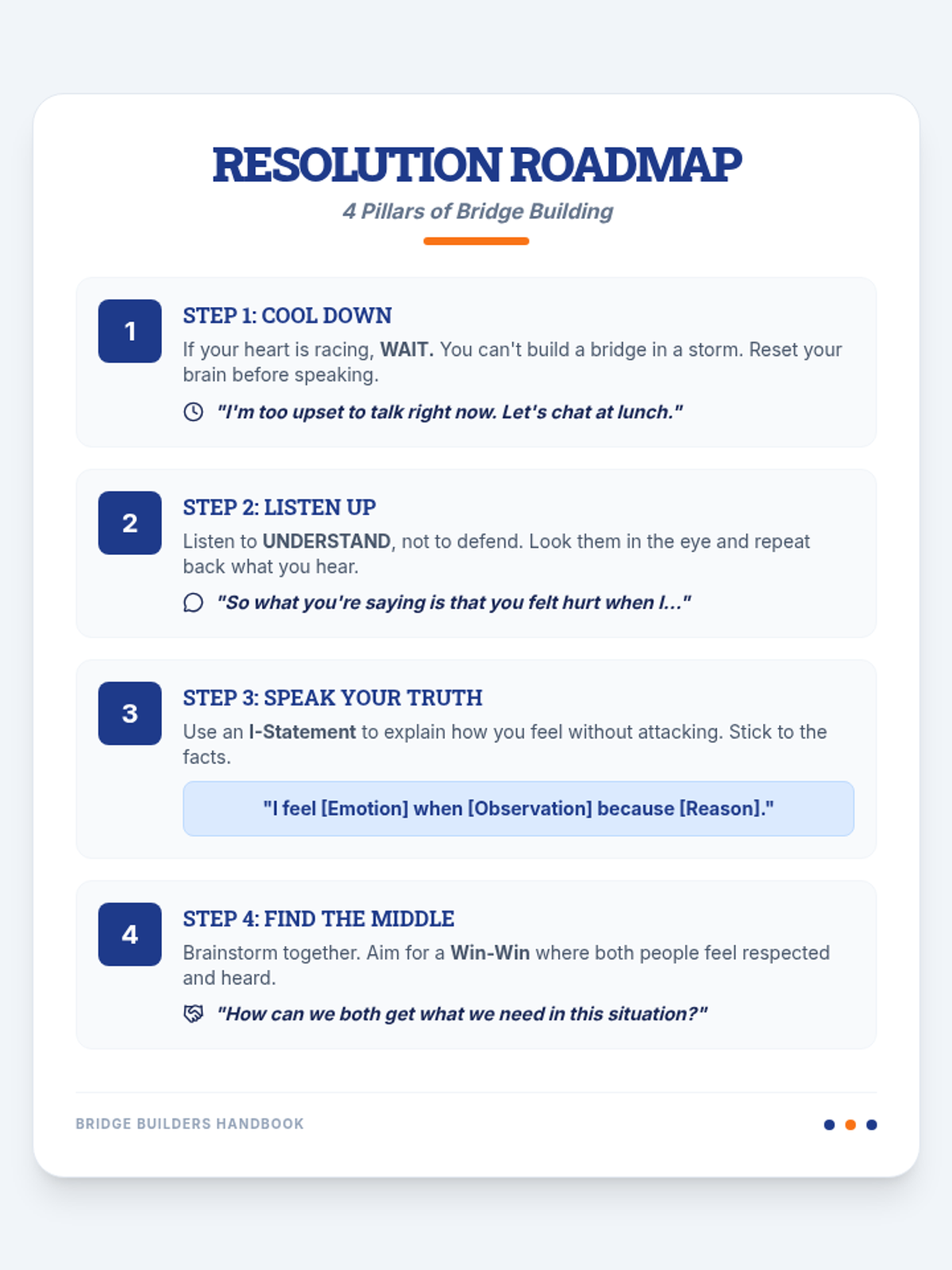
An infographic-style reference sheet for students outlining the four main steps of conflict resolution with example dialogue and key reminders.
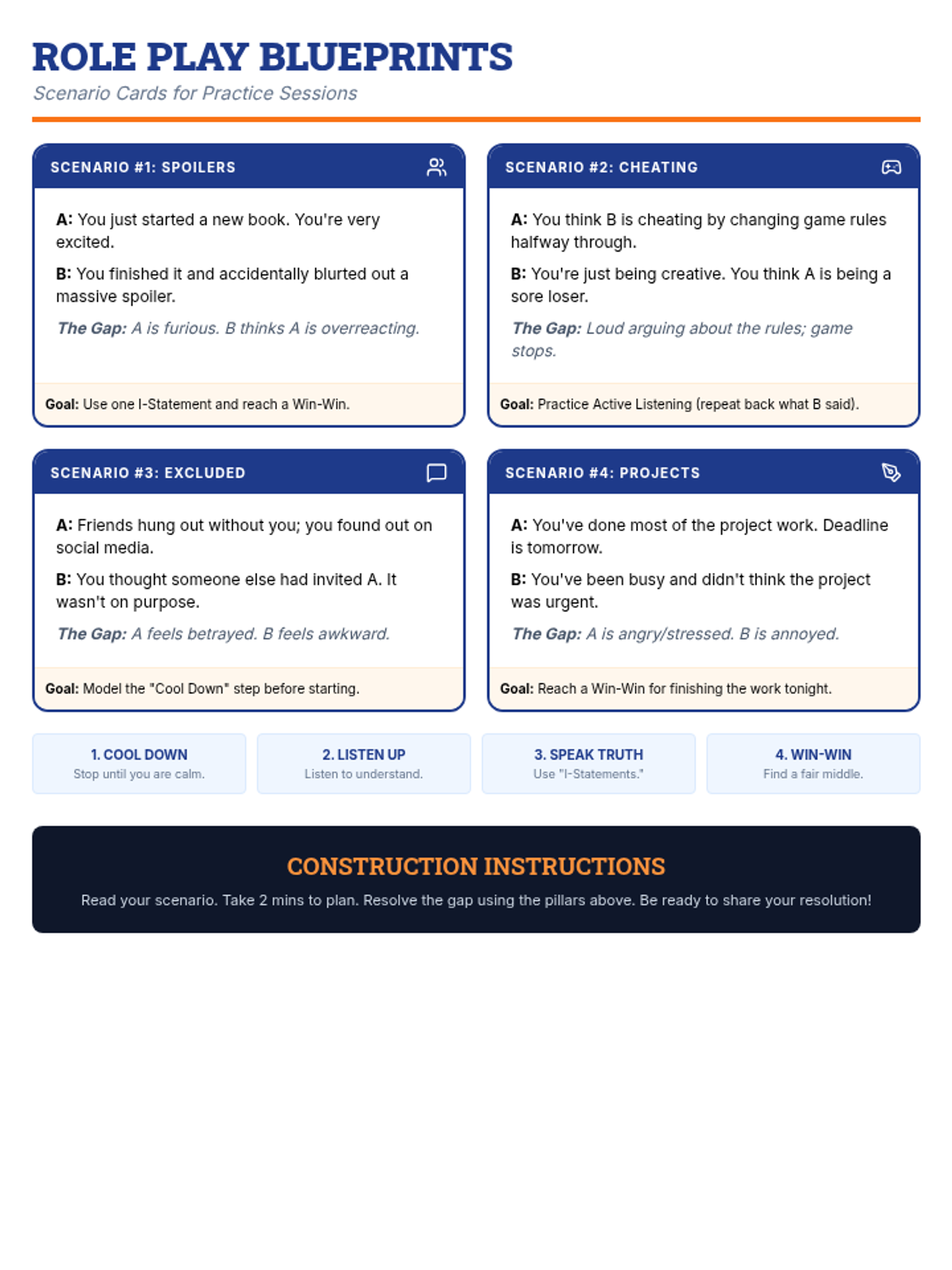
Four peer-to-peer conflict scenarios designed for student role-play activities, each with specific "Bridge Building" requirements.
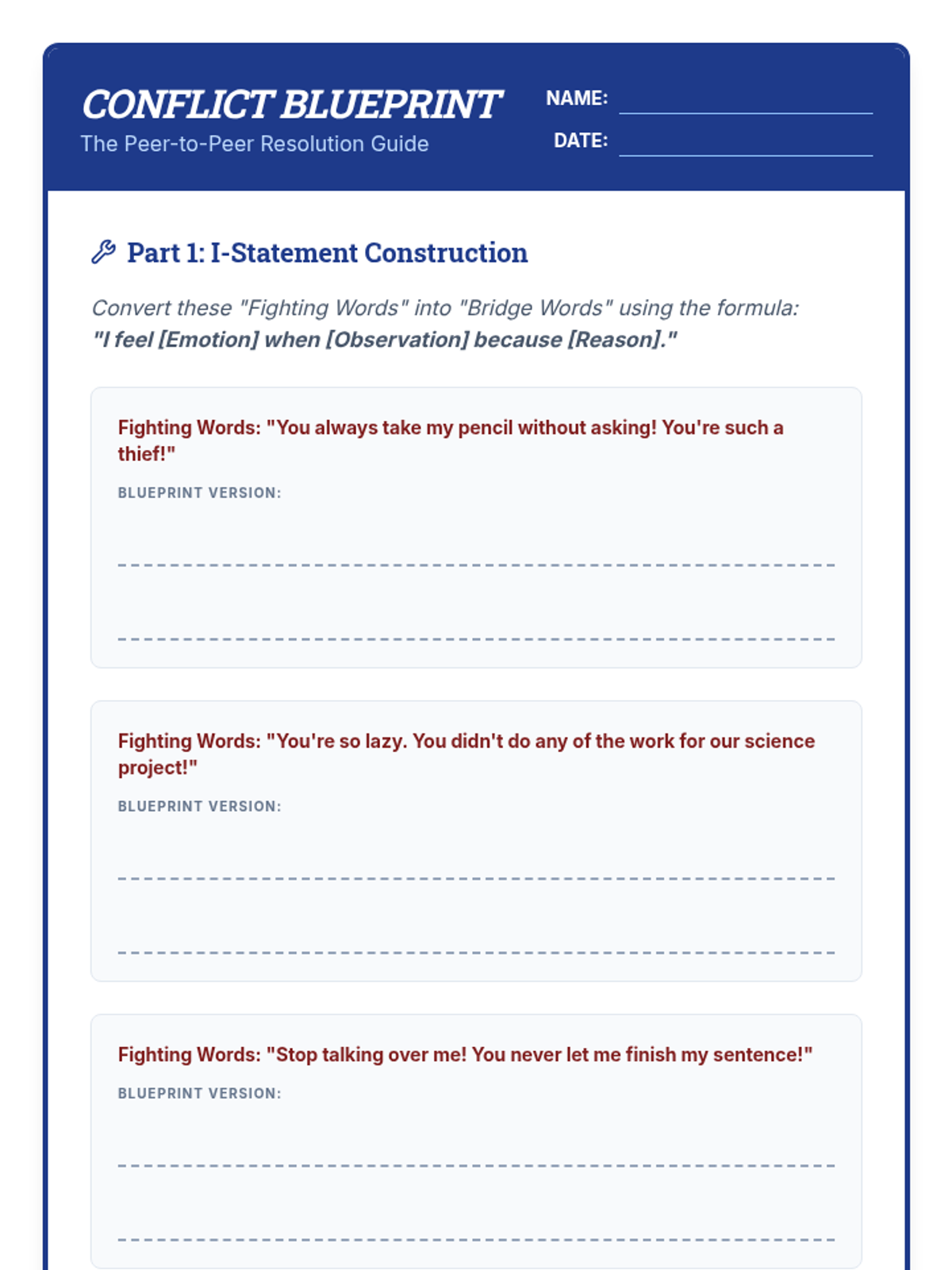
A student worksheet for practicing the construction of I-statements and analyzing conflict scenarios to find win-win solutions.
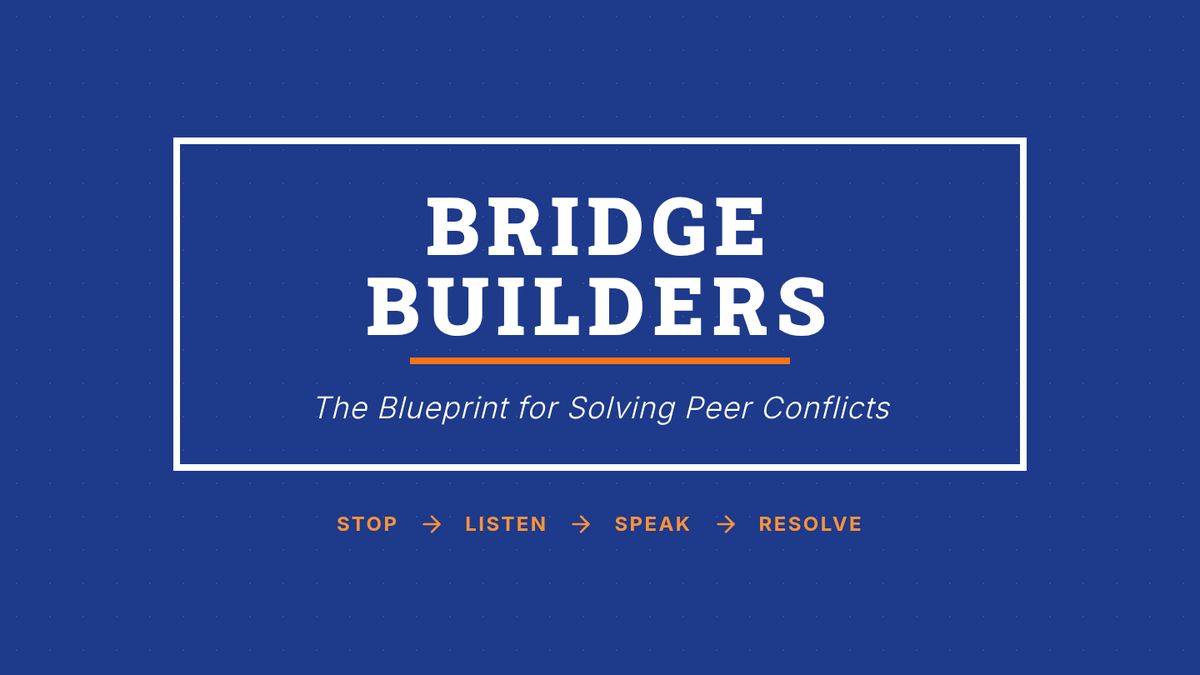
A visual presentation for students explaining the four key steps of conflict resolution: Cool Down, Active Listening, I-Statements, and Finding a Win-Win Solution.
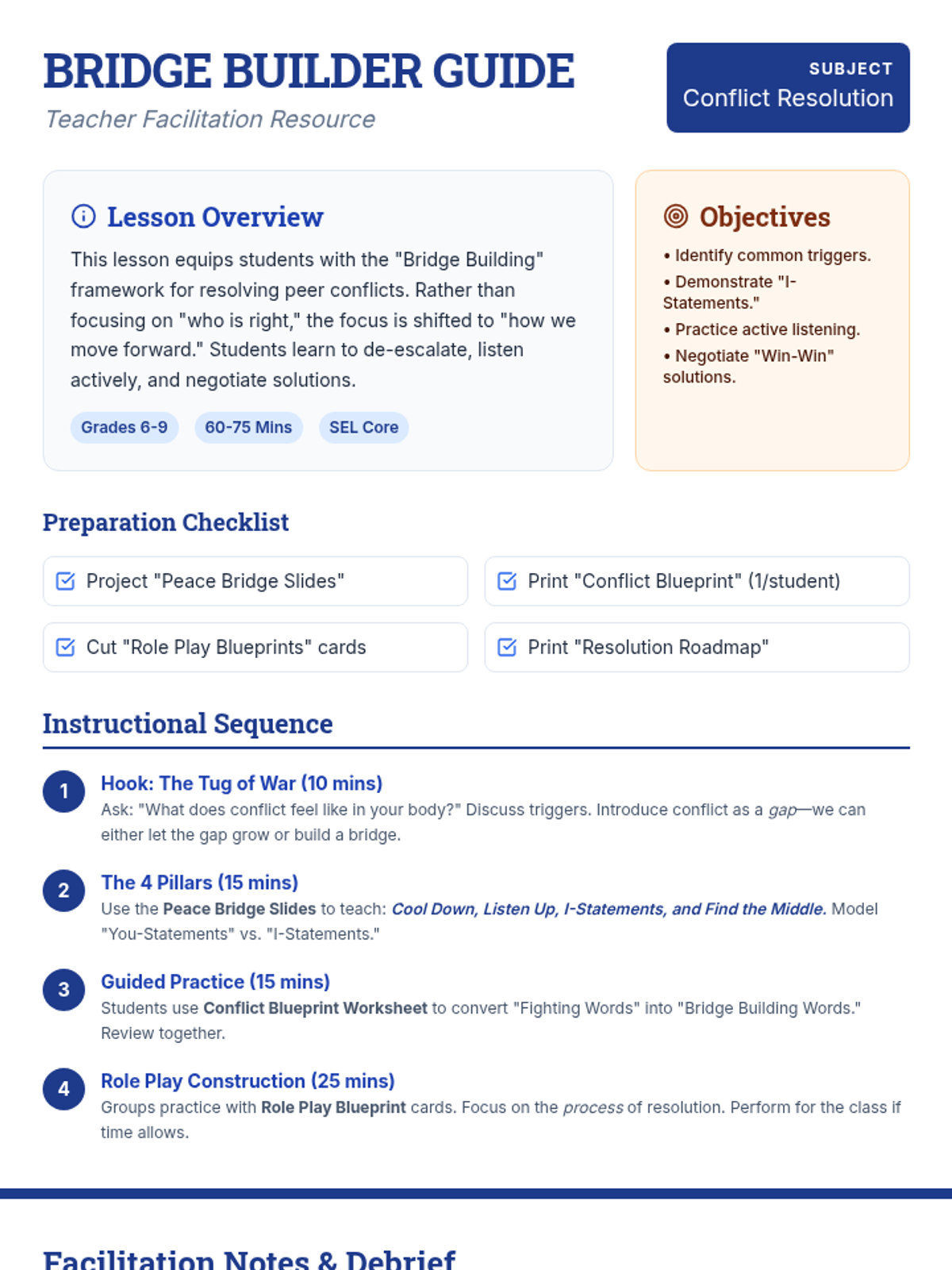
A teacher facilitation guide for a lesson on conflict resolution, featuring lesson objectives, a detailed instructional sequence, facilitation tips, and debrief questions.
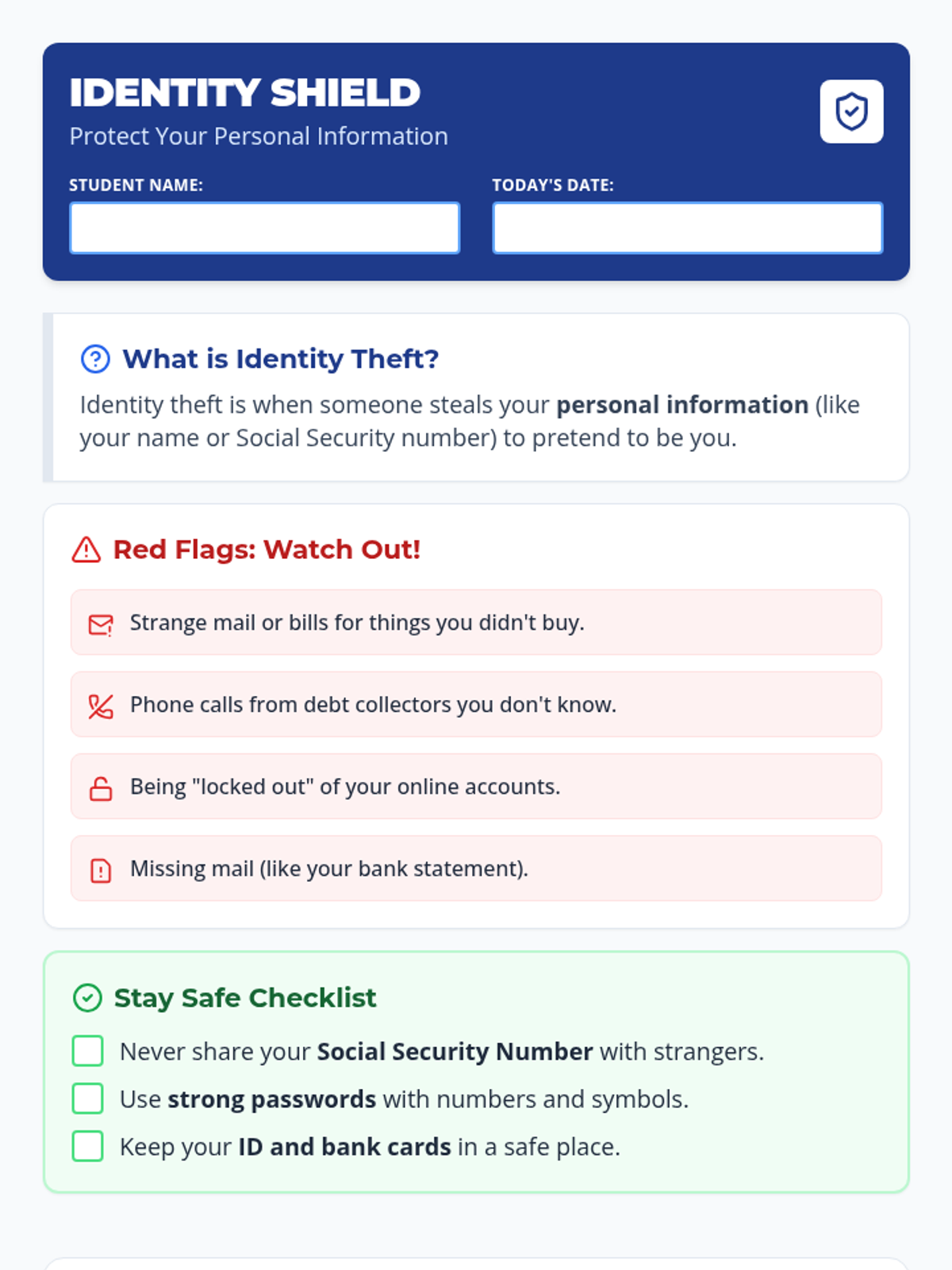
A clear, high-contrast handout for Special Education students explaining identity theft, common warning signs, and safety steps with a practical scenario-based activity.
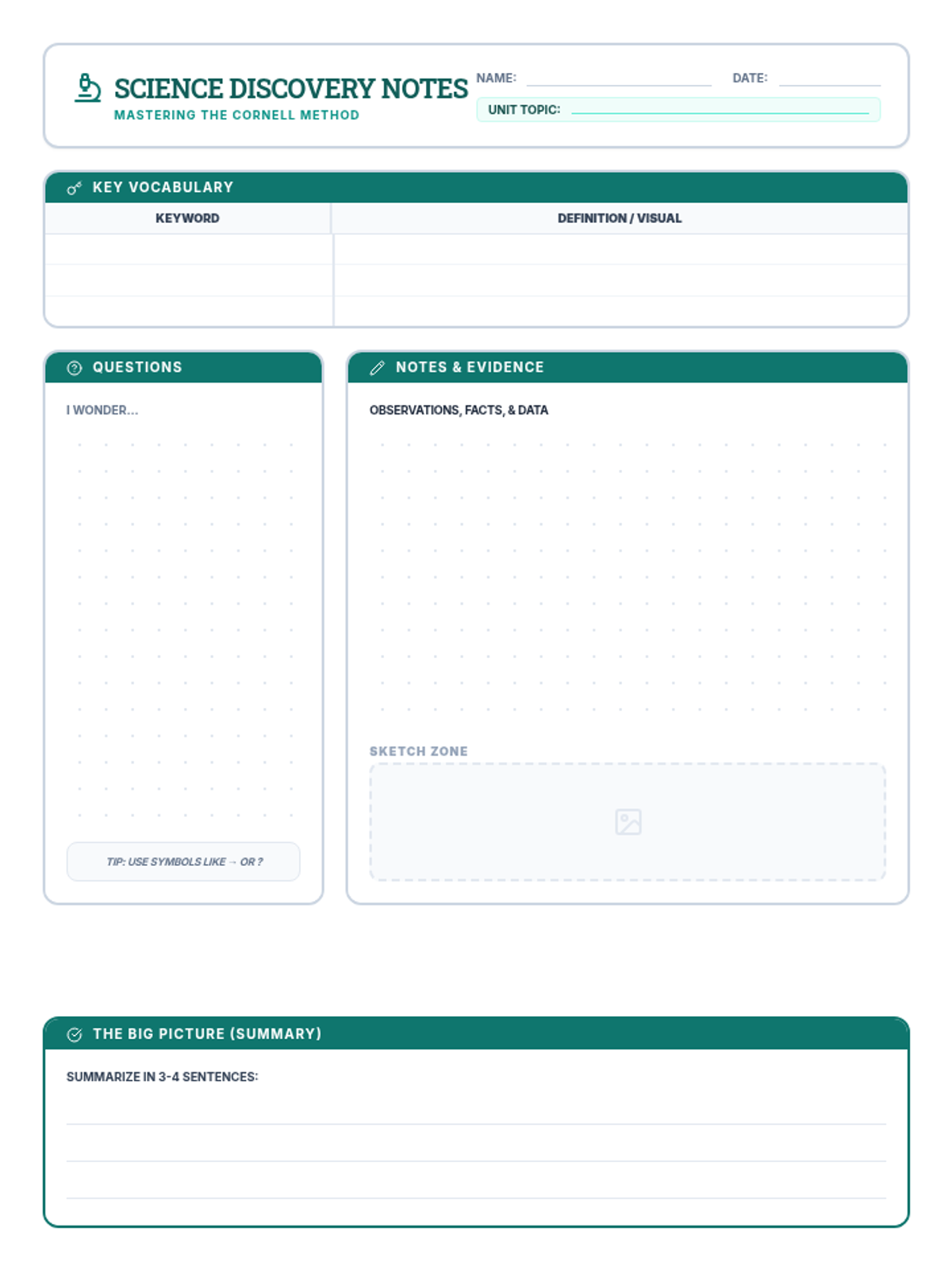
A visually engaging Cornell Notes template specifically designed for 6th-grade science students, featuring an expanded body area for questions and notes with a dot-grid pattern, and the summary section at the very bottom.
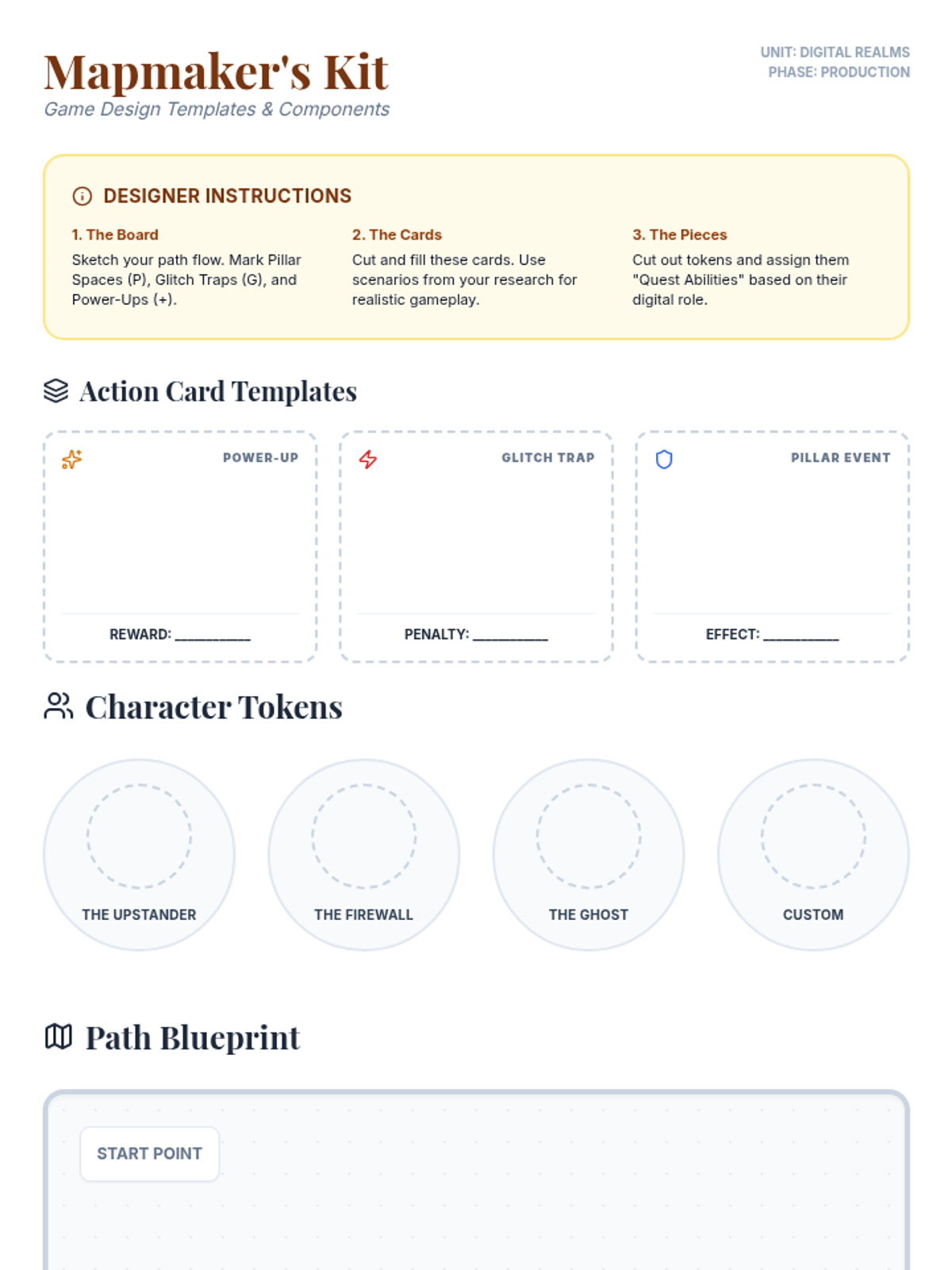
A student-facing template kit containing game components: customizable action cards (Power-Up, Glitch Trap, Pillar Event), character tokens, and a layout blueprint for the board path.
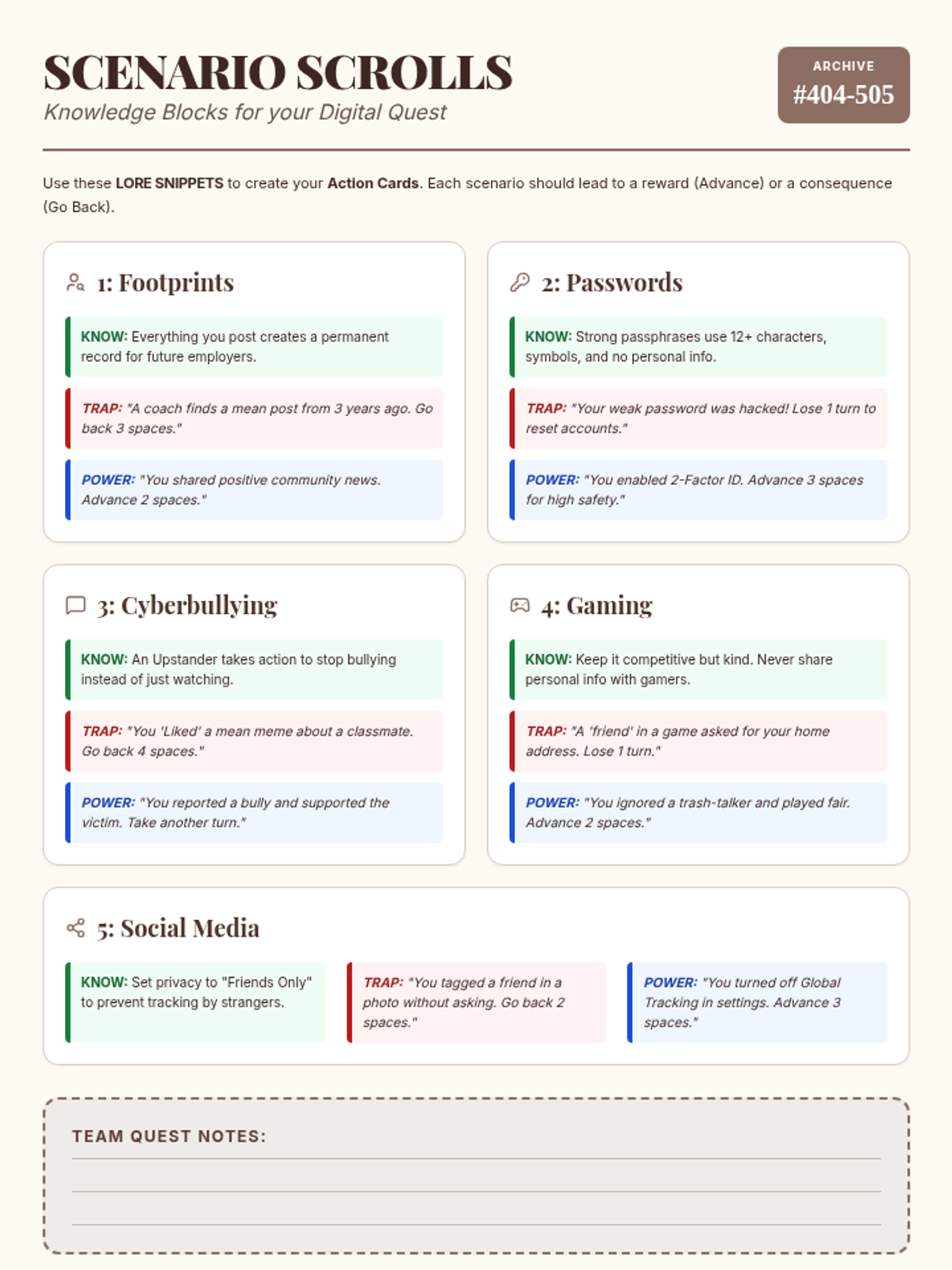
A resource-rich handout providing students with the "lore" and scenarios needed to build their board games. It includes knowledge blocks and reward/consequence examples for all 5 digital citizenship pillars.
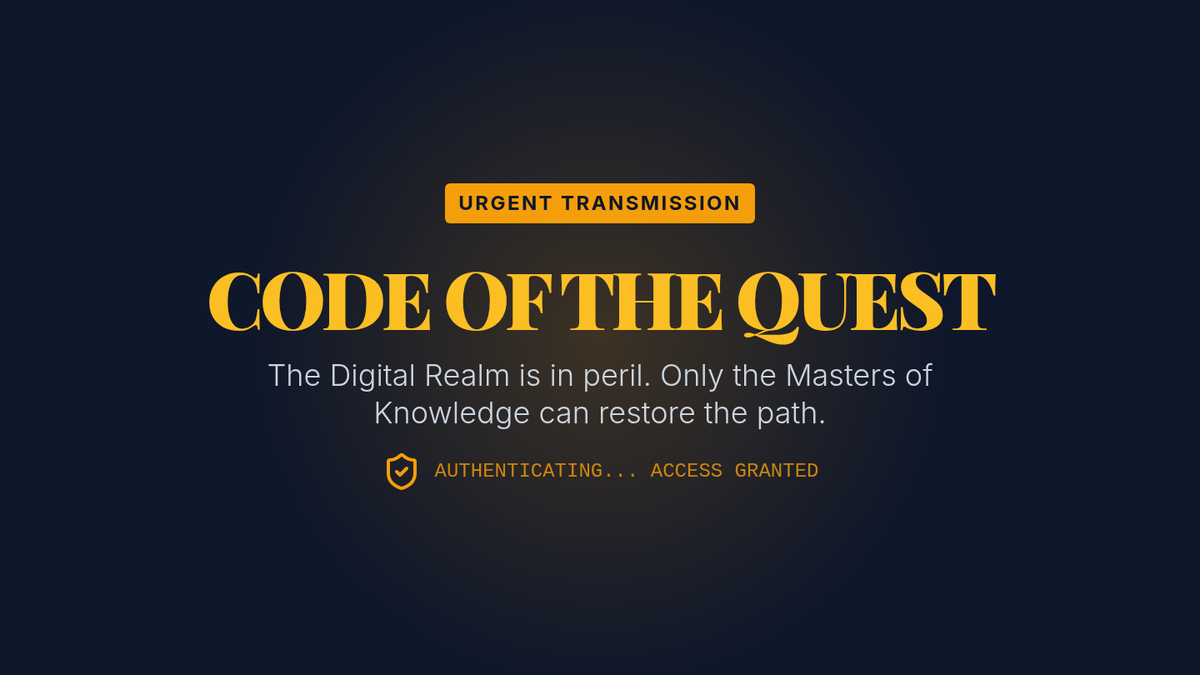
A high-impact visual presentation to introduce the "Code of the Quest" board game project. It features the narrative hook, the 5 pillars of digital citizenship, and basic game design principles.
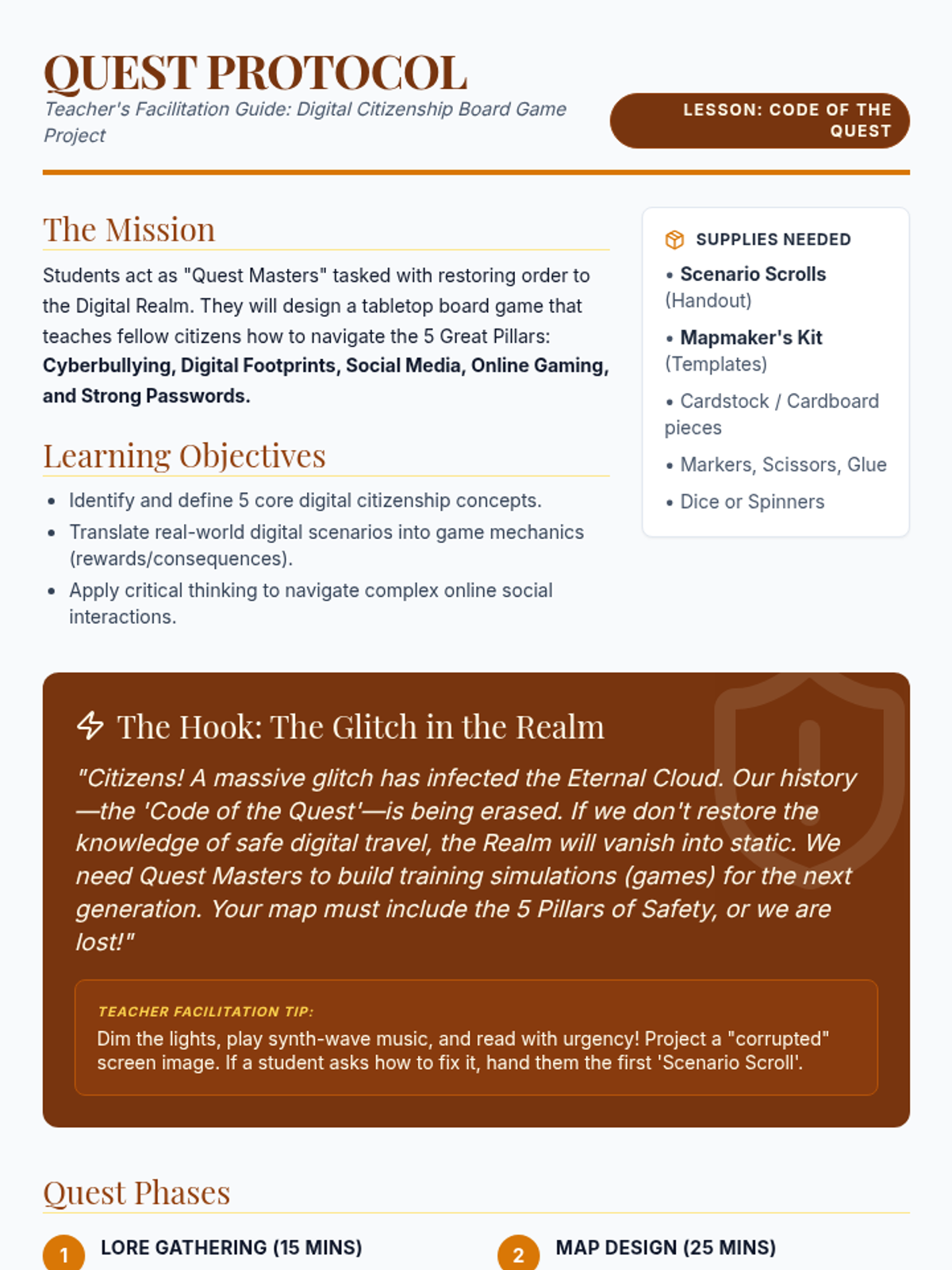
A comprehensive teacher facilitation guide for the "Code of the Quest" lesson, featuring a narrative hook, step-by-step instructional sequence, and assessment checklist for the board game project.
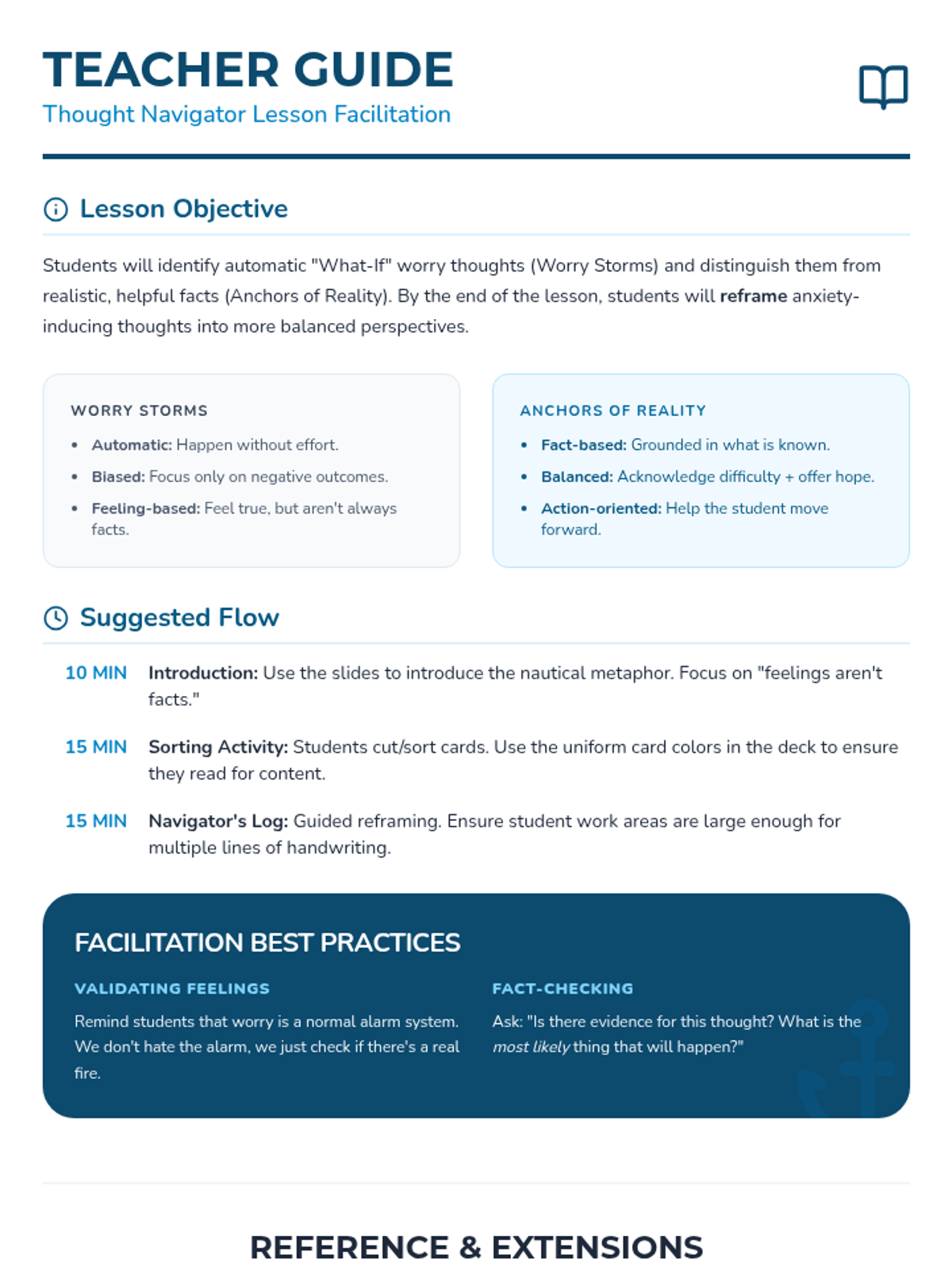
A guide for teachers to facilitate the Thought Navigator lesson, including pacing, facilitation tips, and an answer key for the sorting activity.