A visually engaging Cornell Notes template specifically designed for 6th-grade science students, featuring an expanded body area for questions and notes with a dot-grid pattern, and the summary section at the very bottom.
A teacher-facing data collection tool for monitoring student progress in using scripted attention-seeking phrases. Includes space for tracking multiple attempts, prompt levels, and notes for up to 15 students per page.
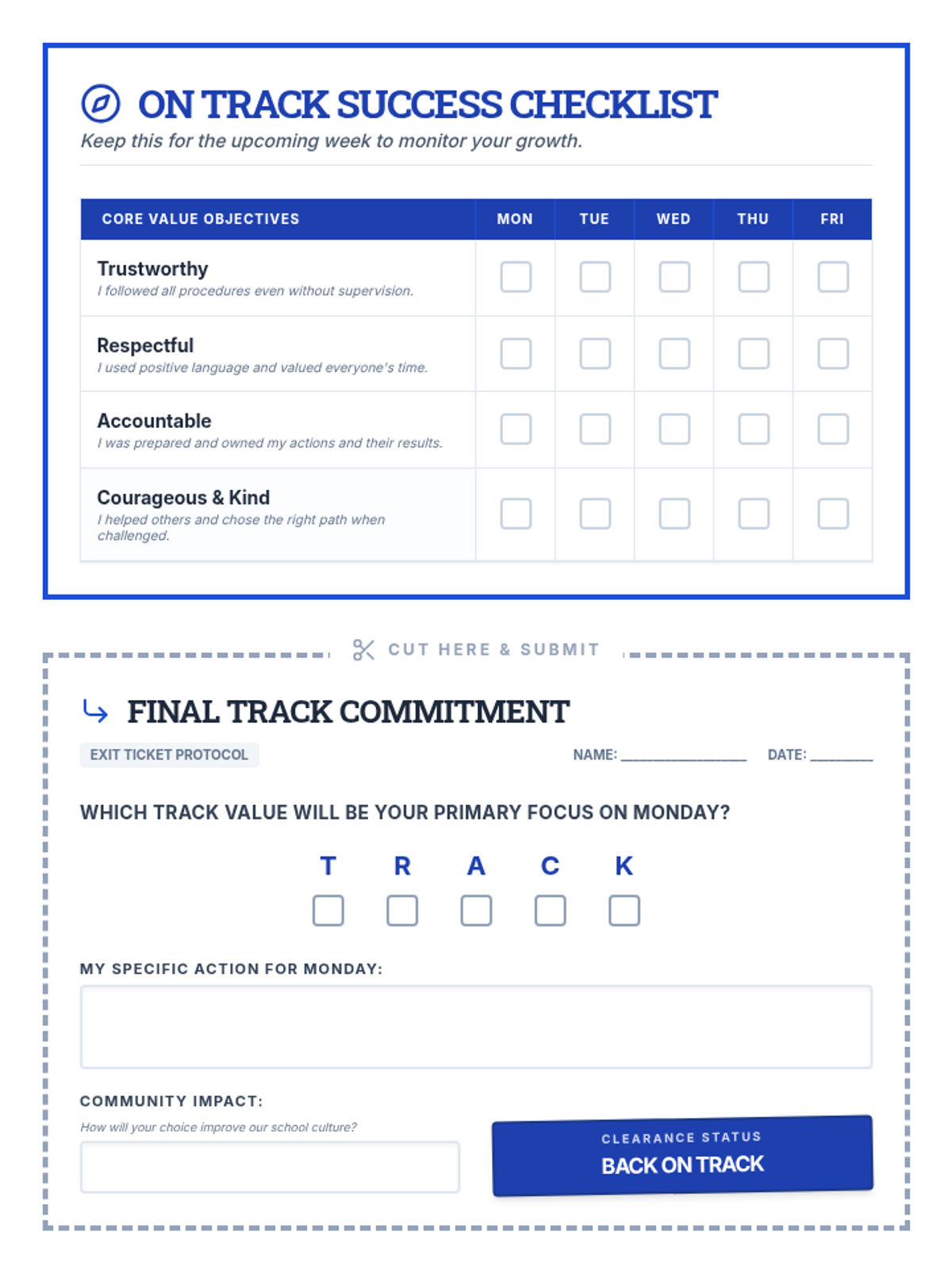
A student-facing toolkit containing a weekly TRACK behavioral success checklist and a detachable exit ticket to formalize commitments before leaving detention.
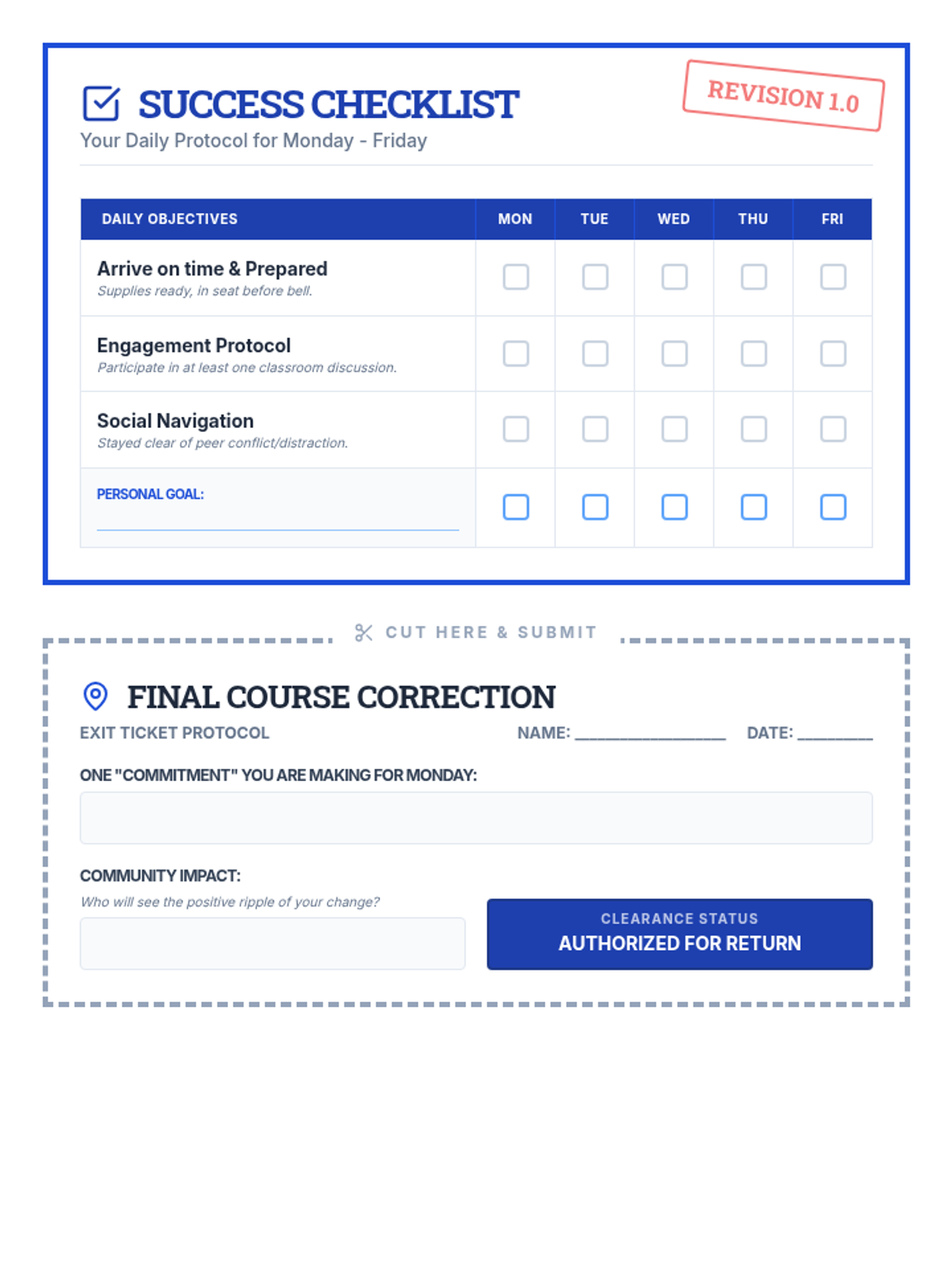
A student-facing toolkit containing a weekly behavioral success checklist and a detachable exit ticket to formalize commitments before leaving detention.
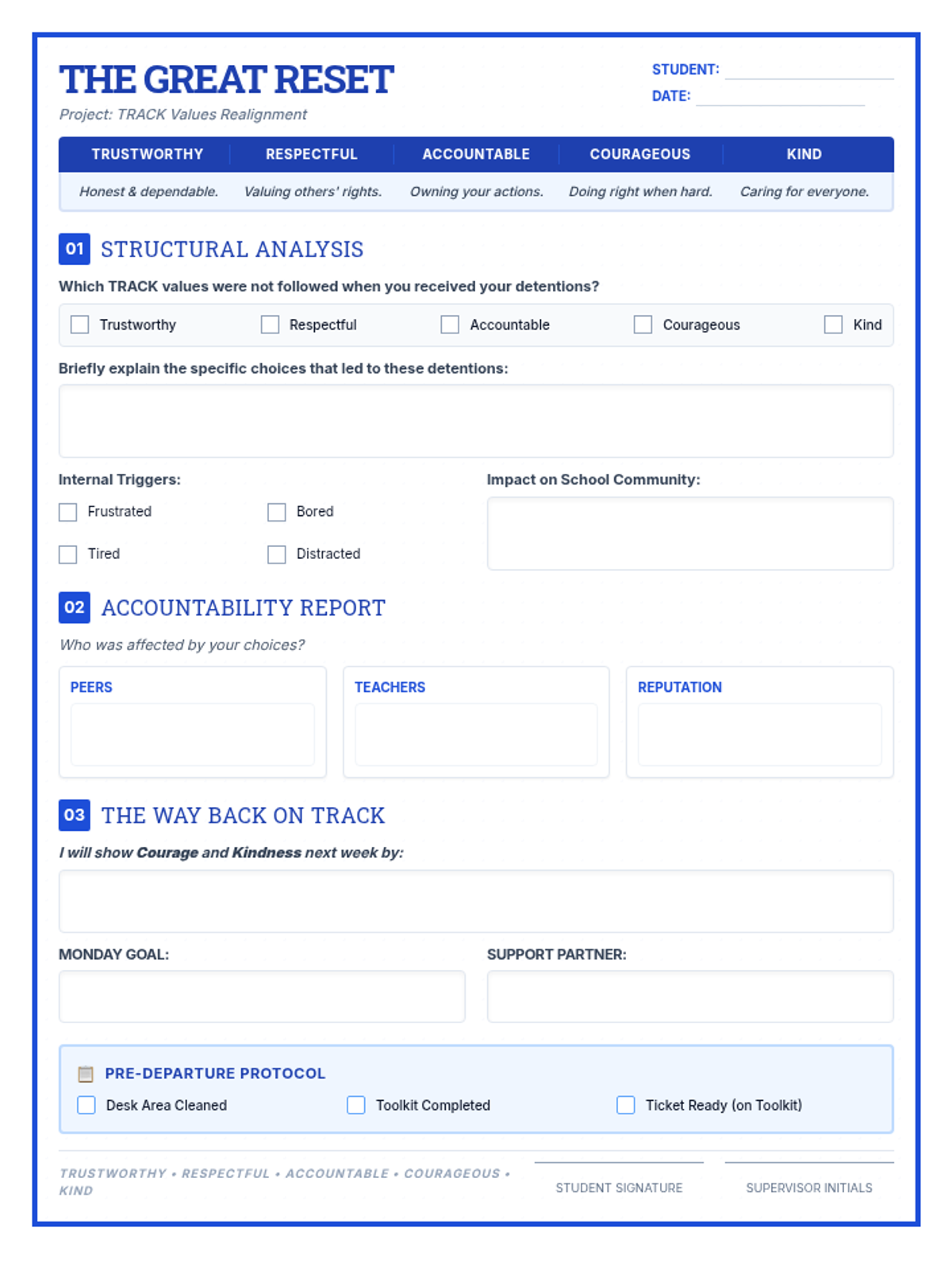
A one-page behavioral reflection sheet updated to include definitions of the TRACK values and refined prompts for students reflecting on multiple detentions.
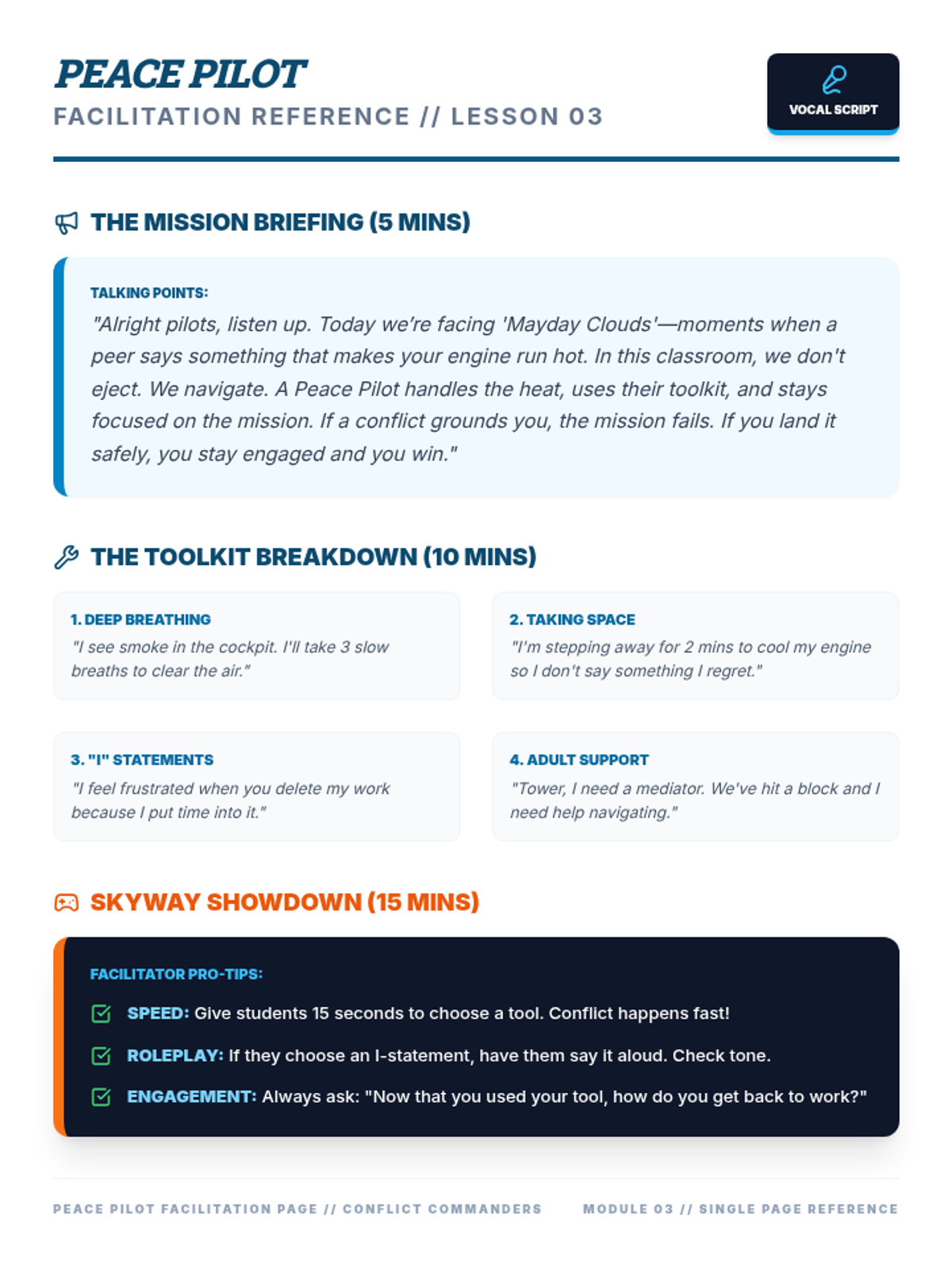
Detailed facilitation page for the 'Peace Pilot' lesson, featuring scripts, talking points, and specific tips for managing the 'Skyway Showdown' game.
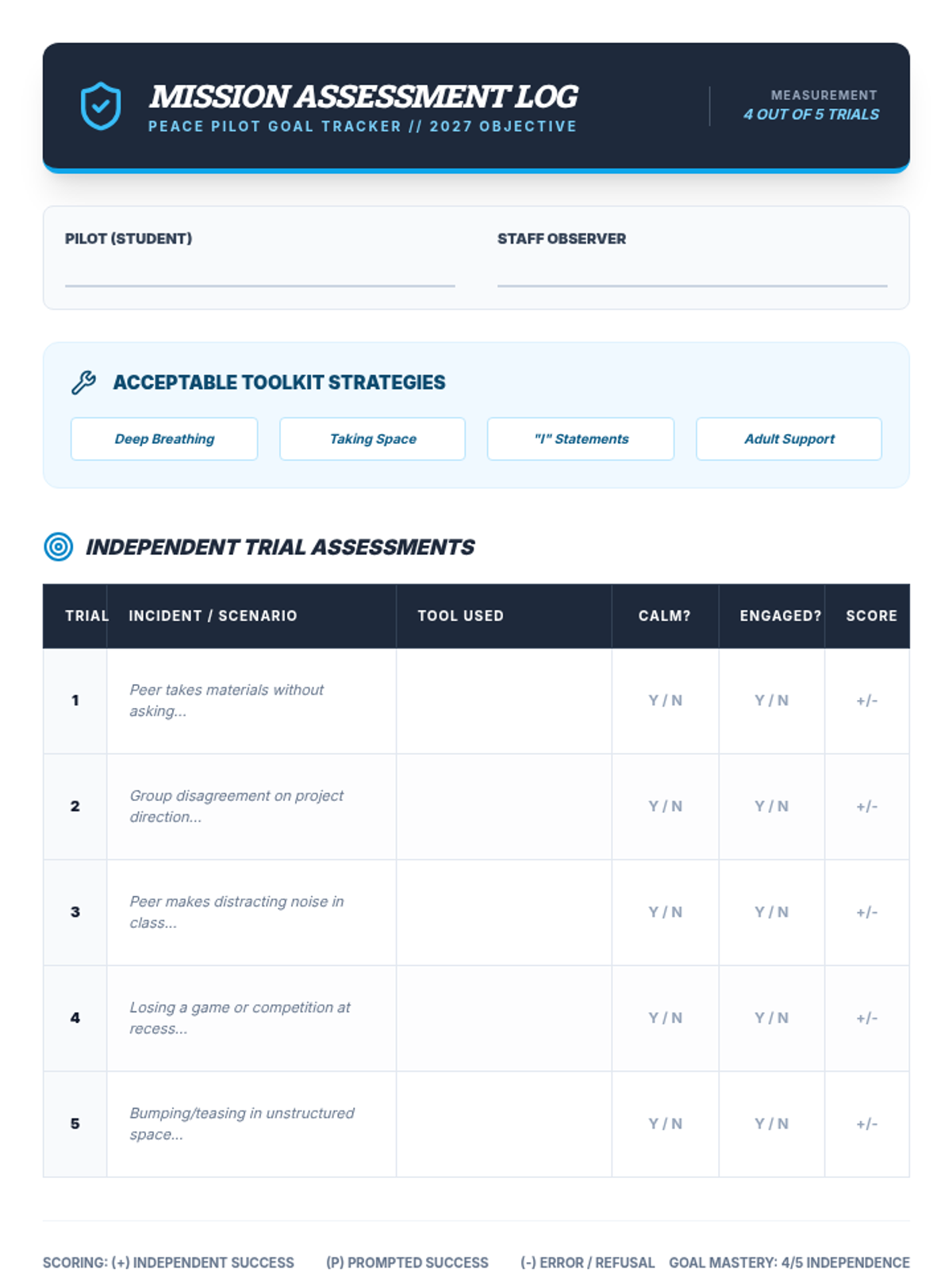
IEP Goal Tracker for the 'Peace Pilot' lesson, featuring five conflict resolution scenarios for trial assessment and an observation log for staff, excluding self-reports.
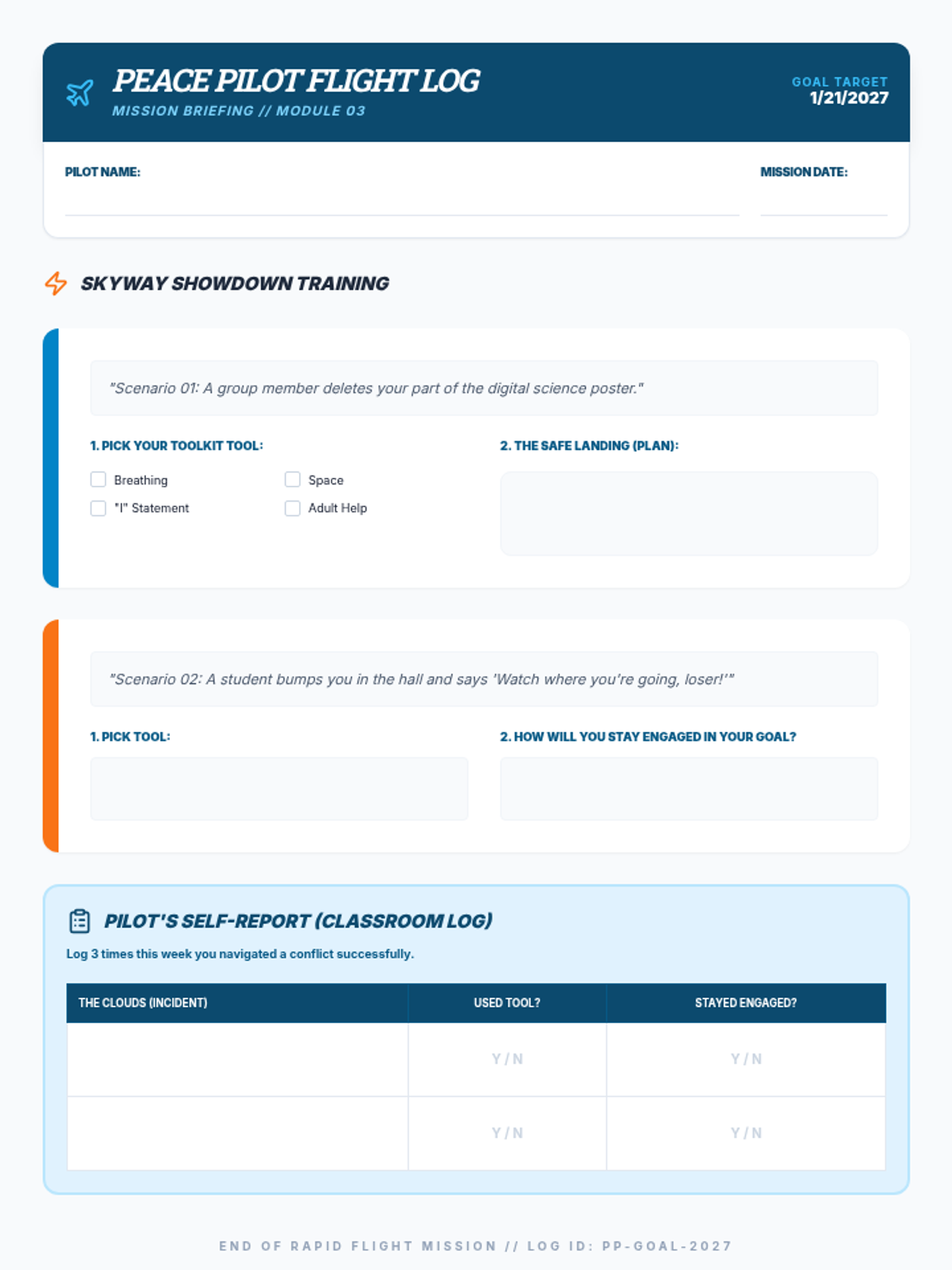
Student worksheet for the 'Peace Pilot' lesson, designed as a 'Flight Log' to practice the 4-step conflict resolution plan through peer scenarios.
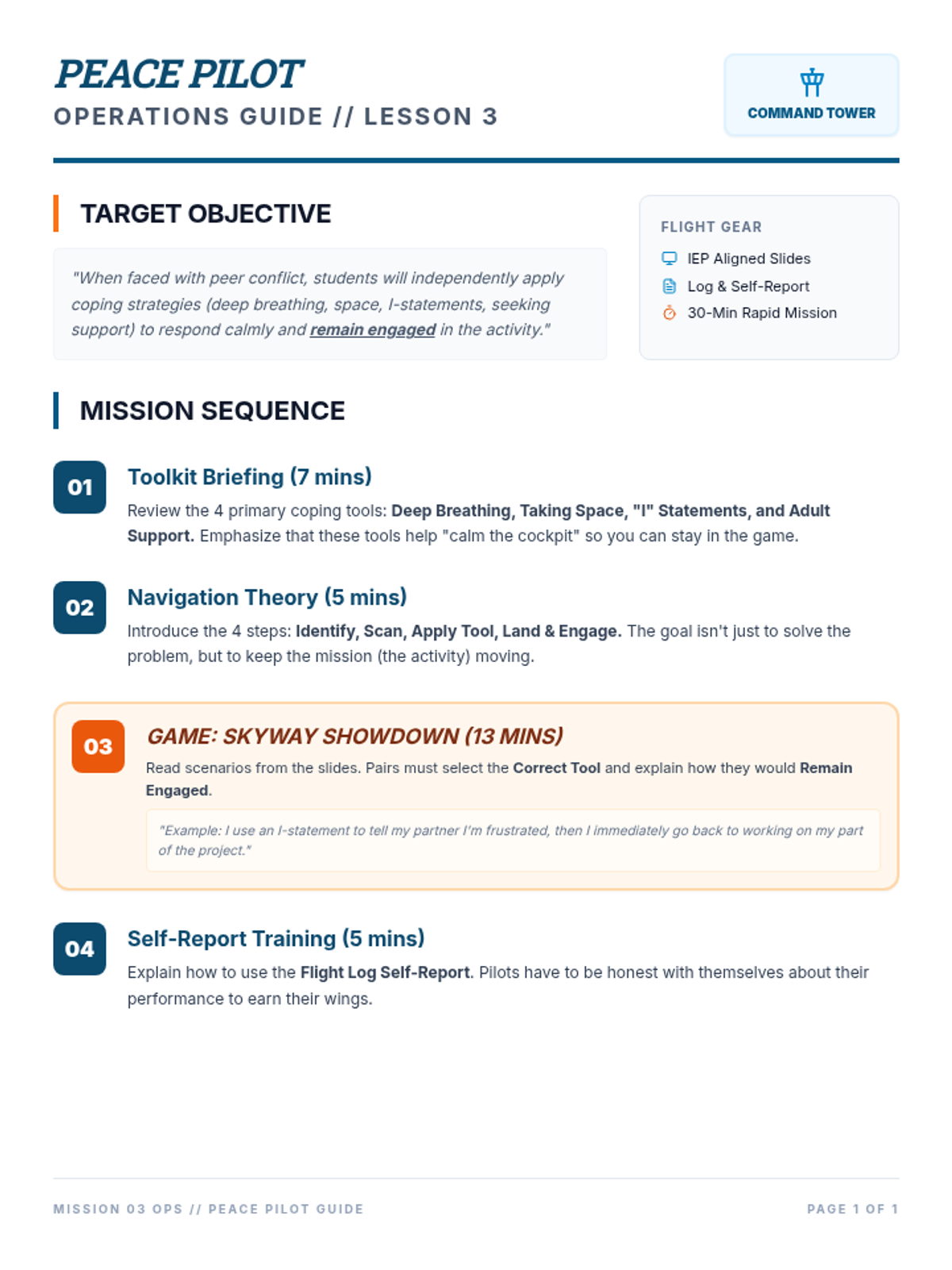
Facilitator guide for counselors and teachers to lead the 'Peace Pilot' lesson, now condensed to 30 minutes and including the 'Skyway Showdown' interactive game.
Visual presentation slides for the 'Peace Pilot' lesson, aligned with IEP goals for conflict resolution, coping strategy application, and remaining engaged in activities.
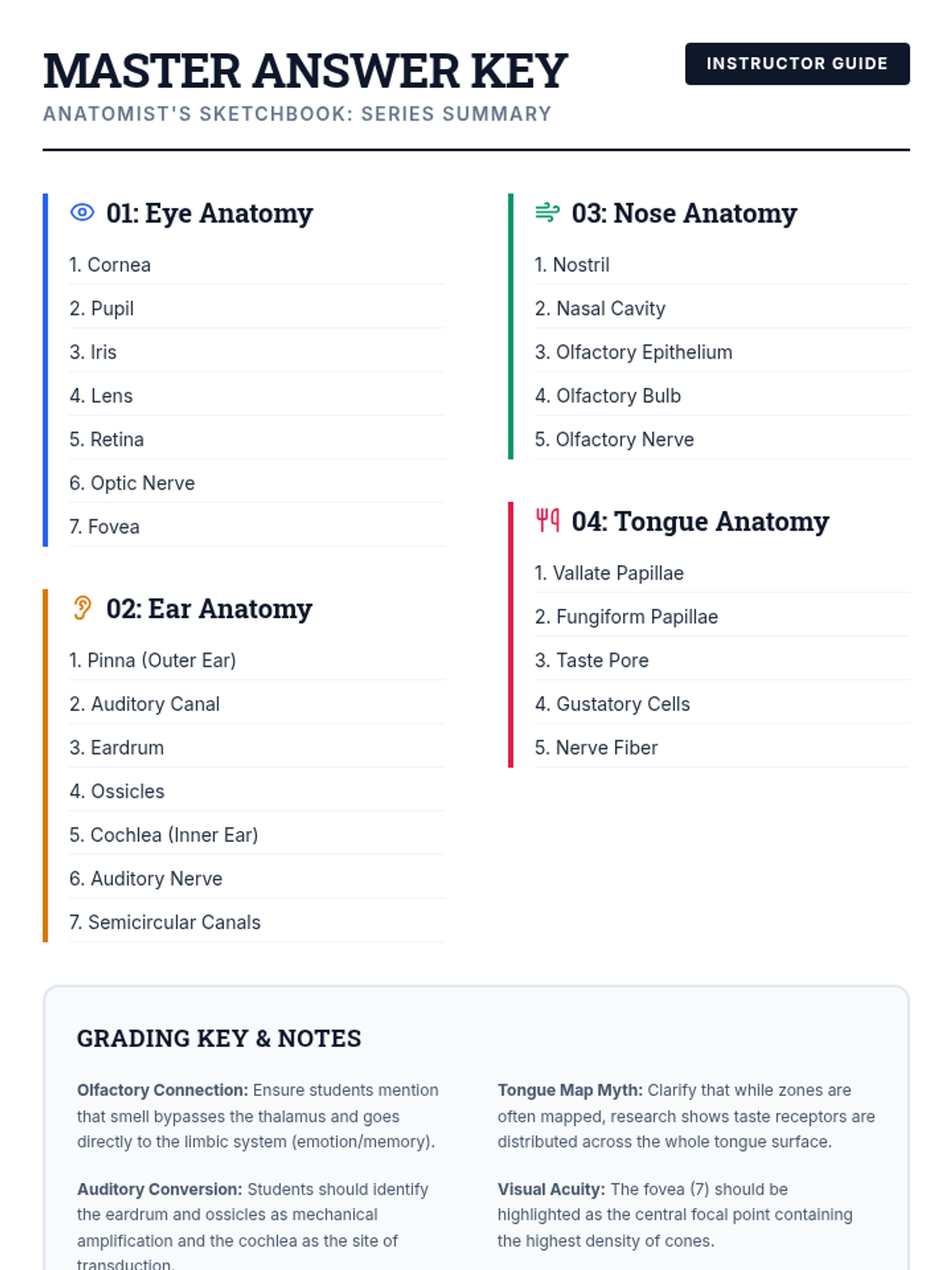
A comprehensive teacher answer key for the Sense Detectives anatomical series, including correct labels for the eye, ear, nose, and tongue worksheets along with instructional notes. Revised to ensure single-page layout.
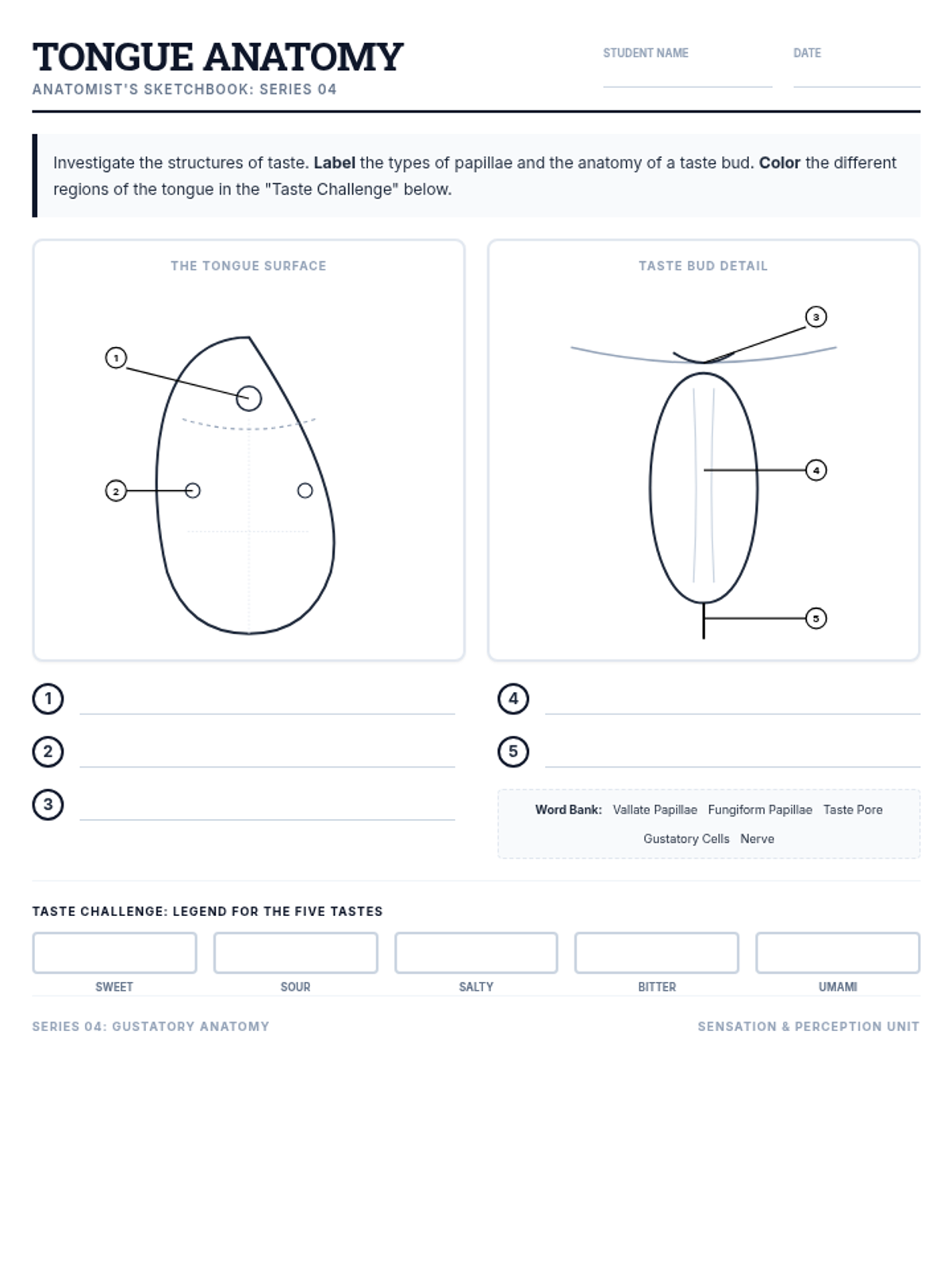
A student worksheet for labeling and coloring the anatomical structures of the human tongue, including papillae, taste buds, and primary taste regions. Revised for anatomical shape and clarity.
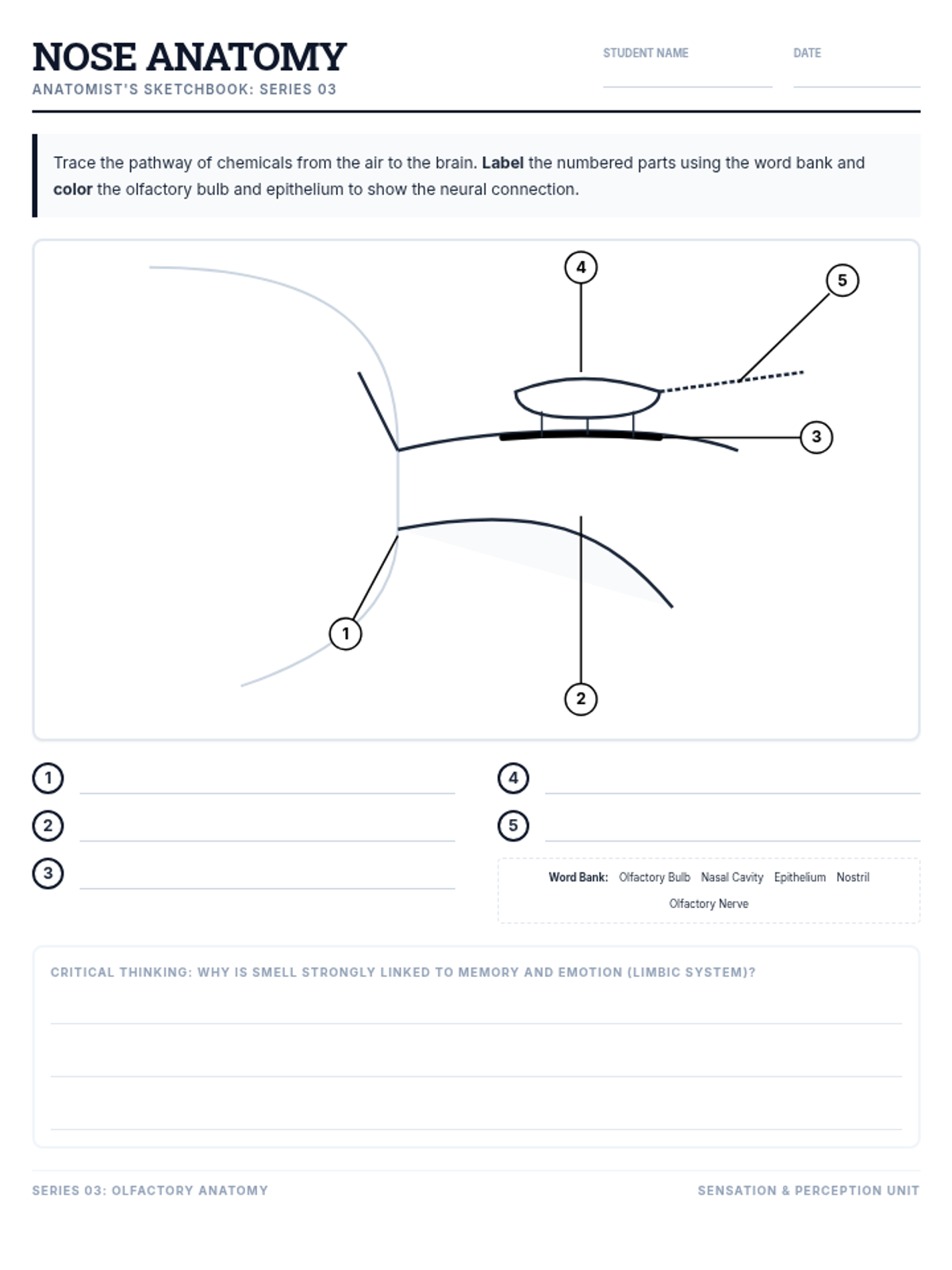
A student worksheet for labeling and coloring the anatomical structures of the human nose, focusing on the olfactory bulb, nasal cavity, and epithelium. Revised for context and layout.
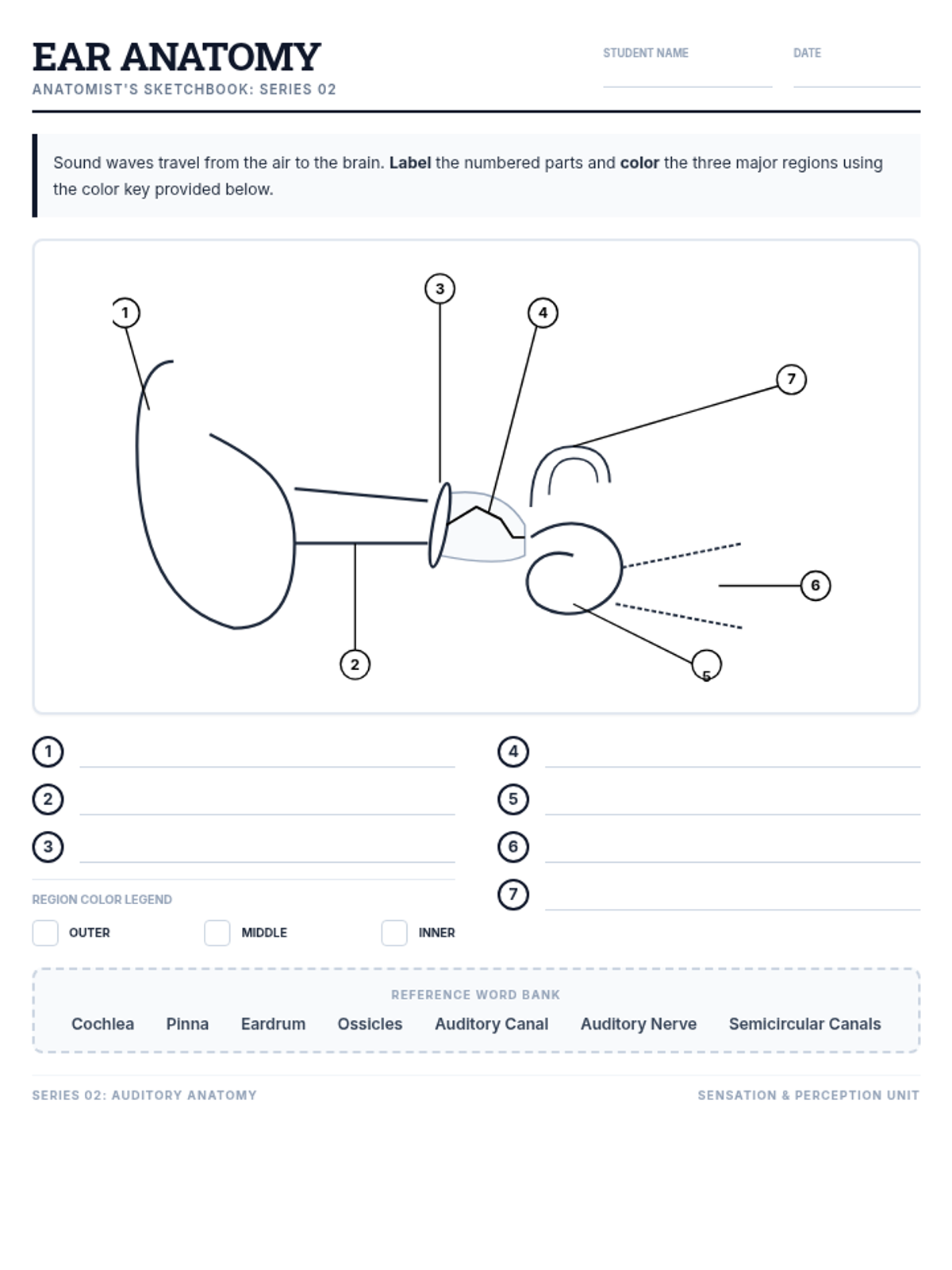
A student worksheet for labeling and coloring the anatomical structures of the human ear, including the pinna, auditory canal, eardrum, ossicles, and cochlea. Revised for anatomical accuracy and layout.
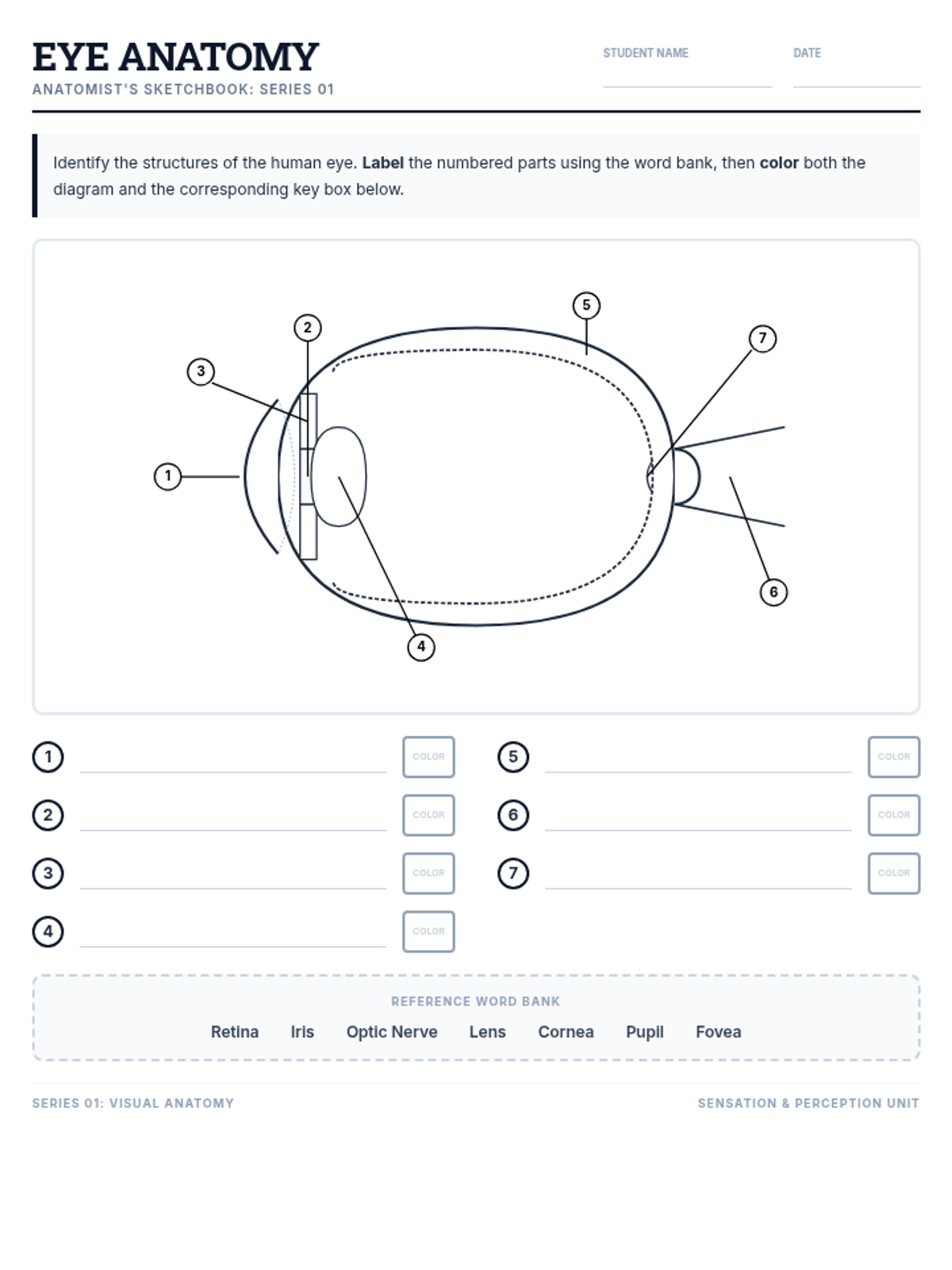
A student worksheet for labeling and coloring the anatomical structures of the human eye, including the cornea, iris, lens, retina, and optic nerve. Revised for layout and clarity.
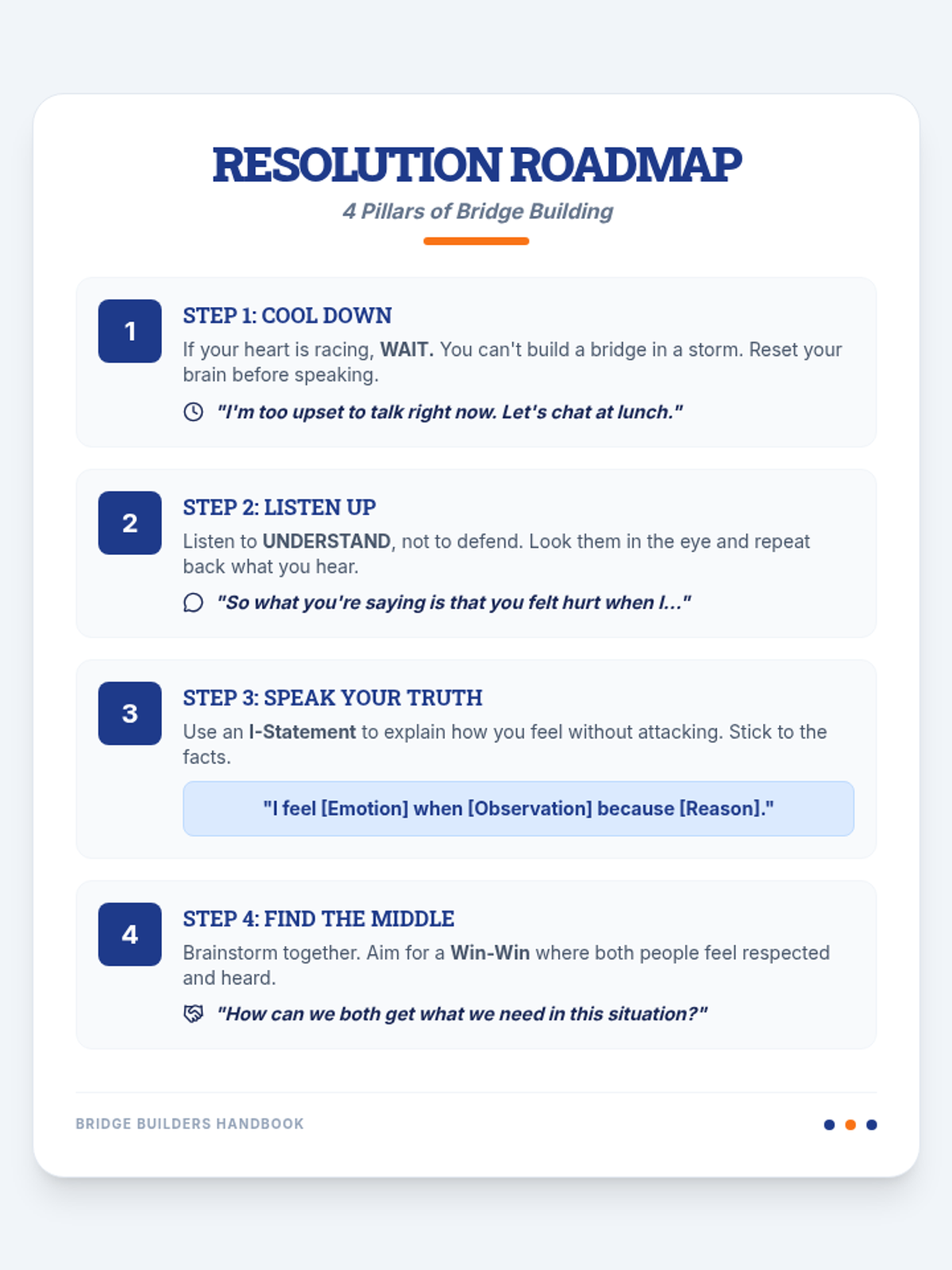
An infographic-style reference sheet for students outlining the four main steps of conflict resolution with example dialogue and key reminders.
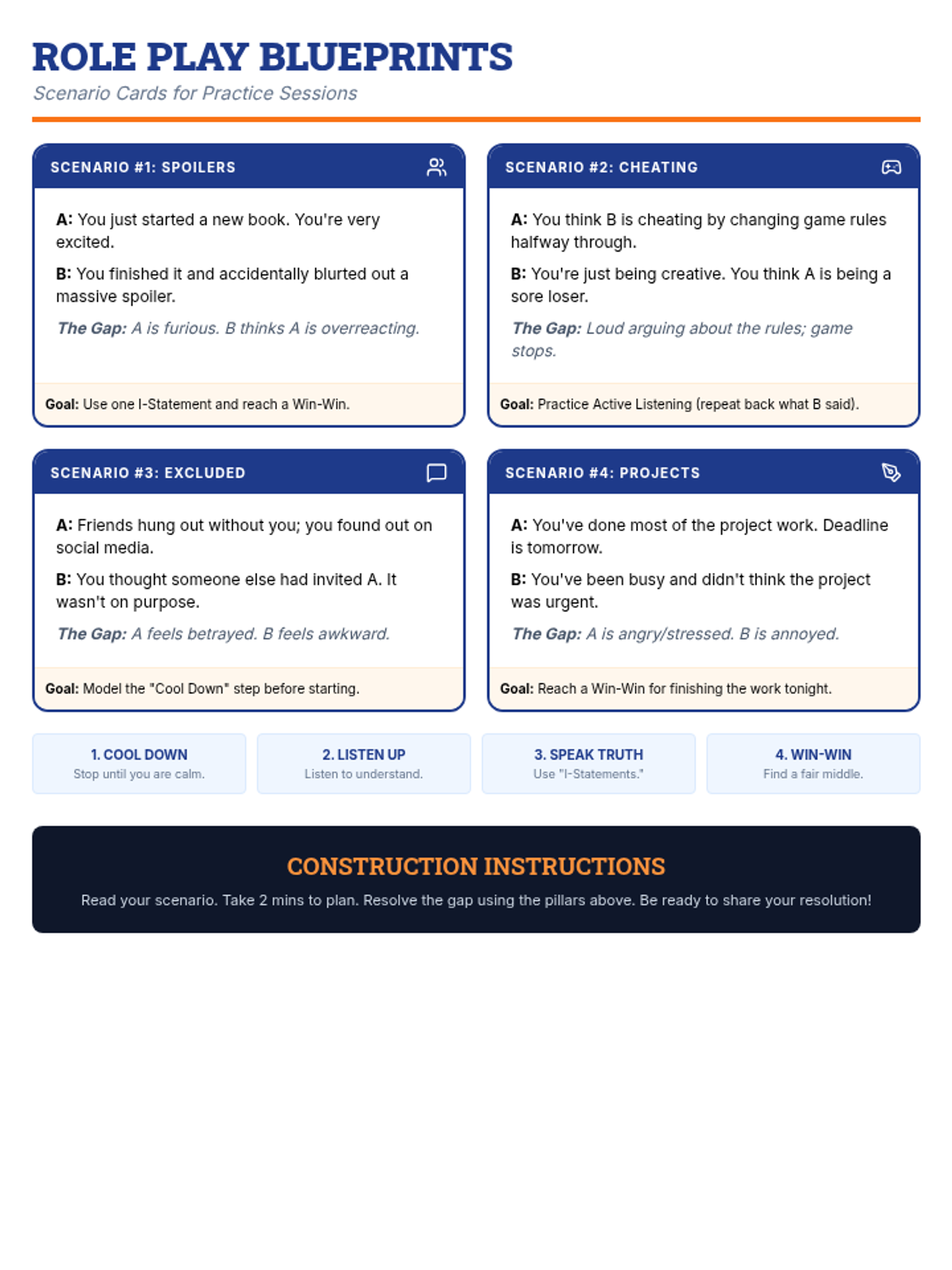
Four peer-to-peer conflict scenarios designed for student role-play activities, each with specific "Bridge Building" requirements.
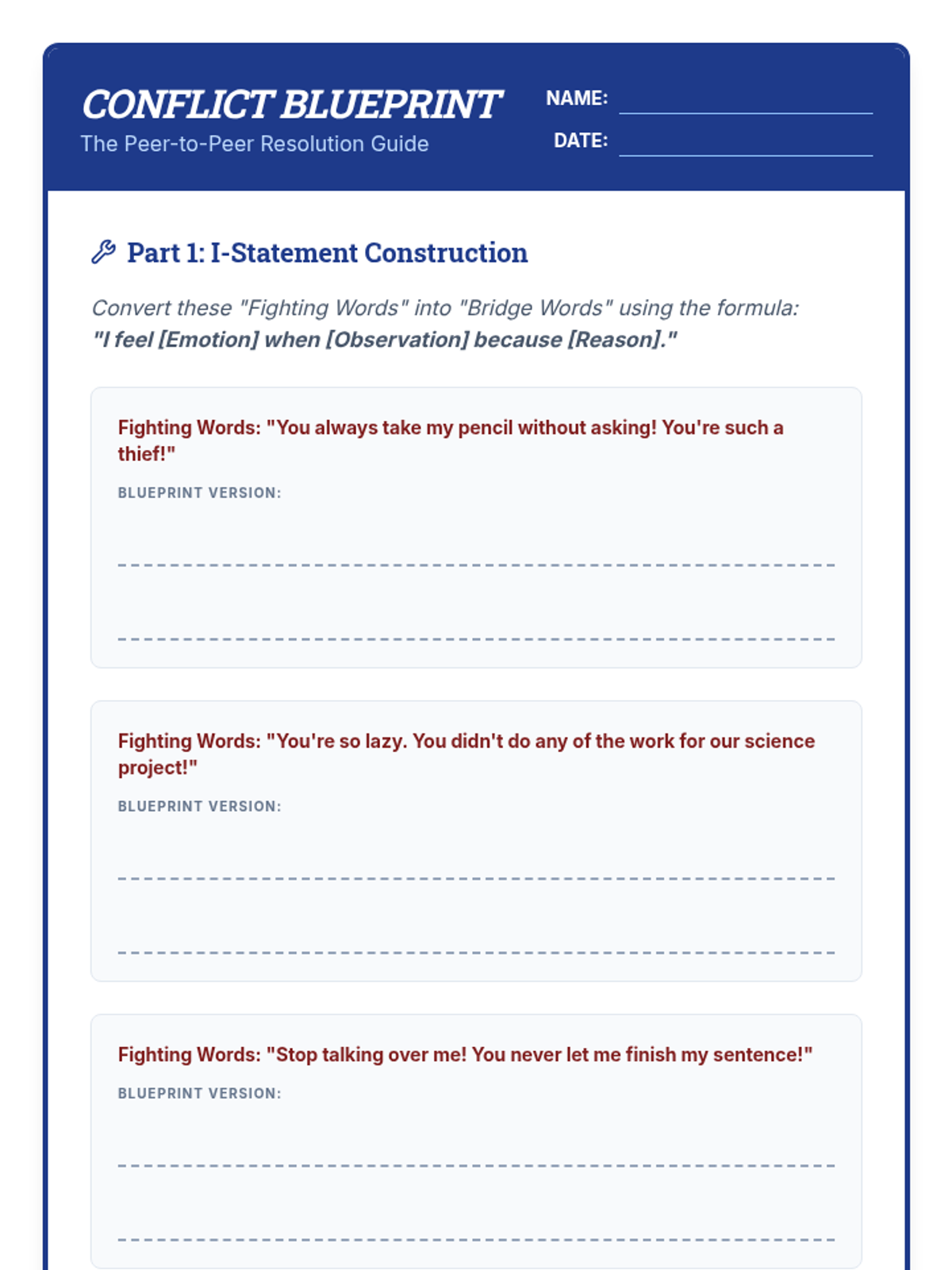
A student worksheet for practicing the construction of I-statements and analyzing conflict scenarios to find win-win solutions.
A visual presentation for students explaining the four key steps of conflict resolution: Cool Down, Active Listening, I-Statements, and Finding a Win-Win Solution.
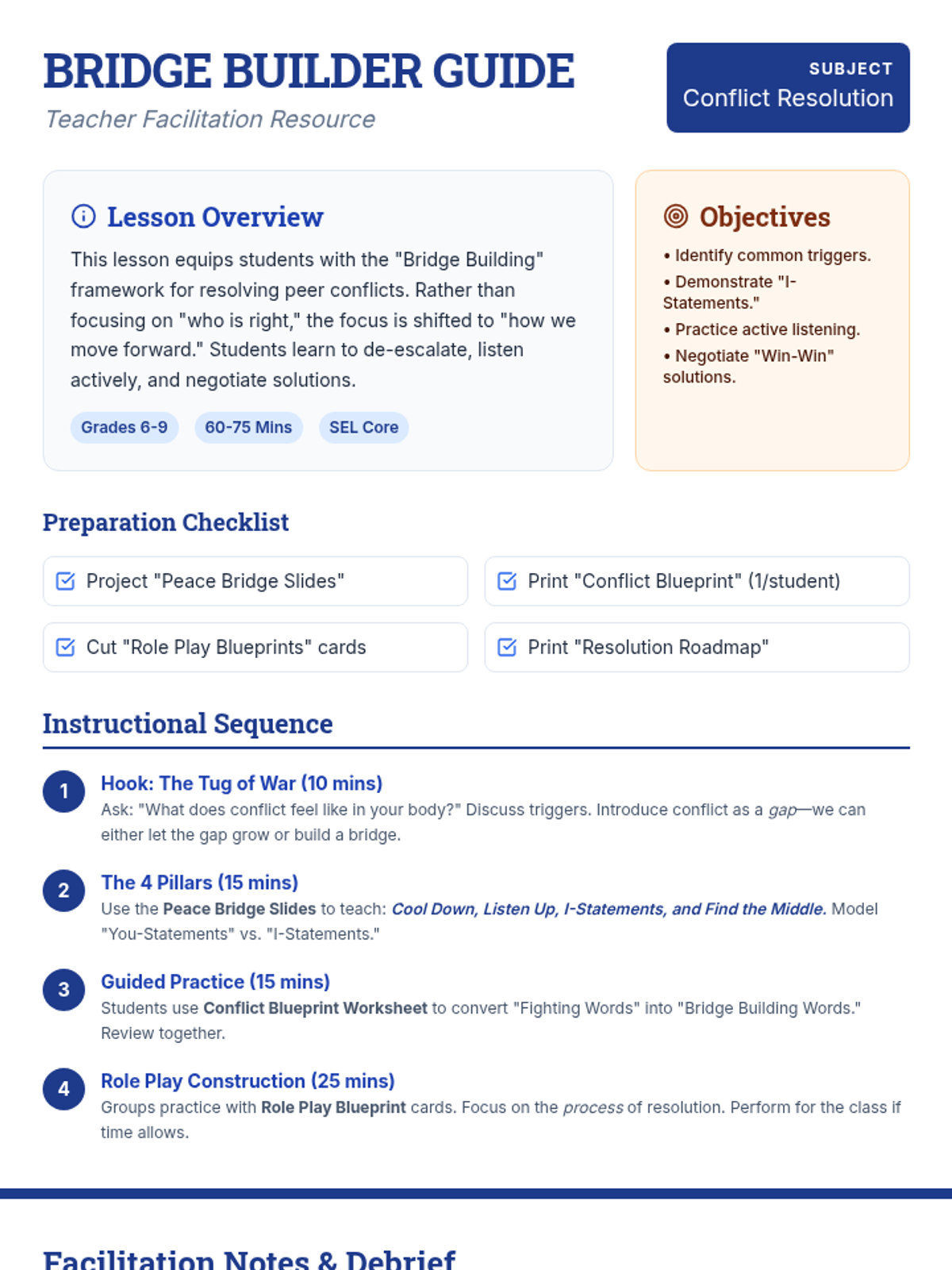
A teacher facilitation guide for a lesson on conflict resolution, featuring lesson objectives, a detailed instructional sequence, facilitation tips, and debrief questions.
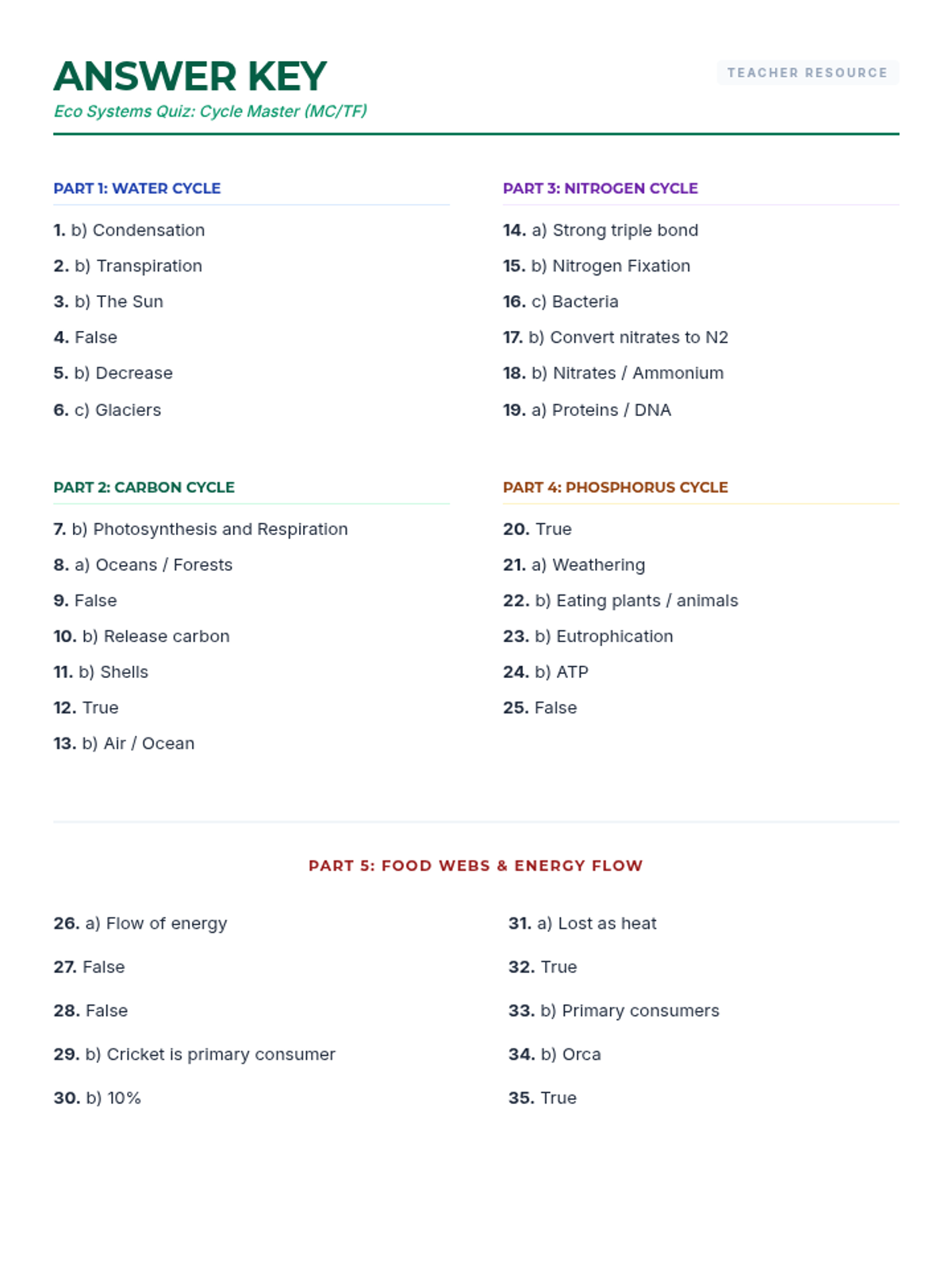
Complete answer key for the Cycle Master Quiz, featuring answers for 35 multiple-choice and true/false questions. Structured in a clean, two-column layout for rapid grading.
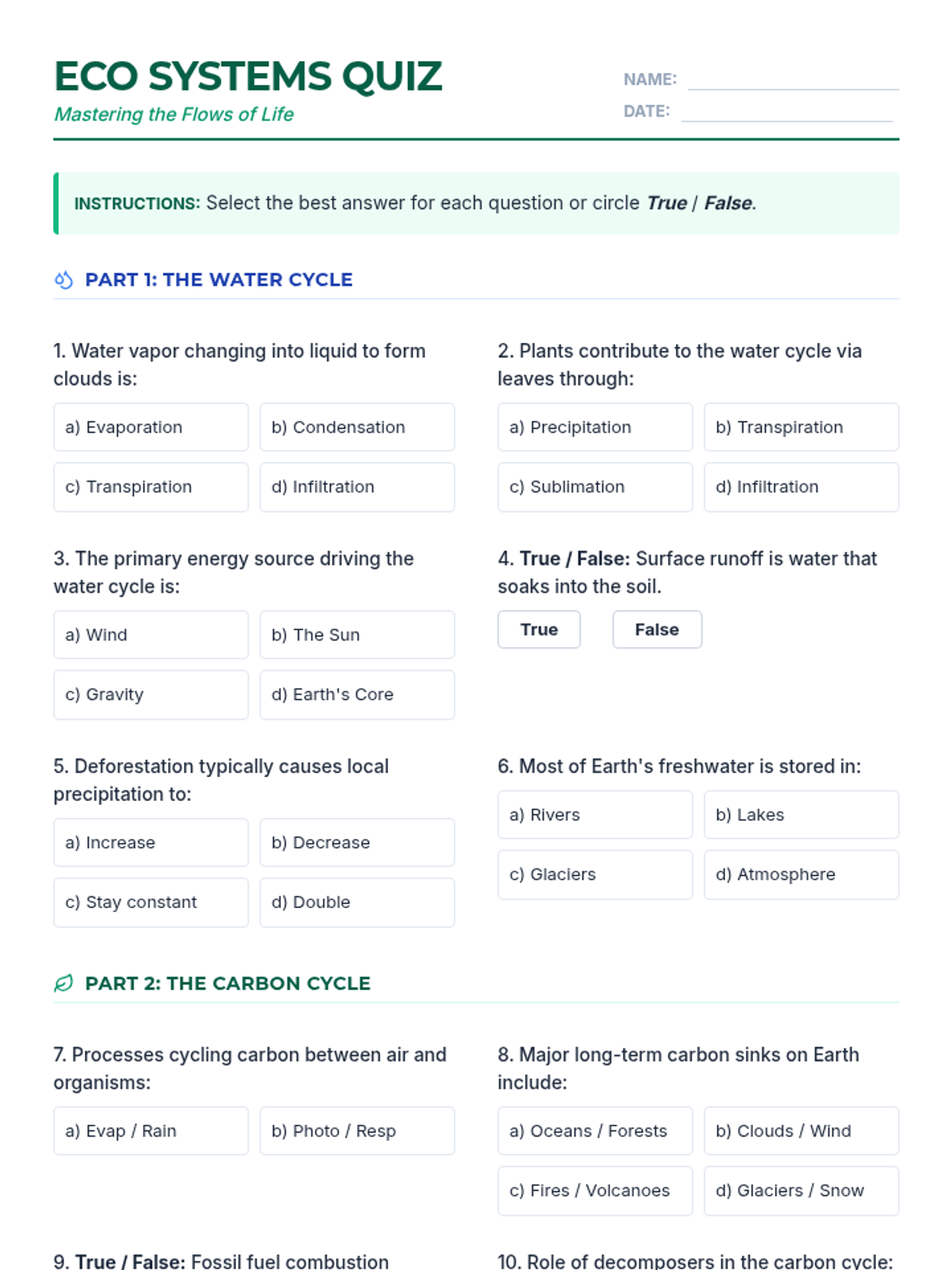
A 35-question quiz consisting exclusively of multiple-choice and true/false questions covering water, carbon, nitrogen, and phosphorus cycles, along with food chains and webs. Designed for clear objective assessment.
A clear, high-contrast handout for Special Education students explaining identity theft, common warning signs, and safety steps with a practical scenario-based activity.
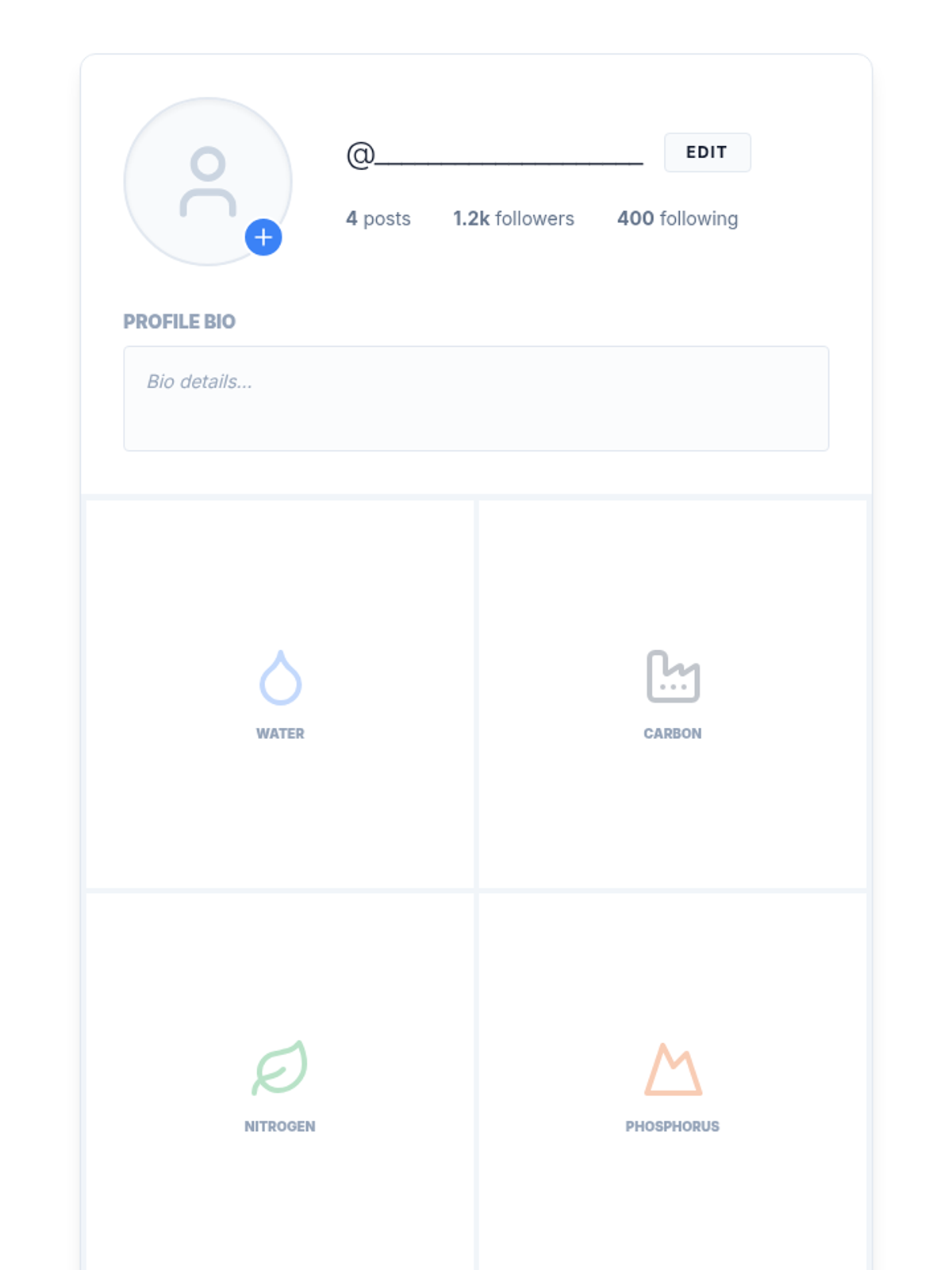
A printable or digital template mimicking an Instagram profile and post layout where students can finalize their Bio-Gram project content.
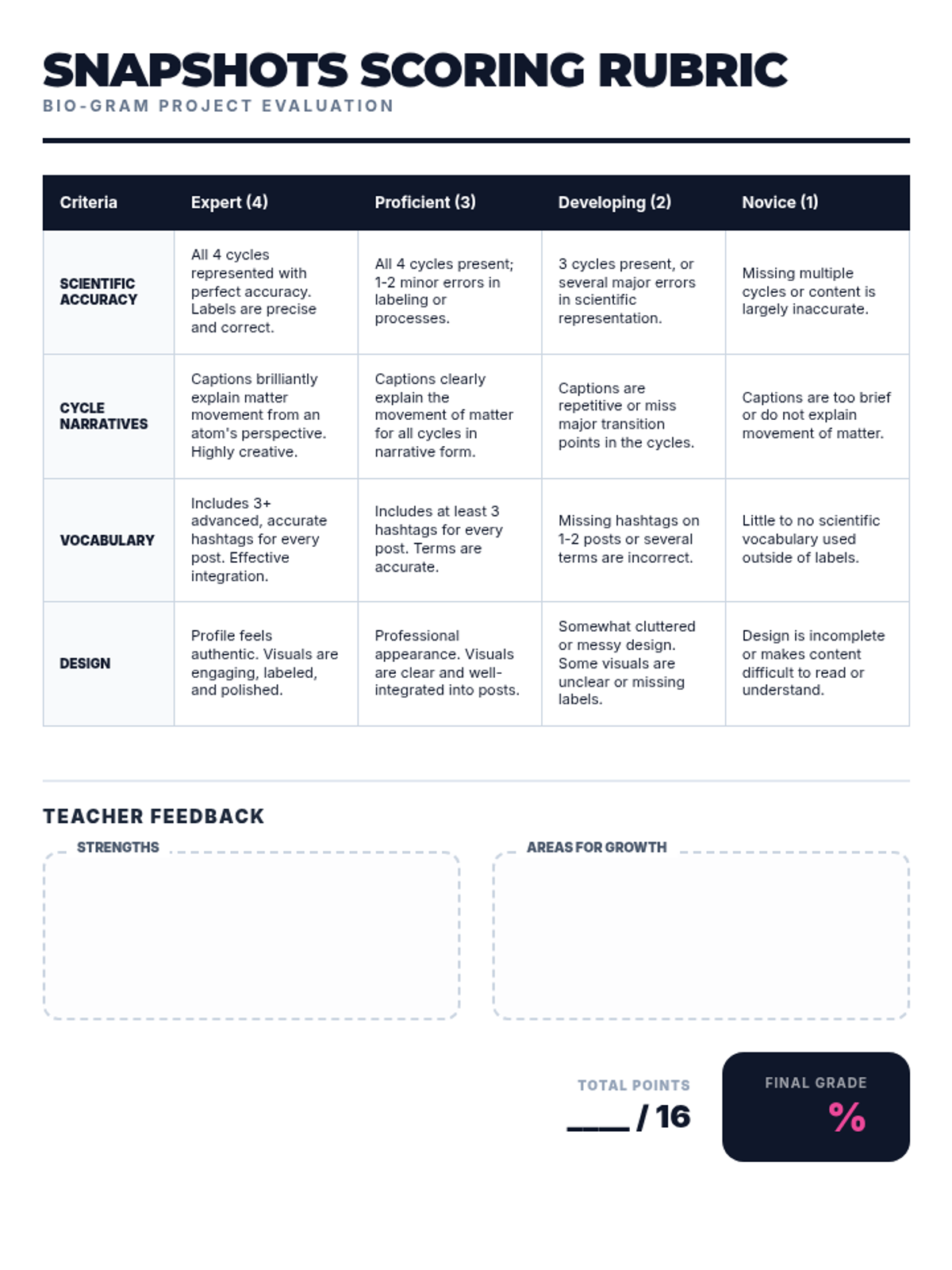
A comprehensive rubric for teachers to grade the Bio-Gram project, evaluating scientific accuracy, narratives, vocabulary usage, and design quality.
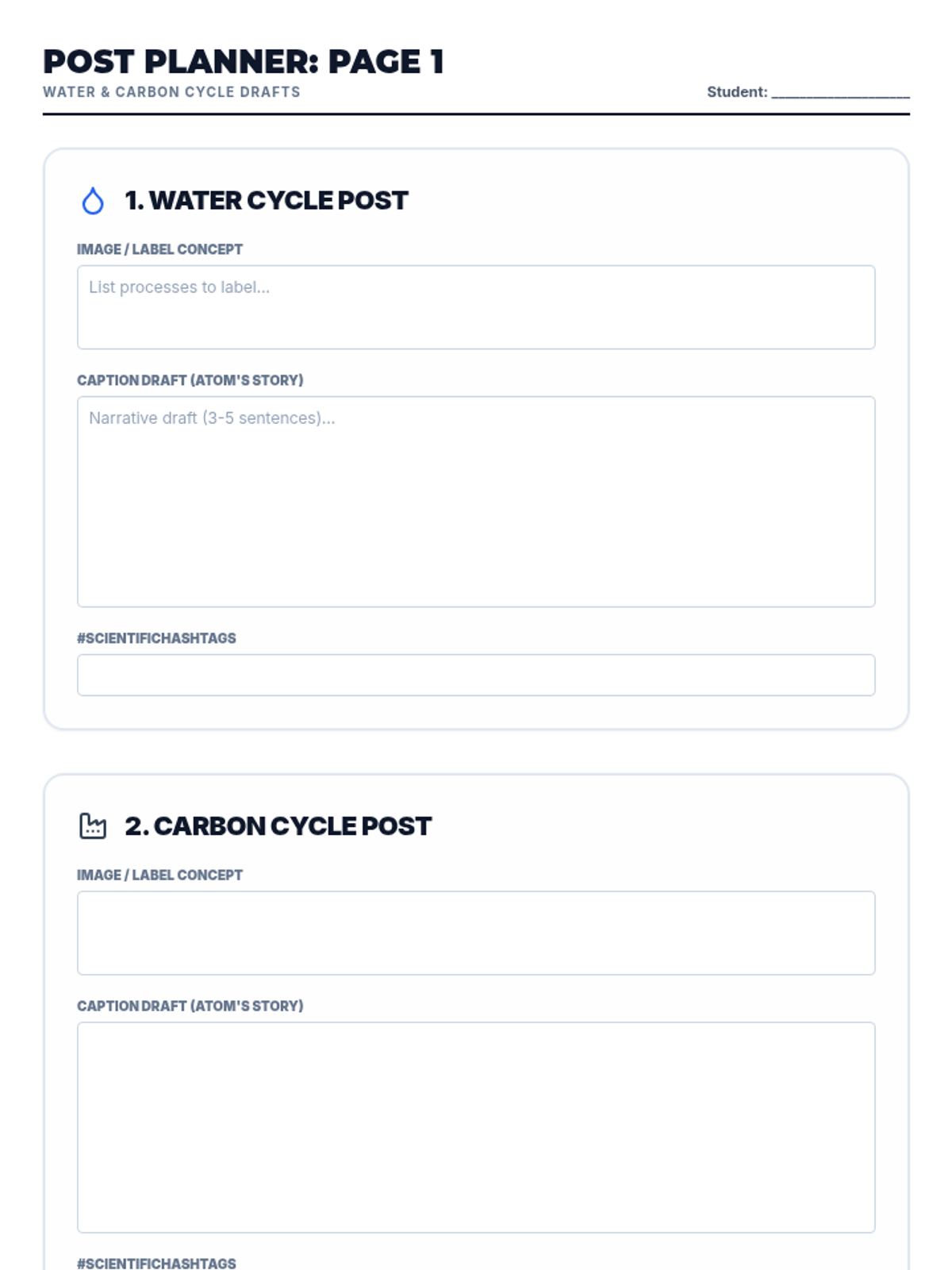
A planning worksheet for students to draft their social media captions, hashtag ideas, and image concepts for the four biogeochemical cycles before creating their final project.
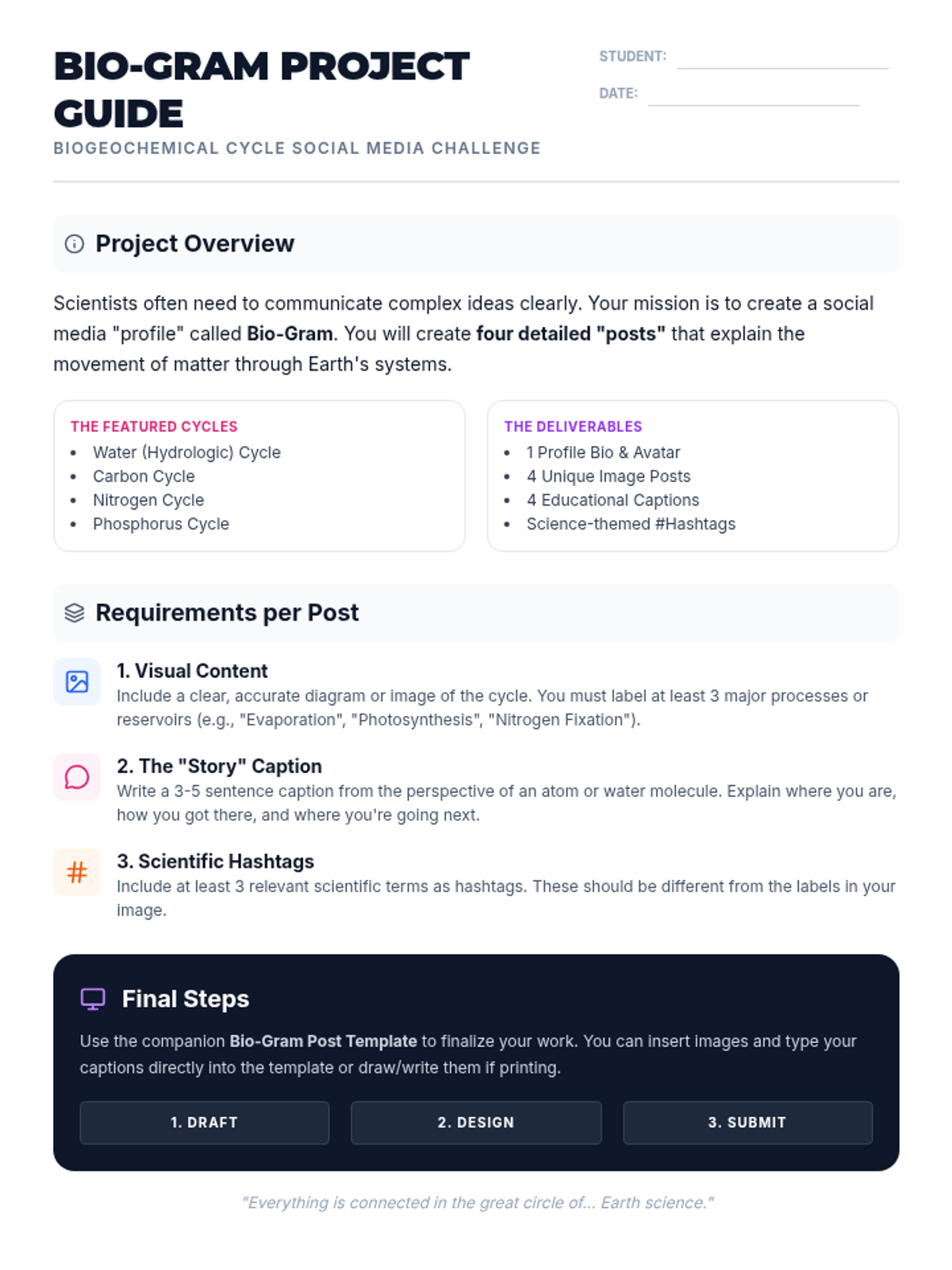
A project guide for students explaining the requirements of the Bio-Gram social media project, including visual content, captions, and hashtag requirements for the four biogeochemical cycles.
A presentation introducing the Bio-Gram project, detailing the requirements for the four biogeochemical cycles and the components of each social media style post.
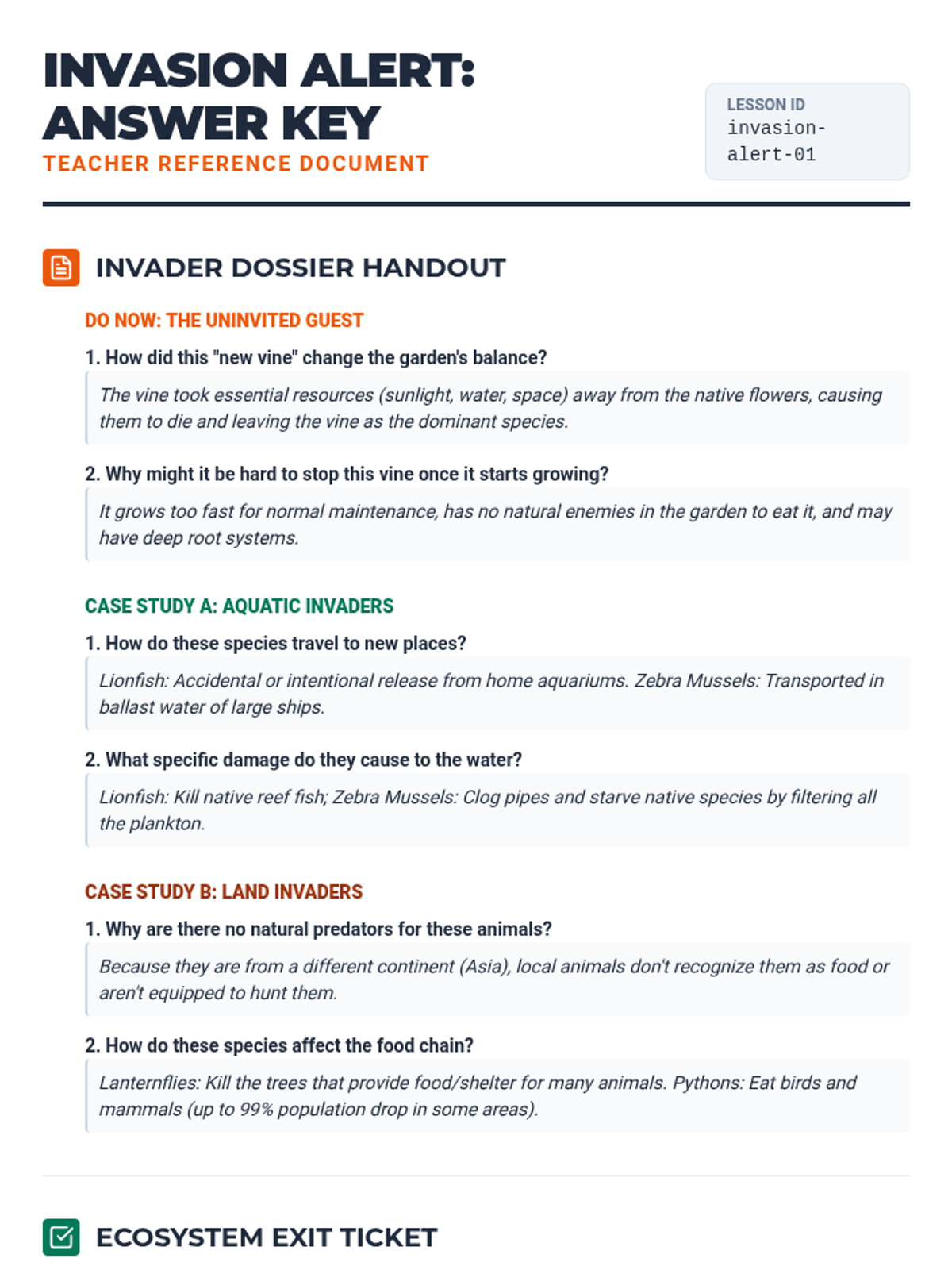
A comprehensive teacher's answer key for the 'Invader Dossier Handout' and 'Ecosystem Exit Ticket', including suggested responses for open-ended questions and teaching tips for facilitators.
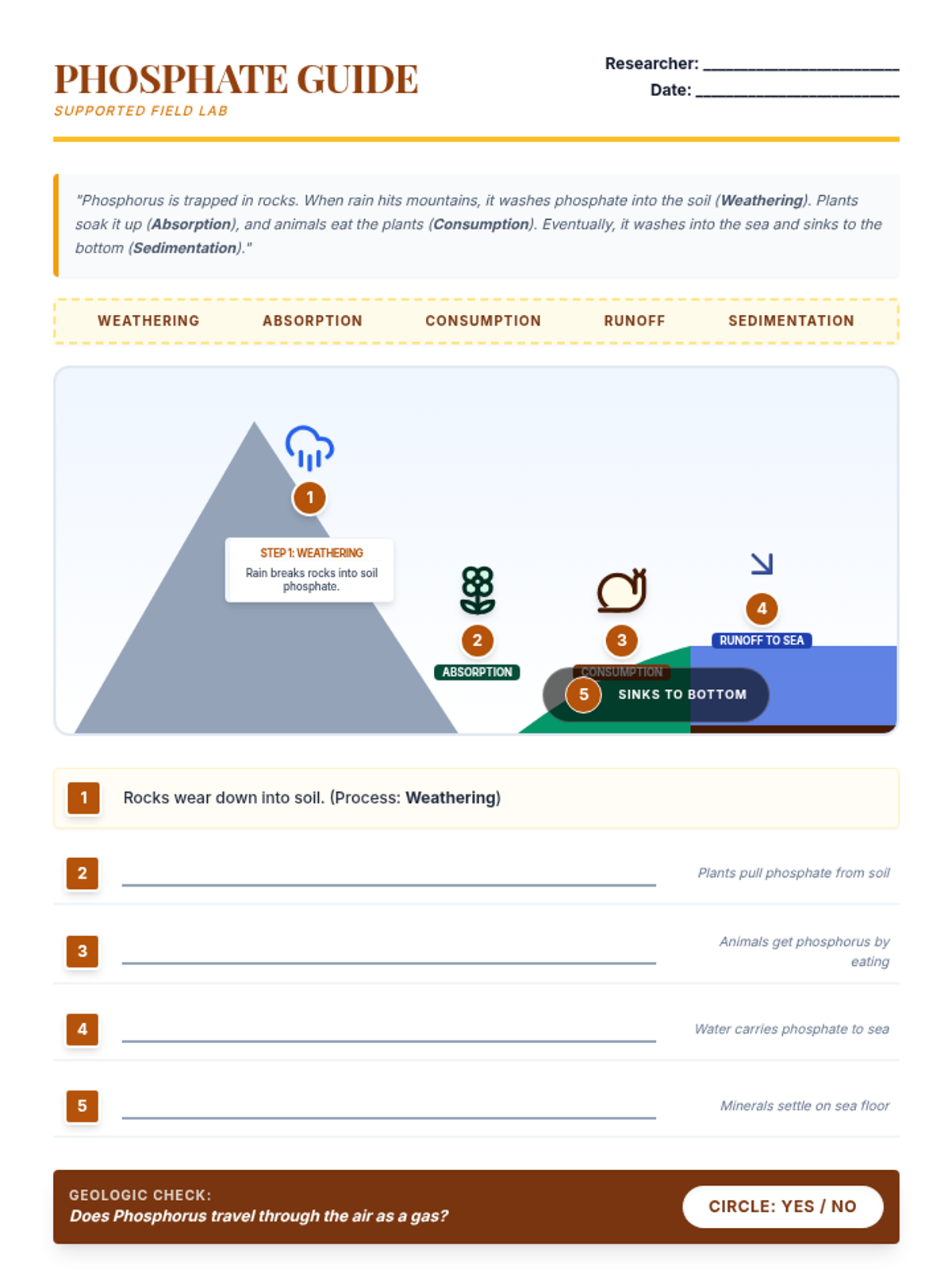
A differentiated one-page Phosphorus Cycle worksheet. Features a high-fidelity geologic scenery diagram, a reading snippet, a word bank, and guided identification steps to support student learning. High-contrast labels and corrected overlaps.
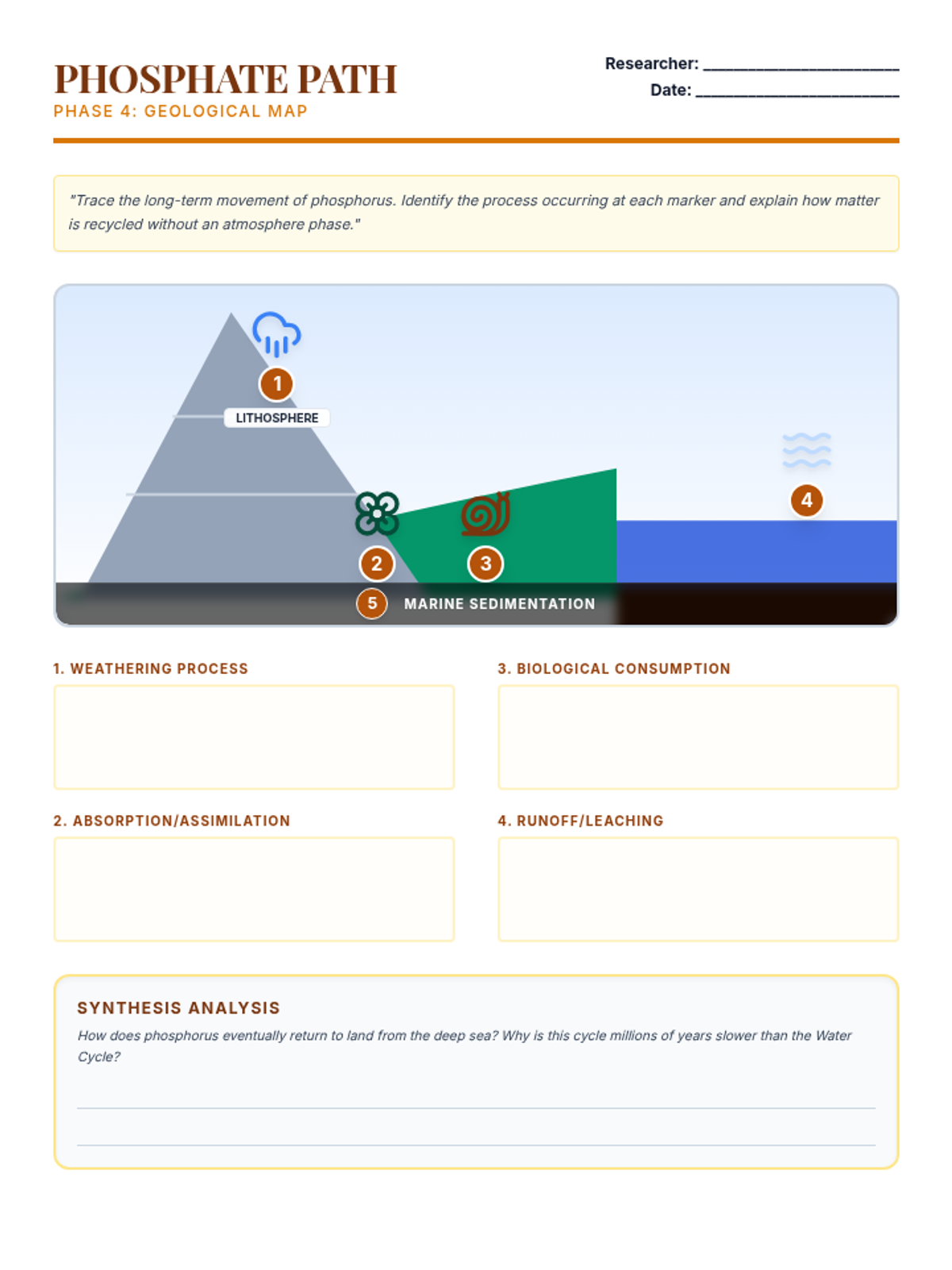
A revised one-page Phosphorus Cycle worksheet. Features a realistic geological landscape showing rock strata, soil horizons, and deep marine sedimentation. Students describe the cycle's movement through physical and biological systems. Corrected icon rendering and grid layout.
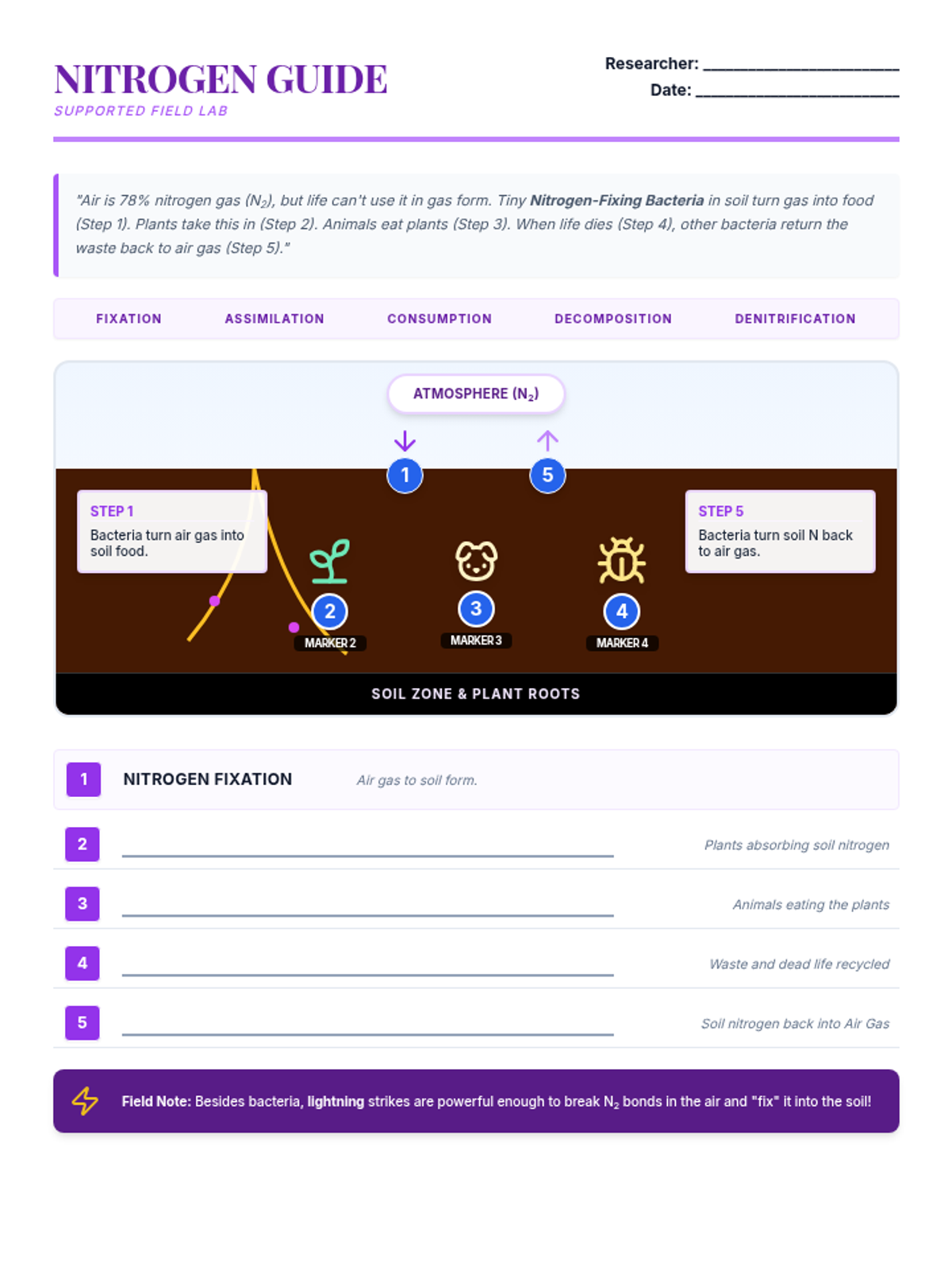
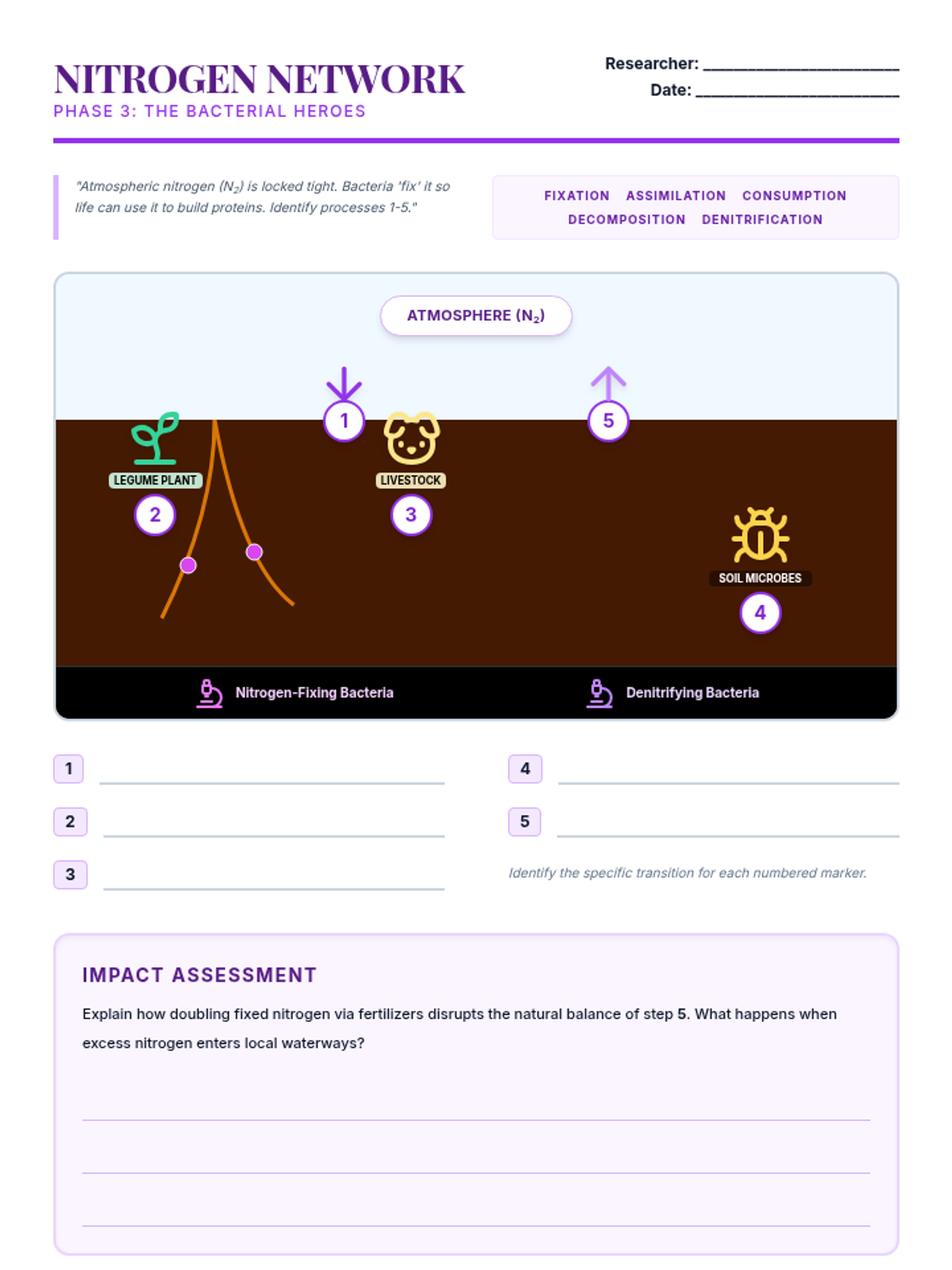
A differentiated one-page Nitrogen Cycle worksheet. Features a realistic soil cross-section diagram showing legume roots and microscopic bacterial zones. Includes scaffolding clues and a reading snippet to support student learning. Corrected identification list.
A revised one-page Nitrogen Cycle worksheet. Features a realistic soil cross-section diagram showing root nodules, biological consumers, and subsurface bacterial activity. Includes a complex synthesis question on environmental impact. Corrected terminology and icon rendering. Corrected subscript formatting.
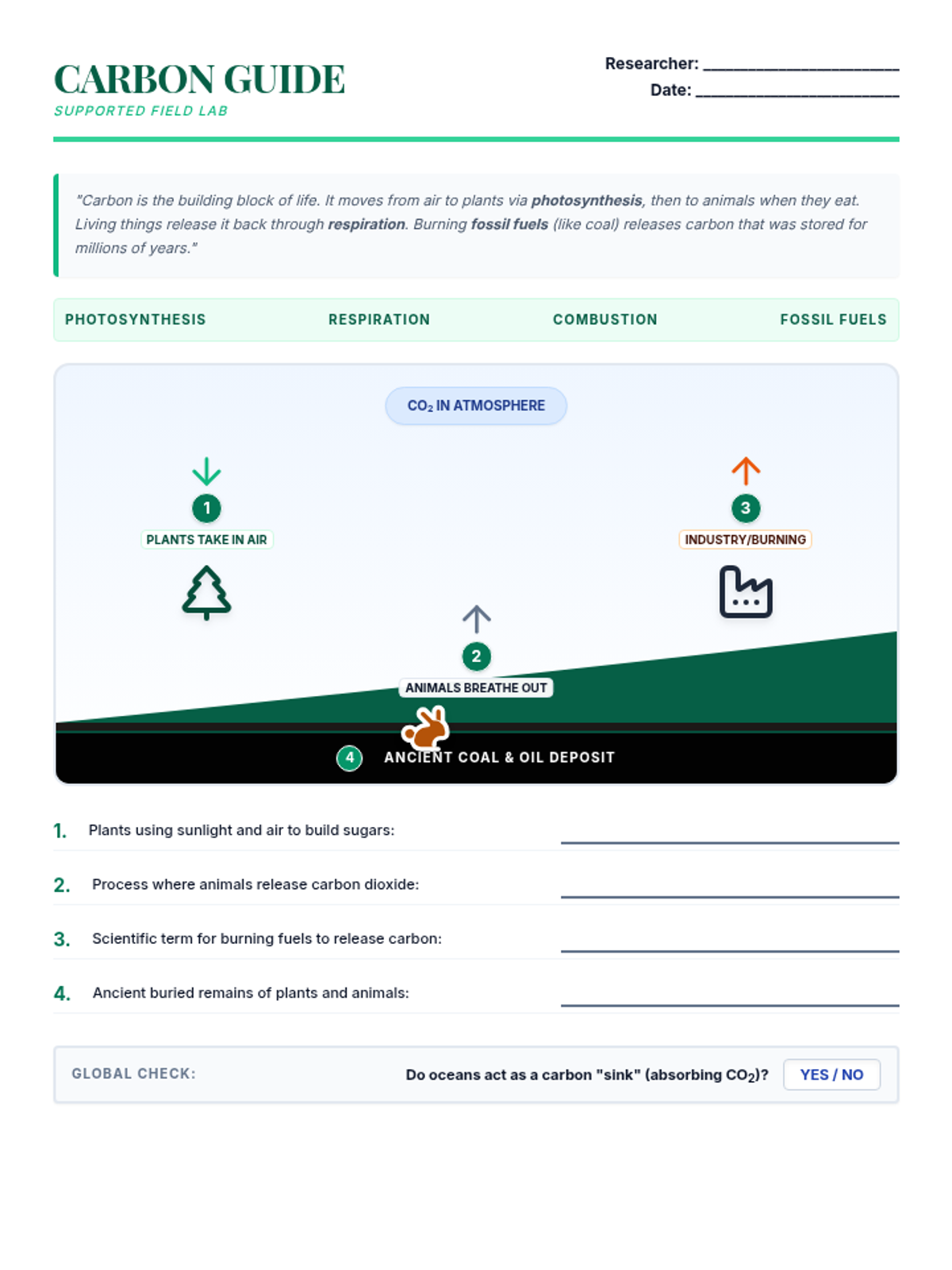
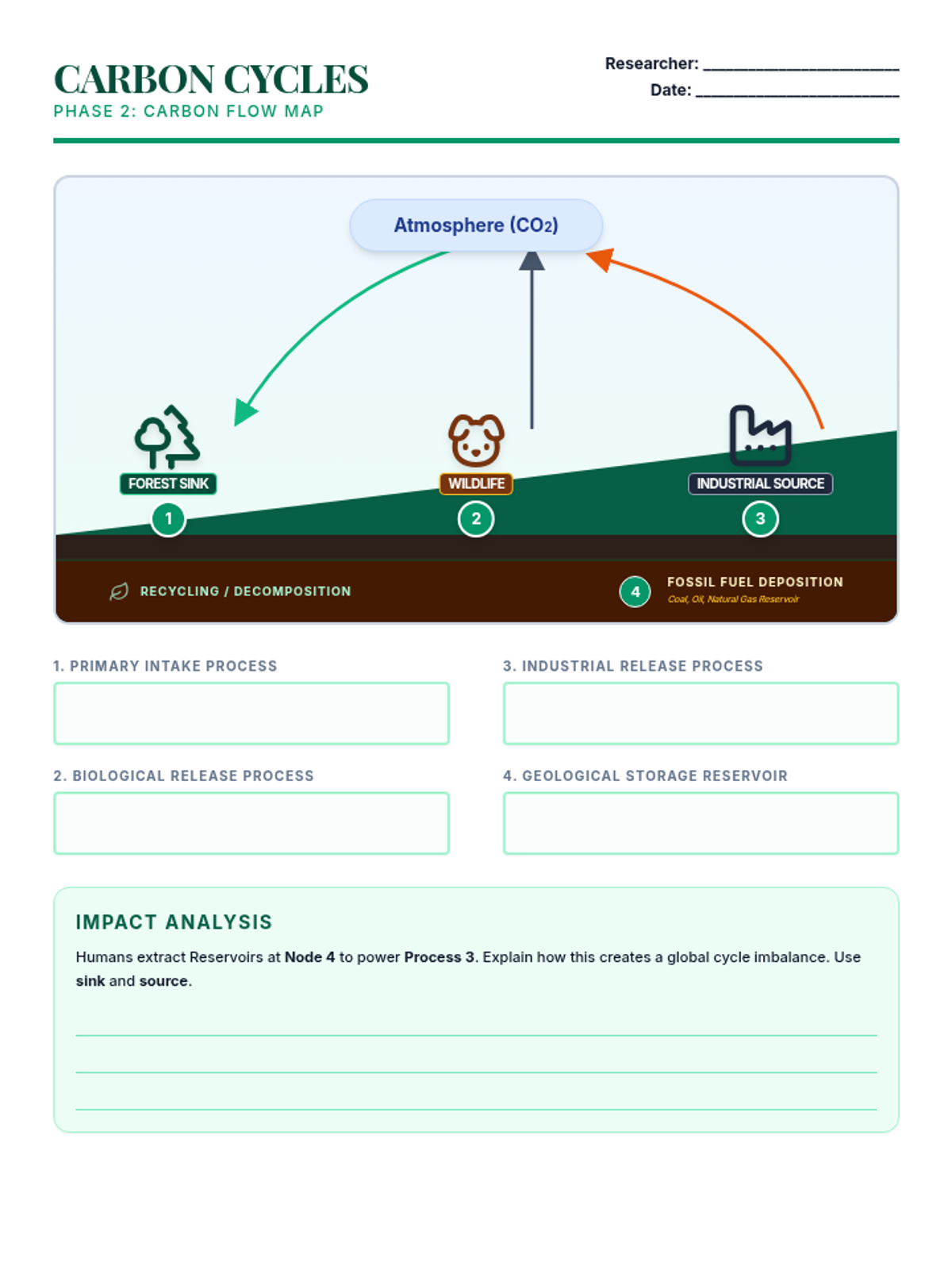
A differentiated one-page Carbon Cycle worksheet. Includes a realistic landscape diagram showing forest sinks and industrial sources, a reading snippet, and a word bank to support student comprehension. Corrected chemical subscripts.
A revised one-page Carbon Cycle worksheet. Includes a high-fidelity landscape diagram showing forests (sinks), livestock, and industrial centers (sources). Corrected arrow directions and added subsurface geological layers. Corrected chemical subscripts and icon placement.
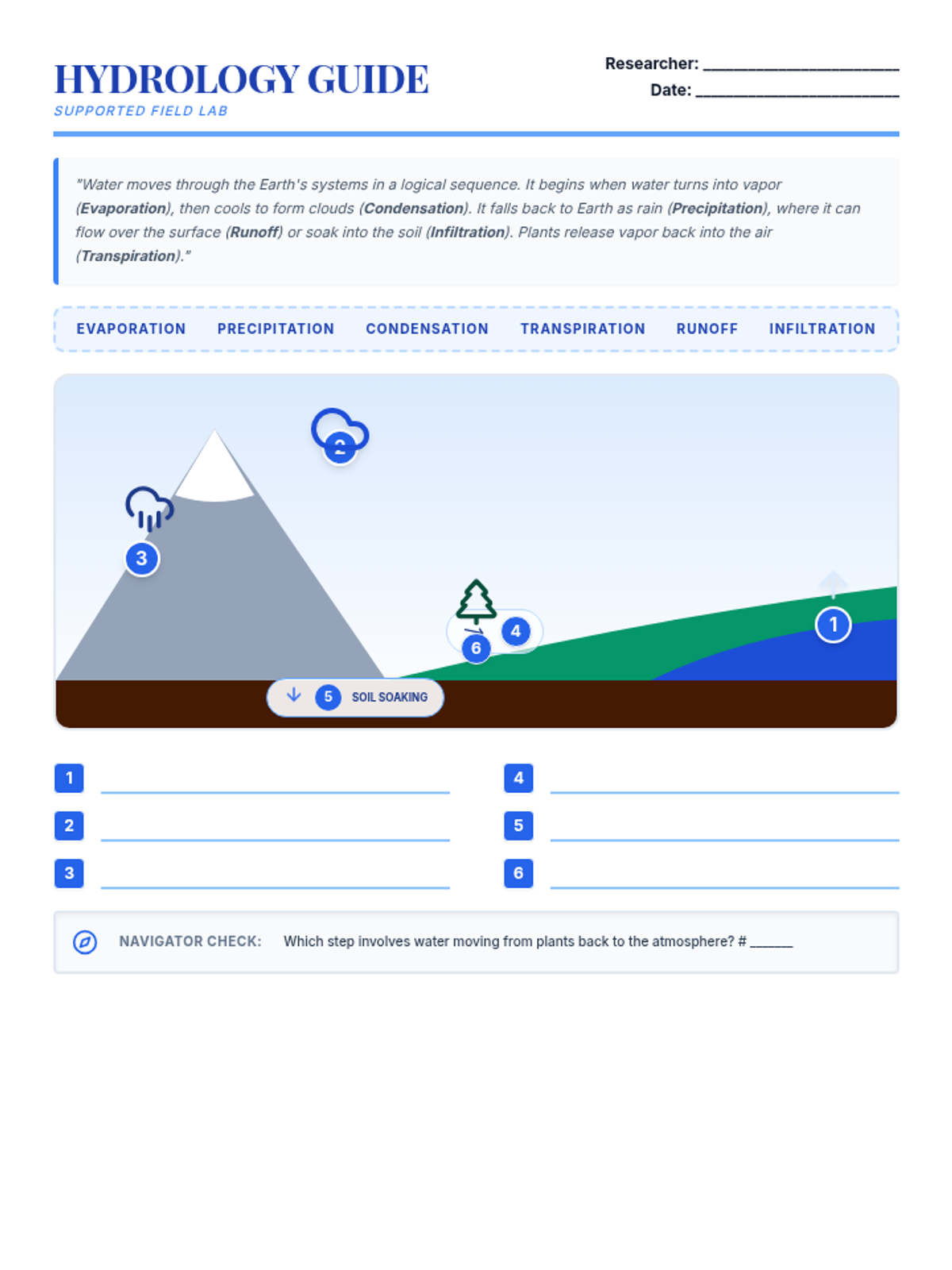
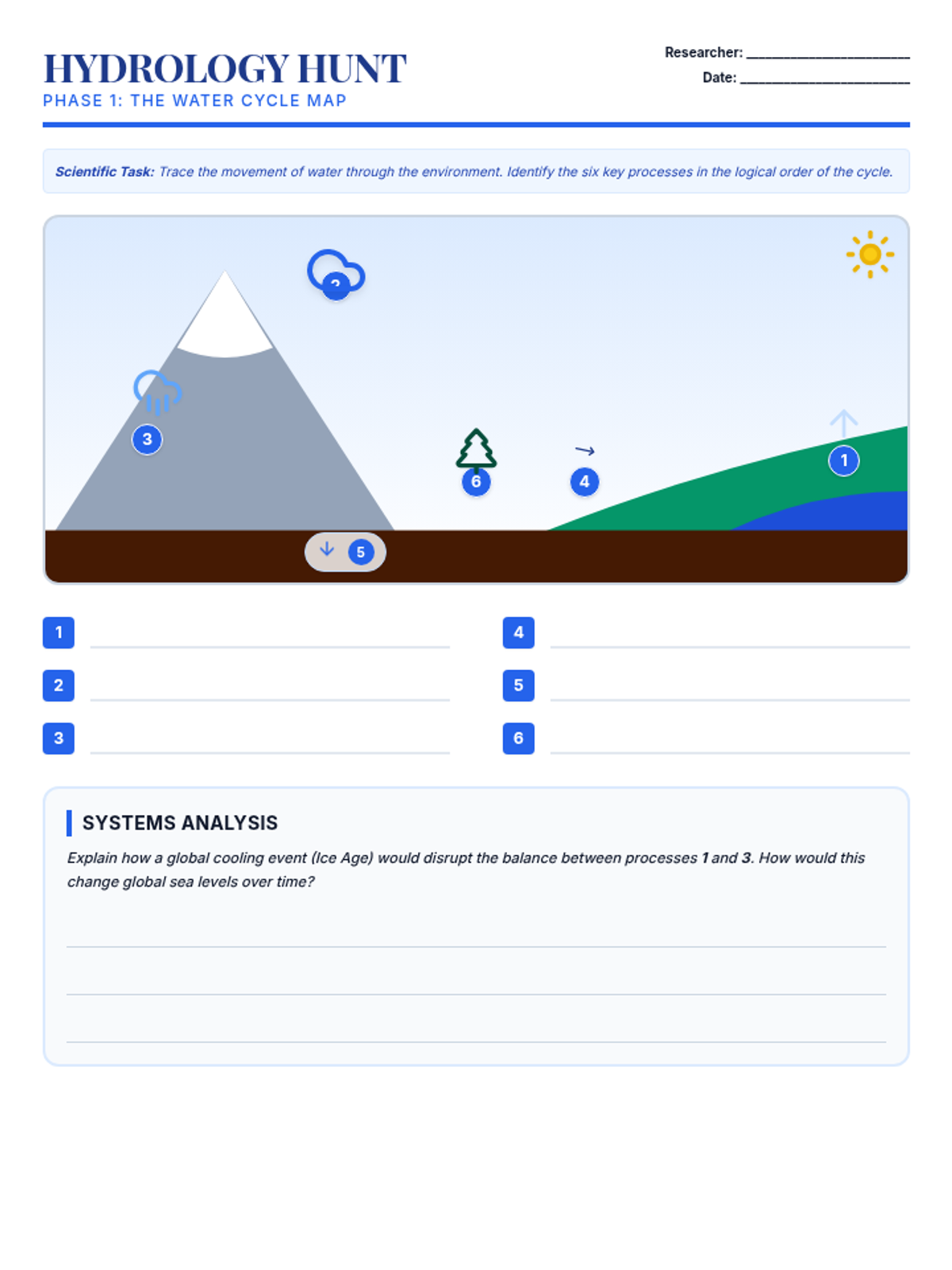
A differentiated Water Cycle worksheet on a single page. Features a realistic landscape diagram with snow-capped mountains and oceans, clear descriptive labels, and a word bank to support student learning. Includes a reading snippet for student support. Corrected marker placement and sequential grid numbering.
A consolidated one-page worksheet for the Water Cycle. Features a realistic landscape diagram with snow-capped mountains, forests, and oceans. Students identify key movements of water through the system. Corrected marker placement and sequential grid numbering.
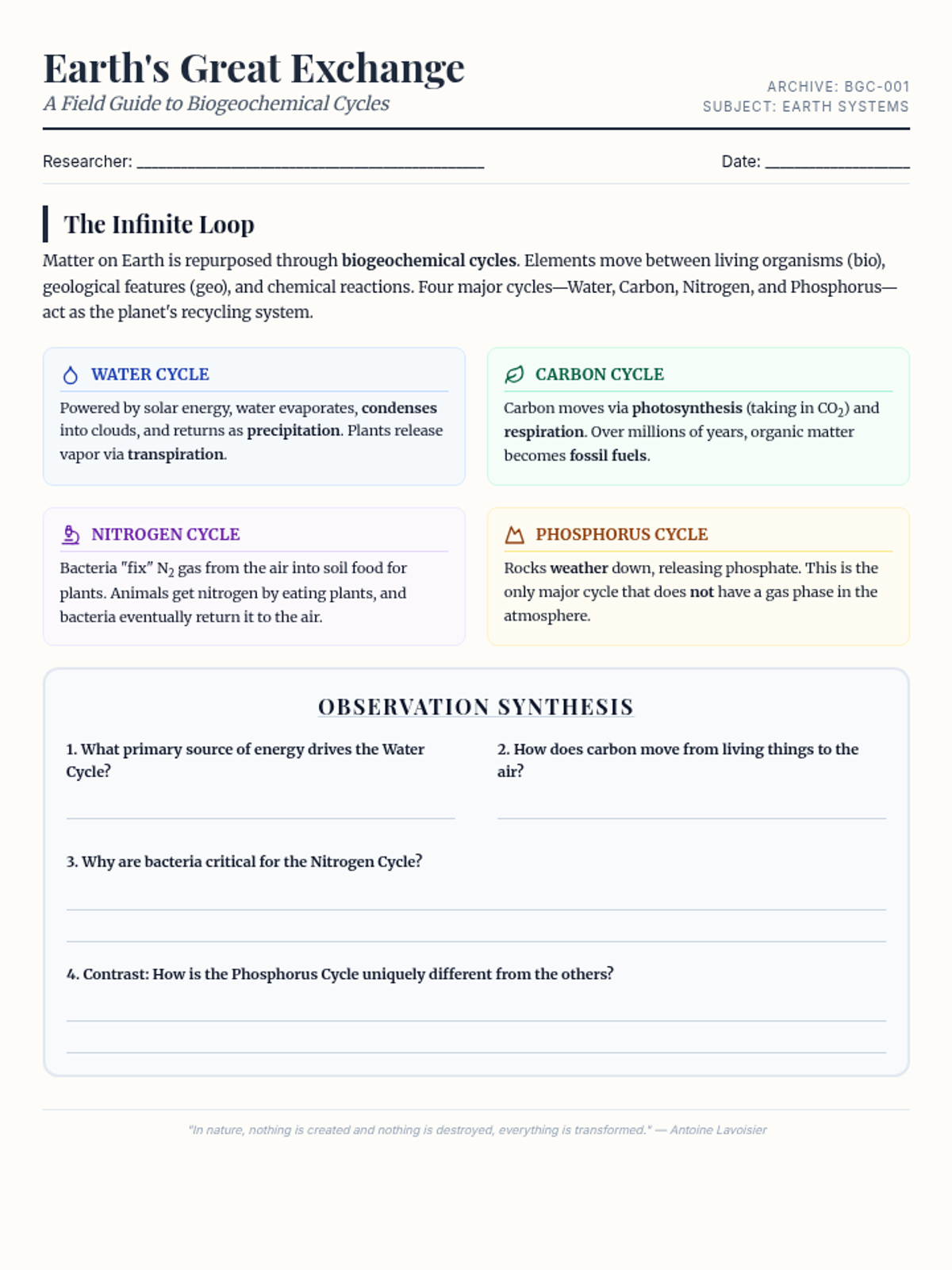
A refined one-page reading passage providing an overview of the Water, Carbon, Nitrogen, and Phosphorus cycles. Features field-journal aesthetics and a comprehension section. Carbon Dioxide (CO2) and Nitrogen (N2) formatting has been corrected for rendering.
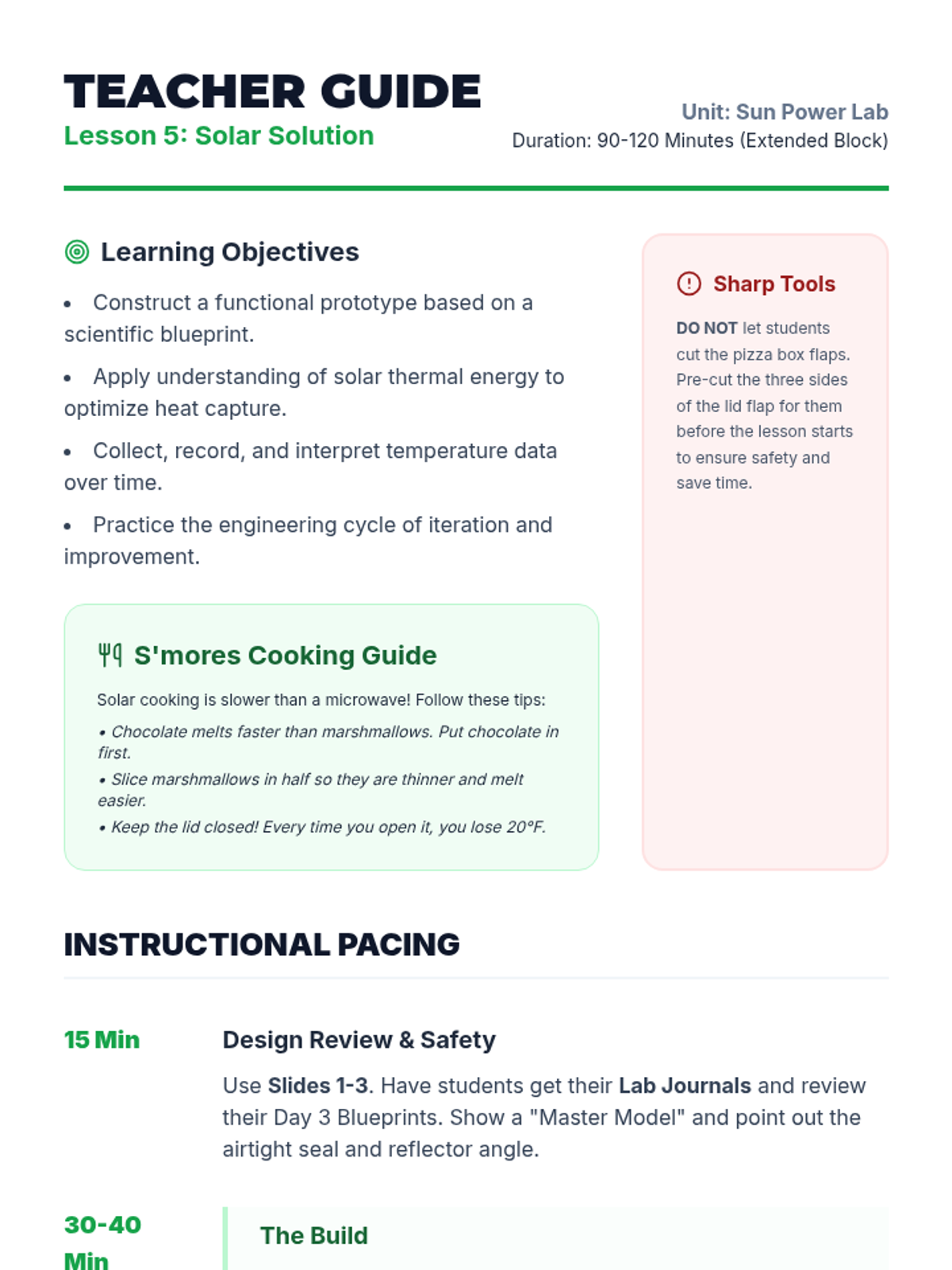
Teacher's facilitation guide for the final engineering challenge. Includes construction steps, cooking tips for solar s'mores, safety warnings, and assessment criteria for the "Solar Solution" lesson.
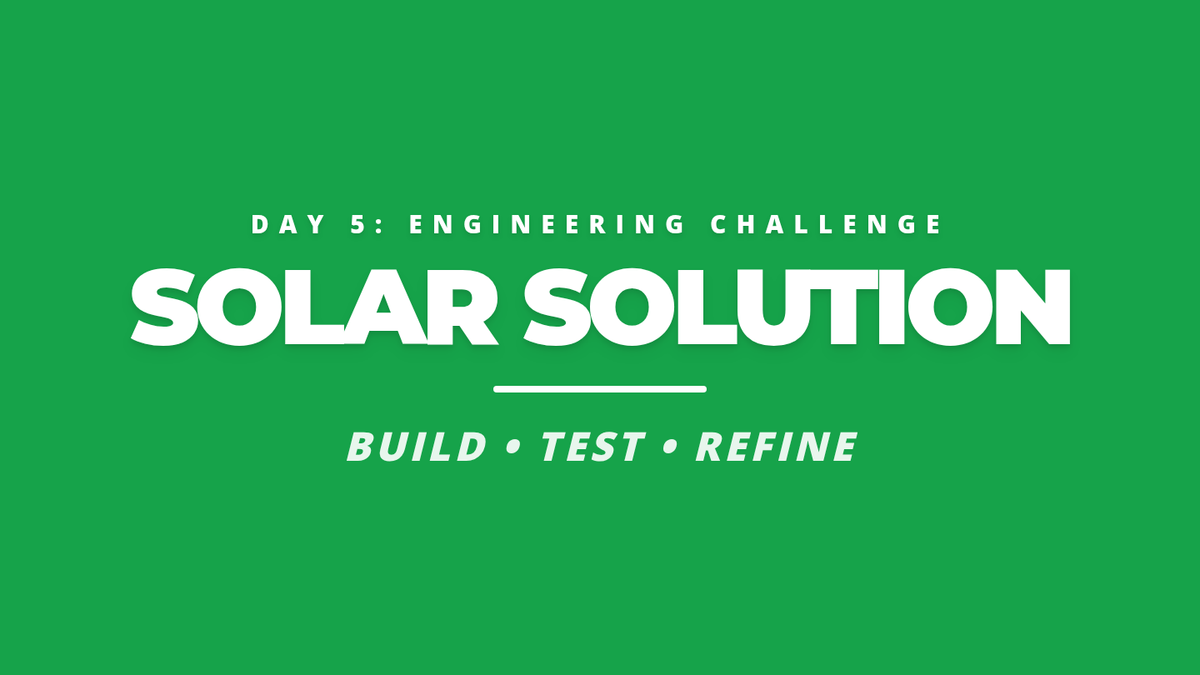
Final day slides for the solar energy unit. Revised to fix missing content on Slide 4 and improve contrast on Slide 5. Engineering cycle updated with better visual flow.
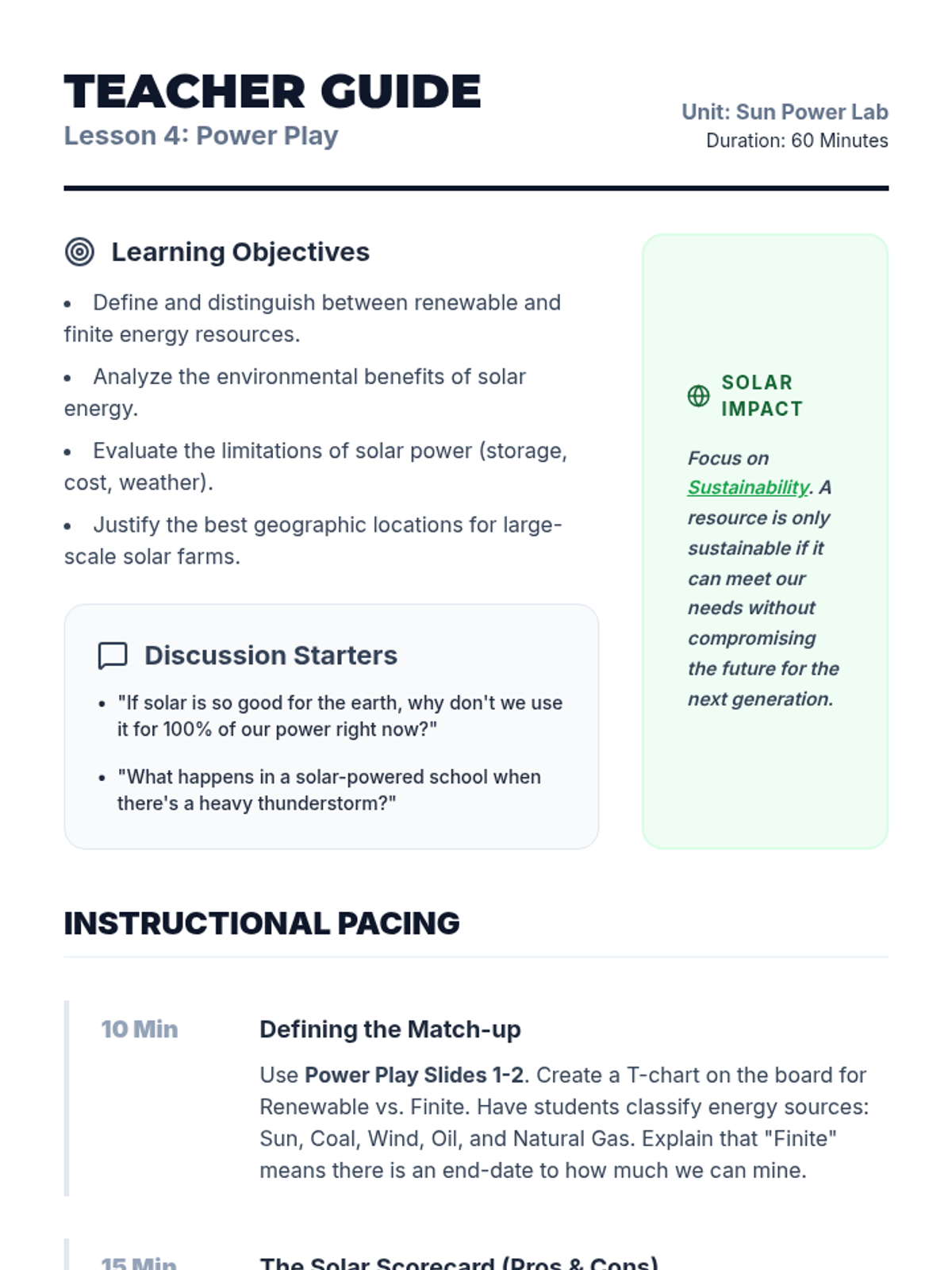
Teacher's facilitation guide for Lesson 4. Revised for standard compliance, page break stability, and improved visual hierarchy. Fixed missing icons.
Day 4 slides comparing renewable and non-renewable energy. Revised to fix missing content on Slide 3 and add a visual representation of the 'Solar Belt' on Slide 5. Improved contrast throughout.
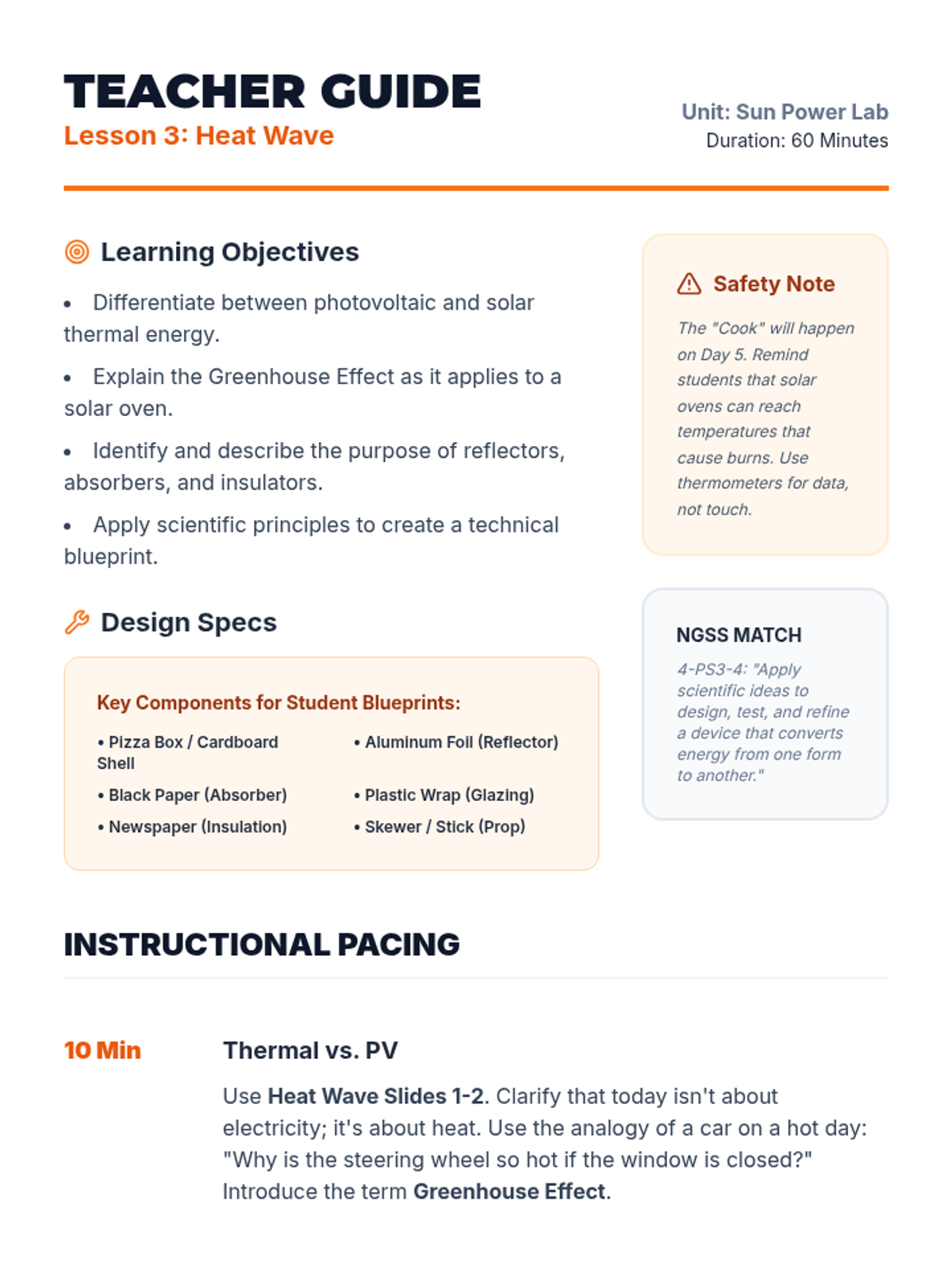
Teacher's facilitation guide for Lesson 3. Revised for balanced whitespace, page break stability, and clearer instructional steps for blueprint drafting.
Day 3 slides introducing solar thermal energy. Explains the "4 Pillars of a Solar Oven" and provides guidance on creating scientific blueprints. Revised with simplified diagrams and higher contrast.
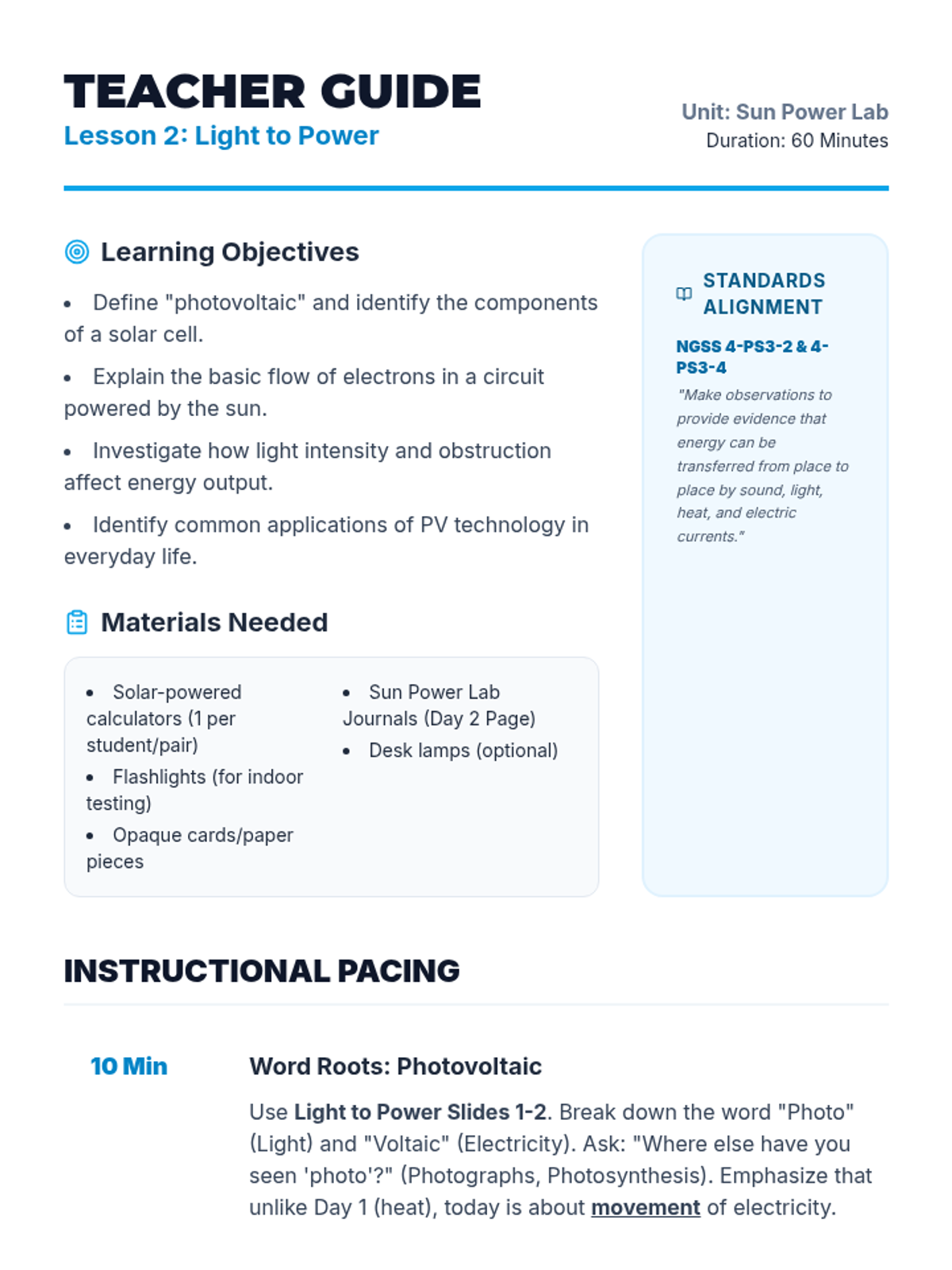
Teacher's facilitation guide for Lesson 2. Revised for standard alignment (NGSS 4-PS3), page break stability, and clearer instructional flow.
Day 2 slides focusing on photovoltaics. Breaks down the complex term "photovoltaic" and illustrates the atomic-level process of how solar cells generate electricity. Revised for clarity, contrast, and rendering accuracy.
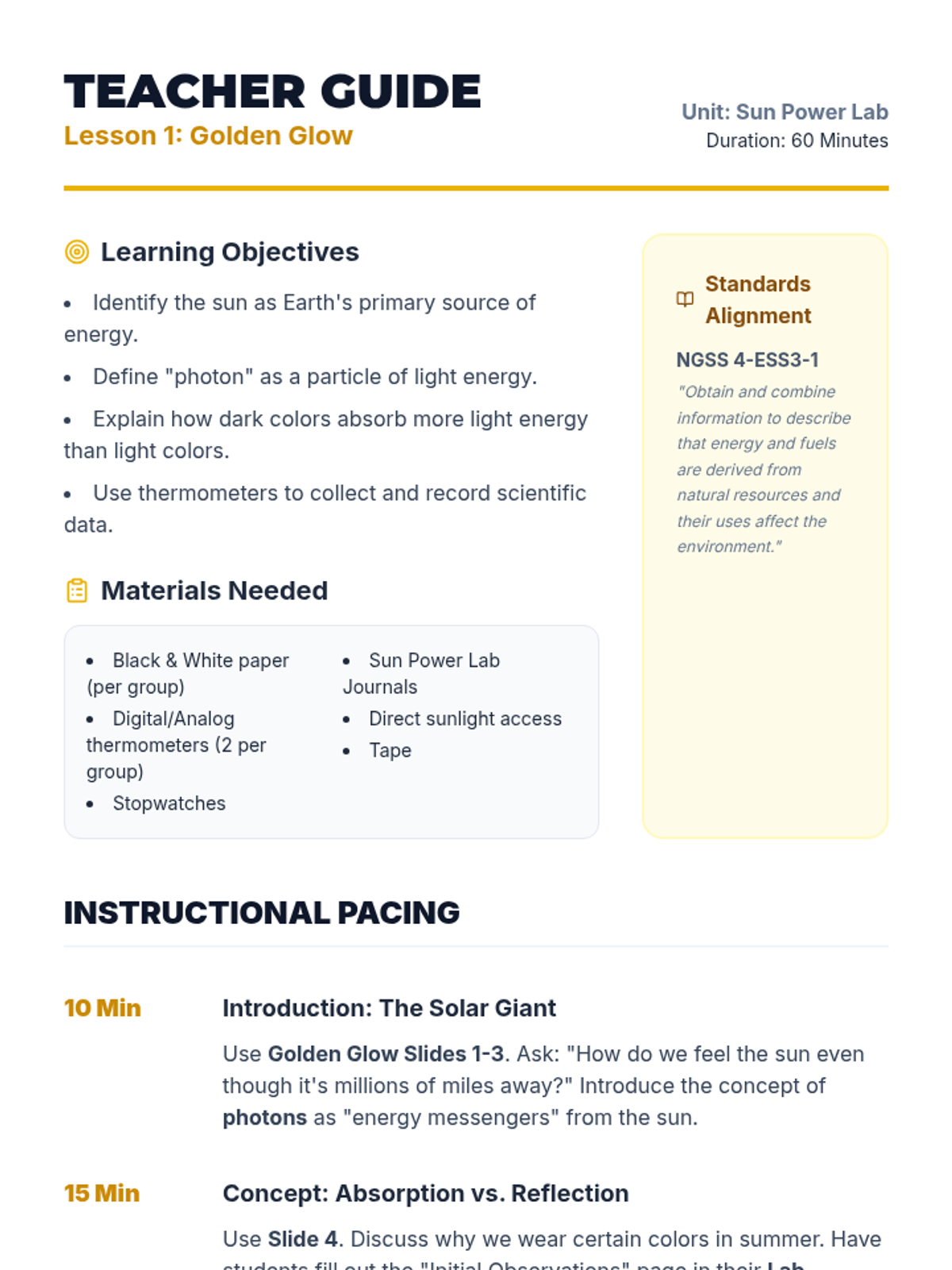
Teacher's facilitation guide for Lesson 1. Revised for page break stability and instructional clarity.
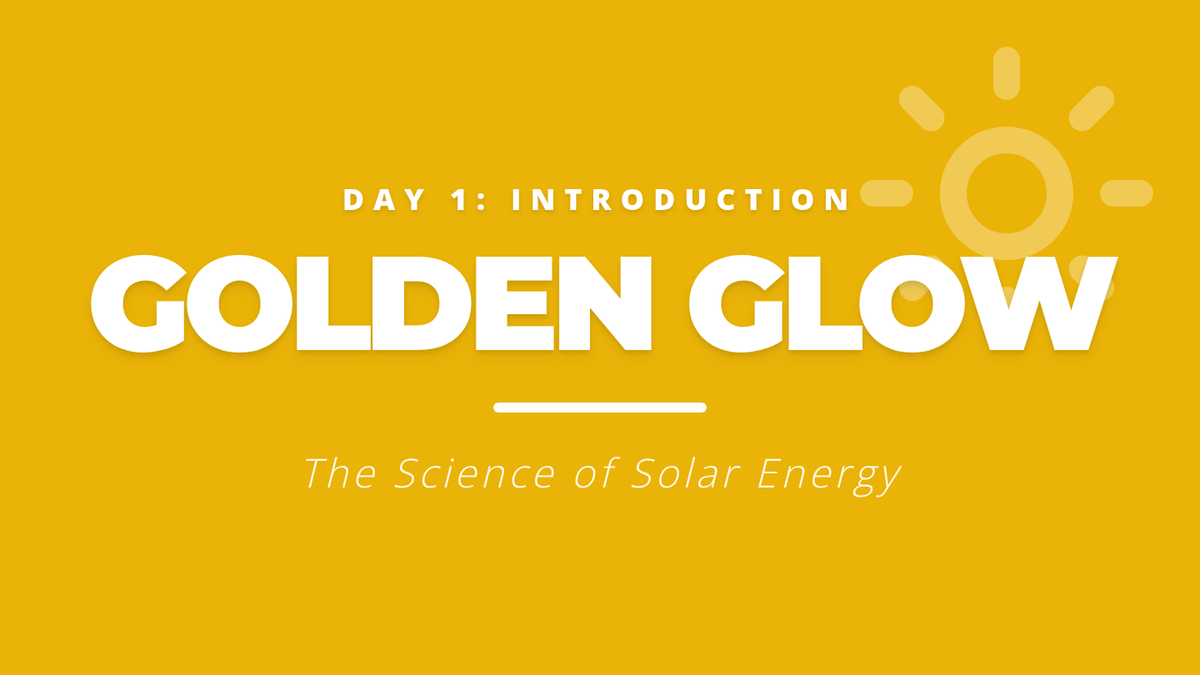
A vibrant slide deck for the first day of the solar energy unit, covering the nature of sunlight, photons, and the science of energy absorption. Revised for contrast and rendering stability.
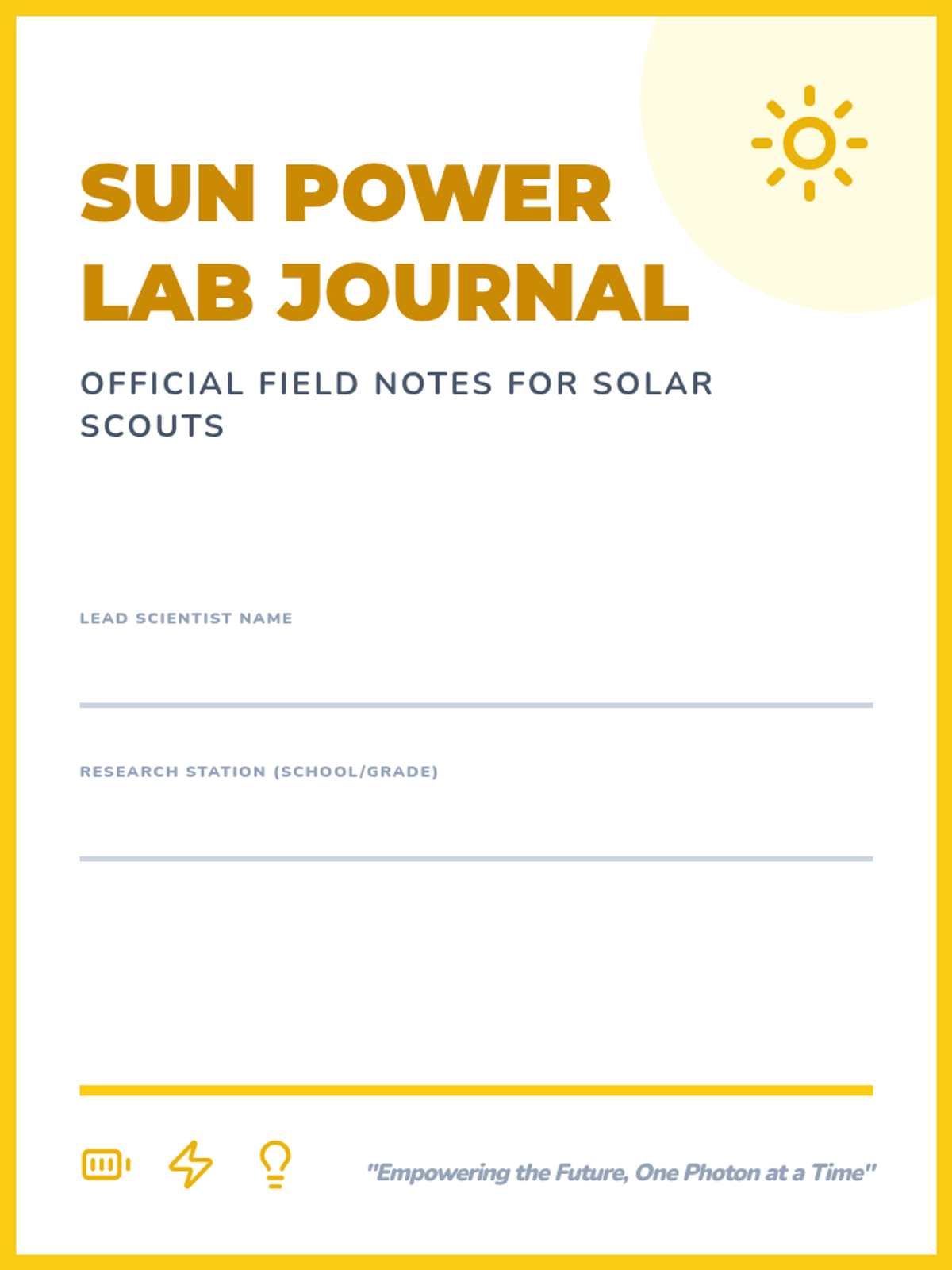
A comprehensive 6-page student lab journal for the Sun Power Lab unit. Includes daily experiment logs, a blueprint area for solar oven design, vocabulary, and a final unit reflection section. Revised for layout consistency and better student work areas.
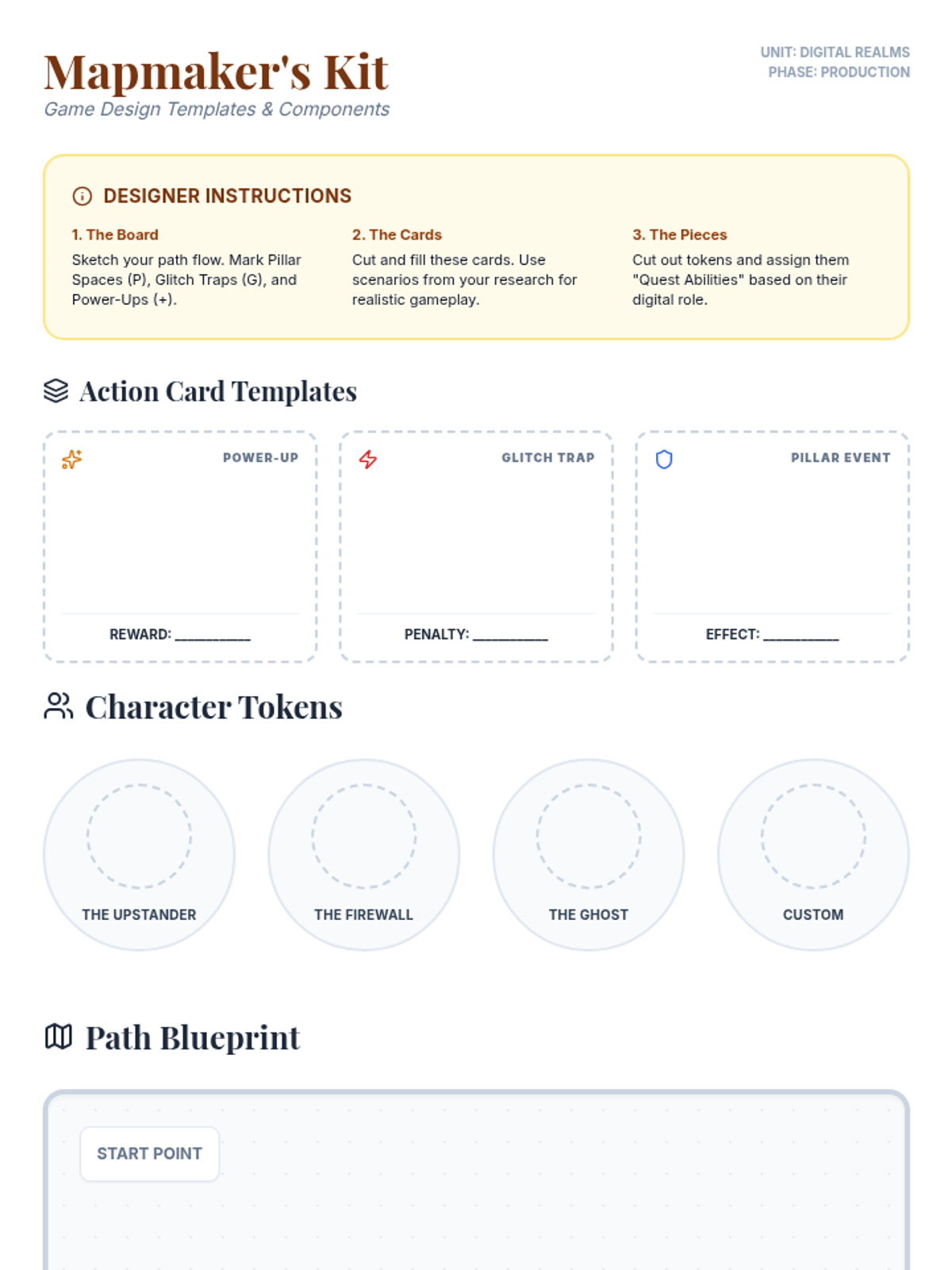
A student-facing template kit containing game components: customizable action cards (Power-Up, Glitch Trap, Pillar Event), character tokens, and a layout blueprint for the board path.
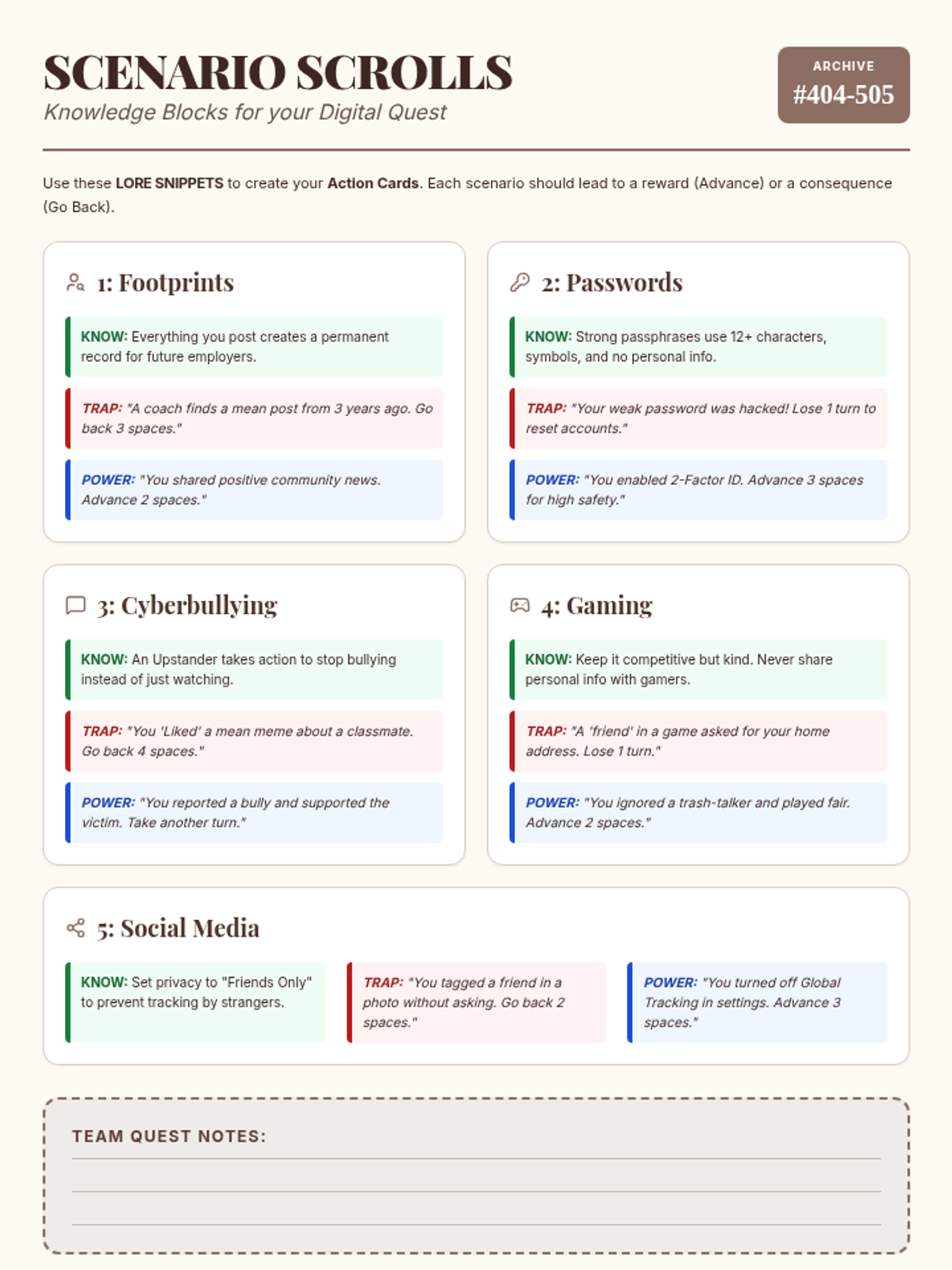
A resource-rich handout providing students with the "lore" and scenarios needed to build their board games. It includes knowledge blocks and reward/consequence examples for all 5 digital citizenship pillars.